Research Articles
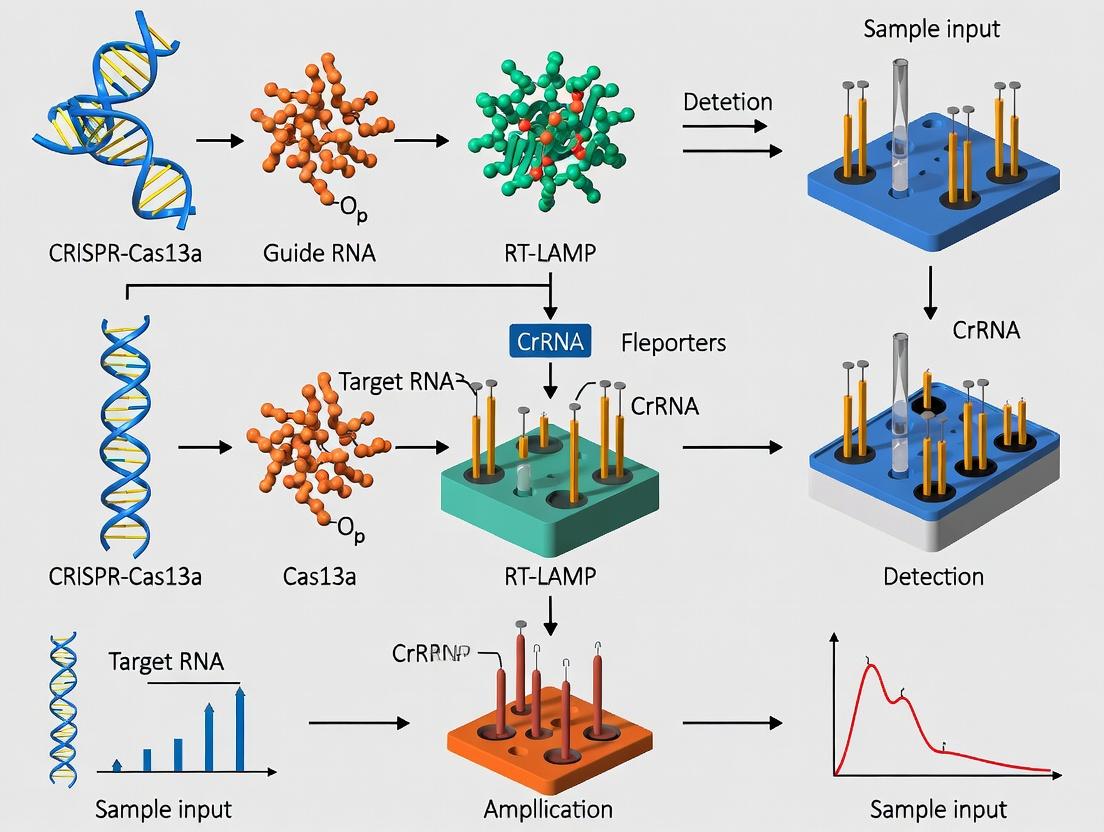
Next-Gen Diagnostics: Integrating CRISPR-Cas13a with RT-LAMP for Rapid, High-Throughput Pathogen Detection
This article provides a comprehensive resource for researchers and diagnostic developers on the synergistic integration of CRISPR-Cas13a and Reverse Transcription Loop-Mediated Isothermal Amplification (RT-LAMP) for high-throughput molecular diagnostics.
Orthogonality in Synthetic Gene Circuit Design: Principles for Robust, Predictable, and Evolutionarily Stable Genetic Systems
This article provides a comprehensive overview of orthogonality as a foundational principle in synthetic gene circuit design, tailored for researchers and drug development professionals.

Functional Genetic Circuit Screening: Advanced Methods for Biomedical Discovery and Therapeutic Development
This article provides a comprehensive overview of modern screening methodologies for functional genetic circuits, targeting researchers, scientists, and drug development professionals.

Managing Genetic Context Effects in Circuit Design: Strategies for Robust and Predictable Synthetic Biology
The predictable design of synthetic gene circuits is fundamentally challenged by genetic context effects, where circuit performance is unpredictably modulated by interactions with the host cell.
Synthetic Transcription Factors: Engineering Gene Control for Therapy and Research
Synthetic transcription factors (synTFs) are engineered proteins that enable precise control over gene expression, offering revolutionary potential for cell reprogramming, gene therapy, and functional genomics.
T-Pro Transcriptional Programming: A Comprehensive Guide for Predictive Genetic Circuit Design
This guide provides researchers, scientists, and drug development professionals with a comprehensive overview of Transcriptional Programming (T-Pro), a synthetic biology framework for designing compressed genetic circuits.
Strategic Approaches to Minimize Byproduct Formation in Engineered Strains for Enhanced Bioprocess Efficiency
This article provides a comprehensive guide for researchers and industry professionals on minimizing byproduct formation in engineered microbial strains, a critical bottleneck in commercial biomanufacturing.

Adaptive Laboratory Evolution: Engineering Industrial Microbial Strains for Enhanced Stress Tolerance and Bioproduction
Adaptive Laboratory Evolution (ALE) is a powerful evolutionary engineering strategy that harnesses the power of natural selection under controlled laboratory conditions to enhance microbial phenotypes for industrial applications.
Microfluidic DNA Assembly and Transformation: Automating Synthetic Biology for Advanced Research and Drug Development
This article provides a comprehensive overview of microfluidic technologies that are revolutionizing DNA assembly and transformation, core processes in synthetic biology and drug development.
Predictable by Design: Engineering Robust Synthetic Microbial Ecosystems for Biomedical Applications
Synthetic microbial ecosystems (SynComs) represent a transformative approach in biotechnology and medicine, offering solutions for drug production, microbiome therapeutics, and biosensing.