Overcoming Crosstalk in Synthetic Genetic Circuits: Strategies for Precision Engineering and Therapeutic Applications
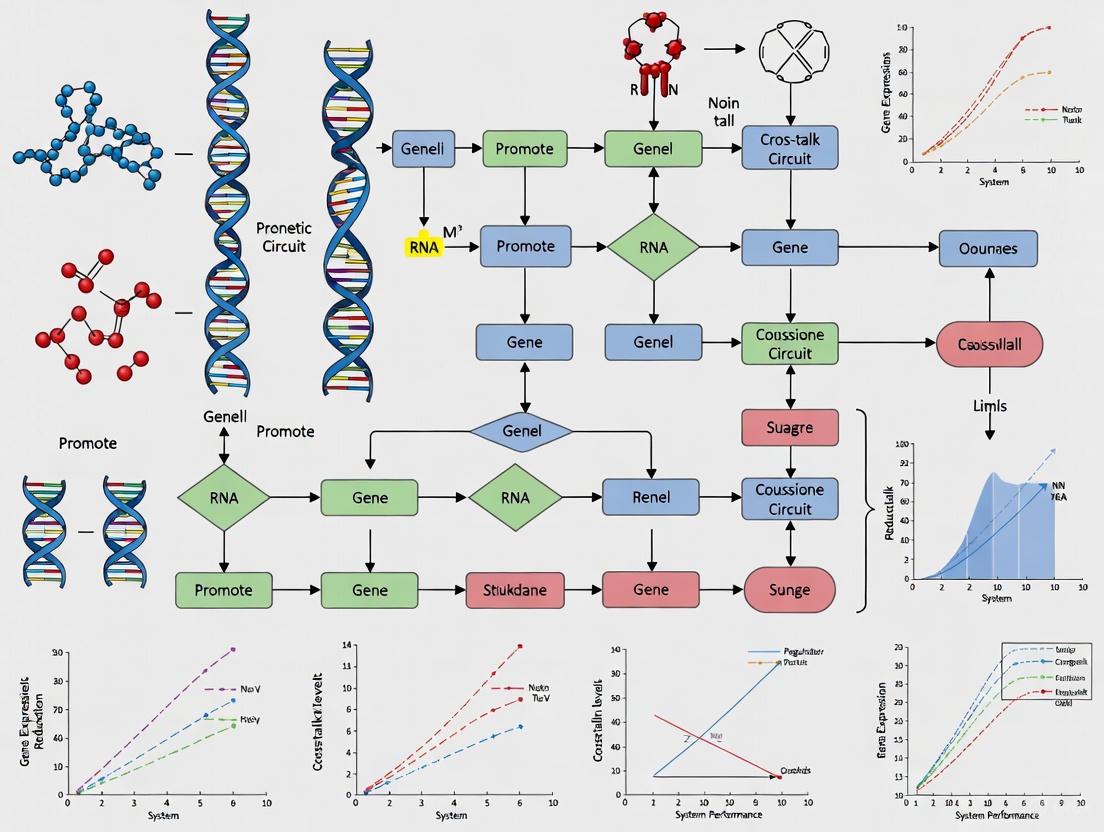
Crosstalk in synthetic genetic circuits—the unintended interference between circuit components and native cellular processes—poses a significant barrier to their reliable application in biomedicine and biotechnology.
Overcoming Crosstalk in Synthetic Genetic Circuits: Strategies for Precision Engineering and Therapeutic Applications
Abstract
Crosstalk in synthetic genetic circuits—the unintended interference between circuit components and native cellular processes—poses a significant barrier to their reliable application in biomedicine and biotechnology. This article provides a comprehensive analysis for researchers and drug development professionals, exploring the foundational causes of crosstalk, from resource competition to context dependency. It reviews emerging methodological solutions, including the use of orthogonal parts, advanced circuit design, and novel computational frameworks like synthetic biological operational amplifiers. The content further details troubleshooting and optimization protocols to enhance circuit performance and stability, and concludes with an examination of validation techniques and comparative analyses of different engineering approaches. The goal is to equip scientists with the knowledge to build more predictable and robust genetic systems for next-generation therapeutics.
Understanding the Roots of Crosstalk: Foundational Challenges in Circuit Design
In synthetic biology, crosstalk refers to the unintended interactions that compromise the functionality, predictability, and stability of engineered genetic circuits. These interactions can be categorized into three main types: molecular off-target interactions between genetic components, resource competition for shared cellular machinery, and the systemic stress induced by metabolic burden. Understanding and mitigating crosstalk is critical for constructing robust, complex synthetic biological systems for research and therapeutic applications.
Frequently Asked Questions (FAQs) and Troubleshooting Guides
FAQ 1: What are the primary types of crosstalk in synthetic genetic circuits?
Answer: Crosstalk in synthetic genetic circuits primarily manifests in three forms:
- Molecular Off-Target Interactions: Unintended binding or activation between non-cognate components. For example, in quorum-sensing systems, a signal molecule from one pathway (e.g., LuxI) may inadvertently activate a different receptor (e.g., LasR), a phenomenon confirmed as "signal crosstalk" [1].
- Resource Competition: Circuits compete for the cell's finite pool of essential resources, such as ribosomes, RNA polymerases, nucleotides, and amino acids. This competition can alter intended circuit dynamics and lead to performance degradation [2] [3].
- Metabolic Burden: The cumulative stress from expressing synthetic genes drains cellular energy and resources, triggering global stress responses that slow growth, impair native protein synthesis, and reduce overall circuit performance [2].
FAQ 2: My genetic circuit's output is weaker than expected, and host cell growth is slow. What is the cause?
Answer: This is a classic symptom of high metabolic burden. The expression of your synthetic circuit is consuming excessive cellular resources, leading to a competition for ribosomes and amino acids. This can activate the stringent response, a major stress mechanism triggered by the depletion of charged tRNAs, which globally reprograms cell metabolism away from growth and division [2].
Troubleshooting Steps:
- Measure Growth Rate: Quantify the growth curve of your engineered strain compared to a wild-type or empty vector control. A significant reduction in growth rate is a strong indicator of metabolic burden.
- Tune Expression Levels: Reduce the strength of your circuit's expression. This can be achieved by:
- Using weaker promoters or Ribosome Binding Sites (RBS).
- Lowering the copy number of your plasmid.
- Using inducible systems and identifying the minimal inducer concentration that provides sufficient output.
- Consider a Multi-Cellular Solution: Distribute the genetic load of a complex circuit across different cell populations in a consortium. This multicellular control architecture can enhance modularity and improve overall system performance and reliability [4].
FAQ 3: How can I make my biosensor specific when sensing molecules cause cross-activation?
Answer: This issue, known as lack of orthogonality, is common in systems sensing multiple similar molecules. Instead of trying to insulate the pathways completely, a powerful strategy is to design a circuit that actively compensates for the crosstalk at the network level [5] [6].
Experimental Protocol: Crosstalk Compensation Circuitry
This methodology is based on engineering circuits to integrate and subtract signals, thereby canceling out interference [5] [6].
- Objective: To create a gene network that accurately senses a target input in the presence of a crosstalk-inducing input.
Key Components:
- Sensor A: The primary sensor for your target molecule, which also exhibits crosstalk with an interfering molecule.
- Sensor B: A sensor that is specifically activated by the interfering molecule but does not respond to your target.
- Actuator: A genetic output (e.g., fluorescent protein) controlled by a promoter regulated by both sensors.
Procedure:
- Quantitatively Map Crosstalk: Characterize the input-output transfer curves for Sensor A and Sensor B against both the target and interfering molecules. Precisely measure the degree to which the interfering molecule activates Sensor A [5].
- Design a Compensation Circuit: Design a circuit where the output from Sensor B (specific to the interference) is used to subtract the crosstalk signal from the output of Sensor A. This can be implemented using an operational amplifier (OA) inspired circuit that performs a mathematical operation like
Output = α·Signal_A - β·Signal_B[6]. - Implement and Validate: Build the compensation circuit and test its performance in the presence of both the target and interfering molecules. The ideal result is an output that depends only on the concentration of the target molecule, with minimal influence from the interferer [5] [6].
Visualization of the Crosstalk Compensation Concept:
FAQ 4: How does host organism selection affect circuit crosstalk and performance?
Answer: The host organism, or chassis, is not a passive container but an active module that significantly influences circuit behavior—a phenomenon known as the "chassis effect" [3]. Different hosts have varying:
- Resource Allocation Pools: The availability of RNA polymerases, ribosomes, and metabolites differs between species [3].
- Endogenous Regulatory Networks: Your synthetic transcription factors may interact with the host's native regulators, causing off-target activation or repression [3].
- Innate Metabolic Objectives: Some microbes are optimized for rapid growth, while others prioritize resource efficiency or stress survival, affecting how they handle synthetic circuit expression [7].
Recommendation: For applications requiring high reliability, consider adopting a Broad-Host-Range (BHR) synthetic biology approach. By testing your genetic circuit in several different, well-characterized host organisms, you can select the chassis that provides the best performance and lowest crosstalk for your specific application [3].
Quantitative Data and Analysis
Table 1: Quantifying Sensor Crosstalk and Compensation Performance
Data derived from reactive oxygen species (ROS) sensor experiments, demonstrating crosstalk quantification and the efficacy of compensation circuits [5].
| Sensor Type | Target Input | Interfering Input | Output Fold-Induction (Target Only) | Output Fold-Induction (with Interference) | Performance Metric (Utility) |
|---|---|---|---|---|---|
| H2O2 Sensor (OxyR) | H2O2 | Paraquat | 23.6x | Not Explicitly Stated | 1486.8 |
| Paraquat Sensor (SoxR) | Paraquat | H2O2 | 42.3x | Not Explicitly Stated | 4052.3 |
| Dual-Sensor Strain | H2O2 | Paraquat | N/A | Significant Crosstalk Reported | N/A |
| Crosstalk-Compensated Network | H2O2 | Paraquat | N/A | Reduced Crosstalk | N/A |
Table 2: Impact of Resource Utilization on Microbial Community Stability
Analysis of synthetic microbial communities shows how narrow-spectrum resource utilization reduces competition and enhances stability [8].
| Bacterial Strain | Resource Utilization Width | Metabolic Resource Overlap (MRO) | Metabolic Interaction Potential (MIP) |
|---|---|---|---|
| Cellulosimicrobium cellulans E | 13.10 (Narrow) | 0.51 (Low) | High |
| Pseudomonas stutzeri G | 25.59 (Narrow) | Not Specified | High |
| Bacillus megaterium L | 36.76 (Broad) | 0.74 (High) | Low |
Experimental Protocols
Protocol 1: Measuring and Alleviating Metabolic Burden
A. Quantifying Burden via Growth Kinetics:
- Inoculate two cultures: one with the engineered circuit and a control with an empty plasmid.
- Grow the cultures in appropriate media, ensuring the inducer is added if needed.
- Monitor the optical density (OD600) at regular intervals.
- Calculate the maximum growth rate (μmax) and the final biomass yield for both cultures. A significant reduction in either parameter for the engineered strain indicates metabolic burden [2].
B. Strategies for Burden Mitigation:
- Promoter and RBS Engineering: Switch to weaker, more tunable promoters and RBS sequences to lower protein expression to the minimal required level [2].
- Dynamic Regulation: Implement circuits that only activate the metabolic pathway under specific conditions, thereby avoiding constant resource drain [6].
- Chromosomal Integration: Where possible, integrate genes into the host chromosome to avoid the high copy number and associated load of plasmids [2].
Protocol 2: Implementing a Synthetic Biological Operational Amplifier (OA)
Objective: To decompose non-orthogonal biological signals into orthogonal components using a synthetic OA circuit [6].
Circuit Design:
- Select Orthogonal Regulator Pairs: Use transcription-translation pairs such as σ/anti-σ factors or T7 RNAP/T7 lysozyme for their linear and orthogonal interactions.
- Configure the OA Circuit: Design an open-loop circuit where:
- Input X1 drives production of an Activator (A).
- Input X2 drives production of a Repressor (R).
- Tune Parameters: Use RBS engineering to adjust the translation rates (r1, r2) of the activator and repressor to set the coefficients α and β for the operation
X_E = α·X1 - β·X2. - Output Module: The effective activator concentration (X_E) drives an output promoter, producing a measurable signal (e.g., fluorescence) [6].
Workflow Diagram:
The Scientist's Toolkit: Key Research Reagents
Table 3: Essential Reagents for Crosstalk Mitigation Experiments
| Reagent / Tool | Function in Experiment | Example(s) from Literature |
|---|---|---|
| Orthogonal Transcription Factors | Provides specific, non-interfering regulation pathways. | ECF σ/anti-σ factor pairs; T7 RNAP/T7 lysozyme [6]. |
| Tunable Expression Systems | Allows precise control over gene expression levels to minimize burden. | IPTG-inducible PLac system; anhydrotetracycline-inducible PTet system [9]. |
| Broad-Host-Range (BHR) Vectors | Enables testing of genetic circuits across diverse microbial chassis. | Standard European Vector Architecture (SEVA) plasmids [3]. |
| Crosstalk-Compensation Circuit Motifs | Genetically encodes signal processing to subtract interference. | Circuits performing α·Input_A - β·Input_B operations [5] [6]. |
| Genome-Scale Metabolic Models (GEMs) | Computational models to predict metabolic burden and resource competition. | Used to calculate Metabolic Resource Overlap (MRO) and Metabolic Interaction Potential (MIP) [8]. |
| AChE-IN-57 | AChE-IN-57, MF:C17H22ClN5, MW:331.8 g/mol | Chemical Reagent |
| Crm1-IN-3 | Crm1-IN-3 is a cell-permeable CRM1 inhibitor for cancer research. It blocks nuclear export by targeting the NES-binding cleft. For Research Use Only. Not for human use. |
The Impact of Host Cellular Context and Environmental Variability on Circuit Fidelity
Frequently Asked Questions (FAQs)
What is "circuit fidelity" and why is it a problem in synthetic biology? Circuit fidelity refers to the ability of a synthetic gene circuit to maintain its intended function and output over time and across different cellular environments. A core challenge is that gene circuits do not operate in a vacuum; their function is intricately linked to the host cell's genetic background, physiology, and environment. This context dependence leads to unpredictable performance, lengthy design cycles, and limited deployment of synthetic biological constructs [10].
What are the main contextual factors that disrupt circuit function? Contextual factors can be divided into two primary groups:
- Individual Contextual Factors: These can independently influence gene expression and include factors like the specific genetic parts used, their orientation, and their syntax (order and arrangement on the DNA). These factors can introduce issues like retroactivity, where a downstream module interferes with an upstream one [10].
- Feedback Contextual Factors: These are systemic properties arising from complex interactions between the circuit and the host. The two most significant are:
- Growth Feedback: A multiscale loop where circuit activity consumes cellular resources, burdening the host and reducing its growth rate. This slower growth, in turn, alters the dilution rate of circuit components and the cell's physiological state, further impacting circuit behavior [10] [11].
- Resource Competition: Competition between the synthetic circuit and the host's native genes for a finite pool of shared cellular resources, such as RNA polymerases, ribosomes, nucleotides, and energy [10] [11]. In bacteria, competition for translational resources (ribosomes) is often the primary bottleneck, while in mammalian cells, competition for transcriptional resources (RNAP) is more dominant [10].
How does metabolic burden lead to evolutionary instability? Engineered circuits consume cellular resources, diverting them from host processes essential for growth and replication. This "burden" imposes a selective disadvantage on cells carrying the functional circuit. Over time, mutant cells that have acquired loss-of-function mutations in the circuit—and are therefore relieved of this burden—will outgrow and outcompete the original engineered cells. This evolutionary process leads to a progressive decline in the population-level output of the circuit [11].
What is orthogonality and how can it improve circuit performance? Orthogonality is a core design principle that involves using biological components (e.g., transcription factors, enzymes) from foreign organisms that interact strongly with each other but minimally with the host's native cellular processes. This reduces unintended cross-talk and interference, making the circuit's behavior more predictable and reliable. Examples include using bacterial transcription factors or CRISPR/Cas systems in plant or mammalian cells [12].
Troubleshooting Guides
Problem: Declining Circuit Performance Over Time (Evolutionary Instability)
Potential Cause: Mutant cells with non-functional circuits are taking over your culture due to the metabolic burden imposed by your circuit.
Solutions:
- Implement Genetic Controllers: Integrate feedback control systems that regulate circuit activity.
- Strategy: Use a "host-aware" computational framework to design controllers that sense circuit output or host growth rate and adjust expression accordingly. Simulations suggest that post-transcriptional controllers (e.g., using small RNAs) can outperform transcriptional ones, and growth-based feedback can extend the functional half-life of a circuit [11].
- Experimental Protocol:
- Modeling: Develop an ordinary differential equation (ODE) model coupling your circuit's dynamics with host growth and resource pools. Incorporate mutation rates and population dynamics.
- Controller Design: Model different controller architectures (e.g., negative autoregulation, growth-rate sensing). Evaluate them using metrics like τ±10 (time until output deviates by 10%) and τ50 (functional half-life).
- Implementation: Genetically implement the top controller designs. For growth-based feedback, this could involve linking the expression of a key circuit component to a promoter sensitive to the host's growth state.
- Validation: Conduct long-term serial passaging experiments, measuring both population-level output (e.g., total fluorescence) and culture growth. Use flow cytometry to track the distribution of performance across individual cells over time [11].
- Reduce Burden by Optimizing Expression: Avoid unnecessarily high expression levels. Use promoters and RBSs that provide sufficient, but not excessive, expression of your circuit genes to minimize resource drain [10].
Problem: Unintended Interactions Between Circuit Modules
Potential Cause: Resource competition or retroactivity between modules is causing cross-talk and altering expected behaviors.
Solutions:
- Characterize Resource Competition:
- Experimental Protocol: To quantify the load on transcriptional resources, you can use a fluorescent RNA polymerase (RNAP) sensor. To assess translational resource (ribosome) load, employ a dual-fluorescence reporter system where one reporter is constitutively expressed and the other is induced with your circuit. A drop in the constitutive reporter's output upon circuit induction indicates competition for ribosomes [10].
- Insulate Modules:
Problem: Inconsistent Circuit Behavior Between Different Host Strains or Growth Conditions
Potential Cause: Host-specific factors and environmental variability are altering circuit context.
Solutions:
- Adopt Host-Aware Design:
- Strategy: Use mathematical models that explicitly include the host's resource pools and growth dynamics, rather than modeling the circuit in isolation [10].
- Experimental Protocol:
- Model Calibration: Measure key host parameters (e.g., growth rate, RNAP and ribosome levels) under your standard experimental conditions.
- Predictive Simulation: Run simulations to predict how your circuit will perform in a new host strain or a different medium before building it.
- Validation: Build and test the circuit in the new context to refine the model [10].
Quantitative Data on Circuit Stability
The following table summarizes key metrics for evaluating evolutionary longevity, derived from multi-scale modeling of engineered populations [11].
Table 1: Key Metrics for Quantifying Evolutionary Longevity
| Metric | Description | Interpretation |
|---|---|---|
| Pâ‚€ | The initial total circuit output from the ancestral population prior to any mutation. | A measure of the circuit's initial performance. |
| τ±â‚â‚€ | The time taken for the total population output (P) to fall outside the range Pâ‚€ ± 10%. | A measure of short-term performance stability. |
| Ï„â‚…â‚€ | The time taken for the total population output (P) to fall below Pâ‚€/2. | A measure of long-term functional persistence or "half-life." |
Table 2: Controller Performance for Enhancing Evolutionary Longevity
| Controller Strategy | Sensed Input | Key Finding | Impact on Longevity |
|---|---|---|---|
| Intra-circuit Feedback | Circuit's own output | Negative autoregulation can prolong short-term performance. | Improves τ±â‚â‚€ [11] |
| Growth-based Feedback | Host cell growth rate | Extends the functional half-life of the circuit. | Improves Ï„â‚…â‚€ [11] |
| Post-transcriptional Control | Circuit output / sRNAs | Outperforms transcriptional control due to an amplification step that reduces controller burden. | Improves both τ±â‚â‚€ and Ï„â‚…â‚€ [11] |
Experimental Protocol: Quantifying Resource Burden
Objective: To measure the translational burden imposed by a synthetic gene circuit on its host.
Materials:
- Strain 1: Host strain containing a constitutively expressed fluorescent reporter (e.g., GFP).
- Strain 2: Host strain containing both the constitutive GFP reporter AND your synthetic gene circuit.
- Control Strain: Host strain with no fluorescent reporters or circuits.
- Equipment: Flow cytometer or microplate reader, shaker incubator.
Method:
- Inoculate triplicate cultures of each strain in the appropriate medium.
- Grow cultures to mid-exponential phase.
- If your circuit is inducible, add the inducer to Strain 2 and continue incubation for a set period.
- Measure the optical density (OD) and fluorescence (GFP) of all cultures.
- Data Analysis:
- Calculate the mean fluorescence intensity per OD unit for each strain.
- Normalize the fluorescence of Strain 1 (GFP only) and Strain 2 (GFP + Circuit) to the Control Strain (no fluorescence).
- A significant decrease in the normalized fluorescence of Strain 2 compared to Strain 1 indicates that your synthetic circuit is competing for and sequestering translational resources (ribosomes), thereby reducing the expression of the independent GFP reporter [10].
The Scientist's Toolkit
Table 3: Essential Research Reagents and Resources
| Reagent / Resource | Function / Description | Application in Circuit Design |
|---|---|---|
| Orthogonal Transcription Factors | TFs from other organisms (e.g., bacteria) that do not recognize host promoters. | Reduces cross-talk with host regulatory networks; core to building insulated circuits [12]. |
| CRISPR/dCas9 System | Catalytically "dead" Cas9 for programmable transcriptional regulation. | Used as an actuator in circuits to repress or activate endogenous genes without cleavage [12]. |
| Site-Specific Recombinases | Enzymes (e.g., from bacteriophage) that catalyze precise DNA rearrangement. | Used to build permanent genetic memory switches and logic gates [12]. |
| Dual-Fluorescence Reporter System | Two independent fluorescent proteins (e.g., GFP, RFP). | One reporter acts as a circuit output, the other as an internal control to quantify resource competition and burden [10]. |
| Small RNAs (sRNAs) | Short, non-coding RNA molecules. | Used for post-transcriptional regulation in feedback controllers; can provide strong control with low burden [11]. |
| SBOL (Synthetic Biology Open Language) | A standardized data model for representing genetic designs. | Facilitates the exchange, storage, and reproduction of complex genetic circuit designs between researchers and software tools [13]. |
| Boc-QAR-pNA | Boc-QAR-pNA, MF:C25H39N9O8, MW:593.6 g/mol | Chemical Reagent |
| Maoa-IN-1 | Maoa-IN-1, MF:C13H16Cl2N2O2, MW:303.18 g/mol | Chemical Reagent |
Signaling Pathways & Workflows
Limitations of Traditional Binary (ON/OFF) Logic in Complex Biological Environments
Frequently Asked Questions (FAQs)
1. Why does my genetic circuit, which works perfectly in vitro, show high background noise (leakiness) and low dynamic range in a cellular environment?
Traditional binary logic assumes a clean, isolated system. In a cell, your circuit competes for limited cellular resources like RNA polymerases, ribosomes, and nucleotides. This competition can cause unintended, low-level expression of your output gene even in the "OFF" state (leakiness) and prevent it from reaching a high level in the "ON" state (low dynamic range) [12] [14]. Furthermore, the cell's native regulatory machinery may have crosstalk with your synthetic components, further destabilizing its intended digital behavior [6].
2. My circuit is designed to process two independent signals, but they seem to interfere with each other. What is the cause of this crosstalk?
This is a classic problem of non-orthogonality [6]. Your synthetic components (e.g., transcription factors, promoters) may not be fully insulated from each other. For instance, a transcription factor from one input signal might weakly bind to the promoter intended for another signal. Biological signals are often multidimensional and overlapping, unlike the clean, separate inputs assumed by binary logic [6]. This inherent crosstalk in biological systems leads to unpredictable and erroneous outputs in your circuit.
3. How can I make my genetic circuit respond reliably to the complex, analog signals found in natural biological environments (e.g., tumor microenvironments)?
Binary ON/OFF switches are often insufficient for processing the gradient-based information (e.g., varying concentrations of metabolites, cytokines) found in vivo. A promising solution is to move beyond simple logic gates and implement circuits that can process and decompose complex signals [6]. Frameworks inspired by synthetic biological operational amplifiers (OAs) can be engineered to perform linear operations like subtraction and scaling on input signals. This allows you to isolate a specific signal of interest from a background of noisy or overlapping inputs, enabling more precise and reliable control in complex environments [6].
4. What strategies can I use to reduce the metabolic burden and improve the long-term stability of my synthetic circuits?
A key principle is orthogonality—using genetic parts (e.g., bacterial transcription factors, CRISPR/Cas components) that interact strongly with each other but have minimal interaction with the host's native networks [12]. This reduces cross-talk and unintended side effects on host fitness. Additionally, consider using inducible systems that only activate the circuit when needed, rather than constitutive "always-on" expression [12]. For long-term stability, minimize sequence homology and repetitive elements in your design to avoid homologous recombination and genetic instability [15].
Troubleshooting Guides
Problem: High Leakiness and Unintended Activation
Possible Cause #1: Resource competition and burden. The host cell's machinery is overwhelmed by the synthetic circuit.
- Solution: Implement an orthogonal chassis. Use engineered transcriptional and translational machinery (e.g., T7 RNA polymerase systems, orthogonal ribosomes) that is dedicated to your circuit and does not compete with host genes [16] [6].
Possible Cause #2: Promoter crosstalk. Endogenous transcription factors are activating your synthetic promoter.
- Solution: Use highly specific, synthetic promoters. Design promoters de novo using computational tools, incorporating unique transcription factor binding sites (TFBS) not found in the host genome to ensure insulation [15].
Problem: Signal Crosstalk in Multi-Input Circuits
Possible Cause: Non-orthogonal regulatory components. The parts used for different inputs are biochemically similar and interfere.
- Solution: Deploy signal decomposition circuits. Engineer circuits based on synthetic operational amplifiers (OAs). These use orthogonal regulator pairs (e.g., σ/anti-σ factors) to perform mathematical operations on inputs, effectively separating intertwined signals [6]. The workflow below illustrates this framework for decomposing a 2-dimensional signal.
Experimental Protocol: Implementing an Orthogonal Signal Transformation (OST) Circuit
- Select Orthogonal Regulator Pairs: Choose independent σ/anti-σ factor pairs or other orthogonal transcriptional systems (e.g., dCas9 with specific gRNAs) [6] [17].
- Tune Circuit Parameters: Use Ribosome Binding Site (RBS) libraries to vary the translation rates (râ‚, râ‚‚) of the activator (A) and repressor (R) components. This tuning sets the coefficients (α, β) for the linear operation α·Xâ‚ - β·Xâ‚‚ performed by the OA circuit [6].
- Configure Feedback Loops: For enhanced stability, implement a closed-loop configuration with negative feedback to maintain output linearity and reduce noise [6].
- Validate with Fluorescent Reporters: Measure the input (Xâ‚, Xâ‚‚) and output (O) signals using normalized fluorescence. The output should follow the equation: O = (Oₘâ‚â‚“ · Xâ‚‘)/(Kâ‚‚ + Xâ‚‘), where Xâ‚‘ is the effective concentration (α·Xâ‚ - β·Xâ‚‚) [6].
Problem: Unreliable Performance in DynamicIn VivoEnvironments
Possible Cause: The binary circuit cannot adapt to changing physiological conditions (e.g., growth phase, nutrient availability).
- Solution: Integrate growth-state-responsive elements. Use promoters that are naturally active during specific growth phases (exponential or stationary) as inputs to an OST circuit. This allows the circuit to autonomously trigger outputs based on the cell's physiological state, without needing an external inducer [6].
The table below summarizes key performance metrics from advanced circuit designs that address binary logic limitations.
Table 1: Performance Metrics of Advanced Circuits for Complex Signal Processing
| Circuit Type / Strategy | Key Performance Metric | Result | Application / Context |
|---|---|---|---|
| Synthetic Operational Amplifier (OA) [6] | Signal Amplification Fold | 153 to 688-fold | Growth-state-responsive induction in E. coli |
| Orthogonal Signal Transformation (OST) [6] | Signal Crosstalk Mitigation | Creation of a diagonal signal matrix (off-diagonal elements ~0) | Processing 3-dimensional bacterial quorum sensing signals |
| Machine Learning-Optimized Toehold Switches (STORM & NuSpeak) [18] | Sensor Performance Improvement | Average 160% improvement (NuSpeak); up to 28x improvement (STORM) | Redesign of SARS-CoV-2 RNA sensors |
The Scientist's Toolkit: Research Reagent Solutions
Table 2: Essential Reagents for Engineering Complex Biological Signal Processing
| Reagent / Tool | Function | Key Characteristic |
|---|---|---|
| Orthogonal σ/anti-σ Factor Pairs [6] | Core components for synthetic operational amplifiers (OAs) | Enable linear signal operations (e.g., subtraction) without crosstalk. |
| Deactivated Cas (dCas) Proteins [17] | Programmable scaffold for CRISPR-based logic gates and regulation. | Enables transcription modulation (CRISPRa/i) and dynamic control without DNA cleavage. |
| Ribosome Binding Site (RBS) Libraries [6] | Fine-tunes translation rates of circuit components. | Allows precise control over the coefficients (α, β) in signal processing equations. |
| Machine Learning Models (e.g., STORM, NuSpeak) [18] | Computational design and optimization of RNA-based parts. | Predicts and generates high-performance components, overcoming unreliable rational design. |
| Synthetic, De Novo Designed Promoters [15] | Provides insulated, context-independent genetic control. | Minimizes host crosstalk and improves circuit predictability and stability. |
| Abz-SDK(Dnp)P-OH | Abz-SDK(Dnp)P-OH, MF:C31H38N8O13, MW:730.7 g/mol | Chemical Reagent |
| Flurbiprofen-D4 | Flurbiprofen-D4, MF:C15H13FO2, MW:248.28 g/mol | Chemical Reagent |
Advanced Experimental Workflow
For researchers aiming to implement a full signal-decomposition circuit, the following diagram and protocol detail the workflow from signal characterization to circuit validation.
Troubleshooting Guides
FAQ: Addressing Common Experimental Issues
1. Why is my genetic circuit exhibiting unpredictable output or high cell-to-cell variability?
This is frequently caused by gene expression noise, which originates from the inherent stochasticity of biochemical reactions involving low-copy-number molecules [19]. This "intrinsic noise" is a fundamental constraint on circuit performance.
- Troubleshooting Steps:
- Quantify Noise: Use flow cytometry to measure the distribution of circuit output (e.g., fluorescence) across a cell population, not just the mean. Calculate the coefficient of variation (CV) or the Fano factor (variance/mean).
- Increase Component Copy Number: If possible, use high-copy-number plasmids or integrate multiple circuit copies into the genome to increase the molecular count of regulators and reduce relative fluctuations.
- Incorporate Negative Feedback: Design regulatory loops where the circuit's output represses its own production. Negative feedback is a natural mechanism to suppress stochastic fluctuations.
- Utilize Low-Burden Regulators: Switch to regulatory systems like CRISPRi that place a lower metabolic load on the host, as high burden can exacerbate noise and reduce growth rates, leading to population heterogeneity [20].
2. My circuit functions correctly initially but loses performance over multiple cell divisions. What is happening?
This is a classic sign of evolutionary instability. Unintended interactions between the circuit and the host, such as metabolic burden or the expression of toxic components, impose a selective pressure. Cells that inactivate the circuit (e.g., via mutations) gain a growth advantage and outcompete the desired population over time [19] [21].
- Troubleshooting Steps:
- Reduce Metabolic Burden:
- Use Tuned Expression: Avoid overly strong constitutive promoters. Use inducible systems or promoters matched to the required expression level.
- Employ Low-Burden Parts: Implement CRISPRi-based logic gates, which primarily require transcription of sgRNAs and translation of a single dCas9 protein, thereby conserving translational resources [20].
- Minimize Toxicity: Ensure that heterologous proteins, especially those from distant species (e.g., algal transporters in E. coli), are not toxic to the host [19].
- Implement Population Control: For long-term applications, consider incorporating "kill switches" or other population control mechanisms that selectively eliminate cells that lose the circuit.
- Reduce Metabolic Burden:
3. How can I prevent my multi-input sensor from responding to the wrong signal (crosstalk)?
Crosstalk occurs when a component of your circuit (e.g., a transcription factor) inadvertently responds to a non-cognate input. This can be addressed through insulation or network-level compensation [21].
- Troubleshooting Steps:
- Characterize Crosstalk: Systematically expose your circuit to each input signal individually and in combination. Quantify the output for all scenarios to map the degree of crosstalk.
- Molecular Insulation: Screen for or engineer more orthogonal components. For example, mutate DNA-binding proteins to enhance specificity for their target promoters [19] [21].
- Network-Level Compensation: If insulation is difficult, design a compensatory circuit that integrates signals to cancel out the crosstalk. This involves using a sensor specific to the interfering signal to adjust the output of the crosstalk-prone sensor [21].
4. My circuit design works in a cell-free system but fails in living cells. Why?
Living cells introduce context dependencies absent in cell-free systems. The primary culprits are metabolic burden and unintended interactions with the host chassis [19].
- Troubleshooting Steps:
- Model Resource Allocation: Use computational models to evaluate the impact of resource (ribosomes, polymerases) titration on both circuit function and host health [19].
- Characterize Parts In Vivo: Always validate part performance (promoter strength, RBS efficiency) within the final host chassis, as their behavior can be highly context-dependent.
- Rationally Design dCas9 Expression: When using CRISPRi, design a dCas9 expression cassette that balances low burden with high repression efficiency. A medium-strength, constitutive promoter on a low-copy plasmid is often a good starting point [20].
Table 1: Performance Metrics of Sensor Circuits with Varying Configurations. Utility is calculated as (Output Fold-Induction) × (Relative Input Range) [21].
| Sensor Type | Circuit Architecture | Key Modification | Output Fold-Induction | Relative Input Range | Utility |
|---|---|---|---|---|---|
| H~2~O~2~ (OxyR) | Open-Loop (OL) | Constitutive OxyR (MCP) | 15.0 | 58.4 | 876.0 |
| H~2~O~2~ (OxyR) | Open-Loop (OL) | High OxyR (HCP) | 23.6 | 63.0 | 1486.8 |
| H~2~O~2~ (OxyR) | Positive Feedback (PF) | OxyR-mCherry Fusion | 15.9 | 72.5 | 1152.8 |
| Paraquat (SoxR) | Open-Loop (OL) | Constitutive SoxR (MCP) | 42.3 | 95.8 | 4052.3 |
| Paraquat (SoxR) | Tunable OL | Low IPTG (LCP) | ~100 (est.) | ~116 (est.) | 11,620.0 |
Table 2: Comparison of Transcriptional Regulator vs. CRISPRi NOT Gates. Performance metrics are based on data from [20].
| Feature | Transcriptional Regulator NOT Gate | CRISPRi NOT Gate |
|---|---|---|
| Primary Burden | High (Protein production & degradation) | Lower (Primarily dCas9 protein production) |
| Orthogonality | Limited by protein-DNA specificity | High (Programmable via sgRNA sequence) |
| Design Complexity | Requires specific repressor protein for each target | Requires only new sgRNA for each target |
| Impact on Host | Can significantly deplete translational resources, reducing growth rate | Lower burden, leading to more predictable circuit function |
Detailed Experimental Protocols
Protocol 1: Mapping Crosstalk and Implementing Compensation in a Dual-Sensor System
This protocol is adapted from the methodology used to engineer ROS-sensing circuits in E. coli [21].
Construct Dual-Sensor Strain:
- Clone the primary sensor circuit (e.g., H~2~O~2~-OxyR-sfGFP) and the secondary sensor circuit (e.g., Paraquat-SoxR-mCherry) onto compatible plasmids with different copy numbers (e.g., HCP and MCP).
- Transform the assembled construct into the host strain (e.g., E. coli BW25113).
Characterize Individual Sensor Response:
- Grow cultures of the sensor strain to mid-log phase.
- Expose to a concentration gradient of each input (H~2~O~2~ and paraquat) individually.
- Measure the fluorescence output (sfGFP and mCherry) for each condition using a plate reader or flow cytometry.
- Fit the input-output data to Hill functions to establish the baseline transfer function for each sensor.
Quantify Crosstalk:
- Expose the sensor strain to a fixed concentration of the primary input (e.g., H~2~O~2~) while varying the concentration of the non-cognate, interfering input (e.g., paraquat).
- Measure the output of the primary sensor (sfGFP). An increase in sfGFP upon paraquat addition indicates crosstalk into the H~2~O~2~ sensing pathway.
Design and Build Compensation Circuit:
- Use the quantitative crosstalk data to design a circuit that takes the secondary sensor's output (which detects the interfering input) and uses it to down-regulate the output of the primary sensor.
- This can be achieved by having the secondary sensor's output drive the expression of a repressor (or CRISPRi sgRNA) that targets the primary sensor's output reporter.
Validate Compensated Circuit:
- Introduce the compensation circuit into the dual-sensor strain.
- Repeat the crosstalk quantification experiment (Step 3). A successful design will show a significantly reduced or abolished response of the primary sensor to the interfering input, while maintaining its response to the cognate input.
Protocol 2: Characterizing Burden of CRISPRi Inverters
This protocol outlines how to assess the low-burden properties of CRISPRi-based NOT gates [20].
Design dCas9 Expression Cassette:
- Clone the dCas9 gene under a medium-strength, constitutive promoter (e.g., J23109 from the Anderson collection) on a low-copy plasmid to minimize basal burden.
Construct NOT Gate Variants:
- Design sgRNAs targeting a repressible promoter (e.g., P~lux~, P~lac~, P~tet~) controlling an output reporter (e.g., GFP).
- Clone the sgRNA under the control of an inducible promoter (the input) on a separate plasmid.
Measure Circuit Performance and Burden:
- Transform the dCas9 plasmid and sgRNA plasmid into the host strain.
- Grow cultures with and without the inducer (input ON vs OFF).
- Measure Repression Efficiency: Quantify the output fluorescence. Calculate the fold-repression (OFF/ON ratio).
- Measure Burden: Simultaneously measure the growth rate (OD~600~) of the cultures. Compare the growth rate of cells with the active CRISPRi circuit to cells containing a non-functional control circuit or an empty vector. A smaller reduction in growth rate indicates lower burden.
Signaling Pathway and Workflow Visualizations
The Scientist's Toolkit: Research Reagent Solutions
Table 3: Essential Reagents for Addressing Interference in Genetic Circuits.
| Reagent / Tool | Function / Description | Example Application |
|---|---|---|
| dCas9 and sgRNA Scaffold | Core components for CRISPR interference (CRISPRi). dCas9 binds DNA without cutting, and the sgRNA programmably targets it to specific sequences. | Constructing low-burden, orthogonal logic inverters and NOR gates [20]. |
| Orthogonal DNA-Binding Proteins | Libraries of well-characterized repressors/activators (e.g., TetR, LacI homologs) that do not cross-react. | Building multi-input circuits with minimized molecular crosstalk [22]. |
| Tunable Promoter Libraries | Sets of promoters with graduated strengths (e.g., Anderson collection). | Balancing expression levels to minimize metabolic burden and optimize signal-to-noise ratios [19] [22]. |
| Fluorescent Reporter Proteins | Genes encoding proteins like sfGFP and mCherry with distinct excitation/emission spectra. | Quantifying circuit output, measuring transfer functions, and quantifying cell-to-cell variability (noise) [21]. |
| Standardized Assembly System (e.g., BioBricks) | Genetic parts with standardized prefix/suffix sequences (e.g., EcoRI, XbaI, SpeI, PstI sites). | Facilitating modular, reproducible, and high-throughput construction of complex circuits [23]. |
| Inducer Molecules (e.g., IPTG, AHL) | Small molecules that can reliably induce or repress promoter activity. | Providing controlled input signals for characterizing circuit response and tuning expression [21]. |
| Mao-B-IN-26 | Mao-B-IN-26|MAO-B Inhibitor|For Research Use | Mao-B-IN-26 is a potent, selective MAO-B inhibitor for neurodegenerative disease and cancer research. This product is for research use only (RUO). |
| Anti-inflammatory agent 50 | Anti-inflammatory Agent 50 | Anti-inflammatory Agent 50 is a potent research compound for investigating inflammatory pathways. For Research Use Only. Not for human or veterinary diagnostic or therapeutic use. |
Engineering Solutions: Orthogonal Systems and Advanced Circuit Architectures
FAQs: Core Concepts and Troubleshooting
FAQ: Core Concepts of Orthogonality
Q1: What does "orthogonal" mean in the context of synthetic genetic circuits, and why is it critical? A: In synthetic biology, "orthogonal" describes bio-molecules that perform their designed functions without interacting with or interfering with the host's native cellular machinery [24]. This is critical because it prevents cross-talk, where unintended interactions can disrupt both the synthetic circuit's function and the host cell's health, leading to unpredictable behavior and circuit failure [24] [6].
Q2: What are the fundamental advantages of using CRISPR-based systems over traditional transcription factors (TFs) in complex circuits? A: CRISPR systems, particularly those using a nuclease-null Cas protein (dCas9), offer superior programmability, modularity, and orthogonality compared to traditional TFs [25]. Modifying the target of a dCas9-based regulator only requires changing the short ~20 nt guide RNA (gRNA) sequence, which is simpler and more predictable than re-engineering protein-DNA interfaces [25]. Furthermore, the theoretical orthogonality pool of gRNAs is vast, supporting the construction of large circuits [25].
Q3: How do σ/anti-σ pairs contribute to orthogonal signal processing? A: σ/anti-σ pairs are naturally orthogonal regulatory units. In engineered circuits, they can be designed to create linear input-output functions, such as subtraction and scaling [6]. This allows them to act as core components in synthetic biological operational amplifiers (OAs), which can decompose complex, overlapping biological signals (like those from different growth phases) into distinct, orthogonal components, thereby mitigating cross-talk [6].
FAQ: Troubleshooting Common Experimental Issues
Q4: Our CRISPR-dCas9 circuit shows high off-target effects. How can we improve its specificity? A: High off-target activity is a common challenge. To address it:
- gRNA Design: Use online algorithms to design highly specific gRNAs and predict potential off-target sites. Ensure the gRNA sequence is unique within the host genome [26].
- High-Fidelity Cas Variants: Employ engineered high-fidelity Cas9 or Cas12 variants that have reduced off-target cleavage activity [26] [27].
- Cargo Form: Consider delivering CRISPR components as a pre-assembled Ribonucleoprotein (RNP) complex (Cas protein + gRNA). RNP delivery is immediately active and has been shown to increase precision and reduce off-target effects compared to plasmid DNA delivery [27].
Q5: We are experiencing low editing efficiency with our CRISPR system. What factors should we optimize? A: Low efficiency can stem from several factors:
- Delivery Method: Verify your delivery method (e.g., electroporation, lipofection, viral vectors) is effective for your specific cell type. Different cells have varying transfection efficiencies [26].
- Component Expression: Confirm that the promoters driving Cas and gRNA expression are functional in your host cell. Codon-optimization of the Cas gene can also improve expression [26].
- Cargo Integrity: Check for degradation or impurities in your plasmid DNA, mRNA, or RNP complexes [26].
Q6: What delivery strategies are suitable for in vivo therapeutic applications of CRISPR systems? A: Delivery is a primary challenge for in vivo applications. The main strategies include:
- Adeno-Associated Viruses (AAVs): A popular choice due to their low immunogenicity and non-pathogenic nature. A key limitation is their small ~4.7 kb payload capacity, which can be circumvented by using smaller Cas orthologs or split systems [28] [27].
- Lentiviral Vectors (LVs): Can deliver larger payloads and infect non-dividing cells, but integrate into the host genome, raising safety concerns [27].
- Lipid Nanoparticles (LNPs): Synthetic, non-viral vehicles that encapsulate CRISPR cargo (e.g., mRNA, RNP). They gained prominence with mRNA vaccines and can be engineered for organ-specific targeting [28] [27].
- Virus-Like Particles (VLPs): Engineered particles that are non-replicative and non-integrating, offering a potentially safer alternative to viral vectors, though manufacturing challenges remain [27].
Q7: Our synthetic circuit imposes a significant metabolic burden, affecting host viability. How can we mitigate this? A: Metabolic burden is a key bottleneck in complex circuit engineering.
- Use CRISPR-i/a: Circuits based on dCas9 and gRNAs impose a lower incremental burden than protein-based TFs, as they require only transcription (not translation) for each additional regulatory node [25].
- Inducible Systems: Implement self-adjustable expression systems for resource-intensive components like dCas9 to avoid constitutive overexpression [25].
- Orthogonal Central Dogma: Explore strategies to fully orthogonalize the circuit, such as using orthogonal DNA replication systems or non-canonical nucleobases, to minimize competition with host resources [24].
Experimental Protocols & Data
Protocol: Implementing a Synthetic Operational Amplifier with σ/anti-σ Pairs
This protocol details the construction of an open-loop operational amplifier (OA) circuit to orthogonally process two transcriptional input signals [6].
1. Principle: The OA circuit performs a linear operation of the form Output ∠(α · Input₠- β · Input₂), decomposing overlapping input signals into a distinct orthogonal output [6].
2. Reagents and Materials:
- Orthogonal σ/anti-σ pairs or analogous orthogonal activator/repressor pairs (e.g., T7 RNAP/T7 lysozyme) [6].
- Plasmid Backbones: Standardized plasmids for modular cloning (e.g., Golden Gate or MoClo assemblies).
- Host Strain: E. coli or other appropriate chassis.
- Inducers/Media: Required for your specific input promoters.
3. Procedure:
- Circuit Assembly:
- Clone the gene for the activator (A) (e.g., a σ factor) under the control of Input Promoter 1 (Xâ‚).
- Clone the gene for the repressor (R) (e.g., its cognate anti-σ factor) under the control of Input Promoter 2 (X₂).
- Clone an output promoter (O), which is specifically recognized by the activator (A), upstream of your reporter gene (e.g., GFP).
- Parameter Tuning:
- The coefficients α and β in the OA equation are tuned by modifying the Translation Rate of the activator and repressor. This is most commonly achieved by swapping the Ribosome Binding Site (RBS) strengths upstream of the activator and repressor coding sequences [6].
- A library of RBSs with varying strengths should be tested to achieve the desired balance (α/β) for effective signal subtraction.
- Characterization and Validation:
- Transform the assembled circuit into your host strain.
- Measure the output (e.g., fluorescence) in response to a matrix of different input signal combinations (Xâ‚ and Xâ‚‚).
- Fit the data to the OA equation to quantify the actual α and β values and the circuit's dynamic range [6].
Data Presentation: Comparison of CRISPR Delivery Methods
The table below summarizes key characteristics of common CRISPR delivery vehicles to aid in selection for your experiments [28] [27].
Table 1: Comparison of CRISPR-Cas Delivery Methods
| Delivery Method | Cargo Type | Typical Editing Efficiency | Payload Capacity | Key Advantages | Key Limitations / Safety Concerns |
|---|---|---|---|---|---|
| Adeno-Associated Virus (AAV) | DNA (ssAAV) | Moderate to High | Limited (~4.7 kb) | Low immunogenicity; FDA-approved for some therapies [27]. | Small payload; requires miniature Cas proteins [28] [27]. |
| Lentivirus (LV) | DNA | High | Large (~8 kb) | Infects non-dividing cells; stable genomic integration [27]. | Insertional mutagenesis risk; strong immune response [27]. |
| Lipid Nanoparticle (LNP) | mRNA, RNP | High (transient) | Moderate | Rapid, transient expression; low risk of genomic integration; tunable [27]. | Endosomal escape challenge; potential cytotoxicity at high doses [27]. |
| Electroporation | RNP, mRNA, DNA | High (in amenable cells) | N/A | Highly efficient for ex vivo work (e.g., T-cells) [27]. | Mostly restricted to ex vivo applications [27]. |
| Virus-Like Particle (VLP) | Protein (RNP) | Moderate (transient) | Moderate | Non-infectious; no genetic material; transient activity reduces off-target risk [27]. | Complex manufacturing; stability issues [27]. |
The Scientist's Toolkit
Table 2: Essential Research Reagents for Orthogonal Circuit Construction
| Reagent / Tool | Function in Experiment | Key Characteristics |
|---|---|---|
| dCas9 (nuclease-null) | CRISPR-based transcriptional regulator. | Serves as a programmable scaffold for activators (CRISPRa) or repressors (CRISPRi); requires guide RNA for targeting [25]. |
| Guide RNA (gRNA) | Targets dCas9 to specific DNA sequences. | ~100 nt RNA; 20 nt spacer sequence defines target; high programmability and orthogonality potential [25]. |
| Orthogonal σ/anti-σ pairs | Core components for synthetic operational amplifiers. | Enable linear signal processing (e.g., subtraction); provide orthogonality to host machinery [6]. |
| High-Fidelity Cas Variants | Engineered nucleases for improved specificity. | Reduce off-target editing; crucial for therapeutic applications [26] [27]. |
| RBS Library | Tuning translation initiation rates. | A collection of DNA sequences with varying strengths to optimize protein expression levels (e.g., for α/β coefficients in OAs) [6]. |
| Adeno-Associated Virus (AAV) | In vivo delivery vehicle. | Preferred for gene therapy due to safety profile; requires small cargo [28] [27]. |
| Lipid Nanoparticles (LNPs) | In vivo and in vitro delivery of nucleic acids and proteins. | Versatile, synthetic vehicle; suitable for mRNA and RNP delivery [27]. |
| Icmt-IN-43 | Icmt-IN-43|ICMT Inhibitor|For Research Use | Icmt-IN-43 is a potent ICMT inhibitor for cancer research. It targets Ras protein maturation. This product is For Research Use Only. Not for human or veterinary use. |
| Icmt-IN-31 | Icmt-IN-31, MF:C19H24ClNOS, MW:349.9 g/mol | Chemical Reagent |
Conceptual Diagrams
Orthogonal Signal Processing via Synthetic Biological OA
Diagram 1: Signal decomposition via synthetic biological OA. Overlapping input signals (Xâ‚, Xâ‚‚) drive the expression of an activator and a repressor. The OA circuit performs a linear subtraction operation, producing a single, orthogonal output signal.
CRISPR-Cas Workflow and Delivery Methods
Diagram 2: CRISPR workflow from cargo to outcome. CRISPR components can be delivered as DNA, RNA, or protein (RNP) using viral or non-viral vehicles to achieve gene regulation or editing in the target cell.
Implementing Synthetic Biological Operational Amplifiers for Signal Decomposition
FAQs and Troubleshooting Guides
FAQ 1: What is a synthetic biological operational amplifier (OA), and what is its primary function?
A synthetic biological operational amplifier is a genetically encoded circuit designed to process biological signals within a cell. Its primary function is to perform linear operations, specifically weighted subtraction, on input signals to decompose complex, non-orthogonal biological signals into distinct, orthogonal components. This process enhances the precision, adaptability, and signal-to-noise ratio of genetic circuits by mitigating crosstalk, which is the unwanted interference between different signal transduction pathways [6].
Crosstalk frequently occurs when synthetic genetic circuits use components that are not fully orthogonal, leading to a situation where an input intended for one pathway inadvertently activates another [21]. This is a significant challenge when processing signals from complex environments, such as bacterial quorum-sensing systems or growth-phase-dependent promoters, where multiple signals exhibit overlapping expression profiles [6]. OA circuits address this by performing signal decomposition. They apply a linear transformation (e.g., ( \alpha \cdot I{1} - \beta \cdot I{2} )) to the input signals, effectively isolating the desired signal from the interfering one. This network-level integration compensates for molecular-level crosstalk without requiring modification of endogenous genes [6] [21].
FAQ 3: My OA circuit's output is non-linear or saturates. What could be the cause?
The output of an OA circuit is governed by the equation ( O = \frac{O{\max} \cdot X{E}}{K{2} + X{E}} ), where ( X{E} = \alpha \cdot X{1} - \beta \cdot X{2} ) is the effective activator concentration [6]. The output is linear only when ( X{E} \ll K{2} ). Saturation occurs when ( X{E} ) becomes too large relative to the activator binding constant, ( K_{2} ). Troubleshooting Steps:
- Verify Linear Range: Characterize your circuit's transfer curve by measuring the output over a wide range of input signals. Ensure you are operating within the linear portion of the curve.
- Tune Binding Affinity: The linear range is positively correlated with ( K{2} ). If saturation occurs too easily, consider engineering your activator or its binding site to have a weaker binding affinity (higher ( K{2} )) to extend the linear operational range [6].
- Adjust Circuit Gains: Reduce the gains ( \alpha ) or ( \beta ) by tuning the RBS strengths of the activator or repressor. This will lower the effective concentration ( X_{E} ), bringing it back into the linear range [6].
FAQ 4: How can I improve the signal-to-noise ratio and dynamic range of my OA circuit?
Troubleshooting Steps:
- Optimize RBS Strength: Fine-tuning the ribosome binding site (RBS) strength is a primary method for controlling the translation rates of the activator (A) and repressor (R). This directly adjusts the coefficients ( \alpha ) and ( \beta ) in the OA operation, allowing you to maximize the desired output while minimizing background noise [6].
- Implement Negative Feedback: Utilize a closed-loop configuration where the circuit's output, or a component of it, creates negative feedback. This configuration can enhance stability, reduce sensitivity to parameter fluctuations, and improve the circuit's signal-to-noise ratio [6].
- Tune Transcription Factor Levels: For circuits based on transcription factors like OxyR or SoxR, constitutively expressing the TF from plasmids with different copy numbers can significantly enhance performance. For instance, low-level constitutive expression of SoxR was shown to increase the utility metric (a measure combining dynamic range and fold-induction) from 4,052.3 to 11,620.0 [21].
FAQ 5: What strategies can ensure the orthogonality of my OA circuit within the host cell?
Troubleshooting Steps:
- Select Orthogonal Parts: Use genetic components derived from distant species or highly engineered systems that do not natively interact with the host's regulatory networks. Examples include extracytoplasmic function (ECF) σ/anti-σ pairs, T7 RNA polymerase/T7 lysozyme, and bacterial transcription factors in eukaryotic cells [6] [12].
- Characterize Parts Individually: Before integration, test all regulatory parts (promoters, RBSs, protein pairs) for unintended interactions with each other and the host genome.
- Manage Metabolic Burden: High expression levels or the use of multiple, high-copy plasmids can stress the host cell, leading to unpredictable behavior and non-orthogonal effects. Use lower-copy plasmids and inducible systems to minimize this burden [6].
Experimental Protocols and Data
Protocol 1: Construction and Testing of a Basic Open-Loop OA Circuit
This protocol outlines the steps to build and characterize a synthetic OA circuit designed to perform the operation ( \alpha \cdot X{1} - \beta \cdot X{2} ) in E. coli.
Methodology:
- Plasmid Construction:
- Clone your orthogonal activator (e.g., an ECF σ factor) and repressor (e.g., its cognate anti-σ factor) onto separate expression plasmids [6].
- The activator should be under the control of input promoter ( X{1} ) and the repressor under input promoter ( X{2} ). Use RBS libraries to create variants with different translation strengths.
- Place an output reporter gene (e.g., GFP) under the control of a promoter specific to your activator.
- Transformation and Cultivation: Co-transform the activator and repressor plasmids into your host strain. Grow cultures in conditions that allow you to independently vary the signals for ( X{1} ) and ( X{2} ).
- Circuit Characterization: Measure the output fluorescence (or other reporter signal) across a matrix of different ( X{1} ) and ( X{2} ) induction levels. Fit the input-output data to the theoretical model ( O = \frac{O{\max} \cdot (\alpha X{1} - \beta X{2})}{K{2} + (\alpha X{1} - \beta X{2})} ) to determine the parameters ( \alpha ), ( \beta ), ( O{\max} ), and ( K{2} ) for your circuit [6].
Protocol 2: Implementing Orthogonal Signal Transformation (OST) for Multi-Signal Decomposition
This protocol describes a framework for decomposing N-dimensional, non-orthogonal signals, such as those from different bacterial growth phases or quorum-sensing molecules [6].
Methodology:
- Define Input Vectors: Represent the activity of N promoters in response to different conditions as N-dimensional vectors (e.g., [expression in condition 1, expression in condition 2, ..., expression in condition N]).
- Design the Coefficient Matrix: Construct a matrix that defines the linear transformation needed to convert your non-orthogonal input vectors into a diagonal matrix, where each output is specific to one condition.
- Build the OA Network: Implement this matrix biologically by constructing N OA circuits. Each OA circuit ( i ) should be designed to compute a weighted sum of all inputs, ( Outputi = \sum{j=1}^{N} C{ij} \cdot Inputj ), where the coefficients ( C_{ij} ) are realized by tuning the RBS strengths and regulatory logic of each OA circuit [6].
- Validation: Measure the output of each OA circuit across all conditions. A successful decomposition will show that each circuit responds strongly to its designated condition and weakly to others, effectively diagonalizing the system.
Table 1: Performance Metrics of Optimized Sensor Circuits
| Circuit Component | Configuration | Output Fold-Induction | Relative Input Range | Utility Metric | Reference |
|---|---|---|---|---|---|
| H~2~O~2~ Sensor (OxyR-oxySp) | Open-Loop (Medium-copy plasmid) | 15.0x | 58.4x | 876.0 | [21] |
| H~2~O~2~ Sensor (OxyR-oxySp) | Open-Loop (High-copy plasmid) | 23.6x | 63.0x | 1486.8 | [21] |
| H~2~O~2~ Sensor (OxyR-oxySp) | Positive Feedback | 15.9x | 72.5x | 1152.8 | [21] |
| Paraquat Sensor (SoxR-pLsoxS) | Open-Loop (Genomic SoxR only) | - | - | 4364.7 | [21] |
| Paraquat Sensor (SoxR-pLsoxS) | Open-Loop (Low induced SoxR) | 42.3x | 95.8x | 11620.0 | [21] |
Table 2: Tuning Parameters for OA Circuit Optimization
| Parameter | Symbol | Biological Implementation | Effect on Circuit Function |
|---|---|---|---|
| Activator Coefficient | ( \alpha ) | RBS strength & degradation rate of activator [6] | Scales the contribution of input ( X1 ); higher ( \alpha ) increases gain from ( X1 ). |
| Repressor Coefficient | ( \beta ) | RBS strength & degradation rate of repressor [6] | Scales the contribution of input ( X2 ); higher ( \beta ) increases suppression from ( X2 ). |
| Maximum Output | ( O_{\max} ) | Strength of the output promoter [6] | Determines the maximum possible expression level of the output reporter. |
| Binding Constant | ( K_{2} ) | Binding affinity of activator to output promoter [6] | Defines the linear range; a higher ( K_2 ) extends the range of linear operation. |
The Scientist's Toolkit: Research Reagent Solutions
Table 3: Essential Reagents for Synthetic OA Circuit Construction
| Item | Function in OA Circuits | Example(s) |
|---|---|---|
| Orthogonal σ/anti-σ pairs | Core components acting as activator and repressor; ensures orthogonality from host machinery. | ECF σ factors and their cognate anti-σ factors [6]. |
| T7 RNAP / T7 Lysozyme | An orthogonal polymerase and its specific inhibitor; can be used as an alternative activator/repressor pair. | T7 RNA Polymerase and T7 Lysozyme [6]. |
| RBS Library | A collection of ribosomal binding sites with varying strengths; crucial for tuning the coefficients ( \alpha ) and ( \beta ). | Synthetic RBS sequences with different translation initiation rates [6]. |
| Orthogonal Promoters | Input promoters that respond to specific signals (e.g., growth phase, small molecules) with minimal crosstalk. | Growth-phase-responsive promoters (e.g., from exponential/stationary phase) [6]. Quorum-sensing promoters [6]. |
| Plasmids of Different Copy Numbers | Vectors (Low, Medium, High copy) to control the dosage of circuit components and manage metabolic burden. | Used to fine-tune transcription factor levels (e.g., OxyR, SoxR) for optimal dynamic range [21]. |
| Fluorescent Reporter Proteins | Quantitative output markers for characterizing circuit performance (e.g., transfer curves, crosstalk). | GFP, sfGFP, mCherry [21]. |
| Imperatorin-d6 | Imperatorin-d6, MF:C16H14O4, MW:276.32 g/mol | Chemical Reagent |
Signaling Pathway and Workflow Visualizations
Diagram Title: Framework for Multi-Signal Decomposition via OA Networks
Diagram Title: Core Architecture of a Synthetic Biological OA
Advanced Logic Gates and Multi-Input Biosensors for Specific Therapeutic Targeting
Troubleshooting Guides and FAQs
Frequently Asked Questions
Q: My multi-input biosensor shows incorrect output even when only one input is present. What could be wrong?
- A: This is a classic symptom of pathway crosstalk, where a component of one sensing pathway in your circuit unintentionally interacts with a non-cognate component from another pathway. This is a common challenge when using sensitive natural transcription factors like OxyR and SoxR in E. coli. First, quantify the crosstalk using a dose-response curve for each input in isolation and in combination. Your circuit may require the implementation of a crosstalk-compensation circuit that integrates signals from both pathways to correct the erroneous output [21].
Q: The output signal from my genetic circuit is weak, leading to poor differentiation between ON and OFF states. How can I improve this?
- A: A weak output fold-induction often stems from suboptimal expression levels of your circuit's regulators. Consider:
- Tuning Regulator Expression: Use promoters of different strengths or plasmid copy numbers to fine-tune the constitutive expression of your transcription factors (e.g., OxyR, SoxR). Even small changes can significantly impact the output fold-induction and dynamic range [21] [22].
- Circuit Topology: Test different circuit architectures, such as open-loop (OL) configurations versus positive-feedback (PF) loops. For instance, an open-loop OxyR circuit provided higher output fold-induction, while a positive-feedback version offered a wider input range [21].
- A: A weak output fold-induction often stems from suboptimal expression levels of your circuit's regulators. Consider:
Q: My biosensor works perfectly in simple buffer but fails in complex biological samples like serum. What should I investigate?
- A: Performance degradation in complex media is frequently due to non-specific interference or biofouling. Review your signal transduction strategy:
- Electrochemical Biosensors: A drifting reference potential in a combined counter/pseudo-reference electrode can cause significant analytical errors under biological current loads. Using separate counter and reference electrodes can stabilize the potential and restore accuracy [29].
- Optical Biosensors: Ensure your biointerface (e.g., antibodies, aptamers) has high specificity for the target analyte to minimize cross-reactivity with other molecules in the sample [30] [31].
- A: Performance degradation in complex media is frequently due to non-specific interference or biofouling. Review your signal transduction strategy:
Q: I am trying to build a multi-virus detection biosensor. How can I design it to avoid cross-reactivity between different viral probes?
- A: Achieving high specificity in multiplexed biosensors requires careful biointerface design and spatial segregation.
- Spatial Separation: Create discrete detection regions (e.g., multiple sensing chips, micro-wells, or patterned channels on a single sensor die) for each viral target. This physically separates the probes and their resulting signals [31].
- Orthogonal Probes: Select recognition elements (e.g., antibodies, nucleic acid sequences) that are highly specific to their intended target and show minimal affinity for non-target viruses. Thorough validation of orthogonality is crucial [31].
- A: Achieving high specificity in multiplexed biosensors requires careful biointerface design and spatial segregation.
Step-by-Step Troubleshooting Guides
Guide 1: Diagnosing and Correcting Signal Crosstalk in Genetic Circuits
Problem: The output of a biosensor circuit is influenced by an off-target input, reducing its specificity.
Investigation and Solution Steps:
- Map Individual Dose Responses: For a dual-input sensor, begin by measuring the transfer curve (input concentration vs. output signal) for Input A alone across its dynamic range. Repeat for Input B alone [21].
- Quantify the Crosstalk: Expose the circuit to a fixed, non-saturating concentration of Input A while titrating Input B. Plot the output and calculate the degree to which Input B activates the sensor for Input A. The goal is to determine the crosstalk coefficient [21].
- Implement a Compensation Circuit: Design a second circuit that specifically senses the interfering input (Input B). Use its output signal to adjust the output from your primary crosstalk-sensitive sensor. This network-level integration actively compensates for the crosstalk, restoring specificity [21].
Workflow Diagram: Crosstalk Compensation
Guide 2: Resolving Low Signal-to-Noise Ratio in Electrochemical Biosensors
Problem: The biosensor's output current is unstable or drifts, making it difficult to distinguish a true positive signal from background noise.
Investigation and Solution Steps:
- Verify the Reference Electrode: This is a critical but often overlooked component. If using a combined counter/pseudo-reference electrode (e.g., a single Ag/AgCl wire), be aware that it is susceptible to potential shifts.
- Symptom: Reference potential shifts approximately 5 mV per 20 mM change in analyte concentration [29].
- Impact: This can lower the measured current and lead to analytical deviations as high as 14% [29].
- Solution: Where possible, use a stable, separate reference electrode to isolate the sensing potential from the current-carrying counter electrode [29].
- Check for Biofouling: Inspect the working electrode surface. A contaminated surface can increase impedance and noise. Clean or re-polish the electrode according to manufacturer protocols.
- Optimize Assay Conditions: Re-check the pH, buffer ionic strength, and temperature to ensure they are optimal for your biorecognition element (enzyme, antibody, etc.).
Troubleshooting Flowchart: Signal Instability
Experimental Protocols
Protocol 1: Quantifying Crosstalk in a Dual ROS-Sensing Genetic Circuit
This protocol outlines the procedure to characterize and quantify crosstalk between hydrogen peroxide (Hâ‚‚Oâ‚‚) and paraquat (Oâ‚‚â»)-sensing pathways in E. coli [21].
Key Materials:
- Strains: E. coli BW25113 or MG1655Pro with appropriate sensor plasmids.
- Plasmids:
- Hâ‚‚Oâ‚‚ Sensor: High-copy plasmid (HCP) with sfGFP under control of an OxyR-responsive promoter (e.g., oxySp), and a constitutive OxyR expression cassette.
- Paraquat Sensor: Low-copy plasmid (LCP) with constitutive SoxR and mCherry under control of a SoxR-responsive promoter (e.g., pLsoxS).
- Inducers: Hydrogen peroxide (Hâ‚‚Oâ‚‚) and Paraquat (Methyl viologen).
- Equipment: Plate reader capable of measuring fluorescence (sfGFP: Ex/Em ~485/510 nm; mCherry: Ex/Em ~587/610 nm).
Procedure:
- Strain Preparation: Co-transform both sensor plasmids into your E. coli host strain. Grow overnight cultures in selective media.
- Dose-Response for Single Inputs:
- Dilute overnight culture and grow to mid-log phase.
- For Hâ‚‚Oâ‚‚ dose-response: Aliquot culture and induce with a range of Hâ‚‚Oâ‚‚ concentrations (e.g., 0 - 1.2 mM). Do not add paraquat.
- For Paraquat dose-response: Aliquot culture and induce with a range of Paraquat concentrations. Do not add Hâ‚‚Oâ‚‚.
- Incubate for a fixed period (e.g., 4-6 hours) and measure both sfGFP and mCherry fluorescence.
- Dose-Response for Dual Inputs (Crosstalk Measurement):
- Aliquot culture and induce with a fixed, sub-saturating concentration of Hâ‚‚Oâ‚‚ (e.g., 0.3 mM).
- To these aliquots, add the same range of Paraquat concentrations from Step 2.
- Incubate and measure fluorescence as before.
- Data Analysis:
- Plot the fluorescence of the Hâ‚‚Oâ‚‚ sensor (sfGFP) against the concentration of the non-cognate input (Paraquat).
- Fit the data to a Hill function. The response of the Hâ‚‚Oâ‚‚ sensor to Paraquat quantifies the crosstalk from the paraquat pathway into the Hâ‚‚Oâ‚‚ pathway [21].
Signaling Pathway Diagram
Protocol 2: Implementing a Crosstalk-Compensation Circuit
This protocol follows the quantification of crosstalk and describes the construction of a genetic circuit that compensates for the interference [21].
Procedure:
- Circuit Design: Based on your crosstalk quantification, design a circuit where the output from the sensor detecting the interfering input is used to modulate the primary sensor's output. This creates an integrated network that corrects for the crosstalk.
- Genetic Construction: Assemble the compensation circuit on a plasmid. This may involve using the promoter from the interfering sensor (e.g., the SoxR-responsive promoter) to control the expression of a repressor or activator that fine-tunes the output of the primary sensor (e.g., the OxyR-responsive system).
- Validation: Transform the compensation circuit into your dual-sensor strain. Repeat the dual-input dose-response experiments (Protocol 1, Step 3). A successful compensation circuit will show a significantly reduced response in the Hâ‚‚Oâ‚‚ sensor output when paraquat is added, while maintaining its correct response to Hâ‚‚Oâ‚‚.
Compensation Circuit Logic
The Scientist's Toolkit: Research Reagent Solutions
The following table details key materials and components used in the development of advanced biosensors and genetic circuits for therapeutic targeting.
| Item | Function/Brief Explanation | Example/Application |
|---|---|---|
| OxyR Transcription Factor | Native E. coli transcriptional activator that senses Hâ‚‚Oâ‚‚. Used as the core sensing element in Hâ‚‚Oâ‚‚-responsive genetic circuits [21]. | Constitutively expressed on a plasmid to build an open-loop Hâ‚‚Oâ‚‚ sensor with a reporter gene (e.g., sfGFP) under the control of the oxyS promoter [21]. |
| SoxR Transcription Factor | Native E. coli transcriptional activator that responds to superoxide stress induced by paraquat. Core component for building paraquat sensors [21]. | Used in an open-loop configuration with a reporter (mCherry) under a SoxR-responsive promoter (e.g., pLsoxS) for paraquat detection [21]. |
| CRISPR/dCas9 System | A highly programmable tool for transcriptional regulation. Catalytically "dead" Cas9 (dCas9) can be fused to repressor/activator domains and targeted to specific DNA sequences via guide RNAs [22]. | Enables the construction of large, orthogonal genetic circuits. Can be used to implement complex logic gates (NOT, AND) by repressing or activating multiple promoter targets [22]. |
| Serine Integrases | A class of site-specific recombinases that catalyze unidirectional DNA inversion between specific attachment sites. Useful for building permanent memory circuits [22]. | Used to construct combinatorial logic gates (e.g., AND, NOR). The DNA sequence is permanently flipped into a new state upon input signal, encoding a memory of the event [22]. |
| Orthogonal Repressors (TetR, LacI) | Libraries of well-characterized, engineered DNA-binding proteins (e.g., TetR, LacI homologs) that do not cross-react. Essential for building multi-layered circuits without crosstalk [22]. | Serve as the core components of logic gates like NOT and NOR. Their genes are placed under inducible promoters, and they repress output promoters [22]. |
| Three-Electrode Electrochemical Cell | An electrochemical setup consisting of separate Working, Counter, and Reference electrodes. Provides a stable and controlled potential for measurements [29]. | Critical for amperometric biosensors to avoid potential shifts and analytical errors associated with combined counter/pseudo-reference electrodes [29]. |
Performance Data from Key Experiments
The tables below summarize quantitative data from foundational experiments on genetic circuit performance and biosensor crosstalk.
| Circuit Configuration | Output Fold-Induction | Relative Input Range | Calculated Utility |
|---|---|---|---|
| Open-Loop (MCP OxyR) | 15.0x | 58.4x | 876.0 |
| Open-Loop (HCP OxyR) | 23.6x | 63.0x | 1486.8 |
| Positive-Feedback (PF) | 15.9x | 72.5x | 1152.8 |
| Circuit Configuration | Output Fold-Induction | Relative Input Range | Calculated Utility |
|---|---|---|---|
| Open-Loop (Genomic SoxR only) | Not Reported | Not Reported | 4364.7 |
| Open-Loop (MCP SoxR) | 42.3x | 95.8x | 4052.3 |
| Positive-Feedback (PF) | 10.2x | 82.6x | 842.5 |
| Tunable (Low IPTG) | Maximized | Maximized | 11,620.0 |
Modular Design and Insulation Strategies to Isolate Circuit Function
FAQs: Core Concepts for Researchers
What is circuit crosstalk in synthetic biology? Circuit crosstalk occurs when components of a synthetic genetic circuit, such as transcription factors or regulatory RNAs, unintentionally interact with or interfere with non-targeted parts of the circuit or the host's native cellular machinery. This can lead to incorrect logic outputs, signal bleed-through, and performance failures. It is analogous to crosstalk in electronic systems, where a signal on one channel creates an unwanted effect on another [32] [33].
How does a modular "Parts & Pools" framework reduce crosstalk? The "Parts & Pools" framework enforces a modular design where standard biological parts (promoters, RBSs, coding sequences) are connected via defined common signal carrier pools (e.g., RNA polymerases, ribosomes, transcription factors). This creates clean input/output interfaces between modules. By formally defining these interaction pools, the framework helps isolate module function and minimizes unintended resource competition or regulatory interference between circuit components [34] [35].
Why is my simple two-gene circuit not functioning as predicted? Even simple circuits can fail due to several common crosstalk-related issues:
- Metabolic Burden: Circuit operation consumes cellular resources, burdening the host and causing unexpected behavior [36].
- Unexpected Regulator Interactions: A repressor or activator might bind to off-target promoter sequences.
- Resource Competition: If multiple genes are highly expressed, they may compete for a limited pool of RNA polymerases or ribosomes, leading to coupled behavior rather than independent function [35].
- Genetic Instability: Toxic circuit components can promote recombination or mutation in the host chassis [37] [38].
Can software tools predict crosstalk before construction? Yes, computational tools are increasingly used to predict dynamic circuit behavior and identify potential failure modes. Tools like BioNetGen and ProMoT enable rule-based modeling of complex component interactions, helping researchers identify solvable hazards, such as timing glitches, before moving to the lab [34] [33]. Stochastic modeling can further be used to infer glitch probabilities by accounting for both intrinsic and extrinsic noise [33].
Troubleshooting Guides
Problem: High Background and Signal Bleed-Through
Symptoms:
- Output gene is expressed even when the input signal is absent.
- Inability to achieve a clear "OFF" state in a logic gate.
| Potential Cause | Verification Experiment | Solution |
|---|---|---|
| Insufficient Insulation | Test the output promoter with a reporter in the absence of any other circuit components. | Use stronger, more specific promoters with minimal basal expression. Implement synthetic insulator DNA sequences to block enhancer-promoter crosstalk. |
| Regulator Leakiness | Measure the expression level of your repressor/activator protein directly. | Optimize RBS strength to produce sufficient regulator levels. Use different, more effective regulator proteins or CRISPRi for tighter control [22]. |
| Non-Orthogonal Parts | Check if your circuit's transcription factors activate the host's native genes. | Use highly orthogonal parts from diverse biological sources to minimize host interactions. Employ a "compression" strategy with synthetic transcription factors designed for minimal crosstalk [36]. |
Problem: Unstable or Unpredictable Circuit Dynamics
Symptoms:
- Circuit behavior varies significantly between identical cells (high cell-to-cell variability).
- Circuit performance degrades over multiple cell generations.
| Potential Cause | Verification Experiment | Solution |
|---|---|---|
| Genetic Instability | Sequence the plasmid from several failed colonies to check for mutations or deletions. | Use recA- E. coli strains (e.g., NEB 5-alpha, NEB 10-beta) to prevent recombination. For toxic genes, use low-copy-number plasmids and tightly controlled inducible promoters [37] [38]. |
| Toxic Expression | Transform an empty vector or a non-toxic control. Observe cell growth and morphology. | Lower the incubation temperature (25–30°C). Use chassis strains with tighter transcriptional control (e.g., NEB 5-alpha F'Iq) [37] [38]. |
| High Metabolic Burden | Measure the growth rate of cells carrying the circuit versus a control. | Simplify the circuit design using "compressed" architectures like Transcriptional Programming (T-Pro) that require fewer genetic parts [36]. |
Problem: Failed Assembly and Cloning
Symptoms:
- Few or no colonies after transformation.
- Colonies contain plasmids with incorrect inserts or mutations.
| Potential Cause | Verification Experiment | Solution |
|---|---|---|
| Inefficient Ligation | Run the ligation product on a gel to check for ligated product. | Ensure at least one DNA fragment has a 5' phosphate. Vary the vector:insert molar ratio (1:1 to 1:10). Use fresh ATP-containing ligation buffer [37]. |
| Restriction Digestion Issues | Run digested vector and insert on a gel to check for complete cleavage. | Check for methylation sensitivity of enzymes. Clean up DNA after digestion to remove contaminants and inhibitors [37] [38]. |
| Parts Toxicity | Transform the individual parts (promoter, gene) separately. | Use a low-copy vector. Clone in a specialized strain (e.g., Stbl2 for unstable sequences). Assemble at a lower temperature [38]. |
Experimental Protocols
Protocol: Characterizing Part Orthogonality and Crosstalk
Purpose: To empirically test whether a new transcriptional regulator (e.g., a repressor) interacts with non-cognate promoters in your chassis.
Materials:
- Test Plasmids: A set of reporter plasmids, each containing a different promoter (both synthetic and host-native) driving a fluorescent protein (e.g., GFP).
- Regulator Plasmid: A plasmid expressing the regulator protein to be tested.
- Control Plasmid: An empty vector control.
- Host Strain: Your standard laboratory chassis (e.g., E. coli DH10B).
- Equipment: Flow cytometer or fluorometer.
Procedure:
- Co-transform the regulator plasmid and each test plasmid into your host strain. Also, co-transform the control plasmid with each test plasmid.
- For each combination, grow at least three biological replicates in the appropriate selective medium.
- Grow cultures to mid-exponential phase (OD600 ~0.5).
- Measure the fluorescence and OD600 for all cultures.
- Data Analysis: Calculate the normalized fluorescence (Fluorescence/OD600) for each sample. Compare the fluorescence from cultures with the regulator plasmid to those with the control plasmid for each promoter. A significant change in fluorescence with the non-cognate promoter indicates crosstalk.
Protocol: Implementing a Modular "Parts & Pools" Design
Purpose: To construct a simple, insulated NOT gate in a bacterial system using a modular design philosophy.
Materials:
- Parts: A constitutive promoter, a promoter regulated by your chosen repressor, an RBS, the repressor protein coding sequence, a terminator.
- Pools: This framework is a conceptual model for design. The key "pools" are the host's native pools of RNA polymerases and ribosomes.
- Vector: A standard cloning vector with a selection marker.
Procedure:
- Design: In silico, define your modules. The NOT gate consists of two modules: the Regulator Module (constitutive promoter -> repressor) and the Output Module (regulated promoter -> reporter gene, e.g., GFP).
- Insulate: Separate these modules conceptually. Choose a constitutive promoter and RBS for the repressor that produces a level of repressor protein sufficient for function without causing excessive metabolic burden.
- Assemble: Use a DNA assembly method (e.g., Golden Gate, Gibson Assembly) to combine the Parts into the vector backbone. The regulated promoter in the Output Module is your input/output interface, receiving the repressor signal.
- Characterize: Transform the assembled circuit. Measure the GFP output in the presence and absence of the inducer that inactivates the repressor (if applicable). A successful NOT gate will show high GFP when the repressor is inactive and low GFP when the repressor is active.
Diagram 1: Modular NOT gate signal flow.
Research Reagent Solutions
Table 1: Essential Research Reagents for Isolating Circuit Function
| Reagent / Tool | Function / Application | Key Consideration |
|---|---|---|
| Orthogonal DNA-Binding Proteins (TetR, LacI, synthetic TFs) [22] [36] | Core regulators for building logic gates with minimal promoter crosstalk. | Verify orthogonality in your host chassis. Dynamic range and leakage levels are critical. |
| CRISPRi/dCas9 Systems [22] | Provides highly specific transcriptional repression. | Guide RNA design is crucial for specificity. Can be used for multi-gene silencing from a single protein. |
| NEB 5-alpha / 10-beta / Stable E. coli [37] [38] | recA- strains that reduce homologous recombination, improving genetic stability. | Essential for cloning repetitive sequences or large, complex circuits. |
| Stbl2 E. coli [38] | Specialized strain for cloning unstable DNA (e.g., direct repeats, lentiviral sequences). | Use when standard strains lead to high mutation rates or plasmid rearrangement. |
| T-Pro (Transcriptional Programming) Components [36] | Pre-engineered sets of synthetic repressors, anti-repressors, and promoters for "compressed" circuit design. | Reduces circuit size and part count, thereby lowering metabolic burden and potential failure points. |
| BioNetGen & ProMoT Software [34] [33] | Rule-based modeling platforms for predicting circuit dynamics and identifying design hazards. | Allows for in silico debugging before physical construction, saving time and resources. |
Advanced Workflow: Predictive Circuit Design
Diagram 2: Predictive design workflow.
Optimizing Circuit Performance: Protocols for Troubleshooting and Stability
In synthetic biology, a primary obstacle to building reliable, complex genetic circuits is crosstalk—the unintended interaction between genetic components, signaling pathways, or host cell machinery. This interference can distort signal processing, reduce output predictability, and ultimately cause circuit failure [21] [39]. Crosstalk manifests in several forms: signal crosstalk, where a non-cognate inducer activates a regulator; promoter crosstalk, where a regulator activates a non-cognate promoter; and resource crosstalk, where shared cellular resources, like nucleotides or ribosomes, are hijacked by the host, starving the synthetic circuit [39].
Precise fine-tuning of gene expression is not merely beneficial for optimizing yield; it is a fundamental requirement for overcoming crosstalk and ensuring the robust operation of sophisticated genetic programs in areas like therapeutic cell reprogramming and multi-input biosensing [40] [21]. This technical support center details practical strategies, centered on Ribosome Binding Site (RBS) engineering and advanced promoter editing, to achieve this precision.
Core Technologies for Fine-Tuning
RBS Engineering: Controlling Translation Initiation
The RBS is a key regulatory element controlling the rate of translation initiation in prokaryotes. Engineering the RBS allows scientists to precisely set the translation rate of a transcript, thereby tuning protein expression levels independently of transcription.
- Mechanism: The core of the prokaryotic RBS is the Shine-Dalgarno (SD) sequence, which base-pairs with the 3' end of the 16S rRNA in the ribosome. The strength of this interaction, influenced by the SD sequence's nucleotide composition and its spacing from the start codon, primarily determines translation efficiency [41] [42].
- Engineering Strategies: Rational RBS design now moves beyond simple sequence changes. Computational tools can model the secondary structure of the mRNA 5' UTR, as a sequestered SD sequence can drastically reduce protein yield. Furthermore, high-throughput screening of RBS libraries allows for the empirical selection of variants that produce the desired expression level [41].
Table: Key Genetic Elements for Fine-Tuning Gene Expression
| Genetic Element | Primary Function | Engineering Approach | Impact on Expression |
|---|---|---|---|
| RBS (Prokaryotes) | Translation initiation rate | Modifying SD sequence, spacing to start codon, and 5' UTR secondary structure | Directly sets translational efficiency |
| Promoter | Transcription initiation rate | Using inducible/ constitutive systems; editing spacer regions | Defines transcriptional activity and dynamic range |
| 5' UTR | mRNA stability & ribosome accessibility | Optimizing sequence and structure upstream of RBS | Fine-tunes accessibility of RBS for translation |
| Signal Peptide | Protein secretion & localization | Screening libraries for efficient secretion in the host | Can reduce toxicity and improve final protein yield |
Advanced Promoter Editing Systems
While selecting from a library of promoters (e.g., T7, lac, araBAD) is a classic method, new technologies allow for the dynamic adjustment of promoter strength after genetic integration.
The DIAL (Digital Indexing of Assembly Lines) system is a breakthrough promoter editing technology. It enables researchers to establish and later edit a desired protein expression level, or set point, for any gene circuit after it is delivered into the cell [40].
- Mechanism of Action: The DIAL system incorporates a tunable DNA spacer between the promoter and the gene of interest. A longer spacer reduces gene expression by increasing the distance transcription factors must travel, making initiation less likely. This spacer is engineered with sites that can be excised by site-specific recombinases (e.g., Cre recombinase). Adding these recombinases shortens the spacer, bringing the promoter closer to the gene and systematically increasing expression [40].
- Application: This system allows for the creation of stable, uniform expression levels across a cell population. It has been successfully used to reprogram mouse embryonic fibroblasts into motor neurons by delivering high, consistent levels of a key transcription factor [40].
Diagram: The DIAL promoter editing system. Recombinase excision of the spacer fine-tunes expression.
Troubleshooting FAQs & Experimental Guides
FAQ 1: My genetic circuit produces highly variable expression across my cell population. How can I achieve uniform levels?
Answer: Inconsistent expression is often caused by variations in plasmid copy number or natural cell-to-cell heterogeneity. The DIAL promoter editing system is specifically designed to overcome this.
- Recommended Protocol: Using the DIAL System for Uniform Expression
- Clone your gene circuit with the DIAL module positioned between your promoter and the gene of interest.
- Deliver the construct into your target cells (e.g., via viral transduction).
- Assess baseline expression using a fluorescent reporter. The initial, long-spacer configuration should give "LOW" expression.
- Titrate recombinase activity (e.g., by adding cell-permeable Cre recombinase) to excise parts of the spacer.
- Measure protein output after recombinase activity. The population should shift to a tighter, more uniform distribution of "MED" or "HIGH" expression, depending on the degree of excision [40].
FAQ 2: My two-input biosensor shows incorrect activation. I suspect crosstalk. How can I fix this without redesigning the entire circuit?
Answer: Instead of complete insulation, a powerful strategy is to engineer network-level compensation. Build a compensatory circuit that measures the interfering signal and subtracts its effect.
- Recommended Protocol: Building a Crosstalk-Compensation Circuit
- Quantify the crosstalk: Expose your primary sensor (e.g., Sensor A for Input A) to its non-cognate input (Input B). Measure the off-target activation to create a crosstalk profile [21].
- Build a parallel sensor circuit: Design a second circuit (Sensor B) that is highly specific for the interfering input (Input B).
- Integrate the signals: Design the output of your system to be a function of both Sensor A and Sensor B. For example, use a genetic AND gate that requires Sensor A to be ON and Sensor B to be OFF, or design an arithmetic subtraction of the signals at the promoter level [21].
- Validate: Test the compensated dual-sensor strain with both individual and simultaneous inputs. The corrected circuit should show significantly reduced off-target activation [21].
Diagram: A network-level crosstalk compensation circuit.
FAQ 3: My protein of interest is not expressing at the expected high level, even with a strong RBS and promoter. What could be wrong?
Answer: This is a common multi-factorial problem. Systematically check for the following:
- Codon Optimization: Suboptimal codons can slow translation and cause translational stalling. Always use a host-specific codon optimization tool (e.g., for E. coli or K. phaffii) when synthesizing your gene [42]. Be aware that automated tools can sometimes introduce errors, so manually verify the final protein sequence matches your target [43].
- mRNA Secondary Structure: The secondary structure of the 5' UTR and the beginning of the coding sequence can block ribosome access. Use computational tools to predict and minimize structure around the RBS and start codon.
- Protein Toxicity: High expression of some proteins can be toxic to the host, selectively killing cells that express highly and leaving only low-expressing populations. Try using a tightly regulated, inducible promoter system (e.g., arabinose- or rhamnose-inducible in E. coli) to express your protein only at the time of measurement [42].
- Resource Competition: Your circuit may be overloading the host's transcriptional/translational machinery. Consider strategies to reduce metabolic burden, such as circuit compression (using fewer genetic parts to achieve the same logic) or using lower-copy-number plasmids [36].
The Scientist's Toolkit: Research Reagent Solutions
Table: Essential Reagents for Fine-Tuning and Troubleshooting
| Reagent / Tool | Function | Example Use Case |
|---|---|---|
| Site-Specific Recombinases | Precisely excise, invert, or integrate DNA sequences. | Editing spacer length in the DIAL system to tune promoter strength [40]. |
| Orthogonal Transcription Factors | Engineered TFs that bind unique synthetic promoters without host interference. | Building complex, multi-input circuits with minimized crosstalk [36]. |
| Codon Optimization Software | Adjusts a gene's codon usage to match the host organism for improved translation. | Maximizing protein yield in heterologous expression; avoiding truncated proteins [43] [42]. |
| Synthetic Promoter Libraries | A collection of promoters with a range of defined strengths and inducibility. | Finding the optimal baseline transcriptional activity for a circuit module. |
| CRISPR-Cas Genome Editing | Enables precise knockout of endogenous genes and targeted integration of circuits. | Knocking out native genes that cause crosstalk; inserting circuits into genomic "safe harbors" [41]. |
Success in fine-tuning gene expression and mitigating crosstalk relies on an iterative Design-Build-Test-Learn (DBTL) cycle [44]. Begin with careful Design, leveraging RBS calculators and codon optimization tools. During the Build phase, incorporate modular elements like the DIAL system's recombinase sites. The Test phase must use quantitative measures (e.g., flow cytometry, qPCR) to characterize performance and crosstalk accurately. Finally, the Learn phase should inform the next design iteration, using compensatory circuits or further tuning to achieve the desired robust output.
By integrating the precise control offered by RBS engineering and promoter editing systems with a systematic troubleshooting approach, researchers can overcome the pervasive challenges of crosstalk and variability, paving the way for the next generation of reliable, sophisticated synthetic genetic circuits.
Mitigating Toxicity and Fitness Costs from Heterologous Expression
Welcome to the Technical Support Center. This resource is designed to help researchers troubleshoot common issues related to toxicity and fitness costs from heterologous gene expression in synthetic biology. A primary source of these challenges is cross-talk, where unintended interactions between native and synthetic genetic components disrupt host physiology, leading to metabolic burden and reduced circuit performance [6] [45]. The guides below provide targeted strategies to identify, diagnose, and resolve these issues.
Troubleshooting Guides
Guide 1: Diagnosing and Relieving Metabolic Burden
User Issue: "My engineered strains show significantly impaired growth and low product yields after introducing synthetic gene circuits."
Background: Metabolic burden is defined as the redistribution of cellular resources due to genetic manipulation and environmental perturbations. This often manifests as slowed growth, reduced biomass, and low product titers, ultimately undermining the robustness of your microbial cell factory [45].
Troubleshooting Steps:
- Confirm the Symptom: Quantify the growth defect by comparing the doubling time and final OD of your engineered strain to the wild-type strain under identical conditions.
- Profile Resource Consumption: Analyze the distribution of key cellular resources. Burden often arises from competition for precursors (e.g., amino acids, nucleotides), energy (ATP), and translation machinery (ribosomes) between the host and heterologous pathways.
- Implement Relieving Strategies:
- Dynamic Metabolic Control: Instead of constitutive expression, use inducible promoters or synthetic genetic circuits that activate heterologous pathways only when the cell reaches a specific growth phase or metabolic state. This decouples production from growth [45].
- Engineer Microbial Consortia: Distribute the genetic load by designing a co-culture where different sub-populations carry parts of the overall pathway. This division of labor can significantly reduce the burden on any single strain [45].
- Fine-Tune Metabolic Flux: Use RBS engineering and promoter tuning to balance the expression levels of heterologous enzymes, avoiding the overproduction of any single protein and optimizing flux through the desired pathway [45].
Guide 2: Resolving Multi-Signal Cross-talk in Genetic Circuits
User Issue: "My multi-channel circuit shows unreliable output; activating one signal seems to interfere with others."
Background: In complex circuits designed to process multiple inputs, non-orthogonal components can cause signal interference, a phenomenon known as cross-talk. This prevents independent control over each signal channel and corrupts circuit function [6].
Troubleshooting Steps:
- Map the Interference: Characterize the circuit's response by measuring the output of each channel when all others are activated individually. This helps identify the specific sources of cross-talk.
- Implement Orthogonal Signal Transformation (OST):
- Principle: Decompose overlapping (non-orthogonal) input signals into distinct, orthogonal components using linear transformations, similar to signal processing in electronics [6].
- Implementation with OA Circuits: Employ synthetic biological operational amplifiers (OAs). These circuits perform mathematical operations (e.g., ( \alpha \cdot I{1} - \beta \cdot I{2} )) on input signals. By fine-tuning parameters like RBS strengths, you can scale and subtract signals to achieve orthogonality [6].
- Key Components: Use highly orthogonal regulatory pairs, such as ECF σ factors and their cognate anti-σ factors, to minimize inherent cross-talk between the circuit's internal components [6].
- Validate Performance: Test the refined OST circuit to ensure that each output channel responds specifically to its intended input, with minimal off-target activation.
Frequently Asked Questions (FAQs)
FAQ 1: What are the primary molecular mechanisms that cause fitness costs in engineered microbes?
Fitness costs arise from several interconnected mechanisms:
- Metabolic Burden: The heterologous pathway competes with the host for essential precursors, energy (ATP), and cofactors (NADPH), diverting them away from growth and essential functions [45].
- Membrane Stress: The production and accumulation of non-native or toxic bioproducts can damage cell membranes, impairing their integrity and function [46].
- Toxicity of Intermediates: Some metabolites in the heterologous pathway may be toxic to the host, inhibiting growth or vital enzymatic activities [45].
- Resource Insufficiency: The high demand for tRNA pools and ribosomal binding sites by the synthetic circuit can overwhelm the host's gene expression machinery [45].
FAQ 2: Beyond orthogonal parts, what design strategies can minimize cross-talk and improve circuit predictability?
Advanced circuit design strategies are key:
- Insulation: Incorporate genetic insulators between genetic modules to prevent unintended transcriptional read-through and protein-protein interactions.
- Dynamic Regulation: Implement feedback control loops that automatically adjust the expression of heterologous genes in response to the host's metabolic state, thereby preventing overload [6] [45].
- Resource-Aware Design: Model and design circuits while accounting for the host's limited cellular resources to preemptively avoid bottlenecks [45].
FAQ 3: What biocontainment strategies are recommended to prevent environmental escape of robust SynBioMs?
Preventing the escape of engineered organisms is critical for biosecurity. Effective strategies include:
- Auxotrophy: Engineering the organism to depend on a specific nutrient (e.g., an amino acid) not available in the natural environment. This is a straightforward and fundamental containment method [46].
- Synthetic Genetic Circuits: Designing kill-switches or other logic circuits that induce cell death upon detection of an environmental signal outside the lab or production bioreactor [46].
- Horizontal Gene Transfer (HGT) Barriers: Using technologies to recode the genome or incorporate non-standard nucleotides to prevent functional transfer of synthetic genes to environmental microbes [46].
Data Tables
Table 1: Strategies for Alleviating Metabolic Burden
| Strategy | Core Principle | Key Parameters to Tune | Expected Outcome |
|---|---|---|---|
| Dynamic Metabolic Control [45] | Decouple growth and production phases using inducible systems. | Promoter induction threshold, timing of induction. | Up to 153/688-fold amplification of regulatory signals [6]. |
| Microbial Consortia [45] | Division of labor across specialized strains. | Strain compatibility, cross-feeding dynamics. | Improved overall pathway yield and robustness. |
| Flux Balance and RBS Engineering [45] | Optimize resource distribution and translation efficiency. | RBS strength, codon usage, enzyme ratios. | Balanced metabolic flux, reduced burden, higher product titer. |
| Membrane & Stress Engineering [46] | Enhance host tolerance to toxic bioproducts. | Membrane lipid composition, stress response regulators. | Increased microbial tolerance for higher yields in industrial bioprocessing. |
Table 2: Reagent Solutions for Orthogonal Signal Processing
| Research Reagent | Function in Circuit Design | Example Application |
|---|---|---|
| ECF σ / anti-σ factor pairs [6] | Orthogonal activator/repressor pairs for linear signal processing. | Core component of synthetic biological operational amplifiers (OAs). |
| T7 RNAP / T7 Lysozyme [6] | Orthogonal polymerase and its specific inhibitor for output control. | Regulating gene expression at the transcriptional level in OA circuits. |
| Tunable RBS Libraries [6] | Fine-tune translation initiation rates for precise protein expression. | Optimizing coefficients (α, β) in OA operations like ( \alpha \cdot I{1} - \beta \cdot I{2} ). |
| Growth-Phase Responsive Promoters [6] | Provide native transcriptional inputs linked to metabolic state. | Enabling growth-state-responsive induction without external inducers. |
Experimental Protocols
Protocol: Constructing a Synthetic Operational Amplifier (OA) Circuit for Signal Decomposition
Objective: To build a genetic circuit that performs the operation ( \alpha \cdot X1 - \beta \cdot X2 ) on two transcriptional input signals ((X1) and (X2)), thereby decomposing non-orthogonal signals into orthogonal components [6].
Materials:
- Orthogonal transcriptional activator (A), e.g., an ECF σ factor.
- Orthogonal repressor (R), e.g., the cognate anti-σ factor.
- Tunable RBS sequences for genes encoding A and R.
- Output plasmid with a promoter specifically activated by A.
- Host chassis (e.g., E. coli).
Methodology:
- Circuit Design:
- Design the circuit so that input (X1) drives the expression of the activator (A) through a RBS with translation rate (r1).
- Design the circuit so that input (X2) drives the expression of the repressor (R) through a RBS with translation rate (r2).
- The effective activator concentration ([XE]) is calculated as: ([XE] = \alpha \cdot X1 - \beta \cdot X2), where ( \alpha = Ad \cdot \frac{r1}{\gamma1} ) and ( \beta = Ad \cdot \frac{r2}{\gamma2} ). ((A_d) is a constant, and (\gamma) is the degradation rate).
- Assembly and Transformation: Assemble the genetic constructs using standard molecular biology techniques (e.g., Golden Gate assembly, Gibson assembly) and transform them into your host chassis.
- Characterization and Tuning:
- Measure the circuit's output (e.g., fluorescence) in response to varying levels of (X1) and (X2).
- If the output deviates from the desired linear response, iteratively tune the RBS strengths ((r1), (r2)) to adjust the coefficients α and β until the circuit performs the intended subtraction and scaling operations accurately [6].
Pathway & Workflow Visualizations
Orthogonal Signal Processing Circuit
Metabolic Burden Diagnosis Workflow
Strategies for Long-Term Genetic and Functional Stability In Vivo
Frequently Asked Questions (FAQs)
FAQ 1: What are the primary causes of synthetic genetic circuit failure in vivo? Circuit failure primarily stems from two sources: mutational inactivation and cellular burden. Burdensome circuits, such as those expressing toxic genes, can slow host cell growth, creating a strong selective pressure for cells where inactivating mutations have arisen to take over the population [47]. Furthermore, cross-talk between circuit components or with the host's native regulatory networks can lead to unpredictable behavior and loss of intended function [1].
FAQ 2: How can I design my circuit to be more resilient against evolutionary failure? A powerful strategy is to link the function of your burdensome gene-of-interest to an essential host function. The gene entanglement approach, where a gene is encoded entirely within an alternative reading frame of an essential gene, forces the host to maintain both genes to preserve its own fitness. This dramatically alters the allowable mutation landscape and can stabilize circuit function for over 130 generations [47].
FAQ 3: What is circuit cross-talk and how can I minimize it? Cross-talk occurs when components of a synthetic circuit unintentionally interact. This can be dissected into signal crosstalk (e.g., a molecule from one system activating another) and promoter crosstalk (e.g., a transcription factor regulating the wrong promoter) [1]. To minimize it, prioritize orthogonal components—parts that interact strongly with each other but weakly with the host's native systems. Using regulatory elements from distantly related organisms (e.g., bacterial transcription factors in plants) is a common method to achieve orthogonality [12].
FAQ 4: Are there alternatives to DNA-level changes for creating stable memory? Yes, epigenetic regulation offers another method for creating stable and heritable gene expression states. Systems like CRISPRoff/CRISPRon use a dead Cas9 (dCas9) fused to writers or erasers of DNA methylation marks to programmably silence or activate genes without altering the underlying DNA sequence, providing a form of cellular memory [48].
FAQ 5: How can I reduce the metabolic burden of my circuit? Instead of constitutive expression, use regulated and dynamic control. Implement circuits that only activate the output gene when needed, using specific inducers or logic gates (e.g., AND gates) that require multiple input signals. This prevents unnecessary resource drain and lowers the selective pressure against the circuit [12] [49].
Troubleshooting Guides
Problem 1: Rapid Loss of Circuit Function Due to Mutation
Symptoms:
- Loss-of-function phenotypes emerge after multiple cell generations.
- Sequencing reveals mutations, especially in toxic gene sequences (e.g., kill-switch toxins) or their regulatory regions [47].
Diagnosis & Solutions:
Diagnosis 1: High burden of circuit expression.
- Solution: Implement an adaptive laboratory evolution (ALE) campaign. Passaging cells with your circuit over many generations can select for benign mutations that reduce the baseline burden of the circuit (e.g., in regulatory regions) without completely inactivating it. These lower-burden variants are then more evolutionarily stable [47].
- Experimental Protocol for ALE:
- Culture Setup: Initiate multiple (e.g., 12-24) independent liquid cultures of the host organism containing the genetic circuit.
- Growth and Passaging: Grow cultures under permissive conditions. At a fixed interval (e.g., daily), dilute each culture into fresh medium. This should be repeated for >100 generations.
- Circuit Function Monitoring: Periodically (e.g., every ~20 generations) assay for circuit function (e.g., toxin induction for a kill-switch).
- Isolation and Analysis: Once a loss-of-function lineage is identified, isolate clones and sequence the entire circuit to identify the stabilizing mutations [47].
Diagnosis 2: Lack of evolutionary constraints on the circuit.
- Solution: Employ a gene entanglement strategy to couple essential and burdensome genes.
- Experimental Protocol for Entanglement Testing:
- Construct Design: Design a sequence where your gene-of-interest (e.g., a toxin
relE) is encoded in an alternative reading frame within an essential host gene (e.g.,ilvAfor isoleucine biosynthesis). - Optimization: Modify the Ribosome Binding Site (RBS) of the internally encoded gene to find a functional balance.
- Functional Validation: Confirm that the entangled construct is functional—the essential gene must remain functional for cell survival, and the entangled gene (e.g., toxin) must be inducible and active.
- Stability Assay: Compete the entangled strain against a control strain with separate genes and track the maintenance of function over many generations in the absence of selection [47].
- Construct Design: Design a sequence where your gene-of-interest (e.g., a toxin
Problem 2: Unpredictable Output from a Multi-Circuit System
Symptoms:
- Circuit outputs are observed even without the correct input signals.
- The system shows high variability and fails to follow the designed logic, potentially indicating cross-talk [1].
Diagnosis & Solutions:
- Diagnosis 1: Signal or Promoter Crosstalk.
- Solution 1: Characterize Orthogonality. Before building a complex circuit, test all components in pairs to map unintended interactions. Use a matrix-based assay to measure output from one promoter when another system's regulator is expressed.
- Solution 2: Use More Orthogonal Parts. If crosstalk is detected, switch to components from more diverse biological sources. For example, in plant circuits, bacterial transcription factors or CRISPR/Cas systems from bacteria are often sufficiently orthogonal to host processes [12].
- Solution 3: Model and Exploit Emergent Behavior. In some cases, crosstalk can generate complex, yet reproducible, behaviors like trimodality. Use mathematical modeling to understand the interactions and predict the conditions under which stable, multi-modal responses occur [1].
Table: Strategies for Enhancing Long-Term Circuit Stability
| Strategy | Mechanism | Key Feature | Reported Stability |
|---|---|---|---|
| Gene Entanglement [47] | Encodes a gene within an essential host gene's alternative reading frame. | Couples circuit survival to host fitness; alters evolutionary mutation landscape. | >130 generations |
| Adaptive Laboratory Evolution (ALE) [47] | Selects for spontaneous "benign" mutations that reduce circuit burden. | A passive approach that leverages natural selection to find stable configurations. | >130 generations |
| Recombinase-Based Memory [49] [48] | Uses serine integrases or tyrosine recombinases to flip DNA segments. | Creates irreversible, DNA-level memory; stable over the long term. | Stable (DNA-level change) |
| Orthogonal Component Design [12] | Uses parts from foreign organisms to minimize host interactions. | Reduces cross-talk and metabolic burden by avoiding host machinery. | Varies by implementation |
Problem 3: Inconsistent Performance Across Different Cell Types or Host Organisms
Symptoms:
- A circuit that works robustly in one chassis fails in another.
- Circuit performance drifts over time in a new host.
Diagnosis & Solutions:
- Diagnosis: Context-dependence of genetic parts.
- Solution: Re-standardize parts in the new host. A part's performance (e.g., promoter strength, RBS efficiency) is highly dependent on the host's cellular machinery. Re-measure and re-characterize all basic parts (promoters, RBSs) in the specific host and context before assembling them into larger circuits [23].
- Experimental Protocol for Standardization:
- Cloning: Assemble a library of devices where your parts of interest control a standardized reporter gene (e.g., GFP).
- Measurement: Transfer these devices into your target host and measure the reporter output using flow cytometry or plate readers.
- Quantification: Characterize the performance of each part (e.g., strength, leakiness) to generate a host-specific datasheet for future circuit design [23].
Research Reagent Solutions
Table: Essential Toolkit for Stable Genetic Circuit Construction
| Reagent / Tool | Function / Description | Application in Stability Research |
|---|---|---|
| Serine Integrases (Bxb1, PhiC31) [49] [48] | Enzymes that irreversibly recombine specific DNA attachment sites. | Building memory devices and logic gates; state is locked in at the DNA level. |
| Orthogonal TFs (Bacterial TFs in Plants) [12] | Transcription factors from non-native hosts that do not interact with the host's own genes. | Reducing cross-talk with host regulatory networks for more predictable circuit behavior. |
| Dead Cas9 (dCas9) Epigenetic Editors [48] | CRISPR-Cas system fused to epigenetic modifiers (e.g., methyltransferases). | Creating stable, heritable gene expression states (silencing or activation) without altering DNA sequence. |
| Standardized Biological Parts (BioBricks) [23] | Genetic parts with standardized prefix and suffix sequences for modular assembly. | Ensures reliable, reproducible, and high-throughput construction of complex genetic circuits. |
| Chemically Defined, Serum-Free Media [50] | A culture medium with a precise, known composition, free of animal serum. | Essential for clinically relevant cell expansion; reduces variability and improves experimental reproducibility. |
| Codon Optimization Tools | Software that adjusts gene sequences to match the codon usage bias of the host chassis. | Maximizes reliable expression of heterologous genes and minimizes translational errors that could lead to loss of function [23]. |
Pathway and Workflow Visualizations
Synthetic Gene Circuit Architecture
Gene Entanglement Stability Mechanism
Incorporating Feedback Loops and Feedforward Control for Robustness
Frequently Asked Questions (FAQs) and Troubleshooting Guides
FAQ 1: What are the primary control strategies to mitigate resource competition and crosstalk?
Answer: The two main strategies are Negative Feedback (NF) and integrated Negative Feedback plus Feedforward (NF-FF) control. Both can be effectively implemented using recombinase-based systems [51].
- Negative Feedback Control: Acts to reduce the deviation of an output from a desired setpoint after a disturbance has occurred. In synthetic circuits, this can stabilize gene expression [52] [51].
- Feedforward Control: Anticipates and preemptively counteracts a known disturbance before it significantly affects the system's output. When combined with negative feedback, it provides superior decoupling, especially in high-copy plasmid systems [51].
FAQ 2: My genetic circuit exhibits high expression variability and unintended coupling. How can I make it more robust?
Answer: High variability is often a symptom of resource competition. Implementing a recombinase-based negative feedback controller (Re-NF-Controller) is a proven strategy to reduce this variability and restore modularity by dynamically regulating resource allocation [51]. This approach uses promoter flipping to adjust the expression of a gene of interest in response to changes in cellular conditions.
FAQ 3: Can I use the same components to handle crosstalk from different reactive oxygen species (ROS)?
Answer: Yes, a network-level signal integration approach can compensate for molecular-level crosstalk. By constructing a dual-sensor strain and quantitatively mapping the crosstalk, you can design a compensatory circuit that integrates signals from both the target and interfering sensors. This network introduces calculated crosstalk to nullify the unintended interference, allowing for accurate signal interpretation without modifying endogenous genes [21].
FAQ 4: What is a simple genetic module that can achieve perfect adaptation?
Answer: Two core network motifs can achieve perfect adaptation (returning to a pre-set output level after a disturbance): the Incoherent Feedforward Loop (IFFL) and the Negative Feedback Loop with an integrator [52]. In an IFFL, an input simultaneously activates the output and a repressor of that output, creating a temporal pulse that can adapt. Synthetic versions of both motifs have been successfully constructed in living cells [52].
Troubleshooting Guide: Re-NF-FF-Controller Implementation
Problem: The Re-NF-FF-Controller fails to decouple gene expression effectively after induction.
| Symptom | Possible Cause | Solution / Diagnostic Experiment |
|---|---|---|
| Low output expression from the gene of interest (GOI) even with high induction. | Inefficient promoter flipping by the recombinase. | Perform a time-course analysis via PCR to check the concentration of flipped DNA product over time (e.g., at 0, 3, 6, 9, and 12 hours post-induction) [51]. |
| High cell burden and poor growth upon circuit induction. | Over-expression of recombinase enzymes causing toxicity. | Titrate the inducer concentration (e.g., use a gradient of l-arabinose) to find a level that provides sufficient flipping with minimal impact on growth [51]. |
| Mixed population behavior (some cells express, others do not). | Slow or incomplete recombinase-mediated switching, leading to stochastic outcomes. | Use microscopy to analyze flipping efficiency at the single-cell level. A homogeneous fluorescent signal indicates a uniform response [51]. |
Experimental Protocol: Implementing a Recombinase-Based Feedback Controller
This protocol details the construction and testing of a recombinase-based controller to mitigate resource competition [51].
1. Plasmid Construction
- Backbone: Use standard backbones like pSB1A2, pSB1C3, or pSB3K3.
- Assembly: Employ BioBrick assembly with restriction sites (EcoRI, XbaI, SpeI, PstI). Ligate parts using T4 DNA ligase and transform into E. coli DH5α for propagation.
- Verification: Screen colonies by PCR and verify final plasmid constructs by whole plasmid sequencing.
2. Strain and Growth Conditions
- Strain: E. coli K-12 MG1655ΔlacIΔaraCBAD for circuit induction.
- Media: LB broth supplemented with appropriate antibiotics (e.g., chloramphenicol 25 µg/ml, kanamycin 50 µg/ml, ampicillin 100 µg/ml).
3. Circuit Induction and Measurement
- Inoculate a single colony into 300 µl LB with antibiotic and grow for 5 hours at 37°C.
- Transfer 5 µl of culture into a 96-well plate containing 200 µl of LB with antibiotic and inducer (l-arabinose). Use a gradient of inducer concentrations for tuning.
- Incubate the plate overnight at 37°C with shaking.
- Measure:
- Optical Density (OD): At 600 nm.
- Fluorescence: For reporters like GFP (485/515 nm), RFP (546/607 nm), and CFP (438/485 nm).
4. Data Analysis
- Calculate fluorescence/OD to normalize for cell density.
- Normalize fluorescence values to baseline expression (no inducer) to assess relative expression trends.
Research Reagent Solutions
The table below lists key materials used in the construction and analysis of robust genetic circuits.
| Research Reagent | Function in the Context of Robust Control |
|---|---|
| Site-Specific Recombinases (e.g., Serine Integrases) | Acts as the core actuator in controllers. By flipping promoter orientation, it dynamically rewrites the DNA to adjust gene expression in response to signals [51]. |
| Orthogonal DNA-Binding Proteins (e.g., dCas9, TALEs, ZFPs) | Serve as regulators to control RNA polymerase flux. They can be designed to be orthogonal, minimizing unintended interactions in large circuits [22]. |
| Constitutively Expressed Transcription Factors (e.g., OxyR, SoxR) | Form the basis of biosensor modules. They activate promoters in response to specific signals like Hâ‚‚Oâ‚‚ or paraquat, providing the input for the control system [21]. |
| Fluorescent Proteins (e.g., GFP, mCherry, CFP) | Act as output reporters. They enable quantitative measurement of circuit performance, dynamics, and the degree of crosstalk or resource coupling [51] [21]. |
| Tunable Promoters (e.g., Pbad) | Allow for precise control of component expression levels (e.g., recombinase or transcription factors), which is critical for balancing circuit function and minimizing host burden [51]. |
Signaling Pathway and Workflow Diagrams
Diagram 1: Recombinase-Based NF-FF Control Logic
Title: Recombinase NF-FF Controller Logic
Diagram 2: Crosstalk Compensation Circuit
Title: Network-Level Crosstalk Compensation
Diagram 3: Sensor Circuit Utility Workflow
Title: Quantitative Sensor Circuit Characterization Workflow
Validating Circuit Function: Benchmarking and Comparative Analysis
Reverse Engineering with Benchmark Synthetic Circuits for Algorithm Validation
Troubleshooting Guide: Overcoming Cross-Talk in Synthetic Genetic Circuits
This technical support center provides practical solutions for researchers facing challenges with cross-talk when using benchmark synthetic circuits to validate reverse engineering algorithms. The following guides address specific experimental issues encountered in synthetic genetic circuits research.
FAQ: Common Experimental Challenges
1. Q: My reverse engineering algorithm fails to reconstruct known circuit topology despite high-quality data. What could be causing this issue?
A: This problem often stems from unaccounted pathway cross-talk interfering with signal interpretation. Several factors could contribute:
- Insufficient perturbation strength: Weak perturbations may not produce detectable responses above natural biological noise. Ensure your perturbation intensity creates measurable changes in steady-state concentrations [53].
- Measurement limitations: Protein-level interactions might not correlate perfectly with mRNA measurements. Cross-validate using both flow cytometry and qRT-PCR to ensure consistent reconstruction across data types [53].
- Compensatory cross-talk: Endogenous cellular pathways might create compensating interactions that mask true circuit connections. Consider using fully orthogonal systems that minimize interaction with endogenous cellular signaling [53] [21].
2. Q: How can I distinguish true circuit connections from cross-talk artifacts in my reconstruction results?
A: Implementing controlled benchmarking is essential for distinguishing real connections from artifacts:
- Use reference circuits: Employ synthetic circuits with known topology as positive controls. The four-node system with three edges described by Kang et al. provides an excellent benchmark with defined activation and inhibition edges [53].
- Quantitative cross-talk mapping: Systematically measure responses to non-cognate inducters. Calculate crosstalk coefficients by exposing sensors to non-target inputs and measuring unintended activation [21].
- Iterative refinement: Use Modular Response Analysis (MRA) with successive perturbations to each modular component. Compare reconstructed networks against known architecture to identify consistent errors suggesting cross-talk [53].
3. Q: What strategies can I implement to minimize cross-talk when designing benchmark circuits?
A: Circuit design and component selection critically impact cross-talk:
- Orthogonal components: Utilize signaling molecules not native to your host cell. Synthetic components like orthogonal RNA polymerases, recombinases (Cre, Flp), and engineered two-component systems reduce interference with host pathways [54] [48].
- Computational screening: Test proposed circuit components for potential cross-reactivity before implementation. Tools like BLAST can identify sequence similarities that might cause unintended interactions [54].
- Compensation circuits: Rather than eliminating all cross-talk, design compensatory circuits that introduce offsetting interactions. This network-level approach can cancel out interference effects [21].
4. Q: My circuit behaves inconsistently across different cellular contexts. How can I improve reliability?
A: Context-dependent behavior often results from variable cross-talk:
- Host engineering: Consider minimal genomes or knockout strains that remove competing pathways. For example, using engineered E. coli strains with reduced endogenous signaling capacity can improve predictability [21].
- Expression tuning: Modulate expression levels of circuit components to minimize resource competition and unintended interactions. Lower expression levels sometimes reduce cross-talk while maintaining function [21].
- Validation frameworks: Implement standardized verification processes like the ASME V&V-40 framework for computational models, which defines rigorous credibility assessment for biological models in specific contexts of use [55].
Experimental Protocols for Cross-Talk Characterization
Protocol 1: Quantitative Cross-Talk Mapping for Sensor Circuits
This protocol measures how much a sensor responds to non-cognate signals, quantifying cross-talk interference [21].
- Circuit Design: Implement dual-sensor strains containing two independent sensor circuits with distinguishable outputs (e.g., different fluorescent proteins).
- Dose-Response Profiling: Expose circuits to titrations of both cognate and non-cognate inducters across biologically relevant concentration ranges.
- Response Measurement: Quantify output signals (e.g., fluorescence) using flow cytometry or plate readers at steady-state (typically 48-56 hours post-induction).
- Cross-Talk Calculation: Compute cross-talk coefficients as the ratio of response to non-cognate inducer versus cognate inducer at equivalent concentrations.
- Data Analysis: Fit dose-response curves to Hill functions and calculate utility metrics combining relative input range and output fold-induction.
Protocol 2: Benchmark Circuit Validation for Reverse Engineering Algorithms
This protocol uses synthetic circuits with known topology to validate reconstruction algorithms [53].
- Circuit Implementation: Stably integrate a synthetic gene network with defined topology (e.g., the four-node system with two activations and one inhibition) in your target cells.
- Systematic Perturbation: Perform successive, weak perturbations to each modular component using chemical ligands (e.g., doxycycline, morpholino).
- Steady-State Measurement: Measure both protein (flow cytometry) and RNA (qRT-PCR) levels at quasi-steady state after perturbations.
- Network Reconstruction: Apply reverse engineering algorithms (e.g., Modular Response Analysis) to steady-state changes to infer network connections.
- Performance Quantification: Compare reconstructed networks to known topology, calculating precision, recall, and overall accuracy of connection prediction.
Research Reagent Solutions for Cross-Talk Management
Table: Essential Research Reagents for Cross-Talk Mitigation
| Reagent/Category | Specific Examples | Function in Cross-Talk Management |
|---|---|---|
| Orthogonal Actuators | rtTA (Tet-On), Cre recombinase, Bxb1 integrase | Enable control without interfering with endogenous signaling pathways [53] [48] |
| Cross-Talk Sensors | Dual-fluorescence reporter systems (e.g., AmCyan/DsRed) | Simultaneously monitor intended and unintended pathway activation [53] [21] |
| Perturbation Tools | Doxycycline, morpholino oligos, CRISPRa/i | Provide specific, tunable perturbations for network probing without off-target effects [53] |
| Insulation Modules | Engineered protein pairs with minimized cross-reactivity | Create signaling channels that operate independently within the same cell [54] |
| Compensation Circuits | Crosstalk-compensating gene circuits | Actively cancel out interference through opposing interactions at network level [21] |
Quantitative Data Presentation
Table: Cross-Talk Coefficients in Dual-Sensor Systems [21]
| Sensor Circuit | Cognate Inducer | Non-Cognate Inducer | Cross-Talk Coefficient | Utility Metric |
|---|---|---|---|---|
| H2O2-OxyR-oxySp | H2O2 | Paraquat | <0.05 | 1486.8 (OL) |
| Paraquat-pLsoxS | Paraquat | H2O2 | 0.12-0.31 | 4052.3 (OL) |
| H2O2-OxyR-ahpCp | H2O2 | Paraquat | <0.05 | 214.9 |
| Paraquat-pLsoxS (PF) | Paraquat | H2O2 | 0.15-0.34 | 842.5 |
Visualization of Key Concepts
Crosstalk Compensation Mechanism
Benchmark Circuit Validation Workflow
Comparative Analysis of Crosstalk Mitigation Strategies Across Different Hosts
Troubleshooting Guide: Identifying and Resolving Crosstalk
Q1: My synthetic gene circuit is producing an unexpected output. How can I determine if crosstalk is the cause?
A: Crosstalk occurs when components of your synthetic circuit unintentionally interact with the host's native signaling pathways or when internal circuit components interfere with each other. To diagnose this, we recommend the following steps [56]:
- Verify Specificity: Test your circuit's response to its cognate (intended) input signal in isolation. Then, expose the system to potential non-cognate (unintended) inputs that are naturally present in the host's environment. A response to non-cognate inputs indicates crosstalk [21] [1].
- Check Pathway Connectivity: Ensure that the two suspected pathways are connected, either directly by sharing components or indirectly through a series of interactions. Merely observing a combinatorial effect from two signals is insufficient to conclude crosstalk; they must be part of an interconnected network [56].
- Quantify the Effect: Once crosstalk is suspected, map the degree of interference quantitatively. For example, in a dual-sensor strain, measure the output of one sensor (e.g., GFP) when only the non-cognate input for the other sensor is present. This provides a quantitative baseline for the crosstalk level [21].
Q2: I have confirmed crosstalk in my system. What are my primary strategic options to mitigate it?
A: You have two overarching strategic paths, which can also be combined. The table below compares these core approaches.
Table 1: Comparison of Core Crosstalk Mitigation Strategies
| Strategy | Core Principle | Key Advantage | Potential Challenge |
|---|---|---|---|
| Pathway Insulation [12] [54] | Use orthogonal parts that do not interact with the host's native systems. | Minimizes unintended interactions from the start; highly predictable. | Finding truly orthogonal parts for every host can be difficult; may require extensive screening. |
| Crosstalk Compensation [21] | Design the network to integrate and mathematically cancel out the crosstalk signal. | Works with existing non-orthogonal parts; can be applied without modifying the host genome. | Requires precise quantitative mapping of the crosstalk to design an effective compensating circuit. |
Q3: What are some common sources of failure in genetic circuits that could be mistaken for or exacerbate crosstalk?
A: Beyond direct molecular crosstalk, other forms of "context-dependency" can cause circuit failures [19] [57]:
- Metabolic Burden: High expression of synthetic circuits can overload the host's shared resources (ribosomes, polymerases, nucleotides), slowing growth and altering circuit performance in ways that mimic signal interference [19] [57].
- Stochastic Noise: The inherent randomness of biochemical reactions in a cell (especially when molecule counts are low) can lead to cell-to-cell variability in output, even in a clonal population. This can be misinterpreted as an inconsistent response to a signal [19] [33].
- Unintended Host Interactions: Heterologous proteins may be toxic to the host or may titrate away essential native factors, leading to emergent dynamics that were not part of the circuit design [19].
Experimental Protocols for Mitigation
Protocol 1: Implementing a Crosstalk-Compensation Circuit
This protocol is based on the methodology used to compensate for crosstalk between reactive oxygen species (ROS) sensors in E. coli [21].
Quantitatively Map Crosstalk:
- Construct a dual-sensor strain containing circuits for two different inputs (e.g., Input A and Input B).
- For the sensor of Input A, measure its output level when:
- Only its cognate Input A is present.
- Only the non-cognate Input B is present.
- Fit the input-output transfer curves to Hill functions to obtain quantitative parameters (e.g., fold-induction, dynamic range).
Design the Compensatory Circuit:
- The core logic is to use the signal from a sensor that specifically detects the interfering input. If Sensor A shows crosstalk from Input B, use the signal from Sensor B to cancel it out.
- Design a circuit where the output from the interfering sensor (Sensor B) is used to generate a repressive signal that is integrated with the output of the primary sensor (Sensor A). The net effect is that the crosstalk contribution is subtracted.
Implement and Validate:
- Assemble the compensation circuit alongside the original sensors.
- Test the new integrated network with individual inputs (A alone, B alone) and the combination of A and B.
- A successful compensation circuit will show a specific response to Input A that is unaffected by the presence of Input B.
The following diagram illustrates the logical workflow and design of this compensation circuit.
Protocol 2: Engineering Orthogonality through Protein Design
This protocol outlines a high-throughput method for generating orthogonal signaling protein pairs, as demonstrated with bacterial two-component systems [54].
Select a Protein Pair:
- Choose a cognate pair of signaling proteins (e.g., a kinase and its substrate response regulator) from which to derive new orthogonal pairs.
Generate a Mutant Library:
- Create a library of mutant genes by introducing targeted mutations into the specific amino acid residues known to determine interaction specificity (e.g., the five key amino acids in each partner).
High-Throughput Screening:
- Use a method (e.g., bacterial two-hybrid screen) to test each mutated kinase against all mutated substrates.
- Screen for pairs that:
- Interact with each other (maintain function).
- Do not interact with the parent (wild-type) proteins.
- Do not interact with other novel pairs in the library.
- Do not crosstalk with any other native signaling families in the host chassis.
Characterize and Implement:
- Characterize the kinetic parameters of the novel, orthogonal pairs.
- Implement them in a synthetic circuit, linking the input of the new kinase to a desired output (e.g., fluorescence).
The Scientist's Toolkit: Research Reagent Solutions
Table 2: Essential Research Reagents for Crosstalk Mitigation
| Reagent / Tool | Function in Crosstalk Mitigation | Example & Key Feature |
|---|---|---|
| Orthogonal Transcription Factors | Acts as the core processor in a circuit, minimizing interference with host regulatory networks. | Bacterial TFs (e.g., LacI, TetR): Well-characterized and functionally insulated from eukaryotic host machinery [12]. |
| Two-Component System (TCS) Pairs | Provides a modular platform for input sensing; can be engineered for high orthogonality. | Engineered Kinase/Substrate Pairs: Specificity determined by a small number of amino acids; vast orthogonal pairs can be generated [54]. |
| Site-Specific Recombinases | Enables permanent, digital-like genetic memory and logic operations, reducing analog crosstalk. | Serine Integrases (e.g., Bxb1): Catalyze unidirectional DNA recombination, useful for creating stable ON/OFF states [48]. |
| CRISPR-Based Effectors | Allows for programmable DNA binding and regulation, offering high specificity through gRNA design. | dCas9-Repressor/Activator Fusions: Can be targeted to synthetic promoters without affecting native genes, enhancing orthogonality [48]. |
| Quantitative Biosensors | Measures the concentration of an input signal (analog information), essential for mapping crosstalk. | ROS Sensors (e.g., OxyR-oxySp, SoxR-pLsoxS): Used to quantitatively map concentration-dependent crosstalk between Hâ‚‚Oâ‚‚ and paraquat signals [21]. |
Signaling Pathway Diagrams
The diagram below illustrates a specific instance of crosstalk between two reactive oxygen species (ROS) signaling pathways and the design of a network-level compensation circuit, as documented in E. coli [21].
Synthetic genetic circuits are engineered biological systems designed to perform logical operations within cells, enabling programmed behaviors for therapeutic, diagnostic, and biomanufacturing applications. A significant limitation of numerous current genetic engineering therapy approaches is their limited control over the strength, timing, or cellular context of their therapeutic effect [58]. These circuits are constructed from modular biological parts—promoters, repressors, and other genetic components—assembled to process biological information and generate specific outputs [58] [23].
A central challenge in deploying these circuits in complex environments is signal cross-talk, where non-orthogonal signal responses cause interference between circuit components, limiting precise control and predictable function [6]. Cross-talk arises when regulatory components within a circuit unintentionally interact, when host cellular machinery interferes with synthetic circuits, or when multiple signals in biological environments trigger overlapping responses. This problem is particularly acute in therapeutic applications where precise timing and dosage of therapeutic outputs are critical for efficacy and safety [58] [59].
This technical support center provides troubleshooting guidance and experimental protocols for researchers working to validate synthetic genetic circuits in complex application environments, with particular emphasis on strategies to overcome cross-talk.
Understanding and Diagnosing Cross-Talk
Core Concepts and Terminology
Cross-talk in synthetic genetic circuits refers to unintended interactions between circuit components or between circuits and host cellular machinery that compromise circuit function [6]. This phenomenon manifests as non-orthogonal signal responses where interdependent signals interfere with one another, reducing circuit fidelity and predictability [6].
Orthogonality describes the ideal behavior where biological components operate independently without interfering with each other or native cellular processes [48]. Achieving orthogonality is fundamental for reliable circuit performance but remains challenging due to the shared cellular environment and limited repertoire of completely independent biological parts.
Troubleshooting Guide: Identifying Cross-Talk Problems
Table 1: Common Cross-Talk Symptoms and Diagnostic Approaches
| Observed Problem | Potential Causes | Diagnostic Experiments |
|---|---|---|
| Leaky expression in uninduced states | Promoter specificity issues; regulator sequestration; host factor interference | Measure baseline fluorescence without inducer; test with minimal chassis; use flow cytometry for population heterogeneity |
| Signal bleed-through between parallel pathways | Shared regulatory components; metabolic burden effects; resource competition | Characterize individual pathways separately; measure growth impact; use orthogonal regulators |
| Context-dependent performance across host strains | Host-specific transcription/translation machinery; varying metabolic states | Compare circuit performance in multiple validated chassis; measure host resource availability |
| Non-linear dose response | Cooperativity; regulator saturation; toxicity effects | Titrate inputs across full range; measure intermediate timepoints; assess cell viability |
| Stochastic pulsing in homogeneous populations | Low copy number of regulators; feedback loop instability | Single-cell time-lapse imaging; measure molecule numbers per cell; tune promoter strengths |
Experimental Protocol: Cross-Talk Diagnosis
Objective: Systematically identify sources of cross-talk in a synthetic genetic circuit.
Materials:
- Strains: Circuit of interest in appropriate chassis (e.g., E. coli, yeast, mammalian cells)
- Controls: Empty vector control; individual module controls
- Equipment: Flow cytometer, plate reader, microfluidic device for single-cell analysis
Methodology:
- Baseline Characterization: Measure circuit output without any inputs to establish baseline activity [6]
- Input-Output Mapping: Titrate each input individually across its operational range while measuring all outputs
- Interaction Testing: Apply input combinations to identify unexpected interactions
- Host Impact Assessment: Measure growth rates and resource availability during circuit operation
- Single-Cell Analysis: Use flow cytometry to identify population heterogeneity indicating stochastic effects
Interpretation: Compare observed circuit behaviors to expected logical operations. Significant deviations suggest cross-talk requiring circuit redesign or optimization.
Technical Solutions for Cross-Talk Mitigation
Operational Amplifiers for Signal Orthogonalization
Recent advances have introduced synthetic biological operational amplifiers (OAs) that enhance signal processing capabilities in genetic circuits [6]. These OAs implement mathematical operations to decompose multidimensional, non-orthogonal biological signals into distinct, orthogonal components.
Figure 1: Operational Amplifier Circuit for Signal Decomposition. Biological OAs perform mathematical operations on input signals to generate orthogonalized outputs, mitigating cross-talk.
Advanced Regulatory Devices for Cross-Talk Reduction
Table 2: Regulatory Devices for Cross-Talk Mitigation
| Device Type | Mechanism | Cross-Talk Advantages | Implementation Considerations |
|---|---|---|---|
| Orthogonal σ/anti-σ pairs [6] | Bacterial transcription factors with minimal host interaction | High orthogonality; programmable specificity | Limited portfolio available; requires matching promoters |
| CRISPR-based transcription factors [48] | Guide RNA-programmed DNA binding | Target specificity; scalable design | Off-target effects; delivery challenges in therapeutics |
| RNA-based regulators (riboswitches, toehold switches) [48] | RNA-level regulation without protein production | Reduced metabolic burden; fast response times | Stability issues; context-dependent folding |
| Recombinase-based memory [48] | DNA sequence modification for state changes | Digital precision; minimal continuous resource needs | Irreversible in many implementations; slower response |
| Two-component systems [59] | Signal transduction through phosphorylation | Modularity; amplification capability | Limited dynamic range; cross-phosphorylation issues |
Experimental Protocol: Implementing Orthogonal Signal Transformation
Objective: Implement orthogonal signal transformation (OST) circuits to resolve cross-talk in multi-signal environments [6].
Materials:
- Orthogonal regulatory pairs (e.g., ECF σ factors and their cognate anti-σ factors)
- Characterized promoters with known response profiles
- Plasmid system with compatible replication origins
- Appropriate selection markers
Methodology:
- Circuit Design:
- Select orthogonal regulator pairs based on documented specificity
- Design circuit topology to implement desired signal operations (e.g., α·X₠- β·X₂)
- Incorporate appropriate ribosome binding sites (RBS) for tuning
Assembly:
- Use modular cloning framework (e.g., Golden Gate, BioBricks)
- Include control elements for characterization
Characterization:
- Measure circuit response to individual signals
- Test with signal combinations to verify orthogonalization
- Quantify signal-to-noise ratio improvements
Troubleshooting:
- If orthogonality is insufficient, screen alternative regulator pairs
- If dynamic range is compromised, adjust RBS strengths or copy numbers
- If growth impacts occur, reduce expression strengths or use lower copy vectors
Figure 2: Orthogonal Signal Transformation Workflow. The OST approach transforms naturally non-orthogonal biological signals into orthogonal outputs through carefully engineered genetic circuits.
Frequently Asked Questions (FAQs)
Q1: What are the most effective strategies for selecting orthogonal regulatory parts with minimal cross-talk?
A: Start with well-characterized orthogonal systems such as ECF σ factors [6], CRISPR-based transcription factors [48], or plant-derived hormone systems in mammalian cells [48]. Prioritize systems with evolutionary distance from your host chassis. Always validate orthogonality in your specific experimental context, as part behavior can be highly context-dependent [48].
Q2: How can we mitigate resource competition and metabolic burden effects that contribute to cross-talk?
A: Implement the following strategies: (1) Use low-copy number vectors to reduce resource demand; (2) Distribute circuit components across multiple plasmids with compatible replication origins; (3) Incorporate feedback control to regulate resource consumption; (4) Consider genomic integration to reduce copy number variability; (5) Use RNA-based regulators where possible to reduce protein burden [48].
Q3: What approaches work best for validating circuit performance in complex, in vivo environments?
A: Employ a multi-layered validation strategy: (1) Begin with comprehensive in vitro characterization; (2) Use engineered living materials (ELMs) as intermediate testing platforms that provide more realistic environments while maintaining control [9] [60]; (3) Implement multiple reporter systems with different modalities (e.g., fluorescence, luminescence) to capture different aspects of circuit performance; (4) Utilize single-cell analysis techniques to identify population heterogeneity; (5) Incorporate fail-safe mechanisms such as kill switches for in vivo applications [58] [59].
Q4: How can we improve signal-to-noise ratios in biosensing applications where cross-talk creates background noise?
A: Several techniques can enhance signal-to-noise ratios: (1) Implement operational amplifiers to amplify specific signal components while suppressing noise [6]; (2) Use band-pass filters to exclude signals outside desired thresholds; (3) Incorporate temporal control to separate signal measurement from background; (4) Employ consensus promoters that require multiple inputs for activation; (5) Utilize noise-filtering circuit topologies such as incoherent feedforward loops.
Q5: What are the best practices for adapting circuits developed in model organisms to therapeutic applications in human cells?
A: Key considerations include: (1) Account for differences in genetic machinery (e.g., transcription, translation, RNA processing); (2) Implement mammalian-specific safety features such as kill switches [23] [59]; (3) Consider delivery challenges (viral vectors, nanoparticles); (4) Address immune recognition issues through humanization of bacterial components; (5) Validate function in target cell types rather than assuming universal performance [58] [59].
The Scientist's Toolkit: Essential Research Reagents
Table 3: Key Research Reagents for Cross-Talk Mitigation
| Reagent Category | Specific Examples | Function in Cross-Talk Mitigation | Implementation Notes |
|---|---|---|---|
| Orthogonal Regulators | ECF σ factors (σ²â¸, σ²², σ³²), T7 RNAP, plant TF | Provide specific regulation without host interference | Requires matching promoters; validate orthogonality in host |
| Signal Processing Modules | Operational amplifiers, band-pass filters, feedforward loops | Decompose and process signals to reduce interference | Mathematical modeling recommended for design |
| Biosensors | Transcription factor-based, two-component systems, FRET | Detect specific signals with minimal cross-reactivity | Characterize specificity under application conditions |
| Expression Tuning Tools | RBS libraries, promoter libraries, degradation tags | Balance expression to minimize resource competition | Use computational tools (RBS Calculator) for prediction |
| Host Chassis | Minimal genomes, reduced metabolism strains | Provide simplified background with fewer native interactions | May require adaptation for application environments |
Validating synthetic genetic circuits in complex application environments requires systematic approaches to identify, characterize, and mitigate cross-talk. By employing orthogonal regulatory devices, implementing signal processing strategies like operational amplifiers, and following rigorous validation protocols, researchers can enhance circuit reliability for applications in biosensing and cell therapies. The troubleshooting guides and experimental protocols provided here offer practical pathways to overcome cross-talk challenges and advance the development of robust synthetic biology systems for therapeutic applications.
FAQ: Navigating Design Trade-offs in Synthetic Genetic Circuits
Q1: What is the fundamental trade-off between sensitivity and specificity in a genetic biosensor, and how can I balance them?
Sensitivity refers to the circuit's ability to detect low levels of an input signal, while specificity is its ability to distinguish the target signal from similar, non-target signals. A core challenge is that enhancing sensitivity often comes at the cost of reduced specificity, and vice-versa. This is often manifested as crosstalk, where non-target signals inadvertently activate your circuit [6].
- Strategy 1: Employ Orthogonal Signal Transformation (OST): For circuits processing multiple inputs, you can design synthetic operational amplifiers (OAs) that decompose overlapping, non-orthogonal signals into distinct, orthogonal components. This is achieved by applying a coefficient matrix to the input signals via linear operations (e.g.,
α * Input_A - β * Input_B) using orthogonal regulator pairs like σ/anti-σ factors [6]. - Strategy 2: Implement Tuning Knobs: Incorporate genetic elements that allow for post-design tuning of the circuit's response threshold. By varying the strength of Ribosome Binding Sites (RBS) or promoters controlling key repressors or activators, you can fine-tune the circuit's activation point to optimize for either high sensitivity or high specificity without fully redesigning it [22] [6].
- Strategy 3: Use Directed Evolution on Sensor Components: If your sensor is based on a natural transcription factor or riboswitch, use directed evolution to alter its ligand specificity. This can reprogram a sensor to respond to a synthetic ligand instead of its native one, thereby increasing orthogonality and reducing crosstalk with host pathways [61].
Q2: Why does increasing the complexity of my genetic circuit often make it less robust, and how can I mitigate this?
Complex circuits with many components place a higher metabolic burden on the host cell and are more susceptible to failure from context-dependent effects like resource competition and emergent host-circuit interactions [57]. Robustness—the ability to maintain function despite perturbations—often decreases as complexity grows.
- Strategy 1: Adopt a Host-Aware Design Philosophy: Model and account for circuit-host interactions from the start. This includes considering the competition for limited cellular resources, such as RNA polymerases, ribosomes, and nucleotides. Using global sensitivity analysis techniques like Random Sampling-High Dimensional Model Representation (RS-HDMR) can help identify which parameters most significantly impact circuit performance, guiding you to reinforce the most critical nodes [57] [62].
- Strategy 2: Incorporate Robust Design Motifs: Design circuits with inherent stability features. Negative feedback loops can reduce noise and make output levels less sensitive to fluctuations in component concentrations. Modular insulation, using insulators between devices, can prevent unwanted cross-talk [63].
- Strategy 3: Leverage Orthogonal Parts: Minimize interference with the host by using genetic parts that do not interact with the host's native machinery. Examples include bacterial transcription factors in plant systems [12], CRISPR/dCas systems with custom guide RNAs [22], and synthetic riboswitches [61]. Orthogonality is a key principle for ensuring that your circuit behaves predictably [12].
Q3: My circuit suffers from significant crosstalk between signaling channels. What practical steps can I take to resolve this?
Crosstalk occurs when components of a synthetic circuit or the host's native networks interfere with each other, leading to leaky expression or false-positive signals.
- Strategy 1: Deploy Synthetic Operational Amplifiers (OAs): As highlighted in recent research, OA circuits can be explicitly designed to mitigate crosstalk in multi-signal systems. By engineering circuits that perform signal subtraction, you can effectively cancel out the interfering signal component, isolating the desired channel [6].
- Strategy 2: Refactor and Standardize Parts: Re-engineer genetic parts to minimize sequence homology that could lead to unintended recombination or binding. Using well-characterized, standardized parts from repositories like the Registry of Standard Biological Parts (BioBricks) improves predictability and compatibility, reducing the risk of crosstalk [23].
- Strategy 3: Physically Separate Circuit Components: For persistent crosstalk, consider distributing different parts of your circuit across multiple, orthogonal plasmids with different copy numbers or even into separate cell types within a co-culture. Engineering intercellular communication using phagemids, for example, can enable complex computation while isolating modules [61].
Q4: What are the best practices for experimentally characterizing the sensitivity and robustness of a new circuit design?
A systematic characterization workflow is essential for quantifying performance and identifying failure modes.
- Step 1: Define Key Performance Metrics: Before testing, decide what to measure. Common metrics include:
- Dynamic Range: The ratio between the fully induced ("ON") and uninduced ("OFF") output states.
- Transfer Curve: A plot of output versus input signal, from which you can derive the threshold, slope, and saturation point.
- Point-of-Inflection (POI): The input level at which the output is halfway between its min and max.
- Signal-to-Noise Ratio: The ratio of the mean output in the "ON" state to the standard deviation of the output in the "OFF" state [22] [62].
- Step 2: Employ High-Throughput Measurement Techniques: Use flow cytometry to collect single-cell resolution data rather than population averages. This allows you to distinguish genuine circuit behavior from population heterogeneity and quantify noise [62].
- Step 3: Test Under Diverse Conditions: Assess circuit performance across a range of relevant environmental conditions, such as different growth phases, temperatures, and media compositions. This "stress-testing" is critical for evaluating true robustness [57] [63].
Performance Data & Thresholds for Common Circuit Types
Table 1: Experimentally-Derived Performance Metrics for Sensing Circuits in Engineered Living Materials (ELMs) [9]
| Stimulus Type | Input Signal | Host Organism | Output Signal | Threshold | Stability |
|---|---|---|---|---|---|
| Synthetic Inducer | IPTG | E. coli | RFP (Fluorescence) | 0.1 – 1 mM | >72 hours |
| Synthetic Inducer | Theophylline | S. elongatus | YFP (Fluorescence) | ~0.5 mM | >7 days |
| Heavy Metal | Pb²⺠| B. subtilis | BFP (Fluorescence) | 0.1 μg/L | >7 days |
| Heavy Metal | Cu²⺠| B. subtilis | GFP (Fluorescence) | 1.0 μg/L | >7 days |
| Heavy Metal | Hg²⺠| B. subtilis | mCherry (Fluorescence) | 0.05 μg/L | >7 days |
| Physical Signal | Light | E. coli | RFP (Fluorescence) | ~5 μmol·mâ»Â²Â·sâ»Â¹ | >4 days |
| Physical Signal | Heat | E. coli | mCherry (Fluorescence) | >39 °C | Not quantified |
Table 2: Global Sensitivity Analysis of a Genetic Inverter: Identifying Optimal Mutation Targets [62]
| Circuit Property to Optimize | Most Effective Mutation Target | Rationale |
|---|---|---|
| Output (EYFP) Concentration | Transcription & Translation rate of the output reporter (EYFP) | The output level is most directly and linearly dependent on its own synthesis rate. |
| Inverter Gain & Slope | Ribosome Binding Site (RBS) upstream of the repressor (cI) | The circuit's switching behavior is highly sensitive to the concentration of the repressor protein. |
| Matching Input/Output Levels | RBS upstream of the repressor (cI) | Fine-tuning repressor levels is more effective than altering operator binding affinity for matching two devices. |
Standardized Experimental Protocols
Protocol 1: Characterizing a Biosensor's Dose-Response Curve
Objective: To quantitatively measure the sensitivity and dynamic range of a biosensor circuit. Reagents: LB media, appropriate antibiotics, sterile stock solutions of your inducer/input molecule, phosphate-buffered saline (PBS). Equipment: Fluorescence-activated cell sorter (FACS) or plate reader, incubator shaker, centrifuge.
- Strain Preparation: Inoculate a single colony of your engineered strain into liquid LB with antibiotics. Grow overnight to stationary phase.
- Induction: Dilute the overnight culture 1:500 into fresh, pre-warmed media containing antibiotics. Aliquot into separate flasks or a deep-well plate.
- Dosing: Add your input molecule to each aliquot across a wide range of concentrations (e.g., from 0 to a saturating level). Include a negative control with no inducer. Perform all cultures in triplicate.
- Growth & Harvest: Grow the cells for a fixed period (e.g., 6 hours) or to a specific optical density (OD ≈ 0.2-0.5). Harvest cells by centrifugation.
- Wash & Resuspend: Gently wash the cell pellets with filter-sterilized PBS to remove external media, then resuspend in a fixed volume of PBS.
- Measurement: Analyze the samples using FACS to obtain single-cell fluorescence data or a plate reader for population averages. For FACS, collect data for at least 10,000 events per sample.
- Data Analysis: Calculate the mean fluorescence output for each input concentration. Plot the output (Y-axis) against the input concentration (X-axis) to generate the dose-response curve. Fit the data with a sigmoidal function (e.g., Hill equation) to extract parameters like POI, Hill coefficient (steepness), and dynamic range [62].
Protocol 2: Testing for Resource Competition and Growth Feedback
Objective: To determine if your circuit imposes a significant metabolic burden and how host growth affects circuit function. Reagents: LB media, antibiotics. Equipment: Spectrophotometer (for OD measurement), FACS or plate reader, flasks.
- Co-culture Setup: Transform your circuit into two isogenic strains with different, orthogonal fluorescent markers (e.g., one with GFP, one with RFP). Also, create control strains carrying only the marker.
- Growth Competition Assay: Mix the strain carrying your circuit with the control strain at a 1:1 ratio in fresh media. As a control, also mix the two control strains together.
- Long-Term Growth: Incubate the co-cultures with shaking, passaging them into fresh media every 12-24 hours to maintain exponential growth.
- Monitoring: At each passage, use FACS to measure the ratio of the two populations (circuit-bearing vs. control) based on their fluorescent markers.
- Analysis: A declining ratio of the circuit-bearing population indicates a fitness cost (metabolic burden). Compare the output of your circuit (if it has a separate reporter) at different time points to assess performance stability over time and across growth phases [57].
Visualization of Key Concepts and Workflows
Diagram 1: Resolving Signal Crosstalk with an Operational Amplifier
Diagram 2: Genetic Inverter Characterization Workflow
The Scientist's Toolkit: Research Reagent Solutions
Table 3: Essential Genetic Parts and Reagents for Circuit Engineering and Troubleshooting
| Reagent / Part Type | Example | Primary Function in Circuit Design | Key Consideration |
|---|---|---|---|
| Orthogonal Regulators | Bacterial TFs (e.g., TetR, LacI), σ/anti-σ factor pairs [12] [6] | Core computing elements (activators, repressors) that minimize host cross-talk. | Verify orthogonality set in your specific host chassis. |
| Sensors/Inducible Promoters | PLac (IPTG), PTet (aTc), Pbr (Pb²âº), Light-inducible (FixK2) [9] | Convert chemical, physical, or biological inputs into transcriptional activity. | Characterize leakiness and dynamic range in your system. |
| Tuning Elements | Ribosome Binding Sites (RBS) of varying strengths, Degradation Tags [22] [62] | Fine-tune translation rates and protein half-lives to balance component levels. | Strength is context-dependent; library-based screening is ideal. |
| Assembly & Standardization | BioBrick standard (EcoRI, XbaI, SpeI, PstI sites) [23] | Facilitates modular, reproducible assembly of complex circuits from standard parts. | Follow standard assembly protocols to maintain part functionality. |
| CRISPR-based Tools | dCas9 fused to activators/repressors, guide RNA (gRNA) libraries [22] [61] | Provides highly designable and programmable transcriptional control. | Potential for off-target effects; requires careful gRNA design. |
| Memory & Logic Modules | Serine Integrases (e.g., Bxb1), Recombinases (e.g., Cre) [22] | Enable permanent genetic memory and implementation of complex logic gates (AND, NOR). | Reaction speed and irreversibility can be a constraint. |
Conclusion
Overcoming crosstalk is paramount for transitioning synthetic genetic circuits from laboratory proofs-of-concept to reliable tools in clinical and industrial settings. The synthesis of strategies covered—from employing deeply orthogonal parts and sophisticated signal-processing frameworks like operational amplifiers to rigorous validation protocols—provides a roadmap for engineering high-fidelity circuits. Future directions will involve the integration of these discrete solutions into unified, predictable design principles. This progress will critically enable the development of personalized gene therapies that produce consistent, patient-specific protein levels, advanced closed-loop therapeutic delivery systems, and robust microbial consortia for sustainable bioproduction, ultimately expanding the frontier of synthetic biology in medicine.
References
- 1. Quorum-Sensing Crosstalk-Driven Synthetic Circuits [https://www.sciencedirect.com/science/article/pii/S1074552114003445]
- 2. “Metabolic burden†explained: stress symptoms and its related ... [https://pmc.ncbi.nlm.nih.gov/articles/PMC10981312/]
- 3. Broad-Host-Range Synthetic Biology: Rethinking Microbial ... [https://pmc.ncbi.nlm.nih.gov/articles/PMC12538584/]
- 4. In silico analysis of metabolic burden effects on a ... [https://www.sciencedirect.com/science/article/pii/S0947358025001517]
- 5. Gene networks that compensate for crosstalk with crosstalk [https://pmc.ncbi.nlm.nih.gov/articles/PMC6731275/]
- 6. A framework for complex signal processing via synthetic ... [https://www.nature.com/articles/s41467-025-62464-9]
- 7. Metabolic Objectives and Trade-Offs: Inference and ... [https://www.mdpi.com/2218-1989/15/2/101]
- 8. Narrow-spectrum resource-utilizing bacteria drive the ... [https://www.nature.com/articles/s41467-025-61432-7]
- 9. Synthetic Gene Circuits Enable Sensing in Engineered Living ... [https://pmc.ncbi.nlm.nih.gov/articles/PMC12467368/]
- 10. Context-Dependent Redesign of Robust Synthetic Gene ... [https://pmc.ncbi.nlm.nih.gov/articles/PMC11223972/]
- 11. Genetic controllers for enhancing the evolutionary ... [https://www.nature.com/articles/s41467-025-63627-4]
- 12. The switchâ€liker's guide to plant synthetic gene circuits - PMC [https://pmc.ncbi.nlm.nih.gov/articles/PMC11887007/]
- 13. Frequently Asked Questions | The Synthetic Biology Open ... [https://sbolstandard.org/faq/]
- 14. Pathways to cellular supremacy in biocomputing [https://www.nature.com/articles/s41467-019-13232-z]
- 15. Recent advances in designing synthetic plant regulatory ... [https://www.frontiersin.org/journals/plant-science/articles/10.3389/fpls.2025.1567659/full]
- 16. Recent advances and opportunities in synthetic logic gates ... [https://pmc.ncbi.nlm.nih.gov/articles/PMC4571725/]
- 17. Beyond Cutting: CRISPR-Driven Synthetic Biology Toolkit ... [https://www.mdpi.com/1422-0067/26/15/7470]
- 18. Deep learning takes on synthetic biology - Wyss Institute [https://wyss.harvard.edu/news/deep-learning-takes-on-synthetic-biology/]
- 19. Addressing biological uncertainties in engineering gene ... [https://pmc.ncbi.nlm.nih.gov/articles/PMC4837052/]
- 20. CRISPR Interference Modules as Low-Burden Logic ... [https://www.frontiersin.org/journals/bioengineering-and-biotechnology/articles/10.3389/fbioe.2021.743950/full]
- 21. Gene networks that compensate for crosstalk with crosstalk [https://www.nature.com/articles/s41467-019-12021-y]
- 22. Principles of Genetic Circuit Design - PMC [https://pmc.ncbi.nlm.nih.gov/articles/PMC4230274/]
- 23. A Guide in Synthetic Biology: Designing Genetic Circuits ... [https://www.mdpi.com/2674-0583/3/3/11]
- 24. Synthetic Biological Circuits Within an Orthogonal Central ... [https://pmc.ncbi.nlm.nih.gov/articles/PMC7746572/]
- 25. CRISPR-based gene expression control for synthetic gene ... [https://pmc.ncbi.nlm.nih.gov/articles/PMC7609024/]
- 26. Troubleshooting Guide for Common CRISPR-Cas9 Editing ... [https://synapse.patsnap.com/article/troubleshooting-guide-for-common-crispr-cas9-editing-problems]
- 27. CRISPR Delivery Methods: Cargo, Vehicles, and Challenges [https://www.synthego.com/blog/delivery-crispr-cas9/]
- 28. Overcoming the Delivery Challenges in CRISPR/Cas9 Gene ... [https://pmc.ncbi.nlm.nih.gov/articles/PMC12434829/]
- 29. Analytical errors in biosensors employing combined ... [https://www.sciencedirect.com/science/article/pii/S2211715620300060]
- 30. Biosensors with Built-In Biomolecular Logic Gates for Practical ... [https://pmc.ncbi.nlm.nih.gov/articles/PMC4264359/]
- 31. Challenges and perspectives of multi-virus biosensing ... [https://pmc.ncbi.nlm.nih.gov/articles/PMC9868144/]
- 32. Understanding Crosstalk and Isolation Plots [https://www.pickeringtest.com/en-us/kb/hardware-topics/rf-switching-topics/understanding-crosstalk-and-isolation-plots]
- 33. Investigating Genetic Circuit Failures [https://geneticlogiclab.org/publication/investigating-genetic-circuit-fontanarrosa-2022/]
- 34. Modular design of synthetic gene circuits with biological ... [https://pubmed.ncbi.nlm.nih.gov/25487096/]
- 35. A Framework for Modular Design of Synthetic Gene Circuits [https://www.frontiersin.org/journals/bioengineering-and-biotechnology/articles/10.3389/fbioe.2014.00042/full]
- 36. Engineering wetware and software for the predictive ... [https://www.nature.com/articles/s41467-025-64457-0]
- 37. Troubleshooting Guide for Cloning [https://www.neb.com/en-us/tools-and-resources/troubleshooting-guides/troubleshooting-guide-for-cloning?srsltid=AfmBOorG7MW2ytRyw7tDeqJ5R9e37zk4KB_kjXZ7dGAoQB8dgmW3HC2M]
- 38. Cloning Troubleshooting Guide [https://www.thermofisher.com/us/en/home/life-science/cloning/cloning-learning-center/invitrogen-school-of-molecular-biology/molecular-cloning/cloning/cloning-troubleshooting-guide.html]
- 39. Quorum-sensing crosstalk driven synthetic circuits [https://pmc.ncbi.nlm.nih.gov/articles/PMC4272683/]
- 40. A new system can dial expression of synthetic genes up or ... [https://news.mit.edu/2025/new-system-can-dial-expression-synthetic-genes-up-down-1013]
- 41. Engineering Genetic Elements for Microbial Protein ... [https://www.sciencedirect.com/science/article/pii/S2405805X2500170X]
- 42. Engineering genetic elements for microbial protein ... [https://pmc.ncbi.nlm.nih.gov/articles/PMC12629926/]
- 43. Project - Engineering | HIA-Taiwan - iGEM 2025 [https://2025.igem.wiki/hia-taiwan/engineering]
- 44. Engineering | ESSENTIAL KOREA - iGEM 2025 [https://2025.igem.wiki/essential-korea/engineering]
- 45. Relieving metabolic burden to improve robustness and ... [https://www.sciencedirect.com/science/article/pii/S0734975024000958]
- 46. Potential Biosafety Risks of Synthetic Biology ... [https://www.sciencedirect.com/science/article/abs/pii/S0304389425030882]
- 47. Prolonging genetic circuit stability through adaptive evolution ... [https://pmc.ncbi.nlm.nih.gov/articles/PMC10359631/]
- 48. Genetic circuits in synthetic biology: broadening ... [https://www.frontiersin.org/journals/synthetic-biology/articles/10.3389/fsybi.2025.1548572/full]
- 49. Synthetic gene circuits in plants: recent advances and ... [https://pmc.ncbi.nlm.nih.gov/articles/PMC11894408/]
- 50. Long-term expansion, genomic stability and in vivo safety of ... [https://bmcdevbiol.biomedcentral.com/articles/10.1186/s12861-020-0209-5]
- 51. Integrating recombinase-based feedback and feedforward ... [https://pmc.ncbi.nlm.nih.gov/articles/PMC12448909/]
- 52. Adaptive circuits in synthetic biology [https://www.sciencedirect.com/science/article/pii/S2452310021000949]
- 53. Reverse Engineering Validation using a Benchmark Synthetic ... [https://pmc.ncbi.nlm.nih.gov/articles/PMC3716858/]
- 54. Biologists build proteins that avoid crosstalk with existing ... [https://news.mit.edu/2019/biologists-build-proteins-avoid-crosstalk-existing-molecules-1023]
- 55. In silico trials: Verification, validation and uncertainty ... [https://pmc.ncbi.nlm.nih.gov/articles/PMC7883933/]
- 56. Crosstalk in Cellular Signaling: Background Noise or the Real ... [https://pmc.ncbi.nlm.nih.gov/articles/PMC3281494/]
- 57. Context-dependent redesign of robust synthetic gene circuits [https://www.sciencedirect.com/science/article/pii/S0167779924000039]
- 58. Therapeutic applications of synthetic gene/genetic circuits - PMC [https://pmc.ncbi.nlm.nih.gov/articles/PMC11330796/]
- 59. Synthetic biology-inspired cell engineering in diagnosis ... [https://www.nature.com/articles/s41392-023-01375-x]
- 60. Synthetic Gene Circuits Enable Sensing in Engineered ... [https://www.mdpi.com/2079-6374/15/9/556]
- 61. Genetic circuit engineering - Latest research and news [https://www.nature.com/subjects/genetic-circuit-engineering]
- 62. Optimizing Genetic Circuits by Global Sensitivity Analysis [https://pmc.ncbi.nlm.nih.gov/articles/PMC1304645/]
- 63. Design and Connection of Robust Genetic Circuits [https://www.sciencedirect.com/science/article/abs/pii/B978012385075100007X]