Validating CRISPR Diagnostic Sensitivity: A Comprehensive Guide for Researchers and Developers
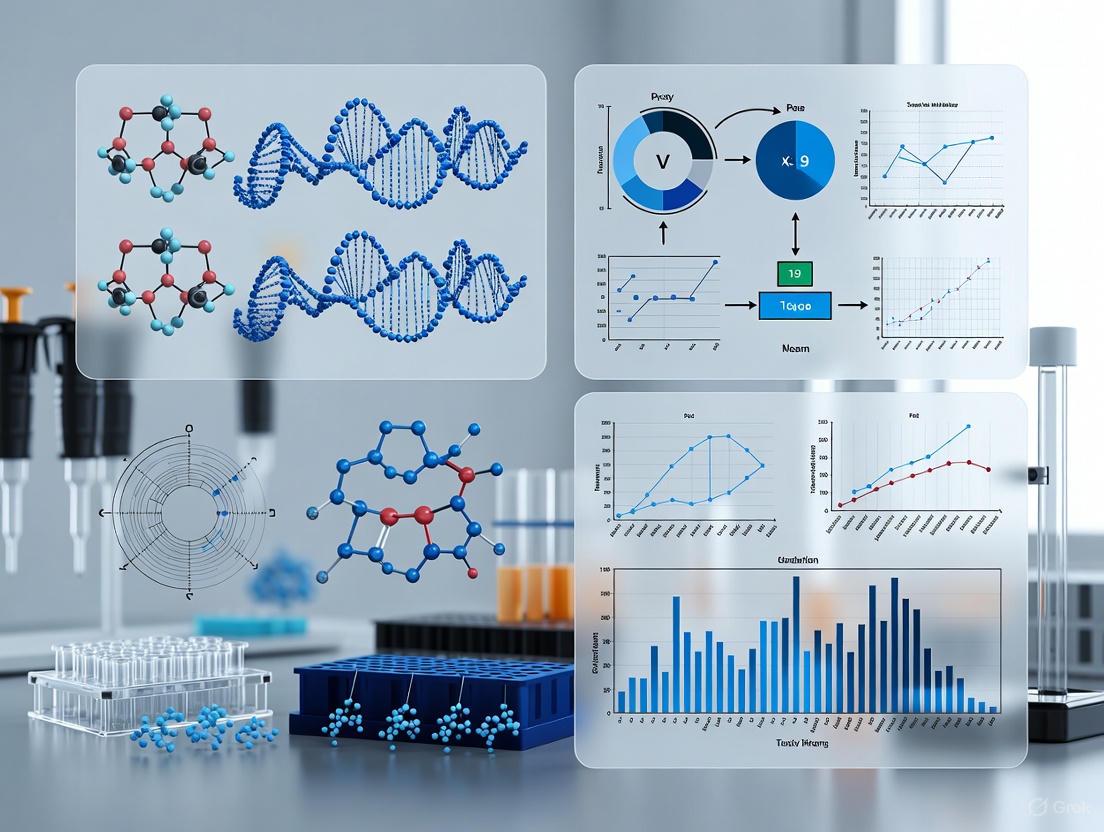
This article provides a comprehensive framework for researchers, scientists, and drug development professionals to validate the sensitivity of CRISPR-based diagnostics.
Validating CRISPR Diagnostic Sensitivity: A Comprehensive Guide for Researchers and Developers
Abstract
This article provides a comprehensive framework for researchers, scientists, and drug development professionals to validate the sensitivity of CRISPR-based diagnostics. Covering foundational principles, methodological applications, troubleshooting, and comparative analysis, it synthesizes current knowledge on key enzymes like Cas12 and Cas13, ultra-sensitive techniques such as CRISPR amplification, and emerging innovations including bead-based reporters and AI integration. The content addresses critical challenges like limit of detection (LOD) determination, off-target effects, and clinical translation, offering practical guidelines for developing robust, reliable, and clinically viable CRISPR diagnostic assays.
The Fundamental Principles of CRISPR Diagnostics and Sensitivity
CRISPR diagnostics leverage the precise targeting of Cas enzymes by CRISPR RNA (crRNA) to detect specific nucleic acid sequences. The core mechanism involves crRNA-guided complex formation followed by target-specific enzymatic activation, which triggers a detectable signal. This guide compares the molecular mechanisms, performance, and experimental applications of the primary CRISPR-Cas systems used in diagnostics: Cas9, Cas12, Cas13, and the novel ΨDNA-guided Cas12 platform.
The fundamental process begins with a Cas effector protein complexing with a crRNA guide. This ribonucleoprotein complex scans nucleic acids for a complementary sequence. Upon target recognition and binding, the Cas protein undergoes a conformational change that activates its enzymatic activity. For diagnostics, this activation triggers either cis-cleavage (direct cutting of the target) or trans-cleavage (non-specific degradation of reporter molecules), with the latter providing signal amplification for highly sensitive detection [1].
Comparative Analysis of Core Mechanisms
Table 1: Core Characteristics and Diagnostic Mechanisms of CRISPR-Cas Systems
| Cas Protein (Type) | Target Molecule | PAM/PFS Requirement | Primary Cleavage Activity | Key Diagnostic Signal |
|---|---|---|---|---|
| Cas9 (Type II) | dsDNA [1] | Yes (PAM) [1] | cis-cleavage (target DNA) [1] | Direct target cleavage or dCas9 binding [1] |
| Cas12 (Type V) | dsDNA (primary); RNA (with ΨDNA) [2] [1] | Yes (PAM) [1] | cis-cleavage (target) & *trans-cleavage (ssDNA) [1] | Collateral cleavage of fluorescent ssDNA reporters [1] |
| Cas13 (Type VI) | RNA [1] | Yes (PFS) [3] | cis-cleavage (target) & *trans-cleavage (ssRNA) [1] | Collateral cleavage of fluorescent ssRNA reporters [1] |
| Cas12a2 (Type V) | RNA [4] | Yes (PFS) [4] | trans-cleavage (dsDNA, ssDNA, ssRNA) [4] | Collateral cleavage of various nucleic acid reporters [4] |
PAM: Protospacer Adjacent Motif; PFS: Protospacer Flanking Sequence; dsDNA: double-stranded DNA; ssDNA: single-stranded DNA; ssRNA: single-stranded RNA.
The crRNA guide is the linchpin of specificity across all systems. It contains a spacer sequence complementary to the target nucleic acid and a scaffold region that enables stable binding to the Cas protein [2]. The discovery of ΨDNA (pseudo-guide DNA) has expanded this paradigm, demonstrating that certain Cas12 enzymes (e.g., AsCas12a) can utilize a synthetic DNA guide with a 3' DNA handle for RNA targeting, bypassing the need for an RNA component in the guide itself [2].
Performance Benchmarking and Experimental Data
Table 2: Experimental Performance Metrics for CRISPR-Cas Diagnostic Systems
| CRISPR System | Application Example | Reported Sensitivity | Reported Specificity | Limit of Detection (LOD) | Key Experimental Findings |
|---|---|---|---|---|---|
| Cas12 (DETECTR) | SARS-CoV-2 Detection [3] | ~95% [3] | ~98% [3] | 10 copies/µL [3] | Results in ~30 minutes; suitable for point-of-care (POC) use [3]. |
| Cas12 (ΨDNA guide) | HCV RNA in clinical samples [2] | 100% [2] | High (specific for miRNA) [2] | -- | ΨDNA guides demonstrated 100% accuracy in clinical detection [2]. |
| Cas13 (SHERLOCK) | Zika Virus [3] | Attomolar [3] | ~100% [3] | Attomolar [3] | Single-base specificity for detecting flaviviruses [3]. |
| Cas12a2 | RNA Detection (in vitro) [4] | Comparable to Cas13a [4] | High [4] | -- | Activated by RNA binding; exhibits collateral cleavage of dsDNA, ssDNA, and ssRNA [4]. |
The ΨDNA-Cas12 system for RNA targeting represents a significant engineering advance. In one study, ΨDNA guides were designed with a 3' DNA handle mimicking the crRNA scaffold. When targeting synthetic miRNAs like miR-21, this configuration enabled robust trans-cleavage activity with Cas12 enzymes. The system showed high specificity, with no observed off-target activity when challenged with non-complementary miRNAs [2]. Bio-Layer Interferometry (BLI) confirmed that ΨDNA binds to AsCas12a with a dissociation constant (Kd) in the low nanomolar range (24.5 nM), indicating efficient complex formation despite being a DNA guide [2].
Detailed Experimental Protocols
Protocol 1: ΨDNA-Guided RNA Detection Using Cas12
This protocol details the methodology for detecting RNA targets using synthetic ΨDNA guides and Cas12 enzymes, as derived from foundational research [2].
1. Guide Design and Synthesis:
- ΨDNA Design: Design a single-stranded DNA guide comprising a 16-28 nt spacer sequence complementary to the target RNA, followed by a synthetic DNA handle at the 3' end that mimics the natural crRNA scaffold.
- Synthesis: Chemically synthesize and HPLC-purify the ΨDNA guide.
2. RNP Complex Formation:
- Incubate the purified Cas12 protein (e.g., AsCas12a) with a molar excess of the ΨDNA guide in a suitable buffer (e.g., containing Tris-HCl, NaCl, and MgCl₂) for 15-30 minutes at 25°C to form the active ribonucleoprotein (RNP) complex.
3. Target Detection and Trans-cleavage Assay:
- Prepare a reaction mixture containing the pre-formed RNP complex, the target RNA, and a fluorescent single-stranded DNA (ssDNA) reporter (e.g., FAM-TTATT- quencher).
- Incubate the reaction at 37°C and monitor fluorescence in real-time using a plate reader.
- Controls: Include reactions without the target RNA and with non-target RNA to establish baseline and confirm specificity.
Protocol 2: Differentiating Cas12a and Cas12a2 Activity
This protocol outlines key biochemical assays to characterize the distinct activation requirements and collateral activities of Cas12a versus Cas12a2 [4].
1. Nucleic Acid Target Preparation:
- Prepare complementary ssRNA, ssDNA, and dsDNA substrates containing the appropriate flanking sequence (PAM for dsDNA targets, PFS for RNA targets).
2. Collateral Cleavage Assay:
- For each Cas protein (Cas12a and Cas12a2), pre-complex it with its cognate crRNA.
- In separate tubes, combine the RNP complex with one of the specific targets (RNA or DNA).
- Add a fluorescent reporter molecule that is not complementary to the guide (e.g., an ssDNA reporter for Cas12a/Cas12a2, or an ssRNA reporter for Cas13/Cas12a2).
- Measure the cleavage kinetics via fluorescence emission.
- Expected Outcome: Cas12a is activated by complementary dsDNA and cleaves ssDNA reporters. Cas12a2 is activated by complementary RNA and cleaves ssRNA, ssDNA, and dsDNA reporters indiscriminately [4].
Mechanism and Workflow Visualization
The Scientist's Toolkit: Research Reagent Solutions
Table 3: Essential Reagents for CRISPR Diagnostic Assay Development
| Reagent / Material | Function and Role in the Experiment | Example Application / Note |
|---|---|---|
| Purified Cas Protein | The core effector enzyme that executes nucleic acid binding and cleavage. | Select based on target (DNA/RNA) and desired signal output (e.g., Cas12 for ssDNA trans-cleavage). |
| crRNA or ΨDNA Guide | Provides target specificity by guiding the Cas protein to a complementary sequence. | crRNA is standard; ΨDNA is a synthetic DNA alternative for Cas12 RNA targeting [2]. |
| Fluorescent Reporter | A molecule that generates a detectable signal upon Cas-mediated cleavage. | For Cas12: FAM-labeled ssDNA with a quencher. For Cas13: FAM-labeled ssRNA with a quencher [1]. |
| Isothermal Amplification Reagents | Pre-amplifies the target nucleic acid to enhance detection sensitivity. | Recombinase Polymerase Amplification (RPA) or LAMP are commonly integrated [3] [1]. |
| Buffer with Cations | Provides optimal ionic and pH conditions for Cas enzyme activity. | Typically contains Mg²⁺ as a essential catalyst for nucleic acid binding and cleavage [2]. |
The repurposing of prokaryotic CRISPR-Cas adaptive immune systems has revolutionized molecular diagnostics by providing programmable, sensitive, and specific nucleic acid detection tools. These systems offer a powerful alternative to traditional methods like PCR, delivering rapid results with minimal equipment requirements, making them particularly valuable for point-of-care and resource-limited settings [5]. The core functionality of CRISPR diagnostics hinges on the distinct mechanisms of different Cas enzymes, primarily categorized by their cleavage activities: cis-cleavage (target-specific cutting) and trans-cleavage (non-specific collateral cutting of surrounding nucleic acids) [5].
Cas9 operates primarily through cis-cleavage, while Cas12 and Cas13 utilize trans-cleavage activity for signal amplification, enabling ultra-sensitive detection. This guide provides a comparative analysis of these key CRISPR enzymes—Cas9, Cas12, and Cas13—focusing on their molecular mechanisms, diagnostic applications, and experimental protocols. Designed for researchers and drug development professionals, it synthesizes current data and methodologies to inform assay selection and optimization within the broader context of diagnostic sensitivity validation [5] [6].
Molecular Mechanisms and Comparative Analysis
Core Mechanisms and Cleavage Activities
The fundamental difference between these enzymes lies in their target recognition and cleavage behaviors, which directly dictate their diagnostic applications.
Cas9 (cis-cleavage): A DNA-targeting enzyme that requires a guide RNA (gRNA) and a protospacer adjacent motif (PAM) sequence for target recognition. Upon binding to its target DNA, Cas9 performs a cis-cleavage, making a double-stranded cut only in the specific DNA sequence it recognizes. It does not exhibit collateral cleavage activity. Its high specificity makes it suitable for applications requiring precise target identification, such as distinguishing between viral strains [5] [7].
Cas12 (trans-cleavage of DNA): Also a DNA-targeting enzyme that requires a gRNA and a PAM. Unlike Cas9, upon recognizing and cleaving its target DNA in cis, Cas12 enzymes (like Cas12a) undergo a conformational change that activates their collateral, trans-cleavage activity. This results in the non-specific degradation of nearby single-stranded DNA (ssDNA) molecules. This amplified signal is harnessed in diagnostic platforms like DNA Endonuclease Targeted CRISPR Trans Reporter (DETECTR) [5] [8] [9].
Cas13 (trans-cleavage of RNA): An RNA-targeting enzyme that requires a guide RNA and a protospacer flanking sequence (PFS). Similar to Cas12, upon binding and cleaving its target RNA sequence in cis, Cas13a exhibits collateral trans-cleavage activity, indiscriminately degrading surrounding single-stranded RNA (ssRNA). This activity is leveraged in platforms like Specific High Sensitivity Enzymatic Reporter UnLOCKing (SHERLOCK) for detecting RNA viruses [5] [6].
The following diagram illustrates the core mechanisms and detection workflows for Cas12 and Cas13, which are most commonly used in sensitive diagnostic applications due to their trans-cleavage activity.
Performance Comparison and Technical Specifications
The table below provides a quantitative comparison of the key CRISPR enzymes used in diagnostics, based on recent experimental data.
Table 1: Comparative Performance of Key CRISPR Enzymes in Diagnostics
| Feature | Cas9 | Cas12 (e.g., Cas12a) | Cas13 (e.g., Cas13a) |
|---|---|---|---|
| Native Target | DNA | DNA | RNA |
| Cleavage Activity | cis-cleavage (target DNA only) | cis- & trans-cleavage (ssDNA) | cis- & trans-cleavage (ssRNA) |
| PAM/PFS Requirement | PAM (e.g., NGG) | PAM (e.g., TTTV) | PFS (relaxed) |
| Reported Sensitivity | Varies with application | ~5 copies/μL [9], 10 femtomolar [8] | Attomolar level [5] [6], <10 copies/μL [6] |
| Detection Time | Hours (often with amplification) | <60 minutes [8] [9] | 30-60 minutes [6] |
| Key Diagnostic Platforms | Early SNV detection [7] | DETECTR, HOLMES, one-pot assays [5] [9] | SHERLOCK, SHINE, CARMEN [5] [6] [10] |
| Primary Application in Dx | Identifying single-nucleotide variants (SNVs) [7] | DNA virus, bacterial detection [8] [9] | RNA virus detection (e.g., SARS-CoV-2, Influenza) [6] [10] |
Experimental Protocols for Diagnostic Assay Development
One-Pot Cas12a-based Pathogen Detection (e.g., for Tuberculosis)
The "one-pot" assay integrates target amplification and CRISPR detection in a single tube, simplifying workflow and reducing contamination risk. The ActCRISPR-TB assay for Mycobacterium tuberculosis is a prime example [9].
Workflow:
- Sample Preparation: Extract DNA from clinical samples (e.g., sputum, stool, cerebrospinal fluid).
- Reaction Setup: In a single tube, combine:
- Extracted DNA template.
- Recombinase Polymerase Amplification (RPA) primers (e.g., 500 nM) targeting the pathogen-specific IS6110 insertion element.
- A pre-complexed Cas12a ribonucleoprotein (RNP) mixture. This includes:
- Cas12a enzyme (e.g., 40 nM).
- A combination of multiple gRNAs (e.g., gRNA-2, -3, -5 at a optimized ratio) designed to favor trans-cleavage over cis-cleavage of the amplicon, thereby enhancing sensitivity [9].
- A fluorescent ssDNA reporter probe (e.g., 600 nM).
- RPA reaction mix (including 16.8 mM MgOAc).
- Incubation: Incubate the reaction at a constant temperature of 37-39°C for 45-60 minutes.
- Signal Detection: Monitor real-time fluorescence using a portable fluorometer or plate reader. Positive samples show a significant increase in fluorescence signal due to Cas12a's collateral cleavage of the reporter [9].
Table 2: Key Reagents for One-Pot Cas12a Assay
| Reagent | Function | Example/Note |
|---|---|---|
| Cas12a Enzyme | Effector protein for target recognition and trans-cleavage | LbCas12a or AsCas12a [8] [9] |
| Multiple gRNAs | Guides Cas12a to specific target sequences; combination enhances signal | Use gRNAs favoring trans-cleavage (e.g., non-canonical PAM) [9] |
| RPA Primers | Isothermally amplifies target DNA for enhanced sensitivity | Target multi-copy genomic elements (e.g., IS6110 for TB) [9] |
| ssDNA Reporter | Signal generation upon trans-cleavage | FAM-TTATTATT-BHQ1 or similar quenched fluorophore probe [8] [9] |
| Portable Fluorometer | Readout device for point-of-care use | Enables quantitative, rapid results in field settings [9] |
Cas13a-based RNA Virus Detection (e.g., SHERLOCK/SHINE)
This protocol is tailored for detecting RNA targets, such as plant or human RNA viruses, using Cas13a's collateral RNase activity [6].
Workflow:
- Sample & RNA Preparation: Lyse the sample (e.g., plant leaf, human swab) to release RNA. This can often be a simple heat-based step, avoiding complex RNA extraction [6].
- Reverse Transcription & Isothermal Amplification: Use Reverse Transcription-RPA (RT-RPA) or Loop-mediated Isothermal Amplification (RT-LAMP) to simultaneously reverse transcribe the viral RNA and amplify the cDNA. This step increases the abundance of the target sequence.
- CRISPR Detection: Transfer the amplified product to the Cas13a detection reaction containing:
- Cas13a enzyme.
- Target-specific crRNA.
- A fluorescent ssRNA reporter probe (e.g., FAM-UUUUUU-BHQ1).
- Incubation & Readout: Incubate at 37°C for 15-30 minutes. The fluorescence can be measured with a plate reader, a portable fluorometer, or visualized on a lateral flow strip [6].
Advanced Innovations and Sensitivity Enhancement Strategies
Signal Amplification and Multiplexing Platforms
Recent research has focused on overcoming the limitations of fluorescence-based readouts and enabling the detection of multiple pathogens in a single reaction.
Bead-Based Luminescence (bbLuc): To improve sensitivity, a bead-based split-nanoluciferase reporter system has been developed for Cas13 diagnostics. In this system, two protein subunits (LgBiT and HiBiT) are attached to separate beads via a Cas13-cleavable RNA linker. Upon target recognition and activation of Cas13's collateral activity, the linkers are cleaved, releasing the subunits which then combine to form a functional luciferase enzyme, producing light. This method has demonstrated a 20-fold increase in sensitivity compared to standard fluorescent reporters in amplification-free assays [10].
Bead-Based Multiplexing (bbCARMEN): For high-order multiplexing, a platform using color-coded beads coupled to distinct crRNAs was developed. Each bead type is assigned to a specific pathogen target. The beads, Cas13 enzyme, and sample are mixed, leading to the formation of droplets that effectively function as parallelized micro-reactions. Detection is achieved by imaging the fluorescence of the droplets associated with each colored bead. This platform has been validated to detect nine distinct viral targets simultaneously with a sensitivity as low as 2.5 copies/μL of input RNA [10].
The following diagram illustrates the logical workflow for developing and optimizing a high-sensitivity CRISPR diagnostic assay.
Achieving Single-Nucleotide Specificity
A critical challenge for CRISPR diagnostics is distinguishing between sequences that differ by only a single nucleotide (e.g., viral strains or resistance mutations). Several strategies have been developed to enhance fidelity [7]:
- PAM (De)generation: Designing the assay such that the single-nucleotide variant (SNV) either creates or disrupts the Protospacer Adjacent Motif (PAM) required for Cas enzyme binding. This method is highly effective but limited to SNVs that affect PAM sequences [7].
- Leveraging Mismatch-Sensitive Positions: Designing the gRNA spacer sequence so that the SNV is located within the "seed region" (a 5-10 nt region near the PAM/distal end), where mismatches are least tolerated and most likely to prevent cleavage [7].
- Introducing Synthetic Mismatches: Deliberately designing an additional mismatch between the gRNA and the wild-type target sequence. This strategically lowers the binding affinity for the off-target sequence while maintaining strong binding to the intended target, thereby increasing specificity. The position of this synthetic mismatch is critical and often requires empirical optimization [7].
The Scientist's Toolkit: Essential Research Reagents
Table 3: Key Research Reagent Solutions for CRISPR Diagnostic Development
| Reagent / Material | Function | Application Notes |
|---|---|---|
| Cas Enzymes | Core effector proteins (e.g., Cas12a, Cas13a) | Select based on target (DNA/RNA); consider size and PAM/PFS requirements [5] [6]. |
| Custom gRNAs | Sequence-specific targeting | Design is critical for sensitivity/specificity; use modified bases or synthetic mismatches for SNV detection [9] [7]. |
| Isothermal Amplification Kits (RPA/LAMP) | Target pre-amplification | Essential for high sensitivity; enables one-pot assays [9] [6]. |
| Fluorescent Reporters | Signal generation | ssDNA reporters for Cas12; ssRNA reporters for Cas13; often FAM-quencher based [8] [6]. |
| Lateral Flow Strips | Visual readout | Enable equipment-free result interpretation; often use biotin- and FAM-labeled reporters [9]. |
| Bead-Based Reporter Systems | Enhanced sensitivity & multiplexing | e.g., bbLuc for luminescence or color-coded beads for multiplex detection [10]. |
| Portable Fluorometers / Imagers | Signal detection at point-of-care | For quantitative readouts of fluorescence or luminescence in field-deployable settings [9] [10]. |
The Limit of Detection (LOD) is a fundamental performance characteristic in analytical chemistry and molecular diagnostics, representing the lowest concentration of an analyte that can be reliably distinguished from its absence with a stated confidence level [11] [12]. This parameter is particularly crucial for CRISPR-based diagnostic systems, where establishing a low LOD directly translates to the ability to detect minute quantities of pathogen nucleic acids, enabling early disease diagnosis and effective epidemiological surveillance.
The statistical foundation of LOD accounts for two types of potential errors: false positives (Type I error, α), where a blank sample is incorrectly identified as containing the analyte, and false negatives (Type II error, β), where a sample containing the analyte at the LOD is incorrectly deemed negative [12]. For a 95% confidence level (α = β = 0.05), the LOD is typically defined as the concentration where the signal is 3.3 times the standard deviation of the blank measurements above the mean blank value [12]. This ensures that at the LOD concentration, there is less than 5% probability of both false positives and false negatives.
LOD in CRISPR-Based Diagnostics
Fundamental Principles and Mechanisms
CRISPR-based diagnostics leverage the programmable nucleic acid recognition capabilities of various Cas proteins. The core mechanism involves a Cas protein complexed with a guide RNA that specifically binds to target DNA or RNA sequences, triggering enzymatic activities that generate detectable signals [5] [1].
Two primary mechanisms enable detection in CRISPR systems:
- Cis-cleavage activity: The Cas protein cleaves the target nucleic acid itself [13] [1]
- Trans-cleavage (collateral cleavage) activity: Upon target recognition, the Cas protein becomes activated to non-specifically cleave surrounding reporter molecules, amplifying the detection signal [13] [5] [1]
The exceptional sensitivity of CRISPR diagnostics stems from this combination of specific target recognition and powerful signal amplification through trans-cleavage activity.
Key CRISPR Systems and Their Detection Capabilities
Different Cas proteins have been harnessed for diagnostic applications, each with unique characteristics and optimal target types:
Figure 1: Molecular Mechanisms of CRISPR Diagnostic Systems
Comparative Performance: CRISPR vs. Traditional Methods
LOD and Sensitivity Comparison
CRISPR diagnostic platforms demonstrate exceptional sensitivity that frequently rivals or exceeds traditional nucleic acid detection methods while offering advantages in speed, cost, and portability.
Table 1: Performance Comparison of Diagnostic Platforms
| Diagnostic Platform | Typical LOD | Time to Result | Cost per Test | Equipment Needs | Key Applications |
|---|---|---|---|---|---|
| CRISPR-Cas13 [13] | >95% sensitivity, >99% specificity | <2 hours | ~$0.05 | Portable reader or lateral flow | SARS-CoV-2, viral RNA, mutations |
| CRISPR-Cas12 [14] | ~20 copies/μL (DETECTR) | ~20 minutes | Low cost | Portable reader or lateral flow | SARS-CoV-2, DNA viruses |
| RT-PCR [13] [15] | Single copy per test | 1-4 hours | $10-$100 | Thermal cycler, lab equipment | Gold standard for nucleic acid detection |
| CRISPR (SHERLOCK) [14] | ~6.75 copies/μL | ~1 hour | Low cost | Portable reader | SARS-CoV-2, Zika, Dengue |
Advantages of CRISPR Diagnostics
The superior LOD characteristics of CRISPR systems translate to several practical advantages:
- Single-Molecule Sensitivity: When combined with pre-amplification methods like RPA or LAMP, CRISPR diagnostics can achieve attomolar (aM) sensitivity, enabling detection of single molecules of target nucleic acids [13] [1]
- Single-Nucleotide Specificity: CRISPR systems can distinguish between targets differing by only a single nucleotide, crucial for identifying specific pathogen strains or genetic mutations [13] [5]
- Rapid Detection: The combination of isothermal amplification and CRISPR detection enables results in 15-60 minutes, significantly faster than conventional PCR [14] [15]
- Point-of-Care Compatibility: Lateral flow readouts and minimal equipment requirements make CRISPR diagnostics suitable for resource-limited settings [13] [5]
Experimental Protocols for LOD Determination
Establishing LOD for CRISPR Diagnostic Platforms
Robust determination of LOD follows standardized experimental approaches that account for statistical confidence and practical detection capabilities.
Figure 2: Experimental Workflow for LOD Determination
CRISPR-Specific LOD Determination Protocol
The ENHANCE/ENHANCEv2 system provides a representative example of rigorous LOD validation for CRISPR diagnostics [14]:
Sample Preparation:
- Clinical nasopharyngeal swab samples (n=62: 31 positive, 31 negative)
- Comparison with RT-qPCR as reference standard
- 5 μL sample volume
Assay Configuration:
- Reverse Transcription Loop-Mediated Isothermal Amplification (RT-LAMP) for pre-amplification
- CRISPR-Cas12a reaction with engineered guide RNA
- Fluorescence and lateral flow detection
LOD Determination:
- Serial dilution of target nucleic acids
- Determination of the lowest concentration with >95% detection probability
- Statistical analysis of false positives/negatives
This protocol demonstrated 95% accuracy with detection down to a few copies of the target, while maintaining high specificity against 31 similar respiratory pathogens [14].
Essential Research Reagent Solutions
Successful implementation of CRISPR diagnostic assays requires specific reagents and components optimized for sensitivity and reproducibility.
Table 2: Essential Research Reagents for CRISPR Diagnostics
| Reagent Category | Specific Examples | Function in LOD Optimization | Key Characteristics |
|---|---|---|---|
| Cas Proteins | LbCas12a, AsCas12a, LbuCas13a [14] [1] | Target recognition and trans-cleavage activity | High collateral activity, minimal off-target effects |
| Guide RNAs | crRNAs with specific spacers, chimeric gRNAs [14] [5] | Specific target sequence recognition | Engineered modifications for enhanced activity |
| Reporter Molecules | FQ-ssDNA (for Cas12), FQ-ssRNA (for Cas13) [13] [15] | Signal generation upon cleavage | Fluorophore-quencher pairs with optimal cleavage efficiency |
| Amplification Reagents | RPA kits, LAMP kits [14] [15] | Pre-amplification for enhanced sensitivity | Isothermal amplification compatible with CRISPR |
| Signal Detection | Lateral flow strips, fluorescent readers [13] [14] | Result visualization and quantification | Portable, user-friendly formats for point-of-care use |
Factors Influencing LOD in CRISPR Diagnostics
Technical and Environmental Considerations
Several factors significantly impact the achievable LOD in CRISPR-based diagnostic systems:
- Pre-amplification Methods: Integration with RPA, LAMP, or rolling circle amplification can enhance sensitivity from nanomolar to attomolar levels [13] [1] [15]
- Cas Protein Engineering: Modified Cas variants (e.g., Cas12aD156R) demonstrate improved signal amplification and faster reaction times [14]
- Guide RNA Design: Optimized crRNA sequences with specific modifications enhance binding efficiency and specificity [14] [5]
- Sample Matrix Effects: Complex biological samples can inhibit enzymatic activity, potentially reducing sensitivity [5]
- Reaction Conditions: Magnesium concentration (3-13 mM range), temperature, and buffer composition significantly impact performance [14]
Methodological Limitations and Solutions
Despite exceptional sensitivity, CRISPR diagnostics face several challenges in LOD optimization:
- Without pre-amplification, sensitivity may be limited to nanomolar ranges [1]
- Sample preparation complexity can introduce variability and affect reproducibility [5] [1]
- Environmental stability of reagents, particularly in lyophilized formats, impacts consistent performance [14]
Recent innovations address these limitations through integrated systems like the CARE platform, which combines microfluidics, automated liquid handling, and contamination-free designs to maintain optimal LOD while improving reproducibility [15].
The Limit of Detection represents a critical performance parameter that defines the clinical utility of CRISPR-based diagnostic platforms. The exceptional LOD characteristics of CRISPR systems – achieving attomolar sensitivity with single-nucleotide specificity – position this technology as a transformative approach for molecular diagnostics. Through rigorous LOD determination using standardized statistical methods and optimized reagent systems, CRISPR diagnostics can achieve the sensitivity required for early disease detection, pathogen surveillance, and personalized medicine applications. As engineering improvements continue to enhance the already impressive LOD of these systems, CRISPR-based diagnostics are poised to set new standards for diagnostic sensitivity across healthcare settings.
In the rapidly evolving field of molecular diagnostics, the exceptional programmability and specificity of CRISPR-Cas systems have revolutionized nucleic acid detection technologies. However, the inherent limitation of these systems lies in their inability to detect trace amounts of target nucleic acids without prior amplification. The integration of pre-amplification techniques addresses this fundamental constraint by significantly enhancing target abundance before CRISPR-mediated detection. This synergistic approach dramatically improves the overall sensitivity of diagnostic platforms, enabling the detection of pathogen DNA or RNA at clinically relevant concentrations for early disease diagnosis. Among various amplification methods, recombinase polymerase amplification (RPA) has emerged as a particularly compatible partner for CRISPR-based detection due to its isothermal nature, rapid kinetics, and operational simplicity. This article objectively compares the performance of RPA with other amplification methodologies in enhancing CRISPR diagnostic sensitivity, providing experimental data and protocols to guide researchers in developing next-generation molecular diagnostics.
Mechanisms of Pre-amplification in CRISPR Diagnostics
Fundamental Principles of Target Amplification
Pre-amplification techniques function to exponentially increase the number of target nucleic acid sequences prior to CRISPR-mediated detection, effectively bridging the sensitivity gap between raw sample input and CRISPR detection thresholds. These methods operate on the principle of enzymatic amplification, where specific regions of pathogen DNA or RNA are copied repeatedly to generate sufficient amplicon concentrations for reliable CRISPR recognition. The critical threshold of detection for most CRISPR-Cas systems alone typically ranges between picomolar and nanomolar concentrations, whereas many clinical applications require detection at attomolar to zeptomolar levels—a difference of several orders of magnitude. Pre-amplification addresses this disparity by generating billions of copies from a single target molecule within minutes, ensuring that even minimal starting templates produce sufficient signal for unambiguous detection.
The integration strategy between amplification and CRISPR detection follows either a two-step or one-pot approach. In two-step protocols, amplification occurs separately before transferring aliquots to the CRISPR reaction mixture, offering optimization flexibility but increasing contamination risk. One-pot systems physically or temporally separate the amplification and detection phases within a single tube, minimizing cross-contamination while simplifying operational workflows. The selection of appropriate pre-amplification method depends on multiple factors including target type (DNA/RNA), required sensitivity, specificity, resource constraints, and intended application setting (laboratory versus point-of-care).
RPA-CRISPR Integration Mechanism
Table 1: Key Components of RPA-CRISPR Diagnostic Systems
| Component | Function | Typical Concentration |
|---|---|---|
| Recombinase | Binds to primers forming nucleoprotein filaments that scan dsDNA for homologous sequences | Varies by commercial kit |
| Single-stranded DNA-binding protein (SSB) | Stabilizes displaced DNA strands preventing reannealing | Varies by commercial kit |
| Strand-displacing DNA polymerase | Extends primers from the 3' end using dNTPs | Varies by commercial kit |
| Cas12a/Cas13a protein | Binds to target amplicons via crRNA guidance, activating collateral cleavage | 50-100 nM |
| crRNA | Guides Cas protein to specific target sequence with complementary region | 100-133 nM |
| ssDNA reporter | Fluorescently quenched probe cleaved during collateral activity generating signal | 100-500 nM |
Recombinase Polymerase Amplification employs a sophisticated biochemical mechanism that operates at a constant temperature range of 37-42°C, leveraging three core enzymes: recombinase, single-stranded DNA-binding protein (SSB), and strand-displacing DNA polymerase. The recombinase primes the reaction by forming complexes with oligonucleotide primers, enabling these nucleoprotein filaments to invade double-stranded DNA and initiate strand displacement at homologous sequences. SSB proteins then stabilize the resulting displacement loops, preventing primer dissociation and reannealing of displaced strands. Finally, strand-displacing DNA polymerase extends the primers from the 3'-ends, synthesizing new DNA complementarity in an exponential manner that rapidly generates amplificons for CRISPR detection [16].
The integration of RPA with CRISPR-Cas systems creates a powerful diagnostic pipeline where RPA serves as the sensitivity engine while CRISPR provides the specificity layer. Following RPA amplification, the generated amplicons are recognized by CRISPR RNA (crRNA)-guided Cas proteins (Cas12a for DNA targets, Cas13 for RNA targets). This recognition activates the collateral cleavage activity of the Cas enzyme, which non-specifically degrades reporter molecules (ssDNA for Cas12a, ssRNA for Cas13a) labeled with fluorophore-quencher pairs. The cleavage separates fluorophore from quencher, generating a fluorescent signal detectable via portable readers or even visually under blue light [17]. This two-phase mechanism achieves exceptional sensitivity without sacrificing specificity, as both amplification and detection require sequence complementarity.
Diagram 1: Integrated workflow of RPA pre-amplification and CRISPR-mediated detection showing the sequential molecular processes that enhance target abundance and enable highly sensitive nucleic acid detection.
Comparative Performance of Pre-amplification Methods
Analytical Sensitivity and Detection Limits
Table 2: Comparison of Pre-amplification Methods in CRISPR Diagnostics
| Amplification Method | Reaction Temperature | Reaction Time | Detection Limit | Key Applications |
|---|---|---|---|---|
| RPA | 37-42°C | 15-30 minutes | 0.5-10 copies/μL | Goose parvovirus, SARS-CoV-2, Mycoplasma pneumoniae |
| LAMP | 60-65°C | 15-60 minutes | 0.01-1 ng/μL | Southern stem canker, Mycoplasma pneumoniae |
| PCR | 95-55°C (cycling) | 1-2 hours | 10-100 copies/μL | Gold standard, laboratory reference |
| RCA | 30-37°C | 2 hours | 1 copy/μL | Limited applications |
The analytical sensitivity achievable through RPA-CRISPR integration demonstrates remarkable performance across various pathogens. For goose parvovirus (GPV) detection, an RPA-CRISPR/Cas12a system achieved a detection limit of 10 copies/μL of the VP3 gene within one hour, outperforming traditional qPCR in clinical validation studies [17]. Similar high sensitivity was reported for SARS-CoV-2 detection, where an optimized RPA-assisted CRISPR-Cas12a platform reached 0.5 copies/μL with a total reaction time of just 15 minutes [18]. In mycoplasma diagnostics, an RPA-CRISPR/Cas12b system detected down to 5 fg of genomic DNA templates of MP strains, demonstrating sufficient sensitivity for clinical application [19].
When compared with other pre-amplification methods, RPA-CRISPR platforms show competitive or superior sensitivity across multiple studies. A comparative evaluation of detection methods for the fungal pathogen Diaporthe aspalathi demonstrated that LAMP achieved the highest sensitivity at 0.01 ng/μL, followed by RPA-CRISPR/Cas12a at 0.1 ng/μL, with conventional PCR showing significantly lower sensitivity at 1.0 ng/μL [20]. While LAMP occasionally demonstrates slightly higher analytical sensitivity in some applications, RPA offers distinct advantages in operational simplicity, faster reaction times, and lower operating temperatures that align more closely with optimal CRISPR enzyme activity.
Assay Speed and Time-to-Result
The integration of RPA with CRISPR systems significantly reduces total assay time compared to traditional amplification methods, making it particularly valuable for rapid diagnostics. The amplification phase using RPA typically requires 15-30 minutes at a constant temperature of 37-42°C, followed by a CRISPR detection phase of 5-10 minutes [17] [18]. This combined 30-40 minute total processing time represents a substantial improvement over conventional PCR (1-2 hours) while maintaining high sensitivity and specificity.
Recent advancements in one-pot RPA-CRISPR systems have further streamlined workflows, reducing hands-on time and minimizing contamination risks. For Schistosoma haematobium detection, the CATSH (CRISPR-assisted test for S. haematobium) achieved detection of a single parasitic egg in an average time of 12 minutes following optimization of reagent concentrations and reaction conditions [21]. Similarly, a one-pot RPA-CRISPR/Cas12a assay for Diaporthe aspalathi detection completed both amplification and visual detection within 30 minutes, compared to 60 minutes required for LAMP-based detection [20]. The rapid time-to-result offered by RPA-CRISPR integration meets the critical need for swift diagnosis in clinical, field, and resource-limited settings where traditional laboratory methods are impractical.
Specificity and Cross-reactivity
The combination of RPA pre-amplification with CRISPR-mediated detection creates a dual-specificity safeguard that minimizes false-positive results while maintaining high sensitivity. The initial specificity layer occurs during RPA amplification through primer-template complementarity, while the second specificity layer derives from the crRNA-guided target recognition by Cas proteins. This dual verification mechanism ensures exceptional specificity in distinguishing closely related pathogens.
In development of an RPA-CRISPR/Cas12a assay for goose parvovirus, researchers observed no cross-reactivity against other waterfowl viruses including Muscovy duck reovirus (MDRV), novel duck reovirus (NDRV), duck plague virus (DPV), and duck adenovirus B2 (DAdV B2) [17]. Similarly, an RPA-CRISPR/Cas12b platform for Mycoplasma pneumoniae detection accurately distinguished MP strains from 25 non-MP strains of other respiratory bacterial pathogens without any cross-reactivity [19]. The CRISPR component provides particularly robust specificity due to the requirement for both crRNA complementarity and the presence of a protospacer adjacent motif (PAM) sequence for Cas12a activation, creating a highly selective recognition system that minimizes off-target detection.
Experimental Protocols and Methodologies
Standard RPA-CRISPR Workflow
The development of an RPA-CRISPR diagnostic assay involves sequential optimization steps to achieve maximum sensitivity and specificity. The following protocol outlines the general methodology based on multiple established applications:
Step 1: Target Selection and Primer Design
- Identify a highly conserved genomic region specific to the target pathogen
- Design RPA primers (30-35 bp) using software such as Primer Premier 5.0
- Assess hairpin formation, dimerization, false priming, and cross dimer compatibility
- Verify primer specificity using NCBI BLAST analysis against non-target sequences
- For CRISPR detection, design crRNAs to target amplified regions using online tools like Benchling
Step 2: RPA Reaction Setup
- Utilize commercial RPA kits (TwistAmp Basic kit or equivalent)
- Prepare 50 μL reaction mixture containing:
- 29.4-41.5 μL of buffer A (varies by kit)
- 2 μL each of forward and reverse primer (20 μM concentration)
- 2-5 μL of DNA template
- 2.5 μL of buffer B (magnesium acetate solution)
- Nuclease-free water to reach final volume
- Incubate reaction at 37-42°C for 15-30 minutes (optimal temperature determined experimentally)
Step 3: CRISPR Detection System
- Prepare CRISPR reaction mixture (25-50 μL total volume) containing:
- 12.5 μL 2× Cas12b buffer (or appropriate buffer for Cas variant)
- 8 μL Cas12a-gRNA complex (pre-formed by incubating 50 nM Cas12a with 100 nM crRNA at 37°C for 10 minutes)
- 1 μL ssDNA fluorescence reporter (FAM-TTATTATTAT-BHQ1, 100 μM)
- 2-5 μL RPA amplification product
- Nuclease-free water to final volume
- Incubate at 37°C for 5-10 minutes
- Visualize results using portable blue light transilluminator or measure fluorescence with plate reader
Key Optimization Strategies
Successful implementation of RPA-CRISPR assays requires careful optimization of critical parameters that significantly impact sensitivity and reproducibility:
crRNA Concentration Optimization
- Test crRNA concentrations across a range of 50-200 nM
- Select concentration yielding highest fluorescence signal with minimal background
- In Mycoplasma pneumoniae detection, optimal crRNA concentration was determined to be 133 nM [20]
Cas Protein to crRNA Ratio
- Evaluate different ratios (1:1, 1:2, 2:1) of Cas protein to crRNA
- For Cas12a, a 1:2 ratio (50 nM Cas12a:100 nM crRNA) often provides optimal results
- In Schistosoma haematobium detection, 1:2 ratio produced highest endpoint fluorescence [21]
RPA Reaction Time and Temperature
- Test RPA amplification efficiency at temperatures ranging from 36-42°C in 1°C increments
- Determine minimal amplification time required for reliable detection
- For one-pot systems, ensure RPA temperature compatible with Cas enzyme activity (typically 37°C)
ssDNA Reporter Concentration
- Optimize reporter concentration (typically 100-500 nM) to balance signal intensity against background fluorescence
- Higher concentrations increase signal but may raise background and cost
- For CATSH assay, 100 nM provided sufficient signal without reader saturation [21]
Research Reagent Solutions
Table 3: Essential Research Reagents for RPA-CRISPR Assay Development
| Reagent Category | Specific Examples | Function in Assay | Commercial Sources |
|---|---|---|---|
| RPA Kits | TwistAmp Basic kit, AmpFuture RNA Constant Temperature Rapid Amplification Kit | Isothermal amplification of target nucleic acids | TwistDx Ltd. |
| Cas Proteins | EnGen Lba Cas12a, AapCas12b | Target-specific binding and collateral cleavage activity | New England Biolabs, HUIDEXIN |
| Fluorescent Reporters | FAM-TTATTATTAT-BHQ1, FAM-UUUUUU-BHQ1 | Signal generation through cleavage-induced fluorescence | Custom synthesis companies |
| crRNA Synthesis | Target-specific crRNAs | Guides Cas protein to complementary sequences | GeneScript, TianYi-HuiYuan |
| RPA Primers | Target-specific primers (30-35 bp) | Initiate recombinase-mediated amplification | Various synthesis services |
| Buffer Systems | NEBuffer, 10× Cas12a reaction buffer | Maintain optimal enzymatic activity | New England Biolabs, Guangzhou Magigen |
Implementation Considerations
One-Pot vs. Two-Step Reaction Formats
The implementation of RPA-CRISPR diagnostics presents a fundamental choice between one-pot and two-step reaction configurations, each with distinct advantages and limitations. Two-step reactions physically separate the RPA amplification from CRISPR detection, offering greater optimization flexibility and preventing potential interference between reaction components. This approach typically yields slightly higher sensitivity but increases contamination risk during transfer between tubes and requires more hands-on time.
One-pot systems integrate both reactions within a single tube through physical or temporal separation, significantly reducing contamination risks and simplifying operational workflows. Recent innovations include:
- Spatial segregation: RPA reagents placed in tube bottom with CRISPR reagents in cap, combined after amplification via centrifugation [18]
- Hydrophobic barriers: RPA amplification occurs in inner tube with hydrophobic pores allowing controlled transfer to CRISPR reagents [18]
- Chemical inhibition: Cas activity inhibited during amplification phase until activation by temperature shift or additional reagent
For field applications and point-of-care testing, one-pot systems offer significant advantages despite potentially requiring more extensive optimization to prevent Cas enzyme interference with amplification efficiency.
Sample Preparation Compatibility
Effective sample preparation represents a critical, often overlooked component in RPA-CRISPR diagnostic development. Complex biological samples contain substances that may inhibit enzymatic reactions, necessitating efficient nucleic acid extraction or simplified processing methods. For Schistosoma haematobium detection in urine samples, researchers developed a novel CRISPR-compatible sample preparation method when commercial extraction kits proved incompatible with the downstream CRISPR detection [21]. Similarly, for SARS-CoV-2 detection, integration of sample extraction-free processing with reagent freeze-drying technology enabled complete sample-to-result automation within 20 minutes [18].
Recent advancements focus on simplifying sample preparation through:
- Rapid lysis buffers: Chemical lysis without complex purification (e.g., 5-minute cardiac tissue lysis for goose parvovirus detection) [17]
- Lyophilized reagents: Freeze-dried RPA and CRISPR components that enhance stability and reduce cold-chain dependence [21]
- Direct sample addition: Minimal processing approaches where samples are added directly to reaction mixtures with optimized buffer composition to neutralize inhibitors
The strategic integration of pre-amplification methods, particularly RPA, with CRISPR detection systems has fundamentally enhanced the sensitivity and practical applicability of molecular diagnostics. Through exponential target amplification, RPA effectively addresses the inherent detection limit constraints of CRISPR systems alone, enabling identification of pathogen nucleic acids at clinically relevant concentrations for early diagnosis. When objectively compared to alternative amplification methods, RPA demonstrates superior compatibility with CRISPR systems due to its isothermal operation, rapid kinetics, and low temperature requirements that align with optimal Cas enzyme activity. The experimental data and methodologies presented provide researchers with a framework for developing, optimizing, and implementing RPA-CRISPR diagnostics across various applications. As this technology continues to evolve, further innovations in reagent stabilization, sample processing, and instrumentation will expand the accessibility of highly sensitive molecular diagnostics to resource-limited settings, ultimately transforming disease surveillance and patient care worldwide.
CRISPR-based diagnostics (CRISPRdx) have emerged as powerful tools for molecular detection due to their programmability, sensitivity, and operational simplicity. However, achieving optimal sensitivity thresholds is challenged by various intrinsic sources of background and noise. These fundamental limitations affect signal-to-noise ratios, potentially leading to false positives, reduced sensitivity, and compromised assay reliability. Understanding these intrinsic factors is crucial for researchers and drug development professionals working on diagnostic validation, as it informs the selection of appropriate CRISPR systems, guide RNA designs, and reaction conditions to minimize background interference while maximizing detection capability. The pursuit of higher specificity and sensitivity in CRISPRdx requires systematic addressing of these inherent limitations through strategic experimental design and optimization [22] [7].
Nonspecific Trans-Cleavage Activity
The collateral activity of Cas enzymes, while central to CRISPR detection technology, represents a significant source of background noise. Both Cas12 and Cas13 effectors exhibit promiscuous trans-cleavage activity upon target recognition—Cas12 cleaves single-stranded DNA reporters, while Cas13 cleaves single-stranded RNA reporters. This activity is triggered specifically by target binding, but residual background cleavage can occur even in the absence of the intended target, generating false-positive signals. The trans-cleavage turnover rate, though efficient, is finite and can vary substantially depending on reaction conditions, potentially limiting signal amplification and contributing to inconsistent results across experiments [22] [23].
Guide RNA-Target Mismatch Tolerance
CRISPR systems inherently tolerate certain mismatches between the guide RNA (gRNA) spacer sequence and the target nucleic acid, creating a fundamental specificity challenge. This tolerance varies significantly across different Cas enzymes and is particularly problematic in regions outside the "seed sequence" where mismatches may not sufficiently disrupt the binding energy required for Cas activation. The degree of mismatch tolerance is influenced by the specific Cas protein, the position and type of mismatch (e.g., G-U wobble pairs often show higher tolerance), and the structural context of the target sequence. This inherent flexibility in base-pairing recognition can lead to off-target detection and reduced single-nucleotide specificity, especially in applications requiring discrimination of closely related sequences such as single-nucleotide polymorphisms (SNPs) or viral strains [7].
Table 1: Primary Sources of Intrinsic Background in CRISPR Diagnostics
| Noise Source | Underlying Mechanism | Impact on Sensitivity | Affected CRISPR Systems |
|---|---|---|---|
| Non-specific trans-cleavage | Low-level collateral cleavage of reporters without true target recognition | Increased false positives, reduced signal-to-noise ratio | Cas12, Cas13 |
| gRNA mismatch tolerance | Stable Cas binding despite imperfect gRNA-target complementarity | Reduced specificity, off-target detection | Cas9, Cas12, Cas13 |
| Spurious gRNA folding | Alternative gRNA conformations that affect Cas binding or activity | Variable assay performance, reduced efficiency | All CRISPR systems |
| PAM/PFS limitations | Restrictive protospacer adjacent motif (PAM) or flanking sequence (PFS) requirements | Limited targetable sequences, potential for non-optimal gRNAs | Cas9, Cas12, Cas13 |
Kinetic Limitations of Cas Enzymes
The enzymatic properties of Cas proteins themselves contribute to background considerations. The rate of Cas activation, duration of active state, and reporter cleavage kinetics collectively influence the background accumulation over time. Some Cas variants exhibit faster initial activation but slower reporter turnover, while others may have delayed activation with more sustained cleavage activity. These kinetic parameters directly impact the optimal readout time window—premature reading may miss signal accumulation, while delayed reading may allow excessive background buildup. Furthermore, Cas enzymes may display different propensities for non-productive binding events that consume reporters without generating detectable signal, effectively reducing the available reporter pool for true positive signals [24].
Strategies for Background Reduction and Specificity Enhancement
Guide RNA Engineering Approaches
Strategic gRNA design represents the most direct method for mitigating intrinsic background and enhancing specificity. Several specialized approaches have been developed to address mismatch tolerance and improve single-nucleotide discrimination:
Synthetic Mismatch Incorporation: Intentionally introducing controlled mismatches at specific positions in the gRNA spacer sequence can increase penalty scores for off-target binding, making the system more discriminative against sequences with natural mismatches. This approach was successfully implemented in SHERLOCK assays to achieve single-nucleotide fidelity, though it may reduce overall gRNA activity and requires empirical optimization for different targets [7].
gRNA Spacer Truncation: Shortening the spacer region of the gRNA reduces the available binding energy for target recognition, making the system more sensitive to mismatches. This approach effectively increases the relative penalty of any single mismatch, thereby enhancing discrimination capability. However, over-truncation can completely abolish target recognition, necessitating careful optimization of truncation length for each application [7].
Seed Region Optimization: Designing gRNAs to position the single-nucleotide variant (SNV) of interest within the seed region—the mismatch-sensitive portion of the spacer—maximizes the discriminatory power of the CRISPR system. Computational tools like ARTEMIS (tARgeting paThogEnic Mutations In the Seed region) can identify optimal target candidate SNVs within the Cas12a seed region for high-specificity detection [7].
CRISPR System Selection and Engineering
The choice of CRISPR system significantly influences background characteristics and noise profiles. Different Cas enzymes exhibit distinct fidelity properties:
Cas Variant Selection: Natural Cas variants demonstrate different inherent specificities. For instance, Cas12f systems offer compact size with reasonable specificity, while engineered high-fidelity variants of Cas12a may provide improved mismatch discrimination. The selection should balance size constraints, PAM requirements, and intrinsic specificity for the intended application [25] [7].
PAM (Protospacer Adjacent Motif) Interference: For DNA-targeting Cas enzymes, strategic targeting of sequences where SNVs either generate or disrupt essential PAM sequences can naturally enforce specificity. PAM generation occurs when an SNV creates a functional PAM sequence enabling detection, while PAM degeneration disrupts an existing PAM, preventing detection of the mutated sequence. This approach provides a powerful mechanism for allele-specific detection but is limited to targets where SNVs affect PAM sequences [7].
Split CRISPR Systems: Innovative split-protein strategies divide Cas enzymes or guide RNAs into inactive fragments that only reassemble and activate in the presence of the specific target. For example, splitting Cas12a crRNA into separate scaffold and spacer segments that co-localize only via target-mediated assembly significantly reduces non-specific background activation. Similarly, split activator systems where DNA activator fragments reassemble through target-induced strand displacement provide additional specificity layers [25].
Diagram 1: Relationship between intrinsic noise sources and mitigation strategies in CRISPR diagnostics.
Reaction Condition Optimization
Biochemical parameters significantly influence background levels and can be systematically optimized:
Magnesium Ion Modulation: Magnesium concentration critically affects both the rate of target recognition and collateral cleavage activity. Titrating Mg²⁺ levels can help identify conditions that maximize specific signal while minimizing background cleavage, often finding a balance where target-activated cleavage remains robust but non-specific activity is suppressed [7].
Temperature Optimization: Reaction temperature affects hybridization stringency, with higher temperatures generally promoting more specific gRNA-target interactions. However, excessive temperatures may denature Cas proteins or reduce overall activity. Identifying the optimal temperature window for a specific CRISPR system can enhance discrimination against mismatched targets [7].
Additive Incorporation: Chemical additives such as betaine, DMSO, or specific crowding agents can modify hybridization kinetics and Cas enzyme behavior, potentially improving specificity. These additives may stabilize proper gRNA folding, disrupt non-productive interactions, or modify the effective concentration of reaction components to favor specific over non-specific signals [24].
Table 2: Comparative Analysis of Specificity-Enhancement Strategies
| Strategy | Mechanism of Action | Advantages | Limitations | Ideal Use Cases |
|---|---|---|---|---|
| Synthetic Mismatches | Increases penalty for off-target binding | Can achieve single-base discrimination | May reduce on-target efficiency; requires optimization | SNP detection, viral strain discrimination |
| gRNA Truncation | Reduces binding energy tolerance for mismatches | Simple implementation; tunable specificity risk of complete activity loss with over-truncation | Mutation profiling, highly homologous target discrimination | |
| Split Systems | Physical separation of components until target recognition | Dramatically reduces background; enables logic-gated detection | Increased complexity; potential reassembly inefficiency | Complex sample matrices; point-of-care applications |
| PAM Interference | Leverages natural PAM requirements for specificity | High inherent specificity; minimal optimization needed | Limited to targets where SNVs affect PAM sequences | Viral lineage tracking, specific oncogene mutations |
| Cas Variant Selection | Utilizes natural fidelity differences between enzymes | Built-in specificity; no additional engineering | May have other undesirable characteristics (size, PAM requirements) | Applications where specific Cas variants are suitable |
Advanced Probe Design to Minimize Background
Structured Nucleic Acid Probes
Conventional single-stranded DNA and RNA reporters contribute to background noise through non-specific interactions and cleavage. Advanced structured probes address these limitations:
Hairpin Probes: These molecular beacons incorporate stem-loop structures that keep fluorophore-quencher pairs in close proximity until cleavage occurs. The structured configuration reduces non-specific interactions and minimizes background signal, as the intact structure suppresses fluorescence more effectively than linear probes. Hairpin probes demonstrate particular utility in complex sample matrices where non-specific interactions are more prevalent [24].
G-Quadruplex and G-Triplex Probes: These probes leverage guanine-rich sequences that fold into stable secondary structures upon reporter cleavage. The folded structures can catalyze colorimetric reactions or enhance fluorescence signals, providing signal amplification that improves sensitivity without increasing background. This intrinsic signal amplification capability enables detection of lower target concentrations while maintaining favorable signal-to-noise ratios [24].
Chemically Modified Probes
Incorporation of modified nucleic acids and alternative chemistries enhances probe stability and performance:
PNA and LNA Incorporation: Peptide nucleic acids (PNAs) and locked nucleic acids (LNAs) offer superior binding affinity and resistance to nuclease degradation compared to natural nucleic acids. PNA probes, with their neutral peptide backbone, demonstrate reduced non-specific binding to proteins and other sample components, while LNA modifications enhance hybridization stringency, improving single-nucleotide discrimination. These properties make PNA and LNA probes particularly valuable for amplification-free detection and applications in complex biological samples [24].
Backbone Modifications: Phosphorothioate linkages and other backbone modifications increase probe stability against nucleases present in biological samples, reducing non-specific degradation that contributes to background signal. The extended probe lifespan is especially beneficial in extended reactions or point-of-care applications where sample composition may vary substantially [24].
Experimental Protocols for Background Characterization
Signal-to-Noise Quantification Protocol
Objective: Systematically quantify background signals and establish signal-to-noise ratios for CRISPR diagnostic assays.
Materials:
- Purified target nucleic acid (positive control)
- Non-target nucleic acid with similar sequence (negative control)
- CRISPR reaction components (Cas enzyme, gRNA, reporter)
- Appropriate buffer system
- Real-time fluorometer or plate reader
Methodology:
- Prepare two identical reaction mixtures containing Cas enzyme, gRNA, and reporter molecule in optimal buffer.
- Add target nucleic acid to the test reaction and non-target nucleic acid to the control reaction.
- Incubate at optimal temperature while monitoring fluorescence continuously.
- Record fluorescence measurements at multiple time points (e.g., 5, 10, 20, 30, 60 minutes).
- Calculate signal-to-noise ratio as (Signaltest - Backgroundcontrol) / Background_control.
- Repeat with varying concentrations of target (including no-target controls) to establish limit of detection and background characteristics.
Data Interpretation: The optimal readout time typically occurs when the signal-to-noise ratio is maximized. Excessive incubation may increase absolute signal but often degrades signal-to-noise ratio due to accumulating background [22] [7].
Single-Nucleotide Specificity Validation Protocol
Objective: Rigorously assess the ability of a CRISPR assay to distinguish single-nucleotide variants.
Materials:
- Wild-type target nucleic acid
- Single-nucleotide variant (SNV) target nucleic acid
- CRISPR reaction components with specifically designed gRNA
- Appropriate detection system
Methodology:
- Design gRNA using specificity-enhancing strategies (synthetic mismatches, seed region targeting, or truncation).
- Prepare separate reactions containing wild-type target, SNV target, and no-target control.
- Incubate under optimized reaction conditions.
- Measure signal development at multiple time points.
- Calculate specificity ratio as (SignalWT / SignalSNV) under equivalent conditions.
- Validate with biologically relevant concentrations to simulate real-world application.
Optimization Steps: If specificity is inadequate, systematically test (1) alternative gRNA designs with different synthetic mismatch positions, (2) adjusted reaction temperature, (3) modified Mg²⁺ concentration, or (4) alternative Cas variants until sufficient discrimination is achieved [7].
Diagram 2: Workflow for systematic optimization of CRISPR diagnostic assays to minimize background noise.
Research Reagent Solutions for Background Reduction
Table 3: Essential Research Reagents for Managing CRISPR Diagnostic Background
| Reagent Category | Specific Examples | Function in Background Reduction | Implementation Considerations |
|---|---|---|---|
| High-Fidelity Cas Enzymes | Cas12-HF, Cas13-HF variants | Engineered for reduced mismatch tolerance; minimized off-target recognition | May have altered PAM requirements or reduced on-target efficiency |
| Structured Reporters | Hairpin DNA/RNA probes, G-quadruplex forming sequences | Reduced non-specific cleavage; lower background signal | May require optimization of stem stability and loop length |
| Chemical Additives | Betaine, DMSO, PEG, spermidine | Modulate hybridization stringency; improve specificity | Concentration-dependent effects require titration |
| Modified Nucleic Acids | LNA, PNA, 2'-O-methyl RNA | Enhanced binding specificity; resistance to degradation | Increased cost; potential synthesis challenges |
| Signal Amplification Enzymes | Csm6, Apyrase | Enhance specific signals without increasing background | Additional optimization required for multi-enzyme systems |
| Buffer Optimization Kits | Commercial CRISPR buffer systems | Pre-optimized conditions for specific Cas enzymes | Limited customization options |
Intrinsic factors contributing to background and noise in CRISPR diagnostics present significant challenges for achieving optimal sensitivity thresholds. The fundamental sources—including non-specific trans-cleavage, gRNA mismatch tolerance, and kinetic limitations—require multifaceted approaches for effective mitigation. Through strategic gRNA engineering, careful CRISPR system selection, reaction condition optimization, and advanced probe design, researchers can significantly enhance assay specificity and reduce background interference. The experimental protocols outlined provide systematic methodologies for characterizing and addressing these intrinsic limitations. As CRISPR diagnostics continue to evolve toward clinical implementation, comprehensive understanding and management of these intrinsic factors will be essential for developing robust, reliable diagnostic platforms capable of meeting the stringent requirements of research and clinical applications.
Advanced Methods and Techniques for Ultra-Sensitive Detection
CRISPR-based gene editing holds transformative potential for therapeutic applications, yet off-target mutations with frequencies below the detection limit of conventional sequencing methods (typically <0.5%) pose a significant safety concern [26]. This guide examines CRISPR amplification, a method that overcomes this limitation through target-specific DNA enrichment. We objectively compare its performance against other profiling techniques, present quantitative experimental data supporting its enhanced sensitivity, and detail the protocols that enable researchers to reliably detect ultra-rare off-target events, thereby advancing the safety profile of CRISPR-based therapeutics [26] [27].
The application of CRISPR-Cas systems in gene therapy is contingent upon precise editing, yet the phenomenon of off-target effects remains a major challenge [27]. These unintended modifications occur when Cas nucleases cleave genomic sites with sequences similar to the intended target. While initial methods like GUIDE-seq and Digenome-seq provided genome-wide profiling capabilities, their sensitivity is constrained by sequencing error rates, leaving mutations with frequencies below approximately 0.5% largely undetected [26]. This blind spot is unacceptable for clinical applications, where even rare off-target mutations could have deleterious consequences. CRISPR amplification addresses this critical gap by combining in silico prediction with a CRISPR-based biochemical enrichment of mutated DNA fragments, enabling the detection of indel frequencies as low as 0.00001% [26]. This guide provides a comparative analysis of this method, its experimental workflow, and its role in diagnostic sensitivity validation.
Comparative Analysis of Off-Target Detection Methods
The following table summarizes the key characteristics of CRISPR amplification alongside other established off-target detection methods.
Table 1: Comparison of Genome-Wide Off-Target Detection Methods
| Method | Key Principle | Detection Sensitivity | Key Advantages | Key Limitations |
|---|---|---|---|---|
| CRISPR Amplification [26] | CRISPR-based enrichment & amplification of predicted off-target sites | Very High (Down to 0.00001% indel frequency) | Detects extremely low-frequency mutations; high validation rate for predicted sites. | Requires prior in silico prediction; not fully genome-wide. |
| GUIDE-seq [26] [27] | Integration of double-stranded oligodeoxynucleotides (dsODNs) into double-strand breaks (DSBs) | High | Unbiased genome-wide profiling; sensitive with low false-positive rate. | Limited by transfection efficiency. |
| Digenome-seq [27] | In vitro cleavage of purified genomic DNA with Cas9 RNP followed by whole-genome sequencing (WGS) | High (Requires high sequencing coverage) | Highly sensitive; uses purified DNA. | Expensive; requires high sequencing depth and a reference genome. |
| CIRCLE-seq [27] | In vitro cleavage of circularized, sheared genomic DNA by Cas9 RNP followed by NGS | High | Highly sensitive; low background; works with minimal input. | Performed in vitro, may not reflect cellular context. |
| WGS [27] | Sequencing the entire genome of edited and control cells | Low to Moderate (Limited by cost and clone number) | Truly comprehensive and unbiased analysis of the whole genome. | Very expensive; limited number of clones can be practically analyzed; low sensitivity for rare events. |
Performance Benchmarking: Quantitative Data
A direct experimental comparison demonstrates the superior sensitivity of CRISPR amplification. In a study targeting the RPL32P3 site in human cells using the Cas12a effector, CRISPR amplification detected off-target mutations at a significantly higher rate than conventional targeted amplicon sequencing [26]. The fold-increase in detection for five different off-target sites ranged from 1.6 to 984 times greater than the existing method [26]. Specifically, for two off-target loci (loci 4 and 5), mutations were difficult or impossible to identify by conventional sequencing but were readily detected using CRISPR amplification, highlighting its power to validate in silico predictions with ultra-high sensitivity [26].
Experimental Protocol for CRISPR Amplification
The CRISPR amplification method involves a multi-step process designed to selectively enrich and amplify DNA fragments containing off-target mutations [26].
Step-by-Step Workflow
- In Silico Prediction: Identify all potential off-target candidate sequences in the reference genome that share homology with the intended target using prediction tools (e.g., Cas-OFFinder, CCTop) [26] [27].
- Cell Editing and DNA Extraction: Transfert cells with the CRISPR effector (e.g., Cas9, Cas12a) and guide RNA. After a suitable editing period, extract genomic DNA from the treated cells.
- Primary PCR Amplification: Perform PCR to generate amplicons encompassing the on-target and all predicted off-target genomic loci.
- CRISPR-Mediated Enrichment: Incubate the amplicons with the same (or an optimally designed) CRISPR effector complex. This step selectively cleaves and depletes the wild-type DNA fragments, leaving behind the mutated DNA fragments that are resistant to cleavage.
- Mutant DNA Amplification: Perform a subsequent PCR to amplify the enriched, uncleaved mutant DNA fragments.
- Repeat Enrichment (Optional): Steps 4 and 5 can be repeated (e.g., three times) to further enhance the enrichment of rare mutant alleles.
- Nested PCR and Sequencing: A final nested PCR with barcoded primers is conducted to prepare the libraries for next-generation sequencing (NGS). The indel frequency is then calculated from the sequencing data to confirm off-target activity [26].
Key Mechanism: Mutant DNA Enrichment
The core principle of this method is the relative amplification of mutant DNA over wild-type DNA. When the CRISPR effector cleaves the amplicons, it specifically digests the wild-type sequences that are perfectly complementary to the guide RNA. DNA fragments with indels or mismutations within the protospacer or PAM region are resistant to cleavage and are therefore exponentially enriched with each successive round of cutting and amplification [26]. Research indicates that DNA fragments with larger deletion-type mutations tend to be more effectively amplified than those with smaller deletions [26].
Diagram 1: CRISPR amplification workflow.
The Scientist's Toolkit: Essential Research Reagents
Successful implementation of CRISPR amplification requires a suite of specific reagents and tools. The table below details the essential components and their functions.
Table 2: Essential Reagents for CRISPR Amplification Experiments
| Reagent / Tool | Function | Key Considerations |
|---|---|---|
| CRISPR Effector & gRNA | Induces initial on- and off-target edits in cells; also used for in vitro enrichment. | Cas12a (Cpf1) or Cas9 can be used. Specificity and efficiency vary [26]. |
| In Silico Prediction Tools | Identifies potential off-target candidate sites for validation. | Tools include Cas-OFFinder, CCTop, FlashFry. They differ in speed and scoring models [27]. |
| High-Fidelity DNA Polymerase | Amplifies target regions from genomic DNA and enriched mutant fragments. | Critical to avoid introducing PCR errors that could be mistaken for true mutations. |
| NGS Library Prep Kit | Prepares the final enriched amplicons for high-throughput sequencing. | Barcoded primers are needed for multiplexing samples [26]. |
| Computational Pipeline | Analyzes NGS data to align sequences and calculate indel mutation frequencies. | Must be sensitive enough to detect and quantify low-frequency indels. |
CRISPR amplification represents a significant leap forward in the sensitivity of off-target mutation detection. By enabling the validation of predicted off-target sites with indel frequencies as low as 0.00001%, it addresses a critical bottleneck in the development of safer CRISPR-based therapeutics [26]. While it is a targeted rather than a fully genome-wide approach, its unparalleled sensitivity makes it an indispensable companion to broader discovery methods like GUIDE-seq. For researchers and drug developers committed to comprehensive CRISPR diagnostic sensitivity validation, integrating CRISPR amplification into their safety assessment pipeline provides a higher resolution view of the genomic alterations caused by gene editors, ultimately paving the way for more reliable clinical applications.
CRISPR-based diagnostics have emerged as a transformative technology for rapid pathogen detection, offering the potential for accurate and portable testing solutions. These systems leverage CRISPR effector proteins like Cas12 and Cas13, which exhibit collateral cleavage activity upon recognizing specific target DNA or RNA sequences, effectively turning these enzymes into target-specific sensors [10] [5]. Despite their promise, widespread adoption in resource-limited settings has been hampered by limitations in sensitivity and multiplexing capability. Traditional CRISPR diagnostics have predominantly relied on fluorescence-based reporters, which are known to have high background signal and limited sensitivity compared to alternative technologies [10] [1]. The development of bead-based reporter systems, particularly the bbLuc split-luciferase platform, addresses these critical limitations by fundamentally reengineering the signal generation and detection mechanisms in CRISPR diagnostics.
The quest for enhanced sensitivity in molecular diagnostics represents a core challenge in biomedical research, particularly for early pathogen detection where low viral loads can evade conventional testing methods. While amplification methods like recombinase polymerase amplification (RPA) or reverse transcription-quantitative PCR (RT-qPCR) can boost target nucleic acids, the detection system itself must be sufficiently sensitive to recognize these amplified products [10] [5]. The bbLuc system represents a paradigm shift in reporter design for CRISPR diagnostics, moving away from fluorescence-based detection toward a bioluminescence-based approach that offers substantially lower background and higher signal amplification [10] [28]. This technological advancement aligns with the broader thesis that CRISPR diagnostic sensitivity must evolve beyond enzymatic optimization to encompass novel reporter design and reaction platform engineering.
Fundamental Principles of Split-Luciferase Complementation
Split-luciferase complementation assays operate on the principle that luciferase enzyme fragments can reconstitute into a functional enzyme when brought into close proximity. In conventional split-luciferase systems, two non-active fragments of luciferase - typically the N-terminal (NLuc) and C-terminal (CLuc) portions - are fused to interacting proteins [29] [30]. Upon interaction between the target proteins, the luciferase fragments reassemble, restoring enzymatic activity that can be measured through luminescence output when the luciferin substrate is present [31] [30]. This general principle has been widely adapted for detecting various molecular interactions, including protein-protein interactions, with high sensitivity and low background due to the bioluminescent readout [32] [29].
The bbLuc system innovates on this established principle by coupling the complementation mechanism to CRISPR-Cas13 detection rather than protein-protein interactions [10]. In this novel configuration, the luciferase fragments are not brought together by interacting proteins but are instead liberated through Cas13's collateral cleavage activity. The system employs a two-bead design where the large subunit (LgBiT) and small peptide subunit (HiBiT) of nanoluciferase are coupled to separate beads via RNA linkers that contain Cas13 cleavage sites [10] [28]. When Cas13 detects its target and becomes activated, it cleaves the RNA linkers, releasing the luciferase fragments which then complement and generate a detectable luminescent signal. This elegant design harnesses the programmability of CRISPR with the sensitivity of bioluminescence detection.
System Architecture and Signaling Pathway
The following diagram illustrates the core architecture and activation mechanism of the bbLuc split-luciferase system:
The bbLuc system employs a sophisticated bead-based architecture to achieve compartmentalization of reaction components. Streptavidin-coated beads serve as the platform for attaching the luciferase fragments via biotinylated oligonucleotides [10]. Early designs utilized HaloLigand-HaloTag covalent linking, but this approach demonstrated inefficiency due to steric hindrance limiting Cas13's access to cleavage sites [10]. The optimized system employs strain-promoted azide-alkyne click chemistry (SPAAC) to connect the HiBiT peptide to elongated oligonucleotide linkers, substantially improving cleavage efficiency [10]. Notably, researchers found that Cas13 could efficiently cleave HiBiT-linked nanoparticles but demonstrated limited cleavage of LgBiT-linked nanoparticles, likely due to increased steric hindrance with the larger LgBiT enzyme [10]. This observation led to a refined system focusing primarily on cleavable HiBiT nanoparticles paired with LgBiT beads.
Critical to the system's performance is the optimization of surface density of HiBiT peptides on nanoparticles. Experimental data revealed that increasing HiBiT concentration to 300 nM on nanoparticles enhanced sensitivity, while concentrations above this threshold led to inconsistent performance and reduced sensitivity, possibly due to increased solution viscosity from higher peptidic charge on the beads [10]. Similarly, LgBiT concentrations above 80 nM resulted in performance degradation [10]. This delicate balance highlights the importance of precise reagent optimization in achieving maximum detection sensitivity while maintaining reaction stability.
Performance Comparison: bbLuc vs. Fluorescence-Based Reporters
Quantitative Comparison of Detection Performance
The following table summarizes the key performance metrics of bbLuc split-luciferase in comparison to conventional fluorescence-based reporters in CRISPR diagnostics:
| Performance Parameter | bbLuc Split-Luciferase | Conventional Fluorescence | Experimental Context |
|---|---|---|---|
| Sensitivity (amplification-free) | 5.0 × 10⁵ copies/μL | 1.0 × 10⁷ copies/μL | Detection within 60-90 minutes [10] |
| Relative Sensitivity Improvement | 20× higher | Baseline | Amplification-free assay [10] [28] |
| Clinical Sensitivity (COVID-19 detection) | 26/29 positive cases identified | 23/29 positive cases identified | Patient sample validation [28] |
| Low Viral Load Detection | 3 additional cases detected | Missed 3 low viral load cases | Clinical samples [28] |
| Specificity | All negative samples correctly identified | All negative samples correctly identified | Clinical validation [28] |
| Field Deployment Performance | 12/12 positive samples detected in 60 min | 3/12 positive samples detected in 60 min | Field testing in Nigeria [28] |
| Optimal HiBiT Surface Density | 300 nM | Not applicable | Bead optimization [10] |
| Optimal LgBiT Concentration | 80 nM | Not applicable | Bead optimization [10] |
The tabulated data demonstrates the significant advantage of the bbLuc system across multiple performance metrics. Most notably, the 20-fold enhancement in sensitivity in amplification-free reactions highlights the fundamental improvement in detection capability [10]. This enhancement becomes particularly valuable in clinical settings, where the system demonstrated the ability to identify infections with low viral loads that evaded detection by conventional methods [28]. The field deployment results further underscore the practical benefits of this enhanced sensitivity, with bbLuc detecting four times as many positive samples compared to fluorescent methods in the same timeframe under real-world conditions [28].
Integration with Amplification Methods: SHINE Platform
When integrated with amplification methods in the Streamlined Highlighting of Infections to Navigate Epidemics (SHINE) platform, the performance advantages of bbLuc required additional optimization [10]. The SHINE platform couples isothermal amplification with Cas13 detection in a one-pot reaction format ideal for point-of-need deployment [10]. Initially, researchers found that the luminescent reporter did not outperform conventional fluorescent reporters in the SHINE setting to the same degree as in amplification-free reactions [10]. This performance discrepancy was attributed to increased reaction complexity introducing inhibitory interactions between bead complexes and reaction components [10]. This observation highlights the importance of system-level optimization when integrating novel reporter systems into established diagnostic platforms, suggesting that simply replacing reporters without optimizing the entire reaction environment may not yield expected improvements.
Experimental Protocols and Methodologies
Key Experimental Workflow for bbLuc Implementation
The following diagram outlines the comprehensive experimental workflow for implementing the bbLuc split-luciferase detection system:
Detailed Methodological Considerations
Bead Preparation and Functionalization: The bbLuc protocol begins with streptavidin-coated beads functionalized with biotinylated oligonucleotides containing RNA linkers susceptible to Cas13 cleavage [10]. As previously noted, the linkage chemistry critically impacts cleavage efficiency. Early approaches using HaloTag covalent linking demonstrated suboptimal performance due to steric hindrance, while strain-promoted azide-alkyne click chemistry (SPAAC) connection with elongated linkers significantly improved Cas13 accessibility and cleavage efficiency [10]. The system utilizes two separate bead populations: one conjugated with the small HiBiT peptide via cleavable RNA linkers, and another with the larger LgBiT subunit [10]. Optimal performance was achieved with surface densities of 300 nM for HiBiT and 80 nM for LgBiT, with higher concentrations leading to performance degradation potentially due to increased viscosity or steric interference [10].
Cas13 Reaction Setup: The detection reaction combines the target RNA sample, Cas13-crRNA complex, and the two bead types in an appropriate reaction buffer [10]. For amplification-free detection, the reaction proceeds directly to incubation, while integrated platforms like SHINE incorporate isothermal amplification components in a one-pot format [10]. The Cas13-crRNA complex is programmed to target specific pathogen RNA sequences, with collateral cleavage activation occurring only upon target recognition and binding [10]. Reaction conditions including temperature, incubation time, and buffer composition follow established CRISPR detection protocols, though optimization may be required when integrating with the bead-based reporter system [10].
Detection and Readout: Upon Cas13 activation and collateral cleavage of the RNA linkers, the luciferase fragments are released from the beads and complement to form functional nanoluciferase enzyme [10]. The addition of luciferin substrate, typically prepared according to manufacturer protocols such as the Nano-Glo Luciferase Assay Reagent (Promega), initiates the bioluminescence reaction [32] [31]. Luminescence can be quantified using various detection platforms including microplate readers (Tecan) with integration times typically around 1000 ms, though the system's strong signal also enables detection using smartphone cameras or even visual observation in some cases [10] [28] [31]. This flexibility in detection modalities makes the system particularly valuable for resource-limited settings where sophisticated instrumentation may not be available.
The Scientist's Toolkit: Essential Research Reagents
| Reagent/Equipment | Function/Role | Specifications/Alternatives |
|---|---|---|
| Streptavidin-coated Beads | Platform for attaching luciferase fragments via biotinylated oligonucleotides | Various sizes available; material composition affects non-specific binding |
| HiBiT Peptide | Small subunit (11 aa) of nanoluciferase | Optimal surface density: 300 nM; attached via cleavable RNA linkers |
| LgBiT Protein | Large subunit (18 kDa) of nanoluciferase | Optimal concentration: 80 nM; can be bead-attached or in solution |
| Biotinylated Oligonucleotides | Connection between beads and luciferase fragments | Include RNA linker sequences with Cas13 cleavage sites; elongated linkers improve efficiency |
| Cas13 Enzyme | CRISPR effector providing detection specificity | LbuCas13a commonly used; recognizes specific RNA targets |
| crRNA | Guide RNA directing Cas13 to target sequence | Designed to target pathogen RNA conserved regions |
| SPAAC Chemistry Reagents | For efficient HiBiT-oligonucleotide conjugation | Strain-promoted azide-alkyne click chemistry as alternative to HaloTag |
| Nano-Glo Luciferase Assay | Luciferin substrate for detection | Commercial preparation (Promega) or custom formulations |
| Luminometer | Luminescence quantification | Microplate readers (Tecan) or single-tube systems; injectors useful for flash assays |
| Smartphone Camera | Alternative detection method | Enables field deployment; sometimes visible to naked eye |
Comparative Analysis with Alternative Technologies
Beyond direct comparison with fluorescence-based reporters, the bbLuc system occupies a distinct position in the landscape of CRISPR diagnostic technologies. Established platforms like SHERLOCK (Specific High-Sensitivity Enzymatic Reporter UnLOCKing) and DETECTR (DNA Endonuclease Targeted CRISPR Trans Reporter) have demonstrated excellent performance but predominantly utilize fluorescence-based readouts [5] [1]. The bead-based bbCARMEN system, developed alongside bbLuc, addresses multiplexing capabilities rather than raw sensitivity, using color-coded beads to detect multiple viral targets simultaneously [10] [28]. This complementary approach highlights how bead-based technologies can address different limitations in CRISPR diagnostics.
Traditional diagnostic methods like quantitative PCR (qPCR) remain gold standards for sensitivity but cannot be readily deployed in point-of-care settings and remain limited in multiplexing capability [10] [5]. Next-generation sequencing (NGS) offers comprehensive detection but requires expensive equipment, lengthy turnaround times, and substantial technical expertise [10]. Antigen tests are readily deployable but suffer from reduced sensitivity and specificity compared to nucleic acid tests [10]. The bbLuc system bridges these technologies by offering PCR-level accuracy with antigen test deployability, potentially enabling earlier outbreak detection in more locations than current technology allows [28].
Split-luciferase systems more broadly have demonstrated utility across various detection applications beyond CRISPR diagnostics. Researchers have developed "mix-and-read" split-luciferase assays for protein detection that overcome limitations of ELISA by eliminating washing steps and protein immobilization requirements [32]. These systems similarly rely on complementation of luciferase fragments brought together by target binding, achieving detection in the low picomolar range [32]. Such applications demonstrate the versatility of split-luciferase technology and its potential for adaptation to diverse diagnostic challenges.
The development of bbLuc split-luciferase reporter technology represents a significant advancement in CRISPR diagnostics, directly addressing the critical limitation of sensitivity that has impeded broader adoption of these platforms. The 20-fold enhancement in detection capability, coupled with the system's compatibility with resource-limited settings through alternative detection modalities like smartphone cameras, positions this technology as a transformative tool for pathogen detection [10] [28]. The clinical validation data demonstrating improved detection of low viral load infections underscores the practical impact of this enhanced sensitivity in real-world scenarios [28].
From a broader research perspective, the bbLuc system exemplifies how synthetic biology approaches can redefine diagnostic performance boundaries by reengineering fundamental detection mechanisms rather than incrementally optimizing existing platforms. This approach aligns with the evolving thesis that CRISPR diagnostics must advance beyond technical refinement toward ecological adaptability, ensuring that precision medicine serves as a bridge rather than a barrier to global health equity [5]. The integration of bead-based technologies for both sensitivity enhancement (bbLuc) and multiplexing capability (bbCARMEN) suggests a promising trajectory for future diagnostic platforms that balance laboratory-grade accuracy with point-of-care deployability.
Future developments will likely focus on further optimizing the integration of bbLuc with amplification platforms like SHINE, addressing the inhibitory interactions that initially limited performance enhancement in these systems [10]. Additionally, the application of this technology beyond viral detection to other targets including cancer biomarkers and genetic disorders represents a fertile ground for further research [1]. As CRISPR diagnostics continue to evolve, the bbLuc system establishes a compelling paradigm for enhancing detection sensitivity through innovative reporter design, potentially inspiring next-generation diagnostics that combine the programmability of CRISPR with the sensitivity of advanced signal amplification technologies.
Group B Streptococcus (GBS) remains a leading cause of severe neonatal infectious diseases, including sepsis, pneumonia, and meningitis, with vertical transmission during childbirth being a primary infection route [33]. Accurate intrapartum screening is crucial for preventing early-onset GBS disease through timely antibiotic prophylaxis [34]. However, traditional culture-based methods and PCR assays present significant limitations for intrapartum screening, including prolonged turnaround times (24-48 hours for culture) and requirements for sophisticated laboratory equipment [33] [35]. CRISPR-based diagnostics have emerged as a transformative approach, offering rapid, sensitive, and specific detection capabilities suitable for point-of-care applications [5] [1]. This case study examines the clinical validation of CRISPR-GBS, a novel CRISPR/Cas13a-based assay, evaluating its diagnostic performance against established methods and assessing its potential to address critical unmet needs in maternal and neonatal healthcare.
Methodology: CRISPR-GBS Assay Design and Workflow
Core Principles of CRISPR-Cas13a Detection
The CRISPR-GBS assay leverages the specific collateral cleavage activity of the Cas13a enzyme [33] [1]. Unlike Cas9 which targets DNA, Cas13a is an RNA-guided RNase that becomes activated upon recognition of its specific target RNA sequence [5]. Once activated, the enzyme exhibits promiscuous RNase activity, indiscriminately cleaving nearby single-stranded RNA molecules [36]. This collateral cleavage activity forms the basis for the detection system when coupled with reporter molecules [1].
Experimental Workflow
The CRISPR-GBS test combines an initial recombinase polymerase amplification (RPA) step with subsequent Cas13a detection in a methodologically streamlined process [33]:
Sample Collection and DNA Extraction: Vaginal-rectal swab specimens are collected from pregnant women and eluted in saline solution. The sample undergoes centrifugation, and the pellet is resuspended in a lysis buffer (0.1% sodium dodecyl sulfate and 1% NP40). Bacterial cell walls are disrupted using glass microbeads and vortexing, followed by heating at 99°C for 10 minutes. The supernatant containing the extracted DNA is used as the template [33].
Isothermal Amplification: Two microliters of the extracted DNA are added to an RPA reaction mix containing target-specific primers, reaction buffer, magnesium acetate, and RPA enzyme mix. The amplification occurs at 37°C for 30 minutes, exponentially amplifying the target atoB gene sequence of GBS without requiring thermal cycling [33].
CRISPR-Cas13a Detection: The RPA amplification product is added to a CRISPR reaction mix containing:
- Cas13a enzyme: Purified protein obtained from codon-optimized expression in E. coli BL21 [33].
- Guide RNA (gRNA): Specifically designed to target the amplified GBS sequence (5'-GGGG AUUU AGAC UACC CCAA AAAC GAAG GGGA CUAA AACU CUCU CUUC AGGA UAAU AAUG AUUA AAU-3') [33].
- ssRNA Reporter Molecule: A single-stranded RNA probe labeled with a fluorophore (6-FAM) and quencher (BHQ1) [33].
- T7 RNA Polymerase: Facilitates transcription [33]. The final reaction mix is incubated at 37°C, and fluorescence is monitored in real-time for 20 minutes. Upon successful recognition of the target GBS amplicon by the Cas13a-gRNA complex, the activated Cas13a cleaves the reporter molecule, separating the fluorophore from the quencher and generating a detectable fluorescent signal [33].
Table 1: Key Research Reagent Solutions for CRISPR-GBS Assay
| Reagent/Component | Function in Assay | Source/Example |
|---|---|---|
| Cas13a Protein | Effector enzyme; provides collateral RNase activity upon target recognition | Purified from codon-optimized expression in E. coli BL21 [33] |
| Guide RNA (gRNA) | Confers sequence specificity; directs Cas13a to target GBS RNA | Custom synthesized (e.g., 5'-GGGG AUUU AGAC...-3') [33] |
| ssRNA Reporter | Signal generation; cleavage releases fluorescent signal | 6-FAM-UUUUUC-BHQ1 [33] |
| RPA Primers | Isothermal amplification of target GBS atoB gene | Forward and reverse primers with appended T7 promoter [33] |
| T7 RNA Polymerase | Enables in vitro transcription for the detection step | Commercial source (e.g., New England Biolabs) [33] |
| Lysis Buffer | Bacterial cell wall disruption and nucleic acid release | 0.1% SDS, 1% NP40 [33] |
Diagram 1: CRISPR-GBS Assay Workflow.
Performance Comparison: CRISPR-GBS vs. Standard Methods
Analytical Sensitivity and Specificity
The analytical performance of CRISPR-GBS was rigorously evaluated against culture and PCR-based methods. The limit of detection (LoD) was determined using serial dilutions of a reference GBS strain (ATCC13813) [33].
Table 2: Analytical Performance Comparison of GBS Detection Methods
| Method | Limit of Detection (LoD) | Turnaround Time | Instrument Requirements | Assay Specificity |
|---|---|---|---|---|
| CRISPR-GBS | 10 CFU/mL [33] | ~50-60 minutes [33] | Low (Fluorometer, Heated Block) [33] | 100% specific for GBS; no cross-reactivity with other streptococci or common flora [33] |
| Culture (Direct) | 10-100 CFU/mL [33] | 24-48 hours [33] | Basic (Incubator) [35] | High, requires confirmatory testing |
| PCR-Based | 10-100 CFU/mL [33] | 60-90 minutes (post-extraction) [35] | High (Thermal Cycler) [35] | High [33] |
The CRISPR-GBS assay demonstrated a LoD of 10 colony-forming units (CFU) per mL, which is comparable to or better than culture and standard PCR methods [33]. In specificity testing, the assay showed no cross-reactivity with other bacterial species, including S. pneumoniae, S. pyogenes, S. mitis, E. faecalis, E. coli, S. aureus, A. baumannii, and P. aeruginosa, confirming its high specificity for GBS [33].
Clinical Diagnostic Performance
A prospective cohort study involving 412 pregnant women was conducted to evaluate the clinical performance of CRISPR-GBS compared to direct culture and a clinically validated PCR test [33].
Table 3: Clinical Diagnostic Performance in Prospective Cohort (n=412)
| Method | Sensitivity (%) | Specificity (%) | Positive Predictive Value (%) | Negative Predictive Value (%) |
|---|---|---|---|---|
| CRISPR-GBS | 100.0 | 98.9 | 95.7 | 100.0 [33] |
| Direct PCR | 91.4 | 99.4 | 97.0 | 98.4 [33] |
| Direct Culture | 77.1 | 100.0 | 100.0 | 96.2 [33] |
The CRISPR-GBS assay demonstrated superior sensitivity (100%) compared to both direct PCR (91.4%) and direct culture (77.1%), correctly identifying all GBS-positive samples in the cohort [33]. Its specificity (98.9%) was also high, comparable to the other methods. The high negative predictive value (100%) is particularly significant for a screening test, as it effectively rules out GBS colonization in negative cases [33].
A separate, fully integrated "PalmCS" platform utilizing a one-pot RPA/CRISPR-Cas13a system reported similar performance, achieving 97.8% sensitivity and 98.9% specificity compared to quantitative real-time PCR, with a total processing time of only 30 minutes from sample to result [35].
Discussion
Advantages in Clinical Practice and Public Health
The clinical validation data demonstrates that CRISPR-GBS effectively addresses the primary limitation of antenatal screening: the temporal gap between testing at 35-37 weeks and delivery [33]. The intermittent nature of GBS carriage reduces the predictive value of culture-based screening performed weeks before delivery [33]. The rapid turnaround time of CRISPR-GBS (under 60 minutes) makes intrapartum screening feasible, enabling identification of GBS colonization at the most clinically relevant time and ensuring that antibiotic prophylaxis is administered only to women who are colonized during labor [33] [35].
Furthermore, the low instrument requirement and operational simplicity of the CRISPR-GBS assay position it as a strong candidate for point-of-care testing in diverse healthcare settings, including resource-limited environments [33] [5] [1]. This aligns with the World Health Organization's criteria for ideal diagnostics, which emphasize being affordable, sensitive, specific, user-friendly, rapid, and equipment-free [5].
Comparison with Evolving CRISPR Diagnostic Platforms
While CRISPR-GBS utilizes Cas13a, other CRISPR-effecters like Cas12a and Cas12b have also been harnessed for diagnostic applications [5] [1]. Cas12a and Cas12b target DNA and exhibit collateral cleavage activity against single-stranded DNA reporters, while Cas13a targets RNA and cleaves single-stranded RNA reporters [36] [1]. The choice of effector can depend on the target pathogen and desired assay configuration. Recent innovations, such as bead-based split-luciferase reporters, have shown potential to increase sensitivity by up to 20-fold in amplification-free CRISPR assays [10]. However, the fluorescence-based CRISPR-GBS platform already provides sensitivity sufficient for clinical needs while maintaining a simple and robust workflow.
Limitations and Future Directions
Despite its promising performance, the current CRISPR-GBS protocol requires a separate DNA extraction step and manual transfer of the RPA product to the CRISPR reaction, which introduces complexity and contamination risk [33]. Future development should focus on creating fully integrated, one-pot systems that combine extraction, amplification, and detection in a single, sealed tube, as demonstrated by research platforms like PalmCS [35]. Further multi-center clinical trials and eventual regulatory approval (FDA, CE marking) will be crucial for widespread clinical adoption. As with any nucleic acid test, the inability to distinguish between viable and non-viable bacteria remains a consideration, though this is less critical for intrapartum screening where the presence of GBS DNA indicates potential risk [5].
The clinical validation of the CRISPR-GBS assay establishes it as a highly sensitive, specific, and rapid diagnostic tool for Group B Streptococcus screening. Its performance surpasses that of culture and shows improvement over standard PCR, while offering practical advantages of shorter turnaround times and lower instrumentation requirements. This case study confirms that CRISPR-based diagnostics can transition from a technological concept to a clinically viable tool with the potential to reshape standard screening protocols. By enabling accurate intrapartum GBS testing, CRISPR-GBS can facilitate more targeted antibiotic prophylaxis, thereby contributing to the reduction of early-onset GBS disease and advancing neonatal health outcomes. The principles of its design and validation provide a robust framework for the development of CRISPR-based diagnostics for other infectious pathogens.
The field of molecular diagnostics has been revolutionized by the advent of CRISPR-based technologies, which offer unprecedented capabilities for rapid, sensitive, and specific nucleic acid detection. These systems have emerged as promising alternatives to traditional methods like PCR, which often require sophisticated equipment, trained personnel, and extended processing times [37]. Among the most significant advancements are one-pot assay platforms that integrate nucleic acid amplification and CRISPR-mediated detection into a single reaction vessel, simplifying workflows and reducing contamination risks [38]. This comparison guide objectively evaluates three prominent CRISPR diagnostic platforms—SHERLOCK, DETECTR, and ACRE—within the context of CRISPR diagnostic sensitivity validation research. Each system employs distinct mechanisms and Cas enzymes but shares the common goal of enabling precise molecular detection suitable for both laboratory and point-of-care applications [37] [13]. For researchers and drug development professionals, understanding the technical nuances, performance characteristics, and experimental requirements of these platforms is crucial for selecting appropriate diagnostic tools for specific applications, from infectious disease detection to genetic mutation analysis.
SHERLOCK Platform
The Specific High-sensitivity Enzymatic Reporter UnLOCKing (SHERLOCK) platform utilizes CRISPR-Cas13 enzymes, which are RNA-guided RNases that target single-stranded RNA [39]. Upon recognition of its target RNA sequence, Cas13 exhibits collateral RNase activity, indiscriminately cleaving nearby reporter RNA molecules [37] [39]. This collateral cleavage is harnessed for detection using fluorescent or colorimetric reporters. The original SHERLOCK protocol involves a two-step process beginning with recombinase polymerase amplification (RPA) to amplify target nucleic acids, followed by T7 RNA polymerase-mediated transcription of the amplicon to RNA, which is then detected by Cas13 [39]. More recent advancements have led to one-pot versions and real-time SHERLOCK (real-time SLK) that utilize novel Cas12 enzymes (SLK9 and SLK5-2) with activity at 60°C, enabling integration with loop-mediated isothermal amplification (LAMP) in a single tube [40]. A key advantage of certain Cas13 orthologs like LwaCas13a is their lack of a protospacer flanking site (PFS) requirement, enabling targeting of any RNA sequence [37].
DETECTR Platform
The DNA Endonuclease-Targeted CRISPR Trans Reporter (DETECTR) system employs CRISPR-Cas12a (formerly Cpf1), which targets DNA sequences rather than RNA [37]. Similar to Cas13, Cas12a exhibits collateral nuclease activity after binding to its target DNA sequence, but this activity is directed against single-stranded DNA reporters [37]. The platform typically begins with RPA amplification of target DNA, followed by Cas12a-mediated detection using fluorescent or lateral flow readouts [37]. Recent innovations have addressed the challenge of creating efficient one-pot DETECTR assays. One approach utilizes a photoactivatable Cas12a strategy where crRNA is initially blocked by photocleavable complementary ssDNA, preventing premature reaction activation during amplification [41]. After sufficient amplicon accumulation through RPA, brief ultraviolet radiation releases the block and activates the Cas12a detection system, enabling one-pot detection with sensitivity as low as 2.5 copies within 40 minutes [41].
ACRE Platform
The ADNA-initiated CRISPR-Cas12a-mediated RCA Cycle (ACRE) represents a more recent innovation that combines rolling circle amplification (RCA) with CRISPR-Cas12a for respiratory virus detection [42] [43]. This system employs an engineered assistant DNA (ADNA) initiation reaction and leverages the cis-cleavage activity of Cas12a coupled with an engineered Padlock to convert linear RCA into an exponential RCA cycle [42]. As the RCA cycle continuously operates, the trans-cleavage activity of Cas12a facilitates both signal output and amplification [43]. A significant advantage of ACRE is its ability to detect long RNA targets from respiratory viruses without a separate reverse transcription step, simplifying the workflow and reducing detection time [42]. The system achieves remarkable speed, capable of detecting targets with concentrations above 10 pM within just 2.5 minutes, with single-nucleotide specificity and limits of detection as low as several hundred attomoles for viruses like SARS-CoV-2, Influenza A, and Influenza B [43].
Figure 1: Core Detection Mechanisms of SHERLOCK, DETECTR, and ACRE Platforms. Each system utilizes distinct CRISPR enzymes and amplification strategies while leveraging collateral cleavage activity for signal generation.
Performance Comparison and Experimental Data
Quantitative Performance Metrics
The performance characteristics of SHERLOCK, DETECTR, and ACRE platforms have been extensively validated through experimental studies, revealing both shared advantages and distinct capabilities. The table below summarizes key performance metrics based on published experimental data.
Table 1: Performance Comparison of SHERLOCK, DETECTR, and ACRE Platforms
| Platform | CRISPR System | Target | Reported Sensitivity | Specificity | Time | Key Applications |
|---|---|---|---|---|---|---|
| SHERLOCK | Cas13a (LwaCas13a) | RNA | 2 × 10^(-18) M [37]; 42 copies/reaction [44] | 100% (clinical samples) [44] | 0.5-2 h [37] [13] | SARS-CoV-2, Zika virus, Dengue virus detection [39] [44] |
| DETECTR | Cas12a (LbCas12a) | DNA | 10^(-18) M [37]; 2.5 copies [41] | ~100% [37] | ~30 min - 2 h [37] [41] | HPV 16/18, DNA virus detection [37] |
| ACRE | Cas12a + RCA | RNA | 751 aM (SARS-CoV-2), 3.7 fM (Inf A), 863 aM (Inf B) [43] | Single-nucleotide specificity [43] | 2.5 min (for >10 pM) [43] | SARS-CoV-2, Influenza A/B detection [42] [43] |
Clinical Validation Data
Clinical validation studies provide critical insights into real-world performance. SHERLOCK has demonstrated 100% specificity and 96% sensitivity with fluorescence readout when tested on 154 clinical samples, with 100% sensitivity and specificity within its detection limit of 42 copies per reaction [44]. The platform has also been validated for multiplexed detection in a single lateral-flow strip incorporating an internal control for ribonuclease contamination [44]. DETECTR has shown comparable performance in laboratory settings, with one study reporting >90% sensitivity and ~100% specificity for HPV detection [37]. While comprehensive clinical validation data for ACRE is more limited due to its recent development, initial reports indicate exceptional speed and sensitivity for respiratory virus detection, though further clinical studies are needed to establish its performance across diverse patient populations [42] [43].
Experimental Protocols and Methodologies
SHERLOCK Protocol
The standard SHERLOCK procedure comprises four main stages: reagent preparation, sample extraction, isothermal target nucleic acid pre-amplification, and CRISPR-Cas13 nucleic acid detection [39]. For one-pot SHERLOCK detection:
Preamplification Setup: The reaction mixture includes forward and reverse primers (100μM each, 0.48μL per reaction), rehydration buffer (59μL), diluted LwaCas13a in storage buffer (348 ng/mL, 2μL), crRNA (12.5 ng/mL, 0.17μL), RNase Alert v2 reporter (2μM, 6.83μL), murine RNase inhibitors (40 U/μL, 2.73μL), rNTPs (8μL), T7 RNA polymerase (5 U/μL, 2μL), MgCl₂ (1M, 0.5μL), magnesium acetate from RPA kit (5μL), and ultragrade water (7.82μL) [39].
Reaction Execution: The master mix is added to RPA pellet aliquots, resuspended on ice, and mixed with sample material. Reactions are typically run at 37°C with fluorescent monitoring [39]. Real-time SHERLOCK (real-time SLK) modifications utilize novel Cas12 enzymes (SLK9 and SLK5-2) active at 60°C, enabling combined LAMP amplification and CRISPR detection in a single step with results in under 30 minutes [40].
DETECTR Protocol
The DETECTR protocol typically involves:
Sample Amplification: RPA amplification of target DNA using specific primers. The reaction includes DNA template, RPA primers, rehydration buffer, and magnesium acetate, incubated at 37-42°C for 15-30 minutes [37].
CRISPR Detection: The amplified product is combined with Cas12a-crRNA ribonucleoprotein complex and single-stranded DNA fluorescent reporters. Upon target recognition, Cas12a collateral activity cleaves reporters, generating a fluorescent signal detectable by fluorimeters or lateral flow strips [37].
One-Pot Modifications: Advanced one-pot protocols incorporate photoactivatable elements where crRNA is blocked by photocleavable complementary ssDNA. After RPA amplification, brief UV exposure (365 nm) activates Cas12a, preventing premature reaction activation and enabling sensitive detection (2.5 copies/40 min) in a single tube [41].
ACRE Protocol
The ACRE methodology represents a significant departure from traditional approaches:
ADNA Initiation: Engineered assistant DNA (ADNA) initiates the reaction by interacting with the target RNA and Padlock through Target-binding and Padlock-binding arms. Rapid denaturation and annealing during sample preparation enhance these interactions [42].
RCA-CRISPR Integration: The engineered Padlock serves as a bridge between RCA and CRISPR-Cas12a. It contains two primer-binding sites, a Cas12a target sequence, and a ligation site. Cas12a cis-cleavage activity converts linear RCA into an exponential RCA cycle, while trans-cleavage activity enables continuous signal amplification [42] [43].
Optimization Parameters: The system was optimized using secondary structure prediction algorithms to determine ADNA binding sites, Padlock structure, and binding arm lengths. This enables detection of long RNA targets without reverse transcription, with results in as little as 2.5 minutes for high-concentration targets [42].
Figure 2: Experimental Workflows for SHERLOCK, DETECTR, and ACRE Platforms. Each platform demonstrates distinct procedural steps with varying complexity and time requirements.
The Scientist's Toolkit: Essential Research Reagents
Table 2: Essential Research Reagents for CRISPR Diagnostic Platforms
| Reagent Category | Specific Examples | Function | Compatible Platforms |
|---|---|---|---|
| CRISPR Enzymes | LwaCas13a, LbCas12a, AapCas12b, SLK9, SLK5-2 | Sequence-specific target recognition and collateral cleavage activation | SHERLOCK, DETECTR, ACRE |
| Guide RNAs | crRNAs with specific spacers (28 nt for LwaCas13a, 20 nt for LbCas12a) | Target sequence programming and enzyme guidance | SHERLOCK, DETECTR, ACRE |
| Reporters | RNase Alert v2 (fluorescent RNA reporter), FAM-TTATT-BHQ-1 (ssDNA reporter) | Signal generation through collateral cleavage | SHERLOCK (RNA reporters), DETECTR/ACRE (DNA reporters) |
| Amplification Enzymes | T7 RNA polymerase, recombinase polymerase amplification (RPA) mixes, Bst DNA polymerase | Nucleic acid amplification for sensitivity enhancement | SHERLOCK, DETECTR, ACRE |
| Primers/Probes | RPA primers, Padlock probes, ADNA (Assistant DNA) | Target-specific amplification and detection initiation | SHERLOCK, DETECTR, ACRE |
| Specialized Components | Photocleavable complementary ssDNA, Murine RNase Inhibitor, Magnesium salts | Reaction optimization, timing control, and enzyme activity modulation | Primarily one-pot DETECTR, SHERLOCK |
The evolution of one-pot CRISPR diagnostic platforms represents a significant advancement in molecular detection technology, offering researchers and clinicians powerful tools for rapid, sensitive, and specific nucleic acid identification. SHERLOCK, DETECTR, and ACRE each provide distinct advantages depending on application requirements: SHERLOCK excels in RNA target detection with proven clinical validation; DETECTR offers robust DNA detection with flexible implementation options; while ACRE demonstrates unprecedented speed for respiratory virus detection. For researchers engaged in diagnostic sensitivity validation, understanding the technical specifications, experimental protocols, and performance characteristics of these platforms is essential for appropriate technology selection and implementation. As these technologies continue to evolve, addressing challenges related to reaction optimization, multiplexing capability, and clinical integration will further enhance their utility across diverse diagnostic applications. The ongoing innovation in CRISPR diagnostics promises to transform disease detection, outbreak management, and personalized medicine through improved accessibility and performance.
The accurate and timely diagnosis of infectious diseases often requires testing for a broad panel of potential pathogens, particularly when symptoms are similar across different infections. Multiplexed diagnostic tools, capable of detecting numerous distinct nucleic acid targets in a single reaction, are therefore crucial for clinical decision-making and public health responses. The COVID-19 pandemic highlighted critical gaps in diagnostic technology, where tools either offered high accuracy with limited deployability (e.g., PCR) or high deployability with limited sensitivity and multiplexing (e.g., antigen tests). [45] [28] CRISPR-based diagnostics emerged as a promising middle ground, boasting programmability, sensitivity, and specificity. [23] [13] However, achieving high-level multiplexing in a deployable format remained a significant challenge. Platforms like the original CARMEN and mCARMEN demonstrated impressive multiplexing capabilities but required sophisticated and costly microfluidic equipment and expertise, restricting their use in resource-limited settings. [45] [46] This comparison guide evaluates the bead-based platform bbCARMEN, a transformative technology designed to democratize multiplexed nucleic acid detection by offering high-plex, specific, and sensitive detection in a format suitable for point-of-care and laboratory settings. [45] [47]
Platform Comparison: bbCARMEN vs. Alternative Diagnostic Technologies
The following table provides a quantitative comparison of bbCARMEN's performance against other nucleic acid detection technologies, including other CRISPR-based methods and established standards.
Table 1: Performance Comparison of bbCARMEN with Other Diagnostic Platforms
| Technology | Multiplexing Capacity (Number of Targets) | Limit of Detection (copies/μL) | Clinical Sensitivity (%) | Clinical Specificity (%) | Approx. Cost per Sample (USD) | Key Equipment Needs |
|---|---|---|---|---|---|---|
| bbCARMEN [45] [47] [28] | 10+ (e.g., 9 viruses + control) | 2.5 - 40 | 97.9 (for SARS-CoV-2) | ~100 | $4 - $5 | Fluorescence microscope or imaging plate reader |
| mCARMEN [48] | 24 - 96 | 0.1 | 95.5 | 90.9 | $4 - $5 | Specialized microfluidic chips & equipment |
| RT-qPCR [45] [48] | ~5 (limited) | ~1 | Variable by assay | Variable by assay | $8 - $12 | Thermal cycler |
| CRISPR (SHERLOCKv2) [48] | 4 | 1 - 10 | Not fully reported | Not fully reported | $5 - $6 | Water bath/heat block |
| Next-Gen Sequencing [45] [48] | 50 - 1000+ | 30 - 500 | >99 | >99 | $50 - $250 | Sequencing instrumentation |
| Antigen Tests [45] | Typically 1 | High (low analytical sensitivity) | Lower than NAATs | Variable | Low | None |
Technical Breakdown of the bbCARMEN Platform
Core Methodology and Workflow
The bbCARMEN platform replaces complex microfluidics with a bead-based system to achieve highly multiplexed detection. The core innovation involves conjugating unique, target-specific CRISPR RNAs (crRNAs) to polystyrene beads that are colour-coded with distinct fluorescent dyes. [45] [47] The workflow is as follows:
- Bead Preparation: Distinct crRNAs, each programmed to detect a specific viral target, are conjugated to uniquely color-coded polystyrene beads via a biotin-streptavidin linkage. [47]
- Master Mix Assembly: The color-coded crRNA beads are mixed with a detection master mix containing the Cas13 enzyme, fluorescent reporter molecules, and the patient sample containing extracted RNA. [45] [47]
- Droplet Generation: The entire mixture is emulsified in oil through simple manual agitation (e.g., vigorous shaking). This process generates hundreds of thousands of nanoliter-sized droplets, each functioning as an isolated micro-reactor. Statistically, each droplet contains the detection components and a single color-coded bead. [45] [47]
- Target Detection: Within each droplet, if the target viral RNA is present, the Cas13-crRNA complex binds to its target and becomes activated. The activated Cas13 then cleaves the nearby fluorescent reporter molecules, generating a bright fluorescent signal. [45]
- Imaging and Analysis: The droplets are imaged using a fluorescence microscope or an imaging plate reader. The color of the bead identifies the target being tested for (e.g., influenza, SARS-CoV-2), and the fluorescence intensity within the droplet reports a positive or negative result for that specific target. [45] [47]
The logical flow of the bbCARMEN assay design and output is summarized below:
Key Experimental Data and Validation
The bbCARMEN platform has been rigorously validated in experimental studies:
- Multiplexing Capacity: In a key demonstration, bbCARMEN was used to implement a comprehensive panel for nine distinct respiratory viral targets simultaneously. The system successfully distinguished all nine viruses plus a human internal control (RNase P) with high specificity, achieving limits of detection comparable to the more complex mCARMEN platform. [45] [47]
- Sensitivity: The sensitivity for different targets in the respiratory panel reached as low as 2.5 copies per microliter of input RNA, which is within the clinical relevance range for pathogen detection. [45]
- Clinical Performance: In a validation study using 47 clinical COVID-19 specimens, bbCARMEN correctly identified 46 positive cases within 60 minutes, achieving a clinical sensitivity of 97.9%. [28] Another study highlighted that the platform maintained perfect specificity (100%) against negative samples. [47]
- Deployability: A critical advantage is the platform's adaptability to different readout methods. To enhance deployability, the readout was successfully adapted from a custom fluorescence microscope to a standard laboratory imaging plate reader using 48-well plates, simplifying the workflow and data analysis without sacrificing performance. [47]
Comparative Analysis of Key Technologies
The following table outlines the essential research reagents and materials required to implement a bbCARMEN assay, highlighting its comparative simplicity.
Table 2: Research Reagent Solutions for bbCARMEN Assay Development
| Reagent/Material | Function in the Assay | Key Characteristics |
|---|---|---|
| Color-coded Polystyrene Beads | Solid support for crRNA immobilization; target identification via color code. | Fluorescently dyed; streptavidin-coated for bioconjugation. |
| Biotinylated crRNAs | Target-specific guide RNAs; conferrs assay specificity. | Designed for distinct viral targets; 3'-end biotinylation for bead coupling. [47] |
| Cas13 Enzyme | Core CRISPR effector; provides collateral cleavage activity. | RNA-guided; cleaves ssRNA reporters upon target recognition. [45] [48] |
| Fluorescent Reporter | Signal generation upon target detection. | ssRNA oligonucleotide with fluorophore and quencher; cleavage yields fluorescence. [45] |
| Microcentrifuge Tubes & Oil | Generation of nanoliter droplet reactors. | Enables compartmentalization via simple agitation. [45] [47] |
The fundamental signaling mechanism of CRISPR-Cas13 diagnostics, which underpins the bbCARMEN readout, is illustrated below. This mechanism is shared by several platforms but is uniquely compartmentalized in bbCARMEN.
The development of bbCARMEN represents a significant leap forward in democratizing multiplexed molecular diagnostics. By replacing intricate microfluidic chips with a bead-and-droplet system that relies on simple agitation, it dramatically reduces the equipment and technical expertise required for high-plex detection. [45] [47] This addresses a critical limitation of its predecessor, mCARMEN, and other complex sequencing-based methods, making robust multiplexing accessible in point-of-care and resource-limited environments.
As the data shows, bbCARMEN does not sacrifice performance for this deployability. It maintains sensitivity and specificity on par with more complex laboratory tests, successfully distinguishing a panel of nine respiratory viruses with a limit of detection as low as 2.5 copies/μL. [45] Its clinical sensitivity of 97.9% for SARS-CoV-2 underscores its reliability for real-world patient testing. [28]
In conclusion, for researchers and drug development professionals validating CRISPR diagnostic sensitivity, bbCARMEN offers a powerful and versatile platform. It stands out for applications requiring the simultaneous detection of a broad panel of pathogens with high specificity and sensitivity, particularly outside of centralized laboratories. While very high-throughput screening might still rely on NGS, and simple single-plex tests might use SHERLOCK or lateral flow assays, bbCARMEN uniquely occupies the crucial niche of deployable, high-level multiplexing, accelerating comprehensive pathogen surveillance and personalized treatment strategies.
Overcoming Sensitivity Limits and Technical Challenges
CRISPR-based diagnostics have emerged as a revolutionary tool for molecular detection, offering rapid, sensitive, and specific identification of pathogens and genetic biomarkers. However, the transition of this technology from research laboratories to robust clinical applications faces significant challenges in standardization and reproducibility. A recent feature article in Chemical Communications highlights the existence and persistence of widespread gross errors in reports of kinetic rate constants of CRISPR-Cas enzymes, with many studies providing insufficient data to check for consistency or assess calibration [49] [50]. This lack of standardized engineering guidelines threatens the reliability and comparability of CRISPR diagnostic assays across different platforms and laboratories, ultimately impeding clinical translation. Proper experimental procedures, including rigorous signal calibration, are therefore critical to the assessment, design, and future development of CRISPR kinetics assays and diagnostics [49].
The broader thesis of CRISPR diagnostic sensitivity validation research emphasizes that enzymatic kinetic rates and reporter molecule degradation constitute the major factor limiting CRISPR assay sensitivity [49]. This review comprehensively examines the current engineering guidelines for CRISPR assay design, with a specific focus on signal calibration methodologies and the accurate determination of kinetic rate constants, providing researchers and drug development professionals with a framework for validating assay performance against standardized benchmarks.
Fundamental Principles of CRISPR-Cas Systems in Diagnostics
Core Mechanisms and Enzymatic Diversity
CRISPR-Cas systems function as programmable nucleic acid detection tools guided by CRISPR RNA (crRNA) or single guide RNA (sgRNA) sequences. The core principle involves Cas enzymes recognizing and cleaving specific target sequences, which then triggers a detectable signal. Different Cas enzymes exhibit distinct mechanisms that are harnessed for diagnostic applications [1]:
Cas9 (Type II): Primarily characterized by its cis-cleavage activity, where it introduces double-strand breaks at specific DNA target sites adjacent to a Protospacer Adjacent Motif (PAM). While fundamental for gene editing, its precision also enables adaptation for diagnostic applications, particularly when using catalytically inactive dCas9 for target binding without cleavage [1].
Cas12a (Type V): Operates through a distinct trans-cleavage or collateral cleavage mechanism. Upon recognizing its specific double-stranded DNA target, the activated Cas12a non-specifically cleaves nearby single-stranded DNA (ssDNA) reporter molecules, generating a strong, amplified signal ideal for sensitive detection [1].
Cas13a (Type VI): An RNA-guided RNase that targets RNA molecules. Similar to Cas12a, it exhibits trans-cleavage activity upon target binding, non-specifically cleaving nearby single-stranded RNA (ssRNA) reporters. This makes it particularly suitable for direct detection of viral RNA genomes without reverse transcription [1].
The following diagram illustrates the fundamental mechanisms of the primary CRISPR-Cas systems used in diagnostics:
Kinetic Principles Underpinning CRISPR Assays
The activity of CRISPR-Cas systems follows defined kinetic pathways that ultimately determine assay sensitivity and specificity. A quantitative kinetic model capturing the Cas9-mediated strand-replacement reaction in free-energy terms has been developed, predicting binding and cleavage activity as a function of time, target, and experimental conditions [51]. This model reveals that Cas9 targeting involves a multi-step process:
- PAM binding: Cas9-sgRNA complex binds to the protospacer adjacent motif via protein-DNA interactions
- DNA unwinding: Local DNA double helix opens, allowing the first base of the target sequence to hybridize with the sgRNA
- R-loop formation: The RNA-DNA hybrid extends through guide-target strand replacement in single-nucleotide steps
- Complex maturation: The complex either reverses and dissociates or reaches full hybrid formation
- Cleavage activation: Upon complete hybrid formation, Cas9 cleaves both DNA strands using its nuclease domains [51]
This kinetic understanding provides the physical basis for CRISPR fidelity and reveals that observed differences in binding and cleavage activities stem from a relatively long-lived DNA-bound RNA-DNA hybrid (R-loop) intermediate [51]. Proper characterization of these kinetic parameters is essential for accurate assay design and interpretation.
Current Challenges in CRISPR Assay Standardization
Widespread Errors in Kinetic Constant Reporting
The field of CRISPR diagnostics currently faces a significant challenge with inconsistent reporting of kinetic rate constants. Recent analyses indicate that many CRISPR studies provide insufficient data to check for consistency or assess calibration, with incorrect calibration implicated in high-profile, gross errors [49] [50]. This problem is particularly pronounced in fluorescence-based detection, the most common detection modality for CRISPR assays, where proper calibration is essential for quantitative comparisons across different experimental setups [49].
The persistence of these errors stems from multiple factors, including:
- Insufficient signal calibration in fluorescence-based assays
- Variability in enzymatic activity between different Cas enzyme preparations
- Inconsistent reaction conditions affecting kinetic parameters
- Lack of standardized reference materials for cross-platform comparison
Limitations in Sensitivity and Specificity
While CRISPR diagnostics offer exceptional theoretical sensitivity, achieving consistent attomolar detection limits in practice remains challenging. Enzymatic kinetic rates and reporter molecule degradation represent the major factors limiting CRISPR assay sensitivity [49]. Furthermore, specificity challenges persist, particularly with off-target binding and cleavage activities that vary significantly between different Cas enzymes and guide RNA designs [51].
Microfluidic applications of CRISPR assays show promise for addressing some sensitivity limitations but face their own implementation challenges, including system complexity and integration barriers in point-of-care settings [49].
Engineering Guidelines for CRISPR Assay Design
Signal Calibration Protocols
Proper calibration of detection signals is fundamental to reliable CRISPR assay performance. For fluorescence-based CRISPR assays, which represent the most common detection modality, the following calibration guidelines are recommended:
- Establish calibration curves using standardized reference materials across expected detection ranges
- Account for background fluorescence in different sample matrices
- Normalize signals to internal controls to correct for instrument variability
- Validate linear dynamic range for quantitative applications
- Document calibration protocols thoroughly to enable experimental replication
Recent research emphasizes that incorrect calibration is implicated in high-profile, gross errors in the field, making proper calibration procedures critical to the assessment, design, and future development of CRISPR kinetics assays [49].
For luminescence-based detection systems, such as the recently developed bead-based split-luciferase reporter (bbLuc), calibration must account for different parameters including substrate concentration, reaction kinetics, and light detection efficiency [10].
Determination of Kinetic Rate Constants
Accurate determination of kinetic rate constants requires standardized experimental approaches and reporting. The following methodologies are recommended based on recent high-throughput biochemical studies:
- High-throughput bulk-biochemical experiments for determining effective cleavage rates (kclv^eff) and association constants (KA^eff) [51]
- Time-course measurements to capture reaction progression rather than single endpoint readings
- Multiple replicate experiments to account for variability, with high-quality datasets showing >94% correlation between replicates [51]
- Systematic variation of enzyme concentrations to determine concentration-dependent effects
- Control experiments with catalytically dead Cas variants (dCas9) to distinguish binding from cleavage kinetics [51]
Quantitative kinetic models that capture the strand-replacement reaction in free-energy terms have demonstrated excellent predictive power for both binding and cleavage activity, with correlations exceeding 93% for cleavage rates and 98% for association constants in validation studies [51].
Comparative Analysis of CRISPR Detection Platforms
Performance Metrics for CRISPR Diagnostic Systems
The table below provides a comparative analysis of major CRISPR detection platforms based on recent experimental data:
Table 1: Performance Comparison of Major CRISPR Diagnostic Platforms
| Platform/Technology | Detection Mechanism | Reported Sensitivity | Key Advantages | Limitations |
|---|---|---|---|---|
| Fluorescence-based reporters [49] [10] | FAM dye with quencher via oligonucleotide linker | Varies widely; calibration-dependent | Well-established, widely accessible | High background signal, lower sensitivity compared to luminescence |
| Bead-based split-luciferase (bbLuc) [10] | Nanoluciferase complementation via Cas13-cleavable RNA linker | 20× higher than fluorescence reporters in amplification-free context | No light source required, high dynamic range | Complex reagent design, potential inhibition in amplified reactions |
| Bead-based multiplex (bbCARMEN) [10] | Color-coded beads with crRNA in droplet reactions | 2.5 copies/μL input RNA | High multiplexing (9 targets), deployable | Requires specialized bead coding and imaging |
| SHERLOCK [1] [5] | Cas13 with fluorescent RNA reporter | attomolar range with pre-amplification | High sensitivity, specific RNA detection | Requires RNA amplification for highest sensitivity |
| DETECTR [5] | Cas12 with fluorescent DNA reporter | attomolar range with pre-amplification | High sensitivity, specific DNA detection | Requires DNA amplification for highest sensitivity |
Experimental Protocols for Key Assay Types
Bead-Based Split-Luciferase Reporter (bbLuc) Assay
The bbLuc system represents a recent advancement in CRISPR detection technology, linking nucleic acid detection with nanoluciferase (NanoLuc) complementation for enhanced sensitivity [10].
Methodology:
- Reporter Design:
- Couple large nanoluciferase subunit (LgBiT) and small peptide subunit (HiBiT) to separate beads
- Connect at least one subunit via a Cas13-cleavable RNA linker
- Use strain-promoted azide-alkyne click chemistry (SPAAC) for efficient linkage
Assay Assembly:
- Utilize 80-300 nM HiBiT peptide coupled to nanoparticles in solution
- Optimize surface density of HiBiT peptides on nanoparticles (300 nM optimal)
- Combine with Cas13 detection master mix and target RNA
Detection:
- In presence of target, Cas13 collateral cleavage releases HiBiT from beads
- Released HiBiT complements with LgBiT to form active NanoLuc
- Measure luminescence after substrate addition
Performance Validation: In amplification-free settings, the bbLuc reporter detected down to ~5 × 10^5 copies per μL of input target within 60 minutes, representing a 20× increase in sensitivity compared to conventional fluorescent reporters [10].
Fluorescence-Based CRISPR Assay Calibration Protocol
Proper calibration is essential for quantitative fluorescence-based CRISPR assays [49].
Calibration Workflow:
- Standard Curve Generation:
- Prepare serial dilutions of standardized target nucleic acids
- Include appropriate negative controls (no template, no enzyme)
- Run assays in technical triplicates across multiple independent experiments
Signal Normalization:
- Subtract background fluorescence from negative controls
- Normalize signals to internal reference standards
- Account for matrix effects in complex biological samples
Kinetic Parameter Calculation:
- Collect time-course measurements rather than single endpoints
- Fit data to appropriate kinetic models
- Report key parameters including limit of detection, linear range, and reaction efficiency
The following diagram illustrates the critical steps in the fluorescence calibration workflow:
The Scientist's Toolkit: Essential Research Reagents and Materials
Table 2: Essential Research Reagents for CRISPR Assay Development
| Reagent/Material | Function | Key Considerations | Example Applications |
|---|---|---|---|
| Cas Enzymes (Cas9, Cas12, Cas13) [1] | Nucleic acid recognition and cleavage | PAM requirements, temperature sensitivity, collateral activity | Target-specific detection based on DNA or RNA targets |
| Guide RNAs (crRNA, sgRNA) [52] | Programmable target recognition | On-target efficiency, off-target potential, secondary structure | Specific sequence targeting; optimized using VBC scores |
| Fluorescent Reporters [49] [10] | Signal generation via cleavage | Fluorophore-quencher pair selection, background signal | FAM-based systems for standard detection |
| Luminescent Reporters (bbLuc) [10] | Signal generation via enzyme complementation | Subunit linkage efficiency, steric hindrance | High-sensitivity detection without external light source |
| Amplification Reagents (RPA, LAMP) [1] | Target pre-amplification | Compatibility with Cas detection, one-pot integration | Sensitivity enhancement for low-abundance targets |
| Bead-Based Platforms [10] | Reaction compartmentalization and multiplexing | Surface chemistry, coding strategies | Multiplexed detection, sensitive split-reporter systems |
| Calibration Standards [49] | Signal quantification and normalization | Stability, matrix compatibility, concentration range | Fluorescence calibration, quantitative assay development |
Future Perspectives and Emerging Solutions
Advanced Modeling and Prediction Tools
The development of quantitative kinetic models that predict Cas9 activity as a function of time, target, and experimental conditions represents a significant advancement in CRISPR assay engineering [51]. These models, trained on high-throughput biochemical data, can predict both binding and cleavage activities with high accuracy and offer the potential to transform guide RNA design and off-target effect prediction.
Furthermore, benchmark comparisons of CRISPR guide RNA design algorithms have led to the development of minimal genome-wide libraries that preserve specificity and sensitivity while being 50% smaller than conventional libraries [52]. These advancements enable more cost-effective screening with reduced reagent requirements while maintaining analytical performance.
Integration with Microfluidic and Multiplexing Platforms
Recent progress in bead-based approaches for increased sensitivity and multiplexing of CRISPR diagnostics demonstrates the potential for detecting multiple viral targets in parallelized reactions with sensitivity reaching as low as 2.5 copies per μL of input RNA [10]. These platforms address critical gaps in reporter system development and reaction platforms that have lagged behind advancements in CRISPR enzymes themselves.
The integration of microfluidic applications with CRISPR assays shows promise for automated, sample-to-result systems, though this area still faces challenges in implementation and deployment in resource-limited settings [49] [10].
Proper signal calibration and accurate determination of kinetic rate constants are fundamental to the development of robust, reproducible CRISPR diagnostic assays. The current state of CRISPR assay engineering reveals both significant challenges—including widespread reporting errors and insufficient calibration—and promising solutions through standardized guidelines, advanced detection modalities, and computational modeling approaches.
The move toward quantitative, calibrated assays with proper kinetic characterization will be essential for the transition of CRISPR diagnostics from research tools to clinically validated applications. The engineering guidelines summarized in this review, including specific protocols for signal calibration, kinetic parameter determination, and validation of novel detection platforms, provide researchers and drug development professionals with a framework for advancing CRISPR diagnostic sensitivity validation research. As the field continues to evolve, embracing these standardized approaches will be critical for realizing the full potential of CRISPR-based diagnostics in biomedical applications.
The translation of Clustered Regularly Interspaced Short Palindromic Repeats (CRISPR)-based diagnostics from controlled laboratory settings to real-world clinical applications faces a significant hurdle: substantial performance degradation when analyzing complex clinical samples. This challenge stems from inhibitor interference, where components in biological matrices such as blood, sputum, and food samples interfere with the enzymatic reactions fundamental to CRISPR detection systems [5] [53]. Inhibitors including fats, proteins, carbohydrates, and other cellular components can disrupt nucleic acid extraction, impede amplification efficiency, and reduce Cas protein activity, ultimately leading to diminished sensitivity and potential false-negative results [53]. One field study highlighted this vulnerability, reporting a 63% performance drop in Cas14-based assays under high humidity conditions, underscoring the fragility of enzymatic activity in non-ideal environments [5]. Understanding and mitigating these inhibitory effects is paramount for developing robust, reliable CRISPR diagnostic platforms suitable for point-of-care testing and resource-limited settings.
Molecular Mechanisms of Interference
The core functionality of CRISPR diagnostics relies on the precise activity of Cas effector proteins and their associated nucleic acid amplification steps. Inhibitors present in complex samples can disrupt this process at multiple points, as illustrated in the following workflow diagram.
The diagram above outlines the critical vulnerability points in a standard CRISPR diagnostic workflow where interference occurs. The mechanisms of interference are multifaceted:
Direct Protein Inhibition: Complex samples often contain proteases and other enzymes that can degrade Cas effector proteins or nucleic acid polymerases essential for pre-amplification steps [53]. Furthermore, certain sample components may bind non-specifically to Cas proteins, inducing conformational changes that reduce their catalytic efficiency or preventing proper interaction with target sequences [1].
Amplification Suppression: Many traditional CRISPR assays incorporate an isothermal amplification step, such as Recombinase Polymerase Amplification (RPA) or Loop-Mediated Isothermal Amplification (LAMP), to achieve clinically relevant sensitivity [7] [1]. Inhibitors in samples can chelate magnesium ions essential for polymerase activity or directly interact with amplification enzymes, dramatically reducing the yield of amplified target nucleic acids and consequently lowering the signal in the subsequent CRISPR detection step [53].
Nucleic Acid Masking: Substances like polysaccharides and lipids in food matrices or hemoglobin and immunoglobulins in blood can coat nucleic acids, preventing their efficient extraction or making them inaccessible for Cas protein recognition and cleavage [53]. This masking effect effectively reduces the concentration of available target molecules, directly impacting the assay's limit of detection.
Comparative Performance in Complex Matrices
The performance of CRISPR diagnostic systems varies significantly when tested in complex samples compared to clean, synthetic samples. The following table summarizes quantitative performance data for different CRISPR systems across various sample types.
Table 1: Performance Comparison of CRISPR Systems in Complex vs. Clean Samples
| CRISPR System | Sample Type | Target | Limit of Detection (Clean) | Limit of Detection (Complex) | Performance Drop | Reference |
|---|---|---|---|---|---|---|
| Cas14 | Field samples (High humidity) | Synthetic DNA | Not specified | Not specified | 63% | [5] |
| Cas12a-tripod-LFT | Food matrix (with pre-amplification) | Salmonella Typhimurium | Not specified | 0.3 cells | Minimal with sample processing | [54] |
| Cas12a | Human serum | Staphylococcus aureus DNA | Not specified | 20 aM (attomolar) | Minimal with electrochemical biosensor | [54] |
| SHERLOCK (Cas13) | Clinical samples | SARS-CoV-2 | 10 copies/µL | Comparable to RT-PCR | Minimal with optimized protocol | [3] |
The data reveals that while inhibitor interference presents a significant challenge, strategic approaches can effectively preserve assay performance. Systems that incorporate sample processing techniques or specialized detection platforms demonstrate markedly better resilience in complex matrices. For instance, the integration of magnetic separation for target enrichment or the use of electrochemical biosensors instead of fluorescence-based readouts can substantially mitigate interference effects [54].
Experimental Protocols for Assessing Interference
To systematically evaluate and address inhibitor interference, researchers employ standardized experimental protocols. The following workflow details a representative method for quantifying inhibition in CRISPR diagnostics.
Protocol: Inhibition Quantification in CRISPR-Cas12a Detection
This protocol is adapted from methodologies described in recent literature for evaluating inhibitor interference in food and clinical samples [53] [54].
Sample Preparation: Spike a known quantity of the target nucleic acid (e.g., 10,000 copies/µL of pathogen DNA) into both the complex sample matrix (e.g., blood, homogenized food) and a nuclease-free buffer control. Process both samples in parallel through all subsequent steps.
Nucleic Acid Extraction: Purify nucleic acids from both samples using a standardized method. Magnetic bead-based extraction is often preferred for complex samples due to its efficiency in removing inhibitors. Commercial kits specifically designed for difficult matrices (e.g., stool, soil) may be employed.
Isothermal Amplification: Perform amplification using RPA or LAMP. Use identical reaction components and conditions for both the test and control samples. A typical 25 µL RPA reaction might include:
- 1x rehydration buffer
- 14 mM magnesium acetate
- 420 nM forward primer
- 420 nM reverse primer
- 5 µL of template nucleic acid
- Nuclease-free water to volume
- Incubate at 39°C for 15-20 minutes
CRISPR Detection: Prepare the CRISPR detection mix. A standard 20 µL Cas12a reaction includes:
- 1x NEBuffer 2.1
- 50 nM LbCas12a or AsCas12a
- 60 nM crRNA (designed for the target)
- 500 nM ssDNA fluorescent reporter (e.g., FAM-TTATT-BHQ1)
- 2 µL of the RPA amplicon
- Incubate at 37°C for 10-30 minutes
Signal Measurement and Analysis: Measure fluorescence intensity using a plate reader or lateral flow strip imaging. Calculate the percentage inhibition using the formula:
% Inhibition = [1 - (Signalsample / Signalcontrol)] × 100
where Signalsample is from the complex matrix and Signalcontrol is from the buffer-only reaction.
Mitigation Strategies and Technical Solutions
Several technical approaches have demonstrated efficacy in countering inhibitor interference, enhancing the robustness of CRISPR diagnostics for complex samples.
Sample Processing Innovations
Magnetic Bead-Based Purification: The use of functionalized magnetic beads for nucleic acid extraction effectively removes polysaccharides, proteins, and other inhibitors through multiple wash steps. The CRISPR/Cas12a-tripod-LFT platform achieved detection of 0.3 Salmonella cells in food samples by incorporating magnetic separation to remove uncleaved probes and potential inhibitors [54].
Dilution and Sample Pre-treatment: Simple dilution of extracted nucleic acids can reduce inhibitor concentration below a critical interference threshold, though this approach may concomitantly dilute the target. Alternatively, physical (heat), chemical (detergents), or enzymatic (proteinase K) pre-treatment of samples before extraction can degrade inhibitory components [53].
Reaction Engineering and Reporter Design
Bead-Based Split-Luciferase Reporters: A novel bead-based split-luciferase (bbLuc) reporter system demonstrated up to 20× higher sensitivity compared to standard fluorescent reporters in CRISPR diagnostics [10]. This system links nucleic acid detection to nanoluciferase complementation, which is less susceptible to background interference from sample matrices than fluorescence-based detection.
Alternative Cas Effectors: Different Cas proteins exhibit varying resilience to inhibitors. Cas12b, for instance, functions optimally at higher temperatures (55-65°C), which can denature some inhibitory proteins present in samples [1]. Exploring thermostable Cas variants may provide inherent advantages in certain challenging matrices.
Platform Integration and Signal Amplification
Electrochemical Biosensors: Integrating CRISPR with electrochemical detection rather than optical readouts minimizes interference from colored or turbid samples. One platform achieved attomolar sensitivity (20 aM) for Staphylococcus aureus DNA in human serum without pre-amplification, highlighting the resilience of this approach [54].
Closed-System Devices: Platforms like PalmCS, a palm-sized device for Group B Streptococcus detection, integrate nucleic acid extraction, amplification, and CRISPR reaction in a single closed system, minimizing contamination and standardizing sample processing across different sample types [54].
Essential Research Reagent Solutions
Successfully addressing inhibitor interference requires a toolkit of specialized reagents and materials. The following table catalogues key solutions for developing robust CRISPR diagnostics for complex samples.
Table 2: Essential Research Reagent Solutions for Mitigating Inhibitor Interference
| Reagent/Material | Function | Example Application |
|---|---|---|
| Magnetic Bead-Based Nucleic Acid Kits | Efficient extraction and purification of nucleic acids while removing inhibitors | Extraction of bacterial DNA from food samples for Cas12a detection [54] |
| Recombinase Polymerase Amplification (RPA) Kits | Isothermal amplification that is generally more robust to inhibitors than PCR | Pre-amplification of viral targets in blood for SHERLOCK detection [3] [53] |
| Cas12a (LbCas12a, AsCas12a) | DNA-targeting Cas effector with collateral ssDNase activity | DETECTR platform for viral DNA detection in clinical samples [5] [1] |
| Cas13a (LbuCas13a) | RNA-targeting Cas effector with collateral ssRNase activity | SHERLOCK platform for viral RNA detection without reverse transcription [3] [1] |
| Bead-Based Split-Luciferase Reporter (bbLuc) | High-sensitivity reporter system with lower background than fluorescence | Detection of low-abundance targets in complex samples [10] |
| Modified crRNAs (e.g., with synthetic mismatches) | Enhance single-nucleotide specificity and potentially reduce non-specific binding | Discrimination of viral strains in clinical backgrounds [7] |
| Lateral Flow Strips | Equipment-free readout that is less affected by sample color/turbidity | Point-of-care detection of pathogens in food and clinical samples [53] [54] |
The challenge of inhibitor interference in complex clinical samples represents a critical frontier in the development of robust CRISPR-based diagnostics. While significant performance drops can occur due to components in biological matrices, substantial progress has been made in understanding the mechanisms of interference and developing effective countermeasures. Innovations in sample processing, reporter design such as bead-based luciferase systems, and platform integration have demonstrated remarkable success in preserving assay sensitivity and specificity. The continued refinement of these strategies, coupled with the discovery of more resilient Cas effectors and optimized reaction engineering, is paving the way for the widespread deployment of CRISPR diagnostics across diverse real-world settings, from clinical point-of-care to environmental monitoring and food safety.
The evolution of Clustered Regularly Interspaced Short Palindromic Repeats (CRISPR)-based diagnostics represents a paradigm shift in molecular detection technologies, offering unprecedented opportunities for point-of-care testing and rapid disease identification. At the core of this diagnostic revolution lies a critical challenge: optimizing system components to achieve maximal sensitivity and specificity without compromising deployability. The accuracy of CRISPR diagnostics hinges on a delicate interplay between reporter design, linker chemistry, and reaction conditions—elements that collectively determine the limit of detection, signal-to-noise ratio, and practical utility in real-world settings. Within the broader thesis of CRISPR diagnostic sensitivity validation, this guide systematically compares optimization strategies across these critical parameters, providing researchers and drug development professionals with experimentally-validated pathways to enhance assay performance.
Current CRISPR diagnostic platforms primarily utilize Class 2 CRISPR effectors, with Cas12 and Cas13 emerging as the dominant enzymes for nucleic acid detection due to their promiscuous trans-cleavage activities [5] [22]. Upon recognition of their target sequences, these enzymes unleash collateral cleavage against reporter molecules, generating detectable signals that confirm target presence. While this mechanism provides exceptional specificity, its sensitivity is profoundly influenced by reporter engineering, the molecular linkers tethering signaling components, and the biochemical environment in which these reactions occur [55]. This review synthesizes recent advances across these domains, offering a comparative analysis of optimization strategies that bridge the gap between laboratory innovation and clinical application.
Reporter Design: Engineering the Signal
Reporter molecules serve as the critical signal-generating components in CRISPR diagnostics, transforming molecular recognition into quantifiable outputs. The engineering of these reporters significantly influences sensitivity, multiplexing capability, and detection modality.
Fluorescence versus Bioluminescence Systems
Table 1: Comparison of Reporter Modalities in CRISPR Diagnostics
| Reporter Type | Detection Mechanism | Sensitivity | Instrument Requirement | Key Applications |
|---|---|---|---|---|
| Fluorescence-based (FAM-Quencher) | Collateral cleavage releases fluorophore from quencher | ~1×10⁷ copies/μL (amplification-free) | Fluorescence reader or lateral flow | SHERLOCK, DETECTR platforms [10] |
| Bead-based split luciferase (bbLuc) | Target detection enables NanoLuc complementation | ~5×10⁵ copies/μL (amplification-free) | Luminescence reader | Point-of-need diagnostics with 20x sensitivity enhancement [10] |
| Colorimetric | Nanoparticle aggregation or color change | Varies with substrate | Visual inspection or spectrometer | Lateral flow tests, field-deployable diagnostics [55] |
| Electrochemical | Electrode surface modification creates measurable current | Potentially attomolar | Potentiostat | Miniaturized devices, continuous monitoring [55] |
Conventional fluorescence-based reporters, typically employing a fluorescein (FAM) dye linked to a quencher via an oligonucleotide, have dominated CRISPR diagnostics due to their simplicity and compatibility with existing instrumentation [10]. However, these systems contend with high background signal and limited sensitivity compared to bioluminescence alternatives. Recent innovations in bead-based luminescent reporters demonstrate substantial improvements, with a split-nanoluciferase system (bbLuc) achieving up to 20-fold greater sensitivity than fluorescence-based designs in amplification-free contexts [10]. This approach conjugates large (LgBiT) and small (HiBiT) nanoluciferase subunits to separate beads via cleavable linkers, minimizing background noise until target-activated Cas13 cleavage enables subunit complementation and signal generation.
Reporter Sequence Optimization
Beyond detection modality, the nucleotide composition of reporter sequences profoundly influences Cas enzyme cleavage efficiency. Research indicates that Cas13 variants exhibit distinct dinucleotide preferences in their collateral cleavage activity: LwaCas13a favors adenine-uracil (A-U) reporters, while CcaCas13b prefers uracil-cytosine (U-C) motifs [55]. Similarly, LbaCas13a and PsmCas13b demonstrate preferences for adenine-cytosine (A-C) and guanine-adenine (G-A) reporters, respectively. These sequence preferences enable multiplexed detection platforms employing orthogonal Cas enzyme-reporter pairs, allowing simultaneous quantification of multiple targets in a single reaction [55]. For Cas12a systems, optimal reporters typically consist of short single-stranded DNA sequences (e.g., 5-8 nucleotides) with fluorophore-quencher pairs, though exact preferences vary among orthologs.
Linker Design: Bridging Components for Optimal Performance
Linker molecules serve as critical connectors between signaling components and solid supports or between complementary reporter fragments. Their length, composition, and conjugation chemistry directly influence enzyme accessibility and cleavage efficiency.
Linker Length and Composition Optimization
Table 2: Linker Optimization Strategies and Outcomes
| Linker Type | Composition | Conjugation Chemistry | Cleavage Efficiency | Key Findings |
|---|---|---|---|---|
| Short oligonucleotide | RNA oligonucleotide | HaloLigand-HaloTag | Inefficient | Significant steric hindrance observed [10] |
| Extended oligonucleotide | Extended RNA sequence | Strain-promoted azide-alkyne click chemistry (SPAAC) | Highly efficient | Equivalent cleavage by Cas13 and RNase A [10] |
| Peptide-based | Amino acid sequences | Chemical crosslinking | Variable | Dependent on peptide length and flexibility |
| Photocleavable | NPOM-modified crRNA | Photocleavable linkers | UV-activated | Enables spatial and temporal control of Cas activation [56] |
Initial attempts to link HiBiT peptides to beads via HaloTag-based covalent linking demonstrated substantial steric hindrance, reducing Cas13 cleavage efficiency approximately 5-fold compared to unhindered configurations [10]. Extending linker length and implementing strain-promoted azide-alkyne click chemistry (SPAAC) dramatically improved cleavage efficiency, achieving performance equivalent to RNase A cleavage controls [10]. This optimization highlights the critical balance between providing sufficient separation from steric interference while maintaining efficient energy transfer and complex formation.
Surface Density Optimization
The density of reporter molecules on solid supports significantly impacts assay performance. For bead-based split-luciferase systems, increasing HiBiT peptide surface density from 80 nM to 300 nM enhanced sensitivity, while concentrations exceeding this threshold introduced solution viscosity that hampered performance [10]. Similarly, LgBiT concentrations above 80 nM reduced sensitivity, indicating the existence of optimal density ranges that maximize signal generation while minimizing intermolecular interference. These findings underscore the importance of titrating surface conjugation densities during assay development rather than simply maximizing reporter loading.
Reaction Conditions: Fine-Tuning the Biochemical Environment
CRISPR diagnostic sensitivity depends critically on precisely controlled reaction conditions that balance enzyme activity, nucleic acid amplification, and detection chemistry.
Temperature Optimization
Table 3: Optimal Reaction Conditions for CRISPR Diagnostic Platforms
| Reaction Component | Parameter | Optimal Range | Impact on Performance |
|---|---|---|---|
| RPA-CRISPR/Cas12a | Temperature | 36-40°C [57] | 37°C selected for compatibility with Cas12a |
| LAMP-CRISPR | Temperature | 65°C [57] | Higher temperature requires thermostable Cas variants |
| Cas12a enzyme | Temperature | 24-48°C [56] | Broad range enables field compatibility |
| RPA incubation | Time | 20 minutes [57] | Balance between amplification efficiency and speed |
| LAMP incubation | Time | 60 minutes [57] | Longer required due to complex primer systems |
| crRNA concentration | Molar ratio | 133 nM (1:1 with Cas12a) [57] | Critical for complete RNP complex formation |
Isothermal amplification methods paired with CRISPR detection require temperature optimization that satisfies both processes. Recombinase Polymerase Amplification (RPA) functions optimally at 37-42°C, while Loop-Mediated Isothermal Amplification (LAMP) requires 60-65°C [22]. For integrated RPA-CRISPR/Cas12a platforms, 37°C provides an effective compromise that supports both RPA efficiency and Cas12a activity [57]. Temperature-controlled one-pot systems represent particularly sophisticated solutions, using wax barriers with specific melting points (e.g., 45°C) to spatially separate amplification and detection phases while maintaining single-tube convenience [56].
Reaction Composition and Timing
The ratio of CRISPR RNA to Cas enzyme significantly influences complex formation and detection efficiency. For Cas12a systems, optimal crRNA concentration of 133 nM at a 1:1 ratio with Cas12a enzyme maximizes detection signal [57]. Similarly, primer ratios in LAMP amplification (1:8 inner to outer primer ratio) and magnesium concentration (6 nM) require optimization to balance amplification efficiency and specificity [57]. Reaction timing must be calibrated to prevent false positives from nonspecific amplification while ensuring sufficient target detection, with RPA-CRISPR/Cas12a typically requiring 20 minutes amplification followed by 5-10 minutes detection [57].
Integrated Workflows: From Optimization to Application
Translating optimized components into functional diagnostic platforms requires integrated workflows that maintain sensitivity while simplifying operation.
One-Pot RPA-CRISPR/Cas12a Detection Workflow
One-Pot Reaction Systems
Traditional two-step CRISPR assays separate amplification and detection, introducing contamination risks through tube opening and reagent transfer [56]. Advanced one-pot systems address this limitation through spatial or temporal separation of reaction components. The temperature-controlled ERA-CRISPR/Cas12a system exemplifies this approach, using a wax barrier with a specific melting point (45°C) to maintain physical separation between amplification and detection reagents during the initial 37°C incubation phase [56]. Subsequent heating to 45°C melts the wax, allowing components to mix without user intervention, achieving sensitivity to 100 ag/μL of genomic DNA while preventing aerosol contamination [56].
Signal Amplification Strategies
For targets at ultralow concentrations, secondary signal amplification enhances detection sensitivity. Incorporating the enzyme Csm6 creates a cascading amplification effect, where activated Cas13 cleaves both reporter molecules and specific activators of Csm6, compounding signal generation [22]. This approach detects previously undetectable targets and reduces detection time, though it requires careful balancing of enzyme concentrations to prevent background signal. Autocatalytic reporter systems represent an alternative strategy, creating feedback loops that exponentially amplify signals following initial Cas activation [55].
Experimental Protocols for Optimization
Standardized experimental approaches enable systematic optimization of CRISPR diagnostic parameters.
Protocol: Bead-Based Split-Luciferase Reporter Optimization
This protocol outlines the optimization process for the bbLuc system described in [10]:
- Linker Conjugation: Conjugate HiBiT peptide to biotinylated oligonucleotides via strain-promoted azide-alkyne click chemistry (SPAAC)
- Bead Coupling: Incubate conjugated oligonucleotides with streptavidin-coated beads at varying surface densities (80-300 nM)
- Cleavage Efficiency Testing: Treat beads with Cas13-RNP complex and target RNA, comparing cleavage to RNase A controls
- Sensitivity Assessment: Perform amplification-free detection with serial dilutions of target RNA (10^5-10^8 copies/μL)
- Performance Comparison: Contrast sensitivity with conventional FAM-based reporters under identical conditions
Protocol: One-Pot RPA-CRISPR/Cas12a Assay Setup
This protocol details the establishment of a one-pot system as described in [56] [57]:
- Reagent Preparation: Prepare RPA master mix (recombinase, polymerase, primers, nucleotides) and CRISPR detection mix (Cas12a, crRNA, ssDNA-FQ reporter)
- Spatial Separation: Layer RPA mix in tube bottom, overlay with wax mixture (liquid-solid paraffin blend, melting point 45°C), place CRISPR mix above wax barrier
- Amplification Phase: Incubate at 37°C for 20 minutes to complete RPA amplification
- Detection Phase: Heat to 45°C for 5-10 minutes to melt wax, allowing mixing of components
- Signal Detection: Visualize fluorescence under blue or UV light, or quantify with plate reader
The Scientist's Toolkit: Essential Research Reagents
Table 4: Key Research Reagent Solutions for CRISPR Diagnostic Optimization
| Reagent Category | Specific Examples | Function | Optimization Considerations |
|---|---|---|---|
| CRISPR Enzymes | LbCas12a, LwaCas13a, PsmCas13b | Sequence-specific recognition and trans-cleavage | Variants have different temperature optima, PAM requirements, and reporter preferences [5] [22] |
| crRNAs | Target-specific crRNAs | Guide Cas enzymes to complementary sequences | Concentration (typically 60-133 nM), specificity, and potential off-target effects require validation [57] |
| Reporter Molecules | FAM-quenched ssDNA, HH-quenched RNA, split luciferase subunits | Generate detectable signal upon cleavage | Sequence preferences vary by Cas enzyme; fluorophore-quencher pairing affects background [55] |
| Amplification Reagents | RPA kits, LAMP kits | Pre-amplify target nucleic acids to detectable levels | Primer design, magnesium concentration, temperature compatibility with CRISPR system [22] [57] |
| Signal Enhancers | Csm6 enzyme, nanoparticles | Amplify detection signal | Concentration balancing critical to prevent background noise [22] |
The sensitivity of CRISPR diagnostics depends on a systems-level optimization approach that harmonizes reporter design, linker chemistry, and reaction conditions. The experimental data compiled in this guide demonstrates that strategic engineering—from implementing bead-based luciferase systems to fine-tuning crRNA concentrations—can improve sensitivity by orders of magnitude while maintaining specificity. As these technologies evolve toward point-of-care applications, optimization strategies must increasingly consider stability, cost, and operational simplicity alongside pure performance metrics. The continued refinement of these foundational elements promises to expand the diagnostic capabilities of CRISPR platforms, ultimately enhancing their utility for clinical diagnostics, epidemiological surveillance, and personalized medicine applications.
Amplification-free detection represents a paradigm shift in molecular diagnostics, aiming to eliminate the nucleic acid amplification steps that complicate traditional methods like PCR. By removing the need for target pre-amplification, these approaches reduce detection time, simplify operational procedures, and minimize risks of contamination and false positives [58]. Within the context of CRISPR diagnostic sensitivity validation research, amplification-free strategies leverage the inherent properties of CRISPR-Cas systems—particularly the trans-cleavage activity of Cas12 and Cas13 proteins—to achieve direct pathogen detection with increasingly competitive sensitivity [5] [1]. This guide objectively compares the performance of emerging amplification-free platforms, detailing their experimental methodologies, current sensitivity ceilings, and practical implementation requirements to inform researcher selection and development efforts.
Fundamental Principles of Amplification-Free CRISPR Detection
The core mechanism enabling amplification-free detection centers on the trans-cleavage activity (also called collateral cleavage) exhibited by certain Cas proteins. Upon recognizing and binding to its specific target nucleic acid, the Cas protein undergoes a conformational change that activates its non-specific nuclease activity, triggering rampant cleavage of nearby reporter molecules [5] [1].
This creates a signal amplification effect without requiring target nucleic acid amplification. The key Cas proteins utilized and their distinct functionalities include:
- Cas12a (Type V): Binds to target double-stranded DNA via a crRNA guide and a Protospacer Adjacent Motif (PAM) sequence, activating non-specific single-stranded DNA (ssDNA) cleavage. Ideal for DNA virus and bacterial pathogen detection [1] [59].
- Cas13a (Type VI): Binds to target single-stranded RNA via a crRNA guide, activating non-specific single-stranded RNA (ssRNA) cleavage. Ideal for RNA virus detection without reverse transcription [5] [1].
The following diagram illustrates the fundamental mechanism of Cas12a-based amplification-free detection:
Performance Comparison of Amplification-Free Platforms
The table below summarizes the reported performance characteristics of recently developed amplification-free detection systems, highlighting the diversity of approaches and their current sensitivity limitations.
Table 1: Performance Comparison of Amplification-Free Detection Platforms
| Detection Platform | Core Technology | Target Analyte | Reported Limit of Detection (LoD) | Assay Time | Key Advantages |
|---|---|---|---|---|---|
| CRISPR-Cascade [60] | Cas enzyme with positive feedback loop | Pathogen DNA (MSSA, MRSA, E. coli, HBV) | Attomolar (aM) levels | < 10 minutes | Integrated OR-gated logic for multiplexing |
| Bead-Based Split-Luciferase (bbLuc) [10] | Cas13 with bead-linked nanoluciferase subunits | Synthetic RNA targets | ~5 × 10⁵ copies/μL (20x more sensitive than fluorescence reporters) | 60-90 minutes | Enhanced sensitivity, no light source required |
| Optimized Cas12a System [61] | LbCas12a-Ultra with stem-loop reporters | Phytoplasma DNA (plant pathogen) | 10-fold improvement over standard Cas12a | Information Missing | Improved reporter design increases signal strength |
| Electrochemical Device [62] | Paper-fluidic electrochemical sensor with magnetic nanoparticles | SARS-CoV-2 RNA | Not specified (100% sensitivity, 93% specificity in clinical samples) | 40 minutes | Direct detection in raw nasopharyngeal swabs |
| Dual-Enzymatic Colorimetric Device [63] | Cas12a with alkaline phosphatase (ALP) conjugation | DNA | 10 pM (probe stick), 100 pM (integrated device) | Information Missing | Simple visual readout, smartphone quantification |
| CRISPR/Cas12a GES Assay [59] | Multiplexed crRNAs with optimized reporter | blaGES β-lactamase gene | 1 ng/μL (from bacterial colonies) | < 1.5 hours | 100% sensitivity/specificity on clinical isolates |
Detailed Experimental Protocols and Methodologies
CRISPR-Cascade with Positive Feedback Loop
The recently published CRISPR-Cascade system demonstrates how engineered reaction kinetics can push sensitivity to attomolar levels without target amplification [60].
- Workflow: The assay integrates a positive feedback loop within the CRISPR-Cascade reaction itself. This self-reinforcing mechanism exponentially accelerates the signal generation process once a target is recognized, enabling ultra-fast detection.
- Key Reagents: Specific Cas enzymes (not fully detailed), custom crRNAs designed for pathogen sequences (MSSA, MRSA, E. coli, HBV), and a specialized reaction buffer facilitating the feedback mechanism.
- Procedure:
- Sample Preparation: Whole blood samples are spiked with pathogen DNA. Minimal processing is claimed.
- Reaction Assembly: The CRISPR-Cascade master mix, containing the Cas complex, crRNAs, and reporters, is combined with the sample.
- Incubation & Detection: The reaction is incubated at a constant temperature (e.g., 37°C). The positive feedback loop enables signal generation measurable within 10 minutes via a fluorescent reader.
- Validation: The system was validated using whole blood samples spiked with known concentrations of pathogens relevant to bloodstream infections, achieving a signal-to-noise ratio >1.3 in under 10 minutes [60].
Bead-Based Split-Luciferase (bbLuc) Reporter System
This approach replaces conventional fluorescent reporters with a bead-based luminescent system for significantly enhanced sensitivity in Cas13 assays [10].
- Workflow:
- Bead Preparation: Streptavidin-coated beads are conjugated with:
- HiBiT Peptide: A small subunit of nanoluciferase, attached via a Cas13-cleavable RNA linker.
- LgBiT Bead: The large subunit of nanoluciferase on a separate bead population.
- Reaction: In the presence of the target RNA, activated Cas13 cleaves the RNA linker on the HiBiT beads.
- Signal Generation: Released HiBiT peptides diffuse and bind to LgBiT on the second bead, forming an active nanoluciferase enzyme that produces light upon substrate addition.
- Bead Preparation: Streptavidin-coated beads are conjugated with:
- Key Reagents:
- Streptavidin-coated magnetic beads.
- HiBiT and LgBiT nanoluciferase subunits.
- HaloLigand-HaloTag or SPAAC click chemistry for oligonucleotide-protein conjugation.
- Cas13 enzyme and target-specific crRNA.
- Nanoglow luciferase substrate.
- Optimization Notes: The study found that using strain-promoted azide-alkyne click chemistry (SPAAC) and optimizing the surface density of HiBiT on beads (300 nM) were critical for maximizing sensitivity and reducing steric hindrance for Cas13 [10].
Optimized Cas12a with Stem-Loop Reporters
This methodology focuses on optimizing the Cas protein and reporter chemistry to boost the intrinsic sensitivity of the Cas12a system [61].
- Workflow:
- Protein Selection: Screening of Cas12a orthologs identified LbCas12a-Ultra as the most sensitive variant for detection.
- Reporter Design: Linear ssDNA reporters are replaced with stem-loop structured reporters. The 7-nucleotide (7nt) stem-loop structure significantly outperformed linear and other stem-loop designs.
- Assay Execution: The target DNA is incubated with LbCas12a-Ultra, specific crRNA, and the stem-loop reporter. Trans-cleavage is measured via fluorescence.
- Key Reagents: LbCas12a-Ultra nuclease, custom-designed crRNAs targeting conserved phytoplasma 16S rRNA regions, and quenched fluorescent stem-loop ssDNA reporters.
- Performance: The combination of LbCas12a-Ultra and the 7nt stem-loop reporter yielded a 10-fold increase in sensitivity compared to the standard LbCas12a protein with a linear reporter [61].
The Scientist's Toolkit: Essential Research Reagents
Successful implementation of amplification-free detection requires careful selection and optimization of core components. The table below details key reagents and their functional roles.
Table 2: Essential Research Reagents for Amplification-Free CRISPR Diagnostics
| Reagent Category | Specific Examples | Critical Function | Performance Notes |
|---|---|---|---|
| Cas Proteins | LbCas12a-Ultra [61], LbuCas13a [10] | Executes target-specific binding and collateral cleavage of reporters. | LbCas12a-Ultra shows enhanced activity over wild-type. Cas13a is specific for RNA targets. |
| Guide RNAs | crRNA [64], Multiplex crRNA libraries [59] | Guides Cas protein to the target nucleic acid sequence with high specificity. | Deep learning-optimized crRNAs [64] and multiplexing >16 crRNAs [59] can dramatically improve sensitivity. |
| Signal Reporters | Linear ssDNA (FAM/Q), Stem-loop ssDNA [61], Bead-based split-luciferase [10] | Generates detectable signal (fluorescent, colorimetric, luminescent) upon cleavage. | Stem-loop reporters can offer 10x signal improvement [61]. Split-luciferase systems increase sensitivity but add complexity [10]. |
| Signal Enhancers | Murine RNase Inhibitor [59] | Protects crRNA and reaction components from degradation. | Improves assay robustness and consistency, especially in complex samples. |
| Platform Integration | Lateral Flow Strips [61] [64], Paper-based microfluidics [62], 3D-printed devices [63] | Provides a deployable format for point-of-care testing. | Enables visual or electrochemical readout without sophisticated instruments. |
Current Limitations and Future Trajectories
Despite promising advances, amplification-free diagnostics face several constraints. The primary limitation remains sensitivity compared to amplification-based methods (e.g., qPCR, RPA-CRISPR). While attomolar sensitivity has been reported [60], this often requires engineered systems not yet widely available; most practical systems demonstrate sensitivities in the pico-molar range or require high copy numbers (>>10⁵ copies/μL) [63] [10]. This may be insufficient for direct detection in samples with low pathogen loads. Furthermore, matrix effects from complex clinical samples (e.g., blood, sputum) can inhibit Cas enzyme activity, necessitating sample purification that complicates workflows [5] [64].
Future development is focused on overcoming these hurdles through several key strategies:
- CRISPR Protein Engineering: Developing hyper-active or evolved Cas variants with faster kinetics and higher collateral activity [61] [1].
- Advanced Signal Amplification: Employing multi-enzyme systems (e.g., horseradish peroxidase, alkaline phosphatase) to chemically amplify the output signal from the cleaved reporter [63].
- Synergistic Reagent Design: Co-optimizing crRNAs, reporters, and Cas proteins using machine learning platforms (e.g., EasyDesign [64]) to maximize the efficiency of the detection cascade.
- System Integration: Creating sample-to-answer devices that integrate nucleic acid extraction, CRISPR reaction, and simple readouts (lateral flow, electrochemical, smartphone-based) into a single, streamlined platform [62] [63].
As these technologies mature, amplification-free CRISPR diagnostics are poised to become viable for a broader range of point-of-care applications, potentially matching the sensitivity of gold-standard methods while offering superior speed, cost-effectiveness, and ease of use.
The transition of CRISPR-based diagnostics from controlled laboratory environments to real-world point-of-care (POC) settings represents a critical challenge for researchers and developers. While these systems demonstrate exceptional sensitivity and specificity under ideal conditions, their performance can significantly degrade when faced with environmental stressors such as temperature fluctuations, humidity variations, and complex sample matrices [5]. Studies have revealed that enzymatic activity in CRISPR systems can experience performance drops of up to 63% under high-humidity conditions, highlighting the fragility of these biological components in non-ideal environments [5]. This comparison guide examines the environmental adaptability of leading CRISPR diagnostic platforms, providing researchers with experimental data and methodologies to validate system performance across diverse operational environments.
Comparative Analysis of CRISPR Diagnostic Platforms
Performance Metrics Across Cas Effectors
Table 1: Comparative Performance of CRISPR-Cas Systems in Point-of-Care Settings
| CRISPR System | Primary Target | Optimal Temp Range | Humidity Tolerance | Limit of Detection | Key Environmental Vulnerabilities | Sample Matrix Tolerance |
|---|---|---|---|---|---|---|
| Cas12-based systems | dsDNA | 25-37°C | Moderate (performance drop up to 63% in high humidity) [5] | 10 copies/μL (SARS-CoV-2) [3] | Enzymatic degradation in high humidity, inhibitor interference | Challenged by fats, proteins, and carbohydrates in food samples [53] |
| Cas13-based systems | ssRNA | 25-42°C | High (maintains activity in respiratory samples) | 1 aM (Dengue virus) [3] | Less affected by humidity due to RNA target focus | Compatible with viral transport media and extracted RNA |
| Cas9-based systems | dsDNA | 20-45°C | Moderate | ~10 copies/μL (SARS-CoV-2) [3] | Requires more precise temperature control | Sensitive to sample impurities affecting binding efficiency |
| Integrated systems (e.g., SHERLOCK, DETECTR) | DNA/RNA | 37-42°C | Variable by Cas enzyme | Attomolar levels [5] [3] | Dependent on weakest component in workflow | Performance varies with sample preparation method |
Experimental Validation of Environmental Stressors
Table 2: Experimental Data on Environmental Stress Impact for CRISPR Diagnostics
| Environmental Factor | Experimental Conditions | Performance Impact | Validation Methodology | Compensation Strategies |
|---|---|---|---|---|
| Temperature fluctuations | 4°C to 45°C for 24 hours pre-assay | >40% signal reduction at extremes | Fluorescence calibration with standardized reporters [49] | Lyophilized reagents with stabilizers, portable incubators |
| High humidity | >80% RH during reaction | Up to 63% performance drop for Cas14 [5] | Comparative kinetics with/without humidity control | Desiccant inclusion in test kits, moisture-proof packaging |
| Complex sample matrices | Food samples (fats, proteins), blood, soil | Inhibition of amplification and Cas activity [53] | Spike-and-recovery experiments with internal controls | Sample purification steps, additive incorporation (BSA, surfactants) |
| Variable analyte concentration | Pathogen detection in food samples [53] | Sensitivity reduction in low target abundance | Standard curve generation with diluted samples | Pre-amplification integration (RPA, LAMP), optimized reporter concentration |
| Long-term storage | 4°C, 25°C, 37°C for 1-6 months | Activity retention >80% with proper stabilization | Accelerated stability testing | Lyophilization, excipient optimization, cold chain alternatives |
Experimental Protocols for Environmental Adaptability Assessment
Protocol 1: Temperature Tolerance Validation
Objective: To determine the operational temperature range and stability of CRISPR diagnostic components.
Materials:
- CRISPR-Cas enzymes (Cas12a, Cas13a)
- Fluorescent reporter probes (e.g., FAM-TTATTATT-BHQ1 for Cas12)
- Target nucleic acids (synthetic or extracted)
- Thermal cycler or heating blocks
- Fluorometer or lateral flow readout system
Methodology:
- Prepare reaction mixtures according to standardized CRISPR protocols (e.g., DETECTR for Cas12, SHERLOCK for Cas13)
- Divide mixtures into aliquots for temperature exposure
- Pre-incubate reagents at test temperatures (4°C, 25°C, 37°C, 45°C, 55°C) for 0, 1, 2, 4, and 8 hours
- Initiate reactions by adding target nucleic acids
- Monitor fluorescence development in real-time or measure endpoint signal
- Calculate relative activity compared to optimal temperature control
- Determine kinetic parameters (Vmax, KM) at each temperature condition
Validation Metrics:
- Signal-to-noise ratio maintenance >5:1
- Limit of detection variation not exceeding 2-fold
- Reaction time extension not exceeding 50%
Protocol 2: Sample Matrix Interference Testing
Objective: To evaluate CRISPR diagnostic performance in complex sample matrices relevant to point-of-care settings.
Materials:
- Clinical samples (blood, saliva, nasal swabs)
- Food homogenates (meat, produce, dairy)
- Environmental samples (water, soil extracts)
- Nucleic acid extraction kits
- Inhibitor removal agents (BSA, polyvinylpyrrolidone)
Methodology:
- Spike target nucleic acids into various sample matrices at known concentrations
- Process samples using both direct and purified protocols
- Compare CRISPR detection signals across matrices
- Incorporate internal controls to distinguish extraction efficiency from detection inhibition
- Test various sample preparation methods (dilution, filtration, extraction)
- Quantify recovery efficiency and limit of detection shifts
Analysis:
- Calculate percent recovery for each matrix
- Determine matrix-induced limit of detection changes
- Identify optimal sample preparation method for each matrix type
Signaling Pathways and System Workflows
CRISPR-Cas Activation and Environmental Impact Pathways
Diagram Title: CRISPR Activation and Environmental Impact Pathways
Point-of-Care Workflow for Environmentally Robust Diagnostics
Diagram Title: POC Workflow with Environmental Controls
The Researcher's Toolkit: Essential Reagents and Materials
Table 3: Research Reagent Solutions for Environmental Adaptation Studies
| Reagent Category | Specific Examples | Function in Environmental Adaptation | Performance Validation Metrics |
|---|---|---|---|
| CRISPR enzymes | Cas12a, Cas13a, Cas9 variants | Core detection components with varying environmental tolerance | Activity retention after stress exposure, cleavage efficiency |
| Stabilizers and lyoprotectants | Trehalose, sucrose, BSA, PEG | Protect enzymatic activity during storage and temperature fluctuations | Recovery of activity after lyophilization, shelf-life extension |
| Reporter molecules | FQ-reporters, lateral flow conjugates, colorimetric substrates | Signal generation with environmental stability | Signal-to-noise ratio maintenance, background suppression |
| Sample preparation reagents | Magnetic beads, filters, inhibitor removal resins | Mitigate matrix effects in complex samples | Target recovery efficiency, reduction of false negatives |
| Nucleic acid amplification | RPA, LAMP, PCR kits with environmental robustness | Target pre-amplification in field conditions | Amplification efficiency, non-specific product formation |
| Positive controls | Synthetic nucleic acid targets, internal reference genes | System performance validation across conditions | Consistent detection across environmental variables |
| Portable detection platforms | Handheld fluorometers, lateral flow readers, smartphone adapters | Result interpretation in field settings | Detection limit comparison to laboratory equipment |
The environmental and ecological adaptability of CRISPR diagnostics represents both a significant challenge and opportunity for point-of-care applications. Experimental data demonstrates that system performance varies substantially across environmental conditions, with factors such as temperature, humidity, and sample matrix composition critically impacting sensitivity and reliability. Successful implementation requires careful platform selection matched to intended use environments, incorporation of appropriate stabilization strategies, and rigorous validation using standardized protocols that simulate real-world conditions. Future development should focus on engineering more robust Cas variants, optimizing lyophilization formulations, and creating integrated systems that maintain performance across diverse operational environments. As these technologies mature, environmentally adaptive CRISPR diagnostics will play an increasingly vital role in decentralized healthcare, food safety monitoring, and global public health initiatives.
Benchmarking Against Gold Standards and Regulatory Considerations
In the evolving landscape of molecular diagnostics, the emergence of CRISPR-based technologies has introduced a new paradigm for pathogen detection and genetic analysis. Framed within broader research on CRISPR diagnostic sensitivity validation, this guide provides an objective performance comparison between these novel tools and established methods including quantitative Polymerase Chain Reaction (qPCR), Next-Generation Sequencing (NGS), and traditional culture-based techniques. The selection of an appropriate diagnostic platform is critical for researchers and drug development professionals, as it directly impacts the reliability, speed, and clinical applicability of experimental results. Each method offers distinct advantages and limitations across key parameters including sensitivity, specificity, turnaround time, cost, and operational requirements. This analysis synthesizes current experimental data to evaluate these technologies in diverse diagnostic contexts, from routine pathogen identification to complex biomarker detection, providing evidence-based guidance for method selection in research and development settings.
Comparative Performance Metrics of Diagnostic Methods
The performance characteristics of CRISPR-based diagnostics, qPCR, NGS, and culture-based methods vary significantly across key parameters essential for research and clinical applications. Table 1 provides a comprehensive comparison of these technologies based on current experimental data.
Table 1: Performance Comparison of Diagnostic Methods
| Method | Sensitivity | Turnaround Time | Cost per Sample | Equipment Needs | Multiplexing Capability | Key Applications |
|---|---|---|---|---|---|---|
| CRISPR-Based | aM–fM level [5] | 0.6–1 hour [65] [66] | Low [65] | Low (suitable for POC) [5] [1] | Moderate (emerging platforms) [10] | Infectious disease detection, POC testing [67] [1] |
| qPCR | Moderate (requires amplification) [5] | 1.5 hours [65] | Moderate | High (thermal cyclers) [68] | Moderate | Gene expression, pathogen quantification [68] |
| NGS | High (depends on depth) [69] | 20+ hours [69] [65] | High ($840 for mNGS) [69] | Very high | High | Rare pathogen detection, comprehensive profiling [69] |
| Culture-Based | Varies by pathogen (≥10²–10⁵ CFU/mL) [68] | 24–72 hours [5] [68] | Low to Moderate | Specialized incubators | Low | Viability assessment, antimicrobial susceptibility [68] |
CRISPR diagnostics demonstrate particular strength in sensitivity and speed, achieving attomolar (aM) to femtomolar (fM) detection limits [5] and completing detection in approximately one hour or less [65] [66]. This combination of high sensitivity and rapid turnaround makes these systems ideal for point-of-care (POC) testing in resource-limited settings [5] [1]. Quantitative PCR remains a workhorse for gene expression and pathogen quantification but requires sophisticated thermal cycling equipment [68]. Next-generation sequencing offers unparalleled comprehensive profiling capability but at significantly higher cost and longer turnaround times [69] [65]. Traditional culture methods provide vital information about pathogen viability but require substantially longer incubation periods [5] [68].
Experimental Data and Clinical Validation
Direct Performance Comparisons in Pathogen Detection
Recent clinical studies provide direct experimental comparisons between these diagnostic methods. In a comprehensive study of 205 patients with suspected lower respiratory infections, researchers benchmarked the performance of three sequencing methods against comprehensive clinical diagnosis. The capture-based tNGS demonstrated superior accuracy (93.17%) and sensitivity (99.43%) compared to both mNGS and amplification-based tNGS, though with slightly lower specificity for DNA virus identification (74.78%) compared to amplification-based tNGS (98.25%) [69]. This highlights the critical trade-offs between sensitivity and specificity in diagnostic method selection.
In urinary tract infection diagnostics, a 2025 study established a direct correlation between qPCR quantification cycle (Cq) values and traditional culture-based colony-forming units (CFU/mL). For Gram-negative bacteria, Cq values of <23, 23-28, and >28 corresponded with ≥10⁵ CFU/mL, <10⁵ CFU/mL, and negative cultures, respectively [68]. This correlation provides researchers with a valuable framework for interpreting qPCR results in clinically relevant terms, bridging molecular and culture-based diagnostic paradigms.
CRISPR Clinical Validation Studies
Clinical validation of CRISPR diagnostics continues to advance. A 2025 study demonstrated the effectiveness of a LAMP-CRISPR/Cas12a assay for detecting respiratory pathogens in children. The platform successfully identified Streptococcus pneumoniae and Mycoplasma pneumoniae in bronchoalveolar lavage fluid and nasopharyngeal swab samples with high sensitivity and specificity, providing results within one hour [66]. This rapid turnaround time is particularly valuable in pediatric settings where prompt diagnosis directly impacts treatment decisions.
Innovative approaches to enhancing CRISPR sensitivity include bead-based reporter systems. Recent research describes a bead-based split-luciferase reporter (bbLuc) that achieved up to 20× higher sensitivity compared to standard fluorescence-based reporters in CRISPR diagnostics [10]. This technology platform demonstrates the ongoing innovation in CRISPR diagnostic readouts that continues to push the boundaries of detection sensitivity.
Molecular Mechanisms and Workflows
Fundamental Principles of CRISPR Diagnostics
CRISPR-based diagnostics leverage the programmable nucleic acid recognition capabilities of various Cas enzymes, each with distinct mechanisms and applications as shown in Table 2.
Table 2: CRISPR-Cas Enzymes in Molecular Diagnostics
| Cas Enzyme | Target | Cleavage Activity | PAM Requirement | Key Diagnostic Applications |
|---|---|---|---|---|
| Cas9 | DNA | cis-cleavage only [1] | Yes [1] | SNP detection, mutation identification [1] |
| Cas12a | DNA | trans-cleavage (ssDNA) [1] | Yes [5] | DETECTR platform, HPV detection [5] [65] |
| Cas13a | RNA | trans-cleavage (ssRNA) [1] | No | SHERLOCK platform, RNA virus detection [5] [1] |
The core innovation enabling CRISPR diagnostics is the trans-cleavage activity exhibited by Cas12 and Cas13 enzymes. Upon recognition of their specific target DNA or RNA sequences, these enzymes become activated and non-specifically cleave surrounding reporter molecules [1]. This collateral cleavage generates a detectable signal that forms the basis for diagnostic detection, enabling extremely sensitive identification of pathogen nucleic acids.
Comparative Workflow Analysis
The operational workflows for these diagnostic methods vary significantly in complexity, time investment, and technical requirements. The following diagram illustrates the key steps and relative time requirements for each method:
Diagram 1: Comparative diagnostic workflow steps and time requirements. CRISPR methods offer significantly faster results than traditional techniques, primarily by eliminating lengthy incubation (culture) or thermal cycling (qPCR) steps. NGS requires the most extensive processing time due to complex library preparation and bioinformatics analysis.
Research Reagent Solutions and Essential Materials
Successful implementation of diagnostic methods requires specific reagent systems and materials. Table 3 outlines essential components for CRISPR-based diagnostics compared to traditional methods.
Table 3: Essential Research Reagents and Materials for Diagnostic Methods
| Method | Core Components | Function | Examples/Notes |
|---|---|---|---|
| CRISPR-Based | Cas enzymes (Cas12, Cas13, Cas9) [1] | Target recognition and signal generation | Cas12a for DNA, Cas13a for RNA detection [1] |
| Guide RNA (crRNA) [5] | Programmable target sequence recognition | Designed complementary to pathogen nucleic acids [5] | |
| Reporter molecules [10] | Signal generation upon cleavage | Fluorescent, colorimetric, or luminescent reporters [10] | |
| Isothermal amplification reagents [66] | Target amplification without thermal cycling | RPA, LAMP for pre-amplification [66] | |
| qPCR | Primers and probes | Target-specific amplification and detection | Hydrolysis (TaqMan) probes common [68] |
| Reverse transcriptase | RNA template conversion to cDNA | Essential for RNA virus detection [65] | |
| Fluorescent dyes | DNA quantification signal | SYBR Green or target-specific probes [68] | |
| NGS | Library preparation kits [69] | Fragment processing and adapter ligation | Varies by mNGS vs. tNGS approach [69] |
| Target enrichment reagents [69] | Sequence capture for tNGS | Amplification-based or capture-based [69] | |
| Sequencing chemistries | Nucleotide incorporation detection | Platform-specific (Illumina, etc.) [69] | |
| Culture-Based | Selective media [68] | Pathogen growth support | MacConkey agar, blood agar, etc. [68] |
| Metabolic substrates | Biochemical identification | API strips, biochemical tests [68] |
The CRISPR reagent system is characterized by its modularity, with separate components for target recognition (guide RNA), enzymatic activity (Cas proteins), and signal generation (reporters) [5] [1] [10]. This modular design enables researchers to customize assays for different targets by simply redesigning the guide RNA sequence while maintaining the same core detection chemistry. For qPCR, reagent systems are dominated by polymerase enzymes, fluorescent detection chemistries, and target-specific primers and probes [68]. NGS approaches require the most complex reagent systems for library preparation, target enrichment, and sequencing [69], while culture-based methods rely on growth media and biochemical identification substrates [68].
The comparative analysis of CRISPR, qPCR, NGS, and culture-based diagnostic methods reveals a complex landscape where each technology occupies a distinct niche based on performance characteristics and application requirements. CRISPR-based diagnostics excel in rapid, sensitive detection with minimal equipment needs, making them ideal for point-of-care testing and resource-limited settings [5] [1]. Quantitative PCR remains the gold standard for sensitive nucleic acid quantification in well-equipped laboratories [68]. Next-generation sequencing offers unparalleled comprehensive pathogen detection but at higher cost and longer turnaround times [69]. Culture-based methods provide essential information about pathogen viability and antimicrobial susceptibility but require substantial time investments [68].
The validation of CRISPR diagnostic sensitivity continues to advance through clinical studies [66] and technological innovations such as bead-based reporter systems that enhance detection capabilities [10]. For researchers and drug development professionals, method selection should be guided by specific application requirements including needed sensitivity, turnaround time, resource constraints, and the requirement for quantitative versus qualitative results. As CRISPR diagnostics continue to evolve through integration with artificial intelligence [5] [67] and development of universal platforms [1], they are poised to expand their role in both research and clinical diagnostics, potentially bridging the gap between laboratory-based testing and point-of-care applications to advance global health equity.
In the validation of diagnostic assays, particularly for infectious diseases, two fundamental metrics are used to define analytical sensitivity: the Limit of Detection (LOD) expressed in genomic copies per unit volume and in Colony Forming Units per milliliter (CFU/mL). The LOD represents the lowest concentration of an analyte that can be reliably detected by an assay. Genomic copy number refers to the quantity of a specific target DNA sequence present, typically determined by molecular methods like quantitative PCR (qPCR) or digital PCR (dPCR). In contrast, CFU/mL is a culture-based measure that indicates the number of viable, culturable bacterial cells in a sample. Understanding the relationship and conversion between these units is critical for assay standardization, comparing diagnostic platforms, and translating research findings into clinically actionable results [70] [71].
The distinction between these units becomes particularly important when evaluating advanced diagnostic technologies like CRISPR-based systems. While these molecular methods detect target nucleic acids, clinical microbiology has historically relied on culture-based quantification. A robust understanding of both metrics allows researchers to effectively benchmark new technologies against traditional gold standards and communicate performance in clinically relevant terms [70].
Establishing the Quantitative Relationship Between Genomic Copies and CFU
The relationship between genomic copy number and CFU is not a consistent 1:1 ratio across all bacterial species or even under different physiological conditions. Research indicates that PCR-based methods (including qPCR and dPCR) typically yield higher quantification results compared to CFU enumeration. One study focusing on Mycobacterium tuberculosis in macaque tissues found that "the highest bacterial load was observed with dPCR, followed by qPCR, and CFU enumeration" [70]. This discrepancy arises because molecular methods detect DNA from all bacterial cells—including those that are viable but non-culturable, dead, or in a dormant state—whereas CFU counts only reflect cells capable of replication under specific culture conditions [70].
Factors Influencing the Genomic Copies-to-CFU Ratio
- Bacterial Physiology and Viability State: The discrepancy between genomic copies and CFU becomes particularly pronounced for bacteria exposed to stress or antibiotics. One study observed that while CFU counts decreased in mouse tissues treated with isoniazid, qPCR counts sometimes increased, potentially indicating "the viable but non-culturable state of Mtb upon exposure to isoniazid" [70].
- Genome Copies per Cell: The number of copies of a target gene per bacterial cell affects the ratio. For instance, the 16S rRNA gene can be present in multiple copies per genome. One DNA extraction efficiency study calculated results based on the assumption of "6–7 copies of the 16S rRNA gene per genome" [72].
- DNA Extraction Efficiency: The efficiency of genomic DNA (gDNA) recovery from bacterial cells significantly impacts quantification. Different DNA extraction methods yield varying efficiencies, which directly affects the calculated copies-to-CFU ratio [72].
- Sample Matrix Effects: Complex sample matrices like sputum, tissue homogenates, or food samples can contain PCR inhibitors or compounds that affect bacterial culturability, differently impacting molecular and culture-based counts [70] [53].
Table 1: Factors Causing Discrepancies Between Genomic Copy Number and CFU Enumeration
| Factor | Impact on Genomic Copies | Impact on CFU | Overall Effect on Ratio |
|---|---|---|---|
| Viable but Non-Culturable (VBNC) State | DNA is still detected and amplified | No colony formation | Copies > CFU |
| Dead Bacterial Cells | DNA may be detected depending on degradation | No growth | Copies > CFU |
| Bacterial Cell Clumping/Aggregation | Each DNA molecule is amplified | A clump forms only a single colony | Copies > CFU |
| Variable Gene Copy Number | Multi-copy genes inflate signal relative to cell count | Unaffected | Copies > CFU |
| DNA Extraction Inefficiency | Underestimates true DNA content | Unaffected | Copies < CFU |
| PCR Inhibition | Underestimates DNA concentration | Unaffected | Copies < CFU |
Performance Comparison of Diagnostic Platforms
Emerging CRISPR-based diagnostic platforms demonstrate exceptional sensitivity, often rivaling or exceeding traditional molecular methods. The key advantage of CRISPR systems lies in their programmable nucleic acid detection coupled with signal amplification through the trans-cleavage activity of Cas proteins like Cas12, Cas13, and CasΦ [3] [5] [73].
LOD Comparison Across Diagnostic Technologies
Table 2: Comparison of Reported LODs for Bacterial Detection Across Different Diagnostic Platforms
| Technology / Platform | Target Pathogen | LOD in Genomic Copies | LOD in CFU/mL | Reference |
|---|---|---|---|---|
| CRISPR-CasΦ (TCC method) | S. aureus, E. coli, K. pneumoniae, P. aeruginosa | 0.11 copies/μL (0.18 aM) | 1.2 CFU/mL | [73] |
| CRISPR-Cas12a (DETECTR) | SARS-CoV-2, HPV | 10 copies/μL | Not specified | [3] |
| CRISPR-Cas13 (SHERLOCK) | Zika virus, Dengue virus | Attomolar (aM) level | Not specified | [3] [74] |
| CRISPR-MTB (Cas12a) | Mycobacterium tuberculosis | Not specified | 50 CFU/mL | [71] |
| TB-QUICK (Cas12b) | Mycobacterium tuberculosis | 1.3 copies/reaction | Not specified | [71] |
| qPCR (Standard) | Various pathogens | Varies; generally 10²-10⁴ copies/mL | Varies; often 10³-10⁵ CFU/mL | [70] [73] |
| Digital PCR (dPCR) | Mycobacterium tuberculosis | 5-4,000 copies/μL (linear range) | Correlation only | [70] |
The data reveals that CRISPR-based methods achieve remarkably low detection limits. The novel TCC method using CasΦ demonstrates a LOD of 0.11 copies/μL, which translates to detecting as few as 1.2 CFU/mL in serum samples—surpassing the sensitivity of many qPCR assays [73]. This ultra-sensitive detection is particularly crucial for clinical scenarios like bloodstream infections, where pathogen levels can be extremely low (1-2 CFU/mL) [73].
Best Practices for LOD Determination and Conversion
Establishing a Standardized Experimental Workflow
A methodical approach is required to accurately determine LOD and establish a reliable correlation between genomic copies and CFU/mL. The workflow below illustrates the key stages of this process.
Detailed Methodological Protocols
Protocol for CFU Enumeration and Sample Preparation
- Primary Culture and Standardization: Grow the target bacterium in an appropriate liquid medium to mid-logarithmic phase. Measure the optical density (OD) at 600 nm to estimate bacterial concentration, using a pre-established OD-to-CFU correlation if available [70].
- Serial Dilution and Plating: Perform serial 10-fold dilutions in phosphate-buffered saline (PBS) or another suitable diluent. Plate 100 μL aliquots of appropriate dilutions in triplicate onto solid agar media. Incubate plates at the optimal temperature and duration for the target organism (e.g., 3-5 weeks for M. tuberculosis) [70].
- CFU Counting and Calculation: Count colonies on plates containing 30-300 colonies for statistical reliability. Calculate the CFU/mL using the formula: CFU/mL = (number of colonies × dilution factor) / volume plated [70].
Protocol for Genomic DNA Extraction and Quantification
- Cell Lysis and DNA Extraction: Use a validated DNA extraction method that ensures high efficiency and purity. For robust Gram-positive bacteria, this may require rigorous mechanical disruption like bead beating. The Omnilyse procedure, which involves "high frequency agitation in the presence of zirconium silicate beads," has been identified as providing near-quantitative DNA extraction [72]. Commercial kits like the High Pure PCR Template Preparation Kit have also demonstrated strong performance [72].
- Molecular Quantification (qPCR/dPCR):
- qPCR with Standard Curve: Use a standard curve generated from a reference material with known concentration (e.g., gBlocks, cloned plasmids, or quantified genomic DNA). The target concentration in unknown samples is interpolated from this curve [70].
- Digital PCR (dPCR): This method provides absolute quantification without a standard curve by partitioning the sample into thousands of individual reactions. It is "less sensitive to PCR inhibitors and host background DNA" and can provide more precise quantification at low target concentrations [70].
- CRISPR-Based Detection: For CRISPR assays, isothermal pre-amplification (e.g., RPA or LAMP) is often incorporated to boost the target signal before Cas protein-mediated detection. The recently developed TCC method eliminates the need for target pre-amplification by employing a "dual-stem-loop DNA amplifier to enhance non-specific collateral enzymatic cleavage" of reporters by CasΦ, achieving ultra-sensitive detection [73].
Calculating the Conversion Factor
To establish a conversion metric between genomic copies and CFU:
- Prepare a standardized bacterial suspension with parallel CFU enumeration and genomic copy number quantification.
- Perform linear regression analysis to determine the relationship: Genomic Copies = m × (CFU) + c, where 'm' represents the average copies per CFU.
- Include data from multiple biological replicates (different cultures) and technical replicates to account for natural variation.
- Report the R² value and confidence intervals to indicate the strength and reliability of the correlation.
The Scientist's Toolkit: Essential Research Reagents
Table 3: Key Reagents and Materials for LOD Determination Studies
| Reagent/Material | Function/Application | Examples & Notes |
|---|---|---|
| CRISPR-Cas Enzymes | Programmable nucleic acid recognition and signal generation | Cas12a (64% use in bacterial detection), Cas13a (13%), Cas9 (11%) [71]. CasΦ for amplification-free detection [73]. |
| Isothermal Amplification Kits | Target amplification for enhanced sensitivity | Recombinase Polymerase Amplification (RPA) and Loop-Mediated Isothermal Amplification (LAMP) kits [3] [75]. |
| DNA Extraction Kits | Efficient recovery of genomic DNA from samples | High Pure PCR Template Prep Kit, Agencourt Genfind v2, Omnilyse (for robust Gram-positive bacteria) [72]. Chelex extraction method for sputum/tissues [70]. |
| Reporter Probes | Signal generation upon Cas enzyme activation | Fluorescently quenched ssDNA (for Cas12) or ssRNA (for Cas13) reporters [71]. |
| Reference Genomic DNA | Standard curve generation for qPCR | Quantified genomic DNA from reference strains (e.g., ATCC strains). |
| Digital PCR Systems | Absolute quantification of genomic copies | Systems partitioning samples into nanoliter droplets or chambers for precise counting [70]. |
| Microfluidic Chips | Miniaturization and integration of assay steps | Used in portable CRISPR diagnostic platforms for point-of-care testing [75] [71]. |
Accurately determining LOD in both genomic copies and CFU/mL, and understanding the relationship between them, is fundamental to diagnostic development. While molecular methods like CRISPR and PCR typically yield higher quantifications than culture-based CFU counts due to biological and technical factors, establishing a reliable correlation is essential for translating assay results into clinically meaningful information. The emergence of ultra-sensitive CRISPR-based diagnostics, with some platforms achieving LODs below single copies per microliter and near single CFU/mL, represents a significant advancement. By adhering to standardized protocols for sample preparation, DNA extraction, parallel quantification, and data analysis, researchers can generate robust, comparable LOD data that effectively benchmarks new diagnostic technologies against established standards and accelerates their translation into clinical and public health applications.
The translation of Clustered Regularly Interspaced Short Palindromic Repeats (CRISPR)-based diagnostic tools from research laboratories to clinical settings hinges on rigorous validation through well-designed clinical cohort studies. These studies are essential for objectively evaluating the sensitivity, specificity, and overall performance of novel CRISPR assays against existing diagnostic standards. Clinical validation typically employs two principal study designs: prospective cohorts, which enroll participants based on current clinical status and follow them forward in time, and retrospective cohorts, which utilize previously collected samples and data [33] [76]. Within the specific context of CRISPR diagnostic sensitivity validation research, these methodologies provide the framework for generating robust evidence of clinical utility.
This guide objectively compares the performance of CRISPR-based diagnostics with established alternatives like culture, PCR, and molecular tests such as GeneXpert MTB/RIF (Xpert). We present supporting experimental data from published clinical evaluations, focusing on infectious disease applications like tuberculosis (TB) and Group B Streptococcus (GBS), which are prominent in the current research landscape [77] [33] [76]. The following sections provide a detailed comparison of diagnostic performance, elaborate on the experimental protocols used in these studies, and visualize the underlying principles and workflows.
Performance Comparison: CRISPR vs. Alternative Diagnostic Methods
Data from clinical cohort studies demonstrate that CRISPR-based assays often outperform traditional methods in sensitivity while matching their specificity, and can rival or exceed the performance of modern molecular tests, particularly in challenging sample types.
Table 1: Diagnostic Performance of CRISPR-TB Assays in Clinical Cohorts
| Assay Name | Target Pathogen | Cohort Design & Size | Sensitivity (%) | Specificity (%) | Comparative Method |
|---|---|---|---|---|---|
| CRISPR-MTB [77] | Mycobacterium tuberculosis | Retrospective (N=179) | 79 | 98 (62/63) | Culture (Sens: 33%), Xpert (Sens: 66%) |
| CRISPR-GBS [33] | Group B Streptococcus | Prospective (N=412) | 98.1 | 100 | Direct Culture & PCR |
| LAMP-CRISPR/Cas12a [78] | Streptococcus pneumoniae | Prospective (N=23) | High (Specific values UR) | High (Specific values UR) | Standard Microbiological Methods |
UR = Unreported in the summarized content.
Table 2: Technical Overview of Featured CRISPR Diagnostic Assays
| Assay Parameter | CRISPR-MTB [77] | CRISPR-GBS [33] | LAMP-CRISPR/Cas12a [78] |
|---|---|---|---|
| CRISPR Enzyme | Cas12a | Cas13a | Cas12a |
| Pre-amplification | Recombinase Polymerase Amplification (RPA) | RPA | Loop-Mediated Isothermal Amplification (LAMP) |
| Primary Target | IS6110 (multi-copy) | atoB gene | cpsA (SP), P1 gene (MP) |
| Readout Method | Fluorescence | Fluorescence | Fluorescence |
| Reported Turnaround Time | ~50 minutes | ~50 minutes | ~60 minutes |
| Key Clinical Advantage | Superior sensitivity for paucibacillary and extrapulmonary TB | Rapid intrapartum screening for vertical transmission prevention | Rapid, sensitive detection for pediatric respiratory infections |
The data show a consistent trend. For TB, the CRISPR-MTB test demonstrated significantly higher sensitivity (79%) compared to both culture (33%) and the Xpert MTB/RIF assay (66%) in a retrospective cohort of 179 patients, without compromising specificity (98%) [77]. This is particularly relevant for diagnosing extrapulmonary TB and other paucibacillary samples, where Xpert's sensitivity is known to be limited [76]. Similarly, for GBS screening, the CRISPR-GBS test achieved a sensitivity of 98.1% and 100% specificity in a large prospective cohort of 412 pregnant women, outperforming both direct culture and a commercial PCR kit [33]. This highlights its potential for highly accurate intrapartum screening.
Experimental Protocols for CRISPR Diagnostic Validation
A critical component of cohort studies is the standardized experimental protocol, which ensures the validity and reproducibility of the results. The following section details the common methodologies employed in the cited clinical evaluations.
Core Principles of CRISPR Diagnostics
Most current CRISPR diagnostic assays for bacterial pathogens follow a two-step process: an initial nucleic acid amplification step, followed by CRISPR-mediated detection. The high specificity is conferred by the guide RNA (gRNA), while the sensitivity is often enabled by the collateral cleavage activity of enzymes like Cas12a and Cas13a, which provides signal amplification [1].
Detailed Step-by-Step Workflow
The following workflow is a synthesis of the methods described in the clinical studies for TB and GBS detection [77] [33].
Sample Collection and Processing:
- Clinical samples (e.g., sputum, vaginal-rectal swabs) are collected from enrolled cohort participants under ethical approval and informed consent.
- Samples are processed to liquefy and concentrate the pathogen. For sputum, this involves treatment with a liquefaction buffer containing DTT and centrifugation to obtain a pellet [77]. For swabs, elution in saline followed by centrifugation is typical [33].
Rapid Nucleic Acid Extraction:
- The pellet is resuspended in a lysis buffer (e.g., containing SDS and NP-40).
- Mechanical disruption using glass microbeads and a vortex mixer is employed to break open the tough bacterial cell walls (critical for Mycobacterium tuberculosis).
- The mixture is heated (e.g., 99°C for 10 min) to inactivate nucleases and release nucleic acids, followed by centrifugation to pellet debris. The supernatant containing the crude nucleic acid extract is used as the template for amplification [77] [33].
Isothermal Amplification (Pre-amplification):
- Recombinase Polymerase Amplification (RPA) is commonly used. A typical 25-50 µL reaction contains:
- Primers (0.4 µM each) targeting a specific, multi-copy gene (e.g., IS6110 for MTB, atoB for GBS).
- 1x reaction buffer.
- Magnesium acetate (14 mM).
- The RPA enzyme mix.
- Template DNA (2-2.5 µL of the extracted nucleic acids).
- The reaction is incubated at 37-42°C for 15-30 minutes to exponentially amplify the target region [77] [33].
- Recombinase Polymerase Amplification (RPA) is commonly used. A typical 25-50 µL reaction contains:
CRISPR-Mediated Detection:
- The amplification product is added to a CRISPR reaction mix containing:
- Cas enzyme (e.g., 66.7 nM Cas12a or Cas13a).
- Guide RNA (gRNA) (e.g., 33.3 nM) specific to the amplified target.
- Nucleotide triphosphates (for Cas13a, which involves a T7 transcription step).
- ssDNA or ssRNA reporter probe (e.g., 166 nM) labeled with a fluorophore (e.g., 6-FAM) and a quencher (e.g., BHQ1).
- The final reaction is incubated at 37°C, and fluorescence is monitored in real-time for 20-60 minutes using a plate reader or a portable device [77] [33]. If the target is present, the Cas-gRNA complex binds to it, activating its collateral cleavage activity and cleaving the reporter probes, resulting in a fluorescent signal.
- The amplification product is added to a CRISPR reaction mix containing:
The Scientist's Toolkit: Key Research Reagent Solutions
The development and execution of CRISPR diagnostic assays rely on a core set of reagents and components. The table below details these essential materials and their functions as used in the cited studies.
Table 3: Essential Reagents for CRISPR Diagnostic Assay Development
| Reagent / Material | Function in the Assay | Specific Examples from Literature |
|---|---|---|
| CRISPR Cas Protein | The core enzyme that provides programmable nucleic acid binding and collateral cleavage activity. | Purified Cas12a [77] or Cas13a [33]. Proteins are often expressed in E. coli BL21 and purified via Ni-NTA chromatography. |
| Guide RNA (gRNA) | A short RNA sequence that programs the Cas protein to recognize a specific DNA or RNA target. | Synthesized oligos targeting MTB's IS6110 element [77] or GBS's atoB gene [33]. |
| Reporter Probe | A cleavable molecule that generates a detectable signal (e.g., fluorescence) upon Cas collateral cleavage. | ssDNA probe (6-FAM/TTTTTTTTTT/BHQ1) for Cas12a [77]; ssRNA probe (6-FAM/UUUUUU/BHQ1) for Cas13a [33]. |
| Isothermal Amplification Kit | Enzymes and buffers for rapidly amplifying target nucleic acids at a constant temperature. | RPA kits [77] [33] or LAMP kits [78]. |
| Target-Specific Primers | Oligonucleotides designed to bind and amplify a unique genomic region of the target pathogen. | Primers for IS6110 (MTB) [77], atoB (GBS) [33], or cpsA (S. pneumoniae) [78]. |
| Nucleic Acid Extraction Kit | Reagents for lysing pathogen cells and purifying DNA/RNA from complex clinical samples. | Custom protocols using lysis buffer (SDS, NP-40) and glass beads [77], or commercial magnetic bead-based kits [78]. |
Signaling Pathways and Logical Workflows in CRISPR-Cas Systems
The exceptional performance of CRISPR diagnostics is rooted in the distinct biochemical mechanisms of different Cas enzymes. Understanding these pathways is key to assay design and interpretation.
Discussion and Future Directions
Clinical cohort studies employing prospective and retrospective designs have provided robust evidence that CRISPR-based diagnostics can meet and exceed the performance of current gold-standard methods for certain infectious diseases. The high sensitivity and specificity, combined with rapid turnaround times and lower instrumentation demands, position CRISPR assays as promising tools for both central laboratories and point-of-care settings [77] [33] [1].
Future development will focus on overcoming existing challenges. These include streamlining sample preparation, developing more deployable and multiplexed readout platforms (such as recent bead-based systems for increased sensitivity and multiplexing), and conducting larger, multi-center prospective trials to solidify clinical utility [76] [10]. Furthermore, the exploration of novel Cas enzymes and the integration of artificial intelligence for assay design are poised to further enhance the precision and applicability of CRISPR diagnostics, ultimately broadening their impact on global health [1] [79].
The repurposing of CRISPR systems from precise gene-editing tools into powerful diagnostic platforms represents a revolutionary advance in molecular detection [80]. However, this transition has brought to the forefront a critical challenge: distinguishing true target signals from background noise caused by off-target effects. For researchers, scientists, and drug development professionals working in CRISPR diagnostic sensitivity validation, understanding and managing these off-target effects is paramount for developing reliable clinical assays.
The fundamental issue stems from the inherent nature of CRISPR systems, where the Cas nuclease demonstrates tolerance for mismatches between the guide RNA (gRNA) and target sequences [27] [81]. While wild-type Cas9 from Streptococcus pyogenes (SpCas9) can tolerate between three and five base pair mismatches, this promiscuity enables potential binding and cleavage at sites other than the intended target [81]. In diagnostic applications, these off-target interactions can generate false positive signals that compromise test accuracy, potentially leading to incorrect clinical interpretations.
This guide systematically compares the specificity profiles of major CRISPR systems used in diagnostics, provides experimental protocols for off-target assessment, and presents a practical toolkit for researchers to validate diagnostic specificity in their development pipelines.
Mechanisms of Off-Target Effects Across CRISPR Systems
Fundamental Mechanisms Leading to Off-Target Activity
The off-target effects in CRISPR systems arise from two primary mechanisms: sgRNA-dependent and sgRNA-independent activities [27]. sgRNA-dependent off-target effects occur when Cas proteins act on genomic sites with sequence similarity to the intended target, tolerating mismatches, bulges, or alternative PAM sequences. Surprisingly, SpCas9 can tolerate up to 3 mismatches between sgRNA and genomic DNA, and in some cases, cleavage has been reported at sites with as many as 6 mismatches [27] [82]. sgRNA-independent off-target effects present a more challenging problem, as these occur through mechanisms not fully predicted by sequence homology alone, necessitating unbiased detection methods [27].
The heart of the specificity challenge lies in the balance between sensitivity and precision. CRISPR diagnostics utilize the binding of crRNA with Cas12/13 proteins to form Ribonucleoprotein (RNP) complexes, which cleave the target sequence (cis-cleavage) followed by activation of trans-cleavage of nonspecific fluorescent DNA/RNA probes, generating a detectable signal [80]. This collateral cleavage activity, while amplifying detection signals, also creates vulnerability to off-target activation.
System-Specific Off-Target Profiles
Table 1: Comparison of CRISPR Systems in Diagnostic Applications
| CRISPR System | Primary Application | Reported Sensitivity | Reported Specificity | Key Off-Target Considerations |
|---|---|---|---|---|
| Cas9 | SARS-CoV-2 Detection (DETECTR) | ~95% | ~98% | Requires PAM sequence; can tolerate 3-5 mismatches [3] [81] |
| Cas12 | HPV detection (lateral flow) | 95% | 98% | Collateral ssDNA cleavage; minimal PAM constraints [80] [3] |
| Cas13 | Zika virus (SHERLOCK) | Attomolar | Near 100% | Collateral RNA cleavage; can discriminate single-base mismatches [3] |
| Cas14 | DNA detection | High for ssDNA | High for ssDNA | Ultra-small size; minimal PAM requirements [83] |
The specificity profiles vary considerably across CRISPR systems. Cas9-based diagnostics typically demonstrate high specificity but require specific protospacer adjacent motif (PAM) sequences adjacent to their DNA targets, which naturally constrains potential off-target sites [80]. Cas12 systems exhibit collateral single-stranded DNA (ssDNA) cleavage activity upon target recognition, which provides signal amplification but may increase vulnerability to non-specific background signals [80] [3]. Cas13 systems target RNA and demonstrate exceptional specificity, with some implementations capable of distinguishing single-base differences, making them particularly valuable for detecting genetic variants [3]. Emerging systems like Cas14 target single-stranded DNA with minimal PAM requirements, though their off-target profiles are still being characterized [83].
Experimental Protocols for Assessing Specificity
Computational Prediction Methods
Before laboratory validation, in silico prediction provides the first line of defense against off-target effects. Multiple algorithms have been developed to nominate potential off-target sites based on sequence homology.
Table 2: Computational Tools for Off-Target Prediction
| Tool | Type | Key Features | Advantages | Disadvantages |
|---|---|---|---|---|
| CasOT | Alignment-based | Adjustable PAM sequence and mismatch number (up to 6) | Conveniently accessible via internet | Biased toward sgRNA-dependent off-target effects; results need experimental validation [27] |
| Cas-OFFinder | Alignment-based | Adjustable in sgRNA length, PAM type, and number of mismatches or bulges | Widely applied with high tolerance parameters | Does not fully account for cellular environment [27] |
| FlashFry | Alignment-based | Characterizes thousands of CRISPR targets quickly; provides GC content information | High-throughput capability | Limited by reference genome completeness [27] |
| CCTop | Scoring-based | Based on distances of mismatches to PAM | Intuitive scoring model | May miss bulge-induced off-target sites [27] |
| DeepCRISPR | Scoring-based | Considers both sequence and epigenetic features | Incorporates chromatin accessibility data | Requires substantial computational resources [27] |
These prediction tools generally fall into two categories: alignment-based models that identify sites with sequence similarity, and scoring-based models that weight factors like mismatch position and epigenetic context to predict cleavage likelihood [27]. While invaluable for guide RNA selection, these computational approaches insufficiently consider the complex intranuclear microenvironment including epigenetic states and chromatin organization, thus requiring experimental validation [27].
Experimental Detection Methods
Laboratory validation of off-target effects employs both biased and unbiased methods. Biased approaches focus on computationally predicted sites, while unbiased methods scan the entire genome for unexpected activity.
Table 3: Experimental Methods for Off-Target Detection
| Method | Principle | Advantages | Disadvantages | Best For |
|---|---|---|---|---|
| GUIDE-seq | Captures DSBs with double-stranded oligonucleotides (dsODNs) | Highly sensitive, low cost, low false positive rate | Limited by transfection efficiency; potential toxicity of dsODNs [27] [82] | Comprehensive off-target profiling in cell culture |
| Digenome-seq | In vitro digestion of purified genomic DNA with Cas9/gRNA RNP followed by whole-genome sequencing | Highly sensitive | Expensive; requires high sequencing coverage; cell-free system may not reflect cellular context [27] [82] | Biochemical profiling without cellular constraints |
| CIRCLE-seq | Circularizes sheared genomic DNA, incubates with Cas9/gRNA RNP, then linearizes for sequencing | Minimal background; does not require reference genome | Low validation rate; in vitro conditions may not match cellular environment [27] | Ultra-sensitive in vitro detection |
| BLISS | Directly captures DSBs in situ by dsODNs with T7 promoter sequence | Direct in situ capture; low-input needed | Only identifies DSBs at time of detection [27] | Snapshots of cleavage in primary cells |
| Discover-seq | Utilizes DNA repair protein MRE11 for ChIP-seq | Highly sensitive; high precision in cells | Potential false positives [27] | Off-target detection in relevant cellular contexts |
| Whole Genome Sequencing | Sequences entire genome before and after editing | Most comprehensive approach | Expensive; limited number of clones can be analyzed [27] [81] | Clinical safety assessment |
The experimental workflow for specificity assessment typically begins with GUIDE-seq or Digenome-seq for comprehensive off-target nomination, followed by targeted deep sequencing of identified sites across multiple experimental replicates. For diagnostic applications where maximum sensitivity is required, CIRCLE-seq provides the most sensitive in vitro profiling, while Discover-seq offers the advantage of working in relevant cellular contexts without introducing artificial tags [27].
Diagram 1: Experimental workflow for comprehensive assessment of CRISPR diagnostic specificity, showing the integration of computational prediction, experimental validation, and system optimization.
Quantitative Comparison of Specificity Performance
The analytical specificity of CRISPR diagnostics must be rigorously quantified using standardized metrics. The following table compiles performance data across major CRISPR systems from published studies.
Table 4: Specificity Performance of CRISPR Diagnostic Systems
| CRISPR System | Target | Reported Specificity | False Positive Rate | Key Experimental Conditions |
|---|---|---|---|---|
| Cas9 (DETECTR) | SARS-CoV-2 | ~98% | ~2% | Combined with RT-LAMP amplification [3] |
| Cas12 | HPV | 98% | 2% | Lateral flow readout; 10 copies/μL LOD [3] |
| Cas12 | Mycobacterium tuberculosis | 94.6% | 5.4% | 3.13 CFU/mL detection limit [3] |
| Cas13 (SHERLOCK) | Zika virus | Near 100% | <1% | Single-base discrimination capability [3] |
| Cas13 | Dengue virus | 98% | 2% | Attomolar sensitivity [3] |
| Cas12 (SHERLOCK) | SARS-CoV-2 | 100% | 0% | 10 copies/μL detection limit [3] |
These performance metrics demonstrate that well-optimized CRISPR diagnostics can achieve specificity exceeding 94-100%, rivaling traditional PCR-based methods while offering advantages in speed, portability, and cost [3]. However, it is crucial to note that these values represent optimized systems, and initial implementations may show substantially higher false positive rates without proper calibration and optimization.
The Researcher's Toolkit: Essential Reagents and Methods
Table 5: Research Reagent Solutions for Specificity Validation
| Reagent/Method | Function | Specificity Application | Considerations |
|---|---|---|---|
| High-Fidelity Cas Variants | Engineered nucleases with reduced off-target activity | Improve baseline specificity while maintaining on-target efficiency | May have reduced on-target activity; require validation [82] [81] |
| Chemically Modified gRNAs | Synthetic guides with 2'-O-methyl and phosphorothioate modifications | Reduce off-target editing and increase on-target efficiency | Added cost; requires custom synthesis [81] |
| Ribonucleoprotein (RNP) Complexes | Pre-complexed Cas protein and guide RNA | Short-term activity reduces off-target potential; improved efficiency | Direct delivery challenges for some cell types [80] [81] |
| Cas12/Cas13 Effectors | Alternative Cas enzymes with different cleavage mechanisms | Leverage different specificity profiles than Cas9 | May require adaptation of experimental protocols [80] [3] |
| ICE Analysis Tool | Inference of CRISPR Edits analysis platform | Free, fast analysis of editing efficiency and off-target effects | Uses Sanger sequencing data; compatible with any species [81] |
This toolkit provides researchers with essential resources for developing specific CRISPR diagnostics. The selection of appropriate reagents should be guided by the specific application, with high-fidelity Cas variants and chemically modified gRNAs providing the most direct approach to minimizing off-target effects in diagnostic applications [81].
Optimization Strategies for Enhanced Specificity
Guide RNA Design and Delivery Optimization
The foundation of specific CRISPR diagnostics begins with careful guide RNA design. Guides with higher GC content (40-60%) demonstrate improved specificity, as they stabilize the DNA:RNA duplex while reducing off-target binding [81]. Guide length optimization is equally important, with truncated gRNAs (17-19 nucleotides instead of 20) showing reduced off-target activity while maintaining on-target efficiency [82] [81]. Additionally, targeting unique genomic regions with minimal homology to other sequences in the genome provides a fundamental safeguard against off-target effects.
Delivery method selection significantly impacts specificity by controlling the duration of CRISPR component activity. Short-term expression through Ribonucleoprotein (RNP) delivery rather than plasmid-based expression minimizes the window for off-target activity, as CRISPR components are rapidly degraded in cells [81]. This approach is particularly valuable for diagnostic applications where prolonged nuclease activity is unnecessary and potentially detrimental to specificity.
System Selection and Engineering
The choice of CRISPR system itself represents the most impactful decision for diagnostic specificity. High-fidelity Cas variants like SpCas9-HF1, eSpCas9(1.1), and HypaCas9 contain mutations that reduce non-specific interactions with the DNA backbone, dramatically decreasing off-target effects while maintaining on-target activity [82]. For applications where collateral cleavage activity must be minimized, Cas9 nickase systems requiring paired guides can provide exceptional specificity, as off-target sites rarely feature complementary pairs of nearby nick sites [81].
Emerging approaches including base editing and prime editing systems offer alternative pathways to detection that avoid double-strand breaks entirely, potentially eliminating certain categories of off-target effects [81]. Furthermore, the integration of machine learning and artificial intelligence into guide design and off-target prediction continues to refine our ability to anticipate and prevent specificity issues before experimental validation [3].
Diagram 2: Strategic approaches for minimizing off-target effects in CRISPR diagnostics, showing the relationship between major optimization strategies and their specific implementations.
The journey toward clinically reliable CRISPR diagnostics hinges on robust assessment and minimization of off-target effects. As the field progresses, standardization of specificity validation protocols across laboratories will enable more meaningful comparisons between systems and approaches. The recent FDA emphasis on thorough off-target characterization for approved CRISPR therapies underscores the critical importance of these considerations in clinical translation [81].
For researchers developing CRISPR diagnostics, a comprehensive approach integrating computational prediction, experimental validation, and systematic optimization provides the most reliable path to distinguishing true signals from background noise. By leveraging the growing toolkit of high-fidelity enzymes, optimized guide designs, and sensitive detection methods, the next generation of CRISPR diagnostics can achieve the specificity required for confident clinical implementation.
As the field advances, emerging technologies including single-molecule detection, microfluidic integration, and artificial intelligence-assisted design promise to further enhance specificity while maintaining the sensitivity that makes CRISPR diagnostics so powerful. Through continued rigorous attention to off-target effects, CRISPR diagnostics will fully realize their potential to revolutionize disease detection and patient care.
The global market for CRISPR-based diagnostics is experiencing significant growth, propelled by the urgent need for rapid, sensitive, and accessible molecular testing. The market size, anticipated at USD 3.79 billion in 2025, is projected to expand at a compound annual growth rate (CAGR) of 16.63% from 2025 to 2034, reaching approximately USD 15.14 billion by 2034 [67]. This growth is largely driven by the increasing burden of infectious diseases, the rising demand for point-of-care (POC) testing, and continuous technological innovations that enhance the applications of CRISPR-based diagnostics [67]. When benchmarked against the broader genome editing technologies market, which includes tools for therapeutic and research applications and is expected to grow from $10.8 billion in 2025 to $23.7 billion by 2030 (a CAGR of 16.9%), the diagnostics segment stands out for its specific focus on revolutionizing pathogen detection and disease diagnosis [84].
North America dominated the market in 2024, holding more than 37% of the global share, a position supported by a well-developed healthcare sector, significant research and development activities, and a regulatory environment that has facilitated emergency use authorizations for CRISPR-based tests [67]. However, the Asia-Pacific region is expected to be the fastest-growing market, indicating a global expansion of the technology's adoption [67].
Table 1: Global CRISPR-Based Diagnostics Market Overview
| Feature | Detail |
|---|---|
| Market Size (2025) | USD 3.79 Billion [67] |
| Projected Market Size (2034) | USD 15.14 Billion [67] |
| CAGR (2025-2034) | 16.63% [67] |
| Dominating Region (2024) | North America (37% share) [67] |
| Fastest Growing Region | Asia-Pacific [67] |
| Leading Product Type | Kits & Assays [67] |
| Leading Application | Infectious Disease Detection [67] |
Key Market Segments and Drivers
The CRISPR diagnostics market is complex, with segmentation across products, technologies, applications, and distribution channels. Understanding these segments is crucial for navigating the commercial landscape.
- By Product Type: The kits & assays segment held the largest market share (44%) in 2024, as they provide ready-to-use materials that enhance testing speed and ease of use, making them ideal for research and clinical settings. The services segment is expected to grow fastest, fueled by demand for customized assays and the growing trend of outsourcing in clinical trials [67].
- By Technology/CRISPR Platform: In 2024, Cas12-based diagnostics contributed the largest market share, driven by high specificity, sensitivity, and fast results ideal for emergency situations. The Cas13-based diagnostics segment is projected to be the fastest-growing, as it enables direct detection of RNA viruses, increasing its utility for infectious disease diagnosis, with growing potential in neurological disease detection [67].
- By Application: The infectious disease detection segment led the global market in 2024. The high incidence of infectious diseases drives the need for CRISPR's rapid and accurate diagnostics, which are also suitable for decentralized testing. The oncology biomarker testing segment is expected to grow most rapidly, fueled by demand for early cancer diagnosis and the technology's ability to non-invasively detect mutations with high accuracy [67].
- By Distribution Channel: Direct sales to hospitals, labs, and research centers held the major market share in 2024, as these institutions are the primary users for diagnostics and research. The online platforms & e-commerce segment is forecast to grow fastest, as it enhances product accessibility, particularly in remote areas, and offers patient convenience through home delivery [67].
The primary market drivers include the growing demand for accurate diagnostics, the rise of personalized medicine, and continuous innovation. CRISPR diagnostics meet the need for high-sensitivity, specific, and reproducible tests, which is critical for early disease diagnosis and managing mutating pathogens [67]. The growing focus on personalized medicine also increases the technology's use for identifying individual genetic information to guide therapy development [67]. Innovations focus on enhancing speed, sensitivity, and applicability, such as developing multiplexing diagnostics for simultaneous multi-target detection and creating portable, point-of-care, or home-testing solutions [67].
Performance Comparison: CRISPR vs. Traditional Diagnostic Methods
CRISPR-based diagnostics offer a compelling alternative to traditional methods like culture and Polymerase Chain Reaction (PCR), particularly in speed, sensitivity, and suitability for point-of-care use.
- Superior Performance: CRISPR diagnostics outperform traditional methods in speed, sensitivity (detection at attomolar, aM, levels), and cost-effectiveness, making them ideal for point-of-care use in resource-limited settings [5]. They leverage crRNA-guided targeting and the trans-cleavage activity of enzymes like Cas12 and Cas13 for ultra-sensitive pathogen identification [5].
- Comparison with Culture and PCR: Conventional culture methods, while considered a gold standard, are time-consuming, often requiring 48–72 hours, and rely on specialized equipment and skilled personnel [5] [85]. Although PCR is faster than culture, it still requires at least 2 hours, specific laboratory conditions, and thermocycling equipment, making it less adaptable to point-of-care settings [85]. CRISPR-based methods significantly reduce detection times. A meta-analysis on MRSA detection reported a median detection time of 60 minutes for CRISPR assays [85].
Table 2: Diagnostic Method Performance Comparison for MRSA Detection
| Method | Pooled Sensitivity (%) | Pooled Specificity (%) | Typical Detection Time |
|---|---|---|---|
| CRISPR-based Methods | 99 (95% CI: 97-100) [85] | 100 (95% CI: 99-100) [85] | 60 minutes (median) [85] |
| Traditional Culture | Varies (gold standard) | Varies (gold standard) | 48-72 hours [85] |
| Conventional PCR/qPCR | High (benchmark) | High (benchmark) | >2 hours [85] |
The exceptional accuracy and speed of CRISPR-based molecular assays for MRSA detection in clinical settings demonstrate their potential to significantly outperform conventional methods, enabling timely treatment and infection control [85].
Regulatory Pathways and Commercialization Challenges
The path from laboratory validation to clinical adoption is multifaceted, involving navigating regulatory frameworks and overcoming significant technical and ecological challenges.
The Regulatory Landscape
The regulatory environment for CRISPR diagnostics is evolving. In the United States, the regulatory environment has enabled emergency use authorizations for CRISPR-based tests, such as during the COVID-19 pandemic, which helped demonstrate the technology's real-world utility [67]. The U.S. FDA's existing clinical development framework, originally designed for small-molecule drugs, is often a poor fit for the pace and complexity of innovative CRISPR cell and gene therapies and diagnostics, presenting a hurdle for developers [86]. Regulatory guidance continues to evolve as agencies like the FDA work to optimize frameworks for these novel products [86].
Key Commercialization Hurdles
Several challenges can delay or prevent widespread clinical adoption:
- Sensitivity and Complex Workflows: A key limitation for many CRISPR assays has been limited clinical utility due to complex workflows and insufficient validation [9]. While CRISPR-Cas systems can detect specific sequences, their inherent sensitivity without pre-amplification is in the picomolar (10⁻¹²) range, which is often insufficient for clinical targets that can be in the attomolar (10⁻¹⁸) range [7]. Coupling CRISPR detection with an isothermal nucleic acid amplification step, such as RPA or LAMP, is a common strategy to bridge this sensitivity gap while maintaining point-of-care suitability [7].
- Specificity and Single-Nucleotide Discrimination: Achieving single-nucleotide specificity is critical for applications like detecting single nucleotide variants (SNVs) for pathogen resistance or human genetic variants. However, Cas proteins can tolerate mismatches between the gRNA and target, potentially leading to false-positive results [7]. Strategies to refine specificity include tactical gRNA design (e.g., targeting mismatch-sensitive "seed" regions, introducing synthetic mismatches), fine-tuned effector selection, and optimizing reaction conditions [7].
- Sample Preparation and Inhibitor Interference: The translation of CRISPR diagnostics to real-world environments reveals challenges not always apparent in controlled labs. For example, field studies in sub-Saharan Africa showed a 63% performance drop in Cas14-based assays under high humidity, highlighting the fragility of enzymatic activity in non-ideal conditions [5]. Inhibitor interference in complex clinical samples (e.g., sputum, blood) can also impede assay performance [5].
- Manufacturing and Supply Chain: For any CRISPR-based product destined for clinical trials, the procurement of true Good Manufacturing Practice (GMP) reagents—including Cas nucleases and guide RNAs—is critical to ensure purity, safety, and efficacy [86]. The complexity of GMP production means that demand for these high-quality reagents is rapidly outstripping supply, creating a potential bottleneck for therapy and diagnostic development [86].
Experimental Data and Protocol for Diagnostic Validation
To illustrate the experimental approach for validating a CRISPR diagnostic, the following details a recent "one-pot" assay for tuberculosis (TB) designed to overcome workflow complexity and sensitivity limitations.
ActCRISPR-TB Workflow
This assay integrates target amplification and CRISPR detection in a single tube, streamlining the process for clinical use [9].
Key Experimental Findings from Clinical Validation
The ActCRISPR-TB assay was systematically evaluated using 603 clinical specimens from 479 individuals [9]. Key performance metrics included:
- Analytical Sensitivity: The optimized multi-gRNA assay achieved a limit of detection (LoD) of 5 copies/μL, which was 20 times lower than a one-pot assay using a canonical, single gRNA [9].
- Diagnostic Sensitivity and Speed: When testing sputum samples, the assay detected 85% (17/20) of positive samples within 15 minutes, reaching a maximum diagnostic sensitivity of 95% (19/20) by 45 minutes [9].
- Performance Across Specimen Types: The assay demonstrated high sensitivity with various sample types: 93% with adult respiratory specimens, 83% with pediatric stool, and 93% with adult cerebral spinal fluid specimens [9]. In a head-to-head comparison using prospectively collected tongue swabs, the ActCRISPR-TB assay showed greater sensitivity (74% vs. 56%) than the most sensitive reference test [9].
- Adaptability: The assay performance was maintained when adapted to a lateral flow assay (LFA) format and used with self-collected tongue swabs, confirming its utility in remote and resource-limited settings [9].
The Scientist's Toolkit: Key Research Reagent Solutions
The development and execution of CRISPR diagnostics like ActCRISPR-TB rely on specific, high-quality reagents.
Table 3: Essential Reagents for CRISPR Diagnostic Assay Development
| Reagent | Function | Example from ActCRISPR-TB Assay |
|---|---|---|
| Cas Effector Protein | The core enzyme that, upon guided target recognition, performs cis and/or trans-cleavage. | Cas12a (LbCas12a or AsCas12a) [9] |
| Guide RNA (gRNA) | A synthetic RNA that directs the Cas protein to a specific target DNA or RNA sequence. | Multiple gRNAs (e.g., gRNA-2, -3, -5) designed to favor trans-cleavage [9] |
| Isothermal Amplification Reagents | Enzymes and buffers to amplify the target nucleic acid at a constant temperature, boosting sensitivity. | Recombinase Polymerase Amplification (RPA) kits [9] |
| Fluorescent or Colorimetric Reporter | A labeled nucleic acid probe cleaved during trans-cleavage, generating a detectable signal. | Fluorescent (FAM-Quencher) or biotin-labeled ssDNA reporters for lateral flow [9] |
| GMP-Grade Reagents | Cas proteins and gRNAs manufactured to Good Manufacturing Practice standards, ensuring purity and safety for clinical use. | Critical for transitioning research assays to clinical trials [86] |
Future Outlook and Strategic Directions
The future of CRISPR diagnostics will be shaped by efforts to enhance technical performance, ensure ecological adaptability, and integrate with advanced data science.
- Technical and Workflow Innovations: Future development will focus on creating fully integrated "sample-to-result" systems and improving "one-pot" assays to simplify workflows and minimize contamination risks [5] [9]. The discovery and engineering of novel Cas effectors with diverse properties (e.g., different PAM requirements, smaller sizes, higher fidelity) will further expand the diagnostic toolbox [5] [1].
- Integration of Artificial Intelligence (AI): AI is poised to play a significant role in enhancing CRISPR diagnostics. AI can analyze vast amounts of genomic data to improve the precision of disease diagnosis by CRISPR, helping to predict disease risk and interpret complex genetic information for early diagnosis [67]. Furthermore, computational and AI tools are expected to revolutionize gRNA design, optimizing for both on-target activity and single-nucleotide specificity, thereby broadening clinical applicability [7].
- Bridging the Gap to Global Health Equity: A crucial future direction involves advancing beyond technical refinement towards ecological adaptability. This means ensuring that precision medicine serves as a bridge—rather than a barrier—to global health equity [5]. Diagnostics must be designed to perform reliably in diverse, non-ideal conditions (e.g., high humidity, temperature fluctuations) and be accessible and affordable in low-resource settings, as demonstrated by the successful validation of self-collected tongue swab tests [5] [9].
Conclusion
The validation of CRISPR diagnostic sensitivity is a multi-faceted process crucial for clinical translation. Foundational understanding of Cas enzyme mechanisms, combined with advanced methodologies like CRISPR amplification and bead-based reporters, enables detection sensitivities rivaling traditional methods. Successful validation requires rigorous troubleshooting, proper calibration, and benchmarking against gold standards in clinically relevant cohorts. Future directions point toward integrated 'sample-to-result' systems, AI-enhanced gRNA design and off-target prediction, and the development of universal platforms that balance extreme sensitivity with point-of-care deployability. As the market expands, continued focus on standardizing validation protocols will ensure that CRISPR diagnostics fulfill their potential to revolutionize disease detection and global health equity.
References
- 1. CRISPR-Cas-Based Diagnostics in Biomedicine [https://www.mdpi.com/2079-6374/15/10/660]
- 2. DNA-guided CRISPR/Cas12 for RNA targeting - PMC [https://pmc.ncbi.nlm.nih.gov/articles/PMC11601776/]
- 3. Recent developments and future directions in point-of-care ... [https://pmc.ncbi.nlm.nih.gov/articles/PMC11717804/]
- 4. Cas12a2 elicits abortive infection through RNA-triggered ... [https://www.nature.com/articles/s41586-022-05559-3]
- 5. CRISPR‐driven diagnostics: Molecular mechanisms, clinical ... [https://pmc.ncbi.nlm.nih.gov/articles/PMC12464570/]
- 6. CRISPR-Cas13a as a next-generation tool for rapid and ... [https://pmc.ncbi.nlm.nih.gov/articles/PMC12150587/]
- 7. Recent advances in CRISPR-based single-nucleotide ... [https://www.nature.com/articles/s43856-025-00933-4]
- 8. A novel CRISPR-Cas12a-based diagnostic for rapid and ... [https://pubs.rsc.org/en/content/articlehtml/2025/tb/d5tb01268f]
- 9. Sensitive pathogen DNA detection by a multi-guide RNA ... [https://www.nature.com/articles/s41467-025-63094-x]
- 10. Bead-based approaches for increased sensitivity and ... [https://www.nature.com/articles/s41551-025-01498-2]
- 11. Detection limit [https://en.wikipedia.org/wiki/Detection_limit]
- 12. The Limit of Detection [https://www.chromatographyonline.com/view/limit-detection]
- 13. Development and application of sensitive, specific, and rapid ... [https://pmc.ncbi.nlm.nih.gov/articles/PMC8014745/]
- 14. Clinical validation of engineered CRISPR/Cas12a for rapid ... [https://pmc.ncbi.nlm.nih.gov/articles/PMC9053293/]
- 15. Development of a highly sensitive, high-throughput and ... [https://www.sciencedirect.com/science/article/abs/pii/S0956566325001976]
- 16. Research progress on the application of RPA-CRISPR ... [https://pmc.ncbi.nlm.nih.gov/articles/PMC12343600/]
- 17. Frontiers | A combination of recombinase polymerase amplification ... [https://www.frontiersin.org/journals/cellular-and-infection-microbiology/articles/10.3389/fcimb.2025.1566603/full]
- 18. A rapid and ultrasensitive RPA-assisted CRISPR–Cas12a/ ... [https://www.sciencedirect.com/science/article/abs/pii/S0956566325003021]
- 19. Rapid, ultrasensitive and highly specific diagnosis of Mycoplasma... [https://pmc.ncbi.nlm.nih.gov/articles/PMC10414563/]
- 20. Comparative Evaluation of PCR-Based, LAMP and RPA ... [https://pmc.ncbi.nlm.nih.gov/articles/PMC11172161/]
- 21. -assisted test for Schistosoma haematobium | Scientific Reports CRISPR [https://www.nature.com/articles/s41598-023-31238-y?error=cookies_not_supported&code=3791194c-4422-467b-a494-328f23d31bda]
- 22. CRISPR-Based Diagnostics: Challenges and Potential ... [https://pmc.ncbi.nlm.nih.gov/articles/PMC9872163/]
- 23. CRISPR-based diagnostics | Nature Biomedical Engineering [https://www.nature.com/articles/s41551-021-00760-7]
- 24. Advanced Nucleic Acid Probes for Enhanced CRISPR ... [https://www.sciencedirect.com/science/article/abs/pii/S0165993625003644]
- 25. Transforming Molecular Diagnostics and Biosensing [https://pmc.ncbi.nlm.nih.gov/articles/PMC12467008/]
- 26. Prediction-based highly sensitive CRISPR off-target ... [https://www.nature.com/articles/s41467-020-17418-8]
- 27. Off-target effects in CRISPR/Cas9 gene editing - PMC [https://pmc.ncbi.nlm.nih.gov/articles/PMC10034092/]
- 28. Highlight: Microscopic Beads Supercharge CRISPR Virus ... [https://crisprmedicinenews.com/news/highlight-microscopic-beads-supercharge-crispr-virus-detection/]
- 29. Firefly Luciferase Complementation Imaging Assay for Protein ... [https://pmc.ncbi.nlm.nih.gov/articles/PMC2245818/]
- 30. Protein-protein interaction analysis by split luciferase ... [https://pmc.ncbi.nlm.nih.gov/articles/PMC7269092/]
- 31. A Crash Course on Luciferase Assays [https://www.goldbio.com/blogs/articles/a-crash-course-on-luciferase-assays?srsltid=AfmBOooeuCwggnbIiIsGrQDY5V0AutDoXU6G6lpjz6D-i8Q1Vhd-e2PH]
- 32. Experimental and Analytical Framework for “Mix-and-Read ... [https://pmc.ncbi.nlm.nih.gov/articles/PMC9301641/]
- 33. Development and Clinical Evaluation of a CRISPR-Based ... [https://pmc.ncbi.nlm.nih.gov/articles/PMC8386798/]
- 34. Prevention of Group B Streptococcal Early-Onset Disease ... [https://www.acog.org/clinical/clinical-guidance/committee-opinion/articles/2020/02/prevention-of-group-b-streptococcal-early-onset-disease-in-newborns]
- 35. CRISPR-based sensing platform for the Group B ... [https://www.sciencedirect.com/science/article/abs/pii/S0003267025007846]
- 36. CRISPR-based tools: Alternative methods for the diagnosis of ... [https://pmc.ncbi.nlm.nih.gov/articles/PMC7796800/]
- 37. SHERLOCK and DETECTR: CRISPR-Cas Systems as ... [https://pmc.ncbi.nlm.nih.gov/articles/PMC8106734/]
- 38. Trends in developing one-pot CRISPR diagnostics strategies [https://www.sciencedirect.com/science/article/abs/pii/S0167779924001859]
- 39. SHERLOCK: Nucleic acid detection with CRISPR nucleases [https://pmc.ncbi.nlm.nih.gov/articles/PMC6956564/]
- 40. Real-Time, Multiplexed SHERLOCK for in Vitro Diagnostics [https://www.sciencedirect.com/science/article/pii/S1525157823000764]
- 41. Photoactivatable CRISPR/Cas12a Strategy for One-Pot ... [https://pubmed.ncbi.nlm.nih.gov/35762828/]
- 42. Ultra-fast One-pot Isothermal Detection of Respiratory Virus [https://www.sciencedirect.com/science/article/abs/pii/S0956566325010188]
- 43. Ultra-fast one-pot isothermal detection of respiratory virus [https://pubmed.ncbi.nlm.nih.gov/41161233/?utm_source=FeedFetcher&utm_medium=rss&utm_campaign=None&utm_content=0LcB0rj-QzRTCb0qPH1OiahNWdQJslGzJ4yOoSgjxFR&fc=None&ff=20251114032134&v=2.18.0.post22+67771e2]
- 44. Clinical validation of a Cas13-based assay for the ... [https://www.nature.com/articles/s41551-020-00603-x]
- 45. Bead-based approaches for increased sensitivity and multiplexing of... [https://www.nature.com/articles/s41551-025-01498-2?error=cookies_not_supported&code=33b595bb-d731-43ed-93ed-d26e57d5801c]
- 46. CRISPR-based diagnostic chips perform thousands of tests ... [https://www.broadinstitute.org/news/crispr-based-diagnostic-chips-perform-thousands-tests-simultaneously-detect-viruses]
- 47. Advancements in Bead-Based Platforms for Enhanced CRISPR... [https://www.linkedin.com/pulse/advancements-bead-based-platforms-enhanced-crispr-mohammed-ph-d--url5e]
- 48. Multiplexed CRISPR-based Methods for Pathogen Nucleic ... [https://pmc.ncbi.nlm.nih.gov/articles/PMC10310064/]
- 49. Engineering guidelines for CRISPR diagnostics [https://pubs.rsc.org/en/content/articlelanding/2025/cc/d5cc04206b]
- 50. Engineering guidelines for CRISPR diagnostics [https://pubmed.ncbi.nlm.nih.gov/41178730/]
- 51. A kinetic model predicts SpCas9 activity, improves off ... [https://www.nature.com/articles/s41467-022-28994-2]
- 52. A benchmark comparison of CRISPRn guide-RNA design ... [https://bmcgenomics.biomedcentral.com/articles/10.1186/s12864-025-11386-3]
- 53. CRISPR revolution: Unleashing precision pathogen ... [https://www.sciencedirect.com/science/article/pii/S104620232500115X]
- 54. CMN Weekly (3 October 2025) [https://crisprmedicinenews.com/news/cmn-weekly-3-october-2025-your-weekly-crispr-medicine-news/]
- 55. Molecular reporters for CRISPR/Cas: From design ... [https://www.sciencedirect.com/science/article/abs/pii/S016599362200022X]
- 56. Establishment and optimization of a system for the ... [https://pmc.ncbi.nlm.nih.gov/articles/PMC12054178/]
- 57. Comparative Evaluation of PCR-Based, LAMP and RPA- ... [https://www.mdpi.com/1422-0067/25/11/5773]
- 58. Advances in the application of CRISPR technology ... [https://pmc.ncbi.nlm.nih.gov/articles/PMC12620484/]
- 59. An accurate amplification-free CRISPR/Cas12a-based ... [https://www.sciencedirect.com/science/article/abs/pii/S0924857925000639]
- 60. Amplification-free, OR-gated CRISPR-Cascade reaction for ... [https://pubmed.ncbi.nlm.nih.gov/40063799/]
- 61. Amplification-free detection of plant pathogens by ... [https://www.frontiersin.org/journals/plant-science/articles/10.3389/fpls.2025.1544513/full]
- 62. Unraveling the Amplification-Free Quantitative Detection of ... [https://pmc.ncbi.nlm.nih.gov/articles/PMC12163870/]
- 63. Amplification-free CRISPR/Cas based dual-enzymatic ... [https://pubs.rsc.org/en/content/articlelanding/2025/lc/d4lc01039f]
- 64. Amplification-Free Detection of Mycoplasma pneumoniae ... [https://www.sciencedirect.com/science/article/abs/pii/S0731708525005370]
- 65. The CRISPR-Cas system as a tool for diagnosing and ... [https://pmc.ncbi.nlm.nih.gov/articles/PMC9297709/]
- 66. Method development and clinical validation of LAMP ... [https://www.frontiersin.org/journals/pediatrics/articles/10.3389/fped.2025.1533100/full]
- 67. CRISPR-Based Diagnostics Market Size to Hit USD 15.14 ... [https://www.precedenceresearch.com/crispr-based-diagnostics-market]
- 68. Clinical Relevance of PCR Versus Culture in Urinary Tract ... [https://pmc.ncbi.nlm.nih.gov/articles/PMC12345694/]
- 69. Comparative diagnostic performance of metagenomic and ... [https://www.nature.com/articles/s41598-025-11834-w]
- 70. Using genomic DNA copies to enumerate Mycobacterium ... [https://pmc.ncbi.nlm.nih.gov/articles/PMC8407099/]
- 71. CRISPR-Cas Systems-Based Bacterial Detection [https://pmc.ncbi.nlm.nih.gov/articles/PMC9221980/]
- 72. The near-quantitative sampling of genomic DNA from various ... [https://pmc.ncbi.nlm.nih.gov/articles/PMC4302497/]
- 73. Ultrasensitive detection of clinical pathogens through a ... [https://www.nature.com/articles/s41467-025-59219-x]
- 74. CRISPR-Cas13a system: A novel tool for molecular ... [https://www.frontiersin.org/journals/microbiology/articles/10.3389/fmicb.2022.1060947/full]
- 75. CRISPR for companion diagnostics in low-resource settings [https://pubs.rsc.org/en/content/articlehtml/2024/lc/d4lc00340c]
- 76. Outlook for CRISPR-based tuberculosis assays now in ... [https://www.frontiersin.org/journals/immunology/articles/10.3389/fimmu.2023.1172035/full]
- 77. CRISPR-based rapid and ultra-sensitive diagnostic test for ... [https://pmc.ncbi.nlm.nih.gov/articles/PMC6758691/]
- 78. Method development and clinical validation of LAMP ... [https://pmc.ncbi.nlm.nih.gov/articles/PMC12021640/]
- 79. CMN Weekly (25 April 2025) - Your Weekly CRISPR ... [https://crisprmedicinenews.com/news/cmn-weekly-25-april-2025-your-weekly-crispr-medicine-news/]
- 80. Next-generation CRISPR /Cas-based ultrasensitive diagnostic tools... [https://pubs.rsc.org/en/content/articlehtml/2024/ra/d4ra04838e]
- 81. CRISPR Off-Target Editing: Prediction, Analysis, and More [https://www.synthego.com/blog/crispr-off-target-editing/]
- 82. Methods for Optimizing CRISPR-Cas9 Genome Editing ... [https://pmc.ncbi.nlm.nih.gov/articles/PMC4976696/]
- 83. CRISPR/Cas-based nucleic acid detection strategies [https://www.sciencedirect.com/science/article/pii/S2405844024022102]
- 84. Genome Editing Market Report 2025: CRISPR and Beyond [https://finance.yahoo.com/news/genome-editing-market-report-2025-151500990.html]
- 85. Fast but accurate: a systematic review and meta-analysis ... [https://www.frontiersin.org/journals/microbiology/articles/10.3389/fmicb.2025.1703247/full]
- 86. CRISPR Cell and Gene Therapies: Key Challenges in ... [https://www.synthego.com/blog/crispr-cell-gene-therapy-obstacles/]