Troubleshooting Inefficient CRISPRi Gene Repression: A Comprehensive Guide for Researchers
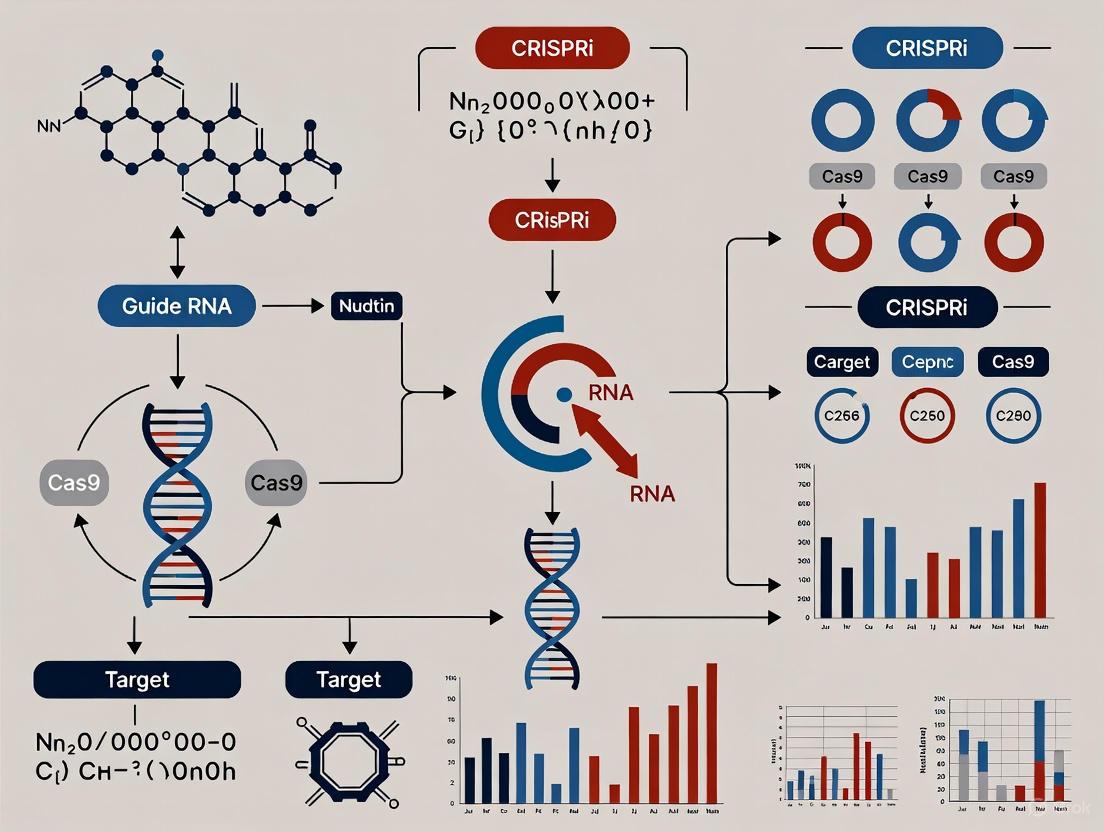
This article provides a systematic guide for researchers and drug development professionals facing challenges with inefficient CRISPR interference (CRISPRi).
Troubleshooting Inefficient CRISPRi Gene Repression: A Comprehensive Guide for Researchers
Abstract
This article provides a systematic guide for researchers and drug development professionals facing challenges with inefficient CRISPR interference (CRISPRi). It covers the foundational principles of CRISPRi technology, explores advanced methodological approaches for robust application, details a comprehensive troubleshooting framework for common inefficiency issues, and outlines rigorous validation strategies. By synthesizing the latest research on effector engineering, guide RNA design, and cell-specific considerations, this resource aims to equip scientists with the knowledge to achieve consistent, high-efficacy gene repression in diverse experimental and therapeutic contexts.
Understanding CRISPRi Mechanics and Common Failure Points
Core Mechanism and Advantages over CRISPRn
Q: How does a dCas9-repressor fusion achieve transcriptional knockdown?
A: Catalytically dead Cas9 (dCas9) is programmed by a guide RNA (sgRNA) to bind specific DNA sequences but cannot cut DNA. When fused to a transcriptional repressor domain, this dCas9-repressor complex is directed to a gene's promoter or transcription start site. Once bound, the repressor domain recruits additional cellular co-factors that silence gene expression. This process, known as CRISPR interference (CRISPRi), effectively knocks down gene expression at the transcriptional level without altering the DNA sequence itself [1] [2] [3].
Q: What are the key advantages of using CRISPRi for gene knockdown compared to nuclease-active CRISPR (CRISPRn)?
A: CRISPRi offers several distinct advantages for loss-of-function studies, as summarized in the table below.
Table 1: Key Advantages of CRISPRi over CRISPRn
| Feature | CRISPRi (dCas9-Repressor) | CRISPRn (Nuclease-active Cas9) |
|---|---|---|
| DNA Integrity | Reversible; does not create double-strand breaks or activate DNA damage response pathways [2] [4]. | Irreversible; creates double-strand breaks, potentially triggering DNA damage response and p53 activation [2] [5]. |
| Reversibility | Gene repression is reversible, allowing for temporal studies of gene function [2] [4]. | Gene knockout is permanent. |
| Phenotype Uniformity | Leads to more homogenous and efficient gene repression across a cell population [2]. | Can generate a mosaic of in-frame indels and hypomorphic alleles, leading to variable phenotypes [2]. |
| Target Range | Ideal for knocking down non-coding RNAs and mapping regulatory elements [4]. | Primarily effective for protein-coding genes. |
The following diagram illustrates the fundamental mechanism of CRISPRi and how it contrasts with CRISPRn.
Optimizing the Repressor Fusion and sgRNA Design
Q: My gene repression is inefficient. How can I optimize the repressor fusion?
A: Inefficient repression is often due to suboptimal repressor domain choice. The classic repressor is the KRAB domain from the KOX1 protein, but recent research has developed more potent alternatives. Screening over 100 repressor combinations has identified novel, multi-domain fusions that significantly enhance knockdown [4]. Consider using these next-generation repressors for improved performance.
Table 2: Optimized Repressor Domains for Enhanced CRISPRi
| Repressor Fusion | Key Components | Reported Advantage |
|---|---|---|
| dCas9-KOX1(KRAB) | dCas9 + classic KRAB domain | The original gold standard; effective but can show variability [2] [4]. |
| dCas9-ZIM3(KRAB) | dCas9 + KRAB domain from ZIM3 protein | Shows significantly improved gene silencing compared to KOX1(KRAB) [4]. |
| dCas9-KOX1(KRAB)-MeCP2 | dCas9 + KRAB + truncated MeCP2 | A bipartite repressor that recruits additional chromatin-modifying complexes for stronger repression [4]. |
| dCas9-ZIM3(KRAB)-MeCP2(t) | dCas9 + ZIM3 KRAB + truncated MeCP2 | A recently characterized, high-efficacy platform that shows improved repression across multiple cell lines with lower variability [4]. |
Q: What are the key principles for designing an effective sgRNA for CRISPRi?
A: The sgRNA sequence determines the specificity and efficiency of dCas9 binding. Follow these design principles:
- Target the Transcription Start Site (TSS): For maximal repression, design sgRNAs to bind within 200 base pairs downstream of the TSS [1].
- Ensure Specificity: Use bioinformatics tools (e.g., CRISPR Design Tool, Benchling) to ensure the sgRNA sequence is unique to your target and minimizes off-target binding [3] [6].
- Test Multiple sgRNAs: Different sgRNAs targeting the same gene can have highly variable performance. It is recommended to design and test at least 3-4 sgRNAs per gene to identify the most effective one [7] [6].
Experimental Setup and Delivery
Q: What delivery methods should I use for CRISPRi components?
A: The choice of delivery method depends on your cell type and experimental goals. The table below compares common approaches.
Table 3: Common Delivery Methods for CRISPRi Components
| Delivery Method | Best For | Considerations |
|---|---|---|
| Lentiviral Transduction | Creating stable, long-term expression in hard-to-transfect cells (e.g., iPSCs, neurons) and genome-wide screens [2] [5]. | Integrates into the genome, enabling sustained repression; requires careful biosafety handling. |
| Lipid Nanoparticles (LNPs) | In vivo delivery and transient expression in certain cell types [8]. | High efficiency for in vivo targeting (e.g., liver); allows for potential re-dosing. |
| Electroporation | Primary cells and cell lines resistant to chemical transfection [6]. | Can be harsh on cells but effective for delivering ribonucleoprotein (RNP) complexes. |
| Lipid-Based Transfection | Transient expression in standard, easy-to-transfect cell lines (e.g., HEK293T) [9] [6]. | Simple and fast; efficiency can be cell-line dependent. |
Q: Should I use a stable cell line or transient transfection?
A: For the most consistent and reproducible results, especially in pooled screens, generating a stable cell line that inducibly expresses the dCas9-repressor fusion is highly recommended [2] [6]. This ensures uniform expression across the entire cell population, eliminating variability from transfection efficiency. Using an inducible system (e.g., with doxycycline) also allows for temporal control over gene repression [2].
Validation and Troubleshooting
Q: How do I validate successful transcriptional knockdown?
A: Genetic and functional validation is crucial to confirm your knockdown is working.
- mRNA Level: Use RT-qPCR to quantitatively measure the reduction in target gene transcripts [4].
- Protein Level: Use Western Blotting or immunofluorescence to confirm a decrease in the target protein [2] [6].
- Functional Assays: Employ a reporter assay or a specific phenotypic readout (e.g., growth assay for an essential gene) to link the knockdown to the expected biological function [6].
Q: My repression is still weak after optimization. What could be wrong?
A: If repression remains inefficient, systematically investigate these areas:
- Check Component Expression: Confirm that your dCas9-repressor fusion and sgRNA are being expressed at high levels using Western blotting and PCR, respectively [6].
- Verify sgRNA Activity: The issue may be with a single, ineffective sgRNA. Always test multiple, independently designed sgRNAs against your target [7].
- Assess Cellular Context: The local chromatin environment at your target locus can affect dCas9 binding. Try targeting different regions near the promoter. Furthermore, the efficiency of CRISPRi can vary across cell lines and lineages [4].
The Scientist's Toolkit: Research Reagent Solutions
Table 4: Essential Reagents for CRISPRi Experiments
| Reagent / Tool | Function | Examples / Notes |
|---|---|---|
| dCas9-Repressor Plasmid | Expresses the fusion protein (e.g., dCas9-KRAB). | Available from repositories like Addgene; inducible (Tet-On) or constitutive (CAG) promoters are common [2] [3]. |
| sgRNA Expression Vector | Expresses the guide RNA that confers target specificity. | Can be cloned into plasmids or delivered as synthesized RNA; multiplex vectors allow co-expression of several sgRNAs [3]. |
| Stable Cell Lines | Cell lines engineered to stably express dCas9-repressor. | Improves experimental reproducibility and efficiency (e.g., iPSC lines with dCas9-KRAB integrated into the AAVS1 safe harbor locus) [2] [6]. |
| Bioinformatics Tools | Software for designing specific sgRNAs and predicting off-target effects. | CRISPR Design Tool, Benchling, and other tools are critical for optimal experimental design [3] [6]. |
| Delivery Reagents | Methods to introduce CRISPRi components into cells. | Lipid-based transfection reagents (e.g., Lipofectamine), viral packaging systems (lentivirus), or electroporation systems [9] [6]. |
| Validation Kits | Kits to confirm cleavage or editing efficiency. | Genomic cleavage detection kits and sequencing services are available to verify on-target activity [9]. |
The following workflow diagram provides a visual summary of a typical CRISPRi experiment, from design to validation.
Troubleshooting Guide: Inefficient Gene Repression in CRISPRi Experiments
Q1: My gene repression levels are low. What are the primary factors I should check? A: Inefficient repression commonly stems from sgRNA design, dCas9 expression levels, and delivery efficiency. Focus on these areas first.
- sgRNA Design:
- Issue: sgRNA binding to a non-optimal target site on the template or non-template strand.
- Solution: Use validated bioinformatic tools to design sgRNAs targeting the region between -50 and +300 relative to the Transcription Start Site (TSS). Prefer the non-template strand. Always design multiple sgRNAs per gene.
- dCas9 Expression:
- Issue: Insufficient levels of dCas9 protein, especially dCas9-KRAB or other fusion repressors, in the nucleus.
- Solution: Use a strong, constitutive promoter (e.g., EF1α, CAG, CMV) for dCas9. Verify nuclear localization by ensuring the NLS sequence is present and functional. Check expression via Western blot or fluorescence if using a tagged version.
- Delivery Efficiency:
- Issue: Not all cells are receiving both the dCas9 and sgRNA constructs.
- Solution: Use a single-vector system (all-in-one) if possible. For multi-vector systems, include a fluorescent marker and sort or analyze only the successfully transfected/transduced cells (e.g., via FACS).
Q2: How can I titrate the level of repression in my CRISPRi experiment? A: Titratability is a key advantage of CRISPRi. Use the following methods to achieve graded repression:
- Inducible dCas9 Systems: Use a system where dCas9 expression is controlled by an inducible promoter (e.g., Tet-On/Off). By varying the concentration of the inducer (e.g., doxycycline), you can control the amount of dCas9-sgRNA complex formed.
- Modulating sgRNA Expression: Express sgRNAs from a titratable promoter (e.g., aPTB, which can be modulated with anhydrotetracycline).
- Using Attenuated sgRNAs: Design sgRNAs with mismatches or truncated guides that have lower binding affinity, resulting in partial rather than complete repression.
Q3: How do I confirm that my CRISPRi system is reversible and how long does it take? A: Reversibility is a hallmark of CRISPRi. To confirm:
- Induce Repression: Activate your system (e.g., add doxycycline for a Tet-On dCas9) for several days.
- Wash-Out/Remove Inducer: Remove the inducer from the culture medium.
- Monitor Gene Expression Over Time: Measure mRNA levels (via qRT-PCR) at 24, 48, 72, and 96 hours post-wash-out.
- Expected Outcome: Gene expression should gradually return to baseline levels as the dCas9-sgRNA complex dissociates and is diluted through cell division. Full reversal typically occurs within 3-5 cell divisions.
Q4: What are the critical controls for a robust CRISPRi experiment? A:
- Non-Targeting sgRNA Control: A scrambled sgRNA that does not target any genomic locus. This controls for non-specific effects of dCas9 and sgRNA expression.
- Targeting sgRNA in dCas9-Negative Cells: This controls for off-target effects of the sgRNA itself.
- Efficiency Control: A positive control sgRNA targeting a gene with a known, easily measurable phenotype (e.g., a surface receptor).
Quantitative Comparison: CRISPRi vs. CRISPR Nuclease
Table 1: Key Feature Comparison
| Feature | CRISPR Nuclease (e.g., Cas9) | CRISPRi (e.g., dCas9-KRAB) |
|---|---|---|
| DNA Damage | Induces double-strand breaks (DSBs); activates p53 and cell cycle arrest pathways. | No DNA damage; epigenetic modulation only. |
| Reversibility | Permanent; edits are fixed after repair (NHEJ/HDR). | Reversible; repression is lifted upon removal of the system. |
| Titratability | Difficult to titrate; typically all-or-nothing editing outcomes. | Highly titratable via inducible promoters and modified sgRNAs. |
| Phenotype Onset | Fast (depends on protein turnover). | Slower (depends on mRNA/protein half-life). |
| Primary Application | Gene knockout, gene editing. | Gene knockdown, functional genomics, essential gene studies. |
Table 2: Troubleshooting Low Repression Efficiency
| Symptom | Possible Cause | Solution |
|---|---|---|
| Low repression in all sgRNAs | Poor dCas9 expression/delivery | Use a stronger promoter; optimize transfection/transduction; verify with Western blot. |
| Low repression with one sgRNA | Inefficient sgRNA design | Re-design sgRNA to target a site closer to the TSS on the non-template strand. |
| High cell-to-cell variability | Inefficient delivery | Use a single-vector system; employ FACS to isolate expressing cells. |
| No repression | System not functional | Test positive control sgRNA; verify all plasmid components and delivery method. |
Experimental Protocols
Protocol 1: Titrating CRISPRi Repression Using a Doxycycline-Inducible System
- Cell Preparation: Seed cells stably expressing the Tet-On 3G transactivator and the dCas9-KRAB construct.
- sgRNA Transduction: Transduce with lentivirus carrying your gene-specific sgRNA and a selection marker (e.g., puromycin). Select for stable pools.
- Doxycycline Titration: Treat cells with a range of doxycycline concentrations (e.g., 0, 10, 50, 100, 500 ng/mL) for 72 hours.
- Analysis: Harvest cells and analyze gene expression via qRT-PCR. Plot repression level (%) against doxycycline concentration to generate a titration curve.
Protocol 2: Testing CRISPRi Reversibility
- Repression Phase: Treat your CRISPRi cell line with the optimal doxycycline concentration (from Protocol 1) for 5-7 days to achieve maximal repression.
- Wash-Out Phase: Wash cells 2-3 times with PBS to remove doxycycline completely. Re-plate them in fresh medium without doxycycline.
- Time-Course Sampling: Harvest cells at specific time points post-wash-out (e.g., Day 0, 1, 2, 3, 5, 7).
- Analysis: Perform qRT-PCR on all samples to track the recovery of gene expression over time.
Visualizations
Diagram Title: CRISPRi Troubleshooting Path
Diagram Title: CRISPRi Blocks Transcription
The Scientist's Toolkit: Essential Reagents for CRISPRi
| Reagent | Function | Key Consideration |
|---|---|---|
| dCas9-KRAB Expression Vector | Expresses the catalytically dead Cas9 fused to the KRAB transcriptional repressor domain. | Use a strong promoter (EF1α, CAG) and ensure it contains a Nuclear Localization Signal (NLS). |
| sgRNA Cloning Vector | Backbone for expressing the single-guide RNA that targets dCas9 to the DNA. | Compatible with your dCas9 vector; should have a U6 or H1 promoter for sgRNA expression. |
| All-in-One dCas9-sgRNA Vector | Combines dCas9 and sgRNA expression in a single plasmid for co-delivery. | Maximizes co-expression efficiency; ideal for transient transfection. |
| Lentiviral Packaging System | For creating lentiviral particles to stably deliver dCas9 and/or sgRNA constructs. | Essential for hard-to-transfect cells and for creating stable cell lines. |
| Doxycycline (or other inducer) | Inducer for Tet-On systems to control the timing and level of dCas9 expression. | Titrate to find the optimal balance between efficiency and potential toxicity. |
| Puromycin (or other antibiotic) | Selection antibiotic for cells transduced with constructs containing a resistance gene. | Determine the kill curve for your cell line to establish the correct selection concentration. |
| Fluorescent Marker (e.g., GFP) | Reporter gene to track transfection/transduction efficiency via FACS or microscopy. | Crucial for quantifying delivery success and for sorting a uniform population. |
Troubleshooting FAQs
Why is my CRISPRi experiment showing weak or no gene repression?
Weak repression can stem from three main areas: using a suboptimal CRISPRi effector, inefficient guide RNA (gRNA) design, or factors specific to your cell line. First, verify that you are using a high-performance effector protein. The dCas9-ZIM3(KRAB)-MeCP2(t) fusion has been demonstrated to provide significantly stronger and more consistent gene knockdown across multiple cell lines compared to earlier effectors like dCas9-KRAB alone [10]. Second, your gRNA may have low on-target activity. Always use established bioinformatics tools (e.g., CRISPick, CHOPCHOP) that employ algorithms like Rule Set 3 to select gRNAs with predicted high efficiency [11]. Finally, ensure your cellular context supports strong CRISPRi function; this includes confirming stable and high expression of your dCas9-effector fusion and checking if your target gene's expression level or genomic location (e.g., high GC content) makes it difficult to repress [12] [13].
How can I improve the consistency of knockdown across different gRNAs targeting the same gene?
A major source of inconsistency is the inherent variability in individual gRNA activity. The most effective strategy is to target each gene with multiple, highly active gRNAs. Research shows that using a dual-sgRNA library, where a single lentiviral construct expresses the two most effective sgRNAs for a gene, produces significantly stronger and more consistent growth phenotypes for essential genes compared to targeting with a single sgRNA [12]. This approach mitigates the risk of one ineffective gRNA and enhances the overall reliability of your knockdown.
My CRISPRi screen failed to identify known essential genes. What went wrong?
This lack of expected signal, or "enrichment," is often not a statistical error but rather a result of insufficient selection pressure during the screen [7]. If the selective conditions are too mild, cells lacking essential genes may not die or be depleted robustly enough, weakening the detectable signal. To troubleshoot, try increasing the selection pressure (e.g., higher drug concentration, longer duration of nutrient stress) and/or extending the screening timeline to allow for greater depletion of cells carrying effective sgRNAs [7]. Additionally, always include positive control sgRNAs targeting known essential genes to benchmark your screen's performance.
Table 1: Comparison of CRISPRi Effector Performance
| Effor Domain Fusion | Reported Knockdown Improvement | Key Characteristics |
|---|---|---|
| dCas9-ZIM3(KRAB)-MeCP2(t) | ~20–30% better than dCas9-ZIM3(KRAB) [10] | Improved gene repression across multiple cell lines; reduced performance variability. |
| dCas9-ZIM3(KRAB) | Benchmark for "gold standard" repressors [12] [10] | Provides excellent balance of strong on-target knockdown and minimal non-specific effects on cell growth/transcriptome. |
| Dual-sgRNA Library | 29% stronger growth phenotype vs. single-sgRNA (for essential genes) [12] | Ultra-compact design; increased knockdown efficacy by targeting each gene with a two-sgRNA cassette. |
Table 2: Key Parameters for Efficient gRNA Design
| Parameter | Inefficient Features to Avoid | Efficient Features to Favor |
|---|---|---|
| Overall Nucleotide Usage | U, G count; GGG repeats; UU, GC dinucleotides [14] | A count; AG, CA, AC, UA dinucleotides [14] |
| Position-Specific Nucleotides | C in position 20; U in positions 17–20; T in PAM (TGG) [14] | G or A in position 19; C in positions 16 & 18; C in PAM (CGG) [14] |
| GC Content | >80% or <20% [14] | 40%–60% [14] |
| Off-Target Risk | Sequences with <3 nucleotide mismatches in the genome [11] | High Cutting Frequency Determination (CFD) specificity score; minimal off-target sites with mismatches [11] |
Experimental Protocols
Protocol 1: Validating a Novel CRISPRi Effector for Improved Repression
This protocol outlines steps to compare a new CRISPRi effector (e.g., dCas9-ZIM3(KRAB)-MeCP2(t)) against a standard one.
- Cell Line Preparation: Use a well-characterized, easy-to-transfect cell line like HEK293T for initial validation.
- Reporter Assay Construction: Co-transfect cells with:
- A plasmid expressing the effector protein (dCas9-repressor fusion) under a constitutive or inducible promoter.
- A plasmid expressing a gRNA targeted to a constitutively active promoter (e.g., SV40) driving a fluorescent reporter like eGFP.
- A control plasmid for normalization.
- Quantification of Repression: After 48-72 hours, measure eGFP expression using flow cytometry. Compare the mean fluorescence intensity of cells expressing the novel effector to those expressing a standard effector (e.g., dCas9-KOX1(KRAB)) and a dCas9-only control.
- Validation on Endogenous Targets: Select 3-5 endogenous genes with varying expression levels. Transfer the novel effector into cell lines stably expressing it. Transduce with validated gRNAs for each target gene and quantify knockdown efficiency using RT-qPCR to measure transcript levels and/or western blotting for protein levels [10].
Protocol 2: Implementing a Dual-sgRNA Strategy for Enhanced Knockdown
This protocol describes using a dual-sgRNA cassette to increase knockdown efficacy and screen performance.
- Library Design: For your target gene set, identify the two most highly active sgRNAs per gene using a state-of-the-art prediction tool (e.g., CRISPick with Rule Set 3).
- Cloning: Clone these two sgRNA sequences into a single lentiviral vector as a tandem cassette, ensuring each has its own promoter (e.g., U6).
- Lentiviral Production & Transduction: Produce lentivirus from the dual-sgRNA library. Transduce your CRISPRi-ready cell line (stably expressing a high-performance effector like Zim3-dCas9) at a low MOI to ensure most cells receive only one viral construct.
- Selection & Screening: Apply puromycin selection to enrich for transduced cells. For a fitness screen, harvest a sample at day 0 (T0) and then at the endpoint after applying selective pressure (Tfinal).
- Amplification & Sequencing: Amplify the integrated dual-sgRNA cassettes from genomic DNA at both time points. Use high-throughput sequencing to quantify the abundance of each dual-sgRNA element.
- Data Analysis: Calculate growth phenotypes or other screen metrics by comparing the change in abundance of each dual-sgRNA element from T0 to Tfinal. Compare the performance to historical data from single-sgRNA libraries [12].
Workflow and Relationship Diagrams
Diagram 1: Troubleshooting CRISPRi inefficiency involves identifying root causes across three main areas and applying targeted solutions.
Diagram 2: An optimized end-to-end workflow for a highly efficient CRISPRi genetic screen.
The Scientist's Toolkit: Research Reagent Solutions
Table 3: Essential Reagents for Efficient CRISPRi Research
| Reagent / Tool | Function / Explanation | Key Selection Criteria |
|---|---|---|
| Next-Generation Effectors | Fusion proteins that provide strong transcriptional repression. | Choose effectors with validated, multi-domain designs like dCas9-ZIM3(KRAB)-MeCP2(t) for maximum knockdown [10]. |
| Dual-sgRNA Libraries | Ultra-compact genetic libraries where each gene is targeted by a cassette expressing two highly active sgRNAs. | Increases knockdown efficacy and produces stronger phenotypic effects compared to single-sgRNA designs [12]. |
| Validated Cell Lines | Cell lines engineered for stable, consistent expression of the dCas9-effector protein. | Look for lines with demonstrated robust on-target knockdown (e.g., K562, RPE1, Jurkat with Zim3-dCas9) to minimize variable results [12]. |
| Bioinformatics Design Tools | Software for predicting gRNA on-target efficiency and off-target risk. | Use tools with updated algorithms like Rule Set 3 (e.g., CRISPick, GenScript) for the most accurate efficiency predictions [11]. |
The Impact of Chromatin State and Target Gene Accessibility on Repression Efficacy
This technical support center provides troubleshooting guides and FAQs to help researchers resolve common issues related to inefficient gene repression in CRISPRi experiments, with a specific focus on the critical role of chromatin state and target site accessibility.
Frequently Asked Questions
FAQ 1: My CRISPRi repression is inefficient even with a validated sgRNA. Could chromatin inaccessibility be the cause? Yes, this is a common cause. Target sites located within closed chromatin regions (heterochromatin), characterized by dense nucleosome packing and specific histone modifications, are physically less accessible to the dCas9-repressor complex. This can severely limit binding and repression efficacy, even with well-designed sgRNAs [15] [16].
FAQ 2: How can I assess the chromatin accessibility of my target gene's locus? You can use established genome-wide methods to profile the chromatin landscape. The table below summarizes the most common techniques [15] [16].
| Assay Name | Description | Key Feature |
|---|---|---|
| ATAC-seq | Assay for Transposase-Accessible Chromatin using sequencing. Uses a hyperactive Tn5 transposase to fragment and tag open genomic regions. [15] [16] | Simplicity, compatibility with low cell numbers and single-cell protocols. [16] |
| DNase-seq | Maps DNase I hypersensitive sites (DHSs) across the genome. [16] | Traditionally used for mapping hyper-accessible regions like enhancers and promoters. [15] |
| MNase-seq | Uses micrococcal nuclease to digest DNA; can map both nucleosome positions and hyper-accessible regions depending on enzyme dosage. [15] | Useful for determining nucleosome occupancy and positioning. [15] |
| FAIRE-seq | Formaldehyde-Assisted Isolation of Regulatory Elements. Enriches for nucleosome-depleted DNA sequences. [16] | Non-nuclease based method. [15] |
FAQ 3: My target site is in a closed chromatin region. What strategies can I use to improve repression? You can employ several strategies:
- Target site selection: Use ATAC-seq or DNase-seq data from your specific cell line to select sgRNAs that bind within an open chromatin region, typically near the transcription start site (TSS).
- Advanced repressor domains: Use a CRISPRi system with enhanced repressor domains. Novel fusion proteins like dCas9-ZIM3(KRAB)-MeCP2(t) have demonstrated improved repression across diverse cell lines and targets, partly by being less dependent on guide RNA sequence and potentially more resilient to challenging chromatin contexts [4] [17].
- Multiple sgRNAs: Using 2-6 sgRNAs per target can synergistically improve repression. Simulation studies suggest that using identical gRNA target sites in a synthetic promoter can yield far more effective transcriptional repression than heterogeneous sites, as it reduces competition for dCas9 and may allow for lateral diffusion along the DNA [18].
FAQ 4: Why do different sgRNAs targeting the same gene show variable repression performance? Beyond chromatin accessibility, the intrinsic properties of each sgRNA sequence significantly influence efficiency. Different sgRNAs have varying on-target binding affinities and can be differentially affected by the local chromatin environment and DNA sequence [7]. It is always recommended to design and test at least 3-4 sgRNAs per gene to mitigate this variability [7].
Experimental Protocols for Troubleshooting
Protocol 1: Mapping Chromatin Accessibility with ATAC-seq
This protocol provides a workflow to determine the open chromatin landscape of your experimental cell line.
1. Principle: The hyperactive Tn5 transposase simultaneously cuts open chromatin DNA and inserts sequencing adapters. The resulting fragments are purified and sequenced, providing a genome-wide map of accessible regions [16].
2. Reagents and Equipment:
- Your cell line of interest (500-50,000 cells)
- ATAC-seq kit (commercially available)
- Cell lysis buffer
- Tn5 transposase
- PCR reagents and index primers
- High-sensitivity DNA assay kit (e.g., Qubit, Bioanalyzer)
- High-throughput sequencer
3. Step-by-Step Procedure:
- Cell Preparation: Harvest cells, ensuring high viability (>90%). Wash with cold PBS.
- Cell Lysis: Lyse cells with a mild, non-ionic detergent to isolate intact nuclei. Centrifuge immediately to pellet nuclei.
- Tagmentation: Resuspend the nuclear pellet in a reaction mix containing the Tn5 transposase. Incubate at 37°C for 30 minutes to fragment DNA and add adapters.
- DNA Purification: Clean up the tagmented DNA using a DNA clean-up kit or column.
- Library Amplification: Amplify the purified DNA by PCR for 10-15 cycles using primers that add full sequencing adapters and sample indexes.
- Library Purification & QC: Purify the final library and quantify using a high-sensitivity DNA assay. Check for a nucleosomal periodicity pattern (e.g., fragments at ~200bp, 400bp) on a Bioanalyzer trace, which is a hallmark of a successful ATAC-seq library.
- Sequencing: Perform high-throughput sequencing (e.g., Illumina).
4. Data Interpretation: After sequencing, align reads to the reference genome and call "peaks" of accessibility. Use these peaks to guide your sgRNA design, ensuring targets fall within open chromatin regions near your gene's TSS.
Protocol 2: Validating CRISPRi Efficacy with Fluorescent Reporter Assays
This method allows for rapid, quantitative testing of sgRNA efficiency and repressor function.
1. Principle: A target sequence for your sgRNA is cloned into a promoter driving a fluorescent reporter (e.g., eGFP). Co-transfection of this reporter with your dCas9-repressor and sgRNA plasmid allows you to measure repression efficiency via the reduction in fluorescence [4].
2. Reagents and Equipment:
- Plasmid with a promoter (e.g., SV40) driving eGFP
- Cloning reagents to insert your target sequence upstream of the promoter
- dCas9-repressor plasmid (e.g., dCas9-KRAB, dCas9-ZIM3(KRAB)-MeCP2(t))
- sgRNA expression plasmid
- Transfection reagent
- Flow cytometer or fluorescence plate reader
3. Step-by-Step Procedure:
- Construct Reporter: Clone your sgRNA target sequence into the reporter plasmid.
- Cell Transfection: Co-transfect your cells (e.g., HEK293T) with a constant amount of the reporter plasmid, dCas9-repressor plasmid, and sgRNA plasmid. Include controls (e.g., non-targeting sgRNA).
- Incubation: Incubate cells for 48-72 hours to allow for gene repression.
- Fluorescence Measurement: Harvest cells and measure eGFP fluorescence intensity using flow cytometry.
- Data Analysis: Calculate the percentage of eGFP knockdown by comparing the mean fluorescence intensity of cells with the target sgRNA to the control sgRNA.
The Scientist's Toolkit: Research Reagent Solutions
| Item | Function in Troubleshooting | Example / Note |
|---|---|---|
| Optimized Repressor Domains | Enhances repression strength and consistency across different genomic loci. | dCas9-ZIM3(KRAB)-MeCP2(t): A novel fusion showing improved repression across cell lines. [4] |
| Validated sgRNA Library | Reduces variability from inefficient guides. | Design multiple sgRNAs per gene; use algorithms to predict on-target efficiency. |
| ATAC-seq Kit | Profiles genome-wide chromatin accessibility in your cell line. | Essential for informed sgRNA target site selection. [15] [16] |
| Flow Cytometer | Quantifies repression efficiency in fluorescent reporter assays. | Used for rapid, high-throughput validation of sgRNAs and repressors. [4] |
| MAGeCK Software | A bioinformatics tool for analyzing genome-wide CRISPR screen data. | Identifies essential genes and can help evaluate screen quality and sgRNA enrichment/depletion. [7] |
Visualizing Key Concepts and Workflows
Chromatin State Impact on CRISPRi
CRISPRi Troubleshooting Workflow
Implementing High-Efficiency CRISPRi Systems: From Design to Delivery
FAQs on CRISPRi Effector Selection and Engineering
Q1: Why might my current dCas9-KRAB system be providing inefficient gene repression?
Inefficient repression with a standard dCas9-KRAB system can occur due to several factors. The performance of CRISPRi effectors can vary significantly across different cell lines and can be dependent on the specific sgRNA sequence used [4]. Furthermore, the KRAB domain from the KOX1 (also known as ZNF10) protein, which has been the historical standard, may not be the most potent repressor available. Recent research has demonstrated that alternative KRAB domains, such as the one from the ZIM3 protein, can provide substantially improved gene silencing [4] [19].
Q2: What are the next-generation CRISPRi effectors that show improved performance?
Research has identified novel repressor fusion proteins that combine multiple potent repressor domains with dCas9. A leading candidate is dCas9-ZIM3(KRAB)-MeCP2(t), which has been shown to provide significantly enhanced gene repression of endogenous targets at both the transcript and protein level across several cell lines [4]. This effector combines the potent ZIM3(KRAB) domain with a truncated MeCP2 repressor domain. Other promising bipartite repressors include dCas9-KRBOX1(KRAB)-MAX and dCas9-ZIM3(KRAB)-MAX [4].
Q3: How can I improve knockdown efficiency without switching the entire effector system?
A highly effective strategy is to use a dual-sgRNA approach. By targeting a single gene with two distinct sgRNAs expressed from a tandem cassette, you can achieve substantially stronger gene knockdown and more robust phenotypic effects in genetic screens compared to single-sgRNA targeting [19]. This method can be implemented with your existing dCas9-repressor fusion protein.
Q4: Besides the effector itself, what other factors are critical for ensuring efficient CRISPRi repression?
The design and quality of your sgRNA are paramount. It is crucial to use sgRNAs that have been empirically validated or designed with modern algorithms for high activity [19] [13]. Furthermore, achieving consistent and robust repression requires a cell model with stable and high expression of the dCas9-effector fusion. The use of strong, constitutive promoters and safe-harbor integration sites like AAVS1 is recommended to ensure consistent effector expression [19] [2].
Troubleshooting Guide: Inefficient Gene Repression
Problem: Weak or Incomplete Target Gene Knockdown
| Possible Cause | Recommended Solution | Underlying Principle |
|---|---|---|
| Suboptimal Effector Protein | Engineer or obtain cells expressing a next-generation effector like dCas9-ZIM3(KRAB)-MeCP2(t) [4]. | Novel repressor domain combinations recruit more potent transcriptional silencing machinery. |
| Inefficient sgRNA | Use a dual-sgRNA cassette targeting the same gene [19] or switch to a validated, highly active sgRNA sequence. | Increases the probability of blocking transcription and recruits more repressor complexes to the locus. |
| Low Effector Expression | Generate stable cell lines with the dCas9-effector integrated into a defined genomic "safe harbor" (e.g., AAVS1 locus) using a strong, constitutive promoter [19] [2]. | Ensures consistent, high-level expression of the CRISPRi machinery across the entire cell population. |
| Target Site Inaccessibility | Tile multiple sgRNAs across the promoter and transcription start site (TSS) of the target gene to find functional binding sites. | Chromatin structure and pre-bound proteins can physically block dCas9 from binding its target sequence. |
Problem: Cell Line-Specific Variability in Repression Efficiency
| Possible Cause | Recommended Solution | Underlying Principle |
|---|---|---|
| Variable Endogenous Co-factor Expression | Select an effector domain known to function broadly, such as ZIM3(KRAB), which shows consistent performance across diverse cell lines [19]. | The KRAB domain recruits co-repressors; the efficiency of this interaction can depend on the cell line's native proteome. |
| Differences in Epigenetic Landscape | If possible, test repression in a related cell line with a more open chromatin configuration at your target locus. | Closed chromatin states can hinder dCas9 binding, reducing repression efficacy regardless of the effector's intrinsic strength. |
Quantitative Data on Effector Performance
Table 1: Comparison of CRISPRi Effector Efficacy in Gene Repression.
| Effector Construct | Key Components | Relative Knockdown Efficiency vs. dCas9-KOX1(KRAB) | Notes/Source |
|---|---|---|---|
| dCas9-KOX1(KRAB) | dCas9 + KOX1(KRAB) | Baseline (1x) | Historical "gold standard" [4] |
| dCas9-ZIM3(KRAB) | dCas9 + ZIM3(KRAB) | Significantly Improved | A potent single-domain upgrade [4] [19] |
| dCas9-KOX1(KRAB)-MeCP2 | dCas9 + KOX1(KRAB) + MeCP2 | ~20-30% Better [4] | A previous "gold standard" bipartite repressor [4] |
| dCas9-ZIM3(KRAB)-MeCP2(t) | dCas9 + ZIM3(KRAB) + truncated MeCP2 | ~20-30% Better than dCas9-ZIM3(KRAB) [4] | A leading next-generation effector with high consistency [4] |
Table 2: Impact of sgRNA Strategy on Screening Phenotypes.
| sgRNA Strategy | Number of Elements per Gene | Mean Growth Phenotype (γ) for Essential Genes | Notes/Source |
|---|---|---|---|
| Single sgRNA | 1 | -0.20 | Compact library size but weaker phenotype [19] |
| Dual sgRNA | 2 (in one cassette) | -0.26 | Stronger growth phenotype, more robust knockdown [19] |
Experimental Protocols
Protocol 1: Engineering a Stable Cell Line with a Novel CRISPRi Effector
This protocol outlines the process for generating a clonal cell line that stably expresses a potent CRISPRi effector, such as dCas9-ZIM3(KRAB)-MeCP2(t).
- Vector Construction: Clone your gene of interest for the CRISPRi effector (e.g., dCas9-ZIM3(KRAB)-MeCP2(t)) into a lentiviral transfer plasmid. This plasmid should contain a strong, constitutive promoter (e.g., CAG or EF1α) and a selectable marker (e.g., puromycin resistance).
- Lentivirus Production: Co-transfect the transfer plasmid with packaging plasmids (e.g., psPAX2 and pMD2.G) into a producer cell line like HEK293T to generate lentiviral particles.
- Cell Line Transduction: Transduce your target cells (e.g., K562, RPE1, iPSCs) with the harvested lentiviral supernatant. A low MOI (Multiplicity of Infection) is recommended to encourage single-copy integrations.
- Selection and Expansion: After 48-72 hours, begin antibiotic selection (e.g., with puromycin) to eliminate untransduced cells. Maintain selection for at least 5-7 days.
- Single-Cell Cloning: Dilute the selected cell population to isolate single cells and expand them into individual clonal lines. This ensures uniformity in effector expression.
- Validation: Screen clones for high and uniform expression of the dCas9-effector fusion protein using methods like western blotting or flow cytometry. Finally, validate robust on-target knockdown by transducing a validated sgRNA and measuring target gene expression at the RNA (qPCR) and/or protein level (flow cytometry or western blot) [19] [2].
Protocol 2: Performing a CRISPRi Screen with a Dual-sgRNA Library
This protocol describes key steps for executing a genetic screen using a compact, highly active dual-sgRNA library.
- Library Design: Use a library where each gene is targeted by a single lentiviral construct expressing two distinct sgRNAs in a tandem cassette. This design reduces library size while enhancing knockdown efficacy [19].
- Library Cloning and Production: Synthesize the oligo pool and clone it into your lentiviral sgRNA expression backbone via pooled cloning. Produce a high-titer lentiviral library, ensuring high complexity to maintain representation of all guides.
- Cell Infection and Selection: Transduce your stable CRISPRi effector cell line (from Protocol 1) with the lentiviral library at a low MOI (e.g., ~0.3) to ensure most cells receive only one sgRNA construct. Select transduced cells with the appropriate antibiotic.
- Phenotypic Selection: After selection, harvest a baseline sample (T0). Culture the remaining cells under the selective pressure of interest (e.g., drug treatment or simply passaging for a growth screen) for a sufficient number of population doublings (e.g., 2-3 weeks).
- Genomic DNA Extraction and Sequencing: Harvest the final cell population (Tfinal). Extract genomic DNA from both T0 and Tfinal samples. Amplify the integrated sgRNA cassettes via PCR and prepare the libraries for next-generation sequencing.
- Data Analysis: Sequence the samples and count the reads for each sgRNA. Calculate the enrichment or depletion of each sgRNA between T0 and Tfinal using specialized analysis tools (e.g., MAGeCK) to identify genes that confer a phenotype [19].
Signaling Pathways and Workflows
Diagram 1: Troubleshooting inefficient CRISPRi repression.
Diagram 2: Mechanism of a next-generation CRISPRi effector.
The Scientist's Toolkit: Research Reagent Solutions
Table 3: Essential Reagents for Advanced CRISPRi Research.
| Reagent | Function | Example/Notes |
|---|---|---|
| Next-Generation Effector Plasmids | Provides the core dCas9-repressor fusion protein for knockdown. | Plasmids encoding dCas9-ZIM3(KRAB)-MeCP2(t) or similar advanced fusions [4]. |
| Dual-sgRNA Library | Enables highly effective gene knockdown in pooled genetic screens. | Ultra-compact library designs where a single element targeting a gene contains two sgRNAs [19]. |
| Stable Cell Lines | Ensures consistent and uniform expression of the CRISPRi machinery. | Commercially available or custom-made lines (e.g., K562, RPE1, iPSCs) with stable integration of effectors like Zim3-dCas9 [19]. |
| Validated sgRNA Libraries | Provides pre-designed, high-activity guides for reliable targeting. | Genome-wide libraries designed using empirical data and machine learning models to maximize on-target efficiency [19] [13]. |
| Lentiviral Packaging System | Produces the virus needed to deliver genes and sgRNAs into target cells. | Commonly used systems include third-generation plasmids like psPAX2 (packaging) and pMD2.G (envelope). |
This technical support center provides targeted troubleshooting guides and FAQs to help researchers overcome common challenges in CRISPRi experimental design, specifically those leading to inefficient gene repression.
Frequently Asked Questions
Q1: My CRISPRi experiment shows poor gene repression. What is the most critical factor to check? The positioning of your sgRNA relative to the transcription start site (TSS) is often the primary culprit. sgRNAs targeting the region from -50 to +300 base pairs relative to the correct TSS show the highest repression efficiency. Using an inaccurate TSS annotation is a common source of failure [20].
Q2: How can I identify the correct TSS for my target gene? For human cells, the FANTOM5/CAGE promoter atlas represents the most reliable source of TSS annotations for CRISPRi design. The proximity of an sgRNA to a FANTOM5/CAGE-defined TSS is a strong predictor of its functionality [20].
Q3: Why do different sgRNAs targeting the same gene have variable performance? Even with optimal positioning, sgRNA efficiency is influenced by sequence-specific features. Some sgRNAs have high intrinsic on-target activity while others may be inactive. Designing and testing 3-4 sgRNAs per gene is recommended to mitigate this variability [7].
Q4: Besides position and sequence, what other factor affects sgRNA efficiency? Chromatin accessibility significantly impacts efficiency. sgRNAs target sites within open chromatin regions (e.g., marked by DNaseI hypersensitivity) far more effectively than those in closed chromatin [20].
Q5: What controls should I include to troubleshoot my CRISPRi experiment? Always include both positive and negative controls [21].
- Positive Control: A validated sgRNA known to produce high editing efficiency (e.g., targeting a common locus like TRAC or ROSA26).
- Negative Controls: Non-targeting scrambled sgRNAs or delivery of Cas9/gRNA components alone.
Troubleshooting Guide: Inefficient Gene Repression
| Problem Area | Specific Issue | Recommended Solution |
|---|---|---|
| sgRNA Positioning | TSS annotation is incorrect or outdated. | Use the FANTOM5/CAGE promoter atlas to define your TSS, not just standard gene annotations [20]. |
| sgRNA Positioning | sgRNA binds outside the effective window. | Redesign sgRNAs to bind within the -50 to +300 bp window relative to the verified TSS [20]. |
| Sequence & Specificity | sgRNA has low predicted on-target activity. | Use design tools (see below) that employ algorithms like Rule Set 2 or CRISPRscan to select sgRNAs with high predicted scores [22] [11]. |
| Sequence & Specificity | High risk of off-target effects. | Use tools that perform genome-wide homology analysis (e.g., using Cutting Frequency Determination - CFD score) to select highly specific sgRNAs. Consider high-fidelity Cas9 variants [23] [11]. |
| Cellular Context | Target site is in closed chromatin. | Check chromatin accessibility data (e.g., from ENCODE) for your cell type. If unavailable, design multiple sgRNAs across the TSS-proximal region to increase success odds [20]. |
| Experimental Validation | Lack of proper controls. | Include a positive control sgRNA to confirm your system is working and negative control sgRNAs to establish a baseline for non-specific effects [21]. |
Key Design Parameters and Tools
The following table summarizes the core parameters and modern algorithms used to optimize sgRNA design.
| Parameter | Description | Key Algorithms & Scoring Methods |
|---|---|---|
| On-Target Efficiency | Predicts how effectively the sgRNA will edit the intended target site. | Rule Set 2: A model based on data from ~4,300 sgRNAs [22] [11].CRISPRscan: Model based on in vivo data in zebrafish [11].Rule Set 3: Updated 2022 model that also considers the tracrRNA sequence [11]. |
| Off-Target Risk | Assesses the potential for the sgRNA to edit unintended genomic sites. | Cutting Frequency Determination (CFD): A scoring matrix that predicts the activity of sgRNAs with mismatches; scores below 0.05-0.023 indicate low risk [11].MIT Score (Hsu Score): An earlier method that counts potential off-target sites with 1-3 mismatches [11]. |
Essential Online sgRNA Design Tools
- CRISPick: Uses Rule Set 2/3 and CFD scoring for a balanced design [11].
- CHOPCHOP: A versatile tool supporting multiple CRISPR-Cas systems [11].
- CRISPOR: Provides detailed off-target analysis with mismatch scoring [11].
- GenScript sgRNA Design Tool: Utilizes Rule Set 3 and CFD scoring [11].
The Scientist's Toolkit: Research Reagent Solutions
| Item | Function in CRISPRi Experiment |
|---|---|
| dCas9-KRAB Fusion | The core effector; catalytically dead Cas9 (dCas9) targets the locus, and the KRAB domain recruits repressive complexes to silence gene expression [20]. |
| Validated Positive Control sgRNA | An sgRNA targeting a gene like TRAC or RELA (human) or ROSA26 (mouse) with known high efficiency, used to validate the entire experimental system [21]. |
| Non-Targeting Scrambled sgRNA | A control sgRNA with no perfect match in the genome, essential for distinguishing specific knockdown effects from non-specific cellular responses [21]. |
| Lentiviral Delivery System | A common method for stably introducing dCas9 and sgRNA constructs into a wide range of cell types, including hard-to-transfect primary cells [20] [24]. |
| FANTOM5/CAGE TSS Annotations | A critical bioinformatics resource to accurately define the transcription start site for your gene and cell type of interest, forming the basis for effective sgRNA design [20]. |
Experimental Protocol: Validating sgRNA Efficiency
This protocol outlines a standard workflow for testing and validating new sgRNAs for CRISPRi.
- Design: Using one of the online tools listed above, select 3-4 sgRNAs per gene within the -50 to +300 bp window of the FANTOM5/CAGE-defined TSS.
- Clone: Synthesize and clone the sgRNA sequences into an appropriate expression vector (e.g., pU6-sgRNA-EF1α-puro-T2A-BFP) [20].
- Deliver: Co-transfect or co-transduce the sgRNA vector along with a dCas9-KRAB expression vector (e.g., pHR-SFFV-KRAB-dCas9) into your target cells. Include positive and negative controls in the same experiment [20] [21].
- Select: Apply appropriate selection (e.g., puromycin) to enrich for successfully transduced cells [20].
- Validate Repression: After 72+ hours, harvest cells and measure gene repression using qRT-PCR to assess transcript levels. Normalize values to a housekeeping gene (e.g., RPLP0) and compare to negative controls to calculate the percentage of remaining transcript [20].
Advanced Concepts: Machine Learning in sgRNA Design
Emerging approaches use advanced machine learning to further improve predictions. For bacterial CRISPRi, mixed-effect random forest models that integrate both sgRNA sequence features and gene-specific features (e.g., gene expression levels, GC content) have shown superior performance in predicting guide efficiency from large-scale screening data [13]. This highlights a move towards models that account for the specific biological context of the target.
FAQs on Dual-sgRNA CRISPRi Systems
Q1: What is a dual-sgRNA cassette and how does it improve CRISPRi knockdown?
A dual-sgRNA cassette is a genetic construct that expresses two distinct single-guide RNAs (sgRNAs) from a single transcript or vector, both targeting the same gene. This design significantly enhances gene repression (knockdown) by directing the CRISPRi machinery to two separate sites on the target gene's promoter simultaneously. Empirical data demonstrates that this dual-targeting approach leads to stronger depletion of essential genes in growth screens compared to single-sgRNA libraries, producing significantly stronger growth phenotypes and improving the reliability of genetic screens [12].
Q2: My CRISPRi screen shows inconsistent knockdown; could a dual-sgRNA library help?
Yes, transitioning to a dual-sgRNA library can directly address issues of inconsistent knockdown. Variability in performance often stems from the inherent differences in efficacy between individual sgRNAs. By employing a dual-sgRNA design, the system does not rely on a single guide's activity. Research has shown that dual-sgRNA libraries maintain high recall of essential genes while conferring stronger, more consistent phenotypic effects, thereby reducing false negatives and variability common in single-sgRNA screens [12].
Q3: What are the key design principles for an effective dual-sgRNA CRISPRi library?
The effectiveness of a dual-sgRNA library hinges on several key design principles:
- Empirical sgRNA Selection: Guides should be selected based on prior activity data rather than predictive algorithms alone.
- Ultra-Compact Design: Each gene is targeted by a single library element encoding the two most active sgRNAs.
- Optimized Effector Protein: Pairing the library with a highly effective CRISPRi repressor, such as Zim3-dCas9, provides an excellent balance of strong on-target knockdown and minimal non-specific effects. Proper library cloning and sequencing protocols are also critical to manage potential issues like lentiviral template switching [12].
Q4: How does the choice of CRISPRi effector (e.g., dCas9-KRAB vs. dCas9-ZIM3) impact dual-sgRNA performance?
The CRISPRi effector is a critical determinant of performance. While dual-sgRNA cassettes enhance targeting, the repressor domain fused to dCas9 dictates the efficiency of transcriptional repression. Benchmarking studies indicate that the Zim3-dCas9 effector provides a superior balance of strong on-target knockdown and minimal non-specific effects on cell growth or the transcriptome compared to traditional effectors like dCas9-KRAB (KOX1). Novel repressor fusions, such as dCas9-ZIM3(KRAB)-MeCP2(t), have been shown to further improve gene repression across multiple cell lines and reduce performance variability [4] [12].
Troubleshooting Guide: Overcoming Inefficient Gene Repression
Problem: Inadequate Gene Knockdown in CRISPRi Screens
Potential Causes and Solutions:
Cause: Suboptimal sgRNA Activity
- Solution: Implement a dual-sgRNA library. This approach mitigates the risk of individual low-activity sgRNAs by using two highly active, empirically validated guides per gene. Evidence from genome-wide growth screens in K562 cells shows that dual-sgRNA constructs produce significantly stronger growth defects for essential genes than single-sgRNA libraries [12].
Cause: Inefficient CRISPRi Effector Protein
- Solution: Use a next-generation repressor domain. The classic dCas9-KRAB (KOX1) can be replaced with more potent effectors. For instance, dCas9-ZIM3(KRAB) or the tripartite dCas9-ZIM3(KRAB)-MeCP2(t) have demonstrated improved transcriptional repression and reduced variability across different cell lines and gene targets [4].
Cause: Inefficient Delivery or Expression
- Solution: Generate stable cell lines with robust expression of the optimized CRISPRi effector. Studies have successfully engineered K562, RPE1, Jurkat, and other cell lines to stably express Zim3-dCas9, which resulted in consistent and robust on-target knockdown, establishing a best practice for screen reliability [12].
Quantitative Comparison of Single vs. Dual-sgRNA Library Performance
The table below summarizes data from a direct comparison of single- and dual-sgRNA CRISPRi libraries in a genome-wide growth screen in K562 cells [12].
| Library Metric | Single-sgRNA Library | Dual-sgRNA Library |
|---|---|---|
| Library Size (elements per gene) | 1 | 1 (expressing 2 sgRNAs) |
| Correlation with Published Screens | r = 0.82 | r = 0.83 |
| Mean Growth Rate (γ) for Essential Genes | γ = -0.20 | γ = -0.26 |
| Statistical Significance | Baseline | p = 6 × 10-15 |
| Recall of Essential Genes (AUC) | > 0.98 | > 0.98 |
Experimental Protocol: Validating a Dual-sgRNA CRISPRi System
Methodology for a Genome-wide Growth Screen [12]:
- Library Cloning: Clone the dual-sgRNA library into a lentiviral backbone. The library should target each human gene with a single cassette expressing the two most active sgRNAs in tandem.
- Cell Line Engineering: Generate a mammalian cell line (e.g., K562) that stably expresses an optimized CRISPRi effector protein, such as Zim3-dCas9.
- Lentiviral Production: Produce lentivirus from the dual-sgRNA library plasmid pool.
- Cell Transduction: Transduce the effector-expressing cells with the lentiviral library at a low multiplicity of infection (MOI ~0.3-0.5) to ensure most cells receive only one sgRNA cassette. Include a puromycin selection marker to select for successfully transduced cells.
- Sample Harvesting: Harvest cell populations at two time points: immediately after selection (T0) and after a sufficient number of population doublings (e.g., day 20, Tfinal).
- Genomic DNA Extraction & Sequencing: Isolate genomic DNA from both time points. Amplify the integrated sgRNA cassettes via PCR and subject them to high-throughput sequencing.
- Phenotype Analysis: Quantify the abundance of each sgRNA cassette at T0 and Tfinal. Calculate a growth phenotype for each targeted gene by comparing the change in abundance over time. Guides targeting essential genes will be depleted in the Tfinal population.
Experimental Workflow and Troubleshooting Logic
The Scientist's Toolkit: Essential Research Reagents
| Reagent / Tool | Function / Explanation | Key Feature |
|---|---|---|
| Dual-sgRNA Library | A pooled library where each gene is targeted by one element expressing two sgRNAs. | Ultra-compact design; improves knockdown efficacy and consistency [12]. |
| Zim3-dCas9 Effector | A CRISPRi effector fusing dCas9 to the ZIM3 repressor domain. | Provides strong on-target knockdown with minimal non-specific effects on cell health [4] [12]. |
| Stable Cell Lines | Cell lines engineered for consistent, long-term expression of the CRISPRi effector. | Ensures reproducible knockdown performance across experiments; removes transfection variability [12]. |
| Validated sgRNAs | sgRNAs with empirically confirmed high on-target activity. | Foundation for building effective single or dual-sgRNA libraries; increases screen success rate [12]. |
| Next-Gen Repressor Fusions | Multi-domain repressors like dCas9-ZIM3(KRAB)-MeCP2(t). | Combines strong repressor domains for enhanced, more consistent gene silencing across targets [4]. |
Troubleshooting Guide: Addressing Common dCas9-Repressor Delivery and Expression Issues
Inefficient gene repression in CRISPRi experiments can often be traced to problems with delivering the dCas9-repressor machinery and achieving optimal expression levels. The table below outlines common symptoms, their potential causes, and recommended solutions.
| Symptom | Potential Cause | Recommended Solution |
|---|---|---|
| Low repression efficiency across all cell lines | Suboptimal dCas9-repressor fusion protein [4] | Validate and consider upgrading to novel, high-efficacy repressor fusions like dCas9-ZIM3(KRAB)-MeCP2(t) [4]. |
| Variable repression efficiency between cell lines | Inefficient delivery or transfection method [25] | Systematically optimize delivery conditions (e.g., electroporation parameters) for your specific cell line; avoid using surrogate cell lines for optimization [25]. |
| No repression observed | Poor dCas9-repressor expression | Verify vector design: use strong, cell-type-appropriate promoters (e.g., constitutive promoters like J23119 in bacteria [26]) and check for correct nuclear localization signals in mammalian cells [27]. |
| High cell death or toxicity | Overexpression of dCas9-repressor or delivery toxicity [25] | Titrate the expression of dCas9 and sgRNA components using inducible promoters (e.g., anhydrotetracycline-inducible promoter [26]) and optimize delivery conditions to balance efficiency and cell health [25]. |
| Inconsistent results between replicates | Unoptimized guide RNA-to-Cas9 ratio or delivery conditions [28] | Standardize the molar ratio of guide RNA to dCas9 (a typical starting point is 1.2:1) [28] and ensure consistent delivery protocols and initial cell density [28]. |
Frequently Asked Questions (FAQs)
What is the most critical factor for successful CRISPRi repression?
The most critical factor is the efficient delivery and expression of both the dCas9-repressor and the sgRNA in your target cell type. Even the most advanced repressor domains will fail if the delivery method is inefficient or the expression levels are suboptimal [4] [25]. This requires careful choice of the delivery vector (e.g., lentivirus, VLP) and thorough optimization of transfection conditions [25] [27].
My dCas9-repressor is expressed, but I'm still not getting good knockdown. What should I check?
First, verify the identity and expression level of your repressor fusion. Novel, more potent repressor fusions like dCas9-ZIM3(KRAB)-MeCP2(t) have been shown to provide significantly improved gene repression and reduced performance variability compared to earlier standards [4]. Second, ensure your sgRNA is designed to bind the non-template (coding) DNA strand within the promoter or early coding region, as targeting the template strand can lead to markedly reduced repression efficiency [29] [26].
How long should I wait to assess repression after delivery?
The timeline depends on your cell type. In dividing cells, maximal repression can often be assessed within a few days. However, in nondividing cells like neurons, repression (indel accumulation for nuclease-active Cas9) can continue to increase for up to two weeks post-delivery [27]. Plan your experimental timeline accordingly and do not conclude that repression is inefficient based on early time points alone.
Are there tools to help predict and design effective sgRNAs?
Yes, several bioinformatics tools are available to assist in sgRNA design. These tools help select target sites with high on-target activity and minimize potential off-target effects by checking for unique targeting sequences in the genome [28] [29]. It is recommended to design and test multiple (e.g., three to four) sgRNAs for any given target to increase the likelihood of success [25].
Experimental Protocol: Optimizing dCas9-Repressor Delivery
This protocol provides a methodology for systematically optimizing the delivery of CRISPRi components into a new cell line, based on established optimization practices [25].
1. Preparation of Components:
- dCas9-Repressor Expression Construct: Clone your chosen dCas9-repressor fusion (e.g., dCas9-ZIM3(KRAB)-MeCP2(t)) into an appropriate expression vector for your cell type (e.g., lentiviral, episomal) [4].
- sgRNA Expression Construct: Clone a validated, positive-control sgRNA (e.g., targeting a well-characterized gene like B2M or a fluorescent reporter) into its expression vector [25] [27].
- Delivery Reagents: Prepare your chosen delivery method, such as electroporation reagents or lipid-based transfection kits.
2. Optimization of Delivery Conditions:
- Seed your target cell line at an appropriate density (e.g., 50% confluency for adherent cells).
- Using a positive control sgRNA, test a wide range of delivery conditions. For electroporation, this includes varying voltage, pulse duration, and pulse number. For lipid-based transfection, vary the mass ratio of DNA to transfection reagent and the total amount of DNA [25].
- Include a fluorescent reporter (e.g., EGFP) in your optimization experiments to quickly assess delivery efficiency (transfection efficiency). However, note that delivery does not guarantee functional editing or repression [25].
3. Analysis and Validation:
- 48-72 hours post-delivery: Harvest cells and analyze the success of delivery and repression.
- Assess Transfection Efficiency: Use flow cytometry if a fluorescent reporter was co-delivered.
- Quantify Repression Efficiency: Measure knockdown of the target gene at the transcript level using RT-qPCR [26] or at the protein level using flow cytometry or western blot [4].
- Genotype if Applicable: For nuclease-based editing, genotype the target locus to directly measure editing efficiency rather than relying solely on transfection efficiency [25].
The following workflow diagrams the complete optimization process from preparation to analysis.
The Scientist's Toolkit: Key Research Reagent Solutions
The table below lists essential materials and reagents used in establishing and optimizing CRISPRi experiments, as cited in the literature.
| Item | Function in Experiment | Example/Reference |
|---|---|---|
| Novel Repressor Fusions | Enhances transcriptional repression efficiency and consistency across cell lines and gene targets. | dCas9-ZIM3(KRAB)-MeCP2(t) [4] |
| Virus-Like Particles (VLPs) | Efficiently delivers Cas9/dCas9 ribonucleoprotein (RNP) to hard-to-transfect cells, such as neurons. | VSVG/BRL-co-pseudotyped FMLV VLPs [27] |
| dCas9 Expression Plasmid | Provides a template for the expression of the catalytically dead Cas9 protein, often under an inducible promoter. | Addgene ID #44249 (with chloramphenicol resistance) [26] |
| sgRNA Expression Plasmid | Provides a template for the expression of the sequence-specific guide RNA from a strong constitutive promoter. | Addgene ID #44251 (with ampicillin resistance) [26] |
| HDR Donor Oligos/Blocks | Provides the DNA template for precise knock-in via Homology-Directed Repair, stabilized with chemical modifications. | Alt-R HDR Donor Oligos/Blocks [28] |
| Positive Control sgRNAs | Serves as a benchmark during optimization to distinguish between delivery/expression issues and sgRNA design failures. | Species-specific positive controls (e.g., targeting B2M) [25] [27] |
A Step-by-Step Troubleshooting Framework for CRISPRi Inefficiency
FAQs: Troubleshooting Inefficient Gene Repression in CRISPRi
Why is my CRISPRi knockdown inefficient even with a well-designed gRNA?
Low knockdown efficiency can stem from several factors. The most common is that your guide RNA (gRNA) is not targeting the optimal window for CRISPRi activity. Unlike CRISPR knockout, CRISPRi requires the gRNA to bind a specific region near the transcription start site (TSS), typically within a window 0-300 base pairs downstream of the TSS [30] [31]. If your gRNA binds outside this region, repression will be weak.
Furthermore, the TSS must be accurately annotated. Using incorrect database annotations for the TSS is a frequent source of failure. It is recommended to use databases like FANTOM, which uses CAGE-seq data for precise TSS mapping [32]. Chromatin structure can also block access; if the target promoter is in a tightly packed, inactive chromatin state, the dCas9 complex may be unable to bind [30].
How can I improve the potency of my CRISPRi repression?
You can enhance repression by using a more effective repressor domain and employing a strategy that uses multiple gRNAs.
- Use an Enhanced Repressor Domain: The classic dCas9-KRAB fusion is often effective, but newer repressor domains provide stronger knockdown. Recent research has developed potent repressors like dCas9-ZIM3(KRAB)-MeCP2(t), which shows significantly improved gene repression across various cell lines [10]. Commercial repressors, such as the dCas9-SALL1-SDS3 fusion, have also been shown to provide more potent repression than dCas9-KRAB in head-to-head comparisons [31].
- Pool Multiple gRNAs: Using a pool of several gRNAs targeting the same gene can synergistically improve knockdown efficiency. Data shows that pooling gRNAs often produces gene knockdown equivalent to or greater than the most functional individual guide RNA [31]. For the strongest possible effect, consider using a dual-sgRNA cassette that expresses two highly active gRNAs from a single construct, which has been shown to produce stronger phenotypic effects in genetic screens than single gRNAs [19].
My RNA data shows good knockdown, but I see no change in protein levels. What could be wrong?
A discrepancy between mRNA and protein knockdown is often a issue of timing or protein stability.
- Timing of Analysis: CRISPRi-mediated repression is reversible and its effects on protein levels lag behind changes in mRNA. After introducing the CRISPRi system, maximal repression at the transcript level is often observed between 48-96 hours [31]. However, you may need to wait longer to see effects on protein levels, especially for proteins with a long half-life.
- Protein Half-Life: The existing pool of target protein may be very stable and take days or even weeks to degrade, even after its mRNA has been successfully repressed. Check the literature for the known half-life of your protein of interest. You may need to maintain CRISPRi repression for multiple cell doublings to see a substantial decrease in protein levels.
How do I confirm that my CRISPRi experiment is working correctly?
A robust experimental setup includes proper controls and validation at multiple levels.
- Controls: Always include a non-targeting control (NTC) gRNA—a gRNA with no perfect match in the genome—to account for any non-specific effects of the CRISPRi system itself [31].
- Validation Methods: Confirmation should be done at both the RNA and protein level.
- RNA Level: RT-qPCR is the fastest and most common method to measure changes in gene expression. The level of knockdown is calculated relative to the NTC using the ∆∆Cq method [31].
- Protein Level: Techniques like Western blot or immunofluorescence are necessary to confirm that the transcriptional knockdown translates to a reduction in protein [31].
- Orthogonal Validation: For critical findings, use an alternative technology, such as RNAi (siRNA/shRNA), to repress the same gene. If both independent methods produce the same phenotype, it greatly strengthens the conclusion that the observed effect is on-target [31].
Troubleshooting Checklist & Experimental Protocols
Systematic Checklist for Diagnosing Low Knockdown
Use this checklist to methodically identify the source of your CRISPRi efficiency problem.
| Troubleshooting Area | Key Questions to Ask | Recommended Action |
|---|---|---|
| gRNA Design & Target Site | Is the gRNA within 0-300 bp downstream of the correct, annotated TSS? [30] [31] | Re-annotate the TSS using the FANTOM database [32]. |
| Has the gRNA been designed with predictive on-target scores (e.g., using Rule Set 3 or CRISPRscan algorithms)? [11] | Re-design gRNAs using tools like CRISPick or CHOPCHOP that implement these algorithms [11]. | |
| Are you using a single gRNA? | Switch to a pool of 3-4 gRNAs or a dual-sgRNA cassette [19] [31]. | |
| Repressor & Expression | Are you using a first-generation repressor like dCas9-KRAB? | Upgrade to a more potent repressor like dCas9-ZIM3(KRAB)-MeCP2(t) [10] or dCas9-SALL1-SDS3 [31]. |
| Is the dCas9-repressor fusion protein expressing at sufficient levels in your cells? | Verify repressor expression via Western blot or fluorescence if tagged. | |
| Cell Line & Delivery | Is your cell line difficult to transfect (e.g., primary cells, iPSCs)? | Optimize delivery method (e.g., switch to nucleofection for difficult cells) [33]. |
| Does your cell line have the necessary endogenous transcriptional co-factors for the repressor domain? | Consider testing a different repressor domain or cell line [10]. | |
| Validation & Timing | Are you measuring protein levels too soon after transduction? | Extend the time course of the experiment; analyze protein levels at 96-144 hours post-transfection [31]. |
| Are you relying on a single gRNA for your phenotypic conclusion? | Always test multiple, independent gRNAs for the same gene to confirm on-target effects [32]. |
Experimental Protocol: Validating CRISPRi Knockdown with RT-qPCR
This protocol outlines a standard method for confirming gene repression at the mRNA level, typically yielding results 72-96 hours after transfection [31].
- Transfection/Nucleofection: Deliver your CRISPRi components (dCas9-repressor and sgRNA) into your cells. For stable cell lines expressing the dCas9-repressor, only the sgRNA needs to be delivered. Use a non-targeting control (NTC) sgRNA as a critical negative control.
- Incubation: Allow 72 hours for the repression machinery to take effect and for mRNA turnover to occur. Maximal repression is often observed between 48-96 hours [31].
- Harvesting Cells: At the desired time point, harvest the cells and isolate total RNA using a standard column-based kit. Ensure all samples are treated identically.
- cDNA Synthesis: Perform reverse transcription with 500 ng - 1 µg of total RNA to generate cDNA.
- qPCR Setup:
- Use SYBR Green or TaqMan probe-based chemistry.
- Include primers for your target gene and at least one housekeeping gene (e.g., GAPDH, ACTB).
- Run all samples in technical triplicates.
- Data Analysis: Calculate the relative gene expression using the ∆∆Cq method. Compare the Cq values of your target gRNA samples to the NTC control samples, normalized to the housekeeping gene.
Data Presentation
Quantitative Metrics for gRNA Design and Evaluation
When designing gRNAs, computational tools provide scores to predict their efficacy and specificity. The table below summarizes key scoring algorithms.
| Parameter | Scoring Method | Basis of Algorithm | Interpretation & Threshold | Available In |
|---|---|---|---|---|
| On-Target Efficiency | Rule Set 2 [11] | Based on knock-out efficiency data of ~4,390 sgRNAs. Uses gradient-boosted regression trees. | Score of 0-1; higher score predicts higher activity. | CRISPOR, CHOPCHOP |
| Rule Set 3 [11] | Trained on 47k gRNAs; considers tracrRNA sequence variation for improved prediction. | Score of 0-1; state-of-the-art for synthetic gRNAs. | CRISPick, GenScript | |
| CRISPRscan [11] | Predictive model based on in vivo activity data of 1,280 gRNAs in zebra fish. | Score of 0-100; higher score is better. | CRISPOR, CHOPCHOP | |
| Off-Target Risk | Cutting Frequency Determination (CFD) [11] | Based on activity of 28,000 gRNAs with single mutations. A matrix scores different mismatch types. | Score < 0.05 (or 0.023) indicates low off-target risk. | CRISPick, GenScript |
| MIT Specificity Score [11] | Developed based on indel mutation levels from gRNAs with 1-3 mismatches. | Fewer potential off-target sites with ≤3 mismatches is better. | CRISPOR |
Research Reagent Solutions for CRISPRi
This table lists essential tools and reagents for performing and optimizing CRISPRi experiments.
| Reagent / Tool Category | Specific Examples | Function & Application |
|---|---|---|
| gRNA Design Tools | CRISPick (Broad Institute), CHOPCHOP, CRISPOR, GenScript sgRNA Design Tool [11] | Online platforms that use scoring algorithms (e.g., Rule Set 3, CFD) to design highly active and specific gRNAs for a given gene. |
| Potent Repressor Domains | dCas9-ZIM3(KRAB)-MeCP2(t) [10], dCas9-SALL1-SDS3 [31] | Next-generation repressor fusions that provide stronger and more consistent gene knockdown across cell lines compared to dCas9-KRAB. |
| Delivery Methods | Synthetic sgRNA with Transfection/Nucleofection, Lentiviral Vectors [33] [31] | Methods to introduce CRISPRi components into cells. Synthetic sgRNA offers speed, while lentiviral vectors enable stable expression. |
| Validation Reagents | Non-Targeting Control (NTC) sgRNA, RT-qPCR Assays, Antibodies for Western Blot [31] | Essential controls and detection reagents to confirm successful gene repression at the RNA and protein level. |
Workflow Diagrams
CRISPRi Troubleshooting Logic
CRISPRi Knockdown Validation Workflow
Frequently Asked Questions
Why is my CRISPRi repression inefficient in primary neurons or other non-dividing cells? In non-dividing cells like neurons, the cellular environment and DNA repair machinery differ significantly from those in commonly used dividing cell lines [27]. A key reason for inefficient repression could be suboptimal delivery of CRISPR components. Furthermore, the prolonged timeline for genetic perturbation to manifest in these cells means you may be analyzing your results too early; in neurons, edits can continue to accumulate for up to two weeks post-transduction [27].
What is the most reliable method for delivering CRISPR components to hard-to-transfect cells? Virus-like particles (VLPs) and ribonucleoprotein (RNP) complexes are highly effective. VLPs pseudotyped with VSVG and BaEVRless (BRL) have achieved up to 97% transduction efficiency in human iPSC-derived neurons [27]. Delivery of pre-assembled RNPs is also excellent for many primary cells, as it leads to high editing efficiency with reduced off-target effects and lower cellular toxicity compared to plasmid-based methods [34] [35].
How can I improve the specificity of my CRISPRi system to minimize off-target effects? Using chemically synthesized, modified guide RNAs can improve stability and reduce immune stimulation [34]. The RNP delivery method itself has been shown to decrease off-target mutations [34]. Furthermore, always design and use multiple guide RNAs with high predicted specificity, and employ robust off-target detection methods to validate your results [36].
My editing efficiency is high in HEK293 cells but low in my target primary cell line. What should I do? You must optimize your protocol in your specific target cell line. Using a surrogate cell line for optimization often leads to poor results, as different cell types have vastly different transfection and editing characteristics [25]. A thorough, systematic optimization of delivery parameters in your target cell line is essential.
Troubleshooting Guides
Problem: Low Editing or Repression Efficiency in Non-Dividing Cells
Potential Cause #1: Inefficient Delivery of CRISPR Components The cell membrane or specific cell state may be a barrier to standard transfection methods.
- Solution A: Utilize Advanced Delivery Particles. For challenging non-dividing cells like neurons and cardiomyocytes, use virus-like particles (VLPs). Co-pseudotyping VLPs with VSVG and BRL envelope proteins can significantly enhance transduction efficiency in human cells [27].
- Solution B: Optimize Electroporation for RNPs. For primary cells like T cells, use electroporation to deliver pre-assembled Cas9-gRNA ribonucleoprotein (RNP) complexes. Systematically test parameters like voltage and pulse length to balance high efficiency with cell viability [27] [25] [35].
Potential Cause #2: Incorrect Experimental Timeline The kinetics of DNA modification are much slower in non-dividing cells.
- Solution: Extend Post-Transduction Analysis Time. Do not assess editing efficiency 48-72 hours after delivery as you might with dividing cells. In neurons and cardiomyocytes, indel accumulation can continue for up to 16 days. Design your experiment to analyze outcomes over a period of two weeks [27].
Potential Cause #3: Cell-Type Specific DNA Repair Pathway Bias Non-dividing cells predominantly use non-homologous end joining (NHEJ) and lack the end-resection pathways (like MMEJ) common in dividing cells, which can lead to different distributions of editing outcomes [27].
- Solution: Characterize and Manipulate Repair Pathways. First, profile the baseline editing outcomes in your target cell type. Then, use chemical or genetic perturbations to steer the DNA repair machinery toward your desired outcome [27].
Problem: High Cell Toxicity or Death
Potential Cause #1: Cytotoxicity of Delivery Method High concentrations of lipid reagents or excessive electroporation voltage can kill sensitive primary cells.
- Solution: Perform a Dose-Response Optimization. Titrate the amounts of CRISPR components and transfection reagents. Start with lower doses and gradually increase, monitoring for a balance between editing efficiency and cell viability [25] [23].
Potential Cause #2: Constitutive High Expression of CRISPR Machinery Sustained, high-level expression of Cas9 from plasmid DNA can lead to cellular stress and increase off-target activity.
- Solution: Switch to Transient RNP Delivery. Using pre-assembled RNPs limits the activity of the CRISPR system to a short window, which typically reduces toxicity and off-target effects while maintaining high on-target editing [34] [35].
Key Experimental Data and Protocols
Table 1: DNA Repair Kinetics and Outcomes Across Cell Types [27]
| Cell Type | Proliferation Status | Predominant Repair Pathway(s) | Time to Indel Plateau | Characteristic Indel Profile |
|---|---|---|---|---|
| iPSCs | Dividing | MMEJ, NHEJ | A few days | Larger deletions |
| iPSC-Derived Neurons | Non-dividing | NHEJ | Up to 16 days | Small insertions/deletions |
| iPSC-Derived Cardiomyocytes | Non-dividing | NHEJ | Several weeks (prolonged) | Small insertions/deletions |
| Activated T Cells | Dividing | MMEJ, NHEJ | A few days | Larger deletions |
| Resting T Cells | Non-dividing | NHEJ | Data not specified | Small insertions/deletions |
Table 2: Essential Research Reagent Solutions [27] [34] [35]
| Reagent | Function | Application Notes |
|---|---|---|
| VSVG/BRL-pseudotyped VLPs | Protein cargo delivery | Highly efficient for neurons and other hard-to-transfect non-dividing cells [27]. |
| Chemically Modified sgRNA | Targets Cas nuclease | 2'-O-methyl modifications enhance stability and editing efficiency, reduce immune response [34]. |
| Alt-R CRISPR-Cas9 Guide RNA | Commercial modified guide | Proprietary modifications designed to improve performance and reduce toxicity [34]. |
| Ribonucleoprotein (RNP) Complex | Pre-assembled Cas9+sgRNA | "DNA-free" editing; increases efficiency, reduces off-targets and toxicity vs. plasmid delivery [34] [35]. |
| Positive Control gRNA (e.g., targeting HPRT1) | Optimization benchmark | Verifies system functionality; essential for distinguishing guide failure from delivery failure [25]. |
Detailed Experimental Protocol: VLP-Mediated Delivery to iPSC-Derived Neurons
This protocol is adapted from research characterizing CRISPR repair in non-dividing cells [27].
Objective: To efficiently deliver Cas9-RNP to human iPSC-derived neurons using VLPs to study editing outcomes.
Materials:
- Mature, postmitotic human iPSC-derived neurons (e.g., >95% NeuN-positive).
- Produced VLPs containing Cas9-RNP (e.g., VSVG-pseudotyped HIV VLPs or VSVG/BRL-co-pseudotyped FMLV VLPs).
- Appropriate cell culture media and plates.
Procedure:
- Cell Preparation: Plate and maintain iPSC-derived neurons according to established protocols. Confirm their postmitotic state (e.g., >99% Ki67-negative) [27].
- VLP Transduction: Apply the prepared VLP stock to the neurons. The specific multiplicity of infection (MOI) should be determined empirically.
- Incubation and Analysis:
- Short-term (24-48h): Confirm successful DSB induction via immunocytochemistry for markers like γH2AX and 53BP1 [27].
- Long-term (up to 16 days): Replace media as needed but note that prolonged editing is not due to residual VLP in media. Harvest cells at multiple time points (e.g., day 3, 7, 10, 14) to track the accumulation of indels via sequencing [27].
- Genotyping: Extract genomic DNA. Amplify the target region by PCR and analyze edits using next-generation sequencing (NGS) to characterize the spectrum and efficiency of indel formation [27].
Workflow and Pathway Diagrams
Troubleshooting Logic for Challenging Cells
Repair Pathway Differences: Dividing vs Non-Dividing
CRISPR interference (CRISPRi) has emerged as a powerful tool for programmable gene repression, functioning as a "gene dimmer" that allows for reversible and titratable knockdown without creating DNA double-strand breaks. The system utilizes a catalytically dead Cas9 (dCas9) fused to transcriptional repressor domains, which is guided to specific genomic locations by a single-guide RNA (sgRNA) to block transcription [30]. Unlike CRISPR nuclease (CRISPRko) which permanently disrupts genes, CRISPRi enables partial repression, making it particularly valuable for studying essential genes and mimicking pharmacological inhibition [30] [19].
However, gene- and isoform-specific targeting presents unique challenges. Many genes express multiple isoforms through alternative splicing, potentially confounding functional studies. When targeting specific exons, researchers may inadvertently affect only a subset of isoforms while leaving others functionally intact. Additionally, epigenetic barriers, sgRNA accessibility issues, and cell-type specific variations can lead to inconsistent repression efficiency across different genomic contexts [4] [13]. This technical support guide addresses these challenges through evidence-based troubleshooting strategies and optimized experimental designs.
Troubleshooting Inefficient Gene Repression
Fundamental Checks
- Verify dCas9-Repressor Expression: Confirm robust expression of your CRISPRi effector protein (e.g., dCas9-ZIM3(KRAB)-MeCP2(t) or dCas9-SALL1-SDS3) using Western blotting or immunofluorescence. Low expression levels are a common cause of weak repression [4] [31].
- Confirm Guide RNA Design and Positioning: Ensure sgRNAs target regions 0-300 base pairs downstream of the correct transcriptional start site (TSS) using validated algorithms like CRISPRi v2.1 [37] [31]. For genes with alternative TSSs, design guides for each relevant TSS.
- Validate Target Accessibility: Check that your target region isn't embedded in closed chromatin using ATAC-seq or DNase-seq data. Nucleosome occupancy directly impedes dCas9 binding and repression efficiency [37].
- Assess Transduction Efficiency: For lentiviral delivery, verify successful integration and expression of both dCas9-repressor and sgRNA components using appropriate selection markers and PCR validation [19].
Advanced Optimization Strategies
- Implement Dual-sgRNA Approaches: Utilize tandem sgRNA cassettes targeting the same gene. This strategy significantly enhances repression compared to single sgRNAs, potentially through cooperative binding effects [19].
- Pool Multiple sgRNAs: Combine 3-4 validated sgRNAs targeting the same gene to maximize repression efficacy through synergistic effects [31].
- Optimize Repressor Domain Selection: Consider upgrading from standard KRAB-based repressors to next-generation variants like ZIM3(KRAB)-MeCP2(t) or SALL1-SDS3 fusions, which demonstrate improved repression across diverse cell types and genomic targets [4] [31].
- Cell-type Specific Optimization: Account for cell-type specific epigenetic landscapes that may influence sgRNA accessibility. Performance in one cell type doesn't guarantee equivalent efficacy in another [4].
Table: Advanced CRISPRi Effector Comparison
| Effector Construct | Key Components | Repression Efficiency | Advantages |
|---|---|---|---|
| dCas9-ZIM3(KRAB)-MeCP2(t) | ZIM3 KRAB domain, truncated MeCP2 | ~20-30% improvement over dCas9-ZIM3(KRAB) [4] | Reduced guide-dependent variability, consistent across cell lines |
| dCas9-SALL1-SDS3 | SALL1, SDS3 repressor domains | More potent than dCas9-KRAB in head-to-head tests [31] | Broad functionality, enhanced specificity in transcriptome analyses |
| Dual-sgRNA System | Two sgRNAs per gene target | 29% stronger growth phenotypes for essential genes [19] | Ultra-compact library design, improved knockdown |
FAQs on Gene- and Isoform-Specific Targeting
How can I ensure I'm targeting all relevant isoforms of a gene?
Comprehensive isoform targeting requires identifying common exons shared across all isoforms through careful analysis of transcript annotation databases (e.g., GENCODE, Ensembl). Design sgRNAs to target these shared regions, ideally within the first common exon downstream of the primary transcriptional start site. For genes with multiple promoters driving distinct isoforms, you may need to design separate sgRNA sets for each promoter region [31].
What could cause differential repression of gene isoforms?
Differential isoform repression typically results from alternative transcriptional start sites, alternative splicing, or epigenetic heterogeneity at different genomic loci. If some isoforms utilize start sites outside your targeting region, they will escape repression. Solution: Employ RNA-seq after CRISPRi treatment to directly assess which isoforms are being effectively repressed and which remain expressed, then adjust your sgRNA design accordingly [38].
Why does my CRISPRi efficiency vary between cell lines?
Cell-line variability in CRISPRi efficiency stems from differences in epigenetic landscapes, expression of transcriptional co-factors, nuclear delivery efficiency, and endogenous expression of the target genes. The same sgRNA may show different efficiencies across cell lines due to variations in chromatin accessibility and local nucleosome positioning [4] [13]. Solution: Utilize cell lines stably expressing optimized CRISPRi effectors like Zim3-dCas9, which has demonstrated consistent performance across K562, RPE1, Jurkat, and other commonly used cell lines [19].
How long does CRISPRi repression last, and when should I measure it?
Repression kinetics depend on delivery method and protein turnover. For synthetic sgRNAs, repression begins within 24 hours, peaks at 48-72 hours, and can persist through 96-120 hours [31]. For lentiviral-expressed sgRNAs, repression is stable throughout cell propagation. For essential genes causing growth defects, maximal phenotypic effects in proliferation assays typically emerge between 8-20 days post-transduction [19].
Experimental Protocols for Validation
Protocol: Validating Isoform-Specific Knockdown
Purpose: To quantitatively assess CRISPRi efficacy across different isoforms of a target gene.
Materials:
- RNA extraction kit
- Reverse transcription reagents
- Isoform-specific qPCR primers
- dCas9-repressor expressing cell line
- Validated sgRNAs
Procedure:
- Transduce/transfect sgRNAs into dCas9-repressor cells alongside non-targeting control sgRNAs
- Harvest cells 72 hours post-transfection (synthetic sgRNAs) or after selection (lentiviral sgRNAs)
- Extract total RNA and quantify concentration/quality
- Perform reverse transcription to generate cDNA
- Conduct quantitative PCR using isoform-specific primers
- Calculate fold-change using the ΔΔCq method normalized to housekeeping genes and non-targeting controls
Troubleshooting: If certain isoforms show incomplete repression, design additional sgRNAs targeting isoform-specific junctions or regulatory regions [38] [31].
Protocol: Dual-sgRNA Library Screening
Purpose: To achieve maximal gene repression using compact sgRNA libraries.
Materials:
- Dual-sgRNA library constructs
- Lentiviral packaging system
- dCas9-repressor expressing cells
- Next-generation sequencing platform
Procedure:
- Clone tandem sgRNA cassettes targeting each gene of interest
- Package lentiviral library and determine titer
- Transduce target cells at low MOI (∼0.3) to ensure single integration
- Select with appropriate antibiotics 48 hours post-transduction
- Harvest initial timepoint (T0) for genomic DNA extraction
- Maintain cells for appropriate duration (e.g., 14-21 days for essential gene screens)
- Harvest final timepoint (Tfinal) for genomic DNA extraction
- Amplify sgRNA cassettes from genomic DNA and sequence
- Analyze sgRNA abundance changes between T0 and Tfinal to determine fitness effects [19]
Research Reagent Solutions
Table: Essential Reagents for Effective CRISPRi Experiments
| Reagent Category | Specific Examples | Function & Importance |
|---|---|---|
| CRISPRi Effectors | dCas9-ZIM3(KRAB)-MeCP2(t) [4], dCas9-SALL1-SDS3 [31] | Next-generation repressors with enhanced efficacy and consistency across cell types |
| sgRNA Design Tools | CRISPRi v2.1 algorithm [37] [31] | Machine learning-based prediction of highly active sgRNAs incorporating chromatin accessibility |
| Delivery Formats | Synthetic sgRNA [31], Lentiviral sgRNA [19] | Synthetic: rapid testing (24-96h); Lentiviral: stable integration for long-term studies |
| Validation Assays | RT-qPCR with isoform-specific primers [31], RNA-seq [38] | Confirm repression at transcript level and identify potential isoform escape |
| Positive Controls | sgRNAs targeting PPIB, CBX1, HBP1 [31] | Validated effective sgRNAs for system optimization and experimental validation |
Visual Guide to CRISPRi Workflows and Splicing Challenges
CRISPRi Experimental Workflow with Common Challenges
CRISPRi Mechanism of Transcriptional Repression
Frequently Asked Questions (FAQs)
Q1: Why is my CRISPRi experiment producing variable gene repression across different cell lines or gene targets? Variable performance in CRISPRi is a common challenge, often stemming from the use of suboptimal repressor domains. The widely used KOX1(KRAB) domain is not the most potent repressor available, and its efficiency can depend heavily on the cellular context and the specific guide RNA (gRNA) used [10] [39]. This variability can lead to incomplete knockdown and inconsistent results in sensitive applications like genome-wide screens.
Q2: What are the advantages of using novel repressor domains like ZIM3 and MeCP2? Novel repressor domains such as ZIM3(KRAB) and MeCP2 offer significantly stronger and more reliable gene silencing. When fused to dCas9, either individually or in combination, they create a more potent CRISPRi system that is less dependent on gRNA sequence and cell type, thereby enhancing experimental reproducibility and the robustness of your results [10] [39].
Q3: How can I improve the reliability of my genome-wide CRISPRi screens? Upgrading your dCas9 repressor fusion is a key strategy. Using a highly efficient repressor like dCas9-ZIM3(KRAB)-MeCP2 can increase the signal-to-noise ratio in your screens by ensuring more consistent and complete gene knockdown across all targeted genes. This improves the identification of true hits and reduces false positives and negatives [10].
Troubleshooting Guide: Inefficient Gene Repression
Symptom: Low or Incomplete Gene Knockdown
This occurs when the target gene expression is not sufficiently reduced, leading to a weak phenotypic signal.
| Potential Cause | Solution & Recommended Action |
|---|---|
| Suboptimal Repressor Domain | Switch from traditional domains (e.g., KOX1) to a more potent repressor fusion such as dCas9-ZIM3(KRAB)-MeCP2 [10]. |
| Inefficient gRNA | Design multiple gRNAs per gene (3-4 minimum) and target regions within the first 5% of the coding sequence proximal to the start codon for maximal effect [7] [40]. |
| Low dCas9-Repressor Expression | Use a strong, cell-type-appropriate promoter to drive the expression of your dCas9-repressor fusion construct and verify protein expression levels [10]. |
Symptom: High Variability Between Replicates or Cell Lines
Inconsistent results across experiments make it difficult to draw reliable conclusions.
| Potential Cause | Solution & Recommended Action |
|---|---|
| Cell Line-Specific Factors | The expression levels of endogenous transcriptional co-factors can affect repressor efficiency. The novel dCas9-ZIM3(KRAB)-MeCP2 fusion shows more consistent performance across diverse cell lines [10]. |
| gRNA Performance Discrepancy | The superior activity of novel repressors like ZIM3 can reduce dependence on specific gRNA sequences, lowering variability. Always use multiple gRNAs per gene to average out performance differences [7] [39]. |
Symptom: Inability to Achieve Long-Term Silencing
Gene expression recovers after initial repression, which is problematic for long-term studies.
| Potential Cause | Solution & Recommended Action |
|---|---|
| Transient Repression Nature | The dCas9-ZIM3(KRAB)-MeCP2 fusion has been demonstrated to induce long-term epigenetic silencing that can persist for over a month in culture and through cell differentiation, even in the absence of DNA methyltransferases DNMT3A/3B [41]. |
Quantitative Performance of Repressor Domains
The table below summarizes key findings from studies that quantitatively compared the performance of novel repressor domains against traditional ones.
| Repressor Domain Fusion | Key Performance Findings | Experimental Context |
|---|---|---|
| dCas9-ZIM3(KRAB) | Repressed gene expression far more effectively than the commonly used dCas9-KOX1(KRAB). It was the strongest repressor among 57 tested KRAB domains [39]. | Reporter assay in HEK293T and K562 cells [39]. |
| dCas9-ZIM3(KRAB)-MeCP2 | A top-performing bipartite repressor, showing ~20-30% better gene knockdown compared to dCas9-ZIM3(KRAB) alone. It enables long-term epigenetic silencing [10] [41]. | Flow cytometry-based repression assays in HEK293T cells [10]. |
| dCas9-KRBOX1(KRAB)-MAX | A novel bipartite repressor that significantly improved knockdown (~20-30% better) compared to the gold standard dCas9-ZIM3(KRAB) [10]. | Flow cytometry-based repression assays in HEK293T cells [10]. |
| dCas9-KOX1(KRAB)-MeCP2 | An earlier engineered repressor that outperformed dCas9-KOX1(KRAB), establishing the value of multi-domain fusions [39]. | Various cell lines [39]. |
Experimental Protocol: Implementing Novel Repressor Domains
Protocol 1: Testing Repressor Efficiency with a Fluorescent Reporter Assay
This method is ideal for benchmarking new repressor domains against existing standards.
- Construct Preparation: Clone your candidate repressor domains (e.g., ZIM3(KRAB), MeCP2) as fusions to dCas9 in an appropriate expression vector.
- Cell Line Generation:
- Transfection & Assay:
- Introduce the dCas9-repressor fusion and a gRNA targeting the GFP promoter into the reporter cell line.
- Include controls: dCas9 alone and a non-targeting gRNA.
- After 48-72 hours, analyze GFP levels using flow cytometry.
- Quantify repression efficiency by calculating the percentage of cells that show reduced fluorescence compared to the dCas9-only control [10] [39].
Protocol 2: Genome-wide CRISPRi Screening with an Enhanced Repressor
This protocol outlines how to leverage a superior repressor for more reliable pooled screens.
- Library Design: Design a genome-wide sgRNA library according to standard rules (e.g., 3-10 sgRNAs/gene, targeting near the transcription start site) [7] [40].
- Stable Cell Line Generation:
- Generate a cell line that stably expresses the dCas9-ZIM3(KRAB)-MeCP2 fusion protein [10].
- Viral Transduction:
- Produce a lentiviral sgRNA library at a low MOI (e.g., ~0.3) to ensure most cells receive a single guide.
- Transduce the stable dCas9-repressor cell line with the viral library and select with puromycin.
- Screen Execution:
- Sequencing & Analysis:
- Harvest genomic DNA from the control and selected populations at the end of the screen.
- Amplify the sgRNA regions by PCR and subject them to next-generation sequencing.
- Use analysis tools like MAGeCK to identify genes enriched or depleted in the selected population compared to the control [7].
The Scientist's Toolkit: Essential Research Reagents
| Reagent / Tool | Function in CRISPRi Experiment |
|---|---|
| dCas9-ZIM3(KRAB)-MeCP2 Fusion | A next-generation, high-efficacy repressor fusion for potent and consistent gene silencing [10]. |
| Fluorescent Reporter Cell Line (e.g., GFP) | Enables rapid, quantitative assessment of repressor efficiency via flow cytometry [10] [39]. |
| sgRNA Library | A pooled collection of guide RNAs targeting genes across the genome for functional screens [7] [40]. |
| MAGeCK Software | A computational tool for analyzing CRISPR screen data to identify statistically significant hit genes [7]. |
Diagrams of Mechanisms and Workflows
CRISPRi Repressor Mechanism
Testing Repressor Efficiency Workflow
Validating Repression Efficacy and Comparing CRISPRi to Alternative Technologies
FAQs: Troubleshooting Inefficient Gene Repression in CRISPRi Experiments
Why is my CRISPRi gene repression inefficient?
Inefficient repression in CRISPRi experiments can stem from several factors, primarily related to guide RNA (gRNA) design and experimental timing. The most common issue is gRNAs that are not targeted to the optimal window for transcriptional repression. Maximal repression activity is achieved by targeting gRNAs to a region from -50 to +300 base pairs relative to the transcription start site (TSS), with peak activity approximately 50-100 bp downstream of the TSS [42]. Other factors include suboptimal gRNA sequences with homopolymers or incorrect protospacer lengths, and insufficient time allowed for repression to occur.
Troubleshooting Checklist:
- Verify gRNA target location: Confirm your gRNA binds within the -50 to +300 bp window relative to the correct TSS.
- Check repression timing: Gene repression can often be observed 24 hours post-transfection but is typically maximal at 48-72 hours [31].
- Consider gRNA pooling: Using a pool of several gRNAs targeting the same gene can enhance repression efficiency compared to individual gRNAs [31].
- Validate dCas9-repressor expression: Ensure the dCas9-repressor fusion (e.g., dCas9-KRAB or dCas9-SALL1-SDS3) is adequately expressed in your cells.
What is the best method to confirm successful gene repression?
A multi-level validation strategy is recommended for confirming gene repression. The fastest and most common initial method is RT-qPCR to measure changes in target mRNA levels [31]. For a more comprehensive analysis, RNA-sequencing (RNA-seq) can confirm on-target success and identify potential unanticipated transcriptome-wide changes, such as exon skipping or fusion events, that would be missed by DNA-level assays [43]. Finally, Western blotting or immunofluorescence provides confirmation at the protein level, which is often the ultimate functional readout [31].
Why do I see multiple bands in my Western blot after a CRISPRi experiment?
The appearance of multiple bands in a Western blot does not automatically indicate poor antibody specificity, especially in the context of gene editing experiments. Several biological and technical factors can cause this:
- Biological Reality: Your target protein may exist in multiple isoforms generated by alternative splicing, undergo post-translational modifications (e.g., phosphorylation, glycosylation), or be subject to proteolytic processing [44]. CRISPRi repression can alter the relative abundance of these different forms.
- Technical Artifacts: Protein degradation during sample preparation, non-specific antibody binding, or overloaded protein on the gel can also lead to multiple bands [45] [46] [44].
To determine the cause, the most reliable validation is a genetic control. Compare your experimental sample to a knockout (KO) or knockdown (KD) cell line. If the multiple bands disappear in the KO/KD sample, the bands are likely specific products of the target gene. If they persist, they are likely due to non-specific antibody binding [44].
Troubleshooting Guides
Guide 1: Troubleshooting Weak or No Signal in Western Blot
Weak signal when validating repression of your target protein can derail your analysis. The causes and solutions are summarized below.
| Problem Area | Possible Cause | Recommended Solution |
|---|---|---|
| Antibody | Concentration too low; lost activity; incompatible secondary [46]. | Increase concentration; perform a dot blot to test activity; ensure secondary antibody targets primary host species [46] [47]. |
| Target Protein | Low abundance; protein degradation [45] [46]. | Load more protein (20-30 µg for cell lines); use fresh protease/phosphatase inhibitors; include a positive control lysate [45] [46]. |
| Transfer | Incomplete or over-transfer (for low MW proteins) [48] [47]. | Stain membrane with Ponceau S to confirm transfer; for high MW proteins, increase transfer time; for low MW, reduce time [47]. |
| Detection | Insensitive substrates; short exposure [48] [46]. | Use high-sensitivity chemiluminescent substrates; increase film/imager exposure time [48]. |
| Buffers | Sodium azide contamination (inhibits HRP) [46] [47]. | Ensure buffers are sodium azide-free; make fresh washing and incubation buffers. |
Guide 2: Troubleshooting High Background in Western Blot
A high background can obscure your specific signal. Key things to check are detailed in the table below.
| Problem Area | Possible Cause | Recommended Solution |
|---|---|---|
| Antibody | Concentration too high; non-specific binding [48] [47]. | Titrate down primary and/or secondary antibody concentration; use antigen-affinity purified antibodies [47]. |
| Blocking | Insufficient blocking; incompatible buffer [48] [45]. | Increase blocking time to ≥1 hour at RT; use 5% non-fat dry milk or BSA (especially for phospho-proteins) [48] [45]. |
| Washing | Inadequate removal of unbound antibody [48] [47]. | Increase wash number, duration, and volume; include 0.1% Tween 20 in wash buffers [48]. |
| Detection | Film overexposed; signal too strong [48] [47]. | Reduce exposure time; if signal is too strong, dilute antibodies or protein load [47]. |
Guide 3: Quantitative Data for CRISPRi Experimental Design
The following table summarizes key metrics for designing and timing your CRISPRi validation experiments.
| Parameter | Optimal Value / Range | Technical Note | Source |
|---|---|---|---|
| gRNA Target Window | -50 to +300 bp from TSS | Peak activity: +50 to +100 bp downstream of TSS. | [42] |
| Onset of Repression | ~24 hours post-transfection | Observable knockdown. | [31] |
| Maximal Repression | 48-72 hours post-transfection | Ideal timepoint for harvest and analysis. | [31] |
| Repression Dynamic Range | Up to 1000-fold | Achievable with optimized CRISPRi/a systems. | [42] |
| RT-qPCR Cq Cutoff | 35-40 cycles | Use as an arbitrary value for non-detectable samples in ∆∆Cq calculation. | [31] |
Experimental Protocols
Protocol 1: Validating Gene Repression via RT-qPCR
This protocol provides a reliable method to quantify the knockdown efficiency of your CRISPRi experiment at the mRNA level.
- RNA Isolation: Harvest cells 48-72 hours post-transfection with CRISPRi components. Extract total RNA using a commercial kit, ensuring genomic DNA is removed.
- cDNA Synthesis: Reverse transcribe 1 µg of total RNA into cDNA using a high-quality reverse transcriptase kit.
- qPCR Setup: Prepare reactions in triplicate using a SYBR Green or probe-based master mix. The 20 µL reaction should include:
- cDNA template (diluted 1:10 to 1:20)
- Forward and reverse primers (200-500 nM final concentration each) for both the target gene and a stable housekeeping gene (e.g., GAPDH, ACTB).
- qPCR Run & Analysis: Run the plate on a real-time PCR instrument using standard cycling conditions. Analyze data using the ∆∆Cq method:
- Normalize the Cq of the target gene to the housekeeping gene (∆Cq).
- Calculate the difference in ∆Cq between the CRISPRi-treated sample and the non-targeting control (NTC) sample (∆∆Cq).
- The relative gene expression is calculated as 2^(-∆∆Cq). Note: If the target is not detectable, use an arbitrary Cq value between 35-40 for the calculation [31].
Protocol 2: CRISPRi gRNA Design and Validation Workflow
A robust gRNA design is critical for success. This workflow leverages publicly available tools and validation strategies.
- Identify Transcriptional Start Site (TSS): Use databases like Ensembl or FANTOM to find the definitive TSS for your gene of interest, noting any alternative TSSs [33] [31].
- Design gRNAs: Using a specialized algorithm (e.g., CRISPRi v2.1), design 3-5 gRNAs targeting the region from 0 to 300 bp downstream of the TSS [31] [42].
- Assess Specificity: Run the designed gRNA sequences through a guide validation tool (e.g., Synthego's) to check for and minimize potential off-target effects [33].
- Synthesize and Pool: Obtain synthetic sgRNAs, either individually or as a pool. Using a pool of sgRNAs is an excellent strategy to drive maximal gene repression [31].
- Validate Experimentally: Co-transfect gRNAs with dCas9-repressor components into your cells and measure repression efficiency at 72 hours using RT-qPCR (see Protocol 1).
CRISPRi gRNA Design and Validation Workflow
The Scientist's Toolkit: Key Research Reagents
| Reagent / Tool | Function in CRISPRi/Validation | Key Considerations |
|---|---|---|
| dCas9-Repressor | DNA-binding protein core fused to transcriptional repressor domains (e.g., KRAB, SALL1-SDS3). | Choose a system with high repression potency and specificity. Lentiviral and transient formats available [31]. |
| CRISPRi sgRNA | Synthetic single-guide RNA that directs dCas9 to the target genomic locus. | Must be designed for regions downstream of the TSS. Algorithmically optimized designs improve success [31]. |
| RT-qPCR Reagents | For quantifying mRNA levels to confirm knockdown. Includes reverse transcriptase, SYBR Green/Probes, primers. | Always include a stable housekeeping gene for normalization and a non-targeting control (NTC) for comparison [31]. |
| Validated Antibodies | For detecting target protein levels via Western blot. High specificity is critical. | Use antibodies validated for KO/KO applications. Check for species reactivity and recommended application-specific protocols [44]. |
| RNA-seq Services | Provides a broad, unbiased view of transcriptional changes following CRISPRi. | Can identify intended on-target effects as well as unexpected off-target or compensatory changes [43]. |
CRISPRi Mechanism of Action
FAQs: Troubleshooting Inefficient Gene Repression in CRISPRi Experiments
1. My CRISPRi experiment shows no reduction in target gene expression. What could be wrong?
Ineffective repression can stem from several factors. The most common is suboptimal gRNA design or targeting a genomic region with low accessibility [33] [49]. First, verify that your gRNA is designed to target a location within the gene's promoter or early exons that is common across all isoforms [33]. Second, consider chromatin accessibility; heterochromatin (tightly packed DNA) can prevent the CRISPR machinery from binding to its target site [49]. Finally, confirm the efficiency of your delivery method and the functionality of your dCas9 fusion protein (e.g., dCas9-KRAB) in your specific cell line.
2. How can I confirm that my CRISPRi system is being expressed in the cells?
Validation should occur at multiple levels. At the genomic level, use Sanger sequencing or next-generation sequencing (NGS) to confirm the integration or presence of the dCas9 and gRNA constructs [33]. At the RNA level, use RT-qPCR to detect the expression of dCas9 and gRNA transcripts. At the protein level, western blotting can confirm the presence of the dCas9 fusion protein. Using a reporter cell line with a fluorescent marker linked to your dCas9 construct can also help enrich for successfully transfected cells [9].
3. I have confirmed system expression, but repression is still weak. How can I enhance efficiency?
Weak repression despite confirmed expression often relates to the target site itself. Consider these strategies:
- Re-test Multiple gRNAs: Design and test 3-5 gRNAs targeting different regions of the promoter or transcription start site to find the most effective one [50].
- Chromatin Status: If your target is in a heterochromatic region, the CRISPRi machinery may not access it effectively. Consulting epigenomic maps (e.g., ATAC-seq data) for your cell type can help identify open chromatin regions more amenable to targeting [49].
- Enrich Transfected Cells: Use antibiotic selection or fluorescence-activated cell sorting (FACS) to isolate a population of cells that successfully received the CRISPRi components, thereby enriching for cells where editing could occur [9].
4. What are the best functional assays to confirm the biological impact of successful gene repression?
The choice of assay depends entirely on the function of your target gene. The table below summarizes common functional assays categorized by gene function.
| Gene Function | Recommended Functional Assays to Assess Impact |
|---|---|
| Cell Viability / Essential Gene | Cell Titer-Glo viability assay, Colony formation assay, Apoptosis assays (e.g., Annexin V staining) [49]. |
| Cell Proliferation | EdU or BrdU incorporation assays, Cell counting, MTT assay [5]. |
| Cell Migration/Invasion | Transwell migration assay, Wound healing/scratch assay [5]. |
| Cell Signaling Pathway | Western blot for phospho-proteins, Luciferase reporter assays, RNA-Seq to monitor downstream gene expression changes [5]. |
Troubleshooting Guide: Common Issues and Solutions
The following table outlines specific problems, their potential causes, and recommended solutions.
| Problem | Possible Cause | Solution |
|---|---|---|
| No Repression | gRNA binds off-target; Target site in heterochromatic region; Inefficient delivery. | Redesign gRNA using validated design tools; Select target site in euchromatin; Optimize transfection protocol or use viral delivery [33] [9] [49]. |
| Weak/Partial Repression | gRNA has suboptimal on-target activity; Target gene has high copy number or multiple isoforms; Incomplete enrichment of transfected cells. | Test multiple gRNAs; Use bioinformatics to target a common exon or promoter region; Use antibiotic selection or FACS to enrich transfected cells [33] [49] [9]. |
| Inconsistent Results Between Clones | Cell population is heterogeneous (mixed pool); Clonal variation due to different genomic integration sites. | Isolate and validate single-cell clones; Use a pooled population after antibiotic selection to average out clonal effects [33]. |
| Unexpected Phenotypic Outcome | Off-target repression of a non-target gene; The repressed gene is non-essential in your cell model. | Perform RNA-Seq to assess genome-wide expression changes; Use DepMap or similar resources to check gene essentiality in your cell line [49]. |
Experimental Protocols for Key Validation Steps
Protocol 1: Validating gRNA On-Target Efficacy
This protocol uses a combination of PCR and sequencing to verify that your gRNA is binding to the correct genomic location before proceeding to full phenotypic assays.
- Design & Cloning: Design your gRNA sequence using a reputable bioinformatics tool (e.g., from the Broad Institute or Synthego) to maximize on-target and minimize off-target activity [50]. Clone the selected gRNA sequence into your CRISPRi plasmid (e.g., lentiCRISPRv2 with dCas9-KRAB).
- Cell Transfection & Selection: Transfect your target cell line with the CRISPRi construct. 48 hours post-transfection, begin antibiotic selection (e.g., Puromycin) to enrich for successfully transfected cells. Maintain selection for 5-7 days.
- Genomic DNA Extraction & PCR: Extract genomic DNA from the selected cell pool using a standard kit. Design PCR primers that flank the gRNA target site and amplify the region.
- Sequencing & Analysis: Purify the PCR product and subject it to Sanger sequencing. Analyze the sequencing chromatogram for clean, single peaks at the target site, which indicates a homogenous, successfully targeted population. For a more quantitative view, use TIDE (Tracking of Indels by Decomposition) analysis or NGS to quantify the prevalence of the intended edit in the population [33].
Protocol 2: Confirming Gene Repression by RT-qPCR
This is a standard method to quantitatively measure the knockdown of your target gene's mRNA.
- RNA Extraction: Extract total RNA from your CRISPRi-treated cells and a control cell line (e.g., non-targeting gRNA) using a commercial RNA extraction kit. Include a DNase digestion step to remove genomic DNA contamination.
- cDNA Synthesis: Use a high-capacity cDNA reverse transcription kit to synthesize first-strand cDNA from 500 ng - 1 µg of your extracted RNA.
- qPCR Reaction: Set up qPCR reactions in triplicate for your target gene and at least two validated reference genes (e.g., GAPDH, ACTB). Use a SYBR Green or TaqMan master mix.
- Data Analysis: Calculate the fold-change in gene expression using the ΔΔCt method. Successful repression should show a significant (e.g., >70%) reduction in mRNA levels for the target gene in the test sample compared to the control.
Protocol 3: Assessing Phenotypic Impact via Cell Viability Assay
This protocol is ideal for validating the repression of genes suspected to be essential for cell survival [49].
- Seed Cells: Seed your CRISPRi cells and control cells in a 96-well plate at a density of 1,000-5,000 cells per well in 100 µL of culture medium. Include enough replicates for statistical power (e.g., n=6).
- Incubate & Develop: Incubate the plate at 37°C for a duration relevant to your cell type (e.g., 3-5 days). At the endpoint, add 100 µL of Cell Titer-Glo reagent to each well.
- Measure & Analyze: Place the plate on an orbital shaker for 2 minutes to induce cell lysis, then allow it to incubate at room temperature for 10 minutes to stabilize the luminescent signal. Measure the luminescence using a plate reader. A significant decrease in luminescence in the test wells compared to the control wells indicates successful repression of an essential gene, leading to reduced cell viability.
The Scientist's Toolkit: Research Reagent Solutions
| Item | Function in CRISPRi Experiments |
|---|---|
| dCas9-KRAB Fusion Protein | The core effector; catalytically "dead" Cas9 (dCas9) binds DNA without cutting, and the KRAB domain recruits proteins to silence gene expression [51]. |
| Lentiviral Delivery System | A highly efficient method for stably introducing the CRISPRi components into hard-to-transfect cells, including primary cells and stem cells [33] [5]. |
| Puromycin / Antibiotic Selection | Allows for the selection and enrichment of cells that have successfully incorporated the CRISPRi construct, which typically carries an antibiotic resistance gene [9]. |
| SYBR Green qPCR Master Mix | A fluorescent dye used in RT-qPCR to accurately quantify the level of gene repression by measuring the amount of target mRNA remaining [49]. |
| Cell Titer-Glo Viability Assay | A luminescent assay that quantifies the number of metabolically active cells, used to measure the phenotypic consequence of repressing essential genes [49]. |
Experimental Workflow and Signaling Pathway Diagrams
Diagram 1: A logical workflow for troubleshooting and confirming the biological impact of CRISPRi-based gene repression, from initial design to final functional validation.
Diagram 2: The core CRISPRi repression mechanism. The dCas9-KRAB/gRNA complex binds the gene promoter, recruiting repressive complexes that block RNA Polymerase II and silence transcription.
A common challenge in genetic research is achieving efficient and uniform gene repression. When your experiment yields inconsistent results or a weak phenotype, the choice between CRISPR interference (CRISPRi) and CRISPR nuclease (CRISPRn) is often a critical factor. This guide provides a direct, practical comparison to help you troubleshoot inefficient repression, select the optimal system, and implement robust protocols.
Core Technology Comparison: CRISPRi vs. CRISPRn
The table below summarizes the fundamental differences between CRISPRi and CRISPRn systems, which is the first step in diagnosing repression issues.
Table 1: Fundamental Characteristics of CRISPRi and CRISPRn
| Feature | CRISPRi (Interference) | CRISPR Nuclease (CRISPRn) |
|---|---|---|
| Core Mechanism | dCas9 fused to repressor domains (e.g., KRAB) blocks transcription [2] [29]. | Cas9 creates double-strand DNA breaks, repaired by NHEJ/HDR, often disrupting the coding sequence [2]. |
| Genetic Outcome | Reversible, titratable knockdown [12]. | Permanent, complete knockout [2]. |
| Efficiency & Homogeneity | High efficiency and homogeneity across cell populations; minimal functional protein from repressed genes [2]. | Variable efficiency; mixed cell populations with in-frame indels, hypomorphic alleles, or partial knockouts [2]. |
| Primary Applications | Studying essential genes, multiplexed repression, functional genomic screens, reversible gene regulation [12] [31]. | Complete gene inactivation, modeling loss-of-function mutations, gene editing [2]. |
Troubleshooting Inefficient Gene Repression: A Direct Comparison
A side-by-side comparison of the performance metrics of CRISPRi and CRISPRn reveals why you may be observing inefficient repression.
Table 2: Quantitative and Phenotypic Comparison in Human iPSCs
| Performance Metric | CRISPRi | CRISPRn | Troubleshooting Insight |
|---|---|---|---|
| Repression Efficiency | >95% knockdown in bulk populations [2]. | ~60-70% knockout efficiency; significant OCT4-positive cells remain in bulk [2]. | Incomplete cell population editing in CRISPRn can be mistaken for inefficient repression. |
| Phenotypic Uniformity | Highly homogeneous knockdown across cells [2]. | Heterogeneous; mixed population of wild-type, heterozygous, and homozygous edits [2]. | A mixed phenotype may not be due to your assay but to the inherent heterogeneity of CRISPRn. |
| Cellular Consequences | No DNA damage; avoids p53-mediated toxicity [52] [12]. | Triggers DNA damage response; can be toxic in sensitive cells like stem cells [2] [12]. | Cell death or slowed growth in stem/progenitor cells may be a DNA damage artifact, not a true phenotype. |
Advanced CRISPRi Protocols for Enhanced Repression
If you have chosen CRISPRi but are still not achieving sufficient repression, these advanced methodologies can help.
Optimizing sgRNA Design and Delivery
- Use Dual-sgRNA Cassettes: For genome-wide screens, targeting a gene with a single library element containing two sgRNAs in a tandem cassette can significantly improve knockdown efficacy and produce stronger phenotypic effects compared to single sgRNAs [12].
- Leverage Optimized sgRNA Libraries: Use publicly available, empirically validated CRISPRi sgRNA libraries. These are designed with machine learning algorithms that incorporate chromatin, position, and sequence data to predict highly effective guides targeting regions 0-300 base pairs downstream of the transcriptional start site (TSS) [12] [31].
- Pool sgRNAs for Maximal Knockdown: When working with a smaller set of genes, pooling multiple (e.g., 3-4) synthetic sgRNAs in a single transfection can enhance repression levels beyond what is achieved by the most functional individual guide [31].
Employing Next-Generation Effectors
The repressor domain fused to dCas9 is critical for efficacy. While dCas9-KRAB is widely used, novel repressor fusion proteins have been engineered to address issues of incomplete knockdown and performance variability.
Table 3: Comparison of CRISPRi Effector Proteins
| Effector Protein | Key Features | Reported Advantage |
|---|---|---|
| dCas9-KOX1(KRAB) | First characterized KRAB domain from KOX1 (ZNF10) [4]. | The original benchmark; may show variable performance across targets [4]. |
| dCas9-ZIM3(KRAB) | Uses an alternative, more potent KRAB domain [4] [12]. | Provides an excellent balance of strong on-target knockdown and minimal non-specific effects on cell growth/transcriptome [12]. |
| dCas9-KOX1(KRAB)-MeCP2 | A "gold standard" bipartite repressor combining KRAB with a MeCP2 truncation [4]. | Improved gene knockdown compared to dCas9-KRAB alone [4]. |
| dCas9-ZIM3(KRAB)-MeCP2(t) | A next-generation tripartite repressor using a potent KRAB and a truncated MeCP2 [4]. | Significantly enhanced target gene silencing with lower variability across gene targets and cell lines [4]. |
| dCas9-SALL1-SDS3 | A proprietary repressor combining two distinct repressor domains [31]. | Reported to mediate more potent repression than dCas9-KRAB in head-to-head comparisons while maintaining high specificity [31]. |
The Scientist's Toolkit: Essential Research Reagent Solutions
Table 4: Key Reagents for Effective CRISPRi Experiments
| Reagent / Tool | Function | Example & Notes |
|---|---|---|
| dCas9 Repressor Effector | Engineered protein that blocks transcription; the core of the CRISPRi system. | Available as stable cell lines or for transient expression. Opt for next-gen effectors like dCas9-ZIM3(KRAB)-MeCP2(t) [4] or dCas9-SALL1-SDS3 [31]. |
| Algorithm-Designed sgRNAs | Guides that direct the dCas9 complex to the target DNA with high specificity and efficiency. | Use validated libraries (e.g., CRISPRi v2.1) from suppliers like Dharmacon or design using tools that consider TSS annotation and chromatin context [31]. |
| Synthetic sgRNA | Chemically synthesized guide RNA for fast, transient transfection. | Enables rapid testing and multiplexing; gene repression is often evident within 24 hours and maximal at 48-72 hours [31]. |
| Lentiviral sgRNA Vectors | For stable genomic integration of sgRNA cassettes, essential for long-term studies and screens. | Allows for selection of transduced cells and creation of stable knockdown pools [52] [2]. |
| Validated Positive Controls | sgRNAs targeting genes with known, strong knockdown phenotypes. | Essential for confirming system functionality. Genes like PPIB are often used as positive controls [31]. |
| Non-Targeting Control sgRNAs | sgRNAs with no specific target in the genome. | Critical for distinguishing specific repression from non-specific or off-target effects [52]. |
Frequently Asked Questions (FAQs)
Q1: My CRISPRi experiment shows weak phenotypic effects. What should I check first? First, confirm the efficiency of gene repression at the transcript level using RT-qPCR. If knockdown is insufficient, verify your sgRNA targets the correct region (0-300 bp downstream of the authentic TSS) and consider pooling multiple sgRNAs or using a dual-sgRNA cassette. Second, ensure your repressor effector is appropriate for your cell type; upgrading to a more potent version like dCas9-ZIM3(KRAB)-MeCP2 can resolve issues with variable performance [4] [31].
Q2: Why does my cell population show such heterogeneous responses after CRISPRn editing? This is a fundamental characteristic of CRISPRn. The system generates a stochastic mix of indels, leading to a heterogeneous pool of cells that includes wild-type, heterozygous, and homozygous genotypes with varying protein functionality. For a more uniform phenotype, CRISPRi is the preferred tool, as it typically results in highly homogeneous knockdown across the cell population [2].
Q3: I am working with human iPSCs and seeing poor cell viability after CRISPR editing. Could the technology be the cause? Yes. CRISPRn induces double-strand breaks, which can trigger p53-mediated toxicity and lead to poor viability in sensitive cells like stem cells. CRISPRi, which does not cut DNA, avoids this DNA damage response and is generally better suited for iPSCs and their differentiated derivatives [52] [2].
Q4: How can I quickly test if my CRISPRi system is working without running a full western blot? The fastest method is to use RT-qPCR to measure changes in target gene transcript levels 72 hours after introducing the synthetic sgRNAs. For a protein-level check, you could use immunofluorescence if a good antibody is available. Always include a non-targeting control sgRNA and a positive control sgRNA (e.g., targeting PPIB) for accurate interpretation [31].
Within the broader context of troubleshooting inefficient gene repression in CRISPRi research, selecting the appropriate gene silencing modality is a critical first step. Researchers and drug development professionals often must choose between several powerful technologies, each with distinct mechanisms, advantages, and limitations. This guide provides a technical comparison of CRISPR interference (CRISPRi), RNA interference (RNAi), and base editing for gene repression, offering structured data, protocols, and troubleshooting FAQs to inform your experimental design and overcome common challenges.
The core difference between these technologies lies in their level of action: RNAi operates at the mRNA level (knockdown), while CRISPRi and base editing function at the DNA level, with the latter two providing more durable effects [53].
Technical Comparison Table
The table below summarizes the key characteristics of each gene repression method to aid in selection.
| Feature | RNAi | CRISPRi | Base Editing (Promoter) |
|---|---|---|---|
| Molecular Target | mRNA [53] | DNA (transcription initiation) [54] | DNA (promoter motifs) [55] |
| Effect | Knockdown (transient) [53] | Knockdown (reversible) [54] | Permanent repression [55] |
| Key Components | siRNA/shRNA, Dicer, RISC [53] | dCas9, sgRNA, repressor domain (e.g., Mxi1) [54] | Base editor (nCas9-deaminase), sgRNA [55] [56] |
| Typical Efficiency | Variable; can be incomplete | High and reproducible [54] | High (up to 60% reported in protocols) [57] |
| Duration of Effect | Transient (days) | Sustained with continuous dCas9 expression | Permanent and heritable [55] |
| Primary Applications | Acute, transient silencing; target validation [53] | Functional genomics; long-term but reversible silencing [54] | Therapeutic development; irreversible gene silencing [55] [56] |
Quantitative Performance Data
For systematic genetic analysis, understanding the performance characteristics of each modality is crucial.
| Performance Metric | RNAi | CRISPRi | Base Editing |
|---|---|---|---|
| Specificity (Off-Target Effects) | High off-target effects common [53] | High specificity with optimized sgRNAs [53] [54] | High specificity; minimal indels [55] [56] |
| Screening Readiness | Good, but confounded by off-targets [53] | Excellent for pooled screens (e.g., genome-scale libraries) [54] | Possible, but design is more complex [55] |
| Suitable for Essential Genes | Yes (transient knockdown avoids lethality) [49] | Yes (titratable knockdown) [54] | Challenging (permanent repression can be lethal) [49] |
| Typical Repression Level | Variable; rarely complete | Strong, tunable repression [54] | Strong, stable repression (>80% reported) [57] [55] |
Experimental Protocols
Protocol: CRISPRi for Gene Repression in Yeast
This protocol, adapted from a genome-scale screening study, outlines steps for effective CRISPRi-mediated repression in budding yeast [54].
Step 1: Guide RNA (sgRNA) Design
- Target Region: Design sgRNAs to bind within the region 200 base pairs upstream of the transcription start site (TSS) [54].
- Chromatin Accessibility: Prioritize target sequences in nucleosome-free, accessible chromatin regions, as determined by techniques like ATAC-Seq [54].
- Specificity: Ensure the sgRNA sequence is unique to the intended target promoter to minimize off-target binding.
Step 2: Library Cloning and Validation
- Clone the sgRNA sequence into an appropriate expression plasmid under a RNA Polymerase III promoter (e.g., the yeast RPR1 promoter) [54].
- For inducible systems, use a promoter embedded with tetracycline operator (tetO) sites to allow precise temporal control of sgRNA expression [54].
- Validate cloned constructs by sequencing. Using barcoded libraries is recommended for precise quantification in pooled screens [54].
Step 3: Delivery and Expression
- Co-express the sgRNA plasmid with a plasmid encoding a dCas9-repressor fusion protein (e.g., dCas9-Mxi1) in the target yeast cells [54].
- For induction, add tetracycline to the culture medium to activate sgRNA transcription.
Step 4: Phenotypic Readout and Validation
- In pooled screens, measure the abundance of different sgRNAs over time (e.g., during competitive growth) using high-throughput sequencing of the plasmid barcodes. Guides targeting essential genes will drop in abundance [54].
- For individual strains, quantify repression efficiency via RT-qPCR to measure mRNA levels or functional phenotypic assays.
Protocol: Permanent Repression via Promoter-Targeting Base Editing
This protocol summarizes a method for achieving permanent gene repression by using adenine base editors (ABEs) to disrupt promoter motifs [55].
Step 1: sgRNA Design for Promoter Targeting
- Identify conserved regulatory motifs in the target gene's promoter, such as the CCAAT box [55].
- Design sgRNAs that place key adenines within the motif within the editing window (e.g., positions 4-8 for ABE8e) of the base editor [55].
- Use design tools (e.g., CCtop, CHOPCHOP) to ensure specificity and efficiency [55].
Step 2: Transfection
- Deliver the ABE (e.g., ABE8e) and sgRNA constructs into mammalian cells (e.g., NIH3T3) using a suitable transfection method, such as lipid-based transfection (e.g., Lipofectamine 3000) or mRNA transfection (e.g., TransIT-mRNA) [55].
Step 3: Validation of Editing
- Extract genomic DNA from transfected cells.
- Amplify the target promoter region by PCR and perform Sanger sequencing.
- Use sequence trace analysis software (e.g., EditR) to quantify the efficiency of A-to-G conversion at the target site [55].
Step 4: Quantification of Repression
- Measure the resulting gene repression by isolating RNA from edited cells, synthesizing cDNA, and performing RT-qPCR to quantify transcript levels of the target gene relative to a control (e.g., GAPDH) [55].
The Scientist's Toolkit: Key Research Reagents
| Reagent / Solution | Function | Example |
|---|---|---|
| dCas9-Repressor Fusion | Binds DNA without cutting and blocks transcription. | dCas9-Mxi1 [54] |
| Adenine Base Editor (ABE) | Catalyzes A•T to G•C conversion without double-strand breaks. | ABE8e [55] |
| Inducible Promoter | Allows temporal control of sgRNA expression. | tetO-embedded RPR1 promoter [54] |
| Lipid-Based Transfection Reagent | Delivers genetic material (plasmids, RNPs) into cells. | Lipofectamine 3000 [55] |
| Barcoded Guide Library | Enables pooled CRISPR screens and precise tracking of guide abundance. | Genome-wide yeast CRISPRi library [54] |
Troubleshooting FAQs
FAQ: My CRISPRi repression is inefficient. What are the primary factors to check? Inefficient repression is most often a design issue. First, verify your sgRNA target location. The optimal site is typically within 200 bp upstream of the transcription start site in a nucleosome-free region [54]. Second, check the chromatin accessibility of your target site; heterochromatin can severely hinder dCas9 binding [49]. Finally, confirm the expression and functionality of all system components (dCas9 and sgRNA) in your cell type.
FAQ: When should I choose RNAi over CRISPRi or base editing? RNAi remains a strong choice for experiments requiring transient, acute knockdowns, such as initial target validation or when studying essential genes where permanent knockout is lethal [53] [49]. Its main drawbacks are transient effects and a higher propensity for off-target effects compared to CRISPRi [53].
FAQ: How does base editing for repression differ from CRISPRi? While both act at the DNA level, base editing (targeting promoters) creates permanent, irreversible nucleotide changes to disrupt transcription factor binding sites (e.g., the CCAAT box) [55]. CRISPRi, in contrast, is a reversible blockade of transcription that does not alter the underlying DNA sequence [54]. Base editing is superior for applications requiring long-lasting repression without sustained transgene expression, but it is not suitable for scenarios where reversibility is desired.
FAQ: Why is my RNAi experiment yielding high background or off-target effects? This is a common challenge with RNAi. Sequence-dependent off-targets occur when the siRNA has partial complementarity to non-target mRNAs [53]. To mitigate this, ensure you are using highly specific, optimally designed siRNAs and validate your results with multiple distinct siRNAs targeting the same gene. Furthermore, use the lowest effective concentration of siRNA to minimize off-target silencing [53] [58].
FAQ: Can I use base editing in non-dividing cells? Yes, a key advantage of base editors over HDR-dependent editing strategies is that they do not require active cell division to be effective, as they do not rely on the homology-directed repair pathway [56]. This makes them suitable for use in a wider range of cell types, including some post-mitotic cells.
FAQ: What are the key safety advantages of base editing over nuclease-based CRISPR-Cas9? Base editors are generally considered to have a safer profile because they do not create double-strand DNA breaks (DSBs) [56]. This avoids the potential for p53-driven stress responses, large deletions, and chromosomal rearrangements that can be associated with DSB repair [56].
Conclusion
Achieving efficient and reliable gene repression with CRISPRi requires a holistic approach that integrates the latest technological advancements. Key takeaways include the critical importance of selecting next-generation effectors like dCas9-ZIM3(KRAB)-MeCP2(t), the significant efficacy boost provided by dual-sgRNA designs, and the necessity of tailoring the system to specific cellular contexts, especially in non-dividing cells where repair kinetics differ. As the field progresses, the convergence of optimized CRISPRi tools with advanced delivery systems like LNPs and insights from AI-driven guide design promises to unlock more precise genetic interventions. This will not only enhance functional genomics screens but also accelerate the development of sophisticated therapeutic applications, solidifying CRISPRi's role as an indispensable tool in modern biomedical research and drug development.
References
- 1. dCas9 techniques for transcriptional repression in ... [https://pubmed.ncbi.nlm.nih.gov/34327721/]
- 2. CRISPR Interference Efficiently Induces Specific and ... [https://pmc.ncbi.nlm.nih.gov/articles/PMC4830697/]
- 3. CRISPR Guide [https://www.addgene.org/guides/crispr/]
- 4. Engineering novel CRISPRi repressors for highly efficient ... [https://genomebiology.biomedcentral.com/articles/10.1186/s13059-025-03640-4]
- 5. Strategies to overcome the main challenges of the use of ... [https://pmc.ncbi.nlm.nih.gov/articles/PMC8892709/]
- 6. Troubleshooting Low Knockout Efficiency in CRISPR ... [https://www.biosynsis.com/blog/troubleshooting-low-knockout-efficiency-in-crispr-experiments/]
- 7. CRISPR Screen Analysis: Expert Troubleshooting Q&A [https://www.ubigene.us/application/crispr-screening-data-analytics-faq.html]
- 8. CRISPR Clinical Trials: A 2025 Update [https://innovativegenomics.org/news/crispr-clinical-trials-2025/]
- 9. CRISPR-Based Genome Editing Support—Troubleshooting [https://www.thermofisher.com/us/en/home/technical-resources/technical-reference-library/genome-editing-support-center/crispr-based-genome-editing-support/crispr-based-genome-editing-support-troubleshooting.html]
- 10. Engineering novel CRISPRi repressors for highly efficient ... [https://pmc.ncbi.nlm.nih.gov/articles/PMC12164210/]
- 11. A Guide to Efficient CRISPR gRNA Design: Principles and ... [https://www.genscript.com/a-guide-to-efficient-crispr-grna-design-principles-and-design-tools.html]
- 12. Maximizing CRISPRi efficacy and accessibility with dual-sgRNA libraries and optimal effectors | eLife [https://elifesciences.org/articles/81856]
- 13. Improved prediction of bacterial CRISPRi guide efficiency from ... [https://genomebiology.biomedcentral.com/articles/10.1186/s13059-023-03153-y]
- 14. CRISPR–Cas9 gRNA efficiency prediction: an overview of ... [https://pmc.ncbi.nlm.nih.gov/articles/PMC9023298/]
- 15. Chromatin accessibility: methods, mechanisms, and biological ... [https://pmc.ncbi.nlm.nih.gov/articles/PMC9683059/]
- 16. Chromatin accessibility: biological functions, molecular ... [https://www.nature.com/articles/s41392-024-02030-9]
- 17. A Next-Generation Platform for Highly Optimized CRISPR- ... [https://www.sciencedirect.com/science/article/abs/pii/S0168165625002391]
- 18. Simulations predict stronger CRISPRi transcriptional ... [https://pmc.ncbi.nlm.nih.gov/articles/PMC12007490/]
- 19. Maximizing CRISPRi efficacy and accessibility with dual ... [https://pmc.ncbi.nlm.nih.gov/articles/PMC9829409/]
- 20. Optimizing sgRNA position markedly improves the ... [https://pmc.ncbi.nlm.nih.gov/articles/PMC5062975/]
- 21. Ensure Proper Controls in Your CRISPR Experiments [https://www.synthego.com/blog/controls-crispr-experiments/]
- 22. Optimized sgRNA design to maximize activity and minimize ... [https://pmc.ncbi.nlm.nih.gov/articles/PMC4744125/]
- 23. Troubleshooting Guide for Common CRISPR-Cas9 Editing ... [https://synapse.patsnap.com/article/troubleshooting-guide-for-common-crispr-cas9-editing-problems]
- 24. Genome-wide CRISPRi/a screens in human neurons link ... [https://pmc.ncbi.nlm.nih.gov/articles/PMC8254803/]
- 25. Optimize Your CRISPR Experiments Like a Pro [https://www.synthego.com/blog/crispr-optimization]
- 26. Targeted Transcriptional Repression in Bacteria Using CRISPR Interference (CRISPRi) - PMC [https://pmc.ncbi.nlm.nih.gov/articles/PMC4845913/]
- 27. Characterizing and controlling CRISPR repair outcomes in ... [https://www.nature.com/articles/s41467-025-66058-3]
- 28. Tips and tricks for a successful CRISPR knock-in experiment [https://www.idtdna.com/page/support-and-education/decoded-plus/crispr-knock-in/]
- 29. CRISPR interference (CRISPRi) for sequence-specific control of gene expression - PMC [https://pmc.ncbi.nlm.nih.gov/articles/PMC3922765/]
- 30. CRISPRa and CRISPRi [https://www.synthego.com/guide/crispr-methods/crispri-crispra/]
- 31. CRISPR interference [https://horizondiscovery.com/en/applications/crisprmod/crispri]
- 32. How to Design Your gRNA for CRISPR Genome Editing [https://blog.addgene.org/how-to-design-your-grna-for-crispr-genome-editing]
- 33. Irregular Protein Expression After CRISPR Edits [https://www.synthego.com/blog/crispr-irregular-protein-expression/]
- 34. 5 tips when starting a CRISPR-Cas9 experiment | IDT [https://www.idtdna.com/page/support-and-education/decoded-plus/quick-tips-when-starting-a-crispr-experiment/]
- 35. CRISPR Gene Editing Workflow: A Step-by-Step Guide [https://www.cd-genomics.com/blog/crispr-gene-editing-workflow-a-step-by-step-guide/]
- 36. Methods for Optimizing CRISPR-Cas9 Genome Editing ... [https://pmc.ncbi.nlm.nih.gov/articles/PMC4976696/]
- 37. Compact and highly active next-generation libraries for... [https://elifesciences.org/articles/19760]
- 38. CRISPR-Cas9 gene editing causes alternative splicing of ... [https://pmc.ncbi.nlm.nih.gov/articles/PMC7350697/]
- 39. Which Protein Domain is Best for CRISPRi? A New Study ... [https://crisprmedicinenews.com/news/which-protein-domain-is-best-for-crispri-a-new-study-has-the-answer/]
- 40. Pooled CRISPR interference screening enables genome ... [https://www.nature.com/articles/s41467-018-04899-x]
- 41. DNA methylation–independent long-term epigenetic ... [https://www.life-science-alliance.org/content/5/6/e202101321]
- 42. Genome-Scale CRISPR-Mediated Control of Gene ... [https://pmc.ncbi.nlm.nih.gov/articles/PMC4253859/]
- 43. Techniques for Validating CRISPR Changes Using RNA- ... [https://pmc.ncbi.nlm.nih.gov/articles/PMC12027141/]
- 44. Do Multiple Bands Signal a Specificity Crisis for Antibodies? [https://www.genuinbiotech.com/post/unveiling-the-western-blot-mystery-do-multiple-bands-signal-a-specificity-crisis-for-antibodies]
- 45. Western Blotting Troubleshooting Guide [https://www.cellsignal.com/learn-and-support/troubleshooting/western-blot-troubleshooting-guide?srsltid=AfmBOoqGRLoFjhYx8fPtN47S_t8PE6ZKeaa43DsUq5kK0fy6h0aU4lvi]
- 46. Western Blot Troubleshooting Guide [https://www.bio-techne.com/cn/resources/protocols-troubleshooting/western-blotting-troubleshooting]
- 47. Western Blot Troubleshooting Guide [https://www.rndsystems.com/resources/technical/troubleshooting-guide-western-blot]
- 48. Western Blot常见问题指南 - 赛默飞 [https://www.thermofisher.cn/cn/zh/home/life-science/protein-biology/protein-biology-learning-center/protein-gel-electrophoresis-information/western-blot-troubleshooting.html]
- 49. Why Are Some Genes Difficult to CRISPR Edit? [https://www.synthego.com/blog/genes-difficult-crispr-edit/]
- 50. Troubleshooting CRISPR [https://hms.harvard.edu/news/troubleshooting-crispr]
- 51. Frequently Asked Questions About CRISPR [https://innovativegenomics.org/resources/frequently-asked-questions/]
- 52. Comparative CRISPRi screens reveal a human stem cell ... [https://www.nature.com/articles/s41594-025-01616-3]
- 53. RNAi vs. CRISPR: Guide to Selecting the Best Gene ... [https://www.synthego.com/blog/rnai-vs-crispr-guide/]
- 54. A genome-scale CRISPR interference guide library enables... [https://bmcgenomics.biomedcentral.com/articles/10.1186/s12864-021-07518-0]
- 55. Protocol for permanent gene repression by CRISPR-adenine ... [https://pmc.ncbi.nlm.nih.gov/articles/PMC12491521/]
- 56. CRISPR-dependent base editing as a therapeutic strategy ... [https://www.frontiersin.org/journals/genome-editing/articles/10.3389/fgeed.2025.1553590/full]
- 57. CMN Weekly (31 October 2025) [https://crisprmedicinenews.com/news/cmn-weekly-31-october-2025-your-weekly-crispr-medicine-news/]
- 58. Vector-Based RNAi Support—Troubleshooting [https://www.thermofisher.com/us/en/home/technical-resources/technical-reference-library/rnai-support-center/vector-based-rnai-support/vector-based-rnai-support-troubleshooting.html]