The Synthetic Biology DBTL Cycle: A Comprehensive Guide for Accelerating Research and Drug Development
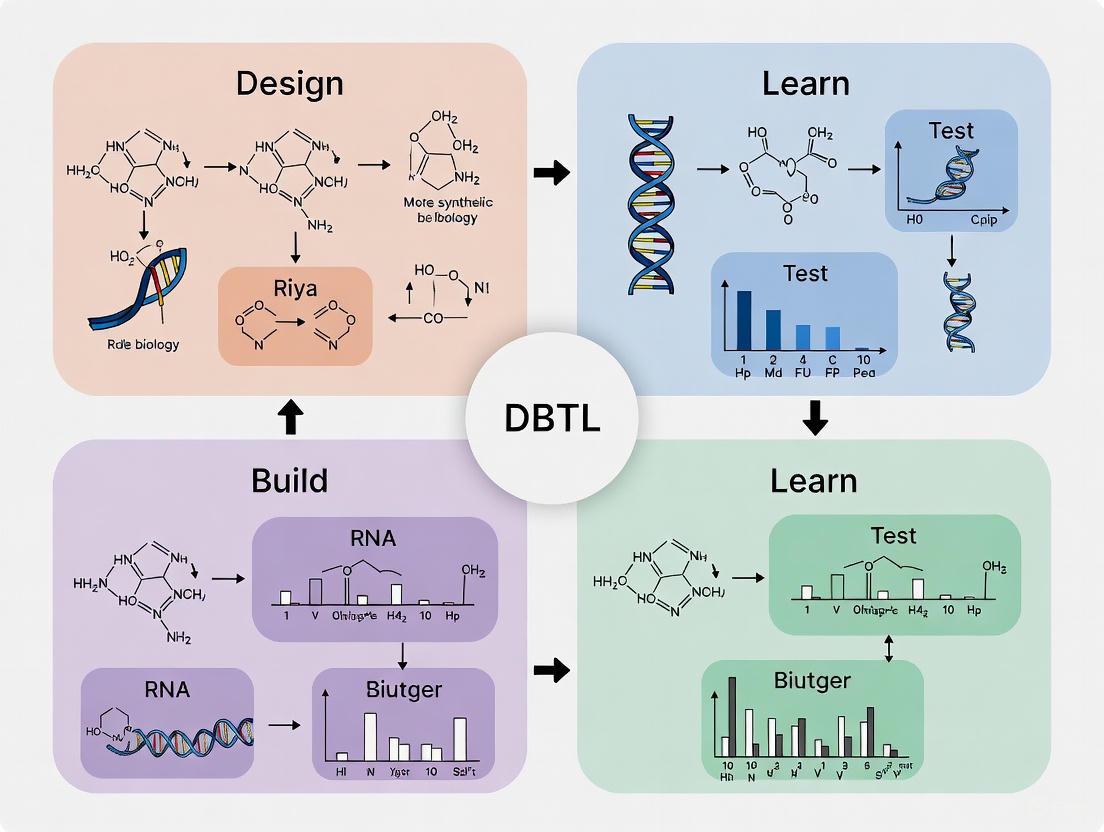
This article provides a comprehensive overview of the Design-Build-Test-Learn (DBTL) cycle, the foundational framework of synthetic biology.
The Synthetic Biology DBTL Cycle: A Comprehensive Guide for Accelerating Research and Drug Development
Abstract
This article provides a comprehensive overview of the Design-Build-Test-Learn (DBTL) cycle, the foundational framework of synthetic biology. Tailored for researchers and drug development professionals, it explores the core principles of each phase, from initial genetic design to data-driven learning. It delves into advanced methodologies, including the integration of machine learning and laboratory automation, to optimize the cycle for efficiency and predictability. The content also covers practical troubleshooting strategies and validates the approach with real-world case studies, illustrating how the DBTL cycle is revolutionizing the engineering of biological systems for therapeutic and industrial applications.
Deconstructing the DBTL Cycle: The Core Engine of Synthetic Biology
The Design-Build-Test-Learn (DBTL) cycle is a systematic, iterative framework that serves as the cornerstone of modern synthetic biology and metabolic engineering [1]. This engineering-based approach provides a structured methodology for developing and optimizing biological systems, enabling researchers to engineer organisms for specific functions such as producing biofuels, pharmaceuticals, and other valuable compounds [1]. The power of the DBTL framework lies in its recursive nature, allowing for continuous refinement of biological designs through successive iterations that progressively incorporate knowledge from previous cycles.
The DBTL cycle has become particularly vital in addressing the fundamental challenge of synthetic biology: the difficulty of predicting how introduced genetic modifications will function within the complex, interconnected networks of a living cell [1]. Even with rational design, the impact of foreign DNA on cellular processes can be unpredictable, necessitating the testing of multiple permutations to achieve desired outcomes [1]. By emphasizing modular design of biological parts and automating assembly processes, the DBTL framework enables researchers to efficiently explore a vast design space while systematically accumulating knowledge about the system's behavior.
The Four Phases of the DBTL Cycle
Design Phase
The Design phase constitutes the initial planning stage where researchers define specific objectives for the desired biological function and computationally design the genetic parts or systems required to achieve these goals [2]. This phase relies heavily on domain expertise, bioinformatics, and computational modeling tools to create blueprints for genetic constructs [2] [3]. During design, researchers select appropriate biological components such as promoters, ribosomal binding sites (RBS), coding sequences, and terminators, considering their compatibility and potential interactions within the host system [4].
The design process often involves the application of specialized software and computational tools that leverage prior knowledge about biological parts and systems. In traditional DBTL cycles, this phase primarily draws upon existing biological knowledge and first principles. However, with the integration of machine learning, the design phase has been transformed through the application of predictive models that can generate more optimized starting designs [2] [5]. The emergence of sophisticated protein language models (such as ESM and ProGen) and structure-based design tools (like ProteinMPNN and MutCompute) has enabled more intelligent and effective design strategies that increase the likelihood of success in subsequent phases [2].
Build Phase
In the Build phase, the computationally designed genetic constructs are physically realized through laboratory synthesis and assembly [2]. This process involves synthesizing DNA sequences, assembling them into plasmids or other vectors, and introducing these constructs into a suitable host system for characterization [2] [1]. Host systems can include various in vivo platforms such as bacterial, yeast, mammalian, or plant cells, as well as in vitro cell-free expression systems [2].
The Build phase has been dramatically accelerated through automation and standardization of molecular biology techniques. Automated platforms enable high-throughput assembly of genetic constructs, significantly reducing the time, labor, and cost associated with creating multiple design variants [1]. This automation is crucial for generating the large, diverse libraries of biological strains needed for comprehensive screening and optimization [1]. The Build phase also encompasses genome engineering techniques such as multiplex automated genome engineering (MAGE) and CRISPR-based editing, which allow for precise genetic modifications in host organisms [3]. Recent advances have particularly highlighted the value of cell-free transcription-translation (TX-TL) systems as rapid building platforms that circumvent the complexities of engineering living cells [2] [6].
Test Phase
The Test phase focuses on experimentally characterizing the performance of the built biological constructs through functional assays and analytical methods [1]. This phase determines the efficacy of the design and build processes by quantitatively measuring key performance indicators such as protein expression levels, metabolic flux, product yield, growth characteristics, and other relevant phenotypic metrics [2] [4].
High-throughput screening technologies have revolutionized the Test phase by enabling rapid evaluation of thousands of variants in parallel [3]. Advanced analytical techniques including next-generation sequencing, proteomics, metabolomics, and fluxomics provide comprehensive data on system behavior at multiple molecular levels [3]. The integration of microfluidics, robotics, and automated imaging systems has further enhanced testing capabilities, allowing for massive parallelization of assays while reducing reagent costs and time requirements [2]. For metabolic engineering applications, testing often occurs in controlled bioreactor environments where critical process parameters can be systematically varied and monitored to assess strain performance under different conditions [4] [5].
Learn Phase
The Learn phase represents the knowledge extraction component of the cycle, where data collected during testing is analyzed to generate insights that will inform subsequent design iterations [2]. This phase involves comparing experimental results with initial design objectives, identifying patterns and correlations in the data, and formulating hypotheses about the underlying biological mechanisms governing system behavior [2] [4].
Traditional learning approaches rely on statistical analysis and mechanistic modeling to interpret results. However, the advent of machine learning has dramatically enhanced learning capabilities, enabling researchers to detect complex, non-linear relationships in high-dimensional biological data [4] [5]. Machine learning algorithms can integrate multi-omics datasets (genomics, transcriptomics, proteomics, metabolomics) to build predictive models that map genetic designs to functional outcomes [3] [5]. The knowledge generated in this phase is essential for refining biological designs and developing more accurate predictive models that accelerate convergence toward optimal solutions in successive DBTL cycles [4].
The Evolving DBTL Paradigm: From DBTL to LDBT
Limitations of Traditional DBTL Cycles
Despite its systematic approach, the traditional DBTL framework faces significant challenges that can limit its efficiency and effectiveness. A primary issue is the phenomenon of "DBTL involution," where iterative cycles generate substantial amounts of data and constructs without producing corresponding breakthroughs in system performance [5]. This often occurs because addressing one metabolic bottleneck frequently reveals or creates new limitations elsewhere in the system, leading to diminishing returns from successive engineering cycles [5].
The Build and Test phases typically constitute the most time-consuming and resource-intensive stages of traditional DBTL cycles, creating a practical constraint on how rapidly iterations can be completed [2]. Furthermore, the quality of learning is often limited by the scale and diversity of experimental data generated in each cycle, particularly when working with complex biological systems where the relationship between genetic design and functional output is influenced by numerous interacting factors [4] [5]. These challenges have motivated the development of new approaches that leverage recent technological advances to accelerate and enhance the DBTL process.
The LDBT Paradigm: Learning-First Approach
A transformative shift in the DBTL paradigm has been proposed with the introduction of the LDBT cycle (Learn-Design-Build-Test), which repositions learning at the beginning of the process [2] [6]. This reordering leverages powerful machine learning models that have been pre-trained on vast biological datasets, enabling zero-shot predictions of biological function directly from sequence or structural information without requiring experimental data from previous cycles on the specific system being engineered [2].
In the LDBT framework, the initial Learn phase utilizes protein language models (such as ESM and ProGen) and structure-based design tools (like ProteinMPNN and MutCompute) that have learned evolutionary and biophysical principles from millions of natural protein sequences and structures [2]. These models can generate optimized starting designs that have a higher probability of success, effectively front-loading the learning process and reducing reliance on iterative trial-and-error [2] [6]. The subsequent Design phase then incorporates these computationally generated designs, which are built and tested using high-throughput methods, particularly cell-free expression systems that dramatically accelerate the Build and Test phases [2] [6].
The workflow below illustrates how machine learning and cell-free systems are integrated in the LDBT cycle:
Case Studies and Applications
The LDBT approach has demonstrated significant success across various synthetic biology applications. Researchers have coupled cell-free expression systems with droplet microfluidics and multi-channel fluorescent imaging to screen over 100,000 picoliter-scale reactions in a single experiment, generating massive datasets for training machine learning models [2]. In protein engineering, ultra-high-throughput stability mapping of 776,000 protein variants using cell-free synthesis and cDNA display has provided extensive data for benchmarking computational predictors [2].
Metabolic pathway optimization has particularly benefited from the LDBT framework. The iPROBE (in vitro prototyping and rapid optimization of biosynthetic enzymes) platform uses cell-free systems to test pathway combinations and enzyme expression levels, with neural networks predicting optimal pathway configurations [2]. This approach has successfully improved the production of 3-HB in Clostridium by over 20-fold [2]. Similarly, machine learning guided by cell-free testing has been applied to engineer antimicrobial peptides, with computational surveys of over 500,000 variants leading to the experimental validation of 500 optimal designs and identification of 6 promising antimicrobial peptides [2].
Enabling Technologies and Methodologies
Machine Learning and AI in DBTL
Machine learning (ML) has become a transformative technology across all phases of the DBTL cycle, enabling more predictive and efficient biological design [2] [5]. Different ML approaches offer distinct advantages for various aspects of biological engineering:
Table: Machine Learning Approaches in Biological Engineering
| ML Approach | Applications in DBTL | Examples |
|---|---|---|
| Supervised Learning | Predicting protein function, stability, and solubility from sequence | Prethermut (stability), DeepSol (solubility) [2] |
| Protein Language Models | Zero-shot prediction of functional sequences, mutation effects | ESM, ProGen [2] |
| Structure-Based Models | Designing sequences for target structures, optimizing local environments | ProteinMPNN, MutCompute [2] |
| Generative Models | Creating novel biological sequences with desired properties | Variational Autoencoders (VAE), Generative Adversarial Networks (GAN) [3] |
| Graph Neural Networks | Modeling metabolic networks, predicting pathway performance | Graph-based representations of metabolic pathways [3] |
The integration of ML with mechanistic models represents a particularly powerful approach. Physics-informed machine learning combines the predictive power of statistical models with the explanatory strength of physical principles, creating hybrid models that offer both correlation and causation insights [2] [5]. For metabolic engineering, ML models can integrate multi-scale data from enzyme kinetics to bioreactor conditions, enabling more accurate predictions of strain performance in industrial settings [5].
Cell-Free Systems for High-Throughput Testing
Cell-free transcription-translation (TX-TL) systems have emerged as a critical technology for accelerating the Build and Test phases of both DBTL and LDBT cycles [2] [6]. These systems utilize protein biosynthesis machinery from cell lysates or purified components to activate in vitro transcription and translation without the need for living cells [2]. The advantages of cell-free platforms include:
- Speed: Protein production exceeding 1 g/L in less than 4 hours [2]
- Flexibility: Ability to express proteins toxic to living cells and incorporate non-canonical amino acids [2]
- Scalability: Operation across volumes from picoliters to kiloliters [2]
- Control: Precise manipulation of reaction conditions and composition [6]
When combined with liquid handling robots and microfluidics, cell-free systems enable unprecedented throughput in biological testing. The DropAI platform, for instance, leverages droplet microfluidics and multi-channel fluorescent imaging to screen over 100,000 picoliter-scale reactions [2]. This massive parallelization generates the large-scale, high-quality datasets essential for training effective machine learning models in the Learn phase [2].
Automation and Biofoundries
The automation of DBTL cycles through biofoundries represents another critical advancement in synthetic biology [3]. These facilities integrate robotic automation, advanced analytics, and computational infrastructure to execute high-throughput biological design and testing [3]. Biofoundries implement fully automated DBTL workflows that can rapidly iterate through design variants with minimal human intervention, dramatically accelerating the engineering of biological systems [3].
Key components of biofoundries include automated DNA synthesis and assembly systems, robotic liquid handling platforms, high-throughput analytical instruments, and data management systems that track the entire engineering process from design to characterization [3]. The integration of machine learning with automated experimentation enables closed-loop design platforms where AI agents direct experiments, analyze results, and propose new designs in an iterative, self-driving manner [2]. This integration marks a significant step toward fully autonomous biological engineering systems that can systematically explore vast design spaces with minimal human guidance.
Research Reagent Solutions for DBTL Workflows
Implementing effective DBTL cycles requires specialized reagents and tools that enable high-throughput construction and characterization of biological systems. The table below outlines essential research reagents and their applications in synthetic biology workflows:
Table: Essential Research Reagents for DBTL Workflows
| Reagent/Tool | Function in DBTL | Application Examples |
|---|---|---|
| Cell-Free TX-TL Systems | Rapid protein expression without living cells | High-throughput testing of enzyme variants [2] [6] |
| DNA Assembly Kits | Modular construction of genetic circuits | Golden Gate, Gibson Assembly for part standardization [1] |
| Promoter/RBS Libraries | Tunable control of gene expression | Combinatorial optimization of pathway enzyme levels [4] |
| Biosensors | Real-time monitoring of metabolic fluxes | High-throughput screening of metabolite production [3] |
| Protein Stability Assays | Quantifying thermodynamic stability | Screening mutant libraries for improved stability [2] |
| Metabolomics Kits | Comprehensive metabolic profiling | Identifying pathway bottlenecks [3] [5] |
These reagents and tools are particularly powerful when integrated into automated workflows within biofoundries, where they enable the systematic exploration of biological design space [3]. The standardization of these components through initiatives such as the Synthetic Biology Open Language (SBOL) facilitates reproducibility and sharing of designs across different research groups and platforms [3].
Quantitative Framework for DBTL Implementation
Effective implementation of DBTL cycles requires careful consideration of strategic parameters that influence both the efficiency and success of biological engineering projects. Research using simulated DBTL cycles based on mechanistic kinetic models has provided quantitative insights into how these parameters affect outcomes:
Table: Strategic Parameters for Optimizing DBTL Cycles
| Parameter | Impact on DBTL Efficiency | Recommendations |
|---|---|---|
| Cycle Number | Diminishing returns after 3-4 cycles | Plan for 2-4 cycles based on project complexity [4] |
| Strains per Cycle | Larger initial cycles improve model accuracy | Favor larger initial DBTL cycle when total strain count is limited [4] |
| Library Diversity | Reduces bias in machine learning predictions | Maximize sequence space coverage in initial library [4] |
| Experimental Noise | Affects model training and recommendation accuracy | Implement replicates and quality controls [4] |
| Feature Selection | Critical for predictive model performance | Include enzyme kinetics, expression levels, host constraints [5] |
Simulation studies have demonstrated that gradient boosting and random forest models outperform other machine learning methods in the low-data regime typical of early DBTL cycles, showing robustness to training set biases and experimental noise [4]. When the total number of strains that can be built is constrained, starting with a larger initial DBTL cycle followed by smaller subsequent cycles is more effective than distributing the same number of strains equally across cycles [4].
The workflow below illustrates how these strategic parameters are integrated in a simulated DBTL framework for metabolic pathway optimization:
The DBTL framework continues to evolve toward increasingly integrated and automated implementations. The emergence of the LDBT paradigm represents a significant shift from empirical iteration toward predictive engineering, potentially moving synthetic biology closer to a "Design-Build-Work" model similar to more established engineering disciplines [2]. Future developments will likely focus on several key areas:
First, the integration of multi-omics datasets (transcriptomics, proteomics, metabolomics) into machine learning models will enhance their predictive power by capturing dynamic cellular contexts in addition to static sequence information [6]. Second, the development of more sophisticated knowledge mining approaches will help structure the vast information contained in scientific literature into computable formats that can inform biological design [5]. Finally, advances in automation and microfluidics will further accelerate the Build and Test phases, potentially enabling fully autonomous self-driving laboratories for biological discovery [2] [6].
In conclusion, the DBTL cycle provides a powerful conceptual and practical framework for engineering biological systems. While traditional DBTL approaches have proven effective, the integration of machine learning and advanced experimental platforms like cell-free systems is transforming this paradigm into a more efficient and predictive process. As these technologies mature, they promise to accelerate the design of biological systems for applications ranging from therapeutic development to sustainable manufacturing, ultimately expanding our ability to program biological function for human benefit.
The Design-Build-Test-Learn (DBTL) cycle is a foundational framework in synthetic biology and metabolic engineering, providing a systematic, iterative process for engineering biological systems. This cyclical approach enables researchers to bioengineer cells for synthesizing novel valuable molecules, from renewable biofuels to anticancer drugs, with increasing efficiency and predictability [7]. The cycle's power lies in its recursive nature; it is extremely rare for an initial design to behave as desired, and the DBTL loop allows for continuous refinement until the desired specifications—such as a particular titer, rate, or yield—are achieved [7]. The adoption of this framework represents a shift away from ad-hoc engineering practices toward more predictable, principle-based bioengineering, significantly accelerating development timelines that traditionally required hundreds of person-years of effort for commercial products [7].
Recent advancements are reshaping traditional DBTL implementations. The integration of machine learning (ML) and automation is transforming the cycle's dynamics, with some proponents even suggesting a reordering to "LDBT" (Learn-Design-Build-Test), where machine learning algorithms pre-loaded with biological data precede and inform the initial design phase [2]. Furthermore, the use of cell-free expression systems and automated biofoundries is dramatically accelerating the Build and Test phases, enabling megascale data generation that fuels more sophisticated models [2]. These technological evolutions are bringing synthetic biology closer to a "Design-Build-Work" model similar to more established engineering disciplines like civil engineering, though the field still largely relies on empirical iteration rather than purely predictive engineering [2].
The Design Phase
Objectives and Strategic Planning
The primary objective of the Design phase is to define the genetic blueprint for a biological system expected to meet desired specifications. This phase establishes the foundational plan that guides all subsequent experimental work, transforming a biological objective into a detailed, implementable genetic design. Researchers define the system's architecture, select appropriate biological parts, and plan their organization to achieve a desired function, such as producing a target compound or sensing an environmental signal [2]. The Design phase relies heavily on domain knowledge, expertise, and computational modeling, with recent advances incorporating machine learning to enhance predictive capabilities [2].
A significant strategic consideration in the Design phase is the choice between rational design and empirical approaches. Traditional DBTL cycles often begin without prior knowledge, potentially leading to multiple iterations and extensive resource consumption [8]. To address this limitation, knowledge-driven approaches are gaining traction, where upstream in vitro investigations provide mechanistic understanding before full DBTL cycling begins [8]. This approach leverages computational tools and preliminary data to make more informed initial designs, reducing the number of cycles needed to achieve optimal performance.
Key Activities and Methodologies
The Design phase encompasses multiple specialized activities that collectively produce a complete genetic design specification:
Protein Design: Researchers select natural enzymes or design novel proteins to perform required biochemical functions. This may involve enzyme engineering for improved catalytic efficiency, substrate specificity, or stability under desired conditions [9].
Genetic Design: This core activity involves translating amino acid sequences into coding DNA sequences (CDS), designing regulatory elements such as ribosome binding sites (RBS), and planning operon architecture for multi-gene pathways [9]. For example, in a dopamine production strain, researchers designed a bicistronic system containing genes for 4-hydroxyphenylacetate 3-monooxygenase (HpaBC) and L-DOPA decarboxylase (Ddc) to convert L-tyrosine to dopamine [8].
Assembly Design: This critical step involves breaking down plasmids into fragments and planning their assembly, considering factors such as restriction enzyme sites, overhang sequences, and GC content [9]. Tools like TeselaGen's platform can automatically generate detailed DNA assembly protocols tailored to specific project needs, selecting appropriate cloning methods (e.g., Gibson assembly or Golden Gate cloning) and strategically arranging DNA fragments in assembly reactions [9].
Assay Design: Researchers establish biochemical reaction conditions and analytical methods that will be used to test the constructed systems in subsequent phases [9].
Experimental Protocols for In Silico Design
Protocol 1: Computational Pathway Design Using BioCAD Tools
- Define Objective: Specify target compound and preferred host chassis (e.g., E. coli, yeast).
- Pathway Retrieval: Search databases (e.g., KEGG, MetaCyc) for biosynthetic pathways to target compound.
- Enzyme Selection: Identify candidate enzymes for each pathway step, considering kinetics, expression compatibility, and intellectual property.
- Codon Optimization: Optimize coding sequences for expression in host chassis using algorithms that consider codon usage bias, mRNA secondary structure, and GC content.
- Regulatory Element Design: Incorporate appropriate promoters, RBS sequences, and terminators using computational tools like the UTR Designer for modulating RBS sequences [8].
- Compatibility Checking: Verify that all genetic parts work harmoniously without unexpected interactions.
Protocol 2: Knowledge-Driven Design with Upstream In Vitro Testing
- In Vitro Prototyping: Express pathway enzymes in cell-free transcription-translation systems to rapidly assess functionality without host constraints [8].
- Enzyme Ratio Optimization: Test different relative expression levels in crude cell lysate systems to determine optimal stoichiometries [8].
- Pathway Balancing: Use in vitro results to inform initial genetic designs for in vivo implementation, translating optimal enzyme ratios to appropriate RBS strengths and promoter activities [8].
The Build Phase
Objectives and Quality Assurance
The Build phase focuses on the physical construction of the biological system designed in the previous phase, with the primary objective of accurately assembling DNA constructs and introducing them into the target host organism or expression system. Precision is paramount in this phase, as even minor errors in assembly can lead to significant deviations in the final system's behavior [9]. The Build phase has been dramatically accelerated by automation technologies that enable high-throughput construction of genetic variants, facilitating more comprehensive exploration of the design space than manual methods would permit.
A key quality consideration in the Build phase is the verification of constructed strains. After DNA assembly, constructs are typically cloned into expression vectors and verified with colony qPCR or Next-Generation Sequencing (NGS), though in some high-throughput workflows this verification step may be optional to increase speed [1]. The Build phase also encompasses the preparation of necessary reagents and host strains, ensuring that all components are available for the subsequent Test phase. Modern biofoundries integrate these steps into seamless automated workflows that track samples and reagents throughout the process, maintaining chain of custody and reducing opportunities for human error [9].
Key Activities and Methodologies
The Build phase involves both molecular biology techniques and robust inventory management:
DNA Construct Assembly: Using synthetic biology methods such as Gibson Assembly, Golden Gate cloning, or PCR-based techniques to assemble genetic parts into complete expression constructs [9]. Automated liquid handlers from companies like Labcyte, Tecan, Beckman Coulter, and Hamilton Robotics provide high-precision pipetting for PCR setup, DNA normalization, and plasmid preparation [9].
Strain Transformation: Introducing assembled DNA into microbial chassis (e.g., E. coli, yeast) through transformation or transfection methods appropriate for the host organism.
Library Generation: Creating diverse variant libraries for screening, often through RBS engineering [8], promoter swapping, or targeted mutagenesis. For example, in developing a dopamine production strain, researchers used high-throughput RBS engineering to fine-tune the expression levels of HpaBC and Ddc enzymes [8].
Inventory Management: Tracking DNA parts, strains, and reagents using laboratory information management systems (LIMS) to ensure reproducibility and efficient resource utilization [9]. Platforms like TeselaGen integrate with DNA synthesis providers (e.g., Twist Bioscience, IDT, GenScript) to streamline the flow of custom DNA sequences into lab workflows [9].
Experimental Protocols for Genetic Construction
Protocol 1: High-Throughput DNA Assembly Using Automated Liquid Handling
- Reaction Setup: Program liquid handlers to dispense DNA fragments, assembly master mix, and water into microtiter plates.
- Assembly Reaction: Incubate plates at appropriate temperature and duration for the selected assembly method (e.g., 50°C for 60 minutes for Gibson Assembly).
- Transformation: Transfer assembly reactions to competent cells using heat shock or electroporation methods.
- Outgrowth: Add recovery medium and incubate with shaking to allow expression of antibiotic resistance markers.
- Plating: Spread transformations on selective agar plates containing appropriate antibiotics.
- Colony Picking: Isolate individual colonies using automated colony pickers for subsequent verification and testing.
Protocol 2: RBS Library Construction for Pathway Optimization
- SD Sequence Design: Design variant Shine-Dalgarno sequences with different GC content to modulate translation initiation rates without altering secondary structures [8].
- Oligonucleotide Synthesis: Synthesize forward and reverse primers containing the variant RBS sequences.
- PCR Amplification: Amplify target genes using RBS-variant primers to generate a library of constructs with different translation initiation rates.
- Assembly and Cloning: Clone the variant library into expression vectors using high-throughput methods.
- Sequence Verification: Verify a subset of clones by Sanger sequencing or NGS to confirm library diversity and sequence accuracy.
The Test Phase
Objectives and Performance Metrics
The Test phase serves the critical function of experimentally characterizing the biological systems built in the previous phase to determine whether they perform as designed. This phase provides the essential empirical data that fuels the entire DBTL cycle, enabling researchers to evaluate design success, identify limitations, and generate insights for subsequent iterations. The core objective is to measure system performance against predefined metrics, which typically include titer (concentration), rate (productivity), and yield (conversion efficiency) of the desired product, as well as host fitness and other relevant phenotypic characteristics [7].
Modern Test phases increasingly leverage high-throughput screening (HTS) technologies to rapidly characterize large variant libraries. Automation has been pivotal in enhancing the speed and efficiency of sample analysis, with automated liquid handling systems, plate readers, and robotics enabling the testing of thousands of constructs in parallel [9]. The choice of testing platform—whether in vivo chassis (bacteria, yeast, mammalian cells) or in vitro cell-free systems—represents a key strategic decision. Cell-free expression platforms are particularly valuable for high-throughput testing as they allow direct measurement of enzyme activities without cellular barriers, enable production of toxic compounds, and provide a highly controllable environment for systematic characterization [2].
Key Activities and Methodologies
The Test phase integrates sample preparation, analytical measurement, and data management:
Cultivation and Sample Preparation: Growing engineered strains under defined conditions and preparing samples for analysis. For metabolic engineering projects, this often involves cultivation in minimal media with precise control of nutrients, inducers, and environmental conditions [8].
High-Throughput Analytical Measurement: Using automated systems to quantify strain performance and product formation. Platforms like the EnVision Multilabel Plate Reader (PerkinElmer) and BioTek Synergy HTX Multi-Mode Reader efficiently assess diverse assay formats [9].
Omics Technologies: Applying large-scale analytical methods for comprehensive system characterization. Next-Generation Sequencing (NGS) platforms (e.g., Illumina NovaSeq) provide genotypic analysis, while automated mass spectrometry setups (e.g., Thermo Fisher Orbitrap) enable proteomic and metabolomic profiling [9].
Data Collection and Integration: Systematically capturing experimental results and linking them to design parameters. Platforms like TeselaGen act as centralized hubs, collecting data from various analytical equipment and integrating it with the design-build process [9].
Experimental Protocols for Characterization
Protocol 1: High-Throughput Screening of Metabolic Pathway Variants
- Cultivation: Inoculate variant strains in deep-well plates containing defined minimal medium with appropriate carbon sources and inducers [8].
- Growth Monitoring: Measure optical density (OD600) at regular intervals to track growth kinetics using plate readers.
- Metabolite Extraction: At appropriate growth phase, extract intracellular and extracellular metabolites using quenching solutions and appropriate extraction solvents.
- Product Quantification: Analyze samples using HPLC, GC-MS, or LC-MS to quantify target compounds and potential byproducts.
- Data Processing: Convert raw analytical data into standardized formats for comparative analysis and modeling.
Protocol 2: Cell-Free Testing for Rapid Characterization
- Lysate Preparation: Prepare crude cell lysates from production host by cell disruption and centrifugation to remove debris [8].
- Reaction Setup: Combine cell-free extracts with DNA templates, substrates, cofactors, and energy regeneration systems in microtiter plates.
- Incubation and Monitoring: Incubate reactions at controlled temperature while monitoring substrate consumption and product formation in real-time where possible.
- Reaction Quenching: Stop reactions at appropriate timepoints using acid, base, or heat denaturation.
- Product Analysis: Quantify reaction products using colorimetric assays, fluorescence detection, or mass spectrometry.
Table 1: Key Analytical Methods in the Test Phase
| Method | Application | Throughput | Key Metrics |
|---|---|---|---|
| Plate Readers | Growth curves, fluorescent reporters, colorimetric assays | High | OD600, fluorescence intensity, absorbance |
| HPLC/UPLC | Separation and quantification of metabolites | Medium | Retention time, peak area, concentration |
| GC-MS/LC-MS | Identification and quantification of volatile/non-volatile compounds | Medium | Mass-to-charge ratio, retention time, fragmentation pattern |
| NGS | Genotype verification, mutation identification | High | Read depth, variant frequency, sequence accuracy |
| Flow Cytometry | Single-cell analysis, population heterogeneity | High | Fluorescence intensity, cell size, granularity |
The Learn Phase
Objectives and Knowledge Integration
The Learn phase represents the critical bridge between empirical testing and improved design, serving to extract meaningful insights from experimental data to inform subsequent DBTL cycles. The primary objective is to analyze the results from the Test phase, identify patterns and relationships, and generate actionable knowledge that will improve future designs. This phase has traditionally been the most weakly supported in the DBTL cycle, but advances in machine learning and data science are dramatically enhancing its power and effectiveness [7]. The Learn phase enables researchers to move beyond simple trial-and-error approaches toward predictive biological design.
A key challenge addressed in the Learn phase is the integration of diverse data types into coherent models. Experimental data in synthetic biology is often sparse, expensive to generate, and multi-dimensional, requiring specialized analytical approaches [7]. The Learn phase also serves to contextualize results within broader biological understanding, determining whether unexpected outcomes stem from design flaws, unanticipated biological interactions, or experimental artifacts. Modern learning approaches increasingly leverage Bayesian methods and ensemble modeling to quantify uncertainty and make robust predictions even with limited data, which is particularly valuable in biological contexts where comprehensive data generation remains challenging [7].
Key Activities and Methodologies
The Learn phase transforms raw data into actionable knowledge through systematic analysis:
Data Integration and Standardization: Combining results from multiple experiments and analytical platforms into unified datasets. TeselaGen's platform provides standardized data handling with automatic dataset validation and integrated data visualization tools [9].
Pattern Recognition and Model Building: Using statistical analysis and machine learning to identify relationships between genetic designs and phenotypic outcomes. For example, the Automated Recommendation Tool (ART) combines scikit-learn with Bayesian ensemble approaches to predict biological system behavior [7].
Hypothesis Generation: Formulating new testable hypotheses based on analytical results to guide subsequent design iterations.
Uncertainty Quantification: Assessing confidence in predictions and identifying knowledge gaps that require additional experimentation. ART provides full probability distributions of predictions rather than simple point estimates, enabling principled experimental design [7].
Experimental Protocols for Data Analysis
Protocol 1: Machine Learning-Guided Strain Optimization
- Feature Engineering: Identify relevant input variables (e.g., enzyme expression levels, promoter strengths, genetic modifications) that potentially influence the output (e.g., product titer) [7].
- Model Selection: Choose appropriate machine learning algorithms based on dataset size and complexity. For smaller datasets (<100 instances), Bayesian ensemble methods often outperform deep learning approaches [7].
- Model Training: Train predictive models using available experimental data, implementing cross-validation to avoid overfitting.
- Prediction and Recommendation: Use trained models to predict performance of untested genetic designs and recommend the most promising candidates for further testing [7].
- Experimental Validation: Build and test recommended designs to generate new data for model refinement.
Protocol 2: Pathway Performance Analysis
- Multi-omics Data Integration: Combine transcriptomic, proteomic, and metabolomic data to build comprehensive views of pathway operation.
- Flux Analysis: Calculate metabolic fluxes through different pathway branches to identify bottlenecks or competing reactions.
- Correlation Analysis: Identify relationships between enzyme expression levels, metabolite pools, and final product yields.
- Constraint-Based Modeling: Use genome-scale metabolic models to simulate system behavior under different genetic and environmental conditions.
- Design Revision: Based on analytical insights, propose specific genetic modifications (e.g., RBS tuning, enzyme engineering, gene knockouts) to improve pathway performance.
Table 2: Key Tools and Technologies for the Learn Phase
| Tool/Technology | Application | Key Features |
|---|---|---|
| Automated Recommendation Tool (ART) | Predictive modeling for strain engineering | Bayesian ensemble approach, uncertainty quantification, tailored for small datasets [7] |
| TeselaGen Discover Module | Phenotype prediction for biological products | Advanced embeddings for DNA/proteins/compounds, predictive models [9] |
| Pre-trained Protein Language Models (ESM, ProGen) | Protein design and optimization | Zero-shot prediction of beneficial mutations, function inference from sequence [2] |
| Structure-Based Design Tools (ProteinMPNN, MutCompute) | Protein engineering based on structural information | Sequence design for specific backbones, residue-level optimization [2] |
| Stability Prediction Tools (Prethermut, Stability Oracle) | Protein thermostability optimization | ΔΔG prediction for mutations, stability landscape mapping [2] |
Integrated Case Study: Development of a Dopamine Production Strain
Experimental Implementation Across DBTL Phases
A recent study demonstrating the development of an optimized dopamine production strain in E. coli provides a comprehensive example of the DBTL cycle in action, incorporating a knowledge-driven approach with upstream in vitro investigation [8]. This case study illustrates how the four phases integrate in a real metabolic engineering project and highlights the strategic advantage of incorporating mechanistic understanding before full DBTL cycling.
In the Design phase, researchers planned a bicistronic system for dopamine biosynthesis from L-tyrosine, incorporating the native E. coli gene encoding 4-hydroxyphenylacetate 3-monooxygenase (HpaBC) to convert L-tyrosine to L-DOPA, and L-DOPA decarboxylase (Ddc) from Pseudomonas putida to catalyze dopamine formation [8]. The host strain was engineered for high L-tyrosine production through genomic modifications, including depletion of the transcriptional dual regulator tyrosine repressor TyrR and mutation of the feedback inhibition of chorismate mutase/prephenate dehydrogenase (tyrA) [8].
For the Build phase, researchers implemented RBS engineering to fine-tune the relative expression levels of HpaBC and Ddc. They created variant libraries by modulating the Shine-Dalgarno sequence without interfering with secondary structures, exploiting the relationship between GC content in the SD sequence and RBS strength [8]. This high-throughput approach enabled systematic exploration of the expression space.
In the Test phase, researchers first conducted in vitro experiments using crude cell lysate systems to rapidly assess enzyme expression levels and pathway functionality without host constraints [8]. Following promising in vitro results, they translated these findings to in vivo testing, cultivating strains in minimal medium and quantifying dopamine production using appropriate analytical methods. The optimal strain achieved dopamine production of 69.03 ± 1.2 mg/L, equivalent to 34.34 ± 0.59 mg/g biomass [8].
The Learn phase involved analyzing the relationship between RBS sequence features, enzyme expression levels, and final dopamine titers. Researchers discovered that fine-tuning the dopamine pathway through high-throughput RBS engineering clearly demonstrated the impact of GC content in the Shine-Dalgarno sequence on RBS strength [8]. These insights enabled the development of a significantly improved production strain, outperforming previous state-of-the-art in vivo dopamine production by 2.6 and 6.6-fold for different metrics [8].
Research Reagent Solutions
Table 3: Essential Research Reagents for DBTL Workflows
| Reagent/Material | Function/Application | Example from Case Study |
|---|---|---|
| Crude Cell Lysates | In vitro pathway prototyping and testing | Used for upstream investigation of dopamine pathway enzymes before in vivo implementation [8] |
| RBS Library Variants | Fine-tuning gene expression levels | SD sequence modulation to optimize HpaBC and Ddc expression ratios [8] |
| Minimal Medium | Controlled cultivation conditions | Consisted of glucose, salts, MOPS buffer, trace elements, and selective antibiotics [8] |
| Inducers (e.g., IPTG) | Controlled gene expression induction | Added to liquid medium and agar plates at 1 mM concentration for pathway induction [8] |
| Analytical Standards | Metabolite quantification and method calibration | Dopamine and L-DOPA standards for HPLC or LC-MS quantification |
Visualizing the DBTL Workflow
Diagram 1: The DBTL Cycle Workflow - This diagram illustrates the iterative nature of the Design-Build-Test-Learn cycle in synthetic biology, showing how knowledge gained in each cycle informs subsequent iterations until the desired biological objective is achieved.
Diagram 2: The LDBT Paradigm - This diagram shows the emerging paradigm where Machine Learning (Learn) precedes Design, leveraging large datasets and predictive models to generate more effective initial designs, potentially reducing the number of experimental cycles needed.
The DBTL cycle represents a powerful framework for systematic bioengineering, enabling researchers to navigate the complexity of biological systems through iterative refinement. As synthetic biology continues to mature, advancements in automation, machine learning, and foundational technologies like cell-free systems are transforming each phase of the cycle. The integration of computational and experimental approaches across all four phases—from intelligent design through automated construction, high-throughput testing, and data-driven learning—is accelerating our ability to engineer biological systems for diverse applications in medicine, manufacturing, and environmental sustainability. The continued evolution of the DBTL cycle toward more predictive, first-principles engineering promises to further reduce development timelines and expand the boundaries of biological design.
For years, the engineering of biological systems has been guided by the systematic framework of the Design-Build-Test-Learn (DBTL) cycle [1]. This iterative process begins with researchers defining objectives and designing biological parts using domain knowledge and computational modeling (Design). The designed DNA constructs are then synthesized and introduced into living chassis or cell-free systems (Build), followed by experimental measurement of performance (Test). Finally, researchers analyze the collected data to inform the next design round (Learn), repeating the cycle until the desired biological function is achieved [2]. This methodology has streamlined efforts to build biological systems by providing a systematic, iterative framework for biological engineering [1].
However, the traditional DBTL approach faces significant limitations. The Build-Test phases often create bottlenecks, requiring time-intensive cloning and cellular culturing steps that can take days or weeks [6]. Furthermore, the high dimensionality and combinatorial nature of DNA sequence variations generate a vast design landscape that is impractical to explore exhaustively through empirical iteration alone [2] [6]. These challenges have prompted a fundamental rethinking of the synthetic biology workflow, especially given recent advancements in artificial intelligence and high-throughput testing platforms.
The Paradigm Shift: Rationale for LDBT
The Machine Learning Revolution
Machine learning (ML) has emerged as a transformative force in synthetic biology, enabling a conceptual shift from iteration-heavy experimentation to prediction-driven design [2]. ML models can economically leverage large biological datasets to detect patterns in high-dimensional spaces, enabling more efficient and scalable design than traditional computational models, which are often computationally expensive and limited in scope when applied to biomolecular complexity [2].
Table 1: Key Machine Learning Approaches in the LDBT Paradigm
| ML Approach | Key Functionality | Representative Tools | Applications in Synthetic Biology |
|---|---|---|---|
| Protein Language Models | Capture evolutionary relationships in protein sequences; predict beneficial mutations | ESM [2], ProGen [2] | Zero-shot prediction of antibody sequences; designing libraries for engineering biocatalysts [2] |
| Structure-Based Models | Predict sequences that fold into specific backbones; optimize residues given local environment | ProteinMPNN [2], MutCompute [2], AlphaFold [2] | Design of stabilized hydrolases for PET depolymerization; TEV protease variants with improved activity [2] |
| Functional Prediction Models | Predict protein properties like thermostability and solubility | Prethermut [2], Stability Oracle [2], DeepSol [2] | Eliminating destabilizing mutations; identifying stabilizing substitutions; predicting protein solubility [2] |
| Hybrid & Augmented Models | Combine evolutionary information with biophysical principles | Physics-informed ML [2], Force-field augmented models [2] | Exploring evolutionary landscapes of enzymes; mapping sequence-fitness landscapes [2] |
The predictive power of these ML approaches has advanced to the point where zero-shot predictions (made without additional training) can generate functional biological designs from the outset [2]. For instance, protein language models trained on millions of sequences can predict beneficial mutations and infer protein functions, while structure-based models like ProteinMPNN can design sequences that fold into desired structures with dramatically improved success rates [2].
The Rise of Cell-Free Testing Platforms
Complementing the ML revolution, cell-free transcription-translation (TX-TL) systems have emerged as a powerful experimental platform that circumvents the bottlenecks of traditional in vivo testing [2] [6]. These systems leverage protein biosynthesis machinery from cell lysates or purified components to activate in vitro transcription and translation, enabling direct use of synthesized DNA templates without time-consuming cloning steps [2].
The advantages of cell-free systems are numerous: they are rapid (producing >1 g/L of protein in <4 hours), scalable (from picoliters to kiloliters), capable of producing toxic products, and amenable to high-throughput screening through integration with liquid handling robots and microfluidics [2]. This enables researchers to test thousands to hundreds of thousands of variants in picoliter-scale reactions, generating the massive datasets needed to train and validate ML models [2] [6].
The LDBT Framework: A Technical Examination
Core Architecture and Workflow
The LDBT cycle represents a fundamental reordering of the synthetic biology workflow. It begins with the Learn phase, where machine learning models pre-trained on vast biological datasets generate initial designs [2] [6]. This is followed by Design, where researchers use these computational predictions to specify biological parts with enhanced likelihood of functionality. The Build phase employs cell-free systems for rapid synthesis, while Test utilizes high-throughput cell-free assays for experimental validation [2] [6].
Diagram 1: The LDBT workflow begins with Learning, where pre-trained models inform the Design of biological parts, which are rapidly Built and Tested using cell-free systems, generating data that can further refine models.
This reordering creates a more efficient pipeline that reduces dependency on labor-intensive cloning and cellular culturing steps, potentially democratizing synthetic biology research for smaller labs and startups [6]. The integration of computational intelligence with experimental ingenuity sets the stage for transforming how biological systems are understood, designed, and deployed [6].
Quantitative Comparison: DBTL vs. LDBT
Table 2: Systematic Comparison of DBTL and LDBT Approaches
| Parameter | Traditional DBTL Cycle | LDBT Paradigm |
|---|---|---|
| Initial Phase | Design based on domain knowledge and existing data [2] | Learn using pre-trained machine learning models [2] |
| Build Methodology | In vivo chassis (bacteria, yeast, mammalian cells) [2] | Cell-free expression systems [2] [6] |
| Build Timeline | Days to weeks (including cloning) [6] | Hours (direct DNA template use) [2] |
| Testing Throughput | Limited by cellular growth and transformation efficiency [6] | Ultra-high-throughput (100,000+ reactions) [2] |
| Primary Learning Source | Experimental data from previous cycles [2] | Foundational models trained on evolutionary and structural data [2] |
| Key Advantage | Systematic, established framework [1] | Speed, scalability, and predictive power [2] [6] |
| Experimental Readout | Product formation, -omics analyses [10] | Growth-coupled selection or direct functional assays [10] |
Implementation Protocols
Machine Learning-Guided Design Protocol
For implementing the Learn phase, researchers can utilize the following protocol:
Model Selection: Choose appropriate pre-trained models based on the engineering goal:
- For sequence-based design: Employ protein language models (ESM, ProGen) to generate sequences with desired evolutionary properties [2].
- For structure-based design: Utilize ProteinMPNN or MutCompute to design sequences folding into specific structures or optimizing local environments [2].
- For property optimization: Apply specialized predictors (Prethermut, DeepSol) for thermostability or solubility enhancement [2].
Zero-Shot Prediction: Generate initial designs without additional training, leveraging patterns learned from vast datasets during pre-training [2].
Library Design: Select optimal variants from computational surveys for experimental testing. For example, in antimicrobial peptide engineering, researchers computationally surveyed over 500,000 candidates before selecting 500 optimal variants for experimental validation [2].
Cell-Free Build-Test Protocol
The Build-Test phases in LDBT utilize cell-free systems through this standardized protocol:
DNA Template Preparation:
- Use linear DNA templates or plasmid DNA synthesized based on ML-designed sequences
- No requirement for cloning or transformation into living cells [2]
Cell-Free Reaction Assembly:
High-Throughput Testing:
Data Generation and Model Refinement:
- Collect functional data for thousands to hundreds of thousands of variants
- Use results to validate computational predictions and refine ML models [2]
Research Reagent Solutions for LDBT Implementation
Table 3: Essential Research Reagents and Platforms for LDBT Workflows
| Reagent/Platform | Function in LDBT | Key Features | Application Examples |
|---|---|---|---|
| Cell-Free TX-TL Systems | Rapid protein synthesis without living cells | >1 g/L protein in <4 hours; scalable from pL to kL; amenable to high-throughput automation [2] | Pathway prototyping; toxic protein production; enzyme engineering [2] |
| Droplet Microfluidics | Ultra-high-throughput screening | Enables screening of >100,000 picoliter-scale reactions; multi-channel fluorescent imaging [2] | Protein stability mapping; enzyme variant screening [2] |
| Protein Language Models (ESM, ProGen) | Zero-shot protein design | Trained on millions of protein sequences; captures evolutionary relationships [2] | Predicting beneficial mutations; designing libraries for biocatalyst engineering [2] |
| Structure-Based Design Tools (ProteinMPNN, MutCompute) | Sequence design based on structural constraints | Predicts sequences folding into specific backbones; optimizes residues for local environment [2] | Engineering stabilized hydrolases; designing proteases with improved activity [2] |
| cDNA Display Platforms | Protein stability mapping | Allows ΔG calculations for hundreds of thousands of protein variants [2] | Benchmarking zero-shot predictors; large-scale stability datasets [2] |
Case Studies and Experimental Evidence
Enzyme Engineering with Zero-Shot Predictions
The power of the LDBT approach is exemplified by engineering a hydrolase for polyethylene terephthalate (PET) depolymerization. Researchers used MutCompute, a deep neural network trained on protein structures, to identify stabilizing mutations based on local chemical environments [2]. The resulting variants exhibited increased stability and activity compared to wild-type, demonstrating successful zero-shot engineering without iterative optimization [2]. This approach was further enhanced by combining large language models trained on PET hydrolase homologs with force-field-based algorithms, essentially exploring the evolutionary landscape computationally before testing [2].
Ultra-High-Throughput Protein Stability Mapping
In a groundbreaking study, researchers coupled cell-free protein synthesis with cDNA display to map the stability of 776,000 protein variants in a single experimental campaign [2]. This massive dataset provided unprecedented benchmarking for zero-shot predictors and demonstrated how cell-free systems can generate the megascale data required for training and validating sophisticated ML models [2]. The integration of such extensive experimental data with computational prediction represents the core strength of the LDBT paradigm.
Antimicrobial Peptide Design
The LDBT framework enabled researchers to computationally survey over 500,000 antimicrobial peptide sequences using deep learning models, from which they selected 500 optimal variants for experimental validation in cell-free systems [2]. This approach identified 6 promising antimicrobial peptide designs with high efficacy, showcasing how ML-guided filtering can dramatically reduce the experimental burden while maintaining success rates [2].
Pathway Engineering with iPROBE
The in vitro prototyping and rapid optimization of biosynthetic enzymes (iPROBE) platform uses cell-free systems to test pathway combinations and enzyme expression levels, then applies neural networks to predict optimal pathway sets [2]. This approach successfully improved 3-HB production in Clostridium by over 20-fold, demonstrating the power of combining cell-free prototyping with machine learning for metabolic pathway engineering [2].
Comparative Workflow Visualization
Diagram 2: Comparison of traditional DBTL, an iterative cycle beginning with Design, versus the LDBT paradigm, a more linear workflow that begins with Learning through machine learning.
The transition from DBTL to LDBT represents more than just a conceptual reshuffling—it signals a fundamental shift in how biological engineering is approached. By placing Learning at the forefront and leveraging cell-free platforms for rapid validation, the LDBT framework promises to accelerate biological design, optimize resource usage, and unlock novel applications with greater predictability and speed [6].
This paradigm shift brings synthetic biology closer to a "Design-Build-Work" model that relies on first principles, similar to established engineering disciplines like civil engineering [2]. Such a transition could have transformative impacts on efforts to engineer biological systems and help reshape the bioeconomy [2].
Future advancements will likely focus on expanding the capabilities of both computational and experimental components. For ML, this includes developing more accurate foundational models trained on even larger datasets, incorporating multi-omics information, and improving the integration of physical principles with statistical learning [2] [6]. For cell-free systems, priorities include reducing costs, increasing scalability, and enhancing the fidelity of in vitro conditions to match in vivo environments [2].
As the field progresses, the LDBT approach is poised to dramatically compress development timelines for bio-based products, from pharmaceuticals to sustainable chemicals, potentially reducing what once took months or years to a matter of days [6]. This accelerated pace of biological design and discovery promises to open new frontiers in biotechnology and synthetic biology, driven by the powerful convergence of machine intelligence and experimental innovation.
The engineering of biological systems relies on a structured iterative process known as the Design-Build-Test-Learn (DBTL) cycle. This framework allows researchers to systematically develop and optimize biological systems, such as engineered organisms for producing biofuels, pharmaceuticals, and other valuable compounds [1]. As synthetic biology advances, efficient procedures are being developed to streamline the transition from conceptual design to functional biological product. Computer-aided design (CAD) has become a necessary component in this pipeline, serving as a critical bridge between biological understanding and engineering application [11]. This technical guide examines the essential tools and technologies supporting each phase of the DBTL cycle, with particular focus on CAD platforms and emerging cell-free systems that are accelerating progress in synthetic biology.
The DBTL Cycle in Synthetic Biology
The DBTL cycle represents a systematic framework for engineering biological systems. In the Design phase, researchers use computational tools to model and simulate biological networks. The Build phase involves the physical assembly of genetic constructs, often leveraging high-throughput automated workflows. During the Test phase, these constructs are experimentally evaluated through functional assays. Finally, the Learn phase involves analyzing the resulting data to refine designs and inform the next iteration of the cycle [1]. This iterative process continues until a construct producing the desired function is obtained.
Table 1: Core Activities and Outputs in the DBTL Cycle
| Phase | Primary Activities | Key Outputs |
|---|---|---|
| Design | Network modeling, parts selection, simulation | Biological model, DNA design specification |
| Build | DNA assembly, cloning, transformation | Genetic constructs, engineered strains |
| Test | Functional assays, characterization | Performance data, quantitative measurements |
| Learn | Data analysis, model refinement | Design rules, improved constructs for next cycle |
Phase 1: Design Tools and Technologies
Computer-Aided Design (CAD) Platforms
CAD applications provide essential features for designing biological systems, including building and simulating networks, analyzing robustness, and searching databases for components that meet design criteria [12]. TinkerCell represents a prominent example of a modular CAD tool specifically developed for synthetic biology applications. Its flexible modeling framework allows it to accommodate evolving methodologies in the field, from how parts are characterized to how synthetic networks are modeled and analyzed computationally [12] [11].
TinkerCell employs a component-based modeling approach where users build biological networks by selecting and connecting components from a parts catalog. The software uses an underlying ontology that understands biological relationships - for example, it recognizes that "transcriptional repression" is a connection from a "transcription factor" to a "repressible promoter" [11]. This biological understanding enables TinkerCell to automatically derive appropriate dynamics and rate equations when users connect biological components, significantly streamlining the model creation process.
Key Features of Modern Biological CAD Tools
Flexible Modeling Framework: TinkerCell does not enforce a single modeling methodology, recognizing that best practices are still evolving in synthetic biology. This allows researchers to test different computational methods relevant to their specific applications [12] [11].
Extensibility: The platform readily accepts third-party algorithms, allowing it to serve as a testing platform for different synthetic biology methods. Custom programs can be integrated to perform specialized analyses and even interact with TinkerCell's visual interface [12] [11].
Support for Uncertainty: Biological parameters often have significant uncertainties. TinkerCell allows parameters to be defined as ranges or distributions rather than single values, though analytical functions leveraging this capability are still under development [11].
Module Reuse: Supporting engineering principles of abstraction and modularity, TinkerCell allows researchers to construct larger circuits by connecting previously validated smaller circuits, with options to hide internal details for simplified viewing [11].
Automated Workflow Platforms
The Galaxy-SynBioCAD portal represents an emerging class of integrated workflow platforms that provide end-to-end solutions for metabolic pathway design and engineering [13]. This web-based platform incorporates tools for:
- Retrosynthesis: Identifying pathways to synthesize target compounds in chassis organisms using tools like RetroPath2.0 and RP2Paths
- Pathway Evaluation: Ranking pathways based on multiple criteria including thermodynamics, predicted yield, and host compatibility
- Genetic Design: Designing DNA constructs with appropriate regulatory elements and formatting them for automated assembly
These tools use standard exchange formats like SBML (Systems Biology Markup Language) and SBOL (Synthetic Biology Open Language) to ensure interoperability between different stages of the design process [13].
Phase 2: Build Tools and Technologies
DNA Assembly and Automated Workflows
The Build phase transforms designed genetic circuits into physical DNA constructs. Automation is critical for increasing throughput and reducing the time, labor, and cost of generating multiple construct variants [1]. Modern synthetic biology workflows employ:
- Standardized Assembly Methods: Double-stranded DNA fragments are designed for easy gene construction, often using standardized assembly protocols like Golden Gate or Gibson Assembly
- Automated Liquid Handling: Robotic workstations enable high-throughput assembly of genetic constructs, with platforms like Aquarium and Antha providing instructions for either manual or automated execution of assembly protocols [13]
- Quality Control Verification: Assembled constructs are typically verified using colony qPCR or Next-Generation Sequencing (NGS), though this step may be optional in some high-throughput workflows [1]
Table 2: Essential Research Reagent Solutions for Synthetic Biology
| Reagent/Category | Function/Purpose | Examples/Notes |
|---|---|---|
| DNA Parts/Libraries | Basic genetic components for circuit construction | Promoters, RBS, coding sequences, terminators |
| Assembly Reagents | Enzymatic assembly of genetic constructs | Restriction enzymes, ligases, polymerase |
| Cell-Free Expression Systems | In vitro testing and prototyping | E. coli extracts, wheat germ extracts, PURE system |
| Chassis Strains | Host organisms for circuit implementation | E. coli, S. cerevisiae, specialized production strains |
| Selection Markers | Identification of successful transformants | Antibiotic resistance, auxotrophic markers |
High-Throughput Strain Engineering
The DBTL approach enables development of large, diverse libraries of biological strains. This requires robust, repeatable molecular cloning workflows to increase productivity of target molecules including nucleotides, proteins, and metabolites [1]. Automated platforms from companies like Culture Biosciences provide cloud-based bioreactor systems that enable scientists to design, run, monitor, and analyze experiments remotely, significantly reducing R&D timelines [14].
Phase 3: Test Tools and Technologies
Cell-Free Systems for Rapid Prototyping
Cell-free systems (CFS) have emerged as powerful platforms for testing synthetic biological systems without the constraints of living cells [15]. These systems consist of molecular machinery extracted from cells, typically containing enzymes necessary for transcription and translation, allowing them to perform central dogma processes (DNA→RNA→protein) independent of a cell [15].
CFS can be derived from various sources, each with distinct advantages:
Table 3: Comparison of Major Cell-Free Protein Synthesis Platforms
| Platform | Advantages | Disadvantages | Representative Yields | Applications |
|---|---|---|---|---|
| PURE System | Defined composition, flexible, minimal nucleases/proteases | Expensive, cannot activate endogenous metabolism | GFP: 380 μg/mL [16] | Minimal cells, complex proteins, unnatural amino acids |
| E. coli Extract | High yields, low-cost, genetically tractable | Limited post-translational modifications | GFP: 2300 μg/mL [16] | High-throughput prototyping, antibodies, vaccines, diagnostics |
| Wheat Germ Extract | Excellent for eukaryotic proteins, long reaction duration | Labor-intensive preparation | GFP: 1600-9700 μg/mL [16] | Eukaryotic membrane proteins, structural biology |
| Insect Cell Extract | Capable of complex PTMs including glycosylation | Lower yields, requires more extract | Not specified | Eukaryotic proteins requiring modifications |
Key Advantages of Cell-Free Testing Systems
- Rapid Prototyping: Genetic instructions can be added directly to CFS at desired concentrations and stoichiometries using linear or circular DNA formats, bypassing the need for cloning and cellular transformation [15].
- Biosafety: CFS can be made sterile via filtration and are inherently biosafe as they lack self-replicating capacity, enabling deployment outside laboratory settings [15].
- Precise Control: The open nature of CFS allows direct manipulation of reaction conditions and addition of supplements that might not cross cellular membranes [16].
- Material Stability: Freeze-dried cell-free (FD-CF) systems remain active for at least a year without refrigeration, enabling room temperature storage and distribution [15].
Applications in Biosensing and Diagnostics
CFS have enabled development of field-deployable diagnostic tools. For example, paper-based FD-CF systems embedded with synthetic gene networks have been used for detection of pathogens like Zika virus at clinically relevant concentrations with single-base-pair resolution for strain discrimination [15]. These systems can be activated simply by adding water, making them practical for use in resource-limited settings.
Phase 4: Learn Tools and Technologies
Data Analysis and Machine Learning
The Learn phase focuses on extracting meaningful insights from experimental data to inform subsequent design cycles. Key computational approaches include:
- Pathway Scoring and Ranking: Tools like rpThermo (for thermodynamic analysis) and rpFBA (for flux balance analysis) enable quantitative evaluation of pathway performance [13]
- Machine Learning Optimization: Algorithms can be trained on experimental data to predict optimal genetic designs, reducing the number of iterations needed in the DBTL cycle [16]
- Multi-parameter Analysis: Integrated platforms like Galaxy-SynBioCAD combine multiple ranking criteria including pathway length, predicted yield, host compatibility, and metabolite toxicity [13]
Integrated Workflow Platforms
The Galaxy-SynBioCAD portal exemplifies the trend toward integrated learning environments, where tools for design, analysis, and data interpretation are combined in interoperable workflows [13]. These platforms enable researchers to:
- Chain together specialized tools using standard file formats
- Compare predicted versus actual performance across multiple design iterations
- Extract design rules from successful and failed constructs
- Share and reproduce computational experiments across research groups
Integrated Case Study: Lycopene-Production Pathway Optimization
A multi-site study demonstrated the power of integrated DBTL workflows using the Galaxy-SynBioCAD platform to engineer E. coli strains for lycopene production [13]. The study implemented:
- Pathway Design: Retrosynthesis tools identified multiple pathway variants connecting host metabolites to lycopene
- Construct Design: DNA assembly designs were automatically generated with variations in promoter strength, RBS sequences, and gene ordering
- Automated Building: Scripts driving liquid handlers were generated for high-throughput plasmid assembly and transformation
- Performance Testing: Lycopene production was measured across the strain library
- Learning: Successful designs were analyzed to extract principles for future optimizations
This integrated approach achieved an 83% success rate in retrieving validated pathways among the top 10 pathways generated by the computational workflows [13].
Future Directions
The integration of CAD tools with cell-free systems and automated workflows is poised to further accelerate synthetic biology applications. Emerging trends include:
- AI-Driven Design: Companies like Ginkgo Bioworks and Ligo Biosciences are leveraging generative AI models to design novel biological systems, from optimized enzymes to complete metabolic pathways [14]
- Expanded Cell-Free Applications: CFS are being applied to increasingly complex challenges, including natural product biosynthesis where they enable rapid prototyping of biosynthetic pathways and production of novel compounds [17]
- Industrial Scale-Up: Cell-free protein synthesis is transitioning to industrial scales, with demonstrations reaching 100-1000 liter reactions for therapeutic production [15] [16]
The synthetic biology toolkit has evolved dramatically, with CAD platforms like TinkerCell providing flexible design environments and cell-free systems enabling rapid testing and prototyping. The integration of these technologies into automated DBTL workflows, as exemplified by platforms like Galaxy-SynBioCAD, is reducing development timelines and increasing the predictability of biological engineering. As these tools continue to mature and integrate AI-driven design capabilities, they promise to accelerate the transformation of synthetic biology from specialized research to a reliable engineering discipline capable of addressing diverse challenges in medicine, manufacturing, and environmental sustainability.
From Code to Cell: Implementing and Automating the DBTL Workflow
Streamlining the Build Phase with High-Throughput DNA Assembly and Automated Liquid Handling
In the synthetic biology framework of Design-Build-Test-Learn (DBTL), the Build phase is a critical gateway where digital designs become physical biological constructs. This stage, which involves the synthesis and assembly of DNA sequences, has traditionally been a significant bottleneck in research and development cycles. The integration of high-throughput DNA assembly methods with automated liquid handling robotics transforms this bottleneck into a rapid, reproducible, and scalable process. For researchers, scientists, and drug development professionals, mastering this integration is essential for accelerating the development of novel therapeutics, diagnostic tools, and sustainable bioproduction platforms. This technical guide details the core methodologies, instrumentation, and protocols that enable this streamlined Build phase.
The Build Phase within the DBTL Cycle
The DBTL cycle is a systematic framework for engineering biological systems [1] [18]. Within this cycle, the Build phase is the physical implementation of a genetic design.
- Design: Researchers define objectives and create a blueprint using genetic parts (promoters, coding sequences, etc.) [18].
- Build: This phase translates the digital blueprint into physical DNA constructs. It involves DNA synthesis, assembly into plasmids or other vectors, and transformation into a host organism [2] [18].
- Test: The engineered constructs are experimentally characterized to measure performance and function [18].
- Learn: Data from the Test phase are analyzed to inform the next Design round, creating an iterative optimization loop [1] [18].
Automating the Build phase is crucial for increasing throughput, enhancing reproducibility, and enabling the construction of large, diverse libraries necessary for comprehensive screening and optimization [19] [1]. The following diagram illustrates the DBTL cycle and the integration of high-throughput technologies within the Build phase.
High-Throughput DNA Assembly Strategies
Selecting the appropriate DNA assembly method is foundational to a successful high-throughput workflow. The table below compares the key characteristics of modern assembly techniques amenable to automation.
Table 1: Comparison of High-Throughput DNA Assembly Methods
| Method | Mechanism | Junction Type | Typical Fragment Number | Key Advantages | Automation Compatibility |
|---|---|---|---|---|---|
| NEBuilder HiFi DNA Assembly [19] | Exonuclease-based seamless cloning | Seamless | 2-11 fragments | High fidelity (>95% efficiency), less sequencing needed, compatible with synthetic fragments | High (supports nanoliter volumes) |
| NEBridge Golden Gate Assembly [19] [20] | Type IIS restriction enzyme digestion and ligation | Seamless (Scarless) | Complex assemblies (>10 fragments) | High efficiency in GC-rich/repetitive regions, flexibility in master mix choice | High (supports miniaturization) |
| Restriction Enzyme Cloning (REC) [20] | Type IIP restriction enzyme digestion and ligation | Scarred | 1-2 fragments | Simple, widely understood | Moderate (limited by restriction site availability) |
| Gateway Cloning [20] | Bacteriophage λ site-specific recombination | Scarred | 1 fragment | Highly efficient for transfer between vectors | Moderate (requires specific commercial vectors) |
Two leading methods for high-throughput workflows are NEBuilder HiFi DNA Assembly and NEBridge Golden Gate Assembly [19].
- NEBuilder HiFi DNA Assembly is an exonuclease-based method recommended for assembling 2-11 DNA fragments. Its high fidelity and accuracy significantly reduce the need for extensive sequencing and screening of constructs. A key feature is its compatibility with both double-stranded DNA fragments (like gBlocks) and single-stranded DNA oligos, simplifying workflows such as multi-site-directed mutagenesis [19].
- NEBridge Golden Gate Assembly utilizes Type IIS restriction enzymes, which cleave DNA outside of their recognition site, enabling seamless assembly of DNA fragments without留下额外的"疤痕"序列. This method is particularly suited for complex designs involving regions of high GC content or repetitive sequences. Its flexibility allows researchers to use the NEBridge Ligase Master Mix with their choice of Type IIS enzymes [19].
Automated Liquid Handling Platforms
Automated liquid handlers are the workhorses that physically execute miniaturized, high-precision assembly reactions. They replace manual pipetting, providing unmatched consistency and speed. Key benefits and platform examples are listed below.
Table 2: Overview of Automated Liquid Handling Platforms for Molecular Biology
| Platform (Vendor) | Key Technology | Throughput & Scalability | Suitability for High-Throughput Cloning |
|---|---|---|---|
| Echo 525 Liquid Handler (Labcyte) [19] | Acoustic droplet ejection | High; contact-less transfer in nL volumes | Ideal for miniaturizing NEBuilder and Golden Gate reactions |
| mosquito LV (sptlabtech) [19] | Positive displacement pipetting | High; capable of nL to μL volumes | Well-suited for setting up thousands of assembly reactions |
| Microlab NIMBUS (Hamilton) [21] | Air displacement pipetting | High; configurable deck for multiple assays | Compact system for accurate PCR setup and serial dilution |
| Microlab STAR (Hamilton) [21] | Air displacement, multi-probe heads | Very High; versatile and adaptable | Premier system for complex, integrated workflows |
These platforms offer full process control by ensuring accuracy, precision, and consistency across all assays and users. They enable walk-away operation, freeing up valuable researcher time, and provide optimization in scaling through configurable platform decks that can adapt to changing experimental demands [21].
Integrated High-Throughput Workflow and Protocols
A streamlined, high-throughput Build phase integrates the assembly method, automation, and downstream steps into a cohesive workflow. The following diagram maps this integrated process.
Experimental Protocol: Automated NEBuilder HiFi DNA Assembly
This protocol is adapted for an automated liquid handler (e.g., Hamilton Microlab STAR or Echo 525) to assemble a single DNA construct from multiple fragments in a 96-well format [19].
Research Reagent Solutions: Table 3: Key Reagents for High-Throughput DNA Assembly
| Item | Function | Example Product (NEB) |
|---|---|---|
| NEBuilder HiFi DNA Assembly Master Mix | Provides exonuclease, polymerase, and ligase activities for seamless assembly. | NEBuilder HiFi DNA Assembly Master Mix (NEB #E2621) |
| DNA Fragments/Fragment Library | Inserts and linearized vector for assembly. | PCR products or synthetic dsDNA (e.g., gBlocks) |
| Competent E. coli Cells | For transformation and amplification of assembled DNA. High-efficiency, automation-compatible strains are essential. | NEB 5-alpha (NEB #C2987) or NEB 10-beta (NEB #C3019) |
| Liquid Handler Consumables | Disposable tips and microplates for precise, cross-contamination-free liquid transfer. | Vendor-specific tips and 96-well plates |
Methodology:
- Fragment Preparation: Generate DNA fragments (inserts) via PCR and purify, or use synthetic double-stranded DNA fragments (gBlocks). The linearized vector backbone is prepared similarly.
- Automated Reaction Setup: Program the liquid handler to dispense the following components in nanoliter to microliter volumes into each well of a 96-well PCR plate:
- x µL of each DNA fragment (recommended molar ratio of fragments:vector is 2:1)
- 10 µL of 2X NEBuilder HiFi DNA Assembly Master Mix
- Nuclease-free water to a final volume of 20 µL
- Incubation: Seal the plate and incubate in a thermal cycler at 50°C for 15-60 minutes.
- Automated Transformation:
- The liquid handler dispenses 2-5 µL of the assembly reaction into separate wells of a 96-well cell culture plate containing aliquots of high-throughput competent E. coli cells (e.g., NEB 5-alpha).
- After heat-shock recovery, the robot can add SOC medium and transfer the entire volume to a 96-well deep-well growth plate for outgrowth at 37°C with shaking.
- Downstream Processing: The cell suspension is then plated on selective agar plates using an automated plater, or a small volume is directly used for colony PCR in an automated workflow. Selected colonies are verified by sequencing.
Protocol Variation: Automated Golden Gate Assembly
For more complex assemblies, such as those for constructing gRNA libraries for CRISPR applications, Golden Gate Assembly is the preferred method [19] [20].
Methodology:
- Design and Fragment Preparation: Use the free NEBridge Golden Gate Assembly Tool to design fragments with appropriate overhangs. Prepare DNA fragments with the required Type IIS restriction sites (e.g., BsaI, BsmBI).
- Automated Reaction Setup: The liquid handler is programmed to assemble:
- x µL of each DNA fragment and vector
- NEBridge Ligase Master Mix (M1100)
- The selected Type IIS restriction enzyme
- Water to the final volume
- Thermocycling: The reaction plate undergoes a thermal cycler program with alternating cycles of digestion (37°C) and ligation (16°C), followed by a final digestion step to inactivate the enzyme.
- Transformation and Verification: The assembly reaction is transformed automatically, as described in the NEBuilder protocol, into compatible cells. The high efficiency of Golden Gate Assembly often results in a high percentage of correct clones.
Emerging Trends: Machine Learning and Cell-Free Systems
The Build phase is poised for further acceleration through the convergence of automation with machine learning (ML) and cell-free systems. There is a growing paradigm shift from the traditional DBTL cycle to an LDBT (Learn-Design-Build-Test) cycle, where machine learning precedes and informs the initial design [2].
- Machine Learning-Guided Design: Protein language models (e.g., ESM, ProGen) and structure-based design tools (e.g., ProteinMPNN) can make zero-shot predictions for protein sequences with desired functions. This allows researchers to "Learn" from vast biological datasets before the first "Design," potentially reducing the number of DBTL iterations required [2].
- Cell-Free Protein Synthesis (CFPS) for Rapid Testing: Cell-free systems, such as the NEBExpress Cell-free E. coli Protein Synthesis System or the defined PURExpress Kit, allow for direct expression of assembled DNA templates without the time-consuming steps of bacterial transformation and clonal isolation [19] [2]. This enables ultra-high-throughput testing of protein function or pathway performance within hours, generating the large datasets needed to train and refine machine learning models. Automated liquid handling is essential for dispensing the picoliter- to microliter-scale reactions required for this megascale data generation [2].
The Scientist's Toolkit
Table 4: Essential Research Reagents and Materials for High-Throughput Build Workflows
| Category | Item | Specific Example | Function in the Workflow |
|---|---|---|---|
| Assembly Kits | NEBuilder HiFi Master Mix | NEB #E2621 | All-in-one mix for seamless, multi-fragment assembly. |
| Golden Gate Assembly System | NEBridge Ligase Master Mix (M1100) + BsaI-HFv2 | For scarless, hierarchical assembly of complex constructs. | |
| Competent Cells | Cloning Competent E. coli | NEB 5-alpha (C2987) | High-efficiency transformation in 96/384-well formats. |
| Automation Consumables | Low-Dead-Volume Microplates | Vendor-specific (e.g., Hamilton) | Maximizes reagent recovery in miniaturized reactions. |
| Disposable Conductive Tips | Vendor-specific (e.g., Hamilton) | Ensures accurate and precise nanoliter-scale liquid handling. | |
| Cell-Free Expression | CFPS Kit | NEBExpress (E5360) / PURExpress (E6800) | Rapid protein synthesis without cloning for immediate testing. |
| Analysis & Purification | Ni-NTA Magnetic Beads | NEB #S1423 | High-throughput purification of His-tagged proteins. |
The integration of robust, high-fidelity DNA assembly methods like NEBuilder HiFi and Golden Gate Assembly with flexible, precise automated liquid handling platforms is no longer a luxury but a necessity for cutting-edge synthetic biology and drug development. This synergy streamlines the Build phase, enabling the construction of highly complex genetic libraries with unprecedented speed and reproducibility. As the field evolves towards data-driven approaches powered by machine learning and accelerated by cell-free testing, the automated, high-throughput Build phase will remain the critical physical bridge that turns computational designs into biological reality.
The Test phase within the Design-Build-Test-Learn (DBTL) cycle is a critical stage where synthesized biological constructs are experimentally measured to evaluate their performance against predefined design objectives [1]. In synthetic biology, this phase determines the efficacy of the previous Design and Build stages, providing the essential empirical data required to inform the subsequent Learn phase and guide the next iteration of the cycle [2]. The acceleration of this Test phase is paramount for reducing development timelines and achieving rapid innovation. Two pivotal technological approaches have emerged to serve this goal: High-Throughput Screening (HTS) and multi-omics characterization. HTS employs automated systems and miniaturized assays to evaluate thousands to millions of microbial variants or biological samples in parallel, drastically increasing the speed and scale of testing [22]. Multi-omics analysis, encompassing genomics, transcriptomics, proteomics, and metabolomics, provides a deep, systems-level characterization of biological systems, offering unparalleled insights into the molecular mechanisms underlying observed phenotypes [23]. This whitepaper provides an in-depth technical guide on integrating these powerful approaches to streamline the Test phase, framed within the broader context of the DBTL cycle for researcher-level professionals in synthetic biology and drug development.
High-Throughput Screening (HTS) Strategies
High-Throughput Screening represents a cornerstone of modern synthetic biology, enabling the rapid evaluation of vast libraries of enzyme variants or engineered microbial strains. The core principle of HTS is to leverage automation, microfluidics, and sensitive detection systems to test library sizes that would be intractable with low-throughput methods [22].
The first step in any HTS campaign is the creation of a diverse library of variants. Key strategies for generating this diversity include:
- Genome and Metagenome Mining: This approach bypasses the need for cultivation by directly analyzing microbial genetic data from environmental samples (metagenomes). Tools like antiSMASH and BLAST are used to navigate these datasets and identify novel enzymes based on sequence or cluster similarity. This method taps into the evolutionary optimization of natural enzymes, providing a rich source of starting biocatalysts [22].
- In Vitro Gene Diversification: This involves creating mutant libraries in the laboratory. Error-prone PCR (epPCR) is a common method that uses low-fidelity DNA polymerases to introduce random mutations during amplification. The mutation frequency can be controlled by adjusting experimental conditions, such as magnesium or manganese concentration, and can be further enhanced using mutagenic nucleotide analogues [22].
Key HTS Methodologies and Platforms
A variety of platforms exist to conduct HTS, each with distinct advantages in throughput, cost, and control.
- Cell-Free Systems: Cell-free gene expression (CFE) platforms utilize protein synthesis machinery from cell lysates or purified components. These systems activate in vitro transcription and translation from added DNA templates, bypassing the need for time-consuming cloning into living cells. CFE is rapid (capable of producing >1 g/L of protein in under 4 hours), readily scalable from picoliters to kiloliters, and allows for the production of products that might be toxic to living cells. When combined with liquid handling robots and microfluidics, CFE enables ultra-high-throughput sequence-to-function mapping [2].
- Microfluidics and Droplet-Based Screening: Platforms like DropAI leverage droplet microfluidics to encapsulate individual biochemical reactions or cells in picoliter-scale droplets. These droplets function as independent microreactors, allowing for the screening of hundreds of thousands of variants in parallel. This is often combined with multi-channel fluorescent imaging for sensitive, multiplexed detection of enzymatic activities or cellular phenotypes [2].
- Biofoundries: These are integrated facilities that combine laboratory automation, advanced software, and specialized expertise to execute DBTL cycles at a massive scale. Biofoundries, such as the ExFAB, are increasingly incorporating cell-free platforms into their high-throughput molecular cloning and characterization workflows to accelerate the Build and Test phases [2].
Table 1: Comparison of Major High-Throughput Screening Platforms
| Platform | Key Principle | Typical Throughput | Key Advantages | Common Applications |
|---|---|---|---|---|
| Cell-Free Systems [2] | In vitro transcription/translation from DNA templates | >100,000 variants | Speed; no cloning; tunable environment; express toxic proteins | Enzyme engineering, pathway prototyping |
| Microfluidics/Droplets [2] | Compartmentalization into picoliter droplets | >100,000 variants | Extreme miniaturization; low reagent cost; single-cell analysis | Antibody screening, enzyme evolution, single-cell genomics |
| Microtiter Plates [22] | Assays performed in 96-, 384-, or 1536-well plates | 1,000 - 100,000 variants | Standardization; compatibility with most lab equipment | Microbial growth assays, fluorescent reporter screens |
Diagram 1: A generalized workflow for a high-throughput screening campaign.
Experimental Protocol: Ultra-High-Throughput Screening via Cell-Free Protein Synthesis and cDNA Display
This protocol details a method for screening protein stability at a massive scale, which has been used to generate stability data (ΔΔG) for hundreds of thousands of protein variants [2].
- Library Construction: Design and synthesize DNA templates encoding the library of protein variants. This can be achieved via error-prone PCR or gene synthesis.
- In Vitro Transcription/Translation: Use a cell-free expression system to synthesize the protein variants. The system should be supplemented with a puromycin-linked DNA oligonucleotide.
- cDNA Display Formation: As the protein is synthesized, the puromycin moiety covalently links the nascent protein to its encoding mRNA. Reverse transcription is then performed to create a stable protein-cDNA fusion molecule.
- Functional Panning or Sorting: Subject the library of protein-cDNA fusions to a stress condition, such as an elevated temperature or the presence of a denaturant. Unstable variants will denature and lose function, while stable variants will remain folded.
- Separation and Amplification: Isolate the cDNA molecules associated with the stable, functional proteins. This can be done using functional assays (e.g., binding to an immobilized target) or physical separation (e.g., filtration).
- Sequence and Data Analysis: Amplify the isolated cDNA molecules via PCR and sequence them using next-generation sequencing (NGS). The enrichment or depletion of specific variants, compared to the initial library, allows for the calculation of relative stability metrics (ΔΔG) for each variant.
Multi-Omics Characterization in the Test Phase
Multi-omics analysis involves the integrated application of various high-throughput "omics" technologies to gain a comprehensive understanding of a biological system. When applied to the Test phase, it moves characterization beyond simple output metrics (e.g., titer, yield) to a detailed, mechanistic understanding of how an engineered genetic construct impacts the host cell [23].
Core Omics Technologies
- Genomics: Provides the foundational sequence information of the engineered host. In the Test phase, it is crucial for verifying the correct integration of genetic constructs and for identifying any unintended mutations that may have occurred during the Build phase or subsequent cultivation.
- Transcriptomics: Measures the complete set of RNA transcripts (mRNA) in a cell under specific conditions. It reveals how genetic engineering alters global gene expression patterns, identifies potential bottlenecks in metabolic pathways, and highlights cellular stress responses.
- Proteomics: Identifies and quantifies the complete set of proteins present in a cell. This is critical because mRNA levels do not always correlate directly with protein abundance. Proteomics confirms the expression of engineered enzymes and assesses the impact on the host's proteome.
- Metabolomics: The comprehensive analysis of all small-molecule metabolites within a biological system. It provides a direct snapshot of cellular physiology and metabolic flux, enabling researchers to see the functional outcome of engineering efforts and identify metabolic bottlenecks or byproduct formation.
Data Integration and Analysis
The true power of multi-omics lies in the integration of these disparate data layers. Computational frameworks like Multi-Omics Factor Analysis (MOFA) enable unsupervised integration of multiple omics datasets to identify hidden factors and patterns that drive variation [23]. Machine learning (ML) models are then trained on these integrated datasets to identify predictive biomarkers, classify tumor subtypes for drug development, and generate new, testable hypotheses about system behavior [23]. In immuno-oncology, for example, integrating genomics, transcriptomics, and proteomics has been used to characterize the tumor immune environment and predict patient response to immune checkpoint blockade therapy [23].
Diagram 2: The workflow for multi-omics data integration and analysis.
Table 2: Overview of Core Omics Technologies and Their Applications in the Test Phase
| Omics Layer | Molecule Class Analyzed | Common Technologies | Key Information for Test Phase |
|---|---|---|---|
| Genomics | DNA | Whole Genome Sequencing (WGS), NGS | Verifies construct sequence, identifies off-target mutations |
| Transcriptomics | RNA | RNA-Seq, Microarrays | Maps global gene expression changes, identifies pathway bottlenecks |
| Proteomics | Proteins | LC-MS/MS, 2D-Gels | Confirms enzyme expression and post-translational modifications |
| Metabolomics | Metabolites | GC-MS, LC-MS, NMR | Quantifies metabolic fluxes, identifies byproducts, measures final product titer |
Experimental Protocol: A Multi-Omics Workflow for Characterizing an Engineered Microbial Cell Factory
This protocol outlines a general strategy for using multi-omics to analyze a microbial strain engineered for chemical production.
- Cultivation and Sampling: Cultivate the engineered strain and an appropriate control strain (e.g., wild-type or empty vector) in controlled bioreactors. Collect samples from multiple time points throughout the growth phase for each omics analysis. Immediately quench metabolism for metabolomics samples (e.g., using cold methanol).
- Sample Preparation:
- Genomics: Extract genomic DNA and prepare libraries for whole-genome sequencing to confirm the integrity of the engineered construct.
- Transcriptomics: Extract total RNA, remove rRNA, and prepare mRNA-seq libraries for sequencing.
- Proteomics: Lyse cells, digest proteins with trypsin, and label peptides (e.g., with TMT or iTRAQ reagents for quantification) for analysis by Liquid Chromatography-Tandem Mass Spectrometry (LC-MS/MS).
- Metabolomics: Extract intracellular metabolites from quenched samples using a solvent like methanol/water. Derivatize samples for GC-MS or analyze directly via LC-MS.
- Data Acquisition: Run the prepared samples on the appropriate high-throughput platforms (e.g., NGS sequencer, LC-MS instrument).
- Bioinformatics Analysis: Process raw data using standard pipelines (e.g., alignment and differential expression analysis for RNA-seq; database searching and quantification for proteomics; peak picking and compound identification for metabolomics).
- Data Integration and Interpretation: Use multi-omics integration tools (e.g., MOFA) or custom scripts to correlate changes across the different molecular layers. This integrated view can reveal, for example, how the introduction of a heterologous pathway leads to transcriptional reprogramming, changes in enzyme abundance, and a re-routing of metabolic flux, ultimately explaining the observed production phenotype.
The Scientist's Toolkit: Essential Reagents and Materials
Table 3: Key Research Reagent Solutions for HTS and Multi-Omics
| Item | Function / Application | Technical Notes |
|---|---|---|
| Cell-Free Protein Synthesis Kit [2] | Rapid in vitro expression of protein variants without living cells. | Enables high-throughput testing of enzyme libraries and toxic proteins. Systems from E. coli, wheat germ, or human cells are available. |
| Droplet Microfluidics Chip [2] | Partitions reactions into picoliter droplets for ultra-high-throughput screening. | Allows screening of >10^5 variants per day. Requires specialized equipment for generation and sorting. |
| Next-Generation Sequencing Kit [23] | Enables high-throughput DNA/RNA sequencing for genomics and transcriptomics. | Critical for variant identification post-HTS and for whole-transcriptome analysis. Platforms include Illumina and Oxford Nanopore. |
| Mass Spectrometry Grade Trypsin [23] | Proteolytic enzyme for digesting proteins into peptides for LC-MS/MS proteomics. | Essential for bottom-up proteomics. Must be high purity to avoid autolysis. |
| Metabolite Extraction Solvent [23] | Quenches metabolism and extracts intracellular metabolites for metabolomics. | Typically a cold mixture of methanol, water, and sometimes acetonitrile to ensure broad metabolite coverage. |
| Multi-Omics Data Integration Software [23] | Computational tools for integrating and analyzing diverse omics datasets. | Examples include MOFA and other specialized bioinformatics platforms for holistic data analysis. |
The acceleration of the Test phase is being driven by the synergistic application of High-Throughput Screening and multi-omics characterization. HTS provides the scale and speed to explore vast biological landscapes, while multi-omics delivers the depth and mechanistic understanding required for rational optimization. Together, they transform the Test phase from a simple validation step into a rich source of data that fuels the entire DBTL cycle. The emergence of machine learning models that can learn from these large-scale datasets is even prompting a paradigm shift toward an "LDBT" cycle, where Learning precedes Design [2]. As these technologies continue to mature and become more accessible, they will undoubtedly underpin the next generation of breakthroughs in synthetic biology and precision medicine.
Biofoundries represent a transformative paradigm in synthetic biology, integrating advanced automation, robotics, and computational analytics to accelerate the engineering of biological systems. These facilities operationalize the Design-Build-Test-Learn (DBTL) cycle through highly structured, automated workflows, enabling rapid prototyping and optimization of genetically reprogrammed organisms for applications ranging from biomanufacturing to therapeutic development [24]. This technical guide examines the core architecture of biofoundry operations, detailing the abstraction hierarchy that standardizes processes, the enabling technologies for workflow automation, and the implementation of end-to-end workflow management. A case study demonstrating the development of a dopamine-producing microbial strain illustrates the practical application and efficacy of the integrated DBTL framework.
Biofoundries are highly integrated facilities that leverage robotic automation, liquid-handling systems, and bioinformatics to streamline and expedite synthetic biology research and applications via the Design-Build-Test-Learn (DBTL) engineering cycle [25]. They are engineered to overcome the limitations of traditional artisanal biological research, which is often slow, expensive, and difficult to reproduce. By treating biological engineering as a structured, iterative process, biofoundries enhance throughput, reproducibility, and scalability [24].
The DBTL cycle forms the core operational framework of every biofoundry. The cycle begins with the Design phase, where researchers use computational tools to design new nucleic acid sequences or biological circuits to achieve a desired function. This is followed by the Build phase, involving the automated, high-throughput construction of the designed genetic components, typically via DNA synthesis and assembly into vectors which are then introduced into host chassis (e.g., bacteria, yeast). The Test phase entails high-throughput screening and characterization of the constructed variants to measure performance against predefined objectives. Finally, the Learn phase involves analyzing the collected test data to extract insights, which subsequently inform the redesign in the next iterative cycle [25]. The integration of automation and artificial intelligence (AI) across these phases is key to reducing human error, expanding explorable design space, and accelerating the path to functional solutions [2] [26].
To address challenges in interoperability, reproducibility, and scalability, a standardized abstraction hierarchy for biofoundry operations has been proposed, organizing activities into four distinct levels [27].
- Level 0: Project: This is the highest level, representing the overarching goal to be fulfilled for an external user. It encompasses a series of tasks to meet the user's requirements [27].
- Level 1: Service/Capability: This level defines the specific functions a biofoundry provides to fulfill a project, such as modular long-DNA assembly or AI-driven protein engineering. Services can range from simple equipment access to comprehensive project support from conception to commercialization [27].
- Level 2: Workflow: A service is broken down into sequentially and logically interconnected, modular workflows. Each workflow is assigned to a specific stage of the DBTL cycle (e.g., "DNA Oligomer Assembly" is a Build workflow). This modularity ensures clarity and reconfigurability, allowing biofoundries to create arbitrary services from a library of standardized workflows [27].
- Level 3: Unit Operation: This is the lowest level of abstraction, representing individual experimental or computational tasks executed by a specific piece of hardware or software. Examples include "Liquid Transfer" performed by a liquid-handling robot or "Protein Structure Generation" performed by a software application like RFdiffusion [27]. Engineers working at higher levels do not need to understand the intricacies of these unit operations, promoting specialization and efficiency.
This hierarchy enables clear communication, modular design, and the seamless integration of hardware and software components, forming the foundation for a globally interoperable biofoundry network [27].
Integrating Automation and Robotics into the DBTL Cycle
Automation and robotics are the physical enablers that transform the theoretical DBTL cycle into a high-throughput, reproducible pipeline. The implementation involves a sophisticated integration of hardware and software layers.
Workflow Automation Architecture
Automating a laboratory workflow is complex, requiring precise instruction sets and seamless integration of discrete tasks. A proposed solution utilizes a three-tier hierarchical model [26]:
- Human-Readable Workflow: The top-level, conceptual description of the experimental procedure.
- Procedural Representation: The workflow is encoded as a Directed Acyclic Graph (DAG), which defines the sequence and dependencies of all steps. The execution of this DAG is managed by an orchestrator (e.g., Apache Airflow), a software responsible for assigning tasks to resources, scheduling operations, and monitoring progress [26].
- Automated Implementation: The orchestrator recruits and instructs biofoundry resources (both hardware and software) to execute the workflow, while a centralized datastore collects all operational and experimental data [26].
This architecture ensures tasks are performed in the correct order, with the right logic, and at scale, while comprehensively capturing associated data.
Key Robotic Systems and Their Functions
Biofoundries consolidate a range of automated platforms to execute unit operations. The table below summarizes the core robotic systems and their primary functions within the DBTL cycle.
Table 1: Key Robotic Systems in a Biofoundry
| System | Primary Function | DBTL Phase | Throughput Capability |
|---|---|---|---|
| Liquid-Handling Robots | Automated transfer and dispensing of liquids for PCR setup, dilution, plate replication, etc. [27] | Build, Test | 96-, 384-, and 1536-well plates [27] |
| Automated Colony Pickers | Picks and transfers individual microbial colonies to new culture plates for screening. | Build | High (hundreds to thousands of colonies) |
| Microplate Readers | Measures optical characteristics (absorbance, fluorescence, luminescence) in multi-well plates. | Test | High (entire plates in minutes) |
| Automated Fermenters / Bioreactors | Conducts controlled, parallel cell cultures for protein or metabolite production. | Build, Test | Medium (multiple parallel bioreactors) [27] |
| Centrifugation Systems | Automates the separation of samples based on density. | Build, Test | High |
| Next-Generation Sequencing (NGS) Prep | Automates library preparation for high-throughput DNA sequencing. | Test | High |
The NIST Biofoundry exemplifies this integration, featuring a fully automated system that can run thousands of experiments, handling tasks from liquid handling and incubation to measurement and transformation with minimal human intervention [28].
A Case Study: Knowledge-Driven DBTL for Dopamine Production
To illustrate a complete, automated DBTL cycle in action, we examine a study that developed an Escherichia coli strain for dopamine production [29].
Experimental Objective and Workflow
The objective was to engineer an E. coli strain to efficiently produce dopamine, a compound with applications in medicine and materials science. The researchers implemented a "knowledge-driven" DBTL cycle, which incorporated upstream in vitro testing to inform the initial in vivo design, thereby reducing the number of required cycles [29].
Detailed Methodologies and Research Reagent Solutions
The following table details the key reagents and materials used in this study, explaining their specific functions within the experimental protocol [29].
Table 2: Research Reagent Solutions for Dopamine Production Strain Development
| Reagent/Material | Function in the Experiment |
|---|---|
| E. coli FUS4.T2 | A genetically engineered production host strain with enhanced L-tyrosine production, serving as the chassis for dopamine pathway integration [29]. |
| Plasmids (pJNTN system) | Vectors for heterologous gene expression; used to construct libraries of the dopamine biosynthesis genes hpaBC and ddc with varying Ribosome Binding Site (RBS) sequences [29]. |
| hpaBC gene | Encodes 4-hydroxyphenylacetate 3-monooxygenase; catalyzes the conversion of L-tyrosine to L-DOPA in the dopamine pathway [29]. |
| ddc gene | Encodes L-DOPA decarboxylase from Pseudomonas putida; catalyzes the conversion of L-DOPA to dopamine [29]. |
| Cell-free Lysate System | A crude cell lysate used for in vitro prototyping of the dopamine pathway, allowing for rapid testing of enzyme expression levels and interactions without host constraints [29]. |
| Minimal Medium with MOPS | A defined cultivation medium used for high-throughput cultivation of strain libraries, ensuring consistent and reproducible growth conditions for performance testing [29]. |
| High-Performance Liquid Chromatography (HPLC) | The analytical platform used to precisely quantify the concentrations of L-tyrosine, L-DOPA, and dopamine in culture samples during the Test phase [29]. |
Protocol Summary:
- In Vitro Learning: The dopamine biosynthetic pathway (hpaBC and ddc) was first tested in a cell-free lysate system to assess enzyme functionality and inform initial design choices [29].
- Design: Based on the in vitro results, a library of RBS sequences was designed to fine-tune the relative expression levels of the hpaBC and ddc genes in vivo [29].
- Build: The RBS library was cloned into plasmids, which were then transformed into the E. coli FUS4.T2 production host using automated, high-throughput molecular biology techniques [29].
- Test: The resulting strain library was cultivated in a minimal medium in a high-throughput format. Dopamine production was quantified using HPLC analysis [29].
- Learn: Data from the HPLC analysis was used to identify the RBS variants that yielded the highest dopamine production, leading to the development of an optimized strain [29].
Result: This knowledge-driven DBTL approach resulted in a dopamine production strain achieving 69.03 ± 1.2 mg/L, a 2.6-fold improvement over the state-of-the-art, demonstrating the efficacy of automated, iterative strain engineering [29].
Emerging Frontiers and Future Outlook
The field of biofoundries is rapidly evolving, with several key frontiers shaping its future.
- The LDBT Paradigm and AI Integration: The traditional DBTL cycle is being challenged by a new paradigm, LDBT (Learn-Design-Build-Test), where machine learning (ML) and pre-trained protein language models (e.g., ESM, ProGen) are used to make zero-shot predictions for biological design. This places "Learning" at the forefront, potentially reducing the need for multiple iterative cycles and moving synthetic biology closer to a "Design-Build-Work" model [2].
- Cell-Free Systems for Megascale Testing: The integration of cell-free gene expression platforms allows for ultra-high-throughput testing of protein variants, enabling the generation of massive datasets necessary for training and validating powerful ML models [2].
- Distributed Workflows and Interoperability: Research is underway to develop platform-agnostic languages (e.g., LabOP, PyLabRobot) and standards (e.g., SBOL) that will allow workflows to be shared and executed across different biofoundries, creating a distributed network for biological engineering [27] [26].
- Focus on Sustainability and Responsibility: As public-facing institutions, biofoundries are increasingly addressing challenges of environmental sustainability and responsible innovation, ensuring that engineering biology applications are developed safely and ethically [24].
Biofoundries, through the seamless integration of automation, robotics, and a structured DBTL framework, are transforming synthetic biology from an artisanal craft into a disciplined engineering practice. The implementation of abstraction hierarchies and workflow automation architectures provides the necessary foundation for standardization, reproducibility, and scalability. As technologies like artificial intelligence and cell-free systems mature, biofoundries are poised to further accelerate the pace of biological innovation, enabling researchers to tackle complex challenges in health, energy, and sustainability with unprecedented speed and precision. The continued development of a collaborative, global biofoundry network will be crucial for realizing the full potential of engineering biology.
The Design-Build-Test-Learn (DBTL) cycle is a cornerstone methodology in synthetic biology, providing a systematic framework for engineering biological systems [30]. While effective, traditional DBTL approaches can be iterative and resource-intensive, often requiring multiple cycles to converge on an optimal solution [29]. This case study explores the application of a knowledge-driven DBTL cycle to optimize microbial production of dopamine in Escherichia coli. Dopamine is a valuable organic compound with critical applications in emergency medicine, cancer diagnosis and treatment, lithium anode production, and wastewater treatment [29] [31]. Unlike traditional chemical synthesis methods that are environmentally harmful and resource-intensive, microbial production offers a sustainable alternative [29]. We demonstrate how augmenting the classic DBTL framework with upstream in vitro investigations and high-throughput ribosome binding site (RBS) engineering enabled the development of a high-efficiency dopamine production strain, achieving a 2.6 to 6.6-fold improvement over previous state-of-the-art methods [29] [31].
The Knowledge-Driven DBTL Framework
The knowledge-driven DBTL cycle differentiates itself by incorporating mechanistic, upstream investigations before embarking on full in vivo engineering cycles. This approach leverages cell-free protein synthesis (CFPS) systems to rapidly prototype and test pathway components, generating crucial preliminary data that informs the initial design phase [29] [2]. This strategy mitigates the common challenge of beginning DBTL cycles with limited prior knowledge, thereby reducing the number of iterations and resource consumption [29]. The workflow integrates both in vitro and in vivo environments, creating a more efficient and informative strain engineering pipeline.
Workflow Diagram
The following diagram illustrates the sequence and components of the knowledge-driven DBTL cycle for optimizing dopamine production.
Application to Dopamine Production inE. coli
Pathway Design and Strain Development
The biosynthetic pathway for dopamine in E. coli utilizes l-tyrosine as a precursor. The pathway involves two key enzymatic reactions:
- Conversion of l-tyrosine to l-DOPA: Catalyzed by the native E. coli enzyme 4-hydroxyphenylacetate 3-monooxygenase, encoded by the gene hpaBC [29].
- Decarboxylation of l-DOPA to dopamine: Catalyzed by a heterologous l-DOPA decarboxylase (Ddc) from Pseudomonas putida [29].
To ensure a sufficient supply of the precursor l-tyrosine, the host strain E. coli FUS4.T2 was engineered. This involved depleting the transcriptional dual regulator TyrR and introducing a mutation to relieve the feedback inhibition of chorismate mutase/prephenate dehydrogenase (TyrA) [29].
Dopamine Biosynthesis Pathway
The engineered metabolic pathway for dopamine production from glucose in E. coli is depicted below.
Experimental Methodology and Protocols
In Vitro Prototyping with Crude Cell Lysate Systems
The knowledge-driven cycle began with in vitro experiments using a crude cell lysate system [29]. This step bypassed cellular membranes and internal regulations, allowing for rapid testing of enzyme expression and pathway functionality.
- Reaction Buffer Preparation: A 50 mM phosphate buffer (pH 7.0) was prepared, supplemented with 0.2 mM FeCl₂, 50 µM vitamin B6, and 1 mM l-tyrosine or 5 mM l-DOPA as substrates [29].
- Cell-Free Protein Synthesis: DNA plasmids (pJNTN system) containing the genes hpaBC and ddc were added to the crude cell lysate system to express the functional enzymes [29].
- Analysis: The reaction products were analyzed to assess the activity of the expressed enzymes and the efficiency of the conversion from l-tyrosine to l-DOPA and subsequently to dopamine.
In Vivo Translation and RBS Engineering
The insights gained from the in vitro studies were translated to an in vivo environment through high-throughput RBS engineering [29].
Strain and Cultivation:
- Production Strain: E. coli FUS4.T2 [29].
- Growth Medium: Minimal medium containing 20 g/L glucose, 10% 2xTY, salts, 15 g/L MOPS, trace elements, and appropriate antibiotics [29].
- Cultivation Conditions: Cultures were grown in high-throughput 96-deepwell plates. Induction was achieved with 1 mM isopropyl β-d-1-thiogalactopyranoside (IPTG) [29].
RBS Library Construction: A library of RBS variants was designed, primarily by modulating the Shine-Dalgarno (SD) sequence to fine-tune the translation initiation rate (TIR) without interfering with secondary structures [29]. This allowed for precise control over the relative expression levels of hpaBC and ddc.
Analytical Methods:
Research Reagent Solutions
Table 1: Key reagents and materials used in the knowledge-driven DBTL cycle for dopamine production.
| Reagent/Material | Function/Role in the Experiment | Source/Reference |
|---|---|---|
| E. coli FUS4.T2 | Engineered production host with high l-tyrosine yield | [29] |
| pET / pJNTN Plasmids | Storage and expression vectors for genes hpaBC and ddc | [29] |
| HpaBC Enzyme | Converts l-tyrosine to the intermediate l-DOPA | [29] |
| Ddc Enzyme (from P. putida) | Converts l-DOPA to the final product, dopamine | [29] |
| Minimal Medium with Glucose | Defined medium for controlled cultivation experiments | [29] |
| Isopropyl β-d-1-thiogalactopyranoside (IPTG) | Inducer for protein expression | [29] |
| Crude Cell Lysate System | In vitro platform for rapid pathway prototyping | [29] [2] |
Key Findings and Results
Quantitative Production Outcomes
The application of the knowledge-driven DBTL cycle resulted in a highly efficient dopamine production strain. The table below summarizes the key performance metrics and compares them to previous state-of-the-art production methods.
Table 2: Dopamine production performance metrics achieved by the knowledge-driven DBTL cycle.
| Performance Metric | Result from Knowledge-Driven DBTL | Comparison to Previous State-of-the-Art | Reference |
|---|---|---|---|
| Dopamine Titer | 69.03 ± 1.2 mg/L | 2.6-fold improvement | [29] [31] |
| Specific Dopamine Yield | 34.34 ± 0.59 mg/gbiomass | 6.6-fold improvement | [29] [31] |
| Key Engineering Strategy | High-throughput RBS engineering | N/A | [29] |
| Critical Insight | GC content in SD sequence impacts RBS strength | N/A | [29] |
Learning and Mechanistic Insights
The "Learn" phase provided critical insights that guided the optimization process:
- RBS Strength Determinant: Fine-tuning the dopamine pathway demonstrated that the GC content in the Shine-Dalgarno sequence is a critical factor influencing RBS strength and, consequently, protein expression levels [29] [31].
- Pathway Balancing: The in vitro studies enabled the identification of potential bottlenecks in the pathway before moving to in vivo systems, allowing for a more targeted and efficient design of the RBS library [29].
- Cycle Acceleration: The integration of upstream knowledge reduced the need for extensive, randomized in vivo screening, significantly compressing the timeline from design to a high-performing strain [29] [2].
This case study demonstrates that the knowledge-driven DBTL cycle, which incorporates upstream in vitro investigations, is a powerful framework for rational microbial strain engineering. By applying this methodology to dopamine production in E. coli, a high-efficiency production strain was developed, achieving a final titer of 69.03 mg/L and a specific yield of 34.34 mg/gbiomass, representing a significant improvement over previous methods [29] [31]. The success of this approach underscores the value of generating mechanistic understanding early in the DBTL process to guide subsequent in vivo engineering efforts. The principles and protocols outlined here are compound-agnostic and can be adapted to optimize the production of a wide range of fine and specialty chemicals in microbial hosts, thereby accelerating the development of sustainable biomanufacturing processes.
Overcoming Bottlenecks and Supercharging the DBTL Cycle with AI and Automation
Common Bottlenecks in Traditional DBTL Cycles and Strategies to Mitigate Them
The Design-Build-Test-Learn (DBTL) cycle is a fundamental framework in synthetic biology for the systematic development and optimization of biological systems. However, as the field advances, several critical bottlenecks have been identified that hinder the efficiency and effectiveness of these cycles. This technical guide examines the most prevalent bottlenecks in traditional DBTL workflows and outlines evidence-based strategies to mitigate them, with a focus on enabling rapid prototyping and optimization of microbial strains for industrial and therapeutic applications.
Core Bottlenecks in the DBTL Cycle
The Clone Selection Bottleneck
The build phase of the DBTL cycle is particularly constrained by traditional clone selection methods. Conventional approaches involve applying transformed cells onto solid agar plates, followed by incubation and manual selection of individual colonies. This process is not only time-consuming but also susceptible to human error [33] [1]. In high-throughput synthetic biology workflows, this creates a significant bottleneck as the manual nature of colony picking limits scalability and reproducibility [33].
Automated colony-picking stations offer a potential solution but introduce their own challenges, including difficulties with overlapping colonies, sensitivity to agar height variations, and substantial capital investment that may be prohibitive for academic laboratories [33]. The intrinsic quality dependency on system specifications further complicates their implementation [33].
The Experimental Validation Bottleneck in AI-Driven Protein Engineering
The exponential growth in computational power has enabled generative AI models to design novel proteins with unprecedented speed and sophistication. However, this computational leap has exposed a critical bottleneck: the physical process of producing and testing these designs remains slow, expensive, and laborious [34]. This creates a significant disconnect between the rapid pace of in silico design and the slow pace of experimental validation, becoming the primary obstacle to realizing the full potential of AI in protein science [34].
Traditional protein production platforms have evolved from manual workflows to semi-automated systems, with fully integrated robotic platforms emerging for end-to-end automation. However, these advanced systems often require substantial capital investment and specialized expertise, placing them out of reach for many academic labs [34].
The Data Infrastructure and Knowledge Management Bottleneck
Effective DBTL cycles require robust computational infrastructure where easy access to data supports the entire process. The current state of data ecology in synthetic biology presents significant challenges, with siloed databases and lack of standardized formats impeding the learning phase [35]. Without structured, deduplicated, and verified datasets, the application of machine learning to DBTL cycles remains suboptimal [5].
The scientific literature on microbial biomanufacturing hosts presents a wealth of strain construction lessons and bioprocess engineering case studies. However, extracting meaningful knowledge from thousands of papers and constructing a quality database for machine learning applications remains a formidable challenge [5].
The DBTL Involution Problem
Iterative DBTL cycles are routinely performed during microbial strain development, but they may enter a state of involution, where numerous engineering cycles generate large amounts of information and constructs without leading to breakthroughs [5]. This involution state occurs when increased complexity of cellular reprogramming leads to new rate-limiting steps after resolving initial bottlenecks, and when interconnected multiscale engineering variables are not adequately addressed in the design phase [5].
Quantitative Analysis of DBTL Bottlenecks and Solutions
Table 1: Common DBTL Bottlenecks and Their Impact on Workflow Efficiency
| Bottleneck Category | Specific Challenge | Impact on DBTL Cycle | Reported Performance Metrics |
|---|---|---|---|
| Clone Selection | Manual colony picking | Time-consuming, error-prone, limits throughput | Traditional methods: highly variable; ALCS method: 98 ± 0.2% selectivity [33] |
| DNA Synthesis Cost | High expense of gene synthesis | Limits scale of experimental designs | Can account for >80% of total project cost [34] |
| Data Interoperability | Lack of FAIR data standards | Hinders knowledge transfer between cycles | Current systems described as "siloed" with "idiosyncratic technologies" [35] |
| Pathway Optimization | Trial-and-error approach to strain development | Leads to DBTL involution | Multiple cycles may not yield productivity breakthroughs [5] |
Strategies for Mitigating DBTL Bottlenecks
Automated Liquid Clone Selection (ALCS)
The Automated Liquid Clone Selection (ALCS) method represents a straightforward approach for clone selection that requires only basic biofoundry infrastructure [33]. This method is particularly well-suited for academic settings and demonstrates high selectivity for correctly transformed cells.
Key Features and Performance:
- Achieves 98 ± 0.2% selectivity for correctly transformed cells [33]
- Robust to variations in initial cell numbers [33]
- Enables immediate use of selected strains in follow-up applications [33]
- Successfully applied to multiple chassis organisms including Escherichia coli, Pseudomonas putida, and Corynebacterium glutamicum [33]
Experimental Protocol for ALCS Implementation:
- Transformation: Introduce plasmid DNA into electrocompetent cells of the chosen chassis organism [33]
- Outgrowth: Incubate transformed cells in recovery media such as SOC medium at appropriate temperature (30°C for P. putida and C. glutamicum, 37°C for E. coli) [33]
- Selective Growth: Transfer cells to liquid media containing appropriate antibiotics in microtiter plates [33]
- Growth Monitoring: Track cell density (OD600) over approximately five generations [33]
- Model-Based Selection: Apply uniform growth behavior models to identify correctly transformed cells based on growth patterns [33]
Semi-Automated Protein Production (SAPP) and DMX Workflow
To address the protein production bottleneck, researchers have developed the Semi-Automated Protein Production (SAPP) pipeline coupled with the DMX workflow for cost-effective DNA construction [34].
SAPP Workflow Features:
- 48-hour turnaround from DNA to purified protein with approximately six hours of hands-on time [34]
- Sequencing-free cloning using Golden Gate Assembly with a vector containing a "suicide gene" (ccdB), achieving nearly 90% cloning accuracy [34]
- Miniaturized parallel processing in 96-well deep-well plates with auto-induction media [34]
- Two-step purification using parallel nickel-affinity and size-exclusion chromatography (SEC) [34]
- Automated data analysis through open-source software for processing thousands of SEC chromatograms [34]
DMX Workflow for DNA Construction:
- Constructs sequence-verified clones from inexpensive oligo pools [34]
- Uses isothermal barcoding method to tag gene variants within cell lysate [34]
- Employs long-read nanopore sequencing to link barcodes to full-length gene sequences [34]
- Recovers 78% of 1,500 designs from a single oligo pool [34]
- Reduces per-design DNA construction cost by 5- to 8-fold [34]
Table 2: Key Research Reagent Solutions for DBTL Workflows
| Reagent/Resource | Function in DBTL Workflow | Application Example | Key Benefit |
|---|---|---|---|
| Golden Gate Assembly with ccdB | DNA construction with negative selection | SAPP workflow [34] | ~90% cloning accuracy without sequencing |
| Oligo Pools with DMX Barcoding | Cost-effective gene library construction | High-throughput variant testing [34] | 5-8x cost reduction for DNA synthesis |
| Auto-induction Media | Protein expression without manual intervention | High-throughput protein production [34] | Reduces hands-on time and improves consistency |
| JBEI-ICE Repository | Biological part registry and data storage | Tracking designed parts and plasmids [36] | Enables reproducibility and sharing |
| RetroPath & Selenzyme | Computational enzyme and pathway selection | Automated pathway design [36] | Informs initial DBTL cycle design phase |
Machine Learning-Enhanced DBTL Cycles
Machine learning (ML) approaches offer promising solutions to DBTL bottlenecks by enabling more predictive design and optimizing experimental planning [2] [5].
ML Applications Across the DBTL Cycle:
- Protein Language Models (ESM, ProGen): Predict beneficial mutations and infer protein function through zero-shot prediction [2]
- Structure-Based Tools (MutCompute, ProteinMPNN): Enable residue-level optimization and sequence design for specific backbones [2]
- Function Prediction Tools (Prethermut, Stability Oracle, DeepSol): Predict thermostability, solubility, and other key protein properties [2]
- Integration with Metabolic Models: Improve genotype-to-phenotype mapping and predict strain performance under various conditions [5]
Paradigm Shift: LDBT Cycle The traditional DBTL cycle can be reordered to LDBT (Learn-Design-Build-Test), where machine learning algorithms incorporating large biological datasets precede the design phase [2]. This approach leverages zero-shot predictions to generate functional designs that can be quickly built and tested, potentially reducing the number of iterative cycles needed [2].
Cell-Free Expression Systems for Rapid Testing
Cell-free gene expression platforms accelerate the test phase of DBTL cycles by leveraging protein biosynthesis machinery from cell lysates or purified components [2]. These systems enable rapid protein synthesis without time-intensive cloning steps and can be coupled with high-throughput assays for function mapping [2].
Advantages of Cell-Free Systems:
- Rapid protein production (>1 g/L protein in <4 hours) [2]
- Scalability from picoliter to kiloliter scales [2]
- Ability to produce toxic products that would be challenging in live cells [2]
- Compatibility with non-canonical amino acids and post-translational modifications [2]
Integrated DBTL Workflow Diagram
Diagram: Enhanced DBTL cycle with bottleneck mitigation strategies. The traditional cycle (red) faces critical bottlenecks at each stage, while the enhanced cycle (green) implements strategic solutions to accelerate iteration.
Case Study: Automated DBTL Pipeline for Flavonoid Production
A comprehensive automated DBTL pipeline was applied to optimize production of the flavonoid (2S)-pinocembrin in Escherichia coli, demonstrating the power of integrated automation and statistical design [36].
Experimental Protocol and Results:
Design Phase:
- Enzyme selection using RetroPath and Selenzyme tools [36]
- Combinatorial library design with 2592 possible configurations covering vector copy number, promoter strength, and gene order [36]
- Statistical reduction to 16 representative constructs using Design of Experiments (DoE) with a compression ratio of 162:1 [36]
Build Phase:
Test Phase:
Learn Phase:
- Statistical analysis identified vector copy number as the strongest factor affecting production (P value = 2.00 × 10⁻⁸) [36]
- CHI promoter strength showed significant positive effect (P value = 1.07 × 10⁻⁷) [36]
- High levels of intermediate cinnamic acid suggested PAL enzyme activity was not limiting [36]
Cycle 2 Implementation:
Future Directions and Implementation Recommendations
Establishing Computational Infrastructure for Enhanced DBTL
To fully address DBTL bottlenecks, the engineering biology community must establish robust computational infrastructure with easy access to data [35]. Key requirements include:
- FAIR Data Standards: Develop findable, accessible, interoperable, and reusable data standards for engineering biology [35]
- Common APIs and Repositories: Create standardized application programming interfaces and biological repositories to enable data sharing and tool interoperability [35]
- Open Design Tools: Produce common libraries of open design tools built upon standard APIs with portable execution environments [35]
Recommendations for Research Laboratories
- Academic Labs: Implement ALCS methods for clone selection without major capital investment [33]
- Protein Engineering Groups: Adopt SAPP-inspired workflows for high-throughput protein production with DMX for cost-effective DNA construction [34]
- All Research Facilities: Prioritize implementation of FAIR data standards and contribute to shared repositories to enhance collective learning [35]
- Strain Development Programs: Integrate machine learning with metabolic models to avoid DBTL involution and identify non-obvious engineering targets [5]
The bottlenecks in traditional DBTL cycles—particularly in clone selection, experimental validation of computational designs, data infrastructure, and cycle involution—present significant challenges for synthetic biology researchers. However, emerging methodologies including automated liquid clone selection, semi-automated protein production platforms, machine learning-enhanced design, and cell-free testing systems offer powerful strategies to mitigate these constraints. By implementing these solutions and establishing robust computational infrastructure with FAIR data standards, the synthetic biology community can accelerate the DBTL cycle, reduce resource investments, and more effectively engineer biological systems for therapeutic, industrial, and environmental applications.
Leveraging Machine Learning for Predictive Modeling and Genotype-to-Phenotype Predictions
Synthetic biology has traditionally been guided by the Design-Build-Test-Learn (DBTL) cycle, a systematic framework for engineering biological systems [1]. However, the integration of machine learning (ML) is fundamentally reshaping this paradigm, enabling a shift from empirical iteration to predictive engineering. Modern approaches are reorganizing the cycle itself, placing "Learn" at the forefront in a new LDBT (Learn-Design-Build-Test) sequence [2]. This reorientation leverages the predictive power of ML models trained on vast biological datasets to inform more intelligent initial designs, potentially reducing the number of costly experimental cycles required to achieve a functional biological system.
The application of ML is particularly transformative for the complex challenge of genotype-to-phenotype prediction, which aims to forecast the observable characteristics of an organism from its genetic code. This relationship is rarely straightforward, influenced by non-linear genetic interactions (epistasis), environmental factors, and complex multi-level regulation [37] [38]. ML models, especially non-linear and deep learning models, excel at identifying hidden patterns within these high-dimensional datasets, thereby providing researchers and drug development professionals with a powerful tool to accelerate the engineering of microbial cell factories for therapeutic compounds and the understanding of disease phenotypes [38] [39].
Machine Learning within the DBTL Cycle
The traditional DBTL cycle is being enhanced and accelerated by ML at every stage. Table 1 summarizes key ML applications and tools across the cycle, illustrating this comprehensive integration.
Table 1: Integration of Machine Learning Across the Synthetic Biology DBTL Cycle
| DBTL Phase | Core Challenge | ML Application | Representative Tools/Models |
|---|---|---|---|
| Design | Selecting optimal DNA/RNA/protein sequences for a desired function. | Sequence-to-function models; Generative models for novel part design; Zero-shot prediction. | ProteinMPNN [2], ESM [2], Prethermut [2], DeepSol [2] |
| Build | Physical assembly of genetic constructs; often a bottleneck. | Robotic automation and biofoundries generate data for optimizing assembly protocols. | Automated biofoundries [2] [29] |
| Test | High-throughput characterization of constructed variants. | Phenotype prediction; Analysis of high-content data (e.g., microscopy, sequencing). | Random Forest [37] [40], Convolutional Neural Networks [38], SHAP analysis [40] |
| Learn | Extracting insights from Test data to inform the next Design. | Feature importance analysis; Model retraining; Mapping sequence-fitness landscapes. | SHAP (SHapley Additive exPlanations) [40], Stability Oracle [2] |
This integration enables more efficient cycles. For instance, a knowledge-driven DBTL cycle can use upstream in vitro tests with cell-free systems to generate data for ML models, which then guide the optimal engineering of pathways in living cells, as demonstrated in the development of an E. coli strain for dopamine production [29]. The overarching workflow of this ML-driven approach is illustrated below.
Core Machine Learning Approaches for Genotype-to-Phenotype Prediction
Predicting phenotype from genotype involves modeling a highly complex mapping. Several ML approaches have been developed to tackle this challenge, each with distinct strengths.
Model Architectures and Algorithms
Tree-Based Models (e.g., Random Forest): These are among the most widely used and effective models. They work by constructing multiple decision trees during training and outputting the average prediction of the individual trees. Random Forest is particularly adept at capturing non-linear relationships and interaction effects between genetic markers without being overly sensitive to the data's scale or the presence of irrelevant features [38] [40]. A key advantage is their inherent provision of feature importance metrics, which help identify genetic variants most consequential for the trait.
Deep Learning Models (e.g., Convolutional Neural Networks - CNNs): Deep learning models, including CNNs and deep neural networks (DNNs), can autonomously extract hierarchical features from raw, structured genetic data, such as one-hot encoded DNA sequences [38]. They are theoretically powerful for modeling complex epistatic interactions and have shown superior performance in scenarios with strong non-additive genetic effects [38]. However, they typically require very large datasets to train effectively and avoid overfitting.
Linear Models (e.g., GBLUP, rrBLUP): As traditional workhorses in genomic selection, linear mixed models like Genomic Best Linear Unbiased Prediction (GBLUP) assume a linear relationship between markers and the phenotype. They are computationally efficient, robust with small-to-moderate dataset sizes, and perform well for traits with a largely additive genetic architecture. When genotype-by-environment interaction terms are included, GBLUP can often match or surpass the performance of more complex DL models [38].
Quantitative Performance Comparison
The "no free lunch" theorem suggests that no single algorithm is universally superior. Performance is highly dependent on the genetic architecture of the trait and the dataset's properties. Table 2 summarizes a comparative analysis of different ML models applied to genotype-to-phenotype prediction, highlighting their relative performance.
Table 2: Comparative Analysis of ML Models for Genotype-Phenotype Prediction
| Model Type | Example Algorithms | Best-Suited Trait Architecture | Relative Performance | Key Considerations |
|---|---|---|---|---|
| Linear Models | GBLUP, rrBLUP [38] | Additive, Polygenic | Accurate for many quantitative traits; can outperform DL when GxE is modeled [38]. | Lower computational cost; highly interpretable. |
| Tree-Based Models | Random Forest [40], LightGBM [37] | Complex, Non-additive, Epistatic | Often outperforms linear models for non-additive traits [38]. | Provides feature importance; robust to non-informative features. |
| Deep Learning | CNNs, DNNs [38] | Highly Complex, Strong Epistasis | Can outperform linear/Bayesian models under strong epistasis [38]. | Requires large datasets (>10k samples); high computational cost. |
| Ensemble Methods | Stacking, LightGBM [37] | General Purpose | Can produce more accurate and stable predictions than single models [38]. | Combines strengths of multiple models; increased complexity. |
Explainable AI (XAI) for Biological Insight
A significant limitation of complex "black box" models like DL is the difficulty in interpreting their predictions. Explainable AI (XAI) methods are critical for bridging this gap. The SHAP (SHapley Additive exPlanations) algorithm is a prominent XAI method that quantifies the contribution of each input feature (e.g., a specific SNP) to an individual prediction [40].
In practice, SHAP analysis can pinpoint specific genomic regions associated with a phenotypic trait. For example, in a study predicting almond shelling fraction, a Random Forest model achieved a correlation of 0.73, and subsequent SHAP analysis identified a genomic region with the highest feature importance located in a gene potentially involved in seed development [40]. This transforms the model from a pure predictor into a tool for generating biological hypotheses about the genetic mechanisms underlying the trait.
Experimental Protocol for ML-Guided Predictive Modeling
This section provides a detailed, actionable protocol for implementing a closed-loop ML-guided DBTL cycle, from initial data preparation to model-guided design.
Data Acquisition and Preprocessing
Genotypic Data Encoding:
- Obtain Single Nucleotide Polymorphism (SNP) data from genotyping-by-sequencing (GBS) or whole-genome sequencing [40].
- Encode SNPs numerically for ML compatibility. A common method is one-hot encoding, where each SNP is represented by three columns (e.g., 0, 1, 2) denoting homozygous reference, heterozygous, and homozygous alternative alleles [38] [40].
Phenotypic Data Collection:
- Collect high-quality, quantitative measurements of the target trait (e.g., protein expression, metabolite yield, disease resistance). For microbial engineering, this could be product titer from cultivation experiments [29].
- Ensure phenotypic data is accurately matched to the corresponding genotypic data.
Feature Selection and Data Pruning:
- Perform quality control: filter SNPs based on minor allele frequency (MAF > 0.05) and call rate to remove uninformative or poor-quality markers [40].
- Apply Linkage Disequilibrium (LD) pruning (e.g., using PLINK) to remove highly correlated SNPs, reducing data dimensionality and multicollinearity [40]. This step is crucial to avoid the "curse of dimensionality" when the number of features (SNPs) far exceeds the number of samples.
Model Training and Validation
Data Splitting: Partition the dataset into training (~80%), validation (~10%), and a hold-out test set (~10%). The test set must only be used for the final performance evaluation to ensure an unbiased estimate of real-world performance.
Model Selection and Training: Train multiple candidate models (e.g., GBLUP, Random Forest, CNN) on the training set. Use the validation set to tune hyperparameters (e.g., tree depth for Random Forest, learning rate for DNNs).
Performance Assessment: Evaluate the best-performing model from the validation phase on the held-out test set. Report standard metrics: Pearson correlation between predicted and observed values, R², and Root Mean Square Error (RMSE) [38] [40].
Model Interpretation: Apply XAI tools like SHAP to the trained model. This analysis identifies the specific genetic variants (SNPs) that the model deems most important for prediction, offering interpretable biological insights [40].
Model Deployment in a DBTL Cycle
The trained and validated model is deployed as a design tool in the next DBTL cycle.
In Silico Screening: Use the model to predict the performance of a vast library of virtual genetic variants (e.g., all possible promoter-gene combinations, or a library of protein sequences generated by a generative model).
Selection and Prioritization: Rank the virtual variants by their predicted performance and select a top subset (e.g., the 100 highest-predicted variants) for physical construction.
Physical Construction and Testing: Build the selected designs using high-throughput molecular biology techniques (e.g., golden gate assembly) potentially automated in a biofoundry [29]. Test the constructs experimentally in an appropriate assay (e.g., cell-free protein expression [2] or microbial cultivation [29]).
Model Retraining: Incorporate the new experimental data (genotype and resulting phenotype) into the training dataset. Retrain the ML model to improve its predictive power for subsequent cycles, creating a virtuous feedback loop [39].
Essential Research Tools and Reagents
Implementing an ML-driven DBTL cycle requires a combination of computational and experimental tools. The following table lists key reagents and platforms essential for this research.
Table 3: Research Reagent Solutions for ML-Driven Synthetic Biology
| Category | Item | Function in Workflow |
|---|---|---|
| Computational Tools | ProteinMPNN / ESM [2] | Protein sequence and structure design tools based on deep learning. |
| SHAP [40] | Explainable AI library for interpreting ML model predictions. | |
| UTR Designer [29] | Tool for designing ribosome binding site (RBS) sequences to tune translation. | |
| Experimental Systems | Cell-Free Expression Systems [2] [29] | Rapid, high-throughput testing of protein variants or metabolic pathways without live cells. |
| Automated Biofoundry [2] [29] | Integrated robotic platform to automate the Build and Test phases of the DBTL cycle. | |
| Molecular Biology | pET / pJNTN Plasmid Systems [29] | Standardized vectors for heterologous gene expression in bacterial hosts like E. coli. |
| RBS Library Kits [29] | Pre-designed oligonucleotide pools for constructing libraries with varying translation initiation rates. |
The integration of machine learning into the synthetic biology DBTL cycle marks a pivotal shift from iterative guesswork to predictive engineering. By leveraging models for genotype-to-phenotype prediction, researchers can now navigate the vast biological design space with unprecedented efficiency and insight. The emerging LDBT paradigm, powered by zero-shot predictions from foundational models and accelerated by cell-free testing and automation, promises to drastically shorten development timelines for therapeutic molecules, engineered microbes, and optimized crops [2].
Future progress hinges on generating high-quality, megascale datasets to train more powerful models and on the continued development of explainable AI that builds trust and provides actionable biological knowledge. As these fields converge, the vision of a "Design-Build-Work" framework for biology, where systems are reliably engineered in a single cycle based on predictive first principles, moves closer to reality [2].
The complexity of biological systems presents a significant challenge in synthetic biology. Heterologous protein production, for instance, requires the careful optimization of multiple factors such as inducer concentrations, induction timepoints, and media composition to achieve efficient, high-yield expression [41]. Traditional optimization relies on prolonged, manual Design-Build-Test-Learn (DBTL) cycles, which are often bottlenecked by slow data generation, human labor in data curation, and biological variability that complicates analysis [41] [1].
The integration of robotic platforms and artificial intelligence (AI) is transforming this paradigm. Autonomous laboratories combine lab automation with machine learning (ML) to execute fully automated, iterative DBTL cycles, significantly accelerating the pace of discovery and optimization in synthetic biology and drug development [41] [25] [42]. This technical guide explores the establishment of autonomous test-learn cycles, providing researchers with a framework for implementing these transformative systems.
The Autonomous DBTL Cycle: A Conceptual Framework
Biofoundries operationalize synthetic biology through the DBTL cycle, a systematic framework for engineering biological systems [25]. Automation and data-driven learning close this loop, minimizing human intervention and enabling continuous, self-optimizing experimentation.
The cycle consists of four integrated phases:
- Design: Software, often AI-powered, designs new genetic sequences or biological circuits.
- Build: Automated platforms construct the designed genetic components.
- Test: High-throughput screening characterizes the constructed variants.
- Learn: Data analysis and computational modeling inform the redesign for the next cycle [25].
This autonomous workflow is core to modern biofoundries, which have demonstrated their capability in high-pressure challenges, such as producing 10 target small molecules within 90 days [25].
Workflow Visualization of an Autonomous DBTL Cycle
The following diagram illustrates the integrated, continuous flow of an autonomous Design-Build-Test-Learn (DBTL) cycle as implemented on a robotic platform.
Implementation Blueprint: Core Components of an Autonomous Platform
Establishing an autonomous test-learn cycle requires the seamless integration of specialized hardware, software, and intelligent algorithms.
Hardware Infrastructure
The robotic platform serves as the physical embodiment of the cycle. A representative platform, as used in a foundational study, integrates several key workstations [41]:
- Robotic Arm: A linear axis-mounted arm with a gripper for transporting microtiter plates (MTPs) between stations.
- Liquid Handling Robots: Both 8-channel (for individual well addressing) and 96-channel (for full-plate operations) liquid handlers (e.g., CyBio FeliX) for precise reagent dispensing and induction.
- Shake Incubator: A temperature-controlled incubator (e.g., Cytomat) for cultivating MTPs at set conditions (e.g., 37°C, 1000 rpm).
- Plate Reader: A multi-mode reader (e.g., PheraSTAR FSX) for measuring output variables like optical density (OD600) and fluorescence (e.g., GFP).
- Storage and Logistics: Refrigerated (4°C) positions for reagent storage, racks for plate and tip storage, and a de-lidder to prepare plates for measurement.
This hardware configuration enables the platform to start, cultivate, measure, and re-induce bacterial cultures for multiple iterations without human interference [41].
Software and Intelligence Layer
The software framework transforms a static robotic platform into a dynamic, autonomous system. Key components include [41]:
- Platform Manager: Dedicated software (e.g., within CyBio Composer) that manages the experimental workflow, retrieving the next set of measurement points from a database.
- Data Importer: A software component that automatically retrieves raw measurement data from platform devices (e.g., the plate reader) and writes it to a structured database.
- Optimizer: The core "brain" of the operation. This module contains the learning algorithms that analyze the gathered data and select the next measurement points based on a balance between exploration and exploitation.
The performance of the autonomous cycle hinges on the choice of the optimization algorithm. The following table summarizes common algorithms used for biological optimization.
Table 1: Comparison of Optimization Algorithms for Autonomous Learning
| Algorithm | Type | Key Principle | Best Suited For | Example Application |
|---|---|---|---|---|
| Bayesian Optimization [42] | Sequential Model-Based | Uses a probabilistic surrogate model to minimize the number of trials needed for convergence. | Problems with limited experimental budgets where each experiment is costly. | Optimizing aqueous photocatalyst formulations [42]. |
| Genetic Algorithm (GA) [42] | Evolutionary | Inspired by natural selection; uses crossover, mutation, and selection to evolve a population of solutions. | High-dimensional search spaces with many variables. | Optimizing crystallinity and phase purity in metal-organic frameworks (MOFs) [42]. |
| Random Forest (RF) [42] | Ensemble Learning | Uses multiple decision trees for regression or classification tasks. Often used as the surrogate model in Bayesian optimization. | Iterative prediction of outcomes to exclude suboptimal experiments. | Predicting material properties and guiding synthesis [42]. |
| SNOBFIT [42] | Hybrid Search | Combines local and global search strategies to improve efficiency. | Optimizing chemical reactions, especially in continuous flow systems. | Reaction optimization in flow reactors [42]. |
Visualization of the Platform's Autonomous Decision Logic
The core of the "Learn" phase is the optimizer's decision-making process. The following diagram details the logic flow of an active learning algorithm, such as Bayesian Optimization, for selecting subsequent experimental conditions.
Experimental Validation and Detailed Protocols
To illustrate the practical application of an autonomous test-learn cycle, we examine a proof-of-principle study that optimized protein production in bacterial systems [41].
Experimental Objective and Setup
The goal was to autonomously optimize the production of a reporter protein (Green Fluorescent Protein, GFP) over multiple, consecutive test-learn iterations. Two biological systems were used:
- A Bacillus subtilis system, where the single factor to optimize was the concentration of a single inducer (lactose or IPTG).
- A more complex Escherichia coli system, which involved a dual-factor optimization of both an inducer concentration and the amount of an enzyme that controls growth rates by releasing glucose from a polysaccharide [41].
The platform's objective was to analyze measured outputs (fluorescence and cell density) and automatically determine the best parameters for the next round of induction.
Detailed Methodology
The following table outlines the key reagents and materials essential for executing such an automated microbial optimization experiment.
Table 2: Research Reagent Solutions for Autonomous Microbial Cultivation
| Item | Function / Description | Experimental Role |
|---|---|---|
| Microtiter Plates (MTP) [41] | 96-well, flat-bottom plates. | Vessel for high-throughput, small-scale microbial cultivations. |
| Liquid Handling Robots [41] | 8-channel and 96-channel pipettors (e.g., CyBio FeliX). | Perform precise, automated dispensing of media, inducers, and enzymes. |
| Chemical Inducers [41] | Lactose and IPTG. | Trigger expression of the target protein (GFP) from the inducible promoter. |
| Enzyme for Feed Release [41] | Enzyme that hydrolyzes a polysaccharide to release glucose. | Controls the growth rate of E. coli, adding a second dimension to the optimization. |
| Plate Reader [41] | Multi-mode reader (e.g., PheraSTAR FSX). | Measures optical density (OD600) for biomass and fluorescence for GFP production. |
Protocol Summary:
- Cultivation Initiation: The robotic platform inoculates culture media in a 96-well MTP with the chosen bacterial strain [41].
- Incubation: The MTP is transferred to a shake incubator set to the appropriate growth conditions (e.g., 37°C) [41].
- Induction and Feeding: At a specified time, the liquid handling robot adds the chosen inducers and/or enzymes to the wells according to the initial or optimizer-defined concentrations [41].
- Measurement: After a further incubation period, the plate reader measures the OD600 and fluorescence of each well [41].
- Data Analysis and Learning: The software framework's "importer" retrieves the measurement data, and the "optimizer" uses a learning algorithm (e.g., active learning or random search) to select the next set of inducer/enzyme concentrations expected to improve GFP yield [41].
- Iteration: Steps 3-5 are repeated autonomously for multiple cycles (e.g., four consecutive iterations), with the platform refining the conditions based on the accumulated data [41].
For researchers embarking on establishing autonomous cycles, a suite of software tools and consortia provide critical support.
- Global Biofoundry Alliance (GBA): A consortium of over 30 non-commercial biofoundries that shares experiences, resources, and works collaboratively to address challenges in the field [25].
- SynBiopython: An open-source Python library developed by the GBA's Software Working Group to standardize development efforts in DNA design and assembly across biofoundries [25].
- AssemblyTron: An open-source Python package that integrates j5 DNA assembly design outputs with Opentrons liquid handling systems for accessible, automated DNA assembly [25].
- Cello & j5: Software tools for designing and manipulating genetic circuits (Cello) and automating the design of DNA assembly protocols (j5) [25].
Autonomous test-learn cycles, powered by integrated robotic platforms and machine learning, represent a paradigm shift in synthetic biology and drug development. By transforming the traditional, human-dependent DBTL cycle into a closed-loop, self-optimizing system, this approach dramatically accelerates the pace of biological discovery and optimization. As these technologies mature and become more accessible, they hold the immense potential to streamline the development of novel therapeutics, sustainable biomaterials, and other bio-based products, ultimately pushing the frontiers of scientific and industrial innovation.
For synthetic biology researchers, the Design-Build-Test-Learn (DBTL) cycle provides a foundational framework for engineering biological systems. However, the manual execution of this cycle often creates significant bottlenecks, limiting throughput, reproducibility, and the ability to extract meaningful insights from complex data. This guide examines how integrated software solutions orchestrate data, inventory, and protocols to automate and enhance each phase of the DBTL cycle, transforming it into a streamlined, data-driven engine for discovery.
The DBTL Framework and the Need for Orchestration
The DBTL cycle is a systematic iterative process central to synthetic biology for developing and optimizing engineered biological systems, such as strains for producing biofuels or pharmaceuticals [1]. A major challenge in traditional DBTL cycles is the initial entry point, which often begins with limited prior knowledge, potentially leading to multiple, resource-intensive iterations [29]. Automating this cycle, particularly through software that manages the entire workflow, is critical for improving throughput, reliability, and reproducibility [43]. This "orchestration" seamlessly connects people, infrastructure, hardware, and software, creating a cohesive and efficient R&D environment [9].
Software Landscape for DBTL Orchestration
Specialized software platforms address the complexities of the modern synthetic biology workflow. They range from open-source systems to comprehensive commercial platforms, all designed to bring structure and automation to R&D processes.
Table: Representative Software Solutions for Synthetic Biology Workflow Orchestration
| Software Platform | Primary Functionality | Deployment Options | Key Orchestration Features |
|---|---|---|---|
| BioPartsDB [44] | Open-source workflow management for DNA synthesis projects. | On-premises (AWS image available) | Tracks unit operations (PCR, ligation, transformation), manages quality control status, and registers parts from oligos to sequence-verified clones. |
| TeselaGen Platform [9] | End-to-end DBTL cycle automation and data management. | Cloud or On-premises | Orchestrates genetic design, integrates with liquid handlers, manages inventory & high-throughput plates, and provides AI/ML-driven analysis. |
| Registry and Inventory Management Toolkit [45] | Centralized biomaterial and reagent inventory management. | Information Not Specified | Tracks lineage of DNA constructs and strains, manages samples in plates/tubes, and provides real-time inventory checks. |
Orchestrating Workflows: A Protocol-Driven Approach
Effective software orchestrates complex experimental protocols by breaking them down into tracked, quality-controlled steps. A prime example is the synthesis of a DNA part, which can be represented as a series of unit operations where each step has defined inputs, outputs, a status (e.g., pending, done), and quality control metrics [44]. A "Pass" QC result is required for products to advance, ensuring only high-quality materials move forward.
The following diagram visualizes this automated, software-managed workflow for DNA part construction and verification:
Detailed Methodologies for Key Workflow Steps:
- PCR Module (Synthesis Plan to Raw Product): The software assists reaction setup by providing a map of source wells for input oligo plates and computing reagent volumes for master mixes. It tracks the workflow status (pending, finished) and provides QC reports for troubleshooting [44].
- Transformation Module (Plasmid to Colony Plate): A new transformation is initiated by specifying a ligation product and host strain. The system generates unique experimental identifiers for tracking and supports colony screens (e.g., blue-white for bacteria) to assess transformation efficiency [44].
- Cloning & Sequencing Modules (Colony to Sequence-Verified Clone): The software assigns unique identifiers to colonies and generates 96-well plate maps for growth. For sequencing, it re-arrays clones from multiple growth plates onto a single sequencing plate, enabling efficient batching. Administrators can then report QC values ("Pass"/"Fail") based on automated sequence validation analysis [44].
The Scientist's Toolkit: Essential Research Reagent Solutions
Orchestration software must seamlessly track the physical reagents and materials that form the basis of every experiment. The following table details key biomaterials and reagents essential for synthetic biology workflows, whose management is greatly enhanced by a digital inventory system [45].
Table: Essential Research Reagents for Synthetic Biology Workflows
| Reagent/Material | Function in the Workflow |
|---|---|
| Oligonucleotides (Oligos) | Short DNA fragments serving as building blocks for gene assembly or as primers in PCR reactions [44]. |
| Vectors/Plasmids | DNA molecules used as carriers to replicate and maintain inserted genetic constructs within a host organism [44]. |
| Host Strains | Genetically engineered microbial strains (e.g., E. coli) optimized for tasks like transformation or protein production [44] [29]. |
| Enzymes (Polymerases, Ligases, Restriction Enzymes) | Proteins that catalyze critical reactions such as DNA amplification (PCR), fragment joining (ligation), and DNA cutting (restriction digest) [44]. |
| Master Mixes | Pre-mixed, optimized solutions containing reagents like buffers, nucleotides, and enzymes, streamlining reaction setup for PCR and other assays [44]. |
Data Integration and The "Learn" Phase: Closing the Loop
The ultimate value of workflow orchestration is realized in the "Learn" phase, where data from the "Test" phase is integrated to inform new designs. Software platforms close this loop by acting as a centralized hub, collecting raw data from various analytical equipment (e.g., plate readers, sequencers, mass spectrometers) and integrating it with the initial design and build data [9].
With structured and standardized data, machine learning (ML) models can be trained to uncover complex genotype-phenotype relationships that are difficult to discern manually. For instance, ML has been successfully used to make accurate predictions for optimizing metabolic pathways, such as tryptophan metabolism in yeast, thereby guiding the design of more efficient strains in the subsequent DBTL round [9]. This creates a powerful, iterative cycle where each experiment informs and improves the next.
Software solutions for workflow orchestration are no longer optional but are fundamental to advancing synthetic biology research. By systematically managing data, inventory, and protocols across the DBTL cycle, these platforms enable unprecedented levels of throughput, reproducibility, and insight. The transition from manual, error-prone processes to automated, data-driven workflows empowers researchers and drug development professionals to tackle more complex biological challenges and accelerate the pace of discovery and innovation.
DBTL in Action: Validating Success Through Case Studies and Performance Metrics
This whitepaper details a hypothetical, high-pressure engineering challenge inspired by DARPA's model of catalyzing innovation through focused, short-term, high-risk efforts. The scenario explores the feasibility of utilizing an advanced Design-Build-Test-Learn (DBTL) cycle, augmented by machine learning and cell-free systems, to engineer microbial strains for the production of 10 target molecules within a 90-day timeframe. This achievement demonstrates a paradigm shift in synthetic biology, moving from slow, empirical iteration toward a predictive, first-principles engineering discipline. The strategies and protocols outlined herein provide a actionable framework for researchers and drug development professionals aiming to accelerate their own metabolic engineering and strain development campaigns.
DARPA (Defense Advanced Research Projects Agency) is renowned for spurring innovation by funding focused, short-term, high-risk efforts with potentially tremendous payoffs [46]. While DARPA's Robotics Challenge focused on autonomous robots for disaster scenarios, this same philosophy can be applied to synthetic biology to overcome critical bottlenecks in strain engineering [46].
The cornerstone of modern synthetic biology is the Design-Build-Test-Learn (DBTL) cycle, a systematic framework for developing and optimizing biological systems [1]. This cycle involves:
- Design: Applying rational principles and computational models to design biological parts or systems.
- Build: Assembling DNA constructs and introducing them into a biological chassis.
- Test: Experimentally measuring the performance of the engineered constructs.
- Learn: Analyzing data to inform the next design round, iterating until the desired function is achieved [2].
However, traditional DBTL cycles are often slow, labor-intensive, and prone to human error, creating significant bottlenecks [1]. The 90-day challenge to produce 10 molecules necessitated a radical re-engineering of this cycle, incorporating state-of-the-art technologies in machine learning and high-throughput experimentation to achieve an unprecedented pace of development.
The Next-Generation DBTL Workflow: From DBTL to LDBT
A critical innovation employed in this challenge was the re-ordering of the classic cycle. Recent advances suggest that with the rise of sophisticated machine learning, the "Learning" phase can precede "Design" [2]. This LDBT (Learn-Design-Build-Test) paradigm leverages large, pre-existing biological datasets and powerful protein language models to make highly accurate, zero-shot predictions for protein and pathway design, potentially reducing the need for multiple iterative cycles [2].
The following diagram illustrates the integrated, high-throughput workflow that enabled rapid strain engineering.
Key Technological Enablers
- Machine Learning-Guided Design: Protein language models (e.g., ESM, ProGen) and structure-based tools (e.g., ProteinMPNN, MutCompute) were used for zero-shot prediction of functional protein sequences, bypassing the need for initial experimental data [2].
- Cell-Free Prototyping: Cell-free gene expression (CFPS) systems were critical for decoupling the Build and Test phases from the constraints of cellular growth. This platform allows for rapid protein synthesis (>1 g/L in <4 hours) without time-consuming cloning steps and enables the testing of products that might be toxic to living cells [2].
- Automation and Biofoundries: The entire process was integrated within an automated biofoundry. Liquid handling robots and microfluidics (e.g., droplet-based systems capable of screening 100,000 reactions) were used to achieve the necessary scale and speed for building and testing massive libraries [2].
Experimental Protocols for Accelerated Strain Engineering
Protocol 1: Machine Learning-Guided Pathway Design
Objective: To computationally design and select optimal enzyme sequences and pathway configurations for the production of a target molecule.
Methodology:
- Sequence and Structure Analysis: Input the wild-type amino acid sequence or a homologous sequence of the target enzyme into a pre-trained model. For instance, MutCompute can be used for residue-level optimization by predicting stabilizing mutations given the local chemical environment [2].
- Zero-Shot Library Generation: Use a model like ProteinMPNN, which takes a desired protein backbone structure as input and generates novel sequences that fold into that structure, to create a vast in silico library of variant sequences [2].
- Functional Pre-screening: Filter the generated library using predictive tools for key functional properties:
- Pathway Balancing: Use tools like the UTR Designer to computationally design a library of Ribosome Binding Site (RBS) sequences with varying translation initiation rates (TIR) for each gene in the biosynthetic pathway, enabling fine-tuning of enzyme expression levels [29].
Protocol 2: High-Throughput Build & Test via Cell-Free Systems
Objective: To rapidly express and screen thousands of ML-designed enzyme variants in a cell-free environment before moving to in vivo strain construction.
Methodology:
- DNA Template Preparation: Synthesize linear DNA templates encoding the top-performing in silico variants via high-throughput gene synthesis. This bypasses the need for plasmid cloning at this stage [2].
- Cell-Free Reaction Setup: Use a liquid handling robot to assemble picoliter- to nanoliter-scale cell-free transcription-translation reactions in microtiter plates or droplet emulsions. The cell-free system is typically based on crude E. coli lysate, supplying the necessary machinery for protein biosynthesis [2] [29].
- Ultra-High-Throughput Assaying: Employ coupled enzymatic assays that produce a colorimetric or fluorescent signal proportional to enzyme activity or product formation. For droplet-based systems (DropAI), use a multi-channel fluorescent imaging system to screen upwards of 100,000 reactions in a single run [2].
- Hit Identification and Validation: Use automated sorters to isolate droplets containing functional variants based on the assay signal. Recover the DNA templates from these hits for sequence validation and progression to in vivo testing.
Protocol 3: Knowledge-Driven In Vivo Strain Construction
Objective: To translate the best-performing cell-free prototypes into robust, high-titer production strains in E. coli.
Methodology:
- Library Assembly: Clone the genes encoding the validated hits into a suitable expression plasmid. For RBS libraries, use high-throughput Golden Gate or Gibson Assembly to create a diverse set of constructs with varying expression strengths for each pathway gene [29].
- High-Throughput Transformation and Cultivation: Transform the plasmid library into a pre-engineered production host (e.g., an E. coli strain with enhanced precursor supply, such as deleted tyrR and feedback-inhibition-resistant tyrA [29]). Use an automated colony picker to inoculate deep-well plates containing defined minimal medium.
- Micro-Scale Fermentation and Analytics: Grow cultures in deep-well plates with automated shaking and temperature control. After induction, quench metabolism and analyze product titer directly from the culture broth using rapid, automated HPLC or LC-MS methods. This allows for the parallel testing of hundreds to thousands of strain variants [29].
Quantitative Results and Performance Metrics
The success of the accelerated LDBT cycle is demonstrated by the performance data obtained for the engineered dopamine production strain, which served as a model for the challenge.
Table 1: Performance Comparison of Dopamine Production Strains
| Strain / Approach | Dopamine Titer (mg/L) | Yield (mg/g biomass) | Key Engineering Feature |
|---|---|---|---|
| State-of-the-Art (Prior Art) | 27.0 | 5.17 | Baseline l-Tyrosine pathway [29] |
| Knowledge-Driven DBTL Strain | 69.0 ± 1.2 | 34.34 ± 0.59 | RBS engineering guided by in vitro testing [29] |
| Fold-Improvement | 2.6x | 6.6x |
Table 2: Impact of RBS Sequence Modulation on Gene Expression
| RBS Library Variant | SD Sequence (5'-3') | Relative Expression Strength | Impact on Dopamine Titer |
|---|---|---|---|
| Weak | AGGAGG | Low | Precursor accumulation, low product |
| Moderate | AGGAGC | Medium | Balanced pathway, high product |
| Strong | AAAAAG | High | Metabolic burden, intermediate product |
| Key Finding | GC content in the Shine-Dalgarno sequence is a critical factor for tuning RBS strength and optimizing pathway flux [29]. |
The Scientist's Toolkit: Essential Research Reagents and Solutions
This rapid engineering approach relies on a core set of tools and reagents that constitute the modern synthetic biologist's toolkit.
Table 3: Key Research Reagent Solutions for Accelerated DBTL Cycles
| Tool / Reagent | Function / Description | Application in the Workflow |
|---|---|---|
| Protein Language Models (ESM, ProGen) | Pre-trained deep learning models that predict protein structure and function from sequence. | Learn/Design: Zero-shot prediction of functional enzyme variants [2]. |
| Cell-Free Protein Synthesis (CFPS) System | A transcription-translation system derived from cell lysates (e.g., from E. coli) for in vitro protein production. | Build/Test: Rapid prototyping of enzyme variants and pathways without cloning [2]. |
| Droplet Microfluidics Platform | Technology for creating and manipulating picoliter-scale water-in-oil droplets. | Test: Ultra-high-throughput screening of cell-free reactions (>100,000 variants) [2]. |
| Ribosome Binding Site (RBS) Library | A collection of DNA sequences with variations in the Shine-Dalgarno region to modulate translation initiation. | Build: Fine-tuning the expression levels of genes within a metabolic pathway [29]. |
| Automated Biofoundry | An integrated facility with robotics, liquid handlers, and analytics for fully automated strain engineering. | All Phases: Executing the entire LDBT cycle with minimal manual intervention, ensuring speed and reproducibility [1] [2]. |
The successful completion of this DARPA-style challenge validates the power of integrating machine learning, cell-free biology, and automation into a streamlined LDBT workflow. The case study of dopamine production, achieving a 6.6-fold increase in yield, exemplifies the potential of this approach to overcome traditional bottlenecks in metabolic engineering [29].
Looking forward, the field is moving toward a "Design-Build-Work" model, where predictive accuracy is so high that extensive cycling is unnecessary [2]. Achieving this will require the development of even larger, "megascale" foundational datasets and continued advancement in physics-informed machine learning models. For researchers, the imperative is clear: adopting and integrating these disruptive technologies is no longer optional for those wishing to lead in the accelerating bioeconomy. The 90-day strain engineering challenge, once a moonshot, is now a demonstrably achievable benchmark, setting a new standard for speed and efficiency in synthetic biology.
The Design-Build-Test-Learn (DBTL) cycle is a foundational framework in synthetic biology, providing a systematic, iterative methodology for engineering biological systems. This cycle combines computational design with experimental validation to develop and optimize genetically engineered organisms for specific functions, such as producing biofuels, pharmaceuticals, or other valuable compounds [1]. The traditional DBTL approach begins with the Design phase, where researchers define objectives and design biological parts or systems using domain knowledge and computational modeling. This is followed by the Build phase, where DNA constructs are synthesized and assembled into plasmids or other vectors before being introduced into a characterization system. The Test phase then experimentally measures the performance of these engineered constructs, and the Learn phase analyzes the collected data to inform the next design iteration [2] [1]. This cyclical process continues until the desired biological function is robustly achieved.
However, the manual nature of the traditional DBTL cycle presents significant limitations in terms of time, labor, and resource intensity [43]. Biological systems are characterized by inherent complexity, non-linear interactions, and vast design spaces, making predictable engineering challenging [30]. The impact of introducing foreign DNA into a cell can be difficult to predict, often necessitating the testing of multiple permutations to obtain the desired outcome [1]. This unpredictability forces the engineering process into a regime of ad hoc tinkering rather than precise predictive design, creating bottlenecks and extending development timelines [30]. The convergence of artificial intelligence (AI) and machine learning (ML) with synthetic biology is fundamentally reshaping this paradigm, offering robust computational frameworks to navigate these formidable challenges and accelerate biological discovery [47] [30].
The Traditional DBTL Cycle: Framework and Limitations
Phases of the Traditional Workflow
The traditional DBTL cycle is a sequential, human-centric process. In the Design phase, engineers rely on established biological knowledge, biophysical models, and computational tools to create genetic designs intended to achieve a specific function. This often involves selecting genetic parts from libraries and simulating anticipated system behavior. The Build phase involves the physical construction of the designed DNA fragments using gene synthesis and genome editing technologies like CRISPR-Cas9, followed by their incorporation into a host cell, such as bacteria or yeast [30]. The Test phase rigorously assesses the constructed biological systems through functional assays, often utilizing high-throughput DNA sequencing and other analytical methods to generate performance data [1] [30]. Finally, the Learn phase involves researchers analyzing the test results to understand discrepancies between expected and observed outcomes, leading to design modifications for the next cycle [2].
Quantitative Timelines and Resource Demands
Traditional DBTL cycles are characterized by extended timelines, primarily due to their sequential nature and the manual effort required at each stage. For context, developing a new commercially viable molecule using traditional methods can take approximately ten years [30]. A specific example of optimizing an RNA toehold switch and a fluorescent protein reporter through ten iterative DBTL trials required extensive experimental work across multiple months, with each trial involving design adjustments, DNA construction, cell-free testing, and data analysis [48]. This process exemplifies the laborious and time-consuming nature of empirical, trial-based approaches.
Table 1: Key Characteristics of the Traditional DBTL Cycle
| Aspect | Description | Impact on Timeline/Outcome |
|---|---|---|
| Design Basis | Relies on domain expertise, biophysical models, and existing literature. | Limited by human cognitive capacity and incomplete biological knowledge; designs may require multiple iterations. |
| Build Methods | Gene synthesis, cloning, and transformation into host cells (e.g., E. coli, yeast). | Cloning and transformation steps are time-consuming (days to weeks), creating a bottleneck. |
| Testing Throughput | Often relies on low- to medium-throughput assays in live cells. | Limited data generation per cycle; testing toxic compounds or pathways in vivo is challenging. |
| Learning Process | Manual data analysis and hypothesis generation by researchers. | Prone to human bias; difficult to extract complex, non-linear relationships from data. |
| Overall Cycle Time | Multiple weeks to months per full iteration. | Leads to multi-year development projects for complex systems. |
Inherent Challenges and Bottlenecks
The primary limitation of the traditional DBTL cycle is its reactivity. Learning occurs only after building and testing, making it a slow process of successive approximation [2]. Furthermore, biological complexity violates assumptions of part modularity, undermining the predictive power of first-principles biophysical models [30]. Testing in live cells (in vivo) can be slow and may not be feasible for toxic compounds or pathways, while low-throughput testing methods restrict the amount of data available for learning, perpetuating the cycle of empiricism [2].
The AI-Augmented DBTL Cycle: A Paradigm Shift
The Emergence of a New Workflow: LDBT
AI and ML are catalyzing a fundamental restructuring of the synthetic biology workflow. The proposed shift from "DBTL" to "LDBT" (Learn-Design-Build-Test) signifies that learning, in the form of pre-trained machine learning models, can now precede the initial design [2]. In this new paradigm, the Learn phase leverages vast biological datasets to train foundational models that capture complex sequence-structure-function relationships. These models can then inform the Design phase, enabling zero-shot predictions—generating functional designs without additional model training [2]. This data-driven, predictive approach dramatically reduces the reliance on slow, empirical iteration.
Key AI/ML Technologies and Their Roles
Several classes of AI models are critical to augmenting the DBTL cycle:
- Protein Language Models (e.g., ESM, ProGen): Trained on evolutionary relationships embedded in millions of protein sequences, these models can predict beneficial mutations, infer function, and design novel protein sequences with high success rates [2].
- Structure-Based Design Tools (e.g., ProteinMPNN, MutCompute): Using protein structure as input, these tools design sequences that fold into desired structures or optimize residues for stability and activity, leading to significant improvements in enzyme performance [2].
- Functional Prediction Models (e.g., Prethermut, DeepSol): These ML models predict key protein properties like thermostability (ΔΔG) and solubility directly from sequence data, allowing for in-silico screening and prioritization of designs [2].
- Large Language Models (LLMs) and Graph Neural Networks (GNNs): These are increasingly used for complex tasks such as predicting physical outcomes from nucleic acid sequences and integrating multi-omics data for target identification [47] [49].
Accelerated Timelines and Enhanced Outcomes
The integration of AI compresses the DBTL cycle timeline and improves its outcomes. AI-driven pipelines can potentially reduce the development time for a new commercially viable molecule from ten years to approximately six months [30]. This acceleration is achieved by reducing the number of experimental iterations needed. For instance, AI tools can computationally survey hundreds of thousands of designs, such as antimicrobial peptides, and select a small fraction of optimal candidates for experimental validation, yielding successful hits with a high success rate [2].
Table 2: Key Characteristics of the AI-Augmented DBTL Cycle
| Aspect | Description | Impact on Timeline/Outcome |
|---|---|---|
| Design Basis | Data-driven, using pre-trained models (e.g., ESM, ProteinMPNN) for zero-shot design. | Shifts from reactive to predictive; enables high-success-rate designs before any physical build. |
| Build & Test Integration | Leverages rapid, high-throughput cell-free systems and biofoundries. | Cell-free testing (e.g., iPROBE) generates megascale data in hours, not weeks [2]. |
| Learning & Modeling | ML models (e.g., neural networks) learn from large datasets to guide the next design set. | Identifies non-linear patterns invisible to humans; enables closed-loop, automated optimization. |
| Overall Cycle Time | Dramatically reduced; multiple cycles can be completed in the time traditionally needed for one. | Transforms projects from multi-year endeavors to matters of months. |
| Representative Outcome | Engineering of a PET hydrolase with increased stability and activity via MutCompute [2]. | Achieves superior functional performance in fewer experimental rounds. |
Comparative Analysis: Timelines, Outcomes, and Experimental Protocols
Direct Comparison of Timelines and Efficiency
The most striking difference between the two approaches lies in their efficiency and speed. The traditional DBTL cycle is a linear, sequential process where each phase depends on the completion of the previous one, leading to long iteration times. In contrast, the AI-augmented cycle is a tightly integrated, data-driven loop where AI guides both the initial design and the subsequent learning and redesign steps. This transformation is akin to moving from a manual, trial-and-error process to a predictive, engineering-driven discipline.
Diagram 1: Workflow comparison of DBTL cycles
Detailed Experimental Protocol: A Case Study in RNA Toehold Switch Optimization
The following protocol, derived from a real-world iGEM project, illustrates a traditional, iterative DBTL approach for optimizing a synthetic biology component [48].
- Biological Objective: Optimize an RNA toehold switch for specific activation by a trigger RNA (sIL7R) while minimizing leaky expression, using a fluorescent reporter (sfGFP) for quantification.
- Experimental System: Cell-free transcription-translation (TXTL) system for rapid testing.
- Key Metric: Signal-to-noise ratio (Fold-Activation: Peak sfGFP Output / Stable Baseline).
Trial 1: Proof-of-Concept
- Design & Build: Designed a toehold switch coupled to an amilCP chromoprotein reporter. Resuspended DNA gBlock at 160 nM for consistent TXTL composition.
- Test & Learn: Confirmed activation (p = 1.43 x 10⁻¹¹¹) but learned that amilCP's slow maturation hindered kinetic analysis. Decision: Switch to a GFP reporter.
Trial 2: Introducing a Fluorescent Reporter
- Design & Build: Replaced amilCP with GFP, retaining the original toehold hairpin.
- Test & Learn: Observed high OFF-state leakiness (~200,000–250,000 a.u.). Decision: Introduce upstream buffer sequences to stabilize the hairpin and reduce leak.
Trial 3: Minimizing Leakiness
- Design & Build: Added short, neutral buffer sequences between the promoter and toehold switch.
- Test & Learn: Successfully reduced leak (~25,000–30,000 a.u.) but observed lower ON-state signal. Decision: Optimize the downstream sequence to enhance translation.
Trial 4: Enhancing Translation
- Design & Build: Modified the sequence downstream of the switch to lower Guanine (G) content, minimizing ribosomal stalling.
- Test & Learn: Observed faster fluorescence onset but persistent leak. Decision: Finalize the reporter and optimize the core toehold structure.
Trial 5: Finalizing the Reporter
- Design & Build: Replaced standard GFP with Superfolder GFP (sfGFP) for faster folding and brighter signal.
- Test & Learn: Achieved clearer ON/OFF discrimination (ON: ~45,000–50,000 a.u.; OFF: ~25,000–30,000 a.u.). Decision: Proceed with sfGFP for validation.
Trials 6-10: Validation and Reproducibility
- Process: Conducted multiple replicates with the finalized sfGFP construct.
- Outcome: Achieved a reproducible ~2.0x fold-activation with high statistical significance (best p-value: 1.98 x 10⁻⁷⁸ in Trial 9) [48].
This ten-trial process exemplifies the iterative, often groping, nature of the traditional DBTL cycle, where learning is incremental and directly tied to slow, sequential experimental builds and tests.
AI-Augmented Experimental Protocol: Protein Engineering via Zero-Shot Design
In contrast, an AI-augmented workflow for a similar protein engineering goal would be significantly more direct and predictive, as exemplified by tools like MutCompute and ProteinMPNN [2].
- Biological Objective: Engineer a hydrolase for improved stability and activity in depolymerizing polyethylene terephthalate (PET).
- Experimental System: Cell-free expression coupled with high-throughput functional assays.
Phase 1: Learn (In Silico)
- Methodology: Utilize a pre-trained deep neural network (e.g., MutCompute) that has learned the relationship between protein structure and amino acid preference from vast structural databases. No new wet-lab data is required for this initial learning.
- Action: Input the wild-type PET hydrolase structure into the model.
Phase 2: Design (In Silico)
- Methodology: The model identifies residue-level mutations probabilistically favored in the local chemical environment to enhance stability and function.
- Action: The algorithm outputs a list of prioritized single or multi-site mutations (e.g., a list of 10-20 top candidate variants).
Phase 3: Build & Test (Highly Parallel)
- Build: Synthesize DNA sequences for the top AI-predicted variants using high-throughput gene synthesis.
- Test: Express and screen all variants in parallel using a rapid cell-free system. Functional assays (e.g., for PET degradation) can be conducted in microtiter plates, testing thousands of reactions simultaneously [2].
Outcome: This single, focused cycle successfully identified PET hydrolase variants with increased stability and activity compared to the wild-type enzyme [2]. The need for multiple, time-consuming DBTL iterations was circumvented by the predictive power of the initial AI-driven Learn and Design phases.
Essential Research Reagent Solutions
The implementation of both traditional and AI-augmented DBTL cycles relies on a suite of core experimental reagents and platforms.
Table 3: Key Research Reagent Solutions for DBTL Cycles
| Reagent / Platform | Function in DBTL Cycle | Application Context |
|---|---|---|
| Cell-Free TXTL Systems | Rapid, in vitro protein synthesis without cloning; enables high-throughput testing of DNA templates. | Crucial for fast "Build" and "Test" in both traditional and AI-augmented cycles; ideal for testing toxic compounds [2]. |
| Superfolder GFP (sfGFP) | A fast-folding, bright fluorescent reporter for quantitative, real-time tracking of gene expression. | Used as a reporter in optimization cycles (e.g., toehold switch validation) [48]. |
| CRISPR-Cas9 Systems | Precision genome editing tool for introducing designed modifications into host organism chromosomes. | Essential for "Build" phase in traditional in vivo workflows [30]. |
| AI/ML Platforms (e.g., ESM, ProteinMPNN) | Pre-trained models for zero-shot prediction and design of protein sequences and structures. | The core engine for the "Learn" and "Design" phases in the AI-augmented LDBT cycle [2]. |
| Biofoundries & Automation | Integrated facilities combining liquid handling robots, microfluidics, and analytics for automated screening. | Enables the megascale "Build" and "Test" required to generate data for training and validating AI models [2] [3]. |
The comparative analysis reveals a profound evolution in synthetic biology methodology. The traditional DBTL cycle, while systematic, is fundamentally a reactive process limited by human-centric design and slow, low-throughput experimentation. Its timelines are long, and outcomes are often achieved through incremental, empirical improvements. In contrast, the AI-augmented cycle represents a paradigm shift towards a predictive, data-driven engineering discipline. By repositioning "Learning" to the forefront, AI models enable highly successful zero-shot designs, which, when combined with rapid cell-free testing and automation, dramatically compress development timelines from years to months and directly produce superior functional outcomes [2] [30].
This transition is reshaping the bioeconomy, accelerating innovations in medicine, agriculture, and sustainability. For researchers and drug development professionals, mastering the tools of the AI-augmented cycle—from protein language models and automated biofoundries to cell-free prototyping—is becoming indispensable. The future of synthetic biology lies not in abandoning the DBTL framework, but in supercharging it with artificial intelligence, moving the field closer to a true "Design-Build-Work" model grounded in predictive first principles [2].
The Design-Build-Test-Learn (DBTL) cycle serves as the core engineering framework in synthetic biology, enabling the systematic development and optimization of biological systems. In the context of pharmaceutical drug discovery and biologics production, the efficiency of these cycles directly impacts critical timelines, from initial research to clinical development. Efficiency is no longer merely about speed; it encompasses the strategic reduction of experimental iterations and the maximization of knowledge gain from each cycle. Quantitative metrics are essential for benchmarking performance, justifying resource allocation, and ultimately accelerating the delivery of therapeutics. The emergence of advanced technologies, including machine learning (ML), automation in biofoundries, and rapid cell-free testing systems, is fundamentally reshaping the traditional DBTL paradigm, offering new avenues for significant project acceleration [2] [30] [50].
This guide provides a structured framework for researchers and drug development professionals to quantify the impact of their DBTL operations. It details key performance indicators, presents methodologies for their measurement, and explores how modern computational and experimental tools are streamlining the path from genetic design to functional biologic.
Key Quantitative Metrics for DBTL Cycles
Tracking the right metrics is crucial for moving from subjective assessment to data-driven management of synthetic biology projects. The following tables summarize essential quantitative metrics for evaluating DBTL cycle efficiency.
Table 1: DBTL Cycle Efficiency Metrics
| Metric Category | Specific Metric | Definition & Application |
|---|---|---|
| Temporal Efficiency | Cycle Duration | Total time from Design initiation to Learn phase completion for a single cycle. |
| Time to Functional Strain | Cumulative time across all DBTL cycles until a strain meets pre-defined performance criteria (e.g., titer, yield, rate). | |
| Resource Utilization | Cost Per Cycle | Total experimental and personnel costs incurred in a single DBTL cycle. |
| Strain Throughput | Number of genetic designs or variants built and tested within a single cycle [4]. | |
| Performance Output | Performance Gain Per Cycle | Improvement in a key output (e.g., product titer, enzyme activity) between consecutive cycles [29]. |
| Learning Efficiency | The fraction of tested designs in a cycle that meet or exceed a performance threshold, informing subsequent design quality. | |
| Iterative Efficiency | Number of Cycles to Target | Total DBTL cycles required to achieve a project's target performance metric. |
| Design Success Rate | Percentage of designs in a cycle that perform as predicted by in silico models, indicating design reliability. |
Table 2: Exemplary Quantitative Data from DBTL Implementations
| Project Context | Key Improvement | Quantitative Impact | Source |
|---|---|---|---|
| Dopamine Production in E. coli | Final Production Titer | 69.03 ± 1.2 mg/L (2.6-fold improvement over state-of-the-art) [29] | |
| Dopamine Production in E. coli | Specific Yield | 34.34 ± 0.59 mg/g biomass (6.6-fold improvement) [29] | |
| User-Centric Assistive Device Design | Optimal Design Parameter | Identified 10.47 mm thickness for 10/10 user comfort rating [51] | |
| AI-Driven Molecule Creation | Project Timeline Acceleration | Reduction from ~10 years to ~6 months for a commercially viable molecule [30] | |
| Automated Recommendation Tool | Performance | Successful application to optimize dodecanol and tryptophan production [4] |
Experimental Protocols for Metric Evaluation
Protocol for High-Throughput Pathway Optimization
This protocol is adapted from combinatorial pathway optimization studies using DBTL cycles [4] [52].
Objective: To optimize a multi-gene metabolic pathway for the production of a target compound (e.g., dopamine, biofuels) by systematically varying enzyme expression levels and measuring the impact on output.
Methodology:
- Design (D): Define a library of genetic components (e.g., promoters, Ribosomal Binding Sites - RBS) to modulate the expression of each gene in the pathway. Employ Design of Experiment (DoE) methods, such as Fractional Factorial designs (e.g., Resolution IV), to create a library strain design that efficiently explores the multi-parameter space without testing all possible combinations [52].
- Build (B):
- Use automated DNA assembly techniques (e.g., Golden Gate assembly, Gibson assembly) to construct the expression vectors for each designed strain.
- Employ high-throughput transformation to generate the library of production strains (e.g., in E. coli or yeast).
- Utilize colony PCR or next-generation sequencing (NGS) to verify correct assembly of a representative subset of constructs.
- Test (T):
- Inoculate strains in deep-well plates with a defined minimal medium.
- Use automated liquid handlers to conduct cultivations under controlled conditions (temperature, shaking).
- Measure cell density (OD600) to monitor growth.
- Quantify the concentration of the target product and key metabolites in the supernatant using High-Performance Liquid Chromatography (HPLC) or LC-MS. Calculate the product titer (mg/L), yield (mg/g biomass), and productivity (mg/L/h).
- Learn (L):
- Apply linear modeling or machine learning algorithms (e.g., Random Forest, Gradient Boosting) to the dataset of strain designs and their corresponding performance metrics.
- The model identifies the most influential genetic components and predicts the combination that will maximize production in the next DBTL cycle [4] [52].
- The performance gain is calculated as:
(Titer_Cycle_n - Titer_Cycle_n-1) / Titer_Cycle_n-1 * 100%.
Protocol for Knowledge-Driven DBTL with Upstream In Vitro Investigation
This protocol, based on the knowledge-driven DBTL cycle for dopamine production, uses cell-free systems to de-risk the initial in vivo engineering [29].
Objective: To rapidly prototype and optimize enzyme pathways in a cell-free environment before moving to more time-consuming in vivo strain construction.
Methodology:
- Design (D): Select genes of interest (e.g., hpaBC, ddc for dopamine pathway). Design genetic constructs with varying expression levels, often via RBS engineering, for in vitro transcription and translation.
- Build (B):
- Clone genes into appropriate expression vectors.
- Produce the necessary enzymes via cell-free protein synthesis (CFPS) using crude cell lysates or purified systems. Alternatively, the DNA templates can be directly added to the CFPS system for expression.
- Test (T):
- Combine the expressed enzymes or CFPS reactions in a defined reaction buffer (e.g., Phosphate buffer, FeCl₂, Vitamin B6, substrate L-tyrosine) [29].
- Incubate the reactions to allow the enzymatic synthesis of the target product.
- Use high-throughput analytics (e.g., microplate readers, coupled assays) to measure reaction yields and enzyme activities.
- Learn (L):
- Analyze in vitro data to determine the optimal relative expression levels of enzymes and identify potential pathway bottlenecks.
- Translate these optimal expression levels into the design of RBS libraries for in vivo implementation.
- The key metric here is the reduction in the number of in vivo DBTL cycles needed to reach a high-producing strain, thanks to the prior knowledge gained in vitro.
Visualization of DBTL Workflows and Acceleration Strategies
The following diagrams illustrate the core DBTL workflow and a modern, accelerated paradigm.
The Core DBTL Cycle in Synthetic Biology
Core DBTL Cycle - The foundational iterative process in synthetic biology, progressing sequentially through Design, Build, Test, and Learn phases.
The Machine-Learning Driven LDBT Paradigm
ML-Driven LDBT Paradigm - A modern approach where Machine Learning (Learn) precedes and guides the Design phase, potentially reducing iterations.
The Scientist's Toolkit: Essential Research Reagents and Solutions
Table 3: Key Research Reagent Solutions for DBTL Workflows
| Reagent / Material | Function in DBTL Workflow | Specific Application Example |
|---|---|---|
| CRISPR-Cas9 Systems | Genome editing in the Build phase for precise host strain engineering. | Knocking out competing pathways or integrating heterologous genes into the host genome [53]. |
| Cell-Free Protein Synthesis (CFPS) Systems | Rapid Testing of enzyme function and pathway prototyping without live cells. | High-throughput screening of enzyme variants or pathway configurations for dopamine production [29] [2]. |
| Automated Liquid Handling Robots | Automation of Build and Test phases in biofoundries, enabling high-throughput. | Setting up thousands of PCR reactions, culture inoculations, or assay measurements in microtiter plates [1] [50]. |
| Ribosome Binding Site (RBS) Libraries | Fine-tuning gene expression levels in the Design phase. | Optimizing the relative expression of enzymes in a multi-gene pathway to maximize flux [29]. |
| Promoter Libraries | Modulating transcription levels of pathway genes during Design. | Providing a range of transcription strengths to balance enzyme concentrations [4]. |
| Multi-Omics Analysis Kits | Generating comprehensive data in the Test and Learn phases. | RNA-seq or proteomics kits to understand host cell responses and identify bottlenecks beyond the product titer [30] [54]. |
The systematic quantification of DBTL cycle efficiency is paramount for advancing synthetic biology in drug development. By adopting the metrics, protocols, and tools outlined in this guide, research teams can transition to a more predictive and efficient engineering discipline. The integration of machine learning at the forefront of the cycle and the utilization of accelerated testing platforms like cell-free systems are no longer speculative futures but are proven strategies for dramatic project acceleration. As biofoundries continue to standardize and automate these workflows, the ability to rapidly design, build, and learn will become the cornerstone of delivering next-generation biologics.
The Power of Cell-Free Systems and Ultra-High-Throughput Testing for Model Benchmarking
The integration of cell-free systems and ultra-high-throughput testing is revolutionizing the Design-Build-Test-Learn (DBTL) cycle in synthetic biology. This technical guide examines how these technologies enable megascale data generation for robust benchmarking of predictive models in biological engineering. We detail experimental methodologies, present quantitative performance data, and visualize key workflows that together establish a new paradigm—Learning-Design-Build-Test (LDBT)—where machine learning precedes physical construction, dramatically accelerating the engineering of biological systems for therapeutic and industrial applications.
Synthetic biology has traditionally operated through iterative Design-Build-Test-Learn (DBTL) cycles, a systematic framework for engineering biological systems [1]. In this paradigm, researchers design biological parts, build DNA constructs, test their functionality, and learn from the results to inform the next design iteration [2] [1]. However, this approach faces significant bottlenecks in the Build and Test phases, which are often time-intensive and limit scalability.
The convergence of cell-free synthetic biology and ultra-high-throughput screening (UHTS) technologies is transforming this workflow, enabling a fundamental shift toward data-driven biological design [2]. Cell-free systems bypass cell walls and remove genetic regulation, providing direct access to cellular machinery for transcription, translation, and metabolism in an open environment [55] [56]. This freedom from cellular constraints allows unprecedented control over biological systems for both fundamental investigation and applied engineering.
When combined with UHTS platforms capable of conducting >100,000 assays per day, cell-free systems enable the rapid generation of massive datasets essential for training and validating machine learning models [57] [58]. This technological synergy supports a reimagined LDBT cycle (Learn-Design-Build-Test), where machine learning generates initial designs based on foundational biological data, which are then rapidly built and tested using cell-free platforms [2]. This paradigm shift brings synthetic biology closer to the Design-Build-Work model of established engineering disciplines, with profound implications for drug development, metabolic engineering, and sustainable biomanufacturing.
Core Technologies and Their Synergistic Potential
Cell-Free Systems: Biology Without Cellular Constraints
Cell-free synthetic biology utilizes purified cellular components or crude lysates to activate biological processes without intact cells [56]. These systems provide a flexible platform for engineering biological parts and systems with several distinct advantages over in vivo approaches:
- Direct Environmental Control: Researchers can directly manipulate reaction conditions, enabling synthesis of complex proteins, toxic products, and membrane proteins that challenge cellular systems [55].
- Elimination of Viability Constraints: Without the need to maintain cellular viability, resources focus exclusively on the engineered objective [56].
- Rapid Testing Cycles: Cell-free reactions typically require hours rather than days, dramatically accelerating the Test phase of DBTL cycles [2].
- Open System Accessibility: The absence of cell walls facilitates easy substrate addition, product removal, and real-time monitoring [56].
Two primary platforms dominate current applications: Crude Extract Cell-Free Systems (CECFs) utilizing cell lysates that contain native metabolism and energy regeneration [56], and Purified Enzyme Systems (Synthetic Enzymatic Pathways, SEPs) offering precise control but requiring complete reconstruction of biological processes [56]. The choice between these platforms involves trade-offs between biological complexity and engineering control, with CECFs generally preferred for protein synthesis and SEPs for specialized metabolic engineering applications.
Ultra-High-Throughput Screening: Scaling Biological Testing
Ultra-high-throughput screening (UHTS) represents the technological foundation for megascale biological data generation, building upon conventional HTS approaches that typically screen 10,000 compounds daily [57]. UHTS elevates this capacity to >100,000 assays per day through integrated automation, miniaturization, and advanced detection systems [58].
Key technological enablers include:
- Microtiter Plate Miniaturization: Modern UHTS utilizes 3456-well plates with working volumes of 1-2 μL, with emerging systems employing 6144-well formats [58].
- Automated Liquid Handling: Robotic systems with non-contact dispensing capabilities accurately transfer volumes as low as 4 nL, enabling precise reagent delivery while minimizing consumption [59].
- Droplet Microfluidics: Recent advances allow >100 million reactions in 10 hours at one-millionth the cost of conventional techniques by replacing microplate wells with picoliter-scale droplets separated by oil [58].
- High-Speed Detection: Parallelized detection systems, such as silicon lens arrays, can analyze 200,000 droplets per second, generating massive datasets in minimal time [58].
The integration of these technologies enables quantitative HTS (qHTS), which generates full concentration-response relationships for entire compound libraries, providing rich datasets for model training beyond simple hit identification [58].
Integrated Workflow for Model Benchmarking
Table 1: Comparative Analysis of Cell-Free Expression Systems for High-Throughput Applications
| System Type | Maximum Protein Yield | Time to Result | Key Applications | Scalability Range |
|---|---|---|---|---|
| E. coli Crude Lysate | >1 g/L [2] | <4 hours [2] | Protein engineering, Pathway prototyping | μL to 100 L [56] |
| Wheat Germ Extract | Not specified | Hours | Eukaryotic proteins, Complex folding | μL to mL scale |
| Rabbit Reticulocyte Lysate | Not specified | Hours | Mammalian proteins, Toxic products | μL to mL scale |
| Purified Component System | Variable | Hours | Non-natural amino acids, Toxic pathways | μL to mL scale |
The synergistic combination of cell-free biology and UHTS creates a powerful pipeline for model benchmarking. Cell-free systems provide the biological complexity in a controlled environment, while UHTS enables statistical validation across thousands of parallel experiments. This pipeline is particularly effective for:
- Protein Fitness Landscape Mapping: One study achieved stability profiling of 776,000 protein variants using cell-free synthesis coupled with cDNA display, creating an extensive dataset for benchmarking zero-shot predictors [2].
- Enzyme Engineering: Deep learning-generated antimicrobial peptides were validated by screening 500 optimal variants from a survey of 500,000 sequences, identifying 6 promising designs [2].
- Metabolic Pathway Optimization: The iPROBE platform uses cell-free prototyping with neural network-guided design to optimize biosynthetic pathways, improving 3-HB production in Clostridium by over 20-fold [2].
Figure 1: The LDBT (Learn-Design-Build-Test) cycle for model-driven biological design. This reordered paradigm places machine learning first, leveraging pre-trained models to generate initial designs that are rapidly built and tested using cell-free and UHTS technologies.
Experimental Methodologies for Model Benchmarking
Cell-Free Protein Synthesis for Stability Profiling
Objective: Generate comprehensive protein stability datasets for machine learning model training and validation.
Protocol:
- DNA Template Preparation: Design and synthesize DNA templates encoding protein variants using high-fidelity DNA synthesis or PCR-based methods [2].
- Cell-Free Reaction Assembly:
- Prepare E. coli S30 crude extract according to established protocols [56]
- Combine in reaction mixture: 40% v/v S30 extract, 12 mM magnesium glutamate, 10 mM ammonium glutamate, 130 mM potassium glutamate, 1.2 mM ATP, 0.8 mM each CTP, GTP, UTP, 0.64 mM cAMP, 0.2 mg/mL tRNA, 0.1 mg/mL pyruvate kinase, 2 mM each of 20 amino acids [56]
- Add DNA template (10-20 μg/mL) and energy regeneration system (20 mM phosphoenolpyruvate)
- High-Throughput Execution:
- Transfer reactions to 1536-well plates using automated liquid handling (2-5 μL final volume)
- Incubate at 30°C for 4-6 hours with shaking
- Stability Measurement via cDNA Display:
- Covalently link synthesized proteins to their encoding mRNA via puromycin
- Reverse transcribe to create stable protein-cDNA fusions
- Apply denaturing conditions (temperature or chemical gradient)
- Detect folded variants through functional assays or antibody binding [2]
- Data Collection:
- Measure remaining functional protein after stress conditions
- Calculate ΔG of folding for each variant
- Compile dataset of sequence-stability relationships
This approach has successfully generated stability data for 776,000 protein variants, providing robust datasets for evaluating computational predictors like ProteinMPNN and AlphaFold [2].
Ultra-High-Throughput Enzyme Engineering
Objective: Identify optimized enzyme variants from deep learning-generated libraries.
Protocol:
- Library Design:
- Generate variant sequences using protein language models (ESM, ProGen) or structure-based tools (ProteinMPNN)
- Select 500-1000 top candidates for experimental validation [2]
- DNA Library Construction:
- Utilize automated DNA synthesis and assembly in 384-well format
- Employ ligase chain reaction (LCR) or Gibson assembly for high-fidelity construction
- Verify assembly via colony qPCR or next-generation sequencing [3]
- Cell-Free Expression:
- Prepare coupled transcription-translation reactions in microtiter plates
- Express enzyme variants directly from linear DNA templates without cloning
- Incubate 2-4 hours at optimal temperature for protein synthesis
- Functional Screening:
- Implement coupled enzyme assays with fluorescent or colorimetric readouts
- Use robotic systems to add substrates and measure initial velocities
- Include appropriate controls (wild-type enzyme, negative controls) in each plate
- Data Analysis:
- Normalize activity measurements against controls
- Calculate fold-improvement over reference enzymes
- Correlate experimental results with computational predictions
This methodology enabled engineering of amide synthetases through iterative rounds of site-saturation mutagenesis, training linear supervised models on over 10,000 reactions to identify optimal enzyme candidates [2].
Table 2: Key Reagent Solutions for Cell-Free UHTS Workflows
| Reagent Category | Specific Examples | Function in Workflow | Considerations for UHTS |
|---|---|---|---|
| Cell Extract Systems | E. coli S30 extract, Wheat germ extract, Rabbit reticulocyte lysate | Provides transcriptional/translational machinery | Batch-to-batch consistency, metabolic capability [56] |
| Energy Systems | Phosphoenolpyruvate, Creatine phosphate, Pancreate | Regenerates ATP for sustained reactions | Cost, byproduct accumulation, compatibility [56] |
| Detection Reagents | Fluorescent substrates, Luciferase systems, Antibodies | Enables activity measurement and quantification | Signal stability, background interference, cost per well [58] |
| Liquid Handling | Non-contact dispensers, Acoustic liquid handlers | Enables nanoliter-scale reagent distribution | Precision at low volumes, cross-contamination prevention [59] |
Metabolic Pathway Prototyping with iPROBE
Objective: Optimize multi-enzyme pathways for metabolite production before implementation in living cells.
Protocol:
- Pathway Design:
- Identify candidate enzymes for each metabolic step
- Design expression constructs with varying promoter and RBS strengths
- Create combinatorial library of pathway variants
- Cell-Free Pathway Assembly:
- Express pathway enzymes in separate cell-free reactions or combined system
- Use crude lysate systems to maintain cofactor balance and energy metabolism
- Supplement with required cofactors (NAD+, ATP, coenzyme A)
- Small Molecule Production:
- Add pathway substrates to reactions
- Incubate 8-24 hours with monitoring of metabolite production
- Sample at multiple timepoints for kinetic analysis
- High-Throughput Analytics:
- Employ LC-MS/MS or sequential injection mass spectrometry for metabolite quantification
- Use robotic sample preparation and injection
- Analyze hundreds of pathway variants in parallel
- Machine Learning Integration:
- Train neural networks on pathway composition-to-function data
- Predict optimal enzyme combinations and expression levels
- Iterate through additional design cycles
The iPROBE approach has demonstrated 20-fold improvement in 3-HB production in Clostridium through cell-free pathway optimization [2].
Data Generation and Model Validation Frameworks
Quantitative Metrics for Model Performance
The massive datasets generated through cell-free UHTS enable rigorous benchmarking of computational models. Key performance metrics include:
- Zero-Shot Prediction Accuracy: Measures a model's ability to correctly predict protein function without additional training on similar proteins [2]
- Stability Prediction Correlation: Quantifies how well computational ΔΔG predictions match experimental measurements across thousands of variants
- Functional Landscape Reconstruction: Assesses how completely models capture sequence-function relationships across diverse regions of protein space
For protein engineering applications, the combination of ProteinMPNN for sequence design with AlphaFold for structure assessment has demonstrated nearly 10-fold increases in design success rates compared to earlier methods [2].
Case Study: Antimicrobial Peptide Engineering
A comprehensive example illustrates the full potential of this approach:
- Computational Survey: Deep learning models scanned over 500,000 potential antimicrobial peptide sequences, identifying optimal structural and physicochemical properties [2].
- Library Design: 500 top candidates were selected for experimental validation based on model confidence scores and diversity coverage.
- Rapid Synthesis: Peptides were synthesized using high-throughput cell-free protein synthesis in microtiter plates.
- Functional Screening: Antibacterial activity was tested against multiple bacterial strains with viability readouts.
- Hit Validation: Six promising AMP designs showed efficacy comparable to naturally occurring antimicrobials.
This integrated approach compressed years of traditional discovery into a streamlined process, demonstrating how machine learning-guided design coupled with experimental validation accelerates engineering of functional biomolecules.
Figure 2: Integrated computational-experimental workflow for antimicrobial peptide engineering. The approach leverages pre-trained models for initial screening, followed by experimental validation of top candidates in cell-free systems, dramatically reducing experimental burden while maintaining high success rates.
The Scientist's Toolkit: Essential Research Reagents and Platforms
Table 3: Key Research Reagent Solutions for Cell-Free UHTS Workflows
| Tool Category | Specific Tools/Platforms | Primary Function | Application in Model Benchmarking |
|---|---|---|---|
| Cell-Free Systems | E. coli extract, Wheat germ extract, PURExpress | Protein synthesis and pathway prototyping | Rapid validation of computational predictions [56] |
| Automation Platforms | I.DOT Liquid Handler, Acoustic dispensers | Nanoliter-scale liquid handling | Enables megascale experimentation [59] |
| Detection Systems | Fluorescence plate readers, Mass spectrometry | High-sensitivity measurement | Quantitative functional assessment [58] |
| Machine Learning Models | ESM, ProGen, ProteinMPNN, AlphaFold | Protein design and structure prediction | Zero-shot generation of biological designs [2] |
| Data Analysis Tools | Z-factor calculator, SSMD analysis, QC metrics | Experimental quality control | Ensures data reliability for model training [58] |
The integration of cell-free systems with ultra-high-throughput testing establishes a new paradigm for biological design and model benchmarking. This approach addresses fundamental limitations of traditional DBTL cycles by generating the massive datasets required for training sophisticated machine learning models while dramatically accelerating experimental iteration.
The emerging LDBT (Learn-Design-Build-Test) framework, where learning precedes physical construction, represents a fundamental shift in biological engineering [2]. This reordering leverages pre-trained foundation models capable of zero-shot predictions, which are then validated through rapid cell-free prototyping. The resulting experimental data further refines models, creating a virtuous cycle of improvement.
For the research community, this technological convergence offers unprecedented opportunities to tackle previously intractable challenges in protein engineering, metabolic pathway design, and therapeutic development. By adopting these methodologies, researchers can transition from labor-intensive, sequential optimization to parallelized, data-driven design, potentially reducing development timelines from years to months while increasing success rates.
As these technologies mature, we anticipate further innovations in microfluidics, single-molecule detection, and automated strain engineering that will continue to push the boundaries of scale and efficiency. The ultimate goal remains the establishment of true predictive biological engineering, where designs work reliably on the first implementation, transforming synthetic biology from an artisanal craft to a rigorous engineering discipline.
Conclusion
The DBTL cycle is undergoing a profound transformation, evolving from a labor-intensive, iterative process into a rapid, predictive, and automated framework powered by machine learning and robotics. This shift is dramatically accelerating the pace of biological discovery and engineering, with the potential to reduce development timelines for commercially viable molecules from a decade to mere months. The successful application of knowledge-driven and fully autonomous DBTL cycles in projects ranging from metabolite production to therapeutic protein optimization validates this approach. For researchers and drug developers, mastering this modern DBTL paradigm is no longer optional but essential. The future of synthetic biology lies in the continued convergence of biological experimentation with computational intelligence, paving the way for a new era of predictable and scalable biological design that will reshape biomedical research and the bioeconomy.
References
- 1. DBTL Approach in Synthetic Biology [https://www.moleculardevices.com/applications/synthetic-biology/dbtl-approach]
- 2. LDBT instead of DBTL: combining machine learning and rapid cell-free testing | Nature Communications [https://www.nature.com/articles/s41467-025-65281-2]
- 3. Automating the design-build-test-learn cycle towards next- ... [https://www.sciencedirect.com/science/article/pii/S187167842300002X]
- 4. Simulated Design–Build–Test–Learn Cycles for Consistent ... [https://pmc.ncbi.nlm.nih.gov/articles/PMC10510747/]
- 5. a solution to involution of design–build–test–learn cycle [https://www.sciencedirect.com/science/article/abs/pii/S0958166922000453]
- 6. LDBT: Machine Learning Meets Rapid Cell-Free Testing [https://bioengineer.org/ldbt-machine-learning-meets-rapid-cell-free-testing/]
- 7. A machine learning Automated Recommendation Tool ... - PMC [https://pmc.ncbi.nlm.nih.gov/articles/PMC7519645/]
- 8. The knowledge driven DBTL cycle provides mechanistic ... [https://pmc.ncbi.nlm.nih.gov/articles/PMC12084978/]
- 9. DBTL Cycle Advancement: Software Elevates Biotech R&D [https://teselagen.com/blog/revolutionizing-rd-dbtl-cycle/]
- 10. Growth-coupled selection of synthetic modules to accelerate ... [https://pmc.ncbi.nlm.nih.gov/articles/PMC8421431/]
- 11. Computer-aided design of biological circuits using TinkerCell [https://pmc.ncbi.nlm.nih.gov/articles/PMC3026467/]
- 12. TinkerCell: modular CAD tool for Synthetic Biology [https://www.research.autodesk.com/publications/tinkercell-modular-cad-tool-for-synthetic-biology/]
- 13. The automated Galaxy-SynBioCAD pipeline for synthetic ... [https://pmc.ncbi.nlm.nih.gov/articles/PMC9424320/]
- 14. 2025 Best of the Year synthetic biology AI Tool [https://www.toolmage.com/en/tag/synthetic-biology/?sort=favorites&type=website]
- 15. Synthetic Biology Goes Cell-Free [https://bmcbiol.biomedcentral.com/articles/10.1186/s12915-019-0685-x]
- 16. Cell-Free Synthetic Biology: Engineering Beyond the Cell [https://pmc.ncbi.nlm.nih.gov/articles/PMC5131772/]
- 17. Cell-free synthetic biology for natural product biosynthesis ... [https://pmc.ncbi.nlm.nih.gov/articles/PMC11920963/]
- 18. Engineering | ESSENTIAL KOREA - iGEM 2025 [https://2025.igem.wiki/essential-korea/engineering]
- 19. High-throughput cloning and automation solutions [https://www.neb.com/en-us/applications/cloning-and-synthetic-biology/high-throughput-cloning-and-automation-solutions?srsltid=AfmBOorNdHAMAHuIHyW2tqYbwdRuXnjfVk0YQH-01ibjXCTzn9vSW0k1]
- 20. A comparative review of DNA assembly strategies [https://www.sciencedirect.com/science/article/pii/S2452014425002493]
- 21. Automated Liquid Handling [https://www.hamiltoncompany.com/automated-liquid-handling?srsltid=AfmBOor-koCRlpOkb2LGu7Fv9nO_ORFhTsIUN77pBMZJeVjN-wZ6P8MZ]
- 22. enzyme discovery and engineering with... Accelerating [https://pubs.rsc.org/en/content/articlehtml/2025/np/d4np00031e]
- 23. - Multi analysis: Paving the path toward achieving precision... omics [https://pubmed.ncbi.nlm.nih.gov/36304921/]
- 24. Public biofoundries as innovation intermediaries [https://pmc.ncbi.nlm.nih.gov/articles/PMC11341651/]
- 25. Frontiers in biofoundry: opportunities and challenges [https://www.frontiersin.org/journals/synthetic-biology/articles/10.3389/fsybi.2025.1630026/full]
- 26. An engineering biology approach to automated workflow and ... [https://pmc.ncbi.nlm.nih.gov/articles/PMC11210394/]
- 27. Abstraction hierarchy to define biofoundry workflows and ... [https://www.nature.com/articles/s41467-025-61263-6]
- 28. The NIST Biofoundry: Taking Engineering Biology From ... [https://www.nist.gov/feature-stories/nist-biofoundry-taking-engineering-biology-artisanal-automated]
- 29. The knowledge driven DBTL cycle provides mechanistic ... [https://microbialcellfactories.biomedcentral.com/articles/10.1186/s12934-025-02729-6]
- 30. Digital to Biological Translation: How the Algorithmic Data ... [https://www.mdpi.com/2674-0583/3/4/17]
- 31. The knowledge driven DBTL cycle provides mechanistic ... [https://pubmed.ncbi.nlm.nih.gov/40380156/]
- 32. An automated Design-Build-Test-Learn pipeline for ... [https://www.nature.com/articles/s42003-018-0076-9]
- 33. Getting the Right Clones in an Automated Manner [https://pmc.ncbi.nlm.nih.gov/articles/PMC11429294/]
- 34. Breaking the Bottleneck in AI-Driven Protein Engineering [https://www.ailurus.bio/post/breaking-the-bottleneck-in-ai-driven-protein-engineering]
- 35. Establish a computational infrastructure where easy access to ... [https://roadmap.ebrc.org/data-access/]
- 36. An automated Design-Build-Test-Learn pipeline for enhanced ... [https://pmc.ncbi.nlm.nih.gov/articles/PMC6123781/]
- 37. Machine learning for predicting phenotype from genotype ... [https://www.sciencedirect.com/science/article/abs/pii/S0958166922001872]
- 38. Plant Genotype to Phenotype Prediction Using Machine ... [https://www.frontiersin.org/journals/genetics/articles/10.3389/fgene.2022.822173/full]
- 39. Using machine learning to enhance and accelerate ... [https://www.sciencedirect.com/science/article/abs/pii/S2468451124000333]
- 40. Explainable artificial intelligence for genotype ... [https://pmc.ncbi.nlm.nih.gov/articles/PMC11420924/]
- 41. Closing the loop: establishing an autonomous test-learn ... [https://www.frontiersin.org/journals/bioengineering-and-biotechnology/articles/10.3389/fbioe.2024.1528224/full]
- 42. Autonomous laboratories in China: an embodied intelligence ... [https://pubs.rsc.org/en/content/articlehtml/2025/dd/d5dd00072f]
- 43. DBTL bioengineering cycle for part characterization and ... [https://www.sciencedirect.com/science/article/pii/S2405896324017488]
- 44. BioPartsDB: a synthetic biology workflow web-application ... [https://pmc.ncbi.nlm.nih.gov/articles/PMC5181553/]
- 45. Registry and Inventory Management Toolkit [https://teselagen.com/registry-and-inventory-management-toolkit/]
- 46. DARPA Robotics Challenge [https://en.wikipedia.org/wiki/DARPA_Robotics_Challenge]
- 47. The convergence of AI and synthetic biology: the looming ... [https://www.nature.com/articles/s44385-025-00021-1]
- 48. RNA Toehold Switch Optimization - NeuroSplice [https://2025.igem.wiki/calucsf/results]
- 49. Leveraging artificial intelligence in antibody-drug conjugate ... [https://pmc.ncbi.nlm.nih.gov/articles/PMC12638810/]
- 50. Abstraction hierarchy to define biofoundry workflows and ... [https://pmc.ncbi.nlm.nih.gov/articles/PMC12214803/]
- 51. Iterative DBTL Cycles - 2025 UBC iGEM Wiki [https://2025.igem.wiki/ubc-vancouver/inclusive-design-project/iterative-dbtl-cycles]
- 52. In silico analysis of design of experiment methods for ... [https://www.sciencedirect.com/science/article/pii/S2001037024001442]
- 53. Synthetic biology for pharmaceutical drug discovery - PMC [https://pmc.ncbi.nlm.nih.gov/articles/PMC4675648/]
- 54. White Paper - Quantitative Synthetic Biology for ... [https://www.asimov.com/resources/quantitative-synthetic-biology-for-biologics-production-white-paper]
- 55. Cell-free synthetic biology: Engineering in an open world [https://www.sciencedirect.com/science/article/pii/S2405805X1730008X]
- 56. Cell-Free Synthetic Biology: Thinking Outside the Cell - PMC [https://pmc.ncbi.nlm.nih.gov/articles/PMC3322310/]
- 57. Adaptation of High-Throughput Screening in Drug Discovery ... [https://pmc.ncbi.nlm.nih.gov/articles/PMC3269696/]
- 58. High-throughput screening [https://en.wikipedia.org/wiki/High-throughput_screening]
- 59. The Benefits of Automation in High Throughput Screening [https://dispendix.com/blog/benefits-of-automation-in-high-throughput-screening]