The Invisible Frontier: How Biointerface Science is Revolutionizing Medicine in 2025
Explore the cutting-edge world where biology meets engineering, creating medical breakthroughs that were unimaginable just a decade ago.
Where Biology Meets Engineering
Imagine a world where medical implants seamlessly integrate with your body without triggering rejection, where tiny robots navigate your bloodstream to deliver drugs precisely to diseased cells, or where a simple paper strip can diagnose infections within seconds.
This isn't science fiction—it's the rapidly advancing field of biointerface science and engineering, a discipline that focuses on the precise points where artificial materials meet biological systems 1 .
The cellular microenvironment is extraordinarily complex, and scientists and engineers have taken an interdisciplinary approach to create synthetic biointerfaces that replicate both chemical and physical aspects of our biological systems 4 .
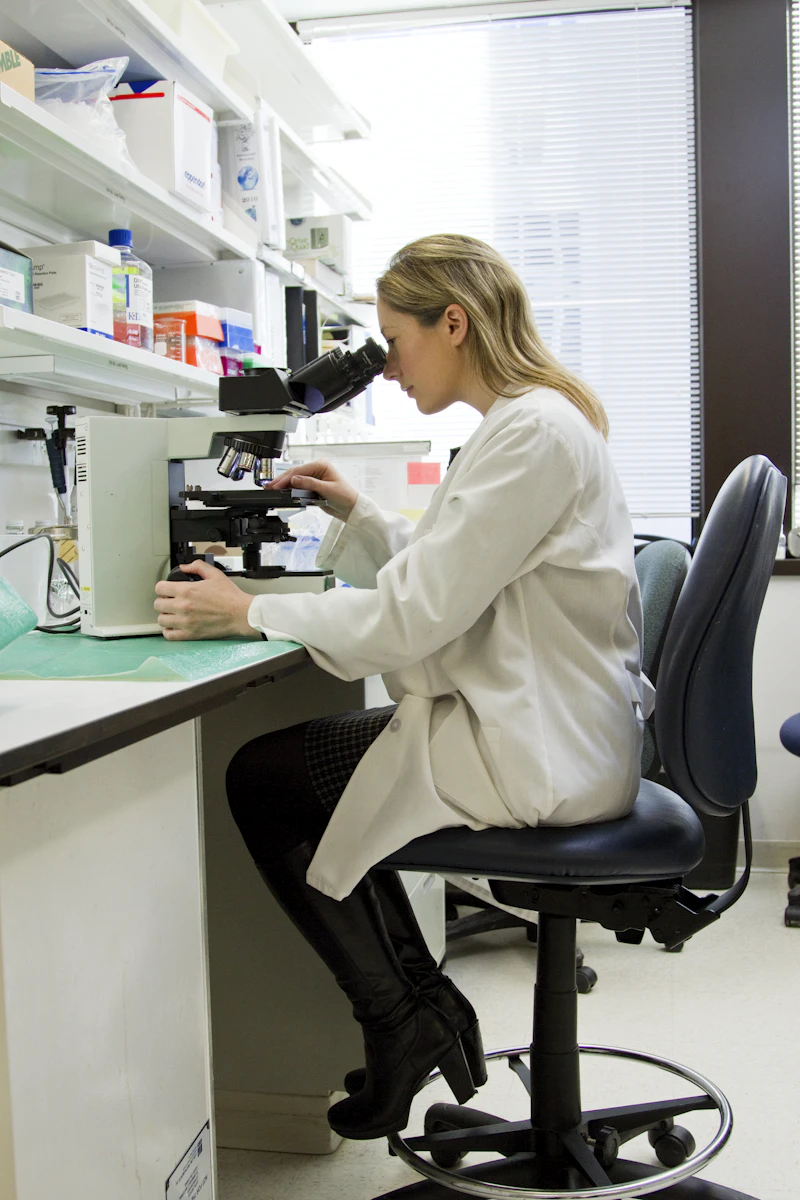
Biointerface engineering creates materials that seamlessly interact with biological systems, from implants to diagnostic tools.
Understanding Biointerfaces: The Body's Gatekeepers
At its simplest, a biointerface is any surface where biological and synthetic materials interact.
Fluid & Solid Interfaces
Think of the fluid-fluid and fluid-solid interfaces throughout our bodies—from the skin that protects us, to the epithelial linings in our lungs and gut that absorb nutrients 8 .
Intelligent Surfaces
The most significant shift has been moving from passive to active biointerfaces. Today's smart biomaterials can sense and respond to specific biological signals.
Physical Properties
The physical property of topography—the precise surface shape and pattern at the nanoscale—has emerged as equally important as chemistry in directing biological responses 4 .
Current Trends Shaping the Biointerface Landscape in 2025
AI-Powered Design
Artificial intelligence has become a driving force in biomedical research, dramatically accelerating what was once a painstaking trial-and-error process 7 .
Advanced Biomaterials
2025 is proving to be a landmark year for regenerative medicine, thanks to breakthroughs in biomaterials 7 . Scientists are creating increasingly sophisticated biocompatible materials that mimic natural tissues.
Microrobotics
Microrobotics is transforming how we think about drug delivery and surgical precision. Research groups have developed microrobots capable of delivering drugs directly to targeted areas with remarkable accuracy 7 .
Reduced
Systemic Drug ExposureFocused
Localized TreatmentBiointerface Technology Adoption Timeline
AI-Powered Design
Machine learning algorithms cutting development time from years to months 7
CurrentAdvanced Biomaterials
3D bioprinting creating vascularized tissues for regenerative medicine 7
CurrentMicrorobotics Clinical Trials
Moving from experimental phases into broader clinical trials 7
2025 FocusOrgan-on-Chip Mainstream
70+ OoC models with over 600 patents and $350M+ in funding
Near FutureA Closer Look: Biosensor for Wound Infection Detection
The Challenge
Pseudomonas aeruginosa is a common and potentially dangerous bacterium that can cause serious wound infections. Traditional detection methods require laboratory culture, which takes 24-48 hours—a critical delay that can allow infections to progress.
Methodology
- Interface Design: Specialized paper-based sensor with chemical substrates
- Sample Application: Wound exudate applied directly onto sensor
- Enzyme Reaction: Unique enzymes interact with substrates
- Color Change: Visible reaction within minutes
Results and Significance
Rapid Detection
Within minutes rather than days
High Specificity
Minimal cross-reactivity
Visual Readout
No specialized equipment needed
Low-Cost
Suitable for widespread use
This biosensor exemplifies how biointerface engineering can translate complex laboratory diagnostics into practical tools. Similar technology is being applied to detect other pathogens and disease biomarkers 3 6 .
The Scientist's Toolkit: Essential Research Reagents
The advances in biointerface science depend on sophisticated materials and methods.
Essential Research Reagents in Biointerface Science
| Research Reagent/Material | Function and Application |
|---|---|
| Poly(oligoethylene glycol methacrylate) | Creates protein-repellent cellulose paper for biosensors by reducing nonspecific adsorption 3 |
| Pullulan-based tablets | Provides water-soluble encapsulation for long-term stabilization of enzymes and other unstable reagents in bioassays 3 |
| Graphene-based biosensing platforms | Enables ultrasensitive detection of both small-molecule and macromolecular targets using DNA aptamers 3 |
| Thermoresponsive gelatin hydrogels | Serves as finger mimetics for quantitative assessment of microbial transmission onto environmental surfaces 5 |
| Spray-coated antimicrobial silica nanoparticles | Creates protective coatings for high-touch surfaces to prevent disease transmission 5 |
| Cubosomes (lipid bicontinuous cubic phases) | Incorporated whole secretome of mesenchymal stem cells for therapeutic applications; formed using microfluidic flow-focusing for size control 5 |
| Poly(vinyl acetate) primer layer | Enables hydrogel coating on silicone breast implants for improved biocompatibility 5 |
| 3D printed bioengineered scaffolds | Contains chitosan, alginate, and niosomes for efficient antibiofilm activity and wound healing 5 |
| N‐doped graphene acid coatings | Provides metal-free antibacterial and antiviral coatings with dual modes of action when light-irradiated 5 |
Key Challenges in Biointerface Science
Despite the exciting progress, the field faces significant hurdles that must be overcome.
Regulatory Complexities
Prolonged approval timelines, FDA reforms, and political pressure driving some companies to bypass U.S. trials.
Funding Gaps
Traditional equity financing giving way to creative models; smaller biotechs face hurdles in follow-on funding.
- Government research funding cuts
- Early-stage research impact
- Creative financing models needed
Ethical & Biosecurity Concerns
Dual-use worries around gene editing for unfavorable purposes; ecosystem disruption; biosecurity threats from converged biotech and AI .
Talent & Infrastructure Shortages
Shortage of professionals in AI, engineering and regulatory science; need for reliable supply chains and resilient national infrastructure .
The Future of Biointerfaces: Opportunities and Convergence
Emerging Applications in Biointerface Science
| Application Area | Current Innovations | Future Potential |
|---|---|---|
| Point-of-Care Diagnostics | Enzyme-based test strips for detection of environmental analytes and pathogens 3 | Home-based monitoring of chronic diseases, environmental toxin detection |
| Antimicrobial Surfaces | Light-activated N-doped graphene acid coatings with dual antibacterial and antiviral modes 5 | "Self-sanitizing" high-touch surfaces in healthcare settings |
| Stem Cell Culture | Materials that replicate stem cell niche properties for prolonged culture 4 | Scalable production of stem cell therapies for regenerative medicine |
| Drug Delivery Systems | Bio-responsive hydrogel for targeted on-demand drug release 5 | Personalized medicine with optimized dosing and minimal side effects |
Bioresponsive Hydrogels
One exciting development is the creation of bio-responsive hydrogels for targeted on-demand release of therapeutic agents 5 .
Organ-on-a-Chip Technologies
Globally, 70+ OoC models exist with over 600 patents and USD 350+ million in VC funding raised since 2017 .
Bioconvergence: The Next Frontier
The convergence of biology, engineering, computing, and AI—known as bioconvergence—is reaching mainstream adoption . This integration enables unprecedented capabilities in designing and optimizing biointerfaces.
Biology
Engineering
AI & Computing
The Invisible Frontier Becomes Personal
Biointerface science represents one of the most exciting and transformative frontiers in modern medicine and biotechnology. What makes this field particularly compelling is its inherently interdisciplinary nature—bringing together biologists, materials scientists, engineers, clinicians, and computer scientists to solve some of healthcare's most persistent challenges.
As research continues, we're moving toward increasingly sophisticated biointerfaces that will fundamentally change how we maintain health, diagnose disease, and deliver treatments. The future may include smart implants that monitor our health and release medications as needed, personalized tissue-engineered organs grown from our own cells, and rapid diagnostic tools that bring laboratory-level accuracy to our homes.
The future of health is brighter than ever, and 2025 is shaping up to be a pivotal year in this transformative journey 7 .