Systems Biology vs. Synthetic Biology: A Comparative Analysis of Epistemological Approaches in Biomedical Research
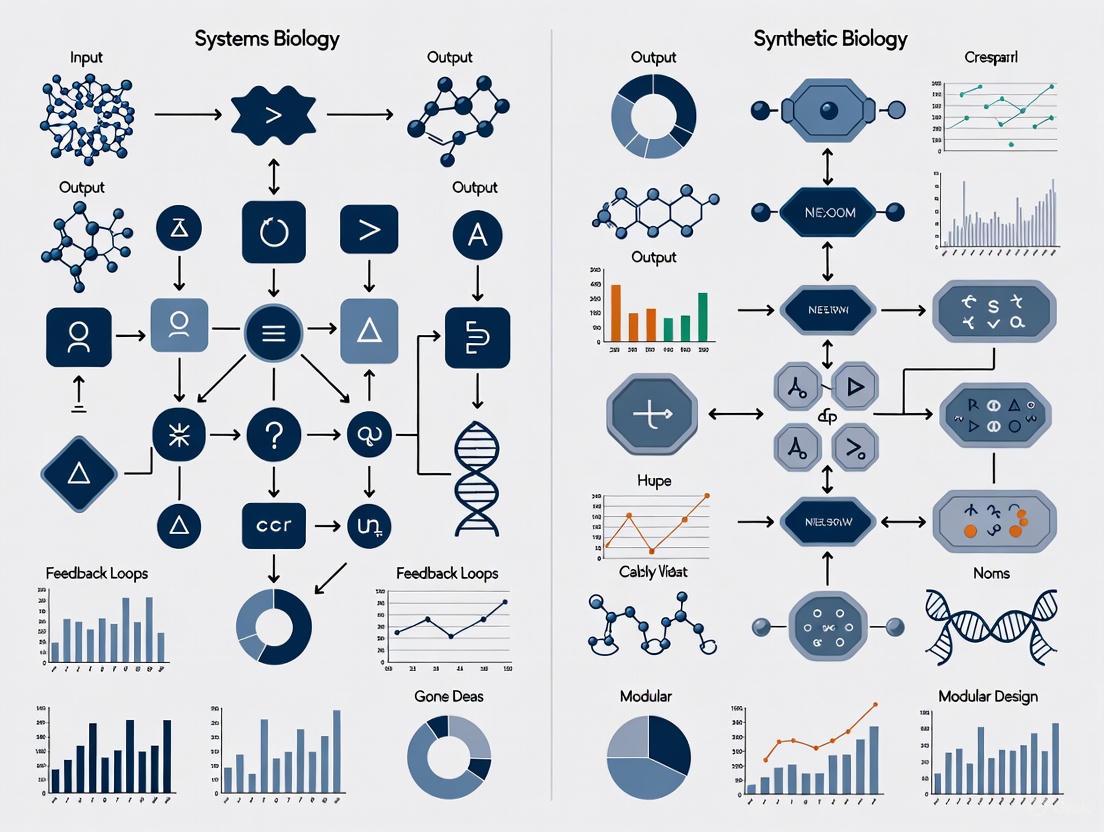
This article provides a comprehensive comparative analysis of the epistemological foundations of systems and synthetic biology, two transformative disciplines reshaping modern life sciences.
Systems Biology vs. Synthetic Biology: A Comparative Analysis of Epistemological Approaches in Biomedical Research
Abstract
This article provides a comprehensive comparative analysis of the epistemological foundations of systems and synthetic biology, two transformative disciplines reshaping modern life sciences. Targeting researchers, scientists, and drug development professionals, we examine how these complementary approaches generate, validate, and apply biological knowledge. Through exploring their philosophical origins, methodological frameworks, optimization challenges, and validation criteria, we reveal how the analytical understanding-focused paradigm of systems biology and the design-oriented engineering approach of synthetic biology together create a powerful epistemological cycle for biological discovery and innovation. The analysis synthesizes insights from recent research to demonstrate how these fields address complex biological problems through distinct yet interconnected strategies with significant implications for therapeutic development and biomedical innovation.
Philosophical Roots and Epistemic Goals: Understanding vs. Designing Biological Systems
The latter part of the 20th century witnessed a profound transformation in biological science—a shift from the reductionist focus of molecular biology to the holistic perspective of systems-level thinking. While molecular biology has been extraordinarily successful in generating knowledge through decomposition and localization of component parts, this approach proved insufficient for understanding the dynamics and organization of many interconnected components [1]. Systems biology emerged as a response to these limitations, complementing reductionist strategies with theoretical frameworks better suited for studying complex biological networks [1]. This transition represents not merely a methodological change but a fundamental epistemological shift in how we study, understand, and engineer living systems.
The emergence of systems biology was catalyzed by several enabling developments: the enormous amount of genetic information derived from the Human Genome Project, the rise of interdisciplinary research efforts, the development of high-throughput technologies for generating 'omics' datasets, and advances in internetworking that facilitated data sharing [2]. This convergence of technological and conceptual advances created the foundation for a new approach to biological investigation—one that focuses on the functional analysis of the structure and dynamics of cells and organisms as integrated systems rather than concentrating solely on isolated components [2].
Historical Evolution of Systems Thinking in Biology
From Molecular Reductionism to Systems Integration
Molecular biology's success was built upon the twin strategies of decomposition and localization of component parts and molecular operations [1]. However, the detailed study of molecular pathways increasingly revealed dynamic interfaces and crosslinks between processes and components previously assigned to distinct mechanisms. This complexity demanded new approaches that could account for vast numbers of interacting components and multiple feedback loops [1].
The evolution of systems biology can be understood through three distinct phases, as observed by Ruedi Aebersold [3]. The initial phase conceptualized systems biology as high-throughput molecular biology, generating unprecedented data resources but limited by a conceptual focus on molecules and lack of scalable methods for integrative analysis. The second phase saw systems biology as network biology, with molecular networks emerging as a generic representation of molecules and their relationships. While valuable for mapping interaction spaces, these static representations struggled to explain living systems' complexities. The current phase approaches systems biology as the study of complex adaptive systems, focusing on how alterations in the state of multiple molecular agents collectively induce adaptation of the system's connectivity and behavior [3].
Key Technological Drivers
The genomic era of the 1990s, marked by the completion of the Human Genome Project in 2003, provided a critical foundation for systems approaches [2]. The advent of new technologies including microarrays, mass spectrometry, and various 'omics' platforms enabled the simultaneous examination of system components, generating the complex, multidimensional datasets that systems biology requires [2]. The development of computational tools and standards, such as the Systems Biology Markup Language (SBML) and MIRIAM guidelines for model annotation, further enabled the exchange and comparison of models across research communities [4] [5].
Table 1: Historical Timeline of Key Developments in Systems Biology
| Time Period | Major Developments | Key Technologies | Conceptual Advances |
|---|---|---|---|
| 1960s-1990s | Foundations | Systems theory, Early computing | Recognition of biological complexity |
| 1990s-2000s | Genomic Revolution | DNA sequencing, Microarrays | High-throughput data generation |
| 2000-2010 | Network Biology | Protein interaction mapping, SBML standardization | Network representations of biological systems |
| 2010-Present | Complex Adaptive Systems | Single-cell technologies, AI/ML integration | Dynamic, context-specific modeling |
Epistemological Framework: Systems vs. Synthetic Biology
Complementary Approaches to Biological Investigation
Systems and synthetic biology are often described as 'sister-disciplines' or 'cousins' focusing on complementary aims of understanding (systems biology) and designing (synthetic biology) living systems [1]. This relationship represents a fundamental epistemological distinction: systems biology is primarily concerned with analysis and understanding of existing biological systems, while synthetic biology focuses on synthesis and design of novel biological functions [1]. However, in research practice, understanding and design are often interdependent, and no simple distinction between basic and applied science can be maintained [1].
The philosophical foundations of these fields engage with one of the oldest scientific discussions: reductionism versus holism [1]. Systems biology explicitly aims to move beyond what its practitioners perceive as reductionist strategies in molecular biology [1]. Rather than focusing on isolated components, systems biology investigates the interactions and relationships between components, recognizing that emergent properties arise from these interactions that cannot be understood by studying parts in isolation [2]. Synthetic biology, while often employing reductionist approaches to standardize biological parts, ultimately seeks to understand through building—using construction as a means of gaining insight into biological principles [6].
Methodological Distinctions
The methodological approaches of systems and synthetic biology reflect their epistemological orientations. Systems biology typically employs hypothesis-driven approaches that begin with descriptive, graphical, or mathematical models, which are tested through iterations of experimental validation and model refinement [2]. This process continues until experimental data and model predictions align [2]. Research in systems biology often involves the integration of diverse data types, including both quantitative measurements (e.g., time-course data, metabolite concentrations) and qualitative observations (e.g., phenotypic classifications, functional annotations) [7].
Synthetic biology, in contrast, often follows engineering-based design cycles (design-build-test-learn) to create novel biological systems [6] [8]. This approach emphasizes the development of reusable biological "parts" that can be combined in predictable ways, reducing the need to start from scratch for each new application [6]. The field has been revolutionized by distributed biomanufacturing capabilities that offer unprecedented production flexibility in location and timing, enabling rapid responses to emerging needs [6].
Table 2: Epistemological Comparison of Systems and Synthetic Biology
| Dimension | Systems Biology | Synthetic Biology |
|---|---|---|
| Primary Aim | Understand existing systems | Design novel biological systems |
| Central Approach | Analysis of natural systems | Synthesis of artificial systems |
| Methodology | Modeling, network analysis, data integration | Parts standardization, engineering principles |
| Knowledge Focus | Emergent properties, system dynamics | Design rules, predictability, control |
| Relationship to Molecular Biology | Complementing reductionism | Extending genetic engineering |
Experimental Methodologies and Workflows
Systems Biology Workflows
Systems biology relies on sophisticated computational and experimental workflows for model construction and validation. A representative workflow for assembling quantitative parameterized metabolic networks involves multiple stages [4]. The process begins with qualitative network construction using data from MIRIAM-compliant genome-scale models, followed by parameterization of the model with experimental data from kinetic databases and quantitative experimental results [4]. The parameterized models are then calibrated and simulated using analytical tools such as COPASIWS, the web service interface to the COPASI software application for analyzing biochemical networks [4].
The integration of both qualitative and quantitative data represents a particularly important methodological advancement in systems biology parameter identification [7]. In this approach, qualitative data are converted into inequality constraints imposed on model outputs, which are used along with quantitative data points to construct a single scalar objective function that accounts for both datasets [7]. This constrained optimization framework allows researchers to formalize qualitative biological observations as inequality constraints while minimizing the sum-of-squares distance from quantitative data [7].
Systems Biology Research Workflow: An iterative process combining computational and experimental approaches.
Network Analysis Approaches
A distinctive feature of systems biology is its use of network representations to model biological relationships, enabling the application of mathematical tools from Graph Theory [2]. In these representations, nodes typically symbolize system constituents (genes, proteins, metabolites) while links represent interactions or reactions [2]. Biological networks can be constructed through multiple approaches: de novo from direct experimental interactions; by applying known interactions to experimental datasets using specialized software; or through reverse engineering approaches that gather sufficient information to build networks for predicting system dynamics [2].
Research in network biology has revealed common architectural patterns in biological networks, including scale-free network architectures and multi-level hierarchies [1]. Scale-free networks, characterized by a small number of highly connected nodes (hubs) and many poorly connected nodes, exhibit high error tolerance but fragility to attacks on central nodes [1]. The identification of network motifs—patterns of interaction that recur in many contexts—has provided insights into functional modules that perform specific information-processing operations [1].
Essential Research Tools and Reagents
The Scientist's Toolkit
The experimental and computational methodologies of systems and synthetic biology depend on specialized tools, databases, and reagents. The following table details key resources essential for research in these fields.
Table 3: Essential Research Tools and Reagents for Systems and Synthetic Biology
| Tool/Reagent Category | Specific Examples | Function/Application | Field |
|---|---|---|---|
| Network Analysis Software | Cytoscape [2], iCTNet [2] | Network visualization, integration, and analysis | Systems Biology |
| Modeling & Simulation | COPASI [4], Cell Designer [4] | Analysis of biochemical networks, model design | Systems Biology |
| Pathway Databases | KEGG [4], Reactome [4] | Curated information on metabolic pathways | Systems Biology |
| Kinetics Databases | SABIO-RK [4] | Enzyme kinetic parameters and rate laws | Systems Biology |
| Modeling Standards | SBML [4] [5], MIRIAM [4] | Model representation and annotation | Systems Biology |
| DNA Synthesis Technologies | Next-generation DNA synthesis [6] | Writing user-specified DNA sequences | Synthetic Biology |
| Workflow Management | Taverna [4] | Automated workflow design and enactment | Both |
| AI/ML Tools | BioLLMs [6], Biological Design Tools [8] | Protein design, sequence analysis | Both |
Standardization and Reproducibility
A critical challenge in both systems and synthetic biology is obtaining highly reproducible quantitative data for mathematical modeling and engineering [5]. Standardizing experimental protocols, documentation practices, and cellular systems under investigation is essential for generating comparable results across laboratories [5]. For systems biology, this includes standardized procedures for data acquisition and processing, careful documentation of experimental parameters (temperature, pH, reagent lot numbers), and use of defined genetic backgrounds [5]. The establishment of data standards such as SBML for model representation and MIRIAM for model annotation has been crucial for enabling model exchange and comparison [4] [5].
Signaling Pathways and Network Motifs
Representation of Biological Networks
Systems biology employs distinctive representational styles that highlight organizational structure rather than detailed mechanistic relationships. Whereas molecular biology typically uses mechanistic diagrams tracking specific molecular interactions, systems biology representations often display interactions as abstract networks of interconnected nodes and links [1]. This difference is epistemically significant as it facilitates focus on overall system architecture and emergent properties.
Research on network motifs provides a compelling example of how systems biology identifies functional patterns within complex networks. Network motifs are defined as "patterns of interaction that recur in a network in many contexts" [1]. Through comparison of biological networks to random networks, systems biologists have identified statistically significant circuits that perform specific information-processing functions [1].
Network Motifs in Biological Systems: Feedforward loops performing distinct regulatory functions.
Functional Significance of Network Architectures
The coherent feedforward loop (cFFL) and incoherent feedforward loop (iFFL) illustrate how specific network architectures perform distinct information-processing functions [1]. Mathematical analysis suggests that the cFFL functions as a sign-sensitive delay element that filters out noisy inputs for gene activation, while the iFFL serves as an accelerator that creates rapid pulses of gene expression in response to activation signals [1]. These predicted functions have been experimentally validated in living systems, demonstrating how systems approaches can generate testable hypotheses about biological function [1].
Beyond individual motifs, larger-scale network architectures like bow-tie structures connect many inputs and outputs through a central core consisting of a small number of elements [1]. This structure has been associated with efficient information flow but also with fragility toward perturbations of intermediate nodes in the network core [1]. Understanding these architectural principles provides insight into both the robustness and vulnerability of biological systems.
Current Frontiers and Future Directions
The Convergence with Artificial Intelligence
The integration of artificial intelligence, particularly machine learning and large language models, represents a transformative frontier for both systems and synthetic biology [8]. AI-driven tools are accelerating bioengineering workflows, enabling innovations in medicine, agriculture, and sustainability [8]. In synthetic biology, AI capabilities are progressing from predicting protein structure from amino acid sequences to more complex tasks such as predicting physical outcomes from nucleic acid sequences [8]. Biological large language models (BioLLMs) trained on natural DNA, RNA, and protein sequences can generate new biologically significant sequences that serve as starting points for designing useful proteins [6].
This AI-synthetic biology convergence promises dramatically accelerated and democratized biological engineering but also poses significant governance challenges [8]. Reduced knowledge thresholds for carrying out biological engineering tasks create potential scenarios where accidental or intentional design of harmful biological constructs could outpace our ability to anticipate consequences [8]. Responsible development of this convergence necessitates proactive governance based on principles of knowledge cultivation, accountability, transparency, and ethics [8].
Expanding Applications and Implications
Systems and synthetic biology approaches are expanding into new domains with profound implications. In medicine, systems approaches are contributing to personalized medicine through the discovery of biomarkers and therapeutic targets in complex disorders [2]. In agriculture and environmental sustainability, synthetic biology offers potential solutions for cultivating drought-resistant crops, programming cells to manufacture medicines or fuels, and bioremediation of environmental pollutants [6] [9]. The emerging recognition of biology as a general-purpose technology suggests that anything whose synthesis can be encoded in DNA could potentially be grown when and where needed [6].
Looking forward, the next decades promise unprecedented opportunities: from harnessing AI-driven insights to exploring systems-level principles of health and disease and ultimately toward realizing predictive biology and medicine across molecular and physiological scales [3]. As these fields continue to evolve and converge, they will likely further blur traditional boundaries between biological investigation and engineering, between understanding nature and creating novel biological systems, and between basic science and applied technology.
In the pursuit of biological knowledge, two distinct epistemological orientations have emerged as fundamental strategies: analysis and synthesis. These approaches represent contrasting philosophical frameworks for how we generate, validate, and apply scientific knowledge. Analysis, derived from the Greek ἀνάλυσις meaning "resolution," operates through the decomposition of complex systems into their constituent parts to understand underlying mechanisms [10]. Synthesis (σύνθεσις or "composition") follows an opposing path, constructing understanding by combining components into functional wholes to observe emergent properties [10] [11]. In contemporary biology, these epistemological strategies have crystallized into two powerful, complementary fields: systems biology, which embodies the analytical tradition through its examination of complex biological networks, and synthetic biology, which embraces synthesis as both a methodology and an epistemological stance through the construction of biological systems [11].
The distinction between these approaches reflects deeper philosophical commitments. As articulated in research paradigms, epistemology—how we know what we know—shapes methodological choices [12] [13]. Systems biology operates with the epistemological view that knowledge comes from measuring and understanding a single reality through quantitative methods, aligning with a positivist paradigm [13]. Synthetic biology often embraces a more constructivist epistemology, creating multiple realities through engineering approaches and interpreting their meaning through qualitative assessment [13]. This epistemological divide frames our examination of how these fields approach the fundamental challenges of biological research and drug development.
Philosophical and Historical Foundations
The analytical-synthetical dichotomy has deep roots in Western intellectual history, with Aristotle distinguishing between the resolution of complexes into principles (analysis) and the derivation of conclusions from those principles (synthesis) [10]. This framework evolved through mathematical and scientific thought, with Euclid and Pappus formalizing analytical methods that assume what is sought and trace consequences to established truths, while synthesis follows the reverse path from established truths to new conclusions [10]. The Renaissance solidified this distinction, though with varying interpretations—some viewing analysis and synthesis in terms of parts and wholes, others as movements between principles and conclusions [10].
The 20th century witnessed this philosophical divide playing out in scientific methodology. The rise of molecular biology in the 1950s represented a triumph of analytical approaches, decomposing organisms into macromolecules to reveal fundamental mechanisms [11]. However, this analytical success created a new challenge: understanding how these components function collectively in complex systems. This limitation of pure analysis catalyzed the emergence of systems biology as a discipline that retains analytical epistemology while addressing complexity through computational integration [11].
Simultaneously, synthetic biology emerged as the epistemological successor to the reductionist program, asserting that true understanding comes not merely from taking systems apart but from assembling them anew [11]. This echoes the tradition in chemistry, where a molecule is considered fully described only when it can be synthesized with properties matching its natural counterpart [11]. The epistemological stance here is profoundly different: where analysis seeks to discover existing truths about nature, synthesis creates new truths through construction and tests understanding through functional implementation.
Epistemological Frameworks: Core Principles and Methodologies
Systems Biology: The Analytical Epistemology
Systems biology applies computational and mathematical methods to study complex interactions within biological systems, representing an analytical epistemology that seeks to understand through decomposition and measurement [14]. Its epistemological foundation rests on the principle that biological reality can be understood through comprehensive measurement of system components and their interactions [15]. This approach operates with the ontological view that a single, measurable reality exists—aligning with positivist research paradigms—and that this reality can be progressively revealed through increasingly sophisticated analytical techniques [13].
The field employs several distinctive methodological approaches that reflect its analytical orientation. The bottom-up approach begins with large-volume datasets from omics-based experiments (genomics, transcriptomics, proteomics, metabolomics) and uses mathematical modeling to reconstruct relationships between molecular players [15]. The top-down approach starts with hypotheses about biological systems and uses mathematical modeling to study small-scale molecular interactions, translating pathway interactions into mathematical formats like ordinary differential equations for computational analysis [15]. A hybrid middle-out approach implements both methodologies, focusing on a central subsystem and expanding outward [15].
Key to systems biology epistemology is the iterative process of model development, which involves four phases: model design to identify key intermolecular activities; model construction into representative mathematical equations; model calibration to fine-tune parameters; and model validation through experimental testing of predictions [15]. This analytical epistemology enables researchers to move from observational data to mechanistic understanding, with the computer serving as a "dry lab" for testing biological hypotheses [15].
Synthetic Biology: The Synthetical Epistemology
Synthetic biology represents a fundamentally different epistemological strategy, embracing synthesis as both methodology and philosophical foundation. Where systems biology asks "How does this biological system work?", synthetic biology asks "Can we build a functioning biological system that behaves as predicted?" [11]. This orientation positions synthesis not merely as a technique but as the ultimate test of biological understanding, embodying the epistemological view that we truly know only what we can create.
The field combines biological science and engineering principles, allowing the design and manipulation of systems for specific applications [16]. Its epistemological foundations include the concept of modularity—viewing biological systems as composed of standardized, interchangeable parts that can be reassembled in novel configurations [11]. This modular approach enables a construction-based epistemology where biological knowledge advances through the design-build-test cycle rather than through observation and decomposition alone.
Synthetic biology's methodology reflects its epistemological commitments through several key approaches. DNA synthesis and assembly techniques like Gibson assembly, CPEC, and Golden Gate create novel genetic constructs, with costs decreasing to $0.28 per base pair or lower, making genetic manipulation increasingly accessible [16]. Genome engineering tools such as Multiplex Automated Genome Engineering (MAGE) and Conjugative Assembly of Genome Engineering (CAGE) enable modification of multiple chromosomal locations simultaneously, generating rich biological diversity for functional testing [16]. Refactoring gene clusters involves recoding essential sequences under synthetic control elements, simplifying native regulations to facilitate engineering in non-native hosts [16].
The epistemological power of synthetic biology lies in its ability to test biological hypotheses through construction. If a system can be built from well-characterized parts and functions as predicted, this provides validation of our understanding in a way that analytical observation alone cannot achieve [11].
Comparative Analysis: Methodology, Applications, and Validation
Methodological Comparison and Research Paradigms
The epistemological differences between systems and synthetic biology manifest in distinct methodological approaches, applications, and validation criteria. The table below summarizes these key distinctions:
Table 1: Epistemological and Methodological Comparison of Systems and Synthetic Biology
| Dimension | Systems Biology | Synthetic Biology |
|---|---|---|
| Core Question | How do biological systems function as integrated networks? | Can we design and construct biological systems with novel functions? |
| Epistemology | Analytical/Positivist: Understanding through decomposition and measurement [13] [15] | Constructivist/Pragmatist: Understanding through construction and testing [11] [13] |
| Primary Methods | High-throughput omics technologies, mathematical modeling, network analysis [14] [15] | DNA synthesis and assembly, genome engineering, modular design [16] |
| Model Role | Describe existing systems, integrate data, generate testable hypotheses [15] | Guide construction, predict system behavior, enable design [11] |
| Validation Criteria | Accurate prediction of system behavior under perturbation [15] | Successful function of constructed systems [11] |
| Knowledge Product | Descriptive models of biological complexity [14] | Engineered biological systems with novel functions [16] |
| Therapeutic Approach | Identify key network nodes for targeted intervention [17] [14] | Build novel therapeutic pathways and organisms [16] |
Applications in Drug Discovery and Development
Both epistemological approaches have demonstrated significant value in pharmaceutical research, though with different applications and contributions.
Systems biology has revolutionized drug discovery by providing analytical frameworks for understanding complex disease mechanisms. It enables network-based drug targeting by identifying hub nodes in biological networks whose perturbation produces desired therapeutic effects [17] [14]. The approach facilitates mechanism of disease elucidation through characterization of key pathways contributing to pathological states, as demonstrated in neuroblastoma where regulatory network modeling revealed novel insights into retinoid therapy responses [15]. It also enables patient stratification through analysis of multi-scale clinical and molecular data to identify patient subsets most likely to respond to treatments [14].
Synthetic biology applications reflect its constructive epistemology through direct engineering of biological solutions. These include engineered microbial therapeutics designed as cell factories for producing therapeutic proteins, enzymes, pharmaceuticals, and biofuels [16]. The field enables novel biosensing pathways created to detect disease states or metabolic conditions and trigger therapeutic responses [16]. It also contributes functional genetic tools such as synthetic promoters, ribozymes, and aptamers that enable precise regulation of transcription and translation for therapeutic purposes [16].
Experimental Protocols and Validation Frameworks
The validation of knowledge claims follows fundamentally different pathways in these two epistemological frameworks.
Systems biology employs iterative model refinement through a four-phase process: (1) model design identifying key molecular interactions; (2) model construction into mathematical equations; (3) model calibration to fine-tune kinetic parameters; and (4) model validation through experimental testing of predictions [15]. The network perturbation analysis involves systematically modifying network components (e.g., through RNAi or gene knockout) and measuring system responses to validate model predictions [17]. Multi-omics data integration combines genomic, transcriptomic, proteomic, and metabolomic datasets to build comprehensive models that can be tested against experimental observations [14] [15].
Synthetic biology validation follows engineering principles through the design-build-test cycle: (1) computational design of biological systems; (2) physical construction using DNA assembly and genome engineering tools; (3) functional testing of constructed systems; and (4) redesign based on performance gaps [16] [11]. Functional characterization assesses whether synthetic systems perform intended operations under physiological conditions, with quantitative measurements of performance metrics [16]. Orthogonality testing validates that synthetic systems operate independently from host cellular processes without unintended interactions [16].
Visualization of Epistemological Approaches and Workflows
Systems Biology Analytical Workflow
The systems biology analytical approach follows a systematic process from data collection to biological insight, as shown in the following workflow:
Synthetic Biology Design-Build-Test Cycle
Synthetic biology follows a constructive epistemology centered on the design-build-test cycle:
Integrated Epistemological Framework in Drug Discovery
The most powerful applications occur when analytical and synthetic approaches integrate within drug discovery:
Essential Research Tools and Reagent Solutions
Both epistemological approaches require specialized research tools and reagents that enable their distinctive methodologies. The following table catalogs essential resources for implementing these research strategies:
Table 2: Essential Research Reagent Solutions for Analysis and Synthesis Approaches
| Category | Specific Tools/Reagents | Epistemological Function | Applications |
|---|---|---|---|
| Genomic Tools | Whole genome sequencing platforms, MAGE/CAGE genome engineering, Gibson/CPEC DNA assembly [16] | Enable both analytical characterization and synthetic construction of genetic systems | Gene identification, pathway refactoring, genome-scale modification [16] |
| Transcriptomic Tools | RNA microarray, RNA-Seq technologies, synthetic promoters, ribozymes, RBS calculators [16] | Analyze expression patterns and synthetically regulate transcript levels | Gene function interpretation, dynamic control of synthetic systems [16] |
| Proteomic Tools | Selected Reaction Monitoring (SRM), protein microarrays, modular protein design, computational protein design [16] [17] | Characterize and engineer protein networks and functions | Protein detection, artificial protein construction, activity regulation [16] [17] |
| Metabolomic Tools | GC-MS, LC-MS, NMR platforms, key enzyme engineering, synthetic transporters, FBA/MFA computational tools [16] | Analyze metabolic fluxes and engineer novel metabolic pathways | Pathway identification, bottleneck determination, metabolic optimization [16] |
| Computational Platforms | Network modeling software, dynamical modeling environments, bioinformatics suites [14] [15] | Enable in silico analysis and prediction for both analytical and constructive approaches | Model construction, simulation, design prediction, data integration [14] [15] |
The analysis-synthesis dichotomy represents not merely a methodological division but fundamentally different epistemological orientations toward biological knowledge. Systems biology exemplifies the analytical approach, seeking to understand biological complexity through decomposition, measurement, and modeling [14] [15]. Synthetic biology embodies the constructive approach, advancing knowledge through design, assembly, and functional testing of biological systems [16] [11]. Each strategy offers distinct strengths: analysis provides comprehensive understanding of existing systems, while synthesis tests understanding through creation of novel systems [11].
The most significant advances emerge from integrating these epistemological strategies, creating a virtuous cycle where analytical insights inform synthetic constructions, which in turn generate new analytical questions [11]. This integration is particularly powerful in drug discovery, where systems biology identifies key network vulnerabilities and synthetic biology creates novel therapeutic approaches to target them [14] [15]. As both fields advance, they continue to refine their respective epistemological approaches while increasingly recognizing their complementary nature in addressing the fundamental challenges of biological research and therapeutic development.
The future of biological knowledge will likely involve not choosing between these epistemological orientations but strategically deploying both analytical and synthetic approaches in an integrated framework that leverages their respective strengths. This epistemological integration promises to accelerate progress toward understanding biological complexity and developing novel therapeutic interventions for complex diseases.
Systems biology is fundamentally rooted in an analytical-descriptive epistemic stance, a position dedicated to deconstructing and comprehending the immense complexity of living systems. This approach seeks to understand biological function by analyzing the interactions and dynamics of a system's components, from genes and proteins to entire networks. The core belief is that a systems-level understanding emerges not from examining parts in isolation, but from describing their relationships and collective behaviors [18]. This stance is often summarized by the adage that "the whole is greater than the sum of its parts," focusing on the emergent properties that arise from biological complexity [18].
This stance contrasts with the synthetic biology approach, which is fundamentally constructive. Where systems biology asks "How does this work?", synthetic biology asks "Can I build it to prove my understanding?" The analytical-descriptive method is indispensable for mapping the intricate networks and signaling pathways that underpin health and disease, providing the foundational knowledge upon which constructive engineering approaches can later build [19].
Core Methodologies and Epistemic Tools
The analytical-descriptive stance employs a specific toolkit of methodologies designed to manage biological complexity while extracting meaningful patterns and principles.
The Multi-Model Framework
A cornerstone of this approach is the recognition that multiple, non-identical models can be productively applied to the same biological system. Rather than seeking a single "true" model, systems biologists often combine epistemic tools, each with different constraints and simplifying assumptions. This diversity is not a weakness but rather a strength for knowledge generation, as different models can illuminate different aspects of a complex system [20]. For instance, a simplified model might reveal core design principles, while a more detailed model might generate testable predictions about specific molecular interactions.
This multi-model approach acknowledges that biological systems are too complex to be fully captured by any single representation. The epistemic power comes from the integration of multiple perspectives, each offering partial but valuable insights into the system's behavior [20]. This methodology stands in contrast to approaches that seek a single unified model, instead embracing a productive pluralism in scientific representation.
Handling Uncertainty through Bayesian Multimodel Inference
A sophisticated methodological development exemplifying the analytical-descriptive stance is Bayesian Multimodel Inference (MMI). This approach directly addresses the challenge of model uncertainty in systems biology, where multiple mathematical models can describe the same signaling pathway [21].
MMI increases certainty in predictions by combining models through a weighted average of their predictive capabilities. The consensus estimator is constructed as:
[ {{{\rm{p}}}}(q| {{{d}}}{{{{\rm{train}}}}},{{\mathfrak{M}}}{K}): ={\sum }{k=1}^{K}{w}{k}{{{\rm{p}}}}({q}{k}| {{{{\mathcal{M}}}}}{k},{{d}}_{{{{\rm{train}}}}}) ]
where weights wk ≥ 0 are assigned based on each model's probability or predictive performance [21]. This methodology produces predictors that are robust to changes in model sets and data uncertainties, embracing rather than eliminating the inherent uncertainty in biological modeling.
Table: Methods for Bayesian Multimodel Inference in Systems Biology
| Method | Basis for Weighting | Key Advantages | Limitations |
|---|---|---|---|
| Bayesian Model Averaging (BMA) | Probability of each model given the training data [21] | Natural Bayesian approach; theoretically rigorous | Strong dependence on prior information; relies on data-fit alone |
| Pseudo-BMA | Expected predictive performance on unseen data [21] | Focuses on predictive accuracy rather than fit | Computationally intensive; requires cross-validation |
| Stacking | Maximizes predictive performance by combining models [21] | Often superior predictive performance; practical focus | Complex implementation; may not reflect underlying model probabilities |
Exemplary Application: ERK Signaling Pathway Analysis
The analytical-descriptive approach is powerfully illustrated by recent work on the extracellular-regulated kinase (ERK) signaling pathway, a crucial regulator of cell growth and differentiation. Researchers applied Bayesian MMI to ten different ERK pathway models, each with distinct structural assumptions and parameterizations [21].
The experimental protocol followed a rigorous workflow:
- Model Selection: Ten established ODE-based models of the core ERK pathway were selected from the BioModels database [21].
- Bayesian Calibration: Each model was calibrated against experimental training data using Bayesian parameter estimation to quantify parametric uncertainty [21].
- Weight Calculation: Models were weighted using BMA, pseudo-BMA, and stacking methods based on their predictive performance and probability [21].
- Multimodel Prediction: A consensus predictor was constructed by combining individual model predictions according to their weights [21].
- Validation: The MMI approach was validated using both synthetic and experimental data, demonstrating increased predictive certainty and robustness [21].
This approach successfully identified mechanisms driving subcellular location-specific ERK activity, suggesting that location-specific differences in both Rap1 activation and negative feedback strength are necessary to capture observed dynamics [21]. The study demonstrated that MMI-based predictions remained robust even when the composition of the model set changed or data uncertainty increased.
The following diagram illustrates the Bayesian Multimodel Inference workflow for the ERK signaling pathway analysis:
Research Reagent Solutions for Systems Biology
The experimental implementation of the analytical-descriptive stance requires specific research tools and reagents. The following table details essential materials used in modern systems biology research, particularly in signaling pathway analysis:
Table: Essential Research Reagents and Tools for Analytical-Descriptive Systems Biology
| Research Tool | Function in Analytical-Descriptive Research | Specific Application Examples |
|---|---|---|
| High-Throughput Sequencing Technologies | Enables comprehensive measurement of transcriptomes, epigenomes, and genomic variations [18] | Characterizing system-wide responses to perturbations; mapping regulatory networks |
| Bayesian Inference Software | Quantifies parametric and model uncertainty; implements multimodel inference [21] | Calibrating ODE models of signaling pathways; calculating model weights for MMI |
| BioModels Database | Repository of curated mathematical models of biological processes [21] | Accessing established ERK pathway models for multimodel inference studies |
| Advanced Microscopy Platforms | Enables spatial and temporal monitoring of signaling activity in live cells [21] | Measuring subcellular location-specific ERK activity dynamics |
| CRISPR Screening Tools | Facilitates functional genomics at system scale [22] | Identifying key components and interactions in biological networks |
| Single-Cell Sequencing Technologies | Resolves cellular diversity and functional states within populations [22] | Deconstructing tissue-level systems into constituent cellular components |
Comparative Analysis with Synthetic Biology Approaches
The analytical-descriptive stance of systems biology differs fundamentally from the constructive epistemology of synthetic biology. Where systems biology analyzes existing natural systems, synthetic biology builds novel biological entities to test understanding [23] [19].
Synthetic biology employs two primary constructive pathways: the top-down approach, which modifies existing natural organisms through genomic reduction (e.g., creating minimal cells from Mycoplasma), and the bottom-up approach, which assembles molecular modules into functional systems [23]. Both approaches share an engineering-oriented epistemology that prioritizes design and construction as a means of validation.
The relationship between these approaches is complementary rather than oppositional. As one analysis notes: "The precision resulting from this synergy eliminates much of the uncertainty and failure associated with biological design and allows for more meaningful conclusions to be drawn from experimental studies" [19]. The analytical-descriptive stance provides the fundamental understanding that enables successful synthetic construction, while synthetic approaches test and validate analytical insights through implementation.
The following diagram contrasts the epistemological approaches of systems and synthetic biology:
The analytical-descriptive stance in systems biology continues to evolve toward more comprehensive and realistic models. Future directions include developing whole-cell models that integrate all cellular functions, creating digital twins of biological systems for personalized medicine, and establishing automated pipelines from raw data to mechanistic models [18]. These ambitious goals will require continued methodological innovation in managing biological complexity.
The fundamental epistemic stance of systems biology—that understanding emerges from analyzing and describing complexity—remains crucial for addressing the most challenging problems in biology and medicine. As biological research generates increasingly large and complex datasets, the analytical-descriptive approach provides the conceptual and methodological framework for extracting meaningful understanding from this wealth of information.
The synergy between systems biology's analytical approach and synthetic biology's constructive approach promises to drive future biological discovery, with each epistemology strengthening and validating the other [19]. This integrated approach will be essential for tackling emerging challenges in health, agriculture, and environmental sustainability, demonstrating the enduring value of the analytical-descriptive stance for biological understanding.
Synthetic biology represents a fundamental paradigm shift in the biological sciences, moving from analytical observation to constructive engineering. This emerging discipline adopts a modular and systemic conception of living organisms, applying engineering principles such as standardization, decoupling, and abstraction to biological systems [23]. Unlike traditional biological approaches that seek to understand existing natural systems, synthetic biology aims to design and construct new biological entities with desired functionalities, treating biology as a substrate for engineering. This design-oriented framework stands in stark contrast to the analytical approach of systems biology, positioning synthetic biology as a true engineering discipline that builds upon physics, computation, and biology [23] [24].
The epistemological foundation of synthetic biology establishes it as a distinct form of knowledge generation, not merely applied biology. Similar to how mechanical engineering predated and drove the development of thermodynamics, biological engineering is emerging as a discipline that will likely deepen our fundamental understanding of biological systems through the process of designing and building them [24]. This constructive approach embodies what can be considered meta-engineering, where engineers design the engineering processes themselves, operating at a higher level of abstraction to create systems capable of their own design processes [24].
epistemological Frameworks: Synthetic Versus Systems Biology
The fundamental distinction between synthetic and systems biology lies in their core methodologies and objectives. The table below summarizes the key epistemological differences between these two approaches to studying biological systems.
Table 1: Epistemological Comparison of Systems Biology and Synthetic Biology
| Aspect | Systems Biology | Synthetic Biology |
|---|---|---|
| Primary Objective | Understand, model, and analyze complex natural systems | Design, construct, and test novel biological systems |
| Core Methodology | Analytical decomposition and computational modeling | Design-Build-Test-Learn (DBTL) cycles |
| System View | Reverse-engineering of existing networks | Forward-engineering of new networks |
| Knowledge Production | Discovery through observation and analysis | Creation through implementation and testing |
| Biological Perspective | Studies biology as found in nature | Approaches biology as a modular, engineerable substrate |
| Conceptual Foundation | Holism, emergence, complexity | Standardization, abstraction, decoupling |
Systems biology operates primarily through analytical methods, seeking to understand existing biological systems by decomposing them into their constituent parts and analyzing their interactions. This approach embraces the inherent complexity of natural systems and aims to develop predictive models of system behavior. In contrast, synthetic biology employs constructive methods to build new biological systems from standardized components, applying engineering principles to create functional entities that may not exist in nature [23]. This constructive process generates knowledge through implementation and testing, creating an epistemological framework where understanding emerges from the act of creation rather than observation alone [24].
The relationship between these approaches is not purely oppositional; rather, they exist in a complementary dialectic. Synthetic biology's construction-oriented approach often relies on insights from systems biology to inform designs, while the testing of synthetic constructs can generate valuable data for refining systems biology models. This iterative exchange between construction and analysis drives progress in both fields and contributes to a more comprehensive understanding of biological systems [23].
The Synthetic Biology Toolbox: Core Methodologies and Experimental Approaches
The Design-Build-Test-Learn Cycle
The foundational framework for synthetic biology's engineering approach is the Design-Build-Test-Learn (DBTL) cycle, which provides a systematic process for developing biological systems [25]. This iterative engineering cycle mirrors the evolutionary process of variation and selection, creating a structured methodology for exploring biological design spaces [24]. The power of the DBTL cycle lies in its recursive nature, where each iteration builds upon knowledge gained from previous cycles to refine designs and improve system performance.
Table 2: Key Stages of the Design-Build-Test-Learn Cycle
| Stage | Primary Activities | Outputs |
|---|---|---|
| Design | Computational modeling, part selection, circuit design | Detailed biological blueprint |
| Build | DNA assembly, transformation, strain engineering | Physical biological construct |
| Test | Characterization, measurement, functional assays | Quantitative performance data |
| Learn | Data analysis, model refinement, insight generation | Improved design rules and understanding |
Biofoundries operationalize the DBTL cycle through automated workflows that translate biological designs into physical constructs [25]. These facilities implement an abstraction hierarchy that separates project goals from specific operational details, enabling researchers to work at appropriate levels of abstraction while ensuring technical execution follows standardized protocols. This hierarchical organization includes: Project (Level 0), Service/Capability (Level 1), Workflow (Level 2), and Unit Operation (Level 3) [25].
Key Engineering Strategies: Top-Down and Bottom-Up Approaches
Synthetic biology employs two primary engineering strategies for constructing biological systems:
The top-down approach begins with existing biological systems and simplifies them through reduction. A prominent example is the creation of minimal genomes by systematically removing non-essential genes from natural organisms [23]. For instance, researchers have progressively reduced the genome of Mycoplasma mycoides to identify the minimal set of genes required for life [23]. This approach benefits from working within functional biological systems while attempting to distill them to their essential components.
The bottom-up approach assembles biological systems from molecular components, creating protocells and synthetic genetic circuits from basic biological parts [23]. This method often utilizes standardized DNA parts known as BioBricks that can be combined in modular fashion [23]. While more challenging than top-down approaches, bottom-up construction offers greater control over system composition and the potential to create fundamentally novel biological entities not found in nature.
Table 3: Comparison of Top-Down and Bottom-Up Engineering Approaches
| Characteristic | Top-Down Approach | Bottom-Up Approach |
|---|---|---|
| Starting Point | Existing living organisms | Molecular components (DNA, proteins, membranes) |
| Methodology | Genome reduction, simplification | Modular assembly, de novo construction |
| Key Examples | Minimal cell projects (Mycoplasma, Mesoplasma) | Protocells, synthetic genetic circuits |
| Advantages | Works within proven biological framework | Maximum design flexibility, novel functions |
| Challenges | Cellular complexity, unknown essential functions | Integration of components into functional wholes |
Experimental Protocols in Synthetic Biology Construction
Protocol 1: Minimal Genome Construction via Top-Down Engineering
This protocol outlines the representative methodology for creating minimal cells through genome reduction [23].
Selection of Host Organism: Choose a simple, fast-growing bacterium with a small genome (e.g., Mycoplasma mycoides, Mesoplasma florum, or Escherichia coli).
Identification of Essential Genes:
- Apply transposon mutagenesis to randomly disrupt genes
- Use high-throughput sequencing to identify disrupted sites
- Determine essential genes as those without transposon insertions
Genome Design and Synthesis:
- Design a reduced genome retaining only essential genes
- Include necessary non-coding regions for replication and transcription
- Synthesize the designed genome in yeast using hierarchical assembly
Genome Transplantation:
- Isolate the synthetic genome from yeast
- Transplant into recipient cells lacking their native genome
- Select for viable transplants using antibiotic resistance markers
Validation and Characterization:
- Verify genome sequence through whole-genome sequencing
- Assess growth characteristics and morphology
- Confirm metabolic capabilities through biochemical assays
This protocol exemplifies the constructive approach of synthetic biology, where biological understanding emerges from the process of building simplified systems rather than merely analyzing complex natural ones [23].
Protocol 2: Modular Genetic Circuit Assembly via Bottom-Up Engineering
This protocol describes the standard methodology for constructing genetic circuits using standardized biological parts [23].
Circuit Design:
- Select appropriate biological parts (promoters, coding sequences, terminators) from repositories
- Arrange parts according to desired logical functions
- Use computational tools to predict circuit behavior
DNA Assembly:
- Amplify individual parts using polymerase chain reaction (PCR)
- Digest parts and vector with restriction enzymes (or use Gibson assembly)
- Ligate parts into destination vector
- Transform assembled construct into E. coli for propagation
Circuit Characterization:
- Measure transfer function of individual components
- Quantify input-output relationships for the complete circuit
- Determine dynamic response to input signals
Model Refinement:
- Compare experimental data with computational predictions
- Adjust model parameters to better fit observed behavior
- Identify sources of context-dependence and unexpected interactions
This bottom-up construction approach demonstrates the modular design principle central to synthetic biology's engineering paradigm, though practitioners must account for contextual effects that can alter part function in different arrangements [26].
Visualization of Synthetic Biology Design Processes
The following diagrams illustrate key conceptual frameworks and workflows in synthetic biology's design-oriented paradigm.
Diagram 1: DBTL Cycle in Synthetic Biology
Diagram 2: Biofoundry Abstraction Hierarchy
Diagram 3: Engineering Approaches in Synthetic Biology
The Scientist's Toolkit: Essential Research Reagents and Materials
Table 4: Essential Research Reagents and Materials for Synthetic Biology Construction
| Reagent/Material | Function | Examples & Applications |
|---|---|---|
| Standard Biological Parts (BioBricks) | Modular DNA components for genetic circuit construction | Promoters, RBS, coding sequences, terminators used in transcriptional logic gates [23] |
| DNA Assembly Reagents | Enzymatic assembly of DNA fragments | Restriction enzymes, ligases, Gibson assembly mixes for combinatorial part assembly [23] |
| Synthetic Genetic Codes | Expanded genetic alphabets for novel functions | Unnatural base pairs, synthetic amino acids for orthogonal biological systems [23] |
| Minimal Genome Templates | Simplified cellular chassis for engineering | Reduced-genome E. coli, Mycoplasma strains for predictable circuit operation [23] |
| Standardized Visual Notation (SBOL Visual) | Graphical language for genetic design communication | Promoter, CDS, terminator glyphs for diagramming genetic constructs [27] [28] |
| Aspect-Oriented Design Tools | Computational framework for managing contextual effects | SynBioWeaver for separating core and cross-cutting concerns in genetic circuit design [26] |
Case Studies: Exemplary Achievements of the Construction Paradigm
Minimal Genome Construction
The creation of Mycoplasma laboratorium represents a landmark achievement in synthetic biology's construction paradigm. Researchers at the J. Craig Venter Institute synthesized a 1.08 megabase pair genome based on the naturally occurring Mycoplasma mycoides genome, but extensively redesigned and simplified through top-down engineering approaches [23]. This work demonstrated that living systems could be driven by chemically synthesized genomes and established methodologies for genome design, synthesis, and transplantation. The project employed iterative design cycles to identify essential genes and remove redundancies, resulting in JCVI-syn3.0, a minimal cell with only 473 genes [23]. This constructive approach generated fundamental insights into the core requirements for cellular life that would have been difficult to obtain through analytical methods alone.
Synthetic Biology Open Language (SBOL) Visual
The development of SBOL Visual provides a standardized graphical language for genetic designs, enabling effective communication of biological constructions [27] [28]. This visual notation system includes symbols for DNA subsequences, regulatory elements, and assembly features, creating a coherent framework for describing synthetic biological systems. SBOL Visual functions as a key enabling technology for the engineering paradigm by allowing researchers to unambiguously communicate designs across laboratories and publications. The standard continues to evolve, with SBOL Visual 2 expanding to include molecular species glyphs and interaction glyphs, further enhancing its ability to represent both structural and functional aspects of biological designs [27].
Synthetic biology represents a fundamental shift in how we approach biological systems, establishing a design-oriented engineering paradigm that complements traditional analytical approaches. Through its constructive methodology, synthetic biology generates knowledge by building and testing biological systems, creating an epistemological framework where understanding emerges from implementation. The discipline's core principles—abstraction, standardization, modularity, and the DBTL cycle—provide a systematic approach to biological engineering that enables the creation of novel biological functions not found in nature [23] [24] [25].
The comparative analysis with systems biology reveals how these two approaches offer complementary perspectives on biological systems: one seeking to understand existing complexity through analysis, the other seeking to create simplified functionality through construction. As synthetic biology continues to mature, its construction-oriented paradigm promises not only practical applications in biotechnology and medicine but also fundamental insights into the principles governing biological systems. By building biological systems from the ground up, synthetic biology tests our understanding of life's fundamental principles and expands the scope of what biological systems can do [23] [24].
Modularity is a foundational design principle that transcends disciplines, yet its application and interpretation vary significantly. In biology, it informs how we understand natural systems; in synthetic biology, it guides how we build new ones; and in technology, it dictates how we construct complex, maintainable software. This guide provides a comparative analysis of how the concept of modularity is applied, the performance it enables, and the practical tools used in systems biology, synthetic biology, and software engineering.
Defining Modularity Across Disciplines
At its core, modularity is a systems design principle that breaks down a complex system into smaller, self-contained units (modules) that communicate through well-defined interfaces [29]. This conceptual foundation, however, takes on distinct meanings and objectives depending on the field.
In Systems Biology, modularity is an observed property of natural biological systems. Researchers analyze networks to identify modules—groups of densely interconnected biomolecules that work together to perform a specific function [29]. The goal is to understand the inherent organization of life, often associating modular structures with properties like robustness and evolvability [29].
In Synthetic Biology, modularity is a design principle for engineering biological systems. It aims to create standardized, interchangeable genetic parts (BioBricks) that can be assembled like Lego bricks to create novel biological functions [16] [30]. The goal is to build predictable and reliable systems, drawing a direct analogy from electrical engineering to biology [30].
In Software Engineering, modularity is an architectural methodology for building complex applications. It involves decomposing software into independent, loosely-coupled modules that can be developed, scaled, and updated separately [31] [32]. The goal is to achieve maintainability, scalability, and agility in development.
The table below summarizes these comparative epistemological approaches.
| Discipline | Primary Perspective on Modularity | Core Objective | Key Analogy or Inspiration |
|---|---|---|---|
| Systems Biology | An observed, emergent property of biological networks [29] | To understand and decipher the natural organization of life | Functional clusters in interaction networks |
| Synthetic Biology | A guiding engineering principle for design and construction [16] [30] | To build novel, predictable biological systems | Standardized parts in electrical engineering (e.g., resistors, capacitors) [30] |
| Software Engineering | A deliberate architectural methodology for managing complexity [31] [33] | To create maintainable, scalable, and agile systems | Composable building blocks (e.g., microservices, playlists) [31] |
Comparative Performance and Experimental Data
The performance and outcomes of applying modularity differ starkly between the constructive approaches of synthetic biology and software engineering versus the analytical approach of systems biology.
Synthetic Biology: Performance vs. Traditional Methods
Synthetic biology's modular approach aims to outperform traditional genetic engineering and chemical production methods. The following table summarizes key performance comparisons.
| Application Area | Synthetic Biology (Modular Approach) | Traditional Methods | Comparative Performance Data |
|---|---|---|---|
| Product Development | mRNA vaccine platform [34] | Traditional vaccine development | Development time reduced from 5-10 years to under 12 months [34] |
| Industrial Production | Bio-based chemicals (e.g., by Genomatica, Amyris) [34] | Petrochemical processes | Cost reduction of 15-30% with a carbon footprint reduction of up to 85% [34] |
| Agricultural Products | Plant-based meat (e.g., Impossible Foods) [34] | Conventional animal agriculture | Requires 96% less land, 87% less water, and produces 89% fewer GHG emissions [34] |
| Ingredient Production | Fermentation-derived vanillin/saffron [34] | Resource-intensive cultivation | Yield improvements of 50-200% with production costs reduced by 40-60% [34] |
| Genetic Circuit Design | MAGE (Multiplex Automated Genome Engineering) [16] | Sequential genetic modifications | Achieved over fivefold increase in lycopene production in E. coli within 3 days [16] |
A core experimental challenge in synthetic biology is the "chassis effect", where the same genetic module behaves differently depending on the host organism it is placed in, due to variations in resource allocation and regulatory crosstalk [35]. This highlights that true modularity in biology is complex and context-dependent.
Experimental Protocol: Multiplex Automated Genome Engineering (MAGE)
Objective: To simultaneously optimize multiple genetic targets within a biological pathway [16].
- Design: Synthesize single-stranded DNA (ssDNA) oligonucleotides encoding the desired mutations (e.g., promoter modifications, RBS substitutions) for multiple genes in a pathway (e.g., DXP biosynthesis pathway for lycopene production).
- Delivery: Introduce these ssDNA oligos cyclically into a population of living E. coli cells equipped with the λ-Red β-protein, which promotes allelic replacement.
- Selection: After each cycle, screen or select for cells that have incorporated the modifications. This is often facilitated by co-expressing a fluorescent reporter (e.g., for lycopene).
- Iteration: Repeat the process for many cycles (e.g., 30+ cycles over 3 days) to generate combinatorial genomic diversity.
- Analysis: Isolate high-performing clones and sequence their genomes to identify the combination of mutations that lead to the optimized phenotype (e.g., high lycopene yield) [16].
Systems Biology: Identifying Natural Modules
In systems biology, the "performance" of modularity is measured by its success in explaining biological phenomena. Key methodologies include:
Experimental Protocol: Multi-Omic Integration for Network Modeling
Objective: To define functional modules and their role in complex diseases like Alzheimer's [36].
- Data Generation: Collect multiple high-throughput datasets from relevant models and human tissues. This includes:
- Genomics: Unbiased genetic screens (e.g., RNAi screen in Drosophila for neurodegeneration genes) [36].
- Proteomics & Metabolomics: Mass spectrometry-based profiling of proteins, phosphoproteins, and metabolites in disease models [36].
- Transcriptomics: RNA-sequencing of vulnerable cell populations from human post-mortem brains (e.g., laser-capture microdissected neurons) [36].
- Network Construction: Integrate these disparate datasets using computational network models. Genes/proteins are nodes, and their interactions (functional, physical, or correlative) are edges [36] [29].
- Module Detection: Apply community detection algorithms (e.g., Girvan-Newman, Louvain method) to the network to identify densely interconnected groups of nodes (modules) [29].
- Validation: Computationally predict and experimentally confirm the role of key modules and hub genes. For example, the roles of HNRNPA2B1 and MEPCE in tau-mediated neurotoxicity were confirmed in flies and human stem cell-derived neural progenitor cells [36].
The Scientist's Toolkit: Essential Research Reagents and Materials
The practical application of modularity concepts relies on a specific set of tools and reagents.
| Item Name | Field of Use | Function Description |
|---|---|---|
| BioBricks / Standardized Genetic Parts | Synthetic Biology | Standardized DNA sequences (promoters, RBS, coding sequences, terminators) with uniform interfaces that enable modular assembly of genetic circuits [30]. |
| Modular Cloning Systems (e.g., Golden Gate, Gibson Assembly) | Synthetic Biology | Enzyme-based methods (using ligases or exonuclease/polymerase/ligase mixes) that allow for the scarless, one-pot assembly of multiple DNA fragments into a functional plasmid or pathway [16]. |
| Broad-Host-Range (BHR) Vectors (e.g., SEVA) | Synthetic Biology | Plasmid vectors designed with modular parts (origins of replication, antibiotic markers) to function across a wide range of microbial hosts, facilitating chassis exploration [35]. |
| MAGE/CAGE Platform | Synthetic Biology | A platform using ssDNA oligonucleotides and automated cycling (MAGE) or bacterial conjugation (CAGE) to introduce genome-wide modifications simultaneously, enabling rapid pathway optimization [16]. |
| Cross-Species Chassis Panel | Synthetic Biology | A curated collection of genetically tractable non-model organisms (e.g., Rhodopseudomonas palustris, Halomonas bluephagenesis) used to test and exploit host-specific traits as functional modules [35]. |
| Community Detection Algorithms | Systems Biology | Computational methods (e.g., Girvan-Newman, Louvain) applied to biological networks to identify tightly interconnected groups of genes or proteins, revealing functional modules [29]. |
| Multi-Omic Datasets | Systems Biology | Integrated datasets from genomics, transcriptomics, proteomics, and metabolomics used as input for network models to discover modules in a holistic, unbiased manner [36]. |
Visualizing Workflows and Relationships
The following diagrams illustrate the core workflows and logical relationships in the application of modularity.
Systems Biology Multi-Omic Workflow
Synthetic Biology DBTL Cycle
Modularity Concepts Relationship
The emergence of systems and synthetic biology represents a significant paradigm shift in the life sciences, marking a departure from traditional reductionist approaches toward more integrated, interdisciplinary frameworks. These fields are fundamentally reshaping biological research through the systematic incorporation of principles from engineering, physics, computer science, and mathematics. While often described as "sister disciplines," they pursue complementary yet distinct epistemological approaches: systems biology aims to understand and model existing biological systems, whereas synthetic biology focuses on designing and constructing new biological functions and systems [1]. This comparative analysis examines their interdisciplinary origins, methodological frameworks, and applications in therapeutic development, highlighting how their distinct approaches to biological complexity serve the broader scientific community.
The interdisciplinary nature of both fields is not merely incidental but foundational to their identity and practice. Systems biology has been characterized as operating in both systems-theoretical and pragmatic streams, with the former reviving theoretical questions about living systems and the latter functioning as a powerful extension of molecular biology fueled by genomic data [1]. Similarly, synthetic biology has developed pluralistic research programs, including top-down approaches that re-engineer existing organisms and bottom-up approaches that construct new biological systems from molecular components [23]. This integration of diverse disciplines has created a rich epistemological landscape for tackling complex biological problems, particularly in drug discovery and development.
Epistemological Foundations: Analysis Versus Synthesis
The epistemological distinction between systems and synthetic biology can be understood through their fundamental orientations toward biological systems. Systems biology employs a largely analytical approach that seeks to understand the dynamic networks and organizational principles of natural biological systems. In contrast, synthetic biology embraces a design-based synthesis approach that constructs new biological systems to test hypotheses and create useful functions [1]. This complementary relationship mirrors the cycle of analysis and synthesis common in engineering disciplines.
Philosophical Underpinnings and Research Paradigms
The philosophical foundations of these fields reflect their different engagements with biological complexity:
Systems Biology emerged as a response to limitations in molecular biology's reductionist strategies, emphasizing that understanding the dynamic behavior of complex networks requires computational modeling and quantitative analysis beyond what traditional decomposition approaches can offer [1]. It treats living systems as dynamic networks of interacting components whose collective behavior cannot be fully understood by studying individual parts in isolation [37].
Synthetic Biology adopts what has been termed an "engineering mindset" toward biology, viewing biological components as modules that can be standardized, assembled, and reprogrammed to perform novel functions [23] [1]. This approach is grounded in the conviction that the best way to understand biological systems is to attempt to build them, following Richard Feynman's famous dictum: "What I cannot create, I do not understand."
Table 1: Core Epistemological Distinctions Between Systems and Synthetic Biology
| Aspect | Systems Biology | Synthetic Biology |
|---|---|---|
| Primary Goal | Understand and model natural systems | Design and construct novel biological systems |
| Core Approach | Analysis of existing networks | Synthesis of new functions |
| Relationship to Complexity | Seeks to map and analyze emergent properties | Aims to simplify and standardize complexity through modularity |
| Knowledge Production | Descriptive and predictive models | Prescriptive design rules and functional prototypes |
| Primary Methodologies | High-throughput data collection, network modeling, computational simulation | DNA synthesis and assembly, genetic circuit design, genome engineering |
Interdisciplinary Methodologies: A Comparative Analysis
The interdisciplinary character of systems and synthetic biology is most evident in their methodological toolkits, which integrate techniques and concepts across traditional disciplinary boundaries. Both fields leverage advances in genomics, computational analysis, and engineering principles, but deploy them toward different ends.
Systems Biology's Quantitative Framework
Systems biology employs a multi-scale quantitative approach to biological analysis, integrating data across molecular, cellular, and organismal levels. Key methodological elements include:
Network Analysis and Modeling: Representation of biological components as nodes in large-scale interaction networks, enabling identification of organizational principles like scale-free architectures and network motifs [1]. These approaches reveal common patterns in biological networks and their functional implications for robustness and fragility.
Omics Technologies: High-throughput methods (genomics, transcriptomics, proteomics, metabolomics) that generate large-scale quantitative datasets on biological system components [16] [1]. These technologies enable comprehensive profiling of system states under different conditions.
Computational Simulation and Modeling: Development of dynamic mathematical models that simulate system behavior, predict responses to perturbations, and identify emergent properties not evident from component analysis alone [1] [11]. These models increasingly serve to guide experimental work rather than merely summarize results.
Synthetic Biology's Design-Build-Test Cycle
Synthetic biology applies engineering principles of modularity, standardization, and abstraction to biological system design:
DNA Synthesis and Assembly: Techniques such as Gibson assembly, CPEC, and Golden Gate enable construction of genetic circuits and pathways from standardized biological parts [16]. These methods allow for scar-less assembly of multiple DNA fragments with high efficiency.
Genetic Circuit Engineering: Design and implementation of predictable genetic control systems using standardized components such as promoters, ribosome binding sites, coding sequences, and terminators [16] [1]. This approach treats genetic regulation as a problem of circuit design analogous to electrical engineering.
Genome-Scale Engineering: Methods like Multip Automated Genome Engineering (MAGE) and Conjugative Assembly of Genome Engineering (CAGE) enable large-scale, targeted modifications across microbial chromosomes [16]. These techniques facilitate rapid optimization of metabolic pathways and cellular functions.
Table 2: Core Methodologies and Their Applications in Drug Development
| Methodology | Systems Biology Applications | Synthetic Biology Applications |
|---|---|---|
| Genome Sequencing | Gene identification, annotation, understanding genetic basis of disease [16] | Template for synthetic genome design, identification of therapeutic targets |
| DNA Synthesis/Assembly | Validation of genetic components | Construction of synthetic pathways, gene circuits, and engineered genomes [16] |
| Network Analysis | Identification of disease mechanisms, drug targets, and side effect predictions | Design of synthetic circuits that interface with host networks |
| Metabolic Modeling | Understanding disease metabolism, predicting drug effects | Engineering optimized metabolic pathways for therapeutic compound production [37] [16] |
| High-Throughput Screening | Drug target identification, biomarker discovery | Characterization of biological parts, optimization of synthetic systems |
Experimental Design and Workflows
Both systems and synthetic biology rely on sophisticated experimental designs that incorporate appropriate controls, randomization, replication, and noise reduction strategies. Proper experimental design is particularly crucial in these fields due to the complexity of biological systems and the potential for confounding factors [38].
Systems Biology Workflow
The typical systems biology workflow follows an iterative cycle of measurement, modeling, and validation:
Systems Biology Iterative Research Workflow
Synthetic Biology Design Cycle
Synthetic biology employs a characteristic "design-build-test-learn" cycle that mirrors engineering practice:
Synthetic Biology Design-Build-Test-Learn Cycle
Essential Research Reagents and Tools
The experimental practice of systems and synthetic biology relies on specialized research reagents and tools that enable the manipulation and analysis of biological systems.
Table 3: Key Research Reagent Solutions for Systems and Synthetic Biology
| Reagent/Tool | Function | Field |
|---|---|---|
| Biobricks | Standardized DNA parts for genetic circuit construction | Synthetic Biology [23] |
| Gibson Assembly | One-pot, scar-less assembly of multiple DNA fragments | Synthetic Biology [16] |
| MAGE (Multiplex Automated Genome Engineering) | High-throughput genome editing using oligonucleotide libraries | Synthetic Biology [16] |
| RNA-Seq | Comprehensive transcriptome profiling | Systems Biology [16] |
| Mass Spectrometry | Proteomic and metabolomic analysis | Systems Biology [37] [39] |
| Network Motif Databases | Catalog of recurring circuit patterns for functional prediction | Both Fields [1] |
| Synthetic Promoters | Engineered transcriptional control elements with predictable function | Synthetic Biology [16] |
| Fluorescent Reporters | Visual markers for gene expression and protein localization | Both Fields |
Drug Development Applications: Case Studies and Experimental Data
The complementary strengths of systems and synthetic biology have significant implications for pharmaceutical research and development, enabling new approaches to target identification, therapeutic design, and production.
Systems Biology in Therapeutic Discovery
Systems biology approaches have proven valuable for understanding complex disease mechanisms and identifying novel therapeutic targets:
Cancer Therapeutics: Researchers at the University of Virginia employ systems biology to analyze heterogeneous cancer cell responses to therapeutics, combining computational models with high-throughput experiments to identify network vulnerabilities in cancer signaling pathways [39]. These approaches have revealed mechanisms of drug resistance and identified potential combination therapies.
Infectious Disease: Systems biology models of host-pathogen interactions have identified critical nodes in infection networks that can be targeted for therapeutic intervention [39]. For example, modeling of bacterial metabolic networks has revealed essential functions that can be disrupted by novel antibiotics.
Synthetic Biology in Therapeutic Production and Delivery
Synthetic biology enables engineered biological systems for production and targeted delivery of therapeutics:
Microbial Metabolic Engineering: Pioneering work by Jay Keasling and others has engineered microbial strains to produce artemisinin precursors for malaria treatment, demonstrating the potential of synthetic biology for pharmaceutical production [37]. These approaches have been extended to production of other complex natural products with therapeutic value.
Engineered Cellular Therapies: Synthetic biology approaches are being used to develop engineered immune cells with enhanced therapeutic functions. For example, researchers have designed synthetic receptors and signaling circuits that improve the specificity and efficacy of CAR-T cells for cancer treatment [37].
Diagnostic and Delivery Systems: Engineered biological systems are being developed as targeted therapeutic delivery vehicles. For instance, modified bacteria have been designed to sense disease markers and produce therapeutic compounds in response [37].
Table 4: Comparative Experimental Data from Representative Studies
| Study Focus | Systems Biology Findings | Synthetic Biology Achievements |
|---|---|---|
| HIV Latency | Single-cell analysis revealed heterogeneous latency mechanisms in CD4+ T cells [37] | Engineered synthetic promoters for controlled viral gene expression |
| Metabolic Engineering | Flux balance analysis predicted pathway bottlenecks [16] | Engineered E. coli with 5x increase in lycopene production using MAGE [16] |
| Microbiome | Multi-omics revealed community interactions and metabolic networks | Engineered probiotic bacterial communities to prevent lung pathogens [37] |
| Gene Regulation | Discovered network motifs (FFL) enabling pulse-generation and noise-filtering [1] | Implemented synthetic FFL circuits with predicted dynamic behaviors |
Systems and synthetic biology share common interdisciplinary origins in their integration of biology, engineering, physics, and computer science, yet they have developed distinct epistemological approaches to biological research. Systems biology provides powerful analytical frameworks for understanding the complexity of natural biological systems, while synthetic biology offers engineering principles for designing and constructing novel biological functions. Both approaches have demonstrated significant value in drug development, from target identification to therapeutic production.
The future of biological research will likely see increased integration of these complementary approaches, with systems biology providing the foundational understanding that guides synthetic biology design, and synthetic biology constructions serving as experimental tests of systems-level hypotheses. This synergistic relationship continues to drive innovation in therapeutic development and our fundamental understanding of living systems.
Methodological Frameworks: From Network Analysis to Biological Design-Build-Test Cycles
Systems biology toolboxes provide the essential computational framework for understanding complex biological systems through a holistic lens. These tools enable researchers to move beyond reductionist approaches by integrating multi-scale data into predictive models of biological behavior. The core functions of these toolboxes include biological network analysis, multi-omics data integration, and dynamic computational simulations, which collectively allow researchers to decipher emergent properties in physiological and pathological processes. Unlike synthetic biology's engineering-focused paradigm of designing biological systems from standardized parts, systems biology employs a discovery-driven approach that seeks to understand naturally evolved systems through iterative modeling and experimentation. This epistemological difference fundamentally shapes the development and application of computational tools in each field, with systems biology prioritizing comprehensive representation of biological complexity rather than modular design principles.
The analytical power of systems biology toolboxes has become increasingly vital for drug development professionals seeking to understand complex disease mechanisms and identify novel therapeutic targets. These tools enable the integration of diverse experimental datasets—including genomics, transcriptomics, proteomics, and metabolomics—into unified mathematical models that can simulate biological system behavior under various conditions. This capability is particularly valuable for understanding multifactorial diseases and developing personalized treatment strategies that account for individual variations in biological networks. As the volume and complexity of biological data continue to grow, these computational toolboxes have transitioned from specialized accessories to essential components of the modern biological research infrastructure.
Comparative Analysis of Toolbox Capabilities
Network Analysis and Modeling Tools
Biological network analysis tools form the foundation of systems biology research by enabling the representation and interrogation of complex molecular interactions. These tools transform biological components (genes, proteins, metabolites) and their interactions into mathematical graphs, allowing researchers to apply sophisticated analytical approaches to identify key regulatory elements and functional modules.
SBEToolbox represents a specialized Matlab-based environment specifically designed for biological network analysis [40]. This open-source toolbox takes network files as input and calculates various centrality measures and topological metrics, clusters nodes into functional modules, and visualizes networks using multiple graph layout algorithms. Its analytical capabilities include betweenness centrality, clustering coefficient, closeness centrality, bridging centrality, and brokering coefficient calculations, providing comprehensive insights into network organization and dynamics [40]. A key advantage of SBEToolbox is its integration of network evolution simulations, allowing users to model network dynamics as a stochastic process involving node duplication, node loss, and edge rewiring across generations—a functionality not available in comparable toolboxes like the Brain Connectivity Toolbox (BCT) or Mathworks Bioinformatics Toolbox (MBT) [40].
Cytoscape offers a more visualization-focused approach to biological network analysis, specializing in the visualization and analysis of molecular interaction networks and biological pathways [41] [42]. Its platform-independent Java-based architecture supports an extensive plugin ecosystem that enables custom analyses, integration with external data sources, and implementation of graph analysis algorithms [41]. While Cytoscape excels at network visualization and is particularly valuable for genomics and proteomics data integration, it can become resource-intensive when handling large datasets and requires considerable technical expertise for advanced functionality [41] [42].
Table 1: Comparative Analysis of Network Analysis Tools
| Tool Name | Primary Function | Platform | Key Algorithms | Scalability | Special Features |
|---|---|---|---|---|---|
| SBEToolbox | Network analysis & evolution | Matlab | Betweenness centrality, clustering coefficient, MCODE, ClusterONE, MCL | ~10,000 nodes, ~80,000 edges | Network evolution simulation, plugin management |
| Cytoscape | Network visualization & analysis | Windows, Mac, Linux | Multilevel community detection, graph analysis algorithms | Resource-intensive for large networks | Extensive plugin ecosystem, interactive network maps |
| BCT (Brain Connectivity Toolbox) | Network statistics | Matlab | Various graph theory algorithms | Limited | Specialized for neural connectivity |
| MBT (Mathworks Bioinformatics Toolbox) | Basic graph algorithms | Matlab | Limited graph theory | Limited | Integration with Matlab environment |
The performance characteristics of these tools vary significantly based on network size and complexity. SBEToolbox demonstrates efficient memory utilization, requiring approximately 850 MB of memory for a human physical protein interaction network containing about 10,000 nodes and more than 80,000 edges, with core functions completing in less than 10 minutes for most networks [40]. For larger random networks with 10,000 nodes and over 450,000 edges, memory requirements increase to approximately 2 GB, highlighting the importance of computational resources for large-scale analyses [40]. Cytoscape provides superior visualization capabilities but may experience performance limitations with extremely large networks, requiring careful optimization of visualization parameters and hardware considerations for optimal performance [41].
Multi-Omics Data Integration Platforms
Multi-omics integration platforms address the critical challenge of combining data from different molecular layers to obtain a more comprehensive understanding of biological systems. These tools employ various statistical and computational approaches to identify relationships between genomic, transcriptomic, proteomic, and metabolomic datasets, enabling researchers to trace information flow across biological organization levels.
xMWAS is a correlation-based integration tool that performs pairwise association analysis between multiple omics datasets organized in matrices [43]. This platform combines Partial Least Squares (PLS) components and regression coefficients to determine correlation coefficients, which are then used to generate integrative network graphs. xMWAS employs a multilevel community detection method that iteratively identifies clusters of highly interconnected nodes (communities) by maximizing network modularity—a measure of how well the network is divided into modules with higher internal connectivity than external connections [43]. This approach is particularly effective for uncovering interconnections between different omics layers and identifying functionally related molecular groups across data types.
Weighted Gene Correlation Network Analysis (WGCNA) implements a systems biology approach to identify clusters (modules) of highly correlated genes across samples [43]. This method constructs a scale-free network that assigns weights to gene interactions, emphasizing strong correlations while reducing the impact of weaker connections. The resulting modules are summarized by their eigenmodes, which can be correlated with clinically relevant traits to identify functional relationships. In integrated analyses, WGCNA can be conducted separately on different omics datasets (e.g., joint transcriptomics/proteomics and metabolomics), with correlations computed between modules to uncover associations between genes/proteins and metabolites [43].
Bioconductor provides a comprehensive open-source platform for the analysis and comprehension of high-throughput genomic data using the R programming language [44] [41] [42]. Its extensive collection of over 2,000 packages supports diverse analyses including RNA-seq, ChIP-seq, variant analysis, and statistical modeling, with strong capabilities for reproducible research workflows [44]. While Bioconductor offers exceptional flexibility and customizability for omics data analysis, it requires significant R programming expertise and computational resources, presenting a steep learning curve for beginners [44] [41].
Table 2: Multi-Omics Integration Tools and Methodologies
| Tool/Method | Integration Approach | Data Types Supported | Statistical Foundation | Advantages | Limitations |
|---|---|---|---|---|---|
| xMWAS | Correlation networks & multivariate analysis | Genomics, transcriptomics, proteomics, metabolomics | PLS, regression coefficients, modularity optimization | Identifies cross-omics communities | Association-based without directionality |
| WGCNA | Weighted correlation network analysis | Primarily transcriptomics, extendable to other omics | Scale-free topology, module eigengenes | Identifies co-expression modules correlated with traits | Computationally intensive for large datasets |
| Simple Correlation | Pairwise correlation analysis | Any quantitative omics data | Pearson/Spearman correlation | Intuitive, easy to implement | Limited to pairwise relationships |
| Bioconductor | Comprehensive statistical analysis | All major omics types | R-based statistical packages | Highly extensible, reproducible workflows | Steep learning curve |
The integration of multiple omics platforms introduces significant analytical challenges, including variable data quality, missing values, collinearity, and dimensionality issues that increase with dataset complexity [43]. Statistical approaches, particularly correlation-based methods, currently dominate practical applications, with slightly higher prevalence than multivariate and machine learning techniques in recent studies (2018-2024) [43]. Successful multi-omics studies require careful experimental design considerations, including appropriate sample selection, sufficient biomass for all assays, proper sample processing and storage, and adequate numbers of biological and technical replicates to ensure data quality and reliability [45].
Dynamic Simulation and Modeling Environments
Dynamic simulation tools enable researchers to move beyond static network representations to model the temporal behavior of biological systems. These environments use ordinary differential equations (ODEs) and other mathematical frameworks to represent biochemical reactions, gene regulation, and signaling pathways, allowing in silico prediction of system dynamics under various conditions.
Benchmarking studies of ODE integration methods have provided critical insights into optimal solver selection for biological models. A comprehensive evaluation of 142 published models from BioModels and JWS Online databases revealed that most ODEs in computational biology are stiff—exhibiting different timescales with fast and slow dynamics occurring simultaneously [46]. This stiffness necessitates careful selection of numerical integration methods to ensure both accuracy and computational efficiency. The study demonstrated that Newton-type methods significantly outperform functional iterators for solving nonlinear problems in biological systems, with the Backward Differentiation Formula (BDF) method using a Newton-type nonlinear solver with dense or sparse LU decomposition representing the most reliable approach for stiff biological systems [46].
BioPreDyn-bench provides a suite of benchmark problems specifically designed for evaluating parameter estimation methods in dynamic biological models [47]. This collection includes six medium to large-scale kinetic models representing various biological systems including Escherichia coli metabolism, Saccharomyces cerevisiae gene regulation, Drosophila melanogaster development, Chinese Hamster Ovary cells, and generic signal transduction networks [47]. These benchmarks enable systematic evaluation of parameter estimation algorithms for models ranging from tens to hundreds of variables and hundreds to thousands of parameters, addressing the critical model calibration step in systems biology workflow.
SBML-compatible tools such as COPASI and AMICI provide sophisticated environments for dynamic model simulation and analysis [47] [46]. These tools support the Systems Biology Markup Language standard, enabling model exchange and reproducibility across different simulation platforms. Performance evaluations demonstrate that error tolerance settings significantly impact both simulation accuracy and computation time, with recommendations for relative tolerances of 10⁻⁶ to 10⁻⁸ and absolute tolerances of 10⁻⁸ to 10⁻¹⁰ providing an optimal balance for most biological systems [46].
Table 3: Performance Benchmarking of ODE Solvers for Biological Models
| Solver Setting | Stiff System Performance | Non-stiff System Performance | Computation Time | Failure Rate | Recommended Applications |
|---|---|---|---|---|---|
| BDF + Newton + DENSE | Excellent | Good | Medium | Low | General biological systems |
| BDF + Newton + KLU | Excellent | Good | Fast (for sparse systems) | Low | Large-scale metabolic networks |
| AM + Functional | Poor | Excellent | Fast | High (for stiff systems) | Non-stiff signaling pathways |
| LSODA (ODEPACK) | Good | Excellent | Variable | Medium | Mixed stiff/non-stiff systems |
The reliability of numerical integration represents a critical consideration in dynamic modeling, particularly for parameter estimation tasks that require thousands to millions of model simulations [47] [46]. Benchmarking studies have revealed that integration failures frequently occur when system dynamics become excessively stiff or when system states diverge, causing adaptively chosen step-sizes to fall below machine precision [46]. The selection of appropriate solver settings can reduce failure rates from >50% with suboptimal choices to <5% with optimized configurations, highlighting the importance of method selection for reliable systems biology simulations [46].
Experimental Protocols and Methodologies
Network Analysis Experimental Protocol
The standard methodology for biological network analysis involves sequential stages of data preparation, network construction, topological analysis, and functional interpretation. The following protocol outlines the key steps for comprehensive network characterization using tools like SBEToolbox and Cytoscape:
Network Construction: Import molecular interaction data in standard file formats (tab-delimited, SIF, or Pajek). The network is represented as an n × n sparse adjacency matrix where n represents the number of nodes, with node information stored in a cell string vector [40].
Topological Analysis: Calculate key network metrics including betweenness centrality (measure of a node's influence based on shortest paths), clustering coefficient (measure of degree to which nodes tend to cluster together), closeness centrality (measure of how close a node is to all other nodes), and brokering coefficient (measure of a node's role as an intermediary) [40].
Module Detection: Identify highly connected subnetworks or modules using clustering algorithms such as MCODE (based on local neighborhood density), ClusterONE (generates overlapping clusters), or MCL (based on simulation of stochastic flow in graphs) [40].
Network Evolution Simulation: Model network dynamics using stochastic processes controlled by three parameters: number of generations (nonoverlapping simulation steps), evolutionary rate (rate of node duplication/loss or edge rewiring), and fixation probability (likelihood of an evolutionary event becoming fixed per generation) [40].
Visualization and Interpretation: Generate network layouts using algorithms such as Kamada-Kawai Spring, Gürsoy Atun, or Fruchterman-Reingold for visualization, and export results to specialized tools like Cytoscape for enhanced graphical representation [40].
Network Analysis Methodology
Multi-Omics Integration Experimental Protocol
Effective multi-omics integration requires careful experimental design and appropriate analytical methodologies to ensure biologically meaningful results. The following protocol outlines the key steps for integrating multiple omics datasets using correlation-based and multivariate approaches:
Experimental Design: Ensure proper sample collection, processing, and storage conditions compatible with all omics platforms. Generate multi-omics data from the same set of biological samples when possible, with sufficient biological and technical replicates to ensure statistical power [45].
Data Preprocessing: Perform platform-specific normalization and quality control for each omics dataset separately. Address missing values, batch effects, and data transformation requirements to ensure compatibility across platforms [43].
Differential Analysis: Identify differentially expressed features (genes, proteins, metabolites) for each omics platform individually using appropriate statistical tests (e.g., moderated t-tests for transcriptomics, ANOVA for metabolomics) with multiple testing correction [43].
Correlation Analysis: Calculate pairwise correlations between significantly altered features across different omics platforms using Pearson's or Spearman's correlation coefficients. Apply false discovery rate correction to identify statistically significant cross-omics relationships [43].
Network Integration: Construct multi-omics correlation networks using tools like xMWAS, retaining edges based on correlation thresholds (typically R² > 0.7-0.9 and p-value < 0.05) [43]. Apply multilevel community detection to identify clusters of highly interconnected nodes across omics layers.
Functional Validation: Interpret identified multi-omics modules through enrichment analysis using databases like KEGG or GO, and validate key findings through targeted experimental approaches [44] [43].
Multi-Omics Integration Workflow
Dynamic Model Calibration Protocol
Parameter estimation for dynamic models represents one of the most computationally challenging aspects of systems biology. The following protocol outlines the standard methodology for model calibration using benchmarked approaches:
Problem Formulation: Define the parameter estimation problem as a nonlinear programming problem with differential-algebraic constraints. Specify the objective function (typically generalized least squares or maximum likelihood function), parameters to be estimated with upper and lower bounds, initial conditions, and observable state variables [47].
Data Preparation: Compile experimental measurements including number of experiments, stimuli conditions for each experiment, data points per experiment, and error estimates. For validation, reserve independent time series data not used in the calibration process [47].
Solver Configuration: Select appropriate ODE solver settings based on model characteristics. For most biological systems, use BDF integration method with Newton-type nonlinear solver and dense or sparse LU decomposition (depending on system size). Set relative error tolerance to 10⁻⁶ to 10⁻⁸ and absolute error tolerance to 10⁻⁸ to 10⁻¹⁰ [46].
Parameter Optimization: Implement global optimization techniques to minimize the objective function, using multistart strategies or specialized evolutionary algorithms to address problem multimodality. For large-scale problems, leverage parallel computing capabilities to reduce computation time [47].
Model Validation: Assess calibrated model performance against validation datasets, perform sensitivity analysis to identify influential parameters, and evaluate identifiability to determine which parameters can be reliably estimated from available data [47].
Dynamic Model Calibration Process
Research Reagent Solutions
Table 4: Essential Computational Tools for Systems Biology Research
| Tool/Category | Specific Implementation | Primary Function | Application Context |
|---|---|---|---|
| Network Analysis | SBEToolbox | Matlab-based network analysis & evolution | Topological analysis of biological networks, module detection, evolutionary simulations |
| Network Visualization | Cytoscape | Biological network visualization & exploration | Visualization of molecular interaction networks, pathway analysis, multi-omics data integration |
| Omics Integration | xMWAS | Correlation-based multi-omics integration | Identification of cross-omics relationships, community detection in integrated networks |
| Co-expression Analysis | WGCNA | Weighted correlation network analysis | Identification of co-expressed gene modules, correlation with clinical traits |
| Statistical Analysis | Bioconductor | R-based genomic analysis platform | Comprehensive statistical analysis of high-throughput genomic data, reproducible research |
| Dynamic Modeling | COPASI | Biochemical network simulation & analysis | ODE-based modeling of metabolic networks, signaling pathways, parameter estimation |
| ODE Solver | CVODES (SUNDIALS) | Numerical ODE integration | Efficient solution of stiff and non-stiff ODE systems in biological models |
| Model Benchmarking | BioPreDyn-bench | Parameter estimation benchmarks | Evaluation and comparison of parameter estimation methods for dynamic models |
| Model Specification | SBML (Systems Biology Markup Language) | Model exchange format | Standardized representation and sharing of computational models in systems biology |
| Pathway Databases | KEGG (Kyoto Encyclopedia of Genes and Genomes) | Biological pathway database | Pathway analysis, functional annotation, multi-omics integration context [44] |
The comparative analysis of systems biology toolboxes reveals a sophisticated and maturing computational ecosystem that supports increasingly complex biological investigations. The current toolbox landscape provides researchers with specialized instruments for network analysis, multi-omics integration, and dynamic simulation—each with distinct strengths and optimal application domains. Performance benchmarking demonstrates that methodological choices significantly impact both the reliability and efficiency of biological simulations, with solver selection affecting failure rates by more than an order of magnitude in some cases.
For drug development professionals, these toolboxes offer powerful approaches for understanding complex disease mechanisms and identifying novel therapeutic targets. The integration of multi-omics data through correlation networks and multivariate methods provides unprecedented insights into cross-platform biological relationships, while dynamic modeling enables predictive simulation of intervention effects. As the field continues to evolve, increasing integration of machine learning approaches with traditional mechanistic models promises to further enhance the predictive power and biological relevance of systems biology simulations.
The epistemological approach of systems biology—emphasizing comprehensive measurement, iterative model refinement, and emergent property characterization—stands in constructive contrast to synthetic biology's engineering-focused paradigm. Rather than competing frameworks, these approaches offer complementary perspectives on biological complexity, with systems biology toolboxes providing the analytical foundation necessary to understand naturally evolved systems before attempting their redesign or manipulation. This integrative perspective positions systems biology as an essential foundational discipline for the continued advancement of biomedical research and therapeutic development.
Synthetic biology aims to understand, modify, and create biological entities by adopting a modular and systemic conception of living organisms [23]. Within this field, two principal methodological pathways have emerged for constructing synthetic biological systems: the top-down approach, which rewrites existing genomes, and the bottom-up approach, which assembles life-like systems from molecular components [23] [48].
The top-down pathway starts with a simple natural unicellular organism and reduces it to its minimal essential components through extensive genetic manipulation [23]. Conversely, the bottom-up pathway attempts to build minimal living cells de novo through the assembly of molecular modules like proteins, DNA, RNA, or membrane vesicles [23] [48]. These approaches represent distinct epistemologies: top-down is fundamentally reductive, seeking minimalism by stripping away complexity, while bottom-up is constructive, aiming to understand life by building it from fundamental parts.
This guide provides a comparative analysis of these approaches, focusing on their methodologies, applications, and experimental protocols to inform researchers in drug development and related fields.
Defining the Approaches: Core Principles and Epistemological Frameworks
Top-Down Genome Reduction
The top-down approach takes existing biological organisms as its starting point and systematically removes genetic material to identify the minimal set of genes required for life. This method is characterized by its reductive epistemology—it seeks understanding by deconstructing existing systems to their fundamental components [23].
Core Principle: Begin with a naturally occurring simple organism and use genome engineering tools to eliminate non-essential genes, aiming to create a minimal cell that retains only the genetic information necessary for self-replication and basic cellular functions [49]. This approach treats the native genome as a template for rational redesign, often introducing modifications that enhance stability, controllability, or utility for industrial applications [49].
Bottom-Up Assembly
The bottom-up approach constructs artificial cellular systems from non-living molecular building blocks, embodying a constructive epistemology where understanding emerges from the process of assembly and integration [48].
Core Principle: Assemble molecular modules (biobricks) including membranes, genetic material, and proteins to create synthetic cells (SynCells) capable of performing life-like functions such as information processing, metabolism, growth, division, or motility [48]. This approach allows for the incorporation of both natural and non-natural components, potentially expanding functional capabilities beyond those found in nature [48].
Table 1: Fundamental Characteristics of Top-Down and Bottom-Up Approaches
| Characteristic | Top-Down Genome Reduction | Bottom-Up Assembly |
|---|---|---|
| Starting Point | Simple natural organisms (e.g., Mycoplasma, E. coli) | Molecular building blocks (e.g., lipids, nucleic acids, proteins) |
| Philosophical Basis | Reductionism | Constructivism |
| Primary Goal | Identify minimal genome; simplify existing life | Create life-like systems; understand origins of life |
| Complexity Management | Reduces native complexity | Builds complexity incrementally |
| Key Advantage | Leverages existing biological functionality | Freedom from biological constraints; design flexibility |
| Major Challenge | Incomplete genome annotation; essential gene identification | Functional integration of disparate modules |
Experimental Methodologies and Workflows
Top-Down Genome Reduction Workflow
The top-down approach follows an iterative design-build-test-learn cycle for constructing and improving minimal genomes [49]. The workflow relies heavily on genomic sequencing, computational analysis, and precise genome editing.
Detailed Experimental Protocol:
Organism Selection: Choose simple microorganisms with small genomes. Mycoplasma mycoides (~1 Mb genome) and E. coli (~4.6 Mb genome) are common starting points [49].
Genome Annotation: Use sequencing technologies to identify all genetic elements. This includes protein-coding genes, non-coding RNAs, and regulatory elements [49].
Essentiality Analysis: Employ transposon mutagenesis to systematically disrupt genes and identify those essential for survival under laboratory conditions [49]. For Mycoplasma mycoides, this approach led to JCVI-syn3.0, containing only 473 essential genes [49].
Genome Reduction Strategies:
- Multiple-deletion series: Sequential removal of genomic regions, achieving up to 29% reduction in E. coli genome size [49].
- Codons optimization: Redesign genomes with simplified codon usage, as demonstrated in Syn61 E. coli strain which uses only 61 codons [49].
- Removal of repetitive elements: Eliminate transposons, introns, and other non-essential sequences [49].
Genome Assembly & Transplantation: For bacterial systems, use in vitro assembly methods like Gibson assembly followed by genome transplantation into recipient cells [49].
Bottom-Up Assembly Workflow
The bottom-up approach focuses on integrating functional modules within synthetic compartments to achieve emergent cellular behaviors [48]. The workflow emphasizes modularity and stepwise integration of increasingly complex functions.
Detailed Experimental Protocol:
Compartment Formation: Create boundary structures using:
Core Machinery Encapsulation: Incorporate essential cellular subsystems:
Module Integration: Combine functional subsystems to achieve higher-order behaviors:
System Characterization: Assess functionality through:
- Microscopy: Visualization of compartment integrity and division events
- Biochemical assays: Measurement of metabolic activity, protein synthesis, and energy utilization
- Stability tests: Evaluation of system longevity and robustness
Comparative Analysis: Performance and Applications
Technical Capabilities and Limitations
Table 2: Performance Comparison of Top-Down vs. Bottom-Up Approaches
| Parameter | Top-Down Genome Reduction | Bottom-Up Assembly |
|---|---|---|
| Current Complexity Level | Complete living cells (prokaryotes); near-complete (yeast) | Individual cellular modules (TX-TL, division, metabolism) |
| Maximum Genome Size Engineered | ~12 Mb (yeast Sc2.0 project) [49] | Limited by encapsulation efficiency and stability |
| Genetic Code Manipulation | Full codon reassignment possible (e.g., Syn61 E. coli) [49] | Partial implementation of alternative genetic systems |
| Integration with Native Systems | High (maintains core cellular processes) | Limited (requires manual integration of each module) |
| Technical Readiness Level | High (industrial applications underway) [50] | Low to medium (primarily research phase) |
| Scalability | High (fermentation compatible) | Medium (requires development of scaled assembly methods) |
| Virus Resistance | Engineered through codon genome refactoring [49] | Intrinsic (lacks viral receptors) |
Applications in Drug Discovery and Development
Both approaches offer distinct advantages for pharmaceutical applications:
Top-Down Applications:
- Chassis for biopharmaceutical production: Minimized genomes provide stable backgrounds for metabolic engineering [50] [49]. Engineered E. coli and yeast strains produce artemisinin precursors and opioid compounds [51] [50].
- Novel antibiotic discovery: Genome reduction helps identify essential genes as drug targets [50]. Synthetic biology approaches have yielded new antibiotics like cilagicin effective against drug-resistant pathogens [50].
- Therapeutic delivery systems: Engineered minimal cells can be designed as targeted drug delivery vehicles [49].
Bottom-Up Applications:
- Biosensing: Designer cells with specific sensing modules can detect disease biomarkers [48].
- Therapeutic protocells: Synthetic cells could be engineered for on-site non-invasive treatment of diseases [50].
- Drug delivery: Artificial cells with stimulus-responsive sub-compartments could release drugs in response to specific microenvironments (e.g., tumors) [50].
Essential Research Tools and Reagents
Table 3: Key Research Reagent Solutions for Synthetic Biology
| Reagent/Category | Function | Examples/Notes |
|---|---|---|
| Genome Editing Tools | Targeted DNA modification for top-down engineering | CRISPR-Cas9, Zinc Finger Nucleases, TALENs [49] |
| DNA Assembly Methods | In vitro assembly of genetic constructs | Gibson Assembly, Golden Gate Assembly [49] |
| Cell-Free TX-TL Systems | Protein synthesis without intact cells for bottom-up | PURE system, cellular extracts [48] |
| Vesicle Formation Lipids | Creating compartment boundaries in bottom-up approaches | Phospholipids, fatty acids, block copolymers [48] |
| Genetic Parts/Biobricks | Standardized biological components for modular design | Promoters, RBSs, coding sequences, terminators [23] |
| Watermark Sequences | Identification and tracking of synthetic organisms | 48-143bp unique nucleic acid signatures [49] |
| Metabolic Building Blocks | Energy and biomass generation in synthetic cells | Nucleotides, amino acids, enzyme cofactors [48] |
Integration Challenges and Future Directions
Top-Down Integration Challenges
The primary challenge in top-down approaches is our incomplete understanding of genome function. "Life is complex, and while we do have genome annotations for many microorganisms, we don't necessarily understand what the full genome annotation is," noted Wes Robertson, a synthetic biologist at the MRC Laboratory of Molecular Biology [49]. Unintended consequences arise when redesigning synthetic genomes, particularly when changing sequences of parental genes that may harbor nested, unannotated genes [49].
Bottom-Up Integration Challenges
For bottom-up approaches, the fundamental challenge is functional integration. As described in recent SynCell research, "the complexity of combining and integrating components in an interoperable and functional way scales exponentially with module numbers" [48]. Key integration hurdles include:
- Ensuring compatibility between diverse synthetic subsystems [48]
- Reconstituting a functional synthetic central dogma with efficiency comparable to living systems [48]
- Developing controlled synthetic divisome systems for autonomous division [48]
- Establishing metabolic networks that maintain thermodynamic equilibrium [48]
Convergent Future: Hybrid Approaches
The future of synthetic biology likely involves convergence of both approaches. Top-down methods provide immediate applications in biotechnology, while bottom-up approaches offer fundamental insights into the principles of life [23] [48]. The epistemological distinction between these approaches—reductive understanding versus constructive understanding—reflects complementary rather than competing strategies for advancing synthetic biology. As the field matures, integration of reduced biological systems with synthetic modules may yield the most powerful platforms for both basic research and applied biotechnology.
Systems and synthetic biology represent complementary, interdisciplinary approaches that aim to understand and engineer living systems. While often described as 'sister-disciplines,' they employ distinct yet overlapping epistemological frameworks grounded in engineering principles [1]. Systems biology focuses primarily on understanding natural biological systems through computational and mathematical modeling, analyzing networks and interactions to decipher organizational principles [1]. In contrast, synthetic biology emphasizes design and construction of novel biological systems, applying engineering concepts to create biological entities with desired functionalities [23]. Despite their different orientations—analysis versus synthesis—both fields share a common foundation in the engineering principles of standardization, decoupling, and abstraction [52] [53]. These principles provide a framework for managing biological complexity, enabling researchers to transform biology into an engineering discipline where biological systems can be designed, built, and tested with predictable outcomes [24] [53].
The epistemological relationship between these fields is deeply intertwined. Synthetic biologists argue that truly understanding biological systems comes from the ability to successfully redesign and reconstruct them [54]. Conversely, systems biology provides the foundational knowledge and models that inform rational design in synthetic biology [1]. This comparative analysis examines how both fields implement core engineering principles while addressing the unique challenges posed by biological systems' adaptability, context-dependence, and evolutionary history [24].
Engineering Principles: Comparative Implementation
Standardization: Interchangeable Parts and Data
Standardization enables reproducibility and interoperability through common measurement units, data formats, and biological parts [52]. This principle is implemented differently across the biological engineering spectrum, reflecting the distinct epistemological goals of systems and synthetic biology.
Table 1: Standardization Approaches in Systems vs. Synthetic Biology
| Aspect | Systems Biology | Synthetic Biology |
|---|---|---|
| Primary Focus | Data representation, model formats, annotation standards [1] | Biological parts (BioBricks), assembly methods, characterization protocols [52] [53] |
| Key Examples | SBML (Systems Biology Markup Language), network data standards [1] | Registry of Standard Biological Parts, BioBrick assembly standards [52] |
| Epistemological Role | Enables data integration and model sharing across research communities [1] | Facilitates part reuse and predictable composition of biological systems [52] |
| Implementation Challenges | Multiscale data integration, cross-platform compatibility [1] | Context dependence, cellular resource competition [52] |
In synthetic biology, standardization aims to create interchangeable biological components that function predictably across different cellular contexts. The BioBrick concept exemplifies this approach, providing standardized DNA parts with uniform assembly methods that enable modular construction of genetic circuits [52]. However, unlike electrical engineering where components maintain consistent properties across contexts, biological parts exhibit context dependence—their function is influenced by cellular environment, resource availability, and host machinery [52]. This necessitates characterization standards that document part performance across different conditions.
Systems biology employs standardization primarily for data representation and model sharing. The development of SBML (Systems Biology Markup Language) allows researchers to exchange computational models of biological networks, enabling model validation and collaborative development [1]. Standardization in systems biology also extends to network representation formats, which facilitate the identification of universal organizational principles across diverse biological systems [1].
Decoupling: Separation of Design Concerns
Decoupling involves separating complex engineering problems into independent domains that can be addressed separately [52] [53]. This division of labor allows specialists to work within their expertise while relying on standardized interfaces between domains.
Table 2: Decoupling Strategies Across Biological Disciplines
| Strategy | Systems Biology | Synthetic Biology |
|---|---|---|
| Domain Separation | Separation of network modeling from molecular detail; focus on emergent properties [1] | Separation of design from fabrication; specialization in part design, circuit design, or system integration [52] [53] |
| Hierarchical Organization | Multi-level models (metabolic, gene regulatory, signaling networks) with defined interfaces [1] | Biological hierarchy (DNA, parts, devices, systems) with well-characterized interfaces [52] |
| Knowledge Management | Theoretical vs. experimental streams; integration of modeling with validation [1] | Design-build-test cycles with specialized teams for each phase [24] [53] |
In synthetic biology, decoupling enables the separation of design from fabrication [53]. Bio-designers can work at the device or system level using abstracted biological parts without detailed knowledge of molecular implementation, while DNA synthesis and assembly specialists focus on physical construction without needing application knowledge [52] [53]. This approach mirrors the division of labor in computer engineering between software developers and chip manufacturers.
Systems biology employs decoupling through theoretical and pragmatic streams [1]. The theoretical stream focuses on developing general principles of biological organization, while the pragmatic stream addresses specific biological mechanisms through data-driven modeling. Despite this epistemological division, successful systems biology research typically integrates both approaches, creating feedback between theoretical framework development and empirical validation [1].
Abstraction creates hierarchical layers that hide lower-level complexity, allowing engineers to work at appropriate conceptual levels without excessive detail [52] [53]. Both systems and synthetic biology employ abstraction hierarchies, though with different structures reflecting their distinct epistemological orientations.
Table 3: Abstraction Hierarchies in Biological Engineering
| Abstraction Level | Synthetic Biology Implementation | Systems Biology Implementation |
|---|---|---|
| Highest Level | Application layer (products, solutions) [53] | Network motifs, functional modules [1] |
| Intermediate Level | Devices, circuits [52] | Pathway analysis, network topology [1] |
| Molecular Level | Parts (promoters, coding sequences) [52] | Molecular interactions (reactions, regulation) [1] |
| Fundamental Level | DNA sequence [53] | Omics data (genomics, transcriptomics, proteomics) [1] |
The synthetic biology hierarchy progresses from basic DNA sequences through standardized parts, functional devices, integrated systems, to final applications [52] [53]. Each layer provides defined functions through standardized interfaces, hiding the complexity of lower layers. For example, a designer using an oscillation device need not understand the molecular details of its constituent promoters and repressors, only its input-output behavior and performance characteristics [52].
Systems biology employs abstraction through network representations that reduce complex molecular interactions to nodes and edges [1]. This abstraction enables identification of recurring patterns like network motifs—small circuits that perform specific information-processing functions and appear frequently across diverse organisms [1]. At higher abstraction levels, systems biology identifies functional modules—sets of interacting components that work together to perform biological tasks—and analyzes how their interactions generate system-level behaviors [1].
Figure 1: Engineering Principles Hierarchy in Systems and Synthetic Biology. The diagram shows how abstraction, decoupling, and standardization principles are implemented across different hierarchical levels in both disciplines.
Experimental Approaches and Methodologies
Representative Experimental Protocols
Network Motif Identification and Validation (Systems Biology)
Objective: Identify recurring circuit patterns in biological networks and validate their hypothesized functions [1].
Methodology:
- Network Reconstruction: Compile interaction data from high-throughput experiments or literature curation to reconstruct gene regulatory networks [1]
- Motif Detection: Compare occurrence of small network patterns (3-4 nodes) against randomized networks with same degree distribution using algorithms such as Mfinder or FANMOD [1]
- Mathematical Modeling: Develop ordinary differential equations (ODEs) representing motif dynamics, incorporating known kinetic parameters [1]
- Functional Prediction: Analyze model behavior under different parameter sets and input conditions to hypothesize biological function [1]
- Experimental Validation: Engineer motif instances into model organisms using genetic manipulation; measure dynamics using fluorescent reporters [1]
Key Insights: The feedforward loop motif was identified as a sign-sensitive delay element that filters out transient input signals while responding to persistent inputs [1]. This demonstrates how systems biology moves from pattern identification to functional insight through iterative modeling and experimentation.
Genetic Circuit Engineering (Synthetic Biology)
Objective: Design and implement predictable genetic circuits using standardized biological parts [52].
Methodology:
- Part Selection: Choose standardized biological parts (promoters, RBS, coding sequences, terminators) from repositories with characterized performance data [52]
- In Silico Design: Use bio-CAD software to assemble parts into circuits, predicting behavior through computational simulations [53]
- DNA Assembly: Construct circuits using standardized assembly methods (e.g., BioBrick, Golden Gate, Gibson Assembly) [52]
- Host Transformation: Introduce constructed DNA into host organisms (typically E. coli or S. cerevisiae) [52]
- Characterization: Measure circuit performance using fluorescent reporters, assessing transfer functions, dynamic range, and context dependence [52]
- Iterative Refinement: Use characterization data to refine models and inform redesign if necessary [24]
Key Insights: Successful circuit implementation requires accounting for cellular context effects, including resource competition, growth-dependent effects, and interactions with host machinery [52]. This highlights the challenge of true decoupling in biological systems.
Research Reagent Solutions Toolkit
Table 4: Essential Research Reagents and Their Functions in Biological Engineering
| Reagent/Resource | Primary Function | Applications in Systems Biology | Applications in Synthetic Biology |
|---|---|---|---|
| Standard Biological Parts | Modular DNA sequences with standardized interfaces [52] | Validation of network models through synthetic reconstruction [1] | Basic components for circuit construction [52] |
| Fluorescent Reporter Proteins | Quantitative measurement of gene expression dynamics [52] | Live monitoring of pathway activity in natural networks [1] | Characterization of device input-output functions [52] |
| SBML (Systems Biology Markup Language) | Standard format for computational model exchange [1] | Sharing, validating, and comparing network models across research groups [1] | Standard representation of synthetic circuit designs for simulation [1] |
| Bio-CAD Software | Computer-aided design for biological systems [53] | Simulation of natural network behavior under perturbation [1] | In silico design and optimization of genetic constructs [53] |
| Network Analysis Tools (Cytoscape) | Visualization and analysis of biological networks [2] | Identification of organizational principles and functional modules [2] [1] | Analysis of connectivity in complex synthetic circuits [2] |
Comparative Analysis: epistemological Convergence and Divergence
Epistemological Priorities: Understanding vs. Design
Systems biology and synthetic biology employ the same engineering principles toward different epistemological ends. Systems biology uses standardization, decoupling, and abstraction primarily as analytical tools to understand natural biological complexity [1]. The focus is on reverse-engineering evolved biological systems to identify organizing principles and predictive models [1]. In contrast, synthetic biology applies these principles as synthetic tools for forward-engineering biological systems with novel functions [23]. The epistemological distinction manifests in their approaches to complexity: systems biology seeks to analyze and explain emergent properties, while synthetic biology aims to specify and control them [1].
Despite these different orientations, the boundaries are increasingly blurred. Systems biology provides foundational knowledge that informs synthetic design, while synthetic constructions serve as experimental tests for systems-level understanding—an approach called "synthetic modeling" [1]. The epistemological frameworks converge in what has been termed "knowing-through-making"—the principle that deep understanding comes from the ability to successfully reconstruct biological functionality [54].
Implementation Challenges and Adaptations
Both fields face significant challenges in applying classical engineering principles to biological systems, necessitating principle adaptation:
Context Dependence: Biological components function differently across cellular environments, challenging standardization efforts [52]. Systems biology addresses this through context-specific network models, while synthetic biology develops characterization methods that document part performance across conditions [52].
Evolutionary History: Biological systems are products of evolution rather than rational design, exhibiting redundancy, multifunctionality, and historical constraints [24]. Systems biology studies how evolutionary processes shape network architectures, while synthetic biology increasingly incorporates evolutionary principles into design processes through directed evolution [24].
Emergent Properties: Nonlinear interactions between components generate system-level behaviors not predictable from individual parts [1]. Systems biology develops multiscale modeling approaches to capture these phenomena, while synthetic biology implements design-build-test-learn cycles to iteratively approximate desired system behaviors [24].
Figure 2: Engineering Principles in the Design-Build-Test-Learn Cycle. The diagram shows how abstraction, decoupling, and standardization map onto different phases of the iterative engineering cycle while highlighting key biological challenges at each stage.
The comparative analysis of standardization, decoupling, and abstraction principles in systems and synthetic biology reveals both divergent applications and deep epistemological connections. Both fields adapt classical engineering principles to address the unique challenges of biological systems, though with different emphasis reflecting their analytical versus synthetic orientations [52] [1].
The engineering spectrum between these disciplines is bridged by the recognition that understanding and design are mutually reinforcing epistemological approaches [1]. Systems biology provides the foundational knowledge and predictive models that enable rational design in synthetic biology, while synthetic constructions serve as rigorous experimental tests for systems-level understanding [54] [1]. This integrative approach moves beyond the traditional dichotomy between basic and applied research, creating an engineering epistemology specifically adapted to biological complexity.
Future developments in both fields will likely strengthen this integration, particularly through the convergence of AI and biological engineering [8]. Machine learning approaches are already accelerating the design-build-test-learn cycle by improving predictive modeling and enabling more sophisticated abstraction hierarchies [8]. As these technologies mature, they may help overcome current limitations in biological design predictability, further blurring the epistemological boundaries between understanding natural biological systems and engineering novel biological functions [24] [8].
The continued evolution of biological engineering will depend on maintaining this productive tension between systems and synthetic approaches—between reverse-engineering evolved complexity and forward-engineering novel functionality. Through their complementary implementations of core engineering principles, both fields contribute to an expanding capacity to understand, predict, and control living systems for basic scientific insight and practical application.
The engineering of biological systems is propelled by two complementary philosophical approaches. One seeks to modify and optimize the vast repository of existing natural pathways, while the other aims to design and construct entirely novel, non-natural biological functions from scratch. The former, often aligned with a systems biology epistemology, involves a deep understanding of complex native biosynthetic networks, their regulation, and their interplay. The latter, rooted in a synthetic biology mindset, treats biology as a modular engineering substrate, applying design principles to assemble new systems that may not exist in the natural world. This guide provides a comparative analysis of these two approaches, examining their methodological frameworks, applications, and experimental outputs to offer researchers a clear perspective on selecting the appropriate strategy for their goals in therapeutic and bio-production development.
Comparative Analysis: Methodologies and Outputs
The choice between modifying natural pathways and creating novel functions has profound implications for project scope, required tools, and potential outcomes. The table below summarizes the core characteristics of each approach.
Table 1: Comparative Analysis of Engineering Approaches for Biological Pathways
| Aspect | Modifying Natural Pathways | Creating Novel Functions |
|---|---|---|
| Core Epistemology | Analytical and optimization-focused; understands and re-tunes existing complex systems [55] [56]. | Constructive and design-focused; builds new systems from functional modules using engineering principles [57] [48]. |
| Primary Strategy | Gene knock-outs, heterologous expression, promoter engineering, and domain swapping [55] [58]. | De novo pathway design, assembly of non-native enzyme cascades, and creation of synthetic genomes [57] [48]. |
| Typical Output | "New-to-nature" variants of existing natural product scaffolds; optimized production strains [55]. | Fundamentally new pathways and functions, such as synthetic carbon fixation cycles [57]. |
| Key Challenge | Navigating native regulation and cellular complexity; potential for low yields [58]. | Achieving integration and functional compatibility between non-coevolved synthetic modules [48]. |
| Representative Technology | Genome mining and pathway elicitation [58]. | Cell-free synthetic biology and prototype engineering [58] [48]. |
| Experimental Workflow | Starts with genomic data, proceeds to genetic manipulation of native hosts or heterologous systems [55]. | Starts with a theoretical design, proceeds to in vitro prototyping and subsequent integration into a chassis [58]. |
Modifying Natural Pathways: Methodology and Data
Detailed Experimental Workflow
Engineering natural biosynthetic pathways typically follows a sequence that moves from genomic discovery to functional characterization and, finally, to targeted manipulation. The diagram below outlines this core workflow.
Case Study: Engineering the Mupirocin Pathway
The optimization of the clinically important antibiotic mupirocin is a prime example of successful natural pathway modification. The biosynthetic gene cluster (BGC) for mupirocin (a trans-AT modular polyketide synthase) in Pseudomonas fluorescens was systematically manipulated through gene knock-out (KO) experiments [55].
- Objective: To produce a more stable and potent derivative of pseudomonic acid (PA), the core structure of mupirocin [55].
- Methods:
- Results: KO of the oxidase domain in
mmpEsuccessfully blocked the production of the major, unstable component PA-A and diverted biosynthesis to produce PA-C as the sole main product [55]. Under optimized fermentation, this engineered strain achieved high titers of PA-C, which demonstrated improved stability while retaining significant antibiotic activity [55].
Table 2: Key Reagents for Natural Pathway Modification
| Research Reagent / Tool | Function in Experimental Protocol |
|---|---|
| antiSMASH Software | Computational genome mining tool for identifying Biosynthetic Gene Clusters (BGCs) from sequence data [55] [58]. |
| Heterologous Hosts (e.g., Aspergillus oryzae) | A clean genetic background for expressing BGCs from genetically intractable organisms, allowing isolation of pathway products [55]. |
| Gene Knock-Out Vectors | Plasmids designed for targeted, in-frame deletion of specific genes to determine their function and trap biosynthetic intermediates [55]. |
Creating Novel Functions: Methodology and Data
Detailed Experimental Workflow
The construction of novel biological functions is a design-build-test cycle that often leverages cell-free systems for rapid prototyping before implementation in living cells. The general workflow is shown below.
Case Study: Engineering a Novel Carbon Fixation Pathway
A landmark demonstration of creating a novel function is the engineering of the malyl-CoA-glycerate (McG) cycle—a new-to-nature synthetic pathway for carbon fixation—into the plant Arabidopsis [57].
- Objective: To enhance plant growth and carbon sequestration by providing a more efficient, two-carbon-output pathway that bypasses the inefficiencies of the native Calvin cycle [57].
- Methods:
- De Novo Pathway Design: The McG cycle was computationally designed from eight known enzymes sourced from multiple species, creating a pathway that was not found in nature [57].
- Genetic Engineering: Genes encoding all enzymes for the complete, functional McG cycle were inserted into the plant's genome [57].
- Isotope Tracing: Radioactive bicarbonate (
H^13CO_3^-) was used to confirm that carbon was being fixed and channeled through the new pathway as intended [57].
- Results: The plants with the fully functional McG cycle showed a 200-300% increase in biomass (2-3x heavier than controls) and contained over 100x more triglycerides [57]. This confirmed the successful operation of the synthetic pathway and its ability to fundamentally enhance plant metabolism and carbon uptake [57].
Table 3: Key Reagents for Creating Novel Functions
| Research Reagent / Tool | Function in Experimental Protocol |
|---|---|
| Cell-Free Expression (CFE) Systems | A quasi-chemical bioreactor platform using cellular extracts or purified components (e.g., PURE system) for rapid prototyping of genetic circuits and metabolic pathways without the constraints of a living cell [58] [48]. |
| PURE System | A reconstituted in vitro translation system composed of purified components necessary for protein synthesis, offering high controllability for synthetic biology [48]. |
| Synthetic Genetic Templates | Linear or circular DNA designed in silico and synthesized to encode novel pathways, used to program CFE systems or living chassis [58]. |
Discussion: Strategic Selection for Research and Development
The decision to modify a natural pathway or create a novel function is strategic and should be guided by the end goal. Modifying natural pathways is often the most efficient route when the objective is to optimize or diversify an existing, biologically active scaffold. Its strength lies in leveraging nature's validated starting points, which can accelerate development timelines for drug discovery and yield production strains for known high-value compounds [55] [56].
In contrast, creating novel functions is essential for achieving capabilities beyond nature's repertoire. This approach is high-risk but high-reward, enabling breakthroughs such as carbon-sequencing plants [57] or the development of minimal synthetic cells for fundamental research and biomanufacturing [48]. The emergence of powerful tools like cell-free synthetic biology is drastically accelerating the design-build-test cycle for this constructive approach, making it increasingly feasible [58].
For researchers, the choice is not necessarily binary. A powerful strategy emerging in the field is to use cell-free systems to rapidly prototype and troubleshoot novel pathway designs or complex genetic manipulations in vitro before committing to the more time-consuming process of engineering a living production organism [58]. This hybrid methodology captures the agility of synthetic biology while improving the success rate of subsequent implementation in biological systems.
The integration of predictive models represents a paradigm shift across diverse scientific and engineering disciplines, serving dual roles in enhancing both theoretical understanding and practical construction. In fields as seemingly disparate as civil engineering and molecular biology, predictive analytics has become an indispensable tool for navigating complexity. This comparative analysis examines how predictive models function as guiding frameworks within the distinct epistemological approaches of systems biology, which seeks to understand existing biological systems, and synthetic biology, which aims to construct new biological entities. While systems biology adopts an analytical epistemology focused on deconstructing and comprehending natural complexity, synthetic biology embraces a constructivist epistemology that builds understanding through the process of creating artificial biological systems [23]. Despite these divergent approaches, both fields increasingly rely on predictive modeling as a central methodology. This article explores how predictive models serve as bridging mechanisms between these epistemologies, enabling researchers to not only interpret complex data but also to design and implement novel biological solutions for drug development and therapeutic applications. The comparative framework established here provides researchers with a methodological toolkit for selecting appropriate modeling strategies based on their specific research objectives, whether oriented toward understanding natural systems or constructing synthetic ones.
Comparative Epistemological Frameworks
Systems Biology: Analytical-Deconstructive Approach
Systems biology operates through an analytical epistemology that prioritizes understanding existing biological systems by comprehensively measuring, modeling, and analyzing their components and interactions. This approach treats biological organisms as complex integrated systems and seeks to develop explanatory models that accurately represent natural phenomena. The field relies heavily on high-throughput omics technologies (genomics, transcriptomics, proteomics, metabolomics) to generate massive datasets that capture the multifaceted nature of living systems [16]. Through computational integration and analysis of these data layers, systems biologists construct predictive models that simulate natural biological behavior, with the primary goal of achieving a fundamental understanding of life's operational principles. This epistemological stance is inherently discovery-oriented, seeking to reveal the organizational rules and emergent properties that arise from biological complexity. The predictive models developed within this framework serve primarily as explanatory tools that enhance theoretical understanding, though they may subsequently inform practical applications in drug development and therapeutic intervention.
Synthetic Biology: Constructivist-Engineering Approach
Synthetic biology employs a fundamentally different constructivist epistemology that builds understanding through the process of designing, assembling, and testing novel biological systems. Rather than primarily analyzing what exists in nature, synthetic biologists seek to understand biological principles by constructing artificial versions that may not exist in the natural world [23]. This approach adapts engineering principles—including standardization, abstraction, and modularity—to biological contexts, treating genetic elements as components that can be combined in predictable ways to achieve desired functions [59]. The field utilizes two primary methodological pathways: the top-down approach, which simplifies existing organisms by removing non-essential elements to create minimal functional systems, and the bottom-up approach, which assembles molecular components into increasingly complex functional systems [23]. Predictive models in synthetic biology serve as design tools that guide the construction process, enabling researchers to anticipate system behavior before physical implementation. This epistemology positions biological understanding as an outcome of successful construction, with predictive models validated through their utility in creating functional synthetic biological systems.
Table 1: Comparative Analysis of Epistemological Approaches in Systems and Synthetic Biology
| Aspect | Systems Biology | Synthetic Biology |
|---|---|---|
| Primary Objective | Understand existing biological systems | Construct novel biological systems |
| Epistemological Stance | Analytical-deconstructive | Constructivist-engineering |
| Role of Predictive Models | Explanation of natural phenomena | Design of artificial biological systems |
| Methodological Focus | Measurement, analysis, simulation | Design, assembly, testing |
| Characteristic Methods | High-throughput omics, network analysis, computational modeling | Genome engineering, standardization, modular assembly |
| Validation Criteria | Accuracy in representing natural systems | Functionality of constructed systems |
| Approach to Complexity | Comprehensive integration of system components | Strategic simplification through standardization |
Predictive Modeling Methodologies Across Disciplines
Foundational Predictive Techniques
Predictive modeling methodologies share common foundations across multiple disciplines, with specific adaptations for different epistemological contexts. Regression analysis serves as a fundamental technique for quantifying relationships between variables, enabling researchers to forecast outcomes based on known inputs [60]. In systems biology, regression models help identify correlations between genetic variations and phenotypic expressions, while in synthetic biology, they predict how specific genetic modifications might alter organism behavior. Classification models represent another essential approach, grouping data into predefined categories based on learned patterns [60]. These models enable researchers to categorize biological entities by functional characteristics or predict cellular responses to genetic modifications. Time series analysis provides critical capabilities for modeling temporal dynamics in biological systems, tracking how variables evolve over time to identify patterns, trends, and cyclical behaviors [60]. This approach proves particularly valuable for understanding circadian rhythms in natural systems and optimizing production timelines in engineered biological factories. Each of these techniques contributes to a cross-disciplinary predictive toolkit that enhances both understanding of natural systems and construction of synthetic ones, albeit with different implementation priorities and validation criteria based on the epistemological framework.
Advanced Computational Frameworks
Beyond foundational techniques, advanced computational frameworks provide sophisticated predictive capabilities essential for managing biological complexity. Neural networks and other deep learning architectures excel at identifying complex, non-linear relationships within high-dimensional biological data [60]. In systems biology, these models can integrate multi-omics data to predict emergent system properties, while in synthetic biology, they guide the design of genetic circuits with desired functions. Bayesian methods offer particular value through their ability to incorporate prior knowledge and quantify uncertainty in predictions [61]. This approach proves especially useful when dealing with incomplete biological data or when integrating information from multiple sources with varying reliability. The Future-Guided Learning (FGL) framework represents a cutting-edge advancement that enhances time-series forecasting through a dynamic feedback mechanism inspired by predictive coding theory [62]. This approach employs two models: a detection model that analyzes future data to identify critical events and a forecasting model that predicts these events based on current data. When discrepancies occur, significant updates are applied to the forecasting model, effectively minimizing surprise and improving long-term predictive accuracy [62]. This methodology has demonstrated impressive performance improvements, including a 44.8% increase in AUC-ROC for seizure prediction using EEG data and a 23.4% reduction in MSE for forecasting in nonlinear dynamical systems [62].
Table 2: Quantitative Performance Comparison of Predictive Modeling Techniques
| Model Type | Best Application Context | Performance Metrics | Limitations |
|---|---|---|---|
| Classical Methods (BSS, BE, FS) | Sufficient information scenarios (large samples, low correlation, high SNR) | Comparable or better than penalized methods in sufficient-information scenarios [63] | Worse predictions in limited-information scenarios (small samples, high correlation, low SNR) [63] |
| Penalized Methods (Lasso, NNG, ALASSO) | Limited information scenarios (small samples, high correlation, low SNR) | Superior to classical methods under limited information [63] | Less effective in sufficient-information scenarios; Lasso may produce biased estimates for large coefficients [63] |
| Future-Guided Learning | Time-series forecasting with distribution shifts | 44.8% increase in AUC-ROC for seizure prediction; 23.4% MSE reduction for nonlinear systems [62] | Requires appropriate teacher model; performance depends on forecast horizon |
| Neural Networks | Complex, non-linear relationships in high-dimensional data | Capable of modeling intricate patterns in large datasets [60] | High computational demands; requires large training datasets |
Experimental Protocols and Methodologies
Predictive Model Development Workflow
The development of predictive models follows a systematic workflow that maintains consistency across application domains while allowing for discipline-specific adaptations. The process begins with comprehensive data collection from diverse relevant sources, which may include project management platforms, IoT sensors, laboratory instruments, or multi-omics measurement technologies [64] [60]. Subsequent data processing and cleaning addresses common challenges including missing values, duplicates, inconsistent formats, and measurement errors through standardization, normalization, and gap-filling procedures [64] [60]. The critical stage of feature selection and engineering identifies which variables most significantly influence outcomes and creates transformed representations that better capture underlying patterns [60]. Researchers then progress to model building and training, selecting appropriate algorithms based on the specific predictive task and available data characteristics [64]. The developed models undergo rigorous evaluation and validation using metrics such as accuracy, precision, or F1 score to ensure dependable performance before deployment [60]. Finally, implemented models enter a phase of continuous monitoring and refinement, with periodic retraining on new data to maintain predictive accuracy as conditions evolve [64]. This structured workflow provides a reproducible framework for developing predictive models that remains consistent across epistemological approaches while accommodating different data types and analytical objectives.
Model Validation and Performance Assessment
Robust validation methodologies are essential for ensuring predictive model reliability across both systems and synthetic biology applications. Cross-validation approaches provide rigorous assessment of model generalizability by repeatedly partitioning data into training and validation sets, with performance metrics averaged across iterations to estimate real-world performance [63]. Information criteria including the Akaike Information Criterion (AIC) and Bayesian Information Criterion (BIC) offer complementary validation by balancing model fit against complexity, with AIC favoring predictive accuracy and BIC prioritizing identification of the true data-generating process [63]. Research demonstrates that AIC and cross-validation produce similar results and generally outperform BIC, except in sufficient-information settings where BIC's stronger penalty for complexity proves beneficial [63]. For specialized forecasting applications, the Future-Guided Learning framework implements a distinctive validation approach using a teacher-student model architecture where a detection model analyzes future data to identify critical events while a forecasting model predicts these events based on current data [62]. Discrepancies between models trigger significant updates to the forecasting model, effectively minimizing surprise and enhancing long-term predictive accuracy through a dynamic feedback mechanism [62]. This validation approach has demonstrated substantial performance improvements including a 44.8% increase in AUC-ROC for seizure prediction and a 23.4% reduction in MSE for forecasting in nonlinear dynamical systems [62].
The Scientist's Toolkit: Essential Research Reagents and Materials
Table 3: Essential Research Reagents and Computational Tools for Predictive Biology
| Tool/Reagent | Function | Application Context |
|---|---|---|
| DNA Synthesis & Assembly Tools | Construct synthetic genetic sequences | Synthetic biology for building novel genetic circuits and pathways [16] |
| Omics Measurement Technologies | Comprehensive profiling of biological molecules | Systems biology for analyzing natural biological systems [16] |
| Standardized Biological Parts (BioBricks) | Modular genetic elements for predictable assembly | Synthetic biology for engineering novel biological systems [23] |
| IoT Sensors & Monitoring Devices | Real-time data collection on system performance | Construction analytics for tracking project metrics; adaptable to bioreactor monitoring [64] [65] |
| Machine Learning Frameworks | Developing and training predictive models | Both systems and synthetic biology for data analysis and prediction [60] |
| BIM/Digital Twin Platforms | Creating virtual replicas for simulation and testing | Construction industry applications; emerging use in synthetic biology for simulating biological systems [65] [60] |
Integration Pathways: Connecting Understanding and Construction
Cyclical Knowledge Development Framework
The relationship between understanding and construction in biological research follows a cyclical framework where predictive models serve as the connecting mechanism between analytical and constructive epistemologies. In this integrated paradigm, systems biology provides the foundational knowledge derived from analyzing natural systems, identifying functional components, mapping interaction networks, and understanding regulatory mechanisms [16]. This analytical understanding feeds into the predictive model development phase, where computational frameworks formalize knowledge into testable hypotheses about system behavior [56]. These models subsequently guide the synthetic biology construction process, informing the design of genetic circuits, metabolic pathways, and engineered organisms with desired functions [16] [59]. The final stage of empirical testing and validation evaluates constructed systems against model predictions, generating new data that refines understanding and initiates another cycle of knowledge development [23]. This epistemological cycle creates a virtuous circle where analytical understanding improves constructive capabilities, while construction successes and failures generate new insights that deepen theoretical understanding. Predictive models serve as the translational mechanism throughout this process, enabling knowledge to flow from observation to application and back again in an iterative refinement process that advances both fundamental knowledge and practical capabilities.
Applications in Drug Development and Therapeutics
The integration of predictive modeling with systems and synthetic biology approaches generates significant value across multiple drug development and therapeutic applications. In natural product discovery, researchers employ systems biology techniques including co-expression analysis, gene cluster identification, and metabolite profiling to identify and characterize plant-derived medicinal compounds [56]. Predictive models then guide synthetic biology approaches to optimize production of these valuable compounds through engineered microbial platforms, overcoming limitations of natural extraction such as low yield and seasonal variability [56]. For therapeutic protein production, predictive models inform the design of optimized expression systems that maximize yield while maintaining biological activity, integrating understanding of cellular machinery from systems biology with construction capabilities from synthetic biology [16]. In metabolic engineering, researchers combine systems-level analyses of metabolic networks with synthetic biology tools to design and implement novel biosynthetic pathways for pharmaceutical compounds [16] [56]. These applications demonstrate how predictive models bridge epistemological approaches to address practical challenges in drug development, enabling more efficient discovery processes, more sustainable production methods, and ultimately improved therapeutic options for patients. The continued integration of these approaches promises to accelerate pharmaceutical innovation while reducing development costs and environmental impacts.
This comparative analysis demonstrates that predictive models serve as essential bridging mechanisms between the analytical epistemology of systems biology and the constructivist epistemology of synthetic biology. While these approaches emerge from different philosophical traditions—with systems biology focused on understanding existing natural systems and synthetic biology oriented toward constructing novel biological entities—predictive modeling provides a common methodological framework that enables knowledge translation between these domains [23]. The comparative performance data presented in this analysis offers researchers practical guidance for selecting appropriate modeling techniques based on their specific research context, data characteristics, and application objectives [63] [62]. As both fields continue to evolve, emerging methodologies including Future-Guided Learning [62], digital twin technology [65] [60], and advanced neural network architectures [60] promise to further enhance predictive capabilities across both understanding and construction domains. For drug development professionals and researchers, this integrated perspective enables more strategic deployment of predictive modeling resources, optimizing the cyclical knowledge development process that connects theoretical understanding with practical application. By consciously leveraging the complementary strengths of both epistemological approaches through predictive modeling, the scientific community can accelerate progress toward addressing complex challenges in therapeutics and medicine.
The fields of systems and synthetic biology represent two distinct yet complementary epistemological approaches to understanding and engineering biological systems. Systems biology employs a data-driven, holistic perspective, focusing on the analysis and modeling of complex biological networks to predict emergent properties. In contrast, synthetic biology adopts a design-build-test framework, applying engineering principles to construct and characterize biological systems with predictable functions. This comparative analysis examines case studies and methodologies from both approaches, highlighting how their integration—termed systems metabolic engineering—is advancing our ability to design and optimize biological systems for therapeutic and industrial applications [66].
The convergence of these fields is increasingly mediated by artificial intelligence (AI) and machine learning, which accelerate the design-build-test-learn cycle by enabling more accurate predictions of biological behavior from sequence and omics data [8]. This review examines the tools, experimental protocols, and key findings from representative studies to illustrate the complementary strengths of systems and synthetic biology approaches.
Comparative Analysis of Epistemological Frameworks
Table 1: Core Epistemological Differences Between Systems and Synthetic Biology
| Aspect | Systems Biology Approach | Synthetic Biology Approach |
|---|---|---|
| Primary Goal | Understand and model natural systems [66] | Design and construct novel biological systems [8] |
| Methodology | Data-driven, analytical, modeling-focused [66] [67] | Engineering-driven, construction-focused, design-build-test-learn [8] [68] |
| Key Tools | Genome-scale models, flux balance analysis, omics integration [66] [69] | DNA synthesis, CRISPR editing, synthetic gene circuits [68] |
| Knowledge Output | Predictive models of cellular behavior [70] [66] | Functional biological devices & optimized pathways [68] [71] |
| Temporal Perspective | Descriptive and predictive of existing systems [66] | Prospective design of future biological systems [8] |
Case Study 1: Host-Pathway Dynamics Modeling
Research Objectives and Experimental Design
A 2025 study demonstrated a novel systems biology approach to modeling host-pathway interactions by integrating kinetic pathway models with genome-scale metabolic models (GSMMs) of production hosts like Escherichia coli. The primary research objective was to predict dynamic effects such as metabolite accumulation and enzyme overexpression during fermentation—a challenge for traditional static models [70].
The experimental design employed Flux Balance Analysis (FBA) to simulate the global metabolic state of the host organism while modeling local nonlinear dynamics of pathway enzymes and metabolites. To address computational limitations, the researchers developed surrogate machine learning models that replaced FBA calculations, achieving simulation speed-ups of at least two orders of magnitude [70].
Methodology and Workflow
Table 2: Key Research Reagents and Computational Tools for Host-Pathway Modeling
| Tool/Reagent | Type | Function/Application |
|---|---|---|
| Genome-scale metabolic models | Computational Framework | Predict global metabolic state using Flux Balance Analysis [70] |
| Kinetic pathway models | Computational Framework | Simulate local nonlinear enzyme and metabolite dynamics [70] |
| Surrogate ML models | Computational Tool | Replace FBA calculations to reduce computational cost [70] |
| Escherichia coli strains | Biological Model | Production host for case studies [70] |
| Mixed-integer optimization | Computational Algorithm | Screen dynamic control circuits [70] |
The methodology followed an integrated workflow where kinetic models captured fine-grained pathway behavior while GSMMs provided context of the host's overall metabolic state. This integration enabled more accurate predictions of metabolite dynamics under various genetic perturbations and carbon sources [70].
Key Findings and Comparative Analysis
The integrated modeling approach successfully predicted metabolite dynamics in E. coli under different genetic modifications and growth conditions. The implementation of surrogate machine learning models demonstrated that computational costs could be substantially reduced without sacrificing accuracy, making large-scale parameter sampling and mixed-integer optimization feasible for screening dynamic control circuits [70].
This case exemplifies the systems biology epistemology by prioritizing comprehensive computational modeling to understand and predict complex system behavior before experimental implementation. The approach emphasizes prediction and understanding of emergent properties in biological systems, contrasting with synthetic biology's typical design-build-test methodology [70].
Case Study 2: SubNetX Pathway Reconstruction Platform
Research Objectives and Experimental Design
The SubNetX algorithm, published in 2025, represents a hybrid approach that combines systems and synthetic biology methodologies. The research objective was to address limitations in existing pathway-design tools by developing a method that could design balanced biosynthetic pathways for complex natural and synthetic chemicals, connecting them efficiently to host organism metabolism [71].
The experimental design integrated constraint-based methods (from systems biology) with retrobiosynthesis approaches (from synthetic biology) to create a pipeline that assembles stoichiometrically balanced subnetworks for producing target biochemicals from selected precursor metabolites. The algorithm was tested on 70 industrially relevant natural and synthetic chemicals to demonstrate its application [71].
Methodology and Workflow
The SubNetX workflow consists of five main steps:
- Reaction network preparation from biochemical databases
- Graph search for linear core pathways from precursors to targets
- Expansion and extraction of balanced subnetworks linking cosubstrates to native metabolism
- Integration of the subnetwork into the host metabolic model
- Ranking of feasible pathways based on yield, length, and other criteria [71]
Table 3: Research Reagents for Pathway Reconstruction and Validation
| Tool/Reagent | Type | Function/Application |
|---|---|---|
| ARBRE Database | Computational Resource | Curated database of ~400,000 balanced biochemical reactions [71] |
| ATLASx Database | Computational Resource | Network of >5 million predicted biochemical reactions [71] |
| E. coli metabolic model | Biological Model | Host for pathway integration and validation [71] |
| Mixed-integer linear programming | Computational Algorithm | Identify minimal sets of essential reactions [71] |
| Scopolamine pathway | Validation Case Study | Test complex pathway assembly in non-native host [71] |
Key Findings and Comparative Analysis
SubNetX successfully generated feasible pathways for all 70 test compounds, ranging from simple molecules like β-nitropropanoate to complex metabolites like β-carotene. The algorithm demonstrated particular value in identifying branched pathways that divert resources from multiple native metabolic routes toward a single target compound, often achieving higher theoretical yields than linear pathways [71].
In the case of scopolamine production, SubNetX identified a gap in the ARBRE database and supplemented it with reactions from ATLASx, recovering a pathway that matched experimentally validated routes for tropane alkaloid biosynthesis. This highlights the platform's ability to integrate known and predicted reactions to design biologically relevant pathways [71].
This case study exemplifies the epistemological integration of systems and synthetic biology, combining the systematic, data-driven analysis of biological networks with the forward-engineering approach of constructing novel pathways. The constraint-based optimization ensures biological feasibility (systems approach), while the pathway design and assembly enables novel biological functions (synthetic approach) [71].
Case Study 3: Plant Synthetic Biology for Functional Biomolecules
Research Objectives and Experimental Design
Plant synthetic biology represents an emerging frontier that applies engineering principles to plant systems for producing valuable natural products. The research objective in this domain is to overcome limitations of microbial production systems by leveraging plant chassis that naturally support complex metabolic networks, compartmentalized enzymatic processes, and unique biochemical environments [68].
The experimental design integrates omics technologies (genomics, transcriptomics, proteomics, metabolomics) with CRISPR/Cas-based genome editing to identify, modify, and optimize complex biosynthetic pathways. This approach enables enhanced production of existing metabolites or generation of novel compounds in plant systems [68].
Methodology and Workflow
The methodology follows a design-build-test-learn (DBTL) framework that combines computational prediction with experimental validation:
- Omics integration provides systems-level insights into gene expression, protein function, and metabolite profiles
- CRISPR/Cas9 genome editing enables precise knockout, activation, or fine-tuning of target genes
- Transient expression systems in Nicotiana benthamiana allow rapid reconstruction and validation of biosynthetic pathways
- Pathway transfer to stable plant lines enables scalable production [68]
Key Findings and Comparative Analysis
In one application, researchers used CRISPR/Cas9 to edit two glutamate decarboxylase genes (SlGAD2 and SlGAD3) in tomatoes, resulting in a 7- to 15-fold increase in γ-aminobutyric acid (GABA) accumulation [68]. This demonstrates the precision of genome editing for enhancing the production of functional compounds.
In pathway reconstruction studies, transient expression in N. benthamiana successfully produced diverse plant natural products:
- Diosmin at 37.7 µg/g fresh weight through coordinated expression of 5-6 flavonoid pathway enzymes [68]
- QS-7 saponin (vaccine adjuvant) at 7.9 µg/g dry weight using 19 pathway genes including cytochrome P450s and glycosyltransferases [68]
- Paclitaxel intermediates and other triterpenoid saponins through complex pathway reconstruction [68]
This case exemplifies how synthetic biology's design principles are being applied to plant systems, while leveraging systems biology tools (omics) for pathway discovery and optimization. The epistemological approach emphasizes modular construction and standardization of biological parts, applied within the context of comprehensive system understanding [68].
Critical Assessment of Genome-Scale Reconstruction Tools
Comparative Performance Analysis
A systematic assessment of genome-scale metabolic reconstruction tools provides valuable insights into the computational infrastructure supporting systems biology research. A 2019 benchmark study evaluated multiple software platforms using manually curated models of Lactobacillus plantarum and Bordetella pertussis as quality standards [69].
Table 4: Comparison of Genome-Scale Metabolic Reconstruction Tools
| Tool | Primary Approach | Strengths | Limitations |
|---|---|---|---|
| CarveMe | Top-down reconstruction from universal model | Fast creation of FBA-ready models [69] | Limited to reactions in template database |
| RAVEN | Template-based or de novo from KEGG/MetaCyc | Flexible database support; network curation [69] | Requires MATLAB and COBRA Toolbox |
| ModelSEED | Web-based automated reconstruction | Integrated annotation via RAST [69] | Limited manual curation capabilities |
| Pathway Tools | Organism-specific database creation | Interactive visualization and editing [69] | Steeper learning curve |
| AuReMe | Workspace with template-based algorithm | Traceability of reconstruction process [69] | Complex installation process |
| AutoKEGGRec | KEGG database extraction | Batch processing of multiple organisms [69] | Lacks biomass and transport reactions |
Implications for Epistemological Frameworks
The diversity of reconstruction tools reflects different epistemological approaches within systems biology. Template-based tools like CarveMe prioritize rapid generation of functional models based on existing biological knowledge, while database-intensive tools like RAVEN and Pathway Tools enable more exploratory approaches that can incorporate novel metabolic capabilities [69].
The evaluation concluded that no single tool outperforms others across all features, suggesting that researchers should select tools based on specific research goals and intended model applications. This reflects the pragmatic, problem-oriented nature of contemporary systems biology, where methodological choices are driven by specific research questions rather than ideological commitments to particular approaches [69].
The case studies examined demonstrate that the historical distinction between systems and synthetic biology is increasingly blurring through practical application. The integration of data-driven modeling (systems approach) with engineering principles (synthetic approach) has created a hybrid epistemology that leverages the strengths of both perspectives [66] [71].
This convergence is accelerated by artificial intelligence and machine learning, which enable more accurate predictions of biological behavior from sequence data and more efficient exploration of design space [8]. As these technologies mature, they promise to further dissolve epistemological boundaries, creating a unified framework for biological design that incorporates comprehensive system understanding with precision engineering capabilities.
The future of biological engineering will likely be dominated by integrated approaches that leverage AI-powered design tools, automated construction workflows, and sophisticated system models. This epistemological synthesis represents the most promising path toward addressing complex challenges in therapeutic development, sustainable bioproduction, and fundamental biological understanding.
Addressing Biological Complexity: Optimization Strategies and Problem-Solving Frameworks
In the quest to understand and engineer living systems, systems biology and synthetic biology have emerged as two powerful, yet epistemologically distinct, approaches. Systems biology acts as a scientific lens focused on decoding complexity, aiming to understand the emergent behaviors and nonlinear dynamics inherent in biological networks through analysis and modeling [72]. In contrast, synthetic biology serves as an engineering lens focused on programming complexity, designing and constructing biological systems with predictable functions [30]. This comparison guide objectively examines their methodological frameworks, experimental outputs, and respective capacities for navigating biological complexity, providing researchers with a clear epistemological roadmap.
The fundamental distinction lies in their core objectives: systems biology is primarily knowledge-driven, seeking to understand natural biological systems, while synthetic biology is application-driven, aiming to create novel biological entities and functions [72]. Despite this divergence, their approaches are increasingly complementary in modern biological research, particularly in pharmaceutical applications where understanding and engineering biology must converge [73].
epistemological Foundations and Methodological Frameworks
Core Philosophical Orientations
Systems Biology's Analytic Epistemology: Systems biology treats complex biological phenomena as emergent properties arising from network interactions that cannot be fully understood by studying individual components in isolation [72]. This field employs mathematical and computational modeling to reverse-engineer how nonlinear dynamics give rise to system-level behaviors such as oscillations, multistability, and pattern formation [74]. Its epistemology embraces the view that "all models are wrong" but useful, emphasizing iterative refinement between models and experimental data [75].
Synthetic Biology's Constructive Epistemology: Synthetic biology operates on the principle that understanding comes from building [30]. This approach adopts an engineering mindset, viewing biological systems as composed of modular parts that can be reassembled into novel configurations. Its epistemological foundation is rooted in the assumption that biological complexity can be standardized, abstracted, and modularized to enable predictable design [30]. This orientation aligns with traditional engineering disciplines where design rules enable reliable system composition.
Characteristic Research Programs
Table 1: Characteristic Research Programs in Systems and Synthetic Biology
| Approach | Research Program | Core Methodology | Knowledge Output |
|---|---|---|---|
| Systems Biology | Network Analysis | Mapping biological interactions as abstract networks of nodes and links; identifying recurring motifs and architectures [72] | Reveals organizational principles like scale-free networks and bow-tie structures [72] |
| Nonlinear Dynamics Analysis | Using stability analysis, bifurcation theory, and phase portraits to study system behaviors [74] | Explains emergent phenomena like oscillations, chaos, and pattern formation [74] | |
| Synthetic Biology | Top-Down Engineering | Minimizing natural organisms through genome reduction to create minimal cellular chassis [30] | Creates simplified biological systems and identifies essential genetic elements [30] |
| Bottom-Up Engineering | Assembling molecular components (Biobricks) into functional systems and protocells [30] | Validates design principles and creates novel biological entities not found in nature [30] | |
| Natural/Non-Natural Pathway Engineering | Creating biological systems with novel combinations of natural and artificial structures and functions [30] | Expands functional capabilities of biological systems and tests hypotheses about biological design space [30] |
Comparative Analysis of Representative Experimental Approaches
Investigating Nonlinear Regulation in Gene Networks
Experimental Objective: Characterize the extent and functional impact of nonlinear regulation in biological networks, where multiple inputs interact non-independently to control downstream components [76].
Systems Biology Protocol:
- Network Model Construction: Compile a Boolean network model from published literature on regulatory mechanisms, where each node represents a gene or protein with binary states (ON/OFF), and Boolean rules define state transitions based on inputs [76].
- Nonlinearity Quantification: Apply Taylor decomposition using a probabilistic generalization of Boolean logic to approximate the Boolean functions at various orders of regulatory nonlinearity [76].
- Approximation Analysis: Systematically compare original models with approximations to determine how much regulatory information is captured at different nonlinearity orders.
- Biological Interpretation: Compare findings against appropriate random ensembles to determine if biological networks show distinctive nonlinearity profiles, particularly in disease states like cancer [76].
Synthetic Biology Protocol:
- Circuit Design: Design synthetic gene circuits incorporating known network motifs such as feedforward loops (FFLs), which exhibit characteristic nonlinear behaviors [72].
- Component Assembly: Implement designs using standardized biological parts (Biobricks) in model organisms like E. coli [72].
- Dynamic Characterization: Measure system outputs (e.g., gene expression) in response to controlled input variations to empirically map regulatory responses.
- Function Validation: Test whether observed circuit behaviors match predicted functions, such as noise filtering in coherent FFLs or pulse generation in incoherent FFLs [72].
Comparative Insights: The systems approach revealed that biological networks are significantly more linearly approximable than random networks, suggesting evolutionary selection for reduced regulatory nonlinearity [76]. However, cancer networks displayed elevated and more variable nonlinearity, potentially contributing to their pathological dynamics. The synthetic approach demonstrated how specific nonlinear motifs execute defined functions, with coherent FFLs acting as sign-sensitive delay elements that filter noisy inputs, and incoherent FFLs generating pulse-like responses [72].
Engineering Oscillatory Dynamics in Biological Systems
Experimental Objective: Implement and control oscillatory behaviors as representative examples of emergent dynamics in complex biological systems.
Systems Biology Protocol:
- Model Development: Construct ordinary differential equation-based models of known biological oscillators (e.g., circadian clocks, calcium oscillations) incorporating feedback loops and time delays [74].
- Stability Analysis: Employ phase portraits and bifurcation analysis to identify parameter regions supporting stable limit cycles versus damped oscillations [74].
- Perturbation Studies: Simulate system responses to genetic and environmental perturbations to identify critical control points.
- Experimental Validation: Compare model predictions with measurements from natural biological oscillators.
Synthetic Biology Protocol:
- Design Principles Application: Implement known oscillator architectures (e.g., repressilator) using standardized biological parts [72].
- System Construction: Assemble genetic circuits with negative feedback loops in suitable microbial hosts.
- Characterization: Monitor output dynamics using fluorescent reporters and quantify oscillation periods, amplitudes, and damping under various conditions.
- Robustness Testing: Evaluate performance across different growth conditions and genetic backgrounds.
Comparative Insights: Systems biology reveals that biological oscillators often employ interlinked feedback loops with specific nonlinear characteristics that ensure robustness to parameter variations [74]. Synthetic biology has demonstrated that even simple repressilator circuits can produce self-sustained oscillations, but their robustness is highly dependent on component characteristics and cellular context [72].
Table 2: Key Experimental Findings from Representative Studies
| Study Focus | Systems Biology Findings | Synthetic Biology Findings |
|---|---|---|
| Network Architecture | Biological networks show scale-free properties with error tolerance but targeted fragility [72] | Recurring network motifs (e.g., FFLs) implement specific functions like filtering and pulse generation [72] |
| Nonlinear Regulation | Biological networks are more linearly approximable than random networks, suggesting evolutionary optimization [76] | Specific nonlinear circuit designs enable programmable cellular behaviors for biotechnology applications |
| Oscillatory Dynamics | Natural biological oscillators employ specific nonlinear interactions and feedback structures for robustness [74] | Minimal genetic circuits can generate oscillations but often lack the robustness of natural systems |
| Therapeutic Applications | Network analysis reveals disease-specific nonlinearity profiles, identifying potential intervention points [76] | Engineered organisms and circuits enable novel therapeutic production and delivery strategies [73] |
Visualization of Core Concepts and Workflows
Characteristic Network Architectures in Systems Biology
Network Architecture Comparison: Systems biology reveals that biological networks often exhibit scale-free architecture (left) with hubs (yellow) that have many connections, unlike exponential networks (right) with more uniform connectivity [72].
Synthetic Biology Research Pathways
Synthetic Biology Pathways: Research in synthetic biology follows distinct pathways based on construction methods (top-down vs. bottom-up) and the origins of structures and functions, converging on shared objectives [30].
Essential Research Reagents and Solutions
Table 3: Essential Research Reagents and Materials for Systems and Synthetic Biology
| Reagent/Material | Function/Application | Representative Examples |
|---|---|---|
| Boolean Network Models | Discrete modeling of regulatory logic and dynamics; analysis of nonlinear interactions [76] | Published models of biological networks (137 models analyzed in [76]) |
| Taylor Decomposition Framework | Quantitative characterization of regulatory nonlinearity in biological networks [76] | Probabilistic generalization of Boolean logic for continuous approximation |
| Standard Biological Parts (Biobricks) | Modular DNA elements for synthetic circuit construction; enable standardized engineering approaches [30] | Promoters, RBSs, coding sequences, terminators from registries like iGEM |
| Genome Editing Tools | Implementation of top-down and bottom-up engineering strategies; chromosome synthesis and modification [30] | CRISPR-Cas9, MAGE, yeast assembly for genome reduction and refactoring |
| Fluorescent Reporter Systems | Dynamic monitoring of gene expression and circuit activity in live cells; quantification of system outputs | GFP, YFP, RFP variants under control of synthetic promoters |
| Automated Liquid Handling Systems | High-throughput assembly and testing of genetic constructs; improves reproducibility and scale [77] | Eppendorf Research 3 neo pipette, Tecan Veya system, SPT Labtech firefly+ |
| 3D Cell Culture Platforms | Generation of biologically relevant tissue models for testing therapeutic approaches [77] | mo:re MO:BOT platform for automated organoid culture and screening |
Applications in Pharmaceutical Research and Development
The complementary strengths of systems and synthetic biology are increasingly leveraged in pharmaceutical research, particularly for pandemic preparedness and infectious disease control [73]. Systems biology provides computational frameworks for modeling host-pathogen interactions and predicting disease dynamics, while synthetic biology enables rapid development of diagnostic tools, vaccine platforms, and therapeutic production systems [73].
In drug discovery, both approaches contribute to addressing the challenges of rare disease therapeutics, where biological complexity and limited patient populations necessitate innovative strategies [78]. Systems biology models help identify and validate therapeutic targets within complex disease networks, while synthetic biology creates engineered cellular systems for targeted therapeutic production and personalized medicine applications [78].
The integration of automation and AI with both approaches is accelerating pharmaceutical development [77]. Automated workflows for DNA assembly, circuit characterization, and tissue model generation increase reproducibility and throughput, while AI platforms analyze complex datasets to identify patterns and optimize designs [77]. This technological convergence enables more efficient navigation of biological complexity for therapeutic innovation.
Systems and synthetic biology offer distinct but increasingly synergistic approaches to navigating biological complexity. Systems biology provides analytical power for understanding emergent properties and nonlinear dynamics in natural biological networks, revealing fundamental design principles and pathological alterations [72] [76]. Synthetic biology provides engineering methodologies for constructing biological systems with defined behaviors, testing hypotheses through building, and creating novel biological functions [30].
For researchers and drug development professionals, the choice between these approaches depends on specific research objectives: systems biology for understanding and predicting complex biological behaviors, and synthetic biology for designing and implementing novel biological functions. However, their integration offers the most powerful approach to addressing complex challenges in therapeutic development, particularly for rare diseases and emerging health threats [73] [78].
The future of biological research will increasingly leverage both approaches in concert, using systems biology to understand natural complexity and identify therapeutic opportunities, while employing synthetic biology to implement engineered solutions and validate design principles. This epistemological integration promises to accelerate our ability to navigate biological complexity for both fundamental understanding and therapeutic innovation.
The engineering of biological systems presents a unique challenge, straddling two seemingly opposed philosophical approaches. On one hand, systems biology seeks to understand the emergent, complex, and evolved nature of living networks. On the other, synthetic biology often applies classical, reductionist engineering principles to construct predictable biological systems. This comparative analysis examines the epistemological foundations of these approaches, arguing for their unification within an evolutionary design spectrum. This framework posits that all biological design processes, from traditional rational design to directed evolution, share a core evolutionary logic of variation, selection, and iteration [24].
The fundamental tension arises from biology's inherent nature as an evolved and evolving substrate. Biological systems grow, adapt, and display agency, contrasting with the static materials of traditional engineering. Consequently, existing bioengineering paradigms that fail to acknowledge this evolutionary capacity will inevitably struggle to engineer biology predictably, regardless of technological sophistication [24]. This review analyzes the methodologies, applications, and epistemological underpinnings of different design strategies within this spectrum, providing a structured comparison for researchers navigating biological design challenges.
The Conceptual Framework: Engineering as Evolution
The Core Thesis of the Evolutionary Design Spectrum
The evolutionary design spectrum conceptualizes all biological design methods as points within a unified framework characterized by two key dimensions: throughput (how many design variants can be tested simultaneously) and generation count (the number of design-test cycles performed) [24]. The product of these dimensions defines the exploratory power of a given approach. However, successful strategies enhance this power through two forms of learning:
- Exploration: The search process that learns from previous iterations, analogous to natural evolution roaming a fitness landscape.
- Exploitation: The leveraging of prior knowledge (e.g., structural data, sequence conservation) to constrain and guide the search process, thereby reducing the required exploratory power [24].
This framework contrasts with conventional views that often place rational design and evolutionary methods in opposition, instead revealing their fundamental commonalities and complementary strengths.
The Design-Build-Test-Learn Cycle as an Evolutionary Process
At the heart of both engineering and evolution lies a cyclic, iterative process. Engineering design is never a simple, sequential progression but rather a mingling and overlapping of stages that are cycled through repeatedly [24]. This is perfectly captured by the design-build-test-learn (DBTL) cycle, which directly parallels biological evolution:
- Design as Genotype: Information encoding potential solutions (design concepts or DNA sequences).
- Build as Development: Physical instantiation of designs (prototypes or cellular phenotypes).
- Test as Selection: Assessment of function and utility (performance testing or environmental selection).
- Learn as Heritability: Analysis informing subsequent design cycles (knowledge gain or genetic inheritance) [24].
This parallel process explains why evolution-inspired methods have proven so powerful in biological engineering, from genetic algorithms for computational design to directed evolution for enzyme optimization [24].
Comparative Analysis of Design Methodologies
Mapping the Spectrum: From Rational Design to Directed Evolution
The evolutionary design spectrum encompasses a range of methodologies differing in their reliance on prior knowledge versus experimental exploration. The table below summarizes the defining characteristics of three key approaches.
Table 1: Comparison of Biological Design Methodologies Across the Evolutionary Spectrum
| Design Methodology | Core Principle | Typical Library Size | Knowledge Dependency | Primary Application Context |
|---|---|---|---|---|
| Traditional Rational Design | Predictable construction based on detailed mechanistic understanding | Limited (often single designs) | High (requires comprehensive structural/mechanistic models) | Well-characterized systems with reliable models [79] |
| Semi-Rational/Smart Design | Focused libraries based on structural or evolutionary data | Small - Medium (10s - 1000s of variants) | Medium-High (leverages sequence/structure information) | Optimizing specific properties (activity, specificity, stability) [80] [81] |
| Directed Evolution | Iterative random mutagenesis and selection | Large (>10,000 variants) | Low (requires only a functional screen/selection) | Broad optimization and novel function creation [81] |
Experimental Protocols and Workflows
Each methodology within the spectrum employs distinct experimental workflows. The following DOT script visualizes the comparative workflows across the evolutionary design spectrum, highlighting their key differentiating features.
Diagram 1: Workflows for key methodologies across the evolutionary design spectrum, showing the relationship between prior knowledge utilization and experimental iteration.
Traditional Directed Evolution Protocol
Traditional directed evolution follows an iterative process of diversity generation and screening, requiring minimal prior structural knowledge [81]:
- Library Generation: Create genetic diversity through random mutagenesis (error-prone PCR) or recombination (DNA shuffling).
- Expression and Screening: Express the variant library in a suitable host and subject to high-throughput screening (colorimetric assays, fluorescence-activated cell sorting) or selection (complementation of auxotrophic strains, antibiotic resistance).
- Variant Recovery: Isolate improved variants and characterize their sequences.
- Iteration: Use improved variants as templates for subsequent rounds of mutagenesis and screening.
While powerful, this approach suffers from inefficiency, as randomly mutated libraries contain mostly deleterious mutations (∼60-70%), with fewer than 5% providing functional improvements [81].
Semi-Rational Design with Hot Spot Identification
Semi-rational approaches create smaller, functionally enriched libraries by targeting specific residues informed by sequence or structural analysis [80] [81]:
Hot Spot Identification: Use computational tools to identify residues likely to influence target properties:
- Sequence-based: Analyze multiple sequence alignments for conserved but different (CbD) sites or evolutionary correlations [81].
- Structure-based: Identify active site residues, access tunnels, flexible regions, or allosteric networks [81].
- Tools: Utilize HotSpot Wizard, 3DM database, or co-evolution analysis [80] [81].
Focused Library Construction: Perform site-saturation mutagenesis at identified hot spots using degenerate codons.
Limited Screening: Screen smaller libraries (typically <1,000 variants) using medium-throughput methods.
Characterization: Detailed analysis of improved variants to validate design hypotheses and inform subsequent cycles.
This approach dramatically increases the functional content of libraries, with studies reporting successful engineering with libraries of just 91-500 variants [80].
Integrated Approaches: The Function-Structure-Adaptability (FSA) Workflow
Recent methodologies like the Function-Structure-Adaptability (FSA) approach integrate evolutionary information with machine learning for functional annotation [82]:
- Input Structure Preparation: Collect high-quality structural data (X-ray crystallography, cryo-EM, or AlphaFold2 predictions).
- ProteinMPNN Sequence Generation: Generate 1,000+ novel sequences that recapitulate the input structure using the ProteinMPNN neural network.
- Natural Sequence Curation: Compile and filter natural sequences from databases based on functional criteria.
- Comparative Conservation Analysis: Compare position-specific conservation between natural and ProteinMPNN-generated sequences to distinguish structurally essential versus functionally adaptive residues.
- Experimental Validation: Target identified functional residues for mutagenesis and characterize phenotypic effects.
This approach successfully identified previously unknown allosteric regulatory residues in phytochromes, demonstrating its power for uncovering functional mechanisms [82].
Experimental Data and Performance Comparison
Quantitative Comparison of Engineering Outcomes
The table below summarizes representative experimental data comparing the performance of different methodologies across various protein engineering challenges.
Table 2: Experimental Performance Comparison Across the Evolutionary Design Spectrum
| Target System | Engineering Goal | Methodology | Library Size | Key Improvement | Reference |
|---|---|---|---|---|---|
| Pseudomonas fluorescens esterase | Improved enantioselectivity | Semi-rational (3DM analysis) | ~500 variants | 200-fold activity increase, 20-fold enantioselectivity improvement | [80] |
| Haloalkane dehalogenase (DhaA) | Improved catalytic activity | Semi-rational (MD simulations + HotSpot Wizard) | ~2,500 variants | 32-fold improved activity by restricting water access | [80] |
| Rhodococcus rhodochrous haloalkane dehalogenase | Tunnel engineering for activity | Structure-based semi-rational | Primary: ~250 variants | Single mutation dramatically altered product release kinetics | [81] |
| Prolyl endopeptidase | Improved activity and stability | Sequence-based semi-rational (machine learning) | 91 variants (two rounds) | 20% activity increase, 200-fold protease resistance improvement | [80] |
| Gramicidine S synthetase A | Altered substrate specificity | Computational redesign (K* algorithm) | <10 variants | 600-fold specificity shift (Phe→Leu) | [80] |
Successful navigation of the evolutionary design spectrum requires specialized reagents and computational resources. The following table details key components of the modern biological engineer's toolkit.
Table 3: Research Reagent Solutions for Evolutionary Design Approaches
| Tool Category | Specific Examples | Function and Application | Methodology Relevance |
|---|---|---|---|
| Computational Design Tools | HotSpot Wizard, 3DM database, Rosetta, ProteinMPNN | Identify mutagenesis targets and design optimized sequences based on evolutionary and structural data | Semi-rational design, Traditional design [80] [81] [82] |
| Library Construction Methods | Site-saturation mutagenesis, Golden Gate assembly, Gibson assembly | Create focused variant libraries at targeted positions or assemble genetic circuits | All methodologies [79] [80] |
| Biological Parts | Promoters, RBS, terminators, fluorescent proteins, sensor domains | Implement genetic circuits and provide readable outputs | All methodologies [79] |
| Screening Technologies | FACS, microfluidics, colorimetric assays, complementation | Identify improved variants from libraries through high-throughput measurement | Directed evolution, Semi-rational design [79] [81] |
| Sequence-Structure Resources | PDB, AlphaFold DB, UniProt, Pfam | Provide evolutionary and structural data for informed library design | Semi-rational design, Traditional design [81] [82] |
epistemological Implications and Convergence
Systems versus Synthetic Biology: A False Dichotomy?
The evolutionary design spectrum reveals the artificial nature of the epistemological divide between systems and synthetic biology. Rather than opposing approaches, they represent different regions of a continuous design space:
- Systems biology emphasizes the exploratory pole of the spectrum, acknowledging evolved complexity and emergent properties.
- Traditional synthetic biology initially emphasized exploitation through standardization and abstraction [24].
- Modern integrated approaches recognize that effective biological engineering requires both deep knowledge of evolutionary constraints (exploitation) and adaptive search processes (exploration).
This unification is exemplified by the convergence of AI and synthetic biology, where machine learning models leverage both first principles (exploitation) and large-scale experimental data (exploration) to accelerate biological design [8].
The Emergence of Meta-Engineering
The evolutionary perspective positions biological engineers as "meta-engineers" who design evolutionary processes rather than directly designing biological systems [24]. This represents a fundamental epistemological shift from direct design to creating conditions for successful evolution. Just as photographers shifted from creating images directly to designing image-making systems, bioengineers increasingly focus on designing selection pressures, variation mechanisms, and genotype-phenotype maps that steer evolution toward desired outcomes [24].
This meta-engineering approach is powerfully embodied in automated bioengineering platforms like BioAutomata, which implement complete DBTL cycles with limited human supervision, dramatically accelerating the engineering of biological systems [8].
The evolutionary design spectrum provides a unifying framework for biological engineering, reconciling the apparent epistemological conflict between systems and synthetic biology. By recognizing that all design processes share an evolutionary core, researchers can more strategically select and combine methodologies based on system knowledge, optimization goals, and practical constraints.
The most powerful future approaches will likely continue to blur the boundaries between rational design and directed evolution, leveraging machine learning to integrate structural knowledge with evolutionary principles. As computational models improve and high-throughput experimentation becomes more accessible, the distinction between these methodologies will further dissolve, replaced by adaptive engineering workflows that dynamically adjust their position on the spectrum throughout the design process.
For drug development professionals and researchers, this integrated perspective offers a more nuanced and effective approach to biological engineering—one that respects biological complexity while progressively expanding our capacity to design and implement novel biological functions for therapeutic applications.
The pursuit of knowledge in modern biology is increasingly characterized by iterative, engineering-inspired approaches that treat scientific inquiry as a cyclical process of hypothesis, experimentation, and refinement. Within comparative epistemology research, two dominant paradigms have emerged: systems biology, which adopts a top-down analytical approach to understand natural biological systems, and synthetic biology, which utilizes bottom-up constructive approaches to create and test novel biological systems [19]. Despite their methodological differences, both fields share a fundamental commitment to iterative learning cycles as mechanisms for knowledge generation.
The Design-Build-Test-Learn (DBTL) framework, central to synthetic biology, exemplifies this epistemological approach [83]. This cyclical process involves designing biological components, building DNA constructs, testing their performance, and learning from the results to inform the next design iteration. Recent advances are transforming this traditional cycle into a Learning-Design-Build-Test (LDBT) paradigm, where machine learning models pre-train on vast biological datasets to generate initial designs, potentially reducing the number of experimental iterations required [84]. This shift represents a significant epistemological evolution, moving toward a more predictive engineering discipline.
Similarly, systems biology employs iterative modeling cycles where computational models are continuously refined against experimental data to elucidate network behaviors [11]. The epistemological power of these iterative approaches lies in their treatment of both natural and synthetic biological systems as complex adaptive systems that can be understood through progressive approximation rather than deterministic analysis [85]. This framework enables researchers to navigate biological complexity while generating reliable knowledge through structured iteration.
Comparative Analysis of Epistemological Approaches
Systems Biology: The Analytical Epistemology
Systems biology operates primarily through a top-down epistemological framework that begins with the comprehensive measurement of existing biological systems. This approach relies on high-throughput technologies to generate global datasets—genomes, transcriptomes, proteomes, metabolomes—which subsequently inform computational models of biological networks [19]. The iterative learning cycle in systems biology follows a measure-model-refine-predict pattern, where each iteration enhances the model's predictive power and biological relevance.
The epistemological strength of systems biology lies in its capacity to reveal emergent properties that arise from network interactions rather than individual components. By analyzing biological systems as integrated wholes, this approach can identify underlying principles governing cellular behavior, metabolic fluxes, and regulatory networks [19]. However, this analytical epistemology faces the fundamental challenge of distinguishing correlation from causation in complex networks, where perturbations often propagate through multiple pathways with non-linear effects.
Synthetic Biology: The Constructive Epistemology
Synthetic biology employs a fundamentally different bottom-up epistemological approach centered on designing, constructing, and testing biological systems [19]. Rather than analyzing existing systems, synthetic biologists build novel genetic circuits, pathways, and organisms to test hypotheses about biological function. The field's epistemology follows the engineering principle that understanding emerges through construction—we truly comprehend biological principles when we can reassemble components to create predictable functions [11].
This constructive epistemology embodies what has been termed the "create to understand" paradigm, where knowledge generation occurs through the intentional assembly of biological parts into functional systems [23]. The DBTL cycle serves as the methodological implementation of this epistemology, with each iteration producing both practical biological devices and fundamental insights into biological design principles. The constructive nature of synthetic biology allows researchers to isolate and test specific hypotheses about biological function in controlled contexts, reducing the confounding variables present in natural systems.
Table 1: Core Epistemological Differences Between Systems and Synthetic Biology
| Aspect | Systems Biology | Synthetic Biology |
|---|---|---|
| Primary Approach | Top-down analysis | Bottom-up construction |
| Knowledge Generation | Through observation and modeling | Through design and implementation |
| Core Methodology | High-throughput data collection | Design-Build-Test-Learn cycles |
| Treatment of Complexity | Analyze emergent properties | Simplify through modularization |
| Validation Method | Predictive model accuracy | Functional performance |
| Ultimate Goal | Understand natural systems | Create novel biological functions |
The DBTL Cycle: Operationalizing Iterative Learning
Phase 1: Design
The Design phase establishes the epistemological foundation for each iteration cycle. In traditional synthetic biology, this phase combines domain expertise with biological first principles to specify genetic constructs, parts, and systems that should achieve desired functions [84]. The Design phase embodies the hypothesis formulation stage of the scientific method, where researchers make specific predictions about how biological components will interact and function.
With the emergence of the LDBT paradigm, the Design phase is increasingly informed by machine learning models trained on vast biological datasets. Protein language models (ESM, ProGen), structural models (MutCompute, ProteinMPNN), and functional predictors (Prethermut, DeepSol) can now generate design hypotheses based on patterns learned from natural sequence-structure-function relationships [84]. This represents a significant epistemological shift—from design based on mechanistic understanding to design based on statistical patterns distilled from evolutionary data.
Phase 2: Build
The Build phase transforms designs into physical biological entities, primarily through DNA synthesis, assembly, and introduction into cellular or cell-free systems [84]. This phase serves as the operationalization of hypotheses into testable entities. The choice of building platform represents a critical epistemological decision, as different chassis (bacteria, yeast, mammalian cells) and systems (in vivo, cell-free) provide different contextual environments that influence biological function.
Recent advances in cell-free systems have accelerated the Build phase by enabling rapid, high-throughput construction of protein variants without the constraints of cellular transformation and growth [84]. From an epistemological perspective, cell-free systems reduce biological complexity by isolating the system of interest from cellular regulation, potentially providing clearer causal relationships between design and function. Automated biofoundries further enhance building capacity, allowing researchers to test hundreds or thousands of design variants in parallel.
Phase 3: Test
The Test phase constitutes the experimental validation component of the epistemological process, where built constructs are evaluated against functional specifications. This phase generates the empirical data that either supports or refutes the design hypotheses. Testing methodologies range from simple reporter assays to comprehensive multi-omics analyses, with the choice of method determining the quality and quantity of knowledge generated.
High-throughput testing approaches, particularly when coupled with cell-free expression systems and microfluidics, enable megascale data generation that provides comprehensive functional landscapes for biological parts [84]. The epistemological power of these approaches lies in their ability to generate datasets that capture sequence-function relationships across vast regions of biological design space, moving beyond single-point validation to multidimensional characterization.
Phase 4: Learn
The Learn phase represents the knowledge synthesis component of the cycle, where testing data is analyzed to extract principles, patterns, and insights that inform subsequent design iterations. This phase transforms raw experimental results into transferable knowledge about biological design rules, context dependencies, and functional constraints. Learning may involve statistical analysis, computational modeling, or intuitive pattern recognition by researchers.
The Learning phase completes the epistemological cycle by updating mental models of biological function [86]. Effective learning requires confronting discrepancies between predicted and observed outcomes, often leading to revisions of fundamental assumptions about biological mechanisms. This process embodies what learning theorists call double-loop learning—questioning underlying assumptions rather than merely correcting errors within existing frameworks [85].
Table 2: Knowledge Generation Outputs Across DBTL Phases
| DBTL Phase | Primary Activities | Knowledge Generated |
|---|---|---|
| Design | Specification of biological parts and systems | Hypotheses about structure-function relationships |
| Build | DNA synthesis, assembly, and delivery | Methods for reliable biological construction |
| Test | Functional characterization and data collection | Empirical performance data across conditions |
| Learn | Data analysis and pattern recognition | Design principles, context effects, failure modes |
Experimental Data and Comparative Performance
Quantitative Comparison of DBTL Implementations
The epistemological efficiency of iterative learning cycles can be measured through quantitative metrics such as iteration speed, success rates, and knowledge gain per cycle. Different implementation strategies yield significantly different performance characteristics, influencing their appropriateness for various research contexts.
Table 3: Performance Comparison of DBTL Implementation Platforms
| Platform | Iteration Duration | Throughput | Cost per Variant | Key Applications |
|---|---|---|---|---|
| Traditional in vivo | 1-3 weeks | 10-100 variants | $50-500 | Pathway engineering, whole-cell diagnostics |
| Cell-free systems | 1-2 days | 1,000-100,000 variants | $1-10 | Protein engineering, metabolic prototyping |
| Automated biofoundries | 2-7 days | 10,000-1,000,000 variants | $0.10-5 | High-throughput optimization, library screening |
| In silico only | Hours | Unlimited simulations | <$0.01 | Preliminary design, feasibility assessment |
Case Study: Protein Engineering Efficiency
Recent research demonstrates how the integration of machine learning with rapid experimental testing transforms the epistemological efficiency of protein engineering. One study combining deep learning sequence generation with cell-free expression computationally surveyed over 500,000 antimicrobial peptides but selected only 500 optimal variants for experimental validation [84]. This strategy yielded 6 promising antimicrobial peptide designs with high success rates, demonstrating how pre-screening through computational learning can dramatically increase the knowledge yield per experimental cycle.
In another case, ultra-high-throughput protein stability mapping coupled with cDNA display enabled ΔG calculations for 776,000 protein variants in a single experiment [84]. The resulting dataset provided comprehensive empirical training data for benchmarking computational predictors, creating a virtuous cycle where experimental results improve predictive models that in turn enhance future experimental design. This case exemplifies the powerful epistemological synergy between comprehensive empirical characterization and computational learning.
Visualization of Iterative Learning Workflows
Traditional DBTL Cycle in Synthetic Biology
The traditional DBTL cycle represents the foundational epistemological framework in synthetic biology, emphasizing sequential progression through discrete phases with learning serving as the bridge between iterations.
Machine Learning-Enhanced LDBT Cycle
The emerging LDBT paradigm positions learning as the initial phase, leveraging pre-trained models to generate more informed initial designs, potentially reducing the number of experimental iterations required.
Systems Biology Modeling Cycle
Systems biology employs a complementary but distinct iterative cycle centered on computational model refinement, where each iteration enhances the model's predictive power and biological fidelity.
Integration of Systems and Synthetic Biology Approaches
The most powerful epistemological framework emerges from integrating systems and synthetic biology approaches, creating a virtuous cycle where analytical understanding informs constructive design and vice versa [19]. Systems biology provides comprehensive characterization of natural systems, identifying parts, pathways, and control strategies that synthetic biology can repurpose for novel functions. Conversely, synthetic biology creates precise perturbations in biological systems that enable more rigorous testing of systems biology models [19].
This integrated approach follows a generate-test-refine pattern where systems-level analysis generates hypotheses about biological design principles, synthetic engineering tests these principles through construction, and the results refine computational models [19]. The epistemological power of this integration lies in its ability to move beyond correlation to causation, as synthetic constructs provide controlled experimental contexts that isolate specific biological functions from confounding natural variation.
Research Reagent Solutions Toolkit
Table 4: Essential Research Tools for Implementing Iterative Learning Cycles
| Tool Category | Specific Solutions | Research Function | Application Context |
|---|---|---|---|
| DNA Assembly | Gibson Assembly, Golden Gate, BioBricks | Modular construction of genetic circuits | Standardized part assembly for synthetic biology |
| Testing Platforms | Cell-free systems, microfluidics, automated biofoundries | High-throughput functional characterization | Rapid prototyping across thousands of variants |
| Machine Learning | ProteinMPNN, ESM, Prethermut, Stability Oracle | In silico design and stability prediction | Zero-shot design prior to experimental testing |
| Modeling Software | COPASI, CellDesigner, Omix | Dynamic simulation of biological systems | Systems biology model development and testing |
| Analysis Tools | NGS platforms, mass spectrometry, fluorescence activation | Multi-omics data generation | Comprehensive system characterization |
Iterative learning cycles represent a significant evolution in biological epistemology, moving beyond passive observation to active engagement with biological systems through iterative design, construction, and testing. The DBTL framework and its variants provide structured methodologies for knowledge generation that acknowledge both the complexity of biological systems and our ability to intervene in them constructively.
The comparative analysis of systems and synthetic biology approaches reveals complementary strengths: systems biology provides comprehensive analytical understanding of natural systems, while synthetic biology enables causal testing through controlled construction [19]. The integration of these approaches, particularly when enhanced with machine learning and high-throughput experimentation, creates a powerful epistemological framework for generating reliable biological knowledge.
As these fields continue to evolve, the iteration between analysis and synthesis promises to transform biology from a predominantly descriptive science to a predictive and constructive discipline. This epistemological shift has profound implications for drug development, biotechnology, and our fundamental understanding of life's principles.
The study of robustness and fragility is fundamental to understanding how complex systems maintain functionality amidst perturbations. In both natural ecosystems and engineered biological systems, network theory provides a powerful lens for analyzing these properties. However, the epistemological approaches of systems biology versus synthetic biology offer distinct perspectives on this challenge. Systems biology takes an analytical, knowledge-driven approach, seeking to understand the emergent resilience properties of evolved natural networks [87]. In contrast, synthetic biology employs a constructive, design-driven approach, aiming to implement specified robust behaviors in engineered systems [88] [89]. This comparative analysis examines how these complementary paradigms conceptualize, quantify, and manipulate network vulnerabilities across biological scales.
Despite their different philosophical foundations, both fields increasingly converge on shared methodologies. The Design-Build-Test-Learn (DBTL) framework, originally developed in synthetic biology, has become a unifying paradigm that mirrors the scientific method itself [87]. Similarly, insights from the analysis of natural networks increasingly inform the design principles for synthetic constructs. This review synthesizes quantitative approaches from both traditions, comparing their methodologies for assessing network robustness and their applications across ecological, medical, and pharmaceutical domains.
Quantitative Frameworks for Analyzing Network Robustness
Ecological Network Analysis: Importance-Robustness Indices
In ecological networks, researchers have developed sophisticated metrics to quantify species roles and network fragility. A bidimensional framework introduces two complementary indices: an importance index quantifying a species' centrality as a carbon source, and a robustness index capturing its vulnerability as a consumer [90]. This approach outperforms single-metric analyses by capturing non-linear interactions and dual species roles in food webs.
Species with high importance scores are more likely to trigger co-extinctions upon removal, while high-robustness species typically endure until later collapse stages due to broader prey ranges [90]. Low-robustness species are most vulnerable to primary extinctions. This framework scales to complex webs with a data-driven approach, complementing traditional expert knowledge for prioritizing conservation efforts.
Table 1: Comparative Analysis of Robustness Metrics Across Biological Networks
| Network Type | Primary Robustness Metrics | Fragility Indicators | Application Context |
|---|---|---|---|
| Ecological Food Webs | Importance index, Robustness index, Network fragility parameter | Vulnerability to co-extinctions, Specialization on dependable hosts | Conservation prioritization, Extinction cascade prediction [90] [91] |
| Ecosystem Services | Boolean robustness distribution, Network fragility (f~c~) | Loss of functional traits, Overdispersion in species-trait associations | Pollination reliability, Seed dispersal maintenance [92] |
| Synthetic Genetic Circuits | Conditional robustness, Moment-independent uncertainty analysis | Context-dependent circuit failures, Parameter sensitivity | Genetic circuit design, Metabolic pathway optimization [93] |
| Biomedical | CAR-T cell persistence, Cytokine storm severity | Target antigen loss, Off-target toxicity | Cancer immunotherapy, Autoimmune disease treatment [88] |
Boolean Modeling of Ecosystem Service Robustness
For ecosystem services, researchers have developed a qualitative Boolean modeling framework that identifies universal drivers of robustness to species loss. The approach defines network fragility (f~c~) as a synthetic parameter combining simple features of species-to-trait networks: numbers of species, functional traits, and links between them [92].
The model reveals that any percentile of the robustness distribution follows the relationship: R~c~(E) = 1 - f~c~, where f~c~ = log(1 - (1 - q^S^)e^-cN^)/Slogq
This framework demonstrates remarkable predictive power across 250+ empirical networks representing services like pollination and seed dispersal. Network fragility explains approximately 89% of variance in ecosystem service robustness (Spearman ρ = -0.89), with overdispersion in species-trait associations systematically reducing robustness below predictions [92].
Conditional Robustness Analysis in Biomedical Networks
In cancer systems biology, researchers have adapted Kitano's general robustness definition to analyze biochemical networks. The framework utilizes computational methods to evaluate model fragility with respect to quantitative performance measures and parameters such as reaction rate constants and initial conditions [93].
The robustness measure R^S^~τ,ℙ~ is defined as: R^S^~τ,ℙ~ = ∫~ℙ~ ψ(p)ζ^S^~τ~(p)dp
Where ψ(p) is the probability of parameter vector p, ℙ is the parameter space, and ζ^S^~τ~(p) is the evaluation function of capability τ for the system S [93]. This approach generates a small subset of parameters that can be used to act on complex networks to obtain desired behaviors, with demonstrated applications in EGFR-IGF1R signal transduction networks relevant to lung cancer.
Experimental Protocols for Robustness Assessment
Ecological Network Disassembly Methodology
Protocol Objective: To quantify the robustness of ecological networks to species loss under different extinction scenarios.
Experimental Workflow:
- Network Characterization: Map all species and their interactions within the ecosystem, creating adjacency matrices or edgelists [90]
- Vulnerability Assessment: Determine species vulnerability through population tracking or intrinsic traits [91]
- Disassembly Simulation: Systematically remove species according to different sequences:
- Historical vulnerability (descending order of vulnerability)
- Random removal
- Best-case scenario (reverse order of parasite richness)
- Worst-case scenario (order of parasite richness) [91]
- Robustness Quantification: Calculate the area under the curve of extant parasites versus extant hosts after each removal [91]
- Network Fragility Computation: Compute fragility parameter f~c~ from species count (S), trait count (N), and connectance (p) [92]
Validation Approach: Compare digital simulations using artificial life platforms (Avida) with empirical host-parasite databases to verify predictions [91].
Conditional Robustness Analysis in Biochemical Networks
Protocol Objective: To identify fragile nodes in biochemical networks that reduce proliferation robustness in cancer cells.
Experimental Workflow:
- Network Modeling: Develop ODE models of signal transduction pathways using mass action kinetics, Michaelis-Menten, or Hill functions [93]
- Parameter Sampling: Generate samples of proliferation indicators through in silico simulation of the mathematical model
- Global Sensitivity Analysis: Apply moment-independent analysis of input/output uncertainty to evaluate model fragility
- Conditional Robustness Calculation: Compute robustness with respect to quantitative performance measures and parameters
- Target Identification: Select a small subset of parameters that maximize fragility of cancer cell proliferation
- Therapeutic Validation: Test identified targets in disease models (e.g., EGFR-IGF1R networks in lung cancer) [93]
Key Applications: Pulse generator networks in synthetic biology, signal transduction networks in cancer systems biology [93].
The Scientist's Toolkit: Essential Research Reagents and Platforms
Table 2: Essential Research Tools for Network Robustness Analysis
| Tool/Platform | Function | Application Context |
|---|---|---|
| Avida Artificial Life Platform | Digital evolution of host-parasite networks | Experimental evolution of ecological networks [91] |
| Boolean Modeling Framework | Qualitative analysis of species-traits networks | Ecosystem service robustness prediction [92] |
| Importance-Robustness Indices | Bidimensional species role quantification | Food web analysis and keystone species identification [90] |
| Global Sensitivity Analysis | Moment-independent uncertainty quantification | Biochemical network fragility discovery [93] |
| DBTL Cycle | Design-Build-Test-Learn framework | Synthetic biological system engineering [87] |
| Gibson DNA Assembly | One-pot, scar-less DNA fragment assembly | Synthetic genetic circuit construction [16] |
| MAGE/CAGE | Multiplex automated genome engineering | Large-scale chromosome modification [16] |
| CAR-T Cell Platforms | Chimeric antigen receptor T-cell engineering | Cancer immunotherapy [88] |
Comparative Analysis of Network Robustness Across Domains
Universal Drivers of Network Fragility
Despite fundamental differences in their composition and origin, both natural and synthetic networks share common fragility drivers. The structure of species-to-trait associations—specifically the numbers of species, functional traits, and connectance between them—creates a universal network fragility parameter that predicts robustness across diverse systems [92]. This parameter explains robustness variations in ecosystem services with 89% accuracy when accounting for network dispersion [92].
A second universal principle is the historical contingency of robustness. Networks evolve robustness to historical conditions, creating potential fragility to novel perturbations. Digital host-parasite networks demonstrated significantly higher robustness to historical vulnerability sequences than to random removal, with this effect strengthening over evolutionary time [91]. This explains why introduced species or rapid environmental change can disproportionately disrupt ecosystem functioning.
Epistemological Divergence in Vulnerability Assessment
The systems biology approach typically employs observational and analytical methods to understand emergent robustness properties. For example, ecological network analysis uses empirical data from food webs and host-parasite databases to quantify co-extinction risk [90] [91]. This approach values the complexity of evolved systems and seeks patterns in natural networks.
In contrast, synthetic biology employs constructive and engineering approaches to implement specified robustness. The DBTL cycle embodies this methodology, with iterative design, building, testing, and learning phases [87]. This paradigm is demonstrated in CAR-T cell engineering, where synthetic receptors are designed to target cancer cells while managing cytokine storm risks [88].
This comparative analysis reveals significant epistemological differences between systems and synthetic biology approaches to network robustness. Systems biology employs analytical methods to understand emergent resilience in complex natural networks, while synthetic biology uses engineering principles to construct specified robust behaviors. Despite these different philosophical foundations, both fields converge on shared quantitative frameworks for assessing fragility.
The identification of universal network fragility parameters that transcend specific system implementations suggests the existence of fundamental principles governing robustness across natural and synthetic domains [92]. Similarly, the pervasive influence of historical contingency on network vulnerability highlights the context-dependent nature of robustness [91]. These convergent insights enable predictive frameworks for assessing system vulnerability across ecological, biomedical, and engineering contexts.
As both fields advance, their continued integration promises more robust approaches to addressing complex challenges from biodiversity conservation to therapeutic development. The complementary strengths of analytical understanding and constructive design provide a powerful dual approach for managing network vulnerabilities in an increasingly perturbed world.
The disciplines of systems biology and synthetic biology represent two powerful, yet epistemologically distinct, approaches to understanding and engineering biological systems. Systems biology adopts a top-down, analysis-driven paradigm, seeking to understand biological complexity through iterative model building and validation against large-scale omics data [16] [19]. In contrast, synthetic biology operates through a bottom-up, design-driven framework, constructing biological systems from standardized parts to achieve predictable functions [30] [19]. This comparative analysis examines the fundamental limitations of both approaches when confronted with biological complexity, highlighting how their complementary strengths can address inherent knowledge gaps.
The epistemological divergence between these fields creates distinct failure modes. Systems biology models often fail to predict emergent cellular behaviors due to incomplete knowledge of network interactions, while synthetic biology designs frequently underperform when confronted with the context-dependence of biological parts [16]. Understanding these limitations is crucial for researchers developing therapeutic compounds, biofuels, and engineered organisms, where predictive failure carries significant economic and safety implications [94] [95].
Comparative Analysis of Epistemological Approaches
Table 1: Fundamental epistemological distinctions between systems and synthetic biology
| Aspect | Systems Biology | Synthetic Biology |
|---|---|---|
| Primary Approach | Top-down analysis of existing systems [19] | Bottom-up construction of new systems [19] |
| Knowledge Foundation | Observational data (omics) and inference [16] [96] | Engineering principles and modular design [30] |
| Core Methodology | Modeling and simulation [16] [96] | Design-Build-Test-Learn (DBTL) cycles [97] [95] |
| Primary Output | Predictive models of system behavior [19] [96] | Functional biological entities & pathways [30] |
| Treatment of Uncertainty | Statistical confidence intervals [96] | Redundancy and orthogonal systems [16] |
| Success Metrics | Model accuracy and predictive power [96] | Functional performance and reliability [30] |
Table 2: Characteristic failure modes and their research implications
| Failure Mode | Systems Biology Context | Synthetic Biology Context | Impact on Research |
|---|---|---|---|
| Context Dependence | Network predictions fail in different cellular states [96] | Biological parts function differently across hosts [16] | Limits generalizability and transferability |
| Emergent Properties | Inability to predict complex behaviors from components [96] | Unanticipated interactions in constructed systems [16] | Creates performance gaps and unpredictable outcomes |
| Incomplete Knowledge | "Dark matter" in omics datasets (uncharacterized genes/proteins) [95] | Missing regulatory elements in pathway design [16] | Leads to model inaccuracies and design flaws |
| Scale Integration | Challenges bridging molecular, cellular, and tissue levels [96] | Difficulties assembling genetic circuits that scale predictably [16] | Hinders translation from microscopic to macroscopic functions |
| Dynamic Adaptation | Models fail to capture cellular state transitions [96] | Engineered circuits malfunction under changing conditions [16] | Reduces robustness in real-world applications |
Case Studies: Predictive Limitations in Practice
Plant Metabolic Pathway Engineering
The reconstruction of plant natural product biosynthetic pathways exemplifies the gap between prediction and performance. When engineering Nicotiana benthamiana for production of medicinal compounds like diosmin, researchers successfully expressed the necessary flavonoid pathway enzymes yet achieved unexpectedly low yields (approximately 37.7 µg/g fresh weight) despite proper gene assembly [97]. This underperformance stems from unaccounted post-translational modifications, metabolic burden, and subcellular compartmentalization issues not captured in initial designs [97] [56].
The experimental protocol for this case involved:
- Multi-omics-guided design using transcriptomic and metabolomic data from medicinal plants
- Golden Gate assembly of expression vectors containing 5-6 biosynthetic genes
- Agrobacterium-mediated transient transformation of N. benthamiana
- Metabolite quantification via LC-MS at 5-7 days post-infiltration
- Pathway refinement through iterative DBTL cycles [97]
This approach revealed critical knowledge gaps in transport mechanisms and regulatory checkpoints that limit precursor flux, highlighting how synthetic designs exceed model predictions [97] [56].
Microbial Host Engineering for Sustainable Production
In environmental applications, engineering Escherichia coli for biofuel production demonstrates persistent predictive limitations. Despite sophisticated models including flux balance analysis and kinetic parameters, engineered strains consistently underperform theoretical yields by 30-70% [16] [95]. The integration of multiplex automated genome engineering (MAGE) enabled simultaneous optimization of multiple genes in the 1-deoxy-D-xylulose-5-phosphate pathway, resulting in a fivefold increase in lycopene production that exceeded model predictions [16]. This success emerged from empirical exploration rather than purely model-driven design.
The experimental workflow included:
- Genome-scale model reconstruction using genomic and biochemical data
- Identification of enzyme bottlenecks through proteomics and metabolomics
- MAGE-based diversification creating targeted genomic variants
- High-throughput screening for optimal phenotypes
- Omics analysis of superior performers to identify non-obvious modifications [16] [95]
This case illustrates how hybrid approaches that combine modeling with empirical diversification can overcome the limitations of purely rational design.
Diagram 1: Knowledge gaps in systems and synthetic biology approaches.
Methodologies: Experimental Protocols for Addressing Limitations
Integrated DBTL Cycle with Multi-Omics Validation
The Design-Build-Test-Learn (DBTL) framework provides a structured approach to addressing predictive limitations through iterative refinement [97] [95]. The following protocol details its application to plant metabolic pathway engineering:
Design Phase:
- Pathway Mining: Identify biosynthetic genes through co-expression analysis of transcriptomic data and genome mining [97] [56]
- Part Selection: Choose promoters, terminators, and regulatory elements with documented performance metrics
- In silico Pathway Simulation: Use flux balance analysis and kinetic modeling to predict metabolic bottlenecks [16]
Build Phase:
- Vector Assembly: Employ Golden Gate or Gibson assembly for multigene construct development [16]
- Host Transformation: Implement Agrobacterium-mediated delivery for plant systems or electroporation for microbial hosts [97]
- Quality Control: Verify constructs through sequencing and restriction digest analysis
Test Phase:
- Product Quantification: Apply LC-MS/MS or GC-MS for targeted metabolite analysis [97] [56]
- Multi-omics Profiling: Conduct transcriptomics, proteomics, and metabolomics to assess system-wide impacts [56] [95]
- Performance Metrics: Measure yield, titer, productivity, and genetic stability over multiple generations
Learn Phase:
- Data Integration: Correlate performance data with design parameters and omics profiles
- Model Refinement: Update computational models with experimental results
- Hypothesis Generation: Identify new engineering targets for subsequent DBTL cycles [95]
AI-Enhanced Biological Design Protocol
Artificial intelligence and machine learning methods are increasingly bridging the gap between prediction and performance [8]. The following protocol applies AI to overcome limitations in protein design and pathway optimization:
Data Curation:
- Collect comprehensive datasets of biological parts with performance metrics (e.g., promoter strength, enzyme kinetics)
- Annotate sequences with structural and functional features
- Normalize experimental conditions and measurement units across studies
Model Training:
- Implement transformer architectures or convolutional neural networks for sequence-to-function prediction [8]
- Train on diverse biological contexts to improve generalizability
- Validate model predictions against held-out test datasets
Experimental Validation:
- Synthesize top AI-designed candidates using high-fidelity DNA synthesis [8]
- Clone into appropriate expression vectors
- Characterize performance relative to traditional designs and negative controls
- Feed results back into training data for model improvement
This protocol has demonstrated remarkable success in protein engineering, where tools like AlphaFold predict protein structures from amino acid sequences with unprecedented accuracy, though limitations remain in predicting functional dynamics within cellular environments [8].
The Scientist's Toolkit: Essential Research Reagents
Table 3: Key research reagents and their applications in bridging knowledge gaps
| Reagent/Category | Function | Application Context | Performance Considerations |
|---|---|---|---|
| CRISPR-Cas9 Systems | Genome editing and regulation [97] | Gene knockout, activation, and multiplexed editing | Efficiency varies by cell type; potential off-target effects |
| BioBrick Parts | Standardized biological components [30] | Modular construction of genetic circuits | Context dependence affects performance across hosts |
| Golden Gate Assembly | Scarless multigene assembly [16] | Pathway construction and library generation | Higher efficiency than traditional restriction enzyme methods |
| Omics Analysis Kits | Genome-wide molecular profiling [56] | Systems-level characterization of engineered organisms | Platform-specific biases; requires bioinformatics expertise |
| Orthogonal Systems | Functionally isolated genetic components [16] | Reducing host interference in synthetic circuits | Limited availability for non-model organisms |
| Synthetic Promoters | Transcriptional control of gene expression [16] | Fine-tuning pathway expression levels | Strength varies with host factors and growth conditions |
| Metabolic Biosensors | Real-time monitoring of metabolites [95] | High-throughput screening and dynamic regulation | Limited ligand specificity and dynamic range |
Diagram 2: DBTL cycle with failure analysis pathways.
The comparative analysis of systems and synthetic biology reveals that their epistemological limitations stem from complementary aspects of biological complexity. Systems biology struggles with inference from observational data, while synthetic biology confronts context-dependent behavior of engineered parts. Bridging these gaps requires hybrid approaches that combine modeling with empirical exploration, such as the DBTL cycle augmented with multi-omics validation [95].
The integration of artificial intelligence offers promising avenues for overcoming current limitations by identifying patterns beyond human perception [8]. However, AI models themselves face challenges with biological complexity and require high-quality, standardized data for effective training. Future progress will depend on developing multiscale models that connect molecular mechanisms to cellular behaviors and standardized experimental frameworks that enable reproducible engineering across biological contexts.
For drug development professionals, this analysis underscores the importance of combining computational prediction with empirical validation when engineering biological systems for therapeutic production. The most successful strategies will leverage the complementary strengths of both systems and synthetic biology while acknowledging their inherent limitations in the face of biological complexity.
The pursuit of biological design is fundamentally governed by the balance between two competing principles: the exploration of novel biological functions and the exploitation of known, reliable biological constraints. This balance is a central pillar in the contrasting epistemological approaches of systems and synthetic biology. Systems biology, an inter-disciplinary science, focuses on understanding the complex interactions and collective behavior of entire biological systems [16]. It is primarily exploratory, seeking to decipher the emergent properties of natural systems through observation and modeling. Synthetic biology, as a technological subject, combines biological science and engineering to design and manipulate biological systems for specific applications [16]. Its approach is predominantly exploitative, leveraging known biological rules to construct new biological parts, devices, and systems.
The epistemological divide mirrors a fundamental challenge in bio-inspired optimization, where "exploration allows the discovery of diverse solutions in different regions of the search space... [while] exploitation intensifies the search in these areas to improve existing solutions" [98]. In a biological context, excessive exploration without regard for fundamental constraints can lead to non-viable designs, while overly conservative exploitation may fail to achieve transformative breakthroughs. This article provides a comparative analysis of how systems and synthetic biology navigate this balance, with a specific focus on their methodologies, applications in microbial engineering, and the resulting implications for drug development and bioproduction.
Epistemological Frameworks: A Comparative Analysis
The systems and synthetic biology approaches, while complementary, are founded on distinct epistemological frameworks. Their differences in perspective, goals, and methods are summarized in Table 1.
Table 1: Comparative Epistemological Frameworks of Systems and Synthetic Biology
| Aspect | Systems Biology | Synthetic Biology |
|---|---|---|
| Core Philosophy | Understanding natural systems as a whole [16] | Designing and constructing biological systems for desired functions [16] |
| Primary Approach | Discovery-driven, analytical [99] | Engineering-driven, constructive [87] |
| Epistemological Goal | Decipher complexity and emergent properties | Create functional, predictable systems |
| Treatment of Constraints | Identifies and characterizes natural biological constraints | Exploits and intentionally designs around constraints |
| Key Methodologies | High-throughput 'omics' (genomics, transcriptomics, proteomics, metabolomics), computational modeling [16] | DNA synthesis and assembly, genome engineering, genetic circuit design [16] [87] |
| Outcome | Predictive models of system behavior [87] | Functional biological devices and organisms [16] |
Systems biology employs a top-down, analytical approach to understand the functionality of biological systems as a whole [16]. It relies heavily on high-throughput technologies to generate large datasets, and on bioinformatics and computational modeling to interpret this data and reveal complex regulatory networks [16]. The knowledge generated by systems biology provides the foundational understanding necessary for the rational design of biological systems in synthetic biology.
Synthetic biology, in contrast, employs a bottom-up, engineering approach. It applies engineering principles such as standardization, decoupling, and abstraction to design and assemble biological components [87]. Its methodology is encapsulated in the Design-Build-Test-Learn (DBTL) cycle, a framework for the iterative development of synthetic biological systems [87]. The DBTL cycle begins with the design of biological constructs, proceeds to the physical building of these constructs in the laboratory, tests their performance against model predictions, and finally, learns from the results to inform a new design cycle [87].
Diagram Title: DBTL Cycle in Synthetic Biology
Experimental Comparison in Microbial Engineering
The interplay and contrast between the exploratory nature of systems biology and the exploitative nature of synthetic biology is clearly demonstrated in their application to engineering microbial cell factories for drug development and bioproduction. Both fields contribute essential tools and perspectives to the process of strain development and optimization.
Systems Biology-Driven Exploration
Systems biology methodologies provide a comprehensive, exploratory map of cellular machinery. Genomics, through whole-genome sequencing, enables the identification and annotation of genes, forming the basis for understanding an organism's functional potential [16]. Transcriptomics (e.g., RNA-Seq) and proteomics (e.g., SRM - Selected Reaction Monitoring) reveal the dynamic expression and abundance of RNAs and proteins, respectively, under different conditions [16]. Metabolomics, utilizing tools like GC–MS and LC–MS, identifies novel metabolic pathways and pinpoints potential bottleneck steps in biosynthesis [16]. This exploratory data is integrated and interpreted using computational tools such as Flux Balance Analysis (FBA) and Metabolic Flux Analysis (MFA), which generate predictive models of cellular metabolism [16].
Synthetic Biology-Driven Exploitation
Synthetic biology exploits the knowledge generated by systems biology to directly engineer microbes. At the genetic level, DNA synthesis and assembly methods (e.g., Gibson Assembly, Golden Gate) are used to construct metabolic pathways [16]. Advanced genome engineering tools like Multiplex Automated Genome Engineering (MAGE) allow for the introduction of multiple, targeted mutations simultaneously, rapidly generating diversity to optimize production pathways [16]. At the transcriptional and translational levels, synthetic regulators such as promoters, ribozymes, and RBS (Ribosome Binding Site) calculators are used to fine-tune gene expression and control protein concentrations [16]. Furthermore, key enzymes in a pathway can be overexpressed, mutated, or deleted to optimize metabolic flux toward a desired product [16].
Table 2: Key Methodologies for Exploration and Exploitation in Microbial Engineering
| Biological Level | Systems Biology (Exploration) Tools | Synthetic Biology (Exploitation) Tools |
|---|---|---|
| Genomics | DNA sequencing, bioinformatics, proteogenomics [16] | Gibson assembly, CPEC, Golden Gate, MAGE, CAGE [16] |
| Transcriptomics | RNA microarray, RNA-Seq [16] | Synthetic promoters, ribozymes, aptamers, sRNAs, RBS calculator [16] |
| Proteomics | SRM (Selected Reaction Monitoring), post-translational modification analysis [16] | Modular protein design, computational protein design [16] |
| Metabolomics | GC–MS, LC–MS, NMR, FBA, MFA [16] | Key enzyme engineering, global regulator engineering, synthetic transporters [16] |
The workflow below illustrates how these exploratory and exploitative methodologies are integrated in a practical research and development setting to engineer a microbial cell factory.
Diagram Title: Integrated Systems & Synthetic Biology Workflow
The Scientist's Toolkit: Research Reagent Solutions
The experimental protocols cited herein rely on a suite of essential reagents and materials. The table below details key research reagent solutions critical for work in this field.
Table 3: Essential Research Reagents and Materials for Systems and Synthetic Biology
| Reagent/Material | Function/Application | Field |
|---|---|---|
| DNA Synthesis Mix | Chemical synthesis of oligonucleotides and genes for genetic part construction [16]. | Synthetic Biology |
| Gibson Assembly Master Mix | One-pot, scar-less assembly of multiple overlapping DNA fragments into plasmids or pathways [16]. | Synthetic Biology |
| MAGE Oligonucleotides | Single-stranded DNA oligos for introducing targeted mutations across the genome via multiplex automated genome engineering [16]. | Synthetic Biology |
| RNA-Seq Library Prep Kit | Preparation of cDNA libraries from RNA for high-throughput sequencing to analyze transcriptome dynamics [16]. | Systems Biology |
| SRM (MRM) Antibody Panels | Targeted mass spectrometry-based proteomics for precise detection and quantification of specific proteins [16]. | Systems Biology |
| Metabolite Standards | Reference compounds for identifying and quantifying metabolites using GC-MS or LC-MS platforms [16]. | Systems Biology |
| Flux Balance Analysis (FBA) Software | Computational modeling of metabolic networks to predict flux distributions and identify engineering targets [16]. | Systems Biology |
Discussion and Comparative Performance
The comparative analysis reveals that the epistemological approaches of systems and synthetic biology are not in opposition but are deeply synergistic. The exploratory power of systems biology is essential for identifying the biological constraints that synthetic biology must then exploit or overcome. For instance, a systems-level analysis of a metabolic network using FBA can reveal a bottleneck enzyme, which synthetic biology can then target for overexpression using a synthetic promoter [16]. Conversely, the perturbations introduced by synthetic biology—such as the expression of a heterologous pathway—generate new data and phenotypes that systems biology can analyze to refine its models and uncover new biological principles [87]. This creates a virtuous cycle of knowledge generation and application.
The balance between exploration and exploitation is dynamic and context-dependent. In early-stage research or when working with poorly characterized systems, the emphasis must be on exploration to build a sufficient knowledge base. In later stages, such as the optimization of a well-understood production pathway in a model organism, exploitative strategies become more dominant and fruitful. The most successful projects in modern bioengineering are those that seamlessly integrate both mindsets, using the DBTL cycle as a structured framework for iteration [87]. The ultimate goal is to reach a state of predictive understanding, where the design of synthetic biological systems is both robust and reliable, effectively bridging the gap between biological possibility and engineered reality [16] [59].
Validation Criteria and Epistemic Standards: From Predictive Accuracy to Functional Success
In the evolving landscape of biological research, systems biology and synthetic biology have emerged as two prominent, interconnected fields with distinct epistemological approaches to knowledge validation. Often characterized as "two sides of the same coin," these disciplines differ fundamentally in their primary objectives: systems biology focuses on understanding complex biological networks through analysis and modeling, while synthetic biology emphasizes construction of biological systems for useful purposes [100]. This distinction generates divergent validation paradigms—predictive accuracy for systems biology and functional implementation for synthetic biology.
The concept of "paradigm shifts" in scientific disciplines, as originally proposed by Thomas Kuhn, provides context for understanding these approaches. Kuhn described paradigms as accepted theoretical frameworks that guide normal scientific progress until accumulating anomalies necessitate revolutionary shifts [101]. Both systems and synthetic biology represent potential paradigm shifts in biological research, with the former representing a conceptual and data-driven move toward understanding molecular processes at higher levels of biological organization, and the latter redefining and expanding the scope of applied biotechnology [101].
This comparative analysis examines how these epistemological foundations shape validation criteria, with particular focus on methodological approaches, experimental design, and evaluation metrics that distinguish these complementary yet distinct scientific paradigms.
Theoretical Framework: Epistemological Distinctions
Knowledge Through Analysis vs. Construction
The epistemological divide between systems and synthetic biology stems from their fundamentally different approaches to generating biological knowledge:
Systems Biology's Analytic Paradigm: This approach seeks to understand biological phenomena through comprehensive data collection and computational modeling. Its validation paradigm prioritizes predictive accuracy—the ability of models to correctly forecast system behavior under specified conditions. This approach is inherently explanatory, with success measured by how well computational representations mirror natural systems [100].
Synthetic Biology's Constructive Paradigm: This approach generates knowledge through design and assembly of biological systems. Validation prioritizes functional implementation—the reliable performance of engineered biological systems toward intended applications. This approach is inherently pragmatic, with success measured by operational efficiency and reliability of constructed systems [102] [100].
This distinction aligns with what some scholars have termed "(techno)epistemic cultures"—the intertwined technological and epistemological practices that characterize specific scientific fields [100]. The cultures of these two fields differ significantly in their approaches to validation, with systems biology emphasizing correspondence between models and data, and synthetic biology emphasizing operational success of designed systems.
The "Two Sides of the Same Coin" Relationship
Despite their epistemological differences, systems and synthetic biology maintain a symbiotic relationship that has been described as "two sides of the same coin" [100]. This metaphor captures their complementary nature:
- Iterative Knowledge Generation: Systems biology provides comprehensive datasets and models that inform synthetic biology designs; conversely, synthetic biology implementations test hypotheses generated by systems biology through controlled construction and manipulation [100].
- Shared Methodological Foundations: Both fields utilize high-throughput data generation, computational analysis, and engineering principles, albeit toward different ends [101].
- Common Reagent Solutions: Both fields depend on advanced research tools including DNA assembly techniques, modeling software, and specialized experimental platforms.
This complementary relationship creates a virtuous cycle wherein analytic understanding improves constructive capabilities, and construction challenges reveal gaps in understanding that drive further analysis.
Methodological Approaches and Experimental Design
Validation Protocols in Systems Biology
Systems biology employs rigorous computational validation methods to ensure predictive accuracy. These methodologies typically involve:
Quantitative Model Validation Techniques:
- Classical Hypothesis Testing: Uses p-values to determine statistical significance between model predictions and experimental observations [103] [104].
- Bayesian Hypothesis Testing: Employs Bayes factors to validate accuracy of predicted means, standard deviations, or entire probability distributions [103] [104].
- Reliability-Based Metrics: Measure the probability that model predictions fall within specified tolerance bounds of experimental data [103] [104].
- Area Metric-Based Methods: Quantify agreement between model predictions and experimental observations based on the area between cumulative distribution functions [103] [104].
These quantitative approaches help address critical validation challenges including dealing with fully characterized versus partially characterized experimental data, validating deterministic versus stochastic model predictions, accounting for directional bias, and establishing appropriate thresholds for model acceptance [103].
A representative example of predictive accuracy validation can be found in a 2025 study on multimodal AI methods for screening Major Depressive Disorder (MDD) [105] [106]. This research exemplifies the systems biology approach by using quantitative metrics to validate computational models against clinical data.
Table 1: Performance Metrics of AI Paradigms in MDD Detection
| Paradigm | Binary Sensitivity | 95% CI | Effect Size | Binary Accuracy |
|---|---|---|---|---|
| Q&A (Question & Answering) | 79.06% | 77.06%-83.35% | 1.0 | >76.25% |
| Q&A + MID (Mental Imagery Description) | 80.00% | 65.88%-88.24% | 0.61 | 74.12% |
The experimental protocol involved developing AI models using facial movement, acoustic, and text features extracted from videos of 89 participants (41 with MDD, 48 asymptomatic) [106]. Researchers performed ablation experiments and 5-fold cross-validation using two AI methods to ascertain the efficacy of paradigm combinations. The models incorporated features such as facial action units (AUs) and mel-frequency cepstral coefficients (MFCCs), with attention scores from deep learning models compared with correlation results to assess comprehensibility [106].
Diagram 1: Systems biology validation workflow for MDD screening
Validation Protocols in Synthetic Biology
Synthetic biology employs fundamentally different validation criteria centered on functional implementation. Success is measured by the reliable performance of engineered biological systems in target applications. Representative examples include:
Engineered Biological Systems:
- Blood Vessel Organoids for Stroke Repair: Validation focused on functional outcomes—the ability of engineered vascular organoids to facilitate vascular reconstruction and stimulate neurogenesis in ischaemic brain regions of mice [102].
- CAR T-cell Engineering: Functional validation of intrinsically disordered regions (IDRs) as modules in chimeric antigen receptors, with success measured by enhanced clustering and synapse formation in T-cell therapies [102].
- Light-Controlled Communication Networks: Validation of engineered connexin nanopores that exchange chemical signals between synthetic cells when controlled with light, creating programmable communication networks mimicking cellular interactions [102].
These examples demonstrate synthetic biology's emphasis on functional implementation rather than predictive accuracy. Validation requires demonstrating that engineered systems perform intended tasks reliably under specified conditions.
Table 2: Functional Validation in Synthetic Biology Applications
| Application | Engineered Component | Functional Validation Metric | Implementation Outcome |
|---|---|---|---|
| Ischaemic Stroke Repair | Blood Vessel Organoids | Vascular reconstruction & neurogenesis | Functional recovery in mouse models |
| CAR T-cell Therapy | Intrinsically Disordered Regions (IDRs) | T-cell synapse formation & clustering | Enhanced therapeutic efficacy |
| Synthetic Communication | Connexin Nanopores | Chemical signal exchange | Programmable cellular networks |
Diagram 2: Synthetic biology functional validation workflow
The Scientist's Toolkit: Essential Research Reagents and Solutions
Both validation paradigms rely on specialized research reagents and computational tools that enable their respective approaches to biological investigation.
Table 3: Essential Research Reagents and Solutions
| Research Tool | Field | Function | Application Example |
|---|---|---|---|
| Facial Action Unit (AU) Detection | Systems Biology | Objective measurement of facial movements | Nonverbal marker identification in MDD screening [106] |
| Mel-Frequency Cepstral Coefficients (MFCCs) | Systems Biology | Acoustic feature extraction from speech | Vocal pattern analysis for depression detection [106] |
| DNA Assembly Tools | Synthetic Biology | Construction of genetic circuits | Engineering biological systems from standardized parts [102] |
| Blood Vessel Organoids | Synthetic Biology | 3D tissue models for therapeutic testing | Ischaemic stroke repair research [102] |
| Chimeric Antigen Receptors (CARs) | Synthetic Biology | Engineered receptors for immune cell targeting | CAR T-cell therapies for cancer treatment [102] |
| Generalized Polynomial Chaos (gPC) | Systems Biology | Surrogate modeling for probabilistic analysis | MEMS switch damping prediction [103] [104] |
Comparative Analysis: Strengths and Limitations
Epistemic Trade-offs
Each validation paradigm offers distinct advantages and faces particular challenges:
Predictive Accuracy (Systems Biology):
- Strengths: Provides comprehensive understanding of system behavior; enables hypothesis generation; identifies emergent properties; supports iterative model refinement.
- Limitations: Models may become overly complex; validation can be computationally intensive; predictive power may be limited by incomplete data; challenges in validating multi-scale models.
Functional Implementation (Synthetic Biology):
- Strengths: Clear success criteria (system operation); direct practical applications; iterative design-build-test cycles; potential for standardization and modularity.
- Limitations: Limited explanatory power when systems fail; context-dependence of functionality; challenges in predicting unintended behaviors; potential oversight of system-level effects.
Convergence and Future Directions
Despite their epistemological differences, these validation paradigms are converging in several significant ways:
- Data-Driven Model Refinement: Synthetic biology implementations generate data that refine systems biology models, creating improved predictive capabilities [100].
- Benchmarking Applications: Engineered biological systems are increasingly used as benchmarks for evaluating predictive models, creating feedback loops between construction and understanding [100].
- Multi-Paradigm Validation Frameworks: Integrated approaches that combine predictive modeling with functional implementation are emerging as robust validation strategies, particularly in therapeutic applications [102] [106].
This convergence suggests that the most powerful validation approaches may increasingly combine elements of both paradigms, using predictive modeling to guide design while employing functional implementation to test model predictions in realistic contexts.
The comparison between predictive accuracy and functional implementation as validation paradigms reveals how epistemological approaches shape scientific practice in systems and synthetic biology. While systems biology prioritizes computational models that accurately predict natural system behavior, synthetic biology emphasizes the reliable operation of engineered biological systems. Both approaches face distinct validation challenges—systems biology in managing model complexity and uncertainty, synthetic biology in ensuring predictable performance of biological designs.
These paradigms are not mutually exclusive but rather complementary approaches to biological knowledge generation. Their continued integration promises more robust validation frameworks that leverage both predictive power and functional demonstration. As both fields advance, the interplay between these validation approaches will likely yield increasingly sophisticated methods for verifying biological knowledge and engineering novel biological functions, ultimately accelerating progress in basic research and therapeutic development.
The "Reconstruction Principle" posits that the ability to synthesize a biological system—to reconstruct its function from a set of defined components—represents the most rigorous validation of our understanding. This principle serves as a powerful epistemological framework for comparing two transformative approaches in modern biology: systems biology, which seeks to decipher the emergent properties of complex biological networks through analysis and modeling, and synthetic biology, which aims to design and construct novel biological systems or redesign existing ones for useful purposes [23]. While systems biology adopts a primarily analytical approach to understand nature, synthetic biology operates through a constructive paradigm, using building principles to create artificial biological entities [23]. This comparative analysis examines their methodological frameworks, validation criteria, and complementary roles in advancing biological knowledge and drug development applications.
The epistemological distinction between these fields is profound. Systems biology emerged from the need to understand complexity through the integration of quantitative molecular measurements with computational modeling [107]. In contrast, synthetic biology builds upon engineering principles, adopting a modular and systemic conception of living organisms to create new biological entities [23]. Despite their different philosophical underpinnings, both disciplines share a common commitment to the Reconstruction Principle—the notion that true understanding manifests not merely in explanation but in the capacity to build functional equivalents.
Methodological Comparison: Analytical vs. Constructive Approaches
Foundational Methodologies in Systems and Synthetic Biology
Table 1: Core Methodological Approaches in Systems and Synthetic Biology
| Aspect | Systems Biology | Synthetic Biology |
|---|---|---|
| Primary Focus | Understanding emergent properties of complex biological networks [107] | Designing and constructing novel biological systems or redesigning existing ones [23] |
| Core Approach | Analytical (top-down understanding of natural systems) [23] | Constructive (bottom-up building of systems) [23] |
| Key Techniques | Multi-omics integration, computational modeling, network analysis [107] | Genetic circuit design, genome engineering, standardization of biological parts [108] [23] |
| Time Dimension | Analyzes dynamic behaviors across temporal scales [107] | Implements engineered behaviors with defined temporal responses |
| Validation Criteria | Predictive accuracy of models against experimental data [107] | Functional performance of constructed systems against design specifications [23] |
| Knowledge Output | Mathematical models revealing system dynamics and regulatory principles [107] | Functional biological devices, modules, and systems with novel capabilities [108] |
Experimental Design and Workflow
The experimental workflows in systems versus synthetic biology reflect their distinct epistemological orientations, with systems biology progressing from measurement to modeling, while synthetic biology moves from design to implementation.
Quantitative Comparison of Research Outputs and Applications
Performance Metrics in Biological Research and Development
Table 2: Quantitative Comparison of Research Outputs and Applications
| Metric | Systems Biology | Synthetic Biology |
|---|---|---|
| Data Integration Scale | Integrates 1.8 trillion immune cells with ~4,000 signaling molecules [107] | Standardized biological parts registry with thousands of components [108] |
| Market Impact | Not directly quantifiable | $12.33B market (2024), projected $31.52B by 2029 [108] |
| Temporal Resolution | Models dynamic immune responses across hours to days [107] | Engineered genetic circuits with response times from minutes to hours |
| Drug Development Impact | Quantitative Systems Pharmacology (QSP) improves clinical trial success [109] | Accelerated therapeutic production (e.g., mRNA vaccines) [108] |
| Validation Success Rates | Predictive models accepted by FDA for cardiotoxicity assessment [107] | Successful creation of minimal genome cells and synthetic organisms [23] |
| Educational Programs | Multiple specialized MSc/PhD programs (Manchester, Imperial, Maastricht) [109] | Growing integration into bioengineering curricula worldwide [108] |
The Scientist's Toolkit: Essential Research Reagent Solutions
Table 3: Key Research Reagents and Materials in Systems and Synthetic Biology
| Reagent/Material | Function | Field |
|---|---|---|
| Multi-omics Data Platforms | Integrated databases for transcriptomics, proteomics, metabolomics data analysis [107] | Systems Biology |
| Biobricks/Standard Biological Parts | Standardized DNA sequences with defined functions for modular design [23] | Synthetic Biology |
| CRISPR-Cas Systems | Precision gene editing for both analytic perturbation and constructive genome engineering [108] | Both |
| Sensitivity Maps (Coil Profiles) | Essential for parallel imaging reconstruction in MRI-based analysis [110] | Systems Biology |
| Lipid Vesicles/Protocells | Basic building blocks for minimal cell construction in bottom-up approaches [23] | Synthetic Biology |
| QSP Modeling Software | Computational platforms for simulating drug pharmacokinetics/pharmacodynamics [109] [107] | Systems Biology |
| DNA Synthesis Platforms | Instruments and services for producing synthetic genetic constructs [108] | Synthetic Biology |
Experimental Protocols and Validation Frameworks
Representative Experimental Methodologies
Systems Biology Protocol: Network Reconstruction for Immune Response Modeling
Objective: To reconstruct a predictive model of immune signaling dynamics using multi-omics data and computational modeling [107].
Procedure:
- System Perturbation: Apply immune stimuli (e.g., vaccines, cytokines) to primary cells or model organisms at defined concentrations and timepoints.
- Multi-omics Data Collection:
- Collect transcriptomic data using RNA-seq at multiple time points (0, 2, 6, 12, 24, 48 hours)
- Perform proteomic analysis using mass cytometry (CyTOF) for 30+ protein markers
- Acquire metabolomic profiles using LC-MS at corresponding timepoints
- Data Integration: Use statistical methods (e.g., PCA, clustering) to identify co-regulated genes, proteins, and metabolites across temporal profiles.
- Network Reconstruction: Implement network inference algorithms to reconstruct signaling pathways and regulatory relationships between components.
- Mathematical Modeling: Formulate ordinary differential equations (ODEs) to represent the dynamics of key network components:
- d[X]/dt = productionrate - degradationrate* + activation_function
- Parameter Estimation: Optimize model parameters using experimental data through maximum likelihood estimation or Bayesian inference.
- Model Validation: Test model predictions against experimental data not used in parameter estimation, using goodness-of-fit measures (R² > 0.7 acceptable).
Validation Metrics: Predictive accuracy for cytokine dynamics, identification of key regulatory nodes, and recapitulation of known immunological behaviors [107].
Synthetic Biology Protocol: Genetic Circuit Implementation for Therapeutic Production
Objective: To design, construct, and characterize a genetic circuit for sustained therapeutic production in a microbial host [108] [23].
Procedure:
- Functional Specification: Define input-output relationships, dynamic range, and performance criteria for the genetic circuit.
- Part Selection: Choose standardized biological parts from registries (promoters, RBS, coding sequences, terminators) matching design requirements.
- Circuit Design: Use computational tools (e.g., Cello, BioCAD) to assemble genetic logic circuits with predictable behavior.
- DNA Assembly:
- Amplify individual parts using PCR with standard prefix-suffix sequences
- Assemble using Golden Gate or Gibson assembly methods
- Transform into competent E. coli cells for cloning
- Verify assembly by colony PCR and Sanger sequencing
- Host Implementation: Transfer verified construct into production host (e.g., yeast, specialized E. coli strains) using appropriate transformation methods.
- Functional Characterization:
- Measure production output using HPLC/MS over 72-hour fermentation
- Determine dynamic range across inducer concentrations (0-100%)
- Assess growth fitness and genetic stability over 50+ generations
- System Optimization: Use directed evolution or rational design to improve titer, rate, and yield of the desired therapeutic compound.
Validation Metrics: Production titers (g/L), genetic stability (>90% retention after 50 generations), specificity of output, and absence of off-target effects [108].
Epistemological Validation Frameworks
The validation of knowledge claims follows different pathways in these two disciplines, as illustrated in their approach to testing biological understanding through reconstruction.
Applications in Drug Development and Therapeutic Innovation
Comparative Impact on Pharmaceutical Research
The complementary nature of systems and synthetic biology approaches is particularly evident in drug development, where they enable more predictive models and innovative therapeutic modalities.
Systems Biology Applications:
- Quantitative Systems Pharmacology (QSP): QSP integrates systems biology with pharmacokinetic-pharmacodynamic (PK/PD) modeling to simulate drug behavior in virtual patient populations, improving clinical trial success rates [109]. These models incorporate multi-scale data from molecular targets to organ-level physiology to predict efficacy and safety profiles.
- Network Pharmacology: Mapping drug targets onto biological networks reveals therapeutic mechanisms and identifies potential side effects through network proximity analysis [107]. This approach has been particularly valuable in complex immune-inflammatory diseases where multiple pathways are dysregulated simultaneously.
- Biomarker Discovery: Integration of multi-omics data identifies molecular signatures that stratify patient populations and predict treatment responses [107]. For example, systems immunology approaches have identified baseline immune states that correlate with vaccine responsiveness.
Synthetic Biology Applications:
- Engineered Cell Therapies: CAR-T cells represent a prime example of synthetic biology's therapeutic impact, where immune cells are reprogrammed with synthetic receptors to target cancer cells [108]. Recent advances include safety switches and logic gates that improve specificity and control.
- Synthetic Vaccines: mRNA vaccine platforms leverage synthetic biology principles for rapid design and production of vaccines against emerging pathogens [108]. The COVID-19 pandemic demonstrated how synthetic biology could accelerate vaccine development from years to months.
- Microbial Therapeutics: Engineered probiotics and synthetic microbes are being developed for targeted drug delivery, diagnostic monitoring, and microbiome modulation [108]. These living medicines can perform complex sensing and response functions within the body.
Educational Implications and Workforce Development
The epistemological differences between systems and synthetic biology have shaped distinct educational approaches. Systems biology training emphasizes computational skills, mathematical modeling, and multi-omics data integration, with specialized MSc and PhD programs emerging at institutions like the University of Manchester, Imperial College, and Maastricht University [109]. These programs often incorporate industry collaborations and real-world case studies to bridge theoretical knowledge with practical applications.
Synthetic biology education, meanwhile, focuses on engineering principles, DNA assembly techniques, and genetic circuit design, often incorporating hands-on laboratory exercises and international competitions like iGEM to foster practical skills [108] [23]. Both fields increasingly emphasize interdisciplinary training that bridges biological knowledge with computational and engineering approaches, reflecting the convergence of analytical and constructive paradigms in modern biological research.
The Reconstruction Principle reveals systems and synthetic biology as complementary rather than competing approaches to biological knowledge. Systems biology provides the analytical framework for understanding natural complexity, while synthetic biology offers the constructive methodology for testing that understanding through building. Their epistemological synergy is particularly powerful in drug development, where systems biology models can predict therapeutic responses and synthetic biology can create novel therapeutic modalities.
The ultimate validation of biological understanding indeed lies in the capacity to reconstruct function—whether through accurate computational simulation of natural systems or through physical construction of functional synthetic equivalents. As both fields continue to evolve, their integration promises to accelerate therapeutic innovation while deepening our fundamental understanding of living systems.
Systems biology and synthetic biology represent complementary frameworks for investigating and manipulating biological systems. While often described as 'sister disciplines', they possess distinct epistemological foundations and methodological approaches that dictate their respective strengths and optimal applications in research and development, particularly in the pharmaceutical sector [1]. Systems biology adopts an analytical perspective, seeking to understand the emergent properties of complex biological networks through data integration and computational modeling [1] [15]. In contrast, synthetic biology embraces an engineering mindset, focusing on the design and construction of novel biological parts, devices, and systems for useful purposes [11] [111]. This comparative guide examines the epistemic strengths of each approach through their philosophical underpinnings, methodological applications, and experimental outputs, providing researchers with a structured framework for selecting the appropriate strategy based on specific R&D objectives.
The fundamental distinction lies in their core missions: systems biology aims to decode existing complexity, while synthetic biology aims to impose novel function [1]. This difference manifests in their respective positions within the research continuum—systems biology primarily serves a knowledge-driven epistemology, while synthetic biology operates through application-driven design [1]. However, this dichotomy is not absolute, as understanding often emerges through design, and analytical insights frequently enable better engineering [1].
Philosophical and Epistemological Foundations
Core Epistemological Frameworks
Table 1: Philosophical Foundations of Systems and Synthetic Biology
| Aspect | Systems Biology | Synthetic Biology |
|---|---|---|
| Primary Epistemic Goal | Understanding emergent properties through analysis of complex networks [1] | Creating functional biological systems through design and construction [30] [111] |
| Conceptualization of Living Systems | Networks of integrated components exhibiting non-linear dynamics [1] | Partially independent functional modules organized in networks [11] |
| Dominant Research Paradigm | Analysis of existing biological complexity [1] | Synthesis of novel biological entities [11] |
| Approach to Explanation | Mathematical modeling of system dynamics [1] [15] | Demonstration through successful construction [11] |
| View on Reductionism | Response to limitations of reductionist strategies [1] [15] | Extension of engineering principles to biology [111] |
Knowledge Production and Validation
The two fields employ fundamentally different approaches to knowledge production and validation. Systems biology relies heavily on computational modeling and large-scale data integration to understand the organizational principles of biological systems [1] [15]. The validation of knowledge occurs through the model's ability to accurately predict system behavior and generate testable hypotheses about network dynamics [11] [1].
In contrast, synthetic biology employs a constructive approach to validation, where knowledge is demonstrated through the successful assembly of functional biological systems [11] [30]. This "proof-by-construction" epistemology follows the engineering principle that understanding is demonstrated when one can reliably build a system that performs the desired function [11]. The synthetic biologist's maxim—that a system is fully described only when it can be reconstructed—harkens back to traditions in chemistry and biochemistry [11].
Methodological Approaches and Applications
Characteristic Methodological Frameworks
Table 2: Methodological Approaches in Systems and Synthetic Biology
| Methodological Aspect | Systems Biology | Synthetic Biology |
|---|---|---|
| Primary Approaches | Top-down (hypothesis-driven), Bottom-up (data-driven), Middle-out (rational) [15] | Top-down (genome reduction), Bottom-up (molecular assembly) [30] [23] |
| Key Techniques | Network analysis, ODE/PDE modeling, multi-omics integration [1] [15] | Standardized part assembly (BioBricks), genome engineering, chassis engineering [88] [111] |
| Modeling Role | Descriptive and predictive of natural systems [11] [1] | Prescriptive and preparatory for system construction [11] |
| Experimental Validation | Hypothesis testing through targeted perturbation [15] | Functional characterization of constructed systems [88] |
| Time Scale | Often longitudinal studies of system dynamics [1] | Typically project-based with defined endpoints [111] |
Research Pathways and Design Strategies
Synthetic biology employs several distinct research pathways for building biological entities. The top-down pathway involves taking simple natural organisms and reducing them to minimal systems through genetic manipulation, as demonstrated in the creation of minimal genomes for Mycoplasma mycoides and E. coli [30] [23]. The complementary bottom-up pathway attempts to build minimal living cells through assembly of molecular modules (biobricks) comprising proteins, DNA, RNA, or membrane vesicles [30] [23]. Additionally, synthetic biologists employ natural and non-natural pathways based on the structural and functional origins of created entities, either reproducing biological functions using non-natural structures or integrating new functions into natural living entities [30] [23].
Systems biology typically employs three complementary methodological frameworks. The top-down approach is hypothesis-driven and relies on mathematical modeling to study small-scale molecular interactions [15]. The bottom-up approach is data-driven, initiating from large-scale omics datasets and employing network modeling to elucidate relationships between molecular players [15]. The middle-out approach combines elements of both, focusing on a specific subsystem and expanding outward to examine its interactions with the broader system [15].
Experimental Applications and Workflows
Characteristic Experimental Designs
Systems Biology Workflow for Network Analysis:
Figure 1: Systems Biology Network Analysis Workflow
Synthetic Biology Design-Build-Test-Learn Cycle:
Figure 2: Synthetic Biology DBTL Cycle
Key Research Reagents and Solutions
Table 3: Essential Research Reagents in Systems and Synthetic Biology
| Reagent Category | Specific Examples | Primary Function | Application Context |
|---|---|---|---|
| DNA Assembly | gBlocks Gene Fragments, BioBrick parts [88] [111] | Standardized genetic part for circuit construction | Synthetic Biology |
| Genome Editing | CRISPR/Cas9 systems, engineered nucleases [88] [111] | Targeted genetic modifications | Both approaches |
| Network Analysis | Party hubs, date hubs [15] | Identify key regulatory nodes in biological networks | Systems Biology |
| Modeling Platforms | ODE/PDE solvers, network motif algorithms [1] [15] | Computational analysis of system dynamics | Systems Biology |
| Chassis Systems | E. coli, Mycoplasma mycoides, cell-free systems [30] [111] | Host platform for synthetic circuit implementation | Synthetic Biology |
Pharmaceutical and Medical Applications
Therapeutic Development Workflows
Systems Medicine Approach to Drug Target Identification:
Figure 3: Systems Medicine Target Identification
Synthetic Biology Immunotherapy Engineering:
Figure 4: CAR-T Cell Engineering Pipeline
Application-Specific Epistemic Strengths
Table 4: Application-Based Approach Selection Guide
| Research Goal | Recommended Approach | Rationale | Exemplary Cases |
|---|---|---|---|
| Identifying novel drug targets | Systems Biology | Network analysis reveals critical hubs and vulnerabilities [15] | MYCN regulatory network in neuroblastoma identified via systems approach [15] |
| Cell-based therapies | Synthetic Biology | Enables engineering of therapeutic cells with novel functionalities [88] | CAR-T cells for lymphoma and multiple myeloma [88] |
| Understanding disease mechanisms | Systems Biology | Holistic perspective on pathway dysregulations [15] | HIV-host protein interaction networks [15] |
| Metabolic engineering | Synthetic Biology | Design and optimization of production pathways [88] [112] | Microbial production of artemisinic acid [88] |
| Toxicology and safety | Systems Biology | Modeling of system-wide responses to perturbations [15] | Analysis of retinoid effects on neuroblastoma models [15] |
Decision Framework for Approach Selection
Strategic Selection Guidelines
Choosing between systems and synthetic biology approaches requires careful consideration of the research objectives, available resources, and desired outcomes. The following decision framework provides guidance for researchers:
Select Systems Biology When: The research objective is to understand emergent properties of complex biological systems; large-scale multi-omics datasets are available or can be generated; the goal is to identify novel regulatory relationships or network properties; or predictive models of system behavior are needed for hypothesis generation [1] [15].
Select Synthetic Biology When: The goal is to create novel biological functions not found in nature; standardized parts and design principles can be applied; construction of functional systems will provide insights into design principles; or application-oriented solutions are the primary objective [88] [30] [111].
Integrated Approaches Are Recommended When: Investigating complex systems that require both analytical and constructive approaches; iterative model refinement is needed based on experimental construction; or when understanding biological design principles requires both decomposition and reassembly [11] [1].
Complementary Strengths and Future Convergence
While this guide highlights their distinctive features, the epistemic boundaries between systems and synthetic biology are increasingly porous. Systems biology provides the analytical frameworks and fundamental understanding that enable more predictive synthetic biology designs [11] [1]. Conversely, synthetic biology offers a powerful approach to testing systems biology models through constructive validation [11]. The most significant advances in biomedical research will likely emerge from research programs that strategically leverage both approaches in iterative cycles of analysis and synthesis [11] [1] [101].
This convergence is particularly evident in pharmaceutical development, where systems biology identifies novel therapeutic targets through network analysis, and synthetic biology creates engineered cellular therapies to intervene in these same networks [88] [15]. As both fields mature, their continued integration promises to accelerate the development of increasingly sophisticated biological designs and therapeutic interventions.
In the life sciences, two seemingly opposed approaches have emerged as powerful generators of knowledge: systems biology, which analyzes existing biological systems to understand their complex interactions, and synthetic biology, which synthesizes new biological systems to test engineering principles. While often presented as distinct disciplines, their epistemological relationship is profoundly complementary. Systems biology employs a largely analytical approach, decomposing and modeling natural systems to understand their underlying principles. Synthetic biology operates primarily through synthesis, constructing artificial biological systems to test hypotheses and create novel functionalities [1]. This complementary relationship creates a virtuous cycle where analysis informs design, and synthetic constructs yield new analytical insights, accelerating biological discovery and application.
The interplay between these approaches represents a significant shift in biological research methodology. As one analysis notes, systems biology "studies the organisms as integrated systems composed of dynamic and interrelated genetic, protein, metabolic and cellular components with the help of biology, mathematics, technology and computer science" [113]. In contrast, synthetic biology "attempts to understand, modify, and create new biological entities by adopting a modular and systemic conception of the living organisms" [23]. This guide examines how their epistemological differences create powerful synergies when integrated within research programs, particularly in pharmaceutical development.
Epistemological Foundations: Analysis and Synthesis Compared
The distinction between systems and synthetic biology reflects deeper epistemological divisions in how we generate scientific knowledge. Analysis involves breaking down complex natural systems to understand their components and interactions, while synthesis involves constructing systems from components to test principles and achieve functions [1].
Analytical Approach of Systems Biology
Systems biology employs several characteristic analytical methodologies:
- Network Analysis: Mapping interactions between biological components (genes, proteins, metabolites) to identify organizational principles [1]
- Computational Modeling: Creating mathematical models that simulate system behavior under different conditions [114]
- Omics Integration: Combining large-scale datasets from genomics, transcriptomics, proteomics, and metabolomics to obtain a comprehensive view of cellular processes [16]
A key epistemological strength of systems biology is its ability to reveal emergent properties—system characteristics that cannot be predicted from studying individual components alone [113]. This represents a form of epistemological antireductionism, where understanding requires studying interactions at multiple levels of organization simultaneously [113].
Synthetic Approach of Synthetic Biology
Synthetic biology employs contrasting methodological principles:
- Standardization: Creating biological parts with predictable functions (BioBricks) that can be combined in modular fashion [23]
- Abstraction: Hierarchical organization of biological design across multiple levels of complexity [1]
- Design-Build-Test-Learn Cycles: Iterative engineering approaches that use construction to generate knowledge [8]
The synthetic approach tests biological hypotheses through construction—if a system can be built and functions as predicted, it provides validation for the underlying principles. As noted in epistemological analyses, this demonstrates that "synthetic biology has not only the potential to develop its own new approach (which includes methods, objects, and objectives), distinct from other subdisciplines in biology, but also the ability to develop new knowledge on living entities" [23].
Table 1: Epistemological Comparison of Systems and Synthetic Biology
| Aspect | Systems Biology | Synthetic Biology |
|---|---|---|
| Primary Approach | Analysis of existing systems | Synthesis of novel systems |
| Knowledge Generation | Understanding through decomposition and modeling | Understanding through construction |
| Primary Epistemology | Investigative (mediates between theory and world) [114] | Engineering-based design |
| View of Biological Systems | Emergent, complex networks [113] | Modular, engineerable circuits |
| Key Methodologies | Network analysis, computational modeling, omics technologies | Standard part assembly, genome engineering, circuit design |
| Validation Method | Model prediction and experimental verification | Functional testing of constructed systems |
Case Studies: The Virtuous Cycle of Analysis and Synthesis
Network Motifs: From Analytical Discovery to Synthetic Validation
One compelling example of the analysis-synthesis cycle involves network motifs—recurring circuit patterns in biological networks that perform specific functions.
Analytical Discovery: Systems biologists analyzing the gene regulatory network of E. coli discovered that certain patterns, like feed-forward loops, appeared more frequently than expected by chance [1]. Through mathematical modeling, they hypothesized these motifs functioned as information-processing elements: coherent feed-forward loops could act as "sign-sensitive delay elements" that filter out noisy inputs, while incoherent feed-forward loops could generate pulse-like responses [114].
Synthetic Validation: Synthetic biologists constructed these motifs with specific components to test these hypotheses. Experimental results demonstrated that the synthetic coherent feed-forward loop indeed functioned as a persistence detector, while the incoherent version produced accelerated response and pulse generation [1]. This synthetic validation confirmed the functional significance of these analytically-discovered patterns.
Table 2: Experimental Validation of Network Motif Functions
| Network Motif Type | Hypothesized Function | Synthetic Validation Result | Experimental Methodology |
|---|---|---|---|
| Coherent Feed-Forward Loop | Sign-sensitive delay element; noise filtration | Confirmed as persistence detector; filters transient signals | Engineered into E. coli using well-characterized promoters and regulators [1] |
| Incoherent Feed-Forward Loop | Pulse generation; accelerated response | Produced pulse-like expression patterns | Constructed with transcriptional regulators controlling output gene expression |
| Negative Feedback Loop | Homeostasis; robustness | Maintained steady-state expression despite perturbations | Implemented with repressor proteins regulating their own expression |
Minimal Genome Project: Synthetic Construction Revealing Analytical Insights
The quest to create a minimal cellular genome exemplifies how synthesis generates fundamental biological insights.
Top-Down Analysis: Researchers began by analyzing simple natural organisms (Mycoplasma genitalium) with small genomes, identifying essential versus non-essential genes through systematic gene knockout studies [23]. This analytical approach suggested a minimal gene set of approximately 300 genes.
Synthetic Construction: The J. Craig Venter Institute subsequently synthesized a minimal genome, JCVI-syn3.0, containing only 473 genes [23]. Surprisingly, the functions of 149 of these genes (31%) remained unknown, revealing significant gaps in our analytical understanding of essential cellular processes.
This synthesis-driven discovery highlighted the limitations of purely analytical approaches and directed new analytical research toward characterizing these essential but poorly understood genes.
Experimental Methodologies and Workflows
Integrated Analysis-Synthesis Workflow
The most powerful research programs integrate both analytical and synthetic approaches in iterative cycles. The following workflow diagram illustrates this complementary relationship:
The Design-Build-Test-Learn Cycle in Synthetic Biology
Modern synthetic biology employs an iterative cycle that tightly integrates analysis and synthesis:
The convergence with artificial intelligence is increasingly accelerating this cycle, with "Large Language Models (LLMs) being employed to do more complex tasks such as predicting physical outcome from nucleic acid sequences" [8].
Essential Research Tools and Reagents
The complementary relationship between systems and synthetic biology extends to their methodological toolkits. The table below details essential reagents and their applications in both approaches.
Table 3: Essential Research Reagent Solutions for Integrated Studies
| Research Reagent/Tool | Primary Function | Applications in Analysis | Applications in Synthesis |
|---|---|---|---|
| DNA Synthesis Platforms | De novo DNA construction | N/A | Pathway assembly; part fabrication; genome construction [16] |
| CRISPR-Cas Systems | Genome editing | Gene function validation through knockout | Metabolic engineering; genome refactoring [16] |
| Multi-Omics Measurement Tools (RNA-Seq, proteomics, metabolomics) | Comprehensive molecular profiling | Network inference; model validation | System characterization; debugging synthetic constructs [16] |
| Standard Biological Parts (BioBricks) | Modular genetic elements | N/A | Circuit design; predictable composition [23] |
| Fluorescent Reporters (GFP, RFP, etc.) | Visualizing gene expression | Monitoring endogenous gene expression dynamics | Characterizing synthetic circuit performance; metabolic flux analysis [16] |
| Mathematical Modeling Software | Simulating system behavior | Predicting network dynamics; hypothesis generation | In silico circuit design; performance prediction [114] |
Data Presentation and Quantitative Comparisons
Comparative Performance in Metabolic Engineering
The complementary strengths of analysis and synthesis become evident when examining their performance in specific applications like metabolic engineering for pharmaceutical production.
Table 4: Comparative Analysis of Engineering Approaches for Lycopene Production in E. coli
| Engineering Approach | Key Methodology | Engineering Time | Product Yield Improvement | Key Advantages |
|---|---|---|---|---|
| Traditional Metabolic Engineering | Sequential gene modifications | Months to years | ~2-3 fold | Well-established; predictable |
| Systems Biology-Guided Engineering | Genome-scale modeling; flux balance analysis | Weeks to months | ~3-5 fold | Comprehensive view; identifies non-intuitive targets |
| Multiplex Automated Genome Engineering (MAGE) [16] | Automated parallel mutagenesis of multiple sites | Days | >5 fold in 3 days | High-speed; explores vast genetic space |
| Integrated Approach | Modeling + automated synthesis + omics analysis | Weeks | ~7-10 fold | Combines predictive power with rapid implementation |
The dramatic improvement achieved through integrated approaches demonstrates the power of combining analytical depth with synthetic capability. As one study demonstrated, MAGE optimization of the DXP biosynthesis pathway "achieved a more than fivefold increase in lycopene production within 3 days" [16].
Implications for Drug Development and Biotechnology
The epistemological complementarity between systems and synthetic biology has profound implications for pharmaceutical research and development:
Target Identification and Validation
Systems biology analyses of disease networks identify potential therapeutic targets by modeling how perturbations propagate through biological systems [113]. Synthetic biology enables rapid validation of these targets through engineered tissue models and synthetic gene circuits that probe target function [6].
Therapeutic Modality Development
The analysis-synthesis cycle accelerates development of novel therapeutic modalities:
- Analysis: Omics characterization of successful natural products guides design principles
- Synthesis: Engineered biosynthetic pathways produce novel analogs with improved properties [16]
- Analysis: Systems-level profiling of synthetic compound effects refines understanding of mechanism
Biomanufacturing Optimization
Integrated approaches dramatically improve biomanufacturing processes:
- Analytical modeling identifies rate-limiting steps in metabolic pathways
- Synthetic reconstruction creates optimized versions in heterologous hosts
- Systems-level analysis of production strains guides further optimization cycles [16]
The comparative analysis of systems and synthetic biology reveals how seemingly opposed epistemological approaches—analysis and synthesis—generate complementary knowledge that accelerates scientific progress. Systems biology provides the analytical foundation for understanding natural biological complexity, while synthetic biology tests this understanding through construction and generates new insights through engineered systems.
This synergistic relationship is transforming biological research from a predominantly observational science to an engineering discipline with powerful predictive capabilities. As the fields continue to converge with artificial intelligence and automation, the cycle between analysis and synthesis will accelerate, enabling more sophisticated biological engineering with applications across medicine, agriculture, and environmental sustainability [8]. For researchers and drug development professionals, embracing both analytical and synthetic approaches provides a comprehensive toolkit for addressing the complex biological challenges of the 21st century.
In biological sciences, functional biology and evolutionary biology have traditionally represented two distinct modes of explanation. Functional biology seeks to understand how organisms operate through detailed mechanistic studies of physiological, biochemical, and molecular processes—addressing the "how" questions of biological systems. In contrast, evolutionary biology explores why organisms possess certain characteristics through historical narratives of adaptation, selection, and phylogenetic history—addressing the "why" questions of biological design [115]. This epistemological divide mirrors the methodological separation between systems biology, which employs top-down approaches to understand biological complexity, and synthetic biology, which utilizes bottom-up engineering principles to construct biological systems [19]. Despite their different explanatory frameworks, these disciplines are increasingly converging to provide more comprehensive biological explanations that integrate both functional and evolutionary perspectives.
The integration of these fields represents a significant advancement in biological research, moving beyond what Ernst Mayr characterized as the strict separation between proximate (functional) and ultimate (evolutionary) causation [115]. Modern biology recognizes that complete biological explanations require both perspectives: understanding both how biological systems function in the present and why they evolved to function in that particular way. This synthesis is particularly valuable in applied fields like drug development, where functional understanding enables therapeutic intervention while evolutionary insight reveals disease mechanisms and resistance patterns.
Epistemological Frameworks: Contrasting Approaches to Biological Knowledge
Systems Biology: Top-Down Analysis of Biological Complexity
Systems biology represents a comprehensive, top-down approach to understanding biological systems as integrated wholes rather than collections of isolated parts. This field "studies the complex interactions and the collective behavior of a cell or an organism" through interdisciplinary methodologies that combine high-throughput data collection with computational modeling [16]. The epistemological foundation of systems biology lies in its attempt to capture the emergent properties of biological systems—characteristics that arise from the interactions between components but cannot be predicted from studying those components in isolation [116].
The methodological framework of systems biology relies heavily on omics technologies (genomics, transcriptomics, proteomics, metabolomics) and computational integration to construct network models of biological processes. As one review notes, "Combining these global information sources with computational approaches for analysis and model-based prediction has led to an enormous understanding of biomolecular networks" [19]. This approach enables researchers to decipher complex interactions within cells, revealing how molecular components work together to produce observable phenotypes.
A key epistemological strength of systems biology is its capacity to identify system-level properties that constrain and guide evolutionary processes. By revealing the hierarchical architecture of physiological and metabolic interactions, systems biology provides insights into the "functional biodiversity that underlies mechanisms of adaptations" [117]. This understanding helps explain biodiversity dynamics in changing environments and reveals why certain evolutionary trajectories are more likely than others.
Synthetic Biology: Bottom-Up Construction of Biological Systems
In contrast to the analytical approach of systems biology, synthetic biology employs a constructive, bottom-up epistemology based on engineering principles. Synthetic biology "attempts to understand, modify, and create new biological entities by adopting a modular and systemic conception of the living organisms" [23]. Where systems biology seeks to understand existing biological systems through decomposition and modeling, synthetic biology seeks to understand through construction and testing.
The field is characterized by two primary methodological pathways: the top-down pathway, which "attempts to build new living entities by taking as a starting point a simple natural unicellular living organism that will be reduced to the minimum of its structures and functions," and the bottom-up pathway, which "attempts to build minimal living cells through the assembly of molecular modules (biobricks)" [23]. Both approaches share the fundamental epistemological premise that we truly understand biological systems only when we can successfully reconstruct them—echoing Richard Feynman's famous dictum, "What I cannot create, I do not understand" [19].
Synthetic biology also encompasses distinct approaches based on the origin of biological functions and structures. The natural pathway "allows the reproduction of biological functions found in natural terrestrial entities using non-natural structures created in the laboratory," while the non-natural pathway "allows the artificial integration of new functions within a natural living entity" [23]. This methodological distinction enables researchers to explore both the reconstruction of natural biological systems and the creation of novel systems with functions not found in nature.
Epistemological Complementarity
The relationship between systems and synthetic biology represents a powerful epistemological cycle in biological research: systems biology identifies design principles from natural systems, while synthetic biology tests these principles through construction. As one review notes, "There is a great synergy between the fields of systems and synthetic biology such that methodologies from one can help make significant advances in the other" [19]. Systems biology provides the "parts list" and network understanding that informs synthetic biology design, while synthetic biology provides experimental validation through controlled construction and perturbation of biological systems.
This epistemological complementarity bridges the traditional divide between functional and evolutionary biology. Synthetic biology's engineering approach addresses functional questions about how biological systems can be constructed and manipulated, while systems biology's analytical approach reveals evolutionary constraints and opportunities that have shaped biological systems. Together, they provide both proximate and ultimate explanations for biological phenomena.
Table 1: Comparative Epistemological Frameworks in Systems and Synthetic Biology
| Aspect | Systems Biology | Synthetic Biology |
|---|---|---|
| Primary Approach | Top-down analysis | Bottom-up construction |
| Explanatory Focus | Emergent properties of complex systems | Design principles of biological modules |
| Methodology | High-throughput data collection, computational modeling | Genetic engineering, module assembly |
| Time Perspective | Present system function | Future system design |
| Relationship to Evolution | Reverse-engineering evolved systems | Forward-engineering novel systems |
| Knowledge Validation | Model prediction and experimental verification | Successful system construction and function |
Methodological Integration: Experimental Approaches and Workflows
Integrated Systems-Synthetic Biology Workflow
The synergy between systems and synthetic biology follows an iterative workflow where computational modeling informs biological design, and construction outcomes refine biological understanding. This integrated approach enables researchers to bridge the gap between theoretical knowledge and practical implementation in biological engineering.
Key Experimental Methodologies
The integration of systems and synthetic biology relies on sophisticated experimental methodologies that enable both large-scale data collection and precise biological engineering. These methods provide the technical foundation for bridging functional and evolutionary perspectives in biological research.
Genomics Methodologies: At the systems biology level, "whole genome sequencing, enable[s] better understanding of gene function," while synthetic biology develops tools "to edit genetic sequences" through DNA synthesis and assembly techniques like Gibson Assembly, CPEC, and Golden Gate [16]. Advanced genome engineering approaches such as Multiplex Automated Genome Engineering (MAGE) and Conjugative Assembly of Genome Engineering (CAGE) enable large-scale chromosome modifications, allowing researchers to "introduce mutations to the microbial chromosome, generating rich genome diversity with tuned properties" [16].
Transcriptomics Methodologies: Systems biology utilizes RNA microarray and RNA-Seq technologies to analyze "gene expression patterns" and "understand the transcriptomic dynamics," while synthetic biology engineers "synthetic promoters, ribozymes, aptamers, sRNAs" to regulate "transcript and translation" [16]. The integration of these approaches enables both the analysis of natural gene regulatory networks and the construction of synthetic regulatory systems with predictable behaviors.
Metabolomics Methodologies: Systems biology employs "GC–MS, LC–MS, NMR" and computational tools like Flux Balance Analysis (FBA) and Metabolic Flux Analysis (MFA) to "identif[y] novel metabolic pathways [and] bottleneck steps," while synthetic biology implements "key enzyme overexpression, mutation, and deletion" to "optimize metabolic pathways" [16]. This combination allows researchers to both understand natural metabolic networks and engineer optimized pathways for industrial and therapeutic applications.
Table 2: Key Experimental Methodologies in Integrated Systems-Synthetic Biology
| Methodology Type | Systems Biology Approaches | Synthetic Biology Approaches | Integrated Applications |
|---|---|---|---|
| Genomics | Whole genome sequencing, Bioinformatics, Proteogenomics | Gibson Assembly, CPEC, Golden Gate, MAGE, CAGE | Gene cluster refactoring, Genome minimization |
| Transcriptomics | RNA microarray, RNA-Seq | Synthetic promoters, Ribozymes, Aptamers, RBS calculator | Dynamic pathway regulation, Synthetic regulatory circuits |
| Proteomics | Selected Reaction Monitoring (SRM) | Modular protein design, Computational protein design | Orthogonal signaling systems, Engineered enzymes |
| Metabolomics | GC-MS, LC-MS, NMR, FBA, MFA | Key enzyme engineering, Synthetic transporters | Metabolic pathway optimization, Novel compound production |
Research Reagent Solutions for Integrated Biology
The experimental integration of systems and synthetic biology relies on specialized research reagents that enable both analysis and engineering of biological systems. These tools form the essential toolkit for researchers working at the intersection of these fields.
Table 3: Essential Research Reagent Solutions for Integrated Systems-Synthetic Biology
| Research Reagent | Function | Application Examples |
|---|---|---|
| DNA Assembly Kits | Enable seamless assembly of multiple DNA fragments | Gibson Assembly, Golden Gate Assembly |
| Genome Engineering Tools | Facilitate precise chromosomal modifications | MAGE (Multiplex Automated Genome Engineering), CRISPR-Cas9 systems |
| Synthetic Biological Parts | Provide standardized genetic elements for circuit construction | BioBricks, Promoter libraries, RBS calculators |
| Omics Analysis Platforms | Enable comprehensive molecular profiling | RNA-Seq kits, Mass spectrometry standards, Metabolic flux assays |
| Computational Modeling Tools | Facilitate simulation and prediction of biological systems | Genome-scale metabolic models, Regulatory network simulations |
Applications in Drug Development and Biotechnology
Therapeutic Discovery and Development
The integration of systems and synthetic biology approaches has revolutionized therapeutic discovery and development by providing powerful methods for target identification, validation, and optimization. Systems biology enables "the complete spatiotemporal characterization of interactions between molecular constituents of an organism and systems analysis of the 'molecular response' of a cell to external and internal perturbations" [116]. This comprehensive understanding of disease mechanisms identifies potential therapeutic targets within complex biological networks.
Synthetic biology complements this approach by enabling the construction of engineered biological systems for therapeutic production and screening. Engineered microbial systems have been "extensively used to produce therapeutic proteins, industrial enzymes, small molecular pharmaceuticals, chemicals, biofuels, and materials" [16]. The combination of these approaches allows researchers to not only identify potential drug targets but also to engineer optimized biological systems for producing therapeutic compounds.
Metabolic Engineering for Pharmaceutical Production
Metabolic engineering represents a particularly successful application of integrated systems-synthetic biology approaches in pharmaceutical development. By combining systems-level analysis of metabolic networks with synthetic engineering of optimized pathways, researchers have developed microbial production platforms for numerous valuable compounds. For example, engineering of "Escherichia coli for direct production of 1,4-butanediol" and "production of the antimalarial drug precursor artemisinic acid in engineered yeast" demonstrate how integrated approaches can enable sustainable production of complex pharmaceuticals [19].
The iterative process of metabolic engineering exemplifies the epistemological cycle between systems and synthetic biology: systems biology identifies rate-limiting steps and regulatory bottlenecks in natural metabolic pathways, while synthetic biology implements targeted interventions to overcome these limitations. This cycle continues with systems-level analysis of the engineered strains guiding further synthetic optimization—a process that dramatically accelerates the development of efficient microbial production platforms for pharmaceutical compounds.
Disease Modeling and Personalized Medicine
Integrated systems-synthetic biology approaches are advancing personalized medicine through improved disease modeling and therapeutic stratification. Systems biology facilitates "the characterization of molecular interactions underlying multilevel structural and functional complexity of biological organisms" [116], enabling detailed understanding of how disease mutations disrupt normal cellular processes. This approach is particularly valuable for complex diseases like cancer, where "comprehensive knowledge of complexity should be in the first place defined by dialectical relationship between knowledge and the system within which this knowledge is constituted" [116].
Synthetic biology complements this analytical approach by enabling the construction of diagnostic systems and engineered therapeutic organisms. Synthetic biological circuits can be designed to "sense and eradicate Pseudomonas aeruginosa, a human pathogen" [19], demonstrating how engineered biological systems can target specific disease processes. The combination of these approaches—using systems biology to understand disease mechanisms and synthetic biology to construct targeted interventions—represents a powerful strategy for developing personalized therapies matched to individual patients' disease profiles.
Current Challenges and Future Perspectives
Epistemological and Methodological Challenges
Despite significant progress, the integration of systems and synthetic biology faces ongoing epistemological and methodological challenges. A fundamental issue is the "artificial divide between two streams in contemporary systems biology practice – dominant pragmatic systems biology and cybernetic-inspired systems-theoretical biology" [116]. This division reflects broader tensions between reductionist methodological practices that dominate contemporary biomedicine and more holistic approaches needed to understand biological complexity.
Methodologically, both fields face challenges in capturing the full complexity of biological systems. Systems biology struggles with "linking lower molecular level with higher 'emergent' levels" [116], while synthetic biology faces difficulties in creating predictable biological systems due to "hidden and complex regulation in the host cell" [16]. Overcoming these challenges requires developing new experimental and computational approaches that can better capture multi-scale biological complexity and improve the predictability of biological engineering.
Educational and Interdisciplinary Challenges
The effective integration of systems and synthetic biology requires overcoming significant educational and interdisciplinary barriers. Specialized training programs often create "a bottleneck in education, when the evolutionary training and biosystematics courses, which deal with the most fundamental concepts in biology, have quietly lost their place of eminence within the biomedical curriculum—'outcompeted' by escalating specialization and the increasingly technical nature of many disciplines" [117]. This specialization hinders the development of researchers who can work effectively across traditional disciplinary boundaries.
Addressing these challenges requires "multidisciplinary teams of psychologists, neuroscientists, immunologists, and medical specialists in relevant clinical fields" and "interdisciplinary training models in health psychology and behavioral medicine" [118]. Such interdisciplinary training enables researchers to "acquire this expertise and awareness with innovative interdisciplinary pre- and postdoctoral training" [118], creating a new generation of scientists equipped to work at the intersections of biological disciplines.
Future Directions: Toward a Unified Biology
The future integration of systems and synthetic biology points toward a more unified biological science that seamlessly integrates functional and evolutionary perspectives. This integration requires "marry[ing] physiology at all levels of organizations (from genomes to behaviors) with classical biodiversity to understand micro- and macro-evolution" [117]. Such integration would enable researchers to understand both how biological systems function and why they evolved to function in particular ways.
A key direction for future research is the development of "more cross-disciplinary research collaborations and training" [118] that systematically break down barriers between biological subdisciplines. This approach should be coupled with "systematic efforts to make research and theory more clinically relevant" [118] and "striving for more representative samples, settings, and outcomes" [118]. By addressing these challenges, the biological research community can develop more comprehensive explanations that fully integrate functional and evolutionary perspectives, ultimately advancing both fundamental knowledge and practical applications in medicine and biotechnology.
The integration of systems and synthetic biology represents a powerful epistemological framework for bridging the traditional divide between functional and evolutionary biology. Systems biology provides top-down analytical approaches that reveal the emergent properties of complex biological systems, while synthetic biology provides bottom-up constructive approaches that test biological understanding through engineering. Together, these approaches form a complementary cycle that advances both fundamental knowledge and practical applications.
This integrated approach is particularly valuable in drug development and biotechnology, where understanding both how biological systems function and why they evolved specific characteristics enables more effective therapeutic interventions. Despite ongoing challenges, the continued convergence of these fields promises to deliver more comprehensive biological explanations that fully integrate functional mechanisms with evolutionary history. As these fields advance, they will increasingly provide a unified framework for biological research that transcends traditional disciplinary boundaries and enables new approaches to addressing fundamental biological questions and pressing human health challenges.
The disciplines of systems biology and synthetic biology represent two distinct yet complementary epistemological approaches to understanding and engineering biological systems for drug development. Systems biology is an interdisciplinary approach that aims to understand how biological components interact and function together as a system, using mathematical modeling tightly interconnected with experimental approaches to predict behavior across scales from molecular to organismal [119] [1] [120]. It focuses on untangling molecular, genetic, and environmental interactions within biological systems to understand and predict behavior in living organisms [120]. In contrast, synthetic biology represents an applied biotechnology approach that designs and creates biological systems for specific purposes, extending traditional genetic engineering through principles from engineering and computer science [101] [1].
The epistemological distinction between these fields mirrors the complementary relationship between analysis and synthesis: systems biology primarily seeks to understand existing biological systems, while synthetic biology aims to design and construct new biological functions and systems [1]. This comparative analysis examines how these approaches contribute to drug development, with a focus on their methodological frameworks, practical validation strategies, and relative strengths in addressing pharmacological challenges.
Comparative Epistemological Approaches
Systems Biology: Understanding Through Analysis
Systems biology employs a knowledge-driven epistemology focused on deciphering the emergent properties of complex biological networks [1]. This approach integrates diverse data types - from genomics, proteomics, metabolomics, and other "omics" fields - to construct comprehensive models that simulate biological system behavior under various conditions [120]. The field characterizes biological organizations as networks of interactions, studying architectures such as scale-free networks with hub nodes and bow-tie structures that confer both robustness and fragility [1].
Methodologically, systems biology utilizes two primary modeling frameworks: dynamic modeling of targeted pathways using kinetic rate laws to describe steady-state fluxes and metabolite concentration dynamics, and constraint-based metabolic modeling of genome-scale networks based on assumptions of evolutionary optimality [119]. Research practices span systems-theoretical streams (merging systems theory and biology) and pragmatic streams (powerful extensions of molecular biology driven by high-throughput data) [1]. The epistemological strength of this approach lies in its capacity to identify patterns across multiple levels of biological organization, revealing how complex behaviors emerge from molecular interactions.
Synthetic Biology: Understanding Through Design
Synthetic biology adopts a design-oriented epistemology that applies engineering principles to biological systems [1]. This approach emphasizes the construction of biological components and systems that either mimic natural systems or create entirely novel functions, with practitioners often describing their work as "creating life" from non-living matter or generating novel forms based on different materials [101]. The field extends traditional genetic engineering through standardized parts (BioBricks), abstraction hierarchies, and formal specification of biological functions.
The epistemological foundation of synthetic biology rests on the premise that we can understand biological systems most profoundly by attempting to reconstruct them - testing hypotheses through building functional analogs. This practice aligns with what the German biologist Ernst Ludwig Winnacker described as biology entering its "synthetic phase" to become a mature science akin to chemistry and physics [101]. Synthetic biologists frequently create minimal systems to study fundamental principles of life, engineer metabolic pathways for compound production, and design biological circuits for therapeutic applications [121] [1].
Practical Applications in Drug Development
Systems Biology Approaches to Drug Safety and Efficacy
Table 1: Systems Biology Applications in Drug Development
| Application Area | Specific Methodology | Epistemological Focus | Key Advantage |
|---|---|---|---|
| Side Effect Prediction | Protein-protein interaction (PPI) networks with pathway engineering [122] | Understanding emergent drug effects from network perturbations | Identifies downstream signaling consequences beyond primary drug targets |
| Target Identification | Functional Representation of Gene Signatures (FRoGS) [123] | Capturing functional rather than identity overlap in gene signatures | Sensitive detection of weak pathway signals through functional embedding |
| Metabolic Modeling | Constraint-based genome-scale metabolic models [119] | Predicting system-level metabolic alterations | Whole-cell perspective on drug-induced metabolic shifts |
| Multi-scale Modeling | Dynamic modeling across organizational levels [119] | Integrating molecular, cellular, and tissue-level responses | Bridges molecular mechanisms to physiological outcomes |
Systems biology has demonstrated particular utility in preclinical safety prediction, where PPI network tools like PathFX predict potential side effects from proteins surrounding drug targets [122]. This approach addresses the limitation of focusing solely on primary drug targets by connecting targets to downstream adverse effect-associated proteins, providing biologically relevant and interpretable understandings of drug responses [122]. Pathway engineering strategies that incorporate true positive examples and omics measurements have emerged as promising approaches to enhance the utility of PPI network models for drug effect prediction, helping to reduce overprediction [122].
The FRoGS (Functional Representation of Gene Signatures) methodology represents a significant innovation in drug target prediction, inspired by how word2vec captures semantics in natural language processing [123]. Unlike traditional methods that treat genes as identifiers and measure similarity based on identity overlap, FRoGS encodes genes based on their biological functions, mapping them into high-dimensional coordinates that capture functional relationships [123]. This approach substantially improves the success rate of discovering compound targets compared to identity-based methods, particularly for detecting weak pathway signals where traditional methods struggle [123].
Synthetic Biology Approaches to Therapeutic Engineering
Table 2: Synthetic Biology Applications in Drug Development
| Application Area | Specific Methodology | Epistemological Focus | Key Advantage |
|---|---|---|---|
| Vaccine Development | Engineered vaccine delivery systems (e.g., synthetic Salmonella) [121] | Designing biological systems for effective medical interventions | Needle-free delivery and rapid development pipelines |
| Therapeutic Production | Engineered metabolic pathways in synthetic yeasts [121] | Creating optimized biological production systems | Sustainable manufacturing of complex compounds (e.g., artemisinin) |
| Cancer Therapeutics | Programmed immune cells for cancer recognition [121] | Engineering cellular systems for precise therapeutic functions | Selective targeting of cancer cells while sparing healthy tissue |
| Sustainable Manufacturing | Engineered microbes as bio-factories [121] | Designing biological systems for industrial applications | Reduced industrial waste compared to chemical manufacturing |
Synthetic biology has demonstrated transformative potential in vaccine and drug development, enabling rapid public health responses as seen in Covid-19 vaccine development where existing synthetic biology emergency vaccine pipelines were deployed [121]. The approach has proven valuable for producing valuable small molecules that are difficult to synthesize through chemical engineering or harvest naturally, such as the anti-malarial compound artemisinin, whose production was scaled through a synthetic biology approach that created a precursor molecule using engineered yeast [121].
In personalized medicine, synthetic biology provides methods to program immune cells to recognize cancer cells while sparing healthy cells, representing a groundbreaking approach to treating chronic diseases that are leading causes of death in the 21st century [121]. The field also contributes to sustainable manufacturing by using living systems as natural bio-factories to develop drug compounds or fuel ingredients, eliminating industrial waste associated with purely chemical manufacturing processes [121].
Experimental Validation and Performance Comparison
Methodological Protocols for Pathway Engineering
Pathway Engineering for Side Effect Prediction (Systems Biology Approach)
The pathway engineering methodology for side effect prediction involves a structured workflow that integrates network modeling with experimental validation:
Data Collection: Compile active ingredient-side effect pairs from drug labels, comprising drugs and severe side effects that could affect drug development programs [122].
Network Construction: Generate protein-protein interaction networks using tools like PathFX, which assumes proteins neighboring drug target proteins are candidates for a drug's signaling pathway [122].
Pathway Phenotype Definition: Define new pathway phenotypes using network-based and gene expression-based approaches, calibrating these lists to drugs known to cause severe adverse reactions [122].
Incorporation of True Positive Examples: Engineer pathways by incorporating network genes associated with drugs that cause a side effect (distinct true positive genes) to enhance prediction accuracy [122].
Integration of Omics Measurements: Include drug-induced gene expression changes to contextualize protein interactions within specific tissues or conditions [122].
Performance Assessment: Evaluate sensitivity and specificity per side effect, acknowledging the trade-off between these metrics while focusing on model utility over perfect performance [122].
Performance Comparison of Predictive Methodologies
Functional vs. Identity-Based Gene Signature Analysis
The FRoGS methodology was systematically evaluated against traditional identity-based approaches through simulation studies that randomly generated foreground gene sets (simulating experimentally derived signatures from co-targeting perturbations) and background gene sets [123]. The protocol involved:
Signature Simulation: For a given pathway W, randomly generate two foreground gene sets and one background gene set, each with 100 genes.
Signal Strength Modulation: Seed foreground gene sets with λ random genes within W and 100-λ random genes outside W, while the background set contains no genes in W.
Similarity Calculation: Apply multiple state-of-the-art gene and GO embedding methods, including FRoGS, OPA2Vec, Gene2vec, clusDCA, and Fisher's exact test (representing identity-based approaches).
Statistical Evaluation: Repeat the sampling process 200 times and compare similarity score distributions using one-sided Wilcoxon signed-rank test.
The results demonstrated that most embedding methods outperformed Fisher's exact test with weak signals (λ = 5), while Fisher's exact test performed well only with strong signals (λ ≥ 15) [123]. FRoGS remained superior across the entire range of λ values, confirming its enhanced sensitivity in detecting functional relationships between gene signatures [123].
Table 3: Performance Comparison of Gene Signature Analysis Methods
| Methodology | Weak Signal Detection (λ=5) | Strong Signal Detection (λ=15) | Mechanistic Interpretation | Implementation Complexity |
|---|---|---|---|---|
| Identity-Based (Fisher's Exact Test) | Limited performance | Strong performance | Limited to gene overlap statistics | Low |
| FRoGS (Functional Representation) | Superior performance | Superior performance | High - captures biological functions | High |
| OPA2Vec | Moderate improvement over identity-based | Good performance | Moderate - uses ontology associations | Medium |
| Gene2vec | Moderate improvement over identity-based | Good performance | Limited to expression correlations | Medium |
| clusDCA | Moderate improvement over identity-based | Good performance | Moderate - integrates network data | Medium |
The Scientist's Toolkit: Essential Research Reagents and Solutions
Table 4: Essential Research Reagents and Computational Tools
| Tool/Reagent | Function | Application Context | Epistemological Alignment |
|---|---|---|---|
| Protein-Protein Interaction Networks (e.g., PathFX) | Predicts drug effects from proteins surrounding drug targets | Preclinical safety assessment | Systems biology - understanding emergent network properties |
| Functional Representation of Gene Signatures (FRoGS) | Encodes gene signatures based on biological functions rather than identities | Drug target identification and mechanism of action studies | Systems biology - capturing functional relationships |
| BioBricks | Standardized DNA parts for genetic circuit design | Synthetic pathway engineering | Synthetic biology - modular design principles |
| Engineered Microbial Chassis (e.g., synthetic yeast) | Host organisms for heterologous pathway expression | Therapeutic compound production | Synthetic biology - creating optimized biological systems |
| Quantitative Systems Pharmacology (QSP) Models | Integrates systems biology with pharmacology to predict drug behavior | Lead optimization and clinical trial design | Hybrid approach - combining understanding with prediction |
| Genome-Scale Metabolic Models | Constraint-based modeling of cellular metabolism | Predicting metabolic effects of drug interventions | Systems biology - system-level constraint analysis |
| Synthetic Gene Circuits | Designed genetic networks implementing logical functions | Cellular therapeutics and biosensing | Synthetic biology - engineering novel biological functions |
Integrated Knowledge Generation: Combining Epistemic Tools
The most powerful applications in drug development emerge from integrating systems and synthetic biology approaches, creating a virtuous cycle where understanding informs design and design tests understanding [1] [114]. This integration occurs through several mechanistic frameworks:
Model-Guided Engineering employs systems biology models to inform synthetic biology designs, then uses the constructed systems to validate and refine the models [114]. This approach is exemplified in the identification and utilization of network motifs - patterns of interaction that recur in biological networks more frequently than expected by chance [1] [114]. For instance, the discovery of feed-forward loop motifs in gene regulatory networks through comparative analysis of network structures led to hypotheses about their functional capabilities, which were subsequently tested and validated through synthetic construction of genetic circuits implementing these motifs [1] [114].
Multi-Scale Modeling Integration combines different modeling frameworks to address biological complexity across organizational levels [119] [114]. This epistemological strategy acknowledges that no single model can capture all relevant aspects of complex biological systems and deliberately employs multiple representations to explore different facets of the system under investigation [114]. The integration of dynamic kinetic models with constraint-based genome-scale models represents one such hybrid approach that balances mechanistic detail with comprehensive scope [119].
Systems and synthetic biology offer distinct but powerfully complementary approaches to drug development challenges. Systems biology provides robust methodologies for understanding complex biological systems and predicting drug effects through network analysis and modeling, with demonstrated success in areas such as side effect prediction and target identification [122] [123]. Synthetic biology delivers innovative engineering approaches for constructing biological systems for therapeutic applications, with proven capabilities in vaccine development, therapeutic production, and personalized medicine [121].
The integration of these epistemological frameworks creates a synergistic approach where understanding through analysis informs design through construction, and construction tests and refines understanding [1] [114]. This integrated approach represents the most promising path forward for addressing complex challenges in drug development, from pathway analysis to therapeutic engineering. As both fields continue to evolve and incorporate advances in artificial intelligence, multi-scale modeling, and high-throughput experimental technologies [124] [125], their combined impact on accelerating drug development and improving therapeutic outcomes will continue to grow.
Conclusion
Systems and synthetic biology represent complementary epistemological approaches that together form a powerful framework for biological investigation and innovation. While systems biology excels at analytical understanding of complex biological networks through modeling and data integration, synthetic biology advances knowledge through constructive testing and implementation of biological designs. This comparative analysis reveals how their methodological integration creates a virtuous cycle where analytical insights inform synthetic construction, which in turn validates and refines theoretical understanding. For biomedical researchers and drug development professionals, this epistemological synergy offers promising pathways for addressing complex diseases through combined analytical depth and engineering precision. Future directions include developing more sophisticated multi-scale models that bridge analytical and synthetic approaches, creating more adaptive engineering frameworks that accommodate biological evolution, and establishing epistemological standards that recognize both understanding-driven and design-driven contributions to biological knowledge. As these fields continue to mature, their integrated epistemological approach will likely transform how we understand, engineer, and therapeuticallly manipulate biological systems.
References
- 1. Philosophy of Systems and Synthetic Biology [https://plato.stanford.edu/entries/systems-synthetic-biology/]
- 2. Systems Biology as a Comparative Approach to Understand ... [https://pmc.ncbi.nlm.nih.gov/articles/PMC4217627/]
- 3. Molecular Systems Biology at 20: reflecting on the past ... [https://link.springer.com/article/10.1038/s44320-025-00170-w]
- 4. Systematic integration of experimental data and models in ... [https://bmcbioinformatics.biomedcentral.com/articles/10.1186/1471-2105-11-582]
- 5. Standardizing experimental protocols [https://www.sciencedirect.com/science/article/abs/pii/S0958166908000773]
- 6. Biotechnology and Synthetic Biology [https://setr.stanford.edu/technology/biotechnology-synthetic-biology/2025]
- 7. Using both qualitative and quantitative data in parameter ... [https://pmc.ncbi.nlm.nih.gov/articles/PMC6156341/]
- 8. The convergence of AI and synthetic biology: the looming ... [https://www.nature.com/articles/s44385-025-00021-1]
- 9. iGEM 2025/2026: Systems Biology & Synthetic Approaches ... [https://www.frontiersin.org/research-topics/73763/igem-20252026-systems-biology-synthetic-approaches-in-achieving-sustainable-actionundefined]
- 10. Analysis and Synthesis | Encyclopedia.com [https://www.encyclopedia.com/religion/encyclopedias-almanacs-transcripts-and-maps/analysis-and-synthesis]
- 11. A new revolution? The place of systems biology and ... [https://pmc.ncbi.nlm.nih.gov/articles/PMC2726003/]
- 12. The research paradigm - explained in simple language [https://salmapatel.co.uk/academia/the-research-paradigm-methodology-epistemology-and-ontology-explained-in-simple-language/]
- 13. Research Paradigms: Explanation and Examples [https://proofed.com/writing-tips/research-paradigms-explanation-and-examples/]
- 14. Systems biology platform for efficient development and ... [https://www.frontiersin.org/journals/systems-biology/articles/10.3389/fsysb.2023.1229532/full]
- 15. Systems Medicine: The Application of Systems Biology ... [https://pmc.ncbi.nlm.nih.gov/articles/PMC4556074/]
- 16. Bridging the gap between systems biology and synthetic ... [https://pmc.ncbi.nlm.nih.gov/articles/PMC3722476/]
- 17. The application of systems biology to drug discovery [https://www.sciencedirect.com/science/article/pii/S1367593106000895]
- 18. What's next for computational systems biology? - PMC [https://pmc.ncbi.nlm.nih.gov/articles/PMC12342038/]
- 19. Innovation at the intersection of synthetic and systems ... [https://www.sciencedirect.com/science/article/abs/pii/S0958166911007695]
- 20. combining epistemic tools in systems biology [https://pubmed.ncbi.nlm.nih.gov/23578487/]
- 21. Increasing certainty in systems biology models using ... [https://www.nature.com/articles/s41467-025-62415-4]
- 22. 2025 Trends in Biotech and Life Sciences Research | Blog [https://go.zageno.com/blog/2025-trends-in-biotech-and-life-sciences-research]
- 23. Epistemology of synthetic biology: a new theoretical ... [https://pmc.ncbi.nlm.nih.gov/articles/PMC10694798/]
- 24. Engineering is evolution: a perspective on design ... [https://www.nature.com/articles/s41467-024-48000-1]
- 25. Abstraction hierarchy to define biofoundry workflows and ... [https://pmc.ncbi.nlm.nih.gov/articles/PMC12214803/]
- 26. Towards an Aspect-Oriented Design and Modelling ... [https://www.mdpi.com/2227-9717/6/9/167]
- 27. Communicating Structure and Function in Synthetic ... [https://pmc.ncbi.nlm.nih.gov/articles/PMC8023477/]
- 28. SBOL Visual: A Graphical Language for Genetic Designs [https://journals.plos.org/plosbiology/article?id=10.1371/journal.pbio.1002310]
- 29. Modularity in Biological Networks [https://www.frontiersin.org/journals/genetics/articles/10.3389/fgene.2021.701331/full]
- 30. Epistemology of synthetic biology: a new theoretical ... [https://www.frontiersin.org/journals/bioengineering-and-biotechnology/articles/10.3389/fbioe.2023.1266298/full]
- 31. Composable SaaS in 2025: Why Modular Apps Are ... [https://www.ishir.com/blog/246061/composable-saas-in-2025-why-modular-apps-are-outpacing-monoliths.htm]
- 32. The Case for Modular Monoliths: A Smarter Path to ... [https://medium.com/@ai_92969/the-case-for-modular-monoliths-a-smarter-path-to-microservices-in-net-ai-applications-e42d8b38124a]
- 33. What is Incremental Modular Design? — updated 2025 | IxDF [https://www.interaction-design.org/literature/topics/incremental-modular-design?srsltid=AfmBOoqUnE7e5nCwaD-Qqe7q5W2UuAHixlf_XxcpVvHxsnipjMYqo7Vw]
- 34. Synthetic Biology: Comparative Performance vs Traditional ... [https://eureka.patsnap.com/report-synthetic-biology-comparative-performance-vs-traditional-methods]
- 35. Broad-Host-Range Synthetic Biology: Rethinking Microbial ... [https://pmc.ncbi.nlm.nih.gov/articles/PMC12538584/]
- 36. An integrative systems-biology approach defines ... [https://www.nature.com/articles/s41467-025-59654-w]
- 37. Systems & Synthetic Biology – UC Berkeley Department of Bioengineering [https://bioeng.berkeley.edu/research/synbio]
- 38. How thoughtful experimental design can empower biologists ... [https://pmc.ncbi.nlm.nih.gov/articles/PMC12328601/]
- 39. Systems Biology and Biomedical Data Science [https://engineering.virginia.edu/department/biomedical-engineering/research/systems-biology-and-biomedical-data-science]
- 40. SBEToolbox: A Matlab Toolbox for Biological Network Analysis [https://pmc.ncbi.nlm.nih.gov/articles/PMC3767578/]
- 41. Top 10 Bioinformatics Tools in 2025: Features, Pros, Cons ... [https://www.devopsschool.com/blog/top-10-bioinformatics-tools-in-2025-features-pros-cons-comparison/]
- 42. Top 10 Bioinformatics Tools in 2025: Features, Pros, Cons ... [https://www.scmgalaxy.com/tutorials/top-10-bioinformatics-tools-in-2025-features-pros-cons-comparison/]
- 43. Algorithms and tools for data-driven omics integration to ... [https://translational-medicine.biomedcentral.com/articles/10.1186/s12967-025-06446-x]
- 44. Top 10 Bioinformatics Tools in 2025: Features, Pros, Cons ... [https://www.cotocus.com/blog/top-10-bioinformatics-tools-in-2025-features-pros-cons-comparison/]
- 45. Systems Biology and Multi-Omics Integration - PubMed Central [https://pmc.ncbi.nlm.nih.gov/articles/PMC6523452/]
- 46. Benchmarking of numerical integration methods for ODE ... [https://www.nature.com/articles/s41598-021-82196-2]
- 47. BioPreDyn-bench: a suite of benchmark problems for dynamic ... [https://pmc.ncbi.nlm.nih.gov/articles/PMC4342829/]
- 48. Building a Synthetic Cell Together [https://www.nature.com/articles/s41467-025-62778-8]
- 49. Synthetic Genomes: Rewriting the Blueprint of Life [https://www.the-scientist.com/synthetic-genomes-rewriting-the-blueprint-of-life-72010]
- 50. Global advances in synthetic biology [https://www.ddw-online.com/global-advances-in-synthetic-biology-20471-202211/]
- 51. Analysis of the intrinsic value of life in the context ... [https://www.frontiersin.org/journals/bioengineering-and-biotechnology/articles/10.3389/fbioe.2025.1536403/full]
- 52. Synthetic biology: new engineering rules for an emerging ... [https://pmc.ncbi.nlm.nih.gov/articles/PMC1681505/]
- 53. The Synbio Stack, Part 1 [https://www.synbiobeta.com/read/the-synbio-stack-part-1]
- 54. Knowing-through-Making in Chemistry and Biology [http://www.hyle.org/journal/issues/27-1/schummer.htm]
- 55. Synthetic biology routes to new and extinct natural products [https://pubs.rsc.org/en/content/articlehtml/2025/cb/d5cb00047e]
- 56. Systems and synthetic biology for plant natural product ... [https://www.sciencedirect.com/science/article/pii/S2211124725004863]
- 57. New pathway engineered into plants lets them suck up ... [https://arstechnica.com/science/2025/09/new-pathway-engineered-into-plants-lets-them-suck-up-more-co%E2%82%82/]
- 58. Cell-free synthetic biology for natural product biosynthesis ... [https://pmc.ncbi.nlm.nih.gov/articles/PMC11920963/]
- 59. Comparative analysis of genome code complexity and ... [https://www.nature.com/articles/s41598-022-06723-5]
- 60. Leveraging Predictive Analytics in Construction [https://smartpm.com/blog/predictive-analytics-in-construction]
- 61. Predictive Analytics in Construction → Term [https://climate.sustainability-directory.com/term/predictive-analytics-in-construction/]
- 62. A predictive approach to enhance time-series forecasting [https://www.nature.com/articles/s41467-025-63786-4]
- 63. Evaluating Prediction Performance: A Simulation Study ... [https://www.mdpi.com/2076-3417/15/13/7443]
- 64. Predictive Analytics in Construction [https://rtslabs.com/predictive-analytics-in-construction/]
- 65. How Predictive Analytics Is Transforming Construction ... [https://hartmanadvisors.com/how-predictive-analytics-is-transforming-construction-project-management/]
- 66. Systems metabolic engineering: Genome-scale models and ... [https://pmc.ncbi.nlm.nih.gov/articles/PMC2911524/]
- 67. Systems biology: from large datasets to biological insight [https://www.ebi.ac.uk/training/events/systems-biology-2025]
- 68. Plant synthetic biology: from knowledge to biomolecules - PMC [https://pmc.ncbi.nlm.nih.gov/articles/PMC12602438/]
- 69. A systematic assessment of current genome-scale metabolic ... [https://genomebiology.biomedcentral.com/articles/10.1186/s13059-019-1769-1]
- 70. Modeling host–pathway dynamics at the genome scale ... [https://www.sciencedirect.com/science/article/pii/S1096717625000849]
- 71. Designing pathways for bioproducing complex chemicals ... [https://www.nature.com/articles/s41467-025-59827-7]
- 72. Philosophy of Systems and Synthetic (Stanford Encyclopedia... Biology [https://plato.stanford.edu/archives/sum2025/entries/systems-synthetic-biology/]
- 73. Frontiers | iGEM 2025 /2026: Systems and Synthetic in... Biology [https://www.frontiersin.org/research-topics/73251/igem-20252026-systems-and-synthetic-biology-in-healthcare-and-pandemic-preparedness]
- 74. 17.2 Nonlinear dynamics in biological systems [https://fiveable.me/bioengineering-signals-systems/unit-17/nonlinear-dynamics-biological-systems/study-guide/GVlBFVrNz4GoGWUK]
- 75. Systems Biology [https://www.sciencedirect.com/book/9780444520852/systems-biology]
- 76. The nonlinearity of regulation in biological networks [https://www.nature.com/articles/s41540-023-00273-w]
- 77. Inside ELRIG's Drug Discovery 2025 [https://www.drugtargetreview.com/article/190237/inside-elrigs-drug-discovery-2025/]
- 78. Revolutionizing Pharma Drug Discovery in 2025 [https://newristics.com/revolutionizing-pharma-drug-discovery-in-2025.php]
- 79. Synthetic biology: advancing the design of diverse genetic ... [https://pmc.ncbi.nlm.nih.gov/articles/PMC3773533/]
- 80. Beyond directed evolution - semi-rational protein ... [https://pmc.ncbi.nlm.nih.gov/articles/PMC2982887/]
- 81. Hot spots-making directed evolution easier [https://www.sciencedirect.com/science/article/abs/pii/S0734975022000222]
- 82. Integrating protein sequence design and evolutionary ... [https://pmc.ncbi.nlm.nih.gov/articles/PMC12617373/]
- 83. DBTL Approach in Synthetic Biology [https://www.moleculardevices.com/applications/synthetic-biology/dbtl-approach]
- 84. combining machine learning and rapid cell-free testing [https://www.nature.com/articles/s41467-025-65281-2]
- 85. Iterative Learning Cycles → Term [https://fashion.sustainability-directory.com/term/iterative-learning-cycles/]
- 86. Iterative and Incremental Assignments for Deeper Learning [https://learning.northeastern.edu/iterative-and-incremental-assignments-for-deeper-learning/]
- 87. An introductory course to systems and synthetic biology [https://www.frontiersin.org/journals/systems-biology/articles/10.3389/fsysb.2022.981800/full]
- 88. Applications of synthetic biology in medical and ... [https://www.nature.com/articles/s41392-023-01440-5]
- 89. Synthetic biology for pharmaceutical drug discovery - PMC [https://pmc.ncbi.nlm.nih.gov/articles/PMC4675648/]
- 90. Species vulnerability and ecosystem fragility: A dual ... [https://www.sciencedirect.com/science/article/pii/S0960077925007544]
- 91. Environmental change makes robust ecological networks ... [https://www.nature.com/articles/ncomms12462]
- 92. Universal scaling of robustness of ecosystem services to ... [https://pmc.ncbi.nlm.nih.gov/articles/PMC8397752/]
- 93. Conditional robustness analysis for fragility discovery and ... [https://pmc.ncbi.nlm.nih.gov/articles/PMC4617482/]
- 94. Synthetic Biology Market Size and YoY Growth Rate, 2025 ... [https://www.coherentmarketinsights.com/market-insight/synthetic-biology-market-112]
- 95. Data-driven synthetic microbes for sustainable future - PMC [https://pmc.ncbi.nlm.nih.gov/articles/PMC12234913/]
- 96. Systems Biology and Omics Approaches for Complex ... [https://pmc.ncbi.nlm.nih.gov/articles/PMC10377378/]
- 97. Plant synthetic biology: from knowledge to biomolecules [https://www.frontiersin.org/journals/plant-science/articles/10.3389/fpls.2025.1562216/full]
- 98. Evolution and Trends of the Exploration–Exploitation Balance ... [https://pmc.ncbi.nlm.nih.gov/articles/PMC12383399/]
- 99. What are the different types of research papers? [https://paperpile.com/g/types-of-research-papers/]
- 100. Two sides of the same coin? The (techno)epistemic ... [https://www.sciencedirect.com/science/article/abs/pii/S1369848613000228]
- 101. Paradigm shifts versus fashion shifts? Systems and ... [https://pmc.ncbi.nlm.nih.gov/articles/PMC2725998/]
- 102. Synthetic biology - Latest research and news [https://www.nature.com/subjects/synthetic-biology]
- 103. Quantitative model validation techniques: New insights [https://www.sciencedirect.com/science/article/abs/pii/S0951832012002414]
- 104. Quantitative model validation techniques: new insights [https://arxiv.org/abs/1206.5014]
- 105. Comparative Efficacy of MultiModal AI Methods in Screening for Major Depressive Disorder: Machine Learning Model Development Predictive Pilot Study - PubMed [https://pubmed.ncbi.nlm.nih.gov/40446148/]
- 106. JMIR Formative Research - Comparative Efficacy of MultiModal AI Methods in Screening for Major Depressive Disorder: Machine Learning Model Development Predictive Pilot Study [https://formative.jmir.org/2025/1/e56057]
- 107. Systems immunology: When systems biology meets ... [https://www.frontiersin.org/journals/immunology/articles/10.3389/fimmu.2025.1630488/full]
- 108. Synthetic Biology: Applications, Benefits, and Future Outlook [https://www.marketsandmarkets.com/blog/HC/synthetic-biology]
- 109. advancing systems biology and QSP education through ... [https://pmc.ncbi.nlm.nih.gov/articles/PMC12463889/]
- 110. Advancing MRI Reconstruction: A Systematic Review of Deep ... [https://pmc.ncbi.nlm.nih.gov/articles/PMC11838702/]
- 111. Synthetic biology applications | IDT [https://www.idtdna.com/pages/applications/synthetic-biology]
- 112. Feature Papers in Synthetic Biology and Systems ... [https://www.mdpi.com/journal/life/special_issues/VGY15V78TL]
- 113. Systems biology, emergence and antireductionism - PMC [https://pmc.ncbi.nlm.nih.gov/articles/PMC4992115/]
- 114. Combining epistemic tools in systems biology [https://www.sciencedirect.com/science/article/abs/pii/S1369848613000265]
- 115. The Preeminent Value of Evolutionary Insight in Biological ... [https://www.americanscientist.org/article/the-preeminent-value-of-evolutionary-insight-in-biological-science]
- 116. Rethinking the pragmatic systems biology and ... [https://www.sciencedirect.com/science/article/abs/pii/S030698771930605X]
- 117. 150 years of déjà vu or new physiology of evolution? [https://pmc.ncbi.nlm.nih.gov/articles/PMC11541955/]
- 118. Three Strategies for Bridging Different Levels of Analysis ... [https://pmc.ncbi.nlm.nih.gov/articles/PMC8634694/]
- 119. Systems biology: current status and challenges - PMC [https://pmc.ncbi.nlm.nih.gov/articles/PMC11104875/]
- 120. What is Systems Biology? [https://isbscience.org/what-is-systems-biology/]
- 121. Pros and Cons of Synthetic Biology: An Overview [https://hudsonlabautomation.com/pros-and-cons-of-synthetic-biology/]
- 122. Preclinical side effect prediction through pathway engineering ... [https://pmc.ncbi.nlm.nih.gov/articles/PMC11247120/]
- 123. Drug target prediction through deep learning functional ... [https://www.nature.com/articles/s41467-024-46089-y]
- 124. 5 expert predictions cover synthetic data, hybrid trials and more [https://www.drugdiscoverytrends.com/drug-development-in-2025-5-expert-predictions-cover-synthetic-data-hybrid-trials-and-more/]
- 125. Advancing drug development with “Fit-for-Purpose” modeling ... [https://pmc.ncbi.nlm.nih.gov/articles/PMC12436579/]