Streamlining Biomanufacturing: A Guide to DoE-Driven Library Reduction in DBTL Cycles
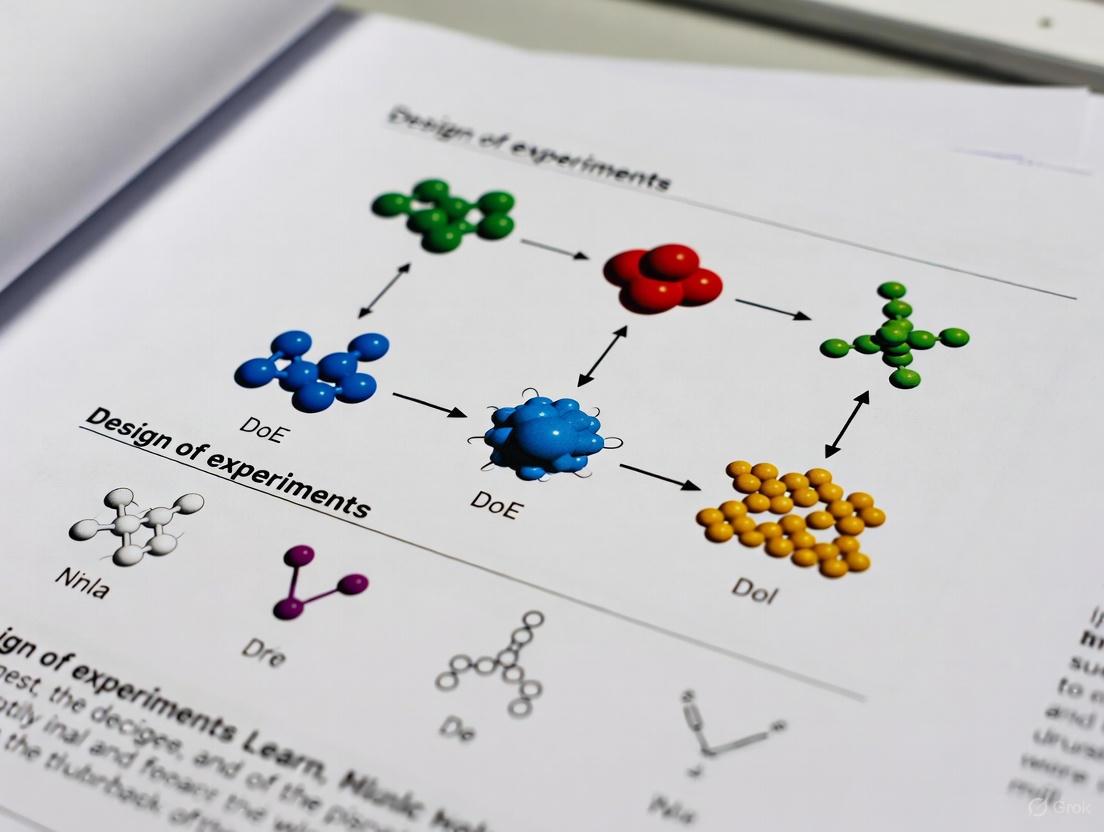
This article explores the strategic integration of Design of Experiments (DoE) to efficiently reduce the combinatorial library size in Design-Build-Test-Learn (DBTL) cycles for biomedical research and drug development.
Streamlining Biomanufacturing: A Guide to DoE-Driven Library Reduction in DBTL Cycles
Abstract
This article explores the strategic integration of Design of Experiments (DoE) to efficiently reduce the combinatorial library size in Design-Build-Test-Learn (DBTL) cycles for biomedical research and drug development. It provides a foundational understanding of the challenges in optimizing complex biological systems, such as metabolic pathways for drug production. The piece details methodological approaches, including fractional factorial and definitive screening designs, and offers troubleshooting strategies for common pitfalls. Through validation and comparative analysis of different DoE techniques, it demonstrates how researchers can achieve significant resource savings and accelerate the development of microbial cell factories and therapeutic compounds, ultimately enhancing the efficiency of biomanufacturing pipelines.
The Combinatorial Challenge: Why DoE is Essential for Modern DBTL Pipelines
The Intractability of Full Factorial Designs in Biological Optimization
In the context of a broader thesis on statistical design of experiments (DoE) for Design-Build-Test-Learn (DBTL) cycles, managing combinatorial complexity is a fundamental challenge. Full factorial designs, wherein every possible combination of factor levels is experimentally tested, represent a comprehensive approach for understanding main effects and interaction effects [1]. However, the application of such designs in biological optimization—from metabolic engineering to stem cell bioprocessing—is often rendered intractable due to the sheer number of experiments required [2] [3]. As the number of factors (k) increases, the experimental runs grow exponentially (l^k), creating a prohibitive bottleneck for the "Build" and "Test" phases of the DBTL cycle [1]. This application note details the inherent challenges of full factorial designs in biological systems and provides structured protocols and alternative strategies to navigate this complexity efficiently, thereby accelerating research and development.
The Combinatorial Challenge in Biology
Biological systems are inherently multivariate. Optimizing a metabolic pathway or a bioprocess involves navigating a vast design space that includes genetic elements (e.g., promoters, RBSs, gene sources), environmental conditions (e.g., pH, temperature, media components), and process parameters [2] [3].
The core of the intractability problem is combinatorial explosion. For a system with k factors, each at only 2 levels, a full factorial design requires 2^k experimental runs [4] [1]. The table below illustrates how this number becomes unmanageable as factor count increases, a common scenario in biology.
Table 1: Exponential Growth of Experimental Runs in a Full Factorial Design (2^k)
| Number of Factors (k) | Number of Experimental Runs (2^k) |
|---|---|
| 2 | 4 |
| 3 | 8 |
| 4 | 16 |
| 5 | 32 |
| 8 | 256 |
| 10 | 1024 |
| 15 | 32,768 |
| 28 | 268,435,456 |
This problem is starkly evident in metabolic engineering. For instance, designing an 8-gene pathway with just 3 expression levels per gene would require 3^8 = 6,561 genetic designs [2]. For a more complex pathway, such as the 28-gene pathway for vitamin B12 synthesis in E. coli, the number of possible sequences balloons to an astronomical 3^28 (approximately 2.3 x 10^13) [2]. Executing a full factorial exploration of such a space is practically impossible with standard laboratory resources and timeframes.
Furthermore, the traditional one-factor-at-a-time (OFAT) approach, while simpler, is inefficient and likely to yield suboptimal results because it fails to account for interaction effects between factors [2] [3]. This often leads to researchers becoming trapped in local optima rather than finding the global optimum for the system.
Application Note & Experimental Protocols
Screening for Influential Factors
The primary strategy to overcome intractability is to first perform a screening design to identify the few critical factors from a large set of potential candidates.
Table 2: Key Screening Design Methodologies
| Methodology | Description | Ideal Use Case | Key Advantage |
|---|---|---|---|
| Plackett-Burman Design | A highly fractional factorial design that allows screening of a large number of factors (N-1 factors with N runs) with very few experimental runs [2]. | Early-stage screening when many factors (e.g., 10-20) are being considered and interactions are assumed negligible. | Extreme efficiency in run reduction. |
| Definitive Screening Design (DSD) | A modern, efficient design that enables screening of many factors and can also model some quadratic effects, unlike Plackett-Burman [2]. | Screening when curvature in the response is suspected, providing more robust analysis without a large run increase. | Combines screening and optimization capabilities. |
| 2^k Fractional Factorial Design | A design that studies k factors at 2 levels but only uses a fraction (e.g., 1/2, 1/4) of the full factorial runs. It confounds (aliases) some interactions [4]. | Screening a moderate number of factors (e.g., 5-8) where some interaction effects are of interest but must be carefully considered. | Balances run efficiency with the ability to estimate some interactions. |
Protocol 1: Screening Media Components for Microbial Metabolite Production
- Objective: Identify which of 8 media components significantly influence the yield of a target metabolite.
- Materials:
- Strain: Engineered microbial strain.
- Basal Media: Minimal salts medium.
- Components: 8 different carbon, nitrogen, and vitamin sources to be screened.
- Analytical Equipment: HPLC or GC-MS for metabolite quantification.
- Procedure:
- Design Setup: Select a Plackett-Burman design for 8 factors. This may require only 12 experimental runs, plus center points for error estimation.
- Factor Levels: Define a "high" (+1) and "low" (-1) level for the concentration of each media component.
- Experiment Execution: Inoculate shake flasks according to the design matrix. Cultivate under controlled conditions (temperature, pH, agitation).
- Response Measurement: Harvest samples at a fixed time point and measure the final metabolite titer.
- Statistical Analysis:
- Fit a linear model to the experimental data.
- Calculate the main effect of each factor (the average change in response when moving from the low to high level) [4].
- Use ANOVA or t-tests to identify factors with statistically significant effects (p-value < 0.05).
- Output: A Pareto chart or a ranked list of factors by the magnitude of their effect. The 2-3 most influential factors are selected for further optimization.
Optimization via Response Surface Methodology (RSM)
Once critical factors are identified, Response Surface Methodology (RSM) is used to find their optimal levels. RSM is a collection of statistical and mathematical techniques for building models, designing experiments, and optimizing processes [2] [3].
Table 3: Common RSM Designs for Optimization
| Design | Description | Runs for 3 Factors | Key Feature |
|---|---|---|---|
| Central Composite Design (CCD) | The most popular RSM design. It consists of a factorial or fractional factorial core (2^k), axial (star) points, and center points [2] [1]. | 15-20 runs | Excellent for fitting a second-order (quadratic) model and locating a stationary point (optimum). |
| Box-Behnken Design (BBD) | A spherical, rotatable design based on incomplete factorial blocks. It does not contain corner points [2] [1]. | 15 runs | More efficient than CCD; useful when performing experiments at the extreme factor levels (corners) is impractical or expensive. |
Protocol 2: Optimizing Inducer Concentration and Temperature for Recombinant Protein Expression
- Objective: Determine the levels of inducer concentration and temperature that maximize protein expression yield in a yeast system.
- Materials:
- Strain: Yeast strain with integrated expression construct.
- Inducer: e.g., Galactose or Methanol.
- Bioreactor/Shake Flask System: For precise environmental control.
- Assay Kits: SDS-PAGE, Bradford assay, or activity assay for protein quantification.
- Procedure:
- Design Setup: For 2 factors, a Central Composite Design (CCD) with 5 levels per factor (requiring ~13 runs) is appropriate.
- Experiment Execution: Run cultures according to the CCD matrix, ensuring precise control of temperature and inducer addition.
- Response Measurement: Quantify the final protein concentration and/or specific activity.
- Model Building & Analysis:
- Fit a second-order polynomial model to the data (e.g., Yield = β₀ + β₁A + β₂B + β₁₁A² + β₂₂B² + β₁₂AB).
- Use ANOVA to check the model's significance and lack-of-fit.
- Generate 2D contour plots or 3D response surface plots to visualize the relationship between factors and the response.
- Optimization: Use the model to predict the factor settings (inducer concentration, temperature) that yield the maximum protein expression. Validate the prediction with confirmatory experiments.
The Scientist's Toolkit: Research Reagent Solutions
Table 4: Essential Research Reagents and Materials for DoE in Biological Optimization
| Item | Function in DoE | Application Example |
|---|---|---|
| Library of Genetic Parts | Provides the variation in genetic factors (promoters, RBSs, terminators) to be tested in combinatorial designs [2]. | Varying promoter strength to optimize flux through a metabolic pathway. |
| Chemically Defined Media | Allows for precise, independent manipulation of individual media components (carbon, nitrogen, salts, vitamins) as factors in a screening design [5]. | Identifying which trace element limits growth or product yield. |
| Inducers & Inhibitors | Used as factors to control the timing and level of gene expression or to modulate specific enzymatic activities within a pathway [5]. | Optimizing IPTG concentration and induction time for recombinant protein production. |
| High-Throughput Analytics | Enables rapid quantification of responses (e.g., product titer, cell density, enzyme activity) for the many samples generated by a DoE campaign [6]. | Using HPLC-MS or plate-based spectrophotometry to analyze 100s of samples from a screening design. |
| Statistical Software | Essential for generating design matrices, randomizing run orders, analyzing data, building models, and creating visualizations (contour plots) [2] [6]. | Tools like JMP, R, Python (with pyDOE2, scikit-learn), or specialized platforms for experimental design. |
The intractability of full factorial designs in complex biological optimization is a significant hurdle. However, by integrating a structured DoE approach within the DBTL cycle, researchers can efficiently navigate this complexity. The strategic use of initial screening designs (e.g., Plackett-Burman, DSD) to identify critical factors, followed by optimization designs (e.g., CCD, BBD) to model and locate optimal conditions, provides a powerful and resource-efficient framework. This methodology moves biological optimization beyond the limitations of OFAT and unfeasible full factorial explorations, enabling more rapid and reliable development of robust bioprocesses and engineered biological systems.
Contrasting DoE with the One-Factor-at-a-Time (OFAT) Approach
In scientific and industrial research, the pursuit of optimal experimental strategies is paramount for efficient resource utilization and robust knowledge generation. Two predominant methodologies in this realm are the One-Factor-at-a-Time (OFAT) approach and the Design of Experiments (DoE) framework. OFAT, a traditional method, involves varying a single factor while holding all others constant, and is widely taught due to its straightforward nature [7]. In contrast, DoE represents a systematic, statistically-driven approach that simultaneously varies multiple factors according to a structured plan, enabling a comprehensive exploration of the experimental space and interactions between factors [8]. Within the Design-Build-Test-Learn (DBTL) cycle for library reduction research, the choice of experimental methodology directly impacts the efficiency of knowledge acquisition and process optimization. This application note provides a detailed comparison of these methodologies, supported by quantitative data, experimental protocols, and implementation resources tailored for researchers, scientists, and drug development professionals.
Conceptual Foundations and Comparative Analysis
One-Factor-at-a-Time (OFAT) Approach
The OFAT approach, also known as the classical or hold-one-factor-at-a-time method, involves sequentially changing one input variable while maintaining all others at fixed, constant levels [9]. After completing tests for one factor, the experimenter resets the factor to its baseline before proceeding to investigate the next variable of interest. This process continues until all factors have been tested individually [9]. Historically, OFAT gained popularity due to its simplicity and ease of implementation without requiring complex experimental designs or advanced statistical analysis techniques [9].
Design of Experiments (DoE) Framework
DoE is a systematic, structured approach to investigating the relationship between input factors and output responses through carefully designed test sequences [8] [10]. Rooted in statistical principles first introduced by Sir Ronald Fisher in the early twentieth century, DoE builds quality into product development by enabling system thinking, variation understanding, theory of knowledge, and psychology [10]. The methodology employs various experimental designs—including factorial designs, response surface methodologies, and screening designs—to efficiently capture main effects, interaction effects, and curvature in the response surface [8] [9]. The pharmaceutical industry has increasingly adopted DoE as a cornerstone of Quality by Design (QbD) initiatives, where it facilitates the establishment of design space linking Critical Process Parameters (CPPs) and Material Attributes (CMAs) to Critical Quality Attributes (CQAs) [10].
Fundamental Differences Structured in DBTL Context
The table below summarizes the core differences between OFAT and DoE within the Design-Build-Test-Learn cycle for library reduction:
Table 1: Fundamental Differences Between OFAT and DoE Approaches
| Aspect | OFAT Approach | DoE Approach |
|---|---|---|
| Factor Variation | Sequential, one factor at a time | Simultaneous, multiple factors varied together |
| Experimental Space Coverage | Limited, along a single path | Comprehensive, systematic coverage of multi-dimensional space |
| Interaction Detection | Cannot detect or quantify interactions between factors | Explicitly models and quantifies interaction effects |
| Statistical Foundation | Minimal, relies on direct comparison | Strong, based on principles of randomization, replication, and blocking |
| Resource Efficiency | Inefficient, requires many runs for limited information | Highly efficient, maximizes information per experimental run |
| Optimization Capability | Limited to suboptimal, local improvements | Enables global optimization through predictive modeling |
| DBTL Integration | Slow learning cycles, limited knowledge generation | Accelerated learning, comprehensive process understanding |
Quantitative Comparison: Experimental Efficiency and Outcomes
Case Study: Chemical Process Optimization
A direct comparison from a chemical process optimization study demonstrates the practical differences between these approaches. Researchers aimed to maximize yield by optimizing temperature and pH, with the true optimum existing at 80°C and pH 9.0, yielding 83% [11].
Table 2: Experimental Outcomes for Yield Optimization Study
| Approach | Number of Experiments | Identified "Optimum" | Actual Yield at Identified Conditions | Missed Optimization Opportunity |
|---|---|---|---|---|
| OFAT | 15 (9 temperature + 6 pH) | 40°C, pH 6.0 | 71% | 12% (83% true maximum) |
| DoE | 5 (factorial with center point) | 80°C, pH 9.0 | 83% | 0% |
The OFAT approach required three times more experimental resources but failed to identify the true process optimum, instead converging on a suboptimal local maximum [11]. This case exemplifies how OFAT can provide misleading conclusions about a system's true behavior while inefficiently utilizing resources.
Statistical Efficiency in Multi-Factor Scenarios
The efficiency gap between OFAT and DoE widens exponentially as the number of experimental factors increases. For a comprehensive assessment of k factors at two levels each:
Table 3: Experimental Requirements Scale with Factor Number
| Number of Factors | OFAT Experiments | Full Factorial DoE | Fractional Factorial DoE |
|---|---|---|---|
| 2 | ~13 tests [8] | 4 tests | 4 tests |
| 3 | ~25 tests | 8 tests | 4 tests |
| 4 | ~49 tests | 16 tests | 8 tests |
| 5 | ~81 tests | 32 tests | 16 tests |
| 7 | ~225 tests | 128 tests | 16-32 tests |
While OFAT appears to test each factor in detail, it provides no information about interactions between factors and becomes progressively more resource-intensive compared to DoE as complexity increases [8] [9]. DoE designs maintain statistical power while dramatically reducing experimental burden through structured fractionation when full factorial designs become prohibitive.
Disadvantages and Limitations
Critical Limitations of OFAT
The OFAT approach suffers from several fundamental limitations that impact its effectiveness in complex experimental settings:
Interaction Blindness: OFAT cannot detect or quantify interactions between factors, which are often critical in complex biological and chemical systems [8] [9]. For example, in the temperature-pH case study, OFAT failed to detect the interaction effect that caused the response surface to twist and rise toward the true optimum [8].
Inefficient Resource Utilization: OFAT requires a large number of experimental runs to investigate factors individually, making poor use of limited resources [7] [9]. This inefficiency becomes particularly problematic when experimental runs are time-consuming or expensive.
Suboptimal Solutions: OFAT frequently identifies local rather than global optima, as it only explores a limited trajectory through the experimental space [12] [11]. The sequential nature of investigation means that early factor settings may constrain later optimization directions.
No Comprehensive Understanding: Without capturing interactions or exploring the full experimental region, OFAT provides only a fragmented understanding of system behavior [9]. This limits its utility for establishing robust design spaces required in regulated industries like pharmaceuticals.
Implementation Challenges of DoE
While DoE offers significant advantages, practitioners should acknowledge its implementation considerations:
Initial Learning Curve: DoE requires specific knowledge for proper experimental planning and results analysis [12]. Researchers need training in statistical principles and design selection strategies.
Software Dependency: Effective implementation typically requires specialized software for design generation and analysis, though free tools like ValChrom provide accessible options [12].
Upfront Planning: DoE experiments demand careful consideration of factors, levels, and responses before execution, which can represent a cultural shift for organizations accustomed to sequential experimentation [12] [11].
Minimum Experiment Number: While more efficient than OFAT, DoE does require a minimum entry of approximately 10 experiments to establish meaningful models, which may represent a psychological barrier despite the superior information return [7].
Experimental Protocols and Workflows
OFAT Protocol for Process Optimization
Protocol Title: One-Factor-at-a-Time Approach for Bioprocess Optimization
Objective: To determine the optimal settings of critical process parameters (e.g., temperature, pH, media concentration) for maximizing product yield.
Materials and Reagents:
- Reaction components (substrates, buffers, catalysts)
- Equipment with parameter control (bioreactor, spectrophotometer)
- Analytical tools for response measurement (HPLC, ELISA)
Procedure:
- Baseline Establishment: Run the process at baseline conditions and measure the response.
- Factor Selection: Choose one factor to vary while holding others constant.
- Sequential Testing: Systematically test different levels of the selected factor:
- For continuous factors (temperature, pH): Test at least 5-7 levels across the operating range
- For categorical factors (vendor, catalyst type): Test all relevant options
- Response Measurement: Record the response at each tested condition.
- Factor Reset: Return the tested factor to its baseline level.
- Repeat: Move to the next factor and repeat steps 3-5 until all factors have been tested individually.
- Data Analysis: Identify the "optimal" level for each factor based on individual response patterns.
Workflow Visualization:
DoE Protocol for Systematic Process Characterization
Protocol Title: Design of Experiments Approach for Comprehensive Process Understanding
Objective: To efficiently characterize the relationship between multiple process parameters and critical quality attributes, enabling identification of interactions and global optimization.
Materials and Reagents:
- Experimental units (reaction vessels, cell culture flasks)
- Parameter control systems (pH stat, temperature controller)
- Response measurement tools (HPLC, MS, activity assays)
- DoE software (JMP, ValChrom, Modde)
Procedure:
- Define Objectives: Clearly state experimental goals (screening, optimization, robustness testing).
- Select Factors and Ranges: Identify input factors to study and establish practical operating ranges based on prior knowledge.
- Choose Experimental Design: Select appropriate design based on objectives:
- Screening: Fractional factorial or Plackett-Burman designs
- Optimization: Central composite or Box-Behnken designs
- Robustness testing: Full factorial designs
- Randomize Run Order: Generate randomized execution sequence to minimize bias.
- Execute Experiments: Conduct runs according to randomized schedule, carefully controlling and recording all factor levels.
- Measure Responses: Collect comprehensive response data for all quality attributes.
- Statistical Analysis:
- Fit empirical model relating factors to responses
- Identify significant main effects and interactions
- Evaluate model adequacy (R², Q², residual analysis)
- Knowledge Extraction:
- Interpret factor effects through Pareto charts
- Visualize relationships with contour and response surface plots
- Establish design space for robust operation
- Confirmation Experiments: Run additional tests at predicted optimum to verify model predictions.
Workflow Visualization:
Essential Research Reagents and Software Solutions
Successful implementation of DoE requires both laboratory materials and specialized software tools. The following table outlines key resources for pharmaceutical and biotech applications:
Table 4: Essential Research Reagents and Software Solutions for DoE Implementation
| Category | Specific Items | Function in DoE Studies |
|---|---|---|
| Chromatography Reagents | Mobile phase buffers, pH modifiers, salt solutions | Systematically vary chromatographic conditions to optimize separation |
| Cell Culture Materials | Media components, growth factors, induction agents | Study multifactorial effects on cell growth and protein production |
| Protein Analysis Tools | ELISA kits, activity assays, stability buffers | Measure multiple quality attributes as responses to factor changes |
| DoE Software | JMP, ValChrom, MODDE, Design-Expert | Generate optimal designs, analyze results, build predictive models |
| Statistical Packages | R, Python with specialized libraries | Advanced analysis and custom design generation |
| Data Management | Electronic lab notebooks, data warehouses | Maintain experimental integrity and data traceability |
For researchers new to DoE, the free ValChrom software provides an accessible entry point without registration requirements [12]. JMP offers comprehensive functionality with extensive learning resources, including a free online course "Statistical Thinking for Industrial Problem Solving" [11].
Implementation in Pharmaceutical Development and DBTL Cycles
The pharmaceutical industry has increasingly embraced DoE as a cornerstone of Quality by Design (QbD) initiatives, moving away from traditional OFAT approaches [10]. In the context of Design-Build-Test-Learn cycles for library reduction, DoE provides a structured framework for efficient knowledge generation and process optimization.
Application in Biopharmaceutical Development:
- Protein Expression Optimization: Systematic variation of factors including temperature, induction conditions, media composition, and gas exchange to maximize recombinant protein yield [11].
- Purification Process Development: Concurrent optimization of multiple chromatography parameters (pH, salt concentration, gradient slope, resin type) to achieve target purity with minimal steps [12].
- Formulation Development: Efficient identification of robust formulation conditions by studying interactions between buffer composition, excipients, and storage conditions [10].
DBTL Integration Benefits:
- Reduced Cycle Time: Simultaneous factor evaluation accelerates the learn phase, informing subsequent design iterations more efficiently than sequential OFAT approaches.
- Library Reduction: Statistical models derived from DoE data enable virtual screening of parameter combinations, reducing the experimental burden for library validation.
- Knowledge Retention: Empirical models capture system understanding in a transferable, scalable format that persists beyond individual experiments.
The comparative analysis presented in this application note demonstrates the clear superiority of Design of Experiments over the One-Factor-at-a-Time approach for most research and development applications, particularly within DBTL frameworks for library reduction. While OFAT offers simplicity and minimal upfront knowledge requirements, its inability to detect factor interactions, inefficiency in resource utilization, and tendency to identify suboptimal conditions limit its value in complex experimental settings. DoE provides a systematic, statistically-sound framework that maximizes information gain per experimental run, enables detection of critical interaction effects, and supports the establishment of robust design spaces. For researchers in drug development and related fields, investment in DoE training and implementation yields substantial returns in accelerated development timelines, enhanced process understanding, and improved product quality. As the pharmaceutical industry continues its transition toward Quality by Design paradigms, DoE stands as an essential methodology for efficient, knowledge-driven development.
In the context of the Design-Build-Test-Learn (DBTL) cycle for biological research, the strategic implementation of Design of Experiments (DoE) is paramount for efficient library reduction and systematic inquiry. DoE provides a structured framework for investigating complex biological systems by simultaneously exploring multiple variables, a capability that is particularly valuable when navigating intractably large genetic design spaces [2]. At its core, DoE involves the identification and manipulation of factors (input variables), their corresponding levels (specific settings), and the measurement of response variables (output measurements) to build statistical models that explain system behavior [13] [14]. This approach stands in stark contrast to traditional One-Factor-at-a-Time (OFAT) methods, which often miss significant interactions between variables and can lead to suboptimal results [2]. In biological research, where systems are characterized by inherent complexity and variability, DoE enables researchers to efficiently screen numerous factors and optimize processes while minimizing experimental runs [14].
Defining Core Concepts in a Biological Context
Factors
In biological experiments, factors are variables that are hypothesized to influence the outcome or response of the system under investigation [13]. These can be broadly classified into different categories with distinct characteristics:
Continuous factors represent quantitative parameters that can assume any value within a defined range. In biological systems, examples include temperature (°C), pH, concentration of media components (g/L), incubation time (hours), and oxygenation rate (%). Recent advances also allow the treatment of genetic elements as continuous factors; for instance, promoter and ribosome-binding site (RBS) strengths can be quantitatively characterized using reporter assays and fluorescence measurements, enabling their treatment as continuous rather than ordinal variables [2].
Categorical factors represent qualitative attributes that divide experimental conditions into distinct groups. These can be further subdivided into:
- Nominal variables: Categories without inherent order or ranking, such as strain types (e.g., E. coli BL21 vs. DH10B), plasmid types (e.g., high-copy vs. low-copy), media types (e.g., LB vs. minimal media), and carbon sources (e.g., glucose vs. glycerol) [2].
- Ordinal variables: Categories with a specific sequence or ranking but lacking consistent intervals between them, such as the order of genes in an operon or the sequence of processing steps [2].
Levels
Levels represent the specific values or settings at which factors are tested during an experiment [2]. The strategic selection of appropriate levels is critical for generating meaningful data. For continuous factors, levels are discretized into specific set points within the biologically plausible range. For example, in a bacterial protein expression optimization study, temperature might be tested at levels of 30°C, 37°C, and 42°C, representing low, standard, and high conditions [15]. For categorical factors, levels represent the distinct categories or types being compared, such as comparing the performance of constitutive versus inducible promoters (nominal) or testing different gene orders in a metabolic pathway (ordinal) [2].
Response Variables
Response variables, also referred to as output variables or dependent variables, are the measured outcomes that reflect the system's performance or behavior [13] [14]. In biological contexts, these must be carefully selected to provide meaningful insights into the process under investigation and must be measurable with sufficient precision and accuracy. Examples include:
- Product titer (e.g., g/L of a target metabolite)
- Protein expression level (e.g., mg/L of a recombinant protein)
- Cell density (OD600)
- Enzyme activity (U/mg)
- Product yield (g product/g substrate)
The measurement system for response variables must be properly calibrated and maintained throughout the experiment, with particular attention to noise (reproducibility) and sensitivity (detection range) considerations [15].
Table 1: Classification of Experimental Factors in Biological Systems
| Factor Type | Definition | Biological Examples | Considerations for Level Selection |
|---|---|---|---|
| Continuous | Quantitative measurements with infinite values within a range | Temperature, pH, concentration, time, promoter strength | Select biologically plausible ranges; avoid combinations that create implausible conditions |
| Categorical (Nominal) | Qualitative categories without inherent order | Strain type, plasmid backbone, media composition, carbon source | Ensure categories are mutually exclusive; include biologically relevant alternatives |
| Categorical (Ordinal) | Qualitative categories with specific sequence | Gene order in operon, sequence of processing steps | Recognize that intervals between categories may not be equal or quantifiable |
Experimental Protocols for DoE Implementation in Biological Systems
Preliminary Factor Screening Protocol
Objective: To identify the most significant factors affecting system performance from a large set of potential variables.
Methodology:
- Define Experimental Scope: List all potentially influential factors based on prior knowledge and literature review. For a metabolic engineering project, this might include genetic elements (promoters, RBSs, gene order) and environmental conditions (temperature, pH, media components) [2].
- Select Appropriate Screening Design: Choose a fractional factorial design such as Plackett-Burman, which allows efficient examination of many factors with minimal experimental runs [2].
- Establish Factor Levels: Set two levels for each factor (high and low) that represent biologically plausible extremes. For example, when testing media components, set levels that bracket concentrations typically used in similar systems [15].
- Randomize Run Order: Generate a randomized execution order for all experimental runs to minimize confounding effects of external variables [14].
- Include Controls: Incorporate appropriate positive and negative controls that are separate from the DoE design points [15].
- Execute Experiments: Conduct all runs according to the predetermined design, maintaining consistent measurement protocols across all conditions [14].
- Statistical Analysis: Analyze results using ANOVA to identify factors with statistically significant effects on response variables [14].
Table 2: Example Factor Screening Setup for Recombinant Protein Expression
| Factor | Type | Low Level | High Level | Justification |
|---|---|---|---|---|
| Temperature | Continuous | 30°C | 42°C | Brackets standard E. coli growth range |
| Inducer Concentration | Continuous | 0.1 mM IPTG | 1.0 mM IPTG | Represents typical induction range |
| Media Type | Categorical (Nominal) | LB | Minimal | Tests nutrient richness impact |
| Promoter Strength | Continuous | Weak | Strong | Uses quantitatively characterized parts |
| Oxygenation | Continuous | 20% DO | 80% DO | Tests aerobic vs. microaerobic conditions |
Response Surface Methodology Protocol
Objective: To model the relationship between significant factors and response variables for system optimization.
Methodology:
- Factor Selection: Based on screening results, select 2-4 most significant factors for detailed optimization [2].
- Design Selection: Choose an appropriate response surface design such as Central Composite Design (CCD) or Box-Behnken Design (BBD) [2].
- Level Refinement: Establish 3-5 levels for each factor, focusing on the region of interest identified during screening.
- Experimental Execution: Conduct experiments in randomized order, with replication at center points to estimate experimental error [14].
- Model Building: Use regression analysis to build a mathematical model describing the relationship between factors and responses.
- Optimization: Utilize the fitted model to identify factor level combinations that optimize the response variables [14].
- Validation: Conduct confirmation experiments at predicted optimal conditions to verify model accuracy [14].
The Scientist's Toolkit: Essential Research Reagents and Materials
Table 3: Key Research Reagent Solutions for Biological DoE
| Reagent/Material | Function | Application Example |
|---|---|---|
| Quantified Genetic Parts | Provides characterized biological components with known performance metrics | Promoters and RBSs with quantitatively measured strengths enable treatment as continuous factors [2] |
| Automated Liquid Handling Systems | Enables precise, high-throughput dispensing of reagents and cultures | Essential for executing complex DoE layouts with multiple factor combinations and small volume variations [15] |
| DOE Software Platforms | Facilitates experimental design, randomization, and statistical analysis | Reduces mathematical errors and makes DoE accessible to non-statisticians; allows design assessment and iteration planning [15] |
| Reporter Assay Systems | Provides quantitative measurement of biological activity | Fluorescence-based reporters enable precise quantification of promoter activity and gene expression levels [2] |
| Defined Growth Media Components | Allows systematic manipulation of nutritional environment | Testing individual media components as factors to identify optimal concentrations and interactions [15] |
Application in DBTL Library Reduction
The application of DoE within the DBTL cycle is particularly valuable for managing the combinatorial explosion inherent in biological design spaces. For example, an eight-gene pathway with just three different regulatory elements per gene generates 6,561 possible designs [2]. Through strategic DoE implementation, researchers can efficiently navigate this vast space by:
- Screening Designs: Identifying the most influential factors from a large set of potential variables using fractional factorial designs, significantly reducing the number of designs requiring full testing [2].
- Iterative Optimization: Applying response surface methodology to refine the critical factors identified during screening, converging on optimal combinations with minimal experimental effort [2].
- Model-Guided Design: Using statistical models derived from DoE results to predict the performance of untested genetic combinations, further reducing the experimental burden [2].
DoE in the DBTL Cycle
Case Study: Protein Expression Optimization
A practical application of these concepts can be illustrated through optimization of recombinant protein expression in bacteria:
Factors and Levels:
- Genetic factors: Promoter type (constitutive, inducible), plasmid copy number (high, low)
- Environmental factors: Induction temperature (25°C, 30°C, 37°C), induction OD600 (0.5, 1.0, 1.5), post-induction time (2h, 4h, 6h)
Response Variables:
- Protein titer (mg/L)
- Protein solubility (soluble fraction %)
- Cell density (OD600)
Experimental Approach: Initial screening using a fractional factorial design identified induction temperature and post-induction time as the most significant factors. Subsequent optimization using a Central Composite Design modeled the relationship between these factors and protein titer, identifying an optimal combination that increased yield 3.2-fold compared to baseline conditions [15].
Factor-Response Relationships
The strategic application of core DoE concepts—factors, levels, and response variables—within biological research provides a powerful framework for navigating complex design spaces efficiently. By implementing systematic experimental designs that investigate multiple factors simultaneously, researchers can accelerate the DBTL cycle, significantly reduce library sizes, and develop predictive models of biological system behavior. The structured approach outlined in this protocol enables comprehensive exploration of biological design spaces while minimizing experimental resources, ultimately facilitating more efficient optimization of biological systems for research and industrial applications.
Defining the Design Space for Genetic Pathways and Fermentation Processes
In the development of biologics and recombinant proteins, systematically defining the design space for genetic pathways and fermentation processes is a critical component of successful process characterization and scale-up. The design space, as defined by ICH Q8 (R2) guidelines, is the multidimensional combination and interaction of input variables and process parameters that have been demonstrated to provide assurance of quality [16]. This systematic approach moves beyond traditional one-factor-at-a-time (OFAT) experimentation, which often fails to capture complex interactions between critical process parameters (CPPs) and critical quality attributes (CQAs) [16]. For researchers and drug development professionals, establishing this space is not merely an academic exercise but a practical necessity for ensuring process robustness, regulatory compliance, and economic viability in biological manufacturing.
The integration of statistical Design of Experiments (DoE) within the Design-Build-Test-Learn (DBTL) cycle provides a structured framework for exploring the complex relationship between genetic modifications and their phenotypic expression in fermentation systems. This approach is particularly valuable for library reduction strategies, where the experimental burden of screening vast genetic variant libraries must be minimized without sacrificing the identification of high-performing constructs or process conditions. By applying DoE principles, researchers can efficiently navigate the multidimensional design space, model process responses, and identify optimal operating conditions that ensure consistent product quality and yield.
Statistical Framework for Design Space Exploration
Fundamentals of Design of Experiments (DoE) in Bioprocessing
The application of DoE in fermentation process development enables researchers to systematically investigate the effects of multiple factors and their interactions on key process outputs simultaneously. This methodology is fundamentally superior to OFAT approaches, which are not only time-consuming but also likely to miss critical interaction effects between process parameters [16]. For a typical fermentation process with multiple CPPs, a full factorial DoE can characterize the entire design space, but this often requires a prohibitive number of experimental runs. In practice, fractional factorial designs and response surface methodologies (RSM) are employed to reduce the experimental burden while still capturing essential main effects and interactions.
The model-building process typically involves several key steps: creating the experimental design, selecting appropriate models (e.g., factorial or polynomial), and validating the chosen models using statistical criteria such as the corrected Akaike information criterion (AICc) and Bayesian information criterion (BIC) [16]. Additional validation metrics include high R² and adjusted R² values, low predicted residual error sum of squares (PRESS), and non-significant lack-of-fit p-values. This rigorous statistical approach ensures that the empirical models derived from experimental data reliably predict process behavior within the defined design space.
DoE within the DBTL Cycle for Library Reduction
In the context of genetic pathway engineering and strain development, the DBTL cycle provides an iterative framework for continuous improvement. DoE plays a crucial role in the "Learn" phase, where data from the "Test" phase are analyzed to build predictive models that inform subsequent "Design" and "Build" phases. For library reduction strategies, DoE helps identify the most influential genetic elements or process parameters, enabling researchers to focus experimental efforts on the most promising regions of the design space.
This approach is particularly valuable when dealing with large genetic libraries, where testing all possible variants is practically impossible. By applying DoE, researchers can screen a representative subset of variants and build models that predict the performance of untested combinations. This strategy significantly reduces experimental timelines and resource requirements while still identifying optimal genetic constructs and process conditions. The table below summarizes key DoE applications in fermentation process characterization.
Table 1: Design of Experiments Applications in Fermentation Process Characterization
| DoE Application | Objective | Typical Model | Key Outputs |
|---|---|---|---|
| Screening Experiments | Identify critical process parameters from a large set | Fractional Factorial or Plackett-Burman | Significant main effects on yield and quality |
| Response Surface Methodology | Characterize nonlinear relationships and identify optima | Central Composite or Box-Behnken | Quadratic models for predicting process behavior |
| Mixture Designs | Optimize culture medium composition | Scheffé Polynomials | Optimal nutrient concentrations and ratios |
| Optimal Designs | Address constrained experimental spaces | D- or I-optimal | Predictive models with limited experimental runs |
Defining the Genetic Pathway Design Space
Key Genetic Elements and Their Modulation
The design space for genetic pathways encompasses the various molecular components that control gene expression and protein production in host organisms. For microbial systems such as E. coli and Pichia pastoris, these elements include promoter strength, ribosome binding sites, gene copy number, plasmid stability systems, and selection markers [17]. Each of these elements represents a dimension in the genetic design space that can be modulated to optimize protein expression.
Defining the genetic design space requires understanding how these elements interact to influence metabolic burden, protein folding, and post-translational modifications. For example, strong promoters may drive high expression but can lead to metabolic stress or the formation of inclusion bodies [17]. Similarly, high-copy plasmids may increase gene dosage but can negatively impact cell growth and plasmid stability. The use of inducible expression systems, such as IPTG-inducible promoters, adds another layer of control by separating the growth and production phases [16].
High-Throughput Screening and Library Reduction Strategies
Advanced techniques such as CRISPR screens and multi-omics integration enable systematic exploration of genetic design spaces [18]. CRISPR-based approaches allow for precise perturbation of genetic elements, while multi-omics data (genomics, transcriptomics, proteomics, metabolomics) provides a comprehensive view of cellular responses to genetic modifications [18].
The integration of machine learning (ML) with DoE has revolutionized library reduction strategies. ML algorithms can analyze high-dimensional data from initial screening experiments to build models that predict the performance of genetic variants, prioritizing the most promising candidates for further testing [19] [18]. This approach significantly reduces the experimental burden while increasing the probability of identifying optimal genetic configurations.
Table 2: Key Research Reagent Solutions for Genetic Pathway Engineering
| Reagent/Category | Function | Example Application |
|---|---|---|
| Expression Vectors | Carry the target gene and regulatory elements | pET series for E. coli; pPIC series for P. pastoris [16] |
| Inducers | Control timing and level of gene expression | IPTG for lac-based systems [16] |
| Selection Antibiotics | Maintain selective pressure for plasmid retention | Ampicillin, Kanamycin in bacterial systems [17] |
| Host Strains | Provide genetic background for protein production | E. coli BL21(DE3) for T7-based expression [16] |
| CRISPR Systems | Enable precise genome editing | Gene knock-outs, promoter swaps, pathway engineering [18] |
Characterizing the Fermentation Process Design Space
Critical Process Parameters and Their Interactions
The fermentation process design space encompasses the bioprocess parameters that directly influence cell growth, metabolic activity, and product formation. Key parameters include temperature, pH, dissolved oxygen (DO), agitation rate, nutrient concentrations, and induction conditions [16] [17]. These parameters often interact in complex, nonlinear ways, making DoE essential for understanding their combined effects on process outcomes.
At large scales, parameters such as oxygen transfer rate and heat management become increasingly critical. As noted by industry experts, "For fast-growing bacterial cultures, it is necessary to ensure that sufficient oxygen transfer occurs throughout the entire culture volume to maximize growth, which in turn requires sufficient mixing and airflow" [17]. Similarly, temperature control within +/- 1-2°C is essential for maintaining process consistency and product quality. These challenges highlight the importance of characterizing scale-dependent effects when defining the design space.
Advanced Monitoring and Control Strategies
The implementation of Process Analytical Technologies (PAT) enables real-time monitoring of critical process parameters and quality attributes [17]. PAT tools, including in-line sensors and spectroscopic methods, provide rich data streams that support design space characterization and process control. As noted by industry experts, "Use of PAT during a fermentation run enables detection of potentially problematic variations and allows for manual or automatic corrections to bring the process back to the center of the validated operating space" [17].
The emergence of digital twin technology further enhances design space characterization by creating virtual representations of the fermentation process [20]. These models integrate first-principles knowledge with empirical data to simulate process behavior under different conditions, enabling in-silico exploration of the design space and optimization of process parameters.
Diagram 1: Fermentation process design space characterization workflow
Integrated Framework: Connecting Genetic and Process Design Spaces
Modeling Interactions Between Genetic and Process Parameters
The integration of genetic and process design spaces represents a significant opportunity for optimizing bioprocess performance. Genetic modifications often alter cellular metabolism and physiology, which in turn affects how cells respond to process conditions. For example, engineered strains with high metabolic fluxes may have different oxygen demands or nutrient requirements compared to wild-type strains [17]. Similarly, the optimal induction strategy for recombinant protein production depends on both the genetic construct and process conditions [16].
DoE provides a powerful framework for investigating these interactions through factorial designs that include both genetic and process factors. These integrated experiments can reveal how the effects of genetic modifications depend on process conditions, and vice versa. The resulting models enable the identification of robust operating regions where process performance is maintained despite minor variations in genetic background or process parameters.
Knowledge Management and Decision Support
As the biopharmaceutical industry transitions toward Quality by Design (QbD) principles, effective knowledge management becomes essential for design space definition and utilization [16]. The models and data generated during design space characterization should be documented in a structured manner to support regulatory submissions and technology transfer.
The application of hybrid modeling approaches, which combine mechanistic models with machine learning, enhances the predictive capability and interpretability of design space models [19]. Mechanistic models capture fundamental biological and engineering principles, while machine learning components adapt to strain-specific or process-specific peculiarities. This combination is particularly valuable for scaling up fermentation processes from laboratory to commercial scale.
Table 3: Representative Experimental Results from Fermentation Process Optimization
| Factor Combination | Volumetric Yield (mg/L) | Total Yield (mg) | Purity (%) | Significance |
|---|---|---|---|---|
| Base Case | 150 | 750 | 95.2 | Reference point |
| High Induction, Low Temp | 320 | 1600 | 94.8 | 113% yield increase |
| Low Induction, High Temp | 190 | 950 | 90.1 | Purity below spec |
| Medium Induction, Medium Temp | 280 | 1400 | 96.5 | Balanced optimization |
| High Agitation, Low DO | 165 | 825 | 95.8 | Minimal impact |
Application Notes and Protocols
Protocol 1: DoE for Fermentation Media Optimization
Objective: To optimize culture medium composition for recombinant protein production in E. coli using response surface methodology.
Materials and Equipment:
- E. coli BL21(DE3) harboring pET19b-MI001-S vector [16]
- Chemically defined media components (carbon source, nitrogen source, salts, trace elements)
- Firstek fermenter (FB-10B or equivalent) with temperature, pH, and DO control [16]
- IPTG (isopropyl β-D-thiogactoside) for induction [16]
Procedure:
- Factor Selection: Identify 3-5 critical media components (e.g., glucose, yeast extract, phosphates) based on prior knowledge or screening experiments.
- Experimental Design: Generate a Central Composite Design (CCD) or Box-Behnken Design using statistical software (e.g., Design Expert, JMP).
- Inoculum Preparation: Prepare seed cultures in shake flasks overnight at 37°C.
- Fermentation Runs: Execute experimental runs according to the design matrix. Control temperature at 37°C, pH at 7.0, and maintain DO above 30% air saturation.
- Induction: Add IPTG to a final concentration of 0.1-1.0 mM during mid-exponential phase (OD600 ≈ 4-6).
- Harvest: Collect samples periodically for analysis of OD600, substrate concentration, and product titer.
- Product Quantification: Determine recombinant protein concentration using A280 nm measurement with extinction coefficient predicted by ProtParam [16].
- Data Analysis: Fit response surface models to the experimental data. Identify optimal medium composition that maximizes volumetric yield while maintaining product quality.
Statistical Analysis:
- Use ANOVA to assess model significance and lack-of-fit.
- Generate response surface plots to visualize factor effects and interactions.
- Apply desirability functions for multi-objective optimization (e.g., maximizing yield while minimizing cost).
Protocol 2: High-Throughput Screening for Genetic Construct Evaluation
Objective: To screen a library of genetic variants using DoE to identify optimal expression constructs.
Materials and Equipment:
- Library of genetic variants (e.g., promoter variants, RBS libraries, fusion tags)
- Microtiter plates or deep-well plates
- Microplate reader with absorbance and fluorescence capabilities
- Automated liquid handling system
Procedure:
- Library Design: Apply fractional factorial design to select a representative subset of variants for screening (library reduction).
- Strain Construction: Build selected variants using molecular biology techniques (e.g., Gibson assembly, Golden Gate cloning).
- Cultivation: Inoculate variants into deep-well plates containing appropriate medium. Incubate with shaking at appropriate temperature.
- Monitoring: Measure OD600 periodically to monitor growth.
- Induction: Add inducer at appropriate cell density.
- Analysis: Measure product titer using plate-based assays (e.g., fluorescence, activity assays, immunoassays).
- Data Collection: Record growth parameters (max OD, growth rate) and product-related metrics (titer, productivity).
- Model Building: Use machine learning algorithms (e.g., random forest, gradient boosting) to build predictive models linking genetic elements to performance metrics.
- Validation: Select top-performing predicted variants for validation in bench-scale bioreactors.
Diagram 2: High-throughput screening with DoE-based library reduction
Protocol 3: Scale-Up Verification of Design Space
Objective: To verify the design space identified at laboratory scale during scale-up to pilot and production scales.
Materials and Equipment:
- Optimized strain from laboratory-scale studies
- Pilot-scale fermenter (e.g., 100 L to 1000 L scale) with comparable control capabilities
- PAT tools for real-time monitoring (e.g., in-line pH, DO, biomass sensors)
Procedure:
- Scale-Down Model Validation: Establish that laboratory-scale systems accurately reproduce performance observed at pilot scale.
- Design Space Verification: Execute batches at different operating conditions within the proposed design space.
- Edge of Failure Studies: Intentionally operate at or beyond the design space boundaries to establish proven acceptable ranges.
- Data Collection: Monitor CPPs and measure CQAs using validated analytical methods.
- Comparative Analysis: Compare performance metrics (titer, yield, productivity, quality attributes) across scales.
- Model Refinement: Adjust scale-up models based on experimental results.
- Control Strategy Definition: Establish process control strategies to maintain operation within the design space.
Considerations:
- Address scale-dependent parameters such as oxygen transfer rate (kLa), mixing time, and heat transfer.
- Implement single-use technologies where appropriate to reduce downtime between runs [17].
- For large-scale stainless steel vessels, consider modifications such as internal cooling baffles to improve heat transfer [17].
The systematic definition of design spaces for genetic pathways and fermentation processes represents a paradigm shift in bioprocess development, moving from empirical optimization to science-based understanding and control. The integration of statistical DoE within the DBTL framework enables efficient exploration of complex biological systems while managing experimental resources through strategic library reduction. This approach is particularly valuable in the biopharmaceutical industry, where understanding the relationship between process parameters and product quality is essential for regulatory compliance and manufacturing success.
As the field advances, the incorporation of machine learning, multi-omics data, and digital twin technologies will further enhance our ability to define and utilize design spaces across scales. These innovations, combined with a rigorous statistical foundation, will accelerate the development of robust, efficient bioprocesses for the production of next-generation biologics.
Practical DoE Strategies for Efficient Library Reduction and Screening
In the context of Design-Build-Test-Learn (DBTL) cycles for research, efficient library reduction is paramount. Plackett-Burman (PB) designs serve as a powerful statistical screening methodology to identify the "vital few" significant factors from a large set of potential variables with minimal experimental effort. Originally developed by statisticians Robin Plackett and J.P. Burman in 1946, these designs belong to the family of fractional factorial designs and are specifically intended for early experimentation stages when knowledge about the system is limited [21] [22]. The primary strength of PB designs is their ability to study up to N-1 factors in just N experimental runs, where N is a multiple of 4 (e.g., 4, 8, 12, 16, 20, etc.) [21] [23]. This makes them exceptionally economical for screening a large number of factors to determine which ones have significant main effects on a response variable, thereby effectively reducing the design space for subsequent, more detailed DBTL cycles.
PB designs operate under the fundamental assumption that main effects dominate over interaction effects during initial screening [21]. They are classified as Resolution III designs, meaning that while main effects are not confounded with each other, they are partially aliased (confounded) with two-factor interactions [23] [24]. This confounding pattern is a calculated trade-off that enables significant resource savings. The designs are ideally suited for situations where researchers need to quickly prioritize a subset of factors for further optimization, a common requirement in fields like pharmaceutical development, metabolic engineering, and materials science where the initial variable space can be overwhelmingly large [25] [2].
Key Characteristics and Statistical Basis
Fundamental Properties
Plackett-Burman designs possess several defining characteristics that make them uniquely suited for screening applications. First, they are two-level designs, meaning each factor is tested at a high (+1) and a low (-1) setting [21]. This allows for the efficient estimation of linear main effects. The design matrix itself is orthogonal, ensuring that all main effects can be estimated independently of one another [21] [24]. The construction of these designs often involves "foldover pairs," where the initial N runs are created and then "folded over" by reversing the signs to generate the remaining N runs, thus contributing to the balance and orthogonality of the design [21].
A critical differentiator from standard fractional factorial designs is the run size flexibility. While standard fractional factorials have run sizes that are powers of two (e.g., 8, 16, 32), PB designs have run sizes that are multiples of four (e.g., 8, 12, 16, 20, 24) [23]. This provides researchers with more granular control over experimental size, allowing for more efficient resource allocation when screening 9, 10, or 11 factors, for example, where a 12-run design can be used instead of a 16-run fractional factorial [23].
Confounding and Assumptions
The statistical efficiency of PB designs comes with a specific limitation: the confounding of main effects with two-factor interactions. In a PB design, every main effect is partially confounded with many two-factor interactions not involving itself [23] [24]. For instance, in a 12-run design for 10 factors, the main effect of one factor might be confounded with 36 different two-factor interactions [23]. This complex aliasing structure means that if a significant effect is detected, it could be due to the main effect, one of its confounded interactions, or a combination thereof.
Therefore, the validity of conclusions drawn from a PB screening experiment hinges on the sparsity of effects principle and the effect heredity principle [24]. The sparsity principle assumes that only a few factors are actively influencing the response. The effect heredity principle suggests that interactions are most likely to be significant when at least one of their parent factors also has a significant main effect. Consequently, PB designs are most reliably interpreted when interaction effects are assumed to be weak or negligible compared to main effects [26] [23]. If this assumption is violated, there is a risk of misidentifying the active factors or misinterpreting the direction of their effects [24].
Experimental Protocol for Implementing Plackett-Burman Designs
Step-by-Step Workflow
The successful application of a Plackett-Burman design follows a structured workflow that integrates planning, execution, and analysis. The following diagram illustrates the key stages in this process.
Protocol Details
Step 1: Define Experimental Objective and Response Metrics Clearly articulate the goal of the screening study. Define the primary response variable(s) (Y) to be measured. In a DBTL context, this is the "Test" phase. Responses should be quantifiable, reproducible, and relevant to the overall research goal. Examples include product yield, purity, particle size, dissolution rate, or enzymatic activity [25] [27].
Step 2: Select Factors and Define Levels Identify all potential factors (k) to be screened. Based on prior knowledge or preliminary experiments, set the high (+1) and low (-1) levels for each continuous factor. For categorical factors (e.g., catalyst type), assign appropriate level labels. The difference between levels should be large enough to potentially produce a detectable effect but not so large as to be impractical or unsafe [21] [23].
Step 3: Determine Appropriate Run Size (N) The number of experimental runs (N) must be a multiple of 4 and greater than the number of factors (k). Standard sizes include N=8 (for up to 7 factors), N=12 (for up to 11 factors), and N=16 (for up to 15 factors) [21] [23]. It is considered good practice to include center points (e.g., 3-5 replicates) to check for curvature and estimate pure error, though this is not part of the original PB structure [26].
Step 4: Generate the Design Matrix Use statistical software (e.g., JMP, Minitab, Design-Expert, R) to generate the design matrix. The software will create an N x k matrix of +1 and -1 values specifying the factor level for each run [21] [23]. The matrix will also include a dummy column of +1s [21].
Step 5: Randomize and Execute Experimental Runs Randomize the order of the N runs to protect against systematic biases and ensure independence of observations [21]. Execute the experiments according to the randomized list, carefully controlling all factors at their designated levels.
Step 6: Measure the Response For each completed experimental run, measure the value of the pre-defined response variable(s). Ensure measurement consistency and accuracy across all runs.
Step 7: Analyze Main Effects
Calculate the main effect for each factor. The main effect is the difference between the average response when the factor is at its high level and the average response when it is at its low level [21] [26].
Main Effect (Factor A) = Ȳ(A+) - Ȳ(A-)
Step 8: Identify Significant Factors Judge the significance of the calculated effects. This can be done using:
- Statistical Significance Testing: Perform ANOVA or use t-tests with a pre-defined significance level (α). A higher α (e.g., 0.10) is often used in screening to avoid missing active factors (Type II error) [23].
- Half-Normal Probability Plot: Plot the absolute values of the effects against their cumulative normal probabilities. Significant effects will deviate from the straight line formed by the null effects [26].
- Pareto Chart: Plot the absolute values of the standardized effects in descending order. A reference line helps identify which effects are statistically significant [27].
Step 9: Plan Subsequent DBTL Cycles The significant factors identified become the focus for the next "Learn" and "Design" phases. Subsequent cycles often employ full factorial or Response Surface Methodology (RSM) designs like Central Composite Design (CCD) to model interactions and locate optima [23] [2].
Case Studies and Data Presentation
Case Study 1: Pharmaceutical Formulation Development
A study focused on optimizing an extended-release formulation for hot melt extrusion used a Plackett-Burman design to screen nine critical factors [25]. The objective was to identify which factors significantly impacted the drug release profile (T90: time to release 90% of the drug) and the release mechanism (n value).
Table 1: Factors and Levels for Pharmaceutical Formulation Screening
| Factor Code | Factor Name | Low Level (-1) | High Level (+1) |
|---|---|---|---|
| X1 | Poly (ethylene oxide) Molecular Weight | 6 × 10⁵ | 7 × 10⁶ |
| X2 | Poly (ethylene oxide) Amount | 100.00 mg | 300.00 mg |
| X4 | Ethylcellulose Amount | 0.00 mg | 50.00 mg |
| X5 | Drug Solubility | 9.91 mg/mL | 136.00 mg/mL |
| X6 | Drug Amount | 100.00 mg | 200.00 mg |
| X7 | Sodium Chloride Amount | 0.00 mg | 20.00 mg |
| X8 | Citric Acid Amount | 0.00 mg | 5.00 mg |
| X9 | Polyethylene Glycol Amount | 0.00 mg | 5.00 mg |
| X11 | Glycerin Amount | 0.00 mg | 5.00 mg |
A 12-run PB design was employed. Analysis of Variance (ANOVA) of the results identified that only three of the nine factors had a statistically significant effect on T90: Poly (ethylene oxide) amount (X2), Ethylcellulose amount (X4), and Drug solubility (X5) [25]. This screening successfully reduced the number of critical factors from nine to three, allowing for a focused optimization study in the next DBTL cycle.
Case Study 2: Green Synthesis of Silver Nanoparticles
A 2024 study employed a PB design to screen seven physico-chemical variables affecting the green synthesis of silver nanoparticles (SNPs) using orange peel extract [27]. The goal was to engineer SNPs with enhanced properties for antimicrobial applications.
Table 2: Factors and Responses for Nanoparticle Synthesis Screening
| Category | Details |
|---|---|
| Screened Factors | Temperature, pH, Shaking Speed, Incubation Time, Peel Extract Concentration, AgNO₃ Concentration, Extract/AgNO₃ Volume Ratio |
| Design | 7 factors in a 12-run + 1 center point Plackett-Burman design |
| Responses Measured | Maximum Absorption Wavelength, Zeta Size, Zeta Potential, Nanoparticle Concentration |
| Key Finding | pH was the only variable with a statistically significant effect on the synthesis process. |
| Outcome | Optimized SNPs had a Zeta size of 11.44 nm and demonstrated potent antimicrobial activity against E. coli and others. |
This case demonstrates the power of PB design to efficiently identify a single dominant factor from several candidates, preventing wasted resources on non-influential variables and accelerating the path to an optimized process [27].
The Scientist's Toolkit: Research Reagent Solutions
The following table details essential materials and software commonly used in experiments designed with Plackett-Burman methodology.
Table 3: Essential Research Reagents and Tools for Screening Experiments
| Item | Function/Application | Example Use |
|---|---|---|
| Statistical Software | Generates design matrix, randomizes run order, and analyzes results. | JMP, Minitab, Design-Expert, R (package: FrF2) [25] [23] [27] |
| Chemical Reagents | Act as factors or components in the process being studied. | Polymers (e.g., Polyethylene Oxide), Metal Salts (e.g., AgNO₃), Acids/Bases for pH control [25] [27] |
| Characterization Instruments | Measure the response variables of the system. | UV-Vis Spectrophotometer, Zeta Potential/Sizer, HPLC, Atomic Absorption Spectrometer [27] |
| Biological Materials | Used in biotechnological or pharmaceutical applications. | Microbial Strains (e.g., E. coli), Plant Extracts (e.g., Citrus peel), Enzymes [27] [2] |
| Process Equipment | The physical setup where the experimental process is executed. | Bioreactors, Hot Melt Extruders, Chemical Reactors [25] |
Plackett-Burman designs are an indispensable tool for the initial "screening" phase within the DBTL framework, enabling researchers to navigate large and complex experimental spaces with remarkable efficiency. By strategically confining interactions, these designs allow for the identification of the critical few factors that drive a system's behavior from a vast pool of potential variables using a minimal number of experimental runs. The structured protocol—from defining objectives and generating the design matrix to analyzing effects via statistical and graphical methods—ensures rigorous and interpretable results. The presented case studies from pharmaceutical development and nanotechnology underscore the practical utility of PB designs in real-world research scenarios, leading to significant library reduction. The identified significant factors provide a solid, data-driven foundation for subsequent DBTL cycles, where more detailed models, including interactions and quadratic effects, can be explored to fully optimize the system.
In the context of Design-Build-Test-Learn (DBTL) cycles for research, particularly in fields like metabolic engineering and drug development, the number of factors to investigate can become intractably large. A full factorial design—testing every possible combination of all factors—quickly becomes prohibitively expensive and time-consuming as the number of factors increases [2]. Fractional factorial designs (FFDs) are a class of classic screening experiments that address this challenge by testing only a carefully chosen subset, or fraction, of the full factorial design [28]. This approach enables researchers to screen a large set of potentially important treatment components economically and efficiently, a crucial first step in the multiphase optimization strategy for developing new interventions [29]. The core value of FFDs lies in their ability to balance the acquisition of meaningful information with the practical constraints of experimental effort, making them indispensable for initial DBTL cycles aimed at library reduction and identifying the most influential factors [30].
Theoretical Foundations: Resolution and Aliasing
The utility of a fractional factorial design is governed by its resolution, which measures the degree of confounding (aliasing) between different effects and determines which effects can be estimated independently [28]. The resolution is denoted by a Roman numeral, with common levels being III, IV, and V.
- Resolution III Designs: In these designs, main effects are not confounded with other main effects but are confounded with two-factor interactions [28] [31]. They are useful for screening a large number of factors when interactions are assumed to be negligible. However, if significant interactions exist, the estimates for main effects can be misleading.
- Resolution IV Designs: Main effects are clear of other main effects and two-factor interactions. However, two-factor interactions are confounded with other two-factor interactions [28] [31]. This makes Resolution IV designs stronger than Resolution III for identifying active main effects without being biased by interactions.
- Resolution V Designs: Main effects and all two-factor interactions are clear of each other. Two-factor interactions are confounded with three-factor interactions, which are often assumed to be negligible [28]. These designs provide more detailed information but require more experimental runs.
Aliasing occurs when the design does not allow two effects to be estimated independently. For example, in a Resolution III design, a main effect might be aliased with a two-way interaction (e.g., X1 = X2*X3), meaning the estimated effect is actually a combination of both [28]. The choice of design resolution is a direct trade-off between information gained and experimental resources required [30].
Table 1: Comparison of Common Two-Level Fractional Factorial Design Resolutions
| Design Resolution | Confounding (Aliasing) Structure | Typical Use Case | Key Advantage | Key Limitation |
|---|---|---|---|---|
| Resolution III | Main effects are confounded with 2-factor interactions [31]. | Screening many factors with minimal runs [30]. | High efficiency; minimal number of experiments. | Cannot distinguish main effects from 2FI [28]. |
| Resolution IV | Main effects are clear of 2FI; 2FI are confounded with other 2FI [28] [31]. | Screening when main effects are of primary interest [30]. | Main effects are reliably estimated. | Cannot separate confounded 2FI [29]. |
| Resolution V | Main effects and 2FI are clear of each other; 2FI are confounded with 3FI [28]. | Characterizing a smaller number of factors in more detail. | Provides reliable estimates of main effects and 2FI. | Requires a larger number of experimental runs [30]. |
Abbreviation: 2FI, two-factor interactions; 3FI, three-factor interactions.
Application Protocols for Screening Experiments
Protocol 1: Screening a Large Number of Factors Using a Resolution III Design
This protocol is designed for the initial screening phase of a DBTL cycle, where the goal is to identify the few critical factors from a large set of candidates.
- Define Factors and Levels: List all factors to be screened (e.g., different promoters, RBSs, nutrients, or culture conditions). Define two levels for each factor (e.g., high/low, present/absent, type A/type B) [2].
- Select the Appropriate Fraction: Choose a Resolution III design, such as a Plackett-Burman design, which requires a number of runs that is a multiple of 4, making it highly efficient for screening [29] [2]. For k factors, the number of runs, N, will be less than 2k.
- Generate the Design Matrix: Use statistical software (e.g., JMP, Minitab, R) to generate the design matrix. This matrix specifies the exact settings for each factor in every experimental run.
- Randomize and Execute Experiments: Randomize the run order to minimize the impact of confounding variables. Execute the experiments according to the design matrix and measure the response(s) of interest.
- Analyze Data and Identify Important Effects:
- For Saturated Models: In designs with no degrees of freedom for error (a saturated model), use graphical methods like a half-normal plot and Lenth's Pseudo Standard Error (PSE) to identify significant effects. Effects that deviate substantially from the straight line in the plot are considered important [28].
- Follow the Heredity Principle: An important interaction effect is more likely to be present if its constituent main effects are also important. Use this principle, along with subject matter expertise, to interpret which effects are active [28].
Protocol 2: Pathway Optimization Using a Resolution IV Design
For optimizing a defined pathway with a moderate number of genes (e.g., a 7-gene pathway), a Resolution IV design offers a robust balance, as it provides unbiased estimates of main effects, which are often the primary drivers of system performance [30].
- Define Pathway Factors: Identify the factors to optimize, typically the expression levels of individual genes in a pathway. Each gene is a factor.
- Choose a Resolution IV Design: Select a 2k-p fractional factorial design of Resolution IV. For a 7-gene pathway, this will require more runs than a Resolution III design but far fewer than a full factorial (128 runs) [30].
- Construct and Test the Strain Library: Build the library of microbial strains according to the design matrix, where each strain represents a specific combination of gene expression levels.
- Model with Linear Regression: Fit a linear model to the experimental data. A Resolution IV design allows for the estimation of all main effects without bias from two-factor interactions [30] [28].
- Statistical Analysis and Validation: Evaluate the statistical significance of the main effects. Use the model to predict the combination of gene expression levels that should yield optimal production. This prediction informs the build phase of the next DBTL cycle [30].
Visualizing the Workflow and Design Selection
The following diagrams, generated with Graphviz, illustrate the logical flow of applying FFDs in a DBTL framework and the critical decision process for selecting the appropriate design resolution.
Diagram 1: FFD Screening in the DBTL Cycle
Diagram 2: Selecting a Fractional Factorial Design
The Scientist's Toolkit: Key Reagent Solutions
The successful implementation of FFDs, especially in biological contexts, relies on a suite of methodological and material "reagents." The table below details essential components for a screening experiment in genetic optimization.
Table 2: Essential Research Reagents for Genetic Optimization Screening
| Reagent / Material | Function in the Experiment | Application Example |
|---|---|---|
| Cis-Regulatory Element Library | Provides controlled variation in gene expression levels. Different promoters and RBSs act as the discrete "levels" for the factor "gene expression" [2]. | Testing a library of promoters with different strengths for each gene in a pathway. |
| Reporter System / Assay Kits | Quantifies the system's output, the response variable. Enables high-throughput measurement of product titer, enzyme activity, or cell growth [2]. | Using a fluorescence reporter or HPLC assay to measure metabolite production in different strain variants. |
| Statistical Software (e.g., JMP, R) | Used to generate the design matrix, randomize runs, and perform statistical analysis of the results, including identifying significant effects [28]. | Creating a 2^(7-3) Resolution IV design and analyzing the data using linear models and half-normal plots. |
| Cloning & Transformation Kits | Essential for the "Build" phase of the DBTL cycle, enabling the rapid and reliable construction of the variant strain library as specified by the design matrix [30]. | Assembling a combinatorial library of plasmid constructs harboring different promoter-gene combinations. |
Within the framework of Design of Experiments (DoE) for Design-Build-Test-Learn (DBTL) cycles aimed at library reduction, Definitive Screening Designs (DSD) and Response Surface Methodology (RSM) represent sophisticated statistical approaches for efficient process optimization. These methodologies enable researchers to maximize information gain while minimizing experimental runs, a crucial consideration when working with precious samples or limited resources common in drug development [32] [33]. DSD serves as an efficient screening mechanism to identify the "vital few" factors from a larger set of potential variables, while RSM provides powerful optimization capabilities to pinpoint ideal factor settings for maximum performance [34] [35]. The sequential application of these methods creates a powerful workflow for characterizing complex biological and chemical systems with significantly reduced experimental burden compared to traditional one-factor-at-a-time approaches [36] [35].
Comparative Analysis of DoE Techniques
Key Characteristics of DoE Methods
Table 1: Comparison of Major DoE Approaches for Process Optimization
| Design Type | Primary Purpose | Key Advantages | Typical Run Requirements | Model Capability |
|---|---|---|---|---|
| Definitive Screening Design (DSD) | Factor screening with curvature detection | Orthogonal main effects; Main effects unconfounded by 2FI/quadratic effects; Efficient projection properties [33] | 2k+1 runs for k factors [33] | Main effects, quadratic effects, and some 2FI [33] |
| Response Surface Methodology (RSM) | System optimization | Models curvature; Finds optimum settings; Visualizes response surfaces [34] [37] | Varies by design type (e.g., CCD: 2^k + 2k + cp) [35] | Full quadratic models [37] |
| Central Composite Design (CCD) | Response surface optimization | Rotatable; Sequential implementation; Estimates all quadratic terms [35] | 20-30 runs for 4-6 factors [38] [35] | Full quadratic models [35] |
| Box-Behnken Design (BBD) | Response surface optimization | Fewer runs than CCD; Spherical design space; No extreme conditions [37] | 13 runs for 3 factors [37] | Full quadratic models [37] |
| D-Optimal Design | Constrained or specialized scenarios | Handles factor constraints; Accommodates categorical factors; Custom model specification [39] [40] | User-specified [39] [38] | User-specified models [39] |
Theoretical Foundations and Mathematical Frameworks
The mathematical foundation of RSM centers on building empirical models that describe how input variables influence responses. The standard second-order model for optimization takes the form:
Y = β₀ + ∑βᵢXᵢ + ∑βᵢᵢXᵢ² + ∑βᵢⱼXᵢXⱼ + ε [37]
Where Y represents the predicted response, β₀ is the constant coefficient, βᵢ are linear coefficients, βᵢᵢ are quadratic coefficients, βᵢⱼ are interaction coefficients, and ε represents random error [37]. This quadratic model enables the capture of curvature in the response surface, which is essential for locating optimum conditions [36].
DSDs leverage specialized combinatorial structures that provide exceptional properties for screening scenarios. The fold-over structure of DSDs ensures that main effects are orthogonal to both two-factor interactions (2FI) and quadratic effects, preventing the confounding that can plague traditional screening designs [33]. This property is particularly valuable when prior knowledge of the system is limited, as it protects against mistakenly screening out factors that appear inactive in a linear model but contribute significantly through quadratic effects [33].
Experimental Protocols for Definitive Screening Designs
DSD Implementation Workflow
Detailed Protocol for DSD Execution
Phase 1: Pre-Experimental Planning
- Define Clear Objectives: Establish primary response variables and optimization goals (maximize, minimize, or target)
- Factor Selection: Identify 6-10 continuous factors with potential influence on responses. Include both process and formulation parameters
- Range Determination: Set appropriate low, middle, and high levels for each factor based on prior knowledge or preliminary experiments
- Center Points: Incorporate 3-5 center point replicates to estimate pure error and check for curvature [32]
Phase 2: Experimental Execution
- Design Generation: Create DSD using statistical software (JMP, Minitab, or custom algorithms). For k factors, the minimum design size is 2k+1 runs [33]
- Randomization: Complete randomization of run order to minimize confounding with lurking variables
- Response Measurement: Precisely measure all response variables for each experimental run
- Quality Controls: Implement appropriate controls and replication to ensure data quality
Phase 3: Analysis and Interpretation
- Initial Model Fitting: Fit a model containing all main effects
- Active Effect Identification: Use statistical significance (p-value < 0.05-0.10) and practical significance to identify active factors
- Second-Order Analysis: Employ specialized DSD analysis approaches that leverage the orthogonal structure between main effects and second-order terms [33]
- Model Refinement: Use effect heredity principles (higher-order terms only when lower-order components are active) to build parsimonious models
- Projection Evaluation: Assess whether the DSD projects efficiently into a response surface design in the active factors [33]
Research Reagent Solutions for DSD Implementation
Table 2: Essential Materials and Analytical Tools for DSD Experiments
| Category | Specific Items | Function/Application |
|---|---|---|
| Statistical Software | JMP, Minitab, MATLAB, R | Design generation, randomization, and analysis [39] [38] |
| Laboratory Equipment | HPLC-MS systems, plate readers, automated dispensers | Precise response measurement and sample processing [32] |
| Sample Materials | Standard reference materials, surrogate samples | Method development while conserving precious samples [32] |
| Data Management | Electronic lab notebooks, data visualization tools | Experimental documentation and result interpretation |
Response Surface Methodology Optimization Protocols
Sequential RSM Workflow
Detailed RSM Optimization Protocol
Phase 1: Initial Path of Steepest Ascent/Descent
- First-Order Experiment: Conduct 2^k factorial design augmented with 3-5 center points at current operating conditions [36]
- Model Fitting: Fit first-order model: Y = β₀ + ∑βᵢXᵢ [35]
- Curvature Check: Compare center point response to predicted values from factorial points. Significant difference indicates curvature and proximity to optimum [36]
- Path Determination: Calculate path of steepest ascent using regression coefficients: move βᵢ units in Xᵢ direction for each unit change [35]
- Exploratory Experiments: Conduct experiments along path until response no longer improves [35]
Phase 2: Response Surface Exploration
- Design Selection: Choose appropriate RSM design based on factors, constraints, and resources:
- Experimental Execution: Implement design with proper randomization and replication
- Model Fitting: Fit full second-order model and refine using statistical significance
- Canonical Analysis: Transform fitted model to stationary point to characterize nature of optimum (maximum, minimum, or saddle point) [34]
Phase 3: Optimization and Validation
- Optimum Identification: Use numerical optimization or graphical analysis (contour plots) to identify optimal factor settings [37]
- Multiple Response Optimization: Apply desirability functions when optimizing multiple responses simultaneously [35]
- Confirmation Experiments: Conduct 3-5 confirmation runs at predicted optimum to validate model adequacy
- Robustness Assessment: Evaluate sensitivity of optimum to small variations in factor settings
Advanced RSM Protocol for Constrained Systems
For experiments with factor constraints or mixture components, specialized approaches are required:
- D-Optimal RSM Design: Specify constraint boundaries and generate design points that satisfy all constraints [40]
- Mixture Experiments: Use specialized designs (simplex lattice, extreme vertices) when factors are components of a mixture [34]
- Computer-Generated Designs: Employ algorithmic design generation for irregular experimental regions or unusual model forms [39]
Integrated DSD-RSM Workflow for Library Reduction
Comprehensive DBTL Integration Strategy
The sequential application of DSD followed by RSM creates a powerful framework for library reduction in DBTL cycles. This integrated approach efficiently moves from high-dimensional factor spaces to precise optimization with minimal experimental investment [32] [33]. In practice, DSD serves as the "Learn" component that informs the subsequent "Design" phase, creating an accelerated optimization cycle particularly valuable for resource-intensive biological applications such as drug development [32].
Phase 1: Strategic Factor Screening with DSD
- Implement DSD with 6-10 potentially influential factors
- Leverage DSD's ability to detect active factors with both linear and quadratic effects
- Identify 2-4 truly active factors for detailed optimization
- Use surrogate samples where possible to conserve valuable library compounds [32]
Phase 2: Focused Optimization with RSM
- Apply CCD or BBD to active factors identified in screening phase
- Model curvature and interaction effects in the reduced factor space
- Establish design space meeting all critical quality attributes
- Define processing boundaries for robust operation
Phase 3: Knowledge Integration and Library Reduction
- Translate optimized conditions to reduced library requirements
- Document factor significance for future DBTL cycles
- Establish validated design spaces for regulatory submissions
- Implement control strategies for critical process parameters
Case Study: MS Parameter Optimization for Neuropeptide Analysis
A practical application demonstrating the power of this integrated approach comes from mass spectrometry parameter optimization for neuropeptide identification [32]. Researchers leveraged DSD to efficiently optimize seven MS parameters simultaneously:
Table 3: DSD Optimization of MS Parameters for Neuropeptide Identification
| Factor | Low Level (-1) | Middle Level (0) | High Level (+1) | Optimal Value |
|---|---|---|---|---|
| m/z Range from 400 m/z | 400 | 600 | 800 | 400-1034 m/z |
| Isolation Window Width (m/z) | 16 | 26 | 36 | 16 m/z |
| MS1 Max IT (ms) | 10 | 20 | 30 | 30 ms |
| MS2 Max IT (ms) | 100 | 200 | 300 | 100 ms |
| Collision Energy (V) | 25 | 30 | 35 | 25 V |
| MS2 AGC Target | 5e5 | - | 1e6 | 1e6 |
| MS1 per Cycle | 3 | - | 4 | 4 |
This systematic DSD approach identified several parameters with significant first- or second-order effects and predicted optimal values that increased reproducibility and detection capabilities. The optimized method enabled identification of 461 peptides compared to 375 and 262 peptides identified through conventional methods, demonstrating the power of DSD for method optimization with limited sample availability [32].
Definitive Screening Designs and Response Surface Methodology represent complementary advanced statistical techniques that provide powerful capabilities for efficient process optimization within DBTL library reduction frameworks. DSD offers unprecedented screening efficiency with the ability to detect curvature effects, while RSM provides robust optimization methodologies for characterizing complex response surfaces. The sequential application of these methods enables researchers to rapidly progress from high-dimensional factor spaces to precisely optimized conditions with minimal experimental investment. For drug development professionals working with precious samples or constrained resources, these methodologies deliver maximum information gain while conserving materials and accelerating development timelines. The structured protocols and implementation frameworks presented herein provide researchers with practical guidance for applying these advanced DoE techniques to their own optimization challenges.
Application Note
This application note details a landmark case study in which a Design-Build-Test-Learn (DBTL) pipeline, underpinned by statistical Design of Experiments (DoE), achieved a 500-fold improvement in the titer of the flavonoid (2S)-pinocembrin produced in Escherichia coli [41]. The initial production was a mere 0.14 mg L⁻¹, which was successfully enhanced to 88 mg L⁻¹ through two efficient DBTL cycles. This work exemplifies the transformative power of integrated DoE and synthetic biology for the rapid optimization of microbial strains for fine chemical production, demonstrating a methodology that is agnostic to the target compound [41].
Flavonoids are a major class of plant secondary metabolites with significant applications in the pharmaceutical, nutraceutical, and cosmetic industries due to their diverse bioactivities, including anticancer, antioxidant, and anti-inflammatory properties [42]. Traditional extraction from plants may not meet market demands sustainably, making microbial production a promising alternative [42]. However, pathway optimization in microbes is complex, requiring the fine-tuning of multiple genetic parts and culture conditions. The DBTL cycle has emerged as a central engineering approach for this purpose, with DoE providing a statistical framework to navigate the high-dimensional design space efficiently and avoid resource-intensive trial-and-error methods [41] [43].
Key Achievements and Significance
The principal achievement of this study was the dramatic escalation of pinocembrin production. This was accomplished not through high-throughput screening of thousands of variants, but via a smart, DoE-guided exploration of the design space. A massive combinatorial library of 2,592 possible genetic configurations was strategically reduced to a tractable set of 16 representative constructs for the first DBTL cycle, achieving a compression ratio of 162:1 [41]. This approach demonstrates how DoE within a DBTL framework enables massive resource savings while extracting maximum information from a minimal number of experiments, accelerating the strain development timeline significantly [41].
Experimental Protocols
Protocol 1: DoE-Guided Pathway Library Design and Reduction
- Objective: To computationally design a diverse flavonoid pathway library and use DoE to select a minimal, informative set of constructs for empirical testing.
Principles: This protocol utilizes statistical DoE to efficiently sample a vast combinatorial space. Orthogonal arrays combined with a Latin square design are used to ensure that the main effects of design factors can be independently estimated from a small number of runs [41].
Materials and Software:
Procedure:
- Define Design Factors and Levels:
- Factor A - Vector Backbone: Select 4 levels varying in copy number and promoter strength (e.g., p15a origin with Ptrc, p15a with PlacUV5, pSC101 with Ptrc, pSC101 with PlacUV5) [41].
- Factor B-D - Promoter Strength for Each Gene (CHI, CHS, 4CL, PAL): Assign 3 levels (Strong, Weak, or No additional promoter) for the intergenic region upstream of each gene [41].
- Factor E - Gene Order: Consider all 24 permutations for the position of the four genes in the pathway [41].
- Generate Full Combinatorial Library: The combination of the above factors results in a theoretical library of 4 (backbones) × 3 (CHI promoter) × 3 (CHS promoter) × 3 (4CL promoter) × 3 (PAL promoter) × 24 (gene orders) = 2,592 unique constructs [41].
- Apply DoE for Library Reduction:
- Use an orthogonal array to select a subset of combinations for the promoter strength factors (Factors B-D).
- Combine this with a Latin square design to arrange the gene orders (Factor E) for the selected promoter combinations.
- Ensure that each level of every factor appears with equal frequency, and all two-factor interactions can be disentangled.
- The outcome is a representative library of just 16 constructs that effectively maps the main effects of all design factors [41].
- Define Design Factors and Levels:
Protocol 2: Automated Build and Test of Pathway Libraries
Objective: To robotically assemble the designed DNA constructs, transform them into a production chassis, and quantitatively screen for flavonoid production.
Materials:
- Robotics Platform: For automated liquid handling and reaction setup [41].
- Assembly Method: Ligase Cycling Reaction (LCR) or other automated DNA assembly methods [41].
- Production Chassis: E. coli DH5α or other suitable strains [41].
- Analytical Instrumentation: Ultra-performance liquid chromatography coupled to tandem mass spectrometry (UPLC-MS/MS) for high-resolution, quantitative analysis [41].
Procedure:
- Build Phase:
- Commercial Synthesis: Obtain designed oligonucleotides and gene fragments from a commercial supplier [41].
- Automated Assembly: Use a robotics platform to prepare PCR reactions for part amplification, followed by automated setup of LCR assemblies using software-generated worklists [41].
- Transformation: Transform the assembled constructs into E. coli (this step may be performed off-deck) [41].
- Quality Control (QC): Pick candidate clones, perform high-throughput plasmid purification, and verify constructs by restriction digest and capillary electrophoresis. Confirm positive constructs by sequence verification [41].
- Test Phase:
- Cultivation: Inoculate verified clones into 96-deepwell plates containing appropriate medium. Grow cultures to a target OD and induce with IPTG [41].
- Metabolite Extraction: Use an automated platform to add extraction solvent (e.g., methanol or acetone) to culture samples, mix, and separate phases [41].
- Quantitative Analysis: Inject extracted samples into UPLC-MS/MS. Quantify target flavonoids (pinocembrin) and key pathway intermediates (e.g., cinnamic acid) by comparison to authentic standards. Use custom R scripts for automated data extraction and processing [41].
- Build Phase:
Protocol 3: Learning Phase Analysis and Iterative Redesign
Objective: To statistically analyze the screening data, identify the most influential genetic factors on production, and define the specifications for the next DBTL cycle.
Software: Stat-Ease [44] [45], JMP, or R with appropriate statistical packages.
Procedure:
- Data Compilation: Compile production titers for pinocembrin and intermediates for all constructs in the tested library into a single dataset.
- Statistical Analysis:
- Interpretation and Decision Making (Learn):
- Identify Key Factors: From the first DBTL cycle, the analysis revealed that vector copy number had the strongest positive effect on pinocembrin titer (P = 2.00 × 10⁻⁸), followed by the promoter strength upstream of the CHI gene (P = 1.07 × 10⁻⁷) [41].
- Formulate Redesign Rules:
- Constraint 1: Use a high-copy-number origin of replication (ColE1) for all constructs in the next cycle [41].
- Constraint 2: Fix the CHI gene at the beginning of the pathway to ensure it is always directly downstream of a promoter [41].
- Constraint 3: Allow 4CL and CHS genes to exchange positions with varying promoter strengths, as they had lesser but significant effects [41].
- Constraint 4: Fix the PAL gene at the end of the construct, as high levels of its product (cinnamic acid) suggested its expression was non-limiting [41].
- Iterate: Return to Protocol 1, using these new design rules to create a focused library for the next DBTL cycle, further optimizing the identified critical parameters.
Data Presentation
Quantitative Results from DBTL Cycles
Table 1: Key experimental results and identified significant factors from two iterative DBTL cycles.
| DBTL Cycle | Library Size | Pinocembrin Titer Range (mg L⁻¹) | Significant Factors Identified (p-value) | Key Learning for Redesign |
|---|---|---|---|---|
| Cycle 1 | 16 constructs | 0.002 – 0.14 [41] | 1. Vector Copy Number (2.00 × 10⁻⁸)2. CHI Promoter Strength (1.07 × 10⁻⁷)3. CHS Promoter Strength (1.01 × 10⁻⁴) [41] | High copy number and strong CHI expression are critical. PAL expression is sufficient. |
| Cycle 2 | Not specified | Up to 88 [41] | Applied learning from Cycle 1 | The combination of optimized factors led to a 500-fold improvement over the best initial producer. |
The Scientist's Toolkit: Essential Research Reagents and Solutions
Table 2: Key reagents, materials, and software used in the automated DBTL pipeline for flavonoid pathway optimization.
| Item | Function/Description | Example/Reference |
|---|---|---|
| RetroPath & Selenzyme | In-silico tools for automated biochemical pathway design and enzyme selection. | [41] |
| PartsGenie & PlasmidGenie | Software for designing reusable DNA parts (RBS, CDS) and generating robotic assembly worklists. | [41] |
| DoE Software | Statistical software for designing experimental arrays and analyzing results (e.g., ANOVA). | Stat-Ease [44] [45] |
| Ligase Cycling Reaction (LCR) | An automated, robust method for assembling multiple DNA parts into a functional plasmid. | [41] |
| UPLC-MS/MS | High-resolution, quantitative analytical instrumentation for detecting and measuring flavonoids and intermediates. | [41] |
| JBEI-ICE Repository | A centralized database for tracking all designed DNA parts, plasmids, and associated metadata. | [41] |
Mandatory Visualization
The Automated DBTL Workflow for Pathway Engineering
DoE-Based Library Reduction Logic
Optimized Pinocembrin Biosynthetic Pathway in E. coli
Copper-mediated radiofluorination (CMRF) has emerged as a revolutionary methodology for incorporating fluorine-18 into aromatic rings, enabling access to positron emission tomography (PET) tracers previously considered challenging or impossible to synthesize via conventional nucleophilic aromatic substitution (SNAr) [46]. This technique is particularly valuable for radiolabeling electron-rich and neutral aromatic systems, which are prevalent in pharmaceutically relevant compounds [46]. However, achieving optimal radiochemical yields (RCY) requires careful optimization of multiple interdependent reaction parameters, making CMRF an ideal candidate for systematic optimization through statistical design of experiments (DoE) within a design-build-test-learn (DBTL) cycle.
This application note presents a detailed case study on the optimization of a CMRF reaction for synthesizing [^{18}F]YH149, a novel PET tracer targeting monoacylglycerol lipase (MAGL), leveraging high-throughput microdroplet screening platforms to efficiently navigate the complex parameter space [47]. We provide comprehensive protocols, quantitative data analysis, and practical guidance for implementing these optimized conditions in both microscale and conventional vial-based synthesis modules.
Fundamental Principles of Copper-Mediated Radiofluorination
The CMRF reaction of organoboron precursors operates through a mechanism analogous to the Chan-Lam cross-coupling, where an aryl nucleophile undergoes transmetalation with a solvated copper(II)-ligand-[^{18}F]fluoride complex [46]. Subsequent oxidation forms an organoCu(III) intermediate, followed by C(sp2)–18F bond-forming reductive elimination to release the radiolabeled product [46]. This pathway enables the radiofluorination of diverse aryl boronic ester precursors under relatively mild conditions compared to traditional SNAr methods.
Recent advancements have identified particularly stable boronic ester precursors, including aryl-boronic acid 1,1,2,2-tetraethylethylene glycol esters [ArB(Epin)s] and aryl-boronic acid 1,1,2,2-tetrapropylethylene glycol esters [ArB(Ppin)s], which demonstrate enhanced stability during purification and storage while maintaining excellent reactivity in CMRF reactions [48]. These stable precursors facilitate more reproducible radiochemistry and expand the substrate scope accessible via CMRF methodologies.
High-Throughput Optimization Approach
Traditional radiochemistry optimization faces significant constraints due to limited synthesis capacity, substantial precursor consumption, and hot cell operation challenges [47]. The adoption of high-throughput microdroplet platforms has revolutionized this process by enabling rapid screening of numerous reaction conditions with minimal reagent consumption [47]. In the case of [^{18}F]YH149, researchers conducted 117 experiments across 36 distinct conditions over 5 days while utilizing less than 15 mg of total organoboron precursor [47]. This intensive screening approach facilitated the identification of optimal conditions that dramatically improved RCY from 4.4 ± 0.5% to 52 ± 8% while maintaining excellent radiochemical purity (100%) and high molar activity (77–854 GBq/μmol) [47].
The experimental workflow below outlines the key stages in the DBTL cycle for CMRF optimization:
Diagram 1: DBTL workflow for CMRF optimization. RCC: Radiochemical conversion.
Experimental Protocols
Microdroplet High-Throughput Screening Protocol
Objective: Rapid screening of CMRF reaction parameters using minimal precursor to identify optimal conditions for [^{18}F]YH149 synthesis [47].
Materials:
- Precursor: YH149 boronic ester precursor (150 nmol per reaction)
- Radionuclide: [^{18}F]Fluoride in [18O]H2O (0.2–1.45 GBq starting activity)
- Copper mediator: Tetrakis(pyridine)copper(II) triflate (Cu(OTf)2(Py)4)
- Phase transfer catalysts: Tetrabutylammonium bicarbonate (TBAHCO3) or tetrabutylammonium triflate (TBAOTf)
- Bases: Cs2CO3, K2CO3, K2C2O4, or tetraethylammonium trifluoromethanesulfonate (TEAOTf)
- Solvents: Anhydrous DMF, DMA, DMSO, NMP, DMI, pyridine, acetonitrile, or n-butanol
- Equipment: Semi-automated droplet-based reaction chip system [47]
Procedure:
- [^{18}F]Fluoride processing: Trap [^{18}F]fluoride from [18O]H2O on a pre-conditioned C18 plus light cartridge. Elute with 75 mM TBAHCO3 in ethanol and dry azeotropically with acetonitrile under argon flow at 85°C [47].
Reaction mixture preparation: Prepare copper complex by combining:
- 10 μmol Cu(OTf)2(Py)4
- 10 μmol selected base
- 500 μL anhydrous solvent Pre-dissolve the organoboron precursor (150 nmol) in the same solvent system [47].
Microdroplet reaction setup:
- Dispense 1-2 μL droplets of the dried [^{18}F]fluoride/TBA complex into individual reaction wells.
- Add 2-3 μL droplets of the copper complex solution to each well.
- Introduce 1-2 μL droplets of the precursor solution to initiate reactions.
- Maintain precise temperature control (85-110°C) for 10-20 minutes [47].
Reaction monitoring:
- Terminate reactions by cooling to room temperature.
- Analyze radiochemical conversion (RCC) using radio-UHPLC with a C18 column.
- Employ gradient elution (5-95% acetonitrile in water with 0.1% formic acid) over 10 minutes [47].
Data analysis:
- Calculate RCC based on integrated radiochromatogram peaks.
- Compile results across all parameter combinations for statistical analysis.
Vial-Based Translation Protocol
Objective: Translate optimized microdroplet conditions to conventional vial-based synthesizer for scalable production of [^{18}F]YH149 [47].
Materials:
- Precursor: YH149 boronic ester precursor (2.5 μmol)
- Radionuclide: [^{18}F]Fluoride in [18O]H2O (0.2–1.44 GBq starting activity)
- Copper mediator: Tetrakis(pyridine)copper(II) triflate (10 μmol)
- Base: Cs2CO3 (10 μmol)
- Solvent: Anhydrous DMF (500 μL)
- Equipment: Conventional vial-based radiosynthesizer with 4 mL reaction vial [47]
Procedure:
- [^{18}F]Fluoride processing: Trap [^{18}F]fluoride on a pre-conditioned Sep-Pak Light C18 cartridge. Elute with 75 mM TBAHCO3 in ethanol into the reaction vial. Dry azeotropically with acetonitrile (3 × 1 mL) at 85°C under argon flow [47].
Reaction mixture preparation:
- To the dried [^{18}F]fluoride/TBA complex, add:
- 10 μmol Cu(OTf)2(Py)4
- 10 μmol Cs2CO3
- 500 μL anhydrous DMF
- Add 2.5 μmol of YH149 boronic ester precursor dissolved in anhydrous DMF [47].
- To the dried [^{18}F]fluoride/TBA complex, add:
Radiofluorination reaction:
- Heat the reaction mixture at 110°C for 15 minutes with stirring.
- Cool the reaction to 50°C following completion [47].
Purification and formulation:
- Dilute the crude reaction mixture with 5 mL of water.
- Load onto a preparative HPLC system equipped with a C18 column.
- Employ gradient elution (20-80% acetonitrile in water with 0.1% formic acid) over 20 minutes.
- Collect the product fraction at approximately 14.5 minutes retention time.
- Reformulate in phosphate-buffered saline containing 10% ethanol for biological evaluations [47].
Quality control:
- Determine radiochemical purity by analytical radio-UHPLC.
- Measure molar activity using UV calibration curve.
- Confirm identity by co-injection with non-radioactive reference standard [47].
Results and Data Analysis
Optimization Parameter Screening
The high-throughput microdroplet platform enabled efficient screening of critical CMRF parameters. The table below summarizes the key findings from the systematic optimization study for [^{18}F]YH149 [47]:
Table 1: Optimization Parameters for CMRF of [^18F]YH149
| Parameter | Screened Options | Optimal Condition | Impact on RCC |
|---|---|---|---|
| Solvent | DMF, DMA, DMSO, NMP, DMI, Pyridine, nBuOH | DMF | Highest RCC (52%) with excellent reproducibility |
| Base | Cs2CO3, K2CO3, K2C2O4, TEAOTf | Cs2CO3 | Significant improvement over carbonate alternatives |
| Copper Source | Cu(OTf)2(Py)4, Cu(OTf)2, CuCl2 | Cu(OTf)2(Py)4 | Superior performance with pyridine ligands |
| Temperature | 85°C, 95°C, 110°C, 120°C | 110°C | Balanced high RCC with minimal decomposition |
| Reaction Time | 5, 10, 15, 20 minutes | 15 minutes | Near-complete consumption of precursor |
| Precursor Amount | 50, 100, 150, 200 nmol | 150 nmol | Optimal balance between RCC and molar activity |
Comparative Performance Metrics
The optimized conditions demonstrated substantial improvements in both microdroplet and vial-based formats, confirming successful translation of the optimized parameters [47]:
Table 2: Performance Comparison of [^18F]YH149 Synthesis Methods
| Parameter | Original Macroscale Method | Optimized Microdroplet | Translated Vial-Based |
|---|---|---|---|
| RCY (%) | 4.4 ± 0.5 (n=5) | 52 ± 8 (n=4) | 50 ± 10 (n=4) |
| Radiochemical Purity (%) | >95 | 100 | 100 |
| Molar Activity (GBq/μmol) | 37-185 | 77-854 | 20-46 |
| Precursor Consumption | 5-10 μmol | <15 mg total | 2.5 μmol |
| Reaction Volume | 1-2 mL | 4-7 μL | 0.5-1 mL |
| Synthesis Time | 60-90 minutes | 15-20 minutes | 40-50 minutes |
The Scientist's Toolkit: Research Reagent Solutions
Successful implementation of CMRF reactions requires careful selection of specialized reagents and materials. The following table outlines essential components for developing and optimizing CMRF protocols:
Table 3: Essential Research Reagents for CMRF Optimization
| Reagent Category | Specific Examples | Function | Application Notes |
|---|---|---|---|
| Organoboron Precursors | ArB(pin), ArB(Epin), ArB(Ppin) | Radiolabeling substrate | ArB(Epin) offers enhanced stability for chromatography [48] |
| Copper Mediators | Cu(OTf)2(Py)4, Cu(OTf)2, CuCl2 | Reaction catalyst | Pyridine-ligated copper provides superior performance [47] |
| Phase Transfer Catalysts | K222, TBAHCO3, TBAOTf | Solubilize [^{18}F]fluoride in organic solvents | TBAHCO3 provides mild basic conditions [47] |
| Solvent Systems | DMF, DMA, DMSO, NMP, DMI | Reaction medium | DMF optimal for most substrates; DMSO for sensitive compounds [47] |
| Base Additives | Cs2CO3, K2CO3, K2C2O4, TEAOTf | Facilitate fluoride activation | Cs2CO3 provides strong basicity with good solubility [47] |
Critical Parameter Interactions and Decision Framework
The relationship between key reaction parameters follows complex interdependencies that can be visualized through the following decision pathway:
Diagram 2: Critical parameter interactions in CMRF optimization.
This case study demonstrates the powerful synergy between high-throughput experimentation and statistical DoE principles for optimizing complex radiochemical reactions. The systematic approach described herein enabled a dramatic improvement in RCY for [^{18}F]YH149 from 4.4% to 52%, transforming a marginally viable tracer into a promising candidate for further preclinical and clinical evaluation [47].
The successful translation from microdroplet screening to conventional vial-based synthesis validates this methodology as an efficient strategy for radiopharmaceutical development [47]. Future directions in CMRF optimization will likely incorporate machine learning algorithms to further accelerate parameter space navigation and predictive model building [46]. Additionally, the development of increasingly stable boronic ester precursors, such as ArB(Epin) and ArB(Ppin) derivatives, will expand the substrate scope and functional group tolerance of CMRF reactions [48].
As copper-mediated radiochemistry continues to evolve, embracing these systematic optimization approaches will be crucial for developing the next generation of targeted PET tracers for oncology, neuroscience, and cardiology applications.
Navigating Pitfalls and Enhancing DoE Workflows for Robust Results
In the context of Design-Build-Test-Learn (DBTL) cycles for research areas like drug development and pathway optimization, the strategic selection of a Design of Experiments (DoE) is paramount. DoE is a systematic statistical methodology for planning, conducting, and analyzing controlled tests to determine the effect of multiple input variables (factors) on output responses [49]. Moving beyond inefficient one-factor-at-a-time (OFAT) approaches, DoE allows for the simultaneous investigation of multiple factors and their interactions, providing a deep, data-driven understanding of complex systems [50] [49]. The primary challenge lies in selecting the optimal DoE type from the many available, a decision that critically depends on two key characteristics of the process under investigation: the suspected presence of factor interactions and the degree of nonlinearity in the response. This guide provides a structured framework for this selection process to enhance the efficiency and success of DBTL campaigns, with a specific focus on library reduction.
Key DoE Methods and Their Characteristics
A variety of DoE methods exist, each with distinct strengths, weaknesses, and ideal application areas. The table below summarizes the primary DoE types relevant to research and development settings.
Table 1: Overview of Key Design of Experiments (DoE) Methods
| Method | Type | Primary Use Case | Key Characteristics and Limitations |
|---|---|---|---|
| Full Factorial | Screening | Identifying all main effects and interactions for a small number of factors. | Tests all possible combinations of factor levels. Becomes prohibitively expensive with more than a handful of factors [51]. |
| Fractional Factorial | Screening | Efficiently screening a larger number of factors to identify the most significant ones [52]. | Uses a subset of full factorial runs; some interaction effects are confounded (mixed) with main effects or other interactions. Resolution indicates confounding level [51] [52]. |
| Plackett-Burman (PB) | Screening | Very efficient screening of a large number of factors when interactions are assumed negligible [30] [51]. | Computationally least expensive; ideal for screening >10 factors. Cannot detect interactions [51] [52]. |
| D-Optimal | Space Filling | Building regression models, especially with input variable constraints. | Useful when corner coverage is important or when dealing with constrained experimental spaces [51]. |
| Central Composite (CCD) | Space Filling | Response Surface Methodology (RSM) for optimizing a reduced set of factors. | Used when the response is known or suspected to be quadratic. Provides good coverage of the design space [51]. |
| Box-Behnken | Space Filling | RSM for building quadratic models without corner points. | Used for quadratic response surfaces when predictions are not required at the extremes (edges) of the design space [51]. |
| Latin HyperCube | Space Filling | Exploring highly nonlinear response surfaces. | A space-filling design for complex, non-linear systems [51]. |
| Taguchi | Screening | Making processes robust to uncontrollable noise factors. | Focuses on robustness; uses orthogonal arrays to study many factors with few runs [51]. |
A Structured Framework for DoE Selection
The selection of an appropriate DoE is a sequential decision-making process that begins with defining the research objective and leverages the information gained from each subsequent phase. The following workflow provides a visual guide to this process, emphasizing the critical decision points related to factor interactions and process nonlinearity.
Diagram 1: DoE Selection Workflow
Phase 1: Factor Screening
Objective: To efficiently identify the few critical factors from a long list of potential variables in a DBTL cycle.
Protocol:
- Define Objective and Response: Clearly state the goal (e.g., "Identify the three most significant genes influencing product titer in this pathway") and define a quantifiable response variable (e.g., yield, concentration, purity) [53].
- Select Factors and Levels: Choose all potential factors to be screened (e.g., temperature, concentration, gene expression levels) and assign two levels for each (e.g., high/low) [53].
- Choose Screening Design:
- For a large number of factors (>10) where interactions are assumed negligible, a Plackett-Burman design is most computationally efficient [51] [52].
- For a moderate number of factors (5-10) where some interactions might be present, a Resolution III Fractional Factorial design is appropriate. Be aware that main effects are confounded with two-factor interactions in this design [30] [52].
- Execute and Analyze: Run the experiment according to the design matrix. Analyze data using Analysis of Variance (ANOVA) to identify factors with statistically significant main effects [53].
Phase 2: Modeling and Interaction Analysis
Objective: To model the main effects of factors more accurately and to detect and estimate two-factor interactions.
Protocol:
- Input from Screening: Use the significant factors identified in Phase 1.
- Choose Modeling Design:
- Execute and Analyze: Conduct the experiments. Use ANOVA and regression analysis to build a linear model that includes both main effects and interaction terms. Analyze the model to understand the direction and magnitude of these effects.
Phase 3: Response Surface and Nonlinear Optimization
Objective: To model curvature (nonlinearity) in the response and find the optimal process settings (e.g., for a final process in a DBTL cycle).
Protocol:
- Input from Modeling: Use the small, critical set of factors (typically 2-4) identified in previous phases.
- Choose Optimization Design:
- Central Composite Design (CCD): The gold-standard for Response Surface Methodology (RSM). It includes factorial points, center points, and axial points, providing excellent coverage for estimating quadratic models [51].
- Box-Behnken Design: An alternative RSM design that is often more efficient than CCD as it does not include corner points, which can sometimes be extreme or impractical. It is also effective for building quadratic models [51].
- Execute and Analyze: Run the experiments. Perform regression analysis to fit a quadratic model. Use contour and surface plots to visualize the relationship between factors and the response, and to identify optimal conditions.
Phase 4: Characterizing Highly Complex Systems
Objective: To model processes with severe nonlinearity, discontinuities, or complex interactions not captured by quadratic models.
Protocol:
- Problem Identification: Reserve for cases where RSM models show poor fit or where the system is known to be highly complex.
- Choose Characterization Design:
- Space-Filling Designs like Latin HyperCube or Sobol Sequence are used to uniformly sample the entire design space, making no assumptions about the model form. These are particularly useful for building surrogate models or for use with machine learning algorithms [51].
- Execute and Analyze: Run the experiments. Analyze data using advanced statistical or machine learning methods (e.g., Gaussian process regression, random forests) to characterize the complex response surface [54].
Quantitative Comparison of DoE Performance
The choice of DoE has a direct and quantifiable impact on the efficiency and success of a DBTL campaign. The following table synthesizes key performance characteristics from empirical studies, providing a direct comparison of different designs.
Table 2: Quantitative Performance Comparison of DoE Designs for Library Reduction
| DoE Design | Typical Number of Runs for 7 Factors | Ability to Detect Interactions | Ability to Model Nonlinearity | Recommended Use in DBTL Cycle |
|---|---|---|---|---|
| Full Factorial | 128 (for 2 levels) | Excellent (all interactions can be resolved) | No (unless >2 levels) | Initial learning with very few factors; often impractical. |
| Plackett-Burman (PB) | 12-16 | Very Poor (designs assume no interactions) [52] | No | Initial high-throughput screening to identify "hit" factors. |
| Resolution III (e.g., Fractional Factorial) | 8-16 | Poor (main effects confounded with 2-factor interactions) [52] | No | Preliminary screening with caution. |
| Resolution IV | 16-32 | Fair (main effects are clear, but some interactions confounded) [30] | No | Effective follow-up after screening to model main effects robustly. |
| Resolution V | 32-64 | Good (can estimate 2-factor interactions) [30] | No | Ideal for detailed analysis of main effects and interactions. |
| Central Composite (CCD) | ~50-60 (for 3 factors) | Excellent (as a follow-up to factorial designs) | Excellent (models quadratic responses) [51] | Final optimization of a small number of critical factors. |
Evidence from Research: A study on optimizing a seven-gene microbial pathway compared different DoE approaches and found that while Resolution V designs captured most of the information present in a full factorial design, they required building a large number of strains. In contrast, Resolution III and Plackett-Burman designs fell short in identifying optimal strains and missed relevant information. The study concluded that Resolution IV designs offer a robust balance, enabling the identification of optimal strains and providing valuable guidance for subsequent DBTL cycles without the full burden of a Resolution V design [30].
The Scientist's Toolkit: Essential Reagents and Materials
Successful execution of a DoE, especially in a biochemical or pharmaceutical context, requires careful preparation of materials. The following table lists key reagent solutions and their functions.
Table 3: Research Reagent Solutions for DoE Implementation
| Reagent / Material | Function in DoE Execution |
|---|---|
| Statistical Software (e.g., JMP, Modde, Design-Expert, Minitab) | Essential for generating design matrices, randomizing run orders, performing ANOVA and regression analysis, and visualizing response surfaces [50] [49]. |
| Calibrated Measurement Instruments | Ensures the accuracy and precision of response data (e.g., HPLC for concentration, spectrophotometer for OD). Critical for robust data collection [49]. |
| Standardized Stock Solutions | Provides consistency and reduces variation by ensuring all experimental runs use reagents from the same source and concentration. |
| Positive/Negative Control Materials | Validates the experimental system and provides a baseline for comparing the effects of factor level changes. |
| Automated Liquid Handling Systems | Increases throughput and reproducibility, especially in high-throughput screening designs like Plackett-Burman, by minimizing manual pipetting errors. |
Selecting the optimal Design of Experiments is not a one-size-fits-all process but a strategic decision that should be aligned with the specific goals of a DBTL cycle. The framework presented here advocates for a sequential approach: begin with highly efficient screening designs (e.g., Plackett-Burman) to reduce library size, transition to modeling designs (e.g., Resolution IV/V) to understand interactions, and culminate with optimization designs (e.g., CCD) to model nonlinearity and find the optimum. By consciously trading off experimental burden against information gain at each stage, researchers can dramatically accelerate the development of efficient production strains and novel therapeutics, ensuring that every experiment yields the maximum possible insight.
Managing Data Variability, Noise, and Uncertainty in Biological Systems
In the statistical design of experiments (DoE) for DBTL (Design-Build-Test-Learn) cycles, biological data presents a unique challenge: it is fundamentally imbued with variability and noise. Far from being mere measurement error, this biological noise—encompassing stochastic fluctuations in gene expression, protein interactions, and cellular signaling—is now recognized as a critical component of system functionality and adaptability. The Constrained Disorder Principle (CDP) provides a foundational framework, positing that an optimal range of noise is essential for all biological systems to function correctly and that disease states can arise when these noise levels are either excessive or insufficient [55]. Effectively managing this variability is therefore not about its elimination, but its quantification and integration into experimental models to improve the predictive power and efficiency of DBTL library reduction research.
Theoretical Foundations: Principles of Noise and Variability
The Constrained Disorder Principle (CDP)
The CDP defines all systems by their inherent variability, which serves as a mechanism for dynamic adaptation. It is schematically described by the formula B = F, where B represents the dynamic boundaries of noise and F represents the system's functionality [55]. According to this principle, systems maintain performance by adjusting their internal noise levels within these boundaries to cope with continuous environmental changes. A key implication for therapeutic intervention is that introducing regulated noise into drug administration times and dosages can create a random environment that helps overcome drug tolerance, a significant challenge in treating chronic diseases and cancers [55].
Classifying Noise in Biomedical Data
In biomedical research, noise and uncertainty originate from multiple sources, and their distinction is crucial for accurate modeling.
- Technical vs. Biological Noise: A critical task in data analysis, particularly in single-cell RNA sequencing (scRNA-seq), is distinguishing technical variability from intrinsic biological variation. Methods like the Differentially Distributed Genes (DDGs) model use a binomial sampling process to create a null model of technical variation, allowing for the more accurate identification of true biological variation [55].
- Noise in Signal Processing: From a data acquisition perspective, noise is any undesirable modification affecting a signal. It can be categorized by its power spectrum, with white noise having equal power across all frequencies, and "colored" noise (e.g., pink, red/Brownian) where power spectral density relies on
1/fβ[56]. The primary challenge in computational biology and drug design, however, extends beyond signal filtering to the realm of inverse problems, where the goal is to identify underlying causes from observed effects in the presence of this noise [56].
Quantitative Characterization of Noise and Variability
A systematic approach to quantifying noise is essential for robust experimental design and analysis. The following table summarizes key quantitative measures and their applications in biological contexts.
Table 1: Quantitative Measures for Characterizing Biological Variability and Noise
| Measure/Metric | Description | Application Context | Research Tool Example |
|---|---|---|---|
| Functional Information (If) | Quantifies the meaningful, functional component of a data set in units of information (dits/bits), separate from relative uncertainty [57]. | Adapting patient treatments based on biomarker data; quantifying bioresponse. | Information-theoretic analysis based on absolute uncertainty of data. |
| SNP-based Heritability | The proportion of phenotypic variability within an individual (e.g., for height, BMI) that can be attributed to genetic variation [55]. | Assessing genetic contribution to trait variability at a population level. | Genome-wide association studies (GWAS). |
| vQTL (variance Quantitative Trait Loci) | Genetic loci associated with the scale of phenotypic variance, rather than the mean [55]. | Identifying genetic factors that influence the variability of a trait. | Population-level variance analysis. |
| Absolute Uncertainty | The real-valued digit accuracy (q) of a data set, which is equivalent to the Shannon information (h) associated with each data point [57]. | Transforming measurement space data into uncertainty space for information decomposition. | Measurement theory and information theory. |
| Highly Variable Genes (HVGs) | Genes exhibiting higher-than-expected variability in expression based on a technical noise model [55]. | Identifying candidate genes driving biological heterogeneity in single-cell transcriptomics. | Single-cell RNA sequencing (scRNA-seq) analysis. |
Experimental Protocols for Managing Noise
Protocol 4.1: Implementing a CDP-Based Noisy Intervention for Drug Administration
This protocol outlines a method to overcome drug tolerance by introducing constrained randomness into treatment regimens, mimicking physiological noise [55].
- Primary Application: Managing tolerance in long-term therapies for conditions such as heart failure, multiple sclerosis, and cancer.
- Research Reagent Solutions:
- Therapeutic Agent: The drug of interest with a well-defined pharmacokinetic/pharmacodynamic profile.
- CDP-based AI System: A second-generation artificial intelligence platform that utilizes random-based algorithms to diversify dosage and timing [55].
- Clinical Monitoring Tools: Biomarker assays (e.g., blood tests, imaging) and clinical assessment forms to evaluate response.
Methodology:
- Define Approved Ranges: Establish the minimum and maximum allowable dosages and the shortest and longest feasible dosing intervals based on the drug's approved label and known pharmacokinetics.
- Algorithm Configuration: Program the CDP-based AI system with a random-based algorithm that operates within the predefined dosage and timing boundaries.
- Administer Treatment: Deliver the drug according to the variable schedule and doses generated by the algorithm.
- Monitor and Adapt: Continuously collect clinical and laboratory data. For personalized closed-loop systems, use this data to dynamically adjust the algorithm's parameters in real-time [55].
Workflow Diagram: The following diagram illustrates the closed-loop feedback system for a noisy therapeutic intervention.
Protocol 4.2: Distinguishing Biological from Technical Noise in scRNA-seq Data
This protocol employs specialized computational tools to accurately identify cell types and biological variation, minimizing distortion from technical artifacts [55].
- Primary Application: Single-cell RNA sequencing analysis for discovering novel cell states and understanding cellular heterogeneity.
- Research Reagent Solutions:
- scRNA-seq Library Prep Kit: Reagents for single-cell isolation, barcoding, and cDNA synthesis.
- High-Throughput Sequencer: Platform for generating raw sequencing reads.
- Computational Tools: Software like
scDist(for minimizing false positives from cohort variation) or unsupervised frameworks likeMMIDAS(for learning discrete clusters and continuous variability) [55].
Methodology:
- Data Generation: Perform single-cell RNA sequencing on the biological samples of interest.
- Preprocessing: Align reads to a reference genome and generate a count matrix of genes per cell.
- Feature Selection: Apply models like Differentially Distributed Genes (DDGs) instead of, or in comparison with, traditional Highly Variable Genes (HVGs) to better account for technical noise [55].
- Identify Biological Variation: Use tools like
scDistto control for individual and cohort-level variation, orMMIDASto infer cell-type-dependent continuous variability, thus more accurately capturing true biological signals.
Workflow Diagram: The computational workflow for deconvolving technical and biological noise.
Visualization Standards for Noisy and Variable Data
Effective visualization is critical for interpreting complex, variable biological data. Adherence to color and palette guidelines ensures clarity and accessibility.
- Color Space Selection: For perceptual uniformity, where a change in color value corresponds to a consistent change in perception, use CIE L*a*b* or CIE L*u*v* color spaces instead of standard RGB or CMYK [58].
- Palette Types for Data Nature:
- Qualitative Palettes: Use distinct colors for categorical, non-ordered data (e.g., different cell types) [59].
- Sequential Palettes: Use a single color in gradients of saturation or lightness to represent ordered, continuous data (e.g., gene expression levels) [59].
- Diverging Palettes: Use two contrasting hues with a neutral center to represent data that deviates from a median value (e.g., fold-change in expression) [59] [60].
- Accessibility Checks: Always test visualizations for color deficiency (e.g., Deuteranopia, Protanopia) using tools like Coblis or built-in checks in Adobe Color and HCL Wizard [60]. Avoid red-green color schemes, which are commonly problematic.
- Maximizing Interpretability: Limit the number of colors in a single visualization to seven or fewer to avoid overwhelming the viewer [59]. Use a bright, saturated color to highlight key data points against muted background colors.
Table 2: Recommended Color Palettes for Visualizing Biological Data Variability
| Palette Type | Recommended Use Case | Example Colors (Hex Codes) | Key Consideration |
|---|---|---|---|
| Sequential | Showing a continuous gradient of a single metric (e.g., concentration, expression level). | #F1F3F4, #FBBC05 |
Use a gradient from light to dark for intuitive interpretation of low to high values. |
| Diverging | Highlighting deviation from a neutral point (e.g., up/down-regulation, correlation strength). | #EA4335, #FFFFFF, #34A853 |
Ensure the two endpoint colors are easily distinguishable and the central color is neutral. |
| Qualitative | Differentiating between unrelated categories (e.g., experimental groups, organism species). | #4285F4, #EA4335, #FBBC05, #34A853 |
Ensure all colors are distinct and have similar perceived luminance for equal emphasis. |
Advanced Applications and Case Studies
Information-Guided Therapeutic Adaptation
Functional information provides a unified framework for adapting complex biological systems, such as personalizing patient therapies. By converting both system bioresponse (S) and biomarker (V) data into units of functional information (I_S and I_V), researchers can place them in a common analytic space [57]. This allows for the direct use of biomarker measurements to quantitatively adapt treatment plans, enabling precision dosing of drugs like immunotherapy or antibiotics based on a patient's evolving molecular profile [57].
Enhanced DoE Selection for Nonlinear Systems
The selection of an optimal Design of Experiments is critical for efficiently characterizing complex systems. Research comparing over thirty different DOEs has shown that the performance of a design is highly dependent on the extent of nonlinearity and interaction among factors in the process being studied [61]. For instance, in characterizing the thermal behavior of a double-skin façade, designs like Central Composite Design (CCD) and certain Taguchi arrays performed well, while others failed. This underscores the need for a decision-tree approach to DOE selection that moves beyond general guidelines to consider the specific nonlinear character of the biological system, thereby optimizing DBTL cycles [61].
The Role of Automation and Machine Learning in Modern DoE Analysis
The integration of Automation and Machine Learning (ML) is transforming the traditional Design of Experiments (DoE) landscape, particularly within the framework of Design-Build-Test-Learn (DBTL) cycles. This synergy is pivotal for research focused on library reduction, where the goal is to maximize information gain while drastically minimizing the number of experimental runs required. Modern DoE moves beyond one-factor-at-a-time (OFAT) approaches, using statistical methods to efficiently investigate multiple factors simultaneously [62] [63]. Automation in the "Build" and "Test" phases enables high-throughput, highly reproducible data generation. Meanwhile, ML algorithms, especially within the "Learn" phase, analyze complex datasets to identify significant factors, model non-linear relationships, and actively recommend the most informative next experiments, thereby creating a more efficient and intelligent iterative research process [64] [65].
Application Note: ML-Led Media Optimization for Microbial Metabolite Production
This application note details a study that leveraged a semi-automated active learning process to optimize culture media for flaviolin production in Pseudomonas putida, resulting in dramatic increases in titer and yield [65].
Key Quantitative Results
Table 1: Summary of Optimization Outcomes for Flaviolin Production
| Performance Metric | Improvement | Key Finding from Explainable AI |
|---|---|---|
| Titer (in two campaigns) | 60% and 70% increase | Sodium Chloride (NaCl) identified as the most important component |
| Process Yield | 350% increase | Optimal concentration was atypically high, near the host's tolerance limit |
| Experimental Throughput | 15 media designs in triplicate/quadruplicate in 3 days | Hands-on time of less than 4 hours |
Detailed Experimental Protocol
Objective: To optimize a 15-component culture media for enhanced flaviolin production using an active learning-driven DBTL cycle.
Materials:
- Strain: Engineered Pseudomonas putida KT2440.
- Cultivation Vessel: 48-well plates in a BioLector automated cultivation platform.
- Automation Equipment: Automated liquid handler for media preparation.
- Analytical Instrument: Microplate reader for measuring absorbance at 340 nm (proxy for flaviolin).
- Software: Automated Recommendation Tool (ART) for ML-guided recommendations; Experiment Data Depot (EDD) for data storage.
Methodology:
- Design:
- The ML algorithm (ART) recommends a set of 15 media designs, each specifying concentrations for the variable components.
Build:
- An automated liquid handler combines stock solutions to create the specified media designs in accordance with the experimental plan [65].
- The prepared media is dispensed into multiple wells of a 48-well plate.
- The plate is inoculated with the engineered P. putida strain.
Test:
- Cultivation proceeds in the BioLector for 48 hours under tightly controlled conditions (O2 transfer, shake speed, humidity) to ensure high reproducibility [65].
- Post-cultivation, the supernatant is transferred, and flaviolin production is quantified by measuring absorbance at 340 nm using a microplate reader.
Learn:
- Production data and the corresponding media designs are stored in EDD.
- ART accesses this data, trains its model, and recommends a new set of media designs predicted to increase flaviolin production.
- The cycle (steps 1-4) repeats for multiple iterations, with each cycle informing the next.
Application Note: DoE for Drug Discovery and Assay Development
In drug discovery, DoE is used to accelerate assay optimization and investigate the impact of multiple experimental factors in unison, replacing less efficient trial-and-error methods [62].
Key Quantitative Factors
Table 2: Common DoE Designs and Their Characteristics
| DoE Design Type | Primary Purpose | Number of Experiments for 7 Factors | Key Consideration |
|---|---|---|---|
| Full Factorial | Capture all main effects and interactions | 128 (2^7) | Comprehensive but often resource-prohibitive [30] |
| Fractional Factorial (Res V) | Balance information gain with efficiency | A fraction of 128 (e.g., 32-64) | Captures most information; still requires a sizable library [30] |
| Fractional Factorial (Res IV) | Identify optimal strains with fewer runs | Smaller than Res V | Proposed as a robust choice for DBTL cycles [30] |
| Plackett-Burman / Res III | Rapid screening of many factors | Minimal (e.g., 12-16 runs) | High risk of missing relevant information and optimal conditions [30] |
Detailed Experimental Protocol
Objective: To employ a fractional factorial Design of Experiments for the optimization of a biological pathway with seven genes, aiming to identify the optimal expression levels for maximum output.
Materials:
- Liquid Handling System: Non-contact reagent dispenser (e.g., dragonfly discovery) for high-speed, accurate assay setup [62].
- Assay Plates: 384-well plates for high-throughput screening.
- Statistical Software: Capable of generating fractional factorial designs and performing linear modeling (e.g., ANOVA, regression analysis).
Methodology:
- Problem Definition: Define the response variable (e.g., production titer of a target metabolite) and select the factors to investigate (e.g., expression levels of 7 pathway genes).
- Design Selection: Choose a Resolution IV fractional factorial design to efficiently study the main effects and two-factor interactions without the full experimental burden of a full factorial design [30].
- Automated Assay Setup: Use the non-contact dispenser to prepare the assay plates according to the statistical design. The system's ability to dispense multiple liquids simultaneously and its precision with low volumes are critical for reproducibility and managing complex assays [62].
- Experiment Execution: Conduct the cultivation and testing according to the standardized protocol.
- Data Analysis: Perform linear modeling and statistical analysis (e.g., ANOVA) on the results to identify factors with significant effects on the response and to understand key interactions.
- Model Validation: Use the model to predict the optimal combination of factor levels. Validate this prediction by performing a confirmation experiment.
The Scientist's Toolkit: Essential Research Reagent Solutions
Table 3: Key Tools and Reagents for Automated DoE Workflows
| Item / Solution | Function in Automated DoE |
|---|---|
| Non-Contact Reagent Dispenser (e.g., dragonfly discovery) | Enables high-speed, accurate, low-volume dispensing of multiple reagent types for complex assay setup without cross-contamination [62]. |
| Automated Liquid Handler | Automates the preparation of complex media or assay compositions by combining stock solutions, ensuring precision and freeing up researcher time [65]. |
| Automated Cultivation Platform (e.g., BioLector) | Provides high-throughput, reproducible cultivation with tight control over environmental conditions (O2, humidity), generating high-quality data for ML analysis [65]. |
| Machine Learning Recommendation Tool (e.g., ART) | Acts as the "brain" of the DBTL cycle, analyzing data and recommending the next set of experiments to efficiently navigate towards an optimum [65]. |
| High-Throughput Microplate Reader | Rapidly quantifies experimental outputs (e.g., absorbance, fluorescence), enabling fast phenotypic acquisition to close the DBTL cycle quickly [65]. |
Workflow Visualization
Automated ML-Driven DBTL Cycle
Sequential DoE Strategy
Best Practices for Planning, Executing, and Analyzing DoE Studies
In the context of Design-Build-Test-Learn (DBTL) cycles for research and development, particularly in drug development and microbial strain engineering, Design of Experiments (DoE) emerges as an indispensable statistical methodology. It provides a systematic framework for efficiently exploring complex design spaces, optimizing processes, and reducing the experimental burden associated with large combinatorial libraries [41]. Unlike traditional one-factor-at-a-time (OFAT) approaches, DoE enables the simultaneous investigation of multiple input variables (factors) and their interactions on output responses, leading to more profound insights and significant resource savings [49]. This application note details established best practices for planning, executing, and analyzing DoE studies, with a specific focus on their role in DBTL-based research and library reduction strategies.
The DoE Process: A Structured Workflow
A successful DoE implementation follows a structured, iterative workflow that aligns with the DBTL paradigm. This sequence ensures experiments are well-designed, properly executed, and correctly interpreted [49] [66].
Diagram 1: The iterative DoE workflow within a DBTL cycle.
Planning Phase: Laying the Foundation
Define the Problem and Objectives
The initial and most critical step is to clearly articulate the problem and establish measurable objectives [49] [53]. Vague goals yield unclear results. Objectives should be specific, such as "reduce the defect rate from 5% to below 2%" or "increase product titer by 500-fold" [41] [53]. This clarity guides the entire experimental design and selection of relevant response variables.
Identify Factors, Levels, and Responses
Collaborate with subject matter experts and cross-functional teams to brainstorm all potential factors that could influence the response [49]. Factors are typically categorized as:
- Controllable factors: Variables that can be set and maintained during the experiment (e.g., temperature, pH, gene promoter strength).
- Noise factors: Variables that are difficult or expensive to control (e.g., ambient humidity, raw material batch variations).
For each factor, select the levels (settings or values) to be tested. A common starting point is two levels (e.g., high and low) [67]. The response variable(s) must be quantifiable, directly related to the objectives, and measurable with reliable instrumentation [53].
Select the Appropriate Experimental Design
The choice of design depends on the number of factors, the objectives (screening vs. optimization), and available resources [49]. Key design types are summarized in Table 1 below.
Table 1: Common Types of Experimental Designs and Their Applications
| Design Type | Description | Best Use Cases | Considerations for DBTL/ Library Reduction |
|---|---|---|---|
| Full Factorial [67] | Tests all possible combinations of all factors and levels. | Ideal for a small number of factors (typically ≤5) to understand all interactions. | Provides complete information but becomes infeasible for large libraries (e.g., 7 genes = 128 combinations) [30]. |
| Fractional Factorial [49] [30] | Tests a carefully chosen subset (fraction) of all possible combinations. | Efficient screening of a larger number of factors to identify the most significant ones. | Drastically reduces experimental workload. Resolution IV designs are recommended for DBTL as they capture main effects and two-factor interactions while being robust to noise [30]. |
| Response Surface Methodology (RSM) [49] | Uses specific designs (e.g., Central Composite) to model quadratic relationships. | Optimization of processes after critical factors are identified; used to find optimal settings. | Refines formulations and finds peak performance conditions within the design space. |
| Plackett-Burman (PB) [30] | A specific type of highly fractional design for screening many factors with very few runs. | Rapid screening of a very large number of factors when interactions are assumed negligible. | Use with caution: While efficient, PB (a Resolution III design) may miss critical interactions and falls short in identifying optimal strains [30]. |
| Taguchi Methods [49] | Focuses on making processes robust to uncontrollable noise factors. | Designing products/processes that perform consistently despite environmental variations. | Enhances the robustness of a final optimized process. |
Execution Phase: Conducting the Experiment
Execute the Experimental Plan
This stage involves systematically changing the chosen factors according to the selected design while controlling all other non-tested variables [49]. Adherence to two key principles is paramount:
- Randomization: The order of experimental runs should be randomized to mitigate the effects of lurking variables and biases [53]. This ensures that uncontrolled factors are spread evenly across the experiment.
- Replication: Repeating experimental runs or measurements helps estimate experimental error and enhances the reliability of the results [53]. It is different from repeated measurements on the same experimental unit.
During execution, maintain meticulous records and be hyper-vigilant during assembly to prevent configuration errors [68]. All raw data must be preserved, not just summary averages [66].
Analysis Phase: Deriving Insights from Data
Analyze the Data
After data collection, statistical methods are used to identify significant factors and their interactions [49].
- Descriptive Statistics: Begin by describing the data using measures of central tendency (mean, median) and variability (standard deviation, range) [69].
- Inferential Statistics:
- Analysis of Variance (ANOVA): This is the primary method for analyzing DoE data. It decomposes the total variability in the response data into components attributable to each factor and their interactions, determining which effects are statistically significant [49] [53] [69].
- Regression Analysis: Used to model the relationship between the factors and the response, creating a predictive equation [53].
A core concept in hypothesis testing is the p-value, which is the observed probability of obtaining the sample results (or more extreme) assuming the null hypothesis (e.g., "this factor has no effect") is true [69]. A common level of significance (alpha, α) of 0.05 or 5% is used as a threshold. If the p-value is less than α, the null hypothesis is rejected, and the factor is deemed statistically significant [69].
Interpret Results and Implement Changes
The final step is to translate statistical findings into practical process understanding. Evaluate the results to determine the optimal process settings [49]. The effect of factors and their interactions are often visualized using Pareto charts or interaction plots. It is crucial to validate the model by running confirmatory experiments at the identified optimal settings to ensure predicted improvements are reproducible in a real-world environment [49] [53].
Essential Research Reagents and Tools
A successful DoE study relies on both physical reagents and computational tools. The following table details key components for a DBTL pipeline, as applied in microbial strain engineering for drug development [41].
Table 2: Key Research Reagent Solutions for a DBTL Pipeline
| Category / Item | Specific Examples / Functions |
|---|---|
| Pathway Design Software | RetroPath [41]: Automated retrobiosynthetic pathway design. Selenzyme [41]: Enzyme selection for designed pathways. |
| DNA Part Design & Management | PartsGenie [41]: Designs reusable DNA parts with optimized RBS and codon usage. JBEI-ICE Repository [41]: Centralized registry for storing and tracking DNA parts and designs. |
| Assembly & Build Tools | Ligase Cycling Reaction (LCR) [41]: DNA assembly method. Commercial DNA Synthesis: Source of genetic parts. Robotics Platforms: For automated reaction setup and assembly. |
| Test & Analytics | High-Throughput Fermentation (e.g., 96-deepwell plates) [41]: For culturing engineered strains. UPLC-MS/MS [41]: For quantitative, high-resolution screening of target products and intermediates. |
| Learn & Analysis Software | Statistical Software (Minitab, JMP, R, Design-Expert) [49] [69]: For design creation, ANOVA, and regression analysis. Custom R/Python Scripts [41]: For data extraction, processing, and machine learning. |
Detailed Experimental Protocol: Library Reduction for a Flavonoid Pathway
The following protocol is adapted from a published study that used DoE to optimize a (2S)-pinocembrin biosynthetic pathway in E. coli, achieving a 500-fold improvement in titer [41].
Protocol Title
DoE-Driven Library Reduction for Optimizing a Heterologous Metabolic Pathway.
Objective
To efficiently explore a large combinatorial genetic design space (2592 possible constructs) using a fractional factorial design to identify key factors influencing product titer and guide subsequent DBTL cycles.
Experimental Workflow
Diagram 2: Detailed workflow for the library reduction protocol.
Materials and Equipment
- See "Research Reagent Solutions" (Table 2) for software, DNA assembly, and analytical tools [41].
- E. coli DH5α or other suitable production chassis.
- Luria-Bertani (LB) broth and agar plates with appropriate antibiotics.
- Inducing agent (e.g., IPTG).
- Metabolite standards (e.g., (2S)-pinocembrin, cinnamic acid).
Step-by-Step Procedure
Design Stage:
- Define the factors and levels for the pathway. In the cited study, these were:
- Vector Backbone: 4 levels (varying copy number and promoter strength: p15a/Ptrc, p15a/PlacUV5, pSC101/Ptrc, pSC101/PlacUV5).
- Intergenic Promoters: 3 levels (Strong, Weak, or None) for each of the 3 intergenic regions.
- Gene Order: 4 genes (PAL, 4CL, CHS, CHI) resulted in 24 permutations.
- The full combinatorial space is 4 x 3 x 3 x 3 x 24 = 2592 constructs.
- Use a DoE screening design (e.g., Orthogonal Arrays combined with a Latin Square) to reduce the 2592 combinations to a tractable number of representative constructs (e.g., 16), achieving a high compression ratio [41].
- Define the factors and levels for the pathway. In the cited study, these were:
Build Stage:
- Use software (e.g., PlasmidGenie) to generate assembly recipes and robotics worklists for the selected constructs [41].
- Execute automated DNA assembly (e.g., via Ligase Cycling Reaction) on a robotics platform [41].
- Transform constructs into the production host.
- Validate all constructs via automated plasmid purification, restriction digest, and sequence verification.
Test Stage:
Learn Stage:
- Compile the titer data for the 16 constructs.
- Perform Analysis of Variance (ANOVA) to identify which design factors (vector copy number, promoter strengths, gene order) have a statistically significant effect (p-value < 0.05) on the final product titer [41] [69].
- Example Findings from Cycle 1 [41]:
- Vector copy number had the strongest positive effect (p = 2.00 x 10⁻⁸).
- CHI promoter strength was highly significant (p = 1.07 x 10⁻⁷).
- High levels of the intermediate cinnamic acid suggested PAL activity was non-limiting.
- Gene order effects were not significant.
- Use these insights to inform the design of a second, more focused DBTL cycle. For example, Cycle 2 can fix the PAL gene at the end of the pathway, use a high-copy backbone, and systematically vary the promoter strengths for the other genes to fine-tune expression [41].
Adherence to the best practices outlined in this document—clear objective definition, strategic design selection, rigorous execution, and thorough statistical analysis—enables researchers to harness the full power of Design of Experiments. By integrating DoE within the DBTL framework, scientists can efficiently navigate vast combinatorial spaces, dramatically reduce experimental library sizes, and accelerate the optimization of biological pathways for drug development and beyond. This structured, data-driven approach is fundamental to modern biochemical research and process development.
Benchmarking DoE Performance: Validation Metrics and Comparative Studies
Within the iterative Design-Build-Test-Learn (DBTL) cycle for engineering biology, a critical challenge lies in efficiently identifying optimal genetic designs without resorting to exhaustive and costly experimental screening [70]. This is particularly true for metabolic pathway optimization, where finding the optimal expression levels of multiple genes is crucial for developing efficient microbial cell factories [30]. Design of Experiments (DoE) provides a systematic strategy to address this, enabling researchers to comprehend the impact of multiple variables on a system's performance in a resource-efficient manner [71].
While full factorial designs, which test every possible combination of factors, capture the complete relationship between pathway genes and production, they often necessitate an impractical number of experiments [30]. Fractional factorial designs offer a solution by strategically reducing the number of strains that must be built and tested, thereby maximizing information gain while minimizing experimental workload [30] [52]. These screening designs are invaluable for distinguishing genuinely influential factors early in the optimization process [52].
The degree to which a factorial design is fractionated is expressed by its Resolution, which determines the clarity of the information it can provide. Lower-resolution designs require fewer experiments but confound, or alias, main effects with interactions between factors, potentially leading to misleading conclusions [52]. This application note leverages in silico analysis to compare the performance of different DoE resolutions—Full Factorial, Resolution V, IV, III, and Plackett-Burman (PB)—for the specific task of metabolic pathway optimization. We provide a structured protocol for implementing these designs within a DBTL framework, offering guidance to researchers on selecting the appropriate strategy for efficient pathway engineering.
Comparative Performance Analysis of DoE Resolutions
A key study used a kinetic model of a seven-gene pathway to simulate the performance of a full factorial strain library and compare it against various fractional factorial and Plackett-Burman designs [30]. The performance of these designs was evaluated based on their ability to capture the information present in the full factorial data and to serve as training data for machine learning models like random forest for identifying top-producing strains. The following table summarizes the quantitative findings from this in silico analysis.
Table 1: Performance Comparison of DoE Resolutions for a Seven-Gene Pathway
| DoE Resolution | Number of Experimental Runs Required | Information Captured vs. Full Factorial | Ability to Identify Optimal Strains | Suitability for Linear Models | Robustness to Noise & Missing Data |
|---|---|---|---|---|---|
| Full Factorial | 128 (100%) | Complete reference data | Excellent | Excellent | High |
| Resolution V | 64 (~50%) | Captures most information | High | Excellent | High |
| Resolution IV | 32 (~25%) | Captures relevant information | Good | Excellent (Proposed Choice) | Good |
| Resolution III | 16 (~12.5%) | Falls short, misses key information | Poor | Good | Poor |
| Plackett-Burman (PB) | 12-16 (~9-12.5%) | Falls short, misses key information | Poor | Good | Poor |
The data indicates a clear trade-off between experimental effort and the quality of information obtained. While Resolution V designs capture almost all the information present in the full factorial data, they still require the construction of a large number of strains [30]. On the other hand, Resolution III and Plackett-Burman designs, while highly resource-efficient, generally perform poorly in identifying optimal strains and are susceptible to noise and missing data, traits common in biological datasets [30] [52].
For the optimization of a pathway with seven genes, the study concluded that Resolution IV designs offer the best balance, enabling the identification of optimal strains and providing valuable guidance for subsequent DBTL cycles without an excessive experimental burden [30]. Furthermore, for a pathway of this complexity, linear models were found to outperform random forest algorithms, making Resolution IV followed by linear modeling a highly effective and efficient strategy [30].
Experimental Protocols for DoE-Based Pathway Optimization
This section outlines a detailed protocol for employing DoE within a DBTL cycle to optimize a metabolic pathway. The example focuses on tuning the expression of a seven-gene pathway in a microbial host like Escherichia coli to maximize the production of a target compound, such as dopamine [72].
Protocol 1: Initial DoE Setup and Library Design
Objective: To plan and design a combinatorial strain library for pathway optimization using a fractional factorial design.
Materials:
- DNA Parts: Plasmid backbone(s), promoter and RBS libraries for each gene in the pathway, gene coding sequences (CDS), terminators.
- Host Strain: Engineered microbial host (e.g., E. coli FUS4.T2 for high precursor supply [72]).
- Software: Statistical software capable of DoE (e.g., JMP, R, Python with relevant libraries). UTR Designer for RBS sequence modulation [72].
Procedure:
- Define Factors and Levels: Identify the genes in the pathway to be optimized. For each gene, define at least two expression levels (e.g., low and high). These levels can be achieved by using different promoters or RBS sequences [72].
- Select DoE Resolution: Based on the number of factors (genes) and available resources, select a DoE resolution. For a 7-gene pathway, a Resolution IV design is recommended as a starting point [30]. This will define a specific set of promoter/RBS combinations to be built for each gene in each strain.
- Generate Design Matrix: Use statistical software to generate the design matrix. This matrix specifies the exact genetic configuration (which promoter/RBS for each gene) for every strain in the reduced library.
- DNA Sequence Design: For each strain in the library, design the corresponding DNA sequence. Use tools like the UTR Designer to calculate the specific nucleotide sequences for the chosen RBS variants, ensuring they cover a range of translation initiation rates [72].
Protocol 2: Build and Test Phases
Objective: To construct the designed strain library and measure the resulting metabolic output.
Materials:
- Cloning Reagents: Enzymes for DNA assembly (e.g., restriction enzymes, ligase, or Gibson assembly mix), PCR reagents.
- Culture Media: Minimal medium for cultivation experiments (e.g., containing glucose, MOPS buffer, trace elements, and appropriate antibiotics) [72].
- Analytical Equipment: HPLC, LC-MS, or other relevant equipment for quantifying target compound titer (e.g., dopamine), yield, and biomass.
Procedure:
- Library Construction (Build): Use automated molecular biology techniques where possible to assemble the DNA constructs as specified by the design matrix. This may involve hierarchical DNA assembly to first build transcriptional units and then assemble them into the final pathway [70] [72].
- Strain Transformation: Transform the verified DNA assemblies into the production host strain. Verify the presence of the correct construct in multiple colonies per design via colony PCR or sequencing.
- Cultivation and Assay (Test):
- Inoculate biological replicates of each strain from the library into deep-well plates containing the defined minimal medium.
- Cultivate under controlled conditions (temperature, shaking) until the late exponential or early stationary phase.
- Harvest cells and medium. Quench metabolism rapidly if required for metabolomics.
- Measure the titer of the target product (e.g., dopamine) using analytical methods like HPLC. Simultaneously, record biomass (OD600) to calculate yield and productivity [72].
Protocol 3: Learn Phase and Data Analysis
Objective: To analyze the experimental data to identify the most influential factors and generate new hypotheses for the next DBTL cycle.
Materials:
- Software: Statistical analysis software (e.g., JMP, R, Python).
Procedure:
- Data Compilation: Compile the performance data (titer, yield, biomass) for each strain in the library into a single dataset, linked to its genetic design from the DoE matrix.
- Linear Modeling: Fit a linear model to the data. The model will use the expression levels of each gene (as factors) to predict the performance metric (e.g., dopamine titer).
- Statistical Analysis: Perform analysis of variance (ANOVA) to identify which factors (genes) have a statistically significant (p < 0.05) impact on the output.
- Effect Interpretation: Examine the sign (positive or negative) and magnitude of the coefficient for each significant factor. A positive coefficient indicates that higher expression of that gene increases production.
- Hypothesis Generation: The model results guide the next design. For example, if a gene has a strong positive effect, focus on further increasing its expression in the next cycle. If an interaction is suspected but aliased, a follow-up design with higher resolution (e.g., folding the design) can be used to de-alias those effects [52].
Workflow Visualization
The following diagrams, generated using Graphviz, illustrate the logical workflow for the DBTL cycle and the specific decision process for selecting a DoE resolution.
DoE DBTL Cycle
DoE Resolution Selection
The Scientist's Toolkit
Table 2: Essential Research Reagents and Solutions for DoE-Based Pathway Optimization
| Item | Function / Application in Protocol |
|---|---|
| Promoter & RBS Libraries | Provides a set of standardized biological parts with varying strengths to systematically modulate the expression level of each gene in the pathway, serving as the factors in the DoE [72]. |
| UTR Designer Tool | A computational tool used in the Design phase to model and design the nucleotide sequence of Ribosome Binding Sites (RBS) to achieve desired translation initiation rates, fine-tuning gene expression without altering the coding sequence [72]. |
| DoE Software (JMP, R, Python) | Statistical software used to generate the fractional factorial design matrix, which specifies which strain variants need to be built, and later to perform linear modeling and ANOVA on the experimental results [30] [52]. |
| Automated Liquid Handling Systems | Robotics essential for high-throughput and reproducible execution of the Build (DNA assembly, transformation) and Test (cultivation, assay preparation) phases when dealing with combinatorial libraries [70] [72]. |
| Defined Minimal Medium | A chemically defined growth medium used during the Test phase to ensure consistent and reproducible cultivation conditions, eliminating uncontrolled variation from complex media components that could contaminate results [72]. |
| Analytical Instrumentation (HPLC, LC-MS) | Equipment used in the Test phase to accurately quantify the titer, yield, and rate of the target metabolite produced by each strain in the library, providing the critical response variables for analysis [72]. |
Within the framework of a thesis on the statistical Design of Experiments (DoE) for DBTL (Design-Build-Test-Learn) library reduction, confirming the predictive performance of a model is a critical step. This protocol provides detailed methodologies for quantifying model success and executing confirmation runs, enabling researchers and drug development professionals to validate their reduced libraries with statistical rigor. The procedures outlined ensure that model predictions are not only statistically significant but also biologically or chemically relevant, bridging the gap between computational efficiency and experimental confirmation.
Quantitative Performance Metrics for Model Assessment
A robust model assessment requires multiple quantitative metrics to evaluate performance from different perspectives. The following table summarizes the key metrics used for evaluating regression and classification models in the context of DBTL cycles. These metrics provide a comprehensive view of model accuracy, error, and predictive capability [73] [74].
Table 1: Key Quantitative Metrics for Model Performance Assessment
| Metric Category | Metric Name | Formula | Interpretation | Application Context |
|---|---|---|---|---|
| Accuracy Metrics | R² (Coefficient of Determination) | 1 - (SS₍ᵣₑₛ₎/SS₍ₜₒₜ₎) | Proportion of variance explained; closer to 1 indicates better fit | Regression models predicting continuous outcomes (e.g., compound potency, yield) |
| Error Metrics | Root Mean Square Error (RMSE) | √(Σ(Ŷᵢ - Yᵢ)²/n) | Average magnitude of error; lower values indicate better accuracy | General regression model performance |
| Error Metrics | Mean Absolute Error (MAE) | Σ|Ŷᵢ - Yᵢ|/n | Average absolute difference; less sensitive to outliers than RMSE | Regression models where outlier influence should be minimized |
| Classification Metrics | Accuracy | (TP+TN)/(TP+TN+FP+FN) | Overall correctness of the model | Classification models (e.g., active/inactive compounds) |
| Classification Metrics | F1-Score | 2×(Precision×Recall)/(Precision+Recall) | Harmonic mean of precision and recall | Binary classification where balance between false positives and false negatives is crucial |
For a complete performance picture, researchers should calculate both descriptive statistics (mean, median, standard deviation) of the error terms to understand central tendency and variability, and inferential statistics to make predictions about the model's performance on new data [73]. Multivariate analysis techniques should be employed when exploring complex relationships between multiple input factors and outcomes [74].
Experimental Protocol: Model Validation and Confirmation Runs
Purpose and Principle
The purpose of this protocol is to provide a standardized methodology for validating predictive models developed during DoE-based library reduction and for executing experimental confirmation runs. The fundamental principle is that a model's true value is determined not by its fit to existing data, but by its accuracy in predicting new, unseen experimental outcomes [61]. This process confirms that the library reduction strategy has maintained biological or chemical diversity while improving efficiency.
Equipment and Materials
Table 2: Research Reagent Solutions and Essential Materials
| Item Name | Function/Application | Specifications |
|---|---|---|
| DoE Software Platform | Facilitates experimental design creation, randomisation, and initial data analysis | Compatible with various experimental designs (e.g., Full Factorial, CCD, Taguchi); provides statistical analysis capabilities |
| Statistical Analysis Package | Performs advanced statistical calculations and model validation metrics | Capable of descriptive statistics, inferential statistics (t-tests, ANOVA), and multivariate analysis |
| High-Throughput Screening System | Enables rapid experimental testing of confirmation run points | Automated liquid handling, detection, and data capture functionalities |
| Standardized Positive Control | Serves as a benchmark for experimental consistency and system suitability | Known response characteristic stable across experimental runs |
| Sample Library Members | Representative compounds from reduced library for confirmation testing | Selected based on model predictions to cover design space regions of interest |
Procedure
Step 1: Pre-Validation Model Assessment
- Confirm the model meets initial goodness-of-fit criteria (e.g., R² > 0.7, adequate residual plots) from the training data.
- Document all model assumptions, including linearity, independence of errors, and homoscedasticity.
Step 2: Selection of Confirmation Points
- Identify 5-10 confirmation points that are not part of the original experimental dataset.
- Strategically select points across the design space, with emphasis on:
- Regions of predicted optimal performance
- Design space boundaries
- Areas where model uncertainty is higher
- Ensure selected points are experimentally feasible and represent viable library members.
Step 3: Experimental Execution
- Execute confirmation runs in random order to minimize systematic bias.
- Implement appropriate controls (positive, negative, blank) within each experimental batch.
- Maintain consistent experimental conditions (temperature, humidity, reagent lots) identical to original DoE conditions.
- Document all experimental parameters and any deviations from standard procedures.
Step 4: Data Collection and Analysis
- Collect quantitative response data for all confirmation points.
- Calculate prediction error for each confirmation point: Error = (Actual Value - Predicted Value).
- Perform descriptive statistics on the errors (mean, standard deviation) to assess overall bias and variability.
Step 5: Statistical Validation
- Conduct a statistical comparison between predicted and actual values using appropriate methods:
- Paired t-test for significant difference between means (should be non-significant, p > 0.05)
- Calculate prediction intervals and confirm that a sufficient percentage (e.g., ≥80%) of actual values fall within them
- Compute validation metrics including RMSE and MAE for comparison with model development metrics.
Step 6: Interpretation and Decision Making
- Classify model performance based on pre-defined success criteria:
- Strong Validation: All statistical tests passed, errors within acceptable range
- Moderate Validation: Minor deviations observed, model may require limited refinement
- Failed Validation: Significant discrepancies requiring model redevelopment
- Document conclusions and recommendations for next steps in the DBTL cycle.
Safety Considerations
- Follow standard laboratory safety protocols appropriate for the materials being handled
- Implement appropriate data security and backup procedures to prevent data loss
- Maintain accurate records for regulatory compliance where applicable
Workflow Visualization
Figure 1: Model validation and confirmation run workflow showing the sequential process from initial assessment through final decision making.
Statistical Analysis and Interpretation Framework
Figure 2: Statistical analysis framework illustrating the parallel application of multiple statistical approaches to reach validation conclusions.
The rigorous quantification of model performance through statistical metrics and experimental confirmation runs provides the critical evidence needed to advance DBTL library reduction strategies. By implementing these standardized protocols, researchers can make data-driven decisions about model adequacy, thereby accelerating the drug development process while maintaining scientific rigor. The integration of quantitative assessment with experimental validation creates a robust framework for iterative model improvement and library optimization.
The Design-Build-Test-Learn (DBTL) cycle is a cornerstone of modern biological research, particularly in metabolic engineering and drug development. A critical challenge within this cycle is navigating intractably large genetic design spaces. For instance, an eight-gene pathway with just three regulatory variations per gene creates 6,561 possible designs [2]. Design of Experiments (DoE) provides a statistical framework to interrogate these complex systems efficiently, moving beyond traditional, suboptimal one-factor-at-a-time (OFAT) approaches [2]. This application note presents a comparative analysis of three fundamental DoE strategies—Full Factorial, Fractional Factorial, and Definitive Screening Design (DSD)—to guide researchers in selecting the optimal strategy for reducing library size and accelerating the DBTL cycle.
Core Principles and Comparative Analysis of DoE Strategies
Fundamental DoE Concepts and Definitions
- Factors: The independent variables (e.g., promoter strength, temperature, media component) manipulated in an experiment. Factors can be continuous (e.g., pH, temperature) or categorical (e.g., strain type, carbon source) [2].
- Levels: The specific values or settings at which a factor is tested [2].
- Aliasing/Confounding: A phenomenon in fractional designs where the effects of two or more factors or interactions are mathematically intertwined and cannot be separated from the results [75] [76] [77].
- Resolution: A classification system (e.g., Resolution III, IV, V) that describes the degree to which estimated main effects and interactions are aliased with each other. Higher resolution designs provide clearer separation of effects [76] [77].
- Curvature: Nonlinear, often quadratic, effects that a factor can have on a response. Two-level factorial designs cannot detect curvature unless center points are added [77] [78].
Strategic Comparison of DoE Types
The table below provides a high-level comparison of the three DoE strategies, outlining their core principles, advantages, and limitations.
Table 1: High-Level Strategic Comparison of DoE Approaches
| Feature | Full Factorial Design | Fractional Factorial Design | Definitive Screening Design (DSD) |
|---|---|---|---|
| Core Principle | Examines all possible combinations of all factors and levels [75] [79]. | Examines a carefully selected subset (fraction) of the full factorial runs [75] [52]. | A three-level design using folded-over pairs of runs and a single center point to efficiently screen and model [78]. |
| Primary Goal | Comprehensive characterization; detect all main effects and interactions [75]. | Efficient screening to identify the "vital few" significant main effects [52]. | All-in-one screening: identify main effects, interactions, and quadratic effects in a single experiment [80] [78]. |
| Ideal Use Case | Optimizing a small number (typically <5) of known important factors [75] [77]. | Screening a larger number of factors (typically >4) to identify the most influential ones [75] [52]. | Screening 4+ quantitative factors when curvature or interactions are suspected but the true model is unknown [80] [78]. |
| Key Advantage | Provides complete information; no risk of missing interactions [75] [79]. | High efficiency; massive reduction in experimental runs and resource requirements [75] [52]. | Main effects are unaliased with any two-factor interaction or quadratic effect; models complex systems with fewer runs [78]. |
| Key Limitation | Runs grow exponentially with factors; becomes resource-prohibitive [75] [79]. | Aliasing of effects; may miss important interactions if not properly planned [75] [76]. | Lower statistical power for detecting quadratic effects compared to dedicated RSM designs; analysis can be complex [78]. |
Quantitative Comparison of Run Requirements and Capabilities
The choice of DoE strategy has a direct and dramatic impact on experimental scale. The following table quantifies this relationship and the modeling capabilities of each design for a varying number of factors.
Table 2: Quantitative Analysis of Run Requirements and Model Capabilities for k Factors (2-level designs use a 1/2 fraction)
| Number of Factors (k) | Full Factorial Runs (2^k) | Fractional Factorial Runs (2^{k-1}) | Definitive Screening Design Runs (Typical) | Modelable Effects (Full Factorial) | Modelable Effects (Fractional Factorial) | Modelable Effects (DSD) |
|---|---|---|---|---|---|---|
| 3 | 8 | 4 | 7 | All main effects and interactions | Main effects (aliased with 2-factor interactions) | Main effects, 2FI, Quadratic |
| 4 | 16 | 8 | 9 | All main effects and interactions | Main effects clear of 2FI, but 2FI aliased with each other [76] | Main effects, 2FI, Quadratic |
| 5 | 32 | 16 | 11 | All main effects and interactions | Varies by resolution | Main effects, 2FI, Quadratic |
| 6 | 64 | 32 | 13 | All main effects and interactions | Varies by resolution | Main effects, 2FI, Quadratic |
| 8 | 256 | 128 | 17 | All main effects and interactions | Varies by resolution | Main effects, 2FI, Quadratic |
Detailed Methodologies and Experimental Protocols
Protocol 1: Executing a Full Factorial Design
Application Context: Optimizing the yield of a 3-gene metabolic pathway in E. coli by fine-tuning the induction temperature (Factor A), inducer concentration (Factor B), and media pH (Factor C), after initial screening has confirmed these are the most critical factors.
Materials & Reagents:
- Host Strain: E. coli BL21(DE3) with integrated metabolic pathway.
- Growth Media: Defined minimal media with specified carbon source.
- Inducer: Isopropyl β-d-1-thiogalactopyranoside (IPTG).
- Bioreactor System: For precise control of temperature and pH.
Procedure:
- Define Factors and Levels: Set two levels for each factor (e.g., Temperature: 25°C Low, 37°C High; IPTG: 0.1 mM Low, 1.0 mM High; pH: 6.5 Low, 7.5 High).
- Generate Experimental Matrix: List all 2^3 = 8 unique combinations of factor levels.
- Randomize Runs: Randomize the order of the 8 experiments to mitigate the effects of uncontrolled variables and time-related biases [75].
- Execute Experiments: Inoculate cultures and run each condition according to the randomized list, ensuring all other conditions are kept constant.
- Measure Response: Harvest cells and measure the product titer (e.g., via HPLC or LC-MS).
- Statistical Analysis:
- Perform Analysis of Variance (ANOVA) to determine the statistical significance of each main effect and interaction term [79].
- Fit a regression model to predict the response based on the factor levels.
- Use main effects and interaction plots to visualize the influence of each factor and how factors depend on each other [79].
Protocol 2: Implementing a Fractional Factorial Screening Design
Application Context: Screening 5 different nutrients in a fermentation medium to identify which ones significantly impact the yield of a recombinant protein.
Materials & Reagents:
- Fermentation Basal Medium.
- Nutrient Stock Solutions: (A) Yeast Extract, (B) MgSO₄, (C) Trace Elements, (D) (NH₄)₂SO₄, (E) KH₂PO₄.
- Microtiter Plates or Small-Scale Bioreactors.
Procedure:
- Select Design Resolution: Choose a Resolution IV design (e.g., 2^{5-1} with 16 runs). This ensures main effects are not aliased with any two-factor interactions, though some two-factor interactions will be aliased with each other [76].
- Define Levels: Set a high (+) and low (-) level for each nutrient concentration.
- Generate Design Matrix: Use statistical software (e.g., JMP, Minitab, R) to create the fractional factorial design table, which specifies the nutrient level for each of the 16 experimental runs.
- Randomize and Execute: Randomize the run order and perform the fermentations.
- Analyze and Identify Key Factors:
- Follow-up Strategy: Use the identified "vital few" factors (typically 2-3) to design a subsequent, more detailed full factorial or RSM experiment for optimization [75] [76].
Protocol 3: Applying a Definitive Screening Design
Application Context: Screening 6 continuous factors (e.g., strengths of 4 promoters, temperature, and dissolved oxygen) for a multi-gene pathway where nonlinear effects and interactions are suspected.
Materials & Reagents:
- Genetic Constructs: Library of constructs with promoter variations.
- Bioreactor with Advanced Control: For precise control and monitoring of temperature and dissolved oxygen.
Procedure:
- Design Generation: Use statistical software to generate a DSD for 6 factors, which will typically require 13 runs [78].
- Set Factor Levels: Define continuous factors over three levels: Low (-1), Middle (0), and High (+1). The design structure automatically incorporates these levels.
- Randomize and Execute: Conduct the 13 experiments in a randomized order.
- Model Fitting and Analysis:
- Due to the design being saturated or nearly saturated, use stepwise regression to identify significant terms from the full quadratic model (main effects, two-factor interactions, and quadratic effects) [78].
- Interpret the model, noting that all main effects are clear of any confounding, providing high-confidence identification of critical factors [78].
- The presence of significant quadratic terms indicates curvature in the response, directly guiding you toward the optimal region without further experimental augmentation.
Visual Workflows and Decision Support
DoE Selection and Implementation Workflow
The following diagram outlines a logical workflow for selecting and implementing the appropriate DoE strategy within a DBTL cycle, emphasizing the sequential nature of experimentation.
The Scientist's Toolkit: Essential Research Reagents and Materials
The table below lists key materials and resources essential for successfully executing the DoE protocols described, particularly in a biological context.
Table 3: Research Reagent Solutions for DoE in Biological Optimization
| Item | Function/Application | Example in Protocol |
|---|---|---|
| Statistical Software | Generating design matrices, randomizing runs, and performing advanced statistical analysis (ANOVA, regression). | JMP, Minitab, R with DoE packages [80]. |
| Quantifiable Genetic Parts | Continuous factors for tuning gene expression levels. Essential for applying DoE to genetic optimization. | Promoters and RBSs with characterized strengths [2]. |
| High-Throughput Cultivation Systems | Enabling parallel execution of many experimental runs under controlled conditions. | Microtiter plates, multiplexed bioreactors [77]. |
| Defined Basal Media | A consistent base to which different levels of nutrient factors can be added as per the experimental design. | Defined minimal media for fermentation [2]. |
| Analytical Assay Kits | Quantifying the response variable(s) of interest (e.g., product titer, protein concentration, enzyme activity). | HPLC, LC-MS, spectrophotometric assays [2]. |
The strategic selection of a DoE approach is critical for efficient DBTL library reduction. Full Factorial designs are comprehensive but best reserved for the final optimization of a handful of critical factors. Fractional Factorial designs are the workhorse for initial screening, efficiently narrowing the field from many factors to a vital few. Definitive Screening Designs represent a powerful, modern tool that combines screening and optimization capabilities in a single experiment, being particularly robust when the underlying model is complex but sparse.
For researchers embarking on a new DBTL cycle with many factors and limited prior knowledge, a sequential approach is most effective: begin with a Fractional Factorial or DSD for screening, then use a Full Factorial or RSM design to perform in-depth optimization on the identified critical factors. This structured, iterative use of DoE empowers scientists to navigate vast design spaces systematically, accelerating the pace of discovery and development in metabolic engineering and drug development.
Design of Experiments (DoE) is a systematic statistical method used to plan, conduct, and analyze controlled tests to evaluate the factors that influence a process outcome [81]. Within Lean Six Sigma, DoE is a powerful tool for identifying the vital few factors that significantly impact process performance, thereby eliminating waste and reducing variation [82]. The integration of DoE within the structured DMAIC framework (Define, Measure, Analyze, Improve, Control) enables a data-driven approach to problem-solving, moving beyond traditional trial-and-error methods. This synergy allows practitioners to efficiently optimize processes, improve product quality, and reduce costs by understanding both the individual and interactive effects of multiple variables simultaneously [83] [82].
DoE within the DMAIC Framework of Six Sigma
The DMAIC methodology provides a structured framework for process improvement, and DoE plays a critical role, particularly in the Analyze and Improve phases [84] [85].
- Define Phase: The project's purpose, scope, and outputs are identified. While DoE is not directly applied here, a clear problem definition sets the stage for effective experimental design [85]. Key tools include Project Charters and Voice of the Customer (VOC) analysis [84].
- Measure Phase: The current process is documented, and baseline performance is established. DoE's role begins in identifying critical factors for measurement and ensuring robust data collection plans [85]. Data is collected using tools like detailed process maps and check sheets [84].
- Analyze Phase: This phase is crucial for identifying the root causes of defects or variations. DoE is used to systematically vary inputs and observe their effects on outputs, helping to isolate the impact of individual factors and their interactions in complex processes [84] [85]. Techniques like hypothesis testing and regression analysis are common [84].
- Improve Phase: DoE becomes instrumental in optimizing process parameters. Experimental designs like factorial designs or Response Surface Methodology (RSM) help identify the factor settings that minimize variation or improve mean performance [84] [85]. Piloting solutions is a key activity here [86].
- Control Phase: The improvements are standardized and monitored. While control charts are the primary tool, DoE can be used for further refinement and to ensure the process remains at the improved level [85]. Control plans and updated standard operating procedures are developed to sustain gains [84].
Table: DoE Application Across DMAIC Phases
| DMAIC Phase | Primary Role of DoE | Key Supporting Tools & Activities |
|---|---|---|
| Define | Indirect; problem scoping | Project Charter, Voice of the Customer (VOC), SIPOC Diagram [84] [85] |
| Measure | Identify critical factors & ensure data quality | Process Mapping, Data Collection Plan, Check Sheets [84] [85] |
| Analyze | Identify root causes via factor-effect analysis | Cause-and-Effect Diagram, Hypothesis Testing, Regression Analysis [84] [85] |
| Improve | Optimize process parameters & validate solutions | Failure Mode and Effects Analysis (FMEA), Piloting, Kaizen Events [84] [86] [85] |
| Control | Monitor process & refine settings | Control Charts, Control Plans, Standard Operating Procedures (SOPs) [84] [85] |
Detailed Protocols for DoE Implementation
Protocol 1: Screening and Optimization in a Manufacturing Context
This protocol is designed to identify key factors and optimize a process, such as maximizing the strength of a metal alloy.
A. Pre-Experimental Planning
- Define Objective: Clearly state the goal (e.g., "Maximize alloy strength while minimizing variability").
- Select Response Variables: Choose quantifiable, reliable outputs (e.g., tensile strength measured in MPa, hardness score) [82].
- Choose Factors and Levels: Identify input variables (e.g., Temperature: 300°C, 350°C; Cooling Time: 10 min, 20 min; Material Batch: A, B). Levels can be continuous (temperature) or discrete (batch) [83] [82].
B. Experimental Design and Execution
- Select Design Type: For initial screening with many factors, a Fractional Factorial design is efficient. For optimization with few critical factors, a Full Factorial or Response Surface Method (RSM) design is appropriate [82].
- Establish Principles:
- Conduct Runs: Execute the experiment according to the design matrix, carefully controlling factors and measuring responses [83].
C. Data Analysis and Interpretation
- Perform Statistical Analysis: Use Analysis of Variance (ANOVA) to determine which factors have a statistically significant effect on the response[sitation:4] [82].
- Create Interaction Plots: Graphically analyze how the effect of one factor depends on the level of another [82].
- Build a Regression Model: Develop a mathematical model to predict the response based on factor levels [83] [82].
- Identify Optimal Settings: Use the model to find the factor combination that yields the best response [82].
Protocol 2: Enhanced DoE with Machine Learning for Process Development
This advanced protocol integrates Machine Learning (ML) with traditional DoE, ideal for modeling complex, non-linear relationships often found in pharmaceutical and biotech processes.
A. Initial DoE and Data Collection
- Define Factors and Levels: Identify critical process parameters (e.g., Frying Temperature: 150°C, 170°C, 190°C; Frying Time: 5, 7, 9 min; Thickness: 1, 2, 3 cm) [81].
- Design and Execute: Implement a full factorial or other design (e.g., 3 factors × 3 levels = 27 runs). Collect data on all responses (e.g., Oil Absorption %, Crispiness Score) [81].
B. ML Model Training and Validation
- Data Preparation: Split the DoE data into training and testing sets (e.g., 80/20 split).
- Model Selection and Training: Train an ML model, such as a Random Forest regressor, on the DoE data. Random Forest is robust against overfitting and can model complex interactions [81].
- Model Validation: Use the test set to validate the model's predictive accuracy [81].
C. In-Silico Optimization and Decision-Making
- Predict on New Conditions: Use the trained ML model to predict outcomes for a wide range of untested factor combinations, creating a virtual response surface [81].
- Identify Optimum: Search the prediction space for the factor settings that best meet the objective (e.g., minimize oil absorption while maximizing crispiness) [81].
- Confirm and Implement: Run a small-scale confirmation experiment at the predicted optimum settings before full-scale implementation [81].
Table: Key Research Reagent Solutions for Experimental Implementation
| Item Category | Specific Examples | Function in DoE Context |
|---|---|---|
| Statistical Software | Minitab, JMP, R, Python (scikit-learn) | Used for designing experiments, performing ANOVA, regression analysis, and training machine learning models [81]. |
| DoE Design Templates | Full Factorial, Fractional Factorial, Response Surface (Central Composite) | Pre-defined experimental structures that determine the set of factor combinations to be tested, ensuring efficiency and validity [82]. |
| Data Collection Tools | Electronic Lab Notebooks (ELNs), Structured Check Sheets | Systems for accurate, consistent, and organized recording of experimental data and conditions for each run [84]. |
| ML Algorithms | Random Forest, Gradient Boosting, Neural Networks | Used to build predictive models from DoE data that can capture complex non-linear relationships and interactions [81]. |
Data Presentation and Analysis
The following tables summarize quantitative data from a hypothetical DoE study, illustrating the type of data collected and analyzed during a screening experiment and the resulting statistical output.
Table: Example Experimental Data Matrix from a Screening DoE
| Run Order | Temperature (°C) | Pressure (psi) | Catalyst Type | Yield (%) | Purity (%) |
|---|---|---|---|---|---|
| 1 | 100 | 50 | A | 72 | 95 |
| 2 | 150 | 50 | A | 85 | 92 |
| 3 | 100 | 100 | A | 78 | 96 |
| 4 | 150 | 100 | A | 90 | 90 |
| 5 | 100 | 50 | B | 80 | 98 |
| 6 | 150 | 50 | B | 88 | 95 |
| 7 | 100 | 100 | B | 82 | 97 |
| 8 | 150 | 100 | B | 92 | 93 |
Table: Summary ANOVA Table for Yield Response
| Source | Sum of Squares | Degrees of Freedom | Mean Square | F-Value | p-Value |
|---|---|---|---|---|---|
| Model | 480.5 | 3 | 160.17 | 32.03 | 0.001 |
| A-Temperature | 320.0 | 1 | 320.00 | 64.00 | < 0.001 |
| B-Pressure | 24.5 | 1 | 24.50 | 4.90 | 0.070 |
| AB Interaction | 136.0 | 1 | 136.00 | 27.20 | 0.003 |
| Residual | 40.0 | 8 | 5.00 | ||
| Total | 520.5 | 11 |
Integrating DoE within Lean Six Sigma provides a powerful, data-driven methodology for achieving breakthrough improvements in process performance and product quality. The structured protocols outlined—from basic screening to ML-enhanced optimization—offer a scalable approach for researchers to efficiently identify critical factors and their optimal settings. For successful implementation, organizations should foster cross-functional collaboration, invest in statistical and ML training, and embed these protocols within their broader quality management systems. This integration ensures that process improvements are not only effective but also sustainable, driving innovation and maintaining a competitive edge in research and development.
Conclusion
The integration of statistical Design of Experiments into DBTL cycles presents a paradigm shift for researchers in biomedicine and drug development. By moving beyond traditional OFAT methods, DoE enables a systematic, data-driven exploration of vast combinatorial spaces with remarkable efficiency, as evidenced by successful applications in metabolic engineering and radiochemistry. The key takeaway is that strategic library reduction through fractional factorial, screening, and advanced designs does not compromise information gain but rather concentrates resources on the most influential factors and interactions. As the field advances, the convergence of DoE with machine learning and automated biofoundries promises to further accelerate the design of efficient microbial cell factories and the development of novel therapeutics, solidifying DoE as an indispensable tool for tackling the complexity of biological systems.
References
- 1. Full Factorial Design - an overview [https://www.sciencedirect.com/topics/engineering/full-factorial-design]
- 2. Using design of experiments to guide genetic optimization of ... [https://pmc.ncbi.nlm.nih.gov/articles/PMC10981448/]
- 3. Climbing the mountain: experimental design for the efficient ... [https://jbioleng.biomedcentral.com/articles/10.1186/s13036-017-0078-z]
- 4. Lesson 6: The \(2^k\) Factorial Design [https://online.stat.psu.edu/stat503/book/export/html/657]
- 5. When and how to use Design of Experiments (DOE) [https://www.synthace.com/blog/when-and-how-to-use-design-of-experiments-doe]
- 6. "A flexible and versatile framework for statistical design and ... [https://docs.lib.purdue.edu/open_access_dissertations/636/]
- 7. Comparing Traditional Approaches to Experimental Design [https://learning.acsgcipr.org/process-design/design-of-experiments/comparing-traditional-approaches-to-experimental-design/]
- 8. Design of Experiments | Statistics Knowledge Portal [https://www.jmp.com/en/statistics-knowledge-portal/design-of-experiments]
- 9. OFAT (One-Factor-at-a-Time). All You Need to Know [https://www.6sigma.us/six-sigma-in-focus/ofat-one-factor-at-a-time/]
- 10. Design of experiments (DoE) in pharmaceutical development [https://pubmed.ncbi.nlm.nih.gov/28166428/]
- 11. DoE: THE Experimental Method That Every Scientist ... [https://peakproteins.com/doe-the-experimental-method-that-every-scientist-should-be-aware-of/]
- 12. 10.5 Bonus section: DoE introduction for beginner – Validation of liquid chromatography mass spectrometry (LC-MS) methods [https://sisu.ut.ee/lcms_method_validation/105-bonus-section-doe-introduction-beginners/]
- 13. Design of experiments [https://en.wikipedia.org/wiki/Design_of_experiments]
- 14. Enhancing Biotech Research Through Design of Experiments [https://www.mabion.eu/science-hub/articles/enhancing-biotechnological-research-with-design-of-experiments/]
- 15. Design of Experiments (DOE): A Practical Example & ... [https://www.synthace.com/blog/practical-design-of-experiments-example]
- 16. Design of Experiments for Modeling of Fermentation ... [https://www.mdpi.com/2227-9717/10/2/237]
- 17. Optimizing Fermentation Processes for Biologics ... [https://www.biopharminternational.com/view/optimizing-fermentation-processes-for-biologics-manufacturing]
- 18. 2025 and Beyond: The Future of Genomic Data Analysis ... [https://blog.crownbio.com/2025-and-beyond-the-future-of-genomic-data-analysis-and-innovations-in-genomics-services]
- 19. Fermentation design and process optimization strategy ... [https://www.sciencedirect.com/science/article/pii/S2693125725000032]
- 20. Fermentation Processes: Modeling, Optimization and Control [https://www.mdpi.com/2311-5637/11/7/408]
- 21. Design of Experiments: Plackett Burman Designs [https://www.6sigma.us/six-sigma-in-focus/plackett-burman-designs/]
- 22. Placket–Burman Designs [https://www.pharmtech.com/view/placket-burman-designs]
- 23. Plackett-Burman Designs | Statistics Knowledge Portal [https://www.jmp.com/en/statistics-knowledge-portal/design-of-experiments/screening-designs/plackett-burman-designs]
- 24. The effect of factor interactions in Plackett–Burman ... [https://www.sciencedirect.com/science/article/abs/pii/S0169743910000316]
- 25. Use of Placket–Burman Statistical Design to Study Effect ... [https://pmc.ncbi.nlm.nih.gov/articles/PMC2902313/]
- 26. When and How to Use Plackett-Burman Experimental Design [https://www.isixsigma.com/design-of-experiments-doe/when-and-how-to-use-plackett-burman-experimental-design/]
- 27. Plackett–Burman screening of physico-chemical variables ... [https://www.nature.com/articles/s41598-024-58102-x]
- 28. Fractional Factorial Designs | Statistics Knowledge Portal [https://www.jmp.com/en/statistics-knowledge-portal/design-of-experiments/screening-designs/fractional-factorial-designs]
- 29. Screening Experiments and the Use of Fractional Factorial ... [https://pmc.ncbi.nlm.nih.gov/articles/PMC2446451/]
- 30. In silico analysis of design of experiment methods for ... [https://www.sciencedirect.com/science/article/pii/S2001037024001442]
- 31. Lesson 8: 2-level Fractional Factorial Designs [https://online.stat.psu.edu/stat503/book/export/html/672]
- 32. Definitive Screening Designs to Optimize Library-Free DIA ... [https://pmc.ncbi.nlm.nih.gov/articles/PMC10190159/]
- 33. The Evolution of Definitive Screening Designs from Optimal ... [https://prismtc.co.uk/resources/blogs-and-articles/the-evolution-of-definitive-screening-designs-from-optimal-custom-doe]
- 34. Response Surface Methodology (RSM) in Design of ... [https://www.6sigma.us/six-sigma-in-focus/response-surface-methodology-rsm/]
- 35. Response Surface Methods for Optimization [https://help.reliasoft.com/reference/experiment_design_and_analysis/doe/response_surface_methods_for_optimization.html]
- 36. Lesson 11: Response Surface Methods and Designs [https://online.stat.psu.edu/stat503/lesson/11]
- 37. Response Surface Methodology - Overview & Applications [https://www.neuralconcept.com/post/response-surface-methodology-overview-applications]
- 38. Example of selecting a D-optimal response surface design [https://support.minitab.com/en-us/minitab/help-and-how-to/statistical-modeling/doe/how-to/factorial/select-optimal-design/before-you-start/example-of-selecting-an-optimal-design/]
- 39. optimalDOE - D-optimal design of experiments (DOE) [https://www.mathworks.com/help/stats/optimaldoe.html]
- 40. Hints and FAQs » Screen Tips » Optimal RSM Designs [https://www.statease.com/docs/v25.0/screen-tips/intro-and-build/rsm/optimal-rsm/]
- 41. An automated Design-Build-Test-Learn pipeline for enhanced ... [https://pmc.ncbi.nlm.nih.gov/articles/PMC6123781/]
- 42. Frontiers | Biochemical evaluation of molecular parts for flavonoid ... [https://www.frontiersin.org/journals/plant-science/articles/10.3389/fpls.2025.1528122/full]
- 43. The knowledge driven DBTL cycle provides mechanistic ... [https://microbialcellfactories.biomedcentral.com/articles/10.1186/s12934-025-02729-6]
- 44. v23.1 » Tutorials » One-Factor Categoric [https://www.statease.com/docs/v23.1/tutorials/general-multilevel-categoric-one-factor/]
- 45. Design-Expert [https://www.statease.com/software/design-expert/]
- 46. Copper-mediated radiochemistry: historical impact, current ... [https://www.nature.com/articles/s44303-025-00087-x]
- 47. Proof-of-concept optimization of a copper-mediated 18F- ... [https://pmc.ncbi.nlm.nih.gov/articles/PMC10608794/]
- 48. PET and SPECT Tracer Development via Copper ... [https://www.mdpi.com/1999-4923/17/7/837]
- 49. Best Practices For Implementing Design Of Experiments ... [https://enertherm-engineering.com/best-practices-for-implementing-design-of-experiments-doe-in-industrial-settings/]
- 50. A Design of Experiments (DoE) Approach Accelerates the ... [https://www.nature.com/articles/s41598-019-47846-6]
- 51. DOE Methods [https://2025.help.altair.com/2025/hwdesktop/hst/topics/design_exploration/methods_doe_r.htm]
- 52. Screening DOE: Efficient Factorial Designs for Identifying ... [https://www.6sigma.us/six-sigma-in-focus/screening-doe/]
- 53. Process Capability Analysis with DOE Techniques [https://airacad.com/doe-techniques-for-process-capability-analysis/]
- 54. General framework of nonlinear factor interactions using ... [https://www.nature.com/articles/s41598-025-13572-5]
- 55. The Relationship Between Biological Noise and Its Application [https://pmc.ncbi.nlm.nih.gov/articles/PMC12024716/]
- 56. Addressing Noise and Estimating Uncertainty in ... [https://www.mdpi.com/1422-0067/23/21/12975]
- 57. Information guided adaptation of complex biological systems [https://www.frontiersin.org/journals/complex-systems/articles/10.3389/fcpxs.2023.1208066/full]
- 58. Ten simple rules to colorize biological data visualization - PMC [https://pmc.ncbi.nlm.nih.gov/articles/PMC7561171/]
- 59. Your Data Visualization Color Guide: 7 Best Practices | Sigma [https://www.sigmacomputing.com/blog/7-best-practices-for-using-color-in-data-visualizations]
- 60. Five Steps to a Diverging and Contrasting Color Scheme for ... [https://nightingaledvs.com/five-steps-to-a-diverging-and-contrasting-color-scheme-for-data-visualization/]
- 61. Designing the design of experiments (DOE) [https://www.sciencedirect.com/science/article/pii/S037877882100582X]
- 62. of Design ( Experiments ) | SPT Labtech DoE [https://www.sptlabtech.com/applications/design-of-experiments-doe]
- 63. of Design ( Experiments ): A Comprehensive Guide to... DOE [https://numiqo.com/tutorial/design-of-experiments]
- 64. How AI and Automation are Speeding Up Science and ... [https://newscenter.lbl.gov/2025/09/04/how-berkeley-lab-is-using-ai-and-automation-to-speed-up-science-and-discovery/]
- 65. Machine learning-led semi-automated medium ... [https://www.nature.com/articles/s42003-025-08039-2]
- 66. 5.1.3. What are the steps of DOE? [https://www.itl.nist.gov/div898/handbook/pri/section1/pri13.htm]
- 67. Design of Experiments (DOE): How to Plan ... [https://leanoutsidethebox.com/doe/]
- 68. Guide to DOEs (Design of Experiments) - Instrumental [https://instrumental.com/build-better-handbook/guide-to-does]
- 69. 4. Step 3 of DOE Results by Analyzing the Data [https://www.theopeneducator.com/doe/Introduction-to-Design-of-Experiments/DOE-Results]
- 70. Design-Build-Test-Learn ( DBTL ) | EBRC Research Roadmap [https://roadmap.ebrc.org/dbtl/]
- 71. Digital Experimentation and DOE - CD Biosynsis [https://www.biosynsis.com/digital-experimentation-and-doe.html]
- 72. The knowledge driven DBTL cycle provides mechanistic insights while... [https://pmc.ncbi.nlm.nih.gov/articles/PMC12084978/]
- 73. Quantitative Data Analysis Methods & Techniques 101 [https://gradcoach.com/quantitative-data-analysis-methods/]
- 74. Mastering Metrics: A Guide to Quantitative Data Collection ... [https://research-rebels.com/blogs/how-to-write-thesis/mastering-metrics-a-guide-to-quantitative-data-collection-methods]
- 75. Full Factorial vs. Fractional Factorial Design - Lean 6 Sigma Hub [https://lean6sigmahub.com/full-factorial-vs-fractional-factorial-design-choosing-the-right-doe-approach-for-your-lean-six-sigma-projects/]
- 76. 8.2 - Analyzing a Fractional Factorial Design | STAT 503 [https://online.stat.psu.edu/stat503/lesson/8/8.2]
- 77. 3 main types of Design of Experiments (DOE) designs [https://www.synthace.com/blog/types-of-doe-design-a-users-guide]
- 78. Besides Traditional Designs, Definitive Screening ... [https://blog.minitab.com/en/blog/bruno-scibilia/definitive-screening-designs-for-products-and-processes-optimization]
- 79. Full Factorial Design: Comprehensive Guide for Optimal ... [https://www.6sigma.us/six-sigma-in-focus/full-factorial-design/]
- 80. DOE - Advice on Definitive Screening Design vs. half or full ... [https://community.jmp.com/t5/Discussions/DOE-Advice-on-Definitive-Screening-Design-vs-half-or-full/td-p/714380]
- 81. Integrating Machine Learning with Design of Experiments [https://www.linkedin.com/pulse/integrating-machine-learning-design-experiments-new-anmol-bir-7verc]
- 82. Design of Experiments Explained: Testing Multiple Variables ... [https://lean6sigmahub.com/design-of-experiments-explained-testing-multiple-variables-simultaneously-for-better-results/]
- 83. Article: Step-by-Step Guide to DoE (Design of Experiments) [https://www.6sigma.us/six-sigma-articles/step-by-step-guide-to-doe-design-of-experiments/]
- 84. Six Sigma Tools and Techniques - DMAIC Tools. The Only ... [https://www.6sigma.us/six-sigma-in-focus/six-sigma-dmaic-tools/]
- 85. Designing Experiments for Six Sigma Projects [https://airacad.com/designing-experiments-for-six-sigma-projects/]
- 86. DMAIC - The 5 Phases of Lean Six Sigma [https://goleansixsigma.com/dmaic-five-basic-phases-of-lean-six-sigma/?srsltid=AfmBOorNJMer1-sOTcSW8mbedNW6HPPvAiblNMfnm1CVze8LXci8nzNf]