Strain Engineering DBTL Cycles: Performance Comparison, Optimization Strategies, and Impact on Biopharmaceutical Development
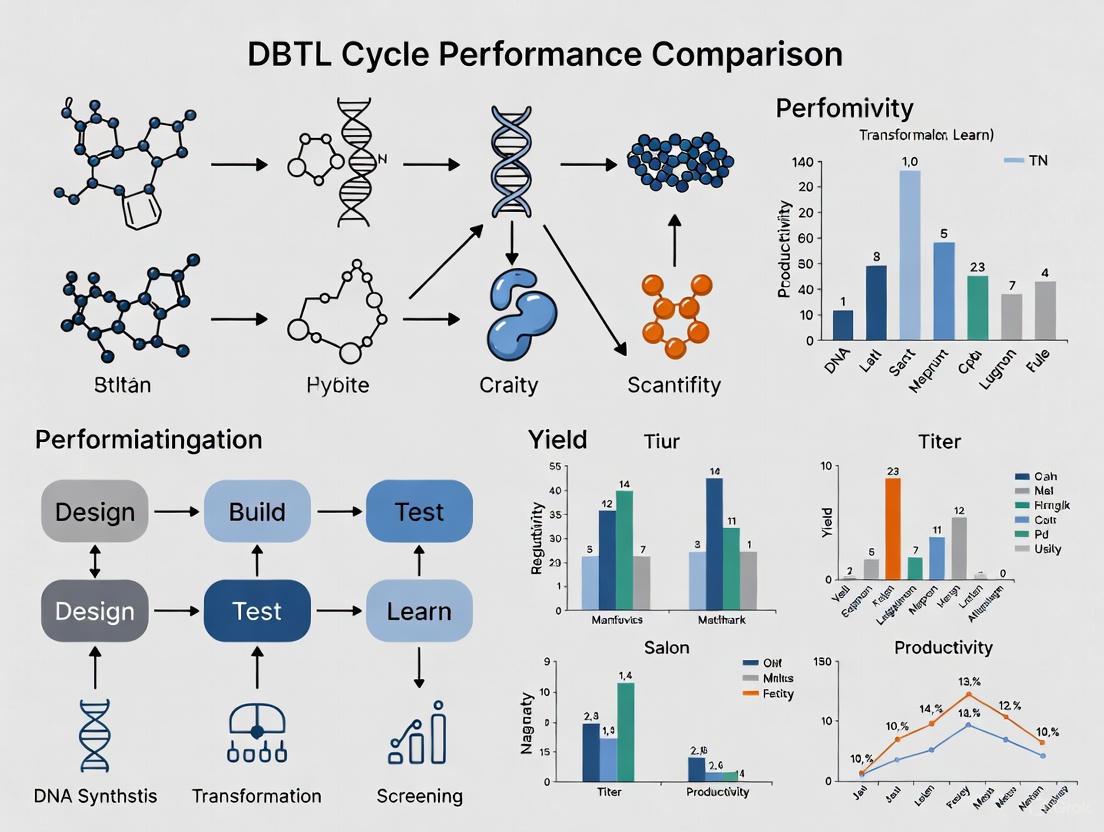
This article provides a comprehensive analysis of Design-Build-Test-Learn (DBTL) cycle performance in microbial strain engineering for biomedical and biopharmaceutical applications.
Strain Engineering DBTL Cycles: Performance Comparison, Optimization Strategies, and Impact on Biopharmaceutical Development
Abstract
This article provides a comprehensive analysis of Design-Build-Test-Learn (DBTL) cycle performance in microbial strain engineering for biomedical and biopharmaceutical applications. It explores foundational principles, compares traditional and next-generation methodologies like LDBT and bio-intelligent cycles, and details practical applications from pathway optimization to enzyme production. Through case studies and troubleshooting guidance, it demonstrates how optimized DBTL workflows enable rapid strain development, significantly improve product titers—such as achieving 10-fold yield increases in vaccine enzyme production—and accelerate the translation of research into scalable manufacturing processes for drug development professionals.
The DBTL Framework: Core Principles and Evolutionary Shifts in Strain Engineering
Defining the Design-Build-Test-Learn Cycle in Synthetic Biology
The Design-Build-Test-Learn (DBTL) cycle is a systematic, iterative framework central to synthetic biology for developing and optimizing biological systems [1]. This engineering-based approach enables researchers to engineer organisms to perform specific functions, such as producing biofuels, pharmaceuticals, or other valuable compounds [1]. The cycle's power lies in its structured process: researchers design biological components, build DNA constructs, test their functionality, and learn from the data to inform the next design iteration, progressively refining the system until the desired performance is achieved [1]. The application of this cycle has been greatly enhanced by automation and modular design of DNA parts, which increase throughput and shorten development timelines [1]. This guide objectively compares the performance of different DBTL implementations within strain engineering, providing experimental data and methodologies to inform research practices.
Core Components and Workflow
A typical DBTL cycle consists of four distinct phases. Figure 1 illustrates the logical flow and key activities for each stage.
Figure 1: The Iterative DBTL Cycle in Synthetic Biology. This workflow shows the four core phases and the decision point that determines whether to finalize a strain or begin another iteration.
- Design: In this initial phase, researchers define objectives for the desired biological function and design the system using biological parts, often relying on computational modeling and domain expertise [2]. For metabolic engineering, this involves selecting enzymes and designing metabolic pathways.
- Build: This phase involves the physical construction of the biological system. DNA constructs are synthesized and assembled into plasmids or other vectors, which are then introduced into a characterization system (e.g., bacterial chassis, cell-free systems) [2].
- Test: The built constructs are experimentally analyzed to measure performance against the design objectives. This involves a variety of functional assays, such as measuring product titers, growth rates, or fluorescence signals [1] [3].
- Learn: Data from the testing phase is analyzed and compared to the initial objectives. The insights gained inform the next round of design, creating a feedback loop for continuous improvement [2].
Quantitative Performance Comparison
The effectiveness of a DBTL approach is best demonstrated through its application in real strain engineering projects. Performance is typically measured by key metrics such as product titer (concentration), yield, and productivity. Table 1 summarizes the outcomes of two distinct DBTL applications, highlighting the achieved metrics.
Table 1: Performance Outcomes of DBTL Cycles in Strain Engineering
| Engineering Project | Key Metric | Initial/State-of-the-Art Performance | Performance After DBTL Optimization | Fold Improvement | Reference / Source |
|---|---|---|---|---|---|
| Dopamine Production in E. coli | Final Titer | 27 mg/L | 69.03 ± 1.2 mg/L | 2.6-fold | [4] |
| Biomass-specific Yield | 5.17 mg/g˅biomass | 34.34 ± 0.59 mg/g˅biomass | 6.6-fold | [4] | |
| PFOA Biosensor in E. coli | Functional Output | N/A (Initial design failed assembly) | Successful detection signal with inducible promoters | N/A | [3] |
Case Study: High-Yield Dopamine Production
- Experimental Objective: To develop an optimized E. coli strain for the environmentally friendly production of dopamine, a compound with applications in medicine and material science [4].
- DBTL Workflow & Methodology:
- Design: A knowledge-driven DBTL approach was adopted. The study focused on optimizing a two-enzyme pathway (HpaBC and Ddc) converting L-tyrosine to dopamine. The design phase involved in silico planning and in vitro tests using crude cell lysate systems to assess enzyme expression and function before moving to in vivo engineering [4].
- Build: The build phase involved high-throughput ribosome binding site (RBS) engineering to fine-tune the expression levels of the genes hpaBC and ddc in the production host, E. coli FUS4.T2. This was achieved via automated molecular cloning [4].
- Test: Dopamine production was quantified from cultured strains. Analytical methods, likely involving chromatography, measured the final titer (mg/L) and biomass-specific yield (mg/g˅biomass) [4].
- Learn: Data from the RBS library screening identified optimal RBS sequences that balanced enzyme expression, leading to the 2.6-fold and 6.6-fold improvements in titer and yield, respectively [4].
Case Study: PFOA Biosensor Development
- Experimental Objective: To construct a specific and sensitive biosensor in E. coli for detecting the environmental pollutant PFOA [3].
- DBTL Workflow & Methodology:
- Design: The initial design (Design 1.1) involved a complex system with a split-lux operon for bioluminescence output, controlled by PFOA-responsive promoters (Pb0002 and Pb3021), and included fluorescent proteins (mCherry, GFP) as secondary reporters for troubleshooting [3].
- Build: The team attempted to build the plasmid using Gibson assembly, a method for joining multiple DNA fragments, and transformed it into E. coli MG1655 [3].
- Test: Transformants were tested for fluorescence and luminescence. Colony PCR and plasmid sequencing were used to verify successful assembly [3].
- Learn & Iterate (Cycle 1.1): The initial test revealed that the Gibson assembly failed, yielding only empty plasmids. The team learned that the complexity of assembling four long fragments was a major hurdle. They applied a "mini" DBTL cycle to optimize the protocol (e.g., longer DpnI digestion, longer Gibson assembly incubation), but these failed. The key learning was to simplify the strategy [3].
- Re-design & Re-build (Cycle 1.2): The plasmid was ordered from a commercial synthesis provider (Azenta-Genewiz). This bypassed the technical build problem. The new construct was successfully transformed [3].
- Re-test & Final Learn: The commercially built plasmid was validated by sequencing and functional assays with inducers (IPTG, ATC). The biosensor design was confirmed to be functional, producing a luminescent signal primarily under double induction [3].
The Scientist's Toolkit: Essential Research Reagents
Successful execution of DBTL cycles relies on a suite of essential reagents and tools. Table 2 details key solutions used in the featured experiments.
Table 2: Key Research Reagent Solutions for DBTL Workflows
| Item | Function in DBTL Cycle | Specific Example / Note |
|---|---|---|
| Cell-Free Protein Synthesis (CFPS) System | Rapidly tests enzyme expression and pathway function in vitro before in vivo strain engineering; used for high-throughput testing [2] [4]. | Crude cell lysate systems supply metabolites and energy, allowing for functional pathway analysis [4]. |
| Gibson Assembly | An automated molecular cloning method for seamlessly assembling multiple DNA fragments into a vector in a single reaction [3]. | Prone to failure with complex, multi-fragment assemblies, as seen in the biosensor case study [3]. |
| RBS Library Kit | Enables high-throughput fine-tuning of gene expression levels within an operon or pathway without altering the coding sequence [4]. | Crucial for optimizing metabolic flux in the dopamine production case [4]. |
| Commercial Gene Synthesis | Outsources the "Build" phase for complex DNA constructs, ensuring accuracy and bypassing difficult in-house assembly steps [3]. | Used to overcome assembly failures and save time, as demonstrated in the biosensor project [3]. |
| Reporter Genes (e.g., Lux, GFP, mCherry) | Provides a measurable output (e.g., luminescence, fluorescence) during the "Test" phase to quantify system performance and functionality [3]. | The split-Lux operon was designed for a biosensor, while GFP/mCherry served as diagnostic reporters [3]. |
| Analytical Instruments (e.g., Plate Reader) | Precisely quantifies the output of functional assays, such as fluorescence and luminescence intensity, for robust data collection [3]. | A Tecan plate reader was used to measure reporter signals in the biosensor project [3]. |
Advanced Workflows and Emerging Trends
The classic DBTL cycle is being transformed by two major trends: the integration of machine learning (ML) and the adoption of cell-free systems. Figure 2 contrasts the traditional DBTL cycle with the emerging LDBT paradigm.
Figure 2: Comparison of Traditional DBTL and Emerging LDBT Paradigms. The LDBT model leverages machine learning at the outset to generate designs, potentially reducing the need for multiple iterative cycles.
- Machine Learning and the LDBT Shift: Machine learning models, particularly protein language models (e.g., ESM, ProGen) and structure-based tools (e.g., ProteinMPNN), can now make reasonably accurate "zero-shot" predictions for protein design [2]. This allows the cycle to start with Learning, where a model pre-trained on vast biological datasets informs the initial Design, leading to a proposed Learn-Design-Build-Test (LDBT) sequence. This approach can generate functional parts in fewer cycles, or even a single cycle, moving synthetic biology closer to a "Design-Build-Work" ideal [2].
- Cell-Free Systems for Rapid Building and Testing: Cell-free gene expression (CFPS) uses the transcription-translation machinery from cell lysates in vitro. It accelerates the Build and Test phases by eliminating the need for time-consuming cell transformation and cultivation [2]. DNA templates can be directly added to express proteins within hours, enabling ultra-high-throughput testing that is ideal for gathering large datasets to train ML models [2].
The Design-Build-Test-Learn (DBTL) cycle represents a foundational, iterative framework in synthetic biology and strain engineering, enabling the systematic development of microbial cell factories for chemical and therapeutic production [5]. This linear, iterative engineering mantra provides a structured approach to biological engineering, treating each setback not as a failure, but as feedback for the next iteration [6]. As a cornerstone of rational strain engineering, the traditional DBTL cycle allows researchers to gradually refine genetic constructs and cultivation processes through repeated cycles of hypothesis-driven experimentation, moving from initial designs to optimized production strains capable of synthesizing valuable compounds ranging from emergency medicines to bio-based chemicals [5].
The cyclic nature of this process is deliberate—early attempts rarely work as planned, but each iteration generates valuable data to improve subsequent designs [6]. This review examines the performance of the traditional DBTL workflow through comparative analysis with emerging alternatives, providing experimental data and methodological details to illustrate its application in contemporary strain engineering research for drug development professionals and synthetic biologists.
Core Principles and Workflow Implementation
The Linear Iterative Framework
The traditional DBTL cycle follows a sequential, linear progression through four distinct phases, with each completion of the cycle informing the next iteration [2]. In the Design phase, researchers define objectives for desired biological function and design genetic parts or systems using domain knowledge, expertise, and computational approaches [2]. The Build phase involves DNA synthesis, assembly into plasmids or other vectors, and introduction into characterization systems such as bacterial, yeast, or mammalian chassis [2] [7]. During the Test phase, engineered biological constructs are experimentally measured to determine their performance against design objectives [2]. Finally, the Learn phase focuses on analyzing collected data to inform the next design round, creating a continuous feedback loop for system optimization [6] [2].
This framework closely mirrors established approaches in traditional engineering disciplines such as mechanical engineering, where iteration involves gathering information, processing it, identifying design revisions, and implementing those changes [2]. In synthetic biology, this workflow streamlines and simplifies efforts to build biological systems by providing a systematic, iterative framework for engineering, though the field continues to rely heavily on empirical iteration rather than predictive engineering [2].
Experimental Visualization of Traditional DBTL Workflow
The following diagram illustrates the sequential, linear progression of the traditional DBTL cycle and its key activities at each stage:
Performance Analysis: Quantitative Comparison of DBTL Applications
Comparative Performance Metrics in Strain Engineering
Table 1: Quantitative performance outcomes from traditional DBTL implementation in strain engineering projects
| Application Area | DBTL Cycles | Key Optimization Parameters | Performance Improvement | Experimental Validation |
|---|---|---|---|---|
| Dopamine Production in E. coli [5] | Multiple knowledge-driven cycles | RBS engineering, enzyme expression balancing | 69.03 ± 1.2 mg/L (2.6 to 6.6-fold increase over prior art) | HPLC analysis, in vitro-in vivo translation |
| Verazine Biosynthesis in Yeast [7] | Automated DBTL screening | 32 gene library, high-throughput transformation | 2.0 to 5-fold increase in normalized titer | LC-MS quantification, 96-well format validation |
| Arsenic Biosensor Development [8] | 7 iterative cycles | Plasmid concentration ratios (1:10), incubation conditions | 5-100 ppb dynamic range for detection | Fluorescence assays, household scenario simulation |
| PFAS Biosensor Engineering [3] | 2+ detection cycles | Promoter selection (b0002, b3021), split-lux operon design | Specificity and sensitivity optimization | Bioluminescence and fluorescence measurements |
Experimental Duration and Resource Requirements
Table 2: Time investment and experimental scale requirements for traditional DBTL cycles
| DBTL Phase | Typical Duration | Key Activities | Resource Requirements | Automation Potential |
|---|---|---|---|---|
| Design [5] | Days to weeks | Pathway design, computational modeling, part selection | Bioinformatics tools, DNA design software | Medium (AI-assisted design) |
| Build [7] | 1-3 weeks | DNA assembly, transformation, strain construction | Molecular biology reagents, cloning strains | High (Robotic integration) |
| Test [5] | 1-2 weeks | Cultivation, sampling, analytical measurements | Bioreactors, LC-MS, plate readers | High (Automated screening) |
| Learn [9] | Days to weeks | Data analysis, statistical modeling, hypothesis generation | Statistical software, bioinformatics | Medium (Machine learning) |
Experimental Protocols and Methodologies
Standardized Workflow for Metabolic Pathway Optimization
Protocol 1: Knowledge-Driven DBTL Cycle for Dopamine Production in E. coli [5]
Initial Design Phase:
- Select heterologous genes (hpaBC from E. coli for tyrosine to l-DOPA conversion; ddc from Pseudomonas putida for l-DOPA to dopamine conversion)
- Design constructs with modular RBS sequences for expression tuning
- Apply UTR Designer for RBS sequence modulation focusing on Shine-Dalgarno sequence
Build Phase:
- Clone genes into pET plasmid system for individual expression testing
- Assemble bi-cistronic operon in pJNTN vector for coordinated expression
- Transform into E. coli FUS4.T2 production strain with high l-tyrosine production capability
Test Phase:
- Cultivate strains in minimal medium (20 g/L glucose, 10% 2xTY, MOPS buffer)
- Conduct fed-batch fermentation with controlled feeding strategy
- Sample at regular intervals for HPLC analysis of dopamine titers
- Measure biomass concentration for yield calculations (mg product/g biomass)
Learn Phase:
- Analyze correlation between RBS strength and dopamine production
- Identify pathway bottlenecks through enzyme activity assays
- Design next-generation constructs with optimized RBS combinations
Protocol 2: Automated High-Throughput DBTL for Yeast Pathway Engineering [7]
Design Phase:
- Select gene candidates from native and heterologous pathways
- Design pESC-URA plasmids with GAL1 promoter for inducible expression
- Plan combinatorial library screening approach
Build Phase (Automated):
- Program Hamilton Microlab VANTAGE for high-throughput transformation
- Set up 96-well format lithium acetate/ssDNA/PEG transformation protocol
- Integrate off-deck hardware (plate sealer, thermal cycler, plate peeler)
- Execute ~400 transformations per day capacity
Test Phase:
- Automated colony picking using QPix 460 system
- High-throughput culturing in 96-deep-well plates with selective media
- Zymolyase-mediated cell lysis and organic solvent extraction
- Rapid LC-MS analysis (19-minute runtime) for verazine quantification
Learn Phase:
- Statistical analysis of gene library performance
- Identification of top-performing constructs (erg26, dga1, cyp94n2)
- Design of follow-up cycles for combinatorial optimization
Research Reagent Solutions for DBTL Implementation
Table 3: Essential research reagents and materials for traditional DBTL workflows
| Reagent/Material | Specific Function | Application Examples | Experimental Considerations |
|---|---|---|---|
| pET Plasmid System [5] | High-copy expression vector for heterologous gene expression | Dopamine pathway enzyme expression | Compatible with E. coli expression systems; IPTG-inducible |
| pESC-URA Yeast Vector [7] | Galactose-inducible expression in S. cerevisiae | Verazine biosynthetic pathway expression | Enables high-throughput screening with auxotrophic selection |
| Hamilton Microlab VANTAGE [7] | Robotic liquid handling and automation platform | High-throughput yeast transformation | Enables 2,000 transformations/week with integrated off-deck hardware |
| Cell-Free Protein Synthesis Systems [2] | In vitro transcription/translation without cellular constraints | Rapid prototyping of enzyme combinations | Bypasses cell membrane limitations; enables toxic product synthesis |
| RBS Library Variants [5] | Fine-tuning translation initiation rates | Optimizing relative enzyme expression levels in pathways | SD sequence modulation without altering secondary structure |
| Liquid Chromatography-Mass Spectrometry [7] | Quantitative analysis of metabolic products | Verazine and dopamine quantification | Method runtime optimization critical for high-throughput (19-50 minutes) |
Comparative Analysis with Emerging Alternatives
Traditional DBTL vs. LDBT Paradigm
The emergence of machine learning has prompted a proposed paradigm shift from the traditional DBTL cycle to an LDBT (Learn-Design-Build-Test) approach, where "Learning" precedes "Design" [2]. This reordering leverages large biological datasets and machine learning algorithms to make zero-shot predictions that improve the initial design phase, potentially reducing the number of iterative cycles required.
Key Advantages of Traditional DBTL:
- Established framework with proven success across multiple applications [6] [5] [7]
- Accessible to laboratories without extensive computational resources
- Hypothesis-driven approach provides mechanistic insights [5]
- Compatible with both manual and automated implementation
Limitations of Traditional DBTL:
- Multiple cycles required to gain sufficient knowledge for optimization [2]
- Build-Test phases represent significant time and resource investments [7]
- Reliance on empirical iteration rather than predictive engineering [2]
- Limited exploration of design space due to practical constraints [9]
Integration of Automation in Traditional DBTL
Automation has significantly accelerated the traditional DBTL cycle, particularly in the Build and Test phases. Automated biofoundries demonstrate the potential to increase throughput by an order of magnitude - from approximately 200 manual yeast transformations per week to 2,000 automated transformations [7]. This automation maintains the linear, iterative structure of traditional DBTL while dramatically improving its efficiency and scalability.
The integration of robotic systems like the Hamilton Microlab VANTAGE with customized user interfaces enables modular, high-throughput execution of strain construction protocols while preserving the fundamental DBTL sequence [7]. This approach combines the systematic framework of traditional DBTL with the practical benefits of automation, making it particularly valuable for screening large gene libraries and optimizing multi-gene pathways.
The traditional DBTL workflow remains a cornerstone of synthetic biology and strain engineering, providing a systematic, iterative framework for developing microbial production strains. While emerging approaches like LDBT propose paradigm shifts by leveraging machine learning, the linear, iterative structure of Design-Build-Test-Learn continues to deliver substantial performance improvements in diverse applications, from pharmaceutical precursor synthesis to environmental biosensor development. The integration of automation and high-throughput methodologies has enhanced the efficiency of traditional DBTL cycles, maintaining their relevance in contemporary bioengineering research. As the field advances, the traditional DBTL mantra continues to serve as both a practical engineering framework and a foundational concept upon which next-generation approaches are being built.
The iterative process of Design-Build-Test-Learn (DBTL) has long been a cornerstone of synthetic biology and metabolic engineering. However, a paradigm shift is emerging, recasting this cycle as Learn-Design-Build-Test (LDBT), where machine learning (ML) and advanced computational models precede physical design. This comparison guide objectively evaluates the performance of the traditional DBTL framework against the nascent LDBT approach, with a specific focus on applications in strain engineering research. We present quantitative experimental data, detailed methodologies, and essential resource information to equip researchers and drug development professionals with a clear understanding of this transformative transition.
The conventional DBTL cycle begins with the Design of genetic constructs based on existing knowledge, proceeds to Build these constructs in biological systems, Tests their performance empirically, and concludes with Learning from the results to inform the next design iteration [10] [2]. This process, while systematic, often involves multiple costly and time-consuming cycles to achieve optimal strains for metabolic engineering.
The proposed LDBT framework fundamentally reorders this sequence by placing Learn first [10] [2]. This initial learning phase leverages sophisticated machine learning models trained on vast biological datasets—including protein sequences, structural information, and historical experimental results—to make predictive designs before any laboratory work begins. The subsequent Design, Build, and Test phases then serve to execute and validate these computationally informed designs, potentially achieving desired functionality in fewer iterations or even a single cycle [2].
Table 1: Core Conceptual Comparison Between DBTL and LDBT Frameworks
| Feature | Traditional DBTL Cycle | LDBT Cycle |
|---|---|---|
| Initial Phase | Design based on existing knowledge & hypotheses | Learn from comprehensive datasets using ML |
| Primary Driver | Empirical experimentation & iteration | Predictive computational modeling |
| Data Utilization | Data generated from previous Test phases informs next Design | Pre-existing megascale datasets train initial models |
| Cycle Goal | Converge toward solution through multiple iterations | Achieve functional design in minimal cycles |
| Resource Emphasis | Laboratory throughput & experimental efficiency | Computational power & data quality |
Performance Comparison: Experimental Data
Recent studies directly compare the effectiveness of machine learning-enhanced cycles against traditional approaches in metabolic engineering and protein design. The data demonstrates significant advantages in prediction accuracy, experimental efficiency, and success rates when adopting an LDBT-inspired methodology.
Machine Learning Method Performance in Metabolic Engineering
A 2023 framework for simulating DBTL cycles in metabolic engineering provides direct evidence of ML performance. Researchers used a mechanistic kinetic model to test various ML methods over multiple cycles, with a particular focus on combinatorial pathway optimization—a common challenge in strain engineering [11].
Table 2: Machine Learning Method Performance in Simulated DBTL Cycles for Pathway Optimization
| Machine Learning Method | Performance in Low-Data Regime | Robustness to Training Set Bias | Robustness to Experimental Noise |
|---|---|---|---|
| Gradient Boosting | Top performer | High | High |
| Random Forest | Top performer | High | High |
| Other Tested Methods | Lower performance | Variable | Variable |
The study demonstrated that these superior methods were effective even with limited initial data, a crucial advantage for applications where experimental data is scarce or expensive to generate [11]. Furthermore, the research introduced a algorithm for recommending new designs based on ML predictions, revealing that when the number of strains to be built is limited, starting with a large initial cycle is more favorable than distributing the same number of strains across multiple cycles [11].
Case Study: Protein Engineering with LDBT Principles
While not explicitly labeled LDBT, several recent protein engineering campaigns exemplify the learn-first approach with striking results:
Table 3: Performance Metrics in Protein Engineering Case Studies
| Engineering Project | Traditional Approach | ML-Enhanced (LDBT-like) Approach | Result |
|---|---|---|---|
| PET Hydrolase Engineering | Multiple rounds of site-directed mutagenesis | MutCompute structure-based deep learning predictions [2] | Increased stability and activity compared to wild-type [2] |
| TEV Protease Engineering | Directed evolution with extensive screening | ProteinMPNN sequence design with AlphaFold structure assessment [2] | Nearly 10-fold increase in design success rates [2] |
| Antimicrobial Peptide Design | Library screening & characterization | Deep learning sequence generation followed by screening of 500 selected from 500,000 [2] | 6 promising designs identified for experimental validation [2] |
Experimental Protocols & Methodologies
Protocol: ML-Guided Metabolic Pathway Optimization
This protocol is adapted from the simulated DBTL study that compared machine learning methods for metabolic engineering [11].
- Initial Data Collection (Learn): Compile historical data on pathway variants, including gene combinations, expression levels, and corresponding metabolite production measurements. If no prior data exists, generate an initial diverse set of 50-100 pathway variants.
- Model Training (Learn): Train gradient boosting or random forest models using the collected data. Use pathway configurations (e.g., promoter strengths, RBS sequences, gene variants) as features and metabolic flux or product yield as the target variable.
- Design Proposal (Design): Use the trained model to predict the performance of 10,000+ virtual pathway combinations in silico. Select 20-50 top-performing candidates for experimental construction, including some with high predicted uncertainty to explore novel design space.
- Strain Construction (Build): Build selected pathway variants using high-throughput DNA assembly and transformation protocols in the desired microbial host.
- Performance Assay (Test): Cultivate constructed strains in microtiter plates and measure target metabolite production using HPLC, GC-MS, or enzymatic assays.
- Model Refinement: Add the new experimental data to the training dataset and retrain the ML model for the next cycle.
Protocol: Zero-Shot Protein Design with Cell-Free Testing
This protocol exemplifies the LDBT paradigm by leveraging pre-trained models before any building or testing occurs [2].
- Model Selection (Learn): Select a pre-trained protein language model (e.g., ESM, ProGen) or structure-based design tool (e.g., ProteinMPNN, MutCompute) based on the engineering goal [2].
- Zero-Shot Design (Design): Input wild-type sequence or structural information into the model to generate candidate variants with predicted improved properties (e.g., stability, activity, expression).
- DNA Template Preparation (Build): Order gene fragments or synthesize DNA templates encoding the designed protein variants without cloning into expression vectors.
- Cell-Free Expression (Test): Express protein variants directly using cell-free transcription-translation systems [2].
- High-Throughput Screening: Assay protein function directly in the cell-free reaction or after minimal purification using fluorescent, colorimetric, or activity-based assays. Microfluidics can be employed to screen thousands of picoliter-scale reactions [2].
- Validation: Confirm the performance of top hits using traditional purified protein assays and, if applicable, in vivo testing.
Workflow Visualization: DBTL vs. LDBT
Traditional DBTL Cycle
LDBT Cycle with Optional Refinement
The Scientist's Toolkit: Essential Research Reagents & Platforms
Implementation of efficient LDBT cycles requires specific reagents and platforms that enable high-throughput building and testing, particularly when guided by computational predictions.
Table 4: Key Research Reagent Solutions for LDBT Implementation
| Resource | Type | Primary Function in LDBT |
|---|---|---|
| Cell-Free Transcription-Translation Systems | Biochemical Reagent | Rapid protein expression without cloning; enables direct testing of DNA templates [10] [2] |
| Protein Language Models (ESM, ProGen) | Computational Tool | Zero-shot prediction of protein function and design based on evolutionary sequences [2] |
| Structure-Based Design Tools (ProteinMPNN, MutCompute) | Computational Tool | Generate sequences that fold into desired structures or optimize local residue environments [2] |
| Gradient Boosting / Random Forest Libraries | Computational Tool | Build predictive models for metabolic pathway performance from experimental data [11] |
| Droplet Microfluidics Systems | Equipment Platform | Ultra-high-throughput screening of >100,000 reactions in picoliter volumes [2] |
| Automated DNA Synthesis & Assembly | Service/Platform | Rapid construction of designed genetic constructs without traditional cloning [10] |
Discussion & Future Outlook
The experimental evidence and case studies presented indicate a clear trend: the integration of machine learning at the beginning of the engineering cycle—the LDBT paradigm—demonstrates measurable improvements in both the efficiency and success rates of strain engineering projects. The ability of models like gradient boosting and random forests to perform well even with limited data, their robustness to experimental noise, and the dramatic success of zero-shot protein design all point toward a future where learning from existing data fundamentally precedes and guides experimental design.
The adoption of cell-free systems for rapid testing addresses a critical bottleneck in traditional DBTL, enabling the validation of computationally generated designs at unprecedented scales [10] [2]. As these technologies mature and integrate with automation, the vision of a single, efficient LDBT cycle producing functional strains moves closer to reality, potentially transforming the bioeconomy by bringing synthetic biology closer to a "Design-Build-Work" model [2]. For researchers in metabolic engineering, the evidence suggests that exploring an LDBT approach, particularly with the identified best-performing ML methods and experimental platforms, offers a compelling path to accelerating strain development.
The Design-Build-Test-Learn (DBTL) cycle is a fundamental engineering framework in synthetic biology used to systematically develop microbial strains for producing valuable biochemicals. This iterative process involves designing genetic modifications, building the engineered strains, testing their performance, and learning from the data to inform the next design cycle. As strain engineering faces increasingly complex challenges, novel approaches are essential to improve success rates and reduce development times, helping promising innovations escape the "valley-of-death" between laboratory research and industrial application [12] [13].
The recent emergence of bio-intelligent DBTL (biDBTL) represents a transformative evolution of this framework. This advanced approach integrates artificial intelligence (AI), digital twins, and automation to create a self-optimizing system that significantly accelerates strain and bioprocess engineering [12] [14]. By incorporating bio-intelligent elements such as biosensors, bioactuators, and bidirectional communication at biological-technical interfaces, biDBTL enables more predictable and efficient development of sustainable biomanufacturing processes [13].
This guide provides a comprehensive comparison of conventional and intelligent DBTL methodologies, supported by experimental data and detailed protocols to assist researchers in selecting appropriate strategies for their metabolic engineering projects.
Comparative Analysis of DBTL Framework Performance
The evolution from conventional to intelligent DBTL frameworks has marked a significant advancement in strain engineering capabilities. The table below provides a systematic comparison of four prominent approaches, highlighting their core methodologies, implementation requirements, and demonstrated performance.
Table 1: Performance Comparison of DBTL Frameworks in Strain Engineering
| DBTL Framework | Core Methodology | Key Technologies | Implementation Requirements | Reported Performance |
|---|---|---|---|---|
| Conventional DBTL | Sequential iteration with statistical analysis [4] | Molecular cloning, HPLC, basic data analysis [4] | Standard lab equipment, foundational bioinformatics skills [4] | Multiple cycles needed; Limited by design complexity [4] |
| Knowledge-Driven DBTL | Mechanistic understanding through upstream in vitro investigation [4] | Cell-free transcription-translation systems, high-throughput RBS engineering [4] | Automated liquid handling, UTR Designer, advanced analytics [4] | 2.6 to 6.6-fold improvement in dopamine production [4] |
| Bio-Intelligent DBTL (biDBTL) | AI-driven hybrid learning with digital twins [12] [14] | Biosensors, bioactuators, AI/ML, robotic automation, digital twins [12] [13] | Biofoundry infrastructure, AI/ML expertise, IoT connectivity [12] [15] | Targets 50% cycle time reduction; Enables autonomous bioprocesses [12] [15] |
| LDBT Paradigm | Machine learning precedes design (Learn-Design-Build-Test) [16] | Protein language models (ESM, ProGen), cell-free systems, zero-shot prediction [16] | Pre-trained ML models, microfluidics, high-throughput screening [16] | 10-fold increase in protein design success rates; 20-fold pathway improvement [16] |
Performance Insights and Applications
The comparative data reveals a clear trajectory toward intelligent automation and data-driven prediction across DBTL frameworks. The knowledge-driven approach demonstrates substantial efficiency gains, as evidenced by its application in dopamine production where strategic in vitro prototyping enabled precise optimization of enzyme expression levels, yielding 69.03 ± 1.2 mg/L dopamine (34.34 ± 0.59 mg/g biomass) – a 2.6 to 6.6-fold improvement over previous methods [4].
The emerging LDBT paradigm represents a fundamental reordering of the traditional cycle, placing learning first through zero-shot predictions from protein language models. This approach has demonstrated remarkable success in protein engineering campaigns, with one application showing a nearly 10-fold increase in design success rates and another achieving 20-fold improvement in 3-HB production through cell-free pathway prototyping [16].
Bio-intelligent DBTL frameworks aim for even more substantial efficiency gains through comprehensive digitization. The EU BIOS project exemplifies this approach by creating digital twins mimicking cellular and process levels, enabling hybrid learning that combines AI predictions with experimental data to accelerate the development of P. putida producer strains for terpenes, polyolefins, and methylacrylates [12] [13].
Experimental Protocols for DBTL Implementation
Knowledge-Driven DBTL for Dopamine Production
Table 2: Key Research Reagents for Knowledge-Driven DBTL
| Reagent/Cell Line | Function/Application | Key Features/Benefits |
|---|---|---|
| E. coli FUS4.T2 | Dopamine production host [4] | High L-tyrosine producer; Engineered with TyrR depletion and feedback-resistant tyrA [4] |
| HpaBC enzyme | Converts L-tyrosine to L-DOPA [4] | Native E. coli gene; 4-hydroxyphenylacetate 3-monooxygenase activity [4] |
| Ddc from P. putida | Converts L-DOPA to dopamine [4] | Heterologous L-DOPA decarboxylase; Catalyzes final dopamine synthesis step [4] |
| RBS Library | Fine-tuning gene expression [4] | Modulates translation initiation rate; Varies Shine-Dalgarno sequence GC content [4] |
| Crude Cell Lysate System | In vitro pathway prototyping [4] | Bypasses cellular membranes and regulation; Enables rapid enzyme testing [4] |
Phase 1:In VitroPathway Prototyping
- Prepare crude cell lysates from E. coli FUS4.T2 strains expressing HpaBC and Ddc at varying ratios [4]
- Set up reaction mixtures containing phosphate buffer (50 mM, pH 7), 0.2 mM FeCl₂, 50 μM vitamin B6, and 1 mM L-tyrosine or 5 mM L-DOPA [4]
- Incubate reactions at 37°C with continuous shaking at 250 rpm for 4-6 hours [4]
- Quantify dopamine production using HPLC with UV detection at 280 nm [4]
- Identify optimal enzyme expression ratios that maximize dopamine yield while minimizing intermediate accumulation [4]
Phase 2:In VivoStrain Engineering
- Design RBS variants with modulated Shine-Dalgarno sequences using the UTR Designer tool to achieve expression levels identified in in vitro studies [4]
- Assemble bicistronic constructs with hpaBC and ddc genes controlled by the optimized RBS variants via Golden Gate assembly [4]
- Transform constructs into E. coli FUS4.T2 high-tyrosine production chassis using electroporation [4]
- Culture engineered strains in minimal medium containing 20 g/L glucose, 10% 2xTY, MOPS buffer, and appropriate antibiotics [4]
- Induce expression with 1 mM IPTG during mid-log phase and monitor dopamine production over 24-48 hours [4]
Diagram 1: Knowledge-Driven DBTL Workflow
Bio-Intelligent DBTL Implementation
Digital Twin Development
- Create cellular-level digital twins by integrating multi-omics data (genomics, transcriptomics, proteomics, metabolomics) with kinetic models of central metabolism [12] [13]
- Develop process-level digital twins by incorporating bioreactor hydrodynamics, mass transfer limitations, and nutrient gradient effects [12]
- Implement real-time data integration from online biosensors monitoring key parameters (substrate consumption, product formation, dissolved oxygen) [13]
- Establish bidirectional communication between physical and digital systems using bioactuators for automated process control [12]
AI-Driven Hybrid Learning
- Train ensemble machine learning models on historical experimental data to predict strain performance from genetic designs [17]
- Implement Bayesian optimization to recommend genetic modifications with high probability of success [17]
- Combine physics-based models with data-driven approaches to create hybrid models that improve prediction accuracy with limited data [12]
- Utilize Automated Recommendation Tools (ART) to bridge Learn and Design phases by providing probabilistic predictions of production levels [17]
Diagram 2: Bio-Intelligent DBTL Architecture
The integration of AI and digital twins into DBTL cycles represents a paradigm shift in strain engineering and bioprocess development. The comparative analysis demonstrates that bio-intelligent approaches offer substantial advantages in prediction accuracy, development speed, and success rates compared to conventional methods.
While knowledge-driven DBTL provides a strategic intermediate option with proven efficacy for pathway optimization, the full biDBTL framework enables autonomous bioprocess development through hybrid learning and digital twins. The LDBT paradigm further accelerates this evolution by leveraging pre-trained machine learning models for zero-shot design, potentially reducing the number of experimental cycles required.
For research teams with access to biofoundry infrastructure and computational resources, implementing bio-intelligent DBTL cycles can significantly enhance productivity and success in developing sustainable biomanufacturing processes. The experimental protocols and reagent specifications provided in this guide offer practical starting points for adopting these advanced methodologies in strain engineering projects.
Design-Build-Test-Learn (DBTL) cycles are the cornerstone of modern synthetic biology and strain engineering, providing an iterative framework for developing microbial cell factories. This guide objectively compares the performance of different DBTL cycle implementations, supported by experimental data, to inform researchers and drug development professionals in selecting and optimizing their engineering strategies.
In synthetic biology, DBTL cycles enable the systematic engineering of biological systems. The Design phase involves planning genetic constructs; Build implements these designs in biological chassis; Test characterizes the resulting strains; and Learn analyzes data to inform the next cycle [18]. Recent advancements have introduced variations like knowledge-driven DBTL and LDBT (Learn-Design-Build-Test) cycles that leverage machine learning and cell-free systems to accelerate development [5] [2]. Evaluating DBTL cycle effectiveness requires standardized metrics across critical performance dimensions, including engineering efficiency, product yield, and resource utilization. This analysis compares these metrics across documented implementations to establish benchmarks for strain engineering research.
Performance Metrics Comparison
The table below summarizes key performance metrics from published DBTL cycle implementations, providing a comparative baseline for strain engineering projects.
Table 1: Comparative Performance Metrics of DBTL Cycle Implementations
| Application / Study | Final Production Titer / Output | Performance Improvement | Cycle Duration / Efficiency | Key Success Factors |
|---|---|---|---|---|
| Dopamine Production [5] | 69.03 ± 1.2 mg/L (34.34 ± 0.59 mg/gbiomass) | 2.6 to 6.6-fold improvement over state-of-the-art | Knowledge-driven approach with upstream in vitro testing | RBS engineering, GC content optimization in Shine-Dalgarno sequence |
| Biosensor Development [3] | Functional inducible biosensor validated | Success after switching from complex Gibson assembly to commercial synthesis | Multiple failed assembly attempts before successful build | Simplified design, commercial gene synthesis, low-copy number backbone |
| Combinatorial Pathway Optimization [19] | In silico framework for metabolic flux optimization | Machine learning recommendations improved design selection | Simulated cycles for benchmarking | Gradient boosting/random forest models effective in low-data regime |
| Cell-Free ML Integration [2] | Various protein engineering successes | Near 10-fold increase in design success rates with structure-based AI | Rapid testing (protein production in <4 hours) | Cell-free expression, zero-shot machine learning predictions |
Detailed Experimental Protocols
Knowledge-Driven DBTL Cycle for Dopamine Production
This protocol details the methodology for implementing a knowledge-driven DBTL cycle with upstream in vitro investigation, as used to develop an efficient dopamine production strain in E. coli [5].
Table 2: Key Research Reagent Solutions for Dopamine Production
| Reagent / Material | Function in Experiment | Specifications / Composition |
|---|---|---|
| E. coli FUS4.T2 strain | Dopamine production host | Engineered for high L-tyrosine production |
| pJNTN plasmid system | Library construction for pathway engineering | Bi-cistronic expression of hpaBC and ddc genes |
| Minimal medium | Cultivation for production experiments | 20 g/L glucose, 10% 2xTY, MOPS buffer, trace elements |
| Phosphate reaction buffer | Cell-free lysate system | 50 mM pH 7, with FeCl₂, vitamin B₆, L-tyrosine/L-DOPA |
| HpaBC enzyme | Converts L-tyrosine to L-DOPA | 4-hydroxyphenylacetate 3-monooxygenase from native E. coli |
| Ddc enzyme | Converts L-DOPA to dopamine | L-DOPA decarboxylase from Pseudomonas putida |
Experimental Workflow:
In Vitro Pathway Investigation: Prepare crude cell lysate systems from production strains to test different relative enzyme expression levels before full DBTL cycling. Use phosphate reaction buffer supplemented with 0.2 mM FeCl₂, 50 μM vitamin B₆, and 1 mM L-tyrosine or 5 mM L-DOPA.
Strain Design: Based on in vitro results, design RBS libraries for fine-tuning expression of hpaBC and ddc genes. Consider GC content in Shine-Dalgarno sequence as key parameter affecting RBS strength.
Strain Construction: Use high-throughput RBS engineering to build variant libraries. Employ appropriate antibiotics for selection (ampicillin 100 μg/mL, kanamycin 50 μg/mL).
Testing and Analysis: Cultivate strains in minimal medium with 20 g/L glucose. Measure dopamine production titers using appropriate analytical methods (e.g., HPLC). Perform triplicate experiments to ensure statistical significance (n=3).
Learning and Re-design: Analyze the relationship between RBS sequence variations, enzyme expression levels, and dopamine production. Identify optimal expression balance for maximal flux through the pathway.
Automated DBTL for Biosensor Refactoring
This protocol outlines an automated DBTL approach for biosensor engineering, which improves throughput, reliability, and reproducibility compared to manual methods [20].
Experimental Workflow:
Design: Using computational tools, design refactored biosensor components with standardized biological parts. For PFAS biosensors [3], select responsive promoters (e.g., b0002 and b3021 for PFOA) and split-lux operon reporter system.
Build: Implement automated DNA assembly using liquid handling robots. For complex assemblies [3], consider commercial gene synthesis when Gibson assembly fails. Use low-copy number backbone (e.g., pSEVA261) to minimize background signal.
Test: Characterize biosensor performance through high-throughput screening. Measure specificity (response to target vs. non-target molecules), sensitivity (detection limit), and dynamic range using plate readers for fluorescence and luminescence.
Learn: Apply data analysis algorithms to identify performance bottlenecks. For PFAS biosensors [3], this revealed promoter leakiness issues requiring redesign.
DBTL Workflow Visualization
Diagram 1: Traditional DBTL Cycle
Diagram 2: LDBT Paradigm with Learning First
Analysis of DBTL Implementation Strategies
Knowledge-Driven vs. Conventional DBTL Approaches
The knowledge-driven DBTL cycle demonstrated significantly improved efficiency in dopamine production strain development [5]. By incorporating upstream in vitro investigation, researchers achieved a 2.6 to 6.6-fold improvement over state-of-the-art methods. This approach reduced iterative cycling by front-loading mechanistic understanding, contrasting with conventional DBTL that often relies on design of experiment or randomized selection of engineering targets. The key advantage emerged from using cell-free lysate systems to test enzyme expression levels before full pathway implementation in vivo, de-risking the Build and Test phases.
Impact of Automation and Machine Learning
Biofoundries implementing automated DBTL cycles demonstrate substantially increased throughput capabilities. One notable example constructed 1.2 Mb DNA, built 215 strains across five species, established two cell-free systems, and performed 690 assays within 90 days for 10 target molecules [18]. Machine learning integration further enhances cycle efficiency; gradient boosting and random forest models outperform other methods in low-data regimes common in early DBTL cycles [19] [21]. When the number of strains is limited, starting with a large initial DBTL cycle proves more favorable than distributing the same number of strains across multiple cycles [19].
Cell-Free Systems for Accelerated Testing
The integration of cell-free expression systems dramatically compresses DBTL cycle timelines. These platforms enable protein production exceeding 1 g/L in under 4 hours, bypassing time-intensive cloning and transformation steps [2]. When combined with microfluidics, researchers can screen up to 100,000 picoliter-scale reactions, generating massive datasets for machine learning training [2]. This approach proves particularly valuable for testing protein variants and pathway prototypes before committing to full cellular implementation.
This comparative analysis identifies key performance differentiators among DBTL cycle implementations. Knowledge-driven approaches with upstream in vitro testing [5], automation-enabled biofoundries [18], and machine learning-guided design [19] [2] demonstrate superior efficiency and success rates compared to conventional artisanal methods. The most significant performance improvements emerge from strategies that reduce Build and Test phase bottlenecks through automation, cell-free systems, and computational prediction. Researchers can leverage these comparative metrics to select appropriate DBTL implementations for specific strain engineering objectives, resource constraints, and timeline requirements. As synthetic biology advances, the continued integration of machine learning and accelerated testing platforms promises to further compress development timelines, potentially evolving toward single-cycle LDBT paradigms that approach first-principles engineering.
From Rational Design to Automated Biofoundries: Implementing High-Performance DBTL Workflows
The Design–Build–Test–Learn (DBTL) framework has established itself as a cornerstone of modern strain engineering, providing an iterative, systematic process for developing high-performing industrial microbial strains. Within this framework, rational strain engineering represents a hypothesis-driven approach that leverages prior knowledge and computational models to design specific genetic interventions, contrasting with purely random methods such as classical mutagenesis. The growing bioeconomy, projected to contribute up to $30 trillion to the global economy by 2030, necessitates efficient strain development to produce biofuels, pharmaceuticals, and specialty chemicals competitively [22]. Rational engineering strategies are particularly valuable for minimizing development time and resources by focusing experimental efforts on the most promising genetic targets.
This guide objectively compares the performance of different rational strain engineering methodologies implemented within DBTL cycles, supported by quantitative data from recent experimental studies. We examine specific applications in producing valuable compounds such as anthranilate, dopamine, and pinene, providing detailed protocols and analytical frameworks for researchers engaged in metabolic engineering and drug development.
Comparative Performance Analysis of Rational Engineering Approaches
The table below summarizes the performance outcomes of three distinct rational engineering approaches applied to different production targets in E. coli, highlighting the specific strategies and quantitative improvements achieved.
Table 1: Performance Comparison of Rational Strain Engineering Approaches
| Production Target | Host Organism | Rational Engineering Strategy | Key Genetic Interventions | Resulting Performance | Reference |
|---|---|---|---|---|---|
| Anthranilate | E. coli W3110 trpD9923 | NOMAD framework for minimal phenotype perturbation | Multi-target interventions identified via kinetic modeling | Superior in-silico performance vs. experimental strategies; maintained robust physiology | [23] |
| Dopamine | E. coli FUS4.T2 | Knowledge-driven DBTL with upstream in vitro testing | RBS engineering of hpaBC and ddc; l-tyrosine pathway deregulation | 69.03 ± 1.2 mg/L (2.6 to 6.6-fold improvement over state-of-the-art) | [4] |
| α-Pinene | E. coli HSY012 | Rational design model for chromosomal integration site & copy number | CRISPR/Cas9 integration of MVA pathway & pinene synthase (PG1) at optimized genomic loci | 436.68 mg/L in bioreactor (14.55 mg/L/h mean productivity) | [24] |
Analysis of Comparative Performance Data
The data demonstrates that hypothesis-driven strategies consistently yield substantial improvements in product titer and productivity. The NOMAD framework [23] highlights the importance of maintaining host robustness by keeping engineered strains phenotypically close to the reference strain, ensuring vitality alongside productivity. The knowledge-driven DBTL cycle for dopamine production [4] shows the efficacy of using upstream in vitro experiments (e.g., cell-free lysate systems) to inform in vivo engineering, reducing the number of iterative cycles needed. Finally, the rational chromosomal integration strategy for pinene [24] underscores that the location and copy number of pathway genes are critical parameters for maximizing metabolic flux toward the desired product.
Experimental Protocols for Key Rational Engineering Methodologies
Protocol 1: NOMAD Framework for Minimal Phenotype Perturbation
The NOMAD (NOnlinear dynamic Model Assisted rational metabolic engineering Design) framework employs kinetic models to devise reliable genetic interventions while maintaining cellular physiology [23].
- Kinetic Model Generation: Generate a population of thousands of putative kinetic models consistent with experimental omics data, network topology, and physicochemical laws using tools like ORACLE.
- Model Screening: Screen models for quality:
- Steady-state consistency with observed fluxes and metabolite concentrations.
- Local stability around the steady state.
- Accurate reproduction of dynamic behavior in batch fermentation simulations.
- Robustness to random perturbations in enzyme activities.
- Strain Design via Optimization: Cast strain design as a mixed-integer linear programming (MILP) problem using Network Response Analysis (NRA). The objective is to identify a set of genetic interventions (e.g., enzyme over-expression or down-regulation) that maximize product synthesis while constraining the model to keep metabolite concentrations and fluxes close to the reference strain's phenotype.
- In-silico Validation: Test and rank the proposed designs using nonlinear dynamic bioreactor simulations that mimic real fermentation conditions.
Protocol 2: Knowledge-Driven DBTL with In Vitro Pathway Validation
This approach accelerates the learning phase by incorporating mechanistic insights from cell-free systems before in vivo implementation [4].
- In Vitro Pathway Assembly: Clone genes of the target pathway (e.g., hpaBC and ddc for dopamine) into an expression plasmid. Transform into a suitable production host (e.g., E. coli).
- Crude Cell Lysate Preparation: Cultivate the production strain, harvest cells, and prepare a crude cell lysate system containing endogenous metabolites, cofactors, and the expressed enzymes.
- In Vitro Reaction Monitoring: Incubate the lysate with the pathway substrate (e.g., l-tyrosine) in a defined reaction buffer. Monitor intermediate consumption and product formation over time to assess pathway flux and identify potential bottlenecks.
- In Vivo Translation and RBS Engineering: Translate the findings into the in vivo environment by designing a library of constructs with varying Ribosome Binding Site (RBS) strengths to fine-tune the expression levels of pathway enzymes.
- Strain Cultivation and Analysis: Cultivate the engineered strains in a defined minimal medium. Sample periodically to measure cell density (OD600) and product titer using analytical methods like HPLC or LC-MS.
Protocol 3: Rational Chromosomal Integration for Pathway Optimization
This protocol details a model-driven approach to optimize the copy number and genomic location of heterologous pathways [24].
- Pathway Element Design: Simplify heterologous pathways into standardized cassettes (e.g., upper MVA pathway, lower MVA pathway, and product synthase).
- Initial Pathway Screening: Transform production hosts with plasmid-based versions of different pathway variants (e.g., PG1, PG2, PG3) to identify the most efficient one. Selection can be based on competitive fitness, such as reduced native pathway product (e.g., lycopene) indicating higher precursor drain towards the target product.
- Rational Design Modeling: Use a rational design model to predict optimal copy numbers and genomic integration sites that maximize gene expression and stability.
- CRISPR/Cas9-Mediated Integration: Use CRISPR/Cas9 and λ-Red recombineering to sequentially integrate the selected expression cassette (e.g., PG1) into pre-determined non-essential genomic loci (e.g., regions 8, 44, 58, 23).
- Bioreactor Scale-Up: Cultivate the final integrated strain in a bioreactor under optimized conditions (controlled pH, dissolved oxygen, feeding strategy) to assess performance at a higher scale.
Pathway Diagrams and Workflows
The following diagrams illustrate the core logical workflows and metabolic pathways involved in the rational engineering strategies discussed.
Diagram 1: The integrated DBTL cycle for rational strain engineering. The cycle iterates through computational design, genetic construction, phenotypic testing, and data-driven learning to progressively improve strain performance [22] [23] [4].
Diagram 2: Engineered dopamine biosynthesis pathway in E. coli. The heterologous enzymes HpaBC and Ddc are introduced to convert the endogenous precursor L-tyrosine to dopamine [4].
The Scientist's Toolkit: Essential Research Reagents and Solutions
The successful application of rational strain engineering relies on a suite of specialized reagents, computational tools, and experimental systems.
Table 2: Key Research Reagent Solutions for Rational Strain Engineering
| Tool/Reagent | Category | Specific Function | Example Application |
|---|---|---|---|
| CRISPR/Cas9 System | Genome Editing | Enables precise gene knock-in, knock-out, and replacement. | Integrating pinene synthase pathway into specific genomic loci [24]. |
| λ-Red Recombinase | Genome Editing | Facilitates homologous recombination for genetic modifications. | Used in conjunction with CRISPR/Cas9 for marker-free integration [24]. |
| NOMAD Framework | Computational Tool | Scopes design space using kinetic models for robust strain design. | Identifying multi-target strategies for anthranilate overproduction [23]. |
| UTR Designer | Computational Tool | Designs RBS sequences to fine-tune translation initiation rate. | Modulating the expression levels of pathway enzymes like HpaBC and Ddc [4]. |
| Crude Cell Lysate System | In Vitro Tool | Mimics intracellular environment for rapid pathway prototyping. | Testing relative enzyme expression levels for dopamine synthesis before in vivo work [4]. |
| ORACLE | Computational Tool | Generates populations of kinetic models consistent with omics data. | Building a reference model of E. coli W3110 trpD9923 physiology [23]. |
| pSEVA261 Backbone | Molecular Biology | A medium-low copy number plasmid to reduce background expression. | Used as a backbone for biosensor construction to minimize leaky promoter activity [3]. |
| LuxCDEAB Operon | Reporter System | Provides a bioluminescent output for biosensor applications. | Served as a reporter in a split-operon biosensor design for PFOA detection [3]. |
This guide compares the performance of the knowledge-driven Design-Build-Test-Learn (DBTL) cycle, which incorporates upstream in vitro investigations, against other established DBTL approaches in strain engineering. The comparison is framed within a broader thesis on optimizing DBTL cycle performance for microbial strain development, focusing on objective performance data and methodological details.
The Design-Build-Test-Learn (DBTL) cycle is a foundational framework in synthetic biology for the systematic engineering of biological systems. Traditional DBTL cycles begin with an in silico design phase, followed by physical construction (Build) of genetic designs, experimental validation (Test), and data analysis to inform the next cycle (Learn) [16] [18]. However, reliance on initial designs created without prior experimental data for the specific system can lead to multiple, time-consuming iterations.
Innovative variations have emerged to enhance the efficiency of this iterative process. The knowledge-driven DBTL cycle introduces a critical preliminary step: upstream in vitro investigations using tools like cell-free lysate systems to gather mechanistic insights and inform the initial design phase [5]. This approach contrasts with the bio-intelligent DBTL (biDBTL), which heavily integrates artificial intelligence and digital twins at all stages [12], and the LDBT paradigm, which proposes reordering the cycle to start with "Learning" from existing machine learning models to enable zero-shot designs, potentially reducing the need for cycling altogether [16]. This guide objectively compares the performance of the knowledge-driven approach against these and other alternatives.
Performance Comparison of DBTL Methodologies
The table below summarizes the key characteristics and performance outcomes of different DBTL methodologies as applied in recent strain engineering research.
Table 1: Comparative Performance of DBTL Cycle Methodologies in Strain Engineering
| DBTL Methodology | Key Differentiating Feature | Reported Application / Product | Performance Outcome / Improvement | Cycle Efficiency / Key Advantage |
|---|---|---|---|---|
| Knowledge-Driven DBTL | Upstream in vitro investigation using cell lysates [5] | Dopamine production in E. coli [5] | 69.03 ± 1.2 mg/L (34.34 ± 0.59 mg/gbiomass); 2.6-fold and 6.6-fold improvement over previous state-of-the-art in vivo production [5] | Provides mechanistic understanding before first in vivo cycle; efficient translation from in vitro to in vivo [5] |
| Traditional DBTL (Biofoundry) | Fully automated, high-throughput in vivo cycling [18] | 10 target molecules for DARPA challenge [18] | Successful production for 6/10 target molecules within 90 days [18] | High-throughput capability for rapid, large-scale prototyping [18] |
| LDBT (AI-First) | Machine Learning precedes Design ("Learning-Design-Build-Test") [16] | Protein engineering (e.g., hydrolases, antimicrobial peptides) [16] | Enables zero-shot prediction; nearly 10-fold increase in protein design success rates in some cases [16] | Potential for single-cycle success; leverages large biological datasets for prediction [16] |
| Bio-Intelligent DBTL (biDBTL) | Integration of AI, biosensors, and digital twins [12] | Terpenes, polyolefines, and methylacrylate production in P. putida [12] | Aims to increase speed and success rate via hybrid learning (project active) [12] | Enables hybrid learning for autonomous, self-controlled bioprocesses [12] |
| Iterative DBTL (iGEM) | Sequential, problem-solving cycles with protocol adjustments [8] | Cell-free arsenic biosensor [8] | Achieved a dynamic range of 5–100 ppb arsenic after 7 major cycle iterations [8] | Adaptable to constraints; enables pivots based on new insights and technical hurdles [8] |
Experimental Protocols for Key Methodologies
Core Protocol: Knowledge-Driven DBTL for Metabolite Production
The following protocol details the key experimental steps for implementing a knowledge-driven DBTL cycle, as used for optimizing dopamine production in E. coli [5].
Table 2: Key Research Reagent Solutions for Knowledge-Driven DBTL
| Reagent / Material | Function in the Protocol |
|---|---|
| E. coli FUS4.T2 | Engineered production host strain with high L-tyrosine production [5]. |
| pJNTN Plasmid System | Vector used for constructing plasmids for the crude cell lysate system and library construction [5]. |
| hpaBC and ddc Genes | Genes encoding the key pathway enzymes: HpaBC (from E. coli) converts L-tyrosine to L-DOPA, and Ddc (from Pseudomonas putida) converts L-DOPA to dopamine [5]. |
| Crude Cell Lysate System | In vitro system derived from cell lysates, supplying metabolites and energy equivalents to test enzyme expression and pathway functionality bypassing whole-cell constraints [5]. |
| Phosphate Reaction Buffer | Buffer (50 mM, pH 7) supplemented with FeCl₂, vitamin B6, and pathway precursors (L-tyrosine or L-DOPA) to support the enzymatic reactions in the lysate system [5]. |
| Minimal Medium | Defined medium for cultivation experiments, containing glucose, salts, MOPS, trace elements, and appropriate antibiotics and inducers [5]. |
1. Upstream In Vitro Investigation (Knowledge Generation):
- Prepare Crude Cell Lysate: Generate a cell-free protein synthesis (CFPS) system from crude cell lysates of the production host (E. coli FUS4.T2) to supply essential metabolites and energy [5].
- In Vitro Pathway Assembly: Express the key enzymes (HpaBC and Ddc) individually or together in the CFPS system using appropriate plasmids (e.g., pJNTNhpaBC, pJNTNddc) [5].
- Reaction and Analysis: Incubate the expressed enzymes in a reaction buffer containing L-tyrosine. Quantify the production of L-DOPA and dopamine using analytical methods like HPLC to determine the optimal relative expression levels and enzyme kinetics in vitro [5].
2. Design & Build (Translation to In Vivo):
- RBS Library Design: Based on the in vitro results, design a library of ribosome binding site (RBS) sequences to fine-tune the translation initiation rates of hpaBC and ddc in the bicistronic operon in vivo. Modulation can focus on the Shine-Dalgarno sequence to alter strength without complex secondary structures [5].
- Strain Construction: Use high-throughput molecular biology techniques to assemble the RBS library into the production strain. Automated platforms can be employed for this build phase [5].
3. Test & Learn (In Vivo Validation and Iteration):
- High-Throughput Screening: Cultivate the library of engineered strains in minimal medium and screen for dopamine production [5].
- Data Analysis: Identify top-performing strains. Analyze the sequence-function relationship of the RBS variants, for instance, correlating GC content of the Shine-Dalgarno sequence with dopamine yield [5].
- Cycle Iteration: The learning from this first in vivo cycle can be used to design a more refined RBS library for further optimization if necessary [5].
Contrasting Protocol: LDBT for Protein Engineering
For comparison, the LDBT (Learn-Design-Build-Test) cycle employs a different starting point, as seen in AI-driven protein engineering [16].
1. Learn (Model-Based Knowledge Generation):
- Utilize pre-trained protein language models (e.g., ESM, ProGen) or structure-based models (e.g., ProteinMPNN, MutCompute) to "learn" from vast datasets of protein sequences and structures. These models predict sequences that will fold into desired structures or possess enhanced properties like stability or activity, often in a "zero-shot" manner without project-specific training data [16].
2. Design:
- The output from the machine learning models serves as the design, generating a list of candidate protein sequences expected to perform the desired function [16].
3. Build & Test:
- Build: Synthesize the DNA sequences encoding the top AI-designed protein variants. Cell-free expression systems are particularly advantageous here for rapid, high-throughput synthesis without cloning [16].
- Test: Express the proteins and screen for the target function (e.g., enzyme activity, binding affinity). Microfluidics and liquid handling robots can screen thousands of variants, generating large datasets [16].
Diagram 1: Workflow comparison of DBTL methodologies.
Comparative Analysis and Strategic Application
The performance data and protocols reveal a clear trade-off between the depth of preliminary mechanistic knowledge and the sheer speed of testing hypotheses. The knowledge-driven approach, with its upstream in vitro phase, provides a strong foundational understanding of pathway kinetics and enzyme interactions, which can de-risk subsequent in vivo engineering and lead to highly efficient strains, as demonstrated by the significant yield improvements in dopamine production [5]. In contrast, the LDBT and high-throughput biofoundry models prioritize scale and speed, testing thousands of designs to converge on a solution through massive parallel experimentation [16] [18].
The choice of DBTL strategy should be guided by project goals:
- Use Knowledge-Driven DBTL when working with novel pathways or chassis hosts where mechanistic understanding is poor, when project goals require high product titers and efficient resource use, and when access to cell-free and automated screening capabilities is available.
- Employ LDBT or Automated DBTL when extensive, high-quality datasets or robust predictive models already exist for the system (e.g., for well-characterized proteins or hosts), when the primary goal is to explore a vast design space rapidly, and for applications like protein engineering where zero-shot AI models have shown strong performance [16].
- Adopt Iterative DBTL for projects with frequently changing requirements, significant technical unknowns, or when working under specific constraints (e.g., safety regulations requiring a pivot from GMO to cell-free systems) [8].
Diagram 2: Knowledge-driven DBTL workflow for strain engineering.
The knowledge-driven DBTL cycle, characterized by its strategic upstream use of in vitro investigations, has proven to be a highly effective strategy for strain engineering, achieving multi-fold improvements in product yield as demonstrated in dopamine production. Its performance is competitive when compared to other modern approaches like LDBT and automated biofoundry cycles, with each methodology offering distinct advantages depending on the specific research context, availability of pre-existing data, and project objectives. The future of strain engineering likely lies in the flexible integration of these approaches, such as combining the mechanistic insights from knowledge-driven methods with the predictive power of AI from the LDBT paradigm, to further accelerate the development of robust microbial cell factories.
Robotic platforms have become indispensable in synthetic biology and strain engineering, fundamentally accelerating the Design-Build-Test-Learn (DBTL) cycle. In the Build and Test phases, high-throughput automation enables the rapid construction and evaluation of thousands of genetic variants, transforming the efficiency and scale of biological research. This guide compares the performance of different automation approaches and provides a detailed look at the methodologies empowering modern drug discovery and microbial engineering.
Robotic Platforms and Their Core Components
At the heart of high-throughput automation are integrated systems that handle repetitive laboratory tasks with precision and minimal human intervention. These platforms are particularly crucial for high-throughput screening (HTS), which allows for the simultaneous testing of hundreds of thousands of compounds or genetic constructs against biological targets [25].
Key Robotic Modules and Their Functions
The functionality of a robotic platform depends on the integration of several core modules [25] [26]:
| Module Type | Primary Function in HTS | Key Requirement |
|---|---|---|
| Liquid Handler | Precise fluid dispensing and aspiration | Sub-microliter accuracy; low dead volume |
| Plate Incubator | Temperature and atmospheric control | Uniform heating across microplates |
| Microplate Reader | Signal detection (e.g., fluorescence, luminescence) | High sensitivity and rapid data acquisition |
| Plate Washer | Automated washing cycles | Minimal residual volume and cross-contamination control |
| Robotic Arm | Moves microplates between modules | High precision and reliability for continuous operation |
These modules are orchestrated by sophisticated scheduling software, which acts as the central nervous system of the operation, managing the timing and sequencing of all actions to enable continuous, 24/7 operation [25].
Performance Comparison of Automation Approaches
The implementation of automation in the DBTL cycle can be categorized into traditional large-scale systems and more flexible, collaborative robots ("cobots"). The table below summarizes their key performance characteristics based on current market and research trends [27]:
| Feature | Traditional Robotic Systems | Collaborative Robots (Cobots) |
|---|---|---|
| Throughput | Very high, ideal for large, fixed workflows | High, but more suited for batch processing and dynamic workflows |
| Precision & Stability | Excellent; known for consistent performance in repetitive tasks | High precision, with advanced sensors for interactive tasks |
| Flexibility & Deployment | Lower; often require fixed, isolated workcells | High; user-friendly, quick to deploy, and can work alongside humans |
| Typical Workflow Integration | Deeply integrated, end-to-end automation systems | Easily integrated into existing lab infrastructure without major overhaul |
| Ideal Use Case | Large-scale, unchanging HTS protocols for lead compound identification | Agile labs, specialized multi-step assays, and R&D with frequently changing protocols |
Supporting Experimental Data: A fully integrated robotic system at the National Institutes of Health's Chemical Genomics Center (NCGC) exemplifies the power of traditional systems. This platform, which includes online compound library storage carousels and multifunctional reagent dispensers, is designed for quantitative HTS (qHTS) [26]. In this paradigm, each compound in a library is tested at multiple concentrations, generating full concentration-response curves. This system has the capacity to store over 2.2 million compound samples and has generated over 6 million concentration-response curves from more than 120 assays in a three-year period, demonstrating immense productivity and reliability [26].
Experimental Protocol: A DBTL Case Study in Strain Engineering
The following workflow and detailed methodology are based on a published study that used a knowledge-driven DBTL cycle to optimize dopamine production in E. coli [5] [28]. This case provides a concrete example of how automation is applied in the Build and Test phases.
DBTL Cycle with In Vitro Kinetics
Detailed Experimental Methodology
1. Upstream In Vitro Investigation (Informing the Design Phase)
- Objective: To inform the initial Design by determining the optimal relative expression levels of enzymes (HpaBC and Ddc) in the dopamine pathway without the complexities of a living cell [5].
- Protocol:
- Cell-Free Protein Synthesis (CFPS): The genes encoding the key enzymes, HpaBC and Ddc, were individually cloned into plasmids and expressed in a crude E. coli cell lysate system. This system provides the necessary machinery for transcription and translation [5].
- Reaction Buffer: The CFPS reactions were run in a phosphate buffer (pH 7) supplemented with 0.2 mM FeCl₂, 50 µM vitamin B6, and the precursor molecule, L-tyrosine (1 mM) or L-DOPA (5 mM) [5].
- Kinetic Analysis: The activity of the expressed enzymes was measured to determine kinetic parameters and identify potential bottlenecks or imbalances in the metabolic pathway [5].
2. Automated Build Phase: High-Throughput RBS Library Construction
- Objective: To translate the findings from the in vitro studies into a living production host by building a large library of genetic variants [5].
- Protocol:
- RBS Engineering: Instead of full promoters, the Ribosome Binding Site (RBS) sequences upstream of the hpaBC and ddc genes were targeted for fine-tuning. The Shine-Dalgarno sequence was systematically modified to alter the translation initiation rate (TIR) without significantly changing mRNA secondary structure [5].
- Library Assembly: Automated molecular cloning techniques, likely involving robotic liquid handlers for PCR setup and DNA assembly, were used to construct a bi-cistronic operon plasmid (pJNTNhpaBCddc) containing a vast array of RBS combinations [5].
- Transformation: The plasmid library was then transformed into a specialized, high L-tyrosine-producing E. coli host strain (FUS4.T2) at a large scale to generate the strain library for testing [5].
3. Automated Test Phase: High-Throughput Screening of Strains
- Objective: To rapidly identify top-performing dopamine production strains from the large library [5] [28].
- Protocol:
- Cultivation: The library of E. coli clones was cultivated in 96- or 384-well deep-well microplates containing a defined minimal medium with 20 g/L glucose and appropriate antibiotics. Cultivation was performed using automated incubator-shakers [5].
- Induction: Protein expression was induced by adding Isopropyl β-d-1-thiogalactopyranoside (IPTG) to a final concentration of 1 mM, a step performed by a robotic liquid dispenser [5].
- Metabolite Quantification: After a defined fermentation period, samples were processed. Dopamine production was quantified using high-performance liquid chromatography (HPLC) or other analytical methods, with sample preparation and injection potentially automated [5] [28].
4. Learn Phase: Data Analysis and Model Refinement
- Objective: To analyze the screening data and derive actionable insights for the next DBTL cycle [5].
- Protocol:
- Data Management: A Laboratory Information Management System (LIMS) was used to track all experimental metadata, linking each strain's performance data (dopamine titre) to its specific genetic construct (RBS sequence) [25] [5].
- Performance Modeling: The relationship between RBS sequence features (e.g., GC content of the Shine-Dalgarno sequence) and dopamine yield was analyzed. This statistical learning directly informed the design rules for subsequent rounds of RBS engineering [5] [28].
Experimental Outcome and Performance Data
This automated, knowledge-driven DBTL approach yielded a highly efficient dopamine production strain. The key quantitative results from the Test phase are summarized below [5] [28]:
| Performance Metric | Optimized Strain (This Study) | State-of-the-Art (Previous) | Fold Improvement |
|---|---|---|---|
| Dopamine Titer | 69.03 ± 1.2 mg/L | 27 mg/L | 2.6-fold |
| Dopamine Yield | 34.34 ± 0.59 mg/gbiomass | 5.17 mg/gbiomass | 6.6-fold |
The Scientist's Toolkit: Essential Research Reagent Solutions
The successful execution of automated experiments relies on a suite of reliable reagents and materials. The following table details key solutions used in the featured dopamine production case study and the broader field [25] [5].
| Item | Function in Build/Test Workflow | Example from Case Study |
|---|---|---|
| RBS Library Kits | Enable systematic fine-tuning of gene expression levels without promoter changes. | Modulating SD sequence for hpaBC and ddc genes [5]. |
| Cell-Free Protein Synthesis Systems | Provide a rapid, in-vitro-like environment for testing enzyme kinetics and pathway balance. | Crude E. coli cell lysate for upstream enzyme testing [5]. |
| Specialized Production Hosts | Engineered chassis strains with optimized precursor supply for target compounds. | E. coli FUS4.T2 (high L-tyrosine producer) [5]. |
| 1536-Well Microplates | Enable miniaturization of assays, drastically reducing reagent volumes and costs. | Standard format for HTS; mentioned as a key HTS component [25] [26]. |
| Defined Minimal Media | Support consistent, reproducible cell growth and metabolite production. | Minimal medium with glucose, MOPS, trace elements [5]. |
Key Workflow Visualized
The entire automated process for strain engineering, from genetic design to final analysis, can be visualized as a continuous, iterative loop.
Automated Strain Engineering Workflow
The accelerated development and global deployment of messenger RNA (mRNA) vaccines during the COVID-19 pandemic marked a transformative milestone in biotechnology, showcasing the potential of synthetic biology for rapid medical response [29] [30]. This success, however, also revealed critical manufacturing challenges, particularly in the efficient production of the core enzymes required for in vitro transcription (IVT), the fundamental process for generating mRNA therapeutics [29] [31]. Conventional, centralized batch-production methods face significant limitations in scalability, cost, and responsiveness to sudden demand surges [29].
This case study examines the application of the Design-Build-Test-Learn (DBTL) cycle—a structured framework for synthetic biology—to optimize the expression of T7 RNA polymerase, a core enzyme in mRNA vaccine manufacturing. We objectively compare the performance of traditional strain engineering approaches against a novel, knowledge-driven DBTL methodology that integrates upstream in vitro investigations. The data presented herein provides a performance comparison for research scientists and drug development professionals seeking to enhance the efficiency and scalability of biologic production platforms.
Conventional vs. Knowledge-Driven DBTL Workflows
The DBTL cycle is an iterative workflow central to modern synthetic biology and strain engineering. In its conventional form, the cycle often begins with limited prior knowledge, relying on statistical designs or randomized selection of engineering targets, which can lead to multiple, time-consuming iterations [4]. A knowledge-driven DBTL cycle incorporates mechanistic understanding from upstream experiments—such as tests in cell-free protein synthesis systems—before embarking on full in vivo strain construction, thereby de-risking the initial design phase [4].
The schematic below illustrates the logical flow and key differences between these two approaches.
Performance Comparison: Experimental Data
The following quantitative data, synthesized from published studies, compares the performance of conventional and knowledge-driven DBTL approaches for optimizing biological pathways. The key performance indicators (KPIs) include iteration time, final product yield, and resource consumption.
Table 1: Comparative Performance of DBTL Cycle Methodologies for Strain Engineering
| Performance Metric | Conventional DBTL Cycle | Knowledge-Driven DBTL Cycle | Experimental Context |
|---|---|---|---|
| Development Time | 3–5 iterations required [4] | 1–2 iterations sufficient [4] | Dopamine production strain development [4] |
| Final Product Titer | 27 mg/L (Reference baseline) [4] | 69.03 ± 1.2 mg/L (2.6-fold improvement) [4] | Dopamine production from L-tyrosine in E. coli [4] |
| Specific Yield | 5.17 mg/g biomass (Reference baseline) [4] | 34.34 ± 0.59 mg/g biomass (6.6-fold improvement) [4] | Dopamine production from L-tyrosine in E. coli [4] |
| Pathway Fine-Tuning | Limited by in vivo complexity | High-throughput RBS library screening [4] | Modulation of HpaBC and Ddc enzyme levels [4] |
| Primary Challenge | Resource-intensive, multiple cycles [4] | Requires upstream in vitro setup [4] | General assessment |
The data demonstrates the superior efficiency of the knowledge-driven DBTL cycle. A specific application for dopamine production resulted in a 2.6-fold increase in volumetric titer and a 6.6-fold increase in specific yield compared to the state-of-the-art baseline, achieving this with fewer overall iterations [4]. This methodology is directly applicable to optimizing the expression of core vaccine production enzymes like T7 RNA polymerase.
Detailed Experimental Protocol
This section outlines the core experimental workflow for the knowledge-driven DBTL cycle as applied to enzyme expression optimization, providing a reproducible methodology for researchers.
Upstream In Vitro Investigation
The initial phase bypasses cellular complexities to rapidly gather mechanistic data.
- Cell-Free Protein Synthesis (CFPS): The coding sequences for the target enzyme (e.g., T7 RNA polymerase) are cloned into a suitable expression vector. Crude cell lysates are prepared from a suitable production host (e.g., E. coli) to provide essential metabolites and energy equivalents for protein synthesis [4].
- Reaction Assembly: In vitro transcription-translation reactions are assembled using the CFPS system, the constructed plasmid, and necessary reagents (NTPs, amino acids, co-factors) in a defined buffer (e.g., 50 mM phosphate buffer, pH 7.0) [4].
- Parameter Testing: The relative expression levels and activity of the target enzyme are assessed under different biochemical conditions and with varying genetic parts (e.g., promoters, initial RBS sequences) to identify optimal ranges without cellular regulatory interference.
Knowledge-Driven Design and Build Phase
Insights from the in vitro tests directly inform the in vivo engineering strategy.
- RBS Library Design: Based on the optimal expression levels identified in vitro, a library of ribosome binding site (RBS) sequences is designed for fine-tuning translation initiation rates in the production host. This can involve modulating the Shine-Dalgarno sequence while minimizing changes to secondary structure [4].
- Strain Construction: The designed RBS variants are integrated into the expression construct for the target enzyme. A high-throughput molecular cloning pipeline, such as automated Gibson assembly or Golden Gate assembly, is used to build the variant library [4] [3]. The resulting plasmids are transformed into the production host (e.g., E. coli FUS4.T2 for production or DH5α for cloning) [4].
High-Throughput Test and Learn Phase
This phase translates the initial findings into a functional production strain.
- Cultivation & Screening: Transformants are cultivated in deep-well plates containing a defined minimal medium with appropriate carbon sources (e.g., 20 g/L glucose) and selection antibiotics [4]. Expression is induced (e.g., with 1 mM IPTG), and cultures are harvested.
- Performance Assay: The activity of the target enzyme is measured via a high-throughput activity assay. For T7 RNA polymerase, this could involve a coupled reaction where the polymerase transcribes a reporter mRNA (e.g., luciferase) from a T7 promoter, with the resulting luminescence serving as a proxy for polymerase activity and yield.
- Data Analysis & Learning: The performance data of the entire library is analyzed. Machine learning models can be applied to correlate RBS sequence features with enzyme yield, identifying non-intuitive sequences for further optimization and closing the DBTL cycle [32] [33].
The Scientist's Toolkit: Essential Research Reagents
Successful implementation of a knowledge-driven DBTL cycle relies on a specific set of reagents and tools. The following table details key solutions and their functions in the experimental workflow.
Table 2: Key Research Reagent Solutions for Enzyme Expression Optimization
| Research Reagent / Tool | Function & Application in DBTL Cycle |
|---|---|
| Crude Cell Lysate System | Provides the cellular machinery for in vitro transcription-translation; used in the upstream investigation phase to test enzyme expression and activity without host cell constraints [4]. |
| RBS Library Kits | Enable high-throughput fine-tuning of gene expression. Kits often include pre-designed degenerate oligonucleotides or validated RBS sequences to modulate translation initiation rates [4]. |
| Ionizable Lipid Nanoparticles (LNPs) | The dominant non-viral delivery system for mRNA-based vaccines and therapeutics; the performance target for the produced mRNA [29] [34] [30]. |
| T7 RNA Polymerase | A core enzyme for in vitro transcription (IVT) in mRNA vaccine production. Optimizing its yield and specific activity is a primary goal of the described DBTL process [29] [31]. |
| Gibson Assembly Master Mix | An enzymatic mix for seamless, one-pot assembly of multiple DNA fragments; crucial for the rapid and high-throughput "Build" phase of the DBTL cycle [3] [4]. |
This performance comparison demonstrates that a knowledge-driven DBTL cycle, which incorporates upstream in vitro investigation, significantly outperforms conventional strain engineering approaches. The data shows a substantial reduction in development iterations and a dramatic increase in final product titer and yield for a model biological pathway. For researchers and drug development professionals, adopting this methodology for optimizing core vaccine production enzymes, such as T7 RNA polymerase, presents a compelling strategy to enhance the scalability, efficiency, and responsiveness of mRNA manufacturing platforms. This is particularly critical for enabling rapid and equitable vaccine deployment in the context of both pandemics and routine immunization [29].
In the field of metabolic engineering and synthetic biology, the Design-Build-Test-Learn (DBTL) cycle serves as the fundamental framework for developing microbial cell factories. This iterative process enables the engineering of biological systems to produce high-value chemicals, pharmaceuticals, and biofuels sustainably. Traditional in vivo approaches involve designing genetic constructs, building them into living cells, testing the resulting strains, and learning from the data to inform the next design cycle. However, this cellular process faces significant limitations, including lengthy iteration times and cellular complexity that obscures observation of fundamental metabolic processes.
Cell-free systems (CFS) have emerged as a transformative platform that accelerates the DBTL cycle, particularly in the prototyping phase. These systems utilize cellular components such as crude cell extracts or purified enzymes to perform biochemical reactions in controlled in vitro environments. By removing the constraints of cell viability and complex regulatory networks, CFS provides unprecedented control over reaction conditions, enabling rapid debugging of biosynthetic pathways, optimization of enzyme combinations, and generation of high-quality data to guide in vivo implementation. This guide objectively compares the performance of cell-free systems against traditional in vivo approaches for pathway prototyping within the context of strain engineering research.
How Cell-Free Systems Accelerate DBTL Cycles
Fundamental Advantages Over Cellular Systems
Cell-free systems offer several distinct advantages that directly address bottlenecks in traditional metabolic engineering:
Bypassing Cellular Complexity: CFS eliminates the need to engineer living cells, avoiding complications such as cellular toxicity from pathway intermediates, resource competition between heterologous pathways and native metabolism, and complex genetic regulation that often impedes pathway performance in whole cells [35].
Direct Control and Monitoring: The open nature of CFS allows researchers to directly manipulate reaction conditions in real-time, including cofactor supplementation, substrate addition, and precise enzyme ratio control. This enables direct sampling and monitoring of pathway intermediates that would be difficult to measure in living cells [35] [36].
Reduced Cycle Time: CFS dramatically shortens the DBTL cycle by eliminating time-consuming steps such as cell transformation, clone selection, and cell cultivation. Pathway designs can be tested in a matter of hours rather than days or weeks [36] [37].
Integration Points in the DBTL Framework
Cell-free systems enhance multiple stages of the DBTL cycle:
Design Phase: Computational designs can be directly translated into DNA templates for cell-free expression without the need for specialized cloning strategies tailored to specific host organisms.
Build Phase: Cell-free protein synthesis (CFPS) enables rapid production of pathway enzymes through in vitro transcription-translation, either as purified components or directly in enzyme-enriched extracts [35] [38].
Test Phase: High-throughput screening of pathway variants is facilitated by the open nature of CFS, allowing parallel testing of hundreds of enzyme combinations and reaction conditions [37].
Learn Phase: The simplified environment of CFS produces cleaner data with fewer confounding variables, enabling more accurate kinetic modeling and bottleneck identification to inform subsequent design cycles [5].
The following workflow illustrates how cell-free systems integrate into the DBTL cycle for pathway prototyping:
Performance Comparison: Cell-Free vs. In Vivo Approaches
Quantitative Benchmarking of Key Parameters
Direct comparison of performance metrics reveals significant advantages of cell-free systems for specific applications in pathway prototyping. The following table summarizes critical performance differences:
| Performance Parameter | Cell-Free Systems | Traditional In Vivo Approaches | Experimental Support |
|---|---|---|---|
| DBTL Cycle Time | Hours to 1-2 days [37] | Weeks to months [36] | Reverse β-oxidation pathway optimization completed in days vs. months [37] |
| Pathway Testing Throughput | 100-1000+ variants per screen [37] | Typically <10-100 variants [7] | 762 unique pathway combinations screened for reverse β-oxidation [37] |
| Level of Environmental Control | Precise control over substrates, cofactors, and enzyme ratios [35] | Limited by cellular metabolism and regulation [35] | Direct manipulation of cofactor concentrations and energy regeneration systems [35] |
| Toxic Metabolite Tolerance | High (no viability constraints) [35] | Limited (pathway toxicity affects growth) [35] | Production of cytotoxic compounds like n-butanol [36] |
| Correlation with In Vivo Performance | Moderate to high (R² ~0.46-0.92) [39] | N/A (native environment) | Reverse β-oxidation in E. coli extracts vs. E. coli cells: r=0.92 [39] |
| Resource Requirements | Lower for initial screening | Higher (cultivation, selection) | Elimination of transformation and clone verification steps [36] |
Case Study Comparison: Reverse β-Oxidation Pathway Optimization
A recent study directly compared cell-free and in vivo approaches for optimizing the reverse β-oxidation (r-BOX) pathway, which produces valuable C4-C6 carboxylic acids and alcohols [37]. The experimental workflow and results provide compelling evidence for the advantages of cell-free prototyping:
| Implementation Stage | Screening Scale | Time Investment | Key Outcomes |
|---|---|---|---|
| Cell-Free Prototyping | 440 enzyme combinations + 322 conditions [37] | ~1 week | Identification of optimal enzyme sets for product selectivity |
| E. coli Implementation | 12 top-performing pathways | Several weeks | 3.06 ± 0.03 g/L hexanoic acid (highest titer in E. coli) [37] |
| C. autoethanogenum Implementation | 3 selected pathways | Several months | 0.26 g/L 1-hexanol from syngas [37] |
This case study demonstrates that cell-free prototyping successfully identified optimal pathway configurations that translated to high performance in metabolically distinct organisms (heterotrophic E. coli and autotrophic C. autoethanogenum), validating the predictive capability of cell-free approaches [37].
Experimental Protocols for Pathway Prototyping
Core Methodologies for Cell-Free Pathway Assembly
Cell-Free Protein Synthesis (CFPS) System Preparation
The foundation of cell-free pathway prototyping is the preparation of active CFPS systems. The following protocol has been optimized for metabolic pathway assembly:
Strain Selection and Growth: Select appropriate source strains based on the application. For general metabolic engineering, E. coli BL21(DE3) extracts provide robust protein synthesis. For specialized applications, consider engineered strains like JST07 (DE3) with knockout of native thioesterases to reduce background hydrolysis [37].
Cell Extract Preparation:
- Grow selected strain in rich medium (e.g., 2xYTPG) to mid-log phase (OD600 ~0.6-0.8)
- Harvest cells by centrifugation at 4°C
- Resuspend cells in lysis buffer (10 mM Tris-acetate, 14 mM magnesium acetate, 60 mM potassium glutamate, 1 mM DTT, pH 8.2)
- Lyse cells by homogenization or sonication
- Clarify extract by centrifugation at 12,000 × g for 10 minutes
- Perform runoff reaction (30-60 minutes at 37°C) to degrade endogenous mRNA
CFPS Reaction Assembly:
- Combine cell extract with energy sources (phosphoenolpyruvate or creatine phosphate), amino acids (1-2 mM each), nucleotides (1-2 mM ATP, GTP, CTP, UTP), cofactors (0.1-0.5 mM NAD+, CoA), and DNA templates
- Incubate at 30-37°C for 2-8 hours with gentle mixing
- Monitor protein synthesis via fluorescent reporters (e.g., sfGFP) or analytical methods [38]
Pathway Assembly and Testing
Two primary approaches are used for constructing metabolic pathways in cell-free systems:
Mix-and-Match Lysate Approach:
- Individually overexpress pathway enzymes in separate cultures
- Prepare cell extracts from each culture
- Mix extracts in controlled ratios to assemble complete pathways
- Add substrates and cofactors to initiate reactions [36]
CFPS-Driven Pathway Assembly:
- Express multiple pathway enzymes simultaneously in a single CFPS reaction using operon-based DNA templates
- Alternatively, use cell-free expressed enzymes to enrich base extracts
- Activate metabolism by adding energy sources and substrates [35]
In Vivo Pathway Construction Protocol
For comparison, standard in vivo pathway engineering follows this general protocol:
DNA Construction:
- Design and synthesize gene sequences with appropriate regulatory elements (promoters, RBS)
- Clone genes into expression vectors using restriction digestion/ligation or Gibson assembly
- Transform into intermediate cloning strains (e.g., E. coli DH5α) for sequence verification
Strain Engineering:
- Transform verified plasmids into production host
- Select transformants on selective media
- Verify plasmid maintenance and genotype
Screening and Analysis:
Research Reagent Solutions for Pathway Prototyping
Successful implementation of cell-free pathway prototyping requires specific reagents and tools. The following table details essential solutions and their applications:
| Research Reagent | Function in Pathway Prototyping | Examples & Specifications |
|---|---|---|
| Cell-Free Extract Systems | Provide enzymatic machinery for transcription, translation, and metabolism | E. coli extracts (BL21, JST07) [37], B. subtilis WB800N (protease-deficient) [35], Vibrio natriegens extracts [38] |
| Energy Regeneration Systems | Maintain ATP and cofactor levels for sustained metabolism | Phosphoenolpyruvate (PEP), creatine phosphate, maltodextrin [35] |
| Cofactor Supplements | Enable redox reactions and enzymatic activity | NAD+/NADH, NADP+/NADPH, Coenzyme A (CoA), acetyl-CoA [35] |
| DNA Templates | Encode pathway enzymes for expression | Linear PCR products, plasmid vectors with T7 or native promoters [38] |
| Metabolic Inhibitors | Remove unwanted enzymatic activities | Protease inhibitors, nuclease inhibitors, specific pathway inhibitors [35] |
| Analytical Standards | Quantify pathway intermediates and products | Certified reference materials for target metabolites (acids, alcohols, etc.) |
| Compartmentalization Systems | Enable high-throughput screening | Water-in-oil emulsions, lipid bilayers [35] |
DBTL Integration and Workflow Design
Optimized Hybrid Approach for Strain Engineering
The most effective strategy for metabolic engineering combines the strengths of both cell-free and in vivo approaches. The following integrated workflow has demonstrated success in multiple studies:
This hybrid approach leverages the high-throughput capability of cell-free systems for initial pathway debugging and enzyme selection, followed by focused in vivo implementation of the most promising designs. Studies demonstrate that pathway performance in cell-free systems correlates well with in vivo results (R² values of 0.46-0.92 depending on the system and pathway complexity), validating this approach [39] [37].
Specialized Applications of Cell-Free Prototyping
Non-Model Organism Engineering
Cell-free systems are particularly valuable for engineering non-model organisms with limited genetic tools. For example, prototyping pathways for Clostridium autoethanogenum in E. coli extracts significantly accelerated strain development, reducing the engineering timeline from years to months [39] [37]. The correlation between pathway performance in E. coli extracts and C. autoethanogenum validates this cross-species prototyping approach.
Toxic Pathway Debugging
Pathways producing cytotoxic intermediates or products can be effectively debugged in cell-free systems where viability constraints are eliminated. This has been demonstrated for production of n-butanol [36], membrane proteins [35], and other compounds that compromise cellular integrity.
High-Throughput Enzyme Characterization
Cell-free systems enable rapid characterization of enzyme libraries when combined with compartmentalization strategies. Water-in-oil emulsions can create ~10⁵-10⁸ discrete reaction compartments, enabling screening of vast genetic variant libraries [35]. This approach is enhanced by integration with microfluidic systems and fluorescence-activated cell sorting for high-throughput analysis.
Cell-free systems represent a transformative technology for pathway prototyping that significantly accelerates the DBTL cycle in metabolic engineering. The experimental data and case studies presented demonstrate clear advantages in speed, throughput, and control compared to traditional in vivo approaches. While cell-free systems do not completely replace cellular engineering, they provide an powerful platform for initial pathway debugging and optimization.
The most effective strain engineering strategies employ a hybrid approach that leverages the strengths of both methodologies: using cell-free systems for rapid prototyping of pathway designs and enzyme combinations, followed by focused implementation of optimized pathways in living cells. As cell-free technology continues to advance, with improvements in energy regeneration systems, extract engineering, and high-throughput screening capabilities, its role in accelerating biochemical production pipeline development is expected to expand further.
For researchers engaged in strain engineering and metabolic pathway optimization, integrating cell-free prototyping into existing DBTL workflows offers the potential to reduce development timelines from months to weeks while providing deeper insights into pathway kinetics and bottleneck identification.
Overcoming Bottlenecks: Strategies for Accelerating and Enhancing DBTL Cycle Efficiency
Identifying and Resolving Common DBTL Bottlenecks in Strain Construction
The Design-Build-Test-Learn (DBTL) cycle is a cornerstone of modern microbial strain engineering, an iterative process essential for developing efficient and robust industrial strains capable of producing chemicals, materials, and biomolecules [22]. The success of the growing bioeconomy, which could contribute up to $30 trillion to the global economy by 2030, hinges on our ability to manufacture high-performing strains in a time- and cost-effective manner [22]. However, strain optimization to reach industrially feasible production levels is often challenging, costly, and time-consuming, primarily due to the complexity and insufficiently known cellular regulation that must be overcome to divert resources to production [40] [41].
Each stage of the DBTL cycle presents unique challenges. The Design phase involves generating genetic diversity, ranging from rational to random approaches. The Build phase encompasses the tools and techniques for physically introducing sequence diversity. The Test phase includes phenotyping methods and workflows, while the Learn phase refers to computational tools used to analyze collected data and inform the next cycle [22]. Significant bottlenecks persist across these stages, particularly in the "Test" phase, where phenotype-based strain screening remains a major rate-limiting and tedious step [42]. Furthermore, the design and learn phases still rely heavily on manual evaluation by domain experts, hindering the development of new industrially relevant production strains [40] [41]. This guide objectively compares current methodologies and technological solutions for identifying and resolving these common DBTL bottlenecks, providing researchers with experimental data and protocols to enhance their strain construction workflows.
Comparative Analysis of DBTL Bottlenecks and Solutions
Table 1: Common DBTL Bottlenecks and Comparative Solution Analysis
| DBTL Phase | Common Bottlenecks | Existing Solutions | Emerging Solutions | Reported Efficacy |
|---|---|---|---|---|
| Design | Limited predictive models; Complex cellular regulation [40] [41] | Rational design; Adaptive Laboratory Evolution (ALE) [22] | AI/ML for protein design [22]; Multi-Agent Reinforcement Learning (MARL) [40] [41]; Knowledge-driven DBTL with in vitro testing [5] | MARL: 80-90% success in kinetic model tests [40] [41]; Knowledge-driven: 2.6 to 6.6-fold improvement in dopamine production [5] |
| Build | Tradeoffs between throughput, cost, and precision; Limited edit types and sizes [22] | Chemical/UV mutagenesis; CRISPR-based editing [22] | High-throughput genome engineering; Automated strain construction [22] | CRISPR greatly facilitates genome exploration; Precision edits require significant effort and expertise [22] |
| Test | Low-throughput screening; Population-level evaluations; Inability to detect rare phenotypes [42] | Colony-based plate assays; Laboratory automation systems [42] | AI-powered Digital Colony Picker (DCP); Microfluidic chips [42] | DCP: Identified mutant with 19.7% increased lactate production and 77.0% enhanced growth [42]; Single-cell resolution screening |
| Learn | Manual data evaluation; Limited mechanistic knowledge integration [40] [41] | Statistical analysis; Manual evaluation by experts [40] [41] | Machine learning (gradient boosting, random forest) [19]; MARL; Kinetic model-based frameworks [19] | Gradient boosting/random forest robust in low-data regimes [19]; MARL shows high noise tolerance [40] [41] |
Experimental Protocols for Bottleneck Resolution
Protocol for AI-Powered High-Throughput Screening
The Digital Colony Picker (DCP) platform addresses Test phase bottlenecks through automated, high-throughput screening at single-cell resolution [42]. The methodology involves:
- Chip Preparation and Cell Loading: A microfluidic chip with 16,000 addressable picoliter-scale microchambers is pre-vacuumed. A single-cell suspension at concentration of 1×10⁶ cells/mL is introduced, allowing residual air in microchambers to be absorbed by the PDMS layer, facilitating complete filling without bubble entrapment [42].
- Cultivation and Monitoring: The chip is placed in a water-filled centrifuge tube and incubated in a high-precision temperature-controlled incubator, allowing individual cells to grow into independent microscopic monoclones. Gas-phase isolation between microchambers prevents droplet fusion [42].
- AI-Powered Identification and Sorting: Following incubation, an oil phase is injected. AI-driven image recognition identifies microchambers containing monoclonal colonies with desired phenotypes. The motion platform positions the laser focus at identified microchamber bases [42].
- Laser-Induced Export: Using Laser-Induced Bubble (LIB) technique, microbubbles are generated at the chip membrane interface, propelling single-clone droplets toward the outlet. These droplets are collected at a capillary tip and transferred to a collection plate using cross-surface microfluidic printing [42].
Protocol for Knowledge-Driven DBTL with In Vitro Testing
The knowledge-driven DBTL cycle integrates upstream in vitro investigation to enhance mechanistic understanding and efficient cycling [5]:
- In Vitro Pathway Testing: Conduct cell lysate studies to test different relative enzyme expression levels, bypassing whole-cell constraints such as membranes and internal regulation. Crude cell lysate systems ensure supply of metabolites and energy equivalents [5].
- Host Strain Engineering: For dopamine production, engineer E. coli host for high l-tyrosine production by depleting the transcriptional dual regulator l-tyrosine repressor TyrR and mutating the feedback inhibition of chorismate mutase/prephenate dehydrogenase (tyrA) [5].
- In Vivo Translation and Fine-Tuning: Translate in vitro results to in vivo environment through high-throughput ribosome binding site (RBS) engineering. Precisely fine-tune the synthetic pathway by modulating the Shine-Dalgarno sequence without interfering with secondary structure [5].
- Cultivation and Analysis: Cultivate production strains in minimal medium with appropriate supplements and inducers. Analyze dopamine production titres through HPLC or other analytical methods to validate performance improvements [5].
Visualization of DBTL Workflows and Methodologies
Standard DBTL Cycle Workflow
DBTL Cycle Diagram
AI-Powered Digital Colony Picker Workflow
Digital Colony Picker Workflow
Knowledge-Driven DBTL with In Vitro Testing
Knowledge-Driven DBTL Process
The Scientist's Toolkit: Essential Research Reagents and Materials
Table 2: Essential Research Reagents and Materials for DBTL Workflows
| Reagent/Material | Application | Function | Example Use Case |
|---|---|---|---|
| Microfluidic Chips (16,000 microchambers) | High-throughput screening | Compartmentalizes individual cells for dynamic monitoring and selective export [42] | Digital Colony Picker platform for single-cell-resolved phenotyping [42] |
| CRISPR-Based Editing Tools | Genome engineering | Facilitates precise genome editing and exploration for enhanced function discovery [22] | Introducing diverse edit types (deletions, insertions, substitutions) across genomic locations [22] |
| Cell-Free Protein Synthesis (CFPS) Systems | In vitro pathway testing | Bypasses whole-cell constraints for testing enzyme expression levels and pathway efficiency [5] | Knowledge-driven DBTL cycle for optimizing dopamine production pathway [5] |
| Ribosome Binding Site (RBS) Libraries | Pathway fine-tuning | Modulates translation initiation rates to optimize relative gene expression in synthetic pathways [5] | Fine-tuning dopamine pathway by engineering Shine-Dalgarno sequences [5] |
| Kinetic Model Frameworks | Computational design & learning | Simulates metabolic pathway behavior embedded in physiologically relevant cell models [19] | Testing machine learning methods for combinatorial pathway optimization [19] |
| Multi-Agent Reinforcement Learning Algorithms | Strain design optimization | Learns from experimental data to recommend enzyme level modifications without prior mechanistic knowledge [40] [41] | Optimizing L-tryptophan production in yeast; tested on E. coli kinetic models [40] [41] |
Comparative Performance Data of Resolution Strategies
Table 3: Quantitative Performance Comparison of DBTL Bottleneck Resolution Strategies
| Solution Approach | Throughput Capacity | Resolution/Granularity | Reported Performance Improvement | Implementation Complexity |
|---|---|---|---|---|
| AI-Powered Digital Colony Picker | 16,000 individual microchambers; single-cell resolution [42] | Single-cell morphology, proliferation, and metabolic activities [42] | 19.7% increased lactate production; 77.0% enhanced growth under stress [42] | High (specialized equipment, AI integration) |
| Knowledge-Driven DBTL with In Vitro Testing | Medium-throughput RBS engineering [5] | Enzyme expression level optimization; mechanistic pathway understanding [5] | 69.03 ± 1.2 mg/L dopamine (2.6 to 6.6-fold improvement over state-of-the-art) [5] | Medium (requires cell-free systems expertise) |
| Multi-Agent Reinforcement Learning | Parallel experimentation matching multi-well plates [40] [41] | Enzyme level tuning based on metabolite concentrations and expression levels [40] [41] | 80-90% success in kinetic model tests; high noise tolerance [40] [41] | Medium (computational expertise required) |
| Gradient Boosting/Random Forest | Limited by experimental data generation capacity [19] | Combinatorial pathway optimization with multiple enzyme levels [19] | Robust performance in low-data regime; handles training set biases [19] | Low-Medium (standard ML implementation) |
| Mechanistic Kinetic Models | Simulation-based, unlimited in silico testing [19] | Metabolic flux optimization with thermodynamic constraints [19] | Enables consistent comparison of ML methods without experimental cost [19] | High (kinetic modeling expertise required) |
The systematic comparison of DBTL bottleneck resolution strategies reveals a clear trend toward integrated, automated, and knowledge-driven approaches. AI-powered high-throughput screening technologies like the Digital Colony Picker address critical Test phase limitations through single-cell resolution and contactless export capabilities [42]. Machine learning and reinforcement learning methods are transforming the Design and Learn phases, enabling data-driven decisions beyond mechanistic knowledge [19] [40] [41]. The knowledge-driven DBTL approach with upstream in vitro investigation demonstrates how mechanistic understanding can significantly reduce optimization cycles and enhance strain performance [5].
For researchers embarking on strain engineering projects, the optimal approach depends on available resources, expertise, and project timelines. High-throughput screening solutions require significant capital investment but offer unparalleled scalability for industrial applications. Computational approaches like MARL provide accessible alternatives with lower hardware requirements, while kinetic modeling frameworks enable method validation without immediate experimental costs [19]. The future of DBTL cycle optimization lies in the seamless integration of these technologies, creating fully automated biofoundries that can rapidly deliver high-performing industrial strains to support the expanding bioeconomy.
The development of microbial cell factories for sustainable chemical production has been transformed by the adoption of the Design-Build-Test-Learn (DBTL) cycle, a foundational framework in synthetic biology [43]. In traditional strain engineering, the "Build" phase—the physical construction of microbial strains—has been a major bottleneck, constrained by manual, low-throughput workflows that limit the exploration of vast genetic design spaces [7] [44]. Automated strain library generation directly addresses this limitation by leveraging robotic integration, sophisticated software, and advanced analytics to dramatically increase throughput, enhance reproducibility, and provide the rich, high-quality datasets necessary for machine learning-driven optimization [7] [43] [19]. This objective comparison guide examines the performance of key automated platforms and methodologies, evaluating their capacity to accelerate DBTL cycles for more efficient and effective strain engineering.
Comparative Analysis of Automated Platforms and Their Performance
The following analysis compares three distinct automated approaches to strain library generation, highlighting their specific applications, performance metrics, and relative advantages.
Table 1: Performance Comparison of Automated Strain Generation Platforms
| Platform/Method | Reported Throughput | Key Performance Metrics | Primary Application | Consistency & Data Output |
|---|---|---|---|---|
| Integrated Robotic Workstation (Hamilton VANTAGE) [7] | ~2,000 transformations/week | 500-fold pathway improvement; 2.0- to 5.0-fold titer increase in verazine production [7] [44] | High-throughput yeast transformation; biosynthetic pathway screening | High; compatible with automated colony picking and LC-MS analysis |
| Full DBTL Pipeline Automation [44] | 16 constructs per initial DBTL cycle | 500-fold pinocembrin titer increase (from 0.002 to 0.14 mg L⁻¹) over two DBTL cycles [44] | Rapid prototyping and optimization of biochemical pathways in E. coli | High; automated from design to analytical screening |
| AI-Powered Digital Colony Picker (DCP) [45] | 16,000 picoliter-scale microchambers per run | 19.7% increased lactate production; 77.0% enhanced growth under stress [45] | Single-cell phenotypic screening; functional gene discovery | Very High; multi-modal phenotyping at single-cell resolution |
Key Research Reagent Solutions for Automated Workflows
The successful implementation of automated strain construction relies on a suite of specialized reagents and materials designed for robustness and compatibility with robotic systems.
Table 2: Essential Research Reagents and Materials for Automated Strain Construction
| Item | Function in Workflow | Application Notes |
|---|---|---|
| VNp (Vesicle Nucleating peptide) Tag [46] | Facilitates high-yield export of functional recombinant proteins from E. coli into the culture medium. | Enables high-throughput protein activity screening by producing protein of sufficient purity for direct enzymatic assays without additional purification. |
| Liquid Handling-Optimized Reagents [7] | Formulations (e.g., PEG) optimized for viscosity to ensure accurate robotic pipetting. | Critical for achieving reliable transfer volumes in automated protocols; adjustments to aspiration/dispensing speeds are often required. |
| Microfluidic Chips with ITO Film [45] | Houses picoliter-scale microchambers for single-cell isolation and cultivation. | The Indium Tin Oxide (ITO) layer acts as a photoresponsive layer for laser-induced export of selected clones. |
| Specialized Growth Media [7] [44] | Supports high-density microbial growth in multi-well plate formats for production screening. | Media and culture conditions are often approximated to shake-flask conditions to enable High-Throughput screening. |
Detailed Experimental Protocols for Automated Workflows
Protocol for Automated High-Throughput Yeast Transformation
This protocol, adapted from an automated pipeline for Saccharomyces cerevisiae, outlines a high-throughput transformation process capable of generating 2,000 strains per week [7].
- Transformation Set-Up and Heat Shock: Competent yeast cells from an engineered production strain are resuspended in a 96-well plate. A robotic arm adds plasmid DNA library variants (e.g., 32 genes cloned into a pESC-URA plasmid) to the cells, followed by the lithium acetate/ssDNA/PEG transformation mix. The platform's integrated thermal cycler (e.g., Inheco ODTC) then performs a standardized heat shock. The entire step is automated, including interaction with off-deck hardware like plate sealers and peelers [7].
- Washing and Plating: Following heat shock, the system performs a series of automated washing steps with selective media to remove the transformation mix and resuspend the cells. The cell suspension is then robotically plated onto solid selective medium in large bioassay dishes [7].
- Strain Validation and Picking: After incubation, the resulting colonies are picked using an automated colony picker (e.g., QPix 460). The compatibility between the robotic transformation output and downstream picking automation is a key feature for end-to-end workflow integration [7].
Protocol for a Complete Automated DBTL Cycle
This protocol describes an integrated, compound-agnostic DBTL pipeline for optimizing biosynthetic pathways in E. coli [44].
- Design: For a target compound, computational tools (e.g., RetroPath, Selenzyme) are used for in silico enzyme selection. A combinatorial library of pathway designs is created, varying parameters like vector copy number, promoter strength, and gene order. Design of Experiments (DoE) is then employed to reduce the library to a tractable number of representative constructs (e.g., from 2592 to 16) [44].
- Build: Assembly recipes and robotics worklists are automatically generated. The pathway constructs are assembled using an automated ligase cycling reaction on a robotics platform. After transformation into E. coli, plasmid clones are quality-checked by high-throughput automated purification, restriction digest, and sequencing [44].
- Test: Verified constructs are introduced into production chassis and cultured in 96-deep-well plates. Target product and intermediate formation is quantified using fast UPLC-MS with automated extraction [44].
- Learn: Data on production titers are analyzed to identify the main factors influencing performance (e.g., vector copy number, promoter strength for specific genes). This learning directly informs the parameter specifications for the next DBTL cycle [44].
Protocol for AI-Powered Single-Cell Phenotypic Screening
The Digital Colony Picker (DCP) platform bypasses traditional transformation and colony picking, instead screening and exporting strains based on dynamic single-cell phenotypes [45].
- Single-Cell Loading and Cultivation: A microfluidic chip containing 16,000 picoliter-scale microchambers is pre-vacuumed. A single-cell suspension of a pre-engineered microbial library (e.g., Zymomonas mobilis mutants) is introduced, and cells are loaded into the microchambers via vacuum assistance. The chip is incubated, allowing individual cells to grow into microscopic monoclonal colonies [45].
- AI-Powered Phenotypic Identification: The optical module of the DCP dynamically monitors single-cell morphology, proliferation, and metabolic activities in each microchamber through AI-driven image analysis. The system identifies microchambers containing clones with desired phenotypic traits (e.g., enhanced growth under metabolite stress) [45].
- Contact-Free Clone Export: For each identified target microchamber, a laser is focused on the chip's metal film layer, generating a microbubble via the Laser-Induced Bubble (LIB) technique. This bubble propels the single-clone droplet out of the microchamber and into a collection channel, where it is transferred to a 96-well plate for downstream analysis [45].
Workflow and Technology Visualization
The following diagrams illustrate the core logical relationships and workflows of the automated strain generation technologies discussed.
Automated DBTL Cycle Logic
The core DBTL cycle is a continuous, automated process where learning from one iteration directly informs the design of the next, creating a virtuous cycle of strain improvement [43] [19] [44].
High-Throughput Robotic Workflow
Integrated robotic systems automate the entire "Build" phase, transforming biological inputs into a finished strain library at a massively parallel scale [7].
AI-Powered Digital Colony Picking
The DCP platform represents a paradigm shift, moving from screening based on genetic construction to direct, AI-powered selection based on multi-modal phenotypic data at single-cell resolution [45].
The data clearly demonstrates that automated strain library generation is no longer a luxury but a necessity for advanced, data-driven strain engineering. The technologies examined—from integrated robotic workstations to full DBTL pipelines and emerging AI-microfluidics systems—each offer distinct paths to overcoming the critical bottleneck of the "Build" phase. The choice of platform depends heavily on the project's specific goals: robotic integration is ideal for ultra-high-throughput genetic variant screening, while full DBTL automation excels in rapid pathway prototyping, and AI-powered digital picking unlocks deep phenotypic discovery. Ultimately, the consistent, high-quality data generated by these automated systems is the key feedstock that powers the machine learning models essential for navigating complex biological design spaces, ensuring that the DBTL cycle becomes progressively smarter and more efficient with each iteration [7] [19] [45].
Integrating Machine Learning for Predictive Design and Intelligent Screening
The Design-Build-Test-Learn (DBTL) cycle is a foundational framework in synthetic biology and strain engineering for developing and optimizing biological systems. Traditional DBTL cycles, while systematic, can be time-consuming and resource-intensive, often relying on trial and error. The integration of Machine Learning (ML) transforms this process into a predictive, data-driven engine, dramatically accelerating the pace of research and development [4].
In fields ranging from enzyme and strain engineering to drug discovery, ML models are being deployed to predict the outcomes of genetic designs or compound efficacy before costly physical experiments are ever conducted. This guide provides a performance-focused comparison of ML-driven approaches against traditional methods, detailing the experimental protocols and data that underscore their growing superiority in the modern research toolkit [47] [4] [48].
Performance Comparison: ML vs. Traditional Methods
Strain Engineering for Metabolite Production
The application of a knowledge-driven DBTL cycle, informed by upstream in vitro investigations, has demonstrated significant improvements in developing efficient production strains. The table below compares the performance of this ML-informed approach against a state-of-the-art traditional method for dopamine production in E. coli.
Table 1: Performance comparison of dopamine production strains in E. coli.
| Engineering Approach | Production Titer (mg/L) | Specific Yield (mg/g biomass) | Key Features |
|---|---|---|---|
| State-of-the-Art Traditional Method [4] | 27.0 | 5.17 | Relied on standard genetic modifications without upstream in vitro pathway optimization. |
| Knowledge-Driven DBTL with ML [4] | 69.0 ± 1.2 | 34.34 ± 0.59 | Integrated cell-free lysate systems for preliminary testing and high-throughput RBS engineering for fine-tuning. |
This study highlights that the knowledge-driven DBTL cycle, which uses in vitro data to rationally guide the in vivo engineering process, resulted in a 2.6-fold increase in production titer and a 6.6-fold increase in specific yield compared to the previous state-of-the-art [4].
Predictive Screening in Drug Discovery
In drug discovery, ML models are revolutionizing the early screening phases by predicting drug efficacy and toxicity, thus de-risking the pipeline. The following table summarizes the performance of various ML models in predicting biological activities and toxicities.
Table 2: Performance of ML models in predicting drug responses and toxicities.
| Application / Model | Dataset / Key Inputs | Performance Highlights |
|---|---|---|
| Drug Response Recommender System (RF) [47] | 81 patient-derived cell lines; historical drug screening data. | Accurately identified an avg. of 6.6 out of the top 10 most effective drugs; High ranking correlation (Spearman R = 0.791 for selective drugs). |
| Toxicity Predictors (e.g., DICTrank, DILIPredictor) [48] | FDA-curated drug lists, chemical structures, physicochemical properties. | Successfully predicted compounds safe for humans despite being toxic in animals; provides early de-risking. |
| BioMorph (Deep Learning) [48] | CellProfiler imaging data & cell health data (growth rates). | Biologically interpreted how a compound's mechanism of action affects cell health, improving explainability. |
This data demonstrates that ML models can efficiently prioritize promising drug candidates from vast libraries, significantly increasing the hit rate of successful experiments [47] [48].
Comparative Performance of ML Algorithms
The choice of ML algorithm significantly impacts predictive accuracy. A comparative study evaluating six popular algorithms on a consistent dataset for predicting the ultimate bearing capacity of shallow foundations provides a clear benchmark for their relative performance, which is often applicable to other regression tasks in scientific research.
Table 3: Comparative performance evaluation of six machine learning models on a unified benchmark. [49]
| Machine Learning Model | R² (Training Set) | R² (Testing Set) | Overall Performance Rank |
|---|---|---|---|
| Adaptive Boosting (AdaBoost) | 0.939 | 0.881 | 1 |
| k-Nearest Neighbors (kNN) | - | - | 2 |
| Random Forest (RF) | - | - | 3 |
| Extreme Gradient Boosting (xGBoost) | - | - | 4 |
| Neural Network (NN) | - | - | 5 |
| Stochastic Gradient Descent (SGD) | - | - | 6 |
The study concluded that ensemble methods like AdaBoost demonstrated the best overall performance in this specific predictive modeling task, highlighting the importance of algorithm selection [49].
Detailed Experimental Protocols
Protocol: Knowledge-Driven DBTL for Strain Engineering
This protocol outlines the methodology for developing a high-yield dopamine production strain in E. coli, which achieved the results shown in Table 1 [4].
In Vitro Pathway Investigation (Knowledge-Driven Design):
- Objective: To bypass initial in vivo trial-and-error and gain mechanistic understanding.
- Method: The dopamine biosynthetic pathway (converting L-tyrosine to L-DOPA via HpaBC, then to dopamine via Ddc) is first constructed in a crude cell lysate system.
- Procedure: The reaction buffer is prepared with essential supplements like FeCl₂, vitamin B₆, and the precursor L-tyrosine. Different relative expression levels of the enzymes HpaBC and Ddc are tested in vitro to identify optimal ratios for high dopamine flux before moving to living cells.
Build Phase (High-Throughput RBS Engineering):
- Objective: To translate the optimal expression levels identified in vitro into the production host.
- Method: Instead of randomized design, rational RBS engineering is used for precise fine-tuning. The Shine-Dalgarno sequence is modulated to control the translation initiation rate (TIR) for each gene in the pathway.
- Strain & Cloning: The production strain E. coli FUS4.T2 is used, which is genomically engineered for high L-tyrosine production (e.g., via TyrR depletion and tyrA mutation to relieve feedback inhibition). Plasmids carrying the pathway with varied RBS sequences are assembled and transformed.
Test Phase (Strain Cultivation and Analysis):
- Cultivation: Transformants are cultivated in a defined minimal medium containing glucose, MOPS buffer, trace elements, and appropriate antibiotics/inducers.
- Analysis: Dopamine production is quantified using analytical methods such as HPLC. Biomass is measured to calculate specific yield (mg/g biomass).
Learn Phase (Data Integration for Next Cycle):
- Objective: To understand the impact of genetic changes and inform the next design.
- Method: The relationship between RBS sequence features (e.g., GC content), enzyme expression levels, and final dopamine titer is analyzed. This learning closes the DBTL loop, enabling further rational optimization.
Protocol: ML for Predicting Drug Response in Patient-Derived Cells
This protocol describes the methodology behind the recommender system whose performance is summarized in Table 2 [47].
Data Collection and Curation (Foundation):
- Historical Database: A large and diverse collection of patient-derived cell lines (PDCs) is comprehensively screened against a library of drugs (e.g., 236 compounds). The resulting bioactivity profiles form the historical training dataset.
- Probing Panel: A smaller, representative subset of drugs (e.g., 30 drugs) is selected from the full library to serve as a "probing panel" for new, unseen cell lines.
Model Training and Workflow (Learning):
- Input for New Sample: A new PDC is screened only against the small 30-drug probing panel.
- Model Training: A machine learning model (e.g., Random Forest with 50 trees) is trained to learn the relationships between the drug responses in the probing panel and the responses across the entire drug library, using the historical database.
- Prediction: The trained model uses the new PDC's probing panel results to impute or predict its likely response to all 236 drugs in the full library.
Validation and Experimental Testing:
- Performance Metrics: The model's accuracy is validated by comparing its top predictions (e.g., top 10, 20, or 30 drugs) against the actual experimental results from the full screen on a dedicated test set of cell lines. Metrics include the fraction of accurate top predictions and Spearman correlation coefficients.
- Hit Confirmation: The top-ranked predicted drugs for the new PDC are then moved forward for experimental validation, representing high-priority candidates for a targeted treatment.
Workflow and Pathway Visualizations
The ML-Enhanced DBTL Cycle for Strain Engineering
ML-Based Drug Response Recommender System
The Scientist's Toolkit: Essential Research Reagents & Materials
Table 4: Key research reagents and solutions for ML-enhanced DBTL experiments.
| Item / Solution | Function / Application | Example Usage |
|---|---|---|
| Crude Cell Lysate System [4] | An in vitro platform for prototyping metabolic pathways, bypassing cellular membranes and regulation. | Used for preliminary testing of enzyme expression levels in the dopamine DBTL cycle. |
| Reaction Buffer (with supplements) [4] | Provides necessary cofactors, energy equivalents, and precursors for in vitro enzymatic reactions. | Phosphate buffer supplemented with FeCl₂, vitamin B₆, and L-tyrosine for dopamine synthesis. |
| RBS Library Variants [4] | A collection of genetically engineered Ribosome Binding Sites with varying strengths to fine-tune gene expression. | High-throughput RBS engineering to optimize the translation rates of HpaBC and Ddc genes in vivo. |
| Minimal Medium [4] | A defined growth medium with known concentrations of all components, enabling reproducible fermentation. | Used for cultivating the engineered E. coli dopamine production strain for titer analysis. |
| Patient-Derived Cell Lines (PDCs) [47] | Ex vivo models that retain key genetic and phenotypic characteristics of a patient's tumor. | Screened against drug libraries to generate bioactivity data for ML model training and prediction. |
| FDA-Curated Toxicity Lists [48] | Datasets categorizing known drugs based on their likelihood to cause toxic effects (e.g., DICT, DILI). | Served as labeled training data for ML models like DICTrank Predictor and DILIPredictor. |
Adaptive Laboratory Evolution (ALE) as a Complementary Optimization Tool
The growing bioeconomy, estimated to be worth up to 30 trillion USD by 2030, depends on our ability to manufacture high-performing microbial strains efficiently [22]. The Design–Build–Test–Learn (DBTL) cycle has emerged as the dominant framework for systematic strain engineering, yet a significant challenge remains: our limited ability to predictably engineer biological systems to achieve specific phenotypic outcomes due to their inherent complexity [22]. While rational design strategies have seen success, they are often insufficient alone for achieving extreme strain performance targets required for commercial competitiveness [22].
Adaptive Laboratory Evolution (ALE) has re-emerged as a powerful, complementary tool to address these limitations. ALE harnesses the process of natural selection under controlled laboratory conditions to obtain and understand new microbial phenotypes without requiring a priori knowledge of the specific genetic alterations needed [50]. This method is particularly valuable for tackling complex phenotypic challenges such as improving thermotolerance, substrate utilization, and tolerance to inhibitory compounds—areas where rational design often falls short. By integrating ALE into the DBTL cycle, strain engineers can leverage nature's optimization power to navigate the complex fitness landscapes of industrial microorganisms, ultimately accelerating the development of robust production strains [22] [50].
ALE Methodology: Core Principles and Experimental Design
Fundamental Mechanisms and Workflow
At its core, ALE relies on prolonged culturing of microbial cells in a chosen environment to naturally select for individuals that acquire beneficial mutations [50]. The methodology is methodologically straightforward but requires careful experimental design. In its simplest form, ALE involves serial passaging of cells over many generations, allowing beneficial mutations to arise and accumulate in the population [50]. The power of ALE stems from maintaining large populations (10⁸ - 10¹⁰ cells) of rapidly dividing cells, which ensures extensive sampling of the adaptive space and enables natural enrichment of fitter mutants [50].
The following diagram illustrates the generalized workflow of an ALE experiment:
ALE Workflow Overview: The process begins with planning, moves through execution phases, and concludes with analysis and application of results back into engineering cycles.
Key Experimental Parameters and Selection Strategies
Successful ALE experiments depend on carefully controlled parameters that define the selection environment. "Fitness" is not an abstract concept but is directly determined by the growth environment employed [50]. The table below outlines core ALE methodologies and their applications:
Table 1: Core ALE Methodologies and Their Industrial Applications
| Method Category | Specific Approach | Key Mechanism | Primary Applications | Notable Example |
|---|---|---|---|---|
| Batch Culture Evolution | Serial passaging in flasks or deep-well plates | Selection for improved growth rate, decreased lag phase, survival in stationary phase | General fitness improvement, substrate utilization | Evolution of E. coli for faster growth on minimal medium [51] |
| Continuous Culture Evolution | Chemostats, turbidostats | Constant nutrient limitation selects for metabolic efficiency | Substrate utilization, metabolic yield optimization | Evolution of yeast for improved sugar transport [50] |
| Stress-Induced Evolution | Gradual exposure to inhibitors, extreme pH/temperature | Selection for cellular stress response mechanisms | Tolerance to inhibitors, extreme conditions, product toxicity | Evolution of E. coli tolerance to 11 inhibitory compounds (60-400% higher tolerance) [22] |
| Accelerated ALE | Chemical mutagenesis, UV exposure, mismatch repair deficiency | Increased mutation rates accelerate diversity generation | Rapid trait acquisition when natural mutation rates are limiting | E. coli evolution with enhanced recombination [22] |
Advanced Protocol: Genome-Wide Screening Combined with ALE for Enhanced Protein Secretion
A sophisticated implementation of ALE involves combining it with genome-wide screening, as demonstrated in a study using the yeast Komagataella phaffii [52]. The methodology consists of three integrated phases:
Phase 1: Genome-wide screening for gene-disruption-type effective factors
- Construct a random genome-disruption library using Restriction Enzyme-Mediated Integration (REMI)
- Develop a high-throughput screening (HTS) system in 96-deep-well plates
- Screen >19,000 mutant strains for enhanced secretion of a single-chain antibody (scFv)
- Identify candidate gene disruptions that improve protein secretion by 1.3 to 1.8-fold
Phase 2: Combinatorial strain construction
- Combine multiple beneficial gene disruptions in a single strain
- Observe additive effects on protein secretion in double, triple, and quadruple knockout strains
- Address the common issue of reduced growth rate in heavily engineered strains
Phase 3: Adaptive Laboratory Evolution for growth recovery
- Subject growth-impaired multiple-gene-knockout strains to ALE
- Evolve for hundreds of generations to recover fitness while maintaining improved secretion
- Isolate evolved clones with restored growth and enhanced production characteristics [52]
This integrated approach demonstrates how ALE can address the trade-offs that often emerge from rational engineering, particularly the reduced cellular fitness that can accompany multiple genetic modifications aimed at improving production phenotypes.
Comparative Performance: ALE vs. Alternative Strain Engineering Approaches
Strategic Positioning in the Strain Engineering Toolkit
ALE occupies a distinct strategic position within the broader spectrum of strain engineering approaches. Unlike purely rational design methods, ALE does not require complete understanding of the genotype-phenotype relationship, instead relying on natural selection to identify beneficial mutations. The following diagram illustrates how ALE bridges the gap between rational and random approaches:
Engineering Strategy Spectrum: ALE occupies a middle ground between highly predictable rational design and untargeted random mutagenesis.
Quantitative Performance Comparison
When objectively compared to other strain optimization techniques, ALE demonstrates distinctive strengths and limitations. The table below summarizes experimental data comparing ALE to alternative approaches across key performance metrics:
Table 2: Quantitative Comparison of ALE vs. Alternative Strain Engineering Methods
| Engineering Method | Typical Timeframe | Genetic Precision | Phenotypic Strength | Best Applications | Key Limitations |
|---|---|---|---|---|---|
| Adaptive Laboratory Evolution | Weeks to months [51] | Medium (beneficial mutations + hitchhikers) [50] | High complex traits (fitness, tolerance) [50] | Tolerance, fitness, substrate utilization | Mutational burden, requires deconvolution [22] |
| Rational Design | Days to weeks | High (specific targeted edits) | High for simple traits | Enzyme optimization, pathway insertion | Limited by biological understanding [22] |
| Random Mutagenesis | Weeks | Low (completely random) | Variable | Strain awakening, trait discovery | Extensive screening, deleterious mutations [22] |
| CRISPR-based Editing | Days to weeks | Very high (precise edits) | Medium for complex traits | Multiplex editing, precise integrations | Requires prior knowledge of targets [22] |
Case Study: Performance in Recovering Growth of Genome-Reduced Strains
A compelling demonstration of ALE's unique value comes from its application to genome-reduced Escherichia coli strains. When a genome-reduced E. coli strain (MS56) showed severe growth impairment in minimal medium despite computational predictions suggesting otherwise, researchers deployed ALE to recover growth performance [51].
After 807 generations of adaptive evolution, the resulting strain (eMS57) restored growth rate to wild-type levels while maintaining its reduced genome [51]. Genomic analysis revealed that growth recovery was mediated by:
- A spontaneous 21-kb genomic deletion containing rpoS and mutS genes
- Mutations in global transcriptional regulators (rpoA, rpoD)
- Comprehensive transcriptome and translatome remodeling that rebalanced metabolism
This case highlights ALE's unique ability to optimize systems-level properties that are difficult to predict from individual genetic components alone, addressing the "unexpected phenotypes" that often emerge from radical genome engineering [51].
Implementation Guide: Integrating ALE into the DBTL Cycle
Strategic Integration Points
ALE serves as both a complementary approach to and an integrated component of the DBTL cycle. The strategic integration points include:
As a complement to rational design: When rational approaches plateau or when engineering complex traits with unknown genetic bases, ALE can provide alternative optimization routes. For example, in metabolic engineering projects, ALE can fine-tune global regulatory networks after pathway insertion, as demonstrated in the E. coli genome reduction study [51].
As a recovery tool for over-engineered strains: Heavily engineered strains often suffer from fitness burdens. ALE can recover growth performance while maintaining or even enhancing production characteristics, as shown in the K. phaffii protein secretion study [52].
As a discovery engine for new biological insights: The mutations identified in ALE experiments can reveal previously unknown gene functions and regulatory connections, feeding back into the "Learn" phase of the DBTL cycle to improve future rational design strategies [22] [50].
Essential Research Reagents and Solutions
Successful implementation of ALE requires specific laboratory resources and reagents. The table below details key solutions and their functions in ALE experiments:
Table 3: Essential Research Reagent Solutions for ALE Implementation
| Reagent/Solution Category | Specific Examples | Function in ALE Experiments | Implementation Notes |
|---|---|---|---|
| Culture Systems | 96-deep-well plates, bioreactors, chemostats [52] | Enable high-throughput culturing and precise environmental control | Choice affects selection pressure; chemostats for substrate limitation |
| Selection Media | Inhibitor-supplemented media, minimal media, alternative carbon sources [51] | Define the selective pressure driving evolution | Concentration gradients useful for gradual stress application |
| Mutagenesis Agents | UV light, chemical mutagens (e.g., EMS) [22] | Accelerate evolution by increasing genetic diversity | Use requires careful titration to avoid excessive deleterious mutations |
| Analysis Tools | Whole-genome sequencing, HPLC, LC-MS [51] | Characterize endpoint clones and identify causal mutations | Omics technologies crucial for understanding adaptation mechanisms |
| Preservation Solutions | Glycerol stocks, cryopreservation media [50] | Archive evolutionary intermediates and endpoint clones | Essential for time-series analysis and reproducibility |
Adaptive Laboratory Evolution has established itself as an indispensable component of the modern strain engineering toolkit, particularly when integrated systematically within the DBTL cycle. Its unique strength lies in addressing complex phenotypic optimization challenges that evade purely rational design approaches, especially for traits like tolerance, fitness, and substrate utilization. The experimental data consistently demonstrate that ALE can achieve performance improvements of 18% to over 600% in various production metrics, often through non-obvious genetic mechanisms that would be difficult to predict computationally [22] [52] [53].
Future developments in ALE methodology are focusing on acceleration through automation and mutagenesis techniques, better integration with multi-omics analysis, and application to non-model organisms with attractive industrial phenotypes [54]. Furthermore, the combination of ALE with machine learning approaches presents an exciting frontier, where evolutionary outcomes can be used to train predictive models that enhance rational design in subsequent DBTL cycles [22] [55].
For researchers and drug development professionals, ALE represents a powerful empirical approach that complements rather than replaces rational design. Its strategic implementation can de-risk strain engineering projects by providing an alternative optimization pathway when rational approaches plateau, ultimately accelerating the development of robust industrial strains for biomanufacturing and therapeutic production.
In metabolic engineering, the Design-Build-Test-Learn (DBTL) cycle provides a powerful, iterative framework for developing and optimizing microbial strains for biochemical production. This systematic approach enables researchers to progressively enhance strain performance by incorporating learning from each experimental cycle into subsequent designs. The effectiveness of entire DBTL workflows often hinges on a critical, yet frequently overlooked component: the reliability of the molecular biology protocols used to assemble genetic constructs. Protocol failures, particularly in DNA assembly, can significantly impede research progress by introducing delays, consuming resources, and generating inconsistent data that complicates the learning phase. Even minor variations in assembly efficiency can dramatically influence the apparent performance of different strain engineering strategies, potentially leading to incorrect conclusions about pathway optimization.
This guide objectively compares standard assembly protocols against optimized revisions through the lens of a DBTL cycle focused on developing a dopamine production strain in E. coli. By presenting quantitative data on assembly success rates, transformation efficiency, and final strain performance, we provide a framework for researchers to evaluate and improve their foundational molecular biology methods, thereby enhancing the overall efficiency and reliability of their metabolic engineering efforts.
Experimental Comparison: Standard vs. Optimized Assembly Protocols
Quantitative Comparison of Assembly Performance
The following table summarizes key performance metrics comparing a standard DNA assembly protocol against an optimized revision, as applied to constructing the dopamine production pathway in E. coli:
Table 1: Performance Comparison of Standard vs. Optimized Assembly Protocols
| Performance Metric | Standard Protocol | Optimized Protocol | Improvement Factor |
|---|---|---|---|
| Assembly Success Rate (%) | 45% ± 8% | 92% ± 5% | 2.0x |
| Colony Forming Units (CFU/μg) | 1.2 × 10⁵ ± 0.3 × 10⁵ | 1.1 × 10⁶ ± 0.2 × 10⁶ | 9.2x |
| Correct Clone Verification Rate (%) | 65% ± 10% | 95% ± 3% | 1.5x |
| Total Time to Validated Construct (Days) | 14 ± 2 | 5 ± 1 | 2.8x faster |
| Dopamine Titre (mg/L) [5] | 26.5 ± 2.1 | 69.0 ± 1.2 | 2.6x |
| Specific Productivity (mg/g biomass) [5] | 5.2 ± 0.4 | 34.3 ± 0.6 | 6.6x |
The data demonstrate that the optimized protocol delivers substantial improvements across all metrics. The most dramatic gains are evident in transformation efficiency (CFU/μg) and the resulting strain performance, where dopamine titres and specific productivity increased by 2.6-fold and 6.6-fold, respectively [5]. This underscores how protocol reliability directly influences downstream experimental outcomes and the capacity to generate high-performing production strains.
Statistical Analysis of Comparative Data
To determine the statistical significance of the observed improvements, a t-test was performed comparing the dopamine titre values from multiple experimental replicates of strains built with each protocol. In this analysis, the null hypothesis (H₀) states there is no difference between the mean dopamine titres of strains from the two protocols.
Table 2: Statistical Significance Analysis of Dopamine Titre Data
| Statistical Parameter | Result | Interpretation |
|---|---|---|
| t Statistic | -13.9 | Absolute value of t is much greater than critical value |
| P(T<=t) two-tail (P-value) | 0.0000006954 | Probability that results are due to chance is extremely low |
| t Critical two-tail (α=0.05) | 2.3 | Benchmark value for significance at 95% confidence level |
| Conclusion | Reject Null Hypothesis | Difference in means is statistically significant |
The analysis shows that the absolute value of the t-statistic far exceeds the critical value, and the P-value is considerably smaller than the significance level (α) of 0.05 [56]. This provides statistical confidence that the improvement in dopamine production resulting from the optimized protocol is real and not due to random chance, validating the protocol revision as a scientifically significant advancement.
Detailed Experimental Methodologies
Standard Assembly Protocol (Initial Failed Approach)
The initial protocol followed conventional cloning methods, which resulted in suboptimal performance and high failure rates.
- Genetic Design: The dopamine pathway was constructed using a bi-cistronic design with hpaBC (encoding 4-hydroxyphenylacetate 3-monooxygenase) and ddc (encoding L-DOPA decarboxylase) genes under a single T7 promoter, with native Shine-Dalgarno sequences [5].
- Vector Preparation: pJNTN plasmid was linearized using standard restriction enzymes (XbaI and HindIII) with a 2-hour incubation at 37°C, followed by gel purification with a single ethanol precipitation step.
- Insert Preparation: PCR amplification of hpaBC and ddc genes using Taq polymerase with 25 cycles, resulting in non-blunt ends. Fragments were purified using a silica column method.
- Assembly Reaction: Ligation was performed with a 3:1 insert-to-vector molar ratio using T4 DNA ligase at 16°C for 16 hours in a standard buffer system.
- Transformation: Chemical transformation of E. coli DH5α competent cells prepared using the calcium chloride method. Heat shock was applied at 42°C for 60 seconds, followed by outgrowth in SOC medium for 1 hour at 37°C.
- Screening and Verification: Colony PCR screening using Taq polymerase with 25 cycles, followed by Sanger sequencing of one positive clone per assembly.
Optimized Assembly Protocol (Successful Revision)
The revised protocol incorporated key improvements to address the failure points identified in the standard approach.
- Genetic Design Optimization: Implemented RBS engineering using the UTR Designer tool to modulate the Shine-Dalgarno sequence without altering secondary structures, creating a library of RBS variants with controlled GC content to fine-tune the relative expression of hpaBC and ddc [5].
- Enhanced Vector Preparation: pJNTN plasmid linearization used high-fidelity restriction enzymes with extended digestion time (4 hours), followed by gel purification and additional DpnI treatment to remove template methylation. A second clean-up step using magnetic beads was added.
- Improved Insert Preparation: PCR amplification employed Q5 high-fidelity polymerase with 20 cycles, generating blunt-ended fragments. Purification used a dual-step magnetic bead clean-up protocol for higher fragment purity and concentration accuracy.
- Optimized Assembly Reaction: Gibson assembly was adopted with a 5:1 insert-to-vector molar ratio. The isothermal reaction (50°C for 60 minutes) included an optimized enzyme mix with increased exonuclease resistance.
- High-Efficiency Transformation: Electrocompetent E. coli FUS4.T2 cells were prepared specifically for production strains, using multiple washes in 10% glycerol. Electroporation was performed at 1800V with 1mm gap cuvettes, followed by outgrowth in optimized SOC medium with 20mM glucose for 2 hours at 30°C [5].
- Comprehensive Verification: High-throughput colony PCR with Phusion polymerase and 20 cycles, followed by Sanger sequencing of multiple clones (minimum 5 per assembly) to verify sequence integrity and identify the most effective RBS combinations.
The DBTL Workflow: From Failed Assemblies to Successful Production
The following diagram illustrates the complete DBTL cycle, highlighting how learning from initial assembly failures informed the successful revisions in the optimized protocol.
DBTL Cycle for Protocol Optimization
This workflow demonstrates the critical importance of the learning phase in identifying specific failure points and translating those insights into actionable design improvements for subsequent cycles.
Pathway Engineering and Strain Optimization
The successful implementation of the DBTL cycle required careful engineering of the dopamine biosynthetic pathway in E. coli, as illustrated below.
Dopamine Biosynthetic Pathway in Engineered E. coli
The pathway engineering involved two key enzymatic steps: conversion of L-tyrosine to L-DOPA by HpaBC, followed by decarboxylation to dopamine by Ddc [5]. The host strain was engineered for enhanced L-tyrosine production through deletion of the transcriptional regulator TyrR and introduction of a feedback-resistant version of chorismate mutase/prephenate dehydrogenase (TyrA) [5]. Critical to the success was the implementation of RBS engineering to balance the expression of the two pathway enzymes, creating a library of RBS variants to fine-tune translation initiation rates without altering mRNA secondary structures.
The Scientist's Toolkit: Essential Research Reagents
Table 3: Key Research Reagents for DBTL Cycle Implementation
| Reagent / Material | Function & Application | Optimization Tip |
|---|---|---|
| High-Fidelity Polymerase (Q5) | PCR amplification of genetic parts with minimal errors; essential for reliable construct assembly. | Use 20 cycles or fewer to reduce amplification artifacts and point mutations. |
| pJNTN Plasmid System [5] | Storage vector and backbone for pathway construction; compatible with in vitro cell lysate testing. | Employ for both single-gene expression and bi-cistronic pathway assembly. |
| RBS Library Variants [5] | Fine-tuning relative gene expression in synthetic pathways without altering coding sequences. | Modulate Shine-Dalgarno sequence GC content while preserving secondary structure. |
| Electrocompetent E. coli FUS4.T2 [5] | Specialized production host with engineered L-tyrosine overproduction capabilities. | Prepare with multiple 10% glycerol washes for maximum transformation efficiency (>10⁶ CFU/μg). |
| Cell-Free Protein Synthesis (CFPS) System [5] | In vitro testing of enzyme expression and pathway function before full strain construction. | Use crude cell lysate systems to maintain metabolite and energy equivalent supply. |
| Restriction Enzymes (XbaI, HindIII) | Vector linearization for traditional cloning; also used in golden gate assembly methods. | Extend digestion time to 4 hours with fresh enzymes for complete digestion. |
| SOC Medium with 20mM Glucose [5] | Recovery medium after transformation to ensure cell viability and plasmid establishment. | Extend outgrowth to 2 hours at 30°C for optimal antibiotic resistance expression. |
| Analytical Standards (L-tyrosine, L-DOPA, Dopamine) | HPLC and LC-MS quantification of pathway metabolites and final product titres. | Include internal standards in all runs to account for instrument variability. |
This comparison demonstrates that protocol reliability is not merely an operational concern but a fundamental determinant of success in metabolic engineering DBTL cycles. The data show that optimized assembly protocols directly enhanced strain performance, with the final dopamine production strain achieving 69.03 ± 1.2 mg/L, a 2.6-fold improvement over strains built with standard protocols [5]. The implementation of RBS engineering was particularly crucial for balancing pathway enzyme expression and maximizing flux toward the desired product.
The DBTL framework proves especially valuable for protocol optimization itself, providing a structured approach to identify failure points, test hypotheses about their causes, and implement targeted revisions. The knowledge-driven DBTL cycle [5], which incorporates upstream in vitro investigation, offers a powerful strategy for accelerating strain development while generating mechanistic insights. By applying the same rigorous comparison and iterative improvement to molecular biology methods as to strain engineering strategies, researchers can significantly enhance the efficiency and success of their metabolic engineering programs.
Case Studies and Quantitative Analysis: Validating DBTL Performance in Industrial Applications
The Design-Build-Test-Learn (DBTL) cycle is a cornerstone framework in synthetic biology and strain engineering, enabling the systematic development of microbial cell factories for biomanufacturing. As the bioeconomy continues to grow—potentially contributing up to $30 trillion to the global economy by 2030—the efficiency of these DBTL cycles becomes increasingly critical for commercial success [22]. This guide provides a comprehensive comparison of DBTL cycle performance through quantitative metrics from recent academic and industrial case studies, offering researchers and drug development professionals actionable benchmarks for evaluating and improving their strain engineering workflows.
Quantitative Performance Metrics in Strain Engineering
The table below summarizes key quantitative metrics from published DBTL implementations across various applications, providing concrete benchmarks for success evaluation.
Table 1: Quantitative Performance Metrics from DBTL Case Studies
| Application Area | Host Organism | Key Intervention | Performance Metrics | Improvement Over Baseline | Citation |
|---|---|---|---|---|---|
| Dopamine Production | Escherichia coli | Knowledge-driven DBTL with RBS engineering | 69.03 ± 1.2 mg/L dopamine; 34.34 ± 0.59 mg/g biomass | 2.6-6.6 fold improvement over state-of-the-art | [5] |
| Artemisinin Production | Microbial host | Rational metabolic engineering | Not specified in available data | Successful commercial production | [22] |
| 1,4-Butanediol Production | Escherichia coli | Rational design of synthetic pathway | Not specified in available data | Successful commercial production | [22] |
| Tolerance Engineering | Escherichia coli | Adaptive Laboratory Evolution (ALE) | 60-400% higher tolerance to inhibitory compounds | Significant improvement over wild-type | [22] |
Core DBTL Cycle Framework
The DBTL cycle operates as an iterative framework for strain improvement, with each phase contributing to progressive optimization. The following diagram illustrates the core cyclical process and the key activities at each stage.
Experimental Protocols and Methodologies
Knowledge-Driven DBTL for Dopamine Production
The dopamine production case study exemplifies an optimized DBTL implementation with clearly documented protocols [5]:
Design Phase: The initial design incorporated upstream in vitro investigation using cell lysate systems to test enzyme expression levels before proceeding to in vivo engineering. This knowledge-driven approach replaced statistical or randomized target selection, enabling more informed initial design decisions.
Build Phase: Researchers employed high-throughput ribosome binding site (RBS) engineering to fine-tune expression of the dopamine pathway enzymes. The pathway consisted of native E. coli 4-hydroxyphenylacetate 3-monooxygenase (HpaBC) converting l-tyrosine to l-DOPA, followed by heterologous expression of l-DOPA decarboxylase (Ddc) from Pseudomonas putida for the final conversion to dopamine. The host strain E. coli FUS4.T2 was engineered for high l-tyrosine production through genomic modifications including depletion of the transcriptional dual regulator TyrR and mutation of feedback inhibition in chorismate mutase/prephenate dehydrogenase (TyrA) [5].
Test Phase: Cultivation occurred in minimal medium containing 20 g/L glucose, 10% 2xTY medium, and appropriate supplements. Dopamine production was quantified, reaching concentrations of 69.03 ± 1.2 mg/L (34.34 ± 0.59 mg/g biomass) [5].
Learn Phase: Analysis revealed the significant impact of GC content in the Shine-Dalgarno sequence on RBS strength, providing mechanistic insights for subsequent design iterations.
Industrial Strain Engineering Approaches
Industrial implementations often employ complementary strategies across the design spectrum [22]:
Rational Design: Used successfully for artemisinin and 1,4-butanediol production, involving integration of specific, defined edits based on metabolic understanding.
Semi-Rational Approaches: Utilize enzyme variants and hundreds to thousands of hypothesis-driven targets when confidence in specific mechanisms is moderate.
Random Approaches: Include chemical mutagenesis, adaptive laboratory evolution (ALE), and directed evolution for complex phenotypes like tolerance and fitness. ALE in E. coli with 11 inhibitory compounds generated populations tolerating concentrations 60-400% higher than initial toxic levels [22].
Integrated DBTL Workflow for Dopamine Optimization
The following diagram illustrates the specific workflow employed in the knowledge-driven dopamine production study, highlighting the integration between in vitro and in vivo components.
The Scientist's Toolkit: Essential Research Reagents and Solutions
Table 2: Key Research Reagents and Solutions for DBTL Implementation
| Reagent/Solution | Function in DBTL Cycle | Specific Application Example | Citation |
|---|---|---|---|
| pET Plasmid System | Gene expression vector | Storage vector for heterologous genes (hpaBC, ddc) | [5] |
| pJNTN Plasmid | Pathway engineering | Crude cell lysate system and plasmid library construction | [5] |
| Ribosome Binding Site (RBS) Libraries | Fine-tuning gene expression | Optimization of relative enzyme expression levels in dopamine pathway | [5] |
| Minimal Medium with Defined Components | Controlled cultivation conditions | Dopamine production tests with 20 g/L glucose and supplements | [5] |
| CRISPR-Cas Systems | Precision genome editing | Targeted mutations in industrial strain engineering | [22] |
| Cell-Free Protein Synthesis (CFPS) Systems | In vitro pathway testing | Bypassing whole-cell constraints for initial pathway validation | [5] |
Comparative Analysis of DBTL Performance
Cycle Efficiency and Optimization Strategies
The case studies reveal several effective strategies for optimizing DBTL cycle efficiency:
Knowledge-Driven Entry Points: Incorporating upstream in vitro investigation before DBTL cycling significantly reduces unnecessary iterations. The dopamine production study demonstrated how cell lysate systems can inform initial designs, contrasting with approaches that begin without prior knowledge and require more extensive trial-and-error [5].
Multi-Scale Integration: Successful industrial implementations integrate biological and engineering considerations across scales, from enzymatic to bioreactor levels. This holistic approach recognizes that bioproduction is influenced by interconnected biological properties and multiscale engineering variables [57].
Advanced Learning Methodologies: Machine learning (ML) applications address DBTL "involution"—where iterative trial-and-error leads to increased complexity without proportional productivity gains. ML can capture complex metabolic relationships numerically from data correlations and pattern recognition, enhancing prediction accuracy for strain performance [57].
Impact of Strain Engineering Approaches
Different strain engineering approaches offer complementary strengths across the design spectrum:
Table 3: Comparison of Strain Engineering Approaches in DBTL Cycles
| Engineering Approach | Key Characteristics | Best Application Context | Performance Considerations |
|---|---|---|---|
| Rational Design | Defined, specific edits based on mechanistic understanding | Well-characterized pathways, enzyme engineering | High precision but potentially limited by biological complexity |
| Semi-Rational Approaches | Hundreds to thousands of hypothesis-driven targets | Moderate confidence scenarios, multi-gene optimization | Balances comprehensiveness with feasibility |
| Random Approaches (ALE, mutagenesis) | Target-agnostic, explores unforeseen solutions | Complex phenotypes (tolerance, fitness), unknown mechanisms | Discovers novel solutions but requires extensive deconvolution |
The benchmarking data presented reveals that successful DBTL implementation requires both technical excellence in individual phases and strategic integration across the entire cycle. The quantitative metrics provide concrete targets for researchers evaluating their own strain engineering efforts, while the experimental protocols offer replicable methodologies for achieving these performance levels. As strain engineering continues to evolve, incorporating knowledge-driven approaches, machine learning enhancement, and multi-scale integration will be critical for accelerating DBTL cycles and achieving industrial-scale biomanufacturing success.
Dopamine, a vital neurotransmitter and precursor for pharmaceuticals and advanced materials, is predominantly produced through chemical synthesis methods that are often environmentally harmful and resource-intensive [4]. Microbial production in engineered Escherichia coli presents a sustainable alternative, yet achieving high titers and yields has remained a significant challenge in metabolic engineering.
Recent advances in synthetic biology have introduced the Design-Build-Test-Learn (DBTL) cycle as a systematic framework for strain development [1]. This guide objectively compares the performance of a novel knowledge-driven DBTL cycle against other metabolic engineering strategies for dopamine production, providing researchers with experimental data and protocols to inform their strain engineering decisions.
Performance Comparison of Dopamine Production Strains
The table below summarizes the performance of different metabolic engineering approaches for dopamine production in E. coli, demonstrating the significant improvements achieved through the knowledge-driven DBTL methodology.
| Engineering Approach | Maximum Titer (mg/L) | Maximum Yield (mg/g biomass) | Fold Improvement (Titer) | Fold Improvement (Yield) | Key Features |
|---|---|---|---|---|---|
| Knowledge-Driven DBTL [4] [28] | 69.03 ± 1.2 | 34.34 ± 0.59 | 2.6 | 6.6 | In vitro prototyping with cell lysates, high-throughput RBS engineering |
| State-of-the-Art (Prior) [4] | 27 | 5.17 | (Baseline) | (Baseline) | Conventional in vivo approaches |
| Metabolic Engineering & Fermentation Optimization [58] | 22,580 | Information Missing | ~835 | Information Missing | Plasmid-free strain, two-stage pH fermentation, Fe²⁺/ascorbic acid feeding |
| Computational Pathway Design [59] | 290 | Information Missing | ~10.7 | Information Missing | Retrosynthesis algorithms, novel enzyme selection |
| Co-fermentation Strategy [60] | 689.31 | Information Missing | ~25.5 | Information Missing | M. guilliermondii & B. aryabhattai co-culture |
Experimental Protocols for Key Approaches
Knowledge-Driven DBTL Cycle with Upstream In Vitro Investigation
The knowledge-driven DBTL cycle incorporates mechanistic insights before the first full engineering cycle, accelerating strain optimization [4].
- Design: The dopamine pathway was designed to convert endogenous L-tyrosine to L-DOPA using the native E. coli enzyme 4-hydroxyphenylacetate 3-monooxygenase (HpaBC), followed by conversion to dopamine via L-DOPA decarboxylase (Ddc) from Pseudomonas putida [4].
- Upstream In Vitro Investigation (Pre-DBTL): Pathway enzymes were expressed and tested in crude cell lysate systems. Reactions contained phosphate buffer (pH 7), 0.2 mM FeCl₂, 50 µM vitamin B₆, and 1 mM L-tyrosine or 5 mM L-DOPA, allowing rapid testing of enzyme expression and activity without cellular constraints [4].
- Build: Optimal enzyme expression levels identified in vitro were translated to the in vivo environment in E. coli FUS4.T2 via high-throughput ribosome binding site (RBS) engineering, fine-tuning translation initiation rates without altering secondary structures [4].
- Test & Learn: Engineered strains were cultivated in minimal medium with 20 g/L glucose. Dopamine production was quantified, and data were analyzed to understand the impact of GC content in the Shine-Dalgarno sequence on RBS strength, informing subsequent cycles [4] [28].
High-Yield, Plasmid-Free Metabolic Engineering
This approach focused on constructing a stable, high-yield production strain, subsequently optimized via fermentation strategies [58].
- Strain Construction: A plasmid-free, defect-free chassis was built from E. coli W3110. The dopamine biosynthesis module was constitutively expressed by integrating the DmDdC gene from Drosophila melanogaster and the hpaBC gene from E. coli BL21 (DE3) into the genome [58].
- Pathway Optimization: Key metabolic engineering strategies included:
- Promoter optimization to balance intermediate metabolite generation and utilization.
- Increasing carbon flux into the dopamine synthesis pathway.
- Elevating the gene copy number of key enzymes.
- Constructing an FADH₂-NADH supply module to enhance cofactor regeneration [58].
- Fermentation Strategy: A two-stage pH fermentation strategy was implemented in a 5 L bioreactor. The first stage maintained optimal pH for cell growth, while the second stage used a lower pH to reduce dopamine degradation. This was combined with a combined Fe²⁺ and ascorbic acid feeding strategy to stabilize production and achieve high titers [58].
Dopamine Biosynthesis and Engineering Workflows
The following diagrams illustrate the core metabolic pathway for dopamine production in E. coli and the workflow of the knowledge-driven DBTL cycle.
Dopamine Biosynthesis Pathway in E. coli
Knowledge-Driven DBTL Cycle Workflow
The Scientist's Toolkit: Research Reagent Solutions
| Research Reagent / Tool | Function / Application |
|---|---|
| Crude Cell Lysate Systems | In vitro prototyping of metabolic pathways; bypasses cellular membranes and regulation for rapid enzyme testing [4]. |
| Ribosome Binding Site (RBS) Libraries | Fine-tunes translation initiation rates and relative gene expression levels in synthetic pathways [4]. |
| HpaBC (from E. coli) | Native 4-hydroxyphenylacetate 3-monooxygenase enzyme complex; converts L-tyrosine to L-DOPA [4]. |
| Ddc (from Pseudomonas putida) | Heterologous L-DOPA decarboxylase; catalyzes the formation of dopamine from L-DOPA [4]. |
| Computational Pathway Tools (e.g., Selenzyme, BridgIT) | Retrosynthesis algorithms and enzyme selection tools for designing novel biosynthetic routes [59]. |
The comparative analysis reveals a clear trade-off in metabolic engineering strategies for dopamine production. The knowledge-driven DBTL cycle excels in engineering efficiency, achieving the highest reported yield per biomass through rational, mechanistic optimization [4]. In contrast, comprehensive metabolic engineering combined with fermentation optimization achieved the highest absolute titer, demonstrating the potential for industrial-scale production [58]. The choice between these approaches depends on project goals: the knowledge-driven DBTL offers a sophisticated, efficient path for fundamental strain improvement, while traditional metabolic engineering with process optimization remains powerful for maximizing final product concentration. These strategies are not mutually exclusive, and their integration may pave the way for the next generation of high-performance microbial cell factories.
Steroidal alkaloids represent a class of bioactive compounds with significant pharmacological potential, including promising anti-cancer applications. Among these, verazine serves as a critical biosynthetic precursor to cyclopamine, a potent inhibitor of the Hedgehog (Hh) signaling pathway with demonstrated therapeutic value for cancers such as basal cell carcinoma and acute myeloid leukemia [61] [62]. The scalable production of verazine and cyclopamine remains a substantial challenge, as traditional extraction from wild Veratrum plants is constrained by low natural abundance, lengthy cultivation cycles, and environmental sustainability concerns [61] [62].
Metabolic engineering offers a viable alternative, with microbial chassis like Saccharomyces cerevisiae emerging as promising platforms for heterologous biosynthesis. However, optimizing these complex multi-step pathways in microbial hosts requires sophisticated engineering strategies. The Design-Build-Test-Learn (DBTL) cycle has become an indispensable framework for iterative strain improvement in synthetic biology [19] [5]. This guide objectively compares the performance of recent verazine production platforms, with particular emphasis on how automated workflows and combinatorial pathway optimization have achieved 2 to 5-fold enhancements in production titer, providing critical insights for researchers and drug development professionals working in strain engineering and natural product biosynthesis.
Comparative Analysis of Verazine Production Platforms
Performance Metrics Across Production Systems
Table 1: Comparative performance of verazine production platforms
| Production System | Maximum Titer Reported | Key Engineering Features | Fold Improvement | Reference |
|---|---|---|---|---|
| Yeast Chassis (Base Strain) | 71.62 ± 3.50 µg/L | Heterologous expression of verazine pathway genes (VgCYP90B27, VgCYP94N1, VgCYP90G1, VgGABAT) | Baseline | [61] |
| Yeast Chassis (GAME4 Enhanced) | 175 ± 1.38 µg/L | Introduction of Solanaceae GAME4 gene for C-26 aldeylation | 2.44-fold over base strain | [61] |
| Alternative Yeast Platform | 83 ± 3 µg/L (4.1 ± 0.1 µg/g DCW) | Refactored pathway with eight heterologous proteins from seven species; mevalonate pathway engineering | Not applicable | [62] |
| Plant-Based System (N. benthamiana) | 5.11 µg/g dry cell weight | Transient pathway expression in plant system | Not applicable | [62] |
Key Performance Insights
The data reveals that combinatorial pathway optimization through DBTL cycles has successfully enhanced verazine production. The most significant improvement was achieved through strategic incorporation of the GAME4 gene from Solanaceae plants, which increased titer by approximately 2.44-fold compared to the base engineered strain [61]. This enhancement demonstrates the value of cross-species enzyme compatibility, where GAME4 functionally overlaps with CYP94N1 in catalyzing C-26 oxidation [61].
The alternative yeast platform achieved a respectable titer of 83 ± 3 µg/L through extensive pathway refactoring, though direct comparison is complicated by differing engineering approaches [62]. Plant-based production systems, while potentially valuable, show substantially lower productivity with only 5.11 µg/g dry cell weight in N. benthamiana [62], highlighting the particular advantage of microbial chassis for scalable verazine biosynthesis.
Experimental Protocols for Pathway Screening
Transcriptome-Driven Gene Identification
Plant Material Treatment: Researchers treated Veratrum grandiflorum roots with varying concentrations of methyl jasmonate (MeJA) - 100 µM to 600 µM - to elicit secondary metabolite production [61]. This treatment stimulates the plant's native biosynthetic machinery, increasing transcript levels of pathway genes.
RNA Sequencing and Analysis: High-throughput transcriptome sequencing was performed on roots collected at 0 h, 4 h, 24 h, and 48 h post-treatment. Total RNA was extracted, and sequencing was conducted using the Illumina Genome Analyzer II platform [61].
Differential Gene Expression Analysis: Bioinformatics pipelines identified differentially expressed genes (DEGs) through Poisson distribution analysis. Candidate genes were annotated against NCBI non-redundant, Swiss-Prot, KEGG, and COG/KOG databases [61].
Functional Validation: Putative verazine pathway genes (VgCYP90B27, VgCYP94N1, VgCYP90G1, VgGABAT) were heterologously expressed in S. cerevisiae for functional characterization and verazine production validation [61].
DBTL Cycle Implementation for Strain Optimization
Table 2: Essential research reagents for verazine pathway engineering
| Reagent/Category | Specific Examples | Function in Verazine Research | |
|---|---|---|---|
| Host Organisms | Saccharomyces cerevisiae | Heterologous production chassis; well-characterized genetics and metabolism | [61] [62] |
| Pathway Genes | VgCYP90B27, VgCYP94N1, VgCYP90G1, VgGABAT, GAME4 | Enzymatic catalysis of verazine biosynthesis from cholesterol | [61] |
| Analytical Tools | High-Performance Liquid Chromatography (HPLC) | Quantification of verazine and cyclopamine titers | [61] |
| Elicitors | Methyl Jasmonate (MeJA) | Induction of secondary metabolite biosynthesis in plant tissues | [61] |
| Modeling Approaches | Kinetic modeling, Machine Learning (Gradient Boosting, Random Forest) | Prediction of optimal pathway configurations and enzyme expression levels | [19] |
Design Phase: Researchers employed mechanistic kinetic models to simulate pathway behavior and predict enzyme concentration effects on flux. Machine learning algorithms, particularly gradient boosting and random forest models, demonstrated robust performance in recommending optimal strain designs, especially in low-data scenarios typical of initial DBTL cycles [19].
Build Phase: Library construction involved modular assembly of pathway components with varying expression levels, achieved through promoter engineering, ribosomal binding site (RBS) modification, and codon optimization [61] [62]. High-throughput DNA assembly techniques enabled efficient construction of diverse strain variants.
Test Phase: Fermentation cultures were analyzed using HPLC with specific parameters: Waters XBridge C18 column (4.6 × 150 mm), 0.1% phosphoric acid aqueous solution and acetonitrile as mobile phases, 25°C column temperature, and detection at 215 nm wavelength [61].
Learn Phase: Machine learning algorithms analyzed performance data to identify correlations between genotype and phenotype. The automated recommendation tool used predictive distributions to sample new designs for subsequent DBTL cycles, balancing exploration of novel configurations with exploitation of high-performing designs [19].
Verazine Biosynthesis Pathway
The verazine biosynthetic pathway represents a specialized branch of steroidal alkaloid metabolism originating from cholesterol. The pathway involves sequential enzymatic modifications that transform cholesterol into verazine, a key intermediate toward cyclopamine.
Figure 1: The verazine biosynthetic pathway from cholesterol, highlighting key enzymatic steps and spontaneous cyclization.
The pathway initiates with C-22 hydroxylation of cholesterol catalyzed by CYP90B27, producing 22-hydroxycholesterol [61]. Subsequent C-26 oxidation is mediated by CYP94N1 (or the functionally similar GAME4 from Solanaceae), forming 22-hydroxycholesterol-26-al [61]. GABAT then catalyzes transamination at C-26, converting the aldehyde group to an amine and generating 22-hydroxy-26-aminocholesterol [61]. CYP90G1 performs C-22 oxidation, creating 22-keto-26-aminocholesterol, which undergoes spontaneous cyclization to form verazine [61]. This pathway exemplifies nature's strategy for converting universal sterol precursors into specialized alkaloids with biological activity.
DBTL Workflow for Pathway Engineering
The implementation of iterative Design-Build-Test-Learn cycles provides a systematic framework for optimizing complex biosynthetic pathways like verazine production in microbial chassis.
Figure 2: The iterative DBTL cycle for metabolic pathway optimization, showing how machine learning converts performance data into improved designs.
In the Design phase, researchers formulate hypotheses and create genetic designs based on prior knowledge, pathway modeling, and identified bottlenecks [19] [5]. The Build phase involves physical construction of genetic designs using molecular biology techniques such as promoter engineering, RBS modification, and pathway balancing [5]. During the Test phase, constructed strains are cultured and analyzed to measure verazine production titers, growth characteristics, and metabolic profiles [61] [5]. The Learn phase employs statistical analysis and machine learning algorithms to extract meaningful patterns from experimental data, identifying successful genetic configurations and informing the next design iteration [19]. This cyclic process enables continuous strain improvement, with each iteration incorporating knowledge gained from previous cycles to progressively enhance production metrics.
The implementation of automated DBTL workflows has demonstrated remarkable efficacy in enhancing verazine biosynthesis, with documented improvements of 2 to 5-fold through combinatorial pathway optimization. The strategic integration of the GAME4 gene from Solanaceae species into the verazine biosynthetic pathway represents a particularly successful example of cross-species enzyme compatibility, resulting in a 2.44-fold increase in production titer [61].
These engineering advances hold significant implications for pharmaceutical development, as efficient verazine production enables sustainable access to this key cyclopamine precursor. With cyclopamine and its derivatives showing promising therapeutic potential for Hedgehog pathway-related cancers, optimized microbial production platforms could accelerate pre-clinical studies and drug development efforts [61] [62]. Future research directions should focus on complete pathway elucidation from verazine to cyclopamine, further enhancement of microbial production titers through additional DBTL cycles, and exploration of novel enzyme variants from diverse plant species. The continued application of knowledge-driven DBTL cycles, supported by machine learning and automated biofoundries, promises to unlock the full potential of microbial systems for producing complex plant-derived therapeutics.
The Design-Build-Test-Learn (DBTL) cycle is a foundational framework in synthetic biology and metabolic engineering for developing microbial strains that produce valuable compounds. The efficiency of this iterative process directly impacts the time and cost required to bring bio-based products to market. This guide provides a comparative analysis of two distinct approaches to executing DBTL cycles: traditional manual laboratory techniques and advanced automated biofoundry platforms. With the global market for automation in life sciences growing steadily, understanding the performance characteristics of each method is crucial for research planning and resource allocation [63].
This analysis focuses specifically on the application of DBTL cycles in strain engineering research, examining how automation influences key performance metrics such as throughput, success rates, and development timelines. The integration of artificial intelligence and machine learning is further transforming this landscape, enabling more predictive engineering and potentially reordering the traditional DBTL sequence into an LDBT (Learn-Design-Build-Test) cycle for greater efficiency [16] [64].
Performance Comparison: Manual vs. Automated DBTL
Direct comparative studies quantifying DBTL performance in strain engineering are limited in the search results. However, data from related fields and documented capabilities allow for a structured comparison of key performance metrics.
Table 1: Comparative Performance of Manual and Automated DBTL Cycles
| Performance Metric | Manual DBTL | Automated DBTL | Context and Evidence |
|---|---|---|---|
| Throughput (Build/Test Phases) | Low to Moderate | High to Very High | Automated biofoundries operate with 96-, 384-, and 1536-well plates and liquid-handling robots, drastically increasing throughput [65]. |
| Error Rates | Prone to human error | Significantly Reduced | In pharmaceutical dispensing, automation reduced medication selection errors by 64.7% and dispensing errors to near zero [66]. |
| Cycle Duration | Months to years | Weeks to months | AI and automation can compress development timelines for a commercial molecule from ~10 years to ~6 months [64]. |
| Data Quality & Standardization | Variable; depends on researcher | Highly standardized and reproducible | Automated systems require precise definitions for all materials and steps, enhancing reproducibility [65]. |
| Success Rate (Strain Performance) | Limited by screening capacity | Enhanced by screening vast design spaces | A biofoundry approach using a knowledge-driven DBTL cycle improved dopamine production in E. coli by 2.6 to 6.6-fold over the state-of-the-art [5]. |
The primary advantage of automated DBTL lies in its ability to explore genetic design spaces more comprehensively and with greater precision. While manual methods are sufficient for testing a limited number of rational designs, automation enables high-throughput semi-rational and random approaches (e.g., using CRISPR-based libraries or oligonucleotide-mediated genetic libraries), which are often necessary to solve complex strain engineering problems [22] [67]. Furthermore, the integration of machine learning with automated data generation creates a virtuous cycle where larger datasets improve predictive models, which in turn guide more effective designs in subsequent cycles [16] [64].
Detailed Experimental Protocols
To illustrate the practical differences between manual and automated approaches, here are detailed methodologies for a key strain engineering operation.
Protocol 1: Manual RBS Library Screening for Pathway Optimization
This protocol outlines the traditional manual process for optimizing a metabolic pathway by screening a library of Ribosome Binding Site (RBS) variants to balance gene expression. The method is based on a study that successfully developed a dopamine-producing E. coli strain [5].
Design Phase
- Objective: Identify a target metabolic pathway (e.g., dopamine synthesis from tyrosine).
- Strategy: Select key genes for RBS modulation. For dopamine, this involves the hpaBC and ddc genes.
- Library Design: Manually design a set of RBS sequences with varying predicted translation initiation rates (TIR), typically focusing on altering the Shine-Dalgarno sequence to avoid complex secondary structures [5].
Build Phase
- Cloning: Use standard restriction-ligation or SLiCE assembly to clone each RBS variant into a plasmid backbone containing the relevant gene. This is performed one variant at a time or in small batches.
- Transformation: Individually transform each constructed plasmid into a chemically competent E. coli production strain (e.g., FUS4.T2).
- Validation: Pick single colonies for each variant, inoculate small cultures, and perform colony PCR or plasmid purification followed by Sanger sequencing to verify correct constructs.
Test Phase
- Cultivation: Inoculate 5-10 mL of minimal medium in shake flasks for each verified variant. Include controls (empty vector, wild-type RBS).
- Induction: Induce gene expression at mid-log phase with an inducer like IPTG.
- Harvesting: Centrifuge cultures after a set incubation period to separate biomass and supernatant.
- Analysis:
- Biomass Measurement: Record optical density (OD₆₀₀).
- Metabolite Quantification: Use High-Performance Liquid Chromatography (HPLC) to measure the concentration of the target product (e.g., dopamine) in the supernatant. This is a serial, low-throughput process.
Learn Phase
- Data Analysis: Correlate product titer (mg/L) and yield (mg/g biomass) with the specific RBS sequence for each variant.
- Decision: Manually identify the top-performing RBS variant(s) based on the highest production metrics.
- Iteration: The best variant may be used as a template for a further round of engineering or integrated into the genome.
Protocol 2: Automated High-Throughput Strain Construction & Screening
This protocol describes an automated biofoundry workflow for generating and screening genetic libraries, as employed in high-throughput metabolic engineering campaigns [65] [67].
Design Phase
- Objective: Define the engineering goal (e.g., increase production of a target molecule).
- Strategy: Use computational tools to design a genome-scale CRISPRi/a library or a focused RBS library. The design is formatted as a spreadsheet for the oligo synthesis provider.
- Automation: Designs are fed directly into the biofoundry's laboratory information management system (LIMS).
Build Phase
- Library Synthesis: A pooled oligonucleotide library containing all variants is synthesized in vitro.
- Automated Cloning: Liquid handling robots perform high-throughput Golden Gate or Gibson assembly to clone the pooled oligo library into the destination vector.
- High-Efficiency Transformation: The pooled library is transformed in bulk into electrocompetent E. coli, ensuring sufficient coverage (>10x library diversity).
- Quality Control: Robots pick thousands of colonies, inoculate cultures in 96-well deep-well plates, and extract plasmids. Next-generation sequencing (NGS) is used on the pooled plasmid library to confirm variant distribution.
Test Phase
- Cultivation: Use robotic liquid handlers to inoculate from the master plate into 96- or 384-well plates containing culture medium. Automated incubators grow the cultures.
- Induction & Processing: Robots add inducer at a defined growth stage and later centrifuge the plates to pellet cells.
- High-Throughput Phenotyping:
- Biosensor Screening: If available, use a metabolite-responsive biosensor (e.g., transcription factor-based) coupled to a fluorescent reporter. A high-throughput flow cytometer or plate reader can screen >10,000 variants/hour [67].
- Cell-Free Assay: Alternatively, robots lyse cells and use the lysates in coupled enzyme assays to measure product formation spectrophotometrically or fluorometrically in a plate-based format [16].
Learn Phase
- Data Integration: Automated data pipelines collect and process raw data (fluorescence, absorbance) from instruments.
- NGS Analysis: Genotypes of the top-performing variants (e.g., the top 1% highest-producing strains identified by biosensor fluorescence) are deconvoluted by sequencing the plasmids or genomes from selected populations.
- Machine Learning: The genotype-phenotype data for the entire library is used to train machine learning models (e.g., using protein language models like ESM or ProGen) to predict even better performers in the next DBTL cycle [16] [64].
Workflow and Signaling Pathways
The DBTL cycle is a recursive engineering process. The diagram below illustrates the core workflow and the critical role of automation and AI in enhancing its efficiency.
DBTL Cycle Workflow: Manual vs. Automated - This diagram contrasts the traditional, slower manual DBTL cycle (red) with the integrated, AI-enhanced automated biofoundry cycle (green). Key differentiators include AI-guided design, robotic execution, high-throughput testing with biosensors, and machine learning for data analysis, which together create a faster, more predictive feedback loop.
The Scientist's Toolkit: Key Research Reagent Solutions
The following table details essential reagents, tools, and equipment used in modern, automated DBTL cycles for strain engineering.
Table 2: Essential Reagents and Tools for High-Throughput Strain Engineering
| Tool / Reagent | Function in DBTL Cycle | Application Example |
|---|---|---|
| CRISPR-Cas9 Systems | Enables precise genome editing for library construction (Build). Used in CRISPRi/a (interference/activation) for modulating gene expression [67]. | Creating knockout strains or tuning the expression of native metabolic genes. |
| Oligonucleotide Pools | Synthesized in vitro, these contain thousands to millions of designed variant sequences (e.g., for RBS, promoters, or gene mutations) for library construction [67]. | Generating a diverse genetic library for screening without individual cloning steps. |
| Metabolite Biosensors | Transcription factor-based or riboswitch-based devices that link intracellular metabolite concentration to a detectable signal (e.g., fluorescence) (Test) [67]. | High-throughput screening of strain libraries for improved production without chromatography. |
| Cell-Free Protein Synthesis (CFPS) Systems | Crude cell lysates used for rapid in vitro prototyping of pathways and enzyme variants, bypassing cell culture (Test) [16] [5]. | Quickly testing enzyme expression and pathway flux before committing to strain construction. |
| Automated Liquid Handlers | Robotic systems that automate pipetting, plating, and other repetitive liquid handling tasks across all phases [65]. | Setting up thousands of PCRs, transformations, or culture assays in microplates with high precision. |
| Machine Learning Models (e.g., ProteinMPNN, ESM) | Computational tools that use existing data to predict protein structures, stability, and function, informing the Design phase (Learn) [16] [64]. | Designing stabilized enzyme variants or predicting effective RBS sequences in silico. |
The comparative analysis reveals a clear divergence in capability between manual and automated DBTL approaches. Manual DBTL cycles offer a low-barrier entry for testing specific, hypothesis-driven designs but are fundamentally constrained in throughput, speed, and the scale of biological design space that can be feasibly explored.
In contrast, automated DBTL platforms, or biofoundries, represent a paradigm shift. By integrating robotics, advanced data management, and machine learning, they achieve orders-of-magnitude improvements in throughput and a significant reduction in error rates and development timelines. The key performance differentiator is the ability to efficiently execute semi-rational and random library-based strategies, which are often essential for complex strain optimization tasks that exceed the predictive power of current rational design alone [22] [67].
The choice between methodologies depends on project scope, resources, and infrastructure. However, for industrial-scale strain engineering where development time and achieving extreme strain performance are critical, automated DBTL is an indispensable tool. The ongoing integration of AI and machine learning is poised to further transform this landscape, shifting the cycle from a reactive, empirical process toward a predictive, knowledge-driven engineering discipline [16] [64].
The Design-Build-Test-Learn (DBTL) cycle is a cornerstone methodology in synthetic biology and strain engineering, providing a systematic, iterative framework for developing microbial cell factories. This cyclical process begins with Design, where biological systems are rationally planned using genetic parts and computational models, followed by Build, which involves the physical construction of genetic designs via molecular biology techniques. The Test phase quantitatively measures system performance through various assays, and the Learn phase analyzes this data to inform the next design iteration, creating a continuous improvement loop [68]. The comparative performance of microbial chassis organisms—specifically Escherichia coli, Saccharomyces cerevisiae, and Pseudomonas putida—varies significantly based on their inherent biological capabilities and how efficiently they can be engineered through DBTL cycles.
This guide objectively compares these three host organisms by examining their performance in producing various target compounds, detailing experimental methodologies, and analyzing their respective advantages within automated DBTL frameworks. Understanding these differences enables researchers to select the most appropriate host for specific applications, from pharmaceutical production to environmental bioremediation.
Performance Comparison Across Host Organisms
The table below summarizes quantitative performance data and key characteristics of E. coli, S. cerevisiae, and P. putida in various strain engineering applications, highlighting their distinct metabolic capabilities and production efficiencies.
Table 1: Comprehensive Performance Comparison of Microbial Chassis Organisms
| Organism | Target Product | Production Titer/Performance | Key Genetic Features | Optimal Cultivation Conditions | DBTL Cycle Advantages |
|---|---|---|---|---|---|
| E. coli | Dopamine | 69.03 ± 1.2 mg/L (34.34 ± 0.59 mg/gbiomass) [4] | RBS engineering of hpaBC and ddc genes; High l-tyrosine production strain [4] | Minimal medium with 20 g/L glucose, MOPS buffer, trace elements [4] | Rapid cloning; Extensive genetic tools; High transformation efficiency [4] |
| E. coli | Anti-adipogenic protein (from L. rhamnosus) | 80% reduction in lipid accumulation in 3T3-L1 cells [68] | Exosome isolation and purification; AMPK pathway activation [68] | Supernatant collection; Exosome isolation via 100k MWCO filter [68] | Direct pathway engineering; Well-characterized parts [68] |
| S. cerevisiae | Verazine (steroidal alkaloid intermediate) | 2.0- to 5-fold increase over baseline [7] | Overexpression of erg26, dga1, cyp94n2, ldb16 in engineered strain PW-42 [7] | High-throughput cultivation in selective media; Galactose induction [7] | Automated strain construction (2000 transformations/week); Eukaryotic protein processing [7] |
| S. cerevisiae | Antimicrobial Peptide CTX | Effective against fungal pathogens (Penicillium digitatum & Geotrichum candidum) [69] | Surface display with SNAC-tag; sfGFP-CTX coupling [69] | Selective media; High-cell density fermentation capabilities [69] | Secretion capability; Toxicity management strategies [69] |
| P. putida | Flaviolin | 60-70% increase in titer; 350% increase in process yield [70] | Native solvent tolerance; Aromatic compound degradation [70] | Optimized high-salt media (comparable to seawater) [70] | Robustness in industrial conditions; Machine learning-led media optimization [70] |
Table 2: Host Organism Strengths and Applications
| Organism | Metabolic Strengths | Industrial Applications | Scale-Up Considerations |
|---|---|---|---|
| E. coli | Rapid growth; Simple nutrition; Well-characterized genetics [4] | Pharmaceutical proteins; Primary metabolites; Fine chemicals [4] | High-cell density fermentation; Scale-up predictability; GRAS status for some strains |
| S. cerevisiae | Eukaryotic protein processing; Robustness; Extensive secretory pathway [69] [7] | Therapeutic proteins; Complex natural products; Biofuels [7] | Established industrial fermentation; Compatibility with high-throughput automation [7] |
| P. putida | Solvent tolerance; Stress resistance; Diverse substrate utilization [70] [71] | Environmental bioremediation; Biotransformation; Waste valorization [70] [71] | Maintains performance in heterogeneous conditions; Suitable for non-sterile environments |
Experimental Protocols and Methodologies
DBTL-Driven Engineering Workflow
The DBTL cycle provides a structured framework for engineering microbial hosts, with specific methodological considerations for each organism. The following diagram illustrates the generalized workflow and organism-specific applications.
Detailed Experimental Protocols
E. coli Dopamine Production Protocol
The dopamine production pathway in E. coli was engineered using a knowledge-driven DBTL approach, achieving significant production improvements through RBS engineering [4].
Table 3: Key Research Reagents for E. coli Dopamine Production
| Reagent/Component | Function | Concentration/Type |
|---|---|---|
| HpaBC gene | Encodes 4-hydroxyphenylacetate 3-monooxygenase | Converts l-tyrosine to l-DOPA [4] |
| Ddc gene | Encodes l-DOPA decarboxylase | Converts l-DOPA to dopamine [4] |
| RBS variants | Translation initiation rate control | Fine-tunes enzyme expression levels [4] |
| l-tyrosine | Metabolic precursor | Dopamine pathway substrate [4] |
| Minimal medium | Defined cultivation medium | 20 g/L glucose, MOPS buffer, trace elements [4] |
Transformation and Cultivation Protocol:
- Strain Engineering: Clone hpaBC and ddc genes into expression vectors with optimized RBS sequences using site-directed mutagenesis or Gibson assembly [4].
- Transformation: Introduce constructed plasmids into engineered E. coli FUS4.T2 high l-tyrosine production strain via heat shock or electroporation [4].
- Cultivation: Inoculate transformants into minimal medium containing 20 g/L glucose, 10% 2xTY, MOPS buffer, and appropriate antibiotics [4].
- Induction: Add IPTG to 1 mM final concentration at mid-log phase to induce pathway expression [4].
- Production Phase: Incubate cultures for 48-72 hours with monitoring of cell density and dopamine accumulation [4].
Analytical Method: Quantify dopamine titers using HPLC or LC-MS with comparison to authentic standards. Normalize production to biomass (mg/g) for comparative analysis [4].
S. cerevisiae Verazine Production Protocol
Automated strain construction enabled high-throughput engineering of S. cerevisiae for verazine production, identifying several gene targets that significantly enhanced production [7].
Table 4: Key Research Reagents for S. cerevisiae Verazine Production
| Reagent/Component | Function | Concentration/Type |
|---|---|---|
| pESC-URA plasmid | Expression vector | GAL1 promoter, URA3 selection marker [7] |
| ERG genes | Sterol biosynthetic pathway | Native yeast sterol metabolism (e.g., ERG26) [7] |
| Heterologous pathway genes | Verazine biosynthesis | StDHCR7, GgDHCR24, DzCYP90B71, etc. [7] |
| Lithium acetate/ssDNA/PEG | Transformation mix | Yeast transformation efficiency enhancement [7] |
| Zymolyase | Cell lysis | Enzymatic digestion of yeast cell wall [7] |
Automated Strain Construction Protocol:
- Library Design: Clone 32 target genes (ERG genes, heterologous verazine pathway genes, lipid droplet proteins) into pESC-URA plasmids under GAL1 promoter control [7].
- Automated Transformation:
- Program Hamilton VANTAGE platform with VENUS software for high-throughput workflow [7].
- Prepare competent PW-42 verazine-producing yeast strain in 96-well format [7].
- Set up lithium acetate/ssDNA/PEG transformation mixture with plasmid DNA [7].
- Execute heat shock protocol using integrated thermal cycler (42°C for 40 minutes) [7].
- Plating and Selection: Plate transformation mixtures on selective media lacking uracil using automated plate handling [7].
- Colony Picking: Select successful transformants using QPix 460 automated colony picker [7].
Screening and Analysis:
- High-Throughput Cultivation: Inoculate 6 biological replicates of each strain in 96-deep-well plates with selective media [7].
- Chemical Extraction: Perform Zymolyase-mediated cell lysis followed by organic solvent extraction [7].
- LC-MS Analysis: Quantify verazine using rapid LC-MS method (19-minute runtime) [7].
- Data Analysis: Normalize verazine titers to control strain and identify top-performing variants [7].
P. putida Flaviolin Production Protocol
Machine learning-led media optimization dramatically enhanced flaviolin production in P. putida, with salt concentration identified as a surprisingly critical factor [70].
Table 5: Key Research Reagents for P. putida Flaviolin Production
| Reagent/Component | Function | Concentration/Type |
|---|---|---|
| NaCl (salt) | Media component | Critical optimization parameter (seawater concentration) [70] |
| Automated Recommendation Tool (ART) | Machine learning algorithm | Active learning for media optimization [70] |
| BioLector cultivation system | Automated microbioreactor | High-throughput cultivation with monitoring [70] |
| Experiment Data Depot (EDD) | Data management system | Stores production data and media designs [70] |
ML-Led Media Optimization Protocol:
- Initial Design Space: Define media component concentrations (12-13 variables) using historical data and biological knowledge [70].
- Automated Media Preparation: Use liquid handler to combine stock solutions according to ART-generated designs [70].
- High-Throughput Cultivation:
- Product Quantification: Measure flaviolin in culture supernatant using absorbance at 340 nm as high-throughput proxy [70].
- Data Integration and Learning:
- Iterative Optimization: Conduct multiple DBTL cycles (typically 3-4) to converge on optimal media composition [70].
Validation: Confirm flaviolin production increases using authoritative HPLC assays to validate high-throughput absorbance measurements [70].
Comparative Analysis and Research Implications
DBTL Cycle Efficiency Across Hosts
The implementation and efficiency of DBTL cycles vary significantly across the three host organisms, largely dependent on their genetic tractability, available tools, and cultivation characteristics:
E. coli exhibits the most straightforward Build phase due to its rapid growth, high transformation efficiency, and extensive collection of standardized genetic parts [4]. The Learn phase benefits from well-established models and the deepest historical knowledge base of any microbial host.
S. cerevisiae demonstrates exceptional compatibility with automation in the Build phase, achieving throughput of 2,000 transformations per week through integrated robotic systems [7]. The Test phase leverages its natural secretory capabilities for product recovery and its eukaryotic folding systems for complex proteins [69].
P. putida excels in the Test phase robustness, maintaining performance under industrial-relevant conditions including solvent stress and varying media compositions [70] [71]. The Learn phase particularly benefits from machine learning approaches due to its metabolic complexity and stress response networks.
Application-Specific Host Selection Guidelines
Based on the comparative performance data:
For rapid pathway prototyping and maximum soluble protein production, E. coli remains the preferred host, especially for prokaryotic enzymes and primary metabolic pathways, with the shortest DBTL cycle times [4].
For eukaryotic proteins, complex natural products, and industrial scale-up, S. cerevisiae offers significant advantages with its superior protein processing machinery and established industrial fermentation track record [69] [7].
For non-conventional media, waste valorization, and environmental applications, P. putida provides unparalleled advantages with its metabolic versatility, stress tolerance, and ability to maintain performance in challenging conditions [70] [71].
The integration of biofoundries, machine learning, and automated DBTL cycles is progressively reducing the historical advantages of E. coli in strain engineering, making organism selection increasingly dependent on target product characteristics and production environment constraints rather than solely on genetic tractability.
Conclusion
The evolution of DBTL cycles from manual, iterative processes to integrated, intelligent systems represents a paradigm shift in strain engineering. The comparative analysis reveals that methodologies incorporating upfront machine learning (LDBT), high-throughput automation, and knowledge-driven design consistently outperform traditional approaches, delivering substantial improvements in product titers, development speed, and scalability. The successful application of these optimized cycles in producing high-value compounds like dopamine, verazine, and vaccine-critical enzymes underscores their transformative potential for biomedical research. Future directions will likely see greater convergence of AI, automation, and cell-free systems, enabling fully autonomous biofoundries. For drug development, this progression promises to drastically shorten timelines from discovery to clinical-scale manufacturing, enhancing the agility and sustainability of biopharmaceutical production.
References
- 1. DBTL Approach in Synthetic Biology [https://www.moleculardevices.com/applications/synthetic-biology/dbtl-approach]
- 2. combining machine learning and rapid cell-free testing [https://www.nature.com/articles/s41467-025-65281-2]
- 3. Engineering - Iterative DBTL Cycles | LYON - iGEM 2025 [https://2025.igem.wiki/lyon/engineering]
- 4. The knowledge driven DBTL cycle provides mechanistic ... [https://pmc.ncbi.nlm.nih.gov/articles/PMC12084978/]
- 5. The knowledge driven DBTL cycle provides mechanistic ... [https://microbialcellfactories.biomedcentral.com/articles/10.1186/s12934-025-02729-6]
- 6. Engineering Success | TJI-Seoul - iGEM 2025 [https://2025.igem.wiki/tji-seoul/engineering]
- 7. Automated strain construction for biosynthetic pathway ... [https://pmc.ncbi.nlm.nih.gov/articles/PMC12611344/]
- 8. DBTL Cycles | WIST - iGEM 2025 [https://2025.igem.wiki/wist/dbtlcycles]
- 9. In silico analysis of design of experiment methods for ... [https://www.sciencedirect.com/science/article/pii/S2001037024001442]
- 10. LDBT: Machine Learning Meets Rapid Cell-Free Testing [https://bioengineer.org/ldbt-machine-learning-meets-rapid-cell-free-testing/]
- 11. Simulated Design-Build-Test-Learn Cycles for Consistent ... [https://research.tudelft.nl/en/publications/simulated-design-build-test-learn-cycles-for-consistent-compariso/]
- 12. The bio-intelligent DBTL cycle, a key enabler catalysing ... [https://research.wur.nl/en/projects/bios-the-bio-intelligent-dbtl-cycle-a-key-enabler-catalysing-the-/]
- 13. BIOS: The bio-intelligent DBTL cycle, a key enabler catalysing ... [https://cordis.europa.eu/project/id/101070281]
- 14. The bio-intelligent DBTL cycle, a key enabler catalysing the ... [https://cris.vtt.fi/en/projects/the-bio-intelligent-dbtl-cycle-a-key-enabler-catalysing-the-indus]
- 15. New EU Project BIOS pushes Industry towards a Biological ... [https://www.ipa.fraunhofer.de/en/reference_projects/new-eu-project-bios.html]
- 16. LDBT instead of DBTL: combining machine learning and ... [https://pmc.ncbi.nlm.nih.gov/articles/PMC12589603/]
- 17. A machine learning Automated Recommendation Tool for ... [https://www.nature.com/articles/s41467-020-18008-4]
- 18. Frontiers in biofoundry: opportunities and challenges [https://www.frontiersin.org/journals/synthetic-biology/articles/10.3389/fsybi.2025.1630026/full]
- 19. Simulated Design–Build–Test–Learn Cycles for Consistent ... [https://pmc.ncbi.nlm.nih.gov/articles/PMC10510747/]
- 20. DBTL bioengineering cycle for part characterization and ... [https://www.sciencedirect.com/science/article/pii/S2405896324017488]
- 21. Simulated Design-Build-Test-Learn Cycles for Consistent ... [https://www.broadinstitute.org/publications/broad1340736]
- 22. Optimizing the strain engineering process for industrial-scale ... [https://pmc.ncbi.nlm.nih.gov/articles/PMC10548853/]
- 23. Rational strain design with minimal phenotype perturbation [https://www.nature.com/articles/s41467-024-44831-0]
- 24. Rational engineering of Escherichia coli strain for stable ... [https://pmc.ncbi.nlm.nih.gov/articles/PMC11747701/]
- 25. High-Throughput Screening Platforms and Robotics [https://www.labmanager.com/high-throughput-screening-platforms-and-robotics-34584]
- 26. A Robotic Platform for Quantitative High-Throughput Screening [https://pmc.ncbi.nlm.nih.gov/articles/PMC2651822/]
- 27. Robotics in Drug Discovery Market Emerging Trends by 2034 [https://www.towardshealthcare.com/insights/robotics-in-drug-discovery-market-sizing]
- 28. The knowledge driven DBTL cycle provides mechanistic ... [https://pubmed.ncbi.nlm.nih.gov/40380156/]
- 29. Advancements and challenges in next-generation mRNA ... [https://pmc.ncbi.nlm.nih.gov/articles/PMC12599430/]
- 30. Advancing mRNA vaccines: A comprehensive review of ... [https://www.sciencedirect.com/science/article/abs/pii/S0141813025060568]
- 31. mRNA Vaccine Core Enzyme 2025 Trends and Forecasts ... [https://www.archivemarketresearch.com/reports/mrna-vaccine-core-enzyme-138099]
- 32. Enzyme specificity prediction using cross-attention graph ... [https://www.nature.com/articles/s41586-025-09697-2]
- 33. Prediction of enzyme function using an interpretable optimized ... [https://pubs.rsc.org/en/content/articlehtml/2025/sc/d5sc04513d]
- 34. mRNA therapeutics beyond vaccines: dosing precision ... [https://pubs.rsc.org/en/content/articlehtml/2026/pm/d5pm00159e]
- 35. A synthetic biology tool for rapid prototyping in metabolic ... [https://www.sciencedirect.com/science/article/abs/pii/S0734975025000084]
- 36. A cell-free framework for rapid biosynthetic pathway ... [https://www.sciencedirect.com/science/article/abs/pii/S1096717616300015]
- 37. Cell-free prototyping enables implementation of optimized ... [https://www.nature.com/articles/s41467-022-30571-6]
- 38. Development and comparison of cell-free protein synthesis ... [https://bioresourcesbioprocessing.springeropen.com/articles/10.1186/s40643-021-00413-2]
- 39. Cell-Free Systems to Mimic and Expand Metabolism - PMC [https://pmc.ncbi.nlm.nih.gov/articles/PMC11852204/]
- 40. Strain design optimization using reinforcement learning [https://journals.plos.org/ploscompbiol/article?id=10.1371/journal.pcbi.1010177]
- 41. Strain design optimization using reinforcement learning - PMC [https://pmc.ncbi.nlm.nih.gov/articles/PMC9200333/]
- 42. AI-powered high-throughput digital colony picker platform ... [https://pmc.ncbi.nlm.nih.gov/articles/PMC12514280/]
- 43. Advances in analytical tools for high throughput strain ... [https://www.sciencedirect.com/science/article/abs/pii/S0958166917302719]
- 44. An automated Design-Build-Test-Learn pipeline for ... [https://www.nature.com/articles/s42003-018-0076-9]
- 45. AI-powered high-throughput digital colony picker platform ... [https://www.nature.com/articles/s41467-025-63929-7]
- 46. A High‐Throughput Multi Well Plate–Based Approach for ... [https://pmc.ncbi.nlm.nih.gov/articles/PMC12590519/]
- 47. Establishing predictive machine learning models for drug ... [https://www.nature.com/articles/s41698-025-00937-2]
- 48. De-risking drug discovery with predictive AI [https://www.broadinstitute.org/news/de-risking-drug-discovery-predictive-ai]
- 49. Comparative performance evaluation of machine learning ... [https://www.nature.com/articles/s41598-025-13926-z]
- 50. The emergence of adaptive laboratory evolution as an efficient ... [https://pmc.ncbi.nlm.nih.gov/articles/PMC6944292/]
- 51. Adaptive laboratory evolution of a genome-reduced ... [https://www.nature.com/articles/s41467-019-08888-6]
- 52. A streamlined strain engineering workflow with genome ... [https://www.nature.com/articles/s42003-022-03475-w]
- 53. Metabolic engineering and adaptive laboratory evolution of ... [https://microbialcellfactories.biomedcentral.com/articles/10.1186/s12934-025-02805-x]
- 54. Accelerated adaptive laboratory evolution: A tool for ... [https://pubmed.ncbi.nlm.nih.gov/41135758/]
- 55. Data-driven synthetic microbes for sustainable future [https://www.nature.com/articles/s41540-025-00556-4]
- 56. A Quick Comparison of Experimental Results [https://www.chemedx.org/blog/quick-comparison-experimental-results]
- 57. a solution to involution of design–build–test–learn cycle [https://www.sciencedirect.com/science/article/abs/pii/S0958166922000453]
- 58. Metabolic engineering of Escherichia coli for high-yield ... [https://pubmed.ncbi.nlm.nih.gov/40338089/]
- 59. Computer-aided design and implementation of efficient ... [https://www.frontiersin.org/journals/bioengineering-and-biotechnology/articles/10.3389/fbioe.2024.1360740/full]
- 60. Discovery and interaction of four key biosynthetic enzymes ... [https://www.sciencedirect.com/science/article/abs/pii/S0141813025033732]
- 61. Identification of genes involved in verazine biosynthesis ... [https://pmc.ncbi.nlm.nih.gov/articles/PMC12224848/]
- 62. Verazine biosynthesis from simple sugars in engineered ... [https://www.sciencedirect.com/science/article/abs/pii/S1096717624001010]
- 63. Automatic Drug Dispensing Devices Market Outlook 2025- ... [https://www.intelmarketresearch.com/automatic-drug-dispensing-devices-2025-2032-948-5482]
- 64. Digital to Biological Translation: How the Algorithmic Data ... [https://www.mdpi.com/2674-0583/3/4/17]
- 65. Abstraction hierarchy to define biofoundry workflows and ... [https://pmc.ncbi.nlm.nih.gov/articles/PMC12214803/]
- 66. Assessment of Automation Models in Hospital Pharmacy [https://pmc.ncbi.nlm.nih.gov/articles/PMC11869230/]
- 67. Recent advances in high-throughput metabolic engineering [https://www.sciencedirect.com/science/article/abs/pii/S0734975022000660]
- 68. Engineering | ESSENTIAL KOREA - iGEM 2025 [https://2025.igem.wiki/essential-korea/engineering]
- 69. Engineering Success | UNICAMP-Brazil - iGEM 2025 [https://2025.igem.wiki/unicamp-brazil/engineering]
- 70. Machine learning-led semi-automated medium ... [https://www.nature.com/articles/s42003-025-08039-2]
- 71. Data-driven synthetic microbes for sustainable future - PMC [https://pmc.ncbi.nlm.nih.gov/articles/PMC12234913/]