Stoichiometric Flux Modeling in Microbial Systems: From Fundamentals to Biomedical Applications
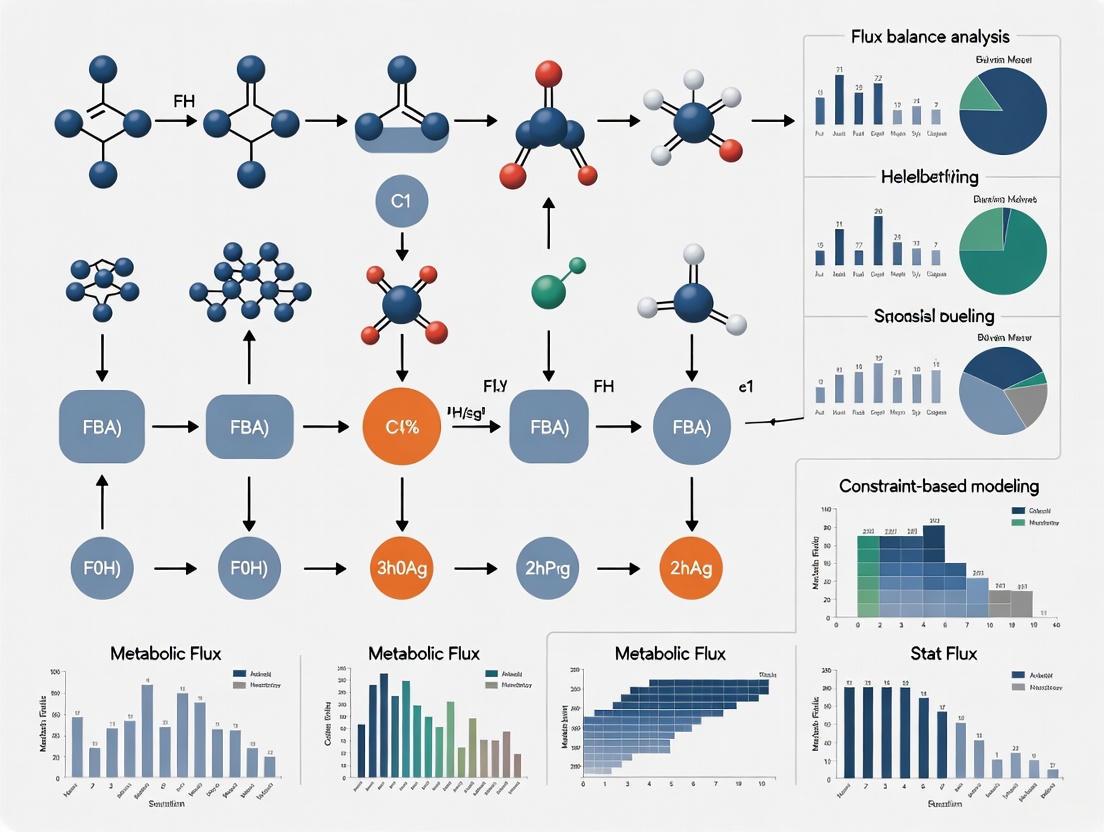
Stoichiometric flux modeling has become an indispensable computational framework for analyzing and optimizing microbial metabolism.
Stoichiometric Flux Modeling in Microbial Systems: From Fundamentals to Biomedical Applications
Abstract
Stoichiometric flux modeling has become an indispensable computational framework for analyzing and optimizing microbial metabolism. This article provides a comprehensive overview for researchers and drug development professionals, covering the foundational principles of constraint-based modeling and flux balance analysis (FBA). It explores advanced methodological applications including multi-objective optimization for secondary metabolite production and host-microbe interaction modeling. The content addresses critical troubleshooting aspects for managing solution space complexity and model error identification, while presenting rigorous validation frameworks and comparative analyses of different modeling approaches. By integrating theoretical foundations with practical implementation strategies, this resource supports the effective application of flux modeling in metabolic engineering and biomedical research.
Core Principles of Stoichiometric Modeling and Metabolic Network Analysis
The stoichiometric matrix provides a foundational mathematical framework for representing and analyzing cellular metabolism at a systems level. By encapsulating the mass balance of all biochemical reactions within a cell, this matrix enables constraint-based modeling approaches that predict metabolic fluxes, physiological states, and cellular phenotypes. This application note details the core principles, computational protocols, and practical implementations of stoichiometric modeling with emphasis on microbial systems research. We provide detailed methodologies for constructing metabolic models, performing flux balance analysis, and applying these techniques to investigate microbial interactions, with direct relevance to drug development and biotechnological applications.
The stoichiometric matrix (S) is a mathematical representation of a metabolic network where rows correspond to metabolites and columns represent biochemical reactions. Each element Sij contains the stoichiometric coefficient of metabolite i in reaction j, with negative values indicating substrates and positive values indicating products [1] [2]. This structured representation forms the computational backbone for analyzing metabolic capabilities and predicting physiological behaviors.
For a metabolic network comprising m metabolites and n reactions, the stoichiometric matrix has dimensions m × n. The matrix enables formal representation of mass balance constraints under the steady-state assumption, where the system satisfies the equation S · v = 0, where v is the vector of reaction fluxes [1]. This equation embodies the fundamental principle that intracellular metabolites neither accumulate nor deplete over time, reflecting a homeostatic physiological state. The stoichiometric matrix thus translates biological knowledge into a mathematical framework amenable to computational analysis [1].
Core Methodologies and Protocols
Metabolic Network Reconstruction
Protocol Objective: Generate a genome-scale metabolic reconstruction from genomic data.
Procedure:
- Genome Annotation: Identify metabolic genes and assign enzyme functions using annotation tools (e.g., RAST) [3]. This establishes the organism's biochemical repertoire.
- Reaction Assembly: Compile the complete set of biochemical reactions based on annotated genes, obtaining stoichiometric coefficients for each reaction from biochemical databases (e.g., ModelSEED, BiGG, KEGG) [4] [3].
- Compartmentalization: Assign intracellular localization for reactions in eukaryotic cells (e.g., cytosol, mitochondria) [4].
- Biomass Definition: Formulate a biomass objective function that quantifies the drain of precursor metabolites, energy, and cofactors required to generate new cellular material [5].
- Network Validation: Check for stoichiometric consistency, verify energy and redox balances, and ensure network connectivity [4].
Technical Notes: Draft reconstructions often contain gaps. Use gap-filling algorithms that add minimal sets of biochemical reactions to enable biomass production on targeted growth media [3]. High-quality host metabolic models (e.g., Recon3D for humans) and microbial models (e.g., from the AGORA database) can serve as valuable curated templates [4].
Flux Balance Analysis (FBA)
Protocol Objective: Predict steady-state metabolic flux distributions that optimize a cellular objective.
Procedure:
- Problem Formulation: Define the stoichiometric matrix S from the metabolic reconstruction.
- Constraint Application:
- Apply the steady-state constraint: S · v = 0 [1].
- Set lower and upper bounds (LB, UB) for reaction fluxes based on thermodynamic irreversibility and measured uptake/secretion rates [6].
- Define the nutrient availability in the extracellular environment (growth medium) by constraining exchange reaction fluxes [3].
- Objective Specification: Define a biologically relevant linear objective function Z = cᵀv, where c is a vector of weights. A common assumption is that microbial systems optimize for biomass maximization during exponential growth [6] [1].
- Linear Programming Solution: Solve the optimization problem using solvers (e.g., GLPK, Gurobi, CPLEX) to find the flux distribution v that maximizes Z [4] [6].
Technical Notes: FBA solutions may not be unique. Flux Variability Analysis (FVA) can determine the range of possible fluxes for each reaction while maintaining the optimal objective value [6]. The solution provides quantitative predictions of growth rates, substrate uptake, and metabolite secretion [1].
Figure 1: Computational workflow for Flux Balance Analysis.
Modeling Microbial Communities
Protocol Objective: Construct metabolic models of microbial communities to study metabolic interactions.
Approaches:
- Compartmentalized Modeling: Reconstruct individual metabolic models for each species and connect them via a shared extracellular environment through metabolite exchange reactions [6] [7]. This approach maintains species identity and enables simulation of cross-feeding.
- Multi-Objective Optimization: Implement frameworks such as OptCom that structure the community problem as a bi-level optimization [6]. Here, individual species optimize their own objectives (inner problem), which are linked to an overall community objective (outer problem) [6].
- Lumped Network Modeling: When species-specific information is limited, construct a single metabolic network representing all enzymatic functions detected in the community via metagenomic or metaproteomic data [6]. This "enzyme soup" approach provides an upper bound on community metabolic capacity but may overestimate capabilities by ignoring species boundaries [6].
Technical Notes: The COMETS (Computation of Microbial Ecosystems in Time and Space) platform extends dynamic FBA to simulate multiple species in spatially structured environments, incorporating growth and metabolite diffusion [8]. These approaches allow researchers to model interactions including mutualism, commensalism, and competition [6] [7].
Research Reagent Solutions: Essential Tools for Metabolic Modeling
Table 1: Key computational tools and databases for stoichiometric modeling.
| Tool/Database Name | Type | Primary Function | Relevance to Microbial Research |
|---|---|---|---|
| ModelSEED [4] [3] | Pipeline | Draft metabolic model reconstruction from genomes | Rapid generation of microbial models; integrated with RAST annotations |
| BiGG Models [4] [6] | Database | Curated, standardized genome-scale metabolic models | Resource of high-quality models for well-studied microbes |
| AGORA [4] | Database | Curated metabolic models for human gut microbes | Essential for host-microbiome interaction studies |
| RAST [3] | Annotation Server | Automated genome annotation | Provides controlled vocabulary of functional roles for model reconstruction |
| eQuilibrator [5] | Database | Thermodynamic data for biochemical reactions | Estimating Gibbs free energy of reaction for thermodynamic analysis |
| COBRA Toolbox [8] [4] | Software Suite | MATLAB toolbox for constraint-based analysis | Performing FBA, FVA, and other analyses on metabolic models |
| CarveMe [4] | Pipeline | Automated metabolic model reconstruction | Rapid generation of species-specific models from genome data |
| MetaNetX [4] | Database | Unified namespace for metabolic model components | Crucial for integrating models from different sources/databases |
Advanced Applications in Microbial Systems
Investigating Catabolic and Anabolic Pathways
Elementary Conversion Modes (ECMs) provide a systematic approach to decompose metabolic networks into minimal functional units. As described in [5], ECMs can be used to systematically identify all possible catabolic routes available to an organism. By calculating the Gibbs free energy of reaction (ΔG) for each ECM using thermodynamic data from eQuilibrator, researchers can characterize the energy gradient and thermodynamic efficiency of different catabolic strategies [5]. This enables the separation of macrochemical growth equations into their catabolic (energy-producing) and anabolic (biosynthetic) components, providing insights into the thermodynamic forces driving microbial growth [5].
Host-Microbe Interaction Studies
Integrated host-microbe metabolic models combine a eukaryotic host reconstruction (e.g., human, mouse, plant) with models of associated microbial species. These multi-species models simulate metabolic cross-feeding and reveal reciprocal metabolic influences [4]. Applications include:
- Drug Development: Identifying microbial metabolites that influence host pathways relevant to disease states or drug metabolism.
- Microbiome Engineering: Predicting how dietary interventions or probiotic administration alters community composition and metabolic output.
- Understanding Dysbiosis: Revealing how disruptions in host control mechanisms lead to metabolically imbalanced microbial communities [4].
Figure 2: Metabolic cross-feeding in host-microbe interactions.
Spatiotemporal Modeling of Microbial Ecosystems
The COMETS platform extends FBA to simulate microbial ecosystems in molecularly complex and spatially structured environments [8]. This protocol enables:
- Dynamic Simulations: Modeling time-dependent changes in species abundance and metabolite concentrations beyond steady-state assumptions.
- Spatial Structure: Incorporating metabolite diffusion and spatial heterogeneity in habitat conditions.
- Evolutionary Dynamics: Simulating long-term adaptive processes in microbial communities [8].
Protocol Application: To simulate a synthetic gut microbiome community, researchers can integrate AGORA models of constituent bacterial species in COMETS, define a gut-like medium composition, and simulate the metabolic interactions over time under different dietary regimes [8] [4].
The stoichiometric matrix serves as the fundamental scaffold for systems-level analysis of metabolism, transforming biological knowledge into a quantitative, predictive framework. The protocols outlined—from network reconstruction and FBA to community modeling—provide researchers with robust methodologies to investigate microbial physiology and interactions. As the field advances, the integration of multi-omic data, improved thermodynamic constraints, and more sophisticated multi-scale modeling will further enhance the predictive power and application scope of stoichiometric models in basic research and drug development.
Chemical Moisty Conservation and Network Topology Constraints
Constraint-based stoichiometric modeling has emerged as a fundamental approach for analyzing metabolic capabilities in microbial systems. These techniques rely on two core principles: chemical moiety conservation, which ensures the mass-balance of atomic elements through biochemical reactions, and network topology constraints, which define the connectivity and capacity of metabolic pathways [9]. For microbial communities, these models must be extended to account for multi-species interactions, creating unique challenges in model integration, objective function definition, and environmental constraint specification [9]. This Application Note provides detailed protocols for implementing these constraints in microbial community research, with specific applications in drug development targeting complex microbiomes.
Theoretical Framework and Comparative Analysis
Foundation of Stoichiometric Modeling
The mathematical foundation of stoichiometric modeling begins with representing all metabolic reactions in a stoichiometric matrix S, where rows correspond to metabolites and columns represent reactions. The core constraint for chemical moiety conservation is expressed as:
S · v = 0
where v is the vector of reaction fluxes [9]. This equation enforces mass balance, ensuring that for each metabolic intermediate, the production and consumption rates are equal, thus maintaining steady state. For microbial communities, this framework extends to multiple organisms sharing metabolites through a common extracellular environment [9] [10].
Comparative Analysis of Community Modeling Approaches
Table 1: Comparison of Community Metabolic Modeling Approaches
| Modeling Approach | Core Methodology | Key Advantages | Key Limitations | Suitable Applications |
|---|---|---|---|---|
| Compartmentalized Model | Merges multiple metabolic models into a single stoichiometric matrix with shared extracellular compartment [10] | Explicitly accounts for species-specific metabolic capabilities | High computational demand; requires manual curation for integration | Deep analysis of specific cross-feeding interactions |
| Lumped Model | Pools all metabolic reactions from community members into a single "supra-organism" model [10] | Reduced computational complexity; minimal model size | Lacks species identity; oversimplifies species-specific constraints | Prediction of bulk community metabolic output |
| Costless Secretion | Iteratively simulates individual models while updating available metabolites based on "costless" secretions [10] | Preserves species identity; computationally efficient for large communities | May miss synergistic interactions dependent on cost-bearing exchanges | Screening potential interactions in large communities |
Experimental Protocols
Protocol 1: Flux Balance Analysis for Microbial Communities
Principle: This protocol predicts optimal metabolic fluxes in microbial communities by optimizing a defined biological objective function subject to stoichiometric, topological, and capacity constraints [9] [10].
Materials:
- Genome-scale metabolic models (GEMs) for community members
- Computational environment (MATLAB, Python)
- COBRA Toolbox or similar metabolic modeling package
- Gurobi or other linear programming solver
Procedure:
- Model Reconstruction and Curation:
- Obtain or reconstruct genome-scale metabolic models for each community member using platforms such as ModelSeed or KBase [9]
- Manually curate models to ensure accurate biomass composition and gene-protein-reaction associations
- Verify presence of essential metabolic functions and transport reactions
Community Model Construction:
- Select appropriate modeling approach from Table 1 based on research question
- For compartmentalized modeling:
- Create a unified stoichiometric matrix containing all species-specific reactions
- Establish shared extracellular compartment with metabolite exchange reactions
- Set bounds on exchange reactions to reflect environmental conditions [10]
Constraint Definition:
- Apply stoichiometric constraints: S · v = 0
- Set flux capacity constraints: vmin ≤ v ≤ vmax
- Define nutrient availability through exchange reaction bounds
- Specify maintenance energy requirements where applicable
Objective Function Specification:
Model Simulation and Validation:
- Solve the linear programming problem: maximize c^T · v subject to S · v = 0 and vmin ≤ v ≤ vmax
- Validate predictions against experimental growth data, metabolite measurements, or literature
- Perform flux variability analysis to identify alternative optimal solutions
Protocol 2: Flux Sampling for Phenotypic Heterogeneity Analysis
Principle: This protocol uses Markov Chain Monte Carlo methods to sample the feasible flux space without assuming optimal growth, enabling exploration of sub-optimal metabolic states and phenotypic heterogeneity [10].
Materials:
- Constrained community metabolic model
- RHMC (Riemannian Hamiltonian Monte Carlo) sampling algorithm
- COBRA Toolbox v3.0+
- MATLAB environment with parallel processing capability
Procedure:
- Model Preparation:
- Start with a constrained community metabolic model from Protocol 1, steps 1-3
- Ensure all exchange reactions are properly bounded to reflect environmental conditions
- Verify mass balance and thermodynamic constraints
Sampling Parameter Configuration:
- Set RHMC algorithm parameters:
- 200 steps per point
- 1000 samples per run
- 4 parallel workers for computation
- Define baseline growth constraints (e.g., 10% of maximal growth rate)
- Set RHMC algorithm parameters:
Flux Sampling Execution:
- Implement sampling using constrained RHMC algorithm
- Generate 1000 flux distributions for each condition (monoculture vs. co-culture)
- Track convergence of sampling chains
Data Analysis:
- Calculate mean and standard deviation of flux values for each reaction
- Identify reactions with high variability across samples
- Compare flux distributions between monoculture and community conditions
- Statistically analyze differences using appropriate tests (e.g., t-tests with multiple comparison correction)
Interpretation:
- Identify metabolic pathways exhibiting significant flux changes in community context
- Detect cooperative interactions evidenced by complementary flux patterns
- Map cross-feeding relationships through metabolite exchange analysis [10]
Protocol 3: Network Topology Analysis for Microbial Communities
Principle: This protocol constructs and analyzes microbial co-occurrence networks to identify key topological features and keystone taxa that influence community stability and function [11] [12].
Materials:
- Microbial abundance data (16S rRNA amplicon sequencing or metagenomic data)
- Computational environment (R, Python)
- Network analysis packages (igraph, NetworkX)
- Correlation calculation algorithms (SparCC, MENA)
Procedure:
- Data Preprocessing:
- Obtain microbial abundance tables from sequencing data
- Filter low-abundance taxa (prevalence < 0.1% in dataset)
- Apply appropriate data normalization (e.g., centered log-ratio transformation)
Network Construction:
- Calculate robust correlation matrices using SparCC or similar method
- Apply significance thresholds (p < 0.01) with multiple testing correction
- Set correlation coefficient threshold (e.g., |r| > 0.6) to define edges
- Construct undirected graph from significant correlations
Topological Analysis:
Keystone Taxon Identification:
- Identify taxa with high betweenness centrality relative to their abundance
- Detect connector taxa linking different modules
- Validate keystone status through cross-validation or resampling methods
Integration with Metabolic Models:
- Map keystone taxa to corresponding metabolic models
- Analyze metabolic capabilities of keystone taxa
- Identify potential metabolic complementarities driving co-occurrence patterns [11]
Table 2: Essential Research Reagents and Computational Tools
| Category | Item | Specification/Version | Primary Function |
|---|---|---|---|
| Software Platforms | COBRA Toolbox | v3.0+ | Constraint-based reconstruction and analysis |
| R Statistical Environment | v4.0+ | Network analysis and statistical computing | |
| Gurobi Optimizer | v9.0+ | Linear and quadratic programming solver | |
| Databases | AGORA Model Collection | v1.0.2 | Curated genome-scale metabolic models |
| KBase | - | Integrated reconstruction and simulation platform | |
| Analysis Packages | SparCC | - | Correlation calculation for compositional data |
| igraph | v0.9+ | Network analysis and visualization |
Applications in Drug Development
Constraint-based modeling of microbial communities presents significant opportunities for drug development, particularly in understanding drug-microbiome interactions and developing microbiome-based therapeutics. The protocols outlined enable researchers to:
- Predict drug metabolism by complex microbial communities through integration of biotransformation reactions
- Identify metabolic vulnerabilities in pathogenic communities for targeted antimicrobial strategies
- Model community response to therapeutic interventions, including antibiotic treatments
- Design synthetic microbial consortia with optimized therapeutic functions [9] [10]
For drug development applications, Protocol 1 (FBA) can predict how microbial communities metabolize pharmaceutical compounds, while Protocol 3 (Network Topology Analysis) can identify keystone species whose inhibition might disrupt pathogenic community structure. Protocol 2 (Flux Sampling) is particularly valuable for understanding heterogeneous responses to antimicrobial treatments within microbial populations.
The integration of chemical moiety conservation with network topology constraints provides a powerful framework for analyzing and engineering microbial communities. The protocols presented here offer researchers a comprehensive toolkit for implementing these approaches, from traditional optimization-based methods to advanced sampling techniques that capture phenotypic heterogeneity. As drug development increasingly recognizes the importance of microbial communities in human health and disease, these methodologies will play a crucial role in understanding and targeting complex microbiome functions.
Stoichiometric flux modeling represents a cornerstone technique in systems biology for analyzing metabolic capabilities without requiring detailed kinetic information. These methods are predicated on the steady-state assumption, where for each metabolite within a network, the rate of production equals the rate of consumption [13]. This fundamental principle transforms the complex problem of metabolic flux determination into a linear algebra framework, where the stoichiometric matrix (N) defines the system structure and the flux vector (v) represents the reaction rates, constrained by the mass balance equation N · v = 0 [13] [4].
In microbial systems research, understanding metabolic flux distributions enables prediction of genotype-phenotype relationships and identification of metabolic engineering targets for enhanced product formation [13]. The analysis of steady-state flux modes provides researchers with a systematic approach to characterize the entire spectrum of metabolic capabilities inherent in an organism's network, from which optimal pathways can be selected for bioproduction or drug targeting [13].
Table 1: Core Concepts in Stoichiometric Flux Analysis
| Concept | Mathematical Definition | Biological Interpretation | Key References |
|---|---|---|---|
| Stoichiometric Matrix | Matrix N where rows represent metabolites and columns represent reactions | Defines the network topology and mass balance constraints | [13] [4] |
| Flux Cone | {v ∈ Rⁿ | N·v = 0, vᵢ ≥ 0 for irreversible reactions} | Space of all thermodynamically feasible steady-state flux distributions | [13] |
| Elementary Flux Modes | Minimal set of feasible flux vectors where no reversible reaction can operate in reverse | Non-decomposable metabolic pathways connecting inputs to outputs | [13] |
| Extreme Pathways | Convex basis vectors of the flux cone when internal reactions are split into forward/backward | Systematically generated set of unique, non-decomposable pathways | [13] |
| Minimal Generating Set | Smallest subset of elementary modes required to describe all steady states | Most compact representation of network functionality; edges of the flux cone | [13] |
Fundamental Theoretical Framework
Geometry of the Flux Cone
The mathematical foundation of flux mode analysis rests in convex geometry. The intersection of the null-space of the stoichiometric matrix with the semipositive orthant of flux space forms a polyhedral cone, known as the flux cone [13]. This cone represents all thermodynamically feasible steady-state flux distributions, with its edges corresponding to fundamental metabolic pathways. When the cone is pointed (with 0 as a vertex), these edges connect metabolic inputs to outputs with a minimal set of reactions, representing biochemical pathways that are functional units of the metabolic network [13].
The representatives of the flux cone edges are characterized by several related but distinct concepts. Extremal currents were defined by Clarke as the edges when all reversible reactions are split into separate forward and backward directions [13]. Schuster and colleagues defined elementary flux modes in the original flux space, allowing negative entries for reversible reactions [13]. Schilling et al. introduced extreme pathways as an intermediate approach, splitting internal reversible reactions but leaving reversible exchange reactions unchanged [13]. Recent work promotes the minimal generating set as the smallest subset of elementary modes needed to describe all steady states, which for large-scale networks is several magnitudes smaller than the complete set of elementary modes or extreme pathways [13].
Comparative Analysis of Flux Mode Concepts
The distinctions between these conceptual approaches have practical implications for network analysis. Elementary modes represent all non-decomposable pathways through the network, while extreme pathways form the unique convex basis for the flux cone. The minimal generating set comprises only the edges of the flux cone, with remaining elementary modes and extreme pathways being interior points that can be expressed as combinations of these generating modes [13]. This relationship becomes particularly important in Flux Balance Analysis (FBA), where linear programming is used to optimize an objective function (such as biomass production). The solution of FBA is a vertex of the truncated flux cone, which may be either an element of the minimal generating set or an interior point that becomes a vertex due to flux constraints [13].
Diagram 1: Hierarchical relationship between flux analysis concepts (7 words)
Experimental Protocols for Metabolic Flux Analysis
Steady-State 13C-Labeling Experiments
Protocol 1: Optimization of Steady-State 13C-Labeling Experiments for Metabolic Flux Analysis
Introduction: Steady-state 13C metabolic flux analysis (13C-MFA) is a powerful method for deducing multiple fluxes in the central metabolic network of microbial systems, though it requires careful experimental design and execution [14]. This protocol outlines the key steps for implementing 13C-MFA in heterotrophic systems, with applications to microbial cultures.
Materials and Reagents:
- 13C-labeled substrates (e.g., [1-13C]glucose, [U-13C]glucose)
- Microbial culture medium
- Quenching solution (e.g., cold methanol)
- Extraction solvents (chloroform, methanol, water)
- Derivatization reagents (e.g., MSTFA for GC-MS)
- Internal standards for quantification
Procedure:
Experimental Design Phase:
- Select appropriate 13C-labeled substrates based on the metabolic pathways of interest
- Design labeling strategies that generate unique isotopomer patterns in key metabolites
- Determine the optimal balance between cost and information content of labeling measurements
Culture and Labeling Phase:
- Grow microbial cultures in defined medium with natural abundance carbon sources
- Transition to 13C-labeled substrates during mid-exponential growth phase
- Maintain cultures in metabolic steady-state for several generations to achieve isotopic steady state
- Monitor growth parameters (OD600, pH, substrate consumption) to verify steady-state conditions
Sampling and Quenching:
- Rapidly sample culture broth and quench metabolism using cold methanol (-40°C)
- Separate cells from medium by rapid filtration or centrifugation
- Wash cells with appropriate buffer to remove residual medium
Metabolite Extraction:
- Extract intracellular metabolites using chloroform:methanol:water mixture (1:3:1)
- Partition phases by centrifugation
- Collect polar phase for central metabolite analysis
- Dry extracts under nitrogen stream
Derivatization and Measurement:
- Derivatize metabolites for GC-MS analysis (e.g., methoximation and silylation)
- Analyze mass isotopomer distributions using GC-MS
- Measure mass spectra for key metabolic intermediates
Flux Calculation:
- Implement computational model to simulate isotopomer distributions
- Fit flux parameters to experimental data using least-squares optimization
- Evaluate flux confidence intervals using statistical methods
Troubleshooting Notes:
- Ensure isotopic steady-state is reached by verifying consistent labeling patterns over time
- Optimize quenching protocol to minimize metabolite turnover during sampling
- Validate derivatization efficiency for accurate mass isotopomer measurements
Table 2: Key Research Reagents for 13C-MFA Experiments
| Reagent/Category | Specific Examples | Function in Experiment | Technical Considerations |
|---|---|---|---|
| 13C-Labeled Substrates | [1-13C]glucose, [U-13C]glucose, 13C-acetate | Carbon source that generates measurable isotopomer patterns | Position-specific labeling provides different flux information; cost increases with labeling degree |
| Extraction Solvents | Methanol, chloroform, water mixtures | Quench metabolism and extract intracellular metabolites | Cold methanol (-40°C) rapidly halts enzymatic activity; solvent ratio affects metabolite recovery |
| Derivatization Reagents | MSTFA, MBTSTFA, TBDMS | Volatilize metabolites for GC-MS analysis | Complete derivatization essential for accurate quantification; moisture-sensitive |
| Internal Standards | 13C-labeled amino acids, organic acids | Normalize for extraction and injection variability | Should not interfere with native metabolites; use across multiple analytical platforms |
| Culture Medium | Defined mineral salts, vitamins, trace elements | Support microbial growth without carbon interference | Must be chemically defined to avoid unaccounted carbon sources |
Computational Flux Analysis Protocol
Protocol 2: Determination of Elementary Flux Modes Using Null-Space Algorithm
Introduction: The identification of elementary flux modes provides a comprehensive view of network capabilities. The null-space algorithm offers an efficient approach to calculate these modes through linear combinations of null-space basis vectors, demonstrating almost quadratic dependence of computation time on the number of elementary modes [13].
Computational Requirements:
- Stoichiometric model of metabolic network
- Linear programming solver (GLPK, Gurobi, or CPLEX)
- Implementation of null-space algorithm [13]
- Programming environment (Python, MATLAB, or Mathematica)
Procedure:
Network Compilation:
- Compile stoichiometric matrix from genome annotation and biochemical databases
- Define reaction reversibility constraints based on thermodynamic data
- Identify external metabolites (inputs/outputs) and internal metabolites
Null-Space Basis Calculation:
- Compute the null-space basis of the stoichiometric matrix
- Select a linearly independent set of basis vectors
- Transform basis to ensure non-negative fluxes for irreversible reactions
Elementary Mode Enumeration:
- Implement combinatorial algorithm to combine null-space basis vectors
- Apply connectivity constraints to ensure metabolic functionality
- Verify minimality condition for each candidate flux mode
Validation and Filtering:
- Validate thermodynamic feasibility of each flux mode
- Filter out modes that violate irreversibility constraints
- Check for network connectivity from inputs to outputs
Pathway Analysis:
- Classify flux modes by input-output relationships
- Identify optimal pathways for target product formation
- Calculate yield coefficients for metabolic engineering applications
Applications in Microbial Systems:
- Prediction of essential genes through analysis of mode dependencies
- Identification of minimal cut sets for metabolic engineering
- Determination of network robustness to reaction knockouts
- Analysis of metabolic trade-offs in different environmental conditions
Diagram 2: Computational workflow for flux mode analysis (5 words)
Applications in Microbial Systems and Host-Microbe Interactions
Metabolic Network Analysis in Biotechnology
Stoichiometric flux modeling has found extensive applications in biotechnology for analyzing and engineering microbial systems. In Escherichia coli, elementary mode analysis has been used to identify optimal pathways for recombinant protein production, such as green fluorescent protein [13]. Similarly, flux mode analysis of central carbon metabolism in E. coli has successfully predicted growth behavior of wild-type and mutant organisms, with experimental validation confirming computational predictions in the majority of cases [13].
The concept of minimal cut sets represents another important application derived from flux mode analysis. Minimal cut sets are defined as minimal sets of reactions that must be blocked to disrupt specific metabolic functions [13]. This approach has significant implications for drug development against pathogens, where identifying metabolic vulnerabilities can lead to targeted therapies that disable pathogenic metabolism without affecting host systems.
Host-Microbe Metabolic Modeling
Genome-scale metabolic models (GEMs) provide a powerful framework for investigating host-microbe interactions at a systems level [4]. By simulating metabolic fluxes and cross-feeding relationships, GEMs enable exploration of metabolic interdependencies and emergent community functions. The integration of host and microbial models presents both opportunities and challenges for researchers studying these complex systems.
Table 3: Host-Microbe Metabolic Modeling Approaches
| Modeling Approach | Implementation Method | Key Applications | Technical Challenges |
|---|---|---|---|
| Integrated GEMs | Combine host and microbial models into unified stoichiometric matrix | Simulate metabolite exchange; Identify cross-feeding relationships | Namespace harmonization; Thermodynamic consistency |
| Constraint-Based Analysis | Apply flux balance analysis to integrated model with shared metabolites | Predict community metabolism; Identify essential nutrients | Definition of community objective function; Compartmentalization |
| Multi-omic Data Integration | Incorporate transcriptomic, proteomic, metabolomic data as constraints | Context-specific model reconstruction; Condition-specific predictions | Data scaling and normalization; Regulatory constraints |
| Dynamic Flux Analysis | Extend to dynamic FBA or incorporate 13C-tracing data | Capture temporal metabolic changes; Quantify flux rewiring | Increased computational complexity; Measurement frequency |
The reconstruction of host-microbe metabolic models typically involves three main steps: (1) collection of genomic and physiological data for both host and microbial species; (2) reconstruction or retrieval of individual metabolic models using curated databases or automated pipelines; and (3) integration of these models into a unified computational framework [4]. Microbial metabolic models are relatively easier to derive due to available resources like AGORA, BiGG, and APOLLO databases, while host metabolic model reconstruction, particularly for eukaryotic cells, faces additional complexities including compartmentalization and cell-type specificity [4].
Standardization efforts through resources like MetaNetX help bridge nomenclature discrepancies between different model sources, though the lack of standardized integration pipelines remains a critical bottleneck in host-microbe modeling [4]. Automated approaches for harmonizing and merging models from diverse sources are needed to advance this rapidly growing field.
Advanced Methodologies and Future Perspectives
Integration with Regulatory Information
The visualization of regulatory interactions within metabolic networks represents an emerging frontier in flux analysis. While traditional approaches have focused on representing metabolite pool sizes and flux distributions, newer methods aim to incorporate regulatory strength (RS) as a quantitative measure of effector influence on reaction steps [15]. This RS concept provides a percentage-scale valuation where 100% represents maximal possible inhibition or activation, and 0% indicates absence of regulatory interaction [15].
When multiple effectors influence a reaction step, RS percentages indicate the proportional contribution of different effectors to the total regulation, providing researchers with intuitive interpretation of complex regulatory data [15]. This approach is particularly valuable for understanding scenarios where fluxes remain low despite abundant substrates, revealing inhibitory influences that would otherwise remain unexplained.
Technical Advancements and Emerging Applications
Future developments in steady-state flux analysis are progressing in several key directions. Improvements in analytical techniques, particularly through combined NMR and MS methods targeted at metabolites with the most informative labeling patterns, promise more detailed and statistically reliable flux maps [16]. There is also growing emphasis on combining steady-state MFA with dynamic labeling experiments and integrating flux data with other omics measurements [16].
The application of flux analysis continues to expand from single organisms to complex microbial communities and host-microbe systems. As noted in recent research, "Labeling experiments, such as ¹³C and ¹⁵N metabolic flux analysis, can capture detailed interactions between hosts and microbes, as well as microbe-microbe interactions" [4]. These technical advances, coupled with improved computational algorithms for analyzing large-scale networks, position steady-state flux analysis as an increasingly powerful tool for microbial systems research with significant implications for biotechnology and therapeutic development.
Flux Balance Analysis (FBA) is a mathematical approach for analyzing the flow of metabolites through a metabolic network [17] [18]. This constraint-based method enables researchers to predict metabolic fluxes, growth rates, and metabolite production capabilities without requiring extensive kinetic parameter measurements [18]. FBA has become a cornerstone technique in systems biology, particularly for studying genome-scale metabolic models of microorganisms, with applications ranging from microbial strain improvement to drug discovery [19] [4].
The fundamental premise of FBA is that metabolic networks operate under strict mass balance constraints and that organisms have evolved to optimize specific metabolic objectives [18]. By mathematically representing these constraints and objectives, FBA can predict how microorganisms allocate resources under different environmental conditions, making it particularly valuable for understanding and engineering microbial systems for biotechnological and pharmaceutical applications [19] [4].
Theoretical Foundation of FBA
Mathematical Representation of Metabolic Networks
The core mathematical representation in FBA is the stoichiometric matrix S, of size m × n, where m represents the number of metabolites and n the number of metabolic reactions in the network [18]. Each column in this matrix corresponds to a biochemical reaction, with entries representing the stoichiometric coefficients of the metabolites participating in that reaction. Reactants (consumed metabolites) have negative coefficients, while products (formed metabolites) have positive coefficients [18].
The system of mass balance equations at steady state (dx/dt = 0) is represented as: Sv = 0 where v is the flux vector containing the reaction rates [18]. This equation encapsulates the fundamental constraint that for each internal metabolite, the total production must equal total consumption.
Constraints and Solution Space
FBA incorporates several types of constraints that define the possible metabolic behaviors:
- Mass balance constraints: Implemented through the stoichiometric matrix S [18]
- Capacity constraints: Upper and lower bounds on reaction fluxes (α ≤ v_i ≤ β) [18]
- Environmental constraints: Limitations on nutrient uptake rates [18]
These constraints collectively define a multidimensional solution space of possible flux distributions. For realistic genome-scale models where the number of reactions exceeds the number of metabolites (n > m), the system is underdetermined, meaning there is no unique solution to the mass balance equations [18].
Objective Functions and Optimization
To identify a biologically relevant flux distribution from the solution space, FBA introduces an objective function Z = c^Tv, which is a linear combination of fluxes [18]. The choice of objective function represents a hypothesis about the biological goals of the organism. The optimization problem can be formulated as:
Maximize Z = c^Tv Subject to: Sv = 0 αi ≤ vi ≤ β_i for all reactions i
Table 1: Common Objective Functions in FBA for Microbial Systems
| Objective Function | Biological Rationale | Typical Applications |
|---|---|---|
| Biomass maximization | Simulates maximization of growth rate | Prediction of wild-type growth phenotypes |
| ATP maximization | Represents energy efficiency objective | Analysis of energy metabolism |
| Metabolite production | Maximizes synthesis of specific compound | Metabolic engineering for chemical production |
| Nutrient uptake | Maximizes substrate utilization | Analysis of metabolic capabilities |
Key Biological Assumptions
The application of FBA relies on several fundamental biological assumptions that enable the mathematical formulation while ensuring biological relevance:
Steady-State Assumption
FBA assumes that metabolic networks operate at steady state, where metabolite concentrations remain constant over time (dx/dt = 0) [18]. This assumption is valid when metabolic transients are rapid compared to cellular growth and environmental changes.
Mass Balance Constraints
The model assumes strict conservation of mass for all intracellular metabolites, meaning that the total production rate of each metabolite must equal its total consumption rate [18].
Optimization Principle
FBA operates on the principle that microorganisms have evolved to optimize specific metabolic objectives relevant to their ecological niche [18]. For many microorganisms, this is formulated as maximization of biomass production, representing evolutionary selection for rapid growth.
Enzyme Capacity Limits
The flux bounds (αi, βi) represent biochemical constraints including enzyme capacity, substrate availability, and thermodynamic feasibility [18].
Table 2: Biological Assumptions and Their Implications in FBA
| Assumption | Mathematical Representation | Biological Justification | Limitations |
|---|---|---|---|
| Steady state | Sv = 0 | Metabolic transients are typically fast compared to growth | Not suitable for rapidly changing environments |
| Mass balance | Stoichiometric coefficients in S | Fundamental law of conservation of mass | Does not account for metabolite compartmentalization without explicit modeling |
| Optimization | Objective function Z | Natural selection favors efficient phenotypes | Multiple objectives may coexist in real organisms |
| Enzyme capacity | Flux bounds (αi, βi) | Limited enzyme abundance and catalytic rates | Difficult to precisely determine bounds experimentally |
Experimental Protocols and Methodologies
Standard FBA Workflow Protocol
The following protocol outlines the key steps for performing FBA:
Step 1: Model Construction and Curation
- Compile the stoichiometric matrix based on annotated genome data and biochemical literature
- Define system boundaries and exchange reactions with the environment
- Include biomass composition reaction based on experimental measurements
- Validate model components through gap-filling and consistency checks
Step 2: Constraint Definition
- Set flux bounds based on experimental measurements or physiological constraints
- Define nutrient availability through medium specification
- Incorporate regulatory constraints if available (e.g., from gene expression data)
Step 3: Objective Function Selection
- Choose an appropriate objective function based on the biological question
- Common choices include biomass production, ATP synthesis, or product formation
Step 4: Problem Formulation and Solution
- Apply linear programming to solve the optimization problem
- Use tools such as the COBRA Toolbox [18] or other FBA-capable software
- Verify solution feasibility and uniqueness
Step 5: Validation and Analysis
- Compare predictions with experimental data (growth rates, secretion profiles)
- Perform sensitivity analysis on key parameters
- Identify alternative optimal solutions if necessary
Advanced FBA Framework: TIObjFind
Recent advancements have introduced frameworks like TIObjFind (Topology-Informed Objective Find) that integrate Metabolic Pathway Analysis (MPA) with FBA to address the challenge of selecting appropriate objective functions [19]. This framework:
- Reformulates objective function selection as an optimization problem that minimizes differences between predicted and experimental fluxes
- Maps FBA solutions onto a Mass Flow Graph (MFG) for pathway-based interpretation
- Applies a minimum-cut algorithm to extract critical pathways and compute Coefficients of Importance (CoIs) [19]
The TIObjFind framework has been successfully applied to analyze metabolic shifts in Clostridium acetobutylicum fermentation and multi-species systems, demonstrating improved alignment with experimental data [19].
Visualization of FBA Workflow
FBA Methodology Workflow - This diagram illustrates the sequential process of constructing metabolic models, performing flux optimization, and validating predictions.
Table 3: Key Research Reagents and Computational Tools for FBA
| Resource Category | Specific Tools/Reagents | Function/Purpose | Implementation Notes |
|---|---|---|---|
| Model Reconstruction | ModelSEED [4], CarveMe [4], RAVEN [4] | Automated generation of genome-scale metabolic models from genomic data | CarveMe uses a top-down approach; ModelSEED provides curated model database |
| Model Repositories | BiGG [4], AGORA [4] | Access to curated, standardized metabolic models | AGORA specializes in microbial models; BiGG includes diverse organisms |
| Simulation & Analysis | COBRA Toolbox [18], OptFlux | Perform FBA and related constraint-based analyses | COBRA Toolbox requires MATLAB; OptFlux is Java-based |
| Data Integration | MetaNetX [4] | Standardize metabolite and reaction nomenclature across models | Essential for multi-species modeling and data integration |
| Experimental Validation | ¹³C Metabolic Flux Analysis [4] | Measure intracellular fluxes for model validation | Provides ground truth data but requires specialized instrumentation |
| Dynamic Extensions | dFBA [4] | Extend FBA to dynamic conditions | Couples FBA with external metabolite dynamics |
Applications in Microbial Systems and Drug Development
FBA has demonstrated significant utility in pharmaceutical and biotechnology applications:
Host-Microbe Interactions in Drug Development
GEMs and FBA are increasingly applied to study host-microbe interactions, which play integral roles in human health and disease [4]. These models enable researchers to simulate metabolic interdependencies between hosts and microbial communities, providing insights into microbiome-associated diseases and potential therapeutic interventions [4].
Metabolic Engineering for Pharmaceutical Production
FBA supports metabolic engineering efforts for producing therapeutic compounds by identifying gene knockout strategies that enhance product yield while maintaining cellular viability [18]. Algorithms such as OptKnock use FBA to predict genetic modifications that couple desired metabolite production with growth [18].
Drug Target Identification
By simulating essential metabolic functions in pathogens, FBA can identify potential drug targets whose inhibition would disrupt microbial growth or virulence [4]. Double gene knockout simulations can reveal synthetic lethal interactions that represent promising therapeutic targets [18].
Current Limitations and Future Directions
While FBA is a powerful approach, several limitations should be considered:
- Lack of regulatory information: Traditional FBA does not account for enzyme regulation, transcriptional control, or signaling networks [18]
- Steady-state assumption: The method cannot capture transient metabolic dynamics [18]
- Objective function selection: Choosing appropriate cellular objectives remains challenging [19]
- Missing kinetic parameters: FBA does not predict metabolite concentrations [18]
Emerging approaches address these limitations through integration with other data types. Methods like TIObjFind [19] incorporate topological information to improve objective function selection, while regulatory FBA (rFBA) integrates gene expression data [19]. The continued development of multi-scale models that combine FBA with regulatory and kinetic models represents a promising future direction for more comprehensive metabolic predictions.
Constraint-Based Reconstruction and Analysis (COBRA) Methodology
Constraint-Based Reconstruction and Analysis (COBRA) represents a cornerstone methodology in systems biology, providing a mechanistic, mathematical framework for analyzing biochemical networks [20]. This approach enables researchers to model the relationship between genotype and phenotype by mathematically representing the constraints imposed on a biological system by physicochemical laws, genetics, and environmental conditions [20]. The power of COBRA methods lies in their ability to predict feasible phenotypic states even with incomplete mechanistic information, making them particularly valuable for studying complex microbial systems where comprehensive parameterization remains challenging [21] [20].
COBRA methods have evolved significantly from their initial applications in metabolic engineering to become indispensable tools for genome-scale modeling of metabolic networks in both prokaryotes and eukaryotes [21]. The framework has expanded beyond metabolism to include integrated models incorporating transcriptional regulation and signaling networks [21]. The core principle involves constructing a stoichiometric matrix that represents the quantitative relationships between metabolites (rows) and biochemical reactions (columns) within a biological system [4]. This mathematical foundation enables the simulation of network behavior under various constraints, facilitating quantitative predictions of biological outcomes that can guide experimental design and hypothesis generation [20].
Key Capabilities and Computational Tools
The COBRA methodology supports a diverse range of analytical techniques that enable comprehensive investigation of biological systems. These capabilities have been implemented across multiple software platforms, with the COBRA Toolbox for MATLAB and COBRApy for Python emerging as leading computational environments [21] [20].
Table 1: Core Analytical Capabilities of COBRA Methodology
| Capability | Description | Primary Applications |
|---|---|---|
| Flux Balance Analysis (FBA) | Linear optimization to calculate metabolic flux distribution that maximizes/minimizes an objective function [4] | Prediction of growth rates, substrate uptake, byproduct secretion [21] |
| Flux Variability Analysis (FVA) | Determines permissible flux ranges for reactions while maintaining optimal objective function value [21] | Identification of alternative optimal solutions, network flexibility [21] |
| Gene Deletion Analysis | Prediction of phenotypic consequences of single or multiple gene knockouts [21] | Identification of essential genes, drug targets, metabolic engineering strategies [21] |
| Gap Filling | Identification and addition of missing metabolic reactions to restore network functionality [20] | Improvement of genome-scale metabolic reconstructions [20] |
| Thermodynamic Constraining | Integration of thermodynamic data to constrain reaction directionality [20] | Elimination of thermodynamically infeasible flux distributions [20] |
Table 2: Software Tools for COBRA Implementation
| Tool | Platform | Key Features | Reference |
|---|---|---|---|
| COBRA Toolbox | MATLAB | Comprehensive suite of COBRA methods, extensive documentation, multi-omics integration [20] | [20] |
| COBRApy | Python | Object-oriented design, no MATLAB dependency, parallel processing support [21] | [21] |
| ModelSEED | Web-based | Automated metabolic model reconstruction from genome annotations [4] | [4] |
| RAVEN Toolbox | MATLAB | Metabolic model reconstruction, curation, and simulation [4] | [4] |
| CarveMe | Python | Automated metabolic model reconstruction from genome sequences [4] | [4] |
The object-oriented design of COBRApy exemplifies modern implementations of COBRA methodology, featuring core classes including Model (container for biochemical network), Reaction (biochemical transformations), Metabolite (chemical species), and Gene (genetic elements) [21]. This architecture facilitates representation of complex biological processes and integration with high-throughput omics data, addressing the challenges associated with next-generation stoichiometric constraint-based models [21].
Computational Workflow for COBRA Analysis
The implementation of COBRA methodology follows a structured workflow that transforms biological knowledge into predictive computational models. This process involves multiple stages from system definition to model simulation and validation.
Diagram 1: COBRA methodology workflow. The process involves iterative refinement until model predictions align with experimental observations.
System Definition and Reconstruction
The initial phase involves defining the biochemical system of interest and reconstructing its network components. For microbial systems, this begins with genome annotation to identify metabolic genes and their associated reactions [4] [20]. High-quality databases such as BiGG and MetaNetX provide standardized biochemical knowledge that facilitates this process [4]. The output is a biochemical network reconstruction comprising the complete set of metabolic reactions, metabolites, and genes present in the target organism [4]. Manual curation remains essential to remove thermodynamic infeasibilities and ensure biological accuracy, particularly for eukaryotic systems with complex compartmentalization [4].
Application of Constraints
The core principle of COBRA methodology involves applying physicochemical and biological constraints to define the operating space of the biochemical network [20]. The stoichiometric matrix (S) mathematically represents the mass balance constraints, ensuring that for each internal metabolite, the total production equals consumption (S·v = 0, where v is the flux vector) [4]. Additional constraints include reaction directionality based on thermodynamics, capacity constraints defining flux upper and lower bounds (vmin ≤ v ≤ vmax), and environmental constraints defining nutrient availability [4] [20]. The constraints collectively define a solution space containing all feasible metabolic states.
Model Simulation and Analysis
With constraints defined, constraint-based models simulate metabolic behavior using optimization techniques. Flux Balance Analysis (FBA) identifies an optimal flux distribution that maximizes or minimizes a cellular objective, typically biomass production for microbial systems [4]. The general formulation is:
Maximize: Z = c^T·v Subject to: S·v = 0 vmin ≤ v ≤ vmax
where c is a vector defining the linear objective function [4]. For microbial systems, the biomass objective function represents the metabolic requirements for cellular growth, incorporating essential biomass components including amino acids, nucleotides, lipids, and cofactors [21].
Protocol for Flux Balance Analysis
Flux Balance Analysis represents the most widely used COBRA method for predicting metabolic behavior in microbial systems. The following protocol details the implementation of FBA using COBRA software tools.
Prerequisites
- A genome-scale metabolic reconstruction in SBML format or compatible model structure
- COBRA Toolbox (MATLAB) or COBRApy (Python) installation
- Linear programming solver (e.g., GLPK, Gurobi, CPLEX)
Step-by-Step Procedure
Model Import and Validation
- Load the metabolic model into your COBRA environment
- Verify mass and charge balance for all reactions
- Check for blocked reactions and network connectivity
Definition of Environmental Conditions
- Set the culture medium composition by defining exchange reaction bounds
- Specify carbon, nitrogen, phosphorus, and sulfur sources
- Define oxygen availability (aerobic/anaerobic conditions)
Objective Function Specification
- Set the biomass reaction as the optimization target
- Alternatively, define other objectives such as metabolite production
Model Optimization
- Execute FBA to calculate the optimal flux distribution
- Verify solution optimality and feasibility
- Extract flux values for all network reactions
Result Interpretation
- Analyze the predicted growth rate or objective value
- Identify key flux-carrying pathways
- Compare predictions with experimental data
Example Implementation
The following code demonstrates a basic FBA implementation using COBRApy:
This protocol provides a foundation for constraint-based analysis of microbial metabolism, with numerous extensions available including parsimonious FBA, sparse FBA, and integration of omics data [20].
Successful implementation of COBRA methodology requires both computational tools and biological resources. The following table details essential components for constraint-based modeling research.
Table 3: Essential Research Reagents and Resources for COBRA Implementation
| Resource | Type | Function/Application | Examples/Sources |
|---|---|---|---|
| Genome Annotations | Biological Data | Provides gene-protein-reaction associations for network reconstruction | NCBI, UniProt, KEGG [4] |
| Stoichiometric Databases | Computational Resource | Curated biochemical reactions with balanced stoichiometry | BiGG, MetaNetX, ModelSEED [4] |
| Metabolic Reconstructions | Computational Model | Genome-scale metabolic networks for specific organisms | AGORA (microbial), Recon3D (human) [4] |
| Linear Programming Solvers | Computational Tool | Numerical optimization for FBA and related methods | Gurobi, CPLEX, GLPK [21] [20] |
| Omics Data Integration Tools | Computational Methods | Context-specific model construction from omics data | INIT, iMAT, GIMME [20] |
| Quality Control Suites | Computational Tools | Identification and correction of model errors | MEMOTE, COBRA Toolbox [20] |
The availability of standardized, curated resources such as the AGORA collection of microbial metabolic models has significantly accelerated the application of COBRA methods to diverse biological systems [4]. These resources provide a solid foundation for constructing organism-specific models that can be further refined using experimental data.
Applications in Microbial Systems Research
COBRA methodology has been successfully applied to diverse research areas within microbial systems, with two particularly impactful applications being host-microbe interactions and metabolic engineering.
Host-Microbe Interactions
The integration of host and microbial metabolic models using COBRA methods has enabled quantitative investigation of metabolic interactions in systems such as the gut microbiome [4] [22]. Integrated host-microbe models simulate metabolic cross-feeding, identify potential therapeutic targets, and predict the metabolic consequences of dietary interventions [4]. The technical implementation involves merging individual metabolic models of host and microbial species into a unified modeling framework, with careful attention to namespace standardization and removal of thermodynamic inconsistencies [4]. These integrated models have revealed how gut microbes influence host metabolism and how host physiology shapes the microbial metabolic environment [4].
Metabolic Engineering and Strain Design
COBRA methods provide powerful tools for metabolic engineering, enabling in silico design of microbial strains optimized for industrial production [21] [20]. Flux Balance Analysis identifies metabolic bottlenecks, while gene deletion analysis predicts knockout strategies that redirect flux toward desired products [21]. Advanced methods including OptKnock and OptForce identify combinatorial genetic modifications that couple product formation with microbial growth [20]. These approaches have successfully engineered strains for production of biofuels, bioplastics, pharmaceutical precursors, and specialty chemicals [20].
Diagram 2: Conceptual foundation of Flux Balance Analysis. The methodology identifies optimal flux distributions within the constrained solution space defined by network stoichiometry and physiological limitations.
Advanced Applications and Future Directions
The continued evolution of COBRA methodology has expanded its applications to increasingly complex biological systems. Multi-scale modeling approaches now integrate metabolic networks with models of transcriptional regulation and signaling pathways [21]. The development of models of metabolism and gene expression (ME-Models) represents a significant advance, explicitly representing the metabolic costs of protein synthesis and enabling more accurate predictions of cellular behavior [21].
Future directions for COBRA methodology include the incorporation of more sophisticated kinetic constraints, spatial modeling of multi-cellular systems, and integration with single-cell omics data [4] [20]. These advances will further enhance the predictive capabilities of constraint-based models, solidifying their role as indispensable tools for microbial systems research and biotechnology.
Computational Frameworks and Practical Implementations in Biomedical Research
Flux Balance Analysis (FBA) is a cornerstone mathematical approach within constraint-based modeling for analyzing metabolic networks in microbial systems. This computational method enables researchers to predict the flow of metabolites through biochemical pathways, facilitating the understanding of cellular behavior under specific conditions without requiring intricate knowledge of enzyme kinetics [23]. FBA operates on the principle of mass conservation, utilizing the stoichiometric coefficients of metabolic reactions to construct a quantitative model that can predict optimal metabolic fluxes for desired biological objectives, such as maximizing biomass growth or target metabolite production [4] [24].
The power of FBA lies in its ability to handle genome-scale metabolic models (GEMs) that encompass all known metabolic reactions for an organism. By applying optimization algorithms to these networks, FBA identifies flux distributions that maximize or minimize a defined objective function while adhering to physicochemical constraints [23]. This approach has become indispensable in metabolic engineering, systems biology, and biotechnology for predicting cellular phenotypes, designing microbial cell factories, and understanding host-microbe interactions [4] [25].
Theoretical Foundation
Stoichiometric Matrix Formulation
The foundation of FBA is the stoichiometric matrix S, where m rows represent metabolites and n columns represent biochemical reactions. Each element Sᵢⱼ corresponds to the stoichiometric coefficient of metabolite i in reaction j, with negative values indicating substrates and positive values indicating products [4] [24].
At steady state, the metabolite concentrations do not change over time, leading to the mass balance equation: S · v = 0 where v is the vector of reaction fluxes [4]. This equation represents the core constraint in FBA, ensuring that for each metabolite, the net sum of production and consumption fluxes equals zero.
Constraints and Objective Functions
The mass balance equation alone typically defines an underdetermined system with infinite possible flux distributions. FBA narrows this solution space by incorporating additional constraints:
- Reaction bounds: αᵢ ≤ vᵢ ≤ βᵢ, where αᵢ and βᵢ represent lower and upper flux limits
- Environmental constraints: Nutrient uptake rates based on medium composition
- Enzyme capacity constraints: Limits based on enzyme availability and catalytic efficiency [23]
The optimal flux distribution is identified by solving for an objective function, typically formulated as a linear programming problem: Maximize Z = cᵀv Subject to S · v = 0 and αᵢ ≤ vᵢ ≤ βᵢ where c is a vector of weights indicating how each flux contributes to the biological objective [4] [26].
Table 1: Common Objective Functions in Microbial FBA
| Objective Function | Application Context | Typical Use Case |
|---|---|---|
| Biomass Maximization | Microbial growth studies | Predicting growth rates under different nutrients |
| Metabolite Production | Metabolic engineering | Maximizing target compound synthesis |
| ATP Maximization | Energy metabolism studies | Analyzing energy efficiency |
| Nutrient Uptake | Substrate utilization analysis | Understanding metabolic capabilities |
| Weighted Combination | Multi-objective optimization | Capturing complex cellular priorities [4] [26] |
Computational Implementation
Protocol: Standard FBA Workflow
Required Tools and Software: COBRApy (Python), COBRA Toolbox (MATLAB), ModelSEED, RAVEN Toolbox, CarveMe [23] [4]
Step 1: Model Reconstruction and Curation
- Obtain a genome-scale metabolic model for your target organism from databases such as BiGG, AGORA, or ModelSEED [4]
- For non-model organisms, use automated reconstruction tools (CarveMe, gapseq) followed by manual curation [4]
- Verify mass and charge balance for all reactions
- Confirm GPR (Gene-Protein-Reaction) associations are accurate
Step 2: Define Environmental Conditions
- Specify medium composition by setting bounds on exchange reactions
- Define carbon, nitrogen, phosphorus, and sulfur sources
- Set oxygen availability (aerobic/anaerobic conditions)
- Include essential nutrients and growth factors [23]
Step 3: Set Physiological Constraints
- Apply experimentally measured uptake/secretion rates if available
- Incorporate enzyme constraints using tools like ECMpy when proteomic data is accessible [23]
- Implement thermodynamic constraints to eliminate infeasible cycles
Step 4: Formulate and Solve Optimization Problem
- Select appropriate objective function based on research question
- Solve linear programming problem using optimized solvers (Gurobi, CPLEX, GLPK)
- Verify solution feasibility and uniqueness [4] [26]
Step 5: Solution Analysis and Validation
- Extract flux distribution from solution vector
- Perform flux variability analysis to identify alternate optimal solutions
- Compare predictions with experimental data (growth rates, secretion profiles)
- Iteratively refine model based on discrepancies [23]
Figure 1: Standard FBA workflow showing the iterative process of model reconstruction, constraint application, solution, and validation.
Advanced Implementation: Enzyme-Constrained FBA
The standard FBA approach often predicts unrealistically high fluxes. Incorporating enzyme constraints improves biorealistic predictions by accounting for enzyme availability and catalytic efficiency [23].
Protocol: Implementing ecFBA using ECMpy
Step 1: Model Preparation
- Split reversible reactions into forward and reverse components
- Separate reactions catalyzed by multiple isoenzymes into independent reactions
- Verify GPR associations and molecular weights of enzyme subunits [23]
Step 2: Parameter Acquisition
- Obtain enzyme kinetic parameters (kcat values) from BRENDA database
- Acquire protein abundance data from PAXdb or experimental measurements
- Calculate molecular weights using protein subunit composition from EcoCyc [23]
Step 3: Constraint Implementation
- Apply total enzyme capacity constraint based on measured protein mass fraction (e.g., 0.56 for E. coli)
- Incorporate enzyme-specific constraints using the ECMpy workflow
- Adjust kcat values for engineered enzymes based on literature fold-increases [23]
Step 4: Gap Filling and Model Refinement
- Identify missing reactions through flux variance analysis
- Add absent but biologically relevant pathways (e.g., thiosulfate assimilation for L-cysteine production)
- Verify mass balance after new reaction additions [23]
Table 2: Example Enzyme Constraint Modifications for L-Cysteine Overproduction in E. coli
| Parameter | Gene/Enzyme/Reaction | Original Value | Modified Value | Justification |
|---|---|---|---|---|
| Kcat_forward | PGCD (SerA) | 20 1/s | 2000 1/s | Remove feedback inhibition [23] |
| Kcat_reverse | SERAT (CysE) | 15.79 1/s | 42.15 1/s | Increased mutant enzyme activity [23] |
| Kcat_forward | SERAT (CysE) | 38 1/s | 101.46 1/s | Increased mutant enzyme activity [23] |
| Gene Abundance | SerA/b2913 | 626 ppm | 5,643,000 ppm | Modified promoter and copy number [23] |
| Gene Abundance | CysE/b3607 | 66.4 ppm | 20,632.5 ppm | Modified promoter and copy number [23] |
Case Study: FBA for L-Cysteine Overproduction in E. coli
Experimental Setup and Model Configuration
This case study demonstrates the application of FBA for metabolic engineering of E. coli to enhance L-cysteine production, utilizing the iML1515 genome-scale model [23].
Strain and Model Specifications
- Base Model: iML1515 (E. coli K-12 MG1655) with 1,515 genes, 2,719 reactions, and 1,192 metabolites
- Engineering Targets: SerA (phosphoglycerate dehydrogenase), CysE (serine acetyltransferase), EamB (cysteine exporter)
- Modifications: Removal of feedback inhibition, increased enzyme expression, enhanced export capability [23]
Medium Composition and Constraints
- Base Medium: SM1 + Luria-Bertani broth
- Carbon Source: Glucose (uptake rate: 55.51 mmol/gDW/h)
- Key Additive: Thiosulfate (uptake rate: 44.60 mmol/gDW/h) for direct assimilation to cysteine
- Constraints: Blocked L-serine and L-cysteine uptake to ensure flux through production pathways [23]
Implementation Protocol
Step 1: Model Customization
- Incorporate mutations to SerA and CysE enzymes by modifying kcat values
- Update GPR relationships based on EcoCyc database
- Add missing thiosulfate assimilation pathways through gap-filling [23]
Step 2: Optimization Strategy
- Apply lexicographic optimization to balance biomass and product formation
- First, optimize for biomass growth
- Then, constrain growth to 30% of optimal value while maximizing L-cysteine export [23]
Step 3: Flux Analysis
- Identify flux changes through central carbon metabolism
- Quantify redirection from biomass precursors to L-cysteine synthesis
- Analyze cofactor balancing (NADPH, ATP) requirements [23]
Figure 2: Engineered L-cysteine biosynthesis pathway in E. coli showing key metabolic nodes and targeted enzymes for overexpression.
Advanced FBA Frameworks and Applications
Multi-Species and Host-Microbe FBA
Microbial communities and host-microbe interactions can be modeled using multi-species extensions of FBA. These approaches account for metabolic cross-feeding and competition [4].
Implementation Considerations
- Model Integration: Combine individual GEMs using standardized namespaces (MetaNetX)
- Metabolite Exchange: Define shared extracellular metabolites and transport mechanisms
- Community Objectives: Optimize for community biomass or specific metabolic interactions [4]
Dynamic and Conditional FBA
Standard FBA assumes steady-state conditions, which may not capture time-dependent behaviors in microbial systems [23]. Dynamic FBA (dFBA) addresses this limitation by incorporating temporal changes.
dFBA Implementation Protocol
- Divide cultivation time into discrete intervals
- At each time step: Perform FBA using current substrate concentrations
- Update metabolite concentrations using predicted fluxes
- Adjust constraints for subsequent time steps [27]
Objective Function Discovery
Traditional FBA relies on presumed objective functions. Advanced frameworks like TIObjFind systematically infer cellular objectives from experimental data [26].
TIObjFind Protocol
- Step 1: Reformulate objective function selection as an optimization problem minimizing differences between predicted and experimental fluxes
- Step 2: Map FBA solutions onto a Mass Flow Graph (MFG) for pathway-based interpretation
- Step 3: Apply minimum-cut algorithms to extract critical pathways and compute Coefficients of Importance (CoIs) [26]
Research Reagent Solutions
Table 3: Essential Tools and Databases for FBA Implementation
| Resource Category | Specific Tools/Databases | Function and Application |
|---|---|---|
| Model Reconstruction | ModelSEED, CarveMe, RAVEN, gapseq | Automated generation of genome-scale metabolic models from genomic data [4] |
| Model Repositories | BiGG, AGORA, APOLLO | Curated collections of validated metabolic models [4] |
| Simulation Tools | COBRApy, COBRA Toolbox, FlexFlux | Software packages for implementing FBA and related algorithms [23] [4] |
| Kinetic Databases | BRENDA | Enzyme kinetic parameters (kcat values) for enzyme-constrained models [23] |
| Proteomic Data | PAXdb | Protein abundance data for implementing enzyme capacity constraints [23] |
| Pathway Databases | KEGG, EcoCyc, MetaCyc | Biochemical pathway information for model curation and validation [23] [26] |
| Stoichiometric Models | iML1515 (E. coli), Recon3D (human) | High-quality, curated models for specific organisms [23] [4] |
Multi-Objective Flux Analysis for Secondary Metabolite Production Optimization
Secondary metabolites, which include antibiotics, immunosuppressants, and antitumor drugs, are not essential for microbial growth but play critical roles in ecological interactions and represent high-value compounds for agricultural, medicinal, and industrial applications [28]. However, their natural production rates are often too low for industrial profitability, necessitating optimization strategies [28]. Metabolic engineering aims to enhance yields by manipulating microbial metabolism, but this requires system-level understanding since control of metabolic fluxes is distributed across the network rather than residing in single enzymes [28].
Stoichiometric flux modeling, particularly Flux Balance Analysis (FBA), has emerged as a powerful mathematical approach for analyzing metabolic networks and predicting flux distributions [29]. FBA uses linear programming to find optimal metabolic flux patterns that satisfy constraints imposed by stoichiometry, mass balance, and nutrient availability while optimizing a cellular objective [29]. For secondary metabolism, multi-objective approaches are particularly valuable as they can examine trade-offs between competing biological objectives, such as maximizing both product yield and cellular growth [28].
This Application Note provides detailed protocols for implementing multi-objective flux analysis to optimize secondary metabolite production, framed within the broader context of stoichiometric flux modeling in microbial systems research.
Background and Significance
Secondary Metabolism and Optimization Challenges
Secondary metabolites (idiolites) are produced during the stationary phase (idiophase) following the growth phase (trophophase) of microorganisms [28]. Their biosynthesis requires precursor metabolites generated by primary metabolism, including amino acids and short-chain carboxylic acids [28]. These precursors are utilized by proteins translated from biosynthetic gene clusters (BGCs), with polyketide synthases, non-ribosomal peptide synthases, and terpene cyclases representing important classes [28].
Traditional optimization approaches often overexpress putative "rate-limiting" enzymes but frequently fail to achieve significant production increases because flux control is a network property distributed across multiple enzymes [28]. Furthermore, engineering chassis organisms like E. coli to produce secondary metabolites carries risks of toxicity from the metabolites or byproducts [28]. System-level analyses using computational tools are therefore essential to identify all processes affecting secondary metabolite production and predict modifications that optimally improve production rates [28].
Fundamental Principles of Flux Balance Analysis
FBA is a constraint-based modeling technique that operates on several key assumptions [29]:
- Steady-state assumption: The concentration of internal metabolites does not change over time, mathematically represented as S·v = 0, where S is the stoichiometric matrix (m × n) containing stoichiometric coefficients of metabolites (rows) in reactions (columns), and v is the flux vector [29].
- Mass balance: The total flux of metabolites into a reaction equals the outflux [4].
- Constraints: Flux constraints are implemented as linear equalities and inequalities: α ≤ νj ≤ β, where α and β represent lower and upper bounds for reaction j [29].
FBA uses linear programming to solve for a feasible flux pattern that optimizes a biological objective function, commonly represented as Z = c·v, where Z is the objective value, and c is a vector of weights indicating each reaction's contribution to the objective [29]. For microbial systems, biomass maximization is frequently used, but secondary metabolite production may require different or multi-objective functions [30].
Table 1: Comparison of Major Flux Analysis Techniques
| Method | Abbreviation | Labelled Tracers | Metabolic Steady State | Isotopic Steady State | Key Applications |
|---|---|---|---|---|---|
| Flux Balance Analysis | FBA | No | Yes | No | Genome-scale modeling, strain design |
| Metabolic Flux Analysis | MFA | No | Yes | No | Central carbon metabolism |
| ¹³C-Metabolic Flux Analysis | ¹³C-MFA | Yes | Yes | Yes | Pathway validation, flux quantification |
| Isotopic Non-Stationary MFA | ¹³C-INST-MFA | Yes | Yes | No | Systems with slow isotope labeling |
| Dynamic Metabolic Flux Analysis | DMFA | No | No | No | Transient processes, fermentation |
| ¹³C-Dynamic MFA | ¹³C-DMFA | Yes | No | No | Dynamic flux responses |
Computational Methods and Protocols
Reconstruction of Genome-Scale Metabolic Models
Protocol 3.1.1: Draft Model Reconstruction
- Genome Annotation: Use automated annotation tools such as RAST, Prokka, or KOALA to generate a list of enzymes encoded in the genome [28].
- Reaction Compilation: Map annotated enzymes to biochemical reactions using databases including KEGG, ModelSEED, and MetaCyc [28].
- Draft Model Generation: Utilize automated reconstruction platforms such as the Build Metabolic Model app on KBase, CarveMe, or ModelSEED to generate a draft genome-scale metabolic model (GEM) [28] [30].
- Gap Filling: Identify and fill gaps in metabolic pathways using empirical data and biochemical databases to ensure network connectivity [28].
Protocol 3.1.2: Incorporation of Secondary Metabolic Pathways
- BGC Identification: Identify biosynthetic gene clusters using specialized tools such as antiSMASH or PRISM [28] [30].
- Pathway Reconstruction: Use BGC-based reconstruction tools (e.g., BiGMeC, DDAP) to assemble secondary metabolic pathways into the GEM [30].
- Manual Curation: Manually curate pathways based on literature evidence for complex secondary metabolites, ensuring inclusion of all intermediates and cofactor requirements [30].
- Model Validation: Check mass and charge balance of all incorporated reactions and verify thermodynamic feasibility [4].
Multi-Objective Flux Balance Analysis
Protocol 3.2.1: Basic FBA Implementation
- Model Constraining: Apply constraints based on experimental conditions, including nutrient availability, uptake rates, and thermodynamic constraints [29].
- Objective Definition: Define appropriate biological objectives, which for secondary metabolism may include:
- Maximization of target metabolite production
- Maximization of biomass growth
- Maximization of ATP production
- Minimization of metabolic adjustments [28]
- Problem Formulation: Formulate the linear programming problem:
- Objective: Maximize Z = c·v
- Subject to: S·v = 0 and α ≤ νj ≤ β [29]
- Solution: Solve using linear programming solvers (e.g., GLPK, Gurobi, CPLEX) [4].
Protocol 3.2.2: Advanced Multi-Objective Optimization
- Pareto Optimization: Implement multi-objective optimization to identify trade-offs between competing objectives, such as growth versus product synthesis [28].
- TIObjFind Framework: For condition-specific objective identification, implement the TIObjFind framework, which integrates Metabolic Pathway Analysis (MPA) with FBA [26] [19]:
- Step 1: Find best-fit FBA solutions using single-stage optimization that minimizes squared error between predicted and experimental fluxes
- Step 2: Map FBA solutions to a Mass Flow Graph (MFG)
- Step 3: Apply a minimum-cut algorithm (e.g., Boykov-Kolmogorov) to extract critical pathways and compute Coefficients of Importance (CoIs) [19]
Figure 1: Computational workflow for multi-objective flux analysis in secondary metabolism
Experimental Protocols for Flux Validation
¹³C-Metabolic Flux Analysis (¹³C-MFA)
Protocol 4.1.1: Sample Preparation and Labeling
- Pre-culture Preparation: Grow microbial cells in unlabeled medium until metabolic steady state is achieved [31].
- Labeled Tracer Implementation: Replace medium with identical composition containing ¹³C-labeled substrates (e.g., [1,2-¹³C]glucose, [U-¹³C]glucose) [31].
- Cultivation: Continue cultivation until isotopic steady state is reached, where isotope incorporation becomes static [31].
- Rapid Sampling and Quenching: Rapidly collect cells and quench metabolism using cold methanol (-40°C) [31].
- Metabolite Extraction: Extract intracellular metabolites using appropriate extraction solvents (e.g., methanol:water:chloroform mixtures) [31].
Protocol 4.1.2: Analytical Measurement and Data Processing
- Instrumental Analysis: Analyze metabolite extracts using:
- Data Processing: Process raw data to correct for natural isotope abundances and calculate mass isotopomer distributions [31].
- Flux Estimation: Use computational software (e.g., INCA, OpenFLUX) to estimate metabolic fluxes by fitting simulated to measured isotopomer distributions [31].
Figure 2: Experimental workflow for 13C-MFA flux validation
Integration of Computational and Experimental Flux Data
Protocol 4.2.1: Model Refinement Using Experimental Data
- Constraint Implementation: Incorporate experimental measurements (e.g., uptake/secretion rates, growth rates) as additional model constraints [4].
- Objective Function Testing: Compare FBA predictions with experimental fluxes under different objective functions to identify the most biologically relevant one [19].
- Gap Analysis: Identify discrepancies between predicted and measured fluxes to pinpoint missing network components or regulatory constraints [30].
- Model Adjustment: Refine the model by adding, removing, or modifying reactions based on experimental evidence [4].
Applications and Case Studies
Microbial Production of Secondary Metabolites
Multi-objective flux analysis has been successfully applied to optimize production of various secondary metabolites:
- Antibiotics: FBA-based modeling of Streptomyces species for antibiotic production, identifying key precursor competition and energy trade-offs [30].
- Alkaloids: Analysis of metabolic trade-offs in Catharanthus roseus hairy root cultures for indole alkaloid production [32].
- Polyketides and Non-Ribosomal Peptides: Optimization of complex secondary metabolites in actinomycetes using multi-objective approaches [28] [30].
Table 2: Specialized Tools for Secondary Metabolic Pathway Reconstruction and Analysis
| Tool Name | Primary Function | Application in Secondary Metabolism | Input Requirements |
|---|---|---|---|
| antiSMASH | BGC Identification | Identifies biosynthetic gene clusters in genomic data | Genome sequence |
| PRISM | BGC Identification | Predicts chemical structures of secondary metabolites | Genome sequence |
| BiGMeC | Pathway Reconstruction | Reconstructs secondary metabolic pathways from BGCs | BGC data |
| DDAP | Pathway Reconstruction | Assembles type I PKS pathways | BGC data, template pathways |
| TIObjFind | Objective Identification | Determines condition-specific objective functions | GEM, experimental fluxes |
Host-Microbe Interactions
GEMs have been applied to study host-microbe interactions, particularly in the context of microbiome influences on host metabolism [22] [4]. Integrated host-microbe models can simulate metabolic cross-feeding and identify potential therapeutic targets for diseases linked to microbial dysbiosis [4].
The Scientist's Toolkit
Table 3: Essential Research Reagent Solutions for Flux Analysis
| Category | Specific Items | Function/Application | Example Sources/Platforms |
|---|---|---|---|
| Database Resources | KEGG, MetaCyc, ModelSEED, BiGG | Reaction and pathway databases for model reconstruction | https://www.genome.jp/kegg/, https://metacyc.org/ |
| Model Reconstruction Tools | CarveMe, RAVEN, ModelSEED, AuReMe | Automated generation of draft GEMs | https://carveme.github.io/, https://raven.se/ |
| BGC Identification Tools | antiSMASH, PRISM, BAGEL | Identification of secondary metabolite biosynthetic clusters | https://antismash.secondarymetabolites.org/ |
| Flux Analysis Software | COBRA Toolbox, CellNetAnalyzer, OpenFLUX | FBA and 13C-MFA simulation platforms | https://opencobra.github.io/, https://openflux.org/ |
| Isotopic Tracers | [1,2-13C]glucose, [U-13C]glucose, 13C-NaHCO3 | Tracers for experimental flux determination | Commercial isotope suppliers |
| Analytical Instruments | LC-MS, GC-MS, NMR | Measurement of isotopic labeling patterns | Various manufacturers |
Multi-objective flux analysis represents a powerful framework for optimizing secondary metabolite production in microbial systems. By integrating genome-scale metabolic models with multi-objective optimization algorithms and experimental validation using ¹³C-MFA, researchers can identify key metabolic trade-offs and engineer strains with improved production capabilities. Future directions include the development of more sophisticated automated pathway reconstruction tools for secondary metabolism, dynamic multi-objective frameworks for simulating metabolic shifts, and integrated modeling of microbial communities for complex natural product synthesis.
The protocols and applications outlined in this document provide researchers with practical guidance for implementing these approaches in their metabolic engineering efforts, contributing to the broader advancement of stoichiometric flux modeling in microbial systems research.
Genome-Scale Metabolic Model (GEM) Reconstruction and Integration Strategies
Genome-scale metabolic models (GEMs) are structured knowledge-bases that integrate biochemical, genetic, and genomic (BiGG) information for target organisms [33]. These reconstructions represent mathematical abstractions of metabolic networks, enabling computational simulation of cellular metabolism through stoichiometric flux modeling techniques. The reconstruction process converts biological knowledge into a stoichiometric matrix that forms the foundation for constraint-based modeling approaches, including Flux Balance Analysis (FBA) [34]. The systematic development of high-quality GEMs provides a platform for analyzing phenotypic characteristics, hypothesizing metabolic functions, and identifying potential therapeutic targets [35] [36]. This protocol details comprehensive strategies for GEM reconstruction and integration, with specific emphasis on microbial systems research and applications in drug development.
Protocol: GEM Reconstruction Workflow
The reconstruction of a high-quality genome-scale metabolic model follows an iterative process spanning four major stages, from initial draft creation to functional validation [33]. Manual curation is indispensable throughout this process, as fully automated reconstructions often lack the organism-specific refinement necessary for predictive modeling [33].
Stage 1: Draft Reconstruction Assembly
- 2.1.1 Data Compilation: Gather genomic data from resources such as NCBI Entrez Gene, RAST, or the SEED database, and biochemical data from KEGG, BRENDA, or ModelSEED [35] [33]. Physiological data specific to the target organism, including growth conditions, nutrient requirements, and metabolic capabilities, should be collected from literature.
- 2.1.2 Initial Network Generation: Create a draft model using automated reconstruction tools (e.g., ModelSEED) followed by manual refinement [35]. For Streptococcus suis model iNX525, researchers integrated gene-protein-reaction (GPR) associations from template strains (Bacillus subtilis, Staphylococcus aureus, and Streptococcus pyogenes) using BLAST with identity ≥40% and match lengths ≥70% [35].
- 2.1.3 Biomass Composition Definition: Define a biomass objective function that represents the metabolic requirements for cellular growth. For microorganisms, this includes macromolecular compositions of proteins, DNA, RNA, lipids, and other cellular components [35]. The S. suis iNX525 model adopted the macromolecular composition from Lactococcus lactis, with adjustments for species-specific components including lipoteichoic acids and capsular polysaccharides [35].
Stage 2: Manual Curation and Refinement
- 2.2.1 Gap Analysis and Filling: Identify metabolic gaps that prevent synthesis of essential biomass components using computational tools like the gapAnalysis program in the COBRA Toolbox [35]. Fill gaps by adding relevant reactions and proteins based on cellular metabolic behavior, using literature evidence, transporter databases (TCDB), and BLASTp comparisons against UniProtKB/Swiss-Prot [35].
- 2.2.2 Stoichiometric and Charge Balance: Verify that all metabolic reactions are stoichiometrically and charge-balanced. Add H₂O or H⁺ as reactants or products to unbalanced reactions, and check using mass and charge balance verification programs [35].
- 2.2.3 Compartmentalization (Eukaryotes): For eukaryotic organisms, assign intracellular reactions to appropriate compartments (e.g., cytosol, mitochondria, nucleus) and include transport reactions between compartments [33].
Stage 3: Network Conversion to Mathematical Model
- 2.3.1 Stoichiometric Matrix Formulation: Convert the curated metabolic network into a stoichiometric matrix S, where rows represent metabolites and columns represent reactions [29]. Each element Sᵢⱼ contains the stoichiometric coefficient of metabolite i in reaction j.
- 2.3.2 Constraint Definition: Apply the pseudo-steady state assumption, represented by S · v = 0, where v is the vector of metabolic fluxes [29]. Set flux constraints based on reaction directionality (irreversible reactions: v ≥ 0; reversible reactions: v ∈ ℝ) and capacity limits (vₘᵢₙ ≤ v ≤ vₘₐₓ) derived from physiological data.
- 2.3.3 Objective Function Specification: Define biologically relevant objective functions for optimization. Common objectives include biomass maximization, ATP production, or synthesis of specific metabolites [26] [29].
Stage 4: Model Validation and Evaluation
- 2.4.1 Growth Simulation: Test the model's ability to simulate growth under different nutrient conditions and compare predictions with experimental growth phenotypes [35]. The S. suis iNX525 model demonstrated good agreement with experimental growth phenotypes under various nutrient conditions [35].
- 2.4.2 Gene Essentiality Prediction: Simulate gene knockout by setting the flux of corresponding reactions to zero and compare the predictions with experimental mutant viability data [35]. The iNX525 model aligned with 71.6-79.6% of gene essentiality predictions from mutant screens [35].
- 2.4.3 Quantitative Assessment: Use MEMOTE (Metabolic Model Test) for automated quality assessment of genome-scale metabolic models [35]. The manually curated iNX525 model achieved a 74% overall MEMOTE score [35].
Table 1: Key Databases for GEM Reconstruction
| Database Category | Database Name | Primary Function | URL |
|---|---|---|---|
| Genomic | Comprehensive Microbial Resource (CMR) | Genomic data retrieval | http://cmr.jcvi.org/ |
| SEED | Comparative genomics | theseed.uchicago.edu/FIG/ | |
| Biochemical | KEGG | Pathway information | www.genome.jp/kegg/ |
| BRENDA | Enzyme information | www.brenda-enzymes.info/ | |
| Transport | Transport DB | Membrane transport data | http://www.membranetransport.org/ |
| TCDB | Transport classification | http://www.tcdb.org/ | |
| Organism-Specific | EcoCyc | E. coli database | http://ecocyc.org/ |
Figure 1: GEM reconstruction process workflow comprising four sequential stages from initial draft to functional model.
Flux Balance Analysis: Core Principles and Implementation
Flux Balance Analysis (FBA) is a constraint-based modeling approach that calculates steady-state metabolic flux distributions by optimizing a defined cellular objective [29]. FBA operates on linear programming principles to find an optimal solution within the constrained solution space defined by the stoichiometric matrix.
Mathematical Formulation
The core FBA problem can be formulated as:
Maximize: Z = cᵀv Subject to: S · v = 0 vₘᵢₙ ≤ v ≤ vₘₐₓ
Where Z is the objective function, c is a vector of coefficients defining the contribution of each reaction to the objective, v is the flux vector, S is the stoichiometric matrix, and vₘᵢₙ and vₘₐₓ are lower and upper flux bounds, respectively [29].
Implementation Protocol
- 3.2.1 Model Constraint Specification: Define environmental conditions by setting bounds on exchange reactions (e.g., carbon source uptake = 10 mmol/gDW/h, oxygen uptake = 15 mmol/gDW/h) [29].
- 3.2.2 Objective Function Selection: Choose biologically relevant objective functions. For microbial growth simulation, typically maximize the biomass reaction. For bioproduction, maximize specific metabolite secretion [26].
- 3.2.3 Linear Programming Solution: Solve the optimization problem using linear programming solvers (e.g., GUROBI, GLPK) implemented through modeling environments like the COBRA Toolbox in MATLAB or Python [35] [29].
- 3.2.4 Solution Validation: Compare predicted growth rates, substrate uptake, and byproduct secretion with experimental data to validate model predictions [35].
Figure 2: Flux Balance Analysis workflow transforming metabolic network constraints into flux predictions.
Advanced Applications in Microbial Systems and Drug Development
GEMs have evolved beyond single-organism modeling to enable sophisticated analyses of microbial communities and host-pathogen interactions, with significant implications for drug development and live biotherapeutic product (LBP) design [36].
Virulence Factor Analysis in Pathogens
GEMs can identify potential antimicrobial targets by analyzing metabolic pathways essential for both growth and virulence factor production [35]. For Streptococcus suis:
- Identification of Virulence-Linked Genes: Comparison with virulence factor databases identified 131 virulence-linked genes in S. suis, with 79 incorporated into the iNX525 model spanning 167 metabolic reactions [35].
- Dual-Function Metabolic Genes: Analysis revealed 26 genes essential for both cell growth and virulence factor production, highlighting high-value targets for antibacterial development [35].
- Pathway-Focused Targeting: Eight enzymes and metabolites in capsular polysaccharide and peptidoglycan biosynthesis pathways were identified as promising antibacterial targets [35].
Table 2: Quantitative Validation Metrics for S. suis iNX525 Model
| Validation Aspect | Performance Metric | Experimental Correlation |
|---|---|---|
| Gene Essentiality | 71.6% agreement | Mutant screen dataset 1 |
| Gene Essentiality | 76.3% agreement | Mutant screen dataset 2 |
| Gene Essentiality | 79.6% agreement | Mutant screen dataset 3 |
| Growth Phenotypes | Good agreement | Various nutrient conditions |
| Overall Quality | 74% MEMOTE score | Automated model testing |
Live Biotherapeutic Product Development
GEMs provide a systematic framework for designing and evaluating Live Biotherapeutic Products (LBPs) through in silico screening and assessment [36]:
- Top-Down Screening: Isolate microbes from healthy donor microbiomes and use GEMs from resources like AGORA2 (containing 7302 curated strain-level GEMs of gut microbes) to identify strains with desired therapeutic functions [36].
- Bottom-Up Approach: Start with predefined therapeutic objectives (e.g., restoring short-chain fatty acid production in inflammatory bowel disease) and screen GEMs to identify strains with compatible metabolic outputs [36].
- Safety and Efficacy Profiling: Evaluate LBP candidates for antibiotic resistance potential, drug interactions, and production of beneficial or detrimental metabolites through simulation of metabolic phenotypes under disease-relevant conditions [36].
Advanced FBA Frameworks
Novel FBA extensions enhance predictive accuracy for complex biological systems:
- TIObjFind Framework: Integrates Metabolic Pathway Analysis (MPA) with FBA to identify context-specific objective functions by calculating Coefficients of Importance (CoIs) that quantify each reaction's contribution to cellular objectives under different conditions [26].
- Dynamic FBA (dFBA): Extends FBA to dynamic systems by incorporating time-varying changes in extracellular metabolites and biomass composition [27].
- Regulatory FBA (rFBA): Integrates Boolean logic-based regulatory rules with metabolic constraints to simulate gene expression regulation impacts on metabolic states [26].
The Scientist's Toolkit: Essential Research Reagents and Software
Table 3: Essential Resources for GEM Reconstruction and Analysis
| Resource Type | Specific Tool/Reagent | Function/Application |
|---|---|---|
| Reconstruction Software | COBRA Toolbox [33] | MATLAB-based suite for constraint-based modeling |
| ModelSEED [35] | Automated draft reconstruction from genome annotations | |
| Linear Programming Solvers | GUROBI [35] | Mathematical optimization solver for FBA |
| GLPK | Open-source linear programming solver | |
| Biochemical Databases | BRENDA [33] | Comprehensive enzyme information database |
| KEGG [33] | Reference knowledge base for biological pathways | |
| Genomic Resources | RAST [35] | Rapid annotation of microbial genomes |
| NCBI Entrez Gene [33] | Centralized genomic data repository | |
| Experimental Validation | Chemically Defined Media (CDM) [35] | Controlled growth assays for model validation |
| Gene knockout strains [35] | Essentiality testing for model predictions |
Genome-scale metabolic model reconstruction and integration represents a powerful methodology for systems biology research, enabling predictive simulation of microbial metabolism through stoichiometric flux modeling. The structured protocol outlined herein—encompassing draft reconstruction, manual curation, mathematical formulation, and multi-level validation—provides a roadmap for developing high-quality, predictive models. The application of these models to virulence factor analysis in pathogens and rational design of live biotherapeutic products demonstrates their significant potential in drug development and microbial systems research. As reconstruction methodologies advance toward pan-genome scale and integrate more sophisticated modeling frameworks, GEMs will continue to enhance our understanding of complex biological systems and accelerate therapeutic development.
Modeling Host-Microbe Interactions and Community Metabolic Networks
Stoichiometric modeling has emerged as a powerful computational framework for predicting the metabolic behavior of microbial systems, from single organisms to complex communities and their hosts. These approaches leverage genome-scale metabolic reconstructions (GENREs) to create structured knowledge-bases that abstract pertinent information on the biochemical transformations within target organisms [33]. By applying constraint-based reconstruction and analysis (COBRA), researchers can simulate metabolic fluxes without requiring extensive kinetic parameter data, instead relying on the fundamental principles of mass balance and reaction stoichiometry [37] [38]. This methodology has become indispensable for studying host-microbe interactions, as it provides a mechanistic basis for understanding how microbial communities influence health, disease, and ecosystem functioning [39] [40].
The foundational element of stoichiometric modeling is the stoichiometric matrix (S-matrix), which contains the stoichiometric coefficients for each metabolic reaction in the network [40]. This mathematical representation enables the prediction of metabolic capabilities through optimization techniques such as flux balance analysis (FBA), which estimates optimal reaction fluxes given specific environmental conditions and physiological objectives [40] [27]. For microbial communities, these approaches have been extended through various frameworks including compartmentalization, where multiple species-level GENREs are integrated into a meta-stoichiometric matrix with transport reactions enabling metabolite exchange between species [40].
Genome-Scale Metabolic Reconstruction: Principles and Tools
Reconstruction Workflow and Quality Control
The process of building high-quality genome-scale metabolic models follows a systematic protocol encompassing several critical stages [33]. The initial draft reconstruction phase involves compiling metabolic reactions based on genomic annotations and comparative genomics, typically utilizing resources like KEGG, BioCyc, and ModelSEED [41]. This is followed by a manual refinement stage where organism-specific features including substrate preferences, cofactor utilization, and reaction directionality are carefully curated based on experimental literature and physiological data [33]. The reconstruction is then converted into a mathematical model capable of simulating metabolic phenotypes, after which rigorous evaluation and debugging ensures the model's predictive capabilities align with experimental observations [33].
Table 1: Key Databases for Metabolic Reconstruction
| Database | Scope and Specialization | Utility in Reconstruction |
|---|---|---|
| KEGG | Genes, proteins, reactions, pathways | Pathway mapping and enzyme annotation |
| BioCyc/MetaCyc | Curated metabolic pathways and enzymes | Reference for metabolic network structure |
| BRENDA | Comprehensive enzyme kinetic data | Enzyme functional annotation |
| BiGG | Structured genome-scale metabolic models | Template for reaction network assembly |
| ModelSEED | Automated model reconstruction | Draft model generation |
Quality assessment of metabolic reconstructions involves multiple validation steps to verify network functionality and predictive capacity. Standard tests include: (1) verifying network connectivity to ensure all reactions are properly linked, (2) assessing growth prediction accuracy under different nutrient conditions, (3) testing gene essentiality predictions against experimental knockout data, and (4) evaluating the production of known metabolic secretions [33]. For community models, additional validation includes assessing the prediction of cross-feeding interactions and community stability under different environmental conditions [40] [42].
Automated Reconstruction Tools and Consensus Approaches
Several automated platforms have been developed to accelerate the reconstruction process, though each employs different algorithms and databases that influence the resulting models [42]. CarveMe utilizes a top-down approach, starting with a universal model template and removing reactions without genomic evidence, enabling fast generation of functional models [42]. In contrast, gapseq implements a bottom-up strategy that comprehensively incorporates biochemical information from multiple data sources during reconstruction [42]. The KBase platform provides an integrated environment for model reconstruction and simulation, leveraging the ModelSEED database for consistent reaction annotation [41] [42].
Comparative analyses reveal that these tools produce models with significant structural and functional differences, even when based on the same genomic input [42]. For instance, gapseq models typically encompass more reactions and metabolites, while CarveMe models often include more genes [42]. To address this variability, consensus approaches that integrate reconstructions from multiple tools have been developed, resulting in more comprehensive metabolic networks with reduced dead-end metabolites and enhanced functional capabilities [42].
Figure 1: Metabolic Network Reconstruction Workflow. The process integrates automated tools with manual curation and experimental validation to generate predictive metabolic models.
Modeling Microbial Communities and Host Interactions
Frameworks for Community Metabolic Modeling
The extension of stoichiometric modeling to microbial communities requires specialized frameworks to represent interspecies interactions. The compartmentalization approach creates a meta-stoichiometric matrix where individual species models are linked through transport reactions in a shared extracellular compartment, explicitly modeling metabolite exchange between community members [40]. This framework was pioneered in the first community model of Desulfovibrio vulgaris and Methanococcus maripaludis, demonstrating how FBA could recapitulate mutualistic interactions observed experimentally [40]. Alternatively, the mixed-bag approach integrates all metabolic pathways into a single model with one cytosolic and extracellular compartment, suitable for analyzing overall community functions rather than species-species interactions [42].
Advanced methods for community modeling include OptCom, which introduces multi-level optimization to address potential tension between individual species objectives and community-level fitness [40]. Dynamic flux balance analysis (dFBA) incorporates temporal changes in metabolite concentrations and population densities, enabling simulation of community development over time [40]. For host-microbe systems, integrated models incorporate both microbial community compartments and host metabolic networks, allowing investigation of how host physiology influences and is influenced by resident microbiota [40].
Recent Advances and Applications
The recently developed coralME tool represents a significant advancement in community modeling by rapidly generating detailed ME-models (metabolism, gene and protein expression) that link microbial genotypes to phenotypic attributes [39]. This approach has been applied to characterize 495 common gut species, revealing how dietary components influence microbial competition and cooperation [39]. For example, simulations identified that low-iron or low-zinc diets permit survival of certain harmful bacteria, while diets high in specific macronutrients promote beneficial microorganisms—insights that traditional models failed to capture [39].
In medical applications, researchers have input microbial expression data from inflammatory bowel disease (IBD) patients into community models, revealing real-time metabolic activities during disease states [39]. These analyses identified elevated pH levels coupled with decreased production of protective short-chain fatty acids in IBD patients, along with specific bacterial groups associated with these pathological shifts [39]. Such models provide a "road map" of microbial community metabolism that can be integrated with "traffic information" from omics data to understand the dynamic functional status of the system [39].
Table 2: Community Modeling Approaches and Applications
| Modeling Framework | Key Features | Representative Applications |
|---|---|---|
| Compartmentalization | Explicit species compartments with metabolite exchange | Mutualistic communities (e.g., syntrophic pairs) |
| Mixed-Bag | Combined metabolism in single compartment | Community-level functional analysis |
| OptCom | Multi-level optimization for individual and community objectives | Competitive and cooperative interactions |
| dFBA | Time-dependent simulation of metabolism and growth | Community development and succession |
| coralME | Integrated models of metabolism and expression | Personalized microbiome interventions |
Experimental Protocols and Methodologies
Protocol for Building Community Metabolic Models
Objective: Reconstruct a genome-scale metabolic model of a microbial community from metagenomic data and simulate metabolic interactions under specified environmental conditions.
Materials and Reagents:
- Computational Resources: High-performance computing cluster with minimum 16GB RAM, multi-core processors
- Software Tools: CarveMe, gapseq, or KBase installation; COBRA Toolbox; COMMIT for community gap-filling
- Data Resources: Annotated genomes or metagenome-assembled genomes (MAGs); KEGG, BioCyc, or ModelSEED databases; physiological data for validation
Procedure:
Genome Annotation and Draft Reconstruction
- Obtain high-quality annotated genomes or MAGs for community members
- Run automated reconstruction tools (CarveMe, gapseq, KBase) to generate draft models
- For CarveMe: Use
carve --refinecommand with universal model template - For gapseq: Implement
gapseq annotatefollowed bygapseq draftcommands - For KBase: Utilize "Build Metabolic Model" app in the narrative interface
Model Integration and Gap-Filling
- Combine individual models using compartmentalization approach
- Implement community gap-filling with COMMIT pipeline:
- Verify mass balance for all exchange metabolites
Constraint-Based Simulation
- Define community objective function (e.g., total biomass, specific metabolite production)
- Set environmental constraints (nutrient availability, pH, oxygen)
- Perform flux balance analysis using COBRA Toolbox:
- Identify cross-feeding metabolites through exchange flux analysis
Model Validation and Refinement
- Compare predicted growth rates with experimental measurements
- Validate known auxotrophies and metabolic dependencies
- Test prediction of community composition changes under different nutrient conditions
- Iteratively refine model based on discrepencies between predictions and experimental data
Troubleshooting Tips:
- If models show unrealistic growth, check for "loop" reactions that violate thermodynamics
- For non-functional models, verify energy and redox balancing in critical pathways
- If cross-feeding predictions mismatch experiments, adjust compartmentalization of exchange metabolites
Protocol for Contextualizing Host-Microbe Protein Interactions
Objective: Identify and characterize host-microbe protein-protein interactions using proximity-dependent biotin identification (BioID) and integrate findings with metabolic models.
Materials and Reagents:
- Bacterial Strains: Wild-type and effector protein mutant strains
- Cell Culture: Appropriate host cell lines for infection studies
- BioID Reagents: BirA* ligase fusion constructs, biotin, streptavidin beads
- Proteomics: Mass spectrometry equipment and analysis software
- Integration Tools: Metabolic modeling software with protein-expression integration capabilities
Procedure:
Effector-BirA* Fusion Construction
- Clone candidate effector genes into BioID vectors containing BirA* ligase
- Transform constructs into appropriate bacterial strains
- Verify expression and localization of fusion proteins via immunoblotting
Biotin Labeling and Affinity Purification
- Infect host cells with BirA*-effector strains in presence of 50μM biotin
- Incubate for optimal labeling (typically 18-24 hours)
- Lyse cells and capture biotinylated proteins with streptavidin beads
- Perform on-bead digestion with trypsin for mass spectrometry analysis
Mass Spectrometry and Data Analysis
- Analyze peptides by LC-MS/MS using high-resolution mass spectrometer
- Identify host proteins using database search algorithms (MaxQuant, Proteome Discoverer)
- Apply statistical cutoffs (FDR < 0.05, minimum 2 unique peptides) for high-confidence interactions
- Perform pathway enrichment analysis on identified host targets
Integration with Metabolic Models
- Map interacting host proteins to metabolic reactions in host GENRE
- Implement metabolic constraints based on effector-induced perturbations
- Simulate changes in metabolic flux distributions resulting from host-pathogen interactions
- Validate predictions through comparative metabolomics of infected vs. uninfected host cells
Figure 2: Host-Microbe Protein Interaction Mapping Workflow. Integrated experimental and computational pipeline for characterizing how bacterial effector proteins manipulate host metabolism.
Research Reagent Solutions
Table 3: Essential Research Reagents for Host-Microbe Interaction Studies
| Reagent/Category | Specific Examples | Function/Application |
|---|---|---|
| Modeling Software | CarveMe, gapseq, KBase, COBRA Toolbox | Genome-scale metabolic reconstruction and simulation |
| Biochemical Databases | KEGG, BioCyc, BRENDA, BiGG | Reaction kinetics, pathway information, model templates |
| Bacterial Effector Tools | BioID vectors, BirA* ligase, Type III Secretion mutants | Identification of host-pathogen protein-protein interactions |
| Metabolomics Platforms | LC-MS systems, NMR spectroscopy, extracellular flux analyzers | Validation of metabolic predictions and flux measurements |
| Community Culture Systems | Continuous bioreactors, microfluidics devices, gnotobiotic animals | Experimental validation of community model predictions |
Stoichiometric flux modeling provides a powerful computational framework for deciphering the complex metabolic interactions within microbial communities and between microbes and their hosts. The integration of high-quality genome-scale reconstructions with multi-level modeling frameworks enables researchers to move beyond descriptive 'parts lists' to predictive understanding of community function and dynamics [40]. The recent development of tools like coralME that rapidly generate models linking metabolism with gene and protein expression represents a significant advancement toward more comprehensive and predictive simulations [39].
Future directions in the field include the development of more sophisticated dynamic and spatial models that better capture the temporal and physical constraints of natural environments [27]. There is also growing recognition of the need for standardized validation protocols and consensus approaches that integrate predictions from multiple reconstruction tools to minimize individual tool biases [42]. As these methodologies continue to mature, stoichiometric modeling of host-microbe interactions promises to deliver transformative insights for therapeutic intervention, synthetic ecology, and understanding the fundamental principles governing microbial community assembly and function.
Flux Variability Analysis (FVA) and Comprehensive Polyhedra Enumeration (CoPE-FBA)
Stoichiometric models, particularly Genome-scale Metabolic Models (GEMs), provide a mathematical representation of cellular metabolism by detailing the stoichiometry of biochemical reactions within an organism. Within this framework, Flux Balance Analysis (FBA) serves as a fundamental constraint-based method to predict optimal metabolic flux distributions, typically maximizing objectives such as biomass production or metabolite synthesis [43] [44]. However, a significant limitation of FBA is that its solution is often highly degenerate; the same optimal objective value can be achieved by a multitude of different flux distributions, forming a solution space known as a polyhedron [43] [45].
Two powerful techniques have been developed to characterize this solution space: Flux Variability Analysis (FVA) and Comprehensive Polyhedra Enumeration Flux Balance Analysis (CoPE-FBA). FVA quantifies the range of possible fluxes for each reaction within optimality constraints [46] [44], while CoPE-FBA provides a complete topological description of the entire optimal solution space by enumerating its extreme points (vertices), rays, and linealities [43] [45]. Understanding these methods is crucial for researchers aiming to comprehend metabolic flexibility, identify key metabolic reactions, and design robust metabolic engineering strategies in microbial systems.
Theoretical Foundations and Comparative Analysis
Flux Variability Analysis (FVA): Determining Flux Ranges
FVA builds upon the FBA framework. The standard FBA problem is formulated as a Linear Program (LP):
Where S is the stoichiometric matrix, v is the flux vector, c is a vector defining the biological objective (e.g., biomass growth), and v_lb and v_ub are lower and upper flux bounds [46]. The solution, Z₀, is the maximum objective value.
FVA then performs a double optimization for each reaction i in the network to find its permissible range while maintaining the objective near its optimum [46] [44]:
Here, μ is an optimality factor (e.g., 1.0 for exact optimality or less for sub-optimality) [46]. The result is a minimum and maximum flux for every reaction, defining its operational flexibility within the model constraints.
Comprehensive Polyhedra Enumeration (CoPE-FBA): Characterizing the Entire Solution Space
CoPE-FBA moves beyond flux ranges to provide a full geometric description of the optimal solution space. Any flux vector within this polyhedron can be expressed as a combination of three topological features [43] [45]:
- Vertices: These are corner points of the polyhedron, each representing a distinct, optimal metabolic route or pathway through the network.
- Rays: These represent directions of unbounded flux, typically corresponding to thermodynamically infeasible, irreversible cycles in the network.
- Linealities: These represent reversible cycles in which no net conversion of metabolites occurs.
A key insight from CoPE-FBA is that the vast number of optimal flux distributions (often millions) in genome-scale models usually arises from a combinatorial explosion of flux patterns in just a few, small subnetworks, while the majority of the network's flux is fixed [43] [45].
Comparative Analysis: FVA vs. CoPE-FBA
The table below summarizes the core differences between FVA and CoPE-FBA.
Table 1: Comparative analysis of FVA and CoPE-FBA
| Feature | Flux Variability Analysis (FVA) | Comprehensive Polyhedra Enumeration (CoPE-FBA) |
|---|---|---|
| Primary Output | Minimum and maximum flux for each reaction [46]. | Complete set of vertices, rays, and linealities [43]. |
| Scope of Analysis | Reaction-centric (local flexibility). | Network-centric (global topology). |
| Computational Load | Solves 2n+1 Linear Programs (LPs), but reducible via algorithmic improvements [46]. | High; requires enumerating all vertices of the polyhedron. |
| Biological Interpretation | Identifies essential reactions and flexible reactions. | Reveals all alternative optimal pathways and futile cycles. |
| Key Limitation | Does not reveal correlated reaction fluxes or pathway structures. | Computationally challenging for very large models without preprocessing. |
Protocols and Workflows
Protocol for an Improved Flux Variability Analysis
The following protocol describes an optimized FVA algorithm that reduces computational time by leveraging the properties of Linear Programming solutions [46].
Principle: The algorithm inspects intermediate LP solutions to determine if the flux bounds for certain reactions have already been resolved, thereby eliminating the need to solve all 2n LPs.
Table 2: Key reagents and computational tools for FVA
| Reagent / Tool | Function / Description |
|---|---|
| Stoichiometric Model (S) | The core genome-scale metabolic model in a standardized format (e.g., SBML). |
| Objective Vector (c) | Defines the biological objective to be optimized (e.g., biomass reaction). |
| Linear Programming (LP) Solver | Software (e.g., GLPK, Gurobi, CPLEX) to solve the optimization problems [4]. |
| Optimality Factor (μ) | A fraction (e.g., 1.0 or 0.95) defining the acceptable optimality threshold [46]. |
| Flux Bounds (vlb, vub) | The lower and upper limits for each reaction flux, defining the model constraints. |
Workflow:
- Phase 1: Solve Initial FBA. Maximize the objective function (e.g., biomass) to find the optimal value,
Z₀[46]. - Phase 2: Initialize FVA. Create two lists,
R_minandR_max, containing all reactions for which the minimum and maximum fluxes need to be determined. - Iterative Optimization with Solution Inspection. While
R_minorR_maxis not empty: a. Select and remove a reactionifrom either list. b. Solve the corresponding LP (maximizing or minimizingv_i) subject to the steady-state, bound constraints, and the optimality constraintcᵀv ≥ μZ₀. Using the primal simplex algorithm is recommended for warm-starting subsequent LPs [46]. c. For the solution vectorv*of this LP, inspect the flux value of every other reactionjstill inR_minorR_max. d. Ifv*_jis equal to its predefined lower (or upper) physiological bound, it means the minimum (or maximum) flux forjhas been found. Reactionjcan then be removed fromR_min(orR_max), and the associated LP does not need to be solved. - Output. Report the minimum and maximum flux for every reaction in the model.
The following workflow diagram illustrates this optimized FVA procedure.
Protocol for Comprehensive Polyhedra Enumeration (CoPE-FBA)
CoPE-FBA is designed to enumerate the vertices of the optimal FBA solution space. A critical implementation detail is the splitting of reversible reactions into two irreversible reactions to ensure all non-decomposable flux routes are found [45].
Principle: The method identifies a small set of subnetworks where flux variability occurs. The vertices of the entire solution space are generated from the independent combinations of alternative flux routes through these subnetworks [43] [45].
Workflow:
- Preprocessing and Model Adjustment. a. Split Reversible Reactions: Decompose each reversible reaction into two separate, irreversible reactions (forward and backward). This eliminates linealities and ensures all enumerated vertices are non-decomposable flux routes [45]. b. Identify Fixed Fluxes: Determine reactions that carry a fixed flux value across all optimal solutions. This simplifies the problem by reducing the variable space.
- Define the Optimal Solution Space. Formulate the FBA problem as a polyhedron defined by the constraints:
S ∙ v = 0,cᵀv ≥ μZ₀, andv_lb ≤ v ≤ v_ub. - Enumerate Vertices. Utilize a polyhedron enumeration tool (e.g., Polco [43]) to compute all vertices of the defined solution space.
- Post-processing and Interpretation. a. Map Back to Original Model: Convert the enumerated vertices back to the original model representation (if reversible reactions were split). b. Identify CoPE-FBA Subnetworks: Analyze the vertices to find the small, variable subnetworks whose alternative pathways give rise to the combinatorial number of vertices.
The following diagram illustrates the core CoPE-FBA workflow.
Applications in Microbial Systems and Drug Development
The application of FVA and CoPE-FBA extends fundamental microbial research into translational areas like drug development.
- Analyzing Metabolic Network Flexibility: FVA is routinely used to determine the essentiality of reactions and identify potential drug targets by pinpointing reactions with low flux variability that are critical for growth [46] [47].
- Understanding Pathway Usage: CoPE-FBA provides unparalleled insight into the spectrum of metabolic pathways an organism can use to achieve optimal growth under specific conditions. This is vital for predicting metabolic adaptations, such as those leading to antibiotic tolerance [43] [45].
- Guiding Combination Therapy Design: Integrated with machine learning, FVA can simulate metabolic heterogeneity in bacterial populations. This approach, as seen in the CARAMeL framework, helps identify robustly synergistic antibiotic combinations that are effective across different metabolic states of a pathogen, thereby countering antimicrobial resistance [47].
- Host-Microbe Interactions: Both FVA and CoPE-FBA can be applied to integrated models of hosts and their microbiomes. They help unravel metabolic cross-feeding relationships and identify community-level metabolic vulnerabilities that could be therapeutically targeted [22] [4].
Flux Variability Analysis and Comprehensive Polyhedra Enumeration represent two powerful, complementary paradigms for analyzing the solution spaces of stoichiometric models. FVA offers a computationally efficient method for assessing the flexibility of individual reactions, making it a staple for routine model interrogation and validation. In contrast, CoPE-FBA provides a deeper, topological understanding of the entire set of optimal metabolic behaviors, revealing how alternative pathways in key subnetworks define a microbe's metabolic capabilities. As the field advances, the integration of these methods with machine learning and multi-'omics' data holds great promise for refining metabolic predictions and accelerating the discovery of therapeutic interventions against pathogenic microbes.
Addressing Computational Challenges and Solution Space Optimization
Managing Underdetermined Systems and Solution Space Complexity
Stoichiometric models are fundamental tools in microbial systems research, representing cellular biochemistry through systems of linear equations where reaction stoichiometry forms a biochemical network [37]. A core challenge arises because these systems are typically underdetermined, meaning they contain more unknown metabolic fluxes than mass balance equations, leading to infinite possible solutions rather than a unique flux distribution [48] [49]. This underdeterminacy occurs because the stoichiometric matrix has more columns (representing reactions) than rows (representing metabolites), creating a solution space with multiple degrees of freedom [48].
Underdetermined systems form a convex polytope in high-dimensional space, defined by the mass balance constraints ( Nv = 0 ) (steady-state condition) and inequality constraints ( v{min} \leq v \leq v{max} ) (flux capacity constraints) [48] [50]. For microbial communities, this complexity multiplies as researchers must model multiple interacting species with cross-feeding relationships, creating additional layers of constraint uncertainty [9]. Effectively managing this solution space complexity is essential for predicting intracellular fluxes, understanding metabolic engineering impacts, and optimizing bioprocess conditions in drug development and industrial biotechnology [48].
Quantitative Methods for Solution Space Analysis
Method Classification and Comparison
Table 1: Computational Approaches for Managing Underdetermined Metabolic Systems
| Method | Primary Strategy | Key Inputs | Outputs | Applications |
|---|---|---|---|---|
| Flux Balance Analysis (FBA) | Eliminate underdeterminacy via optimization | Stoichiometric matrix, objective function, constraints | Optimal flux distribution | Predicting growth rates, knockout studies [9] [48] |
| Flux Variability Analysis (FVA) | Characterize solution space ranges | Stoichiometric matrix, constraints | Min/max flux ranges per reaction | Identifying flexible and rigid network regions [48] |
| Elementary Flux Mode (EFM) Analysis | Decompose into fundamental pathways | Stoichiometric matrix | Set of elementary flux modes | Pathway analysis, network redundancy [48] [38] |
| Random Sampling | Statistically characterize solution space | Stoichiometric matrix, constraints | Probability distributions of fluxes | Understanding flux correlations [50] |
| Expectation Propagation (EP) | Analytic approximation of solution space | Stoichiometric matrix, constraints, priors | Approximate marginal distributions | Fast estimation without sampling [50] |
Table 2: Technical Specifications of Representative Methods
| Method | Computational Complexity | Scalability to Large Networks | Implementation Considerations | Limitations |
|---|---|---|---|---|
| FBA | Linear programming (efficient) | Excellent (thousands of reactions) | Objective function critical | Single solution, may not reflect biological reality [48] |
| EFM Analysis | Combinatorial (enumeration) | Poor (combinatorial explosion) | Suitable for small/medium networks | Limited to ~100 reactions [48] |
| HR Sampling | #P-hard (approximate) | Moderate with optimization | Convergence assessment needed | Time-consuming for accurate estimation [50] |
| EP Method | Iterative matrix inversion | Good (models tested with RECON1) | Sensitive to parameter tuning | Approximation accuracy varies [50] |
Mathematical Frameworks
The core mathematical problem in stoichiometric modeling involves solving ( S v = 0 ) subject to ( v{min} \leq v \leq v{max} ), where ( S ) is the ( m \times n ) stoichiometric matrix (( m < n )), and ( v ) is the flux vector [50]. This system has ( n-m ) degrees of freedom, creating infinite solutions. The solution space forms a convex polytope ( P = {v \in \mathbb{R}^n \mid S v = 0, v{min} \leq v \leq v{max}} ) [50].
The Expectation Propagation (EP) algorithm formulates this as a Bayesian inference problem, defining a posterior distribution:
[ P(\nu \mid b) \propto \exp\left(-\frac{\beta}{2} \|S\nu - b\|^2\right) \prod{n=1}^N \psin(\nu_n) ]
where ( \psin(\nun) ) represents the prior knowledge about flux bounds, and ( \beta ) is a parameter controlling the constraint strictness [50]. EP approximates this complex distribution with a simpler multivariate Gaussian, enabling efficient computation of marginal flux distributions without costly sampling.
Experimental Protocols
Protocol 1: Flux Balance Analysis Implementation
Purpose: To predict metabolic behavior by assuming optimal cellular objective function utilization.
Materials:
- Stoichiometric model: Genome-scale reconstruction (e.g., RECON1 for human metabolism)
- Constraint data: Experimentally measured uptake/secretion rates
- Software: COBRA Toolbox, MATLAB, or Python with linear programming solver
- Objective function: Typically biomass formation or ATP production
Procedure:
- Model preparation: Load stoichiometric matrix ( S ) and define flux bounds ( [v{min}, v{max}] )
- Constraint definition: Apply measured extracellular fluxes as equality constraints: ( Nm v = vm )
- Objective selection: Define linear objective function ( c^T v ) to maximize (e.g., biomass)
- Optimization: Solve linear programming problem: [ \begin{aligned} & \underset{v}{\text{maximize}} & & c^T v \ & \text{subject to} & & S v = 0 \ & & & v{min} \leq v \leq v{max} \end{aligned} ]
- Solution validation: Verify thermodynamic feasibility and check constraint satisfaction
- Sensitivity analysis: Perturb key constraints to assess solution robustness
Troubleshooting:
- If solution is infeasible, check consistency of constraint settings
- If solution seems biologically implausible, verify objective function relevance
- For multiple optimal solutions, apply secondary objectives or regularization
Protocol 2: Flux Variability Analysis
Purpose: To determine the range of possible fluxes for each reaction in the network.
Materials:
- Stoichiometric model: Curated metabolic reconstruction
- Constraint set: Experimentally determined flux bounds
- Software: COBRA Toolbox or custom implementation
Procedure:
- Base optimization: Perform FBA with chosen objective to find optimal objective value ( Z_{opt} )
- Flux minimization: For each reaction ( i ), solve: [ \begin{aligned} & \underset{v}{\text{minimize}} & & vi \ & \text{subject to} & & S v = 0 \ & & & v{min} \leq v \leq v{max} \ & & & c^T v \geq \alpha Z{opt} \end{aligned} ] where ( \alpha ) is a factor slightly less than 1 to allow suboptimality
- Flux maximization: For each reaction ( i ), solve corresponding maximization problem
- Range calculation: Record ( [v{i,min}, v{i,max}] ) for each reaction
- Interpretation: Identify reactions with narrow ranges (essential) versus wide ranges (flexible)
Protocol 3: Elementary Flux Mode Analysis
Purpose: To identify minimal, functionally independent pathways in metabolic networks.
Materials:
- Stoichiometric model: Medium-scale metabolic network (<100 reactions)
- Software: EFMTool, Metatool, or FluxModeCalculator
Procedure:
- Network compression: Remove conservation relations and blocked reactions
- EFM computation: Calculate elementary flux modes using double description method
- Validation: Verify non-decomposability and thermodynamic feasibility
- Pathway analysis: Group EFMs by input/output relationships
- Application: Use EFMs for metabolic engineering design or network vulnerability analysis
Limitations: EFM analysis suffers from combinatorial explosion, making it unsuitable for genome-scale models [48].
Protocol 4: Expectation Propagation for Flux Space Characterization
Purpose: To efficiently approximate marginal flux distributions without sampling.
Materials:
- Stoichiometric model: Large-scale metabolic reconstruction
- Software: Custom implementation of EP algorithm
Procedure:
- Problem formulation: Define prior distributions ( \psin(\nun) ) based on flux bounds
- Initialization: Initialize Gaussian approximations ( \phin(\nun; an, dn) )
- Iterative refinement: Until convergence:
- For each flux n:
- Compute tilted distribution ( Q^{(n)} ) using exact prior ( \psi_n )
- Update Gaussian parameters ( (an, dn) ) to match moments of ( Q^{(n)} )
- For each flux n:
- Marginal extraction: Calculate approximate marginal distributions from final Gaussian
- Validation: Compare with HR sampling on subset of fluxes
Advantages: EP can be orders of magnitude faster than sampling methods while maintaining accuracy [50].
Visualization of Workflows
Research Reagent Solutions
Table 3: Essential Research Reagents and Computational Tools
| Reagent/Tool | Type | Function | Application Notes |
|---|---|---|---|
| COBRA Toolbox | Software package | MATLAB-based implementation of constraint-based methods | Standardized implementation of FBA, FVA; requires commercial license [9] |
| EFMTool | Software package | Elementary flux mode computation | Handles medium-scale networks; Java-based [48] |
| Stoichiometric models | Data resource | Network structure and stoichiometry | Model repositories: BioModels, BIGG Models |
| Isotope labeling | Experimental technique | ¹³C metabolic flux analysis | Provides additional constraints to reduce underdeterminacy [48] |
| Monte Carlo samplers | Algorithm | Hit-and-Run sampling | Asymptotically uniform sampling but computationally expensive [50] |
| Linear programming solvers | Computational tool | Optimization algorithms | CPLEX, Gurobi, or open-source alternatives |
Applications in Microbial Communities and Drug Development
Managing underdetermined systems is particularly crucial when modeling microbial communities, where multiple species interact through cross-feeding relationships [9]. The NEXT-FBA approach represents a recent advancement, combining stoichiometric modeling with data-driven methods to improve intracellular flux predictions [51]. For drug development, accurately characterizing the solution space of pathogenic microorganisms enables identification of essential metabolic pathways that can be targeted by antimicrobial agents.
Community modeling introduces additional complexity through species interactions, requiring careful consideration of mass transfer between organisms and potential conflicting optimization objectives [9]. Advanced methods like EP provide efficient characterization of complex solution spaces, enabling researchers to understand how perturbations affect microbial systems, with applications in optimizing probiotic formulations, understanding microbiome-drug interactions, and developing antimicrobial strategies that target metabolic vulnerabilities.
Identifying Thermodynamically Infeasible Loops and Network Gaps
In the field of stoichiometric flux modeling, the presence of thermodynamically infeasible loops and network gaps represents a significant challenge that can compromise the predictive accuracy of genome-scale metabolic models (GEMs). These artifacts arise from inherent limitations in model reconstruction and simulation, leading to predictions that violate fundamental laws of physics or fail to account for critical metabolic steps.
Thermodynamically infeasible loops (TILs), also known as thermodynamically infeasible cycles (TICs), are cyclic reaction sequences that can operate without a net change in metabolites while generating unlimited energy or work, violating the second law of thermodynamics [52] [53]. Concurrently, network gaps represent missing metabolic functions or connections within metabolic networks that disrupt flux continuity, resulting in stoichiometrically blocked reactions that cannot carry flux under any circumstance [53].
Within the context of microbial systems research, the accurate identification and resolution of these artifacts is paramount for developing predictive models that reliably simulate microbial physiology, optimizing bioproduction, and understanding drug targets in pathogenic organisms. This protocol provides comprehensive methodologies for detecting and eliminating these anomalies to enhance model quality and predictive utility.
Theoretical Background
The Loop Law in Metabolic Networks
The loop law in metabolic networks is analogous to Kirchhoff's second law for electrical circuits, stating that at steady state there can be no net flux around a closed network cycle [52]. This principle emerges from thermodynamic constraints, as the metabolic driving forces around any cycle must sum to zero, making sustained net flux around such cycles thermodynamically prohibited.
Mathematically, for a flux distribution vector v to satisfy the loop law, the product vᵀG = 0 must hold, where G is a vector of energies for each reaction [52]. When implemented in constraint-based reconstruction and analysis (COBRA), this condition eliminates flux solutions incompatible with thermodynamic principles.
Consequences of Thermodynamically Infeasible Loops
TILs manifest in flux balance analysis (FBA) as irreversible cycles (rays) that do not contribute to biomass production or metabolic objectives yet introduce thermodynamic inconsistencies [43]. These loops can:
- Generate artificially high ATP yields without substrate input
- Skim optimization results by enabling non-physiological energy balancing
- Compromise the biological relevance of predicted flux distributions
- Impede accurate calculation of metabolic engineering strategies
Network Gaps and Stoichiometric Blockage
Network gaps emerge from incomplete pathway annotations, missing transport reactions, or incorrect gene-protein-reaction associations during model reconstruction. These gaps manifest as stoichiometrically blocked reactions that cannot carry flux because they lack connected input or output pathways within the network topology [53].
The presence of gaps particularly affects simulations of microbial communities, where metabolic cross-feeding and interdependencies create complex network connectivity challenges [40] [7].
Table 1: Comparative Analysis of Network Artifacts
| Feature | Thermodynamically Infeasible Loops | Network Gaps |
|---|---|---|
| Nature | Thermodynamic violation | Stoichiometric discontinuity |
| Primary Cause | Network topology enabling energy-generating cycles | Missing metabolic functions or connections |
| Effect on Flux | Enables thermodynamically impossible flux | Prevents feasible flux through reactions |
| Detection Method | Loopless COBRA, ThermOptCOBRA | GapFind, network expansion algorithms |
| Impact on Predictions | Inflated product yields, unrealistic energy balance | Underestimated capabilities, false essentiality predictions |
Protocol 1: Identification of Thermodynamically Infeasible Loops
Principles and Applications
The loopless COBRA (ll-COBRA) approach eliminates steady-state flux solutions incompatible with the loop law through mixed integer programming [52]. This method can be applied to enhance various constraint-based methods including flux balance analysis (FBA), flux variability analysis (FVA), and Monte Carlo sampling of flux space.
Experimental Procedures
Loopless Flux Balance Analysis (ll-FBA)
The loopless condition can be incorporated into standard FBA through additional constraints that ensure no net flux occurs around metabolic cycles:
Step 1: Define Standard FBA Problem Maximize: cᵀv Subject to: S·v = 0 And: lb ≤ v ≤ ub Where S is the stoichiometric matrix, v is the flux vector, c is the objective coefficient vector, and lb and ub are lower and upper flux bounds [52].
Step 2: Identify Internal Reactions Extract the internal stoichiometric matrix Sint by removing exchange reactions, then compute the null space Nint = null(S_int). All metabolic loops reside within this internal network and can be expressed as linear combinations of this null basis [52].
Step 3: Implement Loopless Constraints Introduce binary indicator variables ai for each internal reaction and continuous variables Gi representing reaction energies:
These constraints ensure that flux directionality matches thermodynamic feasibility, with G_i restricted to strictly negative or positive values to prevent degenerate solutions [52].
Thermodynamics-Based Metabolic Flux Analysis (TMFA)
TMFA incorporates linear thermodynamic constraints alongside mass balance to generate thermodynamically feasible flux profiles:
Step 1: Incorporate Gibbs Free Energy Constraints For each reaction, incorporate the relationship: ΔGr = ΔG⁰ + RT ln Q Where ΔGr is the Gibbs energy of reaction, ΔG⁰ is the standard free energy change, R is the gas constant, T is temperature, and Q is the reaction quotient [54].
Step 2: Enforce Directionality Constraints Apply constraints such that if ΔGr > 0, then vnet < 0 and vice versa, ensuring flux direction aligns with thermodynamic gradients [54].
Step 3: Identify Thermodynamic Bottlenecks Reactions with ΔG_r constrained near zero represent potential thermodynamic bottlenecks, such as dihydroorotase in E. coli metabolism [54].
Workflow Visualization
Figure 1: Workflow for identifying thermodynamically infeasible loops using loopless COBRA. The process transforms a standard FBA problem into a mixed integer linear programming (MILP) problem with additional thermodynamic constraints.
Protocol 2: Detection of Network Gaps
Principles and Applications
Network gap detection identifies stoichiometrically blocked reactions that cannot carry flux due to missing connections or functionality within metabolic networks [53]. This process is essential for improving model completeness, particularly in microbial community models where metabolic interdependencies create complex connectivity requirements.
Experimental Procedures
GapFind Algorithm for Stoichiometrically Blocked Reactions
Step 1: Define Metabolic Network Scope Compile the complete set of metabolites (M), reactions (R), and the associated stoichiometric matrix (S) from the genome-scale model.
Step 2: Implement Flux Variability Analysis (FVA) For each reaction i in the network, perform two optimization steps:
- Maximize v_i subject to S·v = 0 and lb ≤ v ≤ ub
- Minimize v_i subject to S·v = 0 and lb ≤ v ≤ ub
Step 3: Identify Blocked Reactions Reactions where both the maximum and minimum flux values are zero under the given constraints are classified as stoichiometrically blocked [53].
ThermOptCC for Thermodynamically Blocked Reactions
The ThermOptCOBRA framework extends gap detection to incorporate thermodynamic constraints:
Step 1: Integrate Thermodynamic Data Incorporate standard Gibbs free energy values (ΔG⁰) for reactions, obtained from databases such as NIST Chemical Kinetics Database or estimated via group contribution theory [52] [53].
Step 2: Apply Directionality Constraints Utilize the relationship between Gibbs free energy and reaction directionality:
- If ΔG_r << 0, reaction is strongly forward
- If ΔG_r >> 0, reaction is strongly reverse
- If ΔG_r ≈ 0, reaction operates near equilibrium
Step 3: Identify Thermodynamically Blocked Reactions Reactions that cannot carry flux after applying thermodynamic directionality constraints are classified as thermodynamically blocked [53].
Workflow Visualization
Figure 2: Workflow for detecting network gaps through identification of stoichiometrically and thermodynamically blocked reactions. The process integrates both stoichiometric and thermodynamic constraints to identify non-functional reactions.
Integrated Framework for Model Refinement
Comprehensive Model Improvement Protocol
The integration of loop removal and gap filling creates a synergistic framework for metabolic model refinement:
Phase 1: Loop Elimination
- Apply ll-COBRA or ThermOptCOBRA to remove thermodynamically infeasible loops
- Verify elimination through flux variability analysis without thermodynamic constraints
- Confirm preservation of key metabolic functionalities
Phase 2: Gap Resolution
- Implement gap filling algorithms to connect stoichiometrically blocked reactions
- Add missing transport reactions or exchange fluxes to connect intracellular and extracellular metabolites
- Validate added reactions through genomic evidence or experimental data
Phase 3: Model Validation
- Compare simulation results with experimental data including growth rates, substrate uptake, and product secretion
- Ensure essential gene predictions match experimental essentiality data
- Verify production capabilities of known metabolites
Application to Microbial Community Modeling
In microbial community metabolic models, these techniques require special considerations:
Community-Specific Loops: TILs may span multiple organisms through metabolite exchange, requiring community-scale loop elimination approaches [40] [7].
Cross-Feeding Gaps: Missing cross-feeding interactions represent a common gap type in community models that must be identified and resolved [40].
Compartmentalization: Species compartments must be properly defined with appropriate transport reactions to enable metabolite exchange while maintaining thermodynamic feasibility [40].
Table 2: Thermodynamic and Stoichiometric Analysis Tools
| Tool/Method | Primary Function | Input Requirements | Output |
|---|---|---|---|
| ll-COBRA [52] | Eliminates TILs from flux solutions | Stoichiometric model (S, lb, ub) | Loopless flux distributions |
| TMFA [54] | Generates thermodynamically feasible flux profiles | Stoichiometric model, thermodynamic data | Feasible fluxes, metabolite activities |
| ThermOptCOBRA [53] | Comprehensive TIC handling | Genome-scale model, thermodynamic data | Refined model without TICs |
| CoPE-FBA [43] | Characterizes optimal flux spaces | Stoichiometric model, objective function | Polyhedral description of flux space |
| GapFind/Fill | Identifies and resolves network gaps | Stoichiometric model, metabolic capabilities | Complete metabolic network |
The Scientist's Toolkit
Research Reagent Solutions
Table 3: Essential Resources for Thermodynamic and Stoichiometric Analysis
| Resource | Function | Application Context |
|---|---|---|
| COBRA Toolbox | MATLAB-based suite for constraint-based modeling | Implementation of ll-COBRA, FVA, gap filling algorithms [52] |
| ModelSEED | Automated genome-scale model reconstruction | Draft model generation for gap identification [55] |
| NIST Database | Standard thermodynamic data | ΔG⁰ values for TMFA implementation [52] |
| Group Contribution Method | Estimates thermodynamic properties | ΔG⁰ prediction for metabolites without experimental data [52] |
| BiGG Models | Curated genome-scale metabolic models | Reference models for validation and comparison [52] |
| OptCom Framework | Microbial community metabolic modeling | Multi-species model integration and analysis [40] |
Concluding Remarks
The identification and elimination of thermodynamically infeasible loops and network gaps represents a critical step in developing predictive stoichiometric models of microbial systems. The integration of these protocols significantly enhances model accuracy and biological relevance, enabling more reliable predictions for metabolic engineering and drug development applications.
As the field advances, future methodologies will likely focus on dynamic integration of thermodynamic constraints, automated gap resolution through machine learning, and enhanced community modeling frameworks that better capture ecological interactions. Through continued refinement of these fundamental model improvement protocols, researchers can accelerate the development of more accurate and predictive metabolic models for both basic research and applied biotechnology.
Optimal Flux Space Determination through Subnetwork Analysis
Stoichiometric flux modeling is a cornerstone of systems biology, enabling the prediction of metabolic behavior in microorganisms. A fundamental challenge in utilizing Flux Balance Analysis (FBA) is that while it can predict an optimal growth rate or metabolic yield, it often admits a vast, high-dimensional space of alternative optimal flux distributions that achieve this optimum. This set of all possible optimal flux distributions is known as the optimal flux space [43]. Detailed biological interpretation has historically been limited because this space can encompass thousands to millions of distinct flux patterns. The method of Comprehensive Polyhedra Enumeration Flux Balance Analysis (CoPE-FBA) was developed to resolve this intractability, demonstrating that the entire optimal flux space is determined by combinatorial flexibility in just a few, relatively small metabolic subnetworks [43] [56]. This protocol details the application of CoPE-FBA to characterize these defining subnetworks, thereby simplifying the biological interpretation of genome-scale models and providing profound insight into metabolic flexibility in optimal states.
Key Concepts and Definitions
To effectively apply subnetwork analysis, a clear understanding of the following concepts is essential:
- Stoichiometric Model: A computational representation of a metabolic network composed of m metabolites and n biochemical reactions, formalized by a stoichiometric matrix S ∈ ℝm×n [37] [57].
- Flux Balance Analysis (FBA): A constraint-based modeling approach that calculates the flow of metabolites through a metabolic network. It typically involves solving a linear programming problem to maximize or minimize a biological objective function, such as biomass production, subject to stoichiometric and capacity constraints [29] [58].
- Optimal Flux Space (FBA Polyhedron): The set of all flux vectors that achieve the optimal value of the objective function defined in an FBA problem. This space is a mathematical polyhedron defined by the stoichiometric constraints, reaction reversibility, and the optimality condition [43].
- Subnetwork: A subset of reactions within the larger metabolic network. In the context of CoPE-FBA, the optimal flux space is shaped by a small number of these subnetworks, which typically involve only about 5-10% of all network reactions [43].
- Extremities of the Flux Polyhedron: The optimal flux space can be described geometrically by three types of vectors [43]:
- Vertices: Corner points of the polyhedron, representing unique, irreducible pathways through the network that achieve the optimal objective.
- Rays: Directions of unbounded flux, corresponding to thermodynamically infeasible irreversible cycles that do not consume or produce net metabolites.
- Linealities: Reversible cycles that can operate in either direction without net metabolite conversion or impact on the objective.
The following table summarizes the core components that constitute the optimal flux space.
Table 1: Key Components of an Optimal Flux Space Polyhedron
| Component | Mathematical Description | Biological Interpretation | Impact on Flux Space |
|---|---|---|---|
| Vertices | Corner points of the polyhedron | Unique, optimal metabolic pathways | Define the core routes for achieving the objective |
| Rays | Irreversible directions of unbounded flux | Thermodynamically infeasible loops | Introduce variability without affecting the objective |
| Linealities | Reversible directions of unbounded flux | Internal, balanced cyclic pathways | Introduce reversible flexibility without affecting the objective |
CoPE-FBA Computational Workflow
The CoPE-FBA pipeline involves a series of computational steps to reduce a genome-scale model to its core optimal subnetworks. The entire workflow, from model input to biological interpretation, is visualized below.
Figure 1: The CoPE-FBA computational workflow for determining the optimal flux space.
Protocol Steps
Step 1: Problem Formulation and Initial FBA Begin by defining the metabolic model and the FBA problem.
- Input the Stoichiometric Model: Load the genome-scale metabolic model, including the stoichiometric matrix S and the set of irreversible reactions (Irr).
- Define the FBA Problem: Specify the objective function to be optimized (e.g., biomass reaction). Apply relevant constraints on uptake or secretion reactions to define the environmental condition.
- Solve the FBA: Use a Linear Programming (LP) solver to find the optimal value of the objective function (e.g., maximal biomass yield) [43] [29].
Step 2: Preprocessing and Flux Fixation This critical step drastically reduces problem complexity.
- Identify Fixed Fluxes: Within the optimal flux space, many reactions will carry a constant flux value across all optimal solutions. For each reaction, perform a variability analysis by solving two LP problems: maximize vᵢ and minimize vᵢ, subject to the steady-state constraints and the optimal objective value from Step 1.
- Fix Constant Fluxes: For any reaction where the maximum and minimum flux values are equal, fix its flux to this constant value [43]. This effectively removes the reaction from the set of variables contributing to flexibility.
Step 3: Subnetwork Identification
- Analyze the Reduced Network: The remaining reactions, whose fluxes are not fixed, constitute the flexible metabolic network. Graph analysis of this reduced network often reveals that it is composed of a few disconnected, small subnetworks.
- Isolate Subnetworks: Decompose the flexible network into its connected components. Each component is an independent subnetwork where combinatorial flux variability occurs [43].
Step 4: Polyhedron Enumeration and Analysis Characterize the flux space of each independent subnetwork.
- Enumerate Extremities: For each subnetwork identified in Step 3, compute the complete set of vertices, rays, and linealities that define its flux polyhedron. Tools like Polco or lrs can be used for this enumeration [43] [56].
- Map to Full Network: The combined extremities from all subnetworks provide a complete mathematical description of the optimal flux space of the full genome-scale model.
Step 5: Biological Interpretation
- Pathway Analysis: Map the vertices of each subnetwork back to the full metabolic model to identify the biologically relevant alternative pathways (e.g., different routes through central carbon metabolism) [43].
- Identify Loops: Analyze the rays and linealities to identify thermodynamically infeasible loops or internal cycles that contribute to mathematical flexibility but may not be biologically feasible.
The Scientist's Toolkit: Essential Research Reagents and Software
Successful implementation of subnetwork analysis requires a combination of specialized software tools and computational resources. The following table details the key components of the research toolkit.
Table 2: Essential Research Reagents and Software Solutions
| Item Name | Type/Category | Function in the Protocol | Implementation Notes |
|---|---|---|---|
| Stoichiometric Model | Data Input | A genome-scale metabolic model (e.g., for E. coli or S. cerevisiae) formatted with stoichiometric matrix, reaction bounds, and objective function. | Often sourced from databases like BiGG or ModelSEED [59] [58]. |
| Linear Programming (LP) Solver | Software | Solves the initial FBA problem and flux variability analysis (FVA) to identify fixed fluxes. | Commercial (e.g., Gurobi, CPLEX) or open-source (e.g., GLPK) solvers can be used. QSopt_ex is also cited [43] [29] [56]. |
| Polyhedron Enumeration Tool | Software | Computes the vertices, rays, and linealities of the flux cone for each subnetwork. | lrs (reverse search algorithm) and Polco are specifically designed for this task in metabolic networks [43] [56] [57]. |
| CoPE-FBA Pipeline | Computational Method | The overarching workflow that integrates the above tools to perform the analysis. | May require custom scripting in Python or MATLAB to connect the different software components [43]. |
Data Presentation and Analysis
Application of CoPE-FBA to various genome-scale models consistently reveals that the complexity of the optimal flux space arises from a small number of small subnetworks. The quantitative findings from the foundational study are summarized below.
Table 3: Quantitative Summary of CoPE-FBA Results on Genome-Scale Models
| Model / Organism | Growth Condition | Total Reactions in Model | Reactions in Flexible Subnetworks | Number of Key Subnetworks | Reported Reduction in Complexity |
|---|---|---|---|---|---|
| Toy Network | Max yield of Y | 26 | Information not specified | 4 vertices, 1 ray, 3 linealities | The vast solution space is explained by a few topological features [43]. |
| General Findings across 8 models | 9 different conditions | Hundreds to thousands | Typically 5-10% | A few (number not specified) | Thousands to millions of flux patterns result from combinatorial explosion in these few subnetworks [43]. |
The structural relationship between the mathematical description of the flux space and the network topology is key to interpretation. The following diagram illustrates how the different components define the feasible flux distributions within a subnetwork.
Figure 2: The relationship between the mathematical components of the flux space and their biological interpretations, with examples from a toy metabolic network [43].
Applications and Protocol Extensions
The principles of analyzing metabolic flexibility through subnetworks extend beyond single-species FBA.
- Microbial Community Modeling: In communities, the "universal stoichiometric matrix" approach can be used, where the optimal flux space encompasses all species' reactions. Subnetwork analysis could reveal key cross-feeding interactions and community-level metabolic flexibility [59] [7] [60].
- Secondary Metabolism: FBA and related techniques are being extended to model the production of secondary metabolites (e.g., antibiotics). Understanding the flexible subnetworks around these pathways can identify engineering targets to improve yield [58].
- Projected Cone Elementary Modes (ProCEMs): For very large networks where full EM analysis is impossible, projecting the flux cone onto a subset of interesting reactions (ProCEMs) provides a way to analyze subnetwork activity without generating all full EMs, mitigating the risk of analyzing isolated, biologically infeasible pathways [57].
Troubleshooting and Best Practices
- Computational Intractability: If the enumeration step for a subnetwork is too slow, verify that all possible fixed fluxes were identified and fixed in the preprocessing step. This is the most effective way to reduce problem size [43].
- Proliferation of Loops: A large number of rays and linealities may indicate the presence of thermodynamically infeasible cycles. Consider applying additional thermodynamic constraints to the model to eliminate these infeasible solutions and obtain a more biologically relevant flux space [43].
- Validation: Where possible, compare the predicted alternative subnetworks (vertices) with experimental data, such as isotope tracing or gene essentiality studies, to confirm their biological relevance.
Algorithm Selection for Single vs. Polymicrobial System Simulations
Stoichiometric flux modeling, a cornerstone of systems biology, enables the prediction of metabolic phenotypes from an organism's genomic information. For single microbial systems, Flux Balance Analysis (FBA) provides a well-established computational framework that predicts metabolic fluxes by optimizing an objective function (e.g., biomass maximization) under stoichiometric and capacity constraints [27]. However, simulating polymicrobial systems introduces substantial complexity, requiring algorithms that can capture interspecies interactions such as metabolic cross-feeding, competition for resources, and synergistic or antagonistic relationships [61] [62]. This application note delineates the critical distinctions in algorithm selection for these two scenarios and provides structured protocols for their implementation.
Core Algorithmic Frameworks: A Comparative Analysis
The selection of a simulation algorithm is primarily dictated by the system's complexity and the nature of microbial interactions. The table below summarizes the fundamental considerations.
Table 1: Core Algorithm Selection Guide for Microbial System Simulations
| Aspect | Single Microbial Systems | Polymicrobial Systems |
|---|---|---|
| Primary Modeling Approach | Constraint-based Reconstruction and Analysis (COBRA), primarily FBA [27] [63] | Multi-species Genome-Scale Metabolic Models (GSMMs), Steady-State Community Modeling (SSCM) [27] [61] |
| Defining Characteristic | Absence of inter-species interactions; simplified simulation logic [27] | Must account for metabolic, competitive, and symbiotic interactions between species [61] [62] |
| Typical Objective Function | Maximization of biomass growth or product synthesis [64] | Varies; can be community biomass, specific metabolite production, or a combination of individual objectives [61] |
| Key Constraints | Reaction stoichiometry, substrate uptake rates, ATP maintenance [63] | Species-specific constraints plus shared resource uptake and metabolite exchange [27] [61] |
| Algorithmic Complexity | Low; Linear Programming problem, often with a single optimal solution [27] | High; can be an underdetermined problem requiring sampling or multi-level optimization [65] [61] |
Workflow and Logical Relationships
The following diagram illustrates the critical decision points and workflows for selecting and applying the appropriate simulation framework.
Detailed Experimental Protocols
Protocol 1: Flux Balance Analysis for a Single Microbial System
This protocol outlines the steps to simulate metabolic fluxes in a single species using the FBA framework, ideal for predicting growth rates or metabolic engineering targets [63] [64].
Key Research Reagents & Solutions:
- Genome-Annotated Microbial Strain: The target organism for simulation.
- Genome-Scale Metabolic Model (GEM): A curated stoichiometric model (e.g., for E. coli or S. cerevisiae) [61].
- Chemically Defined Medium Formulation: Specifies available nutrients and their maximum uptake rates.
- Software Platform: COBRA Toolbox (MATLAB) or cobrapy (Python).
Procedure:
- Model Acquisition and Validation: Obtain a high-quality, manually curated GEM from a repository like BiGG or ModelSEED. Validate the model by ensuring it can produce all essential biomass precursors in silico [61].
- Define Environmental Constraints: Set the exchange reaction bounds to reflect the experimental or natural environment. For a standard lab culture with glucose, set the glucose exchange reaction (e.g.,
EX_glc__D_e) to a negative value (e.g., -10 mmol/gDW/h) and oxygen (EX_o2_e) to a high negative value to represent ample supply. - Set the Biological Objective Function: Typically, the default is to maximize the biomass reaction (
Biomass_Ec_coreor equivalent), which simulates the organism's goal to grow optimally. - Perform Flux Balance Analysis: Solve the linear programming problem:
- Output and Analysis: Extract and analyze the optimal flux distribution (v). Key outputs include the predicted growth rate and fluxes through pathways of interest (e.g., TCA cycle, product secretion).
Protocol 2: Steady-State Community Modeling for a Polymicrobial System
This protocol describes the simulation of a microbial consortium, accounting for metabolite exchange and competition, which is critical for understanding infections or designing synthetic communities [61] [62].
Key Research Reagents & Solutions:
- Individual GEMs for Each Member: Curated metabolic models for all species in the consortium.
- Shared Medium Definition: Specifies the pool of nutrients available to the entire community.
- Interaction Matrix (if known): Defines specific cross-fed metabolites (e.g., amino acids, short-chain fatty acids).
- Software Platform: MICOM (Python), COMETS [61], or custom implementations in COBRA.
Procedure:
- Construct the Community Model: Assemble the multi-species model by pooling the reactions from all individual GEMs. Create a common extracellular compartment and add transport reactions for each species to this shared pool [61].
- Define Community-Wide and Species-Specific Constraints: Set the uptake rates for shared nutrients (e.g., glucose, oxygen) from the common pool. These constraints force species to compete for resources.
- Formulate the Community Objective: This is a non-trivial step with several approaches:
- Parsimonious FBA (pFBA): Minimize the total sum of absolute fluxes across the community while achieving a predefined community growth rate [61].
- Multi-Objective Optimization: Optimize for the growth of a keystone pathogen while maintaining a minimum level for commensal species, relevant in host-pathogen interaction studies [62].
- Solve the Optimization Problem: The problem is often more complex than a simple Linear Program and may require Quadratic Programming (for pFBA) or sophisticated sampling techniques to explore the space of possible flux distributions [65].
- Analyze Interspecies Interactions: Analyze the solution to identify cross-fed metabolites (positive fluxes in exchange reactions) and quantify competition (simultaneous negative fluxes for a shared resource).
The Scientist's Toolkit
Table 2: Essential Reagents and Computational Tools for Stoichiometric Flux Modeling
| Category | Item | Function/Description |
|---|---|---|
| Software & Platforms | COBRA Toolbox / cobrapy | Provides the core computational environment for building models and running FBA simulations [61]. |
| MICOM | A specialized Python package for modeling metabolic interactions in microbial communities [61]. | |
| ecmtool | Open-source software for calculating Elementary Conversion Modes (ECMs), useful for analyzing network capabilities [64]. | |
| Data Resources | BiGG Models | A repository of high-quality, curated genome-scale metabolic models [61]. |
| ModelSEED | An automated platform for generating draft genome-scale metabolic models from annotated genomes [61]. | |
| eQuilibrator | A biochemical thermodynamics calculator used to estimate Gibbs free energy of reactions, informing feasible flux directions [64]. | |
| Experimental Context | Synthetic Cystic Fibrosis Medium (SCFM2) | A disease-mimicking growth medium that provides environmentally relevant constraints for in silico models of pathogens [62]. |
| Artificial Urine Medium (AUM) | A defined medium used to simulate conditions of urinary tract infections for more clinically predictive simulations [62]. |
Parameter Sensitivity Analysis and Model Constraint Refinement
Stoichiometric flux balance modeling has become a cornerstone technique in microbial systems research, enabling researchers to quantitatively predict metabolic behavior in silico [66] [67]. These models utilize optimality principles applied to metabolic pathway stoichiometry along with metabolic requirements for growth to determine flux distribution in metabolic networks [68]. The predictive power of these models, however, is heavily dependent on the accurate parameterization of constraints and understanding how parameter sensitivity affects model outcomes. Parameter sensitivity analysis provides a systematic method to determine the sensitivity of flux balance model predictions to key strain-specific parameters [68]. This protocol outlines comprehensive methodologies for conducting parameter sensitivity analysis and refining model constraints to improve predictive accuracy in microbial metabolic models, particularly within the context of drug development and microbial production strain optimization.
Theoretical Foundation
Core Principles of Constraint-Based Modeling
Constraint-based modeling and flux balance analysis operate on the fundamental principle that metabolic systems at steady-state can be described using a stoichiometric matrix S, where the system of linear algebraic equations satisfies S·v = 0, with v representing the vector of metabolic reaction fluxes [66]. This formulation assumes the biological system is in a quasi-equilibrium state where metabolite concentrations remain constant, meaning the sum of all reaction fluxes producing each metabolite equals the sum of fluxes consuming it [66].
The solution space is further constrained by bounds on reaction rates, with irreversible reactions having lower bounds (LB) and upper bounds (UB) [66]. Flux Balance Analysis (FBA) then addresses optimization problems using linear programming methods, typically optimizing for cellular biomass production or targeted biotechnologically important products [66].
Key Parameters in Stoichiometric Models
Genome-scale metabolic models for microbial systems rely on several categories of biologically-derived parameters:
- Strain-specific metabolic capacity parameters: Maximum substrate uptake rates and oxygen utilization rates [68]
- Maintenance parameters: Energy requirements for non-growth associated functions [68]
- Stoichiometric coefficients: Derived from biochemical pathway knowledge [66]
- Gene-protein-reaction (GPR) rules: Boolean relationships linking genes to enzymatic reactions [66]
Parameter Sensitivity Analysis Protocol
Experimental Design for Parameter Sensitivity Assessment
Objective: Determine the sensitivity of flux balance model predictions to strain-specific parameters.
Background: Research on Escherichia coli metabolism has demonstrated that model predictions show differential sensitivity to various parameter classes [68]. Predictions are particularly sensitive to parameters describing metabolic capacity, while being relatively insensitive to maintenance parameters [68].
Table 1: Key Parameter Classes for Sensitivity Analysis
| Parameter Class | Description | Example Parameters | Measurement Difficulty |
|---|---|---|---|
| Metabolic Capacity | Maximum rates of nutrient and oxygen utilization | Substrate uptake rate (mmol/gDW/h), Oxygen uptake rate (mmol/gDW/h) | Relatively easy to determine from batch experiments [68] |
| Maintenance Requirements | Energy demands for cellular maintenance | ATP maintenance requirement (mmol/gDW/h), Non-growth associated maintenance | Harder to determine accurately [68] |
| Stoichiometric Constraints | Biochemical reaction coefficients | Metabolite molecular weights, Reaction stoichiometries | Well-defined from biochemical literature [66] |
| Thermodynamic Constraints | Directionality of reactions | Enzyme capacity constraints, Thermodynamic feasibility | Requires specialized experiments [66] |
Step-by-Step Sensitivity Analysis Methodology
Model Preparation
- Begin with a validated genome-scale metabolic model reconstruction containing all relevant metabolic reactions, GPR associations, and exchange reactions [66] [67]
- Ensure the model is functionally capable of simulating wild-type phenotype conditions
- Define the base case parameter values from experimental measurements
Parameter Selection and Variation Ranges
- Identify the key strain-specific parameters for sensitivity testing
- Establish biologically plausible variation ranges for each parameter (±10%, ±25%, ±50% from nominal values)
- Prioritize parameters based on measurement uncertainty and potential impact
Sensitivity Simulation Protocol
- For each parameter of interest, systematically vary its value across the defined range while keeping other parameters constant
- At each parameter value, perform flux balance analysis to compute the resulting metabolic phenotype
- Record key output metrics including growth rate, substrate uptake rates, product secretion rates, and intracellular flux distributions
Sensitivity Quantification
- Calculate normalized sensitivity coefficients for each parameter-output pair
- Rank parameters by their influence on critical model outputs
- Identify parameters requiring precise experimental determination versus those that can be estimated
The following workflow diagram illustrates the complete parameter sensitivity analysis process:
Model Constraint Refinement Protocol
Integration of Omics Data for Context-Specific Modeling
Objective: Refine metabolic models by incorporating omics data to create context-specific constraints.
Background: The integration of high-throughput data provides a reflection of many biological constraints not represented by reaction stoichiometry alone [67]. Omics data can be integrated into Genome-scale Metabolic Models (GEMs) using various approaches that rely on detailed gene-protein-reaction mapping for introducing additional constraints into the network [67].
Table 2: Omics Data Integration Methods for Constraint Refinement
| Data Type | Integration Method | Constraints Applied | Impact on Solution Space |
|---|---|---|---|
| Transcriptomics | Gene-protein-reaction rules and expression thresholds | Reaction flux bounds adjusted based on expression levels [66] | Shrinks solution space by eliminating fluxes through lowly-expressed pathways [67] |
| Proteomics | Enzyme capacity constraints | Maximum flux limits based on measured enzyme abundances | Further constrains possible flux distributions |
| Metabolomics | Thermodynamic constraints | Flux directionality based on metabolite concentrations | Eliminates thermodynamically infeasible flux directions |
| Fluxomics | Direct flux measurements | Fixed flux values for measured reactions | Anchors model to experimentally determined fluxes |
Step-by-Step Constraint Refinement Protocol
Data Acquisition and Preprocessing
- Acquire transcriptomic, proteomic, or other omics datasets for the specific condition of interest
- Perform appropriate normalization and quality control procedures
- Map measured molecular features to model components using the model's annotation
Constraint Implementation
- For transcriptomics data: Apply GPR rules to convert gene expression values to reaction constraints
- Implement expression thresholds to determine active/inactive reactions
- Adjust flux bounds accordingly (e.g., set fluxes to zero for completely repressed reactions)
- For proteomics data: Convert protein abundances to enzyme capacity constraints
Model Validation
- Test the refined model's ability to predict known physiological behaviors
- Compare model predictions with experimental growth rates and metabolite secretion profiles
- Identify inconsistencies that may indicate missing or incorrect metabolic knowledge
Iterative Refinement
- Use discrepancies between model predictions and experimental data to guide model curation
- Add missing reactions or pathways as needed to resolve inconsistencies
- Repeat the validation process until model performance meets acceptable standards
The following workflow illustrates the constraint refinement process through omics data integration:
Essential Research Reagents and Computational Tools
Key Research Reagent Solutions
Table 3: Essential Reagents and Databases for Metabolic Modeling
| Resource Name | Type | Primary Function | Application Notes |
|---|---|---|---|
| BioCyc | Database Collection | Pathway/genome databases with metabolic networks [66] | Over 20,000 pathway/genome databases; requires subscription for full access |
| KEGG PATHWAY | Database | Metabolic maps for pathway reconstruction [66] | Manually curated resource with powerful visualization tools |
| UniProt | Database | Protein sequence and functional information [66] | Essential for accurate enzyme annotation |
| BRENDA | Database | Comprehensive enzyme information [66] | Kinetic parameters, inhibitors, and activators |
| SABIO-RK | Database | Biochemical reaction kinetics [66] | Kinetic parameters of biochemical reactions |
| PATRIC | Database | Bacterial infectious disease data [66] | Integrates genomics, transcriptomics, and protein-protein interactions |
| IMG/M | Database | Microbial genome analysis [66] | Integrated with DOE National Microbiome Data Collaborative |
Computational Tools for Sensitivity Analysis and Constraint Refinement
- Constraint-based reconstruction and analysis (COBRA) toolboxes: MATLAB and Python implementations for FBA and related techniques [66]
- Pathway Tools software: Used for metabolic network reconstruction and analysis [66]
- OptFlux: Open-source software for metabolic engineering applications [67]
- ModelBorg: Tool for consensus metabolic model reconstruction [66]
Application Notes
Practical Considerations for Researchers
Parameter Prioritization: Focus experimental efforts on accurately determining metabolic capacity parameters (substrate uptake rates, oxygen utilization), as model predictions show high sensitivity to these parameters [68]. Maintenance parameters require less precise determination [68].
Omics Data Integration: When integrating transcriptomics data, ensure proper threshold selection for determining reaction activity. Consider using multiple threshold values to assess robustness of predictions [67].
Multi-Scale Modeling: For drug development applications, consider extending microbial models to host-pathogen systems or microbe-microbe interactions in complex communities [27].
Validation Strategies: Always validate refined models with independent datasets not used in the constraint refinement process. Use both quantitative (growth rates, metabolite production) and qualitative (essential gene predictions) validation metrics [67].
Troubleshooting Common Issues
- Model Infeasibility: If the constrained model produces no feasible solution, systematically relax constraints to identify conflicting limitations
- Poor Predictive Performance: Consider gaps in metabolic network coverage or incorrect GPR associations when models fail validation tests
- Numerical Instability: Check for network stoichiometric inconsistencies and ensure mass and charge balance in all reactions
Model Validation Frameworks and Comparative Analysis of Methodologies
Statistical validation forms the critical bridge between stoichiometric flux models and biologically meaningful conclusions in microbial systems research. In metabolic flux analysis (MFA), the estimation of intracellular fluxes through overdetermined systems of equations represents a well-established practice in metabolic engineering [69]. Despite methodological evolution, validation and identification of poor model fit has received limited attention beyond basic "gross measurement error" detection [69]. The growing complexity of metabolic models, increasingly generated from genome-level data, necessitates robust validation protocols that can directly assess model fit. This application note details the integration of t-tests within generalized least squares frameworks for MFA validation, providing researchers and drug development professionals with standardized protocols for evaluating flux model reliability.
The fundamental material balance in MFA is expressed as S v = 0, where S is the stoichiometric matrix and v is the vector of fluxes corresponding to reactions defined by matrix columns [69]. This formulation assumes pseudo steady-state where metabolite pool changes are considerably smaller than production and consumption fluxes. The separation of this matrix into calculated (S c v c) and observed (S o v o) components enables the application of statistical validation methods including t-tests and gross error detection, which serve to quantify confidence in predicted metabolic fluxes essential for drug development and microbial engineering.
Theoretical Foundations of t-Tests
Principles and Applications
A t-test represents a statistical technique for evaluating means of one or two populations using hypothesis testing [70]. This method quantifies whether observed differences in sample means are statistically significant rather than attributable to random variation. In microbial flux analysis, t-tests provide researchers with objective criteria for assessing whether calculated fluxes significantly differ from zero or other reference values, thereby determining which metabolic pathways demonstrate statistically meaningful activity [69].
The t-statistic itself is a ratio signifying the signal-to-noise relationship within sample data [71]. The numerator measures the magnitude of the average effect, while the denominator represents the precision with which mean differences are determined. This relationship makes t-tests particularly valuable for flux analysis where researchers must distinguish genuine metabolic activity from computational artifacts or measurement noise.
t-Test Assumptions and Considerations
The proper application of t-tests requires several key assumptions. While t-tests remain relatively robust to minor deviations from these assumptions, significant violations can compromise validity [70]:
- Continuous data: The measured variables must represent numeric, continuous values [72]
- Random sampling: Data must originate from random sampling of the statistical population [70]
- Normal distribution: The underlying data should approximate normal distribution, particularly important for small sample sizes [70]
- Homogeneity of variance: Variability within compared groups should be similar [70]
- Independent observations: For two-sample tests, samples must be independent unless using paired designs [70]
For microbial flux studies, the normality assumption primarily concerns the distribution of residual error rather than raw data values [71]. With small sample sizes common in flux analysis, verifying normality proves challenging, though the Central Limit Theorem supports the use of t-tests with larger samples as distribution of means becomes normally distributed regardless of underlying data distribution [72].
Table 1: t-Test Types and Applications in Flux Analysis
| Test Type | Key Variables | Purpose | Example Flux Application | Degrees of Freedom |
|---|---|---|---|---|
| One-Sample | One continuous variable | Decide if population mean differs from specific value | Test if mean flux value equals theoretical maximum | n-1 |
| Independent Two-Sample | Two continuous variables; categorical grouping variable | Decide if population means for two independent groups differ | Compare fluxes between wild-type and engineered microbial strains | n1 + n2 - 2 |
| Paired | Two continuous variables; paired measurements | Decide if mean difference between paired measurements is zero | Evaluate flux changes before and after genetic intervention in same biological replicates | n-1 |
Protocol for t-Test Implementation in Flux Validation
Experimental Design Considerations
The implementation of t-tests requires careful experimental planning with decisions made before data collection:
Define null and alternative hypotheses: Formulate precise null (H₀) and alternative (Hₐ) hypotheses based on research questions [70]. For flux analysis, this typically involves testing whether specific flux values differ significantly from zero or between experimental conditions.
Select significance threshold: Establish alpha value (α) defining acceptable Type I error rate [70]. The standard α = 0.05 provides 95% confidence intervals, though stricter thresholds may be appropriate for multiple comparisons.
Determine sample size: While often constrained by practical considerations, power analysis should inform sample size selection when possible. Small samples common in flux analysis increase reliance on t-tests rather than z-tests [72].
Choose one-tailed vs. two-tailed testing: Two-tailed tests appropriate for general difference detection; one-tailed tests reserved for directional hypotheses defined before data collection [72].
Step-by-Step Implementation Protocol
Data Collection and Preparation
- Collect flux data or calculated values from stoichiometric modeling
- Verify data quality, identifying potential outliers or measurement errors
- For paired designs, maintain appropriate pairing information
Assumption Verification
- Assess normality using Shapiro-Wilk test or diagnostic plots
- Evaluate homogeneity of variance with Levene's test
- For assumption violations, consider data transformation or nonparametric alternatives
Test Execution
- Calculate appropriate t-statistic based on experimental design:
One-sample t-test: $$t = \frac{\bar{y} - \mu}{s/\sqrt{n}}$$ where $\bar{y}$ is sample mean, $\mu$ is reference value, $s$ is standard deviation, and $n$ is sample size [71].
Two-sample t-test: $$t = \frac{\bar{x1} - \bar{x2}}{\sqrt{sp^2(\frac{1}{n1} + \frac{1}{n2})}}$$ where $sp^2$ represents pooled variance [73].
- Determine degrees of freedom based on test type and sample size
- Compare calculated t-value to critical value from t-distribution
Result Interpretation
- Reject null hypothesis if p-value < α or |t| > critical value
- Report exact p-values with confidence intervals for flux estimates
- Contextualize statistical significance with biological relevance
Diagram 1: t-Test Implementation Workflow for Flux Analysis
Gross Error Detection in Metabolic Models
Theoretical Framework
Gross error detection represents a critical validation step in metabolic flux analysis, addressing whether deviations between observed and model-predicted fluxes exceed expected measurement error [69]. Traditional MFA validation has relied on χ²-tests to identify whether residuals between measured and calculated fluxes follow normal distribution patterns. While effective for identifying large magnitude errors, this approach fails to assess overall model fit quality, as errors may remain normally distributed while unreasonably large [69].
The integration of t-tests within generalized least squares (GLS) frameworks provides enhanced capability for identifying lack of fit between metabolic models and experimental data. By treating MFA as a GLS problem, researchers can differentiate between measurement error and structural model error, addressing growing concerns regarding genome-scale model uncertainty and complexity [69].
Implementation Protocol
Formulate Stoichiometric Problem
- Construct stoichiometric matrix S from metabolic network
- Separate into calculated (S c) and observed (S o) components
- Apply pseudo steady-state assumption: S c v c + S o v o = 0
Estimate Flux Parameters
- Calculate flux vector: $\hat{v}c = -(Sc^T Sc)^{-1} Sc^T So vo$ [69]
- Determine residuals: ε = -S o v o - S c v c
Statistical Validation
- Perform t-test for each calculated flux to determine significance
- Apply gross error detection using χ²-test for residual distribution
- Compare observed residuals with expected measurement error patterns
Model Adequacy Assessment
- Identify fluxes with non-significant t-test results (p > α)
- Evaluate whether non-significance stems from measurement error or model mismatch
- Iteratively refine model structure based on statistical findings
Diagram 2: Integrated Error Detection Workflow for Metabolic Models
Integrated Validation Framework for Microbial Systems
Application to Stoichiometric Flux Models
The combination of t-tests and gross error detection creates a robust validation framework for stoichiometric flux modeling in microbial systems. Research demonstrates that fluxes identified as non-significant through t-test validation exhibit 2-4 fold larger error compared to significant fluxes when measurement uncertainty ranges between 5-10% [69]. This integrated approach moves beyond traditional validation by directly addressing model-data fit rather than merely detecting measurement anomalies.
For microbial systems with complex metabolic networks, this validation framework enables researchers to prioritize high-confidence fluxes for further analysis and experimental design. The application of t-tests to flux values calculated through constraint-based reconstruction and analysis (COBRA) methods provides statistical rigor to flux balance analysis (FBA) outcomes, particularly important for drug development applications where accurate metabolic predictions inform intervention strategies [4].
Case Implementation: CHO Cell Metabolic Model
In a practical application using Chinese Hamster Ovary (CHO) cell culture, t-test validation identified numerous calculated fluxes that could not be distinguished statistically from zero despite traditional gross error detection indicating acceptable model fit [69]. Further investigation revealed that these non-significant fluxes resulted from structural model error rather than measurement uncertainty, demonstrating how t-tests complement traditional validation approaches.
Table 2: Research Reagent Solutions for Metabolic Flux Validation
| Reagent/Resource | Function in Validation | Application Example |
|---|---|---|
| Stoichiometric Model | Mathematical representation of metabolic network | Framework for flux calculation and hypothesis testing |
| Extracellular Flux Measurements | Experimental input for overdetermined MFA | Provides constraints for flux calculation |
| Isotope Labeling Data (¹³C substrates) | Validation through isotopic labeling patterns | Independent verification of flux predictions |
| Statistical Software (R, Python with SciPy) | Implementation of t-tests and error detection | Automated statistical validation workflow |
| Genome-Scale Metabolic Reconstruction | Comprehensive reaction database | Source for model structure and stoichiometry |
Statistical validation through t-tests and gross error detection provides essential quality assessment for stoichiometric flux models in microbial systems research. The integration of these methods addresses critical challenges in metabolic engineering and drug development, where accurate flux predictions inform genetic interventions and process optimization. The protocols detailed in this application note offer researchers standardized methodologies for evaluating model fit, identifying questionable fluxes, and differentiating between measurement error and structural model deficiencies. As metabolic models grow increasingly complex through genomic integration, robust statistical validation becomes increasingly essential for drawing biologically meaningful conclusions from computational predictions.
13C Metabolic Flux Analysis (13C-MFA) for Experimental Validation
13C Metabolic Flux Analysis (13C-MFA) is a powerful model-based technique for the precise quantification of intracellular metabolic reaction rates (fluxes) in living cells [74] [75]. Within the framework of stoichiometric flux modeling of microbial systems, 13C-MFA serves as a critical tool for experimental validation [37] [76]. While constraint-based methods like Flux Balance Analysis (FBA) use optimization principles to predict fluxes, 13C-MFA employs stable isotope tracing and statistical fitting to estimate fluxes based on experimental data, providing a rigorous, data-driven picture of metabolic network operation [76] [27]. This capability is indispensable for validating model predictions, diagnosing complex metabolic phenotypes, and informing rational metabolic engineering strategies [75] [77].
Theoretical Foundation and Integration with Stoichiometric Models
Stoichiometric models describe cellular biochemistry using systems of linear equations derived from mass conservation principles [37]. The core assumption is a metabolic steady state, where the concentrations of metabolic intermediates and reaction rates are constant [76]. These constraints define a solution space of possible flux maps.
13C-MFA adds a critical layer of information by using 13C-labeling patterns from dedicated tracer experiments to pinpoint a single, statistically best-fitting flux map within this space [76] [77]. The analysis is formulated as a least-squares regression problem where fluxes are estimated by minimizing the difference between measured and model-simulated isotopic labeling data [74] [77]. Advanced computational frameworks like the Elementary Metabolite Unit (EMU) model have been developed to efficiently simulate isotopic labeling in complex networks, making 13C-MFA computationally tractable [78] [77].
Detailed Experimental Protocol for Microbial Systems
The following protocol, which can be completed in approximately 4 days, is adapted from high-resolution methods for microbial systems [78] [79].
Experimental Design and Cell Cultivation
Day 1: Culture Preparation and Inoculation
- Objective: Establish parallel cultures with defined 13C-labeled tracers.
- Key Reagents: 13C-labeled glucose tracers (e.g., [1-13C]glucose, [U-13C]glucose) [78] [75].
- Procedure:
- Prepare a strictly defined minimal medium with the labeled substrate as the sole carbon source [75].
- Use two or more parallel cultures with different tracer mixtures to maximize flux precision [78] [76].
- Inoculate cultures with a small volume of pre-culture to ensure cells are in exponential growth phase.
- Grow microbes in controlled environmental conditions (e.g., bioreactor, shaken flasks) to ensure metabolic and isotopic steady state is reached [75] [79].
Sampling and Metabolite Extraction
Day 2: Harvesting and Biomass Processing
- Objective: Collect biomass and extract metabolites for isotopic analysis.
- Procedure:
- Harvest cells during mid-exponential growth phase by rapid filtration or centrifugation.
- Quickly wash the cell pellet with saline solution to remove residual medium.
- Hydrolyze biomass in 6M HCl at 105°C for 24 hours to release proteinogenic amino acids [78].
- Alternatively, hydrolyze glycogen or RNA to release glucose or ribose monomers for analysis [78].
Derivatization and Isotopic Labeling Measurement
Day 3: Sample Preparation for GC-MS
- Objective: Render metabolites volatile for Gas Chromatography-Mass Spectrometry (GC-MS) analysis.
- Key Reagents: Derivatization agents such as TBDMS or BSTFA [75].
- Procedure:
Data Processing and Flux Estimation
Day 4: Computational Flux Analysis
- Objective: Convert raw MS data into a quantitative flux map.
- Procedure:
- Correct the raw MID data for natural isotope abundances [75].
- Input the corrected MIDs, measured external fluxes (growth rate, substrate uptake, product secretion), and a defined metabolic network model into 13C-MFA software (e.g., Metran, 13CFLUX2) [78] [74].
- Estimate fluxes by performing a non-linear least-squares regression to find the flux values that best simulate the measured labeling data [77].
- Conduct comprehensive statistical analysis to determine the goodness-of-fit and calculate confidence intervals for all estimated fluxes [78] [74] [76].
The entire workflow is summarized in the following diagram:
Computational Analysis and Model Validation
Software Tools for 13C-MFA
Various software packages are available, each with specific capabilities and algorithms [75].
Table 1: Software Tools for 13C-MFA
| Software Name | Key Capabilities | Underlying Algorithm | Platform | Developer |
|---|---|---|---|---|
| 13CFLUX2 [75] | Steady-state 13C-MFA | EMU | UNIX/Linux | Wiechert’s group |
| Metran [78] [75] | Steady-state 13C-MFA | EMU | MATLAB | Antoniewicz’s group |
| OpenFLUX2 [75] | Steady-state 13C-MFA | EMU | N/A | N/A |
| INCA [75] [77] | Steady-state & INST-MFA | EMU | MATLAB | Young’s group |
| FiatFLUX [75] | Steady-state 13C-MFA | N/A | N/A | N/A |
Model Validation and Goodness-of-Fit
Robust statistical validation is essential for establishing confidence in flux estimates [76]. The primary method is the χ²-test of goodness-of-fit [74] [76]. This test compares the sum of weighted squared residuals between measured and simulated data against a theoretical χ²-distribution. A p-value greater than a chosen threshold (e.g., 0.05) indicates that the model provides an adequate fit to the experimental data [76]. It is also critical to report confidence intervals for all estimated fluxes, typically derived from sensitivity analysis or Monte Carlo simulations, to convey the precision of the flux estimates [78] [74] [76].
The Scientist's Toolkit: Essential Reagents and Materials
Table 2: Key Research Reagent Solutions for 13C-MFA
| Reagent/Material | Function and Importance in 13C-MFA |
|---|---|
| 13C-Labeled Tracers (e.g., [1-13C]Glucose, [U-13C]Glucose) [78] [75] | Serves as the metabolic probe; the choice of tracer is crucial for illuminating specific pathways and achieving high flux resolution. |
| Defined Minimal Medium [75] [79] | Ensures the labeled substrate is the sole carbon source, preventing dilution of the isotopic label and simplifying data interpretation. |
| Derivatization Reagents (TBDMS, BSTFA) [75] | Chemically modifies metabolites (e.g., amino acids) to make them volatile for analysis by Gas Chromatography (GC). |
| Internal Standards (for GC-MS) | Used for quantification and to correct for instrument variability during Mass Spectrometry analysis. |
| Acid/Base Hydrolysis Solutions (e.g., 6M HCl) [78] | Hydrolyzes cellular macromolecules (proteins, glycogen) to release monomers (amino acids, glucose) for isotopic analysis. |
| 13C-MFA Software (e.g., Metran, 13CFLUX2) [78] [75] | Performs the computational heavy-lifting of flux estimation, statistical analysis, and model validation. |
Advanced Applications: Parallel Labeling Experiments
A major advancement in the field is the use of parallel labeling experiments [78] [76]. This involves growing multiple cultures with different 13C-tracers (e.g., [1-13C]glucose, [U-13C]glucose, and [2-13C]glucose) and then collectively fitting the combined labeling datasets to a single metabolic model [78]. This strategy significantly enhances the precision and accuracy of flux estimates compared to using a single tracer, as it provides more labeling constraints on the network [78] [76]. The design of such tracer combinations can be optimized using precision and synergy scoring systems [78].
The strategy and benefits are illustrated below:
Minimum Data Standards for Publication
To ensure reproducibility and quality, the following minimum information should be provided in any publication involving 13C-MFA [74]:
- Experiment Description: Cell source, culture conditions, isotopic tracers used, and sampling details.
- Metabolic Network Model: A complete description of the model in tabular form, including all reactions and atom transitions.
- External Flux Data: Measured growth rates, substrate uptake, and product secretion rates.
- Isotopic Labeling Data: Uncorrected mass isotopomer distributions (MIDs) for all measured metabolites.
- Flux Estimation and Statistics: Description of the software used, goodness-of-fit measures, and confidence intervals for key fluxes.
Validation-Based Model Selection with Independent Data Sets
Model selection is a critical step in the development of reliable stoichiometric flux models for microbial systems research. Traditional model selection methods, particularly in 13C metabolic flux analysis (MFA), often rely on iterative fitting procedures and χ²-testing using the same dataset employed for parameter estimation. This approach can lead to overfitting or underfitting, resulting in poor flux prediction accuracy [80]. Within constraint-based modeling frameworks like Flux Balance Analysis (FBA), model selection decisions encompass choosing appropriate network boundaries, reaction sets, and objective functions [81] [82].
Validation-based model selection offers a robust alternative by using independent data sets to evaluate and choose between competing model structures. This approach provides an unbiased assessment of a model's predictive capability and generalizability to new experimental conditions, which is crucial for both fundamental microbial research and drug development applications where accurate flux predictions inform metabolic engineering strategies and antimicrobial target identification [80].
Theoretical Foundation
Definitions: Training, Validation, and Test Data
In validation-based model selection, data is strategically partitioned into distinct subsets, each serving a specific purpose in the model development pipeline:
- Training Data: The sample of data used to fit the model parameters for a given model structure [83] [84].
- Validation Data: An independent sample of data used to provide an unbiased evaluation of model fit during hyperparameter tuning and model selection [83] [84]. This dataset is not used for parameter estimation but for comparing different model structures.
- Test Data: A separate sample of data used to provide a final unbiased evaluation of a model fit on the training dataset after the model selection process is complete [83] [84].
The crucial distinction is that the validation set guides the choice between different model architectures or hyperparameters, while the test set provides the final performance estimate on completely unseen data, ensuring that the selection process itself does not lead to overfitting [84].
The Problem with Traditional Model Selection in MFA
Conventional 13C MFA model selection often follows an informal iterative cycle where a hypothesized model structure is fitted to mass isotopomer distribution (MID) data and evaluated using a χ²-test for goodness-of-fit [80]. This approach presents several limitations:
- Dependence on Error Estimation: The χ²-test's correctness depends on accurately knowing the number of identifiable parameters and the true magnitude of measurement errors, which can be difficult to determine for mass spectrometry data [80].
- Risk of Overfitting: When measurement errors are potentially underestimated, there is pressure to introduce additional reactions or compartments into the model to achieve an acceptable χ²-test p-value, leading to overly complex models that capture noise rather than biological signal [80].
- Lack of Formal Structure: The informal, trial-and-error nature of traditional model selection makes the process difficult to reproduce and document systematically [80].
Table 1: Comparison of Model Selection Approaches in Metabolic Flux Analysis
| Feature | Traditional χ²-based Selection | Validation-based Selection |
|---|---|---|
| Primary Criterion | Goodness-of-fit to estimation data | Predictive performance on independent validation data |
| Error Model Dependence | Highly sensitive to accurate error estimates | Robust to uncertainties in measurement errors |
| Risk of Overfitting | Higher, especially with informal iteration | Lower, due to use of independent data for selection |
| Process Transparency | Often informal and poorly documented | Formalized and more easily reproducible |
| Flux Estimation Accuracy | Can be compromised by incorrect model structure | Improved through selection of more generalizable models |
Experimental Protocols
Core Protocol: Validation-Based Model Selection for 13C MFA
This protocol outlines the systematic implementation of validation-based model selection for 13C metabolic flux analysis in microbial systems, based on the method proposed by Sundqvist et al. (2022) [80].
I. Experimental Design and Data Collection
- Tracer Experiment Design: Design a 13C tracer experiment (e.g., using [1-13C]glucose or [U-13C]glutamine) that will generate rich mass isotopomer distribution (MID) data for model training and validation. The chosen labeling strategy should target the metabolic pathways under investigation.
- Independent Validation Data Generation:
- Plan for two biologically independent experiments conducted under the same physiological conditions.
- Alternatively, a single large experiment can be strategically split, ensuring the validation set represents a truly independent sample not used in any aspect of model training.
- The validation experiment should provide MID data for key intracellular metabolites from central carbon metabolism (glycolysis, TCA cycle, pentose phosphate pathway).
- Analytical Measurements:
- Use Gas Chromatography-Mass Spectrometry (GC-MS) or Liquid Chromatography-Mass Spectrometry (LC-MS) to measure MIDs.
- Ensure technical replicates (n ≥ 3) to estimate technical variance for both training and validation datasets.
II. Computational Implementation
- Model Candidate Definition:
- Define a set of candidate model structures (M1, M2, ..., Mn) that represent competing hypotheses about the metabolic network. Differences may include:
- Presence or absence of specific reactions (e.g., pyruvate carboxylase, transhydrogenase cycles).
- Different compartmentalization assumptions.
- Variations in network boundaries or nutrient uptake routes.
- Define a set of candidate model structures (M1, M2, ..., Mn) that represent competing hypotheses about the metabolic network. Differences may include:
- Parameter Estimation (Training):
- For each candidate model structure Mi, estimate the flux parameters (v_i) by fitting the model to the training MID data using maximum likelihood or least-squares optimization.
- This step computes the fluxes that best explain the training data for that specific model structure.
- Validation-Based Model Selection:
- For each fitted model Mi, simulate the MID data for the metabolites measured in the independent validation experiment.
- Compare the simulated MIDs to the actual measured validation MIDs.
- Calculate a predictive score for each model, typically the Sum of Squared Residuals (SSR) or a likelihood measure between the predicted and observed validation MIDs.
- Select the model structure that minimizes the discrepancy with the validation data (e.g., the lowest SSR).
- Final Model Evaluation:
- The selected model can be re-fitted to the combined training and validation data if desired, to improve parameter precision.
- The final evaluation of the model's predictive capability should be reported based on the performance during the validation step. The test set, if kept entirely separate, provides the ultimate unbiased evaluation [84].
The following workflow diagram illustrates this protocol, contrasting it with the traditional approach:
Integration with Constraint-Based Stoichiometric Modeling
For genome-scale models, validation-based selection can be adapted to choose between different network reconstructions or objective functions in Flux Balance Analysis (FBA) [81] [4] [82].
- Model Reconstruction: Develop multiple genome-scale metabolic models (GEMs) that differ in:
- Included reactions (e.g., based on genomic annotation or enzyme activity data).
- Biomass objective function composition.
- Thermodynamic constraints and reaction directionality.
- Context-Specific Constraining: Constrain each model using experimental data from the training condition, such as substrate uptake rates, secretion rates, or gene essentiality data.
- Predictive Validation: Use the constrained models to predict fluxes for a validation condition (e.g., a different carbon source or genetic perturbation).
- Model Selection: Compare the model predictions against experimentally measured fluxes (e.g., from 13C MFA) or growth phenotypes from the validation condition. Select the model structure that most accurately predicts the system behavior in the new context.
Table 2: Research Reagent Solutions for Flux Analysis
| Reagent / Material | Function in Protocol | Key Considerations |
|---|---|---|
| 13C-Labeled Substrates (e.g., [U-13C]Glucose) | Tracer for metabolic flux experiments; generates mass isotopomer data for model training and validation. | Purity > 99%; choose labeling pattern relevant to pathways of interest. |
| Quenching Solution (e.g., Cold Methanol) | Rapidly halts metabolic activity to capture intracellular metabolite levels at a specific time. | Must be cold (-40°C to -50°C); composition affects metabolite recovery. |
| Derivatization Reagents (e.g., MSTFA for GC-MS) | Chemically modifies metabolites to enable volatility and detection in mass spectrometry. | Reaction must go to completion for accurate quantification. |
| Stable Isotope Standards | Internal standards for absolute quantification and correction for instrument variation. | Should be non-natural isomers or heavy isotopes not produced biologically. |
| Genome-Scale Model Database (e.g., BiGG, AGORA) | Provides curated metabolic reconstructions for constraint-based modeling and candidate model generation. | Ensure consistency in metabolite and reaction nomenclature when merging models. |
Application Notes
Case Study: Identifying Pyruvate Carboxylase Activity in Human Cells
Sundqvist et al. (2022) demonstrated the power of validation-based model selection in a 13C MFA study on human mammary epithelial cells [80]. The research team compared candidate models that either included or excluded the pyruvate carboxylase (PC) reaction. When using traditional χ²-based selection, the results were inconclusive, heavily dependent on the assumed measurement error. However, the validation-based approach consistently selected the model including PC as the correct structure, independent of measurement uncertainty. This identified PC as a key anaplerotic reaction in these cells, a finding with potential relevance for understanding similar metabolic pathways in microbial systems under specific nutrient conditions.
Advantages and Limitations
Advantages:
- Robustness: Less sensitive to inaccuracies in measurement error estimates compared to χ²-testing [80].
- Bias Reduction: Mitigates overfitting by evaluating model performance on data not used for training [83] [84] [80].
- Generalizability: Selects models with better predictive capability for new experimental conditions, which is critical for metabolic engineering applications.
Limitations:
- Experimental Cost: Requires additional, independent experiments to generate the validation dataset.
- Data Splitting Challenges: In cases with limited data, holding out a validation set can reduce the amount of data available for parameter estimation, potentially leading to increased uncertainty in flux estimates. In such scenarios, cross-validation techniques may be considered, though they come with their own computational complexities [85] [86].
Visualizing the Role of Independent Data in the Modeling Workflow
The following diagram illustrates how independent training and validation datasets are integrated into the overall workflow of stoichiometric model development and refinement, highlighting the critical role of validation in ensuring model quality.
Comparative Analysis of FBA, FVA, EFMs, and Extreme Pathways
Stoichiometric flux modeling has become an indispensable framework for analyzing metabolic networks in microbial systems research, offering a mathematical basis to predict cellular phenotypes from genomic information. These models are foundational in systems biology, enabling researchers to decipher the complex interplay between genes, proteins, and metabolites without requiring extensive kinetic parameters. By leveraging the stoichiometry of metabolic reactions and applying constraints based on physiological conditions, these methods can predict flux distributions that represent metabolic activity under steady-state assumptions. The constraint-based reconstruction and analysis (COBRA) approach provides the overarching methodology for these techniques, facilitating the study of metabolism at a genome-scale level [87] [4].
Among the most established techniques in this domain are Flux Balance Analysis (FBA), Flux Variability Analysis (FVA), Elementary Flux Modes (EFMs), and Extreme Pathways (ExPas). Each method offers unique capabilities and insights, from predicting optimal growth rates and identifying alternative flux distributions to characterizing minimal functional pathways and network robustness. Understanding the mathematical foundations, applications, and limitations of these approaches is crucial for researchers and drug development professionals seeking to harness microbial systems for biomedical and biotechnological advances. This review provides a comprehensive comparison of these methods, detailing their theoretical underpinnings, implementation protocols, and practical applications in microbial research.
Theoretical Foundations and Mathematical Frameworks
Basic Principles of Stoichiometric Modeling
At the core of all stoichiometric modeling techniques lies the stoichiometric matrix (
N
), an m × n mathematical representation where m represents the number of metabolites and n the number of biochemical reactions in the network. The entries in each column correspond to the stoichiometric coefficients of the metabolites participating in a particular reaction, with negative values indicating substrates and positive values indicating products [87]. The fundamental equation governing all subsequent analyses is the mass balance constraint:
Nr = 0
This equation embodies the steady-state assumption, where the vector r represents the flux distribution (reaction rates) through the network, and the equation ensures that the production and consumption of each intracellular metabolite are balanced [87] [88]. Additional constraints account for reaction irreversibilities (ri ≥ 0 for i ∈ Irr) and capacity limits (α ≤ r ≤ β), which further restrict the space of feasible flux distributions to those that are physiologically possible [88] [89].
The solution space defined by these constraints forms a convex polyhedral cone (flux cone) or, when additional linear constraints are applied, a general flux polyhedron [88] [89]. The geometric properties of these spaces determine which computational approaches are applicable and what biological insights can be derived. The dimensionality of this space is determined by n - rank(N), representing the number of independent fluxes required to specify a unique flux distribution [87].
Comparative Theoretical Properties
Table 1: Mathematical Properties of Stoichiometric Modeling Techniques
| Property | FBA | FVA | EFMs | Extreme Pathways |
|---|---|---|---|---|
| Mathematical object | Linear programming problem | Linear programming (dual optimizations) | Convex analysis (extreme rays) | Convex analysis (systemically independent pathways) |
| Solution space | Single point solution in flux polyhedron | Range of possible fluxes for each reaction | Complete set of non-decomposable pathways in flux cone | Unique minimal set of non-decomposable pathways in flux cone |
| Constraints incorporated | Steady-state, irreversibility, flux bounds, optimality objective | Steady-state, irreversibility, flux bounds, optimality percentage | Steady-state, irreversibility only | Steady-state, irreversibility, network segmentation |
| Uniqueness of solution | Non-unique (multiple optima possible) | Unique min-max ranges | Unique set for a given network | Unique set for a given network |
| Computational complexity | Polynomial time (LP) | Multiple LPs (scales with reactions) | Hard (enumerative, scales exponentially) | Hard (enumerative, scales exponentially) |
Elementary Flux Modes (EFMs) are defined as minimal, non-decomposable steady-state flux distributions that cannot be constructed as a non-negative combination of other feasible flux vectors without violating the steady-state condition [90] [88]. Formally, an EFM is a vector r ∈ ℝⁿ satisfying Nr = 0, with irreversibility constraints, and is support-minimal (no other nonzero flux vector has its nonzero elements as a proper subset) [88]. EFMs represent the simplest functional pathways operating in a metabolic network and provide a complete set of routes connecting external substrates to products.
Extreme Pathways (ExPas) represent a mathematically minimal subset of EFMs that form a unique generating set for the flux cone under a particular network configuration [87]. While EFMs and ExPas share many theoretical properties, ExPas are systemically independent and constitute a unique set of generating vectors for the flux cone, whereas a network may have more EFMs than ExPas due to network redundancies [87].
Flux Balance Analysis (FBA) formulates metabolism as a linear programming problem where an objective function (e.g., biomass production) is optimized subject to the stoichiometric and capacity constraints [87] [4]. Unlike the pathway-based approaches (EFMs/ExPas), FBA identifies a single optimal flux distribution rather than enumerating all possible pathways.
Flux Variability Analysis (FVA) builds upon FBA by calculating the minimum and maximum possible flux through each reaction while maintaining a specified fraction of the optimal objective value [91]. This approach identifies alternative optimal flux distributions and determines the flexibility of the metabolic network under given conditions.
Applications in Microbial Systems Research
Metabolic Engineering and Strain Design
In metabolic engineering, FBA has become the workhorse for predicting microbial behavior and identifying metabolic engineering targets for improved production of chemicals, biofuels, and pharmaceuticals [90] [92]. By optimizing for biomass production or product yield, FBA can predict flux distributions under genetic and environmental perturbations. For instance, FBA has been successfully applied to engineer E. coli and S. cerevisiae for producing various compounds, from simple ethanol to complex pharmaceuticals precursors [92].
EFM analysis provides a more systematic approach for strain design by identifying all possible pathways leading from substrates to desired products [90] [88]. This comprehensive pathway enumeration enables the identification of optimal synthetic routes and the detection of competing pathways that may divert flux away from the desired product. The application of EFMs in bioengineering allows researchers to pinpoint gene knockout strategies that eliminate unwanted pathways while preserving or enhancing product formation [90].
Drug Target Identification and Validation
EFMs and Extreme Pathways have shown particular promise in drug target identification, especially for infectious diseases and cancer metabolism [90] [92]. By analyzing metabolic pathways essential for pathogen survival but absent in the host, researchers can identify highly specific drug targets. For example, EFM analysis has been used to pinpoint potential targets in Mycobacterium tuberculosis and malaria parasites by detecting enzymes critical for a large number of metabolic pathways [90].
FVA complements these approaches by assessing the robustness of metabolic networks to perturbations, helping identify targets whose inhibition would most effectively disrupt metabolic function [91]. Reactions with limited flux variability are often promising drug targets, as their inhibition leaves the pathogen with fewer metabolic alternatives [92] [91].
Host-Microbe Interactions
The application of stoichiometric modeling has expanded to complex systems, including host-microbe interactions, where Genome-scale Metabolic Models (GEMs) of both host and microbe are integrated to simulate metabolic cross-feeding and competition [22] [4]. FBA and FVA are particularly valuable in this context for predicting how microbial metabolism influences host metabolic processes and vice versa [4].
For instance, integrated host-microbe models have been developed to study the human gut microbiome, revealing how microbial metabolites contribute to host health and disease states [4]. These models can simulate the metabolic basis of dysbiosis and identify potential prebiotic, probiotic, or pharmaceutical interventions for restoring healthy microbial communities [4].
Phenotypic Characterization and Network Vulnerability Analysis
EFMs provide a powerful framework for phenotypic characterization by linking genetic makeup to metabolic capabilities [90]. The set of EFMs in a network defines all possible metabolic phenotypes that can emerge under different environmental conditions or genetic backgrounds. This approach has been used to predict essential genes and synthetic lethal interactions, where the combination of two non-essential gene knockouts proves lethal due to the elimination of all pathways supporting essential metabolic functions [90].
FVA serves as an important tool for assessing network flexibility and identifying critical choke points in metabolism [91]. By calculating the permissible flux range for each reaction, FVA reveals reactions with tightly constrained fluxes, which often represent key regulatory points or potential vulnerabilities in the metabolic network [91].
Table 2: Application-Specific Recommendations for Method Selection
| Research Goal | Recommended Method | Key Advantages | Limitations |
|---|---|---|---|
| Maximize product yield | FBA | Computationally efficient, provides immediate solution | May miss suboptimal but robust solutions |
| Identify all possible pathways | EFMs | Complete enumeration, reveals systemic capabilities | Computationally intensive for large networks |
| Assess network flexibility | FVA | Identifies alternative flux distributions, quantifies robustness | Does not provide pathway context |
| Find essential reactions | FVA + EFMs | Combines flexibility analysis with pathway context | Computationally demanding |
| Strain design | EFMs + FBA | Identifies target knockouts while maintaining growth | May require preprocessing to reduce computational load |
| Drug target identification | EFMs + FVA | Finds critical choke points with limited flexibility | Requires careful validation in biological context |
| Host-microbe interactions | FBA + FVA | Handles complexity of multi-species systems | Integration challenges between models |
Experimental Protocols and Methodologies
Protocol for Flux Balance Analysis (FBA)
Objective: To predict the optimal flux distribution in a metabolic network that maximizes or minimizes a specified biological objective function.
Materials and Reagents:
- Genome-scale metabolic model: A stoichiometrically balanced reconstruction of the target organism's metabolism (e.g., in SBML format)
- Constraint-based modeling software: COBRA Toolbox for MATLAB, PyCOBRA for Python, or similar environment
- Linear programming solver: Gurobi, CPLEX, or GLPK
- Objective function: Typically biomass production for growth simulations or ATP production for energy metabolism
- Medium constraints: Definition of nutrient uptake rates based on experimental conditions
Procedure:
- Model Import and Validation: Load the metabolic model into the modeling environment and verify stoichiometric consistency using built-in validation functions. Check for mass and charge balance in all reactions.
- Constraint Definition: Set environmental constraints by defining the upper and lower bounds of exchange reactions corresponding to available nutrients in the growth medium. For glucose-limited aerobic conditions, typical constraints might include: glucose uptake = 10 mmol/gDW/h, oxygen uptake = 15 mmol/gDW/h, CO2 exchange = 0 (unconstrained).
- Objective Specification: Define the biological objective function to be optimized. For growth prediction, set the biomass reaction as the objective and optimize for maximum flux.
- Problem Formulation: Formally state the linear programming problem:
- Maximize cᵀr (objective function)
- Subject to: Nr = 0 (steady-state constraint)
- α ≤ r ≤ β (flux bound constraints)
- Solution and Extraction: Solve the linear programming problem using the selected solver. Extract the optimal flux values for all reactions in the network.
- Validation: Compare predicted growth rates or substrate consumption rates with experimental data when available to validate model predictions.
Troubleshooting Tips:
- If the solution is infeasible, check for consistency in reaction directions and ensure all essential nutrients are provided in the medium constraints.
- If the objective value is zero, verify that the metabolic network contains complete pathways from substrates to biomass components.
- For non-unique solutions, consider using parsimonious FBA (pFBA), which minimizes total flux while maintaining optimal objective value.
Protocol for Flux Variability Analysis (FVA)
Objective: To determine the range of possible fluxes for each reaction in a metabolic network while maintaining a specified fraction of the optimal objective value.
Materials and Reagents:
- Optimized metabolic model: A model with validated FBA solution
- FVA-capable software: COBRA Toolbox with fluxVariability function or equivalent
- Parallel computing resources: Recommended for large models to reduce computation time
Procedure:
- Initial Optimization: Perform FBA on the model to determine the optimal objective value (Zopt).
- Optimality Constraint: Define the optimality fraction (typically 90-100%) for subsequent analyses. This creates a new constraint: cᵀr ≥ μ × Zopt, where μ is the optimality fraction (0 ≤ μ ≤ 1).
- Reaction Selection: Identify the subset of reactions for analysis. For genome-scale models, consider focusing on core metabolic reactions initially to reduce computation time.
- Minimization and Maximization: For each reaction in the target set:
- Minimize the flux through the reaction subject to all constraints plus the optimality constraint
- Maximize the flux through the reaction subject to the same constraints
- Record the minimum and maximum flux values
- Result Interpretation: Analyze the flux ranges to identify:
- Essential reactions (minFlux ≈ maxFlux ≠ 0)
- Blocked reactions (minFlux = maxFlux = 0)
- Flexible reactions (significant difference between minFlux and maxFlux)
- Advanced Analysis (Optional): Use the fvaJaccardIndex function to compare flux ranges across different strains or conditions [91].
Troubleshooting Tips:
- For computationally intensive models, use the 'heuristics' option to accelerate analysis.
- To eliminate thermodynamically infeasible cycles, set 'allowLoops' to false, though this increases computational complexity.
- For models with high redundancy, consider using 'threads' option for parallelization to reduce computation time.
Protocol for Elementary Flux Mode (EFM) Analysis
Objective: To enumerate all minimal, functional pathways in a metabolic network.
Materials and Reagents:
- Metabolic network: Curated stoichiometric model, preferably of medium scale (<500 reactions)
- EFM computation tools: EFMtool, Metatool, or CellNetAnalyzer
- High-performance computing resources: Essential for networks with >200 reactions due to combinatorial explosion
Procedure:
- Network Compression: Preprocess the network to remove blocked reactions and redundant metabolites to reduce problem size. This step is crucial for computational tractability.
- Algorithm Selection: Choose an appropriate EFM enumeration algorithm based on network size:
- Double description method for smaller networks
- Null-space approach for larger networks
- Graph-based methods for networks with specific topology [90]
- EFM Calculation: Compute the full set of EFMs using the selected software tool. For large networks, this process may require hours to days of computation time.
- Pathway Analysis: Filter and analyze EFMs based on biological criteria:
- Identify pathways connecting specific substrates to products
- Calculate pathway length (number of reactions)
- Determine yields (product per substrate)
- Application-Specific Processing: Depending on the research goal:
- For strain design, identify EFMs with high product yield and determine knockouts to eliminate low-yield alternatives
- For drug target identification, find reactions involved in many EFMs, especially those essential for target pathways
Troubleshooting Tips:
- For memory limitations with large networks, use EFM sampling approaches instead of full enumeration.
- If computation fails due to network size, consider analyzing sub-networks or using pathway classes instead of full EFMs.
- When EFM computation is infeasible, consider using Elementary Flux Vectors (EFVs) which generalize EFMs to flux polyhedra with additional constraints [88] [89].
Visualization and Workflow Diagrams
Figure 1: Workflow of stoichiometric modeling techniques, showing the relationship between network reconstruction, analytical methods, and applications.
Figure 2: Mathematical relationships between solution spaces and analytical methods, showing how EFMs and EFVs generate different geometric objects.
Table 3: Essential Computational Tools and Resources for Stoichiometric Modeling
| Tool/Resource | Type | Primary Function | Application Context |
|---|---|---|---|
| COBRA Toolbox | Software package | MATLAB-based suite for constraint-based modeling | FBA, FVA, model simulation and analysis [91] |
| EFMtool | Software package | Efficient computation of Elementary Flux Modes | EFM enumeration and analysis [88] |
| CellNetAnalyzer | Software package | MATLAB-based network analysis and visualization | Pathway analysis and network vulnerability assessment |
| ModelSEED | Web resource | Automated reconstruction of genome-scale models | Draft model generation from genome annotations [4] |
| BiGG Models | Database | Curated genome-scale metabolic models | Reference models for multiple organisms [4] |
| AGORA | Database | Resource of curated microbial metabolic models | Host-microbe interaction studies [4] |
| CarveMe | Software tool | Automated metabolic model reconstruction | Draft model generation from genome sequences [4] |
| RAVEN Toolbox | Software package | MATLAB-based reconstruction and analysis | Metabolic network reconstruction and curation [4] |
| MetaNetX | Platform | Model repository and namespace reconciliation | Model integration and comparison [4] |
Technical Considerations and Limitations
Computational Complexity and Scalability
A significant challenge in stoichiometric modeling is the differential computational complexity across methods. FBA and FVA, based on linear programming, can be applied to genome-scale models with thousands of reactions efficiently using modern solvers [87] [91]. In contrast, EFM and Extreme Pathway analysis face severe combinatorial explosion, making them applicable primarily to medium-scale networks or well-defined subsystems [90] [88]. The number of EFMs can grow exponentially with network size, with the exact complexity of enumeration remaining unknown for general networks [90]. For large networks, workaround strategies include analyzing subnetworks, using sampling approaches, or employing graph-based methods that provide upper bounds for complexity [90].
Addressing Uncertainty in Model Predictions
All stoichiometric modeling methods are subject to multiple sources of uncertainty, including gaps in genome annotation, incorrect gene-protein-reaction associations, uncertain biomass composition, and inaccurate constraint definitions [93]. These uncertainties propagate through analyses and can significantly affect predictions. Recent approaches address these challenges through probabilistic annotation methods, ensemble modeling, and comprehensive uncertainty quantification [93]. For EFM analysis, the emergence of Elementary Flux Vectors (EFVs) provides a framework for incorporating additional linear constraints, bridging the gap between traditional pathway analysis and optimization-based methods [88] [89].
Method Selection Guidelines
The choice of analytical method should be guided by the specific research question and available computational resources. For rapid prediction of optimal metabolic states under specific conditions, FBA remains the most efficient approach. When assessing network flexibility and identifying alternative flux distributions, FVA provides valuable insights. For comprehensive pathway analysis and strain design in smaller networks, EFM analysis offers unparalleled systematic capabilities. In many cases, a combination of methods yields the most biologically relevant insights, such as using EFMs to identify candidate pathways and FVA to assess their robustness in the full network context.
Stoichiometric flux modeling techniques represent a powerful toolkit for deciphering microbial metabolism and leveraging this understanding for biomedical and biotechnological applications. FBA provides efficient optimization of metabolic objectives, FVA assesses network flexibility, EFMs enumerate all biochemical pathways, and Extreme Pathways offer a unique minimal set of systemic functions. Each method has distinct strengths and limitations, making them complementary rather than competing approaches.
The continued development of these methods, particularly through approaches that address uncertainty and computational complexity, will further enhance their utility in microbial systems research. The integration of machine learning, high-performance computing, and advanced experimental validation will likely expand the applications of these techniques in drug discovery, metabolic engineering, and host-microbe interaction studies. As the field moves toward more complex, multi-scale models, the thoughtful application and combination of these analytical methods will be crucial for extracting meaningful biological insights from increasingly sophisticated metabolic reconstructions.
The application of stoichiometric flux modeling techniques, widely used in microbial systems research, is increasingly vital for optimizing biopharmaceutical production in Chinese Hamster Ovary (CHO) cells. These computational models provide a structured framework for understanding cellular metabolism, predicting metabolic fluxes, and identifying engineering targets to enhance the yield and quality of recombinant therapeutic proteins [94]. However, the predictive power and utility of these models are entirely contingent on rigorous model validation, a process that ensures in silico predictions accurately reflect observed cellular physiology. This application note details a comprehensive protocol for validating stoichiometric models of CHO cell metabolism, employing a combination of fluxomic data, gene essentiality studies, and productivity analyses to ensure model robustness and reliability.
Key Experimental Protocols for Model Validation
Protocol 1: Intracellular Flux Estimation Using Flux Sampling
This protocol describes a method for characterizing the intracellular flux solution space of a Genome-scale Model (GEM) to validate its predictive capabilities against experimental data.
Principle: Uniform sampling of the feasible flux space defined by the stoichiometric model and experimental constraints provides a probability distribution of possible flux values for each reaction. This distribution can be compared to experimentally determined fluxes, such as those from 13C-Metabolic Flux Analysis (13C-MFA) [95].
Materials:
- Research Reagent Solutions:
- Genome-Scale Metabolic Model: A curated stoichiometric model of CHO metabolism (e.g., iCHO1766 or a cell line-specific variant) [95].
- Experimentally Measured Rates: Quantified uptake/secretion rates for key nutrients and metabolites (e.g., glucose, glutamine, lactate, ammonium) and the growth rate [95].
- COBRApy Toolkit: A Python software environment for constraint-based reconstruction and analysis [95].
- optGpSampler: A tool for generating uniformly distributed random flux samples from the solution space of a metabolic model [95].
Procedure:
- Model Constraining: Apply the measured extracellular uptake and secretion rates as constraints to the exchange reactions of the model. Use the lower and upper experimental values as bounds to account for measurement error [95].
- Biomass Reaction Configuration: Constrain the biomass reaction (e.g.,
biomass_cho_producing) with the experimentally measured growth rate [95]. - Flux Space Sampling: Utilize the
optGpSamplervia COBRApy to perform uniform sampling of the metabolic flux solution space. A typical run involves generating 50,000,000 samples, with solutions stored every 10,000 iterations, resulting in 5,000 data points per reaction for analysis [95]. - Data Analysis and Validation:
- Map the sampled flux values for reactions with available 13C-MFA data.
- Calculate the "Capability" metric: For each reaction, determine the percentage of the 5,000 sampled flux values that fall within the lower and upper bounds of the 13C-determined flux value [95].
- A high Capability percentage indicates that the model's flux solution space is consistent with the experimental 13C-MFA data, thereby validating the model's internal flux predictions.
Protocol 2: Assessment of Gene Essentiality Predictions
This protocol validates a model's ability to correctly predict genes that are essential for cell growth.
Principle: In silico gene knockouts are simulated, and the model's ability to sustain growth is calculated. These predictions are then compared to experimental gene essentiality data [95].
Materials:
- Research Reagent Solutions:
Procedure:
- Simulate Gene Knockout: For each gene in the model, set the flux through all reactions associated with that gene to zero.
- Assess Growth Phenotype: Perform FBA with biomass maximization as the objective function to test if the model can still support growth under the knockout condition [95].
- Classify Predictions: Compare the model's predictions against the experimental essential gene list.
- True Positive (TP): Gene correctly predicted as essential.
- False Negative (FN): Gene incorrectly predicted as non-essential (model error).
- True Negative (TN): Gene correctly predicted as non-essential.
- False Positive (FP): Gene incorrectly predicted as essential (model error) [95].
- Calculate Validation Metrics: Determine the specificity and sensitivity of the model's gene essentiality predictions using the following equations [95]:
- Sensitivity = TP / (TP + FN)
- Specificity = TN / (TN + FP)
A model with high sensitivity and specificity demonstrates a strong correspondence between its in silico gene essentiality and experimental reality.
Protocol 3: Multi-Clone Kinetic Model (MCKM) Parameter Regression
This protocol uses a kinetic modeling approach to derive clone-specific metabolic parameters from a single fed-batch run, providing a rich dataset for validating coarse-grained stoichiometric models [96].
Principle: The MCKM is a generalized kinetic model that fits 13 key kinetic parameters (e.g., related to growth, nutrient consumption, and product formation) to time-course data from individual clone cultures [96].
Materials:
- Research Reagent Solutions:
- Ambr15 System: A 15-mL microbioreactor system for high-throughput fed-batch cultivation [96].
- Cell Lines: Multiple CHO clonal cell lines producing different recombinant monoclonal antibodies (mAbs) [96].
- At-line Analytics: Equipment for measuring Viable Cell Concentration (VCC), metabolites (glucose, glutamine, glutamate, lactate, ammonium), and mAb titer [96].
Procedure:
- Data Generation: Perform fed-batch cultivations of numerous CHO cell lines in Ambr15 systems. Collect at-line samples at multiple time points (e.g., days 0, 3, 6, 8, 10, 13, and 15) to generate a dataset of metabolic profiles and product titers [96].
- Parameter Regression: For each individual cell line culture, use the MCKM to regress a set of 13 kinetic parameters from the 49 data points (7 metabolites x 7 time points) [96].
- Model Validation & Application: The successfully regressed parameters for hundreds of culture runs serve to characterize each clone's metabolic phenotype. This data can be used to:
- Validate predictions from larger, more complex stoichiometric models regarding clone behavior and productivity.
- Enable automated cell line selection and identification of critical process parameters [96].
Table 1: Summary of Key Model Validation Metrics and Their Interpretation
| Validation Method | Key Metric | Calculation / Description | Interpretation of a Valid Model |
|---|---|---|---|
| Intracellular Flux Estimation | Capability | % of sampled fluxes within 13C-MFA bounds [95] | High percentage indicates consistency with internal flux measurements. |
| Gene Essentiality | Sensitivity | TP / (TP + FN) [95] | High value indicates correct identification of essential genes. |
| Gene Essentiality | Specificity | TN / (TN + FP) [95] | High value indicates correct identification of non-essential genes. |
| Kinetic Parameterization | R² (Goodness-of-fit) | Coefficient of determination for model fits to time-course data [96] | Values close to 1.0 indicate accurate description of dynamic culture behavior. |
Visualizing Workflows and Metabolic Relationships
Workflow for Validating CHO Cell Metabolic Models
This diagram illustrates the integrated workflow for validating a stoichiometric model of CHO cell metabolism, combining the protocols outlined above.
Integrating Stoichiometric and Kinetic Modeling Approaches
This diagram depicts the relationship between detailed genome-scale models and coarse-grained kinetic models in the context of model validation and application, as proposed in microbial systems research and applied to CHO cells [55].
The Scientist's Toolkit: Research Reagent Solutions
Table 2: Essential Materials and Reagents for CHO Model Validation
| Item Name | Function / Application | Example / Specification |
|---|---|---|
| Genome-Scale Model (GEM) | Core in silico representation of metabolic network used for flux predictions and gene essentiality analysis. | iCHO1766 model; cell line-specific GEMs [95]. |
| COBRApy Toolkit | Python software package for constraint-based modeling, enabling FBA, flux sampling, and in silico knockouts [95]. | Includes functions for sample and FBA simulation [95]. |
| optGpSampler | Algorithm for uniformly sampling the flux solution space of a metabolic model to assess flux ranges [95]. | Used within COBRApy framework [95]. |
| Ambr15 System | High-throughput, automated microbioreactor system for generating consistent fed-batch culture data for many clones [96]. | 15 mL working volume; enables parallel operation [96]. |
| Raman Spectrometer | PAT tool for continuous, non-destructive monitoring of metabolites and process parameters in the bioreactor [97]. | Enables building PLS or machine learning models for concentration prediction [97]. |
| CD FortiCHO Medium | Chemically defined cell culture medium providing consistent nutrient base for controlled experiments [98]. | Often supplemented with glucose and glutamine [98]. |
Conclusion
Stoichiometric flux modeling provides a powerful, systems-level framework for understanding and engineering microbial metabolism, with growing implications for biomedical and clinical research. The integration of foundational principles with advanced computational methods enables accurate prediction of metabolic behavior and identification of optimal engineering targets. As validation techniques become more sophisticated, particularly through 13C-MFA and statistical testing, model reliability continues to improve. Future directions include enhancing multi-species community modeling for host-microbe interactions, developing dynamic flux analysis capabilities, and creating standardized frameworks for clinical application. These advances will further establish flux modeling as an essential tool for drug development, personalized medicine, and sustainable bioproduction, bridging the gap between computational prediction and experimental implementation in complex biological systems.
References
- 1. Stoichiometric modelling of cell metabolism [https://www.sciencedirect.com/science/article/abs/pii/S1389172308700173]
- 2. Stoichiometric Modeling of Artificial String Chemistries ... [https://pmc.ncbi.nlm.nih.gov/articles/PMC8318951/]
- 3. FAQ: Metabolic Modeling [https://docs.kbase.us/workflows/metabolic-models/faq-metabolic-modeling]
- 4. Metabolic modeling of host-microbe interactions - PMC [https://pmc.ncbi.nlm.nih.gov/articles/PMC12538087/]
- 5. Microbial Pathway Thermodynamics: Stoichiometric ... [https://pmc.ncbi.nlm.nih.gov/articles/PMC10890395/]
- 6. Metabolic Modeling of Microbial Community Interactions for ... [https://pmc.ncbi.nlm.nih.gov/articles/PMC6225453/]
- 7. Metabolic Network Modeling of Microbial Interactions in ... [https://www.frontiersin.org/journals/microbiology/articles/10.3389/fmicb.2016.00673/full]
- 8. A metabolic modeling platform for the computation of ... [https://www.nature.com/articles/s41596-021-00593-3]
- 9. Constraint-based stoichiometric modelling from single ... [https://pmc.ncbi.nlm.nih.gov/articles/PMC5134014/]
- 10. Flux sampling in genome-scale metabolic modeling of ... [https://bmcbioinformatics.biomedcentral.com/articles/10.1186/s12859-024-05655-3]
- 11. Microbial co-occurrence network topological properties link ... [https://www.nature.com/articles/s41522-021-00263-y]
- 12. Network topology reveals high connectance levels and few ... [https://www.frontiersin.org/journals/environmental-science/articles/10.3389/fenvs.2014.00010/full]
- 13. The Geometry of the Flux Cone of a Metabolic Network - PMC [https://pmc.ncbi.nlm.nih.gov/articles/PMC1366950/]
- 14. Optimization of steady-state ¹³C-labeling experiments for ... [https://pubmed.ncbi.nlm.nih.gov/24222409/]
- 15. Visualizing regulatory interactions in metabolic networks [https://bmcbiol.biomedcentral.com/articles/10.1186/1741-7007-5-46]
- 16. Insights into plant metabolic networks from steady-state ... [https://www.sciencedirect.com/science/article/abs/pii/S0300908409000182]
- 17. What is flux ? balance analysis [https://pubmed.ncbi.nlm.nih.gov/20212490/]
- 18. What is flux balance analysis? - PMC [https://pmc.ncbi.nlm.nih.gov/articles/PMC3108565/]
- 19. Optimization-based framework with flux ... balance analysis [https://journals.plos.org/ploscompbiol/article?id=10.1371/journal.pcbi.1013635]
- 20. Creation and analysis of biochemical constraint-based models [https://pmc.ncbi.nlm.nih.gov/articles/PMC6635304/]
- 21. COBRApy: COnstraints-Based Reconstruction and Analysis ... [https://bmcsystbiol.biomedcentral.com/articles/10.1186/1752-0509-7-74]
- 22. Metabolic modeling of host-microbe interactions [https://www.sciencedirect.com/science/article/pii/S2001037025004076]
- 23. Flux Balance Analysis | Virginia - iGEM 2025 [https://2025.igem.wiki/virginia/fba]
- 24. From flux analysis to self contained cellular models [https://www.frontiersin.org/journals/systems-biology/articles/10.3389/fsysb.2025.1546072/full]
- 25. A blueprint for designing the next-generation of synthetic C ... [https://www.nature.com/articles/s41467-025-64483-y]
- 26. Optimization-based framework with flux balance analysis (FBA ... [https://pmc.ncbi.nlm.nih.gov/articles/PMC12578352/]
- 27. Metabolic flux simulation of microbial systems based on ... [https://www.sciencedirect.com/science/article/pii/S2666952822000310]
- 28. Uses of Multi-Objective Flux Analysis for Optimization ... [https://www.mdpi.com/2076-2607/11/9/2149]
- 29. Introduction to flux balance analysis (FBA) [https://www.protocols.io/view/introduction-to-flux-balance-analysis-fba-daz22f8e.html]
- 30. Flux balance analysis-based metabolic modeling of microbial ... [https://journals.plos.org/ploscompbiol/article?id=10.1371/journal.pcbi.1011391]
- 31. Metabolic flux analysis: a comprehensive review on sample ... [https://pubs.rsc.org/en/content/articlehtml/2022/ra/d2ra03326g]
- 32. Quantification of metabolic flux in plant secondary ... - PubMed [https://pubmed.ncbi.nlm.nih.gov/12616695/]
- 33. A protocol for generating a high-quality genome-scale ... [https://pmc.ncbi.nlm.nih.gov/articles/PMC3125167/]
- 34. A protocol for generating a high-quality genome-scale ... [https://www.nature.com/articles/nprot.2009.203]
- 35. Reconstruction and application of a genome-scale metabolic ... [https://pmc.ncbi.nlm.nih.gov/articles/PMC12590895/]
- 36. Genome-scale metabolic model-guided systematic ... [https://www.nature.com/articles/s41540-025-00555-5]
- 37. Stoichiometric modelling of microbial metabolism [https://pubmed.ncbi.nlm.nih.gov/25178781/]
- 38. Elementary Flux Mode Analysis Workshop [https://chbe.montana.edu/biochemenglab/EFMAworkshop.html]
- 39. UC San Diego Researchers Develop New Tool to Predict How ... [https://today.ucsd.edu/story/uc-san-diego-researchers-develop-new-tool-to-predict-how-bacteria-influence-health]
- 40. Metabolic Network Modeling of Microbial Communities - PMC [https://pmc.ncbi.nlm.nih.gov/articles/PMC4575871/]
- 41. Metabolic network modelling [https://en.wikipedia.org/wiki/Metabolic_network_modelling]
- 42. Comparative analysis of metabolic models of microbial ... [https://www.nature.com/articles/s41540-024-00384-y]
- 43. Optimal flux spaces of genome-scale stoichiometric models ... [https://www.nature.com/articles/srep00580]
- 44. Flux Balance Analysis and Flux Variability Analysis [https://www.uni-giessen.de/de/fbz/fb08/Inst/msbid/teaching/fba_fva]
- 45. Interplay between Constraints, Objectives, and Optimality for ... [https://journals.plos.org/ploscompbiol/article?id=10.1371/journal.pcbi.1004166]
- 46. An improved algorithm for flux variability analysis [https://bmcbioinformatics.biomedcentral.com/articles/10.1186/s12859-022-05089-9]
- 47. A flux-based machine learning model to simulate the ... [https://pmc.ncbi.nlm.nih.gov/articles/PMC9396445/]
- 48. How to Tackle Underdeterminacy in Metabolic Flux ... [https://www.mdpi.com/2227-9717/9/9/1577]
- 49. Underdetermined system [https://en.wikipedia.org/wiki/Underdetermined_system]
- 50. An analytic approximation of the feasible space ... [https://www.nature.com/articles/ncomms14915]
- 51. NEXT-FBA: A hybrid stoichiometric/data-driven approach to ... [https://www.sciencedirect.com/science/article/pii/S1096717625000461]
- 52. Elimination of Thermodynamically Infeasible Loops in ... [https://pmc.ncbi.nlm.nih.gov/articles/PMC3030201/]
- 53. ThermOptCobra: Thermodynamically optimal construction ... [https://www.sciencedirect.com/science/article/pii/S2589004225012660]
- 54. Thermodynamics-Based Metabolic Flux Analysis [https://www.sciencedirect.com/science/article/pii/S0006349507709876]
- 55. Systems modeling approaches for microbial ... - PubMed Central [https://pmc.ncbi.nlm.nih.gov/articles/PMC4365725/]
- 56. Optimal flux spaces of genome-scale stoichiometric models ... [https://pubmed.ncbi.nlm.nih.gov/22896812/]
- 57. Analysis of Metabolic Subnetworks by Flux Cone Projection [https://almob.biomedcentral.com/articles/10.1186/1748-7188-7-17]
- 58. Flux balance analysis-based metabolic modeling of microbial ... [https://pmc.ncbi.nlm.nih.gov/articles/PMC10449171/]
- 59. Constructing and Analyzing Metabolic Flux Models of ... [https://docs.kbase.us/workflows/metabolic-models/metabolic-flux-models]
- 60. Community-level flux balance analysis. [https://bio-protocol.org/exchange/minidetail?id=6563249&type=30]
- 61. Mechanistic models of microbial community metabolism [https://pubs.rsc.org/en/content/articlehtml/2021/mo/d0mo00154f]
- 62. Building microbial communities to improve antimicrobial ... [https://www.nature.com/articles/s44259-025-00115-1]
- 63. Metabolic flux analysis: a comprehensive review on sample ... [https://pmc.ncbi.nlm.nih.gov/articles/PMC9449821/]
- 64. Stoichiometric Models Unveil Anabolic and Catabolic ... [https://www.mdpi.com/2075-1729/14/2/247]
- 65. Flux sampling and context-specific genome-scale ... [https://www.sciencedirect.com/science/article/abs/pii/S0167779925002719]
- 66. State-of the-Art Constraint-Based Modeling of Microbial ... [https://pmc.ncbi.nlm.nih.gov/articles/PMC10745598/]
- 67. Constraint-based modeling in microbial food biotechnology [https://pmc.ncbi.nlm.nih.gov/articles/PMC5906707/]
- 68. Parametric sensitivity of stoichiometric flux balance models ... [https://pubmed.ncbi.nlm.nih.gov/18623053/]
- 69. Identifying model error in metabolic flux analysis [https://bmcsystbiol.biomedcentral.com/articles/10.1186/s12918-016-0335-7]
- 70. The t-Test | Introduction to Statistics [https://www.jmp.com/en/statistics-knowledge-portal/t-test]
- 71. Chapter 24 The t-tests | JABSTB: Statistical Design and ... [https://tjmurphy.github.io/jabstb/ttests.html]
- 72. Ultimate Guide to T Tests [https://www.graphpad.com/guides/the-ultimate-guide-to-t-tests]
- 73. An Introduction to t Tests | Definitions, Formula and Examples [https://www.scribbr.com/statistics/t-test/]
- 74. Publishing 13C metabolic flux analysis studies: A review and ... [https://pmc.ncbi.nlm.nih.gov/articles/PMC5866723/]
- 75. 13C-Metabolic Flux Analysis: An Accurate Approach to ... [https://pmc.ncbi.nlm.nih.gov/articles/PMC5597161/]
- 76. Model Validation and Selection in Metabolic and Flux ... Analysis Flux [https://pmc.ncbi.nlm.nih.gov/articles/PMC10922127/]
- 77. A guide to 13C metabolic flux analysis for the cancer biologist [https://www.nature.com/articles/s12276-018-0060-y]
- 78. High-resolution 13 | Nature C metabolic flux analysis Protocols [https://www.nature.com/articles/s41596-019-0204-0?error=cookies_not_supported&code=da3f06f1-18c1-446e-be2e-05a9d6d6580e]
- 79. Successful Downsizing for High-Throughput 13 -MFA... | SpringerLink C [https://link.springer.com/protocol/10.1007/978-1-4939-1170-7_8]
- 80. Validation-based model selection for 13C metabolic flux ... [https://journals.plos.org/ploscompbiol/article?id=10.1371/journal.pcbi.1009999]
- 81. Advanced Stoichiometric Analysis of Metabolic Networks of ... [https://pmc.ncbi.nlm.nih.gov/articles/PMC3634616/]
- 82. Flux-dependent graphs for metabolic networks [https://www.nature.com/articles/s41540-018-0067-y]
- 83. Training, validation, and test data sets [https://en.wikipedia.org/wiki/Training,_validation,_and_test_data_sets]
- 84. What is the Difference Between Test and Validation ... [https://www.machinelearningmastery.com/difference-test-validation-datasets/]
- 85. 8.2 Model selection and validation techniques - Biostatistics [https://fiveable.me/biostatistics/unit-8/model-selection-validation-techniques/study-guide/8ZissODZx0xjOQ3g]
- 86. Model Validation Techniques, Explained: A Visual Guide ... [https://towardsdatascience.com/model-validation-techniques-explained-a-visual-guide-with-code-examples-eb13bbdc8f88/]
- 87. Basic concepts and principles of stoichiometric modeling of metabolic networks - PMC [https://pmc.ncbi.nlm.nih.gov/articles/PMC4671265/]
- 88. Metabolic pathway analysis with arbitrary linear flux constraints [https://journals.plos.org/ploscompbiol/article?id=10.1371/journal.pcbi.1005409]
- 89. From elementary flux modes to elementary flux vectors: Metabolic pathway analysis with arbitrary linear flux constraints - PMC [https://pmc.ncbi.nlm.nih.gov/articles/PMC5390976/]
- 90. A graph-based approach to analyze flux-balanced ... [https://www.sciencedirect.com/science/article/abs/pii/S0303264717300783]
- 91. Fva — The COBRA Toolbox [https://opencobra.github.io/cobratoolbox/stable/modules/analysis/FVA/index.html]
- 92. Computational Strategies for a System-Level ... [https://pmc.ncbi.nlm.nih.gov/articles/PMC4279158/]
- 93. Addressing uncertainty in genome-scale metabolic model ... [https://genomebiology.biomedcentral.com/articles/10.1186/s13059-021-02289-z]
- 94. Wheels turning: CHO cell modeling moves into a digital ... [https://pmc.ncbi.nlm.nih.gov/articles/PMC12269988/]
- 95. 2.4. Model analysis [https://bio-protocol.org/exchange/minidetail?id=17237407&type=30]
- 96. A Multi Clone Kinetic Model for characterizing Chinese ... [https://pmc.ncbi.nlm.nih.gov/articles/PMC12486387/]
- 97. Comprehensive modeling of cell culture profile using ... [https://www.nature.com/articles/s41598-023-49257-0]
- 98. Dynamic Modeling of CHO Cell Metabolism Using the ... [https://www.frontiersin.org/journals/bioengineering-and-biotechnology/articles/10.3389/fbioe.2020.00279/full]