Stabilizing Synthetic Microbial Communities: Strategies to Mitigate Reduced Interactions for Biomedical Applications
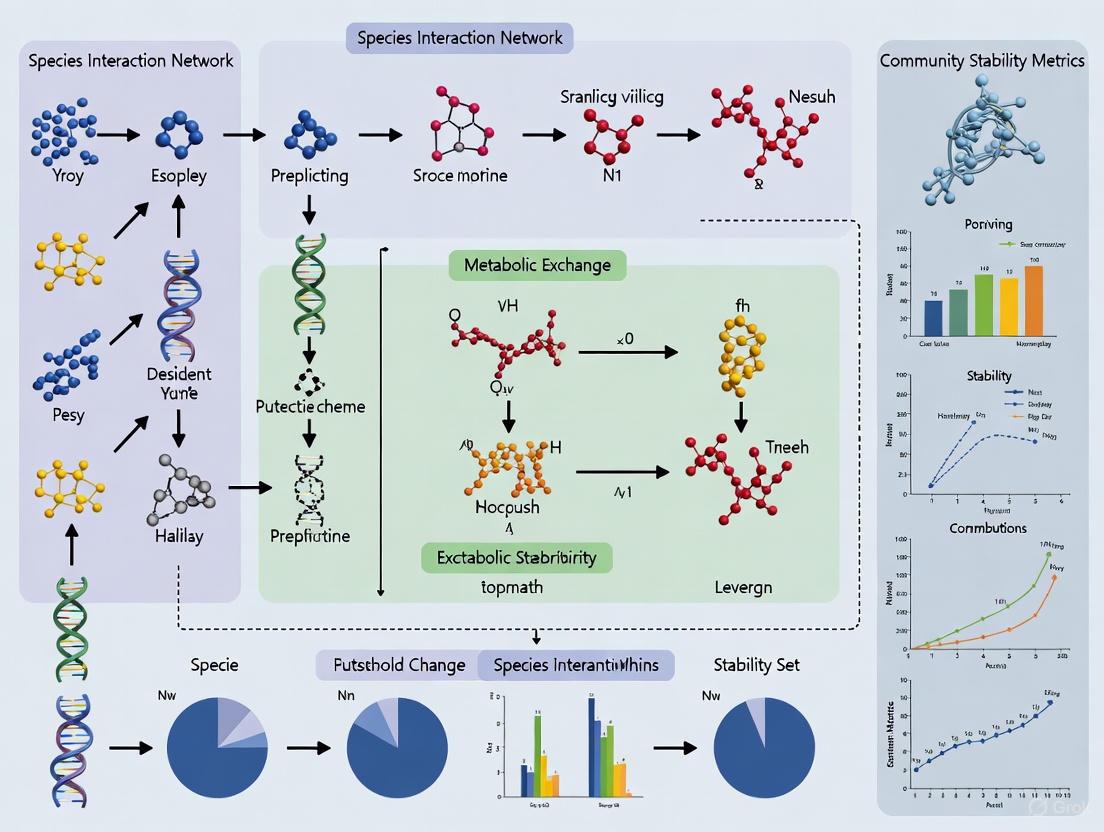
This article addresses the critical challenge of mitigating reduced interactions in multi-species synthetic communities, a key obstacle in translating laboratory-designed consortia to reliable biomedical and biotechnological applications.
Stabilizing Synthetic Microbial Communities: Strategies to Mitigate Reduced Interactions for Biomedical Applications
Abstract
This article addresses the critical challenge of mitigating reduced interactions in multi-species synthetic communities, a key obstacle in translating laboratory-designed consortia to reliable biomedical and biotechnological applications. For researchers and drug development professionals, we synthesize foundational ecological principles with advanced engineering strategies, covering the design of robust intercellular interactions, optimization techniques to enhance community stability, troubleshooting for functional persistence, and validation through computational and experimental models. By integrating the latest research on metabolic modeling, higher-order dynamics, and combinatorial optimization, this resource provides a comprehensive framework for constructing stable, predictable microbial ecosystems for therapeutic production, biocontrol, and understanding host-microbe interactions.
The Ecology of Synthetic Communities: Understanding Interaction Networks and Stability Principles
Frequently Asked Questions (FAQs)
Q1: What are the main types of species interactions I might observe in my synthetic community experiment? The primary interaction types are Competition, Predation/Herbivory, and Symbiosis, which includes mutualism, commensalism, and parasitism [1] [2]. In mutualism, both species benefit from the interaction. In commensalism, one species benefits while the other is unaffected. In parasitism, one species benefits at the expense of the other [1]. Competition involves individuals vying for a common resource that is in limited supply, negatively affecting the weaker competitors. Predation occurs when one individual (the predator) kills and eats another (the prey) [2].
Q2: Why might the expected interactions in my synthetic community (SynCom) not manifest in experimental results? Expected interactions may not manifest due to several factors:
- Inappropriate Community Assembly: The selected strains may not accurately capture the functional diversity or ecological niches of the target ecosystem, leading to reduced or absent interactions [3].
- Insufficient Characterization: A lack of prior in silico validation (e.g., using genome-scale metabolic models) to predict potential cooperative or competitive interactions between strains [3].
- Experimental Conditions: Suboptimal growth media, temperature, or physical environment that does not support the specific requirements for the interactions to occur.
- Contamination: The introduction of unintended microbial species can disrupt delicate, planned interactions within the SynCom [4].
Q3: My SynCom is showing much lower diversity and stability than anticipated. What could be the cause? Reduced diversity and stability often stem from competitive exclusion, where a superior competitor eliminates an inferior one by outcompeting it for resources [2]. This can happen if:
- The SynCom lacks functional redundancy or cross-feeding relationships that promote stability.
- Interference competition occurs, where one strain directly alters the resource-attaining behavior of another [2].
- The community design does not account for apparent competition, where two strains that do not directly compete for resources negatively affect each other by both being a resource for the same predator or phage [2].
Q4: How can I troubleshoot a synthetic community that fails to induce a specific host phenotype? First, verify that your SynCom is functionally representative of the donor ecosystem. A taxonomy-based selection might miss key functional genes [3]. Ensure the community is stable and all members are present at the time of host exposure. Check for the presence of known effector metabolites or functions that are differentially enriched in the phenotype of interest using weighted functional profiling during community design [3].
Troubleshooting Guides
Problem: Unexpected Competitive Exclusion in SynCom
Symptoms: One or two microbial strains dominate the culture, leading to a rapid loss of other community members.
Investigation and Solutions:
| Investigation Step | Protocol & Methodology | Expected Outcome & Interpretation |
|---|---|---|
| Identify Competition Type | Conduct paired growth experiments in a shared medium versus individual cultures. Analyze growth curves and resource depletion [3]. | A significant growth reduction in co-culture suggests exploitation competition. Direct inhibition suggests interference competition [2]. |
| In Silico Metabolic Modeling | Use genome-scale metabolic models (e.g., with tools like BacArena or GapSeq) to simulate growth of community members in a shared nutrient environment [3]. | Predicts potential for resource competition and identifies specific nutrients in conflict before wet-lab experiments. |
| Modulate Disturbance Regime | Introduce controlled disturbances (e.g., periodic dilution, nutrient pulsing) based on the intermediate disturbance hypothesis [2]. | Prevents competitive exclusion by creating opportunities for weaker competitors (often better dispersers) to regrow, fostering coexistence [2]. |
Problem: Loss of Mutualistic or Cooperative Interactions
Symptoms: A decline in the overall function or productivity of the SynCom that cannot be explained by the loss of a single species.
Investigation and Solutions:
| Investigation Step | Protocol & Methodology | Expected Outcome & Interpretation |
|---|---|---|
| Verify Metabolic Cross-Feeding | Use genome-scale metabolic modeling to identify potential cooperative interactions, such as cross-feeding, prior to SynCom construction [3]. | Provides in silico evidence for cooperative strain coexistence. A positive score indicates a higher likelihood of successful cooperation. |
| Profile Spent Media | Grow potential mutualistic strains individually, then culture other strains in the filtered "spent" media. Monitor growth compared to fresh media controls. | Enhanced growth in spent media indicates the presence of beneficial metabolites (e.g., vitamins, amino acids) produced by the first strain, confirming cross-feeding. |
| Re-engineer Community Composition | If a key mutualist is lost, use a function-based selection pipeline (e.g., MiMiC2) to identify alternative isolates from a genome collection that encode the same critical function [3]. | Creates a more robust SynCom where essential functions are maintained even if one strain is lost, mitigating reduced interactions. |
Experimental Protocols & Workflows
Protocol 1: Protocol for a Function-Based Synthetic Community Design
This methodology ensures the selected strains capture the functional profile of a target ecosystem, promoting meaningful interactions [3].
- Metagenomic Analysis: Obtain metagenomic assemblies from the target ecosystem (e.g., healthy vs. diseased gut).
- Genome Collection: Curate a collection of isolate genomes or high-quality Metagenome-Assembled Genomes (MAGs).
- Functional Annotation: Annotate the proteome of both metagenomes and isolate genomes using hmmscan against a database like Pfam.
- Function Weighting: Assign weights to functions:
- Add a weight for "core" functions (prevalent in >50% of target metagenomes).
- Add a weight for functions differentially enriched in the target group (e.g., diseased) versus a control group (e.g., healthy) using a Fischer's exact test.
- Iterative Strain Selection: Use a script (e.g., MiMiC2.py) to iteratively select the highest-scoring isolate from the genome collection. The score is based on the number of matching Pfams with the target metagenome, plus the weighted scores.
- In Silico Validation: Simulate the growth of the selected SynCom members using metabolic modeling in a tool like BacArena to check for cooperative coexistence prior to experimental validation [3].
Protocol 2: Workflow for Diagnosing Unstable Community Dynamics
Diagram: Troubleshooting Unstable SynCom Dynamics
The Scientist's Toolkit: Research Reagent Solutions
| Item | Function & Application |
|---|---|
| GapSeq | A software tool for the automated construction of genome-scale metabolic models. It generates models from genome annotations that are compatible with simulation tools like BacArena, enabling in silico prediction of microbial interactions [3]. |
| BacArena | An R toolkit that allows for the simulation of microbial communities in a spatially structured environment. It is used to simulate the growth and metabolic interactions of SynCom members in silico before experimental assembly [3]. |
| MiMiC2 Pipeline | A bioinformatics pipeline for the function-based selection of synthetic communities. It selects isolates from a genome collection that best match the functional profile (Pfam domains) of a target metagenome, ensuring functional representation [3]. |
| Gnotobiotic Mouse Models | Germ-free or defined-flora animal models. They are essential for in vivo validation of SynComs, allowing researchers to study community stability and host-microbe interactions in a controlled environment [3]. |
| Hot-Start Polymerase | A modified PCR enzyme inactive at room temperature. It prevents the formation of non-specific products and primer-dimers during reaction setup, which is crucial for amplifying specific microbial genes from a complex community sample without bias [5]. |
The Impact of Higher-Order Interactions (HOIs) on Community Dynamics
FAQs: Understanding Higher-Order Interactions
What are Higher-Order Interactions (HOIs) in ecological communities? Higher-Order Interactions (HOIs) occur when the interaction between two species is modified by the presence or abundance of a third species. Unlike pairwise interactions, HOIs can alter the strength and direction of competition or facilitation in multi-species communities, making community dynamics more complex and less predictable from simple two-species experiments [6].
Why are HOIs a critical consideration in multi-species synthetic communities (SynComs) research? HOIs are critical because their existence and strength are sensitive to environmental context [6]. In SynComs research, ignoring HOIs can lead to inaccurate predictions of species coexistence and community stability. The presence of a strong HOI can enable the persistence of a species that would otherwise be competitively excluded, a outcome that cannot be predicted from pairwise data alone [6].
What are common experimental symptoms that suggest HOIs are affecting my SynCom? A key symptom is when the dynamics observed in a multi-species community significantly deviate from the predictions of a model parameterized using only data from one- and two-species treatments [6]. For instance, if a species thrives in a complex community but is consistently outcompeted in all its pairwise tests, a facilitative HOI is likely at play.
How can I determine if inconsistent functional performance across trials is due to HOIs? Inconsistent functional performance, such as variable disease suppression or plant growth promotion, can stem from context-dependent HOIs [7]. To diagnose this, compare the functional output of the full SynCom to the outputs of various simplified sub-communities. If the full community's performance is not the simple average of its parts, HOIs are likely modifying functional expression [7].
My SynCom shows low stability and one species consistently goes extinct. Could HOIs be the cause? Yes, this is a classic scenario where HOIs might be involved. The extinctions could be due to undetected competitive HOIs that intensify competition beyond what pairwise data suggests. Conversely, the problem might be that your community design lacks stabilizing HOIs, which in natural environments can create niche differences that promote coexistence [6].
Troubleshooting Guides
Problem: Unpredictable Community Dynamics
Symptoms: The observed multi-species community dynamics (e.g., species coexistence, biomass production) do not match model predictions based on pairwise interaction data [6].
Solution: Implement a model-fitting and validation workflow.
| Step | Action | Protocol Details | Expected Outcome |
|---|---|---|---|
| 1 | Data Collection | Grow all species in all possible one- and two-species combinations under controlled conditions. Monitor population dynamics over time [6]. | A dataset for parameterizing a baseline competition model without HOIs. |
| 2 | Model Parameterization | Use the one- and two-species data to parameterize a mathematical model (e.g., a generalized Lotka-Volterra model) for your community [6]. | A predictive model that assumes no HOIs. |
| 3 | Model Validation & HOI Detection | Compare the predictions of your parameterized model against the actual observed dynamics of the full multi-species community [6]. | A significant deviation between prediction and observation indicates the presence of strong HOIs. |
Problem: Context-Dependent SynCom Performance
Symptoms: A SynCom that functions consistently in one laboratory environment (e.g., low resource enrichment) fails or behaves unpredictably in another (e.g., high resource enrichment) [6].
Solution: Systematically test the SynCom across key environmental gradients.
| Step | Action | Protocol Details | Expected Outcome |
|---|---|---|---|
| 1 | Identify Gradient | Identify the environmental factor suspected of causing instability (e.g., resource enrichment, pH, temperature) [6]. | A targeted experimental factor for testing. |
| 2 | Replicate Experiment | Conduct the SynCom assembly experiment (as in the troubleshooting guide above) at multiple levels of the chosen environmental factor [6]. | Multiple datasets showing how interactions change with context. |
| 3 | Re-Parameterize Models | Parameterize separate models for each environmental context using the relevant one- and two-species data [6]. | Context-specific models that can reveal how HOIs change with the environment. |
Experimental Protocols
Detailed Protocol for Detecting HOIs
Objective: To rigorously test for the existence and strength of HOIs among competing species and infer their long-term consequences for species coexistence [6].
Methodology:
Experimental Design:
- Select the candidate species for your SynCom (e.g., three bacterivorous ciliate species) [6].
- Establish microcosms for all possible species combinations: all monocultures, all pairwise cultures, and the full multi-species community. Each treatment should have sufficient replication.
- Implement this full design across the different environmental contexts you wish to test (e.g., low and high resource enrichment) [6].
Data Collection:
- Regularly census the population density of each species in each microcosm over a time series that is long enough to observe dynamic trends and potential equilibria [6].
Model Fitting and Analysis:
- Use the population dynamic data from the one- and two-species treatments to parameterize a competition model for your community. The model should account for nonlinear intraspecific density dependence where appropriate [6].
- Use the parameterized model to generate a prediction for the dynamics of the full multi-species community, assuming no HOIs.
- Statistically compare the model's prediction to the empirically observed dynamics of the full community. A significant deviation indicates the presence of a statistically supported HOI [6].
Interpretation:
- The direction and magnitude of the deviation reveal the nature of the HOI. For example, if a species persists in the full community but was predicted to go extinct, the HOI is facilitative and promotes coexistence [6].
Workflow Visualization
Diagram: HOI Detection Workflow.
Signaling Pathways & Conceptual Diagrams
HOI Impact on Coexistence
Diagram: HOI Alters Coexistence Outcome.
Research Reagent Solutions
Essential materials and tools for studying HOIs in synthetic communities.
| Item | Function in HOI Research | Example Use Case |
|---|---|---|
| Gnotobiotic Systems (e.g., sterile plant growth systems, rodent isolators) | Provides a controlled, sterile environment to assemble SynComs from the bottom-up with a known species composition [7]. | Essential for assessing the causal effects of a defined SynCom and its HOIs on a host phenotype, without interference from an unknown background microbiota [7]. |
| Genome-Scale Metabolic Models (GSMMs) | Computational models that predict the metabolic capabilities of and interactions between microbial species based on their annotated genomes [7]. | Used in silico to predict potential resource competition or cross-feeding (metabolic HOIs) that could influence community stability and function [7]. |
| High-Throughput Phenotyping | Automated systems to screen microbial strains or simple communities for functional traits (e.g., substrate utilization, antibiotic production) [7]. | Informs the selection of SynCom members by identifying strains with specific functional traits (e.g., chitin degradation) that may lead to HOIs when combined with other members [7]. |
| Differential Abundance Analysis Tools | Bioinformatics software to identify microbial taxa that are significantly more or less abundant between different sample groups (e.g., suppressive vs. conducive soils) [7]. | A top-down approach to identify candidate strains for SynCom construction that are naturally associated with a desired phenotype and may participate in relevant HOIs [7]. |
Frequently Asked Questions (FAQs)
FAQ 1: Why do interaction outcomes observed in paired cultures often fail to predict behavior in more complex communities? In a multi-species setting, the presence of additional species can fundamentally alter the interactions between any two original members, a phenomenon known as a Higher-Order Interaction (HOI) [8]. For instance, an antagonistic relationship observed between two species in isolation may be suppressed by the introduction of a third, resistant species that modifies the community's chemical environment or physical structure [8]. The dynamics in complex communities are an emergent property that cannot always be extrapolated from the sum of their pairwise interactions [8] [9].
FAQ 2: How can I stabilize a synthetic community that shows a decline in one or more member species over time? Promoting cooperation and reducing negative competition is key to stability. Strategies include:
- Engineering Metabolic Complementarity: Partition metabolic pathways across different community members to create syntrophic dependencies, where each strain relies on others for essential metabolites [10] [11].
- Selecting Narrow-Spectrum Resource Utilizers: Incorporate strains that specialize in using a limited set of resources. This reduces metabolic resource overlap (MRO) and increases the potential for cooperative metabolic interactions (MIP), which enhances community stability [11].
- Introducing Spatial Structure: Use microfluidic devices, microwell arrays, or biofilm engineering to create a structured environment. Spatial segregation strengthens local positive interactions and protects cooperative members from being outcompeted by "cheaters" [10].
FAQ 3: What environmental factors most strongly influence interspecies interactions? The abiotic environment profoundly shapes interactions. Two of the most critical factors are:
- Nutrient Availability: High nutrient levels often intensify competitive interactions, potentially leading to a loss of biodiversity. In contrast, low-nutrient or otherwise stressful environments can promote cooperative interactions, such as cross-feeding, for mutual survival [9].
- Environmental pH: Bacteria frequently modify their local pH, which can in turn determine community composition and stability. A species' ability to tolerate or create a specific pH range can be a major competitive or cooperative advantage [9].
Troubleshooting Guides
Problem: Reduced or Unstable Interactions in a Multi-Species Synthetic Community
Step 1: Diagnose the Nature of the Interaction Failure
First, systematically characterize the failure mode to guide your solution.
| Observation | Possible Underlying Cause | Diagnostic Experiments to Run |
|---|---|---|
| One species dies rapidly | Antagonism (e.g., antibiotic production) from another member [8] | Spot-on-lawn assays; co-culture with conditioned media to test for diffusible toxins. |
| Gradual decline of all/multiple species | Lack of cooperation; competitive exclusion; insufficient cross-feeding [11] [9] | Measure metabolic exchange metabolites (e.g., amino acids, vitamins); genome-scale metabolic modeling to assess MRO and MIP [11]. |
| Interaction is strong in pairs but lost in the full community | Higher-Order Interactions (HOIs); presence of a third species modulates the original interaction [8] | Reconstruct all possible sub-communities (pairs, triples) to identify the specific combination that disrupts the interaction. |
| Unpredictable population dynamics | Lack of spatial structure leading to "tragedy of the commons" [10] | Transition from well-mixed liquid culture to a spatially structured environment (e.g., agar plates, biofilms, microfluidic devices). |
Step 2: Implement Corrective Protocols Based on Diagnosis
Protocol A: For Diagnosed Antagonism
- Objective: To preserve a species that is sensitive to antagonism within a larger community.
- Method: Introduce a Resistant (R) species that can mitigate the antagonistic effect.
- Cultivate the Antagonistic (A) and Sensitive (S) species together in a co-culture and confirm the deleterious effect [8].
- Introduce the candidate R species. The R species should not harm A or S but must be able to interfere with the antagonistic mechanism (e.g., by degrading the toxin or altering environmental pH) [8].
- Monitor the population dynamics of all three species (A, S, R) in real-time if possible. A successful intervention will show restored growth of the S species in the triple co-culture compared to the A-S pair [8].
- Reagent Solution: The BARS community model (comprising Bacillus pumilus [A], Sutcliffiella horikoshii [S], and Bacillus cereus [R]) is a well-defined experimental system for studying this dynamic [8].
Protocol B: For Diagnosed Lack of Cooperation/Instability
- Objective: To construct a stable, cooperative community from the ground up.
- Method: Rational bottom-up design using metabolic modeling and phenotypic screening.
- Select Functionally Diverse Strains: Choose strains with desired, complementary plant-beneficial functions (e.g., nitrogen fixation, phosphate solubilization) [11].
- Profile Resource Utilization: Use phenotype microarrays (e.g., Biolog plates) to quantify the "resource utilization width" for each candidate strain on relevant carbon sources [11].
- Prioritize Narrow-Spectrum Strains: Favor strains with a lower resource utilization width, as they exhibit lower Metabolic Resource Overlap (MRO) and higher Metabolic Interaction Potential (MIP), which correlates with stability [11].
- Validate In Silico and In Vivo: Construct Genome-Scale Metabolic Models (GMMs) to simulate the MIP and MRO for all possible community combinations. Assemble the top-predicted stable communities experimentally and monitor population dynamics over time in the target habitat (e.g., plant rhizosphere) [11].
The Scientist's Toolkit: Research Reagent Solutions
Table: Essential Materials for Investigating Spatiotemporal Interactions.
| Research Reagent | Function & Application |
|---|---|
| BARS Model System [8] | A defined three-species community (Bacillus pumilus, Sutcliffiella horikoshii, Bacillus cereus) to study Higher-Order Interactions and immediate response to antagonism. |
| Phenotype Microarrays (e.g., Biolog Plates) [11] | High-throughput screening of carbon source utilization to determine a strain's "resource utilization width," a key predictor of community stability. |
| Genome-Scale Metabolic Models (GMMs) [11] | In silico tools to compute Metabolic Resource Overlap (MRO) and Metabolic Interaction Potential (MIP) for rational community design. |
| Microfluidic/Microwell Devices [10] | Tools to impose spatial structure on microbial communities, allowing for the study of how physical segregation affects interaction dynamics. |
| COMETS (Computation of Microbial Ecosystems in Time and Space) [10] | A dynamic flux balance analysis software that simulates microbial growth and metabolic interactions in a 2D spatial environment. |
Diagrams and Workflows
Diagram 1: Higher-Order Interaction in a Three-Species Community
Diagram 2: Community Design Workflow for Enhanced Stability
Diagram 3: Relationship Between Resource Use and Stability
Troubleshooting FAQs
FAQ 1: My synthetic community collapses, with one or two species dominating the culture. How can I reduce competition? This indicates excessive metabolic resource overlap (MRO) and insufficient positive interactions. To address this:
- Diagnose Competition: Calculate the MRO for your community members using genome-scale metabolic models (GEMs). A high MRO suggests strong competition for nutrients [11].
- Solution - Incorporate Specialists: Introduce narrow-spectrum resource-utilizing (NSR) strains. Research shows that strains with a lower resource utilization width contribute to lower MRO and increase community stability. For example, in one study, Cellulosimicrobium cellulans (resource width: 13.10) significantly reduced MRO compared to broad-spectrum utilizers like Bacillus megaterium (resource width: 36.76) [11].
- Design Principle: Aim for a mix of metabolic capabilities to minimize niche overlap. Use phenotype microarrays to profile the carbon source utilization of your candidate strains and select those with complementary, non-overlapping profiles [11].
FAQ 2: The community is stable but does not perform the desired function. How can I improve functional robustness? This occurs when community assembly is based solely on taxonomy or coexistence, without ensuring the encoded functions are present.
- Diagnose Function: Use a function-based design approach. Annotate the genomes of your candidate isolates for key functional genes (e.g., Pfam domains) and compare this to a list of functions identified as critical from metagenomic data of a high-performing natural community [3].
- Solution - Weight Key Functions: Assign higher selection weights to microbial strains that encode core and differentially enriched functions. For instance, when modeling a disease state, functions that are significantly more prevalent in diseased versus healthy metagenomes should be heavily weighted during the in silico selection of SynCom members [3].
- Experimental Validation: The designed community must be validated in vivo. A function-directed SynCom of 10 members designed to model inflammatory bowel disease successfully induced colitis in gnotobiotic mice, confirming it captured the disease-associated functional profile [3].
FAQ 3: How can I predict if my designed community will be stable before I culture it? Utilize in silico modeling to simulate community dynamics and interactions prior to experimental validation.
- Method - Metabolic Modeling: Employ tools like BacArena to conduct metabolic modeling with GEMs. This provides simulated evidence for cooperative potential and coexistence [3].
- Key Metrics: Calculate two critical indices from the models:
- Metabolic Interaction Potential (MIP): Reflects the potential for cooperative, cross-feeding interactions. A higher MIP is better.
- Metabolic Resource Overlap (MRO): Indicates the level of competition for resources. A lower MRO is better [11].
- Protocol: The simulation typically involves creating an "arena," loading the metabolic models of your strains, and simulating growth over a set period (e.g., 7 hours) to observe outcomes [3].
Troubleshooting Guides
Guide 1: Diagnosing and Mitigating Metabolic Competition
Problem: Rapid loss of diversity due to competitive exclusion.
Investigation & Resolution Steps:
Profile Resource Utilization:
- Protocol: Use phenotype microarray plates (e.g., Biolog PM plates) to test the ability of each individual strain to utilize a wide array of single carbon sources. This quantitatively defines each strain's metabolic niche [11].
- Output: A resource utilization profile for each strain.
Calculate Resource Utilization Width and Overlap:
- Protocol: From the phenotype data, calculate the "resource utilization width" (the total number of carbon sources a strain can use) and the "pairwise overlap index" (the number of substrates shared between two strains). These are direct indicators of a strain's potential to be a broad-generalist competitor [11].
- Output: Numerical values for width and pairwise overlap.
Build and Simulate with GEMs:
Mitigation Strategy:
- If MRO is high, replace broad-spectrum resource-utilizing (BSR) strains with narrow-spectrum (NSR) strains. Data shows a clear positive correlation between resource utilization width and MRO [11].
Quantitative Data on Resource Utilization and Stability [11]:
| Bacterial Strain | Resource Utilization Width | Average Overlap Index | Role in Community Stability |
|---|---|---|---|
| Bacillus megaterium L | 36.76 | 0.74 | Broad-spectrum utilizer (BSR), high competition |
| Pseudomonas fluorescens J | 37.32 | 0.72 | Broad-spectrum utilizer (BSR), high competition |
| Bacillus velezensis SQR9 | 35.50 | 0.83 | Broad-spectrum utilizer (BSR), high competition |
| Pseudomonas stutzeri G | 25.59 | Information Missing | Narrow-spectrum utilizer (NSR), central to cooperation |
| Azospirillum brasilense K | 24.37 | Information Missing | Narrow-spectrum utilizer (NSR) |
| Cellulosimicrobium cellulans E | 13.10 | 0.51 | Narrow-spectrum utilizer (NSR), key for stability |
Guide 2: Designing for Functional Robustness
Problem: The community fails to execute the expected biochemical function.
Investigation & Resolution Steps:
Define a Functional Target from Metagenomes:
- Protocol: Assemble and annotate metagenomic sequences from environmental samples (e.g., healthy vs. diseased states) using Prodigal for gene prediction and HMMscan against databases like Pfam for functional annotation. Create a binarized presence-absence vector of functions for your sample group [3].
Select Strains from a Genome Collection Based on Function:
- Protocol: Apply the same annotation pipeline to a collection of isolated genomes. Use a computational tool like MiMiC2 to select the subset of strains whose combined functional (Pfam) profile best matches the target metagenomic profile. Prioritize strains that encode "core" functions (present in >50% of samples) and "differentially enriched" functions (significantly associated with a phenotype of interest) [3].
- Output: A shortlist of strains selected for their functional capacity, not just taxonomy.
Validate Cooperativity In Silico:
- Protocol: As in Guide 1, use GEMs to simulate the paired growth of selected strains. The
Paired_Growth.Rscript in BacArena, for example, places two models in a shared environment to simulate their interaction and check for mutual growth support [3].
- Protocol: As in Guide 1, use GEMs to simulate the paired growth of selected strains. The
Experimental Protocols
Protocol 1: Function-Based SynCom Selection
This protocol details the MiMiC2 pipeline for selecting community members based on metagenomic functional profiles [3].
Metagenomic Analysis:
- Obtain metagenomic samples (raw reads or assemblies).
- If using raw reads, filter out host sequences using a tool like BBMAP.
- Perform assembly using MEGAHIT.
- Predict the proteome using Prodigal with the
-p metaoption. - Annotate protein sequences using
hmmscanagainst the Pfam database.
Genome Collection Processing:
- Obtain isolate genomes or high-quality metagenome-assembled genomes (MAGs).
- Process each genome through the same proteome prediction and Pfam annotation pipeline as the metagenomes.
Strain Selection with MiMiC2:
- Vectorize the Pfam annotations into binarized vectors for both metagenomes and genomes.
- Assign weights to functions:
- Core functions (>50% prevalence in target metagenomes): Add a weight (default 0.0005).
- Differentially enriched functions (e.g., between healthy/diseased): Add a weight (default 0.0012) based on a Fisher's exact test.
- Run the main
MiMiC2.pyscript. It iteratively selects the genome that best matches the metagenomic functional profile, incorporating the weighting scheme, until the desired number of members is reached.
Protocol 2: Assessing Metabolic Interactions with GEMs
This protocol uses GapSeq and BacArena to model community metabolic interactions [3] [11].
Model Reconstruction:
- For each bacterial strain, generate a genome-scale metabolic model using GapSeq (e.g., with the
doallcommand). This creates a model compatible with BacArena. - Refine the model by constraining it with experimental data, such as carbon source utilization from phenotype microarrays [11].
- For each bacterial strain, generate a genome-scale metabolic model using GapSeq (e.g., with the
Simulation Setup:
- Use an R script to create a simulation
Arena(e.g., size 100x100). - Load the metabolic models and add them to the arena using
addOrg. For pairwise testing, add 10 cells of each strain randomly. - Set a default medium using
addDefaultMedto ensure a standardized environment.
- Use an R script to create a simulation
Run Simulation and Analyze:
- Simulate growth over a defined period (e.g., 7 hours) using
simEnv. - Extract growth data and metabolite exchanges.
- Calculate Key Metrics: Compute the Metabolic Interaction Potential (MIP) and Metabolic Resource Overlap (MRO) from the simulation results to quantify cooperation and competition [11].
- Simulate growth over a defined period (e.g., 7 hours) using
Workflow and Pathway Diagrams
Function-Based SynCom Design
Metabolic Interaction Network
The Scientist's Toolkit
Research Reagent Solutions for SynCom Stability Research
| Reagent / Tool | Function / Application | Key Detail |
|---|---|---|
| Phenotype Microarrays (e.g., Biolog PM) | High-throughput profiling of carbon source utilization to determine metabolic niche width and overlap. | Uses 58+ common rhizosphere/resources to calculate Resource Utilization Width [11]. |
| Genome-Scale Metabolic Model (GEM) | In silico simulation of metabolism to predict growth, resource use, and metabolite exchange. | Built with tools like GapSeq; simulated in BacArena to calculate MIP and MRO [3] [11]. |
| Pfam Database | A curated database of protein families and hidden Markov models (HMMs) for functional annotation. | Used with HMMscan to annotate metagenomes and isolate genomes for function-based selection [3]. |
| MiMiC2 Software | A computational pipeline for the function-based selection of synthetic community members from isolate collections. | Selects strains based on matching Pfam profiles to a target metagenome, with weighting for key functions [3]. |
| Gnotobiotic Mouse Models | Animal models with a completely defined microbiota for validating the function and host impact of designed SynComs. | Used to confirm a 10-member IBD SynCom could induce disease, validating its functional accuracy [3]. |
Emergent Properties in Multi-Species Consortia
Troubleshooting Guides and FAQs
Frequently Asked Questions
Q1: Our synthetic consortium performs well in laboratory media but fails to show the expected emergent properties, such as enhanced product output, in a more complex environmental sample. What could be the issue?
Laboratory media often provide ideal, homogeneous conditions that do not replicate the nutritional and abiotic stresses found in natural environments. The emergent functions of your consortium likely depend on specific cross-feeding interactions that are disrupted in the more complex setting. To troubleshoot:
- Diagnosis: The loss of function is likely due to insufficient activation or stability of key interactions, such as metabolite exchange, in a competitive environment [12].
- Solution: Re-design your consortium to include "helper" or "scaffold" strains that facilitate the main interaction. For example, in a consortium designed for biodegradation, you could include a strain that consumes an inhibitory byproduct, thereby protecting the primary degraders [13]. Pre-adapting your consortium to the target environment through experimental evolution can also select for more robust variants [14].
Q2: One species consistently outcompetes and eliminates another in our synthetic community, leading to a loss of the consortium. How can we improve long-term coexistence?
Unbalanced growth and collapse are common challenges often caused by competitive exclusion or the evolution of parasitic behaviors that disrupt mutualistic exchanges [14].
- Diagnosis: The system likely lacks a mechanism to stabilize the interaction, such as spatial structure or a feedback loop that benefits both parties.
- Solution:
- Spatial Structuring: Cultivate the consortium as a biofilm. The physical structure creates microenvironments and gradients that allow different species to occupy distinct niches, preventing one from overwhelming the other [13].
- Engineering Interdependence: Design the consortium so that each member provides an essential resource for the other. For instance, engineer a cross-feeding interaction where one species relies on a metabolite produced by the second, and vice-versa [13].
Q3: The emergent property of our consortium (e.g., biofuel yield) is strong initially but diminishes over successive cultivation cycles. Why is this happening, and how can we maintain stability?
This indicates a lack of evolutionary stability, where mutations in one or more members alter their functional traits or interaction dynamics over time [14].
- Diagnosis: The selective pressure to maintain the cooperative interaction may be weaker than the pressure for individual species to "cheat" and optimize their own growth.
- Solution:
- Apply Periodic Selection Pressure: Regularly passage your consortium under conditions where the desired emergent property (e.g., high product yield) is essential for growth. This enriches for community variants that maintain the cooperative function.
- Use Fluctuating Environments: If applicable, cultivate the consortium in an environment that alternates between different conditions (e.g., different carbon sources). This can prevent any single species from dominating and can help maintain functional diversity [14].
Troubleshooting Common Experimental Problems
The following table outlines specific experimental issues, their potential causes, and recommended actions.
| Problem | Symptom | Potential Cause | Solution |
|---|---|---|---|
| Loss of Consortium Function | Expected emergent property (e.g., degradation rate, product titer) is not observed or is significantly lower than the sum of monocultures. | Disrupted cross-feeding; inhibitory conditions; lack of key nutrient; evolution of "cheater" strains [14]. | Verify member compatibility and growth requirements; monitor metabolite exchange; re-introduce spatial structure (biofilms); apply selective pressure [13]. |
| Unstable Species Ratio | One consortium member consistently declines in abundance or goes extinct over time. | Unbalanced growth rates; competitive exclusion; parasitic behavior; lack of interdependence [14]. | Engineer obligatory cross-feeding; use temporal environmental fluctuations; implement a kill-switch for overgrown species; utilize biofilm cultivation [14]. |
| Poor Field Performance | Consortium functions in controlled lab settings but fails to establish or function in natural/application environments. | Competition with native microbiota; insufficient colonization; inadequate environmental conditions for persistence [12]. | Pre-adapt consortium to the target environment; include native, well-adapted "scaffold" species; use encapsulation to enhance initial survival [12]. |
| Low Product Yield | The final titer of a target molecule (e.g., ethanol, enzyme) is low despite seemingly healthy consortium growth. | Inefficient metabolic flux; product inhibition; suboptimal resource allocation; nutrient limitations [13]. | Engineer a positive feedback loop (e.g., product removal drives higher production); optimize culture medium; use necromass recycling to increase resource flux [13]. |
Experimental Protocols for Key Findings
Protocol 1: Establishing a Cross-Feeding Consortium for Enhanced Biodegradation
This protocol is adapted from research on an Acinetobacter johnsonii and Pseudomonas putida consortium, which exhibits a commensal interaction where A. johnsonii breaks down benzyl alcohol into benzoate, which is then consumed by P. putida [14].
Objective: To assemble and quantify the emergent property of enhanced substrate degradation in a two-species cross-feeding consortium.
Materials:
- Strains: Acinetobacter johnsonii, Pseudomonas putida.
- Growth Media: Minimal salts medium supplemented with benzyl alcohol as the sole carbon source.
- Equipment: Spectrophotometer, HPLC system, shaking incubator.
Methodology:
- Pre-culture: Grow each bacterial strain independently in minimal medium with benzyl alcohol to mid-exponential phase.
- Consortium Inoculation: Mix the two pre-cultures in a 1:1 cell ratio and inoculate into fresh medium containing benzyl alcohol.
- Monoculture Controls: Inoculate each strain separately into the same medium.
- Incubation: Incubate all cultures under appropriate conditions (e.g., 30°C with shaking).
- Monitoring:
- Measure optical density (OD600) every 4-6 hours to track growth.
- Collect supernatant samples to quantify benzyl alcohol depletion and benzoate accumulation using HPLC.
- Plate samples on selective media to track the abundance of each species over time.
Expected Outcome: The consortium will demonstrate an emergent property of more rapid and complete benzyl alcohol degradation compared to the A. johnsonii monoculture, as the cross-feeding interaction removes the inhibitory benzoate byproduct, driving the reaction forward [14].
Workflow: Cross-Feeding Consortium Assembly
Protocol 2: Quantifying Emergent Properties in a Biofilm Consortium
This protocol is based on work with a Clostridium phytofermentans and Escherichia coli consortium, which demonstrated significantly enhanced ethanol production and biomass accumulation in biofilms, especially under oxygen perturbations [13].
Objective: To cultivate a synthetic consortium as a biofilm and measure emergent properties like enhanced product synthesis and stress resilience.
Materials:
- Strains: Clostridium phytofermentans (obligate anaerobe), Escherichia coli (facultative anaerobe).
- Growth Media: Cellobiose-rich anoxic medium (e.g., mGS-2).
- Equipment: Anaerobic chamber, biofilm reactors (e.g., flow cells or multi-well plates with pegs), confocal laser scanning microscope (optional), gas chromatograph.
Methodology:
- Inoculum Preparation: Grow C. phytofermentans and E. coli to mid-exponential phase under anaerobic conditions.
- Biofilm Establishment: Mix cultures and inoculate into biofilm reactors. For controls, inoculate monocultures.
- Perturbation: Introduce controlled oxic pulses to the consortium biofilm. E. coli will consume O₂, creating anoxic niches for C. phytofermentans [13].
- Analysis:
- Biomass: Quantify biofilm biomass at the end of the experiment using crystal violet staining or by detaching and plating cells.
- Productivity: Measure ethanol titers in the supernatant using gas chromatography.
- Spatial Structure: If possible, use fluorescence in situ hybridization (FISH) or confocal microscopy to visualize the spatial organization of the two species within the biofilm.
Expected Outcome: The consortium biofilm will show a >250% increase in biomass and a >800% increase in ethanol production compared to the sum of monoculture biofilms, demonstrating a clear emergent property driven by division of labor and niche partitioning [13].
Mechanism: Biofilm Stress Resilience
Table 1: Measured Emergent Properties in Model Consortia
The following table summarizes key quantitative findings from seminal studies on synthetic microbial consortia, highlighting the performance gains attributable to emergent properties.
| Consortium Members | Interaction Type | Key Emergent Property | Quantitative Enhancement (vs. Monocultures) | Reference |
|---|---|---|---|---|
| Clostridium phytofermentans & Escherichia coli | Cross-feeding, Necromass recycling | Ethanol Production | >800% increase in titer [13] | [13] |
| Clostridium phytofermentans & Escherichia coli | Cross-feeding, Necromass recycling | Cellobiose Catabolism | >200% increase in consumption [13] | [13] |
| Clostridium phytofermentans & Escherichia coli | Cross-feeding, Necromass recycling | Biomass Productivity | >120% increase in cell dry weight [13] | [13] |
| Clostridium phytofermentans & Escherichia coli (Biofilm) | Division of labor, O₂ consumption | Biomass Accumulation | ~250% increase under anoxic/oxic cycling [13] | [13] |
| Acinetobacter johnsonii & Pseudomonas putida | Commensalism (Cross-feeding) | Community Stability | Stable coexistence in constant environment; extinction in fluctuating environments [14] | [14] |
The Scientist's Toolkit: Research Reagent Solutions
Table 2: Essential Materials for SynCom Research
A selection of key reagents, strains, and tools used in the design, construction, and analysis of synthetic microbial consortia.
| Item | Category | Function & Application |
|---|---|---|
| Model Strains (Acinetobacter johnsonii, Pseudomonas putida) | Biological Model | Used to study the stability of commensal cross-feeding interactions and their response to environmental fluctuations [14]. |
| Specialist Strains (Clostridium phytofermentans, E. coli) | Biological Model | A consortium combining a primary resource specialist (cellulose degrader) with a versatile secondary-resource specialist to achieve enhanced bioconversion [13]. |
| Minimal Media with Specific Carbon Sources (e.g., Benzyl Alcohol, Cellobiose) | Growth Medium | Used to control and define the ecological interactions between consortium members, forcing cross-feeding and interdependence [14] [13]. |
| Biofilm Reactors (e.g., Flow Cells, Peg Lids) | Cultivation Equipment | Provides spatial structure, which is critical for stabilizing interactions, enabling division of labor, and enhancing stress resilience in consortia [13]. |
| d3-scale-chromatic & Viridis Palettes | Data Visualization | Color palettes for D3.js used to create accessible and clear visualizations of complex consortium data, such as species abundance over time [15]. |
| Nylon Membrane Microbial Cages | Field Experiment Tool | Allows consortia to be deployed in natural environments while preventing migration, enabling the study of evolutionary dynamics in the field [14]. |
Engineering Stable Consortia: Design Strategies and Assembly Methods
Bottom-Up vs. Top-Down Approaches for Community Construction
In multi-species synthetic communities (SynComs) research, two principal engineering philosophies are employed: the top-down and bottom-up approaches. The top-down approach involves applying selective pressure to steer a natural microbial consortium toward a desired function, while the bottom-up approach involves rationally designing a new community by assembling individual microorganisms based on prior knowledge of their metabolic pathways and potential interactions [16].
Both strategies aim to mitigate the common challenge of reduced interactions in synthetic ecosystems, which can lead to functional instability, loss of key metabolic functions, and eventual community collapse. Understanding the principles, applications, and troubleshooting aspects of each method is crucial for researchers developing robust, functionally stable SynComs for drug development, biotechnology, and other scientific applications.
Top-Down Approach: Principles and Protocols
Core Concept and Workflow
The top-down approach is a classical method that uses environmental variables to selectively steer an existing microbial consortium to achieve a target function. This method manipulates an entire natural community through selective pressure, such as specific substrate availability, temperature, pH, or other operational conditions, to enrich for community members that perform a desired function [16].
The diagram below illustrates a generalized top-down approach workflow:
Key Experimental Protocol: Selective Enrichment
Objective: To steer a natural microbial community toward a specific function through controlled environmental conditions.
Materials:
- Source Inoculum: Environmental sample containing diverse microorganisms
- Growth Medium: Minimal medium with target substrate as primary carbon/nitrogen source
- Bioreactor System: Controlled environment for maintaining selective conditions
- Monitoring Equipment: HPLC, GC-MS, spectrophotometer for process monitoring
Procedure:
- Inoculum Preparation: Collect environmental sample relevant to target function
- Selective Condition Setup: Establish culture conditions favoring desired metabolic activity
- Batch Transfers: Perform sequential transfers to fresh medium to enrich adapted community
- Process Monitoring: Regularly analyze community composition and functional output
- Stabilization: Maintain selective pressure until stable function is established
Troubleshooting Note: If the community fails to converge on the desired function, consider adjusting the selective pressure gradient or introducing additional environmental constraints to further steer community assembly.
Bottom-Up Approach: Principles and Protocols
Core Concept and Workflow
The bottom-up approach uses prior knowledge of metabolic pathways and possible interactions among consortium partners to design and engineer synthetic microbial consortia from individual isolates. This strategy offers greater control over the composition and function of the consortium for targeted bioprocesses [16] [7].
The diagram below illustrates a generalized bottom-up approach workflow:
Key Experimental Protocol: Rational Community Assembly
Objective: To construct a stable, functional synthetic community from characterized individual isolates.
Materials:
- Pure Cultures: Fully sequenced and metabolically characterized isolates
- Interaction Assay Platforms: Microplates, microfluidic devices for testing pairwise interactions
- Genetic Engineering Tools: CRISPR, plasmids for introducing specific interactions
- Analytical Tools: Sequencing platforms, metabolomics for functional validation
Procedure:
- Strain Selection: Choose isolates based on functional traits and potential interactions
- Interaction Screening: Test pairwise and higher-order interactions
- Community Design: Design consortium based on functional and ecological principles
- Ratio Optimization: Determine optimal starting ratios for community assembly
- Stability Testing: Monitor community composition and function over multiple generations
Troubleshooting Note: If the synthetic community shows instability, consider introducing spatial structure or engineering cross-feeding dependencies to stabilize interactions.
Comparative Analysis: Top-Down vs. Bottom-Up Approaches
Table 1: Comparison of Top-Down and Bottom-Up Approaches for Synthetic Community Construction
| Parameter | Top-Down Approach | Bottom-Up Approach |
|---|---|---|
| Complexity Management | Reduces complexity through selective pressure | Builds complexity from simple, defined parts |
| Design Control | Limited control over final composition | High control over composition and ratios |
| Implementation Time | Can be lengthy due to enrichment needs | Faster assembly with pre-characterized parts |
| Stability Challenges | Naturally stable but functionally variable | Engineered stability but prone to collapse |
| Required Expertise | Microbial ecology, environmental microbiology | Synthetic biology, systems biology |
| Typical Applications | Waste valorization, bioremediation, anaerobic digestion | Pharmaceutical production, biosensing, metabolic engineering |
| Success Rate | High for complex substrates, lower for specific products | Higher for defined functions, lower for complex environments |
| Key Advantage | Leverages natural microbial interactions | Enables precise control and predictability |
Table 2: Quantitative Outcomes from Representative Studies Using Each Approach
| Study Focus | Approach | Community Size | Key Outcome | Stability Duration |
|---|---|---|---|---|
| Anaerobic Digestion [16] | Top-Down | High diversity | 0.14-0.39 L biogas/g VS | Long-term (industrial scale) |
| Waste Valorization [16] | Top-Down | Unknown | Valuable products from waste | Process-dependent |
| Model Gut Community [7] | Bottom-Up | 100+ strains (hCom1/hCom2) | Stable colonization in mice | Several weeks |
| Plant Growth Promotion [7] | Bottom-Up | 7 strains | Suppression of Fusarium wilt | Field trial duration |
| Cross-Feeding Mutualism [17] | Bottom-Up | 2 strains | Sustained cooperative growth | Laboratory scale stability |
Troubleshooting Guide: FAQs on Mitigating Reduced Interactions
Q1: Why does our synthetic community show reduced interactions and functional instability over time?
A: Reduced interactions often result from:
- Unbalanced growth rates leading to dominance by faster-growing species
- Insufficient cross-feeding dependencies to maintain stable coexistence
- Accumulation of toxic metabolites inhibiting partner growth
- Evolution of "cheater" strains that benefit from but don't contribute to community function [17]
Solution: Implement the following corrective measures:
- Engineer obligate cross-feeding dependencies through auxotrophies
- Introduce spatial structure to create ecological niches
- Adjust initial inoculation ratios to balance growth dynamics
- Include regulatory circuits that punish "cheater" behavior
Q2: How can we predict and prevent the emergence of "cheater" strains in our synthetic community?
A: Cheaters frequently evolve in synthetic communities when:
- Some members can benefit from public goods without contributing
- There are no mechanisms enforcing cooperation
- Evolutionary pressures favor metabolic streamlining
Prevention Strategies:
- Create spatial structure that gives cooperators preferential access to goods they produce [17]
- Implement negative frequency-dependent selection
- Engineer syntrophic relationships where each member depends on others for essential metabolites
- Use kill switches activated by cheating behavior
Q3: What methods can enhance long-term stability in bottom-up designed communities?
A: Several methods can significantly improve stability:
- Spatial Structuring: Use biofilms, microcapsules, or compartmentalization to create niches
- Cross-Feeding Engineering: Design obligate metabolic dependencies between members
- Ratio Optimization: Systematically test different starting ratios to find stable configurations
- Environmental Control: Maintain constant conditions that favor the designed interactions
- Evolutionary Training: Allow community to adapt under controlled conditions before application
Q4: How can we effectively monitor interaction strength in complex synthetic communities?
A: Implement multi-modal monitoring:
- Metabolomic Profiling: Track metabolite exchange and consumption
- Time-Lapse Imaging: Monitor spatial organization and growth dynamics
- Single-Cell Genomics: Assess individual cell activities within the community
- Reporter Systems: Use fluorescent tags to visualize specific interactions
- Multi-Omics Integration: Combine genomics, transcriptomics, and metabolomics data
Research Reagent Solutions for Community Construction
Table 3: Essential Research Reagents and Their Applications in Community Construction
| Reagent/Material | Function | Application Context |
|---|---|---|
| Gnotobiotic Growth Chambers | Provides controlled environment for community assembly | Both approaches, essential for reducing external variables |
| Microfluidic Devices | Enables high-throughput interaction screening | Bottom-up approach for testing pairwise interactions |
| Stable Isotope Probing (SIP) Materials | Tracks nutrient flows in communities | Both approaches for understanding interaction networks |
| Fluorescent Reporter Plasmids | Visualizes population dynamics and spatial organization | Bottom-up approach for real-time monitoring |
| Selective Media Components | Applies selective pressure in top-down approaches | Top-down approach for community steering |
| Genome-Scale Metabolic Models (GSMMs) | Predicts metabolic interactions and complementarity | Bottom-up approach for rational design |
| CRISPR-Cas Systems | Engineers specific interactions and dependencies | Bottom-up approach for creating synthetic interactions |
| Antibiotic Markers | Maintains plasmid stability and tracks strains | Both approaches for community management |
Advanced Strategy: Integrated Top-Down/Bottom-Up Framework
To effectively mitigate reduced interactions in synthetic communities, researchers are increasingly adopting a hybrid framework that integrates both approaches:
This integrated approach leverages the functional robustness of natural communities identified through top-down methods with the precision and control of bottom-up engineering, creating synthetic communities with both high functionality and stability while effectively mitigating reduced interactions.
Metabolic Modeling for Predicting Interaction Potential and Resource Overlap
FAQs and Troubleshooting Guides
Frequently Asked Questions
1. What are Metabolic Interaction Potential (MIP) and Metabolic Resource Overlap (MRO), and why are they important for community stability?
Metabolic Interaction Potential (MIP) reflects the cooperative potential within a community through metabolic exchanges, while Metabolic Resource Overlap (MRO) indicates the competitive pressure due to shared resource use. These metrics are pivotal for determining community coexistence and stability. Research has demonstrated that narrow-spectrum resource-utilizing (NSR) strains consistently contribute to elevated MIP scores, whereas broad-spectrum resource-utilizing (BSR) strains are associated with higher MRO. A clear negative correlation exists between resource utilization width and MIP, and a positive correlation with MRO, making these metrics essential for predicting community assembly and stability [11].
2. How can I use genome-scale metabolic models (GEMs) to predict interactions in my synthetic community?
Genome-scale metabolic modeling provides a powerful framework to investigate metabolic interdependencies. The standard workflow involves:
- Model Reconstruction: Developing a mathematical representation of the metabolic network for each organism based on its genome annotation. Tools like CarveMe or ModelSEED can be used for automated draft reconstruction [18].
- Model Integration: Combining individual GEMs into a unified community model, often using standardized namespaces like MetaNetX to resolve inconsistencies [18].
- Simulation and Analysis: Using Constraint-Based Reconstruction and Analysis (COBRA) methods, such as Flux Balance Analysis (FBA), to simulate metabolic fluxes and calculate key indices like MIP and MRO for different community combinations [11] [18].
3. My synthetic community consistently collapses, with one species outcompeting all others. What could be the cause and how can I mitigate this?
Community collapse is often driven by excessive competition. Your community may be dominated by a broad-spectrum resource-utilizing (BSR) strain with high metabolic resource overlap (MRO), leading to the exclusion of other members [11].
- Solution: Incorporate narrow-spectrum resource-utilizing (NSR) strains. Experimental and modeling results show that strains with specialized metabolic niches have lower MRO and higher MIP, which reduces competitive pressure and fosters stable coexistence. For instance, in a study, Cellulosimicrobium cellulans E, an NSR strain, acted as a central node in the metabolic network and was key to community stability [11].
4. What experimental methods can I use to validate the metabolic interactions predicted by my models?
Model predictions require experimental validation. Key methodologies include:
- Phenotype Microarrays: Profile the ability of individual strains to utilize various carbon sources. This data can be used to calculate resource utilization width and overlap, and to refine your GEMs [11].
- Quantitative PCR (qPCR) with Strain-Specific Primers: Accurately quantify the abundance of each member species in the community over time to track compositional changes and stability [19].
- "Removal" Experiments: Systematically drop individual species from the "full" community and measure the impact on total community biomass and composition. This helps identify keystone species whose removal significantly alters community function [19].
Troubleshooting Common Experimental Problems
Problem: Unstable community composition during serial passaging.
| Symptoms | Potential Causes | Solutions |
|---|---|---|
| Rapid loss of member species; dominance by a single strain. | High metabolic resource overlap (MRO) leading to intense competition; lack of cooperative cross-feeding. | 1. Re-design community to include narrow-spectrum resource-utilizing strains to lower MRO [11].2. Use GEMs to screen candidate strains for high MIP before assembly [11]. |
| Fluctuating species ratios between cycles. | Stochastic variation in species biomass during the reproduction of Newborn communities. | 1. Standardize the inoculation protocol to reduce biomass fluctuations [20].2. Ensure Resource is non-limiting during maturation to prevent drift [20]. |
Problem: Failure to achieve the desired emergent community function (e.g., biomass production, metabolite secretion).
| Symptoms | Potential Causes | Solutions |
|---|---|---|
| Community function is lower than the sum of individual functions. | Presence of competitive or antagonistic interactions; keystone species missing. | 1. Perform co-occurrence network analysis to identify and exclude negatively correlated strains [19].2. Identify keystone species via "removal" experiments and ensure their presence [19]. |
| Costly community function fails to improve despite selection. | Intracommunity selection favors "cheater" strains that do not contribute to the function but grow faster. | 1. Apply selective pressure at the community level (intercommunity selection) to favor groups with high contributors [20].2. Genetically engineer mutual dependency to stabilize cooperation [20]. |
Experimental Protocols
Protocol 1: Quantifying Community Biomass and Composition
Objective: To track the dynamic changes in community biomass and the abundance of individual member species.
Materials:
- Synthetic community members
- Appropriate growth medium
- Sterile culture tubes or microplates
- Filter membranes (for pellicle biofilm harvest)
- Dry-weight balance
- qPCR instrument
- Strain-specific primers [19]
Methodology:
- Community Cultivation: Inoculate the synthetic community in a suitable medium. For biofilm communities, use static cultures to allow pellicle formation at the air-liquid interface [19].
- Biomass Harvesting: At designated time points (e.g., 24h, 36h, 48h), carefully harvest the pellicle biofilm.
- Wet and Dry Weight Measurement: Measure the wet weight immediately. Then, dry the biomass to a constant weight at a defined temperature (e.g., 60°C) and record the dry weight [19].
- DNA Extraction and qPCR: Extract total genomic DNA from the community biomass. Perform quantitative PCR (qPCR) using pre-validated, strain-specific primers to quantify the absolute abundance of each member species [19].
Protocol 2: In silico Screening of Strains Using Metabolic Models
Objective: To predict the interaction potential and resource overlap of candidate strains before experimental assembly.
Materials:
- Genome sequences of all candidate strains
- Metabolic model reconstruction software (e.g., CarveMe, ModelSEED)
- COBRA toolbox or similar simulation environment
- Phenotype microarray data (Biolog) for model refinement [11]
Methodology:
- Model Reconstruction: For each candidate strain, reconstruct a genome-scale metabolic model (GEM). This can be done automatically from genome sequences using tools like CarveMe [18].
- Model Refinement: Refine the draft models using experimental data, such as carbon source utilization profiles from phenotype microarrays, to improve predictive accuracy [11].
- Community Simulation: Combine the individual GEMs to simulate all potential community combinations (pairwise or higher). Use flux balance analysis (FBA) to compute community-level objectives.
- Calculate MIP and MRO: For each simulated community, calculate the Metabolic Interaction Potential (MIP) and Metabolic Resource Overlap (MRO) [11].
- Strain Selection: Select strains for your final SynCom that, in combination, exhibit high MIP and low MRO to maximize stability [11].
Workflow and Pathway Diagrams
Diagram 1: SynCom Design and Validation Workflow
Diagram 2: Metabolic Modeling and Analysis Process
Research Reagent Solutions
Essential materials and reagents for constructing and analyzing synthetic microbial communities.
| Item | Function/Benefit | Key Application Example |
|---|---|---|
| Strain-Specific qPCR Primers | Enables precise, absolute quantification of each species' abundance in a multi-species community. | Tracking dynamic compositional changes in a 6-member SynCom over time [19]. |
| Phenotype Microarrays (Biolog) | High-throughput profiling of carbon source utilization; used to calculate resource utilization width and refine GEMs. | Differentiating narrow-spectrum and broad-spectrum resource-utilizing strains to predict MRO [11]. |
| Genome-Scale Metabolic Model (GEM) | A mathematical representation of an organism's metabolism; predicts metabolic fluxes and interactions in silico. | Screening all possible strain combinations for high MIP and low MRO before lab assembly [11] [18]. |
| Constrained-Based Reconstruction and Analysis (COBRA) Toolbox | Software for simulating metabolism using GEMs, including Flux Balance Analysis (FBA). | Calculating the exchange of metabolites (cross-feeding) in a simulated community to estimate cooperation [18]. |
Troubleshooting Guides and FAQs
Common Experimental Challenges and Solutions
FAQ: Why is my synthetic community (SynCom) unstable, with some strains being outcompeted over time?
- Problem: This is a frequent challenge caused by uncontrolled competitive interactions or the emergence of "cheater" strains that benefit from the community without contributing functionality [21].
- Solutions:
- Genomic Screening: Prior to assembly, screen candidate strains for antagonistic genes, such as biosynthetic gene clusters (BGCs) for antibiotics, to minimize negative interactions [21].
- Spatial Structuring: Use solid or semi-solid growth media (e.g., agar). Spatial structure confines microenvironments, alters quorum sensing dynamics, and helps stabilize cooperative interactions by controlling the distribution of public goods [21].
- Engineer Interdependence: Design the community so that strains are obligately cross-feeding essential metabolites, creating mutual dependence. Computational tools like DOLMN can help identify non-intuitive metabolic partitions that enforce this [22].
FAQ: My consortia show high functional variability between replicate experiments. How can I improve reproducibility?
- Problem: Inconsistent community assembly and inoculation can lead to high variability in the final composition and function.
- Solutions:
- Standardized Protocols: Implement highly structured assembly methods. The full factorial construction protocol using multichannel pipettes and 96-well plates ensures consistent and rapid assembly of all possible strain combinations, reducing human error and contamination risk [23].
- Precise Inoculation Ratios: Use optical density (OD) measurements or cell counting to standardize the starting cell density of each strain in the consortium. The full factorial method provides a reproducible framework for this [23].
- Monitor Dynamics: Use longitudinal sampling and techniques like plating or qPCR to track the population dynamics of each strain over time, rather than just measuring the final output [21].
FAQ: The SynCom performs well in the lab but fails to maintain its function in a more complex, natural environment.
- Problem: The controlled conditions of the lab do not fully replicate the biotic and abiotic stresses of a natural environment (e.g., soil, host gut) [12].
- Solutions:
- Include Keystone Species: Incorporate microbial strains identified as "keystones" from the target environment. These species play a disproportionately large role in structuring the community and can enhance ecological robustness [21].
- Pilot in Simulated Environments: Before full field deployment, test SynComs in microcosms or growth chambers that simulate key aspects of the target environment, such as soil type, pH, or temperature fluctuations [12].
- Top-Down Refinement: Instead of a purely bottom-up design, start with a complex natural community from the target environment and progressively refine it into a reduced SynCom. This preserves evolved ecological relationships [21].
Quantitative Data for SynCom Design
Table 1: Stability and Performance Metrics in Synthetic Communities
| Design Factor | Impact on Stability & Function | Experimental Measurement Method |
|---|---|---|
| Community Diversity | High diversity can enhance stability and pathogen resistance, but can also intensify competition under nutrient limitation [21]. | 16S/ITS rRNA amplicon sequencing; Metagenomic sequencing. |
| Interaction Type | Mutualism and commensalism (e.g., cross-feeding) increase resilience. Antagonism and competition can destabilize consortia [21]. | Pairwise co-culture growth assays; Metabolite profiling (LC-MS/GC-MS). |
| Spatial Structure | Confined microenvironments in structured media stabilize cooperation and suppress cheating behavior [21]. | Confocal microscopy; Spatial metabolomics. |
| Metabolic Partitioning | Partitioning pathways like the TCA cycle across strains can provide a competitive advantage under reaction constraints [22]. | Flux Balance Analysis (FBA); Genome-scale metabolic modeling. |
Table 2: Comparison of Computational Methods for SynCom Design
| Method/Tool | Primary Function | Key Inputs | Key Outputs |
|---|---|---|---|
| DOLMN (Division of Labor in Metabolic Networks) | Identifies optimal ways to split a metabolic network across specialized strains to enable survival under constrained conditions [22]. | Global metabolic network; Number of strains; Constraints on intracellular/transport reactions [22]. | Partitioned subnetworks for each strain; Growth rates; Patterns of exchanged metabolites [22]. |
| Flux Balance Analysis (FBA) | Predicts metabolic flux distribution to maximize biomass production or other objectives [22]. | Genome-scale stoichiometric model; Nutrient uptake rates [22]. | Growth rate prediction; Reaction flux values; Essentiality of reactions [22]. |
| Machine Learning (ML) Models | Optimizes SynCom parameters and predicts microbial interactions from complex datasets [21]. | Genomic data; Metabolomic data; Historical performance data [21]. | Predictions of community function; Identification of key interacting strains [21]. |
Experimental Protocols
Protocol 1: Designing Metabolic Division of Labor Using DOLMN
This protocol uses the Division of Labor in Metabolic Networks (DOLMN) method, formulated as a mixed-integer linear programming problem, to computationally design a consortium where strains partition a metabolic pathway [22].
1. Define Inputs and Constraints:
- Global Network: Obtain a genome-scale stoichiometric model (e.g., for E. coli) from databases like BiGG or ModelSEED. This model is represented by a stoichiometric matrix S with associated flux bounds [22].
- Number of Strains (K): Define the number of strains (K) in the target consortium [22].
- Reaction Constraints: Set the maximum number of intracellular reactions (
TIN) and transport reactions (TTR) allowed per strain. These constraints should be strict enough to prevent any single strain from growing in isolation [22].
2. Run DOLMN Optimization:
- The optimization algorithm searches for a binary vector
tthat indicates the presence/absence of each reaction in each strain, and a continuous flux vectorxfor all reaction rates [22]. - The solution must satisfy that each strain's subnetwork is functional and can produce biomass precursors, and that all strains in the coculture have equal growth rates for stable coexistence [22].
3. Analyze Output and Validate:
- The key output is the partitioned metabolic network for each strain, revealing the split of pathways (e.g., splitting the TCA cycle into two separate halves) [22].
- The model will also predict the metabolites that are cross-fed between the strains [22].
- Experimental Validation: Genetically engineer the predicted strains using gene knockout techniques (e.g., λ-Red recombineering) to match the computed reaction sets. Co-culture the strains in a chemostat or batch culture and measure growth rates and metabolite exchange to validate the predicted division of labor [22].
Protocol 2: Full Factorial Construction of Microbial Consortia
This protocol provides a method to empirically assemble and test all possible combinations from a library of microbial strains, enabling the mapping of community-function landscapes [23].
1. Prepare Strain Library and Media:
- Grow each of the
mcandidate strains in isolation to the same growth phase (e.g., mid-exponential phase). - Standardize the cell density (e.g., by OD600) for each culture.
- Prepare a fresh, sterile medium for the co-culture experiment.
2. Logical Assembly in a 96-Well Plate:
- The method uses a 96-well plate and relies on representing each consortium by a unique binary number, where each bit represents the presence (1) or absence (0) of a specific strain [23].
- Step-by-Step Assembly:
- Begin with the first column containing all combinations of the first three strains. Each of the 8 wells in the column represents a unique binary combination from
000to111[23]. - Duplicate these 8 consortia into the second column. Using a multichannel pipette, add the fourth strain (
1000) to every well in this second column. This generates all 16 combinations of the first four strains (binary0000to1111) [23]. - Repeat this process of duplication and addition for the remaining strains. Duplicating the existing combinations and adding a new strain to half of the new wells systematically generates all
2^mpossible consortia [23].
- Begin with the first column containing all combinations of the first three strains. Each of the 8 wells in the column represents a unique binary combination from
3. Measure Community Function:
- Incubate the plate under desired conditions.
- Measure the target function(s) for each well (e.g., total biomass via absorbance, product formation via HPLC, or pathogen inhibition via zone-of-inhibition assays) [23].
- This full factorial data allows you to identify the optimal strain combination and dissect all pairwise and higher-order interactions that influence the community's function [23].
Research Reagent Solutions
Table 3: Essential Research Reagents and Tools for SynCom Development
| Reagent / Tool | Function in SynCom Research |
|---|---|
| Genome-Scale Metabolic Models (GSMMs) | Computational models that predict metabolic capabilities and outcomes of metabolic division of labor from genomic data [22]. |
| Mixed-Integer Linear Programming (MILP) | The optimization framework used by tools like DOLMN to solve the combinatorial problem of partitioning metabolic reactions across strains [22]. |
| 96-Well Microtiter Plates | Standardized platform for high-throughput cultivation and assembly of microbial consortia, essential for full factorial designs [23]. |
| Multichannel Pipette | Key tool for implementing the rapid, full factorial assembly protocol, drastically reducing liquid handling time and error [23]. |
| Keystone Species | Specific microbial strains that exert a disproportionate influence on community structure and stability; critical for designing robust SynComs [21]. |
Workflow Diagrams
DOLMN Workflow for Metabolic Division of Labor
Full Factorial Assembly Logic
Engineering Communication and Control with Quorum Sensing and Genetic Circuits
Foundational Concepts: Quorum Sensing and Genetic Circuits
Quorum Sensing (QS) is a cell-cell communication system that allows bacterial populations to synchronously coordinate their behaviors in response to cell density. This process relies on the production, release, and detection of extracellular signaling molecules called autoinducers. When a critical threshold concentration is reached, it triggers population-wide changes in gene expression, regulating behaviors such as virulence, biofilm formation, bioluminescence, and more [24].
Genetic circuits are engineered networks of genes and regulatory elements that process biological information to control cellular functions. When integrated with QS systems, they enable the programming of sophisticated behaviors in synthetic microbial communities, such as pattern formation, oscillation, and decision-making [25].
Key QS Signaling Molecules
Table: Common Quorum Sensing Signaling Molecules and Their Features
| Signaling Molecule | Abbreviation | Common Producing Bacteria | Key Features/Regulated Behaviors |
|---|---|---|---|
| N-butanolyl-L-homoserine lactone | C4-HSL | Aeromonas, Serratia, Pseudomonas aeruginosa | Virulence, protease production [24] |
| N-(3-oxohexanoyl)-L-homoserine lactone | 3-oxo-C6-HSL | Vibrio fischeri, Aeromonas salmonicida, Erwinia, Serratia, Yersinia | Bioluminescence, production of exoenzymes and carbapenem [24] |
| N-(3-oxododecanoyl)-L-homoserine lactone | 3-oxo-C12-HSL | Pseudomonas aeruginosa | Virulence factor production, biofilm formation [24] |
| Autoinducer-2 | AI-2 | Vibrio harveyi and many other bacteria | Interspecies communication, considered a "universal" signal [24] |
The Scientist's Toolkit: Research Reagent Solutions
Table: Essential Reagents for Engineering QS and Genetic Circuits
| Reagent / Material Type | Specific Examples | Primary Function in Experiments |
|---|---|---|
| AHL Signaling Molecules | C4-HSL, 3-oxo-C6-HSL, 3-oxo-C12-HSL | Synthetic autoinducers used to exogenously trigger or tune QS system responses in genetic circuits [24] |
| Chassis Organisms | Escherichia coli, Bacillus subtilis | Genetically tractable host organisms for building and testing genome-integrated synthetic genetic circuits [25] [26] |
| Transcription-Translation (TX-TL) Systems | PURE system, cellular extracts | Cell-free systems for rapid prototyping and testing of genetic circuit parts and functions without the complexity of a living cell [27] |
| Synthetic Biology Vectors | Plasmids with inducible promoters (e.g., pLux, pLas) | Vectors for housing genetic circuits; often use QS-regulated promoters to link circuit activity to cell-population density [25] [24] |
| Reporter Proteins | GFP, RFP, Luciferase | Visual outputs for quantifying the activity and performance of engineered genetic circuits in real-time [25] |
| QS Inhibitors / Quorum Quenchers | AHL-lactonases, AHL-acylases, small molecule inhibitors | Agents to disrupt or "quench" native QS signaling, used to isolate engineered circuits from crosstalk or study interaction loss [24] |
Troubleshooting Common Experimental Issues
FAQ 1: My synthetic microbial community is not showing the expected coordinated behavior. What could be wrong?
This is a classic symptom of reduced or failed interactions between your engineered strains. The issue often lies in the communication channel itself or the genetic hardware. Follow this diagnostic workflow to isolate the problem.
Potential Causes and Solutions:
- Insufficient Autoinducer Production: The sender strain may not be producing enough signaling molecule to reach the critical threshold.
- Solution: Increase expression of the signal synthase (e.g., LuxI, LasI) by using a stronger promoter or optimizing the RBS. Alternatively, supplement the medium with synthetic autoinducer to bypass production defects [24].
- Poor Signal Detection: The receiver strain's genetic circuit may not be sensitive enough to detect the ambient signal.
- Genetic Circuit Failure: The circuit itself may be non-functional due to faulty parts, metabolic burden, or evolutionary instability.
- Environmental Instability: QS signaling molecules can degrade under certain conditions (e.g., high pH for AHLs). Growth medium and temperature can also drastically affect circuit performance.
- Solution: Use buffered media to maintain a stable pH. Characterize circuit performance across different growth phases and environmental conditions to establish a robust operational window [27].
FAQ 2: I am observing significant crosstalk or unintended interactions between my engineered QS systems and the host's native machinery. How can I mitigate this?
Crosstalk occurs when a QS system component inadvertently responds to off-target signals or interferes with host physiology. This is a major challenge in complex, multi-species consortia.
Experimental Protocol: Diagnosing and Isolating Crosstalk
- Define the Problem: Co-culture your engineered sender and receiver strains. Use a control where the receiver is cultured alone. If the receiver is activated even in the absence of the sender, it suggests the receiver is either responding to its own signal or an environmental cue.
- Identify the Source:
- Host Interference: Test the receiver strain in a minimal medium vs. a complex medium. Complex media like LB can contain molecules that interfere with QS.
- Signal Specificity: Test your receiver's response to a panel of pure, synthetic AHLs with different acyl chain lengths. A narrow response profile indicates good specificity.
- Genetic Isolation: Use RNA sequencing to compare gene expression in your engineered strain versus a wild-type strain. This can reveal unintended interactions with native host genes.
- Implement Orthogonal Systems: The most effective solution is to use QS systems that are not native to any of your chassis organisms and are highly specific to each other. For example, the LuxI/LuxR system from V. fischeri is commonly used in E. coli because it is orthogonal to E. coli's native systems [24].
- Refactor Genetic Parts: To minimize interference with the host, recode genetic parts (e.g., promoters, RBS) to avoid sequences that native host transcription factors might recognize. This is a core principle of synthetic biology to create modular, insulated circuits [26].
FAQ 3: My synthetic community loses its programmed function after several growth cycles. How can I improve its long-term stability?
This points to an evolutionary instability where the engineered genetic function is lost because it imposes a fitness cost on the host.
Detailed Methodology for Stability Testing:
Long-Term Passaging Experiment:
- Start a co-culture of your engineered community at the desired starting ratio.
- Every 12 or 24 hours (or at your specific doubling time), dilute the culture into fresh medium. This is one passage.
- At each passage, sample the community and use flow cytometry or plating with reporters to:
- Quantify the population composition.
- Measure the output function (e.g., fluorescence, enzyme activity).
- Continue this for 50-100 generations to observe evolutionary drift.
Strategies to Enhance Stability:
- Impose Obligate Mutualism: Genetically engineer the community so that each strain depends on the other for an essential nutrient (e.g., an amino acid). This creates a selective pressure to maintain the interaction. For instance, engineer one strain to overproduce and export a metabolite that the other strain, which is auxotrophic for that metabolite, requires for growth [26].
- Reduce Metabolic Burden: High expression of synthetic circuits is energetically costly. Use genome-integrated circuits instead of plasmids, and employ moderate-strength promoters to minimize this burden, making the function less likely to be selected against [25] [26].
- Spatial Confinement: Grow the community in microdroplets or on solid surfaces. Spatial structure can help maintain cooperative interactions by keeping cooperative strains in close proximity, preventing "cheater" strains that benefit from but do not contribute to the community from taking over [27] [28].
Signaling Pathways and Experimental Workflows
Core LuxI/LuxR Quorum Sensing Pathway
This diagram details the fundamental mechanism of a canonical AHL-based QS system, which forms the basis of many synthetic genetic circuits.
Workflow for Building a QS-Based Genetic Circuit
This flowchart outlines the key steps for the rational design, construction, and testing of a genetic circuit that utilizes quorum sensing.
Welcome to the Technical Support Center
This resource is designed to help researchers troubleshoot common experimental challenges in the spatial structuring of multi-species synthetic communities. The guides below provide solutions for maintaining target interactions in microfluidic and 3D-printed biofilm systems.
Frequently Asked Questions & Troubleshooting Guides
My 3D-printed microfluidic device is leaking. What should I check?
Leaks often occur due to imperfect sealing between layers or the device and its substrate.
- 1. Verify Printing Technique: Ensure you are using a "bridging" technique during fabrication. This method allows the printer to build 'bridges' for structures under 5 mm by stretching the hot material, minimizing sagging and improving channel integrity without support structures [29].
- 2. Inspect the Bonding: For flexible TPU-based devices bonded to PVC, the seal should withstand a pulling force of up to 1 kg. Check the bonding interface under magnification for gaps [30].
- 3. Apply Sealing Agent: For PLA devices, complete the system's sealing by using a UV-soldered hybrid composite bonding agent on inlet/outlet adapters to ensure a leak-proof connection [29].
How can I improve the printing fidelity of my microfluidic channels?
Low printing fidelity can lead to irregular flow and unintended cell distribution.
- 1. Optimize Channel Design: Avoid channels that are too narrow. Quantitative analysis shows that channels with a 1 mm width (W2) and 2 mm width (W3) achieve a fidelity ratio close to 1, indicating excellent accuracy. In contrast, a 0.5 mm wide channel (W1) had a fidelity ratio below 1 [30].
- 2. Check Material and Settings: When using PLA, ensure the filament is heated to 205°C and deposited at a speed of 60 mm/s. For TPU, follow manufacturer recommendations for flexible filaments [29] [30].
- 3. Validate with Fluorescence: After printing, fill channels with sodium fluorescein and perform fluorescence imaging. A uniform intensity profile across the channel width confirms successful and consistent channel formation [30].
My synthetic community shows unbalanced growth, with one species dominating. How can I re-establish equilibrium?
Unbalanced growth often stems from disrupted spatial organization or interaction pathways.
- 1. Verify Spatial Partitioning: In microfluidic devices, ensure that physical barriers or chemical gradients are correctly established to separate metabolic roles. Confirm that your device design allows for the intended compartmentalization of different strains [10].
- 2. Check for Essential Metabolites: If your consortium is based on syntrophic interactions (e.g., cross-feeding of amino acids), confirm that each auxotrophic strain is successfully producing its designated metabolite for its partner. The magnitude of this exchange can be tuned by modulating membrane transporters [10].
- 3. Utilize Computational Modeling: Employ dynamic flux balance analysis frameworks like COMETS. This tool can simulate microbial growth on a 2D surface and may predict how spatial distribution affects growth, helping you identify a configuration that stabilizes your community [10].
Cell viability is low within my 3D-printed bioreactor. What could be the cause?
Low viability can be caused by material toxicity or suboptimal culture conditions.
- 1. Choose Biocompatible Materials: Use certified biocompatible and sterile filaments. Polylactic acid (PLA) is a good option as it is a biocompatible, biodegradable thermoplastic [29]. Thermoplastic polyurethane (TPU) has also been shown to support high viability of human primary myoblasts and iPSC-derived organoids [30].
- 2. Avoid Toxic Resins: If using SLA or DLP printing, be cautious of photoresins. The use of organic solvents during cleaning and the inherently cytotoxic nature of some resins can be detrimental to fragile primary human cells [30].
- 3. Pre-treat the Device: Before cell seeding, consider sterilizing and potentially coating the device with extracellular matrix proteins to improve cell attachment and growth [30].
My attempts to structure a community using dielectrophoresis (DEP) are not working. How can I troubleshoot?
Failed DEP manipulation can be due to an insufficient electric field gradient or incorrect buffer properties.
- 1. Confirm Electrode Configuration and Voltage: Ensure copper electrodes are correctly integrated and a sufficient potential difference is applied (e.g., 30 V was used to create a non-uniform field for bacterial manipulation) [29].
- 2. Determine DEP Behavior: Characterize the dielectrophoretic behavior (positive or negative) of your microbial cells. The four bacterial species in one study all exhibited positive DEP, meaning they were attracted to the high field gradient region [29].
- 3. Check Medium Conductivity: The conductivity of your suspension medium critically influences the DEP force. Use a low-conductivity buffer to enhance the DEP effect.
Protocol 1: Fabricating a 3D-Printed PLA Microfluidic Bioreactor with Integrated Electrodes
This protocol is for creating a device to study biofilm formation under the influence of dielectrophoresis [29].
- Step 1 - Design: Use CAD software (e.g., SolidWorks) to design an H-type channel system (e.g., 38 mm length, 1.5 mm width, 1.6 mm height) with inlet/outlet holes and dedicated channels for electrode insertion.
- Step 2 - Printing: Use an FDM 3D printer (e.g., Creality Ender 5) with a 1.75 mm PLA filament. Set the nozzle temperature to 205°C and the deposition speed to 60 mm/s. Use the "bridging" technique to print the central channel without support structures.
- Step 3 - Post-processing: Manually insert copper electrodes (Ø 1 mm and 0.7 mm) into their designated channels. UV-solder the inlet/outlet adapters using a hybrid composite bonding agent to ensure a complete seal.
- Step 4 - Setup: Connect the electrodes to a power supply (e.g., 30 V) to generate the non-uniform electric field for DEP.
Protocol 2: Culturing and Analyzing Biofilms under DEP
A methodology for cultivating biofilms and assessing the effect of dielectrophoresis [29].
- Step 1 - Inoculation: Prepare bacterial suspensions (e.g., Staphylococcus aureus, Pseudomonas aeruginosa) to a standard turbidity (e.g., 1 McFarland). Circulate the suspension through the bioreactor under controlled flow rates and temperature.
- Step 2 - DEP Application: Apply a potential difference (e.g., 30 V) across the electrodes simultaneously with culture circulation.
- Step 3 - Quantitative Analysis: Use an adjusted microtiter plate technique to quantify the biofilm biomass.
- Step 4 - Qualitative Imaging: Use Spectral-Domain Optical Coherence Tomography (SD-OCT) to visualize biofilm thickness and structure. Use Scanning Electron Microscopy (SEM) to investigate the detailed morphology and topography of the biofilm surface.
The table below consolidates key quantitative data from referenced studies for easy comparison.
Table 1: Experimental Parameters in Spatial Structuring Studies
| Study Focus | Device Material & Fabrication | Channel Dimensions | Key Experimental Conditions | Cell Types Used | Key Outcome |
|---|---|---|---|---|---|
| Biofilm formation via DEP [29] | PLA, FDM 3D Printing | 38 mm L, 1.5 mm W, 1.6 mm H | 30 V potential difference | S. aureus, E. faecalis, P. aeruginosa, K. pneumoniae | Preferential biofilm formation in high field gradient region (positive DEP) |
| Flexible OoC Device [30] | TPU on PVC, FDM 3D Printing | W1: 0.5mm W; W2: 1mm W; W3: 2mm W | N/A | Human primary myoblasts, HUVECs, iPSC-derived optic vesicle organoids | High cell viability, superior myotube alignment & fusion index vs. 96-well plate |
The Scientist's Toolkit: Research Reagent Solutions
Table 2: Essential Materials for 3D-Printed Microfluidic Biofilm Research
| Item | Function / Application |
|---|---|
| Polylactic Acid (PLA) Filament | A biocompatible, biodegradable thermoplastic for FDM printing of rigid microfluidic bioreactors [29]. |
| Thermoplastic Polyurethane (TPU) Filament | A flexible and biocompatible polymer for printing durable, twistable devices for organ-on-chip applications [30]. |
| Polyvinyl Chloride (PVC) Substrate | A clear plastic sheet that bonds effectively with TPU, serving as a transparent base and seal for flexible devices [30]. |
| Copper Electrodes | Integrated into microfluidic devices to generate non-uniform electric fields for dielectrophoretic cell manipulation [29]. |
| Sodium Fluorescein | A fluorescent dye used to validate the structural integrity and uniformity of printed microfluidic channels [30]. |
| Calcein AM / Hoechst 33342 | Fluorescent live-cell stains for assessing cell viability (Calcein AM) and visualizing cell nuclei (Hoechst) within the devices [30]. |
Experimental Workflow and Interaction Diagrams
Microfluidic Bioreactor Workflow
Synthetic Community Interactions
Diagnosing and Resolving Instability: Practical Solutions for Community Failure
Identifying the Causes of Reduced Interactions and Community Collapse
Frequently Asked Questions (FAQs)
Q1: Why does my synthetic microbial community collapse when it is composed of species that can coexist in pairs? Community collapse despite pairwise coexistence is a classic sign of emergent coexistence, where the full community is stable but its smaller subsets are not [31]. This occurs when interactions are strictly competitive and transitive (hierarchical). The persistence of the entire community depends on a specific sequence of indirect interactions; removing one species breaks this chain, leading to the exclusion of others [31]. Your observations confirm that community-level properties cannot always be predicted from pairwise data alone.
Q2: A species that thrives in a pair dies off in a triple co-culture. Is this due to higher-order interactions? Yes, this is a direct manifestation of Higher-Order Interactions (HOIs) [8]. In a HOI, the effect of one species on another is modified by the presence of a third. For example, in the BARS community, an Antagonistic (A) species rapidly kills a Sensitive (S) species in a pair. However, in the presence of a Resistant (R) species, this antagonism is blocked, allowing the S species to survive [8]. The presence of the R species nonlinearly alters the paired interaction between A and S.
Q3: My community is stable in a structured environment (e.g., agar) but collapses in a well-mixed broth. Why? Spatial structure is often crucial for stability, especially in communities with antagonistic interactions like the classic "rock-paper-scissors" model [8] [31]. In a mixed broth, a dominant antagonist can directly access and eliminate sensitive competitors. In a structured environment, physical barriers can protect sensitive species, allowing them to form micro-colonies and persist, thereby promoting diversity and preventing a single species from taking over [8].
Q4: How can I systematically diagnose the cause of a specific species' collapse in my community? Follow the diagnostic workflow below to isolate the cause. This involves testing species in isolation and in progressively more complex combinations to distinguish between intrinsic fitness defects, pairwise antagonism, and higher-order effects.
Q5: What are the primary experimental factors that can lead to reduced interactions and collapse? The main factors can be categorized as follows:
- Compositional Factors: Violations of emergent coexistence principles, loss of a keystone species that mediates HOIs, or introduction of a strong, generalist antagonist [31] [8].
- Environmental Factors: Removal of spatial structure, shifts in nutrient availability that alter metabolic cross-talk, or changes in physical parameters like pH or temperature [28].
- Methodological Factors: Inoculating at very low cell densities where signaling molecules are ineffective, or using growth media that imposes an extreme fitness cost on one member, skewing interactions.
Troubleshooting Guides
Problem: Unexpected Species Extinction in a Complex Community
Background This occurs when a species dies out in a multi-species consortium but can survive in simpler communities or monoculture. This is often due to HOIs or emergent coexistence dynamics [8] [31].
Step-by-Step Diagnostic Protocol
Confirm Monoculture Fitness: Grow the collapsing species in isolation for 24-48 hours in the same medium and conditions used for the community experiment. Confirm that it reaches a typical stationary phase density.
- Expected Outcome: Robust growth.
- If Failed: The issue is intrinsic (e.g., media incompatibility, strain health).
Perform All-Pairs Co-culture Screening: Co-culture every possible pair of species in your community, including the sensitive species, using a standardized method (e.g., spot-on-lawn or broth co-culture).
- Expected Outcome: The sensitive species survives in all paired combinations.
- If Failed: You have identified a direct, pairwise antagonistic interaction. The problem is not emergent.
Assemble Sub-Communities: Systematically construct and assay all possible smaller sub-communities (e.g., all triplets and quadruplets if the full community has 5+ members). Monitor the population dynamics of the sensitive species in each.
- Expected Outcome: The species survives in some sub-communities but not others.
- Interpretation: This confirms emergent coexistence. The species' survival depends on a specific combination of other members [31].
Test for Higher-Order Interactions (HOIs): If pairwise tests show no direct antagonism, conduct a triple-community assay. A classic experimental design is the BARS model:
- Antagonistic (A): Bacillus pumilus 145
- Sensitive (S): Sutcliffiella horikoshii 20a
- Resistant (R): Bacillus cereus 111 [8]
- Procedure: Co-culture A+S and A+S+R separately. In the pair (A+S), the S population is rapidly killed within 5-30 minutes. In the triple (A+S+R), the R species protects S, and antagonism is blocked [8]. This qualitative change is a hallmark of an HOI.
Summary of Diagnostic Outcomes
| Observation | Likely Cause | Recommended Action |
|---|---|---|
| Poor growth in monoculture | Intrinsic fitness defect | Optimize growth conditions for the failing species. |
| Death in specific pairwise co-culture | Direct pairwise antagonism | Remove the antagonist or introduce spatial structure to shelter the sensitive species. |
| Survival in pairs but death in larger groups | Emergent coexistence / HOIs | Identify the minimal consortium that supports stability. The resistant or protecting species is likely key. |
| Collapse in liquid but stable on solid media | Lack of spatial structure | Always use a spatially structured environment (e.g., agar plates, biofilms) for this community. |
Problem: Loss of Community Function After Serial Passaging
Background Community functions (e.g., metabolite production, degradation) can be lost due to the evolution of cheater strains, the collapse of critical interactions, or a shift in community composition driven by fitness differences.
Resolution Strategy
- Monitor Composition Frequently: Use plating, qPCR, or sequencing to track the abundance of each member at every passage. A gradual decline of a key functional species indicates unstable coexistence.
- Impose Obligate Mutualism: Genetically engineer the community to create metabolic dependencies. For example, engineer two strains so that each requires a metabolite produced by the other for survival [26]. This forces stability.
- Control Population Ratios: Periodically reset the community composition to its initial, functional ratio during passaging, rather than allowing uncontrolled growth.
The Scientist's Toolkit: Research Reagent Solutions
| Reagent / Material | Function in Synthetic Community Research |
|---|---|
| Defined Microbial Strains | Foundation for building reproducible consortia. Strains with well-annotated genomes (e.g., Bacillus subtilis, E. coli MG1655) are ideal for mechanistic studies [8] [26]. |
| Transposon Mutant Library | A genome-wide library of mutants in a host strain used to perform genetic screens to identify genes essential for survival in a community context [32]. |
| Semi-Solid Growth Media (Agar) | Provides spatial structure that can stabilize communities by creating refuges for sensitive species and modulating diffusion of antimicrobial compounds [8]. |
| Synthetic Defined Media | Allows precise control of nutritional environment, essential for probing metabolic interactions and eliminating unknown variables from complex media like lysogeny broth (LB). |
| Cellulose Ester Membranes | Enable the separation of interacting species for transcriptomic or metabolomic analysis while allowing free exchange of diffusible molecules, helping to identify signaling molecules [32]. |
Experimental Protocol: Quantifying Higher-Order Interactions in a Triple Community
This protocol is adapted from the BARS community study to detect HOIs within a 30-minute timeframe [8].
1. Objective To determine if the presence of a Resistant (R) species modifies the antagonistic interaction between an Antagonistic (A) species and a Sensitive (S) species.
2. Materials
- Pure overnight cultures of strains A, S, and R.
- Appropriate liquid growth medium.
- Sterile phosphate-buffered saline (PBS).
- Spectrophotometer or flow cytometer for cell counting.
- 37°C shaking incubator.
3. Procedure
- Step 1: Prepare Cells. Wash all cultures twice with PBS and resuspend to a standardized optical density (e.g., OD₆₀₀ = 1.0).
- Step 2: Assemble Communities. In separate tubes, mix the strains as follows:
- Condition 1 (Control): S species alone.
- Condition 2 (Pair): A species + S species.
- Condition 3 (Triple): A species + S species + R species.
- Keep total volume and starting cell density consistent across all conditions.
- Step 3: Co-culture and Sample. Incubate tubes at 37°C with shaking. Take samples from each condition at T=0 minutes and T=30 minutes.
- Step 4: Quantify Viable Cells. Serially dilute the samples and plate on selective media that allows only the S species to grow. Count colonies after incubation.
4. Data Analysis Calculate the survival ratio of the S species: (CFU/mL at T=30) / (CFU/mL at T=0) for each condition.
- A low survival ratio in Condition 2 (Pair) indicates strong antagonism.
- A significantly higher survival ratio in Condition 3 (Triple) demonstrates that the R species mitigates the antagonism, confirming a Higher-Order Interaction [8].
The relationships and outcomes tested in this protocol are summarized below.
Leveraging Narrow-Spectrum Resource Utilizers to Minimize Competition
Troubleshooting Guide: Common Issues in Community Stability
Q1: My synthetic community collapses, with one or more species being outcompeted. What could be the cause? A primary cause of community collapse is excessive metabolic competition. If member strains have broad and overlapping resource utilization profiles, they will compete directly for the same nutrients, leading to the exclusion of less competitive members [33].
- Troubleshooting Steps:
- Profile Resource Use: Characterize the carbon and nitrogen source utilization profiles of all member strains using phenotype microarray technology (e.g., Biolog plates) for nutrients relevant to your habitat [33].
- Calculate Key Metrics: Use genome-scale metabolic models (GMMs) to calculate the Metabolic Resource Overlap (MRO) and Metabolic Interaction Potential (MIP) for your community composition [33].
- Redesign the Community: Incorporate narrow-spectrum resource-utilizing (NSR) strains. These specialists have a lower MRO, reducing direct competition, and a higher MIP, fostering cooperative cross-feeding [33].
Q2: The community is stable but does not achieve the desired collective function (e.g., plant growth promotion). How can I improve function without sacrificing stability? This indicates a potential conflict between stability and function, often arising when functionally critical strains are also strong generalists that dominate the community [33].
- Troubleshooting Steps:
- Decouple Function from Competition: Identify if a key function is linked to a broad-spectrum utilizer.
- Employ Division of Labor: Partition the metabolic pathway for the desired function across different specialist strains. This reduces the metabolic burden on any single strain and leverages cooperation [10] [26].
- Screen for Multifunctional Specialists: Select for NSR strains that already possess or can be engineered to possess multiple plant-beneficial traits, such as siderophore production or nitrogen fixation [33].
Q3: My community behaves as predicted in pairwise cultures, but shows unexpected dynamics when all members are combined. Why? This is a classic sign of Higher-Order Interactions (HOIs), where the interaction between any two species is modified by the presence of a third [8]. Predictions based solely on paired interactions are often insufficient.
- Troubleshooting Steps:
- Map All Interactions: Systematically test all possible paired combinations and the full community assembly to observe emergent properties [8].
- Monitor Rapid Responses: Evaluate interactions on a short timescale (e.g., minutes), as initial responses can define subsequent community trajectories [8].
- Incorporate a Resistant Mediator: Include a strain resistant to antagonistic factors in the community. This can stabilize sensitive strains and enable coexistence that is impossible in pairwise settings [8].
Frequently Asked Questions (FAQs)
Q: What is the fundamental difference between a narrow-spectrum and a broad-spectrum resource utilizer? A: A narrow-spectrum resource utilizer (NSR) is a metabolic specialist with a limited capacity to use diverse external resources, often leading to lower competitive pressure and higher potential for cooperative exchanges. A broad-spectrum resource utilizer (BSR) is a generalist capable of using a wide range of resources, which increases competitive pressure and metabolic overlap within a community [33].
Q: How can I quantitatively identify potential narrow-spectrum utilizers for my community? A: The most effective method is to calculate the Resource Utilization Width from phenotype microarray data. This metric quantifies the diversity of carbon substrates a strain can metabolize. Strains with a lower width are classified as NSRs [33]. The table below illustrates this with data from a plant rhizosphere study.
Table: Resource Utilization Profiles of Example Bacterial Strains
| Bacterial Strain | Resource Utilization Width* | Classification | Key Plant-Beneficial Functions |
|---|---|---|---|
| Cellulosimicrobium cellulans E | 13.10 | Narrow-Spectrum Utilizer (NSR) | IAA synthesis [33] |
| Azospirillum brasilense K | 24.37 | Narrow-Spectrum Utilizer (NSR) | Nitrogen fixation [33] |
| Pseudomonas stutzeri G | 25.59 | Narrow-Spectrum Utilizer (NSR) | Nitrogen fixation, Phosphate solubilization, IAA synthesis [33] |
| Bacillus velezensis SQR9 | 35.50 | Broad-Spectrum Utilizer (BSR) | Phosphate solubilization, IAA synthesis, Siderophore production [33] |
| Bacillus megaterium L | 36.76 | Broad-Spectrum Utilizer (BSR) | Phosphate solubilization, IAA synthesis, Siderophore production [33] |
| Pseudomonas fluorescens J | 37.32 | Broad-Spectrum Utilizer (BSR) | Phosphate solubilization, IAA synthesis, Siderophore production [33] |
*Lower width indicates more specialized resource use [33].
Q: What computational tools can help predict community stability during the design phase? A: Genome-Scale Metabolic Modeling (GMM) is a key tool. It allows you to simulate community metabolism and calculate two critical metrics in silico before building the community in the lab [10] [33]:
- Metabolic Resource Overlap (MRO): Predicts competitive pressure. Target: Lower values.
- Metabolic Interaction Potential (MIP): Predicts cooperative potential. Target: Higher values. The table below shows how community composition affects these stability metrics.
Table: Impact of Community Composition on Metabolic Metrics and Stability
| Community Composition | Avg. Metabolic Interaction Potential (MIP)* | Avg. Metabolic Resource Overlap (MRO)* | Predicted Stability |
|---|---|---|---|
| Communities with NSR strains | 1.53 (Higher) | Lower | High |
| Communities with BSR strains | 0.6 (Lower) | Higher | Low |
*Data derived from GMM simulations of pairwise communities [33].
Experimental Protocols
Protocol 1: Quantifying Resource Utilization Width
Objective: To determine the resource utilization profile of bacterial strains and classify them as narrow-spectrum or broad-spectrum utilizers [33].
Materials:
- Bacterial strains
- Phenotype Microarray plates (e.g., Biolog GEN III plates or custom plates with 58+ carbon sources relevant to your habitat)
- Appropriate liquid growth medium
- Spectrophotometer or microplate reader
Method:
- Culture Preparation: Grow each bacterial strain to mid-log phase in a suitable liquid medium. Adjust the cell density to a standardized OD (e.g., OD600 = 0.1).
- Plate Inoculation: Inoculate the phenotype microarray plates with the standardized cell suspension according to the manufacturer's instructions.
- Incubation: Incubate the plates under appropriate conditions (e.g., 30°C) for 24-48 hours.
- Data Collection: Measure the metabolic activity (colorimetric change or turbidity) using a microplate reader.
- Calculation: For each strain, count the number of carbon sources that supported positive growth. This count is the Resource Utilization Width.
Protocol 2: Constructing a Stable, Multifunctional Synthetic Community
Objective: To assemble a stable community of 4-6 strains with complementary plant-beneficial functions, guided by GMM metrics [33].
Materials:
- Pre-selected bacterial strains with known plant-beneficial traits (e.g., nitrogen fixation, phosphate solubilization)
- Phenotype microarray data for all strains
- Genome-scale metabolic models for each strain
- GMM simulation software (e.g., COBRA Toolbox)
Method:
- Function and Antagonism Screening: Select candidate strains based on desired functions. Cross-check all pairs for strong antagonism (e.g., via inhibition assays) and exclude strains that inhibit others [33].
- Profile Resource Utilization: Determine the Resource Utilization Width for all candidates using Protocol 1.
- In Silico Community Modeling:
- Reconstruct or refine GMMs for each strain using genomic data and phenotype microarray results for validation [33].
- Simulate all possible community combinations (e.g., from pairs to the full consortium).
- For each combination, calculate the overall MIP and MRO.
- Community Assembly:
- Select the community composition that maximizes MIP and minimizes MRO. This composition will typically be rich in NSR strains [33].
- Combine the selected strains in equal proportions (or an optimized ratio) in a gnotobiotic system (e.g., sterilized soil or plant system).
- Validation: Track the population dynamics of each strain over time (e.g., via qPCR or selective plating) to confirm stability and assess the collective function (e.g., plant dry weight).
Conceptual Framework and Workflow
This diagram illustrates the core principle and process of designing stable communities with narrow-spectrum utilizers.
The Scientist's Toolkit: Research Reagent Solutions
Table: Essential Materials for Designing Synthetic Communities
| Item | Function in Research | Application Example |
|---|---|---|
| Phenotype Microarray Plates (e.g., Biolog) | High-throughput profiling of carbon, nitrogen, and phosphorus source utilization by microbial strains. | Quantifying the Resource Utilization Width to classify strains as NSR or BSR [33]. |
| Genome-Scale Metabolic Model (GMM) Software (e.g., COBRA Toolbox) | In silico simulation of metabolic networks to predict growth, metabolite exchange, and community dynamics. | Calculating Metabolic Interaction Potential (MIP) and Metabolic Resource Overlap (MRO) to predict stability before lab construction [10] [33]. |
| Microfluidic/Microwell Devices | To create spatially structured environments where microbial species can interact via metabolite exchange while being physically separated. | Studying the effect of spatial organization on cross-feeding interactions and preventing direct antagonism [10]. |
| Defined Minimal Medium | A culture medium with a precisely known chemical composition, lacking complex nutrients like tryptone or yeast extract. | For assembling synthetic communities under controlled nutrient conditions to precisely track resource use and cross-feeding [10] [33]. |
| Quorum Sensing Molecules | Synthetic or purified signaling molecules used to engineer programmed cell-cell communication within a consortium. | Coordinating population-level behaviors, such as the timed expression of metabolic pathways across different strains [10]. |
Frequently Asked Questions (FAQs)
Q1: What is the main advantage of using Combinatorial Bayesian Optimization (CBO) over traditional optimization methods for tuning parameters in complex biological systems?
CBO offers three key advantages for tuning parameters in biological systems like synthetic microbial communities (SynComs). First, it provides high sample efficiency, meaning it can find good solutions with fewer expensive experimental evaluations, which is crucial when each lab experiment is time-consuming and costly [34]. Second, it effectively handles black-box objectives where the relationship between inputs and outputs is complex, noisy, and not easily differentiable; this is common in biological systems where gradient-based optimizers fail [34]. Third, it can natively manage mixed-variable spaces, seamlessly optimizing both categorical parameters (e.g., strain presence/absence, nutrient types) and continuous parameters (e.g., concentration levels, temperature) simultaneously [34] [35].
Q2: My SynCom experiments are expensive to run. How can I design an optimization strategy with a limited budget?
To optimize with a limited experimental budget, you should implement a strategy that maximizes information gain from each experiment. Use a Trust Region (TR) constrained Bayesian Optimization approach, which has been shown to consistently outperform global search methods by focusing evaluations on promising regions of the parameter space [35]. For your surrogate model, select a Gaussian Process with a String Sub-string Kernel (SSK) or Transformed-Overlap kernel (TO), which are particularly suited for biological sequence and configuration data [35]. For the acquisition optimizer, use a Genetic Algorithm (GA) when your budget allows for more than a handful of evaluations, as it provides a good balance of exploration and exploitation [35].
Q3: How can I encode known ecological constraints (e.g., mandatory mutualistic pairs, competitive exclusion) into the optimization process?
Modern CBO frameworks like MiVaBo allow for the explicit incorporation of constraints into the problem statement [34]. You can define linear or quadratic constraints ((g^c, g^d \geq 0)) that the optimization must respect. For example, a constraint can ensure that if a particular keystone strain is selected, its obligatory mutualistic partner must also be included. This prevents the suggestion of ecologically non-viable or impossible community configurations during the optimization process [34].
Q4: I need to optimize both the discrete selection of microbial strains and their continuous growth conditions. Which framework should I use?
For such mixed-variable problems, the MCBO framework is specifically designed to handle this challenge [35] [36]. It allows you to define a search space that includes both categorical variables (strain identities) and continuous variables (growth conditions like pH, temperature). The framework uses models that can decouple and then recombine the discrete and continuous components, enabling efficient co-optimization [35].
Q5: Why is my Bayesian Optimization algorithm converging to a poor local optimum in the high-dimensional parameter space of a microbial community?
Premature convergence can be caused by several factors. First, your acquisition function might be over-exploiting. Try adjusting the trade-off parameter (e.g., kappa in Lower Confidence Bound) to encourage more exploration, especially in early optimization rounds [37]. Second, the surrogate model's kernel might be mis-specified for the complex interactions in your community. Consider using the Diffusion Kernel from the COMBO method, which is designed for combinatorial graphs and can better capture the smoothness between different biological configurations [34]. Finally, ensure you are using an acquisition optimizer like Interleaved Search (IS) or Genetic Algorithm (GA) that is less likely to get stuck in local minima compared to purely local search methods [35].
Troubleshooting Guides
Problem 1: Poor Performance of the Surrogate Model
Symptoms:
- The model's predictions have high error when validated against a held-out test set of experimental data.
- The optimization loop fails to find improved configurations over random search.
Diagnosis and Solutions:
Table: Surrogate Model Selection Guide
| Model Type | Best For | Advantages | Limitations |
|---|---|---|---|
| GP (Diffusion Kernel) [34] | Ordinal and categorical variables with underlying graph structure. | Quantifies smoothness on combinatorial spaces; flexible with individual scale parameters. | Can be computationally intensive for very large graphs. |
| GP (SSK or TO Kernel) [35] | Categorical variables, especially biological sequences or configurations. | High performance shown in benchmarks for combinatorial tasks. | May require more data to learn complex patterns compared to simpler kernels. |
| Linear Model (Horseshoe Prior) [35] | High-dimensional problems where sparsity is assumed (only a few parameters matter). | Efficient, provides interpretable coefficients. | May fail to capture complex, high-order interactions between strains/nutrients. |
| Random Forest (SMAC) [34] | Mixed-variable problems with complex constraints. | Accommodates mixed variables naturally. | Frequentist uncertainty estimates can be less reliable than GP-based models. |
- Check Kernel-Data Compatibility: The kernel function must match the structure of your search space. For SynCom optimization, where parameters are often categorical (strain types, nutrient categories), use a kernel designed for discrete spaces, such as the Diffusion Kernel or String Sub-string Kernel (SSK) [34] [35]. Avoid using standard continuous kernels like RBF for categorical data.
- Re-tune Hyperparameters: The performance of Gaussian Processes is sensitive to the kernel's length-scales and noise variance. Use gradient-based methods (e.g., Adam optimizer with a log-likelihood objective) to re-optimize these hyperparameters after adding a significant amount of new data to your model [37].
- Increase Model Flexibility: If using a linear model, consider a 2nd-order feature expansion (like in BOCS and MiVaBo) to capture pairwise interactions between parameters. This is crucial in biological systems where the interaction between two microbial strains or between a strain and an environmental condition is often the dominant effect [34].
Problem 2: Inefficient or Failed Acquisition Function Optimization
Symptoms:
- The algorithm takes a very long time to suggest the next experiment.
- The suggested experiments are not novel and cluster in a small region of the parameter space.
Diagnosis and Solutions:
Table: Acquisition Optimizer Comparison
| Optimizer | Strategy | Use Case |
|---|---|---|
| Local Search (LS) [34] [35] | Evaluates points with small perturbations (e.g., Hamming distance 1). | Very low evaluation budgets; high exploitation. |
| Genetic Algorithm (GA) [35] | Maintains a population of candidates and uses mutation/crossover. | Standard use; balances exploration and exploitation. |
| Simulated Annealing (SA) [34] | Probabilistically accepts worse solutions to escape local optima. | Rugged search spaces with many local optima. |
| Interleaved Search (IS) [35] | Alternates between combinatorial and numeric optimization. | Mixed-variable problems with cheap-to-compute constraints. |
- Enable Trust Region (TR): Always use a dynamic Trust Region if your framework supports it. The TR constrains the acquisition optimizer to a promising local region, preventing wasteful exploration of the entire vast combinatorial space and significantly improving performance [35].
- Switch the Optimizer: Do not rely on a single acquisition optimizer for all scenarios. For the initial stages of optimization (less than ~20 evaluations), Local Search (LS) can be very effective. For longer runs, switch to a Genetic Algorithm (GA), which has been shown to deliver superior mean performance as the number of steps increases [35].
- Use Multiple Restarts: The acquisition function can be multi-modal. To find a good optimum, run the acquisition optimizer multiple times from different random initial points. A common strategy is to evaluate 20,000 randomly selected vertices, then use the top 20 as initial points for a local search [34].
Problem 3: Failure to Account for Ecological Constraints
Symptoms:
- The algorithm suggests biologically impossible or ecologically unstable community configurations (e.g., pairs of competitive strains known to inhibit each other).
- The performance of suggested communities is highly variable or collapses quickly.
Diagnosis and Solutions:
- Define Explicit Constraints: Use a framework like MiVaBo that allows you to formally define constraints (g^d(x)\geq 0) on your discrete variables [34]. For example, you can encode that the total number of species must not exceed a certain carrying capacity, or that the inclusion of strain A must exclude strain B due to known competitive exclusion.
- Incorporate Ecological Principles in the Search Space: Design your parameter space around ecological theory.
- Enforce Metabolic Interdependence: Prioritize and constrain the search to include strains with known cross-feeding (mutualism/commensalism) relationships to stabilize the community [21].
- Minimize Antagonistic Pairs: Use genomic screening data (e.g., presence of antibiotic biosynthetic gene clusters) to define constraints that minimize the combination of strongly antagonistic strains [21].
- Include Keystone Species: Structure the search space to ensure that known keystone species, which are critical for community governance and stability, are always present or have a high probability of being selected [21].
Experimental Protocols for Key Methods
Protocol 1: Implementing Combinatorial BO with the MCBO Framework
This protocol uses the modular MCBO framework to set up a robust optimization pipeline for SynCom parameter tuning [35] [36].
Workflow:
Steps:
- Define the Search Space: Using the MCBO API, create a list of variables. For a SynCom, this typically includes:
Categorical: Strain identifiers (e.g.,['Bacillus_subtilis', 'E_coli', ...]).Categorical: Nutrient types (e.g.,['Glucose', 'Glycerol', ...]).Continuous: Concentration levels, pH, temperature.Integer: Inoculation ratios, incubation time [35].
- Create a Task Class: Inherit from
TaskBaseand implement theevaluatemethod. This method takes a parameter configuration, runs the corresponding biological experiment (e.g., measuring community productivity or stability), and returns the objective value (e.g., product yield) [35]. - Initialize the BO Algorithm: Use the
BoBuilderclass to instantiate the algorithm. Based on benchmarking results, a high-performing combination is:- Surrogate Model:
GP (SSK)orGP (TO). - Acquisition Function:
Expected Improvement (EI). - Acquisition Optimizer:
Genetic Algorithm (GA)with aTrust Region (TR)constraint [35].
- Surrogate Model:
- Run the Optimization Loop: The loop is automated by the framework. It repeatedly fits the model, optimizes the acquisition function to suggest the next point, and waits for a new evaluation. Continue until the experimental budget is exhausted.
Protocol 2: Handling Mixed Variables with the MiVaBo Approach
This methodology decouples the treatment of discrete and continuous variables, which is effective for problems with complex interactions between them [34].
Workflow:
Steps:
- Feature Expansion:
- Create Mixed Features: Generate a joint feature vector by taking all pairwise products between the discrete and continuous features: (\phi^m(x^d, x^c) = [\phi^di(x^d)\cdot \phi^cj(x^c)]). This explicitly models interactions between variable types [34].
- Build the Surrogate Model: The full model is a linear combination: (f(x) = w^d\phi^d(x^d) + w^c\phi^c(x^c) + w^m\phi^m(x^d, x^c)). The weights (w) are learned from the experimental data [34].
- Alternating Optimization for Acquisition:
- Optimize Discrete Variables: Hold the continuous variables fixed and solve for the best discrete configuration. This becomes a Binary Integer Quadratic Program, which can be solved with tools like CPLEX or Gurobi [34].
- Optimize Continuous Variables: Hold the new discrete variables fixed and optimize the continuous part using a standard continuous optimizer like L-BFGS or DIRECT [34].
- Iterate between these two steps until convergence to find the next suggested experiment (x_{n+1}) [34].
The Scientist's Toolkit: Research Reagent Solutions
Table: Key Computational Tools for Combinatorial Bayesian Optimization
| Tool / Framework | Type | Primary Function | Relevance to SynCom Research |
|---|---|---|---|
| MCBO [35] [36] | Software Framework | Modular benchmarking and implementation of CBO algorithms. | Allows rapid testing of different CBO methods on your specific SynCom problem to find the best-performing combination. |
| GPy/GPyTorch [37] | Library | Building Gaussian Process surrogate models. | Provides the foundation for creating custom surrogate models with various kernels for biological data. |
| CPLEX/Gurobi [34] | Solver | Solving mixed-integer and quadratic programming problems. | Used within methods like MiVaBo to efficiently solve the discrete part of the acquisition function optimization. |
| Pyro [37] | Probabilistic Programming | Flexible model definition and Bayesian inference. | Useful for building custom Bayesian models beyond standard GPs, e.g., to incorporate complex prior knowledge. |
| SMAC [34] | BO Algorithm | Sequential Model-based Algorithm Configuration. | A established BO baseline that uses random forests, good for mixed-variable problems with complex constraints. |
| BOCS [34] | BO Algorithm | Bayesian Optimization of Combinatorial Structures. | Uses a sparse linear model with a horseshoe prior, effective for high-dimensional problems where only a few parameters matter. |
Imposing Obligate Mutualisms to Stabilize Co-cultures
Synthetic microbial ecology represents a powerful approach for building stable, multi-species consortia with specialized functions for biotechnology, bioenergy, and bioremediation. A key strategy within this field involves imposing obligate mutualisms—interdependent relationships where each species relies on the other for essential resources—to enhance co-culture stability and function. These engineered mutualisms create syntrophic relationships where participating microorganisms exchange essential metabolites such as carbon, nitrogen, or amino acids, thereby coupling their evolutionary fitness and preventing competitive exclusion [38] [10].
The rationale for designing obligate mutualisms stems from the need to overcome the inherent instability of complex microbial assemblages under biotechnological applications. While natural microbial communities display remarkable stability through intricate interaction networks, synthetic co-cultures often collapse due to differences in growth rates or environmental perturbations. By establishing reciprocal dependencies, researchers can create stable consortia where member species maintain defined proportions over extended periods, enabling more predictable and robust performance in applied settings [38] [26].
Key Concepts and Theoretical Framework
Fundamental Principles
Obligate mutualisms in synthetic co-cultures operate on the principle of reciprocal cross-feeding, where engineered auxotrophs complement each other's metabolic deficiencies. This creates a system where:
- Metabolic interdependence forces cooperation through the exchange of essential nutrients
- Fitness coupling aligns evolutionary trajectories of participating strains
- Resource allocation can be optimized through division of labor [10] [26]
The successful implementation of these mutualisms requires careful consideration of tradeoffs between stability and evolvability. While obligate mutualisms can enhance short-term stability, they may limit long-term evolutionary potential, as demonstrated in studies where interdependent Escherichia coli consortia showed reduced ability to adapt to environmental stressors compared to autonomous strains [39].
Design Considerations for Synthetic Mutualisms
| Design Factor | Impact on Mutualism Stability | Experimental Considerations |
|---|---|---|
| Interaction Type | Reciprocal vs. non-reciprocal exchange | Determine if bidirectional nutrient exchange is necessary |
| Metabolic Cost | Costlier resources create stronger dependencies | Balance production cost with growth benefit |
| Environmental Conditions | pH, temperature affect interaction strength | Optimize conditions to support both partners |
| Spatial Structure | Biofilms vs. well-mixed cultures | Consider physical proximity for metabolite exchange |
| Genetic Stability | Potential for reversion to autonomy | Implement multiple genetic safeguards [38] [10] [40] |
Troubleshooting Common Experimental Challenges
Co-culture Instability and Species Dominance
Problem: One species consistently outcompetes the other, leading to consortium collapse.
Solutions:
- Strengthen metabolic interdependencies by deleting multiple essential biosynthetic pathways in each partner
- Optimize inoculation ratios through preliminary growth curve analyses to identify balanced starting densities
- Implement spatial structuring using microfluidic devices or biofilm-supporting matrices to create niches that support both species [10] [20]
- Adjust culture conditions (pH, temperature) to create overlapping optimal growth windows for both species [38]
Experimental Protocol: Determining Optimal Inoculation Ratios
- Grow monocultures of each partner to mid-log phase
- Prepare co-cultures at ratios ranging from 10:1 to 1:10
- Monitor optical density and species-specific markers (e.g., fluorescence) over 48-72 hours
- Select ratio that maintains both species for maximum duration
- Validate stability over multiple serial passages
Breakdown of Metabolic Interdependence
Problem: Strains revert to autonomy through compensatory mutations or horizontal gene transfer.
Solutions:
- Implement multiple auxotrophies to reduce probability of simultaneous reversion
- Use kill switches that activate if essential metabolites are detected in the environment
- Employ CRISPR-based containment strategies to target revertant genotypes
- Regularly passage cultures under strong selective pressure to maintain dependencies [39] [40]
Experimental Protocol: Detecting and Preventing Reversion to Autonomy
- Periodically plate co-cultures on minimal media lacking cross-fed metabolites
- Sequence potential revertants to identify compensatory mutations
- Re-introduce engineered dependencies by targeting compensatory pathways
- Maintain frozen stocks of validated interdependent strains to reset experiments if needed
Reduced Growth and Productivity
Problem: Obligate mutualists show slower growth rates compared to parent strains.
Solutions:
- Fine-tune expression levels of shared metabolites to minimize metabolic burden
- Co-evolve mutualistic partners under selective conditions to improve cooperation efficiency
- Optimize medium composition to supplement non-exchanged nutrients
- Implement dynamic regulation to decouple growth phase from production phase [38] [26]
Sensitivity to Environmental Stressors
Problem: Mutualistic consortia show increased susceptibility to antibiotics, pH shifts, or osmotic stress.
Solutions:
- Pre-adaptation to sub-lethal stress levels before establishing mutualisms
- Cross-protection strategies using mild stress exposure to enhance general tolerance
- Engineering stress-responsive pathways that activate in both partners simultaneously
- Maintain backup populations under permissive conditions for restarting experiments [39] [41]
Frequently Asked Questions (FAQs)
Q1: What are the key indicators of a successfully established obligate mutualism?
A1: Successful mutualisms demonstrate: (1) sustained co-culture viability over multiple passages in minimal medium lacking exchanged metabolites, (2) stable species ratios maintained over time, (3) failure of either species to grow in monoculture under the same conditions, and (4) reciprocal exchange of metabolites verified through analytical methods (e.g., HPLC, mass spectrometry) [38] [10].
Q2: How can we quantitatively measure the strength of mutualistic interactions?
A2: Interaction strength can be quantified using:
- Growth advantage in co-culture versus monoculture (measured as optical density or cell counts)
- Metabolite exchange rates using isotopic labeling and tracking
- Frequency of cooperative behaviors in spatial structures
- Cost-benefit ratios calculated from growth yields with and without partners [38] [26]
Q3: What genetic tools are most effective for establishing obligate mutualisms?
A3: The most effective approaches include:
- Targeted gene knockouts in essential biosynthetic pathways (e.g., amino acid, vitamin biosynthesis)
- Conditional essential genes regulated by partner-derived signals
- Synthetic signaling systems that control essential functions
- Orthogonal ribosomes that translate essential genes only in presence of partner signals [10] [26]
Q4: How does spatial organization affect mutualism stability?
A4: Spatial structure significantly enhances stability by:
- Creating localized high concentrations of exchanged metabolites
- Preventing cheater invasion through physical separation
- Enabling emergence of synergistic interactions in biofilm environments
- Facilitating co-evolution through stable physical associations [10]
Experimental Protocols for Establishing Obligate Mutualisms
Protocol: Engineering Amino Acid Cross-Feeding Mutualisms
This protocol establishes obligate mutualism between two E. coli strains through reciprocal amino acid auxotrophies [39] [40].
Materials:
- Bacterial strains with compatible auxotrophies (e.g., ΔilvA and ΔmetA)
- Minimal medium (e.g., M9) lacking targeted amino acids
- Selective antibiotics for maintaining genetic constructs
- Metabolite standards for HPLC validation
Procedure:
- Verify auxotrophies by plating each strain on minimal media with and without essential amino acids
- Initiate co-culture at 1:1 ratio in minimal medium containing growth-limiting concentrations of both required amino acids (1-10 μM)
- Serial passage every 24-48 hours by transferring 1% volume to fresh medium
- Monitor population dynamics using species-specific markers (fluorescence, antibiotic resistance)
- Gradually reduce amino acid supplementation over 10-15 passages
- Validate obligate mutualism by testing growth in minimal medium without amino acids
Troubleshooting Tips:
- If co-culture fails to stabilize, increase starting amino acid concentrations
- If one strain dominates, adjust inoculation ratio or strengthen auxotrophy
- Monitor for revertants by periodic plating on minimal media
Protocol: Establishing Yeast-Microalgae Carbon-Nitrogen Exchange Mutualism
This protocol creates mutualism between Saccharomyces cerevisiae and Chlorella sorokiniana based on carbon dioxide and nitrogen exchange [38].
Materials:
- S. cerevisiae strain unable to utilize atmospheric CO₂
- C. sorokiniana strain with limited organic carbon utilization
- Modified Bold's Basal Medium with adjusted carbon and nitrogen sources
- pH control system
- CO₂ monitoring equipment
Procedure:
- Pre-culture partners separately in permissive media
- Combine in co-culture at optimized cell densities (typically 1:2 yeast:microalgae ratio)
- Use mannose as carbon source that yeast can ferment but microalgae cannot directly utilize
- Maintain pH at 7.0-7.5 to support both partners
- Provide light-dark cycles (16:8 hours) for microalgae photosynthesis
- Monitor exchange via CO₂ production (yeast) and ammonium production (microalgae)
Validation Methods:
- Measure biomass accumulation compared to monocultures
- Quantify gas exchange using CO₂ sensors
- Analyze nitrogen species via colorimetric assays
- Verify interdependence by attempting monoculture growth under identical conditions
Stress Response and Evolutionary Dynamics
Understanding Multi-Stressor Interactions
Obligate mutualisms often display altered sensitivity to environmental stressors compared to autonomous strains. The table below summarizes documented stress responses:
| Stress Type | Impact on Mutualism | Adaptation Mechanisms | Intervention Strategies |
|---|---|---|---|
| Antibiotics | Increased susceptibility [39] | Reversion to autonomy [40] | Gradual exposure to sub-MIC concentrations |
| Osmotic Stress | Variable tolerance based on mutualism type [40] | Cross-protection from mild pre-exposure [41] | Osmoprotectant supplementation |
| pH Fluctuations | Critical determinant for some mutualisms [38] | Specialized enzyme expression | pH buffering systems |
| Temperature Shifts | Altered interaction strength [38] | Membrane composition remodeling | Temperature gradiant adaptation |
| Oxidative Stress | Partner-dependent sensitivity [40] | Shared detoxification mechanisms | Antioxidant supplementation |
Managing Evolutionary Destabilization
Obligate mutualisms face evolutionary instability due to several factors:
- Asymmetric mutation rates between partners
- Emergence of cheater genotypes that benefit without contributing
- Compensatory mutations that restore autonomy
- Genetic drift in small populations [39] [40] [20]
Stabilization Strategies:
- Regular resurrection from validated frozen stocks
- Periodic re-engineering to strengthen dependencies
- Experimental evolution under conditions that reward cooperation
- Spatial structuring to create local interaction neighborhoods [20]
Research Reagent Solutions
Essential materials and tools for establishing and maintaining obligate mutualisms:
| Reagent/Tool | Function | Example Applications | Key Considerations |
|---|---|---|---|
| Auxotrophic Strains | Creating metabolic dependencies | E. coli ΔilvA/ΔmetA [40] | Verify complete auxotrophy before use |
| Minimal Media | Enforcing interdependence | M9, Bold's Basal Medium [38] | Optimize for specific mutualism |
| Metabolite Standards | Quantifying exchange rates | Amino acids, organic acids | Use HPLC/MS compatible |
| Fluorescent Reporters | Tracking population dynamics | GFP, RFP, etc. | Consider metabolic burden |
| Microfluidic Devices | Spatial structuring | Microwells, diffusion chambers | Design for metabolite exchange |
| CRISPR Tools | Engineering & containment | Cas9, base editors | Account for delivery efficiency |
| Biosensors | Monitoring metabolite exchange | Transcription factor-based | Ensure dynamic range suitability |
The imposition of obligate mutualisms represents a powerful strategy for stabilizing synthetic co-cultures, with demonstrated success across diverse microbial systems from bacterial consortia to yeast-microalgae partnerships. While challenges remain—particularly regarding evolutionary stability and stress sensitivity—the continued development of genetic tools, modeling approaches, and experimental protocols is rapidly advancing the field.
Future research directions should focus on:
- Multi-layered interdependencies that reduce evolutionary instability
- Dynamic regulation systems that adjust interaction strength based on environmental conditions
- Cross-kingdom mutualisms that leverage complementary capabilities of diverse microorganisms
- Integration of computational models with experimental validation to predict mutualism stability
As synthetic ecology matures, the strategic imposition of obligate mutualisms will play an increasingly important role in creating robust, predictable microbial communities for biotechnology, medicine, and environmental applications.
Enhancing Biocontainment and Evolutionary Robustness
FAQs & Troubleshooting Guides
FAQ 1: What are the major practical challenges in implementing genetic biocontainment for environmental release?
Answer: While many intrinsic biocontainment mechanisms (e.g., kill switches, metabolic auxotrophy) are developed in labs, their real-world application faces several hurdles [42]:
- Testing and Efficacy Uncertainty: A significant challenge is the lack of standardized tests and metrics for evaluating biocontainment efficacy outside the lab. The most common metric, escape frequency, has variable detection limits and is not consistently tested under real-world conditions (e.g., different soils, water bodies). Furthermore, the risk of horizontal gene transfer to wild organisms is rarely assessed in field studies [42].
- Regulatory and Adoption Hurdles: There is considerable regulatory uncertainty regarding how agencies evaluate organisms with intrinsic biocontainment. This, combined with a history of public controversy (e.g., the "terminator seed" technology) and the additional development costs, has made industry reluctant to incorporate these mechanisms compared to more established physical containment methods [42].
- Defining Success in Open Environments: It is difficult to define what constitutes successful biocontainment in a dynamic environment. There is no consensus on whether the goal is zero spread of the organism or its genetic material, or if a certain threshold is acceptable. This is compounded by a lack of technologies for long-term monitoring of engineered genetic material in the environment [42].
FAQ 2: Why might my synthetic microbial community lose its intended function over multiple selection cycles?
Answer: The loss of community function during artificial community selection is a common challenge, often stemming from internal evolutionary dynamics [20].
- Intracommunity vs. Intercommunity Selection: If the community function is "costly" (i.e., member species contributing to the function grow more slowly), faster-growing non-contributors or "cheater" strains will be selected for within each community during its maturation. This intracommunity selection can overwhelm the intercommunity selection you are applying by choosing the highest-functioning communities to reproduce [20].
- Loss of Critical Species: Member species essential for the community function may be inadvertently lost during the process of partitioning Adult communities into Newborn communities for the next cycle, especially if stochastic fluctuations in species biomass are high [20].
Troubleshooting Guide:
- Problem: Community function fails to improve despite selection.
- Solution: Ensure species coexistence by tuning initial ratios and environmental conditions to prevent the extinction of slow-growing but critical species [20].
- Problem: Rise of "cheater" mutants that do not contribute to the function.
- Solution: Consider selecting a wider range of communities, not just the single highest-functioning one, as this can preserve genetic diversity that suppresses cheaters. Implement strategies that directly penalize non-contributors [20].
FAQ 3: Are there evolutionarily robust strategies to control problematic biofilms in synthetic communities?
Answer: Yes, targeting cooperative traits of biofilms, such as their extracellular polymeric substance (EPS), presents an evolutionarily robust strategy [43].
- Mechanism of Action: The EPS matrix is a cooperative trait—its production is costly for individual cells, but the benefits (e.g., antimicrobial tolerance, attachment) are shared across the biofilm. Inhibiting EPS production targets this social vulnerability [43].
- Why it is Evolutionarily Robust: Unlike conventional antibiotics, resistance against EPS inhibition does not readily evolve. This is because a mutant that resists inhibition by, for example, diverting energy away from EPS production, would actually lose the cooperative benefits of the biofilm. In an environment where EPS is essential, this "resistant" strain would be outcompeted by the susceptible, cooperative strains [43].
Experimental Protocols
Protocol 1: Testing a CRISPR-Based Kill Switch for Biocontainment
This protocol outlines a method to test the efficacy of a CRISPR-based kill switch, a form of intrinsic biocontainment [42].
1. Objectives:
- To determine the escape frequency of engineered bacteria containing a kill switch under permissive and non-permissive conditions.
- To assess the kill switch's stability over multiple generations.
2. Materials:
- Strains: Genetically engineered strain with CRISPR-based kill switch (e.g., targeting essential genes upon induction); isogenic control strain without the kill switch.
- Growth Media:
- Permissive medium: Standard growth medium (e.g., LB).
- Non-permissive medium: Permissive medium supplemented with the kill switch inducer (e.g., a specific sugar, chemical, or temperature shift).
- Solid agar plates of both media.
- Equipment: Biosafety cabinet, shaking incubator, spectrophotometer, plate reader, microcentrifuge tubes, serial dilution materials.
3. Procedure:
- Day 1: Initial Cultivation
- Inoculate both the kill-switch strain and the control strain in permissive liquid medium and grow overnight at the optimal temperature.
- Day 2: Escape Frequency Assay
- Dilute the overnight cultures to a standard optical density (OD600 ~0.1) in fresh permissive medium and grow to mid-log phase.
- Wash the cells twice in sterile PBS to remove metabolites.
- Resuspend the cell pellets in either non-permissive medium (test) or fresh permissive medium (control).
- Incubate for a set period (e.g., 24 hours).
- Perform serial dilutions of all cultures and plate on permissive solid agar plates.
- Incubate the plates for 24-48 hours and count the resulting colonies (CFUs).
- Day 3-4: Long-Term Stability (Passaging)
- From the plates incubated under non-permissive conditions, pick several survivor colonies.
- Inoculate these into permissive liquid medium and grow overnight.
- Repeat the "Escape Frequency Assay" for these populations over 10-20 passages to test for the evolution of resistance.
4. Data Analysis:
- Escape Frequency: Calculate as (CFUs per mL in non-permissive medium) / (CFUs per mL in permissive medium). A lower value indicates higher efficacy [42].
- Stability: Plot the escape frequency over successive passages. A stable, low frequency indicates a robust kill switch.
Protocol 2: Evaluating Biofilm Inhibition as an Evolutionarily Robust Strategy
This protocol tests the effect of an EPS inhibitor on biofilm formation and tolerance, and assesses the evolution of resistance compared to a conventional antibiotic [43].
1. Objectives:
- To quantify the reduction in biofilm biomass and antimicrobial tolerance upon EPS inhibition.
- To determine the frequency of resistance evolution against an EPS inhibitor versus a conventional antibiotic.
2. Materials:
- Strains: A model biofilm-forming bacterium (e.g., Salmonella spp., Pseudomonas aeruginosa).
- Reagents: EPS inhibitor (e.g., a specific enzyme like DNase or dispersin B, or a small-molecule inhibitor), a conventional antibiotic (e.g., carbenicillin), crystal violet stain, 96-well polystyrene plates, growth medium.
3. Procedure:
- Part A: Biofilm Inhibition Assay
- Grow an overnight culture of the test strain and dilute it.
- Dispense the diluted culture into multiple wells of a 96-well plate.
- Add sub-inhibitory concentrations of the EPS inhibitor, the conventional antibiotic, and a no-treatment control to respective wells.
- Incubate statically for 24-48 hours to allow biofilm formation.
- Assess biofilm biomass using the crystal violet staining method [44]:
- Carefully remove planktonic cells and medium.
- Stain adherent biofilms with 0.1% crystal violet for 15 minutes.
- Wash to remove unbound dye.
- Solubilize the bound dye in 30% acetic acid.
- Measure the absorbance at 570 nm.
- Part B: Evolution of Resistance Experiment
- Propagate the bacterial strain in the presence of the EPS inhibitor and the conventional antibiotic separately for many generations (e.g., 20-30 serial passages).
- At each passage, transfer a small aliquot to fresh medium containing the same concentration of the inhibitor/antibiotic.
- Periodically (e.g., every 5 passages), check the Minimum Inhibitory Concentration (MIC) of both agents to see if it increases, indicating evolved resistance.
4. Data Analysis:
- Compare the absorbance values from the crystal violet assay to determine the percentage reduction in biofilm formation.
- Plot the MIC of the EPS inhibitor and the conventional antibiotic over the passaging generations. The EPS inhibitor is expected to show little to no increase in MIC, demonstrating evolutionary robustness [43].
Data Presentation
Table 1: Comparison of Intrinsic Biocontainment Strategies
| Strategy | Mechanism | Escape Frequency | Pros | Cons | Best For |
|---|---|---|---|---|---|
| Auxotrophy [42] | Makes an essential nutrient required for growth unavailable in the target environment. | Variable; depends on nutrient availability in the environment. | Conceptually simple, can be very effective in controlled environments. | Escape mutants can arise via cross-feeding or environmental compensation. | Contained systems like bioreactors. |
| Kill Switches [42] | Conditional lethality triggered by external signal (e.g., temperature, chemical). | Can be very low (< 10⁻⁸) in lab tests. | Can be designed for high stringency. | May evolve resistance via mutation; relies on consistent trigger presence. | Short-term applications with reliable environmental triggers. |
| CRISPR-Based [42] | Targets and degrades essential genes or horizontal gene transfer DNA. | Promising low frequencies in development. | Can target both organism and gene flow. | Complexity of design; potential for genetic instability. | Applications where horizontal gene transfer is a primary concern. |
Table 2: Key Reagent Solutions for Featured Experiments
| Research Reagent | Function / Explanation |
|---|---|
| CRISPR-Cas System [42] | The core genetic tool for constructing kill switches that induce lethal DNA cleavage upon sensing an environmental cue. |
| EPS Inhibitors (e.g., Dispersin B) [43] | Enzymes that degrade the polysaccharide component of the biofilm matrix, disrupting structure and enhancing susceptibility. |
| Synthetic Microbial Community [20] | A defined, multi-species system used to study and apply artificial selection to improve a collective "community function". |
| Conditional Essentiality Genes [42] | Genes that are only essential under specific environmental conditions, providing a basis for designing context-dependent biocontainment. |
Experimental Workflow & System Diagrams
DOT Scripts for Diagrams
Benchmarking Community Performance: From In Silico Models to Experimental Validation
In the study of multi-species synthetic communities (SynComs), computational modeling is indispensable for predicting community dynamics and mitigating reduced interactions between species. These tools help researchers bridge the gap between individual microbial metabolism and ecosystem-level behavior, allowing for the in silico testing of hypotheses before costly laboratory experiments. By integrating genomic information and physiological constraints, frameworks like Dynamic Flux Balance Analysis (DFBA) and Agent-Based Modeling (ABM) can simulate how communities assemble, interact, and function over time and space. The COMETS (Computation Of Microbial Ecosystems in Time and Space) platform combines these approaches, using dynamic metabolic modeling within a spatially explicit environment to provide a more realistic simulation of microbial ecosystems [45] [46] [47]. This technical support center is designed to help researchers effectively apply these tools to overcome common challenges in simulating synthetic communities.
Troubleshooting Guides
Dynamic FBA (DFBA) Troubleshooting
Problem: Simulation Crashes or Fails to Converge Dynamic FBA integrates linear programming (FBA) with differential equations that describe the extracellular environment [48] [49]. Failures often occur at this interface.
- Issue: Numerically Stiff Differential Equations.
- Solution: Employ a dedicated DFBA numerical solver instead of a simple Euler method. Use solvers designed for hybrid differential-algebraic systems, which can automatically adjust the time step to maintain stability and accuracy [48].
- Issue: Infeasible Linear Program (LP) during FBA step.
- Solution: Check and adjust exchange reaction bounds. The extracellular substrate concentrations calculated by the differential equations are used to set time-varying upper bounds on uptake reactions via kinetic expressions (e.g., Michaelis-Menten). Ensure these bounds are always physically realistic and that the kinetic expressions do not produce negative values or values that are too high, which can make the LP infeasible [48] [49].
- Issue: Model Predicts Unrealistically High Growth.
- Solution: Incorporate additional intracellular constraints. Classical FBA may overpredict growth because it lacks internal regulatory constraints. Integrate transcriptomic or proteomic data to constrain relevant metabolic fluxes [50] [48]. Consider using methods other than pure growth maximization, such as MOMA (Minimization of Metabolic Adjustment), for engineered mutants [48].
Problem: Model Fails to Predict Known Metabolic Interactions
- Issue: Lack of Cross-Feeding in a Syntrophic Community.
- Solution: Verify the metabolic capabilities and objective functions of each species. Ensure the metabolic models for individual species can produce and consume the relevant metabolites. In some cases, using a community-level objective function or enforcing a minimal growth rate for each species can promote the emergence of cross-feeding interactions [47].
Agent-Based and Spatially Explicit Model (COMETS) Troubleshooting
Problem: Simulation is Computationally Prohibitive for Large Communities
- Issue: Lattice Size is Too Large or Resolution is Too High.
- Solution: Reduce the spatial grid resolution for initial exploratory simulations. While COMETS uses a lattice to simulate diffusion and spatial structure [47], a coarser grid can significantly reduce computation time. Start with smaller, representative simulation volumes before scaling up.
- Issue: Simulating Too Many Species or Too Long Timeframes.
- Solution: Leverage the COBRA Toolbox and efficient LP solvers. COMETS is built on the COBRA (Constraint-Based Reconstruction and Analysis) toolbox [48]. Ensure you are using an efficient LP solver (e.g., Gurobi, CPLEX) configured for high performance. Consider using a high-performance computing (HPC) cluster for large-scale simulations [46].
Problem: Model Does Not Recapitulate Experimental Spatial Patterns
- Issue: Incorrect or Missing Diffusion Parameters.
- Solution: Calibrate diffusion coefficients from literature or experimental data. The spatial dynamics are highly sensitive to the diffusion rates of metabolites. Use known diffusion coefficients for common metabolites in agar or similar media to inform your parameters [47].
- Issue: Biomass Spread is Unrealistic.
- Solution: Adjust the biomass diffusion and parameters controlling colony expansion. COMETS models the expansion of biomass across the lattice [47]. The parameters controlling this process may need calibration to match the specific growth morphology of your studied organisms.
General Workflow and Data Integration
Problem: How to Integrate Omics Data to Constrain Models
- Issue: Transcriptomic Data is Not Directly Usable in FBA.
- Solution: Use algorithms that convert expression data into flux constraints. Methods like GIMME or iMAT use transcriptomic data to create context-specific models by turning off or constraining reactions associated with lowly expressed genes [48]. This allows you to incorporate intracellular constraints and improve prediction accuracy, as demonstrated in the ACBM framework for E. coli [50].
The following diagram illustrates a general workflow for developing and troubleshooting a spatially explicit metabolic model, integrating the key steps discussed above.
Workflow for Spatially-Explicit Metabolic Modeling
Frequently Asked Questions (FAQs)
Q1: What is the fundamental difference between classic FBA and Dynamic FBA (DFBA)?
A1: Classic FBA predicts metabolic fluxes and growth rates at a single, steady-state condition with fixed substrate uptake rates [48]. It is ideal for balanced growth in chemostats. In contrast, DFBA simulates metabolic changes over time by coupling FBA with external metabolite concentrations. It uses differential equations to update the extracellular environment (substrate depletion, product accumulation), which in turn sets the changing constraints for a series of FBA problems solved at each time step. This makes it suitable for simulating batch and fed-batch cultures [48] [49].
Q2: When should I use an Agent-Based Model (ABM) like ACBM instead of a purely equation-based model like COMETS?
A2: The choice depends on the research question and the need for cell-level heterogeneity.
- Use an ABM framework like ACBM or BacArena when your goal is to investigate variability between individual cells within a population. These models treat each cell as a distinct agent with its own metabolic state, allowing you to study how stochasticity and local interactions lead to emergent population behavior [50].
- Use an equation-based model like COMETS when you are more interested in the bulk behavior of cell populations in a spatial context. COMETS represents biomass continuously in discrete spatial boxes and is highly efficient for simulating the metabolism and interactions of multiple species across a landscape [50] [47]. While newer versions of COMETS also incorporate individual cell features, its core strength lies in its efficient handling of population-level metabolism and diffusion.
Q3: How can I use COMETS to predict the equilibrium composition of a synthetic community?
A3: COMETS can simulate the spatio-temporal dynamics of a community until it reaches a stable state. You would need to:
- Load the metabolic models for all species in your community into COMETS [46] [47].
- Define the initial conditions, including the spatial distribution of each species and the initial concentrations of all metabolites in the environment.
- Set the diffusion parameters for the metabolites to define your simulated environment [47].
- Run the simulation over a sufficiently long time period. The model will calculate growth, metabolite exchange, and diffusion at each time step. The community is at equilibrium when the biomass of each species and the metabolite concentrations no longer change significantly over time [47].
Q4: My model fails to predict a known cross-feeding interaction. What could be wrong?
A4: This is a common issue. Several factors could be at play:
- Gap in Metabolic Networks: The genome-scale metabolic model (GEM) for one species might be missing the reaction(s) required to produce the cross-fed metabolite. Manually curate the model to include this pathway.
- Sub-optimal Objective Function: Pure growth maximization might not lead to the secretion of the metabolite. The model may find a more "optimal" solution that doesn't involve cooperation. Try imposing additional constraints, such as a minimum required secretion rate for the metabolite, or using a different objective [47].
- Incorrect Uptake Kinetics: The kinetic parameters (Vmax, Km) for the uptake of the cross-fed metabolite might be set too low, preventing the partner species from using it effectively. Review and calibrate these kinetic parameters from literature [50] [47].
Q5: What are the key parameters I need to set up a COMETS simulation?
A5: The essential parameters for a COMETS simulation are summarized in the table below.
Table: Key Parameters for a COMETS Simulation
| Parameter Category | Specific Parameters | Description and Purpose |
|---|---|---|
| Metabolic Models | Genome-scale model for each species (e.g., XML, JSON format) | Defines the metabolic capabilities of each microbial strain in the community [47]. |
| Spatial Grid | Number of grid boxes (X, Y dimensions), Grid box size (cm) | Defines the simulation arena. A finer grid increases resolution but also computational cost [47]. |
| Diffusion | Diffusion coefficient for each metabolite (cm²/s) | Controls how rapidly metabolites spread through the spatial grid [47]. |
| Kinetics | Maximum uptake rate (Vmax), Michaelis constant (Km) for substrate uptake reactions | Determines how efficiently cells can take up nutrients based on local concentration [50] [47]. |
| Initial State | Initial biomass for each species per grid cell, Initial metabolite concentrations in the media and in cells | Sets the starting point for the simulation [47]. |
| Time | Time step for dynamic FBA, Total simulation time | Controls the numerical integration and duration of the run [47]. |
Research Reagent Solutions
The following table lists key computational "reagents" – models, software, and data types – that are essential for building and simulating models of synthetic communities.
Table: Essential Research Reagents for Computational Modeling of SynComs
| Research Reagent | Function in Computational Experiments | Example Sources/Tools |
|---|---|---|
| Genome-Scale Metabolic Models (GEMs) | Stoichiometric matrices that define all known metabolic reactions and gene-protein-reaction associations for an organism. They are the core component for FBA. | ModelSEED [47], BiGG Models, AGORA [48] |
| Substrate Uptake Kinetic Parameters | Vmax and Km values that define the rate of nutrient uptake as a function of extracellular concentration, linking the environment to the metabolic model. | BRENDA database, scientific literature, experimental calibration [50] [47] |
| COMETS Software Platform | A tool that integrates dynamic FBA with diffusion on a lattice to simulate the metabolism and spatial dynamics of multi-species communities. | www.runcomets.org [45], GitHub repository [46] |
| COBRA Toolbox | A MATLAB-based software suite that provides the core algorithms for constraint-based modeling, including FBA and DFBA. It is the engine underlying many tools. | COBRA Toolbox [48] |
| Transcriptomic/Proteomic Data | Omics data used to create context-specific models by constraining the fluxes of reactions based on gene or protein expression levels. | RNA-Seq, Microarrays; Integrated using GIMME, iMAT [48] |
Troubleshooting Guides & FAQs
Frequently Asked Questions
Q1: In my three-species community, one host species consistently shows unexpectedly low pathogen loads for both tested pathogens. What could explain this? A1: This is a recognized phenomenon in the model system. Consistent with the "host trait variation" hypothesis, some host species possess inherent biological traits (e.g., a more robust general immune response) that lead to broadly reduced pathogen performance. In the Gerbillus system, G. gerbillus consistently showed reduced susceptibility to both Bartonella and Mycoplasma pathogens compared to G. andersoni and G. pyramidum [51]. You should:
- Verify the health and genetic background of the host species in question.
- Consider measuring baseline immunological markers in this host compared to the others.
- This result does not necessarily indicate an experimental error but may reflect a genuine biological pattern.
Q2: My infection dynamics are highly variable between individuals of the same host species, especially for one pathogen. Is my inoculation method faulty? A2: Not necessarily. High individual variability can be a characteristic of specific host-pathogen interactions. In the foundational experiments, Mycoplasma infection dynamics showed significant variability across individual hosts in terms of infection duration and recurrence, while Bartonella dynamics were more consistent within a host species [51]. You should:
- Ensure your inoculum is well-standardized.
- Increase your sample size to account for this inherent variability for that particular pathogen.
- Review individual host data (e.g., age, slight weight differences) to see if they correlate with outcomes.
Q3: According to the "host trait variation" hypothesis, I expected both pathogens to show identical patterns across my three host species, but they didn't. Why? A3: The absence of identical patterns supports the alternative "specific host-parasite interaction" hypothesis. While a host may have general traits that affect all pathogens, the unique molecular interplay between each pathogen's specific traits (e.g., life history strategy, cell entry mechanisms, antigen presentation) and each host's immune repertoire creates a unique infection dynamic for every host-pathogen pair [51]. This is an expected and scientifically valuable result, highlighting the complexity of Higher-Order Interactions (HOIs).
Q4: What is the most critical factor for maintaining a stable multi-species synthetic community (SynCom) for long-term experiments? A4: A key factor is designing the community to include strains that can co-exist cooperatively. This can be achieved by using genome-scale metabolic models (GEMs) to provide in silico evidence for cooperative strain coexistence based on metabolic resource exchange and utilization before experimental assembly [3]. This pre-screening helps ensure community stability and mitigates the risk of one species outcompeting and eliminating others.
Troubleshooting Common Experimental Issues
| Problem | Possible Cause | Solution |
|---|---|---|
| One host species consistently fails to establish infection. | Host is a non-compatible or "diluter" species; incorrect inoculum viability; underlying health issues in host colony. | Verify pathogen viability in a permissive host. Confirm host species is susceptible via literature. Screen host health prior to experiment [51]. |
| High individual variability in pathogen load. | Natural variation in host immune response; slight age/weight differences; inconsistent inoculum dosing. | Standardize host age and weight. Ensure precise, uniform inoculation protocol. Increase sample size to power statistical analysis [51]. |
| Synthetic community (SynCom) collapses, with one species dominating. | Lack of functional complementarity; competitive exclusion; missing cross-feeding interactions. | Re-design SynCom using function-based selection and GEMs to predict and ensure metabolic cooperation and niche partitioning [3]. |
| Unable to distinguish infection dynamics between two similar pathogens. | Inadequate molecular detection methods (qPCR primers/probes); sampling at incorrect time points. | Validate species-specific molecular assays. Conduct a pilot study to determine the optimal sampling frequency for capturing peak loads and clearance [51]. |
Experimental Protocols & Methodologies
Protocol 1: Establishing Primary Infection in a Three-Species Host System
This protocol is adapted from the foundational work on Gerbillus species and their bacterial pathogens [51].
Key Research Reagent Solutions
| Item | Function in the Experiment |
|---|---|
| Laboratory Host Colony (e.g., G. andersoni, G. pyramidum, G. gerbillus) | Provides the three-species system for studying variation in host responses. Animals should be pathogen-free and ideally from a colony maintained for several generations in a controlled environment [51]. |
| Pathogen Inoculum (Bartonella krasnovii A2 stock or Mycoplasma haemomuris-like preserved blood) | The infectious agent used to challenge the hosts. The Bartonella strain should be isolated from a relevant wild host, while Mycoplasma is often administered as preserved blood from an infected donor [51]. |
| Molecular Detection Kits (e.g., qPCR reagents, species-specific primers/probes) | Essential for quantifying pathogen load in host blood samples over time to construct infection dynamics curves. |
| Individual Housing Cages | Prevents cross-contamination of pathogens between experimental subjects and allows for precise monitoring of individual hosts. |
Methodology:
- Pre-inoculation Screening: 1-2 weeks before inoculation, obtain blood samples from all candidate hosts and test them via molecular methods (e.g., qPCR) to confirm they are negative for the target pathogen [51].
- Host Assignment: Assign a sufficient number of non-reproductive adult males from each of the three host species to the experimental and control groups. Using a consistent sex and age group minimizes non-experimental variability.
- Inoculation (Day 0): Inoculate each host in the experimental group with a standardized dose of the pathogen (e.g., via intraperitoneal injection). The control group should receive a sham inoculation with sterile medium [51].
- Longitudinal Sampling: Collect blood samples from inoculated hosts at regular intervals (e.g., every 9-11 days for 139 days post-inoculation). Immediately process samples for pathogen quantification via qPCR [51].
- Data Analysis: Plot pathogen load against time for each host species to visualize and compare the infection dynamics, including peak load, time to peak, infection duration, and clearance.
Protocol 2: Designing a Function-Based Synthetic Community (SynCom)
This protocol outlines a modern approach to constructing stable, representative synthetic microbial communities, crucial for studying mitigated interactions [3].
Methodology:
- Metagenomic Analysis: Collect metagenomic data from the ecosystem you wish to model (e.g., healthy vs. diseased gut). Assemble sequences and annotate protein functions using databases like Pfam [3].
- Function-Based Selection: Use a pipeline like MiMiC2 to analyze the metagenomic data. The algorithm selects bacterial isolates from a genome collection whose combined functional profiles (encoded Pfams) best match the functional profile of the target metagenome. It prioritizes "core" functions and can weight functions differentially enriched in specific states (e.g., disease) [3].
- In silico Community Validation: Before culturing, use genome-scale metabolic models (GEMs) of the selected strains within a tool like BacArena. Simulate the growth of the proposed SynCom in a shared environment to test for cooperative coexistence and identify potential competitive exclusions that could lead to reduced interactions or community collapse [3].
- Experimental Validation: Assemble the top-scoring, metabolically compatible strains into a physical SynCom. Introduce the community into a gnotobiotic model system (e.g., mice) and use sequencing and metabolomics over time to verify its stability and functional output [3].
Visualizations
Diagram 1: Host-Pathogen Infection Dynamics Workflow
Diagram 2: SynCom Design and Validation Logic
Diagram 3: BARS Model Three-Species Interaction
This table summarizes organismal data from the model Gerbillus system [51].
| Parameter | G. andersoni | G. pyramidum | G. gerbillus |
|---|---|---|---|
| Average Body Mass (g) | 42.7 ± 1.10 | 65.2 ± 2.58 | 34.1 ± 0.807 |
| General Pathogen Susceptibility | High (Amplifier) | Moderate | Low (Diluter) |
| Bartonella krasnovii Performance | High | High | Reduced |
| Mycoplasma haemomuris Performance | High | Moderate | Reduced |
Table 2: Core Functional Weights for SynCom Design
This table outlines the function-weighting strategy used in the MiMiC2 pipeline for designing representative SynComs, which is critical for mitigating reduced interactions [3].
| Function Type | Condition | Default Weight | Rationale |
|---|---|---|---|
| Core Functions | Prevalence >50% in target metagenomes | +0.0005 | Ensures the SynCom can perform essential, common activities of the native community. |
| Differentially Enriched Functions | Significantly enriched (P-value < 0.05) in a target state (e.g., Disease) vs. control (e.g., Healthy) | +0.0012 | Prioritizes functions that are characteristic of a specific ecosystem state, helping to model state-specific interactions. |
Comparative Analysis of Community Designs for Metabolic Output and Stability
Troubleshooting Common Experimental Issues
FAQ: Why is my synthetic community (SynCom) unstable, showing a loss of member species over time?
Instability in SynComs often arises from incompatible ecological interactions or suboptimal environmental conditions.
- Root Cause: The design may lack necessary cross-feeding metabolites or may have competitive exclusion where one strain outcompetes others for a critical resource [52].
- Solution: Utilize genome-scale metabolic models (GEMs) to in silico test potential interactions before cultivation. Frameworks like OptCom can help identify and balance mutualistic interactions, such as metabolite exchanges that link disparate pathways from individual species to create novel, stable metabolic functions [52].
FAQ: The observed metabolic output of my community in the lab does not match model predictions. What could be wrong?
Discrepancies between predicted and observed community metabolomes are common and often stem from incorrect model constraints or unaccounted-for environmental factors.
- Root Cause: The constraints used in your Flux Balance Analysis (FBA), such as nutrient uptake rates, may not reflect actual experimental conditions. Furthermore, standard FBA might use a simplistic objective function, like a weighted average of all species’ biomass, which may not capture the true multi-level objectives of a community [52].
- Solution:
- Precisely measure and constrain your model with experimental input and output fluxes.
- Employ multi-level optimization frameworks like OptCom, which separately consider the optimization objective of each species and the overall community, better simulating interactions like mutualism or parasitism [52].
- Perform flux variability analysis to explore alternative optimal solutions that may explain the observed metabolic state [52].
FAQ: My SynCom performs well in controlled pilot experiments but fails in field trials. How can I improve its resilience?
The failure of lab-optimized SynComs in complex field environments is a significant hurdle, often due to insufficient consideration of ecological principles and environmental variability [12].
- Root Cause: The SynCom may not persist in the face of competition from the native soil microbiome or may not adapt to fluctuating environmental conditions like soil pH, moisture, and nutrient availability [12].
- Solution:
- Design for Function: Select members based on complementary functional traits (e.g., nutrient solubilization, pathogen inhibition) rather than solely on taxonomy [53].
- Incorporate Habitat-Tailored Strains: When possible, isolate community members from the target environment or host to increase the likelihood of persistence [12].
- Pre-conditioning: Gradually expose the SynCom to the target field conditions during the cultivation phase to select for more resilient consortia [54].
Experimental Protocols for Community Analysis
Protocol: Constructing a Compartmentalized Genome-Scale Metabolic Model
This protocol is used to build a metabolic model of a microbial community where species-specific information is available, allowing for the simulation of metabolite exchanges [52].
- Individual Model Reconstruction: Reconstruct a genome-scale metabolic model for each member species using software pipelines like COBRA, RAVEN, or ModelSEED. This can be done with genomic or gene expression data [52].
- Manual Curation and Gap-Filling: Manually curate the draft models and perform gap-filling to ensure each model can produce essential biomass precursors [52].
- Model Integration: Combine the individual models into a single compartmentalized community model. Define a common medium and create exchange reactions that allow metabolites to be transferred between species [52].
- Set Community Objective: Define an objective function for the entire community, often a weighted average of the individual biomass reactions, with weights based on experimentally measured microbial abundance [52].
- Simulate with Flux Balance Analysis (FBA): Solve the model using linear programming to predict community metabolic fluxes. The core problem is formulated as:
- Maximize: ( \sum{i=1}^{N} wi v_{biomass,i} )
- Subject to: ( S \cdot v = 0 )
- ( LB \leq v \leq UB ) Where ( S ) is the stoichiometric matrix, ( v ) is the vector of reaction fluxes, and ( wi ) is the weight for species ( i )'s biomass reaction ( v{biomass,i} ) [52].
Protocol: Soil Translocation to Assess Community Stability and Carbon Metabolism
This field-based protocol tests the stability of soil microbial communities and their functional response to climate change, providing insights into community resilience [54].
- Soil Collection: Collect soils with a gradient of organic matter (OM) contents from a specific site. For example, collect Mollisols with OM contents of 2%, 3%, 5%, 7%, and 9% [54].
- Experimental Translocation: Translocate the collected soils to several warmer climatic regions along a latitudinal gradient. Include all soil types at each new site [54].
- Incubation and Sampling: Allow the soils to incubate in situ at the new locations for a predetermined period (e.g., one year) [54].
- Post-Analysis:
- Carbon Analysis: Use solid-state 13C NMR spectroscopy to quantify changes in specific carbon functional groups (e.g., labile O-alkyl C vs. recalcitrant alkyl C) [54].
- Microbial Community Analysis: Sequence the bacterial and fungal communities (e.g., 16S rRNA and ITS sequencing) to calculate β-diversity changes in response to translocation [54].
- Data Interpretation: Correlate the loss of labile carbon with the rate of change (response coefficient, k) of the bacterial community. A more stable bacterial community (lower k) in high-OM soil is associated with greater loss of easily decomposable carbon [54].
Signaling Pathways and Experimental Workflows
Model Selection Workflow
Stress Response Pathways
Research Reagent Solutions
Table 1: Key Reagents and Resources for Metabolic Modeling of Microbial Communities
| Item Name | Type | Primary Function | Key Considerations |
|---|---|---|---|
| COBRA Toolbox [52] | Software Pipeline | Reconstruct, curate, and simulate genome-scale metabolic models. | Standard platform for constraint-based modeling; requires MATLAB. |
| RAVEN Toolbox [52] | Software Pipeline | Genome-scale model reconstruction and simulation. | Can be used with ModelSEED for automated draft model generation [52]. |
| ModelSEED [52] | Database & Pipeline | Generate draft genome-scale metabolic models from annotated genomes. | Accelerates initial model creation; models often require manual curation [52]. |
| BiGG Models [52] | Database | Repository of high-quality, curated genome-scale metabolic models. | Source for existing models to integrate into a community model [52]. |
| OptCom Framework [52] | Modeling Framework | A multi-level optimization framework to simulate community interactions. | Models different interaction types (e.g., mutualism, parasitism) beyond simple FBA [52]. |
| Flux Variability Analysis (FVA) [52] | Analysis Technique | Identify the range of possible fluxes for each reaction in a network. | Determines if predicted metabolic flux is unique or has alternatives [52]. |
Cross-Species Comparative Frameworks and Phylogenetic Considerations
FAQs: Core Concepts and Troubleshooting
Q1: What are the most common causes of reduced interactions or instability in synthetic microbial communities (SynComs), and how can they be mitigated?
Reduced interactions and instability often stem from ecological and evolutionary principles not being fully incorporated into the design. Common causes and their mitigations include [10]:
- Cause: Inadequate Metabolic Interdependence. Communities lacking sufficient syntrophic interactions (e.g., cross-feeding) can become unstable.
- Mitigation: Design communities with partitioned metabolic pathways where members exchange essential metabolites, creating mutual dependencies. This can be informed by genome-scale metabolic models (GSMMs) [10].
- Cause: Neglecting Spatial Structure. Studying SynComs only in well-mixed liquid cultures fails to replicate the spatial organization of natural environments, which strengthens local interactions and improves resilience [10].
- Mitigation: Use microfluidic devices, microwells, or biofilm cultivation methods to introduce spatial structure and allow for metabolite exchange while restricting physical contact [10].
- Cause: Context-Dependence. The stability of ecological relationships within a SynCom is highly shaped by the physical, chemical, and biological environment, including the presence of other species [28].
- Mitigation: Pilot SynCom experiments under conditions as close as possible to the target application environment (e.g., specific soil type, host genotype) to identify critical contextual variables [12].
Q2: How can phylogenetic analysis be used to predict and improve the stability of multi-species synthetic communities?
Phylogenetic analysis provides a historical and evolutionary context for species coexistence, which can predict community assembly and stability. The Phylogenetic Field concept is a key framework here [55].
- Concept: A species' phylogenetic field is defined as the phylogenetic structure of all species with which it co-occurs within its geographical range. It reveals whether a species tends to coexist with closely related (phylogenetically clustered) or distantly related (phylogenetically overdispersed) species [55].
- Application: Analyzing the phylogenetic fields of your SynCom members can inform design.
- If species are selected from an environment where clustered phylogenetic fields dominate (often associated with tropical niche conservatism), they may share similar environmental preferences and coexist more readily [55].
- Conversely, selecting species from overdispersed fields might be beneficial for ensuring functional diversity and niche complementarity, potentially reducing competitive exclusion [55].
- Method: This involves mapping species co-occurrence and then calculating metrics like Phylogenetic Species Variability (PSV) or Phylogenetic Species Clustering (PSC) for the set of species co-occurring with each focal member of your prospective SynCom [55].
Q3: What is the role of a mock community in SynCom experiments, and how should it be designed?
Mock communities, also known as microbial community standards, are essential experimental controls.
- Role: They are synthetic mixtures of microbial strains or their DNA with known compositions. They are used to:
- Identify and quantify technical errors and biases introduced during DNA extraction, amplification, and sequencing.
- Validate the entire bioinformatics pipeline, from sequence processing to taxonomic classification [56].
- Design:
- Composition: An ideal mock community should cover the phylogenetic breadth expected in your experimental samples. It's beneficial to include organisms likely to be found in the niche under study, but also some unexpected taxa to test the pipeline's specificity [56].
- Preparation: You can create a mock community by mixing pure cultures of known cell counts in specific ratios before DNA extraction. This controls for biases in the lysis step. Alternatively, extracted DNA from pure cultures can be mixed, which only controls for biases from amplification onward [56]. Using a cell-based standard is generally more comprehensive.
Troubleshooting Guides
Table 1: Common Experimental Challenges in SynCom Research
| Symptom | Potential Cause | Diagnostic Steps | Solution |
|---|---|---|---|
| Community collapses or shifts to a single dominant species. | Lack of stable ecological interactions; Unchecked competition; "Tragedy of the commons" where a public good is overexploited. | Monitor population dynamics with qPCR or selective plating over time. | Re-design community to introduce syntrophic dependencies or spatial structure to protect weaker members [10]. |
| SynCom fails to establish in a host or environment. | Context-dependence; Mismatch between SynCom design and environmental conditions; Exclusion by resident microbiota. | Use sequencing to track the fate of inoculated strains and compare with resident microbiome. | Pre-condition SynCom members to the target environment; use host-specific isolates; employ a top-down approach to design SynComs from differentially abundant taxa in successful native communities [7] [12]. |
| Inconsistent functional output (e.g., variable pathogen suppression). | Loss of key functional traits in situ; Unpredicted biotic interactions. | Re-isolate strains from the experiment and re-sequence to check for genetic evolution; use metatranscriptomics to assess gene expression. | Include functional redundancy in the SynCom design; screen for stable genomic traits (e.g., specific biosynthetic gene clusters) during strain selection [7]. |
| Sequencing results do not match expected community composition. | Technical biases in DNA extraction, PCR amplification, or sequencing. | Include and sequence a mock community standard alongside experimental samples. | Use the mock community to identify and correct for technical biases in the bioinformatic analysis [56]. |
Table 2: Key Research Reagent Solutions for SynCom Experiments
| Reagent / Material | Function in SynCom Research | Key Considerations |
|---|---|---|
| Mock Community Standard (cell-based or DNA) | Validates the entire wet-lab and computational workflow for amplicon sequencing, identifying technical errors and biases [56]. | Choose a standard that matches the phylogenetic scope (e.g., 16S, ITS) of your study. Cell-based standards provide a more comprehensive control. |
| Microfluidic / Microwell Devices | Provides spatial structure to microbial cultures, allowing the study of localized interactions and metabolite exchange in a controlled manner [10]. | Enables high-throughput screening of interactions and community assembly under structured conditions that mimic natural habitats. |
| Genome-Scale Metabolic Models (GSMMs) | Computational models that predict metabolic fluxes and potential resource competition or cross-feeding between SynCom members [10]. | Requires a well-annotated genome for each member. Used in silico to predict and optimize community metabolic network before construction. |
| Gnotobiotic Growth Systems (e.g., sterile plants in agar, germ-free mice) | Allows reductionist studies of SynCom function in the absence of a complex resident microbiome, establishing direct causality [7] [12]. | Essential for bottom-up approaches to deconstruct plant-microbe or host-microbe interactions in a controlled environment. |
Experimental Protocols
Protocol 1: Phylogenetic Field Analysis to Inform Species Selection
Objective: To identify species that are evolutionarily predisposed to coexist, thereby improving the potential stability of a SynCom.
Workflow Overview:
Methodology [55]:
- Compile Distributional Data: Gather geographical range data (e.g., from occurrence records or range maps) for all potential species in your SynCom and other species in the habitat of interest. Create a presence-absence matrix across a defined grid.
- Calculate Co-occurrence: For each focal species (a candidate for your SynCom), identify all other species that co-occur with it in at least one grid cell across its entire range.
- Obtain Phylogenetic Data: Source or build a time-calibrated phylogenetic tree that includes all the species identified in the co-occurrence analysis.
- Calculate Phylogenetic Fields:
- For each focal species, the set of its co-occurring species (including itself) constitutes its "phylogenetic field."
- Use metrics like Phylogenetic Species Variability (PSV) and Phylogenetic Species Clustering (PSC) to quantify the phylogenetic structure of this field. PSV reflects deep-level relatedness, while PSC reflects relatedness among closest relatives.
- A significantly low PSV/PSC indicates phylogenetic clustering (coexistence with close relatives), while a high value indicates overdispersion.
- Infer and Apply: Species showing consistent patterns of clustering (or overdispersion) with each other in their native ranges may be more likely to form a stable assemblage in your SynCom.
Protocol 2: High-Throughput Functional Trait Screening for SynCom Design
Objective: To prioritize microbial isolates for SynCom assembly based on complementary functional traits rather than just taxonomic identity.
Workflow Overview:
Methodology [7]:
- Strain Isolation and High-Throughput Phenotyping: Isolate pure cultures from the environment of interest (e.g., plant rhizosphere). Screen these isolates in vitro for key functional traits relevant to your SynCom's goal (e.g., phosphate solubilization on Pikovskaya's agar, production of chitinases, siderophore production, biofilm formation).
- Genomic Analysis: Sequence the genomes of the phenotypically characterized isolates. Annotate the genomes to identify:
- Biosynthetic Gene Clusters (BGCs) for antimicrobials or other bioactive compounds.
- Carbohydrate-Active Enzymes (CAZymes) for nutrient acquisition.
- Key metabolic pathways (e.g., nitrogen fixation genes, antibiotic resistance genes).
- Construct Genome-Scale Metabolic Models (GEMs): Use the annotated genomes to build GEMs for each strain. These computational models represent the entire metabolic network of an organism.
- In Silico Community Modeling: Use the GEMs to simulate the growth of the strains in a community. Tools like COMETS can predict metabolic interactions, such as cross-feeding and competition for resources, helping to identify combinations of strains with synergistic potential.
- SynCom Assembly and Validation: Assemble the top candidate strains into a SynCom based on predicted functional complementarity. The final step is to validate the community's function and stability in a relevant gnotobiotic system (e.g., sterile plant model) before moving to more complex field trials.
FAQs: Addressing Key Challenges in SynCom Research
Q1: Why does my Synthetic Community (SynCom) perform well in controlled lab conditions but fail in field trials?
This is a common challenge, often resulting from the increased environmental and biological complexity of field conditions compared to the lab [12]. The native soil microbiome competes with your introduced SynCom, and environmental factors like fluctuating moisture, temperature, and soil chemistry can disrupt planned microbial interactions [28] [12]. To troubleshoot, first profile the native microbiome at the field site and design your SynCom with members that possess robust functional traits for that specific environment [7]. You should also conduct pilot studies in increasingly complex environments (e.g., from agar to growth chambers to greenhouse mesocosms) to identify and rectify failures early [12].
Q2: How can I design a SynCom to ensure stable interactions and prevent the collapse of specific member populations?
Stability hinges on designing for functional redundancy and complementary, rather than competitive, niches [7]. Start by analyzing the metabolic capabilities of your candidate strains using genome-scale metabolic models (GSMMs) to predict cross-feeding opportunities and resource competition [7]. Incorporate members that have different substrate preferences or that engage in mutualistic exchanges (e.g., a member that consumes metabolic waste from another) [7]. Avoid building communities solely on co-occurrence data from natural environments, as this does not guarantee compatibility in a synthetic setting [7].
Q3: What are the most critical functional traits to prioritize when selecting strains for a SynCom?
The key functional traits depend on your application, but several are broadly important. For plant-associated SynComs, prioritize traits like nutrient acquisition (e.g., phosphate solubilization, nitrogen fixation genes), biocontrol capabilities (e.g., chitinases for fungal cell wall degradation, antibiotic production), and stress tolerance (e.g., metallophores for metal acquisition) [7]. Use genomic analysis to identify genes for these pathways and pair it with high-throughput phenotypic assays to confirm functional activity in your candidate strains [7].
The following tables consolidate key quantitative findings and design parameters from SynCom research.
Table 1: SynCom Design Strategies and Their Outcomes
| Design Strategy | Description | Key Findings and Performance Gaps |
|---|---|---|
| Taxonomy-Based Design | Selects strains based on abundance patterns or co-occurrence networks in natural microbiomes [7]. | Successfully used to create a core model gut community (hCom1). Performance was improved by expanding the community to hCom2 based on in vivo colonization data [7]. |
| Differential Abundance | Identifies strains that are significantly more abundant in samples with a desired phenotype [7]. | Identified a single flavobacterial strain that could reconstitute disease suppression against bacterial wilt. |
| Function-Based Design | Selects strains based on genomic or experimental evidence of specific functional traits [7]. | A SynCom designed with chitin degraders and non-degraders revealed that metabolic niches (chitin consumption) can change between monoculture and community settings [57]. |
Table 2: Critical Functional Traits for SynCom Design
| Functional Trait Category | Example Genes/Pathways/Compounds | Relevance in SynCom Design |
|---|---|---|
| Nutrient Acquisition | Amino acid, organic acid, and sugar catabolic pathways; Phytase; Phosphate solubilizing genes (e.g., pqq); Nitrogen fixation genes [7]. | Influences colonization ability and potential competition for niches; improves phosphorus and nitrogen availability for the community and host plant [7]. |
| Biocontrol & Defense | Chitinases; Antifungal metabolites; Biofilm-formation-associated exopolysaccharides [7]. | Enables degradation of fungal cell walls; directly inhibits pathogens; enhances community stability on root surfaces [7]. |
| Host Interaction | Phytohormones (e.g., Auxin); Plant-immuno-stimulating metabolites [7]. | Modulates plant root architecture and stimulates the plant's immune system for broad-spectrum resistance [7]. |
Experimental Protocols
Protocol 1: High-Throughput In Vitro Screening for Microbial Interactions
This protocol is designed to identify potential amensal, competitive, or mutualistic interactions between SynCom members before assembly [7].
1. Materials and Reagents
- Cultured Isolates: Pure cultures of each candidate bacterial/fungal strain for your SynCom.
- Growth Media: Appropriate liquid and solid media for the isolates (e.g., R2A, TSB, King's B).
- Sterile Equipment: 96-well plates, Petri dishes, multichannel pipettes, sterile spreaders.
- Incubator: Set to the optimal temperature for your strains.
2. Procedure: Pairwise Interaction Assay
- Step 1: Preparation. Grow each isolate in liquid culture to mid-exponential phase and standardize the cell density (e.g., OD600 = 0.1).
- Step 2: Spotting. On a large agar plate, spot 5 µL of each culture in a grid pattern. Each spot will be a single isolate. In adjacent positions, spot pairs of isolates in close proximity (~1 cm apart).
- Step 3: Incubation. Incubate the plates for 24-72 hours.
- Step 4: Analysis. Observe and record changes in growth morphology, inhibition zones (amensalism), or enhanced growth (commensalism/mutualism) between paired spots compared to single isolates.
3. Troubleshooting
- No Visible Interaction: The assay may not capture interactions dependent on specific nutrients. Repeat the assay with a minimal medium to stress the cells and force interaction.
- Overgrowth: If one strain grows too rapidly, reduce its initial cell density or use a membrane to separate the cells while allowing metabolite exchange.
Protocol 2: Evaluating SynCom Stability and Persistence in a Plant System
This protocol provides a methodology to track the dynamics of a SynCom in a controlled greenhouse setting, a critical step before field trials [12].
1. Materials and Reagents
- SynCom Inoculum: Your constructed community, with each member possessing a unique identifier (e.g., antibiotic resistance marker, DNA barcode).
- Plant Model: Sterilized seeds of your target plant (e.g., Arabidopsis, tomato, switchgrass).
- Growth Substrate: Sterile synthetic soil or sand to minimize background microbial interference.
- DNA Extraction Kit
- PCR Reagents and primers for unique identifiers or 16S/ITS rRNA gene sequencing.
2. Procedure: Greenhouse Trial and Sampling
- Step 1: Inoculation. Plant seeds in pots with growth substrate. Inoculate the rhizosphere with your SynCom at a standardized cell count. Include non-inoculated control plants.
- Step 2: Growth Conditions. Grow plants in a greenhouse with controlled light, temperature, and watering regimen.
- Step 3: Time-Series Sampling. Destructively harvest plant roots and rhizosphere soil at multiple time points (e.g., 7, 14, 21 days post-inoculation).
- Step 4: Community Analysis. Extract total DNA from all samples. Use qPCR with strain-specific primers or high-throughput sequencing to quantify the absolute and relative abundance of each SynCom member over time.
3. Troubleshooting
- Rapid Loss of Members: This indicates a lack of compatibility or niche in the plant environment. Re-design the SynCom to include members with stronger root colonization traits or more diverse metabolic capabilities [7] [12].
- High Variability Between Replicates: Inconsistent watering or soil packing can cause this. Strictly standardize all environmental and technical procedures.
Visualized Workflows and Pathways
SynCom Dev Workflow
Interaction Network
The Scientist's Toolkit: Research Reagent Solutions
Table 3: Essential Reagents and Resources for SynCom Research
| Item | Function in Research | Key Considerations |
|---|---|---|
| Unique Device Identifiers (UDI) & Resource Identification Initiative (RII) [58] | Provides unambiguous identification of antibodies, plasmids, and other key biological resources used in experiments. | Critical for experimental reproducibility. Always cite the Research Resource Identifier (RRID) in your methods [58]. |
| Genome-Scale Metabolic Models (GSMMs) [7] | Computational models that predict the metabolic network of an organism. Used to predict potential microbial interactions like competition and cross-feeding. | Informs the rational design of SynComs by highlighting metabolically compatible or competitive strains before lab work [7]. |
| Gnotobiotic Plant Systems (e.g., Arabidopsis, Brachypodium) | Growth systems where plants are raised in completely sterile conditions and then inoculated with a defined set of microbes. | The gold-standard tool for testing SynCom function and plant-microbe interactions in the absence of a complex background microbiome [12]. |
| The SMART Protocols Ontology [58] | A formal, machine-readable framework for reporting experimental protocols. | Using its 17 key data elements as a checklist ensures your methods are reported with sufficient detail for others to reproduce [58]. |
Conclusion
Mitigating reduced interactions in synthetic microbial communities requires an integrated approach that combines ecological theory with cutting-edge engineering. Foundational principles highlight that community stability is not merely the sum of pairwise interactions but is profoundly influenced by higher-order dynamics and spatial structure. Methodological advances in metabolic modeling and combinatorial optimization provide powerful tools for the rational design of consortia with enhanced metabolic cooperation and reduced competitive overlap. Troubleshooting efforts confirm that strategic selection of specialist strains and the implementation of dynamic control circuits are key to maintaining functional persistence. Finally, robust validation through both computational simulations and reduced-complexity experimental models is essential for predicting real-world performance. Future directions must focus on translating these principles into clinical and industrial settings, particularly for applications in live biotherapeutics, drug synthesis, and personalized medicine, where stable, multi-functional microbial communities hold immense transformative potential.
References
- 1. Symbiosis: Commensialism, Mutualism, Parasitism, ... [https://www.wildlifeact.com/blog/symbiosis-commensialism-mutualism-parasitism-neutralism-competition-predation]
- 2. Species Interactions and Competition | Learn Science at ... [https://www.nature.com/scitable/knowledge/library/species-interactions-and-competition-102131429/]
- 3. Function-based selection of synthetic communities enables ... [https://pmc.ncbi.nlm.nih.gov/articles/PMC12507024/]
- 4. Teaching troubleshooting skills to graduate students - PMC [https://pmc.ncbi.nlm.nih.gov/articles/PMC11407763/]
- 5. PCR Troubleshooting: Common Problems and Solutions [https://www.mybiosource.com/learn/pcr-troubleshooting-common-problems-and-solutions/]
- 6. The existence and strength of higher order interactions is ... [https://pubmed.ncbi.nlm.nih.gov/37622464/]
- 7. Strategies for tailoring functional microbial synthetic ... [https://pmc.ncbi.nlm.nih.gov/articles/PMC11008692/]
- 8. A three-species synthetic community model whose rapid ... [https://www.frontiersin.org/journals/microbiology/articles/10.3389/fmicb.2023.1057883/full]
- 9. Ignoring social distancing: advances in understanding ... [https://pmc.ncbi.nlm.nih.gov/articles/PMC7886066/]
- 10. Principles for Designing Synthetic Microbial Communities [https://pmc.ncbi.nlm.nih.gov/articles/PMC4899134/]
- 11. Narrow-spectrum resource-utilizing bacteria drive the ... [https://www.nature.com/articles/s41467-025-61432-7]
- 12. Synthetic microbial communities: Bridging research and ... [https://link.springer.com/article/10.1007/s11104-025-07937-y]
- 13. Artificial consortium demonstrates emergent of enhanced... properties [https://www.nature.com/articles/s41522-020-00170-8?error=cookies_not_supported&code=f2d4a491-43df-431d-9bfb-3ea07f881b35]
- 14. Evolving Interactions and Emergent Functions in Microbial Consortia ... [https://pmc.ncbi.nlm.nih.gov/articles/PMC8409725/]
- 15. Managing colors in d3.js [https://d3-graph-gallery.com/graph/custom_color.html]
- 16. Top-down and bottom-up microbiome engineering ... [https://pmc.ncbi.nlm.nih.gov/articles/PMC11287213/]
- 17. Bottom-Up Approaches to Synthetic Cooperation in Microbial ... [https://pmc.ncbi.nlm.nih.gov/articles/PMC6462982/]
- 18. Metabolic modeling of host-microbe interactions - PMC [https://pmc.ncbi.nlm.nih.gov/articles/PMC12538087/]
- 19. Metabolic interactions affect the biomass of synthetic bacterial ... [https://pmc.ncbi.nlm.nih.gov/articles/PMC10734490/]
- 20. Simulations reveal challenges to artificial community selection ... [https://journals.plos.org/plosbiology/article?id=10.1371/journal.pbio.3000295]
- 21. Ecological design of high-performance synthetic microbial ... [https://pmc.ncbi.nlm.nih.gov/articles/PMC12373479/]
- 22. Designing Metabolic Division of Labor in Microbial Communities [https://pmc.ncbi.nlm.nih.gov/articles/PMC6456671/]
- 23. Full factorial construction of synthetic microbial communities [https://elifesciences.org/reviewed-preprints/101906]
- 24. Quorum Sensing: Not Just a Bridge Between Bacteria - PMC [https://pmc.ncbi.nlm.nih.gov/articles/PMC11955508/]
- 25. [3P-472] Engneering E.coli Genome-integrated Synthetic ... [https://pub.confit.atlas.jp/en/event/mbsj2025/presentation/3P-667]
- 26. Towards synthetic ecology: strategies for the optimization ... [https://www.frontiersin.org/journals/synthetic-biology/articles/10.3389/fsybi.2025.1532846/full]
- 27. Building a Synthetic Cell Together [https://www.nature.com/articles/s41467-025-62778-8]
- 28. Advances in synthetic microbial ecosystems approach for ... [https://www.sciencedirect.com/science/article/pii/S2667370325000190]
- 29. 3D Printed Microfluidic Bioreactors Used for the Preferential ... [https://pmc.ncbi.nlm.nih.gov/articles/PMC9504626/]
- 30. Development of a flexible 3D printed TPU-PVC microfluidic ... [https://www.nature.com/articles/s41598-025-90470-w]
- 31. Multispecies Coexistence Emerges From Pairwise Exclusions in Communities With Competitive Hierarchy - PMC [https://pmc.ncbi.nlm.nih.gov/articles/PMC12443417/]
- 32. Experimental Systems Biology Approaches Reveal ... [https://pmc.ncbi.nlm.nih.gov/articles/PMC8514583/]
- 33. Narrow-spectrum resource-utilizing bacteria drive the stability ... [https://pmc.ncbi.nlm.nih.gov/articles/PMC12222865/]
- 34. Combinatorial Bayesian Optimization - Dr. Eric Han [https://eric-han.com/research/Combinatorial%20Bayesian%20Optimization.html]
- 35. Introducing MCBO: A Modular Framework for ... - Medium [https://medium.com/@haitham.bouammar71/introducing-mcbo-a-modular-framework-for-comprehensive-benchmarking-and-evaluation-in-5baacab71fc6]
- 36. Framework and Benchmarks for Combinatorial and Mixed ... [https://nips.cc/virtual/2023/poster/73451]
- 37. Bayesian Optimization — Pyro Tutorials 1.9.1 documentation [https://pyro.ai/examples/bo.html]
- 38. Nutrient Exchange of Carbon and Nitrogen Promotes the Formation of... [https://pmc.ncbi.nlm.nih.gov/articles/PMC6443722/]
- 39. Obligate mutualistic cooperation limits evolvability [https://www.nature.com/articles/s41467-021-27630-9]
- 40. Mutualism breakdown underpins evolutionary rescue in an ... [https://pmc.ncbi.nlm.nih.gov/articles/PMC11992082/]
- 41. Protective multi-stressor interactions in the Anthropocene [https://pmc.ncbi.nlm.nih.gov/articles/PMC12310247/]
- 42. A bumpy road ahead for genetic biocontainment [https://www.nature.com/articles/s41467-023-44531-1]
- 43. Inhibiting bacterial cooperation is an evolutionarily robust ... [https://pubmed.ncbi.nlm.nih.gov/31919364/]
- 44. Biofilms Exposed: Innovative Imaging and Therapeutic ... [https://www.mdpi.com/2079-6382/14/9/865]
- 45. COMETS [https://www.runcomets.org/]
- 46. segrelab/comets: Computation of Microbial Ecosystems in ... [https://github.com/segrelab/comets]
- 47. Metabolic resource allocation in individual microbes determines ecosystem interactions and spatial dynamics - PMC [https://pmc.ncbi.nlm.nih.gov/articles/PMC4097880/]
- 48. Dynamic flux balance analysis for synthetic microbial ... [https://pmc.ncbi.nlm.nih.gov/articles/PMC8687154/]
- 49. Dynamic flux balance analysis for synthetic microbial ... [https://pubmed.ncbi.nlm.nih.gov/25257022/]
- 50. ACBM: An Integrated Agent and Constraint Based Modeling Framework for Simulation of Microbial Communities | Scientific Reports [https://www.nature.com/articles/s41598-020-65659-w]
- 51. Variability in infection dynamics emerges from the interplay ... [https://www.nature.com/articles/s41598-025-01351-1]
- 52. Metabolic Modeling of Microbial Community Interactions for ... [https://pmc.ncbi.nlm.nih.gov/articles/PMC6225453/]
- 53. Engineering synthetic microbial communities to restructure ... [https://pubmed.ncbi.nlm.nih.gov/40560276/]
- 54. High stability and metabolic capacity of bacterial ... [https://www.nature.com/articles/s42003-021-02907-3]
- 55. Phylogenetic fields of species: cross-species patterns ... [https://pmc.ncbi.nlm.nih.gov/articles/PMC3574363/]
- 56. Experimental Design & Mock Communities [https://forum.mothur.org/t/experimental-design-mock-communities/20863]
- 57. Color contrast - Accessibility - MDN Web Docs - Mozilla [https://developer.mozilla.org/en-US/docs/Web/Accessibility/Guides/Understanding_WCAG/Perceivable/Color_contrast]
- 58. A guideline for reporting experimental protocols in life sciences [https://pmc.ncbi.nlm.nih.gov/articles/PMC5978404/]