PS-Brick: The Iterative Seamless DNA Assembly Framework Accelerating Metabolic Engineering and Synthetic Biology
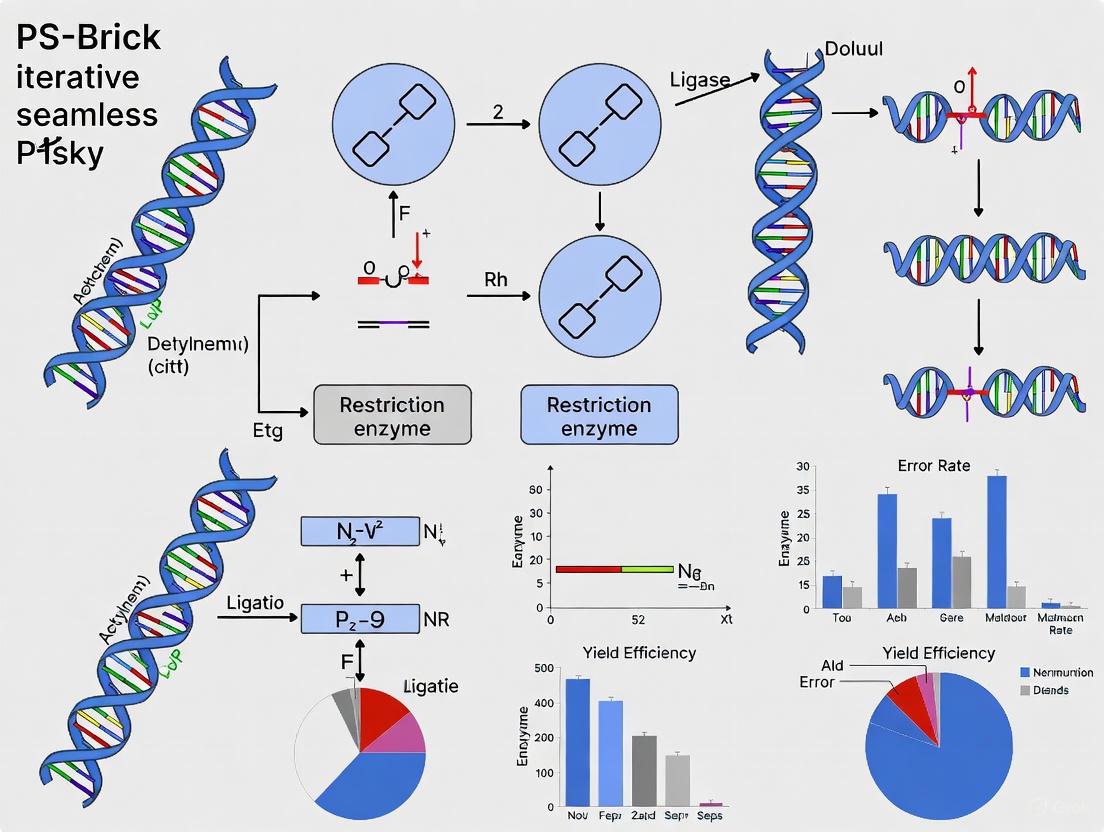
This article explores the PS-Brick DNA assembly method, a novel framework that combines Type IIP and IIS restriction enzymes for iterative, seamless, and repetitive sequence cloning.
PS-Brick: The Iterative Seamless DNA Assembly Framework Accelerating Metabolic Engineering and Synthetic Biology
Abstract
This article explores the PS-Brick DNA assembly method, a novel framework that combines Type IIP and IIS restriction enzymes for iterative, seamless, and repetitive sequence cloning. Tailored for researchers, scientists, and drug development professionals, we cover its foundational principles, detailed methodology, and application in metabolic engineering for producing compounds like threonine and 1-propanol. The content also provides essential troubleshooting guidance and a comparative analysis with other assembly techniques, validating PS-Brick as a powerful tool for synthetic biology and the efficient construction of microbial cell factories.
Understanding PS-Brick: Principles and the Need for Iterative Seamless Assembly
Metabolic engineering endeavors to optimize cellular processes to efficiently produce compounds of interest, ranging from therapeutics to biofuels [1]. The success of these efforts often hinges on the ability to perform multiple, sequential genetic modifications through Design-Build-Test-Learn (DBTL) cycles [2]. Traditional DNA assembly methods, which often leave behind scar sequences between joined DNA fragments, present significant limitations for advanced metabolic engineering applications. These scars can disrupt genetic integrity, interfere with mRNA folding, and complicate sequence design, thereby hampering the construction of precise genetic circuits and metabolic pathways [2].
Iterative and seamless DNA assembly methods address these limitations by enabling multiple rounds of genetic modification without accumulating unwanted nucleotide sequences at junction sites. The PS-Brick framework represents a significant advancement in this field, combining Type IIP and Type IIS restriction enzymes to achieve both iterative capability and seamless assembly [2]. This methodology is particularly valuable for metabolic engineering projects requiring sequential strain improvement, precise in-frame protein fusions, and construction of complex genetic elements such as tandem CRISPR sgRNA arrays.
The PS-Brick Method: Principles and Advantages
Conceptual Framework and Design
The PS-Brick method is architecturally distinct from previous DNA assembly approaches. While traditional BioBrick standards use only Type IIP restriction enzymes and Golden Gate assembly relies solely on Type IIS enzymes, PS-Brick integrates both enzyme types in a unified assembly reaction [2]. This hybrid approach comprehensively leverages the specific advantages of each enzyme class:
- Type IIP enzymes (e.g., SphI) recognize and cut within palindromic sequences, providing stable anchoring points for assembly.
- Type IIS enzymes (e.g., BmrI and MlyI) cut outside their recognition sites, enabling the creation of customizable overhangs crucial for seamless fusions [2].
The original PS-Brick vectors (pOB and pOM) were engineered from pUC19 backbones by removing endogenous BmrI and MlyI sites and introducing specific entrance sites of adjacent SphI/BmrI or SphI/MlyI at the end of a truncated mCherry gene [2]. This strategic design allows for the sequential integration of DNA fragments while restoring restriction sites for subsequent assembly rounds.
Key Advantages for Metabolic Engineering
The PS-Brick system offers several distinct advantages that make it particularly suitable for complex metabolic engineering projects:
- True Seamlessness: Unlike methods that leave 6-21 bp scars, PS-Brick enables completely scarless fusions, preserving protein integrity and function [2].
- Iterative Capability: Assembled constructs maintain functional cloning sites, allowing for unlimited subsequent rounds of modification without size limitations [2].
- Repetitive Sequence Handling: The method can efficiently assemble sequences with repeated elements, such as tandem promoter systems or multiple gRNA arrays [2].
- High Efficiency and Accuracy: Typical transformation efficiencies range from 10^4 to 10^5 CFUs/μg DNA, with approximately 90% accuracy in correct assembly [2].
PS-Brick Protocol: Experimental Workflow
Primer Design and Fragment Preparation
Principles: Primer design is critical for successful PS-Brick assembly. Introduced PCR parts must be free of internal SphI, BmrI, and MlyI sites. The strategic placement of "stitching sites" (portions of restriction site nucleotides) enables the restoration of complete restriction sites in the assembled product [3].
Procedure:
- Select Assembly Entrance Enzyme: Choose appropriate Type IIP and IIS enzyme pairs based on the target sequence.
- Identify Stitching Sites: Analyze the target DNA sequence to identify natural stitching sites that will serve as boundaries between fragments.
- Design Primers:
- Forward primer for the first fragment: Eliminates the restriction site at the beginning of the assembly.
- Reverse primers: Designed to include complementary stitching sites that will restore restriction sites upon assembly.
- Subsequent primers: Positioned at junction boundaries with 15 bp overlapping regions for proper hybridization.
- Amplify Fragments: Perform PCR using high-fidelity DNA polymerase to generate assembly fragments with minimal errors.
Vector Preparation and Sequential Assembly
Procedure:
- Vector Linearization: Digest the original PS-Brick vector (pOB or pOM) with the selected restriction enzyme pair to create the assembly entrance [2].
- First Fragment Assembly:
- Mix the linearized vector with the first PCR fragment using an enzymatic assembly master mix.
- Incubate according to the seamless assembly kit protocol (e.g., 50°C for 15-60 minutes).
- Transform into competent E. coli cells and plate on selective media.
- Screen colonies by colony PCR and verify correct assemblies by sequencing.
- Restriction Site Restoration: Successful assembly will restore the complete restriction site at the insertion junction.
- Subsequent Rounds:
- Digest the newly assembled plasmid with the appropriate restriction enzymes to create the next assembly entrance.
- Repeat the assembly process with the next DNA fragment.
- Continue iteratively until all fragments are incorporated.
Troubleshooting Notes:
- If assembly efficiency is low, verify primer design and overlapping regions.
- If background colonies are excessive, optimize restriction digestion time or implement additional purification steps.
- For large constructs (>10 kb), consider using high-efficiency competent cells and extended recovery times.
Analytical Verification
Procedure:
- Colony Screening: Perform colony PCR using verification primers flanking the insertion sites.
- Restriction Analysis: Digest putative constructs with diagnostic restriction enzymes to verify expected patterns.
- Sequential Validation: Sequence each assembly junction to confirm seamless fusions and absence of mutations.
The workflow for implementing the PS-Brick method in metabolic engineering applications involves multiple coordinated steps:
Application in Metabolic Engineering: Case Study
Threonine and 1-Propanol Production in E. coli
The PS-Brick method was successfully applied to engineer E. coli for enhanced production of threonine and its derived compound, 1-propanol [2]. This case study demonstrates the practical implementation of iterative DBTL cycles using seamless DNA assembly:
Metabolic Engineering Targets:
- Release of feedback regulation in the threonine operon
- Elimination of metabolic bottlenecks
- Intensification of threonine export mechanisms
- Inactivation of threonine catabolism pathways
- Construction of heterologous 1-propanol pathway [2]
Implementation: The engineering strategy employed multiple sequential PS-Brick rounds to address each metabolic limitation systematically. The heterologous pathway for 1-propanol production was constructed by assembling genes from Lactococcus lactis (kivD) and Saccharomyces cerevisiae (ADH2) using a single PS-Brick cycle [2].
Results: The engineered strain achieved remarkable production metrics:
- Threonine production: 45.71 g/L through fed-batch fermentation
- 1-Propanol production: 1.35 g/L through fed-batch fermentation [2]
This case study exemplifies how the iterative nature of PS-Brick facilitates progressive strain improvement without the limitations imposed by scar sequences.
Comparative Analysis of DNA Assembly Methods
The table below provides a quantitative comparison of PS-Brick against other DNA assembly methods:
| Method | Assembly Type | Scar Size | Iterative Capability | Max Fragment Number | Typical Efficiency |
|---|---|---|---|---|---|
| PS-Brick | Type IIP/IIS hybrid | Scarless | Full | Unlimited | 10^4-10^5 CFUs/μg, ~90% accuracy [2] |
| Traditional BioBrick | Type IIP only | 8 bp | Full | Unlimited | ~10^4 CFUs/μg [2] |
| Golden Gate | Type IIS only | Scarless | Limited (with MoClo) | 5-10 fragments | >80% accuracy [2] |
| SSEA | Enzymatic assembly | Scarless | Limited | ~3-5 fragments per round | Variable [3] |
| Gibson Assembly | Homology-based | Scarless | Limited | 5-15 fragments | 70-90% accuracy [1] |
Essential Research Reagent Solutions
Successful implementation of PS-Brick and related metabolic engineering strategies requires specific research reagents and materials:
| Reagent/Material | Function | Application Notes |
|---|---|---|
| PS-Brick vectors (pOB/pOM) | Specialized backbone vectors | Derived from pUC19 with modified restriction sites [2] |
| Type IIP Restriction Enzymes | Recognition and cutting at specific palindromic sequences | SphI commonly used in PS-Brick [2] |
| Type IIS Restriction Enzymes | Cutting outside recognition site to create custom overhangs | BmrI (1-nt overhang) and MlyI (blunt) in PS-Brick [2] |
| High-Fidelity DNA Polymerase | PCR amplification of fragments with minimal errors | Critical for error-free fragment preparation |
| Seamless Assembly Master Mix | Enzymatic assembly of fragments with vector | Commercial kits (Gibson, In-Fusion) can be adapted [3] |
| E. coli Competent Cells | Transformation of assembled constructs | High-efficiency strains (10^8 CFU/μg) recommended |
Technical Considerations and Future Directions
Implementation Challenges
While PS-Brick offers significant advantages, researchers should consider several technical aspects:
- Restriction Site Limitations: The requirement for absence of specific restriction sites in target sequences may necessitate sequence optimization or modification.
- Multipart Assembly Complexity: While iterative, each round requires separate transformation and screening steps, extending timeline for complex constructs.
- Error Accumulation: Sequential PCR amplification may introduce mutations, requiring rigorous quality control at each stage [3].
Integration with Emerging Technologies
The future of iterative DNA assembly lies in its integration with other synthetic biology tools:
- CRISPR Integration: PS-Brick's ability to handle repetitive sequences facilitates construction of tandem gRNA arrays for multiplexed genome editing [2].
- Automation Compatibility: The standardized nature of PS-Brick makes it amenable to automation in biofoundries for high-throughput strain engineering [4].
- AI-Assisted Design: Machine learning algorithms can optimize primer design and assembly strategies to maximize efficiency [5].
The mechanistic diagram below illustrates the molecular architecture of the PS-Brick assembly process:
Iterative and seamless DNA assembly represents a cornerstone capability for advanced metabolic engineering. The PS-Brick method, with its hybrid utilization of Type IIP and IIS restriction enzymes, provides an efficient framework for implementing sequential DBTL cycles in strain engineering projects. Its scarless nature ensures preservation of genetic integrity, while its iterative capability enables complex pathway engineering without practical limitations.
As synthetic biology continues to evolve toward more predictable design principles [6], methodologies like PS-Brick will play an increasingly vital role in bridging the gap between conceptual design and functional implementation in living systems. The integration of these DNA assembly technologies with emerging tools in bioinformatics, automation, and machine learning promises to accelerate the development of microbial cell factories for sustainable bioproduction [5].
The construction of microbial cell factories for producing valuable chemicals, therapeutics, and biofuels relies heavily on efficient DNA assembly techniques. Metabolic engineering endeavors, particularly those following design-build-test-learn (DBTL) cycles, require robust methods that can seamlessly and iteratively assemble genetic components without introducing sequence artifacts that compromise function [2]. Traditional restriction enzyme-based methods have served as foundational tools for synthetic biology, but limitations in their design have hampered their utility for advanced applications requiring precise genetic fusions and complex pathway engineering.
Among these techniques, BioBrick assembly and Golden Gate systems have emerged as prominent standards. BioBrick methods offer simplicity and iterative capability but invariably leave behind scar sequences between assembled parts [7]. Golden Gate assembly enables seamless multi-fragment assembly but often lacks full reusability and requires elaborate plasmid libraries [2]. This application note examines the specific limitations of these established systems and introduces PS-Brick as an integrated solution that combines the strengths of both Type IIP and Type IIS restriction enzymes for iterative, seamless metabolic pathway engineering.
Limitations of Traditional DNA Assembly Systems
Scar Formation in BioBrick Assembly Standards
The BioBrick assembly standard, first introduced by Tom Knight at MIT, utilizes restriction enzymes to sequentially combine standardized biological parts into larger genetic constructs [8]. This approach employs prefix and suffix sequences flanking each part, encoding specific restriction enzyme sites (EcoRI and XbaI in the prefix; SpeI and PstI in the suffix) [8]. While this system enables idempotent assembly—where the resulting composite part can be reused in further assemblies—it generates an 8-base pair (bp) "scar" sequence between joined fragments [7] [8].
The functional implications of these scar sequences are significant:
Protein Fusion Incompatibility: The 8-bp scar sequence (TACTAGAG) encodes tyrosine followed by a stop codon, preventing the creation of in-frame fusion proteins [9] [8]. This limitation is particularly problematic for metabolic engineering applications requiring multi-domain enzymes or hybrid protein systems.
Frame Shift Issues: The 8-nucleotide scar introduces a translational frame shift when combining coding sequences, rendering it unsuitable for constructing precise genetic fusions without additional modification [9].
Context-Dependent Interference: Scar sequences can potentially alter mRNA secondary structure and stability, or create unintended regulatory motifs that affect gene expression levels in unpredictable ways [7].
Later modifications to the original BioBrick standard attempted to address these limitations. The BglBrick standard developed by Anderson et al. uses BglII and BamHI restriction enzymes, generating a 6-bp scar (GGATCT) that encodes a glycine-serine dipeptide [9] [8]. While this represents an improvement for protein fusions, the amino acid linker may still interfere with the structure and function of some fusion proteins [9]. Similarly, the Silver (Biofusion) standard creates a 6-bp scar encoding threonine-arginine, and the Freiburg standard produces a scar encoding threonine-glycine [8]. Despite these advances, all BioBrick-derived methods leave behind intervening sequences that may perturb sensitive genetic elements.
Table 1: Comparison of BioBrick Assembly Standards and Their Scar Sequences
| Assembly Standard | Restriction Enzymes Used | Scar Sequence | Encoded Amino Acids | Key Limitations |
|---|---|---|---|---|
| BioBrick RFC[10] | EcoRI, XbaI, SpeI, PstI | TACTAGAG | Tyrosine + STOP codon | Prevents fusion proteins, causes frame shifts |
| BglBrick | EcoRI, BglII, BamHI, XhoI | GGATCT | Glycine-Serine | Neutral linker but still an addition |
| Silver (Biofusion) | Modified RFC[10] | ACTAGA | Threonine-Arginine | Arginine may destabilize proteins via N-end rule |
| Freiburg | AgeI, NgoMIV | ACCGGC | Threonine-Glycine | More stable but still an intervening sequence |
Workflow Complexities in Golden Gate Assembly
Golden Gate assembly represents a significant advancement in DNA assembly technology through its use of Type IIS restriction enzymes, which cleave outside their recognition sites, enabling seamless fusion of DNA fragments [10]. This system allows for the assembly of multiple DNA fragments in a single reaction and has been used to construct assemblies of up to 52 DNA fragments [10]. However, several challenges limit its efficiency for iterative DBTL cycles in metabolic engineering:
Limited Reusability: Standard Golden Gate assembly does not naturally support the idempotent reusability of composite parts, a key feature of BioBrick-style systems [2]. Once fragments are assembled, the resulting construct typically cannot be easily used as a part for further assemblies without re-engineering.
Complex Vector Systems: Advanced implementations like MoClo and Golden Braid have been developed to address the reusability limitation, but these require "elaborate plasmid libraries and/or sacrifice multipart assembly" [2]. MoClo implementations necessitate multiple levels of topology and complex workflows, potentially requiring "an indefinite number of additional destination plasmids for subsequent hierarchy levels" [2].
Overhang Dependency: The efficiency of Golden Gate assembly is highly dependent on the stability of the overhangs generated by Type IIS enzymes. Recent research has revealed that "strong overhangs yield higher GGA efficiency, while weak overhangs result in lower efficiency" [10]. This dependency necessitates careful design and optimization of overhang sequences, adding complexity to experimental planning.
Multi-Fragment Assembly Challenges: While Golden Gate enables multi-fragment assembly in a single pot, the success rate decreases as the number of fragments increases. The standard binary enzymatic assembly method has a higher success rate than polynary assembly, which "has a variable success rate that depends on the number of inserted fragments and may produce mutants in the final products due to PCR errors" [3].
The following diagram illustrates the core limitations of both traditional systems that PS-Brick aims to address:
PS-Brick: A Hybrid Approach for Iterative Seamless Assembly
Conceptual Framework and Design Principles
The PS-Brick method was developed to overcome the limitations of both BioBrick and Golden Gate systems by comprehensively leveraging the properties of PCR fragments and both Type IIP and Type IIS restriction enzymes [2]. This hybrid approach enables truly iterative, seamless, and repetitive sequence assembly—critical capabilities for modern metabolic engineering projects.
The core innovation of PS-Brick lies in its strategic combination of enzyme types:
- Type IIP Restriction Enzymes (such as SphI) recognize and cleave within palindromic sequences, providing defined cleavage positions
- Type IIS Restriction Enzymes (including BmrI, which generates 1-nt cohesive ends, and MlyI, which generates blunt ends) cleave outside their recognition sites, enabling precise fusion without added sequences [2]
This combination is implemented in specially engineered PS-Brick vectors (pOB and pOM) that feature adjacent SphI/BmrI or SphI/MlyI sites at the assembly entrance [2]. The design ensures that the Type IIS recognition site is detached from the vector backbone during digestion, leaving no exogenous sequences in the final assembly product.
Performance Metrics and Experimental Validation
Experimental validation of the PS-Brick system demonstrates its robust performance for metabolic engineering applications:
- High Efficiency: Transformation of resultant reaction products exhibits high efficiency (10^4–10^5 CFUs/µg DNA) [2]
- High Accuracy: Approximately 90% of transformations contain the correctly assembled construct [2]
- Rapid Workflow: One round of PS-Brick assembly using purified plasmids and PCR fragments is completed within several hours [2]
Table 2: Performance Comparison of DNA Assembly Methods
| Method | Assembly Type | Scar Formation | Reusability | Transformation Efficiency (CFUs/µg) | Accuracy | Suitable for DBTL Cycles |
|---|---|---|---|---|---|---|
| BioBrick RFC[10] | Iterative | 8-bp scar | Full | Varies | Varies | Limited by scars |
| BglBrick | Iterative | 6-bp scar (Gly-Ser) | Full | Varies | Varies | Limited by scars |
| Golden Gate | One-pot multi-fragment | Scarless | Limited | Varies | Varies | Limited by reusability |
| In-Fusion | Binary or multi-fragment | Scarless | Limited | Varies | Varies | Limited by reusability |
| PS-Brick | Iterative | Scarless | Full | 10^4-10^5 | ~90% | Excellent |
PS-Brick Experimental Protocol for Metabolic Pathway Engineering
Vector Preparation and DNA Part Design
Materials Required:
- PS-Brick vectors (pOB for BmrI system or pOM for MlyI system)
- Type IIP restriction enzyme (SphI)
- Type IIS restriction enzyme (BmrI or MlyI)
- DNA ligase
- PCR reagents with high-fidelity polymerase
- Competent E. coli cells (for transformation)
- Antibiotics for selection
Procedure:
Vector Linearization:
- Digest 1-2 µg of PS-Brick vector with SphI and the appropriate Type IIS enzyme (BmrI or MlyI) according to manufacturer specifications
- Purify the linearized vector using gel electrophoresis or spin column purification
- Verify complete linearization through analytical gel electrophoresis
Insert Preparation:
- Design PCR primers to amplify DNA parts with the following features:
- Forward primer: 5'-sequence complementary to target DNA + stitching site (portion of restriction site)
- Reverse primer: 5'-sequence complementary to target DNA + overlapping region for splicing
- Perform PCR amplification using high-fidelity DNA polymerase to minimize mutations
- Purify PCR products and quantify using spectrophotometry
- Critical: Ensure that amplified parts lack internal SphI, BmrI, and MlyI restriction sites [2]
- Design PCR primers to amplify DNA parts with the following features:
PS-Brick Assembly Reaction:
- Set up the assembly reaction with the following components:
- 50-100 ng linearized PS-Brick vector
- 2-3-fold molar excess of purified PCR insert
- 1× ligation buffer
- 1 µL DNA ligase
- Nuclease-free water to 10 µL total volume
- Incubate the reaction at 16°C for 1-2 hours or according to ligase manufacturer recommendations
- Set up the assembly reaction with the following components:
Transformation and Verification:
- Transform 5 µL of the assembly reaction into competent E. coli cells
- Plate onto LB agar with appropriate antibiotic selection
- Incubate overnight at 37°C
- Screen 5-10 colonies by colony PCR or restriction digest
- Verify correct assemblies by Sanger sequencing of junction regions
The following workflow diagram illustrates the PS-Brick assembly process:
Implementation in Metabolic Engineering DBTL Cycles
The PS-Brick method has been successfully implemented in complete metabolic engineering campaigns. A notable application involved the development of an E. coli strain for threonine production, achieved through multiple DBTL cycles that included:
- Release of feedback regulation in the threonine operon
- Elimination of metabolic bottlenecks through gene knockouts
- Intensification of threonine export mechanisms
- Inactivation of threonine catabolism pathways [2]
This systematic approach resulted in a strain capable of producing 45.71 g/L threonine in fed-batch fermentation [2]. Additionally, researchers assembled a heterologous 1-propanol pathway using genes from Lactococcus lactis (kivD) and Saccharomyces cerevisiae (ADH2) in a single PS-Brick cycle, resulting in 1.35 g/L 1-propanol production [2].
Research Reagent Solutions for PS-Brick Implementation
Table 3: Essential Research Reagents for PS-Brick Assembly
| Reagent Category | Specific Examples | Function in PS-Brick Protocol | Notes for Application |
|---|---|---|---|
| PS-Brick Vectors | pOB, pOM | Provide assembly backbone with optimized restriction sites | pOB uses BmrI (1-nt overhang), pOM uses MlyI (blunt end) |
| Type IIP Restriction Enzymes | SphI | Recognition and cleavage at assembly entrance | Used in combination with Type IIS enzymes |
| Type IIS Restriction Enzymes | BmrI, MlyI, BciVI, HphI | Generate defined ends without incorporating recognition sites | BmrI and MlyI validated in original publication |
| DNA Ligase | T4 DNA Ligase | Joins vector and insert fragments | High-concentration formulations recommended |
| DNA Polymerase | High-fidelity PCR enzymes | Amplifies DNA parts with minimal errors | Critical for maintaining sequence accuracy |
| Competent Cells | High-efficiency E. coli strains | Transformation of assembly products | Efficiency of 10^4-10^5 CFUs/µg ideal for library screening |
| Selection Antibiotics | Chloramphenicol, Ampicillin | Selective growth of correct assemblies | Dependent on resistance marker in PS-Brick vector |
The PS-Brick framework represents a significant advancement in DNA assembly technology by simultaneously addressing the scar sequence limitations of traditional BioBrick systems and the workflow complexities of Golden Gate assembly. By strategically integrating Type IIP and Type IIS restriction enzymes, PS-Brick enables truly iterative, seamless DNA assembly ideal for the DBTL cycles fundamental to modern metabolic engineering. The method's high efficiency (~90% accuracy), support for protein fusions, and ability to handle repetitive sequences makes it particularly valuable for constructing complex metabolic pathways and genetic circuits. As synthetic biology continues to tackle more ambitious projects requiring precise genetic manipulation, integrated approaches like PS-Brick will play an increasingly important role in streamlining the engineering of microbial cell factories for pharmaceutical, chemical, and biofuel production.
The iterative design-build-test-learn (DBTL) cycles central to modern metabolic engineering and synthetic biology demand DNA assembly methods that are not only efficient but also reusable and scarless [2]. While numerous restriction enzyme-based methods exist, they often force a trade-off; Type IIP-based methods like BioBrick offer straightforward iteration but leave behind unwanted scar sequences, while Type IIS-based strategies like Golden Gate Assembly enable seamless assembly but can involve complex workflows that limit part reusability [2] [11]. The PS-Brick framework represents a significant methodological advance by synergistically combining the distinct strengths of Type IIP and Type IIS restriction enzymes into a single, unified system [2]. This hybrid approach directly addresses the core requirements of contemporary genetic engineering: the need for precise, scarless genetic fusions, the capacity for unlimited iterative assembly, and the ability to clone repetitive DNA sequences—all while maintaining high efficiency and accuracy. This application note details the core innovation of the PS-Brick method, provides validated experimental protocols, and presents quantitative data from its application in metabolic engineering for the production of threonine and 1-propanol.
The PS-Brick Mechanism: A Synergistic Enzyme Strategy
The foundational innovation of PS-Brick is its strategic division of labor between Type IIP and Type IIS restriction enzymes. This division harnesses the specific catalytic properties of each enzyme type to create a more versatile and powerful assembly process.
Distinct Roles of Type IIP and Type IIS Enzymes
- Type IIP Enzyme (
SphI) - The Entry Point: A single Type IIP enzyme,SphI, is responsible for creating the initial assembly entrance in the original PS-Brick vector. Its key characteristic is that it recognizes and cuts within a symmetric, palindromic DNA sequence [12]. This creates a standardized and reliable entry point for the first DNA fragment. - Type IIS Enzymes (
BmrIorMlyI) - The Seamless Fusion Engineers: Type IIS enzymes are characterized by their cleavage outside of, and at a defined distance from, their recognition sites [12]. PS-Brick utilizes this property for seamless fusion. Enzymes likeBmrI(generating a 1-nt cohesive end) orMlyI(generating a blunt end) are employed. Their recognition sites are placed such that digestion precisely removes the enzyme's own site and the Type IIP site from the vector, leaving no extraneous nucleotides between the assembled fragment and the vector backbone [2].
The Principle of Recognition Site Splicing and Removal
The process relies on a clever design where the original vector contains an entrance site featuring adjacent SphI and Type IIS (BmrI/MlyI) recognition sites. When a PCR fragment—flanked by homology to the vector and free of internal SphI, BmrI, and MlyI sites—is assembled, the Type IIS enzyme's recognition site is spliced onto the end of the inserted fragment. In the subsequent assembly round, digestion with this Type IIS enzyme cleaves off its own recognition site, ensuring the final assembled construct is scarless and lacks the assembly sites, making it stable for downstream applications and further iterations [2].
Diagram 1: The core PS-Brick workflow illustrating the synergistic roles of Type IIP and Type IIS enzymes in enabling iterative, seamless assembly.
Key Research Reagent Solutions
Table 1: Essential reagents and their functions in the PS-Brick system.
| Reagent / Component | Type / Function | Key Role in PS-Brick Innovation |
|---|---|---|
| Type IIP Restriction Enzyme (e.g., SphI) | Restriction Endonuclease | Creates the initial, standardized assembly entrance in the vector backbone [2]. |
| Type IIS Restriction Enzymes (e.g., BmrI, MlyI) | Restriction Endonuclease | Enables scarless fusion by cleaving outside its recognition site, removing it during the process [2] [12]. |
| PS-Brick Vectors (pOB, pOM) | Engineered Plasmid Backbone | Contain specific entrance sites (e.g., SphI/BmrI or SphI/MlyI) and are optimized for high-efficiency assembly [2]. |
| T4 DNA Ligase | DNA Joining Enzyme | Catalyzes the covalent ligation of vector and insert fragments with compatible ends. |
| High-Efficiency Competent Cells | Host for Transformation | Essential for achieving high colony-forming units (CFUs) per µg of assembled DNA product [2]. |
Quantitative Performance Metrics of PS-Brick
The PS-Brick method has been quantitatively validated to demonstrate its suitability for intensive genetic engineering workflows. The performance data below establishes key benchmarks for efficiency and reliability.
Table 2: Experimentally determined performance metrics of the PS-Brick assembly method.
| Performance Metric | Result | Experimental Context |
|---|---|---|
| Assembly Efficiency | 10^4–10^5 CFUs/µg DNA | Transformation of the final assembly reaction product into competent E. coli cells [2]. |
| Assembly Accuracy | ~90% | Percentage of randomly selected colonies containing the correct assembled construct, as verified by sequencing [2]. |
| Reaction Duration | "Several hours" | Time required for one complete round of a PS-Brick assembly reaction, from digestion/ligation to obtaining colonies [2]. |
| Threonine Production | 45.71 g/L | Final titer achieved in fed-batch fermentation after multiple DBTL cycles using PS-Brick for strain engineering [2]. |
| 1-Propanol Production | 1.35 g/L | Final titer achieved in fed-batch fermentation using a heterologous pathway constructed via one cycle of PS-Brick [2]. |
Detailed Protocol: A Step-by-Step Application Guide
This protocol outlines the specific steps for performing one iterative round of PS-Brick assembly, from vector preparation to the verification of the assembled construct.
Stage 1: Vector and Insert Preparation
- Vector Linearization: Double-digest 1 µg of the appropriate PS-Brick acceptor plasmid (e.g., pOB for
BmrIor pOM forMlyI) with the Type IIP enzyme (SphI) and the corresponding Type IIS enzyme (BmrIorMlyI). Use the manufacturer's recommended buffer and incubate at the optimal temperature for 1-2 hours [2]. - Insert Preparation: Amplify the DNA fragment of interest via PCR using primers designed with:
- Gene-specific sequences at the 3' ends.
- 5' extensions that provide homology to the linearized vector ends and are free of internal
SphI,BmrI, andMlyIsites [2].
- Purification: Purify both the linearized vector and the PCR fragment using a standard PCR purification kit or gel extraction to remove enzymes, salts, and residual primers.
Stage 2: The Assembly Reaction
- Set Up Reaction Mixture: Combine the following components in a nuclease-free microcentrifuge tube:
- Linearized PS-Brick vector: 50-100 ng
- Purified PCR insert: Molar ratio of 3:1 (insert:vector)
- T4 DNA Ligase Buffer (with ATP)
- T4 DNA Ligase: 1 µL (e.g., 400 units)
- Nuclease-free water to a final volume of 10-20 µL [2]. > Note: The restriction enzymes are typically not added to this ligation mixture, as the cohesive ends for ligation were already created in the preparation step.
- Incubate for Ligation: Incubate the reaction mixture at room temperature or 16°C for 1-2 hours to allow for efficient ligation [2] [13].
Stage 3: Transformation and Verification
- Transformation: Transform 1-5 µL of the final assembly reaction into chemically or electrocompetent E. coli cells following standard transformation protocols [2].
- Selection and Screening: Plate the transformation culture on LB agar plates containing the appropriate antibiotic for the PS-Brick vector. Incubate overnight at 37°C.
- Colony PCR: Screen individual colonies by colony PCR using primers that flank the insertion site to identify positive clones.
- Sequencing Verification: Purify plasmid DNA from positive clones and perform Sanger sequencing to confirm the seamless and error-free integration of the insert.
Diagram 2: The streamlined experimental workflow for a single round of PS-Brick assembly, highlighting key steps and quality checkpoints.
Application Case Study: DBTL Cycles for Threonine and 1-Propanol Production
The power of PS-Brick was demonstrated through a comprehensive metabolic engineering project aimed at developing E. coli strains for high-level production of threonine and its derived biochemical, 1-propanol. The process involved multiple, sequential DBTL cycles, each relying on the iterative and seamless nature of PS-Brick [2].
- Round 1 (Feedback Regulation): PS-Brick was used to introduce mutations to release the feedback inhibition of the threonine operon.
- Round 2 (Bottleneck Elimination): Subsequent cycles employed PS-Brick to eliminate predicted metabolic bottlenecks by fine-tuning gene expression.
- Round 3 (Export & Catabolism): The method was further applied to intensify threonine export systems and inactivate threonine catabolism genes, preventing product loss.
- Pathway Construction: Finally, the heterologous 1-propanol pathway (comprising Lactococcus lactis kivD and Saccharomyces cerevisiae ADH2) was assembled in a single PS-Brick cycle and integrated into the optimized threonine producer [2].
This cascading engineering strategy, facilitated by PS-Brick, resulted in a high-performing strain capable of producing 45.71 g/L of threonine and 1.35 g/L of 1-propanol in fed-batch fermentation, underscoring the method's direct impact on achieving industrially relevant production metrics [2].
The advent of sophisticated DNA assembly techniques has been a cornerstone of advances in synthetic biology and metabolic engineering. Among these, the PS-Brick method stands out as a Restriction Endonuclease (RE)-assisted strategy that uniquely combines the properties of Type IIP and Type IIS restriction enzymes to enable iterative, seamless, and repetitive sequence assembly [14] [2]. This application note delineates the core terminology underpinning the PS-Brick framework, placing key concepts such as seamlessness, iterativity, and the specific challenges of repetitive sequence cloning within a practical research context. A precise understanding of these terms is paramount for researchers and drug development professionals aiming to construct complex genetic circuits, optimize metabolic pathways, or model repeat expansion diseases with high fidelity and efficiency.
Defining the Core Terminology
Seamlessness in DNA Assembly
In the context of DNA assembly, seamlessness refers to the ligation of DNA fragments without incorporating extraneous nucleotides, or "scars," at the junction sites [2]. These scars are short, residual sequences from restriction enzyme recognition sites that remain after traditional cloning methods like the BioBrick standard, which can leave behind 6- to 21-nucleotide scars [2].
- Impact on Research: Scars can disrupt the integrity of genetic elements in several ways. They can alter the reading frame in protein-coding sequences, create unintended amino acid linkages that affect protein function, interfere with mRNA secondary structure and stability, and disrupt sensitive regulatory elements in non-coding regions [2]. The PS-Brick method achieves seamlessness by leveraging Type IIS restriction enzymes, such as BmrI and MlyI, which cut outside of their recognition sites. This allows for the generation of custom overhangs that, when ligated, restore the precise original sequence without any added nucleotides, enabling precise in-frame fusions and the construction of accurate genetic circuits [2].
Iterativity in DNA Assembly
Iterativity describes the capability of a DNA assembly system to undergo multiple, sequential rounds of genetic modification where the product of one assembly round serves as the starting substrate for the next [14] [2]. This is a fundamental requirement for the Design-Build-Test-Learn (DBTL) cycles that drive modern metabolic engineering and synthetic biology.
- Research Workflow Integration: An iterative method allows researchers to build complex genetic constructs step-by-step. For instance, an initial construct can be created with a weakened native promoter, and subsequent rounds can introduce additional genes, such as threonine exporters (
rhtA,rhtB,rhtC) or knockout templates for competing pathways, without deconstructing the previous work [2]. The PS-Brick framework supports this by re-establishing a functional cloning site after each successful assembly, making the process highly reusable and streamlined for sequential strain engineering [2].
Repetitive Sequence Cloning
Repetitive DNA sequences are tracts of repeated nucleotide units (e.g., trimers, pentamers) that are notoriously difficult to manipulate using standard molecular biology techniques [15] [16]. These sequences are biologically critical, as their expansion underlies numerous neurodegenerative diseases, such as Huntington's disease and Fragile X Syndrome, and they are also essential components of centromeres and telomeres [15] [16].
- Technical Challenges: The primary challenge in cloning repetitive sequences is their propensity to form stable non-B DNA secondary structures (e.g., hairpins, cruciforms, G-quadruplexes). These structures can stall DNA polymerases, making PCR amplification unreliable and prone to generating a "stuttering" mixture of products with varying repeat lengths [16]. Furthermore, these sequences are highly unstable in bacterial hosts, often undergoing rearrangements, contractions, or expansions during propagation [16] [17].
- Specialized Solutions: Standard homology-based assembly methods like Gibson Assembly are generally unsuitable for these sequences due to the internal homologies that cause misalignment [18]. Consequently, specialized PCR-free strategies have been developed. These often rely on the use of Type IIS restriction enzymes to seamlessly assemble synthetic oligonucleotides containing the repeats, or methods like Rolling Circle Amplification (RCA) to generate long, uninterrupted tandem repeats from small circular DNA templates in a cell-free system [15] [17].
Quantitative Comparison of DNA Assembly Methods
The following table summarizes key performance metrics and characteristics of PS-Brick and other relevant methods used for challenging cloning tasks.
Table 1: Comparative Analysis of DNA Assembly Methods
| Method | Key Principle | Iterative? | Seamless? | Handles Repetitive Sequences? | Typical Efficiency (CFU/µg) | Key Advantages |
|---|---|---|---|---|---|---|
| PS-Brick [14] [2] | Type IIP & IIS RE combination | Yes | Yes | Yes (e.g., CRISPR arrays) | 104 – 105 | High accuracy (~90%), reusability, seamless and iterative |
| Rolling Circle Amplification (RCA) [15] | Isothermal amplification of circular ssDNA | No | Yes (seamless repeats) | Excellent (e.g., 2.5-3 kbp SCA31 repeats) | N/R (cell-free) | Generates very long, perfect repeats; avoids cellular instability |
| Type IIS Oligo Assembly [17] | PCR-free ligation of oligonucleotides | Yes | Yes | Excellent | N/R | Direct, controlled assembly of defined repetitive tracts |
| SLiCE Cloning [19] | In vitro homologous recombination | No | Yes | Poor (internal homology causes issues) | Varies with homology length | Cost-effective, uses bacterial cell extracts, restriction-site independent |
| Traditional BioBrick [2] | Type IIP REs only | Yes | No (leaves 8bp scar) | Poor | N/R | Simple, standardized, but leaves scars |
N/R: Not explicitly Reported in the analyzed literature.
Experimental Protocol: Iterative Construction of a Tandem CRISPR sgRNA Array Using PS-Brick
This protocol provides a detailed methodology for using the PS-Brick system to build a repetitive genetic construct—a tandem CRISPR sgRNA array—which is a common application in genome editing and metabolic engineering [2].
Research Context and Reagents
- Objective: To sequentially assemble multiple identical sgRNA expression units (each consisting of a promoter, N20 guide sequence, and sgRNA scaffold) into a single plasmid.
- Key Reagents:
- Vector:
pTargetETor similar, containing an entrance site (e.g., HindIII/BciVI) and a selection marker [2]. - Insert: A dsDNA "sgRNA-block" fragment containing a single sgRNA unit, flanked by SphI and BciVI/BmrI sites. This can be a synthesized oligonucleotide duplex or a PCR product.
- Enzymes: Restriction Enzymes (SphI, BciVI), T4 DNA Ligase, and appropriate polymerase for PCR.
- Cells: Stable Competent E. coli (e.g., NEB Stable).
- Vector:
Step-by-Step Workflow
Step 1: Preparation of Insert and Vector
- Insert Preparation: Amplify the "sgRNA-block" fragment via PCR. Digest the purified PCR product with the Type IIP enzyme SphI only. Heat-inactivate the enzyme and purify the digested product.
- Vector Preparation: Digest the base plasmid (or the plasmid from the previous cycle) with the Type IIS enzyme BciVI for 15 minutes. Gel-purify the linearized vector. Perform a second digestion on the purified linear vector with the Type IIP enzyme SphI for 15 minutes. Heat-inactivate and purify the double-digested vector.
Step 2: Ligation and Transformation
- Mix the SphI-digested insert with the BciVI/SphI-digested vector in a molar ratio of approximately 3:1.
- Add T4 DNA Ligase and buffer, and incubate the reaction at room temperature for 15 minutes.
- Transform the entire ligation mix into stable competent E. coli cells. Plate onto selective media and incubate overnight at 37°C.
Step 3: Screening and Cycle Iteration
- Screen resulting colonies by colony PCR and/or analytical restriction digest to identify correct clones.
- Isolate plasmid DNA from a positive clone. This new plasmid now contains an elongated sgRNA array and a restored BciVI site downstream of the newly inserted block, making it ready for the next round of assembly.
- Repeat Steps 1-3 to add subsequent sgRNA units iteratively.
Workflow Visualization
The following diagram illustrates the iterative PS-Brick assembly process for building a repetitive structure.
Diagram 1: Iterative PS-Brick assembly workflow for repetitive constructs.
The Scientist's Toolkit: Essential Reagents for PS-Brick Assembly
Table 2: Key Research Reagent Solutions for PS-Brick
| Reagent / Solution | Function in the Protocol | Research Context Importance |
|---|---|---|
| Type IIS Restriction Enzymes (e.g., BciVI, BmrI, MlyI) | Cut outside recognition site to generate custom cohesive/blunt ends for seamless fusion. | Enable precise, scarless assembly and re-create the assembly entrance for iterativity [2]. |
| Type IIP Restriction Enzymes (e.g., SphI, HindIII) | Cut within palindromic recognition sites to define one end of the assembly junction. | Work in concert with Type IIS enzymes to define the insertion point and facilitate the PS-Brick scheme [2]. |
| Stable Competent E. coli | Host for transforming assembled plasmids, especially those with repetitive or unstable sequences. | Reduces the likelihood of plasmid rearrangements, ensuring the stability of the final construct [15]. |
| High-Fidelity DNA Polymerase | Amplifies insert fragments with minimal errors for assembly. | Critical for generating error-free PCR products, which is the foundation of a successful and accurate assembly [2]. |
| T4 DNA Ligase | Catalyzes the formation of phosphodiester bonds between the vector and insert. | Joins the compatible ends created by the restriction enzymes to form a stable circular plasmid. |
A precise and functional understanding of seamlessness, iterativity, and the challenges of repetitive sequence cloning is indispensable for leveraging modern DNA assembly methods like PS-Brick. This framework provides researchers and drug developers with a powerful, predictable, and efficient toolset for constructing complex genetic systems. The ability to perform seamless, multi-round genetic engineering without accumulating scars is crucial for DBTL cycles in metabolic engineering, while the capacity to clone difficult repetitive sequences opens doors to advanced applications in functional genomics and disease modeling.
The Design-Build-Test-Learn (DBTL) cycle represents a foundational framework in modern metabolic engineering and synthetic biology, enabling the systematic development of microbial cell factories for producing valuable biochemicals. A critical bottleneck in implementing efficient DBTL cycles is the DNA assembly process, which must be rapid, reliable, and capable of accommodating multiple iterative modifications. The PS-Brick method represents a significant advancement in molecular assembly technology by combining the properties of PCR fragments with Type IIP and IIS restriction endonucleases to create a seamless, iterative assembly system specifically optimized for DBTL workflows [14].
This application note details how PS-Brick's unique features—including its iterative cloning capability, seamless assembly, and repetitive sequence handling—directly address the demands of rapid strain development. We provide comprehensive experimental data and detailed protocols demonstrating PS-Brick's application in optimizing threonine production in E. coli and constructing a 1-propanol pathway, highlighting its transformative potential for research and development pipelines in pharmaceutical and industrial biotechnology sectors.
PS-Brick Methodology and Technical Specifications
Fundamental Principles and Reaction Setup
The PS-Brick method strategically utilizes both Type IIP and IIS restriction enzymes to create a versatile assembly system. Type IIS restriction enzymes cut DNA at specific distances outside their recognition sequences, generating unique overhangs that enable seamless assembly of multiple DNA fragments. Type IIP restriction enzymes recognize and cut within palindromic sequences, facilitating backbone linearization and preparatory steps [14].
The core PS-Brick reaction combines purified plasmid backbones and PCR-amplified inserts in a single-tube assembly that can be completed within several hours. A key advantage is the method's high efficiency and accuracy, with transformation efficiencies typically reaching 10⁴–10⁵ CFUs/μg DNA and approximately 90% of constructs containing the desired assembly [14]. This reliability is essential for maintaining rapid iteration in DBTL cycles.
Research Reagent Solutions
Table 1: Essential research reagents for PS-Brick assembly
| Reagent/Material | Function in PS-Brick Protocol | Specifications & Considerations |
|---|---|---|
| Type IIS Restriction Enzymes | Generates unique overhangs for fragment assembly | Enzymes such as BsaI or AarI; select for 4-bp overhangs compatible with seamless assembly |
| Type IIP Restriction Enzymes | Backbone vector linearization | Enzymes such as EcoRI or NotI; provides standardized vector preparation |
| High-Efficiency Competent Cells | Transformation of assembled constructs | Efficiency ≥ 10⁸ CFU/μg for maximum yield; essential for complex assemblies |
| T4 DNA Ligase | Covalently joins DNA fragments with compatible overhangs | Standard concentration sufficient; included in assembly mix |
| PCR Reagents | Amplification of DNA fragments/inserts | High-fidelity polymerase critical to minimize mutation introduction |
| Plasmid Purification Kits | Preparation of backbone vectors | High-purity preparation (≥ 200 ng/μL) improves assembly efficiency |
| Agarose Gel Electrophoresis System | Verification of assembly components and final constructs | Standard 0.8-1.2% gels; quality control checkpoints |
PS-Brick Application in Metabolic Engineering DBTL Cycles
Threonine Production Optimization inE. coli
The iterative nature of PS-Brick was demonstrated through systematic engineering of E. coli for enhanced threonine production. Researchers implemented multiple sequential DBTL cycles to address various metabolic bottlenecks [14].
Table 2: DBTL cycles for threonine production optimization using PS-Brick
| DBTL Cycle | Engineering Target | PS-Brick Application | Resulting Titer | Key Learning |
|---|---|---|---|---|
| Cycle 1 | Feedback inhibition release | Modified thrA gene to remove allosteric regulation | 12.4 g/L | Initial deregulation insufficient for high production |
| Cycle 2 | Elimination of metabolic bottlenecks | Enhanced lysA and metA expression to redirect carbon flux | 24.6 g/L | Competitive pathways limit threonine accumulation |
| Cycle 3 | Threonine export intensification | Overexpressed threonine exporter rhtA | 35.2 g/L | Export capacity critical for overcoming internal accumulation limits |
| Cycle 4 | Catabolism inactivation | Deleted tdh and ilvA to prevent threonine degradation | 45.7 g/L | Reduced degradation essential for maximizing yield |
Each DBTL cycle employed PS-Brick to rapidly integrate genetic modifications, with the entire process from design to transformation completion requiring approximately one week per cycle. The cumulative engineering efforts resulted in a final threonine titer of 45.71 g/L in fed-batch fermentation, demonstrating the power of iterative DBTL cycles supported by efficient DNA assembly [14].
Pathway Construction for 1-Propanol Production
Beyond iterative optimization, PS-Brick demonstrated efficacy in constructing novel metabolic pathways. Researchers assembled a heterologous 1-propanol pathway comprising Lactococcus lactis kivD and Saccharomyces cerevisiae ADH2 genes in a single PS-Brick reaction [14]. This application highlights the method's capability for seamless multi-gene assembly, creating a functional pathway that produced 1.35 g/L of 1-propanol in fed-batch fermentation without requiring multiple intermediate cloning steps.
Diagram 1: DBTL cycle enhanced by PS-Brick. The Build phase is optimized through PS-Brick's key features, accelerating the entire engineering cycle.
Experimental Protocols
Standard PS-Brick Assembly Protocol
Objective: Assemble multiple DNA fragments into a destination vector using PS-Brick methodology.
Materials:
- Purified plasmid backbone (100-200 ng)
- PCR fragments with appropriate overhangs (equimolar ratio, 50-100 ng each)
- Type IIP and Type IIS restriction enzymes
- T4 DNA Ligase and buffer
- Thermostable DNA polymerase for PCR
- High-efficiency competent cells (≥10⁸ CFU/μg)
- LB agar plates with appropriate antibiotics
Procedure:
- Vector Preparation: Linearize destination vector using appropriate Type IIP restriction enzyme. Purify using agarose gel electrophoresis if necessary.
- Insert Preparation: Amplify DNA fragments via PCR with primers containing appropriate overhangs compatible with Type IIS assembly. Verify fragment size and purity by gel electrophoresis.
- Assembly Reaction:
- Combine in a thin-walled PCR tube:
- 50-100 ng linearized vector
- Equimolar ratio of each PCR fragment (total DNA ≤ 200 ng)
- 1 μL Type IIS restriction enzyme
- 1 μL T4 DNA Ligase
- 2 μL 10× T4 Ligase Buffer
- Nuclease-free water to 20 μL
- Incubate in thermocycler: 25-37°C for 30 min (Type IIS digestion), 16°C for 1 hour (ligation), 80°C for 10 min (enzyme inactivation)
- Combine in a thin-walled PCR tube:
- Transformation:
- Add 5-10 μL assembly reaction to 50-100 μL high-efficiency competent cells
- Incubate on ice 30 min, heat shock at 42°C for 30-45 seconds, return to ice 2 min
- Add recovery medium, incubate with shaking at 37°C for 1 hour
- Plate on selective media and incubate overnight at 37°C
- Verification: Screen colonies by colony PCR and/or restriction digest. Sequence confirmed constructs.
Timeline: The entire process from assembly to verified constructs can be completed within 2-3 days.
Protocol for Tandem CRISPR sgRNA Array Construction
Objective: Construct repetitive sequences for multiple gRNA expression using PS-Brick's repetitive sequence handling capability.
Materials: As in Protocol 4.1, plus:
- gRNA template sequences with appropriate terminators
- U6 or other RNA polymerase III promoter sequences
Procedure:
- Design gRNA sequences with unique overhangs compatible with Type IIS assembly.
- Amplify individual gRNA expression cassettes via PCR with appropriate overhangs.
- Set up PS-Brick assembly reaction as in Protocol 4.1, using a vector containing selection marker and multiple gRNA cassettes.
- Transform and verify as in Protocol 4.1, with additional verification of multiple gRNA integration by PCR and sequencing.
Note: PS-Brick's ability to assemble repetitive sequences makes it particularly suitable for CRISPR array construction, which is challenging for traditional restriction enzyme-based methods.
Data Analysis and Technical Validation
Quantitative Performance Metrics
Table 3: PS-Brick performance characteristics in metabolic engineering applications
| Performance Metric | Result | Methodology | Significance for DBTL Cycles |
|---|---|---|---|
| Assembly Efficiency | 10⁴–10⁵ CFUs/μg DNA | Transformation of assembly reaction | Enables sufficient colony numbers for screening |
| Assembly Accuracy | ~90% correct constructs | Colony PCR and sequence verification | Reduces screening workload; increases throughput |
| Assembly Time | Several hours per reaction | Standard assembly protocol | Enables rapid iteration between DBTL cycles |
| Threonine Production | 45.71 g/L in fed-batch | HPLC analysis of fermentation broth | Validates method for industrial strain development |
| 1-Propanol Production | 1.35 g/L in fed-batch | GC-MS analysis of fermentation broth | Demonstrates pathway construction capability |
| Multiplex Capacity | 5+ fragments in single reaction | Assembly of multiple gene pathways | Reduces intermediate cloning steps |
Comparison to Alternative DNA Assembly Methods
Diagram 2: Method comparison shows PS-Brick's unique support for iterative, seamless, and repetitive sequence assembly, addressing DBTL requirements that challenge other methods.
The PS-Brick method represents a significant advancement in DNA assembly technology specifically optimized for DBTL cycles in metabolic engineering and synthetic biology. Its unique combination of iterative capability, seamless assembly, and efficient handling of repetitive sequences addresses critical bottlenecks in strain development workflows. The documented success in engineering E. coli for threonine production (45.71 g/L) and 1-propanol pathway construction (1.35 g/L) validates PS-Brick as a robust platform for pharmaceutical and industrial biotechnology applications [14].
Future applications could expand PS-Brick's utility to more complex metabolic engineering projects, including the production of pharmaceuticals, complex natural products, and therapeutic compounds. The method's compatibility with automation and standardization makes it particularly suitable for high-throughput strain development pipelines, potentially accelerating discovery and optimization timelines in drug development and industrial biotechnology.
Implementing PS-Brick: A Step-by-Step Protocol and Real-World Applications
The PS-Brick DNA assembly method represents a significant advancement in synthetic biology by combining the strengths of Type IIP and Type IIS restriction endonucleases to enable iterative, seamless, and repetitive sequence assembly. This technique addresses critical limitations in metabolic engineering and synthetic biology, particularly in scenarios requiring design-build-test-learn (DBTL) cycles, construction of precise genetic circuits, and assembly of repetitive DNA molecules. The PS-Brick framework facilitates the stepwise engineering of microbial cell factories for producing valuable biochemicals, as demonstrated by its successful application in developing E. coli strains for enhanced threonine and 1-propanol production [2] [14].
This application note details the essential reagents, protocols, and workflows for implementing the PS-Brick system, providing researchers with a comprehensive toolkit for advanced DNA assembly projects.
Research Reagent Solutions
The following table catalogues the essential materials and reagents required for executing PS-Brick DNA assembly, along with their specific functions in the methodology.
| Component Category | Specific Examples | Function in PS-Brick Assembly |
|---|---|---|
| Type IIP Restriction Enzyme | SphI | Recognizes and cuts within specific palindromic sequences; works in tandem with Type IIS enzymes to prepare vector backbones [2]. |
| Type IIS Restriction Enzymes | BmrI, MlyI (SchI) | Cut outside recognition sites to generate customizable overhangs: BmrI produces 1-nt cohesive ends, MlyI creates blunt ends [2] [20]. |
| Assembly Vectors | pOB, pOM | Original PS-Brick vectors (e.g., derived from pUC19) with removed internal BmrI/MlyI sites and introduced SphI/BmrI or SphI/MlyI entrance sites [2]. |
| PCR Components | High-fidelity DNA polymerase, dNTPs | Amplify DNA parts (insects) that are free of internal SphI, BmrI, and MlyI restriction sites for assembly [2]. |
| Ligation Components | DNA Ligase, ATP | Joins vector backbone and insert fragments with compatible ends created by Type IIP/IIS digestion [2]. |
| Host Strain | E. coli competent cells | For transformation and propagation of assembled DNA constructs; PS-Brick transformation efficiency is 104–105 CFUs/µg DNA [2]. |
Performance characteristics and reaction conditions for key enzymatic components in the PS-Brick system are summarized below.
| Parameter | BmrI | MlyI (SchI) |
|---|---|---|
| Recognition Sequence | ACTGGG (N5/N4) [21] | GAGTC (5/5) [20] |
| Cleavage Characteristics | Cuts 5/4 bases downstream from recognition site; generates 1-nt overhangs [2] [21] | Cuts 5 bases downstream from recognition site; generates blunt ends [2] [20] |
| Optimal Reaction Temperature | Information missing from search results | 37°C [20] |
| Optimal Reaction Buffer | Information missing from search results | Tango Buffer [20] |
| Methylation Sensitivity | Information missing from search results | Not sensitive to Dam, Dcm, or CpG methylation [20] |
| Star Activity Risks | Observed in low salt buffer or with glycerol concentrations >5% [21] | May occur with >10-fold overdigestion [20] |
| Assembly Efficiency | Contributes to overall PS-Brick accuracy of ~90% and high transformation efficiency [2] | Contributes to overall PS-Brick accuracy of ~90% and high transformation efficiency [2] |
PS-Brick Workflow and Molecular Mechanism
Experimental Workflow for PS-Brick Assembly
The following diagram illustrates the key procedural steps in the PS-Brick DNA assembly method.
Molecular Mechanism of PS-Brick Assembly
The molecular mechanism of the PS-Brick method, illustrating how Type IIP and IIS enzymes collaborate to create seamless fusions, is shown in the diagram below.
Detailed Experimental Protocols
Protocol 1: Preparation of PS-Brick Vectors and Inserts
Principle: The original PS-Brick vectors (pOB with SphI/BmrI entrance sites or pOM with SphI/MlyI sites) are derived from a modified pUC19 backbone where native BmrI and MlyI sites have been removed. The assembly relies on PCR fragments free of internal restriction sites [2].
Procedure:
- Vector Linearization:
- Set up a double digestion reaction:
- PS-Brick vector (pOB or pOM): 1 µg
- SphI-HF: 10 U
- BmrI (for pOB) or MlyI (for pOM): 10 U
- Compatible reaction buffer (e.g., Tango buffer for MlyI)
- Nuclease-free water to 50 µL
- Incubate at 37°C for 1-2 hours.
- Purify the digested vector using a DNA clean-up kit.
- Set up a double digestion reaction:
- Insert Preparation:
- Design primers to amplify the DNA part (insert). The 5' end of the forward primer must contain the SphI recognition sequence (GCATGC), and the 5' end of the reverse primer must contain the BmrI (ACTGGG) or MlyI (GAGTC) recognition sequence.
- Perform PCR amplification using a high-fidelity DNA polymerase.
- Verify the PCR product size by agarose gel electrophoresis and purify the fragment.
- Critical Note: The insert sequence must be analyzed in silico to confirm the absence of internal SphI, BmrI, and MlyI restriction sites. If present, silent mutations must be introduced to eliminate them.
Protocol 2: One-Pot Restriction-Ligation Assembly
Principle: The digested vector and the PCR insert are combined in a single-tube reaction where the Type IIP (SphI) and Type IIS (BmrI/MlyI) enzymes create compatible ends, and the DNA ligase simultaneously joins them. The Type IIS enzyme cuts outside its recognition site, thereby discarding the site itself during assembly and enabling seamless fusion [2].
Procedure:
- Assembly Reaction:
- Combine the following components in order:
- Purified, linearized vector: 50-100 ng
- Purified PCR insert: 20-40 fmol (typically a 3:1 molar ratio of insert to vector)
- T4 DNA Ligase Buffer (1X final concentration)
- SphI-HF: 5 U
- BmrI or MlyI: 5 U
- T4 DNA Ligase: 100 U
- Nuclease-free water to 20 µL.
- Mix the reaction gently and centrifuge briefly.
- Combine the following components in order:
- Incubation:
- Conduct the restriction-ligation reaction using a thermal cycler with the following program:
- Cycle 1: 37°C for 5 minutes (restriction enzyme activity)
- Cycle 2: 16°C for 5 minutes (ligation efficiency)
- Repeat cycles 1 and 2, 30 times total.
- Final hold: 65°C for 20 minutes (enzyme inactivation).
- Conduct the restriction-ligation reaction using a thermal cycler with the following program:
Protocol 3: Transformation and Screening
Principle: The assembled product is transformed into competent E. coli cells. Given the high efficiency (~10⁴–10⁵ CFUs/µg DNA) and accuracy (~90%) of the PS-Brick system, a limited number of colonies need to be screened to identify correct clones [2].
Procedure:
- Transformation:
- Thaw chemically competent E. coli cells (e.g., DH5α) on ice.
- Add 2-5 µL of the restriction-ligation reaction product directly to 50 µL of competent cells. Mix gently.
- Incubate on ice for 30 minutes.
- Heat-shock at 42°C for 45 seconds, then immediately return to ice for 2 minutes.
- Add 950 µL of SOC or LB medium and incubate at 37°C with shaking for 1 hour.
- Plate appropriate volumes onto LB agar plates containing the relevant antibiotic (e.g., ampicillin for pUC-derived vectors).
- Screening for Correct Clones:
- Pick 4-8 colonies and inoculate into small cultures for plasmid DNA isolation.
- Analyze the isolated plasmids by diagnostic restriction digestion with enzymes that cut uniquely within the vector and insert.
- Verify the assembly of critical junctions by Sanger sequencing, especially for applications requiring precise in-frame fusions like protein coding sequences.
Application in Metabolic Engineering: A Case Study
The PS-Brick method was successfully applied in iterative DBTL cycles to engineer an E. coli strain for high-level threonine production [2] [14]. The table below outlines the sequential genetic modifications enabled by PS-Brick's iterative nature.
| DBTL Cycle | Metabolic Engineering Target | PS-Brick Application / Construct Built | Outcome |
|---|---|---|---|
| 1 | Release feedback inhibition | Assembly of feedback-resistant threonine operon (thrAfbr) | Increased metabolic flux towards threonine biosynthesis |
| 2 | Eliminate metabolic bottlenecks | Knock-in of pyruvate carboxylase (pyc) and aspartase (aspC) genes to enhance precursor supply | Further enhanced threonine precursor availability |
| 3 | Intensify product export | Seamless fusion of strong promoter upstream of threonine exporter (rhtA) | Improved threonine efflux from the cell |
| 4 | Inactivate catabolic pathways | Construction of tandem CRISPR sgRNA arrays (using PS-Brick's repetitive sequence ability) to knock out threonine degradation genes (tdh, ilvA) | Reduced threonine loss via degradation pathways |
| Final Result | Fed-batch fermentation of the engineered strain | N/A | Threonine production: 45.71 g/L [2] |
Troubleshooting Guide
| Problem | Potential Cause | Solution |
|---|---|---|
| Low transformation efficiency | Incomplete vector digestion; PCR inhibitors in the insert; star activity degrading DNA | Re-purify DNA components; optimize digestion time; ensure glycerol concentration in reaction is <5% [21] [20] |
| High background (empty vectors) | Incomplete digestion of the vector; insufficient insert | Perform analytical gel to confirm complete digestion; increase insert-to-vector molar ratio (e.g., to 5:1) |
| Incorrect assembly at junctions | Internal restriction sites in the insert; primer design error | Re-analyze insert sequence for internal SphI, BmrI, MlyI sites and remove them by mutagenesis; verify primer sequences |
| Unexpected DNA band patterns after digestion | Star activity of enzymes; partial digestion | Avoid >10-fold overdigestion with MlyI; use fresh, high-quality enzyme preparations; ensure correct buffer and temperature [20] |
The PS-Brick reagent toolkit provides a robust and versatile platform for advanced DNA assembly needs. Its unique combination of Type IIP and IIS restriction enzymes facilitates seamless, iterative, and scarless construction of genetic circuits, pathways, and repetitive sequences. The detailed protocols and reagent specifications outlined in this document provide a foundation for researchers to implement this method effectively in metabolic engineering projects, synthetic biology applications, and the development of microbial cell factories.
The PS-Brick method represents a significant advancement in DNA assembly technology, combining the strengths of both Type IIP and Type IIS restriction enzymes to enable iterative, seamless cloning. This technique is particularly valuable for metabolic engineering and synthetic biology applications, such as the development of microbial cell factories for amino acid production, where it facilitates rapid design-build-test-learn (DBTL) cycles [2]. Unlike traditional cloning methods that leave behind scar sequences between joined fragments, PS-Brick allows for precise, scarless assembly, making it ideal for constructing complex genetic circuits and metabolic pathways without introducing unwanted genetic elements [2]. The method supports the assembly of repetitive DNA sequences and enables precise in-frame fusions, which are crucial for applications like codon saturation mutagenesis and the construction of tandem CRISPR sgRNA arrays [2]. This protocol will detail the integrated workflow from PCR fragment generation through ligation and transformation, specifically within the PS-Brick framework.
PCR Fragment Preparation
The initial stage of the PS-Brick workflow involves generating precise PCR fragments that will serve as the building blocks for assembly. These fragments must be designed with the appropriate terminal restriction sites to be compatible with the PS-Brick vectors.
Standard PCR Protocol and Components
A standard PCR reaction is set up to amplify the DNA fragment of interest. The components and their typical final concentrations in a 50 µL reaction are summarized in the table below [22] [23].
Table 1: Standard PCR Reaction Setup
| Component | Final Concentration/Amount | Purpose & Notes |
|---|---|---|
| Water | To 50 µL | Adjusts final reaction volume. |
| PCR Buffer | 1X | Provides optimal salt conditions for the enzyme. |
| Taq DNA Polymerase | 1–2 units (0.05 units/µL) | Enzyme that synthesizes new DNA strands [23]. |
| dNTP Mix | 200 µM of each dNTP | Building blocks (A, T, C, G) for new DNA strands [23]. |
| MgCl₂ | 0.1-0.5 mM | Essential cofactor for DNA polymerase activity; concentration often requires optimization [23]. |
| Forward Primer | 0.1–0.5 µM | Binds to the start of the target sequence. |
| Reverse Primer | 0.1–0.5 µM | Binds to the end of the target sequence. |
| Template DNA | 0.1–1 ng (plasmid) or 5–50 ng (gDNA) | The DNA containing the target sequence to be amplified [23]. |
| DMSO (optional) | 1–10% w/v | Can improve amplification of difficult templates (e.g., high GC-content) [22]. |
Reagents should be thawed on ice and assembled in the order listed to minimize non-specific reactions [22]. It is critical to include both negative (no template) and positive (template with known amplification) control reactions.
PCR Cycling Parameters
The PCR tube is placed in a thermal cycler programmed with the following standard steps [24] [22]:
Table 2: Standard PCR Cycling Conditions
| Step | Temperature | Time | Cycles | Purpose |
|---|---|---|---|---|
| Initial Denaturation | 94°C | 5 minutes | 1 | Completely denatures the complex template DNA. |
| Denaturation | 94°C | 30 seconds | 25-35 | Separates the double-stranded DNA before each cycle. |
| Annealing | Tm - 5°C | 45 seconds | 25-35 | Allows primers to bind to the template. Use 5°C below the primer's calculated melting temperature (Tm). |
| Extension | 72°C | 1 minute per kb | 25-35 | Synthesizes the new DNA strand. |
| Final Extension | 72°C | 5 minutes | 1 | Ensures all amplicons are fully extended. |
PCR Product Analysis and Cleanup
Following amplification, the success of the PCR is evaluated by analyzing 5–10 µL of the product using agarose gel electrophoresis [24]. A distinct band of the expected size should be visible after staining with a DNA-binding dye like ethidium bromide. The PCR product must then be purified to remove residual enzymes, primers, dNTPs, and salts that could interfere with downstream restriction digestion and ligation steps. Purification is typically performed using commercial PCR cleanup kits.
Ligation of PCR Fragments into PS-Brick Vectors
The core of the PS-Brick method involves the ligation of the prepared PCR fragment into a specially designed PS-Brick vector. This process uses a combination of restriction enzymes to create compatible ends.
PS-Brick Assembly Principle
The PS-Brick scheme utilizes both Type IIP and Type IIS restriction enzymes [2]. For example, the original PS-Brick vector pOB contains an entrance site with adjacent SphI (Type IIP) and BmrI (Type IIS) sites [2]. The vector is double-digested with these enzymes. The Type IIS enzyme (e.g., BmrI) cuts outside its recognition sequence, detaching it from the vector backbone and leaving a customized overhang. The prepared PCR fragment is designed with ends compatible with this digested vector. When the fragment is ligated into the vector, the original Type IIS recognition site is reconstituted at one end, while the other end features the Type IIP site (SphI), maintaining the standard BioBrick format for potential iterative assembly [2].
T4 DNA Ligase Protocol
Ligation is performed using T4 DNA Ligase to covalently join the PCR fragment (insert) and the linearized PS-Brick vector.
Table 3: Standard DNA Ligation Reaction Setup
| Component | Volume/Amount | Notes |
|---|---|---|
| 10X T4 DNA Ligase Buffer | 1 µL | Contains ATP; avoid multiple freeze-thaw cycles [25]. |
| Linearized Vector DNA | X µL (e.g., ~50 ng) | Amount depends on concentration and size. |
| PCR Insert DNA | X µL | Use a molar ratio of 3:1 (Insert:Vector) as a starting point [25]. |
| T4 DNA Ligase | 0.5-1 µL (e.g., 1-5 units) | "High concentration" ligase may require shorter incubation [25]. |
| Nuclease-free Water | to 10 µL | - |
Procedure:
- Calculate amounts: Use a ligation calculator to determine the correct mass of insert and vector based on their lengths and desired molar ratio (a 3:1 insert:vector ratio is standard) [25].
- Assemble reaction: Combine components in a tube on ice. Gently mix and briefly centrifuge [26].
- Incubate: Incubate the reaction at 16°C overnight (12-16 hours) or at room temperature for 2 hours for standard efficiency ligase. For "high-concentration" ligases, 5 minutes at room temperature may be sufficient [25].
- Controls: Always include a vector-only + ligase control to assess background from self-ligated vector [25].
For blunt-ended ligations (which may be part of some PS-Brick schemes using enzymes like MlyI), efficiency can be enhanced by adding polyethylene glycol (PEG) to a final concentration of 15% and reducing the ATP concentration to 0.5 mM [26].
Transformation intoE. coli
The final step is introducing the ligated product into competent E. coli cells to amplify the plasmid.
Chemical Transformation by Heat Shock
This is a widely used and effective method.
Table 4: Chemical Transformation Steps
| Step | Procedure | Key Points |
|---|---|---|
| 1. Thaw | Thaw 50 µL of competent cells on ice for ~10 minutes. | Handle cells gently; do not vortex [27]. |
| 2. Add DNA | Add 1–5 µL (10–100 ng) of the ligation mixture to the cells. Flick tube gently to mix. | Avoid pipetting up and down to mix. |
| 3. Incubate | Incubate on ice for 30 minutes. | - |
| 4. Heat Shock | Transfer tube to a 42°C water bath for exactly 45 seconds [27]. | Do not shake. Timing is critical. |
| 5. Cool | Immediately return tube to ice for 2 minutes. | - |
| 6. Recover | Add 250 µL of pre-warmed SOC medium. Shake horizontally at 37°C for 1 hour. | SOC medium improves recovery and transformation efficiency [28]. |
Plating and Transformant Selection
After the recovery step, plate the cell suspension onto LB agar plates containing the appropriate antibiotic for selection. The volume plated can vary (e.g., 20-150 µL depending on the E. coli strain), and the cells should be spread evenly [27]. The plates are then incubated upside down at 37°C overnight [28] [27]. Successful transformants will form distinct colonies. The transformation efficiency of the PS-Brick reaction product is typically high, reported to be 10⁴–10⁵ CFUs/µg DNA with an accuracy of ~90% [2]. The vector-only control plate should have significantly fewer colonies, confirming that the observed colonies on the experimental plate primarily contain the desired recombinant plasmid.
The Scientist's Toolkit
Table 5: Essential Research Reagent Solutions for PS-Brick Workflow
| Reagent / Material | Function in the Workflow |
|---|---|
| Taq DNA Polymerase | Thermostable enzyme that amplifies the target DNA fragment from a template during PCR [24]. |
| T4 DNA Ligase | Enzyme that catalyzes the formation of phosphodiester bonds to join the PCR fragment (insert) to the linearized vector backbone [26] [25]. |
| Type IIP & IIS Restriction Enzymes | Core enzymes for the PS-Brick method (e.g., SphI, BmrI, MlyI). They digest the vector and create compatible ends for seamless assembly [2]. |
| Competent E. coli Cells | Genetically engineered bacterial cells capable of taking up foreign DNA during the transformation step for plasmid propagation [28]. |
| SOC Medium | A nutrient-rich recovery medium used after heat shock to allow bacteria to express the antibiotic resistance gene on the plasmid, increasing transformation efficiency [28]. |
Workflow Visualization
The following diagram illustrates the complete, integrated workflow from PCR preparation to the final transformed colony.
This detailed workflow provides a reliable protocol for executing the PS-Brick DNA assembly method, enabling researchers to efficiently construct complex genetic designs for metabolic engineering and synthetic biology applications.
Within synthetic biology and metabolic engineering, the construction of robust microbial cell factories relies on iterative design-build-test-learn (DBTL) cycles. A key enabling technology for this process is advanced DNA assembly, which allows for the rapid and precise genetic modifications necessary for strain optimization. This case study details the systematic, stepwise engineering of an Escherichia coli chassis for high-level L-threonine production, framed within the context of a research thesis investigating the PS-Brick iterative seamless DNA assembly method. We demonstrate how the PS-Brick platform [2] [14] facilitates seamless genetic manipulations, from deregulating key enzymes to assembling complex heterologous pathways, culminating in the efficient biosynthesis of threonine and its derived chemical, 1-propanol.
Technical Approaches: The PS-Brick Assembly Framework
The metabolic engineering efforts described herein were executed using the PS-Brick DNA assembly method. PS-Brick is a restriction endonuclease-assisted strategy that uniquely combines the properties of Type IIP and Type IIS enzymes to enable iterative, seamless, and repetitive sequence assembly [2].
- Core Principle: Unlike traditional BioBrick assembly, which leaves interstitial scar sequences, PS-Brick allows for scarless, in-frame fusions of genetic parts. This is critical for maintaining protein integrity and for the construction of precise genetic circuits [2].
- Workflow and Efficiency: A typical PS-Brick reaction, utilizing purified plasmids and PCR fragments, can be accomplished within hours. The process demonstrates high efficiency, yielding 10⁴–10⁵ CFUs/µg DNA, with approximately 90% accuracy [2] [14].
- Advantages for Iterative Engineering: The reusability of PS-Brick vectors after each assembly round allows for the sequential introduction of multiple genetic modifications without accumulating scars, making it ideal for the multi-step DBTL cycles required for metabolic pathway optimization [2].
The following workflow outlines the iterative DBTL process for threonine strain development, powered by the PS-Brick system:
Metabolic Engineering of E. coli for L-Threonine Production
The native threonine biosynthesis pathway in E. coli is subject to tight allosteric regulation and competitive metabolic branching. Our stepwise engineering strategy addressed these limitations systematically.
Key Genetic Modifications for Threonine Overproduction
The table below summarizes the primary metabolic interventions implemented to enhance threonine flux.
Table 1: Key Metabolic Engineering Interventions for Threonine Overproduction
| Engineering Strategy | Specific Modification | Physiological Impact | Citation |
|---|---|---|---|
| Release Feedback Inhibition | Introduce feedback-resistant mutant of Aspartokinase I/Homoserine Dehydrogenase I (ThrA*) | Unblocks carbon flow at the pathway entry point, overcoming allosteric regulation by threonine. | [2] |
| Eliminate Metabolic Bottlenecks | Overexpress Homoserine Kinase (ThrB) and Threonine Synthase (ThrC) | Amplifies the terminal, committed steps in the threonine pathway to prevent intermediate accumulation. | [2] |
| Intensify Threonine Export | Overexpress native threonine exporters. | Enhances product secretion, reducing intracellular feedback inhibition and cellular toxicity. | [2] |
| Inactivate Threonine Catabolism | Knock out Threonine Dehydrogenase (Tdh). | Blocks the major degradation route for threonine, minimizing product loss and diverting flux to export. | [2] |
| Enhance Cofactor Supply | Employ a Redox Imbalance Forces Drive (RIFD) strategy: overexpress NADPH regeneration systems (e.g., PntAB, soluble transhydrogenase UdhA) and knock out non-essential NADPH-consuming genes. | Creates an "excessive NADPH" driving force to push flux through the NADPH-dependent ThrA and ThrB enzymes. | [29] |
| Construct Multi-Enzyme Complexes | Co-localize ThrC-DocA and ThrB-CohA using cellulosome-inspired scaffolding. | Shortens the substrate transfer path between enzymes, increasing pathway efficiency and boosting yield by 31.7%. | [30] |
| Engineer Membrane Transport | Identify and delete minor threonine permeases (e.g., YhjE, SdaC) in a strain lacking major transporters. | Reduces threonine re-uptake by the producer cell, favoring net export and improving final titers. | [31] |
Advanced Strategies and High-Throughput Screening
Beyond canonical pathway engineering, advanced methodologies were integrated to overcome systemic bottlenecks.
- High-Throughput Screening (HTS): To rapidly isolate high-producing mutants, a biosensor was constructed by fusing fluorescent proteins with a high proportion of threonine rare codons (ATC). In low-threonine environments, these proteins express poorly. However, in high-yield strains, the abundant intracellular threonine allows for efficient translation and strong fluorescence, enabling rapid sorting of top producers via Fluorescence-Activated Cell Sorting (FACS) [30].
- Chromosomal Integration for Stability: To alleviate the metabolic burden and instability associated with plasmid-based expression, the optimized gene clusters (e.g., the synthetic multi-enzyme complex) were integrated into the E. coli genome using Multi-Copy Chromosomal Integration via CRISPR-Associated Transposase (MUCICAT) technology [30].
The cofactor engineering strategy that creates a synthetic driving force for threonine biosynthesis is detailed below:
Application Notes & Protocols
Protocol 1: Iterative Strain Construction via PS-Brick Assembly
This protocol is adapted from the PS-Brick methodology for the sequential introduction of genetic modifications into the E. coli genome or plasmids [2].
- Principle: A PS-Brick vector is digested with a pair of Type IIP and Type IIS restriction enzymes (e.g., SphI/BmrI or SphI/MlyI), generating linearized backbone with specific overhangs. A PCR-amplified genetic part (e.g.,
thrA*), flanked by compatible overhangs free of internal SphI, BmrI, and MlyI sites, is then ligated seamlessly into the backbone. - Procedure:
- Vector Preparation: Digest the destination PS-Brick vector (e.g., pOB or pOM) with the appropriate enzyme pair to linearize it. Purify the digested vector to remove enzymes.
- Insert Amplification: Design primers to amplify the target DNA part. The forward and reverse primers must include 15-25 bp homology arms matching the ends of the linearized PS-Brick vector.
- Assembly Reaction: Mix the purified linearized vector and the PCR insert fragment in a molar ratio (e.g., 1:3) with ligase and appropriate buffer. Incubate at room temperature for 1 hour.
- Transformation and Validation: Transform the assembly reaction into competent E. coli cells. Plate on selective media. Screen colonies by colony PCR and verify the correct, seamless assembly by DNA sequencing.
- Iteration: The resulting plasmid is a new PS-Brick vector, ready for the next round of assembly to introduce the subsequent genetic part (e.g.,
thrBoverexpression cassette).
Protocol 2: Fed-Batch Fermentation for Threonine Production
This protocol outlines a standard fed-batch process for evaluating engineered threonine producers [2] [29].
- Fermentation Medium:
- Seed Medium: Peptone (1.4%), Yeast Extract (0.8%), NaCl (0.5%), pH 7.2.
- Batch Medium: Glucose (3.0%), Yeast Extract (0.2%), Peptone (0.4%), Sodium Citrate (0.1%), KH₂PO₄ (0.2%), MgSO₄·7H₂O (0.07%), FeSO₄·7H₂O (100 mg/L), MnSO₄·H₂O (100 mg/L), Vitamin B1 (0.8 mg/L), Vitamin H (0.2 mg/L), pH 7.2 [30].
- Procedure:
- Inoculum Preparation: Inoculate a single colony into seed medium and incubate at 37°C overnight with shaking.
- Bioreactor Inoculation: Transfer the seed culture into a bioreactor containing the batch medium at an initial OD₆₀₀ of ~0.1.
- Fermentation Conditions: Maintain temperature at 37°C, pH at 7.0 (controlled with NH₄OH or NaOH), and dissolved oxygen above 30% of air saturation by adjusting agitation and aeration.
- Feeding Strategy: Once the initial glucose is depleted, initiate a fed-batch phase with a concentrated glucose solution (e.g., 50% w/v) at a controlled feed rate to maintain a low residual glucose level, avoiding overflow metabolism.
- Harvest: Terminate fermentation after 24-48 hours. Collect samples for cell growth (OD₆₀₀) and threonine titer analysis.
Results and Performance
The cumulative effect of the stepwise metabolic engineering resulted in a significant improvement of threonine production.
Table 2: Summary of Threonine Production Performance in Engineered E. coli Strains
| Engineering Stage | Key Modifications | Final Threonine Titer (g/L) | Yield (g/g Glucose) | Citation |
|---|---|---|---|---|
| Initial PS-Brick DBTL Cycles | Feedback-resistant ThrA, overexpression of ThrB/ThrC, enhanced export, knockout of Tdh. | 45.71 | Not specified | [2] |
| Advanced Cofactor Engineering (RIFD) | Augmented NADPH supply combined with HTS using a dual-sensing biosensor. | 117.65 | 0.65 | [29] |
| Multi-Enzyme Complex & HTS | Cellulosome-inspired assembly of ThrB and ThrC, combined with rare-codon biosensor screening. | Increased by 31.7% vs. control | Not specified | [30] |
Production of a Threonine-Derived Chemical: 1-Propanol
To demonstrate the extensibility of the engineered threonine-overproducing chassis, a heterologous pathway for 1-propanol was assembled using the PS-Brick system. The pathway, composed of Lactococcus lactis 2-keto acid decarboxylase (kivD) and Saccharomyces cerevisiae alcohol dehydrogenase (ADH2), was integrated in a single assembly cycle. Fed-batch fermentation of this strain yielded 1.35 g/L of 1-propanol, showcasing the potential for converting threonine into value-added derivatives [2] [14].
The Scientist's Toolkit: Research Reagent Solutions
Table 3: Essential Research Reagents and Materials
| Item | Function/Description | Example/Catalog |
|---|---|---|
| PS-Brick Vectors | Specialized plasmids (e.g., pOB, pOM) for iterative seamless assembly using Type IIP/IIS REs. | [2] |
| Type IIP & IIS Restriction Enzymes | Enzymes for vector linearization and insert preparation (e.g., SphI, BmrI, MlyI). | Commercial suppliers (NEB, Thermo Fisher) |
| High-Fidelity DNA Polymerase | For accurate amplification of DNA parts with homology arms for PS-Brick assembly. | Phanta HS Super-Fidelity DNA Polymerase [29] |
| Fluorescent Biosensor Plasmids | Reporter constructs for high-throughput screening of high-producing threonine strains. | pET22b-based plasmids with rare-codon fused StayGoldr protein [30] |
| Cellulosome Element Plasmids | Vectors for expressing enzyme fusion proteins (e.g., ThrC-DocA, ThrB-CohA) to create synthetic multi-enzyme complexes. | [30] |
| MUCICAT System | CRISPR-associated transposase system for stable, multi-copy chromosomal integration of pathway genes. | [30] |
This case study successfully demonstrates a comprehensive metabolic engineering workflow for developing a high-yield L-threonine producer in E. coli. By leveraging the PS-Brick DNA assembly method as a core enabling technology, multiple rounds of iterative DBTL cycles were efficiently executed. The strategy encompassed canonical pathway engineering, sophisticated cofactor manipulation using the RIFD strategy, spatial organization via multi-enzyme complexes, and rapid strain optimization through biosensor-driven HTS. The resulting strains achieved impressively high titers, up to 117.65 g/L, validating the effectiveness of this integrated approach. Furthermore, the successful assembly of a heterologous 1-propanol pathway underscores the versatility of the engineered chassis and the PS-Brick system for synthetic biology applications.
The PS-Brick framework is a restriction endonuclease-assisted DNA assembly method that uniquely leverages the strengths of both Type IIP and Type IIS restriction enzymes to enable iterative, seamless, and highly efficient construction of genetic circuits [2] [14]. This system presents a valuable advancement in the molecular toolkit, particularly for complex tasks such as creating precise saturation mutagenesis libraries and assembling repetitive DNA structures like tandem CRISPR sgRNA arrays. Traditional DNA assembly methods often leave behind scar sequences between joined fragments or struggle with highly repetitive sequences, limitations that PS-Brick effectively overcomes through its clever design [2]. The method achieves high transformation efficiency (10⁴–10⁵ CFUs/µg DNA) with approximately 90% accuracy in a single round of assembly, which can be completed within several hours [2]. This technical profile makes PS-Brick particularly suitable for demanding applications in metabolic engineering, synthetic biology, and therapeutic development where precision and iteration are paramount.
PS-Brick Methodology: A Dual-Enzyme Approach
Core Principles and Workflow
The PS-Brick method fundamentally integrates the predictable cutting patterns of Type IIP enzymes with the variable overhang generation of Type IIS enzymes. In practice, the system utilizes enzymes such as BmrI (generating 1-nt cohesive ends) and MlyI (generating blunt ends) alongside conventional Type IIP enzymes [2]. The assembly process involves preparing the PS-Brick vector backbone through double digestion with the corresponding enzyme pairs, while simultaneously generating PCR fragments of the genetic parts to be assembled with appropriate terminal overhangs. The designed complementary ends facilitate directional cloning without incorporating extraneous nucleotide sequences, enabling true seamless assembly [2]. This approach maintains the reading frame for protein fusions and preserves regulatory element integrity, both critical considerations for advanced genetic engineering applications.
Key Advantages Over Conventional Methods
- Iterative Capability: Unlike single-use assembly systems, PS-Brick constructs maintain functional cloning sites after assembly, enabling successive rounds of genetic modification without redesign—a particular advantage for Design-Build-Test-Learn (DBTL) cycles in metabolic engineering [2].
- Repetitive Sequence Tolerance: The method's efficiency in handling repetitive DNA elements enables construction of complex arrays that challenge conventional methods, including tandem sgRNA constructs for multiplexed genome editing [2].
- Precision Engineering: Seamless cloning allows for precise in-frame fusions essential for codon saturation mutagenesis studies and bicistronic design, eliminating artifacts that could compromise experimental outcomes [2].
Table: Comparison of PS-Brick with Other DNA Assembly Methods
| Method | Enzyme Type | Iterative? | Scarless? | Repetitive Sequence Handling |
|---|---|---|---|---|
| PS-Brick | Type IIP + IIS | Yes | Yes | Excellent |
| Traditional BioBrick | Type IIP only | Yes | No | Poor |
| Golden Gate | Type IIS only | Limited | Yes | Moderate |
| Gibson Assembly | Homology-based | No | Yes | Moderate |
Application I: Codon Saturation Mutagenesis with PS-Brick
Principles and Experimental Design
Codon saturation mutagenesis (CSM) is a powerful protein engineering technique that systematically substitutes a single codon or set of codons with all possible amino acids at specified positions [32]. When implemented via the PS-Brick platform, researchers can create focused, high-quality mutant libraries for deep mutational scanning and directed evolution experiments. A key consideration in experimental design is the selection of degenerate codons that balance amino acid coverage with library size management [32]. While NNN codons provide complete randomization, they also introduce stop codons approximately 3% of the time. Alternative schemes such as NNK or NNS (encoding all 20 amino acids with only one stop codon) or more restricted sets like NDT or DBK (encoding 12 amino acids with no stop codons) offer more controlled diversity [33] [32].
The strategic placement of mutagenic primers is crucial for successful PS-Brick-mediated saturation mutagenesis. Primers should be designed with the degenerate codon positioned centrally, flanked by approximately 15-20 nucleotides of specific sequence on each side with optimal G+C content (40-60%) and minimal secondary structure [33]. For multi-site saturation mutagenesis, primers can tile across the target region with low primer-to-template ratios to promote single primer binding per template molecule [34].
Table: Common Degenerate Codons for Saturation Mutagenesis
| Degenerate Codon | Number of Codons | Number of Amino Acids | Stop Codons | Amino Acids Encoded |
|---|---|---|---|---|
| NNN | 64 | 20 | 3 | All 20 |
| NNK/NNS | 32 | 20 | 1 | All 20 |
| NDT | 12 | 12 | 0 | RNDCGHILFSYV |
| DBK | 18 | 12 | 0 | ARCGILMFSTWV |
| NRT | 8 | 8 | 0 | RNDCGHSY |
Step-by-Step Protocol
Template Preparation: Begin with a PS-Brick compatible vector containing your gene of interest. For the saturation mutagenesis reaction, use 20 ng of plasmid DNA as template [33].
Primer Design and Preparation: Design complementary primers containing degenerate codons at the target positions with flanking sequences complementary to the template. Utilize desalted primers without additional purification dissolved in 0.1X TE buffer and diluted to 2 μM concentration in deionized water [33].
PCR Assembly: Set up mutagenesis reactions in a 25-μL volume containing:
- 1X Pfu reaction buffer
- 20 ng template plasmid DNA
- 6 pmol of each primer
- 200 μM of each dNTP
- 1 unit of PfuTurbo DNA polymerase [33]
Thermal Cycling: Perform amplification with the following parameters:
- Initial denaturation: 95°C for 2 minutes
- 16 cycles of:
- 95°C for 30 seconds
- 55°C for 1 minute
- 68°C for 10 minutes (adjust for larger plasmids)
- Final extension: 68°C for 10 minutes [33]
Template Digestion: Cool reactions on ice and digest with 5 units of DpnI for 1 hour at 37°C to cleave methylated parental DNA strands [33].
Transformation and Library Creation: Transform 5 μL of reaction into 50 μL of chemically competent E. coli cells (e.g., TOP10). After heat shock and recovery, plate 100-150 μL onto selective agar plates. Typically, 100-500 colonies are obtained, providing adequate library diversity [33].
Troubleshooting and Optimization
- Low Colony Numbers: If insufficient colonies appear, plate more transformation mixture or repeat transformation with fresh competent cells [33].
- Sequence Bias: When using electroporation, a higher proportion of wild-type sequences may result, possibly due to more efficient uptake of undigested parental plasmid [33].
- Library Quality Assessment: Verify library diversity by sequencing random clones; approximately equal representation of all four bases should be visible at each randomized position [33].
Application II: Tandem CRISPR sgRNA Array Construction
Principles and Experimental Design
The construction of multiplex CRISPR guide RNA arrays enables simultaneous targeting of multiple genomic loci—a capability with profound implications for complex genome engineering, pathway manipulation, and functional genomics [35] [36]. However, the highly repetitive nature of natural CRISPR arrays, with their identical direct repeats, presents significant assembly challenges that conventional cloning methods struggle to address [35]. The PS-Brick system provides an elegant solution through its ability to efficiently handle repetitive sequences, enabling researchers to build functional tandem sgRNA arrays with 9 or more guide sequences in a single, efficient assembly process [2].
Experimental design considerations for PS-Brick-mediated sgRNA array construction include promoter selection, spacer length optimization, and array configuration. While Pol III promoters (U6, H1) traditionally drive sgRNA expression, recent evidence indicates that Pol II promoters offer distinct expression patterns that could be exploited for specific distributions of CRISPR editing intensity [36]. For optimal efficiency, research demonstrates that quadruple-guide RNA (qgRNA) arrays achieve significantly higher perturbation efficacy (75-99% for gene deletion, 76-92% for silencing) compared to single guide approaches [37].
Step-by-Step Protocol
Oligonucleotide Design:
- Design 60-nt top strand oligos for each sgRNA unit, each containing a 28-nt repeat sequence in the center, extending 16-nt into the spacer on both sides [35].
- Design complementary 40-nt bottom "bridge" oligos consisting of the reverse complement of each 32-nt spacer plus 4-nt of repeat sequence on each side [35].
Oligo Phosphorylation:
- Mix 2-4 μL of each top oligo from 100 μM stock solutions.
- Phosphorylate using T4 polynucleotide kinase (PNK) in 1X T4 DNA ligase buffer at 37°C for 15-60 minutes [35].
- Note: This step can be omitted if 5'-phosphorylated oligos are purchased directly.
Annealing:
- Mix phosphorylated top oligos with bottom bridge oligos in a 1:2-3 molar ratio.
- Perform slow annealing from 90°C to 37°C using a thermocycler programmed to decrease by 0.1°C/second [35].
Ligation:
- Add T4 DNA ligase and additional ligase buffer to the annealed oligo mixture.
- Incubate at 37°C for 30 minutes [35].
Purification:
- Column purify the ligated array to remove unincorporated oligos and enzymes.
PS-Brick Assembly:
- Amplify the assembled array with PCR primers containing PS-Brick compatible ends.
- Perform PS-Brick assembly with the digested backbone vector using the standard protocol [2].
- Transform and verify array structure by colony PCR and sequencing.
Key Reagents and Quality Control
Table: Essential Reagents for CRISPR Array Construction
| Reagent | Function | Specifications |
|---|---|---|
| T4 PNK | Phosphorylates oligos for ligation | Critical if oligos not pre-phosphorylated |
| T4 DNA Ligase | Joins annealed oligo complexes | Requires optimized buffer conditions |
| Bridge Oligos | Connect sgRNA units | 40-nt, reverse complement with 4-nt flanking repeats |
| Top Strand Oligos | Form sgRNA repeat-spacer units | 60-nt, with central repeat and spacer extensions |
| PS-Brick Vector | Final array backbone | Contains appropriate selection markers |
Quality control measures should include:
- Verification of intermediate assembly products by analytical gel electrophoresis
- Colony PCR screening of transformed clones using primers flanking the insertion site
- Sanger sequencing of the entire array to confirm spacer sequences and orientation
- Functional validation through restriction fragment analysis or reporter assays [35] [37]
Research Reagent Solutions
Table: Essential Research Reagents for Advanced DNA Assembly
| Category | Specific Reagents | Function | Source/Example |
|---|---|---|---|
| Restriction Enzymes | BmrI, MlyI, SphI | PS-Brick digestion | NEB [2] |
| Polymerases | PfuTurbo, Phusion, Q5 | High-fidelity amplification | Stratagene, NEB [33] [38] |
| Cloning Kits | QuikChange | Site-directed mutagenesis | Stratagene [33] |
| Competent Cells | TOP10, Endura | Transformation | Invitrogen, Lucigen [33] [38] |
| Ligases | T4 DNA Ligase | Oligo assembly | NEB [35] [38] |
| Kinases | T4 PNK | Oligo phosphorylation | NEB [35] |
| Assembly Master Mixes | NEBuilder HiFi | DNA assembly | NEB [38] |
| DNA Purification Kits | NucleoSpin, PureLink | Cleanup and concentration | Takara, Invitrogen [38] |
The PS-Brick DNA assembly system represents a significant methodological advancement for sophisticated genetic engineering applications. Its ability to seamlessly and iteratively assemble DNA constructs makes it particularly valuable for two advanced applications: creating high-quality saturation mutagenesis libraries for protein engineering studies, and constructing complex tandem CRISPR sgRNA arrays for multiplexed genome editing. The protocols detailed herein provide researchers with robust frameworks for implementing these techniques, complete with troubleshooting guidance and quality control measures. As synthetic biology continues to tackle increasingly complex challenges, versatile and efficient assembly systems like PS-Brick will play an essential role in accelerating research and development across biotechnology, therapeutic discovery, and basic science.
This application note provides a detailed protocol for the construction of a heterologous 1-propanol biosynthetic pathway in Escherichia coli using a single cycle of the PS-Brick DNA assembly method. We demonstrate the efficient assembly of a functional pathway comprising Lactococcus lactis kivD and Saccharomyces cerevisiae ADH2 genes, which converted threonine-derived metabolic intermediates to 1-propanol. The engineered strain successfully produced 1.35 g/L of 1-propanol in fed-batch fermentation, validating PS-Brick as an efficient tool for rapid pathway prototyping. This workflow highlights the method's capability for seamless, iterative assembly of genetic constructs for metabolic engineering applications.
Metabolic engineering aims to construct microbial cell factories for sustainable chemical production. 1-Propanol serves as a valuable biofuel and industrial solvent with advantages over ethanol in energy density and combustion efficiency [39]. However, its microbial production remains challenging due to the need for precise assembly of heterologous pathways.
The PS-Brick DNA assembly method combines Type IIP and IIS restriction enzymes to enable iterative, seamless, and highly efficient multi-part DNA assembly [40]. Unlike traditional methods that leave scar sequences between fragments, PS-Brick achieves high accuracy (~90%) and transformation efficiency (10⁴–10⁵ CFUs/µg DNA), making it ideal for pathway engineering where genetic element integrity is crucial [40].
This protocol details the application of PS-Brick for single-cycle assembly of a heterologous 1-propanol pathway, demonstrating its utility within the broader context of design-build-test-learn (DBTL) cycles for strain development.
Materials and Methods
Research Reagent Solutions
Table 1: Essential research reagents for PS-Brick pathway assembly
| Reagent Category | Specific Items | Function in Protocol |
|---|---|---|
| Restriction Enzymes | Type IIP (e.g., SphI), Type IIS (e.g., BmrI, MlyI) | Create specific overhangs for seamless fragment assembly [40] |
| Vector System | pOB, pOM (modified pUC19 vectors) | PS-Brick backbone with truncated mCherry and specific enzyme sites [40] |
| Host Strain | E. coli competent cells (e.g., DH10B) | Transformation host for assembly verification and pathway expression [40] |
| Pathway Genes | kivD (from L. lactis), ADH2 (from S. cerevisiae) | Encode key enzymes for 1-propanol production from 2-ketobutyrate [40] [41] |
| Enzymes & Chemicals | T4 DNA Ligase, SAM, PCR reagents | Perform assembly reaction and component preparation [40] |
Plasmid and Insert Preparation
The original PS-Brick vectors pOB and pOM serve as acceptor backbones, containing SphI/BmrI or SphI/MlyI entrance sites adjacent to truncated mCherry [40].
- Vector Digestion: Digest 2 µg of PS-Brick vector with appropriate Type IIP and IIS restriction enzymes (e.g., SphI and BmrI) in a 2-hour reaction at 37°C.
- Insert Preparation: Amplify the kivD and ADH2 coding sequences via PCR with primers engineered to incorporate appropriate SphI and BmrI recognition sites. Ensure PCR products are free of internal SphI, BmrI, and MlyI sites.
- Purification: Gel-purify all digested vector and PCR-amplified insert fragments using standard commercial kits.
PS-Brick Assembly Reaction
Table 2: PS-Brick assembly reaction setup
| Component | Volume | Final Amount |
|---|---|---|
| Digested pOB/pOM vector | 2 µL | ~100 ng |
| Purified kivD fragment | 1 µL | ~50 ng |
| Purified ADH2 fragment | 1 µL | ~50 ng |
| T4 DNA Ligase Buffer (10X) | 2 µL | 1X |
| T4 DNA Ligase | 1 µL | 5 Weiss units |
| Type IIS Restriction Enzyme | 1 µL | 10 units |
| Nuclease-free Water | To 20 µL | - |
- Reaction Assembly: Combine components in the order listed in Table 2 in a sterile microcentrifuge tube.
- Incubation: Perform thermocycling as follows: 25 cycles of (37°C for 5 minutes + 16°C for 10 minutes), followed by a final 5-minute digestion at 37°C and 10-minute ligase inactivation at 65°C [40].
- Purification: Purify the assembly reaction product using a standard DNA clean-up kit.
Transformation and Screening
- Transformation: Transform 2 µL of the purified assembly reaction into 50 µL of chemically competent E. coli DH10B cells using standard heat-shock methods.
- Plating and Selection: Plate transformations on LB agar containing the appropriate antibiotic (e.g., ampicillin) and incubate overnight at 37°C.
- Colony PCR: Screen 10-12 colonies by PCR using vector-specific primers flanking the insertion site to verify correct assembly.
- Sequencing: Confirm the sequence of the assembled construct, ensuring seamless and in-frame fusion of the pathway genes.
Fermentation and Analysis
- Strain Cultivation: Inoculate the confirmed engineered strain and a control strain (harboring empty vector) into liquid media with appropriate antibiotics and grow overnight.
- Fed-Batch Fermentation: Perform fed-batch fermentation in a bioreactor with controlled pH, temperature, and dissolved oxygen. Supplement with necessary carbon sources and inducers as required [40].
- Product Quantification: Monitor 1-propanol production over time using GC-MS or HPLC. The expected titer for a successfully assembled pathway is approximately 1.35 g/L [40].
Results and Discussion
Assembly Efficiency and Fermentation Performance
The PS-Brick method demonstrated high efficiency in assembling the two-gene 1-propanol pathway. The single-cycle reaction generated numerous correct clones with the expected ~90% accuracy [40].
Table 3: Quantitative data for the assembled 1-propanol pathway
| Parameter | Result | Method/Notes |
|---|---|---|
| PS-Brick Assembly Accuracy | ~90% | Colony PCR & sequencing confirmation [40] |
| Transformation Efficiency | 10⁴–10⁵ CFUs/µg DNA | Standard calculation from transformation plates [40] |
| 1-Propanol Titer | 1.35 g/L | Fed-batch fermentation, GC-MS analysis [40] |
| Key Pathway Enzymes | KivD, ADH2 | From L. lactis and S. cerevisiae, respectively [40] |
The fermentation data confirms that the heterologous pathway functionally converted threonine-derived 2-ketobutyrate to 1-propanol. The Lactococcus lactis kivD (2-keto acid decarboxylase) and Saccharomyces cerevisiae ADH2 (alcohol dehydrogenase) provided sufficient catalytic activity for this conversion [40] [41]. The achieved titer of 1.35 g/L demonstrates the functional efficiency of the pathway assembled via PS-Brick.
Advantages of PS-Brick for Pathway Assembly
The PS-Brick system offers distinct advantages for metabolic pathway engineering:
- Seamless Assembly: The use of Type IIP and IIS enzymes enables precise, scarless fusion of genetic elements, which is crucial for maintaining proper coding sequences and regulatory elements [40].
- Operational Simplicity: The entire assembly process for a two-gene pathway is completed in a single reaction cycle taking only a few hours.
- High Efficiency: The combination of restriction and ligation in a one-pot reaction drives the equilibrium toward correct products, resulting in high transformation efficiency and accuracy [40].
This application note establishes that the PS-Brick DNA assembly method enables rapid, efficient, and seamless construction of heterologous biosynthetic pathways. The successful production of 1-propanol from a pathway assembled in a single cycle validates PS-Brick as a valuable tool for metabolic engineering and synthetic biology. The method's iterative nature further supports its application in comprehensive DBTL cycles for advanced strain optimization.
PS-Brick in Practice: Troubleshooting Common Issues and Optimizing for Efficiency
In contemporary synthetic biology and metabolic engineering, the efficiency of entire research projects is often dictated by the rigor of pre-experimental planning. The design-build-test-learn (DBTL) cycle has become a cornerstone of rational strain engineering for producing metabolites such as amino acids and derived biochemicals [2]. Within this framework, the initial "design" phase—encompassing comprehensive in silico design and meticulous vector preparation—is paramount for success. This phase ensures that subsequent laboratory work is built upon a foundation of precision, saving valuable time and resources. The PS-Brick DNA assembly method, a restriction endonuclease-assisted strategy that leverages both Type IIP and IIS enzymes, exemplifies a technology that benefits immensely from strategic pre-experimental planning [2]. Its iterative, seamless, and repetitive sequence assembly capabilities enable complex genetic constructions, but these advantages can only be fully harnessed through careful upfront design of genetic parts, assembly pathways, and vector backbones. This application note details the critical protocols and considerations for the in silico design and vector preparation stages, specifically within the context of a research thesis utilizing the PS-Brick framework.
In Silico Design Principles for PS-Brick Assembly
The PS-Brick method combines the simplicity of BioBrick-style assembly with the scarless and directional capabilities of Type IIS restriction enzymes [2]. A successful assembly begins with the careful computational design of all DNA components.
Critical Design Parameters and Rules
The design phase must adhere to specific biochemical and computational rules to guarantee assembly success. The table below summarizes the core design parameters for a standard PS-Brick assembly.
Table 1: Key In Silico Design Parameters for PS-Brick Assembly
| Design Parameter | Specification | Functional Importance |
|---|---|---|
| Recognition Sites | Type IIP (e.g., SphI) and Type IIS (e.g., BmrI, MlyI) | Enables the creation of specific overhangs for directional ligation [2]. |
| Seamless Fusion | No interstitial "scar" nucleotides at junctions | Ensures proper reading frame in protein fusions and avoids unintended regulatory sequences [2] [42]. |
| Part Formatting | PCR fragments must be free of internal SphI, BmrI, and MlyI sites | Prevents unintended internal cleavage during the restriction-ligation reaction, which would compromise assembly [2]. |
| Overhang Design | Defined by Type IIS enzyme cleavage (e.g., 1-nt cohesive for BmrI, blunt for MlyI) | Dictates the specificity and order of part assembly, enabling complex multi-part constructions [2]. |
| Assembly Hierarchy | Iterative design for DBTL cycles | Allows sequential addition of genetic parts into an already assembled construct, facilitating stepwise strain engineering [2]. |
Workflow for Automated Design and Analysis
Leveraging specialized software tools streamlines the design process, minimizes human error, and ensures compatibility with the PS-Brick framework. The following workflow can be implemented using a combination of scripted bioinformatics pipelines and AI-driven design platforms.
Figure 1: In Silico Design Workflow for PS-Brick Assembly
Protocol 1: Automated Part Preparation and Validation
- Part Selection: Using a database or de novo design, select coding sequences (CDS), promoters, and other genetic elements. Tools like Benchling or LabGPT can assist in managing parts and designing experiments [43].
- Sequence Validation: Verify that each part sequence is free of internal SphI, BmrI, and MlyI restriction sites. This can be automated with a simple script using the
Biopythonlibrary. - Overhang Assignment: Algorithmically assign the correct 5' and 3' overhang sequences to each part based on its position in the final construct and the chosen Type IIS enzyme.
- Primer Design: Automatically generate oligonucleotide sequences for PCR amplification of each part. Primer design must include the appropriate PS-Brick prefix and suffix with the correct restriction sites and overhangs.
- Assembly Simulation: Use software like Puppeteer [44] to simulate the final assembly, confirming the order and orientation of parts and generating a virtual plasmid map for downstream validation.
Quantitative Analysis of Assembly Performance
A critical aspect of pre-planning is setting realistic expectations for assembly success. The performance of the PS-Brick method has been quantitatively characterized.
Table 2: Quantitative Performance Metrics of PS-Brick Assembly
| Performance Metric | Reported Value | Methodological Context |
|---|---|---|
| Transformation Efficiency | 10^4 - 10^5 CFUs/µg DNA | Measured after one round of PS-Brick reaction using purified plasmids and PCR fragments [2]. |
| Assembly Accuracy | ~90% | Percentage of obtained clones containing the correctly assembled construct, as verified by colony PCR and sequencing [2]. |
| Assembly Time | "Several hours" | Duration for one round of the restriction-ligation reaction, excluding transformation and colony growth [2]. |
| Key Comparison: Scarless vs. Scar-Forming | Functionally scarless vs. 6-21 bp scars | PS-Brick leaves no scars, whereas other modular methods (BglBrick, Golden Gate variants) leave scars that can interfere with protein function or regulation [2] [42]. |
Essential Research Reagent Solutions
The following reagents and materials are fundamental for executing a PS-Brick assembly protocol after the in silico design phase.
Table 3: Essential Research Reagent Solutions for PS-Brick Experiments
| Item | Specification / Function | Thesis Research Context |
|---|---|---|
| Type IIP RE | SphI | Cleaves within its recognition site to define the boundaries of the assembly [2]. |
| Type IIS REs | BmrI (generates 1-nt overhang)MlyI (generates blunt end) | Cleave outside their recognition sites to create custom, part-specific cohesive ends for seamless fusion [2]. |
| DNA Ligase | T4 DNA Ligase | Joins the compatible overhangs of the digested vector and insert fragments. |
| PS-Brick Vectors | pOB (SphI/BmrI site)pOM (SphI/MlyI site) | Original acceptor vectors with removed internal restriction sites and a truncated marker (e.g., mCherry) for assembly [2]. |
| PCR Reagents | High-Fidelity DNA Polymerase | For the error-free amplification of parts with added PS-Brick prefix and suffix. |
| Competent Cells | E. coli DH10B or equivalent | For high-efficiency transformation of the assembled construct [2] [42]. |
| AI/Software Tools | Benchling, Puppeteer, DeepVariant | For experimental design, liquid-handling instructions, and analysis of sequencing data to verify assembly [43] [44]. |
Experimental Protocol: Vector and Insert Preparation for PS-Brick
This protocol details the steps for preparing the DNA components based on the in silico design.
Protocol 2: From Virtual Design to Physical DNA Components
PCR Amplification of Inserts:
- Set up PCR reactions using a high-fidelity polymerase to amplify each genetic part from its template.
- Primer Design: The 5' ends of the primers must include the appropriate PS-Brick adapter sequences. For a part to be cloned into a pOB-type vector, the forward primer should contain a SphI site and the reverse primer a BmrI site (or vice-versa, depending on the orientation).
- Cycle Conditions: Follow the polymerase's recommended protocol with an extension time suitable for the part length.
- Purify the PCR products using a standard gel extraction or PCR cleanup kit.
Vector Digestion:
- Digest 1-2 µg of the appropriate PS-Brick acceptor vector (e.g., pOB or pOM) with SphI and the corresponding Type IIS enzyme (BmrI or MlyI) in a single reaction.
- Reaction Setup: Combine vector DNA, reaction buffer, the two restriction enzymes, and nuclease-free water. Incubate for 1-2 hours at the enzymes' optimal temperatures.
- To prevent self-ligation, the digested vector can be treated with a phosphatase (e.g., Antarctic Phosphatase). Purify the digested vector.
PS-Brick Restriction-Ligation Assembly:
- Set up the core "one-pot" assembly reaction [2]. The isothermal or thermocycled reaction contains both the Type IIP and IIS restriction enzymes and the DNA ligase.
- Sample Reaction:
- 50-100 ng digested PS-Brick vector
- Molar ratio of insert(s) (e.g., 3:1 insert:vector ratio for a single part)
- 1x T4 DNA Ligase Buffer
- 10 U SphI
- 10 U BmrI (or MlyI)
- 400 U T4 DNA Ligase
- Nuclease-free water to 20 µL.
- Incubation: Typically 1-2 hours, or through a thermocycling protocol (e.g., 5 minutes at 37°C, 5 minutes at 16°C, repeated for 25 cycles, followed by a final digestion step at 37°C).
Figure 2: PS-Brick Assembly Workflow
- Transformation and Validation:
- Transform 2-5 µL of the assembly reaction into high-efficiency competent E. coli cells (e.g., DH10B) via heat shock or electroporation.
- Plate cells on LB agar with the appropriate antibiotic for the vector and incubate overnight at 37°C.
- The expected high transformation efficiency (10^4 - 10^5 CFUs/µg) should yield numerous colonies [2].
- Screen colonies by colony PCR or restriction digest. Select candidates for Sanger sequencing to confirm seamless and accurate assembly, targeting the junctions between parts.
The path to a successful DNA assembly experiment, particularly one employing an advanced methodology like PS-Brick, is paved during the pre-experimental phase. A disciplined approach to in silico design—leveraging modern software and adhering to the specific rules of the assembly system—coupled with meticulous preparation of vectors and inserts, is not merely a preliminary step but the definitive factor that dictates the efficiency, accuracy, and overall success of the entire project. By integrating these detailed protocols and quantitative metrics into the foundational research for a thesis, scientists can systematically harness the power of iterative and seamless DNA assembly to tackle complex challenges in metabolic engineering and synthetic biology.
Within synthetic biology and advanced metabolic engineering, the success of sophisticated DNA assembly methods like PS-Brick is fundamentally dependent on the quality of the initial DNA fragments. The PS-Brick framework, which leverages both Type IIP and IIS restriction enzymes for iterative and seamless assembly, requires precisely amplified and digested DNA parts to function efficiently [2] [14]. This application note provides detailed protocols for optimizing polymerase chain reaction (PCR) and restriction digestion to generate the high-quality DNA fragments essential for robust PS-Brick assembly, enabling the construction of microbial cell factories for applications such as amino acid and biofuel production.
Section 1: PCR Optimization for High-Fidelity Amplification
The generation of PCR fragments with utmost fidelity and specificity is a critical first step. Imperfect amplification, evidenced by non-specific products or polymerase-induced errors, will compromise all downstream assembly processes.
Primer Design and Concentration
The foundation of a specific PCR reaction lies in meticulous primer design.
- Design Parameters: Primers should be 18-24 nucleotides in length with a GC content of 40-60%. The forward and reverse primers must have closely matched melting temperatures (Tm), ideally within 1-2°C of each other, and the 3' end should be rich in G/C bases to enhance binding stability [45] [46].
- Concentration: Optimal primer concentration typically falls between 0.2-1.0 µM. Lower concentrations within this range can reduce the formation of non-specific products and primer-dimers [47].
Reaction Composition and Cycling Conditions
Fine-tuning the reaction components and thermal cycling parameters is crucial for efficiency and yield.
- Magnesium Ion Concentration: As an essential cofactor for DNA polymerase, Mg²⁺ concentration must be optimized. A starting concentration of 1.5-2.0 mM is recommended, with titration often necessary to maximize specificity and yield [47] [46].
- Annealing Temperature (Ta): The annealing temperature is perhaps the most critical cycling parameter. It should be calibrated based on the primer Tm, starting 3-5°C below the calculated Tm and optimized using a gradient thermal cycler. An excessively low Ta causes non-specific binding, while a high Ta reduces yield [45] [48].
- Polymerase Selection: The choice of DNA polymerase depends on the application requirements. For cloning within the PS-Brick framework, where sequence accuracy is paramount, high-fidelity polymerases (e.g., Pfu, KOD) with 3'→5' proofreading activity are preferred. These enzymes have error rates as low as 1 x 10⁻⁶ errors per base pair, significantly lower than standard Taq polymerase [45] [46]. "Hot-start" versions of these enzymes are recommended to prevent non-specific amplification during reaction setup.
Table 1: Key PCR Component Optimization Guide
| Component | Optimal Range / Type | Effect of Low Concentration / Incorrect Type | Effect of High Concentration / Incorrect Type |
|---|---|---|---|
| Primers | 0.2 - 1.0 µM | Low amplification yield | Non-specific bands, primer-dimer formation |
| Mg²⁺ | 1.5 - 2.0 mM (Titrate) | Reduced or no yield | Non-specific amplification, reduced fidelity |
| dNTPs | 20 - 200 µM each | Reduced yield | Increased error rate by polymerase |
| DNA Polymerase | High-Fidelity (e.g., Pfu, KOD) | Lower yield | Increased risk of non-specific products |
| Template DNA | 10⁴ - 10⁶ copies | Reduced or no yield | Inhibition, non-specific amplification |
| Annealing Temp (Ta) | Tm -5°C (Optimize) | Non-specific amplification | No or low yield of the desired product |
Protocol: High-Fidelity PCR Amplification
This protocol is designed for a 50 µL reaction using a high-fidelity, hot-start DNA polymerase.
Prepare Master Mix: Combine the following components on ice:
- Sterile Nuclease-free Water: to 50 µL final volume
- 10X High-Fidelity PCR Buffer: 5 µL
- dNTP Mix (10 mM each): 1 µL
- Forward Primer (20 µM): 1.25 µL
- Reverse Primer (20 µM): 1.25 µL
- Template DNA: ~10⁵ molecules (e.g., 50-100 ng genomic DNA)
- High-Fidelity DNA Polymerase (e.g., Pfu): 1 µL (2.5 U)
Thermal Cycling: Program the thermal cycler with the following steps:
- Initial Denaturation: 98°C for 30 seconds (or per enzyme manufacturer).
- Cycling (25-35 cycles):
- Denaturation: 98°C for 10-15 seconds.
- Annealing: Optimized Ta (e.g., 55-65°C) for 15-30 seconds.
- Extension: 72°C for 15-30 seconds per kilobase.
- Final Extension: 72°C for 5-10 minutes.
- Hold: 4°C.
Product Analysis: Verify the size, specificity, and yield of the PCR product by agarose gel electrophoresis. Purify the product using a PCR purification kit before proceeding to restriction digestion.
The following workflow outlines the sequential steps from PCR optimization to the final PS-Brick assembly, highlighting the critical quality control checkpoints.
Section 2: Restriction Digestion for PS-Brick Assembly
The PS-Brick method uniquely employs both Type IIP (e.g., SphI) and Type IIS (e.g., BmrI, MlyI) restriction enzymes to create compatible ends for seamless and iterative assembly [2]. A complete and specific digestion is non-negotiable.
Enzyme Selection and Reaction Setup
- Enzyme Types: PS-Brick uses:
- Type IIP Enzymes: Cut within their palindromic recognition sequence. Used for defining one end of the assembly fragment.
- Type IIS Enzymes: Cut outside of their recognition sequence, generating customizable overhangs (e.g., 1-nt cohesive or blunt ends). This is key for seamless fusions and iterative cycles [2].
- Reaction Efficiency: To ensure complete digestion, use 2-5 units of enzyme per µg of DNA and extend the incubation time if necessary. Using a buffer compatible with all enzymes in a double-digest is critical. Online tools from enzyme suppliers can help identify optimal buffers.
Protocol: Restriction Digestion of PS-Brick Parts
This protocol is suitable for digesting both the plasmid vector and the PCR-amplified insert.
Set Up Digestion Reaction: Combine in a microcentrifuge tube:
- DNA (Vector or purified PCR product): 1 µg
- 10X Restriction Enzyme Buffer: 5 µL
- Restriction Enzyme 1 (e.g., SphI): 1 µL (10 U)
- Restriction Enzyme 2 (e.g., BmrI): 1 µL (10 U)
- Nuclease-free Water: to 50 µL final volume
Incubate: Incubate at the recommended temperature (e.g., 37°C) for 1-2 hours. For difficult-to-digest PCR fragments, incubation can be extended to 4 hours or overnight.
Purify Digested DNA: Following digestion, purify the DNA to inactivate and remove the restriction enzymes. This is essential to prevent interference with the subsequent ligation or assembly step. Use a DNA purification kit and elute in nuclease-free water.
Table 2: Troubleshooting Common Issues in Fragment Generation
| Problem | Potential Cause | Solution |
|---|---|---|
| No PCR Product | Incorrect annealing temperature, inactive polymerase, insufficient template. | Verify Tm and use a gradient, check enzyme activity, increase template concentration within recommended limits. |
| Non-specific Bands | Annealing temperature too low, excessive primers/Mg²⁺, primer dimers. | Increase Ta incrementally, optimize reagent concentrations, re-design primers. |
| Incomplete Digestion | Insufficient enzyme, insufficient time, enzyme inhibition. | Increase enzyme units/incubation time, ensure DNA is free of contaminants (e.g., phenol, salts). |
| Low Assembly Efficiency | Incomplete digestion, impure DNA fragments, damaged ends. | Re-run QC gels, re-purify DNA, ensure fresh aliquots of critical reagents. |
Section 3: The Scientist's Toolkit: Essential Reagents for PS-Brick Workflows
Table 3: Key Research Reagent Solutions for PS-Brick Fragment Generation
| Reagent / Material | Function / Application | Example / Notes |
|---|---|---|
| High-Fidelity DNA Polymerase | Amplifies target DNA with minimal error rates; essential for accurate gene assembly. | Pfu, KOD, or Q5 polymerases. Hot-start versions are recommended. |
| Type IIP & IIS Restriction Enzymes | Creates specific, compatible ends in both vector and insert for PS-Brick assembly. | SphI (Type IIP), BmrI/MlyI (Type IIS) as used in the PS-Brick paradigm [2]. |
| PCR Purification Kit | Removes primers, salts, and enzymes post-amplification to prepare DNA for digestion. | Silica membrane-based spin columns. |
| Gel Extraction Kit | Isolates the correctly sized DNA fragment from an agarose gel; crucial for removing non-specific products. | |
| DNA Quantification Instrument | Accurately measures DNA concentration; critical for stoichiometric assembly. | Fluorometric methods are preferred over spectrophotometry for higher accuracy. |
| Methylases (for Advanced Methods) | Protects internal restriction sites from cleavage, enabling assembly of complex fragments. | Used in methods like UniClo to overcome sequence constraints [49]. |
The generation of high-quality DNA fragments through optimized PCR and restriction digestion is the critical foundation upon which successful PS-Brick DNA assembly is built. By adhering to the detailed protocols for primer design, reaction composition, thermal cycling, and enzymatic digestion outlined in this application note, researchers can reliably produce the precise DNA parts required. This enables the full potential of the iterative, seamless, and scarless PS-Brick method to be realized, accelerating DBTL cycles in metabolic engineering and synthetic biology for the development of high-performance microbial cell factories.
Within metabolic engineering and synthetic biology, the PS-Brick DNA assembly method represents a significant advancement for iterative, seamless construction of genetic circuits and pathways. This method combines Type IIP and IIS restriction enzymes to enable scarless, reusable assembly of DNA parts, making it particularly valuable for design-build-test-learn (DBTL) cycles in strain engineering [2]. However, even with optimized assembly systems like PS-Brick, researchers frequently encounter challenges during the transformation phase that can compromise experimental outcomes. This application note provides comprehensive troubleshooting guidance for interpreting transformation results—from complete failure to satellite colony formation—within the context of PS-Brick-assisted metabolic engineering projects.
Interpreting Transformation Outcomes
Transformation Efficiency and Colony Analysis
Transformation efficiency serves as a critical metric for evaluating successful DNA uptake and propagation. Calculate this value using the formula: Transformation efficiency = Average number of colonies on selective plates ÷ μg plasmid DNA on plate [50]. This quantitative assessment helps researchers determine whether transformation conditions require optimization and provides guidance for future experimental planning.
The table below summarizes common transformation outcomes, their potential causes, and recommended solutions:
| Transformation Outcome | Potential Causes | Recommended Solutions |
|---|---|---|
| Few or no transformants [51] | Suboptimal transformation efficiency; toxic DNA/protein; incorrect strain; insufficient cells plated [51] | Use high-efficiency competent cells; avoid freeze-thaw cycles; use low-copy vectors for toxic genes; ensure appropriate antibiotic selection [51] [52] |
| Transformants with incorrect/truncated inserts [51] | Unstable DNA repeats; mutations during propagation; restriction site issues [51] | Use specialized strains (e.g., Stbl2/Stbl4 for repeats); pick fresh colonies; verify restriction sites; use high-fidelity polymerases [51] |
| Many empty vectors [51] | Toxic cloned DNA; improper selection method; upstream cloning issues [51] | Use tightly regulated vectors; employ proper host strains for selection (e.g., lacZΔM15 for blue/white); verify upstream steps [51] |
| Satellite colonies [53] | Antibiotic degradation (especially ampicillin); overlong incubation; over-plating [51] [53] | Limit incubation to <16 hours; use carbenicillin instead of ampicillin; pick well-isolated colonies; ensure proper antibiotic concentration [51] [53] |
| Slow growth or low DNA yield [51] | Suboptimal media; improper growth conditions; old colonies [51] | Use enriched media (e.g., TB for pUC vectors); ensure proper aeration; use fresh colonies for culture; extend growth time at lower temperatures [51] |
PS-Brick Specific Considerations
The PS-Brick assembly method employs both Type IIP and IIS restriction enzymes (typically SphI with BmrI or MlyI) to create reusable composite parts without interstitial scars [2]. This scarless characteristic is particularly advantageous for protein fusions and precise genetic circuit construction. However, researchers should note that transformation efficiency for PS-Brick assemblies typically ranges from 10^4 to 10^5 CFUs/μg DNA with approximately 90% accuracy [2]. Values significantly lower than this benchmark may indicate issues with assembly efficiency or transformation conditions.
When troubleshooting PS-Brick assemblies, particular attention should be paid to the elimination of internal restriction sites from PCR fragments and verification of the unique inverted MlyI recognition sequence ("GACTC") in the vector backbone [2]. These method-specific requirements can impact transformation success if not properly addressed during experimental design.
Experimental Protocols
Standardized Transformation Protocol for DNA Assemblies
The following protocol provides optimized conditions for transforming DNA assemblies, including those generated through PS-Brick methodology:
Competent Cell Preparation: Use high-efficiency chemically competent cells (>1×10^8 CFU/μg) such as NEB 5-alpha or equivalent. Thaw cells on ice immediately before use [51] [52].
Transformation:
Recovery:
- Add 180-250 μL of SOC or LB medium
- Incubate with shaking at 37°C for 60 minutes (or extended time for large constructs or toxic genes) [51]
Plating:
Transformation Efficiency Calculation Protocol
Accurately determining transformation efficiency provides critical feedback for troubleshooting:
- Count colonies on plates with appropriate dilution (aim for 30-300 colonies per plate)
- Calculate efficiency using: Transformation efficiency = (Number of colonies × Dilution factor) / (μg DNA plated)
- Compare obtained values with expected efficiency for your competent cells and method [50]
For PS-Brick assemblies, expected efficiency typically falls within 10^4-10^5 CFUs/μg DNA [2].
Workflow Visualization
Transformation Troubleshooting Decision Tree. This workflow illustrates the systematic approach to diagnosing common transformation problems, linking specific outcomes to their potential causes for rapid identification of solutions.
The Scientist's Toolkit: Research Reagent Solutions
| Reagent/Cell Type | Function | Application Notes |
|---|---|---|
| High-Efficiency Competent Cells (e.g., NEB 5-alpha, Bioline Alpha-Select Gold) [54] [52] | DNA uptake and propagation | Essential for efficient transformation; ensure genotype matches assembly requirements (e.g., recA- for unstable inserts) [51] |
| Stbl2/Stbl4 Competent Cells [51] | Stabilization of repetitive sequences | Recommended for direct repeats, tandem repeats, or retroviral sequences in PS-Brick assemblies [51] [2] |
| Carbenicillin [51] [53] | Selection antibiotic | More stable alternative to ampicillin; reduces satellite colony formation in PS-Brick transformations [51] [53] |
| SOC Recovery Medium [51] [54] | Post-transformation cell recovery | Enhances cell viability after heat shock or electroporation; critical for obtaining maximum transformation efficiency [51] |
| Type IIP/IIS Restriction Enzymes (SphI, BmrI, MlyI) [2] | PS-Brick assembly | Core enzymes for PS-Brick methodology; create compatible ends for seamless, iterative assembly [2] |
Advanced Methodologies
qPCR-Based Assembly Efficiency Assessment
Conventional transformation-based evaluation of DNA assembly efficiency requires approximately 10 hours and is susceptible to transformation-specific variables. Researchers can employ a transformation-independent quantitative PCR (qPCR) method to assess assembly efficiency within 3 hours. This approach measures the proportion of successfully ligated fragments and correlates significantly with colony-forming unit counts while reducing transformation-derived bias [55].
Automation and Standardization Metrics
For high-throughput applications, implement Q-metrics to evaluate automation benefits for PS-Brick assemblies:
- Qcost = Cost to automate assembly ÷ Manual assembly cost
- Qtime = Time to automate assembly ÷ Manual assembly time
These metrics help determine when automation provides significant advantages for iterative DBTL cycles in metabolic engineering projects [54].
Effective troubleshooting of transformation outcomes is essential for successful implementation of the PS-Brick DNA assembly method in metabolic engineering workflows. By systematically addressing common issues—from absent transformants to satellite colonies—researchers can accelerate DBTL cycles for strain development. The protocols, visual guides, and reagent solutions provided here offer a comprehensive framework for optimizing transformation efficiency and ensuring reliable propagation of PS-Brick assemblies in E. coli host systems.
Within synthetic biology and advanced metabolic engineering, the reliability of DNA assembly methods is paramount. The PS-Brick framework is a Type IIP and IIS restriction enzyme-assisted method designed for iterative, seamless DNA assembly, which is particularly valuable for design-build-test-learn (DBTL) cycles in strain engineering [2]. The efficiency of such methods is not inherent but is profoundly influenced by upstream processes. This application note details the optimization of three critical technical pillars—DNA purification, ligation molar ratios, and incubation conditions—to achieve maximum efficiency for PS-Brick and similar sophisticated DNA assembly protocols. Robust optimization of these steps is a prerequisite for successful pathway construction, genome editing, and the development of microbial cell factories [2].
Optimizing DNA Purification for High-Integrity Inputs
The quality of starting DNA is the first determinant of success in any assembly reaction. Suboptimal DNA can lead to inefficient ligation and low cloning yields.
Addressing Sample-Specific Challenges
Different biological samples present unique challenges that require tailored extraction strategies:
- Challenging Insect Specimens: For microlepidopterans and other insects with high chitin content or cryptic behaviors, a modified commercial kit protocol has proven effective. Key optimizations include using CTL buffer for lysis, wide-bore pipette tips to minimize shearing, extended and agitated incubation during protein digestion, and a room-temperature elution with a reduced buffer volume to maximize final concentration [56].
- Fungal and Plant Pathogens: Tissues rich in polysaccharides and polyphenols, such as fungal mycelia or plant matter, require protocols that effectively remove these contaminants. The CTAB-polyvinylpyrrolidone (PVP) method is a gold standard, where CTAB complexes with polysaccharides and PVP binds polyphenols, preventing their co-purification with DNA. A high-salt concentration (e.g., 1.4M NaCl) further inhibits polysaccharide precipitation [57] [58].
- Tough and Low-Input Samples: For difficult-to-lyse samples like bone, seeds, or bacterial spores, a combination of chemical and mechanical lysis is often necessary. Using an instrument like the Bead Ruptor Elite with optimized settings for speed, cycle duration, and bead type ensures effective cell disruption while minimizing DNA shearing and thermal degradation [59].
Rapid, High-Yield Purification for Routine Work
For standard bacterial cultures or other common samples, rapid and high-yield methods are essential for throughput. The SHIFT-SP (Silica bead-based High-yield Fast Tip-based Sample Prep) method leverages magnetic silica beads and can be completed in 6–7 minutes with nearly complete nucleic acid recovery [60]. Critical optimizations in this protocol include:
- Low-pH Binding: Adjusting the lysis binding buffer (LBB) to pH 4.1 enhances DNA binding to silica beads by reducing the negative charge on both, minimizing electrostatic repulsion [60].
- Efficient Mixing: A "tip-based" mixing method, where the binding mix is repeatedly aspirated and dispensed, exposes beads to the sample more effectively than orbital shaking, leading to ~85% binding within 1 minute compared to ~61% with shaking [60].
- Bead Quantity: For high-input DNA (e.g., 1000 ng), increasing the bead volume to 30-50 µL can achieve binding efficiencies exceeding 90% [60].
Table 1: DNA Purification Optimization Strategies for Different Sample Types
| Sample Type | Recommended Method | Key Optimizations | Expected Outcome |
|---|---|---|---|
| Microlepidoptera/Insects | Modified Commercial Kit [56] | CTL buffer, wide-bore tips, agitated digestion, low-volume elution | High molecular weight, high-purity gDNA for HiFi sequencing |
| Fungal/Plant Tissues | CTAB-PVP Protocol [58] | Addition of PVP, high-salt (1.4M NaCl) conditions, chloroform extraction | High yield and purity by removing polysaccharides and polyphenols |
| Tough Samples (Bone, Spores) | Chemical + Mechanical Lysis [59] | Optimized homogenization speed/cycles, specialized beads, temperature control | Efficient lysis with minimal DNA shearing and degradation |
| Routine/High-Throughput | SHIFT-SP or Magnetic Beads [60] | Low-pH binding buffer, tip-based mixing, optimized bead volume | High-yield (>90%), rapid (<10 min) extraction suitable for automation |
Calculating Molar Ratios for Efficient Ligation
The stoichiometry of DNA fragments in a ligation reaction is critical for forming the desired recombinant product instead of linear concatemers or empty vectors.
The Principle of Molar Ratios
A ligation reaction requires a precise balance. Too little insert results primarily in re-ligated empty vector. Too much insert promotes the formation of long chains of multiple inserts. A molar ratio of insert to vector of 3:1 is a common and effective starting point [61].
Quantitative Calculation
The following formula is used to calculate the mass of insert required for a desired molar ratio [61]:
For example, to ligate a 100 bp insert into a 1000 bp vector at a 3:1 ratio with 100 ng of vector:
This formula accounts for the fact that an equal mass of a smaller DNA fragment contains a greater number of molecules.
Practical Ligation Setup
When setting up a ligation, it is prudent to test a range of ratios (e.g., 1:1, 3:1, 5:1) to empirically determine the optimal condition for a specific fragment combination. Furthermore, the total DNA concentration should be considered; a final concentration of 1-10 ng/µL is generally recommended to favor intramolecular ligation events [61].
Table 2: Guide to Molar Ratio Calculations for Ligation
| Desired Insert:Vector Molar Ratio | Calculation Example (100 ng of 1000 bp vector, 100 bp insert) | Mass of Insert (ng) |
|---|---|---|
| 1:1 | (100 ng × 100 bp × 1) / 1000 bp | 10 ng |
| 3:1 | (100 ng × 100 bp × 3) / 1000 bp | 30 ng |
| 5:1 | (100 ng × 100 bp × 5) / 1000 bp | 50 ng |
| 10:1 | (100 ng × 100 bp × 10) / 1000 bp | 100 ng |
Optimizing Incubation Conditions for Robust Assembly
Temperature and time are critical parameters that influence the annealing of DNA fragments and the enzymatic activity of ligase.
Ligation Incubation Temperature
The incubation temperature must balance two factors: the stability of the annealed sticky ends and the optimal activity of T4 DNA ligase.
- Sticky End Ligation: The optimal annealing temperature for complementary sticky ends is typically low. An incubation at 14–16°C for 2 hours or overnight provides a stable environment for these ends to hybridize while maintaining sufficient ligase activity [61].
- Blunt End Ligation: Blunt ends lack the stabilizing effect of base-pairing. Therefore, a higher incubation temperature (20–25°C) is recommended to prevent the ends from diffusing apart and to enhance ligase kinetics.
- A Two-Step Incubation: For challenging sticky-end ligations, a protocol involving a brief incubation at 45°C for 2-5 minutes before adding the ligase can help dissociate any misfolded or pre-annealed structures, followed by standard incubation at 16°C [61].
DNA Binding During Purification
During DNA purification, the binding of nucleic acids to silica matrices is also temperature and time-dependent. As demonstrated in the SHIFT-SP protocol, performing the binding step at 62°C for 1-2 minutes with efficient mixing significantly increases the efficiency and speed of DNA capture compared to room temperature incubation [60].
The workflow below summarizes the key optimization steps for these three critical parameters.
The Scientist's Toolkit: Essential Reagents and Materials
The following reagents are fundamental for executing the optimized protocols described in this note.
Table 3: Research Reagent Solutions for Optimized DNA Workflows
| Reagent/Material | Function/Application | Key Notes |
|---|---|---|
| CTAB Buffer | Lysis and precipitation of nucleic acids from complex tissues (plant, fungal). | Effective for removing polysaccharides; often supplemented with PVP for polyphenols [57] [58]. |
| Magnetic Silica Beads | Solid-phase nucleic acid purification. | Enable rapid, automatable protocols like SHIFT-SP; binding efficiency is pH-dependent [60]. |
| T4 DNA Ligase | Joining of DNA fragments with compatible ends. | Critical for cloning and assembly; efficiency depends on correct stoichiometry and temperature [61]. |
| Lysis Binding Buffer (LBB) | Lysis and creation of conditions for DNA binding to silica. | A low-pH (~4.1) LBB with chaotropic salts significantly improves DNA binding yield [60]. |
| Specialized Homogenization Beads | Mechanical disruption of tough sample types. | Ceramic, steel, or glass beads of varying sizes used in homogenizers for effective cell breakage [59]. |
| Isopropanol/Ethanol | Precipitation and washing of nucleic acids. | Cold isopropanol can precipitate DNA faster; cold ethanol (70%) is used for washing salts away [62]. |
The seamless and iterative nature of the PS-Brick DNA assembly method relies on the quality and precision of its upstream components [2]. By systematically optimizing DNA purification protocols to match sample type, meticulously calculating ligation molar ratios, and carefully controlling incubation conditions, researchers can achieve high-efficiency assembly outcomes. The protocols and data summarized in this application note provide a actionable framework for strengthening the foundational steps of molecular cloning, thereby enhancing the reliability and throughput of synthetic biology and metabolic engineering projects.
Within the framework of a broader thesis on PS-Brick iterative seamless DNA assembly research, the accurate identification of correct constructs post-assembly is a critical step. The PS-Brick method, which leverages both Type IIP and IIS restriction enzymes, enables the iterative, seamless construction of DNA molecules for metabolic engineering applications, such as the production of threonine and 1-propanol in E. coli [2] [14]. However, the efficiency of any DNA assembly method is ultimately validated by the success rate of obtaining clones with the desired, accurate sequence. This application note provides detailed protocols and strategies for the colony screening and sequencing phase, essential for confirming the integrity of constructs built using the PS-Brick system and similar advanced assembly techniques.
Key Performance Metrics of the PS-Brick Assembly
The table below summarizes the typical performance outcomes of a PS-Brick assembly reaction, which set the baseline for the required screening workload [2].
| Performance Metric | Typical Outcome |
|---|---|
| Transformation Efficiency | 104 – 105 CFUs/µg DNA |
| Assembly Accuracy | ~90% |
| Process Duration | Several hours for one assembly round |
A Workflow for Colony Screening and Verification
The following diagram outlines a logical, multi-tiered strategy to efficiently identify correct constructs, moving from rapid, high-throughput methods to definitive, base-by-base confirmation.
Experimental Protocols for Key Screening Steps
Protocol 1: High-Throughput Colony PCR Screening
This protocol allows for the rapid screening of a large number of transformants to verify the presence of the insert directly from bacterial colonies.
Materials:
- PCR tubes and thermal cycler
- Taq DNA polymerase and corresponding buffer
- dNTP mix
- Insert-specific forward and reverse primers
- Sterile water
Method:
- Prepare a master mix for the desired number of reactions (e.g., 50-100). Each 25 µL reaction should contain:
- 1X Taq buffer
- 200 µM of each dNTP
- 0.2 µM of each insert-specific primer
- 0.5 units of Taq DNA polymerase
- Sterile water to volume.
- Aliquot 25 µL of the master mix into each PCR tube.
- Gently touch a sterile pipette tip to a transformed colony and then swirl the tip into the master mix in one PCR tube. Use a separate tip for each colony.
- Run the PCR with cycling conditions optimized for the primer annealing temperature and expected product length.
- Analyze the PCR products by agarose gel electrophoresis. Colonies containing the correct construct will yield a PCR product of the expected size.
Protocol 2: Analytical Restriction Digestion for Clone Verification
This method provides a higher level of confidence than colony PCR by verifying the restriction pattern of the plasmid.
Materials:
- Plasmid extraction kit (e.g., from Qiagen or TIANGEN BIOTECH [63])
- Appropriate restriction enzymes (e.g., BamHI for PS-Brick [2] [3]) and buffer
- Agarose gel electrophoresis equipment
Method:
- Inoculate 3-5 mL of LB broth containing the appropriate antibiotic with a positive colony from the transformation plate. Culture for 6-12 hours.
- Isolate the plasmid DNA using a commercial mini-prep kit.
- Set up a restriction digest in a 20 µL volume:
- 500 ng of purified plasmid DNA
- 1X appropriate restriction enzyme buffer
- 5-10 units of the selected restriction enzyme(s)
- Nuclease-free water to volume.
- Incubate at the optimal temperature for the enzyme for 1 hour.
- Separate the digested DNA fragments on an agarose gel. Compare the observed band pattern to the expected pattern for the correct construct.
Protocol 3: Definitive Sequence Verification via Sanger Sequencing
Sequencing remains the gold standard for confirming that the assembled construct is error-free, especially critical for seamless assemblies where in-frame fusions are required [2].
Materials:
- High-quality plasmid DNA (from a maxi-prep is recommended)
- Sequencing primers (vector- or insert-specific)
- Access to a sequencing service
Method:
- From a colony that passed restriction analysis, inoculate a larger culture (e.g., 50-100 mL of LB with antibiotic) and isolate plasmid DNA using a maxi-prep kit for high purity and yield.
- Quantify the DNA concentration using a spectrophotometer.
- Prepare the sequencing reaction as required by your service provider. Typically, this involves:
- Diluting plasmid DNA to 50-100 ng/µL.
- Providing a sequencing primer at a specified concentration (e.g., 10 µM).
- Submit the samples for Sanger sequencing. Ensure the entire assembled region is covered by using a primer walking strategy if necessary.
- Analyze the returned chromatograms by aligning them with the expected sequence using bioinformatics software (e.g., Geneious, SnapGene).
The Scientist's Toolkit: Essential Reagents and Materials
The table below catalogs key reagents and materials essential for the colony screening and sequencing workflow.
| Research Reagent / Material | Function / Application |
|---|---|
| High-Fidelity DNA Polymerase (e.g., Q5 Hot Start) | Accurate amplification of donor DNA fragments for assembly and screening PCRs [63]. |
| Seamless Cloning Kit | Used in the construction of plasmids and donor fragments within the PS-Brick workflow [63]. |
| Plasmid Extraction Kits (Mini, Midi, Maxi) | For purifying plasmid DNA at different scales for analytical and sequencing purposes [63]. |
| Type IIP & IIS Restriction Enzymes (e.g., BamHI, BmrI, MlyI) | Essential for the PS-Brick assembly process and for diagnostic restriction digestion of candidate clones [2] [64]. |
| CRISPR/Cas9 Genome Editing System | Used for advanced strain engineering and can be integrated with assembly methods like PS-Brick for downstream applications [2] [63]. |
| Sanger Sequencing Services | Provides definitive, base-by-base confirmation of the constructed DNA sequence. |
| DNA Purification Kits | For cleaning up PCR products and enzymatic reactions prior to subsequent steps [63]. |
Evaluating PS-Brick: Performance Metrics and Comparative Analysis with Other DNA Assembly Systems
The PS-Brick method represents a significant innovation in the landscape of DNA assembly techniques, specifically designed to meet the rigorous demands of modern metabolic engineering and synthetic biology. As a restriction endonuclease-assisted strategy, PS-Brick comprehensively leverages the properties of both Type IIP and Type IIS restriction enzymes to achieve iterative, seamless DNA assembly [2]. This methodology addresses critical challenges in strain development for industrial biotechnology, where the construction of microbial cell factories often requires multiple rounds of the Design-Build-Test-Learn (DBTL) cycle [2]. The ability to efficiently and accurately assemble genetic parts directly impacts both the timeline and cost of developing production strains for valuable biochemicals, a process that traditionally requires 6-8 years and over $50 million [2]. Within this context, PS-Brick emerges as a valuable tool that enables researchers to sequentially introduce genetic modifications into microbial hosts, as demonstrated in its application to engineer E. coli for enhanced production of threonine and its derived compound, 1-propanol [2] [14].
Quantitative Performance Metrics of PS-Brick
Rigorous experimental assessment has yielded concrete data quantifying the performance of the PS-Brick DNA assembly method. The key quantitative metrics establishing its efficiency and reliability are summarized in the table below.
Table 1: Quantitative Performance Metrics of PS-Brick DNA Assembly
| Performance Metric | Demonstrated Result | Experimental Context |
|---|---|---|
| Assembly Efficiency | 10^4 - 10^5 CFUs/µg DNA | Transformation of the resultant reaction product from a standard PS-Brick assembly reaction [2] [14]. |
| Assembly Accuracy | ~90% | Percentage of correct assemblies among the transformed colonies obtained [2] [14]. |
| Process Duration | Several hours | Time required to complete one round of PS-Brick reaction using purified plasmids and PCR fragments [2]. |
These metrics demonstrate that PS-Brick provides a combination of high efficiency and high accuracy within a practically useful timeframe for laboratory workflows. The transformation efficiency of 10^4 - 10^5 CFUs/µg DNA ensures that a sufficient number of clones are obtained for subsequent screening, while the ~90% accuracy rate significantly reduces the labor and resources needed to identify correct constructs [2] [14].
Experimental Protocol for PS-Brick Assembly
The following section details the standard experimental workflow for executing a PS-Brick assembly, from initial vector preparation to the final verification of the assembled construct.
Vector Preparation and Design
The PS-Brick framework relies on specialized acceptor vectors, such as pOB and pOM, which are derived from a modified pUC19 backbone [2]. Critical to the method is the removal of endogenous restriction sites that would interfere with the assembly: one BmrI site and three MlyI sites within the pUC19 vector must be eliminated, which is typically achieved via overlap extension PCR [2]. The vector is then engineered to contain an entrance site featuring adjacent SphI/BmrI or SphI/MlyI restriction sites at the terminus of a truncated marker gene (e.g., mCherry) [2]. The DNA parts to be assembled are amplified via PCR with primers designed to ensure the final fragments are free of internal SphI, BmrI, and MlyI recognition sites [2].
Assembly Reaction and Transformation
The core assembly process involves digesting the original PS-Brick vector with the corresponding pair of restriction enzymes (SphI/BmrI or SphI/MlyI) [2]. This double digestion detaches the Type IIS recognition site and a portion of the SphI site from the vector backbone, creating specific overhangs. The prepared PCR fragment is then ligated into the linearized and digested vector. Following the ligation reaction, the product is transformed into a competent E. coli host. The protocol yields a high transformation efficiency, typically resulting in 10,000 to 100,000 colony-forming units per microgram of assembled DNA (CFUs/µg DNA) [2] [14].
Verification and Analysis
After transformation, colonies are selected and screened to verify correct assembly. Analytical techniques such as colony PCR and DNA sequencing are employed. The high accuracy of the method, approximately 90%, means that the majority of the screened clones contain the desired, correct assembly, minimizing the number of colonies that need to be screened to find a correct construct [2] [14].
Research Reagent Solutions for PS-Brick
Implementing the PS-Brick method requires a specific set of molecular biology reagents and tools. The table below catalogues the essential components and their functions within the PS-Brick workflow.
Table 2: Key Research Reagents for PS-Brick DNA Assembly
| Reagent / Tool | Function in PS-Brick Workflow |
|---|---|
| Type IIP Restriction Enzyme (SphI) | Recognizes and cuts within a specific palindromic sequence, working in concert with the Type IIS enzyme to prepare the vector [2]. |
| Type IIS Restriction Enzymes (BmrI or MlyI) | Cuts outside of its recognition site; BmrI generates a 1-nt cohesive end, while MlyI generates a blunt end, enabling seamless assembly [2]. |
| PS-Brick Vectors (pOB, pOM) | Specialized acceptor vectors derived from pUC19, containing the specific arrangement of restriction sites required for the iterative assembly process [2]. |
| DNA Ligase | Joins the prepared PCR fragment with the digested vector backbone by catalyzing the formation of phosphodiester bonds. |
| Thermostable DNA Polymerase | Amplifies the DNA inserts for assembly via PCR, ensuring the fragments are free of internal restriction sites. |
| Competent E. coli Cells | Host for transforming the ligated assembly product, allowing for propagation and verification of the constructed plasmid. |
Application in Metabolic Engineering: A DBTL Case Study
The performance of PS-Brick is best illustrated by its successful application in a comprehensive metabolic engineering project aimed at optimizing E. coli for threonine and 1-propanol production [2] [14]. This project involved multiple, sequential rounds of the Design-Build-Test-Learn (DBTL) cycle, a core principle in synthetic biology.
Iterative Strain Optimization
Using the PS-Brick method, researchers systematically engineered the E. coli genome through several targeted modifications [2]:
- Release of feedback regulation of the threonine operon to overcome allosteric control.
- Elimination of metabolic bottlenecks in the central threonine biosynthesis pathway.
- Intensification of threonine export systems to enhance product secretion.
- Inactivation of threonine catabolism pathways to prevent product degradation.
Each of these interventions represented a "Build" phase in the DBTL cycle, facilitated by the iterative and seamless nature of PS-Brick assembly. The final engineered strain, constructed through these successive genetic modifications, achieved a production titre of 45.71 g/L of threonine in a fed-batch fermentation process [2].
Heterologous Pathway Construction
In addition to optimizing the native threonine pathway, the PS-Brick method was used to assemble a heterologous pathway for the production of 1-propanol from threonine [2] [14]. This pathway consisted of two key genes: kivD from Lactococcus lactis and ADH2 from Saccharomyces cerevisiae. The assembly of this two-gene pathway was accomplished in a single cycle of the PS-Brick method, demonstrating its efficiency for standard pathway construction. The resulting engineered strain produced 1.35 g/L of 1-propanol in fed-batch fermentation [2].
Comparative Advantages and Implications
The quantitative data and case study application firmly establish PS-Brick as a robust and valuable DNA assembly method. Its ~90% accuracy rate and high transformation efficiency make it a reliable choice for constructing complex genetic circuits and metabolic pathways [2] [14]. A key differentiator from earlier BioBrick standards is its seamless cloning capability, which avoids the introduction of interstitial nucleotide "scars" that can interfere with protein function or gene expression [2]. Furthermore, PS-Brick has proven capable of assembling repetitive DNA sequences, a task that is challenging for many other methods. This capability was demonstrated through the construction of tandem CRISPR sgRNA arrays featuring identical promoters and terminators, highlighting its utility in advanced genome editing applications [2]. For researchers in metabolic engineering and synthetic biology, PS-Brick provides a streamlined and efficient framework for conducting iterative DBTL cycles, ultimately accelerating the development of microbial cell factories for the production of high-value chemicals, biofuels, and pharmaceuticals.
Within metabolic engineering and synthetic biology, the construction of microbial cell factories relies on robust and efficient DNA assembly techniques. The iterative cycles of design, build, test, and learn (DBTL) demand methods that are not only efficient but also seamless and capable of handling repetitive sequences without leaving scars. While numerous DNA assembly methods exist, they often involve trade-offs between seamlessness, iterability, and simplicity. This application note provides a detailed head-to-head comparison of the PS-Brick method against three other prominent techniques: the classic BioBrick standard, the widely used Golden Gate assembly, and the enzymatic Seamless Stack Enzymatic Assembly (SSEA). We will dissect their core principles, performance metrics, and ideal applications, supplemented with structured experimental protocols and visual guides to empower researchers in selecting the optimal tool for their genetic construction projects.
Comparative Analysis of DNA Assembly Methods
The following table provides a quantitative and qualitative summary of how PS-Brick compares to other DNA assembly methods.
Table 1: Feature and Performance Comparison of DNA Assembly Methods
| Feature | PS-Brick | BioBrick | Golden Gate | SSEA |
|---|---|---|---|---|
| Core Principle | Type IIP & IIS restriction enzyme fusion [2] | Type IIP restriction enzyme assembly [2] | Type IIS restriction enzyme assembly [65] | Enzymatic assembly with restriction site splicing [3] |
| Iterative Capability | Yes, reusable vectors [2] | Yes, reusable vectors [2] | Limited; requires multi-level systems (e.g., MoClo) [2] | Yes, stepwise stacking [3] |
| Seamlessness | Yes, scarless [2] | No, leaves 6-21 bp scars [2] | Yes, scarless [65] | Yes, scarless [3] |
| Repetitive Sequence Handling | Yes [2] | Not specified | Not specified | Not specified |
| Typical Assembly Efficiency (CFUs/µg) | 10^4 - 10^5 [2] | Varies; high burden can cause evolutionary failure [66] | High (commonly used) | Not specified |
| Assembly Accuracy | ~90% [2] | Not specified | High (commonly used) | Success confirmed by sequencing [3] |
| Key Advantage | Combines seamless, iterative, and repetitive cloning | Simplicity, reusability; iGEM standard [2] | Flexible, multi-part assembly in one reaction [65] | Seamless; avoids long PCR of large constructs [3] |
| Key Limitation | Requires careful RE site handling | Scar sequences disrupt coding sequences [2] | Requires elaborate plasmid libraries for full reusability [2] | Multi-round reactions for large constructs [3] |
| Demonstrated Construct Size | Successful pathway construction [2] | Varies; burden measured for 301 plasmids [66] | Highly flexible for part number | 4.98 kb, 7.09 kb, and 11.88 kb [3] |
Table 2: Summary of Quantitative Performance Data from Key Studies
| Method | Study Focus | Key Quantitative Outcome |
|---|---|---|
| PS-Brick | Metabolic engineering for threonine production [2] | Final threonine titer of 45.71 g/L achieved in fed-batch fermentation through iterative DBTL cycles. |
| PS-Brick | Construction of 1-propanol pathway [2] | One-cycle assembly yielded a titer of 1.35 g/L 1-propanol in fed-batch fermentation. |
| BioBrick | Burden measurement of 301 plasmids [66] | 19.6% of plasmids were burdensome; a >45% growth rate reduction was identified as an evolutionary limit. |
| SSEA | Assembly of large DNA molecules [3] | Successfully assembled an 11.88 kb DNA molecule in a plasmid through 5 rounds of stepwise reactions. |
Experimental Protocols
Protocol 1: Iterative Strain Engineering Using PS-Brick for Threonine Production
This protocol details the DBTL cycles used to metabolically engineer an E. coli strain for high-yield threonine production [2].
Research Reagent Solutions
Table 3: Key Reagents for PS-Brick Metabolic Engineering
| Reagent / Solution | Function / Description |
|---|---|
| pOB & pOM Vectors | Original PS-Brick vectors with SphI/BmrI or SphI/MlyI entrance sites [2]. |
| Type IIP RE (e.g., SphI) | Cleaves within recognition site to help define assembly junction [2]. |
| Type IIS RE (e.g., BmrI, MlyI) | Cleaves outside recognition site to enable seamless fusion [2]. |
| T4 DNA Ligase | Joins DNA fragments with compatible ends. |
| Chemically Competent E. coli | For transformation of assembled constructs (e.g., DH5-alpha). |
| Fed-batch Fermentation Media | For high-density cultivation and product titer evaluation. |
Methodological Procedure
Design:
- Identify genetic modifications for each DBTL cycle. In the referenced study, cycles included:
- Release of feedback inhibition in the threonine operon.
- Elimination of predicted metabolic bottlenecks.
- Intensification of threonine export.
- Inactivation of threonine catabolic pathways [2].
- Identify genetic modifications for each DBTL cycle. In the referenced study, cycles included:
Build (PS-Brick Assembly):
- Vector Digestion: Linearize the appropriate PS-Brick acceptor vector (e.g., pOB or pOM) using the paired Type IIP and Type IIS restriction enzymes (e.g., SphI and BmrI) [2].
- Insert Preparation: Amplify the target DNA part (e.g., promoter, gene, terminator) via PCR using primers designed with overhangs compatible with the PS-Brick sticky ends. Ensure the PCR product is free of internal SphI, BmrI, and MlyI sites [2].
- Ligation & Transformation: Mix the digested vector and PCR fragment in a ligation reaction. Transform the resultant product into chemically competent E. coli.
- Verification: Screen colonies for correct assembly using colony PCR and/or sequencing.
Test:
- Cultivate the engineered strain in appropriate media.
- Measure the threonine titer using analytical methods such as HPLC.
Learn:
- Analyze the fermentation data to identify remaining metabolic constraints.
- Use this knowledge to design the next set of genetic modifications, returning to Step 1.
The entire DBTL process is facilitated by the iterative nature of PS-Brick, where the output of one cycle becomes the input for the next.
Protocol 2: Seamless Stack Enzymatic Assembly (SSEA) of Large DNA Constructs
This protocol outlines the key steps for the SSEA method, used for assembling large DNA molecules that are difficult to clone with standard techniques [3].
Research Reagent Solutions
Table 4: Key Reagents for SSEA Assembly
| Reagent / Solution | Function / Description |
|---|---|
| pLDR Vector | Backbone vector containing stitching sites [3]. |
| Assembly Entrance Enzyme (e.g., BamHI) | Restriction enzyme to linearize the plasmid for the first assembly step [3]. |
| Overlapping Primers | Primers designed with overlaps and stitching sites for fragment amplification [3]. |
| Seamless Assembly Enzyme Mix | Commercial kit (e.g., In-Fusion, Gibson Assembly) for enzymatic assembly [3]. |
Methodological Procedure
- Select Assembly Entrance: Choose a restriction enzyme (e.g., BamHI) whose recognition site is absent in the target DNA sequence. This enzyme will define the assembly entrance [3].
- Identify Stitching Sites: Analyze the target DNA for "stitching sites," which are portions of the restriction site nucleotides (e.g., "GGATC" for BamHI). These sites will serve as boundaries for fragment division [3].
- Fragment Design & Amplification: Divide the large DNA molecule into smaller fragments bounded by the stitching sites. Design overlapping primers to amplify these fragments, ensuring the restoration of the full restriction site upon assembly [3].
- Vector Preparation: Linearize the backbone plasmid (e.g., pLDR) with the assembly entrance enzyme.
- Iterative Assembly Cycles:
- Cycle 1: Assemble the first DNA fragment into the linearized vector using a seamless enzymatic assembly mix. This restores the assembly entrance site.
- Cycle 2: Digest the newly assembled plasmid with the entrance enzyme to linearize it. Assemble the second fragment into this new entrance.
- Repeat until all fragments are incorporated into the final construct [3].
The Scientist's Toolkit
Table 5: Essential Research Reagent Solutions for DNA Assembly
| Category | Item | Critical Function |
|---|---|---|
| Vectors & Templates | PS-Brick pOB/pOM Vectors [2] | Standardized acceptor vectors with defined RE entrance sites. |
| iGEM Distribution Kit (BioBricks) [65] | Library of standardized, characterized DNA parts for initial construction. | |
| Enzymes | Type IIP Restriction Enzymes (e.g., EcoRI, XbaI, SphI) [2] | Cleave within palindromic recognition sites for defining part boundaries. |
| Type IIS Restriction Enzymes (e.g., BsaI, BsmBI, BmrI) [2] [65] | Cleave outside recognition sites to create custom overhangs for seamless assembly. | |
| Seamless Assembly Mix (e.g., Gibson, In-Fusion) [3] | Enzymatic mix for homology-based assembly of multiple fragments. | |
| Chemicals & Kits | T4 DNA Ligase | Catalyzes the formation of phosphodiester bonds between juxtaposed ends. |
| Q5 or other High-Fidelity DNA Polymerase | Accurate amplification of DNA parts and vectors with low error rate. | |
| Cells & Media | Chemically Competent E. coli (e.g., DH5-alpha, NEB 5-alpha) [65] [3] | For propagation and maintenance of assembled DNA constructs. |
| Fed-batch Fermentation Media [2] | For high-density cultivation and performance testing of engineered strains. |
Within the broader research on iterative DNA assembly methods, the analysis of nucleotide scars—short, residual extra DNA sequences left at junctions between assembled fragments—represents a critical point of differentiation between traditional techniques and modern seamless approaches. These scars can disrupt open reading frames, alter protein function, and interfere with regulatory elements, presenting significant obstacles in sophisticated metabolic engineering and synthetic biology projects [2] [67]. The PS-Brick framework emerges as a strategic solution to this challenge, combining Type IIP and Type IIS restriction enzyme systems to enable truly scarless DNA assembly while maintaining the iterative capability essential for design-build-test-learn (DBTL) cycles in strain engineering [2]. This application note provides a detailed comparative analysis of scar formation across DNA assembly methods, alongside practical protocols for implementing the PS-Brick system in metabolic pathway construction.
Comparative Analysis of DNA Assembly Scars
Scar Formation in Traditional DNA Assembly Methods
Table 1: Characteristics of Nucleotide Scars in Traditional DNA Assembly Methods
| Assembly Method | Enzyme Type | Scar Length (nt) | Scar Sequence | Impact on Protein Coding | Reusability |
|---|---|---|---|---|---|
| BioBrick Standard | Type IIP | 8 | ACTAGT | Frameshifts, premature stops | Limited |
| BglBrick | Type IIP | 6 | GGATCT | Glycine-Serine (acceptable) | Limited |
| Golden Gate | Type IIS | 0-4 | Variable | Minimal with careful design | Multipart, limited reusability |
| PS-Brick | IIP/IIS Hybrid | 0 | None | None (seamless) | Full iterative capability |
Traditional restriction enzyme-based methods frequently leave behind nucleotide scars that present significant functional constraints. The original BioBrick standard employs Type IIP restriction enzymes (EcoRI, XbaI, SpeI, PstI) and generates an 8-nucleotide scar (ACTAGA) between joined parts, which often creates frameshifts and premature stop codons that hamper protein fusion applications [67]. While improved revisions such as the BglBrick standard address this issue by using BglII and BamHI to generate a smaller 6-nucleotide scar (GGATCT) encoding glycine-serine that is suitable for in-frame fusions, the fundamental limitation of residual sequences remains [2] [67].
The Seamless Advantage of PS-Brick Assembly
The PS-Brick method strategically integrates properties of both Type IIP and Type IIS restriction enzymes to eliminate interstitial scars entirely. In this system, Type IIP REs (e.g., SphI) create defined entry points in the vector backbone, while Type IIS REs (e.g., BmrI, MlyI) cut outside their recognition sequences to generate customizable ends that facilitate precise fragment fusion without additional nucleotides [2]. This hybrid approach achieves true seamlessness, preserving DNA integrity and enabling precise genetic context combinations that are essential for metabolic pathway optimization, protein engineering, and genetic circuit construction.
PS-Brick Experimental Protocol and Workflow
Vector Preparation and Modular Assembly
Research Reagent Solutions for PS-Brick Implementation
| Reagent Category | Specific Examples | Function in PS-Brick Protocol |
|---|---|---|
| Restriction Enzymes | SphI (Type IIP), BmrI, MlyI (Type IIS) | Create compatible ends for seamless fusion |
| Vector Backbone | pOB (SphI/BmrI), pOM (SphI/MlyI) | Accepts inserts through defined assembly entrance |
| DNA Polymerase | High-fidelity PCR enzymes | Amplify fragments with appropriate overlapping ends |
| Ligase | T4 DNA Ligase | Join vector and insert fragments |
| Host Strain | Competent E. coli | Transform assembled constructs for propagation |
Protocol: Iterative DNA Assembly Using PS-Brick Framework
Step 1: Vector Linearization
- Double-digest the PS-Brick acceptor vector (pOB or pOM) with SphI and the corresponding Type IIS RE (BmrI for pOB, MlyI for pOM) [2].
- Purify the linearized vector using standard gel extraction kits to ensure clean backbone preparation.
Step 2: Insert Preparation
- Design PCR primers to amplify DNA fragments with appropriate overlapping sequences. The forward primer should include the SphI recognition site, while the reverse primer incorporates the Type IIS recognition sequence [2].
- Amplify fragments using high-fidelity PCR to minimize mutation introduction.
- Purify PCR products to remove enzymes and primers that might interfere with subsequent steps.
Step 3: In Vitro Assembly Reaction
- Set up ligation reactions containing approximately 50-100 ng linearized vector, 3:1 molar ratio of insert to vector, ligase buffer, and T4 DNA ligase.
- Incubate reactions at 16°C for 4-16 hours to facilitate efficient ligation [2].
Step 4: Transformation and Verification
- Transform ligation products into competent E. coli cells following standard heat-shock or electroporation protocols.
- Plate transformed cells on selective media and incubate overnight at 37°C.
- Screen resulting colonies by colony PCR and restriction analysis to verify correct assembly.
- Sequence validate positive clones to confirm seamless junctions and absence of mutations.
Step 5: Iterative Assembly Cycles
- For multi-step assemblies, use the successfully assembled plasmid from the previous cycle as the new acceptor vector.
- The assembled product regenerates functional restriction sites, enabling the same assembly entrance to be reused for subsequent insertions [2].
- Repeat Steps 1-4 until the complete genetic construct is assembled.
Performance Metrics and Validation
Table 2: Quantitative Performance Metrics of PS-Brick Assembly
| Performance Parameter | Result | Experimental Measurement |
|---|---|---|
| Assembly Efficiency | 104-105 CFUs/µg DNA | Colony counts after transformation |
| Assembly Accuracy | ~90% | Percentage of sequence-verified correct clones |
| Time per Cycle | Several hours | Bench work to transformed cells |
| Maximum Demonstrated Assembly | 11.88 kb | Multi-fragment genomic integration |
Empirical validation of the PS-Brick system demonstrates robust performance characteristics. The method consistently yields high transformation efficiencies of 104-105 colony-forming units per microgram of DNA, with approximately 90% of recovered clones containing the correct assembly [2]. This high accuracy significantly reduces the screening burden compared to many traditional methods. The complete workflow from digested vector and PCR fragments to transformed cells can be accomplished within several hours, enabling rapid iterative progression through DBTL cycles [2].
Application in Metabolic Engineering
Case Study: Threonine and 1-Propanol Production
The PS-Brick system has been successfully implemented in complex metabolic engineering projects, notably for threonine and 1-propanol production in E. coli. Researchers applied iterative DBTL cycles to systematically address metabolic bottlenecks [2]:
- Cycle 1: Release of feedback regulation in the threonine operon
- Cycle 2: Elimination of identified metabolic bottlenecks through gene overexpression
- Cycle 3: Intensification of threonine export mechanisms
- Cycle 4: Inactivation of threonine catabolism pathways
- Cycle 5: Assembly of heterologous 1-propanol pathway (kivD and ADH2 genes)
This systematic approach culminated in production strains capable of generating 45.71 g/L threonine and 1.35 g/L 1-propanol in fed-batch fermentation, demonstrating the practical efficacy of seamless iterative assembly for industrial biotechnology [2].
Specialized Applications Enabled by Seamlessness
Beyond standard gene assembly, PS-Brick's scarless nature enables specialized applications that are challenging with traditional methods. The system supports precise in-frame fusions for codon saturation mutagenesis and bicistronic design, where even minor nucleotide additions could disrupt function [2]. Additionally, the method's ability to handle repetitive sequences facilitates construction of tandem CRISPR sgRNA arrays using identical promoters and terminators, a valuable capability for multiplexed genome editing [2].
The PS-Brick DNA assembly framework represents a significant advancement over traditional methods by eliminating nucleotide scars while maintaining full iterative capability. This technical note has detailed the comparative disadvantages of scar-forming traditional methods alongside comprehensive protocols and performance metrics for implementing PS-Brick in metabolic engineering workflows. The system's seamless nature, combined with high efficiency and accuracy, positions it as a valuable tool for researchers constructing complex genetic systems for pharmaceutical development, biofuel production, and fundamental biological research. As synthetic biology continues to advance toward more sophisticated genetic designs, scarless assembly methodologies like PS-Brick will play an increasingly critical role in enabling precise genetic engineering outcomes.
Within the toolkit of modern synthetic biology, the PS-Brick DNA assembly method presents a compelling combination of iterative, seamless, and repetitive sequence cloning capabilities. Framed within broader thesis research on advanced DNA assembly techniques, this application note details how PS-Brick addresses complex scenarios encountered in metabolic engineering and therapeutic development. Specifically, we examine its validated performance in constructing large genetic pathways and repetitive DNA elements, two significant challenges that often impede conventional cloning methods. The method's unique integration of Type IIP and IIS restriction enzymes facilitates a flexible framework suitable for multi-round "design-build-test-learn" (DBTL) cycles, enabling researchers to efficiently build and optimize sophisticated genetic constructs for bioproduction and drug development.
The PS-Brick framework is architecturally distinct as it leverages the synergistic properties of both Type IIP and IIS restriction enzymes within a single, streamlined reaction [2]. This hybrid approach capitalizes on the user-friendly, iterative nature of classic BioBrick standards while incorporating the scarless precision of Golden Gate-style assembly, overcoming individual limitations of each strategy [2].
The core assembly reaction begins with a recipient vector containing specifically engineered entrance sites. The process involves [2]:
- Vector Preparation: The original PS-Brick vector (e.g., pOB or pOM) is double-digested. The first digestion uses a Type IIS enzyme (e.g., BmrI, generating a 1-nt overhang, or MlyI, generating a blunt end), followed by a second digestion with a Type IIP enzyme (e.g., SphI). This sequential cleavage detaches the recognition site of the Type IIS enzyme and part of the IIP site, creating a vector backbone with customized ends.
- Insert Preparation: The DNA fragment for insertion, typically a PCR product, is digested with the corresponding Type IIP RE only.
- Ligation and Transformation: The prepared vector and insert are purified, ligated, and transformed into a host such as E. coli DH5α. The system is designed for high efficiency, yielding approximately 10⁴–10⁵ CFUs/µg DNA with about 90% accuracy [2].
A key innovation of PS-Brick is its handling of the scar sequence. Unlike traditional BioBrick methods that leave behind a permanent, translationally disruptive scar, PS-Brick's use of Type IIS REs enables truly seamless assembly, a critical feature for in-frame gene fusions and precise genetic circuit construction [2].
Table 1: Key Restriction Enzymes and Their Roles in the PS-Brick System
| Enzyme Type | Example Enzymes | Recognition/Cleavage Properties | Role in PS-Brick |
|---|---|---|---|
| Type IIP | SphI | Cuts within a palindromic recognition sequence. | Used to digest the PCR insert and one end of the vector; defines the assembly junction. |
| Type IIS | BmrI, BciVI, HphI | Cuts outside recognition site, generating 1-nt cohesive ends. | Used for primary vector digestion; enables seamless fusion by detaching its own recognition site. |
| Type IIS | MlyI | Cuts outside recognition site, generating blunt ends. | Alternative for primary vector digestion; also enables seamless fusion. |
Quantitative Performance and Applications in Complex Construct Assembly
Experimental data validates PS-Brick's robustness in handling complex cloning tasks. Quantitative analysis demonstrates that a standard PS-Brick reaction can be completed within several hours, achieving a high transformation efficiency of 10⁴–10⁵ CFUs/µg DNA and an accuracy rate of approximately 90% [2]. This efficiency is maintained even with large inserts and in iterative assembly cycles.
Application in Building Large Genetic Pathways
The iterative capability of PS-Brick is exemplified in the metabolic engineering of an E. coli cell factory for L-threonine production [2]. Researchers executed multiple, sequential DBTL cycles to methodically optimize the strain:
- Cycle 1: Released feedback inhibition in the threonine operon.
- Cycle 2: Eliminated metabolic bottlenecks by overexpressing key enzymes (e.g., ppc, aspA).
- Cycle 3: Intensified threonine export by overexpressing specific transporters (e.g., rhtA).
- Cycle 4: Inactivated threonine catabolism pathways.
Each cycle relied on PS-Brick to seamlessly introduce new genetic modifications into the existing construct. This culminated in a high-performance strain capable of producing 45.71 g/L of threonine in a fed-batch fermentation process, underscoring the method's power in constructing large, multi-gene pathways for bioproduction [2].
Application in Cloning Repetitive DNA Sequences
Perhaps its most distinctive strength is PS-Brick's demonstrated ability to clone repetitive DNA sequences, a task that is notoriously problematic for homology-based methods like Gibson Assembly. This was proven through the construction of tandem CRISPR sgRNA arrays [2]. In this application, identical promoter and sgRNA scaffold sequences were repetitively assembled, with only the guide sequence (N20) varying. PS-Brick successfully assembled a functional array targeting multiple genes (tdh, ilvA, tdcC) in a single, coherent construct, enabling simultaneous multi-gene editing [2]. This capability opens doors to engineering complex synthetic circuits and multi-target genomic interventions.
Essential Research Reagent Solutions
The successful implementation of PS-Brick relies on a defined set of core reagents. The table below catalogues the essential materials and their functions based on the protocols and applications cited.
Table 2: Key Research Reagents for PS-Brick Assembly
| Reagent / Material | Function / Explanation |
|---|---|
| Type IIP RE (e.g., SphI) | Digests the PCR insert and participates in the double-digestion of the base vector to create compatible ends for ligation [2]. |
| Type IIS RE (e.g., BmrI, MlyI) | Performs the initial digestion of the PS-Brick vector; its cleavage outside the recognition site is key to achieving seamless assembly [2]. |
| PS-Brick Vectors (pOB, pOM) | Engineered base plasmids (e.g., derived from pUC19) containing the specific entrance sites (e.g., adjacent SphI/BmrI or SphI/MlyI) for fragment insertion [2]. |
| High-Fidelity DNA Polymerase | Used to amplify the insertion fragment (PCR product) with high accuracy to minimize mutations (e.g., KAPA high-fidelity polymerase) [68]. |
| T4 DNA Ligase | Catalyzes the ligation of the digested vector and insert fragments to form the final, covalently closed plasmid [2]. |
| E. coli DH5α Competent Cells | A standard cloning strain for propagating the assembled plasmid after ligation and transformation [68]. |
| DNMT1 Methyltransferase | Specifically used in the epigenetic data storage application to transfer methyl groups guided by assembled DNA bricks, demonstrating the method's versatility [69]. |
Detailed Experimental Protocols
Protocol 1: Basic PS-Brick DNA Assembly Workflow
This protocol outlines the core steps for assembling a single fragment into a PS-Brick vector [2] [68].
Insert (PCR Product) Preparation:
- Amplify the DNA fragment of interest using primers that do not introduce internal SphI, BmrI, or MlyI sites.
- Purify the PCR product via gel electrophoresis and extraction.
- Digest the purified product with the Type IIP RE (e.g., SphI) for 15 minutes.
- Purify the digested insert using a DNA clean-up column.
PS-Brick Vector Preparation:
- First Digestion: Digest 1-2 µg of the base plasmid (e.g., pOB) with the Type IIS RE (e.g., BmrI) for 15 minutes.
- Gel Purify the linearized vector.
- Second Digestion: Digest the purified linear vector with the Type IIP RE (e.g., SphI) for 15 minutes.
- Purify the double-digested vector backbone using a DNA clean-up column.
Ligation & Transformation:
- Heat Inactivation: Incubate both the purified insert and the double-digested vector at 60°C for 20 minutes to inactivate the restriction enzymes.
- Ligation: Set up a ligation reaction with a molar ratio of approximately 3:1 (insert:vector) using T4 DNA Ligase. Incubate at room temperature for 15 minutes.
- Transformation: Transform the entire ligation mix into chemically competent E. coli DH5α cells via heat shock (30 min on ice, 90 sec at 42°C, 3 min on ice).
- Outgrowth: Add recovery medium and incubate at 37°C for 1 hour.
- Plating: Spread the cells onto selective agar plates and incubate overnight at 37°C.
Verification:
- Screen resulting colonies by colony PCR and/or analytical restriction digest.
- Validate correct clones by Sanger sequencing across the assembly junctions.
Protocol 2: Constructing Tandem CRISPR sgRNA Arrays
This specialized protocol details the iterative assembly of repetitive sgRNA expression units using the PS-Brick system [2] [68].
Vector and Insert Design:
- Design the sgRNA insert as a fragment containing the promoter (e.g., pJ23119), the gene-specific N20 guide sequence, and the sgRNA scaffold.
- The recipient vector (e.g., pTargetET) must contain the appropriate PS-Brick entrance site (e.g., HindIII/BciVI).
Initial Cloning:
- Clone the first sgRNA unit into the ptargetET vector using the basic PS-Brick protocol (Protocol 1). This generates the Level 1 construct.
Iterative Assembly:
- Use the Level 1 construct as the new base vector for the next round of PS-Brick assembly.
- Amplify the next sgRNA unit (with the same promoter and scaffold, but different N20 sequence) as the insert.
- Perform the PS-Brick assembly again. The system will insert the new sgRNA unit into the vector, already containing the first unit.
- Repeat this process to add subsequent sgRNA units (e.g., for tdh, ilvA, tdcC), creating a tandem array.
Verification and Application:
- Verify the final multi-guide construct by long-range PCR and full plasmid sequencing to confirm the correct number and sequence of the repetitive units.
- The resulting plasmid can be used for CRISPR-based multiplex genome editing in the target organism.
The PS-Brick method represents a significant advancement in the DNA assembly landscape, particularly for complex cloning tasks. Its iterative nature streamlines extensive genetic engineering projects, such as whole-pathway optimization, by allowing systematic, multi-round construction without cumulative scars that can disrupt gene function [2]. Furthermore, its proven tolerance for repetitive sequences solves a common and persistent problem in synthetic biology, enabling the reliable construction of CRISPR arrays and likely other repetitive elements like tandem promoters or protein domains.
When positioned within a broader thesis on DNA assembly technologies, PS-Brick's hybrid enzyme use offers a pragmatic and powerful alternative. It avoids the escalating complexity of hierarchical MoClo systems while providing greater flexibility and precision than classic BioBrick derivatives. For researchers and drug developers building intricate genetic circuits, multi-gene pathways, or advanced editing tools, PS-Brick provides a robust, efficient, and versatile platform. Its successful application in metabolic engineering to achieve high-tier metabolite production and in complex CRISPR array construction confirms its value as a critical tool for tackling the growing complexity of modern bioengineering.
The PS-Brick framework represents a significant advancement in DNA assembly technology, establishing itself as a versatile tool for synthetic biology and metabolic engineering. As a restriction endonuclease-assisted method, it uniquely harnesses the properties of both Type IIP and Type IIS restriction enzymes to enable iterative, seamless, and repetitive sequence assembly [2]. This technical note details its application in constructing microbial cell factories, with specific protocols and validations for the production of valuable compounds such as threonine and 1-propanol in E. coli. Its capability to support Design-Build-Test-Learn (DBTL) cycles makes it particularly valuable for complex metabolic engineering projects that require multiple rounds of optimization [2] [14].
Application Notes: PS-Brick as a Foundational Tool
The PS-Brick method was explicitly designed to overcome common limitations in DNA assembly, such as the presence of scar sequences and the inability to handle repetitive elements, which are frequently encountered during DBTL cycles in metabolic engineering [2]. Its core strengths are demonstrated across three critical areas:
- Iterative Assembly for DBTL Cycles: PS-Brick allows for the sequential introduction of genetic modifications into an existing construct without compromising the original cloning sites. This reusability is fundamental to the DBTL paradigm, enabling stepwise strain improvement [2].
- Seamless Cloning for Precision Engineering: By avoiding interstitial scar sequences, PS-Brick enables precise in-frame fusions. This is crucial for applications like codon saturation mutagenesis, the creation of functional fusion proteins, and the implementation of bicistronic designs where even a single extra nucleotide can disrupt function [2].
- Repetitive Sequence Cloning for Advanced Editing: The method can successfully assemble DNA fragments with repetitive sequences, a task that challenges many other assembly techniques. This capability is instrumental in constructing tandem CRISPR sgRNA arrays for multiplexed genome editing, where multiple guide RNAs share identical promoters and terminators [2].
Quantitative Applications in Strain Engineering
The table below summarizes key quantitative data from metabolic engineering projects utilizing the PS-Brick platform.
Table 1: Quantitative Outcomes of PS-Brick Assisted Metabolic Engineering in E. coli
| Application Area | Target Product | Key Genetic Modifications | Fermentation Output | Assembly Performance |
|---|---|---|---|---|
| Amino Acid Production | L-Threonine | Feedback regulation release; Catabolism inactivation; Export intensification [2]. | 45.71 g/L in fed-batch fermentation [2]. | ~90% accuracy [2]. |
| Advanced Biofuel Synthesis | 1-Propanol | Assembly of heterologous pathway (L. lactis kivD + S. cerevisiae ADH2) [2]. | 1.35 g/L in fed-batch fermentation [2]. | 10^4–10^5 CFUs/µg DNA efficiency [2]. |
| Genome Editing Tool Build | Tandem CRISPR sgRNAs | Construction of repetitive sgRNA arrays with identical regulatory elements [2]. | Enabled multiplexed genome editing [2]. | Demonstrated capability for repetitive sequence assembly [2]. |
Experimental Protocols
This section provides detailed methodologies for applying PS-Brick to metabolic pathway engineering.
Protocol 1: Iterative DBTL for L-Threonine Overproduction
This protocol outlines the multi-cycle engineering of an E. coli chassis for high-level threonine production [2].
Principle: Sequential rounds of genetic modification are performed using the reusable PS-Brick vectors to methodically remove metabolic bottlenecks and regulatory inefficiencies.
Procedure:
- Vector and Part Preparation:
- Use the original PS-Brick vectors (e.g., pOB or pOM) as the assembly backbone [2].
- Amplify genetic parts (e.g., feedback-resistant enzymes, strong promoters, transporter genes) via PCR using primers designed with appropriate terminal overhangs compatible with the PS-Brick cloning sites (e.g., SphI/BmrI or SphI/MlyI). Ensure PCR products are free of internal SphI, BmrI, and MlyI sites [2].
- PS-Brick Assembly Reaction:
- Digest the recipient vector and the PCR-amplified part(s) with the corresponding Type IIP (SphI) and Type IIS (BmrI or MlyI) restriction enzymes [2].
- Purify the digested fragments and set up a ligation reaction.
- The resulting recombinant plasmid will have the new part seamlessly inserted, with the original cloning sites reconstituted for the next cycle [2].
- Transformation and Validation:
- Transform the ligation product into competent E. coli cells. The method routinely yields 10^4–10^5 CFUs/µg DNA with ~90% accuracy [2].
- Screen colonies by colony PCR and validate constructs by sequencing.
- Fed-Batch Fermentation and Analysis:
- Cultivate the engineered strain in a bioreactor under controlled conditions with a fed-batch protocol to maximize product titre [2].
- Monitor cell density and quantify threonine concentration in the broth using HPLC or GC-MS.
- Vector and Part Preparation:
Troubleshooting:
- Low Assembly Efficiency: Verify the purity and concentration of PCR fragments. Ensure complete digestion of the vector backbone.
- Incorrect Assemblies: Re-design primers to eliminate internal restriction sites and confirm the specificity of PCR amplification.
Protocol 2: One-Step Assembly of a Heterologous 1-Propanol Pathway
This protocol describes the single-cycle construction of a novel metabolic pathway for 1-propanol production from threonine [2].
Principle: The genes encoding the key enzymes for the 1-propanol pathway (kivD from Lactococcus lactis and ADH2 from Saccharomyces cerevisiae) are assembled into a PS-Brick vector and expressed in a threonine-overproducing E. coli host.
Procedure:
- Pathway Gene Assembly:
- Amplify the kivD and ADH2 coding sequences with optimized RBS and linkers via PCR.
- Perform a one-cycle PS-Brick assembly to clone the expression cassette into the destination plasmid [2].
- Strain Construction and Bioprocessing:
- Introduce the assembled plasmid into the engineered threonine-producing E. coli strain.
- Evaluate 1-propanol production in a two-stage process: an aerobic growth phase followed by a micro-aerobic or anaerobic production phase in a fed-batch bioreactor [2].
- Analyze the culture supernatant for 1-propanol content using GC-FID.
- Pathway Gene Assembly:
Workflow Visualization
The following diagrams illustrate the core PS-Brick mechanism and its application in a DBTL cycle.
PS-Brick Assembly Mechanism
DBTL Cycle Powered by PS-Brick
The Scientist's Toolkit: Research Reagent Solutions
Table 2: Essential Reagents for PS-Brick DNA Assembly
| Reagent/Material | Function | Specifications & Notes |
|---|---|---|
| PS-Brick Vectors (pOB, pOM) | Assembly backbone. | Contain adjacent SphI/BmrI or SphI/MlyI sites for part insertion [2]. |
| Type IIP Restriction Enzyme (SphI) | Cleaves the vector and part. | Creates defined ends for directional cloning [2]. |
| Type IIS Restriction Enzyme (BmrI/MlyI) | Cleaves the vector and part. | BmrI generates a 1-nt overhang; MlyI generates a blunt end. Enables seamless fusion [2]. |
| DNA Ligase | Joins compatible ends. | High-efficiency ligase is recommended for optimal results. |
| High-Fidelity DNA Polymerase | Amplifies DNA parts. | Critical for generating mutation-free, high-quality PCR fragments for assembly. |
| Competent E. coli Cells | Host for transformation. | High-efficiency cells (>10^8 CFU/μg) are recommended to maximize clone yield. |
Conclusion
PS-Brick represents a significant advancement in the DNA assembly toolbox, uniquely merging the benefits of iterative cloning, seamless fusions, and the ability to handle repetitive sequences. Its successful application in the metabolic engineering of threonine and 1-propanol production underscores its practical value in constructing efficient microbial cell factories. By streamlining the DBTL cycle, PS-Brick accelerates strain development, reducing the time and cost associated with traditional methods. Future directions will likely see its adaptation for more complex pathway engineering in diverse host organisms, expanded use in combinatorial library construction, and further integration with automated screening platforms, solidifying its role in pushing the boundaries of synthetic biology and biomanufacturing.
References
- 1. Metabolic Engineering and Synthetic Biology [https://www.frontiersin.org/journals/bioengineering-and-biotechnology/articles/10.3389/fbioe.2019.00036/full]
- 2. A seamless and iterative DNA assembly method named PS ... [https://biotechnologyforbiofuels.biomedcentral.com/articles/10.1186/s13068-019-1520-x]
- 3. In Vitro Seamless Stack Enzymatic Assembly of DNA ... [https://www.nature.com/articles/s41598-017-14496-5]
- 4. Applications, challenges, and needs for employing ... [https://www.nature.com/articles/s41467-021-21740-0]
- 5. Synthetic biology and metabolic engineering paving the way ... [https://pubs.rsc.org/en/content/articlehtml/2025/ya/d5ya00118h]
- 6. Editorial: Synthetic Biology-Guided Metabolic Engineering [https://pmc.ncbi.nlm.nih.gov/articles/PMC7099041/]
- 7. Help:Assembly/Scars [https://parts.igem.org/Help:Assembly/Scars]
- 8. BioBrick [https://en.wikipedia.org/wiki/BioBrick]
- 9. BglBricks: A flexible standard for biological part assembly [https://jbioleng.biomedcentral.com/articles/10.1186/1754-1611-4-1]
- 10. Enhanced Golden Gate Assembly: evaluating overhang ... [https://pmc.ncbi.nlm.nih.gov/articles/PMC11514489/]
- 11. Golden EGG, a simplified Golden Gate cloning system to ... [https://www.nature.com/articles/s41598-024-77327-4]
- 12. Type II Restriction Enzymes: What You Need to Know [https://www.neb.com/en-us/tools-and-resources/feature-articles/everything-you-ever-wanted-to-know-about-type-ii-restriction-enzymes?srsltid=AfmBOorhuwdhNdRWq0zDrcuo4RN8cXTn_mrJJtEzEKkArbqreCUCVn5Q]
- 13. Cloning Methods: 5 Different Ways to Assemble [https://bitesizebio.com/26961/cloning-methods-5-different-ways-to-assemble/]
- 14. A seamless and iterative DNA assembly method named PS ... [https://pubmed.ncbi.nlm.nih.gov/31338122/]
- 15. Synthesis and cloning of long repeat sequences using single-stranded circular DNA - PMC [https://www.ncbi.nlm.nih.gov/pmc/articles/PMC10033958/]
- 16. Cloning and expansion of repetitive DNA sequences - ScienceDirect [https://www.sciencedirect.com/science/article/abs/pii/S0091679X22001777]
- 17. Directed PCR-free engineering of highly repetitive DNA sequences | BMC Biotechnology | Full Text [https://bmcbiotechnol.biomedcentral.com/articles/10.1186/1472-6750-11-87]
- 18. A rapid and scalable approach to build synthetic repetitive ... [https://pmc.ncbi.nlm.nih.gov/articles/PMC11182585/]
- 19. Seamless Ligation Cloning Extract (SLiCE) Cloning Method - PMC [https://pmc.ncbi.nlm.nih.gov/articles/PMC4672941/]
- 20. SchI (MlyI) (10 U/μL) - Restriction Enzymes [https://www.thermofisher.com/order/catalog/product/ER1371]
- 21. Expression and purification of BmrI restriction ... [https://www.sciencedirect.com/science/article/abs/pii/S1046592807002744]
- 22. PCR Protocol - PCR Steps - PCR Design Tool [https://www.genscript.com/pcr-protocol-pcr-steps.html]
- 23. PCR Setup—Six Critical Components to Consider [https://www.thermofisher.com/us/en/home/life-science/cloning/cloning-learning-center/invitrogen-school-of-molecular-biology/pcr-education/pcr-reagents-enzymes/pcr-component-considerations.html]
- 24. Standard PCR Protocol [https://www.sigmaaldrich.com/US/en/technical-documents/protocol/genomics/pcr/standard-pcr?srsltid=AfmBOopGrxn5XTJkLxoFzZXOb5o4GCmHJP5sA6ZstuZG1R_D-Isfcgbo]
- 25. Protocol - How to Ligate Plasmid DNA [https://www.addgene.org/protocols/dna-ligation/]
- 26. DNA Ligation Protocol [https://www.sigmaaldrich.com/US/en/technical-documents/protocol/genomics/cloning-and-expression/dna-ligation-kit?srsltid=AfmBOoqcBatEXUBm7CLtLFEvt8GtOp8RIDMGQh_j6rp1FL_tF8Rl4a7C]
- 27. Chemical transformation of plasmid into E. coli competent ... [https://www.protocols.io/view/chemical-transformation-of-plasmid-into-e-coli-com-g9eabz3af.html]
- 28. Bacterial Transformation Workflow [https://www.thermofisher.com/us/en/home/life-science/cloning/cloning-learning-center/invitrogen-school-of-molecular-biology/molecular-cloning/transformation/bacterial-transformation-workflow.html]
- 29. Developing a Redox Imbalance Forces Drive (RIFD) ... [https://www.sciencedirect.com/science/article/abs/pii/S1096717625001181]
- 30. Efficient Production of L-Threonine by E. coli Using High- ... [https://www.mdpi.com/2311-5637/11/11/642]
- 31. Multiple routes for non-physiological l-threonine uptake in ... [https://pmc.ncbi.nlm.nih.gov/articles/PMC12003319/]
- 32. Saturation mutagenesis [https://en.wikipedia.org/wiki/Saturation_mutagenesis]
- 33. Efficient Site-Directed Saturation Mutagenesis Using ... [https://pmc.ncbi.nlm.nih.gov/articles/PMC2062545/]
- 34. Deep Mutational Scanning with One Pot Saturation ... [https://blog.addgene.org/deep-mutational-scanning-with-one-pot-saturation-mutagenesis]
- 35. One-Day Construction of Multiplex Arrays to Harness ... [https://pmc.ncbi.nlm.nih.gov/articles/PMC8173669/]
- 36. High-accuracy crRNA array assembly strategy for multiplex ... [https://www.sciencedirect.com/science/article/pii/S2162253124003159]
- 37. Arrayed CRISPR libraries for the genome-wide activation ... [https://www.nature.com/articles/s41551-024-01278-4]
- 38. Protocol to implement saturation mutagenesis-reinforced ... [https://pmc.ncbi.nlm.nih.gov/articles/PMC12221425/]
- 39. Metabolic engineering of Escherichia coli for the ... [https://www.sciencedirect.com/science/article/abs/pii/S1096717612000766]
- 40. A seamless and iterative DNA assembly method named PS ... [https://pmc.ncbi.nlm.nih.gov/articles/PMC6628500/]
- 41. Metabolic engineering of the 2-ketobutyrate biosynthetic ... [https://microbialcellfactories.biomedcentral.com/articles/10.1186/s12934-018-0883-1]
- 42. Start-Stop Assembly: a functionally scarless DNA assembly ... [https://pmc.ncbi.nlm.nih.gov/articles/PMC6379671/]
- 43. Integrating Artificial Intelligence in Next-Generation Sequencing [https://pmc.ncbi.nlm.nih.gov/articles/PMC12191491/]
- 44. Standardizing Automated DNA Assembly: Best Practices ... [https://www.sciencedirect.com/science/article/pii/S2472630322011839]
- 45. Optimizing PCR Reaction Conditions for High Fidelity and ... [https://www.labx.com/resources/optimizing-pcr-reaction-conditions-for-high-fidelity-and-yield/5579]
- 46. Optimizing PCR: Proven Tips and Troubleshooting Tricks [https://www.the-scientist.com/optimizing-pcr-proven-tips-and-troubleshooting-tricks-71660]
- 47. PCR Optimization: Factors Affecting Reaction Specificity ... [https://www.mybiosource.com/learn/pcr-optimization-factors-affecting-reaction-specificity-and-efficien/]
- 48. PCR Cycling Parameters—Six Key Considerations for ... [https://www.thermofisher.com/us/en/home/life-science/cloning/cloning-learning-center/invitrogen-school-of-molecular-biology/pcr-education/pcr-reagents-enzymes/pcr-cycling-considerations.html]
- 49. UniClo: scarless hierarchical DNA assembly without ... [https://pmc.ncbi.nlm.nih.gov/articles/PMC12205989/]
- 50. DNA Transformation Results and Student Presentations [https://iastate.pressbooks.pub/isudp-2025-205/chapter/dna-transformation-results-and-student-presentations/]
- 51. Bacterial Transformation Troubleshooting Guide [https://www.thermofisher.com/us/en/home/life-science/cloning/cloning-learning-center/invitrogen-school-of-molecular-biology/molecular-cloning/transformation/bacterial-transformation-troubleshooting-guide.html]
- 52. What should I do if my assembly reaction yields no ... [https://www.neb.com/en-us/faqs/0001/01/01/what-should-i-do-if-my-assembly-reaction-yields-no-colonies-a-small-number-of-colonies-or-clones?srsltid=AfmBOop6RWEjjFcWnJ52QZWYU90wmhSP5RKW5EiWkYqcndcarW2f9ZxJ]
- 53. Troubleshooting: Satellite Colonies [https://www.goldbio.com/blogs/articles/satellite-colonies?srsltid=AfmBOooRJioU8BuWg-D1LOixkD140C088oX94ECtoCzMEb0FyDBDERyL]
- 54. Standardizing Automated DNA Assembly: Best Practices ... [https://pmc.ncbi.nlm.nih.gov/articles/PMC6819997/]
- 55. Developing a Transformation-Independent and Unbiased ... [https://www.sciencedirect.com/science/article/pii/S2095809919307076]
- 56. Optimization of genomic DNA and total RNA extraction ... [https://bmcmethods.biomedcentral.com/articles/10.1186/s44330-025-00038-3]
- 57. Advances in DNA Extraction: Methods, Improvement and ... [https://www.cd-genomics.com/blog/dna-extraction-methods-optimization-troubleshooting/]
- 58. Optimized protocol for culturing and extracting DNA from ... [https://journals.plos.org/plosone/article?id=10.1371/journal.pone.0337218]
- 59. How to Work with Challenging or Limited Genomic ... [https://blog.omni-inc.com/blog/how-to-work-with-challenging-or-limited-genomic-samples-updated-for-2025]
- 60. A rapid and high-yield method for nucleic acid extraction [https://www.nature.com/articles/s41598-025-95226-0]
- 61. Ligation optimization [https://bitesizebio.com/10203/ligation-optimization/]
- 62. Optimized Protocol For DNA Extraction from Human Whole ... [https://pubmed.ncbi.nlm.nih.gov/40079913/]
- 63. Development of a lysine biosensor for the dynamic regulation ... [https://microbialcellfactories.biomedcentral.com/articles/10.1186/s12934-025-02772-3]
- 64. Bacterial DNA methylases as novel molecular and synthetic ... [https://pmc.ncbi.nlm.nih.gov/articles/PMC11885376/]
- 65. GEM-Gate: A Low-Cost, Flexible Approach to BioBrick ... [https://www.mdpi.com/2673-8856/3/1/3]
- 66. Measuring the burden of hundreds of BioBricks defines an ... [https://www.nature.com/articles/s41467-024-50639-9]
- 67. Recent advances in DNA assembly technologies - PMC [https://pmc.ncbi.nlm.nih.gov/articles/PMC4257898/]
- 68. MOESM1 of A seamless and iterative DNA assembly method named ... [https://springernature.figshare.com/articles/journal_contribution/MOESM1_of_A_seamless_and_iterative_DNA_assembly_method_named_PS-Brick_and_its_assisted_metabolic_engineering_for_threonine_and_1-propanol_production/8873558]
- 69. Parallel molecular data storage by printing epigenetic bits ... [https://www.nature.com/articles/s41586-024-08040-5]