Optimizing Microbial Strains: A Comprehensive Guide to the Design-Build-Test-Learn (DBTL) Cycle
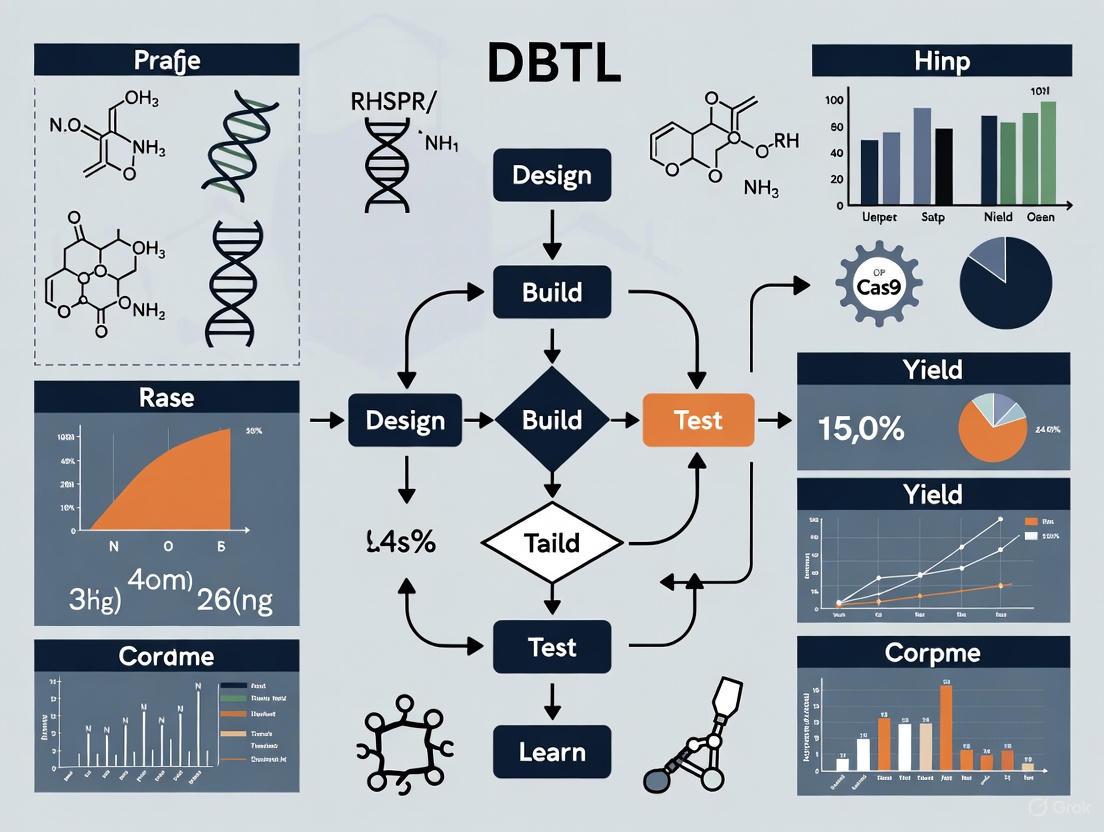
This article provides a comprehensive overview of the Design-Build-Test-Learn (DBTL) cycle, a foundational and iterative framework in synthetic biology for microbial strain development.
Optimizing Microbial Strains: A Comprehensive Guide to the Design-Build-Test-Learn (DBTL) Cycle
Abstract
This article provides a comprehensive overview of the Design-Build-Test-Learn (DBTL) cycle, a foundational and iterative framework in synthetic biology for microbial strain development. Tailored for researchers, scientists, and drug development professionals, it explores the core principles of the DBTL cycle, details its methodological application in creating strains for therapeutics and fine chemicals, addresses common troubleshooting and optimization challenges, and validates the approach through comparative case studies. The scope extends from foundational concepts to advanced, automated workflows, highlighting how iterative DBTL cycling accelerates the engineering of high-performing production strains for biomedical applications.
The DBTL Cycle Demystified: Foundational Principles for Rational Strain Engineering
In the field of synthetic biology and strain development, the Design-Build-Test-Learn (DBTL) cycle serves as a foundational framework for systematically engineering biological systems. This iterative process enables researchers and drug development professionals to efficiently develop microbial strains for producing valuable compounds, from pharmaceuticals to biofuels. By providing a structured approach to biological engineering, the DBTL cycle accounts for the inherent variability of biological systems and allows for continuous refinement until a strain meets desired performance specifications [1]. The true power of this framework lies in its iterative nature—complex projects rarely succeed on the first attempt but instead make progress through multiple, sequential cycles of refinement [2]. This article explores the four core phases of the DBTL framework, examining their application in modern strain development research through specific experimental protocols, data analysis techniques, and emerging technological innovations.
The Four Phases of the DBTL Cycle
Design: The Conceptual Blueprint
The Design phase initiates the DBTL cycle by establishing a clear objective and developing a rational plan based on specific hypotheses or learnings from previous cycles. This stage involves the strategic selection of genetic parts—promoters, ribosome binding sites (RBS), and coding sequences—and their assembly into functional circuits or devices using standardized methods [2]. Researchers define precise experimental protocols and success metrics during this phase.
In strain development, Design often encompasses:
- Pathway Design: Selecting and arranging genes to create biosynthetic pathways for target compounds
- Genetic Optimization: Engineering regulatory elements like RBS sequences to fine-tune gene expression levels [3]
- Host Selection: Choosing appropriate microbial chassis (e.g., E. coli, S. cerevisiae) based on compatibility with target pathways
Advanced biofoundries now integrate artificial intelligence and machine learning to enhance design precision. Large Language Models (LLMs) and foundation models can generate thousands of potential molecule candidates in days—a task that would traditionally take researchers years [1]. These tools help researchers quickly grasp key concepts across vast amounts of scientific literature and assist in generating scientific hypotheses.
Table 1: Key Design Tools and Applications in Strain Development
| Tool Category | Specific Tools | Application in Strain Design |
|---|---|---|
| DNA Assembly Design | j5 DNA assembly software, AssemblyTron, SynBiopython | Automated design of DNA assembly protocols for complex constructs [4] |
| Pathway Design | Cameo, RetroPath 2.0 | In silico design of metabolic engineering strategies for cell factories [4] |
| Circuit Design | Cello | Genetic circuit design for predictable behavior [4] |
| AI-Assisted Design | CRISPR-GPT, BioGPT, IBM's Biomedical Foundation Models | Automated experiment design and biological component selection [1] |
Build: From Digital Design to Biological Reality
The Build phase translates theoretical designs into physical biological entities through hands-on molecular biology techniques. This involves DNA synthesis, plasmid cloning, and transformation of engineered constructs into host organisms [2]. In strain development, this phase focuses on physically assembling the genetic constructs designed in the previous phase.
Modern automated biofoundries have dramatically accelerated the Build phase. For example, in a recent automated strain construction workflow for Saccharomyces cerevisiae, researchers programmed a Hamilton Microlab VANTAGE system to integrate off-deck hardware via a central robotic arm, achieving a throughput of 2,000 transformations per week—a 10-fold increase over manual operations [5].
Key Build processes in strain development include:
- DNA Assembly: Constructing plasmids and pathways using methods like Gibson assembly or Golden Gate cloning
- Transformation: Introducing DNA constructs into host cells
- Strain Library Construction: Creating diverse variant libraries for screening
Table 2: Automated Build Phase Components in a High-Throughput Yeast Engineering Pipeline
| System Component | Function | Implementation Example |
|---|---|---|
| Robotic Platform | Central liquid handling and coordination | Hamilton Microlab VANTAGE with iSWAP robotic arm [5] |
| External Devices | Specialized processing steps | Integration with plate sealer, plate peeler, and thermal cycler [5] |
| Software Interface | Workflow control and customization | Hamilton VENUS with modular dialog boxes for parameter adjustment [5] |
| Process Steps | Transformation workflow | 1. Transformation set up and heat shock2. Washing3. Plating [5] |
Test: Rigorous Evaluation of Engineered Strains
The Test phase centers on robust data collection through quantitative measurements of the engineered system's performance [2]. In strain development, this involves characterizing the behavior of engineered strains through various assays to evaluate productivity, growth characteristics, and metabolic activity.
Advanced testing methodologies include:
- Analytical Chemistry: LC-MS for quantifying metabolite production
- Growth Assays: Measuring biomass accumulation and substrate consumption
- Omics Technologies: Genomics, proteomics, and metabolomics for comprehensive characterization
A recent dopamine production study exemplifies rigorous testing protocols. Researchers developed a rapid LC-MS method that reduced analyte detection runtime from 50 minutes to 19 minutes, enabling high-throughput quantification across strain libraries [5]. Similarly, in the RiceGuard arsenic biosensor project, researchers implemented real-time kinetic analysis over 90 minutes to observe transcription dynamics and response plateaus [6].
Table 3: Test Phase Analytical Methods in Strain Development
| Analysis Type | Specific Methods | Measured Parameters |
|---|---|---|
| Genotypic Analysis | Next-Generation Sequencing (NGS), colony qPCR | DNA sequence verification, construct validation [7] [8] |
| Product Analysis | LC-MS, HPLC, automated mass spectrometry | Metabolite titers, pathway intermediates [5] |
| Growth Phenotyping | Plate readers, high-throughput culturing | OD measurements, growth rates, substrate consumption [2] [9] |
| Pathway-Specific Assays | Fluorescence-based reporters, enzymatic assays | Pathway activity, gene expression levels [6] |
Learn: Extracting Insights for the Next Cycle
The Learn phase represents the critical analytical component where data gathered during testing is interpreted to inform subsequent design iterations [2]. This phase determines whether the design performed as expected and extracts fundamental principles from both successes and failures.
In strain development, Learning involves:
- Data Integration: Combining multi-omics datasets to form comprehensive system understanding
- Pattern Recognition: Identifying correlations between genetic modifications and phenotypic outcomes
- Model Refinement: Updating computational models to improve predictive accuracy
The integration of machine learning has transformed the Learn phase. For example, TeselaGen's Discover Module employs predictive models to forecast biological product phenotypes using quantitative and qualitative data, with advanced embeddings representing DNA, proteins, and chemical compounds [8]. In one application, ML models trained on experimental data made accurate genotype-to-phenotype predictions that guided metabolic engineering strategies [8].
A notable evolution in this phase is the emerging LDBT paradigm (Learn-Design-Build-Test), where machine learning algorithms trained on large biological datasets can make zero-shot predictions, potentially enabling functional parts and circuits to be generated in a single cycle [10].
Case Study: Knowledge-Driven DBTL for Dopamine Production
A recent study demonstrates the effective application of the DBTL cycle in developing an E. coli strain for dopamine production [3]. The approach employed a knowledge-driven DBTL cycle involving upstream in vitro investigation to inform strain design.
Experimental Overview and Results:
- Objective: Develop an efficient dopamine production strain using a rational DBTL approach
- Strategy: Combined in vitro pathway design with high-throughput RBS engineering
- Outcome: Achieved dopamine production of 69.03 ± 1.2 mg/L (34.34 ± 0.59 mg/g biomass)—a 2.6 to 6.6-fold improvement over previous in vivo production methods [3]
DBTL Implementation:
- Design: Engineered a dopamine pathway using heterologous genes (hpaBC and ddc) with RBS variations for expression optimization
- Build: Constructed plasmid libraries and transformed into an E. coli FUS4.T2 production strain with enhanced L-tyrosine production
- Test: Evaluated dopamine production using LC-MS analysis and measured pathway enzyme expression levels
- Learn: Identified optimal RBS sequences and discovered the impact of GC content in the Shine-Dalgarno sequence on RBS strength, informing subsequent design iterations [3]
The Scientist's Toolkit: Essential Research Reagents and Solutions
Table 4: Key Research Reagents and Their Applications in DBTL Workflows
| Reagent Category | Specific Examples | Function in DBTL Workflows |
|---|---|---|
| Cloning Systems | pESC-URA plasmid, pESC-LEU plasmid, 2μ vectors with auxotrophic markers | Selection and maintenance of genetic constructs in microbial hosts [5] |
| Cell-Free Systems | Crude cell lysates, transcription/translation machinery | Rapid testing of genetic circuits and pathway variants without cellular constraints [10] |
| Analytical Standards | Dopamine hydrochloride, verazine, DFHBI-1T fluorescent dye | Quantification of target compounds and reporter gene activity [6] [3] |
| Induction Systems | GAL1 promoter, IPTG-inducible systems | Controlled gene expression for metabolic pathway regulation [5] |
| Specialized Media | Minimal media with MOPS buffer, SOC medium, selective media with antibiotics | Optimized growth conditions for engineered strains and selection of successful transformants [3] |
The DBTL cycle remains the cornerstone of modern synthetic biology and strain engineering, providing a systematic framework for developing biological systems with predictable functions. As the field advances, the integration of automation, artificial intelligence, and high-throughput technologies continues to accelerate each phase of the cycle. Biofoundries with fully automated DBTL capabilities are pushing the boundaries of what's possible in strain development, as demonstrated by success stories like the DARPA challenge where researchers produced 6 out of 10 target molecules within a 90-day timeframe [4].
The emergence of new paradigms like LDBT (Learn-Design-Build-Test), which places machine learning at the forefront of biological design, suggests an exciting future where predictive engineering may reduce the need for multiple iterative cycles [10]. However, the fundamental principles of the DBTL framework—rational design, rigorous testing, and knowledge-driven refinement—will continue to guide researchers in developing novel microbial strains for pharmaceutical applications, sustainable biomanufacturing, and addressing global challenges through biological innovation.
The Design-Build-Test-Learn (DBTL) cycle represents a foundational framework in synthetic biology and metabolic engineering, enabling the systematic development of microbial cell factories for producing valuable compounds. This iterative engineering paradigm allows researchers to progressively refine genetic designs by incorporating data-driven insights from each cycle, accelerating strain optimization while deepening fundamental understanding of biological systems. This whitepaper examines the core principles of the DBTL framework, its implementation in diverse biological systems, and emerging enhancements through artificial intelligence and automation, providing researchers with comprehensive methodological guidance for effective strain development.
The DBTL cycle is a systematic, iterative framework that has become synonymous with rational biological engineering. It provides a structured approach for developing and optimizing biological systems, such as engineered microbial strains for producing biofuels, pharmaceuticals, and other valuable compounds [7]. The cycle begins with Design, where researchers define objectives and create genetic blueprints based on domain knowledge and computational modeling. In the Build phase, DNA constructs are synthesized and assembled into vectors before being introduced into host chassis. The Test phase functionally characterizes these constructs to measure performance against objectives, and the Learn phase analyzes collected data to inform subsequent design iterations [10]. This continuous refinement process allows engineering of biological systems with predictable functions, significantly reducing development timelines compared to traditional ad hoc approaches.
The power of the DBTL framework lies in its iterative nature—with each cycle, knowledge accumulates, enabling progressively more sophisticated designs. In metabolic engineering specifically, DBTL cycles have proven invaluable for optimizing complex traits such as product titers, yields, and productivity (TYR values) that typically involve multiple genetic modifications [11]. The framework's structure is particularly suited for addressing combinatorial explosions in design space that occur when optimizing multiple pathway components simultaneously, as it allows focused exploration of the most promising regions based on empirical data [11].
The Four Phases of the DBTL Cycle
Design: Computational Planning of Biological Systems
The Design phase establishes the foundational blueprint for genetic engineering campaigns. This stage leverages both domain expertise and computational tools to specify genetic elements, their configurations, and regulatory components. For metabolic pathways, this typically involves identifying target genes, selecting regulatory parts (promoters, ribosomal binding sites), and planning assembly strategies. The design phase has been revolutionized by standardized design tools that enable seamless interoperability across biofoundries, facilitating protocol sharing and reproducibility [12].
Modern design strategies increasingly incorporate machine learning to enhance predictive capabilities. Protein language models such as ESM and ProGen, trained on evolutionary relationships between millions of protein sequences, enable zero-shot prediction of beneficial mutations and protein functions [10]. Structure-based deep learning tools like ProteinMPNN can design protein variants by predicting sequences that fold into desired backbone structures, significantly increasing design success rates [10]. For metabolic engineering, the design phase must also consider pathway topology and thermodynamic properties, as these factors critically influence flux distribution and potential rate-limiting steps [11].
Build: High-Throughput DNA Assembly and Strain Construction
The Build phase translates computational designs into physical biological entities through DNA assembly and host transformation. Automation has dramatically accelerated this phase, with biofoundries implementing robotic platforms that increase throughput and reproducibility. For example, an automated pipeline for Saccharomyces cerevisiae transformation achieved a capacity of ~400 transformations per day and up to 2,000 per week—a 10-fold increase over manual operations [5].
Key advances in the Build phase include:
- Automated DNA assembly: Integrated robotic systems execute complex protocols with minimal human intervention, improving success rates [12].
- Standardized genetic toolkits: Universal, reproducible pipelines for biofoundries enable reliable part interchangeability [12].
- CRISPR/Cas9 systems: Implemented across diverse hosts including bacteria, yeast, and filamentous fungi to enable precise genome editing [13].
- Modular cloning systems: Facilitate rapid assembly of multi-gene constructs through standardized parts and rules [7].
For challenging hosts like filamentous fungi, Build phase optimization has included developing strains with disrupted non-homologous end joining (NHEJ) pathways by knocking out ku70, ku80, or ligD genes, dramatically increasing homologous recombination efficiency to over 90% in some species [13].
Test: Functional Characterization of Engineered Strains
The Test phase quantitatively assesses performance of engineered strains through functional assays and analytical methods. This phase generates the critical data that fuels the learning process. Advanced test platforms range from high-throughput cell-free systems to automated bioreactor platforms.
Cell-free expression systems have emerged as particularly powerful tools for rapid testing, as they bypass cellular constraints and enable direct measurement of enzyme activities and pathway function [10]. These systems can produce >1 g/L of protein in under 4 hours and can be scaled from picoliter to kiloliter volumes, enabling massive parallelization [10]. When combined with liquid handling robots and microfluidics, cell-free platforms can screen hundreds of thousands of variants, as demonstrated by DropAI, which screened over 100,000 picoliter-scale reactions using droplet microfluidics [10].
For in vivo testing, analytical methods such as liquid chromatography-mass spectrometry (LC-MS) provide precise quantification of metabolic products. In one verazine production study, researchers developed a rapid LC-MS method that reduced analysis time from 50 to 19 minutes while maintaining accurate quantification, enabling high-throughput screening of strain libraries [5].
Learn: Data Analysis and Knowledge Extraction
The Learn phase transforms experimental data into actionable insights for subsequent DBTL cycles. This phase employs statistical analysis, machine learning, and mechanistic modeling to identify patterns, predict improved designs, and generate biological understanding.
Machine learning algorithms have proven particularly valuable for analyzing complex biological data. In metabolic engineering, gradient boosting and random forest models have demonstrated strong performance in the low-data regime typical of early DBTL cycles, showing robustness to training set biases and experimental noise [11]. These models can identify non-intuitive relationships between genetic modifications and metabolic flux that might escape human observation.
The learning process also generates mechanistic insights into pathway regulation and limitations. For example, in a dopamine production study, researchers discovered that GC content in the Shine-Dalgarno sequence significantly influenced ribosome binding site strength—knowledge that directly informed subsequent design iterations [14]. Similarly, kinetic modeling of metabolic pathways can reveal how perturbations to individual enzyme concentrations affect overall flux, explaining why sequential debottlenecking often fails to identify global optima [11].
DBTL in Action: Case Studies in Metabolic Engineering
Dopamine Production in Escherichia coli
A knowledge-driven DBTL cycle was implemented to develop an efficient dopamine production strain in E. coli, resulting in a 2.6 to 6.6-fold improvement over state-of-the-art production [14]. The approach integrated upstream in vitro investigation with high-throughput ribosome binding site (RBS) engineering to optimize expression levels of the heterologous pathway enzymes HpaBC and Ddc.
Table 1: DBTL Cycle for Dopamine Production in E. coli
| DBTL Phase | Key Activities | Outcomes |
|---|---|---|
| Design | Selected heterologous genes hpaBC and ddc; Designed RBS variants for pathway balancing | Identified optimal expression level combinations in cell-free system |
| Build | High-throughput RBS engineering; Constructed variant library in high-tyrosine production host | Created diversified strain library with varying enzyme expression ratios |
| Test | Cultivation in minimal medium; Dopamine quantification via HPLC | Identified optimal strain producing 69.03 ± 1.2 mg/L dopamine |
| Learn | Analyzed relationship between GC content in Shine-Dalgarno sequence and RBS strength | Discovered key mechanistic insight for future design iterations |
The workflow incorporated a cell-free protein synthesis system to prototype pathway behavior before in vivo implementation, accelerating the learning process. This "knowledge-driven" approach provided mechanistic understanding that enabled more intelligent design in subsequent cycles, contrasting with traditional statistical approaches that may require more iterations [14].
Verazine Production in Saccharomyces cerevisiae
An automated DBTL platform was applied to optimize verazine biosynthesis in yeast, identifying several gene overexpression targets that enhanced production by 2- to 5-fold [5]. The study screened a library of 32 genes involved in sterol metabolism and transport, demonstrating the power of high-throughput approaches for identifying non-obvious bottlenecks.
Table 2: Automated Strain Engineering for Verazine Production
| Parameter | Manual Workflow | Automated Workflow |
|---|---|---|
| Throughput | ~200 transformations/week | ~2,000 transformations/week |
| Transformation method | Lithium acetate/ssDNA/PEG in tubes | Adapted to 96-well format with robotic liquid handling |
| Key integration points | Manual intervention at each step | Full integration of plate sealer, peeler, and thermal cycler |
| Colony picking | Manual selection | Automated with QPix 460 system |
The top-performing strains overexpressed erg26, dga1, cyp94n2, ldb16, gabat1v2, or dhcr24, genes spanning diverse functional categories including sterol biosynthesis, lipid droplet formation, and cytochrome P450 reactions [5]. This demonstrated the value of exploring multiple engineering targets simultaneously rather than focusing only on obvious pathway enzymes.
Emerging Paradigms and Future Directions
The LDBT Shift: Learning Before Design
A emerging paradigm proposes reordering the cycle to LDBT (Learn-Design-Build-Test), where machine learning and prior knowledge guide the initial design phase [10]. This approach leverages protein language models and zero-shot predictors to generate functional designs without requiring experimental data from previous cycles. The availability of megascale biological datasets now enables these models to make accurate predictions about sequence-structure-function relationships, potentially reducing the number of experimental iterations needed.
In this revised framework, learning occurs before physical construction through computational analysis of existing biological knowledge [10]. This shifts synthetic biology closer to a "Design-Build-Work" model used in established engineering disciplines, where first principles reliably predict system behavior.
AI-Enabled Automation and Integrated Workflows
The integration of artificial intelligence with automated biofoundries is creating increasingly sophisticated DBTL implementations. AI-guided systems can now dynamically optimize assembly protocols, diagnose failures, and close the DBTL loop through real-time learning [12]. These systems continuously improve through iteration, establishing a new paradigm for biological engineering.
Future developments will likely focus on workflow integration across multiple platforms and data systems. As noted in recent advances, "experiments continuously improve through iteration, promising to accelerate both fundamental research and industrial applications" [12]. This requires seamless data flow between design software, robotic execution platforms, and analytical instruments—a challenge being addressed through standardized data models and communication protocols.
Essential Research Reagent Solutions
Successful implementation of DBTL cycles relies on specialized reagents and tools that enable precise genetic manipulation and characterization. The following table catalogizes key solutions used in advanced metabolic engineering studies.
Table 3: Essential Research Reagent Solutions for DBTL Implementation
| Reagent/Tool | Function | Application Examples |
|---|---|---|
| CRISPR/Cas9 systems | Precision genome editing through targeted double-strand breaks | Gene knockouts, promoter replacements in fungi and yeast [13] |
| RBS variant libraries | Fine-tuning translation initiation rates | Metabolic pathway balancing in E. coli dopamine production [14] |
| Cell-free expression systems | Rapid in vitro prototyping of pathway enzymes | Testing enzyme combinations without cellular constraints [10] |
| Selectable markers (ptrA, hph, ble) | Selection of successfully transformed strains | Multiple rounds of fungal engineering through marker recycling [13] |
| Standardized DNA assembly toolkits | Modular, reproducible construction of genetic circuits | High-throughput biofoundry operations [12] |
| Promoter systems (PGAL1, PTEF1) | Controlled gene expression | Inducible and constitutive expression in yeast and fungi [5] [13] |
Visualizing DBTL Workflows
DBTL Cycle Workflow - The iterative engineering process showing how knowledge from each cycle informs subsequent designs, with multiple iterations converging toward an optimized strain.
Enhanced DBTL with AI and Automation - Modern DBTL implementations where machine learning informs the design phase and cell-free systems accelerate the build-test phases, creating faster, more predictive cycles.
The DBTL cycle has established itself as an indispensable framework for systematic strain development in synthetic biology and metabolic engineering. Its power derives from the structured iteration of design, construction, characterization, and analysis phases, each generating knowledge that progressively refines biological designs. Current advances in machine learning, automation, and experimental platforms are further accelerating DBTL implementations, enabling more complex engineering challenges to be addressed efficiently. As these technologies mature, the paradigm is shifting toward more predictive engineering approaches that require fewer iterations, promising to significantly reduce the time and cost required to develop production strains for pharmaceutical, chemical, and biotechnology applications.
This technical guide explores the strategic pivot from traditional whole-cell biosensors to cell-free systems within the framework of the Design-Build-Test-Learn (DBTL) cycle. While genetically modified organisms (GMOs) have long served as the foundation for biological sensing, constraints including cellular membrane barriers, stringent viability requirements, and extended development timelines often hinder their efficiency and application scope [15] [16]. Cell-free biosensors, which utilize transcription and translation machinery in vitro, present a paradigm shift by overcoming these limitations and accelerating the DBTL cycle [15] [17]. This whitepaper provides an in-depth analysis of this transition, supported by quantitative data, detailed experimental protocols, and visual workflows, specifically tailored for researchers and drug development professionals engaged in strain development and biosensor engineering.
The Design-Build-Test-Learn (DBTL) cycle is a systematic, iterative framework central to synthetic biology and metabolic engineering for developing and optimizing biological systems [7] [18]. In the context of biosensor development, this cycle involves: (1) Design: Planning genetic constructs using modular DNA parts; (2) Build: Assembling constructs and engineering microbial strains; (3) Test: Functionally characterizing the constructs in a relevant biological system; and (4) Learn: Analyzing data to inform the next design iteration [11] [7] [14].
Traditional DBTL cycles relying on GMOs often face significant bottlenecks. Cellular membranes restrict the transport of solid substrates or toxic compounds, while the need to maintain cell viability imposes constraints on experimental conditions and screening throughput [15] [16]. Furthermore, the iterative process of in vivo strain development can be slow, sometimes leading to an "involution state" where cycles increase in complexity without corresponding gains in productivity [18].
Cell-free gene expression (CFE) systems have emerged as a transformative technology that mitigates these challenges. By using purified cellular components like ribosomes, transcription factors, and energy sources, CFE systems enable protein synthesis and biosensor operation without the constraints of living cells [15] [17]. This pivot allows for more rapid prototyping, direct detection of analytes inaccessible to whole cells, and integration with high-throughput automation, thereby streamlining the entire DBTL pipeline [16] [17].
Comparative Analysis: GMO vs. Cell-Free Biosensor Performance
The following table summarizes key performance characteristics of GMO-based and cell-free biosensors, highlighting the advantages of the cell-free approach for specific applications.
Table 1: Performance Comparison of GMO-Based and Cell-Free Biosensors
| Feature | GMO-Based Biosensors | Cell-Free Biosensors |
|---|---|---|
| Setup Complexity | Requires cloning, transformation, and cell culture [7] | Rapid activation; uses pre-prepared extracts [17] |
| Viability Requirements | Strict viability and growth conditions necessary [15] | No viability constraints; functions in toxic environments [15] |
| Response Time | Slower (hours), depends on cell growth and regulation [15] | Faster (minutes to hours), direct activation [16] [17] |
| Substrate Accessibility | Limited by cell membrane permeability [16] | Open system; ideal for solid substrates like microcrystalline cellulose [16] |
| High-Throughput Potential | Lower, due to culturing and viability steps [7] | High, easily integrated with automated liquid handlers [16] |
| Real-World Deployment | Challenging due to containment and stability issues [19] | Portable; suitable for lyophilized, paper-based field tests [15] |
Experimental Protocol: Developing a Cell-Free Biosensor
This section outlines a generalizable protocol for creating and testing a transcription factor (TF)-based cell-free biosensor, exemplified by a system designed to detect cellobiose—a product of cellulose degradation [16].
Design and Build Phase
Objective: To construct a genetic circuit that produces a detectable signal (e.g., fluorescence) in the presence of a target analyte.
Plasmid Design: The core sensor element is a plasmid containing two key components:
- Reporter Gene: A gene encoding a fluorescent protein (e.g., superfolder GFP, sfGFP) under the control of a constitutive or inducible promoter (e.g., T7 promoter).
- Operator Site: The specific DNA sequence (operator) recognized by the transcription factor (TF) must be placed strategically within the promoter region to regulate reporter gene expression [16].
- Example: For a cellobiose sensor, the operator site for the TF CelR (CelO) is inserted into the plasmid pIVEX-PT7-CelO-sfGFP [16].
Protein Preparation (Transcription Factor): The TF (e.g., CelR) must be expressed and purified separately.
- The TF gene is cloned into an expression vector (e.g., pET28-CelR) and transformed into an E. coli expression strain like BL21(DE3).
- Protein expression is induced with IPTG. Cells are lysed via sonication, and the TF is purified using affinity chromatography (e.g., Ni-column for His-tagged proteins) [16].
Test Phase
Objective: To characterize the biosensor's response to the target analyte in a cell-free environment.
Reaction Assembly: The cell-free biosensor reaction is set up by combining the following components in a microplate well:
- Cell-Free Extract: A commercial E. coli-based CFPS kit (e.g., PURExpress) or a homemade S30 lysate [16] [17].
- Sensory Plasmid: The constructed plasmid (e.g., pIVEX-PT7-CelO-sfGFP).
- Purified Transcription Factor: The purified TF (e.g., CelR).
- Substrate/Analyte: The target analyte (e.g., cellobiose) or, for enzyme-screening applications, the solid substrate (e.g., microcrystalline cellulose) along with the enzyme to be tested (e.g., cellobiohydrolase) [16].
- Nuclease-Free Water: To reach the desired final volume.
Incubation and Measurement:
- The reaction mixture is incubated at a constant temperature (e.g., 30-37°C) for several hours.
- Fluorescence (Ex/Em: 485/535 nm for sfGFP) is measured at regular intervals using a plate reader [16].
Learn Phase and DBTL Iteration
Objective: To analyze sensor performance and refine the design.
- Data Analysis: Calculate fold-change in fluorescence (signal-to-noise ratio) and determine the limit of detection (LOD) for the analyte. For enzyme screening, fluorescence intensity correlates directly with enzyme activity [16].
- Machine Learning Integration: Sensor output data can be fed into machine learning models (e.g., gradient boosting, random forest) to predict the performance of new genetic designs, thereby guiding the selection of components for the next DBTL cycle [11] [18]. This data-driven learning is crucial for escaping involution and efficiently navigating the vast combinatorial design space.
The following diagram visualizes this integrated, iterative DBTL workflow for a cell-free biosensor project.
The Scientist's Toolkit: Essential Reagents and Materials
Successful implementation of a cell-free biosensor project relies on a suite of specialized reagents and tools. The table below details key solutions and their functions.
Table 2: Key Research Reagent Solutions for Cell-Free Biosensor Development
| Research Reagent | Function/Benefit |
|---|---|
| Cell-Free Protein Synthesis (CFPS) System | Provides the core transcriptional/translational machinery. Commercial kits (e.g., PURExpress) offer reliability, while homemade S30 lysate allows for customization and cost reduction [16] [17]. |
| Acoustic Liquid Handler (e.g., Echo 525) | Enables non-contact, nanoliter-scale dispensing for high-throughput assembly of cell-free reactions in microplates, minimizing reagent consumption and improving reproducibility [16]. |
| Allosteric Transcription Factors (aTFs) | The core sensing element. aTFs undergo conformational change upon binding an analyte, regulating transcription. They can be engineered for sensitivity and specificity [15]. |
| Supported Lipid Bilayers & Hydrogels | Artificial matrices used for spatial organization and microcompartmentalization of cell-free reactions, enhancing stability and enabling complex signal processing [15]. |
| Lyophilization (Freeze-Drying) Reagents | Trehalose and other stabilizers allow for long-term, room-temperature storage of cell-free biosensors on paper or other substrates, which is critical for field deployment [15]. |
The pivot from GMO-based to cell-free systems represents a significant evolution in biosensor development, directly addressing critical bottlenecks in the traditional DBTL cycle. By removing the constraints of the cell membrane and viability, cell-free biosensors unlock new possibilities for detecting a wider range of analytes, including solid substrates, and enable unprecedented speeds of prototyping and testing. The integration of these systems with automation, machine learning, and structured data management creates a powerful, iterative engineering platform. This approach not only accelerates the development of biosensors for applications in diagnostics, environmental monitoring, and biomanufacturing but also provides a more efficient and fundamentally more flexible framework for biological design.
The iterative Design-Build-Test-Learn (DBTL) cycle provides a fundamental framework for strain development in synthetic biology and metabolic engineering [11] [7]. In traditional DBTL approaches, each cycle begins with genetic designs based on previous experimental results, often relying on statistical models or randomized selection when prior knowledge is limited [3]. However, this conventional approach can lead to multiple iterative cycles, consuming substantial time, money, and resources [3]. A transformative evolution of this paradigm—the knowledge-driven DBTL cycle—incorporates upstream in vitro investigations to create a more mechanistic and rational foundation for strain engineering decisions.
This knowledge-driven approach employs cell-free systems and in vitro testing to de-risk and inform the initial design phase of the DBTL cycle, enabling more predictive strain optimization before moving to live organisms [3]. By bridging the gap between theoretical design and practical implementation through empirical in vitro data, researchers can accelerate the development of microbial cell factories for producing valuable compounds, including pharmaceuticals, biofuels, and specialty chemicals [3].
The Foundation: DBTL Cycles in Strain Development
The Core DBTL Framework
The DBTL cycle represents a systematic framework for engineering biological systems [7]. In strain development, this involves:
- Design: Planning genetic modifications using modular biological parts to achieve desired metabolic functions [7]
- Build: Implementing designs through DNA assembly and strain construction, increasingly automated with advanced genetic engineering tools [3]
- Test: Analyzing constructed strains through functional assays and performance metrics [7]
- Learn: Extracting insights from experimental data to inform subsequent design phases [11]
This cyclical process continues until a strain meets target performance specifications [7]. The integration of automation throughout these phases, known as biofoundries, is becoming central to synthetic biology [3].
Limitations of Conventional DBTL Approaches
Traditional DBTL cycles often face significant challenges in the initial rounds where prior mechanistic understanding is limited [3]. Without sufficient knowledge of pathway kinetics, enzyme interactions, and cellular context, engineering targets may be selected via design of experiment or randomized approaches [3]. This knowledge gap can result in suboptimal design choices, necessitating more iterations and extensive resource consumption before identifying optimal strain configurations [11] [3].
The Knowledge-Driven DBTL Framework
Conceptual Foundation
The knowledge-driven DBTL cycle addresses fundamental limitations of conventional approaches by incorporating upstream in vitro investigation as a critical component of the learning phase [3]. This methodology employs mechanistic understanding rather than relying solely on statistical correlations, creating a more rational foundation for engineering decisions.
This approach is particularly valuable for optimizing complex metabolic pathways where combinatorial explosions of possible design variations make exhaustive experimental testing infeasible [11]. By first testing pathway elements in cell-free systems, researchers can gather crucial data on enzyme kinetics, expression level effects, and potential inhibitory interactions before committing to full strain construction [3].
Integrated Workflow
The knowledge-driven approach creates a bridge between in vitro and in vivo environments through a structured workflow:
- Upstream In Vitro Investigation: Testing pathway components in cell-free systems
- Mechanistic Learning: Extracting quantitative relationships from in vitro data
- Informed In Vivo Design: Translating findings to strain engineering strategies
- Validation and Refinement: Testing engineered strains and iterating based on performance [3]
This workflow effectively narrows the design space for in vivo engineering, increasing the probability of success in early DBTL cycles [3].
Diagram 1: The Knowledge-Driven DBTL workflow integrates upstream in vitro investigation with traditional DBTL cycles to create a more mechanistic learning foundation.
Technical Implementation: A Dopamine Production Case Study
A recent application demonstrating the effectiveness of the knowledge-driven approach involved developing an Escherichia coli strain for dopamine production [3]. This case study illustrates the practical implementation and quantitative benefits of this methodology.
Background and Challenge
Dopamine has important applications in emergency medicine, cancer diagnosis/treatment, and materials science [3]. While microbial production offers an environmentally friendly alternative to chemical synthesis, previous in vivo dopamine production in E. coli achieved only 27 mg/L, leaving significant room for improvement [3].
The dopamine biosynthesis pathway from the precursor l-tyrosine involves two key enzymes: 4-hydroxyphenylacetate 3-monooxygenase (HpaBC, native to E. coli) converts l-tyrosine to l-DOPA, and l-DOPA decarboxylase (Ddc, from Pseudomonas putida) then catalyzes dopamine formation [3].
Diagram 2: Dopamine biosynthesis pathway in engineered E. coli, showing the two-enzyme conversion from l-tyrosine to dopamine.
Experimental Protocols
1In VitroInvestigation Phase
Cell-Free Protein Synthesis System Preparation [3]:
- Crude Cell Lysate Preparation: Grow E. coli FUS4.T2 in 2xTY medium, harvest cells, and lysate via sonication
- Reaction Buffer Composition: 50 mM phosphate buffer (pH 7) supplemented with 0.2 mM FeCl~2~, 50 μM vitamin B~6~, and 1 mM l-tyrosine or 5 mM l-DOPA
- Pathway Testing: Combine lysate with reaction buffer and pathway enzymes to test different relative expression levels
Key Measurements:
- Enzyme expression levels under different regulatory sequences
- Substrate conversion rates
- Metabolite profiling to identify potential bottlenecks
Translation toIn VivoEngineering
Ribosome Binding Site (RBS) Engineering [3]:
- RBS Library Design: Modulate Shine-Dalgarno sequences without interfering with secondary structures
- High-Throughput Assembly: Automated construction of RBS variants
- Strain Transformation: Introduce variant libraries into dopamine production host (E. coli FUS4.T2)
- Screening: Evaluate dopamine production across RBS variants
Analytical Methods:
- HPLC for dopamine quantification
- Biomass measurements for yield calculations
- Statistical evaluation of production variance
Key Reagents and Research Solutions
Table 1: Essential Research Reagents for Knowledge-Driven DBTL Implementation
| Reagent/Resource | Function in Workflow | Specific Application in Dopamine Case Study |
|---|---|---|
| Crude Cell Lysate System | In vitro pathway testing bypassing cellular constraints | E. coli FUS4.T2 lysate for testing dopamine pathway enzymes [3] |
| RBS Engineering Tools | Fine-tuning relative gene expression in synthetic pathways | Modulating Shine-Dalgarno sequences for HpaBC and Ddc [3] |
| Analytical Platforms | Quantifying pathway intermediates and products | HPLC for dopamine quantification [3] |
| Specialized Media | Supporting specific metabolic functions | Minimal medium with MOPS buffer, vitamin B~6~, phenylalanine [3] |
| Automated Strain Construction | High-throughput assembly of genetic variants | Automated RBS library construction [3] |
Performance Results and Comparative Analysis
The knowledge-driven approach yielded significant improvements over previous dopamine production efforts:
Table 2: Quantitative Comparison of Dopamine Production Strains
| Production Strain / Approach | Dopamine Titer (mg/L) | Dopamine Yield (mg/g biomass) | Fold Improvement |
|---|---|---|---|
| Previous State-of-the-Art | 27.0 | 5.17 | 1.0x |
| Knowledge-Driven DBTL | 69.03 ± 1.2 | 34.34 ± 0.59 | 2.6-6.6x |
The knowledge-driven approach achieved a 2.6-fold improvement in titer and a 6.6-fold improvement in yield compared to previous state-of-the-art in vivo dopamine production [3]. This demonstrates the efficacy of using upstream in vitro data to inform in vivo engineering decisions.
Implementation Guidelines
When to Apply the Knowledge-Driven Approach
The knowledge-driven DBTL strategy is particularly advantageous in these scenarios:
- Novel Pathway Engineering: When introducing heterologous pathways with limited prior functional data
- Complex Metabolic Optimization: When pathway kinetics are non-intuitive and sequential optimization is suboptimal [11]
- Toxic Intermediate Production: When pathway intermediates may impact cell viability
- High-Resource Constraint Situations: When minimizing iterative cycles is economically critical [3]
Practical Considerations for Implementation
Cell-Free System Design:
- Use crude cell lysates to maintain metabolite pools and energy equivalents [3]
- Match in vitro conditions to anticipated in vivo environment as closely as possible
- Include relevant cofactors and precursors to support pathway function
Data Translation:
- Focus on relative expression levels rather than absolute values when moving from in vitro to in vivo
- Account for cellular context differences, including membrane transport and regulatory networks
- Use appropriate statistical models to predict in vivo performance from in vitro data [11]
Integration with Automation:
- Implement high-throughput in vitro screening to maximize data generation
- Utilize automated DNA assembly for rapid variant construction [3]
- Employ robotic systems for consistent assay execution
Future Perspectives
The knowledge-driven DBTL approach continues to evolve with several promising directions:
Machine Learning Integration: Combining in vitro data with machine learning models can further enhance predictive capabilities. Recent studies show that gradient boosting and random forest models outperform other methods in low-data regimes common in early DBTL cycles [11].
Expanded In Vitro Systems: Advanced human-based in vitro methods are being developed for more physiologically relevant testing, particularly for pharmaceutical applications [20]. Similar innovations could enhance microbial strain development.
Multi-Omics Data Integration: Incorporating proteomic, metabolomic, and transcriptomic data with in vitro results can provide a more comprehensive systems biology perspective for strain design.
The knowledge-driven DBTL cycle represents a significant advancement over conventional iterative approaches in strain development. By incorporating upstream in vitro investigation to build mechanistic understanding before committing to full strain construction, this methodology reduces resource consumption and accelerates the development timeline.
The dopamine production case study demonstrates that this approach can achieve substantial improvements in both titer and yield—2.6-fold and 6.6-fold improvements respectively—highlighting its practical efficacy [3]. As synthetic biology continues to tackle more complex engineering challenges, the knowledge-driven integration of in vitro data to inform in vivo engineering will play an increasingly vital role in developing efficient microbial cell factories for sustainable chemical production.
From Code to Cell: Methodological Applications of DBTL in Strain Development
The Design-Build-Test-Learn (DBTL) cycle serves as a foundational framework in synthetic biology and metabolic engineering for systematically developing and optimizing microbial strains. This iterative process enables researchers to engineer organisms for specific functions, such as producing biofuels, pharmaceuticals, and other valuable compounds [7]. In modern biotechnology, automating the DBTL cycle has become crucial for accelerating strain development, enhancing reproducibility, and managing the complexity of biological engineering [21] [8]. The integration of software, robotics, and advanced analytics has transformed this cycle from a largely manual, time-consuming process into a high-throughput, data-driven pipeline capable of rapidly exploring vast genetic design spaces that would be impossible to address through traditional methods.
This technical guide examines the core components and implementation of automated DBTL pipelines, focusing on their application in strain development research. We explore the specific technologies enabling each phase, present quantitative performance data from real-world applications, and provide detailed experimental methodologies that demonstrate the power of this integrated approach for advancing microbial metabolic engineering.
Core Components of the Automated DBTL Pipeline
The Four Phases of the DBTL Cycle
Table 1: The Four Phases of the Automated DBTL Cycle
| Phase | Key Activities | Enabling Technologies |
|---|---|---|
| Design | Pathway design, enzyme selection, DNA part specification, combinatorial library design | Bioinformatics software (RetroPath, Selenzyme), DNA assembly design tools (PartsGenie), Design of Experiments (DoE) |
| Build | DNA synthesis, pathway assembly, transformation, strain construction | Automated liquid handlers, robotic integration, high-throughput cloning, DNA synthesizers |
| Test | Cultivation, product extraction, analytical screening, data collection | High-throughput fermentation, automated mass spectrometry, LC-MS/MS, next-generation sequencing |
| Learn | Data analysis, pattern recognition, predictive modeling, design recommendation | Machine learning algorithms, statistical analysis, deep neural networks, AI-driven recommendation systems |
Enabling Technologies and Integration Framework
Automated DBTL pipelines rely on sophisticated integration of computational and physical systems. Biofoundries represent the pinnacle of this integration, featuring computer-aided design, synthetic biology tools, and robotic automation working in concert [5]. The modular nature of these pipelines allows laboratories to adapt specific components while maintaining the overall workflow integrity. Key integration points include standardized data transfer protocols (such as RESTful APIs), instrument-specific software drivers, and centralized sample tracking systems that maintain chain of custody from digital design to physical strain [8].
Software platforms like TeselaGen provide end-to-end management of the DBTL cycle, offering flexible deployment options (cloud or on-premises) to address varied security, regulatory, and compliance needs within the biotech industry [8]. These systems generate detailed DNA assembly protocols, manage laboratory inventory, orchestrate robotic workflows, and provide advanced analytics capabilities essential for interpreting complex experimental results.
Automated DBTL Workflow: This diagram illustrates the integrated, cyclical nature of the automated Design-Build-Test-Learn pipeline, showing how data flows between phases to inform subsequent iterations.
Quantitative Performance of Automated DBTL Implementation
Throughput and Efficiency Metrics
Automation dramatically accelerates strain construction and evaluation. In a representative example, an automated yeast strain engineering pipeline achieved a capacity of approximately 400 transformations per day and up to 2,000 transformations per week [5]. This represents a 10-fold increase compared to manual throughput, where a human operator typically completes about 40 transformations per day (200 reactions per week) [5]. This enhanced throughput enables researchers to explore significantly larger design spaces in shorter timeframes.
Table 2: Performance Metrics from Automated DBTL Implementations
| Application | Strain/Product | Throughput/Cycle Efficiency | Key Improvement |
|---|---|---|---|
| Flavonoid Production [22] | (2S)-pinocembrin in E. coli | 16 constructs per cycle | 500-fold production increase over 2 DBTL cycles |
| Alkaloid Pathway Screening [5] | Verazine in S. cerevisiae | 400 transformations/day | Identified genes increasing production 2-5 fold |
| Dopamine Production [14] | Dopamine in E. coli | N/A | 2.6-6.6 fold improvement over state-of-the-art |
| Combinatorial Pathway Optimization [11] | Metabolic flux optimization | Simulated 50 designs/cycle | Gradient boosting outperformed other ML methods |
Case Study: Automated Flavonoid Production
The application of an automated DBTL pipeline for flavonoid production demonstrates the cycle's effectiveness. In this implementation, researchers applied design of experiments (DoE) based on orthogonal arrays combined with a Latin square for gene positional arrangement to reduce 2,592 possible combinatorial configurations down to 16 representative constructs - achieving a compression ratio of 162:1 [22]. This strategic reduction made comprehensive exploration of the design space experimentally tractable.
Through two iterative DBTL cycles, the pipeline established a production pathway improved by 500-fold, with competitive titers reaching 88 mg L⁻¹ of (2S)-pinocembrin [22]. Statistical analysis of the first cycle identified that vector copy number had the strongest significant effect on pinocembrin levels (P value = 2.00 × 10⁻⁸), followed by a positive effect of the chalcone isomerase (CHI) promoter strength (P value = 1.07 × 10⁻⁷) [22]. This learning informed the second cycle design, which focused on the most impactful parameters to further optimize production.
Detailed Experimental Protocols for Automated DBTL Implementation
Protocol 1: Automated High-Throughput Yeast Transformation
The automated yeast strain construction protocol exemplifies the Build phase in DBTL cycles [5]. This modular, integrated method enables high-throughput transformation in Saccharomyces cerevisiae using the Hamilton Microlab VANTAGE platform:
Transformation Setup and Heat Shock: Program the robotic system to prepare transformation mixtures in 96-well format using the lithium acetate/ssDNA/PEG method. The system automatically:
- Transfers competent yeast cells to reaction plates
- Adds plasmid DNA (customizable volume and concentration)
- Adds transformation mix components in optimized ratios
- Seals plates using an integrated plate sealer
- Incubates plates in a thermal cycler for heat shock (temperature and duration customizable)
Washing: After heat shock, the system:
- Removes plate seals using an integrated plate peeler
- Centrifuges plates to pellet cells
- Aspirates supernatant
- Resuspends cells in recovery media
- Incubates plates to allow cell recovery
Plating: The automated system:
- Transfers transformed cells to selective agar plates
- Spreads cells evenly across plate surfaces
- Incubates plates for colony development
This protocol achieves approximately 96 transformations per run with ~2 hours of robotic execution time, including 1.5 hours of automated setup and hands-off heat shock [5]. Critical to this process is the optimization of liquid classes for viscous reagents like PEG, which required adjustment of aspiration and dispensing speeds, air gaps, and pre- and post-dispensing parameters to ensure accurate pipetting [5].
Protocol 2: Knowledge-Driven DBTL for Dopamine Production
A knowledge-driven DBTL approach incorporating upstream in vitro investigation accelerated dopamine production strain development in E. coli [14]:
In Vitro Pathway Validation:
- Prepare crude cell lysate systems from production hosts
- Express pathway enzymes (HpaBC and Ddc) using cell-free protein synthesis
- Test different relative expression levels in reaction buffer containing FeCl₂, vitamin B₆, and l-tyrosine precursor
- Quantify dopamine production to identify optimal enzyme ratios
In Vivo Strain Construction:
- Translate optimal expression ratios to in vivo environment through RBS engineering
- Design RBS variants focusing on Shine-Dalgarno sequence modulation
- Construct plasmid libraries using high-throughput cloning techniques
- Transform engineered E. coli FUS4.T2 production strain
High-Throughput Screening:
- Cultivate strains in 96-deepwell plates containing minimal medium with appropriate antibiotics and inducers
- Incubate with shaking for standardized growth period
- Perform chemical extraction using Zymolyase-mediated cell lysis followed by organic solvent extraction
- Analyze dopamine production using rapid LC-MS methods (19-minute runtime)
This knowledge-driven approach developed a dopamine production strain capable of producing 69.03 ± 1.2 mg/L (34.34 ± 0.59 mg/gbiomass), representing a 2.6 to 6.6-fold improvement over previous state-of-the-art in vivo production methods [14].
Knowledge-Driven DBTL Approach: This workflow illustrates the integration of upstream in vitro investigation to inform and accelerate the subsequent in vivo DBTL cycles for strain development.
The Scientist's Toolkit: Essential Research Reagents and Solutions
Table 3: Key Research Reagent Solutions for Automated DBTL Workflows
| Reagent/Solution | Function | Application Example |
|---|---|---|
| Lithium Acetate/ssDNA/PEG Transformation Mix | Enables DNA uptake in yeast | High-throughput yeast transformation [5] |
| Zymolyase-based Lysis Buffer | Enzymatic cell wall degradation | Chemical extraction from yeast for metabolite analysis [5] |
| MOPS-based Minimal Medium | Defined growth conditions | Cultivation experiments for metabolite production [14] |
| Cell-Free Protein Synthesis System | In vitro protein expression | Testing enzyme expression levels before in vivo implementation [14] |
| Restriction Enzyme Cloning Systems | DNA assembly | Golden Gate, Gibson assembly, ligase cycling reaction [22] [8] |
| LC-MS Mobile Phase Solvents | Chromatographic separation | Metabolite quantification (e.g., verazine, dopamine) [5] [14] |
Advanced Analytics and Machine Learning in the Learn Phase
Machine Learning for Predictive Modeling
The Learn phase has evolved from basic statistical analysis to sophisticated machine learning applications that drive predictive modeling. In combinatorial pathway optimization, gradient boosting and random forest models have demonstrated superior performance in the low-data regime typical of early DBTL cycles [11]. These methods show robustness against training set biases and experimental noise, making them particularly valuable for biological applications where clean, extensive datasets are often unavailable.
Mechanistic kinetic model-based frameworks provide a powerful approach for testing and optimizing machine learning methods in iterative metabolic engineering [11]. These models use ordinary differential equations to describe changes in intracellular metabolite concentrations over time, allowing in silico simulation of pathway behavior under different engineering scenarios. This enables researchers to compare machine learning methods and DBTL strategies without the cost and time requirements of physical experiments.
Heterogeneity-Powered Learning
Advanced analytical approaches are leveraging biological heterogeneity to enhance learning. The RespectM method enables microbial single-cell level metabolomics, detecting metabolites at a rate of 500 cells per hour with high efficiency [23]. By analyzing 4,321 single-cell metabolomics data points representing metabolic heterogeneity, researchers trained deep neural networks to establish heterogeneity-powered learning (HPL) models [23].
This approach addresses a fundamental challenge in the Learn phase: the extreme asymmetry between sparse testing data and chaotic metabolic networks [23]. By leveraging naturally occurring heterogeneity, researchers generate sufficient data to power deep learning algorithms, enabling more accurate predictions of biological system behavior. In one application, an HPL-based model achieved high accuracy (Training MSE: 0.0009546, Test MSE: 0.0009198) in predicting optimal metabolic engineering strategies for triglyceride production [23].
The integration of software, robotics, and analytics in automated DBTL pipelines has fundamentally transformed strain development research. By systematically addressing each phase of the cycle with specialized technologies and maintaining data continuity throughout the process, these pipelines enable unprecedented exploration of biological design space. Quantitative results demonstrate order-of-magnitude improvements in throughput, efficiency, and production outcomes across diverse applications.
As the field advances, several emerging trends promise to further enhance DBTL capabilities: increased integration of single-cell analytics to leverage biological heterogeneity, development of more sophisticated recommendation algorithms for the Design phase, and enhanced data infrastructure to support machine learning across multiple DBTL cycles. These advancements will continue to accelerate the engineering of microbial cell factories for sustainable production of pharmaceuticals, chemicals, and materials, solidifying the automated DBTL pipeline's role as a cornerstone of modern biotechnology research and development.
The quest for sustainable and efficient production methods for high-value fine chemicals has positioned microbial metabolic engineering at the forefront of industrial biotechnology. Within this field, the Design-Build-Test-Learn (DBTL) cycle has emerged as a powerful, iterative framework for strain development, enabling the systematic optimization of complex biological systems. This whitepaper elucidates the application of the DBTL cycle in the context of a landmark achievement: the dramatic enhancement of flavonoid production in engineered Escherichia coli. Flavonoids, such as (2S)-pinocembrin, are plant-derived specialized metabolites with recognized therapeutic potential, including anti-oxidative and anti-apoptotic effects that are valuable for drug development [24]. We detail how a modular metabolic strategy, implemented through rigorous DBTL cycling, facilitated the direct production of these compounds from glucose, establishing a robust platform for microbial manufacturing.
The DBTL Cycle in Strain Development
The DBTL cycle is an iterative engineering paradigm that structures the process of biological optimization. Its application to microbial strain development is foundational to modern synthetic biology [14].
- Design: In this initial phase, informed by prior knowledge and data, researchers design genetic modifications. Strategies can range from rational design (based on known pathway information) to the use of machine learning models and protein language models to predict high-fitness enzyme variants or optimal pathway configurations [25]. For metabolic pathways, a common approach is modular design, where large pathways are partitioned into smaller, manageable segments [24].
- Build: This phase involves the physical construction of the genetically engineered strains. Automated biofoundries are increasingly used to execute this step with high throughput and reproducibility, employing techniques such as molecular cloning, plasmid assembly, and genome editing [14] [25].
- Test: The constructed strains are cultivated and their performance is rigorously evaluated. Automated facilities conduct high-throughput screening to measure key performance indicators like product titer, yield, and productivity. Analytical techniques such as mass spectrometry are central to this label-free, untargeted discovery of new enzyme products [26] [27].
- Learn: Data collected from the testing phase are analyzed to extract mechanistic insights and identify bottlenecks. This learning phase can be guided by traditional statistical analysis or sophisticated machine learning models that correlate genetic changes with phenotypic outcomes. The insights gained directly inform the next Design phase, closing the loop and initiating a new, more informed cycle of engineering [14] [25].
A key enhancement to this cycle is the "knowledge-driven DBTL" approach, which incorporates upstream in vitro investigations, such as testing enzyme expression levels in cell-free lysate systems, to generate mechanistic understanding before committing to resource-intensive in vivo strain construction [14].
Case Study: Engineering E. coli for High-Yield (2S)-Pinocembrin Production
Background and Objective
(2S)-Pinocembrin is a flavonoid of significant pharmaceutical interest, studied for its potential to alleviate cerebral ischemic injury [24]. Previous microbial production methods relied on supplementation with expensive precursors like L-phenylalanine or cinnamic acid, which is commercially unfavorable. The objective of this engineering effort was to develop an E. coli strain capable of efficiently producing (2S)-pinocembrin directly from glucose, thereby eliminating the need for costly additives and creating a more sustainable production process [24].
Modular Pathway Design and Implementation
A modular metabolic strategy was employed to balance the extensive pathway required for de novo (2S)-pinocembrin synthesis. This approach partitions the overall pathway into discrete, co-regulated modules to alleviate metabolic burden and avoid the accumulation of toxic intermediates [24].
The overall pathway was divided into four modules as shown in the diagram below:
The following table summarizes the functional role of each module in the engineered pathway.
Table 1: Modular Pathway Strategy for (2S)-Pinocembrin Production in E. coli
| Module | Function | Key Enzymes/Gene(s) | Engineering Strategy |
|---|---|---|---|
| Upstream Pathway | Conversion of glucose to L-phenylalanine | Feedback inhibition-resistant AroG (AroGfbr) | Enhancement of native L-phenylalanine biosynthesis capacity [24] |
| Module 1 | Conversion of L-phenylalanine to cinnamic acid | Phenylalanine ammonia lyase (PAL) | Introduction of heterologous plant-derived enzyme [24] |
| Module 2 | Activation of cinnamic acid to its CoA ester | 4-coumarate:CoA ligase (4CL) | Introduction of heterologous enzyme for activation [24] |
| Module 3 | Supply of malonyl-CoA | Acetyl-CoA carboxylase (ACC) | Enhancement of malonyl-CoA precursor supply [24] |
| Module 4 | Assembly of (2S)-pinocembrin | Chalcone synthase (CHS), Chalcone isomerase (CHI) | Introduction of heterologous flavonoid assembly enzymes [24] |
DBTL Cycle in Action
The development of the high-yield strain was a product of iterative DBTL cycling.
- Design (Round 1): The initial design involved selecting appropriate heterologous enzymes (PAL, 4CL, CHS, CHI) with proven activity in E. coli and partitioning them into the four modules. To balance expression, the modules were placed on plasmids with different copy numbers [24].
- Build (Round 1): The genetic constructs were assembled using a system of compatible vectors (e.g., pETDuet-1, pCDFDuet-1, pRSFDuet-1, pACYCDuet-1) and transformed into an E. coli host strain [24].
- Test (Round 1): The initial strain was cultivated, and (2S)-pinocembrin production was quantified, establishing a baseline titer [24].
- Learn (Round 1): Analysis revealed that pathway imbalance and metabolic burden from maintaining four plasmids were primary limitations.
- Design (Round 2): Informed by the initial results, the pathway was re-balanced. This involved fine-tuning the expression of the modules by varying plasmid copy numbers and optimizing the codon usage of the heterologous genes to maximize flux towards the final product [24].
- Build & Test (Round 2): The optimized constructs were built and tested. This iterative process of balancing the modules led to a final strain capable of producing (2S)-pinocembrin at 40.02 mg/L directly from glucose [24].
This case demonstrates a pre-biofoundry, rational implementation of the DBTL cycle. Modern applications would leverage full automation for the Build and Test phases, dramatically accelerating the iterative process [25].
Advanced Tools and Methodologies
The field has evolved significantly since the foundational (2S)-pinocembrin study. The following workflow illustrates a modern, automated biofoundry approach to the DBTL cycle for protein and pathway engineering.
Key Technologies Driving Modern DBTL Cycles
- Automated Biofoundries: Integrated robotic workcells automate the Build and Test phases, handling tasks from colony picking and microculture cultivation to sample preparation and analysis. This ensures high reproducibility and throughput, enabling the processing of thousands of variants [26] [25].
- High-Throughput Screening (HTS): Label-free mass spectrometry techniques, such as MALDI-TOF MS, can analyze samples at a rate of seconds per sample, enabling the ultra-high-throughput screening necessary for evaluating large variant libraries [26]. Whole-cell biosensors have also been developed through directed evolution of transcription factors to detect intracellular products like alcohols, facilitating real-time, in situ product detection for screening [28].
- Machine Learning and Protein Language Models (PLMs): PLMs like ESM-2 can perform "zero-shot" prediction of beneficial protein variants, providing a highly intelligent starting point for the Design phase without requiring prior structural knowledge [25]. As experimental data is collected, supervised ML models (e.g., multi-layer perceptrons) are trained to become accurate fitness predictors, guiding the selection of variants in subsequent DBTL cycles and progressively navigating the fitness landscape towards global optima [25].
The Scientist's Toolkit: Research Reagent Solutions
Table 2: Essential Research Reagents and Tools for Metabolic Engineering
| Reagent / Tool | Function / Application | Example Use Case |
|---|---|---|
| Compatible Plasmid Systems (e.g., Duet vectors) | Allows simultaneous, balanced expression of multiple genes from a single strain. | Engineering the four-module (2S)-pinocembrin pathway in E. coli [24]. |
| Error-Prone PCR & Site-Saturation Mutagenesis Kits | Introduces random or targeted diversity into a gene for directed evolution. | Creating mutant libraries of a cyclodipeptide synthase (CDPS) to produce new diketopiperazine compounds [26]. |
| Cell-Free Protein Synthesis (CFPS) Systems | Rapid in vitro testing of enzyme expression and pathway function without host constraints. | Used in knowledge-driven DBTL to test enzyme levels before in vivo strain construction [14]. |
| Ribosome Binding Site (RBS) Libraries | Fine-tunes the translation initiation rate and thereby the expression level of a target gene. | Optimizing the relative expression of bicistronic genes in a dopamine production pathway [14]. |
| Protein Language Models (e.g., ESM-2) | Zero-shot prediction of high-fitness protein variants to seed initial libraries. | Designing 96 variants of a tRNA synthetase to initiate an automated DBTL cycle, leading to a 2.4-fold activity improvement [25]. |
| Transcription Factor Biosensors | Real-time, in situ detection of a target metabolite within a living cell for HTS. | Evolved AlkS transcription factor variants used to screen for high-isopentanol-producing strains [28]. |
The journey to optimize microbial cell factories for fine chemical production is a complex endeavor masterfully guided by the DBTL cycle. The case of flavonoid production in E. coli demonstrates the power of a systematic, modular approach to metabolic engineering. The continued integration of this framework with cutting-edge technologies—automated biofoundries, protein language models, and machine learning—is fundamentally accelerating the pace of biological design. These advancements are transforming the DBTL cycle from a sequential process into a tightly integrated, self-improving system capable of achieving engineering goals, such as orders-of-magnitude improvements in product titers, with unprecedented speed and efficiency. For researchers and drug development professionals, mastering this evolving toolkit is essential for pushing the boundaries of what is possible in sustainable chemical production.
The Design-Build-Test-Learn (DBTL) cycle is a systematic framework in synthetic biology and metabolic engineering for developing and optimizing microbial strains. This iterative process enables researchers to efficiently navigate the vast design space of genetic modifications to achieve desired metabolic functions, such as the high-yield production of valuable compounds [7]. Strain optimization is therefore often performed using iterative DBTL cycles, with the goal of progressively developing a production strain by incorporating learning from each previous cycle [11]. This approach is particularly powerful, and often necessary, for combinatorial pathway optimization, where multiple pathway components are adjusted simultaneously. Due to the large set of library components, a combinatorial explosion of the design space often occurs, making it experimentally infeasible to test every design [11]. The DBTL framework provides a structure to manage this complexity.
The Design Phase: Strategic Planning of Experiments
The Design phase involves planning which genetic modifications to create and which experimental conditions to test. For combinatorial pathway optimization, this means deciding which genes to tune and what expression levels to explore. Simultaneously, the Design of Experiments (DoE) is used to structure the exploration of factors, such as media composition and culture temperature, that interact with the genetic background [29].
Combinatorial Library Design
Combinatorial libraries for pathway optimization are constructed from a large DNA library consisting of promoters, ribosomal binding sites (RBSs), and coding sequences that affect enzyme properties or concentrations [11]. A key challenge is designing libraries that are small enough to be experimentally practical yet smart enough to effectively sample the expression level space. The RedLibs (Reduced Libraries) algorithm addresses this by designing partially degenerate RBS sequences that produce a uniform distribution of Translation Initiation Rates (TIRs) across a user-specified library size [30]. This rational design minimizes experimental effort while maximizing the coverage of possible expression levels, ensuring that a high density of functional clones is present in the library [30].
Design of Experiments (DoE) for Process and Media
Statistical Design of Experiments (DoE) is a core methodology for simultaneously optimizing genetic and environmental factors. It allows for a structured exploration of the relationships between experimental variables (factors) and the measured response (e.g., product titer) [29].
- Full Factorial Designs: Test all possible combinations of factor levels, allowing for full characterization of factor effects and interactions. The number of experiments scales geometrically (
L1 * L2 * ... * Lfforffactors) [29]. - Fractional Factorial Designs: Reduce the number of experiments by testing a carefully selected subset of all possible combinations. This preserves the ability to estimate main effects but may confound (alias) interactions with each other. The resolution of the design (e.g., Resolution III, IV) indicates which effects are confounded [29].
Table 1: Types of Experimental Designs
| Design Type | Key Characteristic | Advantage | Disadvantage |
|---|---|---|---|
| Full Factorial | Tests all factor level combinations | Characterizes all main effects and interactions | Number of experiments can be prohibitively large |
| Fractional Factorial | Tests a subset of all combinations | Reduces experimental workload; efficient for screening | Interactions may be confounded with each other or main effects |
The Build and Test Phases: Experimental Execution
Building Strain Libraries
In the Build phase, the designed DNA constructs are assembled and introduced into a host microorganism [11]. High-throughput molecular cloning workflows are essential for generating the diverse libraries of biological strains required for effective DBTL cycling [7]. For example, in a study optimizing the violacein biosynthesis pathway, RBS libraries were constructed via simple PCR and/or assembly strategies using the degenerate sequences identified by the RedLibs algorithm, enabling easy one-pot library generation [30].
Testing Strain Performance
The Test phase involves culturing the built strains under the specified conditions and measuring their performance, typically in terms of product titer, yield, and rate (TYR) [11]. This phase requires robust and reproducible high-throughput screening methods. Analytical methods like HPLC or mass spectrometry are often used to quantify metabolic products. For instance, in the p-coumaric acid (pCA) optimization study, production was measured in cultures of Saccharomyces cerevisiae grown in 96-well plates under varying conditions of temperature, nitrogen source, and pH as defined by the DoE [29].
The Learn Phase: Data Analysis and Model Inference
The Learn phase is where data from the Test phase is analyzed to extract insights and generate new hypotheses. This can range from identifying significant factors via statistical analysis of DoE data to employing machine learning (ML) models for predictive design.
Learning from DoE
Data from factorial designs are fitted to linear models to identify Main Effects (MEs) and Two-Factor Interactions (2FIs). A main effect represents the average change in the response when a factor is moved from its low to high level. A two-factor interaction occurs when the effect of one factor on the response depends on the level of another factor [29]. The identification of significant interactions between genetic and process factors, such as between culture temperature and the expression of a key gene (e.g., ARO4), underscores the critical importance of simultaneous, rather than sequential, optimization of the strain and its bioprocess [29].
Learning with Machine Learning
Machine learning provides a powerful tool for learning from complex data and proposing new designs for the next DBTL cycle [11]. ML models can be trained on the collected data to predict strain performance based on genetic and process parameters. In the low-data regime typical of early DBTL cycles, algorithms like gradient boosting and random forest have been shown to outperform other methods and are robust to training set biases and experimental noise [11]. These models can then power recommendation algorithms that suggest the most promising strains to build in the subsequent cycle.
An Integrated Workflow: p-Coumaric Acid Case Study
A 2024 study on the production of p-coumaric acid (pCA) in Saccharomyces cerevisiae serves as a prime example of the integrated application of combinatorial libraries and DoE within a DBTL cycle [29].
- Objective: Simultaneously optimize gene expression, media composition, and culture conditions for pCA production.
- Genetic Library: 16 different strain designs were built by combining different promoters for six genes (
ARO4,AROL,ARO7,PAL1,C4H,CPR1) in the pCA pathway [29]. - DoE Factors: The strains were tested under varying environmental conditions, including culture temperature (20, 25, 30°C), nitrogen source (ammonium sulfate, urea), and initial optical density (0.3, 0.6) [29].
- Outcome: This approach resulted in a 168-fold variation in pCA titre and identified a significant interaction between temperature and the expression of
ARO4, highlighting that the optimal genetic design is dependent on the process conditions [29].
Table 2: Key Reagent Solutions for Combinatorial Pathway Optimization
| Research Reagent / Tool | Function in the Workflow |
|---|---|
| Promoter & RBS Library | Provides a set of well-characterized DNA parts to systematically tune the expression level of pathway enzymes [11] [30]. |
| RBS Calculator | A biophysical modeling tool that predicts the Translation Initiation Rate (TIR) for a given RBS sequence, enabling forward design of expression levels [30]. |
| RedLibs Algorithm | Computes optimal, partially degenerate RBS sequences to create uniform, minimized libraries that maximize TIR coverage with minimal experimental effort [30]. |
| Golden Gate Assembly | A modular DNA assembly technique that allows for the efficient, one-pot construction of multi-gene pathways from standardized parts [29]. |
DBTL Cycle in Strain Development
Combinatorial pathway optimization using libraries and Design of Experiments, all framed within iterative DBTL cycles, represents a powerful, systematic approach to modern strain development. By simultaneously addressing the interplay between genetic design and process environment, this strategy can unlock the full potential of microbial cell factories in a cost- and time-effective manner. The continued integration of machine learning and mechanistic modeling into the DBTL framework promises to further enhance its predictive power and efficiency, accelerating the engineering of robust production strains for the bio-based economy.
Precision Tuning with RBS and Promoter Engineering to Balance Metabolic Flux
The development of efficient microbial cell factories hinges on the precise control of metabolic pathways to maximize the production of target compounds. Precision metabolic engineering represents a sophisticated approach that moves beyond simple gene overexpression to the fine-tuning of expression levels for multiple pathway genes simultaneously. This practice is essential because imbalanced metabolic flux often leads to the accumulation of intermediate metabolites, reduced product yields, and cellular toxicity, ultimately limiting overall production efficiency. The core tools for achieving this balance are ribosome binding site (RBS) engineering and promoter engineering, which enable researchers to systematically modulate translation and transcription initiation rates, respectively.
These precision tuning techniques are most effectively deployed within an iterative Design-Build-Test-Learn (DBTL) cycle, a framework that has revolutionized strain development in synthetic biology and metabolic engineering. The DBTL cycle provides a systematic methodology for designing genetic constructs, building strain libraries, testing their performance, and learning from the data to inform the next design iteration [14] [21] [31]. Within this context, RBS and promoter engineering serve as powerful strategies in the "Design" and "Build" phases, enabling the creation of diverse expression libraries that can be systematically evaluated to identify optimal strain configurations. This integrated approach has demonstrated significant success across various microbial hosts, including Escherichia coli, Corynebacterium glutamicum, and Aspergillus niger, leading to dramatic improvements in the production of valuable compounds such as dopamine, citric acid, and β-elemene [14] [32] [33].
The DBTL Cycle in Strain Development
The Design-Build-Test-Learn (DBTL) cycle represents a structured, iterative framework that has transformed microbial strain engineering from an artisanal process to a systematic discipline. This engineering paradigm enables continuous refinement of microbial strains through successive iterations of design, construction, validation, and data analysis. In modern synthetic biology and metabolic engineering, the DBTL cycle has become the cornerstone approach for developing high-performance microbial cell factories, with increasing levels of automation through biofoundries significantly accelerating the process [21]. The power of the DBTL framework lies in its recursive nature, where insights from each "Learn" phase directly inform subsequent "Design" phases, creating a knowledge-driven optimization loop that progressively enhances strain performance.
The four phases of the DBTL cycle function as an integrated system: (1) The Design phase involves selecting genetic targets and designing genetic constructs using computational tools and prior knowledge; (2) The Build phase encompasses the physical construction of genetic variants using molecular biology techniques; (3) The Test phase involves characterizing the constructed strains to measure performance metrics; and (4) The Learn phase utilizes data analysis to extract insights and generate hypotheses for the next cycle [21]. When implementing RBS and promoter engineering strategies, these tools are primarily deployed in the Design and Build phases to create diversified expression libraries, while the Test and Learn phases evaluate their effects on metabolic flux and product formation.
Knowledge-Driven DBTL Implementation
A particularly effective implementation of this framework is the knowledge-driven DBTL cycle, which incorporates upstream investigations to inform the initial design phase. This approach addresses a major challenge in conventional DBTL cycles where the first iteration often begins with limited prior knowledge, potentially leading to multiple resource-intensive cycles. As demonstrated in recent work on dopamine production in E. coli, researchers conducted in vitro cell lysate studies to assess enzyme expression levels before implementing the full DBTL cycle in vivo [14]. This preliminary investigation provided crucial mechanistic insights that guided the subsequent design of RBS libraries, resulting in a highly efficient dopamine production strain capable of producing 69.03 ± 1.2 mg/L – a 2.6 to 6.6-fold improvement over previous state-of-the-art production systems [14].
The integration of computational tools has further enhanced the effectiveness of DBTL cycles for precision tuning. Flux Balance Analysis (FBA) and related constraint-based modeling approaches play a valuable role in the Design phase by predicting how genetic modifications might affect metabolic fluxes [34] [35]. Advanced frameworks like TIObjFind incorporate experimental flux data with metabolic network topology to identify critical reactions and pathway weights, providing more biologically relevant objective functions for FBA simulations [35]. These computational approaches help prioritize the most promising genetic targets for experimental implementation, creating a more efficient DBTL cycle.
RBS Engineering for Translational Control
Fundamental Principles and Mechanisms
Ribosome binding site (RBS) engineering is a powerful technique for fine-tuning gene expression at the translational level without altering the coding sequence itself. The RBS is a complex region in bacterial mRNA that includes the Shine-Dalgarno (SD) sequence, spacer regions, and upstream 5'-untranslated regions (UTRs) that collectively mediate the initiation of protein translation [36]. The engineering principle revolves around modulating the translation initiation rate (TIR) by designing variations in the RBS sequence that affect its interaction with the 16S rRNA of the ribosome. The strength of this interaction, influenced by factors such as the complementarity between the SD sequence and the 16S rRNA, the spacer length, and the secondary structure of the surrounding mRNA, directly determines the efficiency of translation initiation [14] [36].
The selection of specific RBS sequences with varying strengths enables precise control over protein expression levels, making RBS engineering particularly valuable for balancing metabolic pathways where optimal enzyme ratios are crucial for maximizing flux toward desired products. Even single nucleotide changes within an RBS can lead to significant differences in translational strength, providing a wide spectrum of possible expression levels from a single promoter [36]. This fine control is essential for minimizing metabolic burden and avoiding the accumulation of intermediate metabolites that can be toxic to the cell or divert carbon flux toward competing pathways.
Implementation Methodologies
The practical implementation of RBS engineering has been greatly facilitated by computational tools that predict translation initiation rates from sequence data. The RBS Calculator and similar bioinformatics tools use thermodynamic models to predict how sequence variations affect ribosome binding and translation initiation efficiency [36]. These tools enable researchers to design RBS libraries with predetermined expression strengths before moving to the laboratory implementation phase. For example, in the development of a dopamine production strain in E. coli, researchers employed high-throughput RBS engineering to fine-tune the expression of the hpaBC and ddc genes, which encode the enzymes responsible for converting L-tyrosine to L-DOPA and then to dopamine [14]. This approach specifically demonstrated the impact of GC content in the Shine-Dalgarno sequence on RBS strength and ultimately pathway performance.
Experimental workflows for RBS engineering typically involve the combinatorial assembly of genetic constructs using standardized DNA assembly methods such as the BASIC DNA assembly platform [36]. This high-throughput approach allows for the rapid construction of variant libraries that can be screened for optimal performance. The effectiveness of this strategy was clearly demonstrated in a study exploring genetic toggle switches across multiple bacterial hosts, where researchers created a library of nine toggle switches with modulated combinations of RBS strengths (RBS1, RBS2, and RBS3, in increasing strength) and characterized their performance in three different host contexts [36]. The results confirmed that RBS modulation provides a valuable strategy for incremental tuning of genetic circuit performance within a defined host environment.
Table 1: RBS Engineering Experimental Protocol for Metabolic Pathway Optimization
| Step | Procedure | Key Parameters | Expected Outcome |
|---|---|---|---|
| 1. Pathway Analysis | Identify target genes in biosynthetic pathway | Rate-limiting steps, enzyme kinetics | Understanding of flux control points |
| 2. RBS Library Design | Use computational tools (e.g., RBS Calculator) to design RBS variants | SD sequence complementarity, spacer length, GC content | Library of RBS sequences with predicted TIR range |
| 3. Genetic Construct Assembly | Combinatorial assembly of RBS variants with target genes | High-throughput DNA assembly methods (e.g., BASIC, Golden Gate) | Library of pathway variants with different expression combinations |
| 4. Screening & Selection | Cultivation of variants and product quantification | Production titer, yield, productivity; host growth characteristics | Identification of optimal RBS combinations |
| 5. Validation & Scale-up | Verification of top performers at bioreactor scale | Flux balance analysis, metabolomic profiling | Clinically or industrially relevant production strains |
Promoter Engineering for Transcriptional Control
Strategic Approaches and Library Development
Promoter engineering enables precise transcriptional control of metabolic pathways by modifying the DNA sequences that regulate RNA polymerase binding and transcription initiation. Unlike RBS engineering that tunes translation, promoter engineering operates at the transcriptional level, offering a complementary strategy for balancing metabolic flux. Advanced promoter engineering involves creating synthetic promoter libraries with a wide dynamic range of strengths to enable optimal expression of multiple pathway genes [32] [33]. In microbial hosts such as E. coli and Aspergillus niger, this typically involves identifying and characterizing natural promoter elements, then recombining them to create novel synthetic promoters with precisely tuned activities.
A particularly effective approach involves engineering upstream activating sequences (UAS), which are regulatory elements located upstream of core promoter regions. Recent research in Aspergillus niger demonstrated that tandem assembly of efficient UAS elements upstream of strong constitutive promoters can create synthetic promoters with precisely tunable activities [32]. This strategy generated the most potent promoter reported in A. niger, exhibiting 5.4-fold higher activity than the previously strongest known promoter (PgpdA) in this industrially important fungus [32]. Similarly, in the nonconventional yeast Ogataea polymorpha, researchers developed a library of 13 constitutive promoters with strengths ranging from 0-55% of the strong PGAP promoter, along with growth phase-dependent promoters that enable temporal control of gene expression [33].
Implementation in Metabolic Pathways
The application of engineered promoter libraries to metabolic pathway optimization enables precise regulation of individual gene expression levels to direct flux toward desired products. This approach was successfully implemented in Ogataea polymorpha for the production of β-elemene, where promoter engineering enabled precise regulation of the glyceraldehyde-3-phosphate dehydrogenase gene (GAP) to redirect metabolic flux into the pentose phosphate pathway, thereby enhancing the supply of acetyl-CoA precursors [33]. By coupling this strategy with phase-dependent expression of the synthase module, the engineered strain achieved a remarkable titer of 5.24 g/L β-elemene with a yield of 0.037 g/(g glucose) in fed-batch fermentation [33].
In Aspergillus niger, the synthetic promoter library was applied to enhance citric acid production by regulating the expression of the citric acid efflux transporter gene (cexA) [32]. Strains with optimized promoter combinations showed a 1.6-2.3-fold increase in citric acid production compared to the parent strain, reaching a maximum titer of 145.3 g/L [32]. These results underscore the power of promoter engineering as a metabolic optimization tool, particularly when combined with an understanding of pathway architecture and rate-limiting steps. The implementation typically follows a DBTL cycle, where promoter strengths are initially characterized using reporter genes, then applied to pathway genes, tested for production performance, and further refined based on metabolic flux analysis.
Integrated Experimental Approaches
Combined RBS and Promoter Engineering Strategies
The most sophisticated metabolic engineering approaches combine both RBS and promoter engineering to achieve multi-level control of gene expression. This integrated strategy enables simultaneous tuning of both transcriptional and translational initiation, providing a broader range of expression control and finer resolution for balancing metabolic pathways. While promoter engineering generally offers larger dynamic range adjustments to expression levels, RBS engineering provides more incremental, precise tuning of translation efficiency [36]. Used together, they form a comprehensive toolkit for metabolic optimization that can address various pathway architectures and regulatory requirements.
The combination of these approaches is particularly valuable when engineering complex pathways with multiple genes or when optimizing pathways for production across different microbial hosts. Research has demonstrated that the same genetic circuit can assume a variety of performance specifications depending on the host context, a phenomenon known as the chassis effect [36]. By employing both RBS and promoter engineering in tandem, researchers can create customized expression landscapes that account for host-specific factors such as resource competition, growth rates, and endogenous regulatory networks. This combined approach was effectively demonstrated in a study of genetic toggle switches across multiple bacterial hosts, where variations in both RBS composition and host context created a spectrum of performance profiles that could be selected for specific application requirements [36].
Computational and Analytical Framework
The successful implementation of precision tuning strategies relies heavily on computational tools for design and data analysis. Flux Balance Analysis (FBA) and related constraint-based modeling approaches provide valuable frameworks for predicting how genetic modifications will affect metabolic fluxes [34] [35]. These genome-scale metabolic models (GSMMs) serve as in silico representations of cellular metabolism that can be used to simulate flux distributions under different genetic and environmental conditions. Advanced implementations, such as the TIObjFind framework, integrate metabolic pathway analysis with FBA to identify context-specific objective functions that better align with experimental flux data [35].
These computational approaches are particularly valuable for interpreting the complex data generated from RBS and promoter engineering experiments. By combining flux sampling algorithms with experimental metabolomics data, researchers can identify the metabolic bottlenecks that limit production and prioritize the most promising engineering targets for subsequent DBTL cycles [34] [35]. The integration of machine learning techniques further enhances this process by identifying non-intuitive relationships between sequence features, expression levels, and metabolic outputs that might be missed by traditional approaches [21]. This creates a powerful feedback loop where experimental data improves computational models, which in turn guide more effective experimental designs.
Table 2: Comparison of Precision Tuning Tools for Metabolic Engineering
| Feature | RBS Engineering | Promoter Engineering |
|---|---|---|
| Regulatory Level | Translational control | Transcriptional control |
| Typical Dynamic Range | Moderate (up to 100-fold) | Large (up to 1,000-fold) |
| Tuning Precision | High (single nucleotide sensitivity) | Moderate to High |
| Host Dependency | Moderate (conserved mechanism) | High (host-specific factors) |
| Computational Tools | RBS Calculator, UTR Designer | Promoter prediction algorithms |
| Implementation Complexity | Low to Moderate | Moderate to High |
| Best Applications | Fine-tuning enzyme ratios, Multi-gene operons | Pathway initiation control, Dynamic regulation |
| Key Limitations | Limited by mRNA stability | Epigenetic effects, Position effects |
The Scientist's Toolkit: Essential Research Reagents
Table 3: Key Research Reagent Solutions for Precision Metabolic Engineering
| Reagent/Resource | Function and Application | Example Use Cases |
|---|---|---|
| RBS Calculator | Computational prediction of translation initiation rates from RBS sequences | Designing RBS libraries with predetermined strength [36] |
| BASIC DNA Assembly | Standardized, high-throughput DNA assembly method | Combinatorial construction of RBS and promoter variant libraries [36] |
| Synthetic Promoter Libraries | Collections of engineered promoters with characterized strengths | Transcriptional tuning of pathway genes in various microbial hosts [32] [33] |
| Cell-Free Protein Synthesis (CFPS) Systems | In vitro transcription-translation systems for rapid enzyme testing | Preliminary pathway validation before in vivo implementation [14] |
| Flux Balance Analysis (FBA) Tools | Constraint-based modeling of metabolic networks | Predicting flux distributions and identifying optimization targets [34] [35] |
| Fluorescent Reporter Proteins | Quantitative measurement of promoter strength and gene expression | Characterization of promoter and RBS libraries [32] [36] |
| Genome-Scale Metabolic Models (GSMMs) | Computational representations of organism metabolism | Context-specific flux prediction and pathway analysis [34] [35] |
Precision tuning through RBS and promoter engineering represents a cornerstone of modern metabolic engineering when implemented within a structured DBTL cycle. These complementary approaches enable researchers to balance metabolic flux by systematically optimizing gene expression at both transcriptional and translational levels, leading to significant enhancements in product titers, yields, and productivities. The integration of computational tools, high-throughput DNA assembly methods, and advanced analytics has transformed these techniques from artisanal practices to systematic engineering disciplines that can be applied across diverse microbial hosts and pathway architectures.
The future of precision metabolic engineering will likely involve even tighter integration between computational design and experimental implementation, with machine learning algorithms playing an increasingly important role in predicting optimal genetic configurations. As DBTL cycles become more automated through biofoundries and standardized workflows, the iteration speed between design and testing will continue to accelerate, enabling more rapid development of high-performance microbial cell factories for therapeutic compounds, specialty chemicals, and sustainable bioproducts.
Navigating Roadblocks: Troubleshooting and Optimizing the DBTL Cycle for Peak Efficiency
In synthetic biology, the Design-Build-Test-Learn (DBTL) cycle serves as the fundamental engineering framework for developing microbial strains that produce valuable compounds, from therapeutics to biofuels [4] [7]. This systematic, iterative process begins with the computational Design of biological parts, proceeds to the physical Build phase where genetic constructs are assembled, continues with the Test phase where constructs are experimentally characterized, and concludes with the Learn phase where data analysis informs the next design iteration [4] [14] [7]. While each phase presents its own challenges, the Build phase—specifically DNA synthesis—has emerged as a critical bottleneck that constrains the entire engineering workflow [37]. The ability to rapidly, accurately, and affordably write DNA sequences dictates the pace and scale of strain development, impacting how quickly researchers can iterate through DBTL cycles to achieve desired microbial performance [37].
This technical guide examines the DNA synthesis bottleneck within the context of strain development, exploring both the limitations of conventional technologies and emerging solutions that promise to accelerate synthetic biology research. By understanding these constraints and the innovative approaches being developed to overcome them, researchers can better navigate the challenges of engineering production strains for pharmaceutical and industrial applications.
The DNA Synthesis Bottleneck: Technical Limitations and Impact on Strain Development
Fundamental Constraints of Conventional DNA Synthesis
The dominant technology for commercial DNA synthesis has remained largely unchanged since the 1980s, relying on phosphoramidite chemistry to sequentially add nucleotides to a growing DNA strand [38] [37]. This method, while effective for short sequences, presents significant limitations that directly impact strain engineering workflows:
Toxic Reagents and Operational Challenges: The process requires highly reactive, toxic organic solvents that have limited stability, typically remaining usable for only one to two weeks [37]. This chemical instability increases operational costs and creates supply chain vulnerabilities, as evidenced during the COVID-19 pandemic when DNA synthesis facilities faced disruptions [37].
Error Accumulation with Increasing Length: While individual nucleotide addition occurs with high efficiency (up to 99.6% per coupling cycle), errors accumulate multiplicatively as sequence length increases [37]. This imposes a practical limit of approximately 200-300 base pairs for synthetic DNA strands, restricting the complexity of genetic pathways that can be synthesized in a single construct [37].
Throughput and Accessibility Limitations: Traditional DNA synthesis remains centralized to specialized facilities, requiring researchers to outsource sequence production with turnaround times of several days to weeks [37]. This external dependency creates friction in the DBTL cycle, delaying the Build phase and consequently slowing iterative strain optimization.
Impact on DBTL Cycling in Strain Development
The constraints of conventional DNA synthesis directly impede efficient DBTL cycling in multiple dimensions:
Reduced Iteration Speed: The time required to obtain synthetic DNA constructs limits how quickly researchers can proceed through complete DBTL cycles. Where computational design and learning phases may take hours or days, the Build phase can extend to weeks, creating a fundamental pacing challenge for strain engineering projects [37].
Constraint on Design Complexity: The length limitations of synthetic DNA restrict the scale of genetic pathways that can be engineered in a single construct. Metabolic pathways for complex natural products often require numerous enzymatic steps that exceed current synthesis capabilities, forcing researchers to employ more time-consuming multi-part assembly strategies [37].
Compromised Testing Thoroughness: The cost and time associated with DNA synthesis can limit the number of variants researchers can practically build and test, potentially reducing the diversity of genetic designs explored and compromising the quality of data available for the Learning phase [37].
Table 1: Key Limitations of Phosphoramidite DNA Synthesis and Their Impact on Strain Development
| Technical Limitation | Quantitative Constraint | Impact on Strain Development DBTL Cycle |
|---|---|---|
| Coupling Efficiency | ~99.6% per nucleotide addition | Maximum practical length of 200-300 base pairs without errors |
| Reagent Stability | 1-2 weeks usable lifetime | Increased operational costs and supply chain vulnerability |
| Synthesis Time | Several days for standard orders | Delays between Design and Build phases |
| Error Rate | Accumulates with sequence length | Requires extensive sequencing verification, slowing Test phase |
Emerging Solutions: Technological Innovations to Overcome Synthesis Limitations
Enzymatic DNA Synthesis: A Paradigm Shift
A new generation of DNA synthesis technologies leverages nature's own tools—DNA polymerase enzymes—to overcome the limitations of chemical methods [37]. Unlike phosphoramidite chemistry, enzymatic synthesis uses aqueous solutions rather than toxic organic solvents, offering significant advantages for benchtop implementation [37]. Companies including DNA Script, Evonetix, and Ansa Biotechnologies are pioneering different approaches to enzymatic synthesis, typically employing engineered DNA polymerases that can incorporate modified nucleotides in a controlled, step-wise manner [37].
The fundamental innovation in enzymatic synthesis lies in using modified nucleotides with protective groups that allow single-base addition, similar to the natural template-dependent process but without requiring a template [37]. After each nucleotide incorporation, the protective group is removed to enable the next addition cycle. This approach potentially offers higher fidelity and longer read lengths than chemical methods, though the technology remains in development.
Benchtop Synthesis and Workflow Integration
Perhaps the most transformative aspect of new synthesis technologies is their potential for decentralization through benchtop instruments [37]. DNA Script launched the first commercial benchtop DNA printer in 2021, enabling researchers to synthesize DNA fragments in their own laboratories within approximately eight hours rather than waiting for external suppliers [37]. This dramatically compresses the Build phase of the DBTL cycle, allowing for rapid design iterations and more agile experimentation.
Evonetix's approach incorporates a parallel synthesis and error detection mechanism, where DNA is synthesized across thousands of microscopic sites with precise temperature control to destabilize and remove mismatched sequences during synthesis [37]. This on-chip error correction addresses the accuracy challenges that have traditionally limited chemical synthesis, potentially enabling longer constructs with higher fidelity.
Long-Fragment Synthesis for Complex Pathway Engineering
For strain development applications requiring extensive metabolic pathways, several companies are focusing specifically on long DNA fragment synthesis. Ribbon Biolabs has developed a hierarchical assembly method that starts with a library of pre-synthesized 20-base pair sequences, which are then enzymatically assembled in parallel rather than sequentially [37]. This approach dramatically reduces the time required to produce long fragments—while conventional methods would need double the time to synthesize double the length, Ribbon's technology achieves this in approximately the same time [37]. The company has demonstrated synthesis of 10,000 base pair sequences in 2021, reaching 20,000 base pairs by December of the same year, approaching the scale needed for entire metabolic pathways or minimal genomes [37].
Table 2: Emerging DNA Synthesis Technologies and Their Applications in Strain Development
| Technology Platform | Core Innovation | Key Advantage for Strain Engineering | Representative Companies |
|---|---|---|---|
| Enzymatic Synthesis | Template-independent DNA polymerase | Benchtop implementation; reduced toxicity | DNA Script, Molecular Assemblies |
| Chip-based Synthesis | Parallel synthesis with thermal error correction | Higher fidelity for complex constructs | Evonetix |
| Hierarchical Assembly | Enzymatic assembly of pre-synthesized fragments | Rapid production of long DNA fragments (>10k bp) | Ribbon Biolabs, Camena Bioscience |
DNA Synthesis in the DBTL Workflow: Case Studies and Experimental Approaches
Integrated DBTL Workflow for Metabolite Production
The successful application of the DBTL cycle with modern DNA synthesis capabilities is exemplified in recent strain development achievements. In a comprehensive demonstration of biofoundry capabilities, researchers addressed a DARPA challenge to produce 10 target molecules within 90 days, despite having no prior experience with these compounds [4]. The team constructed 1.2 Mb of DNA, built 215 strains across five microbial species, and performed 690 assays, successfully producing the target molecule or a close analog for six of the ten targets [4]. This achievement highlights how rapid DNA construction enables exploration of diverse biological design space, even for novel metabolic pathways.
In a more targeted approach, researchers developing an E. coli dopamine production strain implemented a "knowledge-driven DBTL" cycle that incorporated upstream in vitro testing before full pathway assembly in living cells [14]. This strategy allowed for preliminary optimization of enzyme expression levels using cell-free transcription-translation systems before committing to the more time-consuming process of chromosomal integration or stable plasmid construction in the production host. The resulting strain achieved dopamine titers of 69.03 ± 1.2 mg/L, representing a 2.6-fold improvement over previous reports [14].
Experimental Protocol: DBTL-Driven Strain Optimization
A standardized workflow for DBTL-driven strain development integrates modern DNA synthesis capabilities:
Pathway Design Phase:
- Identify target metabolite and potential biosynthetic pathways
- Design codon-optimized gene sequences for heterologous expression
- Select appropriate regulatory elements (promoters, RBS sequences) based on desired expression levels
DNA Build Phase:
- Utilize benchtop synthesizers for rapid generation of genetic parts (<24 hours)
- Employ automated DNA assembly platforms (e.g., Opentrons with AssemblyTron) for pathway construction
- Transfer assembled pathways to appropriate expression vectors
Testing and Characterization Phase:
- Transform constructs into production host (e.g., E. coli, P. putida, yeast)
- Cultivate strains in automated microbioreactors (e.g., BioLector) for consistent screening
- Analyze metabolite production using HPLC, GC-MS, or high-throughput absorbance assays
Learning and Redesign Phase:
- Apply machine learning algorithms (e.g., Automated Recommendation Tool) to identify optimal engineering targets
- Use Explainable AI techniques to interpret the impact of genetic modifications
- Initiate subsequent DBTL cycles with refined designs
This workflow demonstrates how advances in DNA synthesis directly accelerate the Build phase while enabling more sophisticated Design and Learning phases through increased data generation.
DNA Synthesis Impact and Solutions
The Scientist's Toolkit: Essential Reagents and Platforms for Modern DNA Synthesis
Table 3: Research Reagent Solutions for DNA Synthesis and Strain Engineering
| Reagent/Platform | Function | Application in Strain Development |
|---|---|---|
| Phosphoramidite Reagents | Chemical DNA synthesis | Traditional oligo synthesis for primers and short fragments |
| Engineered DNA Polymerases | Enzymatic DNA synthesis | Template-independent DNA synthesis for benchtop instruments |
| Microfluidic Synthesis Chips | Parallel DNA production | High-throughput synthesis of multiple sequence variants |
| DNA Assembly Master Mixes | Modular DNA assembly | Golden Gate or Gibson assembly of synthetic fragments into pathways |
| Cell-Free Protein Synthesis Systems | In vitro pathway testing | Rapid validation of enzyme function before strain engineering |
| Automated Cultivation Systems | High-throughput screening | Parallel characterization of strain variants in controlled conditions |
Future Perspectives: Toward a Learning-Driven Paradigm
The trajectory of DNA synthesis technology points toward an increasingly integrated and automated future for strain development. As synthesis becomes faster and more accessible, the DBTL cycle is evolving toward an LDBT (Learn-Design-Build-Test) paradigm, where machine learning models trained on large biological datasets precede and inform the design phase [39]. Pre-trained protein language models (e.g., ESM, ProGen) and structure-based design tools (e.g., ProteinMPNN) already enable zero-shot prediction of functional sequences, potentially reducing the number of experimental iterations needed to achieve desired performance [39].
The integration of cell-free expression systems with automated synthesis platforms further accelerates this workflow by enabling rapid in vitro testing of engineered pathways without the constraints of cellular viability [39]. When combined with machine learning-guided design, these technologies create a virtuous cycle where each round of experimentation improves predictive models, making subsequent designs more accurate.
Looking forward, the continuing evolution of DNA synthesis capabilities will likely focus on increasing length and accuracy while reducing cost and time requirements. As these technical barriers fall, the fundamental bottleneck in strain development may shift from DNA synthesis to predictive modeling and design, representing a significant milestone for the field of synthetic biology. For researchers engaged in drug development and microbial engineering, these advances promise to expand the scope of addressable challenges, from complex natural product synthesis to dynamic therapeutic systems.
DNA synthesis remains a critical bottleneck in the DBTL cycle for strain development, but rapid technological advances are transforming this constraint. Emerging enzymatic synthesis methods, benchtop instruments, and long-fragment assembly technologies are collectively addressing the key limitations of conventional phosphoramidite chemistry. For researchers in pharmaceutical and industrial biotechnology, these developments promise to accelerate the engineering of microbial strains for drug production and other valuable applications. By integrating modern synthesis capabilities with machine learning and automation, the DBTL cycle is evolving into a more efficient, iterative process capable of tackling increasingly complex biological design challenges.
The Design-Build-Test-Learn (DBTL) cycle provides a powerful, iterative framework for rational strain development in synthetic biology and metabolic engineering. This systematic approach integrates tools from synthetic biology, enzyme engineering, and omics technology to optimize microbial cell factories for producing valuable compounds [31]. Within this context, fine-tuning reaction conditions—such as incubation parameters and genetic component ratios—is not merely a procedural step but a critical strategic process. By applying structured DBTL iterations, researchers can transform initial designs into highly optimized systems, as demonstrated in the development of biosensors and production strains for chemicals like dopamine [6] [14]. This guide examines the pivotal role of reaction optimization within the DBTL framework, providing technical protocols and analytical frameworks for researchers pursuing robust, high-performance biological systems.
The DBTL Framework for Systematic Optimization
The DBTL cycle represents an iterative workflow that accelerates biological engineering through continuous refinement. In strain development research, each phase fulfills a distinct function:
- Design: Formulating hypotheses and creating genetic constructs using computational tools and prior knowledge.
- Build: Implementing designs through DNA assembly, molecular cloning, and strain construction, increasingly through automated biofoundries [14] [5].
- Test: Evaluating strain performance through analytical methods like LC-MS or fluorescence measurement to gather quantitative data.
- Learn: Analyzing results to extract mechanistic insights that inform the next design cycle, potentially employing machine learning [14].
This framework is particularly effective when adopting a "knowledge-driven" approach, where upstream in vitro investigations (e.g., cell lysate studies) provide initial insights before committing to full in vivo implementation [14]. Such strategies reduce iterations by building mechanistic understanding early in the development process.
Table: Core Components of the DBTL Cycle in Metabolic Engineering
| DBTL Phase | Key Activities | Outputs |
|---|---|---|
| Design | Computational modeling, Part selection, Pathway design | DNA constructs, Assembly strategies |
| Build | Genetic transformation, Pathway integration, Library construction | Engineered strains, Plasmid libraries |
| Test | Fermentation, Metabolite quantification, Biosensor characterization | Performance metrics (titer, yield, sensitivity) |
| Learn | Data analysis, Pattern recognition, Model refinement | Mechanistic insights, New hypotheses |
Diagram: Iterative DBTL Cycle for Systematic Optimization
Case Studies: Reaction Optimization Through DBTL Iterations
Biosensor Development Through Seven DBTL Cycles
The Riceguard project for iGEM 2025 exemplifies how iterative DBTL cycles progressively refine biological systems. The team implemented seven distinct DBTL cycles to optimize their cell-free arsenic biosensor, with later cycles specifically targeting reaction conditions [6].
In Cycle 5, researchers designed and tested multiple sense and reporter plasmid combinations (Sense A, B, E with Reporter NoProm and OC2) to identify the optimal pair. Their experimental protocol involved incubating sense plasmids at 37°C for one hour to produce repressor proteins (ArsC and ArsR), followed by addition of reporter plasmids and overnight incubation at 4°C. Testing revealed insufficient repressor production after just one hour, evidenced by fluorescence detection in control wells without arsenic [6].
Cycle 6 specifically addressed incubation parameters through kinetic monitoring across temperatures (25°C to 37°C) and durations. Researchers observed fluorescence degradation or incomplete reactions under certain conditions, leading to standardization at 37°C for 2-4 hours to enhance efficiency and reproducibility [6].
The pivotal Cycle 7 systematically adjusted plasmid concentration ratios. Initial tests with equal plasmid concentrations produced inconsistent expression with high background noise. Through titration experiments comparing 1:5 and 1:10 sense-to-reporter plasmid ratios, the team determined that a 1:10 ratio optimized dynamic range while minimizing background signal [6].
Table: Evolution of Reaction Conditions Across DBTL Cycles
| DBTL Cycle | Parameter Tested | Initial Approach | Optimized Condition | Impact on Performance |
|---|---|---|---|---|
| Cycle 5 | Plasmid Combinations | Multiple variants | Sense A + Reporter OC2 | Reliable activation at 50 ppb arsenic |
| Cycle 6 | Incubation Conditions | 25-37°C, variable times | 37°C for 2-4 hours | Enhanced efficiency & reproducibility |
| Cycle 7 | Plasmid Concentration | Equal ratios | 1:10 (sense:reporter) | Optimized dynamic range, reduced noise |
| Final Protocol | Reaction Assembly | Sequential addition | Simultaneous master mix | Reduced variability, 5-100 ppb dynamic range |
Dopamine Production Strain Optimization
A separate study demonstrating dopamine production in Escherichia coli employed a knowledge-driven DBTL cycle with upstream in vitro investigation. Researchers first tested enzyme expression levels in cell lysate systems before implementing changes in vivo, accelerating strain development [14].
The team utilized high-throughput ribosome binding site (RBS) engineering to fine-tune expression levels of pathway enzymes HpaBC and Ddc. This approach enabled precise control over metabolic flux, resulting in a dopamine production strain achieving 69.03 ± 1.2 mg/L – a 2.6 to 6.6-fold improvement over previous state-of-the-art production [14]. This case highlights how molecular tuning of genetic components directly influences reaction efficiency and pathway performance.
Experimental Protocols for Reaction Optimization
Plasmid Concentration Ratio Titration
This protocol enables systematic optimization of genetic component ratios in multi-plasmid systems, adapted from the iGEM Riceguard project [6].
Materials:
- Master mix components: Buffer, cell lysate, RNA polymerase, RNase inhibitor, nuclease-free water
- Sense and reporter plasmid preparations
- Target analyte (e.g., arsenic solutions)
- Detection reagent (e.g., DFHBI-1T fluorescent dye)
- 96-well plate and plate reader
Method:
- Prepare master mix sufficient for all reactions (example proportions: 81.25 μL buffer, 39 μL lysate, 3.25 μL RNA polymerase, 3.25 μL RNase inhibitor, 35.75 μL nuclease-free water per reaction)
- Aliquot master mix into separate tubes for each plasmid ratio to be tested
- Add sense and reporter plasmids at target ratios (e.g., 1:5, 1:10 sense:reporter)
- Incubate plasmid-containing mixtures to allow for repressor production (e.g., 37°C for 1 hour)
- Add analyte solutions and detection reagent to appropriate wells
- Transfer reactions to 96-well plate (typically 12.5-25 μL per well)
- Measure output (e.g., fluorescence) using plate reader with appropriate settings
- Include controls: negative control (no reporter plasmid), positive control (no sense plasmid), and kit functionality control
Data Analysis: Calculate signal-to-noise ratios for each plasmid ratio condition. The optimal ratio maximizes this value while maintaining low background signal in negative controls.
Incubation Parameter Screening
This protocol determines optimal incubation time and temperature for biological reactions, particularly those involving temperature-sensitive components [6].
Materials:
- Prepared biological reaction mixture
- Temperature-controlled incubator or thermal cycler
- Real-time monitoring equipment (plate reader with kinetic capabilities)
Method:
- Prepare reaction mixture with all components
- Aliquot into multiple identical samples
- Incubate samples across a range of temperatures (e.g., 25°C, 30°C, 37°C)
- For each temperature, monitor reaction progress kinetically
- Measure output at regular intervals (e.g., fluorescence every minute for several hours)
- Continue monitoring until signal plateaus or begins to degrade
Data Analysis: Plot reaction progress curves for each temperature condition. Identify the temperature that provides the fastest time to maximum signal without significant degradation. Determine the optimal incubation duration as the time when the signal reaches 90-95% of maximum.
Diagram: Incubation Parameter Screening Workflow
The Scientist's Toolkit: Research Reagent Solutions
Table: Essential Reagents for DBTL Reaction Optimization
| Reagent/Category | Function | Example Applications | Technical Considerations |
|---|---|---|---|
| Cell-Free Transcription-Translation Systems | Provides cellular machinery for gene expression without intact cells | Biosensor validation [6], Enzyme screening [14] | Lysate source (E. coli, wheat germ) affects efficiency; optimize energy regeneration |
| Fluorescent/Bioluminescent Reporters | Quantitative measurement of biological activity | GFP/mCherry for expression [40], Lux operon for biosensing [40] | Bioluminescence offers better linearity; fluorescence requires external excitation |
| RBS Library Variants | Fine-tunes translation initiation rates | Metabolic pathway optimization [14] | SD sequence GC content impacts strength; secondary structures affect accessibility |
| Analytical Standards | Quantification of target metabolites | Dopamine [14], Verazine [5] | Essential for LC-MS method development and accurate titer quantification |
| Automated Strain Construction Platforms | High-throughput implementation of Build phase | Hamilton VANTAGE [5] | Enables ~2,000 transformations/week vs. ~200 manually |
Discussion: Strategic Implementation of DBTL Cycles
The case studies presented demonstrate that successful reaction optimization requires both systematic methodology and adaptive learning. Several strategic principles emerge:
First, progressive iteration proves more efficient than comprehensive multi-factorial optimization in early cycles. The Riceguard team addressed plasmid combinations, then incubation parameters, then concentration ratios in sequential cycles rather than attempting to optimize all parameters simultaneously [6]. This sequential approach isolates variables and clarifies the impact of each adjustment.
Second, the knowledge-driven approach incorporating upstream in vitro testing provides significant advantages [14]. By testing enzyme expression levels in cell lysate systems before implementing changes in whole cells, researchers gain mechanistic insights while conserving resources. This strategy is particularly valuable for complex metabolic pathways where multiple enzymes must be balanced.
Third, automation and high-throughput methodologies dramatically accelerate the DBTL cycle. Automated strain construction platforms can increase transformation throughput 10-fold compared to manual methods [5]. Similarly, rapid analytical methods (such as the 19-minute LC-MS protocol for verazine) enable faster testing phases, allowing more iterations within constrained timelines.
Finally, quantitative rigor in both experimental design and data analysis is essential. The practice of including comprehensive controls – negative controls for background signal, positive controls for maximum response, and system controls for functionality verification – provides the robust data necessary for informed learning phases [6].
Optimizing reaction conditions through structured DBTL cycles represents a cornerstone of modern strain development and biological engineering. The systematic investigation of parameters such as incubation time and plasmid concentration enables researchers to transform initial proof-of-concept designs into robust, high-performance systems. As the field advances, integration of automation, machine learning, and knowledge-driven design will further accelerate this optimization process. The protocols, case studies, and strategic frameworks presented here provide researchers with practical tools to implement these approaches in their own metabolic engineering and synthetic biology projects, advancing the development of microbial cell factories for sustainable bioproduction.
The Design-Build-Test-Learn (DBTL) cycle represents a systematic framework widely adopted in synthetic biology and metabolic engineering for developing and optimizing biological systems. This iterative process enables researchers to engineer microorganisms for specific functions, such as producing valuable compounds, through repeated cycles of designing genetic modifications, building strains, testing their performance, and learning from the data to inform the next design iteration [7]. Strain optimization is frequently performed using these iterative DBTL cycles, with each cycle incorporating learning from the previous one to develop improved production strains [11].
The power of the DBTL approach lies in its ability to systematically address complex biological optimization challenges where multiple factors interact in non-intuitive ways. This is particularly relevant in metabolic engineering, where combinatorial pathway optimization often leads to combinatorial explosions of possible design configurations [11]. Due to the large design space, it becomes experimentally infeasible to test every possible design, making iterative DBTL cycles with machine learning guidance a powerful alternative to traditional one-factor-at-a-time approaches.
This technical guide explores how the DBTL framework, specifically through the application of statistical Design of Experiments (DOE) methodologies, provides effective solutions to the persistent challenges of low titers and high background in recombinant protein and viral vector production. Using case studies primarily from rAAV production, we demonstrate how plasmid ratio optimization within the DBTL cycle dramatically improves production metrics.
The DBTL Framework: Principles and Implementation
Core Components of the DBTL Cycle
The DBTL cycle consists of four interconnected phases that form an iterative optimization engine:
Design: In this initial phase, researchers specify genetic designs based on prior knowledge or computational predictions. This includes selecting biological parts, designing constructs, and planning experimental approaches. For plasmid optimization, this involves determining which DNA components to vary and establishing the experimental design space [14] [22].
Build: This phase involves the physical construction of the genetic designs through molecular biology techniques such as DNA assembly, cloning, and transformation. Automation and standardization are key enabling factors for high-throughput implementation [41].
Test: The built strains are cultured and evaluated against performance metrics such as product titer, yield, productivity, and purity. Advanced analytical methods provide quantitative data for assessment [22].
Learn: Data from the test phase are analyzed to extract insights, identify bottlenecks, and generate hypotheses for the next design cycle. Statistical analysis and machine learning play increasingly important roles in this phase [11] [22].
A key advantage of the DBTL approach is its support for knowledge-driven strain engineering, where upstream investigations (such as in vitro cell lysate studies) provide mechanistic insights that guide subsequent in vivo engineering efforts [14].
Visualizing the DBTL Workflow
The following diagram illustrates the iterative nature of the DBTL cycle and its application to plasmid optimization:
Plasmid Ratio Optimization: A Case Study in rAAV Production
The Plasmid Optimization Challenge in rAAV Production
Recombinant adeno-associated virus (rAAV) production represents a compelling case study for plasmid ratio optimization. The most common method for rAAV production involves triple transfection of mammalian cells with three plasmids:
- Transgene plasmid: Contains the gene of interest (GOI) flanked by AAV inverted terminal repeats (ITRs)
- Rep/Cap plasmid: Encodes viral replication and capsid proteins
- Helper plasmid: Provides essential adenovirus functions (E2A, E4, and VA RNA genes) [42] [43]
Producing rAAVs at scales suitable for clinical and commercial applications remains challenging, with optimization complicated by multiple interacting factors [44]. The balance between these plasmid components significantly impacts critical quality attributes including volumetric productivity (titer) and the ratio of full to empty capsids [42] [45].
Traditional optimization approaches using one-factor-at-a-time (OFAT) methods are not only time-consuming but often fail to identify optimal conditions due to their inability to detect interacting effects between factors [44]. This is where systematic DOE approaches within the DBTL framework provide significant advantages.
Experimental Protocol: Mixture Design for Plasmid Optimization
Mixture Design (MD) is a specialized DOE approach particularly suited for optimizing plasmid ratios because it accounts for the constraint that the components must sum to a fixed total amount [44] [45]. The following protocol outlines its application:
Step 1: Define Design Space
- Determine the minimum and maximum percentage for each plasmid in the mixture
- Typical constraints: 10-60% for each plasmid component [45]
- The three plasmid components (helper, Rep/Cap, transgene) must sum to 100%
Step 2: Generate Experimental Matrix
- Use statistical software (e.g., JMP, MODDE) to create a mixture design matrix
- Include center points to estimate experimental error
- The number of experiments typically ranges from 10-16 for screening designs
Step 3: Transfection and Production
- Culture HEK293 cells in appropriate medium (e.g., HyCell TransFx-H)
- Seed cells at 1 × 10^6 cells/mL one day prior to transfection
- Transfect at cell density of 2 × 10^6 cells/mL using transfection reagent (e.g., FectoVIR-AAV)
- Maintain cultures at 37°C with 5% CO₂ [45]
Step 4: Analytical Measurements
- Genomic titer (VG/mL): Quantify by qPCR targeting ITR regions
- Total capsids (VP/mL): Determine by ELISA or HPLC
- Full/empty ratio: Analyze by analytical ultracentrifugation or charge-detection mass spectrometry
- Cell viability: Measure using automated cell counters (e.g., NucleoCounter) [45]
Step 5: Data Analysis and Modeling
- Fit response surface models to experimental data
- Transform exponential data (e.g., Log10 for volumetric productivity) to meet model assumptions
- Generate contour plots to visualize optimal regions [44] [45]
Research Reagent Solutions
Table 1: Essential Research Reagents for Plasmid Ratio Optimization Studies
| Reagent/Equipment | Function | Example Products/Suppliers |
|---|---|---|
| Helper Plasmid | Provides essential adenovirus functions for AAV replication | pXX6-80, pPLUS AAV-Helper [42] [45] |
| Rep/Cap Plasmid | Encodes AAV replication and capsid proteins | pXR2 [45] |
| Transgene Plasmid | Contains gene of interest flanked by AAV ITRs | Custom constructs with GOI [45] |
| Transfection Reagent | Facilitates plasmid DNA delivery into cells | FectoVIR-AAV, PEIpro [42] [45] |
| Cell Line | Production host for rAAV | HEK293SF-3F6 [45] |
| Cell Culture Medium | Supports cell growth and production | HyCell TransFx-H [45] |
| qPCR System | Quantifies genomic titer | ITR-targeting assays [45] |
| Viability Analyzer | Measures cell health post-transfection | NucleoCounter [45] |
| DOE Software | Designs experiments and analyzes results | JMP, MODDE Pro [42] [44] |
Case Study Results: DOE-Driven Optimization Outcomes
Quantitative Improvements from Plasmid Ratio Optimization
Table 2: Performance Improvements Achieved Through Systematic Plasmid Optimization
| Study Description | Optimization Method | Before Optimization | After Optimization | Fold Improvement |
|---|---|---|---|---|
| AAV9 Production [42] | Two-round Mixture Design | Insufficient VG titer (baseline) | Optimal ratio: 2.3:6.7:1 (Helper:RepCap:Transgene) | 4.4× increase in VG titer |
| AAV2 Production [42] | Mixture Design | 1.82×10^11 VG/mL (2:1:2 ratio) | 4.54×10^11 VG/mL (1:1:8 ratio) | 2.5× increase in VG titer |
| rAAV2 with egfp GOI [45] | MD + FCCD | Baseline productivity | Optimal plasmid ratio + DNA:reagent ratio | ~100× increase in Log(Vp) |
| rAAV with bdnf GOI [45] | MD + FCCD | Baseline full capsids | Optimal plasmid ratio + DNA:reagent ratio | 12× increase in full capsids |
| General rAAV Production [44] | MD + FCCD | Baseline process | Optimized plasmid and process parameters | 109× improvement in volumetric productivity |
Advanced Optimization: Combined Mixture and Process Design
The most significant improvements come from combining mixture design with process optimization. The following workflow illustrates this integrated approach:
This sequential approach—first optimizing plasmid ratios using mixture design, then fixing the optimal ratio while optimizing other process parameters like total DNA amount and transfection reagent concentration—has been shown to be particularly effective [44] [45].
Integration with Broader DBTL Strategies in Strain Development
Machine Learning Enhancement of DBTL Cycles
While DOE approaches provide powerful optimization capabilities, machine learning (ML) methods offer complementary advantages for iterative DBTL cycling. ML algorithms can learn from experimental data to predict promising designs for subsequent cycles, especially in complex combinatorial optimization spaces [11].
Studies comparing ML methods for metabolic pathway optimization have shown that gradient boosting and random forest models outperform other approaches in low-data regimes typical of early DBTL cycles [11]. These methods demonstrate robustness to training set biases and experimental noise, making them particularly valuable for biological applications where data are often limited and noisy.
The recommendation algorithm for selecting new designs balances exploration of uncertain regions of the design space with exploitation of known high-performing regions [11]. This approach is particularly valuable when the number of strains that can be built and tested in each cycle is limited due to resource constraints.
Knowledge-Driven DBTL for Mechanistic Insights
Beyond purely statistical approaches, knowledge-driven DBTL cycles incorporate upstream investigations to gain mechanistic understanding before proceeding to in vivo optimization [14]. For example, in developing dopamine production strains in E. coli, researchers first conducted in vitro cell lysate studies to assess enzyme expression levels before implementing high-throughput ribosome binding site (RBS) engineering in vivo [14].
This knowledge-driven approach improved dopamine production performance by 2.6 to 6.6-fold compared to previous state-of-the-art in vivo production systems [14]. The success highlights how mechanistic insights combined with systematic DBTL implementation can accelerate strain development while deepening fundamental understanding of pathway limitations.
Plasmid ratio optimization through systematic DOE methodologies represents a powerful application of the DBTL framework to address critical challenges in bioprocessing. The case studies in rAAV production demonstrate that mixture design approaches can deliver substantial improvements—often 2.5 to 100-fold increases in key metrics—by efficiently identifying optimal plasmid ratios that balance multiple competing objectives.
The integration of plasmid optimization into broader DBTL cycles, enhanced by machine learning and knowledge-driven approaches, provides a roadmap for addressing similar optimization challenges across metabolic engineering and synthetic biology. As automated biofoundries increase their capabilities for high-throughput strain construction and testing [41] [22], the implementation of sophisticated DOE and ML methods will become increasingly central to accelerating bioprocess development.
Future developments will likely focus on increasing integration across multiple DBTL cycles, creating dynamic optimization systems that continuously learn from accumulated data across projects. Such advances will further compress development timelines and increase success rates in strain engineering, ultimately enabling more efficient and sustainable biomanufacturing solutions for therapeutic proteins, viral vectors, and valuable chemical products.
Integrating Automation and Benchtop Synthesis to Accelerate Iterative Cycling
The Design–Build–Test–Learn (DBTL) cycle is a cornerstone framework in synthetic biology and metabolic engineering, enabling the systematic and iterative development of genetically engineered microbial strains [7]. This approach is particularly vital for combinatorial pathway optimization, where simultaneous modification of multiple pathway genes often leads to a combinatorial explosion of possible designs, making exhaustive experimental testing infeasible [11]. The DBTL cycle addresses this challenge by facilitating iterative strain optimization, where learning from each cycle informs the design of the subsequent one [11]. The core objective is to develop a high-performing production strain efficiently, incorporating knowledge from each successive cycle to progressively approach optimal pathway configurations that maximize target metrics such as titer, yield, and rate (TYR) [11]. Automation, particularly of the DNA synthesis and assembly steps ("Build" phase), is recognized as a critical enabler for achieving the high throughput necessary to make these iterative cycles rapid and economically viable [46] [7].
The Core DBTL Workflow and Its Acceleration via Automation
The DBTL cycle consists of four interconnected phases. Design involves the rational selection and in silico design of genetic parts (e.g., promoters, coding sequences) to create variant libraries [11] [7]. In the Build phase, these designs are physically realized as DNA constructs and introduced into a host microorganism [11] [7]. The Test phase involves culturing the built strains and assaying their performance (e.g., product concentration, growth) [11]. Finally, the Learn phase uses data analysis, often powered by machine learning (ML), to extract insights from the tested strains and propose improved designs for the next cycle [11]. The integration of automated benchtop synthesis directly targets the "Build" phase, which has traditionally been a major bottleneck due to long turnaround times associated with outsourced DNA synthesis [46]. Bringing this capability in-house with automated platforms transforms the workflow, reducing a process that could take weeks or months to just a few days [46]. This acceleration is crucial for maintaining pace with the highly parallel and rapid "Design" and "Test" phases, ultimately making the entire DBTL cycle more efficient and less costly.
Workflow Diagram: Automated DBTL Cycle for Strain Development
The following diagram illustrates the integrated, automated workflow for iterative strain optimization.
Key Experimental Methodologies and Protocols
High-Throughput Substrate Scope and Condition Screening
A critical application of the automated DBTL cycle is the high-throughput investigation of substrate scope and reaction conditions. This protocol involves several integrated steps managed by specialized agents or modules [47]:
- Experiment Design: The "Experiment Designer" agent formulates a high-throughput screening (HTS) plan based on initial literature-derived conditions and a defined library of substrate and catalyst combinations [47].
- Automated Execution: The "Hardware Executor" agent translates the designed experiments into commands for an automated liquid handling and bioreactor platform. This enables the parallel cultivation and testing of hundreds to thousands of strain variants in microtiter plates or microbioreactors [47].
- Automated Analysis: During the fermentation, the "Spectrum Analyzer" agent coordinates automated sampling and analysis, for instance, using Gas Chromatography (GC) to quantify product formation and substrate consumption [47].
- Result Interpretation: Finally, a "Result Interpreter" agent compiles the raw analytical data, calculates key performance indicators (e.g., product titer, yield, productivity), and formats the results for the "Learn" phase [47].
Machine Learning-Guided Combinatorial Pathway Optimization
To navigate the vast combinatorial design space of metabolic pathways without exhaustive testing, a simulation-backed ML framework can be employed [11]. The detailed methodology is as follows:
- In Silico Data Generation: A mechanistic kinetic model of the central metabolism of a host organism (e.g., E. coli) is used to simulate a hypothetical product pathway embedded in the host's physiology [11]. The model incorporates enzyme kinetics, pathway topology, and rate-limiting steps. Perturbations in enzyme levels (e.g., Vmax parameters) are simulated to represent the effect of using different genetic parts, generating a dataset of strain designs and their corresponding product fluxes [11].
- Model Training and Testing: Various supervised ML algorithms (e.g., Gradient Boosting, Random Forest) are trained on a subset of the simulated data to predict strain performance based on genetic design inputs [11]. The models are evaluated for their performance, particularly in a "low-data regime" mimicking early DBTL cycles, and tested for robustness against experimental noise and training set biases [11].
- Automated Recommendation: An algorithm uses the trained ML model's predictions to recommend new strain designs for the next DBTL cycle. Given a limited build capacity, the algorithm selects a set of strains that are predicted to have high performance ("exploitation") or high information gain ("exploration") [11].
Quantitative Data and Performance Metrics
The integration of automation and ML directly impacts key performance metrics in the strain development workflow. The following tables summarize quantitative findings and reagent solutions.
Performance Comparison of DBTL Strategies
Table 1: Comparative analysis of different DBTL strategies and machine learning model performance, based on in silico benchmarking [11].
| Aspect | Method/Strategy | Key Performance Finding |
|---|---|---|
| ML Model Performance | Gradient Boosting & Random Forest | Outperform other tested models in the low-data regime typical of early DBTL cycles; robust to training set biases and experimental noise [11]. |
| DBTL Cycle Strategy | Large initial cycle vs. uniform small cycles | When the total number of strains to be built is limited, a strategy starting with a large initial DBTL cycle is more favorable for finding high-performing strains than building the same number of strains in every cycle [11]. |
| Pathway Engineering | Combinatorial optimization | Sequential, single-gene optimization often misses the global optimum configuration and can lead to non-intuitive decreases in product flux, whereas combinatorial optimization is more likely to find the optimal pathway configuration [11]. |
Impact of Automated Benchtop Synthesis
Table 2: Operational impact of implementing automated in-house DNA synthesis [46].
| Workflow Step | Traditional Outsourced Synthesis | Automated In-House Synthesis | Impact |
|---|---|---|---|
| DNA Construct Turnaround | Weeks to months [46] | Overnight to a few days [46] | Accelerates iterative cycling from months to days; enables rapid hypothesis testing [46]. |
| Workflow Control | Unpredictable lead times, reliance on vendors [46] | Direct in-house control over workflow and timeline [46] | Eliminates external bottlenecks; allows for rapid troubleshooting and workflow adjustment [46]. |
| Intellectual Property | Requires sharing proprietary sequences [46] | Sequences remain in-house [46] | Enhances security for proprietary biological information [46]. |
| Library Generation | Time-consuming and costly for complex/variant libraries [46] | Rapid synthesis of high- and low-diversity libraries [46] | Shaves weeks/months off each engineering cycle; allows screening of more variants [46]. |
Essential Research Reagent Solutions
Table 3: Key reagents, materials, and tools for an automated DBTL workflow in strain development.
| Item / Solution | Function in the Workflow |
|---|---|
| Automated Benchtop DNA Synthesizer | Enables rapid, in-house generation of DNA constructs and variant libraries overnight, bypassing the need for outsourcing and drastically shortening the "Build" phase [46]. |
| DNA Parts Library (Promoters, RBS, CDS) | A predefined, modular library of characterized genetic elements (e.g., promoters of varying strengths) used as building blocks for the combinatorial assembly of pathway variants during the "Design" phase [11] [7]. |
| Expression Vectors | Plasmids into which the synthesized DNA constructs are cloned for expression in the host microorganism (e.g., E. coli) [7]. |
| High-Throughput Bioreactor System | Automated platforms (e.g., microtiter plate fermenters) that enable parallel cultivation of hundreds of strain variants under controlled conditions for the "Test" phase [11]. |
| Automated Analytics (e.g., GC, LC-MS) | Integrated analytical instruments that automatically sample and quantify metabolites, products, and substrates from cultures, providing high-throughput data for the "Test" and "Learn" phases [47]. |
| Colony qPCR / NGS | Methods for the quality control (QC) of built constructs, verifying correct assembly and sequence after the "Build" phase [7]. |
| Machine Learning Models | Algorithms (e.g., Gradient Boosting) used in the "Learn" phase to model complex, non-intuitive relationships between genetic designs and strain performance, enabling data-driven recommendations for the next DBTL cycle [11]. |
The integration of automated benchtop synthesis and machine learning into the DBTL framework represents a transformative advancement for strain development research. This synergy directly addresses the core challenge of combinatorial explosion in metabolic pathway optimization by dramatically accelerating the "Build" phase and enhancing the intelligence of the "Learn" phase. The resulting iterative cycles are not only faster and more cost-effective but also more effective at navigating complex biological design spaces. As these automated, data-driven workflows become more accessible, they hold the potential to significantly shorten development timelines for microbial production of therapeutics, biofuels, and other valuable compounds, pushing the frontiers of synthetic biology and biomanufacturing.
Proof of Performance: Validating and Comparing DBTL Strategies in Real-World Scenarios
This whitepaper details a case study in microbial strain development wherein the systematic application of a knowledge-driven Design-Build-Test-Learn (DBTL) cycle enabled a 2.6 to 6.6-fold improvement in dopamine production titers in Escherichia coli [14]. The DBTL cycle is a foundational framework in synthetic biology for the iterative development and optimization of biological systems [7]. This guide will elucidate the core principles of the DBTL cycle and demonstrate its practical implementation through a detailed examination of this successful metabolic engineering project, providing researchers with a blueprint for accelerating their own strain development efforts.
The DBTL cycle is a powerful, iterative framework central to modern synthetic biology and metabolic engineering. Its primary function is to systematically guide the development and optimization of microbial strains for producing valuable compounds, from biofuels to pharmaceuticals [7]. The cycle consists of four critical, interconnected phases:
- Design: In this initial phase, researchers use computational tools, models, and prior knowledge to plan genetic modifications. This can involve selecting enzymes, designing DNA constructs, and predicting which changes might optimize metabolic flux toward a desired product [7] [11].
- Build: The designed genetic constructs are assembled and introduced into the host organism. Automation and advanced molecular tools, such as CRISPR-Cas, are increasingly used to make this process high-throughput, robust, and reproducible [7] [48] [49].
- Test: The newly built strains are cultivated and analyzed to measure performance against key metrics (e.g., product titer, yield, rate). This phase relies on functional assays and analytics to generate high-quality data [7].
- Learn: Data from the "Test" phase is analyzed to extract meaningful insights. Statistical analysis or machine learning models interpret the results, identify bottlenecks, and generate new hypotheses to inform the next "Design" phase, thus closing the loop [11] [31].
This cyclical process transforms strain development from a linear, trial-and-error endeavor into a rapid, knowledge-driven feedback loop. By iterating through DBTL cycles, researchers can efficiently navigate the vast combinatorial space of genetic modifications to achieve commercially viable strains [49] [11]. The following sections will dissect a successful application of this cycle for dopamine production.
The DBTL Workflow in Action: A Dopamine Production Case Study
The goal of this project was to develop an efficient microbial cell factory for dopamine, a valuable compound with applications in medicine, material science, and wastewater treatment [14]. While chemical synthesis of dopamine is environmentally harmful, previous in vivo production in E. coli was limited, with reported titers of 27 mg/L and 5.17 mg/gbiomass [14]. To overcome this, researchers employed a knowledge-driven DBTL cycle, which incorporated upstream in vitro investigation before moving to in vivo optimization. This approach provided crucial mechanistic insights at the outset, reducing the number of iterative cycles needed and leading to a high-performing strain capable of producing 69.03 ± 1.2 mg/L (34.34 ± 0.59 mg/gbiomass) of dopamine [14].
The following diagram illustrates the integrated workflow that combines in vitro and in vivo stages within the DBTL framework.
Phase 1: Design – Knowledge-Driven Pathway Planning
The "Design" phase was split into two stages, beginning with a rational, knowledge-based approach.
- Host Selection and Pathway Engineering: The work utilized an engineered E. coli strain (FUS4.T2) optimized as a production host. The genome was modified to increase the intracellular pool of L-tyrosine, the key precursor for dopamine. This involved deleting the transcriptional regulator TyrR and mutating the feedback inhibition in the tyrA gene (chorismate mutase/prephenate dehydrogenase) [14].
- Enzyme Selection: A two-step biosynthetic pathway from L-tyrosine to dopamine was constructed:
- Library Design for RBS Engineering: A key design strategy was Ribosome Binding Site (RBS) engineering to fine-tune the relative expression levels of the hpaBC and ddc genes. The library was designed to modulate the Shine-Dalgarno (SD) sequence, a key determinant of translation initiation rate, while minimizing changes to the surrounding secondary structure [14].
Phase 2: Build – High-Throughput Strain Construction
The "Build" phase involved translating designs into physical DNA constructs and strains.
- Plasmid Construction: Genes were cloned into a pJNTN plasmid vector for both in vitro and in vivo experiments. The bi-cistronic construct containing hpaBC and ddc was assembled using high-throughput molecular biology techniques [14].
- Library Generation: The designed RBS library was synthesized and cloned to generate a diverse set of variants, each potentially conferring a different expression level for the two pathway enzymes [14].
- Strain Transformation: The plasmid library was transformed into the engineered E. coli FUS4.T2 production host to generate the library of production strains for testing [14].
Phase 3: Test – Analytical and Functional Validation
The "Test" phase rigorously evaluated the performance of the built strains.
- Upstream In Vitro Testing: Before moving to live cells, the enzyme combinations were tested in a cell-free protein synthesis (CFPS) system using crude cell lysate. This system bypasses cellular membranes and regulation, allowing for rapid assessment of enzyme functionality and pathway flux with different RBS variants. The production of L-DOPA and dopamine was quantified [14].
- In Vivo Fermentation and Analysis: Selected strains from the library were cultivated in a controlled minimal medium in microtiter plates or shake flasks [14]. Key performance indicators were measured:
- Dopamine Titer: Concentration in mg/L, measured via High-Performance Liquid Chromatography (HPLC).
- Biomass-Specific Yield: Yield in mg of dopamine per gram of dry cell weight (mg/gbiomass).
- Substrate Consumption: Monitoring of glucose and precursor use.
Phase 4: Learn – Data Integration and Insight Generation
In the "Learn" phase, data from the "Test" phase was analyzed to extract actionable insights.
- In Vitro Insight: The cell-free system experiments revealed the impact of GC content in the Shine-Dalgarno sequence on the RBS strength and, consequently, the optimal ratio of HpaBC to Ddc activity for maximizing dopamine flux [14].
- In Vivo Correlation: The learnings from the in vitro tests were directly translated and validated in the in vivo environment. The data confirmed that fine-tuning the expression of both enzymes, rather than simply maximizing each one, was critical for overcoming kinetic bottlenecks and preventing the accumulation of intermediate metabolites [14].
- Informing the Next Cycle: The results from this DBTL cycle, including the successful RBS variants and the understood relationship between SD sequence and expression, create a knowledge base that can be used to design even more efficient strains in subsequent cycles, for example, by incorporating additional genomic modifications or testing different pathway configurations.
Key Experimental Protocols
Fermentation and Dopamine Production Assay
This protocol details the process for assessing dopamine production in engineered E. coli strains [14].
- 1. Medium Preparation: Prepare a defined minimal medium containing 20 g/L glucose, 10% 2xTY, phosphate buffer, MOPS, trace elements (e.g., FeCl₂, ZnSO₄, MgSO₄), and appropriate antibiotics. Filter-sterilize antibiotic stocks and add to the autoclaved medium base.
- 2. Inoculum and Cultivation:
- Inoculate a single colony into a small volume of medium and grow overnight.
- Dilute the overnight culture into fresh medium to a standard optical density (e.g., OD600 ~0.1).
- Induce gene expression by adding Isopropyl β-d-1-thiogalactopyranoside (IPTG) to a final concentration of 1 mM when the culture reaches mid-log phase.
- Incubate with shaking at a controlled temperature (e.g., 30-37°C).
- 3. Sampling and Analytics:
- Collect samples at regular intervals throughout the fermentation.
- For biomass measurement, measure the OD600.
- For metabolite analysis, centrifuge samples to separate cells from the supernatant.
- Analyze the clarified supernatant using HPLC to quantify dopamine concentration. Compare against a standard curve of pure dopamine.
Cell-Free Lysate System for Pathway Prototyping
This protocol describes how to set up a cell-free reaction to test enzyme combinations rapidly [14].
- 1. Lysate Preparation:
- Grow a dense culture of the chosen E. coli strain (e.g., the production host).
- Harvest cells by centrifugation.
- Lys cells using methods like sonication or French press.
- Centrifuge the lysate at high speed to remove cell debris, retaining the supernatant (S12 extract).
- 2. Reaction Setup:
- Prepare a Reaction Buffer (50 mM phosphate buffer, pH 7.0) supplemented with 0.2 mM FeCl₂, 50 µM vitamin B6 (cofactor for Ddc), and 1 mM L-tyrosine (substrate).
- Combine the reaction buffer with the cell-free S12 extract and the plasmid DNA (pJNTN) containing the hpaBC-ddc construct.
- Incubate the reaction mixture at 30°C for several hours to allow for protein synthesis and catalytic activity.
- 3. Reaction Monitoring and Analysis:
- Stop the reaction at defined time points by heat inactivation or acidification.
- Centrifuge to precipitate proteins.
- Analyze the supernatant using HPLC to quantify the conversion of L-tyrosine to L-DOPA and dopamine.
Key Results and Data Presentation
Quantitative Improvement in Dopamine Production
The implementation of the knowledge-driven DBTL cycle resulted in a significant increase in dopamine production. The table below summarizes the key performance metrics of the final engineered strain compared to the state-of-the-art prior to this study.
Table 1: Quantitative Comparison of Dopamine Production Strains
| Metric | State-of-the-Art (Pre-study) | This Study (Optimized Strain) | Fold Improvement |
|---|---|---|---|
| Volumetric Titer | 27 mg/L [14] | 69.03 ± 1.2 mg/L [14] | 2.6-fold |
| Biomass-Specific Yield | 5.17 mg/gbiomass [14] | 34.34 ± 0.59 mg/gbiomass [14] | 6.6-fold |
Research Reagent Solutions and Essential Materials
A successful DBTL cycle relies on a suite of specialized reagents and tools. The following table catalogs the key materials used in the featured dopamine production study.
Table 2: Research Reagent Solutions for DBTL-based Strain Engineering
| Research Reagent / Material | Function in the Workflow |
|---|---|
| Engineered E. coli FUS4.T2 | High L-tyrosine production host strain; serves as the chassis for dopamine pathway integration [14]. |
| pJNTN Plasmid Vector | Expression vector used for constructing and hosting the heterologous hpaBC and ddc genes [14]. |
| RBS (Ribosome Binding Site) Library | A designed set of DNA sequences for fine-tuning the translation initiation rates of hpaBC and ddc to optimize metabolic flux [14]. |
| HpaBC (4-hydroxyphenylacetate 3-monooxygenase) | Native E. coli enzyme that catalyzes the conversion of L-tyrosine to L-DOPA, the first step in the pathway [14]. |
| Ddc (L-DOPA decarboxylase) from P. putida | Heterologous enzyme that catalyzes the decarboxylation of L-DOPA to dopamine, the second and final step in the pathway [14]. |
| Cell-Free Protein Synthesis (CFPS) System | Crude cell lysate used for rapid in vitro prototyping of pathway enzymes and screening RBS variants without cellular constraints [14]. |
| Analytical HPLC | High-Performance Liquid Chromatography; the essential analytical instrument for quantifying dopamine titers and metabolic intermediates in culture supernatants [14]. |
Discussion and Future Directions
The documented 2.6 to 6.6-fold improvement in dopamine production is a direct validation of the DBTL cycle's power in metabolic engineering [14]. The critical success factor was the adoption of a knowledge-driven approach, specifically the use of an upstream in vitro stage. This allowed researchers to gather mechanistic insights on enzyme kinetics and pathway bottlenecks efficiently before committing to resource-intensive in vivo strain construction, thereby de-risking the project and accelerating the overall development timeline.
Future strain development efforts can build upon this work by integrating more advanced tools into the DBTL cycle. The use of machine learning (ML) is becoming increasingly prevalent in the "Learn" phase. Algorithms such as gradient boosting and random forest can analyze complex datasets from high-throughput "Test" phases to predict optimal genetic designs for subsequent cycles, even in low-data regimes [11]. Furthermore, the push towards full automation of DBTL cycles in biofoundries is set to revolutionize the field, enabling the rapid testing of thousands of designs and dramatically shortening the path from concept to commercial strain [14] [49].
This technical guide has demonstrated that the DBTL cycle is far more than a conceptual framework; it is a practical and essential methodology for modern microbial strain development. The case of engineering E. coli for enhanced dopamine production proves that a systematic, iterative, and knowledge-driven application of the Design-Build-Test-Learn process can yield multi-fold improvements in key performance metrics. As the tools for genetic engineering, automation, and data analysis continue to advance, the efficiency and predictive power of the DBTL cycle will only increase, solidifying its role as the cornerstone of rational strain design for the biomanufacturing of tomorrow.
The Design-Build-Test-Learn (DBTL) cycle is a systematic, iterative framework central to synthetic biology and metabolic engineering for developing and optimizing biological systems [7]. In the context of strain development for drug development and bio-production, this cycle enables researchers to engineer microbial hosts to produce valuable compounds, such as pharmaceutical precursors or biofuels, with increasing efficiency [3] [50]. The cycle begins with Design, where researchers define objectives and plan genetic constructs using computational tools and biological knowledge. This is followed by Build, the physical assembly of DNA constructs and their introduction into a microbial chassis. The Test phase involves experimental characterization to measure the performance of the engineered strain, and the Learn phase involves analyzing the collected data to inform the next design iteration [39]. The power of this framework lies in its recursive nature, allowing for continuous refinement of strain performance. However, the traditional, manual execution of this cycle can be slow and resource-intensive, leading to the emergence of automated, biofoundry-based approaches that leverage robotics and machine learning to dramatically accelerate progress [51] [52].
The Core DBTL Workflow: A Comparative Visualization
The following diagram illustrates the core stages of the DBTL cycle and how manual and automated workflows operate within this framework.
Phase-by-Phase Comparative Analysis
Design Phase
- Manual Workflow: The manual Design phase relies heavily on researcher expertise, domain knowledge, and established computational tools for modeling biological systems [39]. Designs are often based on prior experimental results and literature, with library sizes constrained by practical limitations of subsequent manual steps. For instance, a design might involve a limited set of ribosome binding site (RBS) variants or promoter combinations to tune gene expression in a metabolic pathway [3].
- Automated Workflow: Automated biofoundries leverage machine learning (ML) and artificial intelligence (AI) to transform the Design phase. Tools like the Automated Recommendation Tool (ART) use probabilistic modeling on existing data to recommend strain designs predicted to improve production [50]. Protein language models (e.g., ESM, ProGen) and structure-based design tools (e.g., ProteinMPNN, MutCompute) enable zero-shot prediction and design of protein variants with desired functions, generating vast in silico libraries from which optimal candidates are selected for testing [39]. This represents a shift towards a "Learning-Design" paradigm, where machine learning precedes and directly informs the design [39].
Build Phase
- Manual Workflow: The Build phase involves hands-on molecular biology techniques: PCR, restriction enzyme-based cloning, Gibson assembly, and chemical or electro-transformation into a microbial chassis like E. coli or yeast [3]. These processes are labor-intensive, time-consuming, and low-throughput, making them a significant bottleneck. A researcher might manually construct and transform dozens to hundreds of genetic constructs per week [7].
- Automated Workflow: Automation addresses the Build bottleneck through robotic liquid handlers, automated DNA assemblers, and robotic arms that integrate off-deck hardware [51] [52]. This enables high-throughput, reproducible strain construction. For example, an automated workflow for yeast strain construction demonstrated a throughput of 2,000 transformations per week [52]. The use of standardized, modular genetic parts and automated pipetting drastically reduces human error and increases the scale of library construction that can be achieved [7].
Test Phase
- Manual Workflow: Testing manually constructed strains involves small-scale cultivation and analytical techniques like HPLC, GC-MS, or plate reader assays [3]. These methods are reliable but low-throughput, limiting the number of conditions and replicates that can be feasibly analyzed. Data collection is often manual or semi-automated, leading to lower data density and potential for human error in sample handling [53].
- Automated Workflow: Automated testing leverages high-throughput systems (HTS) such as liquid handling robots, microplate readers, and droplet microfluidics to achieve massive parallelization [39] [51]. For instance, the DropAI platform screened over 100,000 picoliter-scale reactions using droplet microfluidics [39]. Coupled with cell-free protein synthesis systems, automated testing allows for ultra-high-throughput characterization of protein variants or pathway performance without the need for live-cell cultivation, generating the large-scale, high-quality datasets essential for training machine learning models [39].
Learn Phase
- Manual Workflow: The Learning phase in a manual workflow typically involves researchers using statistical analysis (e.g., t-tests, ANOVA) to interpret results and form hypotheses for the next design iteration [3]. This process is guided by human intuition and expertise, which can be powerful but is also susceptible to cognitive biases and is limited in its ability to discern complex, non-linear relationships from large, multidimensional datasets.
- Automated Workflow: In automated DBTL cycles, the Learn phase is empowered by machine learning. Tools like ART (Automated Recommendation Tool) ingest the high-throughput Build and Test data to create predictive models that map biological designs (e.g., genetic parts, proteomics data) to performance outcomes (e.g., product titer) [50]. These models can quantify prediction uncertainty and directly recommend the next set of optimal strains to build and test, effectively closing the loop between Learn and Design and enabling data-driven, iterative optimization without requiring a full mechanistic understanding of the system [50].
Quantitative Comparison of Workflow Performance
Table 1: Key Performance Indicators for Manual vs. Automated DBTL Workflows
| Performance Metric | Manual Workflow | Automated Workflow | Key Findings from Literature |
|---|---|---|---|
| Throughput (Build) | Dozens to hundreds of constructs per week [7] | ~2,000 yeast transformations per week [52] | Automated pipelines significantly increase cloning throughput. |
| Throughput (Test) | Limited by manual assays (e.g., 96-well plates) | 100,000+ reactions using microfluidics [39] | Automation enables megascale data generation. |
| Data Processing Speed | Time-consuming, prone to delays | Real-time or near real-time with automated data collection [53] | Automated systems can operate continuously. |
| Error Rate | Higher risk of human error in repetitive tasks [7] | Minimized by programmed consistency [53] | Automation reduces errors in pipetting and sample tracking. |
| Strain Optimization Impact | 2.6 to 6.6-fold improvement in dopamine production via knowledge-driven DBTL [3] | 106% tryptophan improvement in yeast using ART-guided DBTL [50] | Both approaches are effective; automation can accelerate the path to high performance. |
Case Study: Developing a Dopamine Production Strain
This case study details a project that developed an efficient E. coli dopamine production strain, exemplifying the implementation of a knowledge-driven DBTL cycle [3].
Experimental Objective and Workflow
The objective was to engineer an E. coli strain capable of producing high levels of dopamine from its precursor, L-tyrosine. The pathway involved two key enzymes: 4-hydroxyphenylacetate 3-monooxygenase (HpaBC, from E. coli) for converting L-tyrosine to L-DOPA, and L-DOPA decarboxylase (Ddc, from Pseudomonas putida) for converting L-DOPA to dopamine [3]. A knowledge-driven approach was used, starting with in vitro testing in a crude cell lysate system to inform the subsequent in vivo DBTL cycle.
Detailed Experimental Protocol
- Upstream In Vitro Investigation: Before the full DBTL cycle, the dopamine biosynthetic pathway was prototyped in a cell-free transcription-translation (CFPS) system derived from E. coli lysates [3]. This allowed for rapid testing of different relative expression levels of HpaBC and Ddc without the constraints of a living cell, providing initial knowledge on pathway bottlenecks.
- Design: Based on the in vitro results, a library of genetic constructs was designed for in vivo expression. The design focused on RBS engineering to fine-tune the translation initiation rates of the hpaBC and ddc genes, thereby balancing the metabolic flux toward dopamine synthesis [3].
- Build: The designed RBS variants were built into expression plasmids using molecular cloning techniques. These plasmids were then transformed into an E. coli production host (FUS4.T2) that had been engineered for high L-tyrosine production [3].
- Test: The constructed strains were cultivated in controlled minimal media. Dopamine production was quantified using analytical methods such as HPLC, measuring the final titer (mg/L) and yield (mg/g biomass) [3].
- Learn: Data from the Test phase was analyzed to determine which RBS combinations resulted in the highest dopamine production. This learning informed subsequent rounds of DBTL cycling to further refine the strain.
Key Outcomes and Analysis
The knowledge-driven DBTL approach, initiated with cell-free prototyping, successfully developed a dopamine production strain achieving 69.03 ± 1.2 mg/L, a 2.6 to 6.6-fold improvement over previous state-of-the-art in vivo production methods [3]. This case highlights how even without full automation, structuring the DBTL cycle with upstream knowledge gain can significantly enhance efficiency and outcomes in strain development.
Essential Research Reagent Solutions
Table 2: Key Reagents and Platforms for DBTL Workflows
| Reagent/Platform | Function in DBTL Workflow | Application Context |
|---|---|---|
| ProteinMPNN [39] | AI-based protein sequence design tool. | Design phase for generating functional protein variant libraries. |
| Automated Recommendation Tool (ART) [50] | Machine learning tool for predicting optimal strain designs from data. | Learn and Design phases for data-driven experiment planning. |
| Cell-Free Protein Synthesis (CFPS) Systems [39] [3] | In vitro platform for rapid protein expression and pathway prototyping. | Test phase for high-throughput screening and initial knowledge generation. |
| Ribosome Binding Site (RBS) Libraries [3] | Genetic tool for fine-tuning gene expression levels in a pathway. | Build phase for optimizing metabolic flux. |
| Hamilton Microlab VANTAGE [52] | Automated liquid handling workstation for integrated protocol execution. | Build and Test phases for high-throughput, automated strain construction and assays. |
| E. coli FUS4.T2 Strain [3] | Engineered production host with high L-tyrosine yield. | Build phase chassis for introducing heterologous pathways. |
| Droplet Microfluidics (e.g., DropAI) [39] | Technology for ultra-high-throughput screening of reactions. | Test phase for generating megascale functional data. |
The comparative analysis reveals that manual DBTL workflows, while accessible and effective for smaller-scale projects, are inherently limited in throughput, speed, and scalability. Automated workflows, as operationalized in biofoundries, overcome these limitations by integrating robotics, microfluidics, and machine learning, enabling a dramatic acceleration of the strain engineering process [39] [51] [52]. The emergence of tools like ART and the adoption of cell-free systems for rapid testing are fundamentally changing the synthetic biology landscape by making the DBTL cycle more predictive and data-driven [39] [50].
A key future direction is the paradigm shift from the traditional DBTL cycle to an LDBT (Learn-Design-Build-Test) cycle, where machine learning and foundational models trained on vast biological datasets precede the design phase, enabling more accurate zero-shot predictions [39]. The ongoing development of standardization and abstraction frameworks, as proposed by the Global Biofoundry Alliance, will be crucial for enhancing interoperability and reproducibility across different automated platforms, ultimately paving the way for a globally connected biofoundry network capable of addressing complex scientific and societal challenges with unprecedented agility [51].
The Design-Build-Test-Learn (DBTL) cycle represents a fundamental framework in synthetic biology for the systematic and iterative development of engineered biological systems. This engineering paradigm enables researchers to develop strains for producing valuable compounds, such as pharmaceuticals, biofuels, and specialty chemicals, through a structured approach that progressively refines genetic designs based on experimental feedback [7]. In the context of metabolic engineering for strain development, the DBTL process allows for the combinatorial optimization of pathway genes, where iterative cycles incorporate learning from previous iterations to progressively enhance strain performance [54]. The traditional DBTL cycle begins with the Design phase, where researchers define objectives for desired biological function and design corresponding biological parts or systems using domain knowledge, expertise, and computational modeling [39]. This is followed by the Build phase, where DNA constructs are synthesized, assembled into plasmids or other vectors, and introduced into characterization systems, which may include in vivo chassis like bacteria or in vitro cell-free systems [39]. The Test phase then experimentally measures the performance of these engineered biological constructs, followed by the Learn phase, where data analysis informs subsequent design rounds, creating an iterative refinement process [39].
Recent advances in machine learning (ML) and artificial intelligence are fundamentally transforming how DBTL cycles are conceptualized and implemented. The integration of ML is so profound that some researchers propose a paradigm shift to "LDBT" (Learn-Design-Build-Test), where learning precedes design based on available large datasets or foundational models [39]. This reordering leverages the predictive power of machine learning to generate initial designs, potentially reducing the number of experimental iterations required. Machine learning approaches have become dominant in synthetic biology not because they replace physics, but because current biophysical models are computationally expensive and limited in scope when applied to the complexity of biomolecules [39]. ML methods can economically leverage large biological datasets to detect patterns in high-dimensional spaces, enabling more efficient and scalable design of biological systems.
Machine Learning Integration in DBTL Components
Learn-First (LDBT) Paradigm and ML-Driven Design
The emerging "Learn-Design-Build-Test" (LDBT) paradigm represents a significant evolution in the synthetic biology workflow, positioning learning at the forefront of the engineering process [39]. This approach leverages the increasing success of zero-shot predictions made possible by sophisticated machine learning models trained on vast biological datasets. In this framework, the data that would traditionally be "learned" through multiple Build-Test phases may already be inherent in machine learning algorithms, or alternatively, new "ground truth" datasets form the basis of foundational models that can generate functional designs from the outset [39]. This paradigm shift brings synthetic biology closer to a Design-Build-Work model that relies on first principles, similar to established disciplines like civil engineering, potentially reducing or eliminating the need for multiple iterative cycles.
Machine learning enhances the Design phase through several powerful approaches:
Protein language models such as ESM and ProGen are trained on evolutionary relationships between protein sequences embedded across phylogeny, enabling tasks like predicting beneficial mutations and inferring protein function [39]. These models have proven adept at zero-shot prediction of diverse antibody sequences and predicting solvent-exposed and charged amino acids [39].
Structure-based deep learning design tools like ProteinMPNN take entire protein structures as input and predict new sequences that fold into that backbone, leading to nearly a 10-fold increase in design success rates when combined with deep learning-based structure assessment tools such as AlphaFold and RoseTTAFold [39].
Functional prediction models focus on optimizing specific protein properties like thermostability and solubility. Tools like Prethermut predict effects of single- or multi-site mutations using ML methods trained on experimentally measured thermodynamic stability changes, while DeepSol predicts protein solubility from primary sequences [39].
Hybrid approaches combine multiple layers of biological information to enhance predictive power. For instance, researchers have improved upon one-shot designed PET hydrolase by using large language models trained on PET hydrolase homologs combined with force-field-based algorithms to explore the evolutionary landscape [39].
Accelerated Building and Testing through Cell-Free Systems
Cell-free gene expression systems represent a transformative technology for accelerating the Build and Test phases of DBTL cycles. These systems leverage protein biosynthesis machinery obtained from either crude cell lysates or purified components to activate in vitro transcription and translation [39]. The advantages of cell-free systems for DBTL implementation include:
- Rapid expression (>1 g/L protein in <4 hours) without time-intensive cloning steps [39]
- Production of products that might be toxic to live cells [39]
- Scalability from picoliter to kiloliter scales [39]
- Facile customization of the reaction environment [39]
- Compatibility with non-canonical amino acids and post-translational modifications [39]
When integrated with machine learning, cell-free systems enable ultra-high-throughput testing essential for generating training data and validating predictions. For example, DropAI leveraged droplet microfluidics and multi-channel fluorescent imaging to screen over 100,000 picoliter-scale reactions [39]. Similarly, ultra-high-throughput protein stability mapping has been achieved through coupling in vitro protein synthesis with cDNA display, allowing ΔG calculations of 776,000 protein variants [39]. This massive data generation capability makes cell-free systems particularly valuable for creating datasets to train and benchmark machine learning models in synthetic biology.
Table 1: Comparison of ML-Enhanced Building and Testing Platforms
| Platform | Throughput | Key Applications | Integration with ML |
|---|---|---|---|
| Cell-free systems | >100,000 reactions | Protein stability mapping, pathway prototyping | Training data generation for stability predictors [39] |
| DropAI droplet microfluidics | 100,000 picoliter-scale reactions | Multi-channel fluorescent imaging | High-throughput screening for model validation [39] |
| iPROBE | Pathway combinations | Biosynthetic enzyme optimization | Neural network prediction of optimal pathway sets [39] |
| Biofoundries | Variable, automated | Diverse synthetic biology applications | AI agents for closed-loop experimental design [39] |
Learning from High-Dimensional Data
The Learn phase has evolved significantly with the adoption of machine learning techniques capable of extracting insights from complex, high-dimensional biological data. In metabolic engineering, gradient boosting and random forest models have demonstrated particular effectiveness in the low-data regime common in early DBTL cycles [54]. These methods have proven robust against training set biases and experimental noise, making them valuable for practical applications where data may be limited or imperfect [54].
The implementation of machine learning in the Learn phase also introduces specialized algorithms for recommending new designs based on model predictions. When the number of strains that can be built is limited, research has shown that starting with a large initial DBTL cycle is favorable over building the same number of strains for every cycle [54]. This approach maximizes the diversity of initial training data, improving subsequent model performance and recommendation quality.
Framework for Simulating and Benchmarking DBTL Performance
Mechanistic Modeling for Consistent ML Comparison
A critical challenge in evaluating machine learning methods for DBTL cycles has been the lack of a standardized framework for consistently testing performance across multiple cycles. To address this gap, mechanistic kinetic model-based frameworks have been developed to test and optimize machine learning for iterative combinatorial pathway optimization [54]. These frameworks provide:
- Consistent benchmarking of ML methods over multiple simulated DBTL cycles
- Controlled testing environments for evaluating algorithm performance
- Standardized metrics for comparing different ML approaches
- Simulation of experimental constraints like limited strain building capacity
Such frameworks enable researchers to systematically evaluate how different machine learning methods perform under various conditions, including low-data regimes, training set biases, and experimental noise [54]. This approach provides valuable insights into which ML techniques are most suitable for specific aspects of strain development.
Knowledge-Driven DBTL with Upstream Investigation
An advanced implementation of ML-enhanced DBTL is the knowledge-driven DBTL cycle involving upstream in vitro investigation [55]. This approach uses cell lysate studies to inform initial designs before proceeding to in vivo testing, combining mechanistic understanding with efficient DBTL cycling. In practice, this method has been used to develop dopamine production strains in E. coli, where upstream in vitro investigation informed subsequent high-throughput ribosome binding site (RBS) engineering [55].
The knowledge-driven approach demonstrated significant performance improvements, achieving dopamine production concentrations of 69.03 ± 1.2 mg/L (equivalent to 34.34 ± 0.59 mg/g biomass), representing a 2.6 to 6.6-fold improvement over state-of-the-art in vivo dopamine production [55]. This success highlights how mechanistic insights combined with ML-driven optimization can dramatically enhance strain performance while reducing development cycles.
Diagram 1: ML-Enhanced DBTL Cycle with Cell-Free Testing. This workflow illustrates the integration of machine learning and cell-free testing platforms within the traditional DBTL framework, enabling accelerated iteration and data generation.
Benchmarking Metrics and Performance Evaluation
Effective benchmarking of ML-enhanced DBTL cycles requires careful consideration of performance metrics that capture both biological and computational efficiencies. Key metrics include:
- Production titers (e.g., mg/L) and yields (e.g., mg/g biomass) of target compounds [55]
- Cycle iteration speed and resource utilization
- Model prediction accuracy across different data regimes
- Generalization performance on unseen genetic designs
Table 2: Quantitative Performance of ML-Enhanced DBTL Implementation for Dopamine Production [55]
| Performance Metric | Traditional Approach | ML-Enhanced DBTL | Improvement Factor |
|---|---|---|---|
| Dopamine Concentration | Not specified | 69.03 ± 1.2 mg/L | Not applicable |
| Specific Production | Not specified | 34.34 ± 0.59 mg/g biomass | Not applicable |
| Overall Performance | Baseline | Optimized | 2.6 to 6.6-fold increase |
Experimental Protocols and Methodologies
Knowledge-Driven DBTL Implementation Protocol
The following protocol outlines the experimental methodology for implementing a knowledge-driven DBTL cycle with machine learning integration, based on successful applications in metabolic engineering [55]:
Upstream In Vitro Investigation
- Prepare crude cell lysate systems from production host (e.g., E. coli FUS4.T2)
- Set up reaction buffer containing essential cofactors (0.2 mM FeCl₂, 50 μM vitamin B6)
- Add substrate (1 mM l-tyrosine or 5 mM l-DOPA) in phosphate buffer (50 mM, pH 7)
- Test enzyme expression levels and activities in cell-free environment
ML-Informed Design Phase
- Utilize protein language models (ESM, ProGen) for initial enzyme variant design
- Apply structure-based tools (ProteinMPNN) for sequence optimization
- Use functional predictors (Prethermut, DeepSol) for stability and solubility optimization
- Design RBS variants for expression tuning based on in vitro results
High-Throughput Build Phase
- Implement automated DNA assembly using modular cloning systems
- Use ribosome binding site (RBS) engineering for pathway optimization
- Assemble constructs in appropriate vectors (e.g., pET system for storage, pJNTN for expression)
- Transfer constructs to production host (e.g., E. coli FUS4.T2)
Automated Testing Phase
- Cultivate production strains in optimized minimal medium
- Use appropriate inducers (e.g., 1 mM IPTG) for pathway activation
- Monitor biomass growth and substrate consumption
- Quantify product formation using analytical methods (HPLC, LC-MS)
Data Analysis and Learning
- Collect multi-omics data where applicable (transcriptomics, metabolomics)
- Train machine learning models (gradient boosting, random forests) on experimental results
- Identify key performance drivers and constraints
- Generate design recommendations for next cycle
Cell-Free Prototyping Protocol for Pathway Optimization
The iPROBE (in vitro Prototyping and Rapid Optimization of Biosynthetic Enzymes) methodology provides a framework for rapid pathway testing [39]:
Cell-Free System Preparation
- Extract crude lysate from chosen chassis organism
- Supplement with energy regeneration system, amino acids, nucleotides
- Include cofactors specific to pathway requirements
Pathway Assembly
- Add DNA templates for pathway enzymes without cloning
- Balance enzyme expression using RBS variants or concentration titration
- Include necessary substrates or precursor molecules
High-Throughput Testing
- Use liquid handling robots or microfluidics for assay miniaturization
- Implement colorimetric or fluorescent-based assays for product quantification
- Run parallel reactions with different pathway variants
Data Generation for ML Training
- Measure reaction rates and yields for each variant
- Quantify enzyme expression levels where possible
- Identify bottlenecks and inhibitory effects
- Feed data into neural networks for pathway optimization
Essential Research Reagent Solutions
The successful implementation of ML-enhanced DBTL cycles relies on specific research reagents and tools that enable high-throughput experimentation and data generation.
Table 3: Key Research Reagent Solutions for ML-Enhanced DBTL Cycles
| Reagent/Tool | Function | Application Example |
|---|---|---|
| Crude Cell Lysate Systems | In vitro transcription/translation | Pathway prototyping without cloning [39] |
| pET Plasmid System | Protein expression vector | Heterologous gene expression in E. coli [55] |
| RBS Library Variants | Translation tuning | Optimization of enzyme expression levels [55] |
| AutoGluon | Automated ML pipeline | Tabular data with text feature processing [56] |
| ProteinMPNN | Protein sequence design | Structure-based sequence optimization [39] |
| ESM/ProGen Models | Protein language models | Zero-shot prediction of protein function [39] |
| DropAI Microfluidics | Ultra-high-throughput screening | Screening >100,000 protein variants [39] |
| OpenL2D Framework | Synthetic expert generation | Benchmarking human-AI collaboration [57] |
The integration of machine learning into DBTL cycles represents a transformative advancement in synthetic biology and strain development. The frameworks and methodologies described herein provide a roadmap for implementing ML-enhanced DBTL processes that can significantly accelerate the development of production strains for valuable compounds. As machine learning models continue to improve, particularly in their ability to make accurate zero-shot predictions, the field moves closer to a reality where the traditional iterative cycling may be reduced or even eliminated for some applications.
Future developments will likely focus on the creation of more sophisticated foundational models for biology, trained on increasingly large and diverse datasets generated through automated high-throughput experimentation. The integration of multi-omics data into these models, combined with advances in explainable AI, will further enhance our ability to design biological systems predictively. Additionally, as biofoundries and automation technologies become more accessible, the implementation of ML-enhanced DBTL cycles will become standard practice, dramatically accelerating the engineering of biological systems for sustainable manufacturing, therapeutic development, and environmental applications.
The Design-Build-Test-Learn (DBTL) cycle is a foundational framework in synthetic biology and metabolic engineering for the systematic development of biological systems, including engineered microbial strains and the genetically encoded biosensors used to optimize them [11] [58] [59]. This iterative process involves designing genetic constructs, building these designs in the laboratory, testing their performance through functional assays, and learning from the data to inform the next design cycle [7]. In strain development research, DBTL cycles enable researchers to iteratively refine chassis organisms until they achieve specific functions, such as efficiently converting substrates into valuable products at economically viable rates [59].
Biosensors are crucial tools that accelerate this process. These genetically encoded devices detect specific small molecules and link their presence to a measurable output, such as fluorescence [59] [60]. They function as high-throughput screening tools, dramatically increasing the capacity to identify optimal enzyme variants and pathway configurations by reporting on the intracellular concentrations of target metabolites [59]. Consequently, they alleviate a major bottleneck—the laborious, costly, and time-consuming testing phase—thereby making the DBTL cycle more efficient [59].
This case study compares two distinct approaches to refactoring biosensors within the DBTL framework: one utilizing a Design of Experiments (DoE) methodology to tailor a transcription factor-based biosensor [60], and another employing Machine Learning (ML) and Explainable AI (XAI) to optimize a photonic crystal fiber-based biosensor [61] [62]. The comparison focuses on how these strategies enhance biosensor performance and reliability for applications in metabolic engineering and diagnostics.
Theoretical Background: Biosensors and the DBTL Cycle
The Role of Biosensors in the DBTL Cycle
Biosensors significantly enhance the "Test" phase of the DBTL cycle. Conventional testing methods, such as chromatography and mass spectrometry, have limited throughput [59]. In contrast, biosensors provide high temporal and spatial resolution in reporting a cell's metabolic state, enabling the rapid screening of thousands of microbial variants [59]. This allows researchers to more quickly identify optimal enzymes, regulatory genes, and chassis organisms, ultimately accelerating the learning phase and guiding subsequent design iterations [59].
Key Performance Metrics for Biosensors
The application of a biosensor is dictated by its performance characteristics, which are typically described by a sigmoidal dose-response curve [60]. Key metrics include:
- Dynamic Range: The ratio between the maximal and minimal output response. A high dynamic range allows for confident discernment between high- and low-performing variants in screening applications [60].
- Sensitivity (EC50): The concentration of ligand required to elicit a half-maximal response. This determines the biosensor's operational range [60].
- Steepness (Hill coefficient, nH): Defines how "digital" (steep) or "analogue" (gradual) the response curve is. Digital responses are ideal for primary screening, while analogue responses are better for distinguishing between closely related variants [60].
- Selectivity: The ability of the biosensor to respond specifically to its target analyte without interference from similar molecules [63].
Case Study 1: DoE-Driven Refactoring of a TPA Biosensor
Experimental Aims and Rationale
This study aimed to develop tailored terephthalate (TPA) biosensors in Pseudomonas putida KT2440 for applications in plastic biodegradation and valorization [60]. The researchers sought to move beyond non-intuitive, iterative engineering by implementing a systematic DoE framework. This approach allowed them to efficiently explore the complex, multi-dimensional design space of genetic components and build predictive models linking sequence to function [60].
Detailed Experimental Protocol
Phase 1: Biosensor Construction and Library Design
- Bioinformatic Mining: Identified the activator-type allosteric transcription factor (aTF) TphR and its native operator site as the core sensing components [60].
- Modularization: Created a modular genetic architecture allowing for the independent replacement of the core promoter and operator sequences [60].
- Library Generation: Designed and constructed dual promoter-operator libraries. The promoter library varied the -35 and -10 regions, while the operator library altered the sequence, number, and position of TphR binding sites relative to the core promoter [60].
- High-Throughput Characterization: Cloned the promoter-operator variants upstream of a reporter gene (e.g., GFP) and characterized them in P. putida across a range of TPA concentrations to collect dose-response data [60].
Phase 2: Data Analysis and Modeling
- Performance Quantification: For each variant, key parameters (dynamic range, EC50, Hill coefficient) were extracted from the dose-response curves [60].
- Statistical Modeling: Used DoE-based regression modeling to analyze how changes in promoter strength and operator architecture collectively influence all performance parameters. The model identified the main effects and interactions of the design variables [60].
Phase 3: Model Validation and Application
- Design Validation: The statistical model was used to predict genetic configurations that would yield desired performance features (e.g., high dynamic range, specific sensitivity). These designs were then built and tested to validate the model's accuracy [60].
- Application in Screening: Successfully applied the newly developed biosensors with "digital" and "analogue" response curves to screen libraries of polyethylene terephthalate (PET) hydrolase enzymes [60].
Key Quantitative Results and Performance Data
The DoE framework enabled the development of TPA biosensors with a wide spectrum of tailored performances. The key outcomes are summarized in the table below.
Table 1: Performance Summary of Refactored TPA Biosensors [60]
| Performance Characteristic | Pre-Refactoring (Typical) | Post-Refactoring (Achieved Range) | Impact on Application |
|---|---|---|---|
| Dynamic Range | Low or unoptimized | Significantly enhanced; wide range achieved | Enables clear distinction between high- and low-performing enzyme variants. |
| Sensitivity (EC50) | Fixed to a narrow range | Tunable across a broad concentration spectrum | Allows monitoring and screening in different metabolic contexts. |
| Curve Steepness (Hill coeff.) | Single response profile | Engineered "digital" (high nH) and "analogue" (low nH) responses | "Digital" for primary screening; "Analogue" for secondary, fine-resolution screening. |
Case Study 2: ML- and XAI-Driven Optimization of a PCF-SPR Biosensor
Experimental Aims and Rationale
This research focused on optimizing a physical biosensor—a Photonic Crystal Fiber Surface Plasmon Resonance (PCF-SPR) sensor—for label-free analyte detection [61] [62]. The goal was to overcome the computational cost and time-intensive nature of traditional simulation-based optimization (e.g., finite element analysis) by integrating Machine Learning (ML) and Explainable AI (XAI). This hybrid approach aimed to rapidly predict sensor performance and provide insights into the influence of key design parameters, thereby accelerating the design of a highly sensitive biosensor [61].
Detailed Experimental Protocol
Phase 1: Data Set Generation
- Sensor Design and Simulation: Used COMSOL Multiphysics software to simulate the optical properties of numerous PCF-SPR design variations [61].
- Parameter Variation: Systematically varied key design parameters, including pitch (Λ), air hole radius (r), gold layer thickness (tg), and analyte refractive index (na) [61].
- Output Measurement: For each design, simulations computed critical performance outputs: wavelength sensitivity, amplitude sensitivity, confinement loss, and figure of merit (FOM) [61].
- Data Curation: Compiled the input parameters and corresponding output metrics into a comprehensive dataset for ML training [61].
Phase 2: Machine Learning Model Training and Validation
- Algorithm Selection: Employed multiple ML regression models, including Random Forest (RF), Gradient Boosting (GB), and Extreme Gradient Boosting (XGB) [61].
- Model Training & Validation: Trained models to predict sensor performance (e.g., confinement loss, sensitivity) based on design parameters. Models were validated using metrics like R-squared (R²), Mean Absolute Error (MAE), and Mean Squared Error (MSE) [61].
Phase 3: Model Interpretation with Explainable AI (XAI)
- SHAP Analysis: Applied SHapley Additive exPlanations (SHAP) to the best-performing ML model to interpret its predictions [61].
- Feature Importance: SHAP analysis quantified the contribution of each design parameter (e.g., wavelength, na, tg) to the model's output, providing a transparent view of which factors most strongly influence sensor performance [61].
Key Quantitative Results and Performance Data
The ML-driven approach resulted in a highly optimized PCF-SPR biosensor design and provided deep insights into the design process.
Table 2: Performance of the ML-Optimized PCF-SPR Biosensor [61]
| Performance Metric | Value Achieved | Significance |
|---|---|---|
| Wavelength Sensitivity (Sλ) | 125,000 nm/RIU | Exceptional ability to detect minute refractive index changes. |
| Amplitude Sensitivity (SA) | -1422.34 RIU⁻¹ | High sensitivity measured via intensity changes. |
| Resolution | 8 × 10⁻⁷ RIU | Can distinguish extremely small differences in analyte concentration. |
| Figure of Merit (FOM) | 2112.15 | Comprehensive metric balancing sensitivity and loss. |
The SHAP analysis revealed that wavelength, analyte refractive index, gold thickness, and pitch were the most critical design parameters influencing sensor performance [61]. The ML models (particularly Random Forest and Gradient Boosting) demonstrated high predictive accuracy, with R² values often exceeding 0.99 for predicting optical properties like effective index and confinement loss [61].
Comparative Analysis of Refactoring Methodologies
The following workflow diagrams and table summarize the core methodologies of the two case studies, highlighting their distinct approaches within the DBTL paradigm.
Diagram 1: The DBTL cycle for the DoE-driven biosensor refactoring. The "Learn" phase uses statistical modeling to create a predictive map of the genetic design space, directly informing the next "Design" phase to achieve tailored performance [60].
Diagram 2: The DBTL cycle for the ML-driven biosensor optimization. The "Learn" phase involves training ML models on simulation data and using XAI to understand parameter importance, enabling rapid, intelligent design recommendations [61].
Table 3: Comparative Analysis of DoE and ML Refactoring Approaches
| Aspect | DoE-Driven Refactoring (Case Study 1) | ML-Driven Refactoring (Case Study 2) |
|---|---|---|
| Primary Domain | Genetic circuit engineering of living systems [60] | Physical sensor design and optimization [61] |
| Core Methodology | Structured statistical experimentation (DoE) [60] | Machine Learning and Explainable AI (SHAP) [61] |
| Key Advantage | Efficiently maps complex, multi-factor genetic interactions; results are highly interpretable [60] | Rapidly predicts performance in a vast design space; identifies non-intuitive parameter importance [61] |
| "Learn" Phase Output | A statistical model relating genetic parts to performance metrics [60] | A trained ML model and a feature importance ranking from SHAP [61] |
| Best Suited For | Optimizing systems with a manageable number of variables and known component interactions [60] | Navigating very large or complex design spaces where relationships are not fully known [61] |
The Scientist's Toolkit: Essential Research Reagents and Materials
The following table details key reagents and materials essential for executing the experimental protocols described in the case studies.
Table 4: Key Research Reagent Solutions for Biosensor Refactoring
| Reagent / Material | Function / Application | Case Study |
|---|---|---|
| Allosteric Transcription Factor (e.g., TphR) | Core biosensor component; binds the target analyte (e.g., TPA) and triggers a transcriptional response [60]. | 1 (DoE) |
| Modular Promoter & Operator Library | A collection of genetic parts with varied sequences; enables systematic tuning of biosensor performance characteristics like dynamic range and sensitivity [60]. | 1 (DoE) |
| Pseudomonas putida KT2440 | A robust, genetically tractable bacterial chassis organism suited for biodegradation and valorization of aromatic compounds like TPA [60]. | 1 (DoE) |
| COMSOL Multiphysics Software | A finite element analysis solver for simulating physics-based problems; used to model the optical properties of the PCF-SPR biosensor [61]. | 2 (ML) |
| Machine Learning Algorithms (RF, GB, XGB) | Regression models that learn the relationship between sensor design parameters and performance outputs from data, enabling rapid performance prediction [61]. | 2 (ML) |
| SHAP (SHapley Additive exPlanations) | An Explainable AI (XAI) method that interprets ML model predictions, revealing the contribution of each input feature to the output [61]. | 2 (ML) |
This comparison demonstrates that both DoE and ML/XAI are powerful, complementary methodologies for refactoring biosensors within the DBTL cycle. The DoE approach provides a structured, highly interpretable framework for optimizing genetic circuits with a defined set of variables, as evidenced by the successful engineering of TPA biosensors with custom dynamic ranges and sensitivities [60]. In contrast, the ML/XAI approach excels in navigating vast and complex design spaces, as in the case of the PCF-SPR biosensor, by rapidly predicting performance and providing insights through feature importance [61].
Integrating these data-driven strategies into the DBTL cycle fundamentally enhances its efficiency and power. They transform the "Learn" phase from a simple analysis of results into a generative process that creates predictive models. These models, in turn, make the subsequent "Design" phase more intelligent and purposeful, reducing the number of experimental iterations needed to achieve a biosensor with enhanced performance and reliability. For future strain development research, the convergence of these methodologies—where ML models are trained on data generated from systematically designed DoE experiments—promises to further accelerate the engineering of robust biological systems.
Conclusion
The DBTL cycle stands as a powerful, systematic engine for microbial strain development, transforming the field of engineering biology. By synthesizing key takeaways, it is evident that the iterative nature of DBTL, especially when enhanced by automation and a 'knowledge-driven' approach, reliably leads to significant performance gains, as demonstrated by multi-fold improvements in producing dopamine, flavonoids, and specialized biosensors. The integration of machine learning and high-throughput biofoundries is poised to further accelerate this process, enabling more predictive design and exploration of vast genetic landscapes. For biomedical and clinical research, these advancements promise to drastically shorten the development timeline for novel therapeutics, including mRNA vaccines, CAR-T cell therapies, and the biosynthesis of complex drugs, ultimately facilitating faster and more responsive solutions to global health challenges.
References
- 1. Design-Build-Test-Learn: Impact of AI on the Synthetic Biology ... [https://www.ncbi.nlm.nih.gov/books/NBK614601/]
- 2. Engineering | ESSENTIAL KOREA - iGEM 2025 [https://2025.igem.wiki/essential-korea/engineering]
- 3. The knowledge driven DBTL cycle provides mechanistic ... [https://pmc.ncbi.nlm.nih.gov/articles/PMC12084978/]
- 4. Frontiers in biofoundry: opportunities and challenges [https://www.frontiersin.org/journals/synthetic-biology/articles/10.3389/fsybi.2025.1630026/full]
- 5. Automated strain construction for biosynthetic pathway ... [https://pmc.ncbi.nlm.nih.gov/articles/PMC12611344/]
- 6. DBTL Cycles | WIST - iGEM 2025 [https://2025.igem.wiki/wist/dbtlcycles]
- 7. DBTL Approach in Synthetic Biology [https://www.moleculardevices.com/applications/synthetic-biology/dbtl-approach]
- 8. DBTL Cycle Advancement: Software Elevates Biotech R&D [https://teselagen.com/blog/revolutionizing-rd-dbtl-cycle/]
- 9. Jiangnan-China - iGEM 2025 [https://2025.igem.wiki/jiangnan-china/supplementary-material]
- 10. combining machine learning and rapid cell-free testing [https://www.nature.com/articles/s41467-025-65281-2]
- 11. Simulated Design–Build–Test–Learn Cycles for Consistent ... [https://pmc.ncbi.nlm.nih.gov/articles/PMC10510747/]
- 12. Recent advances in AI-enabled automation of DNA ... [https://www.sciencedirect.com/science/article/pii/S0958166925001302]
- 13. Metabolic Engineering Techniques to Increase the ... [https://www.frontiersin.org/journals/fungal-biology/articles/10.3389/ffunb.2021.743070/full]
- 14. The knowledge driven DBTL cycle provides mechanistic ... [https://microbialcellfactories.biomedcentral.com/articles/10.1186/s12934-025-02729-6]
- 15. Recent Advances in Developing Cell-Free Protein ... [https://pmc.ncbi.nlm.nih.gov/articles/PMC12385134/]
- 16. Cell-free biosensor with automated acoustic liquid ... [https://pmc.ncbi.nlm.nih.gov/articles/PMC12006790/]
- 17. Cell-free gene expression | Nature Reviews Methods Primers [https://www.nature.com/articles/s43586-021-00046-x]
- 18. a solution to involution of design–build–test–learn cycle [https://www.sciencedirect.com/science/article/abs/pii/S0958166922000453]
- 19. Engineering biology applications for environmental solutions [https://pmc.ncbi.nlm.nih.gov/articles/PMC11997111/]
- 20. Bridging the gap: Innovative human-based in vitro ... [https://www.sciencedirect.com/science/article/pii/S2452074824000430]
- 21. Automating the design-build-test-learn cycle towards next- ... [https://www.sciencedirect.com/science/article/pii/S187167842300002X]
- 22. An automated Design-Build-Test-Learn pipeline for ... [https://www.nature.com/articles/s42003-018-0076-9]
- 23. RespectM revealed metabolic heterogeneity powers deep ... [https://pmc.ncbi.nlm.nih.gov/articles/PMC10329182/]
- 24. Metabolic engineering of Escherichia coli for (2S) [https://www.sciencedirect.com/science/article/abs/pii/S1096717612001279]
- 25. Integrating protein language models and automatic ... [https://www.nature.com/articles/s41467-025-56751-8]
- 26. Directed evolution of a cyclodipeptide synthase with new ... [https://pmc.ncbi.nlm.nih.gov/articles/PMC9241961/]
- 27. Evolution-aided engineering of plant specialized metabolism [https://pmc.ncbi.nlm.nih.gov/articles/PMC9590541/]
- 28. Directed evolution of biofuel-responsive biosensors for ... [https://www.sciencedirect.com/science/article/pii/S1096717621001713]
- 29. Combinatorial optimization of pathway, process and media for ... [https://pmc.ncbi.nlm.nih.gov/articles/PMC10963908/]
- 30. Rationally reduced libraries for combinatorial pathway ... [https://www.nature.com/articles/ncomms11163]
- 31. Recent advances in the Design-Build-Test-Learn (DBTL ... [https://pubmed.ncbi.nlm.nih.gov/40195836/]
- 32. Promoter engineering with programmable upstream ... [https://pubmed.ncbi.nlm.nih.gov/39815338/]
- 33. Promoter engineering enables precise metabolic ... [https://www.sciencedirect.com/science/article/pii/S2405805X24000164]
- 34. Flux sampling and context-specific genome-scale ... [https://www.sciencedirect.com/science/article/abs/pii/S0167779925002719]
- 35. Optimization-based framework with flux balance analysis (FBA ... [https://pmc.ncbi.nlm.nih.gov/articles/PMC12578352/]
- 36. Fine-Tuning Genetic Circuits via Host Context and RBS ... [https://pmc.ncbi.nlm.nih.gov/articles/PMC11744933/]
- 37. DNA synthesis: tackling the main bottleneck in biology ... [https://www.labiotech.eu/in-depth/dna-synthesis-biology-research/]
- 38. Recent progress in DNA data storage based on high ... [https://pmc.ncbi.nlm.nih.gov/articles/PMC11362454/]
- 39. LDBT instead of DBTL: combining machine learning and ... [https://pmc.ncbi.nlm.nih.gov/articles/PMC12589603/]
- 40. Engineering - Iterative DBTL Cycles | LYON - iGEM 2025 [https://2025.igem.wiki/lyon/engineering]
- 41. Engineering biological systems using automated ... [https://www.sciencedirect.com/science/article/abs/pii/S1096717617300502]
- 42. Optimizing Plasmid Ratios to Enhance rAAV Production [https://www.polyplus-sartorius.com/optimizing-plasmid-ratios-to-enhance-raav-production]
- 43. AAV Packaging Plasmids Resources [https://bioinnovatise.com/articles/aav-packaging-plasmids/]
- 44. Unlocking DOE potential by selecting the most appropriate ... [https://pmc.ncbi.nlm.nih.gov/articles/PMC11406035/]
- 45. Mixture design as a tool for improving full-to-empty particle ... [https://www.nature.com/articles/s41434-025-00546-5]
- 46. Automating DNA Synthesis Boosts Drug Discovery [https://www.genengnews.com/insights/automating-dna-synthesis-boosts-drug-discovery/]
- 47. An automatic end-to-end chemical synthesis development ... [https://www.nature.com/articles/s41467-024-54457-x]
- 48. Developing Powerful Production Strains [https://www.biocatalysts.com/sectors/life-science-solutions/strain-development]
- 49. Fast-Track Strain Engineering for Speedy Biomanufacturing [https://newscenter.lbl.gov/2023/09/19/fast-track-strain-engineering-for-speedy-biomanufacturing/]
- 50. A machine learning Automated Recommendation Tool for ... [https://pmc.ncbi.nlm.nih.gov/articles/PMC7519645/]
- 51. Abstraction hierarchy to define biofoundry workflows and ... [https://pmc.ncbi.nlm.nih.gov/articles/PMC12214803/]
- 52. Automated Strain Construction for Biosynthetic Pathway ... [https://acs.figshare.com/articles/media/Automated_Strain_Construction_for_Biosynthetic_Pathway_Screening_in_Yeast/30314450]
- 53. Manual vs. Automated Data Collection: Which Method Wins? [https://www.sapien.io/blog/manual-vs-automated-data-collection-which-method-wins]
- 54. Simulated Design-Build-Test-Learn Cycles for... | Broad Institute [https://www.broadinstitute.org/publications/broad1340736]
- 55. The knowledge driven DBTL provides mechanistic insights while... cycle [https://link.springer.com/article/10.1186/s12934-025-02729-6]
- 56. Towards Benchmarking Foundation Models for Tabular ... [https://arxiv.org/html/2507.07829v1]
- 57. A benchmarking framework and dataset for learning to ... [https://www.nature.com/articles/s41597-025-04664-y]
- 58. DBTL bioengineering cycle for part characterization and ... [https://www.sciencedirect.com/science/article/pii/S2405896324017488]
- 59. State-of-the-art in engineering small molecule biosensors and ... [https://pmc.ncbi.nlm.nih.gov/articles/PMC11314541/]
- 60. Tuning the performance of a TphR-based terephthalate ... [https://pmc.ncbi.nlm.nih.gov/articles/PMC11605398/]
- 61. Design optimization of high-sensitivity PCF-SPR biosensor ... [https://journals.plos.org/plosone/article?id=10.1371/journal.pone.0330944]
- 62. Design optimization of high-sensitivity PCF-SPR biosensor ... [https://pubmed.ncbi.nlm.nih.gov/40953064/]
- 63. Critical overview on the application of sensors and biosensors ... [https://pmc.ncbi.nlm.nih.gov/articles/PMC7112812/]