Microfluidics in Synthetic Biology: A 2025 Guide to Technologies and Applications
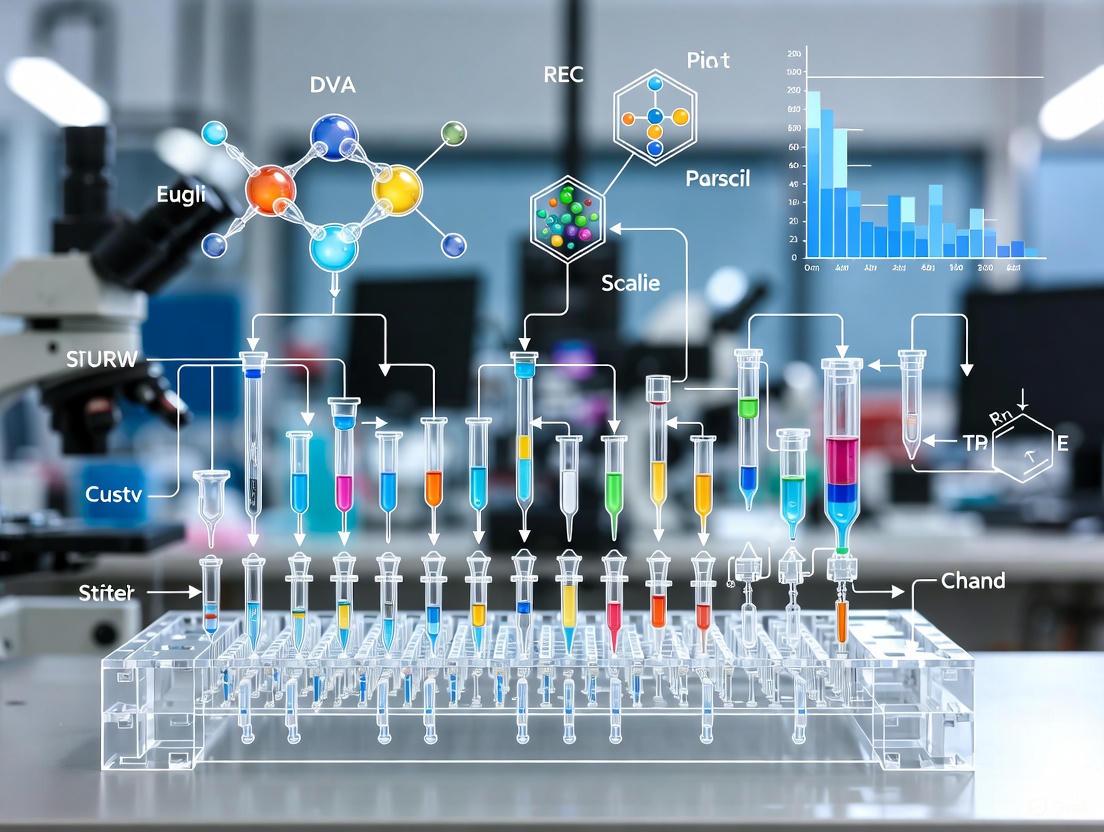
This article explores the powerful synergy between microfluidics and synthetic biology, a partnership driving breakthroughs in biomedical research and drug development.
Microfluidics in Synthetic Biology: A 2025 Guide to Technologies and Applications
Abstract
This article explores the powerful synergy between microfluidics and synthetic biology, a partnership driving breakthroughs in biomedical research and drug development. Aimed at researchers and industry professionals, it details how microfluidic platforms enable unprecedented control and high-throughput analysis for engineering biological systems. We cover foundational principles, key applications in strain engineering and single-cell analysis, practical troubleshooting advice, and comparative validation against traditional methods. The article serves as a comprehensive resource for leveraging these integrated technologies to accelerate innovation in therapeutics and green biomanufacturing.
Microfluidics and Synthetic Biology: Defining a Powerful Synergy
Microfluidics represents a transformative technological paradigm that enables the precise manipulation of fluids at sub-millimeter scales, typically processing volumes from microliters down to femtoliters. This interdisciplinary field integrates principles from engineering, physics, chemistry, and biology to create systems that offer unprecedented control over fluid behavior in networks of microscopic channels. Within synthetic biology research, microfluidic platforms have emerged as indispensable tools that facilitate high-throughput experimentation, single-cell analysis, and the construction of complex biological systems. This technical guide examines the fundamental principles governing microscale fluid behavior, explores the diverse architectures of microfluidic devices, and details their transformative applications in advancing synthetic biology capabilities from genetic circuit characterization to artificial cell development.
Definition and Scale
Microfluidics is both the science that studies fluid behavior in microchannels and the technology for fabricating devices containing chambers and tunnels through which fluids flow or are confined [1]. These systems manipulate tiny fluid volumes, typically between 10-9 to 10-18 liters (nanoliters to femtoliters), through channels with dimensions ranging from ten to hundreds of micrometers [2]. This dramatic miniaturization provides the foundation for developing complete laboratory functions on integrated chips, often referred to as "lab-on-a-chip" (LOC) or "micro-total-analysis-systems" (μTAS) [1].
The behavior of fluids at this microscale differs significantly from macroscale fluidics due to the increasing dominance of surface forces over body forces. Effects such as surface tension, energy dissipation, and fluidic resistance become primary factors governing system behavior [2]. These unique physical characteristics enable researchers to conduct experiments with exceptional precision while consuming minimal reagents, making microfluidics particularly valuable for synthetic biology applications where component optimization and high-throughput screening are essential [3].
Historical Context and Development
Microfluidics emerged in the early 1980s, building upon technologies developed for microelectronics and inkjet printing [2] [1]. The field has evolved through several key phases:
- 1980s: Initial development of microfluidic systems for inkjet printheads and early lab-on-a-chip applications [2]
- 1990s: Expansion into biological applications with the development of micropumps, microvalves, and fluid handling components, supported by military interests in portable detection systems [1]
- 2000s: Widespread adoption following the introduction of soft lithography and PDMS (polydimethylsiloxane) molding, which dramatically reduced fabrication costs and enabled rapid prototyping [1]
- 2010s-Present: Integration with synthetic biology, enabling high-throughput characterization of biomolecular components and complex multi-step experiments [3]
This historical progression has positioned microfluidics as a critical enabling technology for contemporary biological research, particularly in synthetic biology where precision, miniaturization, and automation are essential.
Fundamental Physical Principles
Scaling Laws and Dominant Forces
The behavior of fluids undergoes fundamental changes at microscale dimensions due to how physical forces scale with size. The square-cube law dictates that as systems are miniaturized, surface area decreases more slowly than volume, causing surface-dependent forces to dominate over volume-dependent forces [4]. This principle explains several distinctive characteristics of microfluidic systems:
- Surface Forces Dominance: Effects such as surface tension, electrostatic forces, and van der Waals interactions become significantly more influential than body forces like gravity and inertia [4]
- Capillary Action: Spontaneous fluid movement through microchannels due to surface tension effects becomes a primary fluid transport mechanism [2] [4]
- Enhanced Heat Transfer: High surface-to-volume ratios enable rapid temperature equilibration, facilitating precise thermal control for biochemical reactions [2]
Table 1: Comparison of Force Dominance at Different Scales
| Force Type | Macroscale Behavior | Microscale Behavior | Practical Implications |
|---|---|---|---|
| Gravity | Dominant | Negligible | Fluids can flow upward against gravity |
| Inertia | Significant | Minimal | Rapid flow changes not possible |
| Surface Tension | Minor effect | Dominant | Spontaneous capillary flow |
| Viscosity | Moderate effect | Very significant | High flow resistance, laminar flow |
Reynolds Number and Laminar Flow
The Reynolds number (Re) represents a dimensionless quantity that characterizes the ratio of inertial forces to viscous forces in fluid flow [5]. It is defined by the equation:
Re = ρvDₕ/μ
Where ρ is fluid density, v is mean fluid velocity, Dₕ is hydraulic diameter, and μ is fluid viscosity [5].
In microfluidic systems, Reynolds numbers are typically very low (often Re < 1), indicating complete dominance of viscous forces over inertial forces [2] [4]. This results exclusively in laminar flow, where fluids move in parallel layers without mixing between streams, in contrast to the turbulent flow common at macroscales [2]. The practical implications of laminar flow include:
- Predictable Flow Patterns: Fluid streams follow determined paths without chaotic eddies or turbulence [4]
- Diffusion-Controlled Mixing: Molecular diffusion becomes the primary mixing mechanism, requiring specialized designs to enhance mixing efficiency [2]
- Streamline Stability: Adjacent fluids can flow in parallel for extended distances without convective mixing [4]
Diffusion and Mixing Behavior
In the absence of turbulence, mixing in microfluidic systems occurs primarily through molecular diffusion. The time required for diffusion across a distance d is proportional to d²/D, where D is the diffusion coefficient [2]. While this relationship makes mixing efficient across short microscale distances, it becomes progressively slower over longer channel lengths.
This diffusion-dominated environment creates both challenges and opportunities for microfluidic design. Passive and active micromixers have been developed to address mixing limitations:
- Passive Mixers: Use channel geometry (serpentine paths, herringbone patterns) to create chaotic advection by repeatedly splitting and recombining fluid streams [4]
- Active Mixers: Employ external energy sources (acoustic, magnetic, or electrical fields) to actively perturb the fluid and enhance mixing [2]
The limited mixing capabilities at microscales can also be advantageous for creating stable chemical gradients, which are valuable for studying cellular responses and creating concentration-dependent assays in synthetic biology applications [4].
Microfluidic Device Architectures
Continuous Flow Microfluidics
Continuous flow microfluidics represents the traditional approach where steady-state liquid flow is maintained through confined channels or porous media [2]. These systems typically employ external pressure sources, mechanical pumps, or capillary forces to control fluid movement [2]. While continuous flow systems are particularly susceptible to analyte absorption and offer limited reconfigurability, they provide robust performance for well-defined biochemical applications including chemical separations and enzymatic assays [2].
Key characteristics of continuous flow systems include:
- Steady-State Operation: Constant flow rates enable stable reaction conditions and predictable residence times [2]
- Simplified Fabrication: Straightforward channel designs facilitate manufacturing [2]
- Scalability Challenges: System parameters vary along flow paths, creating dependencies between different sections of the device [2]
Droplet-Based Microfluidics
Droplet-based microfluidics (also referred to as digital microfluidics) manipulates discrete volumes of fluids within immiscible phases [2]. This approach enables the creation, manipulation, and analysis of picoliter to nanoliter droplets that function as independent microreactors [2]. The technology offers several distinct advantages:
- High-Throughput Capability: Thousands of droplets can be generated and processed per second, enabling massive parallel experimentation [6]
- Reduced Cross-Contamination: Isolation of reactions in separate droplets prevents interference between experiments [2]
- Enhanced Mixing: Internal circulation within droplets significantly improves mixing efficiency [2]
Droplet-based systems have proven particularly valuable for synthetic biology applications, including directed evolution studies, single-cell analysis, and high-throughput screening of genetic constructs [3] [6].
Paper-Based Microfluidics
Paper-based microfluidic devices utilize capillary penetration in porous cellulose matrices to transport fluids without external pumping mechanisms [2]. These systems employ hydrophobic barriers patterned on hydrophilic paper to define fluidic pathways and reaction zones [2]. The key advantages of paper-based microfluidics include:
- Extreme Cost-Effectiveness: Inexpensive fabrication enables disposable applications [2]
- Pump-Free Operation: Spontaneous capillary action eliminates need for external power or pumping systems [2]
- Point-of-Care Compatibility: Lightweight, portable format ideal for field applications [2]
Current applications focus primarily on portable glucose detection and environmental testing, with potential for expansion into synthetic biology field applications [2].
Open Microfluidics
Open microfluidic systems remove at least one boundary of traditional enclosed channels, exposing the fluid to air or another interface [2]. This architectural approach offers several distinctive benefits:
- Direct Accessibility: Experimental intervention possible without complex fluidic interconnects [2]
- Enhanced Surface Area: Large liquid-gas interfaces facilitate gas exchange for cell culture applications [2]
- Reduced Bubble Formation: Elimination of enclosed air pockets minimizes problematic bubble accumulation [2]
Open systems are particularly valuable for cell culture applications, surface patterning, and situations where direct manipulation of the fluidic stream is required [2].
Table 2: Comparison of Microfluidic System Architectures
| Architecture | Actuation Method | Key Advantages | Common Applications |
|---|---|---|---|
| Continuous Flow | Pressure pumps, capillary forces | Simple operation, uniform flow | Chemical separation, continuous reactions |
| Droplet-Based | Two-phase flow, electrowetting | High throughput, isolated reactors | Single-cell analysis, directed evolution |
| Paper-Based | Capillary action | Ultra-low cost, no power required | Point-of-care diagnostics, field testing |
| Open Microfluidics | Surface tension, capillary forces | Accessibility, minimal bubble formation | Cell culture, surface patterning |
The Scientist's Toolkit: Essential Microfluidic Components
Fundamental Device Elements
Microfluidic chips integrate various miniaturized components that perform specific functions in fluid manipulation [4]. These elements work in concert to create complete experimental platforms:
- Microchannels: Basic conduits (typically 10-500 μm wide and deep) that confine and direct fluid flow through the device [4]
- Micromixers: Passive or active elements that enhance mixing efficiency through geometric features or external energy input [4]
- Micropumps: Mechanisms for fluid propulsion, including external syringe pumps and integrated pneumatic or electroosmotic pumps [4]
- Microvalves: Configurable flow control elements, with deformable membrane valves being particularly common in PDMS devices [4]
Research Reagent Solutions
Table 3: Essential Materials for Microfluidic Experimentation
| Material/Reagent | Function/Purpose | Application Examples |
|---|---|---|
| PDMS (Polydimethylsiloxane) | Elastic polymer for rapid device prototyping | Microchannel fabrication, valve membranes |
| SU-8 Photoresist | High-aspect-ratio epoxy for master molds | Creation of microfluidic channel templates |
| Cell Lysates (E. coli, wheat germ) | Source of cellular machinery for CFPS | Cell-free protein expression systems |
| PURE System Components | Reconstituted transcription-translation machinery | Defined cell-free synthetic biology |
| Fluorescent Dyes & Reporters | Visual flow tracking and gene expression monitoring | Flow characterization, promoter activity assays |
| Surface Modification Reagents | Channel surface functionalization | Cell adhesion, reduction of analyte absorption |
Microfluidics in Synthetic Biology Research
Enabling Cell-Free Synthetic Biology
Cell-free synthetic biology leverages transcription-translation systems operating outside of cellular environments to build and study biological systems [3]. Microfluidics has dramatically advanced this field by addressing key challenges including reagent cost, experimental throughput, and the implementation of complex multi-step protocols [3]. Specific contributions include:
- Microchemostats: Enable continuous cell-free reactions by maintaining steady-state conditions through controlled influx of fresh reagents and dilution of products [3]
- High-Throughput Characterization: Facilitate rapid optimization of biomolecular components with minimal reagent consumption [3]
- Long-Term Studies: Support multi-step experiments extending over days through automated fluid handling [3]
The integration of microfluidics with cell-free systems has enabled previously impossible applications, including the construction of artificial cellular systems and the implementation of complex biological oscillators in vitro [3].
High-Throughput Genetic Engineering
Microfluidic platforms have revolutionized genetic engineering workflows by enabling massively parallel experimentation. The DNA ENTRAP system exemplifies this capability, providing high-throughput, automated platforms for genetic modification of diverse environmental microorganisms [6]. This approach offers extraordinary efficiency improvements:
- Time Savings: Estimated 6,000-fold reduction in experimentation time compared to conventional methods [6]
- Reagent Conservation: At least 100-fold reduction in reagent consumption [6]
- Experimental Scale: Testing of libraries containing millions of genetic variants within days rather than years [6]
These capabilities are particularly valuable for synthetic biology applications requiring extensive optimization of genetic circuits or metabolic pathways [6].
Single-Cell Analysis and Artificial Cells
Microfluidic technology enables unprecedented resolution in biological analysis by facilitating studies at the single-cell level. This capability has proven invaluable for investigating cellular heterogeneity, gene expression noise, and population dynamics [5]. Key applications include:
- Single-Cell Tracking: Continuous monitoring of individual cells over extended durations (24-72 hours) [5]
- Artificial Cell Construction: Generation and manipulation of lipid-bound compartments containing functional biological machinery [3]
- Dynamic Perturbation Studies: Precise environmental control to investigate cellular responses to changing conditions [5]
These applications demonstrate how microfluidics enables synthetic biologists to dissect biological complexity with unprecedented resolution while also constructing increasingly sophisticated synthetic biological systems.
Experimental Protocols
Microchemostat Operation for Continuous Cell-Free Reactions
The implementation of microchemostat devices enables sustained cell-free transcription-translation reactions under steady-state conditions [3]. The following protocol describes the essential steps for microchemostat operation:
- Device Priming: Flush microfluidic channels with cell-free reaction buffer to remove air bubbles and condition surfaces
- Reagent Loading: Introduce cell-free master mix into device reservoirs, maintaining temperature control (typically 25-37°C)
- Flow Rate Calibration: Establish appropriate flow rates (typically 0.1-10 μL/min) to balance reagent replenishment with product accumulation
- Reaction Initiation: Introduce DNA template to trigger protein expression while maintaining continuous flow
- Real-Time Monitoring: Implement fluorescence or other detection methods to track reaction progress
- Sample Collection: Periodically collect effluent for downstream analysis while maintaining continuous operation
This approach has enabled continuous cell-free reactions extending over multiple days, significantly expanding the capabilities of cell-free synthetic biology [3].
High-Throughput Screening Using Droplet Microfluidics
Droplet-based microfluidics enables ultra-high-throughput screening of genetic libraries or enzymatic activities [6]. A standardized protocol includes:
- Aqueous Phase Preparation: Combine cell lysate, DNA templates, energy components, and fluorescent reporters in reaction buffer
- Oil Phase Preparation: Formulate carrier oil with appropriate surfactants (typically 1-5% fluorosurfactants for FC-40 oil)
- Droplet Generation: Utilize flow-focusing or T-junction geometries to produce monodisperse droplets (10-100 μm diameter)
- Incubation: Maintain droplets at constant temperature to enable protein expression or enzymatic activity
- Detection and Sorting: Implement fluorescence-activated droplet sorting (FADS) to identify and isolate hits based on activity
- Recovery and Validation: Break sorted droplets to recover biological material for downstream analysis and validation
This approach enables screening of >10⁴ variants per second with minimal reagent consumption, dramatically accelerating design-build-test cycles in synthetic biology [6].
Interdisciplinary Connections
Microfluidics provides an indispensable technological foundation for advancing synthetic biology research through its unique capabilities in fluid manipulation at microscale dimensions. The physical principles that govern fluid behavior at these scales—including laminar flow, diffusion-dominated mass transfer, and surface force dominance—enable experimental approaches that would be impossible with conventional macroscale techniques. The diverse architectural implementations, from continuous flow systems to droplet-based platforms, offer researchers a versatile toolkit matched to specific experimental requirements.
In synthetic biology specifically, microfluidic technologies have enabled transformative advances in cell-free system development, high-throughput genetic engineering, single-cell analysis, and artificial cell construction. As both fields continue to evolve, their synergistic relationship promises to accelerate our understanding of biological systems while enhancing our ability to design and implement novel biological functions with increasing sophistication and precision. The ongoing integration of microfluidics with synthetic biology represents a powerful paradigm for addressing fundamental biological questions and developing practical biotechnological solutions.
Synthetic biology aims to apply engineering principles to redesign biological systems for useful purposes, spanning biomanufacturing, agriculture, pharmaceuticals, and environmental applications [7]. However, the field faces a fundamental challenge: the sheer complexity of biological systems makes their rational design exceptionally difficult. Engineering a single microbial strain to produce a target molecule often requires testing thousands of variations of genetic parts, pathways, and cultivation conditions. This creates a critical bottleneck in the Design-Build-Test-Learn (DBTL) cycle—the core engineering framework of synthetic biology [7]. Without the capacity to rapidly test these variations, the learning phase is slow, and the pace of innovation is severely limited.
Microfluidics, the science and technology of manipulating small volumes of fluids (microliter to picoliter) within networks of microchannels, is emerging as a transformative solution to this bottleneck [8]. By enabling massive parallelization and miniaturization of experiments, microfluidic platforms provide the high-throughput screening (HTS) capacity essential for advancing synthetic biology from artisanal tinkering to a predictable engineering discipline. This whitepaper explores how microfluidics addresses synthetic biology's core challenge, detailing the technical methodologies, current applications, and future directions that make it an indispensable tool for researchers and drug development professionals.
The High-Throughput Imperative in Synthetic Biology
The Design-Build-Test-Learn Cycle and its Scaling Demands
The DBTL cycle is the foundational process used in biofoundries—integrated, high-throughput facilities that automate synthetic biology workflows [7].
- Design: In this phase, biological sequences or circuits are computationally designed to achieve a desired function.
- Build: Automated systems construct the biological designs, for example by assembling DNA and introducing it into host cells.
- Test: The constructed biological systems are characterized and their performance is measured.
- Learn: Data from the test phase is analyzed to inform the next cycle of designs.
The iterative nature of this cycle means that the speed of discovery is directly proportional to the number of DBTL iterations that can be completed in a given time. Traditional methods in the "Test" phase, such as culture flasks and multi-well plates, are limited by reagent costs, space, and labor. A prominent example of the scale required comes from a DARPA challenge that tasked a biofoundry with producing 10 target molecules in 90 days. The successful team constructed 1.2 Mb of DNA, built 215 strains across five species, and performed 690 assays within this timeframe [7]. This achievement was possible only through highly parallelized, automated testing processes, underscoring the critical role of high-throughput screening.
Quantitative Scaling Advantages of Microfluidics
Table 1: Comparative Analysis of Screening Platform Throughput
| Screening Platform | Typical Experiment Scale | Reagent Consumption per Experiment | Approximate Parallelization | Key Limitations |
|---|---|---|---|---|
| Macro-scale (Flasks) | 10s of samples | Milliliters to liters | Low (10s) | High cost, low throughput, manual intensive |
| Multi-well Plates | 100s to 1000s of samples | Microliters to milliliters | Medium (96-1536 wells) | Evaporation, edge effects, limited mixing control |
| Microfluidic Devices | 1000s to millions of samples | Picoliters to nanoliters | High (10,000+ compartments) | Fabrication complexity, potential for channel clogging |
The data in Table 1 illustrates the transformative potential of microfluidics. The miniaturization to picoliter volumes reduces reagent consumption by orders of magnitude compared to traditional methods, drastically cutting the cost per experiment [8]. Furthermore, the ability to conduct thousands to millions of discrete experiments in parallel on a single chip accelerates the "Test" phase from weeks to days or even hours. This is not merely a quantitative improvement in speed, but a qualitative shift that enables experimental designs previously considered impossible due to resource constraints.
Microfluidics as an Enabling Technology
Fundamental Principles and Device Architectures
Microfluidics operates on physical principles that are distinct from macroscale fluidics, which enables precise control over the experimental microenvironment [8].
- Laminar Flow: At the microscale, fluids flow in parallel layers without turbulence (low Reynolds number). This allows for predictable fluid behavior and precise spatial control of reagents and cells.
- Diffusion-Based Mixing: In the absence of turbulence, mixing occurs primarily through molecular diffusion. This can be harnessed for creating precise concentration gradients or for timing chemical reactions.
- Droplet-Based Microfluidics: This powerful architecture generates millions of isolated, picoliter-volume aqueous droplets in an immiscible continuous oil phase. Each droplet acts as an individual microreactor, ideal for encapsulating single cells, performing digital PCR, or screening enzyme variants [8].
Table 2: Common Microfluidic Device Types in Synthetic Biology
| Device Type | Key Operating Principle | Primary Applications in Synthetic Biology | Example Commercial Players |
|---|---|---|---|
| Continuous-Flow Chips | Laminar flow in fixed networks of microchannels | Chemical synthesis, gradient generation, particle separation | Dolomite Microfluidics, Micronit B.V. [9] [10] |
| Droplet-Based Chips | Generation of water-in-oil emulsions | Single-cell analysis, directed evolution, digital PCR | Syrris, Elvesys Group [9] [10] |
| Digital Microfluidics | Electrowetting to move discrete droplets on an array of electrodes | Automated sample preparation, clinical diagnostics | Not specified in search results |
| Paper-Based Microfluidics | Capillary action in porous paper media | Low-cost diagnostics, point-of-care testing | Not specified in search results |
Integration with Automation and Machine Learning
The value of microfluidics is greatly amplified when integrated with robotic automation and machine learning (ML), creating a tightly closed DBTL loop. Bayesian Optimization (BO) is one such ML method that is particularly effective for guiding microfluidic design and experimentation. It uses Gaussian processes to model an objective function (e.g., mixing efficiency or product yield) and systematically explores the design space to find optimal parameters with a minimal number of experiments [11].
A case study in optimizing a micromixer with parallelogram barriers demonstrated that this approach could reach the optimal geometric design at least an order of magnitude faster than state-of-the-art optimization methods [11]. Furthermore, in the development of clinically inspired liposomes for nanomedicine, ML was used to analyze over 300 experimental conditions to build predictive models for liposome characteristics like particle size and polydispersity [12]. This data-driven approach enables researchers to virtually explore formulation spaces and design optimal experiments without exhaustive lab work, dramatically accelerating the "Learn" phase.
Experimental Protocols for High-Throughput Screening
Protocol 1: ML-Guided Optimization of a Microfluidic Micromixer
This protocol details the methodology for applying Bayesian Optimization to enhance the mixing performance of a microfluidic device, as described in the search results [11].
1. Design and Simulation Setup:
- Software: Use COMSOL Multiphysics software to create a parameterized model of the micromixer (e.g., a Tesla mixer with parallelogram barriers).
- Parameters: Define key geometric variables to optimize (e.g., channel width, barrier angle, channel length).
- Objective Function: Set the objective function to be the mixing index at the outlet, calculated from concentration field simulations.
2. Bayesian Optimization Loop:
- Initialization: Run a small number (e.g., 10-20) of initial COMSOL simulations with randomly selected geometric parameters to seed the model.
- Modeling: A Gaussian Process (GP) surrogate model is trained to predict the mixing performance for any set of geometric parameters and to quantify the uncertainty of its prediction.
- Acquisition Function: Use an acquisition function (e.g., Expected Improvement) to decide the next set of parameters to simulate. This function balances exploring uncertain regions of the parameter space and exploiting areas known to have high performance.
- Iteration: The loop of running a simulation, updating the GP model, and selecting new parameters via the acquisition function is repeated until the mixing index converges to a maximum (typically in tens of iterations).
3. Validation:
- The optimal design predicted by the BO is fabricated using standard soft lithography (e.g., in PDMS) and experimentally validated against the simulation results.
Protocol 2: High-Throughput Screening of Liposome Formulations
This protocol summarizes the open-source, ML-guided microfluidic workflow for optimizing liposome production, tailored for nanomedicine applications [12].
1. Microfluidic Production:
- Device: Use a staggered herringbone micromixer (SHM) chip for rapid and homogeneous mixing of lipid solutions in alcohol with an aqueous buffer.
- Process Parameters: Key variables include total flow rate (TFR), flow rate ratio (FRR, organic to aqueous phase), and lipid concentration.
- Output: The process produces liposomes with characteristics (size, polydispersity index - PDI) that are a function of the input parameters.
2. Data Generation and Model Training:
- Experimental Matrix: Systematically vary TFR, FRR, and concentration across a wide range to generate a training dataset. The cited study examined over 300 conditions [12].
- Characterization: Analyze resulting liposomes for size and PDI using dynamic light scattering (DLS).
- Machine Learning: Train predictive models (e.g., regression trees, neural networks) on the collected data. These models learn the complex, non-linear relationships between process parameters and liposome characteristics.
3. Virtual Screening and Validation:
- Prediction: Use the trained models to predict the outcomes of untested parameter combinations across the entire formulation space.
- Optimization: Identify parameter sets predicted to produce liposomes with the desired specifications (e.g., size ~100 nm, PDI < 0.1).
- Experimental Confirmation: Fabricate liposomes using the top-predicted parameters to validate the model's accuracy. The final model can be packaged into an open-source simulation tool for the research community.
The Scientist's Toolkit: Essential Research Reagent Solutions
Table 3: Key Reagents and Materials for Microfluidic Screening Experiments
| Item | Function/Description | Key Considerations for Selection |
|---|---|---|
| PDMS (Polydimethylsiloxane) | An elastomeric polymer used for rapid prototyping of microfluidic devices via soft lithography. It is transparent, gas-permeable, and biocompatible. | Standard for R&D; can absorb small hydrophobic molecules; not ideal for all solvents [8]. |
| Photoresist (e.g., SU-8) | A light-sensitive polymer used to create high-resolution masters on silicon wafers, which serve as molds for PDMS devices. | Determines the feature size and channel height of the final device. |
| Fluorinated Oil (e.g., HFE-7500) | A surfactant-containing oil used as the continuous phase in droplet-based microfluidics to stabilize aqueous droplets and prevent coalescence. | Must be matched with appropriate surfactants; biocompatibility with cells/enzymes is critical. |
| Lipid Solutions (e.g., DOPC, DSPC) | Raw materials for liposome and nanoparticle formation in microfluidic chips for drug delivery studies. | Purity and composition dictate self-assembly behavior and final nanoparticle characteristics [12]. |
| Viability-Enhanced Cell Culture Media | Specially formulated media for supporting cells during microfluidic cultivation, where surface-to-volume ratios are high and shear stress may be a concern. | Helps maintain cell viability and function during prolonged on-chip experiments. |
Visualizing Workflows and System Integration
The following diagrams, generated using DOT language, illustrate the core logical relationships and experimental workflows described in this whitepaper.
DBTL Cycle with HTS & AI
Bayesian Optimization Workflow
Microfluidics directly addresses synthetic biology's core challenge of high-throughput screening by transforming the "Test" phase from a bottleneck into a high-capacity, information-rich process. The convergence of microfluidic miniaturization with machine learning and automation creates a powerful, closed-loop DBTL cycle that is rapidly accelerating the pace of biological discovery and engineering.
The future of this synergistic field will be shaped by several key trends. The integration of Artificial Intelligence (AI) will move beyond parameter optimization to predictive biological design, potentially generating novel genetic circuits or metabolic pathways in silico before they are physically built and tested in a microfluidic platform [10]. Furthermore, the drive toward accessibility and standardization is lowering the barrier to entry. Open-source platforms like FLUI'DEVICE for design and SynBiopython for DNA assembly standardization are making these powerful tools available to a broader range of researchers [8] [7]. As these technologies mature, the vision of scalable, predictable biological engineering for applications ranging from personalized medicine to sustainable biomanufacturing comes increasingly within reach.
Why Combine Microfluidics and Synthetic Biology? Key Synergistic Benefits
The integration of microfluidics and synthetic biology creates a powerful synergy that accelerates the design-build-test-learn (DBTL) cycle central to engineering biological systems. Microfluidics provides the tools for miniaturization, automation, and precise environmental control, while synthetic biology provides the genetic parts and programming principles. This combination enables unprecedented high-throughput screening, sophisticated genetic circuit characterization, and the construction of complex biological systems that would be infeasible with conventional methods. For researchers and drug development professionals, this synergy is pushing the boundaries in biosensing, therapeutic development, and green biomanufacturing.
Synthetic Biology is an engineering discipline that designs and constructs novel biological systems for useful purposes. It treats biology as a technology, applying principles of modularity, abstraction, and standardization to create biological parts, devices, and systems [13]. The field has evolved from foundational achievements like the genetic toggle switch and oscillator to complex applications in medicine and pharmaceuticals.
Microfluidics, often termed "lab-on-a-chip," involves the science and technology of systems that process or manipulate small amounts of fluids (10⁻⁹ to 10⁻¹⁸ liters) using channels with dimensions of tens to hundreds of micrometers [3]. The physics of fluid behavior at this scale is dominated by laminar flow, where fluids flow in parallel streams without turbulent mixing, enabling highly predictable control over chemical environments [5].
The convergence of these fields addresses critical bottlenecks in synthetic biology: the complexity of biological systems, physical variations in biological behavior, and the expensive, time-consuming nature of biological design cycles [14]. Microfluidic platforms provide the experimental infrastructure needed to advance synthetic biology from artisanal tinkering toward predictable engineering.
Core Synergistic Benefits
The combination of microfluidics and synthetic biology offers several transformative advantages that outperform conventional methodologies.
Radical Miniaturization and High-Throughput Screening
Microfluidics enables a massive increase in experimental throughput while dramatically reducing reagent consumption and cost.
- Ultra-High-Throughput Experiments: Droplet-based microfluidics can generate and analyze over 1.5 million samples simultaneously [14]. Each nanoliter- or picoliter-sized droplet acts as an independent microreactor, allowing for the screening of vast genetic libraries or combinatorial conditions in a single experiment [15].
- Massive Reagent Reduction: Assays that traditionally required milliliter volumes in well plates can be performed in nanoliter volumes on-chip, reducing consumption of expensive enzymes, cell lysates, and reagents by orders of magnitude [16] [15]. This makes previously prohibitive experiments economically feasible.
Table 1: Throughput and Consumption Comparison of Screening Platforms
| Screening Platform | Throughput (Samples/day) | Reaction Volume | Key Advantages |
|---|---|---|---|
| Standard Microtiter Plates | ~10³ | 100 - 200 µL | Established protocols, simple operation |
| Flow Cytometry | ~10⁷ | N/A (single-cell) | Rapid single-cell analysis, high parameter measurement |
| Droplet Microfluidics | >10⁷ | 1 nL - 10 pL | Ultra-high throughput, minimal reagent use, isolated reactions |
Precision Control and Dynamic Perturbation
Microfluidic devices offer an unparalleled ability to control the cellular microenvironment temporally and spatially, which is crucial for understanding and engineering dynamic biological systems.
- Temporal Control: Microchemostats enable continuous culture by continuously replenishing nutrients and removing waste, facilitating long-term studies of gene expression and cell growth over days [5] [16]. Integrated valves and mixers can create complex, time-varying chemical inputs to probe genetic circuit dynamics [5].
- Spatial Control: Laminar flow can be used to create stable concentration gradients of chemicals across a channel, allowing researchers to study cellular responses like chemotaxis or to expose different parts of a cell culture to different conditions simultaneously [14].
- Single-Cell Analysis: Microfluidics can trap and isolate individual cells for time-lapse imaging, enabling the tracking of gene expression and protein levels in single cells over time. This reveals population heterogeneity that is masked in bulk measurements [5] [14].
Enhanced Modeling and Forward Design
A significant challenge in synthetic biology is the "forward design" of genetic networks—predicting system behavior from individual component characteristics. Microfluidics provides the high-quality, quantitative data necessary to build accurate predictive models.
- Parameter Identification: By combining microfluidics with Optimal Experimental Design (OED), researchers can devise dynamic experiments that yield data with maximum information content for parameterizing mathematical models of gene regulation [16]. This reduces parameter covariance and increases model accuracy.
- Modular Characterization: Microfluidics enables the systematic characterization of genetic parts (promoters, RBS, etc.) in different contextual combinations. The resulting parameter databases allow for the modular composition of parts into larger, functional circuits with predictable behavior [16].
Diagram 1: The iterative model-building and forward-design workflow enabled by microfluidics and OED.
Key Application Domains
The synergy between microfluidics and synthetic biology is producing groundbreaking applications across multiple fields.
Advanced Drug Development and Therapeutics
This integration is streamlining drug discovery and enabling novel therapeutic modalities.
- Traditional Medicine Mining: Microfluidics efficiently separates and purifies target components from complex natural product extracts, a traditional bottleneck in drug development from traditional medicine. Active ingredients are then screened using cell-based or cell-free assays on the same platform, significantly accelerating the discovery process [17].
- Cell-Free Biosensors: Portable, low-cost diagnostic devices can be created by freeze-drying cell-free expression systems on microfluidic chips. These biosensors activate in the presence of a specific target (e.g., a pathogen RNA) to produce a visible output, enabling point-of-care detection of diseases like Zika virus [3] [16].
- Engineered Cell Therapies: Microfluidics facilitates the high-throughput characterization of synthetic gene circuits—such as those used in CAR-T cells—for cancer immunotherapy. This helps optimize circuits for detecting tumor-specific biomarkers and controlling the controlled release of therapeutic agents [13].
Cell-Free Synthetic Biology
Cell-free systems (CFS), which use purified cellular components outside of a living cell, are a powerful "breadboard" for prototyping synthetic biological systems.
- Rapid Circuit Prototyping: CFS bypasses the need for time-consuming cell transformation and culture. In a microfluidic device, different DNA templates can be tested in parallel under identical conditions, allowing for extremely fast iteration of genetic circuit designs [3] [16].
- Construction of Artificial Cells: Microfluidic droplets are ideal containers for building minimal synthetic cells. They can be used to encapsulate CFPS systems and stepwise assemble increasingly complex biomolecular systems, toward the ultimate goal of creating a living cell from non-living components [3].
Table 2: Experimental Protocols Enabled by the Microfluidics-Synthetic Biology Synergy
| Application | Core Methodology | Key Outcome |
|---|---|---|
| Genetic Circuit Characterization | 1. Clone genetic circuits into a library of vectors.2. Load into microfluidic chemostats with OED-defined input dynamics.3. Measure time-lapse fluorescence output.4. Fit data to ODE models to extract kinetic parameters. | A database of quantitatively characterized, modular genetic parts for predictive design. |
| High-Throughput Enzyme Evolution | 1. Create a diverse gene library via mutagenesis.2. Compartmentalize single genes & substrates in microfluidic droplets.3. Sort droplets based on fluorescent product activity (FADS).4. Recover genes from high-performing droplets. | Rapid discovery and optimization of novel enzymes for green biomanufacturing. |
| Single-Cell Analysis | 1. Trap individual cells in microfluidic chambers.2. Expose to dynamic environmental stimuli.3. Image single-cell responses (e.g., gene expression) over time.4. Correlate heterogeneity with genetic or environmental factors. | Uncover mechanisms of cell-to-cell variability and subpopulation behaviors. |
Green Biomanufacturing
Droplet microfluidics is revolutionizing the engineering of microbial strains for the sustainable production of chemicals, fuels, and materials.
- Strain Optimization: Vast libraries of engineered microbes can be encapsulated in droplets and screened for the production of high-value compounds like oils, pigments, and antibodies. Fluorescence-activated droplet sorting (FADS) automatically identifies and isolates the highest-producing strains, dramatically accelerating the bioprospecting pipeline [15].
The Scientist's Toolkit: Essential Research Reagents and Materials
Successful experimentation at the intersection of microfluidics and synthetic biology requires specific materials and reagents.
Table 3: Key Research Reagent Solutions
| Item | Function/Description | Application Example |
|---|---|---|
| Polydimethylsiloxane (PDMS) | Silicone-based elastomer; the most common material for rapid prototyping of microfluidic chips via soft lithography. | Fabricating custom device geometries for cell trapping and chemostats [3]. |
| Cell-Free Transcription-Translation (TX-TL) System | Lysate-based or purified (PURE) system containing ribosomes, enzymes, tRNAs, and energy components for protein synthesis from DNA. | Prototyping genetic circuits and biosensors without living cells [16]. |
| Microfluidic Dyes | Inert, colored dyes used for visualizing flow profiles, channel filling, and droplet formation within microfluidic devices. | Debugging device operation and quantifying fluid mixing [18]. |
| Fluorescent Reporters (deGFP, mmCherry) | Engineered fluorescent proteins with fast maturation times and high brightness for real-time monitoring of gene expression. | Quantifying promoter activity and genetic circuit dynamics in live cells or cell-free systems [16]. |
| BioBrick/Standardized Genetic Parts | DNA sequences with standardized endpoints (promoters, RBS, coding sequences, terminators) for modular assembly. | Building complex genetic circuits from well-characterized, interchangeable components [13]. |
Diagram 2: A simplified modular genetic component, showing the standardized flow from input to output.
The combination of microfluidics and synthetic biology is far more than a mere technical convenience; it is a fundamental enabler for the maturation of synthetic biology into a truly predictive engineering discipline. By providing the tools for high-throughput experimentation, precise environmental control, and quantitative data acquisition, microfluidics allows researchers to navigate the complexity of biological systems with unprecedented speed and accuracy. As both fields continue to advance, their synergy will undoubtedly unlock new frontiers in medicine, manufacturing, and our basic understanding of life.
Microfluidics, the science of manipulating fluids at the micron scale, has become a cornerstone of modern synthetic biology research. By enabling the precise control of minute fluid volumes, it provides the foundational tools for miniaturizing and automating complex biological workflows. For researchers and drug development professionals, understanding the core modalities—continuous-flow, droplet, and digital microfluidics—is essential for selecting the appropriate technological platform for their specific applications. This whitepaper provides an in-depth technical guide to these three pivotal systems, detailing their operating principles, key applications in synthetic biology, and practical experimental considerations. The integration of these tools is pushing the frontiers of high-throughput screening, single-cell analysis, and the design-build-test cycle for novel biological systems.
Synthetic biology aims to apply engineering principles to design and construct novel biological systems for specific functions, ranging from biomanufacturing to therapeutic interventions [15]. This iterative process of designing, building, and testing genetic constructs is inherently resource-intensive. Microfluidics addresses these challenges by offering a platform for miniaturized, automated, and highly parallel experimentation.
The core advantages of using microfluidics in synthetic biology include:
- Minimal Reagent Consumption: Reduces the consumption of expensive enzymes, reagents, and cell lysates by orders of magnitude, drastically lowering experimental costs [15].
- High-Throughput Experimentation: Enables the rapid screening of thousands to millions of variants, such as in enzyme evolution or mutant library screening [15] [19].
- Precise Environmental Control: Allows for dynamic control of the cellular microenvironment, facilitating studies of cellular responses to changing conditions [5].
- Enhanced Data Quality: Facilitates the acquisition of high-resolution, single-cell data over time, capturing population heterogeneity that is often lost in bulk analyses [5].
The following sections dissect the three essential microfluidic modalities, providing a framework for their application in synthetic biology research.
Continuous-Flow Microfluidics
Operating Principles and Design
Continuous-flow microfluidics is characterized by the steady stream of liquids through permanently etched microchannels. Fluid flow at the microscale is predominantly laminar, characterized by a low Reynolds number (Re), where viscous forces dominate over inertial forces [8] [20]. This results in smooth, predictable fluid streams without turbulence. Mixing occurs primarily through molecular diffusion rather than convection [8]. The most common channel configurations are T-junctions and flow-focusing geometries, which can also be adapted for droplet generation (see Table 2).
Synthetic Biology Applications
This modality is particularly suited for processes that benefit from a continuous stream of fluids.
- Microchemostats: These devices provide a controlled environment for long-term cell culturing and observation, allowing researchers to track single-cell trajectories over days while dynamically perturbing the environment with inducers or nutrients [5].
- On-Chip Genetic Assembly: Multi-step enzymatic reactions, such as Golden Gate assembly, can be automated by routing DNA parts and enzymes through a network of channels and chambers.
- Biosensing and Real-Time Analysis: Integrated sensors within microchannels can monitor parameters like pH or oxygen levels, or detect specific analytes from a continuous sample stream [21].
Experimental Protocol: Microchemostat Operation for Single-Cell Analysis
This protocol outlines the process for conducting a microchemostat experiment to observe single-cell dynamics in yeast or bacteria [5].
- Chip Priming: Introduce the growth medium into the device's inlet reservoirs and apply positive pressure to fill the entire network of microchannels and cell traps. Ensure no air bubbles are trapped in the system.
- Cell Loading: Dilute an overnight cell culture to an appropriate optical density. Introduce the cell suspension into a dedicated loading channel. Use hydrodynamic forces to guide cells into the designed trap structures.
- Experimental Operation:
- Connect the chip outlets to a waste collection system.
- Apply a constant hydrostatic pressure (or use syringe pumps) to drive fresh medium from the inlet reservoir through the device.
- For dynamic stimulation, use an integrated fluidic junction to mix solutions from two or more source reservoirs. The mixing ratio can be modulated by adjusting the relative hydrostatic pressure of each source [5].
- Data Acquisition:
- Mount the device on an automated, inverted microscope with environmental control (e.g., temperature and CO2).
- Program the microscope to acquire phase-contrast and fluorescence images at multiple stage positions at regular intervals (e.g., phase contrast every minute, fluorescence every 5 minutes) over 24-72 hours.
- Image Analysis: Use automated cell-tracking software to segment cells in each frame and link them across time, generating single-cell trajectories of morphology, growth, and fluorescent reporter expression.
Droplet Microfluidics
Operating Principles and Design
Droplet microfluidics, or two-phase microfluidics, involves creating discrete, picoliter to nanoliter-sized aqueous droplets within an immiscible continuous oil phase [15] [19]. Each droplet functions as an isolated micro-reactor, preventing cross-contamination and enabling massive parallelization. Droplet generation leverages the precise shear forces and channel geometries at the microscale. Key generation methods with their performance characteristics are summarized in Table 1.
Table 1: Comparison of Common Droplet Generation Geometries
| Geometry | Typical Droplet Diameter | Generation Frequency | Key Advantages | Key Disadvantages |
|---|---|---|---|---|
| Cross-flow (T-junction) [19] | 5 - 180 μm | ~2 Hz | Simple structure, produces small, uniform droplets | Prone to clogging, high shear force |
| Co-flow [19] | 20 - 62.8 μm | 1,300 - 1,500 Hz | Low shear force, simple structure, low cost | Larger droplets, poor uniformity |
| Flow-Focusing [19] | 5 - 65 μm | ~850 Hz | High precision, wide applicability, high frequency | Complex structure, difficult to control |
| Step Emulsification [19] | 38.2 - 110.3 μm | ~33 Hz | Simple structure, high monodispersity (<2% CV) | Low frequency, droplet size hard to adjust |
The following diagram illustrates the core operational workflow for a droplet-based synthetic biology experiment.
Synthetic Biology Applications
The ability to generate millions of identical microreactors makes droplet microfluidics exceptionally powerful for synthetic biology.
- Ultra-High-Throughput Screening: A primary application is the screening of vast mutant libraries for enzymes, antibodies, or metabolites. Droplets can encapsulate single cells or genes along with a fluorescent reporter or substrate. Active variants are identified and sorted at rates of thousands of droplets per second using techniques like fluorescence-activated droplet sorting (FADS) [15].
- Single-Cell Analysis: Encapsulating single cells with barcoded mRNA-capture beads in droplets enables high-throughput single-cell RNA sequencing (e.g., Drop-Seq), resolving cellular heterogeneity in complex populations like tumors [15].
- Digital PCR (dPCR): A DNA sample is partitioned into thousands of droplets, each containing zero or one DNA template. After PCR amplification, the fraction of positive droplets allows for the absolute quantification of the target DNA, even for rare sequences [15].
- In vitro Synthetic Biology: Cell-free systems for protein synthesis or genetic circuit operation can be compartmentalized in droplets, providing a controlled environment for studying biological reactions without living cells [15].
Experimental Protocol: High-Throughput Screening via Fluorescence-Activated Droplet Sorting (FADS)
This protocol describes a typical workflow for sorting a library of microbial cells based on the production of a fluorescent product [15].
Library and Reagent Preparation:
- Prepare the cell library (e.g., a plasmid library in E. coli) and grow to mid-log phase.
- Prepare the continuous phase oil (e.g., fluorinated oil with appropriate surfactants to stabilize droplets).
- Prepare a detection mix if needed (e.g., a fluorogenic substrate that becomes fluorescent upon enzymatic activity).
Droplet Generation and Incubation:
- Use a flow-focusing or T-junction microfluidic chip.
- Simultaneously pump the aqueous phase (containing cells and detection mix) and the continuous oil phase into the chip.
- Adjust the flow rates of the two phases to generate monodisperse droplets of the desired size (e.g., 50 μm diameter).
- Collect the emulsion in a syringe or tubing and incubate it off-chip for several hours to allow for cell growth and product formation.
Droplet Sorting:
- Re-inject the incubated emulsion into a droplet-sorting chip.
- As droplets pass through a laser detection point, a photomultiplier tube (PMT) measures the fluorescence intensity of each droplet.
- When a droplet exceeds a pre-set fluorescence threshold, a detection circuit triggers a voltage pulse.
- This pulse creates an electrostatic force or a piezoelectric actuation that deflects the target droplet into a collection channel.
Downstream Analysis:
- Collect the sorted droplets in a tube containing a demulsification agent (or use electrocoalescence) to break the droplets and release the encapsulated cells.
- Plate the cells on solid media to recover clones or directly use the population for further rounds of enrichment or sequencing.
Digital Microfluidics
Operating Principles and Design
Digital Microfluidics (DMF) operates on a distinct principle: discrete, programmer-controlled manipulation of droplets on an open, flat surface patterned with an array of electrodes [22]. It is based on the phenomenon of electrowetting on dielectric (EWOD).
Device Architecture: A typical two-plate DMF device consists of [22]:
- Bottom Plate: A substrate (e.g., glass) with a patterned array of individually addressable control electrodes.
- Dielectric Layer: A thin layer (e.g., 2-5 μm of Parylene-C) coating the electrodes, which stores electrical charge.
- Hydrophobic Coating: A layer (e.g., Teflon-AF) on top of the dielectric to reduce droplet adhesion.
- Top Plate: A single, continuous ground electrode, also coated with a hydrophobic layer.
- Spacer: A spacer that separates the two plates, creating a gap that confines the droplets.
When a voltage (typically AC) is applied to an electrode beneath a droplet, the energy stored in the dielectric capacitor changes, reducing the local contact angle and creating a surface energy gradient. This pulls the droplet toward the activated electrode. By sequentially activating adjacent electrodes, droplets can be moved to any location on the chip [22]. The fundamental architecture and operations are depicted below.
Synthetic Biology Applications
DMF excels at automating complex, multi-step protocols where flexibility and reconfigurability are required.
- Automated Sample Preparation: DMF can automate laborious steps for next-generation sequencing, including enzymatic fragmentation, size selection, adapter ligation, and PCR purification by moving droplets between different reagent and wash zones [22].
- Cell Culture and Assays: DMF platforms can maintain mammalian cells in culture by periodically dispensing fresh media and removing waste. They are also used for immunoassays and cytotoxicity screening by merging cell-laden droplets with compound droplets [22].
- On-Demand Biologics Production: Integrated with cell-free protein synthesis systems, DMF can act as a "digital-to-biological converter," where DNA sequence information is used to synthesize proteins on-demand by mixing DNA templates, nucleotides, and enzymes in a series of droplets [23].
Experimental Protocol: Automated Multi-Step Enzymatic Assay on DMF
This protocol outlines how to execute a multi-step reaction, such as a restriction digest followed by a ligation, on a DMF platform [22].
Device and Reagent Preparation:
- Load the DMF device with the two-plate configuration. The bottom plate contains the electrode array.
- Pre-load reagent reservoirs on the device with all necessary solutions: DNA sample, restriction enzyme buffer, ligase mix, and wash buffer.
- The system software (e.g., Microdrop for the DropBot platform) should be pre-programmed with the entire droplet routing protocol.
Droplet Dispensing and Reaction Setup:
- The system activates electrodes to draw a specific volume of the DNA sample from a reservoir and form a droplet on the array.
- Similarly, a droplet of the restriction enzyme mix is dispensed.
- The two droplets are transported along the electrode paths and merged into a single droplet over a designated "reaction" site.
Incubation and Mixing:
- The merged droplet is transported back and forth along a series of electrodes to mix the contents thoroughly.
- The droplet is then parked on a set of electrodes for the required incubation time (e.g., 1 hour at 37°C, if the device has thermal control).
Droplet Splitting and Washing:
- After incubation, the droplet may be split to divide the reaction mixture if necessary.
- A washing step can be implemented by merging the reaction droplet with a larger buffer droplet and then splitting it, removing unwanted salts and enzymes.
Subsequent Reaction Steps:
- The purified intermediate droplet is transported and merged with the next reagent droplet (e.g., containing ligase).
- Steps 3 and 4 are repeated for this new reaction step.
Final Collection:
- The final product droplet is transported to a output port on the chip, where it can be extracted for downstream analysis (e.g., sequencing or transformation).
Comparative Analysis and Selection Framework
The choice between continuous-flow, droplet, and digital microfluidics depends on the specific requirements of the synthetic biology application. The table below provides a consolidated comparison to guide this decision.
Table 2: Comparative Analysis of Microfluidic Modalities for Synthetic Biology
| Feature | Continuous-Flow | Droplet Microfluidics | Digital Microfluidics (DMF) |
|---|---|---|---|
| Fundamental Principle | Laminar flow in closed channels [8] | Immiscible phase separation into microreactors [19] | Electrowetting on an open electrode array [22] |
| Throughput | Low to Medium | Very High (>>10,000 droplets/s) [19] | Medium (Limited by electrode number) |
| Reagent Consumption | Low (μL-nL) | Very Low (pL-nL) [15] | Low (nL-μL) |
| Flexibility & Reconfigurability | Low (Fixed architecture) | Medium (Fixed generation, flexible sorting) | High (Software-defined droplet paths) |
| Ease of Integration with Sensors | High (In-line sensing) [21] | Medium (Optical detection for sorting) | Medium (Optical/electrical detection) |
| Key Applications in Synthetic Biology | Microchemostats, biosensors, sequential reactions [5] | Single-cell analysis, digital PCR, ultra-high-throughput screening [15] | Automated sample prep, cell culture, multi-step protocols [22] |
| Typical Droplet/Unit Volume | N/A | Picoliters to Nanoliters [19] | Nanoliters to Microliters [22] |
The Scientist's Toolkit: Essential Research Reagents and Materials
Successful implementation of microfluidic platforms requires careful selection of materials and reagents. The following table lists key components and their functions.
Table 3: Essential Materials and Reagents for Microfluidic Experiments
| Item | Function / Description | Common Examples & Notes |
|---|---|---|
| Chip Material | The substrate of the microfluidic device. | PDMS: Elastomer, gas-permeable, ideal for cell culture; swells with organic solvents [8]. Thermoset Polyester (TPE): Rigid, resistant to non-polar solvents [8]. Glass: Chemically inert, excellent optical clarity, high-pressure resistance [8]. |
| Surfactant | Stabilizes droplets in oil, preventing coalescence. | PFPE-PEG Block Copolymers: For fluorinated oil phases, crucial for stable droplet generation in water-in-oil emulsions [15]. |
| Continuous Phase (Oil) | The immiscible carrier fluid for droplet microfluidics. | Fluorinated Oils: Biocompatible, oxygen-permeable, often used for cell encapsulation [15]. Mineral Oil/Silicon Oil: Common for chemical applications. |
| Dielectric Material | Insulating layer in DMF devices, crucial for actuation. | Parylene-C: Applied via chemical vapor deposition (CVD) to form uniform, pinhole-free layers (2-5 μm thick) [22]. |
| Hydrophobic Coating | Reduces droplet adhesion and friction in DMF. | Teflon-AF: Spin-coated onto the dielectric layer to create a low-energy surface [22]. |
| Cell-Friendly Hydrogel | 3D matrix for cell culture in continuous-flow or droplet systems. | Agarose, Matrigel: Allows nutrient diffusion and can be patterned or molded within microchannels or droplets for 3D culture [8]. |
Microfluidic Tools and Techniques for Engineering Biological Systems
The burgeoning bioeconomy, projected to contribute up to $30 trillion to the global economy by 2030, hinges upon our ability to efficiently engineer microbial strains for biomanufacturing [24]. However, achieving the extreme performance required for commercially viable bio-based products remains challenging with traditional strain development approaches. The Design–Build–Test–Learn (DBTL) cycle has emerged as the fundamental framework for systematic strain engineering, yet its effectiveness depends on the throughput, cost, and precision of each stage [24]. Within this context, microfluidics—the science of manipulating small fluid volumes (microliters to picoliters) within miniaturized channels—has established itself as a transformative technology in synthetic biology research [25].
By enabling massive parallelization, unprecedented control over cellular microenvironments, and high-temporal-resolution single-cell analysis, microfluidic platforms directly address the core bottlenecks in high-throughput strain development [26] [27]. These "lab-on-a-chip" devices reduce reagent costs and experimental timelines while providing rich, quantitative data essential for optimizing enzymes and metabolic pathways, thereby accelerating the entire DBTL cycle [25].
The DBTL Framework and the Role of High-Throughput Technologies
Effective strain engineering requires tight integration of all four stages of the DBTL cycle. The overarching goal is to reduce both the time and cost of strain development by optimizing each stage and minimizing the number of iterative cycles needed to achieve performance targets [24].
Optimizing the Cycle
- Design: Strategies range from rational (specific, defined edits) to semi-rational (hundreds to thousands of targets) to random (e.g., chemical mutagenesis). The choice depends on available phenotyping capacity and hypothesis confidence. Artificial intelligence (AI), particularly large language models, is increasingly used to design proteins and predict functional amino acid substitutions, enriching for candidates with a higher likelihood of success [24].
- Build: No single "build" technology is optimal for all edit types. The field utilizes a suite of methods balancing throughput, cost, precision, and the size and number of genomic edits. CRISPR-based editing has significantly accelerated genome exploration but often requires trade-offs between these factors [24].
- Test: Comprehensive phenotyping is critical. While bulk measurements are common, they mask underlying cell-to-cell heterogeneity. Advanced microfluidic platforms now enable dynamic, single-cell analysis under tightly controlled environmental conditions, providing a more robust assessment of strain performance [27].
- Learn: Data from the "Test" phase is analyzed to generate predictive models that inform the next "Design" phase. Machine learning tools are crucial for identifying non-intuitive genetic modifications that enhance performance and for de-risking scale-up to industrial bioreactors [24].
Table 1: Strain Engineering Design Strategies
| Approach | Method Examples | Key Advantages | Common Challenges |
|---|---|---|---|
| Rational | Pathway integration, enzyme engineering | High precision, clear mechanistic understanding | Limited by biological understanding, may not access complex phenotypes |
| Semi-Rational | Saturation mutagenesis, targeted library generation | Balances breadth and focus, hypothesis-driven | Requires prior knowledge of targets |
| Random/Target-Agnostic | Chemical/UV mutagenesis, Adaptive Laboratory Evolution (ALE) | Accesses unanticipated solutions, improves complex traits (tolerance, fitness) | Requires extensive deconvolution, can introduce negative mutations |
The following diagram illustrates the integrated DBTL cycle, highlighting key technologies and the iterative nature of strain optimization:
Microfluidics in Strain Engineering: Core Principles and Advantages
Microfluidic devices provide a unique set of capabilities that make them ideally suited for high-throughput strain development within the DBTL framework.
Single-Cell Analysis and Dynamic Control
A primary advantage of microfluidics is the ability to resolve population heterogeneity. Traditional bulk measurements provide population averages, which can obscure the behavior of high-performing subpopulations. Microfluidic platforms, when integrated with time-lapse fluorescence microscopy (TLFM), enable the observation of dynamic gene expression and metabolic activity in hundreds to thousands of individual cells simultaneously over time [27]. This is crucial for characterizing synthetic genetic circuits, such as oscillators and toggle switches, whose functionality is inherently dynamic [27]. Furthermore, these platforms offer unprecedented spatiotemporal control over the cellular microenvironment, allowing researchers to apply complex chemical stimuli—such as pulses or gradients—and observe the resulting phenotypic dynamics in real-time [27].
Miniaturization and Integration
Microfluidics drastically reduces the scale of experimentation, handling fluid volumes in the microliter to picoliter range [25]. This miniaturization translates directly to reduced consumption of expensive reagents and living cells. Furthermore, multiple operational units (e.g., mixers, valves, cell culture chambers, and detectors) can be integrated onto a single chip, creating a "lab-on-a-chip" [26] [25]. This integration facilitates the automation of complex, multi-step biochemical protocols, increasing throughput, reproducibility, and efficiency while minimizing human error.
Table 2: Comparison of Experimental Scales for Strain Phenotyping
| Parameter | Traditional Bench-Scale | Microfluidic Platform |
|---|---|---|
| Culture Volume | Milliliters to Liters | Microliters to Picoliters |
| Reagent Cost per Strain | High | Very Low |
| Temporal Resolution | Low (end-point or few timepoints) | High (continuous, real-time) |
| Single-Cell Resolution | Possible with flow cytometry, but static | Standard, with dynamic tracking |
| Environmental Control | Slow, limited precision | Rapid, high precision |
| Throughput (Number of conditions/strains) | Low to Moderate | Very High |
Implementing High-Throughput Methods: A Case Study in Enzyme Engineering
A prime example of an integrated, high-throughput pipeline is a recently developed low-cost, robot-assisted platform for enzyme discovery and engineering [28]. This pipeline demonstrates how affordability and automation can be combined to characterize large numbers of enzymes efficiently.
Automated, Small-Scale Protein Purification Pipeline
The goal of this platform was to overcome the bottleneck in characterizing the vast number of enzyme variants generated by AI and genomic databases. The pipeline enables the parallel purification of 96 proteins in a well-plate format, with the capacity to process hundreds of proteins weekly per user [28]. Key innovations include:
- Miniaturization: The entire process, from transformation to purification, was miniaturized to a 24-deep-well plate format, using 2 mL expression cultures.
- Automation: A low-cost liquid-handling robot (Opentrons OT-2) automates the most tedious and error-prone steps.
- Cost-Effectiveness: The platform uses an economical liquid handler and avoids specialized equipment, with protocols available as open-source Python code to ensure accessibility.
- Tagless Elution: The use of a His-SUMO fusion tag allows for elution via protease cleavage instead of imidazole, yielding purified protein in a buffer compatible with downstream assays without a separate buffer-exchange step [28].
Detailed Experimental Protocol
The following workflow provides a detailed methodology for high-throughput enzyme purification, as implemented in the case study [28]:
- Gene Cloning: Genes of interest are cloned into an expression vector (e.g., pCDB179) that confers an N-terminal His-SUMO fusion tag for affinity purification and subsequent tagless elution.
- Transformation: Chemically competent E. coli cells are transformed with the plasmid library directly in a 96-well plate. The transformation mix is grown to saturation for ~40 hours at 30°C to create starter cultures, bypassing the need for colony picking.
- Protein Expression: Autoinduction media in 24-deep-well plates is inoculated from the starter cultures. Deep-well plates and a shaker incubator with a large orbit (e.g., 19 mm) ensure adequate aeration for high cell density and protein yield.
- Cell Lysis and Clarification: Cell pellets are resuspended in lysis buffer and lysed chemically or enzymatically. The lysate is clarified by centrifugation to remove cellular debris.
- Robotic Purification:
- The liquid-handling robot transfers the clarified lysate to a plate containing Ni-charged magnetic beads to bind the His-tagged fusion protein.
- The beads are washed with buffer to remove non-specifically bound contaminants.
- A protease (e.g., Ulp1) is added to cleave the target protein from the SUMO-tag, eluting the untagged, purified enzyme directly into a storage buffer.
- Analysis: The purified enzymes are analyzed for yield and purity (e.g., via SDS-PAGE) and can be directly used in downstream functional assays.
The following diagram visualizes this automated purification workflow:
The Scientist's Toolkit: Essential Reagents and Equipment
This table details key materials and their functions for establishing a high-throughput strain engineering pipeline, as derived from the cited methodologies.
Table 3: Essential Research Reagent Solutions for High-Throughput Strain Engineering
| Item | Specific Example / Properties | Function in the Workflow |
|---|---|---|
| Expression Vector | pCDB179 (His-SUMO tag) [28] | Provides affinity tag for purification and protease site for scarless elution. |
| Competent Cells | E. coli (e.g., Zymo Mix & Go! kit) [28] | Enables high-throughput plasmid transformation without heat shock. |
| Liquid-Handling Robot | Opentrons OT-2 [28] | Automates liquid transfers in well-plate formats, ensuring reproducibility and saving time. |
| Affinity Resin | Ni-charged Magnetic Beads [28] | Binds His-tagged fusion proteins from lysate for rapid, in-plate purification. |
| Cleavage Protease | Ulp1 Protease [28] | Precisely cleaves the SUMO fusion tag to release the native target protein. |
| Microfluidic Chip | PDMS-based device with cell traps [27] | Immobilizes single cells for long-term, dynamic imaging under controlled conditions. |
The integration of high-throughput technologies, particularly microfluidics and automation, is fundamentally transforming the pace and precision of strain development. By enabling miniaturized, parallelized, and dynamic experimentation, these tools directly accelerate the DBTL cycle, moving synthetic biology from a trial-and-error discipline toward a predictive engineering science. As these platforms become more accessible and cost-effective, they will play an indispensable role in unlocking the full potential of the bioeconomy, facilitating the development of robust industrial strains for the production of biofuels, pharmaceuticals, and sustainable chemicals.
Microfluidics has fundamentally transformed synthetic biology by providing powerful tools for manipulating and analyzing biological systems at the microscale. Within this field, droplet microfluidics has emerged as a breakthrough technology that is changing our comprehension of single-cell analysis and associated research [29]. By separating individual cells within tiny water-in-oil droplets, ranging from nanoliters to picoliters using microfluidic devices, this innovative approach has revolutionized investigations at the single-cell level [29]. Each droplet functions as a distinct experimental reaction vessel, enabling thorough exploration of cellular phenotypic variations, intercellular interactions, and genomic insights [29]. The compatibility of microfluidic channel dimensions (typically handling microliter to femtoliter fluid samples) with cellular scales makes it exceptionally suitable for comprehensive biochemical and biophysical characterization of cells [3].
The fundamental principle of droplet microfluidics involves utilizing two or more immiscible liquids, designated as either dispersed (aqueous) or continuous (oil) phases [29]. Within this setup, the dispersed phase fragments into minuscule volumes within the continuous phase through controlled pressure and flow conditions at microfluidic junctions [29]. Three primary channel structures are commonly employed for droplet generation: T-junction, flow focusing, and co-flow configurations [29]. The ability to conduct millions of independent experiments concurrently with exceptional reproducibility in minimal timeframes has profoundly impacted high-throughput screening technology, significantly accelerating research in fields such as drug discovery and functional genomics [29].
In synthetic biology, microfluidic technologies have pushed boundaries by enabling miniaturization and implementation of robust multi-step workflows [3]. This capability is particularly valuable for single-cell analysis, where researchers aim to characterize the remarkable heterogeneity present in cellular populations. The driving force behind single-cell analysis stems from the recognition that cells encounter myriad factors impacting their growth, specialization, and metabolic activities, resulting in notable variations among individual cells [29]. Analyzing cellular constituents at the single-cell level offers precise insights into individual cell characteristics within specific microenvironments, crucial for uncovering intercellular disparities, investigating cell signaling, understanding disease pathophysiology, and identifying vital biomarkers for early disease detection [29].
Core Microdroplet Technology and Platforms
Fundamental Droplet Generation Mechanisms
Droplet microfluidics operates on the principle of utilizing immiscible fluids—typically an aqueous dispersed phase and an oil-based continuous phase—which are forced to interact under controlled pressure and flow conditions [29]. The spontaneous formation of droplets occurs at the interface of these two phases, driven by the combined forces of surface tension and shear force [29]. This phenomenon can be engineered through different microfluidic channel architectures, each offering distinct advantages for specific applications. The three primary channel structures employed for droplet generation include:
- T-junction structures: Where perpendicular channels meet, causing periodic droplet pinching through shear forces
- Flow focusing structures: Where the dispersed phase is constrained between two streams of continuous phase, creating controlled droplet breakoff
- Co-flow structures: Where the dispersed and continuous phases flow parallel to each other, utilizing viscosity differences for droplet formation [29]
Droplets are classified into two main types based on their composition: W/O (water-in-oil) and O/W (oil-in-water), with classification dependent on the wettability of the inner channel wall and the distinctions between the dispersed and continuous phases [29]. Beyond these conventional systems, innovative approaches such as aqueous two-phase systems (ATPS) have emerged, offering enhanced biocompatibility, selective biomolecule partitioning, and tunable phase separation properties particularly beneficial for biological applications [29].
Recent technological advancements have further expanded droplet generation capabilities. Wu et al. introduced an innovative 3D Micro-Cross droplet generation structure that seamlessly integrates with droplet detection devices, eliminating challenges with droplet merging [29]. This approach can generate both W/O and O/W droplets without requiring special wettability treatments on the inner wall of the device, simplifying manufacturing and enhancing flexibility [29]. Similarly, the Weitz group developed a distinctive micropillar array structure that facilitates sequential splitting of larger emulsion droplets into smaller, more uniformly dispersed droplets, achieving a remarkable production rate of approximately 250 L/h/m² while reducing size variation to just 13% compared to conventional methods [29].
Platform Architectures and Methodologies
Several sophisticated platform architectures have been developed specifically for single-cell analysis in microdroplets, each with unique advantages and implementation strategies:
Table 1: Comparison of Major Single-Cell Microdroplet Platforms
| Platform | Encapsulation Mechanism | Barcoding Strategy | Throughput | Key Applications |
|---|---|---|---|---|
| inDrop | Flow-focusing droplet generation with barcoded hydrogel microspheres | Photo-releasable primers with 147,456 barcodes coupled to hydrogel microspheres | 4,000-12,000 cells/hour | Transcriptional heterogeneity, rare cell population identification [30] |
| spinDrop | Fluorescence-activated droplet sorting (FADS) after initial encapsulation | inDrop v3 barcoding scheme with enhanced reverse transcription | Not specified | Challenging samples (fixed cells, damaged material), target cell type enrichment [31] |
| 10x Chromium | Proprietary microfluidic chip design | Commercially available barcoded gel beads | High throughput (commercial standard) | Large-scale molecular atlas generation, standard single-cell transcriptomics [32] |
The inDrop platform exemplifies the core methodology of droplet barcoding for single-cell transcriptomics. This approach encapsulates individual cells into droplets with lysis buffer, reverse transcription reagents, and barcoded oligonucleotide primers [30]. mRNA released from each lysed cell remains trapped in the same droplet and is uniquely barcoded during complementary DNA synthesis, enabling subsequent pooling of material from all cells while maintaining cellular origin information through the barcode sequences [30]. A critical innovation in this platform involves the synthesis of a library of barcoded hydrogel microspheres that are co-encapsulated with cells, with each microsphere carrying covalently coupled, photo-releasable primers encoding one of thousands of possible barcodes [30].
More recently, the spinDrop platform has advanced the field by addressing two significant bottlenecks in droplet-based single-cell sequencing: background noise from empty droplets and limited RNA capture efficiency [31]. This methodology employs fluorescence-activated droplet sorting to enrich for droplets containing single viable cells, intact nuclei, fixed cells, or specific cell types after initial encapsulation [31]. Subsequently, it uses picoinjection to add an improved reverse transcription formulation, decoupling cell lysis from reverse transcription to match workflows from more sensitive plate-based assays [31]. This combined approach demonstrates the ongoing innovation in microdroplet platform architecture to overcome technical limitations and expand application possibilities.
Technical Challenges and Innovative Solutions
Multiplets and Stealth Multiplets
A significant technical challenge in droplet-based single-cell analysis is the occurrence of multiplets—instances where multiple cells are captured within a single microdroplet and wrongly recognized as a single cell [33]. These artefacts can distort data and mislead the interpretation of experiments by creating artificial cell populations that don't exist biologically [33]. While sample multiplexing (labeling samples with different molecular barcodes) has improved cost-efficiency and experimental design by enabling multiplet detection through the presence of multiple barcodes in the same microdroplet, this strategy still retains a risk of undetected "stealth multiplets" [34].
Recent research has quantitatively evaluated the risk of stealth multiplets during sample multiplexing, revealing that while sample multiplexing helps identify some types of multiplets, at least one multiplet type remains undetected under certain conditions [34]. Specifically, multiplets are classified into four categories in multiplexed experiments:
- Homogeneous stealth multiplets: Contain multiple cells from the same sample with identical barcodes
- Partial stealth multiplets: Include a mixture of labeled and unlabeled cells
- Multilabelled multiplets: Contain cells from different samples with distinct barcodes (detectable)
- Unlabelled multiplets: Consist exclusively of unlabeled cells [34]
The prevalence of these stealth multiplets increases particularly in conditions where sample labeling is insufficient or when analysis tools are inadequate [34]. This finding provides crucial practical guidance for researchers, highlighting that even with multiplexing, experimental parameters must be carefully optimized to maintain data integrity.
Background Noise and Sensitivity Limitations
Another fundamental challenge in droplet-based methodologies involves increased background noise when processing challenging samples and lower overall RNA capture efficiency compared to other methods [31]. These drawbacks stem from the lack of strategies to enrich for high-quality material or specific cell types at encapsulation and the absence of implementable multi-step enzymatic processes that increase capture [31]. Additionally, RNA released from lysed cells can indiscriminately enter droplet compartments, generating contaminating readout that is not cell-specific, contributing both to cost and compromising data interpretation [31].
The spinDrop platform directly addresses these limitations through its integrated approach of fluorescence-activated droplet sorting followed by picoinjection [31]. This methodology demonstrates five-fold higher gene detection rates compared to standard inDrop while reducing background noise by up to half [31]. The platform's ability to deliver high-quality molecular data from damaged input material significantly expands the range of sample types amenable to single-cell analysis, particularly valuable for clinical samples where sample quality may be suboptimal.
Table 2: Quantitative Performance Comparison of Microdroplet Platforms
| Performance Metric | Standard inDrop | spinDrop Platform | 10x Chromium |
|---|---|---|---|
| Gene Detection Rates | Baseline | 5-fold increase [31] | 2.5-fold higher than inDrop [31] |
| Background Noise | Baseline | Up to 50% reduction [31] | Not specified |
| Cell Loading Efficiency | Poisson distribution limitation | Beyond Poisson distribution [31] | Not specified |
| Viable Cell Enrichment | Not applicable | 19-fold enrichment from mixed viability population [31] | Not specified |
| Multiplet Rate | ~4% (96% purity in species-mixing experiment) [30] | Not specified | Not specified |
Experimental Design and Protocols
spinDrop Workflow Methodology
The spinDrop microfluidic workflow represents a sophisticated integration of multiple technologies to generate highly-sensitive single-cell RNA-seq libraries from small quantities of input material with minimal contamination [31]. The complete methodology can be broken down into several critical stages:
Cell Staining and Preparation: Depending on the application, cells are stained with appropriate markers before encapsulation. For viable cell sorting, Calcein-acetoxymethyl (AM) is used, where intracellular esterases release the acetoxymethyl group from the Calcein fluorophore, enabling green fluorescence emission via blue-light excitation [31]. For fixed cells or intact nuclei, a DNA stain such as Vybrant Green is employed instead, while cell-type specific enrichment utilizes fluorescently labeled antibodies targeting cell surface markers [31].
Microfluidic Encapsulation and Sorting: Stained cells are channeled in a flow-focusing device alongside barcoded polyacrylamide microgels (utilizing an inDrop v3 barcoding scheme) and lysis mixture [31]. Single cells are co-encapsulated with microgels in water-in-oil emulsions, then sorted further downstream. A blue-laser optical emission fibre excites cells trapped in droplets, with fluorescence collected by a second optical fibre. When fluorescence levels exceed thresholds set from empty droplets or droplets containing damaged cells, an electrical pulse triggers via a field-programmable gate array, delivering an alternative current signal to electrodes filled with 5 M NaCl solution at the sorting junction [31]. This charges droplets via dielectrophoresis, diverting them from the negative channel to the positive channel for collection.
Picoinjection for Multi-step Reactions: Collected emulsions containing sorted single-cell lysate are loaded into a picoinjector and spaced using fluorosurfactant oil [31]. When approaching a junction with an electrode, the droplet interface is electrically disrupted, allowing pressurized flow of reverse transcription mixture to be injected into incoming droplets [31]. This critical step decouples cell lysis from reverse transcription, mimicking workflows from more sensitive plate-based assays.
Downstream Processing: Following picoinjection, droplets are collected and incubated for reverse transcription before de-emulsification and downstream library preparation, following established inDrop protocols [31]. The entire process enables handling of challenging samples while maintaining high data quality output.
Essential Research Reagents and Materials
Successful implementation of microdroplet-based single-cell analysis requires careful selection and preparation of numerous specialized reagents. The following table outlines key components and their functions in typical experiments:
Table 3: Essential Research Reagent Solutions for Microdroplet Experiments
| Reagent/Material | Function | Implementation Example |
|---|---|---|
| Barcoded Hydrogel Microspheres (BHMs) | Delivery of cell-barcoding oligonucleotides | inDrop: Primers covalently coupled, photo-releasable with 147,456 barcodes [30] |
| Fluorinated Surfactants | Stabilization of water-in-oil emulsions | Prevents droplet coalescence during incubation and sorting steps [31] |
| Viability Stains (Calcein-AM) | Identification of live cells for sorting | Intracellular esterases cleave AM group in viable cells, creating fluorescence [31] |
| DNA Stains (Vybrant Green) | Detection of fixed cells/nuclei | Alternative to viability stains for non-viable samples [31] |
| Lysis Buffer Formulations | Cell membrane disruption and RNA release | Contains proteinase K for nuclear envelope denaturation in spinDrop [31] |
| Reverse Transcription Mix | cDNA synthesis from captured mRNA | Optimized formulation added via picoinjection in spinDrop [31] |
| Barcoded Oligonucleotides | Cell-specific RNA tagging | Unique barcode sequences assigned to each cell's transcripts [30] |
Applications in Biological Research
Microdroplet-based single-cell analysis has enabled groundbreaking applications across diverse biological domains. In developmental biology, researchers have exploited these technologies to deliver high-quality molecular atlases of complex processes such as mouse brain development, even when starting with highly damaged input material [31]. The technology has also proven invaluable for capturing dynamic biological processes, exemplified by its use in providing an atlas of nascent RNA transcription during mouse organogenesis at E8.5 using scEU-seq implemented in droplets [31].
The ability to profile thousands of individual cells has revealed previously unappreciated cellular heterogeneity in seemingly uniform populations. For example, analysis of mouse embryonic stem cells before and after LIF withdrawal revealed rare sub-populations expressing markers of distinct lineages that would be difficult to identify by profiling only a few hundred cells [30]. These studies showed that key pluripotency factors fluctuate in a correlated manner across entire ES cell populations, providing insights into the regulatory networks maintaining pluripotency [30]. Upon differentiation initiation, researchers observed dramatic changes in correlation structures of gene expression, resulting from asynchronous inactivation of pluripotency factors and the emergence of novel cell states [30].
In synthetic biology applications, microfluidic technologies have enabled multi-step protocols in "lab-on-a-chip" and "micro total analysis" devices [3], facilitating long-term, continuous implementation of cell-free systems [3], generation and manipulation of artificial cells and organelles [3], development of cell-free biosensors [3], and high-throughput directed evolution studies [3]. The miniaturization afforded by microdroplet platforms makes them particularly valuable for cell-free synthetic biology where reagent costs often present significant constraints [3].
Future Perspectives and Concluding Remarks
As droplet microfluidic technologies continue to evolve, several promising directions emerge for advancing single-cell analysis capabilities. Future developments will likely focus on increasing integration of complementary analytical modalities within microdroplet platforms, enabling not just transcriptomic but also proteomic, epigenomic, and metabolic profiling from the same single cells. Such multi-omics approaches will provide more comprehensive views of cellular states and heterogeneity. Additionally, technological innovations in droplet generation and manipulation will continue to push the boundaries of throughput, sensitivity, and accessibility.
The growing emphasis on computational methods for analyzing single-cell data will also shape future technology development. As datasets grow increasingly large and complex, sophisticated bioinformatics tools become essential for distinguishing biological signals from technical artifacts, including the stealth multiplets that remain challenging for current experimental approaches [33] [34]. Integration of artificial intelligence and machine learning methods into data analysis pipelines will enhance our ability to extract biologically meaningful patterns from these complex datasets.
From a broader perspective, microdroplet-based single-cell analysis represents a powerful embodiment of microfluidics in synthetic biology research, enabling the dissection of biological complexity at its most fundamental level—the individual cell. By providing unprecedented resolution into cellular heterogeneity and function, these technologies continue to drive discoveries across basic biology, drug development, and clinical applications. As technical challenges are addressed and methodologies refined, microdroplet approaches will undoubtedly remain at the forefront of single-cell analysis, continuing to unravel the complexities of cellular heterogeneity in health and disease.
Synthetic Cell and Organ-on-a-Chip Construction Using Microfluidics
Microfluidics, the science and technology of systems that process or manipulate small amounts of fluids using channels with dimensions of tens to hundreds of micrometers, has become a cornerstone of modern synthetic biology research [25]. These devices, often referred to as "labs-on-a-chip," provide the ability to create highly controlled microenvironments, enabling the precise manipulation of biological components and processes in vitro [3]. The field is driven by the need to conduct more productive experiments—accomplishing more using fewer resources, such as reduced reagents, consumables, and time [5]. The fundamental physics at this scale is characterized by laminar flow, governed by low Reynolds numbers, which leads to highly predictable and parallel flow streams without turbulent mixing [5]. This predictable fluid behavior is essential for constructing sophisticated biological models, such as synthetic cells and Organs-on-Chips (OoCs), which aim to replicate key aspects of human physiology and synthetic biological systems outside the body [35].
The convergence of microfluidics with synthetic biology is particularly powerful. Synthetic biology involves the design and construction of new biological parts, devices, and systems, or the re-design of existing, natural biological systems for useful purposes [3]. Microfluidic technology provides the ideal platform for implementing synthetic biology because it allows for the miniaturization and integration of complex multi-step biochemical protocols, high-throughput experimentation, and precise environmental control at scales relevant to cellular and sub-cellular processes [26] [3]. This synergy is pushing the boundaries in areas such as biosensing, metabolic engineering, and the bottom-up construction of artificial cells [3]. Furthermore, advanced BioMEMS (Bio-Micro-Electro-Mechanical Systems) integrate microfluidics with multi-modal biosensing and are compatible with smart devices, even enabling "lab-at-home" techniques for daily usage [26]. This review details the core principles, methodologies, and applications of microfluidics in the construction of synthetic cells and Organs-on-Chips, serving as a technical guide for researchers and drug development professionals.
Core Principles and Design of Microfluidic Devices
Fundamental Fluidic Phenomena and Fabrication
At the microscale, fluid flow is predominantly laminar, a condition defined by a low Reynolds number (Re), which represents the ratio of inertial forces to viscous forces [5]. This laminar regime avoids turbulent mixing, allowing fluids to flow in parallel streams with mixing occurring only through diffusion. This principle is exploited in microfluidic devices to generate predictable chemical gradients and to co-locate different cells or reagents in precise spatial arrangements [5]. The fabrication of these devices commonly relies on soft lithography, a versatile set of techniques for replicating structures in elastomeric materials [35]. A typical process involves creating a master mold, often via photolithography, and then using this mold to cast the device from polydimethylsiloxane (PDMS) [36] [3]. PDMS is a silicone-based polymer favored for its optical clarity, gas permeability, and flexibility, which facilitates the integration of valves and pumps [3]. The final device is created by bonding the structured PDMS to a glass substrate, forming sealed microchannels [36].
Design Considerations for Biological Applications
Designing an effective microfluidic device for biological applications requires careful consideration of several interdependent parameters. Throughput, sensitivity, specificity, and dynamic range are key functional specifications, while ease-of-use, portability, and level of automation are critical operational specifications [36]. For cell-based assays, maintaining cell viability and function is paramount. This necessitates control over parameters such as shear stress, which can be managed by designing channel geometries that ensure physiologically relevant flow rates [35]. Furthermore, devices intended for long-term cell culture (e.g., OoCs) must incorporate features that mimic physiological conditions, such as cyclic mechanical stretching to simulate breathing in a lung-on-a-chip or peristalsis in a gut-on-a-chip [35]. The design process often involves trade-offs; for instance, increasing throughput by adding more parallel cell-culture chambers may compromise temporal resolution in single-cell imaging due to limitations in microscope acquisition speed [5].
Table 1: Key Design Specifications for Microfluidic Devices in Synthetic Biology
| Specification Type | Parameter | Description | Considerations |
|---|---|---|---|
| Functional | Throughput | Number of analyses or experiments per unit time | High throughput often requires parallelization, which can complicate design and operation [36]. |
| Sensitivity & Specificity | Ability to detect low-abundance signals and distinguish them from noise | Critical for biosensing and detecting rare cell events; depends on detection method (optical, electrical) [36]. | |
| Dynamic Range | Span of concentrations or signals that can be accurately measured | Important for quantifying gene expression and metabolic products over varying levels [36]. | |
| Operational | Ease-of-Use & Automation | Level of expertise and manual intervention required | Essential for point-of-care diagnostics and use in resource-limited settings; often requires integrated fluid control [36]. |
| Portability & Size | Physical footprint of the device and associated hardware | A key motivation for microfluidics; enables lab-at-home and field-deployable technologies [26] [36]. | |
| Cost | Expense of fabrication and operation | Economical fabrication (e.g., single-mask lithography, 3D printing) lowers barriers for young research labs [26]. |
Construction of Synthetic Cells Using Microfluidics
Cell-Free Systems and Microfluidic Toolkits
Synthetic cell construction often leverages cell-free systems (CFS), which are in vitro platforms composed of the essential molecular machinery for transcription and translation extracted from cells [3]. These systems allow for the study and engineering of biological functions in isolation from the complex and sometimes confounding environment of a living cell. CFS can be based on crude cell lysates or a purified set of components, known as the PURE (Protein synthesis Using Recombinant Elements) system [3]. Microfluidics is uniquely suited to handle CFS due to its ability to manage exceedingly small volumes (microliters to femtoliters), thus reducing the high reagent costs associated with cell-free reactions and enabling robust, multi-step workflows in an automated fashion [3]. Applications include the high-throughput characterization of genetic circuits, biosensing, and the bottom-up assembly of artificial cellular components [3].
A key application of microfluidics in this domain is the microfluidic chemostat, which enables continuous cell-free transcription-translation reactions. These devices maintain a steady state by continuously supplying fresh reagents and removing waste products, allowing for long-term studies of synthetic gene networks that are impossible with traditional batch reactions [3]. This capability is crucial for observing dynamic behaviors like genetic oscillations over extended periods.
Diagram 1: Synthetic cell construction workflow.
Experimental Protocol for a Cell-Free Microchemostat
Objective: To establish a continuous-flow, cell-free gene expression reaction for the long-term study of a synthetic genetic circuit. Materials:
- PDMS-glass microfluidic device fabricated via soft lithography, featuring a main reaction chamber connected to inlet and outlet channels [5].
- Syringe pumps for precise control of fluid flow into the device.
- Cell-free transcription-translation system (commercial lysate or PURE system).
- DNA template encoding the gene(s) of interest, potentially with a fluorescent reporter (e.g., GFP).
- Feeding buffer containing nucleotides, amino acids, and an energy regeneration system.
Method:
- Device Priming: Flush the microfluidic channels with an inert buffer (e.g., PBS) to remove air bubbles and wet the surfaces.
- Reaction Initialization: Load the main reaction chamber with the cell-free mix containing the DNA template. Allow the reaction to initiate in a static, batch-like mode for a short period (e.g., 30 minutes).
- Continuous Operation: Activate the syringe pumps to perfuse the feeding buffer through the device at a carefully calibrated flow rate. This flow replenishes consumed substrates and removes inhibitory by-products, transitioning the reaction to a continuous regime [3] [5].
- Data Acquisition: Use an automated microscope to capture time-lapse images (e.g., phase contrast and fluorescence every 5-10 minutes) over the course of several hours or days. For a gene encoding a fluorescent protein, the output is the time-varying fluorescence intensity within the chamber.
- Analysis: Use image analysis software to quantify fluorescence over time, revealing the dynamics of gene expression from the synthetic circuit.
Table 2: Essential Research Reagent Solutions for Synthetic Cell Construction
| Reagent/Material | Function | Example/Notes |
|---|---|---|
| Polydimethylsiloxane (PDMS) | Elastomeric polymer for device fabrication | Optically clear, gas-permeable, allows for rapid prototyping via soft lithography [3]. |
| Cell-Free System (Lysate) | Extracted cellular machinery for in vitro transcription/translation | E. coli or HeLa cell lysate; contains ribosomes, enzymes, tRNAs. Cost-effective but complex [3]. |
| PURE System | Fully reconstituted, defined set of purified components | Includes individually purified ribosomes, translation factors, and enzymes. Reduced background, more defined [3]. |
| DNA Template | Encodes the genetic circuit or gene to be expressed | Plasmid or linear DNA; often includes a promoter and a fluorescent reporter gene for quantification. |
| Energy Regeneration System | Provides chemical energy (ATP, GTP) for biosynthesis | Typically includes phosphoenolpyruvate (PEP) or creatine phosphate with corresponding kinases [3]. |
| Fluorescent Dyes/Reporters | Enable real-time monitoring of reactions | GFP, RFP; or molecular beacons for RNA detection. Compatible with on-chip microscopy [5]. |
Development of Organs-on-Chips
Principles and Key Examples
Organs-on-Chips (OoCs) are microfluidic devices that contain engineered or natural miniature tissues grown inside microchannels, designed to recapitulate key functional units of human organs [35]. The primary goal is to better mimic human physiology for investigating pathophysiology and the effects of therapeutics, providing a more predictive alternative to traditional 2D cell culture and animal models [35]. A foundational example is the lung-on-a-chip, which recreates the alveolar-capillary interface. This device uses a porous, flexible membrane seeded on one side with human lung alveolar cells and on the other with human pulmonary capillary cells; applying a vacuum to side chambers mechanically stretches this tissue layer, mimicking breathing motions [35]. Similarly, a gut-on-a-chip cultures intestinal epithelial cells on a similar membrane, subjecting them to fluid flow and periodic peristalsis-like deformation, which leads to the formation of physiological structures such as villi and a functional mucus barrier [35].
The development of multi-OoC systems, where several distinct organ chips are linked by a shared vascular flow, represents a significant advancement. These "human-on-a-chip" systems aim to model interdependent organ functions, such as the absorption, metabolism, and toxic effects of a drug, thereby enabling physiologically based pharmacokinetics and pharmacodynamics (PK/PD) modeling [35]. The design of these multi-OoC platforms often draws inspiration from physiologically based PK models to determine the relative sizes of organ compartments and the flow rates between them [35].
Diagram 2: Key steps for Organ-on-a-Chip development.
Experimental Protocol for a Basic Barrier Tissue OoC
Objective: To create and characterize a simple microfluidic model of a barrier tissue, such as the vascular endothelium. Materials:
- Two-layer PDMS/glass microfluidic device featuring a central microchannel segmented by a porous membrane (e.g., polyester or PDMS with etched pores).
- Human endothelial cells (e.g., HUVECs).
- Cell culture medium appropriate for the chosen cell type.
- Extracellular matrix (ECM) proteins (e.g., collagen IV, fibronectin) for coating the membrane.
- Syringe pumps and tubing for medium perfusion.
- Transepithelial/transendothelial electrical resistance (TEER) measurement system or fluorescent tracer molecules (e.g., dextran) to assess barrier integrity.
Method:
- Surface Functionalization: Introduce a solution of ECM protein into the main channel and incubate to coat the porous membrane, promoting cell adhesion.
- Cell Seeding: Introduce a suspension of endothelial cells into the channel and allow them to attach to the coated membrane under static conditions for several hours.
- Perfusion Culture: Connect the device to a syringe pump and begin perfusing culture medium at a low, physiologically relevant flow rate (e.g., creating a shear stress of 0.5 - 4 dyn/cm²). Culture the cells for several days to allow the formation of a confluent, mature barrier.
- Barrier Function Assessment:
- TEER: If electrodes are integrated, measure electrical resistance across the cell layer regularly. An increasing TEER value indicates the formation of tight junctions and a functional barrier.
- Tracer Permeability: At the endpoint, perfuse a fluorescently labeled molecule (e.g., 70 kDa dextran) through the channel and measure its appearance on the opposite side of the membrane using fluorescence microscopy. A tighter barrier will show less tracer leakage [35].
- Stimulation and Analysis: Introduce an inflammatory stimulus (e.g., TNF-α) and monitor the subsequent decrease in TEER or increase in permeability, modeling a breakdown of the barrier in response to inflammation.
Essential Analytical Techniques and Integration
Detection and Analysis Methods
The utility of microfluidic devices in synthetic biology is greatly enhanced by integrated detection systems that provide real-time, high-quality data. Optical detection, particularly fluorescence microscopy, is the most widely used method. It allows for the quantification of gene expression in single cells or synthetic cell assemblies using fluorescent reporter proteins like GFP [5]. This is crucial for tracking the dynamics of synthetic genetic circuits over time. However, alternative detection methods are also emerging within microfluidic platforms. Electrical impedance spectroscopy can be used to characterize cells and particles based on their dielectric properties, which is useful for label-free monitoring of cell size, morphology, and viability in flow cytometry or within OoCs [36]. Furthermore, the integration of mass spectrometry with microfluidic devices allows for the detailed identification and quantification of metabolites and reaction products, providing a powerful tool for metabolic engineering and monitoring the biochemical output of OoCs [25].
A significant advantage of microfluidic cell culture, both for synthetic cells and OoCs, is the ability to conduct long-term, high-resolution single-cell analysis. Unlike flow cytometry, which provides population-level "snapshots," microfluidic devices enable the tracking of individual cells over many hours or days, capturing their temporal dynamics and lineage relationships [5]. This is invaluable for studying phenomena like cellular heterogeneity, gene expression noise, and stem cell differentiation. The large datasets generated require robust computational methods for automated cell tracking and data analysis, which are an integral part of the experimental pipeline [5].
The Scientist's Toolkit: Key Materials and Reagents
Table 3: Essential Research Reagent Solutions for Organ-on-a-Chip Development
| Reagent/Material | Function | Example/Notes |
|---|---|---|
| Polydimethylsiloxane (PDMS) | Primary material for device fabrication | Biocompatible, gas-permeable, ideal for oxygen/nutrient exchange for tissues [35]. |
| Porous Membrane | Provides a substrate for co-culture and barrier formation | Polycarbonate or polyester membranes; surface-treated for cell adhesion. Critical for lung, gut, and vessel models [35]. |
| Extracellular Matrix (ECM) Hydrogels | 3D scaffold that mimics the in vivo cellular microenvironment | Collagen I, Matrigel, or fibrin; provides biochemical and mechanical cues to embedded cells [35]. |
| Cell Types (iPSCs, Primary) | Biological components to build the tissue model | Induced pluripotent stem cells (iPSCs) allow for patient-specific models. Primary cells offer high physiological relevance [35]. |
| Perfusion Bioreactor | Provides continuous medium flow and waste removal | Syringe or peristaltic pumps; maintains homeostasis and introduces shear stress forces [35]. |
| Transepithelial Electrical Resistance (TEER) Electrodes | Measure barrier integrity and function in real-time | Integrated or external electrodes; a standard metric for epithelial/endothelial layer quality [35]. |
Microfluidics has firmly established itself as a transformative technology in synthetic biology, providing the foundational tools for constructing and analyzing synthetic cells and Organs-on-Chips. By enabling unprecedented control over the cellular microenvironment, facilitating high-throughput experimentation, and allowing for the integration of complex, multi-step biological workflows, microfluidics has accelerated both fundamental research and translational applications. The ongoing development of more accessible fabrication methods, such as economical "single-mask" photolithography and 3D printing, is democratizing this technology, allowing a broader range of researchers to establish microfluidic laboratories [26]. Furthermore, the integration of artificial intelligence (AI) with BioMEMS holds the promise of enhancing the reliability and intelligence of these systems, potentially leading to self-optimizing experimental platforms [26].
Future advancements will likely focus on increasing the complexity and physiological relevance of these models. This includes the development of more sophisticated multi-organ systems that accurately replicate human physiology for drug discovery and disease modeling, and the continued push towards the bottom-up creation of a fully functional synthetic cell. As fabrication technologies evolve and our understanding of biology deepens, the synergy between microfluidics and synthetic biology will continue to be a major driving force behind breakthroughs in medicine, bio-manufacturing, and fundamental life science research.
Synthetic biology aims to (re)design biological systems for useful purposes, a process often complicated by the intricate and unpredictable environment within a living cell. Cell-free systems (CFS) have emerged as a powerful alternative by utilizing the transcriptional and translational machinery of cells in controlled in vitro environments, thus bypassing cellular complexity and enabling direct observation and manipulation of biological functions [3] [37]. The full potential of CFS is unlocked through integration with microfluidics—the science of manipulating fluids at the microliter to femtoliter scale. This combination provides an unparalleled toolkit for synthetic biology research, allowing for the miniaturization of reactions, massive parallelization, and the execution of complex, multi-step protocols in an automated fashion with minimal reagent consumption [3]. This technical guide details the core principles, methodologies, and applications of this synergistic technology platform, framing it within the broader thesis that microfluidics is a foundational technology that amplifies the capabilities of in vitro synthetic biology.
Core Principles and Advantages
Cell-Free Synthetic Biology Systems
A cell-free system typically consists of a crude cell lysate or a reconstituted set of purified components (PURE system) containing the essential machinery for transcription and translation—including RNA polymerase, ribosomes, tRNAs, and enzymes—supplemented with nucleotides, amino acids, and an energy source [3] [37]. These systems are broadly categorized as follows:
- Lysate-Based Systems: Derived from organisms like E. coli, wheat germ, or insect cells, these contain a complex, but well-established, mix of cellular components and are ideal for high-yield protein production [3] [37].
- PURE System: A protein synthesis using recombinant elements system, comprising 31 individually purified proteins. This defined system offers greater control and reduced background, suitable for precise mechanistic studies [3] [37].
The primary advantages of CFS over traditional cell-based methods include the freedom from cell membrane boundaries, the ability to produce toxic or proteolytically sensitive proteins, ease of incorporating non-natural amino acids, and direct control over the reaction environment [37].
The Role of Microfluidics
Microfluidic technology addresses several key limitations of conventional, benchtop cell-free reactions [3]. The table below summarizes the core advantages of integrating microfluidics with CFS.
Table 1: Advantages of Microfluidic Cell-Free Systems
| Feature | Benefit in Cell-Free Synthetic Biology | Key Reference |
|---|---|---|
| Miniaturization | Enables high-throughput experimentation with nL-fL volumes, drastically reducing reagent costs and enabling thousands of parallel reactions. | [3] |
| Continuous-Flow Reactors | Microfluidic chemostats allow for continuous replenishment of nutrients and removal of waste, sustaining reactions for hours to days and enabling steady-state studies. | [3] [16] |
| Compartmentalization | Creates isolated microreactors (pico- to nanoliter volumes) to study reactions without cross-talk, ideal for expressing different proteins or hosting individual genetic circuits. | [38] |
| Precise Dynamic Control | Allows for precise temporal control over reaction conditions and inputs, such as inducible gene expression, which is crucial for characterizing dynamic network behavior. | [16] |
| Automation & Integration | Facilitates the automation of complex, multi-step biological protocols and workflows on a single "lab-on-a-chip" device. | [3] [39] |
Experimental Platforms and Protocols
Microreactor Array for High-Throughput Protein Analysis
A pivotal application is the use of microreactor arrays for high-throughput, isolated protein expression and analysis.
Table 2: Key Reagent Solutions for Microreactor-Based Protein Expression
| Research Reagent | Function in the Experiment | |
|---|---|---|
| Cell-Free Transcription-Translation (IVTT) Reagent | The core reaction mixture containing lysate, nucleotides, amino acids, and energy sources to support protein synthesis from DNA. | [38] |
| Capture Antibodies | Printed into microreactors to immobilize and detect specific synthesized proteins in situ. | [38] |
| Plasmid DNA | The genetic template encoding the protein(s) of interest, printed into individual microreactors. | [38] |
| Flexible Sealing Membrane | A critical component of the device used to physically isolate thousands of microreactors after filling, preventing diffusion and cross-contamination. | [38] |
| Pressurized Sealing Liquid | A viscous, incompressible liquid used to actuate the sealing membrane, ensuring uniform pressure and a tight seal across the entire array. | [38] |
Detailed Experimental Protocol [38]:
- Device Fabrication: A silicon substrate is etched to create an array of thousands of microreactors (e.g., 270 μm wide, 70 μm deep).
- Functionalization: Using non-contact piezoelectric dispensing, different genetic templates (plasmid DNA) and capture antibodies are printed into individual microreactors.
- Filling and Sealing:
- The array is placed in a custom fill-and-seal device.
- A degassed IVTT reagent is injected into a fluid gap covering the array. Vacuum assistance ensures rapid and complete filling of all microreactors simultaneously.
- A pressurized, viscous sealing liquid is introduced, which pushes a flexible membrane onto the array surface, wiping away excess reagent and hermetically sealing each microreactor.
- Incubation: The device is incubated for protein expression (e.g., 3 hours). The sealing prevents spot-to-spot diffusion, confining expressed proteins to their microreactor of origin.
- Detection: After incubation, the array is unsealed, washed, and probed with fluorescently labeled detection antibodies or query molecules. The array is then imaged using a fluorescence scanner.
This platform has been validated for clinical screening, demonstrating a five-fold increase in the signal-to-background ratio for detecting anti-p53 autoantibodies in patient serum compared to standard flat-surface protein arrays [38].
A Forward-Design Platform for Genetic Networks
For the forward engineering of complex genetic circuits, a microfluidic platform integrating optimal experimental design (OED) has been developed [16]. This methodology enables the accurate estimation of kinetic parameters for predictive modeling.
Detailed Experimental Protocol [16]:
- Design a Genetic Parts Library: Construct a library of modular genetic building blocks (promoters, operators, open reading frames) to assemble a family of genetic circuits, such as Incoherent Feed-Forward Loops (IFFLs).
- Microfluidic Characterization: The assembled genetic circuits are characterized in microfluidic chemostats. These devices allow for precise control of DNA concentration and dilution rates, and enable long-term, steady-state measurements of gene expression dynamics (e.g., using fluorescent reporters like deGFP and mmCherry).
- Optimal Experimental Design (OED): Employ OED algorithms to devise dynamic input sequences (e.g., time-varying DNA concentrations) that maximize the information content of the output data for subsequent model fitting.
- Model Fitting and Parameter Identification: A coarse-grained ordinary differential equation (ODE) model of the cell-free gene expression process is simultaneously fitted to all experimental data from the circuit library. This shared data pool reduces parameter covariance and increases estimation accuracy.
- Database and Forward Design: The identified parameters are stored in a database. This database is then used to forward-design new genetic networks (e.g., a pulse decoder or a bistable switch) with predictive behavior before they are physically constructed and tested.
The workflow for this forward-design approach is detailed in the diagram below.
Applications and Case Studies
The integration of cell-free systems with microfluidics has enabled a diverse range of sophisticated applications.
Table 3: Key Applications of Microfluidic Cell-Free Platforms
| Application Area | Description | Demonstrated Example |
|---|---|---|
| High-Throughput Biomarker Discovery | Expressing and screening thousands of proteins in parallel for interactions with clinical serum samples. | Detection of anti-p53 autoantibodies, a cancer biomarker, with 5x higher signal-to-background than conventional methods [38]. |
| Prototyping Complex Genetic Circuits | Serving as a programmable "breadboard" to build and characterize synthetic gene networks without cellular constraints. | Construction of oscillators, IFFLs, and a forward-designed pulse decoder and bistable switch [3] [16]. |
| Biosensing & Diagnostics | Deploying cell-free biosensors for the detection of pathogens or biomarkers in a miniaturized, portable format. | CRISPR-Cas12a-based microfluidic devices (MiCaR) for multiplexed detection of HPV subtypes and respiratory viruses [40]. |
| Fundamental Biological Studies | Elucidating the function of biological pathways in isolation from complex cellular environments. | Studying the dynamics of transcription and translation and the bottom-up construction of artificial cells [3]. |
The confluence of cell-free synthetic biology and microfluidics represents a paradigm shift in how biological systems are designed, understood, and utilized. Microfluidic platforms directly address the historical challenges of cell-free systems—such as limited reaction lifetime, lack of throughput, and inability to perform complex dynamic protocols—by providing a foundation for miniaturization, automation, and exquisite environmental control. As the field progresses, the integration of these technologies with machine learning and advanced data analysis [41] [16] promises to further enhance the predictive power and forward-design capabilities. This will undoubtedly accelerate the development of novel diagnostics, sustainable bioproducts, and a deeper fundamental understanding of the principles of life, solidifying the role of microfluidics as an indispensable tool in synthetic biology research.
Active-Matrix Digital Microfluidics (AM-DMF) represents a paradigm shift in liquid handling for synthetic biology, enabling programmable, high-throughput automation of microscopic reactions. This groundbreaking technology utilizes arrays of semiconductor-derived electrodes to precisely control the movement and manipulation of tiny droplets, measuring in micrometers. Unlike traditional microfluidics that rely on fixed channels and passive flow, AM-DMF creates a dynamic, reconfigurable platform where droplets can be independently addressed and manipulated on a two-dimensional surface. This capability has positioned AM-DMF as a pivotal innovation in synthetic biology, offering unprecedented precision and accuracy for applications ranging from genetic circuit assembly to pathway optimization and high-throughput screening of biologically engineered compounds. The technology's programmable nature empowers researchers to execute complex liquid handling tasks with ease, facilitating new experiments and workflows that were previously unattainable using passive microfluidics systems.
Technology Fundamentals and Working Principles
Core Architecture and Mechanism
At its core, AM-DMF technology relies on an active matrix of electrodes fabricated using semiconductor processes similar to those used in display technologies. Each "pixel" in this matrix contains active transistors that act as switches and can be independently addressed by row and column driver lines. This architecture enables individual control over thousands of electrodes without the wiring limitations that plagued earlier passive-matrix systems, which typically accommodated fewer than 200 electrodes. When electrical potentials are applied to specific electrodes beneath a hydrophobic surface, they generate electric fields that manipulate droplets through a phenomenon known as electrowetting-on-dielectric (EWOD). Electrowetting alters the surface tension of liquid droplets at the solid-liquid interface, creating forces that drive them across the surface. This allows for precise droplet motions—including transport from one location to another, merging, splitting, mixing, and dispensing—all without the need for channels, pumps, or valves.
Advantages Over Traditional Microfluidics
AM-DMF offers several distinct advantages that make it particularly valuable for synthetic biology applications. The technology provides unparalleled flexibility through its programmable nature, allowing researchers to dynamically reconfigure experimental protocols through software control rather than physical redesign. This capability for real-time protocol adaptation is further enhanced by the technology's capability for massive parallelism, with demonstrated systems simultaneously managing over 4,600 discrete droplets. Additionally, AM-DMF systems achieve exceptional precision in liquid handling, manipulating nL-pL volume droplets with minimal sample loss, which is crucial when working with expensive synthetic biology reagents. The platform also enables seamless integration of multiple process steps—including sample preparation, reactions, and analysis—on a single chip, creating self-contained "lab-on-chip" systems that reduce contamination risks and manual intervention.
Quantitative Performance Metrics
The performance capabilities of AM-DMF systems can be quantitatively summarized across several critical parameters that demonstrate their value for high-throughput automation in synthetic biology.
Table 1: AM-DMF System Performance Specifications
| Performance Parameter | Specification | Application Significance |
|---|---|---|
| Droplet Throughput | 4,608 droplets simultaneously | Enables massive parallelization of synthetic biology experiments |
| Droplet Volume | 0.9 nL | Minimizes reagent consumption while maintaining reaction fidelity |
| Assay Time | 60 minutes for complete nucleic acid analysis | Dramatically reduces experimental timelines |
| Detection Limit | 1.69 copies per reaction (for nucleic acids) | Provides ultra-high sensitivity for rare component detection |
| Detection Concordance | 100% with qPCR | Ensures result reliability comparable to established methods |
| Electrode Count | Thousands of independently addressable electrodes | Enables complex, multi-step droplet manipulation protocols |
Table 2: Comparison of AM-DMF with Alternative Microfluidic Platforms
| Platform Attribute | AM-DMF | Traditional Channel Microfluidics | Passive Droplet Microfluidics |
|---|---|---|---|
| Reconfigurability | High (programmable) | Low (fixed channels) | None (pre-defined) |
| Parallelization | Very High (1000s of droplets) | Moderate | High (emulsion-based) |
| Droplet Control | Individual addressability | Continuous flow | Limited manipulation |
| Integration Potential | High (multiple steps on-chip) | Moderate | Low to moderate |
| Reagent Consumption | Very Low (nL scale) | Low to moderate | Very Low (nL-pL scale) |
Experimental Protocol: Digital Nucleic Acid Analysis
The following section provides a detailed methodology for implementing a representative synthetic biology application on an AM-DMF platform: digital nucleic acid analysis for precise quantification of genetic components.
Materials and Reagents
- AM-DMF Chip: Fabricated with high-throughput electrodes (4,608 droplet capacity) and thin-film transistor active matrix
- Cartridge Reagents: Including lysis buffer, wash buffers, elution buffer, and dilution buffers
- Amplification Master Mix: Containing recombinase polymerase amplification (RPA) enzymes, primers, probes, and reaction buffers
- Filler Oil: High-quality silicone or fluorinated oil to prevent droplet evaporation and cross-contamination
- Sample Material: Cellular extracts, purified nucleic acids, or other biological samples of interest
- Calibration Standards: Quantitative standards for assay validation and normalization
Procedure
Sample Loading and Nucleic Acid Extraction
- Dispense 2-5 µL of sample onto designated sample reservoir of AM-DMF chip
- Activate electrodes to transport sample droplet through sequential washing steps with lysis and wash buffers
- Elute purified nucleic acids into a final droplet of 10-20 nL elution buffer
- Transfer eluted nucleic acids to reaction mixing zone
Droplet Generation and Partitioning
- Combine purified nucleic acids with RPA amplification master mix in a 1:3 ratio
- Activate electrode arrays to generate 4,608 discrete droplets of 0.9 nL volume each
- Implement AI droplet navigation algorithm to ensure uniform droplet distribution across the electrode array
- Surround all droplets with filler oil to prevent evaporation and cross-contamination
Digital Amplification
- Program thermal management system to maintain optimal RPA reaction temperature (typically 37-42°C)
- Incubate droplets for 15-25 minutes to allow amplification to proceed to endpoint
- Monitor amplification progress through integrated fluorescence detection system
Fluorescence Detection and Analysis
- Acquire endpoint fluorescence measurements from each individual droplet
- Apply thresholding algorithm to classify droplets as positive or negative based on fluorescence intensity
- Calculate target concentration using Poisson statistics: Concentration = -ln(1 - p) / V, where p is the fraction of positive droplets and V is the droplet volume
- Generate quantitative report of target molecules in original sample
Protocol Optimization Notes
For optimal performance in synthetic biology applications, several parameters require careful optimization. The RPA reaction system should be fine-tuned for specific targets, with primer and probe concentrations optimized to minimize non-specific amplification while maintaining high sensitivity. The electrode activation patterns must be calibrated to ensure uniform droplet sizes, as volume consistency is critical for accurate digital quantification. The integration of artificial intelligence algorithms can significantly enhance droplet navigation and mixing efficiency, particularly when handling the high throughput of thousands of simultaneous reactions. Additionally, surface treatments should be applied to minimize biofouling, which can interfere with droplet motion and assay reproducibility.
The Scientist's Toolkit: Essential Research Reagents and Materials
Successful implementation of AM-DMF platforms in synthetic biology research requires specific reagents and materials optimized for the unique environment of digital microfluidics.
Table 3: Essential Research Reagents and Materials for AM-DMF
| Item | Function | Technical Specifications |
|---|---|---|
| AM-DMF Chip | Platform for droplet manipulation | Semiconductor-based electrode array (4,608 electrodes); thin-film transistor active matrix; hydrophobic coating |
| RPA Reagents | Isothermal amplification | Recombinase polymerase, single-stranded DNA-binding proteins, primers, probes, nucleotides, and buffer components |
| Filler Oil | Prevents droplet evaporation and cross-talk | High-purity silicone or fluorinated oil with appropriate viscosity and surface tension properties |
| Surface Reagents | Minimizes biofouling and non-specific binding | Hydrophobic coatings (e.g., Teflon AF); PEG-based anti-fouling treatments; specific binding inhibitors |
| Detection Reagents | Enables signal generation | Fluorescent probes (FAM, HEX, Cy5); colorimetric substrates; electrochemical reporters |
| Calibration Standards | Quantification and quality control | Synthetic nucleic acids; certified reference materials; concentration-verified biological extracts |
AI Integration and Advanced Capabilities
The integration of artificial intelligence represents a transformative advancement in AM-DMF technology, addressing several key challenges in high-throughput droplet manipulation. Deep learning algorithms are now being deployed to overcome the inherent limitations in achieving uniform control of large-scale pixel electrodes, which arises from variations in thin-film transistors used as driving switches. Specifically, AI-powered image recognition methods assess droplet uniformity in real-time, allowing the system to select optimally formed droplets for critical processes and compensate for hardware limitations. Furthermore, AI enables smart navigation and splitting path optimization through iterative design processes that swiftly identify optimal solutions for droplet manipulation. These capabilities are particularly valuable for addressing the "necking" phenomenon that occurs during droplet splitting, where the length of the droplet neck affects the volume homogeneity of the resulting droplets. By continuously monitoring and adjusting electrode activation patterns, AI systems can achieve a superior balance between the success rate of droplet operations and the number of droplets that can be processed per unit area.
Applications in Synthetic Biology
AM-DMF technology enables numerous advanced applications in synthetic biology research and development through its unique capabilities for precision liquid handling at ultra-small scales.
Genetic Circuit Assembly and Testing
The programmable nature of AM-DMF makes it ideal for assembling and testing genetic circuits, where researchers can systematically combine regulatory elements, coding sequences, and structural components in various configurations. By creating thousands of parallel reactions on a single chip, synthetic biologists can rapidly screen circuit designs for functionality, optimizing performance parameters such as expression levels, leakiness, and induction ratios. The technology's ability to handle extremely small volumes is particularly valuable when working with toxic genes or expensive DNA assembly reagents, as it minimizes both costs and biological risks.
Pathway Optimization and Metabolic Engineering
AM-DMF platforms excel at pathway optimization studies, where multiple enzyme variants, regulatory elements, and precursor combinations must be tested in a high-throughput manner. Researchers can program complex liquid handling protocols to assemble complete biosynthetic pathways from individual genetic components, then screen the resulting constructs for production of valuable metabolites, biofuels, or pharmaceutical compounds. The digital readout capabilities further enable quantitative analysis of pathway performance across thousands of parallel experiments, providing rich datasets for machine learning-assisted design of improved microbial factories.
High-Throughput Screening of Synthetic Biology Tools
The technology enables comprehensive characterization of synthetic biology tools such as CRISPR nucleases, recombinases, and DNA polymerases. By creating gradient concentrations of effectors, substrates, and inhibitors across the electrode array, researchers can rapidly determine kinetic parameters, specificity profiles, and optimal reaction conditions for hundreds of enzyme variants simultaneously. This accelerated characterization pipeline significantly shortens the development cycle for next-generation synthetic biology tools.
Future Perspectives
As AM-DMF technology continues to evolve, several emerging trends promise to further expand its impact on synthetic biology. The ongoing miniaturization of electrode arrays will enable manipulation of even smaller droplets (picoliter to femtoliter volumes), opening new possibilities for single-molecule and single-cell analyses. Advanced material science approaches are developing increasingly effective anti-fouling surface treatments that will enhance platform reliability for complex biological samples. Integration with other analytical modalities, particularly mass spectrometry and next-generation sequencing, will create comprehensive workflows that bridge synthetic construction with functional validation. Perhaps most significantly, the deepening synergy between AM-DMF and artificial intelligence will increasingly enable autonomous experimental design and execution, where systems can iteratively design, build, and test synthetic biology constructs with minimal human intervention. These advancements will collectively position AM-DMF as a central technology platform in the future of automated, high-throughput synthetic biology research and development.
Overcoming Technical Challenges in Microfluidic Workflows
Microfluidics, the science of manipulating small fluid volumes (microliters to picoliters) within networks of channels smaller than a millimeter, is a cornerstone of modern synthetic biology research [8]. This technology provides the foundational toolkit for creating miniaturized total analysis systems (µTAS) and lab-on-a-chip (LoC) devices that integrate complex laboratory workflows into compact, automated platforms [8] [42]. For the synthetic biologist, microfluidics enables the precise control of cellular microenvironments, high-throughput screening of genetic constructs, and the assembly of complex biological systems.
However, the path to reliable experimentation is often obstructed by technical challenges that can compromise data integrity and experimental throughput. Biofouling, the unwanted adhesion of cells and biomolecules to channel surfaces; reagent incompatibility, where chemicals degrade device components or interfere with assays; and clogging, the physical obstruction of microchannels, represent a critical triad of pitfalls [43] [44] [45]. This guide details the mechanisms behind these challenges and provides evidence-based strategies to mitigate them, ensuring the robustness of your synthetic biology research.
Understanding and Mitigating Biofouling
Biofouling occurs when proteins, cells, or other biological materials spontaneously adhere to the surfaces of microfluidic channels. This fouling layer can cross-talk with experimental samples, alter surface wettability, increase fluidic resistance, and ultimately lead to device failure [43]. In synthetic biology, where prolonged cell culture and precise chemical signaling are often required, preventing biofouling is paramount.
Anti-Biofouling and Self-Cleaning Surfaces
Inspired by biological systems, Magnetic Artificial Cilia (MACs) have emerged as a powerful active method for combating biofouling [43]. These synthetic, microscale actuators can be integrated into microfluidic devices and programmed to create localized flows that prevent adhesion or remove existing biofilms.
Experimental Protocol: Evaluating Magnetic Artificial Cilia (MACs)
- Objective: To quantify the anti-biofouling and self-cleaning efficacy of MACs against microalgae (Scenedesmus sp.) in a microfluidic chip [43].
- Materials:
- PDMS microfluidic chip integrated with MACs.
- Culture of microalgae (Scenedesmus sp.).
- External magnetic actuation system.
- Microscope with time-lapse imaging capability.
- Methods:
- Anti-Fouling Test: Immediately after injecting the algae suspension into the microfluidic chip, actuate the MACs using the external magnetic field. The resulting fluid motion generates hydrodynamic shear forces that prevent algal attachment.
- Self-Cleaning Test: Inject the algae into the chip and allow them to settle and grow under static conditions for one week. After this fouling period, actuate the MACs to remove the established biofilm.
- In both scenarios, use image analysis to quantify the surface coverage of algae before and after actuation.
- Results and Efficacy: The actuation of MACs resulted in over 99% removal of algae in both the anti-fouling and self-cleaning scenarios, demonstrating their potent utility for maintaining channel integrity in long-term synthetic biology experiments [43].
Passive Anti-Fouling Strategies
Passive strategies focus on surface chemistry to minimize the initial adhesion of biomolecules. A common and effective method is surface passivation with proteins like Bovine Serum Albumin (BSA) or sera such as Fetal Bovine Serum (FBS) [46].
Experimental Protocol: Surface Passivation for Cell-Based Assays
- Objective: To coat microchannel surfaces and minimize non-specific adsorption of cells and proteins [46].
- Materials: Plasma-cleaned PDMS-on-glass device; solution of 20 mg/ml BSA and 0.2% (v/v) FBS in phosphate-buffered saline (PBS).
- Methods:
- Immediately after plasma treatment (which activates PDMS surfaces), fill the entire microfluidic device with the BSA/FBS solution.
- Incubate for at least 10 minutes at room temperature.
- Flush the device with PBS or culture medium before introducing experimental samples. This process creates a protein-repellent layer on the channel walls [46].
Navigating Reagent Compatibility
The miniaturized world of microfluidics amplifies the consequences of chemical incompatibility. Reagents that are benign in macroscale setups can swell, degrade, or dissolve microchannel materials, leach inhibitors, or quench assay signals [44] [47]. Understanding these interactions is essential for experimental design.
Material and Chemical Compatibility Guide
The following table summarizes the compatibility of common reagents with various materials and assays, a critical reference for planning synthetic biology protocols involving lysis, purification, or detection.
Table 1: Reagent Compatibility Guide for Microfluidic Applications
| Reagent / Ingredient | Compatible Concentration | Key Considerations & Incompatibilities |
|---|---|---|
| Detergents [44] | ||
| CHAPS / SDS | Up to 1% | Ionic detergents can interfere with binding assays; difficult to remove via buffer exchange. |
| Triton X-100 / NP-40 | 1-2% | High absorbance at 280 nm can interfere with UV/Vis detection. |
| Tween 20 | Up to 2% | Generally well-tolerated in passivation and washing buffers. |
| Denaturants [44] | ||
| Urea | Up to 8 M | Can cause protein unfolding; refolding is protein-dependent. |
| Guanidine HCl | Up to 6 M | Strong denaturant; use for purification under denaturing conditions. |
| Reducing Agents [44] | ||
| Dithiothreitol (DTT) | 1 mM (with caution) | Reduces metal ions in Ni-NTA resins; can diminish binding capacity. |
| Beta-mercaptoethanol | 20 mM (with caution) | Do not store resins in this reagent; causes yellowing of the resin. |
| Buffers & Additives [44] [47] | ||
| Imidazole | ≤ 20 mM (binding)Up to 300 mM (elution) | Competes with His-tagged proteins for binding to Ni-NTA resins. |
| HEPES / MOPS | ≤ 100 mM (with caution) | Amine groups can chelate metal ions, reducing resin capacity. |
| Tris Buffer | ≤ 50 mM (with caution) | Weakly coordinates with metal ions, decreasing binding capacity. |
| EDTA / EGTA | Incompatible | Chelating agents will strip metal ions from affinity resins. |
| Common Assay Interferents [47] | ||
| Polyphenols / Flavonoids | Varies | Often scavenge radicals or reduce chromogenic substrates, causing false lows. |
| Lipophilic Compounds | Varies | May bind assay proteins nonspecifically, reducing analyte availability. |
Experimental Protocol: Ingredient Compatibility Testing
Assay interference is a pervasive pitfall in biochemical sensing. The following protocol provides a systematic approach to identify and mitigate these issues [47].
- Objective: To identify compound-specific properties that may distort microfluidic assay readouts (e.g., colorimetric, fluorescent).
- Procedure:
- Spectra Review: Check the absorbance and fluorescence spectra of the test compound for overlap with the assay's detection wavelengths (e.g., 450 nm for TMB in ELISA, 570 nm for BCA assay) [47].
- Control Design:
- No-Compound Control: Establishes the baseline assay response.
- Vehicle-Only Control: Accounts for effects from solvents like DMSO.
- Compound-Only Well: Contains the ingredient without the analyte or enzyme to detect direct optical interference or background signal [47].
- Data Validation:
- Perform a spike-recovery test by adding a known quantity of the analyte to the compound-containing sample. Inaccurate recovery indicates interference.
- If interference is suspected, repeat the measurement using an orthogonal detection method (e.g., fluorescence vs. absorbance) [47].
The following workflow diagram outlines the key steps for testing and validating reagent compatibility:
Preventing and Resolving Microfluidic Clogging
Clogging is the physical blockage of microchannels, often by particles, cell aggregates, or precipitated reagents. It disrupts flow, halts experiments, and ruins devices. Proactive design and operational strategies are the most effective defenses.
Device Design and Operational Strategies
- Clog-Resistant Architectures: Designing devices where sensitive constrictions or micropipettes are positioned away from the main flow path can prevent large debris from reaching critical areas. This design allows single cells to be guided into measurement channels while larger aggregates are swept away to waste, significantly reducing clogging [46].
- Pulsatile Flow for Clog Mitigation: Applying oscillating, rather than steady, pressure has been proven to delay clogging in microfluidic arrays. Research shows that introducing weak pulsations can nearly double the operational filter half-life of a device [45].
Experimental Protocol: Establishing Pulsatile Flow with a Pressure Controller
- Objective: To delay clogging in a parallel microchannel array using controlled pulsatile flow [45].
- Materials:
- OB1 MK3+ pressure controller (or equivalent) to generate precise sinusoidal pressure profiles.
- Coriolis flow sensor to monitor flow rate in real-time.
- PDMS microfluidic chip with multiple parallel channels.
- Particle suspension (e.g., polystyrene beads, cell culture).
- Methods:
- Connect the pressure controller to the chip inlet and the flow sensor in series.
- Pressurize both inlet and outlet reservoirs to limit bubble formation.
- Set the average driving pressure (e.g., 150 mbar) and superimpose a sinusoidal pulsation.
- Simultaneously record the flow rate and video footage to correlate flow reduction with specific clogging events.
- Key Parameters and Findings:
- Amplitude: An amplitude of 50% of the average pressure was found optimal. Amplitudes high enough to cause flow reversal can resuspend particles and accelerate clogging in adjacent channels.
- Frequency: A frequency of 0.1 Hz was effective in their system. The ideal frequency is system-dependent and should be compared to the average clogging rate [45].
The mechanism of how pulsatile flow mitigates clogging is summarized below:
Quantitative Analysis of Pulsatile Flow Parameters
The table below summarizes the experimental findings from investigating pulsatile flow parameters for clog mitigation [45].
Table 2: Effect of Pulsatile Flow Parameters on Clogging Mitigation
| Pulsatile Parameter | Tested Conditions | Effect on Clogging | Recommended Application |
|---|---|---|---|
| Amplitude | 50% of average pressure (e.g., 75 mbar on 150 mbar) | ~100% improvement in filter half-life; optimal delay | Use moderate amplitudes to avoid flow reversal. |
| 125% of average pressure | Accelerated initial clogging due to particle resuspension and redistribution. | Avoid in multi-channel arrays. | |
| Frequency | 0.1 Hz | Effective delay when matched to the system's natural clogging rate. | Calibrate frequency to the specific device and suspension. |
The Scientist's Toolkit: Key Research Reagent Solutions
Selecting the appropriate materials and reagents is fundamental to overcoming the pitfalls discussed. This toolkit details essential solutions used in the featured experiments and fields.
Table 3: Essential Reagents and Materials for Robust Microfluidics
| Item | Function / Application | Technical Notes |
|---|---|---|
| Magnetic Artificial Cilia (MACs) [43] | Integrated into devices for active anti-biofouling and self-cleaning via external magnetic actuation. | Achieved >99% removal of microalgae; requires fabrication and integration into chip design. |
| His60 Ni Resin [44] | High-capacity affinity resin for purifying recombinant his-tagged proteins under native or denaturing conditions. | Compatible with various denaturants and detergents; incompatible with EDTA/DTT which strip metal ions. |
| BSA / FBS Solution [46] | Surface passivation agent to minimize non-specific adsorption of proteins and cells to channel walls. | A solution of 20 mg/ml BSA + 0.2% FBS in PBS, incubated for 10 min in a plasma-treated PDMS device. |
| PDMS (Sylgard 184) [46] | The most common elastomer for rapid prototyping of microfluidic devices; biocompatible and gas-permeable. | Mixed in a 10:1 base-to-curing agent ratio; can absorb small hydrophobic molecules. |
| OB1 MK3+ Pressure Controller [45] | High-precision pressure controller capable of generating the complex pulsatile profiles needed for clog mitigation. | Enables precise, dynamic control of inlet pressure, a key advantage over syringe pumps. |
| SU-8 Photoresist [46] | A negative, epoxy-based photoresist used to create high-resolution masters for soft lithography on silicon wafers. | Enables creation of features with different heights via multi-layer photolithography. |
Success in microfluidics-driven synthetic biology hinges on proactively managing the interplay between device physics, material chemistry, and biological agents. As this guide has detailed, mitigating biofouling requires a combination of smart surface passivation and, for long-term studies, active systems like MACs. Ensuring reagent compatibility demands a rigorous, protocol-driven approach to vetting chemicals and assays before they enter your chip. Finally, preventing clogging is best achieved through intelligent device architecture and the application of dynamic flow regimes like pulsatile flow.
The future of microfluidics points toward even more integrated and intelligent systems. The emergence of Digital Microfluidics (DMF), which manipulates discrete droplets on an open electrode array, inherently eliminates channels and thus the risk of clogging [48]. Furthermore, the integration of Artificial Intelligence (AI) with microfluidics promises to automate the optimization of complex parameters, from pulsatile flow settings to reagent cocktails, unlocking new levels of robustness and reproducibility [42]. By adopting the strategies outlined herein, researchers can fortify their platforms against common failures, paving the way for more reliable and transformative discoveries in synthetic biology.
Droplet-based microfluidics has emerged as a pivotal technology in synthetic biology, enabling the precise manipulation of minuscule fluid volumes (10⁻⁹ to 10⁻¹⁸ liters) within microscale channels for a diverse range of applications [49]. These applications span from high-throughput screening and directed evolution of enzymes to the construction of complex synthetic cellular systems and drug development [50] [26]. Each droplet can function as an isolated pico- to microliter-scale reaction vessel, providing a protected environment for biochemical reactions and biological assays, shielded from evaporation and cross-contamination [50] [49]. The core value of this technology for synthetic biology lies in its capacity for massive parallelization, allowing researchers to conduct thousands of experiments simultaneously under nearly identical conditions.
The performance of droplet-based assays is critically dependent on two fundamental parameters: monodispersity (uniformity in droplet size) and generation reproducibility (stability in droplet production over time) [50] [51]. Monodisperse droplets ensure consistent reaction volumes and kinetics, which is paramount for obtaining reliable quantitative data. Reproducible generation guarantees that experimental conditions remain stable over the duration of an assay, which can extend from hours to weeks in the case of long-term cell cultures [50]. Achieving and maintaining these characteristics is not trivial and requires careful consideration of device design, material properties, surface chemistry, and operational parameters. This guide provides a comprehensive technical overview of the strategies and methodologies for ensuring droplet reproducibility and monodispersity within the context of synthetic biology research.
Fundamentals of Monodisperse Droplet Generation
Key Principles and Definitions
Monodisperse droplet generation refers to the production of droplets with a consistent size and volume, typically with a coefficient of variation (CV) of less than 3-5% [51] [52]. The process is fundamentally governed by the interplay between viscous forces and interfacial tension, often characterized by the Capillary number (Ca) [52]. Achieving monodispersity requires a stable and well-controlled breakup of the dispersed phase (e.g., aqueous solution) by the continuous phase (e.g., oil).
- Reproducibility and Stability: These refer to the ability to generate droplets with consistent properties over extended periods and across different experimental runs. This is especially crucial when working with biological samples like cell cultures or tissue fragments, where long-term stability is necessary [50].
- Passive vs. Active Methods: Droplet generation methods are broadly categorized into two types [49]:
- Passive Methods: Rely solely on the intrinsic forces generated by the fluid flow within microchannels. These are simpler and do not require external energy input.
- Active Methods: Utilize external forces (e.g., electric, magnetic, acoustic, thermal) to control the droplet formation process, offering greater control but increasing system complexity.
Impact of Microfluidic Device Geometry
The geometry of the microfluidic channel is a primary factor determining droplet size and uniformity. Different designs manipulate the fluidic interface in distinct ways to induce droplet pinch-off.
Table 1: Common Microfluidic Droplet Generator Geometries and Their Characteristics
| Geometry Type | Working Principle | Key Characteristics | Typical Droplet Uniformity |
|---|---|---|---|
| T-Junction [51] [49] | Dispersed phase is intersected by a continuous phase at a 90° angle, leading to shear-based breakup. | Simple design, easy to fabricate. Droplet size depends on flow rates. | Good, but can be less uniform at high flow rates. |
| Flow-Focusing [50] [49] | Dispersed phase is focused from both sides by the continuous phase, thinning the thread until it breaks. | Excellent control over droplet size. Can be 2D or 3D (annular) focusing [50]. | High monodispersity achievable. |
| Step Emulsification [51] [52] | Droplets form spontaneously at a sudden step-like expansion where interfacial tension dominates. | Droplet size is primarily determined by channel geometry, less sensitive to flow rates. | Very high monodispersity; suitable for parallelization. |
| High Aspect Ratio (HAR) Confinement [51] | Utilizes channels with a high height-to-width ratio (>3.5), where interfacial tension drives uniform breakup. | Produces uniform droplets across a wide range of flow rates. | High monodispersity; robust against flow fluctuations. |
The following diagram illustrates the logical decision-making process for selecting an appropriate droplet generation method based on experimental goals:
Technical Strategies for Reproducible Operation
Device Fabrication and Surface Treatment
The material and surface properties of the microfluidic device are critical for stable droplet generation and preventing unwanted adhesion.
- Fabrication Techniques: Common methods include:
- Photolithography: The traditional method for creating high-precision masters in polydimethylsiloxane (PDMS) molding [51] [49]. "Single-mask" processes can significantly reduce cost and complexity [26].
- Laser Ablation: A direct-write method suitable for creating channels in polymers like PMMA [49].
- 3D Printing: An emerging, economical tool for rapid prototyping of microfluidic devices, though resolution can be a limiting factor [26] [49].
- Surface Coatings: To ensure stable generation of aqueous droplets in oil, channel walls must be hydrophobic. This can be achieved by:
- Plasma-Activated Chemical Vapor Deposition (PA-CVD): Coating channels with perfluorinated amorphous carbon films (a-C:F) can create hydrophobic surfaces with low surface free energy (~16 mN/m), enabling surfactant-free, stable droplet generation from challenging media like cell culture broth [50].
- Commercial Coatings: Treatments with products like Aquapel are commonly used to render PDMS channels hydrophobic prior to operation [51].
- Chemical Functionalization: Silanization or other surface chemistry can be used to create stable hydrophobic or hydrophilic surfaces as needed.
The Scientist's Toolkit: Essential Research Reagents
Successful droplet generation relies on a suite of specialized reagents. The table below details key solutions and their functions.
Table 2: Research Reagent Solutions for Droplet Microfluidics
| Reagent / Material | Composition / Type | Primary Function in Droplet Generation |
|---|---|---|
| Continuous Phase Oil | Perfluorocarbon oils (e.g., PFD, FC-40) [50] [51] | Immiscible carrier fluid that shears the dispersed phase into droplets; chemically inert. |
| Surfactants | Perfluorinated surfactants (e.g., 008-FluoroSurfactant) [51] | Stabilizes droplets against coalescence by reducing interfacial tension; crucial for long-term storage. |
| Dispersed Phase | Aqueous buffers, cell culture media (e.g., DMEM) [50] | Forms the droplet core, containing the biological or chemical samples for analysis. |
| Surface Coating | Aquapel [51], Plasma Polymers [50] | Modifies channel wall wettability to promote droplet formation and prevent aqueous phase adhesion. |
Experimental Protocols for Characterization
Protocol: Assessing Droplet Monodispersity
This protocol outlines the steps to quantify the size distribution and uniformity of generated droplets.
- Device Priming: Flush the microfluidic device with a surfactant-containing continuous phase (e.g., FC-40 oil with 2% w/w 008-FluoroSurfactant) to fill all channels and ensure a stable environment [51].
- Droplet Generation: Using precision syringe pumps (e.g., neMESYS, cetoni GmbH), infuse the dispersed (aqueous) and continuous (oil) phases at set flow rates. Record the flow rates and pressure if monitored.
- Image Acquisition: Observe droplet generation at the junction (e.g., T-junction or flow-focusing orifice) using an optical microscope (e.g., Olympus BX-60) equipped with a high-speed camera (e.g., Phantom VEO E310L) to capture the dynamic formation process [51].
- Size Measurement: Collect droplets from the outlet and place them on a microscope slide. Acquire static images using a bright-field microscope. Use image analysis software (e.g., ImageJ) to measure the diameter of at least 30 individual droplets to ensure statistical significance [51].
- Data Analysis: Calculate the average droplet diameter and the coefficient of variation (CV = Standard Deviation / Mean × 100%). A CV of less than 3-5% is typically considered monodisperse.
Protocol: Quantifying Generation Reproducibility Over Time
This protocol evaluates the stability of droplet generation for long-term experiments.
- Setup and Calibration: Set up the system as in Protocol 4.1. Use an optical detection micro-system (OMS) with fiber optics and detectors positioned along the channel to measure the optical absorption as droplets pass by [50].
- Continuous Monitoring: Run the droplet generation process for the required duration (hours to days). The OMS will generate voltage signals corresponding to the passage of each droplet.
- Data Processing: Analyze the voltage signals to determine the droplet velocity and the length of each droplet within the channel [50].
- Volume Calculation and Correction: Compare the average droplet volume calculated from the syringe pump delivery (total volume / number of droplets) with the average volume calculated from the optical detection. Apply a correction factor (Ts/s) to account for deviations from idealized droplet shapes and determine the exact volume of each droplet [50].
- Stability Assessment: Plot droplet volume versus time. The slope of the trendline and the variance in volume data points will indicate the reproducibility and stability of the system over time.
Data Presentation and Analysis
The quantitative impact of key geometric and operational parameters on droplet generation is summarized in the table below, synthesizing data from recent studies.
Table 3: Quantitative Impact of Parameters on Droplet Generation [50] [51] [52]
| Parameter | Impact on Droplet Size | Impact on Monodispersity | Experimental Range / Threshold |
|---|---|---|---|
| Flow Rate Ratio (Qc/Qd) | Increases as Qd increases relative to Qc. | High uniformity across a wide range, but can degrade at very high or low ratios. | Varies by design; critical capillary number (Ca*) exists for blow-up [52]. |
| Channel Aspect Ratio (H/W) | Determines dominant breakup mechanism. | High monodispersity when aspect ratio > 3.5 [51]. | Hypotenuse-to-Width Ratio (HTWR) > 3.5 for monodisperse generation [51]. |
| Interfacial Tension (γ) | Larger droplets with lower γ. | Can destabilize generation if too low. | Controlled by surfactant concentration [51] [52]. |
| Viscosity (ηc & ηd) | Complex effect; higher ηd can increase size. | Continuous phase viscosity (ηc) influences neck stretching and stability [52]. | Characterized by viscosity ratio (ηd/ηc) [52]. |
| Surface Wettability | Influences Laplace pressure and contact line pinning. | Critical for generation reproducibility and preventing wetting [50]. | Hydrophobic coating for aqueous-in-oil droplets [50] [51]. |
The following workflow diagram integrates the core concepts and procedures discussed in this guide, from device preparation to data analysis:
Achieving and maintaining droplet stability, reproducibility, and monodispersity is a multifaceted challenge that requires a holistic approach integrating device design, material science, fluid dynamics, and precise operational control. As droplet microfluidics continues to become more integrated into synthetic biology workflows—powering applications from single-cell analysis to high-throughput screening—the principles and protocols outlined in this guide provide a foundation for robust experimental design. Future advancements are likely to involve greater integration of automation and artificial intelligence to monitor and control droplet generation in real-time, further enhancing the reliability and scalability of this transformative technology [26].
Integrating Detection and Analytical Modules for Real-Time Monitoring
Microfluidics, the science of manipulating small volumes of fluids in networks of channels with dimensions less than one millimeter, has become an indispensable platform in synthetic biology research [8]. This integration enables the precise control over cellular microenvironments, minimal reagent consumption, and automation of complex workflows [5] [3]. The incorporation of real-time monitoring systems—combining detection and analytical modules—represents a critical advancement for conducting dynamic, data-rich biological experiments. These integrated systems allow researchers to move from simple endpoint measurements to continuous observation of biological processes, capturing heterogeneity and temporal patterns that would otherwise be missed [5].
For synthetic biology, particularly in applications such as genetic circuit characterization, metabolic engineering, and drug discovery, real-time monitoring provides unprecedented insights into system behavior [13]. Microfluidic "microchemostat" devices enable precise environmental control while capturing high-quality, single-cell gene expression data, which is crucial for studies of population heterogeneity and gene expression noise [5]. The convergence of microfluidics with advanced detection technologies and computational analysis creates a powerful framework for interrogating and optimizing synthetic biological systems with both spatial and temporal resolution.
Detection Module Technologies
The detection module serves as the sensory apparatus of the integrated system, responsible for converting biological events into quantifiable signals. Several detection modalities have been successfully implemented in microfluidic platforms for synthetic biology applications.
Optical Detection Methods
Fluorescence-based detection stands as the most widely employed optical method in microfluidic synthetic biology. This approach involves tagging molecules of interest (e.g., specific proteins, metabolites, or nucleic acids) with fluorescent reporters and monitoring their expression dynamics using integrated microscopy systems [5]. For single-cell analyses in microchemostats, time-lapse fluorescence imaging captures gene expression dynamics over extended periods (24-72 hours), revealing population heterogeneity and cellular responses to changing environments [5]. The critical requirements for these systems include sensitive scientific cameras to minimize exposure time and phototoxicity, automated focus routines, and environmental control to maintain cell viability during prolonged imaging.
Bright-field and phase-contrast microscopy provide complementary morphological information without the need for fluorescent labeling. These techniques are particularly valuable for tracking cell growth, division, and motility in microfluidic devices [5] [53]. Advanced imaging flow cytometry platforms combine the high-throughput nature of conventional flow cytometry with spatial resolution of optical microscopy, enabling morphological analysis alongside molecular detection [53]. This approach is crucial for identifying complex cellular phenotypes that depend on spatial information, such as nuclear morphology changes in disease states or subcellular localization of synthetic circuits.
Electrochemical and Impedance-Based Sensors
Electrochemical detection modules integrated into microfluidic devices offer label-free alternatives for monitoring biological processes. These systems typically incorporate conductive materials (gold, platinum, or carbon-based materials like graphene) within microfluidic channels to create sensing electrodes [54]. The resulting sensors can detect and quantify chemical or biological analytes through changes in electrical properties, including current (amperometry), potential (potentiometry), or impedance (impedimetry) [54].
For synthetic biology applications, electrochemical sensors enable real-time monitoring of metabolite production, nutrient consumption, and cellular respiration without interfering with optical observation methods. Their compact nature and compatibility with microfabrication processes make them particularly suitable for integration into multi-modal monitoring platforms. Additionally, these sensors facilitate continuous measurements in turbid media or within three-dimensional cell cultures where optical methods face limitations.
Smartphone-Integrated Detection Systems
Recent advancements have demonstrated the feasibility of using smartphone-based detection modules coupled with microfluidic devices [54]. These systems leverage the built-in cameras, sensors, and processing power of smartphones to create portable, cost-effective monitoring platforms. Smartphone-integrated systems typically employ specialized attachment optics to interface with microfluidic chips, with custom applications controlling image acquisition and preliminary analysis [54].
For synthetic biology field applications and point-of-care diagnostics, smartphone-based detection offers significant advantages in accessibility and deployment. These systems have been successfully applied to monitor colorimetric assays, fluorescent reporters, and even surface plasmon resonance changes, transmitting data to cloud platforms for further analysis and remote monitoring [54].
Analytical Module Architectures
The analytical module transforms raw detection data into biologically meaningful information through computational processing, signal analysis, and data interpretation.
Image and Signal Processing Algorithms
For imaging-based detection systems, analytical pipelines begin with image processing to extract quantitative information. Cell segmentation and tracking algorithms represent a critical first step, particularly challenging for microorganisms like yeast and E. coli that have few unique distinguishing features [5]. These algorithms must account for cell growth, division, and movement within confined microfluidic environments, often requiring image acquisition every 30-60 seconds to prevent excessive movement between frames [5].
Fluctuation analysis and noise characterization algorithms specialize in quantifying gene expression variability in single-cell data, a key parameter for understanding synthetic circuit performance. These methods decompose expression noise into intrinsic and extrinsic components, providing insights into circuit robustness and cell-to-cell variability [5]. For oscillating genetic circuits, analytical approaches can identify periodicity and phase relationships between cells, revealing synchronization patterns and population-level behaviors.
Machine Learning and AI Integration
Machine learning algorithms have dramatically enhanced the analytical capabilities of integrated monitoring systems. Convolutional neural networks (CNNs) can automatically identify and classify cellular phenotypes from imaging data, recognizing patterns that might escape conventional analysis [53] [55]. These systems become increasingly valuable in high-content screening applications where human analysis would be impractical due to data volume.
Generative adversarial networks (GANs) and other deep learning architectures contribute to the design optimization process in synthetic biology [55]. These models can predict biological activity of novel compounds, optimize molecular structures for enhanced potency and selectivity, and even suggest experimental parameters to achieve desired system behaviors [55]. The integration of AI-driven analysis enables adaptive experimental control, where the analytical module not only interprets data but also suggests or implements parameter adjustments to optimize system performance.
Real-Time Data Visualization and Control Interfaces
The presentation layer of analytical modules provides researchers with intuitive access to system status and experimental results. Dashboard interfaces integrate multiple data streams (images, sensor readings, calculated parameters) into unified visualizations, often with alert systems to flag significant events or system anomalies. Control feedback loops enable automated adjustment of experimental conditions based on analytical outputs, such as modifying nutrient concentrations in response to growth measurements or inducing genetic circuits when specific expression thresholds are reached.
Implementation Protocols and Methodologies
Successful integration of detection and analytical modules requires careful implementation following established protocols and methodologies.
Microchemostat Device Operation for Real-Time Monitoring
The microchemostat platform enables continuous observation of microbial populations under controlled conditions, providing a powerful system for monitoring synthetic genetic circuits [5].
- Device Fabrication: Create microfluidic devices using photolithographic processing of silicon wafers to create masters, followed by polydimethylsiloxane (PDMS) replication via soft lithography. Bond PDMS chips to glass coverslips using oxygen plasma treatment to create sealed devices [5].
- Cell Loading and Trapping: Introduce cell suspensions into the device inlet ports. Utilize integrated cell traps designed to maintain individual cells or small populations within the imaging field while allowing continuous media flow. Optimize trap geometry to prevent escape while minimizing shear stress [5].
- Environmental Control: Implement dynamic environment modulation using hydrostatic pressure adjustments to alter mixing ratios between source reservoirs. Use integrated fluidic junctions coupled to linear actuators for precise composition control [5].
- Continuous Media Perfusion: Maintain constant flow rates (typically 0.1-10 µL/min) to replenish nutrients and remove waste products while preventing biofilm formation that could obstruct channels or alter experimental conditions.
- Data Acquisition: Capture phase-contrast images every 30-60 seconds to track cell position and morphology. Acquire fluorescence images at 5-minute intervals (or optimized based on phototoxicity considerations) to monitor gene expression dynamics. Ensure precise temperature control throughout experimentation (typically 30°C for yeast, 37°C for E. coli) [5].
Cell-Free Reaction Monitoring in Microfluidic Devices
Microfluidic platforms address key challenges in cell-free synthetic biology by enabling miniaturization and implementation of robust multi-step workflows [3].
- Device Preparation: Select appropriate materials based on application requirements. PDMS offers excellent optical properties but may absorb small molecules. Consider alternative polymers (PMMA, COC) for specific chemical compatibility needs [54].
- Reaction Chamber Design: Implement microfluidic chemostats for continuous cell-free transcription-translation reactions. Design should maintain influx of fresh reagents while diluting out products and waste, with typical reaction volumes in nanoliter to microliter range [3].
- Reagent Introduction and Mixing: Utilize laminar flow properties for controlled reagent mixing. Implement gradient generators for concentration-dependent studies. For multi-step processes, integrate valve systems to control reaction sequences [3].
- Real-Time Kinetic Measurements: Monitor protein synthesis, metabolic reactions, or nucleic acid amplification through fluorescence detection or other integrated sensors. Calibrate signals using internal standards to account for any photobleaching or sensor drift.
- Data Collection Strategy: For high-throughput characterization, implement automated imaging of multiple chambers. Use wide-field detection for parallel monitoring or confocal arrangements for enhanced signal-to-noise in crowded reactions [3].
Multi-Modal Sensor Integration and Calibration
Combining multiple detection modalities requires careful implementation to ensure data compatibility and minimal interference between systems.
- Sensor Integration: Embed electrochemical sensors during device fabrication by patterning electrodes within microfluidic channels. Align optical components to ensure co-registration of electrochemical measurements with imaging data.
- Cross-Modality Calibration: Establish correlation between different sensor readings using standard solutions or well-characterized biological systems. For example, correlate oxygen sensor readings with respiratory activity measured through fluorescence reporters.
- Temporal Synchronization: Implement precise timestamping of all data streams to enable correlation across different measurement frequencies. Use common triggers for simultaneous data acquisition where possible.
- Signal Processing Pipeline: Develop customized algorithms to extract features from each data modality while accounting for potential crosstalk or interference between measurement systems.
Data Management and Analysis Strategies
The continuous nature of real-time monitoring generates substantial datasets requiring specialized management and analysis approaches.
Quantitative Comparison of Detection Modalities
Table 1: Performance Characteristics of Detection Methods in Microfluidic Monitoring
| Detection Method | Temporal Resolution | Spatial Resolution | Key Applications | Limitations |
|---|---|---|---|---|
| Fluorescence Microscopy | 30 sec - 5 min [5] | Subcellular [5] | Gene expression dynamics, protein localization | Phototoxicity, photobleaching, limited multiplexing |
| Bright-field/Phase Contrast | 30-60 sec [5] | Cellular [5] | Cell growth, division, morphology | Limited molecular specificity, lower contrast |
| Electrochemical Sensing | Seconds [54] | Channel-level [54] | Metabolite detection, respiration monitoring | Limited multiplexing, requires specific analytes |
| Impedance Cytometry | Milliseconds per cell [53] | Single-cell [53] | Cell counting, differentiation, viability | Limited molecular information |
| Smartphone Imaging | 1-5 min [54] | Cellular to subcellular [54] | Point-of-care diagnostics, field applications | Limited sensitivity compared to research microscopes |
Experimental Reagent Solutions
Table 2: Essential Research Reagents for Microfluidic Monitoring Experiments
| Reagent/Material | Function | Application Notes |
|---|---|---|
| PDMS (Polydimethylsiloxane) | Device fabrication [5] | Excellent optical properties, gas permeability, rapid prototyping |
| Fluorescent Proteins (GFP, RFP, etc.) | Gene expression reporters [5] | Select based on brightness, maturation time, and spectral overlap |
| Cell Stains (Membrane, Viability) | Cellular structure and function labeling | Consider compatibility with long-term imaging and minimal toxicity |
| Cell-Free Transcription-Translation Systems | In vitro gene circuit characterization [3] | Lysate-based or PURE system, requires energy regeneration |
| Surface Functionalization Reagents | Cell adhesion or repellency control | PEG for anti-fouling, fibronectin for mammalian cell attachment |
| Custom Growth Media | Environmental control and nutrient supply | Optimize for microfluidic volume constraints and perfusion requirements |
Visualization of Integrated System Architecture
The following diagram illustrates the information flow and component relationships in an integrated detection and analytical module for real-time monitoring in synthetic biology.
Integrated Monitoring System Architecture - This diagram illustrates the information flow between biological, hardware, processing, and analytical modules in a closed-loop monitoring system for synthetic biology.
Future Perspectives and Challenges
The continued advancement of integrated detection and analytical modules faces several important challenges and opportunities. Scalability and parallelization remain significant hurdles, as current systems are limited by microscope hardware capabilities—even state-of-the-art automated systems require 4-5 seconds to move between imaging locations, constraining the number of simultaneous experiments [5]. Emerging solutions include wide-field imaging approaches and computational methods that expand the effective field of view without sacrificing resolution.
Data management and integration present growing challenges as monitoring systems generate increasingly large and multimodal datasets. A single experiment tracking multiple chambers over 72 hours can produce terabytes of image data alongside continuous sensor readings [5]. Future systems will require more sophisticated compression, storage, and retrieval solutions, potentially leveraging cloud computing and distributed analysis platforms.
Standardization and interoperability between different detection and analytical modules need further development to enable modular system design and reproducible research. Initiatives to create standardized interfaces, data formats, and validation protocols would accelerate adoption and improve reliability across different laboratories and applications.
The integration of artificial intelligence throughout the monitoring pipeline—from experimental design to real-time analysis and adaptive control—represents the most promising direction for future development [55]. As these systems become more sophisticated, they will enable increasingly complex biological questions to be addressed through continuous, automated, and intelligent monitoring of synthetic biological systems.
Microfluidic technology, which involves the manipulation of fluids in channels with dimensions at the micrometre scale, has become an indispensable experimental platform in synthetic biology research [5] [56]. These systems provide unrivaled ability to precisely control and perturb the cellular environment while capturing high-quality, single-cell gene expression data over time—capabilities crucial for studies of population heterogeneity and gene expression noise [5]. The integration of microfluidics into the synthetic biology design flow—specification, design, assembly, and verification—addresses major challenges in scaling and robusting engineered biological systems [57]. However, transitioning microfluidic devices from research prototypes to commercially viable production systems presents significant manufacturing and cost challenges that must be systematically addressed [58] [59]. This guide examines the critical considerations for scaling microfluidic devices, with particular emphasis on applications within synthetic biology research and drug development.
Microfluidic Device Manufacturing Methods
Prototyping Techniques
The selection of manufacturing methods for microfluidic devices depends largely on the development stage—from initial prototyping to full-scale production—with distinct cost, material, and resolution considerations at each phase.
Table 1: Microfluidic Device Prototyping Methods
| Method | Typical Materials | Feature Resolution | Relative Cost | Primary Applications |
|---|---|---|---|---|
| Direct Ink Writing (3D Printing) | Photopolymer resins, specialized inks | ~50-200 μm | Low to moderate | Rapid prototyping, complex 3D geometries [60] |
| CNC Machining | PMMA, polycarbonate, metals | ~100 μm | Moderate | Millifluidic manifolds (1 mm features), prototype molds [59] |
| PDMS Molding | Polydimethylsiloxane | <100 μm | Low (prototyping) | Academic research, organ-on-chip models [61] |
| CO2 Laser Ablation | PMMA, glass, polymers | ~50-100 μm | Moderate | Rapid channel fabrication, academic research [60] |
For initial prototyping in research environments, polydimethylsiloxane (PDMS) molding remains prevalent due to its low cost, optical clarity, and gas permeability beneficial for cell culture [61]. More recently, Direct Ink Writing and other 3D printing technologies have emerged as cost-effective prototyping methods that enable creation of complex three-dimensional microfluidic architectures without the need for cleanroom facilities [60].
Production Manufacturing Techniques
Transitioning from prototyping to production requires manufacturing methods that ensure reproducibility, scalability, and cost-effectiveness.
Table 2: Production-Scale Microfluidic Manufacturing Methods
| Method | Typical Materials | Feature Resolution | Throughput Considerations | Tooling Cost |
|---|---|---|---|---|
| Injection Molding | PS, PP, COC, PMMA | ~10-50 μm | High-volume production (>10,000 units) | Very high |
| Hot Embossing | PMMA, COC, PC | ~5-50 μm | Medium-volume production | High |
| Photolithography/Etching | Glass, silicon | <1 μm | Limited throughput, high precision | Very high |
| Microfluidic Large Scale Integration | PDMS, glass | ~10-100 μm | Parallel operation of multiple devices | High |
Injection molding is the predominant method for high-volume production of microfluidic devices, particularly for diagnostic applications [59]. This method utilizes tool steel molds that can withstand thousands of cycles, producing devices with high reproducibility from thermoplastics like polymethyl methacrylate (PMMA) or cyclic olefin copolymers (COC) [62]. While tooling costs are substantial ($20,000-$100,000+), per-unit costs become extremely low at high volumes [59].
For medium-volume production or devices requiring higher resolution, hot embossing provides an alternative with lower tooling costs but slower production rates [59]. This method is particularly suitable for devices with high aspect ratio features and materials with favorable thermal properties.
Scaling Challenges and Engineering Solutions
Throughput Limitations in Biological Applications
A fundamental constraint in microfluidic systems for synthetic biology is the inherent throughput limitation dictated by the physics of multiphasic flows in microchannels [58]. Conventional microfluidic droplet generators typically operate at less than 10 ml/h for emulsion-based production, rates that are several orders of magnitude lower than required for most commercial and clinical applications [58].
The physics governing this limitation can be characterized by dimensionless numbers relevant to microfluidic flow:
Flow Regime Characterization in Microfluidics
Where ρ represents fluid density, υ the mean fluid velocity, μ the fluid's viscosity, and σ the surface tension between phases [58]. The low Reynolds number (Re << 1) indicates exclusively laminar flow, while the Capillary and Weber numbers dictate droplet formation regimes in emulsion-based applications [5] [58].
Parallelization Strategies
To address throughput limitations, parallelization of microfluidic generators on a single chip has emerged as the primary scaling strategy [58]. This approach maintains the precise control of individual microfluidic elements while increasing throughput proportionally to the number of parallel units.
Recent advancements demonstrate chips incorporating approximately 10,000 microfluidic generators operating from a single set of inlets and outlets, achieving production rates approximately 10,000 times greater than single devices [58]. This enables commercially relevant flow rates (∼10 l/h) for applications including pharmaceutical formulations and diagnostic components [58].
The engineering workflow for implementing parallelization involves:
Microfluidic Parallelization Design Flow
Cost Analysis and Economic Considerations
Manufacturing Cost Drivers
The economic viability of microfluidic devices in production scales is influenced by several key factors:
- Tooling and Capital Investment: Injection molding tools for high-volume production represent the most significant initial investment, ranging from $20,000 for simple designs to over $100,000 for complex, multi-cavity tools with conformal cooling [59].
- Material Selection: While PDMS dominates research prototyping due to its favorable biological properties, production devices typically transition to thermoplastics like PMMA for their optical clarity, durability, and cost-effectiveness at scale [62] [59].
- Assembly and Packaging: Manual assembly remains cost-prohibitive for production volumes, driving development of automated assembly systems and design strategies that minimize component count [59].
- Quality Control and Testing: As production volumes increase, implementing statistical process control and automated inspection becomes essential for maintaining yield and consistent device performance [63].
Production Volume Economics
The relationship between production volume and unit cost demonstrates classic economies of scale, with particularly dramatic reductions between prototype and production quantities:
- Prototype Quantities (1-100 units): Unit costs are dominated by setup charges and labor-intensive processes, typically ranging from $50 to $500 per device [59].
- Pilot Production (100-10,000 units): Transition to partial automation and medium-volume processes like hot embossing reduces unit costs to $5-$50 [59].
- Mass Production (>10,000 units): High-volume injection molding drives unit costs below $1-$5 for disposable components, with further reductions possible through design optimization and material selection [59].
Quality Control and Performance Validation
Critical Quality Attributes for Biological Applications
When scaling microfluidic devices for synthetic biology and drug development applications, specific Critical Quality Attributes (CQAs) must be maintained throughout production scaling:
Table 3: Critical Quality Attributes for Scaled Production
| Quality Attribute | Impact on Performance | Measurement Method | Acceptance Criteria |
|---|---|---|---|
| Channel Geometry Accuracy | Controls fluid residence time, shear stress | Optical profilometry, SEM | ±5% of design specification [63] |
| Surface Chemistry | Affects protein adsorption, cell adhesion | Contact angle, XPS | Consistent with validated prototype |
| Material Biocompatibility | Maintains cell viability, prevents interference | ISO 10993 testing | No significant impact on viability [63] |
| Dimensional Stability | Ensures inter-device reproducibility | Coordinate measurement | CV < 5% across production batch [63] |
| Particulate Contamination | Prevents channel blockage, experimental artifacts | Microscopic inspection | No visible particulates in fluid path |
Comparative Performance: Conventional vs. Microfluidic Manufacturing
Recent studies directly comparing conventional batch methods with microfluidic manufacturing demonstrate distinct performance differences relevant to scaling decisions:
Table 4: Manufacturing Method Comparison for Drug Delivery Particles
| Parameter | Conventional Batch Method | Microfluidic Method | Implications for Scaling |
|---|---|---|---|
| Particle Size Distribution | Wider distribution (CV > 15%) | Narrow distribution (CV < 5%) | Reduced downstream processing [63] |
| Batch-to-Batch Variation | Significant variation | Minimal variation | Improved regulatory compliance [63] |
| Surface Morphology | Dense surface porosity | Controlled porosity | Modified release kinetics [63] |
| Encapsulation Efficiency | Moderate (50-80%) | High (>90%) | Reduced API requirements [63] |
| Production Rate | High volume per batch | Lower volume, continuous | Different scale-up strategy [63] |
A 2024 study examining protein-loaded PLGA microparticles found that microfluidic manufacturing provided superior batch-to-batch consistency compared to conventional emulsification methods, a critical advantage in regulated applications like drug delivery [63]. The continuous nature of microfluidic manufacturing contributes to this improved reproducibility, though it requires more sophisticated process control during scaling [63].
Implementation Framework for Production Scaling
Technology Transfer Protocol
Successful transition from prototype to production requires systematic technology transfer:
Production Scaling Technology Transfer
The Scientist's Toolkit: Essential Research Reagent Solutions
Successful integration of microfluidics into synthetic biology research requires specific reagents and materials optimized for microfluidic environments:
Table 5: Essential Research Reagent Solutions for Microfluidic Synthetic Biology
| Reagent/Material | Function | Microfluidic Considerations |
|---|---|---|
| PDMS (Polydimethylsiloxane) | Device substrate, gas permeability | Optical clarity, biocompatibility, oxygen permeability [5] [61] |
| PEGDA (Polyethylene glycol diacrylate) | Hydrogel for 3D cell culture | Photopolymerization, tunable mechanical properties [61] |
| PLGA (Poly(lactic-co-glycolic) acid) | Biodegradable polymer for drug encapsulation | Controlled release kinetics, biocompatibility [63] |
| PVA (Polyvinyl alcohol) | Surfactant for emulsion stabilization | Prevents droplet coalescence, biocompatible [63] |
| Fluorinated Oils | Continuous phase for droplet generators | Low interfacial tension, biocompatible [58] |
| Biological Surfactants (e.g., PFPE-PEG) | Stabilize water-in-oil droplets | Prevent biomolecule adsorption, maintain biological activity [58] |
Scaling microfluidic devices from prototype to production requires addressing interdepent engineering, manufacturing, and economic considerations. The parallelization of microfluidic elements enables throughput scaling while maintaining precise fluid control essential for synthetic biology applications. Successful production implementation necessitates early attention to Design for Manufacturing principles, material transitions from research-grade to production-appropriate polymers, and robust quality systems to ensure consistent performance. As the microfluidics market continues its projected growth—potentially reaching USD 32.67 billion by 2029—advances in manufacturing technology and scaling methodologies will further enhance the accessibility and impact of microfluidics in synthetic biology research and drug development [62].
The Role of AI and Machine Learning in Optimizing Complex Microfluidic Operations
Microfluidics, the science of manipulating small fluid volumes (microliters to picoliters) within networks of micro-channels, has become a pivotal technology in synthetic biology research. Its utility stems from its ability to provide precise spatial and temporal control over cellular microenvironments, operate at a scale that matches biological entities like single cells, and enable high-throughput experimentation [64]. These systems allow researchers to build complex biological models, perform rapid prototyping of genetic constructs, and conduct large-scale parallel assays that would be impractical with conventional methods.
However, the development and operation of microfluidic devices present significant challenges. The complex fluid dynamics at the microscale, coupled with the multitude of design parameters and the need for precise control, traditionally require extensive expertise and resource-intensive iterative optimization [12] [65]. The emergence of artificial intelligence (AI) and machine learning (ML) is now transforming this landscape by introducing predictive capabilities, intelligent automation, and data-driven optimization to microfluidic operations, thereby accelerating their adoption and effectiveness in synthetic biology applications [66] [67].
AI/ML Paradigms in Microfluidic Optimization
The integration of AI/ML with microfluidics has given rise to what is now termed "intelligent microfluidics" – systems capable of automated operation, real-time data analysis, and informed decision-making with minimal human intervention [67]. These integrations occur across several key paradigms:
- Intelligent Design Automation: ML algorithms can predict device performance based on geometric parameters, enabling automated design of microfluidic components without repetitive prototyping. For instance, neural networks can accurately predict droplet characteristics in flow-focusing generators, allowing designers to reverse-engineer geometries based on desired performance [65].
- Real-Time Process Control: Computer vision combined with ML enables real-time classification and sorting of droplets, cells, or particles in microfluidic channels. This allows for adaptive experimental workflows that respond to incoming data streams [67].
- Predictive Modeling of Complex Processes: ML models can capture the non-linear relationships between process parameters (flow rates, temperatures, geometric parameters) and quality attributes (particle size, distribution, yield), enabling optimization of complex synthesis processes like nanoparticle fabrication [12] [68].
Table 1: Machine Learning Applications in Microfluidic Operations
| Application Area | ML Technique | Function | Reported Performance |
|---|---|---|---|
| Droplet Generation Design | Neural Networks | Predicts droplet diameter & generation rate | MAE: <10 μm (diameter), <20 Hz (generation rate) [65] |
| Liposome Optimization | Ensemble ML Algorithms | Predicts critical quality attributes (size, PDI) | Enables 300+ condition screening virtually [12] |
| Single-Cell Analysis | Deep Learning (Image Analysis) | Classifies and sorts cells based on phenotypic characteristics | Enables high-content screening at kHz frequency [67] |
| Device Fabrication | Computer Vision | Monitors and controls fabrication quality | Enhances production consistency and yield [67] |
Core Technical Applications and Methodologies
Intelligent Device Design and Optimization
The design of microfluidic devices for synthetic biology applications has been revolutionized by ML-driven approaches that systematically explore the complex parameter spaces governing device performance.
Case Study: Automated Droplet Generator Design Droplet-based microfluidics is particularly valuable in synthetic biology for compartmentalized biological reactions, single-cell analysis, and enzyme screening. The DAFD (Design Automation of Fluid Dynamics) platform exemplifies how ML addresses the design challenge [65]. This approach utilizes:
- Experimental Dataset: 43 flow-focusing devices tested over 65 unique flow conditions, generating 998 data points capturing geometry, flow parameters, and performance outcomes.
- Neural Network Architecture: Separate models for regime classification (dripping vs. jetting), droplet diameter prediction, and generation rate prediction.
- Transfer Learning: The DAFD Neural Optimizer extends predictive capabilities to new fluid systems with minimal additional experimental data.
Table 2: Key Parameters for ML-Guided Microfluidic Design
| Parameter Category | Specific Parameters | Impact on Performance |
|---|---|---|
| Geometric Parameters | Orifice width/length, channel depths, inlet/outlet dimensions | Determines fluid resistance, shear forces, and droplet breakup dynamics [65] |
| Flow Parameters | Flow rate ratio, capillary number, continuous/dispersed phase rates | Controls droplet size, generation frequency, and generation regime [65] |
| Fluid Properties | Viscosity, density, interfacial tension | Affects stability, mixing efficiency, and droplet morphology [68] |
| Material Properties | Surface chemistry, hydrophobicity/hydrophilicity | Influences wetting behavior, fouling resistance, and biocompatibility [8] |
AI-Enhanced Experimental Protocols
Protocol 1: ML-Guided Liposome Formulation Optimization Liposomes are crucial delivery vehicles in synthetic biology for transporting genetic material, enzymes, and other bioactive molecules. The traditional development process is resource-intensive, but ML guidance streamlines this significantly [12]:
- Experimental Design: Define design space covering critical process parameters (flow rate ratios, total flow rate, solvent composition) and material attributes (lipid compositions, concentrations).
- Microfluidic Synthesis: Utilize clinically inspired lipid compositions (e.g., Doxil, Marqibo) in a controlled microfluidic production platform.
- High-Throughput Characterization: Automate measurement of critical quality attributes (size, polydispersity index, zeta potential) for hundreds of formulations.
- Model Training: Employ ensemble ML algorithms trained on experimental data to predict quality attributes based on input parameters.
- Virtual Screening: Use validated models to simulate thousands of virtual formulations and identify optimal candidates for experimental verification.
- Validation: Confirm model predictions through targeted laboratory experiments, achieving formulations within 4.2% of desired specifications.
This approach demonstrated the ability to optimize clinically relevant liposomes with unprecedented efficiency, reducing experimental burden while maintaining alignment with regulatory quality frameworks [12].
Protocol 2: Intelligent Single-Cell Analysis Workflow Single-cell analysis is fundamental to understanding cellular heterogeneity in synthetic biology systems. ML-enhanced microfluidics enables high-resolution functional analysis:
- Cell Encapsulation: Implement droplet microfluidics to compartmentalize individual cells with barcoded beads for transcriptomic analysis (Drop-Seq technology) [64].
- Image-Activated Cell Sorting: Integrate high-speed imaging with real-time ML classification to sort cells based on morphological or fluorescent markers at kHz rates [67].
- Multi-Omics Integration: Combine transcriptomic, proteomic, and metabolic data from single cells using microfluidic handling systems.
- Dynamic Perturbation: Apply precise chemical or physical stimuli using microfluidic perfusion systems while monitoring single-cell responses.
- Data Integration: Employ deep learning models to extract patterns from high-dimensional single-cell data, identifying rare subpopulations and response dynamics.
This workflow has revealed previously unappreciated cellular heterogeneity in systems ranging from microbial communities to human tissues, providing crucial insights for engineering biological systems [64].
Diagram 1: Intelligent Single-Cell Analysis
Real-Time Process Monitoring and Control
AI enables microfluidic systems to transition from static operation to adaptive, intelligent experimentation. Computer vision algorithms can analyze droplet morphology, cell viability, or reaction progress in real-time, while reinforcement learning can adjust flow rates, temperatures, or electrical fields to maintain optimal conditions or achieve target outcomes [67] [68]. This closed-loop control is particularly valuable in synthetic biology applications where dynamic responses to changing biological conditions are essential.
The Scientist's Toolkit: Essential Research Reagent Solutions
Table 3: Key Reagents and Materials for AI-Enhanced Microfluidics
| Reagent/Material | Function | Application Examples |
|---|---|---|
| PDMS (Polydimethylsiloxane) | Elastomeric polymer for device fabrication; biocompatible, gas-permeable | Organ-on-chip models, droplet generators, cell culture devices [8] [67] |
| Fluorinated Oils & Surfactants | Create stable emulsion systems for droplet microfluidics | Single-cell encapsulation, digital PCR, enzyme screening [64] [65] |
| Functionalized Nanoparticles | Enable sensing, sorting, and targeted delivery | Biosensing, magnetic-activated sorting, drug delivery testing [12] [68] |
| Barcoded Beads | Enable multiplexed assay readouts | Single-cell RNA sequencing, high-throughput screening [64] |
| Stimulus-Responsive Hydrogels | Provide dynamic microenvironment control | Drug release studies, 3D cell culture, tissue engineering [8] |
| Fluorescent Reporters | Enable real-time monitoring of biological processes | Gene expression monitoring, protein localization, metabolic activity assays [64] |
Implementation Framework and Workflow Integration
The effective integration of AI/ML into microfluidic operations requires a systematic approach that bridges computational and experimental domains. The following workflow illustrates the implementation framework:
Diagram 2: AI-Microfluidics Implementation Workflow
This framework creates a virtuous cycle where each experiment enhances the predictive models, which in turn guide more efficient subsequent experiments. For synthetic biology applications, this means progressively better optimization of genetic circuit performance, metabolic pathway engineering, and cellular programming strategies.
Future Perspectives and Challenges
Despite significant advances, several challenges remain in the full integration of AI/ML with microfluidic operations for synthetic biology. Issues of data quality and volume persist, as ML models require large, standardized datasets for optimal performance. Model transferability across different device geometries, fluid systems, and biological applications needs improvement. There are also computational resource requirements for real-time implementation, particularly for complex deep learning models [68].
Future developments will likely focus on automated experimental platforms that fully integrate design, fabrication, testing, and analysis; explainable AI approaches that provide insight into the underlying biological mechanisms; and democratized tools that make these advanced capabilities accessible to non-specialists through user-friendly interfaces [12] [8]. As these technologies mature, they will fundamentally transform how synthetic biologists approach the design and implementation of biological systems, accelerating the development of novel therapeutics, biosensors, and sustainable bioproduction platforms.
The convergence of AI, microfluidics, and synthetic biology represents a paradigm shift in biological engineering, enabling unprecedented control, efficiency, and insight into the design and manipulation of biological systems. By leveraging these powerful synergies, researchers can tackle increasingly complex biological challenges with precision and scale previously unimaginable.
Benchmarking Microfluidics: Performance vs. Traditional Methods
Synthetic biology aims to (re)design biological systems for useful purposes, yet its progress has been historically constrained by the limitations of conventional laboratory tools. These limitations include low throughput, high reagent consumption, and an inability to capture cellular heterogeneity, creating bottlenecks in strain development, enzyme optimization, and functional screening. Microfluidics, particularly droplet microfluidics, has emerged as a transformative technology that addresses these fundamental challenges by miniaturizing and parallelizing biological experiments. By enabling the precise manipulation of picoliter to nanoliter fluid volumes in microfabricated channels, microfluidic systems provide synthetic biologists with a powerful platform for high-throughput experimentation [19] [42]. This technical guide provides a quantitative analysis of the gains in throughput, efficiency, and data quality afforded by microfluidics, framing them within the broader context of accelerating the synthetic biology design-build-test-learn cycle.
The core advantage of droplet microfluidics lies in its ability to generate millions of isolated, monodisperse microreactors at frequencies exceeding 10,000 droplets per second [19]. Each droplet functions as an independent vessel for biochemical reactions, encapsulating single cells, enzymes, or DNA. This compartmentalization prevents cross-contamination and allows for the massively parallel analysis of individual variants within a population. The integration of this technology with synthetic biology has unlocked new frontiers in green biomanufacturing, high-throughput biomedical applications, and in vitro biomolecular systems [15]. The following sections detail the specific quantitative gains, experimental protocols, and practical implementation strategies that establish microfluidics as an indispensable tool in modern synthetic biology research.
Quantitative Gains of Microfluidic Platforms
The adoption of microfluidic systems, especially droplet-based platforms, brings concrete, measurable advantages over traditional methods like microtiter plates. The data below quantifies these improvements across three critical dimensions: throughput, reagent consumption, and screening efficiency.
Table 1: Comparative Analysis of Microtiter Plates vs. Droplet Microfluidics
| Performance Metric | Microtiter Plate (96-well) | Droplet Microfluidics | Gain Factor |
|---|---|---|---|
| Throughput | ~102 samples per plate | Up to 108 droplets per day [69] | >106-fold |
| Droplet Generation Rate | Not Applicable | >10,000 droplets/second [19] | - |
| Reaction Volume | 50 - 200 µL | 1 - 100 picoliters [19] | 105 - 106-fold reduction |
| Reagent Consumption | High (mL scale) | 106-fold lower for 107 mutants [69] | 106-fold reduction |
| Screening Campaign Duration | Days to weeks | Hours [15] | >10-fold reduction |
Interpretation of Quantitative Data
The data in Table 1 underscores the paradigm shift enabled by microfluidics. The throughput of droplet microfluidics, capable of processing up to 100 million individual reactions in a day, allows researchers to screen vast libraries orders of magnitude faster than traditional methods [69]. This is instrumental in exploring the full sequence diversity in directed evolution projects.
The most striking gain is in reagent consumption, where microfluidics achieves a million-fold reduction in volume. This miniaturization dramatically lowers the cost per experiment, making large-scale screening campaigns economically feasible, especially for expensive reagents like enzymes or cell lysates [69]. Furthermore, the reaction volume of picoliters not only saves reagents but also concentrates reactants, leading to faster reaction kinetics and improved detection sensitivity for rare events [69].
Finally, the integration of these factors leads to a dramatic acceleration of the entire R&D cycle. For instance, one study screened an isomerase from a library of 2 × 10^7 mutants through only six rounds of screening, achieving a 17-fold increase in catalytic efficiency—a task that would be prohibitively slow and costly with conventional platforms [69].
Experimental Protocols for High-Throughput Screening
This section outlines detailed methodologies for two key applications of droplet microfluidics in synthetic biology: high-throughput screening of enzymatic activity and single-cell analysis.
Protocol 1: High-Throughput Screening for Directed Enzyme Evolution
Objective: To identify engineered enzymes with enhanced catalytic activity from a vast mutant library.
Workflow Overview: The process involves generating a mutant library, encapsulating individual variants into droplets with a fluorescent substrate, incubating for reaction, sorting based on fluorescence, and recovering hits for validation.
Materials and Reagents:
- Mutant Library: Generated via error-prone PCR or other mutagenesis techniques [15].
- Fluorogenic Substrate: A substrate that yields a fluorescent product upon enzymatic conversion [69].
- Continuous Phase Oil: A biocompatible oil (e.g., fluorinated oil) with surfactants to stabilize droplets [19].
- Cell Lysate or Purified Enzyme: The expression system for the enzyme variants.
- Lysis Buffer: If screening intracellular enzymes from single cells.
Step-by-Step Methodology:
- Library Preparation: Create genetic diversity through methods like error-prone PCR to generate a library of enzyme mutants [15].
- Droplet Generation: Use a flow-focusing microfluidic device to co-encapsulate a single mutant gene or cell, the fluorogenic substrate, and all necessary reaction components (e.g., buffer, cofactors) into uniform picoliter droplets [19] [15]. The aqueous stream containing these components is injected into a stream of continuous phase oil, generating monodisperse droplets at high frequency.
- Incubation: Collect the emulsion in a capillary tube or off-chip and incubate at a defined temperature to allow for enzyme expression (if using a cell-free system or intact cells) and the subsequent catalytic reaction to occur.
- Detection and Sorting: Re-inject the droplets into a fluorescence-activated droplet sorter (FADS). As droplets pass through a laser spot, the fluorescence intensity of each is measured. Droplets exhibiting fluorescence above a set threshold—indicating high enzymatic activity—are electrically deflected into a separate collection channel [15].
- Hit Recovery and Validation: Break the emulsion of the sorted droplets to recover the genetic material of the active variants. This DNA is then transformed into host cells for plasmid propagation, sequencing, and subsequent validation in larger-scale assays [15].
Protocol 2: Single-Cell Transcriptomic Analysis
Objective: To profile gene expression patterns at single-cell resolution to understand cellular heterogeneity in a microbial population.
Workflow Overview: Single cells are encapsulated with barcoded mRNA-capture beads, lysed, and the mRNA is barcoded, followed by sequencing and data analysis.
Materials and Reagents:
- Barcoded Beads: Micrometer-sized beads functionalized with oligonucleotides containing a PCR handle, a unique molecular barcode (UMI), a cell-specific barcode, and a poly(dT) sequence for mRNA capture [15].
- Cell Suspension: A suspension of single cells at an appropriate concentration to maximize single-cell encapsulation.
- Lysis Buffer: A buffer designed to lyse cells and release RNA while preserving its integrity.
- Reverse Transcription (RT) Master Mix: Enzymes and nucleotides for cDNA synthesis.
Step-by-Step Methodology:
- Preparation: Generate a single-cell suspension and prepare the barcoded beads.
- Co-encapsulation: Use a droplet generator to simultaneously combine a single cell, a single barcoded bead, and lysis buffer into individual droplets [15].
- Cell Lysis and mRNA Capture: Incubate the emulsion to lyse the cells. The released mRNA hybridizes to the poly(dT) sequences on the beads within each droplet.
- Reverse Transcription: The mRNA is reverse-transcribed into cDNA inside the droplets, tagging every cDNA molecule with the cell-specific barcode and a UMI [15].
- Library Preparation and Sequencing: Break the emulsion, pool the barcoded cDNA, and prepare a sequencing library following standard protocols. The final library is sequenced on a high-throughput platform.
- Bioinformatic Analysis: Use computational tools to demultiplex the sequencing data based on the cell barcodes, quantify gene expression counts using UMIs, and analyze population heterogeneity.
The Scientist's Toolkit: Essential Research Reagent Solutions
Successful implementation of microfluidic workflows requires specific reagents and materials. The table below details key components and their functions.
Table 2: Essential Reagents and Materials for Droplet Microfluidics
| Item | Function/Description | Key Considerations |
|---|---|---|
| Fluorinated Oils | Continuous phase fluid for generating water-in-oil emulsions. | High stability, low polarity. Must be used with compatible surfactants [19]. |
| Surfactants | Stabilize droplets against coalescence and prevent unwanted fusion. | Biocompatibility is critical for maintaining cell viability or enzyme activity [19]. |
| Polydimethylsiloxane (PDMS) | Elastomeric polymer used for rapid prototyping of microfluidic chips via soft lithography [3]. | Biocompatible, gas-permeable, but can absorb small hydrophobic molecules. |
| Fluorogenic Substrates | Enzyme substrates that produce a fluorescent signal upon conversion. | Enable real-time, high-sensitivity detection within droplets for FADS [69]. |
| Barcoded Beads | Functionalized microspheres for tagging genetic material with a unique cell identifier in single-cell workflows. | Bead size and oligonucleotide density must be optimized for encapsulation efficiency [15]. |
| Cell-Free System (CFS) | Reconstituted transcription-translation machinery for protein synthesis without intact cells. | Allows direct linkage of genotype to phenotype in directed evolution [3] [15]. |
The quantitative data and protocols presented in this guide unequivocally demonstrate that microfluidics delivers transformative gains in throughput, cost-efficiency, and data quality for synthetic biology. The ability to perform millions of experiments in hours instead of weeks, while consuming million-fold fewer reagents, fundamentally changes the scale and scope of biological inquiry. By providing a robust platform for the high-resolution analysis of cellular heterogeneity and the ultra-high-throughput screening of vast genetic libraries, microfluidics has cemented its role as a cornerstone technology, powerfully driving innovation in green biomanufacturing, therapeutic discovery, and basic biological research.
Directed evolution stands as a transformative methodology in synthetic biology, deliberately mimicking the principles of natural selection within laboratory settings to engineer biomolecules with enhanced properties. This iterative process of creating genetic diversity and screening for desired phenotypes has revolutionized our capacity to develop novel enzymes, therapeutic proteins, and biosynthetic pathways for industrial and medical applications [70]. The efficiency of any directed evolution campaign is fundamentally constrained by the throughput and precision of its screening platform—the critical bottleneck that determines the explorable sequence space and ultimately, the success of the endeavor [71] [70].
Within this context, the choice between conventional microtiter plate (MTP) systems and emerging microfluidic platforms represents a pivotal strategic decision for research and development teams. Microtiter plates, the long-standing workhorse of biological screening, offer simplicity and standardization but are limited by physical scale and reagent consumption. In contrast, microfluidics, defined as the science of manipulating small volumes of fluids within channels less than a millimeter wide, brings unprecedented miniaturization, automation, and integration to the directed evolution workflow [8] [72]. This case study provides a technical comparison of these two platforms, framing the analysis within the broader thesis that microfluidics is not merely an incremental improvement but a paradigm-shifting technology that expands the very boundaries of what is possible in synthetic biology research.
Technical Comparison of Screening Platforms
The following tables provide a detailed, quantitative comparison of microtiter plate and microfluidic platforms across key performance metrics and operational characteristics.
Table 1: Quantitative Performance Metrics for Directed Evolution Screening Platforms
| Performance Metric | Microtiter Plates (MTPs) | Droplet Microfluidics |
|---|---|---|
| Throughput (samples/day) | ~10⁵ (with advanced robotics) [72] | >10⁷ (theoretical capacity) [72] |
| Typical Assay Volume | 100 - 200 µL [72] | Picoliter (pL) to Nanoliter (nL) range [15] [72] |
| Volume Reduction vs. MTP | Baseline | >10⁸-fold (for a 10 µm droplet) [72] |
| Reagent Consumption | High | Drastically reduced (nL-pL per assay) [15] [8] |
| Droplet/Well Uniformity | High (for well geometry) | High monodispersity (Coefficient of Variation < 3%) [72] |
| Genotype-Phenotype Linkage | Maintained by physical separation of wells | Maintained by compartmentalization in droplets [71] |
Table 2: Operational and Practical Considerations
| Operational Aspect | Microtiter Plates (MTPs) | Droplet Microfluidics |
|---|---|---|
| Primary Readout Method | Absorbance, fluorescence (plate reader) | Fluorescence (on-chip detection) [71] |
| Sorting Mechanism | Manual picking or robotic colony pickers | In-chip sorting (e.g., dielectrophoresis, acoustic) [71] [72] |
| Library Size Practicality | Suitable for focused, rational libraries [70] | Essential for large, random mutagenesis libraries [71] |
| Automation & Integration | Robotic liquid handlers (external integration) | Fully integrated and automated workflows on a single chip [8] [72] |
| Key Limitation | Low throughput, high reagent cost | Clogging, surfactant compatibility, specialized expertise required [73] [72] |
| Material & Fabrication | Standard polystyrene | Typically PDMS or glass; soft lithography common [73] [72] |
Experimental Protocols for Directed Evolution
The core directed evolution workflow consists of two main steps: library generation and screening/selection. While the principle is consistent, the implementation differs significantly between platforms.
Library Generation and Diversity Creation
The first step involves creating a vast library of genetic variants. This is typically achieved through methods such as error-prone PCR (epPCR) to introduce random mutations or site-saturation mutagenesis to target specific residues [70].
- Error-Prone PCR (epPCR): This is a modified PCR protocol that reduces the fidelity of DNA polymerase to introduce random mutations during amplification. Key modifications include:
- Polymerase Selection: Using a non-proofreading polymerase (e.g., Taq polymerase).
- Manganese Ions: Adding Mn²⁺ to the reaction mixture is a critical step, as it promotes misincorporation of nucleotides.
- dNTP Imbalance: Creating an unequal concentration of the four dNTPs further increases the error rate.
- The mutation rate is typically tuned to achieve 1-5 base substitutions per kilobase, resulting in one or two amino acid changes per protein variant on average [70].
Screening and Selection Methodologies
Microtiter Plate-Based Screening Protocol
This traditional method involves screening individual clones in the wells of a microtiter plate.
- Transformation and Cultivation: The library of variant genes is cloned into an expression vector and transformed into a host organism (e.g., E. coli). Transformed cells are plated on agar to form individual colonies.
- Inoculation: Individual colonies are picked, typically by a robotic colony picker, and used to inoculate the wells of a deep-well MTP containing culture medium.
- Expression: The MTP is incubated with shaking to allow for cell growth and protein expression.
- Lysis and Assay: Cells are lysed chemically or enzymatically within the wells. A substrate is added, and the enzymatic reaction is monitored using a plate reader, often via a colorimetric or fluorometric readout. For example, the evolution of subtilisin was tracked by monitoring hydrolysis on milk-agar plates or with chromogenic substrates in liquid culture [70].
- Hit Identification: Variants exhibiting improved activity (e.g., higher absorbance or fluorescence) are identified based on the plate reader data, and the corresponding clones are retrieved for the next round of evolution.
Droplet Microfluidics-Based Screening Protocol
This high-throughput method uses water-in-oil emulsion droplets as picoliter-volume reaction vessels.
Diagram 1: Droplet microfluidics screening workflow.
- Droplet Generation: An aqueous phase containing single cells (or in vitro transcription/translation systems), the gene library, and fluorescent assay reagents is combined with an immiscible oil phase containing surfactants at a microfluidic T-junction or flow-focusing geometry. This generates a stream of monodisperse, picoliter-sized water-in-oil droplets, each functioning as an isolated microreactor [15] [72].
- Incubation: The droplets are flowed through a delay line or an on-chip incubation chamber on the microfluidic chip, allowing time for cell lysis (if necessary), protein expression, and the enzymatic reaction to occur.
- On-chip Detection: As droplets pass through a detection point, they are interrogated by a laser. The fluorescence intensity of each droplet, which corresponds to the enzymatic activity within it, is measured [71] [72].
- Fluorescence-activated Sorting: Based on the detected signal, an sorting actuator (e.g., a piezoelectric element, dielectrophoretic electrodes, or acoustic actuator) is triggered to physically deflect droplets containing active variants into a separate collection channel [71] [72].
- Hit Recovery: The sorted droplets are broken to release the genetic material of the improved variants, which is then amplified and used to initiate the next round of evolution. For cell-based compartments, the cells can simply be regrown from the collected droplets [71].
The Scientist's Toolkit: Essential Research Reagents and Materials
The successful implementation of directed evolution campaigns relies on a suite of specialized reagents and materials.
Table 3: Key Research Reagent Solutions for Directed Evolution
| Item | Function in Directed Evolution |
|---|---|
| Error-Prone PCR Kit | A commercially available kit containing optimized buffers, biased dNTPs, and a low-fidelity polymerase to simplify the introduction of random mutations into a target gene [70]. |
| Fluorogenic/Chromogenic Substrate | A molecule that, upon enzymatic conversion, produces a measurable fluorescent or colored signal. This is the cornerstone of most high-throughput screens, linking enzyme activity to a detectable output [71] [70]. |
| Surface-Active Agents (Surfactants) | Crucial for stabilizing water-in-oil emulsion droplets in microfluidics, preventing uncontrolled coalescence and ensuring compartment integrity during incubation and flow [71] [72]. |
| Microfluidic Chip (PDMS or Glass) | The core device where droplet generation, manipulation, and sorting occur. PDMS is common for prototyping due to its oxygen permeability and biocompatibility, while glass offers superior chemical resistance [73] [72]. |
| Cell Lysis Reagent (for in-vivo systems) | A chemical (e.g., lysozyme, detergent) used to break open cells within droplets or wells to make the intracellular enzyme accessible to the added substrate [70]. |
The comparative analysis unequivocally demonstrates that microtiter plates and droplet microfluidics serve complementary yet distinct roles in the directed evolution toolkit. Microtiter plates remain a robust and accessible platform for screening smaller, focused libraries where reagent cost is not prohibitive. However, the transformative potential of directed evolution is fully unlocked by droplet microfluidic technology. Its capacity to screen libraries of unprecedented size—with staggering reductions in reagent consumption and time—allows researchers to navigate a vastly expanded evolutionary landscape [15] [72].
This case study affirms that the integration of microfluidics into synthetic biology is a cornerstone of the field's advancement. By overcoming the critical bottleneck of screening throughput, microfluidics empowers scientists to tackle more complex engineering challenges, from developing novel biocatalysts for a sustainable bioeconomy to engineering advanced therapeutic proteins [15] [71] [8]. As fabrication methods become more accessible and integration with analytics deepens, microfluidic-directed evolution will undoubtedly become the default paradigm for pioneering research and industrial biocatalyst development.
Microfluidics, the science and technology of systems that process or manipulate small amounts of fluids using channels with dimensions of tens to hundreds of micrometers, has become an indispensable tool in synthetic biology research [26]. These lab-on-a-chip (LOC) platforms provide unprecedented control over cellular microenvironments, enabling researchers to engineer biological systems with precision not achievable through conventional methods [74]. The convergence of microfluidics with synthetic biology has catalyzed advancements across biomedical applications, particularly in genomics, drug screening, and diagnostics, where validation of these technologies remains critical for their translation from research tools to clinical implementations.
This technical guide examines the current validation methodologies and applications of microfluidic technologies within synthetic biology, focusing on their roles in genomic analysis, drug screening platforms, and diagnostic systems. We present quantitative performance data, detailed experimental protocols, and essential research tools to provide researchers and drug development professionals with a comprehensive resource for implementing and validating microfluidic technologies in their synthetic biology workflows.
Core Validation Methodologies in Microfluidics
Validation of microfluidic systems ensures their reliability, accuracy, and precision in handling biological samples and producing clinically or research-relevant data. Several key methodologies have emerged as standards for validating microfluidic platforms across different applications.
Flow Cytometry for Particle Separation Validation
Flow cytometry provides a robust method for quantitative characterization of continuous-flow microfluidic particle sorting devices. This approach overcomes limitations of traditional validation methods like high-speed imaging or hemocytometer counting, particularly for complex, high-concentration mixtures [75]. The method enables accurate assessment of device performance through two key metrics: Separation Efficiency (SE), which measures a device's ability to separate all target cells, and Purity (P), which quantifies the degree to which non-target cells contaminate the target population [75].
The validation process involves four critical steps: (1) preparing test samples containing various-sized particles or cells, (2) performing microfluidic separation, (3) collecting and processing samples with volume normalization and count beads, and (4) acquiring flow cytometry data with appropriate gating strategies [75]. This method is particularly valuable for validating separation of rare cells, such as circulating tumor cells (CTCs), where sample preservation and accurate enumeration are crucial.
Numerical Modeling and Experimental Validation
Computational fluid dynamics (CFD) models provide powerful tools for simulating fluid behavior within microfluidic devices before fabrication. Recent studies have demonstrated close agreement between numerical models and experimental data for organ-on-a-chip (OoC) platforms, validating their ability to predict fluid flow and mass transport phenomena [76].
The validation process involves both qualitative and quantitative assessments. In one study, researchers used high-speed video microscopy to track trace particles in a blood analog fluid flowing through an OoC device, comparing the experimental particle paths and velocities with those predicted by numerical simulations run in Ansys Fluent software [76]. The strong correlation between experimental and computational results demonstrates the reliability of numerical models for optimizing device geometry and reducing the need for extensive prototyping [76].
Performance Metrics and Standards
Establishing standardized performance metrics is essential for comparing microfluidic platforms across different applications and laboratories. Key validation parameters typically include:
- Sensitivity: The ability to detect true positives, particularly critical for rare cell analysis or low-abundance biomarker detection
- Specificity: The capacity to distinguish target analytes from non-targets
- Dynamic range: The range of analyte concentrations over which the device provides accurate measurements
- Throughput: The number of samples or cells processed per unit time
- Reproducibility: The consistency of results across multiple devices or experimental runs
These metrics must be evaluated in the context of both functional specifications (analytical performance) and operational specifications (ease-of-use, portability, cost) as trade-offs often exist between these categories [36].
Table 1: Key Validation Metrics for Microfluidic Biomedical Applications
| Application Domain | Primary Validation Metrics | Reference Standards | Typical Performance Targets |
|---|---|---|---|
| Genomic Analysis | Sensitivity, specificity, limit of detection | PCR, sequencing | >95% sensitivity and specificity |
| Drug Screening | Z'-factor, IC₅₀ consistency, reproducibility | 96-well plates, animal models | Z'>0.5, IC₅₀ correlation R²>0.8 |
| Diagnostic Applications | Accuracy, clinical sensitivity/specificity | ELISA, clinical gold standards | >95% concordance with gold standard |
Microfluidics in Genomics
Microfluidic platforms have revolutionized genomic applications in synthetic biology by enabling high-throughput, single-cell analysis with minimal sample requirements. These systems allow for precise manipulation of nucleic acids and cells, facilitating advanced genomic engineering and analysis.
Single-Cell Genomic Analysis
Droplet-based microfluidics has emerged as a powerful tool for single-cell genomic analysis, enabling encapsulation of individual cells in picoliter-volume droplets that serve as isolated reaction chambers. This approach allows for high-throughput single-cell RNA sequencing, DNA methylation analysis, and genome editing verification at unprecedented scales.
Validation of these platforms typically involves comparison with bulk analysis methods and demonstration of reproducibility across multiple devices. Key validation steps include assessing cell encapsulation efficiency, droplet stability, cross-contamination between droplets, and amplification efficiency. Advanced validation may incorporate genetic barcoding strategies to track individual cells and confirm the single-cell resolution of the platform.
CRISPR-Based Genomic Engineering Validation
Microfluidic platforms provide ideal environments for high-throughput screening of CRISPR-based genomic edits. These systems enable rapid delivery of editing components to cells and immediate assessment of editing efficiency. Validation of editing outcomes typically involves next-generation sequencing of target loci to determine indel frequencies and precision of edits.
Recent advances include microfluidic systems that integrate cell sorting based on phenotypic changes resulting from genetic modifications, creating closed-loop engineering cycles. These platforms must be validated for both sorting efficiency (percentage of correctly identified edited cells) and editing precision (accuracy of the genetic modification).
Figure 1: Microfluidic Genomic Analysis Workflow. The integrated process from sample preparation to data analysis within a microfluidic device.
Microfluidics in Drug Screening
Microfluidic platforms have transformed drug screening by enabling high-throughput, low-volume assays that more accurately recapitulate in vivo conditions compared to traditional methods. These systems address critical limitations of conventional drug screening, including excessive reagent consumption, lack of physiological relevance in 2D cultures, and ethical concerns associated with animal testing [77].
Organ-on-a-Chip Platforms
Organs-on-chips (OoCs) are advanced microfluidic devices that mimic the structure and function of human organs using living cells in controlled microenvironments [74]. These platforms have been developed to model various tissues, including liver, heart, lung, and cancer models, providing more physiologically relevant responses to drug compounds [74].
Validation of OoC platforms involves multiple approaches:
- Histological analysis: Confirming appropriate cell morphology and tissue organization
- Functional assays: Demonstrating organ-specific functions (e.g., albumin production for liver chips, beating for cardiac chips)
- Biomarker expression: Verifying expression of key proteins through immunostaining or mRNA analysis
- Pharmacological validation: Comparing drug responses to known clinical effects
For example, liver-on-a-chip platforms have been validated by demonstrating sustained albumin and urea production, cytochrome P450 activity, and physiologically relevant toxic responses to known hepatotoxic compounds [74].
Digital Microfluidics for Precision Medicine
Digital microfluidics (DMF) represents a distinctive approach where discrete droplets are manipulated on an array of electrodes without continuous flow channels [78]. This technology has shown remarkable promise for personalized cancer therapy by enabling drug screening with limited primary tumor cells.
In a landmark 2024 study, researchers developed a portable DMF system for drug screening using primary tumor cells from biopsy samples [78]. The system featured a smart electrode-sharing protocol that allowed 96 electrodes to be controlled on a 4 × 4 cm chip with only 24 actuation signal channels, significantly reducing the system footprint to 23 × 16 × 3.5 cm [78].
The validation protocol for this system involved:
- Collecting biopsy samples from MDA-MB-231 breast cancer xenograft mouse models (~10,000 cells per biopsy)
- Screening three chemotherapeutic drugs (cisplatin, Wzb117, and epirubicin hydrochloride) on the DMF platform
- Treating mice based on on-chip screening results
- Monitoring tumor growth suppression in vivo
The study demonstrated strong correlation between on-chip screening results and in vivo drug efficacy, validating the platform's predictive value for precision medicine [78].
Table 2: Comparison of Microfluidic Drug Screening Platforms
| Platform Type | Throughput | Cell Number Requirement | Physiological Relevance | Key Applications |
|---|---|---|---|---|
| Digital Microfluidics | Medium (3+ drugs in parallel) | Low (100 cells/drug) | Medium (2.5D culture) | Precision medicine, primary cell screening |
| Organ-on-a-Chip | Low to medium | High (organoid formation) | High (3D tissue mimicry) | Toxicity testing, disease modeling |
| Droplet Microfluidics | High (thousands of conditions) | Low (single cells) | Low to medium | High-throughput screening, combination therapies |
| Gradient-Generating Chips | Medium (multiple concentrations) | Medium | Medium (dynamic dosing) | IC₅₀ determination, time-dependent studies |
High-Throughput Combination Screening
Microfluidic platforms excel in screening drug combinations by generating precise concentration gradients of multiple compounds and testing their effects on cells in parallel [77]. One notable design featured 64 isolated cell culture chambers, each receiving different concentrations of two drugs, enabling comprehensive combination screening in a single experiment [77].
Validation of these systems involves demonstrating uniform cell seeding across chambers, stable gradient formation, and reproducibility of known drug interactions. Correlation with traditional methods (e.g., 96-well plates) is essential, though microfluidic platforms often provide superior resolution for determining synergistic, additive, or antagonistic drug interactions.
Figure 2: Digital Microfluidics Drug Screening Workflow. The process for screening primary tumor cells against multiple drug candidates using a portable DMF system.
Microfluidics in Diagnostics
Microfluidic platforms have significantly advanced diagnostic applications through the development of point-of-care (POC) devices that offer rapid, sensitive, and cost-effective detection of pathogens, biomarkers, and genetic abnormalities.
Lab-at-Home (L@H) Technologies
Recent innovations in advanced BioMEMS technologies compatible with smart devices have enabled the development of lab-at-home (L@H) techniques for daily usage [26]. These platforms integrate sample preparation, analyte detection, and result readout in user-friendly formats suitable for non-experts.
Validation of L@H devices must consider not only analytical performance but also usability factors such as:
- Sample collection simplicity: Minimizing user steps and potential errors
- Stability: Maintaining performance under various storage conditions
- Interference resistance: Functioning accurately with complex biological samples
- Result interpretation clarity: Providing unambiguous readouts
Clinical validation requires testing with intended user populations to ensure reliability in real-world conditions rather than only optimized laboratory settings.
Integrated Biosensing Platforms
Microfluidic diagnostic devices increasingly incorporate multiple detection modalities, including optical, electrochemical, and magnetic sensing techniques [36]. This multi-modal approach enhances diagnostic accuracy by providing orthogonal verification of results.
For example, an integrated system for prostate cancer biomarker detection combined microfluidic ELISA with amorphous silicon photodiodes, creating a highly sensitive platform capable of detecting biomarkers at very low concentrations [74]. Such integrated systems require comprehensive validation comparing sensitivity and specificity to established clinical laboratory tests across clinically relevant concentration ranges.
The Scientist's Toolkit: Essential Research Reagents and Materials
Successful implementation and validation of microfluidic technologies in synthetic biology requires specific materials and reagents optimized for microscale applications.
Table 3: Essential Research Reagent Solutions for Microfluidic Applications
| Reagent/Material | Function | Key Considerations | Example Applications |
|---|---|---|---|
| PDMS (Polydimethylsiloxane) | Device fabrication | Biocompatibility, gas permeability, optical clarity | Organ-on-chip, single-cell analysis |
| SU-8 Photoresist | Mold fabrication for soft lithography | High aspect ratio, chemical resistance | Microchannel fabrication |
| PMMA (Poly(methyl methacrylate)) | Thermoplastic device fabrication | UV transparency, mechanical strength | Fluorescence detection devices |
| Functionalized Microbeads | Cell separation, immunoassays | Surface chemistry, size uniformity, magnetic properties | CTC isolation, protein detection |
| Fluorocarbon Coatings | Surface modification for DMF | Contact angle modulation, biofouling prevention | Digital microfluidics |
| Oxygen-Sensitive Nanoparticles | Microenvironment monitoring | Biocompatibility, quenching efficiency, stability | Organoid culture, metabolic assessment |
| Extracellular Matrix Hydrogels | 3D cell culture support | Polymerization kinetics, mechanical properties | Organ-on-chip, tissue barrier models |
Future Perspectives and Challenges
Despite significant advancements, several challenges remain in the widespread adoption and validation of microfluidic technologies in synthetic biology. Future developments will likely focus on:
Standardization and Quality Control
The field requires established standards for validating microfluidic platforms across different applications and laboratories. Development of reference materials, standardized protocols, and benchmarking criteria will enhance reproducibility and comparability of results obtained from different microfluidic systems.
Integration with Artificial Intelligence
AI and machine learning algorithms are increasingly being applied to enhance microfluidic system operation and data analysis [26]. A major challenge is the development of universal algorithms rather than application-specific solutions [26]. Future systems may incorporate hierarchical AI architectures that isolate decision-making processes into multiple-choice problems determinable by users [26].
Multi-Organ Systems and Body-on-a-Chip
A frontier in microfluidic technology is the development of integrated multi-organ systems that simulate human physiological responses across tissue types [74]. These platforms present substantial validation challenges, including maintaining individual organ functions while enabling physiological communication, and establishing relevant pharmacokinetic and pharmacodynamic readouts.
Validation remains a critical component in the development and implementation of microfluidic technologies for synthetic biology applications in genomics, drug screening, and diagnostics. As these platforms continue to evolve toward greater complexity, integration, and clinical relevance, robust validation methodologies must similarly advance to ensure reliability, accuracy, and translational potential. The frameworks, protocols, and considerations outlined in this technical guide provide researchers and drug development professionals with essential resources for implementing these transformative technologies in their synthetic biology research.
The integration of microfluidics into synthetic biology represents a paradigm shift in biological research and development, offering transformative economic advantages. Microfluidics, the science of manipulating small fluid volumes (nanoliter to picoliter) within miniaturized channels, provides unparalleled precision, control, and automation for synthetic biology workflows [15] [5]. This technical synergy is catalyzing a profound economic impact by drastically reducing reagent consumption, accelerating experimental throughput, and enhancing the success rates of bioengineering campaigns. The global synthetic biology market, valued at USD 19.91-20.01 billion in 2024, is projected to exhibit a compound annual growth rate (CAGR) of 10.7% to 28.63%, reaching up to USD 192.95 billion by 2033 [79] [80]. This explosive growth is underpinned by technological enablers like microfluidics, which directly address key cost bottlenecks in traditional methods, thereby improving the return on investment (ROI) across pharmaceutical, agricultural, and industrial biotechnology sectors.
Quantitative Economic Analysis
The economic argument for adopting microfluidic platforms is compelling, supported by tangible reductions in operational expenditures and accelerated development timelines. The following tables summarize key market data and a direct cost comparison between traditional and microfluidics-enabled workflows.
Table 1: Global Synthetic Biology Market Outlook
| Metric | 2024/2025 Value | Projected 2030/2034 Value | CAGR | Source |
|---|---|---|---|---|
| Market Size | USD 19.91 billion (2024) | USD 53.13 billion (2033) | 10.7% (2025-2033) | [79] |
| Market Size | USD 20.01 billion (2024) | USD 192.95 billion (2034) | 28.63% (2025-2034) | [80] |
| U.S. Market Size | USD 5.85 billion (2024) | USD 41.26 billion (2033) | 27.78% (2024-2033) | [80] |
| Microfluidics Market | USD 33.69 billion (2025) | USD 47.69 billion (2030) | 7.20% (2025-2030) | [81] |
Table 2: Cost-Benefit Analysis: Traditional vs. Microfluidic Workflows
| Factor | Traditional Workflow | Microfluidic Workflow | Economic Impact |
|---|---|---|---|
| Reagent Consumption | High-volume (mL to L) | Nanoliter to microliter scale [15] | Reduces reagent costs by >90% in many screening applications |
| Experimental Throughput | Manual, low-throughput (10s-100s of samples) | Automated, high-throughput (10^6-10^9 droplets/day) [15] | Dramatically reduces labor costs and time-to-result |
| Labor Requirements | High, requires constant manual manipulation | Low, automated operation post-setup [15] [5] | Frees skilled personnel for higher-value tasks |
| Success Rate in Screening | Low, due to population averaging | High, enables isolation of rare, high-performing variants [15] [82] | Improves ROI by increasing the probability of identifying successful leads |
The data demonstrates the powerful macroeconomic tailwinds for the sector. The significant discrepancy in CAGR projections between different reports [79] [80] highlights the market's dynamic nature but consistently points toward robust growth. At the operational level, the core economic benefit stems from miniaturization. By compartmentalizing reactions in droplets, reagent consumption for enzyme screens or cell-based assays can be reduced by over 90% [15]. Furthermore, the automation and high-throughput capabilities mitigate the high labor costs and low efficiency of manual, low-throughput methods, which are characterized by "large consumption of reagents" and "low throughput and poor reproducibility" [15].
Detailed Experimental Protocols for Economic Advantage
To realize the economic benefits outlined above, robust and reproducible experimental protocols are essential. The following sections detail two key applications where microfluidics demonstrates significant cost-effectiveness.
Protocol 1: High-Throughput Screening of Enzyme Variants using Droplet Microfluidics
This protocol is designed for directed evolution campaigns to identify superior enzyme mutants from vast libraries, a common and expensive step in synthetic biology.
1. Principle: A library of engineered microbes, each expressing a different enzyme variant, is co-encapsulated with a fluorescent substrate reporter into discrete, picoliter-sized droplets. This creates isolated micro-reactors where enzyme activity is linked to fluorescence. High-performing variants are identified via fluorescence-activated droplet sorting (FADS) [15].
2. Reagent Solutions:
- Engineered Microbial Library: Chassis organisms (e.g., E. coli, S. cerevisiae) transformed with a plasmid library for the target enzyme.
- Fluorogenic Substrate: A substrate that yields a fluorescent product upon enzymatic conversion. The K_m should be suitable for the assay conditions.
- Continuous Phase Oil: A fluorinated oil (e.g., HFE-7500) supplemented with 1-2% (w/w) biocompatible surfactant (e.g., PEG-PFPE block copolymer) to stabilize droplets and prevent coalescence [15] [83].
- Lysis Buffer (optional): An integrated droplet module can introduce a lysis agent to release intracellular enzymes for assay.
3. Procedure: a. Device Priming: Load the continuous phase oil into the tubing and prime the microfluidic device (typically a PDMS-based flow-focusing droplet generator). b. Droplet Generation: Pump the aqueous phase (cell library + substrate) and the continuous oil phase into the device at precisely controlled flow rates (e.g., 20 µL/min aqueous, 30 µL/min oil) to generate monodisperse droplets [83]. c. Incubation: Collect the emulsion in a PTFE incubation tube and incubate off-chip for a predetermined time (minutes to hours) to allow the enzymatic reaction to proceed. d. Droplet Sorting: Re-inject the emulsion into a FADS device. As droplets pass through a laser detection point, fluorescence is measured. Droplets exceeding a set fluorescence threshold are electrically deflected into a collection channel. e. Recovery & Analysis: Break the collected droplets to recover the encapsulated cells. Plate the cells for growth, and sequence the plasmid DNA to identify the gene variant of the high-performing enzyme.
4. Economic Justification: This method allows for the screening of >10^7 variants per day at a fraction of the cost of robotic screening in microtiter plates, which is limited to ~10^4 variants at a much higher reagent and consumable cost [15].
Protocol 2: Single-Cell Genomics and Transcriptomics
This protocol leverages microfluidics for cost-effective preparation of sequencing libraries at single-cell resolution, crucial for understanding cellular heterogeneity in synthetic microbial consortia or cancer tissues [82].
1. Principle: Single cells are encapsulated in droplets alongside magnetic beads functionalized with barcoded primers. Within each droplet, cells are lysed, and mRNA transcripts are reverse-transcribed into barcoded cDNA. This enables the pooling of thousands of cells for sequencing while retaining single-cell identity through the barcode [15] [82].
2. Reagent Solutions:
- Single-Cell Suspension: A preparation of target cells at an optimized concentration to maximize single-cell encapsulation efficiency.
- Barcoded Beads: Magnetic gel beads conjugated to oligonucleotides containing a PCR handle, a unique cell barcode, a unique molecular identifier (UMI), and a poly(dT) sequence for mRNA capture (e.g., as used in Drop-Seq, InDrop).
- Cell Lysis Buffer: A buffer containing non-ionic detergents to release cellular RNA without degrading it or inhibiting reverse transcriptase.
- Reverse Transcription Master Mix: Contains reverse transcriptase, dNTPs, and buffers.
3. Procedure: a. Droplet Generation: Co-flow the single-cell suspension, the barcoded bead suspension, and the cell lysis/reaction mixture with a continuous oil phase in a microfluidic droplet generator to form droplets containing, on average, one cell and one bead. b. On-Drop Reaction: Incubate the emulsion to allow for cell lysis, mRNA capture on the poly(dT) beads, and reverse transcription to create barcoded cDNA. c. Demulsification: Break the droplets and purify the barcoded cDNA from the beads. d. Library Preparation: Perform PCR amplification, tagmentation, and add sequencing adaptors following standard protocols (e.g., Nextera). e. Sequencing & Analysis: Sequence the libraries on a high-throughput platform (e.g., Illumina). Bioinformatic pipelines are used to demultiplex the data based on the cell barcodes.
4. Economic Justification: This method "streamlines laborious and low throughput sample preparation" [82], replacing expensive, manually intensive plate-based methods and enabling the analysis of thousands of cells in a parallelized, reagent-minimized manner.
The Scientist's Toolkit: Key Research Reagent Solutions
The successful implementation of microfluidic workflows relies on a suite of specialized reagents and materials.
Table 3: Essential Reagents for Microfluidics in Synthetic Biology
| Item | Function | Key Consideration |
|---|---|---|
| Fluorinated Oils (e.g., HFE-7500) | Continuous phase for forming stable, biocompatible droplets. | High gas permeability for cell culture; requires biocompatible surfactants. |
| PFPE-PEG Surfactants | Prevents droplet coalescence and fouling of channel walls. | Critical for long-term stability of droplets and cell viability. |
| Barcoded Magnetic Beads | Enables high-throughput, single-cell RNA sequencing within droplets. | Bead size and uniformity are crucial for encapsulation efficiency. |
| Fluorogenic Substrates | Reports on enzymatic activity in encapsulated assays. | Must be membrane-permeable if assaying intracellular enzymes. |
| PDMS & Photoresist | Standard materials for rapid prototyping of microfluidic chips via soft lithography. | PDMS is gas-permeable but can absorb small molecules; alternatives include thermoplastics. |
Workflow Visualization and Logical Pathways
The following diagrams illustrate the core logical workflows for the two protocols described above, highlighting the streamlined, automated pathway enabled by microfluidics.
Diagram 1: Enzyme screening workflow. The microfluidic pathway (blue) enables direct isolation of high-performing variants, unlike traditional screening (red) which requires laborious processing of entire libraries.
Diagram 2: Single-cell sequencing workflow. The microfluidic pathway (blue) parallelizes and automates the barcoding of thousands of cells, replacing a vastly more laborious and low-throughput manual process (red).
The integration of microfluidics into synthetic biology is not merely a technical improvement but a fundamental driver of economic efficiency. By enabling drastic miniaturization, ultra-high-throughput experimentation, and superior screening capabilities, microfluidic platforms directly address the core cost centers in biological R&D. The quantitative data and detailed protocols provided herein demonstrate a clear path toward achieving a favorable return on investment. As the fields of synthetic biology and microfluidics continue to converge and advance, their combined economic impact will only intensify, accelerating the development of novel therapeutics, sustainable materials, and biobased manufacturing processes.
Limitations and Scenarios Where Traditional Methods Remain Preferable
Microfluidics has revolutionized synthetic biology research by enabling the precise manipulation of fluids at microscales, leading to unprecedented capabilities in high-throughput screening, single-cell analysis, and organ-on-a-chip technologies [1] [8]. The technology's core promise lies in performing operations that traditionally require entire laboratories on miniaturized chips, offering substantial benefits in reagent conservation, analysis speed, and experimental automation [8]. These advantages have positioned microfluidics as a transformative tool in biomedical research, particularly for applications requiring massive parallelization or minimal sample volumes.
Despite these significant advances, the implementation of microfluidic platforms faces substantial technical and practical constraints that limit their universal adoption. This technical evaluation examines the specific scenarios where conventional methods maintain superiority over microfluidic approaches, providing researchers with a critical framework for selecting appropriate experimental platforms. By understanding these limitations, scientists can make informed decisions about technology deployment while recognizing areas where continued innovation is needed to overcome current constraints.
Technical and Operational Constraints of Microfluidic Systems
Fabrication Complexity and Scalability Challenges
The manufacturing of microfluidic devices presents substantial barriers to widespread adoption, particularly for applications requiring mass production. While traditional methods like soft lithography using polydimethylsiloxane (PDMS) have enabled rapid prototyping in academic settings, transitioning these prototypes to industrially viable products remains challenging [42]. The fabrication process often requires specialized equipment and expertise not readily available in conventional biology laboratories, creating a significant knowledge barrier for interdisciplinary adoption.
Scalability represents a particularly persistent challenge. Although microfluidic devices excel at parallelization on a single chip, industrial-scale production often necessitates manufacturing thousands of identical devices, a process for which traditional manufacturing methods are frequently better suited [84]. Emerging fabrication approaches like 3D printing offer potential solutions but introduce new limitations in resolution and production throughput [42]. As noted in recent analyses, "Scaling from prototypes to mass production" remains a significant industry challenge, with traditional manufacturing methods often providing more reliable pathways to large-scale implementation [8].
Material Limitations and Biocompatibility Concerns
Material constraints significantly impact microfluidic device performance and application suitability. While PDMS remains the most widely used material for research prototypes due to its optical clarity and gas permeability, it presents substantial limitations for certain biological applications [42]. PDMS can absorb small hydrophobic molecules and proteins, potentially skewing experimental results in drug discovery and protein interaction studies where accurate concentration measurements are critical.
Table 1: Material Limitations in Microfluidic Device Fabrication
| Material | Advantages | Limitations | Traditional Method Alternative |
|---|---|---|---|
| PDMS | Optical clarity, gas permeability, ease of prototyping | Absorbs small molecules, limited chemical resistance | Glass culture vessels, plastic microplates |
| Thermoplastics | Higher chemical resistance, scalable production | Limited gas permeability, higher fabrication cost | Standard tissue culture plastic |
| Paper | Ultra-low cost, capillary-driven flow | Limited resolution, susceptible to environmental conditions | Lateral flow assays, filter-based systems |
| Silicon/Glass | High chemical resistance, excellent resolution | High cost, rigid, complex fabrication | Conventional spectrophotometry cuvettes |
These material limitations become particularly problematic in long-term cell culture applications, where PDMS degradation or absorption properties can compromise experimental integrity [42]. In such scenarios, traditional cell culture flasks and multi-well plates, despite their larger volume requirements, provide more consistent and reproducible environments for extended biological studies.
Integration Complexity and Operational Constraints
Operational complexity presents another significant barrier to microfluidic adoption in routine laboratory workflows. The requirement for peripheral equipment including precision pumps, pressure controllers, and specialized microscopy systems creates substantial implementation challenges [84]. This "integration complexity" represents a fundamental limitation for laboratories with limited resources or expertise in microsystems operation.
The technical expertise required to operate and maintain microfluidic systems often exceeds that available in traditional biology laboratories. As identified in market analyses, "The specialized expertise required for designing and using microfluidic systems may restrict growth in emerging markets" [81], a constraint that equally applies to research settings. This operational burden becomes particularly significant in regulated environments like pharmaceutical development, where validation and standardization requirements favor established, well-characterized traditional methods.
Experimental Scenarios Favoring Traditional Methods
Large-Volume Bioproduction and Industrial Scaling
While microfluidic systems excel at analytical-scale applications, traditional bioreactor systems maintain decisive advantages for industrial-scale bioproduction. The translation from microscale screening to manufacturing scale presents persistent challenges, as conditions optimized in microfluidic environments often fail to directly translate to larger fermentation systems [85]. This scale-up disconnect represents a significant limitation for industrial biotechnology applications.
Volume-throughput constraints fundamentally limit microfluidic systems in production scenarios. As noted in evaluations of outside-the-lab applications, "The short cell-free reaction durations (typically on the order of hours) [and] high reagent costs (particularly for energy sources and nucleotides) present limitations in the application spaces for which cell-free platforms are currently viable" [85]. For industrial bioproduction requiring thousands of liters of culture volume, traditional stirred-tank bioreactors provide more practical and economically viable solutions despite their larger footprint and greater resource consumption.
Endpoint Analysis and Large-Sample Processing
Microfluidic systems optimized for real-time, dynamic monitoring provide limited advantages for applications requiring single-timepoint analysis of large sample numbers. In diagnostic applications processing hundreds of patient samples, automated liquid handling systems and conventional plate readers frequently offer superior throughput and operational simplicity [81]. The workflow integration challenges of microfluidic systems become particularly pronounced in clinical laboratories where compatibility with existing instrumentation is essential.
Traditional methods also maintain advantages when sample volume is not a limiting factor. As summarized in industry analyses, "Integrating microfluidic systems into existing laboratory and clinical workflows can be complex, presenting challenges in terms of compatibility and ease of adoption for users" [84]. In pharmaceutical quality control and other regulated environments, the validation history and standardized protocols associated with traditional methods frequently outweigh the potential benefits of microfluidic approaches.
Educational and Resource-Limited Settings
The specialized equipment requirements and technical expertise needed for microfluidics create significant adoption barriers in educational environments and resource-limited settings [86]. Traditional experimental methods using test tubes, pipettes, and standard laboratory equipment provide more accessible alternatives for teaching fundamental principles and techniques. The hands-on nature of these conventional approaches often better supports foundational skill development in biological experimentation.
In point-of-care diagnostic applications, traditional lateral flow assays and simple colorimetric tests frequently provide more practical solutions than complex microfluidic systems in low-resource environments [85]. As noted in analyses of synthetic biology applications outside the lab, successful deployment requires technologies that "operate autonomously without external resources or intervention" [85], a requirement that many sophisticated microfluidic platforms cannot currently meet.
Table 2: Scenarios Favoring Traditional Methods Over Microfluidic Approaches
| Application Scenario | Traditional Method | Key Advantages | Microfluidic Limitations |
|---|---|---|---|
| Industrial Bioproduction | Stirred-tank bioreactors | Proven scalability, established optimization protocols | Limited volume, scale-up challenges |
| High-Throughput Drug Screening | Automated multi-well plates | Compatibility with existing infrastructure, standardized protocols | Integration complexity, operational expertise |
| Clinical Diagnostics | Automated analyzers, lateral flow assays | Regulatory acceptance, operational simplicity | Manufacturing scalability, cost per test |
| Educational Laboratories | Test tubes, manual pipetting | Cost effectiveness, pedagogical value | Specialized equipment requirements |
| Field Applications | Lateral flow assays, colorimetric tests | Stability, minimal equipment needs | Power requirements, environmental sensitivity |
The Scientist's Toolkit: Research Reagent Solutions
The implementation of microfluidic technologies requires specialized materials and reagents that differ substantially from those used in traditional biological research. The table below details essential components for microfluidic experimentation and their specific functions within these miniaturized systems.
Table 3: Essential Research Reagents and Materials for Microfluidic Experimentation
| Reagent/Material | Function/Application | Technical Considerations |
|---|---|---|
| PDMS (Polydimethylsiloxane) | Primary material for device fabrication, enabling rapid prototyping | Requires plasma treatment for bonding, susceptible to small molecule absorption |
| Photoresists (SU-8) | Master mold creation via photolithography for soft lithography processes | Requires cleanroom facilities, precise exposure control |
| Surface Modification Reagents | Surface treatment to control wettability, prevent fouling, modify biomolecule adhesion | Critical for specific applications, may impact biological activity |
| Fluorescent Nanobeads | Flow visualization, velocity measurement, and device characterization | Various sizes available for optimizing detection schemes |
| Biocompatible Coatages | Surface passivation for cell culture applications (e.g., PLL, collagen, fibronectin) | Essential for cell viability but may increase manufacturing complexity |
Microfluidic technologies provide transformative capabilities for specific applications in synthetic biology research, particularly those benefiting from miniaturization, massive parallelization, or precise fluid control. However, significant limitations persist in fabrication complexity, material properties, operational requirements, and scalability that restrict their universal adoption. Traditional methods maintain important advantages in large-scale production, workflow integration, educational settings, and applications where validation history and operational simplicity are prioritized.
The future evolution of microfluidic systems will likely address many current constraints through advances in manufacturing, material science, and system integration. Emerging approaches including 3D printing, artificial intelligence integration, and hybrid traditional-microfluidic systems show particular promise for bridging current capability gaps [87] [68]. Until these innovations mature, researchers should maintain a critical perspective on technology selection, recognizing that the most advanced solution is not always the most appropriate for a given experimental requirement.
Conclusion
The integration of microfluidics with synthetic biology has unequivocally established a transformative platform for biological engineering, moving the field from low-throughput, manual processes to automated, high-precision experimentation. As highlighted, key advancements in droplet-based systems, active-matrix digital microfluidics, and AI integration are enabling breakthroughs from sustainable biomanufacturing to personalized medicine. Looking ahead, future progress hinges on overcoming material and scaling challenges, developing standardized and accessible platforms, and deepening the integration of machine learning for intelligent experimental design. The continued convergence of these technologies promises to further accelerate the design-build-test lifecycle, solidifying their role as indispensable tools for creating the next generation of biomedical solutions and bio-based products.
References
- 1. Microfluidics: A general overview of microfluidics [https://elveflow.com/microfluidic-reviews/a-general-overview-of-microfluidics/]
- 2. Microfluidics - Wikipedia [https://en.wikipedia.org/wiki/Microfluidics]
- 3. A comprehensive review of Microfluidic approaches in cell- ... [https://www.frontiersin.org/journals/synthetic-biology/articles/10.3389/fsybi.2024.1397533/full]
- 4. Microfluidics 101: Understanding the Basics [https://conductscience.com/microfluidics-101-understanding-the-basics/?srsltid=AfmBOopIZigfRKsaHZvGFMdvSmozaVCjLPTj8SHAgyG79KbtGdu0X1aF]
- 5. Microfluidics for Synthetic Biology: From Design to Execution [https://pmc.ncbi.nlm.nih.gov/articles/PMC4836382/]
- 6. Microfluidics and synthetic biology expanding capabilities ... [https://engineering.tamu.edu/news/2021/09/microfluidics-and-synthetic-biology-expanding-capabilities-of-biotechnology.html]
- 7. Frontiers in biofoundry: opportunities and challenges [https://www.frontiersin.org/journals/synthetic-biology/articles/10.3389/fsybi.2025.1630026/full]
- 8. Microfluidics in 2025: Applications, Trends & How It Work [https://eden-microfluidics.com/news-events/microfluidics-overview/]
- 9. Global Digital Microfluidic Devices Market Report 2025 ... [https://www.cognitivemarketresearch.com/digital-microfluidic-devices-market-report]
- 10. Microfluidics Market Size, Trends & Growth Forecast 2033 [https://www.imarcgroup.com/microfluidics-market]
- 11. Advancing microfluidic design with machine learning [https://pubs.rsc.org/en/content/articlelanding/2025/lc/d4lc00872c]
- 12. Machine Learning-Guided microfluidic optimization of ... [https://pubmed.ncbi.nlm.nih.gov/41197819/]
- 13. Applications of synthetic biology in medical and ... [https://www.nature.com/articles/s41392-023-01440-5]
- 14. Microfluidic Technologies for Synthetic Biology - PMC [https://pmc.ncbi.nlm.nih.gov/articles/PMC3131579/]
- 15. Ingenious integration of synthetic biology and droplet ... [https://www.sciencedirect.com/science/article/abs/pii/S1385894725066513]
- 16. A microfluidic optimal experimental design platform for ... [https://www.nature.com/articles/s41467-022-31306-3]
- 17. Application of Microfluidics in Drug Development from ... [https://pmc.ncbi.nlm.nih.gov/articles/PMC9599478/]
- 18. Microfluidic Dyes Channels Visualization Kit [https://darwin-microfluidics.com/products/microfluidic-dyes-channels-colour-kit?srsltid=AfmBOopGyJXJq71BcbDjqmu-eI4Bkqo9fI3MPGkc5-cjtL60HFBsV_JL]
- 19. Innovative Advances in Droplet Microfluidics - PMC [https://pmc.ncbi.nlm.nih.gov/articles/PMC12384975/]
- 20. Microfluidics applications: A short review [https://elveflow.com/microfluidic-reviews/microfluidics-applications-a-short-review/]
- 21. Synergizing microfluidics and machine learning for next ... [https://www.sciencedirect.com/science/article/abs/pii/S0026265X25022106]
- 22. Digital Microfluidics: Principles, Practicalities, and ... [https://www.linkedin.com/pulse/digital-microfluidics-principles-practicalities-applications-ac4oc]
- 23. Droplet microfluidics for synthetic biology. [https://www.semanticscholar.org/paper/Droplet-microfluidics-for-synthetic-biology.-Gach-Iwai/32990ce4360e614e9d6842ad9d11d3631b3acc6b]
- 24. Optimizing the strain engineering process for industrial-scale ... [https://pmc.ncbi.nlm.nih.gov/articles/PMC10548853/]
- 25. What Are Microfluidic Devices and Their Applications in ... [https://synapse.patsnap.com/article/what-are-microfluidic-devices-and-their-applications-in-synthetic-biology]
- 26. Editorial: Advanced microfluidics for synthetic biology and/ ... [https://pmc.ncbi.nlm.nih.gov/articles/PMC11239540/]
- 27. Microfluidic platforms for the dynamic characterisation of ... [https://www.sciencedirect.com/science/article/abs/pii/S0958166920300124]
- 28. Enabling high-throughput enzyme discovery and ... [https://www.nature.com/articles/s41598-024-64938-0]
- 29. Droplet Microfluidics for Advanced Single‐Cell Analysis - PMC [https://pmc.ncbi.nlm.nih.gov/articles/PMC11970111/]
- 30. Droplet barcoding for single cell transcriptomics applied to ... [https://pmc.ncbi.nlm.nih.gov/articles/PMC4441768/]
- 31. spinDrop: a droplet microfluidic platform to maximise single ... [https://www.nature.com/articles/s41467-023-40322-w]
- 32. Experimental design for single-cell RNA sequencing [https://pubmed.ncbi.nlm.nih.gov/29126257/]
- 33. Spotting stealth multiplets for better single-cell experiment ... [https://www.embl.org/news/science-technology/spotting-stealth-multiplets-for-better-single-cell-experiment-design/]
- 34. Spotting stealth multiplets for better single-cell experiment ... [https://www.rna-seqblog.com/spotting-stealth-multiplets-for-better-single-cell-experiment-design/]
- 35. A guide to the organ-on-a-chip [https://www.nature.com/articles/s43586-022-00118-6]
- 36. Microfluidic flow cytometry: The role of microfabrication ... [https://pmc.ncbi.nlm.nih.gov/articles/PMC5907470/]
- 37. Cell-Free Approaches in Synthetic Biology Utilizing ... [https://pmc.ncbi.nlm.nih.gov/articles/PMC5867865/]
- 38. Microreactor Array Device | Scientific Reports [https://www.nature.com/articles/srep08736]
- 39. Automated high-throughput DNA synthesis and assembly [https://www.sciencedirect.com/science/article/pii/S2405844024029980]
- 40. Microfluidic space coding for multiplexed nucleic acid ... [https://www.nature.com/articles/s41467-022-34086-y]
- 41. Multiomics Data Collection, Visualization, and Utilization ... [https://pmc.ncbi.nlm.nih.gov/articles/PMC7902046/]
- 42. Emerging Trends in Microfluidics [https://elveflow.com/microfluidic-reviews/emerging-trends-in-microfluidics/]
- 43. Anti-Biofouling and Self-Cleaning Surfaces Featured with ... [https://pubmed.ncbi.nlm.nih.gov/32476404/]
- 44. His60 reagent compatibility [https://www.takarabio.com/learning-centers/protein-research/his-tag-purification/protocols/his60-reagent-compatibility?srsltid=AfmBOooB_h4ufUWhyMPvlq68nXd5noTrick_aiqOZG1U4FUDx9_zOrCw]
- 45. Mitigating clogging in a microfluidic array [https://www.elveflow.com/microfluidics-research-summaries/microfluidic-arrays-clogging-mitigation/]
- 46. High-throughput microfluidic micropipette aspiration device to ... [https://pmc.ncbi.nlm.nih.gov/articles/PMC6810812/]
- 47. Ingredient Compatibility Testing Protocols in Standard Assay [https://reagents-ingredients.creative-biolabs.com/ingredient-compatibility-testing-protocol-standard-assay.htm]
- 48. Advanced Microfluidics Solutions [https://blueoceantechnologies.ca/microfluidics]
- 49. Recent advances in droplet microfluidic technology and its ... [https://www.sciencedirect.com/science/article/abs/pii/S0924224425002523]
- 50. Parametric studies on droplet generation reproducibility for ... [https://pmc.ncbi.nlm.nih.gov/articles/PMC5765517/]
- 51. Monodisperse Micro-Droplet Generation in Microfluidic ... [https://pmc.ncbi.nlm.nih.gov/articles/PMC9866528/]
- 52. Monodisperse droplet formation by spontaneous and ... [https://www.nature.com/articles/s41598-019-44239-7]
- 53. High-throughput microfluidic imaging flow cytometry [https://www.sciencedirect.com/science/article/abs/pii/S0958166918300363]
- 54. Microfluidic Sensors Integrated with Smartphones for ... [https://pmc.ncbi.nlm.nih.gov/articles/PMC12298308/]
- 55. Artificial Intelligence (AI) Applications in Drug Discovery and ... [https://pmc.ncbi.nlm.nih.gov/articles/PMC11510778/]
- 56. The Microfluidic device industry: Growth outlook 2025 – 2050 [https://www.medicalmicromolding.com/the-microfluidic-device-industry-growth-outlook-2025-2050/]
- 57. Integration of microfluidics into the synthetic biology design ... [https://pubmed.ncbi.nlm.nih.gov/25012162/]
- 58. Scaling up the throughput of microfluidic droplet-based ... [https://pmc.ncbi.nlm.nih.gov/articles/PMC8293697/]
- 59. Microfluidics System Development: Challenges and ... [https://mantadesign.com/microfluidics-system-development/]
- 60. Cost-Effective Manufacturing of Microfluidics Through the ... [https://ijournalse.org/index.php/ESJ/article/view/2631]
- 61. A quantitative meta-analysis comparing cell models in ... [https://www.nature.com/articles/s41598-023-35043-5]
- 62. Global Microfluidics Market to Surpass USD 32.67 Billion ... [https://finance.yahoo.com/news/global-microfluidics-market-surpass-usd-143000032.html]
- 63. Investigation of the Impact of Manufacturing Methods on ... [https://pmc.ncbi.nlm.nih.gov/articles/PMC11510299/]
- 64. Microfluidics in Systems Biology – Hype or Truly Useful? [https://pmc.ncbi.nlm.nih.gov/articles/PMC4901307/]
- 65. Machine learning enables design automation of ... [https://www.nature.com/articles/s41467-020-20284-z]
- 66. Machine Learning-Driven Innovations in Microfluidics [https://pubmed.ncbi.nlm.nih.gov/39727877/]
- 67. Machine Learning-Driven Innovations in Microfluidics [https://www.mdpi.com/2079-6374/14/12/613]
- 68. Next-generation microfluidics based on artificial intelligence [https://www.sciencedirect.com/science/article/abs/pii/S0026265X25007507]
- 69. Recent advances in high-throughput droplet-based ... [https://www.sciencedirect.com/science/article/abs/pii/S2212429224020017]
- 70. A Technical Guide to Directed Evolution for Enhancing ... [https://www.ranomics.com/a-technical-guide-to-directed-evolution-for-enhancing-protein-stability-and-function]
- 71. Droplet Microfluidics and Directed Evolution of Enzymes [https://pmc.ncbi.nlm.nih.gov/articles/PMC8596820/]
- 72. Droplet Microfluidics for High-Throughput Screening and ... [https://www.mdpi.com/2072-666X/15/8/971]
- 73. Advantages and challenges of microfluidic cell culture in ... [https://www.sciencedirect.com/science/article/pii/S0956566314005302]
- 74. Lab-On-a-Chip drug testing in Microfluidics [https://elveflow.com/microfluidic-reviews/lab-on-a-chip-drug-testing-in-microfluidics/]
- 75. A Method for Rapid, Quantitative Evaluation of Particle Sorting ... [https://pmc.ncbi.nlm.nih.gov/articles/PMC10142642/]
- 76. Numerical evaluation and experimental validation of fluid ... [https://www.sciencedirect.com/science/article/pii/S0169260723005497]
- 77. Recent advances in microfluidics for drug screening - PMC [https://pmc.ncbi.nlm.nih.gov/articles/PMC6870548/]
- 78. Drug screening on digital microfluidics for cancer precision ... [https://www.nature.com/articles/s41467-024-48616-3]
- 79. Synthetic Biology Market Size & Outlook, 2025-2033 [https://straitsresearch.com/report/synthetic-biology-market]
- 80. Synthetic Biology Market Size and Forecast 2025 to 2034 [https://www.precedenceresearch.com/synthetic-biology-market]
- 81. Microfluidics Industry Outlook and Competition Analysis ... [https://finance.yahoo.com/news/microfluidics-industry-outlook-competition-analysis-094000225.html]
- 82. Microfluidics for Quantitative and Genomics Biology [https://you.stonybrook.edu/mf4qgb/]
- 83. Droplet-based microfluidics platform for investigation of ... [https://www.nature.com/articles/s41598-025-28956-w]
- 84. Microfluidics Market Demand & Forecast from 2025 to 2035 [https://www.futuremarketinsights.com/reports/microfluidics-market]
- 85. Applications, challenges, and needs for employing ... [https://www.nature.com/articles/s41467-021-21740-0]
- 86. Editorial: Advanced microfluidics for synthetic biology and/ ... [https://www.frontiersin.org/journals/bioengineering-and-biotechnology/articles/10.3389/fbioe.2024.1440206/full]
- 87. Emerging Trends in Microfluidic Biomaterials [https://pubmed.ncbi.nlm.nih.gov/40422832/]