Microfluidic Materials for Biological Applications: A Comparative Analysis for Researchers and Developers
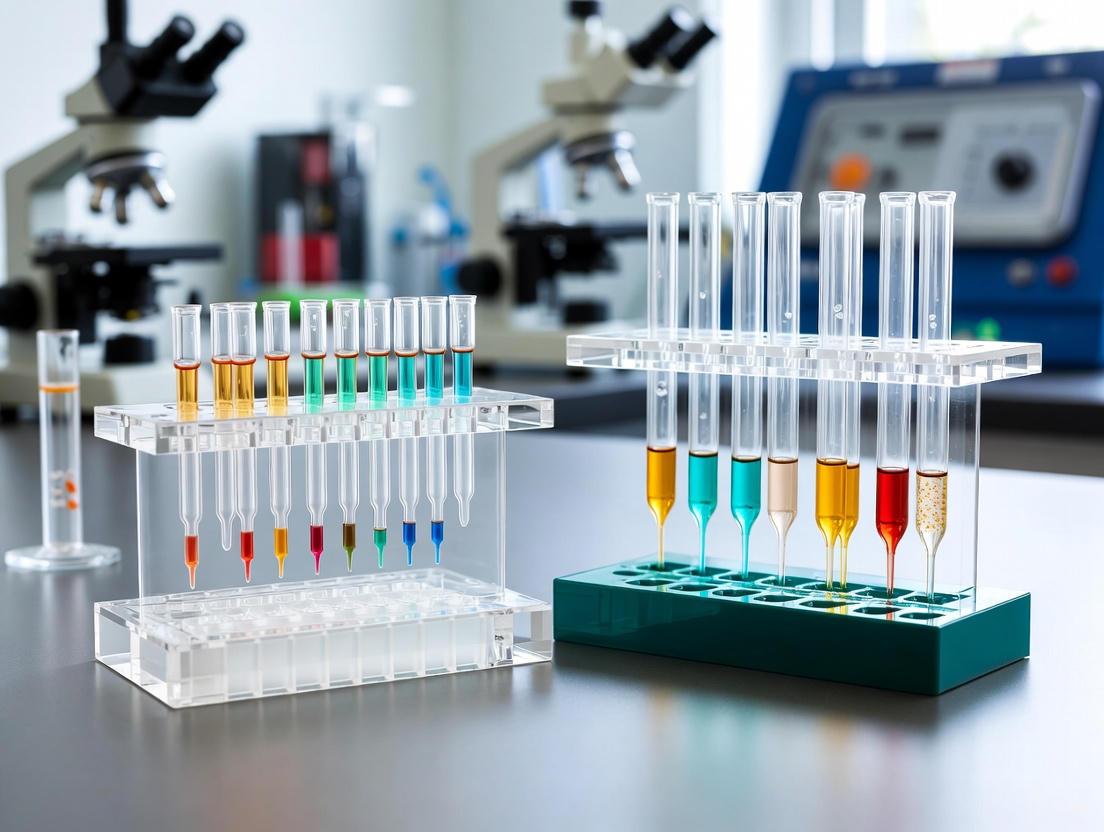
This article provides a comprehensive comparative analysis of materials used in microfluidic devices for biological applications, tailored for researchers, scientists, and drug development professionals.
Microfluidic Materials for Biological Applications: A Comparative Analysis for Researchers and Developers
Abstract
This article provides a comprehensive comparative analysis of materials used in microfluidic devices for biological applications, tailored for researchers, scientists, and drug development professionals. It explores the foundational properties of inorganic materials, polymers, and paper-based substrates, detailing their fabrication methods and inherent characteristics. The scope extends to methodological applications in drug discovery, organ-on-a-chip systems, and point-of-care diagnostics, addressing key troubleshooting challenges such as leakage and biocompatibility. A systematic validation and comparison of materials based on performance metrics, cost, and scalability offers practical guidance for selecting optimal materials for specific biomedical research and development goals, synthesizing key trends and future directions in the field.
The Material Landscape: From Silicon to Polymers and Paper
The evolution of microfluidic materials represents a critical foundation for advancements in biological research and drug development. This transition from traditional inorganic substrates to modern polymeric systems reflects the field's response to the growing demands for biocompatibility, fabrication scalability, and functional versatility in life science applications. Initially dominated by silicon and glass, microfluidic technology has undergone a significant transformation, embracing polymer-based materials that offer superior compatibility with biological systems while reducing manufacturing complexity and cost [1] [2]. This shift has enabled unprecedented capabilities in organ-on-a-chip platforms, point-of-care diagnostics, and high-throughput drug screening [3]. Understanding this material evolution provides researchers and drug development professionals with critical insights for selecting appropriate substrates for specific biological applications, ultimately accelerating innovation in biomedical science and personalized medicine.
The Era of Inorganic Materials: Silicon and Glass
Silicon: The Foundation Material
Silicon served as the inaugural material for microfluidic device fabrication, primarily due to its established manufacturing protocols from the semiconductor industry. This material offered exceptional processability, chemical inertness, and well-characterized surface properties that facilitated early microfluidic development [4]. Silicon's crystalline structure provides high mechanical strength and anisotropy, enabling the creation of complex three-dimensional structures with astonishing sub-micron precision [4]. The material exhibits excellent thermal conductivity (2.33 W/cm·K) and minimal thermal expansion, making it particularly suitable for applications involving temperature manipulation or heat generation [4].
Despite these advantageous properties, silicon presented significant limitations for biological applications. Its opacity to visible light prevented optical detection methods essential for fluorescence-based bioassays and direct fluid imaging [5] [4]. The material's brittleness and high elastic modulus (130-180 GPa) complicated the integration of active fluidic components like valves and pumps [1]. Furthermore, silicon microfabrication required complex, expensive processes in cleanroom environments using hazardous chemicals, limiting accessibility for biological research laboratories [5] [2].
Glass: The Transparent Alternative
Glass emerged as a solution to silicon's optical limitations, offering excellent transparency for visual monitoring and fluorescence detection [5]. As an amorphous material, glass provided electrical insulation, chemical resistance, and relatively low non-specific adsorption compared to other materials [2]. Its stable electroosmotic mobility and high thermo-conductivity made it particularly suitable for capillary electrophoresis and on-chip reactions [2]. The well-established silanol-based surface chemistry of glass allowed for various modifications to enhance biocompatibility or reduce adsorption [5].
However, glass shared several manufacturing challenges with silicon, including complex fabrication processes requiring high temperature and pressure for bonding [5]. The material's rigidity, while providing structural stability, limited its application for active microfluidic components [2]. Glass devices also exhibited poor gas permeability, restricting their utility for long-term cell culture applications essential for modern biological research [5] [2]. These limitations, combined with high production costs, motivated the exploration of alternative materials better suited for biological applications [2].
Table 1: Properties of Traditional Inorganic Microfluidic Materials
| Property | Silicon | Glass |
|---|---|---|
| Optical Transparency | Opaque to visible light, transparent to infrared [4] | Excellent transparency [5] |
| Young's Modulus | 130-180 GPa [1] | 50-90 GPa (varies by composition) [1] |
| Thermal Conductivity | 2.33 W/cm·K [4] | Lower than silicon [2] |
| Fabrication Complexity | High (cleanroom, hazardous chemicals) [5] | High (high temperature/pressure bonding) [5] |
| Gas Permeability | Very low [4] | Very low [2] |
| Biocompatibility | Good chemical inertness [4] | Compatible with biological samples [2] |
| Surface Chemistry | Silanol-based (-Si-OH) [2] | Silanol-based (-Si-OH) [2] |
The Polymer Revolution in Microfluidics
Elastomers: PDMS and Beyond
The introduction of polydimethylsiloxane (PDMS) marked a pivotal moment in microfluidics, addressing many limitations of inorganic materials. PDMS offered exceptional versatility for biological applications, with high flexibility (elastic modulus 300-500 kPa), optical transparency, and rapid prototyping capabilities [2]. Its gas permeability enabled oxygen and carbon dioxide transport essential for cell culture, while its elastomeric properties facilitated integration of valves and pumps [6] [2]. These characteristics made PDMS particularly suitable for organ-on-a-chip platforms and biological studies requiring dynamic microenvironment control [3].
Despite these advantages, PDMS presented new challenges including hydrophobic surface properties leading to nonspecific protein adsorption, and absorption of small hydrophobic molecules that could interfere with drug studies [6]. The material's limited mechanical strength reduced long-term durability, while its swelling behavior in non-polar solvents restricted chemical compatibility [6]. These limitations prompted development of advanced elastomers like Flexdym, which offers improved chemical stability, non-absorbent properties, and compatibility with industrial manufacturing processes while maintaining PDMS-like flexibility [6].
Thermoplastics: PMMA, PS, and PC
Thermoplastic polymers provided alternative solutions with enhanced mechanical robustness and manufacturing scalability. Polymethyl methacrylate (PMMA) offers excellent optical clarity, high mechanical strength, and superior chemical resistance compared to PDMS, making it ideal for microfluidic chips, biosensors, and optical applications [6]. Polystyrene (PS) has gained prominence for cell culture applications due to its biocompatibility, commercial availability, and suitability for mass manufacturing processes [2]. Polycarbonate (PC) serves as the material of choice for DNA thermal cycling applications, leveraging its high glass transition temperature (∼145°C) and impact resistance [2].
The manufacturing advantages of thermoplastics include compatibility with high-throughput production methods like injection molding and hot embossing, significantly reducing per-device costs [2]. However, thermoplastics present challenges including rigidity that complicates valve integration, limited gas permeability unsuitable for extended cell culture, and more complex surface modification requirements [2]. Their inability to form conformal contacts with other surfaces also creates sealing challenges not encountered with elastomers [2].
Table 2: Comparison of Modern Polymer Materials for Microfluidics
| Property | PDMS (Elastomer) | PMMA (Thermoplastic) | PS (Thermoplastic) | PC (Thermoplastic) |
|---|---|---|---|---|
| Elastic Modulus | 300-500 kPa [2] | High (rigid) [6] | Rigid [2] | High impact resistance [2] |
| Optical Clarity | Good [2] | Excellent [6] | Good [2] | Transparent in visible spectrum [2] |
| Gas Permeability | High (advantage for cell culture) [2] | Low [6] | Low [2] | Low [2] |
| Chemical Resistance | Poor (swells with organic solvents) [6] | Excellent [6] | Moderate [2] | Poor resistance to some solvents [2] |
| Manufacturing | Rapid prototyping [2] | Injection molding, hot embossing [6] | Mass manufacturing [2] | Thermal cycling applications [2] |
| Cell Culture Compatibility | Excellent (with surface treatment) [2] | Limited (low gas permeability) [6] | Excellent (requires surface treatment) [2] | Suitable for DNA applications [2] |
Experimental Characterization and Methodologies
Biocompatibility Assessment Protocols
Standardized experimental protocols have been developed to evaluate the biocompatibility of microfluidic materials, with PDMS requiring specific surface treatments to optimize performance. A common methodology involves oxygen plasma treatment to temporarily hydrophilize the PDMS surface, followed by immediate bonding to glass or other substrates [2]. For cell culture applications, researchers often pre-coat microchannels with extracellular matrix proteins (e.g., fibronectin, collagen) to promote cell adhesion and growth [2]. Quantitative assessment includes measuring contact angles to evaluate hydrophilicity, X-ray photoelectron spectroscopy to analyze surface chemistry, and cell viability assays over extended periods to confirm biocompatibility [7].
For silicon and glass substrates, biocompatibility testing focuses on different parameters due to their distinct material properties. Surface silanization using reagents like (3-aminopropyl)triethoxysilane creates functional groups for subsequent biomolecule immobilization [4]. The stability of these modifications is crucial, with rigorous testing including zeta potential measurements to characterize electroosmotic flow stability, and protein adsorption studies using fluorescently labeled albumin to quantify nonspecific binding [5]. These methodologies provide quantitative data critical for comparing material performance in specific biological contexts.
Mechanical Testing Methodologies
Standardized mechanical testing provides essential data for material selection in different microfluidic applications. Tensile testing following ASTM D638 standards determines elastic modulus and fracture strength, particularly important for flexible polymers like PDMS [2]. Pressure resistance testing involves gradually increasing internal pressure until device failure, with studies showing significant differences based on fabrication methods - powder-blasted glass chips demonstrated different fracture pressures compared to HF-etched versions due to surface roughness variations [5].
For thermoplastics, thermomechanical analysis determines glass transition temperature (Tg), a critical parameter for applications involving temperature variations [2]. Degradation studies under accelerated aging conditions (elevated temperature and humidity) predict long-term stability, particularly important for point-of-care diagnostic devices [8]. These standardized methodologies enable direct comparison between material alternatives and informed selection for specific application requirements.
The Scientist's Toolkit: Essential Research Reagents and Materials
Successful microfluidic device fabrication and experimentation requires specific materials and reagents tailored to each substrate type. The following toolkit outlines essential components for working with different material classes in biological applications:
Table 3: Essential Research Reagents and Materials for Microfluidic Device Fabrication
| Item | Function | Application Examples |
|---|---|---|
| SU-8 Photoresist | Creates high-aspect-ratio molds for soft lithography | PDMS device prototyping [2] |
| Sylgard 184 Silicone Elastomer Kit | PDMS base and curing agent for device fabrication | Flexible microfluidic devices, organ-on-chip [2] |
| Oxygen Plasma System | Surface activation for bonding and hydrophilicity | PDMS-glass bonding, surface modification [2] |
| (3-Aminopropyl)triethoxysilane | Surface silanization for functionalization | Glass and silicon surface modification [4] |
| Extracellular Matrix Proteins | Promote cell adhesion and growth | Cell culture applications (collagen, fibronectin) [2] |
| Fluorescently Labeled Albumin | Quantify nonspecific protein adsorption | Biocompatibility assessment [5] |
| HF-Based Etchants | Glass and silicon etching | Inorganic microfluidic device fabrication [5] |
| PMMA Sheets | Thermoplastic substrate material | Rigid microfluidic chips, biosensors [6] |
| Hot Embossing System | Thermoplastic microstructure replication | High-throughput device manufacturing [2] |
Future Perspectives and Emerging Materials
The evolution of microfluidic materials continues with emerging technologies addressing current limitations while enabling new applications. Paper-based microfluidics represents a growing frontier, utilizing patterned cellulose to create low-cost, disposable devices that operate via capillary action without external pumping [8] [3]. These systems show particular promise for point-of-care diagnostics in resource-limited settings, though challenges remain in achieving reliability comparable to traditional devices [3]. Advanced manufacturing methods like 3D printing are revolutionizing microfluidic fabrication, enabling complex multi-layer architectures and integrated features while reducing prototyping time from weeks to hours [3] [1].
Hybrid approaches that combine material strengths represent another significant trend, such as silicon-polymer composites that maintain structural precision while incorporating flexible active components [4]. The integration of artificial intelligence with microfluidics enables real-time monitoring and adaptive control of fluidic processes, particularly valuable for complex biological experiments and organ-on-a-chip platforms [3] [1]. As biomaterial science advances, smart polymers with responsive properties and enhanced biocompatibility will further expand microfluidic applications in personalized medicine and drug development [1].
The historical evolution from silicon and glass to modern polymers in microfluidics represents more than simply a change in materials—it reflects the field's maturation from semiconductor-inspired technology to an interdisciplinary science centered on biological applications. Each material class has contributed distinct advantages: silicon provided precision and manufacturing heritage, glass offered optical clarity and chemical resistance, while polymers introduced biocompatibility, flexibility, and accessibility. This progression has enabled transformative applications in organ-on-a-chip systems, point-of-care diagnostics, and high-throughput drug screening that would be impossible with early inorganic substrates.
For researchers and drug development professionals, understanding this material evolution informs strategic selection of microfluidic platforms optimized for specific biological applications. The continuing development of advanced polymers, hybrid materials, and innovative manufacturing methods promises to further expand microfluidic capabilities in biomedical research. As the field advances, the integration of microfluidics with artificial intelligence and personalized medicine will likely drive the next phase of material innovation, creating new opportunities to address complex biological questions and therapeutic challenges.
In the field of microfluidics, the selection of substrate material is a critical determinant of device performance, especially in biological applications. While polymers have gained popularity for prototyping and disposable devices, inorganic materials—silicon, glass, and ceramics—continue to occupy essential niches where their superior properties are indispensable. These materials formed the historical foundation of microfluidic technology, with silicon emerging from microelectronics and glass from traditional chemistry and biochemistry laboratories [1] [9]. Their evolution has been characterized by specialization rather than replacement, with each material finding sustained application in areas demanding specific performance characteristics unattainable with polymeric alternatives.
The enduring relevance of inorganic materials stems from their exceptional stability, precision, and biocompatibility under demanding conditions. Silicon offers unparalleled fabrication precision for nanofluidic applications, glass provides optical clarity and chemical resistance for sensitive analyses, and ceramics deliver robust thermal and mechanical performance for integrated systems [1] [2] [9]. This guide provides a detailed comparison of these materials, focusing on their properties and specialized applications through experimental data and methodologies to inform material selection for advanced biological research and drug development.
Comparative Analysis of Material Properties
Table 1: Comparative properties of silicon, glass, and ceramics for microfluidic applications.
| Property | Silicon | Glass (Borosilicate) | Ceramics (LTCC) |
|---|---|---|---|
| Elastic Modulus | 130-180 GPa [1] [2] | High (varies with composition) [1] | High mechanical strength [2] |
| Optical Transparency | Opaque in visible spectrum; transparent to IR [1] [2] | Excellent transparency from UV to IR [2] [9] | Generally opaque [9] |
| Chemical Resistance | Resistant to organic solvents [2] | Excellent chemical resistance [2] [9] | Chemically inert; low nonspecific adsorption [2] |
| Thermal Stability | High thermal conductivity [2] | Good thermal resistance [9] | Very high thermal stability [2] |
| Gas Permeability | Impermeable [2] | Impermeable to gases [2] | Impermeable [2] |
| Surface Chemistry | Silanol group (-Si-OH) for modification [1] [9] | Silanol group (-Si-OH) for modification [2] [9] | Varies with composition |
| Fabrication Complexity | High (cleanroom required) [9] | High [2] | Moderate (laminate processing) [2] |
| Biocompatibility | Biocompatible with surface modification [1] | High biocompatibility; low nonspecific adsorption [2] | Biocompatible; used in bone marrow chips [10] |
| Electrical Properties | Semiconducting [1] | Electrically insulating [2] | Good electrical insulation [2] |
| Relative Cost | High [2] [9] | High [2] | Moderate [2] |
Niche Applications and Experimental Evidence
Silicon: Precision and Integration
Despite its opacity and brittleness, silicon remains unmatched in applications requiring nanoscale precision and integration with electronic components. Its high elastic modulus (130-180 GPa) makes it unsuitable for active fluid components like valves and pumps but ideal for maintaining structural integrity at miniature scales [1] [2].
Application Example: Silicon Cantilever Arrays for Biodetection Silicon's fabrication versatility enables creation of highly sensitive mechanical biosensors. Researchers have successfully developed silicon microcantilever arrays for label-free detection of illicit drugs in water samples [9]. The experimental protocol involves functionalizing cantilevers with specific receptors, exposing them to analytes, and measuring nanoscale deflections caused by molecular binding events. This application leverages silicon's excellent mechanical properties and compatibility with high-resolution patterning techniques like electron beam lithography.
Application Example: Digital PCR Platforms Silicon is the material of choice for stationary, highly complex digital PCR systems, such as the QuantStudio 3D Digital PCR system [9]. The material's thermal conductivity and surface chemistry allow for precise temperature cycling and efficient partitioning of samples. Experimental data from such platforms demonstrate quantitative determination of pathogenic loads with high sensitivity, enabling applications in genomic medicine and personalized healthcare [9].
Glass: Optical Clarity and Chemical Inertness
Glass maintains a crucial role in applications requiring optical detection, chemical resistance, and electrophoretic separation. Its excellent transparency and low fluorescence background make it indispensable for fluorescence-based detection methods [2] [9].
Application Example: Laser-Treated Glass for Particle Separation A 2019 study by Manuel Ochoa et al. demonstrated a laser-treated glass platform for rapid wicking-driven transport and particle separation in bio-microfluidics [1]. The experimental methodology involved using laser ablation to create specific surface patterns on glass substrates, modifying wettability to control fluid transport via capillary action. This application highlights glass's suitability for surface modification and its stability under optical treatment, enabling precise particle manipulation without external pumping.
Application Example: Electrophoretic Separation Glass microfluidic chips have been extensively used for capillary electrophoresis (CE) applications, particularly for peptide analysis, vascular biomarker detection, and DNA identification [9]. The experimental protocol typically involves fabricating separation channels using UV photolithography and wet etching, followed by thermal or anodic bonding to enclose channels. The electrically insulating properties of glass make it ideal for applying high separation voltages, while its native surface charge facilitates electroosmotic flow control. Research data shows superior separation efficiency compared to polymer-based devices, with applications in proteomics and clinical diagnostics [9].
Ceramics: Thermal and Mechanical Robustness
Ceramics, particularly Low-Temperature Cofired Ceramics (LTCC), find specialized applications where thermal stability, mechanical strength, and integration of electronic components are paramount [2].
Application Example: Bone Marrow-on-a-Chip A 2025 study published in Communications Biology detailed a microfluidic bone marrow model using a zirconium oxide ceramic scaffold for preclinical drug safety assessment [10]. The experimental design involved seeding primary human bone marrow-derived mesenchymal stromal cells (MSCs) onto the ceramic scaffold, followed by CD34+ hematopoietic stem and progenitor cells. The ceramic scaffold provided a three-dimensional structure mimicking the bone marrow microenvironment, supporting multilineage differentiation into erythroid, myeloid, and NK cells over 31 days. Treatment with immunotherapeutics on this platform demonstrated inhibition of erythropoiesis, consistent with expected clinical toxicities, validating the model for drug safety profiling [10].
Application Example: Integrated Microreactors Ceramic microsystems are particularly valuable for microreactors requiring integrated heating elements and sensors [2]. The fabrication process for LTCC devices involves patterning laminate sheets, assembling layers, and firing at elevated temperatures, which allows embedding of conductive paths and electronic components within the monolithic structure [2]. This integration capability surpasses what is achievable with silicon or glass technologies, making ceramics ideal for applications requiring on-chip temperature control and monitoring, such as miniature chemical synthesis systems [2].
Experimental Protocols for Key Applications
Protocol: Fabrication of Glass Microfluidic Chips for Electrophoresis
This protocol outlines the standard methodology for creating glass microfluidic devices for electrophoretic separations, based on established microfabrication techniques [9].
Photolithography Patterning: Clean glass substrates (typically borosilicate or fused silica) and dehydrate at 200°C for 30 minutes. Deposit a layer of positive photoresist via spin coating and soft-bake. Expose the photoresist to UV light through a photomask defining the channel network. Develop the photoresist to remove exposed areas.
Wet Etching: Immerse the patterned substrate in a hydrofluoric acid (HF)-based etchant. The HF solution isotropically removes unmasked glass, creating channels with characteristic semicircular cross-sections. Control channel depth by adjusting etch time and temperature.
Access Hole Drilling: Use precision drilling or ultrasonic abrasion to create fluidic access ports at channel termini.
Thermal Bonding: Clean and align the etched substrate with a flat glass cover plate. Subject the assembly to a thermal bonding process in a furnace (typically >600°C) to create a permanent, leak-proof seal.
Surface Modification (Optional): For specific applications, modify the surface chemistry using silane-based reagents to control electroosmotic flow or reduce analyte adsorption.
Protocol: Ceramic Scaffold Preparation for Bone Marrow Chips
This protocol details the preparation of ceramic-based microfluidic devices for advanced cell culture models, as demonstrated in recent research [10].
Scaffold Preparation: Obtain porous zirconium oxide ceramic scaffolds with appropriate pore size (typically 100-500 μm) to support cell growth and interaction.
Stromal Cell Seeding: Expand primary human bone marrow-derived Mesenchymal Stromal Cells (MSCs) under defined, animal-content-free conditions for 7-15 days. Seed 500,000 MSCs onto the ceramic scaffold and culture under static conditions for 10 days to allow formation of an interconnected cellular network.
Chip Assembly and Hematopoietic Cell Introduction: Transfer the MSC-seeded scaffold into the microfluidic chip system. Introduce 40,000 human bone marrow-derived CD34+ hematopoietic stem and progenitor cells (HSPCs) into the scaffold-containing chamber.
On-Chip Culture and Differentiation: Initiate dynamic perfusion of chemically defined medium supplemented with specific growth factor cocktails (e.g., TPO, FLT-3L, SCF, EPO, IL-3, IL-7, IL-15). Maintain the culture for up to 31 days with medium changes every 2-3 days.
Analysis and Drug Testing: Harvest non-adherent cells from the medium compartment at regular intervals (e.g., days 10, 17, 24, 31) for flow cytometric analysis of differentiation markers. For drug testing, introduce therapeutics into the perfusion medium and monitor effects on hematopoietic lineage output and immune cell function.
Diagram Title: Bone Marrow Chip Experimental Workflow
The Scientist's Toolkit: Essential Research Reagents and Materials
Table 2: Key reagents and materials for microfluidic experiments with inorganic materials.
| Item | Function/Application | Specific Example |
|---|---|---|
| Borosilicate Glass Wafers | Substrate for microfluidic devices requiring optical clarity and chemical resistance | Schott BOROFLOAT, Corning Pyrex [2] [11] |
| Porous Ceramic Scaffolds | 3D support structure for cell culture in organ-on-chip models | Zirconium oxide scaffolds with 100-500 μm pores [10] |
| Hydrofluoric Acid (HF) | Etchant for glass microfabrication | Used in wet etching of glass channels [9] |
| Silane Coupling Agents | Surface modification for controlled surface chemistry | (3-Aminopropyl)triethoxysilane for creating amine-functionalized surfaces [1] [9] |
| Defined Growth Factor Cocktails | Directing cell differentiation in biological assays | TPO, FLT-3L, SCF, EPO, IL-3, IL-7, IL-15 for hematopoietic differentiation [10] |
| Primary Human Cells | Biologically relevant models for drug testing | Bone marrow-derived MSCs and CD34+ HSPCs [10] |
| Photoresists | Patterning microfluidic channels in lithography | AZ系列, SU-8 for creating etch masks [9] |
Silicon, glass, and ceramics each fulfill distinct roles in the microfluidic technology ecosystem. Silicon provides unparalleled precision for nanofluidic and electronic integration, glass offers optimal properties for optical detection and electrophoretic separation, and ceramics deliver robust platforms for complex organ-on-chip models and high-temperature applications. The continuing evolution of these materials focuses on enhancing their specialized capabilities through surface modification, hybrid approaches, and integration with novel manufacturing techniques like 3D printing. For researchers in biological applications and drug development, understanding these material-specific strengths enables informed selection criteria based on the specific requirements of their experimental goals, balancing performance needs with practical considerations of fabrication complexity and cost.
The evolution of microfluidic technology has been intrinsically linked to the development of polymeric materials, which have largely supplanted traditional silicon and glass substrates due to their versatility, cost-effectiveness, and superior biocompatibility. Within biomedical applications, polydimethylsiloxane (PDMS), thermoplastics, and thermosets represent three fundamental classes of materials, each possessing distinct characteristics that make them suitable for specific research and diagnostic contexts. PDMS, an elastomeric polymer, has become the workhorse of academic prototyping due to its excellent optical properties and straightforward replication via soft-lithography [12]. Thermoplastics, linear polymers that soften when heated, offer robust mechanical properties and suitability for mass production, making them ideal for commercial applications [13]. Thermosetting polymers, which form irreversible cross-linked networks upon curing, provide exceptional chemical resistance and dimensional stability for demanding applications [14].
The selection of an appropriate material is a critical first step in the design of any microfluidic device for biological research. This choice dictates not only the fabrication strategy and cost but also the device's performance in cell culture, drug screening, and diagnostic assays. This guide provides a comparative analysis of PDMS, thermoplastics, and thermosets, focusing on their properties, processing techniques, and performance in biologically relevant contexts. By synthesizing quantitative data and experimental methodologies, we aim to equip researchers and drug development professionals with the information necessary to make an informed material selection for their specific microfluidic applications.
Material Properties at a Glance: A Comparative Analysis
The performance of a polymer in a microfluidic system is governed by a combination of physical, optical, and chemical properties. The table below provides a comparative summary of key attributes for PDMS, common thermoplastics, and a representative bio-based thermoset.
Table 1: Comparative Properties of Microfluidic Polymer Materials
| Property | PDMS | PMMA (Thermoplastic) | PS (Thermoplastic) | COC (Thermoplastic) | Glycerol-Citric Acid Thermoset [15] |
|---|---|---|---|---|---|
| Young's Modulus | 360 - 870 kPa [12] | 2.4 - 3.4 GPa [13] | 3 - 3.5 GPa [13] | 1.7 - 3.2 GPa [13] | Tailorable via crosslinking density |
| Optical Transparency | High (~90% transmittance) [12] | High [13] | High [13] | High [13] | Not Specified |
| Auto-fluorescence | Low | Low [13] | High [13] | Low [13] | Not Specified |
| Biocompatibility | Excellent [12] | Excellent [13] | Excellent [13] | Excellent [13] | Excellent (GRAS monomers) |
| Gas Permeability | High (Excellent for cell culture) [12] | Low | Low | Very Low | Not Specified |
| Hydrophobicity (Contact Angle) | ~108° [12] | Variable, can be hydrophilic | Variable, can be hydrophilic | Hydrophobic | Not Specified |
| Chemical Resistance | Swells in organic solvents [12] | Poor resistance to alcohols/acetone [13] | Good resistance to alcohols [13] | Excellent chemical resistance [13] | Biodegradable (ester bonds) |
| Water Absorption | Low | 0.1-0.4% [13] | 0.02-0.15% [13] | 0.01% [13] | Not Specified |
| Primary Fabrication Method | Soft lithography [12] | Hot embossing, Injection molding [16] | Injection molding [13] | Injection molding [13] | Melt polymerization [15] |
Deep Dive into Material-Specific Characteristics and Experimental Insights
Polydimethylsiloxane (PDMS): The Prototyping Elastomer
PDMS is a silicone-based elastomer renowned for its flexibility and high optical transparency, making it a dominant material for rapid prototyping in academic research. Its hyperelastic behavior, with a Young's modulus similar to many soft biological tissues (1-3 MPa), makes it well-suited for mimicking blood vessels and other compliant physiological structures [12]. A critical advantage for cell culture is its high gas permeability, which facilitates efficient oxygen and carbon dioxide exchange, maintaining physiological conditions within the microchannels [17].
However, PDMS has significant limitations. Its inherent hydrophobicity can impede the flow of aqueous solutions and lead to non-specific adsorption of hydrophobic molecules like proteins and drugs [12]. This can alter the concentration of biomolecules in the medium, potentially skewing experimental results in drug discovery and cell signaling studies [17]. Surface activation techniques like oxygen plasma treatment can render PDMS hydrophilic, but this effect is often temporary, with the surface recovering its hydrophobicity within minutes to hours [12].
Experimental Insight: Evaluating Cell Response in PDMS Microchannels Researchers must carefully control conditions when using PDMS for cell culture. Studies have shown significant differences in cell proliferation, glucose consumption, and gene expression patterns between traditional well plates and PDMS microsystems [17]. For instance, mouse fibroblasts cultured in PDMS channels showed a threefold higher glucose consumption and inhibition of proliferation compared to macro-scale cultures. To mitigate this, a continuous renewal of the cell culture medium is essential to evacuate metabolic wastes and replenish nutrients and growth factors that may be absorbed into the PDMS bulk [17]. This protocol is critical for achieving reliable long-term cell viability and reproducible biological data.
Thermoplastics: The Industrial Workhorses
Thermoplastics are linear polymers that become pliable above their glass transition temperature (Tg) and harden upon cooling, a reversible process that enables mass production techniques like injection molding and hot embossing [16]. They are characterized by high mechanical strength, chemical stability, and generally low auto-fluorescence, which is vital for high-sensitivity fluorescence detection.
Different thermoplastics offer a range of properties. PMMA is widely used for its high transparency and ease of fabrication, though it is susceptible to common solvents like ethanol and acetone [13]. Polystyrene (PS) is the standard material for cell culture dishes and is highly biocompatible, making it a natural choice for microfluidic cell studies [13]. Cyclo olefin copolymer (COC/COP) is particularly valuable for its excellent optical properties, very low water absorption, and high resistance to a broad range of chemicals, including acids, bases, and solvents [13]. A key consideration for biological applications is auto-fluorescence; while PC and PS have high auto-fluorescence, COC and PMMA exhibit low levels, minimizing background noise in fluorescence-based assays [13].
Thermosets: Robust and Customizable Networks
Thermosetting polymers are formed from liquid precursors that undergo an irreversible curing process to create a rigid, cross-linked three-dimensional network. This structure provides excellent thermal stability, chemical resistance, and low creep under load [14]. While some thermosets like epoxy and phenolic resins are widely used in industrial composites, there is a growing interest in developing novel thermosets from renewable resources for biomedical applications.
A prominent example is a catalyst-free thermoset synthesized from glycerol and citric acid, both considered non-toxic and "generally regarded as safe" (GRAS) by the FDA [15]. The degradation rate of this polymer can be precisely tailored by controlling the cross-linking density, which is inversely proportional to the reaction time and temperature during synthesis. This tunability, combined with its biodegradable ester bonds, makes it a promising candidate for controlled drug delivery systems.
Experimental Insight: Synthesizing and Testing a Glycerol-Citric Acid Thermoset Protocol for Polymerization: In a typical synthesis, anhydrous citric acid powder is mixed with glycerol in a molar ratio ranging from 1:1 to 1:3 ([CA]:[glycerol]) [15]. The mixture is placed in an oven at a set temperature (e.g., 110°C) for a defined period (e.g., 7 to 48 hours). The degree of crosslinking increases with longer reaction times and higher temperatures. Water is the only byproduct of this condensation reaction. Drug Delivery Proof-of-Concept: To demonstrate functionality, the antibiotic gentamicin can be incorporated directly into the glycerol monomer prior to polymerization. Studies show that polymers loaded with 5 mol% gentamicin effectively clear Staphylococcus aureus for up to nine days, confirming the material's potential as a drug-eluting implant or tissue scaffold [15]. This illustrates how functionality can be designed directly into the thermoset matrix.
Decision Workflows and Experimental Design
The following diagrams outline logical pathways for material selection and experimental setup based on application requirements.
Diagram 1: Material selection workflow for biological applications.
Diagram 2: PDMS cell culture experimental workflow.
The Scientist's Toolkit: Essential Research Reagents and Materials
Successful experimentation with microfluidic polymers requires a suite of specialized reagents and materials. The following table details key items and their functions in device fabrication and biological application.
Table 2: Essential Research Reagent Solutions for Microfluidic Biomaterial Research
| Reagent/Material | Function/Application | Key Considerations |
|---|---|---|
| PDMS Base & Curing Agent | Two-part silicone elastomer for replica molding [12]. | Mixing ratio (e.g., 10:1) controls stiffness; curing temperature affects polymerization rate. |
| SU-8 Photoresist | Creating high-aspect-ratio master molds for soft lithography [12]. | Determines the geometry and surface topography of the final PDMS device. |
| Oxygen Plasma System | Surface activation for PDMS-PDMS or PDMS-glass bonding [12]. | Creates transient hydrophilic surfaces; aging effect restores hydrophobicity. |
| Ethylene Methyl Acrylate (EMA) | Reactive compatibilizer for creating TPU/PDMS blends [18]. | Enables formation of microporous structures for enhanced cell ingrowth in implants. |
| Glycerol & Citric Acid | Monomers for synthesizing biodegradable thermoset polymers [15]. | GRAS status; reaction stoichiometry and temperature control crosslinking and degradation. |
| Gentamicin | Model antibiotic for drug release studies from polymeric matrices [15]. | Thermally stable; allows for functional assessment of antimicrobial activity over time. |
| L929 Mouse Fibroblast Cell Line | Standardized cell model for in vitro cytotoxicity testing (ISO-10993-5) [18]. | Used for direct contact and extract testing to evaluate material biocompatibility. |
The advancement of microfluidic technologies has created a pressing demand for innovative materials that can meet the unique requirements of biological applications. While traditional materials like polydimethylsiloxane (PDMS) have dominated the field, emerging and alternative materials are proving indispensable for next-generation diagnostic, therapeutic, and analytical platforms. This guide provides an objective comparison between two such material classes—paper and hydrogels—focusing on their performance characteristics for biological research applications. Although paper substrates offer exceptional utility in rapid diagnostics, hydrogels present distinctive advantages for applications requiring biomimicry, controlled fluid transport, and direct biological integration. We present experimental data and methodologies to help researchers and drug development professionals select appropriate materials based on their specific project requirements, with a particular focus on hydrogel properties and applications given their growing importance in advanced biological research.
Material Properties and Performance Comparison
Fundamental Characteristics
Paper-based microfluidics utilize capillary action within cellulose fiber networks to transport fluids without external power. These systems typically function as lateral flow assays or three-dimensional patterned substrates for analytical applications. Their primary advantages include low cost, disposability, and ease of use for point-of-care diagnostics.
Hydrogel-based microfluidics leverage hydrophilic polymer networks that swell in aqueous environments, creating tunable porous structures for fluid management and biological interactions. Unlike paper, hydrogels offer extensive customizability of their physical, chemical, and biological properties to match specific application requirements [19] [20].
Table 1: Fundamental Material Properties for Microfluidic Applications
| Property | Paper | Hydrogels |
|---|---|---|
| Fluid Transport Mechanism | Capillary action | Diffusion and swelling-controlled release |
| Porosity Range | 20-60 μm (fiber network) | 1-1000 nm (mesh size) [21] |
| Water Content | 10-50% (absorbed) | 70-99% (bound) [19] |
| Typical Surface Chemistry | Cellulose hydroxyl groups | Tunable (-OH, -COOH, -NH₂, -CONH₂) [19] [20] |
| Protein Adsorption | High (non-specific) | Tunable (low with PEG) [21] |
| Optical Transparency | Opaque | Transparent to translucent [19] |
Performance in Biological Applications
Hydrogels excel in applications requiring biocompatibility, controlled molecular transport, and mimicry of biological tissues. Their three-dimensional polymer networks can be engineered with precise mechanical properties and biochemical functionalities [22].
Table 2: Performance Metrics in Biological Applications
| Performance Metric | Paper | Hydrogels |
|---|---|---|
| Biocompatibility | Moderate | High (tissue-like) [19] |
| Suitability for 3D Cell Culture | Limited | Excellent (mimics ECM) [19] [22] |
| Drug Release Kinetics | Rapid release | Controlled/sustained release (days-weeks) [23] |
| Molecular Sieving Capacity | Limited (size exclusion by fibers) | Tunable (by crosslinking density) [19] |
| Stimuli Responsiveness | Limited | High (pH, temperature, enzymes) [21] [20] |
| Adhesive Strength (wet) | Low | Up to 1 MPa (engineered) [24] |
Experimental Protocols and Methodologies
Hydrogel Synthesis and Characterization
Protocol 1: Fabrication of Tunable Hydrogel Networks
This protocol outlines the creation of hydrogels with controlled physical properties through crosslinking of natural or synthetic polymers [19] [20].
Materials: Monomer solution (e.g., PEGDA, gelatin, alginate), crosslinker (e.g., APS/TEMED for chemical, Ca²⁺ for ionic), buffer solution (PBS, pH 7.4), mold substrates.
Methodology:
- Prepare monomer solution at desired concentration (typically 5-20% w/v) in appropriate buffer
- Add crosslinking agent (chemical initiators or ionic solutions) and mix thoroughly
- Transfer solution to mold and incubate at specific temperature (e.g., 37°C for thermosensitive gels)
- Allow crosslinking to complete (minutes to hours depending on chemistry)
- Characterize mechanical properties using rheometry (G', G'' moduli) and swelling ratio (weight change after immersion)
- Evaluate mesh size using theoretical models based on polymer volume fraction [19]
Key Parameters: Monomer concentration, crosslinking density, gelation time, swelling ratio (typically 3-20x dry weight), mechanical strength (G' from 0.1-100 kPa).
Protocol 2: Microfluidic Patterning of Hydrogels
This method enables precise spatial control over hydrogel deposition for creating complex microenvironments [21].
Materials: Photomasks (for UV crosslinking), microfluidic channels, syringe pumps, prepolymer solution with photoinitiator (e.g., Irgacure 2959 for UV curing).
Methodology:
- Design microfluidic network using CAD software
- Fabricate master mold using soft lithography or 3D printing
- Introduce prepolymer solution into microfluidic channels via controlled flow rates (1-100 μL/min)
- Apply UV light (365 nm, 5-20 mW/cm²) through photomask for selective crosslinking (30-300 seconds)
- Flush uncrosslinked solution from channels
- Characterize pattern fidelity using microscopy and measure feature resolution (typically 10-500 μm) [21]
Biological Functionalization and Testing
Protocol 3: Cell Encapsulation and Viability Assessment
This protocol evaluates hydrogel performance as 3D cell culture matrices for tissue engineering applications [19] [22].
Materials: Sterile hydrogel precursors, cell suspension (e.g., fibroblasts, stem cells), culture media, viability assays (Live/Dead staining, MTT).
Methodology:
- Suspend cells in hydrogel precursor solution at desired density (0.5-5×10⁶ cells/mL)
- Initiate crosslinking under gentle conditions (e.g., 37°C for thermoreversible gels) to encapsulate cells
- Culture constructs in appropriate media for 1-21 days
- Assess cell viability using fluorescence microscopy after Live/Dead staining (calcein-AM/ethidium homodimer)
- Quantify metabolic activity using MTT assay at regular intervals
- Evaluate cell morphology and spreading using phalloidin staining for actin cytoskeleton [22]
Performance Metrics: Cell viability (>80% target), proliferation rate, morphology (rounded vs. spread), gene expression markers.
Protocol 4: Controlled Release Kinetics
This method quantifies hydrogel performance as drug delivery systems through release profile characterization [23].
Materials: Model drug compound (e.g., fluorescent dyes, therapeutic proteins), hydrogel matrix, release medium (PBS, pH 7.4), analytical instrumentation (UV-Vis, HPLC).
Methodology:
- Load hydrogel with model compound (pre-loading or post-diffusion)
- Immerse hydrogel in release medium under sink conditions (37°C, gentle agitation)
- Collect samples at predetermined time points (hours to weeks)
- Analyze compound concentration using appropriate analytical methods
- Model release data using Higuchi, Korsmeyer-Peppas, or zero-order kinetics equations
- Calculate diffusion coefficients and release half-times [23]
Key Parameters: Burst release percentage (initial 24 hours), release duration, kinetic model fit (R² value), bioactivity retention of released compound.
Advanced Hydrogel Architectures and Mechanisms
Material Selection and Design Logic
The selection of appropriate hydrogel materials depends on the specific biological application requirements. The following diagram illustrates the decision-making workflow for hydrogel material selection based on application needs:
Self-Healing Hydrogel Mechanisms
Self-healing hydrogels represent a significant advancement in biomaterial engineering, capable of autonomously repairing structural damage through dynamic molecular interactions [25] [26]. The following diagram illustrates the primary mechanisms enabling self-healing properties in hydrogel systems:
The Scientist's Toolkit: Essential Research Reagents
Table 3: Key Research Reagents for Hydrogel-Based Microfluidics
| Category | Specific Examples | Function | Application Notes |
|---|---|---|---|
| Natural Polymers | Chitosan, Alginate, Hyaluronic Acid, Collagen, Gelatin, Fibrin | Provide biocompatibility, biodegradability, and cell interaction sites | Batch variability can affect reproducibility; may require purification [19] [25] |
| Synthetic Polymers | PEGDA, PVA, PHEMA, PNIPAM, PLGA | Offer controllable mechanical properties and reproducible synthesis | May require functionalization for bioactivity; tunable degradation [21] [19] |
| Crosslinkers | APS/TEMED, Glutaraldehyde, Genipin, CaCl₂ (for alginate), UV light | Create 3D network structure through covalent or ionic bonds | Crosslinking density controls mesh size and mechanical properties [19] [20] |
| Functionalization Agents | Acrylic acid, Methacrylic anhydride, RGD peptides, Acryloyl-PEG-NHS | Introduce specific chemical groups or bioactivity | Enables ligand presentation for cell adhesion or stimuli responsiveness [19] [22] |
| Characterization Tools | Rheometer, SEM, Confocal microscopy, UV-Vis spectrophotometer | Analyze mechanical properties, structure, and release kinetics | Multiple techniques needed for comprehensive characterization [19] [22] |
The comparative analysis presented in this guide demonstrates that both paper and hydrogels offer distinct advantages for microfluidic biological applications. Paper substrates provide cost-effective solutions for simple diagnostic assays with rapid results, while hydrogels enable sophisticated biomimetic environments for complex biological interactions. Hydrogels stand out in applications requiring precise control over molecular transport, direct biological integration, and responsive behavior. The experimental protocols and performance data provided herein offer researchers a foundation for selecting appropriate materials based on their specific application requirements, with hydrogel-based systems particularly promising for advanced drug development, tissue engineering, and responsive therapeutic systems. As the field progresses, the integration of data-driven design approaches [24] and advanced fabrication techniques like 4D bioprinting [20] will further expand the capabilities of both material classes in biological research.
In the field of microfluidics, particularly for biological applications such as organ-on-a-chip, drug discovery, and long-term cell culture, the selection of appropriate chip materials is a fundamental determinant of experimental success. The miniaturized scale of these devices amplifies the influence of material properties on biological processes. Among the numerous characteristics to consider, optical transparency, biocompatibility, and gas permeability emerge as three interconnected and critical parameters. Optical transparency is indispensable for real-time, high-resolution microscopic observation and analysis of cellular events. Biocompatibility ensures that the material does not adversely interact with biological samples, preventing unwanted effects like inflammation, cytotoxicity, or biomolecule adsorption that could compromise experimental integrity. Gas permeability, specifically the transport of oxygen and carbon dioxide, is crucial for maintaining physiological conditions and supporting the viability of living cells in cultured tissues. This guide provides a comparative analysis of common microfluidic materials, evaluating their performance against these key properties to inform researchers and developers in selecting the optimal material for their specific biological applications.
Comparative Analysis of Microfluidic Materials
The following table summarizes the key properties of prevalent materials used in the fabrication of microfluidic devices for biological research.
Table 1: Comparative properties of common microfluidic materials for biological applications
| Material | Optical Transparency | Biocompatibility | Gas Permeability | Key Advantages | Key Limitations |
|---|---|---|---|---|---|
| PDMS | High (∼90% transmittance, 390-780 nm) [12] | High (biocompatible and bioinert) [27] | High (O₂: 2000-4000 µm²/s; CO₂: ∼1000 µm²/s) [27] | Excellent for prototyping, flexible, inexpensive [6] [12] | Absorbs small hydrophobic molecules; swells with solvents; not scalable [6] |
| PMMA | High (excellent optical clarity) [6] [27] | Good (biocompatible) [28] | Low (not gas permeable) [27] | High mechanical strength, good chemical resistance, scalable [6] | Rigid (limits valve use); difficult bonding; low resolution [6] [27] |
| Polystyrene (PS) | High (optically transparent) [28] [27] | High (commonly used for cell culture) [28] [27] | Low (not permeable to gases) [27] | Standard for cell culture dishes; biocompatible [28] | Requires surface treatment; expensive equipment for treatment [28] |
| Glass | High (excellent optical transparency) [29] | High (chemically inert & biocompatible) [28] [29] | Low (not permeable to gases) [27] | Superior chemical resistance, electrically insulating [28] [29] | Complex, expensive fabrication; brittle [28] |
| Alginate Hydrogels | Variable (transparent when hydrated) [6] | High (non-toxic and biodegradable) [6] | Tunable (permeable, supports cell metabolism) [6] | Mimics extracellular environment; ideal for 3D cell encapsulation [6] | Low mechanical strength; properties are ion-dependent [6] |
| Flexdym | Good (good optical properties) [6] | High (used for organ-on-chip) [6] | Moderate (improved chemical stability over PDMS) [6] | Chemically stable; mechanically robust; scalable [6] | Newer material with less established protocols [6] |
Experimental Protocols for Property Validation
To ensure reliability and reproducibility in research, standardized experimental protocols are essential for quantitatively evaluating these key material properties.
Protocol for Quantifying Optical Transparency
Objective: To measure the percentage of light transmittance through a sample of the microfluidic material across the visible light spectrum (390 nm to 780 nm).
Materials:
- Microfluidic material sample (flat sheet, typical thickness of 1-5 mm)
- UV-Vis Spectrophotometer
- Cuvette holder or solid sample holder
- Lab-grade software for data acquisition
Methodology:
- Sample Preparation: Cut the material to fit the spectrophotometer's sample holder. Ensure the surface is clean and free of scratches.
- Baseline Correction: Perform a baseline correction (100% transmittance) with an empty holder or a air reference.
- Measurement: Place the sample in the holder and run a full wavelength scan from 200 nm to 800 nm. The key range for most microscopy is 390-780 nm.
- Data Analysis: Record the transmittance percentage at key wavelengths (e.g., 450 nm, 550 nm, 650 nm) or calculate the average transmittance across the visible spectrum. PDMS, for instance, typically shows a transmittance of 75% to 92% in this range [12].
Protocol for Assessing Biocompatibility via Cell Viability Assay
Objective: To evaluate the cytotoxicity of the microfluidic material by measuring the viability of cells cultured in direct contact with it.
Materials:
- Sterile samples of the microfluidic material
- Appropriate cell line (e.g., HEK 293, HeLa)
- Cell culture reagents: complete growth medium, trypsin-EDTA, PBS
- 24-well cell culture plate
- Cell viability assay kit (e.g., MTT, Live/Dead staining)
Methodology:
- Material Sterilization: Sterilize the material samples using UV light, ethanol immersion, or autoclaving, ensuring the method does not degrade the material.
- Cell Seeding: Place the sterile material into the wells of a 24-well plate. Seed a controlled number of cells (e.g., 50,000 cells per well) directly onto the material surface. Include a control group (cells seeded on a standard tissue culture polystyrene plate).
- Incubation: Culture the cells under standard conditions (37°C, 5% CO₂) for a predetermined period, typically 24, 48, and 72 hours.
- Viability Quantification:
- For MTT assay: Add MTT reagent to the culture medium and incubate. Metabolically active cells will convert MTT to purple formazan crystals. Dissolve the crystals and measure the absorbance at 570 nm. Viability is expressed as a percentage of the absorbance relative to the control group.
- For Live/Dead staining: Incubate cells with a calcein-AM (labels live cells green) and ethidium homodimer-1 (labels dead cells red) solution. Use fluorescence microscopy to image and count live and dead cells.
- Data Analysis: A material is considered biocompatible if cell viability is consistently >90% of the control viability over the test period [27].
Protocol for Measuring Gas Permeability (Oxygen)
Objective: To determine the oxygen permeability rate of a material, a critical factor for long-term cell culture.
Materials:
- Custom diffusion chamber or commercial permeability testing system
- Material sample forming a seal between two chambers
- Dissolved oxygen meter with sensitive probe
- Nitrogen gas supply
- Phosphate Buffered Saline (PBS)
Methodology:
- Chamber Setup: Mount the material sample as a membrane separating the two halves of the diffusion chamber. One side is the "source," and the other is the "sink."
- Gas Equilibration: Flush the source chamber with a gas mixture of known O₂ concentration (e.g., 20% O₂) or air. Simultaneously, flush the sink chamber with nitrogen to deplete it of oxygen. Ensure both chambers are filled with PBS.
- Measurement: Seal both chambers. As oxygen diffuses from the source through the material to the sink, use the dissolved oxygen probe in the sink chamber to monitor the increase in oxygen concentration over time.
- Data Analysis: The oxygen transmission rate (OTR) is calculated based on the rate of change in oxygen concentration in the sink chamber, the surface area of the material, and the partial pressure difference. The permeability coefficient (P) can then be derived, often reported in Barrers. PDMS, for example, has a high O₂ diffusion coefficient, which is essential for aerobic cell culture [27].
Material Selection Workflow for Biological Applications
The following diagram maps the logical decision-making process for selecting a microfluidic material based on the three core properties and the primary research goal.
The Scientist's Toolkit: Essential Research Reagents and Materials
Successful experimentation in microfluidics relies on a suite of specialized reagents and materials. The following table details key items and their functions.
Table 2: Essential reagents and materials for microfluidic device fabrication and testing
| Item | Function/Application | Key Considerations |
|---|---|---|
| PDMS Sylgard 184 Kit | The standard two-part (base & curing agent) elastomer for rapid prototyping of microfluidic devices [27]. | Mixing ratio (e.g., 10:1) affects stiffness; curing temperature and time must be controlled. |
| Oxygen Plasma Treater | Surface activation for bonding PDMS to glass or other substrates and making PDMS channels hydrophilic [12]. | Hydrophilicity is temporary; treated surfaces recover hydrophobicity over minutes/hours. |
| SU-8 Photoresist & Silicon Wafer | Used to create a high-resolution master mold for soft lithography and PDMS casting [27]. | Requires cleanroom access or service; determines the pattern and resolution of microchannels. |
| Hot Embossing System | Used with thermoplastics (PMMA, PS, COC) for industrial-scale replication of microfluidic devices [16]. | Enables mass production but has high initial setup costs; not ideal for rapid prototyping. |
| Alginate (Sodium Alginate) | A natural biopolymer used to form hydrogels for 3D cell culture and droplet encapsulation in microfluidics [6]. | Gelation is triggered by calcium ions (e.g., CaCl₂ solution); properties are tunable via concentration. |
| PMMA Sheets | Rigid, transparent thermoplastic for fabricating durable microfluidic chips via milling or hot embossing [6] [27]. | Bonding requires specific techniques like thermal or solvent bonding, which can be complex. |
| Live/Dead Cell Viability Assay | A two-color fluorescence assay (Calcein-AM/EthD-1) to directly assess cell health on a material surface [12]. | Provides a visual and quantitative measure of biocompatibility. |
| Surface Modification Reagents | Chemicals (e.g., PEG-silane, Pluronic F127) used to coat material surfaces to reduce non-specific protein adsorption [12]. | Critical for improving PDMS biocompatibility and preventing biomolecule absorption. |
Applications in Action: Drug Discovery, Organ-on-a-Chip, and Diagnostics
High-Throughput Drug Screening and Single-Cell Analysis
The advent of microfluidic technologies has revolutionized high-throughput drug screening and single-cell analysis by enabling precise manipulation of fluids and cells at microscale dimensions. These lab-on-a-chip systems facilitate the study of cellular heterogeneity—a significant challenge in traditional bulk analysis where population averages mask critical cell-to-cell variations [30]. Modern microfluidic platforms now integrate advanced detection methods including fluorescence imaging, electrochemical analysis, mass spectrometry, and single-cell sequencing, creating comprehensive micro total analysis systems for biological applications [30]. The relevance of these technologies extends particularly to drug development, where they enable investigations into drug resistance mechanisms, target identification and validation, mechanism-of-action studies, and therapeutic monitoring [30].
Recent innovations in active microfluidics employ external fields (electrical, optical, acoustic, magnetic) to precisely control fluid dynamics and cell manipulation without requiring complex fluidic networks [31]. These systems offer unprecedented capabilities for single-cell isolation, analysis, and culture, making them indispensable tools for researchers investigating complex biological processes ranging from embryonic development and cell differentiation to disease progression and drug response [31]. This guide provides a comparative analysis of current microfluidic platforms, their performance metrics, and experimental protocols to assist researchers in selecting appropriate technologies for specific applications in drug screening and single-cell analysis.
Comparative Analysis of Microfluidic Platforms
Performance Metrics Across Platform Types
Microfluidic platforms vary significantly in their operating principles, capabilities, and suitability for specific research applications. The table below provides a structured comparison of major platform types based on key performance parameters:
Table 1: Comparative Performance of Microfluidic Platforms for Single-Cell Analysis
| Platform Type | Throughput Capacity | Single-Cell Resolution | Multiplexing Capability | Key Advantages | Primary Limitations |
|---|---|---|---|---|---|
| Active Microfluidics | Moderate to High | High | Moderate to High | Precise positional control; Addressable single-cell manipulation; Customizable microenvironment | Complex apparatus; Higher cost; Technical expertise required |
| Passive Microfluidics | High | Moderate | Limited | Simpler design; Lower cost; Reduced technical barriers | Limited manipulation precision; Restricted dynamic control |
| Digital Microfluidics | Moderate | Moderate | Moderate | Discrete droplet control; Flexible reaction compartments | Potential droplet coalescence; Evaporation concerns |
| Confinement-Based Migration Platforms | Moderate | High | Limited | Highly persistent migration; Physiologically relevant mechanical confinement | Specialized application focus; Limited to migration studies |
Detection System Integration and Performance
The integration of detection systems with microfluidic platforms significantly influences their application potential in drug screening and single-cell analysis. The following table compares major detection modalities:
Table 2: Detection Method Performance in Microfluidic Single-Cell Analysis
| Detection Method | Sensitivity | Spatial Resolution | Temporal Resolution | Compatible Assays | Implementation Complexity |
|---|---|---|---|---|---|
| Fluorescence Imaging | High (single molecule possible) | Sub-micron | Milliseconds to seconds | Immunofluorescence, Live-cell reporters, Calcium imaging | Moderate to High |
| Electrochemical Analysis | Moderate to High | Low (bulk measurement) | Milliseconds | Metabolite detection, Enzyme activity, Secretion analysis | Low to Moderate |
| Mass Spectrometry | High (attomole levels) | Single-cell (with sampling) | Seconds to minutes | Metabolomics, Proteomics, Drug uptake studies | High |
| Single-Cell Sequencing | High | Single-cell | Hours (sample-to-result) | Transcriptomics, Genomics, Epigenomics | High |
Recent studies demonstrate that confinement-based microfluidic platforms significantly enhance migratory persistence and speed compared to traditional 2D assays. Research shows neutrophil migration in narrow 6μm channels achieves directional persistence of 0.99±0.09 with speeds of 20.2±5.1 μm/min, significantly higher than in wider 50μm channels (directional persistence 0.74±0.19, speed 14.8±6.1 μm/min) [32]. This enhanced performance in confined spaces more accurately recapitulates physiological migration through tissue environments.
Experimental Protocols for Key Applications
Microfluidic Single-Cell Real-Time PCR Protocol
The integration of microfluidic systems with single-cell qRT-PCR enables high-content gene expression profiling at the molecular level, particularly valuable for investigating heterogeneous cell populations such as pluripotent stem cells or tumor cells [33].
Sample Preparation and Cell Sorting:
- Culture cells under appropriate conditions. For pluripotent stem cells (hiPSCs/hESCs), maintain on Matrigel-coated plates with media supporting undifferentiated state.
- Harvest cells using gentle dissociation reagents to preserve cell viability and RNA integrity.
- Stain cells with fluorescent markers (e.g., SSEA-4 and Tra-1-60 for pluripotency markers) and viability dyes (e.g., propidium iodide).
- Sort single cells directly into 96-well plates containing RT-STA master mix using FACS with calibrated PMT voltages and compensation settings. Include control wells without cells for negative controls and wells with positive RNA controls (e.g., 0.1 μg/μl testes RNA) [33].
Reverse Transcription-Specific Target Amplification (RT-STA):
- Prepare RT-STA master mix containing: 2× CellDirect Reaction Mix, SUPERase-In RNase inhibitor, pooled TaqMan primers for target genes, SuperScript III Reverse Transcriptase, and Platinum Taq DNA Polymerase.
- Perform RT-STA in a thermocycler with the following program: Reverse transcription at 50°C for 15 minutes, followed by enzyme activation at 95°C for 2 minutes, and then specific target amplification for 20-22 cycles (denaturation at 95°C for 15 seconds, annealing/extension at 60°C for 4 minutes) [33].
Microfluidic qRT-PCR Analysis:
- Dilute STA product and loading buffer with DNA suspension buffer at appropriate ratios.
- Load samples and TaqMan assays into dynamic array chips (e.g., BioMark HD system).
- Run qPCR with appropriate thermal cycling conditions.
- Analyze data using platform-specific software to obtain Ct values and calculate gene expression levels.
Leukocyte Migration Analysis Protocol
Microfluidic platforms enable quantitative analysis of leukocyte migration patterns with single-cell resolution, providing insights into inflammatory processes and immune cell function [32].
Device Preparation:
- Fabricate microfluidic devices with a central main channel containing cell traps and side channels (6×6μm for neutrophils, 10×6μm for lymphocytes) leading to chemokine and buffer reservoirs.
- Sterilize devices using UV irradiation or appropriate sterilants.
- Pre-treat device surfaces if necessary to reduce non-specific cell adhesion.
Cell Loading and Gradient Establishment:
- Isolate primary leukocytes from blood using density gradient centrifugation or positive selection methods.
- Load cell suspension into the central main channel, allowing cells to settle into traps.
- Establish chemokine gradients by adding chemokine solutions to designated reservoirs and buffer to control reservoirs.
- Verify gradient stability using fluorescent tracers if necessary (stable for ~12 hours in 6μm and 10μm channels, ~4 hours in 50μm channels) [32].
Migration Imaging and Analysis:
- Place device on temperature-controlled microscope stage maintained at 37°C.
- Acquire time-lapse images at 30-second to 1-minute intervals for 2-4 hours using phase-contrast or fluorescence microscopy.
- Track individual cell movements using automated tracking software.
- Calculate migration parameters including:
- Directional Persistence (DP): Ratio of net displacement to total path length (ranging from -1 to 1, where 1 indicates perfect persistence toward chemoattractant and -1 indicates perfect persistence away from chemoattractant) [32].
- Migratory Speed: Total path length divided by time.
- Bidirectional Index (BD-Index): Quantitative measure of overall population directional bias.
- Classify cells into migration pattern categories: chemoattraction, chemorepulsion, chemokinesis, or chemoinhibition based on DP values and trajectory analysis.
Research Reagent Solutions and Materials
The selection of appropriate reagents and materials is critical for successful implementation of microfluidic-based drug screening and single-cell analysis. The following table outlines essential components and their functions:
Table 3: Essential Research Reagents for Microfluidic Single-Cell Analysis
| Reagent/Material | Function | Application Examples | Key Considerations |
|---|---|---|---|
| PDMS (Polydimethylsiloxane) | Microfluidic device fabrication | Device manufacturing, Cell culture chambers | Biocompatible, gas permeable, optically transparent, flexible |
| SUPERase-In RNase Inhibitor | RNA protection during processing | Single-cell RNA sequencing, qRT-PCR | Critical for maintaining RNA integrity in single-cell assays |
| TaqMan Assay Primers/Probes | Gene expression detection | qRT-PCR, dPCR | Enable multiplexed target detection with high specificity |
| Matrigel | Extracellular matrix coating | Stem cell culture, 3D cell models | Provides physiological substrate for cell attachment and signaling |
| FACS Antibodies (SSEA-4, Tra-1-60) | Cell surface marker detection | Cell sorting, Population isolation | Enable specific identification and isolation of target cell types |
| Chemoattractants (fMLP, IL-8, SDF-1) | Directional migration induction | Leukocyte migration studies, Chemotaxis assays | Establish stable gradients for migration studies |
| Platinum Taq DNA Polymerase | DNA amplification | PCR, Target amplification | "Hot-start" capability reduces non-specific amplification |
Technological Workflows and Signaling Pathways
Integrated Microfluidic Single-Cell Analysis Workflow
The following diagram illustrates a generalized workflow for integrated microfluidic single-cell analysis, highlighting key processing stages and decision points:
Microfluidic Digital PCR Workflow Comparison
Digital PCR platforms provide absolute nucleic acid quantification without standard curves, with distinct workflows based on partitioning mechanisms:
Emerging Trends and Future Perspectives
The field of microfluidics for high-throughput drug screening and single-cell analysis continues to evolve with several emerging trends. Active microfluidic systems utilizing electrical, optical, magnetic, and acoustic manipulation are overcoming limitations of traditional channel-based designs by enabling precise single-cell control without complex fluidic networks [31]. Three-dimensional printing technologies are revolutionizing microfluidic device fabrication by allowing rapid prototyping and production of complex microstructures with enhanced functionality [34]. Integration with advanced detection systems including mass spectrometry and single-cell sequencing is creating more comprehensive analytical platforms [30]. Multi-parameter migration analysis platforms now enable simultaneous assessment of chemoattraction, repulsion, kinesis, and inhibition, providing more complete characterization of cell migratory behavior [32].
Future developments will likely focus on increasing platform automation and integration, enhancing compatibility with downstream analytical techniques, improving user-friendliness for broader adoption, and developing more sophisticated data analysis tools to handle the complex datasets generated by these high-resolution systems. As these technologies mature, they will continue to transform drug discovery and development by providing unprecedented insights into cellular heterogeneity and drug responses at the single-cell level.
Organ-on-a-Chip and Microphysiological Systems for Disease Modeling
Organ-on-a-Chip (OoC) technology represents a revolutionary approach in biomedical research, utilizing microfluidic devices to create miniature models of human organs and tissues. These systems contain engineered or natural miniature tissues grown inside microfluidic chips, designed to control cell microenvironments and maintain tissue-specific functions [35]. By combining advances in tissue engineering and microfabrication, OoCs simulate key aspects of human physiology, including fluid flow, tissue interfaces, and mechanical forces, enabling more accurate investigation of human pathophysiology and therapeutic effects [36] [35]. Microphysiological Systems (MPS), encompassing both organ-on-a-chip and organoid technologies, have emerged as promising alternatives to traditional preclinical models, offering superior physiological relevance for drug discovery and disease modeling applications [37].
The fundamental principle behind microfluidics involves manipulating small volumes of fluids (microliter to picoliter range) within channels less than 1 millimeter wide, enabling precise control over the cellular microenvironment [16]. This miniaturization allows researchers to create physiologically relevant models that replicate the complex interactions found in human organs while using minimal reagents and enabling automated, high-throughput experimentation [16]. The technology has evolved significantly since its origins in the 1980s, with current systems incorporating advanced sensors, mechanical stimulation capabilities, and multi-organ interactions that better mimic human physiology [16] [38].
Comparative Analysis of OoC Platforms and Technologies
Leading Commercial OoC Platforms
The commercial landscape for OoC technologies has expanded rapidly, with numerous companies developing specialized platforms targeting various research applications and organ systems. These platforms differ significantly in their design approaches, technological features, and specific applications.
Table 1: Key Companies and Their Specialized OoC Platforms
| Company | Core Technology/Platform | Specialized Organ Models | Primary Applications |
|---|---|---|---|
| Emulate [39] | Human Emulation System | Liver, lung, kidney, brain, intestine | Drug development, toxicology studies |
| Mimetas [39] | OrganoPlate | 3D human tissues with controlled perfusion, blood-brain barrier | High-throughput drug screening, toxicity assessment |
| CN Bio [36] | PhysioMimix | Single-organ and multi-organ systems | Drug toxicity testing, ADME studies |
| InSphero [39] | Akura Flow | Liver, pancreatic islets | Metabolic diseases, diabetes, drug-induced liver injury |
| TissUse [39] | HUMIMIC | Multi-Organ-Chip (up to 10 organs) | Pharmacokinetics, disease modeling, personalized medicine |
| AlveoliX [39] | AX Barrier-on-Chip System | Alveolar-capillary interface | Asthma, COPD, pulmonary fibrosis |
| Nortis [39] | Vascularized systems | Kidney, vascular models | Renal toxicity, cardiovascular research |
| AxoSim [39] | Nerve-on-a-Chip | Brain, peripheral nervous system | Alzheimer's, Parkinson's, ALS, neuropathy |
| BiomimX [39] | uBeat platform | Heart, liver, musculoskeletal | Cardiovascular drug development |
| NETRI [39] | NeuroFluidics | Brain models | Neurodegenerative diseases, neuroinflammation |
Performance Metrics and Experimental Data
Comparative studies have demonstrated that OoC platforms generally outperform traditional 2D cell culture and animal models in predicting human physiological responses. The tables below summarize key performance metrics across different organ models and technology types.
Table 2: Performance Comparison of Liver-on-Chip Models
| Platform/Model | Sensitivity | Specificity | Key Functional Markers | CYP Enzyme Activity |
|---|---|---|---|---|
| Emulate Liver-Chip [36] | 87% (DILI prediction) | 100% (DILI prediction) | Albumin production, urea synthesis | Enhanced CYP3A4, CYP2E1 |
| Liver Acinus Dynamic (LADY) Chip [40] | N/A | N/A | Oxygen and nutrient gradient modeling | Significantly increased CYP2E1 vs. static |
| Liver Spheroids in MPS [40] | N/A | N/A | 3D architecture, bile canaliculi formation | Comparable to primary hepatocytes |
| Conventional 2D Hepatocytes [40] | 50-60% (DILI prediction) | 70-80% (DILI prediction) | Rapidly declining function | Rapid decline in CYP activity |
Table 3: Multi-Organ Chip System Performance
| Platform | Number of Organs Integrated | Functional Duration | Key Applications | Notable Advantages |
|---|---|---|---|---|
| TissUse HUMIMIC [39] | Up to 10 | 2-4 weeks | Systemic toxicity, PK/PD modeling | Human-relevant ADME prediction |
| CN Bio PhysioMimix [36] | Customizable (1-4+) | Several weeks | ADME studies, disease modeling | Validated performance across configurations |
| Gut/Liver Model (CN Bio & Altis) [36] | 2 (gut-liver axis) | 2+ weeks | Oral drug absorption, bioavailability | Mimics first-pass metabolism |
Experimental Protocols and Methodologies
Standardized Workflow for OoC Experimentation
The experimental process for OoC studies follows a systematic approach to ensure reproducibility and physiological relevance. The diagram below illustrates the key stages in a typical OoC experiment.
Detailed Experimental Protocols
Protocol 1: Liver-on-Chip for Toxicity Screening
Objective: Evaluate drug-induced liver injury (DILI) using a microfluidic liver model.
Materials and Methods:
- Microfluidic Device: PDMS or Flexdym chips with two-channel design (parenchymal and vascular channels) separated by porous membrane [16] [38]
- Cell Sources: Primary human hepatocytes or iPSC-derived hepatocytes (1.5-2.0 × 10^6 cells/mL), with non-parenchymal cells (Kupffer cells, hepatic stellate cells) in ratio 3:1 [41] [40]
- Culture Conditions: Continuous perfusion at 0.5-1.0 μL/min flow rate, creating physiological shear stress of 0.5-2.0 dyne/cm² [38] [40]
- Experimental Timeline:
- Day 0-3: Cell attachment and stabilization under flow
- Day 4: Baseline functional assessment (albumin, urea, CYP activity)
- Day 5-7: Compound exposure (therapeutic and supratherapeutic concentrations)
- Day 8: Endpoint analysis
Functional Assessment Metrics:
- Viability: ATP content, LDH release
- Metabolic Function: Albumin secretion (≥5 μg/day/10^6 cells), urea synthesis (≥10 μg/day/10^6 cells) [40]
- CYP Activity: CYP3A4, CYP2E1, CYP1A2 activity via substrate conversion
- Toxicity Markers: ALT/AST release, glutathione depletion, ROS production
Protocol 2: Multi-Organ Gut-Liver Model for ADME Studies
Objective: Investigate first-pass metabolism and oral bioavailability using interconnected gut and liver models.
Materials and Methods:
- Platform: Multi-organ chip with separate but fluidically connected gut and liver compartments [36]
- Gut Module: Caco-2 cells or primary intestinal epithelial cells (2.0 × 10^6 cells/mL) under cyclic mechanical strain (10-15% elongation, 0.2 Hz) to mimic peristalsis [35]
- Liver Module: Primary hepatocytes or HepaRG cells (1.5 × 10^6 cells/mL) in 3D configuration
- Flow Configuration: Recirculating medium with 2-hour residence time in gut compartment, 4-hour in liver compartment [36]
Experimental Procedure:
- System Establishment: Individual organ maturation (7 days)
- Physical Connection: Establish fluidic linkage between compartments
- Compound Administration: Apical application to gut module at physiological concentrations
- Sampling: Time-point collection from vascular compartment (0, 1, 2, 4, 8, 24 hours)
- Analysis: Parent compound and metabolite quantification via LC-MS/MS
Key Parameters:
- Intestinal Permeability: Apparent permeability coefficient (Papp)
- Hepatic Clearance: Intrinsic clearance calculation
- Metabolite Identification: Primary and secondary metabolites
- Tissue Distribution: Compound accumulation in each compartment
Essential Research Reagents and Materials
The successful implementation of OoC technology requires specialized materials and reagents that support cell viability, physiological function, and experimental reliability.
Table 4: Essential Research Reagent Solutions for OoC Applications
| Category | Specific Products/Materials | Function | Key Considerations |
|---|---|---|---|
| Chip Materials [16] [38] | PDMS, Flexdym, PMMA, Glass | Structural foundation of microfluidic devices | Biocompatibility, gas permeability, optical clarity, fabrication complexity |
| Extracellular Matrices [41] [38] | Collagen I, Matrigel, Fibrin, Alginate hydrogels | Provide 3D scaffolding for cell growth | Biochemical composition, mechanical properties, polymerization conditions |
| Cell Sources [41] [40] | Primary cells, iPSCs, Organoid cultures | Biological component of organ models | Donor variability, differentiation efficiency, functional stability |
| Culture Media [35] [40] | Organ-specific specialized media, Serum-free formulations | Nutrient supply and physiological signaling | Hormone supplementation, growth factor requirements, compatibility with multiple cell types |
| Sensing Systems [35] [38] | TEER electrodes, Oxygen sensors, Metabolite biosensors | Real-time monitoring of tissue function | Integration complexity, measurement frequency, calibration requirements |
| Perfusion Systems [16] [39] | Elveflow OB1 pressure controllers, Syringe pumps | Precise fluid handling and shear stress control | Flow rate accuracy, pulsatility programming, bubble avoidance |
Technological Integration and Future Directions
Advanced Technology Convergence
The field of OoC research is rapidly evolving through integration with other advanced technologies, creating more powerful and predictive model systems.
Emerging Applications and Capabilities
AI Integration: Artificial intelligence algorithms are being deployed to analyze complex datasets from chip experiments, enabling predictive modeling of human pharmacokinetics and disease progression [36]. Companies like Valo Health have incorporated AI to predict drug responses and safety profiles from heart-on-a-chip data, significantly enhancing predictive accuracy [39].
Personalized Medicine Applications: OoC technology shows tremendous potential for creating patient-specific disease models using cells derived from individual patients [36] [41]. This approach enables researchers to test differential drug responses across diverse genetic backgrounds, paving the way for tailored treatment strategies [36]. The integration of induced pluripotent stem cells (iPSCs) further enhances this capability, enabling chips to represent specific patient biology [41].
Multi-Organ Integration: Advanced systems now incorporate multiple organ models interconnected through microfluidic perfusion, enabling simulation of systemic drug responses and complex organ-organ interactions [36] [38]. Systems like TissUse's HUMIMIC platform can integrate up to ten miniaturized human organs on a single platform, providing comprehensive understanding of drug effects throughout the body [39].
Organ-on-a-Chip and Microphysiological Systems represent a paradigm shift in disease modeling and drug development, offering human-relevant alternatives to traditional preclinical models. The technology has demonstrated superior performance in predicting human physiological responses, particularly for toxicity assessment and ADME studies, with liver-on-chip models showing up to 87% sensitivity and 100% specificity in predicting drug-induced liver injury [36]. The integration of OoC platforms with advanced technologies including AI, 3D bioprinting, and multi-organ systems continues to enhance their predictive capabilities and research utility [36] [38].
While challenges remain in standardization, regulatory acceptance, and scalability, the rapid market growth projected at 30.0% CAGR through 2032 reflects strong confidence in the technology's potential [36]. As these systems continue to evolve through interdisciplinary collaborations between materials science, microfabrication, and clinical medicine, they are poised to significantly accelerate drug discovery, improve personalized medicine approaches, and reduce reliance on animal testing in biomedical research [42] [38].
Point-of-Care Diagnostic Devices and Biosensors
Point-of-care (POC) diagnostic devices represent a transformative shift from centralized laboratory testing to decentralized, rapid, and accessible diagnostic solutions. These devices leverage microfluidic technologies to manipulate small fluid volumes (microliter to picoliter range) within channels less than 1 millimeter wide, enabling the development of lab-on-a-chip (LoC) systems that integrate multiple laboratory functions onto a single, compact platform [16]. The global POC diagnostics market, valued at USD 42 billion in 2024, is projected to reach USD 82 billion by 2034, reflecting a compound annual growth rate (CAGR) of 7% [43]. Similarly, the microfluidics market is expected to grow from USD 33.69 billion in 2025 to USD 47.69 billion by 2030, driven substantially by demand for POC diagnostics [44].
The performance of POC biosensors is intrinsically linked to the microfluidic materials used in their construction. These materials influence device functionality, absorbability, mobility, biocompatibility, and overall diagnostic efficacy [45]. This comparative analysis examines the properties, applications, and experimental performance of leading microfluidic materials to guide researchers and drug development professionals in selecting optimal substrates for specific biological applications.
Comparative Analysis of Microfluidic Materials
The selection of substrate material is a foundational decision in microfluidic device design, impacting fabrication complexity, optical properties, chemical resistance, and cost. The table below provides a systematic comparison of the primary materials used in microfluidic biosensors.
Table 1: Comprehensive Comparison of Microfluidic Materials for POC Biosensors
| Material | Key Advantages | Limitations | Primary Fabrication Methods | Ideal Application Examples |
|---|---|---|---|---|
| Silicon | Excellent chemical compatibility and thermal stability [45] | Opaque (limits optical detection), high cost, brittle [45] | Micromachining [45] | Sensors using non-optical detection (e.g., electrochemical) requiring high thermal stability |
| Glass | Excellent optical transparency, good biocompatibility, high chemical resistance [45] | Complex manufacturing, brittle, requires high-temperature bonding [45] | Photolithography, etching [45] | Fluorescence-based assays, high-pressure applications, when chemical inertness is critical |
| PDMS (Polydimethylsiloxane) | Optically transparent, flexible, gas-permeable, biocompatible, accessible via soft lithography [16] [45] | Hydrophobic, prone to nonspecific protein adsorption, can swell with organic solvents [45] | Soft lithography, replica molding [16] [45] | Rapid prototyping, organ-on-a-chip models, cell culture studies [16] |
| PMMA (Polymethylmethacrylate) | Good optical clarity, rigid, low cost, good insulating properties [45] | Susceptible to organic solvents, requires thermoforming which can be time-consuming [45] | Hot embossing, injection molding, laser ablation [16] [45] | Disposable cartridges for colorimetric/fluorescence detection, cost-sensitive applications [45] |
| Paper | Very low cost, simple manufacturing, capillary action eliminates need for external pumps, disposable [45] | Limited structural integrity, lower resolution compared to polymers [45] | Wax printing, inkjet printing, photolithography [45] | Ultra-low-cost diagnostics (e.g., lateral flow assays), single-use tests for resource-limited settings [16] [45] |
Experimental Performance Data for Material-Based Biosensing
The choice of microfluidic material directly impacts key biosensor performance metrics, including sensitivity, limit of detection (LOD), and analysis time. The following table summarizes experimental data from recent studies utilizing different material platforms.
Table 2: Experimental Performance of Microfluidic Biosensors by Material Platform
| Material Platform | Target Analyte | Detection Method | Reported Sensitivity | Limit of Detection (LOD) | Analysis Time | Reference/Application Context |
|---|---|---|---|---|---|---|
| PDMS-based Microfluidic Chip | Alpha-fetoprotein (AFP) cancer biomarker | Surface-Enhanced Raman Scattering (SERS) | Not Specified | 16.73 ng/mL | Rapid (specific time not stated) [46] | SERS-based immunoassay using Au-Ag nanostars [46] |
| Graphene-integrated Otto configuration | General biochemical sensing (liquid & gas) | Terahertz Surface Plasmon Resonance (SPR) | Phase sensitivity up to 3.1043×10⁵ deg/RIU (liquid) and 2.5854×10⁴ deg/RIU (gas) [46] | Not Specified | Not Specified | Theoretical sensor design for chemical detection and medical diagnostics [46] |
| Paper-based Microfluidics (μPADs) | Infectious diseases (e.g., COVID-19) | Colorimetric / CRISPR-based | High (specific value not stated) | Not Specified | Under 10 minutes [47] [45] | Rapid, affordable on-site screening in resource-limited settings [47] [45] |
| Nanostructured Composite Electrode | Glucose | Electrochemical (enzyme-free) | 95.12 ± 2.54 µA mM−1 cm−² [46] | Not Specified | Continuous monitoring | Wearable, minimally invasive glucose monitoring [46] |
Detailed Experimental Protocols for POC Biosensor Evaluation
Protocol for SERS-Based Immunoassay on a PDMS/Au-Ag Nanostar Platform
This protocol details the methodology for detecting the cancer biomarker alpha-fetoprotein (AFP) using a SERS-based microfluidic immunoassay, achieving an LOD of 16.73 ng/mL [46].
Research Reagent Solutions:
- Au-Ag Nanostars: Function as the plasmonic substrate for intense SERS signal enhancement due to their sharp-tipped morphology [46].
- Methylene Blue (MB) or Mercaptopropionic Acid (MPA): Act as Raman probe molecules to evaluate and optimize SERS performance of the nanostructures [46].
- Monoclonal Anti-α-fetoprotein Antibodies (AFP-Ab): Serve as the biometric recognition element that specifically binds to the target AFP antigen [46].
- 1-Ethyl-3-(3-dimethylaminopropyl) carbodiimide (EDC) and N-Hydroxysuccinimide (NHS): Cross-linking agents used to activate carboxylic acid groups and facilitate the covalent conjugation of antibodies to the functionalized sensor surface [46].
Step-by-Step Workflow:
- Nanostar Synthesis and Concentration: Synthesize spiky Au-Ag nanostars and concentrate them via centrifugation (time intervals of 10, 30, and 60 minutes were evaluated for optimization) [46].
- Sensor Surface Functionalization: Functionalize the concentrated nanostars with MPA. Then, activate the carboxyl terminals using EDC/NHS chemistry to prepare for antibody immobilization [46].
- Antibody Conjugation: Covidently attach the monoclonal anti-AFP antibodies to the activated sensor surface [46].
- Sample Incubation and Detection: Introduce the sample containing the AFP antigen onto the functionalized platform. After a specific incubation period, perform SERS measurement. The reported detectable antigen concentration range was 0–500 ng/mL [46].
Diagram 1: SERS Immunoassay Workflow
Protocol for CRISPR-Based Mycotoxin Detection on a Paper Microfluidic Platform
This protocol outlines the steps for rapid, on-site detection of mycotoxins in food samples using paper-based microfluidic devices (μPADs) integrated with CRISPR technology [45].
Research Reagent Solutions:
- CRISPR/Cas System: Acts as the recognition and signal amplification element, providing high specificity and sensitivity for target mycotoxin DNA/RNA sequences [45].
- Mycotoxin-Specific Aptamers: Single-stranded DNA or RNA molecules that bind to specific mycotoxins with high affinity; used as the biometric element in non-nucleic acid detection strategies [45].
- Wax or Hydrophobic Polymers: Used to pattern the paper substrate, creating defined hydrophilic microchannels and reaction zones separated by hydrophobic barriers [45].
- Colorimetric or Fluorescent Reporters: Molecules that produce a visual or fluorescent signal upon cleavage by the activated CRISPR system, enabling simple readout [45].
Step-by-Step Workflow:
- Chip Fabrication: Create hydrophobic barriers on a paper substrate using techniques such as wax printing to form hydrophilic channels and reaction chambers [45].
- Reagent Deposition: Pre-load the CRISPR complex, specific guide RNA, and the reporter molecule into the designated zones of the paper device [45].
- Sample Introduction: Apply the processed food sample extract to the device's inlet. The liquid moves through the channels via capillary action [45].
- Reaction and Signal Generation: If the target mycotoxin is present (often detected via an aptamer-mediated activation of the CRISPR system), the Cas enzyme cleaves the reporter molecule, generating a colorimetric or fluorescent signal within 10 minutes [47] [45].
Diagram 2: Paper-Based CRISPR Assay
The Scientist's Toolkit: Essential Research Reagent Solutions
The development and operation of advanced POC biosensors rely on a suite of specialized reagents and materials. The following table catalogs key components and their functions in microfluidic biosensing experiments.
Table 3: Essential Research Reagents and Materials for Microfluidic Biosensor Development
| Reagent/Material | Function/Critical Role in Experimentation |
|---|---|
| Au/Ag Nanostars & Nanoparticles | Serve as plasmonic substrates to dramatically enhance optical signals (e.g., in SERS and SPR biosensors) due to their strong localized surface plasmon resonance [46]. |
| CRISPR-Cas Systems | Provide a highly specific and programmable nucleic acid recognition and cleavage mechanism, enabling the development of ultra-sensitive and selective diagnostic platforms for pathogens and genetic biomarkers [47] [48]. |
| Specific Antibodies | Act as the classic biometric recognition element in immunoassays, binding to target antigens (e.g., proteins, biomarkers) with high specificity, which is then transduced into a measurable signal [46] [45]. |
| Aptamers (ssDNA/RNA) | Function as synthetic recognition elements that bind to various targets, from small molecules to proteins. They offer advantages over antibodies, including better stability and easier modification [45]. |
| Polydimethylsiloxane (PDMS) | An elastomeric polymer used for rapid prototyping of microfluidic devices via soft lithography. Its optical transparency, gas permeability, and flexibility make it ideal for many research applications [16] [45]. |
| Fluorescent Dyes & Reporters | Molecules that emit light upon excitation, used as labels to quantify the presence and concentration of a target analyte in fluorescence-based detection methods [45]. |
| EDC/NHS Crosslinkers | Carbodiimide chemistry reagents used to activate carboxyl groups, facilitating the covalent immobilization of biomolecules (like antibodies or aptamers) onto sensor surfaces [46]. |
| Magnetic Beads | Functionalized particles used for efficient separation, concentration, and purification of target analytes from complex sample matrices within microfluidic systems, improving assay sensitivity and reducing interference [49]. |
Emerging Trends and Integration of Machine Learning
The next evolution of POC biosensors involves their integration with artificial intelligence (AI) and machine learning (ML) to overcome limitations in sensitivity, multiplexing, and result interpretation. ML algorithms, particularly supervised learning models like Convolutional Neural Networks (CNNs), are being embedded into POC platforms to enhance image analysis, signal processing, and quantitative interpretation [48].
- Enhanced Signal Interpretation: ML algorithms can process complex datasets to identify subtle patterns in biomarker profiles, improving analytical sensitivity and test accuracy. For example, CNNs are applied to interpret faint lines on lateral flow assays or complex multiplexed vertical flow assay (VFA) images, reducing user-dependent errors [48].
- Computational Sensor Optimization: Beyond diagnostics, ML is used for the computational co-optimization of multiplexed sensor designs. Neural networks can identify optimal immunoreaction conditions and infer analyte concentrations with higher accuracy than standard regression methods [48].
- Multiplexing Capabilities: ML enhances the ability of POC sensors to analyze multiple sensing channels in parallel, which is crucial for detecting co-infections or panels of biomarkers associated with complex diseases [48].
Diagram 3: ML-Enhanced Data Analysis
The comparative analysis of microfluidic materials reveals a clear trade-off between performance, cost, and application specificity. PDMS remains the gold standard for rapid prototyping and fundamental research due to its versatility and optical properties, while PMMA offers a viable path for commercialization of disposable cartridges. Paper-based microfluidics presents an unparalleled solution for ultra-low-cost, equipment-free diagnostics in resource-limited settings.
The future of POC biosensors lies in the intelligent integration of novel material properties with advanced signal detection methods and machine learning algorithms. This synergy will enable the development of next-generation REASSURED (Real-time connectivity, Ease of specimen collection, Affordable, Sensitive, Specific, User-friendly, Rapid and Robust, Equipment-free, and Deliverable) diagnostic platforms, paving the way for truly personalized and decentralized healthcare on a global scale.
Microfluidics, the science of manipulating fluids at micron scales, has become a cornerstone technology in modern bioengineering research. For researchers and drug development professionals, a central choice in experimental design is between active and passive microfluidic approaches [50]. This distinction governs everything from device complexity and cost to applicability for specific biological assays.
Passive microfluidic devices achieve fluid manipulation through channel geometry and inherent fluid dynamics, relying on diffusion, inertial forces, and strategically designed structures to mix, separate, or focus particles [50] [51]. In contrast, active microfluidic devices employ external energy fields—including acoustic, electric, magnetic, and optical forces—to precisely control fluid and particle behavior [50] [31]. The optimal selection between these paradigms depends critically on application-specific requirements for throughput, precision, versatility, and operational complexity.
This guide provides a comparative analysis of both approaches, offering structured performance data and experimental methodologies to inform their use in biological applications.
Fundamental Principles and Operating Mechanisms
Passive Microfluidics
Passive devices function without external energy input, leveraging internal forces and channel architecture to achieve fluidic functions:
- Fluid Mixing: In low Reynolds number laminar flows, passive mixers enhance molecular diffusion by increasing interfacial area through techniques like flow lamination or by inducing chaotic advection with grooved or serpentine channels [51] [52]. Herringbone structures, for instance, continuously redistribute fluid layers to achieve mixing indices exceeding 90% [50].
- Particle/Cell Separation: Techniques include deterministic lateral displacement (DLD), where arrays of microposts direct particles along size-dependent paths; inertial focusing, which uses channel geometry to position particles in specific flow streamlines; and pinch flow fractionation, where sheath flows compress particle streams against channel walls [50] [53].
Active Microfluidics
Active systems apply external fields to manipulate content within microchannels, enabling dynamic control:
- Dielectrophoresis (DEP): Uses non-uniform electric fields to polarize and move particles based on their dielectric properties [53].
- Acoustophoresis: Employs acoustic standing waves to separate particles based on size, density, and compressibility [50] [31].
- Magnetophoresis: Manipulates magnetically labeled or intrinsically magnetic particles through magnetic field gradients [53] [31].
- Optical Trapping: Utilizes highly focused laser beams to trap and move microscopic particles with high precision [50] [31].
Performance Comparison and Experimental Data
Mixing Performance
Table 1: Comparative performance of active and passive micromixers [51]
| Mixer Type | Specific Technique | Mixing Efficiency (%) | Mixing Time (ms) | Pressure Drop (kPa) | Reynolds Number Range |
|---|---|---|---|---|---|
| Passive | T/Junction Mixer | 40-80 | 100-1000 | 0.1-10 | <100 |
| Serpentine Mixer | 80-95 | 10-100 | 1-50 | 1-100 | |
| Herringbone Mixer | >90 | 1-100 | 5-100 | 0.1-100 | |
| Flow-Focusing Mixer | 70-95 | 1-10 | 10-100 | 0.01-10 | |
| Active | Acoustic Mixer | 85-98 | 1-100 | Low | 1-100 |
| Electrokinetic Mixer | 90-99 | 0.1-10 | Very Low | <10 | |
| Magnetic Mixer | 80-95 | 10-100 | Low | 1-50 | |
| Thermal Mixer | 75-90 | 10-1000 | Low | <10 |
Separation and Manipulation Performance
Table 2: Cell separation capabilities of microfluidic techniques [50] [53] [31]
| Technique | Separation Principle | Throughput (cells/min) | Purity (%) | Viability | Key Applications |
|---|---|---|---|---|---|
| Passive | DLD (Deterministic Lateral Displacement) | 10^6-10^7 | 85-99 | High | CTC isolation, blood cell separation |
| Inertial Focusing | 10^7-10^8 | 80-95 | High | Cell focusing, size-based separation | |
| Pinch Flow Fractionation | 10^5-10^6 | 70-90 | High | Particle sizing, preliminary sorting | |
| Active | Dielectrophoresis (DEP) | 10^4-10^6 | 90-99 | Medium-High | Cancer cell separation, bacteria sorting |
| Acoustophoresis | 10^6-10^7 | 85-98 | High | Blood component separation, cell washing | |
| Magnetophoresis | 10^5-10^7 | 95-99 | Medium-High | Immunomagnetic cell separation, protein isolation | |
| Optophoresis | 10^3-10^4 | >99 | High | Single-cell isolation, rare cell analysis |
Experimental Protocols for Key Applications
Protocol: Inertial Focusing for Cell Separation (Passive)
Principle: Utilizes precisely designed channel geometries (spiral or serpentine) to generate inertial lift and Dean drag forces that focus particles to equilibrium positions based on size [50].
Materials:
- PDMS microfluidic device with spiral channel (width: 100-200 µm, height: 50-100 µm)
- Syringe pump with precise flow control
- Phosphate buffer saline (PBS) for sample preparation and sheath fluid
- Cell suspension (e.g., blood sample, cultured cells)
Procedure:
- Fabricate spiral microchannel using soft lithography with specific cross-sectional dimensions optimized for target cell size.
- Prepare cell suspension at concentration of 10^6 cells/mL in PBS to prevent aggregation.
- Load sample into syringe and connect to device inlet through tubing.
- Set syringe pump to generate flow rates between 100-1000 µL/min to achieve Reynolds numbers of 10-100.
- Collect separated cells from different outlet ports, with larger cells migrating to inner outlets and smaller cells to outer outlets in spiral designs.
- Analyze separation efficiency using hemocytometer or flow cytometry.
Key Parameters: Channel geometry, flow rate, particle size ratio, fluid viscosity.
Protocol: Dielectrophoretic Cell Separation (Active)
Principle: Applies non-uniform electric fields to polarize cells, inducing movement toward (positive DEP) or away from (negative DEP) high field regions based on dielectric properties [53].
Materials:
- Microfluidic device with integrated electrodes (e.g., interdigitated or castellated)
- Function generator or AC power supply (frequency range: 10 kHz - 10 MHz)
- Low conductivity buffer (e.g., 100-300 mS/m sucrose/dextrose solution)
- Cell suspension (e.g., mixture of different cell types)
- Impedance analyzer for field optimization
Procedure:
- Fabricate electrodes on glass substrate using photolithography and metal deposition.
- Bond PDMS channel layer to electrode substrate.
- Prepare cell suspension in low conductivity buffer to enhance DEP forces.
- Apply AC electric field with voltage 5-15 Vpp and frequency optimized for target cells (typically 50-500 kHz for mammalian cells).
- Introduce cell suspension at low flow rate (1-50 µL/min) to allow sufficient manipulation time.
- Cells experiencing positive DEP are trapped at electrodes while others pass through.
- Periodically switch off field to release captured cells or use frequency modulation to continuously direct different cells to separate outlets.
- Validate separation purity through microscopy or flow cytometry.
Key Parameters: Electric field frequency and magnitude, buffer conductivity, flow rate, electrode geometry.
Implementation and System Considerations
Flow Control Strategies
Table 3: Microfluidic pump technologies for active and passive systems [54]
| Pump Type | Flow Profile | Flow Rate Range | Precision | Best For | Limitations |
|---|---|---|---|---|---|
| Syringe Pump | Oscillating, pulsatile | µL/min to mL/min | High (0.25% max) | Precise reagent delivery, chemical reactions | Limited syringe volume, flow disruption during refill |
| Peristaltic Pump | Pulsatile | >1 µL/min | Medium | Long-term perfusion, cell culture | Unsuitable for very low flow rates |
| Pressure Pump | Steady, pulsatile, or customized | Wide range | High with feedback | Droplet generation, rapid mixing | Sensitive to channel resistance changes |
| Electroosmotic Pump | Constant, pulseless | nL/min to µL/min | High | Single-cell analysis, capillary electrophoresis | Requires conductive fluids, sensitive to pH/ions |
| Gear Pump | Steady, near-constant | µL/min to mL/min | High | Microreactors, PCR | Not for low-viscosity fluids |
| Centrifugal | Steady, pulseless | µL/min to mL/min | Medium | Point-of-care diagnostics, multiplexed assays | Limited to rotational platforms |
The Scientist's Toolkit: Essential Research Reagent Solutions
Table 4: Key materials and reagents for microfluidic biological applications [50] [55] [54]
| Reagent/Material | Function | Application Examples |
|---|---|---|
| PDMS (Polydimethylsiloxane) | Elastic polymer for rapid device prototyping | Channel fabrication, organ-on-chip models |
| PMMA/Polystyrene | Rigid polymers for high-pressure applications | Commercial disposable chips, high-throughput systems |
| Fluorinated Oils | Immiscible carrier phase for droplet generation | Single-cell encapsulation, digital PCR |
| PEG-based Surfactants | Stabilize droplets prevent fusion | Droplet-based assays, long-term incubation |
| Biofunctionalized Beads | Antibody-coated magnetic particles for capture | Immunoassays, targeted cell isolation |
| Low-Conductivity Buffers | Medium for dielectrophoretic manipulation | DEP-based cell separation, electrokinetic focusing |
| Fluorescent Lipids | Membrane labeling for tracking and analysis | Cell-cell interaction studies, fusion assays |
| Viscoelastic Polymers | Additive for enhanced passive separation | Size-based sorting in straight channels |
Hybrid Approaches and Future Directions
Integrated Active-Passive Systems
Hybrid microfluidics combines complementary advantages of both approaches, creating systems with enhanced capabilities [53] [56]. Examples include:
- DEP-Inertial Hybrids: Inertial pre-focusing followed by DEP for high-purity separation [53].
- Acoustic-Inertial Systems: Inertial ordering enhances acoustic separation efficiency [56].
- Magnetic-DLD Platforms: DLD for size-based separation combined with magnetic capture for specificity [53].
These systems address limitations of individual techniques, particularly for complex biological samples like whole blood or rare cell suspensions [56].
Emerging Trends and Outlook
Future development focuses on several key areas, including the optimization of biocompatible materials to increase biomedical versatility while reducing diagnostic costs [50] [57], the integration of artificial intelligence for real-time system control and data analysis [57], the creation of highly integrated point-of-care diagnostic systems [50] [57], and the advancement of organ-on-chip and disease modeling applications [50] [58].
The selection between active and passive microfluidics represents a fundamental design decision with significant implications for experimental capabilities and outcomes. Passive systems excel in applications demanding high throughput, simplicity, and lower cost, while active technologies provide superior precision, tunability, and handling of complex samples. For biological applications ranging from single-cell analysis to diagnostic assay development, researchers must carefully balance these considerations against their specific requirements for sensitivity, throughput, and operational complexity. The emerging paradigm of hybrid systems offers a promising path forward, leveraging the complementary strengths of both approaches to overcome individual limitations and create more powerful bioanalytical platforms.
Microfluidic Technology Selection Pathway
The advancement of microfluidic technologies has revolutionized fields such as biomedical diagnostics, drug discovery, and organ-on-a-chip research by enabling precise manipulation of small fluid volumes [59]. The fabrication techniques used to create these microfluidic devices significantly influence their performance, accessibility, and applicability in biological research. This guide provides an objective comparison of three prominent microfabrication methods: soft lithography, hot embossing, and 3D printing. As the field moves toward broader implementation, understanding the comparative advantages, limitations, and appropriate contexts for each technique becomes crucial for researchers and drug development professionals selecting fabrication strategies for specific biological applications [59] [16].
Fundamental Principles
Soft Lithography is a versatile technique for fabricating micro- and nanoscale patterns, widely utilized in microfluidics and biotechnology [59]. Introduced in the early 1990s, it employs an elastomeric material, typically polydimethylsiloxane (PDMS), to replicate patterns from a master mold [59] [60]. The process involves creating a master mold (often via photolithography), casting and curing PDMS on this master, then bonding the PDMS replica to a substrate to create enclosed microchannels [59]. Its success largely stems from the favorable properties of PDMS, including biocompatibility, gas permeability, and optical transparency [59].
Hot Embossing is a replication process where a pattern is mechanically stamped into a softened thermoplastic substrate using a rigid mold [61]. Molds are traditionally fabricated from metal or silicon using CNC milling or microfabrication techniques, though recent innovations include 3D printed metal molds [61] [62]. The process involves heating the polymer above its glass transition temperature, applying force to emboss the pattern, then cooling and demolding [62]. Hot embossing is particularly valued for creating high-quality thermoplastic devices suitable for mass production [63].
3D Printing, or additive manufacturing, constructs objects layer-by-layer directly from computer-aided design (CAD) models [59]. Key technologies for microfluidics include:
- Photopolymerization Techniques (Stereolithography/SLA, Digital Light Processing/DLP): Use light to selectively cure liquid resin layers [59].
- Fused Deposition Modeling (FDM): Extrudes thermoplastic filaments through a heated nozzle [59].
- Material Jetting: Deposits photopolymer droplets cured with UV light [59]. Recent advances have improved resolution and material options, positioning 3D printing as a competitive alternative for microfluidic fabrication [59] [60].
Comparative Performance Data
Table 1: Quantitative Comparison of Microfluidic Fabrication Techniques
| Performance Parameter | Soft Lithography | Hot Embossing | 3D Printing |
|---|---|---|---|
| Typical Resolution | Sub-micron to ~100 μm [59] | ~1 μm and above [62] | 25-100 μm [59] [63] |
| Material Options | Primarily PDMS, limited other elastomers [59] | Various thermoplastics (PMMA, PC, COC) [61] [62] | Photopolymers, thermoplastics, bio-inks [59] [64] |
| Setup Cost | Low to moderate [59] | High for metal molds, moderate for 3D printed molds [61] [63] | Low to moderate (varies by technology) [59] |
| Production Throughput | Low to moderate (prototyping to small batches) [63] | High (mass production capable) [61] [62] | Low (primarily prototyping) [59] |
| Biocompatibility | Excellent (inherent PDMS properties) [59] | Good (material-dependent) [61] | Variable (material-dependent, requires validation) [59] [65] |
| Geometric Complexity | Moderate (2.5D structures) [59] | Moderate (2.5D structures) [62] | High (free-form 3D structures) [59] [60] |
| Optical Transparency | High [59] | High (material-dependent) [61] | Moderate to high (post-processing often required) [59] |
Table 2: Application Suitability for Biological Research
| Research Application | Recommended Technique | Key Considerations |
|---|---|---|
| Organ-on-a-Chip | Soft Lithography [59] [16] | PDMS permeability supports gas exchange for cell culture [59] |
| Point-of-Care Diagnostics | Hot Embossing [61] [63] | Mass production capability, low per-unit cost [61] |
| Complex 3D Microfluidics | 3D Printing [59] [60] | Enables geometries impossible with other methods [60] |
| High-Throughput Drug Screening | Hot Embossing [16] [61] | Consistency, material compatibility with compounds [61] |
| Rapid Prototyping | 3D Printing [59] [63] | Fast design iteration without master mold requirement [59] |
| Cell Biology Studies | Soft Lithography [59] [16] | Biocompatibility, optical clarity for microscopy [59] |
Experimental Protocols and Methodologies
Detailed Fabrication Workflows
Soft Lithography Protocol for Microfluidic Devices [59] [60]:
- Master Fabrication: Create a silicon or SU-8 mold using photolithography, where a photoresist is patterned with UV light through a photomask to form microchannel structures.
- PDMS Preparation: Mix PDMS base and curing agent thoroughly (typically 10:1 ratio), then degas in a vacuum chamber to remove bubbles.
- Casting and Curing: Pour PDMS over the master mold and cure at elevated temperature (~70°C for several hours or overnight).
- Device Assembly: Peel cured PDMS from the mold, create inlet/outlet ports, and bond to glass substrate using oxygen plasma treatment.
- Post-processing: Heat the bonded device to strengthen adhesion and functionalize channels if needed for specific biological applications.
Hot Embossing Protocol with 3D Printed Molds [61] [63]:
- Mold Design and Printing: Create mold design in CAD software and print using binder jetting process with stainless steel powder. Optimize powder composition (60% 30μm + 40% 6μm particles) and process parameters to enhance density and surface finish.
- Mold Post-processing: Sinter printed molds in argon-filled furnace at 1250°C to achieve near-full density, then polish if necessary.
- Substrate Preparation: Cut thermoplastic substrate (e.g., PMMA) to size, clean with isopropanol and deionized water, then dry with N₂ gas.
- Hot Embossing: Heat polymer substrate above glass transition temperature (e.g., 120°C for PMMA), apply embossing force (e.g., 1 ton) for specific duration (e.g., 30 minutes), then cool below Tg before demolding.
- Bonding and Finishing: Treat embossed substrate with UV/O₃ to enhance hydrophilicity and bonding capability, then thermally bond to cover layer at controlled temperature and pressure.
SLA 3D Printing Protocol for Microfluidic Devices [59] [63]:
- Device Design: Create microfluidic design in CAD software, incorporating necessary supports for overhanging features.
- Print Preparation: Export STL file to printer software, orient part to minimize stair-stepping artifacts, and generate support structures.
- Printing Process: Build device layer-by-layer using UV laser to selectively cure photopolymer resin (typically 25μm layer height).
- Post-processing: Wash printed device in isopropanol to remove uncured resin, then post-cure under UV light to ensure complete polymerization.
- Support Removal and Finishing: Carefully remove support structures, and perform any necessary surface treatment to enhance optical clarity or biocompatibility.
Key Experimental Validation Methods
Flow Performance Characterization [61]:
- Method: Infuse microchannels with solution containing fluorescent or colored particles (e.g., 10μm diameter polystyrene beads at 10⁵ particles/mL).
- Procedure: Pump solution at constant flow rate (e.g., 10μL/min) using syringe pump while recording flow with high-speed camera.
- Analysis: Track particle velocities between frames to calculate flow rates and profile, comparing against theoretical predictions based on channel geometry.
Replication Fidelity Assessment [61] [63]:
- Tool: Confocal laser scanning microscope or scanning electron microscope.
- Measurement: Capture cross-sectional images of channels, measure critical dimensions (width, height, edge acuity), and compare to designed specifications.
- Surface Analysis: Quantify surface roughness using profilometry and compare to original mold.
Biocompatibility Testing [59] [65]:
- Cell Viability Assay: Culture relevant cell lines in devices, assess viability using live/dead staining at 24, 48, and 72 hours.
- Functionality Assessment: Measure cell-specific functions (e.g., albumin production for hepatocytes, barrier function for endothelial cells) compared to conventional culture systems.
Research Reagent Solutions and Materials
Table 3: Essential Materials for Microfluidic Device Fabrication
| Material/Reagent | Primary Function | Application Notes |
|---|---|---|
| PDMS (Polydimethylsiloxane) | Elastomeric stamp/material for soft lithography [59] | Biocompatible, gas permeable, optically clear; requires curing agent [59] |
| SU-8 Photoresist | Master mold creation for soft lithography [59] | High aspect ratio capability; requires UV exposure and development [59] |
| PMMA (Poly(methyl methacrylate)) | Thermoplastic substrate for hot embossing [61] [63] | Good optical clarity, biocompatible; Tg ~105°C [61] |
| Photopolymer Resins | Raw material for SLA/DLP 3D printing [59] [63] | Various formulations available; may require biocompatibility validation [59] |
| Stainless Steel Powder | Material for 3D printed embossing molds [61] | Optimal mixture: 60% 30μm + 40% 6μm particles [61] |
| Boron Nitride Powder | Additive for metal 3D printing [61] | Reduces consolidation temperature; enhances sintering [61] |
| UV/O₃ Treatment System | Surface activation for bonding [61] | Enhances hydrophilicity and bond strength; 40min treatment typical [61] |
Emerging Trends and Future Directions
The field of microfluidic fabrication continues to evolve with several promising developments. Integration of 3D printing with traditional methods shows particular promise, as demonstrated by protocols using SLA-printed templates for subsequent PDMS casting or hot embossing mold creation [63]. This hybrid approach leverages the strengths of both methods—rapid prototyping capability of 3D printing with the high-quality output of established techniques.
Intelligent process control represents another frontier, with recent research demonstrating AI-driven monitoring systems that detect print defects in real-time and automatically optimize parameters [65]. This approach improves reproducibility and reduces material waste, addressing key challenges in 3D bioprinting for tissue engineering applications.
The emergence of specialized high-resolution 3D printing technologies like projection micro stereolithography (PµSL) challenges traditional soft lithography by enabling direct creation of complex microfluidic geometries without master molds [60]. As these technologies mature and material options expand, they are poised to bridge the gap between prototyping and production for microfluidic devices [59].
For biological applications specifically, advanced bioprinting techniques incorporating microfluidic printheads enable precise deposition of multiple cell types and biomaterials, facilitating creation of sophisticated tissue models and organ-on-a-chip systems [64] [66]. These developments support more physiologically relevant disease modeling and drug screening platforms.
Each microfabrication technique offers distinct advantages that make it particularly suitable for specific scenarios in biological applications research. Soft lithography remains the gold standard for exploratory biological research requiring exceptional biocompatibility and gas permeability, particularly for organ-on-a-chip and cell culture applications [59]. Hot embossing excels in situations requiring mass production of devices with consistent quality, such as diagnostic chips and commercial assay platforms [61] [63]. 3D printing provides unparalleled flexibility for prototyping complex geometries and custom designs, with rapid iteration capabilities that accelerate development cycles [59] [60].
The optimal technique selection depends on multiple factors including resolution requirements, material constraints, production volume, and available resources. Rather than viewing these methods as competing alternatives, researchers can leverage their complementary strengths through hybrid approaches that combine the rapid prototyping capability of 3D printing with the high-quality output of soft lithography or hot embossing [63]. As fabrication technologies continue to advance, particularly in 3D printing resolution and material science, the boundaries between these techniques will likely further blur, enabling increasingly sophisticated microfluidic platforms for biological research.
Overcoming Practical Hurdles: Leakage, Scaling, and Material Limitations
Leakage Prevention and Testing in Microfluidic Systems
Leakage remains one of the most prevalent and challenging failure modes in microfluidic systems, particularly for biological and medical applications [67] [68]. As microfluidic devices have become increasingly integrated into drug development, diagnostics, and organ-on-a-chip platforms, ensuring their mechanical integrity has never been more critical. The inherent characteristics of microfluidics—small channel dimensions, high surface-area to volume ratios, and substantial pressure drops—make these systems particularly susceptible to leaks [68]. A recent analysis by the FDA revealed that flow-mediated failures, including leakage, are more than twice as likely to occur in microfluidic medical devices compared to their larger counterparts [67]. This comprehensive guide compares current leakage testing methodologies, materials performance, and experimental protocols to provide researchers and drug development professionals with practical strategies for leakage prevention and detection.
The Critical Challenge of Leakage in Microfluidics
Leakage in microfluidic systems transcends mere inconvenience; it represents a fundamental challenge that can compromise experimental validity, device functionality, and patient safety. The consequences of leakage manifest differently across applications: in diagnostic devices, minute leaks may cause loss of critical analytes, requiring test repetition and delaying time-sensitive medical decisions [68]. For therapeutic applications and drug delivery systems, leakage can prevent intended drug doses from reaching patients or create biocompatibility concerns through leachates [68]. In research settings, especially with precious biological samples, even minimal leakage can invalidate experiments and waste invaluable resources.
The physics of microfluidics exacerbates leakage risks. According to the Hagen-Poiseuille equation, pressure drop (ΔP) in cylindrical channels is inversely proportional to the fourth power of the diameter (ΔP ∝ 1/D⁴) [68]. This relationship means that driving fluids through microscale channels requires significantly higher pressures, consequently increasing the likelihood of leakage at connection points, seals, and through the materials themselves. Additionally, the small volumes involved (microliters to picoliters) mean that even minute leak rates can deplete the entire system volume rapidly [68].
Despite over 20 leakage testing standards existing across major standards organizations, most are gas-based and not optimized for microfluidic applications with physiologically relevant liquids [67] [69]. This standardization gap has led most device developers to rely on in-house protocols, creating inconsistency across the field [68]. The following sections provide systematic approaches to address these challenges through material selection, testing methodologies, and verification protocols.
Comparative Analysis of Microfluidic Materials and Leakage Performance
Material selection fundamentally influences leakage propensity in microfluidic systems. Different materials exhibit varying performance characteristics under pressure, during fabrication, and in biological environments. The table below summarizes key microfluidic materials and their leakage-relevant properties.
Table 1: Comparison of Microfluidic Materials and Their Leakage Characteristics
| Material | Key Properties | Fabrication Methods | Leakage-Related Advantages | Leakage-Related Limitations |
|---|---|---|---|---|
| PDMS | Flexible, biocompatible, gas permeable | Soft lithography, molding | Conformal sealing, visual inspection | Gas permeability, difficult bonding, deforms under pressure [70] |
| PMMA | Excellent optical clarity, rigid | CNC milling, injection molding, hot embossing | Mechanical stability, good bonding | Limited chemical resistance, brittle fractures [70] |
| COC/COP | High chemical resistance, low autofluorescence | Injection molding, hot embossing | Dimensional stability, excellent sealability | Higher cost, requires specialized bonding [67] |
| PEEK | High pressure tolerance (>7000 psi), chemical resistance | Precision machining | Minimal diameter change under pressure, reusable connections | Opaque, higher cost [67] [69] |
| Parylene C | Conformal coating, FDA-approved biocompatible | Chemical vapor deposition (CVD) | Excellent barrier properties, pinhole-free layers | Requires adhesion promoters, specialized equipment [71] |
| Silicon-Glass | Excellent thermal stability, high chemical resistance | Anodic bonding, dry/wet etching | Zero permeability, robust bonding | High cost, brittle, long fabrication cycles [70] |
| Paper | Low cost, capillary-driven flow | Wax patterning, cutting | No external pressure required, disposable | Limited to simple assays, not suitable for complex fluidics [70] |
Recent research has quantified leakage performance across different polymer systems. In a 2025 study, researchers developed a verification tool for leakage detection systems using three polymer-based platforms: Polyether Ether Ketone (PEEK) tubing, PEEK-Coated Fused Silica (PEEKsil) tubing, and commercial grade Cyclic Olefin Copolymer (COC) chips [67] [69]. The experimental results demonstrated distinct performance characteristics across these materials when targeting specific leakage rates.
Table 2: Experimental Leakage Performance of Polymer-Based Microfluidic Systems
| Material System | Target Leakage Rate (%) | Experimental Uncertainty (%) | Pressure Tolerance | Best Application Context |
|---|---|---|---|---|
| PEEK Tubing | 0.1 | 23.08 | Very High (>7000 psi) | High-pressure systems, reusable connections [67] |
| 1.0 | 13.64 | |||
| 10.0 | 1.16 | |||
| PEEKsil Tubing | 0.09 | 0.00 | Very High (>7000 psi) | Precision low-leakage applications [67] |
| 1.38 | 0.72 | |||
| 11.47 | 1.59 | |||
| COC Chip | 0.24 | 7.69 | Moderate | Disposable diagnostic chips, optical applications [67] |
| 1.88 | 5.05 |
The data reveals important trends: PEEKsil tubing demonstrated superior performance for low leakage rates (0.00% error at 0.09% target leakage), while PEEK tubing showed improving accuracy at higher leakage rates (1.16% error at 10% target leakage) [67]. COC chips, commonly used in commercial diagnostic devices, exhibited moderate errors of 5.05-7.69% [67], representing a balance between performance, cost, and manufacturability.
Standardized Leakage Testing Methodologies
Gravimetric Leakage Verification System
The most sensitive method for detecting fluid leakage in microfluidic systems employs gravimetric measurements, which quantify mass loss over time with high precision [67] [69]. The experimental setup requires careful environmental control and system preparation to achieve accurate results.
Figure 1: Gravimetric Leakage Testing Workflow
Experimental Protocol Details:
Environmental Control: Maintain temperature at 23±2°C and humidity at 55±5% to minimize evaporation effects. All components must equilibrate for several hours before testing [67] [69].
System Preparation: Use a pressure controller system (e.g., ElveFlow OB-1) with pressure stability of 0.1 mbar. Connect to compressed air with in-line pressure regulation, dehumidifier, and 5µm particle filter. Position the pressure controller above the test system to prevent liquid backflow [67].
Channel Wetting: Pre-wet the main channel, then block the main outlet to force all fluid through the leakage channel. This requires 1-8 hours depending on target leakage rate and flow characteristics [67].
Data Collection: Position outlet tubes at the bottom of separate collection vials. Collect fluid until at least 50µL accumulates at the leakage outlet. Measure mass of collected fluids using an analytical balance with µg sensitivity [67] [69].
Leakage Calculation: Calculate leakage rate as the percentage of total flow directed through the leakage path: Leakage Rate (%) = (Massleakage / (Massmain + Mass_leakage)) × 100% [67].
Hydrodynamic Resistance Modeling for Leakage Verification
An analytical approach to leakage verification applies hydrodynamic resistance principles to create predictable leakage paths. This method uses different fluid-contacting elements (tubing, junctions, connectors) with calculated resistance values to tune leakage rates based on application-specific criteria [67] [69].
Figure 2: Hydrodynamic Resistance Leakage Model
Implementation Protocol:
Parameter Inputs: Collect fluid viscosity, length (L), and internal diameters (ID) of all tubing, connectors, and junctions [67].
Resistance Calculation: Apply the hydrodynamic resistance formula R = 8μL/πr⁴ for each fluidic element, where μ is viscosity, L is length, and r is radius [67].
System Design: Create an Excel spreadsheet to iteratively adjust geometric variables (L and ID) until achieving target leakage percentage with less than 25% error from theoretical values [67].
Component Selection: Choose PEEK and PEEKsil tubing for high-pressure applications (>7000 psi) due to their negligible diameter change under pressure [67] [69].
This approach enables researchers to create verification tools capable of generating precise leakage rates from 0.1% to 10%, covering the clinically relevant range for most biomedical applications [67].
The Scientist's Toolkit: Essential Materials and Reagents
Table 3: Essential Research Reagent Solutions for Microfluidic Leakage Testing
| Category | Specific Products/Materials | Function in Leakage Testing | Key Considerations |
|---|---|---|---|
| Tubing Materials | PEEK Tubing (IDEX Health & Science) | High-pressure fluid conveyance | Minimal ID change under pressure, reusable [67] |
| PEEKsil Tubing (Trajan Scientific) | Precision low-leakage applications | Fused silica with PEEK coating, exceptional stability [67] | |
| Chip Materials | COC Chips (microfluidic ChipShop) | Disposable test platforms | Excellent optical properties, commercial grade [67] |
| PDMS (Sylgard 184, Dow Chemical) | Prototyping, biological applications | Flexible, gas permeable, bonds with plasma treatment [70] | |
| Pressure Control | ElveFlow OB-1 Pressure Controller | Precise pressure application | 0.1 mbar stability, 0-2 bar range, fast response [67] |
| Measurement | Analytical Balance (µg sensitivity) | Gravimetric leakage quantification | High precision for low flow rates [67] |
| Calibration | Deionized Water | Test fluid | Low viscosity, consistent properties [67] |
| Sealing/Bonding | Oxygen Plasma Treatment | PDMS-glass bonding | Creates irreversible bonds [70] |
| Silane Adhesion Promoter (A-174) | Parylene C adhesion | Covalent bonding to surfaces [71] |
Effective leakage prevention and testing in microfluidic systems requires a multifaceted strategy integrating material science, physics, and practical engineering. The comparative data presented reveals that material selection significantly influences leakage performance, with PEEKsil tubing demonstrating exceptional accuracy for low leakage rates (0.00% error) and PEEK tubing showing robust performance at higher leakage ranges (1.16% error at 10% target) [67]. The gravimetric verification method emerges as the most sensitive approach for liquid-based systems, particularly when combined with hydrodynamic resistance modeling for predictable leakage paths.
For researchers and drug development professionals, implementing these methodologies requires balancing precision with practicality. While high-pressure tubing materials like PEEK and PEEKsil offer superior performance, they may be cost-prohibitive for disposable diagnostic devices where COC provides an acceptable compromise. The future of leakage testing in microfluidics will likely involve increased standardization of liquid-based testing protocols and development of application-specific acceptance criteria based on clinical risk assessment [68]. As the field advances toward more complex multi-layer and organ-on-a-chip systems, robust leakage prevention and detection will remain foundational to reliable scientific research and clinical applications.
Polydimethylsiloxane (PDMS) has long been the gold standard material for prototyping microfluidic devices, particularly for biological applications, due to its excellent optical transparency, gas permeability, biocompatibility, and ease of fabrication [6] [2]. However, two significant limitations impede its reliability for certain pharmaceutical and biological applications: poor solvent resistance and problematic absorption of small molecules [72] [6]. When PDMS comes into contact with organic solvents, it often swells, deforming microchannel dimensions and compromising device functionality [2] [73]. Simultaneously, its hydrophobic porous structure absorbs lipophilic drug compounds and biomolecules, reducing effective concentrations and skewing experimental results in drug screening and organ-on-chip systems [72]. This comparative guide examines these limitations through experimental data and evaluates emerging alternative materials that maintain PDMS's beneficial properties while overcoming these critical drawbacks for advanced biological research.
Solvent Resistance: Swelling Behavior and Alternative Materials
PDMS Swelling Mechanisms and Experimental Assessment
PDMS exhibits viscoelastic properties derived from its siloxane backbone and flexible polymer chains [73]. When exposed to organic solvents, these chains relax and separate as solvent molecules diffuse into the polymer matrix, causing volumetric expansion known as swelling [73]. The extent of swelling depends on the solvent's solubility parameter; solvents with parameters closely matching that of PDMS (δ ≈ 7.3 cal¹/²/cm³/²) cause maximum swelling [73]. This swelling deforms microchannel geometry, alters fluid flow dynamics, and can delaminate device bonding, rendering devices unreliable for applications involving organic solvents.
Standardized testing methodologies quantify swelling by measuring dimensional changes or weight increase after solvent exposure. Experiments typically immerse PDMS samples in various solvents for specified durations, followed by rapid imaging to measure dimensional changes or gravimetric analysis. Table 1 summarizes quantitative swelling data for PDMS across different solvents, demonstrating its vulnerability in organic environments.
Table 1: PDMS Swelling Behavior in Various Solvents
| Solvent Category | Example Solvents | Swelling Ratio | Impact on Microfluidic Function |
|---|---|---|---|
| Highly Swelling Solvents | Diisopropylamine, Chloroform, Ether, THF | High (Significant volumetric expansion) | Severe channel deformation, bond failure |
| Moderately Swelling Solvents | Acetone, 1-Propanol, Pyridine | Moderate (Measurable expansion) | Noticeable channel distortion, flow alteration |
| Minimally Swelling Solvents | Methanol, Glycerol, Water | Negligible | Minimal impact on device function |
Alternative Materials with Improved Solvent Resistance
Several polymer alternatives offer superior chemical resistance while maintaining favorable properties for biological applications:
Thermoplastics (PMMA, PS, PC): These rigid polymers provide excellent resistance to a wide range of organic solvents [2]. Polymethyl methacrylate (PMMA) offers high mechanical strength, optical transparency similar to glass, and minimal swelling with most organic solvents, though it lacks gas permeability crucial for long-term cell culture [6]. Polystyrene (PS) is particularly valuable for cell culture applications due to its established use in biological laboratories and biocompatibility [2].
Thermoset Polyester (TPE): This material features a highly cross-linked polymeric structure that resists swelling when exposed to solvents [2]. TPE doesn't melt upon heating and maintains dimensional stability, though its high stiffness makes it unsuitable for applications requiring flexible components like valves.
Ethylene-Vinyl Acetate (EVA): A recently explored copolymer, EVA demonstrates significantly lower swelling compared to PDMS in the presence of organic solvents [74]. Its semi-flexible nature and rapid, low-cost fabrication using hot-melt methods make it promising for disposable microfluidic devices.
Table 2: Material Comparison for Solvent Resistance
| Material | Key Advantages | Solvent Resistance | Limitations |
|---|---|---|---|
| PDMS | High flexibility, gas permeability, optical clarity | Poor (Swells with most organic solvents) | Unsuitable for organic solvent applications |
| PMMA | Excellent chemical resistance, high rigidity, good optical transparency | Excellent | Low gas permeability, complex bonding |
| Thermoset Polyester (TPE) | High mechanical strength, solvent compatibility | Excellent | High stiffness, not for valve applications |
| EVA | Low-cost, rapid fabrication, modifiable after curing | Good | Less flexible than PDMS |
Small Molecule Absorption: Impact on Bioassays and Solutions
Experimental Evidence of PDMS Absorption in Drug Studies
The absorption of small molecules by PDMS presents a particularly critical challenge for drug development applications, as it significantly reduces bioactive compound availability and distorts dose-response relationships. A comprehensive 2017 study investigated PDMS absorption of four cardiac drugs using High Pressure Liquid Chromatography (HPLC) to measure residual non-absorbed compound concentrations over time [72].
Experimental Protocol: Researchers coated 96-well plate bottoms with PDMS Sylgard 184 (10:1 ratio of elastomer to curing agent) and compared drug absorption against standard tissue culture polystyrene (TCPS) controls [72]. They prepared 1μM working solutions of verapamil, nifedipine, bepridil, and Bay K 8644 in Dulbecco's Phosphate Buffered Saline, incubated them in PDMS-coated and TCPS wells, and retrieved samples at 0.5, 1, 2, and 3-hour intervals [72]. Drug concentrations were quantified via HPLC with UV absorption detection, using a C18 column and mobile phase of MeCN (40-65%), 5 mM SDS, and 0.1% TFA at 0.8 ml/min flow rate [72].
Key Findings: The study revealed that drug absorption by PDMS was variable, time-dependent, and not exclusively determined by hydrophobicity (LogP values) as previously thought [72]. After 3 hours, PDMS absorbed verapamil and nifedipine 20-50% more than TCPS, while Bay K 8644 showed no significant difference between PDMS and TCPS [72]. Importantly, the presence of cultured cells at different densities (9×10³ to 117×10³ cells per well) reduced free drug concentration, though less substantially than the PDMS substrate itself [72].
Diagram 1: Experimental workflow for quantifying small molecule absorption by PDMS in drug studies
Mitigation Strategies and Alternative Materials
Research has explored multiple approaches to address PDMS absorption, from surface modifications to alternative materials:
Lipophilic Coatings: Commercial coatings like LipoCoat Cellbinder demonstrate partial reduction of small molecule absorption when applied to oxygen plasma-treated PDMS surfaces [72]. These coatings create a barrier that reduces direct interaction between compounds and the PDMS matrix.
Alternative Elastomers: Flexdym, a soft thermoplastic, addresses PDMS limitations by offering reduced absorption of small molecules alongside improved chemical resistance and mechanical stability [6]. Its comparable elasticity to PDMS makes it suitable for organ-on-chip systems and drug testing applications where precise chemical dosing is critical.
Hydrogel Materials: Alginate-based and other hydrogels present fundamentally different material properties that minimize hydrophobic interactions with small molecules [75] [6]. Their highly porous, hydrophilic structures make them ideal for cell encapsulation, 3D cell culture, and biomolecule applications where drug absorption must be minimized [76].
Table 3: Small Molecule Absorption Comparison Across Materials
| Material | Absorption Mechanism | Impact on Drug Studies | Mitigation Approaches |
|---|---|---|---|
| PDMS | High absorption of hydrophobic molecules | Significant reduction in drug availability, shifted dose-response curves | Lipophilic coatings, surface treatments |
| Flexdym | Reduced absorption compared to PDMS | Improved drug availability and dose-response accuracy | Material substitution without coating needs |
| Hydrogels (Alginate) | Minimal absorption of most small molecules | Minimal impact on drug concentration | Native material property, no additional processing |
| Thermoplastics (PMMA) | Very low absorption for most compounds | Negligible effect on drug bioavailability | Material substitution |
The Researcher's Toolkit: Essential Materials for Microfluidic Experimentation
Table 4: Key Research Reagents and Materials for Microfluidic Biological Applications
| Item | Function/Application | Examples/Specifications |
|---|---|---|
| PDMS Sylgard 184 | Standard elastomer for rapid prototyping | 10:1 base to curing agent ratio; curing at 65-70°C for 2-4 hours [72] |
| LipoCoat Cellbinder | Surface coating to reduce molecule absorption | Applied to oxygen plasma-treated PDMS; reduces drug absorption [72] |
| Flexdym | Alternative soft thermoplastic | Improved chemical resistance; reduced small molecule absorption [6] |
| Alginate Hydrogels | Biocompatible material for cell encapsulation | Cross-linked with calcium ions; suitable for 3D cell culture [6] [76] |
| PMMA Sheets | Rigid thermoplastic for solvent applications | Excellent chemical resistance; fabricated by laser cutting or hot embossing [6] |
| EVA Hot Melt Adhesive | Low-cost alternative polymer | 11% vinyl acetate content; thermal bonding at 120°C [74] |
| HPLC System with C18 Column | Drug concentration quantification | Mobile phase: MeCN (40-65%), 5 mM SDS, 0.1% TFA; 0.8 ml/min flow rate [72] |
The comparative analysis of PDMS and emerging materials reveals a shifting landscape in microfluidic device fabrication for biological applications. While PDMS remains suitable for prototyping and applications not involving hydrophobic molecules or organic solvents, researchers working with drug compounds, organic solvents, or requiring precise concentration control should consider alternative materials. Material selection should be guided by specific application requirements: hydrogels for superior biocompatibility and minimal molecule absorption, thermoplastics for superior solvent resistance, and modified elastomers like Flexdym for balanced properties. As microfluidic technologies continue transitioning from research to clinical applications, developing standardized testing protocols for solvent resistance and molecule absorption across materials will be essential for advancing pharmaceutical research and drug development pipelines.
Scaling from Laboratory Prototype to Mass Production
The transition from a single, validated laboratory prototype to high-volume mass production represents one of the most significant hurdles in commercializing microfluidic technologies. For researchers and drug development professionals, this scaling process necessitates careful strategic planning, as the material choices optimal for prototyping often differ dramatically from those required for manufacturing. Polydimethylsiloxane (PDMS) has long been the uncontested material champion in academic and research settings due to its exceptional prototyping utility, offering benefits like optical transparency, gas permeability, and straightforward fabrication via soft lithography [77] [1]. However, its inherent material properties—including swelling in organic solvents, hydrophobic recovery, and the absorption of small molecules—pose substantial barriers to industrial-scale production and the reproducibility required for diagnostic and pharmaceutical applications [77] [6].
This guide provides a comparative framework for selecting microfluidic materials based on their suitability for mass production. It objectively evaluates prevalent and emerging materials against critical scaling criteria, supported by experimental data and protocols relevant to biological applications. The objective is to equip scientists and engineers with the necessary knowledge to make informed decisions that bridge the gap between innovative research and commercially viable products.
Comparative Analysis of Microfluidic Materials
Selecting a material requires balancing biological performance with manufacturing practicality. The following section provides a detailed comparison of the most common materials used in microfluidics, with a focus on their scalability.
Material Properties and Performance
Table 1: Comparative properties of common microfluidic materials for biological applications.
| Material | Key Advantages | Key Limitations for Scaling | Bioprocesses Successfully Tested | Compatible Scaling Fabrication Method |
|---|---|---|---|---|
| PDMS | High optical clarity; High gas permeability; Easy and fast prototyping [77] [6] | Absorbs small molecules; Swells with organic solvents; Poor scalability; Batch-to-batch variation [77] [6] | Long-term cell culture (OoC); Barrier function models; Drug toxicity screening [1] [16] | Soft Lithography (Prototyping) |
| Thermoplastics (COC, PMMA) | Excellent chemical resistance; High mechanical strength; Low cost for high-volume production; Suitable for surface modification [77] [78] | Low gas permeability; Can be opaque (depending on type); Requires specialized equipment for fabrication [77] | IVD and POC diagnostics; PCR and genetic analysis; High-throughput screening [79] [78] | Injection Molding; Hot Embossing |
| Flexdym (Soft Thermoplastic) | Good chemical resistance; Biocompatible; Cleanroom-free fabrication; Reduced small molecule absorption vs. PDMS [6] | Newer material with less established supply chain; Properties are still being characterized for various applications [6] | Organ-on-a-Chip; Drug testing [6] | Hot Embossing |
| Paper/Cellulose | Very low cost; Passive pump-free flow; Easy disposal; High scalability for simple assays [77] [1] | Limited functionality for complex assays; Low structural integrity; Cannot handle high pressures [77] | Point-of-Care diagnostics (e.g., glucose, pregnancy tests); Environmental water testing [16] [3] | Wax Printing |
| Hydrogels (Alginate, GelMA) | High biocompatibility; Mimics extracellular matrix; Biodegradable; Supports 3D cell culture [77] [1] | Low mechanical strength; Difficult to pattern with high resolution; Swelling can alter geometry [77] | 3D cell culture; Tissue engineering; Cell encapsulation [77] [1] | 3D Bioprinting; Photopatterning |
Scaling and Cost Analysis
A comprehensive cost-benefit analysis is crucial when planning for mass production. The following table breaks down key economic and scalability factors.
Table 2: Scalability and cost-analysis of microfluidic materials and their associated fabrication methods.
| Material | Prototyping Cost | Mass Production Cost | Established Scaling Path | Throughput (Chips/Day) | Lead Time for Tooling |
|---|---|---|---|---|---|
| PDMS | Low | Very High | Poor | Low (100s) | Days (for mold) |
| Thermoplastics (COC, PMMA) | Medium | Very Low | Excellent | Very High (10,000s+) | Weeks |
| Flexdym | Medium | Medium (Projected) | Good | Medium (1,000s) | Weeks |
| Paper/Cellulose | Very Low | Very Low | Excellent | Very High (100,000s+) | Days |
| Hydrogels | Medium-High | High | Limited | Low (100s) | Days (for design) |
Material Selection Workflow
The following diagram outlines a decision-making workflow to guide the selection of a material and fabrication method based on the primary application and production goals.
Experimental Protocols for Material Evaluation
Before committing to a material for mass production, rigorous experimental validation is essential. The following protocols are designed to quantify key performance parameters relevant to scaling and biological application.
Protocol 1: Quantifying Small Molecule Absorption
1. Objective: To measure and compare the absorption of small, hydrophobic molecules by different polymeric materials (e.g., PDMS vs. Flexdym), a critical parameter for drug dose-response and pharmacokinetic studies [77] [6].
2. Materials & Reagents:
- Test Materials: Fabricated chips of PDMS, Flexdym, and COC.
- Test Solution: 10 µM fluorescent dye (e.g., Rhodamine B or a relevant small-molecule drug with fluorescent properties) in PBS.
- Equipment: Fluorescence plate reader or microscope, microfluidic flow control system.
3. Methodology:
- Step 1: Prepare identical microfluidic channels in each test material.
- Step 2: Perfuse the fluorescent test solution through the channels at a constant flow rate for 4 hours.
- Step 3: Collect the effluent from each channel at set time intervals (e.g., 0, 30, 60, 120, 240 min).
- Step 4: Measure the fluorescence intensity of the collected effluents using a plate reader.
- Step 5: Calculate the percentage of fluorescence loss in the effluent compared to the initial solution, representing the amount absorbed by the channel walls.
4. Data Analysis:
- Plot fluorescence recovery (%) versus time for each material.
- A material with lower absorption will show a faster convergence to near 100% recovery. PDMS is expected to show significant and sustained absorption, while thermoplastics and Flexdym should show markedly less.
Protocol 2: Assessing Solvent Compatibility and Swelling
1. Objective: To evaluate the chemical resistance of materials against common organic solvents used in synthesis and analysis, a key factor for device integrity [77].
2. Materials & Reagents:
- Test Materials: Uniform chips or discs of PDMS, COC, PMMA.
- Test Solvents: Acetone, ethanol, isopropanol, toluene.
- Control Solvent: Deionized Water.
- Equipment: High-precision analytical balance, immersion containers.
3. Methodology:
- Step 1: Precisely weigh each material disc (dry weight, W_dry).
- Step 2: Immerse the discs in the different solvents for 24 hours at room temperature.
- Step 3: Remove the discs, gently blot dry to remove surface solvent, and immediately weigh (W_wet).
- Step 4: Calculate the percentage mass change (swelling) using the formula:
[(W_wet - W_dry) / W_dry] * 100.
4. Data Analysis:
- Tabulate the percentage swelling for each material-solvent combination.
- PDMS will show significant swelling (>5%) in non-polar solvents like toluene, while thermoplastics like COC will demonstrate superior resistance (<1% swelling).
Protocol 3: High-Throughput Molding Cycle Analysis
1. Objective: To determine the maximum fabrication throughput and durability of a master mold for different manufacturing methods.
2. Materials & Reagents:
- Master Mold: Silicon or nickel master mold.
- Fabrication Equipment: Injection molding machine (for thermoplastics) or hot embossing machine (for Flexdym/thermoplastics).
3. Methodology:
- Step 1: Set the machine to optimal parameters (temperature, pressure, cycle time) for the specific material.
- Step 2: Run a continuous production cycle of 1,000 units.
- Step 3: Every 100 cycles, inspect a randomly selected unit under a high-magnification microscope for feature fidelity (channel width, height, surface defects).
- Step 4: Record the cycle time for each unit and note any downtime for mold maintenance.
4. Data Analysis:
- Plot feature dimensional accuracy versus the number of molding cycles.
- Injection molding with nickel molds will typically sustain >10,000 cycles with minimal degradation, whereas PDMS soft lithography molds degrade after a few hundred cycles at most.
The Scientist's Toolkit: Essential Research Reagents & Materials
Successfully executing material evaluation and assay development requires specific reagents and tools. The following table details key solutions and their functions in a scaling context.
Table 3: Key research reagent solutions for microfluidic material evaluation and scaling.
| Reagent/Material | Function in Scaling Context | Example Use-Case |
|---|---|---|
| Rhodamine B / Fluorescein | Small molecule tracer to quantify absorption and adsorption by chip materials [6]. | Protocol 1: Quantifying small molecule absorption in PDMS vs. thermoplastics. |
| Cyclic Olefin Copolymer (COC) Pellets | Raw material for high-volume injection molding; offers excellent clarity and chemical resistance [77]. | Fabricating mass-produced chips for clinical IVD diagnostics. |
| Oxygen-Plasma Surface Treater | Equipment to temporarily render PDMS and other polymer surfaces hydrophilic for bonding and surface modification [77]. | Bonding PDMS to glass or other layers during prototyping; surface activation. |
| Biocompatible PEG-Based Coating | A surface modification reagent to prevent non-specific protein adsorption in polymer channels [1]. | Improving biocompatibility of thermoplastic chips for cell-based assays. |
| Photopolymerizable Resin (for 3D Printing) | Material for rapid prototyping of microfluidic device molds or direct printing of chips [1] [16]. | Creating master molds for PDMS or iterating channel designs without cleanroom access. |
| Fluidic Interconnects & Sealing Adhesives | Hardware and chemicals to enable leak-free world-to-chip interfaces and permanent sealing of device layers [78]. | Packaging and testing prototype chips with external pumps and sensors. |
The path from a laboratory prototype to a mass-produced microfluidic device is a multidisciplinary endeavor that demands early and strategic material selection. While PDMS remains an invaluable tool for foundational research and proof-of-concept studies, its material properties make it unsuitable for most high-volume commercial applications. Thermoplastics, led by COC and PMMA, currently represent the most robust and economically viable pathway for scaling, offering an optimal balance of chemical resistance, manufacturability, and cost [77] [78].
Emerging trends point toward a future of increasingly sophisticated and accessible manufacturing. The integration of artificial intelligence (AI) with microfluidics is poised to optimize production parameters and perform real-time quality control [79] [3]. Furthermore, additive manufacturing (3D printing) is rapidly evolving beyond simple prototyping, with improvements in resolution and material diversity enabling it to become a direct method for small-batch production of complex devices [1] [16]. Finally, the development of advanced composites and hybrid materials, such as polymer-paper combinations and enhanced soft thermoplastics like Flexdym, will continue to blur the lines between the beneficial properties of PDMS and the scalable manufacturing of industrial polymers [77] [6]. By understanding the comparative data and methodologies outlined in this guide, researchers and drug development professionals can make informed decisions that de-risk the scaling process and accelerate the translation of innovative microfluidic technologies from the lab bench to the global marketplace.
The evolution of microfluidics from a specialized technique for biochemical analysis to a robust core technology has catalyzed its integration with sensors, electronics, and automated workflows. This convergence is driving innovations across biomedical research, drug discovery, and point-of-care diagnostics. The global microfluidics market, having surpassed the $20 billion mark in 2024, reflects this technological expansion [3]. However, successfully merging microfluidic materials with electronic components and sensing capabilities presents multifaceted challenges spanning fabrication, signal processing, fluidic-electronic interfaces, and system control. These challenges are particularly pronounced in biological applications where biocompatibility, sterility, and physiological relevance are paramount. This analysis examines the specific integration hurdles across different microfluidic material platforms and compares their performance in automated biological research applications.
Material-Specific Integration Challenges
The selection of substrate material fundamentally constrains the integration approaches, performance characteristics, and ultimate application suitability of microfluidic devices. The transition from traditional silicon and glass to polymers and paper substrates represents an ongoing effort to balance fabrication complexity, cost, and functional integration capabilities.
Traditional Inorganic Materials
Silicon and Glass were among the first materials used in microfluidic devices, leveraging well-established micromachining techniques from the semiconductor industry [3] [1]. While these materials offer excellent surface stability and well-characterized surface chemistry for modifications, they present significant integration challenges. Silicon's opacity to visible light creates limitations for optical detection methods commonly used in biological applications, often requiring hybrid approaches with transparent materials [1]. The high modulus of elasticity (130-180 GPa) makes silicon unsuitable for active fluid components like valves and pumps without introducing brittleness [1]. Glass, while transparent, shares similar rigidity challenges and requires complex fabrication processes including UV lithography and chemical etching [1].
Table 1: Comparison of Microfluidic Material Properties and Integration Challenges
| Material | Fabrication Complexity | Optical Properties | Biocompatibility | Electronic Integration | Typical Applications |
|---|---|---|---|---|---|
| Silicon | High (cleanroom required) | Opaque to visible light | Moderate | Excellent (semiconductor compatibility) | Chemical microreactors, MEMS-based sensors |
| Glass | High (etching, bonding) | Transparent | High | Moderate (requires surface electrodes) | Capillary electrophoresis, optical detection systems |
| PDMS | Moderate (soft lithography) | Transparent | High | Challenging (difficult metal adhesion) | Organ-on-a-chip, cell culture, rapid prototyping |
| Thermoplastics | Low to Moderate (injection molding, 3D printing) | Transparent options | Moderate to High | Moderate (embedded electrodes possible) | Disposable diagnostic chips, high-throughput screening |
| Paper | Low (patterning, wax printing) | Opaque | High | Limited (primarily passive flow) | Point-of-care diagnostics, lateral flow assays |
Polymer-Based Platforms
Polydimethylsiloxane (PDMS) and other polymers have gained prominence due to their excellent biocompatibility, low cost, and structural flexibility [3]. However, their inherent properties create distinct integration challenges. PDMS is porous, potentially absorbing small molecules and compromising chemical compatibility, and its hydrophobic surface can nonspecifically adsorb biomolecules [3]. Electrically, PDMS presents metal adhesion difficulties, complicating the fabrication of embedded electrodes for digital microfluidics or sensing. Thermoplastics like PMMA and polycarbonate offer better mechanical stability than PDMS but require specialized techniques like hot embossing or injection molding for fabrication [1].
Paper-based microfluidics represents an emerging substrate category that utilizes capillary action rather than external pumping [3] [1]. While offering extreme cost advantages and simplicity, paper microfluidics faces significant challenges in electronic integration, limited fluid control capabilities, and typically higher result variability compared to traditional devices [3].
Sensor Integration and Electronic Interfacing
Effective sensor integration requires maintaining microfluidic functionality while incorporating detection capabilities that provide sufficient sensitivity and specificity for biological analyses.
Sensing Modalities and Their Challenges
Optical detection methods, including fluorescence and absorbance, remain widely used due to their sensitivity and non-invasive nature. However, achieving reliable optical coupling while preventing air bubbles, minimizing optical path length, and managing refractive index mismatches presents persistent challenges [80]. Electrical and electrochemical sensing enables direct electronic readout but requires stable electrode integration and protection from fouling in complex biological fluids [80]. Silicon-based sensors, including nanowire field-effect transistors and microcantilevers, offer label-free detection capabilities but necessitate hybrid integration with fluidic components [1].
Table 2: Performance Comparison of Sensing Integration Approaches
| Sensing Method | Detection Limit | Integration Complexity | Compatibility with Biological Samples | Multiplexing Capability |
|---|---|---|---|---|
| Optical Fluorescence | High (nM-pM) | Moderate | High (with surface treatments) | Moderate (limited by channel density) |
| Electrochemical | Moderate (µM-nM) | Low to Moderate | Moderate (fouling concerns) | High (array fabrication) |
| Silicon Nanowire | Very High (pM-fM) | High | Moderate to Low (ionic interference) | High (nanoscale features) |
| Impedance Spectroscopy | Moderate (cell detection) | Moderate | High (non-invasive) | Moderate |
| Paper-based Colorimetric | Low to Moderate (µM) | Very Low | High | Low |
Electronic Integration Challenges
The integration of electronics with microfluidics creates interfaces for control, sensing, and data processing. Digital microfluidics (DMF) based on electrowetting principles enables precise droplet manipulation using electrode arrays but requires complex multilayer fabrication with insulated electrodes [3]. CMOS integration offers the potential for highly multiplexed sensing and processing but faces challenges in fluidic compatibility, packaging, and signal integrity in wet environments [80]. Recent approaches include the development of silicon-on-insulator (SOI) technology for microfluidics, which attempts to bridge the gap between semiconductor electronics and fluid handling [1].
Experimental Protocols for Integration Assessment
Standardized experimental protocols are essential for objectively comparing integration approaches across different material platforms.
Microfabrication and Assembly Protocol
This protocol outlines a standardized method for fabricating microfluidic devices with integrated electrodes for impedance-based cell sensing, adaptable to different material systems.
Materials and Equipment:
- Substrate material (silicon, glass, PDMS, or thermoplastic)
- Photolithography setup or laser ablation system
- Metal deposition system (e.g., sputter coater)
- Plasma treatment system
- Bonding equipment
- Microfluidic connectors
Procedure:
- Pattern Microfluidic Channels: Using photolithography and etching (silicon/glass), soft lithography (PDMS), or injection molding/3D printing (thermoplastics) to create channel structures.
- Fabricate Electrodes: Deposit and pattern metal electrodes (e.g., gold or platinum) using lift-off or etching processes. Electrode geometry should be optimized for the specific sensing application.
- Apply Insulation Layer: Deposit a thin dielectric layer (e.g., silicon nitride, SU-8) over electrodes, with openings only at sensing regions, using chemical vapor deposition or spin coating.
- Bond Layers: Use thermal bonding (glass/thermoplastics), plasma-activated bonding (PDMS), or adhesive bonding to seal the microfluidic channel.
- Characterize Interface: Verify electrode functionality using electrochemical impedance spectroscopy in standard solutions and inspect channel integrity using pressure testing.
Automated Perfusion Culture Protocol
This protocol evaluates the performance of integrated microfluidic systems for maintaining viable cell cultures under automated perfusion, simulating organ-on-a-chip applications.
Materials and Equipment:
- Microfluidic device with integrated sensors
- Pressure- or syringe pump-based perfusion system
- Temperature and gas control (CO₂ incubator)
- Cell culture reagents
- Real-time imaging or sensing capability
Procedure:
- Device Sterilization: Sterilize the microfluidic device using UV light, ethanol flushing, or ethylene oxide treatment.
- Surface Treatment: Coat channel surfaces with extracellular matrix proteins (e.g., fibronectin, collagen) to promote cell adhesion.
- Cell Seeding: Introduce cell suspension at optimized density and allow attachment under static conditions.
- Initiate Perfusion: Start medium perfusion at low flow rates (0.1-10 µL/hour) using automated pressure controllers [81].
- Monitor Culture Conditions: Use integrated sensors to track parameters such as pH, oxygen, and glucose levels continuously [81].
- Assess Cell Viability: Quantify viability at 24-hour intervals using fluorescence staining or impedance measurements.
- Data Collection: Record sensor readings, flow stability, and any occlusion events over a 72-168 hour culture period.
Figure 1: Automated Perfusion Culture Workflow. This diagram outlines the standardized protocol for evaluating integrated microfluidic systems in maintaining cell cultures under automated perfusion, simulating organ-on-a-chip applications.
Comparative Performance Data
Rigorous comparison of integration approaches requires quantitative metrics across multiple performance dimensions. The following data synthesizes results from recent studies evaluating different material platforms with integrated sensing and automation capabilities.
Table 3: Quantitative Comparison of Material Platforms with Integrated Sensors and Automation
| Platform | Fabrication Time (hours) | Sensor Integration Success Rate (%) | Sealing Reliability (%) | Flow Stability (% variance) | Cell Viability (72 hours) | Signal-to-Noise Ratio (dB) |
|---|---|---|---|---|---|---|
| Silicon with SOI | 48-72 | 95 | 98 | 2.1 | 78% | 42 |
| Glass with Etched Electrodes | 36-60 | 88 | 95 | 1.8 | 92% | 38 |
| PDMS with Embedded Electrodes | 4-8 | 72 | 90 | 3.5 | 95% | 35 |
| Thermoplastic (PMMA) with Printed Electrodes | 1-2 | 85 | 92 | 2.8 | 88% | 32 |
| Paper with Screen-Printed Electrodes | 0.5-1 | 65 | 78 | 12.5 | N/A | 25 |
Automated Workflow Implementation
Automation in microfluidics addresses variability inherent in manual operation by combining precision hardware with intelligent software control. Automated systems maintain experimental parameters through real-time monitoring and adaptive feedback, which is crucial for applications like organ-on-a-chip and long-term cell culture [81].
Control Systems and Feedback Loops
Effective automation relies on closed-loop control systems that continuously monitor parameters like pressure or flow rate and make automatic adjustments. For example, pressure controllers and flow sensors work together with real-time feedback algorithms to maintain target values despite disturbances such as clogging or changes in fluid resistance [81]. The Direct Flow Control (DFC) algorithm exemplifies this approach by dynamically adjusting applied pressure based on continuous flow rate measurements [81]. These automated feedback loops ensure stable perfusion in cell culture experiments, instantly compensating for changes in flow resistance resulting from cellular growth over days or weeks [81].
Figure 2: Automated Feedback Control Loop. This diagram illustrates the closed-loop control system for maintaining stable flow rates in automated microfluidic platforms, showing how disturbances are detected and compensated.
Workflow Automation Challenges
Implementing fully automated microfluidic workflows faces several challenges. Hardware integration requires synchronizing multiple components (pumps, valves, sensors) from potentially different manufacturers. Software control necessitates developing robust protocols that can handle unexpected events without manual intervention. Long-term reliability is particularly challenging for biological applications where experiments may run for weeks, requiring exceptional system stability [81]. Furthermore, data management becomes increasingly complex as automated systems generate large volumes of data from multiple sensor streams.
The Scientist's Toolkit: Essential Research Reagents and Materials
Successful integration of sensors, electronics, and automated workflows requires specific materials and reagents optimized for microfluidic applications.
Table 4: Essential Research Reagents and Materials for Microfluidic Integration
| Item | Function | Application Examples | Compatibility Considerations |
|---|---|---|---|
| PDMS (Polydimethylsiloxane) | Flexible polymer for rapid prototyping | Organ-on-a-chip devices, droplet generators | Absorbs small hydrophobic molecules; gas permeable |
| SU-8 Photoresist | High-aspect ratio patterning for molds | Microchannel fabrication, structural layers | Chemical resistance; requires specialized developers |
| Gold/Titanium Evaporation Targets | Electrode fabrication for sensing/actuation | Interdigitated electrodes, contact pads | Titanium adhesion layer required for most substrates |
| Fluorescent Nanoparticles | Flow visualization and quantification | Particle image velocimetry, clog detection | Size, surface charge, and biocompatibility |
| Extracellular Matrix Proteins | Surface modification for cell adhesion | Cell culture applications, biological barriers | Coating stability under flow conditions |
| Oxygen-Sensitive Dyes | Real-time metabolic monitoring | Cell viability assessment, organ-on-a-chip | Photostability, calibration requirements, toxicity |
| Perfluorinated Surfactants | Stabilization of droplets and interfaces | Droplet-based assays, single-cell analysis | Biocompatibility, potential analyte partitioning |
The integration of sensors, electronics, and automated workflows in microfluidic platforms continues to evolve with several emerging trends. Artificial intelligence and machine learning are being integrated with automated microfluidic systems to predict deviations and optimize parameters proactively, potentially enabling predictive control rather than reactive feedback [3] [81]. Multi-material integration approaches are combining the advantages of different substrates to overcome individual material limitations. Standardization efforts are increasingly important to enable reproducibility and comparability across platforms and laboratories.
The convergence of microfluidics with electronics and automation represents a paradigm shift in biological research, enabling experimental capabilities that were previously impossible. Each material platform presents distinct advantages and trade-offs that must be carefully considered based on the specific biological application requirements. As integration technologies continue to mature, they will undoubtedly unlock new possibilities in personalized medicine, drug discovery, and fundamental biological understanding.
Optimizing Surface Chemistry and Functionalization for Bio-applications
The performance of microfluidic devices in biological applications is profoundly influenced by their surface chemistry. Effective surface functionalization—the process of modifying a material's surface properties—is not merely an enhancement but a fundamental requirement for success in applications ranging from advanced cell culture and organ-on-a-chip models to sensitive biosensing and efficient drug screening. The primary goal of surface functionalization is to create a controlled interface that interacts predictably with biological entities such as proteins, cells, and nucleic acids. This control is achieved by manipulating chemical groups, charge, roughness, and reactivity to direct desirable outcomes like specific protein adsorption, enhanced cell adhesion, or prevention of non-specific binding.
Within the context of a comparative study of microfluidic materials, understanding surface functionalization is paramount. A material's innate chemical properties determine which functionalization strategies are feasible and effective. As this guide will demonstrate, the optimal surface treatment for a silicon-based biosensor differs significantly from that of a polymeric organ-on-a-chip device. By objectively comparing the functionalization chemistries and their outcomes across different material classes, researchers can make informed decisions that align with their specific biological application, experimental requirements, and performance targets.
Comparative Analysis of Microfluidic Material Properties and Functionalization
The foundation of any microfluidic device is its base material, which dictates not only the mechanical and optical properties but also the available chemistries for surface modification. The evolution of microfluidic materials has progressed from initial use of silicon and glass to widespread adoption of polymers and emerging materials like paper and hydrogels [82]. Each material presents a unique constellation of advantages and limitations, making the choice of substrate a critical first step in experimental design.
The following table provides a comparative overview of key material classes used in microfluidics, highlighting their inherent properties relevant to surface functionalization and biological applications.
Table 1: Comparative Analysis of Microfluidic Substrate Materials for Bio-applications
| Material Class | Example Materials | Inherent Surface Properties | Functionalization Compatibility | Primary Bio-application Strengths |
|---|---|---|---|---|
| Inorganic Materials | Silicon, Glass [82] | High surface energy, rich in silanol groups (-Si-OH) for silicon/glass [82], optically transparent (glass) | Excellent for silane chemistry; well-established covalent modification protocols [82] [83] | High-pressure applications, biosensing (Si nanowires) [82], excellent for optical detection (glass) [84] |
| Elastomers | Polydimethylsiloxane (PDMS) [84] [16] | Hydrophobic, gas-permeable, chemically inert base | Requires activation (e.g., plasma) for silanization or grafting; prone to hydrophobic recovery [84] | Organ-on-a-chip, cell culture due to gas permeability [82] [84] |
| Thermoplastics | Polystyrene (PS), Polymethylmethacrylate (PMMA), Polycarbonate (PC) [84] | Variable hydrophobicity; surface can be tailored (e.g., PS for cell culture) [84] | Corona discharge, plasma treatment, UV/chemical grafting [84] | High-throughput devices, disposable diagnostic chips [85] [16] |
| Hydrogels | Agarose, Sodium Polyacrylate [84] | Highly hydrated, biomimetic, tunable stiffness | Physical encapsulation of ligands, chemical cross-linking | 3D cell culture, diffusion studies, creating biomimetic microenvironments [84] |
Material-Specific Functionalization Strategies
Silicon and Glass: These materials provide robust, stable substrates for surface chemistry. Their surfaces are covered with silanol groups, which serve as anchors for silanization reactions [82]. Using organosilanes like (3-aminopropyl)triethoxysilane (APTES), surfaces can be functionalized with amino groups (–NH₂), making them positively charged and conducive to adsorbing negatively charged biomolecules like DNA [83]. This well-understood and reliable chemistry makes them ideal for applications requiring high stability and precision, such as in immunosensors and silicon nanowire-based detectors [82].
Polydimethylsiloxane (PDMS): The inherent hydrophobicity of PDMS leads to non-specific protein adsorption and can be detrimental to cell studies. Therefore, surface activation is a critical first step. Oxygen plasma treatment is the most common method, which temporarily creates a silanol-rich, hydrophilic surface, enabling further modifications like silanization or the grafting of polymers [84]. A significant challenge is "hydrophobic recovery," where the surface reverts to its hydrophobic state over time. To create more stable modified surfaces, researchers often use polymer grafting or layer-by-layer assembly after plasma activation.
Thermoplastics (PS, PMMA, PC): Functionalization often involves surface treatments that increase hydrophilicity and introduce reactive chemical groups. Plasma treatment and corona discharge are widely used to introduce oxygen-containing functional groups (e.g., carboxyl, hydroxyl) onto the polymer backbone [84]. These groups can then be used for covalent bioconjugation. For instance, polystyrene, commonly used in cell culture, can be rendered hydrophilic via these methods to facilitate cell adhesion and growth [84].
Comparative Experimental Data on Functionalization Performance
To guide material selection, it is essential to consider quantitative data on how different surface treatments affect performance in specific biological contexts. The following experimental protocols and results compare common functionalization strategies.
Experimental Protocol: Assessing Protein Immobilization Efficiency
Objective: To quantify the efficiency of antibody immobilization on different functionalized surfaces for biosensor applications [86] [83].
Methodology:
- Substrate Preparation: Clean silicon, glass, and PDMS chips (n=5 per group).
- Surface Functionalization:
- Group A (Aminosilane): Treat substrates with APTES vapor to create an amine-terminated surface [83].
- Group B (Epoxy-silane): Treat substrates with (3-glycidyloxypropyl)trimethoxysilane (GPTMS) to create an epoxy-functionalized surface.
- Group C (PEG-silane): Treat substrates with a polyethylene glycol (PEG)-silane to create a non-fouling surface [83].
- Antibody Conjugation: Incubate all surfaces with a fluorescently-labeled IgG antibody (e.g., Alexa Fluor 488 conjugate) at a standardized concentration (e.g., 10 µg/mL) for 1 hour.
- Quantification: Measure the immobilized antibody density using fluorescence microscopy. Calculate the surface coverage (molecules/µm²) based on fluorescence intensity calibrated against a standard curve.
- Non-specific Adsorption Test: Incubate a separate set of functionalized chips with a fluorescently-labeled non-target protein (e.g., BSA). Measure adsorbed fluorescence to assess non-specific binding.
Table 2: Quantitative Comparison of Antibody Immobilization and Non-specific Binding
| Functionalization Strategy | Surface Chemistry | Antibody Immobilization Density (molecules/µm²) Mean ± SD | Non-specific Binding (BSA) (% of Amine Surface) |
|---|---|---|---|
| Aminosilane (APTES) on Glass | -NH₂ (Positive charge) | 12,500 ± 950 | 100% (Reference) |
| Epoxy-silane (GPTMS) on Glass | Epoxy ring (Covalent) | 9,800 ± 1,100 | 45% |
| PEG-silane on Glass | PEG (Anti-fouling) | 2,200 ± 350 | < 5% |
| Plasma + Aminosilane on PDMS | -NH₂ (Positive charge) | 8,450 ± 780 | 120% |
Interpretation: The data reveals a direct trade-off between immobilization capacity and specificity. Aminosilane functionalization provides the highest antibody density by leveraging electrostatic interactions but suffers from significant non-specific binding. Epoxy-silane offers a good balance, enabling covalent binding with reduced non-fouling. PEG-silane, while minimizing non-specific binding, also significantly reduces active antibody loading, making it suitable for applications where low background is critical. The lower immobilization on PDMS, even after aminosilane treatment, highlights the challenges of achieving stable modifications on polymeric surfaces compared to glass [84].
Experimental Protocol: Evaluating Cell Adhesion and Viability
Objective: To compare the performance of various material surfaces in supporting cell adhesion and growth, a key requirement for organ-on-a-chip and tissue engineering [82] [87].
Methodology:
- Substrate Preparation: Fabricate chips from PDMS, PS, and glass. Include a PS chip treated with oxygen plasma as a separate group.
- Surface Coating: Coat all chips with a 20 µg/mL solution of fibronectin, a common extracellular matrix protein, for 1 hour. Include an uncoated PDMS control.
- Cell Seeding: Seed human endothelial cells (e.g., HUVECs) at a standard density (e.g., 50,000 cells/cm²) onto the chips and culture for 48 hours under static conditions.
- Analysis:
- Adhesion Efficiency: At 4 hours post-seeding, trypsinize and count non-adherent cells to calculate the percentage of adherent cells.
- Cell Viability: At 48 hours, perform a live/dead assay (calcein-AM/propidium iodide) and quantify the percentage of viable cells.
- Morphology: Image cells using phase-contrast microscopy to assess spreading and morphology.
Table 3: Comparison of Cell Adhesion and Viability on Functionalized Surfaces
| Substrate & Treatment | Cell Adhesion at 4h (%) | Cell Viability at 48h (%) | Qualitative Morphology Observation |
|---|---|---|---|
| PS (Tissue Culture Treated) | 95 ± 3 | 98 ± 1 | Well-spread, cobblestone monolayer |
| Glass + Fibronectin | 90 ± 4 | 96 ± 2 | Well-spread, typical morphology |
| PDMS + Fibronectin | 75 ± 6 | 88 ± 4 | Less spreading, some rounded cells |
| PDMS (Uncoated) | 25 ± 8 | 70 ± 7 | Mostly rounded, poor adhesion |
Interpretation: Tissue culture-treated polystyrene, which is surface-modified by the manufacturer to be hydrophilic and negatively charged, sets the gold standard for 2D cell culture [84]. Glass performs nearly as well when coated with an adhesion protein like fibronectin. PDMS, even with a fibronectin coating, shows inferior performance due to its hydrophobicity and potential for hydrophobic recovery, which can lead to protein denaturation or delamination. The uncoated PDMS control underscores the material's inherent bio-incompatibility without functionalization, making it unsuitable for direct cell contact.
Essential Reagents and Materials for Surface Functionalization
A successful surface functionalization protocol relies on a toolkit of specific reagents and materials. The following table details key solutions and their functions in the processes described in this guide.
Table 4: Research Reagent Solutions for Surface Functionalization
| Reagent/Material | Function in Functionalization | Example Application |
|---|---|---|
| (3-aminopropyl)triethoxysilane (APTES) | Coupling agent that introduces primary amine groups (-NH₂) onto oxide surfaces (Si, Glass, activated PDMS) for electrostatic adsorption or further conjugation [83]. | Creating positively charged surfaces for DNA adsorption [83]. |
| Oxygen Plasma Cleaner | Instrument that generates a plasma of oxygen radicals to clean organic residue and introduce hydroxyl (-OH) and carboxyl (-COOH) groups on polymer surfaces, making them hydrophilic and reactive [84]. | Activating PDMS and thermoplastics prior to bonding or silanization [84]. |
| Polyethylene Glycol (PEG)-Silane | A silane reagent terminating in a PEG group. PEG creates a hydrated, steric barrier that minimizes non-specific adsorption of proteins and cells [83]. | Passivating channels in biosensors to reduce background noise [83]. |
| Fibronectin | A high-molecular-weight glycoprotein of the extracellular matrix (ECM). It contains cell-binding domains (e.g., RGD) that promote integrin-mediated cell adhesion and spreading [87]. | Coating microfluidic channels to enhance cell attachment in organ-on-a-chip models [87]. |
| Sulfo-SANPAH | A heterobifunctional crosslinker activated by UV light. It forms covalent bonds between amine groups on proteins and hydroxylated surfaces. | Covalently immobilizing ECM proteins on inert surfaces like uncharged hydrogels or activated polymers. |
Workflow and Decision Pathway for Surface Optimization
The process of selecting and optimizing a surface functionalization strategy is multi-faceted. The following diagram maps out the logical workflow and key decision points, from defining the application goal to selecting and validating a surface chemistry.
Diagram 1: Surface Functionalization Optimization Workflow. This chart outlines the decision-making pathway for selecting and optimizing surface chemistry, from defining the application goal to final validation.
The optimization of surface chemistry is a critical determinant of success in microfluidic bio-applications. As this comparative guide demonstrates, there is no single "best" material or functionalization strategy; rather, the optimal choice is a carefully balanced decision based on the specific biological requirements. Key takeaways include the superior stability and functionalization ease of inorganic materials like glass for biosensing, the cell culture utility of treated thermoplastics and coated PDMS despite its hydrophobic challenges, and the emerging role of hydrogels in creating biomimetic 3D environments.
The future of surface functionalization in microfluidics lies in developing more stable and reproducible modification techniques, particularly for polymers, and creating dynamic surfaces that can respond to environmental stimuli. Furthermore, the integration of artificial intelligence to model and predict surface interactions holds promise for accelerating the design of next-generation functionalized devices [82] [3]. By systematically applying the comparative data, experimental protocols, and decision frameworks presented here, researchers and drug development professionals can make informed, strategic choices to harness the full potential of microfluidic technology in their biological research.
Head-to-Head Comparison: Performance, Cost, and Application Fit
The selection of an appropriate material is a foundational step in the design and fabrication of any microfluidic device, a decision that profoundly influences its performance, reliability, and suitability for specific biological applications. Within the context of a broader thesis on the comparative study of microfluidic materials for biological research, this guide provides an objective analysis of how the intrinsic properties of common materials align with the demanding requirements of modern bio-applications. The evolution of materials from silicon and glass to polymers and paper has significantly expanded the capabilities of microfluidics, enabling groundbreaking advances in diagnostics, drug discovery, and tissue engineering [82] [3]. This document synthesizes current data and experimental methodologies to offer researchers, scientists, and drug development professionals a clear framework for making informed material selections based on empirical evidence and application-specific needs.
Comparative Analysis of Microfluidic Material Properties
The performance of a microfluidic device is inextricably linked to the properties of its constituent materials. The following table provides a comparative overview of key properties for the most prevalent materials in biological microfluidics, summarizing quantitative and qualitative data essential for initial screening.
Table 1: Comparative Properties of Common Microfluidic Materials
| Material | Young's Modulus (MPa) | Oxygen Permeability | Optical Transparency | Biocompatibility | Small Molecule Absorption | Gas Permeability | Surface Stability | Cost & Fabrication Ease |
|---|---|---|---|---|---|---|---|---|
| PDMS (Sylgard 184) | ~1 - 3 [88] | High [88] | High [84] | High [16] [88] | High [88] | High (Permeable) [88] | Medium | Low (Prototyping) [16] |
| Injection-Molded PDMS (MR-A) | ~0.66 - 2.0 (vs. Sylgard 184) [88] | High, more reproducible [88] | High [84] | High (Supports 3D spheroid culture) [88] | Lower or equal to Sylgard 184 [88] | High (Permeable) [88] | Medium | Medium (Mass production) [88] |
| Glass | High (60-70 GPa) [82] | Low | High [84] | High [84] | Very Low [84] | Low (Non-permeable) [84] | High [82] [84] | High [3] [84] |
| Polystyrene (PS) | ~ 2,000 - 3,500 [84] | Low | High [84] | High [84] | Low | Low (Non-permeable) [84] | High | Low [3] |
| Paper | N/A | N/A | Low | Good for diagnostics [16] | N/A | High (Porous) [82] | Low | Very Low [3] |
| Thermoset Polyester (TPE) | High [84] | Low | High [84] | Medium (Not gas permeable) [84] | Resistant to non-polar solvents [84] | Low (Non-permeable) [84] | High | Low [84] |
Material Performance vs. Application Requirements
Different biological applications impose unique sets of requirements on the device material. The following analysis matches key application domains with the materials best suited to meet their specific demands, providing a direct link between property data and practical use cases.
Table 2: Mapping Material Suitability to Key Biological Applications
| Application Domain | Critical Requirements | Recommended Materials | Rationale & Supporting Data |
|---|---|---|---|
| Organ-on-a-Chip & Long-Term Cell Culture | High oxygen permeability, Biocompatibility, Optical clarity for imaging, Low small molecule absorption | PDMS, Injection-Molded PDMS | PDMS's high oxygen permeability enables perfusion-free cell culture, supporting complex 3D biology models like tumor spheroids and explants [88]. Its transparency allows for real-time imaging [84]. |
| High-Throughput Drug Screening | High chemical resistance, Low small molecule absorption, Biocompatibility, Scalability | Polystyrene (PS), Glass, Thermosets | PS is standard for cell culture and is biocompatible [84]. Glass and thermosets offer superior chemical resistance and low small molecule absorption, preventing drug loss and maintaining accurate concentrations [84] [88]. |
| Point-of-Care Diagnostics (POC) | Ultra-low cost, Equipment-free operation, Portability, Disposability | Paper, Plastics (e.g., PMMA, PC) | Paper microfluidics leverage capillary action for pump-free fluid transport, fulfilling the WHO's "ASSURED" criteria for POC devices [89]. Polymers like PMMA and PC offer a balance of low cost and rigidity for more complex disposable cartridges [3] [84]. |
| Droplet Microfluidics & Single-Cell Analysis | Precision fabrication, Hydrophobic/hydrophilic control, Optical clarity | PDMS, Glass | PDMS is the material of choice for many high-throughput droplet generators, allowing for massive parallelization of single-cell experiments [58]. Glass offers excellent surface stability and chemical resistance for demanding applications [84]. |
| Microfluidic Bioprinting | Biocompatibility, Support for bioinks, Fabrication precision | PDMS-based Nozzles, Photocurable Polymers | Microfluidic printheads ("printhead-on-a-chip") enable real-time mixing of multiple bioinks and cell types, creating complex, heterogeneous tissue constructs. PDMS is commonly used for these systems [64]. |
Experimental Protocols for Key Material Characterization
To ensure consistent and reproducible device performance, standardized characterization of material properties is essential. The following protocols detail key experiments cited in the comparative analysis.
Protocol: Young's Modulus Measurement for PDMS
Objective: To determine the elastic modulus of PDMS samples fabricated via soft lithography and injection molding, assessing batch-to-batch variability [88].
Materials & Reagents:
- Sylgard 184 Silicon Elastomer Kit (or equivalent)
- Injection-moldable PDMS resin (e.g., SILASTIC MS1002/MS1003)
- Aluminum mold inserts for standardized sample shapes (e.g., 5 x 5 cm squares, 0.8 mm thickness)
- Tensile testing machine (e.g., universal testing machine)
Methodology:
- Sample Fabrication: Prepare PDMS samples using both soft lithography (10:1 monomer to curing agent, cured at 80°C for 60 min) and industrial Liquid Silicone Rubber Injection Molding (LSR-IM). For LSR-IM, use a 1:1 auto-mixed ratio, inject at 10-1000 bars, and cure in molds at 150-200°C [88].
- Standardized Conditioning: Condition all samples in a controlled environment (e.g., 23°C, 50% relative humidity) for 24 hours prior to testing.
- Tensile Test: Mount the sample in the tensile tester and apply a uniaxial load at a constant strain rate until failure.
- Data Analysis: Calculate Young's Modulus (E) from the linear elastic region of the resulting stress-strain curve. Compare results across multiple production batches to quantify reproducibility.
Protocol: Biocompatibility Assessment via 3D Spheroid Culture
Objective: To evaluate the biocompatibility of a material by culturing sensitive 3D biological models, such as tumor spheroids or tissue explants, directly within the microfluidic device [88].
Materials & Reagents:
- Fabricated microfluidic device (e.g., PDMS chip with sedimentation wells)
- Cell line of interest (e.g., tumor cells for spheroid formation)
- Appropriate cell culture medium
- Live/Dead viability assay kit (e.g., Calcein-AM/Ethidium homodimer-1)
- Confocal or high-content fluorescence microscope
Methodology:
- Device Preparation: Sterilize the microfluidic device (e.g., via autoclaving or UV exposure).
- Spheroid Loading: Introduce a suspension of single cells or pre-formed spheroids into the device's microchannels. Use sedimentation wells or similar features to trap and culture the 3D models.
- Perfusion Culture: Culture the spheroids under static or perfused conditions for a set duration (e.g., 3-7 days).
- Viability Assessment: At the endpoint, introduce a Live/Dead stain into the device. Incubate and then image the spheroids using fluorescence microscopy.
- Data Analysis: Quantify cell viability by calculating the ratio of live (green) to dead (red) cells. Compare viability and spheroid morphology against control cultures grown in standard Sylgard 184 devices [88].
Protocol: Small Molecule Absorption Quantification
Objective: To measure the absorption of small, hydrophobic molecules into the bulk material, a critical parameter for drug screening applications [88].
Materials & Reagents:
- Material samples (PDMS, injection-molded PDMS, etc.) of standardized dimensions
- Small fluorescent dye (e.g., Nile Red)
- Solvent (e.g., ethanol, DMSO)
- Plate reader or fluorometer
Methodology:
- Sample Preparation: Prepare material samples with identical geometry and surface area.
- Incubation: Immerse samples in a solution containing a known concentration of the fluorescent dye.
- Incubation & Extraction: Incubate for a fixed period. Subsequently, remove the samples and extract the absorbed dye from the material bulk using a compatible solvent.
- Fluorescence Measurement: Measure the fluorescence intensity of the extraction solvent using a plate reader.
- Data Analysis: Calculate the amount of absorbed dye by comparing against a standard curve. A lower mean fluorescence intensity indicates lower small molecule absorption [88].
Workflow Visualization: From Material Selection to Application
The process of selecting a microfluidic material and validating it for a specific biological application can be conceptualized as a multi-stage workflow. The following diagram illustrates this logical pathway, integrating the key considerations outlined in this guide.
Diagram 1: Material Selection and Validation Workflow. This chart outlines the iterative process for selecting a microfluidic material, beginning with the application definition and progressing through requirement identification, material screening, prototyping, and experimental validation.
The Scientist's Toolkit: Essential Research Reagents and Materials
Successful experimentation in microfluidics relies on a suite of specialized reagents and materials. The following table details key items referenced in the experimental protocols and their functions.
Table 3: Essential Reagents and Materials for Microfluidic Research
| Item Name | Function/Application | Example Use Case |
|---|---|---|
| Sylgard 184 | A two-part elastomer kit for prototyping microfluidic devices via soft lithography. | Creating transparent, gas-permeable, and flexible chips for organ-on-a-chip models [16] [84]. |
| Liquid Silicone Rubber (LSR) | Injection-moldable PDMS resin for mass production of devices. | Industrial-scale fabrication of highly reproducible PDMS chips [88]. |
| Nile Red | A small, hydrophobic fluorescent dye. | Quantifying small molecule absorption into PDMS bulk material [88]. |
| Calcein-AM / EthD-1 | Components of a Live/Dead viability assay. | Assessing cell viability and cytotoxicity within 3D cultures in a microfluidic device [88]. |
| Sodium Alginate | A biopolymer for forming hydrogels. | Microfluidic encapsulation of cells (e.g., mesenchymal stem cells) for therapy and tissue engineering [76] [64]. |
| Polystyrene (PS) Petri Dish | Standard substrate for 2D cell culture. | Serves as a biocompatibility control against which new microfluidic materials are benchmarked [84]. |
| Photoinitiator (e.g., LAP) | A chemical that initiates polymerization upon light exposure. | Crosslinking bioinks in light-based microfluidic bioprinting [64]. |
Cost-Benefit Analysis for Research Prototyping vs. Commercial Production
The journey of a microfluidic device from a research concept to a commercially viable product is fraught with technical and economic challenges, with material selection serving as a pivotal determinant of success. This transition requires a fundamental shift in priorities—from experimental flexibility and rapid iteration in academia to manufacturing scalability, cost-efficiency, and reliability in industry. The global microfluidic device market, valued at approximately US $11 billion in 2019 and projected to reach US $24.5 billion by 2025, underscores the critical importance of bridging this development gap [90].
Within biological applications, microfluidic devices have emerged as powerful tools enabling high-throughput screening, precise cellular microenvironment control, and point-of-care diagnostics [50] [91]. The core challenge lies in navigating the complex trade-offs between material properties, fabrication methodologies, and production scalability. No single material excels in all parameters; rather, each offers a distinct combination of benefits and limitations that must be carefully balanced against application requirements and production volume needs [84] [70].
This analysis provides a structured framework for comparing leading microfluidic materials across the complete development lifecycle—from initial prototyping to mass production. By synthesizing quantitative data on material properties, fabrication costs, and performance characteristics, we aim to equip researchers and product developers with evidence-based guidance for strategic material selection in biologically-oriented microfluidic applications.
Material Properties and Research Applications
Predominant Materials in Research Prototyping
Polydimethylsiloxane (PDMS) dominates biological research prototyping due to its favorable physicochemical properties and accessible fabrication processes. Its exceptional gas permeability facilitates aerobic cell culture, while optical transparency enables unimpeded microscopic observation [92]. PDMS exhibits high biocompatibility, flexibility conducive to integrating valves and pumps, and enables rapid prototyping via soft lithography [84]. However, PDMS suffers from significant drawbacks including hydrophobic recovery, absorption of small hydrophobic molecules and biomolecules from the medium, and permeability to water vapor leading to media evaporation and osmolarity changes—all potentially biasing experimental conditions [92].
Thermoplastics including polymethyl methacrylate (PMMA), polystyrene (PS), polycarbonate (PC), and cyclic olefin polymers (COPs) offer alternative material strategies. PMMA provides excellent optical clarity and mechanical stability at lower costs than silicon-based systems [70]. Polystyrene is widely used in drug research for cell-culture dishes due to its optical transparency, biocompatibility, inertness, rigidity, and readily functionalizable surface [84]. Polycarbonate demonstrates superior thermal resistance compared to PMMA, making it suitable for applications requiring a wider temperature range [84].
Silicon and Glass, as pioneering microfluidic materials, provide excellent thermal conductivity, surface stability, and solvent compatibility [82] [70]. Glass offers superior optical transparency, biocompatibility, chemical inertness, hydrophilicity, efficient coatings, and high-pressure resistance [84]. However, silicon's opacity to visible light limits optical detection methods, while both materials entail higher fabrication costs and complexity [84] [82].
Paper-based microfluidics represents an emerging approach leveraging capillary action for fluid transport, offering extreme cost-effectiveness, portability, and ease of disposal [82]. However, this method provides limited fabrication precision and functional complexity [70].
Quantitative Material Properties Comparison
Table 1: Comparative properties of microfluidic materials for biological applications
| Material | Optical Transparency | Biocompatibility | Gas Permeability | Manufacturing Ease | Cost | Key Applications in Research |
|---|---|---|---|---|---|---|
| PDMS | High | High | High | Moderate | Low | Organ-on-chip, Cell culture, Gradient studies [84] [92] |
| PMMA | High | Moderate | Low | Moderate | Low | PCR chambers, Optical detection [70] |
| Polystyrene | High | High | Low | Difficult | Low | Cell culture dishes, Drug screening [84] |
| Polycarbonate | High | Moderate | Low | Difficult | Low | High-temperature applications [84] |
| Glass | Very High | High | Very Low | Difficult | High | High-resolution imaging, Chemical resistance [84] [70] |
| Silicon | Opaque | Moderate | Very Low | Very Difficult | High | Electronic integration, Thermal applications [84] [82] |
| Paper | Low | High | High | Very Easy | Very Low | Point-of-care diagnostics, Lateral flow assays [82] |
Research-Oriented Fabrication Techniques
Fabrication methodologies for research prototyping prioritize flexibility, rapid iteration, and design complexity over production throughput.
Soft Lithography for PDMS devices involves creating a master mold (often via photolithography or 3D printing), pouring and curing PDMS on the mold, followed by plasma bonding to glass or other substrates [92]. This approach enables rapid prototyping with minimal equipment, integration of multilayer architectures, and incorporation of functional elements like valves and pumps [92].
Computer Numerical Control (CNC) Machining provides a subtractive method for thermoplastics like PMMA, utilizing computer-controlled milling to create microfluidic features directly from CAD designs [70]. While capable of producing high-aspect-ratio features, the process generates material waste and may require additional bonding steps [70].
3D Printing has emerged as an additive manufacturing approach offering unparalleled design freedom for creating complex microchannel networks and 3D architectures without assembly requirements [34]. Limitations include resolution constraints and potential time consumption for certain technologies [70].
Table 2: Research prototyping fabrication methods comparison
| Fabrication Method | Resolution | Setup Cost | Speed | Design Flexibility | Suitable Materials |
|---|---|---|---|---|---|
| Soft Lithography | ~1 µm | Low | Fast (after mold) | Moderate | PDMS, Thermoses [92] |
| CNC Machining | ~50 µm | Moderate | Medium | High | PMMA, PC, PS [70] |
| 3D Printing | ~20-100 µm | Low to Moderate | Slow to Medium | Very High | Resins, Polymers [34] |
| Xurography | ~100 µm | Very Low | Very Fast | Low | Polymers, Adhesive films [70] |
Commercial Production Considerations
Scalability and Manufacturing Economics
The transition from laboratory prototyping to commercial production introduces critical considerations of manufacturing scalability, unit economics, and production consistency. The development timeline for a complete microfluidic system typically spans 3-5 years, encompassing reagent and instrument development, with additional time required for system optimization and regulatory approval [90].
Injection Molding represents the predominant manufacturing method for high-volume thermoplastic microfluidic devices, offering exceptional production throughput, minimal per-unit costs, and high dimensional consistency once initial mold costs are amortized [70]. However, the method requires substantial upfront investment in mold fabrication, limiting economic viability for production volumes below thousands of units [70].
Hot Embossing provides an alternative for thermoplastic replication with lower tooling costs than injection molding, suitable for intermediate production volumes [82]. The process involves heating polymer substrates above their glass transition temperature, pressing with a master mold, and cooling for demolding [82].
Photolithography and Etching remain relevant for glass and silicon devices in specialized applications demanding chemical resistance, thermal stability, or precise feature control [82]. These processes entail high capital equipment requirements and cleanroom facilities, contributing to elevated per-unit costs [82].
Quantitative Production Metrics
Table 3: Commercial production method comparison
| Production Method | Initial Tooling Cost | Cost per Unit (High Volume) | Production Rate | Minimum Economic Volume | Dimensional Accuracy |
|---|---|---|---|---|---|
| Injection Molding | Very High ($10,000-$100,000+) | Very Low | Very High (>1000/day) | >10,000 units | High [70] |
| Hot Embossing | Moderate-High ($5,000-$20,000) | Low | High (100-500/day) | >1,000 units | Moderate-High [82] |
| Soft Lithography | Low ($100-$1,000) | Moderate | Low (10-50/day) | <100 units | Moderate [92] |
| Silicon/Glass Etching | Very High ($50,000+) | Very High | Low-Medium | Niche applications | Very High [82] [70] |
Integrated Cost-Benefit Analysis
Decision Framework for Material Selection
Strategic material selection requires evaluating multiple competing factors against specific application requirements and production volume targets. The following workflow provides a systematic approach to this decision process:
Comprehensive Cost-Benefit Matrix
Table 4: Integrated cost-benefit analysis of microfluidic materials across development stages
| Material | Research Prototyping | Pilot Production | Mass Production | Key Limitations |
|---|---|---|---|---|
| PDMS | Benefits: • Excellent for cell biology [92]• Gas permeable [92]• Rapid prototyping [92]Cost: Low setup, moderate per-unit | Benefits: • Design flexibility• BiocompatibilityCost: Moderate per-unit, labor intensive | Benefits: • Limited commercial viabilityCost: High per-unit at scale | • Small molecule absorption [92]• Evaporation issues [92]• Poor scalability [90] |
| Thermoplastics (PMMA, PS, PC, COC) | Benefits: • Good optical properties [84]• Mechanical stability [70]Cost: Moderate setup, low per-unit | Benefits: • Scalable manufacturing [70]• Material consistencyCost: Moderate tooling, low per-unit | Benefits: • Excellent for injection molding [70]• Low per-unit costCost: High tooling, very low per-unit | • Limited gas permeability [84]• Requires specialized bonding [70] |
| Glass/Silicon | Benefits: • Superior optics (glass) [84]• Chemical resistance [84]• Thermal stability [82]Cost: High setup, high per-unit | Benefits: • Process compatibility• High reliabilityCost: High setup, high per-unit | Benefits: • Niche applications onlyCost: Very high per-unit | • High cost [70]• Brittle nature• Complex fabrication [82] |
| Paper | Benefits: • Extremely low cost [82]• Capillary flow [82]• DisposableCost: Very low setup and per-unit | Benefits: • Mass producible• PortableCost: Very low per-unit | Benefits: • High-volume manufacturing• Minimal costCost: Lowest per-unit | • Limited functionality [70]• Low precision [70]• Sample evaporation |
Experimental Protocols for Performance Validation
Standardized Testing Methodologies
Robust experimental validation is essential for comparing microfluidic materials and informing selection decisions. The following protocols represent standardized methodologies for assessing critical performance parameters.
Protocol 1: Biocompatibility and Cell Viability Assessment
- Fabricate test devices using target material and sterilization protocol
- Seed appropriate cell lines (e.g., HEK293, HeLa, or primary cells) at standardized density (e.g., 50,000 cells/cm²)
- Maintain cultures under controlled conditions (37°C, 5% CO₂) with periodic medium exchange
- Quantify viability at 24, 48, and 72-hour intervals using calcein-AM/ethidium homodimer live-dead staining
- Image multiple regions using fluorescence microscopy and calculate viability percentage
- Compare morphology against control cultures on standard tissue culture polystyrene
Protocol 2: Optical Characterization for Bioanalysis
- Prepare material samples with identical thickness (e.g., 1-2mm)
- Measure light transmission across UV-Vis spectrum (250-800nm) using spectrophotometer
- Quantify autofluorescence under typical excitation wavelengths (350, 488, 555, 647nm)
- Assess imaging compatibility by resolving standardized fluorescent beads (1-10µm) via microscopy
- Document any distortions or artifacts affecting image quality
Protocol 3: Small Molecule Absorption Testing
- Prepare fluorescent solutions of representative molecules (e.g., fluorescein, rhodamine, hydrophobic dyes)
- Introduce solutions into material-specific microchannels or place material in multi-well plates with solutions
- Measure fluorescence intensity at predetermined intervals (1, 6, 24 hours)
- Calculate percentage absorption based on solution concentration changes or direct material measurement
- Compare against control materials with known absorption properties
The Scientist's Toolkit: Essential Research Reagents and Materials
Table 5: Key research reagents and materials for microfluidic device development and validation
| Reagent/Material | Function | Application Context | Considerations |
|---|---|---|---|
| PDMS Sylgard 184 | Elastomeric polymer for device fabrication | Research prototyping, Organ-on-chip models | Mixing ratio (10:1 base:curing agent), degassing required [92] |
| SU-8 Photoresist | Master mold creation for soft lithography | Microchannel patterning | Feature resolution to ~1µm, requires UV lithography equipment [92] |
| Plasma Treatment System | Surface activation for bonding | PDMS-glass/PDMS-PDMS bonding | Optimal parameters: 300W, 20sccm O₂, 500Pa, 1min [70] |
| Live/Dead Viability Assay | Cell compatibility assessment | Biocompatibility testing | Calcein-AM (live), ethidium homodimer (dead) [91] |
| Extracellular Matrix Proteins | Surface functionalization | Cell adhesion and growth | Collagen, fibronectin, laminin; concentration-dependent effects |
| Fluorescent Tracers | Flow visualization and quantification | Device performance characterization | Multiple molecular weights for diffusion studies |
The cost-benefit analysis presented herein demonstrates that optimal material selection in microfluidics is inherently context-dependent, balancing research requirements against commercial imperatives. PDMS remains unchallenged for fundamental biological research requiring maximal experimental flexibility, gas exchange, and optical clarity, despite its limitations in scalable production [92]. Thermoplastics offer the most viable pathway for commercial translation, particularly for diagnostic applications where cost-efficiency, manufacturing scalability, and material consistency are paramount [90] [70].
Emerging trends including 3D printing integration [34], intelligent material systems [82], and hybrid manufacturing approaches promise to further blur the boundaries between research and production paradigms. The ongoing development of advanced materials with tailored properties—such as enhanced gas-permeable thermoplastics or surface-modified polymers—may eventually overcome current trade-offs. Furthermore, the integration of artificial intelligence for design optimization and production monitoring represents a promising direction for reducing development timelines and enhancing production yields [34] [82].
For researchers and product developers, strategic planning should incorporate material selection as a fundamental consideration from the earliest stages of development. Piloting studies with production-intent materials, even during research phases, can significantly reduce technology transfer barriers and accelerate commercialization timelines. As the microfluidics field continues its rapid evolution, those who systematically navigate the complex cost-benefit landscape between research prototyping and commercial production will be best positioned to translate innovative biological applications into impactful commercial products.
The selection of an appropriate material is a foundational step in the design of any microfluidic device, as it directly impacts the reliability, reproducibility, and overall success of biological experiments. Microfluidic technologies have become indispensable tools in modern biological research and drug development, enabling the precise manipulation of minute fluid volumes for applications ranging from single-cell analysis to high-throughput screening [50]. The performance of these devices in core biological assays—namely cell culture, polymerase chain reaction (PCR), and electrophoresis—is critically dependent on the intrinsic properties of the fabrication material [70] [5].
This guide provides a comparative analysis of the most common microfluidic materials, offering objective performance data and detailed experimental protocols to assist researchers and scientists in making informed decisions tailored to their specific biological applications.
Comparative Material Properties and Performance Data
The performance of a microfluidic material in biological assays is governed by a combination of its physical, chemical, and optical properties. The table below summarizes the key characteristics of prevalent materials.
Table 1: Fundamental Properties of Common Microfluidic Materials
| Material | Biocompatibility | Optical Transparency | Gas Permeability | Solvent Resistance | Surface Stability | Typical Fabrication Methods |
|---|---|---|---|---|---|---|
| PDMS | High [84] | High [84] | Very High (Excellent for cells) [84] [70] | Low (Swells with organics) [82] [70] | Moderate (Can degrade over time) | Soft lithography [70] |
| PMMA | Moderate [70] | High [70] | Low | Moderate | High | CNC milling, Injection molding [70] |
| Glass | High [82] [5] | Very High (Low fluorescence background) [5] | Low | Very High (Chemically inert) [5] | Very High [5] | Etching, Laser ablation [5] |
| Silicon | High (With treatment) [82] | Opaque (IR transparent only) [82] [5] | Low | Very High | Very High [5] | Photolithography, Etching [5] |
| PS | High (Cell culture standard) [84] | High | Low | Moderate | High | Injection molding, Hot embossing |
| Paper | Moderate (Depends on application) [82] | Low | High (Wicking action) [82] | Low | Low | Patterning, Wax printing [82] |
Quantitative data from controlled experiments further elucidates the practical performance of these materials in specific biological assays. The following table compares critical performance metrics relevant to PCR, cell culture, and electrophoresis.
Table 2: Experimental Performance Comparison in Biological Assays
| Material | PCR Thermal Cycling Efficiency (Heating/Cooling Rate) | Cell Culture Performance (7-Day Viability) | Electrophoresis Performance (Resolution, Theoretical Plates/m) | Protein/Analyte Adsorption | Device Lifespan & Durability |
|---|---|---|---|---|---|
| PDMS | Low (Poor thermal conductivity) [70] | Excellent (>95%, benefits from gas permeability) [84] | Moderate (Used in µCE devices) [50] | High (Problematic for proteins) [70] | Moderate (Subject to deformation and aging) [70] |
| PMMA | Moderate [70] | Good (>90%) [70] | Good | Low-Moderate | High (Rigid and mechanically stable) [70] |
| Glass | High (Excellent thermal conductivity) [70] | Good (>85%) [5] | Excellent (Standard material for µCE) [5] | Very Low | Very High (Chemically and physically robust) [5] |
| Silicon | Very High (Outstanding thermal conductivity) [70] | Good (>85%, with surface modification) [5] | N/A (Opaque, not standard) | Very Low | Very High [5] |
| PS | Low | Excellent (>95%, tissue culture standard) [84] | N/A | Low | High |
| Paper | N/A (Not suitable for thermal cycling) | Poor (Not suitable for long-term culture) | N/A | High | Single-Use [82] |
Experimental Protocols for Performance Evaluation
To ensure the reliability and reproducibility of material comparisons, standardized experimental protocols are essential. The following sections detail methodologies for evaluating material performance in key biological assays.
Protocol for Evaluating Cell Culture Compatibility
This protocol assesses a material's ability to support long-term mammalian cell culture, a critical requirement for organ-on-a-chip and drug screening applications [82].
Key Research Reagent Solutions:
- Cell Line: Human hepatocellular carcinoma cells (HepG2) or other relevant cell types.
- Culture Medium: Dulbecco's Modified Eagle Medium (DMEM), supplemented with 10% Fetal Bovine Serum (FBS) and 1% Penicillin-Streptomycin.
- Viability Stain: Trypan Blue solution (0.4%) for manual counting or alamarBlue for fluorescence-based metabolic activity quantification.
- Surface Coating: Collagen I solution (50 µg/mL in PBS) to functionalize material surfaces if needed for cell adhesion.
Methodology:
- Device Fabrication & Sterilization: Fabricate microfluidic devices using the standard method for the test material (e.g., soft lithography for PDMS, CNC milling for PMMA). Sterilize devices under appropriate conditions: UV exposure for 30 minutes for all materials, or autoclaving for autoclave-safe materials like glass and silicon.
- Surface Functionalization (if required): For materials with poor innate cell adhesion (e.g., PDMS, PMMA), introduce a surface coating by perfusing a collagen I solution through the microchannel and incubating for 1 hour at 37°C [5].
- Cell Seeding: Create a cell suspension at a density of 1-5 x 10^6 cells/mL. Introduce the suspension into the microchannel and allow cells to adhere for a predetermined time (e.g., 4-6 hours).
- Long-Term Culture and Perfusion: Connect the device to a perfusion system or place it on a rocker to ensure continuous medium flow and nutrient supply. Maintain culture at 37°C in a 5% CO₂ incubator for 7 days, replacing the medium as needed.
- Viability and Morphology Analysis:
- On days 1, 3, 5, and 7, perfuse the device with a viability stain (e.g., alamarBlue) according to the manufacturer's instructions and measure fluorescence intensity.
- Alternatively, trypsinize cells to create a suspension and count viable/dead cells manually with Trypan Blue using a hemocytometer.
- Monitor cell morphology and confluence daily using phase-contrast microscopy.
<div class='dot-wrapper' data-name='graph1' style='text-align: center; margin: 20px 0;'></div>
Protocol for Evaluating PCR Efficiency
This protocol quantitatively compares the thermal cycling efficiency of different microfluidic materials, which is paramount for devices used in digital PCR or rapid pathogen detection [70].
Key Research Reagent Solutions:
- DNA Template: Genomic DNA (e.g., from human cell lines, 50-100 ng/µL).
- PCR Master Mix: Commercial mix containing Taq polymerase, dNTPs, and MgCl₂.
- Primers and Probe: Specific primers and a TaqMan probe for a housekeeping gene (e.g., β-actin).
- Reference System: A commercial real-time PCR instrument to establish a performance baseline.
Methodology:
- Chip Design and Fabrication: Fabricate microfluidic chips with a small reaction chamber (≈6 µL volume) from the test materials (e.g., PDMS-glass hybrid, pure glass, PMMA, silicon) [70].
- Reaction Setup: Load the PCR reaction mixture, containing the master mix, primers, probe, and DNA template, into the microchamber. Ensure the chamber is securely sealed to prevent evaporation.
- Instrumental Setup: Place the fabricated chip onto a custom or commercial thermal cycler stage equipped with precise temperature control and an optical detection system for real-time fluorescence monitoring.
- Thermal Cycling and Data Acquisition: Run the following protocol while monitoring fluorescence in real-time:
- Initial Denaturation: 95°C for 120 seconds.
- 40 Cycles of:
- Denaturation: 95°C for 15 seconds.
- Annealing/Extension: 60°C for 60 seconds. Record the heating and cooling rates for each material and the time taken to reach the target temperatures in each cycle.
- Data Analysis: Calculate the PCR efficiency and the threshold cycle (Ct) for each material. Compare the results to the reference system. The material with a faster thermal response and a Ct value closest to the reference is considered most efficient.
<div class='dot-wrapper' data-name='graph2' style='text-align: center; margin: 20px 0;'></div>
Protocol for Evaluating Electrophoretic Performance
This protocol tests the suitability of a material for microchip electrophoresis (µCE), focusing on separation resolution and efficiency [5].
Key Research Reagent Solutions:
- Sample: Fluorescently labeled DNA ladder (e.g., 100 bp ladder) or a mixture of fluorescent dyes (e.g., fluorescein, rhodamine B).
- Running Buffer: Standard electrophoresis buffer (e.g., Tris-Borate-EDTA (TBE) or Tris-Acetate-EDTA (TAE) buffer, 1x concentration).
- Sizing Standard: Internal standard for calibrating migration time.
Methodology:
- Device Preparation: Use commercially available or fabricated glass µCE chips as the gold standard. Fabricate identical channel geometries in the test materials (e.g., PDMS, PMMA).
- Channel Conditioning and Loading: Flush all channels with the running buffer. Introduce the sample mixture into the injection channel using electrokinetic or pressure-based loading.
- Separation Run: Apply a separation voltage (e.g., 200-500 V/cm) across the separation channel. Use a fluorescence microscope equipped with a CCD camera or a photomultiplier tube to detect the separated bands as they migrate past the detection point.
- Data Analysis: Plot an electropherogram (signal intensity vs. migration time). Calculate the resolution (Rs) between adjacent peaks and the theoretical plate number (N) for each peak, which are standard metrics for separation efficiency [5].
<div class='dot-wrapper' data-name='graph3' style='text-align: center; margin: 20px 0;'></div>
The Scientist's Toolkit: Essential Research Reagent Solutions
The table below catalogs key reagents and their functions as derived from the experimental protocols cited in this guide.
Table 3: Key Reagents for Microfluidic Biological Assays
| Reagent / Material | Function / Application | Experimental Context |
|---|---|---|
| Polydimethylsiloxane (PDMS) | Elastomeric polymer for device fabrication; high gas permeability supports long-term cell culture [84]. | Organ-on-a-chip models, cell culture studies [50] [82]. |
| Cellulose Paper | Porous substrate for wicking fluid flow; enables low-cost, disposable diagnostic devices [82]. | Point-of-care testing, lateral flow assays [82]. |
| SYLGARD 184 Silicone Elastomer Kit | Two-part PDMS precursor used for soft lithography and rapid prototyping of microfluidic devices [70]. | Standard protocol for fabricating PDMS-based microchannels [70]. |
| QIAamp Circulating Nucleic Acid Kit | Optimized for extraction of cell-free DNA (cfDNA) and circulating tumor DNA (ctDNA) from plasma or serum [93]. | Preparation of samples for PCR-based diagnostics in microfluidic devices [93]. |
| T-Oligo Primed PCR (TOP-PCR) Kit | Enables efficient non-selective pre-amplification of cfDNA, enhancing detection sensitivity for rare mutations [93]. | Improving the sensitivity of ctDNA detection in liquid biopsy applications [93]. |
| ddPCR Supermix for Probes (no dUTP) | Reaction mix optimized for droplet digital PCR, allowing for absolute quantification of nucleic acids [93]. | Rare mutation detection and copy number variation analysis in microfluidic droplets [93]. |
| Collagen I | Extracellular matrix protein used to coat material surfaces to promote cell adhesion and growth [5]. | Surface functionalization of microfluidic channels for cell culture [5]. |
| alamarBlue / Resazurin | Cell-permeant dye used as an indicator of metabolic activity and overall cell viability in culture [82]. | Non-destructive, quantitative monitoring of cell health within microfluidic devices over time. |
The choice of microfluidic material is a strategic decision that carries significant weight for the outcome of biological research. As the data and protocols in this guide demonstrate, there is no universally superior material; each offers a distinct set of advantages and compromises.
- PDMS remains the gold standard for exploratory cell biology and organ-on-a-chip studies due to its unparalleled gas permeability and ease of prototyping, despite its drawbacks in solvent resistance and analyte adsorption [84] [70].
- Glass excels in applications requiring high thermal conductivity, excellent optical properties, and minimal chemical interaction, making it ideal for PCR and electrophoresis [70] [5].
- Thermoplastics like PMMA and PS offer a robust balance of performance, manufacturability, and cost, suitable for commercial diagnostics and scalable cell culture platforms [84] [70].
- Silicon provides extreme precision and thermal performance for specialized applications but at a higher cost and with optical limitations [82] [70] [5].
Future developments in material science, including the advent of advanced 3D printing and novel composite polymers, promise to further blur these lines, offering researchers an even more tailored toolkit for their specific biological assays [94] [82].
Chemical Resistance and Long-Term Stability Assessment
The selection of materials for microfluidic devices is a cornerstone of successful biomedical research, directly influencing experimental integrity, reproducibility, and translational potential [1]. For researchers in biology and drug development, two material properties are of paramount importance: chemical resistance, which ensures device integrity when exposed to solvents and reagents, and long-term stability, which guarantees consistent performance over time, including during storage [95] [96]. Materials that swell, degrade, or leach compounds can compromise assays, skew results, and invalidate data. Similarly, a lack of stability can render pre-functionalized devices unreliable for point-of-care diagnostics or long-term research projects [96]. This guide provides a comparative evaluation of common and emerging microfluidic materials, offering structured experimental data and protocols to aid in objective, application-driven material selection.
Comparative Analysis of Microfluidic Materials
The performance of a microfluidic material is a balance of its chemical, physical, and biological properties. The table below provides a comparative overview of key materials based on these criteria.
Table 1: Comparative Overview of Microfluidic Materials for Biological Applications
| Material Category | Examples | Chemical Resistance (Key Solvents) | Long-Term Stability & Key Challenges | Primary Biological Applications |
|---|---|---|---|---|
| Elastomers | PDMS | Poor resistance; swells in non-polar solvents (toluene, hexane) [95] [97] | High gas permeability can lead to evaporation; absorbs small hydrophobic molecules, affecting assay accuracy over time [97] [70] | Organ-on-a-chip, cell culture [1] [84] |
| Thermoplastics | PMMA, PC, COC/COP | Variable; COC/COP resistant to acids, bases, and polar solvents (acetone, methanol) but soluble in non-polar solvents (toluene) [95] [97] | Mechanically stable; not gas permeable, which can be a limitation for long-term cell culture; hydrophobic surface may require treatment [84] [97] | High-volume diagnostics, disposable test chips [16] [97] |
| Inorganic Materials | Glass (Borosilicate) | Excellent; highly resistant to organic solvents, acids, and bases [95] [97] | Chemically inert and thermally stable; brittle and complex/expensive to fabricate [84] [97] | Capillary electrophoresis, chemical synthesis, optical detection [1] [97] |
| Emerging Polymers | Thiol-ene (TE), Fluoropolymers (e.g., PTFE, PFA) | Excellent; TE shows significantly higher solvent resistance than PDMS and COCs; Fluoropolymers are highly inert [95] | TE's densely cross-linked network provides robust stability; fabrication can require specialized processes like high-temperature hot embossing [95] | Pharmaceutical synthesis, nanoparticle production, organic chemistry [95] |
| Hybrid Systems | Paper-Polymer, Multi-layer Epoxy | Variable, dependent on constituent materials [95] | Aims to combine advantages of multiple materials; e.g., paper for low-cost wicking, polymer for structural integrity [95] [96] | Point-of-care diagnostics, multi-analyte detection [95] [96] |
Quantitative Chemical Resistance Data
A critical step in material selection is evaluating its resistance to specific chemicals. The following table summarizes quantitative swelling data, a key metric for chemical resistance, for several polymers.
Table 2: Experimental Swelling Data of Polymers in Common Solvents
| Solvent | PDMS | COC | Thiol-ene (TE) |
|---|---|---|---|
| Toluene | Significant swelling [95] [97] | Soluble [95] | ~2% swelling (in 2 mm squares after 24 h) [95] |
| Hexane | Significant swelling [95] [97] | Not specified | ~1% swelling (in 2 mm squares after 24 h) [95] |
| Acetone | Swells/Degrades [97] | Resistant [95] | ~1% swelling (in 500 µm channels after 24 h) [95] |
| Isopropyl Alcohol | Compatible [97] | Resistant [95] | Minimal swelling (in 500 µm channels after 24 h) [95] |
| Chloroform | Significant swelling [95] | Not specified | ~3% swelling (percent weight increase over 8 weeks) [95] |
Experimental Protocol: Solvent Immersion Swelling Test
The quantitative data in Table 2 is typically generated through a standardized solvent immersion test, a core protocol for assessing chemical resistance [95].
- Objective: To quantify the degree of swelling and degradation of a polymer sample when exposed to a specific chemical.
- Materials:
- Polymer samples (e.g., PDMS, COC, Thiol-ene) cut into standardized squares (e.g., 2 mm x 2 mm).
- Selected solvents of various polarities (e.g., Toluene, Hexane, Acetone, Isopropyl Alcohol).
- Analytical balance (precision of 0.1 mg).
- Glass containers with sealed lids.
- Oven or temperature-controlled environment.
- Methodology:
- Baseline Measurement: Weigh each polymer sample (W₀) and record its dimensions.
- Immersion: Immerse the samples in the selected solvents within sealed glass containers to prevent evaporation.
- Incubation: Store the containers at a constant temperature (e.g., room temperature or elevated temperature for accelerated testing) for a defined period (e.g., 24 hours or 8 weeks).
- Post-Exposure Measurement: After the incubation period, remove the samples, gently wipe off excess solvent, and immediately re-weigh (W₁) and measure dimensions.
- Data Analysis: Calculate the percentage swelling using the formula: Swelling (%) = [(W₁ - W₀) / W₀] × 100. Dimensional changes can also be calculated and observed under microscopy for deformations [95].
Assessing Long-Term Functional Stability
Beyond chemical resistance, the ability of a functionalized device to retain its activity over time is crucial for point-of-care applications and reliable assays.
Case Study: Trehalose-Based Stabilization of Immunoassays
A landmark study demonstrated a method to preserve antibody-functionalized microfluidic devices for up to six months at room temperature, addressing the "cold chain" problem in diagnostics [96].
- Objective: To stabilize multi-layer surface chemistry on microfluidic channels for long-term storage without refrigeration.
- Experimental Workflow: The multi-step process for creating and testing these stabilized devices is outlined below.
Diagram Title: Workflow for Long-Term Microfluidic Device Stabilization
Key Reagents and Materials:
- Trehalose: A naturally occurring disaccharide that acts as a biopreservative by stabilizing proteins and antibodies during drying and storage [96].
- Anti-CD4 Antibody: The capture antibody used to functionalize the microchannel surface for specific cell capture.
- Poly(methyl methacrylate) (PMMA) & Glass: Substrate materials for the microfluidic device assembly [96].
- Silica Gel Desiccant: Used in the storage package to maintain a low-humidity environment and prevent moisture degradation.
Results and Stability Data: The study reported that devices stabilized with 2.5% trehalose retained a CD4+ T cell capture efficiency of over 60% after 4 months of room-temperature storage. While efficiency declined to about 43% by 6 months, the capture specificity remained high (~89%) throughout the entire period, demonstrating the effectiveness of the method in preserving biological function [96].
The Scientist's Toolkit: Essential Research Reagents
Table 3: Key Reagents for Microfluidic Material Assessment and Functionalization
| Reagent / Material | Function in Assessment / Experimentation |
|---|---|
| Trehalose | A biostabilizing agent used to preserve antibody functionality on microfluidic surfaces during long-term, refrigeration-free storage [96]. |
| Polydimethylsiloxane (PDMS) | A widely used elastomer for rapid prototyping; excellent for cell culture but poor for organic solvents [1] [97]. |
| Cyclic Olefin Copolymer (COC) | A thermoplastic with good optical properties and resistance to polar solvents; suitable for high-volume production [95] [97]. |
| Thiol-ene Polymer | An emerging resin class offering superior resistance to a broad range of harsh solvents, ideal for chemical synthesis applications [95]. |
| Silane-based Coupling Agents | Used for surface functionalization of glass and silicon substrates to improve biomolecule attachment or modify cell-surface interactions [1]. |
The choice of material for a microfluidic device is a fundamental decision that directly dictates the validity and scope of biological research. No single material is universally optimal. PDMS remains a champion for rapid prototyping and gas-permeable cell culture, while glass is unmatched for its chemical inertness. For scaling to commercial diagnostics, thermoplastics like COC are indispensable, whereas for harsh organic chemistry, emerging materials like thiol-enes and fluoropolymers are breaking new ground [95] [97]. Critically, as demonstrated by trehalose-based stabilization, material chemistry can be engineered to overcome inherent stability limitations, enabling reliable, room-temperature-storable diagnostic devices [96]. A deep understanding of chemical resistance and long-term stability empowers researchers to select the right material for their specific application, ensuring robust and reproducible results.
Selecting the appropriate material is a critical first step in the design of microfluidic devices for biological applications. The material influences everything from cell viability and experimental accuracy to manufacturing scalability and cost. This guide provides an objective comparison of the most common materials—polydimethylsiloxane (PDMS), glass, thermoplastics, and the photoresist SU-8—to help you make an informed decision for your research.
Key Material Properties at a Glance
The following table summarizes the fundamental properties of these materials, which form the basis for initial material selection.
| Material | Key Advantages | Key Limitations | Typical Young's Modulus | Optical Transparency | Gas Permeability |
|---|---|---|---|---|---|
| PDMS | High biocompatibility, excellent optical transparency, gas permeability, ease of prototyping [12] [17] | Hydrophobicity, absorbs small molecules, batch-to-batch variability in soft lithography [12] [88] [17] | 360 - 870 kPa [12] (Elastic) | High (∼90% transmittance, 390-780 nm) [12] | High [88] |
| Glass | Excellent optical clarity, high chemical resistance, low biomolecule adsorption, rigid | Expensive, difficult and slow to machine, brittle | ~50 GPa [12] (Rigid) | Excellent | Low |
| Thermoplastics (e.g., PMMA, PC) | Good optical clarity, high structural rigidity, low cost for mass production [12] | Low gas permeability, may require specialized fabrication techniques [88] | 2 - 3 GPa (Rigid) | Good to Excellent | Low [88] |
| SU-8 | High-resolution patterning, high aspect ratio structures, relatively low Young's modulus for a rigid polymer [98] | Potential cytotoxicity of bare surface, requires surface modification for many biological applications [98] | 2 - 3 GPa [98] (Rigid) | Highly transparent above 400 nm [98] | Low |
Quantitative Comparison of PDMS for Cell Culture
While the table above provides a general overview, a deeper dive into specific data is crucial when selecting a material for sensitive biological experiments like cell culture. The following table contrasts the traditional standard, Sylgard 184, with industrial-grade, injection-molded PDMS, highlighting how manufacturing method impacts performance.
Table: Quantitative Comparison of PDMS Types for Biological Applications [88]
| Property | Sylgard 184 (Soft Lithography) | Injection-Molded PDMS (MR-A) | Injection-Molded PDMS (MR-B) | Impact on Biological Experiments |
|---|---|---|---|---|
| Young's Modulus | Baseline (∼0.36-0.87 MPa [12]) | ∼66% of Sylgard 184 | ∼250% of Sylgard 184 | Affects mechanical coupling to cells; important for mimicking tissue stiffness. |
| Small Molecule Absorption | Baseline | Lower than Sylgard 184 | Equal to Sylgard 184 | Prevents loss of hydrophobic drugs/nutrients, ensuring accurate concentration in culture. |
| Batch-to-Batch Reproducibility (Young's Modulus) | High variance | 30-fold increase in reproducibility | Not specified | Crucial for experimental consistency and reliable, comparable results across studies and labs. |
| Oxygen Permeation Reproducibility | High variance | 10-fold increase in reproducibility | Not specified | Ensures uniform oxygen supply for cell cultures, which is vital for cell viability and function. |
| Biocompatibility (3D Spheroid/Explant Culture) | Supports cell proliferation | No significant difference from Sylgard 184 | No significant difference from Sylgard 184 | Confirms that injection-molded PDMS is suitable for culturing complex, sensitive biological models. |
Experimental Protocols and Material Treatments
The intrinsic properties of a material often require modification to suit specific biological applications. Below are detailed protocols for key surface treatment and biocompatibility assessment methods.
PDMS Surface Modification via Bulk Mixing
Objective: To create a permanently hydrophilic PDMS surface by incorporating surfactants into the polymer bulk before curing, enhancing wettability for aqueous solutions and reducing air bubble trapping in microchannels [99].
Materials:
- Sylgard 184 PDMS Kit (base and curing agent)
- Surfactants: Polyethylene oxide (PEO), Pluronic F127, or Polyethylene glycol (PEG)
- Petri dishes
- Vacuum desiccator
- Oven
Method:
- Mix PDMS: Prepare the PDMS mixture by combining the base and curing agent in a 10:1 or 5:1 (w/w) ratio. Mix thoroughly until a uniform, whitish color is achieved.
- Add Surfactant: Add the selected surfactant (PEO, Pluronic F127, or PEG) at concentrations of 1%, 2.5%, 5%, or 10% (w/v) of the total PDMS mixture volume. Mix thoroughly to ensure homogeneous distribution.
- Degas: Place the PDMS-surfactant mixture in a vacuum desiccator to remove air bubbles until the mixture is clear.
- Cure: Pour the mixture into a Petri dish and cure in an oven at 80°C for 1 hour.
- Characterize: Evaluate the success of the modification by measuring the Water Contact Angle (WCA). A successful treatment will reduce the WCA from ∼110° to below 50°, an effect that can remain stable for several days [99].
Assessing SU-8 Biocompatibility via Cytotoxicity Testing
Objective: To evaluate the cytotoxicity of fabricated SU-8 structures using specific cell lines, as the biocompatibility of bare SU-8 can be highly variable and depends on the fabrication process [98].
Materials:
- Fabricated and sterilized SU-8 samples
- Relevant cell line (e.g., 9L glioma cells, primary cortical neurons)
- Cell culture medium
- Phosphate-Buffered Saline (PBS)
- Equipment for MTT (3-(4,5-dimethylthiazol-2-yl)-2,5-diphenyltetrazolium bromide) assay or similar viability assay
Method:
- Prepare Extracts: Incubate sterile SU-8 samples in cell culture medium or PBS for 24-72 hours to create an extract of any potential leachates.
- Cell Culture: Seed the chosen cell line in well plates and allow them to adhere.
- Apply Extracts: Replace the culture medium with the prepared SU-8 extracts. Include control groups with fresh medium only.
- Incubate: Culture cells for a predetermined period (e.g., 24-48 hours).
- Assay Viability: Perform an MTT assay. This measures the metabolic activity of cells; viable cells with active mitochondria reduce the yellow MTT reagent to purple formazan crystals.
- Analyze: Quantify the results. Cell viability in the SU-8 extract group should be compared to the control group. Per ISO 10993-5 standards, a material with less than 70% viability relative to the control is considered cytotoxic. Studies have shown that SU-8 can demonstrate >90% cell viability with certain treatments and cell lines [98].
Visualizing the Material Selection Workflow
The following diagram outlines a logical decision-making pathway for selecting a microfluidic material based on your application's primary requirements.
The Scientist's Toolkit: Key Research Reagent Solutions
This table lists essential materials and reagents referenced in the protocols and studies above, along with their critical functions in microfluidic device fabrication and application.
Table: Essential Reagents for Microfluidic Device Fabrication and Testing
| Reagent/Material | Function in Research | Example Application Context |
|---|---|---|
| Sylgard 184 | The most common PDMS elastomer kit for rapid prototyping of microfluidic devices via soft lithography [88]. | Creating proof-of-concept lab-on-a-chip devices for cell culture or fluid mixing. |
| Pluronic F127 | A triblock copolymer surfactant used to modify PDMS surfaces, rendering them hydrophilic and resistant to protein adsorption [99]. | Preparing PDMS devices for efficient flow of aqueous solutions and reducing bubble trapping. |
| SU-8 Photoresist | A negative-tone, epoxy-based photoresist used to create high-aspect-ratio microstructures on silicon wafers, often serving as a master mold for PDMS [98]. | Fabricating molds with precise microfluidic channel patterns for soft lithography. |
| MTT Assay Kit | A colorimetric assay for assessing cell metabolic activity, commonly used to evaluate the cytotoxicity of materials like SU-8 [98]. | Quantifying the biocompatibility of a newly fabricated microfluidic device or surface. |
| Polyethylene Oxide (PEO) | A hydrophilic polymer surfactant used in bulk modification or surface immersion to make PDMS channels permanently wettable [99]. | Enhancing capillary flow in passive microfluidic devices, such as those for blood plasma separation. |
No single material is perfect for all biological applications. PDMS remains the gold standard for rapid prototyping and applications requiring gas permeability, though its hydrophobicity and absorption tendencies must be managed. For high-throughput, consistent industrial production, injection-molded PDMS or thermoplastics are superior choices. Glass is ideal for applications demanding chemical inertness and minimal interference, while SU-8 is unparalleled for creating high-resolution templates. By applying this decision framework and understanding the quantitative trade-offs, researchers can strategically select the material that best aligns with their specific biological questions and operational constraints.
Conclusion
This comparative study underscores that there is no single 'best' material for all microfluidic biological applications; the optimal choice is a strategic decision balancing performance requirements with practical constraints. Key takeaways reveal a clear trend toward polymers like PDMS for prototyping and specialized research, while thermoplastics are favored for scalable diagnostics. Paper substrates offer unmatched potential for low-cost, disposable point-of-care tests. The future of microfluidic materials will be shaped by the development of more biocompatible and sustainable materials, the deeper integration of AI for system control and data analysis, and advanced fabrication methods like high-resolution 3D bioprinting that promise to create more complex and physiologically relevant organ-on-a-chip models. For researchers and drug developers, these advancements will accelerate the translation of microfluidic technologies from the lab into mainstream clinical and pharmaceutical pipelines, enabling more personalized medicine and efficient therapeutic discovery.
References
- 1. Emerging Trends in Microfluidic Biomaterials [https://pmc.ncbi.nlm.nih.gov/articles/PMC12112458/]
- 2. Materials for microfluidic chips fabrication : a review 2017 [https://elveflow.com/microfluidic-reviews/materials-for-microfluidic-chips-fabrication-a-review-2017/]
- 3. Emerging Trends in Microfluidics [https://elveflow.com/microfluidic-reviews/emerging-trends-in-microfluidics/]
- 4. Silicon Chips [https://microfluidics.creative-biolabs.com/silicon-chips.htm]
- 5. Microfluidics: Innovations in Materials and Their Fabrication ... [https://pmc.ncbi.nlm.nih.gov/articles/PMC7034066/]
- 6. Biocompatible Polymers in Microfluidics: Applications & ... [https://elveflow.com/blog/biocompatible-polymers-in-microfluidics-applications-insights/]
- 7. Performance characterization and biocompatibility ... [https://www.sciencedirect.com/org/science/article/pii/S2046206924009343]
- 8. Advancements and Future Perspectives of Microfluidic ... [https://pmc.ncbi.nlm.nih.gov/articles/PMC12442622/]
- 9. Overview of Materials for Microfluidic Applications [https://www.intechopen.com/chapters/52959]
- 10. A microfluidic bone marrow chip for the safety profiling of ... [https://www.nature.com/articles/s42003-025-08137-1]
- 11. Glass Microfluidic Chip Market Report | Global Forecast ... [https://dataintelo.com/report/global-glass-microfluidic-chip-market]
- 12. Properties and Applications of PDMS for Biomedical ... [https://pmc.ncbi.nlm.nih.gov/articles/PMC8788510/]
- 13. Advances in microfluidic devices made from thermoplastics ... [https://pmc.ncbi.nlm.nih.gov/articles/PMC5654984/]
- 14. Thermosetting (bio)materials derived from renewable ... [https://www.sciencedirect.com/science/article/abs/pii/S0079670010000080]
- 15. A Biodegradable Thermoset Polymer Made by ... [https://pmc.ncbi.nlm.nih.gov/articles/PMC3972072/]
- 16. Microfluidics in 2025: Applications, Trends & How It Work [https://eden-microfluidics.com/news-events/microfluidics-overview/]
- 17. PDMS in biology research | Critical overview on ... [https://elveflow.com/microfluidic-reviews/pdms-in-biology-researches-a-critical-review-on-pdms-lithography-for-biological-studies/]
- 18. Blends of Thermoplastic Polyurethane and ... [https://pmc.ncbi.nlm.nih.gov/articles/PMC3878810/]
- 19. Hydrogels: Properties and Applications in Biomedicine [https://www.mdpi.com/1420-3049/27/9/2902]
- 20. Advancements in Hydrogels: A Comprehensive Review of ... [https://www.mdpi.com/2073-4360/17/15/2026]
- 21. From Basic to Breakthroughs: The Journey of Microfluidic ... [https://pmc.ncbi.nlm.nih.gov/articles/PMC12110922/]
- 22. Current hydrogel advances in physicochemical and ... [https://www.nature.com/articles/s41392-021-00830-x]
- 23. Hydrogel Delivery Systems for Biological Active Substances [https://pmc.ncbi.nlm.nih.gov/articles/PMC11946135/]
- 24. Data-driven de novo design of super-adhesive hydrogels [https://www.nature.com/articles/s41586-025-09269-4]
- 25. Self‐Healing Hydrogels: Mechanisms and Biomedical ... [https://pmc.ncbi.nlm.nih.gov/articles/PMC12018771/]
- 26. A Review of Advanced Hydrogel Applications for Tissue ... [https://www.mdpi.com/2310-2861/10/11/693]
- 27. Materials for microfabrication [https://www.ufluidix.com/microfluidic-technical-knowledgebase/materials-for-microfabrication/]
- 28. How to choose the best chip material for microfluidic ... [https://microfluidics-innovation-center.com/reviews/choose-best-chip-material-for-microfluidic-fabrication/]
- 29. Fabrication and Applications of Microfluidic Devices: A Review [https://pmc.ncbi.nlm.nih.gov/articles/PMC7921936/]
- 30. Recent advances in microfluidic single-cell analysis and its ... [https://www.sciencedirect.com/science/article/abs/pii/S0165993622002795]
- 31. Empowering single-cell analysis with emerging active ... [https://www.sciencedirect.com/science/article/abs/pii/S0142961225005368]
- 32. MICROFLUIDIC PLATFORM FOR THE QUANTITATIVE ... [https://pmc.ncbi.nlm.nih.gov/articles/PMC4155519/]
- 33. Microfluidic single cell real-time PCR for comparative ... [https://pmc.ncbi.nlm.nih.gov/articles/PMC3657501/]
- 34. Next-Generation Microfluidics for Biomedical Research and ... [https://pmc.ncbi.nlm.nih.gov/articles/PMC10683381/]
- 35. A guide to the organ-on-a-chip [https://www.nature.com/articles/s43586-022-00118-6]
- 36. Organs On Chips Market Size, Share | Industry Report [2032] [https://www.fortunebusinessinsights.com/organs-on-chips-market-114512]
- 37. Advancements in Microphysiological systems: Exploring ... [https://www.sciencedirect.com/science/article/pii/S1347436724000521]
- 38. State-of-the-Art Organ-on-Chip Models and Designs ... [https://pmc.ncbi.nlm.nih.gov/articles/PMC12383757/]
- 39. The Top 20 Innovative Organ-on-a-Chip Companies in 2026 [https://www.scispot.com/blog/top-20-most-innovative-organ-on-a-chip-companies-in-the-world]
- 40. Microphysiological Systems as an Emerging In Vitro ... [https://www.sciencedirect.com/science/article/abs/pii/S0090955625094966]
- 41. 3D organ-on-a-chip: The convergence of ... [https://pmc.ncbi.nlm.nih.gov/articles/PMC9720174/]
- 42. Emerging Trends in Microfluidic Biomaterials [https://pubmed.ncbi.nlm.nih.gov/40422832/]
- 43. Point of Care Testing Market Share Forecasts 2025-2034 [https://www.gminsights.com/industry-analysis/point-of-care-testing-market]
- 44. Microfluidics Industry Outlook and Competition Analysis ... [https://finance.yahoo.com/news/microfluidics-industry-outlook-competition-analysis-094000225.html]
- 45. a promising analytical tool for on-site detection of mycotoxins [https://www.nature.com/articles/s41538-025-00444-5]
- 46. Biosensors, Volume 15, Issue 9 (September 2025) [https://www.mdpi.com/2079-6374/15/9]
- 47. Point of Care Diagnostics Market Size, Share, Forecast, 2032 [https://www.fortunebusinessinsights.com/industry-reports/point-of-care-diagnostics-market-101072]
- 48. Machine learning in point-of-care testing: innovations, ... [https://www.nature.com/articles/s41467-025-58527-6]
- 49. Lab-on-a-Chip and Microfluidics World Congress 2025 [https://www.selectbioconferences.com/loacwc2025]
- 50. Biomedical Applications of Microfluidic Devices: A Review [https://pmc.ncbi.nlm.nih.gov/articles/PMC9688231/]
- 51. Active and passive micromixers: A comprehensive review [https://www.sciencedirect.com/science/article/abs/pii/S0255270119308736]
- 52. Microfluidic mixer short review: all there is to know! [https://elveflow.com/microfluidic-reviews/microfluidic-mixers-a-short-review/]
- 53. A review of active and passive hybrid systems based on ... [https://www.sciencedirect.com/science/article/abs/pii/S0021967322004617]
- 54. Microfluidic pump flow profiles: a comparative review [https://microfluidics-innovation-center.com/reviews/microfluidic-pump-flow-profiles-comparative-review/]
- 55. Microfluidics Active And Passive Mixing [https://www.alineinc.com/microfluidics-active-and-passive-mixing/]
- 56. Hybrid microfluidics combined with active and passive ... [https://pubmed.ncbi.nlm.nih.gov/27718260/]
- 57. Editorial for the Special Issue on the Application ... [https://pmc.ncbi.nlm.nih.gov/articles/PMC12472118/]
- 58. Microfluidics for biology - Weitz Lab [https://weitzlab.seas.harvard.edu/2025/06/27/microfluidics-for-biology/]
- 59. From Soft Lithography to 3D Printing: Current Status and ... [https://pmc.ncbi.nlm.nih.gov/articles/PMC11859042/]
- 60. What is Soft Lithography and How Does It Compare to 3D ... [https://bmf3d.com/blog/what-is-soft-lithography-and-how-does-it-compare-to-3d-printing/]
- 61. 3D printed metal molds for hot embossing plastic ... [https://pmc.ncbi.nlm.nih.gov/articles/PMC5706547/]
- 62. Physical modelling, numerical simulation and experimental ... [https://www.sciencedirect.com/science/article/abs/pii/S0924013615301047]
- 63. Rapid prototyping of thermoplastic microfluidic devices via ... [https://www.nature.com/articles/s41598-024-68761-5]
- 64. Advances in Microfluidic Bioprinting for Multi-Material ... [https://scifiniti.com/3105-3866/1/2025.0002]
- 65. New 3D bioprinting technique may improve production of ... [https://news.mit.edu/2025/new-3d-bioprinting-technique-may-improve-production-engineered-tissue-0917]
- 66. Recent advances in 3D-printing-based organ-on-a-chip [https://www.sciencedirect.com/science/article/pii/S2950489924000034]
- 67. Development of a Tool for Verifying Leakage Detection in ... [https://pmc.ncbi.nlm.nih.gov/articles/PMC11857335/]
- 68. Overcoming technological barriers in microfluidics [https://pmc.ncbi.nlm.nih.gov/articles/PMC9490024/]
- 69. Development of a Tool for Verifying Leakage Detection in ... [https://www.mdpi.com/2072-666X/16/2/124]
- 70. Microfluidics chips fabrication techniques comparison [https://www.nature.com/articles/s41598-024-80332-2]
- 71. Parylene C as a Multipurpose Material for Electronics and ... [https://www.mdpi.com/2073-4360/15/10/2277]
- 72. Small molecule absorption by PDMS in the context of drug ... [https://pmc.ncbi.nlm.nih.gov/articles/PMC5240851/]
- 73. Polydimethylsiloxane [https://en.wikipedia.org/wiki/Polydimethylsiloxane]
- 74. A novel, low cost, and accessible method for rapid ... [https://www.nature.com/articles/s41598-020-73535-w]
- 75. exploring low-cost alternatives for microfluidic devices - PMC [https://pmc.ncbi.nlm.nih.gov/articles/PMC10172592/]
- 76. Microfluidics for material production - Weitz Lab [https://weitzlab.seas.harvard.edu/2025/06/27/microfluidics-for-material-production/]
- 77. Comparative Evaluation of Microfluidic PDMS Alternatives [https://eureka.patsnap.com/report-comparative-evaluation-of-microfluidic-pdms-alternatives]
- 78. Microfluidic Devices Market Forecast Report 2025-2032 [https://uk.finance.yahoo.com/news/microfluidic-devices-market-forecast-report-100100128.html]
- 79. Microfluidics Market Demand & Forecast from 2025 to 2035 [https://www.futuremarketinsights.com/reports/microfluidics-market]
- 80. Integrating Microfluidics and Electronics in Point-of-Care ... [https://pmc.ncbi.nlm.nih.gov/articles/PMC9699090/]
- 81. Automation in Microfluidics: Real-Time Monitoring and ... [https://www.fluigent.com/resources-support/expertise/expertise-reviews/what-is-microfluidics/automation-in-microfluidics/]
- 82. Emerging Trends in Microfluidic Biomaterials [https://www.mdpi.com/2079-4983/16/5/166]
- 83. Surface Functionalization of Nanoparticles for Enhanced ... [https://www.mdpi.com/1420-3049/30/15/3206]
- 84. Microfluidics applications: A short review [https://elveflow.com/microfluidic-reviews/microfluidics-applications-a-short-review/]
- 85. Microfluidic Devices Market Global Forecast 2025-2032 [https://www.businesswire.com/news/home/20250313095991/en/Microfluidic-Technologies-Revolutionizing-Life-Sciences-IVD-Medical-Devices---Microfluidic-Devices-Market-Global-Forecast-2025-2032---ResearchAndMarkets.com]
- 86. Strategy to optimize the surface functionalization of ... [https://www.sciencedirect.com/science/article/pii/S0169433225012449]
- 87. Microfluidics 2025 | September 15-16 | Paris, France ... [https://microfluidics.insightconferences.com/]
- 88. Mass fabrication of PDMS microfluidic devices by injection ... [https://www.nature.com/articles/s41598-025-16863-z]
- 89. Capillary microfluidics for diagnostic applications [https://www.frontiersin.org/journals/lab-on-a-chip-technologies/articles/10.3389/frlct.2025.1502127/full]
- 90. Perspectives in translating microfluidic devices from ... [https://pmc.ncbi.nlm.nih.gov/articles/PMC8933055/]
- 91. The advantage of Microfluidics for Cell Biology [https://www.fluigent.com/research/applications/cell-biology-microscopy/]
- 92. Microfluidic for cell biology: Concepts and methodologies [https://elveflow.com/microfluidic-reviews/concepts-and-methodologies/]
- 93. Balancing Amplification Errors with Enhanced Sensitivity - PMC [https://pmc.ncbi.nlm.nih.gov/articles/PMC12191314/]
- 94. Enabling Next-Generation Microfluidics Through Advances ... [https://scholarsarchive.byu.edu/etd/10772/]
- 95. Chemical resistance of microfluidic materials [https://elveflow.com/microfluidic-reviews/chemical-resistance-of-microfluidic-materials/]
- 96. Engineering long shelf life multi-layer biologically active ... [https://www.nature.com/articles/srep21163]
- 97. Choosing the Right Microfluidic Chip: Materials, ... [https://conductscience.com/choosing-the-right-microfluidic-chip-materials-fabrication-and-cost-copy/?srsltid=AfmBOory6BgAhW1ilmCgEQhAu4W8DsMHqqGZTRjYgayA8GPed58nTD4h]
- 98. Biocompatibility of SU-8 and Its Biomedical Device Applications [https://pmc.ncbi.nlm.nih.gov/articles/PMC8304786/]
- 99. Polydimethylsiloxane Surface Modification of Microfluidic ... [https://pmc.ncbi.nlm.nih.gov/articles/PMC11125454/]