Microfluidic DNA Assembly and Transformation: Automating Synthetic Biology for Advanced Research and Drug Development
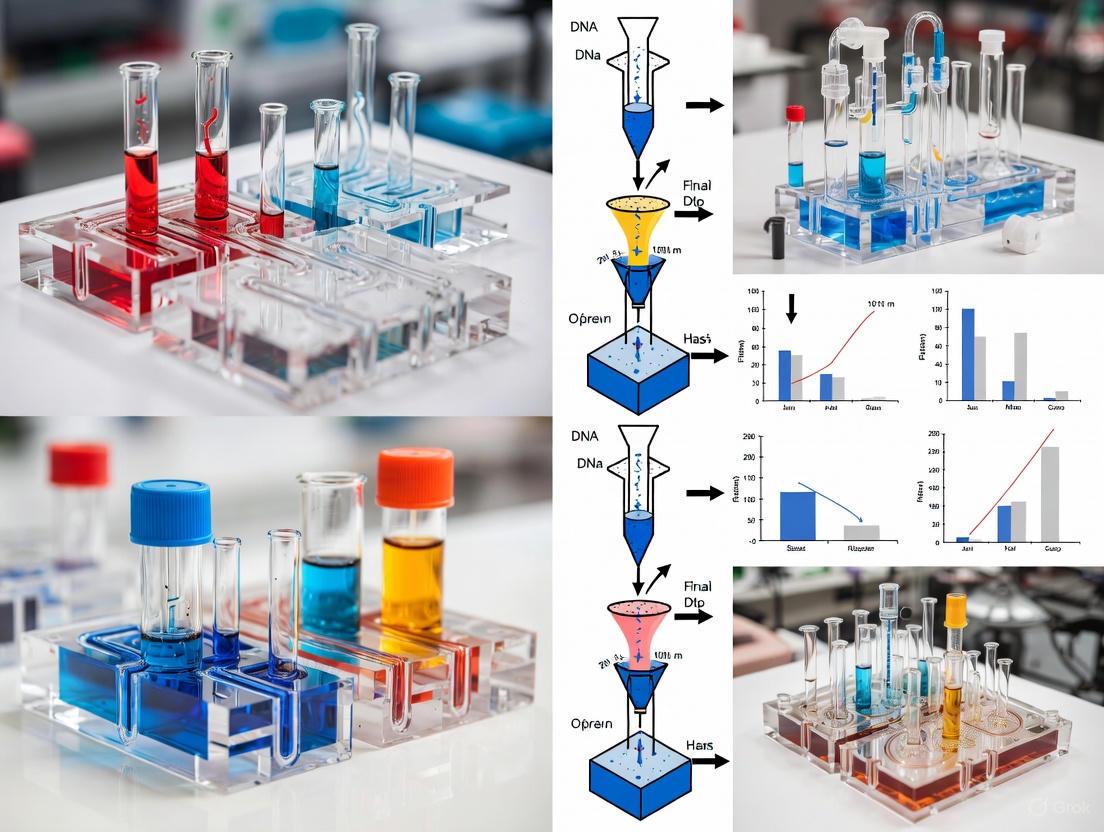
This article provides a comprehensive overview of microfluidic technologies that are revolutionizing DNA assembly and transformation, core processes in synthetic biology and drug development.
Microfluidic DNA Assembly and Transformation: Automating Synthetic Biology for Advanced Research and Drug Development
Abstract
This article provides a comprehensive overview of microfluidic technologies that are revolutionizing DNA assembly and transformation, core processes in synthetic biology and drug development. It explores the foundational principles of microfluidics, details cutting-edge methodological approaches like digital and one-pot systems, and addresses key troubleshooting and optimization strategies, including the emerging role of machine learning. By comparing microfluidic performance to traditional benchtop methods and validating its impact through real-world applications, this resource equips researchers and pharmaceutical professionals with the knowledge to leverage these automated, miniaturized platforms for enhanced efficiency, reduced costs, and accelerated innovation in their workflows.
The Foundations of Microfluidics in Synthetic Biology: From Principles to DNA Manipulation
Core Principles and Their Quantitative Signatures
The predictable behavior of fluids at the microscale is governed by the dominance of specific physical forces. Understanding the quantitative signatures of these principles is the first step in designing effective microfluidic devices for DNA assembly.
Table 1: Quantitative Characteristics of Core Microfluidic Principles
| Principle | Governing Equation/Number | Key Quantitative Value | Implication for DNA Assembly |
|---|---|---|---|
| Laminar Flow | Reynolds Number, ( Re = \frac{\rho v L}{\mu} ) | ( Re \ll 2000 ) (often <1) [1] [2] | Enables parallel, non-mixing streams for multiplexed reactions; prevents chaotic, turbulent mixing. |
| Diffusion | Diffusion Time, ( t \approx \frac{L^2}{D} ) | L (channel width) ~ 100 µm; D (DNA) ~ 10⁻¹¹ m²/s [1] | Mixing is slow and distance-dependent; dictates required channel length or residence time for reagent blending. |
| Electrokinetic Flow | Uniform Velocity Profile | Velocity at walls ≠ 0 (unlike pressure-driven flow) [3] | Produces a "plug-like" flow profile, minimizing sample dispersion and band broadening during transport. |
The Reynolds number (Re), representing the ratio of inertial to viscous forces, is the key predictor for laminar flow [3] [2]. In microchannels, the small characteristic dimension (L) and dominance of viscous forces result in a very low Re, producing a smooth, parallel flow of fluids without turbulence [1]. This is visually demonstrated when two separate streams of fluid, introduced into a single channel, flow side-by-side with mixing occurring only at the interface via diffusion [1].
Molecular Diffusion becomes the primary mixing mechanism at low Reynolds numbers. The time (t) required for a molecule to diffuse a distance (L) is proportional to L² divided by its diffusion coefficient (D) [1]. Given the small channel dimensions, diffusion can be fast over short distances but requires careful design to ensure complete mixing of reagents within a practical channel length and flow rate.
Electrokinetic Flow, specifically electroosmotic flow (EOF), is an alternative pumping method to pressure-driven flow. It occurs when an applied electric field moves the ion-rich layer of fluid near a charged channel wall, resulting in a uniform velocity profile across the channel cross-section [3]. This "plug flow" is advantageous for transporting samples without the parabolic band broadening inherent to pressure-driven flow, which is critical for high-resolution separations like capillary electrophoresis [3].
Experimental Protocol: Demonstrating Laminar Flow and Diffusion-Based Mixing
This foundational protocol visually demonstrates the core principles of laminar flow and diffusion, which is essential for designing devices that control reagent interactions.
Background and Application
This experiment provides a visual confirmation of laminar flow and quantitative analysis of diffusion, fundamental to designing microfluidic devices for DNA assembly where controlled mixing is required [1]. The setup can be adapted to create precise chemical gradients for cell stimulation or to control the interaction of assembly reagents like enzymes and DNA fragments.
Materials and Equipment
- Microfluidic Chip: Y-shaped or flow-focusing channel design (e.g., fabricated in PDMS via soft lithography).
- Syringe Pumps: Two independent, precision pumps for controlled flow rates.
- Microscopy Setup: Inverted microscope capable of fluorescence imaging.
- Reagents:
- Stream A: Buffer solution (e.g., 1X TE).
- Stream B: Buffer solution with a fluorescent dye (e.g., FITC-dextran, 10 µM).
- Data Analysis Software: ImageJ or equivalent for fluorescence intensity analysis.
Step-by-Step Procedure
- Chip Priming: Fill both inlet syringes and tubing with their respective solutions, ensuring no air bubbles are introduced into the microchannels.
- Flow Rate Calibration: Mount the syringes on the pumps. Set both pumps to the same, low flow rate (e.g., 1-10 µL/min).
- Image Acquisition: Initiate flow and place the chip under the microscope. Focus on the main channel downstream of the junction. Capture a brightfield image to show the channel boundaries, then switch to fluorescence to visualize the dye stream.
- Data Collection:
- Acquire a time-lapse series of fluorescence images at a fixed position downstream.
- Vary the flow rate (e.g., 1, 5, 10 µL/min) and capture images at each condition.
- Analysis:
- Laminar Flow Verification: Visually confirm the presence of two distinct, parallel streams in the brightfield and fluorescence images merged.
- Diffusion Measurement: Plot the fluorescence intensity profile across the width of the channel. Measure the width of the gradient region where fluorescence intensity changes. Calculate the inter-diffusion area for different flow rates.
Data Interpretation
- Lower flow rates will result in a wider inter-diffusion zone at a fixed distance from the junction, as the fluids have more time for molecular diffusion.
- The system can be modeled using the diffusion equation to estimate the diffusion coefficient (D) of the fluorescent solute.
Experimental Protocol: In-situ DNA Data Storage via Microfluidic VLSI
This advanced protocol details a groundbreaking method for writing digital data into DNA using a microfluidic very-large-scale integration (VLSI) chip, showcasing the power of programmable microfluidics for complex biochemical workflows [4].
Background and Application
This protocol encodes binary data (e.g., 101010101) into DNA strands within a high-density microfluidic chip, inspired by DRAM architecture [4]. It enables rapid, parallelized, and miniaturized DNA writing, directly applicable to encoding information for DNA-based data storage or for the parallel assembly of genetic constructs.
Materials and Equipment
- Microfluidic VLSI Chip: A programmable chip with a grid of unit cells (e.g., 48x48 array) [4].
- Oligonucleotides:
- Forward (Fx) and Reverse (Ry) Primers: Represent spatial addresses (x,y).
- Bit Sequence (B1): The core data sequence.
- Connector Oligos (CFx, CRy): Partially complementary to Fx/B1 and B1/Ry, respectively.
- PCR Reagents: dNTPs, high-fidelity DNA polymerase, and reaction buffer.
- qPCR Setup: TaqMan probe complementary to the B1 sequence.
Step-by-Step Procedure
Part A: Chip Programming and DNA Encoding
- Data Mapping: Map the binary data to the chip grid. A '1' at coordinate (x,y) is encoded by the presence of the full strand Fx-B1-Ry.
- Primer Loading:
- Load primers Fx and the B1 sequence into the respective column inlets.
- Load primers Ry into the respective row inlets.
- Connector Oligo Injection:
- Based on the data pattern, inject connector oligos (e.g., CR1+CR3 into columns with '1's in rows 1 and 3; CF1+CF3 into rows with '1's in columns 1 and 3) [4].
- Overlap-extension PCR (OE-PCR):
- The chip combines the contents from each row and column in the unit cells.
- Run OE-PCR (e.g., 20 cycles) within the chip. The full-length Fx-B1-Ry product forms only in unit cells where all components (Fx, CFx, B1, CRy, Ry) are present, encoding a '1' [4].
- Product Collection: Pool the contents from all unit cells to create the final DNA data storage library.
Part B: Data Decoding and Quality Control
- qPCR Decoding Array: Set up a qPCR array with all possible pairwise combinations of Fx and Ry primers.
- Amplification: Add the pooled DNA product and the TaqMan probe to each well.
- Data Readout: A significant amplification signal (Ct < 15) in a well with primers Fp and Rq confirms the successful encoding and presence of the Fp-B1-Rq strand, corresponding to a '1' at the original location (p,q) [4].
Data Interpretation
- Successful encoding is confirmed by qPCR amplification only at the addresses where a '1' was written.
- The signal-to-noise ratio can be calculated from the difference in Ct values between positive (Ct < 15) and negative (no amplification) wells.
The Scientist's Toolkit: Key Reagents for Microfluidic DNA Assembly
Table 2: Essential Research Reagents for Microfluidic DNA Assembly and Transformation
| Item | Function/Application in Microfluidics |
|---|---|
| Orthogonal Primer Pairs | A set of non-interacting primer sequences (e.g., F1-F3, R1-R3) used as addressable locations in highly multiplexed microfluidic DNA assembly reactions [4]. |
| Connector Oligonucleotides | Short, bridging oligonucleotides (e.g., CFx, CRy) that facilitate the joining of DNA fragments via overlap-extension PCR (OE-PCR) within microfluidic reactors by providing complementary overhangs [4]. |
| TaqMan Probes | Fluorogenic hydrolysis probes used for real-time, sequence-specific detection (qPCR) of assembled DNA products directly in the microfluidic device or during downstream quality control [4]. |
| High-Fidelity DNA Polymerase | A thermostable enzyme with proofreading activity essential for accurate DNA assembly via PCR-based methods (like OE-PCR) in nanoliter-scale microfluidic reactions [4]. |
| Impedance-Based Replenishment Solution | A system that compensates for droplet evaporation in digital microfluidic devices, maintaining constant reaction concentrations critical for assembly efficiency [5]. |
| Surface Passivation Reagents | Molecules (e.g., Pluronic F-68, BSA) that adsorb to microchannel walls, preventing non-specific adsorption of enzymes and DNA, which is critical at low volumes and high surface-to-volume ratios [3]. |
Why Microfluidics for DNA Work? Key Benefits of Miniaturization, Automation, and Cost Reduction
Microfluidics, the science and technology of manipulating fluids in channels with dimensions of tens to hundreds of micrometers, has revolutionized DNA research by providing powerful tools for miniaturization and automation. This technology enables the handling of extremely small fluid volumes, typically ranging from microliters (10⁻⁶ liters) to femtoliters (10⁻¹⁵ liters), allowing for high-precision control and analysis [6]. In the context of DNA assembly and transformation research, microfluidic platforms offer transformative advantages by integrating and scaling down complex laboratory procedures into compact, automated systems. The global microfluidics market, expected to reach US$73.97 billion by 2032, reflects the growing adoption and commercial validation of these technologies across life sciences [6].
For researchers, scientists, and drug development professionals, microfluidics addresses critical bottlenecks in conventional DNA workflows. Traditional methods for DNA manipulation are often labor-intensive, time-consuming, and require significant quantities of expensive reagents and samples. Microfluidic solutions transform these processes by enabling massive parallelization, drastically reducing reaction volumes, and automating multi-step protocols. This application note explores the core benefits of miniaturization, automation, and cost reduction in DNA work, supported by quantitative data, detailed protocols, and practical implementation guidelines to facilitate the integration of microfluidic technologies into your research workflows.
Key Benefits and Quantitative Advantages
The adoption of microfluidic systems in DNA research is driven by three interconnected pillars of advantage: miniaturization, automation, and significant cost reduction. These benefits are quantitatively demonstrated across various applications, from basic DNA assembly to high-throughput screening.
The Power of Miniaturization
Miniaturization is the fundamental principle of microfluidics, enabling the dramatic reduction of assay volumes. This scaling down provides several technical advantages that directly enhance research capabilities in DNA assembly and transformation.
Volume Reduction and Increased Sensitivity: Miniaturization reduces reagent and sample consumption by orders of magnitude. For instance, reaction volumes in PCR and next-generation sequencing (NGS) can be reduced by as much as 10-fold, leading to substantial cost savings while maintaining, or even improving, analytical performance [7]. This volume reduction also increases the effective concentration of target molecules, potentially enhancing detection sensitivity. In antibody-based protein assays, miniaturization has been shown to improve sensitivity by a factor of 2-10 when combined with signal enhancement techniques [7].
Enhanced Process Control and Efficiency: The high surface-to-volume ratio in microchannels improves heat transfer efficiency, which is particularly beneficial for temperature-sensitive processes like PCR. This enables much faster thermal cycling compared to conventional systems. One study demonstrated an ultra-fast qPCR microfluidic system that completed the molecular detection of pathogens like Anthrax and Ebola in less than 8 minutes—7 to 15 times faster than commercial systems [8]. Furthermore, miniaturization improves binding efficiencies in assays such as antibody-antigen interactions and decreases overall processing time [7].
High-Throughput Capabilities: Miniaturization enables parallel processing, where hundreds to thousands of reactions can be carried out simultaneously. This is particularly valuable in synthetic biology for screening genetic libraries or optimizing DNA assembly conditions [7]. One study highlighted the integration of oligo synthesis, amplification, and gene assembly on a single chip, significantly accelerating synthesis workflows [7].
Table 1: Quantitative Benefits of Miniaturization in DNA Analysis Techniques
| Application | Volume Reduction | Efficiency Improvement | Cost Savings |
|---|---|---|---|
| PCR/NGS | Up to 10-fold [7] | Faster thermal cycling (8 min vs 2 hours for qPCR) [8] | Up to 86% for RNAseq [7] |
| High-Throughput Screening | Nanoliter volumes (e.g., 4 nL dispensions) [7] | Parallel processing of thousands of compounds [7] | Reduced reagent consumption and precious compound waste [7] |
| Gene Delivery | Microliter to nanoliter volumes [9] | >90% delivery efficiency with high cell viability [9] | Lower reagent costs and reduced sample requirements [10] |
Automation and Workflow Integration
Automation in microfluidics enables the integration of multiple laboratory functions into seamless, self-contained workflows, significantly reducing manual intervention and improving reproducibility.
Integrated Workflow Management: Microfluidic platforms can consolidate the entire DNA analysis pipeline—from sample preparation to detection—into a single device. For instance, digital microfluidics (DMF) based on electrowetting-on-dielectric (EWOD) technology manipulates discrete droplets on a planar array of electrodes, allowing for programmable, automated control of complex fluidic operations without the need for pumps or valves [11]. This "sample-in-answer-out" capability is particularly valuable for point-of-care diagnostics and automated biomanufacturing process development [12].
Improved Reproducibility and Data Quality: Automation minimizes human error and operational variability, leading to more consistent and reliable results. In nucleic acid extraction, microfluidic systems provide enhanced reproducibility compared to manual methods [13]. For nanoparticle synthesis, such as lipid nanoparticles (LNPs) for gene delivery, microfluidic mixing produces particles with superior uniformity and reproducibility compared to bulk mixing methods [10].
Advanced Process Control: Microfluidic systems enable precise manipulation of cells and biomolecules at the microscale. Technologies such as microfluidic electroporation offer individual control over each well in a 384-well plate, allowing for rapid optimization of transformation conditions across diverse cell types and genetic materials [9]. Sensor integration provides real-time monitoring and control, delivering key process insights for optimization [12].
Substantial Cost Reduction
The economic benefits of microfluidics extend beyond reduced reagent consumption to include broader operational efficiencies and enabling capabilities.
Direct Reagent and Sample Savings: The most immediate cost benefit comes from dramatically reduced consumption of expensive reagents, enzymes, and precious samples. Miniaturization to nanoliter volumes can transform otherwise cost-prohibitive experiments into affordable ones. For example, one research group reported 86% cost savings for RNAseq through miniaturization while maintaining accuracy and reproducibility [7].
Reduced Operational Overheads: Automated microfluidic systems decrease labor requirements and increase throughput, effectively reducing the cost per experiment. The High-Throughput Microfluidic Electroporation (HTME) platform enables hundreds of electroporations with minimal manual intervention, significantly accelerating synthetic biology Design-Build-Test-Learn (DBTL) cycles [9]. Furthermore, disposable microfluidic cartridges can simplify laboratory workflows, reducing the need for cleaning and sterilization [14].
Accelerated Development Timelines: The speed and parallelization capabilities of microfluidic systems can substantially shorten research and development cycles. In drug discovery, miniaturization facilitates high-throughput screening of thousands of compounds, accelerating the identification of potential drug candidates [7]. Similarly, in synthetic biology, the ability to rapidly test multiple genetic constructs or assembly conditions can compress project timelines from months to weeks.
Table 2: Economic Impact Analysis of Microfluidic Implementation
| Cost Factor | Traditional Methods | Microfluidic Approach | Economic Impact |
|---|---|---|---|
| Reagent Consumption | High (microliter to milliliter volumes) | Very low (nanoliter to microliter volumes) [7] | Direct cost savings of 50-90% on reagents [7] |
| Labor Requirements | Manual processing and monitoring | Automated, integrated workflows [11] | Reduced personnel time and increased throughput |
| Equipment Footprint | Multiple benchtop instruments | Consolidated, compact systems [13] | Space savings and increased accessibility |
| Process Development | Sequential optimization | High-throughput parallel screening [9] | Faster optimization and reduced time-to-results |
Application Protocols
Protocol: High-Throughput Microfluidic Electroporation for DNA Transformation
This protocol describes the use of a High-Throughput Microfluidic Electroporation (HTME) platform for efficient DNA transformation in a 384-well format, enabling rapid screening of genetic constructs or optimization of transformation conditions [9].
Research Reagent Solutions and Materials:
- HTME E-Plate: A 384-well electroporation plate fabricated using printed-circuit-board (PCB) technology with individually addressable wells [9].
- Cell Suspension: Prepare concentrated cells (e.g., E. coli) in electrocompetent buffer. The HTME platform operates on 100 nL to 1 μL volumes per well [9].
- DNA Constructs: Diluted to appropriate concentrations in low-ionic-strength buffer.
- Recovery Media: Rich medium suitable for cell growth after electroporation.
- LB-Agar Plates: Containing appropriate selective antibiotics.
Step-by-Step Workflow:
Device Preparation: Ensure the HTME E-Plate and control electronics are properly connected and calibrated. The platform uses a novel emitter-follower transistor circuit to ensure consistent electroporation pulses without requiring per-well sample measurement [9].
Sample Loading: Dispense 100 nL of cell suspension into each well of the E-Plate using an automated liquid handler compatible with the 384-well footprint. Add 1-10 nL of DNA solution to appropriate wells. The minimal dead volume (1 μL) of systems like the I.DOT Liquid Handler is ideal for this application [7].
Electroporation Parameters: Program the HTME control system to deliver appropriate exponential-decay electroporation pulses. The system provides individual control of each well, allowing for different voltage and time constant settings across the plate to optimize conditions [9].
Pulse Application: Execute the electroporation protocol, which can electroporate all 384 wells in under a minute. The planar electrode topology and reduced volumes enable effective transformation at lower voltages compared to traditional cuvettes, reducing Joule heating and improving cell viability [9].
Cell Recovery: Immediately after pulsing, transfer the contents of each well to 100 μL of recovery media in a standard 384-well plate. Incubate at appropriate temperature with shaking for cell recovery.
Outcome Assessment: Plate aliquots from each well onto selective LB-agar plates to determine transformation efficiency by counting colony-forming units (CFUs). The HTME platform has demonstrated the ability to achieve at least a single CFU in more than 99% of wells with E. coli and pUC19 [9].
Protocol: Integrated Nucleic Acid Extraction and Amplification
This protocol outlines an integrated approach for nucleic acid extraction and amplification using digital microfluidics (DMF), creating a complete "sample-to-answer" system suitable for point-of-care testing or automated laboratory workflows [11].
Research Reagent Solutions and Materials:
- DMF Device: A closed-configuration DMF device with a top plate coated with indium tin oxide (ITO) and a bottom plate with patterned actuation electrodes, separated by a dielectric and hydrophobic layer [11].
- Lysis Buffer: Containing chaotropic salts for cell lysis and nucleic acid binding.
- Wash Buffer: Typically ethanol-based for removing contaminants while retaining nucleic acids bound to solid phases.
- Elution Buffer: Low-ionic-strength buffer (e.g., TE buffer or nuclease-free water) for nucleic acid elution.
- Magnetic Beads: Silica-coated magnetic beads for solid-phase nucleic acid extraction.
- Amplification Reagents: Primers, polymerase, dNTPs, and buffer appropriate for PCR, LAMP, or RPA amplification.
- Detection Reagents: Fluorescent probes or intercalating dyes for real-time detection.
Step-by-Step Workflow:
Sample Lysis: Load the sample (e.g., cells, tissue lysate) onto the DMF device. Merge with lysis buffer droplet and mix by droplet movement across electrodes. Incubate to complete cell lysis. DMF devices can implement various lysis methods, including chemical, thermal, or electrical approaches [11].
Nucleic Acid Binding: Combine the lysate with a droplet containing silica-coated magnetic beads. Activate an external magnet to immobilize the beads while washing steps remove contaminants. The binding occurs in the presence of chaotropic salts [8].
Washing Steps: Transport the bead-bound nucleic acids through a series of wash buffer droplets to remove proteins, inhibitors, and other contaminants. The DMF platform enables precise control of washing stringency and completeness [11].
Elution: Resuspend the washed beads in elution buffer to release purified nucleic acids. The FieldNA device demonstrates how gravity-driven flow and magnetic capture can efficiently execute this process in a compact format [13].
Amplification Setup: Merge the eluted nucleic acids with amplification master mix. DMF devices are compatible with various amplification methods, including thermal cycling (PCR) and isothermal approaches (LAMP, RPA) [11].
Amplification and Detection: Transport the reaction droplet to a thermal control zone for amplification. Monitor in real-time using integrated optical systems for fluorescent detection. The entire process from sample to results can be completed with minimal manual intervention [11].
The Scientist's Toolkit
Implementing microfluidic technologies for DNA work requires familiarity with both established and emerging tools. The following table outlines key research reagent solutions and their applications in microfluidic DNA research.
Table 3: Essential Research Reagent Solutions for Microfluidic DNA Work
| Tool/Category | Specific Examples | Function in DNA Work | Implementation Considerations |
|---|---|---|---|
| Liquid Handlers | I.DOT Liquid Handler [7] | Non-contact dispensing of nL volumes for assay miniaturization | Minimal dead volume (1 μL); ideal for HTS and assay miniaturization |
| Microfluidic Electroporation | HTME Platform [9] | High-throughput cell transformation with individual well control | 384-well format; PCB fabrication reduces costs; compatible with automation |
| Nucleic Acid Extraction Systems | FieldNA device [13], G.PREP NGS Automation [7] | Integrated nucleic acid purification from complex samples | Magnetic bead-based; gravity-driven flow; 3D printed for customization |
| Digital Microfluidics (DMF) | EWOD-based DMF devices [11] | Programmable droplet control for integrated NAAT workflows | Closed configuration prevents evaporation; compatible with various substrates |
| Amplification Modules | Ultra-fast qPCR systems [8], Isothermal amplification devices [11] | Nucleic acid amplification with rapid thermal cycling or isothermal methods | Integrated temperature control and real-time fluorescence detection |
| Specialized Reagents | Silica-coated magnetic beads [13], Microfluidic-compatible enzymes | Enable specific microfluidic processes like extraction and amplification | Optimized for microfluidic environments and reduced reaction volumes |
Microfluidics represents a paradigm shift in DNA research, offering compelling advantages through miniaturization, automation, and cost reduction. The ability to work with nanoliter volumes, integrate multiple laboratory functions into unified workflows, and dramatically reduce operational costs positions microfluidic technologies as essential tools for modern molecular biology research, particularly in DNA assembly and transformation. As these platforms continue to evolve through advancements in fabrication technologies, system integration, and artificial intelligence, their impact on accelerating scientific discovery and enabling new applications will only grow. For research teams seeking to enhance throughput, reproducibility, and efficiency in DNA work, strategic investment in microfluidic capabilities offers a clear path to maintaining competitive advantage in an increasingly demanding research landscape.
Microfluidics, the science and technology of manipulating small volumes of fluids (typically microliters to picoliters) within networks of channels with dimensions less than one millimeter, has become an indispensable tool in modern biological research [15]. By enabling precise fluid control, minimal reagent consumption, and rapid analysis times, microfluidic platforms are driving innovation across healthcare, biotechnology, and pharmaceutical development [15]. For researchers focused on DNA assembly and transformation, these systems offer unprecedented control over experimental conditions, high-throughput capabilities, and the potential to integrate complex multi-step workflows onto a single, compact chip [12].
The fundamental principles governing microfluidics, including laminar flow, diffusion-based mixing, and capillary action, allow researchers to create highly controlled microenvironments essential for delicate biological processes [15]. Within the specific context of nucleic acid research, microfluidic devices have been applied to everything from DNA fragmentation and analysis to gene delivery and cellular transformation [16] [10]. This application note details three primary microfluidic device architectures—continuous-flow, droplet-based, and digital microfluidics (DMF)—providing researchers with practical insights, quantitative comparisons, and detailed protocols for their implementation in DNA-focused research workflows.
Microfluidic platforms for biological applications primarily fall into three categories, each with distinct mechanisms, advantages, and ideal use cases.
Continuous-Flow Microfluidics operates by pumping fluids through permanent, fabricated microchannels. These systems are characterized by laminar flow, where fluids move in parallel layers without turbulence, enabling precise spatial control of reactions and gradients [15] [17]. They are particularly well-suited for processes like chemical synthesis, DNA fragmentation, and analysis requiring steady-state conditions [16].
Droplet-Based Microfluidics (or segmented flow) utilizes immiscible phases to create discrete, nanoliter to picoliter volume droplets that function as isolated micro-reactors [18] [17]. This system generates highly monodisperse droplets at frequencies up to thousands per second, allowing for massive parallelization of experiments [17]. Applications include single-cell analysis, digital PCR, high-throughput screening, and protoplast culture [18] [19].
Digital Microfluidics (DMF) manipulates discrete droplets on an open array of electrodes without the need for physical channels or pumps [20] [11]. Using mechanisms like electrowetting-on-dielectric (EWOD) or magnetic forces, DMF enables programmable, reconfigurable transport, merging, splitting, and mixing of individual droplets [21] [11]. This makes it ideal for complex, multi-step nucleic acid amplification tests (NAAT) and point-of-care diagnostic applications [21] [11].
Table 1: Comparative Analysis of Essential Microfluidic Device Types
| Feature | Continuous-Flow | Droplet-Based | Digital Microfluidics (DMF) |
|---|---|---|---|
| Fundamental Principle | Fluid pumped through permanent microchannels [15] | Immiscible phases generate isolated droplets [17] | Programmable electrode array manipulates discrete droplets [11] |
| Typical Volume Range | Microliters to nanoliters [15] | Nanoliters to picoliters [17] | Microliters to nanoliters [11] |
| Throughput | Limited by number of parallel channels | Very High (up to 20,000 droplets/sec) [17] | Moderate, highly flexible and programmable [21] |
| Key Advantages | Simple design, excellent for continuous processes [16] | Massive parallelization, minimal cross-contamination, high throughput [18] [19] | Flexible droplet routing, integrated operation, no pumps required [21] [11] |
| Limitations | Taylor dispersion, risk of channel clogging | Complex surfactant chemistry, limited droplet operation repertoire | Evaporation in open systems, complex fabrication for advanced models [11] |
| Exemplary DNA Research Applications | DNA fragmentation [16], concentration gradients | Single-cell genomics [19], digital PCR, protoplast transformation [18] | Automated NAAT workflows [11], point-of-care diagnostics [21] |
Table 2: Quantitative Performance Metrics for Microfluidic Applications
| Application | Device Type | Key Performance Metrics | Reported Values |
|---|---|---|---|
| DNA Fragmentation | Continuous-Flow (Acoustic Streaming) | Fragment Size Range, Power Consumption, Flow Rate | 700–3000 bp, ~140 mW, 1–50 µL/min [16] |
| Protoplast Development | Droplet-Based | Droplet Volume, Protoplast Viability, Cultivation Period | 120–300 nL, Species-dependent (e.g., high for tobacco), Extended observation [18] |
| Nucleic Acid Detection | Digital Microfluidics (Electrochemical) | Limit of Detection (LOD), Linear Range, Sensitivity | 6.5 µM (Glucose), 0.01–0.25 mM, 7833.54 µA·mM⁻¹·cm⁻² [20] |
| Single-Cell Genomics | Droplet-Based | Cells Profiled, Doublet Rate, Cell Barcode Length | Thousands to millions of cells per run, 0.4–11% [19], 14-16 bases [19] |
Application Notes & Experimental Protocols
Protocol 1: Continuous-Flow DNA Fragmentation
Application Note: This protocol describes a bubble-free, continuous-flow method for fragmenting genomic DNA using strong acoustic streaming generated by a vibrating sharp-tip within a 3D-printed microfluidic device [16]. This approach is ideal for preparing DNA for next-generation sequencing (NGS) or other analyses requiring small, unbiased fragments, and it can be directly coupled with downstream microfluidic analysis units.
Experimental Protocol:
- Device Fabrication: Fabricate the microfluidic chip using a high-resolution 3D printer (e.g., Asiga Pico2 HD) with PEGDA-based resin. Anchor a pulled-glass capillary (tip O.D. ~25 µm) into a side channel of the device and attach a piezoelectric transducer to it [16].
- System Setup: Connect the device to a syringe pump via FEP tubing. Place the entire setup on an inverted fluorescence microscope for process monitoring. Apply a superhydrophobic coating to the side channel and capillary to prevent liquid leakage [16].
- DNA Sample Preparation: Prepare genomic DNA (e.g., from human male blood) in a suitable buffer, such as Tris-borate-EDTA (TBE). The initial DNA concentration can be adjusted based on desired fragment yield [16].
- Fragmentation Process: Infuse the DNA solution through the device's main chamber at a controlled flow rate (1–50 µL/min). Simultaneously, activate the piezoelectric transducer to vibrate the sharp-tip capillary, generating localized acoustic streaming vortices that shear the DNA molecules [16].
- Product Collection & Analysis: Collect the fragmented DNA output from the device outlet. Analyze the fragment size distribution (expected range: 700–3000 bp) using standard agarose gel electrophoresis or a bioanalyzer [16].
Protocol 2: Droplet-Based Microfluidic Protoplast Culture
Application Note: This protocol outlines a method for encapsulating plant protoplasts within nanoliter droplets for high-resolution, long-term studies of cell development and response to chemical stimuli [18]. The platform enables nearly single-cell resolution observation and is suitable for dose-response screening, which can be adapted for studying DNA delivery and transformation efficiency in protoplasts.
Experimental Protocol:
- Protoplast Isolation:
- Isolate protoplasts from leaves of model species (e.g., Nicotiana tabacum). Cut leaves into small pieces and incubate in a preplasmolysis solution for 1 hour.
- Replace the solution with an enzyme mixture (e.g., 1.6% cellulase, 0.8% macerozyme) and incubate for 15-17 hours at 27°C in darkness.
- Filter the digested material through a 100 µm sieve. Purify protoplasts via centrifugation in a 20% sucrose solution and resuspend in cultivation medium at a density of 1.5–4 × 10⁵ cells·mL⁻¹ [18].
- Microfluidic System Setup: Use a droplet generator with a multi-syringe pump (e.g., NEMESYS) for precise flow control. Employ glass syringes for the aqueous phase (culture medium/effectors) and a larger syringe for the carrier oil phase (e.g., PP9) [18].
- Droplet Generation & Encapsulation: Introduce the protoplast suspension into the droplet generator. Using flow rates of ~20 µL/min (aqueous) and ~30 µL/min (continuous oil phase), generate monodisperse droplets of 120–300 nL, each containing protoplasts. Direct the droplets into incubation tubing [18].
- Cultivation & Observation: Seal the incubation tubing and maintain it at 24°C in darkness. Use a microscope for longitudinal, time-lapse observation of individual droplets to track cell viability, division events, and morphological changes [18].
- Effector Screening (Optional): To test the effect of growth regulators (e.g., auxins, cytokinins) or transformation vectors, introduce them at desired concentrations into the culture medium stream prior to droplet generation for dose-response studies [18].
Protocol 3: Digital Microfluidics for Nucleic Acid Amplification Tests (NAAT)
Application Note: This protocol describes an automated workflow for nucleic acid amplification tests (NAAT) using an electrowetting-on-dielectric (EWOD) DMF platform [11]. The system integrates sample preparation, amplification, and detection, making it a powerful tool for rapid, point-of-care molecular diagnostics and for validating DNA assembly outcomes.
Experimental Protocol:
- DMF Chip Preparation: Use a standard closed-configuration DMF device with a bottom plate containing an array of actuation electrodes (e.g., gold or ITO on glass) and a top plate with a continuous ground electrode (ITO). The device should be coated with a dielectric and a hydrophobic layer [11].
- Sample and Reagent Loading: Pipette the sample containing the target nucleic acid (e.g., purified DNA from an assembly reaction) and all necessary reagents (lysis buffer, wash buffers, amplification master mix, primers) into discrete reservoirs on the DMF chip [11].
- Automated Workflow Execution:
- Nucleic Acid Extraction: Activate electrodes to merge the sample and lysis buffer droplets, then transport the droplet across a stationary solid phase (e.g., magnetic beads) for binding and washing.
- Amplification Setup: Dispense the purified nucleic acid and merge it with the amplification master mix (e.g., for PCR, LAMP, or RPA).
- Amplification: Transport the reaction droplet to an integrated heating element. For PCR, execute thermal cycling by toggling the heater temperature. For isothermal amplification (e.g., LAMP at 60–65°C, RPA at 37–42°C), maintain a constant temperature [11].
- Detection: Post-amplification, transport the droplet to an integrated detector. For fluorescence-based detection, use an embedded LED and photodetector. For electrochemical detection, transport the droplet to integrated electrodes (working, reference, counter) for measurement [20] [11].
Visualizing Workflows
The Scientist's Toolkit: Research Reagent Solutions
Table 3: Essential Materials and Reagents for Microfluidic Experiments
| Item Name | Function/Application | Specification Notes |
|---|---|---|
| Poly(dimethyl) siloxane (PDMS) | Device fabrication for droplet/continuous-flow; biocompatible, gas-permeable elastomer [18] [15] | Incompatible with strong organic solvents; requires plasma bonding to glass [17] |
| PEGDA (Poly(ethylene glycol) diacrylate) | Resin for 3D printing microfluidic devices; allows for rapid prototyping of complex geometries [16] | Used with photoinitiators (e.g., Irgacure 819); requires post-washing and UV post-curing [16] |
| Fluorinated Ethylene Propylene (FEP) Tubing | Fluidic connections; chemically inert, low adhesion to biological samples [18] | Inner/Outer diameter: e.g., 0.5/1.6 mm; used for connecting syringes to droplet generators [18] |
| Surfactants (e.g., Pico-Surf) | Stabilizes droplets in oil phase to prevent coalescence in droplet-based microfluidics [17] | Critical for long-term droplet integrity; concentration affects droplet size and stability [17] |
| Magnetic Nanoparticles (Fe₃O₄) | Acts as droplet actuator in magnetic DMF; solid phase for nucleic acid extraction [20] [11] | ~10-100 nm diameter; functionalized surfaces for specific binding (e.g., silica for DNA) [20] |
| N52 Permanent Magnet | Generates localized high-intensity magnetic field for droplet actuation in magnetic DMF systems [20] | Cylindrical (e.g., 4 × 2 mm); moved via an underlying programmable microcoil array [20] |
| Superhydrophobic Coating (e.g., NC306) | Creates low-resistance surface on microfluidic chips for easier droplet movement [20] | Applied via spray coating; critical for reducing actuation force in DMF and certain channel-based systems [20] |
Lab-on-a-chip (LoC) technology, which miniaturizes and integrates laboratory processes onto a single chip ranging from millimeters to a few square centimeters, has fundamentally reshaped the landscape of biomedical research and diagnostics [22]. By processing small fluid volumes (typically 100 nL to 10 μL) and consolidating functions like sampling, chemical reactions, and analysis, LoC systems enhance automation, portability, and efficiency while reducing costs and assay times [22]. The application of this technology to DNA assembly—a cornerstone of synthetic biology, therapeutic development, and genomics—has transformed our capacity to "write" DNA [23]. This evolution from conceptual microfluidic devices to essential platforms enables the handling of fragile, megabase-scale DNA molecules with minimal shear force and integrates the multi-step workflows of DNA extraction, assembly, and analysis, thereby accelerating the engineering of biological systems [23] [24].
Historical Development of Lab-on-a-Chip Technology
The genesis of LoC technology dates to the 1970s with Terry et al.'s miniaturized gas chromatography analyzer on a silicon wafer [22]. The field gained significant momentum in 1990 with Manz et al.'s conceptual work on miniaturized total chemical analysis systems (μTAS), followed by the groundbreaking achievement of on-chip capillary electrophoresis by Harrison and Manz in 1993 [22]. The subsequent decades witnessed intensive development, driven by key innovations:
- 1998: Whitesides and colleagues introduced soft lithography using PDMS, a material that became a mainstay due to its optical transparency, gas permeability, and rapid prototyping capabilities [22].
- Early 2000s: The emergence of droplet microfluidics enabled the precise manipulation of picoliter to nanoliter droplets [22].
- 2004-2005: Shuler and co-workers developed "cell-on-a-chip" systems, laying the foundation for organ-on-a-chip technology, which was later advanced by Huh et al.'s lung-on-a-chip design [22].
- 2007: The Whitesides group introduced paper-based microfluidics (μPADs), leveraging capillary action for low-cost, portable diagnostics [22].
- 2010s-Present: The integration of biosensing technologies, artificial intelligence (AI), and machine learning (ML) has further enhanced the diagnostic accuracy, predictive capabilities, and automation of LoC systems [22]. A landmark regulatory shift occurred in December 2022 with the FDA Modernization Act 2.0, which approved the use of organ-on-a-chip systems as valid non-animal testing methods for drug efficacy and safety [22].
Table 1: Key Milestones in Lab-on-a-Chip Development
| Year | Milestone | Key Innovation | Significance |
|---|---|---|---|
| 1970s | Miniaturized Gas Chromatography [22] | Silicon wafer analyzer | First demonstration of a miniaturized analysis system |
| 1990 | Miniaturized Total Analysis Systems (μTAS) [22] | Concept of integrating lab processes | Established the foundational philosophy of LoC |
| 1993 | On-Chip Capillary Electrophoresis [22] | Separation of analytes on a chip | Proof-of-concept for complex chemical analysis on a microchip |
| 1998 | Soft Lithography with PDMS [22] | High-fidelity replication of microfeatures | Made rapid prototyping accessible, widely adopted for biological studies |
| 2007 | Paper-Based Microfluidics (μPADs) [22] | Capillary-driven flow on paper | Enabled ultra-low-cost, disposable point-of-care diagnostics |
| 2022 | FDA Modernization Act 2.0 [22] | Approval of organ-on-a-chip for drug testing | Granted regulatory validation for LoC devices in pharmaceutical development |
LoC Platforms and Materials for DNA Applications
The performance of an LoC device in DNA assembly is critically dependent on the selected platform and material, each offering distinct advantages and limitations for specific applications.
Material Selection
Material choice influences optical transparency, biocompatibility, chemical resistance, fabrication cost, and suitability for cell culture or DNA manipulation [22].
Table 2: Common Materials for Microfluidic Platforms in DNA Applications
| Material | Pros | Cons | Typical DNA/Diagnostic Application |
|---|---|---|---|
| Silicon | Well-characterized surface chemistry; high design flexibility; chemically inert [22] | High cost; optically opaque; electrically conductive [22] | Nucleic acid detection microarrays; organ-on-chip platforms [22] |
| Glass | Excellent optical clarity; low fluorescence background; chemically resistant; thermally stable [22] | High bonding temperature required [22] | Point-of-care diagnostics; cell-based assays; nucleic acid analysis [22] |
| PDMS | Biocompatible; gas-permeable; optically transparent; easy to fabricate [22] | Hydrophobic; can absorb small molecules; scalability issues [22] | Organ-on-chip models; blood flow studies; single-molecule analysis [22] [24] |
| Paper | Intrinsic capillary flow; very low cost; portable and disposable [22] | Limited flow control; lower structural integrity [22] | Rapid point-of-care testing (e.g., lateral flow assays) [22] |
| Epoxy Resins (e.g., 3D Printing Resins) | High mechanical strength; excellent resolution for 3D printing; rapid prototyping [13] | Can be brittle; may require post-processing & coating [13] | Custom devices for nucleic acid extraction (e.g., FieldNA device) [13] |
Microfluidic Configurations for DNA Workflows
Different LoC configurations have been developed to handle the specific challenges of DNA assembly:
- Digital Microfluidics (DMF): This platform manipulates discrete droplets on a planar array of electrodes using electrowetting-on-dielectric (EWOD). It is highly versatile for automating multi-step protocols like nucleic acid extraction, amplification, and detection in a programmable manner without pumps or valves [11]. Closed-configuration DMF devices are often preferred for NAATs to minimize evaporation and contamination [11].
- Conventional Continuous-Flow Microfluidics: These devices use microfabricated channels and chambers to direct fluid flow. A key application is the extraction and analysis of fragile, megabase-scale DNA from bacterial cells, where shear forces must be minimized. The design of side chambers allows for reagent exchange via diffusion, protecting long DNA molecules from fragmentation [24].
- 3D-Printed Vertical Flow Devices: Devices like the FieldNA system use gravity-driven vertical flow through stacked, 3D-printed modules. This design minimizes the need for external power or peripherals and is well-suited for solid-phase DNA extraction using magnetic beads in a portable format [13].
Essential Tools and Reagents for DNA Assembly on LoC
The integration of DNA assembly protocols onto LoC platforms relies on a suite of specialized reagents and materials.
Table 3: Research Reagent Solutions for DNA Assembly on LoC
| Reagent/Material | Function | Application in LoC |
|---|---|---|
| Magnetic Beads | Solid-phase support for binding, washing, and eluting nucleic acids [13] | Core component in portable DNA extraction devices (e.g., FieldNA); beads are captured by a magnet while buffers are flowed through [13] |
| Lysis Buffer | Breaks down cell membranes and releases genomic DNA [24] | Used on-chip for bacterial spheroplast lysis to release intact chromosomal DNA for analysis [24] |
| Polymerase Enzymes | Catalyze the template-directed synthesis of DNA [23] | Essential for on-chip PCR, LAMP, RPA, and other amplification methods; also used in enzymatic DNA synthesis [23] [11] |
| Unnatural Base Pairs (UBPs) | Expand the genetic alphabet beyond A-T and G-C [23] | Chemically or enzymatically incorporated to create oligonucleotides with novel properties for aptamers or expanded data storage [23] |
| Mirror-Image L-DNA | The left-handed enantiomer of natural D-DNA; resistant to nuclease degradation [23] | Synthesized for use in therapeutic aptamers and bioorthogonal information storage; requires specialized polymerases for enzymatic synthesis [23] |
| Polyvinylidene Fluoride (PVDF) Membrane | A specialized polymer membrane with high binding capacity | Used as an inclined capture plane in 3D-printed devices to immobilize magnetic beads during DNA purification [13] |
Detailed Experimental Protocols
Protocol 1: On-Chip Extraction of Bacterial Genomic DNA using a Microfluidic Platform
This protocol, adapted from Joesaar et al. (2025), details the extraction of intact, megabasepair-long bacterial chromosomes in a microfluidic device for downstream analysis or assembly [24].
Workflow Overview:
Materials and Equipment:
- Microfluidic Device: A PDMS/glass chip featuring a linear array of microchambers (e.g., 16-20 μm diameter, 1.6 μm height) with integrated Quake valves for on-chip flow control [24].
- Bacterial Culture: B. subtilis or E. coli.
- Spheroplast Preparation Reagents: Lysozyme, osmotically-stable growth medium.
- Lysis Buffer: A suitable buffer (e.g., containing SDS or other detergents).
- DNA Staining Dye: e.g., SYBR Green I or similar intercalating dye.
- Instrumentation: Syringe pumps or pressure-driven flow system, confocal or fluorescence microscope.
Step-by-Step Procedure:
- Spheroplast Preparation: Grow bacterial cells to the desired phase. Treat them with lysozyme in an osmotically supportive medium to digest the cell wall, forming spherical spheroplasts. Wash and resuspend the spheroplasts in an appropriate buffer [24].
- Device Priming: Flush the microfluidic device with buffer to wet the channels and remove air bubbles.
- Cell Loading and Trapping: Introduce the spheroplast suspension into the main filling channel of the device. Actuate the exhaust valves to direct flow through the side microchambers. The spheroplasts are trapped in the chambers because the exit channels (e.g., 0.7 μm wide) are too narrow for them to pass through. Optimize concentration to achieve a high yield of chambers containing a single spheroplast (~40% efficiency reported) [24].
- On-Chip Lysis: Switch the input flow to the lysis buffer. The buffer flows past the trapped spheroplasts, lysing them and releasing the chromosomal nucleoid into the chamber. Monitor this process in real-time using fluorescence microscopy once the DNA-binding dye is added.
- Deproteination and Expansion: Flush the chambers with a purification buffer to remove DNA-binding proteins. This causes the nucleoid to decondense and expand, revealing its polymer structure. This step can be performed via direct flow or, to minimize shear forces on the DNA, by allowing reagents to diffuse into the chamber from the main channel [24].
- Downstream Analysis/Assembly: With the genomic DNA trapped and localized, introduce exogenous DNA-binding proteins (e.g., Fis, histones) or crowding agents (e.g., PEG) to study their effect on DNA conformation, or proceed with downstream assembly reactions [24].
Protocol 2: Portable DNA Extraction using a 3D-Printed Vertical Flow Device
This protocol, based on the FieldNA device, describes a equipment-free method for isolating DNA from complex samples like olive oil, suitable for field applications [13].
Workflow Overview:
Materials and Equipment:
- FieldNA Device: A disposable, 3D-printed device (e.g., SLA-printed with grey ABS-like resin) comprising stacked modules: sample loading, incubation, separation plate, magnetic capture module, and elution plate [13].
- Magnetic Beads: Paramagnetic particles functionalized for DNA binding.
- Lysis/Binding Buffer: A buffer designed to promote DNA binding to the magnetic beads.
- Wash Buffers: Typically ethanol-based buffers to remove contaminants.
- Elution Buffer: Low-salt buffer or nuclease-free water.
- Disc Magnet: Neodymium disc magnet (e.g., 6 mm diameter) [13].
Step-by-Step Procedure:
- Sample Lysis and Binding: Mix the starting sample (e.g., 500 μL of olive oil) with the appropriate lysis and binding buffer. Add the functionalized magnetic beads and incubate to allow DNA to bind to the bead surfaces [13].
- Device Loading: Load the resulting lysate-bead mixture into the top module of the FieldNA device.
- Gravity-Driven Flow and Capture: Rotate the device's modules to align notches, allowing the solution to flow downward by gravity into the magnetic capture module. This module contains an inclined plane coated with a PVDF membrane and a built-in magnet. The magnetic beads are captured and immobilized on this incline [13].
- Washing: Pass wash buffers through the magnetic capture module. The buffers flow over the immobilized beads, removing proteins, salts, and other impurities, which are directed to waste.
- Elution: Add elution buffer to the top module. As it flows over the captured beads, the purified DNA is released and collected in the bottom elution plate.
- Collection and Downstream Use: The eluted DNA, now purified, can be used directly in downstream molecular assays such as real-time PCR or high-resolution melt (HRM) analysis. The entire process can be completed in approximately 20 minutes without centrifuges or power sources [13].
DNA Synthesis and Assembly Methods Enabled by LoC
The ability to manipulate DNA on-chip supports both conventional and advanced assembly methods, facilitating the construction of long DNA sequences from smaller fragments.
Table 4: DNA Synthesis and Assembly Methodologies
| Method | Principle | Key Advantages | Compatibility with LoC |
|---|---|---|---|
| Chemical Synthesis (Phosphoramidite) | Step-wise addition of nucleotides on a solid support [23] | High accuracy for short oligos; customizable with modifications [23] | High; implemented in high-throughput, chip-based synthesizers from companies like Twist Bioscience [23] |
| Enzymatic Synthesis | Template-independent polymerase activity (e.g., Terminal deoxynucleotidyl Transferase, TdT) [23] | Milder conditions; longer potential products; more sustainable [23] | Emerging; companies like DNA Script developing desktop "DNA printers" using this technology [23] |
| Polymerase Chain Reaction (PCR) | Thermal cycling for exponential amplification of target sequences [11] | High sensitivity and specificity; gold standard for detection [11] | High; integrated with on-chip microheaters for rapid thermal cycling [11] |
| Loop-Mediated Isothermal Amplification (LAMP) | Isothermal amplification with strand-displacing polymerase and multiple primers [11] | Constant temperature; rapid; robust [11] | Excellent; simplifies thermal management on-chip [11] |
| Recombinase Polymerase Amplification (RPA) | Isothermal amplification using recombinase enzymes [11] | Fast (20-40 min); low temperature (37-42°C) [11] | Excellent; ideal for point-of-care LoC devices [11] |
| Gibson Assembly | One-step, isothermal assembly of multiple DNA fragments using exonuclease, polymerase, and ligase [23] | Seamless and simultaneous assembly of multiple fragments [23] | High; droplets in DMF or chambers in continuous-flow devices can host the reaction |
The evolution of lab-on-a-chip technology from a novel concept to an essential tool for DNA assembly marks a paradigm shift in bioengineering. The miniaturization, integration, and automation offered by LoC devices directly address critical challenges in handling megabase-scale DNA, standardizing complex protocols, and deploying advanced molecular techniques in resource-limited settings. The convergence of sophisticated materials like 3D-printed polymers, innovative fluidic control methods like DMF, and novel biochemical techniques like enzymatic synthesis positions LoC as a cornerstone of future advances in synthetic biology, personalized medicine, and sustainable biotechnology. As these platforms continue to evolve with deeper integration of AI and more accessible fabrication, their role in enabling the precise and scalable "writing" of DNA will only become more profound.
Methodologies in Action: Implementing DNA Assembly and Transformation on a Chip
Microfluidic technologies have revolutionized synthetic biology by enabling the miniaturization and automation of complex laboratory protocols. These technologies offer significant advantages, including reduced reagent volumes, faster processing times, and enhanced throughput, making them invaluable for DNA assembly and transformation workflows [25]. The integration of these multi-step processes—from DNA construction to functional analysis—onto a single, programmable microfluidic platform represents a major advancement in the field [26]. This application note details the implementation of a unified microfluidic system for one-pot DNA assembly and transformation, providing a standardized framework to accelerate research and development in molecular biology and drug discovery.
Platform Components and Workflow
The automated platform centers on a pneumatically actuated microvalve-based microfluidic chip, which forms the physical core for executing all liquid handling and reaction steps. This hardware is coordinated by a suite of control and design software that translates user-defined biological operations into precise mechanical commands.
Key System Components
- Microfluidic Chip: A 2D microvalve array architecture fabricated from polydimethylsiloxane (PDMS) enables programmable routing, mixing, and metering of fluid samples with a transfer precision of 150 nL [26].
- Control Systems: An electronic pneumatic control system switches pressures to actuate microvalves, while a temperature regulation system maintains optimal conditions for biochemical reactions.
- Software Integration: The platform uses the PR-PR programming language, which abstracts fluidic operations into transfer commands (
Source,Destination,Amount,Method) and automatically computes efficient pathways across the chip's network [26]. The "DNA Constructor" web application designs optimized hierarchical DNA assembly protocols, minimizing nonspecific products and construction steps.
Integrated Workflow Design
The entire process follows the synthetic biology design-construct-test-analyze cycle, automated end-to-end on a single device [26]. The diagram below illustrates the core automated workflow for DNA assembly and transformation.
Detailed Experimental Protocols
Isothermal Hierarchical DNA Construction (IHDC)
The IHDC method enables rapid, isothermal assembly of DNA fragments from oligonucleotides, optimized for microfluidic execution.
- Principle: The method uses recombinase proteins to incorporate primers between DNA strands, polymerase for elongation, and overlap extension to form double-stranded DNA, followed by isothermal amplification [26].
- Protocol Steps:
- Input Loading: Load overlapping dsDNA fragments or oligonucleotides into designated chip reservoirs.
- Reagent Mixing: Combine DNA fragments with IHDC master mix containing recombinase, polymerase, and nucleotides. The microfluidic valve system performs precise peristaltic mixing.
- Incubation: React at a constant temperature of 37°C for 15 minutes per hierarchical assembly step. The platform can automate multiple hierarchical steps sequentially.
- Product Transfer: Route assembled DNA to output wells or subsequent reaction chambers.
- Validation: A 754 bp RFP construct was assembled from 8 oligos in a single, fully automated run in less than one hour. A GFP construct was built in a two-step process (including chip reloading) in under two hours [26].
Gibson Assembly
For larger constructs, DNA fragments from IHDC can be integrated into vectors using microfluidic-adapted Gibson assembly.
- Principle: This one-pot, isothermal method uses a 5´ exonuclease, a DNA polymerase, and a DNA ligase to join multiple DNA fragments sharing terminal homology [26].
- Protocol Steps:
- Fragment Preparation: Combine IHDC-generated DNA fragments and linearized vector in a molar ratio of 3:1 within a microfluidic mixing chamber.
- Reagent Combination: Merge DNA with Gibson assembly master mix.
- Reaction Incubation: Incubate at 50°C for 15-60 minutes directly on-chip.
- Product Storage: The assembled plasmid is routed to a storage well for subsequent transformation.
On-Chip Transformation
The platform directly transforms assembled DNA into microbial hosts such as E. coli and S. cerevisiae.
- Cell Preparation: Chemical competent cells are prepared off-chip and loaded into a designated input reservoir.
- Transformation Protocol:
- Cell Washing: Use microfluidic valves to perfuse and resuspend cells in transformation buffer.
- Heat Shock: Mix DNA and cells in a reaction chamber, then transfer the mixture to a temperature-controlled zone for heat shock (42°C for 90 seconds for E. coli).
- Outgrowth: Add recovery medium and incubate at 37°C for 1 hour.
- Cell Plating: Route the transformation mixture to an output port for collection and off-chip plating on selective agar.
Key Research Reagent Solutions
The following reagents are essential for implementing the automated DNA assembly and transformation protocols.
Table 1: Essential Research Reagents for Microfluidic DNA Assembly and Transformation
| Reagent | Function | Application in Protocol |
|---|---|---|
| IHDC Master Mix | Contains recombinase, polymerase, and nucleotides for isothermal DNA assembly. | Core enzyme mix for the Isothermal Hierarchical DNA Construction method [26]. |
| Gibson Assembly Master Mix | Contains 5´ exonuclease, DNA polymerase, and DNA ligase for seamless DNA assembly. | Assembly of larger DNA constructs from IHDC-generated fragments into plasmids [26]. |
| pETBlue-1 Vector | An expression vector for cloning and protein expression. | Accepts DNA constructs via Gibson assembly for subsequent functional analysis [26]. |
| Chemical Competent Cells | E. coli or S. cerevisiae cells treated for DNA uptake. | Host organisms for transformation with assembled DNA constructs [26]. |
| Bst DNA Polymerase | DNA polymerase with high strand displacement activity. | Enzyme critical for loop-mediated isothermal amplification (LAMP) in some diagnostic microfluidic devices [27]. |
Performance Data and Analysis
The platform's performance was quantitatively assessed for DNA assembly and transformation efficiency.
Table 2: Quantitative Performance Metrics of Microfluidic DNA Assembly and Transformation
| Parameter | IHDC Method | Gibson Assembly | Transformation |
|---|---|---|---|
| Reaction Time | 15 minutes per assembly step [26] | 15-60 minutes [26] | Heat shock: 90 seconds; Outgrowth: 1 hour [26] |
| Throughput | 754 bp from 8 oligos in <1 hour [26] | Integration of GFP/RFP into vector [26] | Demonstrated for E. coli and S. cerevisiae [26] |
| Assembly Length | Up to 754 bp demonstrated (scalable) [26] | Successful insertion of ~750 bp genes [26] | N/A |
| Process Integration | Fully automated on-chip | Fully automated on-chip | Fully automated on-chip post DNA assembly |
This application note demonstrates the successful integration of DNA assembly and transformation into a single, automated microfluidic platform. The use of specialized methods like IHDC and Gibson assembly, controlled by the PR-PR language, enables rapid, efficient, and reproducible construction of biological systems. This end-to-end automation significantly reduces manual intervention, processing time, and reagent costs, presenting a powerful tool for accelerating synthetic biology projects and drug discovery pipelines.
Digital Microfluidics (DMF) is an advanced liquid-handling technology that manipulates discrete, independent droplets on a planar surface using an array of electrodes [21] [11]. Unlike conventional microfluidics that relies on enclosed channels, pumps, and valves, DMF enables programmable, dynamic control over droplet transport, merging, splitting, and mixing without mechanical components [11]. This technology is particularly valuable for complex DNA workflows, where multiple processing steps—such as extraction, amplification, and detection—can be integrated onto a single, miniaturized platform.
The most widely used actuation mechanism in DMF is electrowetting-on-dielectric (EWOD) [28]. In an EWOD system, droplets are sandwiched between two plates: a bottom plate containing an array of individually addressable electrodes and a top plate typically coated with a continuous ground electrode [11]. The application of a voltage to an electrode beneath the droplet reduces the contact angle at the solid-liquid interface via the electrowetting effect. This creates a surface energy gradient that pulls the droplet toward the activated electrode, enabling precise motion control [28]. The relationship between the applied voltage and the contact angle is described by the Lippmann-Young equation:
[\cos\theta(V) - \cos\theta0 = \frac{\varepsilon \varepsilon0}{2\gamma_{LG}t}V^2]
where (\theta(V)) and (\theta0) are the contact angles with and without applied voltage, respectively, (\varepsilon) and (\varepsilon0) are the dielectric constant of the insulator and permittivity of free space, (t) is the dielectric layer thickness, (\gamma_{LG}) is the liquid-gas surface tension, and (V) is the applied voltage [28].
Table 1: Key Advantages of DMF for DNA Analysis
| Advantage | Description | Impact on DNA Workflows |
|---|---|---|
| Miniaturization | Nanoliter to picoliter droplet volumes [29] | Drastic reduction in reagent consumption and cost [30] [21] |
| Automation | Programmable, electrode-based droplet control | Integration of multiple protocols with minimal human intervention [11] |
| Flexibility | Dynamic droplet routing and reconfigurability | Adaptable to various protocols (PCR, LAMP, extraction) on the same chip [21] |
| Parallel Processing | Ability to handle multiple samples/reactions simultaneously | Increased throughput for applications like screening or digital PCR [28] |
| Portability | Compact chip and control system design | Potential for point-of-care molecular diagnostics [21] [11] |
Fundamental Principles of Electrowetting-Driven Droplet Manipulation
Device Architecture and Operating Principles
A standard EWOD device is constructed with four key components: the substrate, electrodes, a dielectric layer, and a hydrophobic coating [11]. The substrate can be made of glass, silicon, or printed circuit board (PCB), with the latter offering a low-cost alternative suitable for batch fabrication. The electrodes, typically fabricated from chromium, copper, gold, or transparent indium tin oxide (ITO), are patterned into an array. A thin dielectric layer (e.g., Parylene C, tantalum pentoxide) is deposited over the electrodes to prevent electrolysis, and a final hydrophobic coating (e.g., Teflon-AF, CYTOP) is applied to reduce surface adhesion and facilitate droplet motion [11] [28].
Droplet manipulation is achieved by applying a voltage sequence to adjacent electrodes. For example, splitting a droplet requires at least three consecutive electrodes. The two outer electrodes are activated to stretch the droplet, while the center electrode is deactivated, causing the liquid neck to pinch and ultimately split [28]. Novel electrode designs, such as arc and dumbbell shapes, have been developed to improve the uniformity and precision of dispensing and splitting, enabling the generation of droplets with volumes as low as 7 nL [28].
The Scientist's Toolkit: Core Components for DMF Experiments
Table 2: Essential Research Reagent Solutions and Materials
| Component | Function/Description | Example Applications |
|---|---|---|
| Hydrophobic Coating | Reduces surface adhesion and contact angle hysteresis. | CYTOP, Teflon-AF; essential for all droplet operations [29] [28]. |
| Dielectric Layer | Insulates droplets from the electrode; critical for EWOD. | Parylene C, Ta₂O₅; thickness and quality affect actuation voltage [28]. |
| Immersion Oil | Fills the space around droplets to prevent evaporation. | Silicone or mineral oil; maintains droplet stability during incubation [29]. |
| Paramagnetic Beads | Solid-phase support for nucleic acid binding and manipulation. | Silica-coated beads; used for DNA extraction and purification on-chip [31]. |
| Lysis Buffer | Chemical formulation for breaking open cells to release DNA. | Contains detergents or enzymes; used in the initial sample prep step [8]. |
| PCR/LAMP Master Mix | Contains enzymes, dNTPs, and buffers for nucleic acid amplification. | Polymerase, primers; for on-chip DNA amplification like dPCR and dLAMP [21] [11]. |
Application Note 1: Integrated Nucleic Acid Amplification Tests (NAAT)
Protocol: Droplet Digital PCR (ddPCR) on a DMF Platform
Principle: In ddPCR, a DNA sample is partitioned into thousands of nanoliter droplets, such that each contains zero or a few target DNA molecules. After end-point thermal cycling, the droplets are analyzed for fluorescence. The absolute quantification of the target DNA is achieved via Poisson statistics, without the need for a standard curve [28].
Materials:
- DMF chip (closed configuration with integrated thin-film heaters and temperature sensors)
- DNA sample and ddPCR supermix (including DNA polymerase, dNTPs, buffer, and fluorescent probes)
- Primers and TaqMan probes specific to the target sequence
- Surface passivation solution (e.g., 1% Pluronic F-68)
- Immersion oil (low viscosity)
Method:
- Chip Priming and Preparation: Introduce the immersion oil to fill the chip chamber. Dispense the DNA/supermix droplet (e.g., 200 nL) onto the reservoir electrode.
- Droplet Generation: Generate a library of monodisperse droplets (~1-10 nL each) by sequentially splitting the mother droplet. This is achieved by applying a specific voltage sequence (e.g., 50-100 V₍ᴿᴹS₎) to the electrode array to stretch and split the droplet [28].
- Thermal Cycling: Transport the droplets to the on-chip thermal cycling zone. Perform PCR using a optimized protocol:
- Initial Denaturation: 95°C for 10 minutes
- 40 Cycles of:
- Denaturation: 95°C for 30 seconds
- Annealing/Extension: 55-60°C for 60 seconds
- Final Hold: 4-10°C [28]
- Endpoint Fluorescence Detection: After thermal cycling, transport each droplet sequentially through a detection zone. Use a LED light source to excite the fluorophore and a photomultiplier tube (PMT) or CCD camera to measure the fluorescence intensity of each droplet.
- Data Analysis: Classify droplets as positive (fluorescent) or negative (non-fluorescent). Calculate the original DNA concentration using the fraction of positive droplets (p) and the average droplet volume (V): ( \text{Concentration} = -\frac{\ln(1-p)}{V} ), with Poisson correction [28].
Workflow Visualization: Integrated NAAT on DMF
The following diagram illustrates the complete workflow for a nucleic acid amplification test on a digital microfluidics platform.
Application Note 2: On-Chip DNA Extraction and Sample Preparation
Protocol: Drop-to-Drop Liquid-Liquid Extraction (LLE) of DNA
Principle: This protocol enables the purification of DNA from complex biological samples using an aqueous two-phase system (ATPS) or ionic liquid (IL) system on a DMF platform. The method exploits the differential partitioning of DNA and impurities between two immiscible liquid phases [31].
Materials:
- DMF chip (open or closed configuration)
- Biological sample (e.g., bacterial lysate containing plasmid DNA)
- Aqueous Two-Phase System (ATPS) components: Polyethylene glycol (PEG) and Potassium Phosphate
- Alternatively, Ionic Liquid (IL): e.g., hydrophobic imidazolium-based IL
- Washing buffer (e.g., Tris-EDTA)
- Elution buffer (nuclease-free water)
Method:
- Sample and Reagent Loading: Dispense a droplet of the crude cell lysate (e.g., 150 nL) onto the chip. Dispense a separate droplet of the extraction solvent (PEG-salt solution or ionic liquid).
- Merging and Mixing: Merge the sample and extraction solvent droplets by activating the intermediate electrodes. Mix the combined droplet by moving it back and forth rapidly across several electrodes for 30-60 seconds to facilitate partitioning of DNA into the preferred phase [31].
- Phase Separation and Splitting: After a brief pause (~30 seconds) to allow phase separation, carefully split the merged droplet. In an ATPS, the DNA will partition into the salt-rich phase, while proteins and other contaminants will partition into the polymer-rich phase. When using a hydrophobic IL, DNA will partition into the IL phase, separating from aqueous impurities [31].
- Washing and Elution: Merge the DNA-containing droplet with a washing buffer droplet, mix, and split to remove residual contaminants. Finally, the purified DNA is collected in an elution buffer droplet and can be transported on-chip for subsequent analysis, such as amplification [31].
Advanced Applications and Future Perspectives
DNA Data Storage
DMF is emerging as a powerful platform for DNA data storage, where digital information is encoded into synthetic DNA strands. A recent study used a microfluidic very-large-scale integration (VLSI) chip, inspired by computer DRAM architecture, to encode binary data into DNA via overlap-extension PCR (OE-PCR) [4]. The system used a 48x48 array to simultaneously process 2304 bits of data, encoding it within 4 hours. This demonstrates the potential of programmable microfluidic platforms for high-throughput, decentralized DNA writing and decoding [4].
Integration with CRISPR-Based Detection
The fusion of DMF with CRISPR-based diagnostics creates powerful sample-to-answer systems. For instance, a DMF device can automate the steps for recombinase polymerase amplification (RPA) followed by CRISPR-Cas12a or Cas13a detection. The activation of the Cas enzyme upon target recognition leads to collateral cleavage of a reporter molecule, generating a fluorescence signal that can be detected on-chip. This integration allows for highly sensitive and specific detection of pathogens with minimal user intervention [21] [11].
Quantitative Performance of DMF-Based DNA Analysis
Table 3: Performance Metrics of Key DMF-DNA Applications
| Application | Key Metric | Reported Performance | References |
|---|---|---|---|
| Droplet Digital PCR | Dynamic Range | 5 orders of magnitude (absolute quantification) | [28] |
| Droplet Digital PCR | Droplet Volume | 7 nL - 325 nL (precisely controlled) | [28] |
| DNA Data Storage | Throughput | 2304 bits encoded in 4 hours | [4] |
| CRISPR Detection | Sensitivity | 470 aM (attomolar) for SARS-CoV-2 RNA | [21] |
| On-Chip DNA Extraction | Extraction Yield | Varies with liquid-liquid system (IL vs. ATPS) | [31] |
Digital Microfluidics, powered by electrowetting, provides a versatile and automated platform for executing complex DNA workflows in a miniaturized format. Its ability to precisely manipulate nanoliter droplets enables the integration of multi-step protocols—from sample preparation and DNA extraction to amplification and detection—on a single chip. The detailed protocols for ddPCR and DNA extraction, along with the emerging applications in data storage and CRISPR diagnostics, highlight the transformative potential of DMF in genomics, synthetic biology, point-of-care diagnostics, and beyond. As system integration and scalability continue to improve, DMF is poised to become a cornerstone technology for decentralized, high-throughput genetic analysis.
The integration of enzymatic DNA assembly and amplification into microfluidic systems represents a significant advancement in synthetic biology, addressing critical needs for miniaturization, automation, and reduced reagent costs [32] [12]. This application note details optimized protocols for performing Gibson Assembly and Polymerase Chain Reaction (PCR) within nanoliter-volume droplets, enabling robust DNA library construction and transformation pipeline development. The high surface-to-volume ratio in microfluidic environments accelerates heat and mass transfer, significantly reducing reaction times compared to conventional benchtop methods [33] [34]. However, this environment also introduces unique challenges including surface interactions, evaporation, and the need for specialized reagent formulations [34] [35]. The protocols outlined herein are designed specifically to overcome these challenges, providing researchers with standardized methods for conducting key enzymatic reactions on-chip with high efficiency and reproducibility, thereby supporting broader efforts in DNA assembly and transformation research.
Optimizing Gibson Assembly in Nanoliter Volumes
Gibson Assembly is a powerful one-pot, isothermal method for assembling multiple DNA fragments, making it particularly suitable for microfluidic implementation [32] [34]. Successful on-chip execution requires careful optimization of reaction conditions to account for the unique physicochemical environment of nanoliter droplets.
Key Principles and Challenges
The Gibson Assembly method employs three enzymes—T5 exonuclease, DNA polymerase, and Taq DNA ligase—working concurrently at 50°C to join DNA fragments with homologous ends [34]. When transitioning from microliter to nanoliter scales, several factors require special consideration. Enzyme-surface interactions become significantly more pronounced, often necessitating supplementation with molecular crowding agents and surfactant additives to maintain enzymatic activity [34]. Additionally, evaporation control becomes paramount for maintaining reaction viability over the typical 0.5-1 hour incubation period [5] [35].
Optimized Reaction Formulation
Table 1: Optimized Gibson Assembly Reaction Components for Nanoliter Volumes
| Component | Standard Concentration | Microfluidic Optimization | Function |
|---|---|---|---|
| DNA Fragments | 0.02-0.5 pmol each | 0.02-0.5 pmol each | Assembly building blocks |
| T5 Exonuclease | 0.5-1 U/µL | 1-2 U/µL | Creates single-stranded overhangs |
| DNA Polymerase | 5-10 U/µL | 10-15 U/µL | Fills gaps in assembled DNA |
| Taq DNA Ligase | 2-5 U/µL | 5-10 U/µL | Seals nicks in DNA backbone |
| PEG 8000 | - | 2-4% (w/v) | Molecular crowding agent |
| Surfactant (Pluronic F-68) | - | 0.1-0.5% (w/v) | Reduces surface adsorption |
The optimized formulation includes increased enzyme concentrations and critical additives to counteract surface-mediated losses and enhance reaction efficiency in confined droplets [34]. PEG 8000 acts as a molecular crowding agent to mimic intracellular conditions and improve assembly efficiency, while surfactants prevent reagent adsorption to channel surfaces [34].
Protocol for On-Chip Gibson Assembly
- Chip Preparation: Prime the microfluidic device with a solution of 0.1% Pluronic F-68 in nuclease-free water and incubate for 10 minutes at room temperature to passivate surfaces [34].
- Reagent Preparation: Prepare the assembly master mix on ice according to Table 1, scaling volumes appropriately for the number of reactions planned.
- Droplet Generation: Introduce the aqueous reaction mixture and oil phase (containing 2% fluorosurfactant) into the microfluidic device. Generate monodisperse droplets of 5-50 nL volume [32] [33].
- Incubation: Maintain droplets at 50°C for 45-60 minutes within the microfluidic channel using integrated temperature control systems [34].
- Product Recovery: Break the emulsion using a perfluorinated alcohol or commercially available emulsion-breaking solution, and purify the assembled DNA using standard methods [32].
Performance Metrics
When optimized using the above protocol, on-chip Gibson Assembly can successfully assemble 12 oligonucleotides into a 339-bp double-stranded DNA fragment with error rates comparable to benchtop methods [34]. Implementation on a digital microfluidic platform has demonstrated complete automation of the assembly process with a "set up and walk away" approach, significantly reducing hands-on time [34].
Optimizing Droplet PCR in Nanoliter Volumes
Droplet-based PCR in microfluidic systems offers significant advantages including reduced thermal cycling times, minimal reagent consumption, and prevention of cross-contamination [33] [36]. However, nanoliter-volume PCR requires specific optimizations to address challenges such as evaporation, surface effects, and efficient thermal transfer.
Key Principles and Challenges
Microfluidic PCR leverages the high surface-to-volume ratio for rapid thermal cycling, enabling significantly faster amplification compared to conventional systems [33] [37]. The encapsulation of PCR reagents in water-in-oil droplets prevents evaporation and cross-contamination while enabling massive parallelization [33] [35]. Successful implementation requires optimization of several parameters, including polymerase concentration, magnesium ion concentration, and thermal cycling conditions specifically for the nanoliter format [33].
Optimized Reaction Formulation
Table 2: Optimized PCR Reaction Components for Nanoliter Droplets
| Component | Standard Concentration | Microfluidic Optimization | Function |
|---|---|---|---|
| DNA Template | Varies by application | Varies by application | Amplification target |
| DNA Polymerase | 0.02-0.05 U/µL | 0.05-0.1 U/µL | DNA synthesis |
| MgCl₂ | 1.5-2.5 mM | 1.5-2.0 mM | Cofactor for polymerase |
| dNTPs | 200 µM each | 200 µM each | Nucleotide building blocks |
| Primers | 0.2-0.5 µM each | 0.2-0.5 µM each | Sequence-specific amplification |
| Surfactant | - | 0.1-0.5% (w/v) | Prevents surface adsorption |
| Betaine | - | 0.5-1.0 M | Stabilizes DNA polymerase |
The optimized formulation includes increased polymerase concentration to compensate for potential surface adsorption losses in confined volumes [33]. Betaine is added as a stabilizer to enhance polymerase performance in nanoliter droplets, and surfactant is included to prevent reagent adsorption to droplet interfaces [33] [34].
Protocol for On-Chip Droplet PCR
- Chip Preparation: Use a microfluidic device with integrated thin-film heaters and temperature sensors for precise thermal control [33] [37].
- Reagent Preparation: Prepare PCR master mix according to Table 2, ensuring thorough mixing.
- Droplet Generation: Generate monodisperse droplets of 5-250 nL volume using a flow-focusing or T-junction geometry [33] [36]. For passive systems, utilize capillary forces for fluid control without external pumps [35].
- Thermal Cycling: Implement optimized thermal cycling parameters:
- Real-Time Monitoring (qPCR): For quantitative applications, incorporate fluorescence detection with intercalating dyes (SYBR Green) or sequence-specific probes (TaqMan) [33] [37].
- Product Analysis: Recover droplets for off-chip analysis (gel electrophoresis, sequencing) or perform on-chip analysis using integrated electrophoresis [36] [37].
Performance Metrics
Optimized droplet PCR in nanoliter volumes demonstrates amplification efficiencies comparable to benchtop reactions with no significant evaporation loss [33]. The reduced thermal mass enables significantly faster cycling, with total reaction times reduced to half of that required for conventional PCR systems [33]. For real-time quantification, nanoliter droplet-based qPCR can provide amplification with a cycle threshold approximately 10 cycles earlier than benchtop instruments, indicating enhanced detection sensitivity [33].
The Scientist's Toolkit: Essential Research Reagents and Materials
Successful implementation of on-chip enzymatic reactions requires specialized reagents and materials optimized for the microfluidic environment. The following table details essential components for establishing robust Gibson Assembly and PCR protocols in nanoliter volumes.
Table 3: Essential Research Reagents for On-Chip Enzymatic Reactions
| Category | Specific Product/Type | Key Function | Application Notes |
|---|---|---|---|
| Polymerases | Phusion High-Fidelity DNA Polymerase | PCR amplification with high fidelity | Requires increased concentration (0.05-0.1 U/µL) in nanoliter droplets [33] [34] |
| Assembly Enzymes | T5 Exonuclease, DNA Polymerase, Taq DNA Ligase | DNA fragment assembly in Gibson Assembly | Increased concentrations (1.5-2×) required for microfluidic format [34] |
| Surface Passivation | Pluronic F-68, PEG-based surfactants | Reduce surface adsorption of enzymes and DNA | Critical for maintaining reaction efficiency in confined volumes [34] |
| Molecular Crowders | PEG 8000, Betaine | Enhance enzymatic activity and stability | Betaine stabilizes PCR; PEG improves Gibson Assembly efficiency [33] [34] |
| Microfluidic Chips | PDMS-based devices, Digital microfluidic (DMF) cartridges | Reaction compartmentalization and automation | Passive PDMS chips for simplicity; DMF for full programmability [32] [35] |
| Thermal Control | Thin-film metal heaters, Peltier elements | Precise temperature cycling | Integrated sensors enable ±0.2°C precision [33] [37] |
| Detection Systems | Fluorescence microscopy, Integrated optical sensors | Real-time reaction monitoring | Compatible with SYBR Green, TaqMan probes for qPCR [33] [36] |
Integrated Workflow for DNA Library Construction
Combining optimized Gibson Assembly and PCR protocols enables complete DNA library construction on a single microfluidic platform. This integrated approach demonstrates the potential for automating the entire synthetic biology workflow from DNA assembly to transformation.
Application Example: Combinatorial DNA Library Assembly
Research has demonstrated the use of a passive microfluidic device for generating combinatorial DNA libraries through on-demand nanoliter droplet generation [32]. This system enabled the generation of all 70 combinations of 4 out of 8 input DNA solutions, with each combination exported to addressed locations on microwell plates [32]. Standard DNA assembly techniques, including Gibson Assembly, were employed in compatibility with isothermal on-chip operation, verified through off-chip PCR and sequencing [32].
Integration with Downstream Processes
Advanced microfluidic systems now support complete "one-pot" processes integrating DNA assembly with subsequent transformation steps. Recent developments include digital microfluidic platforms that perform Golden Gate DNA assembly of large plasmids followed by transformation of E. coli on the same device [5]. These systems incorporate impedance-based evaporation control systems to maintain constant reaction concentrations and closed-loop temperature control for optimizing heat shock transformation [5].
Quality Control and Error Correction
Implementing error correction protocols directly on microfluidic devices significantly enhances the fidelity of assembled DNA sequences. Research demonstrates that enzymatic error correction can be fully automated on digital microfluidic platforms, reducing error frequency from approximately 4 errors/kb to 1.8 errors/kb after a single round of correction [34]. This integrated error correction is particularly valuable when working with unpurified oligonucleotides, as it reduces the number of clones requiring individual sequence verification [34].
The optimization of Gibson Assembly and PCR for nanoliter volumes in microfluidic systems represents a significant advancement in DNA assembly methodology. The protocols detailed in this application note address the unique challenges of the microfluidic environment, including surface-mediated losses, evaporation control, and thermal management. Through careful optimization of reagent formulations, including increased enzyme concentrations, additive supplements, and surface passivation strategies, these key enzymatic reactions can achieve efficiencies comparable to—and in some cases surpassing—conventional benchtop methods. The integration of these optimized protocols into complete workflows supporting DNA library construction, error correction, and transformation paves the way for more accessible, automated, and cost-effective synthetic biology platforms. As microfluidic technology continues to advance, these foundational protocols will enable researchers to leverage the full potential of miniaturization for DNA assembly and transformation research.
The demand for custom synthetic DNA is rapidly increasing, driven by advancements in synthetic biology and precision medicine [34]. However, a significant challenge in de novo gene synthesis is the introduction of errors during the chemical synthesis of oligonucleotides, which serve as the fundamental building blocks for gene assembly [38]. These errors, comprising deletions, insertions, and base substitutions, occur at a rate of approximately 1–10 errors per kilo base-pair (kbp) synthesized, necessitating extensive and costly cloning and sequencing efforts to identify a correct clone [38].
Microfluidic technologies present a transformative solution by automating and miniaturizing the complex workflow of DNA assembly and error correction. The automation and reduced sample volumes afforded by microfluidic technologies can significantly decrease both materials and labor costs associated with DNA synthesis [34]. Integrating error correction directly into the microfluidic workflow is crucial for achieving the high-fidelity sequences required for downstream applications in therapeutic development and basic research. This application note details protocols and data for implementing integrated error correction within digital microfluidic platforms, providing a robust "sample-in, answer-out" system for researchers and drug development professionals.
Error Correction Strategies in Synthesis Workflows
Errors in synthetic DNA predominantly originate from the imperfect coupling efficiencies of solid-phase oligonucleotide synthesis. The dominant error types are single-base deletions, which are notoriously difficult to remove using standard size-based purification methods [38]. Within a microfluidic environment, two primary strategies can be employed to enhance sequence fidelity:
- Enzymatic Error Correction: This post-assembly method utilizes enzyme mixes, such as those found in commercial kits, to recognize and cleave mismatched base pairs in double-stranded DNA assemblies. This approach corrects errors after the gene has been assembled from oligonucleotides [34] [38].
- Sequence-Verified Oligo Selection: Leveraging next-generation sequencing (NGS), this pre-assembly strategy involves sequencing a large pool of synthesized oligonucleotides and then selectively using only those sequences verified to be error-free for gene assembly. This method can reduce error rates by several hundred-fold [38].
This note focuses on the integration of enzymatic error correction, as it is readily compatible with automated, multi-step microfluidic protocols.
Microfluidic Protocol for DNA Assembly with Integrated Error Correction
The following protocol, adapted from published research, demonstrates the complete automation of Gibson assembly, PCR amplification, and enzymatic error correction on a digital microfluidic (DMF) platform to assemble a 339-bp DNA fragment from 12 oligonucleotides [34].
Experimental Workflow
The integrated process involves three major parts performed sequentially on the DMF device: oligonucleotide assembly, PCR amplification, and enzymatic error correction. The workflow is summarized in the diagram below.
Key Reagents and Materials
Table 1: Essential Research Reagent Solutions for On-Chip DNA Assembly and Error Correction
| Reagent / Material | Function in the Protocol | Key Considerations for Microfluidics |
|---|---|---|
| DNA Oligonucleotides | Building blocks for gene assembly. | Unpurified pools can be used; initial error frequency is ~4 errors/kb [34]. |
| Gibson Assembly Master Mix | One-pot, isothermal assembly of overlapping DNA fragments. | Contains T5 exonuclease, DNA polymerase, and Taq DNA ligase [34]. |
| PCR Master Mix (e.g., Phusion) | Amplification of the assembled DNA product. | Requires optimization with supplemental MgCl₂ and PEG 8000 on-chip [34]. |
| Enzymatic Error Correction Kit | Recognizes and cleaves mismatched base pairs in dsDNA. | Reduces error frequency; performance can be optimized further [34] [38]. |
| Mondrian DMF Platform | Digital microfluidic device for liquid handling. | Enables programmable droplet movement (dispense, merge, mix, split) and thermal control [34]. |
| Molecular Crowding Agents (e.g., PEG 8000) | Alters solution thermodynamics to enhance enzyme efficiency. | Critical for successful reaction kinetics in nanoliter-scale droplets [34]. |
| Surfactants | Prevents nonspecific droplet adsorption to chip surfaces. | Essential for maintaining droplet integrity and reducing sample loss [34]. |
Step-by-Step Procedure
- On-Chip Reagent Loading: Pre-load all necessary reagent droplets—including oligonucleotides, Gibson assembly mix, PCR master mix, and error correction enzyme mix—into the designated reservoirs of the DMF cartridge.
- Oligonucleotide Assembly:
- Using the DMF software, merge the oligonucleotide pool with the Gibson assembly master mix into a single droplet with a final volume of 0.6–1.2 µL.
- Transport the merged droplet to a designated heating zone on the chip and incubate at 50°C for 30–60 minutes to allow for complete assembly of the DNA fragment.
- PCR Amplification:
- Post-assembly, merge the product droplet with the optimized PCR master mix.
- Cycle the droplet through the chip's integrated thermocycler for denaturation, annealing, and extension. The PCR mix requires supplementation with additional MgCl₂, Phusion polymerase, and PEG 8000 to compensate for surface interactions and achieve robust amplification in a micro-droplet format [34].
- Enzymatic Error Correction:
- Merge the amplified PCR product with the enzymatic error correction mix.
- Incubate the combined droplet at the specified temperature (varies by kit) to allow for the recognition and cleavage of mismatched bases.
- The error-corrected product can then be transported off-chip for cloning, sequencing, or downstream applications.
- Validation:
- The fidelity of the final product must be assessed by Sanger sequencing of multiple clones. Compare the error rates before and after the on-chip error correction step to quantify the protocol's effectiveness.
Performance Data and Optimization
Implementation of the above protocol on a DMF platform yielded significant improvements in sequence fidelity, as quantified by Sanger sequencing.
Table 2: Quantitative Performance of On-Chip Error Correction
| Metric | Before Error Correction | After One Round of Error Correction |
|---|---|---|
| Error Frequency | ~4.0 errors/kb [34] | ~1.8 errors/kb [34] |
| Error Reduction | - | Approximately 2-fold |
| Primary Error Types Addressed | Deletions, insertions, and base substitutions originating from oligonucleotide synthesis [34] [38]. | |
| Key Optimization Parameters | Supplementation with crowding agents (PEG) and surfactants; excess enzyme [34]. |
The data demonstrates that while on-chip error correction provides a significant improvement, there remains room for further optimization to match the efficiency sometimes achieved in benchtop assays [34]. The strong dependence of enzymatic reactions on surface interactions in droplets necessitates careful reagent optimization, including the use of surfactants, molecular crowding agents, and an excess of enzyme to achieve maximal performance [34].
The integration of error correction within a microfluidic workflow for DNA assembly represents a major stride toward automated, high-fidelity gene synthesis. The protocol outlined herein confirms that enzymatic error correction can be successfully scaled down and automated on a DMF platform, reducing error rates by approximately 2-fold in a single round [34]. This enhancement significantly lowers the downstream burden of clone screening.
For researchers in drug development and synthetic biology, this integrated approach offers a compelling path to reduce costs, minimize hands-on labor, and improve the reliability of synthetic DNA constructs. Future developments are expected to focus on combining multiple error correction strategies, such as incorporating NGS-based oligo selection, and further optimizing reaction chemistries for the unique environment of micro-droplets to achieve even greater fidelity.
The engineering of biosynthetic pathways to produce valuable compounds is a cornerstone of synthetic biology and drug development. A significant bottleneck in this process is the cost-effective and accurate de novo synthesis of genetic pathways [39]. Microfluidic technologies have emerged as powerful platforms that miniaturize and automate critical steps in DNA assembly, offering precise fluid control, high-throughput operations, and considerable reductions in reagent consumption [40] [41]. This Application Note details protocols and case studies that leverage oligonucleotide pools ("oligo pools") as an affordable source of synthetic DNA, integrated with microfluidic devices for the assembly of functional biosynthetic pathways. We focus on practical methodologies that can be implemented with general molecular biology equipment, enabling researchers to rapidly construct and test genetic designs.
Case Study:De NovoSynthesis of a Lycopene Biosynthetic Pathway
Background and Objective
The objective of this study was to synthesize a complete, functional lycopene biosynthetic pathway de novo using a highly complex, error-prone microchip-synthesized oligo pool. Lycopene, a red carotenoid pigment, serves as an excellent model pathway due to its easily detectable phenotype [42].
Key Experimental Data and Performance
The table below summarizes the key metrics from the lycopene pathway assembly, demonstrating the effectiveness of the integrated error-removal process.
Table 1: Performance Metrics for Lycopene Pathway Assembly
| Parameter | Value | Description/Impact |
|---|---|---|
| Pathway Size | 11.9 kb | Encodes 10 genes required for lycopene production in E. coli [42]. |
| Oligo Pool Size | 479 oligos | Number of user-defined oligonucleotides used in the assembly [42]. |
| Initial Error Frequency | 14.25/kb | Error rate in the unpurified microchip-synthesized oligo pool [42]. |
| Final Error Frequency | 0.53/kb | Error rate after the implemented error-removal process [42]. |
| Error Reduction | ~96% | Reduction in error frequency, enabling functional pathway assembly [42]. |
Experimental Workflow
The following diagram outlines the comprehensive workflow for the de novo gene synthesis and pathway assembly used in this case study.
Detailed Protocols
Protocol 1: Oligo Pool Processing and Error Removal
This protocol is adapted from the method used in the lycopene case study for the amplification and error-correction of a commercial oligo pool [42].
- Principle: A highly complex, unpurified oligo pool is amplified to generate sufficient template, followed by a multi-step error-removal process that selectively eliminates molecules with insertions and deletions.
- Key Reagents:
- Microchip-synthesized oligo pool (e.g., Twist Bioscience)
- High-Fidelity DNA Polymerase (e.g., Phusion)
- PCR Purification Kit
- Procedure:
- Amplification: Perform a limited-cycle PCR using universal primers that flank the variable region of the oligo pool to amplify the entire pool.
- Error Removal: Subject the amplified pool to a purification method that distinguishes full-length oligos from those with indels. The MOPSS (Multiplex Oligonucleotide Library Purification by Synthesis and Selection) technique is one such method cited as effective for this purpose [39].
- Purification: Clean up the error-corrected DNA product using a standard PCR purification kit. Quantify the DNA concentration using a spectrophotometer.
Protocol 2: Microfluidic Golden Gate Assembly
This protocol is adapted from work demonstrating the repurposing of a microfluidic formulation device for combinatorial DNA assembly [40].
- Principle: The Golden Gate assembly method, which uses a Type IIS restriction enzyme (e.g., BsaI) and ligase in a single pot, is executed on a programmable microfluidic chip. The device precisely mixes multiple DNA assembly pieces from off-chip preparations.
- Key Reagents:
- BsaI-HFv2 Restriction Enzyme
- T4 DNA Ligase
- Gel-purified DNA assembly pieces (e.g., promoters, genes, vector backbone)
- Procedure:
- Chip Priming: Load the input wells of the microfluidic device with the respective DNA assembly pieces and the enzyme mix (BsaI + Ligase).
- Programmable Mixing: Execute a PR-PR script (or equivalent control software) that opens and closes specific valves to direct nanoliter-to-picoliter volumes of the selected DNA parts into a ring mixer on the chip [40].
- On-Chip Incubation: The combined mixture is incubated on the chip according to the thermocycling protocol for Golden Gate assembly (e.g., 30 cycles of 37°C and 16°C).
- Product Recovery: The assembled DNA construct is collected from the output well of the microfluidic device.
- Off-Chip Transformation: Transform the recovered assembly reaction into competent E. coli cells for sequence verification and functional testing [40].
The workflow for this automated assembly is illustrated below.
The Scientist's Toolkit: Research Reagent Solutions
Table 2: Essential Reagents for Oligo Pool-Based Pathway Assembly
| Item | Function/Description | Example Use Case |
|---|---|---|
| Array-Synthesized Oligo Pools | A cost-effective source (≤10% the cost of traditional sources) of thousands of user-defined oligonucleotides (up to ~350 bases) [39]. | Source DNA for de novo gene synthesis, as in the lycopene pathway [42]. |
| High-Fidelity DNA Polymerase | A DNA polymerase with superior accuracy for the error-free amplification of oligo pools and gene fragments. | Phusion polymerase was used in the nicking mutagenesis protocol [39]. |
| Type IIS Restriction Enzymes (e.g., BsaI) | Enzymes that cut DNA at sequences outside their recognition site, enabling seamless, scarless assembly of multiple DNA fragments [40]. | Key enzyme in the microfluidic Golden Gate assembly protocol [40]. |
| Nicking Restriction Endonucleases (e.g., Nt.BbvCI) | Enzymes that cleave only one strand of DNA. Essential for in vitro mutagenesis techniques like Nicking Mutagenesis (NM) [39]. | Enables the creation of comprehensive saturation mutagenesis libraries from oligo pools. |
| Programmable Microfluidic Controller | Software and hardware (e.g., PR-PR scripts integrated with MATLAB) that direct fluid flow and valve operations on a microfluidic chip [40]. | Automates the assembly of combinatorial DNA libraries on a repurposed microfluidic device [40]. |
Optimizing Performance and Overcoming Challenges in Microfluidic DNA Protocols
In the field of microfluidics, particularly for sensitive applications like DNA assembly and transformation, the large surface-area-to-volume ratio of micro-scale reactors makes fluidic volumes highly susceptible to evaporation. This evaporation can lead to significant changes in reaction concentration, reagent stoichiometry, and ionic strength, ultimately compromising reaction efficiency and experimental reproducibility [43] [44]. For DNA assembly protocols such as Golden Gate and Gibson assembly, which require precise concentrations and incubation times, uncontrolled evaporation can result in complete reaction failure [43] [34]. This Application Note details validated strategies to mitigate evaporation, enabling robust and reliable microfluidic experimentation for researchers and scientists in synthetic biology and drug development.
Underlying Principles and Quantifying the Challenge
Evaporation in microfluidic systems is driven by the diffusion of vapor from the air-liquid interface. In open systems or those with permeable materials like PDMS, this process is accelerated at elevated temperatures common in biological reactions (e.g., 50°C for Gibson assembly, 95°C for PCR) [44]. The fundamental challenge is maintaining a stable reaction volume and concentration over the duration of an experiment.
Table 1: Comparative Analysis of Evaporation Mitigation Strategies
| Strategy | Core Principle | Typical Volume Loss | Best-Suented Applications | Key Limitations |
|---|---|---|---|---|
| Impedance-Based Replenishment [43] | Closed-loop control using impedance sensing to dispense water and maintain droplet volume. | Minimized; concentration actively maintained. | Digital microfluidics (DMF); one-pot DNA assembly and transformation. | Requires integrated sensor and actuator system; increased design complexity. |
| Heat-Mediated Diffusion-Limited (HMDL) [44] | Uses a heated auxiliary channel to create a vapor-rich zone, slowing diffusion from the reaction chamber. | 5% relative loss (Vloss/Vini) over 60 min at 95°C. | Open systems; isothermal amplification and PCR. | Requires precise control of two thermal zones; design depends on channel geometry. |
| Oil Immersion [34] | Encapsulates aqueous droplets in an immiscible oil phase to eliminate air-liquid interface. | Effectively prevented when properly sealed. | Droplet-based digital microfluidics (DMF); DNA assembly with error correction. | Potential for reagent permeation (PDMS); requires bio-compatible oils. |
| Surface Passivation [45] | Coating channels with surfactants (e.g., Pluronic F-127) to reduce surface tension and adhesion. | Reduces initial wetting losses and adsorption. | Cell deformability studies; general microfluidic assays. | Does not prevent bulk evaporation; primarily addresses adsorption. |
Experimental Protocols
Protocol A: Implementing an Impedance-Based Adaptive Replenishment System
This protocol is adapted from a method developed for one-pot DNA assembly and transformation on a digital microfluidic (DMF) device [43].
- Objective: To maintain a constant droplet volume and reaction concentration by automatically replenishing evaporated water.
- Materials:
- Digital microfluidic device with a network of electrodes.
- Impedance sensing system integrated into the device.
- On-chip reservoir of nuclease-free water.
- Reaction droplets containing DNA assembly mix (e.g., Golden Gate or Gibson assembly reagents).
- Method:
- Device Setup: Load the DNA assembly reaction mixture and replenishment water into their respective reservoirs on the DMF device.
- Calibration: Prior to the reaction, calibrate the impedance sensor by measuring the signal for a droplet of known volume. Establish a baseline impedance value that correlates with the desired reaction volume.
- Reaction Initiation: Transport the reaction droplet to the designated incubation zone on the device and initiate the thermal profile (e.g., 50°C for Gibson assembly).
- Monitoring & Control: Continuously monitor the impedance of the reaction droplet during incubation.
- If the impedance deviates from the baseline (indicating volume loss due to evaporation), the control software triggers a dispensing action.
- A nanoliter-scale droplet of water is dispensed from the reservoir and merged with the reaction droplet.
- Iteration: This process of monitor-compensate is repeated in a closed-loop fashion for the duration of the reaction, ensuring stable volume and concentration.
- Validation: The success of this method is validated by achieving DNA assembly and transformation efficiencies comparable to standard, non-miniaturized techniques [43].
Protocol B: Applying the Heat-Mediated Diffusion-Limited (HMDL) Method
This protocol details the use of the HMDL method for evaporation control in open microfluidic systems, suitable for nucleic acid amplification [44].
- Objective: To reduce evaporation from a thermal reaction (TR) reservoir by raising the vapor concentration in an adjacent, connected channel.
- Materials:
- Microfluidic chip with a design featuring a TR chamber and a connected HMDL channel.
- Two independent temperature controllers for the TR and HMDL zones.
- Nuclease-free water or reaction mixture.
- Method:
- Chip Fabrication: Design and fabricate a chip where the TR chamber (e.g., for PCR) is connected to a dedicated HMDL channel. A U-shaped channel with a 200 µm diameter has been demonstrated effective [44].
- Temperature Configuration: Set the temperature of the HMDL zone (
T_HMDL) to be higher than that of the TR zone (T_TR). A configuration ofT_HMDL= 105°C andT_TR= 95°C has proven successful. - Experiment Execution: Introduce the reaction mixture into the TR reservoir and initiate the thermal protocol.
- Principle of Operation: The heated HMDL channel contains a separate volume of water. The elevated temperature in the HMDL region increases the local vapor pressure, creating a zone of high vapor concentration that slows the diffusion of vapor from the TR chamber, thereby reducing its evaporation rate.
- Validation: Measure the initial volume (
V_ini) and the final volume (V_final) after a set time (e.g., 60 minutes). The relative evaporation loss (V_loss/V_ini) should be significantly reduced, ideally to ~5% or less under optimized conditions [44].
Diagram 1: Two primary strategies for evaporation control in microfluidics.
The Scientist's Toolkit: Essential Reagents & Materials
Table 2: Research Reagent Solutions for Evaporation Control
| Item | Function/Description | Example Application in Protocol |
|---|---|---|
| Pluronic F-127 | A non-ionic surfactant used to passivate PDMS surfaces, reducing cell adhesion and non-specific adsorption, which can complement evaporation control. | Added to cell media to minimize adhesion to PDMS walls in cell deformability assays [45]. |
| Silicone Oil | An immiscible oil used to encapsulate aqueous droplets in DMF, creating a physical barrier against evaporation. | Fills the volume around droplets in electrowetting-on-dielectric (EWOD) devices to prevent evaporation [34]. |
| Immersion Oil | Similar to silicone oil, used in open systems to form a "liquid lid" over nanoliter-volume reactions. | Layered over samples in open chip-based nanovials to create a seal against evaporation [44]. |
| PR-PR Scripts | High-level, open-source programming language for automating microfluidic protocols, including valve control for reagent mixing. | Used to control reagent flow and mixing in a repurposed microfluidic device for Golden Gate DNA assembly [40]. |
| Elveflow SDK | Software Development Kit (for Python, MATLAB, etc.) allowing custom control of pressure controllers, valves, and sensors. | Enables custom implementation of complex, automated protocols including those with evaporation control steps [46]. |
Evaporation in microfluidic volumes is a critical challenge that can be systematically managed. Strategies range from simple oil immersion and surface passivation to advanced active-feedback systems and clever thermodynamic designs like the HMDL method. The choice of strategy depends on the device architecture, application, and required precision. By implementing the protocols and utilizing the tools outlined in this note, researchers can achieve the level of volume and concentration control necessary for reliable and efficient DNA assembly and other sensitive biochemical operations in microfluidic devices.
Within the context of developing microfluidic devices for DNA assembly and transformation, the biocompatibility and surface properties of construction materials are paramount. Polydimethylsiloxane (PDMS) is a dominant polymer in microfluidics due to its favorable characteristics, including optical transparency, gas permeability, and ease of fabrication [47] [48]. However, its intrinsic hydrophobicity and tendency for non-specific adsorption of biomolecules can significantly hinder device performance and experimental reliability [49] [50]. These issues can lead to protein fouling, reduced detection sensitivity, unpredictable cell behavior, and absorption of analytical targets like DNA and proteins [51] [47]. This application note details the core challenges associated with PDMS and other materials and provides structured, actionable protocols for surface engineering to mitigate these issues, thereby enhancing the fidelity of microbiological research such as DNA transformation.
Material Challenges in Microfluidics
Selecting an appropriate material is a critical first step in microfluidic device design. The following table summarizes the key advantages and disadvantages of common materials, providing a basis for selection and highlighting the need for subsequent surface modification, particularly for PDMS.
Table 1: Key Properties and Challenges of Common Microfluidic Materials
| Material | Key Advantages | Primary Challenges | Relevance to DNA/Bio-assays |
|---|---|---|---|
| PDMS | Biocompatible, gas permeable, optically transparent, flexible, easy to prototype [47] [48] | Hydrophobic, absorbs small hydrophobic molecules, hydrophobic recovery after treatment [47] [50] | Protein/DNA adsorption can alter assay kinetics; gas permeability beneficial for cell culture [51] |
| Glass/Silicon | Excellent optical clarity, high chemical resistance, low biomolecule adsorption, precise fabrication [52] [53] | Brittle, complex and expensive fabrication, not gas permeable [53] | Ideal for sensitive detection; inert surface minimizes biomolecule loss [53] |
| Thermoplastics (e.g., PS, PMMA) | Good optical clarity, high mechanical strength, amenable to mass production (e.g., injection molding) [53] [48] | Limited gas permeability, generally hydrophobic, may require high-temperature fabrication [48] | Good for high-volume devices; surface modification often needed for consistent fluid flow [53] |
| Paper | Low cost, simple fabrication, drives flow via capillary action [53] | Limited to simpler designs, material can interact with some analytes [53] | Used in lateral flow assays; less common for complex DNA assembly [53] |
A significant issue specific to PDMS is its porous, hydrophobic nature, which leads to the absorption of small molecules, including dyes and drugs. This can drastically alter the effective concentration of compounds in biological experiments, potentially skewing results in drug screening or bacterial transformation studies [47]. Furthermore, the inherent hydrophobicity of PDMS (water contact angle ~108°) causes non-specific protein adsorption, which can foul surfaces, reduce detection signal-to-noise ratio, and negatively impact cell adhesion and growth [49] [50].
Surface Engineering Strategies and Protocols
To overcome the challenges outlined above, several surface engineering strategies can be employed. The following table provides a comparative overview of the primary mitigation techniques.
Table 2: Surface Modification Techniques for PDMS-based Microfluidic Devices
| Method | Mechanism | Key Performance Data | Advantages | Limitations |
|---|---|---|---|---|
| Polydopamine (PD) Coating [49] | Bio-inspired adhesion; forms a hydrophilic, reactive coating. | Contact angle: ~40-60° [49]. Cell viability: ~95% [49]. | Simple one-step dip coating; provides a universal platform for further immobilization. | Optimization of concentration (e.g., 0.01% w/v) and coating time (1-24h) required [49]. |
| PDMS-PEG Additive [50] | Surface-segregating smart polymer; migrates to interface in aqueous solutions. | Contact angle: as low as 23.6°; stability: retained >20 months [50]. Reduced protein adsorption [50]. | Bulk modification; no post-processing; long-term stability. | Additive compatibility and potential leaching must be evaluated. |
| Oxygen Plasma Treatment [54] [48] | Oxidizes surface siloxane groups (Si-CH(_3)) to silanol (Si-OH). | Contact angle: can achieve <10° immediately post-treatment [54]. | Rapid, widely accessible equipment. | Hydrophobic recovery occurs within hours to days [54]. |
| Silicon Oil Lubrication (for SlipChips) [52] | Uses a lubricant (e.g., 50 cSt silicone oil) to reduce friction and blockages. | Biocompatibility: 95% cell viability [52]. Enables smooth slipping operation [52]. | Solves specific issues in SlipChip devices. | Highly application-specific; potential for lubricant mixing with reagents. |
The relationships between core problems, mitigation strategies, and desired outcomes for DNA assembly and transformation devices can be visualized in the following workflow:
Detailed Experimental Protocols
Protocol 1: Polydopamine Surface Coating for Enhanced Cell Adhesion
This protocol is designed to create a stable, hydrophilic surface on PDMS that promotes long-term cell adhesion and proliferation, which is crucial for subsequent cellular transformation or on-chip expression studies [49].
Materials:
- PDMS substrates (fabricated and cured)
- Dopamine hydrochloride
- Tris-HCl buffer (10 mM, pH 8.5)
- Beaker or container resistant to slight alkalinity
- Magnetic stirrer and stir bar
Procedure:
- Solution Preparation: Prepare a 0.01% (w/v) dopamine solution in 10 mM Tris-HCl buffer (pH 8.5). For example, dissolve 1 mg of dopamine hydrochloride in 10 mL of buffer.
- Coating Reaction: Place the PDMS substrates into the dopamine solution. Ensure they are fully submerged.
- Incubation: Allow the reaction to proceed for 1 to 24 hours at room temperature with gentle stirring or agitation. The surface will gradually darken as the polydopamine coating forms.
- Rinsing and Drying: After incubation, remove the PDMS substrates and rinse them thoroughly with deionized water to remove any unbound polymer. Dry the coated PDMS under a stream of nitrogen or air.
- Sterilization: Sterilize the coated substrates using UV light or 70% ethanol immersion before use in cell culture.
Notes: A coating time of 1 hour is sufficient for a significant improvement in cell adhesion. The low concentration of 0.01% (w/v) is critical for stabilizing long-term cell growth without causing aggregation or detachment [49].
Protocol 2: Bulk Modification of PDMS with PDMS-PEG for Permanent Hydrophilicity
This method modifies the bulk properties of PDMS before curing, resulting in a device with inherent, long-lasting hydrophilic surfaces without the need for post-processing [50].
Materials:
- PDMS base and curing agent (e.g., Sylgard 184)
- PDMS-PEG block copolymer additive
- Vacuum desiccator
- Oven
Procedure:
- Mixing: Weigh the PDMS base. Add the PDMS-PEG block copolymer at a concentration of 0.5% to 2.0% (w/w) of the total final prepolymer mass.
- Blending: Mix the PDMS base and PDMS-PEG additive thoroughly to ensure a homogeneous distribution.
- Standard PDMS Preparation: Add the curing agent to the mixture at the recommended ratio (e.g., 10:1). Mix thoroughly.
- Degassing: Place the mixed polymer in a vacuum desiccator until all bubbles are removed.
- Curing: Pour the degassed prepolymer onto a mold or into a desired fixture and cure in an oven at the standard temperature (e.g., 65-80°C) for the recommended time.
Notes: Devices fabricated with this method show hydrophilic surfaces (contact angle ~23°) upon contact with aqueous solutions, which remains stable for over 20 months. This significantly reduces non-specific protein adsorption and facilitates the introduction of aqueous samples [50].
Protocol 3: Optimized Fabrication of PDMS SlipChips for Concentration Gradients
This protocol outlines the fabrication and lubrication of PDMS-based SlipChips, which are useful for generating concentration gradients for antibiotic screening or chemical testing in DNA transformation workflows [52].
Materials:
- SU-8 mold or 3D-printed master (for channel patterns)
- PDMS base and curing agent
- Low-viscosity silicone oil (50 cSt)
- Spin coater
- Oven with temperature control
- PLA frame (optional, for structural support)
Procedure:
- PDMS Molding: Mix PDMS base and curing agent (10:1 ratio) and pour onto the mold. Cure for 1 hour at 80°C [52].
- Differential Curing (Optional): For a two-layer SlipChip, consider curing the top layer at 80°C (for increased stiffness) and the bottom layer at 60°C (for enhanced adhesion) to optimize slipping and sealing performance [52].
- Sealing and Lubrication: Spin-coat a thin layer of 50 cSt silicone oil onto the bottom PDMS layer at 1500 rpm for uniform coverage [52].
- Assembly and De-gassing: Align the top and bottom layers and place the assembled SlipChip under a vacuum (–0.07 MPa) for 20 minutes to remove trapped air and enhance sealing [52].
- Structural Support: Mount a 3D-printed PLA frame on top of the PDMS layer to enhance structural stability during the slipping operation.
Notes: Using low-viscosity (50 cSt) silicone oil is critical as it prevents channel blockages and shows minimal cytotoxicity, supporting 95% cell viability, comparable to traditional multiwell plates [52].
The Scientist's Toolkit
Table 3: Essential Reagents and Materials for Surface Engineering
| Item | Function/Application | Example/Specification |
|---|---|---|
| Dopamine Hydrochloride | Precursor for polydopamine surface coating [49]. | Purity >98%, prepared in Tris-HCl buffer (pH 8.5) [49]. |
| PDMS-PEG Block Copolymer | Bulk additive for creating permanently hydrophilic PDMS surfaces [50]. | 0.5 - 2.0% (w/w) in PDMS prepolymer [50]. |
| Low-Viscosity Silicone Oil | Lubricant for movable microfluidic parts (e.g., SlipChips) [52]. | 50 centistokes (cSt) viscosity [52]. |
| Sylgard 184 Elastomer Kit | Standard PDMS for device fabrication [54]. | Base to curing agent ratio of 10:1 is common [54]. |
| Sylgard 527 Elastomer Kit | Soft, low-modulus PDMS for mimicking compliant tissues [54]. | Mixing ratio of 1:1 [54]. |
The successful application of microfluidic devices in sensitive biological procedures like DNA assembly and transformation is heavily dependent on the controlled management of surface interactions. PDMS, despite its shortcomings, remains a highly valuable material. By implementing the surface engineering strategies and detailed protocols described herein—such as polydopamine coating, bulk modification with PDMS-PEG, and optimized lubrication for dynamic devices—researchers can effectively mitigate issues of hydrophobicity, biomolecule absorption, and cytotoxicity. These procedures enable the creation of robust, reliable, and biocompatible microfluidic platforms, ensuring the integrity of biological experiments and accelerating progress in drug development and genetic research.
Reaction optimization is a critical step in the development of robust and efficient protocols for molecular biology, particularly in the context of DNA assembly and transformation. The move towards miniaturized and automated systems, especially microfluidic devices, places a premium on understanding reagent interactions and reaction kinetics at small scales. This document provides detailed application notes and protocols for optimizing three key parameters—enzyme concentrations, magnesium chloride (MgCl₂), and molecular crowding agents—within workflows relevant to microfluidic applications. The guidelines are designed to help researchers, scientists, and drug development professionals establish reliable, high-performance systems for their research.
Research Reagent Solutions
The following table details key reagents, their functions, and optimization goals for reaction setup.
Table 1: Key Reagents for Reaction Optimization
| Reagent | Function | Considerations for Optimization & Microfluidics |
|---|---|---|
| Polymerases/Enzymes | Catalyzes DNA synthesis/assembly reactions. | High enzyme stability and activity in miniaturized volumes are critical; concentration affects reaction speed and fidelity [55]. |
| Magnesium Chloride (MgCl₂) | Essential cofactor for polymerase activity; influences DNA melting temperature and reaction specificity [56]. | Concentration is a primary optimization variable; it significantly impacts DNA melting temperature and enzyme efficiency [56]. |
| Polyethylene Glycol (PEG) | Molecular crowder; occupies volume to exclude other molecules, effectively increasing reactant concentrations and promoting DNA condensation [57] [58]. | Concentration and molecular weight can be tuned to compact DNA, which can enhance transformation efficiency in bacterial systems [58]. |
| DNA Template | The genetic material to be amplified or assembled. | Purity and complexity (e.g., plasmid vs. genomic DNA) influence optimal MgCl₂ requirements [56]. |
Quantitative Optimization Guidelines
Magnesium Chloride (MgCl₂) Optimization
A 2025 meta-analysis of 61 studies provides evidence-based guidelines for MgCl₂ optimization in PCR, with principles applicable to other DNA assembly reactions [56].
Table 2: MgCl₂ Optimization Parameters Based on Meta-Analysis
| Parameter | Optimal Range / Effect | Notes |
|---|---|---|
| General Optimal Range | 1.5 - 3.0 mM | Suitable for most standard PCR amplifications [56]. |
| Effect on DNA Melting Temp (Tₘ) | Increase of ~1.2 °C per 0.5 mM MgCl₂ | Found within the 1.5 - 3.0 mM range; crucial for calculating annealing temperatures [56]. |
| Template-Specific Needs | Higher concentrations for complex templates | Genomic DNA templates typically require higher MgCl₂ than simple plasmid templates [56]. |
Protocol: MgCl₂ Titration for a New Reaction Setup
- Prepare Master Mix: Create a base master mix containing buffer, dNTPs, primers, template DNA, polymerase, and nuclease-free water. Omit MgCl₂.
- Set Up Titration Series: Aliquot the master mix into multiple tubes. Add MgCl₂ from a stock solution to create a final concentration series (e.g., 0.5, 1.0, 1.5, 2.0, 2.5, 3.0, 3.5, 4.0 mM).
- Run Reaction: Place the tubes in the thermocycler and run the standard cycling protocol.
- Analyze Results: Assess reaction efficiency and specificity via gel electrophoresis. The condition with the strongest specific product band and least non-specific amplification indicates the optimal MgCl₂ concentration.
Molecular Crowding Agents
Molecular crowding agents like Polyethylene Glycol (PEG) mimic the dense intracellular environment and can significantly alter DNA mechanics and reaction kinetics [57] [58].
Table 3: Effects and Uses of Molecular Crowding Agents
| Crowding Agent | Observed Effect on DNA | Potential Application |
|---|---|---|
| PEG | Compacts DNA, induces condensation, suppresses mechanical stress-driven strand separation, and can influence DNA supercoiling [57] [58]. | Can be used to promote DNA condensation prior to transformation, potentially increasing efficiency [58]. |
| Dextran | Can cause DNA extension, depending on its structure and molecular weight [58]. | Useful for studying the effect of volume exclusion without inducing compaction. |
Protocol: Investigating Crowding Agents in DNA Condensation
- Prepare DNA Solution: Dilute a fluorescently labeled DNA construct (e.g., linearized plasmid) in an appropriate buffer (e.g., 10-50 mM Tris-HCl, pH 7.5, with 50-150 mM NaCl).
- Add Crowding Agent: Introduce a crowding agent (e.g., PEG 8000) to the DNA solution at varying concentrations (e.g., 0%, 5%, 10%, 15% w/v). Mix thoroughly.
- Incubate: Allow the mixture to incubate at room temperature for 15-30 minutes.
- Analyze:
- Gel Electrophoresis: Run samples on an agarose gel. Increased compaction can be indicated by reduced DNA mobility.
- Fluorescence Microscopy (Single-Molecule): For advanced analysis, use techniques like magnetic tweezers or CLiC to observe direct compaction and changes in DNA extension in real-time [58].
Integrated Microfluidic Workflow for Enzyme Engineering
The following diagram illustrates a generalized, automated workflow for enzyme engineering on a biofoundry, showcasing how reaction optimization is integrated into a high-throughput pipeline.
Diagram: Autonomous DBTL Cycle for Enzyme Engineering. This self-driving workflow integrates AI and lab automation to rapidly engineer enzymes, requiring minimal human intervention [59].
Advanced Microfluidic Applications
Microfluidics enables ultrahigh-throughput screening (uHTS) by miniaturizing reactions into picoliter droplets, dramatically increasing the pace of enzyme discovery and optimization [12] [60].
Protocol: Ultrahigh-Throughput Enzyme Screening via Droplet Microfluidics
- Library and Chip Preparation: Generate a library of enzyme variants (e.g., via error-prone PCR [55]) and clone them into an expression host. Load the cell suspension, substrate solution, and carrier oil into separate syringes on the microfluidic system.
- Droplet Generation: On the microfluidic chip, the aqueous stream containing cells and substrate is segmented by the oil stream to generate monodisperse droplets at rates of thousands per second. Each droplet acts as an isolated microreactor [60].
- Incubation and Reaction: Collect the droplets in a capillary loop or off-chip and incubate to allow for cell growth and enzyme expression. The enzyme catalyzes its reaction, potentially producing a fluorescent product.
- Detection and Sorting: As droplets flow single-file past a detection point (e.g., a laser), a fluorescence sensor measures the signal from each droplet. Droplets exceeding a fluorescence threshold (containing active enzymes) are electrically charged and deflected into a collection tube using a technique like fluorescence-activated droplet sorting (FADS) [61] [60].
- Analysis and Recovery: Collected droplets are broken to recover the cells or DNA, which is then sequenced or used for the next round of engineering.
This approach can reduce reagent consumption by 2000-fold and speed up analysis by 5 times compared to conventional methods [61].
Future Perspectives: Integration with AI and Automation
The future of reaction optimization in microfluidic devices lies in fully autonomous systems. A 2025 study demonstrated a platform that integrates machine learning and large language models with biofoundry automation to engineer enzymes without human intervention [59]. This platform successfully improved enzyme activities by up to 26-fold in just four weeks by running iterative Design-Build-Test-Learn (DBTL) cycles. Such systems highlight the growing trend towards closing the gap between laboratory discovery and industrial manufacturing through integrated, data-driven approaches [12] [59] [60].
Leveraging Machine Learning and Bayesian Optimization for Automated Device and Protocol Design
The integration of machine learning (ML) and Bayesian optimization (BO) is revolutionizing the design and operation of microfluidic devices, offering a pathway to overcome traditional barriers of complexity and iterative tuning [62]. For research focused on critical biological processes like DNA assembly and transformation, these technologies enable the rapid development of highly optimized, automated microfluidic platforms. By moving beyond trial-and-error methods, researchers can achieve unprecedented precision in controlling microenvironments, thereby enhancing the efficiency and reproducibility of sophisticated genetic engineering workflows. This document provides detailed application notes and protocols for implementing ML and BO in the context of microfluidic device design for DNA assembly and transformation, serving as a practical guide for researchers and drug development professionals.
Application Notes: ML and BO in Microfluidics
The Role of Machine Learning and Bayesian Optimization
In microfluidics, design and control are often complex, multi-parameter challenges that are difficult to model from first principles [62]. Machine learning provides a suite of tools that can learn the relationship between device parameters (e.g., geometry, flow rates) and performance outcomes (e.g., mixing efficiency, droplet size) from experimental or simulation data [63] [62]. This capability is foundational for predicting device performance and automating design.
Bayesian optimization is a particularly powerful ML strategy for global optimization of expensive black-box functions [64] [65] [66]. It is ideally suited for microfluidic optimization because it can find the best device or protocol parameters with a minimal number of experimental iterations, thus saving time and resources. BO works by constructing a probabilistic surrogate model, typically a Gaussian Process (GP), of the objective function. It then uses an acquisition function to intelligently select the next set of parameters to evaluate by balancing exploration (testing in uncertain regions) and exploitation (testing near known good performance) [65] [66].
The convergence of ML and microfluidics has given rise to "intelligent microfluidics"—automated, highly efficient systems capable of independent analysis, interpretation, and optimization of experimental processes [63].
Quantitative Comparison of Optimization Approaches
The table below summarizes key performance metrics of Bayesian Optimization compared to traditional methods, highlighting its efficiency for microfluidic design.
Table 1: Performance Comparison of Microfluidic Design Optimization Methods
| Optimization Method | Number of Simulations/Experiments to Converge | Relative Computational Cost | Key Advantages | Primary Limitations |
|---|---|---|---|---|
| Bayesian Optimization | Significantly fewer; ~15 iterations for droplet control [66] | Very Low (5-10% of traditional methods) [65] | Efficient global optimization; minimal experimental iterations; requires no prior data [64] [66] | Performance depends on choice of surrogate model and acquisition function |
| Traditional Trial-and-Error | Very high, often unbounded | Very High | Simple conceptual understanding | Time-consuming, resource-intensive, prone to operator bias [62] |
| Genetic Algorithms | High (hundreds to thousands) [65] | High | Effective for complex, non-linear spaces | Computationally intensive; requires many function evaluations [65] |
| Full-Parameter Scanning | Prohibitively high for multi-parameter spaces | Highest | Exhaustive and complete | Exponential increase in cost with parameters; often infeasible [65] |
Essential Research Reagent and Material Solutions
Successful implementation of ML-driven microfluidic protocols requires specific reagents and hardware. The following table details essential components for a system focused on DNA assembly and transformation.
Table 2: Research Reagent Solutions for DNA Assembly and Transformation Microfluidics
| Item Name | Function/Application | Key Characteristics |
|---|---|---|
| Polydimethylsiloxane (PDMS) | Device fabrication via soft lithography [63] | Biocompatibility, optical transparency, gas permeability [63] |
| Photoresist & Silicon Wafer | Master mold creation via photolithography [63] | Enables high-precision, intricate microstructures [63] |
| Aqueous Two-Phase Systems (e.g., Dextran/PEG) | Core & shell phases for double-emulsion droplets [66] | Biocompatible encapsulation medium for DNA and reagents [66] |
| Carrier Oil (e.g., Silicone, Mineral Oil) | Continuous (medium) phase for droplet generation [66] | Immiscible with aqueous phase; stabilized with surfactants |
| DNA Assembly Reagents (Enzymes, Nucleotides) | Biochemical reaction within microdroplets | Miniaturized, high-throughput DNA construction |
| Competent Cell Suspension | Bacterial transformation within droplets | Encapsulation for high-efficiency, single-cell transformation |
Experimental Protocols
Protocol 1: Bayesian Optimization of a Micromixer for Efficient Reagent Mixing in DNA Assembly
Objective: To optimize the geometric parameters of a micromixer to maximize mixing efficiency, a critical factor for the success of multi-step DNA assembly reactions like Golden Gate or Gibson Assembly.
Background: Efficient mixing at the microscale is challenging due to laminar flow. Modified Tesla mixers or channels with parallelogram barriers can induce chaotic advection to enhance mixing [64]. BO is used to find the optimal barrier geometry.
Materials:
- COMSOL Multiphysics software or equivalent CFD package [64]
- Computing environment with Bayesian optimization libraries (e.g., Scikit-Optimize, GPyOpt)
- Software for device fabrication (e.g., CAD)
Method:
- Define Objective Function: The mixing index at the outlet of the micromixer, calculated from simulation data, is the objective to maximize [64].
- Set Parameter Space: Define the geometric parameters to be optimized and their bounds (e.g., barrier width: 10-50 µm, barrier angle: 15-60 degrees, channel width: 50-200 µm).
- Initialize Bayesian Optimization:
- Iterate to Convergence:
- The BO algorithm uses the GP and acquisition function to propose the next most promising parameter set.
- A new simulation is run at this proposed point.
- The result is added to the dataset, and the GP model is updated.
- Repeat this loop until the mixing index converges to a maximum (e.g., for ~50-100 iterations) [64].
- Validate and Fabricate: Once optimized, fabricate the device using soft lithography based on the optimized CAD design [63].
Protocol 2: Autonomous Control of Droplet Generation for DNA Transformation Compartmentalization
Objective: To autonomously identify the flow rates required to generate monodisperse droplets of a target size for compartmentalizing DNA assembly reactions and bacterial transformations.
Background: Droplet-based microfluidics is a powerful tool for single-cell transformation, but achieving specific droplet sizes typically requires tedious manual tuning. This protocol uses an autonomous BO-based control system (ABCD) to achieve target droplet sizes robustly across different device geometries and fluids [66].
Materials:
- Microfluidic droplet generator (e.g., co-flow or flow-focusing device)
- Syringe pumps with computer-controlled interfaces
- In-line microscope with high-speed camera
- Computer with image processing software (e.g., OpenCV) and BO framework [66]
Method:
- System Setup: Prime the microfluidic device with the continuous (oil) and dispersed (aqueous solution containing DNA assembly mix) phases. Connect the syringe pumps to the computer control system.
- Define Target and Parameters:
- Set the target droplet diameter (e.g., 50 µm for bacterial transformation) and generation frequency [66].
- Define the search ranges for the flow rates of the dispersed phase (Qd) and continuous phase (Qc).
- Initialize ABCD System: The system requires no prior training data. Set error thresholds for droplet size and frequency (e.g., 5% and 10%, respectively) [66].
- Autonomous Optimization Loop:
- The BO algorithm suggests an initial set of flow rates (Qd, Qc).
- The pumps are set automatically.
- After stabilization, the camera captures a video of droplet generation.
- Computer vision algorithms (e.g., Convolutional Neural Networks) analyze the video in real-time to measure droplet size and generation rate [66].
- This performance data is fed back to the BO algorithm.
- BO updates its internal model and suggests the next best flow rates to test.
- Completion: The loop continues autonomously until generated droplets are within the defined error thresholds of the target, typically achieving convergence in about 15 iterations on average [66].
The protocols outlined herein demonstrate that Bayesian optimization provides a robust and efficient framework for automating the design and control of microfluidic devices. When applied to DNA assembly and transformation research, these methods can drastically reduce development time and resource consumption while improving experimental outcomes. By leveraging machine learning, researchers can move from laborious, manual optimization to autonomous, data-driven discovery, accelerating the pace of innovation in synthetic biology and therapeutic development. The integration of even more advanced AI, such as Large Language Model agents for literature synthesis and experimental planning, promises to further transform the field of intelligent microfluidics [67].
The transition of microfluidic devices from research prototypes to robust, commercially viable products is a critical yet challenging journey, especially for sensitive applications like DNA assembly and transformation. This process demands a deliberate shift in design philosophy, manufacturing methods, and material selection to ensure the reproducibility, reliability, and scalability required for drug development and clinical research. While academic prototypes often prioritize flexibility and rapid iteration, industrial production must emphasize consistency, cost-effectiveness, and integration into standardized workflows [12]. This application note provides a detailed framework for navigating this scale-up path, offering structured protocols and data-driven comparisons to guide researchers and scientists in achieving successful production.
The core challenges in scaling microfluidic production often involve moving from labor-intensive, small-batch methods like soft lithography with polydimethylsiloxane (PDMS) to high-throughput, automated processes. This transition must carefully balance the functional performance of the device—critical for complex biological procedures like nucleic acid extraction and transformation—with the constraints of mass manufacturing [68] [69]. Furthermore, integrating sensors and ensuring data quality for process optimization and scale-up become paramount in a production environment [12].
Fabrication Methods: From Lab to Production Line
Selecting an appropriate fabrication strategy is the cornerstone of successful scale-up. The choice depends heavily on the target production volume, required feature resolution, material properties, and overall device cost.
Comparison of Fabrication Techniques
The table below summarizes the key characteristics of common microfluidic fabrication methods for low, medium, and high-volume production scenarios.
Table 1: Quantitative Comparison of Microfluidic Device Fabrication Methods
| Fabrication Method | Typical Materials | Resolution (µm) | Throughput | Relative Cost per Unit | Primary Application Stage |
|---|---|---|---|---|---|
| Soft Lithography | PDMS, Elastomers | 1 - 100 | Low | High | Prototyping, R&D |
| 3D Printing (SLA) | UV-curable Resins | 25 - 100 | Low-Medium | Medium | Prototyping, Custom Devices |
| Hot Embossing | COP, COC, PMMA, PC | 1 - 50 | Medium-High | Low | Pilot Production, Mass Production |
| Injection Moulding | COP, COC, PMMA, PC | 1 - 50 | High | Very Low | Mass Production |
Key Insights from Comparative Data:
- Prototyping and Low-Volume Production: Methods like soft lithography and 3D printing are ideal for initial development and validation. Stereolithography (SLA) 3D printing, as used in the FieldNA device, offers a rapid pathway to functional prototypes with moderate resolution (e.g., 50 µm layer height) [13]. PDMS is favored for its optical properties and gas permeability, which are beneficial for cell-based studies [68].
- Pilot and Mass Production: For volumes exceeding thousands of units, hot embossing and injection moulding become economically essential. These replication techniques use masters fabricated via methods like micro-milling or traditional MEMS processes, and they excel with thermoplastics like Cyclic Olefin Polymer (COP) and Copolymer (COC), which offer excellent optical clarity and low autofluorescence for detection assays [68]. The initial tooling investment is high, but the per-unit cost is dramatically lower, making them the standard for commercial-ready products [68] [69].
Scaling Production: Protocols and Workflows
A structured, phase-gate approach from prototype to production ensures that design for manufacturability (DFM) principles are integrated early, preventing costly redesigns later.
Scaling Workflow
The following diagram outlines the critical stages and decision points in the scaling workflow.
Detailed Protocol for Device Fabrication via Injection Moulding
This protocol is adapted for scaling the production of a thermoplastic microfluidic device for DNA assembly.
Objective: To mass-produce a robust, reproducible microfluidic device from a COP resin via injection moulding.
Materials:
- Master Mold: Fabricated from nickel or steel via micro-machining or LIGA.
- Polymer Resin: Cyclic Olefin Polymer (COP) pellets, dried according to manufacturer specifications.
- Equipment: Micro-injection moulding machine, cleanroom or controlled environment (ISO Class 7 or better), plasma surface treater, precision balance.
Procedure:
- Material Preparation: Dry the COP pellets in a hopper dryer at ~80°C for at least 2 hours to remove ambient moisture and prevent formation defects.
- Machine Setup: Configure the injection moulding machine with optimized parameters. Typical starting parameters for COP are:
- Melt Temperature: 260 - 290°C
- Injection Pressure: 800 - 1200 bar
- Mold Temperature: 80 - 110°C
- Cooling Time: 10 - 30 seconds
- Production Run: Execute the moulding cycle. The process is automated: polymer is plasticized, injected into the mold cavity, held under pressure, and cooled to solidify.
- Part Ejection & Inspection: The finished part is automatically ejected. Visually inspect the first 10 parts and every 50th part thereafter for flashing, short shots, or surface defects using a microscope.
- Bonding & Sealing: Clean the moulded part and a flat COP lid using isopropanol. Bond the layers using a compatible thermal fusion bonding protocol (e.g., 130°C for 10 minutes under 2 kN pressure) or solvent vapor bonding.
- Quality Assurance: Perform a destructive pressure test on a random sample from each production batch to validate bond strength and channel integrity. Measure critical channel dimensions using a confocal microscope or optical profilometer to ensure they are within ±2 µm of the design specification.
The Scientist's Toolkit: Essential Materials for DNA Workflows
Successful DNA assembly and transformation in microfluidic devices rely on a carefully selected suite of reagents and materials.
Table 2: Research Reagent Solutions for Microfluidic DNA Applications
| Item | Function/Description | Application Example |
|---|---|---|
| Surface-Coated Magnetic Beads | Silica or functionalized polymer beads for solid-phase nucleic acid binding and purification under a magnetic field. | DNA extraction and washing in a gravity-driven device like FieldNA [13]. |
| Lysis Buffer | A cocktail of enzymes (e.g., lysozyme) and detergents (e.g., SDS) to break down cell walls and membranes, releasing nucleic acids. | Initial step in any DNA extraction protocol from bacterial or cellular samples. |
| Wash Buffers | Ethanol-based or high-salt buffers used to remove contaminants, proteins, and salts from the nucleic acids bound to the solid phase. | Purification of DNA in magnetic bead-based protocols [13]. |
| Elution Buffer | Low-salt aqueous buffer (e.g., Tris-EDTA, pH 8.0) to release purified DNA from the solid phase into a collection solution. | Final step to obtain purified DNA for downstream assays like PCR or transformation. |
| DNA Assembly Mix | Enzymatic mixes (e.g., Gibson Assembly, Golden Gate) containing exonucleases, ligases, and polymerases for seamless fragment assembly. | In-situ DNA construction within microfluidic reaction chambers. |
| Transformation-Ready Cells | Chemically competent or electrocompetent bacterial cells with high transformation efficiency for uptake of assembled DNA. | Introduction of assembled DNA constructs into a host organism. |
Integrated Experimental Protocol: DNA Extraction and Transformation
This protocol integrates the use of a scaled-up, 3D-printed microfluidic device, based on the FieldNA concept, for the extraction of DNA from a sample, followed by a transformation assay.
Objective: To isolate genomic DNA from a bacterial lysate and confirm the success of the process via a downstream transformation experiment.
Materials:
- Microfluidic Device: 3D-printed, disposable device with a magnetic bead capture module [13].
- Magnetic Beads: Silica-coated superparamagnetic beads.
- Buffers: Lysis Buffer, Wash Buffer 1 & 2, Elution Buffer (see Table 2).
- Sample: Bacterial culture (e.g., E. coli).
- Other: Microcentrifuge tubes, neodymium magnet, thermal shaker, sterile elution tube.
Workflow Diagram:
Procedure: Part A: DNA Extraction in a Microfluidic Device
- Sample Lysis: Prepare a bacterial lysate by incubating your sample with a commercial lysis buffer. Remove insoluble debris by brief centrifugation.
- Device Priming: Load the cleared lysate directly into the sample loading module of the 3D-printed device. Add a pre-determined volume of magnetic bead suspension.
- Incubation & Binding: Allow the solution to incubate in the device for 5-10 minutes to facilitate DNA binding to the beads. Rotate or agitate the device gently to mix.
- Magnetic Capture & Washing: Activate the magnetic capture module. Under gravity-driven flow, pass Wash Buffer 1 and then Wash Buffer 2 through the module. The magnets will immobilize the beads, allowing contaminants to be washed away.
- DNA Elution: After the final wash, pass the Elution Buffer through the capture module. The purified DNA is released from the beads and collected in the sterile elution plate at the bottom of the device.
Part B: Downstream Transformation Assay
- Transformation Setup: Mix 1-5 µL of the eluted DNA with 50 µL of transformation-competent cells in a microcentrifuge tube. Incubate on ice for 30 minutes.
- Heat Shock: Perform a heat shock at 42°C for 45 seconds. Immediately return the tube to ice for 2 minutes.
- Outgrowth & Plating: Add recovery broth and incubate the cells with shaking for 1 hour. Spread the cells onto selective agar plates and incubate overnight at 37°C.
- Validation: Count the resulting colonies the next day. A successful DNA extraction will yield a high number of transformants, confirming the integrity and purity of the isolated DNA.
The path from a functional microfluidic prototype to robust, reproducible production is a multidisciplinary endeavor. Success hinges on early strategic planning, where material properties, fabrication methods, and biological application requirements are considered in tandem. By adopting a structured scale-up workflow, leveraging high-throughput fabrication techniques like injection moulding for mass production, and utilizing standardized reagent toolkits, researchers can effectively bridge the gap between innovative research and impactful commercial products in the field of DNA assembly and transformation.
Benchmarking Success: Validating Microfluidic Devices Against Traditional Methods
The building process in synthetic biology, specifically DNA assembly and transformation, represents a significant roadblock in engineering complex biological systems [5]. Traditional methods, while effective, are often characterized by manual, low-throughput procedures that are time-consuming and prone to human error. Microfluidic technologies have emerged as a powerful alternative, offering automation capabilities that can expedite the synthetic biology workflow [5]. This application note provides a head-to-head comparison of two advanced microfluidic platforms—a digital microfluidic system for "one-pot" DNA assembly and transformation and a microfluidic very-large-scale integration (VLSI) chip for DNA data storage—focusing on their error rates, throughput, and hands-on time. The analysis is framed within the practical context of enabling rapid, high-throughput biological research and development for scientists and drug development professionals.
Platform Comparison: Performance Metrics and Characteristics
The following table summarizes the key performance metrics of the two analyzed microfluidic platforms, which are designed for distinct but related applications in DNA manipulation.
Table 1: Head-to-Head Comparison of Microfluidic Platforms for DNA Workflows
| Feature / Metric | Digital Microfluidic "One-Pot" Platform [5] | Microfluidic VLSI Chip (DNA Storage) [4] |
|---|---|---|
| Primary Application | DNA assembly and bacterial transformation | Encoding binary data into DNA for storage |
| Throughput / Capacity | Capable of assembling and transforming large, multi-gene plasmids [5] | 2,304 bits of data encoded in a single run [4] |
| Hands-On Time / Assay Speed | Consolidated "one-pot" process reduces manual workflow steps [5] | 4 hours for DNA writing; <8 hours total write-to-read latency [4] |
| Error Rate / Fidelity | Performance comparable to standard techniques [5] | High-fidelity encoding confirmed by next-generation sequencing [4] |
| Key Innovation | Impedance-based evaporation control; closed-loop temperature control [5] | DRAM-inspired architecture for parallelized processing; overlap-extension PCR [4] |
| Automation Level | Adaptive closed-loop systems for water replenishment and heat shock [5] | Programmable microfluidic partitioning enables automated, parallelized DNA writing [4] |
Detailed Experimental Protocols
Protocol A: One-Pot DNA Assembly and Transformation on a Digital Microfluidic Device
This protocol describes the methodology for performing Golden Gate DNA assembly and E. coli transformation on a single, rapid-prototype digital microfluidic device [5].
Key Reagent Solutions:
- DNA Fragments & Enzymes: DNA parts for assembly, Golden Gate assembly mix (e.g., T4 DNA Ligase, Type IIS restriction enzymes).
- Electrode-Geometry Chip: Digital microfluidic device with a novel electrode geometry and modular design.
- E. coli Competent Cells: Strain suitable for heat shock transformation.
- Impedance Sensing Solution: Solutions compatible with the impedance-based evaporation control system.
Step-by-Step Procedure:
- Device Priming: Load the digital microfluidic chip with the DNA assembly reaction mixture and competent cells in distinct, programmable droplets.
- DNA Assembly Incubation: Execute the Golden Gate assembly protocol (e.g., thermocycling steps) by moving the reaction droplet across designated temperature zones on the chip.
- Evaporation Control: The integrated impedance-based adaptive system continuously monitors and replenishes water lost to evaporation throughout the assembly incubation to maintain constant reaction concentrations [5].
- Transformation via Heat Shock: Upon assembly completion, merge the assembly reaction droplet with the droplet containing competent cells. The closed-loop temperature control system then generates a precise thermodynamic profile to optimize the heat shock transformation [5].
- Product Recovery: Transfer the post-transformation mixture to an output port on the chip for off-chip recovery and plating on selective agar media.
Critical Step Notes: The success of this protocol is highly dependent on the real-time evaporation control system, which was found to be crucial for maintaining DNA assembly efficiency [5].
Protocol B: In-situ DNA Data Encoding on a Microfluidic VLSI Chip
This protocol outlines the procedure for encoding digital information into DNA sequences using a high-throughput, DRAM-inspired microfluidic VLSI platform [4].
Key Reagent Solutions:
- Primer Library (Fx, Ry): A set of orthogonal primer sequences corresponding to data addresses (rows and columns).
- Bit Sequence (B1): The DNA sequence representing the binary data "1".
- Connector Oligos (CFx, CRy): Bridging oligonucleotides partially complementary to Fx/B1 and B1/Ry, respectively, to facilitate overlap-extension PCR.
- PCR Master Mix: Contains DNA polymerase, dNTPs, and buffer.
Step-by-Step Procedure:
- Chip Design and Priming: Utilize a microfluidic VLSI chip (e.g., an Access Array IFC) with an N x N array of unit cells. Ensure row and column channels are primed with their respective solutions [4].
- Reagent Loading:
- Inject forward primers (Fx) and the Bit sequence (B1) through the designated column inlets.
- Inject reverse primers (Ry) through the row inlets.
- Programmatically inject connector oligonucleotides (CFx, CRy) through the appropriate row and column channels based on the target data pattern (e.g., "1" or "0" at location x,y) [4].
- Overlap-Extension PCR: Thermocycle the entire chip. In unit cells programmed for a "1", the Fx, CFx, B1, CRy, and Ry fragments combine via OE-PCR to form the full-strand DNA product Fx-B1-Ry. No product is formed in "0" cells [4].
- Product Pooling: After PCR, collect and pool the contents from all unit cells. This pooled product constitutes the final DNA-encoded data library.
- Decoding and Validation (qPCR): To read the data, perform a series of qPCR reactions using all possible Fx and Ry primer pairs. A low Ct value for a specific Fx/Ry pair confirms the storage of a "1" at that location [4].
Critical Step Notes: The scalability of this method is a key advantage, allowing the writing of O(N²) bits of data with only O(N) inputs. The use of orthogonal primer sequences is critical to prevent cross-talk and misencoding [4].
The Scientist's Toolkit: Essential Research Reagent Solutions
The following table details key reagents and materials essential for the execution of the microfluidic protocols discussed above.
Table 2: Key Research Reagent Solutions for Microfluidic DNA Workflows
| Reagent / Material | Function / Application | Relevant Platform |
|---|---|---|
| Orthogonal Primer Pairs | Unique DNA sequences for addressing specific locations in a reaction array, minimizing cross-talk. | Microfluidic VLSI Chip [4] |
| Connector Oligonucleotides | Bridge oligonucleotides that enable the fusion of DNA fragments during overlap-extension PCR by providing complementary overhangs. | Microfluidic VLSI Chip [4] |
| Impedance Sensing Solution | Aqueous solution used in conjunction with a sensor to monitor and control droplet evaporation in real-time within a microfluidic device. | Digital Microfluidic Platform [5] |
| Programmable Microfluidic VLSI Chip | A chip featuring a grid of unit cells controlled by row and column channels, allowing for massive parallelization of biological reactions. | Microfluidic VLSI Chip [4] |
| Digital Microfluidic Chip with Electrode Array | A chip that manipulates discrete droplets across an array of electrodes via electrowetting, enabling complex fluidic operations. | Digital Microfluidic Platform [5] |
Workflow and Signaling Pathway Diagrams
The following diagrams illustrate the core operational and biochemical principles of the platforms discussed.
DNA Data Encoding Workflow on a Microfluidic VLSI Chip
One-Pot DNA Assembly and Transformation Logic
Overlap-Extension PCR Reaction Scheme
Microfluidic technology, particularly lab-on-a-chip (LoC) devices, represents a pioneering amalgamation of fluidics, electronics, optics, and biosensors that performs various laboratory functions on a miniaturized scale. These systems process small volumes of fluids, typically ranging from 100 nL to 10 μL, consolidating multiple laboratory processes onto a single chip [22]. This miniaturization fundamentally transforms experimental efficiency by drastically reducing reagent consumption and accelerating experimental timelines, which is particularly valuable in fields such as DNA assembly, transformation research, and drug development.
The inherent advantages of microfluidics stem from the physics of fluid behavior at the microscale, where laminar flow dominates, and parameters such as surface forces, diffusion, and viscosity become crucial [22]. These characteristics enable precise fluid control with minimal volumes, creating systems that are not only cost-effective but also highly portable and automatable. This application note quantifies these efficiency gains within the specific context of DNA assembly and transformation research, providing detailed protocols and data to support laboratory implementation.
Quantitative Analysis of Efficiency Gains
Microfluidic platforms demonstrate substantial and quantifiable improvements over conventional laboratory methods. The tables below summarize key efficiency gains documented in recent studies.
Table 1: Reductions in Reagent and Sample Consumption
| Parameter | Conventional Method | Microfluidic Method | Efficiency Gain | Citation |
|---|---|---|---|---|
| DNA Input for WGS (Cells) | >1,000,000 cells | ~1,000 E. coli cells | 200-fold reduction [70] | |
| DNA Input for WGS (Mass) | 1 ng (standard "low input") | 50-100 pg | ~10-20 fold reduction [70] | |
| Sample Volume Processing | Milliliter (mL) scale | 100 nL - 10 μL scale | ~100-1000 fold reduction [22] | |
| End-to-End Conversion Efficiency | 0.5 - 2% | 5 - 15% | ~3-7.5 fold improvement [70] |
Table 2: Reductions in Experimental Timelines and Workflow Improvements
| Parameter | Conventional Method | Microfluidic Method | Efficiency Gain | Citation |
|---|---|---|---|---|
| Whole-Genome Sequencing Sample Prep | Manual, multi-hour process | Automated, integrated platform | High-throughput; 96 samples per device run [70] | |
| Integrated Safety Testing (e.g., Liver-Chip) | Animal studies (months) | Organ-on-a-Chip | ~75% cost reduction, one-fourth the time [71] | |
| Assay Time | Hours to days | Minutes to hours | "Significantly shorter assay times" [22] |
Case Study: High-Throughput Genomic Sample Preparation
A landmark 2017 study in Nature Communications detailed a fully integrated microfluidic platform for genomic sample preparation that exemplifies these efficiency gains [70]. The platform performed DNA extraction and library construction from microbial cells for whole-genome shotgun (WGS) sequencing.
The key quantitative outcomes included:
- Input Reduction: The system successfully generated high-quality sequence libraries from an ultra-low input of ~1,000 E. coli cells, a 200-fold reduction compared to standard low-input protocols requiring 1 ng of DNA (approximately 200,000 cells) [70].
- Process Efficiency: The microfluidic method achieved an end-to-end conversion efficiency of 5-15% of input gDNA into library molecules, a significant improvement over previous low-input construction efficiencies of 0.5–2% [70].
- Throughput and Integration: The high-density microfluidic architecture automated all key steps—cell capture, lysis, DNA purification, tagmentation, and clean-up—for 96 samples simultaneously in a device measuring 70mm x 35mm, dramatically reducing manual labor and the potential for contamination [70].
Detailed Experimental Protocols
Protocol 1: Low-Input Whole-Genome Sequencing Library Preparation on a Chip
This protocol is adapted from the high-throughput automated microfluidic sample preparation method for accurate microbial genomics [70].
I. Principle This protocol describes an integrated workflow for preparing whole-genome sequencing libraries directly from low quantities of bacterial cells within a programmable microfluidic device. It combines cell lysis, genomic DNA purification, tagmentation-based fragmentation and adapter ligation, and size selection into a single, automated process.
II. The Scientist's Toolkit: Research Reagent Solutions
Table 3: Essential Materials and Reagents
| Item | Function / Description | Notes |
|---|---|---|
| PDMS Microfluidic Device | A high-density two-layer device with 96 rotary reactors and integrated filter valves. | Fabricated via soft lithography [22]. Enables reagent metering, mixing, and bead capture. |
| Lysis Buffer | A combination of detergents and hydrolytic enzymes (e.g., lysozyme, proteinase K) in a suitable buffer. | Facilitates chemical and enzymatic breakdown of cell walls and membranes to release gDNA. |
| Solid Phase Reversible Immobilization (SPRI) Beads | Magnetic beads for DNA binding, purification, and size selection. | Used for multiple clean-up steps post-lysis and post-tagmentation. |
| Tagmentation Enzyme Mix | A transposase enzyme pre-loaded with sequencing adapters (e.g., Nextera XD). | Simultaneously fragments gDNA and ligates adapter sequences in a single reaction. |
| Nuclease-Free Water | For eluting purified DNA and diluting reagents. | |
| Wash Buffers | Typically ethanol-based solutions. | Used with SPRI beads to remove salts, enzymes, and other impurities. |
III. Workflow The following diagram illustrates the integrated experimental workflow performed within a single rotary reactor.
IV. Step-by-Step Procedure
- Device Priming: Flush the microfluidic channels and rotary reactors with a wetting agent (e.g., 0.1% Tween 20) followed by nuclease-free water to prepare the surface.
- Reagent Loading: Dead-end-fill load precise nanoliter volumes of all necessary reagents—lysis buffer, SPRI beads, tagmentation mix, stop buffer, and wash buffers—into their respective manifolds and reactors.
- Sample Loading: Introduce the bacterial cell suspension (e.g., ~1,000 - 10,000 cells in a volume of ~1 μL) into the individual input port of the designated reactor.
- Cell Capture and Lysis:
- Actuate the filter valve to capture cells from the loaded suspension.
- Flush the reactor with lysis buffer. Close the valves and use peristaltic pumping to mix.
- Incubate at the appropriate temperature (e.g., 65°C) for 15-30 minutes to complete lysis.
- gDNA Purification:
- Release SPRI beads into the reactor to bind genomic DNA. Mix thoroughly.
- Actuate the filter valve to capture the bead-bound DNA.
- Wash twice with 80% ethanol to remove contaminants.
- Elute the purified gDNA in a small volume of nuclease-free water or low-salt buffer.
- Library Construction (Tagmentation):
- Combine the eluted gDNA with the tagmentation enzyme mix within the rotary reactor.
- Incubate at 55°C for 5-10 minutes to simultaneously fragment and tag the DNA.
- Add stop buffer to deactivate the transposase.
- Library Clean-up and Size Selection:
- Perform a first SPRI bead capture to remove enzymes and salts. Discard the flow-through.
- Elute the library. Perform a second, more stringent SPRI bead capture to select for the desired fragment size range (e.g., 300-500 bp).
- Product Elution: Elute the final, purified sequencing library in a small volume of nuclease-free buffer for subsequent quantification and sequencing.
Protocol 2: Assessing DNA Transformation Efficiency using a Microfluidic Platform
I. Principle This protocol outlines a method for evaluating the efficiency of DNA transformation (e.g., via electroporation or chemical competence) within a microfluidic device. By confining cells and DNA to picoliter-to-nanoliter volumes, the effective concentration of DNA is increased, potentially leading to higher transformation efficiency, especially for large constructs or low-efficiency competent cells.
II. Workflow The workflow for a droplet-based transformation efficiency assay is illustrated below.
III. Step-by-Step Procedure
- Device Preparation: Use a droplet-generating microfluidic device (e.g., flow-focusing geometry) made from PDMS or a thermoset polymer.
- Droplet Generation: Continuously flow an aqueous phase containing competent cells and the DNA construct of interest alongside an immiscible oil phase (with surfactant) to generate monodisperse water-in-oil droplets. Each droplet acts as an isolated transformation reactor.
- Transformation: Guide the droplets through a section of the device heated to 42°C for a precise duration (e.g., 45 seconds) to induce heat shock for chemically competent cells. For electroporation, integrate microelectrodes to deliver pulses.
- On-chip Outgrowth: Merge the droplets with a stream of rich medium downstream or guide them through a delay line to allow for outgrowth and expression of the selection marker.
- Detection and Sorting:
- If using a fluorescent reporter (e.g., GFP), detect fluorescence at a specific point in the device.
- Based on the signal, use a fluorescence-activated droplet sorting (FADS) system to deflect positive droplets into a collection channel.
- Efficiency Calculation:
- Break the emulsion of the collected droplets and plate the contents on selective agar.
- Count the number of colony-forming units (CFUs). Compare this to the total number of viable cells plated (from a control run with non-selective plates) to calculate transformation efficiency (CFU/μg DNA).
Regulatory and Industry Context
The drive toward microfluidic adoption is reinforced by significant regulatory and market shifts. The FDA Modernization Act 2.0 (December 2022) removed the statutory mandate for animal testing, explicitly authorizing the use of human biology-based test methods like microphysiological systems (MPS) and organ-chips for drug safety and efficacy data [72] [71]. This was followed in April 2025 by an FDA roadmap announcing a phased elimination of routine animal testing, stating that animal use should become "the exception rather than the rule" [72].
This regulatory pivot is partly driven by compelling data demonstrating the superiority of human-relevant models. For instance, a peer-reviewed study demonstrated that a human Liver-Chip showed 87% sensitivity and 100% specificity in predicting drug-induced liver injury (DILI) for a set of drugs deemed safe by animal models [72]. An economic analysis associated with this study estimated that replacing this one type of animal test could save the pharmaceutical industry approximately two to three billion dollars annually by preventing late-stage clinical trial failures [71]. One scientist from Moderna reported using liver chips for RNA therapeutic safety studies at less than one-tenth the cost and one-fourth the time of non-human primate studies [71].
Concurrently, the microfluidics industry is experiencing robust growth. The global market, valued between approximately USD 25 billion and USD 42 billion in 2025, is projected to grow at a compound annual growth rate (CAGR) of 11-15%, reaching USD 73 billion to over USD 110 billion by 2030-2034 [73]. This growth is fueled by point-of-care diagnostics, technological advancements, and increased R&D investment, positioning microfluidics as a central technology in the future of biotechnology and drug development [73].
Within molecular biology research, the successful assembly of functional plasmids and their subsequent transformation into host cells is a foundational process. This application note details a validated protocol for constructing recombinant plasmids and applying them, framed within innovative research on microfluidic devices for DNA assembly and transformation. The methodologies outlined herein support the broader thesis that integrated, miniaturized systems can streamline and enhance genetic engineering workflows. We provide a detailed account of plasmid construction using advanced assembly techniques and a novel gravity-driven microfluidic device for nucleic acid extraction, ensuring researchers can achieve high efficiency and reproducibility.
Plasmid Assembly Strategy and Workflow
The construction of functional plasmids relies on a modular assembly strategy, allowing for the precise integration of genetic elements such as fluorescent protein tags or selection markers into a standardized backbone.
Modular Assembly and Primer Design
- Assembly Technique: The protocol utilizes the NEBuilder HiFi DNA Assembly Cloning Kit for high-fidelity assembly of multiple DNA modules. This method is preferred for its ability to seamlessly join multiple fragments in a single reaction [74].
- Backbone Preparation: The plasmid backbone, pFA-CaHIS1, is prepared by digestion with BamHI and PmeI restriction enzymes to create linearized, receptive vector DNA [74].
- Primer Design: Design of the primers required for PCR amplification of the different modules is performed with the NEBuilder Assembly tool, which ensures the generation of appropriate overlapping sequences for the assembly reaction [74].
- Module Amplification: For plasmids designed to carry fluorescent proteins (e.g., GFPγ, yEmCherry) or epitope tags (e.g., HA, myc, TAP), specific primer pairs are used. These primers incorporate overlapping regions homologous to the 5' end of the pFA backbone and the adjacent selection marker module, enabling correct orientation and assembly [74].
Transformation and Verification
Following the assembly reaction, the product is transformed into E. coli for propagation. Successful transformants are selected using appropriate antibiotics, and the resulting plasmids are verified through a combination of PCR amplification with internal oligonucleotides, restriction digestion, and sequencing to confirm the correct sequence and assembly [74].
Table 1: Key Reagents for Plasmid Assembly
| Research Reagent / Material | Function in the Protocol |
|---|---|
| NEBuilder HiFi DNA Assembly Cloning Kit | Enzymatic system for high-fidelity, seamless assembly of multiple DNA fragments [74]. |
| pFA Plasmid Backbone | Base vector for receiving assembled genetic modules (e.g., tags, markers) [74]. |
| BamHI and PmeI Restriction Enzymes | Linearize the backbone vector to receive assembled inserts [74]. |
| PCR Reagents & Module Templates | Amplify genetic modules (e.g., fluorescent proteins, epitope tags, selection markers) for assembly [74]. |
| SOC Medium | Nutrient-rich recovery media post-transformation to maximize cell viability and transformation efficiency [75]. |
| Selection Antibiotics | Identify bacterial colonies that have successfully taken up the recombinant plasmid [75]. |
Application in Microfluidic DNA Extraction
The validation of assembled plasmids often begins with the extraction of high-quality DNA from complex samples. The FieldNA device represents a significant advancement for performing this critical step outside traditional laboratory settings [13].
FieldNA Device Design and Operation
The FieldNA device is a fully disposable, 3D-printed vertical microfluidic system designed for DNA extraction without the need for external power or peripheral equipment. Its salient features include [13]:
- Gravity-Driven Flow: The device operates based on vertical flow, eliminating the need for pumps or centrifuges.
- Magnetic Bead Capture: A key component is the magnetic capture module, which features a 45° inclined plane coated with a polyvinylidene fluoride (PVDF) membrane. A neodymium disc magnet immobilizes paramagnetic beads for washing and elution.
- Stacked Modular Design: The device comprises stacked modules for sample loading, incubation, separation, magnetic capture, and elution, guiding the fluid through the purification process seamlessly.
Protocol: DNA Extraction from Olive Oil using FieldNA
This protocol is adapted for extracting plant DNA from olive oil, a complex matrix, for downstream authentication and genetic analysis [13].
- Sample Loading: Load 500 µL of the pre-lysed olive oil sample mixed with binding buffer and magnetic beads into the top module of the FieldNA device.
- Incubation and Binding: Allow the solution to incubate, enabling DNA to bind to the magnetic beads.
- Gravity-Driven Capture: Rotate the flow-control notch to allow the solution to enter the magnetic capture module. The beads are captured on the inclined PVDF membrane.
- Washing: Pass pre-loaded wash buffers over the immobilized beads to remove impurities.
- Elution: Add elution buffer to release the purified DNA, which is collected in the bottom elution plate.
- Downstream Analysis: The purified DNA is now suitable for downstream applications, such as real-time PCR or high-resolution melt (HRM) analysis.
The entire process is completed within 20 minutes, demonstrating a rapid and efficient method compared to traditional laboratory techniques [13].
Table 2: Performance Comparison of DNA Extraction Methods for Olive Oil
| Extraction Method | Approximate Processing Time | Key Requirements | Suitability for Field Use |
|---|---|---|---|
| FieldNA Device | 20 minutes [13] | Disposable device, magnets, buffers | Excellent - No power, lab equipment, or cold chain needed [13] |
| CTAB + Phenol Chloroform | Several hours | Centrifuge, fume hood, hazardous chemicals | Poor - Requires laboratory infrastructure [13] |
| Commercial Spin Column | 30-60 minutes [13] | Centrifuge, multiple incubation steps | Limited - Relies on benchtop centrifuges [13] |
| Magnetic Beads (Lab-based) | Variable (can be fast) | Magnetic rack, pipettes, power | Moderate - Requires some lab equipment [13] |
Bacterial Transformation of Assembled Plasmids
Once assembled and verified, functional plasmids must be introduced into a bacterial host for propagation and amplification. The standard bacterial transformation workflow consists of four key steps [75].
Transformation Protocol
The following protocol is applicable for both chemically competent and electrocompetent cells, with specific distinctions noted.
Competent Cell Preparation:
Transformation:
- Heat Shock (Chemical Transformation): Mix 1-10 ng of plasmid DNA (e.g., 1 µL of a ligation reaction) with 50-100 µL of competent cells. Incubate on ice for 5-30 minutes, heat shock at 42°C for 30-60 seconds, and immediately return to ice for ≥2 minutes [75] [76].
- Electroporation: Mix DNA with electrocompetent cells and subject to a brief high-voltage electric pulse (e.g., using a 0.1 cm cuvette with a field strength of >15 kV/cm) [75].
Cell Recovery:
Cell Plating and Selection:
Research Reagent Solutions
The successful execution of the protocols described above relies on a suite of specialized reagents and tools. The following table details key solutions for plasmid assembly, transformation, and analysis.
Table 3: Essential Research Reagent Solutions Toolkit
| Tool / Reagent | Category | Primary Function |
|---|---|---|
| NEBuilder HiFi DNA Assembly Kit [74] | DNA Assembly | Enables seamless, high-efficiency assembly of multiple DNA fragments with overlapping ends. |
| Competent E. coli Cells [75] | Transformation | Genetically engineered bacterial cells with enhanced ability to uptake extracellular DNA. |
| SOC Medium [75] | Cell Culture | Nutrient-rich recovery medium used after transformation to boost cell viability and growth. |
| Restriction Enzymes (BamHI, PmeI) [74] | Molecular Biology | Molecular scissors that cut DNA at specific sequences for backbone linearization and analysis. |
| Magnetic Beads (e.g., in FieldNA) [13] | Nucleic Acid Purification | Solid-phase matrix for binding, washing, and eluting DNA in solution-based extraction methods. |
| PLSDB Database [77] | Bioinformatics | A curated database of plasmid sequences for annotation, comparison, and functional analysis. |
| Digital Microfluidics (DMF) [11] | Platform Technology | A system for programmable, droplet-based fluid handling to automate multi-step assays like NAAT. |
Microfluidic technology, characterized by the precise control of small fluid volumes within micron-scale channels, is revolutionizing molecular biology research. For scientists focused on DNA assembly and transformation, this technology offers unparalleled advantages in automating and miniaturizing complex protocols. The global microfluidics market, a testament to this rapid adoption, is projected to grow from USD 33.69 billion in 2025 to USD 47.69 billion by 2030, reflecting a compound annual growth rate of 7.2% [78]. This growth is largely driven by the demand for point-of-care diagnostics and advanced research tools, including those for genomics [79] [78].
This application note provides a structured landscape of commercial microfluidic solutions, framing them within the context of DNA assembly and transformation research. It is designed to equip researchers and drug development professionals with the data and protocols necessary to select and implement these powerful platforms effectively.
Market Leaders and Platform Specializations
The commercial landscape for microfluidics is diverse, comprising global conglomerates and specialized innovators. Their technologies are instrumental for key steps in the DNA research workflow, from initial DNA extraction to final analysis. The following table summarizes the leading companies and their relevant platforms for DNA research.
Table 1: Key Commercial Players in the Microfluidics for DNA Research Landscape
| Company | Key Microfluidic Platforms / Technologies | Primary Application in DNA Research |
|---|---|---|
| Danaher Corporation (Cepheid) | GeneXpert System [79] | Integrated microfluidic cartridges for rapid, PCR-based nucleic acid testing. |
| Standard BioTools (formerly Fluidigm) | Biomark HD System [79] | High-throughput PCR and sequencing using integrated fluidic circuits (IFCs). |
| Bio-Rad Laboratories | QX200 Droplet Digital PCR (ddPCR) System [79] | Absolute quantification of DNA via droplet-based microfluidics. |
| Illumina, Inc. | MiSeqDx System [79] | Next-generation sequencing (NGS) utilizing proprietary microfluidics for sample preparation and flow cells. |
| PerkinElmer (Revvity) | Lab-on-a-chip platforms, AlphaLISA Assay Technology [79] | Biomarker detection and high-throughput screening. |
| Agilent Technologies | Automated electrophoresis systems, HPLC chip technology [79] [80] | Quality control and analysis of nucleic acids. |
| Elvesys Group | Ultra-fast pressure controllers, temperature control, and fluorescence readers [8] | Customizable instruments for building or operating microfluidic systems for ultra-fast qPCR and other assays. |
| Mission Bio | Single-cell droplet microfluidic systems [80] | High-resolution genetic analysis at the single-cell level. |
| Sphere Fluidics | Droplet-based microfluidic platforms [80] | Single-cell analysis and discovery for biotechnology and pharmaceutical research. |
These companies represent the vanguard of commercial microfluidics, providing the tools that enable precise, efficient, and scalable experimentation in DNA research.
Quantitative Comparison of Key Platforms
Selecting the right platform requires a nuanced understanding of performance metrics. The table below provides a quantitative comparison of leading technologies relevant to DNA analysis, based on published data and product specifications.
Table 2: Quantitative Performance Comparison of Select Microfluidic Platforms for DNA Analysis
| Platform / Technology | Key Performance Metric | Reported Value / Specification | Significance for DNA Research |
|---|---|---|---|
| Microfluidic Genomic DNA Extraction [81] | Extraction & Analysis Time | Sequential on-chip processing | Enables extraction and analysis of megabase-scale bacterial DNA without fragmentation, crucial for high-integrity DNA assembly. |
| Elvesys qPCR System [8] | Assay Time | < 8 minutes | Ultra-fast detection of pathogens (e.g., Anthrax, Ebola), enabling rapid screening in synthetic biology workflows. |
| Droplet Digital PCR (Bio-Rad) [79] | Sensitivity | Single DNA copy detection in 10 pL droplets [8] | Absolute quantification of DNA targets; essential for validating assembly efficiency and transformation success. |
| Microfluidic Electroporation [82] | Cell Viability & Transfection Efficiency | Higher than conventional methods [82] | Increases success rate of DNA transformation by applying a more uniform electric field in microchannels, improving cell viability. |
| Microfluidic Lipofection [82] | Transfection Rate | One order of magnitude increase over bulk methods [82] | Dramatically improves the delivery of genetic cargo into cells, a critical step in DNA transformation research. |
Application Note: A Protocol for On-Chip Bacterial Genomic DNA Extraction and Analysis
The following detailed protocol is adapted from a recent study describing a microfluidic method for extracting and analyzing bacterial genomic DNA without fragmentation, a common challenge in bulk methods [81].
Principle
This protocol utilizes a custom microfluidic device with individual microchambers to lyse B. subtilis cells, purify the released nucleoid, and analyze the chromosomal DNA. The key advantage is the avoidance of pipetting or transfer of the fragile megabase-sized DNA, thus preserving its integrity for downstream assembly and analysis [81].
Research Reagent Solutions
Table 3: Essential Reagents and Materials for On-Chip DNA Extraction
| Item | Function / Description |
|---|---|
| Microfluidic Device | PDMS-based device with microchambers and integrated flow channels [81] [83]. |
| Lysis Buffer | Chemical lysis agent (e.g., containing lysozyme and a detergent). Stocked off-chip and injected into the device [8]. |
| Wash Buffer | Aqueous buffer (e.g., TE buffer) to flush away DNA-binding proteins and cellular debris from the trapped DNA [81]. |
| Elution Buffer | Low ionic strength buffer (e.g., nuclease-free water) for final DNA elution in other applications, though analysis can be done on-chip [8]. |
| Fluorescent Dyes | DNA intercalating dyes (e.g., Sybr Green) for real-time staining and quantification of DNA within the microchambers [8]. |
| Bacterial Culture | B. subtilis cells, grown to mid-log phase in an appropriate medium. |
Step-by-Step Experimental Protocol
- Chip Priming: Flush all microchannels and microchambers with a compatible, sterile buffer (e.g., 1x PBS) to remove air bubbles and prepare the surface.
- Cell Loading: Introduce a suspension of B. subtilis cells into the main channel of the device. Use precise pressure control to guide individual cells into separate microchambers [81] [84].
- On-Chip Lysis:
- Flush the microchambers with a pre-loaded chemical lysis buffer.
- Incubate for a predetermined time to allow for complete cell wall degradation. Thermal lysis is a viable alternative if the chip has integrated thermoelectric elements [8].
- Genome Purification and Expansion:
- Gently flush the microchambers with a wash buffer. This step removes DNA-binding proteins and other soluble cellular components, allowing the bacterial genome to expand within the confined space of the microchamber [81].
- Analysis / Intervention:
- For analysis, introduce a fluorescent dye (e.g., Sybr Green) via diffusion to stain the DNA. Use integrated or external fluorescence microscopy to image and quantify the expanded DNA.
- For functional studies, exogenous proteins (e.g., nucleases, polymerases) can be added via diffusion to interact with the trapped DNA [81].
- Data Collection: Perform real-time image acquisition to monitor DNA expansion or protein-binding events. Quantify fluorescence intensity or DNA conformation changes over time.
Diagram 1: On-chip DNA extraction workflow.
Application Note: A Protocol for High-Efficiency Microfluidic Gene Delivery (Transformation)
Microfluidics can significantly enhance the efficiency of gene delivery (transformation), a critical step in DNA assembly pipelines. This protocol outlines a droplet-based lipofection approach.
Principle
A droplet microfluidic generator is used to create water-in-oil emulsions, encapsulating individual cells together with lipid-based transfection reagents and genetic cargo (e.g., plasmid DNA). The small volume of the droplet (~10 pL) dramatically increases the concentration of reagents around the cell, leading to a much higher probability of successful transfection compared to bulk methods [82].
Research Reagent Solutions
Table 4: Essential Reagents and Materials for Microfluidic Gene Delivery
| Item | Function / Description |
|---|---|
| Droplet Microfluidic Chip | Chip designed for water-in-oil droplet generation, with multiple inlets and a flow-focusing geometry [82]. |
| Aqueous Phase | Contains cells in suspension, lipofectin reagent, and the plasmid DNA or other genetic cargo. |
| Oil Phase (Carrier) | Fluorinated oil (e.g., FC-40) with a biocompatible surfactant to stabilize the generated droplets [82]. |
| Lipofection Reagent | Cationic lipid molecules that self-assemble into liposomes and facilitate DNA entry into the cell [82]. |
| Cell Culture Medium | Appropriate medium for the cells being transfected, used for post-transfection recovery. |
Step-by-Step Experimental Protocol
- Sample Preparation:
- Prepare the aqueous phase by mixing the cell suspension, lipofection reagent, and plasmid DNA in separate tubes according to the manufacturer's instructions.
- Load the oil phase into a separate syringe.
- Device Setup:
- Connect syringes containing the two aqueous phase solutions (cells+DNA and lipofectin) and the oil phase to the respective inlets of the droplet generator chip using appropriate tubing and fittings.
- Droplet Generation:
- Use pressure or syringe pumps to drive the fluids into the device. At the flow-focusing junction, the aqueous stream will be pinched off by the oil stream, forming monodisperse droplets [82].
- Optimize flow rates to ensure a high percentage of droplets contain a single cell (following a Poisson distribution).
- Incubation and Transfection:
- Collect the droplets from the outlet into a tube or on-chip incubation chamber.
- Incubate the droplets for several hours to allow liposome formation and subsequent cellular uptake of the DNA.
- Droplet Breaking and Cell Collection:
- After incubation, extract the emulsion from the device.
- Add a droplet-breaking solution (e.g., perfluoro-octanol) to release the transfected cells from the droplets.
- Centrifuge and wash the cells to remove oil and reagent residues.
- Cell Culture and Analysis:
- Plate the collected cells in culture medium and allow them to recover.
- After an appropriate expression period, assay for transfection efficiency (e.g., via fluorescence microscopy for a GFP reporter or flow cytometry).
Diagram 2: Microfluidic gene delivery process.
For researchers developing microfluidic devices for DNA assembly and transformation, a rigorous cost-benefit analysis (CBA) provides a critical framework for evaluating whether a proposed system's long-term advantages justify its initial development costs. A CBA is a systematic process of comparing the projected costs and benefits associated with a project decision to determine its economic viability from a business perspective [85]. In the context of academic, pharmaceutical, or biotech research, this translates to assessing whether the scientific benefits and operational savings of implementing a custom microfluidic platform outweigh the substantial upfront investments in development, fabrication, and validation.
The transition from conventional benchtop methods to automated microfluidic systems for DNA assembly involves significant initial capital. However, innovative microfluidic approaches have demonstrated potential for substantial long-term savings through reduced reagent consumption, enhanced process efficiency, and improved experimental outcomes [86] [34]. This document provides a structured framework and practical protocols for researchers to conduct a thorough CBA, empowering data-driven decisions on microfluidic technology adoption.
Analytical Framework for Microfluidic Systems
Core Principles and Structure
A robust CBA for a microfluidic project should be established on a clear framework that aligns with the strategic goals of the research group or organization [85]. The first step is to precisely define the goals and objectives the proposed microfluidic system must address. For DNA assembly, this could include achieving a specific reduction in reagent costs, increasing assembly throughput for a gene library project, or improving the fidelity of assembled constructs beyond current capabilities.
The analysis must account for all cost and benefit categories. Direct costs include hardware, materials, and labor for design and fabrication. Indirect costs encompass fixed expenses like specialized software licenses and facility overhead. Intangible costs are harder to quantify but equally critical, such as the productivity loss during staff training on the new system. Conversely, benefits include direct benefits like reduced reagent consumption, indirect benefits such as increased throughput accelerating research timelines, and intangible benefits like improved reproducibility leading to higher-quality publications [85]. A thorough CBA also considers opportunity costs—the benefits forfeited by not allocating resources to an alternative project.
Quantifying Costs and Benefits
To accurately compare them, all costs and benefits must be assigned a monetary value measured in the same "common currency" [85]. Direct costs and benefits are typically the easiest to quantify. For example, the cost of a custom microfluidic chip can be calculated from design hours and material costs, while the benefit of reagent savings is derived from the reduced volume consumed per assembly reaction.
Indirect and intangible factors require more nuanced estimation. The value of time saved by researchers through automation can be quantified based on personnel hourly rates. The benefit of improved DNA assembly fidelity—leading to fewer sequencing runs to identify error-free clones—can be valued at the avoided cost of redundant Sanger sequencing. While imperfect, establishing a consistent and documented methodology for these valuations is essential for a meaningful comparison. After assigning values, the total projected benefits are compared to the total projected costs to determine the net benefit and inform the go/no-go decision [85].
Quantitative Cost-Benefit Data for Microfluidic Platforms
The following tables synthesize key quantitative data from the literature, enabling a direct comparison between traditional methods and microfluidic approaches for DNA assembly and spatial transcriptomics, a related and reagent-intensive molecular biology application.
Table 1: Performance and Cost Comparison of Spatial Transcriptomics Methods (Adapted from [86])
| Method | Gene Counts per Spot (50 μm) | Capture Area | Approx. Cost per mm² (Chip Fabrication) | Key Application Advantages |
|---|---|---|---|---|
| MAGIC-seq | 5,576 | Up to ~4 cm² (20 μm resolution) | $0.11 | High throughput, minimal batch effects, 3D atlas construction |
| 10x Visium V2 | Lower than MAGIC-seq | Smaller than MAGIC-seq | ~$1.00 (estimated from 89% reduction claim) | Commercial standard |
| DBiT-seq | Lower than MAGIC-seq | ~80x smaller than MAGIC-seq | Higher than MAGIC-seq | Cost-effective, adaptable for multi-omics |
| Decoder-seq | Lower than MAGIC-seq | ~20x smaller than MAGIC-seq | Higher than MAGIC-seq |
Table 2: Operational Cost-Benefit Analysis of Microfluidic DNA Assembly [34]
| Cost Factor | Traditional Benchtop | Digital Microfluidic (DMF) Platform | Quantified Benefit |
|---|---|---|---|
| Reaction Volume | 10-25 μL | 0.6 - 1.2 μL | ~90% reduction in reagent consumption |
| Labor Intensity | High (manual pipetting, transfers) | Low ("set up and walk away") | Significant reduction in hands-on time |
| Assembly & Error Correction | Multiple, separate manual procedures | Fully automated integrated protocol | Improved workflow efficiency and reproducibility |
| Error Rate (after one correction) | ~1.8 errors/kb (bench-top equivalent) | ~1.8 errors/kb | Matches conventional fidelity with full automation |
Experimental Protocol for Validating Microfluidic Cost-Efficiency
To empirically validate the cost-benefit parameters of a microfluidic system for DNA assembly, the following protocol, adapted from a study on a droplet digital microfluidics platform, can be implemented [34].
Protocol: On-Chip DNA Assembly with Error Correction
4.1.1 Primary Objective To automate the assembly of a 339-bp DNA fragment from 12 oligonucleotides and a subsequent enzymatic error correction step on a single digital microfluidic device, quantifying reagent savings, hands-on time reduction, and output fidelity.
4.1.2 The Scientist's Toolkit: Essential Reagents & Materials
Table 3: Key Research Reagent Solutions for On-Chip DNA Assembly
| Item | Function in Protocol | Key Parameter |
|---|---|---|
| Mondrian DMF Device | Programmable platform for droplet manipulation. | Enables "set up and walk away" automation. |
| Gibson Assembly Master Mix | One-pot, isothermal assembly of oligonucleotides. | Contains T5 exonuclease, polymerase, and Taq DNA ligase. |
| Phusion Polymerase | Amplification of the assembled DNA product. | Requires optimization for on-chip PCR (higher MgCl₂, polymerase). |
| Error Correction Enzymes | Recognition and cleavage of mis-matched base pairs. | Reduces error frequency from ~4 to ~1.8 errors/kb. |
| PEG 8000 | Molecular crowding agent. | Essential for optimizing enzymatic reactions in a micro-droplet environment. |
4.1.3 Workflow Diagram The following diagram visualizes the integrated, automated workflow executed on the digital microfluidic device.
4.1.4 Step-by-Step Procedure
- Chip Priming: Load all necessary reagents—including oligonucleotides, Gibson assembly mix, PCR master mix, and error correction enzymes—into designated reservoirs on the digital microfluidic cartridge.
- Automated Assembly: Using the device's software, program the protocol to dispense and merge nanoliter droplets of oligonucleotides and Gibson assembly mix. Incubate the merged droplet on a heater bar at 50°C for 1 hour to complete the assembly.
- On-Chip PCR: Post-assembly, dispense and merge a droplet of the assembly product with a droplet of the optimized PCR master mix. Transport the merged droplet through thermal cycles on the device's integrated heater bars to amplify the full-length construct.
- Integrated Error Correction: Merge the amplified product with a droplet containing the error correction enzyme mix for an incubation step to selectively degrade mis-assembled sequences.
- Product Recovery: Finally, transport the finished product droplet to an output reservoir, from which it can be retrieved for downstream cloning and sequencing analysis.
4.1.5 Key Technical Considerations
- Reaction Optimization: Enzymatic reactions in micro-droplets are highly sensitive to surface interactions. Successful on-chip implementation requires supplementing reactions with surfactants, molecular crowding agents (e.g., PEG 8000), and often an excess of enzyme compared to benchtop protocols [34].
- Validation: The success of the protocol and the achieved error rate must be confirmed by Sanger sequencing of the recovered product. The error frequency can be calculated by comparing the number of erroneous clones to the total number of base pairs sequenced.
The quantitative data and experimental protocol presented herein provide a compelling case for the economic viability of microfluidic systems in DNA assembly research. The initial investment in developing and implementing this technology is counterbalanced by powerful long-term operational savings, primarily through radical reagent reduction and full workflow automation.
For research groups considering this transition, the following actionable steps are recommended:
- Define Scope: Clearly outline the specific DNA assembly workflows to be automated and the key performance indicators (e.g., target cost reduction, fidelity improvement).
- Detailed Costing: Itemize all upfront costs, including equipment, chip fabrication, and personnel time for protocol development and optimization.
- Quantify Benefits: Project savings from reduced reagent use, increased researcher productivity, and the value of improved data quality and throughput.
- Pilot Study: Implement a small-scale pilot study using the provided protocol or a similar workflow to gather empirical data for a final, project-specific CBA.
By applying the structured framework of cost-benefit analysis, researchers can make informed, strategic decisions that leverage microfluidic technology to enhance both the scientific impact and economic efficiency of their DNA assembly research.
Conclusion
Microfluidic devices for DNA assembly and transformation represent a paradigm shift in synthetic biology, offering an integrated path from design to functional DNA with unprecedented automation, speed, and resource efficiency. The synthesis of foundational principles, advanced methodologies, AI-driven optimization, and rigorous validation confirms that this technology successfully addresses the critical bottlenecks of cost, labor, and error rates inherent in traditional techniques. Future directions point toward the widespread adoption of fully automated, benchtop 'biofoundries,' the deeper integration of AI for predictive design and control, and the application of these platforms to accelerate the discovery and development of next-generation therapeutics. For researchers and drug development professionals, embracing microfluidics is no longer a niche pursuit but a strategic imperative to stay at the forefront of biomedical innovation.
References
- 1. Microfluidics 101: Understanding the Basics [https://conductscience.com/microfluidics-101-understanding-the-basics/?srsltid=AfmBOor0JtpzD5OBFiyt-hQ6LjvDM-mewCOe5E5MXOHvIE_DHZKg67o4]
- 2. Laminar flow and capillary flow in microfluidic chips [https://elveflow.com/microfluidic-reviews/laminar-flow-capillary-flow/]
- 3. Basic Microfluidic Concepts [https://faculty.washington.edu/yagerp/microfluidicstutorial/basicconcepts/basicconcepts.htm]
- 4. in situ Transformation of Information Into DNA Storage With ... [https://pmc.ncbi.nlm.nih.gov/articles/PMC12232235/]
- 5. Expanding the limits towards 'one-pot' DNA assembly and ... [https://pubs.rsc.org/en/content/articlelanding/2021/lc/d1lc00415h]
- 6. Microfluidics Market 2025: Industry Growth and Future Scope [https://www.openpr.com/news/4083382/microfluidics-market-2025-industry-growth-and-future-scope]
- 7. Miniaturization in Life Sciences [https://dispendix.com/blog/miniaturization-in-life-sciences]
- 8. Microfluidics for DNA analysis [https://elveflow.com/microfluidic-reviews/microfluidics-for-dna-analysis-pcr/]
- 9. High-Throughput Microfluidic Electroporation (HTME) [https://www.mdpi.com/2306-5354/12/8/788]
- 10. Microfluidic Platforms for Ex Vivo and In Vivo Gene Therapy [https://pmc.ncbi.nlm.nih.gov/articles/PMC12384408/]
- 11. Nucleic acid amplification tests in digital microfluidics [https://www.nature.com/articles/s41378-025-00977-5]
- 12. Microfluidics in biomanufacturing process development [https://www.sciencedirect.com/science/article/pii/S0734975025002010]
- 13. FieldNA: a 3D printed vertical microfluidic device for ... [https://pmc.ncbi.nlm.nih.gov/articles/PMC12554646/]
- 14. Perspectives in translating microfluidic devices from ... [https://pmc.ncbi.nlm.nih.gov/articles/PMC8933055/]
- 15. Microfluidics in 2025: Applications, Trends & How It Work [https://eden-microfluidics.com/news-events/microfluidics-overview/]
- 16. Microfluidic Continuous Flow DNA Fragmentation based ... [https://pmc.ncbi.nlm.nih.gov/articles/PMC10735211/]
- 17. Droplet microfluidics: fundamentals and its advanced ... [https://pmc.ncbi.nlm.nih.gov/articles/PMC9055587/]
- 18. Droplet-based microfluidics platform for investigation of ... [https://www.nature.com/articles/s41598-025-28956-w]
- 19. Concepts and new developments in droplet-based single-cell ... [https://pmc.ncbi.nlm.nih.gov/articles/PMC11568944/]
- 20. A programmable magnetic digital microfluidic platform ... [https://www.nature.com/articles/s41378-025-00914-6]
- 21. Digital microfluidics methods for nucleic acid detection [https://pmc.ncbi.nlm.nih.gov/articles/PMC10917463/]
- 22. Lab on chip for medical and clinical applications [https://pubs.rsc.org/en/content/articlehtml/2025/sd/d5sd00096c]
- 23. DNA synthesis and assembly: From oligonucleotides to ... [https://www.sciencedirect.com/science/article/abs/pii/S1385894725096135]
- 24. A microfluidic platform for extraction and analysis of bacterial ... [https://pubs.rsc.org/en/content/articlehtml/2025/lc/d4lc00839a]
- 25. Microfluidics for Drug Discovery and Development [https://pmc.ncbi.nlm.nih.gov/articles/PMC2700821/]
- 26. End-to-end automated microfluidic platform for synthetic biology [https://jbioleng.biomedcentral.com/articles/10.1186/s13036-016-0024-5]
- 27. A microfluidic-based quantitative analysis system for the ... [https://pubs.rsc.org/en/content/articlehtml/2024/an/d4an00215f]
- 28. Applications of electrowetting-on-dielectric (EWOD ... [https://pmc.ncbi.nlm.nih.gov/articles/PMC7719047/]
- 29. Picoliter DNA Sequencing Chemistry on an Electrowetting- ... [https://pmc.ncbi.nlm.nih.gov/articles/PMC3079775/]
- 30. Ingenious integration of synthetic biology and droplet ... [https://www.sciencedirect.com/science/article/abs/pii/S1385894725066513]
- 31. "DROPLET-BASED MICROEXTRACTION OF DNA ... [https://mavmatrix.uta.edu/mechaerospace_dissertations/351/]
- 32. DNA-library assembly programmed by on-demand nano- ... [https://pmc.ncbi.nlm.nih.gov/articles/PMC4499045/]
- 33. Performance of Nanoliter-Sized Droplet-based Microfluidic ... [https://pmc.ncbi.nlm.nih.gov/articles/PMC2955802/]
- 34. DNA assembly with error correction on a droplet digital ... [https://bmcbiotechnol.biomedcentral.com/articles/10.1186/s12896-018-0439-9]
- 35. Passively driven microfluidic device with simple operation ... [https://www.nature.com/articles/s41598-021-00470-9]
- 36. Rapid and low-cost droplet pcr using a novel microfluidic ... [https://www.sciencedirect.com/science/article/pii/S2666053925000451]
- 37. Microfluidic PCR & qPCR [https://elveflow.com/microfluidic-reviews/microfluidic-pcr-qpcr-rtpcr/]
- 38. Error Correction in Gene Synthesis Technology - PMC [https://pmc.ncbi.nlm.nih.gov/articles/PMC3933390/]
- 39. Oligo Pools as an Affordable Source of Synthetic DNA for ... [https://pmc.ncbi.nlm.nih.gov/articles/PMC9300125/]
- 40. Repurposing a microfluidic formulation device for ... [https://pmc.ncbi.nlm.nih.gov/articles/PMC7657503/]
- 41. New Microfluidics DNA Assembly Platform - BER Highlights [https://www.berscience.org/highlight/new-microfluidics-dna-assembly-platform/]
- 42. High-fidelity de novo synthesis of pathways using ... [https://www.twistbioscience.com/resources/publication/high-fidelity-de-novo-synthesis-pathways-using-microchip-synthesized]
- 43. Expanding the limits towards ‘one-pot’ DNA and... assembly [https://pubs.rsc.org/en/Content/ArticleLanding/2021/LC/D1LC00415H#!]
- 44. Decreasing microfluidic loss using the HMDL method... evaporation [https://link.springer.com/article/10.1007/s10404-009-0508-4]
- 45. A Microfluidic Technique to Probe Cell Deformability [https://pmc.ncbi.nlm.nih.gov/articles/PMC4828024/]
- 46. Elveflow microfluidic software and SDK [https://elveflow.com/microfluidic-products/microfluidics-software/elveflow-software-sdk/]
- 47. Recent Progress in PDMS-Based Microfluidics Toward ... [https://www.mdpi.com/2079-6374/15/2/76]
- 48. The Impact of Polydimethylsiloxane (PDMS) in Engineering [https://www.mdpi.com/2311-5521/10/2/41]
- 49. Simple surface engineering of polydimethylsiloxane with ... [https://www.nature.com/articles/srep18162]
- 50. Simple Surface Modification of Poly(dimethylsiloxane) via ... [https://www.nature.com/articles/s41598-019-43625-5]
- 51. Interfacial engineering for biomolecule immobilisation in ... [https://www.sciencedirect.com/science/article/pii/S0142961224005507]
- 52. PDMS SlipChip: Optimizing Sealing, Slipping, and ... [https://pmc.ncbi.nlm.nih.gov/articles/PMC12114323/]
- 53. Emerging Trends in Microfluidic Biomaterials [https://pmc.ncbi.nlm.nih.gov/articles/PMC12112458/]
- 54. A comprehensive protocol for PDMS fabrication for use in cell ... [https://journals.plos.org/plosone/article?id=10.1371/journal.pone.0323283]
- 55. Accelerating enzyme discovery and engineering with high ... [https://pubs.rsc.org/en/content/articlehtml/2025/np/d4np00031e]
- 56. Investigating concentration effects on reaction efficiency ... [https://pubmed.ncbi.nlm.nih.gov/40436087/]
- 57. Molecular Crowding Suppresses Mechanical Stress-Driven ... [https://pubmed.ncbi.nlm.nih.gov/40312912/]
- 58. Macromolecular Crowding and DNA: Bridging the Gap ... [https://www.mdpi.com/1422-0067/24/24/17502]
- 59. A generalized platform for artificial intelligence-powered ... [https://www.nature.com/articles/s41467-025-61209-y]
- 60. How Microfluidics Is Transforming Enzyme Engineering [https://www.allozymes.com/blog/how-microfluidics-is-transforming-enzyme-engineering]
- 61. Microfluidic-based platform for the semi-automated study of ... [https://www.sciencedirect.com/science/article/pii/S1385894725103550]
- 62. Machine learning for microfluidic design and control - PMC [https://pmc.ncbi.nlm.nih.gov/articles/PMC9361804/]
- 63. Machine Learning-Driven Innovations in Microfluidics [https://www.mdpi.com/2079-6374/14/12/613]
- 64. Advancing microfluidic design with machine learning [https://pubs.rsc.org/en/content/articlelanding/2025/lc/d4lc00872c]
- 65. Bayesian optimization of operational and geometric ... [https://www.sciencedirect.com/science/article/abs/pii/S1004954125002174]
- 66. Autonomous Bayesian Optimization‐Based Control System ... [https://pmc.ncbi.nlm.nih.gov/articles/PMC12641341/]
- 67. autonomous droplet microfluidic research framework through ... [https://pubs.rsc.org/en/content/articlehtml/2025/dd/d5dd00306g]
- 68. Fabrication Methods for Microfluidic Devices: An Overview [https://pmc.ncbi.nlm.nih.gov/articles/PMC8002879/]
- 69. Austin Microfluidic Device Fabrication [https://www.alineinc.com/austin-microfluidic-device-fabrication/]
- 70. High-throughput automated microfluidic sample ... [https://www.nature.com/articles/ncomms13919]
- 71. FDA Announces Plan to Phase Out Animal Testing. Will That ... [https://www.the-scientist.com/fda-announces-plan-to-phase-out-animal-testing-will-that-work-73173]
- 72. A Recent Timeline of U.S. Actions to Reduce and Replace ... [https://emulatebio.com/alternatives-to-animal-testing-in-drug-development/]
- 73. The Microfluidic device industry: Growth outlook 2025 – 2050 [https://www.medicalmicromolding.com/the-microfluidic-device-industry-growth-outlook-2025-2050/]
- 74. Plasmid assembly strategy [https://bio-protocol.org/exchange/minidetail?id=5103020&type=30]
- 75. Bacterial Transformation Workflow [https://www.thermofisher.com/us/en/home/life-science/cloning/cloning-learning-center/invitrogen-school-of-molecular-biology/molecular-cloning/transformation/bacterial-transformation-workflow.html]
- 76. DNA Transformation Protocol [https://www.genscript.com/dna-transformation-protocol.html]
- 77. The PLSDB 2025 update: enhanced annotations and ... [https://pmc.ncbi.nlm.nih.gov/articles/PMC11701622/]
- 78. Microfluidics Industry Outlook and Competition Analysis ... [https://finance.yahoo.com/news/microfluidics-industry-outlook-competition-analysis-094000225.html]
- 79. Top 10 Largest Microfluidics Companies in 2025 [https://www.polarismarketresearch.com/blog/top-10-largest-microfluidics-companies-in-2025]
- 80. Top 24 Microfluidics Companies Shaping the Future [https://www.researchandmarkets.com/articles/key-companies-in-microfluidics?srsltid=AfmBOorqymkiJ8ktnJ1KluiM-SzP2YDBEO_790SYMleV_9ClFVWGrwFg]
- 81. A microfluidic for extraction and analysis of bacterial... platform [https://pubs.rsc.org/en/content/articlelanding/2025/lc/d4lc00839a]
- 82. Gene Delivery on-a-chip Using Microfluidics [https://www.ufluidix.com/microfluidics-applications/gene-delivery/]
- 83. Microfluidic Devices for Drug Delivery Systems and Drug ... [https://pmc.ncbi.nlm.nih.gov/articles/PMC5852599/]
- 84. MICROFLUIDIC PLATFORM FOR THE QUANTITATIVE ... [https://pmc.ncbi.nlm.nih.gov/articles/PMC4155519/]
- 85. What Is Cost-Benefit Analysis? 4 Step Process - HBS Online [https://online.hbs.edu/blog/post/cost-benefit-analysis]
- 86. Custom microfluidic chip design enables cost-effective ... [https://www.nature.com/articles/s41588-024-01906-4]