Microfluidic Biomaterials: Engineering the Future of Synthetic Biological Systems
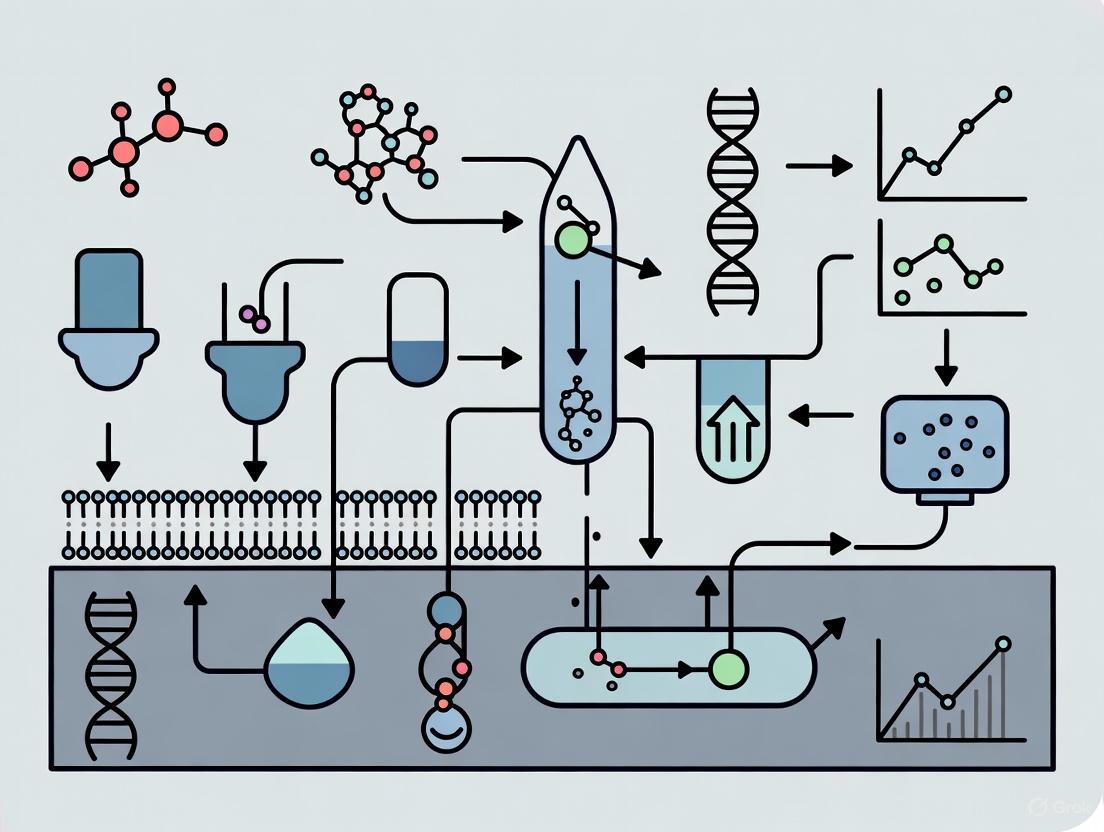
This article explores the cutting-edge convergence of microfluidic technology and functional biomaterials for building synthetic biological systems.
Microfluidic Biomaterials: Engineering the Future of Synthetic Biological Systems
Abstract
This article explores the cutting-edge convergence of microfluidic technology and functional biomaterials for building synthetic biological systems. Tailored for researchers and drug development professionals, it provides a comprehensive analysis spanning foundational principles, advanced fabrication methodologies like 3D bioprinting, and key applications in organ-on-a-chip platforms and drug delivery. The content systematically addresses prevalent challenges in scalability and biocompatibility, offers optimization strategies, and evaluates the performance and validation of these systems against traditional models. Finally, it synthesizes future trajectories, including the integration of AI and the path toward clinical translation, offering a holistic resource for advancing the field.
The Building Blocks: Principles and Materials of Microfluidic Biomaterials
Microfluidic biomaterials represent a cutting-edge interdisciplinary field that integrates the precise fluid manipulation capabilities of microfluidic technology with the biocompatibility and structural functionality of biomaterials [1]. This class of materials is formally defined as biomaterials—most commonly hydrogels such as alginate or type I collagen—that are patterned to contain engineered microscale channels and networks, enabling them to be readily perfused [2] [3]. Since their initial description in 2005, when Abe Stroock's group first developed microfluidic networks within alginate hydrogels, these materials have emerged as promising scaffolds for a variety of tissue engineering and related applications [2].
The core innovation of microfluidic biomaterials lies in their multi-scale porosity: they contain both engineered microchannels with widths typically below one millimeter and the inherent nanoscale or microscale pore structure of the biomaterial bulk [2]. This architectural design enables efficient solute transport through a combination of convection within channels and diffusion between channels and the surrounding biomaterial matrix, effectively overcoming the diffusion limitations that traditionally challenge the engineering of millimeter-scale tissues [2]. These materials are particularly characterized by their ability to sustain fluid flow, making immediate perfusion possible for embedded cells—a critical requirement for nutrient delivery and metabolic waste removal in engineered tissues [2] [4].
Within the context of synthetic biological systems research, microfluidic biomaterials provide a crucial bridge between biological components and engineered systems. They offer a platform for housing synthetic genetic circuits while providing the necessary physiological context, including vascularization, mechanical cues, and chemical gradients that mimic the in vivo environment [5]. This integration capability positions microfluidic biomaterials as essential enabling technologies for advancing synthetic biology from single-cell implementations toward complex, multi-cellular systems with clinical and industrial relevance.
Fundamental Principles and Material Composition
Core Architectural Features
Microfluidic biomaterials are defined by several fundamental architectural principles that govern their function. The microfluidic geometry can be implemented in either open or semi-open configurations [2]. In open networks, channels span the entire extent of the biomaterial, allowing fluid to enter and exit via viscous laminar flow, preferentially moving through the channels due to their significantly lower flow resistance compared to the material pores [2]. This configuration directly mimics biological distribution networks like the blood microvascular system [2]. In semi-open implementations, channels are blind-ended at one terminus, requiring fluid to disperse into the biomaterial bulk at the closed end—an architecture that mimics tree-like biological networks found in the lymphatic system and branching epithelial tissues [2].
The transport physics within these materials is governed by the interplay between convective flow in the channels and diffusive exchange with the biomaterial bulk [2]. At microscale dimensions, fluid flow is predominantly laminar, enabling precise spatial control of soluble factors and creating stable chemical gradients that can guide cellular behavior [4]. The small length scales and large surface area-to-volume ratios inherent to these systems reduce solute transport times and increase the rates of binding events, significantly enhancing mass transfer efficiency compared to macroscopic systems [2] [4].
Table 1: Core Physical Principles in Microfluidic Biomaterials
| Physical Principle | Impact on System Function | Biological Analogue |
|---|---|---|
| Laminar Flow | Enables precise spatial control of soluble factors; allows formation of stable chemical gradients | Vascular transport |
| Multi-scale Porosity | Enables concurrent convection (channels) and diffusion (bulk material) | Extracellular matrix and capillary networks |
| Large Surface Area-to-Volume Ratio | Increases rate of binding events; enhances mass transfer efficiency | Microvilli in intestines and kidneys |
| Capillary Action | Can drive fluid flow without external power in porous structures | Plant vascular systems |
Material Evolution and Selection
The development of materials for microfluidic applications has evolved significantly from initial use of silicon and glass to increasingly sophisticated polymer systems [1] [6]. Silicon was the first material used for microfluidics in the mid-1980s, offering excellent surface stability but limitations in optical transparency and brittleness [1]. Glass subsequently became a preferred substrate for lab-on-a-chip fabrication due to its transparency and well-understood chemical modification protocols, though its high modulus of elasticity makes integration of active components like valves and pumps challenging [1] [6].
The field was revolutionized with the introduction of polydimethylsiloxane (PDMS), a transparent, biocompatible elastomer that enables rapid prototyping via soft lithography [4]. PDMS remains the most popular material for research applications due to its gas permeability, optical transparency, and mechanical flexibility that facilitates integration of fluidic valves [4]. However, PDMS has limitations including absorption of small hydrophobic molecules and permeability to water vapor, which can alter experimental conditions [4].
More recently, hydrogels including collagen, alginate, and fibrin have emerged as the dominant materials for microfluidic biomaterials proper, as they provide a biomimetic environment that closely resembles the native extracellular matrix [2]. These materials support cell encapsulation and tissue development while containing engineered microchannels for perfusion [2]. Emerging materials include paper-based microfluidics that leverage capillary action for fluid transport, and innovative platforms such as organized microfibrillation (OM) polymers that create self-enclosed microfluidic devices with intrinsic structural color sensing capabilities [1] [7].
Table 2: Evolution of Materials for Microfluidic Applications
| Material Class | Examples | Advantages | Limitations |
|---|---|---|---|
| Inorganic Materials | Silicon, Glass | Excellent surface stability, well-developed chemistry | Brittle, difficult to integrate active components |
| Elastomers | PDMS | Biocompatible, gas permeable, transparent, flexible | Absorbs small molecules, permeable to water vapor |
| Natural Hydrogels | Collagen, Alginate, Fibrin | Biomimetic, support cell encapsulation | Mechanically soft, complex to pattern |
| Synthetic Polymers | PLGA, PEGDA | Tunable properties, reproducible | May lack bioactive motifs |
| Emerging Materials | Paper, OM Polymers | Low cost, self-enclosed, sensing capabilities | Resolution limits, new technology |
Fabrication Methodologies
Established Fabrication Techniques
The creation of microfluidic biomaterials employs several well-established fabrication methodologies, each with distinct capabilities and limitations. Micromolding represents the most widely used approach, particularly for hydrogel-based materials [2]. This technique involves patterning biomaterials against pre-fabricated templates and is a direct extension of silicone stamp methodologies used in soft lithography [2]. Within micromolding, subtractive approaches utilize removable elements such as steel or glass rods around which hydrogels are formed; subsequent removal of these sacrificial elements creates perfusable channels [2]. Finer channels down to approximately 5μm in diameter can be achieved using chemically etched steel or glass rods formed using a pipette puller [2]. Technical challenges include preventing channel deformation during rod removal, which can be mitigated through pre-adsorption of serum albumin to reduce adhesion [2].
Photopatterning techniques offer greater geometric versatility compared to micromolding and can generate quasi-planar networks [2]. Conventional photolithography approaches utilize positive or negative photoresists that are selectively degraded or crosslinked under light exposure, then developed to create channel structures [2]. A significant advancement in this area is organized microfibrillation (OM), a process that uses photolithographic principles to create porous substructures self-enclosed within polymer films [7]. The OM process generates periodic non-porous layers separated by porous microfibril layers, creating Bragg-reflections that produce structural color effects while forming interconnected microfluidic networks [7]. This technique enables fabrication of self-enclosed channels without additional sealing steps, with demonstrated feature sizes down to 5μm in width [7].
Advanced and Emerging Fabrication Approaches
Three-dimensional (3D) printing has emerged as perhaps the most promising candidate for generating true 3D microfluidic networks [2] [1]. This approach provides unprecedented freedom in creating complex, multi-branched channel architectures that more accurately mimic biological vascular networks [1]. The technology is particularly valuable for creating organ-on-a-chip platforms with physiological relevance, as it enables precise spatial control over cell placement and extracellular matrix composition [1]. Advanced BioMEMS approaches are increasingly incorporating economical additive manufacturing tools, with some systems achieving micro-scale resolution using stereolithographic tools and desktop photolithography procedures that significantly reduce costs compared to traditional cleanroom fabrication [5].
Hybrid fabrication strategies that combine traditional molds with 3D-printed structures are gaining traction for achieving optimal balance between resolution, complexity, and throughput [1]. These approaches may integrate multiple materials with different properties within a single device, such as combining rigid structural elements with soft, cell-compatible hydrogels [2] [1]. Emerging trends also include the use of artificial intelligence to optimize channel designs based on predictive modeling of fluid dynamics and tissue growth requirements [1].
Analytical Framework: Experimental Protocols and Methodologies
Fabrication and Characterization Protocols
The experimental workflow for developing microfluidic biomaterials involves sequential fabrication, characterization, and validation steps. For subtractive micromolding of collagen hydrogels, a detailed protocol begins with preparing a suspension of type I collagen neutralized to physiological pH and ionic strength [2]. Acid-etched stainless steel needles or glass capillaries with diameters ranging from 20-200μm are positioned using a rigid guide system and coated with serum albumin to prevent adhesion [2]. The collagen solution is then cast around the mid-sections of these needles and allowed to polymerize at 37°C for 30-45 minutes [2]. Following gelation, the needles are carefully removed using a micromanipulator to prevent vibration-induced channel deformation, resulting in open, perfusable microchannels [2]. For blind-ended channels, the collagen solution fully encapsulates the needle tips before removal [2].
Organized microfibrillation follows an alternative protocol: photosensitive polymer films are first spin-coated onto reflecting surfaces such as silicon wafers [7]. The film is then exposed to monochromatic light (wavelength 250-405nm) through a shadow mask defining the channel pattern [7]. Following exposure, the film is developed in a weak solvent to create self-enclosed channels with internal porous structure [7]. The resulting periodic porous-nonporous layer structure creates structural color that correlates with internal pore size, enabling visual assessment of material properties [7].
Characterization methodologies for microfluidic biomaterials include computational fluid dynamics modeling to predict flow distribution, confocal laser scanning microscopy with fluorescent dyes to visualize internal architecture and solute transport, and scanning electron microscopy to examine channel morphology and surface topology [7] [4]. For OM materials, the structural color provides an intrinsic sensing capability, as the Bragg peak position in reflectance spectra correlates with internal pore size and directly influences capillary flow dynamics [7].
The Scientist's Toolkit: Essential Research Reagents
Table 3: Essential Research Reagents for Microfluidic Biomaterial Development
| Reagent/Material | Function | Application Notes |
|---|---|---|
| PDMS (Polydimethylsiloxane) | Elastomer for device fabrication | Biocompatible, gas permeable; may absorb small molecules [4] |
| Type I Collagen | Natural hydrogel for cell encapsulation | Must be neutralized to physiological pH before polymerization [2] |
| Alginate | Natural hydrogel for micromolding | Ionic crosslinking with calcium enables gentle gelation [2] |
| Sacrificial Needles | Template for channel formation | Steel acupuncture needles (100μm) or pulled glass capillaries (~5μm) [2] |
| Photosensitive Polymers | OM material with structural color | Form periodic porous/non-porous layers when exposed to monochromatic light [7] |
| Fluorescent Dextrans | Flow visualization | Various molecular weights for assessing diffusion and convection [7] |
Applications in Synthetic Biology and Biomedical Research
Advanced Microphysiological Systems
Microfluidic biomaterials serve as foundational platforms for organ-on-a-chip (OoAC) systems that accurately replicate key aspects of human organ physiology [1]. These devices utilize microfluidic technology to create physiological cellular microenvironments, typically incorporating vascular system networks that flow fluid through microchannels to provide nutrients and remove metabolic waste [1] [6]. The core advantage of microfluidic biomaterials in this context is their ability to support long-term culture of 3D tissue constructs while enabling precise control over biochemical and mechanical cues [2] [1]. Specific implementations include models of blood and lymphatic microvessels, epithelial tubes, and complex organ interfaces such as the alveolar-capillary barrier in lung-on-chip systems [2].
These advanced microphysiological systems are increasingly valuable for drug development and toxicity testing, providing more human-relevant data compared to traditional animal models [1]. The ability to create human tissue models with perfusable vascular networks enables more accurate assessment of drug pharmacokinetics and tissue-specific responses [2] [1]. Furthermore, the incorporation of patient-derived cells into these platforms creates opportunities for personalized medicine approaches, enabling tailored therapies for specific patient populations [1] [6].
Synthetic Biology Integration
Microfluidic biomaterials provide an ideal interface between synthetic biology and functional tissue engineering by housing synthetic genetic circuits within physiologically relevant 3D environments [5]. These materials enable spatial patterning of synthetic communities with controlled cell-cell communication via diffusable signaling molecules, mimicking the structured microbial communities found in natural environments [5]. The microfluidic networks allow precise delivery of inducers and nutrients while removing metabolic waste, maintaining the functionality of engineered genetic circuits over extended periods [5].
A particularly promising application is the development of "smart" therapeutic systems that combine synthetic biology with microfluidic tissue engineering [5]. These systems may incorporate engineered cells programmed to detect disease biomarkers and respond with therapeutic actions, all within a vascularized tissue construct that ensures cell survival and function [5]. The perfusion capabilities of microfluidic biomaterials enable rapid detection of and response to systemic signals, making them suitable for applications such as continuous biomarker monitoring and controlled drug delivery [2] [5].
Diagnostic and Sensing Applications
The integration of sensing capabilities within microfluidic biomaterials has led to innovative diagnostic platforms. Structural color enhanced microfluidics represent a particularly advanced application where the material itself provides sensing functionality [7]. In OM microfluidic devices, the structural color correlates with internal pore size, which directly determines capillary flow speed [7]. This coupling enables visual assessment of fluidic properties through color changes, creating self-reporting systems that require no external sensors [7].
Color-based antimicrobial susceptibility testing (AST) demonstrates the clinical relevance of these approaches [8]. Microfluidic systems can cultivate and visualize bacteria in microliter-scale environments, reducing diffusion distances and accelerating growth, thereby decreasing testing time from 24-48 hours to just 6-8 hours [8]. These platforms utilize colorimetric changes resulting from bacterial metabolism or specific enzyme activities to determine antibiotic effectiveness, providing rapid phenotypic assessment that guides clinical decision-making [8].
Current Challenges and Future Perspectives
Technical and Translation Challenges
Despite significant advances, microfluidic biomaterials face several persistent challenges that limit their widespread adoption. Scalability and manufacturing present substantial hurdles, as many fabrication methods suitable for research settings lack the throughput and reproducibility required for commercial applications [1]. Techniques like micromolding and photopatterning are largely implemented for manual production of small numbers of samples, making them ideal for prototyping but unsuitable for mass production [2] [1].
Long-term stability remains another critical challenge, particularly for hydrogel-based systems that may undergo gradual degradation or mechanical failure under continuous flow conditions [1]. Natural hydrogels like collagen and alginate have limited mechanical strength, while synthetic alternatives often lack the bioactivity required for advanced tissue engineering applications [2] [1]. Material evolution strategies focus on developing hybrid biomaterials that combine the tunable mechanical properties of synthetic polymers with the bioactive motifs of natural systems [1].
The integration of analytical capabilities within microfluidic biomaterials also requires further development. While structural color in OM materials represents an innovative built-in sensing approach, most microfluidic biomaterials still require external instrumentation for functional assessment [7]. The challenge lies in incorporating sensors that can monitor tissue function without compromising the biomaterial properties or significantly increasing fabrication complexity [1] [7].
Future Research Directions
The future development of microfluidic biomaterials will likely focus on several key areas. Dynamic functional design approaches that combine 3D bioprinting with stimuli-responsive materials will enable creating systems that adapt to environmental changes or specific biological cues [1]. These "4D" systems may change their architecture or properties in response to temperature, pH, or specific biomarkers, providing enhanced control over tissue development and function [1].
The integration of artificial intelligence throughout the development pipeline represents another promising direction [1] [5]. AI algorithms can optimize channel network designs based on predictive modeling of transport phenomena and tissue metabolic requirements [5]. Machine learning approaches can also analyze complex data from organ-on-chip systems, potentially identifying patterns that escape conventional analysis [5]. However, a significant challenge is the current lack of universal algorithms applicable across different platforms, with most AI implementations being highly application-specific [5].
Advanced BioMEMS technologies compatible with smart devices for daily usage at home represent an emerging frontier [5]. These "lab-at-home" concepts would extend laboratory capabilities beyond traditional settings, enabling continuous monitoring or personalized interventions through integrated microfluidic systems [5]. Such approaches could revolutionize chronic disease management and preventive medicine by providing continuous physiological data and automated therapeutic responses.
In the context of synthetic biology, future research will likely focus on creating more sophisticated interfaces between engineered biological components and microfluidic platforms [5]. This includes developing materials that can better support the metabolic needs of engineered cells, and creating feedback systems where synthetic genetic circuits control material properties or fluidic functions in real time [5]. Such advances would further blur the distinction between biological and engineered systems, creating truly integrated biohybrid platforms with advanced capabilities.
As the field continues to mature, interdisciplinary collaborations between materials science, microfabrication, synthetic biology, and clinical medicine will be essential for translating promising laboratory demonstrations into practical solutions for healthcare challenges [1]. The unique properties of microfluidic biomaterials position them as key enabling technologies for the next generation of biomedical advances, from personalized disease models to smart implantable devices that actively contribute to maintaining health.
The evolution of microfluidic substrate materials represents a critical enabling dimension in the advancement of synthetic biological systems research. From their origins in silicon and glass to the contemporary dominance of polymers and emergence of paper-based substrates, material innovations have continuously expanded the functional capabilities of microfluidic platforms. This progression has been driven by the need for improved biocompatibility, manufacturing scalability, and operational performance in biomedical applications. The selection of substrate material directly influences virtually every aspect of microfluidic device performance, including optical transparency, chemical compatibility, surface chemistry, gas permeability, and fabrication complexity [9] [10]. For researchers developing microfluidic biomaterials for synthetic biological systems, understanding this material evolution is fundamental to selecting appropriate platforms for organ-on-a-chip models, drug screening systems, and diagnostic technologies [1] [11].
The historical transition from inorganic to organic and polymeric materials reflects a broader shift in microfluidics from applications derived from microelectronics toward those serving biological research needs. Each material class has introduced distinct advantages and limitations that continue to influence device design and application possibilities [10] [12]. This technical guide examines the properties, fabrication methodologies, and research applications of these substrate material classes, providing a comprehensive resource for scientists and drug development professionals working at the intersection of microfluidics and synthetic biology.
Historical Foundations: Silicon and Glass Substrates
Material Properties and Early Applications
The earliest microfluidic devices utilized silicon as their primary substrate, drawing heavily on microfabrication techniques developed for the microelectronics industry [1] [10]. Silicon offered excellent resistance to organic solvents, high thermal conductivity, and established fabrication methodologies from micro-electro-mechanical systems (MEMS) technology [13] [12]. However, its opacity in the visible spectrum presented significant limitations for optical detection methods commonly required in biological applications [9] [10]. Additionally, silicon's high elastic modulus (130-180 GPa) made it difficult to implement active fluidic components like valves and pumps, while the dangerous chemicals (e.g., hydrofluoric acid) required for its fabrication necessitated specialized facilities and equipment [1] [12].
Glass emerged as an alternative substrate that addressed several of silicon's limitations while introducing new capabilities. Its optical transparency and electrical insulation properties made it particularly suitable for detection methods involving fluorescence or direct visualization [9] [10]. Glass also exhibited superior chemical inertness and thermal stability, enabling applications involving aggressive solvents or elevated temperatures [9] [12]. Like silicon, glass surfaces could be chemically modified via silanol group chemistry to reduce non-specific adsorption or promote cellular adhesion [1] [10]. These characteristics established glass as the preferred material for capillary electrophoresis and on-chip reactions where optical access and electrical insulation were required [10] [12].
Fabrication Methodologies
Silicon microfabrication employed techniques adapted from semiconductor manufacturing, including photolithography, wet etching, and dry etching processes [1] [12]. Bulk micromachining used chemical etchants to selectively remove material, while surface micromachining built structures through sequential deposition and etching of thin films [12]. These approaches enabled high-resolution features at the sub-micrometer scale but required expensive cleanroom facilities and offered limited scalability [12].
Glass fabrication shared similar approaches, primarily utilizing photolithography and wet/dry etching methods [10] [12]. The technical challenges and high costs associated with glass micromachining, combined with the material's inherent brittleness and poor gas permeability for cell culture applications, ultimately motivated the development of alternative substrate materials [1] [9].
Table 1: Properties of Silicon and Glass Microfluidic Substrates
| Property | Silicon | Glass |
|---|---|---|
| Optical Transparency | Opaque in visible spectrum | Excellent transparency |
| Electrical Conductivity | Semiconducting | Insulating |
| Thermal Stability | High | High |
| Chemical Resistance | Excellent | Excellent |
| Biocompatibility | Moderate | High |
| Gas Permeability | Non-permeable | Non-permeable |
| Fabrication Cost | High | High |
| Typical Feature Resolution | Sub-micrometer | Micrometer |
| Elastic Modulus | 130-180 GPa | 50-90 GPa |
| Surface Chemistry | Silanol-based | Silanol-based |
The Polymer Revolution: Elastomers, Thermoplastics, and Thermosets
Material Classes and Properties
The introduction of polymers fundamentally transformed microfluidic device design, fabrication, and application possibilities. Polymers are categorized into three primary classes based on their thermal processing behavior and mechanical properties: elastomers, thermoplastics, and thermosets [13] [10] [12].
Polydimethylsiloxane (PDMS) exemplifies the elastomer class and has become arguably the most widely used material for research-scale microfluidic devices [9] [10]. Its popularity stems from excellent optical transparency, high gas permeability (beneficial for cell culture), and flexibility that enables integration of valves and pumps [9] [13]. PDMS supports rapid prototyping via soft lithography and bonds readily to various substrates [12]. Limitations include hydrophobicity, potential for small molecule absorption, and swelling with organic solvents [9] [10].
Thermoplastics such as polymethylmethacrylate (PMMA), polycarbonate (PC), and polystyrene (PS) represent another major polymer category [9] [10]. These materials transition to a malleable state when heated, allowing them to be formed into devices via injection molding or hot embossing, making them ideal for commercial-scale production [10] [12]. Thermoplastics offer excellent optical properties, high mechanical strength, and good chemical resistance compared to PDMS [9] [10]. Their rigid nature and low gas permeability can present challenges for certain biological applications [12].
Thermosets like thermoset polyester (TPE) form irreversibly cross-linked polymers when cured [10]. They combine high mechanical strength with excellent chemical resistance and are typically fabricated using photopolymerization or injection molding [10]. Their permanent cross-linking prevents melting or reshaping after curing, and their high stiffness limits applications in flexible components [10].
Fabrication Protocols
Soft Lithography for PDMS Devices
The dominant fabrication method for PDMS microfluidic devices is soft lithography, which enables rapid prototyping without cleanroom facilities [12]. The standard protocol proceeds as follows:
- Master Mold Fabrication: A silicon master mold is created using photolithography with SU-8 or similar photoresist to define channel patterns [12].
- PDMS Preparation: Base and curing agent are mixed at typical ratios of 10:1 (w/w), with adjustments to modify stiffness [12].
- Molding and Curing: The mixture is poured over the master mold, degassed under vacuum, and cured at 60-70°C for 1-4 hours [12].
- Device Bonding: The cured PDMS is peeled from the mold, access ports are created, and the device is bonded to glass or another PDMS layer via oxygen plasma treatment [12].
This method typically requires 24 hours from design to functional device and achieves channel resolutions of approximately 25 μm [12].
Injection Molding for Thermoplastics
Injection molding enables high-volume production of thermoplastic microfluidic devices [10] [12]:
- Mold Fabrication: A metal mold (typically steel or nickel) is machined with the negative pattern of the desired microfluidic features [10].
- Thermoplastic Processing: Polymer pellets are heated past their glass transition temperature (e.g., ~160°C for PMMA) to create a viscous liquid [10].
- Injection and Cooling: The molten polymer is injected under high pressure into the mold cavity, then cooled to solidify [10].
- Device Release: The solidified device is ejected from the mold, potentially followed by secondary processing (e.g., bonding to additional layers) [10].
This method supports mass production of thousands of devices daily with feature sizes down to 10-25 μm [10].
Table 2: Comparison of Polymer Substrate Materials for Microfluidics
| Property | PDMS (Elastomer) | PMMA (Thermoplastic) | TPE (Thermoset) |
|---|---|---|---|
| Young's Modulus | 0.3-0.5 MPa | 2-3 GPa | 1-100 MPa |
| Optical Transparency | Excellent (to 230 nm) | Excellent (to 280 nm) | Good |
| Gas Permeability | High | Low | Low |
| Chemical Resistance | Poor (swells in organics) | Good | Excellent |
| Fabrication Method | Soft lithography | Injection molding, hot embossing | Injection molding, photopolymerization |
| Bonding Method | Plasma treatment, adhesion | Thermal bonding, solvents, adhesion | Chemical bonding |
| Relative Cost | Low | Low | Medium-High |
| Primary Applications | Prototyping, cell culture | Commercial devices, electrophoresis | Chemical processing, specialized applications |
Emerging Paradigms: Paper and Hydrogel Substrates
Paper-Based Microfluidics
Paper substrates represent a recent innovation in microfluidics, leveraging capillary action for fluid propulsion without external pumping [1] [13]. Paper-based devices typically utilize cellulose matrices patterned with hydrophobic barriers to define fluidic pathways [13] [10]. The white background of paper provides excellent colorimetric contrast for detection, while the porous structure enables fluid filtration and separation [13].
The primary advantages of paper substrates include extremely low cost, disposability via burning or degradation, and worldwide availability [13]. These characteristics make paper particularly suitable for diagnostic applications in resource-limited settings [13] [10]. Limitations include relatively low mechanical strength and limited feature resolution (typically >200 μm) compared to polymer devices [13] [12].
Fabrication methods for paper-based microfluidics include wax printing, where a printer deposits wax patterns that are melted to penetrate through the paper thickness, creating hydrophobic barriers [10]. Alternative approaches include photolithography using photoresists and inkjet etching with surfactants to create hydrophilic channels [10].
Hydrogel Materials
Hydrogels represent a specialized class of hydrous polymers that closely mimic the natural extracellular matrix, making them particularly valuable for cell culture and tissue engineering applications [13]. Their high water content and tunable physical properties enable physiological relevance unmatched by synthetic materials [13]. Hydrogels can be fabricated with integrated microchannels for nutrient delivery and waste removal in organ-on-a-chip systems [13].
Key advantages include excellent biocompatibility, porosity controllable for molecular diffusion, and support for 3D cell culture [13]. Limitations encompass low mechanical strength compared to other polymers and challenges with device bonding due to their hydrophilic nature [13]. Fabrication typically involves molding from water-insoluble masters or direct printing of hydrogel precursors [13].
The Scientist's Toolkit: Essential Research Reagents and Materials
Successful implementation of microfluidic biomaterials requires specific reagents and materials tailored to each substrate type and application:
Table 3: Essential Research Reagents for Microfluidic Substrate Development
| Reagent/Material | Function | Application Examples |
|---|---|---|
| SU-8 Photoresist | Master mold fabrication for soft lithography | Creating high-aspect-ratio features in silicon masters for PDMS replication [12] |
| Sylgard 184 Kit | PDMS elastomer preparation | Standard two-part PDMS formulation for device fabrication [12] |
| Oxygen Plasma System | Surface activation for bonding | Creating irreversible bonds between PDMS and glass substrates [12] |
| Aquapel/FluoroSilane | Surface hydrophobization | Creating hydrophobic barriers in paper microfluidics [10] |
| Poly-L-Lysine | Surface modification for cell adhesion | Promoting cell attachment to glass and polymer surfaces [10] |
| GelMA (Gelatin Methacryloyl) | Hydrogel formulation | Creating photopolymerizable hydrogels for 3D cell culture [14] |
Material Selection Framework for Biological Applications
Selecting the appropriate substrate material requires careful consideration of the specific biological application and operational requirements. The following decision framework illustrates key considerations:
Material Selection Guide
For organ-on-a-chip and 3D cell culture applications, PDMS and hydrogels are typically preferred due to their high gas permeability, which supports oxygen and carbon dioxide exchange crucial for cell viability [1] [13]. PDMS offers additional advantages for prototyping flexibility, while hydrogels provide biomimetic environments that better replicate native tissue mechanics [13].
For high-throughput drug screening and chemical applications, glass and thermoplastics like PMMA or PS offer superior chemical resistance and optical properties essential for quantification and imaging [9] [10]. Their rigidity maintains channel integrity under various flow conditions, ensuring experimental consistency [12].
For point-of-care diagnostics and resource-limited settings, paper and inexpensive thermoplastics provide the low-cost, disposable platforms needed for widespread deployment [13] [10]. Paper substrates particularly excel in applications requiring fluid wicking without external power [13].
The evolution of microfluidic substrate materials from silicon and glass to polymers and paper represents a continuous trajectory toward greater biological compatibility, manufacturing scalability, and application specificity. Each material class has established distinct niches based on its physical, chemical, and fabrication properties. Silicon and glass continue to serve applications requiring high chemical resistance or exceptional feature resolution, while PDMS maintains dominance in research prototyping and cell culture applications despite its limitations [1] [9] [12]. Thermoplastics enable commercial translation through mass production capabilities, while paper and hydrogels open unique opportunities in point-of-care diagnostics and engineered tissue models, respectively [13] [10].
Future developments in microfluidic substrate materials will likely focus on composite approaches that combine the advantages of multiple materials, dynamic functional design that enables real-time manipulation of material properties, and intelligent manufacturing incorporating machine learning for optimized fabrication [1] [11]. The integration of microfluidic biomaterials with artificial intelligence promises to create self-optimizing platforms capable of monitoring drug delivery or tissue response in real time [1] [14]. As these trends converge, microfluidic substrates will continue to evolve from passive containers to active participants in synthetic biological systems, enabling unprecedented control over biological microenvironments for research and therapeutic applications.
The advancement of synthetic biological systems research is intrinsically linked to the development of specialized biomaterials. Within microfluidic platforms, these materials do more than just contain biological reactions; they actively participate in creating physiologically relevant microenvironments. The core properties of biocompatibility, degradation, and mechanical characteristics form a critical triad that determines the success of these sophisticated systems. This guide provides an in-depth technical examination of these properties, offering a framework for researchers and drug development professionals to select and characterize materials that will reliably bridge biological and synthetic components in microfluidic applications.
Fundamental Material Classes in Microfluidic Biomaterials
The selection of base materials is the foundational step in designing microfluidic devices for synthetic biology. The evolution of these materials has progressed from rigid inorganic substrates to advanced polymers that offer superior biological integration.
Inorganic Materials
The earliest microfluidic devices were fabricated from silicon and glass, chosen for their excellent surface stability and well-established microfabrication protocols, such as dry/wet etching [1]. However, their high modulus of elasticity (130–180 GPa for silicon) makes them inherently brittle and unsuitable for creating active fluidic components like valves or pumps [1]. Furthermore, silicon's opacity to visible light presents significant limitations for optical detection methods common in biological research, such as fluorescence imaging [1]. While still used in specific applications, these materials have largely been superseded by more versatile polymers in synthetic biology contexts.
Polymeric Materials
Polymers represent the most versatile and widely adopted class of materials for modern microfluidic biomaterials.
- Elastomers: Polydimethylsiloxane (PDMS) is a dominant material due to its optical transparency, gas permeability, and ease of prototyping. However, challenges remain in its scalability and long-term stability [1] [6].
- Thermoplastics: Materials like polylactic acid (PLA) are frequently used in fused deposition modeling (FDM) 3D printing for bone tissue engineering scaffolds [15]. Their utility, however, can be limited by the difficulty in establishing printing parameters for scaffolds requiring high mechanical properties [15].
- Biodegradable Polyurethanes: This class is particularly promising due to its exceptional versatility. Polyurethane structures can be engineered to specific levels of hardness, abrasion resistance, and elastic/mechanical properties, while also maintaining excellent blood and tissue compatibility [16].
- Intrinsically Disordered Polymers: Bio-mimicking intrinsically disordered proteins, these polymers feature high structural flexibility and a propensity for self-organization. They show significant potential in drug delivery, artificial organ design, and ensuring immune compatibility [16].
Cellulose-Based Materials
Cellulose is an emerging biopolymer celebrated for its biodegradability, mechanical strength, and biocompatibility [17]. Through synthetic biology techniques, such as the genetic engineering of bacteria like Komagataeibacter xylinus, cellulose can be produced with tailored properties for therapeutic use [17]. Its structural versatility allows for the creation of fibers, films, hydrogels, and nanostructures that can be functionalized for targeted drug delivery and controlled release.
Biodegradable Metals
In the realm of orthopedic implants, biodegradable metals represent a unique material class.
- Magnesium (Mg) Alloys: Mg alloys are a next-generation candidate for bone fixation. Their elastic modulus (41–45 GPa) is closer to natural bone (~20 GPa) than other metals, which effectively reduces stress shielding effects [18]. Furthermore, the degradation of Mg releases Mg²⁺ ions that promote bone regeneration and metabolism [18].
- Alloying Strategies: Pure Mg has insufficient strength and degrades too rapidly in vivo. Alloying with elements like Strontium (Sr) and Manganese (Mn) is a primary strategy to refine grains, enhance mechanical properties, improve corrosion resistance, and maintain biocompatibility [18]. For instance, an extruded Mg-0.3Sr-0.4Mn alloy demonstrated a yield strength of 205 MPa and a corrosion rate of 0.39 mm/year, approaching the desired benchmarks for clinical implants [18].
Quantitative Property Data
The following tables summarize key quantitative data for material properties, providing a reference for direct comparison and initial material selection.
Table 1: Mechanical and Degradation Properties of Biomaterials
| Material | Yield Strength (MPa) | Ultimate Tensile Strength (MPa) | Elongation (%) | Elastic Modulus (GPa) | Degradation Rate |
|---|---|---|---|---|---|
| Mg-0.3Sr-0.4Mn (SM04) Alloy [18] | 205 | 242 | - | - | 0.39 mm/year |
| Mg-0.3Sr (SM0) Alloy [18] | - | - | - | - | ~0.85 mm/year (54% higher than SM04) |
| Rolled Mg-2Sr Alloy [18] | ~150 | 213 | ~3 | - | 0.37 mm/year |
| Pure Iron (Fe) [18] | 200-250 | - | - | ~211.4 | Very Slow |
| Pure Zinc (Zn) [18] | 80-120 | - | - | ~90 | Moderate |
| Pure Magnesium (Mg) [18] | - | - | - | 41-45 | Rapid |
| Poly(3-hydroxybutyrate-co-3-hydroxyhexanoate) (PHBHHx) [19] | - | - | - | - | <1% weight loss in 15 weeks (SBF) |
Table 2: Target Property Benchmarks for Orthopedic Implants
| Property | Target Benchmark |
|---|---|
| Yield Strength [18] | >200 MPa |
| Elongation [18] | >10% |
| Degradation Rate [18] | <0.5 mm/year |
Methodologies for Property Assessment
Rigorous and standardized testing protocols are essential for accurately characterizing material properties and predicting in vivo performance.
Assessing Biocompatibility
Biocompatibility evaluation ensures that a material does not elicit a detrimental immune response and supports normal cellular function.
- Cytocompatibility Assays: A fundamental test involves assessing cell viability upon exposure to the material. For example, the Mg-0.3Sr-0.4Mn (SM04) alloy maintained cell viability exceeding 90% in vitro, indicating low cytotoxicity [18].
- Cell Function and Differentiation: Advanced assays probe specific cellular functions. The SM04 alloy demonstrated a 2.46-fold higher alkaline phosphatase (ALP) activity compared to the control (SM0 alloy), indicating a enhanced promotion of osteoblast differentiation, which is crucial for bone implant materials [18].
- Immune Compatibility: Beyond basic cytotoxicity, polymers can be engineered for immune compatibility by minimizing interactions with immune cells and proteins, or by possessing immunomodulatory properties that promote anti-inflammatory cytokines [16].
Evaluating Degradation Behavior
Understanding a material's degradation profile is critical for applications where the implant is intended to be temporary.
- In Vitro Degradation in Simulated Body Fluids (SBF): This is a standard accelerated test. Samples are immersed in a solution mimicking blood plasma, and the corrosion rate (e.g., in mm/year) is calculated from mass loss or hydrogen evolution [18].
- UV Radiation Treatment to Modify Degradation: For polymers with inherently slow degradation, like PHBHHx, UV radiation can be used to controllably reduce molecular weight and accelerate breakdown. Studies show that UV-treated PHBHHx powders exhibit significantly faster weight loss in SBF compared to untreated films [19].
- pH-Responsive Degradation: In smart drug delivery systems, degradation can be engineered to be stimulus-responsive. Cellulose matrices can be modified with carboxyl groups to remain stable in the acidic stomach but swell and degrade in the neutral intestines, enabling site-specific drug release [17].
Measuring Mechanical Properties
Mechanical testing ensures the material can withstand handling during implantation and the physiological loads of its target environment.
- Tensile Testing: This test measures fundamental mechanical properties, including yield strength, ultimate tensile strength, and elongation at break [18]. These values are compared against clinical benchmarks for the intended application.
- Microstructural Analysis: Mechanical performance is intrinsically linked to microstructure. Techniques like Scanning Electron Microscopy (SEM) and Electron Backscatter Diffraction (EBSD) are used to analyze grain size, phase distribution, and texture. For instance, in Mg-Sr-Mn alloys, the addition of Mn significantly refines grain size (from 7.43 µm to 4.42 µm with 0.4% Mn), which contributes to increased strength [18].
Diagram 1: Material property testing workflow.
Detailed Experimental Protocol: Mg Alloy Characterization
The following protocol, derived from a recent study on Mg-Sr-Mn alloys, exemplifies a comprehensive approach to evaluating a biodegradable metal [18].
Experiment Title
Comprehensive Evaluation of Mechanical Properties, In Vitro Biodegradation, and Biocompatibility of Extruded Mg-Sr-Mn Alloys for Orthopedic Applications.
Objective
To systematically investigate the synergistic effects of Sr and Mn additions on the microstructure, mechanical properties, biodegradation behavior, and osteogenic performance of novel Mg alloys.
Materials and Fabrication
- Alloy Preparation: Prepare a series of Mg-0.3Sr-xMn (where x = 0, 0.4, 1.2, and 2.0 wt.%) alloys using a high-purity induction melting furnace under an inert argon atmosphere.
- Homogenization and Extrusion: Subject the cast ingots to a solution treatment (e.g., 500°C for 12 hours), followed by hot extrusion at a specific temperature and extrusion ratio (e.g., 350°C with a ratio of 25:1) to obtain full-density rods.
Microstructural Characterization
- SEM/EDS: Analyze the surface morphology and elemental distribution of etched samples using Scanning Electron Microscopy (SEM) coupled with Energy-Dispersive X-ray Spectroscopy (EDS). Identify nanoscale particles and larger intermetallic compounds.
- XRD: Perform X-ray Diffraction (XRD) with a Cu Kα radiation source to identify the phases present (e.g., α-Mg, Mg₁₇Sr₂, α-Mn).
- EBSD: Use Electron Backscatter Diffraction (EBSD) to determine grain size, grain boundary distribution (low-angle vs. high-angle), and crystallographic texture.
Mechanical Testing
- Tensile Test: Machine tensile specimens according to ASTM E8 standard. Perform tests at room temperature using a universal testing machine at a constant strain rate (e.g., 1 mm/min). Record yield strength (YS), ultimate tensile strength (UTS), and elongation.
In Vitro Degradation
- Immersion Test: Immerse polished alloy samples in Simulated Body Fluid (SBF) at 37°C for a set period (e.g., 7-28 days). Maintain the SBF pH at 7.4 with buffering.
- Corrosion Rate Calculation: Measure the weight loss of samples after immersion and carefully remove corrosion products. Calculate the corrosion rate (CR) in mm/year using the formula: CR = (K × ΔW) / (A × T × ρ), where K is a constant, ΔW is weight loss, A is sample area, T is immersion time, and ρ is material density.
Biocompatibility and Osteogenesis
- Cell Culture: Use a relevant cell line, such as MC3T3-E1 pre-osteoblasts. Culture cells in an extract of the alloy material or directly on the sample surface.
- Cell Viability Assay: After a set culture period (e.g., 1, 3, 5 days), assess cell viability using a standard assay (e.g., CCK-8 or MTT). Express results relative to a control group.
- Osteogenic Differentiation: Induce osteogenic differentiation in cells cultured with the material. Quantify Alkaline Phosphatase (ALP) activity using a commercial kit after 7-14 days as a key early marker of osteoblast function.
The Scientist's Toolkit: Research Reagent Solutions
Table 3: Key Reagents and Materials for Biomaterial Research
| Item | Function/Application |
|---|---|
| Komagataeibacter xylinus [17] | Genetically engineered bacteria for producing tailored bacterial cellulose with specific functional properties. |
| Simulated Body Fluid (SBF) [18] [19] | Standard solution for in vitro degradation studies, mimicking the ion concentration of human blood plasma. |
| MC3T3-E1 Pre-osteoblast Cell Line [18] | A standard cell model for evaluating the cytocompatibility and osteoinductive potential of orthopedic biomaterials. |
| Alkaline Phosphatase (ALP) Activity Assay Kit [18] | A key reagent for quantifying osteogenic differentiation in cells exposed to test materials. |
| Carboxymethylcellulose [17] | A chemically modified cellulose derivative used to create pH-responsive hydrogels for controlled drug delivery. |
| Polylactic Acid (PLA) Filament [15] | A common, biocompatible thermoplastic polymer used in Fused Deposition Modeling (FDM) for 3D printing tissue engineering scaffolds. |
Diagram 2: Material selection logic for synthetic biology.
Core Principles and Significance of OoC Technology
Organ-on-a-Chip (OoC) technology represents a revolutionary platform in biomedical engineering, utilizing microfluidic cell culture devices to simulate the activities, mechanics, and physiological responses of entire organs and organ systems [20] [21]. These systems are constructed using microchip manufacturing methods and contain continuously perfused chambers inhabited by living cells arranged to simulate tissue- and organ-level physiology [22]. The core advantage of OoC technology lies in its ability to bridge the gap between traditional in vitro (test tube/cell culture) models and in vivo (animal/human) studies, overcoming the limitations of both approaches [20] [23].
By recreating living functional tissue units in an artificial microenvironment, OoCs provide a state-of-the-art platform for biological research that combines the controlled parameters of in vitro research with the physiological relevance of in vivo research [20]. The technology leverages the principles of microfluidics—the manipulation of minute fluid volumes, typically between 10⁻⁹ and 10⁻¹⁸ liters—through microchannels with dimensions ranging from ten to several hundred micrometers [20]. This miniaturization enables precise control over the cellular microenvironment, including biochemical gradients, mechanical forces, and tissue-tissue interfaces, which are critical for maintaining tissue-specific functions [21] [6].
The development of OoC technology was pioneered by Huh et al. with the first "lung-on-a-chip" in 2010, which reconstituted the lung's functional alveolar-capillary interface [20] [23] [21]. This was quickly followed by a public-private partnership to develop ten different human organs-on-chips, accelerating the field's expansion [20]. OoC technology has since gained substantial interest as a next-generation experimental platform with transformative potential for investigating human pathophysiology, drug development, and personalized medicine [24] [23] [21].
Figure 1: OoC bridges limitations of traditional models.
Fundamental Technological Components
Microfluidic Foundations and Material Selection
The operational foundation of OoC technology rests on microfluidic principles that govern fluid behavior at the microscale. The extremely small fluid volumes (microliters to femtoliters) used in these systems result in a low Reynolds number, indicating laminar flow rather than turbulent flow [20]. This laminar flow enables precise control over concentration gradients and mechanical stresses that mimic physiological conditions [20] [6]. The microchannels' large relative surface area enables high mass transfer, while other inherent benefits include faster mixing rates, low reagent consumption, and prompt system response [20].
Material selection is critical for OoC device fabrication and performance. Early microfluidic devices utilized silicon and glass, but the field has progressively shifted toward polymer materials due to their versatility, cost-effectiveness, and biocompatibility [6]. The table below summarizes key materials used in OoC fabrication and their characteristics:
Table 1: Materials for Microfluidic Device Fabrication
| Material | Properties/Advantages | Disadvantages | Primary Applications |
|---|---|---|---|
| Polydimethylsiloxane (PDMS) | Transparency, flexibility, gas permeability, biocompatibility [20] | Drug absorption, hydrophobic [20] | Standard material for rapid prototyping, various OoCs [20] |
| Polycarbonate (PC) | Mechanical strength, optical clarity | Limited chemical resistance | Compartment-separation membranes [20] |
| Polyethylene Terephthalate (PET) | Good mechanical properties, low cost | Limited biocompatibility without treatment | Porous membranes [20] |
| Collagen | Biocompatibility, natural ECM component | Low mechanical strength when hydrated | Biosensing, film assembly [20] |
| Gelatin Methacrylate (GelMA) | Photopolymerizable, porous membrane | Weak mechanical properties, fast degradation | Vascular and valvular biology [20] |
| Polylactic Acid (PLA) | Biodegradability | High degradation rate | Porous scaffolding, better cell adhesion [20] |
| Glass/Silicon | Excellent surface stability, optical properties | Brittle, complex fabrication | Specialized applications (e.g., optics, electronics) [6] |
| Paper | Low cost, capillary-driven flow | Limited structural complexity | Point-of-care diagnostics [6] |
Polydimethylsiloxane (PDMS) remains the most widely used material for OoC research due to its favorable properties, including optical transparency for microscopy, flexibility for implementing mechanical cues, gas permeability crucial for cell viability, and general biocompatibility [20]. However, PDMS has limitations, particularly its tendency to absorb small molecule drugs, which can compromise drug testing accuracy [20]. Ongoing research focuses on developing alternative materials and surface treatments to address these limitations.
Fabrication Techniques
OoC fabrication has evolved significantly, leveraging techniques from microelectronics and developing novel approaches specific to biomedical applications. Traditional methods include:
- Soft Lithography: A widely used technique for rapid prototyping of PDMS devices, utilizing elastomeric stamps and molds [20] [6].
- Replica Molding: Creating structures by casting polymers against a master mold [20].
- Injection Molding: Suitable for mass production of thermoplastic devices [20] [6].
- Hot Embossing: Creating microstructures in thermoplastic materials through heating and pressure [6].
More recently, 3D bioprinting has revolutionized OoC fabrication by enabling the integration of channels, membranes, and living cells in a single process [20] [6]. This additive manufacturing approach reduces fabrication time and complexity while offering superior design flexibility. 3D bioprinting can be divided into nozzle-based methods (applying bioink under pressure) and optical-based methods (using light to crosslink materials) [20]. This technology enables controlled porosity of tissue scaffolding, incorporation of multiple biomaterials including living cells, and record accuracy in constructing complex 3D tissue architectures [20] [6].
Essential Surface Treatments and Functionalization
To ensure physiological relevance and biocompatibility, OoC device surfaces often require specialized treatments. These modifications are crucial for controlling cell behavior and recreating native tissue environments:
- Surface Passivation: Treatment with pluronic acid is often used to prevent unwanted cell attachment in 3D spheroid or organoid cultures, preserving 3D tissue architecture [20].
- ECM and Protein Coatings: Applications of extracellular matrix (ECM) proteins (e.g., collagen, fibronectin) or complex matrices like Matrigel enhance cell adhesion and differentiation, enabling formation of confluent monolayers that mimic natural barriers like intestinal epithelium or the blood-brain barrier [20].
- Tissue-Specific Matrices: Disease-specific matrices can produce higher-fidelity pathophysiological models, such as generating crypt-like formations in gut-on-a-chip systems [20].
- Micropatterning: This technique provides powerful control over the spatial organization of cells and tissues to closely mimic the in vivo microenvironment [20].
Current Applications in Research and Development
Disease Modeling and Pathophysiological Studies
OoC technology provides exceptional platforms for modeling human diseases, enabling researchers to investigate disease mechanisms and progression under physiologically relevant conditions. Specific applications include:
- Chronic Obstructive Pulmonary Disease (COPD): Benam et al. developed a small airway-on-a-chip that recapitulated COPD-specific molecular signatures, ciliary micropathologies, and epithelial responses to smoke when lined with human bronchiolar epithelium from COPD patients [24].
- Barth Syndrome Cardiomyopathy: Researchers used patient-derived induced pluripotent stem cells (iPSCs) differentiated into cardiomyocytes on a chip to elucidate metabolic, structural, and functional abnormalities associated with tafazzin mutations, demonstrating the mutation's sufficiency to cause the disease phenotype through Cas9-mediated genome editing [24].
- Neurovascular Unit Dysfunction: Blood-brain barrier (BBB) chips derived from primary human cells or iPSCs have modeled time-dependent changes in BBB integrity and function in response to inflammatory stimuli, enabling mapping of metabolic signatures and pathways associated with neuroinflammation [24].
- Infectious Disease: Human breathing lung-on-a-chip models have characterized complex physiological responses to inflammatory insults, including activation of endothelial cells, increased expression of adhesion molecules, and neutrophil adhesion and transmigration across tissue layers [24].
- Cancer Biology: Hassell et al. recreated a lung cancer-on-a-chip with non-small-cell lung cancer cells, observing clinically relevant processes like tumor dormancy and response to tyrosine kinase inhibitors, while also revealing how mechanical strain affects cancer drug sensitivity through epidermal growth factor receptor and MET protein kinase signaling [23].
Table 2: Applications of Organ-on-a-Chip Technology
| Application Area | Specific Examples | Key Findings/Capabilities |
|---|---|---|
| Biological Mechanism Studies | Lung alveolus function [23], Brain microvascular endothelial cell and neuron interactions [23] | Increased nanoparticle uptake under mechanical strain [23]; Auxiliary action of endothelial cells in neuronal maturation [23] |
| Disease Modeling | Chronic obstructive pulmonary disease (COPD) [24] [23], Blood-brain barrier inflammation [24] [23], Cardiomyopathy (Barth syndrome) [24] | Identification of disease-specific biomarkers [24] [23]; Metabolic signature mapping [24]; Elucidation of mutation-pathology relationships [24] |
| Drug Discovery & Toxicity Testing | Heart-chip drug response [23], Multi-organ-chip systemic toxicity [23], Anti-cancer drug screening [23] | Recapitulation of curative effects (e.g., isoproterenol) [23]; Repeated dose systemic toxicity assessment [23]; Demonstration of anti-cancer activity of flavonoids [23] |
| Regenerative Medicine | Neuron recovery [23], Stem cell differentiation [23], 3D-bioprinted heart model [23] | Assessment of central nervous system regeneration [23]; Differentiation of iPSCs to functional podocytes [23]; Endothelialized human myocardium for heart repair [23] |
| Radiobiology | Bone marrow-on-a-chip [23], Liver-chip [23] | Validation of γ-radiation effects on hematopoietic function [23]; Assessment of space-like radiation injury and treatment [23] |
Drug Development and Toxicity Assessment
The pharmaceutical industry has embraced OoC technology as a potential transformative tool for drug discovery and safety assessment:
- Drug Screening: Intestine-chip, liver-chip, and kidney-chip platforms have been extensively used for substance toxicity testing and drug screening [23]. For instance, Agarwal et al. built a heart-on-a-chip model that recapitulated the curative effect of isoproterenol [23].
- Systemic Toxicity Assessment: Maschmeyer et al. established a multi-organ-chip platform integrating intestine, liver, skin, and kidney to test repeated dose systemic toxicity, demonstrating the ability to evaluate organism-level responses [23].
- Pharmacokinetic/Pharmacodynamic Modeling: OoCs provide critical system parameters for improved physiologically based pharmacokinetic and pharmacodynamic (PBPK/PD) models, which are essential for predicting drug behavior in humans [24]. The US FDA has included OoC technology in its regulatory science program to enhance drug development tools [24].
- Multi-Organ Drug Studies: Skardal et al. developed multi-organ-chip systems to identify anti-angiogenic and anti-tumor drugs, while other researchers demonstrated anti-cancer activity of the flavonoid luteolin using integrated liver and cancer tissues [23].
Figure 2: OoC integration in drug development workflow.
Personalized and Regenerative Medicine
OoC technology holds particular promise for advancing personalized medicine and regenerative applications:
- Patient-Specific Disease Modeling: Using patient-derived or genetically engineered iPSCs, researchers can model rare disease subsets and individual variations in drug response [24]. This approach enables "clinical trials in a dish" for personalized therapeutic optimization [24] [23].
- Stem Cell Differentiation and Tissue Engineering: OoC systems enable precise control over stem cell culture and differentiation. Musah et al. successfully differentiated iPSCs to functional human podocytes, regenerating kidney glomerular-capillary-wall function on-chip [23]. Similarly, Park et al. designed a microfluidic chip to explore the differential osteogenic capacity of human bone marrow- and adipose tissue-derived mesenchymal stem cells [23].
- Organ Replacement Strategies: 3D-bioprinted heart-chip models with endothelialized human myocardium represent early steps toward creating functional tissue for organ replacement [23]. OoC platforms provide valuable insights into how various fabrication strategies affect cell viability and tissue function in the context of regenerative medicine [23].
Experimental Protocols and Methodologies
Standardized OoC Operation Workflow
Implementing OoC technology requires careful attention to experimental design and operational protocols. The following workflow outlines key methodological considerations:
- Device Preparation and Sterilization: Prior to cell culture, OoC devices must be thoroughly sterilized using appropriate methods (e.g., UV irradiation, ethanol treatment, autoclaving for certain materials). Surface treatments (e.g., plasma treatment for PDMS bonding, protein coating for cell adhesion) are then applied based on the specific organ model requirements [20] [22].
- Cell Seeding and Culture: Cells are introduced into the device under appropriate conditions to achieve desired tissue architecture. For barrier tissues (e.g., lung, intestine), different cell types are typically seeded in separate chambers to establish tissue-tissue interfaces [20] [22]. Perfusion flow is gradually initiated to allow cell adaptation to shear stress.
- Maintenance and Monitoring: Cells are maintained under continuous perfusion with culture medium, with regular monitoring of parameters including pH, glucose levels, and waste accumulation [22]. Advanced OoC systems incorporate sensors for real-time monitoring of trans-epithelial electrical resistance (TEER), oxygen tension, and metabolic activity [21].
- Experimental Intervention: Once tissues reach maturity (typically 3-14 days depending on the model), experimental interventions are performed. These may include drug administration, pathogen exposure, mechanical stimulation, or other manipulations relevant to the research question [24] [22].
- Endpoint Analysis: Post-experiment analyses may include transcriptomics, proteomics, metabolomics, immunohistochemistry, functional assessments (e.g., barrier integrity, contractile force), and imaging of fixed or live tissues [22] [21].
Representative Experimental Case Study: Investigating Inflammation in a Blood-Brain Barrier Chip
The following protocol illustrates a specific application of OoC technology for studying neuroinflammation:
- Device Fabrication: Create a microfluidic device comprising vascular perfusion channels, a porous barrier membrane, brain compartment, and brain perfusion channels using PDMS soft lithography or commercial chips [24].
- Cell Culture: Seed primary human brain-derived microvascular endothelial cells in vascular channels, with pericytes, astrocytes, and iPSC-derived human cortical neurons with co-differentiating astrocytes in the brain compartment [24].
- BBB Formation: Maintain under continuous perfusion for 5-7 days to establish mature BBB characteristics, monitoring TEER regularly to confirm barrier integrity [24].
- Inflammatory Stimulation: Introduce inflammatory stimuli (e.g., TNF-α) to the vascular compartment and observe time-dependent changes in BBB integrity and function [24].
- Analysis: Measure barrier permeability (e.g., using dextran tracers), perform immunostaining for tight junction proteins, analyze leukocyte adhesion and transmigration, and conduct metabolomics and pathway analysis to identify inflammatory signatures [24].
The Scientist's Toolkit: Essential Research Reagents and Materials
Successful implementation of OoC technology requires careful selection of materials, reagents, and equipment. The following table details essential components for establishing OoC research capabilities:
Table 3: Essential Research Reagents and Materials for OoC Technology
| Category | Specific Items | Function/Application |
|---|---|---|
| Base Materials | Polydimethylsiloxane (PDMS) [20], Polycarbonate membranes [20], Glass substrates [6] | Microfluidic device fabrication, porous membranes for tissue-tissue interfaces, rigid support |
| Surface Treatments | Pluronic acid [20], Fibronectin [20], Collagen I/IV [20], Matrigel [20] | Surface passivation (prevent cell attachment), enhance cell adhesion, tissue-specific matrix coatings |
| Cell Sources | Primary human cells [24], immortalized cell lines [23], induced pluripotent stem cells (iPSCs) [24] [23] | Recreate tissue-specific functionality, patient-specific modeling, disease modeling |
| Perfusion Systems | Syringe pumps [22], perfusion controllers, tubing, reservoirs | Maintain continuous nutrient delivery and waste removal, apply physiological shear stress |
| Assessment Tools | Trans-epithelial electrical resistance (TEER) electrodes [21], metabolic assays, live-cell imaging systems [22] | Monitor tissue barrier integrity, assess cell viability and function, real-time morphological assessment |
| Advanced Monitoring | Micro-electrode arrays (MEAs) [22], oxygen sensors [21], pH sensors | Record neural electrical activity, monitor metabolic microenvironment, ensure physiological culture conditions |
| Imaging-Compatible Hardware | Omni platform [22], Maestro MEA platform [22], Lux platform [22] | Automated imaging inside incubators, non-invasive electrophysiological monitoring, chemotaxis studies |
Future Perspectives and Concluding Remarks
Organ-on-a-Chip technology has established itself as a primary application platform within the broader context of microfluidic biomaterials and synthetic biological systems. By providing human-specific, organ-level functionality in vitro, OoCs address critical limitations of traditional models and offer unprecedented opportunities for understanding human physiology, disease mechanisms, and therapeutic interventions [20] [24] [23].
The future development of OoC technology will likely focus on several key areas:
- Enhanced Complexity and Integration: The field is advancing from single-organ to multi-organ systems ("human-on-a-chip") that can simulate inter-organ interactions and systemic responses [20] [21]. Zhang et al. demonstrated an elementary human-on-a-chip with a four-tissue/organ-system including liver, lung, kidney, and adipose tissue to study TGF-β1 regulation [23].
- Advanced Sensor Integration: Next-generation OoCs will incorporate more sophisticated biosensors for real-time, non-invasive monitoring of physiological parameters [21] [6]. The integration of electronics and microfluidics will create hybrid systems that can both sense and act upon biological environments [25].
- Material Innovation: Research continues into developing improved materials that combine PDMS's beneficial properties while minimizing limitations like drug absorption [20]. Materials such as styrene ethylene butylene styrene (SEBS) show promise for reduced drug absorption while maintaining biocompatibility [20].
- Standardization and Commercialization: As the field matures, standardization of device designs, operational protocols, and analytical methods will be crucial for broader adoption and regulatory acceptance [21]. Commercial platforms are already emerging that offer user-friendly, reproducible systems for pharmaceutical and academic research [22].
- Artificial Intelligence Integration: AI and machine learning algorithms are being developed to analyze complex data from OoC platforms, identify patterns, and predict human physiological responses [5] [6].
In conclusion, Organ-on-a-Chip technology represents a convergence of microfabrication, tissue engineering, and biomaterials science that is transforming biomedical research. As the technology continues to evolve and integrate with other emerging fields like synthetic biology and artificial intelligence, its impact on drug development, disease modeling, and personalized medicine is expected to grow substantially, potentially revolutionizing how we study human biology and develop new therapies.
Biomaterials are substances engineered to interact with biological systems for a therapeutic or diagnostic purpose [26]. Their application is pivotal in designing synthetic biological systems, particularly within microfluidic environments that replicate human physiology [2] [6]. This guide provides a technical comparison of natural biomaterials—such as polysaccharides and proteins—and synthetic counterparts like polydimethylsiloxane (PDMS) and polyethylene glycol (PEG), framed within the context of microfluidic biomaterials research. The functional performance of these materials hinges on their inherent physico-chemical properties, which govern critical aspects like bio-interactions, transport phenomena, and structural integrity in microscale devices [2] [27] [28].
Material Properties and Performance Characteristics
The selection of a biomaterial for a microfluidic application requires a deep understanding of its physical, chemical, and biological properties. The table below provides a quantitative comparison of key biomaterials discussed in this guide.
Table 1: Quantitative Comparison of Natural and Synthetic Biomaterials
| Material | Type | Key Characteristics | Young's Modulus (where applicable) | Protein Adsorption | Primary Applications in Microfluidics |
|---|---|---|---|---|---|
| Dextran | Natural Polysaccharide | Hydrophilic, can form hydrogels, can be chemically modified (e.g., DexVS). | ~10–100 kPa (as hydrogel) | High (increased BSA adsorption observed) [28] | Hydrogel matrices for 3D cell culture; surface coatings [27] [28]. |
| RG-I Pectin | Natural Polysaccharide | Unbranched, high negative charge density, electrostatic complexation [29]. | Information Missing | Low (when in complex) | Aqueous lubrication layers; biopolymer complexes [29]. |
| Collagen | Natural Protein | Natural ECM, cell-adhesive, enzymatically degradable. | ~1–10 kPa (as hydrogel) | High (native binding sites) | Natural 3D cell culture matrices; angiogenesis models [27]. |
| Fibrin | Natural Protein | Formed from fibrinogen, involved in clotting, promotes cell invasion. | ~1–10 kPa (as hydrogel) | High | Clotting models; natural matrix for sprouting angiogenesis [27]. |
| Lysozyme | Natural Protein | Positively charged, antimicrobial, forms complexes with polysaccharides [29]. | Not Applicable | N/A | Binding domain in polysaccharide-protein complexes for lubrication [29]. |
| PDMS | Synthetic Polymer | Elastomeric, transparent, gas-permeable, hydrophobic recovery [28]. | ~1–3 MPa (bulk) | High (reduced by coatings) | Microfluidic channel fabrication; organ-on-a-chip devices [2] [6]. |
| PEG | Synthetic Polymer | Highly hydrophilic, bio-inert, resistant to protein adsorption. | Wide range (as hydrogel) | Very Low | Non-fouling surface coatings; hydrogel matrices for controlled delivery [28]. |
| DexVS | Synthetic Polymer | Tunable mechanical properties, forms nanoporous hydrogels [27]. | ~10–100 kPa (as hydrogel) | Information Missing | Synthetic, stable hydrogel for 3D cell culture and vascularization [27]. |
Natural Biomaterials in Microfluidic Systems
Polysaccharides
Polysaccharides like dextran and pectin are valued for their hydrophilicity and bioactivity.
- Dextran: This polymer is frequently modified for specific applications. Dextran vinyl sulfone (DexVS) is a synthetic derivative used to create hydrogels with tunable mechanical properties and degradation rates [27]. Its permeability can be a limitation; nanoporous DexVS hydrogels can hinder endothelial cell sprouting, requiring the incorporation of sacrificial microgels to create essential microporosity [27].
- Pectic Polysaccharides: Unbranched Rhamnogalacturonan-I (RG-I) pectin from Plantago ovata is an effective aqueous lubricant. Its high negative charge density enables the formation of soluble complexes with positively charged proteins like lysozyme. The formation and lubricity of these complexes are highly dependent on environmental factors such as pH and ionic strength [29].
Proteins
Proteins provide innate bioactivity and are major components of the natural extracellular matrix (ECM).
- Structural Proteins (Collagen, Fibrin): These proteins form hydrogels that support robust endothelial sprouting. Angiogenesis within these natural materials is highly regulated by matrix density and porosity. Increased density leads to more connected multicellular sprouts but slower invasion speeds [27]. A key challenge is their rapid resorption in vivo compared to more stable synthetic polymers [27].
- Functional Proteins (Lysozyme, Mucins): Beyond their primary functions, proteins can be used to construct complex functional materials. For example, synergistic interactions between proline-rich proteins (PRPs) and salivary mucins in saliva, or complexes of pectin and lysozyme, create bi-functional layers. The protein acts as a surface-anchoring domain, while the glycosylated polysaccharide forms a hydrated, brush-like film that provides exceptional lubrication [29].
Synthetic Biomaterials in Microfluidic Systems
Polydimethylsiloxane (PDMS)
PDMS is an industry standard for prototyping microfluidic devices due to its flexibility, optical clarity, and gas permeability [2] [6]. However, its inherent hydrophobicity leads to significant challenges.
- Protein Adsorption and Hydrophobic Recovery: The hydrophobic PDMS surface readily adsorbs proteins, which can foul the device and interfere with assays [28]. While plasma treatment creates a temporary hydrophilic surface, the material undergoes "hydrophobic recovery" as uncross-linked polymer chains migrate to the surface [28].
- Surface Modification Strategies: To overcome these limitations, surface grafting of hydrophilic polymers is employed. A common method involves:
- Plasma Amination: A microwave oxygen plasma functionalizes the PDMS surface with hydroxyl groups, which are subsequently aminated using (3-aminopropyl)trimethoxysilane (APTES) [28].
- Polymer Grafting: Oxidized dextran or PEG-aldehyde is covalently linked to the surface amines via reductive amination with sodium borohydride (NaBH₄) [28].
- Performance of Modified Surfaces: Dense dextran coatings can neutralize the zeta potential of PDMS over a wide pH range, changing the dominant surface forces from electrostatic to van der Waals/hydrophobic interactions [28]. Contrary to some expectations, dextran coatings have been shown to increase Bovine Serum Albumin (BSA) adsorption compared to unmodified PDMS, while PEG coatings show limited effectiveness, highlighting the challenge of creating completely non-fouling surfaces [28].
Polyethylene Glycol (PEG) and Derivatives
PEG is the gold standard for creating non-fouling, protein-resistant surfaces and hydrogels due to its high hydrophilicity and molecular mobility [28].
- Protein Resistance: PEG's resistance to protein adsorption is attributed to a steric repulsion effect and the thermodynamic penalty of displacing water molecules bound to the PEG chains [28].
- PEG-Based Hydrogels: PEG hydrogels are widely used as synthetic, bio-inert matrices for 3D cell culture. Their properties, such as mechanical stiffness and degradation rate, can be precisely tuned for specific applications like drug delivery and tissue engineering [26].
Direct Comparison: Angiogenesis in Natural vs. Synthetic Matrices
A direct comparison of angiogenesis in natural and synthetic hydrogels reveals how matrix properties dictate biological outcomes. Research shows that matrix porosity (permeability) is a critical regulator, significantly correlating with endothelial cell invasion depth and sprout diameter [27].
- Natural Hydrogels (Collagen, Fibrin): These microporous gels support the formation of numerous, lumenized, multicellular sprouts in vitro. However, they are mechanically soft and rapidly resorbed in vivo, losing their shape and function quickly [27].
- Synthetic Hydrogels (DexVS): These nanoporous gels offer superior stability and size/shape control post-implantation. However, without modification, they result in fewer sprouts that are often non-lumenized, failing to form perfusable vessels [27].
- Engineering a Solution: To enhance angiogenesis in synthetic gels, a composite material approach can be used. Incorporating sacrificial gelatin microgels into the DexVS hydrogel before cross-linking creates a microporous network within the synthetic matrix. This microporosity enhances sprout diameter in vitro and significantly boosts cell invasion in vivo, bridging the performance gap between natural and synthetic materials [27].
The following diagram illustrates the experimental workflow and key findings of this comparative angiogenesis study.
The Scientist's Toolkit: Research Reagent Solutions
Table 2: Essential Reagents for Biomaterial Fabrication and Testing
| Reagent/Material | Function | Key Considerations |
|---|---|---|
| Sylgard 184 (PDMS) | Elastomer for microfluidic device fabrication. | Base to curing agent ratio (e.g., 10:1) affects stiffness; undergoes hydrophobic recovery [28]. |
| APTES, (3-Aminopropyl)trimethoxysilane | Surface amination agent. | Creates reactive amine groups on plasma-activated surfaces for polymer grafting [28]. |
| Sodium Periodate (NaIO₄) | Polysaccharide oxidation agent. | Introduces aldehyde groups in dextran for covalent binding to aminated surfaces via reductive amination [28]. |
| Sodium Borohydride (NaBH₄) | Reducing agent. | Stabilizes Schiff base bonds in reductive amination reactions [28]. |
| Sacrificial Gelatin Microgels | Porogen for synthetic hydrogels. | Incorporated into DexVS hydrogels; dissolve to create microporosity that enhances cell invasion [27]. |
| RG-I Pectin & Lysozyme | Model system for biopolymer complexes. | Used to study electrostatic complex formation for applications like aqueous lubrication [29]. |
Experimental Protocols
Protocol: Creating Polysaccharide-Protein Complexes for Lubrication
This protocol outlines the formation and characterization of RG-I Pectin-Lysozyme complexes, a model system for studying aqueous lubrication [29].
- Materials:
- Unbranched RG-I pectin from Plantago ovata seed mucilage.
- Lysozyme protein.
- Phosphate buffers at varying pH (e.g., 3.0 to 7.0) and ionic strengths.
- Method:
- Solution Preparation: Prepare separate stock solutions of RG-I pectin and lysozyme in the desired phosphate buffer.
- Complex Formation: Mix the polysaccharide and protein solutions at room temperature. The formation of soluble complexes is highly dependent on the pH and ionic strength of the solvent, which control the electrostatic attraction between the two biopolymers.
- Optimization: Systematically vary the pH and ionic strength to identify the optimum range for complex formation, which typically occurs when the biopolymers carry opposite net charges.
- Friction Testing: The lubricating performance of the complexes is evaluated using soft-tribological contacts (e.g., a tribometer with PDMS contacts) to measure the coefficient of friction.
- Adsorption Analysis: The adsorption of the optimal complexes onto relevant surfaces is analyzed to confirm the formation of a bi-functional layer, where the protein anchors the complex and the polysaccharide forms a hydrated brush.
Protocol: Surface Grafting of Dextran on PDMS
This protocol details the covalent modification of PDMS surfaces with dextran to alter surface forces and wettability [28].
- Materials:
- PDMS (Sylgard 184).
- Oxygen plasma cleaner.
- APTES, anhydrous ethanol.
- Dextran (15,000–25,000 MW), sodium periodate (NaIO₄), sodium borohydride (NaBH₄).
- 0.2 M Na₂HPO₄ buffer, pH 9.
- Method:
- PDMS Preparation: Spin-coat and cure PDMS on a silicon wafer to create a thin, uniform film.
- Plasma Amination: Expose the PDMS film to a remote microwave oxygen plasma (200 W, 0.6 torr, 1 min) to create surface hydroxyl groups. Immediately incubate the sample in a 5% APTES solution in ethanol/water for 30 min at 30°C to aminate the surface. Rinse and sonicate to remove silane multilayers.
- Dextran Oxidation: Oxidize dextran by reacting it with sodium periodate in water (protected from light) for 4 hours. Purify the oxidized dextran via dialysis and lyophilize.
- Surface Grafting: Dissolve the oxidized dextran (0.02 g/mL) in the phosphate buffer (pH 9). Incubate the aminated PDMS in this solution overnight at 30°C.
- Stabilization: Decant the dextran solution and immerse the modified PDMS in a 0.1 M NaBH₄ solution for 2 hours at 30°C to reduce the Schiff bases and stabilize the covalent linkage.
- Validation: The success of the grafting process can be validated by measuring the change in water contact angle (should decrease from ~109° to ~80°) and by using fluorescently labeled dextran to confirm stable attachment even after SDS washing [28].
The choice between natural and synthetic biomaterials is not a simple binary decision but a strategic design parameter. Natural biomaterials offer superior bioactivity and support complex cellular processes like angiogenesis but often lack the mechanical stability and tunability of synthetic systems [27]. Synthetic biomaterials provide precise control over physical and chemical properties, enhancing device fabrication and long-term stability, but can fall short in supporting robust biological function without sophisticated modification [27] [28]. The future of microfluidic biomaterials lies in composite and hybrid strategies that merge the advantages of both worlds. Incorporating sacrificial elements to create porosity in synthetic gels [27], or designing synergistic biopolymer complexes inspired by biological lubricants [29], exemplifies this approach. As the field advances, the integration of these advanced biomaterials with microfluidic technology will continue to drive innovations in drug development, disease modeling, and synthetic biological systems.
From Design to Reality: Fabrication Techniques and Biomedical Applications
The development of advanced microfluidic biomaterials is fundamentally constrained by the capabilities of the fabrication techniques used to produce them. For synthetic biological systems research—including organ-on-a-chip platforms, biosensors, and drug screening devices—the creation of complex, reproducible, and biologically relevant microenvironments is paramount [1]. The competing yet complementary methodologies of resin-based 3D printing and soft lithography have emerged as foundational fabrication workflows in this domain [30]. While soft lithography, using materials like polydimethylsiloxane (PDMS), remains the most common and reliable technology for microfluidic device production, resin 3D printing is rapidly advancing, offering compelling advantages in geometric freedom and integration potential [31] [30]. This technical guide examines both paradigms, providing a comparative analysis and detailed protocols to enable researchers to select and implement the optimal fabrication strategy for their specific applications in synthetic biology.
Technical Comparison of Fabrication Methods
Quantitative Analysis of Soft Lithography and Resin 3D Printing
Table 1: Comparative analysis of soft lithography and resin 3D printing for microfluidic device fabrication.
| Parameter | Soft Lithography | Resin 3D Printing (SLA/DLP) |
|---|---|---|
| Typical Resolution | Tens to hundreds of micrometers [31] | ~10 µm to 100 µm [32] [30] |
| Primary Materials | PDMS (elastomer) [31] [30] | Photopolymerizable resins (acrylates, epoxies) [30] |
| Biocompatibility | Excellent (inherent property of PDMS) [30] | Variable (requires specific biocompatible resins) [31] [30] |
| Material Transparency | High [30] | Moderate to High (material dependent) [31] |
| Gas Permeability | High (advantageous for cell culture) [30] | Typically Low [30] |
| Surface Chemistry | Inert, easily functionalized [30] | Variable, can require post-processing [31] |
| Geometric Complexity | Limited by master mold fabrication [30] | Very High (freeform fabrication) [31] [30] |
| Prototyping Speed | Slow (requires master fabrication) [30] | Fast (direct from CAD) [30] |
| Setup Cost | Low [30] | Moderate (printer cost) [30] |
| Cost per Device | Low (after master is made) [30] | Moderate (resin cost) [30] |
| Scalability | Limited for large-scale production [30] | Moderate (constrained by build volume) [30] |
The Scientist's Toolkit: Essential Research Reagents and Materials
Table 2: Key reagents and materials for soft lithography and resin 3D printing workflows.
| Item | Function/Application | Technical Notes |
|---|---|---|
| PDMS (Sylgard 184) | Elastomeric base for soft lithography molds and devices [31] [30] | Mixed with curing agent (typically 10:1 ratio); biocompatible, gas permeable [30]. |
| SU-8 Photoresist | Material for creating high-aspect-ratio master molds on silicon wafers [30] | Requires UV lithography for patterning; determines channel geometry [30]. |
| Biocompatible Resins | Photosensitive polymers for creating cell-compatible 3D printed structures [32] | Must be selected for low cytotoxicity and, ideally, gas permeability [31]. |
| Photoinitiators | Molecules within resin that absorb light to initiate polymerization [30] | Critical for print resolution and cell viability in bioprinting [32]. |
| (3-(Aminopropyl)triethoxysilane) | Promotes adhesion between PDMS and glass/PDMS surfaces [30] | Used for surface functionalization prior to bonding [30]. |
| Oxygen Plasma | Activates PDMS surfaces for irreversible bonding to glass or other PDMS [30] | Creates silanol groups that form strong Si-O-Si bonds upon contact [30]. |
| Iodixanol | Refractive index matching additive for high-resolution SLA bioprinting [32] | Reduces light scattering in cell-laden bioinks, improving resolution [32]. |
Detailed Experimental Protocols
Protocol 1: Soft Lithography for Microfluidic Device Fabrication
The following methodology outlines the standard procedure for fabricating a PDMS-based microfluidic device via soft lithography, a widely used technique for creating devices for organ-on-chip and synthetic biology applications [30].
Workflow Overview:
- Master Fabrication: A silicon wafer is cleaned and coated with SU-8 photoresist. It is then exposed to UV light through a photomask containing the desired channel pattern. After development, the exposed cross-linked SU-8 remains, forming a positive relief master mold [30].
- PDMS Molding: PDMS base and curing agent are mixed, degassed, poured over the master, and cured. The cured PDMS is peeled off, revealing a negative replica of the master's pattern [30].
- Device Assembly: Inlet/outlet ports are punched. The PDMS replica and a glass slide (or another PDMS layer) are plasma treated and bonded together to form sealed microchannels [30].
- Functionalization: The internal surfaces of the channels can be coated with biological molecules (e.g., fibronectin, collagen) to promote cell adhesion [30].
Materials and Equipment:
- Silicon Wafer
- SU-8 Photoresist and Developer
- Photomask (Chromium/Quartz or High-Resolution Film)
- UV Mask Aligner
- PDMS Kit (Sylgard 184 is common)
- Plasma Cleaner
- Hotplate or Oven
- Laboratory Desiccator (for degassing)
Step-by-Step Procedure:
- Master Fabrication:
- Clean a silicon wafer with piranha solution (Caution: Highly corrosive) or oxygen plasma, followed by dehydration bake.
- Spin-coat SU-8 photoresist onto the wafer to achieve the desired thickness (dictates channel height).
- Perform a soft bake on a hotplate to evaporate the solvent.
- Align the photomask and expose the wafer to UV light. The mask blocks UV in channel areas, leaving the SU-8 unexposed.
- Perform a post-exposure bake to crosslink the exposed SU-8.
- Develop the wafer in SU-8 developer, which removes the unexposed photoresist, revealing the positive relief of the master mold.
- Perform a final hard bake to improve the master's mechanical and chemical stability.
PDMS Molding:
- Thoroughly mix the PDMS base and curing agent in a 10:1 weight ratio.
- Place the mixture in a desiccator under vacuum until all bubbles are removed (degassing).
- Pour the degassed PDMS over the master mold. For thin devices, spin-coating can be used.
- Cure the PDMS in an oven at 65-75°C for several hours.
- Once cured, carefully peel the PDMS block containing the negative imprint of the channels from the master mold.
Device Assembly:
- Use a biopsy punch to create inlet and outlet ports in the PDMS block.
- Clean a glass slide and the patterned PDMS surface.
- Treat both surfaces with oxygen plasma to activate them.
- Immediately bring the activated PDMS and glass surfaces into conformal contact to form an irreversible bond.
- Place the bonded device on a hotplate (~80-100°C) for 10-20 minutes to strengthen the bond.
Protocol 2: Resin 3D Printing for Microfluidic Device Fabrication
This protocol describes the workflow for fabricating microfluidic devices directly using Stereolithography (SLA) or Digital Light Processing (DLP) 3D printing, which is increasingly used for creating complex and integrated device architectures [31] [32].
Workflow Overview:
- CAD Design: A 3D model of the microfluidic device is created using computer-aided design (CAD) software.
- File Preparation & Slicing: The CAD model is exported as an STL file, oriented for optimal printing, and digitally sliced into layers by the printer's software. Support structures are added if needed.
- Printing: The printer's build platform is lowered into a vat of liquid photopolymer resin. A laser (SLA) or digital projector (DLP) selectively cures the first layer of resin. The platform lifts, and the process repeats layer-by-layer.
- Post-Processing: The printed part is removed, cleaned in a solvent (e.g., isopropanol) to remove uncured resin, and then post-cured under UV light to maximize material properties.
Materials and Equipment:
- SLA or DLP 3D Printer
- Photopolymerizable Resin (Standard or Biocompatible)
- Isopropanol (or other recommended solvent)
- Ultrasonic Cleaner (optional)
- UV Post-Curing Chamber
Step-by-Step Procedure:
- CAD Design:
- Design the complete microfluidic device, including channels, chambers, and connection ports, in a CAD program. Ensure features are above the printer's minimum resolution.
- File Preparation & Slicing:
- Export the design as an STL file.
- Import the STL into the printer's slicing software. Orient the part to minimize the cross-sectional area of each layer and the need for supports. For internal channels, supports are often critical.
- Automatically or manually generate support structures.
- Slice the model into layers (typical layer thickness 25-100 µm) to generate the printer instructions (G-code).
- Printing:
- Ensure the printer's build platform is level.
- Fill the resin vat with the chosen photopolymer resin.
- Initiate the print. The printer will create the object layer-by-layer. For SLA, a laser beam traces the pattern; for DLP, a digital projector flashes an image of the entire layer at once.
- After printing, the build platform rises out of the vat, and the part is removed.
- Post-Processing:
- Immerse the printed part in a solvent bath (e.g., isopropanol) and gently agitate to wash away all uncured resin from the surfaces, especially from internal channels. An ultrasonic bath can be used with caution.
- Carefully remove all support structures.
- Place the part under intense UV light in a post-curing unit. This step is crucial for achieving the final mechanical properties and ensuring full resin polymerization, which is critical for biocompatibility.
Integrated and Advanced Workflows
Material Selection Logic for Microfluidic Biomaterials
Choosing the correct material is a critical first step in designing a fabrication workflow for synthetic biology. The decision tree below outlines the key considerations based on application requirements.
Convergence with 3D Bioprinting for Organ-on-Chip Platforms
The most significant advancement in microfluidic biomaterials is the convergence of these fabrication techniques with 3D bioprinting to create sophisticated organ-on-chip (OoC) platforms [32]. This integration allows for the creation of complex, multi-cellular tissue constructs within perfusable microfluidic devices. Resin 3D printing can be used to fabricate the chip housing with integrated sensors, while soft lithography creates the PDMS-based fluidic components. Furthermore, printhead-on-a-chip systems, which integrate microfluidic nozzles directly into the bioprinter, enable the deposition of multiple bioinks and cell types with high spatial precision to mimic native tissue heterogeneity and vascularization within the OoC device [33]. This synergy enables the bottom-up biofabrication of functional tissue microarchitectures, advancing disease modeling and drug screening [33] [32].
The fields of synthetic biology and microfluidic biomaterials are being propelled forward by both the refinement of traditional methods like soft lithography and the rapid innovation of resin 3D printing. Soft lithography remains the gold standard for producing highly biocompatible, gas-permeable devices with proven reliability, particularly for fundamental cell biology studies within OoCs [30]. Conversely, resin 3D printing offers unparalleled design freedom, rapid iteration, and the potential for monolithic integration of complex features, making it ideal for creating intricate device architectures and functional components [31] [30]. The future of fabrication for synthetic biological systems does not lie in the supremacy of one technique over the other, but in their strategic integration. The emerging paradigm involves using 3D printing to create high-complexity master molds for soft lithography or to fabricate entire chip housings, while soft lithography provides the optimal cell-culture environment [30]. Furthermore, the convergence of both with 3D bioprinting is creating a powerful toolkit for engineering the next generation of organ-on-chip platforms, ultimately accelerating drug discovery and the development of personalized medicine [33] [32].
3D Bioprinting for Complex Tissue Constructs and Organ Mimicry
The convergence of 3D bioprinting and microfluidic biomaterials represents a paradigm shift in synthetic biological systems research, enabling the fabrication of complex, physiologically relevant tissue constructs and organ mimics. This interdisciplinary approach leverages the principles of additive manufacturing and microscale fluid dynamics to create controlled cellular microenvironments that closely emulate human physiology. For researchers and drug development professionals, these technologies address the critical limitations of traditional animal models, whose predictive accuracy for human drug responses is often compromised by interspecies physiological differences [34]. The foundational strategy involves using microfluidic devices as sophisticated bioreactors and perfusion systems for 3D bioprinted tissues, facilitating nutrient delivery, waste removal, and the application of biomechanical cues essential for tissue maturation [11] [34]. This integration is pivotal for advancing high-throughput drug screening platforms and developing personalized disease models using patient-specific cells.
Technical Foundations of 3D Bioprinting
Core Bioprinting Technologies
Three primary bioprinting technologies form the current technological backbone, each with distinct operational principles, advantages, and limitations suitable for different applications in tissue construct fabrication.
Table 1: Comparison of Primary 3D Bioprinting Technologies
| Bioprinting Method | Working Principle | Resolution | Key Advantages | Primary Limitations | Suitable Applications |
|---|---|---|---|---|---|
| Extrusion-Based | Pneumatic or mechanical piston deposition of continuous bioink filaments [34] | 100 - 1000 µm [34] | High cell density printing; suitable for large tissues [34] | Shear stress on cells; lower resolution [34] | Bone, cartilage, large tissue constructs [34] |
| Inkjet-Based | Thermal or acoustic ejection of discrete bioink droplets [34] | 50 - 300 µm [34] | High speed; good resolution [34] | Clogging; requires low-viscosity bioinks [34] | High-precision, small-scale structures [34] |
| Laser-Assisted | Laser energy transfers bioink from donor substrate to construct [34] | 10 - 100 µm [34] | Excellent precision; wide variety of cell types [34] | Complex setup; potential cell damage from laser energy [34] | Complex, high-resolution tissue engineering [34] |
Advanced Bioinks and Functional Materials
Bioinks are composite materials containing living cells and biomaterials that provide a supportive microenvironment for cell viability, proliferation, and differentiation. The composition of bioinks is critical for the success of the bioprinted construct.
- Natural Hydrogels (e.g., Alginate, Gelatin, Hyaluronic Acid): Prized for their high-water content and biocompatibility, these materials provide a native-like environment that supports cell growth and are easily printable [34].
- Decellularized Extracellular Matrix (dECM): Derived from native tissues, dECM bioinks retain tissue-specific biochemical cues and architecture, significantly promoting cell attachment, proliferation, and differentiation toward the target phenotype [34].
- Synthetic Polymers and Nanomaterials (e.g., PEG, PCL, Graphene): These offer tunable mechanical properties and degradation rates. Their chemistry can be precisely engineered to control stiffness, incorporate adhesive motifs, and respond to specific environmental stimuli [34].
Table 2: Characteristics of Key Bioink Material Classes
| Bioink Material Class | Key Characteristics | Printability | Mechanical Strength | Biocompatibility | Typical Cross-linking Method |
|---|---|---|---|---|---|
| Natural Hydrogels | High water content, innate bioactivity [34] | Good with modifiers | Low to Moderate | Excellent [34] | Ionic (e.g., CaCl₂ for Alginate), Thermal, UV |
| dECM Bioinks | Tissue-specific biochemical milieu [34] | Challenging, requires optimization | Low | Excellent, instructive [34] | Thermal (physico-gelation) |
| Synthetic Polymers | Fully tunable chemistry and mechanics [34] | Very Good | High, tunable | Good, can be enhanced | UV photopolymerization, Thermal |
Experimental Workflow for Organ-on-Chip Fabrication
The creation of a functional organ-on-a-chip model with integrated 3D bioprinted tissues involves a multi-stage, iterative process. The following diagram visualizes the core experimental workflow from design to application.
Detailed Experimental Protocols
Protocol A: Fabrication of a PDMS Microfluidic Chip via Soft Lithography
This protocol describes the creation of a master mold and subsequent replication of the microfluidic device in polydimethylsiloxane (PDMS), a material favored for its biocompatibility, gas permeability, and optical transparency [34].
- Photomask Design: Design the 2D channel network of your organ-on-chip using CAD software. Print the design at high resolution on a transparent film to create a photomask.
- Master Mold Fabrication (Photolithography):
- Spin-coat a negative photoresist (e.g., SU-8) onto a clean silicon wafer to achieve the desired channel height (typically 100-500 µm).
- Soft-bake the coated wafer according to the photoresist manufacturer's specifications.
- Expose the photoresist to UV light through the photomask using a mask aligner. The exposed areas will crosslink.
- Perform a post-exposure bake.
- Develop the wafer by immersing it in a developer solution (e.g., SU-8 developer) to dissolve the unexposed photoresist, revealing the positive relief of the microchannels. Hard-bake the final master mold.
- PDMS Replica Molding (Soft Lithography):
- Mix PDMS elastomer base and curing agent thoroughly at a 10:1 ratio. Degas the mixture in a vacuum desiccator until all bubbles are removed.
- Pour the degassed PDMS over the master mold and degas again briefly.
- Cure the PDMS in an oven at 65-80°C for at least 2 hours.
- Once cured, carefully peel the solid PDMS block containing the embossed channels from the master mold.
- Punching and Bonding:
- Use a biopsy punch to create inlet and outlet ports in the PDMS block.
- Clean both the PDMS block and a glass slide (or another PDMS layer) with oxygen plasma. Immediately bring the activated surfaces into contact to form an irreversible, sealed bond, completing the microfluidic chip.
Protocol B: FRESH 3D Bioprinting of Collagen-Based Tissue Constructs
Freeform Reversible Embedding of Suspended Hydrogels (FRESH) allows for the bioprinting of soft biomaterials like collagen by providing temporary support during the printing process [35].
- Support Bath Preparation: Prepare a gelatin slurry support bath by dissolving gelatin powder in deionized water at a concentration of 5-10% w/v. Melt the gelatin and then cool it to 4°C to form a fine, viscous slurry. Load it into a printing reservoir.
- Bioink Preparation: Keep a neutralized, cell-laden collagen type I solution on ice to prevent premature gelation. The collagen concentration typically ranges from 5-15 mg/ml, depending on the desired mechanical properties.
- Bioprinting Process:
- Load the cold collagen bioink into a sterile printing syringe equipped with a tapered nozzle (diameter 100-400 µm).
- Mount the syringe in a bioprinter capable of maintaining a cooled printhead.
- Extrude the bioink into the gelatin support bath, which is maintained at a temperature slightly below the gelatin's melting point (e.g., 20-25°C). The support bath physically holds the extruded collagen in place.
- Post-Printing Processing:
- After the structure is fully printed, raise the temperature of the entire system to 37°C. This simultaneously triggers the rapid gelation of the collagen and melts the gelatin support bath.
- Gently wash away the liquefied gelatin support bath using a warm cell culture medium, leaving behind the freestanding, crosslinked collagen tissue construct.
Protocol C: Integration of Bioprinted Construct into Microfluidic Chip
This protocol details the process of placing a bioprinted tissue construct into a microfluidic device and initiating perfusion culture.
- Sterilization: Sterilize the bonded PDMS microfluidic chip by autoclaving or exposure to UV light for 30 minutes per side.
- Surface Treatment (Optional): To enhance cell adhesion within the chip's channels, treat them with extracellular matrix proteins like fibronectin or collagen by flowing a solution (e.g., 50 µg/ml) through the device and incubating for 1-2 hours.
- Construct Transfer: Using fine forceps or a pipette, carefully transfer the bioprinted tissue construct (from Protocol B) into the main chamber of the microfluidic chip.
- Initiation of Perfusion:
- Connect the chip's inlet to a sterile medium reservoir via tubing. Connect the outlet to a waste container or a recirculating system.
- Place the entire setup in a cell culture incubator (37°C, 5% CO₂).
- Initiate a slow, continuous flow of culture medium using a peristaltic or syringe pump. Begin with a low flow rate (e.g., 0.1-1 µL/min) to minimize shear stress on the nascent tissue, gradually increasing it over several days to promote tissue maturation under mechanical stimulation.
The Scientist's Toolkit: Research Reagent Solutions
Successful implementation of the described workflows relies on a suite of essential reagents and materials.
Table 3: Essential Research Reagents and Materials for Bioprinting and Organ-on-Chip
| Category / Item | Specific Examples | Function & Rationale |
|---|---|---|
| Base Hydrogel Polymers | Alginate, Gelatin-Methacryloyl (GelMA), Fibrin, Hyaluronic Acid [34] | Provide the foundational 3D scaffold for cell encapsulation; offer tunable physical and biochemical properties. |
| Instructive Bioinks | Decellularized ECM (dECM) from liver, heart, etc. [34] | Provide tissue-specific biochemical cues to guide cell differentiation and organization for enhanced physiological mimicry. |
| Synthetic Polymers | Poly(ethylene glycol) Diacrylate (PEGDA), Polycaprolactone (PCL) [34] | Offer precise control over mechanical properties (e.g., stiffness, elasticity) and degradation kinetics. |
| Cross-linking Agents | Calcium Chloride (for Alginate), Photo-initiators (e.g., LAP for UV curing) | Initiate and sustain the gelation process of bioinks, transforming liquid precursor solutions into solid gels. |
| Cell Culture Media | Cell-type specific basal media, Serum-free supplements, Growth factor cocktails | Provide essential nutrients, hormones, and growth factors to maintain cell viability and function over long-term culture. |
| Microfluidic Materials | PDMS, Curing Agent, Glass Slides [34] | PDMS is the material of choice for rapid prototyping of transparent, gas-permeable, and biocompatible microfluidic chips. |
Current Challenges and Future Directions
Despite significant progress, the field must overcome several hurdles to achieve widespread clinical and industrial translation. Key challenges include the scalability of manufacturing processes for robust high-throughput screening, ensuring the long-term stability and functionality of complex multi-organ systems, and the final clinical translation of these technologies from benchtop tools to approved therapies and validated diagnostic platforms [11] [34].
Future advancements are likely to be driven by several key trends:
- Intelligent System Design: The integration of Artificial Intelligence (AI) and machine learning is anticipated to optimize bioprinting parameters, bioink formulations, and to analyze complex, high-content data generated by organ-on-chip platforms in real-time [11] [5].
- Hybrid Fabrication Strategies: Combining different manufacturing techniques—such as using traditional micromachining for the chip and 3D bioprinting for the internal tissue architecture—will enable the creation of more sophisticated and functional devices [11].
- Multi-organ Integration (Body-on-a-Chip): A major frontier is the fluidic integration of multiple discrete organ models on a single platform to study systemic drug effects, pharmacokinetics, and metabolomics, providing a holistic view of human physiology [34].
The continued convergence of materials science, microengineering, and cell biology will progressively blur the line between engineered models and native human tissues, fundamentally accelerating drug discovery and paving the way for personalized regenerative therapies.
Precision Manufacturing of Microfibers and Nanoparticles for Drug Delivery
The field of drug delivery is undergoing a paradigm shift, moving from traditional systemic administration to targeted, controlled-release systems that enhance therapeutic efficacy while minimizing side effects. This transformation is being driven by advancements in precision manufacturing of microfibers and nanoparticles, largely enabled by microfluidic technology. These microfluidic biomaterials represent a cornerstone for synthetic biological systems research, providing the foundational tools for constructing sophisticated, biologically relevant environments [11]. The ability to precisely engineer particles and fibers at the micro- and nano-scale allows researchers to mimic natural biological structures and create optimized systems for drug encapsulation, release, and targeting [36].
Microfluidic approaches offer unparalleled control over fluid behavior at the microscale, facilitating the production of drug delivery systems with highly uniform physicochemical properties. This precision is critical for both fundamental research and clinical translation, as it ensures reproducible and predictable performance [37]. When integrated within the broader context of synthetic biology, these manufactured biomaterials serve as programmable scaffolds and delivery vehicles that can interact with biological systems in predetermined ways, ultimately advancing applications from organ-on-a-chip platforms to personalized therapeutic interventions [11] [5]. The subsequent sections of this technical guide will explore the fundamental principles, manufacturing methodologies, characterization techniques, and applications of these precision-engineered materials.
Fundamentals of Microfluidic Fabrication
Microfluidic fabrication leverages the unique physics of fluid behavior at the microscale to achieve precise control over the formation of microfibers and nanoparticles. The foundational principle governing this domain is laminar flow, wherein fluids flow in parallel layers without turbulence, allowing for predictable fluid dynamics and precise reagent mixing [38]. This flow regime is characterized by low Reynolds numbers, enabling operations such as controlled diffusion, layered stream formation, and highly consistent droplet generation.
A critical advantage of microfluidic systems is their capability for rapid and homogeneous mixing via chaotic advection or other active/passive mixing strategies. This is particularly vital for the synthesis of nanoparticles, as it directly influences nucleation and growth kinetics, leading to narrow size distributions [37]. Furthermore, the high surface-area-to-volume ratio in microchannels enhances heat and mass transfer, contributing to the uniformity of the final products.
The design and operation of these systems also rely on the manipulation of interfacial tension, especially in droplet-based synthesis. By carefully controlling the flow rates of continuous and dispersed phases, along with surfactant concentrations, monodisperse emulsions can be generated that serve as templates for particle or fiber formation [37]. The combination of these physical principles allows researchers to tailor the size, morphology, and composition of biomaterials with a degree of precision unattainable through traditional bulk methods.
Precision Manufacturing of Nanoparticles
Microfluidic Synthesis Methods
Microfluidic technology has revolutionized the production of nano-drug delivery systems (NDDS) by enabling continuous, controlled synthesis processes that yield superior uniformity compared to batch methods. The predominant microfluidic strategies include:
- Droplet-Based Microfluidics: This method utilizes immiscible phases to generate highly monodisperse droplets that act as individual microreactors. Each droplet confines the reaction volume, ensuring uniform nucleation and growth of nanoparticles. This technique is ideal for producing liposomes, polymeric nanoparticles, and hydrogels with precise control over size and encapsulation efficiency [37].
- Continuous-Flow Microfluidics: In this approach, reagents are introduced through inlets and mixed in a controlled manner within the microchannel network. The laminar flow and tailored channel geometries (e.g., serpentine mixers) facilitate rapid and homogeneous mixing, which is critical for the reproducible formation of lipid nanoparticles (LNPs) and polymeric nanoparticles [37]. The success of mRNA vaccines against COVID-19 has highlighted the feasibility of scaling up this process through parallelization or numbering-up of microfluidic devices [37].
The transition from traditional "trial and error" approaches, which change One Variable at a Time (OVAT), to systematic Design of Experiments (DoE) methodologies has been pivotal in optimizing these processes. DoE allows for the efficient exploration of complex variable interactions and the identification of optimal formulation conditions with fewer experiments, moving the field toward more rational and predictive manufacturing [39].
Key Material Systems and Experimental Protocols
Lipid Nanoparticles (LNPs) for Nucleic Acid Delivery
- Objective: Synthesize LNPs for encapsulation and delivery of mRNA or other nucleic acids.
- Materials:
- Lipids: Ionizable cationic lipid (e.g., DLin-MC3-DMA), phospholipid (e.g., DSPC), cholesterol, and PEG-lipid (e.g., DMG-PEG 2000).
- Aqueous Phase: mRNA diluted in citrate buffer (pH 4.0).
- Organic Phase: Lipids dissolved in ethanol.
- Equipment: Commercially available microfluidic mixer (e.g., NanoAssemblr) or a lab-fabricated staggered herringbone mixer (SHM) chip.
- Protocol:
- Solution Preparation: Prepare the aqueous phase containing mRNA and the organic phase containing the lipid mixture. Filter both solutions (0.22 µm) prior to use.
- Microfluidic Mixing: Set the total flow rate (TFR) and the aqueous-to-organic flow rate ratio (RR) according to DoE optimization. Typically, a TFR of 12 mL/min and a RR of 3:1 (aqueous:organic) are used.
- Formation: Simultaneously pump the two phases into the microfluidic device. Turbulent mixing within the SHM channels induces rapid nanoprecipitation, forming LNPs.
- Collection and Dialysis: Collect the LNP suspension and immediately dialyze against a PBS buffer (pH 7.4) for 4-6 hours to remove ethanol and exchange the buffer.
- Characterization: Analyze particle size, PDI, and zeta potential using dynamic light scattering (DLS). Determine encapsulation efficiency using a RiboGreen assay [37].
Polymeric Nanoparticles via Nanoprecipitation
- Objective: Fabricate poly(lactic-co-glycolic acid) (PLGA) nanoparticles for controlled drug release.
- Materials:
- Organic Phase: PLGA polymer and drug (e.g., paclitaxel) dissolved in acetonitrile or dimethylformamide.
- Aqueous Phase: Surfactant solution (e.g., 0.1-1% w/v PVA) in deionized water.
- Equipment: Simple T-junction or coaxial microfluidic device.
- Protocol:
- Priming: Prime the microfluidic channels with the aqueous phase.
- Flow Rate Setup: Set the flow rate of the aqueous phase (continuous phase) and the organic phase (dispersed phase) to achieve a stable flow-focusing regime.
- Particle Formation: Introduce both phases into the device. The hydrodynamic focusing action of the aqueous phase narrows the organic phase stream, leading to diffusive mass transfer and subsequent nanoprecipitation of PLGA nanoparticles.
- Solvent Removal: Direct the output to a collection vial under gentle stirring to allow for solvent evaporation or dialysis.
- Purification: Centrifuge the nanoparticle suspension and wash to remove excess surfactant and free drug [37] [36].
Quantitative Data for Nanoparticle Systems
Table 1: Key Characteristics of Microfluidically-Produced Nanoparticles
| Material System | Typical Size Range (nm) | Polydispersity Index (PDI) | Drug Loading Capacity (%) | Key Application |
|---|---|---|---|---|
| Lipid Nanoparticles (LNP) | 70-120 | < 0.2 | 70-90 (mRNA) | Nucleic Acid Delivery [37] |
| PLGA Nanoparticles | 100-200 | < 0.15 | 5-20 (Chemotherapeutics) | Controlled Release [37] [36] |
| Polymeric Micelles | 20-50 | < 0.2 | 10-25 (Hydrophobic Drugs) | Solubilization & Targeting [40] |
| Liposomes | 80-150 | < 0.1 | Variable (Hydrophilic/Phobic) | Vaccine Delivery [37] |
Diagram: Microfluidic Workflow for Lipid Nanoparticle (LNP) Synthesis. The aqueous and organic phases are pumped at a controlled flow rate ratio into a microfluidic mixer where rapid mixing induces LNP formation.
Precision Manufacturing of Microfibers
Electrospinning and Microfluidic Spinning
Microfibers play a crucial role in creating three-dimensional scaffolds for tissue engineering and as sustained-release drug delivery depots. The primary techniques for their precision manufacturing include:
- Electrospinning: This is a well-established method for generating nanofibers and microfibers. It involves applying a high voltage to a polymer solution, which is extruded through a needle. The electrically charged jet is drawn toward a grounded collector, undergoing stretching and evaporation to form continuous fibers with diameters ranging from nanometers to several micrometers [36]. The fiber morphology (e.g., diameter, porosity, alignment) can be controlled by adjusting solution viscosity, applied voltage, flow rate, and collector design.
- Microfluidic Spinning: Emerging microfluidic platforms offer a complementary approach for fiber production. These systems typically use coaxial flow geometries, where a core polymer solution is sheathed by a continuous phase. This allows for the fabrication of core-shell fibers, hollow fibers, or composite fibers with high structural fidelity [36]. Microfluidic spinning operates under mild conditions, making it suitable for incorporating sensitive biological molecules or live cells into the fibers.
The integration of nanocomposites—by incorporating nanoparticles like carbon nanotubes, hydroxyapatite, or silver nanoparticles into the fiber matrix—has significantly expanded the functionality of microfibers. This imparts enhanced mechanical strength, electrical conductivity, or antimicrobial properties, tailoring them for advanced biomedical applications [41] [36].
Experimental Protocol: Electrospinning of Drug-Loaded Nanofibers
Objective: Fabricate PLGA-based nanofibers loaded with an anti-inflammatory drug (e.g., ketoprofen) for wound healing applications. Materials:
- Polymer Solution: PLGA dissolved in a mixture of dimethylformamide (DMF) and tetrahydrofuran (THF).
- Drug: Ketoprofen.
- Equipment: Electrospinning apparatus comprising a syringe pump, high-voltage power supply, and metallic collector. Protocol:
- Solution Preparation: Dissolve PLGA pellets (e.g., 15% w/v) in the DMF/THF solvent mixture under stirring. Add ketoprofen (e.g., 5-10% w/w of polymer) and stir until a homogeneous solution is obtained.
- Electrospinning Setup: Load the polymer-drug solution into a syringe fitted with a blunt-tip needle. Connect the syringe to the pump. Set the needle-to-collector distance (e.g., 15 cm).
- Fiber Production: Set the syringe pump to a constant flow rate (e.g., 1.0 mL/h). Apply a high voltage (e.g., 15 kV) to the needle, with the collector grounded. A stable Taylor cone and polymer jet should form, depositing fibers onto the collector.
- Collection: Collect the non-woven nanofiber mat. Vacuum-dry the mat for 24 hours to remove residual solvents.
- Characterization: Analyze fiber morphology using scanning electron microscopy (SEM). Conduct mechanical testing (tensile strength). Evaluate drug release profile in phosphate buffer saline (PBS) using UV-Vis spectroscopy [36].
Quantitative Data for Microfiber Systems
Table 2: Key Characteristics of Engineered Microfibers for Drug Delivery
| Fiber Type | Typical Diameter Range | Matrix Material | Loaded Agent | Key Application |
|---|---|---|---|---|
| Electrospun Nanofibers | 300-800 nm | PLGA, PCL | Antibiotics, Growth Factors | Wound Dressing, Tissue Scaffolds [36] |
| Core-Shell Fibers | 500 µm - 1 mm | Alginate (Shell), Chitosan (Core) | Proteins, Cells | Sustained Release, Cell Therapy [36] |
| CNT-Composite Fibers | 50-200 µm | Cellulose Nanofibrils + CNTs | Not Applicable (Intrinsic Sensing) | Conductive Scaffolds, Liquid Sensing [41] |
The Scientist's Toolkit: Essential Research Reagents and Materials
The precision manufacturing of microfibers and nanoparticles requires a carefully selected suite of reagents and instruments. The following table details key materials used in the featured experiments and the broader field.
Table 3: Research Reagent Solutions for Precision Manufacturing
| Item Name | Function/Brief Explanation | Example Use Case |
|---|---|---|
| Ionizable Cationic Lipid | Forms the core of LNPs, complexes with and protects negatively charged nucleic acids. | mRNA-LNP Vaccine Formulation [37] |
| PLGA (Poly(lactic-co-glycolic acid)) | A biodegradable and FDA-approved polymer that allows for tunable degradation and drug release kinetics. | Nanoparticles & Microspheres for Controlled Release [36] |
| DMG-PEG 2000 | A PEG-lipid used to confer steric stabilization, reduce opsonization, and prolong circulation half-life of nanoparticles. | Surface Functionalization of LNPs [37] |
| Polyvinyl Alcohol (PVA) | A surfactant and stabilizer used to prevent aggregation during nanoparticle synthesis and as a matrix material in electrospinning. | Stabilizer for PLGA Nanoprecipitation [36] |
| Carbon Nanotubes (CNTs) | Imparts electrical conductivity and mechanical strength to nanocomposite fibers and scaffolds. | Conductive Paper Sensors [41] |
| Staggered Herringbone Mixer (SHM) Chip | A microfluidic device designed to induce chaotic advection for rapid and complete mixing of fluid streams. | Production of uniform LNPs and polymeric nanoparticles [37] |
| Electrospinning Apparatus | A setup comprising a high-voltage supply, syringe pump, and collector for generating micro- and nanofibers from polymer solutions. | Fabrication of drug-eluting nanofiber mats [36] |
Diagram: Integrated Development Workflow for Drug Delivery Systems. This pathway outlines the systematic process from objective definition to biological evaluation.
Characterization and Performance Evaluation
Rigorous characterization is essential to link manufacturing parameters to the performance of microfibers and nanoparticles. Key physicochemical properties must be evaluated:
- Size and Morphology: Dynamic Light Scattering (DLS) is the standard technique for determining the hydrodynamic diameter and polydispersity index (PDI) of nanoparticles in suspension, with a PDI below 0.2 indicating a monodisperse population [37]. Scanning Electron Microscopy (SEM) and Transmission Electron Microscopy (TEM) provide direct visualization of particle/fiber size, surface morphology, and internal structure.
- Surface Charge: Zeta potential measurement indicates the surface charge of particles, which influences their colloidal stability and interaction with biological membranes (e.g., cell surfaces). A zeta potential magnitude greater than ±30 mV typically suggests good physical stability.
- Drug Loading and Release: Encapsulation Efficiency is calculated by quantifying the amount of drug encapsulated versus the initial amount used. In vitro drug release profiles are obtained by incubating the drug-loaded material in a sink solution (e.g., PBS at 37°C) and measuring the cumulative drug release over time using HPLC or UV-Vis spectroscopy [36].
Biological performance is evaluated using increasingly complex models. Cell-based assays assess cytotoxicity, cellular uptake, and therapeutic efficacy. The advent of organ-on-a-chip (OoC) models provides a more physiologically relevant context for testing, as these microfluidic devices can mimic the dynamic microenvironment and multi-tissue interactions found in vivo, offering a powerful platform for preclinical assessment of drug delivery systems [11] [38].
Precision manufacturing via microfluidics has unequivocally established itself as a transformative approach for developing next-generation microfibers and nanoparticles for drug delivery. The ability to exert fine control over critical quality attributes—such as size, composition, and architecture—translates directly into enhanced performance, including improved targeting, reduced side effects, and tunable release kinetics. These technological advancements are perfectly aligned with the needs of synthetic biological systems research, providing the engineered components to build and interrogate complex biological models.
The future of this field is exceptionally promising, driven by several key trends. The integration of artificial intelligence (AI) and machine learning with microfluidic design and operation will enable real-time monitoring and adaptive control of manufacturing processes, further improving reproducibility and yield [11]. The push for industrialization through the numbering-up of microfluidic devices is already underway, as demonstrated by the scalable production of mRNA vaccines, paving the way for broader clinical translation of these technologies [37]. Furthermore, the convergence of 3D bioprinting with microfluidic biomaterials will open new frontiers in creating vascularized and functional tissue constructs for regenerative medicine and high-fidelity drug screening [11]. As these tools become more accessible and sophisticated, they will undoubtedly accelerate the development of personalized and effective therapeutic interventions, solidifying the role of precision-engineered biomaterials as a pillar of modern biomedical science.
Engineering Vascularized Tissue Models and Perfusable Scaffolds
The development of robust, functional vascular networks represents one of the most significant challenges in tissue engineering and regenerative medicine. Vascular networks are integral elements of our body tissues with few exceptions, playing key roles in tissue development, assuring the transport of substances to and from the tissue, and facilitating tissue regeneration [42]. In vivo, the development of tissues is supported by a complex network of blood vessels which provide oxygen, nutrients and waste exchange. The size of the microvasculature is a critical parameter for local tissue perfusion: to maintain sufficient diffusion of oxygen, nutrients, and waste products, most cells in vivo lie within 200 μm of a capillary [43]. This diffusion limit poses a fundamental constraint on engineered tissues—without vascular support, normal physiological conditions can be maintained only within this narrow range, leading to necrotic cores in larger constructs [44].
Within the context of microfluidic biomaterials for synthetic biological systems research, vascularization takes on additional significance. Microfluidic biomaterials combine the precise manipulation capability of microfluidic technology with the biocompatibility of biomaterials, showing tremendous potential for application in biomedicine [1]. The emergence of organ-on-a-chip (OoAC) platforms exemplifies this convergence, using microfluidic technology to accurately replicate the in vivo environment by simulating vascular system networks through flowing fluid in microchannels to provide nutrients and transport waste [1]. This technical guide examines current approaches, methodologies, and experimental protocols for creating vascularized tissue models and perfusable scaffolds, with particular emphasis on microfluidic integration and biomaterial innovation.
Core Challenges and Fundamental Principles
The Diffusion Barrier
The diffusion limit for oxygen and nutrients typically ranges between 100 and 200 μm [44]. The construction of thick engineered tissues in vitro exceeding this specific size presents a considerable challenge, as they usually exhibit a necrotic central region, resulting in unsatisfactory regeneration effects [44]. This limitation has constrained most engineered tissues to dimensions of 400-500 μm in at least one dimension [43], significantly limiting their physiological relevance and clinical applicability.
Porosity and Vascularization
Porosity stands out as a determining factor in scaffold design, directly influencing critical mechanical and biological properties such as nutrient diffusion, cell adhesion, and structural integrity [45]. Key porosity-related parameters include pore size, geometry, distribution, and interconnectivity, all of which significantly affect cellular behavior and mechanical performance [45]. In tissue engineering applications, pores in the micrometric range are of greater biological relevance as they facilitate essential processes such as cell infiltration, nutrient transport, and extracellular matrix formation [45].
Table 1: Critical Parameters for Vascularized Scaffold Design
| Parameter | Optimal Range | Biological Impact |
|---|---|---|
| Pore Size | 100-300 μm | Facilitates cell infiltration, vascular ingrowth |
| Pore Interconnectivity | High | Enables nutrient diffusion throughout scaffold |
| Vascular Channel Diameter | 10-150 μm | Mimics natural capillary dimensions |
| Inter-vessel Distance | <250 μm | Ensures all cells within diffusion limit |
| Scaffold Porosity | 60-90% | Balances mechanical integrity with permeability |
Current Approaches to Vascularization
Sacrificial Template Methods
Sacrificial writing into a suspension bath has emerged as a powerful technique for generating complex vascular networks. In this approach, a sacrificial ink is printed into a support bath, after which the ink is removed to create perfusable channels [44]. Wu et al. utilized Pluronic F127 as sacrificial ink to print vascular patterns into a suspension bath composed of photo-crosslinked bis acrylate Pluronic F127 (F127-DA) [44]. Subsequent photo-crosslinking resulted in the photocuring of the suspension bath and removing the sacrificial ink through liquefaction, producing a scaffold containing a complex microvascular network.
3D Soft Microfluidics
A groundbreaking approach termed "3D soft microfluidics" enables the fabrication of highly multiplexed synthetic vessels for long-term perfusion of multi-millimeter scale engineered tissues [43]. This method utilizes two-photon laser scanning photo-polymerization to create capillary-like tubing at scales of a few μm in diameter and thickness while perfusing across large, multi-mm³ three-dimensional spaces [43]. The platform employs a custom-formulated hydrophilic photo-polymer based on polyethylene glycol diacrylate (PEGDA) with added pentaerythritol triacrylate (PETA) as a crosslinker and Triton-X 100 as an inert "filler" to retain sufficient porosity for rapid diffusion [43].
Scaffold Internal Network Printing (SINP)
The Scaffold Internal Perfusable Vascular Network Printing (SINP) technique utilizes sacrificial ink writing into a GelMA microsphere suspension bath to fabricate tissue-specific constructs with high porosity and intricate vasculature [44]. This method offers three significant advantages: (1) the GelMA microsphere bath facilitates construct formation with substantial porosity, promoting internal nutrient diffusion and cell infiltration; (2) the incorporation of sacrificial ink enables the creation of complex, perfusable vascular networks; and (3) the use of microspheres allows for modular assembly and incorporation of multiple cell types [44].
Decellularization and Recellularization
Decellularization of native tissues preserves the architecture of existing vascular networks, providing a physiological and already formed vascular bed [42]. Rougier et al. described an approach for the decellularization of bone grafts which preserved the architecture of the vascular network, leaving a vascular pedicle for anastomosis and for accessing graft vasculature [42]. While this strategy assures the presence of a physiological vascular system, it is restricted by the scarce availability and flexibility of decellularized tissues [42].
Table 2: Comparison of Vascularization Strategies
| Approach | Advantages | Limitations | Suitable Applications |
|---|---|---|---|
| Sacrificial Templates | High design flexibility, complex geometries | Limited resolution, post-processing required | Bulk tissue constructs, organ models |
| 3D Soft Microfluidics | Capillary-scale vessels, high precision | Specialized equipment needed, synthetic materials | High-resolution models, mechanistic studies |
| SINP with Microspheres | High porosity, excellent cell infiltration | Multiple processing steps | Adipose, connective tissues |
| Decellularization/Recellularization | Physiological architecture, immediate function | Limited availability, donor variability | Clinical grafts, transplantation |
Experimental Protocols and Methodologies
3D Soft Microfluidics Protocol
Materials and Equipment:
- Two-photon 3D printer (e.g., Nanoscribe)
- Custom PEGDA/PETA photopolymer resin
- Perfusion chip with peristaltic pump
- Human pluripotent stem cells (hPSCs)
- Matrigel or similar hydrogel
Methodology:
- Resin Preparation: Formulate hydrophilic photopolymer based on PEGDA with PETA crosslinker and Triton-X 100 filler to achieve non-swelling properties [43].
- Grid Design and Printing: Design capillary networks with inter-vessel distance of 250 μm or less using CAD software. Print directly onto hard plastic base using two-photon polymerization with 1:1 fidelity between CAD geometry and printed parts [43].
- Tissue Seeding: Generate hPSC aggregates <200 μm diameter by aggregating cells in microwells. Collect aggregates in cold liquid Matrigel and pipette into printed grids [43].
- Perfusion Culture: Incorporate grids into multiplexed perfusion chip connected to peristaltic pump circulating cell culture medium. Culture for 8+ days with appropriate differentiation factors [43].
Quality Control:
- Verify vessel permeability using fluorescein diffusion throughout three-dimensional space in <10 minutes
- Confirm absence of hypoxia and necrosis via histological analysis
- Assess viability, proliferation, and morphogenesis throughout culture period
SINP with GelMA Microspheres Protocol
Materials and Equipment:
- Microfluidic system with 32 + 21G coaxial needle
- GelMA (SunP Biotech, degree of substitution 55%-65%)
- Mineral oil with 2% Span80
- Sacrificial ink (e.g., Pluronic F127)
- UV crosslinking system
- Adipose-derived stem cells (ADSCs) and HUVECs
Methodology:
- Microsphere Preparation:
- Use 10% (w/v) GelMA solution as aqueous phase and 2% (v/v) Span80 mineral oil as oil phase
- Form droplets at water-oil interface through co-flow microfluidics
- Cryogenically crosslink into microspheres by cooling outflow channel
- Centrifuge and wash to remove mineral oil [44]
Scaffold Fabrication:
- Deposit GelMA microsphere suspension as support bath
- Print sacrificial ink patterns into microsphere bath
- UV crosslink GelMA microspheres (30-40 mW/cm² for 30-60 seconds)
- Remove sacrificial ink by liquefaction and washing [44]
Cell Seeding and Culture:
- Perfuse HUVECs into vascular channels
- Seed ADSCs into microsphere scaffold
- Culture in appropriate differentiation media
- Implant in nude mouse subcutaneous model for in vivo validation [44]
Characterization:
- Analyze microsphere size distribution and morphology
- Assess scaffold porosity and compressive modulus
- Evaluate vascular network permeability and endothelialization
- Monitor adipogenic differentiation and vascular integration
Figure 1: SINP Workflow - Scaffold Internal Network Printing Process
The Scientist's Toolkit: Essential Research Reagents and Materials
Table 3: Essential Research Reagents for Vascularized Tissue Models
| Material/Reagent | Function | Key Characteristics | Application Examples |
|---|---|---|---|
| GelMA (Gelatin Methacryloyl) | Photopolymerizable hydrogel base | Biocompatible, tunable mechanical properties, RGD sequences for cell adhesion | Microsphere fabrication, bulk hydrogels, bioinks |
| PEGDA (Polyethylene Glycol Diacrylate) | Synthetic hydrogel base | Low protein adsorption, highly tunable, consistent properties | 3D soft microfluidics, high-resolution printing |
| Pluronic F127 | Sacrificial material | Thermally reversible gelation, biocompatible, easily removed | Sacrificial writing, temporary templates |
| Matrigel | Natural hydrogel matrix | Complex ECM composition, pro-angiogenic factors | Cell encapsulation, organoid culture |
| HUVECs (Human Umbilical Vein Endothelial Cells) | Vascular lining cells | Form confluent endothelial layers, respond to angiogenic signals | Vascular channel endothelialization |
| hPSCs (Human Pluripotent Stem Cells) | Tissue-specific cell source | Differentiation potential, self-renewal capacity | Organoid generation, tissue-specific differentiation |
| PETA (Pentaerythritol Triacrylate) | Crosslinking agent | Increases polymer density, modifies surface properties | Enhancing PEGDA mechanical properties |
| Photoinitiators (LAP, Irgacure 2959) | Initiate photopolymerization | Cytocompatible, efficient radical generation | UV and visible light crosslinking |
Quantitative Performance Metrics
Table 4: Performance Metrics for Vascularized Tissue Platforms
| Platform | Vessel Diameter Range | Tissue Size Achieved | Culture Duration | Key Outcomes |
|---|---|---|---|---|
| 3D Soft Microfluidics | 10-70 μm | 6.5 × 6.5 × 5 mm | 8+ days | Avoided hypoxia and necrosis, accelerated neural differentiation |
| SINP with GelMA Microspheres | 100-500 μm | Not specified | 14+ days in vivo | Enhanced adipogenic differentiation, vascular integration in vivo |
| Sacrificial F127 Templates | 150-200 μm | Millimeter scale | 7+ days | Perfusable networks, endothelial lining |
| Decellularized Bone Grafts | Native vessel dimensions | Clinical scale | Implantation studies | Preserved mechanical properties, reseeding with progenitor cells |
Signaling Pathways and Vascular Stabilization
Vascular stabilization represents a critical challenge in engineered tissues, as nascent vessels often regress after implantation. Schwager et al. addressed the problem of vessel regression through the addition of Semaphorin 3A (Sema3A) in the scaffold [42]. Sema3A is known as a key mediator of vascular stabilization, acting through the recruitment of a specific subset of monocytes. Fibrin gels decorated with Sema3A and seeded with stromal vascular fraction cells showed the formation of vascular networks with longer stability, up to 12 weeks after in vivo implantation, as compared to naïve fibrin gels [42]. The improved stability occurred following the recruitment of monocytes positive for neuropilin-1 from mouse blood circulation [42].
Figure 2: Signaling Pathways in Vascular Stabilization and Maturation
Future Directions and Clinical Translation
The future of vascularized tissue models lies in the integration of top-down with bottom-up approaches, enabling the predefinition of large vascular channels while allowing self-assembly of vascular capillaries in their vicinity [42]. Additionally, the use of tissue and disease-specific cells, including endothelial cells to recapitulate the in vivo counterpart, will be required for physiological relevance [42]. Microfluidic biomaterials are evolving toward multifunctionality, intelligence, and integration, with intelligent drug delivery systems based on microfluidic technology achieving precise drug release, while microfluidic tissue engineering platforms provide the ability to construct complex 3D tissue models [1].
Despite significant progress, vascularized tissue engineering still faces challenges in terms of large-scale production, long-term stability, and clinical translation [1]. The combination of advanced bioprinting technologies with microfluidic principles offers promising pathways forward. As these technologies mature, they hold the potential to generate human tissue models at unprecedented scale and complexity, ultimately enabling more effective regenerative therapies and more predictive drug screening platforms.
High-Throughput Drug Screening and Toxicological Testing on OoC Platforms
The evolution of microphysiological systems (MPS), particularly organ-on-chip (OoC) technologies, represents a paradigm shift in pharmaceutical development and toxicological testing. These platforms address critical limitations of conventional screening methods, where more than 90% of screened drug candidates fail after entering clinical trials despite extensive preliminary testing [46]. Traditional high-throughput screening (HTS) in pharmaceutical industries contributes only 19–33% to clinical development of drugs from major pharmaceutical companies, revealing a significant translational gap between screening outcomes and clinical success [46]. Organ-on-chip technology bridges this gap by creating microfabricated devices containing living cells arranged in three-dimensional architectures that mimic native organ physiology [47]. When integrated with high-throughput capabilities, these platforms enable large-scale testing of chemical compounds and biological agents with unprecedented physiological relevance [48].
The fundamental advantage of microfluidic HTS platforms lies in their ability to process extremely small fluid volumes (typically 10-9 to 10-18 liters) through micrometer-sized channels, achieving 103 to 106-fold reductions in reagent consumption compared to conventional systems [49] [48]. This miniaturization enables massive parallelization while maintaining physiologically relevant microenvironments through precise control of fluid flow, shear stress, and biochemical gradients [46] [50]. Moreover, the integration of OoC technologies with automated screening infrastructure addresses the historical trade-off between physiological complexity and throughput, accelerating the transformation of drug discovery pipelines [47] [50].
Technological Foundations of High-Throughput OoC Platforms
Core Design Principles and Material Considerations
The architecture of high-throughput OoC platforms incorporates several foundational elements that enable both physiological relevance and screening efficiency. Modern systems typically feature 96 individual microfluidic devices arranged in standard microplate footprints, ensuring compatibility with existing laboratory automation and analytical instrumentation [50]. Each device generally consists of two overlapping microchannels with rectangular cross-sections (typically 0.25 mm height × 1 mm width) separated by a track-etched microporous membrane that facilitates biological crosstalk between channels while maintaining distinct cellular compartments [50].
Material selection critically influences platform performance and experimental outcomes. Polydimethylsiloxane (PDMS) remains predominant in research settings due to its excellent gas permeability, optical clarity, and biocompatibility [46]. However, PDMS exhibits significant limitations including hydrophobic recovery and nonspecific adsorption of small molecules, which can alter drug concentrations and compromise assay accuracy [46]. Advanced systems increasingly employ thermoplastic materials such as poly(methyl methacrylate) (PMMA) or polystyrene to minimize drug sorption and improve reproducibility for pharmaceutical applications [46] [50]. Surface modification strategies including plasma oxidation, extracellular matrix protein coating (e.g., fibronectin, collagen), and charged molecule deposition further enhance cytocompatibility and tissue-specific function [46].
Fluid Dynamics and Perfusion Control
Microfluidic HTS platforms implement sophisticated fluid handling mechanisms that replicate physiological perfusion regimes. These systems employ active micropumps integrated into platform lids, with advanced designs incorporating up to 192 individually addressable micropumps to control flow through each microchannel separately [50]. This precise fluid control enables two critical physiological flow regimes: perfusion flow that enhances metabolic function in tissues like liver, and high-shear stress flow that promotes endothelial alignment in vascular models [50].
Table 1: Comparison of Microfluidic HTS Operational Modes
| Platform Type | Throughput Capacity | Key Advantages | Primary Applications |
|---|---|---|---|
| Droplet Mode | Up to 105 samples per day | Ultrahigh-throughput, minimal reagent consumption, confined reaction volumes | Single-cell analysis, enzyme screening, nanomaterial synthesis |
| Perfusion Mode | 96-384 parallel devices | Physiological flow conditions, continuous nutrient supply, mechanical stimulation | Barrier function studies, metabolic organ models, absorption/distribution |
| Microarray Mode | Varies with density | Simplified operation, compatibility with standard well plates | Lower complexity toxicity screening, initial compound prioritization |
Droplet-based microfluidics represents another powerful approach, generating nano- to pico-liter volume droplets at frequencies exceeding 500 Hz—significantly surpassing the throughput of robotic liquid handling systems operating below 5 Hz [48]. These droplets function as miniaturized reaction compartments for single-cell encapsulation, material synthesis, or combinatorial screening, with size and uniformity controlled through flow-focusing, T-junction, or co-flow geometries that manipulate viscous shear forces and interfacial tension [48].
Implementation of High-Throughput Screening on OoC Platforms
Integrated Sensing and Real-time Monitoring
Advanced OoC platforms incorporate multiple sensing modalities to monitor tissue function and compound effects in real-time without disrupting the microenvironment. Integrated electrical sensors enable continuous measurement of trans-epithelial electrical resistance (TEER), a critical parameter for quantifying barrier integrity in epithelial and endothelial tissues [50]. Modern systems implement 4-point electrical measurement configurations where one pair of submerged electrodes provides a biphasic current pulse across tissue constructs, while a separate electrode pair senses electrical potential for resistance calculation [50].
Optical sensing technologies provide complementary functional readouts, including oxygen sensors for monitoring metabolic activity and high-content imaging capabilities for visualizing complex phenotypic responses [50]. The integration of these sensing technologies within high-throughput formats creates unprecedented opportunities for capturing dynamic tissue behaviors with high temporal resolution across many parallel experiments [47] [50].
Experimental Protocols for Compound Screening
Protocol 1: High-Throughput Barrier Function Assessment
Device Preparation: Prime microfluidic channels with appropriate extracellular matrix solution (e.g., collagen IV, fibronectin) and incubate for 1-2 hours at 37°C [50].
Cell Seeding: Introduce cell suspensions (e.g., primary gut colon epithelium, vascular endothelium) at optimized densities (typically 1-5×10^6 cells/mL) into apical and/or basal channels using precision fluid handling [50].
Tissue Maturation: Culture under physiologically relevant flow conditions (typically 0.1-10 µL/min, generating shear stresses of 0.2-20 dyn/cm²) for 3-7 days to establish mature barrier function [50].
Baseline TEER Measurement: Record baseline electrical resistance values using integrated electrode systems, with measurements typically ranging from 100-3000 Ω·cm² depending on tissue type [50].
Compound Exposure: Introduce test compounds at physiologically relevant concentrations (typically nM to µM range) through the appropriate microfluidic channels, maintaining perfusion throughout exposure period [48] [50].
Continuous Monitoring: Record TEER values at predetermined intervals (e.g., hourly for 24-72 hours) to quantify dynamic barrier integrity changes [50].
Endpoint Analysis: Following TEER measurements, fix tissues for immunostaining or extract RNA for transcriptomic analysis to correlate functional changes with molecular responses [50].
Protocol 2: Multi-Organ Interaction Studies
Individual Tissue Preparation: Seed different organ-specific cell types (e.g., liver spheroids, intestinal epithelium, cardiac microtissues) in separate compartments of interconnected microfluidic devices [51].
System Integration: Connect tissue compartments via microfluidic channels to establish physiologically relevant tissue-to-tissue ratios and media circulation patterns [51].
Compound Introduction: Administer test compounds through the absorption compartment (typically intestinal model) to simulate oral administration [51].
Metabolic Monitoring: Sample effluent from different organ compartments at timed intervals to measure compound metabolism and metabolite formation [51].
Functional Assessment: Monitor organ-specific functional parameters in parallel (e.g., hepatic albumin production, cardiac beating frequency, barrier integrity) [51].
Systems Biology Analysis: Integrate multi-parameter functional data with transcriptomic and metabolomic profiling to identify mechanism-specific response patterns [50] [51].
Table 2: Key Research Reagent Solutions for OoC Screening
| Reagent Category | Specific Examples | Function in OoC Platforms |
|---|---|---|
| Extracellular Matrix | Collagen IV, Matrigel, fibrin | Provide physiological 3D scaffolding for cell attachment and tissue morphogenesis |
| Cell Culture Media | Organ-specific specialized media | Support differentiated tissue function and maintain phenotypic stability |
| Biosensing Reagents | Fluorescent dyes, oxygen-sensitive nanoparticles | Enable real-time monitoring of metabolic activity and microenvironmental conditions |
| Primary Human Cells | Hepatocytes, renal proximal tubule cells, iPSC-derived lineages | Enhance physiological relevance and human-specific responses |
| Functional Assay Kits | Albumin ELISA, CYP450 activity assays | Quantify tissue-specific functional outputs for efficacy/toxicity assessment |
Applications in Drug Development and Toxicological Testing
Pharmaceutical Screening and Efficacy Assessment
High-throughput OoC platforms enable comprehensive evaluation of drug candidates at unprecedented scale and physiological relevance. These systems demonstrate particular utility in assessing hepatic metabolism and toxicity, where primary human hepatocytes maintained under physiological flow conditions maintain cytochrome P450 activity and albumin production far superior to static cultures [50]. Similarly, renal proximal tubule models recapitulate active transport function and respond appropriately to nephrotoxicants, providing human-relevant prediction of renal clearance and kidney injury [50].
The integration of multiple organ models within interconnected microfluidic circuits enables sophisticated absorption-distribution-metabolism-excretion (ADME) studies that more accurately predict human pharmacokinetics. For example, a recently developed intestinal-liver-heart-lung cancer microphysiological system permitted parallel testing of four anti-lung cancer drugs, demonstrating the platform's ability to evaluate real pharmacological effects after first-pass metabolism [51]. This multi-organ approach revealed compound-specific differences in efficacy and safety profiles that would remain undetected in single-target assays.
Toxicological Evaluation and Safety Assessment
Regulatory agencies increasingly recognize the value of OoC technologies for chemical safety assessment. The United States Environmental Protection Agency employs high-throughput toxicology (HTT) approaches through programs like ToxCast to screen thousands of environmental chemicals using new approach methodologies (NAMs) [52]. These initiatives specifically aim to reduce reliance on animal testing while rapidly generating hazard data for chemicals of immediate and emerging concern, including per- and polyfluoroalkyl substances (PFAS) [52].
OoC platforms advance these efforts by providing human-relevant models for priority toxicological endpoints including developmental neurotoxicity, cardiotoxicity, and reproductive toxicity. The ability to precisely control microenvironmental conditions and incorporate mechanical cues (e.g., cyclic strain for lung and heart models, fluid flow for vascular systems) creates tissue models with enhanced phenotypic fidelity for detecting subtle toxicological responses [47] [50]. Furthermore, the compatibility of OoC platforms with high-content imaging and transcriptomic analysis enables deep molecular characterization of toxicity mechanisms, supporting mode-of-action analyses and quantitative risk assessment [52] [50].
Integration with Synthetic Biology and Biomaterial Advances
The convergence of OoC technology with synthetic biology principles creates powerful new opportunities for engineering advanced tissue models with precisely controlled functions. Synthetic biology approaches enable the design of genetic circuits that can be implemented in OoC systems to create reporter tissues that signal specific physiological responses or controller tissues that dynamically regulate microenvironmental conditions [53]. These engineered systems provide unprecedented spatial and temporal control over biological processes, enabling more precise dissection of drug mechanisms and toxicological pathways.
Similarly, advances in biomaterial science enhance OoC capabilities through the development of smart scaffolds with tunable mechanical properties, degradability, and bioactivity. Microfluidic fabrication enables the production of sophisticated biomaterials including microparticles, microgels, and liposomes with highly uniform sizes and compositions [49]. These materials serve as improved extracellular matrices, drug delivery vehicles, or artificial cellular compartments within OoC platforms, further enhancing their physiological relevance and screening capabilities [49] [53].
Challenges and Future Perspectives
Despite significant advances, several challenges remain for widespread adoption of high-throughput OoC platforms in pharmaceutical development and regulatory toxicology. Standardization of tissue models, analytical methods, and acceptance criteria represents a critical hurdle for translating OoC data into decision-making contexts [48] [50]. The inherent complexity of these systems creates validation challenges, particularly for regulatory applications where predictability and reproducibility are paramount [52] [50].
Future development will likely focus on enhancing analytical capabilities through more sophisticated integrated sensors, improving data integration frameworks for multi-parameter outputs, and establishing qualified context of use for specific applications [50]. Additionally, increasing automation and user-friendly interfaces will be essential for broadening adoption beyond specialized laboratories [47]. The ongoing convergence of OoC technology with advanced biosensing, artificial intelligence, and synthetic biology promises to further enhance the predictive power of these systems, potentially transforming drug discovery and safety assessment paradigms over the coming decade [53] [50].
As these technologies mature, high-throughput OoC platforms are positioned to reduce the current reliance on animal testing while providing more human-relevant pharmacological and toxicological data. This transition toward more predictive in vitro systems addresses growing ethical concerns and scientific limitations associated with traditional approaches, potentially accelerating the development of safer, more effective therapeutics [52] [50].
Overcoming Hurdles: Strategies for Scalability, Biocompatibility, and Resolution
Addressing Cytotoxicity in 3D-Printed Resins and Commercial Materials
The integration of 3D-printed resins into the fabrication of microfluidic devices for synthetic biological systems represents a significant advancement in biomedical research. These materials enable the rapid prototyping of complex, patient-specific tissue models and lab-on-chip systems that more accurately mimic human physiology compared to traditional models [34]. However, the successful application of these sophisticated systems is contingent upon resolving a critical challenge: the inherent cytotoxicity of many 3D-printed materials. Cytotoxicity not only compromises the viability and function of biological components within microfluidic environments but also threatens the predictive validity of drug screening and disease modeling studies [54] [55]. This technical guide examines the mechanisms of cytotoxicity in 3D-printed resins, outlines standardized assessment methodologies, and presents mitigation strategies essential for developing reliable microfluidic biomaterials for synthetic biological research.
Cytotoxicity Mechanisms in 3D-Printed Resins
Understanding the biological incompatibility of 3D-printed materials requires examining the fundamental mechanisms through which they induce cytotoxic effects. The primary pathways involve leaching of unpolymerized components and induction of oxidative stress, which collectively disrupt cellular function and integrity.
Monomer Leaching and Incomplete Polymerization
The most prevalent mechanism of cytotoxicity in 3D-printed resins stems from incomplete polymerization during the printing process, resulting in leaching of residual monomers and photoinitiators [55]. Resin-based composites typically contain dimethacrylate monomers such as bisphenol A glycidyl methacrylate (BisGMA), triethylene glycol dimethacrylate (TEGDMA), urethane dimethacrylate (UDMA), and bisphenol A ethoxylate dimethacrylate (BisEMA) [55]. These unbound molecules can elute into the microfluidic environment, particularly when in contact with biological fluids, leading to direct cellular toxicity.
The degree of monomer release depends significantly on the degree of conversion (DC) achieved during photopolymerization. Studies demonstrate that 3D-printed resin-based composites with higher DC release significantly lower quantities of cytotoxic monomers [55]. The elution problem is exacerbated in microfluidic systems due to the continuous flow dynamics that can perpetuate the leaching process and expose cells to sustained concentrations of toxic compounds.
Oxidative Stress and Reactive Oxygen Species (ROS) Generation
Nanoparticles and residual components from 3D-printed materials can induce oxidative stress through several interconnected pathways. The high surface area-to-volume ratio of nanoscale materials imparts exceptional reactivity, facilitating excessive generation of reactive oxygen species (ROS) including superoxide radical anions and hydroxyl radicals [56] [57]. This ROS surge overwhelms cellular antioxidant defenses, leading to oxidative damage of proteins, lipid membranes, and DNA [56]. The enzymatic-like (nanozyme) activity of some nanomaterials can further disrupt redox homeostasis by exhibiting catalase-like or peroxidase-like activities that interfere with normal ROS signaling pathways [57].
Table 1: Primary Cytotoxicity Mechanisms of 3D-Printed Materials
| Mechanism | Biological Consequences | Relevant Material Components |
|---|---|---|
| Monomer Leaching | Membrane disruption, protein denaturation, necrosis, allergic reactions | BisGMA, TEGDMA, UDMA, BisEMA |
| ROS Generation | Oxidative stress, DNA damage, inflammation, apoptosis | Metal nanoparticles, uncured resin components |
| Physical Interaction | Membrane damage, impaired cellular function | Needle or plate-like nanostructures |
| Ion Release | Mitochondrial dysfunction, enzyme inhibition | Silver, zinc, copper nanoparticles |
Standardized Cytotoxicity Assessment Methods
Rigorous assessment of material biocompatibility requires standardized in vitro tests that evaluate different aspects of cellular viability and function. The International Organization for Standardization's (ISO) 10993 family provides guidelines for biological evaluation of medical devices, emphasizing that biocompatibility must be assessed for specific use cases rather than as a general property [54].
Metabolic Activity Assays
MTT Assay: This colorimetric method measures the reduction of yellow 3-(4,5-dimethylthiazol-2-yl)-2,5-diphenyltetrazolium bromide to purple formazan crystals by mitochondrial succinate dehydrogenases in viable cells [56]. The amount of formazan produced is directly proportional to the number of metabolically active cells, providing insight into mitochondrial function impairment.
MTS Assay: Similar to MTT, this method utilizes 3-(4,5-dimethylthiazol-2-yl)-5-(3-carboxymethoxyphenyl)-2-(4-sulfophenyl)-2H-tetrazolium, which is reduced to a colored formazan product by mitochondrial dehydrogenase enzymes [56]. MTS offers advantages in simplicity as it produces a soluble formazan product that doesn't require dissolution steps.
Membrane Integrity Assays
Lactate Dehydrogenase (LDH) Test: This colorimetric assay quantitatively measures LDH enzyme released from damaged cells into the culture media due to compromised membrane integrity [56]. The assay is fast, simple, and reliable for determining acute cytotoxicity resulting from membrane disruption.
Trypan Blue Exclusion: This method assesses membrane integrity based on the ability of viable cells to exclude the trypan blue dye, while non-viable cells with compromised membranes uptake the stain [56]. While simple and cost-effective, it provides less quantitative data compared to other methods.
Table 2: Standardized Cytotoxicity Assessment Methods for 3D-Printed Resins
| Assay Type | Measurement Principle | Key Applications | Advantages/Limitations |
|---|---|---|---|
| MTT | Mitochondrial reductase activity | Metabolic competence assessment | Widely adopted; requires solubilization |
| MTS | Mitochondrial dehydrogenase activity | Metabolic activity measurement | Soluble product; more expensive |
| LDH | Membrane integrity via enzyme leakage | Acute cytotoxicity screening | Simple, reliable; background interference possible |
| Trypan Blue | Membrane integrity via dye exclusion | Basic viability assessment | Low cost, simple; less quantitative |
| Neutral Red | Lysosomal function via dye uptake | Long-term cytotoxicity | Sensitive; pH sensitivity |
Diagram 1: Cytotoxicity assessment workflow for 3D-printed materials
Experimental Protocols for Cytotoxicity Evaluation
Sample Preparation and Sterilization
Material Fabrication: Fabricate test samples using a calibrated 3D printer (e.g., Phrozen Sonic Mini 8K) according to manufacturer specifications for layer thickness and exposure time [54]. For comparative studies, include both rigid (e.g., dental resins) and elastomeric (e.g., Formlabs Silicone 40A) materials to represent different application scenarios in microfluidics.
Post-Printing Processing: Wash printed samples twice in 100% isopropanol using an ultrasonic bath for 5 minutes per wash to remove uncured resin [54]. Use separate containers for first and second washes to prevent cross-contamination. Cure samples using a 405nm UV light curing station (60-80 mW/cm²) with initial 30-minute fan period followed by two 15-minute curing cycles (flipping samples between cycles) [54].
Sterilization Methods: Implement appropriate sterilization based on material compatibility:
- Ethanol/UV Sterilization: Submerge samples in 70% ethanol for 30 minutes, then expose to UV light for 30 minutes per side [54].
- Autoclave Sterilization: Subject samples to 121°C, 15 psi for 20 minutes for heat-resistant materials [54].
- Note: Sterilization method may alter material properties and should be standardized within experiments.
Cell Culture and Exposure
Cell Line Selection: Select relevant cell types for intended application. For microfluidic biomaterials, consider C2C12 myoblasts (for biohybrid actuators), human gingival fibroblasts (for biocompatibility screening), or specialized cell lines matching the target tissue model [54] [55].
Extract Preparation and Exposure: Incubate sterilized material samples in cell culture medium (e.g., Dulbecco's Modified Eagle Medium with 10% fetal bovine serum) at a surface area-to-volume ratio of 3-6 cm²/mL for 24 hours at 37°C to prepare material extracts [55]. Expose cells to undiluted extracts and serial dilutions (e.g., 1:2, 1:4) for 24-72 hours to assess dose-response relationships.
Assessment and Analysis
Metabolic Activity Measurement (MTT/MTS):
- Prepare MTT solution (0.5 mg/mL in culture medium) and add to cells after removing treatment media.
- Incubate for 2-4 hours at 37°C to allow formazan crystal formation.
- Dissolve crystals in DMSO (for MTT) or directly measure absorbance (for MTS).
- Measure absorbance at 570nm (MTT) or 490nm (MTS) using a plate reader [56].
Membrane Integrity Assessment (LDH):
- Collect culture media after treatment period.
- Mix media with LDH assay reagent according to manufacturer instructions.
- Incubate for 30 minutes at room temperature protected from light.
- Measure absorbance at 490nm and reference wavelength ~680nm [56].
Data Normalization and Interpretation: Express results as percentage viability relative to untreated controls. Consider cytotoxicity thresholds (e.g., >70% viability for non-cytotoxic according to ISO 10993-5) [55]. Perform statistical analysis using ANOVA with post-hoc tests with significance at p < 0.05.
Mitigation Strategies for Cytotoxicity
Material Optimization and Engineering
Enhanced Polymerization Protocols: Implement extended post-curing treatments with appropriate wavelength UV light to maximize the degree of conversion (DC). Studies show that properly post-processed 3D-printed resins can achieve DC values exceeding 70%, significantly reducing monomer elution [55]. Optimize printer light intensity and exposure time specific to each resin formulation, as under-curing due to insufficient light power is a primary cause of residual monomers [54].
Surface Modification and Functionalization: Apply surface coatings that create physical barriers to monomer elution. Hydrophilic coatings can reduce protein adsorption and cell adhesion issues in microfluidic applications [57]. Chemical functionalization with biocompatible molecules can passivate reactive surfaces and minimize direct cell-material interactions that trigger toxicity pathways.
Safer Material Formulations: Develop resin compositions with reduced toxic monomer content and alternative photoinitiator systems. Incorporate higher molecular weight monomers with lower mobility and leaching potential [55]. Utilize "safer-by-design" approaches that preemptively eliminate known cytotoxic components while maintaining printability and mechanical properties.
Sterilization and Post-Processing Optimization
Sterilization Method Selection: Choose sterilization techniques that minimize material degradation while ensuring sterility. For resin-based materials, ethanol/UV sterilization often provides better preservation of mechanical properties compared to autoclaving [54]. Validate that sterilization doesn't introduce new cytotoxic compounds or significantly alter surface characteristics.
Extraction and Washing Protocols: Implement multi-step washing procedures using appropriate solvents (e.g., isopropanol, n-butyl acetate) to extract residual monomers before biological use [54]. For critical applications, consider extended extraction in biologically relevant solutions (e.g., cell culture medium, saline) to accelerate leaching of unstable compounds before cell contact.
Diagram 2: Cytotoxicity mitigation strategies for 3D-printed resins
The Scientist's Toolkit: Research Reagent Solutions
Table 3: Essential Materials and Reagents for Cytotoxicity Assessment
| Reagent/Equipment | Function/Purpose | Application Notes |
|---|---|---|
| Phrozen Sonic Mini 8K Printer | High-resolution LCD 3D printing | Lower cost (~$485); requires calibration [54] |
| Dental LT Clear (Formlabs) | Biocompatible resin for medical devices | Rigid material; certified biocompatibility [54] |
| Surgical Guide (Formlabs) | Biocompatible resin for surgical applications | Rigid material; certified biocompatibility [54] |
| Silicone 40A (Formlabs) | Flexible resin for soft tissue applications | Elastomeric; requires specific washing protocol [54] |
| Bio-Med Clear (Liqcreate) | Biocompatible resin for tissue contact | Certified for prolonged tissue contact [54] |
| MTT Assay Kit | Mitochondrial function assessment | Standardized metabolic activity measurement [56] |
| LDH Assay Kit | Membrane integrity evaluation | Cytotoxicity detection via enzyme release [56] |
| C2C12 Cell Line | Mouse myoblast model for biohybrid systems | Relevant for muscle-based actuators [54] |
| Human Gingival Fibroblasts | Primary cell model for biocompatibility | Sensitive indicator of cytotoxic effects [55] |
| Isopropanol (100%) | Post-printing wash solvent | Removes uncured resin residues [54] |
The successful integration of 3D-printed resins into microfluidic biomaterials for synthetic biological systems demands rigorous attention to cytotoxicity challenges. By understanding the fundamental mechanisms of toxicity, implementing standardized assessment protocols, and applying strategic mitigation approaches, researchers can harness the design flexibility of 3D printing while ensuring biological compatibility. The continued development of enhanced material formulations, optimized processing parameters, and comprehensive validation standards will support the advancement of reliable, biologically integrated microfluidic systems for drug development and synthetic biology applications. As the field progresses, interdisciplinary collaboration between materials science, biology, and engineering will be essential to overcome current limitations and realize the full potential of these innovative technologies.
Optimizing Print Resolution and Channel Integrity in Microfluidic Design
The advancement of synthetic biological systems research is intrinsically linked to the development of sophisticated microfluidic biomaterials. These platforms serve as the physical scaffold for constructing complex biological circuits, orchestrating cellular interactions, and engineering functional tissue constructs. The performance of these systems is critically dependent on two interdependent factors: print resolution, which determines the minimum feature size and spatial precision of microfluidic channels, and channel integrity, which governs the structural stability, fluidic containment, and long-term functional reliability of the fabricated devices. Achieving optimal balance between these factors is paramount for creating biomimetic environments that accurately replicate the microarchitectures found in natural biological systems, from vascular networks to organ-specific microenvironments [33] [6]. This technical guide examines the fundamental principles, advanced fabrication methodologies, and optimization frameworks essential for pushing the boundaries of microfluidic design within the context of synthetic biology applications.
Core Principles of High-Resolution Microfluidic Fabrication
Fundamental Factors Governing Resolution and Integrity
The pursuit of high-fidelity microfluidic devices requires understanding the fundamental physical and material interactions that govern fabrication outcomes. At the microscale, fluid behavior diverges significantly from macroscopic flows, dominated by laminar flow regimes characterized by low Reynolds numbers, where viscous forces surpass inertial forces [33] [58]. This principle not only affects device operation but also fabrication processes, particularly in resin-based 3D printing where resin viscosity and surface tension determine feature definition.
Material-biocompatibility interactions present another critical consideration. Synthetic biology applications often necessitate prolonged contact with biological components including cells, proteins, and genetic materials. The chosen fabrication material must not only enable high resolution but also maintain structural stability under physiological conditions while preventing unwanted adsorption or chemical leaching [6]. Polydimethylsiloxane (PDMS) remains widely used due to its optical transparency, gas permeability, and biocompatibility, though alternative polymers are emerging with enhanced properties for specific biological applications [58] [59].
The channel geometry and aspect ratio directly influence both manufacturability and function. High aspect ratio channels risk collapse during fabrication or operation, while excessively wide or shallow channels may not adequately mimic physiological constraints. The optimal balance depends on the specific biological system being modeled, whether for vascular networks, tissue interfaces, or synthetic cell containers [33] [60].
Material Selection for Synthetic Biology Applications
Material choice represents a fundamental decision point in microfluidic design for synthetic biology. Traditional materials including silicon and glass offer excellent resolution and chemical stability but require specialized fabrication facilities and lack the flexibility needed for many biological applications [6]. Polymers have consequently emerged as the dominant material class, with distinct categories offering specific advantages.
Elastomeric polymers, particularly PDMS, enable rapid prototyping through soft lithography and provide mechanical properties compatible with many biological tissues. However, PDMS can absorb small molecules and may exhibit dimensional instability over extended use [59]. Thermoplastic polymers such as polymethylmethacrylate (PMMA) and polycarbonate offer enhanced chemical resistance and mechanical rigidity, making them suitable for high-throughput applications but requiring more specialized equipment for fabrication [6].
Emerging photo-curable resins for stereolithography offer a balance between fabrication convenience and performance. Advanced formulations now provide biocompatibility approaching that of PDMS while enabling digital fabrication of complex architectures directly from computer models [59]. For synthetic biology applications requiring compartmentalization, such as synthetic cell development or digital assays, lipid-based materials and polymers with tailored surface properties are gaining prominence for creating biomimetic interfaces [60].
Table 1: Microfluidic Fabrication Material Properties Comparison
| Material | Minimum Channel Width | Biocompatibility | Optical Transparency | Primary Fabrication Method |
|---|---|---|---|---|
| PDMS | ~50 nm [59] | Excellent | Excellent | Soft lithography |
| Silicon | <100 nm [6] | Moderate | Opaque | Etching |
| Glass | ~10 µm [6] | Excellent | Excellent | Etching/Bonding |
| SLA Resins | 25-100 µm [59] | Good (varies) | Good to Excellent | Stereolithography |
| PLA | 200-250 µm [61] | Good | Moderate | Fused Filament Fabrication |
Advanced Fabrication Methodologies
Precision Manufacturing Techniques
Fabrication methodologies for high-resolution microfluidics have evolved from traditional cleanroom-based approaches to accessible rapid prototyping techniques that maintain dimensional precision while accelerating design iterations. Soft lithography remains the benchmark for high-resolution prototyping, utilizing photolithographically fabricated masters to create PDMS devices with feature sizes potentially below 100 nm [59]. This process involves spin-coating photoresist onto silicon wafers, UV exposure through a photomask, development, and subsequent PDMS casting and bonding. While offering exceptional resolution, traditional soft lithography suffers from limited design flexibility and multi-day turnaround times due to mask fabrication requirements [59].
Stereolithographic 3D printing has emerged as a compelling alternative, particularly with the advent of high-resolution desktop printers employing digital light processing (DLP) technology. Recent advances demonstrate the capability to produce molds with 44 µm lateral resolution and 25 µm channel heights using low-cost (USD 600) 8K resin printers [59]. This approach enables fabrication of complex geometries with varying z-heights in a single manufacturing step, bypassing the need for multiple lithographic masks. The process achieves sub-100 µm channels through optimized resin formulations, precise control of UV exposure parameters, and post-processing techniques that minimize feature distortion [59].
Two-photon polymerization (2PP) represents the cutting edge in resolution, capable of producing features as small as 65 nm [59]. This technique employs a near-infrared laser to polymerize photocurable resin at a focal point, building structures voxel by voxel. While offering unparalleled resolution, 2PP suffers from extremely slow print times—potentially requiring 50 hours or more for a 1 mm³ geometry—making it currently impractical for most macro-scale microfluidic devices though ideal for specialized components requiring nanoscale features [59].
Experimental Protocol: High-Resolution Mold Fabrication via DLP Stereolithography
This protocol details the fabrication of microfluidic channels with sub-100 µm features using an 8K DLP resin printer, adapted from established methodologies [59].
Materials and Equipment:
- 8K DLP stereolithographic 3D printer (e.g., with 3840×2400 pixel resolution)
- Biocompatible photopolymer resin (transparent)
- Polydimethylsiloxane (PDMS) kit (base and curing agent)
- Isopropyl alcohol (≥99%)
- Plasma treatment system
- Silicon wafers or glass slides
- Vacuum desiccator
Procedure:
- Digital Design Preparation: Create channel designs using CAD software, incorporating 400 µm support posts for structural stability. Include integrated reservoirs for fluidic connections and a built-in casting tray in the design.
- Mold Printing: Slice the design with 25 µm layer thickness. Print the mold using transparent resin with optimized UV exposure time to ensure complete polymerization while minimizing lateral feature broadening.
- Post-Printing Treatment: Immerse the printed mold in isopropyl alcohol for 5 minutes with gentle agitation to remove uncured resin. Cure under UV light for 15 minutes to ensure complete cross-linking.
- PDMS Casting: Mix PDMS base and curing agent at 10:1 ratio, degas in a vacuum desiccator until no bubbles remain, and pour over the printed mold. Cure at 65°C for 4 hours.
- Device Bonding: Carefully peel PDMS from the mold, create inlet/outlet ports, and bond to a glass slide or another PDMS layer using oxygen plasma treatment (100 W, 30 seconds).
Troubleshooting Notes:
- For mold warpage: Increase support density and ensure uniform curing.
- For channel deformation: Optimize PDMS curing temperature ramp rate.
- For incomplete resin removal: Increase post-wash agitation or extend wash time.
- For bonding failures: Ensure plasma treatment chamber is clean and treatment parameters are optimized.
Optimization Frameworks for Print Quality
Multi-Objective Parameter Optimization
Achieving optimal print resolution and channel integrity requires systematic optimization of interrelated process parameters. Research demonstrates that artificial intelligence-driven approaches, particularly artificial neural networks (ANN) coupled with evolutionary algorithms, effectively navigate this complex parameter space. The non-dominated sorting genetic algorithm II (NSGA-II) has proven successful for multi-objective optimization, simultaneously enhancing surface finish while minimizing undesirable outcomes [61].
For fused filament fabrication (FFF) processes, critical parameters include layer thickness (LT), print speed (PS), material flow rate (MFR), and raster angle (RA). ANN modeling with R² values >0.95 has identified Pareto-optimal solutions at LT=0.15 mm, PS=40 mm/s, MFR=100%, and RA=30° [61]. While these specific parameters apply to FFF, the methodology translates to resin-based printing with appropriate parameter substitutions.
For stereolithographic processes, key optimization parameters include:
- Layer thickness: Thinner layers improve z-resolution but increase print time
- Exposure time: Insufficient exposure causes weak structures, while overexposure causes feature broadening
- Light intensity: Affects penetration depth and cure width
- Resin viscosity: Lower viscosity improves feature definition but may compromise mechanical properties
Table 2: Optimization Parameters and Their Effects on Print Quality
| Parameter | Effect on Resolution | Effect on Channel Integrity | Optimal Range (SLA) |
|---|---|---|---|
| Layer Thickness | Directly determines Z-axis resolution | Thinner layers reduce stair-stepping but may weaken structural integrity | 10-50 µm |
| Exposure Time | Longer exposure increases lateral feature size | Insufficient exposure causes delamination; excessive exposure causes overcuring | 2-8 seconds (layer-dependent) |
| Light Intensity | Higher intensity increases cure width | Moderate intensity ensures complete polymerization without distortion | 10-25 mW/cm² |
| Resin Temperature | Lower viscosity at elevated temperature improves feature replication | Temperature affects curing kinetics and final material properties | 25-35°C |
Quality Assessment Methodologies
Rigorous quality assessment is essential for quantifying optimization outcomes. Surface roughness measurement represents a critical metric, particularly for microfluidic applications where wall smoothness affects fluid dynamics and cell adhesion. Profilometry provides direct topographic measurements, while optical methods including interferometry offer non-contact alternatives [61].
Channel integrity verification employs both destructive and non-destructive techniques. Dimensional accuracy can be quantified through microscopic imaging of channel cross-sections, while fluidic testing under pressurized conditions evaluates structural stability. For biologically-focused applications, additional assessment of biocompatibility and non-fouling characteristics is essential through cell viability studies and protein adsorption assays [6].
Advanced monitoring approaches incorporate real-time sensing during the fabrication process itself. Embedded sensors can track potential issues as they develop, enabling closed-loop control systems that adjust parameters dynamically to maintain optimal print conditions [61].
Visualization of Optimization Workflows
Microfluidic Design Optimization Pathway
Diagram Title: Microfluidic Design Optimization Pathway
High-Resolution Fabrication Workflow
Diagram Title: High-Resolution Fabrication Workflow
Research Reagent Solutions for Microfluidic Fabrication
Table 3: Essential Research Reagents for Microfluidic Device Fabrication
| Reagent/Material | Function | Application Notes |
|---|---|---|
| PDMS (Polydimethylsiloxane) | Elastic polymer for device fabrication | Optimal 10:1 base:curing agent ratio; gas permeable; suitable for cell culture [59] |
| SU-8 Photoresist | High-resolution mold creation | Requires cleanroom facilities; enables features down to 50 nm [59] |
| Biocompatible SLA Resins | Photopolymer for direct printing | Formulations with low cytotoxicity; requires post-curing for biological use [59] |
| Trichloro(1H,1H,2H,2H-perfluorooctyl)silane | Mold anti-adhesion treatment | Facilitates PDMS release from molds; apply via vapor deposition [59] |
| Oxygen Plasma | Surface activation for bonding | Creates hydrophilic surfaces; enables irreversible bonding between PDMS and glass [59] |
| Lipid Mixtures | Synthetic membrane formation | For synthetic cell applications and biocompatible interfaces [60] |
The convergence of advanced manufacturing techniques, intelligent optimization algorithms, and specialized materials has established a robust foundation for fabricating high-resolution microfluidic devices with exceptional channel integrity. These technological advances directly support the development of sophisticated synthetic biological systems by providing precise, reproducible, and biologically relevant microenvironments. As fabrication methodologies continue to evolve toward greater accessibility and higher performance, microfluidic biomaterials are poised to unlock new capabilities in drug discovery, personalized medicine, and fundamental biological research. The ongoing integration of real-time monitoring, machine learning-driven optimization, and novel biomaterials promises to further bridge the gap between engineering design and biological function, enabling increasingly complex synthetic biological circuits and systems.
Strategies for Scaling Up Fabrication and Ensuring Long-Term System Stability
The integration of microfluidic systems with synthetic biology represents a transformative frontier in biomedical research and therapeutic development. These technologies enable precise control over cellular microenvironments and biological processes at unprecedented scales. However, their transition from laboratory demonstrations to robust, real-world applications is hampered by two interconnected challenges: scaling up fabrication for reproducible, high-throughput production and ensuring long-term system stability against evolutionary pressures and material degradation. This technical guide examines strategic frameworks to overcome these bottlenecks, focusing on the unique requirements of microfluidic biomaterials supporting synthetic biological systems. We explore material innovations, fabrication methodologies, and control theory applications that together create a pathway toward reliable, scalable bio-integrated systems for researchers and drug development professionals.
Scaling Up Fabrication of Microfluidic Biomaterials
Material Selection and Optimization for Scalable Production
Material choice fundamentally dictates both the scalability of fabrication and the functional performance of microfluidic devices for synthetic biology applications. The market is witnessing a significant shift from traditional materials like silicon and glass to polymers and paper-based substrates, which offer better biocompatibility, lower cost, and easier fabrication [62]. These materials are particularly advantageous for disposable and point-of-care devices.
Polymer-Based Materials: Polymers, particularly polydimethylsiloxane (PDMS), dominate prototyping and increasingly production-scale microfluidics due to their ease of fabrication, optical clarity, and gas permeability [63]. However, standard PDMS has limitations for scaling, including hydrophobic recovery and potential absorption of small molecules. Advanced polymer formulations and surface modifications are addressing these issues. For instance, PMMA (poly(methyl methacrylate)) can be functionalized with polyvinyl alcohol (PVA) to transform its surface from hydrophobic to hydrophilic, facilitating capillary-driven flow without external power sources [63]. Similarly, PLA (polylactic acid) and its composites are gaining traction for resorbable biomaterials and tissue engineering scaffolds, though pure PLA requires composite modifications to overcome inherent limitations in mechanical strength and degradation rate [64].
Composite Biomaterials: Incorporating reinforcing materials creates composites with enhanced properties for specific biological functions. Research demonstrates that optimizing PLA/Mg/HA (polylactic acid/magnesium/hydroxyapatite) composites significantly improves mechanical performance and biological integration for biomedical implants [64]. The Taguchi method for design of experiments has proven effective in optimizing such composite formulations, systematically identifying the impact of individual parameters on final filament properties for fused filament fabrication [64].
Advanced Fabrication Technologies for Scale Transition
Moving from laboratory prototyping to mass production requires fabrication technologies that balance precision, throughput, and cost-effectiveness.
3D Printing and Rapid Prototyping: Additive manufacturing has revolutionized scaffold fabrication and microfluidic device development by offering unparalleled precision in creating complex internal structures [64] [65]. Techniques like fused filament fabrication (FFF) enable production of customized, porous scaffolds crucial for tissue engineering and synthetic biology applications [64]. Furthermore, 3D printing accelerates innovation by enabling rapid design iterations, custom geometries, and on-demand manufacturing, significantly reducing development costs for startups and academic labs [62].
High-Throughput Fabrication Methods: As microfluidics transitions to industrial-scale production, injection molding and hot embossing become critical for mass-producing polymer chips with micron-scale features. These methods require significant initial investment but offer excellent reproducibility and low per-unit costs at high volumes. Parallel advances in soft lithography continue to improve, with novel approaches enabling faster replication of master templates while maintaining feature integrity [63].
Process Optimization Frameworks
Systematic optimization methodologies are essential for scaling fabrication processes while maintaining quality and performance consistency.
Taguchi Method for Parameter Optimization: The Taguchi method provides a robust design-of-experiments (DOE) framework for identifying optimal process parameters with minimal experimental runs. Research on fabricating PLA/Mg/HA biocomposite filaments demonstrates its effectiveness, where parameters including screw speed, nozzle diameter, and material composition were systematically optimized to achieve target filament diameters of 1.75 mm [64]. The methodology significantly enhances reproducibility and material consistency during scale-up.
Table 1: Taguchi Optimization Parameters for PLA/Mg/HA Composite Filament Fabrication [64]
| Parameter | Optimal Value | Effect on Filament Properties | Impact on Scalability |
|---|---|---|---|
| Material Composition | 94 wt% PLA, 4 wt% Mg, 2 wt% HA | Enhanced mechanical strength and uniform dispersion | Reduces particle agglomeration during large-scale production |
| Nozzle Diameter | 1.95 mm | Direct control of final filament diameter | Critical for dimensional consistency in continuous production |
| Screw Speed | 6 rpm | Controls extrusion rate and material flow | Affects production throughput and uniformity |
| Extrusion Temperature | 190°C | Ensures proper melting and mixing | Prevents thermal degradation during extended runs |
Integrated Quality Control: Implementing in-line monitoring and control systems during fabrication is crucial for detecting deviations in real-time. Techniques such as computer vision for dimensional analysis and optical coherence tomography for internal structure verification enable closed-loop control of fabrication parameters, ensuring consistent output quality throughout production runs.
Ensuring Long-Term System Stability
Genetic Stability in Synthetic Biological Systems
Engineered biological systems face fundamental challenges maintaining function over time due to mutation and selection pressures. This degradation represents a critical roadblock to widespread adoption in industry and therapeutics [66].
Burden Mitigation Strategies: Synthetic gene circuits consume cellular resources, creating metabolic burden that reduces host growth rates and imposes strong selective pressure for loss-of-function mutations [66]. Several strategies address this challenge:
- Resource Allocation Control: Implementing feedback control systems that dynamically regulate circuit expression in response to cellular resources. For example, stress-responsive promoters can drive repression of overly burdensome genes [67].
- Orthogonal Resource Pools: Creating separate cellular machinery for synthetic circuits, such as orthogonal ribosomes, reduces coupling between host and circuit function [67].
- Division of Labor: Distributing burdensome functions across microbial consortia rather than single strains spreads the metabolic load [67].
Evolutionary Engineering: Proactive approaches engineer systems specifically to resist evolutionary degradation:
- Negative Autoregulation: Implementing feedback controllers that maintain synthetic gene expression over time. Research shows post-transcriptional control using small RNAs (sRNA) generally outperforms transcriptional control via transcription factors [66].
- Essential Gene Coupling: Linking circuit function to essential cellular processes creates selective pressure to maintain engineered functions [66].
- Host Engineering: Developing chassis organisms with reduced mutation rates through clean genome designs lacking mobile elements or altered RNA polymerases [67].
Table 2: Genetic Controller Architectures for Enhanced Evolutionary Longevity [66]
| Controller Type | Mechanism | Advantages | Performance Improvement |
|---|---|---|---|
| Post-transcriptional (sRNA-based) | Small RNAs silence circuit RNA | Provides amplification step enabling strong control with reduced burden | Superior long-term performance; outperforms transcriptional control |
| Growth-based Feedback | Monitors cellular growth rate | Directly addresses fitness burden from circuit expression | Extends functional half-life significantly |
| Intra-circuit Feedback | Negative autoregulation of circuit components | Maintains short-term performance and output stability | Prolongs short-term function but less effective long-term |
| Multi-input Controllers | Combines multiple sensing inputs | Enhanced robustness to different mutation types | Improves circuit half-life over threefold without essential gene coupling |
Material Stability and Biofouling Prevention
The interface between synthetic biological systems and microfluidic biomaterials presents unique stability challenges, particularly in dynamic, long-term applications.
Surface Engineering: Functionalizing microfluidic surfaces minimizes non-specific adsorption and maintains performance:
- Hydrophilic Coatings: PVA coatings on PMMA create stable hydrophilic surfaces that facilitate capillary-driven flow and reduce protein adsorption [63].
- Bio-inert Materials: Incorporating non-fouling polymers like polyethylene glycol (PEG) into microfluidic channels reduces cell adhesion and protein binding [63].
- Dynamic Surfaces: "Smart" materials that change properties in response to environmental stimuli enable active control over surface characteristics during operation [63].
Degradation Management: For resorbable biomaterials in tissue engineering applications, balancing degradation rates with tissue regeneration profiles is critical. Advanced fabrication techniques like 3D printing enable precise control over scaffold architecture to tailor degradation kinetics and mechanical properties [65]. Incorporating degradation rate modifiers and cross-linking strategies further fine-tunes material lifetime to match clinical requirements.
Environmental Containment and Activation
Deploying synthetic biological systems in real-world environments requires strategies to confine their function to specific contexts and prevent unintended spread.
Layered Sensing Circuits: Implementing multi-input genetic circuits that compute cell survival based on environmental signals enables precise spatial and temporal containment. Foundational work includes 'deadman' and 'passcode' motifs that use layered transcriptional control to determine cell survival based on environmental conditions [67].
External Activation Systems: Physical and chemical signals can trigger and contain system function:
- Ultrasound Activation: Local ultrasound-based thermal induction triggers therapeutic output transcriptionally or by recombinase in animal models [67].
- Chemical Passcodes: Bile acid markers with external inducers can differentiate between gut environments and unintended release locations [67].
- Light-Responsive Systems: NIR light conversion by microgels activates gut colonization and therapeutic delivery externally [67].
Integrated Experimental Protocols
Fabrication Protocol: PLA/Mg/HA Composite Filaments for FFF
This protocol details the optimized methodology for producing biocomposite filaments suitable for fabricating microfluidic devices and scaffolds supporting synthetic biological systems [64].
Materials Preparation:
- Begin with magnesium (Mg) particles (300-600 μm, reagent grade, 99.8%).
- Perform horizontal rotary ball milling for 24 hours using 5mm zirconia balls (produces finer, more uniform particles than steel balls).
- Characterize particle size distribution via laser diffraction analysis (target: 45±5 μm).
- Blend PLA matrix with ground Mg and hydroxyapatite (HA) at optimal ratio (94/4/2 wt%).
Extrusion Parameters:
- Use vertical single-screw extruder with 1.95 mm nozzle diameter.
- Maintain extrusion temperature at 190°C.
- Set screw speed to 6 rpm for optimal diameter control.
- Monitor filament diameter in-line with laser micrometer.
Quality Assessment:
- Measure diameter uniformity along 10-meter continuous samples.
- Perform SEM analysis of filament cross-sections to verify particle dispersion.
- Conduct mechanical testing (tensile strength, modulus) per ASTM standards.
- Validate biocompatibility through cell adhesion and viability assays.
Stability Assessment Protocol: Evolutionary Longevity of Genetic Circuits
This protocol provides a standardized methodology for quantifying the evolutionary stability of synthetic gene circuits in microfluidic environments [66].
Strain Preparation and Cultivation:
- Transform E. coli with target genetic circuit (e.g., output-producing construct with fluorescent reporter).
- Culture in repeated batch conditions with nutrients replenished every 24 hours.
- Maintain parallel control populations with unengineered strains.
Monitoring and Metrics:
- Sample population daily for flow cytometry analysis of output expression.
- Sequence sampled populations weekly to track mutation spectrum.
- Calculate three key metrics:
- P₀: Initial output from ancestral population
- τ±10: Time for output to fall outside P₀ ± 10%
- τ50: Time for output to fall below P₀/2 (functional half-life)
Controller Implementation:
- For intervention studies, implement post-transcriptional controllers using sRNA silencing.
- Compare growth-based feedback controllers monitoring growth rate.
- Assess multi-input controllers combining intra-circuit and growth sensing.
Visualization of System Architectures
Genetic Controller Architectures for Enhanced Stability
The following diagram illustrates the key genetic controller architectures that improve evolutionary longevity in synthetic biological systems, highlighting their sensing and actuation mechanisms.
Integrated Fabrication and Stability Assessment Workflow
This workflow diagram outlines the comprehensive process for developing stable microfluidic biomaterial systems for synthetic biology applications, from material preparation to long-term validation.
The Scientist's Toolkit: Essential Research Reagents and Materials
Table 3: Key Research Reagent Solutions for Microfluidic Biomaterial Systems [64] [67] [63]
| Reagent/Material | Function | Application Notes |
|---|---|---|
| PLA/Mg/HA Composite | Structural biomaterial for 3D printing | Optimal at 94/4/2 wt% ratio; provides enhanced mechanical properties and biointegration [64] |
| Polydimethylsiloxane (PDMS) | Elastomeric polymer for microfluidics | Ideal for rapid prototyping; surface modification required for specific biological applications [63] |
| Small RNAs (sRNAs) | Post-transcriptional regulators | Enable burden-aware feedback control without transcriptional resource consumption [66] |
| Stress-Responsive Promoters | Genetic burden sensors | Activate control mechanisms when cellular resources become limited [67] |
| Polyvinyl Alcohol (PVA) | Surface modification agent | Transforms PMMA from hydrophobic to hydrophilic for capillary-driven microfluidics [63] |
| Orthogonal Ribosomes | Resource partitioning | Create separate translation machinery for synthetic circuits to reduce host burden [67] |
| Zirconia Milling Balls | Particle size reduction | Produce uniform, fine Mg particles (45±5 μm) for homogeneous composite distribution [64] |
Scaling up fabrication and ensuring long-term stability present interconnected challenges that require coordinated solutions across materials science, genetic engineering, and microsystems design. The strategies outlined in this technical guide—from Taguchi-optimized composite processing to evolution-resistant genetic controllers—provide a multidisciplinary framework for developing robust microfluidic biomaterial systems for synthetic biology. Success in this domain will enable new generations of reliable, scalable bio-integrated devices that maintain their function in real-world applications, ultimately accelerating the translation of synthetic biology innovations from laboratory research to therapeutic reality. As these fields continue to converge, researchers must adopt integrated design principles that address scalability and stability from the earliest stages of system conception.
Numerical Modeling and CFD for Predicting Microfiber Geometries and Flow Dynamics
Numerical modeling and Computational Fluid Dynamics (CFD) provide powerful computational frameworks for simulating and predicting the behavior of microfiber geometries and their associated flow dynamics. Within the broader context of microfluidic biomaterials for synthetic biological systems research, these tools are indispensable for designing advanced platforms for drug development, organ-on-a-chip systems, and diagnostic devices. Microfiber systems, often serving as synthetic biological scaffolds or membrane interfaces, present unique computational challenges due to their complex geometries, multi-phase flows, and interactions at the microscale. The accurate prediction of flow behavior through these geometries enables researchers to optimize designs in silico before costly fabrication and experimental validation, significantly accelerating the development cycle for biomedical applications.
CFD simulations facilitate the investigation of intricate flow patterns, mass transfer phenomena, and shear stress distributions that are critical for cell viability and function in synthetic biological systems. For drug development professionals, these simulations provide insights into drug transport, uptake efficiency, and toxicity screening in microfluidic environments that mimic human physiology. The integration of numerical modeling with experimental approaches creates a robust methodology for advancing microfluidic biomaterials, particularly as these systems increase in complexity to handle diverse cell types and particles within miniature chip architectures [1] [68] [69].
Fundamental Modeling Approaches for Microfiber Geometries
Governing Equations for Microscale Flows
The fluid dynamics in microfiber systems are principally governed by the Navier-Stokes equations, which describe the conservation of mass and momentum. For incompressible flows typically encountered in microfluidic applications, these equations are expressed as:
- Conservation of Mass: ( \nabla \cdot \mathbf{u} = 0 )
- Conservation of Momentum: ( \rho \left[\frac{\partial \mathbf{u}}{\partial t} + (\mathbf{u} \cdot \nabla) \mathbf{u}\right] = -\nabla p + \mu \nabla^2 \mathbf{u} + \mathbf{f} )
where ( \mathbf{u} ) represents the fluid velocity vector, ( \rho ) is the fluid density, ( p ) is pressure, ( \mu ) is the dynamic viscosity, and ( \mathbf{f} ) represents body force densities [68]. At the microscale, flows are typically laminar with low Reynolds numbers (Re), where viscous forces dominate over inertial forces. This characteristic simplifies numerical solutions but introduces additional considerations for surface tension, wall adhesion, and capillary effects that significantly influence flow behavior in microfiber configurations [69].
Membrane and Fiber Modeling Techniques
For hollow fiber membranes used in separation processes and synthetic biological systems, modeling approaches can be categorized based on dimensionality and physical complexity:
Table 1: Membrane Modeling Approaches for Hollow Fiber Systems
| Model Type | Key Characteristics | Computational Cost | Primary Applications |
|---|---|---|---|
| 1D Models | Concentration variation along axial direction only | Low | System-level optimization, initial screening |
| 2D Models | Variations in flow and concentration in two dimensions | Moderate | Detailed process representation, hydrodynamic effects |
| 3D Models | Complete geometric representation | High | Capture turbulence effects, cross-flow processes |
| Dense Membrane Model | Uses Henry's law for solubility, Fickian diffusion | Moderate to High | CO₂/CH₄ separation, gas permeation studies |
The dense membrane model employs Henry's law (( c{i,mem} = Hi p_i )) to correlate the partial pressure of a gas with its solubility in the membrane, calculating concentration within the membrane [70]. Species transport is then governed by Fickian diffusion through the concentration gradient established across the membrane thickness.
CFD Methodologies for Flow Dynamics Prediction
Numerical Solvers and Techniques
The selection of appropriate numerical methods is critical for accurately predicting flow dynamics in microfiber systems. The most prevalent computational approaches include:
Finite Element Method (FEM): A well-established numerical technique that discretizes the physical domain into small finite elements with specific shapes and fixed nodes. Eulerian FEM is commonly used in microfluidics, where solutions are approximated using piecewise shape functions at each element, which are then assembled into a larger system representing the entire domain [68].
Finite Volume Method (FVM): Particularly effective for fluid flow simulations, FVM discretizes the domain into control volumes and solves integral forms of conservation laws. This method is widely implemented in commercial CFD packages like Ansys Fluent and Siemens Simcenter for microfluidic applications [69].
Lattice Boltzmann Method (LBM): Unlike traditional methods that directly solve Navier-Stokes equations, LBM simulates fluid flow by modeling particle distributions on a discrete lattice. This approach is particularly advantageous for complex geometries and multiphase flows common in microfiber systems [68].
Smoothed Particle Hydrodynamics (SPH): A meshless Lagrangian method that is gaining popularity for modeling complex inertial microfluidic systems, especially those involving large deformations and free surface flows [68].
Multiphase Flow Modeling
Microfiber systems often involve multiple fluid phases, particularly in biomedical applications involving oil-water emulsions, gas-liquid interfaces, or particle-laden flows. The Volume of Fluid (VOF) method is a prevalent Eulerian approach for tracking interfaces between immiscible fluids [71]. The VOF method solves a continuity equation for the volume fraction of each phase:
[ \frac{\partial}{\partial t} (\alphai \rhoi) + \nabla \cdot (\alphai \rhoi \vec{v}_i) = 0 ]
where ( \alphai ) represents the volume fraction of phase *i*. The method determines fluid properties through volume fraction averaging (( \rho = \alpha1 \rho1 + \alpha2 \rho2 ), ( \mu = \alpha1 \mu1 + \alpha2 \mu_2 )) and incorporates surface tension effects at interfaces through the continuum surface force model [71].
Fluid-Structure Interaction for Deformable Microfibers
For deformable microfiber systems, Fluid-Structure Interaction (FSI) modeling couples fluid dynamics with structural mechanics. Two primary FSI approaches are employed:
Monolithic Methods: Solve fluid and structural governing equations simultaneously using the same numerical approach, inherently satisfying kinematic and dynamic interface conditions at fluid-structure boundaries [68].
Partitioned Methods: Utilize different numerical methods for fluid and structural equations, requiring coupling schemes to manage their interaction. While offering flexibility in method selection, partitioned approaches require careful handling to maintain accuracy and stability at interfaces [68].
Deformable particles and fibers are often modeled as capsules with thin membranes encasing internal fluid. The membrane mechanics can be represented using elastic (Hooke's law) or hyperelastic (neo-Hookean) constitutive models, the latter being particularly relevant for biological cells and soft biomaterials [68].
Experimental Protocols and Validation Methodologies
CFD Simulation Protocol for Microfluidic Devices
A robust protocol for simulating flow in microfluidic devices involves sequential steps to ensure accuracy and reliability:
3D Model Development: Create a precise geometric representation of the microfiber system using CAD software such as Ansys SpaceClaim. The model should accurately capture all critical dimensions, including fiber diameters, pore sizes, and channel geometries [69].
Mesh Generation: Discretize the computational domain using appropriate mesh elements. For complex microfiber geometries, unstructured meshes with boundary layer refinement are often necessary. A comprehensive mesh independence study must be conducted to ensure results are not dependent on mesh resolution [69].
Table 2: Mesh Specifications for Microfluidic Simulations
| Device Type | Element Size | Number of Elements | Number of Nodes |
|---|---|---|---|
| Porous Membrane | 20 μm | 3,000,000 | 3,251,332 |
| Blood Glucose Kit | 50 μm | 301,050 | 436,624 |
| PDMS Microchannel | 300 μm | 678,296 | 458,527 |
Boundary Condition Specification: Define appropriate inlet, outlet, and wall boundary conditions. For capillary-driven flows, wall adhesion properties (contact angles) must be accurately specified, as they significantly influence flow behavior [69].
Solver Configuration: Select appropriate numerical schemes, discretization methods, and convergence criteria based on the flow regime (steady/transient, laminar/turbulent) and fluid properties.
Model Validation: Compare simulation results with experimental data to validate predictive accuracy. Common validation metrics include flow front position versus time, velocity profiles, and pressure distributions [69].
Experimental Validation Techniques
Experimental validation of CFD predictions for microfiber systems employs several advanced techniques:
Micro-Particle Image Velocimetry (μPIV): Measures velocity fields in microfluidic devices using tracer particles and high-resolution imaging systems.
Fluorescence Microscopy: Tracer dyes and fluorescent markers visualize flow patterns, concentration gradients, and mixing efficiency in microfiber geometries.
High-Speed Imaging: Captures transient flow phenomena and interface dynamics with temporal resolution sufficient to resolve rapid microscale events.
Pressure and Flow Rate Measurements: Direct measurements of pressure drops and flow rates across microfiber assemblies provide quantitative data for CFD validation.
The integration of experimental and computational approaches enables researchers to address discrepancies through model refinement, ultimately enhancing predictive capabilities for novel microfiber geometries [69].
Essential Research Reagents and Materials
The experimental investigation and computational modeling of microfiber systems require specific materials and reagents that influence both biological compatibility and flow characteristics.
Table 3: Essential Research Reagents and Materials for Microfiber Systems
| Material/Reagent | Function/Application | Key Characteristics |
|---|---|---|
| Polydimethylsiloxane (PDMS) | Microdevice fabrication | Optical clarity, gas permeability, biocompatibility |
| Polysulfone | Hollow fiber membranes | Chemical stability, mechanical strength for separation processes |
| Silicon & Glass | Substrate materials | Excellent surface stability, well-developed surface chemistry |
| Low-Temperature Co-fired Ceramic (LTCC) | Complex microsystems | Thermal stability, mechanical strength for microreactors |
| Paper-based Substrates | Capillary-driven microfluidics | Porous matrix for wicking, low-cost diagnostic applications |
| Chloroform-Water Systems | Liquid-liquid extraction studies | Model system for investigating two-phase flow patterns |
Material selection critically influences device performance, particularly regarding surface properties, optical characteristics for visualization, and biocompatibility for biological applications [1] [69]. Surface treatments and chemical modifications further tune these properties for specific research needs in synthetic biological systems.
Visualization and Analysis of Simulation Results
Effective visualization of CFD results is essential for interpreting complex flow dynamics in microfiber systems. Best practices include:
Streamline and Pathline Analysis: Visualizing flow trajectories through microfibers to identify recirculation zones, stagnation points, and preferential flow paths.
Contour Plots: Displaying scalar field distributions such as pressure, velocity magnitude, and species concentration across microfiber assemblies.
Vector Fields: Representing direction and magnitude of flow velocities, particularly useful for analyzing complex flow patterns around fiber geometries.
Volume Rendering: Three-dimensional representation of scalar fields within the entire computational domain, providing comprehensive overviews of flow characteristics.
Quantitative Data Extraction: Calculating derived parameters such as shear stress distributions, residence time distributions, and mass transfer coefficients that are critical for assessing performance in synthetic biological applications.
Advanced visualization techniques, including cinematic rendering and virtual reality, are emerging as powerful tools for exploring complex simulation datasets and communicating insights to multidisciplinary research teams [72].
Applications in Synthetic Biological Systems Research
Numerical modeling and CFD simulations of microfiber geometries find diverse applications in synthetic biological systems research:
Organ-on-a-Chip Platforms: Microfluidic devices that emulate human organ functionality incorporate microfiber scaffolds to create physiological tissue architectures. CFD simulations optimize nutrient delivery, waste removal, and shear stress environments for enhanced cellular viability and function [1].
Drug Screening Systems: Microfiber-based platforms enable high-throughput drug testing by providing biomimetic environments for cell culture. CFD predictions of drug transport and distribution kinetics improve assay design and interpretation.
Bioseparation Devices: Hollow fiber membranes facilitate cell sorting, plasma separation, and biomolecule purification through size-based or affinity-based mechanisms. CFD simulations guide geometry optimization to enhance separation efficiency and throughput.
Tissue Engineering Scaffolds: Microfibers serve as three-dimensional templates for tissue regeneration, with CFD informing the design of pore structures and interconnectivity that promote cell infiltration, vascularization, and tissue integration.
The continued advancement of numerical modeling capabilities for microfiber systems promises to accelerate innovation in synthetic biology, enabling more sophisticated biomimetic platforms for drug development and personalized medicine applications.
CFD Workflow for Microfiber Design
Modeling Methods and Applications
Post-Printing Treatments and Surface Modifications to Enhance Biocompatibility
The integration of 3D printing in the fabrication of microfluidic devices for synthetic biological systems research has revolutionized prototyping and development, enabling complex, custom-designed architectures. However, the inherent biocompatibility of 3D printed materials often falls short of the stringent requirements for prolonged cell culture, organ-on-a-chip systems, and other sensitive biological applications. The bulk material properties desirable for printing, such as rigidity and printability, can be at odds with the non-toxic, non-inflammatory, and cell-friendly surface properties required for biomedical use. Consequently, post-printing treatments and surface modifications are not merely supplementary steps but are critical processes that transform inert 3D printed structures into functional, biocompatible components for advanced biological research. Within the context of microfluidic biomaterials, enhancing biocompatibility is paramount for ensuring the reliability and clinical relevance of data generated from synthetic biological systems, such as drug screening platforms and dynamic cell culture models [73] [74].
The challenge stems from several factors. Many commercial 3D printing resins contain proprietary photoinitiators, surfactants, and solvents that can leach into microfluidic channels, causing cytotoxic effects and compromising experimental integrity [74]. Furthermore, the surface chemistry and topography of as-printed materials may not be optimal for cell adhesion, proliferation, or differentiation. Therefore, a multi-faceted approach involving the removal of toxic residues, alteration of surface chemistry, and application of bioactive coatings is essential. This guide provides an in-depth examination of these strategies, offering technical protocols and quantitative data to equip researchers and drug development professionals with the knowledge to effectively functionalize 3D printed microfluidic biomaterials.
Post-Printing Treatments for Biocompatibility
Post-printing treatments aim to remove uncured monomeric residues and enhance the polymerization of the printed material, thereby reducing its potential for leaching toxic compounds. These processes are fundamental for preparing the substrate for any subsequent surface modification.
Core Treatment Methodologies
- Solvent Washing: The primary step following printing is thorough washing in a solvent to dissolve and remove uncured resin. Isopropyl alcohol (IPA) is most commonly used for methacrylate-based resins, with ultrasonic agitation often employed to ensure penetration into microfluidic features [74].
- Ultraviolet (UV) Post-Curing: After washing, prolonged UV exposure is a highly effective method to ensure complete polymerization of any residual reactive groups on the material's surface. This process crosslinks remaining monomers, thereby reducing their ability to leach out. One study demonstrated that UV treatment was a critical step in dramatically improving biocompatibility up to 99.99% [74].
- Thermal Treatment: Baking at elevated temperatures can assist in stabilizing the polymer structure and driving off volatile components. The specific temperature and duration are material-dependent but contribute to enhanced final structural properties [74].
- Autoclaving: As a standard sterilization technique, autoclaving (heating under high-pressure steam) may also encourage further polymerization due to the high-energy environment. It serves the dual purpose of sterilizing the device for biological use [74].
Quantitative Analysis of Treatment Efficacy
The effectiveness of these treatments, both individually and in combination, has been quantitatively assessed through cell viability assays. The following table summarizes data from a systematic study on 3D printed resin structures.
Table 1: Biocompatibility of Post-Processed and Coated 3D Printed Resins with Electrogenic Cells
| Resin Type | Post-Processing Treatment | Coating Material | Relative Biocompatibility | Key Findings |
|---|---|---|---|---|
| Clear Resin (FLGPCL04) | IPA Wash, UV Cure, Thermal Bake | SU-8 | >99.9% | Coating was essential for achieving high biocompatibility. |
| Dental LT Clear Resin (DLFLCL01) | IPA Wash, UV Cure | Gold | ~99.99% | Achieved performance comparable to standard cell culture vessel. |
| High Temp Resin (FLHTAM01) | Full treatment (IPA, UV, Thermal, Autoclave) | Polystyrene | >99.9% | Rigorous post-processing and coating required for good results. |
| Flexible Resin (FLFLGR02) | IPA Wash, UV Cure | Polydimethylsiloxane (PDMS) | >99.9% | Coating with a common BioMEMS material yielded excellent results. |
| GR-10 Clear | IPA Wash, UV Cure | Medco/PET | ~99.99% | Demonstrated a clear pathway to fully functional devices. |
Source: Adapted from [74]
The data indicates that a combination of treatments is typically required to achieve the highest levels of biocompatibility. No single method is universally sufficient, underscoring the need for a tailored, multi-step regimen.
Experimental Protocol: Standard Post-Printing Treatment Workflow
Objective: To render a 3D printed microfluidic device biocompatible for mammalian cell culture. Materials: 3D printed device (e.g., FormLabs Clear Resin), Isopropyl Alcohol (IPA) bath, Ultrasonic cleaner, UV curing chamber (405 nm or similar wavelength), Oven, Autoclave.
- Solvent Wash: Submerge the printed device in a bath of fresh IPA. Agitate using an ultrasonic cleaner for 10-15 minutes.
- Rinse: Transfer the device to a second bath of clean IPA for a final rinse to ensure all dissolved residues are removed.
- Dry: Allow the device to air-dry completely in a clean environment.
- UV Post-Curing: Place the dried device in a UV curing chamber. Expose it to UV light for at least 30-60 minutes, ensuring all surfaces are illuminated.
- Thermal Treatment: Transfer the device to an oven and bake at 60-80°C for 1-2 hours. (Note: Temperature must be below the glass transition temperature of the polymer).
- Sterilization: Autoclave the device at 121°C for 20-30 minutes in a steam sterilizer.
- Validation: The device should now be ready for cell culture or subsequent surface modification. Biocompatibility should be validated via a direct cell viability assay, such as seeding with HL-1 cardiomyocytes or other relevant cell lines [74].
Surface Modification Strategies
Once the bulk material has been stabilized, surface modification techniques can be employed to actively control the biological interface. These strategies alter the physical, chemical, and biological properties of the material's outermost layer to direct specific cellular responses.
Physical and Chemical Modification Techniques
- Plasma Surface Modification: This technique uses ionized gas (e.g., argon, oxygen, ammonia) to functionalize the surface. It can introduce polar oxygen- or nitrogen-containing groups, enhancing surface energy and hydrophilicity, which improves the adhesion of proteins and cells. A key advantage is its ability to create ultra-thin, adherent, and conformal coatings, even on complex 3D geometries [75] [76].
- Covalent Grafting: This method involves the permanent attachment of functional molecules or polymers to the material surface. For instance, covalent immobilization of peptides containing the Arg-Gly-Asp (RGD) sequence has been shown to significantly improve cell adhesion and integration [75] [76].
- Self-Assembled Monolayers (SAMs): SAMs are highly ordered molecular assemblies that form spontaneously on a substrate. They serve as excellent platforms for presenting specific chemical functionalities at the interface, offering precise control over surface properties like wettability and for presenting bioactive signals [75].
- Biomimetic Coating: Drawing inspiration from biological systems, this strategy involves coating devices with natural or synthetic materials that mimic the extracellular matrix (ECM). Polydopamine (PDA), a bio-inspired polymer, can form a versatile, adherent coating on virtually any material, which can then be used as a secondary platform for grafting other biomolecules [75] [77].
Application-Oriented Surface Modifications
Different biological applications demand specific surface properties. The table below outlines common modification techniques and their outcomes.
Table 2: Surface Modification Techniques and Their Functional Outcomes
| Modification Technique | Target Material | Functional Outcome | Application in Synthetic Biology |
|---|---|---|---|
| Plasma Treatment (O₂, NH₃) | Polymers (PLA, PDMS), Metals | Increases hydrophilicity, improves protein adsorption and cell adhesion. | Enhancing cytocompatibility in microfluidic cell culture channels [75] [76]. |
| Covalent Grafting (e.g., RGD peptides) | Polymers, Ceramics | Directly promotes integrin-mediated cell attachment. | Guiding stem cell differentiation in organ-on-a-chip models [75] [76]. |
| Antimicrobial Peptide (AMP) Immobilization | PDMS, Polymers | Confers contact-killing antibacterial activity. | Reducing biofilm formation in long-term microfluidic cultures and implants [75]. |
| Polydopamine Coating | Universal | Creates a reactive layer for secondary grafting of biomolecules; improves hydrophilicity. | Serving as a versatile adhesion layer for functionalizing complex 3D printed microfluidics [75] [77]. |
| Hydrophilic Polymer Brushes (e.g., PEG) | Various | Creates antifouling surfaces that resist non-specific protein adsorption. | Preventing biofouling in biosensor channels to maintain sensitivity [75] [76]. |
Experimental Protocol: Polydopamine Coating and Peptide Functionalization
Objective: To create a bioactive surface on a 3D printed microfluidic device to enhance cell adhesion. Materials: Post-processed 3D printed device, Tris-HCl buffer (10 mM, pH 8.5), Dopamine hydrochloride, Recombinant peptide containing RGD sequence.
- Surface Preparation: Ensure the device is clean and sterile. Rinse with deionized water and dry.
- Polydopamine Coating: Prepare a dopamine solution (2 mg/mL) in Tris-HCl buffer. Submerge the device in the solution and incubate with constant, gentle agitation for 4-24 hours. A dark brown/black coating will form on the surface.
- Rinsing: Thoroughly rinse the device with deionized water to remove any loosely bound polydopamine particles.
- Peptide Grafting: Submerge the PDA-coated device in a solution of the RGD peptide (e.g., 50 µg/mL in PBS). Incubate for several hours to allow covalent coupling between the peptide and the reactive PDA layer.
- Final Rinse and Storage: Rinse with PBS to remove unbound peptide. The functionalized device can be stored in PBS at 4°C until ready for use in cell culture experiments [75] [77].
The Scientist's Toolkit: Essential Reagents and Materials
Successful implementation of these techniques requires a suite of reliable reagents and materials. The following table details key solutions for research in this field.
Table 3: Research Reagent Solutions for Enhancing Biocompatibility
| Reagent/Material | Function | Application Example |
|---|---|---|
| 1-Ethyl-3-(3-dimethylaminopropyl) carbodiimide (EDC) | Zero-length crosslinker for carboxyl and amine groups. | Crosslinking collagen-based scaffolds to improve structural stability in physiological conditions [78]. |
| N-Hydroxysuccinimide (NHS) | Often used with EDC to improve coupling efficiency. | Stabilizing the intermediate ester complex in EDC-mediated crosslinking [78]. |
| Polydopamine | Versatile bio-adhesive coating material. | Forming a universal primer layer on 3D printed resins for subsequent functionalization [75]. |
| RGD Peptide | Promotes cell adhesion by binding to integrin receptors. | Covalently grafting onto surfaces to create bioactive microfluidic channels for cell culture [76]. |
| SU-8 Epoxy | Biocompatible, high-resolution photoresist. | Coating 3D printed resins to create an inert, insulating barrier for electrogenic cell studies [74]. |
| Polyethylene Glycol (PEG) | Hydrophilic polymer that resists protein adsorption. | Grafting to surfaces to create anti-fouling regions within microfluidic devices [75]. |
| Oxygen Plasma | Reactively etches and functionalizes polymer surfaces. | Increasing the hydrophilicity of PDMS or printed polymer surfaces to improve wetting and cell compatibility [76]. |
Workflow and Pathway Visualization
The following diagram synthesizes the key concepts and procedures discussed in this guide, illustrating the logical progression from a non-biocompatible 3D printed part to a fully functionalized microfluidic biomaterial.
Biocompatibility Enhancement Workflow
This workflow emphasizes the sequential nature of the process. Initial post-printing treatments are crucial for detoxifying the bulk material, creating a stable foundation without which subsequent surface modifications would be ineffective. The surface modification phase then tailors the biological interface for the specific application, whether it requires enhanced cell adhesion, antifouling properties, or bioactive signaling.
The journey from a 3D printed construct to a biocompatible microfluidic biomaterial is a deliberate and multi-staged process. As demonstrated, achieving biocompatibility often requires an integrated strategy combining rigorous post-printing treatments to remove leachable toxins and stabilize the polymer, followed by precise surface modifications to dictate biological interactions. The quantitative data and structured protocols provided herein offer a roadmap for researchers to reliably fabricate devices that meet the stringent demands of synthetic biological systems research. By adopting these practices, scientists can leverage the full design freedom of 3D printing to create advanced in vitro models, such as organ-on-a-chip systems and high-throughput drug screening platforms, with confidence in the biological fidelity of their systems. This, in turn, enhances the reproducibility and clinical translatability of their research, ultimately accelerating progress in drug development and regenerative medicine.
Benchmarking Performance: Analytical Techniques and Model Fidelity
The pursuit of physiologically relevant in vitro models is a central goal in biomedical research, synthetic biology, and drug development. For decades, conventional two-dimensional (2D) cell culture has been the standard methodology, offering simplicity and cost-effectiveness. However, the recognition that cells grown on flat, rigid plastic surfaces lose critical aspects of their native morphology and function has driven the development of advanced three-dimensional (3D) culture systems [79] [80]. Among these, microfluidic biomaterials represent a paradigm shift, integrating microscale fluid dynamics with bioactive materials to create environments that closely mimic in vivo conditions [1] [81]. This review provides a comprehensive technical comparison between microfluidic 3D culture platforms and conventional 2D systems, focusing on their applications in synthetic biological systems research. We examine fundamental differences, quantitative performance metrics, detailed experimental protocols, and the essential toolkit for researchers embarking on this transformative technology.
Fundamental Differences Between 2D and Microfluidic 3D Culture Systems
Core Architectural and Microenvironmental Principles
The distinction between these systems originates from their fundamental design and the resulting cellular microenvironment.
- Conventional 2D Systems: Cells are cultured as monolayers on flat, rigid surfaces such as Petri dishes or multiwell plates. This configuration imposes an unnatural geometric constraint, forcing cells to adopt a flattened, spread morphology [79] [80]. The microenvironment is characterized by uniform, unrestricted access to nutrients and direct exposure to metabolic waste, lacking the critical cell-cell and cell-extracellular matrix (ECM) interactions found in living tissues [82] [83].
- Microfluidic 3D Systems: These platforms, often called Organs-on-Chips (OoCs), are engineered to replicate key aspects of the in vivo cellular niche. Cells are embedded within 3D biomaterial scaffolds (e.g., hydrogels) that mimic the native ECM [1]. Microfluidic channels enable precise perfusion of nutrients and gases, replicating blood microcirculation and creating physiological mass transport conditions, including nutrient, oxygen, and signaling gradients [79] [82]. Furthermore, these systems can incorporate mechanical cues such as fluid shear stress and cyclic strain, providing a dynamic, physiologically relevant culture environment [84].
Table 1: Fundamental Characteristics of 2D vs. Microfluidic 3D Culture Systems.
| Feature | Conventional 2D Culture | Microfluidic 3D Culture |
|---|---|---|
| Spatial Architecture | Planar monolayer | Three-dimensional, multi-layered structures |
| Cell Morphology | Altered, flattened | In vivo-like, ellipsoidal (10-30 µm) [83] |
| Extracellular Matrix | Absent or simple coating | Tunable 3D biomaterial scaffolds (e.g., collagen, PEG) |
| Nutrient/Waste Transport | Passive diffusion, often limited | Perfused, dynamic flow mimicking capillaries [79] |
| Cell-Cell/ECM Interactions | Limited to periphery in 2D plane | Physiologic in all dimensions |
| Microenvironmental Cues | Lacks gradients and shear stress | Can incorporate gradients, shear stress, and mechanical strain |
| In Vivo Relevance | Low | High, better mimics tissue and organ physiology |
Impact on Cellular Phenotype and Function
The architectural differences directly translate to significant functional consequences, as summarized in Table 2.
Table 2: Functional Comparison of Cellular Behaviors in 2D vs. Microfluidic 3D Cultures.
| Cellular Parameter | Observation in 2D Culture | Observation in 3D Microfluidic Culture | Research Implication |
|---|---|---|---|
| Gene Expression | Altered profile; ~1,766 genes differentially expressed in neuroblastoma vs. 3D [83] | More in vivo-like profile; enhanced cytoskeleton & ECM gene expression [83] | More predictive genomic data for disease modeling |
| Drug Metabolism | Less accurate CYP3A4 activity | >2-fold induction of CYP3A4 activity in CaCo2 cells under flow [84] | Improved prediction of pharmacokinetics and toxicity |
| Proliferation Rate | Faster, unrestricted | Slower, contact-inhibited; resembles in vivo growth [82] | Better models for cancer biology and tissue development |
| Metabolic Activity | Uniform, high | Heterogeneous; gradient-dependent with elevated per-cell glucose consumption in 3D tumor models [82] | Reveals metabolic heterogeneity and Warburg effect in cancer |
| Response to Stimuli | Hyper-sensitive (e.g., to radiation, TGF-β) [83] | More physiologically resistant | Reduces false positives in drug and toxicity screening |
| Differentiation | Inefficient | Enhanced; e.g., osteogenesis marked by collagen I expression [83] | Improved tissue generation for regenerative medicine |
Experimental Workflow for a Tumor-on-Chip Metabolic Study
The following diagram and protocol outline a typical experiment comparing metabolic patterns in 2D and 3D microfluidic cultures, as referenced in the literature [82].
Detailed Experimental Protocol
Objective: To quantitatively compare cancer cell proliferation, self-organization, and metabolic profiles (glucose, glutamine, lactate) in 2D versus 3D microfluidic cultures under different nutrient conditions [82].
Materials Required: Refer to Section 5, "The Scientist's Toolkit," for a detailed list.
Methodology:
Microfluidic Device Preparation:
- Fabricate or acquire a PDMS-based microfluidic chip containing appropriate microchannels and a central cell culture chamber.
- Sterilize the chip using UV light or ethylene oxide.
- If required, treat the surface of the culture chamber with a coating like polydopamine to improve hydrogel adhesion and prevent detachment during culture [82].
3D Cell Culture Setup:
- Prepare a collagen-based hydrogel solution according to the manufacturer's instructions and keep it on ice to prevent premature polymerization.
- Trypsinize and count the cancer cells of interest (e.g., U251-MG glioblastoma or A549 lung adenocarcinoma).
- Mix a suspension of individual cells with the collagen solution to achieve the desired cell density.
- Carefully pipette the cell-laden hydrogel mixture into the central culture chamber of the microfluidic chip.
- Incubate the chip at 37°C for 20-30 minutes to allow for complete hydrogel polymerization.
2D Control Culture Setup:
- Seed the same cancer cell line at an equivalent density into standard multi-well plates. This serves as the conventional 2D control.
Perfusion and Static Culture:
- Connect the microfluidic chip to a perfusion system (e.g., a syringe pump). Initiate a continuous flow of culture medium through the device. The medium can be varied to include high glucose, low glucose, or glucose-free conditions.
- For the 2D cultures, maintain them with standard static incubation protocols, involving periodic media changes (e.g., every 2-3 days) with the same media variants used in the chip.
Monitoring and Data Collection:
- Proliferation: In 2D, monitor daily via brightfield microscopy and cell counting (e.g., using a Neubauer chamber). In 3D, quantify the number of metabolically active cells at regular intervals using assays like Alamar Blue.
- Metabolite Analysis: Collect effluent from the microfluidic chip daily. For 2D cultures, collect media at endpoint or during changes. Use commercial assay kits or HPLC to quantify the concentrations of key metabolites (glucose, glutamine, lactate) in the media samples.
- Imaging: Use brightfield and fluorescence microscopy to document spheroid formation in the 3D chip and monolayer confluence in the 2D plates.
Data Analysis:
- Calculate consumption rates (glucose, glutamine) and production rates (lactate) normalized to the cell number.
- Compare growth kinetics and metabolic profiles between 2D and 3D systems under different nutrient conditions using statistical tests (e.g., t-test, ANOVA).
Quantitative Meta-Analysis of Key Performance Metrics
A quantitative meta-analysis of the literature provides robust evidence for the enhanced physiological relevance of perfused microfluidic cultures. The data in Table 3 highlights specific biomarkers that respond significantly to dynamic flow conditions.
Table 3: Quantitative Biomarker Response in Perfused vs. Static Cultures.
| Cell Type | Biomarker | Average Response (Flow vs. Static) | Biological Significance |
|---|---|---|---|
| CaCo2 (Intestinal) | CYP3A4 Activity | >2-fold induction [84] | Key drug metabolism enzyme; critical for ADME toxicity prediction. |
| Hepatocytes | PXR mRNA Levels | >2-fold induction [84] | Master regulator of xenobiotic metabolism; improves drug interaction prediction. |
| Tumor Cells (3D) | Per-cell Glucose Consumption | Significantly higher [82] | Reveals metabolic heterogeneity and Warburg effect, masked in 2D. |
| Tumor Cells (3D) | Lactate Production | Elevated under glucose restriction [82] | Indicates enhanced glycolytic flux, a hallmark of cancer metabolism. |
| Various | General Biomarkers | Majority unregulated; specific biomarkers in vasculature, intestine, liver, and tumors react strongly [84] | Gains of perfusion are context-dependent and most pronounced in tissues naturally exposed to flow and shear stress. |
The Scientist's Toolkit: Essential Research Reagents and Materials
Successfully implementing microfluidic 3D cell culture requires specific materials and reagents. The following table details key components and their functions.
Table 4: Essential Reagents and Materials for Microfluidic 3D Cell Culture.
| Item | Function/Description | Examples/Notes |
|---|---|---|
| Microfluidic Chip Material | The substrate of the device. | PDMS (Polydimethylsiloxane): Most common; gas-permeable, transparent, flexible. Alternatives: PMMA, polystyrene, glass [1] [81]. |
| Extracellular Matrix (ECM) Hydrogels | Provides the 3D scaffold for cell growth and signaling. | Natural: Collagen I, Matrigel, fibrin – high bioactivity. Synthetic: Polyethylene glycol (PEG) – high tunability and reproducibility [1] [80]. |
| Cell Lines | The biological model used for research. | Immortalized lines (e.g., A549, Caco-2): For standardized assays. Patient-derived organoids: For personalized medicine applications [82] [80]. |
| Perfusion System | Drives medium flow through microchannels. | Syringe Pumps: Offer precise, steady flow rates. Gravity-driven flow: Simpler, pumpless alternative for certain applications [84]. |
| Specialized Culture Media | Sustains cell growth and function under flow. | May require optimization for 3D cultures; often used in concentrated forms due to low volumes [82]. |
| Metabolic Assay Kits | Quantify nutrient consumption and waste production. | Fluorometric or colorimetric kits for metabolites like glucose, glutamine, and lactate [82]. |
| Surface Coating Agents | Promotes adhesion of hydrogels to chip surfaces. | Polydopamine: Used to prevent hydrogel detachment during long-term cultures [82]. |
The comparative analysis unequivocally demonstrates that microfluidic biomaterials represent a superior platform for advanced in vitro modeling compared to conventional 2D systems. By providing precise control over the biochemical and biophysical microenvironment, including 3D architecture, dynamic perfusion, and physiological gradients, these systems yield cellular phenotypes, gene expression profiles, and functional responses that are more representative of in vivo conditions. The quantitative data, particularly the enhanced expression of key drug-metabolizing enzymes and the more accurate modeling of tumor metabolism, underscore the potential of microfluidic 3D cultures to improve the predictive accuracy of drug screening campaigns and reduce the high attrition rates in pharmaceutical development. For researchers in synthetic biology and drug development, the adoption of microfluidic biomaterials is no longer a frontier but a necessary evolution toward more reliable, human-relevant biological systems.
The development of new biomaterials, particularly for advanced applications in synthetic biological systems and microfluidic devices, necessitates rigorous assessment of their biological safety and compatibility. Cytocompatibility refers to the property of a material being able to perform with an appropriate host response in a specific application, while cell viability assays provide quantitative measurements of living, healthy cells within a population after exposure to these materials. Within the context of microfluidic biomaterials research, these assessments are crucial for ensuring that synthetic biological systems function as intended without inducing adverse cellular responses. The International Organization for Standardization (ISO) recommends that all newly developed medical devices and biomaterials be subjected to stringent biocompatibility testing, with cytotoxicity testing being a fundamental requirement according to ISO 10993-5 guidelines [85].
The growing emphasis on microfluidic technologies for biomedical applications has created a pressing need for robust validation methods that can be integrated within microscale systems. Microfluidics offers significant advantages for biological validation, including the ability to handle extremely small fluid volumes (10^(-9) to 10^(-18) L), provide rapid and efficient mass and heat transfer, and enable highly controlled reactions within micrometer-sized channels [49]. These characteristics are particularly valuable for synthesizing and testing advanced biomaterials with uniform and bespoke properties. As the field progresses toward more complex synthetic biological systems, the validation of cytocompatibility through cell viability assessment remains a cornerstone of responsible research and development, ensuring that new technologies can safely interface with biological components.
Classification and Principles of Cell Viability Assays
Cell viability assays can be systematically categorized based on the specific cellular properties or functions they measure. The Organisation for Economic Co-operation and Development (OECD) provides a classification framework that groups these methods into four primary categories: non-invasive cell structure damage, invasive cell structure damage, cell growth, and cellular metabolism [86]. This classification system offers a biologically meaningful approach to assay selection, ensuring that viability assessment reflects the specific cellular function under investigation rather than being dictated solely by instrument availability.
Membrane Integrity Assays
Membrane integrity assays operate on the principle that viable cells maintain intact plasma membranes that exclude certain dyes and molecules, while non-viable cells with compromised membranes allow these substances to enter or exit freely [87]. Dye exclusion tests represent one of the oldest and most straightforward methods in this category. Trypan Blue, for instance, is a membrane-impermeant dye that selectively penetrates dead cells with damaged membranes, staining them blue, while viable cells remain unstained [86]. Similarly, fluorescent DNA-binding dyes like propidium iodide, YOYO-1, and 7-AAD are excluded from viable cells but enter membrane-compromised cells and intercalate with DNA, producing a fluorescent signal that can be quantified using flow cytometry, fluorometers, or fluorescent microscopes [86] [87].
Cytoplasmic enzyme release assays represent another important approach to assessing membrane integrity. The Lactate Dehydrogenase (LDH) assay is among the most commonly used methods in this subcategory. When cells die and lose membrane integrity, they release the cytoplasmic enzyme LDH into the surrounding culture medium. The released LDH can then be measured by providing substrates (lactate and NAD+) to produce NADH, which is detected using various assay chemistries [88]. Other detectable cytoplasmic enzymes include adenylate kinase (AK), glyceraldehyde-3-phosphate dehydrogenase (G3PDH), and glucose-6-phosphate dehydrogenase (G6PD) [86]. While these assays provide straightforward assessment of membrane integrity, it's important to note that these enzymes can also be released by intact cell membranes under stress conditions, potentially leading to background signals in untreated samples [86].
Metabolic Activity Assays
Metabolic activity assays evaluate key biochemical processes within live cells, including mitochondrial function, intracellular enzymatic activity, and ATP production. Since metabolic decline typically occurs early in the cell death process, these methods often provide higher sensitivity than membrane integrity assays for detecting initial cytotoxic effects [87]. Tetrazolium reduction assays represent some of the most widely used methods in this category. These assays utilize tetrazolium salts such as MTT, MTS, XTT, and WST-1, which are reduced by metabolically active cells to form colored formazan products [85] [89].
The MTT (3-(4,5-dimethylthiazol-2-yl)-2,5-diphenyltetrazolium bromide) assay was the first homogeneous cell viability assay developed for a 96-well format suitable for high-throughput screening [89]. In this assay, viable cells with active metabolism convert the yellow MTT tetrazolium into a purple-colored formazan product through a process likely involving reaction with NADH or similar reducing molecules [89]. The formazan product accumulates as an insoluble precipitate that must be solubilized prior to recording absorbance measurements at 570 nm. A key limitation of MTT is that the positively charged compound readily penetrates viable eukaryotic cells, while negatively charged tetrazolium salts like MTS, XTT, and WST-1 require an intermediate electron acceptor to facilitate their reduction [89] [88].
Resazurin reduction assays provide an alternative approach to measuring metabolic activity. Resazurin is a cell-permeable, dark blue dye with little intrinsic fluorescence that viable cells reduce to resorufin, a pink and highly fluorescent compound [88]. The CellTiter-Blue Cell Viability Assay utilizes this chemistry, with signal quantification after 1-4 hours of incubation using a fluorescence or absorbance plate reader [88]. While generally more sensitive than tetrazolium assays and not requiring solubilization steps, resazurin assays can be susceptible to interference from fluorescent test compounds [88].
ATP detection assays represent some of the most sensitive approaches for assessing cell viability based on metabolic activity. The CellTiter-Glo Luminescent Cell Viability Assay measures ATP concentration, which correlates with the number of metabolically active cells [88]. The assay reagents contain detergent to lyse cells, releasing ATP into the medium where it drives a luciferase-catalyzed reaction with luciferin to generate luminescence [88]. Since damaged cells lose membrane integrity and rapidly reduce ATP synthesis, ATP levels serve as a sensitive indicator of cell viability. These assays are particularly valuable for high-throughput applications due to their rapid signal generation (typically within 10 minutes), excellent sensitivity, and broad linearity [88].
Apoptosis Assays
Apoptosis assays specifically detect programmed cell death, a highly regulated process crucial for tissue homeostasis, development, and immune system regulation. Unlike necrosis, which results from acute cellular injury, apoptosis represents a controlled process that minimizes inflammatory responses and damage to surrounding tissues [87]. These assays measure specific markers associated with the apoptotic pathway, including phosphatidylserine externalization, caspase activation, and DNA fragmentation [86] [87].
The Annexin V assay detects the translocation of phosphatidylserine from the inner to the outer leaflet of the plasma membrane, an early event in apoptosis. Annexin V conjugated to fluorophores binds to externalized phosphatidylserine, while membrane-impermeant DNA dyes like propidium iodide distinguish early apoptotic cells (Annexin V positive, PI negative) from late apoptotic or necrotic cells (Annexin V positive, PI positive) [87]. Caspase activation assays represent another important approach, utilizing luminogenic or fluorogenic substrates that produce signal when cleaved by activated caspases 3/7, key executioner enzymes in the apoptotic pathway [90]. Additionally, assays detecting DNA fragmentation through terminal deoxynucleotidyl transferase dUTP nick end labeling (TUNEL) or evaluation of nuclear morphology changes through DNA-binding dyes provide complementary approaches for apoptosis detection [86] [87].
Proliferation and Biomass Assays
Proliferation and biomass assays evaluate a cell's capacity to divide and increase in number over time, providing insights into cytostatic versus cytotoxic effects of biomaterials or test compounds [87]. Unlike viability assays that determine the presence of live cells at a single time point, proliferation assays monitor dynamic changes in cell number, offering critical information about long-term cellular responses [87]. The 5-ethynyl-2'-deoxyuridine (EdU) assay represents a modern approach to proliferation assessment, where the thymidine analog EdU is incorporated into newly synthesized DNA during S phase and subsequently detected via a fluorescent "click" chemistry reaction [90]. This method offers advantages over traditional bromodeoxyuridine (BrdU) detection as it doesn't require DNA denaturation for antibody recognition [87].
Other proliferation assessment methods include carboxyfluorescein succinimidyl ester (CFSE) tracking, where this cell-permeable fluorescent dye binds intracellular proteins and is progressively diluted with each cell division, allowing monitoring of division history through flow cytometry [87]. Additionally, biomass assays that measure total cellular protein content or metabolic capacity over time can provide surrogate measurements of proliferation, though they don't directly quantify cell division events [87].
Table 1: Classification of Cell Viability Assays Based on Cellular Properties Measured
| Assay Category | Measurable Parameter | Example Assays | Key Advantages | Key Limitations |
|---|---|---|---|---|
| Membrane Integrity | Plasma membrane permeability | Trypan Blue, Propidium Iodide, LDH release | Simple, direct measurement of cell death; cost-effective | May miss early cytotoxic events; potential false positives from transient membrane damage |
| Metabolic Activity | Mitochondrial function, enzymatic activity, ATP production | MTT, Resazurin, ATP detection | High sensitivity; detects early cytotoxic events; amenable to high-throughput | Influenced by metabolic state independent of viability; compound interference possible |
| Apoptosis | Programmed cell death markers | Annexin V, Caspase 3/7, TUNEL | Specific death pathway information; detects early apoptosis | Requires specialized reagents; may not capture all death mechanisms |
| Proliferation | Cell division capacity | EdU, CFSE, BrdU | Distinguishes cytostatic vs. cytotoxic effects; provides kinetic information | Longer timeframes required; more complex experimental design |
Quantitative Comparison of Cell Viability Assays
Understanding the relative performance characteristics of different viability assays enables researchers to select the most appropriate method for their specific experimental needs. The following table provides a quantitative comparison of key assay parameters across different detection methodologies, synthesized from multiple sources in the scientific literature.
Table 2: Quantitative Comparison of Cell Viability Assay Performance Characteristics
| Assay Method | Detection Mechanism | Incubation Time | Signal Type | Sensitivity (Cells/Well) | Linearity Range | Interference Concerns |
|---|---|---|---|---|---|---|
| MTT | Mitochondrial reduction | 1-4 hours | Absorbance (570 nm) | 1,000-100,000 | Moderate | Reducing compounds; phenol red |
| MTS/XTT/WST-1 | Mitochondrial reduction (with electron acceptor) | 1-4 hours | Absorbance (490-492 nm) | 500-50,000 | Moderate-High | Reducing compounds |
| Resazurin | Mitochondrial reduction | 1-4 hours | Fluorescence (Ex 560/Em 590) or Absorbance | 250-25,000 | High | Fluorescent test compounds |
| ATP Detection | Luciferase reaction with cellular ATP | 10 minutes | Luminescence | 50-25,000 | Very High | Compounds affecting luciferase activity |
| Live-Cell Protease | GF-AFC cleavage by intracellular proteases | 30-60 minutes | Fluorescence (Ex 380-400/Em 505) | 500-50,000 | High | Protease inhibitors |
| LDH Release | Cytoplasmic enzyme activity in supernatant | 10-60 minutes | Absorbance (490 nm) or Fluorescence | 1,000-100,000 | Moderate | Serum-derived LDH; chemical interference |
| Caspase 3/7 | Luciferase reaction with caspase-cleaved substrate | 30-120 minutes | Luminescence | 500-50,000 | High | Caspase inhibitors |
| Trypan Blue | Membrane permeability | 2-5 minutes | Microscopic counting | 100,000+ | Low | Subjective counting; short incubation critical |
The data presented in Table 2 highlights several important trends in viability assay performance. ATP detection assays generally offer the highest sensitivity and widest linear range, making them particularly suitable for applications with limited cell numbers or when detecting subtle effects. Tetrazolium-based assays (MTT, MTS, XTT, WST-1) provide robust, cost-effective options for routine screening but may be susceptible to interference from reducing compounds. Fluorescence-based methods (Resazurin, Live-Cell Protease) typically offer improved sensitivity over colorimetric approaches but may be compromised by fluorescent test compounds. The appropriate selection among these methods depends on specific experimental requirements, including cell type, number of samples, available instrumentation, and potential interference from test materials.
Experimental Protocols for Cytocompatibility Assessment
ISO 10993-5 Compliant Cytotoxicity Testing
The ISO 10993-5 standard specifies test methods to assess the in vitro cytotoxicity of medical devices and materials. These methods are based on the biological evaluation of medical devices within a risk management process [85]. The following protocol outlines the extract testing method, which is commonly used for evaluating biomaterials, including those incorporated in microfluidic systems.
Sample Preparation and Extraction:
- Prepare the test material in sterile conditions, ensuring the surface area to extraction vehicle ratio follows ISO specifications (typically 3-6 cm²/mL for devices with surface contact and 0.1-0.2 g/mL for devices with irregular surfaces).
- Use appropriate extraction vehicles based on the material properties and intended use. Dulbecco's Modified Eagle Medium (DMEM) supplemented with fetal bovine serum (FBS) is commonly used, as it provides both solubilizing capacity and nutrient base for cells.
- Incubate the material in the extraction vehicle at 37°C for 24±2 hours with agitation, then filter-sterilize the extract (0.2 µm pore size) if necessary.
- Prepare serial dilutions of the extract (100%, 50%, 25%, 12.5%) in complete cell culture medium to evaluate dose-dependent effects [85].
Cell Culture and Exposure:
- Maintain L-929 mouse fibroblast cells (or other relevant cell lines) in appropriate culture conditions (37°C, 5% CO₂) using standard cell culture techniques.
- Seed cells in 96-well plates at a density of 1×10⁴ cells/well and incubate for 24 hours to allow attachment and formation of a subconfluent monolayer.
- Replace the culture medium with the prepared extract dilutions, including negative control (culture medium only) and positive control (e.g., latex extract or known cytotoxic agent).
- Incubate cells with extracts for 24-72 hours based on the intended application of the biomaterial [85].
Viability Assessment and Analysis:
- After incubation, examine cell monolayers microscopically for morphological changes including cell rounding, detachment, membrane blebbing, or granulation.
- Perform quantitative assessment using the MTT assay:
- Prepare MTT solution at 5 mg/mL in Dulbecco's Phosphate Buffered Saline (DPBS) and filter-sterilize.
- Add MTT solution to each well (final concentration 0.5 mg/mL) and incubate for 2-4 hours at 37°C.
- Carefully remove medium and replace with solubilization solution (40% dimethylformamide, 16% SDS, 2% glacial acetic acid, pH 4.7).
- Measure absorbance at 570 nm with a reference wavelength of 630 nm.
- Calculate cell viability as a percentage of the negative control: (Absorbance of test sample / Absorbance of negative control) × 100%.
- Interpret results according to ISO 10993-5 criteria: cell viability > 80% indicates non-cytotoxic; 60-80% indicates mild cytotoxicity; 40-60% indicates moderate cytotoxicity; and <40% indicates severe cytotoxicity [85].
Real-Time Kinetic Monitoring of Cell Viability
For dynamic assessment of cell viability, particularly valuable for monitoring long-term responses to biomaterials in microfluidic systems, real-time kinetic assays provide significant advantages over endpoint measurements.
RealTime-Glo MT Cell Viability Assay Protocol:
- Prepare the NanoLuc Luciferase and MT Cell Viability Substrate according to manufacturer instructions.
- Add the prepared reagents directly to cells in culture at the beginning of the experiment (final concentration 1:100 to 1:500).
- Incubate cells under standard conditions (37°C, 5% CO₂).
- Measure luminescence at desired timepoints over 1-3 days using a luminescence plate reader.
- Generate kinetic viability profiles by plotting normalized luminescence against time [88].
This method enables continuous monitoring of cell viability without sacrificing samples at individual timepoints, providing more comprehensive data on cellular responses to biomaterials while using fewer plates and cells. The non-lytic nature of this assay also permits multiplexing with other cell-based assays or downstream applications [88].
Microfluidic Applications in Viability Assessment
The integration of microfluidic technologies with viability assessment has created powerful platforms for evaluating biomaterials under more physiologically relevant conditions. Microfluidic systems offer several distinct advantages for cytocompatibility testing, including precise fluid control, ability to establish concentration gradients, implementation of complex cell culture models, and reduced reagent consumption [49]. These systems are particularly valuable for testing synthetic biological systems where limited quantities of novel biomaterials are available.
Microfluidic devices have been successfully employed for the synthesis of various biomaterials, including microparticles, microcapsules, nanoscale materials, and micro/nanofibers for tissue engineering [49]. The controlled environment within microchannels enables production of materials with uniform size distribution and tailored properties. For instance, microfluidic methods for liposome fabrication offer significant advantages over conventional approaches by providing control over size, size distribution, and lamellarity through adjustment of flow rates, channel geometries, and input reagents [49]. Similar principles apply to the synthesis of polymeric particles, microgels, and other biomaterial constructs used in synthetic biological systems.
Advanced microfluidic platforms such as organ-on-chip devices represent particularly promising applications for biomaterial testing. These systems replicate key aspects of human physiology and tissue organization, enabling more predictive assessment of biomaterial compatibility than traditional 2D cultures [5]. For example, heart-on-chip platforms containing engineered cardiac tissues can evaluate both the functional compatibility and cytotoxic effects of biomaterials used in cardiovascular devices [5]. Similarly, microfluidic devices mimicking the blood-brain barrier enable targeted testing of biomaterials for neurological applications.
The growing adoption of 3D cell culture models in microfluidic systems presents both opportunities and challenges for viability assessment [90]. While 3D cultures better mimic the structural and functional complexity of native tissues, they introduce complications for viability assays including limited reagent penetration, cellular heterogeneity, and imaging limitations [90]. These challenges necessitate adaptation of traditional viability assays or development of novel approaches specifically designed for 3D microenvironments.
Diagram 1: Integrated microfluidic platform for biomaterial cytocompatibility assessment, showing key components and workflow for automated viability testing.
Multi-Assay Strategies and Data Integration
Given the complexity of cell death mechanisms and the potential for biomaterials to induce multiple cellular injuries simultaneously, a multimodal approach to viability assessment provides more comprehensive evaluation than single-assay methods. Recent research demonstrates that combining data from multiple assays with distinct mechanisms of action significantly improves the predictive power of cytotoxicity studies [90].
Multimodal Assessment Strategy
A comprehensive multi-assay approach should incorporate assessments targeting different aspects of cellular health. An effective strategy includes combining:
- Metabolic Assessment: ATP content measurement using assays such as CellTiter-Glo 3D to capture changes in cellular energy status [90].
- Membrane Integrity Evaluation: Live/Dead assays utilizing calcein-AM (for live cells) and DNA-binding dyes like propidium iodide or ethidium homodimer-1 (for dead cells) to assess plasma membrane integrity [90].
- Apoptosis Detection: Caspase 3/7 activity measurement to identify programmed cell death pathways activated by biomaterial exposure [90].
- Proliferation Monitoring: EdU incorporation assays to evaluate effects on cell division capacity [90].
This multimodal approach enables detection of multifaceted cellular injuries that might be missed when relying on a single assay. For instance, a biomaterial might simultaneously induce metabolic stress (detected by ATP assay), membrane damage (detected by Live/Dead assay), and apoptosis (detected by Caspase assay), with each assay capturing different aspects of the overall cytotoxic response [90].
Data Integration and Analysis
Integrating data from multiple viability assays requires specialized statistical approaches to fully leverage the complementary information provided by each method. Linear mixed effects (LME) regression models combined with principal component analysis (PCA) offer powerful tools for analyzing multimodal viability data [90]. This multivariate approach enables simultaneous analysis of results from multiple independent assays, facilitating direct assessment of inter-assay responses that capture various aspects of cellular injury under similar treatment conditions.
The application of these integrated analysis methods has revealed that different assay-treatment combinations produce substantially different cytotoxicity responses, highlighting the importance of assay selection based on the specific biomaterial being tested and its anticipated mechanism of action [90]. Furthermore, incorporating outputs from multiple assays enables calculation of a more comprehensive lethal concentration threshold that captures changes from different cellular injuries, providing a more robust evaluation of biomaterial cytotoxicity [90].
Diagram 2: Multi-assay strategy for comprehensive cytocompatibility assessment, showing integration of different assay types targeting distinct cellular processes and subsequent multivariate data analysis.
Essential Research Reagents and Materials
The following table provides a comprehensive overview of key reagents, assays, and materials essential for conducting cytocompatibility and cell viability assessment, particularly in the context of microfluidic biomaterials research.
Table 3: Research Reagent Solutions for Cell Viability and Cytocompatibility Assessment
| Category | Product/Reagent | Manufacturer Examples | Primary Application | Key Features |
|---|---|---|---|---|
| Tetrazolium-Based Assays | CellTiter 96 Non-Radioactive Cell Proliferation Assay (MTT) | Promega | Metabolic activity measurement | Classic tetrazolium reduction; requires solubilization |
| CellTiter 96 AQueous One Solution Cell Proliferation Assay (MTS) | Promega | Metabolic activity measurement | Ready-to-use solution; no solubilization required | |
| ATP Detection Assays | CellTiter-Glo Luminescent Cell Viability Assay | Promega | ATP quantification as viability marker | High sensitivity; broad linear range; rapid signal |
| CellTiter-Glo 2.0 Assay | Promega | ATP quantification | Single solution format; room temperature storage | |
| Protease Activity Assays | CellTiter-Fluor Cell Viability Assay | Promega | Live-cell protease activity measurement | Fluorogenic GF-AFC substrate; non-lytic |
| Resazurin Reduction Assays | CellTiter-Blue Cell Viability Assay | Promega | Metabolic activity measurement | Fluorescent or colorimetric readout; reversible |
| Real-Time Viability Assays | RealTime-Glo MT Cell Viability Assay | Promega | Kinetic viability monitoring | Non-lytic; continuous monitoring over 3 days |
| Membrane Integrity Assays | CytoTox-Glo Cytotoxicity Assay | Promega | Dead-cell protease measurement | Luminescent; measures membrane integrity loss |
| CytoTox-ONE Homogeneous Membrane Integrity Assay | Promega | LDH release measurement | Fluorometric; homogeneous format | |
| CytoTox 96 Non-Radioactive Cytotoxicity Assay | Promega | LDH release measurement | Colorimetric; measures formazan production | |
| DNA Binding Dyes | CellTox Green Cytotoxicity Assay | Promega | Membrane integrity assessment | Fluorescent DNA binding; real-time capability |
| Trypan Blue Solution | Various suppliers | Manual cell counting | Classic dye exclusion; hemocytometer use | |
| Apoptosis Assays | Caspase-Glo 3/7 Assay | Promega | Apoptosis detection | Luminescent caspase activity measurement |
| Annexin V Assays | Various suppliers | Early apoptosis detection | Flow cytometry or microscopy applications | |
| Proliferation Assays | Click-iT EdU Cell Proliferation Assay | Thermo Fisher Scientific | DNA synthesis measurement | Fluorescent detection without DNA denaturation |
| Microfluidic Materials | PDMS (Polydimethylsiloxane) | Dow Corning | Microdevice fabrication | Optical clarity; gas permeability; biocompatibility |
| Photoresists (SU-8, etc.) | Kayaku Advanced Materials | Microfabrication molds | High-resolution patterning for microfluidics | |
| ECM Proteins (Collagen, Fibronectin, etc.) | Various suppliers | Surface functionalization | Enhanced cell adhesion and biomimetic surfaces |
The validation of biological function through cytocompatibility and cell viability assessment represents a critical component in the development of microfluidic biomaterials for synthetic biological systems. As this field advances, several key principles emerge for effective viability assessment: (1) the importance of selecting assays based on the specific biological question and anticipated mechanisms of action rather than convenience alone; (2) the value of multimodal approaches that combine complementary assessment methods to capture complex cellular responses; and (3) the need to adapt traditional viability assays for emerging platforms such as 3D cultures and microfluidic systems.
The integration of microfluidic technologies with viability assessment continues to evolve, with emerging trends including the development of increasingly sophisticated organ-on-chip platforms for biomaterial testing, the application of artificial intelligence for data analysis and pattern recognition in complex viability datasets, and the creation of standardized approaches for assessing nanomaterial biocompatibility in microfluidic environments [5]. Additionally, the growing emphasis on real-time, non-destructive monitoring techniques enables more dynamic assessment of cell-material interactions, providing insights into the temporal progression of cellular responses to biomaterials [88].
As synthetic biological systems grow in complexity, incorporating engineered cellular components, genetic circuits, and biomaterial scaffolds, the role of robust cytocompatibility assessment becomes increasingly crucial. By applying the principles and methods outlined in this technical guide, researchers can ensure that new developments in microfluidic biomaterials not only advance technological capabilities but also maintain the highest standards of biological safety and compatibility, ultimately supporting the translation of these technologies into clinically relevant applications.
Organ-on-a-Chip (OoC) devices represent a transformative advancement in biomedical engineering, revolutionizing how researchers conduct assays and tests for pharmacological studies and medical device development [91]. These microfluidic biomaterials create microenvironmental niches that simulate human organs at microscopic scales, potentially surpassing traditional preclinical methods like 2D cell cultures or animal studies, which often fail to fully represent the complexity of human physiological responses [91]. The fundamental challenge lies in quantitatively assessing how accurately these engineered systems replicate the structural, functional, and mechanical properties of native human tissues. For synthetic biological systems research, this fidelity assessment is paramount—without rigorous validation metrics, the predictive value of OoC platforms for human physiology remains limited. This review systematically examines the current state of OoC fidelity assessment, providing technical guidance for researchers developing microfluidic biomaterials for synthetic biology applications.
Quantitative Fidelity Metrics for Physiological Replication
A systematic analysis of OoC design principles reveals key parameters researchers use to quantify physiological accuracy. The following table summarizes the primary quantitative metrics employed in fidelity assessment:
Table 1: Key Quantitative Metrics for Assessing OoC Fidelity
| Metric Category | Specific Parameters | Measurement Techniques | Target Values (Human Physiology) |
|---|---|---|---|
| Structural Fidelity | Cell density, 3D architecture, layer thickness | Microscopy (confocal, SEM), histology | Organ-specific cellularity and morphology |
| Mechanical Fidelity | Stiffness, elasticity, deformation, fluid shear stress | Atomic force microscopy, pressure sensors | Tissue-specific mechanical properties (0.5-100 kPa) |
| Functional Fidelity | Metabolic activity, biomarker secretion, gene expression | ELISA, RNA sequencing, metabolic assays | Primary human tissue reference ranges |
| Temporal Fidelity | Response kinetics, degradation rates, cellular turnover | Time-lapse imaging, biosensors | Physiological time scales (seconds to weeks) |
The dimensions and scaling of OoC devices are critical design considerations that directly impact physiological relevance. Research indicates that successful OoC platforms typically feature microfluidic channels ranging from 10-500 μm in width, with height-to-width ratios between 0.1 and 2 to maintain proper fluid dynamics [91]. These dimensional constraints enable the replication of organ-specific mechanical stresses and deformation patterns while accommodating relevant cell densities that typically range from 1×10^6 to 5×10^7 cells/mL depending on the target tissue [91].
Diagram 1: OoC Fidelity Assessment Framework
Methodologies for Experimental Validation of OoC Fidelity
Structural and Morphological Assessment Protocols
Validating structural fidelity requires multidimensional approaches that quantify how closely OoC architectures resemble native tissue organization. Standardized protocols include:
1. Immunofluorescence Staining and 3D Reconstruction
- Fix microfluidic cultures with 4% paraformaldehyde for 15 minutes at room temperature
- Permeabilize with 0.1% Triton X-100 for 10 minutes
- Block with 5% BSA for 1 hour at room temperature
- Incubate with primary antibodies specific to tissue markers (1:100-1:500 dilution) for 12-16 hours at 4°C
- Apply fluorescent secondary antibodies (1:250 dilution) for 2 hours at room temperature
- Counterstain with DAPI (1μg/mL) and phalloidin for actin cytoskeleton
- Image using confocal microscopy with z-stacking (1μm intervals)
- Reconstruct 3D architecture using IMARIS or similar software
- Quantify polarization, junction formation, and spatial organization
2. Histological Processing of On-Chip Cultures
- Carefully extract hydrogel-based cultures from microfluidic devices using gentle pressure
- Process through ethanol dehydration series (70%, 80%, 95%, 100%)
- Embed in paraffin or optimal cutting temperature compound
- Section at 4-5μm thickness using microtome or cryostat
- Perform H&E staining, Masson's trichrome, or organ-specific special stains
- Compare directly to human tissue sections using quantitative morphometrics
Functional Validation Workflows
Functional assessment determines whether OoC platforms replicate organ-level functions rather than merely structural similarities. Core methodologies include:
1. Metabolic Activity and Barrier Function Assays
- Measure TEER (Transepithelial Electrical Resistance) daily using microelectrodes
- Calculate permeability coefficients using fluorescent tracers (4kDa-70kDa FITC-dextran)
- Sample effluent daily for organ-specific metabolic products (albumin for liver, creatinine clearance for kidney)
- Apply organ-specific functional agonists/antagonists and measure dose-response curves
- Compare response profiles to primary human tissue references
2. Transcriptomic and Proteomic Profiling
- Extract RNA directly from microfluidic channels using miniaturized kits
- Perform RNA sequencing with at least 20 million reads per sample
- Compare gene expression profiles to human tissue atlas data using PCA and clustering analysis
- Analyze differentially expressed pathways using GSEA or similar methods
- Validate key protein expression through multiplex immunoassays (Luminex) or mass spectrometry
Diagram 2: Transcriptomic Validation Workflow
The Scientist's Toolkit: Essential Research Reagents and Materials
Successful OoC fidelity assessment requires specialized reagents and materials optimized for microfluidic environments. The following table details critical components:
Table 2: Essential Research Reagent Solutions for OoC Fidelity Assessment
| Category | Specific Reagents/Materials | Function | Application Notes |
|---|---|---|---|
| Microfluidic Substrates | PDMS, PMMA, glass chips, 3D bioprinted hydrogels | Provide structural support and biocompatible environment | PDMS requires plasma treatment for cell adhesion; consider polymer absorption properties |
| Extracellular Matrix | Collagen I, Matrigel, fibrin, hyaluronic acid, synthetic peptides | Mimic native extracellular microenvironment | Matrix stiffness should match target tissue (0.5-100 kPa); composition affects differentiation |
| Cell Sources | Primary cells, iPSCs, organoids, cell lines | Provide biological components for system | Primary cells offer highest fidelity but limited expansion; iPSCs enable patient-specific models |
| Culture Media | Defined media, gradient generators, circulation systems | Maintain cell viability and function | Microenvironments require precise control of nutrients, gases, and soluble factors |
| Biosensors | TEER electrodes, oxygen sensors, pH indicators, metabolite probes | Monitor functional parameters in real-time | Miniaturized sensors must integrate without disrupting flow or cell behavior |
| Analysis Reagents | Multiplex cytokine kits, RNA extraction kits, fixation buffers | Enable endpoint and time-course analyses | Adapted for small volume samples (10-100μL) typical in microfluidics |
The selection of biomaterials for OoC construction has evolved significantly from early silicon and glass to modern polymers and paper-based substrates, with 3D bioprinting emerging as a particularly advantageous fabrication method for creating complex, biomimetic architectures [11]. The integration of synthetic biology with cellulose-based materials has further expanded possibilities for creating programmable, responsive systems that dynamically react to physiological cues [17].
Current Limitations and Future Directions in Fidelity Enhancement
Despite significant advances, OoC technology faces persistent challenges in scalability, stability, and clinical translation [11]. Quantitative analyses reveal specific fidelity gaps:
Table 3: Current Fidelity Limitations and Emerging Solutions
| Fidelity Dimension | Current Limitations | Emerging Solutions | Expected Impact |
|---|---|---|---|
| Long-term stability | Limited culture viability beyond 4-6 weeks | Integrated vascularization, immune component incorporation | Extend functional lifespan to 3+ months |
| Multi-tissue integration | Incomplete physiological crosstalk | Human-on-Chip platforms with linked organ systems | Better prediction of systemic drug effects |
| Mechanical complexity | Simplified mechanical loading | Application of multi-axial forces, peristalsis simulation | Enhanced tissue maturation and function |
| Patient specificity | Limited genetic diversity in models | iPSC integration from diverse donor populations | Personalized therapeutic screening |
| Inflammatory components | Lack of integrated immune function | Incorporation of macrophages, T-cells, dendritic cells | Improved prediction of immunotoxicity |
The future of high-fidelity OoC systems will likely depend on combining 3D bioprinting with dynamic functional design, developing hybrid strategies that combine traditional molds with bio-printed structures, and utilizing artificial intelligence to monitor drug delivery or tissue response in real time [11]. Emerging synthetic biology approaches, including CRISPR-Cas9-mediated cellulose modification and machine learning for optimized drug release, highlight the transformative potential of these systems in precision medicine [17]. As these technologies mature, interdisciplinary collaborations between materials science, micromachining, and clinical medicine will accelerate the translation of organ-on-a-chip platforms into personalized therapies and high-throughput drug screening tools [11].
Rigorous assessment of model fidelity remains the cornerstone of meaningful OoC development and application. Through multidimensional validation spanning structural, functional, mechanical, and temporal domains, researchers can quantitatively establish the physiological relevance of these innovative microsystems. The ongoing integration of advanced biomaterials, synthetic biology, and precision manufacturing promises to close existing fidelity gaps, ultimately enabling OoC platforms to fulfill their potential as predictive models of human physiology. For drug development professionals and synthetic biology researchers, the systematic fidelity assessment framework presented here provides both methodological guidance and strategic direction for leveraging OoC technology in therapeutic development and fundamental biological research.
The evolution of drug screening from traditional 2D cell cultures to advanced microfluidic biomaterials and synthetic biological systems has created an urgent need for robust performance metrics that ensure predictive power and reproducibility. Within microphysiological systems (MPS), precise fluid manipulation at microscopic scales enables more physiologically relevant models of human organs, yet simultaneously introduces complexity that challenges result consistency [1]. The high failure rate of approximately 90% for drugs entering clinical trials underscores the critical importance of improving preclinical models [92]. This technical guide examines core performance metrics and methodologies essential for validating drug screening approaches within the context of microfluidic biomaterials and synthetic biology platforms, providing researchers with standardized frameworks for assessing predictive power and reproducibility.
Core Performance Metrics for Drug Screening
Quality Control Metrics for Assay Validation
Robust quality control forms the foundation of reliable drug screening. Traditional control-based metrics and emerging systematic error detection methods provide complementary approaches to assay validation.
Table 1: Traditional Quality Control Metrics for Drug Screening
| Metric | Calculation | Threshold | Application |
|---|---|---|---|
| Z-prime (Z') | Separation between positive/negative controls using means/standard deviations | > 0.5 | Assay-wide technical quality assessment [93] |
| Strictly Standardized Mean Difference (SSMD) | Normalized difference between controls | > 2 | Control separation quality [93] |
| Signal-to-Background Ratio (S/B) | Ratio of mean control signals | > 5 | Assay signal strength [93] |
While traditional metrics provide valuable assay-wide quality assessment, they suffer from a critical limitation: inability to detect systematic spatial artifacts affecting drug-containing wells. Control wells assess only a fraction of the plate spatial area, missing errors from drug precipitation, evaporation gradients, pipetting irregularities, and position-dependent effects [93].
Advanced Metrics for Detecting Systematic Artifacts
The Normalized Residual Fit Error (NRFE) metric addresses limitations of traditional control-based approaches by evaluating plate quality directly from drug-treated wells. NRFE analyzes deviations between observed and fitted dose-response values while accounting for response-dependent variance structure [93].
Key advantages of NRFE:
- Detects spatial artifacts missed by control-based metrics
- Identifies drug-specific and position-dependent errors
- Complements traditional QC approaches orthogonally
Empirical analysis of 79,990 drug plates from major pharmacogenomic datasets (GDSC1, GDSC2, PRISM, FIMM) established statistically validated NRFE thresholds [93]:
- NRFE < 10: Acceptable quality
- NRFE 10-15: Borderline quality, requires scrutiny
- NRFE > 15: Low quality, exclusion or careful review recommended
Integration of NRFE with traditional metrics significantly improves data reliability. Analysis of 41,762 matched drug-cell line pairs demonstrated that combining NRFE with control-based QC improved cross-dataset correlation from 0.66 to 0.76 [93].
Predictive Power Validation
Reverse screening approaches leverage the similarity principle—similar molecules likely show comparable bioactivity—to predict drug targets. Machine learning models combining 3D shape and chemical similarity demonstrate substantial predictive power, correctly identifying targets with highest probability among 2,069 proteins for >51% of external molecules [94].
Key factors influencing predictive power:
- Bioactivity knowledge availability: Number and diversity of known actives per protein
- Chemical space coverage: Molecular diversity in training data
- Applicability domain adherence: Ensuring test compounds fall within model's validated chemical space
Large-scale validation using 364,201 external test compounds confirmed robust predictive ability even for chemically distinct molecules, with 32,748 test compounds (9.0%) representing strictly distinct chemical scaffolds from training data [94].
Quantitative Analysis of Perfused vs. Static Culture Systems
Microfluidic biomaterials enable perfused culture conditions that better mimic physiological environments. Meta-analysis of 146 articles containing 1,718 ratios between biomarkers measured under flow and static conditions provides quantitative assessment of perfusion benefits [84].
Table 2: Biomarker Response to Perfusion in Microfluidic Systems
| Cell Type | Average Fold-Change (Flow/Static) | Most Responsive Biomarkers | Reproducibility Between Studies |
|---|---|---|---|
| Vascular Endothelial Cells | High | Morphology, molecular profile markers [84] | Moderate |
| Intestinal Epithelial (CaCo2) | High | CYP3A4 activity (>2-fold) [84] | Low (52/95 articles showed inconsistent responses) [84] |
| Hepatocytes | Moderate-High | PXR mRNA levels (>2-fold) [84] | Moderate |
| Tumor Cells | Moderate | Varies by cancer type | Low |
| 3D Cultures | Slight improvement over 2D | General viability and function [84] | Moderate |
Key findings from the meta-analysis:
- Specificity of response: Most biomarkers unaffected by flow; strong responses limited to specific biomarkers in certain cell types
- 3D culture advantage: Perfusion benefits more pronounced in 3D cultures, suggesting high-density cell cultures benefit most from flow
- Reproducibility challenge: Only 26 biomarkers analyzed in ≥2 articles for given cell type, highlighting need for standardized assessment
Experimental Protocols for Metric Implementation
NRFE Calculation and Implementation Protocol
Principle: NRFE evaluates systematic spatial errors by analyzing residuals between observed and fitted dose-response values across all compound wells.
Methodology:
- Dose-response fitting: Fit sigmoidal curves to concentration-response data for all compounds on plate
- Residual calculation: Compute differences between observed and fitted response values
- Normalization: Apply binomial scaling factor to account for response-dependent variance
- Threshold application: Flag plates exceeding NRFE > 15 for exclusion or careful review
Implementation considerations:
- Analyze plate spatial patterns (row/column effects, edge effects)
- Integrate with traditional metrics (Z-prime, SSMD) for comprehensive QC
- Utilize available R package
plateQCfor streamlined implementation [93]
Validation data: Analysis of >100,000 duplicate measurements showed NRFE-flagged experiments exhibit 3-fold lower reproducibility among technical replicates [93].
Reverse Screening Target Prediction Protocol
Principle: Machine learning prediction of drug targets based on 3D shape and chemical similarity to known bioactive compounds.
Methodology:
- Molecular description:
- Encode 3D shape and physicochemical properties as ES5D vectors (twenty 18-dimension float vectors)
- Encode chemical structure as FP2 fingerprints (1024-bit binary vectors) [94]
Similarity calculation:
- Compute Manhattan-based similarity for ES5D vectors (3D-Score)
- Compute Tanimoto coefficients for FP2 fingerprints (2D-Score) [94]
Probability calculation:
- Apply logistic regression model with size-dependent coefficients
- Account for molecular size through 51 subsets based on heavy atom count [94]
Target ranking: Sort predicted protein targets by computed probability
Validation framework:
- Use external test sets chemically distinct from training data
- Assess rank of experimental targets in predicted list
- Evaluate using large, high-quality, non-overlapping datasets [94]
Visualization of Key Workflows
NRFE Quality Control Assessment
Diagram Title: NRFE Quality Control Workflow
Reverse Screening Target Prediction
Diagram Title: Reverse Screening Prediction Pipeline
The Scientist's Toolkit: Essential Research Reagents and Materials
Table 3: Key Research Reagent Solutions for Microfluidic Drug Screening
| Reagent/Material | Function/Application | Key Characteristics | References |
|---|---|---|---|
| Polydimethylsiloxane (PDMS) | Microfluidic device fabrication | Gas permeability, transparency, biocompatibility, hydrophobic drug absorption limitation | [2] [92] [95] |
| Polycarbonate | Microfluidic chip fabrication as PDMS alternative | Minimal drug absorption, stable drug concentrations for dose-response | [92] |
| Gelatin Methacryloyl (GelMA) | Bioink for 3D bioprinted tissue constructs | Photo-curable, tunable mechanical properties, cell compatibility | [92] |
| Alginate Hydrogels | Microfluidic biomaterial for perfusion scaffolds | Porous, extracellular matrix mimic, biocompatible | [2] |
| Type I Collagen | Natural hydrogel for microfluidic biomaterials | Biological recognition, cell compatibility | [2] |
| Concave Microwell Arrays | 3D cell aggregate formation (spheroids, organoids) | Controlled cellular self-assembly, physiologically relevant shapes | [92] |
| Hydrogel Fibers | Nutrient delivery to tumoroid cores | Diffusion enhancement, viability maintenance in 3D models | [92] |
Implementing robust performance metrics is essential for advancing drug screening within microfluidic biomaterials and synthetic biological systems. The integration of traditional quality control metrics like Z-prime with innovative approaches such as NRFE provides comprehensive assessment of data quality and reproducibility. Quantitative analysis demonstrates that perfusion in microfluidic systems provides significant but highly specific benefits, particularly for certain cell types and biomarkers. Machine learning approaches for target prediction show substantial predictive power when properly validated using large, chemically diverse external datasets. As the field progresses toward increasingly complex multi-organ systems and integration with AI-assisted diagnostics, standardized implementation of these performance metrics will be crucial for ensuring reliable, reproducible, and predictive drug screening platforms.
The integration of microfluidic biomaterials with synthetic biology represents a transformative frontier in biomedical research, enabling the development of sophisticated organ-on-a-chip platforms, smart drug delivery systems, and engineered living materials. Despite significant advances in design and functionality, the clinical translation and widespread adoption of these technologies face substantial challenges. This whitepaper examines the key technical and regulatory barriers—including scalability, long-term stability, biocompatibility, and standardization—that hinder the transition from laboratory research to clinical application. By presenting structured experimental data, detailed protocols, and visual workflows, we provide a comprehensive analysis of the current landscape and propose a framework for addressing these challenges. The insights offered aim to guide researchers and drug development professionals in advancing microfluidic biomaterials from innovative prototypes to standardized, clinically viable tools for synthetic biological systems.
Microfluidic biomaterials, an interdisciplinary field combining microfluidic technology with biomaterials science, are revolutionizing synthetic biology research and biomedical engineering. These systems are characterized by their ability to precisely manipulate fluids and cells at microscopic scales (typically hundreds of nanometers to several hundred micrometers), creating highly controlled microenvironments for biological applications [1]. The core advantage of microfluidic biomaterials lies in their high surface-to-volume ratio, which enhances mass and heat transfer, enables low reagent consumption, and allows for high-throughput experimentation [96]. Within synthetic biology, these platforms provide an ideal interface for implementing engineered biological systems, from genetic circuits in engineered cells to responsive biomaterial constructs [5] [97].
The convergence of synthetic biology with microfluidic biomaterials has yielded remarkable innovations, including organs-on-chips (OoAC) that mimic human physiology, intelligent drug delivery systems that respond to physiological cues, and wearable/implantable devices for continuous health monitoring [1] [95] [17]. These systems leverage the precise fluidic control of microfluidics with the programmable functionality of synthetic biology to create powerful tools for drug screening, disease modeling, and personalized therapy.
However, despite promising laboratory demonstrations, significant challenges persist in translating these technologies from research platforms to standardized, clinically approved tools. This whitepaper examines these challenges through a technical lens, providing researchers with a comprehensive analysis of translation barriers and potential pathways to overcome them. We focus specifically on scalability, stability, biocompatibility, and standardization issues that must be addressed to realize the full potential of microfluidic biomaterials in synthetic biology applications.
Key Challenges in Clinical Translation
Scalability and Manufacturing Limitations
A primary barrier to clinical adoption is the challenge of scaling microfluidic biomaterial fabrication while maintaining precision, reproducibility, and cost-effectiveness. Traditional manufacturing approaches face significant limitations when moving from laboratory prototyping to industrial production.
Table 1: Comparison of Microfluidic Biomaterial Fabrication Methods
| Fabrication Method | Resolution | Throughput | Scalability | Key Limitations | Suitable Materials |
|---|---|---|---|---|---|
| Soft Lithography [1] | ~1 μm | Low | Limited | Manual process; limited to simple geometries | PDMS, hydrogels |
| Micromolding [2] | ~5 μm | Low-medium | Moderate | Difficulty with complex 3D networks | Alginate, collagen, synthetic polymers |
| Photopatterning [1] [2] | ~10 μm | Medium | Moderate | Requires photoactive materials; limited depth | PEG-based hydrogels, photoresists |
| 3D Bioprinting [1] [98] | ~50 μm | Medium | Good | Nozzle clogging; shear stress on cells | Bioinks (alginate, GelMA, cellulose) |
| Laser Micromachining [95] | ~20 μm | High | Excellent | Heat-affected zones; material restrictions | Polymers, thin-film ceramics |
Laboratory-scale fabrication techniques like soft lithography and micromolding enable rapid prototyping but suffer from limited throughput and reproducibility [2]. For instance, subtractive approaches using removable rods or needles can create channels as small as 5μm in diameter, but these methods are difficult to scale and automate [2]. Similarly, while 3D printing offers geometric flexibility for creating complex, perfusable networks, it faces challenges in resolution limitations and potential damage to encapsulated cells due to shear stress during printing [98].
The transition to industrial-scale manufacturing requires development of robust, high-yield processes that maintain the precision achieved in laboratory settings. Advanced manufacturing approaches such as laser micromachining and high-resolution stereolithography show promise for scalable production but require optimization for biomaterial compatibility and cost-effective implementation [95].
Long-Term Stability and Biocompatibility
For clinical implantation or extended wearable use, microfluidic biomaterials must maintain structural integrity and functionality over extended periods while minimizing adverse host responses.
Material Degradation and Functional Lifetime: Many natural hydrogels used in microfluidic systems, such as alginate and collagen, undergo gradual degradation in physiological environments, leading to changes in mechanical properties and channel geometries [2]. Synthetic alternatives like PEG-based hydrogels offer greater stability but may lack the bioactive motifs needed for cell adhesion and function. Accelerated aging studies and predictive modeling are essential to establish reliable lifetime estimates for these materials before clinical deployment.
Host Response and Biofouling: The foreign body response to implanted microfluidic biomaterials can lead to fibrosis, encapsulation, and occlusion of microchannels [95]. Biofouling from protein adsorption and cellular adhesion further compromises device function by altering surface properties and fluidic resistance. Surface modification strategies—including PEGylation, zwitterionic coatings, and biomimetic peptides—show potential for mitigating these responses but require validation in long-term in vivo models [95].
Table 2: Stability Challenges in Microfluidic Biomaterial Applications
| Application Context | Key Stability Concerns | Current Solutions | Limitations |
|---|---|---|---|
| Implantable Drug Delivery [95] | Biodegradation kinetics; biofilm formation; filter clogging | Bioresorbable polymers (PGA, PLA); antimicrobial coatings | Unpredictable in vivo degradation rates; coating durability |
| Organ-on-a-Chip [1] | Evaporation in microchannels; material swelling; delamination | Integrated reservoirs; covalent crosslinking; multilayer bonding | Limited culture duration (typically weeks); bubble formation |
| Wearable Sensors [95] | Mechanical fatigue; enzyme/inactivation; membrane fouling | Stretchable composites; enzyme stabilizers; nanoporous membranes | Signal drift over time; environmental sensitivity |
Standardization and Reproducibility
The absence of standardized materials, fabrication protocols, and characterization methods severely hampers comparative analysis and clinical validation of microfluidic biomaterials.
Material Variability: Natural biomaterials like collagen and alginate exhibit batch-to-batch variations in properties such as molecular weight, purity, and gelation behavior [2]. These inconsistencies directly impact microchannel formation, fluidic resistance, and cell-matrix interactions. Implementing rigorous quality control measures and developing reference standard materials are critical steps toward addressing this challenge.
Analytical Standardization: Current literature lacks uniform reporting standards for critical parameters such as perfusion rates, shear stress calculations, and solute transport efficiency [1] [2]. This makes it difficult to compare performance across different platforms or replicate results between laboratories. The field would benefit from established metrics for characterizing microfluidic network performance, such as normalized perfusion capacity and effective diffusivity.
Process Control: Complex fabrication processes involving multiple steps—such as channel patterning, cell encapsulation, and material assembly—introduce numerous variables that affect final device performance [98]. Implementing statistical process control and design-of-experiments methodologies can help identify critical parameters and optimize manufacturing consistency.
Experimental Approaches and Methodologies
Quantitative Analysis of Microfiber Geometries
Microfluidic-based bioprinting enables fabrication of cell-laden microfibers for tissue engineering, but controlling geometrical outcomes remains challenging. Systematic numerical analysis provides insights into parameter optimization for improved reproducibility.
Table 3: Effects of Bioprinting Parameters on Microfiber Geometry [98]
| Parameter | Range Tested | Effect on Solid Fiber Diameter | Effect on Hollow Fiber Wall Thickness | Dimensionless Correlation |
|---|---|---|---|---|
| Flow Rate Ratio (Qcore/Qshell) | 0.1 - 10 | 50-250 μm variation | 20-100 μm variation | ID/OD ∝ (Qc/Qs)0.45 |
| Bioink Viscosity | 10-100 mPa·s | 30% increase with 4x viscosity | 15% decrease with 4x viscosity | Df ∝ μ0.3 |
| Channel Angle | 15°-45° | <5% effect | 10-15% reduction at higher angles | Minimal correlation |
| Crosslinking Rate | Low-High | 20% diameter reduction with fast crosslinking | 25% wall thickening with slow crosslinking | Not quantified |
Experimental Protocol: Microfiber Fabrication and Characterization [98]
- Microfluidic Printhead Setup: Utilize a coaxial flow-focusing microfluidic device with inner needle diameter of 150-400μm and outer channel diameter of 200-600μm.
- Bioink Preparation: Prepare cell-laden alginate solution (1-3% w/v) in physiological buffer. For crosslinking, prepare calcium chloride solution (50-200mM).
- Flow Control: Use precision syringe pumps to control flow rates. Typical settings: core flow rate = 5-50 mL/h, shell flow rate = 10-100 mL/h.
- Fiber Formation: Coaxially extrude bioink through printhead into crosslinking bath. Maintain stage movement speed at 750-1150 mm/min for straight filament formation.
- Geometrical Characterization: Capture images of formed fibers using microscopy. Measure outer diameter (OD) and inner diameter (ID) at multiple points using image analysis software (e.g., ImageJ). Calculate wall thickness as (OD-ID)/2.
- Validation: Compare experimental measurements with numerical simulations (COMSOL Multiphysics) using identical parameters.
The dimensionless mathematical formula derived from this analysis enables prediction of geometrical outcomes based on process parameters [98]:
- For solid fibers: Df/Dn = 0.85(Qc/Qs)0.45(μc/μs)0.3
- For hollow fibers: WT/Dn = 0.25(Qc/Qs)-0.35 Where Df is fiber diameter, Dn is nozzle diameter, WT is wall thickness, Q is flow rate, and μ is viscosity.
Standardized Testing of Perfusion Performance
Evaluating the perfusion capacity of microfluidic biomaterials requires standardized methodologies to enable direct comparison between different platforms.
Diagram 1: Standardized perfusion characterization workflow for microfluidic biomaterials
Experimental Protocol: Perfusion Characterization [2]
- Hydraulic Resistance Measurement:
- Connect microfluidic biomaterial to precision pressure source or syringe pump.
- Apply stepped pressure differences (0.1-10 kPa) across device.
- Measure corresponding flow rates using flow sensor or gravimetric method.
- Calculate hydraulic resistance as Rh = ΔP/Q.
Solute Transport Analysis:
- Prepare tracer solution (e.g., 10μM fluorescein isothiocyanate-dextran in PBS).
- Perfuse tracer through microfluidic network at physiological flow rates (0.1-10 μL/min).
- Monitor tracer distribution using time-lapse fluorescence microscopy.
- Quantify effective diffusivity using spatial concentration profiles.
Long-term Perfusion Culture:
- Seed cells (e.g., endothelial cells for vascularization) at density of 1-5×10⁶ cells/mL.
- Maintain perfusion with culture medium at physiological shear stress (1-20 dyn/cm2).
- Assess cell viability (live/dead staining), morphology (phalloidin staining), and function (ELISA for secreted factors) at 1, 3, 7, and 14 days.
In Vitro to In Vivo Correlation
Establishing predictive relationships between in vitro performance and in vivo outcomes is essential for clinical translation.
Experimental Protocol: In Vivo Validation of Implantable Microfluidic Systems [95]
- Device Implantation:
- Sterilize microfluidic device using ethylene oxide or gamma irradiation.
- Anesthetize animal model (typically rodent or porcine) following IACUC-approved protocols.
- Surgically implant device in appropriate anatomical location (subcutaneous, intraperitoneal, or organ-specific).
- Secure fluidic connections to external pumps or sealed reservoirs.
In Vivo Function Assessment:
- For drug delivery systems: Administer fluorescent or HPLC-detectable compound; collect blood samples at predetermined intervals for pharmacokinetic analysis.
- For sensing platforms: Compare continuous sensor readings with periodic gold-standard measurements (e.g., blood glucose measurements for glucose sensors).
- For tissue-engineered constructs: Monitor viability and function using non-invasive imaging (e.g., MRI, ultrasound, or bioluminescence).
Explant Analysis:
- Euthanize animal at predetermined endpoints following AVMA guidelines.
- Carefully explant device and surrounding tissue.
- Assess device integrity (channel patency, material degradation) and host response (histology for fibrosis, inflammation, angiogenesis).
- Correlate in vivo performance with previous in vitro characterization data.
The Scientist's Toolkit: Essential Research Reagents and Materials
Table 4: Key Research Reagent Solutions for Microfluidic Biomaterials Research
| Category | Specific Examples | Function | Considerations for Standardization |
|---|---|---|---|
| Base Materials | PDMS, alginate, collagen, fibrin, PEGDA, cellulose derivatives [1] [95] [2] | Structural scaffold formation; microchannel fabrication | Implement lot-to-lot certification; establish material property specifications (elastic modulus, porosity) |
| Surface Modifiers | PLL-g-PEG, pluronics, silane coupling agents, recombinant adhesion peptides [95] [2] | Control cell adhesion; reduce biofouling; enable specific functionalization | Standardize coating protocols; validate surface density of active groups |
| Crosslinkers | Calcium chloride, genipin, UV initiators (I2959, LAP), enzymatic crosslinkers (factor XIII, transglutaminase) [98] [2] | Stabilize hydrogel structures; control mechanical properties | Establish kinetic parameters for crosslinking; standardize concentration and activation methods |
| Biosensors | Oxygen-sensitive nanoparticles (Ru-phen), pH-sensitive dyes, FRET-based protease substrates, glucose oxidase [95] | Monitor microenvironment parameters; detect analyte concentrations | Calibrate against reference standards; validate stability under perfusion conditions |
| Cell Culture Media | Endothelial growth media, stem cell maintenance/differentiation media, synthetic minimal media [1] [97] | Support cell viability and function; enable phenotypic maintenance | Define composition precisely; establish quality control for growth factor activity |
| Perfusion Reagents | Fluorescent dextrans, magnetic nanoparticles, gas carriers (perfluorocarbons) [2] | Characterize transport properties; validate distribution networks | Standardize molecular weight distributions; establish reference values for diffusion coefficients |
Future Perspectives and Concluding Remarks
The clinical translation of microfluidic biomaterials for synthetic biological systems requires coordinated efforts across multiple disciplines. Several promising approaches are emerging to address current challenges.
Integrated Design Frameworks: The implementation of design-build-test-learn (DBTL) cycles, supported by computational modeling and machine learning, can accelerate optimization and reduce development timelines [1] [97]. Computational fluid dynamics simulations can predict perfusion characteristics before fabrication, while machine learning algorithms can identify optimal parameter combinations from complex, multidimensional data sets.
Diagram 2: Design-Build-Test-Learn (DBTL) framework for microfluidic biomaterials development
Advanced Material Solutions: The development of next-generation biomaterials with enhanced stability, biocompatibility, and functionality is critical. Bioresorbable microfluidic systems that dissolve after fulfilling their therapeutic function could eliminate the need for extraction procedures [95]. Similarly, "smart" biomaterials that dynamically respond to physiological cues through integrated synthetic gene circuits or responsive polymers offer new opportunities for autonomous therapeutic regulation [97] [17].
Standardization Initiatives: The field would benefit from establishing consensus standards for:
- Reference materials with certified properties
- Standardized testing protocols for key performance metrics
- Reporting guidelines for experimental details and results
- Quality control criteria for manufacturing processes
Such standards would enable meaningful comparisons between different technologies and facilitate technology transfer from academic laboratories to industrial partners.
Regulatory Science Development: Creating standardized pathways for regulatory approval of microfluidic biomaterial-based products requires proactive engagement with regulatory agencies. This includes developing appropriate classification frameworks, validation methods, and quality management systems tailored to these complex, multifunctional products.
In conclusion, while significant challenges remain in the clinical translation and standardization of microfluidic biomaterials for synthetic biology, the continued convergence of materials science, microengineering, and molecular biology provides a robust foundation for addressing these hurdles. Through coordinated efforts across academia, industry, and regulatory bodies, these transformative technologies can realize their potential to advance drug development, disease modeling, and personalized medicine.
Conclusion
The integration of microfluidic technology with advanced biomaterials has unequivocally established a powerful platform for constructing sophisticated synthetic biological systems. From foundational material choices to revolutionary 3D bioprinting applications, this field demonstrates immense potential to redefine drug discovery, disease modeling, and personalized medicine. Key takeaways highlight the superiority of dynamic, perfusable 3D environments over static 2D cultures, yet also underscore persistent challenges in scalability, long-term stability, and clinical adoption. The future of microfluidic biomaterials is intrinsically linked to interdisciplinary collaboration. Emerging trends point toward the integration of artificial intelligence for real-time system monitoring and design, the development of increasingly sophisticated 'green' and hybrid materials, and a concerted push to translate organ-on-a-chip platforms from robust research tools into validated, high-throughput preclinical assets. By addressing current optimization hurdles and leveraging new technologies, these systems are poised to accelerate the development of tailored therapies and fundamentally enhance our understanding of human biology.
References
- 1. Emerging Trends in Microfluidic Biomaterials [https://pmc.ncbi.nlm.nih.gov/articles/PMC12112458/]
- 2. Microfluidic Biomaterials - PMC - PubMed Central - NIH [https://pmc.ncbi.nlm.nih.gov/articles/PMC7889648/]
- 3. Microfluidic Biomaterials - PubMed - NIH [https://pubmed.ncbi.nlm.nih.gov/32893494/]
- 4. Microfluidic for cell biology: Concepts and methodologies [https://elveflow.com/microfluidic-reviews/concepts-and-methodologies/]
- 5. Editorial: Advanced microfluidics for synthetic biology and/ ... [https://www.frontiersin.org/journals/bioengineering-and-biotechnology/articles/10.3389/fbioe.2024.1440206/full]
- 6. Emerging Trends in Microfluidic Biomaterials [https://www.mdpi.com/2079-4983/16/5/166]
- 7. Structural colour enhanced microfluidics [https://www.nature.com/articles/s41467-022-29956-4]
- 8. Microfluidic chip systems for color-based antimicrobial ... [https://www.sciencedirect.com/science/article/abs/pii/S095656632500034X]
- 9. Fabrication and Applications of Microfluidic Devices: A Review [https://pmc.ncbi.nlm.nih.gov/articles/PMC7921936/]
- 10. Materials for microfluidic chips fabrication : a review 2017 [https://elveflow.com/microfluidic-reviews/materials-for-microfluidic-chips-fabrication-a-review-2017/]
- 11. Emerging Trends in Microfluidic Biomaterials [https://pubmed.ncbi.nlm.nih.gov/40422832/]
- 12. Microfabrication of Microfluidic Chips [https://www.fluigent.com/resources-support/expertise/expertise-reviews/what-is-microfluidics/microfluidic-chips/microfluidic-chips-materials-and-production-methods/]
- 13. 4 Key Materials When Building Microfluidic Devices [https://www.strouse.com/blog/microfluidic-devices]
- 14. Harnessing Microfluidics for the Effective and Precise ... [https://www.mdpi.com/2072-666X/16/10/1106]
- 15. Mechanical and biological properties of 3D printed bone ... [https://www.frontiersin.org/journals/bioengineering-and-biotechnology/articles/10.3389/fbioe.2025.1545693/full]
- 16. Intrinsically Disordered Synthetic Polymers in Biomedical ... [https://pmc.ncbi.nlm.nih.gov/articles/PMC10223235/]
- 17. Synthetic biology innovations in designing cellulose-based ... [https://bioresources.cnr.ncsu.edu/resources/synthetic-biology-innovations-in-designing-cellulose-based-smart-drug-delivery-systems/]
- 18. Controllable degradation behavior, mechanical properties ... [https://www.nature.com/articles/s41529-025-00658-8]
- 19. The mechanical properties and in vitro biodegradation ... [https://pubmed.ncbi.nlm.nih.gov/16325905/]
- 20. A Comprehensive Review of Organ - on - a - Chip and Its... Technology [https://pmc.ncbi.nlm.nih.gov/articles/PMC11118005/]
- 21. A guide to the organ-on-a-chip [https://www.nature.com/articles/s43586-022-00118-6]
- 22. - Organ - on - a | Axion Biosystems chip [https://www.axionbiosystems.com/applications/cell-based-assays/organ-on-a-chip]
- 23. - Organ - on - a : the next generation chip for risk assessment of... platform [https://pubs.rsc.org/en/content/articlehtml/2020/ra/d0ra05173j]
- 24. Emerging Role of Organ‐on‐a‐Chip Technologies in ... [https://pmc.ncbi.nlm.nih.gov/articles/PMC6440571/]
- 25. Improving engineered biological systems with electronics ... [https://pubmed.ncbi.nlm.nih.gov/40579601/]
- 26. Guide for authors - Biomaterials - ISSN 0142-9612 [https://www.sciencedirect.com/journal/biomaterials/publish/guide-for-authors]
- 27. Direct comparison of angiogenesis in natural and synthetic ... [https://pubmed.ncbi.nlm.nih.gov/34469789/]
- 28. Surface Forces and Protein Adsorption on Dextran [https://pmc.ncbi.nlm.nih.gov/articles/PMC3443624/]
- 29. Creating polysaccharide-protein complexes to control ... [https://www.sciencedirect.com/science/article/abs/pii/S0268005X21002423]
- 30. From Soft Lithography to 3D Printing: Current Status and ... [https://www.mdpi.com/2073-4360/17/4/455]
- 31. From Soft Lithography to 3D Printing: Current Status and ... [https://pmc.ncbi.nlm.nih.gov/articles/PMC11859042/]
- 32. Advances in 3D Bioprinting and Microfluidics for Organ-on- ... [https://www.mdpi.com/2073-4360/17/22/3078]
- 33. Advances in Microfluidic Bioprinting for Multi-Material ... [https://scifiniti.com/3105-3866/1/2025.0002]
- 34. Integrating 3D Bioprinting and Microfluidics for Advanced ... [https://pmc.ncbi.nlm.nih.gov/articles/PMC11274229/]
- 35. Fully Biologic Organ-on-Chip Tissues That Could Heal [https://www.techbriefs.com/component/content/article/54257-printing-life-fully-biologic-organ-on-chip-tissues-that-could-heal]
- 36. Advancements in nanofibers and nanocomposites [https://pmc.ncbi.nlm.nih.gov/articles/PMC12081990/]
- 37. Microfluidics for nano-drug delivery systems [https://www.sciencedirect.com/science/article/pii/S2211383523000187]
- 38. Microfluidics 2025 | September 15-16 | Paris, France ... [https://microfluidics.insightconferences.com/]
- 39. Developing micro-/nanoparticulate drug delivery systems ... [https://pmc.ncbi.nlm.nih.gov/articles/PMC3465123/]
- 40. Nanotechnology in Drug Delivery Market to Grow at 17.9% ... [https://www.openpr.com/news/4291612/nanotechnology-in-drug-delivery-market-to-grow-at-17-9-cagr]
- 41. Scalable manufacturing of fibrous nanocomposites for ... [https://www.sciencedirect.com/science/article/pii/S174801322100195X]
- 42. Editorial: Advancing vascularized tissue models through ... [https://pmc.ncbi.nlm.nih.gov/articles/PMC11604448/]
- 43. Large-scale perfused tissues via synthetic 3D soft ... [https://www.nature.com/articles/s41467-022-35619-1]
- 44. Scaffold internal network bioprinting for vascularized tissue ... [https://www.sciencedirect.com/science/article/pii/S1359836825002938]
- 45. Recent Advances in 3D Bioprinting of Porous Scaffolds for ... [https://pmc.ncbi.nlm.nih.gov/articles/PMC12470888/]
- 46. Microfluidic cell chips for high-throughput drug screening - PMC [https://pmc.ncbi.nlm.nih.gov/articles/PMC4870726/]
- 47. Organ-on-a-chip, OoC technology [https://www.moleculardevices.com/applications/3d-cell-models/organ-on-a-chip]
- 48. Microfluidics for High Throughput Screening of Biological ... [https://link.springer.com/article/10.1007/s44174-024-00169-1]
- 49. Synthesis of Biomaterials Utilizing Microfluidic Technology [https://pmc.ncbi.nlm.nih.gov/articles/PMC6027171/]
- 50. High-throughput organ-on-chip platform with integrated ... [https://pubs.rsc.org/en/content/articlehtml/2021/lc/d1lc00067e]
- 51. Dynamic microphysiological system chip platform for high- ... [https://www.sciencedirect.com/science/article/pii/S2452199X24001853]
- 52. High-Throughput Toxicology [https://www.epa.gov/chemical-research/high-throughput-toxicology]
- 53. Engineering the next generation of theranostic biomaterials ... [https://www.sciencedirect.com/science/article/pii/S2452199X2300333X]
- 54. Cytotoxic and Mechanical Properties of Resins 3D Printed ... [https://www.nature.com/articles/s41597-025-05738-7]
- 55. Monomer elution and cytotoxicity of 3D-printed resin-based ... [https://www.sciencedirect.com/science/article/abs/pii/S0109564125006736]
- 56. A Review of Molecular Mechanisms Involved in Toxicity ... [https://pmc.ncbi.nlm.nih.gov/articles/PMC4729339/]
- 57. Nanomaterial toxicity: a comprehensive review of ... [https://link.springer.com/article/10.1007/s44475-025-00003-2]
- 58. Combining 3D Printing and Microfluidic Techniques [https://pmc.ncbi.nlm.nih.gov/articles/PMC9867206/]
- 59. Rapid Micromolding of Sub-100 µm Microfluidic Channels ... [https://www.mdpi.com/2072-666X/14/8/1519]
- 60. Bottom-up development of lipid-based synthetic cells for ... [https://www.sciencedirect.com/science/article/pii/S0167779925000940]
- 61. Multi-objective optimization of surface finish and VOC ... [https://www.nature.com/articles/s41598-025-17304-7]
- 62. Microfluidics Market Size, Share & Forecast 2034 [https://www.gminsights.com/industry-analysis/microfluidics-market]
- 63. Present and future of smart functional materials as actuators in ... [https://pubs.rsc.org/en/content/articlehtml/2025/lc/d5lc00259a]
- 64. Optimization of Process Parameters for Fabricating ... [https://www.sciencedirect.com/science/article/abs/pii/S2405886625000685]
- 65. Development and Optimization of Resorbable Biomaterials ... [https://pubmed.ncbi.nlm.nih.gov/40548428/]
- 66. Genetic controllers for enhancing the evolutionary ... [https://www.nature.com/articles/s41467-025-63627-4]
- 67. preparing synthetic biology for real-world deployment - PMC [https://pmc.ncbi.nlm.nih.gov/articles/PMC11623912/]
- 68. Computational methods for inertial microfluidics [https://www.nature.com/articles/s41378-025-00992-6]
- 69. The Role of Computational Fluid Dynamics and Experimental ... [https://pmc.ncbi.nlm.nih.gov/articles/PMC11946200/]
- 70. Numerical modeling and simulation of hollow fiber dense ... [https://www.sciencedirect.com/science/article/abs/pii/S0376738825004478]
- 71. Computational fluid dynamics simulation of two-phase flow ... [https://www.nature.com/articles/s41598-023-36672-6]
- 72. CFD Visualization Best Practices - Stephan Groß | Podcast #158 [https://www.engineered-mind.com/podcast/cfd-visualization-best-practices-stephan-gross-podcast-158/]
- 73. Direct 3D printed biocompatible microfluidics - PubMed Central [https://pmc.ncbi.nlm.nih.gov/articles/PMC9793564/]
- 74. Biocompatibility of Blank, Post-Processed and Coated 3D ... [https://www.mdpi.com/2079-6374/10/11/152]
- 75. Surface modifications of biomaterials in different applied ... [https://pmc.ncbi.nlm.nih.gov/articles/PMC10331796/]
- 76. Surface modification of biomaterials with proteins [https://en.wikipedia.org/wiki/Surface_modification_of_biomaterials_with_proteins]
- 77. Nature-inspired surface modification strategies for ... [https://www.sciencedirect.com/science/article/pii/S2590006425001735]
- 78. Quantitative Evaluation of the In vivo Biocompatibility and ... [https://pmc.ncbi.nlm.nih.gov/articles/PMC6954349/]
- 79. Microfluidics for 3D Cell and Tissue Cultures - PubMed Central [https://pmc.ncbi.nlm.nih.gov/articles/PMC9139493/]
- 80. 3D vs. 2D Culture Systems: A Comprehensive Comparison ... [https://www.creative-biolabs.com/3d-biology/3d-vs-2d-culture-systems.htm]
- 81. Biomaterial-based microfluidics for cell culture and analysis [https://www.sciencedirect.com/science/article/abs/pii/S0165993615300169]
- 82. 2D versus 3D tumor-on-chip models to study the impact of ... [https://www.nature.com/articles/s41598-025-03504-8]
- 83. Microfluidics‐based 3D cell culture models: Utility in novel ... [https://pmc.ncbi.nlm.nih.gov/articles/PMC5689508/]
- 84. A quantitative meta-analysis comparing cell models in ... [https://www.nature.com/articles/s41598-023-35043-5]
- 85. A review of cytotoxicity testing methods and in vitro study of ... [https://pmc.ncbi.nlm.nih.gov/articles/PMC12534221/]
- 86. An Overview of the Current State of Cell Viability ... [https://pmc.ncbi.nlm.nih.gov/articles/PMC11719996/]
- 87. From dye exclusion to high-throughput screening: A review ... [https://www.sciencedirect.com/science/article/pii/S0734975025002502]
- 88. How to Measure Cell Viability [https://www.promega.com/resources/guides/cell-biology/cell-viability/]
- 89. Cell Viability Assays - Assay Guidance Manual - NCBI Bookshelf [https://www.ncbi.nlm.nih.gov/books/NBK144065/]
- 90. Multi-assay assessment of cytotoxicity reveals multiple ... [https://www.nature.com/articles/s41598-025-86792-4]
- 91. State-of-the-Art Organ-on-Chip Models and Designs ... [https://pmc.ncbi.nlm.nih.gov/articles/PMC12383757/]
- 92. Transforming Drug Discovery with Miniaturized Predictive ... [https://pmc.ncbi.nlm.nih.gov/articles/PMC11944397/]
- 93. Spatial artifact detection improves the reproducibility of drug ... [https://pmc.ncbi.nlm.nih.gov/articles/PMC12570324/]
- 94. Testing the predictive power of reverse screening to infer ... [https://www.nature.com/articles/s42004-024-01179-2]
- 95. Microfluidic technologies for wearable and implantable ... [https://pubs.rsc.org/en/content/articlehtml/2025/lc/d5lc00499c]
- 96. Biomaterials Meet Microfluidics: From Synthesis ... [https://www.mdpi.com/2072-666X/8/8/255]
- 97. Applications of synthetic biology in medical and ... [https://www.nature.com/articles/s41392-023-01440-5]
- 98. Numerical analysis on the effects of microfluidic-based ... [https://www.nature.com/articles/s41598-022-07392-0]