Materiomics: Nature's Blueprint for the Future of Materials
In the tiny, intricate structures of a spider's silk or the resilient flexibility of our own bones lies a secret that is revolutionizing material science.
Have you ever wondered why a spider's web, built from a material thinner than a human hair, can withstand the impact of a flying insect? Or how our bones can be both strong enough to support our weight and tough enough to resist shattering? For centuries, nature has been crafting materials with extraordinary properties that human engineering struggles to replicate. The emerging field of materiomics is finally decoding these secrets, offering a revolutionary new approach to understanding and creating materials by examining them at every scale, from the nano to the macro. This holistic perspective is uncovering nature's design principles, promising a future where we can create materials that are not only stronger and smarter, but also more sustainable and adaptable.
What is Materiomics? The Whole-System View
Materiomics is defined as the study of the material properties of natural and synthetic materials by examining fundamental links between processes, structures and properties at multiple scales, from nano to macro, using systematic experimental, theoretical, or computational methods 3 .
Imagine trying to understand a grand cathedral by studying only its individual bricks. You would miss the awe-inspiring complexity of the arches, buttresses, and vaults that give the structure its strength and beauty.
Similarly, traditional materials science has often focused on individual scales. Materiomics, in contrast, studies the entire hierarchy—from atoms and molecules to proteins, fibers, tissues, and the final material 3 .
This approach reveals a core truth about biological materials: their remarkable abilities do not come from exotic components, but from the ingenious architectural arrangement of common, and often rather ordinary, building blocks like proteins.
The Hierarchical Makeup of Biological Materials
Most fibers, tissues, and organs found in nature show a highly organized, hierarchical structure 3 :
Protein molecules
≈5 nanometers
The fundamental building blocks
Protein assemblies
≈1 to 10 nanometers
Molecules combine into functional units
Fibrils and fibers
≈10 to 100 micrometers
Structural elements visible under microscope
Cells
≈50 micrometers
Living units that organize and maintain material
Tissues and organs
≈1000s of micrometers and beyond
Final, functional material or system
The Materiomics Puzzle: Unifying Disparate Properties
One of the most tantalizing mysteries that materiomics seeks to solve is how biological materials seamlessly combine properties that are usually mutually exclusive in human-made materials.
Engineered Materials
In engineering, there is often a trade-off. Glass and ceramics are strong—they can withstand high forces—but they are not robust; a single crack leads to catastrophic failure. Metals like copper are robust—they can deform and tolerate flaws—but they lack the supreme strength of ceramics 3 .
Biological Materials
Yet, many biological materials like cellular protein filaments, spider silk, bone, and skin masterfully provide both strength and robustness 3 . They are also adaptable, able to change and respond to their environment.
Materiomics has shown that the key lies in the material's hierarchical structure. The particular arrangement of a few simple elements (like alpha-helices or beta-sheet protein domains) at multiple levels allows nature to achieve this seemingly impossible combination 3 .
| Property | Engineered Material (e.g., Glass) | Engineered Material (e.g., Copper) | Biological Material (e.g., Spider Silk, Bone) |
|---|---|---|---|
| Strength | High | Moderate | High |
| Robustness | Low | High | High |
| Adaptability | None | None | High |
| Key Design Principle | Homogeneous, rigid structure | Malleable, metallic bonds | Hierarchical, multi-scale structure |
A Deeper Look: Cracking the Code of a Crucial Experiment
To truly grasp how materiomics works in practice, let's examine a recent groundbreaking study that decoded a universal "sticky" motif in membrane proteins.
The Mystery of the Membrane
Cellular membrane proteins are the gatekeepers and communicators of our cells. They transport substances, transmit signals, and are targets for over half of all modern drugs. However, understanding how they work has been notoriously difficult because they reside within the cell's fatty lipid membrane. As soon as scientists remove them from this environment to study them, they fall apart 5 7 .
A team of scientists at Scripps Research, led by senior author Marco Mravic, focused on a common pattern, or "motif," found in many membrane proteins: a small amino acid (often glycine) that repeats every seven amino acids along the protein chain 5 7 . They hypothesized that this "Gly-X6-Gly" motif acted as a "sticky spot," helping the protein's helical strands bind to each other and maintain their shape within the membrane.
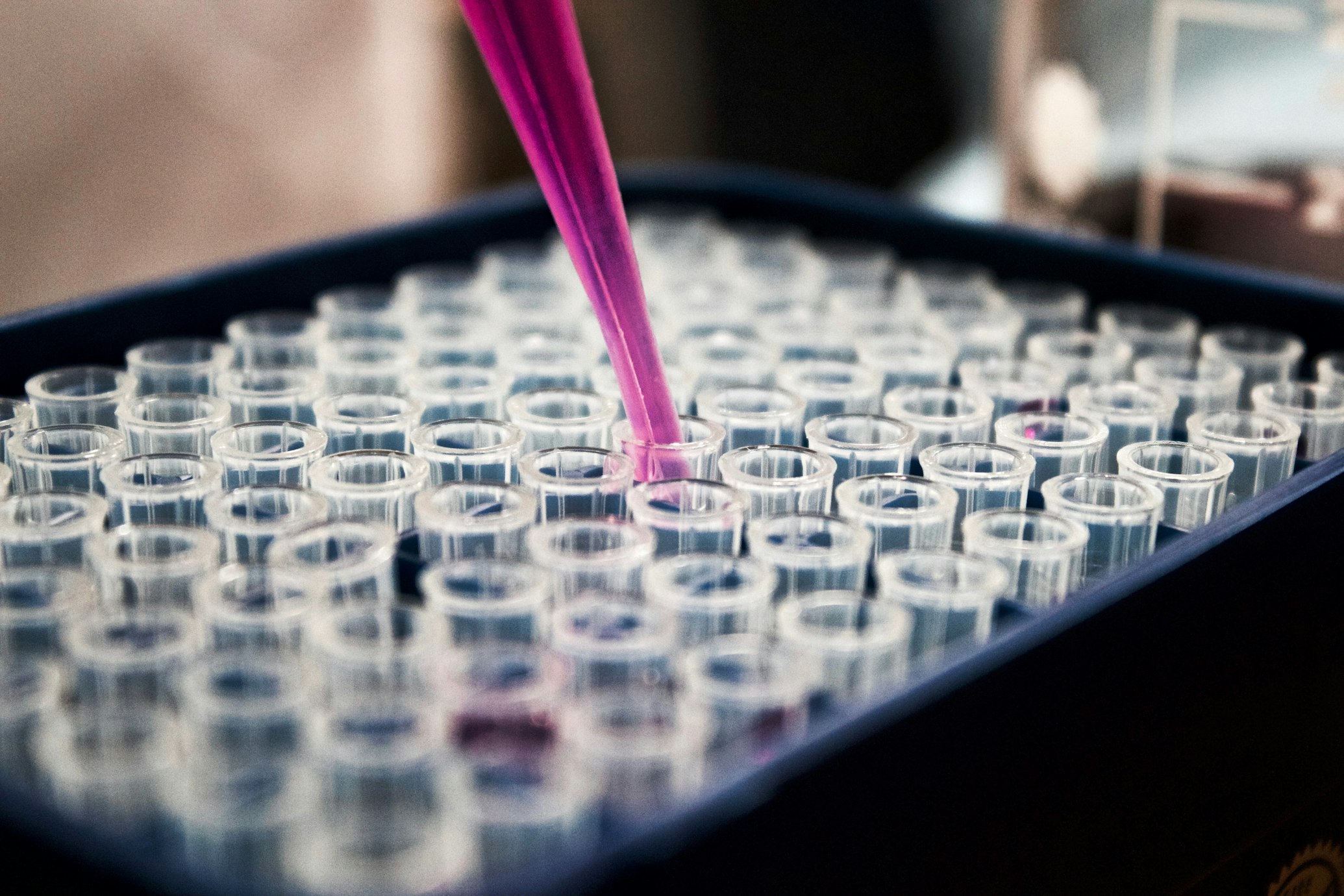
Membrane protein research requires sophisticated computational and experimental approaches
The Experimental Methodology: From Code to Chemistry
The team employed a brilliant, computer-driven materiomics approach:
1. Computational Design
First author Kiana Golden wrote a software program to identify and analyze sequences containing this glycine motif. The program was then used to design idealized, synthetic versions of membrane proteins from scratch, optimizing the sequences for maximum stability 7 .
2. Synthesis and Testing
The team then produced these computer-designed synthetic proteins in the lab.
3. Validation
They tested whether the synthetic proteins folded as predicted and examined their stability, even under extreme conditions like boiling 5 .
Results and Analysis: Weak Bonds, Unbreakable Structures
The experiment was a resounding success. The synthetic proteins folded exactly as predicted, confirming that the glycine motifs do create the "sticky spots" that hold membrane proteins together 7 .
The most surprising finding was the source of this stability. The researchers discovered it was driven by an unusual type of very weak hydrogen bond. Individually, these bonds are insignificant. But when the motif is repeated across the structure, these weak bonds accumulate, creating a powerfully stable interaction 5 .
This reveals a fundamental design principle of nature: achieving resilience not through a few strong links, but through the collective power of many weak ones.
| Reagent / Tool | Function in the Experiment |
|---|---|
| Computational Design Software | To identify the Gly-X6-Gly motif and design optimized synthetic protein sequences from scratch. |
| Lipid Membrane Environment | To provide the natural, fatty environment in which membrane proteins fold and function. |
| Synthetic Amino Acid Sequences | The computer-designed building blocks, used to test hypotheses about protein folding and stability. |
| Stability Assays (e.g., Heat) | To test the robustness of the synthetic proteins under extreme conditions, like boiling temperatures. |
"Our approach is unique in that we design new synthetic proteins from scratch with computer programs to approximate the behaviors and atomic structures of membrane proteins from nature."
This approach vastly accelerates the discovery process. This not only clarifies fundamental biological rules but also opens the door to designing new drugs and therapies that can directly target these critical membrane proteins.
The Scientist's Toolkit: How Materiomics Works
The Scripps experiment showcases the typical tools of the materiomics trade, which blend computational and experimental methods:
Multi-Scale Computational Models
These are the core of materiomics, creating a single model that represents a material's hierarchy from atoms to macroscopic structure to simulate its behavior under stress or deformation 3 .
Bio-Informatics and AI
Software and algorithms are used to analyze vast datasets of biological sequences and structures, identifying key patterns and enabling the design of new materials. The field is now leveraging generative AI and physics-informed machine learning to accelerate this discovery process .
Synthetic Biology and Self-Assembly
Using natural building blocks like peptides and proteins to create new materials through controlled self-assembly, mimicking nature's own production methods 3 .
| Application Area | How Materiomics is Applied | Potential Impact |
|---|---|---|
| Medical Research (e.g., Osteogenesis Imperfecta) | Studying how a single genetic mutation at the nanoscale weakens collagen molecules, leading to catastrophic bone failure at the macro scale 3 . | Explains the multi-scale mechanism of disease and could lead to new treatment strategies. |
| Drug Development | Designing synthetic membrane proteins to understand their structure, as done at Scripps, or creating molecules to target them 7 . | Enables the development of more effective drugs with fewer side effects. |
| Sustainable Material Design | Using insights from nature's hierarchical designs and self-assembly to create new, lightweight materials from abundant natural building blocks 3 . | Reduces the ecological footprint of materials used in cars, airplanes, and buildings. |
| Bio-Based Material Discovery | Leveraging AI-powered platforms to discover new combinations of biopolymers and ingredients for sustainable alternatives to plastics 4 . | Accelerates the transition to a circular, bio-based economy. |
The Future is Hierarchical
Materiomics is more than a new scientific discipline; it is a fundamental shift in perspective. By learning to see the world across all its scales, we are unlocking nature's deepest material secrets. This knowledge is paving the way for a new era of engineering—one where we can design materials that are as strong as spider silk, as adaptable as bone, and as sustainable as wood.
The long-term goal is to develop a new engineering paradigm that allows us to design structures and materials starting from the molecular level 3 . The convergence of materiomics with powerful new AI tools promises to make this vision a reality, leading to autonomous discovery and a future where materials are intelligently designed to be perfectly suited for their function, just as they are in the natural world .