Knowledge-Driven DBTL Cycles: Unlocking Mechanistic Insights for Accelerated Biomanufacturing and Drug Discovery
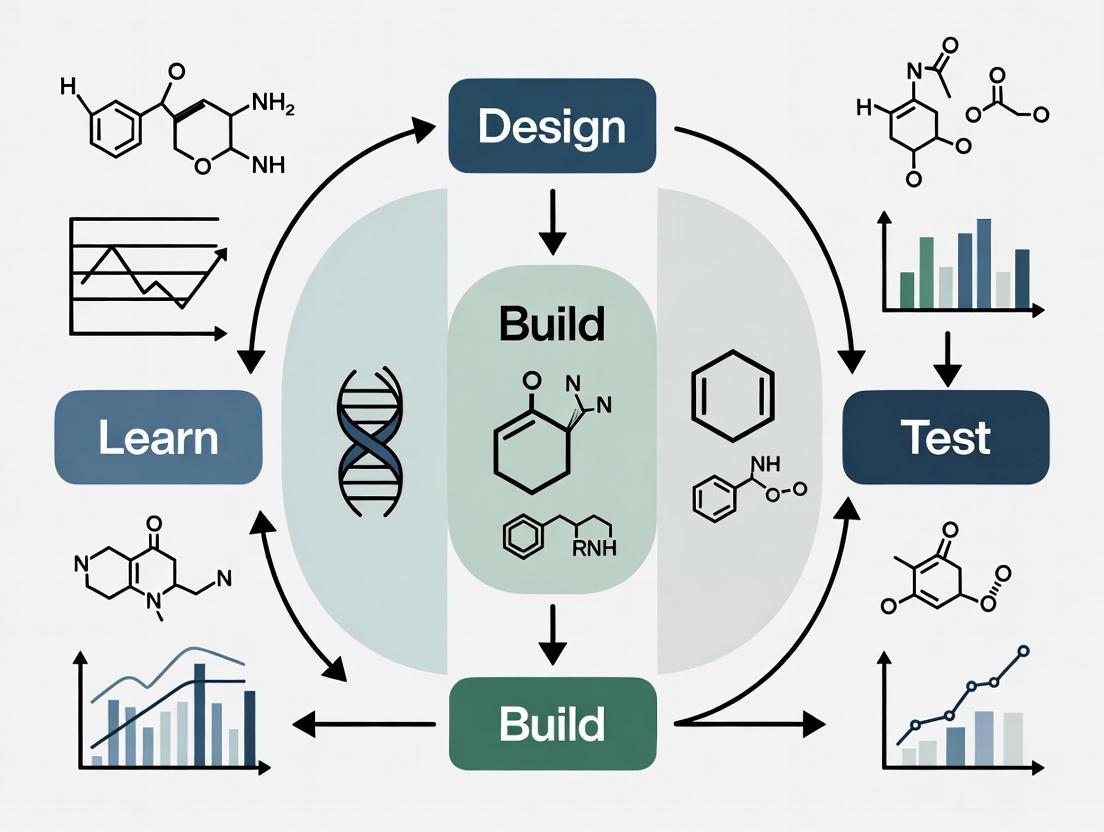
This article explores the transformative impact of knowledge-driven Design-Build-Test-Learn (DBTL) cycles in synthetic biology and biopharmaceutical development.
Knowledge-Driven DBTL Cycles: Unlocking Mechanistic Insights for Accelerated Biomanufacturing and Drug Discovery
Abstract
This article explores the transformative impact of knowledge-driven Design-Build-Test-Learn (DBTL) cycles in synthetic biology and biopharmaceutical development. Tailored for researchers, scientists, and drug development professionals, it provides a comprehensive examination of how integrating upstream mechanistic investigations, artificial intelligence, and automation is reshaping traditional bio-engineering workflows. We cover the foundational principles distinguishing knowledge-driven from statistical approaches, detail methodologies like in vitro prototyping and high-throughput RBS engineering, address troubleshooting and optimization challenges, and present validation case studies with comparative performance metrics. The synthesis offers a forward-looking perspective on how these integrated cycles accelerate strain optimization, enhance predictive power, and drive innovation in biomedical research.
Beyond Trial and Error: Establishing the Principles of Knowledge-Driven DBTL
Defining the Knowledge-Driven DBTL Cycle and Its Core Components
The Design-Build-Test-Learn (DBTL) cycle is a cornerstone methodology in synthetic biology, providing a systematic framework for engineering biological systems [1]. Traditionally, this iterative process begins with a design phase based on existing knowledge or hypotheses, followed by physical construction of genetic designs, testing of the constructed systems, and learning from the results to inform the next design cycle [2].
The knowledge-driven DBTL cycle represents an advanced evolution of this framework, characterized by the integration of upstream in vitro investigations and mechanistic insights before embarking on full DBTL cycles in vivo [3]. This approach addresses a fundamental challenge in traditional DBTL implementation: the initial cycle typically starts without substantial prior knowledge, potentially leading to multiple iterative cycles that consume significant time and resources [3]. By incorporating targeted preliminary experiments and leveraging computational tools, the knowledge-driven approach enables more rational strain engineering with reduced experimental overhead.
This application note delineates the core components, experimental protocols, and practical implementation strategies for the knowledge-driven DBTL cycle, with specific examples from metabolic engineering applications.
Core Components of the Knowledge-Driven DBTL Cycle
The knowledge-driven DBTL framework modifies the traditional cycle through strategic additions that enhance its efficiency and mechanistic depth.
Modified Workflow Architecture
The knowledge-driven approach incorporates two crucial elements that precede the standard DBTL cycle:
- Upstream In Vitro Investigation: Preliminary testing of enzyme expression and pathway functionality in cell-free systems or crude cell lysates
- Mechanistic Pathway Analysis: Detailed examination of enzyme kinetics, expression levels, and pathway flux before in vivo implementation
These elements feed critical data into the initial Design phase, creating a more informed starting point for DBTL cycling [3].
Table 1: Core Components of Knowledge-Driven DBTL Cycle
| Component | Description | Function in Workflow |
|---|---|---|
| Upstream In Vitro Investigation | Testing pathway enzymes in cell lysate systems | Bypasses cellular constraints to assess enzyme functionality and interactions |
| Mechanistic Analysis | Detailed study of enzyme expression, kinetics, and pathway flux | Provides quantitative understanding of pathway limitations and optimization targets |
| Enhanced Design Phase | Computational and RBS tools for pathway optimization | Translates in vitro findings into informed genetic designs for in vivo testing |
| Automated Build-Test | High-throughput genetic engineering and screening | Accelerates construction and evaluation of engineered strains |
| Data Integration & Learning | Statistical and model-guided assessment of performance | Generates actionable insights for subsequent engineering cycles |
Knowledge-Driven DBTL Workflow
The following diagram illustrates the integrated workflow of the knowledge-driven DBTL cycle, highlighting how upstream investigations feed into the core engineering cycle:
Experimental Protocol: Implementing Knowledge-Driven DBTL for Metabolic Pathway Optimization
This section provides a detailed protocol for implementing the knowledge-driven DBTL cycle, using dopamine production in Escherichia coli as a case study [3].
Upstream In Vitro Investigation Phase
Preparation of Crude Cell Lysate System
Purpose: To create a cell-free environment for testing enzyme combinations and pathway functionality without cellular constraints [3].
Materials:
- E. coli production strain (e.g., FUS4.T2)
- Phosphate buffer (50 mM, pH 7.0)
- Lysozyme
- DNase I
- Protease inhibitor cocktail
- Reaction buffer components: 0.2 mM FeCl₂, 50 μM vitamin B₆, 1 mM L-tyrosine or 5 mM L-DOPA
Procedure:
- Culture E. coli production strain in 2xTY medium with appropriate antibiotics at 37°C with shaking (220 rpm) until OD₆₀₀ reaches 0.6-0.8
- Harvest cells by centrifugation at 4,000 × g for 15 minutes at 4°C
- Resuspend cell pellet in ice-cold phosphate buffer (50 mM, pH 7.0)
- Add lysozyme to final concentration of 1 mg/mL and incubate on ice for 30 minutes
- Disrupt cells by sonication on ice (5 cycles of 30 seconds pulse, 30 seconds rest)
- Add DNase I (10 μg/mL) and protease inhibitor cocktail according to manufacturer's instructions
- Remove cell debris by centrifugation at 12,000 × g for 30 minutes at 4°C
- Collect supernatant (crude cell lysate) and aliquot for immediate use or storage at -80°C
In Vitro Pathway Assembly and Testing
Purpose: To assess relative enzyme expression levels and pathway functionality before in vivo implementation [3].
Materials:
- Crude cell lysate system (from Protocol 3.1.1)
- Plasmid constructs containing pathway genes (e.g., pJNTNhpaBC, pJNTNddc for dopamine pathway)
- Reaction buffer: Phosphate buffer supplemented with 0.2 mM FeCl₂, 50 μM vitamin B₆, and 1 mM L-tyrosine
- HPLC system for dopamine quantification
Procedure:
- Express individual pathway enzymes in separate crude cell lysate reactions
- Combine lysates containing different pathway enzymes in systematic ratios
- Initiate reactions by adding L-tyrosine substrate (1 mM final concentration)
- Incubate at 30°C with shaking (200 rpm) for 4-24 hours
- Collect samples at predetermined time points (e.g., 0, 2, 4, 8, 24 hours)
- Quench reactions by adding equal volume of ice-cold methanol
- Remove precipitated proteins by centrifugation at 15,000 × g for 10 minutes
- Analyze supernatant for dopamine production using HPLC with UV detection (280 nm)
Knowledge-Driven Design Phase
Ribosome Binding Site (RBS) Engineering Based on In Vitro Data
Purpose: To translate optimal enzyme expression ratios identified in vitro to in vivo systems through RBS modulation [3].
Materials:
- UTR Designer software or similar computational tools
- Plasmid backbone (e.g., pET system for single gene expression)
- Synthetic DNA fragments with modified RBS sequences
- Restriction enzymes and ligase for molecular cloning
Procedure:
- Analyze in vitro data to identify optimal expression ratios for pathway enzymes
- Use computational tools (e.g., UTR Designer) to design RBS sequences with varying translation initiation rates (TIR)
- Design RBS libraries focusing on Shine-Dalgarno sequence modulation while maintaining secondary structure stability
- Synthesize DNA constructs with designed RBS variants
- Clone RBS variants into appropriate expression vectors
- Verify sequences by Sanger sequencing before proceeding to Build phase
Build-Test-Learn Cycle Implementation
High-Throughput Strain Construction and Screening
Purpose: To efficiently build and test multiple engineered strains in parallel [3].
Materials:
- E. coli cloning strain (e.g., DH5α) and production strain (e.g., FUS4.T2)
- Plasmid libraries with RBS variants
- Minimal medium for cultivation: 20 g/L glucose, 10% 2xTY, salts, MOPS buffer, trace elements
- Antibiotics: ampicillin (100 μg/mL), kanamycin (50 μg/mL)
- Inducer: IPTG (1 mM)
- Microtiter plates and automated liquid handling systems
Procedure:
- Transform production strain with RBS variant libraries
- Plate transformed cells on selective media and incubate at 37°C overnight
- Pick individual colonies into deep-well plates containing minimal medium
- Grow cultures at 30°C with shaking (800 rpm) until OD₆₀₀ reaches 0.6-0.8
- Induce pathway expression with IPTG (1 mM final concentration)
- Continue incubation for 24-48 hours for metabolite production
- Measure biomass (OD₆₀₀) and dopamine production via HPLC
- Analyze data to identify top-performing RBS combinations
- Sequence validated hits to confirm RBS sequences
Research Reagent Solutions and Essential Materials
Successful implementation of the knowledge-driven DBTL cycle requires specific reagents and tools optimized for high-throughput metabolic engineering.
Table 2: Essential Research Reagents for Knowledge-Driven DBTL Implementation
| Reagent/Tool | Specifications | Application in Workflow |
|---|---|---|
| Crude Cell Lysate System | Derived from production strain; contains essential metabolites and cofactors | Upstream in vitro pathway testing and optimization |
| Plasmid Systems | pET for gene storage; pJNTN for lysate studies and library construction | Genetic parts storage and pathway expression |
| RBS Engineering Tools | UTR Designer; synthetic DNA with modulated Shine-Dalgarno sequences | Fine-tuning relative gene expression in synthetic pathways |
| Production Strain | Engineered E. coli FUS4.T2 with high L-tyrosine production | Dopamine production chassis with enhanced precursor supply |
| Analytical Tools | HPLC with UV detection; automated sampling systems | Quantitative measurement of pathway performance and metabolites |
| Automation Platforms | Liquid handling robots; high-throughput screening systems | Accelerated Build and Test phases for rapid DBTL cycling |
Results and Performance Metrics
Implementation of the knowledge-driven DBTL cycle for dopamine production has demonstrated significant improvements over traditional approaches.
Quantitative Performance Assessment
Table 3: Performance Comparison of DBTL Approaches for Dopamine Production
| Engineering Approach | Dopamine Titer (mg/L) | Specific Productivity (mg/g biomass) | Fold Improvement Over State-of-the-Art | Key Innovation |
|---|---|---|---|---|
| Traditional DBTL | 27.0 | 5.17 | 1.0 (baseline) | Standard iterative engineering |
| Knowledge-Driven DBTL | 69.03 ± 1.2 | 34.34 ± 0.59 | 2.6 (titer) / 6.6 (specific productivity) | Upstream in vitro investigation guiding RBS engineering |
| Critical Success Factor | In vitro testing in crude cell lysates | High-throughput RBS engineering | GC content optimization in Shine-Dalgarno sequence | Integrated knowledge-driven workflow |
Case Study: Dopamine Production Optimization
The application of knowledge-driven DBTL to dopamine production in E. coli exemplifies the power of this approach. The pathway utilizes native E. coli 4-hydroxyphenylacetate 3-monooxygenase (HpaBC) to convert L-tyrosine to L-DOPA, followed by heterologous expression of L-DOPA decarboxylase (Ddc) from Pseudomonas putida to form dopamine [3].
The knowledge-driven approach enabled:
- Identification of optimal HpaBC:Ddc expression ratios through in vitro lysate studies
- Strategic RBS engineering to achieve identified optimal ratios in vivo
- Development of a production strain achieving 69.03 ± 1.2 mg/L dopamine
- 2.6-fold improvement in titer and 6.6-fold improvement in specific productivity compared to previous state-of-the-art
Advanced Applications and Integration with Emerging Technologies
The knowledge-driven DBTL framework is increasingly enhanced through integration with automation and artificial intelligence.
Integration with Biofoundry Platforms
Biofoundries provide automated, integrated facilities that significantly accelerate the DBTL cycle through robotic automation and computational analytics [2]. These facilities enable:
- High-throughput DNA construction using automated assembly protocols
- Rapid strain characterization through integrated analytical platforms
- Data management systems that facilitate the Learn phase
- Implementation of multiple parallel DBTL cycles
Machine Learning and AI Enhancement
Machine learning tools are transforming the Learn and Design phases of the DBTL cycle:
- Automated Recommendation Tools (ART): Leverage machine learning and probabilistic modeling to recommend optimal strain designs based on previous cycle data [4]
- Protein Language Models: Enable zero-shot prediction of protein function and stability for improved part selection [5]
- Bayesian Optimization: Efficiently navigates complex biological design spaces with limited experimental data [6]
Paradigm Shift: LDBT Cycle
Emerging approaches propose reordering the cycle to "LDBT" (Learn-Design-Build-Test), where machine learning models trained on large biological datasets precede and inform the initial design phase, potentially enabling functional solutions in a single cycle [7].
The knowledge-driven DBTL cycle represents a significant advancement in synthetic biology methodology, addressing key limitations of traditional approaches through strategic incorporation of upstream in vitro investigations and mechanistic analyses. By front-loading the workflow with critical pathway knowledge, this approach enables more rational design decisions, reduces the number of iterative cycles required, and accelerates development of high-performance production strains.
The detailed protocols and reagent specifications provided in this application note offer researchers a practical framework for implementing knowledge-driven DBTL in diverse metabolic engineering applications, from therapeutic compound production to sustainable biomanufacturing.
Contrasting Knowledge-Driven and Traditional Statistical DBTL Approaches
The Design-Build-Test-Learn (DBTL) cycle is a foundational framework in synthetic biology and metabolic engineering for systematically developing microbial strains for bioproduction [8] [9]. While traditional implementations have often relied on statistical analysis of large datasets, an emerging knowledge-driven approach incorporates upstream mechanistic investigations to guide the design process more efficiently [8] [10]. This paradigm shift aims to replace randomized trial-and-error with rational, insight-driven engineering, potentially reducing the number of DBTL cycles required to achieve performance targets. Within the context of mechanistic insights research, the knowledge-driven approach specifically seeks to understand the underlying biological principles governing strain performance, thereby generating transferable knowledge that can inform future engineering efforts across different host organisms and metabolic pathways.
Conceptual Framework Comparison
Table 1: Fundamental Contrasts Between DBTL Approaches
| Aspect | Knowledge-Driven DBTL | Traditional Statistical DBTL |
|---|---|---|
| Primary Basis for Design | Mechanistic understanding from upstream investigations [8] | Statistical models, design of experiment (DoE), or randomized selection [8] |
| Learning Focus | Understanding biological mechanisms and causal relationships [8] | Identifying correlations and statistical patterns in data [9] |
| Data Requirements | Prioritizes targeted, informative data for mechanistic insights [8] | Often requires large, comprehensive datasets for statistical power [11] |
| Typical Entry Point | Prior knowledge from in vitro studies or mechanistic hypotheses [8] | Often begins without prior knowledge [8] |
| Interpretability | High - focuses on understanding biological causality [8] | Variable - statistical models can be "black boxes" [11] [12] |
| Handling of Nonlinearity | Can incorporate nonlinear relationships through mechanistic understanding [13] | Traditional statistical methods often assume linearity [11] [12] |
Case Study: Knowledge-Driven Dopamine Production inE. coli
A compelling implementation of knowledge-driven DBTL demonstrated significantly enhanced dopamine production in Escherichia coli [8]. Researchers integrated upstream in vitro investigation using crude cell lysate systems to inform subsequent in vivo strain engineering, achieving dopamine titers of 69.03 ± 1.2 mg/L (equivalent to 34.34 ± 0.59 mg/g biomass) [8] [14]. This represented a 2.6 to 6.6-fold improvement over previous state-of-the-art production methods [8].
Table 2: Dopamine Production Performance Comparison
| Strain/Method | Dopamine Titer (mg/L) | Specific Productivity (mg/g biomass) | Fold Improvement |
|---|---|---|---|
| Previous State-of-the-Art | 27 | 5.17 | 1x (baseline) |
| Knowledge-Driven DBTL Strain | 69.03 ± 1.2 | 34.34 ± 0.59 | 2.6-6.6x |
Detailed Experimental Protocol
Protocol 1: In Vitro Pathway Prototyping Using Crude Cell Lysates
Purpose: To test dopamine pathway enzyme expression levels and interactions before in vivo implementation [8].
Materials:
- Production Host Strain: E. coli FUS4.T2 with high L-tyrosine production [8]
- Reaction Buffer: 50 mM phosphate buffer (pH 7) with 0.2 mM FeCl₂, 50 μM vitamin B₆, and 1 mM L-tyrosine or 5 mM L-DOPA [8]
- Enzyme Components: HpaBC (4-hydroxyphenylacetate 3-monooxygenase) and Ddc (L-DOPA decarboxylase) [8]
Procedure:
- Lysate Preparation: Cultivate production host strain to mid-log phase, harvest cells, and prepare crude cell lysate using standard lysis protocols [8].
- Pathway Assembly: Combine lysate with reaction buffer supplemented with pathway enzyme expressions.
- Reaction Incubation: Maintain reactions at optimal temperature (typically 30-37°C) with shaking for 4-24 hours.
- Metabolite Analysis: Quantify dopamine production using HPLC or LC-MS methods with appropriate standards.
- Mechanistic Analysis: Assess enzyme expression compatibility, cofactor utilization, and potential inhibitory interactions.
Protocol 2: In Vivo Translation via RBS Engineering
Purpose: To translate optimal expression ratios identified in vitro to stable production strains [8].
Materials:
- Cloning Strain: E. coli DH5α for genetic construction [8]
- Expression Vectors: Plasmid systems with inducible promoters (e.g., IPTG-inducible) [8]
- RBS Library: Variant Shine-Dalgarno sequences with modulated GC content [8]
Procedure:
- RBS Design: Design ribosome binding site variants focusing on Shine-Dalgarno sequence modifications while maintaining surrounding secondary structure [8].
- Genetic Construction: Assemble bicistronic operons encoding hpaBC and ddc genes with variant RBS sequences using high-throughput DNA assembly methods.
- Strain Transformation: Introduce construct libraries into production host E. coli FUS4.T2.
- High-Throughput Screening: Cultivate strains in 96-well format with minimal medium (20 g/L glucose, 10% 2xTY, MOPS buffer) [8].
- Performance Validation: Analyze dopamine production in shake flask scale with the same minimal medium composition.
The Scientist's Toolkit: Essential Research Reagents
Table 3: Key Reagent Solutions for Knowledge-Driven DBTL Implementation
| Reagent/Category | Specific Examples | Function/Application |
|---|---|---|
| Production Host Strains | E. coli FUS4.T2 (high L-tyrosine producer) [8] | Engineered host with enhanced precursor supply for target compound synthesis |
| Enzyme Components | HpaBC (from E. coli), Ddc (from Pseudomonas putida) [8] | Pathway enzymes catalyzing conversion of L-tyrosine to L-DOPA and subsequently to dopamine |
| Cell-Free Systems | Crude cell lysates [8] | In vitro prototyping platform for testing enzyme expression and pathway functionality without cellular constraints |
| Genetic Toolboxes | RBS libraries with modulated Shine-Dalgarno sequences [8] | Fine-tuning gene expression levels in synthetic pathways |
| Analytical Standards | Dopamine hydrochloride, L-tyrosine, L-DOPA [8] | Quantification references for target compounds and precursors via HPLC or LC-MS |
| Culture Media | Minimal medium with MOPS buffer, trace elements [8] | Defined cultivation conditions for reproducible strain performance evaluation |
Emerging Paradigm: Learning-Driven Design (LDBT)
A revolutionary extension of knowledge-driven DBTL is the LDBT framework, where "Learning" precedes "Design" [10]. This approach leverages machine learning models trained on large biological datasets to make zero-shot predictions for protein and pathway design before physical construction [10]. Protein language models (ESM, ProGen) and structure-based tools (ProteinMPNN, MutCompute) can predict beneficial mutations and generate functional sequences, potentially enabling a Design-Build-Work paradigm that reduces iterative cycling [10]. When combined with cell-free expression systems for rapid testing, LDBT represents the cutting edge of knowledge-driven biological design, potentially transforming how researchers approach strain engineering and optimization [10].
Comparative Performance Analysis
Multiple systematic studies across biological domains have quantitatively compared traditional and advanced learning-based approaches. In building performance prediction, machine learning algorithms demonstrated superior performance to traditional statistical methods in both classification and regression metrics across 56 comparative studies [12]. However, a meta-analysis of cancer survival prediction revealed equivalent performance between machine learning models and traditional Cox regression [15], highlighting that advanced methods do not automatically guarantee superior results and must be selected based on specific application requirements.
The knowledge-driven DBTL approach represents a significant evolution beyond traditional statistical methods in metabolic engineering. By prioritizing mechanistic understanding through upstream investigations and targeted experimentation, researchers can generate fundamental insights that accelerate strain development while deepening biological understanding. The dopamine production case study demonstrates how this approach achieves substantial performance improvements while elucidating fundamental principles like the impact of GC content on RBS strength [8]. As synthetic biology continues to mature, integrating knowledge-driven strategies with emerging machine learning capabilities promises to further transform biological engineering into a more predictive, knowledge-intensive discipline.
The Critical Role of Mechanistic Understanding in Rational Strain Engineering
Rational strain engineering is a cornerstone of modern industrial biotechnology, essential for developing robust microbial cell factories. While high-throughput technologies have accelerated the construction and testing of engineered strains, achieving desired performance often requires more than iterative, random approaches. The knowledge-driven Design-Build-Test-Learn (DBTL) cycle has emerged as a powerful framework that leverages upstream mechanistic insights to guide engineering strategies, significantly reducing development time and resource expenditure [3]. This paradigm shift from random mutagenesis to informed design relies on a deep understanding of the complex biological networks and constraints within the host organism [16]. By integrating computational modeling, advanced analytics, and targeted experimentation, researchers can now probe the underlying physiological mechanisms that govern strain performance, enabling more predictable and successful engineering outcomes for applications ranging from small molecule production to therapeutic protein expression [17] [18].
The Knowledge-Driven DBTL Framework
The knowledge-driven DBTL cycle represents a significant evolution from traditional DBTL approaches by incorporating upstream mechanistic investigation to inform the initial design phase. This framework creates a virtuous cycle where each iteration yields deeper biological insights that subsequently guide more effective engineering strategies [3] [14].
Core Components and Workflow
Knowledge-Driven Design: This initial phase utilizes in vitro studies and computational modeling to generate testable hypotheses about pathway optimization and potential bottlenecks before any genetic modifications are made [3]. For example, in vitro cell lysate systems can be used to rapidly assess enzyme expression levels and interactions without cellular regulatory constraints [3].
Build: The construction phase implements the designed strategies using high-throughput genetic engineering tools. Ribosome Binding Site (RBS) engineering has proven particularly effective for fine-tuning gene expression in synthetic pathways [3]. This approach allows for precise modulation of translation initiation rates without altering secondary structures that might impact functionality [3].
Test: Advanced analytical methods, including operando X-ray absorption spectroscopy and ambient pressure X-ray photoelectron spectroscopy, provide real-time insights into catalytic processes and electronic structure modifications during operation [19]. These techniques enable researchers to move beyond correlative observations to establish causal relationships.
Learn: Data analysis in this phase focuses on extracting mechanistic understanding rather than merely identifying statistical correlations. Machine learning approaches can then leverage these insights to generate more accurate predictions for subsequent DBTL cycles [3] [17].
Computational Integration
The NOMAD (NOnlinear dynamic Model Assisted rational metabolic engineering Design) framework exemplifies the integration of computational modeling into rational strain engineering [16]. This approach employs kinetic models to predict metabolic responses to genetic perturbations while ensuring the engineered strain maintains robustness by keeping its phenotype close to the reference strain [16]. By imposing constraints on fluxes, metabolite concentrations, and enzyme level changes, NOMAD enables more accurate representation and design of microbial hosts, capturing both steady-state and dynamic metabolic behaviors with greater fidelity [16].
Application Notes: Successful Implementation Case Studies
Enhanced Hydrogen Evolution Catalysis
The application of rational strain engineering principles has demonstrated remarkable success in optimizing catalytic systems for hydrogen evolution reaction (HER). Researchers constructed a strain-tunable nanoporous MoS2-based Ru single-atom catalyst system where tensile strain was precisely controlled by adjusting ligament sizes [19].
Table 1: Performance Metrics of Strained Ru/np-MoS2 Catalyst for Hydrogen Evolution
| Catalyst System | Overpotential at 10 mA cm⁻² (mV) | Tafel Slope (mV dec⁻¹) | Key Engineering Strategy |
|---|---|---|---|
| Ru/np-MoS2 (strained) | 30 | 31 | Strain-amplified synergy between S vacancies and Ru sites |
| Conventional SACs | Typically >50 | Typically >40 | Single-atom sites without strain optimization |
Through systematic strain engineering, researchers amplified the synergistic effect between sulfur vacancies and single-atom Ru sites, resulting in exceptional catalytic performance [19]. Theoretical calculations revealed that applied strain enhanced reactant density in sulfur vacancies and accelerated both water dissociation and H-H coupling on Ru sites [19]. This mechanistic understanding was crucial for optimizing the catalyst design, demonstrating how physical principles can be harnessed to improve electrochemical performance.
Dopamine Production in Escherichia coli
The knowledge-driven DBTL cycle was successfully implemented to develop an efficient dopamine production strain in E. coli, achieving a 2.6 to 6.6-fold improvement over previous state-of-the-art in vivo production methods [3] [14].
Table 2: Dopamine Production Performance in Engineered E. coli Strains
| Strain/Approach | Dopamine Concentration (mg/L) | Yield (mg/gbiomass) | Key Innovation |
|---|---|---|---|
| Knowledge-driven DBTL | 69.03 ± 1.2 | 34.34 ± 0.59 | In vitro pathway optimization + RBS engineering |
| Previous in vivo production | 27 | 5.17 | Conventional metabolic engineering |
The experimental protocol began with in vitro cell lysate studies to assess enzyme interactions and identify optimal expression levels without cellular constraints [3]. Key steps included:
Pathway Design: Construction of a dopamine biosynthetic pathway from L-tyrosine using 4-hydroxyphenylacetate 3-monooxygenase (HpaBC) for L-DOPA production and L-DOPA decarboxylase (Ddc) for dopamine synthesis [3].
Host Engineering: Implementation of a high L-tyrosine production host through deletion of the transcriptional dual regulator TyrR and mutation of the feedback inhibition in chorismate mutase/prephenate dehydrogenase (TyrA) [3].
RBS Library Construction: Creation of a targeted RBS library with modulation of GC content in the Shine-Dalgarno sequence to fine-tune translation initiation rates [3].
High-Throughput Screening: Screening of library members using targeted enzyme titer and activity assays to identify top-performing strains [3].
This approach demonstrated that GC content in the Shine-Dalgarno sequence significantly impacts RBS strength, providing a generalizable principle for pathway optimization [3].
Enzyme Expression Systems for Vaccine Production
In an industrial application, Ginkgo Bioworks implemented a targeted DBTL approach to overcome critical enzyme supply constraints for vaccine manufacturing [18]. The methodology focused on developing an E. coli expression system with enhanced protein yield through rational strain engineering combined with fermentation process development [18].
Table 3: Enzyme Expression Strain Engineering Parameters and Outcomes
| Engineering Parameter | Initial Approach | Optimized Approach | Impact |
|---|---|---|---|
| Library Size | ~300 constructs | Targeted design | Reduced screening burden |
| Engineering Elements | DNA recoding, promoters, plasmid backbones, RBSs | Combined optimization | 5-fold yield improvement |
| Process Integration | Sequential | Concurrent strain and process engineering | 10-fold overall improvement |
The protocol employed a highly targeted library of approximately 300 DNA expression constructs testing different DNA recodings, promoters, plasmid backbones, and RBS variants [18]. This focused approach enabled the identification of top-performing strains within a single DBTL cycle, achieving a 5-fold yield improvement in the first six months [18]. Concurrent fermentation process development ensured that laboratory successes translated to scalable manufacturing processes, ultimately delivering a 10-fold increase in protein yield within one year [18].
Essential Protocols for Mechanistic Investigation
Protocol: In Vitro Pathway Optimization Using Cell Lysate Systems
Purpose: To rapidly assess enzyme expression levels and pathway interactions without cellular constraints prior to implementation in vivo [3].
Materials:
- Reaction Buffer: 50 mM phosphate buffer (pH 7.0) supplemented with 0.2 mM FeCl₂, 50 μM vitamin B₆, and 1 mM L-tyrosine or 5 mM L-DOPA [3]
- Crude Cell Lysate: Prepared from production host strain (e.g., E. coli FUS4.T2)
- Expression Plasmids: pJNTN system for single gene or bicistronic expression [3]
Procedure:
- Prepare concentrated reaction buffer with 5× supplements
- Combine cell lysate with expression constructs in reaction buffer
- Incubate at optimal growth temperature (e.g., 37°C for E. coli) with shaking
- Monitor substrate consumption and product formation over time
- Analyze enzyme activities and interactions to determine optimal expression ratios
Application Notes: This upstream investigation provides critical mechanistic insights into pathway bottlenecks and enzyme compatibility, informing the design of RBS libraries for in vivo implementation [3].
Protocol: High-Throughput RBS Engineering for Pathway Tuning
Purpose: To precisely modulate translation initiation rates for optimal pathway flux without altering enzyme coding sequences [3].
Materials:
- UTR Designer or similar computational tools for RBS sequence design [3]
- High-Throughput Cloning System: Golden Gate assembly or similar modular DNA assembly method
- Production Host: Engineered host with optimized precursor supply (e.g., high L-tyrosine E. coli for dopamine production) [3]
Procedure:
- Design RBS library with variations in Shine-Dalgarno sequence GC content
- Implement modular DNA assembly for high-throughput construct generation
- Transform library into production host
- Screen for product formation using targeted assays (e.g., HPLC for dopamine quantification)
- Isolate top-performing strains for characterization
- Sequence validated strains to correlate RBS sequences with performance
Application Notes: Focus on modulating the SD sequence without interfering with secondary structures to achieve predictable translation initiation rates [3].
The Scientist's Toolkit: Essential Research Reagents
Table 4: Key Research Reagent Solutions for Rational Strain Engineering
| Reagent/Resource | Function/Application | Example Implementation |
|---|---|---|
| Crude Cell Lysate Systems | Rapid in vitro pathway testing bypassing cellular constraints | Pre-DBTL cycle pathway validation [3] |
| RBS Library Variants | Fine-tuning translation initiation rates without altering coding sequences | Bicistronic pathway optimization [3] |
| Kinetic Modeling Platforms (ORACLE, NOMAD) | Predicting metabolic responses to genetic perturbations | Robust strain design with minimal phenotype perturbation [16] |
| Operando Spectroscopy Techniques (XAS, AP-XPS) | Real-time monitoring of catalytic processes and electronic structures | Mechanistic studies of single-atom catalysts [19] |
| Targeted DNA Library Constructs | Hypothesis-driven exploration of design space | Enzyme expression optimization [18] |
Workflow Visualization
Knowledge-Driven DBTL Workflow
NOMAD Framework for Robust Design
Leveraging Upstream In Vitro Investigations to Inform In Vivo Design
The transition from in vitro findings to in vivo efficacy remains a significant challenge in biomedical research and drug development. The knowledge-driven Design-Build-Test-Learn (DBTL) cycle provides a structured framework to address this challenge by incorporating upstream in vitro investigations that yield mechanistic insights before embarking on costly in vivo studies. This approach enables researchers to make data-driven decisions when designing in vivo experiments, enhancing predictive accuracy while optimizing resource allocation.
This application note details practical methodologies for implementing upstream in vitro investigations within a knowledge-driven DBTL framework, complete with experimental protocols and analytical techniques for informing in vivo design.
The Knowledge-Driven DBTL Framework for In Vitro to In Vivo Translation
The conventional DBTL cycle in synthetic biology and strain engineering begins with initial designs often based on limited prior knowledge, potentially leading to multiple iterative cycles. The knowledge-driven DBTL framework enhances this process by incorporating targeted upstream in vitro investigations that generate critical mechanistic understanding before proceeding to in vivo experimentation [3].
This approach is particularly valuable for metabolic pathway optimization, enzyme characterization, and biomarker identification, where understanding component interactions and kinetics at the in vitro level provides essential insights for effective in vivo implementation. Studies demonstrate that this methodology can significantly accelerate development timelines and improve outcomes, as evidenced by a 2.6 to 6.6-fold improvement in dopamine production titers in Escherichia coli compared to conventional approaches [3] [14].
Application Case Study: Optimizing Dopamine Production in E. coli
Background and Objective
Dopamine has important applications in emergency medicine, cancer diagnosis and treatment, lithium anode production, and wastewater treatment [3]. Developing an efficient microbial production strain for dopamine presents challenges in balancing metabolic pathway expression while maintaining host viability. Traditional DBTL approaches might require multiple in vivo cycles to identify optimal expression levels for the enzymes in the dopamine biosynthetic pathway.
Experimental Workflow and Results
The knowledge-driven approach utilized upstream in vitro investigations in crude cell lysate systems to determine rate-limiting steps and optimal enzyme ratios before moving to in vivo strain construction [3]. This methodology significantly accelerated the optimization process and enhanced understanding of pathway kinetics.
Table 1: Dopamine Production Optimization Through Knowledge-Driven DBTL
| Engineering Step | Approach | Key Parameters Tested | Outcome |
|---|---|---|---|
| Upstream In Vitro Investigation | Crude cell lysate system | Relative enzyme expression levels; Cofactor requirements; Substrate concentrations | Identification of rate-limiting steps; Optimal enzyme ratio determination |
| In Vivo Translation | RBS library engineering | GC content in Shine-Dalgarno sequence; RBS strength variants; Biomass yield | Development of production strain with enhanced dopamine titers |
| Performance Metrics | Fed-batch cultivation | Production titer (mg/L); Yield (mg/g biomass); Productivity | 69.03 ± 1.2 mg/L dopamine; 34.34 ± 0.59 mg/g biomass; 2.6 to 6.6-fold improvement over previous methods [3] |
Detailed Experimental Protocols
Protocol 1: In Vitro Pathway Prototyping Using Crude Cell Lysates
Purpose: To characterize enzyme kinetics and identify potential bottlenecks in metabolic pathways before in vivo implementation [3].
Materials:
- Production Strain: E. coli FUS4.T2 with high L-tyrosine production capacity [3]
- Plasmids: pJNTN system for single gene expression (pJNTNhpaBC, pJNTNddc) [3]
- Reaction Buffer: 50 mM phosphate buffer (pH 7.0) supplemented with 0.2 mM FeCl₂, 50 μM vitamin B₆, and 1 mM L-tyrosine or 5 mM L-DOPA [3]
Procedure:
- Lysate Preparation:
- Cultivate production strain in appropriate medium with necessary antibiotics and inducers
- Harvest cells at mid-log phase (OD₆₀₀ ≈ 0.6-0.8) by centrifugation (4,000 × g, 10 min, 4°C)
- Resuspend cell pellet in lysis buffer and disrupt using sonication or French press
- Clarify lysate by centrifugation (12,000 × g, 20 min, 4°C) and retain supernatant
In Vitro Reaction Setup:
- Combine clarified lysate with reaction buffer in 1:1 ratio
- Incubate at 30°C with shaking at 200 rpm
- Collect samples at predetermined timepoints (0, 15, 30, 60, 120 min)
Analytical Methods:
- Quantify dopamine production using HPLC with electrochemical detection
- Monitor substrate depletion and intermediate accumulation
- Calculate conversion rates and enzyme kinetics parameters
Protocol 2: RBS Library Design and High-Throughput Screening
Purpose: To translate optimal enzyme ratios identified in vitro to in vivo implementation through ribosomal binding site engineering [3].
Materials:
- RBS Library Design Tool: UTR Designer or similar computational tool [3]
- Cloning System: pJNTN plasmid with multiple cloning site for pathway genes [3]
- Screening Medium: Minimal medium with 20 g/L glucose, 10% 2xTY, and appropriate supplements [3]
Procedure:
- RBS Library Construction:
- Design RBS variants with modulated Shine-Dalgarno sequences using computational tools
- Generate variant libraries for hpaBC and ddc genes using degenerate primers
- Clone RBS variants into expression vectors using Golden Gate assembly or Gibson assembly
- Transform library into production host (E. coli FUS4.T2)
High-Throughput Screening:
- Array individual clones in 96-well or 384-well plates
- Cultivate clones in screening medium with appropriate inducers
- Monitor growth kinetics and dopamine production spectrophotometrically or via HPLC
- Select top-performing variants for further characterization
Validation and Scale-Up:
- Validate performance of selected variants in shake flask cultures
- Analyze biomass yield and dopamine production titers
- Scale up promising strains to bioreactor for fed-batch cultivation
The Scientist's Toolkit: Essential Research Reagents and Solutions
Table 2: Key Research Reagents for Knowledge-Driven DBTL Implementation
| Reagent/Category | Specific Examples | Function/Application |
|---|---|---|
| Cell-Free Protein Synthesis Systems | Crude cell lysates; Purified enzyme systems | In vitro pathway prototyping; Enzyme kinetics characterization; Cofactor requirement determination [3] |
| Genetic Engineering Tools | RBS library variants; Promoter libraries; Plasmid systems (pET, pJNTN) | Fine-tuning gene expression; Pathway optimization; Modular cloning [3] |
| Analytical Platforms | HPLC with electrochemical detection; Spectrophotometry; Mass spectrometry | Metabolite quantification; Pathway flux analysis; Product characterization [3] [20] |
| Bioinformatics Resources | UTR Designer; Machine learning algorithms; Pathway modeling software | Predictive design; Data analysis; Pattern recognition in high-throughput datasets [3] |
| Specialized Production Strains | E. coli FUS4.T2 (high L-tyrosine producer); Engineered host strains | Providing metabolic precursors; Optimizing carbon flux toward target compounds [3] |
Integration with Broader Research Applications
The principles of leveraging upstream in vitro investigations extend beyond metabolic engineering to various domains in biomedical research:
Drug Discovery and Development
In pharmaceutical research, live cell imaging applications and high-content screening platforms enable dynamic monitoring of cellular responses to pharmacological interventions, providing temporal profiling of phenotypic responses that inform subsequent in vivo study design [21]. These approaches reveal transient responses and adaptive mechanisms that might be missed in traditional fixed endpoint assays.
Biomarker Discovery and Validation
Integrating in vitro and in vivo approaches enhances biomarker development strategies. Systems biology approaches that combine molecular profiling across in silico, in vitro, and in vivo models maximize opportunities for discovering clinically relevant biomarkers [22]. This integrated framework allows for correlation of pharmacological responses with genomic patterns, enabling patient stratification strategies before clinical trials.
Diagnostic Development
In vitro diagnostic (IVD) instrument development leverages similar principles, where methodology optimization precedes clinical implementation. Technologies including electrochemical analysis, spectral analysis, and chromatography are refined through systematic in vitro testing before translation to clinical diagnostic applications [20].
The knowledge-driven DBTL cycle with upstream in vitro investigation represents a powerful paradigm for enhancing in vivo design across multiple domains of biological research. By systematically generating mechanistic insights before proceeding to complex in vivo systems, researchers can make informed decisions that accelerate development timelines, improve success rates, and deepen understanding of biological mechanisms.
The protocols and methodologies detailed in this application note provide actionable frameworks for implementation across various research contexts, from metabolic engineering to pharmaceutical development. As automated platforms and analytical technologies continue to advance, the integration of upstream in vitro investigations will become increasingly central to efficient research translation.
Synergizing AI and Foundational Biological Knowledge for Predictive Modeling
The convergence of artificial intelligence (AI) and foundational biological knowledge is revolutionizing predictive modeling in biomedical research, creating a new paradigm for the knowledge driven Design-Build-Test-Learn (DBTL) cycle. This synergy enhances the mechanistic understanding of biological systems while accelerating the development of therapeutic compounds and bioproduction strains [23] [3]. Traditional DBTL cycles often face challenges with entry points due to limited prior knowledge, leading to multiple iterative cycles that consume significant time and resources [3]. The integration of AI with established biological principles addresses this limitation by incorporating upstream investigations that generate critical mechanistic insights before full-cycle implementation [3] [14]. This approach is particularly valuable in drug discovery and development, where AI technologies can analyze vast datasets to identify novel drug targets, predict molecular interactions, and optimize lead compounds with unprecedented speed and accuracy [23] [24]. By leveraging machine learning (ML), deep learning (DL), and other AI methodologies alongside fundamental biological knowledge, researchers can construct more predictive models that not only identify correlations but also elucidate causal mechanisms, thereby bridging the gap between empirical observation and theoretical understanding in complex biological systems.
Application Notes: AI-Biology Integration in the Knowledge-Driven DBTL Cycle
Fundamental Principles of Integration
The effective integration of AI with foundational biological knowledge within the DBTL cycle operates on several core principles. First, AI serves as an augmenting tool that enhances rather than replaces domain expertise, with the most successful implementations featuring tight iteration between wet and dry lab teams where "it's hard to even tell where the line is between these groups" [25]. Second, data quality supersedes algorithmic complexity in importance, as evidenced by Amgen's AMPLIFY model, which achieves impressive performance with fewer parameters through high-quality training data [25]. Third, mechanistic interpretability is prioritized over black-box prediction, ensuring that AI-derived insights contribute to fundamental biological understanding rather than merely generating outputs [3]. This principles-based approach ensures that AI applications remain grounded in biological reality while leveraging computational power to explore complex relationships beyond human analytical capacity.
Quantitative Impact of AI-Biology Synergy
Table 1: Performance Metrics of AI-Driven Drug Discovery Platforms
| Platform/Company | Discovery Timeline | Compounds Synthesized | Therapeutic Area | Development Stage |
|---|---|---|---|---|
| Insilico Medicine | 18 months from target to Phase I [26] | Not specified | Idiopathic pulmonary fibrosis [26] | Phase I trials [26] |
| Exscientia | ~70% faster design cycles [26] | 10× fewer compounds than industry norms [26] | Oncology, immunology [26] | Phase I/II trials [26] |
| Exscientia (CDK7 inhibitor) | Substantially faster than industry standards [26] | 136 compounds [26] | Solid tumors [26] | Phase I/II trials [26] |
| BenevolentAI | Not specified | Not specified | COVID-19 (repurposing) [23] | Emergency use authorization [23] |
Table 2: Knowledge-Driven DBTL Impact on Dopamine Production in E. coli
| Strain Engineering Approach | Dopamine Concentration (mg/L) | Dopamine Yield (mg/g biomass) | Fold Improvement |
|---|---|---|---|
| State-of-the-art in vivo production (prior art) | Not specified | 5.17 [3] | Baseline |
| Knowledge-driven DBTL with RBS engineering | 69.03 ± 1.2 [3] | 34.34 ± 0.59 [3] | 2.6-6.6 fold [3] |
Implementation Framework
The knowledge-driven DBTL cycle implementation follows a structured framework that begins with upstream in vitro investigation to inform the initial design phase [3]. This preliminary knowledge generation step distinguishes it from conventional DBTL approaches and provides critical mechanistic insights before committing to full strain construction or compound development. The framework subsequently proceeds through iterative optimization cycles where AI models are continuously refined with experimental data, enabling increasingly accurate predictions of biological behavior [3] [25]. This methodology has demonstrated particular success in bioproduction strain development, where the knowledge-driven DBTL cycle enabled 2.6-6.6 fold improvement in dopamine production performance compared to state-of-the-art alternatives [3]. The integration of AI tools throughout this framework enhances each phase, from designing genetic constructs to predicting metabolic flux and optimizing pathway regulation.
Protocols
Protocol 1: AI-Augmented Target Identification and Validation
Purpose: To identify novel therapeutic targets by integrating AI-driven analysis with established biological knowledge.
Materials:
- Multi-omics datasets (genomics, transcriptomics, proteomics)
- AI platforms (e.g., Insilico Medicine, BenevolentAI)
- Validation assay systems (cell-based, biochemical)
- High-performance computing infrastructure
Procedure:
- Data Curation and Integration
- Collect and pre-process heterogeneous biological data from public repositories and proprietary sources
- Annotate datasets using established biological ontologies and pathway databases
- Apply natural language processing (NLP) to extract structured information from unstructured scientific literature [23]
Knowledge Graph Construction
- Build biological knowledge graphs integrating protein-protein interactions, signaling pathways, and disease associations
- Implement graph neural networks to identify novel target-disease relationships [26]
- Prioritize targets based on druggability, safety profile, and biological plausibility
Mechanistic Modeling
Experimental Validation
- Design validation experiments based on AI-generated hypotheses
- Implement cell-based assays to confirm target-disease relationship
- Evaluate target tractability using established screening approaches
Troubleshooting Tips:
- If AI predictions show poor biological coherence, review training data for biases and incorporate additional domain knowledge
- When validation results contradict predictions, analyze discrepancy to refine AI models
- For targets with limited structural information, leverage homology modeling and molecular dynamics simulations
Protocol 2: Knowledge-Driven Strain Optimization for Bioproduction
Purpose: To engineer microbial strains for enhanced compound production using knowledge-driven DBTL cycles.
Table 3: Research Reagent Solutions for Microbial Strain Engineering
| Reagent/Resource | Function | Application Example |
|---|---|---|
| E. coli FUS4.T2 strain [3] | Dopamine production host | Engineered for high L-tyrosine production as dopamine precursor [3] |
| pET plasmid system [3] | Storage vector for heterologous genes | Single gene insertion (hpaBC, ddc) for dopamine pathway [3] |
| pJNTN plasmid [3] | Library construction and crude cell lysate systems | Bi-cistronic expression of dopamine pathway genes [3] |
| Ribosome Binding Site (RBS) libraries [3] | Fine-tuning gene expression | Optimization of relative enzyme expression levels in dopamine pathway [3] |
| Crude cell lysate systems [3] | In vitro pathway testing | Bypass cellular constraints to assess enzyme expression and function [3] |
Materials:
- Microbial chassis (e.g., E. coli FUS4.T2)
- Pathway engineering plasmids
- RBS library variants
- Cell-free transcription-translation systems
- Analytical equipment (HPLC, mass spectrometry)
Procedure:
- In Vitro Pathway Analysis
- Establish crude cell lysate system expressing pathway enzymes
- Measure reaction kinetics and metabolic intermediates
- Identify rate-limiting steps and regulatory bottlenecks [3]
Computational Design
- Model metabolic flux using constraint-based reconstruction and analysis
- Apply machine learning to predict optimal enzyme expression levels
- Design RBS variants for pathway balancing using UTR Designer tools [3]
High-Throughput Construction
- Implement automated DNA assembly for pathway variants
- Transform optimized constructs into production host
- Validate genetic modifications through sequencing
Performance Evaluation
- Cultivate engineered strains in controlled bioreactors
- Measure product titers, yields, and productivity
- Analyze metabolomic profiles to confirm pathway operation
Learning and Model Refinement
- Integrate experimental results with computational models
- Identify discrepancies between predicted and actual performance
- Refine AI models for improved prediction in subsequent cycles
Troubleshooting Tips:
- If pathway intermediate accumulation occurs, rebalance enzyme expression using RBS engineering
- When host viability is compromised, implement dynamic regulation or subpopulation control
- For poor protein expression, optimize codon usage and mRNA stability
Visualizations
Knowledge-Driven DBTL Cycle Workflow
AI-Biology Integration in Predictive Modeling
Dopamine Production Pathway Engineering
From Theory to Bench: Implementing Knowledge-Driven DBTL in Research and Development
Strategic Integration of Cell-Free Systems for Rapid Pathway Prototyping
The knowledge-driven Design-Build-Test-Learn (DBTL) cycle represents a paradigm shift in synthetic biology and metabolic engineering. By integrating upstream in vitro investigations, this approach accelerates strain development and provides deep mechanistic insights into pathway performance [3]. Cell-free systems (CFS) have emerged as a pivotal platform within this framework, enabling researchers to bypass the constraints of whole cells. These systems utilize purified cellular components or crude cell extracts to execute complex metabolic and genetic programs in a controlled, open environment [28]. The fundamental advantage lies in their ability to rapidly probe biochemical reactions without the confounding influences of cellular growth, regulation, or viability, thus offering an unparalleled context for predictive pathway prototyping [28] [3].
The versatility of cell-free systems spans two primary configurations: purified systems with well-defined reaction networks, and crude cell extracts that capture a snapshot of native metabolic networks at the moment of cell lysis [28]. This flexibility allows for precise manipulation of reaction conditions, enzyme combinations, and co-factor concentrations, facilitating the high-throughput exploration of biological and chemical diversity. As a result, cell-free prototyping has demonstrated remarkable success in predicting in vivo performance, with studies reporting correlation coefficients (R²) as high as 0.75 for resource competition and growth burden when translated to living systems [28].
Core Principles and Advantages of Cell-Free Pathway Prototyping
Key Characteristics of Cell-Free Systems
Cell-free systems offer several distinct advantages that make them ideally suited for pathway prototyping within knowledge-driven DBTL cycles. The open reaction environment allows direct access to the reaction milieu, enabling real-time monitoring, facile substrate addition, and product removal that would be impossible in intact cells [28] [29]. This openness also permits precise control over the redox environment, pH, and energy regeneration systems, which is crucial for optimizing pathways involving oxygen-sensitive enzymes or complex co-factor dependencies [28].
Another significant advantage is the decoupling of protein production from cell viability. This enables the expression of toxic proteins or pathways that would otherwise inhibit cell growth in vivo [29]. Furthermore, the absence of cell walls and membranes eliminates the barrier to substrate uptake and product secretion, particularly beneficial for non-native substrates or pathways with intracellular transport limitations [28]. The substantial reduction in design-build-test cycle times – from weeks to mere days – allows for iterative optimization of enzyme variants and ratios under different conditions, dramatically accelerating the prototyping phase [28] [30].
System Configuration Options
Table 1: Comparison of Cell-Free System Configurations for Pathway Prototyping
| System Type | Key Components | Advantages | Ideal Applications |
|---|---|---|---|
| Crude Cell Extracts | Lysate containing native metabolic networks, enzymes, cofactors [28] | Cost-effective; contains native chaperones and metabolites; suitable for complex pathway assembly [3] | Primary metabolic pathways; rapid screening of enzyme combinations; mimicking native host context [28] [3] |
| Purified Systems (PURE) | Recombinantly expressed, purified components of transcription and translation [28] [31] | Defined composition; minimized proteolytic degradation; precise control over components [28] | Functional studies of individual enzymes; toxic protein production; standardized reactions [28] |
| Hybrid Systems | Mixed extracts from multiple organisms or supplemented with purified enzymes [28] | Access to diverse metabolic capabilities; complementation of missing functions [28] [30] | Non-model organism pathways; complex natural product biosynthesis; C1 metabolism [28] [30] |
Experimental Protocol: Implementing Cell-Free Pathway Prototyping
Preparation of Crude Cell Extracts from E. coli
This protocol details the preparation of crude cell extracts from E. coli, the most commonly used and well-characterized cell-free platform [28] [29]. The entire procedure requires approximately 8-10 hours.
Materials and Equipment:
- E. coli strain (e.g., BL21, MG1655, or production-specific strains like FUS4.T2 for dopamine prototyping [3])
- Lysogeny Broth (LB) medium
- French press or high-pressure homogenizer
- Centrifuge and ultracentrifuge capable of 30,000 × g
- Dialysis membrane or desalting columns
- Buffer A: 10 mM Tris-acetate (pH 8.2), 14 mM magnesium acetate, 60 mM potassium acetate
- Buffer B: 10 mM Tris-acetate (pH 8.2), 14 mM magnesium acetate, 60 mM potassium glutamate
Procedure:
- Cell Culture: Inoculate 1 L of LB medium with the selected E. coli strain and incubate at 37°C with vigorous shaking (250 rpm). Monitor growth until mid-log phase (OD600 ≈ 0.6-0.8).
- Harvesting: Chill culture on ice for 15 minutes, then centrifuge at 5,000 × g for 15 minutes at 4°C. Discard supernatant and wash cell pellet with cold Buffer A.
- Cell Lysis: Resuspend cell pellet in a minimal volume of Buffer A (approximately 1 mL per gram of wet cells). Lyse cells using a French press at 20,000 psi with two passes. Maintain samples on ice throughout the process.
- Clarification: Centrifuge the lysate at 12,000 × g for 10 minutes at 4°C to remove cell debris. Transfer supernatant to a fresh tube.
- Run-Off Reaction: Incubate the supernatant at 37°C for 80 minutes with gentle shaking (120 rpm) to deplete endogenous mRNA and run off ribosomes.
- Dialysis: Transfer the extract to dialysis tubing with a 10-14 kDa molecular weight cutoff. Dialyze against 50 volumes of Buffer B for 3 hours at 4°C with one buffer change.
- Aliquoting and Storage: Divide the extract into small aliquots, flash-freeze in liquid nitrogen, and store at -80°C until use.
Quality Control Assessment:
- Determine protein concentration using Bradford assay (typical range: 30-50 mg/mL)
- Test protein synthesis capability using a reporter gene (e.g., GFP)
- Confirm minimal ATP depletion during storage
Cell-Free Reaction Setup for Metabolic Pathway Prototyping
This protocol describes the assembly of cell-free reactions for prototyping metabolic pathways, using the dopamine biosynthesis pathway as an exemplary application [3].
Reaction Components:
- Cell Extract: 30% of final reaction volume [3]
- Energy Regeneration System: 10-20 mM magnesium glutamate, 50-100 mM potassium glutamate, 1.5 mM ATP, 0.9 mM each of GTP, UTP, CTP, 35 mM phosphoenolpyruvate (PEP) [28]
- Amino Acids: 2 mM each of 20 standard amino acids
- Cofactors: 0.1 mM NADP+, 0.1 mM NAD+, 0.05 mM coenzyme A, 0.1 mM thiamine pyrophosphate
- DNA Template: 10-20 ng/µL plasmid DNA or PCR product encoding target pathway
- Substrates: Pathway-specific substrates (e.g., 1 mM L-tyrosine for dopamine prototyping [3])
- Supplemental Buffer: 50 mM HEPES or phosphate buffer (pH 7.0-8.0) [3]
Assembly Procedure:
- Prepare a master mix containing all components except cell extract and DNA template.
- Pre-warm the master mix at the desired reaction temperature (typically 30-37°C).
- Add cell extract and DNA template to initiate the reaction.
- Incubate with gentle shaking (120-150 rpm) for 4-8 hours.
- Monitor reaction progress through periodic sampling for substrate consumption and product formation.
Analytical Methods:
- HPLC Analysis: For dopamine detection, use C18 reverse-phase column with mobile phase of 50 mM phosphate buffer (pH 3.0) and methanol (95:5), flow rate 1 mL/min, detection at 280 nm [3]
- Mass Spectrometry: LC-MS for identification and quantification of pathway intermediates
- Colorimetric Assays: Specific detection of cofactor turnover or product formation
Case Study: Knowledge-Driven DBTL for Dopamine Production
Application of Cell-Free Prototyping
A recent study demonstrated the power of knowledge-driven DBTL cycling with cell-free prototyping for optimizing dopamine production in E. coli [3] [14]. The pathway consisted of two key enzymes: 4-hydroxyphenylacetate 3-monooxygenase (HpaBC) from native E. coli metabolism for converting L-tyrosine to L-DOPA, and L-DOPA decarboxylase (Ddc) from Pseudomonas putida for the final conversion to dopamine [3].
The initial in vitro prototyping phase utilized crude cell lysate systems to test different relative expression levels of HpaBC and Ddc, bypassing the time-consuming in vivo cloning and cultivation steps. The cell-free reactions were conducted in phosphate buffer (50 mM, pH 7.0) supplemented with 0.2 mM FeCl₂, 50 µM vitamin B₆, and 1 mM L-tyrosine or 5 mM L-DOPA as substrates [3]. This approach allowed rapid assessment of enzyme kinetics, compatibility, and potential bottlenecks before moving to in vivo implementation.
Quantitative Results and Translation to In Vivo Systems
Table 2: Performance Metrics for Dopamine Production in Cell-Free vs. In Vivo Systems
| System Configuration | Dopamine Concentration | Product Yield | Key Optimization Parameters |
|---|---|---|---|
| Cell-Free Prototyping | Not specified in results | Not specified in results | Enzyme ratios; cofactor concentrations; Fe²⁺ supplementation [3] |
| Initial In Vivo Strain | Baseline (reference) | Baseline (reference) | None (starting point) [3] |
| Optimized In Vivo Strain | 69.03 ± 1.2 mg/L [3] [14] | 34.34 ± 0.59 mg/g biomass [3] [14] | RBS engineering; SD sequence GC content [3] |
| Fold Improvement | 2.6-fold increase [3] [14] | 6.6-fold increase [3] [14] | Knowledge-driven DBTL with upstream in vitro investigation [3] |
The cell-free prototyping results informed the subsequent in vivo implementation through high-throughput ribosome binding site (RBS) engineering [3]. The critical learning from the in vitro studies was translated to fine-tune the expression levels of HpaBC and Ddc in the production strain. Notably, the research demonstrated the significant impact of GC content in the Shine-Dalgarno (SD) sequence on translation efficiency, enabling precise metabolic flux control toward dopamine synthesis [3].
Visualization of Workflows and Pathways
Knowledge-Driven DBTL Cycle with Cell-Free Prototyping
Diagram Title: Knowledge-Driven DBTL Cycle with Integrated Cell-Free Prototyping
Dopamine Biosynthesis Pathway for Prototyping
Diagram Title: Dopamine Biosynthesis Pathway for Cell-Free Prototyping
The Scientist's Toolkit: Essential Research Reagents
Table 3: Key Research Reagent Solutions for Cell-Free Pathway Prototyping
| Reagent Category | Specific Examples | Function in Pathway Prototyping |
|---|---|---|
| Cell-Free Extracts | E. coli extract, B. subtilis extract, hybrid/extract mixtures [28] [30] | Provide foundational enzymatic machinery, cofactors, and energy systems for in vitro reactions [28] |
| Energy Regeneration Systems | Phosphoenolpyruvate (PEP), creatine phosphate, 3-phosphoglyceric acid [28] | Sustain ATP-dependent processes; drive transcription, translation, and energy-requiring enzymatic reactions [28] |
| Specialized Cofactors | NAD(P)+, NAD(P)H, Coenzyme A, Thiamine pyrophosphate, Pyridoxal phosphate [3] | Enable specific enzyme activities; essential for oxidase, dehydrogenase, and decarboxylase functions [3] |
| Pathway-Specific Substrates | L-tyrosine, L-DOPA, C1 substrates (formate, methanol, CO₂) [28] [3] | Serve as starting materials or intermediates for target pathways; enable testing of substrate utilization [28] [3] |
| DNA Template Systems | Plasmid vectors, linear expression templates, gBlocks Gene Fragments [32] | Encode pathway enzymes; enable rapid testing of genetic designs without cloning [32] |
Advanced Applications and Future Perspectives
The integration of cell-free systems with the knowledge-driven DBTL cycle extends beyond conventional metabolic engineering. Recent advances demonstrate their application in natural product biosynthesis [30], where cell-free platforms enable the characterization of biosynthetic pathways for compounds including ribosomal peptides, non-ribosomal peptides, polyketides, and terpenoids [30]. This approach is particularly valuable for accessing "silent" or "cryptic" biosynthetic gene clusters that are not expressed under standard laboratory conditions [30].
Future developments will likely focus on expanding the scope of cell-free metabolism to include non-model organisms and engineered extracts with augmented capabilities [28]. The incorporation of non-natural chemistries and the utilization of sustainable substrates such as C1 compounds (CO₂, formate, methanol), plastic waste, and lignin derivatives represent promising directions for environmentally conscious bioproduction [28]. Additionally, the integration of machine learning algorithms with high-throughput cell-free experimentation will further accelerate the optimization of pathway performance and predictive modeling [33].
As the field progresses, standardization of cell-free systems and development of modular workflows will enhance reproducibility and accessibility. The synergy between cell-free prototyping and automated biofoundries will establish a new paradigm for rapid biological design, fundamentally transforming how we approach metabolic engineering and synthetic biology challenges [3] [31].
High-Throughput Ribosome Binding Site (RBS) Engineering for Precise Metabolic Control
Metabolic engineering is increasingly adopting a knowledge-driven Design-Build-Test-Learn (DBTL) cycle to efficiently develop microbial cell factories. This approach uses upstream, mechanistic investigations to inform rational strain engineering, moving beyond purely statistical or random methods [3]. Within this framework, high-throughput Ribosome Binding Site (RBS) engineering serves as a powerful tool for implementing the "Build" phase with precision, enabling fine-tuning of metabolic pathway fluxes without relying on random mutagenesis [3] [14]. RBS sequences control translation initiation rates (TIR) by modulating ribosome accessibility to mRNA, directly influencing protein expression levels [34]. By systematically engineering RBS libraries, researchers can optimize the expression levels of multiple enzymes in a biosynthetic pathway, thereby balancing metabolic flux to maximize product titers, yields, and productivity [35] [36]. This protocol details the application of high-throughput RBS engineering within a knowledge-driven DBTL framework, demonstrating its utility for achieving precise metabolic control in both Escherichia coli and Corynebacterium glutamicum for the production of valuable compounds including dopamine, 4-hydroxyisoleucine (4-HIL), and lycopene [36] [3] [37].
Application Notes: RBS Engineering for Metabolic Pathway Optimization
Key Principles and Strategic Implementation
The effectiveness of RBS engineering stems from its direct impact on translation initiation, a key rate-limiting step in protein synthesis. Even minor modifications of 6-8 base pairs within the RBS core region can dramatically alter protein expression levels by changing the secondary structure accessibility and the complementarity to the 16S rRNA [34]. In a knowledge-driven DBTL cycle, preliminary in vitro investigations using cell-free transcription-translation systems can provide crucial mechanistic insights into enzyme expression and function before committing to extensive in vivo engineering [3]. These insights directly inform the design of smarter, more focused RBS libraries for chromosomal integration, significantly accelerating the strain optimization process [3] [14].
Combinatorial RBS engineering of multiple genes within a pathway has proven particularly powerful for overcoming metabolic bottlenecks. Recent advances enable the generation of highly diverse RBS variant libraries across numerous genomic loci without donor templates. For instance, the bsBETTER system for Bacillus subtilis uses base editing to create up to 255 of 256 theoretical RBS combinations per target gene directly on the chromosome, enabling massive parallel optimization of pathway flux [37].
Quantitative Outcomes of RBS Engineering Applications
Table 1: Performance Metrics of RBS Engineering in Various Microbial Hosts
| Host Organism | Target Product | Engineering Strategy | Key Performance Outcome | Reference |
|---|---|---|---|---|
| Escherichia coli | Dopamine | Knowledge-driven DBTL with RBS fine-tuning of hpaBC and ddc | 69.03 ± 1.2 mg/L (34.34 ± 0.59 mg/gbiomass); 2.6 to 6.6-fold improvement over previous state-of-the-art | [3] [14] |
| Corynebacterium glutamicum | 4-Hydroxyisoleucine (4-HIL) | RBS engineering of ido combined with odhI and vgb expression | 139.82 ± 1.56 mM 4-HIL; demonstrates critical synchronicity of cosubstrate supply | [36] |
| Bacillus subtilis | Lycopene | Multiplex base editing of RBSs across 12 MEP pathway genes (bsBETTER system) | 6.2-fold increase in lycopene production compared to genomic overexpression | [37] |
| Escherichia coli | Riboflavin (Vitamin B2) | GLOS-based RBS library integration in MMR-proficient strains | Efficient sampling of functional expression space without off-target mutations | [34] |
Experimental Workflow for Knowledge-Driven RBS Engineering
The following diagram illustrates the integrated experimental workflow combining knowledge-driven DBTL with high-throughput RBS engineering:
Detailed Experimental Protocols
Protocol 1: GLOS-Based RBS Library Design and Chromosomal Integration
Principle: This protocol enables unbiased RBS library integration in mismatch repair (MMR)-proficient strains using the Genome-Library-Optimized-Sequences (GLOS) rule, which avoids MMR recognition by designing oligonucleotides with at least 6 bp mismatches [34].
Materials:
- Bacterial strain (e.g., E. coli MMR-proficient such as EcNR1)
- RedLibs algorithm for library design [34]
- CRMAGE system (CRISPR-optimized MAGE) [34]
- Oligonucleotides with 6+ bp mismatches targeting RBS region
Procedure:
- Target Identification: Select the RBS region -15 to -10 bp upstream of the target gene start codon.
- GLOS Library Design:
- Apply the GLOS rule using RedLibs algorithm to generate a library with 6 bp mismatches.
- Ensure all oligonucleotides have the same mismatch length (≥6 bp) to maintain similar allelic replacement efficiency.
- Pre-screen for oligonucleotides with optimal folding energies (ΔG > -5 kcal/mol) to maximize integration efficiency [34].
- Library Integration:
- Prepare electrocompetent cells expressing λ Red recombinase and Cas9.
- Co-transform with GLOS oligonucleotide library and target-specific sgRNA plasmid.
- Select for transformants using appropriate antibiotics.
- Verify integration via colony PCR and Sanger sequencing of 96+ randomly selected clones.
- Quality Control:
- Measure allelic replacement efficiency (target >95% in MMR+ strains with GLOS).
- Quantify library diversity by sequencing to ensure >90% of designed variants are represented.
- Check for off-target indels (expected <8% in MMR+ strains) [34].
Protocol 2: Combinatorial RBS Engineering for Pathway Optimization
Principle: This protocol enables simultaneous tuning of multiple pathway genes using base editor-guided systems like bsBETTER, which generates diverse RBS combinations without donor templates [37].
Materials:
- Base editing system (e.g., bsBETTER for B. subtilis)
- sgRNA library targeting RBS regions of multiple pathway genes
- High-throughput screening capability (FACS or robotic screening)
Procedure:
- Multi-Gene Target Selection: Identify 4-12 genes in the target metabolic pathway for combinatorial RBS engineering [37].
- sgRNA Library Design: Design sgRNAs targeting the RBS regions of all selected genes.
- Base Editor Transformation: Introduce the base editor system with sgRNA library into the host strain.
- Library Generation:
- Induce base editor activity to generate RBS variants.
- Allow sufficient generations for stable variant formation.
- The bsBETTER system can generate up to 255 of 256 theoretical RBS combinations per gene [37].
- High-Throughput Screening:
- For pigmented products (e.g., lycopene), use colorimetric screening.
- For non-pigmented products, employ FACS with biosensors or label-free techniques.
- Isolate top 0.1-1% of producers for further analysis.
- Validation and Scale-Up:
- Sequence RBS regions of top performers to correlate RBS strength with productivity.
- Validate hits in shake-flask fermentations.
- Conduct multi-omics analysis to understand flux rewiring [37].
Protocol 3: RBS Engineering with Cofactor Balancing
Principle: This protocol specifically addresses the synchronization of main pathway enzymes with cofactor-supplying enzymes, as demonstrated for 4-HIL production where α-ketoglutarate and O₂ supply were critical [36].
Materials:
- Plasmid system with multiple RBS variants
- Genes for cofactor regeneration/balancing (e.g., odhI for α-ketoglutarate, vgb for oxygen)
- Microaerobic cultivation equipment
Procedure:
- Pathway Analysis: Identify main pathway enzymes and their cofactor requirements.
- Dual RBS Library Construction:
- Create RBS libraries for both the key pathway enzyme (e.g., ido for 4-HIL) and cofactor-supplying enzyme (e.g., odhI).
- Use RBS sequences spanning high, medium, and low strength variations [36].
- Strain Construction: Transform production host with combinatorial RBS libraries.
- Cultivation Optimization:
- Employ stratified oxygen conditions to test cofactor synchronization.
- For oxygen-dependent enzymes, consider introducing bacterial hemoglobin (vgb) to enhance O₂ supply [36].
- Byproduct Reduction:
- Identify and delete genes encoding competing pathways (e.g., avtA, ldhA-pyk2 in C. glutamicum).
- Measure reduction in byproducts and improvement in target product yield [36].
The Scientist's Toolkit: Essential Research Reagents
Table 2: Key Reagents for High-Throughput RBS Engineering
| Reagent/System | Function | Application Example | Key Features |
|---|---|---|---|
| RedLibs Algorithm | Designs smart RBS libraries with uniform TIR distribution | E. coli lacZ and riboflavin pathway optimization [34] | GLOS rule compliance; Reduced library size with high functional diversity |
| CRMAGE System | CRISPR-optimized MAGE for efficient allelic replacement | Chromosomal RBS library integration in E. coli [34] | >95% allelic replacement efficiency; Counterselection against wild-type |
| bsBETTER System | Base editor-guided multiplex RBS editing | B. subtilis lycopene pathway optimization [37] | Template-free; 255+ RBS combinations per gene; Scalable multiplexing |
| Cell-Free Protein Synthesis | In vitro pathway prototyping | Dopamine pathway preliminary testing [3] | Bypasses cellular constraints; Rapid enzyme kinetics assessment |
| Transcription Factor Biosensors | High-throughput screening of producers | Lignocellulosic conversion monitoring [38] | Real-time metabolite detection; FACS-compatible output |
Pathway Visualization and Analysis
Metabolic Pathway Engineering with RBS Control Points
The following diagram illustrates key metabolic pathways and strategic RBS engineering control points for optimizing product synthesis:
High-throughput RBS engineering represents a cornerstone technology within knowledge-driven DBTL cycles for metabolic engineering. The protocols outlined herein enable researchers to systematically optimize metabolic pathways by precisely controlling translation initiation rates, thereby balancing flux and maximizing product formation. The integration of GLOS rules for unbiased library generation in MMR-proficient strains, combinatorial base editing for multiplexed pathway optimization, and strategic cofactor balancing creates a powerful toolkit for advancing microbial cell factory development. As the field progresses, the convergence of RBS engineering with biosensor-enabled high-throughput screening [38], machine learning-guided library design, and multi-omics analysis will further accelerate the design of optimized production strains for sustainable biomanufacturing.
The Design-Build-Test-Learn (DBTL) cycle represents a foundational framework in synthetic biology for the systematic engineering of biological systems. The emergence of biofoundries—integrated facilities that combine robotic automation, computational analytics, and high-throughput equipment—has transformed this conceptual cycle into a rapid, iterative, and scalable engineering process [2]. Within this context, the knowledge-driven DBTL cycle represents a significant evolution, moving beyond statistical or random screening approaches to a more rational, mechanistic design process. This approach leverages upstream, often in vitro, investigations to generate critical insights that directly inform the initial design phase, thereby reducing the number of iterative cycles required to achieve a high-performing strain or biological system [3]. By integrating mechanistic understanding from the outset, researchers can make more informed decisions, optimizing pathways with greater precision and efficiency. This article details the practical application of this knowledge-driven paradigm, focusing specifically on the automation of the Build and Test phases, which are crucial for translating biological designs into tangible, tested constructs.
The Biofoundry Framework for Automated DBTL Cycles
Biofoundries operationalize the DBTL cycle by decomposing complex biological engineering projects into standardized, automatable workflows. An abstraction hierarchy has been proposed to ensure interoperability and reproducibility across different facilities. This hierarchy organizes biofoundry activities into four levels [39]:
- Level 0: Project: The overall R&D goal, such as engineering a microbe to produce a target molecule.
- Level 1: Service/Capability: The specific function provided, for example, "modular long-DNA assembly" or "AI-driven protein engineering."
- Level 2: Workflow: A DBTL-stage-specific sequence of tasks. Each workflow is a modular, reusable component, such as "DNA Assembly" (Build) or "High-Throughput Screening" (Test).
- Level 3: Unit Operation: The smallest executable task, performed by a specific hardware or software component, like "Liquid Transfer" by a liquid handling robot or "Protein Structure Generation" by specific software [39].
This structured framework allows for the flexible reconfiguration of modular workflows and unit operations to fulfill diverse project needs, ensuring that automated processes are both robust and adaptable.
Application Note: Knowledge-Driven Engineering of a Dopamine Production Strain
Experimental Background and Objective
Dopamine is a valuable organic compound with applications in medicine, biotechnology, and materials science. Traditional chemical synthesis methods are often environmentally harmful and resource-intensive, creating a need for sustainable microbial production [3]. The objective of this application note was to develop and optimize an Escherichia coli strain for efficient dopamine production by implementing a knowledge-driven DBTL cycle. The pathway involves the conversion of the precursor L-tyrosine to L-DOPA by the native E. coli enzyme HpaBC, followed by decarboxylation to dopamine by a heterologous L-DOPA decarboxylase (Ddc) from Pseudomonas putida [3].
Automated Workflow and Protocol
The following workflow was executed to achieve the project objective, with a focus on the automated Build and Test phases.
Protocol 1: Knowledge-Driven Design and In Vitro Testing
- Objective: To assess enzyme expression and functionality and determine optimal relative expression levels for the dopamine pathway in a cell-free system before in vivo strain construction.
- Materials:
- Reaction Buffer: 50 mM phosphate buffer (pH 7.0), 0.2 mM FeCl₂, 50 µM vitamin B6 [3].
- Substrate: 1 mM L-tyrosine or 5 mM L-DOPA.
- Cell-Free Protein Synthesis (CFPS) System: Crude cell lysate from a high L-tyrosine production E. coli host strain (e.g., FUS4.T2) [3].
- Plasmids: Single-gene constructs (e.g., pJNTNhpaBC, pJNTNddc) for individual enzyme expression.
- Methodology:
- Lysate Preparation: Culture the production host, harvest cells, and prepare crude cell lysate using established CFPS protocols.
- Pathway Reconstitution: Combine the reaction buffer, CFPS lysate, and plasmid DNA(s) encoding HpaBC and Ddc in a microplate.
- Incubation and Sampling: Incate the reaction mixture at 30°C with shaking. Take samples at defined time intervals.
- Analysis: Quench reactions and analyze L-DOPA and dopamine production using High-Performance Liquid Chromatography (HPLC) or LC-MS.
Protocol 2: Automated Build – High-Throughput RBS Library Construction
- Objective: To translate the optimal expression levels identified in vitro into an in vivo context by constructing a library of production strains with finely tuned gene expression.
- Materials:
- Production Host: E. coli FUS4.T2 with genomic modifications for enhanced L-tyrosine production (e.g., tyrR depletion, feedback-inhibition-resistant tyrA) [3].
- Vector System: A bi-cistronic plasmid system (e.g., pJNTN-based) for co-expression of hpaBC and ddc.
- RBS Library: A library of ribosome binding site (RBS) sequences, designed by modulating the Shine-Dalgarno sequence to vary translation initiation rates (TIR) without altering secondary structures [3].
- Methodology:
- Automated DNA Assembly: Use a liquid-handling robot (e.g., Opentrons, Tecan Veya) to assemble the RBS library variants into the destination vector via Golden Gate or Gibson Assembly in a 96-well or 384-well microplate [40] [41].
- High-Throughput Transformation: Automatically transform the assembled constructs into the electrocompetent E. coli production host.
- Plating and Picking: Plate transformations on selective agar using an automated plater. Isulate individual colonies using a colony-picking robot and inoculate them into deep-well plates containing liquid growth medium.
Protocol 3: Automated Test – High-Throughput Screening
- Objective: To rapidly characterize the dopamine production of thousands of library variants.
- Materials:
- Cultivation Medium: Minimal medium with 20 g/L glucose and appropriate antibiotics and inducers (e.g., 1 mM IPTG) [3].
- Labware: 96-well or 384-well deep-well plates.
- Automated Systems:
- Robotic liquid handler for media dispensing and culture inoculation.
- Automated microplate shaker/incubator.
- Microplate spectrophotometer for optical density (OD) measurements.
- Automated HPLC or LC-MS system for metabolite quantification.
- Methodology:
- Cultivation: The liquid handler inoculates culture media in deep-well plates from the picked colonies. Plates are sealed with breathable seals and transferred to an automated shaker-incubator for growth at a defined temperature (e.g., 30°C).
- Biomass Monitoring: Periodically measure OD600 using a plate reader to track growth.
- Metabolite Extraction and Analysis: At a defined growth phase (e.g., stationary phase), use the liquid handler to add a quenching/extraction solvent (e.g., methanol) to the cultures. After centrifugation, automatically transfer the supernatant to analysis plates for HPLC/LC-MS to quantify dopamine and precursor titers.
Key Research Reagent Solutions
Table 1: Essential materials and reagents for automated DBTL cycling in a biofoundry.
| Item | Function/Description | Application in Dopamine Production |
|---|---|---|
| E. coli FUS4.T2 | Genetically engineered production host with high L-tyrosine yield. | Provides the essential precursor and chassis for dopamine pathway integration. |
| HpaBC & Ddc Genes | Genes encoding 4-hydroxyphenylacetate 3-monooxygenase and L-DOPA decarboxylase. | Constitute the heterologous biosynthetic pathway from L-tyrosine to dopamine. |
| RBS Library | A collection of DNA sequences with modified Shine-Dalgarno regions. | Enables fine-tuning of the relative expression levels of HpaBC and Ddc without promoter changes. |
| Crude Cell Lysate | Cell-free system derived from a production host. | Allows for upstream, in vitro investigation of pathway kinetics and enzyme compatibility. |
| Minimal Medium | Defined medium with glucose as carbon source and necessary supplements. | Supports reproducible, high-throughput cultivation for phenotyping library variants. |
Results and Performance Data
The implementation of the knowledge-driven DBTL cycle, culminating in automated Build and Test phases, yielded a highly efficient dopamine production strain.
Table 2: Quantitative performance data for the optimized dopamine production strain. [3]
| Metric | Optimized Strain Performance | Improvement Over State-of-the-Art |
|---|---|---|
| Dopamine Titer | 69.03 ± 1.2 mg/L | 2.6-fold increase |
| Specific Production | 34.34 ± 0.59 mg/gbiomass | 6.6-fold increase |
| Key Learning | Fine-tuning via RBS engineering demonstrated the critical impact of GC content in the Shine-Dalgarno sequence on RBS strength and final product yield. | N/A |
Discussion: The Future of Automated Biofoundries
The automation of the Build and Test phases within a knowledge-driven framework, as demonstrated, significantly accelerates biosystems design. The field continues to advance through the integration of Artificial Intelligence (AI) and Machine Learning (ML). AI is projected to generate up to $410 billion annually for the pharma sector by 2025, partly through optimizing R&D workflows [42]. In biofoundries, ML algorithms can analyze Test data to predict promising designs for the next DBTL cycle, effectively automating the "Learn" phase and creating a fully closed-loop system [41]. Platforms like BioAutomata have demonstrated this capability, using Bayesian optimization to guide experiments and outperform random screening by 77% while evaluating less than 1% of possible variants [41].
Future developments will hinge on better interoperability and data integrity. As highlighted at recent conferences like AUTOMA+ 2025 and ELRIG's Drug Discovery 2025, the focus is on ensuring traceability, robust data lineage, and the integration of hardware and data platforms to build trust in AI and analytics [40] [43]. This will enable biofoundries to transition from optimizing single pathways to tackling grand challenges in biomanufacturing, medicine, and environmental sustainability, fully realizing their potential as engines of the bioeconomy.
Application Note
This application note details a case study on the application of a knowledge-driven Design-Build-Test-Learn (DBTL) cycle to optimize microbial production of dopamine in Escherichia coli. The strategy leveraged upstream in vitro investigations in crude cell lysates to generate mechanistic insights before embarking on resource-intensive in vivo DBTL cycling. Subsequent high-throughput ribosome binding site (RBS) engineering enabled fine-tuning of the heterologous pathway, resulting in a high-performance strain producing 69.03 ± 1.2 mg/L of dopamine, a 2.6-fold and 6.6-fold improvement over state-of-the-art titers and yield, respectively [8] [14]. This approach demonstrates the value of integrating mechanistic, knowledge-driven workflows into synthetic biology to accelerate strain development.
Dopamine is a valuable organic compound with applications spanning emergency medicine, cancer diagnosis, lithium anode production, and wastewater treatment [8]. Current industrial-scale production relies on chemical synthesis or enzymatic systems, which are often environmentally harmful and resource-intensive [8]. Microbial production of dopamine in E. coli presents a sustainable alternative, utilizing the precursor L-tyrosine and a two-step pathway involving the enzymes 4-hydroxyphenylacetate 3-monooxygenase (HpaBC) and L-DOPA decarboxylase (Ddc) [8]. However, studies on in vivo dopamine production are limited, with reported titers lagging behind other bioproducts [8].
Traditional DBTL cycles in synthetic biology can suffer from inefficiencies in the initial design phase, often relying on statistical or randomized selection of engineering targets, which can lead to multiple, costly iterations [8]. This case study showcases a knowledge-driven DBTL cycle, where an upstream in vitro phase using cell-free systems provides critical data on pathway enzyme behavior, informing a more rational and effective initial design for in vivo strain engineering [8].
Key Results and Performance Data
The implementation of the knowledge-driven DBTL cycle led to significant improvements in dopamine production. The key performance metrics of the final optimized strain are summarized below and benchmarked against previous state-of-the-art in vivo production.
Table 1: Quantitative Summary of Optimized Dopamine Production in E. coli
| Performance Metric | Optimized Strain (This Study) | Previous State-of-the-Art (in vivo) | Fold Improvement |
|---|---|---|---|
| Titer | 69.03 ± 1.2 mg/L [8] [14] | 27 mg/L [8] | 2.6-fold |
| Yield | 34.34 ± 0.59 mg/gbiomass [8] [14] | 5.17 mg/gbiomass [8] | 6.6-fold |
Table 2: Key Genetic and Process Elements in the Dopamine Production System
| Component | Role/Description | Source/Details |
|---|---|---|
| Production Host | E. coli FUS4.T2 [8] | Genetically engineered for high L-tyrosine production. |
| Key Enzymes | HpaBC (4-hydroxyphenylacetate 3-monooxygenase) | Native E. coli gene; converts L-tyrosine to L-DOPA [8]. |
| Ddc (L-DOPA decarboxylase) | From Pseudomonas putida; converts L-DOPA to dopamine [8]. | |
| Fine-Tuning Method | High-throughput RBS Engineering [8] | Modulating the Shine-Dalgarno sequence to control translation initiation. |
| Critical Finding | Impact of GC content in SD sequence [8] [14] | Directly influences RBS strength and dopamine production. |
| Inducer | Isopropyl β-d-1-thiogalactopyranoside (IPTG) [8] | Final concentration: 1 mM. |
Experimental Protocols
Protocol 1: UpstreamIn VitroInvestigation Using Crude Cell Lysates
Purpose: To express and test the relative levels of the dopamine pathway enzymes (HpaBC and Ddc) in a cell-free system, bypassing cellular constraints and informing the initial design for in vivo RBS engineering [8].
Materials:
- Production Host: E. coli FUS4.T2 cell pellet [8].
- Buffers: Phosphate buffer (50 mM, pH 7) [8].
- Reaction Buffer Components: 0.2 mM FeCl₂, 50 µM vitamin B6, 1 mM L-tyrosine or 5 mM L-DOPA [8].
- Equipment: Centrifuge, sonicator or French press, incubator.
Procedure:
- Prepare Crude Cell Lysate:
- Harvest E. coli FUS4.T2 cells from a culture expressing the dopamine pathway genes.
- Resuspend the cell pellet in phosphate buffer.
- Lyse the cells using sonication or a French press.
- Centrifuge the lysate at high speed (e.g., 12,000 x g) for 20 minutes to remove cell debris. Collect the supernatant (crude cell lysate) [8].
Set Up In Vitro Reaction:
- Combine the crude cell lysate with the concentrated reaction buffer containing FeCl₂, vitamin B6, and the substrate (L-tyrosine or L-DOPA) [8].
- Incubate the reaction mixture at 30°C with shaking for a defined period (e.g., several hours).
Analyze Reaction Output:
- Quench the reaction at designated time points.
- Analyze samples using High-Performance Liquid Chromatography (HPLC) or other suitable methods to quantify the production of L-DOPA and dopamine.
- Use the data to determine the optimal relative expression ratio between HpaBC and Ddc for maximizing dopamine flux [8].
Protocol 2: High-Throughput RBS Engineering forIn VivoFine-Tuning
Purpose: To translate the optimal enzyme expression ratios identified in vitro into the in vivo production strain by constructing and screening a library of RBS variants [8].
Materials:
- Strains: E. coli DH5α (for cloning), E. coli FUS4.T2 (for production) [8].
- Media: 2xTY medium, SOC medium, defined minimal medium with 20 g/L glucose and appropriate antibiotics (ampicillin, kanamycin) [8].
- Inducer: IPTG (1 mM final concentration) [8].
- Molecular Biology Reagents: DNA assembly kit, primers for RBS library generation.
Procedure:
- Design and Build RBS Library:
- Design a library of RBS sequences for the genes hpaBC and ddc, focusing on varying the Shine-Dalgarno (SD) sequence while minimizing changes to the secondary structure [8].
- Use tools like the UTR Designer or synthetic DNA libraries to generate the variant sequences [8] [44].
- Assemble the RBS variants into the expression plasmid(s) containing the dopamine biosynthetic pathway using high-throughput molecular cloning techniques (e.g., Golden Gate assembly, Gibson Assembly).
Transform and Screen the Library:
- Transform the library of plasmid constructs into the dopamine production host E. coli FUS4.T2 [8].
- Plate transformed cells on selective agar plates and incubate to form colonies.
- Pick individual colonies into deep-well plates containing minimal medium and grow cultures in a high-throughput microbioreactor system.
- Induce protein expression with IPTG during the mid-exponential growth phase [8].
Test and Analyze Library Variants:
- After a suitable production period, harvest cells and measure dopamine titer and yield. Analytical methods like HPLC can be automated for high-throughput screening [8].
- Identify top-performing clones based on dopamine production metrics from Table 1.
Learn and Iterate:
- Sequence the RBS regions of the best-performing strains to correlate sequence features (e.g., GC content of the SD sequence) with production strength [8].
- Use this learning to inform a subsequent DBTL cycle or to lock in the final production strain.
Workflow and Pathway Visualization
Diagram 1: Knowledge-driven DBTL workflow for optimizing dopamine production in E. coli, integrating upstream in vitro investigations with in vivo engineering.
Diagram 2: The two-step heterologous biosynthetic pathway for dopamine production in E. coli, showing key enzymes and RBS library engineering targets.
The Scientist's Toolkit: Research Reagent Solutions
Table 3: Essential Materials and Reagents for Dopamine DBTL Workflow
| Item | Function/Description | Specific Example/Application |
|---|---|---|
| E. coli FUS4.T2 | Genetically engineered production host. | Engineered for high L-tyrosine production; used as the chassis for dopamine pathway integration [8]. |
| HpaBC and Ddc Genes | Encodes key pathway enzymes. | HpaBC: Native to E. coli. Ddc: Heterologously expressed from Pseudomonas putida [8]. |
| RBS Library Components | Fine-tunes translation initiation rates. | Synthetic DNA sequences with variations in the Shine-Dalgarno region to optimize HpaBC and Ddc expression levels [8]. |
| Crude Cell Lysate System | Enables upstream in vitro pathway testing. | Cell-free system using lysates from E. coli to express enzymes and test pathway flux without cellular constraints [8]. |
| Defined Minimal Medium | Supports high-density fermentation and production. | Contains glucose, MOPS, trace elements, and vitamins to support robust growth and dopamine production in bioreactors [8]. |
AI-Powered Tools for De Novo Design and Zero-Shot Prediction in the Learning Phase
The Learning (L) phase of the Design-Build-Test-Learn (DBTL) cycle represents a critical juncture where experimental data is transformed into actionable knowledge for subsequent strain engineering. The integration of artificial intelligence (AI) and de novo protein design into this phase marks a paradigm shift, enabling a transition from statistical analysis to mechanistic, knowledge-driven insight. This approach moves beyond traditional data fitting, using AI to generate novel biological hypotheses and design components that were previously inaccessible through natural evolution or conventional protein engineering [45]. By leveraging AI-powered tools for zero-shot prediction (forecasting protein behavior without prior experimental data on that specific variant) and de novo design (creating entirely novel proteins from scratch), researchers can dramatically accelerate the optimization of metabolic pathways, as demonstrated in the development of high-yield dopamine production strains in E. coli [3] [14]. This document details the application of these computational tools within the learning phase, providing protocols for their implementation to extract deeper mechanistic understanding and guide more intelligent designs for the next DBTL cycle.
Key AI-Powered Platforms and Their Quantitative Benchmarks
The following table summarizes the core AI tools that facilitate de novo design and zero-shot prediction, comparing their primary functions and performance characteristics relevant to the DBTL learning phase.
Table 1: Key AI-Driven Platforms for De Novo Design and Zero-Shot Prediction
| Platform Name | Primary Function | Key Strengths | Reported Performance/Speed |
|---|---|---|---|
| RFdiffusion [46] | Generative de novo protein design using diffusion models. | Creates novel proteins (enzymes, binders) with high stability and target specificity; enables design of symmetric oligomers and protein-protein interfaces. | Enables design cycles that are days or weeks faster than traditional methods [46]. |
| AlphaFold2/3 [45] [46] | Structure prediction for natural and engineered sequences. | Near-experimental accuracy in predicting 3D structures from amino acid sequences; essential for validating designs and understanding mechanism. | Revolutionized structure prediction, solving a 50-year challenge; widely used for rapid in silico validation [46]. |
| Protein Language Models (e.g., from Profluent Atlas) [45] | Learning the "grammar" of proteins from sequence databases. | Learns high-dimensional mappings between sequence, structure, and function; useful for predicting stability and function of novel designs. | Trained on billions of sequences (e.g., >3.4 billion in Profluent Atlas), enabling robust zero-shot predictions [45]. |
| Copilot (310.ai) [46] | Natural language interface for protein design. | Lowers the barrier to entry by allowing researchers to specify design goals using natural language prompts. | Compresses design cycle timelines, making advanced design accessible to non-specialists [46]. |
Experimental Protocol: Implementing AI-Driven Learning
This protocol outlines the steps for utilizing AI-powered tools to analyze "Test" phase data and generate new designs, using the optimization of a dopamine pathway in E. coli as a contextual example [3].
Step 1: Data Preprocessing and Feature Extraction from Test Phase
Objective: To structure the experimental data from the "Test" phase (e.g., dopamine titers, biomass, enzyme expression levels from RBS library screening) for AI model consumption [3].
- Input Data: Quantitative measurements of dopamine titer (mg/L), specific productivity (mg/gbiomass), and enzyme expression levels for each RBS variant tested.
- Procedure:
- Normalize Data: Normalize all production data to cell biomass (e.g., OD600) to account for variations in growth.
- Extract Sequence Features: For each RBS variant, compute feature descriptors such as:
- Shine-Dalgarno (SD) sequence and its GC content [3].
- Predicted Gibbs Free Energy of the translation initiation region.
- Secondary structure stability metrics around the RBS.
- Compile Dataset: Assemble a structured dataset where each row is a unique RBS variant, and columns contain the extracted sequence features and the corresponding normalized experimental performance metrics.
Step 2: Model Selection and In Silico Analysis
Objective: To map sequence-structure-function relationships and generate new protein or genetic part designs.
- Procedure:
- Zero-Shot Prediction:
- Input the amino acid sequences of pathway enzymes (e.g., HpaBC, Ddc) into AlphaFold2/3 to predict their 3D structures and identify potential substrate-binding pockets or interaction interfaces [45] [46].
- Use protein language models to predict the functional impact of novel RBS sequences or point mutations on enzyme stability and solubility before physical construction [45].
- De Novo Design:
- To overcome a mechanistic bottleneck (e.g., low catalytic efficiency of Ddc), use RFdiffusion to generate entirely novel l-DOPA decarboxylase enzymes. The design goal can be specified as a scaffold with a pre-defined active site geometry complementary to the transition state of the l-DOPA decarboxylation reaction [45] [46].
- Input the structural constraints of the desired active site and allow the diffusion model to generate thousands of novel protein backbones that satisfy these constraints.
- Zero-Shot Prediction:
Step 3: Validation and Design Prioritization
Objective: To computationally validate and rank the AI-generated designs for the next "Build" cycle.
- Procedure:
- In Silico Folding: Run all de novo designed protein sequences through AlphaFold2/3 to verify they fold into the intended structure [46].
- Stability Assessment: Use physics-based scoring functions (e.g., from Rosetta) or ML-predicted stability metrics to filter out designs with low stability scores [45].
- Functional Filtering: For enzymatic designs, perform molecular docking simulations with the substrate (l-DOPA) to shortlist designs with favorable binding geometries.
- Final Selection: Generate a final, prioritized list of RBS variants or de novo enzyme sequences for synthesis and testing in the next DBTL round, focusing on designs that the models predict will resolve the identified mechanistic bottlenecks.
Workflow Visualization: AI in the Knowledge-Driven DBTL Cycle
The following diagram illustrates how AI-powered tools are integrated into the learning phase to close the loop and drive a more intelligent design process.
The Scientist's Toolkit: Essential Research Reagents and Materials
The application of the above protocol relies on a suite of wet-lab and computational reagents.
Table 2: Essential Research Reagent Solutions for AI-Driven DBTL Cycles
| Reagent / Material | Function in Workflow | Specific Example / Context |
|---|---|---|
| RBS Library Plasmids [3] | Enables high-throughput testing of gene expression levels by varying translation initiation rates. | pJNTN plasmid library with randomized Shine-Dalgarno sequences for fine-tuning hpaBC and ddc expression in the dopamine pathway [3]. |
| Production Host Strain [3] | A genetically engineered host optimized for the target metabolic pathway. | E. coli FUS4.T2, engineered for high L-tyrosine production as a precursor for dopamine synthesis [3]. |
| Cell-Free Protein Synthesis (CFPS) System [3] | Allows for rapid in vitro testing of enzyme expression and pathway functionality without cellular constraints. | Crude cell lysate system used for upstream investigation of dopamine pathway enzymes before DBTL cycling [3]. |
| AI Model Platforms [45] [46] | Provides the computational engine for zero-shot prediction and de novo design. | RFdiffusion for generating novel enzymes; AlphaFold3 for structural validation of designs; protein language models for stability prediction [45] [46]. |
| Curated Protein Datasets [45] | Serves as training data and benchmarks for AI models, enabling accurate predictions. | Resources like the Protein Data Bank (PDB), AlphaFold Protein Structure Database, and Profluent Protein Atlas [45]. |
Navigating Complexity: Strategies for Troubleshooting and Optimizing DBTL Cycles
Addressing Data Sparsity and the 'Black Box' Problem in AI-Guided Design
The integration of Artificial Intelligence (AI) into the knowledge-driven Design-Build-Test-Learn (DBTL) cycle presents a transformative opportunity for accelerating mechanistic insights research in synthetic biology and drug development. However, two significant challenges impede its reliable application: data sparsity and the 'black box' problem [47] [48]. Data sparsity, characterized by limited or incomplete experimental datasets, restricts the training of robust AI models and is a common reality in early-stage research or studies of rare diseases [49] [50]. Concurrently, the opaque nature of complex AI models, such as deep neural networks, creates a 'black box' dilemma where the rationale behind predictions is unclear, undermining trust and hindering the extraction of scientifically meaningful insights [48] [51]. This Application Note provides detailed protocols and frameworks to address these interconnected challenges, ensuring that AI becomes a predictable and insightful partner in the scientific discovery process.
Application Note: A Dual-Protocol Framework for Robust and Interpretable AI
This framework synergistically combines data augmentation and model interpretation to enhance the entire DBTL cycle. The following workflow illustrates the integrated process for tackling data sparsity and black box opacity, with subsequent sections providing detailed protocols for each critical stage.
Protocol 1: Combating Data Sparsity in Mechanistic Research
Data sparsity arises from high experimental costs, participant dropout, or the inherent challenge of collecting large datasets in specialized domains [49]. This protocol outlines a sequential two-stage method to generate robust, synthetic data grounded in real-world observations, enabling reliable AI model training.
Stage 1: Tensor Factorization for High-Fidelity Data Imputation
Purpose: To impute missing values in sparse, multi-dimensional experimental data (e.g., from high-throughput screens) by capturing underlying latent structures [49].
Experimental Workflow:
Data Representation:
- Structure the raw, sparse learning performance or experimental readout data into a 3-dimensional tensor ( \mathcal{T} \in \mathbb{R}^{I \times J \times K} ).
- The dimensions correspond to:
- Mode 1 (I): Learners / Experimental Subjects (e.g., different cell lines or engineered organisms).
- Mode 2 (J): Items / Experimental Conditions (e.g., different genetic constructs, drug compounds, or growth media).
- Mode 3 (K): Attempts / Temporal Replicates (e.g., technical replicates or time-series measurements) [49].
Model Application:
- Decompose the tensor ( \mathcal{T} ) into lower-dimensional factor matrices using a decomposition model such as CANDECOMP/PARAFAC (CP) or Tucker.
- The objective is to minimize a loss function that compares the reconstructed tensor against the observed entries. A common formulation is: ( \min \sum{(i,j,k) \in \Omega} ( \mathcal{T}{ijk} - \langle \mathbf{A}i, \mathbf{B}j, \mathbf{C}k \rangle )^2 + \lambda (\|A\|F^2 + \|B\|F^2 + \|C\|F^2) ) where ( \Omega ) is the set of indices of observed data, ( \mathbf{A}, \mathbf{B}, \mathbf{C} ) are the factor matrices, and ( \lambda ) is a regularization parameter to prevent overfitting [49].
Data Reconstruction:
- Reconstruct a complete tensor ( \mathcal{\hat{T}} ) by combining the learned factor matrices.
- The values in ( \mathcal{\hat{T}} ) for previously missing entries serve as the imputed data, grounded in the multi-way correlations of the original dataset [49].
Validation:
- Perform cross-validation by holding out a subset of the original observed data. Compare the model's imputations against the held-out true values using metrics like Root Mean Square Error (RMSE) or Mean Absolute Error (MAE). Tensor factorization has been shown to outperform baseline imputation methods like mean imputation or standard knowledge tracing techniques in fidelity [49].
Stage 2: Generative AI for Targeted Data Augmentation
Purpose: To generate entirely new, synthetic data samples that reflect the complex patterns and distributions of the original (now imputed) dataset, thereby expanding the dataset's size and diversity for robust AI training [49].
Experimental Workflow:
Data Preparation:
- Use the imputed, complete tensor ( \mathcal{\hat{T}} ) from Stage 1.
- Flatten or slice the tensor into a 2D format suitable for training generative models (e.g., a matrix of subjects x features).
Model Selection and Training:
- Select a generative model architecture. Studies have shown Generative Adversarial Networks (GANs), such as Vanilla GAN or its variants (WGAN, DCGAN), to be effective, offering greater stability across varying sample sizes [49]. Generative Pre-trained Transformers (GPT) are a powerful alternative, though they may exhibit higher variability [49].
- Train the selected model on the formatted data. For GANs, this involves the simultaneous training of a Generator (G) that creates synthetic samples and a Discriminator (D) that distinguishes real from generated data, following a minimax objective: ( \minG \maxD V(D, G) = \mathbb{E}{x \sim p{data}}[\log D(x)] + \mathbb{E}{z \sim pz}[\log(1-D(G(z)))] ) [49].
Data Generation and Fidelity Check:
- Use the trained generator to produce a large set of synthetic data samples.
- Critically, assess the fidelity of the generated data by comparing its statistical distribution (e.g., mean, variance, feature correlations) to the original imputed dataset. Techniques like Principal Component Analysis (PCA) can be used to visualize the overlap between real and synthetic data clusters [49].
Key Considerations:
- Stability: Vanilla GAN-based augmentation has demonstrated greater overall stability across varying sample sizes compared to GPT-4o, which can show higher variability [49].
- Grounding: This two-stage process ensures that generated data is not purely fictional but is statistically grounded in real experimental observations via the initial tensor factorization, preserving biological plausibility.
Protocol 2: Demystifying the Black Box for Mechanistic Insights
Once a robust model is trained on sufficient data, the focus shifts to interpreting its predictions. This protocol details methods to make AI models transparent, fostering trust and enabling scientific discovery.
Employing Explainable AI (XAI) Techniques
Purpose: To post-hoc interpret the predictions of a complex, pre-trained "black box" model (e.g., a deep neural network used for predicting compound activity or protein expression).
Experimental Workflow:
Model and Instance Selection:
- Identify the trained model to be interpreted and select a specific instance (e.g., a single drug candidate or genetic design) for which an explanation is needed.
Application of XAI Tools:
- For Tabular/Structured Data (e.g., molecular descriptors): Use model-agnostic techniques like LIME (Local Interpretable Model-agnostic Explanations) or SHAP (SHapley Additive exPlanations). These methods perturb the input features and observe changes in the prediction to assign an importance value to each feature for the specific instance [51].
- For Image/Structural Data (e.g., microscopy, protein structures): Apply visualization techniques like GRADCAM (Gradient-weighted Class Activation Mapping). GRADCAM uses the gradients of a target concept flowing into the final convolutional layer to produce a coarse localization map, highlighting the regions in the input image that were most important for the prediction [51].
Interpretation and Validation:
- Analyze the feature importance scores or attention maps generated by the XAI tool.
- Correlate these explanations with existing domain knowledge. For example, if a model predicting drug toxicity highlights a known toxicophore in its explanation, this validates the model's mechanistic plausibility. The goal is to generate testable hypotheses for further experimental validation within the DBTL cycle.
Developing Hybrid Interpretable Models
Purpose: To integrate interpretability directly into the model architecture, creating an inherently transparent system where the reasoning process is built-in [51].
Experimental Workflow:
System Design:
- Architect a system where a complex black box model (e.g., a deep learning feature extractor) works in tandem with a highly interpretable model (e.g., a decision tree, linear model, or knowledge graph).
- A common design is to use the black box component to process raw, high-dimensional data (like genetic sequences) into lower-dimensional features, which are then fed into the interpretable model for the final prediction [51].
Implementation and Training:
- This can be achieved through:
- Ensemble Methods: Combining predictions from both complex and simple models.
- Neural-Symbolic Integration: Using neural networks to feed into logical reasoning systems.
- Train the hybrid model end-to-end or in a staged fashion, ensuring the interpretable component provides a transparent decision path.
- This can be achieved through:
Output and Analysis:
- The final output includes both a prediction and a human-understandable rationale from the interpretable component. For example, a hybrid model might output a predicted protein yield along with a set of logical rules about promoter strength and codon usage that led to that prediction [51]. This directly feeds mechanistic insights back into the "Learn" phase of the DBTL cycle.
The Scientist's Toolkit: Research Reagent Solutions
The following table catalogues essential computational and experimental reagents for implementing the protocols outlined in this note.
Table 1: Key Research Reagents for Addressing Data Sparsity and Black-Box AI
| Reagent / Tool Name | Type | Core Function | Application Context in Protocols |
|---|---|---|---|
| TensorLy | Software Library | Provides a high-level API for tensor operations and decomposition methods (e.g., CP, Tucker). | Protocol 1, Stage 1: Used to implement tensor factorization for data imputation on multi-dimensional experimental data [49]. |
| PyTorch/TensorFlow | Software Framework | Open-source libraries for building and training deep learning models, including GANs and Transformers. | Protocol 1, Stage 2: Used to develop and train generative models (GANs, GPT) for data augmentation [49]. |
| SHAP | Software Library | A game-theoretic approach to explain the output of any machine learning model by assigning feature importance values. | Protocol 2, Stage 1: Applied for post-hoc interpretation of model predictions on tabular data (e.g., compound properties) [51]. |
| GRADCAM | Algorithm | A visualization technique that produces coarse localization maps highlighting important regions in an image for a model's prediction. | Protocol 2, Stage 1: Used to interpret models working on image or structural data, such as cellular imaging or protein folds [51]. |
| Digital Twin Generators | AI Model | Creates computational simulations of biological system progression (e.g., disease course in patients). | DBTL Integration: Used to generate synthetic control arms in clinical trials, addressing data scarcity and enriching the "Test" phase [50]. |
| CETSA (Cellular Thermal Shift Assay) | Experimental Platform | A functionally relevant assay for validating direct drug-target engagement in intact cells and tissues. | DBTL Integration: Provides mechanistic, empirical validation of AI-generated hypotheses in the "Test" phase, closing the loop on model predictions [52]. |
Quantitative Performance Metrics
The efficacy of the proposed framework is measured by specific, quantitative gains in model performance and research efficiency, as summarized below.
Table 2: Key Performance Indicators for the Dual-Protocol Framework
| Metric Category | Specific Metric | Baseline (No Framework) | With Framework | Source/Context |
|---|---|---|---|---|
| Data Imputation | Imputation Fidelity (vs. hold-out data) | Lower (e.g., Mean Imputation) | Higher (Tensor Factorization outperforms baselines) [49] | Protocol 1, Stage 1 |
| Data Augmentation | Model Stability (across sample sizes) | N/A | Vanilla GAN shows greater overall stability than GPT-4o [49] | Protocol 1, Stage 2 |
| DBTL Efficiency | Timeline for Molecule to Preclinical | ~10 years | Potential reduction to ~6 months with AI/automation [47] | Overall Framework Impact |
| DBTL Efficiency | Cost & Time in Discovery | Up to $2.6B & 14.6 years | Up to 30% cost and 40% time reduction [42] | Overall Framework Impact |
| Model Trust | Qualitative Interpretability | Low ("Black Box") | High (via XAI & Hybrid Models) [51] | Protocol 2 |
Overcoming Host Cell Machinery Interactions and Metabolic Burden
The production of complex biotherapeutics and the replication of intracellular pathogens are fundamentally constrained by two interconnected biological challenges: the hijacking of essential host cell machinery and the significant metabolic burden imposed on the host organism. For biomedical researchers developing novel antiviral therapies or engineered production strains, these constraints undermine yield, efficiency, and therapeutic efficacy [53] [54]. The knowledge-driven Design-Build-Test-Learn (DBTL) cycle provides a powerful framework for addressing these challenges through iterative hypothesis testing and mechanistic insight generation [3]. This Application Note details practical methodologies for investigating and overcoming host-pathogen interactions and metabolic limitations, enabling researchers to develop more robust and productive biological systems for drug development and therapeutic production.
Background and Significance
Host-Pathogen Interactions as Therapeutic Targets
Pathogenic viruses, as obligate intracellular parasites, depend entirely on host cellular machinery for replication. Negative-sense RNA viruses including influenza A, HIV, HBV, and HCV collectively impose profound global health burdens, with seasonal influenza alone causing approximately 1 billion annual infections and 290,000-650,000 respiratory deaths worldwide [53]. These pathogens form specialized cytoplasmic inclusion bodies that serve as viral replication factories, concentrating viral proteins, nucleic acids, and essential host factors through liquid-liquid phase separation (LLPS) processes [55]. The rabies virus, for instance, forms Negri Bodies (NBs) via LLPS driven by its RNA-binding Nucleoprotein (N) and intrinsically disordered Phosphoprotein (P) [55]. Understanding these host-pathogen interfaces provides critical opportunities for therapeutic intervention.
Targeted protein degradation (TPD) has emerged as a transformative therapeutic approach that leverages the host's degradation machinery to eliminate viral or virus-dependent host proteins [53]. TPD strategies bypass traditional active-site inhibition constraints by employing proteolysis-targeting chimeras (PROTACs), hydrophobic tagging (HyT), molecular glues (MGs), and lysosome-targeting chimeras (LYTACs) to target "undruggable" proteins and enable catalytic degradation. This paradigm marks a strategic shift from "passive blocking" to "active clearance" in antiviral therapy [53].
Metabolic Burden in Engineered Systems
In parallel, recombinant protein production in host systems such as E. coli faces fundamental constraints from metabolic burden—the growth retardation and physiological impact resulting from resource diversion toward heterologous expression [54]. This burden manifests through plasmid amplification/maintenance, transcription/translation demands, protein folding stresses, and potential toxicity of recombinant products. Proteomic analyses reveal significant alterations in both transcriptional and translational machinery during recombinant protein expression, affecting host growth rates and ultimate product yield [54]. The timing of protein induction plays a critical role in determining this burden, with induction during the mid-log phase often providing superior results compared to early-log phase induction [54].
Knowledge-Driven DBTL Framework
The knowledge-driven DBTL cycle incorporates upstream in vitro investigation to generate mechanistic understanding before embarking on full iterative cycling [3]. This approach contrasts with traditional statistical or randomized selection methods, instead using cell-free protein synthesis systems and crude cell lysates to test different relative expression levels and pathway configurations without whole-cell constraints [3]. The subsequent translation of optimal parameters to in vivo systems through high-throughput ribosome binding site engineering enables efficient strain development with reduced iterations and resource consumption [3] [14].
Experimental Protocols
Protocol 1: Assessing Metabolic Burden in RecombinantE. coli
Purpose: To quantitatively evaluate the impact of recombinant protein expression on host cell physiology and identify optimal induction parameters.
Materials:
- Bacterial strains: E. coli M15 and DH5α (or other relevant hosts)
- Expression vector: pQE30 with T5 promoter or similar system
- Media: LB broth and M9 minimal medium
- Inducer: Isopropyl β-d-1-thiogalactopyranoside (IPTG)
- Spectrophotometer for OD600 measurements
- SDS-PAGE equipment for protein expression analysis
Procedure:
- Inoculate 5 mL overnight cultures of recombinant and control strains in appropriate media with selective antibiotics.
- Dilute overnight cultures to OD600 = 0.1 in fresh media and monitor growth at 37°C with shaking.
- Induce experimental cultures at two strategic time points:
- Early-log phase: OD600 = 0.1 (at time of inoculation)
- Mid-log phase: OD600 = 0.6
- Maintain uninduced controls for baseline comparisons.
- Monitor growth every hour for 8 hours, then take final measurements at 12 hours post-inoculation.
- Calculate maximum specific growth rate (µmax) during exponential phase using the formula: µmax = (lnOD2 - lnOD1)/(t2 - t1)
- Harvest cells at mid-log (OD600 ≈ 0.8) and late-log (12 hours) phases for recombinant protein analysis.
- Normalize samples by cell density, lyse cells, and separate proteins via SDS-PAGE.
- Quantify recombinant protein expression intensity using densitometry analysis.
- Correlate growth parameters with expression levels to determine metabolic burden impact.
Data Analysis: Compare µmax values, cell titers (dry cell weight/L), and recombinant protein expression levels across conditions. Significant reduction in µmax coupled with decreased cell titer indicates substantial metabolic burden. Optimal conditions balance reasonable growth with high recombinant protein yield [54].
Protocol 2: Targeted Protein Degradation for Antiviral Applications
Purpose: To design and validate PROTAC molecules against viral proteins or essential host factors.
Materials:
- Target protein of interest (viral or host factor)
- Putative binder libraries for target engagement
- E3 ligase recruiters (e.g., VHL, CRBN ligands)
- Cell lines relevant to viral infection
- Virus strains for validation studies
- Western blot equipment for degradation confirmation
- Plaque assay or TCID50 for viral titer determination
Procedure:
- Target Identification: Select conserved viral proteins (e.g., HIV-1 Nef, HBV core) or host dependency factors (e.g., ARF4, OST complex) based on essentiality and "druggability" assessment [53].
- PROTAC Design: Synthesize chimeric molecules linking target-binding motifs to E3 ubiquitin ligase recruiters using optimized linkers.
- In Vitro Validation: Treat relevant cell lines with PROTAC candidates (0.1-10 µM range) for 6-24 hours.
- Degradation Confirmation: Harvest cells, lyse, and perform Western blotting to assess target protein levels relative to controls.
- Specificity Assessment: Probe for potential off-target degradation by examining related protein family members.
- Antiviral Activity: Infect PROTAC-treated cells with relevant virus (MOI = 0.1-1) and quantify viral titers via plaque assay or RT-qPCR at 24-48 hours post-infection.
- Cytotoxicity Screening: Measure cell viability via MTT or similar assays to confirm selective antiviral activity.
- Mechanistic Studies: Employ proteasome inhibitors (MG132) and neddylation inhibitors (MLN4924) to confirm proteasome-dependent degradation pathway.
Validation Criteria: Successful PROTACs demonstrate DC50 (50% degradation concentration) <1 µM, maximal degradation >80%, and minimum 1-log reduction in viral titer without significant host cytotoxicity [53].
Protocol 3: Knowledge-Driven DBTL for Pathway Optimization
Purpose: To implement a knowledge-driven DBTL cycle for optimizing metabolic pathways with minimal host burden.
Materials:
- Production strain (e.g., E. coli FUS4.T2 for dopamine production)
- Pathway genes with modular cloning system (e.g., pET or pJNTN vectors)
- Cell-free transcription-translation system
- Analytical equipment for product quantification (HPLC, LC-MS)
- Automated colony picker and high-throughput screening capabilities
Procedure: Knowledge Phase (Upstream Investigation):
- Design pathway variants with differing expression levels for each enzyme.
- Employ cell-free protein synthesis systems to test relative expression levels and pathway flux without cellular constraints [3].
- Identify rate-limiting steps and inhibitory interactions in the simplified system.
- Determine optimal enzyme ratios for maximal product yield.
Design Phase:
- Based on in vitro results, design RBS libraries with varying translation initiation rates.
- Use computational tools (UTR Designer) to generate sequence variants while maintaining secondary structure considerations.
- Incorporate modular assembly features for rapid combinatorial testing.
Build Phase:
- Implement high-throughput DNA assembly using automated biofoundry approaches.
- Transform constructs into production host.
- Create arrayed variant libraries for systematic testing.
Test Phase:
- Cultivate variants in microtiter plates with controlled induction.
- Measure product formation, biomass accumulation, and substrate consumption.
- Identify top performers based on product titer and yield.
Learn Phase:
- Analyze sequence-function relationships for guiding subsequent DBTL cycles.
- Employ machine learning approaches to identify non-intuitive optimizations.
- Initiate subsequent cycle with refined hypotheses [3] [14].
Data Presentation and Analysis
Quantitative Analysis of Metabolic Burden
Table 1: Growth and Expression Parameters of Recombinant E. coli Under Different Induction Conditions
| Host Strain | Induction Point | Medium | Maximum Specific Growth Rate (µmax, h⁻¹) | Dry Cell Weight (g/L) | Recombinant Protein Expression* |
|---|---|---|---|---|---|
| M15 | Early-log (0.1) | M9 | 0.15 | 1.8 | ++ (diminishing) |
| M15 | Mid-log (0.6) | M9 | 0.25 | 2.1 | ++++ (sustained) |
| M15 | Early-log (0.1) | LB | 0.45 | 1.9 | +++ (diminishing) |
| M15 | Mid-log (0.6) | LB | 0.52 | 2.0 | ++++ (sustained) |
| DH5α | Early-log (0.1) | M9 | 0.20 | 1.6 | + (diminishing) |
| DH5α | Mid-log (0.6) | M9 | 0.30 | 1.8 | +++ (sustained) |
| DH5α | Early-log (0.1) | LB | 0.48 | 1.5 | ++ (diminishing) |
| DH5α | Mid-log (0.6) | LB | 0.50 | 1.7 | +++ (sustained) |
*Relative expression intensity: + (weak) to ++++ (very strong); expression pattern noted in parentheses [54].
Targeted Protein Degradation Efficacy
Table 2: Representative Antiviral Targeted Protein Degraders and Their Efficacy
| Target Virus | Target Protein | Degrader Modality | Degradation Efficiency (% Reduction) | Antiviral Efficacy (Log Reduction) | Key Findings |
|---|---|---|---|---|---|
| HIV-1 | Nef | PROTAC | >90% at 5 µM | 1.5-log reduction in viral replication | Restored cell-surface CD4 and MHC-I expression [53] |
| HIV-1 | Vif | PROTAC (L15) | >80% at 10 µM | Significant inhibition of viral replication | Overcame APOBEC3G-mediated restriction [53] |
| HBV | Core | Hydrophobic Tagging | ~70% reduction | 2-log reduction in cccDNA and viral antigens | First-in-class degrader; promoted core protein aggregation [53] |
| Multiple* | ARF4 (host) | Molecular Glue | >90% at 1 µM | >90% inhibition of viral replication | Broad-spectrum activity against Zika, IAV, SARS-CoV-2 [53] |
| Influenza A | PA subunit | PROTAC (APL-16-5) | Complete degradation | Complete protection in lethal infection models | Recruited host TRIM25 for degradation [53] |
*Multiple viruses: Zika virus, Influenza A virus, SARS-CoV-2 [53].
Visualization of Concepts and Workflows
Knowledge-Driven DBTL Workflow
Host-Pathogen Interaction Interface
The Scientist's Toolkit
Table 3: Essential Research Reagents and Solutions
| Category | Item/Reagent | Function/Application | Key Considerations |
|---|---|---|---|
| Host Systems | E. coli M15 strain | Recombinant protein production | Superior expression characteristics compared to DH5α [54] |
| E. coli FUS4.T2 | Metabolic engineering host | High L-tyrosine production for dopamine pathway [3] | |
| Expression Systems | pQE30 vector (T5 promoter) | Recombinant protein expression | Compatible with broad host range, uses host RNA polymerase [54] |
| pET system (T7 promoter) | High-level protein expression | Requires T7 RNA polymerase expression in host [54] | |
| DBTL Tools | Cell-free transcription-translation systems | In vitro pathway optimization | Bypasses cellular constraints for mechanistic studies [3] |
| RBS library tools (UTR Designer) | Translation fine-tuning | Modulates ribosome binding strength without altering coding sequence [3] | |
| Analytical Methods | Label-free quantification (LFQ) proteomics | Host response analysis | Identifies metabolic burden impacts on cellular machinery [54] |
| SDS-PAGE with densitometry | Recombinant protein quantification | Standardized method for expression level comparison [54] | |
| Therapeutic Modalities | PROTAC molecules | Targeted protein degradation | Recruits E3 ubiquitin ligases to viral or host targets [53] |
| Hydrophobic tagging (HyT) | Protein degradation induction | Promotes target aggregation and degradation [53] |
The convergence of knowledge-driven DBTL cycles with advanced therapeutic modalities represents a paradigm shift in addressing host-pathogen interactions and metabolic constraints. Targeted protein degradation technologies have demonstrated remarkable efficacy against diverse viral pathogens by strategically manipulating host degradation machinery, while mechanistic understanding of metabolic burden enables more sustainable engineering of production strains. Future advancements will likely focus on tissue-specific delivery systems (e.g., GalNAc-modified degraders), resistance mitigation through multi-target approaches, and increasingly sophisticated predictive modeling to guide DBTL iterations. For researchers and drug development professionals, these integrated strategies provide powerful frameworks for developing next-generation biologics and antivirals with enhanced efficacy and reduced host toxicity.
Optimizing Translation Initiation Rates via Shine-Dalgarno Sequence Modulation
In the context of the knowledge-driven Design-Build-Test-Learn (DBTL) cycle for mechanistic insights research, the precise modulation of genetic components is paramount for optimizing microbial cell factories. The Shine-Dalgarno (SD) sequence, a key prokaryotic ribosome-binding site (RBS) located approximately 8 bases upstream of the start codon, plays a fundamental role in determining the rate of translation initiation and, consequently, protein expression levels [56] [57]. Optimization of this element enables rational fine-tuning of metabolic pathways, directly contributing to enhanced product yields in biotechnological applications, such as the production of high-value compounds like dopamine [3] [14].
The SD sequence functions by base-pairing with the anti-Shine-Dalgarno (aSD) sequence at the 3' end of the 16S ribosomal RNA (rRNA), thereby recruiting the ribosome and aligning it with the start codon [56] [58]. While the canonical consensus sequence is AGGAGG, significant natural diversity exists both within and between genomes, and the interaction, though beneficial, is not always obligatory for translation initiation [56] [58]. This protocol details methods to exploit SD sequence modulation, providing a mechanistic tool within the DBTL cycle to systematically optimize gene expression.
Background and Principles
The Role of the SD Sequence in Translation Initiation
Translation initiation is often the rate-limiting step in protein synthesis [58]. In prokaryotes, the core mechanism involves the base-pairing interaction between the SD sequence on the messenger RNA (mRNA) and the aSD sequence (5'-CUCCUUA-3') of the 16S rRNA [56]. This interaction stabilizes the mRNA-30S ribosomal subunit pre-initiation complex and correctly positions the initiation codon (AUG) in the ribosome's P-site [58].
- Mechanistic Impact: The strength of this SD:aSD interaction, influenced by the degree of complementarity and the spacing from the start codon (typically 5-15 nucleotides upstream), is a major determinant of translation initiation efficiency [56]. A stronger interaction generally leads to higher initiation rates, though excessively strong binding can sometimes be detrimental [3].
- DBTL Integration: Within a knowledge-driven DBTL framework, modulating the SD sequence provides a targeted lever for the "Design" phase. The "Test" phase quantifies the impact on translation rates and product formation, leading to a "Learn" phase that generates mechanistic insights into pathway flux and informs the next design cycle [3].
Quantitative Impact of SD Sequence Variation
Modulations in the SD sequence can lead to significant, quantifiable changes in protein output. The table below summarizes key sequence parameters and their expected impact on translation initiation.
Table 1: SD Sequence Parameters and Their Impact on Translation Initiation
| Parameter | Optimal/Consensus Feature | Effect on Translation Initiation | Experimental Evidence |
|---|---|---|---|
| Core Sequence | AGGAGG (E. coli consensus) [56] | Increased complementarity to aSD generally increases initiation efficiency. | Mutation from AGGAGGU to GAGG in T4 phage early genes [56]. |
| Spacing to Start Codon | ~8 bases upstream of AUG [56] | An aligned spacing of ~8 bases is optimal for start codon positioning. | Determination of optimal spacing in E. coli mRNAs [56]. |
| GC Content | Higher GC content in SD region [3] | Increased GC content correlates with stronger RBS strength and higher protein yield. | Fine-tuning of dopamine pathway; GC content modulation increased yield 6.6-fold [3] [14]. |
| Upstream Standby Site | Unstructured region 13-22 nt upstream of start [58] | A single-stranded upstream region enhances ribosome binding by acting as a landing pad. | Identification of less-structured standby sites in endogenous E. coli mRNAs [58]. |
Application Notes: SD Sequence Engineering in a DBTL Cycle
Recent research demonstrates the successful application of SD sequence modulation within a knowledge-driven DBTL cycle. A seminal study on optimizing dopamine production in Escherichia coli leveraged high-throughput RBS engineering to fine-tune the expression of two key enzymes in the pathway: HpaBC and Ddc [3] [14].
- Context: The study utilized an upstream in vitro cell lysate system to gain preliminary knowledge on relative enzyme expression levels before moving to the in vivo environment. This pre-DBTL knowledge informed the "Design" phase, making the subsequent cycling more efficient [3].
- Key Finding: The study conclusively demonstrated that the GC content within the Shine-Dalgarno sequence is a critical factor influencing RBS strength and the final titer of dopamine, achieving a 2.6 to 6.6-fold improvement over previous state-of-the-art production strains [3] [14].
- Workflow Integration: The process exemplifies a knowledge-driven DBTL cycle, where in vitro testing (Learn) directly informed the design of a high-throughput SD library (Design), which was then built and tested in vivo (Build-Test), leading to mechanistic learning about GC content impact (Learn) [3].
Experimental Protocols
Protocol 1: In Silico Design of an SD Sequence Library
This protocol describes the computational design of a variant library for SD sequence optimization.
1. Objective To generate a diverse set of SD sequences with variations in core sequence and GC content for downstream experimental testing.
2. Materials
- Computer with internet access.
- UTR Designer software or similar RBS calculation tool [3].
3. Procedure 1. Define Wild-Type Sequence: Identify the native SD sequence and the 20-30 nucleotide region upstream of the start codon of your gene of interest. 2. Vary Core Sequence: Design a set of oligonucleotides where the 6-8 nucleotide core SD sequence is systematically altered. Examples include: * AGGAGG (Canonical E. coli) * GAGG (Minimal, high-efficiency in phage T4) [56] * AGGAGGU (Extended E. coli consensus) * Sequences with single-nucleotide mutations to alter complementarity to the aSD. 3. Modulate GC Content: For a selected core sequence, design variants that maintain the base-pairing potential but incorporate silent mutations in the immediate flanking regions to raise or lower the local GC content [3]. 4. Predict Secondary Structure: Use computational tools (e.g., UTR Designer) to predict the secondary structure of the 5'UTR for each variant. Prioritize variants where the SD region and the standby site are predicted to be unstructured [58]. 5. Finalize Library: Select 10-20 sequence variants that represent a spectrum of predicted translation initiation strengths for synthesis.
Protocol 2: High-Throughput Testing of SD Variants In Vivo
This protocol outlines the construction and testing of the designed SD library in a live cell system, such as for metabolic pathway optimization.
1. Objective To experimentally measure the impact of SD sequence variants on protein expression or product formation in a high-throughput manner.
2. Materials
- Strains: Production host (e.g., E. coli FUS4.T2 for dopamine production) [3].
- Vectors: Plasmid system for gene expression (e.g., pJNTN for library construction) [3].
- Cloning Reagents: DNA assembly mix, restriction enzymes, PCR reagents.
- Culture Media: Minimal medium with appropriate carbon source (e.g., 20 g/L glucose) and antibiotics [3].
- Analytical Equipment: HPLC system for product quantification (e.g., for dopamine) [3].
3. Procedure 1. Library Construction: Use a high-throughput DNA assembly method (e.g., Golden Gate assembly) to clone the synthesized SD variant sequences from Protocol 1 into the expression vector upstream of the target gene. 2. Transformation: Transform the library of plasmids into the production host strain. Aim for a transformation efficiency that ensures >5x coverage of the library diversity. 3. Cultivation: * Inoculate individual colonies into deep-well plates containing minimal medium. * Grow cultures with shaking at the appropriate temperature (e.g., 37°C). * Induce gene expression at mid-log phase (e.g., with 1 mM IPTG) [3]. 4. Testing & Quantification: * Harvest cells after a specified production period. * Quantify the product of interest (e.g., dopamine via HPLC) and/or measure enzyme activity [3]. * For each SD variant, correlate the product titer or enzyme activity level with the specific SD sequence. 5. Data Analysis: Identify the top-performing SD variants. Analyze the sequence features (core sequence, GC content) of high-performing vs. low-performing variants to derive mechanistic rules for your specific system.
The following workflow diagram illustrates the integrated knowledge-driven DBTL cycle for SD sequence optimization, from in silico design to mechanistic learning.
The Scientist's Toolkit
Table 2: Essential Research Reagents and Tools for SD Sequence Optimization
| Item Name | Function/Description | Example/Supplier |
|---|---|---|
| RBS Calculator / UTR Designer | Computational tool for predicting RBS strength and designing sequences based on free energy models. | UTR Designer tool [3] |
| High-Throughput Cloning System | Enables rapid assembly of many genetic variants in parallel. | Golden Gate Assembly [3] |
| Production Host Strain | Genetically engineered chassis organism optimized for precursor production. | E. coli FUS4.T2 (for tyrosine-derived products) [3] |
| Cell-Free Protein Synthesis (CFPS) System | Crude cell lysate for rapid in vitro testing of enzyme expression and pathway function before in vivo work. | E. coli crude extract system [3] |
| Ribosome Profiling (Ribo-Seq) | Advanced sequencing technique providing a global snapshot of ribosome positions, allowing precise measurement of translation initiation rates. | Ezra-seq protocol [59] [60] [61] |
| Analytical Chromatography System | For accurate quantification of target metabolites or products from culture broths. | HPLC for dopamine quantification [3] |
Modulation of the Shine-Dalgarno sequence is a powerful and precise method for optimizing translation initiation rates. When integrated into a knowledge-driven DBTL cycle, this approach moves beyond random screening to a mechanistic strategy for balancing metabolic pathways and maximizing product yield. The protocols outlined herein—from in silico design to high-throughput in vivo validation—provide a clear roadmap for researchers to harness this strategy for applications in synthetic biology, metabolic engineering, and recombinant protein production.
Integrating Multi-Omics Data for Systems-Level Modeling and Debugging
The advent of high-throughput technologies has generated a wealth of biological data across multiple molecular layers, including genomics, transcriptomics, proteomics, and metabolomics [62]. Multi-omics integration represents the methodological frontier in systems biology, enabling researchers to move beyond single-layer analysis to achieve a comprehensive understanding of complex biological systems [62]. This approach is particularly powerful when framed within the knowledge-driven Design-Build-Test-Learn (DBTL) cycle, which provides a structured framework for iterative biological engineering [3] [14].
The DBTL cycle, when enhanced with upstream mechanistic knowledge, transforms from a trial-and-error process to a rational engineering paradigm [3]. This knowledge-driven approach allows researchers to generate mechanistic insights while simultaneously optimizing biological systems, such as microbial production strains for valuable compounds like dopamine [3] [14]. For drug development professionals and researchers, mastering these integration methodologies is crucial for advancing precision medicine and accelerating therapeutic discovery [62].
This protocol details comprehensive methodologies for multi-omics data integration with an emphasis on practical implementation, providing researchers with the tools to extract biologically meaningful patterns and construct predictive models of system behavior.
Background Concepts
The Knowledge-Driven DBTL Cycle
The knowledge-driven DBTL cycle represents an advanced framework for biological engineering that incorporates prior mechanistic understanding to guide each iterative cycle [3]. Unlike conventional DBTL approaches that may rely on statistical design of experiments or randomized selection of engineering targets, the knowledge-driven variant utilizes upstream in vitro investigation to inform the initial design phase [3]. This methodology significantly reduces the number of iterations required by providing rational engineering targets based on empirical testing rather than computational prediction alone [3].
In practice, this approach combines cell-free protein synthesis systems with high-throughput ribosome binding site engineering to rapidly prototype and optimize metabolic pathways before implementing them in living production hosts [3]. For instance, in developing an Escherichia coli strain for dopamine production, researchers employed crude cell lysate systems to test different relative enzyme expression levels, then translated these optimal ratios to the in vivo environment through precise genetic tuning [3]. This strategy resulted in a 2.6 to 6.6-fold improvement in dopamine production compared to previous state-of-the-art approaches [3] [14].
Multi-Omics Integration Approaches
Multi-omics data integration methodologies generally fall into three primary categories: knowledge-driven integration, data-driven integration, and hybrid approaches that combine elements of both [63]. Knowledge-driven integration utilizes existing biological networks and pathway databases to contextualize multi-omics findings, while data-driven methods employ statistical and machine learning techniques to identify patterns across omics layers without heavy reliance on prior knowledge [62] [63].
The choice of integration strategy depends heavily on the scientific objectives, which typically include: (i) detecting disease-associated molecular patterns, (ii) subtype identification, (iii) diagnosis/prognosis, (iv) drug response prediction, and (v) understanding regulatory processes [62]. Each objective may benefit from different computational approaches and omics combinations, necessitating careful experimental design before data collection [62].
Application Notes: Computational Tools for Multi-Omics Integration
Web-Based Tool Suites
For researchers without extensive programming backgrounds, web-based tool suites provide accessible platforms for multi-omics integration. The Analyst software suite offers a comprehensive workflow that begins with single-omics analysis and progresses through both knowledge-driven and data-driven integration [63].
Table 1: Web-Based Tools for Multi-Omics Integration
| Tool | Function | Input Data | Output | Access |
|---|---|---|---|---|
| ExpressAnalyst | Transcriptomics/Proteomics Analysis | RNA-seq, Protein expression | Significant features, Differential expression | https://www.expressanalyst.ca |
| MetaboAnalyst | Metabolomics Data Analysis | Metabolite concentrations | Metabolic pathways, Biomarkers | https://www.metaboanalyst.ca |
| OmicsNet | Knowledge-Driven Integration | Lists of significant features | Biological networks in 2D/3D | https://www.omicsnet.ca |
| OmicsAnalyst | Data-Driven Integration | Normalized omics matrices | Joint dimensionality reduction | https://www.omicsanalyst.ca |
The standard workflow begins with processing individual omics datasets through the appropriate tools (ExpressAnalyst for transcriptomics/proteomics, MetaboAnalyst for metabolomics), identifying significant features, then integrating these results either through biological networks (OmicsNet) or multivariate statistics (OmicsAnalyst) [63]. This complete protocol can typically be executed in approximately two hours, making it highly accessible for rapid insights [63].
Programming-Intensive Approaches
For researchers with computational expertise, programming-based methods offer greater flexibility and customization. The R programming language provides multiple packages for advanced multi-omics integration, including:
Table 2: Programming-Based Methods for Multi-Omics Integration
| Method | Approach | Application | Implementation |
|---|---|---|---|
| MOFA (Multi-Omics Factor Analysis) | Unsupervised integration | Dimensionality reduction, Pattern discovery | R/Python package |
| mixOmics | Multivariate analysis | Data integration, Feature selection | R package |
| Knowledge Boosting | Graph-based integration | Clinical outcome prediction | Custom implementation |
These methods excel at identifying latent factors that explain variation across multiple omics datasets, enabling researchers to detect underlying biological patterns that might be obscured in single-omics analyses [62]. The integrative analysis of multi-omics data collected from the same patient samples significantly facilitates patient-specific question answering and contributes directly to the personalized medicine vision [62].
Experimental Protocols
Protocol 1: Knowledge-Driven DBTL Cycle for Metabolic Engineering
This protocol outlines the implementation of a knowledge-driven DBTL cycle for optimizing dopamine production in E. coli, adaptable to other metabolic engineering objectives.
Design Phase
- Pathway Identification: Select the biosynthetic pathway for the target compound. For dopamine: l-tyrosine → l-DOPA (via HpaBC) → dopamine (via Ddc) [3].
- In Vitro Prototyping: Express pathway enzymes in cell-free transcription-translation systems:
- Prepare crude cell lysate systems from production host (e.g., E. coli FUS4.T2)
- Clone genes into appropriate vectors (e.g., pJNTN system for single gene expression)
- Set up reaction buffer containing 0.2 mM FeCl₂, 50 μM vitamin B6, and 1 mM l-tyrosine or 5 mM l-DOPA in 50 mM phosphate buffer (pH 7) [3]
- Expression Optimization: Test different relative expression ratios of pathway enzymes to determine optimal stoichiometry.
Build Phase
- Host Engineering: Modify production host to increase precursor availability (e.g., engineer E. coli for high l-tyrosine production through TyrR depletion and tyrA mutation) [3].
- RBS Library Construction: Implement optimal enzyme ratios identified in vitro through ribosome binding site engineering:
- Design RBS variants with modulated Shine-Dalgarno sequences
- Use high-throughput cloning techniques (Golden Gate assembly, Gibson assembly)
- Employ automated strain construction workflows where available [3]
Test Phase
- Cultivation: Grow production strains in minimal medium containing 20 g/L glucose, 10% 2xTY, and appropriate supplements [3].
- Product Quantification: Measure target compound production using:
- HPLC for extracellular metabolites
- LC-MS for comprehensive metabolite profiling
- Biomass measurements for yield normalization [3]
Learn Phase
- Data Integration: Correlative analysis of enzyme expression levels, metabolite concentrations, and production yields.
- Model Refinement: Update kinetic models with experimental data to improve predictive accuracy.
- Cycle Iteration: Use insights to inform the next DBTL cycle, focusing on the most promising engineering targets.
Protocol 2: Multi-Omics Data Integration for Disease Subtyping
This protocol details the application of multi-omics integration for identifying molecular subtypes in complex diseases, with particular relevance to cancer and metabolic disorders.
Data Collection and Preprocessing
- Sample Collection: Ensure consistent collection, storage, and processing of biological samples across all omics layers.
- Data Generation:
- Genomics: Whole-genome or exome sequencing
- Transcriptomics: RNA sequencing (bulk or single-cell)
- Proteomics: Mass spectrometry-based protein quantification
- Metabolomics: LC-MS or GC-MS metabolite profiling [62]
- Quality Control: Apply technology-specific QC metrics:
- RNA-seq: RIN scores, library complexity, mapping rates
- Proteomics: Protein identification FDR, intensity distributions
- Metabolomics: Peak shape, retention time stability [63]
Single-Omics Analysis
- Normalization: Apply appropriate normalization methods for each data type (e.g., TPM for RNA-seq, quantile normalization for proteomics).
- Feature Selection: Identify significantly altered molecules:
- Differential expression analysis (e.g., DESeq2, limma)
- Multivariate statistical analysis [63]
- Pathway Analysis: Enrichment testing against reference databases (KEGG, Reactome, GO).
Multi-Omics Integration
- Knowledge-Driven Integration using OmicsNet:
- Input lists of significant features from individual analyses
- Construct multi-layered biological networks
- Visualize interactions in 2D or 3D space [63]
- Data-Driven Integration using OmicsAnalyst:
- Upload normalized data matrices from all omics layers
- Apply joint dimensionality reduction (PCA, t-SNE, UMAP)
- Identify cross-omics patterns and patient clusters [63]
- Subtype Validation:
- Assess clinical relevance of identified subtypes
- Validate in independent cohorts where available
- Perform survival analysis for prognostic subtypes
Downstream Analysis and Interpretation
- Biomarker Identification: Select representative features for each subtype.
- Regulatory Inference: Infer potential regulatory mechanisms connecting different molecular layers.
- Therapeutic Implications: Connect subtypes to potential targeted therapies or drug repurposing opportunities.
The Scientist's Toolkit
Research Reagent Solutions
Table 3: Essential Research Reagents for Multi-Omics and DBTL Applications
| Reagent/Resource | Function | Application Example | Key Characteristics |
|---|---|---|---|
| Answer ALS Repository | Multi-omics data resource | Neurodegenerative disease research | Whole-genome sequencing, RNA transcriptomics, ATAC-sequencing, proteomics, clinical data [62] |
| The Cancer Genome Atlas (TCGA) | Multi-omics repository | Cancer biomarker discovery | Genomics, epigenomics, transcriptomics, proteomics from tumor samples [62] |
| jMorp | Multi-omics database | Population genomics | Genomics, methylomics, transcriptomics, metabolomics data [62] |
| pJNTN Plasmid System | Cloning vector | Cell-free protein synthesis | Compatible with crude cell lysate systems for in vitro pathway prototyping [3] |
| RBS Library Variants | Expression tuning | Metabolic pathway optimization | Modulated Shine-Dalgarno sequences for precise control of translation initiation [3] |
| Crude Cell Lysate Systems | In vitro testing | Enzyme ratio optimization | Preserves cellular metabolites and energy equivalents for functional assays [3] |
Table 4: Computational Tools for Multi-Omics Data Analysis
| Tool/Database | Type | Application | Access |
|---|---|---|---|
| DevOmics | Database | Developmental biology | http://devomics.cn [62] |
| Fibromine | Database | Fibrosis research | http://www.fibromine.com/Fibromine/ [62] |
| PaintOmics 4 | Visualization | Pathway mapping | https://painomics4.bioinfo.cnio.es/ [63] |
| KnowEnG | Cloud platform | Knowledge-guided analysis | https://knoweng.org/ [63] |
The integration of multi-omics data within a knowledge-driven DBTL framework represents a paradigm shift in systems biology and biological engineering. By combining high-throughput data generation with mechanistic modeling and iterative debugging, researchers can accelerate the design of biological systems with predictable behavior [3] [62]. The protocols outlined herein provide practical guidance for implementing these approaches across diverse research contexts, from metabolic engineering to disease mechanism elucidation.
As the field advances, key challenges remain in data standardization, method selection, and interpretation of results [62]. Future developments in AI and machine learning are poised to further enhance our ability to extract biological wisdom from multi-omics datasets, particularly when guided by the structured iteration of the DBTL cycle [64]. For researchers and drug development professionals, mastery of these integrative approaches will be increasingly essential for translating molecular measurements into biological insight and therapeutic innovation.
Balancing Automation with Expert Insight for Effective Cycle Iteration
The integration of automation with deep expert insight is revolutionizing design-build-test-learn (DBTL) cycles in biological research and drug development. This paradigm, known as the knowledge-driven DBTL cycle, leverages automated workflows for efficiency while maintaining human oversight for strategic interpretation and validation. This protocol details the application of this balanced approach, using the development of a high-yield dopamine production strain in Escherichia coli as a primary case study. We provide comprehensive methodologies, visual workflows, and reagent specifications to facilitate implementation across research environments.
Traditional DBTL cycles in synthetic biology and strain engineering can be resource-intensive and often begin with limited prior knowledge, potentially leading to multiple, costly iterations. The knowledge-driven DBTL cycle addresses this challenge by incorporating upstream, mechanism-focused investigations to inform the initial design phase [3]. This approach strategically blends high-throughput automation with human expertise to accelerate discovery while ensuring biological relevance.
Automation excels at handling repetitive, high-volume tasks such as DNA assembly, molecular cloning, and data extraction from research studies [65] [3]. Conversely, human experts are indispensable for tasks requiring judgment, contextual understanding, and creative problem-solving, such as interpreting complex results, refining hypotheses, and making strategic decisions on cycle iteration [66] [67]. The PRISM (Pipeline for Research Insights and Shared Meaning) tool exemplifies this synergy by automating the extraction of study metadata while allowing researchers to review and refine all outputs, thus keeping "people, and not automation, at the center of interpretation" [65].
Quantitative Outcomes of a Balanced Approach
The effectiveness of combining automation with expert insight is demonstrated by tangible improvements in research outputs. The following table summarizes key quantitative outcomes from the implementation of knowledge-driven DBTL cycles.
Table 1: Quantitative Outcomes from Knowledge-Driven DBTL Implementation
| Metric | Traditional DBTL Approach | Knowledge-Driven DBTL Approach | Improvement Factor | Source |
|---|---|---|---|---|
| Dopamine Production (mg/L) | 27 mg/L | 69.03 ± 1.2 mg/L | 2.6-fold | [3] [14] |
| Dopamine Production (mg/g biomass) | 5.17 mg/g | 34.34 ± 0.59 mg/g | 6.6-fold | [3] [14] |
| Research Synthesis | Manual tagging, inconsistent coding | Automated metadata extraction with human review | Increased transparency & efficiency | [65] |
| Ligand-Protein Interaction Analysis | Time-consuming wet-bench experiments | All-computational protocol with expert validation | R=0.6 correlation with EC50 values | [68] |
Experimental Protocol: Knowledge-Driven DBTL for Dopamine Production
This section provides a detailed, step-by-step protocol for implementing a knowledge-driven DBTL cycle, based on the successful development of an E. coli dopamine production strain [3].
Phase 1: In Vitro Investigation (Knowledge Generation)
Objective: To test different relative enzyme expression levels in a cell-free system to inform the initial in vivo design.
Materials:
- Crude Cell Lysate System: Derived from the chosen production host (e.g., E. coli FUS4.T2).
- Reaction Buffer: 50 mM phosphate buffer (pH 7.0), 0.2 mM FeCl₂, 50 µM vitamin B6, 1 mM l-tyrosine or 5 mM l-DOPA.
- Plasmids: Single-gene constructs (e.g., pJNTNhpaBC, pJNTNddc) for individual enzyme expression.
- Analytical Equipment: HPLC system for quantifying l-DOPA and dopamine.
Methodology:
- Pathway Assembly: Express 4-hydroxyphenylacetate 3-monooxygenase (HpaBC) and l-DOPA decarboxylase (Ddc) separately in the crude cell lysate system.
- Enzyme Activity Assay: Combine the lysates in varying ratios in the reaction buffer containing the precursor l-tyrosine.
- Metabolite Quantification: Incubate the reactions and use HPLC to measure the conversion rates and yields of l-DOPA and dopamine at multiple time points.
- Expert Analysis: Researchers analyze the data to identify the optimal relative expression ratio of HpaBC to Ddc that maximizes dopamine flux and minimizes intermediate accumulation. This insight directly informs the design of the bi-cistronic construct for in vivo testing.
Phase 2: In Vivo Strain Engineering (Design-Build-Test-Learn)
Objective: To translate the optimal expression ratio into a high-performance production strain.
Materials:
- Bacterial Strains: E. coli DH5α for cloning; E. coli FUS4.T2 (an l-tyrosine overproducing strain) for production.
- Cloning Vector: A suitable plasmid for library construction (e.g., pJNTN-based vector).
- RBS Library: A library of ribosome binding site (RBS) sequences with modulated Shine-Dalgarno sequences, designed to create a range of translation initiation rates without altering secondary structures [3].
Methodology:
- Design:
- Based on the in vitro results, design a bi-cistronic gene construct with the hpaBC and ddc genes.
- Use RBS engineering tools to design a library of RBS variants upstream of each gene to systematically fine-tune their expression levels, targeting the ratio identified in Phase 1.
Build:
- Utilize automated molecular cloning and DNA assembly workflows in a biofoundry setting to construct the plasmid library efficiently.
- Transform the library into the production host, E. coli FUS4.T2.
Test:
- Cultivate the strain library in a high-throughput manner, using automated microbioreactors or deep-well plates containing defined minimal medium.
- Employ automated analytics (e.g., liquid handling robots coupled to HPLC or LC-MS) to quantify dopamine titers and biomass from hundreds of cultures in parallel.
Learn:
- Automated Data Processing: Use data management systems to aggregate and pre-process the titer and biomass data.
- Expert Insight: Scientists perform statistical analysis and interpret the results in the context of the RBS sequences. For instance, they can correlate GC content in the Shine-Dalgarno sequence with RBS strength and dopamine yield, deriving mechanistic insights that will inform the next DBTL cycle [3].
The Scientist's Toolkit: Essential Research Reagents
Table 2: Key Research Reagents for Knowledge-Driven DBTL Cycling
| Reagent / Solution | Function / Application | Example / Specification |
|---|---|---|
| Crude Cell Lysate System | In vitro testing of enzyme expression and pathway flux without cellular constraints [3]. | Prepared from production host (e.g., E. coli FUS4.T2). |
| RBS Library | Fine-tuning relative gene expression in synthetic pathways [3]. | Modulated Shine-Dalgarno sequences; can be designed with UTR Designer. |
| Specialized Growth Medium | Supports high-density cultivation and product formation; limits precursor scarcity. | Minimal medium with 20 g/L glucose, MOPS, trace elements, and vitamin B6 [3]. |
| pET / pJNTN Plasmid Systems | Storage and expression vectors for heterologous genes. | pET for single gene storage; pJNTN for cell-free system and library construction [3]. |
| Automation & Data Platforms | Integrating workflow automation and data management for reproducible, high-throughput cycles. | PRISM pipeline in Airtable [65]; Biofoundry robotic systems [3]. |
| Computational Tools (CADD) | For structural prediction, virtual screening, and binding affinity calculations in drug discovery. | SWISS-MODEL, MODELLER, CHARMM, AMBER, AutoDock Vina [69] [68]. |
Workflow and Pathway Visualizations
Knowledge-Driven DBTL Workflow
Dopamine Biosynthesis Pathway in E. coli
Proving Efficacy: Validation, Performance Metrics, and Comparative Analysis of Knowledge-Driven DBTL
In the knowledge-driven Design-Build-Test-Learn (DBTL) cycle for biopharmaceutical research, quantitative performance metrics serve as the critical feedback mechanism that propels scientific innovation. Titers, yields, and productivity gains represent the fundamental triad of measurements that researchers and process scientists use to evaluate, optimize, and scale biological production systems. These metrics provide the essential mechanistic insights needed to make informed decisions at each stage of the development pipeline, from initial clone selection to commercial manufacturing.
The integration of these metrics into a cohesive analytical framework enables a more systematic approach to bioprocess development. Within the context of the DBTL cycle, titer measurements inform the "Test" phase, yield calculations guide the "Learn" phase, and productivity assessments shape subsequent "Design" iterations. This article provides a comprehensive overview of current methodologies for measuring, analyzing, and optimizing these critical performance indicators, with a focus on practical applications for researchers, scientists, and drug development professionals working to accelerate and de-risk therapeutic development.
Quantitative Metrics Framework
Definitions and Calculations
In biopharmaceutical development, three distinct but interrelated metrics form the cornerstone of process assessment:
- Titer refers to the concentration of the product of interest, typically expressed in mass per unit volume (e.g., mg/L or g/L). It represents the total amount of product formed in a bioreactor and is usually measured at the end of a production cycle.
- Yield quantifies the efficiency of conversion from a key input (usually substrate or carbon source) to product, expressed as mass of product per mass of substrate (gproduct/gsubstrate).
- Productivity measures the rate of product formation, defined as the total product formed per unit time per unit volume (e.g., g/L/day). This metric is particularly important for assessing economic viability at manufacturing scale.
These metrics exist in a well-characterized trade-off space where optimization of one parameter often occurs at the expense of another. Understanding these relationships is essential for effective process development within the DBTL framework.
Performance Comparison Across Process Intensification Schemes
Recent advances in process intensification have demonstrated substantial improvements in all three metrics. The following table summarizes quantitative data from a case study comparing conventional and intensified processes for monoclonal antibody production:
Table 1: Performance Metrics for Conventional vs. Intensified Bioprocessing Schemes for Monoclonal Antibody Production [70]
| Process Scheme | Scale (L) | N-1 Final VCD (10^6 cells/mL) | Inoculation SD (10^6 cells/mL) | Final Titer (g/L) | Approximate Productivity Gain | COG Reduction (Consumables) |
|---|---|---|---|---|---|---|
| Process A (Conventional) | 1000 | 4.29 ± 0.23 | 0.46 ± 0.09 | Baseline | 1x (Reference) | Baseline |
| Process B (Intensified) | 1000 | 14.3 ± 1.5 | 1.05 ± 0.06 | 4x higher | 4x | Not specified |
| Process C (Hybrid-Intensified) | 2000 | 103 ± 4.6 | 3.74 ± 0.57 | 8x higher | 8x | 6.7-10.1x |
The data demonstrates that intensification strategies, particularly through high-density N-1 seed cultures, can dramatically improve process outcomes. The 8-fold titer increase achieved in Process C represents some of the highest productivity levels reported in the literature and was achieved while maintaining comparable final product quality attributes.
Experimental Protocols
IgG Titer Quantification Using Fluorescence Polarization
Principle
The ValitaTiter assay employs fluorescence polarization (FP) to quantify IgG antibody concentrations in liquid samples such as cell culture media or supernatant. The technique measures the change in polarization of emitted light caused by molecular rotation when a fluorescently labeled protein G binds to the Fc region of IgG antibodies [71].
When the fluorescently labeled protein G is unbound, it tumbles rapidly in solution, resulting in depolarized emitted light. Upon binding to IgG antibodies, the resulting complex tumbles much more slowly due to its higher molecular weight, leading to increased polarization of emitted light. The degree of polarization is directly proportional to the concentration of IgG in the sample within a functional range of 2.5 to 80 mg/L [71].
Materials and Equipment
Table 2: Essential Research Reagents and Materials for ValitaTiter Assay [71]
| Item | Function/Description |
|---|---|
| ValitaTiter Plate | 96-well microtiter plate pre-coated with FITC-labeled protein G |
| ValitaMAb Buffer | Reconstitution and assay buffer |
| IgG Standards | For generating a standard curve (0-80 mg/L) |
| FP-Capable Microplate Reader | e.g., BMG PHERAstar, configured for fluorescence polarization |
| ValitaAPP Analysis Software | Dedicated software for data analysis and standard curve generation |
| Electronic Pipettes | For precise liquid handling (1-channel 300 μL, 8-channel 300 μL, 1-channel 10 mL) |
Step-by-Step Protocol
Sample Preparation: Bring all kit components, test samples, and IgG standards to room temperature. Dilute test samples and IgG standards as needed in fresh cell growth media [71].
Plate Reconstitution: Add 60 μL of ValitaMAb buffer to each well of the ValitaTiter 96-well plate to reconstitute the fluorescently labeled protein G probe [71].
Sample Loading: Add 60 μL of each standard or test sample to the appropriate wells. For statistical reliability, perform all standards and test samples in triplicate. Mix thoroughly after addition [71].
Incubation: Seal the plate and incubate on a flat surface in the dark for 30 minutes at room temperature. This allows IgG binding to the fluorescent protein G probe [71].
Measurement: Read the plate on a configured FP plate reader. The instrument measures fluorescence intensity in parallel and perpendicular planes relative to the excitation light [71].
Data Analysis:
- Calculate fluorescence polarization (FP) in millipolarization units (mP) using the formula:
- Generate a standard curve by plotting IgG standard concentration (mg/L) versus FP signal (mP).
- Interpolate the concentration of IgG in test samples from the standard curve using the provided analysis software [71].
Process Intensification for Enhanced Productivity
N-1 Perfusion Seed Culture Intensification
The following workflow illustrates the strategic approach to seed culture intensification:
Diagram 1: Seed culture intensification workflow. This diagram illustrates the systematic approach to process intensification through N-1 seed culture modification, showing both perfusion and enriched batch pathways.
Protocol Details:
N-2 Seed Culture Preparation:
- For intensified Process C, optimize N-2 conditions to achieve final viable cell densities (VCDs) of 26-42 × 10^6 cells/mL, significantly higher than conventional processes (2.5-5 × 10^6 cells/mL) [70].
N-1 Seed Culture Intensification:
- Option A: Perfusion N-1 (Process C): Implement perfusion operation at the N-1 step using alternating tangential flow (ATF) devices or other perfusion equipment. Achieve final VCDs of 100+ × 10^6 cells/mL with inoculation seeding densities (SD) of 3.74 ± 0.57 × 10^6 cells/mL [70].
- Option B: Enriched Batch N-1 (Process B): Use enriched media in batch operation to achieve final VCDs of 14.3 ± 1.5 × 10^6 cells/mL with inoculation SD of 1.05 ± 0.06 × 10^6 cells/mL [70].
High-Density Production Bioreactor Inoculation:
- Inoculate the production bioreactor (N) with the intensified N-1 seed culture at significantly higher seeding densities compared to conventional processes (0.46 ± 0.09 × 10^6 cells/mL) [70].
- Implement fed-batch production with optimized feeding strategies and temperature shift operations.
Process Analytical Technology (PAT) Integration:
- Incorporate real-time monitoring of key parameters including viable cell density, biomass, and metabolite levels (glucose, lactate, ammonia) using advanced sensors like Raman spectroscopy and near-infrared spectroscopy [72].
- Use soft sensors and predictive models for dynamic control of cell growth phases with automated, cell-specific process adjustments [72].
Integration with Knowledge-Driven DBTL Cycles
The quantitative metrics and experimental protocols described above gain their full strategic value when integrated within a knowledge-driven DBTL framework. The following diagram illustrates how these elements interact within an iterative cycle:
Diagram 2: Knowledge-driven DBTL cycle with metrics. This diagram shows the integration of quantitative performance metrics within the iterative Design-Build-Test-Learn framework, highlighting how data informs subsequent cycles.
Dynamic Productivity Optimization
For advanced applications, dynamic optimization frameworks can calculate maximum theoretical productivity in batch systems. Using methods like dynamic flux balance analysis (DFBA) with collocation on finite elements, researchers can identify optimal metabolic flux profiles that maximize productivity while accounting for the inherent trade-offs between productivity, yield, and titer [73].
Applications of this approach to succinate production in engineered microbial hosts have demonstrated that maximum productivities can be more than doubled under dynamic control regimes compared to static optimization strategies. Notably, nearly optimal yields and productivities can be achieved with only two discrete flux stages, suggesting practical implementability of these computational approaches [73].
The strategic measurement and optimization of titers, yields, and productivity gains form the essential foundation for knowledge-driven bioprocess development. As demonstrated through the protocols and case studies presented, recent advances in process intensification, analytical technologies, and modeling approaches have enabled step-change improvements in production metrics. The integration of these quantitative assessments within a structured DBTL framework creates a powerful mechanism for accelerating therapeutic development and manufacturing while reducing costs and risks.
The continuing evolution of these methodologies—including the adoption of real-time monitoring, advanced modeling techniques, and continuous processing—promises to further enhance our ability to precisely control and optimize biopharmaceutical production systems. By systematically applying these principles and protocols, researchers and drug development professionals can extract deeper mechanistic insights from their experimental data, driving more informed decisions throughout the development lifecycle.
Application Note: Knowledge-Driven DBTL for Enhanced Dopamine Production
This application note details the successful implementation of a knowledge-driven Design-Build-Test-Learn (DBTL) cycle to engineer an efficient Escherichia coli strain for dopamine production. By integrating upstream in vitro investigations with high-throughput ribosome binding site (RBS) engineering, this approach achieved a final dopamine production of 69.03 ± 1.2 mg/L, equivalent to 34.34 ± 0.59 mg/g biomass [8] [14]. This represents a 2.6 to 6.6-fold improvement over previous state-of-the-art in vivo production methods, demonstrating the power of mechanistic insight in rational strain engineering [8].
Dopamine (3,4-dihydroxyphenethylamine) is a valuable organic compound with critical applications in emergency medicine for regulating blood pressure and renal function, cancer diagnosis and treatment, production of lithium anodes for fuel cells, and wastewater treatment to remove heavy metal ions [8]. Traditional production methods through chemical synthesis or enzymatic systems are environmentally harmful and resource-intensive, creating a pressing need for sustainable microbial production platforms [8].
While microbial production of L-DOPA (a dopamine precursor) is well-established, studies on complete in vivo dopamine biosynthesis remain limited, with previous maximum reported titers of only 27 mg/L and 5.17 mg/g biomass [8]. This case study addresses this gap through systematic pathway optimization using a knowledge-driven DBTL framework, moving beyond traditional statistical approaches to leverage mechanistic understanding for more efficient strain development.
Key Performance Metrics
Table 1: Performance Comparison of Dopamine Production Strains
| Production Strain | Dopamine Concentration (mg/L) | Specific Yield (mg/g biomass) | Fold Improvement |
|---|---|---|---|
| Previous state-of-the-art | 27.0 | 5.17 | 1.0x (baseline) |
| Knowledge-driven DBTL strain | 69.03 ± 1.2 | 34.34 ± 0.59 | 2.6-6.6x |
Experimental Workflow & Pathway Engineering
The dopamine biosynthetic pathway was constructed in E. coli using L-tyrosine as the precursor [8]. The native E. coli gene encoding 4-hydroxyphenylacetate 3-monooxygenase (HpaBC) converts L-tyrosine to L-DOPA, while heterologously expressed L-DOPA decarboxylase (Ddc) from Pseudomonas putida catalyzes the final formation of dopamine [8]. The host strain (E. coli FUS4.T2) was engineered for enhanced L-tyrosine production through depletion of the TyrR repressor and mutation of the feedback inhibition in chorismate mutase/prephenate dehydrogenase (TyrA) [8].
Diagram 1: Knowledge-driven DBTL workflow for dopamine production strain development.
Diagram 2: Engineered dopamine biosynthetic pathway in E. coli.
Detailed Experimental Protocols
Media and Cultivation Conditions
2.1.1 Minimal Medium Composition:
- Carbon Source: 20 g/L glucose [8]
- Nitrogen Source: 4.56 g/L (NH₄)₂SO₄ [8]
- Buffer System: 15 g/L MOPS [3-(N-morpholino)propanesulfonic acid] [8]
- Salts: 2.0 g/L NaH₂PO₄·2H₂O, 5.2 g/L K₂HPO₄ [8]
- Trace Elements: 0.2 mM FeCl₂, 0.4% (v/v) trace element stock solution [8]
- Supplements: 50 μM vitamin B₆, 5 mM phenylalanine [8]
- Antibiotics: Ampicillin (100 μg/mL), Kanamycin (50 μg/mL) [8]
- Inducer: Isopropyl β-D-1-thiogalactopyranoside (IPTG, 1 mM) [8]
2.1.2 Trace Element Stock Solution:
- FeCl₃·6H₂O (4.175 g/L), ZnSO₄·7H₂O (0.045 g/L), MnSO₄·H₂O (0.025 g/L) [8]
- CuSO₄·5H₂O (0.4 g/L), CoCl₂·6H₂O (0.045 g/L), CaCl₂·2H₂O (2.2 g/L) [8]
- MgSO₄·7H₂O (50 g/L), sodium citrate dehydrate (55 g/L) [8]
In Vitro Cell Lysate Studies Protocol
2.2.1 Reaction Buffer Preparation:
- Prepare 50 mM phosphate buffer (pH 7.0) by mixing 28.9 mL of 1 M KH₂PO₄ and 21.1 mL of 1 M K₂HPO₄ in 1 L deionized water [8]
- Add supplements to final concentrations: 0.2 mM FeCl₂, 50 μM vitamin B₆ [8]
- Add substrate: 1 mM L-tyrosine or 5 mM L-DOPA [8]
- For concentrated reaction buffer, use fivefold amount of supplements [8]
2.2.2 Crude Cell Lysate System Setup:
- Cultivate production strains in appropriate medium with antibiotics and inducers [8]
- Harvest cells during exponential growth phase
- Prepare cell lysates using mechanical disruption or enzymatic lysis
- Centrifuge to remove cell debris (12,000 × g, 30 minutes, 4°C)
- Use supernatant as enzyme source for in vitro reactions
- Incubate lysate with reaction buffer at 30°C with shaking
- Monitor dopamine production over time using HPLC or LC-MS
High-Throughput RBS Engineering Protocol
2.3.1 RBS Library Design:
- Design RBS variants with modified Shine-Dalgarno sequences [8]
- Focus on GC content modulation in SD sequence without interfering secondary structures [8]
- Use computational tools (e.g., UTR Designer) for initial design [8]
- Generate variant libraries covering a range of translation initiation rates (TIR)
2.3.2 Strain Construction and Screening:
- Clone RBS variants into expression vectors containing hpaBC and ddc genes [8]
- Transform libraries into high-tyrosine production host (E. coli FUS4.T2) [8]
- Screen colonies in 96-well format using minimal medium [8]
- Induce expression with 1 mM IPTG during mid-exponential phase [8]
- Measure dopamine production after 24-48 hours of cultivation [8]
- Select top performers for further analysis and scale-up
Analytical Methods for Dopamine Quantification
2.4.1 Sample Preparation:
- Culture samples should be centrifuged (13,000 × g, 10 minutes)
- Supernatant filtered through 0.2 μm membrane filters
- For intracellular dopamine measurement, resuspend cell pellets in extraction buffer (e.g., acidified methanol)
- Vortex vigorously and incubate at room temperature for 30 minutes
- Centrifuge to remove cell debris and collect supernatant
2.4.2 HPLC Analysis Conditions:
- Column: C18 reverse-phase column (e.g., 250 × 4.6 mm, 5 μm)
- Mobile Phase: Mixture of aqueous buffer (e.g., 50 mM phosphate, pH 3.0) and methanol or acetonitrile
- Gradient: 5-30% organic phase over 20 minutes
- Flow Rate: 1.0 mL/min
- Detection: UV-Vis or electrochemical detection (at 280 nm for dopamine)
- Retention Time: Approximately 8-10 minutes for dopamine under these conditions
- Quantification: External standard curve with authentic dopamine standard
The Scientist's Toolkit: Research Reagent Solutions
Table 2: Essential Research Reagents for Dopamine Production Optimization
| Reagent/Category | Specific Examples | Function/Application |
|---|---|---|
| Bacterial Strains | E. coli DH5α (cloning), E. coli FUS4.T2 (production) | Host organisms for genetic engineering and dopamine production [8] |
| Enzymes/Pathway Genes | hpaBC (from E. coli), ddc (from Pseudomonas putida) | Conversion of L-tyrosine to L-DOPA (HpaBC) and L-DOPA to dopamine (Ddc) [8] |
| Engineering Targets | TyrR repressor depletion, TyrA feedback inhibition mutation | Enhance precursor L-tyrosine availability [8] |
| Genetic Tools | RBS libraries, IPTG-inducible promoters, ampicillin/kanamycin resistance markers | Fine-tune gene expression and select for transformants [8] |
| Critical Supplements | Vitamin B₆ (cofactor), FeCl₂ (enzyme cofactor), phenylalanine | Support enzyme activity and cellular growth [8] |
| Analytical Standards | Dopamine hydrochloride, L-DOPA, L-tyrosine | Quantification of metabolites and pathway intermediates |
The knowledge-driven DBTL framework demonstrated in this case study provides a robust platform for rapid optimization of microbial production strains. The critical success factors included:
- The integration of upstream in vitro testing to inform initial design decisions [8]
- High-throughput RBS engineering to precisely control relative enzyme expression levels [8]
- Strategic host engineering to ensure adequate precursor supply [8]
- The systematic application of the DBTL cycle to iteratively improve strain performance [8]
This approach reduced the traditional reliance on randomized selection or design-of-experiment methods that often require multiple iterations and consume significant time and resources [8]. The key mechanistic insight revealed the significant impact of GC content in the Shine-Dalgarno sequence on RBS strength and ultimately dopamine production efficiency [8].
The protocols and methodologies described herein provide researchers with a comprehensive toolkit for implementing knowledge-driven DBTL cycles for metabolic engineering applications beyond dopamine production, enabling more efficient development of microbial cell factories for various biotechnological products.
The Design-Build-Test-Learn (DBTL) cycle serves as the fundamental framework for modern strain engineering in synthetic biology. This iterative process enables researchers to systematically develop and optimize microbial strains for producing valuable compounds, from pharmaceuticals to industrial chemicals. Within this framework, a key distinction has emerged between conventional DBTL approaches and the more recently developed knowledge-driven DBTL methodology [3] [74].
Conventional DBTL cycles often begin with limited prior knowledge, relying on statistical methods or randomized selection of engineering targets. This approach typically requires multiple iterations, consuming significant time, resources, and effort to achieve desired production levels [3]. In contrast, knowledge-driven DBTL incorporates upstream mechanistic investigations—such as in vitro cell lysate studies—before embarking on full DBTL cycling, enabling more informed initial designs and potentially reducing the number of cycles needed for optimization [3].
This application note provides a comparative analysis of these two approaches, focusing on their application in strain engineering for dopamine production in Escherichia coli. We present quantitative performance data, detailed experimental protocols, and visual workflow comparisons to guide researchers in selecting and implementing the most appropriate methodology for their specific engineering goals.
Comparative Workflow Analysis
The fundamental difference between conventional and knowledge-driven DBTL approaches lies in their starting points and information flow. The following diagram illustrates the distinct workflows of each methodology:
Diagram 1: DBTL workflow comparison
Quantitative Performance Comparison
The implementation of knowledge-driven DBTL for dopamine production in E. coli demonstrates significant advantages over conventional approaches. The following table summarizes key performance metrics achieved through both methodologies:
Table 1: Performance comparison of dopamine production in E. coli
| Performance Metric | Conventional DBTL | Knowledge-Driven DBTL | Improvement Factor |
|---|---|---|---|
| Dopamine Titer (mg/L) | 27.0 | 69.03 ± 1.2 | 2.6-fold |
| Specific Production (mg/g biomass) | 5.17 | 34.34 ± 0.59 | 6.6-fold |
| Primary Engineering Strategy | Statistical target selection | RBS engineering guided by in vitro studies | Mechanistic approach |
| Key Insight | Limited mechanistic understanding | GC content in Shine-Dalgarno sequence impacts RBS strength | Fundamental biological insight |
The knowledge-driven approach achieved a 2.6-fold increase in volumetric titer and a 6.6-fold increase in specific production compared to state-of-the-art conventional methods [3]. This dramatic improvement stems from the upstream mechanistic investigations that informed the subsequent DBTL cycling.
Dopamine Biosynthesis Pathway
The dopamine production strain developed through knowledge-driven DBTL employs a defined biosynthetic pathway starting from the precursor l-tyrosine. The following diagram illustrates the enzymatic pathway and key genetic components:
Diagram 2: Dopamine biosynthetic pathway
Experimental Protocols
Knowledge-Driven DBTL Protocol for Dopamine Production
Upstream Mechanistic Investigation (Phase 0)
Objective: Assess enzyme expression levels and pathway functionality in cell lysate systems before in vivo implementation.
Materials:
- E. coli FUS4.T2 production strain
- pJNTN plasmid system for crude cell lysate studies
- Phosphate buffer (50 mM, pH 7)
- Reaction supplements: 0.2 mM FeCl₂, 50 μM vitamin B₆, 1 mM l-tyrosine or 5 mM l-DOPA
Procedure:
- Prepare crude cell lysate from E. coli FUS4.T2 strain expressing HpaBC and Ddc enzymes
- Set up reaction mixtures in phosphate buffer with supplements
- Incubate at 37°C with shaking at 250 rpm
- Sample at regular intervals (0, 30, 60, 120, 240 minutes)
- Quench reactions by rapid cooling to 4°C
- Analyze l-DOPA and dopamine production via HPLC
- Determine optimal enzyme ratios for maximum pathway flux
Design Phase: RBS Library Construction
Objective: Translate in vitro findings to in vivo system through rational RBS design.
Materials:
- UTR Designer software or equivalent
- pET plasmid system for gene expression
- Primers with variable Shine-Dalgarno sequences
Procedure:
- Design RBS variants with modulated GC content in Shine-Dalgarno sequence
- Generate RBS library covering a range of translation initiation rates
- Use high-throughput DNA assembly methods (Golden Gate or Gibson Assembly)
- Clone bi-cistronic constructs with optimized HpaBC and Ddc expression
Build Phase: Automated Strain Construction
Objective: Implement high-throughput construction of variant strains.
Materials:
- Hamilton Microlab VANTAGE robotic platform or equivalent
- SOC medium
- Antibiotics: ampicillin (100 μg/mL), kanamycin (50 μg/mL)
- IPTG (1 mM) for induction
Procedure:
- Program robotic platform for high-throughput transformation
- Set up 96-well transformation plates
- Execute automated heat shock (42°C for 45 seconds)
- Transfer to recovery medium (SOC)
- Plate on selective media using automated plating system
- Incubate at 37°C for 16-24 hours
Test Phase: High-Throughput Screening
Objective: Quantify dopamine production across variant library.
Materials:
- Minimal medium with 20 g/L glucose and supplements
- LC-MS system for metabolite quantification
- 96-deep-well plates for cultivation
Procedure:
- Inoculate colonies into 96-deep-well plates containing minimal medium
- Cultivate at 37°C with shaking at 300 rpm for 24 hours
- Induce with IPTG at mid-exponential phase (OD₆₀₀ ≈ 0.6)
- Continue cultivation for additional 24 hours
- Harvest cells by centrifugation
- Extract metabolites using methanol:water (1:1) solution
- Analyze dopamine content via LC-MS with 19-minute runtime method
Learn Phase: Data Analysis and Model Building
Objective: Extract mechanistic insights from screening data.
Procedure:
- Correlate RBS sequence features with dopamine production
- Analyze impact of GC content in Shine-Dalgarno sequence on productivity
- Build predictive models for RBS strength and pathway optimization
- Identify key bottlenecks for further engineering
Conventional DBTL Protocol (Reference Method)
Design Phase:
- Select engineering targets based on literature review
- Design gene knockouts/overexpressions using statistical design of experiments
Build Phase:
- Manual cloning of expression constructs
- Sequential transformation of production host
- Colony picking and plasmid verification
Test Phase:
- Flask-scale cultivations in rich medium
- Time-course sampling for metabolite analysis
- HPLC quantification of dopamine
Learn Phase:
- Statistical analysis of production data
- Selection of best-performing variants for next cycle
Research Reagent Solutions
Table 2: Essential research reagents for knowledge-driven DBTL implementation
| Reagent/Category | Specific Examples | Function/Application |
|---|---|---|
| Production Host Strains | E. coli FUS4.T2 (tyrR-, tyrAfbr) | High l-tyrosine production host for dopamine synthesis |
| Plasmid Systems | pET system (gene storage), pJNTN (crude cell lysate studies) | Modular expression vectors for pathway optimization |
| Enzyme Components | HpaBC (from E. coli), Ddc (from Pseudomonas putida) | Key biosynthetic enzymes for l-DOPA and dopamine production |
| Culture Media | Minimal medium with MOPS buffer, 2xTY medium, SOC medium | Defined cultivation conditions for reproducible results |
| Analysis Tools | LC-MS with 19-minute runtime method, HPLC | High-throughput metabolite quantification |
| Automation Equipment | Hamilton Microlab VANTAGE, QPix 460 colony picker | Robotic systems for high-throughput strain construction |
| Software Tools | UTR Designer, Hamilton VENUS software | RBS design and robotic workflow programming |
| Critical Supplements | Vitamin B₆, FeCl₂, IPTG, Antibiotics | Cofactor provision and pathway induction |
Implementation Considerations
Infrastructure Requirements
The successful implementation of knowledge-driven DBTL requires specific infrastructure capabilities. Automated biofoundries with integrated robotic systems are ideal for executing the high-throughput workflows essential to this approach [75] [39]. These facilities typically feature liquid handling robots, automated colony pickers, and high-throughput cultivation systems capable of processing thousands of variants per week.
For laboratories without access to full automation, individual components can be implemented separately. Priority should be given to automating the most labor-intensive steps, particularly the Build and Test phases, where manual throughput limitations most severely constrain DBTL cycling speed [75].
Data Management Strategies
Knowledge-driven DBTL generates substantial datasets from both upstream mechanistic studies and high-throughput screening. Implementing a robust data management system is essential for maintaining experimental metadata, tracking strain lineages, and facilitating the learning phase. Structured databases should capture information on genetic designs, cultivation conditions, and analytical results to enable mechanistic insight generation.
Technology Integration
Emerging technologies can further enhance the knowledge-driven DBTL framework. The integration of AI and machine learning tools can accelerate the Learn phase by identifying non-intuitive correlations between genetic modifications and phenotypic outcomes [26] [76]. Additionally, adopting standardization frameworks such as the biofoundry abstraction hierarchy promotes reproducibility and interoperability across different research facilities [39].
The comparative analysis presented in this application note demonstrates clear advantages of the knowledge-driven DBTL approach over conventional methods for strain engineering. By incorporating upstream mechanistic investigations, the knowledge-driven framework enables more informed design decisions, reduces the number of DBTL cycles required for optimization, and generates fundamental biological insights that can guide future engineering efforts.
The implementation of this methodology for dopamine production in E. coli resulted in substantial improvements in both volumetric titer and specific productivity, highlighting the practical benefits of this approach. As synthetic biology continues to tackle increasingly complex engineering challenges, the knowledge-driven DBTL paradigm provides a powerful framework for accelerating strain development while simultaneously advancing our fundamental understanding of biological systems.
Benchmarking Against Industry Standards and AI-Only Platforms
Application Note: Comparative Performance of Leading AI Drug Discovery Platforms
Artificial intelligence has transitioned from a theoretical promise to a tangible force in drug discovery, driving dozens of new drug candidates into clinical trials by 2025 [26]. This application note provides a structured comparison of industry standards and AI-only platforms, framing the analysis within the knowledge-driven Design-Build-Test-Learn (DBTL) cycle for mechanistic insights research. The benchmarking data and protocols presented herein are designed to equip researchers with practical frameworks for evaluating AI platforms against traditional drug development approaches.
Platform Capabilities and Performance Metrics
Table 1: Benchmarking Quantitative Metrics of Leading AI Drug Discovery Platforms
| Platform/Company | Discovery Speed (Traditional vs AI) | Compounds Synthesized (Industry Standard vs AI) | Clinical Pipeline Stage | Key Differentiating AI Technology |
|---|---|---|---|---|
| Exscientia | Substantially faster than industry standards [26] | 136 compounds for CDK7 inhibitor vs "thousands" traditionally [26] | Phase I/II trials for multiple candidates [26] | Centaur Chemist approach; patient-derived biology integration [26] |
| Insilico Medicine | 18 months from target to Phase I (Idiopathic Pulmonary Fibrosis) [26] | N/A | Phase I trials [26] | End-to-end Pharma.AI; PandaOmics & Chemistry42 modules [77] |
| Recursion OS | N/A | N/A | Multiple candidates in clinical stages [78] | Phenom-2 (1.9B parameter model); 65PB proprietary data; integrated wet/dry lab [77] |
| Atomwise | Identified novel hits for 235 of 318 targets in one study [79] | N/A | Preclinical candidate nominated (TYK2 inhibitor) [79] | AtomNet deep learning for structure-based design [78] |
| Traditional Industry Standard | 5 years for discovery/preclinical work [26] | Thousands for lead optimization [26] | Varies | High-throughput screening; manual chemistry [26] |
Table 2: AI Platform Technological Capabilities and Data Infrastructure
| Platform | Core AI Capabilities | Data Architecture | Knowledge Integration | Therapeutic Focus |
|---|---|---|---|---|
| Recursion OS [77] | Phenom-2, MolPhenix, MolGPS models | ~65 petabyte proprietary dataset; BioHive-2 supercomputer | Biological knowledge graphs for target deconvolution | Fibrosis, oncology, rare diseases [78] |
| Insilico Pharma.AI [77] | Generative adversarial networks; reinforcement learning | 1.9 trillion data points; 10M+ biological samples | Multi-modal data fusion; NLP for biological context | Aging research, fibrosis, cancer, CNS [78] |
| Iambic Therapeutics [77] | Magnet, NeuralPLexer, Enchant integrated models | Automated chemistry infrastructure | Structural biology prediction & clinical outcome forecasting | Oncology, undisclosed targets |
| Verge Genomics CONVERGE [77] | Machine learning on human-derived data | 60+ TB human genomic data; patient tissue samples | Human clinical sample validation loop | ALS, Parkinson's, neurodegenerative diseases [78] |
| Exscientia Centaur Platform [26] | Deep learning on chemical libraries | Patient-derived tumor samples via Allcyte acquisition | Patient-first biology; closed-loop AutomationStudio | Oncology, immunology [78] |
Industry Adoption and Investment Landscape
The AI drug discovery sector has witnessed explosive growth, with U.S. private investment reaching $109.1 billion in 2024—nearly 12 times China's $9.3 billion and 24 times the U.K.'s $4.5 billion [80]. Generative AI specifically attracted $33.9 billion globally, representing an 18.7% increase from 2023 [80]. Business adoption has accelerated significantly, with 78% of organizations reporting AI usage in 2024, up from 55% the year before [80]. This substantial investment reflects growing confidence in AI-driven approaches to overcome traditional drug development challenges.
Experimental Protocols for Platform Evaluation
Protocol 1: Target Identification and Validation Benchmarking
Purpose: To quantitatively evaluate AI platforms for novel target identification against traditional reductionist approaches.
Materials:
- Disease-specific multi-omics datasets (genomics, transcriptomics, proteomics)
- Validation assay systems (cell-based models, protein-binding assays)
- AI platform access or collaboration framework
- Traditional bioinformatics software suite
Procedure:
- Input Standardization: Provide identical baseline datasets to both AI and traditional platforms
- Target Identification:
- Priority Scoring:
- Record platform-generated confidence scores for each target
- Document supporting evidence and mechanistic hypotheses
- Experimental Validation:
- Execute minimum of 3 orthogonal validation assays per target
- Quantify expression modulation, pathway activation, and phenotypic impact
- Success Metrics:
- Percentage of validated targets
- Novelty of targets (absence from established databases)
- Development feasibility (druggability assessment)
Knowledge Integration: Implement continuous learning by feeding validation results back into AI training cycles to refine future target identification.
Protocol 2: Compound Design and Optimization Workflow
Purpose: To compare generative AI molecule design against conventional medicinal chemistry approaches.
Materials:
- Target protein structure or known active compounds
- AI generative chemistry platform (e.g., Chemistry42, Exscientia DesignStudio)
- Traditional molecular modeling software
- Compound synthesis and testing capabilities
Procedure:
- Design Brief Specification: Define target product profile including potency, selectivity, and ADMET requirements
- Compound Generation:
- AI Approach: Use generative models with multi-objective optimization to create novel molecular structures [77]
- Traditional: Conduct structure-based drug design and analog series exploration
- Virtual Screening: Apply AI-predicted properties (binding affinity, metabolic stability) to rank candidates
- Synthesis Prioritization: Select top compounds for synthesis based on predicted properties and synthetic accessibility
- Experimental Testing:
- Synthesize and test highest-ranked compounds from each approach
- Measure binding affinity, functional activity, and early ADMET properties
- Iterative Optimization:
- Use experimental results to refine AI models for subsequent design cycles
- Apply traditional SAR analysis for conventional approach
Performance Metrics:
- Number of design cycles to reach candidate criteria
- Percentage of synthesized compounds meeting target profile
- Chemical novelty and intellectual property position
Protocol 3: Cross-Platform Validation Framework
Purpose: To establish standardized evaluation metrics for comparing multiple AI platforms against standardized benchmarks.
Materials:
- Curated benchmark datasets with known outcomes
- Multiple AI platform access (commercial or collaborative)
- Statistical analysis software
- Validation assay systems
Procedure:
- Benchmark Selection:
- Implement MMMU, GPQA, and SWE-bench benchmarks for AI performance assessment [80]
- Include domain-specific benchmarks for biological reasoning
- Blinded Evaluation:
- Present identical problem sets to each platform without prior exposure
- Ensure consistent input formatting and resource constraints
- Output Assessment:
- Score predictions based on accuracy, novelty, and mechanistic plausibility
- Evaluate computational efficiency and resource requirements
- Comparative Analysis:
- Statistical comparison of platform performance across multiple benchmarks
- Identification of platform-specific strengths and limitations
- Clinical Translation Assessment:
- Track eventual success rates of platform-derived candidates
- Compare development timelines and regulatory outcomes
Visualization of AI Drug Discovery Workflows
Knowledge-Driven DBTL Cycle for AI Platforms
AI Platform Architecture Comparison
The Scientist's Toolkit: Essential Research Reagents and Solutions
Table 3: Key Research Reagent Solutions for AI Drug Discovery Validation
| Reagent/Category | Function in AI Validation | Example Applications | Considerations for Use |
|---|---|---|---|
| Patient-Derived Biological Samples | Provides human-relevant validation data beyond artificial models [26] | Exscientia's use of patient tumor samples for compound testing [26] | Requires ethical compliance; limited availability; high biological relevance |
| Multi-omics Datasets | Training and validation fuel for AI models; enables holistic biology representation [77] | Recursion's 65PB dataset; Insilico's 1.9 trillion data points [77] | Data quality critical; requires normalization; privacy considerations for clinical data |
| Phenotypic Screening Assays | Functional validation of AI predictions in biologically complex systems [77] | Verge Genomics' human tissue validation; Recursion's cellular imaging [77] | Throughput vs. relevance trade-off; requires careful assay design |
| Knowledge Graph Databases | Structured biological knowledge for target identification and mechanistic insights [77] | BenevolentAI's knowledge graph; Recursion OS target deconvolution [77] [78] | Dependent on curation quality; limited by existing knowledge gaps |
| Cloud AI Infrastructure | Computational power for training and deploying complex AI models [81] | Lifebit's federated learning; AWS-based platforms [81] | Security protocols essential; cost management; scalability requirements |
| Automated Synthesis Robotics | Physical implementation of AI-designed compounds for experimental testing [26] | Exscientia's AutomationStudio; Iktos robotics synthesis [26] [79] | Capital intensive; requires chemistry expertise; enables rapid iteration |
The research reagents and platforms outlined in this table represent the essential infrastructure for validating AI-generated hypotheses. The integration of high-quality biological data with advanced computational tools creates a powerful feedback loop that accelerates the DBTL cycle. Particularly critical is the use of patient-derived samples and multi-omics datasets, which provide the human-relevant context necessary for translational success. As AI platforms continue to evolve, the emphasis on data quality and biological relevance in validation reagents becomes increasingly important for distinguishing true breakthroughs from computational artifacts.
Validating Mechanistic Insights Through Genetic and Biochemical Follow-Up
In the evolving landscape of biological engineering and therapeutic development, the knowledge-driven Design-Build-Test-Learn (DBTL) cycle has emerged as a powerful framework for accelerating discovery and optimization. This approach integrates computational design with experimental validation to not only achieve desired outcomes but also to uncover the underlying biological mechanisms responsible for them. The critical phase that transforms observational data into fundamental understanding is the validation of mechanistic insights through targeted genetic and biochemical follow-up experiments. This protocol outlines comprehensive strategies for confirming hypothesized biological mechanisms, ensuring that observed phenotypes can be traced to specific molecular causes, thereby bridging correlation with causation in life sciences research.
A Case Study in Knowledge-Driven DBTL Implementation
Optimizing Dopamine Production inE. coli
A recent landmark application of the knowledge-driven DBTL cycle demonstrated the efficient development of an Escherichia coli strain for dopamine production. The study established a highly efficient dopamine production strain capable of producing dopamine at concentrations of 69.03 ± 1.2 mg/L, representing a significant improvement over previous state-of-the-art methods by 2.6 to 6.6-fold [3] [14].
The implementation began with upstream in vitro investigation using crude cell lysate systems to bypass whole-cell constraints and test different relative enzyme expression levels before moving to in vivo experimentation. This preliminary phase provided crucial mechanistic insights into pathway bottlenecks and informed the subsequent design of in vivo experiments [3].
Following the in vitro studies, researchers translated these findings to an in vivo environment through high-throughput ribosome binding site (RBS) engineering. By systematically modulating the Shine-Dalgarno sequence, they fine-tuned the expression of genes in the dopamine pathway, specifically optimizing the activities of 4-hydroxyphenylacetate 3-monooxygenase (HpaBC) and L-DOPA decarboxylase (Ddc) [3]. This approach demonstrated the critical impact of GC content in the Shine-Dalgarno sequence on RBS strength and ultimately on pathway efficiency [14].
Table 1: Quantitative Results from Dopamine Production Optimization Using Knowledge-Driven DBTL
| DBTL Cycle Phase | Key Activity | Outcome | Mechanistic Insight Gained |
|---|---|---|---|
| In Vitro Investigation | Cell lysate studies | Identified optimal enzyme expression ratios | Revealed pathway bottlenecks without cellular constraints |
| Design | RBS library design | Created variants for expression optimization | Established GC content effect on translation efficiency |
| Build | Automated strain construction | High-throughput assembly of pathway variants | Enabled rapid prototyping of genetic designs |
| Test | Dopamine quantification | Identification of high-producing strains | Correlated expression levels with product yield |
| Learn | Data analysis & model refinement | 34.34 ± 0.59 mg/g biomass dopamine production | Confirmed RBS strength as critical control parameter |
Experimental Protocols for Mechanistic Validation
Protocol 1: Candidate Gene Identification Through Genomic Analyses
Purpose and Applications
This protocol provides a systematic approach for identifying candidate genes involved in specific phenotypes or disease processes, serving as the foundational step for subsequent mechanistic studies. The method is particularly valuable in pharmacogenomics, cancer biology, and disease pathology research where understanding genetic contributors is essential [82] [83] [84].
Materials and Equipment
- RNA extraction kit (e.g., TRIzol reagent)
- NanoDrop spectrophotometer or equivalent
- DESeq2 R package for differential expression analysis
- STRING database access for protein-protein interactions
- Weighted Gene Co-expression Network Analysis (WGCNA) R package
- CellAge database (for senescence-related studies)
- Super-Enhancer Database (SEdb) for enhancer-related studies
Procedure
Sample Preparation and RNA Extraction
- Collect tissue or cell samples (e.g., 50mg frozen tissue)
- Homogenize samples in 1mL TRIzol reagent
- Incubate on ice for 10 minutes
- Add 300μL chloroform, shake vigorously, and incubate at room temperature for 10 minutes
- Centrifuge at 12,000g for 15 minutes at 4°C
- Transfer aqueous phase to new tube and precipitate RNA with ice-cold isopropanol
- Wash RNA pellet with 75% ethanol, air-dry, and dissolve in RNase-free water
- Determine RNA purity and concentration using NanoDrop [84]
Differential Expression Analysis
- Process raw sequencing data using appropriate alignment software
- Import raw count data into R statistical environment
- Filter genes expressed in >50% of samples using DESeq2 package
- Identify differentially expressed genes (DEGs) with adjusted p-value < 0.05 and |log2FC| > 1 [84]
- Visualize results using ggplot2 and ComplexHeatmap packages
Candidate Gene Identification
- Obtain disease or process-specific gene sets from specialized databases (CellAge for senescence, SEdb for enhancer-related genes)
- Identify overlapping genes between DEGs and process-specific gene sets
- Construct protein-protein interaction networks using STRING database (confidence score ≥ 0.4)
- Visualize networks using Cytoscape software [83] [84]
Functional Enrichment Analysis
Data Analysis and Interpretation
The candidate genes identified through this protocol should demonstrate both statistical significance in expression changes and biological relevance through enrichment analyses. These genes become targets for subsequent functional validation experiments outlined in Protocol 2.
Protocol 2: Functional Validation of Candidate Genes
Purpose and Applications
This protocol describes methods for experimentally validating the functional role of candidate genes identified through bioinformatic analyses, establishing causal relationships between genetic elements and observed phenotypes.
Materials and Equipment
- Cell lines relevant to study system (e.g., HCT116 and HT29 for colon cancer studies)
- DMEM medium with 10% FBS
- cDNA Synthesis kit
- qPCR system and appropriate reagents
- Expression plasmids for candidate genes
- CRISPR-Cas9 system for gene knockout
- Western blot apparatus and reagents
Procedure
Gene Expression Modulation
- For gene knockdown: Design and transfert siRNA or shRNA targeting candidate genes
- For gene overexpression: Clone candidate genes into expression vectors and transfert target cells
- For gene knockout: Utilize CRISPR-Cas9 with guides designed against candidate genes [83]
Expression Validation
- Extract total RNA from transfected cells using TRIzol method (as in Protocol 1)
- Synthesize cDNA using reverse transcription kit
- Perform quantitative RT-PCR using gene-specific primers
- Calculate relative mRNA levels using the 2−ΔΔCq method normalized to housekeeping genes (e.g., GAPDH) [83]
- Confirm protein level changes via Western blot for selected candidates
Phenotypic Assessment
Mechanistic Investigation
- Perform pathway-specific assays based on enrichment analysis results
- Analyze changes in key pathway components through Western blot or immunofluorescence
- Assess metabolic changes through targeted metabolomics if applicable [3]
Data Analysis and Interpretation
Successful validation requires demonstration that modulation of candidate gene expression produces expected phenotypic changes that align with the hypothesized mechanism. Statistical significance should be assessed using appropriate tests (t-tests, ANOVA) with p-value < 0.05 considered significant.
Visualizing Experimental Workflows
DBTL Cycle for Mechanistic Discovery
Candidate Gene Identification and Validation
The Scientist's Toolkit: Research Reagent Solutions
Table 2: Essential Research Reagents for Mechanistic Studies
| Reagent/Category | Specific Examples | Function in Mechanistic Studies | Application Notes |
|---|---|---|---|
| RNA Extraction | TRIzol Reagent | Maintains RNA integrity during isolation from cells/tissues | Suitable for diverse sample types; follow precipitation protocol precisely [84] |
| Database Resources | CellAge, SEdb, STRING | Provides context-specific gene sets for candidate identification | STRING confidence score ≥0.4 recommended for PPI networks [83] [84] |
| Analysis Packages | DESeq2, WGCNA, clusterProfiler | Statistical identification of differentially expressed genes and pathways | DESeq2 ideal for RNA-seq; adjust p-values for multiple comparisons [84] |
| Validation Tools | qRT-PCR, Western Blot, CRISPR-Cas9 | Confirms expression changes and functional roles of candidates | Use 2−ΔΔCq method for qRT-PCR quantification [83] |
| Pathway Engineering | RBS Library, UTR Designer | Fine-tunes gene expression in metabolic pathways | Modulating SD sequence GC content affects translation efficiency [3] |
| Cell-Free Systems | Crude Cell Lysates | Studies pathway dynamics without cellular constraints | Particularly valuable for initial DBTL cycle iterations [3] |
The structured integration of genetic and biochemical follow-up experiments within the knowledge-driven DBTL cycle provides a powerful systematic approach for transforming correlative observations into validated mechanistic understanding. The protocols outlined herein—from comprehensive candidate gene identification to rigorous functional validation—provide researchers with a roadmap for establishing biological plausibility and causal relationships in their systems of interest. As exemplified by the successful optimization of dopamine production in E. coli, this mechanistic focus not only advances fundamental knowledge but also enables more predictable and efficient engineering of biological systems for therapeutic and industrial applications.
Conclusion
The integration of knowledge-driven approaches into the DBTL cycle marks a significant evolution in synthetic biology and bioprocess development. By strategically combining upstream in vitro investigations, high-throughput automation, and AI-powered learning, this paradigm provides not only improved production metrics but, more importantly, deeper mechanistic understanding. This enhanced predictability is transforming the field from an art of iterative tinkering toward a true engineering discipline. Future directions will likely see a tighter fusion of foundational biological knowledge with large-scale AI models, the wider adoption of cell-free systems for megascale data generation, and the emergence of fully autonomous, self-optimizing biofoundries. For biomedical and clinical research, these advances promise to drastically shorten development timelines for therapeutic molecules, enable more sustainable biomanufacturing, and unlock novel biological solutions to complex health challenges.
References
- 1. Engineering | ESSENTIAL KOREA - iGEM 2025 [https://2025.igem.wiki/essential-korea/engineering]
- 2. Frontiers in biofoundry: opportunities and challenges [https://www.frontiersin.org/journals/synthetic-biology/articles/10.3389/fsybi.2025.1630026/full]
- 3. The knowledge driven DBTL cycle provides mechanistic ... [https://microbialcellfactories.biomedcentral.com/articles/10.1186/s12934-025-02729-6]
- 4. A machine learning Automated Recommendation Tool for ... [https://www.nature.com/articles/s41467-020-18008-4]
- 5. A generalized platform for artificial intelligence-powered ... [https://www.nature.com/articles/s41467-025-61209-y]
- 6. Model: Bayesian Optimisation for Biology | Imperial - iGEM 2025 [https://2025.igem.wiki/imperial/Model]
- 7. LDBT instead of DBTL: combining machine learning and ... [https://pmc.ncbi.nlm.nih.gov/articles/PMC12589603/]
- 8. The knowledge driven DBTL cycle provides mechanistic ... [https://pmc.ncbi.nlm.nih.gov/articles/PMC12084978/]
- 9. Approaches to Computational Strain Design in the Multiomics ... [https://pmc.ncbi.nlm.nih.gov/articles/PMC6461008/]
- 10. combining machine learning and rapid cell-free testing [https://www.nature.com/articles/s41467-025-65281-2]
- 11. From Traditional Statistical Methods to Machine and Deep ... [https://www.e-jcpp.org/journal/view.php?number=27]
- 12. A comparative analysis of machine learning and statistical ... [https://www.sciencedirect.com/science/article/abs/pii/S0360132324001100]
- 13. a solution to involution of design–build–test–learn cycle [https://www.sciencedirect.com/science/article/abs/pii/S0958166922000453]
- 14. The knowledge driven DBTL cycle provides mechanistic ... [https://pubmed.ncbi.nlm.nih.gov/40380156/]
- 15. Comparison of machine learning methods versus traditional ... [https://bmcmedresmethodol.biomedcentral.com/articles/10.1186/s12874-025-02694-z]
- 16. Rational strain design with minimal phenotype perturbation [https://pmc.ncbi.nlm.nih.gov/articles/PMC10808392/]
- 17. Optimizing the strain engineering process for industrial-scale ... [https://pmc.ncbi.nlm.nih.gov/articles/PMC10548853/]
- 18. Strain Engineering and Process Development to Deliver ... [https://biopharma.ginkgo.bio/resources/case-studies/strain-engineering-and-process-development-to-deliver-enzyme-expression-systems]
- 19. Rational strain engineering of single-atom ruthenium on ... [https://www.nature.com/articles/s41467-021-21956-0]
- 20. Methods and Advances in the Design, Testing ... [https://www.mdpi.com/2227-9717/11/2/403]
- 21. Live Cell in Vitro and in Vivo Imaging Applications [https://pmc.ncbi.nlm.nih.gov/articles/PMC3864231/]
- 22. Biomarker Discovery and Validation Using a Combination ... [https://blog.crownbio.com/biomarker-discovery-and-validation-combining-in-vitro-and-in-vivo-studies]
- 23. Transformative Role of Artificial Intelligence in Drug ... [https://pmc.ncbi.nlm.nih.gov/articles/PMC12406033/]
- 24. AI-Driven Drug Discovery: A Comprehensive Review - PMC [https://pmc.ncbi.nlm.nih.gov/articles/PMC12177741/]
- 25. From Data to Drugs: The Role of Artificial Intelligence in Drug ... [https://wyss.harvard.edu/news/from-data-to-drugs-the-role-of-artificial-intelligence-in-drug-discovery/]
- 26. Leading AI-Driven Drug Discovery Platforms [https://www.sciencedirect.com/science/article/abs/pii/S0031699725075118]
- 27. Predictive modeling and cryo-EM: A synergistic approach ... [https://www.sciencedirect.com/science/article/pii/S0006349524000377]
- 28. Cell-Free Systems to Mimic and Expand Metabolism - PMC [https://pmc.ncbi.nlm.nih.gov/articles/PMC11852204/]
- 29. Cell-free protein synthesis and vesicle systems for ... [https://jbioleng.biomedcentral.com/articles/10.1186/s13036-025-00523-x]
- 30. Cell-free synthetic biology for natural product biosynthesis and ... [https://pubs.rsc.org/en/content/articlehtml/2025/cs/d4cs01198h]
- 31. Building a Synthetic Cell Together [https://www.nature.com/articles/s41467-025-62778-8]
- 32. Cell-Free Protein Synthesis Explained [https://eu.idtdna.com/pages/applications/cell-free-protein-synthesis]
- 33. Cell-free protein synthesis platforms for accelerating drug ... [https://www.sciencedirect.com/science/article/pii/S2665906925000042]
- 34. Efficient engineering of chromosomal ribosome binding ... [https://www.nature.com/articles/s41598-017-12395-3]
- 35. Hierarchical metabolic engineering for rewiring cellular ... [https://pmc.ncbi.nlm.nih.gov/articles/PMC12514951/]
- 36. Optimization of ribosomal binding site sequences for gene ... [https://pubmed.ncbi.nlm.nih.gov/32912682/]
- 37. Multiplex base editing of RBSs rewires Bacillus subtilis ... [https://www.sciencedirect.com/science/article/abs/pii/S1096717625001594]
- 38. Advancing lignocellulosic conversion though biosensor ... [https://pubs.rsc.org/en/content/articlehtml/2025/gc/d5gc03618f]
- 39. Abstraction hierarchy to define biofoundry workflows and ... [https://pmc.ncbi.nlm.nih.gov/articles/PMC12214803/]
- 40. Inside ELRIG's Drug Discovery 2025 [https://www.drugtargetreview.com/article/190237/inside-elrigs-drug-discovery-2025/]
- 41. Towards a fully automated algorithm driven platform for ... [https://www.nature.com/articles/s41467-019-13189-z]
- 42. AI in Pharma and Biotech: Market Trends 2025 and Beyond [https://www.coherentsolutions.com/insights/artificial-intelligence-in-pharmaceuticals-and-biotechnology-current-trends-and-innovations]
- 43. AUTOMA+ 2025: Pharmaceutical Automation and ... [https://www.drugdiscoverytrends.com/automa-2025-to-cover-pharma-automation-and-digitalization-trends/]
- 44. Simulated Design–Build–Test–Learn Cycles for Consistent ... [https://pmc.ncbi.nlm.nih.gov/articles/PMC10510747/]
- 45. The Role of AI-Driven De Novo Protein Design in the ... [https://pmc.ncbi.nlm.nih.gov/articles/PMC12467925/]
- 46. How AI Is Transforming De Novo Protein Design in Drug ... [https://www.pharmasalmanac.com/articles/reprogramming-the-rules-how-ai-is-transforming-de-novo-protein-design-in-drug-development]
- 47. Digital to Biological Translation: How the Algorithmic Data-Driven Design Reshapes Synthetic Biology | MDPI [https://www.mdpi.com/2674-0583/3/4/17]
- 48. Understanding Black Box AI: Challenges and Solutions [https://www.ewsolutions.com/understanding-black-box-ai/]
- 49. Data Augmentation for Sparse Multidimensional Learning Performance Data Using Generative AI [https://arxiv.org/html/2409.15631]
- 50. How AI will reshape pharma in 2025 [https://www.drugtargetreview.com/article/154981/how-ai-will-reshape-pharma-by-2025/]
- 51. Decoding Black Box AI: The Global Push for Explainability ... [https://trendsresearch.org/insight/decoding-black-box-ai-the-global-push-for-explainability-and-transparency/?srsltid=AfmBOopavZZPjofkDrcn6sX1lzUbmd06xX_wxiTRvbMQJUi5bQnjCffl]
- 52. Top 5 Drug Discovery Trends 2025 Driving Breakthroughs [https://www.pelagobio.com/cetsa-drug-discovery-resources/blog/drug-discovery-trends-2025/]
- 53. Antiviral strategies based on targeted protein degradation [https://www.sciencedirect.com/science/article/pii/S0223523425009730]
- 54. Proteomics and metabolic burden analysis to understand ... [https://www.nature.com/articles/s41598-024-63148-y]
- 55. Participation of host cell proteins in inclusion bodies of non ... [https://pmc.ncbi.nlm.nih.gov/articles/PMC12362845/]
- 56. Shine–Dalgarno sequence [https://en.wikipedia.org/wiki/Shine%E2%80%93Dalgarno_sequence]
- 57. Shine-Dalgarno Sequence - an overview [https://www.sciencedirect.com/topics/biochemistry-genetics-and-molecular-biology/shine-dalgarno-sequence]
- 58. The diversity of Shine-Dalgarno sequences sheds light on the ... [https://pmc.ncbi.nlm.nih.gov/articles/PMC8583243/]
- 59. Profiling of terminating ribosomes reveals translational ... [https://elifesciences.org/reviewed-preprints/109257]
- 60. Ribosome Profiling: Global Views of Translation - PMC [https://pmc.ncbi.nlm.nih.gov/articles/PMC6496350/]
- 61. A review of Ribosome profiling and tools used in Ribo-seq ... [https://www.sciencedirect.com/science/article/pii/S2001037024001326]
- 62. A guide to multi-omics data collection and integration for ... [https://pmc.ncbi.nlm.nih.gov/articles/PMC9747357/]
- 63. Web-based multi-omics integration using the Analyst ... [https://www.nature.com/articles/s41596-023-00950-4]
- 64. Systems biology: from large datasets to biological insight [https://www.ebi.ac.uk/training/events/systems-biology-2025]
- 65. A New Tool Blending Automation and Human Insight to ... [https://digitalpromise.org/2025/11/19/a-new-tool-blending-automation-and-human-insight-to-strengthen-research/]
- 66. How To Balance AI Automation with Human Expertise [https://www.blastx.com/insights/how-to-balance-ai-automation-with-human-expertise]
- 67. Balancing Automation with Human Insight [https://1ai.digital/balancing-automation-with-human-insight/]
- 68. Frontiers | A Pilot Study of All-Computational Drug Design... [https://www.frontiersin.org/journals/chemistry/articles/10.3389/fchem.2020.00081/full]
- 69. Computer-Aided Drug Design Methods - PMC [https://pmc.ncbi.nlm.nih.gov/articles/PMC5248982/]
- 70. Biomanufacturing evolution from conventional to intensified ... [https://pmc.ncbi.nlm.nih.gov/articles/PMC7531520/]
- 71. Valita® Titer Antibody Quantitation - Protocol - OneLab [https://onelab.andrewalliance.com/library/valitatiter-antibody-quantitation-Now9vMD5]
- 72. Cell Culture Trends To Watch In 2025 [https://www.bioprocessonline.com/doc/cell-culture-trends-to-watch-in-0001]
- 73. Efficient estimation of the maximum metabolic productivity of ... [https://biotechnologyforbiofuels.biomedcentral.com/articles/10.1186/s13068-017-0709-0]
- 74. DBTL Approach in Synthetic Biology [https://www.moleculardevices.com/applications/synthetic-biology/dbtl-approach]
- 75. Automated strain construction for biosynthetic pathway ... [https://pmc.ncbi.nlm.nih.gov/articles/PMC12611344/]
- 76. AI-driven drug discovery using a context-aware hybrid ... [https://www.nature.com/articles/s41598-025-19593-4]
- 77. Beyond Legacy Tools: Defining Modern AI Drug Discovery ... [https://www.biopharmatrend.com/business-intelligence/what-is-ai-drug-discovery/]
- 78. 25 Leading AI Companies to Watch in 2025: Transforming ... [https://biopharmaapac.com/analysis/32/5655/25-leading-ai-companies-to-watch-in-2025-transforming-drug-discovery-and-precision-medicine.html]
- 79. 12 AI drug discovery companies you should know about [https://www.labiotech.eu/best-biotech/ai-drug-discovery-companies/]
- 80. The 2025 AI Index Report | Stanford HAI [https://hai.stanford.edu/ai-index/2025-ai-index-report]
- 81. The Complete Guide to Cloud AI Drug Discovery Platforms [https://lifebit.ai/blog/which-companies-offer-a-cloud-based-drug-discovery-platform-that-uses-artificial-intelligence/]
- 82. Pharmacogenomics: candidate gene identification, functional ... [https://pubmed.ncbi.nlm.nih.gov/18852207/]
- 83. Mechanistic insights into super-enhancer-related genes as ... [https://www.aging-us.com/article/205906/text]
- 84. Identification and mechanistic insights of cell senescence ... [https://peerj.com/articles/18818/]