Genetic Circuit Simulation Platforms: A 2025 Comparative Guide for Researchers and Drug Developers
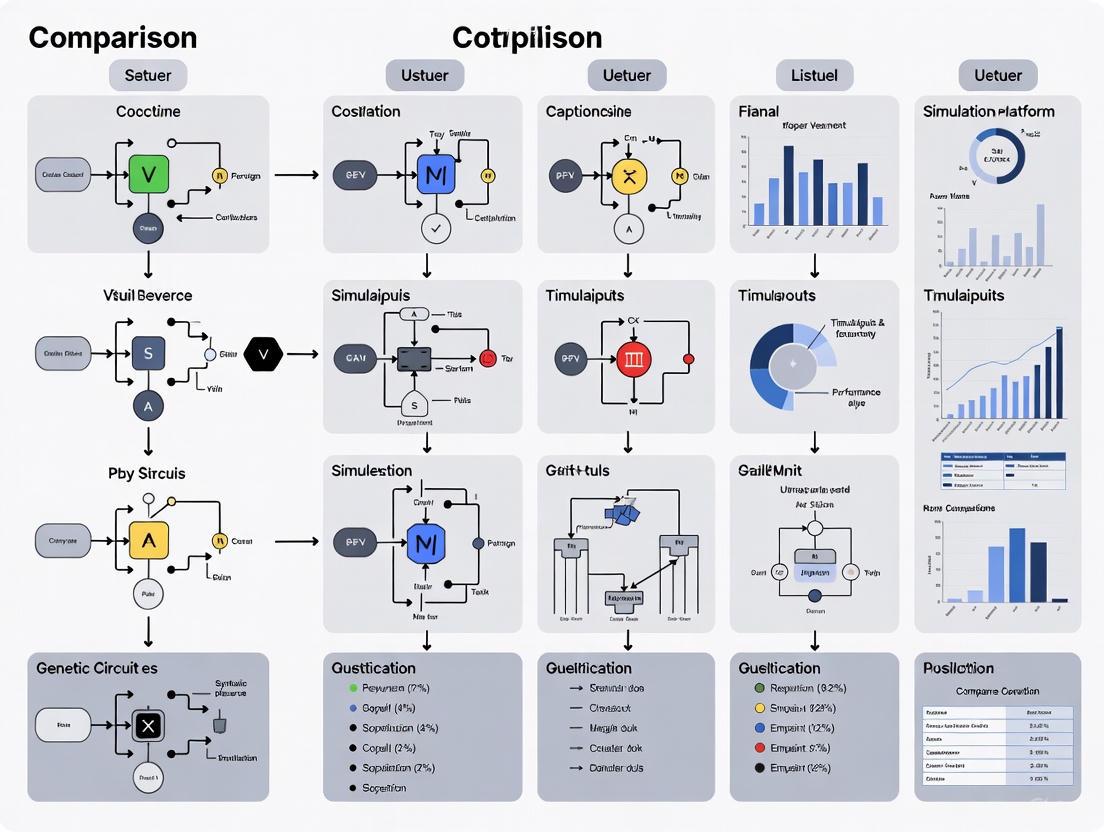
This article provides a comprehensive comparison of modern genetic circuit simulation platforms, tailored for researchers and drug development professionals.
Genetic Circuit Simulation Platforms: A 2025 Comparative Guide for Researchers and Drug Developers
Abstract
This article provides a comprehensive comparison of modern genetic circuit simulation platforms, tailored for researchers and drug development professionals. It explores the foundational principles of genetic circuit design, evaluates the methodologies and applications of leading cloud-based and standalone software tools, and discusses advanced strategies for troubleshooting and optimizing circuit performance. By synthesizing the latest advancements in wetware-software integration and validation techniques, this guide aims to empower scientists in selecting the right simulation tools to accelerate the design of robust genetic circuits for therapeutic and diagnostic applications.
Core Principles and the Evolving Landscape of Genetic Circuit Design
Genetic circuits are engineered networks of biological components that endow living cells with programmable functions, much like electronic circuits control computers. The field has evolved from constructing simple genetic toggle switches to designing complex logic gates capable of sophisticated decision-making within cells [1] [2]. This progression is increasingly supported by Genetic Design Automation (GDA) tools, which help researchers transition from conceptual designs to functional DNA sequences [2]. The core of this engineering discipline lies in applying principles of standardization, abstraction, and decoupling to biology, enabling the systematic construction of biological systems [2].
The Evolution of Circuit Complexity: From Switches to Logic
The foundational work in genetic circuits focused on demonstrating basic, stable behaviors in cells. A landmark achievement was the creation of a synthetic oscillatory network, or "repressilator," a ring of three repressors that generates cyclic oscillations in gene expression [2]. This was followed by the development of the genetic toggle switch, a bistable circuit consisting of two repressors, each capable of stably suppressing the other's expression [2]. This circuit can flip between two states in response to external signals, forming a fundamental memory unit.
The field has since moved toward implementing Boolean logic gates—such as AND, OR, and NOT—within cells [1]. These gates process input signals to produce a digital output (ON or OFF), enabling higher-level computation. Early gates often relied on transcriptional control using repressor proteins and their cognate promoters [3] [1]. For instance, an AND gate might require two specific input molecules to be present before it activates an output gene [1].
A recent breakthrough is the development of Transcriptional Programming (T-Pro), a methodology for creating compressed genetic circuits. Unlike traditional designs that can be bulky, T-Pro circuits use synthetic transcription factors (repressors and anti-repressors) and promoters to achieve complex logic with fewer genetic parts [4]. This compression reduces the metabolic burden on the host cell and increases circuit reliability. The T-Pro framework has been successfully scaled from 2-input to 3-input Boolean logic, enabling circuits that can make decisions across eight possible input states (000 to 111) [4].
Table 1: Key Developments in Genetic Circuit Design
| Circuit Type | Core Components | Function | Example Application |
|---|---|---|---|
| Toggle Switch [2] | Two mutually repressing genes | Bistable memory | Sustaining a cellular state after a transient signal |
| Repressilator [2] | Three-gene repressor ring | Oscillation, cyclic behavior | Studying natural biological rhythms |
| AND Gate [1] | Two input-sensitive promoters, integrator gene | Output ON only if both inputs are present | Precise activation of a therapeutic gene only with multiple disease markers |
| T-Pro Compression Circuits [4] | Synthetic repressors/anti-repressors, synthetic promoters | Higher-state logic with minimal parts | Decision-making and metabolic control with reduced cellular burden |
Quantitative Comparison of Circuit Performance
The performance of genetic circuits is quantitatively measured by metrics such as dynamic range (the difference between ON and OFF states), fold-change, and signal detection time. These metrics are crucial for comparing different designs and ensuring reliable operation in real-world applications.
Table 2: Performance Metrics of Genetic Circuit Designs
| Circuit Design / Context | Key Performance Metric | Reported Value / Finding | Implication for Application |
|---|---|---|---|
| T-Pro Compression Circuits [4] | Average size reduction vs. canonical circuits | ~4x smaller | Lower metabolic burden, higher design capacity |
| T-Pro Compression Circuits [4] | Average prediction error for >50 test cases | <1.4-fold error | High predictive accuracy for setpoints |
| Delay-Signal Circuit in OTL Conditions [5] | Signal detection time (under optimal lab conditions) | ~180 minutes | Baseline for assessing robustness |
| Delay-Signal Circuit in OTL Conditions [5] | Signal detection time (with 10x inducer concentration) | Much faster than 180 minutes | Performance is highly sensitive to inducer concentration |
| AND Gate in E. coli [1] | Fold-induction when both inducers present | 1,000-fold | High digital character, low leakiness |
Research shows that circuit performance is highly dependent on context. A study systematically testing a delay-signal circuit under "outside-the-lab" (OTL) conditions found that factors like temperature, inducer concentration, and bacterial growth stage can dramatically alter signal detection time and intensity [5]. This underscores the necessity of a broad "Test" phase in the design cycle to ensure robustness in real-world environments like the human gut [5].
Experimental Protocols for Circuit Analysis
Protocol 1: Characterizing a Genetic Logic Gate in a Probiotic Strain
This protocol, adapted from research in Escherichia coli Nissle 1917 (EcN), details how to characterize a repressor-based logic gate [3].
- Circuit Assembly: Clone the genetic circuit, comprising a sensor and a repressor-based NOT gate, into a low-copy plasmid with a standardized architecture.
- Sensor Characterization: Transform the sensor plasmid into the host (e.g., EcN). Grow cultures and expose them to a range of input molecule concentrations. Measure the output promoter activity using flow cytometry, typically with a fluorescent protein like eYFP. Convert fluorescence units to Relative Promoter Units (RPU) by normalizing to a reference promoter to allow for cross-lab comparisons [3].
- Gate Characterization: Similarly, characterize the response function (output RPU vs. input RPU) of the genetic NOT gate. Fit the data to a Hill equation to determine key parameters like transition steepness and maximum output.
- Signal Matching for Design: Use the characterized response functions as inputs to a signal matching algorithm. This software ensures that the output of one gate is sufficient to drive the next gate in a multi-layered circuit, enabling predictive design of complex logic [3].
Protocol 2: Engineering a Synthetic Anti-Repressor for T-Pro
This workflow describes the engineering of a new cellobiose-responsive anti-repressor to expand the T-Pro toolbox [4].
- Repressor Selection: Identify a high-performance synthetic repressor scaffold (e.g., E+TAN for cellobiose) from an existing library.
- Super-Repressor Generation: Use site-saturation mutagenesis to create a variant that binds DNA but is insensitive to the input ligand (cellobiose). Screen for the desired "super-repressor" phenotype (e.g., mutant L75H) [4].
- Anti-Repressor Library Creation: Perform error-prone PCR (EP-PCR) on the super-repressor gene at a low mutation rate to generate a diverse library (~10^8 variants).
- High-Throughput Screening: Use Fluorescence-Activated Cell Sorting (FACS) to screen the library for cells exhibiting the anti-repressor phenotype (turning ON in the presence of the ligand).
- Validation and Expansion: Isolate and sequence unique anti-repressor variants (e.g., EA1TAN, EA2TAN). Equip these anti-repressor cores with additional Alternate DNA Recognition (ADR) functions to create a full set of orthogonal transcription factors [4].
Visualizing Genetic Circuit Architectures
The following diagrams, generated with the DOT language, illustrate core concepts and workflows in genetic circuit engineering.
Evolution of Genetic Circuit Designs
Predictive Circuit Design Workflow
The Scientist's Toolkit: Essential Research Reagents
The design and implementation of genetic circuits rely on a standardized toolkit of biological parts and computational resources.
Table 3: Key Reagents and Resources for Genetic Circuit Engineering
| Tool / Resource | Category | Function in Research | Example(s) |
|---|---|---|---|
| Synthetic Promoters [4] [3] | Genetic Part | Engineered DNA sequence where transcription starts; regulated by specific inputs. | T-Pro synthetic promoters, PTet, PBAD, PLux |
| Transcription Factors (TFs) [4] [3] | Genetic Part / Protein | Proteins that bind DNA to repress or activate transcription of a gene. | TetR, LacI, synthetic anti-repressors (e.g., EA1TAN) |
| Reporter Genes [3] [5] | Genetic Part | Genes that produce a measurable output (e.g., fluorescence) to report circuit activity. | Yellow Fluorescent Protein (YFP), Green Fluorescent Protein (GFP) |
| Inducer Molecules [3] [5] | Chemical | Small molecules that trigger a change in circuit state by interacting with a sensor/TF. | IPTG, aTc, Arabinose, AHLs (e.g., 3OC6-HSL) |
| GDA Software (Cello, iBioSim) [2] [6] | Computational Tool | Allows in silico design, modeling, and analysis of genetic circuits before construction. | Cello 2.0, iBioSim |
| Standard Data Formats (SBOL, SBML) [7] [6] | Data Standard | Encode unambiguous, reproducible model descriptions for exchange between tools and databases. | Systems Biology Markup Language (SBML), Synthetic Biology Open Language (SBOL) |
| Part Repositories (iGEM, Addgene) [2] | Data Resource | Public libraries of characterized genetic parts for reuse in new designs. | iGEM Registry, Addgene |
The future of genetic circuit design hinges on bridging the gap between computational GDA tools and laboratory practices. Wider adoption of standard data formats like SBML and SBOL, along with comprehensive part characterization, will be essential for building the predictive models needed to design complex, robust circuits for real-world therapeutic and diagnostic applications [7] [2].
A fundamental challenge, termed the "synthetic biology problem," represents a significant barrier to reliable biological engineering: the persistent discrepancy between our well-developed ability to design genetic circuits qualitatively and our limited capacity to predict their quantitative performance [4]. Synthetic genetic circuits enable the reprogramming of cells to perform myriad functions, advancing applications across biotechnology, chemical biology, and therapeutics. However, as circuit complexity increases, biological components demonstrate limited modularity and impose increasing metabolic burden on host cells, making intuitive design-by-eye approaches increasingly untenable [4]. This problem is compounded by the fact that biological circuit components are not strictly composable, meaning that their behavior often changes unpredictably when combined in different contexts [4].
The core of this challenge lies in the transition from successful qualitative design to accurate quantitative prediction. While we qualitatively understand how to design fundamental genetic circuit architectures, there has been limited success in quantitatively predicting genetic circuit performance before implementation [4]. This gap becomes particularly critical as synthetic biology advances toward more complex applications in therapeutics, biosensing, and bioproduction, where precise performance setpoints are essential for success. Addressing this problem requires sophisticated computational tools that can bridge the divide between theoretical design and practical implementation, enabling researchers to model, simulate, and optimize genetic circuits before embarking on costly and time-consuming experimental work.
Comparative Analysis of Genetic Circuit Simulation Platforms
The table below provides a systematic comparison of major computational tools and platforms used for modeling genetic circuits, highlighting their distinct approaches to addressing the quantitative prediction challenge.
| Platform/Tool | Core Methodology | Key Strengths | Quantitative Prediction Capabilities | Experimental Validation |
|---|---|---|---|---|
| T-Pro with Algorithmic Enumeration [4] | Circuit compression via wetware-software integration | 4x size reduction for multi-state circuits; ~1.4-fold average prediction error | Quantitative performance setpoints for metabolic pathway control | Validated on >50 test cases; recombinase memory circuits |
| RACIPE [8] | Parameter randomization without detailed kinetics | Identifies robust dynamical features; works from topology alone | Statistical analysis of multi-stable expression states | Applied to toggle switches and B-lymphopoiesis circuits |
| txtlsim (MATLAB) [9] | Bayesian parameter inference for TX-TL systems | Accounts for resource loading, consumption, and degradation | Predicts constitutive expression trajectories | Validated with incoherent feed-forward loops |
| SBML Simulator Comparison [10] | Cross-platform deterministic simulation | Benchmarking against curated BioModels database | Agreement metrics for state variables | 150 curated models from BioModels Database |
| BioAutomata/AI-Driven Platforms [11] | Active learning with Gaussian processes | Fully automated design-build-test-learn cycles | Culture medium optimization and pathway engineering | Flaviolin production in Pseudomonas putida |
| BioFoundry Integrated Software [12] | Design-build-test-learn (DBTL) cycle automation | Combines robotic automation with computational design | Strain engineering and DNA assembly optimization | Applications in bioproduction and metabolic engineering |
Experimental Protocols for Key Simulation Methodologies
RACIPE: Topology-Based Circuit Analysis
The RACIPE (random circuit perturbation) methodology employs a unique approach that requires only network topology as input, bypassing the need for detailed kinetic parameters that are often unavailable for novel genetic circuits [8].
Protocol:
- Input Preparation: Prepare a topology file specifying all regulatory links with source gene, target gene, and interaction type (activation/inhibition)
- Model Generation: RACIPE automatically builds ordinary differential equation models using a normalized Hill function formalism:
- For a toggle switch circuit with genes A and B:
- dA/dt = GAHS(B,BA0,nBA,λBA-) - kAA
- dB/dt = GBHS(A,AB0,nAB,λAB-) - kBB
- Where HS represents shifted Hill functions accounting for regulatory effects
- For a toggle switch circuit with genes A and B:
- Parameter Randomization: Generate ensemble of models (typically 10,000) with randomized kinetic parameters within biologically plausible ranges
- Steady-State Analysis: Solve for stable steady states across parameter sets
- Statistical Analysis: Apply hierarchical clustering and principal component analysis to identify robust dynamical features
Validation: Applied to coupled toggle-switch circuits and B-lymphopoiesis regulatory networks, successfully capturing multi-stable states and expression patterns [8].
txtlsim: Cell-Free System Modeling
The txtlsim toolbox specializes in modeling cell-free transcription-translation (TX-TL) systems, providing a rapid prototyping environment for genetic circuits [9].
Protocol:
- System Setup: Initialize Simbiology model objects for extract, buffer, and experimental tube
- DNA Specification: Add DNA components using txtladddna function with promoter, RBS, and coding sequence specifications
- Model Combination: Combine component models into a unified reaction network using txtl_combine
- Parameter Inference: Apply multi-stage Bayesian inference using Markov Chain Monte Carlo (MCMC) methods to characterize core parameters:
- Transcription, translation, and mRNA degradation rates
- Resource loading effects
- Nucleotide and amino acid consumption
- Simulation Execution: Run simulations for extended durations (up to 14 hours) to model entire batch-mode experiments
Experimental Validation: The toolbox was validated by predicting behavior of incoherent feed-forward loops under various experimental conditions, demonstrating accurate trajectory matching for constitutive expression [9].
T-Pro Circuit Compression Workflow
The Transcriptional Programming (T-Pro) approach addresses circuit complexity through compression, reducing part count while maintaining functionality [4].
Protocol:
- Wetware Expansion: Engineer orthogonal synthetic transcription factor systems (e.g., CelR anti-repressors responsive to cellobiose)
- Algorithmic Enumeration: Implement directed acyclic graph models to systematically enumerate circuits in order of increasing complexity
- Compression Optimization: Identify minimal genetic footprint solutions for 3-input Boolean logic operations from >100 trillion possible circuits
- Context-Aware Modeling: Develop workflows that account for genetic context in quantifying expression levels
- Setpoint Implementation: Design circuits with precise quantitative performance targets for applications in metabolic engineering
Performance: Achieved 4x size reduction compared to canonical inverter-type genetic circuits with average quantitative prediction error below 1.4-fold across >50 test cases [4].
Visualization of Genetic Circuit Simulation Workflows
Simulation Workflow Comparison
The diagram illustrates the complementary approaches different platforms take to address the synthetic biology problem, from topology-based randomization to Bayesian inference and AI-driven active learning.
Research Reagent Solutions for Genetic Circuit Characterization
| Reagent/Tool | Function | Application Context |
|---|---|---|
| Synthetic Transcription Factors [4] | Engineered repressors and anti-repressors for orthogonal regulation | T-Pro circuit compression; 3-input Boolean logic |
| Orthogonal Inducer Systems [4] | IPTG, D-ribose, and cellobiose-responsive regulators | Multi-input circuit control without cross-talk |
| TX-TL Cell-Free System [9] | E. coli-based transcription-translation extract | Rapid circuit prototyping without cellular constraints |
| Algorithmic Enumeration Software [4] | Identifies minimal circuits from combinatorial possibilities | Circuit compression for reduced metabolic burden |
| SBML-Compatible Simulators [10] | Standardized model representation and simulation | Cross-platform model validation and benchmarking |
| BioFoundry Automation [12] | Integrated robotic systems for DBTL cycles | High-throughput genetic circuit testing and optimization |
The convergence of computational modeling, artificial intelligence, and automated experimental platforms represents the most promising path toward solving the synthetic biology problem. Platforms that integrate algorithmic design with characterized biological parts, such as the T-Pro framework achieving 1.4-fold prediction accuracy, demonstrate that reliable quantitative prediction is attainable [4]. The complementary approaches of randomization-based tools like RACIPE for analyzing robust features [8] and biophysical models like txtlsim for resource-aware prediction [9] provide researchers with a diversified toolkit for tackling different aspects of the prediction challenge.
As these platforms continue to evolve through integration with biofoundries and AI-driven active learning [12] [11], the field moves closer to a future where genetic circuits can be designed with the same reliability as electronic circuits. This transition from artisanal construction to predictable engineering will ultimately unlock synthetic biology's full potential in addressing critical challenges in medicine, manufacturing, and environmental sustainability.
The engineering of genetic circuits enables the reprogramming of cells to perform sophisticated functions, with applications spanning biotechnology, therapeutics, and metabolic engineering [4]. The design of these biological circuits relies on distinct conceptual frameworks for implementing Boolean logic. This guide provides a detailed, objective comparison between two principal design paradigms: the established inversion-based logic and the emerging technology of Transcriptional Programming (T-Pro). Inversion-based logic, utilized by automated design tools like Cello, forms the historical foundation for many genetic circuits by employing transcriptional repression and the subsequent inversion of signals to create logic gates like NOT and NOR [4] [13]. In contrast, T-Pro is a modern approach that leverages synthetic transcription factors (repressors and anti-repressors) and cognate synthetic promoters to achieve circuit compression, implementing complex logic with a significantly reduced genetic footprint [4] [14] [15]. Framed within a broader thesis on genetic circuit simulation platforms, this article compares the performance, design methodologies, and practical implementation of these two paradigms, providing researchers and drug development professionals with the data needed to select an appropriate platform for their applications.
Core Mechanistic Principles and Workflows
The fundamental difference between these paradigms lies in how they implement logical operations at the transcriptional level. The following diagram illustrates the core architectural components and their relationships for each approach.
Figure 1: Architectural components of inversion-based logic and T-Pro.
The Inversion-Based Logic Workflow
Inversion-based logic adapts principles from electronic design automation (EDA) to synthetic biology. Its workflow can be summarized as follows:
- Core Mechanism: This paradigm relies heavily on repression and the principle of signal inversion. A NOT gate is typically implemented by a repressor protein: the presence of an input (1) leads to the production of the repressor, which then suppresses an output promoter, converting the signal to (0) [4].
- Circuit Construction: To build complex logic like an AND gate, multiple repressor-based gates (often NOR gates) are combined. This process inherently requires extra genetic parts to manage the sequential inversion of signals, leading to larger genetic constructs [13] [2].
- Design Automation: Tools like Cello automate this process. A user provides a Boolean truth table, and Cello performs circuit synthesis and technology mapping, selecting appropriate repressor genes and promoters from a library to generate a DNA sequence that implements the logic [13] [2].
The Transcriptional Programming (T-Pro) Workflow
T-Pro represents a paradigm shift by moving away from cascaded inversions and toward a more integrated design using engineered transcription factors.
- Core Mechanism: T-Pro utilizes two fundamental classes of synthetic transcription factors: repressors (X⁺) for BUFFER logic and anti-repressors (Xᴬ) for NOT logic [15]. Anti-repressors are engineered proteins that bind to a synthetic promoter and prevent repression by another transcription factor, directly implementing a NOT operation without a separate inversion step [4] [15].
- Circuit Construction: Multiple synthetic transcription factors can be directed to regulate a single synthetic promoter. This capability allows for the direct implementation of complex logic, such as AND and NOR, within a compressed genetic architecture [4] [15]. The process of designing a smaller, more efficient circuit is termed "circuit compression" [14].
- Design Automation: For simple circuits, T-Pro designs can be intuitive. However, for higher-level operations (e.g., 3-input logic with 256 possible truth tables), algorithmic enumeration software is required to navigate the vast combinatorial space and guarantee the most compressed circuit design [4].
Quantitative Performance Comparison
The theoretical mechanistic differences between T-Pro and inversion-based logic translate into distinct practical performance characteristics. The table below summarizes a direct comparison based on key metrics for genetic circuit design.
Table 1: Experimental performance comparison of T-Pro and inversion-based logic
| Performance Metric | Transcriptional Programming (T-Pro) | Inversion-Based Logic (Cello) | Experimental Context |
|---|---|---|---|
| Genetic Part Count | ~4x smaller than canonical inverter-type circuits [4] | Higher, requires multiple repressors & promoters for signal inversion [4] | Implementation of 3-input Boolean logic operations [4] |
| Prediction Error | Average error below 1.4-fold for >50 test cases [4] | Performance varies; structural variants can improve scores 3.8 to 7.9-fold over initial designs [13] | Quantitative prediction of circuit output levels [4] [13] |
| Functional Success Rate | 91% (73/80) for BUFFER gates; 95% (76/80) for NOT gates [15] | Dependent on robust design automation to manage context-dependency and noise [13] | Implementation of single-input, single-output logical operations [15] |
| Metabolic Burden | Lower, due to circuit compression and fewer genetic parts [4] [14] | Higher, as larger circuits consume more cellular resources [4] | Host cell growth and resource allocation [4] |
Experimental Protocols and Methodologies
To ensure reproducibility and provide a clear technical understanding, this section outlines the standard protocols for designing, constructing, and testing circuits under each paradigm.
Protocol for T-Pro Circuit Implementation
The following workflow is adapted from studies that successfully implemented compressed genetic circuits for decision-making and memory [4] [16] [15].
Circuit Specification and Enumeration:
- Define the desired truth table for the genetic operation (e.g., 2-input or 3-input Boolean logic).
- Use algorithmic enumeration software to identify the most compressed circuit topology that fulfills the logic, minimizing the number of required genetic parts [4].
Selection and Assembly of Genetic Parts:
- Select the required orthogonal synthetic transcription factors (repressors and anti-repressors with specific Alternate DNA Recognition (ADR) functions) and their cognate synthetic promoters from the T-Pro toolkit [4] [15].
- Assemble the genetic circuit using Golden Gate Assembly or similar techniques. Transcription factors are typically cloned into a medium-copy plasmid (e.g., pLacI with p15a origin), while output genes (e.g., fluorescent reporters) are assembled on a low-copy reporter plasmid (e.g., pZS*22 with pSC101 origin) [14].
Transformation and Cell Culture:
Induction and Measurement:
- Dilute the pre-cultures into minimal media (e.g., M9) supplemented with inducers corresponding to the input logic (e.g., 10 mM IPTG, D-ribose, or cellobiose) [4] [14].
- Grow the induced cultures in a 96-well microplate for 16 hours at 37°C [14].
- Measure the output (e.g., fluorescence from sfGFP or mCherry) and optical density (OD600) using a plate reader or flow cytometry [14] [15].
Protocol for Inversion-Based Logic with Cello
This protocol is based on the established Cello workflow and its subsequent refinements [13] [2].
Input Specification:
Circuit Synthesis and Technology Mapping:
- Input the Boolean function and UCF into the Cello software (v2.0).
- Cello uses electronic design automation algorithms to synthesize a circuit diagram and assign specific genetic parts from its library to each logic gate, generating an output file in the Verilog format [2].
DNA Sequence Generation and Assembly:
- The Verilog output is processed to generate a DNA sequence for the complete circuit.
- The sequence is physically assembled using standardized methods, often involving BioBricks or Golden Gate Assembly, onto a single plasmid [2].
Validation and Characterization:
- Transform the assembled plasmid into the chassis organism (e.g., E. coli).
- Characterize the circuit by applying all relevant input combinations and measuring the output, typically via fluorescence. Performance is assessed using metrics like fold-change and ON/OFF level separation, often accounting for cell-to-cell variability using flow cytometry [13].
The Scientist's Toolkit: Essential Research Reagents
Successful implementation of these design paradigms requires a standardized set of biological parts and computational tools. The following table catalogs key reagent solutions for the two platforms.
Table 2: Key research reagents and tools for genetic circuit construction
| Reagent / Tool Name | Function / Description | Relevant Paradigm |
|---|---|---|
| Synthetic Transcription Factors (X⁺, Xᴬ) | Engineered repressors & anti-repressors with orthogonal RCDs and ADRs for direct logic implementation. | T-Pro [4] [15] |
| T-Pro Synthetic Promoters | Cognate promoter sequences engineered with tandem operators for coordinated TF binding. | T-Pro [4] [14] |
| Cello Software Suite | Genetic design automation tool for synthesizing inversion-based logic circuits from a truth table. | Inversion-Based [13] [2] |
| Cello UCF (User Constraint File) | A library file defining the characteristics of available genetic parts (gates, promoters, etc.) for Cello. | Inversion-Based [13] [2] |
| Orthogonal Inducer Molecules | Small molecules (e.g., IPTG, D-ribose, cellobiose) that serve as non-cross-reacting inputs for circuits. | Both [4] [14] |
| Fluorescent Protein Reporters | Genes for proteins like sfGFP, mCherry, tagBFP used as quantitative outputs for circuit characterization. | Both [14] [15] |
| RACIPE Computational Tool | A modeling tool that explores robust dynamical features of gene circuits without precise kinetic parameters. | Both / Modeling [8] |
Advanced Applications and Future Directions
Both paradigms continue to evolve, enabling increasingly complex biological computing applications.
T-Pro has been successfully extended beyond classical Boolean logic. Recent work has created quantum-inspired genetic circuits using synthetic bidirectional promoters to implement 1-input, 2-output logical operations, known as biological QUBIT and PAULI-X gates [14]. This allows for more efficient "input economy," controlling multiple outputs with fewer inputs, which is valuable for multi-product biomanufacturing and complex metabolic engineering [14]. Furthermore, T-Pro seamlessly integrates with recombinase-based memory systems. Researchers have engineered E. coli chassis cells with a genomic Molecularly Encoded Memory via an Orthogonal Recombinase arraY (MEMORY), which can be regulated by T-Pro transcription factors. This unification of decision-making, communication, and memory in a single cell represents a significant step towards fully intelligent biotic systems [16].
The field of inversion-based logic is also advancing, primarily through improvements in Genetic Design Automation (GDA). Research focuses on developing more robust design algorithms that account for context-dependency and cell-to-cell variability. Modern approaches incorporate parametric uncertainty into device models and use advanced scoring functions to select circuit designs that maintain functionality despite fluctuations in intracellular conditions [13]. There is also a push to improve part libraries and standardization to bridge the gap between computational design and laboratory implementation, making tools like Cello more reliable and accessible [2].
The choice between Transcriptional Programming and inversion-based logic is fundamental and application-dependent. The experimental data and comparisons presented in this guide demonstrate a clear trade-off.
- Inversion-based logic, exemplified by Cello, offers a structured, automated pipeline rooted in established engineering principles. It provides a direct path from a Boolean truth table to a DNA sequence, which is highly valuable for standard logic implementations where circuit size is not the primary constraint.
- Transcriptional Programming (T-Pro) represents a paradigm shift toward circuit compression and resource efficiency. By leveraging synthetic transcription factors like anti-repressors, T-Pro achieves the same or more complex logic with a significantly reduced genetic footprint, leading to lower metabolic burden and higher prediction accuracy. This makes T-Pro particularly suited for advanced applications requiring complex, higher-state decision-making, integration with memory functions, or operation in resource-limited chassis cells.
For researchers and drug development professionals, the selection criteria are clear: inversion-based logic offers a proven, automated workflow for conventional circuits, while T-Pro provides a path toward greater complexity and efficiency for next-generation intelligent biological systems.
The Role of Genetic Design Automation (GDA) in Modern Workflows
Genetic Design Automation (GDA) represents a cornerstone of modern synthetic biology, applying engineering principles of abstraction, standardization, and automation to the design of biological systems. Inspired by electronic design automation, GDA allows researchers to design, model, and analyze complex genetic circuits in silico before physical assembly, saving significant time and laboratory resources [17]. As the complexity of genetic circuits increases, traditional design-by-eye approaches become untenable, creating a pressing need for sophisticated software tools that can manage this complexity and ensure quantitative predictability [4]. This guide provides a comparative analysis of the current GDA landscape, focusing on its integration into modern research workflows for drug development and therapeutic discovery.
GDA Platform Comparisons
The following table summarizes the core capabilities and performance metrics of different approaches to genetic circuit design, including a leading specialized platform, a mentioned traditional system, and the advanced methodology detailed in recent research.
| Platform / Approach | Primary Functionality | Key Performance Metrics | Quantitative Experimental Data |
|---|---|---|---|
| Advanced T-Pro Software-Wetware Suite [4] | Algorithmic enumeration for designing compressed genetic circuits; Predictive quantitative design. | • Circuit compression (reduction in part count).• Predictive modeling accuracy (fold-error).• Reduction in metabolic burden. | • Circuits are ~4x smaller than canonical inverter-based designs [4].• Quantitative predictions have an average error below 1.4-fold for >50 test cases [4]. |
| Specialized Informatics Platform (e.g., Scispot) [18] | Integrates LIMS, ELN, and SDMS for end-to-end molecular workflow management. | • Sample tracking error reduction.• Setup ease (user-reviewed score).• Report generation time reduction. | • Reports 40% fewer tracking errors compared to generic LIMS [18].• 10.0 ease-of-setup score (G2 reviews) vs. a competitor's 7.9 [18].• 90% reduction in manual report generation time [18]. |
| Traditional LIMS (e.g., LabWare) [18] | Robust sample management for traditional chemistry workflows; often retrofitted for molecular biology. | • Implementation timeline.• Total cost of ownership (TCO).• User adaptability. | • Implementation typically requires 6-12 months for full deployment [18].• Noted for a steep learning curve and higher TCO [18]. |
Experimental Protocols in GDA Research
Protocol 1: Predictive Design and Validation of Compressed Genetic Circuits
This methodology outlines the process for designing and testing smaller, more efficient genetic circuits, as demonstrated in recent research [4].
- Objective: To design a compressed genetic circuit that performs a specific Boolean logic function with a minimal number of genetic parts and quantitatively predictable performance.
- Materials:
- Software: Custom algorithmic enumeration software for circuit design [4].
- Wetware: Synthetic transcription factors (repressors/anti-repressors) and cognate promoters responsive to orthogonal inducers (e.g., IPTG, D-ribose, cellobiose) [4].
- Chassis: Suitable host cells (e.g., E. coli).
- Analytical Instrumentation: Plate readers for fluorescence assays, flow cytometers for single-cell analysis.
- Methodology:
- Circuit Specification: Define the desired logical operation (e.g., a 3-input Boolean truth table).
- Algorithmic Enumeration: Input the truth table into the enumeration software. The algorithm systematically explores the combinatorial space of available synthetic transcription factors and promoters to identify the circuit design with the fewest components that satisfies the logic [4].
- DNA Construction: Synthesize and assemble the DNA sequence of the selected compressed circuit design into a plasmid vector.
- Transformation: Introduce the constructed plasmid into the chassis cells.
- Quantitative Characterization: Measure the circuit's output (e.g., fluorescence) in response to all combinations of input signals. Data is collected to calculate the dynamic range and transfer function.
- Model Validation: Compare the experimental data against the software's quantitative prediction to calculate the fold-error and validate the model [4].
- Key Measurements: Input/output transfer functions; ON/OFF dynamic range; growth rate to assess metabolic burden.
Protocol 2: Automated Workflow Integration for Molecular Diagnostics
This protocol describes the validation of a GDA-adjacent informatics platform in a production environment, focusing on operational efficiency [18].
- Objective: To evaluate the impact of a specialized Molecular Diagnostics LIMS on tracking accuracy and operational efficiency in a high-throughput lab.
- Materials:
- Software Platform: Specialized molecular diagnostics LIMS/ELN (e.g., Scispot) [18].
- Hardware: Standard molecular biology instruments (e.g., qPCR systems, next-generation sequencers) with pre-built software connectors.
- Samples: Representative set of clinical or research samples.
- Methodology:
- Baseline Establishment: Prior to implementation, record the baseline rate of sample tracking errors and time spent on manual data entry and report generation over a defined period.
- Platform Implementation: Deploy the informatics platform, configuring it to manage the lab's specific workflows, including nucleic acid extraction, library preparation, sequencing, and analysis.
- Integration: Connect key laboratory instruments to the platform via pre-built connectors to enable automated data transfer.
- Monitoring Phase: Over a subsequent period of equal length, track the same metrics: sample tracking errors (e.g., misidentification, lost provenance) and personnel time allocated to administrative data tasks.
- Data Analysis: Calculate the percentage change in error rate and time savings.
- Key Measurements: Sample tracking error rate; time spent on manual data transcription and report generation; instrument integration success rate.
Visualizing GDA Workflows and Circuit Design
Core GDA-Enabled Research Workflow
The following diagram illustrates a generalized modern research workflow that integrates GDA tools at multiple stages, from initial design to final analysis.
core-gda-workflow
Algorithmic Enumeration for Circuit Compression
This diagram outlines the specific computational process of using algorithmic enumeration to find the smallest possible genetic circuit for a given function, a key advancement in GDA.
circuit-compression-algorithm
The Scientist's Toolkit: Essential Research Reagents & Materials
The following table details key reagents and materials essential for the implementation and validation of genetically automated circuits and workflows.
| Item Name | Function / Role in Workflow |
|---|---|
| Synthetic Transcription Factors (TFs) [4] | Engineered proteins that regulate transcription. Repressors turn off gene expression, while anti-repressors facilitate logic operations without cascaded inverters, enabling circuit compression [4]. |
| Orthogonal Inducer Molecules [4] | Small molecules (e.g., IPTG, D-ribose, cellobiose) that trigger specific, non-cross-reacting synthetic TFs. They serve as the well-defined input signals for genetic circuits [4]. |
| Synthetic Promoters [4] | Engineered DNA sequences that are recognized by specific synthetic TFs. The combination of TFs and promoters forms the foundational "parts" for building genetic circuits [4]. |
| Specialized Molecular Diagnostics LIMS [18] | A software platform that manages complex sample genealogies, integrates instrument data, and automates workflow and reporting for molecular biology, ensuring data integrity and traceability [18]. |
| Algorithmic Enumeration Software [4] | A custom computational tool that models circuits as directed acyclic graphs and guarantees the identification of the smallest possible circuit design (compression) for a given truth table [4]. |
| Fluorescent Reporter Proteins | Proteins such as GFP (Green Fluorescent Protein) and its variants. They are encoded in the genetic circuit's output and allow for quantitative measurement of circuit activity via fluorescence assays or flow cytometry. |
In synthetic biology, the construction of sophisticated genetic circuits is often hampered by a fundamental constraint: the metabolic burden imposed on the host chassis. As circuit complexity increases with the addition of more genetic parts—promoters, genes, ribosome binding sites (RBS), and transcription factors—the cellular machinery becomes overburdened, competing for limited resources such as RNA polymerases, ribosomes, and nucleotides [19] [20]. This burden manifests as reduced cell growth, unpredictable circuit performance, and eventual circuit failure [4] [21]. Circuit compression addresses this challenge by designing genetic circuits that achieve complex functions, such as higher-state decision-making, with a minimal genetic footprint [4]. This strategy leverages advanced computational design and orthogonal biological parts to create smaller, more efficient circuits that minimize interference with host cellular processes while maintaining or even enhancing functional capacity [21] [20].
The need for circuit compression is particularly acute in metabolic engineering, where the efficient synthesis of high-value chemicals requires optimal metabolic flux without compromising cell viability [19]. Traditional "always-on" transgenes or intuitively designed complex circuits often create significant metabolic stress, interfering with host cell functions and limiting bioproduction yields [19] [21]. Circuit compression, enabled by both novel wetware and sophisticated software, represents a paradigm shift toward predictive design that balances the trade-off between circuit complexity and host fitness [4].
Comparison of Genetic Circuit Platforms and Compression Strategies
Various platforms and strategies have been developed to implement circuit compression, each with distinct mechanisms, advantages, and experimental outcomes. The table below provides a structured comparison of key approaches documented in recent literature.
Table 1: Comparison of Genetic Circuit Compression Platforms
| Platform/Strategy | Core Mechanism | Key Experimental Outcomes | Reported Advantages | Primary Applications |
|---|---|---|---|---|
| Transcriptional Programming (T-Pro) [4] | Uses synthetic transcription factors (repressors/anti-repressors) and promoters to execute Boolean logic, eliminating the need for inversion-based (NOT) operations. | - 4x smaller circuits than canonical designs.- Quantitative predictions with <1.4-fold error for >50 test cases. | High predictability; significant reduction in part count; enables 3-input Boolean logic. | Biocomputing; predictive design of memory circuits; metabolic flux control. |
| Orthogonal Bacterial Transcription Factors [21] [20] | Employs TFs from non-host organisms (e.g., TetR, LuxR) to reduce cross-talk with native host networks. | Reduced interference with endogenous processes; more predictable circuit behavior. | High orthogonality; wide variety of well-characterized parts available. | Plant synthetic biology; general circuit design in diverse chassis. |
| CRISPR-Cas-Based Platforms [21] [20] | Utilizes CRISPR interference (CRISPRi) for transcriptional regulation and logic operations. | Successful implementation of complex logic gates and communication between cell populations. | High programmability and orthogonality; capable of multiplexing. | Multi-population consortia; sophisticated logic circuits. |
| Dynamic Regulation [19] | Implements genetic circuits that dynamically sense and respond to metabolic states to redistribute flux. | Improved product synthesis and cell growth compared to static overexpression. | Automatically balances growth and production; maximizes yield. | Metabolic engineering; microbial cell factories. |
Experimental Protocols for Circuit Compression
Protocol for T-Pro Compression and Validation
The following methodology outlines the key steps for designing, building, and testing compressed genetic circuits using the T-Pro framework, as established in recent research [4].
Circuit Design via Algorithmic Enumeration:
- Objective: To identify the minimal genetic circuit (smallest number of parts) that implements a specific truth table (e.g., 3-input Boolean logic).
- Method: A directed acyclic graph model is used to systematically enumerate all possible circuit architectures. The algorithm searches through a combinatorial space (on the order of 10^14 for 3-input circuits) in order of increasing complexity, guaranteeing the identification of the most compressed design.
Wetware Expansion:
- Objective: To create orthogonal sets of synthetic transcription factors (TFs) for handling additional inputs.
- Method:
- Selection: A repressor TF scaffold (e.g., CelR, responsive to cellobiose) is selected based on dynamic range and ON-state performance.
- Engineering Anti-Repressors: Site saturation mutagenesis is performed on the repressor to create a ligand-insensitive "super-repressor." Error-prone PCR on this variant is then used to generate a library of anti-repressors, which are screened via Fluorescence-Activated Cell Sorting (FACS) to identify functional variants.
- Alternate DNA Recognition (ADR): Selected anti-repressor cores are equipped with multiple ADR domains to create a full set of orthogonal TFs that bind to cognate synthetic promoters.
Predictive Workflow for Quantitative Performance:
- Objective: To design circuits that meet prescriptive expression setpoints.
- Method: Workflows are developed that account for genetic context (e.g., promoter strength, RBS efficiency) to model and predict quantitative circuit outputs (e.g., protein expression levels) before construction.
Validation and Application:
- Objective: To test circuit performance and apply it to practical problems.
- Method: The compressed circuits are experimentally validated in vivo. Applications include controlling recombinase activity for synthetic memory and precisely regulating flux through a toxic metabolic pathway to achieve desired yields.
Protocol for Implementing Dynamic Regulation
This protocol is used for constructing genetic circuits that dynamically optimize metabolic pathways, thereby compressing the regulatory logic needed for efficient production [19].
Identification of Bottlenecks:
- Objective: To pinpoint rate-limiting steps in a metabolic network.
- Method: Use computational models, such as Genome-Scale Metabolic Models (GSMMs) and enzyme-constrained models (ecModels), to identify reactions that restrict flux toward the target product.
Biosensor Integration:
- Objective: To enable the circuit to sense key intracellular metabolites.
- Method: Integrate transcription factor-based biosensors or RNA-based aptamers that respond to the concentration of a target metabolite (e.g., malonyl-CoA, naringenin).
Circuit Construction and Optimization:
- Objective: To build a circuit that triggers a regulatory response upon sensing a metabolite.
- Method: Clone the biosensor to control the expression of genes encoding enzymes at the identified bottleneck. The circuit's performance characteristics (dynamic range, response threshold) are fine-tuned by engineering genetic parts like promoters and RBSs.
Performance Analysis:
- Objective: To assess the circuit's ability to improve production.
- Method: Cultivate the engineered strain and measure both the final titer of the target product and host cell growth, comparing them to strains with unregulated (constitutive) expression.
Essential Research Reagent Solutions
The experimental protocols for circuit compression rely on a suite of key reagents and tools. The following table details these essential materials and their functions.
Table 2: Key Research Reagents and Tools for Circuit Compression
| Reagent/Tool Name | Function in Research | Specific Example/Application |
|---|---|---|
| Synthetic Transcription Factors (TFs) | Core components for building orthogonal regulatory logic; include repressors and anti-repressors. | CelR-based TFs for cellobiose responsiveness; TetR, LuxR for orthogonal control in various hosts [4] [20]. |
| Synthetic Promoters | DNA sequences engineered to be recognized by synthetic TFs; form the basis of the circuit's logic integrator. | Tandem operator designs for T-Pro circuits; promoters responsive to synthetic CRISPR guide RNAs [4] [21]. |
| Orthogonal Signals (Inducers) | Small molecules that trigger synthetic TF activity without affecting native cellular processes. | IPTG, D-ribose, and cellobiose used as three orthogonal inputs for 3-input T-Pro circuits [4]. |
| Fluorescence-Activated Cell Sorting (FACS) | High-throughput method for screening libraries of genetic variants based on fluorescence output. | Used to isolate functional anti-repressor TFs from a library generated by error-prone PCR [4]. |
| Genome-Scale Metabolic Models (GSMMs) | Computational models for predicting organism-wide metabolism, used to identify flux bottlenecks. | Models like etiBsu1209 for Bacillus subtilis; used with tools like COPASI and OptRAM for flux balance analysis [19]. |
| Metabolite Biosensors | Genetic components that change output (e.g., fluorescence) in response to specific intracellular metabolites. | Used in dynamic regulation circuits to sense pathway intermediates like malonyl-CoA or p-coumaroyl-CoA [19]. |
| Algorithmic Enumeration Software | Custom software for automatically designing the minimal genetic circuit for a given truth table. | Guarantees the most compressed T-Pro circuit design from a vast combinatorial space [4]. |
Visualizing Circuit Compression Concepts and Workflows
The Concept of Circuit Compression
Diagram 1: Conceptual comparison between a canonical inverter-based genetic circuit and a compressed T-Pro circuit. The compressed design achieves the same logic function using fewer genetic parts (promoters, transcription factors), thereby minimizing the metabolic burden on the host chassis [4].
Workflow for Predictive Circuit Design and Compression
Diagram 2: Integrated wetware and software workflow for the predictive design of compressed genetic circuits. The process begins with a logical specification and uses computational tools to find a minimal design before employing characterized biological parts and predictive models to achieve precise quantitative function [4].
A Guide to Leading Simulation Platforms and Their Practical Implementation
For researchers in synthetic biology, selecting the right cloud-based platform is crucial for streamlining the design, management, and analysis of genetic circuits. Benchling, Antha, and SynBioHub offer distinct approaches to collaboration and data management. This guide provides an objective comparison of their performance, features, and ideal use cases to inform decision-making.
Platform Comparison at a Glance
The following table summarizes the core characteristics, strengths, and limitations of Benchling, Antha, and SynBioHub for genetic circuit simulation workflows.
| Feature | Benchling | Antha | SynBioHub |
|---|---|---|---|
| Primary Function | Integrated R&D Platform [22] [23] [24] | Workflow Operating System & Language [25] | Biological Design Repository [26] |
| Core Strength | All-in-one solution for data capture, molecular biology, and analysis [22] [27] | Automation of experiments across device-agnostic hardware [25] | Sharing and reusing standardized biological parts [26] |
| Collaboration Features | Real-time collaboration in notebooks, shared templates, project-based access [27] | Software automatically records and standardizes methods and data [25] | Cloud-based repository for storing, retrieving, and sharing designs [26] |
| Data Management | Unified platform with structured data capture from start [27] | Automated recording of experimental details (reagents, timing) in standardized format [25] | Centralized repository for biological parts, designs, and data [26] |
| Simulation & Design | In-silico DNA sequence design and simulation [26] | Rapid prototyping and scaling of synthetic biology workflows [26] | Repository supports storing and retrieving existing designs for reuse [26] |
| Automation | Benchling Connect for instrument integration; "zero-click" automation concepts [22] [23] [24] | Native automation; orchestrates entire experimental workflows on robotic systems [25] | Not a primary function |
| AI Integration | Native AI agents for data extraction, literature search, and experimental design [23] [24] | Not mentioned in search results | Not mentioned in search results |
| Ideal User | Cross-functional teams from research to development needing a unified data foundation [24] [27] | Labs focused on high-throughput, reproducible automated workflows [25] | Researchers and bioengineers building new designs from existing, standardized parts [26] |
Experimental Performance Evaluation
A key metric for platform performance in genetic circuit design is workflow efficiency and data integrity. The following experimental protocol outlines a standard method for evaluating these platforms.
Experimental Protocol: Evaluating Workflow Efficiency for Genetic Circuit Design
1. Objective To quantify the time efficiency and data consistency of a standard genetic circuit design-to-analysis workflow on each platform.
2. Methodology
- Experimental Setup: A single genetic circuit design is provided to three separate research teams, each proficient in one platform (Benchling, Antha, or SynBioHub). The circuit involves assembling three genetic parts (a promoter, coding sequence, and terminator) into a backbone vector.
- Platform-Specific Workflow:
- Benchling Team: Uses the molecular biology suite to design the DNA sequence in silico, simulates the circuit, and uses the integrated notebook to capture the experimental protocol. The final construct is registered in the Benchling Registry [22] [26].
- Antha Team: Codes the assembly experiment using the Antha language. The script is executed on a compatible automated workcell, which performs the liquid handling and records all parameters (e.g., temperature, timing) automatically [25].
- SynBioHub Team: Searches the repository for the required standardized genetic parts. The parts are retrieved and the new composite design is uploaded back to SynBioHub with appropriate metadata [26].
- Key Parameters Measured:
- Total Time: From initial design to completion of data capture for the constructed circuit.
- Data Consistency Score: The number of manual data entry points and transcription errors recorded.
- Reproducibility: The ability of a different team member to exactly repeat the process using only the digital record.
3. Anticipated Results Based on platform architectures, the expected outcomes are:
- Benchling is anticipated to show high data consistency due to its integrated, structured data environment, reducing manual transcription [27].
- Antha is expected to yield the highest reproducibility and lowest manual intervention, as the entire wet-lab process is coded and automated [25].
- SynBioHub would demonstrate high efficiency in the design phase if the required parts are available in the repository, promoting reuse and standardization [26].
Workflow Visualization
The diagram below illustrates the core operational workflows for each platform, highlighting their distinct approaches to the genetic circuit design process.
The Scientist's Toolkit: Essential Research Reagent Solutions
The table below lists key materials and their functions essential for conducting genetic circuit design and experimentation, forming the basis for the workflows on these platforms.
| Reagent/Material | Function in Genetic Circuit Design |
|---|---|
| Promoter | A DNA sequence that initiates transcription of a gene; acts as an on/off switch for circuit function. |
| Coding Sequence (CDS) | The part of a gene that specifies the amino acid sequence of a protein; the functional output of the circuit. |
| Terminator | A DNA sequence that signals the end of transcription; ensures proper transcription termination. |
| Plasmid Backbone | A circular DNA vector that allows for the replication and maintenance of the genetic circuit in a host organism. |
| DNA Assembly Master Mix | Enzymatic reagents (e.g., for Gibson Assembly) used to combine multiple DNA fragments into a single construct. |
| Competent Cells | Specially prepared bacterial cells used for the transformation and propagation of the assembled plasmid DNA. |
| Selection Antibiotic | An antibiotic added to growth media to select for cells that have successfully taken up the plasmid containing a resistance gene. |
The field of synthetic biology has witnessed significant advancements with the development of automated tools for designing genetic circuits. These tools enable researchers to transition from abstract logical designs to functional DNA sequences that can be executed in living cells. Among these platforms, Cello stands out as a pioneering framework that translates electronic design specifications into complete DNA sequences encoding transcriptional logic circuits for bacterial cells [28]. This capability represents a fundamental shift in biological engineering, making circuit design more reproducible and broadly accessible to biological engineering labs.
As the demand for complex biological systems grows, researchers face the challenge of selecting the most appropriate design automation platform. This guide provides an objective comparison of Cello's performance against other emerging methodologies, focusing on practical experimental data and implementation workflows. The comparative analysis addresses critical factors such as prediction accuracy, circuit robustness, and scalability, which are essential for researchers, scientists, and drug development professionals working to implement genetic circuits in therapeutic and bioproduction applications.
The Cello 2.0 Workflow: Methodology and Implementation
Cello 2.0 operates as a cross-platform software written in Java that converts high-level software descriptions into DNA sequences implementing Boolean functions in microorganisms [29]. The software utilizes a database of transcriptional repressors characterized as genetic NOT and NOR gates that can be composed into any logic function [28]. The automated workflow follows a structured pathway from specification to sequence generation, incorporating multiple validation steps to ensure biological viability.
The core process begins with a user-supplied Verilog file describing the desired circuit behavior using hardware description language syntax familiar to electrical engineers [29]. Cello generates an abstract Boolean network from this specification, then assigns biological parts to each node in the network through a sophisticated matching algorithm that compares requirements with experimentally measured transfer functions of genetic components [28]. The software offers multiple assignment algorithms including simulated annealing (default), hill climbing, breadth-first search, and random permutations to optimize this mapping process [28].
Following gate assignment, Cello constructs a DNA sequence and generates highly structured and annotated sequence representations suitable for downstream processing and fabrication [29]. A critical feature is the software's ability to predict circuit performance through simulation, generating histograms for predicted gate relative expression units (REU) for each row of the truth table for the best genetic circuit assignment [28]. This predictive capability allows researchers to evaluate circuit behavior before committing to laboratory implementation.
Table 1: Key Components of the Cello 2.0 Framework
| Component | Function | Implementation in Cello |
|---|---|---|
| Input Specification | Defines desired circuit behavior | Verilog 2005 syntax |
| Gate Library | Database of biological parts | Characterized transcriptional repressors (NOT/NOR gates) |
| Assignment Algorithm | Maps logical gates to biological parts | Simulated annealing, hill climbing, breadth-first search |
| Constraint Management | Applies biological design rules | User Constraint Files (UCF) defining genetic context |
| Output Generation | Produces implementable DNA sequences | Eugene language for combinatorial enumeration of transcriptional units |
Experimental Protocols for Cello Implementation
Circuit Specification and Design
The initial phase requires researchers to formally define the desired genetic circuit behavior using Verilog 2005 syntax, which includes specifying input sensors, output reporters, and the logical operations connecting them [29]. This abstract specification must account for the biological context, including the host organism (typically Escherichia coli in Cello's default implementation) and available genetic parts. The User Constraint File (UCF) provides critical parameters including the characteristics of available genetic gates, their transfer functions, and rules for their compositional use [29]. This file essentially customizes the design environment for specific host organisms and genetic contexts.
Genetic Gate Assignment and Optimization
Once the logical circuit is specified, Cello executes a technology mapping process where it searches for the optimal assignment of transcriptional repressors to NOT/NOR gates through signal matching with experimentally measured transfer functions [28]. The software employs algorithms such as simulated annealing to navigate the complex assignment space, balancing factors such as part compatibility, expression constraints, and circuit performance. During this phase, Cello evaluates potential toxicity constraints and avoids illegal promoter combinations that would render the circuit non-functional [13]. Researchers can guide this process by selecting appropriate assignment algorithms based on their specific priorities, whether maximizing prediction accuracy, minimizing design time, or exploring novel configurations.
DNA Sequence Generation and Validation
The final implementation phase involves generating the physical DNA sequence through constrained combinatorial enumeration of transcriptional unit orders and orientations using the Eugene language [28]. Cello produces multiple plasmid versions to provide design flexibility, with detailed annotations for each genetic component. The software provides predictions of circuit performance based on the characterized gate behaviors, enabling in silico validation before experimental implementation. For researchers requiring integration with external applications, Cello provides a REST API that facilitates connection to laboratory information management systems and other synthetic biology platforms [28].
Comparative Performance Analysis
Prediction Accuracy and Circuit Reliability
Recent studies have evaluated Cello's performance against alternative approaches, revealing important strengths and limitations. In one comprehensive analysis examining 33 logic functions, circuits designed with Cello showed consistent functionality but left room for optimization [13]. When researchers enumerated structural variants for the same Boolean specifications, they found that 22 of the 33 functions could be improved while using the same number of logic gates, achieving performance gains of up to 3.8-fold [13]. When the constraint on circuit size was relaxed to include one additional gate, 30 of the 33 functions showed improved scores with gains of up to 7.9-fold [13].
These findings indicate that while Cello provides a robust foundation for genetic circuit design, its reliance on standard electronic design automation algorithms may not always identify the optimal biological implementation. The study demonstrated that simply considering structural variants could yield average performance improvements of 29% compared to Cello's original outputs [13]. This highlights the importance of incorporating biological constraints earlier in the design process rather than directly porting electronic design paradigms to biological contexts.
Table 2: Performance Comparison of Genetic Circuit Design Approaches
| Design Platform | Circuit Success Rate | Fold-Change Performance | Key Advantages |
|---|---|---|---|
| Cello 2.0 | Functional circuits for most specified designs [29] | Baseline for comparison | Automated workflow, Verilog compatibility, Extensive gate library |
| Structure-Aware Enumeration | 32/33 functions improved [13] | Up to 7.9-fold improvement over baseline | Identifies better performing topologies, Considers biological constraints |
| Robustness-Optimized Design | 22/33 functions improved with higher single-cell reliability [13] | Up to 26-fold improvement for robust operation | Accounts for cell-to-cell variability, Better performance under uncertainty |
| T-Pro Compression | >50 test cases with high accuracy [4] | 4x smaller circuit size on average | Reduced metabolic burden, Efficient higher-state decision-making |
Circuit Robustness and Single-Cell Performance
A critical consideration for genetic circuits in therapeutic applications is their reliable operation at the single-cell level rather than just population averages [13]. Traditional Cello scoring evaluates circuits based on on and off levels corresponding to their median parameterization without fully incorporating variance information during optimization [13]. This approach can overlook the significant cell-to-cell variability inherent in biological systems.
When researchers introduced a modified circuit scoring scheme that accounts for variability across cells and parametric uncertainty, they demonstrated substantial improvements in circuit robustness [13]. For 22 of the 33 tested functions, circuits selected according to this novel robustness score exhibited significantly higher reliability with respect to parametric variations, showing performance gains of up to 26-fold compared to standard Cello designs [13]. This highlights a fundamental challenge in biological circuit design: optimal performance in idealized conditions does not necessarily translate to reliable operation in the variable environment of living cells.
Emerging Alternatives and Complementary Approaches
Transcriptional Programming (T-Pro) for Circuit Compression
Recent research has introduced alternative paradigms that address limitations in current automation platforms. The Transcriptional Programming (T-Pro) approach leverages synthetic transcription factors and synthetic promoters to achieve circuit "compression" - designing genetic circuits that utilize fewer parts for higher-state decision-making [4]. This methodology has demonstrated the ability to create multi-state compression circuits that are approximately 4-times smaller than canonical inverter-type genetic circuits used in Cello [4]. The reduction in genetic footprint directly addresses the metabolic burden imposed by complex circuits on chassis cells, which represents a significant constraint in practical applications.
The T-Pro framework combines wetware (engineered biological components) with software (algorithmic design tools) to enable quantitative prediction of circuit performance [4]. This approach has achieved remarkable prediction accuracy, with average errors below 1.4-fold for over 50 test cases [4]. Furthermore, researchers have successfully applied this technology to predictively design recombinase genetic memory circuits and control flux through metabolic pathways with precise setpoints [4], demonstrating its versatility across different application domains.
Cloud-Based Platforms and Specialized Tools
Beyond standalone software solutions, researchers can access growing ecosystem of cloud-based genetic design tools. Platforms such as Benchling offer integrated environments for designing DNA sequences, simulating gene circuits, and collaborating across teams [26]. SynBioHub serves as a cloud-based repository for storing, retrieving, and sharing standardized biological parts, designs, and experimental data [26], while Antha provides a cloud-native automation platform for rapid prototyping and scaling of synthetic biology workflows [26].
These platforms complement rather than replace Cello's functionality, with many research teams using multiple tools in their design workflows. The emerging trend toward cloud-based solutions addresses growing computational demands of complex circuit simulations and facilitates collaboration across distributed research teams.
Research Reagent Solutions and Essential Materials
Successful implementation of genetic circuits designed with Cello requires specific research reagents and materials throughout the design-build-test cycle. The following table summarizes key solutions essential for this workflow.
Table 3: Essential Research Reagent Solutions for Genetic Circuit Implementation
| Reagent/Material | Function | Application Context |
|---|---|---|
| Characterized Repressor Library | Provides NOT/NOR gates for circuit implementation | Core component database for Cello designs [28] |
| User Constraint Files (UCF) | Defines genetic context, gate characteristics, and design rules | Customization of Cello design parameters for specific hosts [29] |
| Standardized Biological Parts | Compatible, well-characterized DNA components | Reliable circuit construction; available from repositories like SynBioHub [26] |
| Eugene Language Rules | Defines compositional assembly constraints | Structured generation of DNA sequences from circuit designs [28] |
| Orthogonal Inducer Systems | Provides independent control of circuit inputs | Testing and validation of circuit behavior (e.g., IPTG, D-ribose, cellobiose) [4] |
Visualization of Workflows and Signaling Pathways
Cello Automated Design Workflow
The following diagram illustrates the complete Cello workflow from truth table specification to DNA sequence generation, highlighting the key stages of processing and validation.
Genetic Circuit Design Automation Ecosystem
This diagram maps the relationship between different genetic circuit design platforms and their specialized roles in the broader synthetic biology workflow.
The automated design of genetic circuits represents a transformative capability in synthetic biology, with Cello establishing itself as a foundational platform for converting Boolean logic specifications into implementable DNA sequences. The comparative analysis presented here demonstrates that while Cello provides a robust, accessible workflow for genetic circuit design, emerging approaches offer complementary strengths in specific applications.
For researchers requiring minimal genetic footprints and reduced metabolic burden, circuit compression approaches like T-Pro show significant promise with 4-fold reductions in circuit size [4]. For applications demanding high reliability in heterogeneous cell populations, robustness-focused design methods can achieve up to 26-fold improvements in performance under variability [13]. Cello remains the optimal choice for researchers leveraging Verilog-based design workflows and extensive characterized part libraries.
The ongoing integration of machine learning algorithms, expanded biological part characterization, and improved context-aware design rules will further enhance the capabilities of all genetic circuit design platforms. As these tools mature, they will increasingly support the development of complex biological systems for therapeutic applications, metabolic engineering, and fundamental biological research.
The engineering of biological systems relies on the ability to accurately design, simulate, and assemble genetic circuits. The Genetic Circuit Description Language (GCDL) is a specialized language that addresses core challenges in synthetic biology by providing standardized, implementation-independent descriptions of genetic circuits [30] [31]. Following Semantic Web practices, GCDL uses Resource Description Framework (RDF) triples and logical inference to create machine-understandable circuit descriptions [30]. This approach enables researchers to move beyond manual coding of simulations while facilitating automated laboratory assembly and computational analysis from a single authoritative description.
GCDL addresses several critical obstacles in genetic circuit design: the vast design space of potential circuits, a priori uncertainty about circuit behavior, incomplete cellular interaction information, and host environment sensitivity [30]. By providing a high-level, modular language, it enables the generation of executable simulation code while minimizing manual coding errors and implementation-specific dependencies [30]. This methodology represents a significant advancement toward creating "evergreen models" – specifications sufficiently detailed to be unambiguous yet flexible enough for execution across multiple software environments and simulation techniques [30].
The GCDL Framework: Core Components and Architecture
Language Design and Desired Features
GCDL was designed with specific features to meet the demands of synthetic biology research [30]:
- Sufficiency: Contains enough information to derive executable simulation code
- Identifiability: Enables determination of biological entities (DNA sequences, proteins)
- Extensibility: Straightforward addition of unforeseen information or constructs
- Generality: No requirement for biological parts from specific sources
- Concision: Minimum information necessary for simulation with additional metadata
The language describes genetic circuits at a level of granularity appropriate for both automated laboratory assembly and deriving simulation code, using a vocabulary of biological parts that includes coding sequences for proteins, promoters that initiate transcription, and operators that regulate promoter activity [30].
Compiler Structure and Inference Mechanism
The Genetic Circuit Compiler (GCC) transforms GCDL descriptions into executable models using a sophisticated inference system [30]. The compiler employs contextual reasoning to obtain flexible output from succinct input descriptions, using templates to support multiple output languages and modeling granularities [30]. This design allows for retargeting output to various simulation environments, including the κ-language (KaSim), BioNetGen's BNGL, SBOL representations, or formats required by robotic laboratory equipment [30].
The compiler's inference mechanism uses Semantic Web standards to derive new statements from initial descriptions according to logical rules [30]. This provides significant ergonomic benefits – users specify minimal information while the system derives necessary details through inference rules, offering both economy of representation and flexibility for different implementations [30].
Comparative Analysis of Simulation Platforms and Standards
GCDL in the Context of Simulation Approaches
Genetic circuit simulation platforms employ various methodologies, each with distinct strengths and limitations. The table below compares GCDL with other simulation approaches and standards:
Table 1: Comparison of Genetic Circuit Simulation Platforms and Standards
| Platform/Standard | Primary Methodology | Key Features | Output Targets | Inference Capabilities |
|---|---|---|---|---|
| GCDL/GCC [30] [31] | Semantic Web/RDF, Rule-based | Implementation-independent, Automated assembly support, Template-based output | κ-language (KaSim), BNGL, SBOL, Robotic assembly | Logical inference via Semantic Web standards |
| T-Pro/Compression Circuits [4] | Transcriptional Programming | Circuit compression, Reduced metabolic burden, Quantitative prediction | 3-input Boolean logic, Minimal genetic footprint | Algorithmic enumeration for minimal circuits |
| Rule-Based Modeling [30] | Agent-based with site configuration | Avoids combinatorial explosion, Explicit site binding | κ-language, BNGL | Rule application based on site conditions |
| Traditional ODE Solvers | Reaction-based differential equations | Continuous concentrations, Deterministic dynamics | MATLAB, Simulink, Custom C/Python | Numerical integration |
Simulation Output and Performance Characteristics
GCDL-generated simulations address the combinatorial challenge of modeling biological processes through rule-based methods, which generalize traditional reaction-based approaches [30]. In rule-based representation, agents correspond to reagents with configurable sites that can be bound or modified, with application preconditions based on site configurations rather than just reagent presence [30].
Table 2: Simulation Performance and Application Characteristics
| Characteristic | GCDL/κ-language [30] | T-Pro Compression [4] | Traditional ODE | Inversion-Based Circuits [4] |
|---|---|---|---|---|
| Scalability | Handles combinatorial complexity through rules | ~4x smaller than canonical circuits | Limited by reaction enumeration | Larger genetic footprint |
| Prediction Accuracy | Contextual reasoning from descriptions | <1.4-fold average error for >50 cases | Varies with parameter quality | Qualitative but not quantitative |
| Implementation Flexibility | Multiple output targets from single description | Specialized for transcriptional programming | Platform-specific coding | Limited by inversion architecture |
| Experimental Correspondence | Appropriate for automated assembly | Predictive design of memory circuits & metabolic pathways | Focused on simulation only | Manual optimization required |
Experimental Protocols and Methodologies
Protocol: Implementing GCDL for Circuit Simulation
Objective: Generate executable κ-language simulations from high-level genetic circuit descriptions using GCDL and GCC [30].
Materials:
- GCDL compiler (available at https://github.com/rulebased/composition)
- Semantic Web infrastructure (RDF triplestore, inference engine)
- Target simulator (KaSim for κ-language, BioNetGen for BNGL)
- Circuit description in GCDL format
Methodology:
- Circuit Description: Describe genetic circuit using GCDL vocabulary with biological parts (promoters, coding sequences, operators)
- Semantic Annotation: Annotate entities with machine-readable metadata using RDF triples
- Inference Execution: Apply logical inference rules to derive implicit information
- Template Selection: Choose appropriate output template for target simulation language
- Code Generation: Compile annotated description to executable simulation code
- Validation: Execute simulation and verify against expected behavioral patterns
Key Considerations: The protocol leverages the fact that biological parts are described at a functional level (e.g., promoters with specific regulation properties) rather than nucleotide-level detail, enabling abstraction while maintaining biological relevance [30].
Protocol: T-Pro Circuit Compression for Boolean Logic
Objective: Implement compressed genetic circuits using Transcriptional Programming (T-Pro) with predictive quantitative performance [4].
Materials:
- Synthetic transcription factors (repressors and anti-repressors)
- Synthetic promoters with tandem operator designs
- Orthogonal signal systems (IPTG, D-ribose, cellobiose-responsive variants)
- Algorithmic enumeration software for circuit design
Methodology:
- TF Engineering: Develop synthetic transcription factors responsive to orthogonal signals through:
- Site saturation mutagenesis at critical amino acid positions
- Error-prone PCR on super-repressor templates
- Fluorescence-activated cell sorting (FACS) screening
- Anti-Repressor Development: Engineer anti-repressor variants (e.g., EA1TAN, EA2TAN, EA3TAN) [4]
- Alternate DNA Recognition: Equip anti-repressors with additional ADR functions (EAYQR, EANAR, EAHQN, EAKSL)
- Circuit Enumeration: Apply algorithmic enumeration to identify minimal circuits for target truth tables
- Quantitative Workflow: Implement workflows accounting for genetic context to predict expression levels
Key Parameters: Dynamic range, ON-state expression levels in presence of ligands, and orthogonality between signal systems [4].
Visualization of Workflows and Logical Relationships
GCDL Compilation and Simulation Workflow
Diagram 1: GCDL compilation workflow transforming descriptions to simulations.
Genetic Circuit Compression Logic
Diagram 2: T-Pro circuit compression logic for reduced genetic footprint.
Essential Research Reagents and Materials
Table 3: Key Research Reagents for Genetic Circuit Implementation and Simulation
| Reagent/Material | Function | Example Applications | Source/Reference |
|---|---|---|---|
| GCDL Compiler | Converts semantic descriptions to executable simulations | Generating κ-language code from circuit descriptions | [30] |
| Synthetic Transcription Factors | Engineered regulators for orthogonal control | T-Pro compression circuits, Boolean logic implementation | [4] |
| Anti-Repressor Variants | Enable NOT/NOR operations without inversion | Circuit compression (e.g., EA1TAN, EA2TAN) | [4] |
| Synthetic Promoters | Engineered DNA elements with operator sites | T-Pro circuits with tandem operator designs | [4] |
| κ-language Simulator (KaSim) | Executes rule-based simulations | Analyzing GCDL-generated circuit models | [30] |
| Semantic Web Infrastructure | RDF triplestore and inference engines | Logical inference for GCC | [30] |
| Orthogonal Signal Systems | Independent induction systems (IPTG, ribose, cellobiose) | Multi-input genetic circuit operation | [4] |
Discussion and Future Directions
The integration of Semantic Web technologies with genetic circuit design represents a paradigm shift in synthetic biology. GCDL's approach to standardizing descriptions while maintaining flexibility across simulation platforms and laboratory implementation addresses fundamental challenges in biological engineering [30]. The language's use of abstraction facilitates retargeting of output for different simulation environments and techniques, making it uniquely positioned to adapt to evolving computational methodologies [30].
Circuit compression techniques like T-Pro demonstrate how standardized biological parts combined with algorithmic design can reduce metabolic burden while expanding computational capacity in living cells [4]. The expansion from 2-input to 3-input Boolean logic represents a significant scaling of biological computing capability, enabled by engineered cellobiose-responsive transcription factors and sophisticated enumeration algorithms [4].
Future developments will likely focus on enhancing the quantitative predictive power of these approaches, improving interoperability between different standards, and expanding the scope of biological processes that can be reliably simulated. As semantic technologies mature and see increased adoption across enterprises [32], their application to biological design promises to accelerate the development of more complex and reliable genetic circuits for therapeutic, diagnostic, and bioproduction applications.
Computational modeling is indispensable for understanding and engineering complex biological systems. This guide objectively compares three foundational approaches: Ordinary Differential Equations (ODEs), Rule-Based Modeling (Kappa), and Constraint-Based Models, within the context of simulating genetic circuits and cellular networks. We focus on their operational principles, experimental performance data, and practical applications to help researchers select the appropriate methodology.
Each approach conceptualizes biological systems differently. ODEs use continuous concentration-based equations, Kappa employs granular rule-based stochastic interactions, and constraint-based models operate on steady-state mass-balance assumptions. The following sections provide a detailed comparative analysis, supported by quantitative data and experimental protocols.
The table below summarizes the core characteristics, strengths, and limitations of ODEs, Kappa, and Constraint-Based Models.
Table 1: Fundamental Comparison of Modeling Approaches
| Feature | ODE-Based Models | Rule-Based Modeling (Kappa) | Constraint-Based Models |
|---|---|---|---|
| Core Principle | Deterministic or stochastic changes in species concentrations over time [33]. | Context-free rewrite rules for biomolecular interactions [34] [35]. | Steady-state mass-balance and flux optimization within network constraints. |
| System Representation | Pre-enumerated chemical reactions and species [33]. | Agents with sites, forming interaction patterns (site graphs) [36] [33]. | Stoichiometric matrix of the metabolic network. |
| Primary Analysis Method | Numerical integration of differential equations; Stochastic Simulation Algorithm (SSA) [33]. | Stochastic simulation (e.g., KaSim) [36] [33]; Static analysis (e.g., contact maps) [36]. | Linear programming (e.g., Flux Balance Analysis). |
| Handling Combinatorial Complexity | Poor; requires explicit enumeration of all molecular species, leading to state explosion [33]. | Excellent; a single rule can represent a class of reactions, avoiding full enumeration [33] [35]. | Not applicable to this type of complexity. |
| Key Advantage | Mature mathematical foundation; wide range of analytical tools. | Intuitively models protein-protein interactions; naturally captures emergent complexity [35]. | Scalable to genome-scale models; requires minimal kinetic parameters. |
| Key Limitation | Combinatorial state explosion in multi-site proteins [33]. | Can be computationally intensive for large networks. | Limited to steady-state predictions; not suitable for dynamics. |
Performance Data and Experimental Comparison
Application to Genetic Circuit Design
Quantitative prediction of genetic circuit performance remains a central challenge in synthetic biology. Recent work has developed a "wetware and software" suite for the predictive design of compressed genetic circuits, which utilize fewer parts for higher-state decision-making, thereby reducing metabolic burden [4]. The performance of this approach is benchmarked below.
Table 2: Performance of a Predictive Design Workflow for Genetic Circuits [4]
| Performance Metric | Result |
|---|---|
| Circuit Size Reduction | ~4x smaller than canonical inverter-type genetic circuits. |
| Quantitative Prediction Error | Average error below 1.4-fold for >50 test cases. |
| Wetware Capacity | Expanded from 2-input (16 Boolean operations) to 3-input (256 Boolean operations) biocomputing. |
| Design Space | Algorithmic enumeration of >100 trillion putative circuits to find the minimal compressed design. |
Stochastic Simulation Performance
For dynamic simulations, both ODE and rule-based approaches can utilize stochastic methods, but they differ fundamentally in implementation. The rule-based approach avoids the state explosion problem by generating reactions on the fly.
Experimental Protocol: Rule-Based Stochastic Simulation Algorithm (SSA) [33]
- Initialization: Define the initial population of molecular agents (proteins, genes, etc.) and a set of transformation rules.
- Propensity Calculation: At each time step, calculate the propensity ( ai(x) ) for each rule ( i ) based on the current state ( x ) of the system. The total propensity is ( a{tot}(x) = \sumi ai(x) ).
- Event Sampling: Sample two random numbers ( r1, r2 ) uniformly from [0,1].
- The time interval until the next reaction is ( \tau = (-\ln r1)/a{tot}(x) ).
- The next reaction ( j ) is the smallest integer satisfying ( \sum{i=1}^{j} ai(x) > r2 \cdot a{tot}(x) ).
- State Update: Apply the selected rule ( j ) to the current population, updating the state of the affected agents.
- Iteration: Repeat steps 2-4 for the duration of the simulation.
This protocol is implemented in rule-based engines like KaSim for Kappa [33] and NFsim for BioNetGen [33].
Diagram 1: Rule-based stochastic simulation workflow. The core loop involves calculating propensities, sampling the next reaction, and updating the system state [33].
The Kappa Platform for Rule-Based Modeling
The Kappa platform is an integrated suite of tools for building, simulating, and analyzing rule-based models. Its components are designed to work together, much like an integrated development environment (IDE) for programming [36].
Table 3: Core Components of the Kappa Platform [36]
| Component | Primary Function | Key Outputs/Analyses |
|---|---|---|
| Kappa Simulator (KaSim) | Executes stochastic simulations of the model. | Time-course data of agent populations; snapshot trajectories. |
| Kappa Static Analyzer | Analyzes the model's structure without simulation. | Contact Map (CM): A graphical representation of all possible agent and site interactions. |
| Kappa Story Extractor | Analyzes simulation trajectories to infer causality. | Dynamic Influence Network (DIN): A causal network showing how rules influence each other; Causal Compression. |
| KaDE | Compiles Kappa rules into a (potentially reduced) set of ODEs. | A reduced ODE model suitable for traditional analysis methods [34]. |
Kappa's power is demonstrated through several use cases. Its Contact Map and snapshots can reveal system capabilities like polymerization in Wnt signaling. The Dynamic Influence Network derived from a model of the KaiABC oscillator helps understand system dynamics. Furthermore, causal compression can be used to discover pathways from a rule-based model, as shown for early events in EGF signaling [36].
Practical Implementation and Reagent Solutions
Building and testing computational models often relies on specific software tools and biological "wetware." The following table lists key resources for research in this field.
Table 4: Research Reagent Solutions for Modeling and Validation
| Reagent / Software | Type | Function in Research |
|---|---|---|
| KaSim / Kappa Platform [36] | Software | The primary simulator and analysis suite for Kappa rule-based models. |
| BioNetGen / NFsim [33] | Software | A competing rule-based modeling framework and its stochastic simulator. |
| MØD [33] | Software | A framework for rule-based generative chemistries using graph transformations; includes a stochastic simulation module. |
| Synthetic TFs & Promoters [4] | Wetware | Engineered repressor/anti-repressor transcription factors (e.g., IPTG, D-ribose, cellobiose-responsive) and their cognate synthetic promoters for constructing genetic circuits. |
| Transcriptional Programming (T-Pro) [4] | Methodology | A circuit engineering strategy that uses synthetic TFs and promoters to achieve circuit "compression" (fewer parts). |
| Algorithmic Enumeration Software [4] | Software | Custom software for identifying the most compressed (smallest) T-Pro circuit design for a given Boolean logic truth table. |
Workflow for Predictive Genetic Circuit Design
The integration of software and wetware enables a novel design cycle for genetic circuits, as demonstrated in recent research [4]. The workflow below details the experimental protocol for this approach.
Experimental Protocol: Predictive Design of Compressed Genetic Circuits [4]
Wetware Expansion:
- Engineer a complete set of orthogonal synthetic transcription factors (TFs) and anti-repressors. For 3-input logic, this requires three orthogonal sets (e.g., responsive to IPTG, D-ribose, and cellobiose).
- Use methods like site-saturation mutagenesis and error-prone PCR on TF scaffolds (e.g., CelR) to create super-repressors and then anti-repressor variants.
- Screen variants using Fluorescence-Activated Cell Sorting (FACS) to identify high-performing TFs with desired dynamic range and ON-state levels.
Software-Based Circuit Enumeration and Compression:
- Formulate the circuit design problem as a search through a combinatorial space of putative circuits (on the order of 10^14 for 3-input logic).
- Model a circuit as a directed acyclic graph (DAG).
- Employ an algorithmic enumeration method that systematically explores circuits in order of increasing complexity, guaranteeing the identification of the minimal, most compressed circuit for a given truth table.
Quantitative Performance Prediction:
- Develop workflows that account for genetic context to predict quantitative expression levels.
- Use these predictions to design circuits with prescriptive performance setpoints for applications like synthetic memory or metabolic pathway control.
Diagram 2: Predictive design workflow for compressed genetic circuits, integrating biological part engineering (wetware) with computational design (software) [4].
The choice between ODE, rule-based (Kappa), and constraint-based modeling is dictated by the biological question and system complexity. ODE models are powerful for well-mixed systems with a manageable number of species but fail under combinatorial complexity. The Kappa rule-based approach excels in precisely such scenarios, providing a natural framework for modeling detailed protein interactions and emerging behaviors without manual network enumeration. Constraint-based models are unmatched for large-scale metabolic analysis at steady state but do not model dynamics.
Emerging methodologies highlight a powerful trend: the tight integration of specialized software with engineered biological "wetware." This synergy, as seen in the predictive design of compressed genetic circuits, enables a more rational and efficient engineering cycle, moving beyond intuitive design-by-eye to quantitative, predictable outcomes. For researchers, leveraging platforms like Kappa for dynamic analysis of molecular networks, while utilizing ODEs for simpler subsystems and constraint-based models for metabolic context, will provide the most comprehensive insights for projects in synthetic biology and drug development.
The design of synthetic genetic circuits has evolved from a labor-intensive, iterative process into a sophisticated discipline where in-silico prediction plays a central role in guiding physical assembly. As circuit complexity increases, so does the challenge of managing metabolic burden and achieving predictable, quantitative performance in living chassis cells. The integration of computational tools with laboratory workflows now enables researchers to move beyond intuitive, design-by-eye approaches toward predictive design principles that significantly compress the design-build-test-learn cycle. This paradigm shift is embodied in the development of integrated wetware and software suites that combine scalable biological parts with sophisticated algorithms to generate functional genetic circuits with minimal genetic footprints and precisely tuned setpoints.
The core challenge in genetic circuit engineering—often termed the "synthetic biology problem"—lies in the discrepancy between qualitative design and quantitative performance prediction. Biological circuit components lack strict modularity, meaning their behavior changes depending on contextual factors within the host cell. Recent advances address this through integrated platforms that combine mathematical modeling, machine learning, and extensive biological part characterization to create workflows where simulation reliably predicts laboratory outcomes.
Comparative Analysis of Genetic Circuit Simulation Platforms
The landscape of genetic circuit simulation tools ranges from general-purpose biological design platforms to specialized software addressing specific challenges in circuit design and optimization. The table below compares key platforms used in contemporary synthetic biology research.
Table 1: Comparison of Genetic Circuit Simulation and Design Platforms
| Platform Name | Primary Functionality | Key Strengths | Experimental Validation Metrics | Integration with Lab Workflows |
|---|---|---|---|---|
| ProDomino (from Nature Methods 2025) | Machine learning pipeline for predicting domain insertion sites in proteins | Success rate of ~80% for creating functional allosteric protein switches; Validated in E. coli and human cells | AUROC of 0.84 for predicting tolerant insertion sites in AraC transcription factor; Enables one-shot domain insertion engineering | Directly outputs specific DNA sequences for experimental testing; Used to create novel CRISPR–Cas9 and –Cas12a variants [37] |
| T-Pro Software Suite (from Nature Communications 2025) | Algorithmic enumeration for designing compressed genetic circuits | 3-input Boolean logic circuits are ~4x smaller than canonical designs; Average prediction error below 1.4-fold for >50 test cases | Quantitative prediction of circuit performance setpoints; Applied to recombinase genetic memory circuits and metabolic pathway control | Complements T-Pro wetware (synthetic transcription factors and promoters); Enables predictive design with minimal genetic footprint [4] |
| Benchling | Integrated molecular biology platform with circuit design and simulation features | Cloud-based collaboration; DNA sequence design; Simulation capabilities; Data management | Commercial platform with academic and industry validation; Integration with various data sources | Shared workspaces for team collaboration; Direct linking of computational designs with experimental results [26] |
| Cello | Automated genetic circuit design automation | Inputs desired genetic behaviors; Outputs optimized DNA sequences; Leverages cloud computing | Validation in microbial systems; Algorithmic optimization of circuit efficiency | Integration with other synthetic biology tools; Minimizes time and effort for complex circuit design [26] |
Experimental Protocols for Platform Validation
Protocol 1: Validation of Domain Insertion Tolerance Predictions
This protocol outlines the experimental validation of computational predictions for domain insertion sites, as demonstrated for the ProDomino platform [37].
Materials and Reagents:
- Effector protein of interest (e.g., CRISPR-Cas9, Cas12a, or antibiotic resistance enzymes)
- Insert domains (e.g., light- or chemically-regulated receptor domains)
- Cloning system appropriate for target chassis (E. coli or human cell lines)
- Ligands or light sources for regulating inserted domains (e.g., blue light system, chemical inducers)
Methodology:
- Computational Prediction: Input protein sequence into ProDomino to identify putative insertion sites using ESM-2-derived protein sequence embeddings and masking strategies.
- Construct Design: Design insertion variants focusing on high-scoring positions identified by the model.
- Physical Assembly: Clone selected insertion sites using Golden Gate or Gibson assembly into appropriate expression vectors.
- Functional Testing: Transform/transfect constructs into chassis cells (E. coli or human cells) and measure:
- Protein expression levels (via Western blot or fluorescence)
- Effector function (e.g., genome editing efficiency for CRISPR systems)
- Regulation by inserted domain triggers (light, chemicals)
- Quantitative Analysis: Compare functional retention between high-scoring and low-scoring insertion sites to calculate prediction accuracy.
Validation Metrics:
- Area Under the Receiver Operator Characteristic (AUROC) for insertion site tolerance
- Success rate for generating functional switches (reported as ~80% for ProDomino)
- Dynamic range of regulation for successful switches
Protocol 2: Quantitative Validation of Compressed Genetic Circuit Performance
This protocol describes the experimental validation for the T-Pro software suite's predictions of compressed genetic circuit performance [4].
Materials and Reagents:
- Complete set of T-Pro synthetic transcription factors (repressors and anti-repressors)
- Synthetic promoters with corresponding operator sites
- Inducer molecules (IPTG, D-ribose, cellobiose)
- Fluorescent reporter proteins (GFP, RFP, etc.) for circuit readout
- Flow cytometry equipment for single-cell measurements
Methodology:
- Circuit Enumeration: Input desired truth table (Boolean logic) into T-Pro algorithmic enumeration software to identify the most compressed circuit design.
- DNA Assembly: Physically assemble the designed circuit using modular cloning techniques (e.g., MoClo, Golden Gate).
- Context Characterization: Measure actual performance of circuit components in the specific genetic context.
- Parameter Optimization: Input experimental measurements into the T-Pro quantitative design workflow to refine parameter predictions.
- Circuit Validation: Transform assembled circuit into chassis cells and measure:
- Output expression levels across all input combinations
- Dynamic range and leakage for each state
- Single-cell variability via flow cytometry
- Performance Comparison: Compare predicted and measured expression levels to calculate prediction error (reported as <1.4-fold average error).
Validation Metrics:
- Fold-error between predicted and measured expression levels
- Circuit compression factor (compared to canonical designs)
- Orthogonality between circuit components
- Metabolic burden through growth rate measurements
Visualization of Integrated Simulation-Laboratory Workflows
The following diagrams illustrate core workflows and relationships in genetic circuit design, integrating computational prediction with experimental validation.
Genetic Circuit Design and Validation Workflow
Genetic Circuit Module Architecture
The Scientist's Toolkit: Essential Research Reagent Solutions
Successful integration of simulation and laboratory workflows depends on specialized biological tools and reagents. The table below details key solutions for genetic circuit engineering.
Table 2: Essential Research Reagents for Genetic Circuit Implementation
| Reagent Category | Specific Examples | Function in Workflow | Implementation Notes |
|---|---|---|---|
| Synthetic Transcription Factors | CelR-based repressors/anti-repressors; LacI variants; TetR variants | Core components for circuit logic implementation; Provide signal responsiveness | Orthogonality is critical; T-Pro system offers IPTG, D-ribose, and cellobiose-responsive sets [4] |
| Engineered Promoter Systems | T-Pro synthetic promoters; Constitutive promoters of varying strengths | Regulate transcription of circuit components; Determine circuit performance setpoints | Tandem operator designs enable complex logic; Must match TF DNA-binding specificity [4] |
| Domain Insertion Templates | Light-regulated domains (e.g., LOV, phytochrome); Chemically-regulated domains | Create allosteric protein switches; Enable external control of protein function | ProDomino identifies optimal insertion sites; ~80% success rate reported [37] |
| Reporter Systems | Fluorescent proteins (GFP, RFP); Luciferases; Enzymatic reporters | Quantitative measurement of circuit performance; Enable single-cell analysis via flow cytometry | Multiple colors enable parallel circuit monitoring; Different maturation times affect temporal resolution [21] |
| Inducer Molecules | IPTG; D-ribose; Cellobiose; Dexamethasone; β-Estradiol | Trigger circuit activation; Provide external control of synthetic genetic programs | Orthogonality crucial for multi-input circuits; Concentration gradients enable analog tuning [21] |
| Cloning Systems | Golden Gate assembly; Gibson assembly; Type IIS restriction enzymes | Physical construction of designed circuits; Enable modular swapping of components | Standardized modular cloning (MoClo) enables rapid circuit iteration and combinatorial testing [4] |
The integration of simulation with laboratory workflows represents a maturing of synthetic biology from artisanal construction toward engineering discipline. Platforms like ProDomino and the T-Pro software suite demonstrate that computational prediction can now reliably guide biological implementation with quantifiable accuracy—achieving success rates of 80% for creating functional allosteric switches and prediction errors below 1.4-fold for compressed genetic circuits. The key enabling development has been the creation of tightly coupled wetware and software systems where computational tools are trained on and validated against expansive experimental datasets.
Looking forward, the trajectory points toward even tighter integration between simulation and experimentation. Cloud-based platforms like Benchling are making sophisticated computational tools accessible to broader research communities, while machine learning approaches like those in ProDomino are learning the hidden design rules of biological systems from natural sequence data. As these tools become more predictive and accessible, they will empower researchers to tackle increasingly ambitious genetic circuit designs—from sophisticated cellular computers for diagnostic applications to dynamically regulated metabolic pathways for bioproduction—with confidence that in-silico designs will function as intended in living systems.
Overcoming Design Challenges and Optimizing Circuit Performance
Addressing Context Effects and Limited Part Modularity
This guide compares modern genetic circuit simulation platforms, focusing on their core strategies to overcome context effects and limited part modularity—two fundamental obstacles to predictable biological design.
In synthetic biology, the idealized view of genetic parts as standardized, modular components is undermined by biological reality. Context effects refer to the phenomenon where a part's behavior changes unpredictably depending on its genetic surroundings or host cellular environment. Limited part modularity describes the failure of biological components to function identically when placed in different circuits or organisms. These issues arise from complex, often uncharacterized interactions between the synthetic circuit and the host's native processes, including competition for shared cellular resources like RNA polymerases and ribosomes [38]. This competition can impose a metabolic burden, reducing host fitness and further destabilizing circuit function [4] [39]. The following platforms provide diverse computational strategies to anticipate, model, and mitigate these challenges, moving the field from intuitive design toward predictable engineering.
Comparison of Simulation Platforms & Modeling Approaches
The table below summarizes the core features, modeling approaches, and strategies for handling context effects of five key platforms and frameworks.
| Platform/ Format | Core Modeling Approach | Key Feature | Strategy for Context/Metadata | Primary Use-Case |
|---|---|---|---|---|
| T-Pro Software [4] | Algorithmic enumeration for circuit compression | Identifies minimal genetic designs for complex logic | Quantitative performance setpoints; accounts for genetic context | Predictive design of higher-state decision-making circuits |
| Genetic Circuit Compiler (GCC) [30] | Rule-based modeling (κ-language) | Semantic Web (RDF) descriptions; flexible output via templates | Contextual reasoning; annotation with biological ontologies | Automated circuit assembly and simulation from high-level descriptions |
| Systems Biology Markup Language (SBML) [7] | Multi-framework (Reaction-based, rule-based, logical) | Modular, extensible format (Core + Packages) | Machine-readable metadata (SBO, UniProt, ChEBI links) | Model exchange and interoperability between different software tools |
| Parts & Pools Framework [38] | Flux-based (PoPS, RiPS) for bacteria; Rule-based for eukaryotes | Explicit modeling of shared signal carriers (e.g., RNA polymerases) | "Pools" represent global resource competition and context | Modular visual design of circuits across prokaryotic and eukaryotic systems |
| Host-Aware Framework [39] | Multi-scale ODE models integrating population dynamics | Models host-circuit interactions and mutant competition | Explicitly simulates burden and evolutionary outcomes | Predicting and enhancing the evolutionary longevity of circuits |
Experimental Insights from Platform Applications
T-Pro: Circuit Compression to Minimize Context
- Experimental Protocol: Researchers developed an algorithmic enumeration method to design 3-input Boolean logic circuits with a minimal number of genetic parts. The designed circuits were built and tested in vivo using synthetic transcription factors and promoters responsive to IPTG, D-ribose, and cellobiose. Circuit performance (e.g., ON/OFF states) was measured using fluorescent reporters.
- Key Finding: This "circuit compression" resulted in designs that were, on average, four times smaller than canonical inverter-based circuits [4]. By reducing the part count and overall genetic footprint, T-Pro inherently lessens metabolic burden and context-dependent interactions, leading to more predictable quantitative performance with an average prediction error below 1.4-fold [4].
Host-Aware Modeling for Evolutionary Longevity
- Experimental Protocol: A multi-scale ordinary differential equation (ODE) model was developed to simulate an evolving population of engineered E. coli cells [39]. The model couples intracellular host-circuit interactions (resource competition) with population-level dynamics, including mutation and natural selection. Simulations are run in serial batch culture conditions.
- Key Finding: Simulations revealed that negative feedback controllers, particularly those using post-transcriptional regulation (e.g., small RNAs), can significantly extend circuit functional half-life [39]. This approach directly addresses context by dynamically adjusting circuit activity in response to the host's state, mitigating burden and reducing the selective advantage of loss-of-function mutants.
- Experimental Protocol: The Genetic Circuit Description Language (GCDL) allows researchers to describe a genetic circuit using high-level, semantic terms (e.g., "promoter," "coding sequence") in a machine-readable RDF format [30]. The GCC compiler then uses inference rules to translate this abstract description into executable, rule-based simulation code (e.g., in κ-language).
- Key Finding: This abstraction separates the intent of the circuit from its implementation in a specific modeling framework [30]. By annotating parts with biological ontologies, it preserves modularity and facilitates the reuse of parts across different circuits and models, reducing the manual effort needed to manage context-specific rules.
Research Reagent Solutions for Genetic Circuit Design
The table below lists key reagents and their functions for building and testing genetic circuits, as featured in the cited research.
| Research Reagent | Function in Genetic Circuitry |
|---|---|
| Synthetic Transcription Factors (TFs) [4] | Engineered proteins that bind synthetic promoters to regulate transcription, enabling custom logic operations. |
| Orthogonal Inducers (e.g., IPTG, Cellobiose) [4] | Small molecules that trigger specific, non-cross-reacting signal transduction pathways within the circuit. |
| CRISPR/Cas Systems [21] [40] | Provides highly programmable actuators for circuit output, enabling precise gene editing or transcriptional regulation. |
| Small RNAs (sRNAs) [39] | Used for post-transcriptional regulation in feedback controllers; can silence target mRNAs with low metabolic cost. |
| Site-Specific Recombinases [4] [21] | Enzymes that catalyze DNA rearrangement; used to create permanent, heritable memory states in circuits. |
| Standard Biological Parts (Promoters, RBSs, etc.) [38] | Cataloged DNA segments with defined functions, intended as modular building blocks for circuit construction. |
Visualizing Workflows and Architectures
T-Pro Circuit Compression Workflow
Host-Aware Modeling Architecture
The choice of a simulation platform depends heavily on the specific design challenge and the stage of the research and development pipeline.
- For designing novel, complex logic with minimal burden, the compression-based approach of T-Pro and its supporting software is highly effective [4].
- For achieving long-term, stable function in industrial fermentations or long-duration applications, a Host-Aware modeling framework is essential for designing robust controllers [39].
- For standardizing and sharing models between different labs and software tools, SBML is the established, versatile format [7].
- For rapid prototyping and automated code generation from high-level designs, especially with a focus on modularity, the Genetic Circuit Compiler (GCC) offers a powerful solution [30].
No single platform addresses all aspects of context effects and modularity perfectly. A forward-looking strategy involves using multiple tools in concert, such as designing a circuit with T-Pro principles, modeling its long-term stability with a host-aware framework, and encoding the final model in SBML for community sharing and collaboration.
Managing Host-Circuit Interactions and Metabolic Burden
The stability and performance of engineered genetic circuits are fundamental challenges in synthetic biology. As circuit complexity increases, the metabolic burden imposed on host cells often leads to reduced growth rates and selects for mutant populations that have disrupted circuit function [39]. This comparative guide analyzes three computational modeling platforms designed to predict and mitigate these host-circuit interactions. By evaluating their approaches through a unified set of quantitative metrics and experimental protocols, this guide provides researchers with a framework for selecting appropriate simulation strategies for robust genetic circuit design.
Comparative Analysis of Simulation Platforms
The table below summarizes the core methodologies, key features, and comparative performance metrics of three distinct computational approaches to managing host-circuit interactions.
Table 1: Platform Comparison for Managing Host-Circuit Interactions
| Platform / Method | Core Methodology | Key Features | Reported Performance / Output | Primary Application Context |
|---|---|---|---|---|
| Integrated Kinetic-Genome Scale Model [41] | Integration of kinetic pathway models with genome-scale metabolic models (GEMs) via Flux Balance Analysis (FBA). | Simulates local nonlinear dynamics of enzymes/metabolites; Uses surrogate ML models for FBA calculations. | Simulation speed-up of >100x; Predicts metabolite dynamics under genetic perturbations and carbon sources [41]. | Dynamic pathway control and optimization for chemical production. |
| Host-Aware Evolutionary Longevity Model [39] | Multi-scale ordinary differential equation (ODE) model capturing host-circuit interactions, mutation, and population dynamics. | Quantifies evolutionary metrics (τ±10, τ50); Evaluates controller architectures (transcriptional vs. post-transcriptional). | Post-transcriptional controllers outperform transcriptional; Proposed designs improve circuit half-life over threefold [39]. | Enhancing evolutionary longevity and functional persistence of circuits. |
| T-Pro Circuit Compression & Enumeration [4] | Algorithmic enumeration of genetic circuits using directed acyclic graphs to minimize part count. | Wetware (repressor/anti-repressor TFs); Software for minimal circuit design; Reduces metabolic burden via compression. | 3-input circuits are ~4x smaller; Quantitative predictions have average error below 1.4-fold [4]. | Designing compressed, higher-state genetic circuits for biocomputing. |
Quantitative Performance Data
The experimental implementations of these platforms yield distinct quantitative outcomes. The following table consolidates key performance data reported from case studies.
Table 2: Experimental Performance Metrics
| Performance Metric | Integrated Kinetic-GEM Model [41] | Host-Aware Evolutionary Model [39] | T-Pro Compression [4] |
|---|---|---|---|
| Computational Efficiency | >100x speed-up with surrogate models | Not explicitly quantified | Algorithmic enumeration from ~10^14 combinatorial space |
| Circuit Size Reduction | Not Applicable | Not Applicable | ~4x smaller than canonical designs |
| Functional Longevity | Not Applicable | >3x increase in circuit half-life (τ50) | Not Applicable |
| Prediction Accuracy | Consistency in metabolite dynamics | Robustness to parametric variation | <1.4-fold average error in quantitative prediction |
Experimental Protocols
Protocol for Simulating Host-Aware Evolutionary Longevity
This protocol is based on the multi-scale model described in Nature Communications (2025) [39].
- Model Setup: Implement a system of ordinary differential equations (ODEs) that couples a host cell model with the genetic circuit model. The host model must include variables for key resources like ribosomes (
R) and cellular anabolites (e). - Define Mutation Scheme: Configure a state-transition model with at least four distinct "mutation states." These states represent different levels of circuit function (e.g., 100%, 67%, 33%, and 0% of the nominal transcription rate,
ωA). Set transition rates so that only function-reducing mutations occur, with more severe mutations being less probable. - Simulate Population Dynamics: Run the simulation in repeated batch conditions. Model a population of competing strains (each corresponding to a mutation state) sharing a single nutrient source. Replenish nutrients and reset the population size every 24 hours of simulation time.
- Quantify Output and Longevity: Calculate the total population output,
P, as the sum of target protein molecules (pA) across all cells in all strains. From the output trajectory, calculate the three key metrics:P0: Initial output from the ancestral, non-mutated population.τ±10: Time for total outputPto fall outside the rangeP0 ± 10%.τ50: Time for total outputPto fall belowP0/2.
Protocol for T-Pro Circuit Compression and Validation
This protocol is derived from the wetware-software suite for Transcriptional Programming [4].
- Wetware Expansion:
- Engineer Orthogonal TF Sets: Develop synthetic repressor and anti-repressor transcription factors (TFs) responsive to orthogonal inducers (e.g., IPTG, D-ribose, cellobiose). For anti-repressors, start by generating a ligand-insensitive "super-repressor" via site-saturation mutagenesis, then use error-prone PCR to create anti-repressor variants.
- Screen TF Libraries: Use fluorescence-activated cell sorting (FACS) to screen variant libraries for desired dynamic range and ON-state performance.
- Software Enumeration:
- Model Circuit as a Graph: Represent the genetic circuit as a directed acyclic graph where nodes represent genetic parts.
- Enumerate Systematically: Use an algorithmic approach to enumerate all possible circuit architectures in order of increasing complexity (i.e., part count). This guarantees identification of the most compressed (smallest) circuit for a given Boolean logic truth table.
- Quantitative Workflow:
- Account for Genetic Context: Apply a predictive design workflow that incorporates the genetic context (e.g., promoter strength, RBS binding) to calculate expected expression levels.
- Validate Performance: Clone the designed compressed circuits and measure their output (e.g., fluorescence) in the host chassis. Compare the measured results to the software predictions to validate the model (target: <1.4-fold error).
Signaling Pathways and Workflows
The following diagrams illustrate the core methodologies and logical relationships of the compared platforms.
Host-Aware Evolutionary Longevity Framework
Diagram 1: Host-aware evolutionary longevity framework logic.
T-Pro Circuit Compression Design Flow
Diagram 2: T-Pro circuit compression design flow.
Integrated Kinetic-GEM Simulation Workflow
Diagram 3: Integrated Kinetic-GEM simulation workflow.
The Scientist's Toolkit: Key Research Reagents
This section details essential reagents, software, and biological parts for research in managing host-circuit interactions.
Table 3: Key Research Reagent Solutions
| Reagent / Tool Name | Function / Description | Example Application Context |
|---|---|---|
| Synthetic Transcription Factors (TFs) [4] | Engineered repressors and anti-repressors (e.g., CelR scaffold) for orthogonal transcriptional control. | Core component of T-Pro compressed circuits for implementing Boolean logic. |
| T-Pro Synthetic Promoters [4] | Engineered promoter sequences with tandem operator sites for binding synthetic TFs. | Receiving the control signals from synthetic TFs in compressed genetic circuits. |
| M13 Phagemid System [42] | A non-lytic phage system for transferring genetic material (e.g., sgRNAs) between sender and receiver cells. | Establishing orthogonal intercellular communication in distributed multicellular consortia. |
| dCas9 and sgRNA (CRISPRi) [42] | Catalytically "dead" Cas9 for programmable transcriptional repression when complexed with a single guide RNA. | Gene regulation in receiver cells for multicellular computing; enables high-specificity, low-burden control. |
| Host-Aware Multi-Scale Model [39] | An ODE-based computational framework simulating host-circuit interactions, mutation, and population dynamics. | In-silico prediction of evolutionary longevity (τ50) and screening of genetic controller architectures. |
| SBOL Visual [43] | A graphical standard with symbols for DNA subsequences, facilitating clear communication of genetic designs. | Diagramming and standardizing the representation of genetic circuits in publications and software. |
| SED-ML (Simulation Experiment Description Markup Language) [44] | A standard format for encoding the details of simulation experiments (model, changes, simulations, outputs). | Ensuring the reproducibility and verification of computational models across different simulation engines. |
Algorithmic Optimization for Circuit Compression and Part Minimization
The engineering of synthetic genetic circuits enables the reprogramming of cellular behavior for applications spanning biotechnology, medicine, and chemical production [4]. As scientific ambitions scale from simple switches to complex, higher-state decision-making systems, a critical bottleneck emerges: increasing circuit complexity imposes a greater metabolic burden on host cells, ultimately limiting functional capacity [4]. Algorithmic optimization for circuit compression and part minimization addresses this fundamental constraint by leveraging computational design to achieve equivalent or superior circuit functionality with a significantly reduced genetic footprint. This comparative analysis examines three distinct computational platforms—T-Pro, the Genetic Circuit Compiler, and RS-HDMR-guided optimization—evaluating their methodologies, performance, and suitability for different research applications within genetic circuit design.
Platform Comparison: Core Architectures and Approaches
The pursuit of minimal, efficient genetic circuits has spawned diverse algorithmic strategies. The table below summarizes the core architectures of three prominent approaches.
Table 1: Comparison of Genetic Circuit Compression and Optimization Platforms
| Platform Name | Primary Optimization Method | Circuit Representation | Key Optimization Metric | Reported Compression/Efficiency Gain |
|---|---|---|---|---|
| T-Pro (Transcriptional Programming) | Algorithmic enumeration of compressed circuit topologies [4] | Directed acyclic graph; 3-input Boolean logic [4] | Minimal number of genetic parts (promoters, genes, RBS, TFs) [4] | ~4x smaller than canonical inverter circuits; <1.4-fold prediction error [4] |
| Genetic Circuit Compiler (GCC) | Semantic Web inference to executable model transformation [30] | Rule-based modeling (κ-language); RDF triples for part annotation [30] | Economy of representation; automated generation of simulatable models [30] | Enables scalable modeling by avoiding combinatorial explosion of reactions [30] |
| RS-HDMR (Random Sampling-High Dimensional Model Representation) | Global sensitivity analysis of model parameters [45] | Mechanistic chemical kinetics model (ODEs) [45] | Sensitivity of circuit properties (e.g., gain) to parameter variations [45] | Identifies optimal mutation targets (e.g., RBS upstream of cI) for efficient experimental optimization [45] |
Experimental Protocols and Workflows
T-Pro's Enumeration and Wetware-Software Workflow
The T-Pro platform integrates novel wetware with sophisticated software to achieve predictive circuit compression [4].
1. Wetware Expansion for 3-Input Logic:
- Objective: Develop an orthogonal set of synthetic transcription factors (repressors/anti-repressors) responsive to a third signal (cellobiose), complementing existing IPTG and D-ribose systems [4].
- Method: The CelR regulatory scaffold was engineered via site-saturation mutagenesis (e.g., position L75H) to create a super-repressor. Error-prone PCR on this template generated a library of anti-repressors (EA1TAN, EA2TAN, EA3TAN), which were screened via FACS. The best-performing anti-repressors were equipped with Alternate DNA Recognition (ADR) domains to create a full set of orthogonal DNA-binding functions [4].
2. Algorithmic Circuit Enumeration:
- Objective: Systematically identify the smallest genetic circuit for any of the 256 possible 3-input Boolean logic truth tables from a combinatorial space >10^14 [4].
- Method: The algorithm models circuits as directed acyclic graphs and enumerates them in sequential order of increasing complexity. This guarantees identification of the most compressed (smallest) circuit for a given logical operation [4].
3. Predictive Workflow for Setpoint Control:
- Objective: Design circuits with quantitatively predictable performance.
- Method: Workflows incorporate genetic context to quantify expression levels, enabling the design of circuits, recombinase memory, and metabolic pathway controls with precise, pre-defined setpoints [4].
Diagram 1: T-Pro's integrated wetware and software workflow for genetic circuit compression.
Genetic Circuit Compiler's Rule-Based Inference
The Genetic Circuit Compiler (GCC) employs a logic-based, declarative approach to automate the creation of simulatable models [30].
1. High-Level Circuit Description:
- Method: Circuits are described using the Genetic Circuit Description Language (GCDL), a Semantic Web RDF vocabulary. This language describes genetic parts (promoters, coding sequences, operators) and their connectivity using subject-predicate-object triples [30].
2. Contextual Inference:
- Method: The compiler uses logical inference rules to deduce detailed, executable model semantics from the high-level declarative description. This step adds necessary biological context and mechanistic detail not explicitly stated in the input [30].
3. Template-Based Code Generation:
- Method: Inferred facts are processed through output-specific templates to generate code for various targets, such as the rule-based κ-language (for simulation in KaSim) or assembly instructions for robotic laboratory equipment [30].
Diagram 2: The GCC's compilation process from declarative description to executable code.
RS-HDMR Global Sensitivity Analysis
The RS-HDMR method focuses on guiding optimization by identifying the most influential parameters in a circuit model [45].
1. Mechanistic Model Formulation:
- Method: A detailed chemical kinetics model of the genetic circuit is constructed using ordinary differential equations (ODEs). For a genetic inverter, this includes 13 chemical species and 18 rate constants covering repression, ligand binding, transcription, translation, and protein decay [45].
2. Global Sensitivity Analysis:
- Method: The RS-HDMR algorithm performs a global, nonlinear sensitivity analysis. It estimates the sensitivities of key circuit properties (e.g., inverter gain, output concentration) to variations in model parameters (e.g., rate constants) across their probable ranges, without requiring precise parameter values [45].
3. Identification of Optimal Mutation Targets:
- Method: The calculated sensitivity indices rank parameters (e.g., translation rate constants associated with specific proteins, repressor/operator binding affinities) by their impact on circuit performance. Highly sensitive parameters indicate optimal genetic targets (e.g., RBS sequences, operator regions) for directed mutation to efficiently optimize the circuit [45].
Performance and Application Data
Quantitative Compression and Prediction Accuracy
The performance of these platforms is quantified through specific experimental validations, as summarized below.
Table 2: Experimental Performance Metrics and Applications
| Platform | Validated Circuit(s) | Key Quantitative Result | Demonstrated Application Scope |
|---|---|---|---|
| T-Pro | >50 test cases of 3-input Boolean logic compression circuits; recombinase genetic memory; metabolic pathway flux control [4] | Average prediction error <1.4-fold; circuits ~4x smaller than canonical designs [4] | Higher-state biocomputing; synthetic cellular memory; predictable metabolic engineering [4] |
| Genetic Circuit Compiler (GCC) | Elowitz repressilator [30] | Enabled scalable rule-based simulation, avoiding combinatorial explosion of reaction-based methods [30] | Automated generation of evergreen, implementation-independent models for simulation and physical assembly [30] |
| RS-HDMR | Genetic inverter with 16 pairwise mutations (RBS variants, operator binding sequence variants) [45] | Identified RBS upstream of cI as more sensitive target than OR1 region; predictions consistent with in vivo effects [45] | Guidance for rational design and directed evolution of fundamental circuit components like inverters and gates [45] |
The Scientist's Toolkit: Essential Research Reagents and Materials
Table 3: Key Reagents and Materials for Genetic Circuit Compression Research
| Item / Solution | Function / Application | Specific Examples from Literature |
|---|---|---|
| Synthetic Transcription Factors (TFs) | Core wetware for implementing logical operations; engineered for orthogonality and performance [4]. | Cellobiose-responsive (CelR), IPTG-responsive, and D-ribose-responsive repressor/anti-repressor sets with Alternate DNA Recognition (ADR) domains [4]. |
| T-Pro Synthetic Promoters | Cognate DNA elements designed for coordinated binding by synthetic TFs, enabling circuit compression [4]. | Tandem operator designs regulating reporter gene expression (e.g., GFP) [4]. |
| Inducer Molecules | Small molecule inputs to trigger genetic circuit operation. | IPTG (Isopropyl β-D-1-thiogalactopyranoside), D-ribose, cellobiose [4]. |
| Fluorescent Reporters | Quantitative measurement of circuit output and performance. | Enhanced Yellow Fluorescent Protein (EYFP), Green Fluorescent Protein (GFP); measured via flow cytometry (e.g., FACS) [4] [45]. |
| Specialized Plasmid Vectors | Host for genetic circuit construction and replication in the chassis organism. | pINV-110, pINV-112-R1/R2/R3 (differing in RBS strength); pINV-107, pINV-107-MUT4/MUT5/MUT6 (differing in operator affinity) [45]. |
| Global Sensitivity Algorithm | Computational tool to identify optimal targets for circuit optimization. | Random Sampling—High Dimensional Model Representation (RS-HDMR) software [45]. |
| Rule-Based Simulator | Software for simulating the stochastic dynamics of genetic circuits. | KaSim (for κ-language models) [30]. |
The choice of an algorithmic optimization platform depends heavily on the researcher's primary goal. For designing novel, complex circuits with minimal part count and predictable performance, T-Pro's integrated wetware-software approach is unparalleled, offering quantitative prediction and significant compression [4]. For researchers prioritizing model reuse, verification, and automated assembly, the Genetic Circuit Compiler provides a powerful, declarative framework that separates intent from implementation [30]. Conversely, when optimizing existing circuit designs for properties like gain or dynamic range, RS-HDMR offers a mathematically rigorous method to focus experimental efforts on the most impactful genetic modifications, thereby reducing laboratory time and cost [45].
The ongoing development of these platforms, particularly their integration with machine learning and high-throughput experimental validation, promises to further automate the design cycle. This will empower researchers and drug developers to build increasingly sophisticated genetic programs, from smart microbial cell factories for metabolite overproduction to precision therapeutic circuits, all while efficiently managing cellular resources.
Leveraging Cell-Free Systems for Rapid Prototyping and Model Validation
The engineering of biological systems, particularly the design of genetic circuits, traditionally relies on the Design-Build-Test-Learn (DBTL) cycle. However, within living cells, this cycle is often time-consuming and labor-intensive because building and testing numerous genetic variants is a demanding process, complicated by cellular toxicity, complex genetic networks, and unwanted metabolic regulation [46]. This has established a significant bottleneck for metabolic engineering and the development of synthetic biology tools. Cell-free systems (CFS) have emerged as a powerful alternative platform that bypasses these cellular constraints. By utilizing transcription-translation (TX-TL) machinery in a test tube, these systems create an open, controllable environment for rapid prototyping [46] [47]. This guide provides a comparative analysis of cell-free and cell-based platforms, focusing on their performance in prototyping genetic circuits and validating computational models, a critical step for advancing genetic circuit simulation technologies.
Platform Comparison: Cell-Free vs. Cell-Based Systems
The choice between cell-free and cell-based expression systems fundamentally shapes the prototyping workflow. The table below provides a detailed, objective comparison of their core characteristics and performance.
Table 1: Comprehensive comparison between cell-free and cell-based prototyping platforms
| Feature | Cell-Free Systems (CFS) | Cell-Based Systems |
|---|---|---|
| Core Principle | Uses cellular extracts (lysate) or purified elements (PURE) to perform biochemical reactions in vitro [48] [49]. | Uses living cells (e.g., E. coli, yeast) to perform transcription and translation in vivo [49]. |
| Prototyping Speed | Very High. Results can be obtained in hours, enabling extremely rapid DBTL cycles [46] [47]. | Low. Requires cell culture and transformation, taking days to weeks for a single DBTL cycle [46] [47]. |
| Environmental Control & Accessibility | High. Open system allows direct manipulation of reaction conditions, substrates, and cofactors [48] [50]. | Low. Closed system with cellular homeostasis; difficult to perturb or observe internal processes directly. |
| Tolerance to Toxicity | High. Ideal for producing toxic proteins or metabolites that would kill host cells [46] [49]. | Low. Cellular viability is compromised by toxic products, limiting the pathways that can be engineered. |
| Resource Competition & Context | Simplified, well-mixed environment with defined resource pools, facilitating model construction [48] [51]. | Complex, regulated environment with resource competition from native host processes [51]. |
| Model Validation & Parameterization | Ideal. Enables direct, time-course measurements for kinetic model parameterization and straightforward model validation [48] [50] [51]. | Challenging. Difficult to obtain precise kinetic data and isolate circuit behavior from host context. |
| Pathway Scalability | Limited reaction lifetime (hours), though extendable with advanced reactors [48]. Challenges in scaling for industrial production [49]. | Highly scalable for industrial fermentation once a functional design is identified [49]. |
| Post-Translational Modifications | Limited for complex modifications (e.g., human-like glycosylation), though improving [49]. | High. Mammalian and yeast systems excel at complex, human-like post-translational modifications [49]. |
Experimental Data and Case Studies
Case Study: Prototyping Long Biosynthetic Pathways
Cell-free systems excel at prototyping complex, multi-step metabolic pathways before committing to cellular engineering. A notable demonstration is the in vitro reconstitution of a 17-step n-butanol production pathway [46]. This approach allowed researchers to identify and address kinetic bottlenecks and balance enzyme concentrations without the constraints of cellular toxicity or metabolic cross-talk. Similarly, CFS have been successfully used to prototype a 9-step pathway for farnesene synthesis and another for limonene synthesis, showcasing the platform's capacity to handle pathways of significant complexity and length that are challenging to engineer in living cells [46].
Quantitative Performance of Different CFS Platforms
The protein synthesis yield is a key performance indicator for any prototyping platform. Different CFS derived from various bacterial chassis offer distinct advantages. The table below summarizes experimental data on the optimization and yield of several prokaryotic CFPS systems.
Table 2: Performance comparison of cell-free protein synthesis (CFPS) systems from different bacterial chassis [52]
| Host Organism for CFPS | Key Characteristics | Optimized Yield & Notes |
|---|---|---|
| Escherichia coli | - Gold standard; high protein yield (mg/ml scale) [52]- Low cost and simple culture conditions [52] | Highest initial protein synthesis level among the systems compared. |
| Bacillus subtilis | - Non-pathogenic; minimal codon preference [52]- Low endotoxin, suitable for pharmaceutical proteins [52] | Low initial yield; yield increased only slightly with codon optimization. |
| Vibrio natriegens | - Extremely fast growth rate; robust transcription system [52] | Low initial yield; yield increased only slightly with codon optimization. |
| Corynebacterium glutamicum | - Minimal protease activity; good for protease-sensitive proteins [52]- Non-pathogenic; low endotoxin [52] | Low initial yield; codon optimization significantly increased yield by 30-40%. |
Experimental Protocols for Model Validation
A critical application of CFS is the generation of high-quality data for validating and parameterizing mathematical models. The following workflow details a protocol for parameterizing kinetic models using time-series data from CFS, a foundational practice for developing predictive genetic circuit simulations.
Protocol: Kinetic Parameterization of Enzymes in CFS
Objective: To parameterize kinetic models for individual enzymes using cell-free time-course data, enabling accurate simulation of multi-enzyme pathways [50].
Methodology:
- Single-Enzyme Assays: The target enzyme (e.g., Formate Dehydrogenase, FDH) is expressed purified or produced in a CFPS. A series of reactions are run with varying initial concentrations of the substrate and relevant cofactors.
- Time-Course Data Collection: Metabolite concentrations are measured at multiple time points throughout the reaction, capturing the dynamic progression of the system rather than a single endpoint [50].
- Computational Parameterization: The time-series data is fed into a parameterization tool like KETCHUP (Kinetic Estimation Tool Capturing Heterogeneous datasets Using Pyomo). This software fits the parameters of a predefined kinetic model (e.g., Michaelis-Menten with inhibition) to the experimental dynamics [50].
- Model Validation via Multi-Enzyme Cascade: The parameterized models for individual enzymes (e.g., FDH and 2,3-butanediol dehydrogenase, BDH) are combined into a single model for a multi-enzyme system. The predictive power of the model is tested by comparing its simulations against new experimental data from a CFS containing both enzymes. Successful recapitulation of the metabolite profiles validates the parameters and the model structure [50].
Diagram 1: Model parameterization and validation workflow.
The Scientist's Toolkit: Essential Research Reagents
Building and utilizing a cell-free system requires a specific set of reagents and components. The table below details the essential "wetware" and "software" that form the core toolkit for researchers in this field.
Table 3: Key research reagent solutions for cell-free synthetic biology
| Reagent / Solution | Function / Description | Examples & Notes |
|---|---|---|
| Cellular Lysate | The foundational component providing the core transcriptional and translational machinery, as well as active metabolic pathways [47] [51]. | E. coli S30 extract; extracts from B. subtilis, V. natriegens, or C. glutamicum for specialized applications [52]. |
| Energy Regeneration System | Supplies ATP, the primary energy currency for transcription, translation, and metabolism. A critical factor for reaction longevity and yield [46] [47]. | Phosphoenolpyruvate (PEP); creatine phosphate; or more cost-effective systems based on maltodextrin, glutamate, or pyruvate [46] [47]. |
| Amino Acid Mixture | The building blocks for protein synthesis. Typically provided as a complete mixture of all 20 standard amino acids [47]. | |
| Nucleotide Triphosphates (NTPs) | The building blocks for RNA synthesis during transcription [47]. | ATP, GTP, UTP, CTP. |
| Genetic Template | The DNA instructions encoding the genetic circuit, enzyme, or pathway to be prototyped. | Plasmid DNA or linear PCR fragments. |
| Cofactors & Salts | Essential ions and molecules that act as enzyme cofactors or maintain optimal ionic conditions. | Mg²⁺ (critical for translation), K⁺, NAD/NADH, CoA. |
| Synthetic Transcription Factors (TFs) | Engineered regulatory proteins that form the "wetware" for advanced genetic circuit design, enabling complex logic and compression [4]. | e.g., repressors and anti-repressors responsive to IPTG, D-ribose, or cellobiose [4]. |
| Computational Modeling Tools | Software for designing experiments, parameterizing models, and predicting system behavior. | KETCHUP for kinetic parameterization [50]; SCOUR for identifying metabolic regulations [53]. |
Cell-free systems have firmly established themselves as an indispensable platform for the rapid prototyping of genetic circuits and the validation of associated mathematical models. Their open, controllable nature directly addresses key limitations of cell-based systems, including slow DBTL cycles, complex cellular context, and toxicity. While cell-based systems remain superior for large-scale production and complex post-translational modifications, the quantitative data, experimental flexibility, and rapid feedback provided by CFS are unmatched for the initial design and debugging phases. The ongoing development of more efficient CFS from diverse chassis, coupled with increasingly sophisticated computational tools, promises to further tighten the link between in silico design and biological function, ultimately accelerating the predictive engineering of biology.
A critical challenge in synthetic biology is the move from qualitative to quantitative design, where models can accurately predict a genetic circuit's behavior and guide the selection of biological parts to achieve a desired expression setpoint. This guide compares how modern simulation platforms address the challenge of parameter tuning for predictable genetic circuit performance.
Platform Comparison at a Glance
The table below summarizes the core approaches and capabilities of key platforms used for model-driven parameter tuning.
| Platform / Tool | Core Methodology | Key Tuning Features | Reported Experimental Accuracy |
|---|---|---|---|
| T-Pro (Transcriptional Programming) | Circuit "compression" using synthetic transcription factors and promoters to minimize metabolic burden [4] | Algorithmic enumeration for minimal circuit design; workflows for prescriptive quantitative performance [4] | Quantitative predictions have an average error below 1.4-fold for >50 test cases [4] |
| Cello | Automated genetic circuit design using a Verilog description and user-defined constraints [5] [2] | Automated selection of genetic parts (gates) from a library to match a desired truth table [5] [2] | Performance varies with context; requires part characterization under optimal lab conditions [5] |
| iBioSim | ODE and stochastic modeling of genetic circuits defined in SBML [5] [54] | Simulation and analysis of circuit models to inform part selection; technology mapping for part assignment [54] | Used for initial model predictions; performance compromised outside optimal lab conditions [5] |
| GECKO | Constrains genome-scale metabolic (GEM) models with enzyme kinetics and proteomics data [55] [56] | Integration of absolute proteomics data and enzyme turnover numbers ((k_{cat})) to constrain flux models [55] [56] | Improves prediction of metabolic phenotypes; model feasibility relies on reconciliation with proteomics data [55] |
Experimental Protocols for Model-Guided Tuning
The following sections detail the experimental methodologies from published studies that successfully used models to set expression setpoints.
Protocol 1: Predictive Design of Compressed Genetic Circuits
This protocol, derived from the T-Pro framework, enables the predictive design of genetic circuits with minimal genetic footprint and precise performance [4].
- Wetware Expansion: Engineer orthogonal sets of synthetic repressors and anti-repressors. For 3-input logic, this requires three orthogonal transcriptional factor systems (e.g., responsive to IPTG, D-ribose, and cellobiose) [4].
- Algorithmic Circuit Enumeration: Use a directed acyclic graph model to systematically enumerate all possible circuit architectures for a given truth table. The algorithm identifies the most "compressed" (smallest) circuit design [4].
- Quantitative Workflow Application: Apply established workflows that account for genetic context to quantitatively predict circuit performance. This includes modeling the interaction of synthetic transcription factors with their cognate synthetic promoters [4].
- Validation: Construct the designed circuit and measure its output (e.g., fluorescence) in vivo. Compare the measured levels to the predicted expression setpoints to validate model accuracy [4].
Protocol 2: Genetic Circuit Characterization Under Diverse Conditions
This protocol highlights the critical need to test circuits under a broad range of conditions to generate models that are robust for parameter tuning outside optimal lab settings [5].
- Circuit Design and Initial Modeling: Design a circuit (e.g., a delay-signal circuit) and generate initial predictions using a tool like iBioSim with standard parameters characterized under Optimal Lab Conditions (OLCs) [5].
- Broad-Spectrum Testing: Test the constructed circuit under a wide array of environmental factors:
- Inducer Concentration: Test serial dilutions of inducers (e.g., from 10x to 1/100x standard concentration) [5].
- Temperature: Incubate circuits across a permissible temperature range (e.g., 4°C to 45°C for E. coli) [5].
- Other Factors: Include tests in non-sterilized soil extracts and monitor output across different bacterial growth phases [5].
- Data Collection and Reparametrization: Measure output intensity and detection time. Use this data to reparametrize the initial model, creating a new condition-aware model [5].
- Model Validation and Learning: Use the updated model to predict circuit performance in untested conditions. Analyze the data for underlying trends, such as the correlation between growth phase and production rate [5].
Protocol 3: Integrating Proteomics into Metabolic Models
This protocol, based on the GECKO framework, details how to constrain metabolic models with proteomics data to predict enzyme usage and flux setpoints [55].
- Model Formulation: Expand the stoichiometric matrix (S) of a Genome-scale Metabolic Model (GEM) with enzyme pseudometabolites. The stoichiometric coefficient for an enzyme in its catalyzed reaction is (1/k{cat}), where (k{cat}) is the enzyme's turnover number [55].
- Data Integration: Incorporate experimental data by constraining the upper bound of each enzyme's pseudoexchange reaction to its measured absolute proteomics concentration [55].
- Relaxation for Reconciliation: If the model with experimental constraints is infeasible (cannot calculate a flux distribution), apply relaxation algorithms. These algorithms (e.g., linear or mixed-integer linear programming) identify the minimal set of proteomic constraints that must be relaxed to achieve model feasibility [55].
- Simulation and Analysis: Perform simulations (e.g., using Flux Balance Analysis) to predict metabolic fluxes. The resulting flux distribution is consistent with both the stoichiometry of the network and the proteomic limitations of the cell [55].
Pathways and Workflows in Parameter Tuning
The diagram below illustrates the central workflow for model-guided parameter tuning and setpoint prediction, integrating both computational and experimental phases.
Model-Guided Tuning Workflow
The following diagram details the "Model Generation" step, showing the two primary computational approaches for predicting genetic circuit setpoints.
Modeling Approaches for Setpoint Prediction
The Scientist's Toolkit
The table below lists key reagents, tools, and data types essential for experimental parameter tuning.
| Item / Reagent | Function in Parameter Tuning |
|---|---|
| Synthetic Transcription Factors (TFs) | Engineered repressors and anti-repressors form the core of compressed genetic circuits (e.g., T-Pro), enabling complex logic with fewer parts [4]. |
| Orthogonal Inducers | Small molecules (e.g., IPTG, D-ribose, cellobiose) that independently control synthetic TF activity, allowing for multi-input circuit programming [4]. |
| Absolute Proteomics Data | Experimental measurements of cellular protein concentrations used to constrain enzyme-constrained models (ecModels), making flux predictions more realistic [55]. |
| Enzyme Turnover Numbers ((k_{cat})) | Kinetic parameters defining the maximum rate of an enzyme-catalyzed reaction; integrated into ecModels to define enzyme capacity constraints [55] [56]. |
| Fluorescence Reporter Proteins | Standard reporters (e.g., YFP) used to quantitatively measure circuit output and expression levels under various tested conditions [5]. |
| Systems Biology Markup Language (SBML) | A standard computational format for representing models, enabling their exchange and simulation across different software platforms [10] [54]. |
Evaluating Predictive Accuracy and Platform Efficacy for Biomedical Applications
The quantitative prediction of genetic circuit behavior remains a central challenge in synthetic biology. The ability to accurately model circuit dynamics is crucial for transforming the field from a labor-intensive, trial-and-error process to a predictive engineering discipline. A significant benchmark in model accuracy is the sub-1.4-fold error threshold, which represents a level of precision where computational predictions closely match experimental measurements. This guide examines the experimental approaches and modeling platforms that have achieved this benchmark, providing researchers with a comparative analysis of methodologies that deliver high-precision prediction capabilities.
Achieving high predictive accuracy is not merely an academic exercise—it directly impacts the efficiency of synthetic biology workflows. As noted in one study, the discrepancy between qualitative design and quantitative performance prediction constitutes a fundamental "synthetic biology problem" [4]. The models and platforms discussed herein address this problem by enabling the design of genetic circuits with prescriptive quantitative performance, ultimately reducing both development time and metabolic burden on chassis cells.
Key Approaches to Predictive Modeling of Genetic Circuits
Algorithmic Enumeration with T-Pro Components
A recent breakthrough in predictive modeling comes from the integration of expanded Transcriptional Programming (T-Pro) wetware with algorithmic enumeration software. This approach has successfully demonstrated average prediction errors below 1.4-fold for over 50 test cases of 3-input Boolean logic compression circuits [4].
The T-Pro system utilizes synthetic transcription factors (repressors and anti-repressors) and synthetic promoters to facilitate circuit design. By moving from 2-input to 3-input Boolean logic, the combinatorial space for circuit construction expands dramatically to approximately 100 trillion putative circuits. The algorithmic enumeration method addresses this complexity by modeling circuits as directed acyclic graphs and systematically enumerating them in order of increasing complexity, guaranteeing identification of the most compressed circuit for a given truth table [4].
Table 1: Core Components of the T-Pro Modeling Platform
| Component | Function | Impact on Predictive Accuracy |
|---|---|---|
| Synthetic Transcription Factors (Repressors/Anti-repressors) | Engineered proteins responsive to specific ligands (e.g., CelR for cellobiose) | Enable orthogonal control of gene expression; reduce context-dependent variability |
| Synthetic Promoters | Engineered DNA sequences with tandem operator designs | Provide predictable binding interactions; minimize interference from host regulatory elements |
| Algorithmic Enumeration Software | Systematically explores circuit design space | Identifies minimal genetic implementations; reduces combinatorial complexity |
| Context-Aware Modeling Workflows | Account for genetic context in expression quantification | Incorporates positional effects and resource competition; improves prediction accuracy |
Gene Regulation Function (GRF) Quantification
An established method for predictive modeling involves quantitative characterization of gene regulation functions (GRFs), defined as the rate of protein production as a function of transcription factor concentration in single cells. This approach enabled accurate prediction of autoregulatory negative feedback circuit behavior with molecular-level precision and no fitting parameters [57].
The GRF methodology employs time-lapse fluorescence microscopy to monitor repressor and fluorescent protein levels in individual cells over time. Protein expression is quantified in absolute numbers of molecules per cell through fluorescence calibration based on fluctuations in protein partitioning during cell division. The GRF is described by a Hill function: the rate of protein production is β/(1+(R/k)^n), where β is the maximal production rate, n indicates the degree of effective cooperativity in repression, and k is the concentration of repressor yielding half-maximal expression [57].
Expanded Design-Build-Test-Learn (DBTL) Workflows
Conventional DBTL workflows in synthetic biology often suffer from bias introduced through characterization under restricted optimal lab conditions (OLCs). Expanding the Test step to include diverse environmental factors such as temperature variations, inducer concentrations, bacterial growth stages, and non-sterilized soil exposure provides more robust parameterization for modeling [5].
This approach acknowledges that genetic circuit performance is highly compromised in outside-the-lab (OTL) settings. For instance, one study demonstrated that inducer concentration variations from 10:1 to 1:100 relative to standard concentrations significantly altered signal detection time and intensity in a delay-signal circuit [5]. Similarly, temperature fluctuations activate heat shock or cold shock responses that substantially impact circuit behavior. Incorporating these factors into models enables prediction of circuit performance under untested conditions.
Experimental Protocols for Model Validation
Protocol 1: T-Pro Circuit Enumeration and Validation
Objective: Design and validate compressed genetic circuits for 3-input Boolean logic operations with predictable quantitative performance.
Materials:
- Engineered CelR, LacI, and RhaR transcription factor scaffolds
- Synthetic promoters with tandem operator designs
- Fluorescence-activated cell sorting (FACS) for screening
- M9 glucose media with inducers (cellobiose, IPTG, D-ribose)
Methodology:
- Component Characterization: Quantify dynamic range and ON-state levels for each synthetic transcription factor using flow cytometry.
- Algorithmic Enumeration: Apply directed acyclic graph modeling to identify minimal circuit implementations for each target truth table.
- Circuit Construction: Assemble enumerated circuits using standardized genetic assembly techniques.
- Performance Measurement: Quantify circuit output via fluorescence measurements across all input combinations.
- Model Validation: Compare predicted versus measured expression levels for 50+ test cases to calculate fold-error.
Validation Metrics: Calculate fold-error as |log2(Predicted/Measured)| for expression levels across all input states [4].
Protocol 2: GRF Measurement for Feedback Circuits
Objective: Quantitatively characterize promoter-repressor interactions to predict autoregulatory feedback circuit behavior.
Materials:
- E. coli strains with chromosomal promoter fusions
- cI-yfp and cfp reporter constructs
- Time-lapse fluorescence microscopy system
- Microfluidic cell culture devices
- Tetracycline-inducible expression system
Methodology:
- Strain Construction: Insert cfp gene under test promoter variants at single-copy chromosomal locus.
- Repressor Titration: Express cI-yfp from tetracycline-inducible promoter to systematically vary repressor levels.
- Time-Lapse Imaging: Acquire fluorescence microscopy movies of growing microcolonies.
- Protein Quantification: Convert fluorescence to absolute protein numbers using partitioning fluctuation calibration.
- GRF Determination: Plot protein production rate as function of repressor concentration and fit to Hill function.
- Prediction Testing: Compare predicted and measured steady-state levels in autoregulatory circuits.
Validation Metrics: Steady-state protein levels (molecules/cell) and production rates (molecules/cell/min) for wild-type and OR2* promoter variants [57].
Comparative Analysis of Modeling Platforms
Table 2: Performance Comparison of Genetic Circuit Modeling Approaches
| Modeling Approach | Prediction Error | Circuit Type | Key Advantages | Limitations |
|---|---|---|---|---|
| T-Pro with Algorithmic Enumeration [4] | <1.4-fold average error | 3-input Boolean logic compression circuits | Minimal genetic footprint; Automated design; Reduced metabolic burden | Requires specialized T-Pro components |
| GRF Quantification [57] | No fitting parameters; Molecular-level accuracy | Autoregulatory negative feedback circuits | Absolute molecular counts; Single-cell resolution; Incorporates noise analysis | Labor-intensive measurement; Limited to characterized components |
| Expanded DBTL [5] | Improved prediction for untested conditions | Delay-signal circuits and others | Accounts for environmental variability; More robust for OTL applications | Requires extensive characterization; Complex parameter sets |
| GDA with Standardized Parts [19] | Varies with part characterization | Diverse metabolic circuits | Leverages existing part libraries; Compatible with automation tools | Limited by part context-dependence |
The Scientist's Toolkit: Essential Research Reagents
Table 3: Key Research Reagents for Predictive Genetic Circuit Modeling
| Reagent/Category | Function | Example Applications |
|---|---|---|
| Synthetic Transcription Factors (Repressors/Anti-repressors) [4] | Engineered protein regulators with programmable DNA-binding specificity | T-Pro circuit implementation; Orthogonal signal processing |
| Synthetic Promoters with Tandem Operators [4] | DNA elements with engineered transcription factor binding sites | Coordinated TF binding; Circuit compression designs |
| Fluorescent Protein Reporters (YFP, CFP) [57] | Quantitative measurement of gene expression | GRF characterization; Circuit output quantification |
| Orthogonal Inducer Systems [4] | Small molecules that regulate synthetic transcription factors | IPTG (LacI), D-ribose (RhaR), cellobiose (CelR) input signals |
| Microfluidic Culture Devices [57] | Controlled environments for time-lapse microscopy | Single-cell tracking; Long-term gene expression monitoring |
| Algorithmic Enumeration Software [4] | Computational design of minimal circuit implementations | T-Pro circuit compression; Optimization of genetic footprint |
Visualizing Key Workflows and Relationships
T-Pro Circuit Enumeration and Validation Workflow
Gene Regulation Function Measurement Methodology
The pursuit of sub-1.4-fold error models represents a significant advancement in synthetic biology's transition from qualitative design to quantitative prediction. The platforms and methodologies examined here—T-Pro with algorithmic enumeration, GRF quantification, and expanded DBTL workflows—each offer distinct approaches to achieving high predictive accuracy. While these methods differ in their implementation complexity and applicability, they share a common emphasis on rigorous component characterization and systematic validation.
For researchers and drug development professionals, selecting an appropriate modeling platform depends on specific application requirements. T-Pro systems excel in designing compact circuits with minimal metabolic burden, while GRF quantification provides unparalleled molecular-level precision for fundamental circuit motifs. As these platforms continue to evolve, their integration with emerging technologies like machine learning and automated design algorithms promises to further enhance predictive capabilities across broader biological contexts [19]. The consistent achievement of sub-1.4-fold error rates across diverse circuit types signals synthetic biology's growing maturity as a predictive engineering discipline.
The engineering of synthetic genetic circuits represents a cornerstone of modern synthetic biology, enabling the reprogramming of cellular functions for applications ranging from biocomputing to metabolic engineering and therapeutic development [58]. The transition from qualitative design to quantitative prediction, however, presents a significant challenge known as the "synthetic biology problem" – the discrepancy between intended design and actual circuit performance in living systems [58]. Addressing this challenge requires sophisticated software platforms capable of predicting circuit behavior before experimental implementation. This guide provides an objective comparison of three distinct approaches to genetic circuit design and simulation: Cello, T-Pro Software, and GCC (Genetic Circuit Resistors). Each platform employs unique strategies to manage circuit complexity, predict performance, and mitigate the metabolic burden associated with synthetic genetic constructs in host chassis cells [58] [59].
The comparative analysis presented herein is framed within a broader research context focused on advancing the predictability, efficiency, and scalability of genetic circuit design. For researchers, scientists, and drug development professionals, selecting an appropriate platform directly impacts project timelines, resource allocation, and the feasibility of implementing complex genetic programs in microbial hosts or cell-free systems. By examining quantitative performance data, experimental methodologies, and underlying operational principles, this guide aims to inform platform selection for specific research applications in synthetic biology.
Cello
Cello utilizes a genetic circuit design automation framework inspired by electronic design automation principles. It employs a Verilog-to-DNA compiler approach, allowing users to specify desired circuit behaviors in a hardware description language which is then translated into DNA sequences [58]. Cello primarily relies on inversion-based logic, implementing NOT and NOR Boolean operations as foundational elements for circuit construction. This approach aligns with traditional genetic circuit design but can lead to increased genetic part counts as circuit complexity scales [58].
T-Pro Software
T-Pro Software introduces a paradigm shift through Transcriptional Programming (T-Pro), which leverages synthetic transcription factors (repressors and anti-repressors) and cognate synthetic promoters to achieve circuit compression [58]. Unlike inversion-based methods, T-Pro utilizes engineered anti-repressors that facilitate NOT/NOR Boolean operations with fewer genetic components [58]. The platform features algorithmic enumeration-optimization software that systematically explores circuit design spaces exceeding 100 trillion possibilities to identify minimal-part implementations for any given 3-input Boolean logic operation [58]. This wetware-software integration enables predictive design of higher-state circuits with quantitatively precise performance setpoints.
GCC (Genetic Circuit Resistors)
GCC represents an alternative approach focused on fine-tuning circuit performance post-implementation through the application of biological "resistors" [59]. This method employs small molecule inhibitors and antagonists to dynamically regulate the operational range of existing genetic circuits without genetic modification [59]. In the documented implementation, para-nitrophenol serves as a DmpR antagonist and alanine as a tyrosine phenol-lyase inhibitor, functioning similarly to variable resistors in electronic circuits to control signal output ranges [59]. This approach provides a unique method for adjusting circuit sensitivity and dynamic range after circuit implementation.
Performance Comparison and Quantitative Analysis
Circuit Design Efficiency
Table 1: Comparative Analysis of Circuit Design Efficiency Across Platforms
| Performance Metric | Cello | T-Pro Software | GCC |
|---|---|---|---|
| Boolean Logic Capacity | 2-input logic [58] | 3-input Boolean logic (256 operations) [58] | Tunable AND logic gates [59] |
| Circuit Compression | Standard implementation | ~4x smaller than canonical circuits [58] | Not applicable |
| Part Count Optimization | Not specialized | Algorithmic enumeration for minimal parts [58] | Post-hoc tuning without genetic changes [59] |
| Prediction Accuracy | Not specified | <1.4-fold average error across >50 test cases [58] | Experimentally demonstrable |
| Metabolic Burden Reduction | Moderate | Significant due to compression [58] | Independent of part count |
Operational Characteristics
Table 2: Platform Operational Characteristics and Applications
| Operational Aspect | Cello | T-Pro Software | GCC |
|---|---|---|---|
| Core Mechanism | Inversion-based logic (NOT/NOR gates) [58] | Transcriptional Programming with anti-repressors [58] | Small molecule inhibitors/antagonists [59] |
| Design Automation | Verilog-to-DNA compiler [58] | Enumeration-optimization algorithms [58] | Not applicable |
| Typical Applications | Fundamental logic circuit implementation | High-state decision-making, metabolic pathway control [58] | Dynamic range adjustment, sensitivity control [59] |
| Implementation Workflow | Design → Compile → Implement | Wetware-software co-design → Predictive implementation [58] | Circuit implementation → Post-hoc tuning [59] |
| Orthogonal Signal Integration | Limited to input specifications | 3 orthogonal signal systems (IPTG, D-ribose, cellobiose) [58] | Dependent on available inhibitor/antagonist pairs |
Experimental Protocols and Methodologies
T-Pro Software Wetware Development and Validation
The expansion of T-Pro to 3-input Boolean logic required development of additional orthogonal repressor/anti-repressor sets, specifically cellobiose-responsive synthetic transcription factors based on the CelR scaffold [58].
Engineered Anti-Repressor Development Protocol:
- Repressor Selection: Identify synthetic transcription factors with optimal dynamic range and ON-state performance in presence of ligand cellobiose [58].
- Super-Repressor Generation: Perform site saturation mutagenesis at amino acid position 75 to create ligand-insensitive DNA-binding variants [58].
- Error-Prone PCR: Subject super-repressor templates to low mutation rate EP-PCR to generate variant libraries (~10⁸ diversity) [58].
- FACS Screening: Use fluorescence-activated cell sorting to identify anti-repressor variants (EA1TAN, EA2TAN, EA3TAN) exhibiting desired phenotypes [58].
- Alternate DNA Recognition Engineering: Equip validated anti-CelRs with additional ADR functions (EAYQR, EANAR, EAHQN, EAKSL) to expand orthogonal set [58].
Algorithmic Enumeration Methodology: The T-Pro software models circuits as directed acyclic graphs and systematically enumerates designs in order of increasing complexity, guaranteeing identification of the most compressed circuit for a given truth table from a search space exceeding 100 trillion possibilities [58].
GCC Implementation and Tuning Protocol
Genetic Circuit Resistor Implementation for DmpR-GESS:
- Circuit Construction: Implement DmpR-GESS genetic circuit with DmpR as phenol-dependent transcriptional regulator and GFP as reporter protein [59].
- Enzyme Integration: Co-express tyrosine phenol-lyase (TPL) enzyme to produce phenol from tyrosine substrate [59].
- Antagonist Titration: Apply varying concentrations of para-nitrophenol (pNP) as DmpR antagonist to modulate circuit sensitivity [59].
- Inhibitor Titration: Apply varying concentrations of alanine as TPL inhibitor to further fine-tune output dynamics [59].
- Output Measurement: Quantify fluorescence intensity using flow cytometry (FACSAriaIII) with blue laser (488 nm) and FL1 photomultiplier tube (530/30 nm) [59].
Culture Conditions:
- Perform two-step cultivation in LB medium to OD600 ≈ 2.0, then transition to M9 minimal medium with aromatic compounds and phenol gradients [59].
- Maintain antibiotics selection (50 μg/mL ampicillin) throughout culture process [59].
- Incubate for 15 hours at 37°C before fluorescence measurement [59].
Signaling Pathways and Workflow Visualization
T-Pro Software 3-Input Circuit Design Workflow
T-Pro Software 3-Input Circuit Design Workflow
GCC Antagonistic Control Mechanism
GCC Antagonistic Control Mechanism
Research Reagent Solutions
Table 3: Essential Research Reagents for Genetic Circuit Implementation
| Reagent/Category | Function/Description | Example Applications |
|---|---|---|
| Synthetic Transcription Factors | Engineered repressors/anti-repressors for transcriptional control | T-Pro circuit compression [58] |
| Orthogonal Inducers | Small molecules triggering specific circuit inputs | IPTG, D-ribose, cellobiose for 3-input T-Pro [58] |
| Genetic Circuit Resistors | Small molecule inhibitors/antagonists for dynamic range control | pNP (DmpR antagonist), alanine (TPL inhibitor) [59] |
| Fluorescent Reporters | Quantifiable output proteins for circuit performance measurement | GFP in DmpR-GESS [59] |
| Specialized Promoters | Synthetic promoters with tailored response characteristics | T-Pro synthetic promoters with tandem operator designs [58] |
| Culture Media Components | Defined media for circuit performance characterization | M9 minimal medium with acetate carbon source [59] |
| Assembly Systems | DNA construction methodologies for circuit implementation | Gibson assembly, Golden Gate, CRISPR-Cas integration [60] |
This comparative analysis demonstrates that Cello, T-Pro Software, and GCC offer fundamentally distinct approaches to genetic circuit design and optimization, each with characteristic strengths and applications. T-Pro Software demonstrates superior performance in circuit compression and predictive accuracy for complex multi-state decision-making systems, making it particularly valuable for advanced biocomputing applications and metabolic engineering where minimal genetic footprint is critical [58]. Cello provides a more traditional approach to genetic circuit automation through electronic design principles. GCC offers unique capabilities for post-hoc fine-tuning of circuit performance without genetic modification, representing a valuable approach for applications requiring dynamic adjustment of operational ranges [59].
The selection of an appropriate platform depends significantly on research objectives: T-Pro Software excels in forward design of compressed, high-state circuits; GCC provides exceptional flexibility for tuning existing circuits; while Cello establishes foundational automation principles. For the field of genetic circuit engineering to advance, future platforms will likely incorporate elements from all three approaches – combining predictive design automation, circuit compression strategies, and dynamic tuning capabilities to achieve robust, predictable performance across diverse biological contexts.
The transition from conceptual genetic circuit designs to reliable, functioning biological systems presents a fundamental challenge in synthetic biology. As genetic circuits grow in sophistication to process complex information within living cells, the need for robust validation frameworks becomes paramount. These frameworks bridge the gap between in silico predictions and in vivo performance, ensuring that engineered biological systems behave as intended in their target environments. Validation spans multiple levels—from verifying basic logical operations against truth tables to quantifying complex performance metrics in living organisms. The emergence of standardized biological design languages, such as the Synthetic Biology Open Language (SBOL), has created new opportunities for formal verification methods that can automatically analyze circuit designs before implementation [61]. This guide systematically compares the current landscape of genetic circuit simulation and validation platforms, examining their approaches to ensuring circuit fidelity across the design-build-test-learn cycle. For researchers, scientists, and drug development professionals, selecting the appropriate validation strategy is crucial for accelerating development timelines and improving the predictability of synthetic biological systems.
Comparative Analysis of Genetic Circuit Analysis Platforms
The table below summarizes major software tools and platforms used for genetic circuit analysis, their specialized functions, and validation approaches.
Table 1: Genetic Circuit Analysis and Validation Platforms
| Platform/Tool | Primary Function | Validation Approach | Key Features |
|---|---|---|---|
| GDA Tools (DVASim & GeneTech) [62] | Analysis, verification & synthesis of genetic logic circuits | Timing and threshold value analysis; technology mapping | Dynamic Virtual Analyzer (DVASim); Technology mapping tool (GeneTech) |
| Maloadis [63] | Integrated design platform for genetic circuits | Automated design with simulation; parameter optimization via Bayesian methods | Image search for circuits; Automated structure design (GeneNet); Part autofill |
| Network-Based Analysis [61] | Circuit design representation and analysis | Graph-based structural and functional analysis | Converts designs to networks for visualization; Dynamic abstraction levels |
| SBML-SAT [64] | Sensitivity analysis for biochemical models | Local and global sensitivity analysis | Works with SBML models; Multiple global sensitivity methods (SOBOL, PRCC) |
| SMC Predictor [65] | Statistical model checking for biological models | Automated tool selection for efficient verification | Predicts fastest model checker for a given model; Uses machine learning |
Each platform addresses distinct aspects of the validation challenge. The GDA tools presented by Baig and Madsen provide a comprehensive suite for traditional engineering tasks—analysis, verification, and synthesis—with particular emphasis on timing and threshold analyses crucial for predicting circuit behavior [62]. In contrast, Maloadis represents a more integrated approach, combining multiple functionalities from automated design to parameter optimization within a single platform [63]. Its use of Bayesian optimization is particularly valuable for iteratively refining circuit parameters based on experimental data, creating a closed-loop validation system.
Network-based analysis offers a transformative approach to validation by representing circuit designs as dynamic, queryable graphs [61]. This method enables researchers to visualize circuits at varying abstraction levels, from detailed molecular interactions to high-level functional modules, facilitating different validation perspectives within the same framework. The formal verification domain is represented by SBML-SAT and SMC Predictor, which focus on rigorous computational analysis. SBML-SAT specializes in sensitivity analysis to determine which parameters most significantly impact circuit behavior [64], while SMC Predictor addresses the practical challenge of selecting the most efficient verification tool for specific biological models [65].
Experimental Frameworks for In Vivo Validation
Quantitative Characterization Using Relative Promoter Units
A critical advancement in predictive genetic circuit design for plants has been the establishment of a rapid (~10 days) and robust quantification method using Relative Promoter Units (RPUs). This approach addresses the high variability typically encountered in transient expression systems by incorporating a normalization module featuring a β-glucuronidase (GUS) protein driven by a reference promoter (200-bp 35S promoter). The firefly luciferase (LUC) output is normalized against GUS activity, and results are expressed in RPUs relative to the reference promoter. This standardization significantly reduces batch-to-batch variation, enabling reproducible and comparative analyses of genetic parts and circuits [66].
The experimental protocol involves:
- Protoplast Transfection: Isolate leaf mesophyll protoplasts and transfert with plasmid constructs.
- Dual Reporter System: Each plasmid contains two modules: a GUS normalization module and a LUC circuit module.
- Measurement and Normalization: Measure LUC and GUS activities, then calculate the LUC/GUS ratio.
- RPU Calculation: Define the LUC/GUS value of the reference promoter in each batch as 1 RPU, then convert all measurements to RPUs.
This method has been successfully applied to characterize a library of orthogonal sensors and NOT gates, with circuit behaviors predicted with high accuracy (R² = 0.81) compared to experimental results [66].
The V3 Framework for In Vivo Digital Measures
Adapted from the Digital Medicine Society's framework for clinical measures, the V3 framework provides a structured approach for validating digital measures in preclinical in vivo contexts. This framework encompasses three distinct validation stages [67]:
- Verification: Ensures digital technologies accurately capture and store raw data from animal models.
- Analytical Validation: Assesses the precision and accuracy of algorithms that transform raw data into meaningful biological metrics.
- Clinical Validation: Confirms that these digital measures accurately reflect specific biological or functional states in animal models relevant to their context of use.
This systematic approach is particularly valuable for pharmaceutical research, where reliable translational digital biomarkers can enhance drug discovery and development efficiency. The framework accounts for unique preclinical challenges, such as sensor verification in variable environments and ensuring data outputs accurately reflect intended physiological or behavioral constructs [67].
Visualization of Validation Workflows
Genetic Circuit Design and Validation Workflow
Diagram 1: Genetic circuit design and validation workflow incorporating multiple analysis methods.
Network-Based Circuit Analysis
Diagram 2: Network-based approach to circuit analysis enabling multiple abstraction levels.
The Scientist's Toolkit: Essential Research Reagents and Materials
Table 2: Key Research Reagents for Genetic Circuit Validation
| Reagent/Material | Function in Validation | Application Examples |
|---|---|---|
| Relative Promoter Units (RPU) [66] | Standardizes promoter strength measurements | Quantitative characterization of genetic parts; Cross-experiment comparison |
| Dual Reporter Systems (LUC/GUS) [66] | Normalizes transfection efficiency and measurement variability | Transient expression assays in protoplasts |
| Orthogonal Repressors (TetR Family) [66] | Enables construction of NOT gates with minimal crosstalk | Synthetic promoter design; Logic gate implementation |
| Modular Synthetic Promoters [66] | Provides standardized, well-characterized transcription control | Circuit component interconnection; Predictable circuit assembly |
| Plant Protoplast Systems [66] | Enables rapid testing without stable transformation | High-throughput part characterization (10-day cycle) |
| Chemical Inducers (e.g., NAA) [66] | Provides controlled input signals for circuit characterization | Sensor response profiling; Logic gate input control |
These research reagents collectively enable the quantitative characterization essential for predictive circuit design. The RPU system addresses a fundamental challenge in synthetic biology: the standardization of part characterization across different experimental conditions and batches [66]. Similarly, dual reporter systems like LUC/GUS provide crucial internal controls that account for the variability inherent in biological systems, particularly in transient expression assays where transfection efficiency can vary significantly.
The availability of well-characterized orthogonal repressors and modular synthetic promoters has dramatically improved the engineering of predictable genetic circuits. These components form the foundation of logic gates that can be interconnected to form complex circuits, with the orthogonality minimizing unintended interactions that could compromise circuit function [66]. Plant protoplast systems represent a practical validation platform, offering rapid turnaround times that accelerate the design-build-test-learn cycle. When combined with chemical inducers that provide precise input control, these systems enable comprehensive circuit characterization before commitment to stable transformation.
The validation frameworks and platforms compared in this guide represent significant advances toward predictive genetic circuit design. The integration of formal verification methods, quantitative characterization standards, and structured validation frameworks provides researchers with multiple pathways to ensure circuit fidelity from truth table specifications to in vivo performance. As these tools continue to mature, they promise to reduce the iterative design cycles currently needed to achieve desired circuit behaviors, ultimately accelerating the development of sophisticated genetic circuits for biotechnology, agriculture, and therapeutic applications. The choice of validation strategy ultimately depends on circuit complexity, host organism, and application context, but the growing toolbox of validation methods offers unprecedented capability to bridge the gap between computational design and biological implementation.
This case study provides a comparative analysis of a novel wetware-software suite for the predictive design of genetic circuits against traditional methodologies. Focusing on a recombinase-based genetic memory circuit as a key application, we objectively evaluate performance based on quantitative design accuracy, circuit compression, and reduction in design-test cycles. The presented data and protocols serve as a guide for researchers and drug development professionals in selecting genetic circuit design platforms for advanced therapeutic and diagnostic applications.
The field of synthetic biology is transitioning from labor-intensive, iterative design-build-test cycles toward model-based predictive design. This shift is critical for developing complex genetic circuits, such as those with memory functions, which hold immense potential for cell-based therapies and advanced diagnostics. Recombinase-based circuits are particularly valuable for creating stable, long-term cellular memory, as these enzymes mediate permanent, site-specific DNA rearrangements [68] [69]. However, traditional design approaches are hampered by poor modularity of biological parts and unpredictable burden on host cells [4]. This case study examines a predictive design platform that integrates specialized biological components ("wetware") with algorithmic design tools ("software") to overcome these limitations, with a specific focus on its performance in creating a recombinase genetic memory circuit.
Platform Comparison: Predictive Design Suite vs. Traditional Approaches
The table below summarizes the head-to-head comparison between the predictive design suite and traditional design methods, based on published experimental data.
Table 1: Performance Comparison of Genetic Circuit Design Platforms
| Performance Metric | Predictive Design Suite | Traditional Design Methods | Experimental Basis |
|---|---|---|---|
| Quantitative Prediction Error | Average error below 1.4-fold [4] | Typically requires multiple iterations; error not systematically quantified | Quantitative performance prediction for >50 test circuits [4] |
| Circuit Compression | ~4x smaller than canonical designs [4] | Larger genetic footprint due to modular inverter-based design | Implementation of 3-input Boolean logic with minimal parts [4] |
| Characterization Metrics | Employs SNR, AUC, and Fold Change for robust characterization [69] | Often relies on Fold Change alone, lacking variance assessment [69] | Standardized workflow for quantifying digitizer circuit performance [69] |
| Memory Circuit Performance | Precise targeting of specific recombinase activities [4] | Performance varies significantly with expression levels [68] | Successful application to a recombinase-based synthetic memory circuit [4] |
| Model Predictive Power | Accurately predicts circuit behavior for untested configurations [68] | Models often descriptive rather than predictive | Mechanistic model of BLADE platform correctly predicted performance of 143 untested circuits [68] |
Experimental Protocol: Building a Recombinase-Based Memory Circuit
The predictive design of a genetic memory circuit involves a tightly coupled computational and experimental workflow. The following protocol details the key steps, from in silico design to quantitative validation.
Computational Design and Enumeration
- Algorithmic Circuit Compression: The process begins by defining the desired truth table for the memory circuit. An algorithmic enumeration method models the circuit as a directed acyclic graph and systematically explores the combinatorial space to identify the smallest possible circuit (most compressed) that fulfills the logical function [4]. This step is crucial for minimizing the metabolic burden on the host chassis.
- Mechanistic Modeling: A mechanistic mathematical model of the recombinase system is developed and calibrated on a subset of experimental data. For the BLADE platform, a model based on Cre- and Flp-mediated DNA excision was shown to accurately predict the performance of over 100 experimentally tested circuits and 143 untested ones [68]. This model simulates circuit behavior before physical construction.
Wetware Assembly and Contextual Tuning
- Orthogonal Component Selection: The design utilizes orthogonal biological parts that interact strongly with each other but minimally with host cellular processes. This includes synthetic transcription factors (TFs) and recombinases (e.g., Cre, Flp, Bxb1) derived from bacteriophages or yeast, which reduce interference with native host functions [70] [21].
- Quantitative Contextual Workflows: The platform employs workflows that account for genetic context to quantitatively set expression levels. This ensures that the performance of the assembled circuit, including the recombinase activity and the output gene, matches the computational predictions [4].
Quantitative Validation and Characterization
- Characterization of Recombinase Activity: The intracellular concentration of the recombinase is a critical parameter. To quantify this, a fusion protein of the recombinase (e.g., Bxb1) with a fluorescent protein (e.g., RFP) can be expressed from a tightly regulated, inducible promoter (e.g., P_BAD). The fluorescence intensity serves as a proxy for recombinase abundance [70].
- Measuring Recombination Efficiency: A reporter construct is engineered where a target gene (e.g., GFP) is silenced by an intervening transcription terminator flanked by recombinase recognition sites (e.g., attP and attB for Bxb1). Successful recombination excises the terminator, leading to GFP expression. The efficiency is quantified by measuring GFP fluorescence via flow cytometry and comparing it to a positive control construct that simulates a fully recombined state [70].
- Multi-Metric Performance Analysis: Circuit performance is evaluated using a suite of metrics that go beyond simple fold-change:
- Fold Change (FC): The ratio of mean output expression in the ON state to the OFF state.
- Signal-to-Noise Ratio (SNR): Captures both the amplitude and the variance of the output signal, providing a better measure of distinguishability between states. SNR is calculated as (μON - μOFF) / √(σ²ON + σ²OFF) [69].
- Area Under the Curve (AUC): Derived from the Receiver Operating Characteristic (ROC) curve, this metric evaluates the ability to classify cells as ON or OFF based on the output signal [69].
Visualizing the Predictive Design Workflow
The following diagram illustrates the integrated computational and experimental pipeline for the predictive design of a recombinase-based memory circuit.
The Scientist's Toolkit: Essential Research Reagents
This table details the key reagents and tools used in the featured predictive design workflow for a recombinase-based memory circuit.
Table 2: Essential Research Reagents for Recombinase Circuit Engineering
| Reagent / Tool | Function & Application | Key Characteristics |
|---|---|---|
| Synthetic Transcription Factors (TFs) | Core wetware for transcriptional programming (T-Pro) enabling circuit compression [4]. | Orthogonal sets responsive to ligands like IPTG, D-ribose, and cellobiose [4]. |
| Orthogonal Recombinases (Cre, Flp, Bxb1) | Execute permanent DNA rewriting for memory; implement logic and memory functions [68] [70]. | High site-specificity; Bxb1 recognizes attP and attB sites for excision/inversion [70]. |
| Inducible Promoter Systems | Control timing and level of recombinase or TF expression to minimize leakiness [70] [69]. | Tightly regulated promoters (e.g., PBAD, PTRE) with minimal basal activity [70] [69]. |
| Reporter Constructs (FSF-GFP) | Quantify recombination efficiency; FSF = "flanked-stop-frt" [69]. | GFP expression activated only upon successful recombinase-mediated excision of STOP cassette [69]. |
| Algorithmic Enumeration Software | Core software for identifying minimal circuit designs (compression) for any truth table [4]. | Models circuits as directed acyclic graphs; guarantees smallest design [4]. |
| Mechanistic Model (e.g., for BLADE) | Predicts circuit performance in silico before construction, saving time and resources [68]. | Calibrated on experimental data; can simulate all possible circuit variants [68]. |
Discussion and Future Outlook
The data demonstrates that the predictive design suite offers a significant advantage over traditional methods in accuracy, efficiency, and miniaturization of genetic circuits. The platform's ability to target specific recombinase activities for a memory function with high predictability is a key differentiator [4]. Future developments will likely focus on integrating these platforms with cloud-based Genetic Design Automation (GDA) tools like Cello and Benchling to further streamline the design process [26] [2]. As synthetic biology advances toward more complex therapeutic applications, the adoption of such predictive, model-driven approaches will be essential for developing reliable and effective living medicines and diagnostics.
In drug development, engineered microbial systems are invaluable for producing therapeutic compounds, but their efficiency is often hampered by metabolic toxicity. This occurs when pathway intermediates or products inhibit cell growth, creating a fundamental conflict between production and host viability. To overcome this, synthetic biology employs genetic circuits to dynamically control metabolic flux, shifting the cellular state between growth and production phases. This guide compares the performance of leading genetic circuit design platforms—Cello, T-Pro, and a customized framework—for solving this critical problem.
Computational Foundations and Key Reagents
Controlling metabolic flux relies on constraint-based modeling to predict cellular phenotypes. Flux Balance Analysis (FBA) is a key method that uses mathematical computation to discover the behaviors of a metabolic network at a steady state [71]. For engineered strains, Minimization of Metabolic Adjustment (MOMA) is often preferred, as it predicts the suboptimal flux distribution in mutant organisms by minimizing the Euclidean distance between wild-type and mutant fluxes [71].
The table below lists essential research reagents and tools used in the design and implementation of circuits for flux control.
Table 1: Key Research Reagent Solutions for Metabolic Pathway Control
| Reagent / Tool Name | Type | Primary Function in Flux Control |
|---|---|---|
| T-Pro (Transcriptional Programming) | Software & Wetware Platform | Enables design of compressed genetic circuits using synthetic transcription factors and promoters for predictable flux control [4]. |
| Cello | Cloud-Based Software Platform | Automated genetic circuit design; inputs desired behavior and outputs optimized DNA sequence [26]. |
| Escherichia coli | Microbial Chassis | Common host organism for metabolic engineering and genetic circuit implementation [71] [4]. |
| Genome-Scale Metabolic Model (GEM) | Computational Model | Mathematical reconstruction of an organism's metabolism; used with FBA to predict flux distributions [71] [72] [73]. |
| Synthetic Transcription Factors (TFs) | Biological Part | Engineered proteins (e.g., repressors, anti-repressors) that bind synthetic promoters to execute logical operations in circuits [4]. |
| Fluxer | Web Application | Computes, analyzes, and visualizes genome-scale metabolic flux networks from SBML models [73]. |
Platform Comparison: Architectures and Experimental Performance
Different platforms offer distinct strategies for circuit design. The following workflow diagram outlines a generalized, iterative process for developing a genetic circuit to control a toxic metabolic pathway.
Figure 1: The Design-Build-Test-Learn (DBTL) cycle for developing genetic circuits to control toxic metabolic pathways. The process integrates computational modeling with experimental validation [5] [4].
Comparative Analysis of Platform Performance
We compare three platforms based on their approach, experimental validation, and key performance metrics in controlling a toxic pathway.
Table 2: Platform Comparison for Toxic Pathway Control
| Feature / Metric | Cello | T-Pro (Transcriptional Programming) | Custom MOMA Framework |
|---|---|---|---|
| Core Approach | Automated design using a genetic compiler and standardized parts (e.g., inverter-based NOT gates) [26] [4]. | Wetware/software suite using synthetic repressors/anti-repressors for circuit "compression" [4]. | Constraint-based modeling (MOMA) hybridized with metaheuristic optimization algorithms [71]. |
| Key Experimental Chassis | E. coli [5] | E. coli [4] | E. coli (for succinic acid production) [71]. |
| Target Application | General-purpose genetic logic circuits [26]. | Predictive control of a toxic lycopene pathway and biocomputing [4]. | Maximizing metabolite production (e.g., succinic acid) via gene knockout identification [71]. |
| Circuit Size/Complexity | Canonical designs can be larger (e.g., ~4x larger for equivalent function vs. T-Pro) [4]. | Compressed circuits (~4x smaller than canonical designs) [4]. | N/A (Identifies gene knockouts, not a physical circuit). |
| Quantitative Prediction Error | Not explicitly quantified for metabolic control. | Average error below 1.4-fold for >50 test cases [4]. | Varies by algorithm; PSOMOMA was validated with wet-lab experiments [71]. |
| Primary Strength | User-friendly automation for standard logic designs [26]. | High predictive accuracy and reduced metabolic burden from smaller size [4]. | Identifies optimal genetic interventions without extensive wetware. |
| Primary Weakness | Less efficient for complex circuits due to part count and resource burden [4]. | Requires specialized wetware (engineered transcription factors) [4]. | Does not design a dynamic, responsive circuit; focuses on static interventions. |
Detailed Experimental Protocol: T-Pro for a Toxic Lycopene Pathway
A 2025 study in Nature Communications provides a definitive example of using the T-Pro platform to control flux through a toxic lycopene pathway [4]. The following diagram illustrates the core circuit architecture and its effect on the controlled pathway.
Figure 2: A T-Pro compression circuit dynamically regulating a toxic metabolic pathway. External inputs control the production of a transcription factor that turns the pathway ON or OFF, separating growth and production phases [4].
1. Experimental Objective: To predictively design a genetic circuit that controls flux through a lycopene biosynthetic pathway, whose intermediates are toxic to E. coli, thereby maximizing final product yield [4].
2. Key Reagents and Models:
- Wetware: A complete set of orthogonal synthetic transcription factors (responsive to IPTG, D-ribose, and cellobiose) and their cognate synthetic promoters [4].
- Software: T-Pro algorithmic enumeration software for identifying the most compressed (smallest) circuit design for a target truth table [4].
- Genetic Constructs: The lycopene pathway genes and the controlling genetic circuit were integrated into the E. coli chromosome [4].
3. Methodology:
- Circuit Design: The researchers used the T-Pro software to algorithmically enumerate and select a compressed circuit design that would implement the desired dynamic control logic.
- Predictive Modeling: A model was built to quantitatively predict circuit performance and the resulting flux toward lycopene, accounting for genetic context.
- Implementation & Validation: The designed circuit was built and tested in E. coli. Lycopene production and cell growth were measured to assess the circuit's performance against model predictions [4].
4. Results and Quantitative Data: The T-Pro platform successfully delivered predictive design for the toxic pathway. The quantitative outcomes are summarized in the table below.
Table 3: Experimental Results for T-Pro Controlled Lycopene Pathway
| Performance Metric | Experimental Outcome |
|---|---|
| Circuit Compression | Circuits were ~4x smaller than canonical inverter-based designs [4]. |
| Quantitative Prediction Accuracy | Average error between prediction and experimental measurement was below 1.4-fold [4]. |
| Metabolic Burden | Reduced burden due to smaller genetic footprint, aiding in maintaining host viability [4]. |
| Pathway Control | Successful redirection of metabolic flux, enabling control over the toxic pathway and improving production yields [4]. |
The comparative data indicates a clear trade-off between design automation and predictive performance for dynamic metabolic control. While platforms like Cello offer accessible automation, the specialized T-Pro platform demonstrates superior performance in a critical application: predictively controlling a toxic metabolic pathway. Its high prediction accuracy (below 1.4-fold error) and use of compressed circuits directly address the challenges of metabolic burden and toxicity [4].
For researchers focused on maximizing the production of a specific metabolite without a dynamic circuit, optimization frameworks based on MOMA remain a powerful, purely computational option [71]. However, for real-world drug development where pathway toxicity is a key constraint, the T-Pro approach provides a robust, engineered solution validated by high-quality experimental data. The choice of platform ultimately depends on the specific research goal—whether it is general circuit design, static yield optimization, or the dynamic and predictive control of a challenging toxic pathway.
Conclusion
The comparative analysis of genetic circuit simulation platforms reveals a field rapidly maturing towards quantitative predictability and robust automation. The integration of advanced wetware, like orthogonal transcription factors, with sophisticated software for algorithmic enumeration and compression is closing the gap between in-silico design and experimental outcome. Key takeaways include the critical importance of circuit compression to minimize metabolic burden, the utility of cell-free systems for rapid validation, and the growing power of platforms like Cello and T-Pro to deliver circuits with prescriptive performance. For biomedical research, these advancements promise to accelerate the development of next-generation cell-based therapies, sophisticated molecular diagnostics, and engineered microbial systems for drug production. Future directions will likely involve deeper integration of AI and machine learning for part characterization and circuit design, enhanced standardization for seamless part reuse, and the expansion of these platforms to non-traditional chassis, ultimately paving the way for more complex and reliable synthetic biology solutions in the clinic.
References
- 1. Recent advances and opportunities in synthetic logic gates ... [https://pmc.ncbi.nlm.nih.gov/articles/PMC4571725/]
- 2. Engineering genetic circuits: advancements in ... [https://www.sciencedirect.com/science/article/abs/pii/S136952742200039X]
- 3. Algorithmic Programming of Sequential Logic and Genetic ... [https://pmc.ncbi.nlm.nih.gov/articles/PMC10510703/]
- 4. Engineering wetware and software for the predictive ... [https://www.nature.com/articles/s41467-025-64457-0]
- 5. Investigating and Modeling the Factors That Affect Genetic ... [https://pmc.ncbi.nlm.nih.gov/articles/PMC10661042/]
- 6. iBioSim Version 2.8 \ Synthetic Biology Genetic Toggle ... [https://geneticlogiclab.org/ibiosim.github.io/docs/iBioSim_SynBio_Tutorial.html]
- 7. SBML Level 3: an extensible format for the exchange and ... [https://pmc.ncbi.nlm.nih.gov/articles/PMC8411907/]
- 8. RACIPE: a computational tool for modeling gene regulatory ... [https://bmcsystbiol.biomedcentral.com/articles/10.1186/s12918-018-0594-6]
- 9. A MATLAB toolbox for modeling genetic circuits in cell-free ... [https://pmc.ncbi.nlm.nih.gov/articles/PMC8102020/]
- 10. Comparing simulation results of SBML capable simulators [https://pmc.ncbi.nlm.nih.gov/articles/PMC2732216/]
- 11. The convergence of AI and synthetic biology: the looming ... [https://www.nature.com/articles/s44385-025-00021-1]
- 12. Architectures of emerging biofoundry platforms for synthetic ... [https://www.sciencedirect.com/science/article/abs/pii/S0958166925001235]
- 13. Automated Design of Robust Genetic Circuits - PubMed Central [https://pmc.ncbi.nlm.nih.gov/articles/PMC8689692/]
- 14. Quantum-inspired logic for advanced Transcriptional ... [https://pmc.ncbi.nlm.nih.gov/articles/PMC12093148/]
- 15. Performance Prediction of Fundamental Transcriptional ... [https://pmc.ncbi.nlm.nih.gov/articles/PMC10127286/]
- 16. Engineering intelligent chassis cells via recombinase-based ... [https://pmc.ncbi.nlm.nih.gov/articles/PMC10948884/]
- 17. Engineering genetic circuits: advancements in genetic ... design [https://pubmed.ncbi.nlm.nih.gov/35588683/]
- 18. Best Molecular Diagnostics LIMS in 2026: A Real-World Guide | Trends [https://www.scispot.com/blog/best-molecular-diagnostics-lims-a-real-world-guide]
- 19. Review Genetic circuits for metabolic flux optimization [https://www.sciencedirect.com/science/article/pii/S0966842X24000040]
- 20. Toward predictive engineering of gene circuits - PMC [https://pmc.ncbi.nlm.nih.gov/articles/PMC12519959/]
- 21. The switch‐liker's guide to plant synthetic gene circuits - PMC [https://pmc.ncbi.nlm.nih.gov/articles/PMC11887007/]
- 22. Release Notes: Volume 2, 2025 [https://help.benchling.com/hc/en-us/articles/35278335153421-Release-Notes-Volume-2-2025]
- 23. Here's everything we released at Benchtalk 2025 [https://www.benchling.com/blog/heres-everything-we-released-at-benchtalk-2025]
- 24. Benchling Reveals the Next Chapter of R&D at Benchtalk ... [https://www.benchling.com/news/benchling-reveals-the-next-chapter-of-rd-at-benchtalk-2025]
- 25. Software Startups Aim to Automate Bio Labs [https://spectrum.ieee.org/software-startups-aim-to-automate-bio-labs]
- 26. What Are the Best Cloud Tools for Gene Circuit Design? [https://synapse.patsnap.com/article/what-are-the-best-cloud-tools-for-gene-circuit-design]
- 27. How Benchling is reimagining the ELN for connected, AI- ... [https://www.benchling.com/blog/reimagining-the-eln-for-ai-powered-science]
- 28. Cello [https://www.cidarlab.org/cello]
- 29. Genetic circuit design automation with Cello 2.0 [https://pubmed.ncbi.nlm.nih.gov/35197606/]
- 30. A Genetic Circuit Compiler: Generating Combinatorial Genetic ... [https://pmc.ncbi.nlm.nih.gov/articles/PMC6305556/]
- 31. Compiling Combinatorial Genetic Circuits with Semantic ... [https://arxiv.org/abs/1811.01793]
- 32. Semantic Web Market Analysis, Top Technologies ... [https://www.theglobeandmail.com/investing/markets/markets-news/GetNews/36192065/semantic-web-market-analysis-top-technologies-applications-offering-growth-forecast-20252030/]
- 33. Rule-Based Gillespie Simulation of Chemical Systems [https://arxiv.org/html/2509.01504v2]
- 34. KaDE: A Tool to Compile Kappa into (Reduced) Rules ODE Models [https://www.academia.edu/66814025/KaDE_A_Tool_to_Compile_Kappa_Rules_into_Reduced_ODE_Models]
- 35. - Kappa in Synthetic Biology | SpringerLink Rule Based Modeling [https://link.springer.com/protocol/10.1007/978-1-4939-1878-2_6]
- 36. The Kappa for platform - rule based modeling [https://pubmed.ncbi.nlm.nih.gov/29950016/]
- 37. Rational engineering of allosteric protein switches by in ... [https://www.nature.com/articles/s41592-025-02741-z]
- 38. A Framework for Modular Design of Synthetic Gene Circuits [https://www.frontiersin.org/journals/bioengineering-and-biotechnology/articles/10.3389/fbioe.2014.00042/full]
- 39. Genetic controllers for enhancing the evolutionary ... [https://www.nature.com/articles/s41467-025-63627-4]
- 40. AI Meets CRISPR for Precise Gene Editing - UZH News [https://www.news.uzh.ch/en/articles/media/2025/AI-genome-editing.html]
- 41. Modeling host–pathway dynamics at the genome scale ... [https://www.sciencedirect.com/science/article/pii/S1096717625000849]
- 42. Engineering intercellular communication using M13 ... [https://www.nature.com/articles/s41467-025-58760-z]
- 43. SBOL Visual: A Graphical Language for Genetic Designs [https://journals.plos.org/plosbiology/article?id=10.1371/journal.pbio.1002310]
- 44. Verification and reproducible curation of the BioModels ... [https://pmc.ncbi.nlm.nih.gov/articles/PMC11785046/]
- 45. Optimizing Genetic Circuits by Global Sensitivity Analysis [https://pmc.ncbi.nlm.nih.gov/articles/PMC1304645/]
- 46. A synthetic biology tool for rapid prototyping in metabolic ... [https://www.sciencedirect.com/science/article/abs/pii/S0734975025000084]
- 47. Cell-free synthetic biology for in vitro prototype engineering [https://pmc.ncbi.nlm.nih.gov/articles/PMC5473021/]
- 48. Cell-Free Systems: A Proving Ground for Rational Biodesign [https://pmc.ncbi.nlm.nih.gov/articles/PMC7393481/]
- 49. What Is the Difference Between Cell-Free and Cell-Based ... [https://synapse.patsnap.com/article/what-is-the-difference-between-cell-free-and-cell-based-expression-systems]
- 50. Parameterization of cell-free systems with time-series data ... [https://journals.plos.org/ploscompbiol/article?id=10.1371/journal.pcbi.1013724]
- 51. Models for Cell-Free Synthetic Biology: Make Prototyping ... [https://www.frontiersin.org/journals/bioengineering-and-biotechnology/articles/10.3389/fbioe.2018.00182/full]
- 52. Development and comparison of cell-free protein synthesis ... [https://bioresourcesbioprocessing.springeropen.com/articles/10.1186/s40643-021-00413-2]
- 53. Modeling for Cell-Free Systems [https://sites.gatech.edu/styczynski/metabolic-modeling/]
- 54. Engineering Genetic Circuits: Modeling and Analysis [https://www.coursera.org/learn/engineering-genetic-circuits-modeling-and-analysis]
- 55. Simultaneous application of enzyme and thermodynamic ... [https://pmc.ncbi.nlm.nih.gov/articles/PMC10783817/]
- 56. Reconstruction of a catalogue of genome-scale metabolic ... [https://www.nature.com/articles/s41467-022-31421-1]
- 57. Accurate prediction of gene feedback circuit behavior from ... [https://pmc.ncbi.nlm.nih.gov/articles/PMC2132446/]
- 58. Engineering wetware and software for the predictive design of ... [https://pmc.ncbi.nlm.nih.gov/articles/PMC12552734/]
- 59. Antagonistic Control of Genetic Circuit Performance for ... [https://www.frontiersin.org/journals/molecular-biosciences/articles/10.3389/fmolb.2020.599878/full]
- 60. Engineering genetic elements for microbial protein ... [https://pmc.ncbi.nlm.nih.gov/articles/PMC12629926/]
- 61. A Network Approach to Genetic Circuit Designs - PMC [https://pmc.ncbi.nlm.nih.gov/articles/PMC9486963/]
- 62. Genetic Design Automation: A Practical Approach for the Analysis, Verification and Synthesis of Genetic Logic Circuits | SpringerLink [https://link.springer.com/book/10.1007/978-3-030-52355-8]
- 63. Team:SYSU-Software/Description - 2020.igem.org [https://2020.igem.org/Team:SYSU-Software/Description]
- 64. SBML-SAT: a systems biology markup ... - BMC Bioinformatics [https://bmcbioinformatics.biomedcentral.com/articles/10.1186/1471-2105-9-342]
- 65. Automatic selection of verification tools for efficient analysis ... [https://pmc.ncbi.nlm.nih.gov/articles/PMC6137970/]
- 66. Predictive genetic circuit design for phenotype ... [https://www.nature.com/articles/s41467-025-56042-2]
- 67. Validation framework for in vivo digital measures - PMC [https://pmc.ncbi.nlm.nih.gov/articles/PMC11751004/]
- 68. A mechanistic model of the BLADE platform predicts ... [https://journals.plos.org/ploscompbiol/article?id=10.1371/journal.pcbi.1007849]
- 69. Quantitative characterization of recombinase-based ... [https://www.nature.com/articles/s42003-021-02325-5]
- 70. Characterization of recombinase activity across cellular ... [https://www.nature.com/articles/s41598-025-17024-y]
- 71. Comparison of Optimization-Modelling Methods for ... [https://pmc.ncbi.nlm.nih.gov/articles/PMC7734505/]
- 72. Constraint based modeling of drug induced metabolic ... [https://www.nature.com/articles/s41540-025-00586-y]
- 73. Fluxer: a web application to compute, analyze and ... [https://pmc.ncbi.nlm.nih.gov/articles/PMC7319574/]