From Lab to Market: A Techno-Economic Framework for Engineering Industrial Microbial Strains
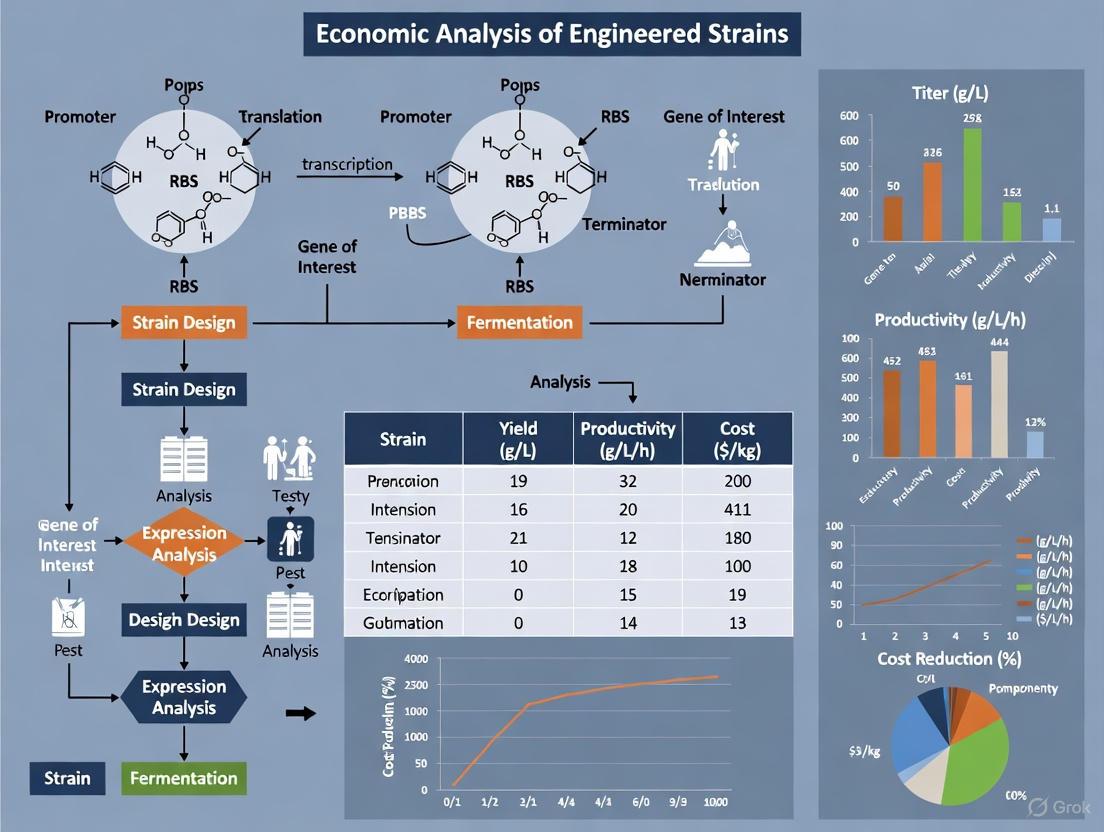
This article provides a comprehensive economic and technical analysis for developing engineered microbial strains for industrial-scale production.
From Lab to Market: A Techno-Economic Framework for Engineering Industrial Microbial Strains
Abstract
This article provides a comprehensive economic and technical analysis for developing engineered microbial strains for industrial-scale production. Tailored for researchers, scientists, and drug development professionals, it synthesizes current methodologies to bridge the gap between laboratory innovation and commercial viability. The scope covers foundational economic drivers, advanced strain engineering workflows like the Design-Build-Test-Learn (DBTL) cycle, strategies for troubleshooting scale-up challenges, and robust validation through Techno-Economic Analysis (TEA) and Life Cycle Assessment (LCA). The objective is to offer a actionable framework for de-risking bioprocess development and accelerating the transition of bio-based products to market.
The Bioeconomy Imperative: Market Drivers and Economic Potential of Engineered Strains
The application of engineered microbial strains in industrial production represents a cornerstone of the modern bioeconomy. However, the strategic approach to strain design, process development, and economic optimization differs profoundly between the production of high-value therapeutics and bulk chemicals. High-value therapeutics, such as pharmaceuticals and biologics, are characterized by low-volume, high-price products where development cost and speed to market are often secondary to precision and efficacy. In contrast, bulk chemical production is a high-volume, low-margin business where economic viability is exquisitely sensitive to factors like feedstock cost, carbon conversion efficiency, and volumetric productivity [1]. This guide provides an objective comparison of the performance requirements and engineering paradigms for engineered strains across these two distinct sectors, framed within an economic analysis for researchers and drug development professionals.
The global chemical industry is currently navigating a complex transition. While the overall bulk chemical market is substantial—projected to grow from USD 715 billion in 2025 to over USD 1,022 billion by 2035—profit margins are under pressure from overcapacity and soft demand [2] [3]. Conversely, specialty sectors, particularly biomanufacturing for therapeutics, are experiencing robust growth. The biomanufacturing specialty chemicals market for applications like pharmaceuticals is expected to grow at a CAGR of 9.04%, nearly triple the rate of the overall bulk chemical market [4]. This divergence is driving a strategic rebalancing of portfolios, with many companies shifting focus from commoditized base chemicals toward high-margin specialties and sustainable alternatives [2] [5].
Economic & Performance Landscape
The fundamental economic drivers for biological production vary dramatically between therapeutics and bulk chemicals. The following table summarizes the key performance metrics and their relative economic impact for each sector.
Table 1: Key Performance and Economic Metric Comparison
| Metric | High-Value Therapeutics | Bulk Chemicals |
|---|---|---|
| Typical Product Value | Very High (e.g., APIs, Biologics) | Low (e.g., Organic Acids, Solvents) |
| Primary Economic Driver | Speed to Market, Product Efficacy, Purity | Feedstock Cost, Carbon Yield, Titer & Productivity [1] |
| Acceptable Production Cost | High (Cost is a small fraction of product price) | Must be cost-competitive with petrochemical routes [1] |
| Key Market Trend | Growth in biologics, cell & gene therapies [6] | Shift towards bio-based and sustainable chemicals [3] |
| Market Size & Growth | Biomanufacturing Specialty Chem. Market: USD 26.99 Bn by 2034 (CAGR 9.04%) [4] | Bulk Chemical Market: USD 1,022.63 Bn by 2035 (CAGR 3.64%) [3] |
A more detailed analysis of the technical performance requirements highlights the stark contrast in strain engineering priorities.
Table 2: Technical Performance Targets for Engineered Strains
| Performance Parameter | High-Value Therapeutics | Bulk Chemicals | Criticality for Economic Viability |
|---|---|---|---|
| Titer (g/L) | Moderate (1-10) often sufficient | High (>50) is essential [7] | High for Bulk Chemicals |
| Yield (g product/g substrate) | Moderate | Maximum theoretical yield critical [1] | High for Bulk Chemicals |
| Productivity (g/L/h) | Focus on reproducibility | High is essential for low CAPEX [1] | High for Bulk Chemicals |
| Downstream Processing | Highly complex, cost-tolerant (e.g., chromatography) | Must be simple and low-cost (e.g., distillation) [1] | High for Both |
| Feedstock Flexibility | Low (typically defined, high-purity media) | High (must utilize low-cost sugars, C1 gases, or biomass) [8] [1] | High for Bulk Chemicals |
For bulk chemicals, the feedstock cost is the dominant factor, often comprising over 50% of the operating expenditure (OPEX) [1]. Therefore, engineering strains to utilize non-food competing, low-cost feedstocks like lignocellulosic biomass or one-carbon (C1) molecules (e.g., CO₂, methanol) is a major research focus. However, a significant barrier for C1 biomanufacturing is its low carbon conversion efficiency, often below 10%, which necessitates larger, more capital-intensive bioreactor systems to compensate for poor productivity [1]. In the therapeutic sector, the cost of goods sold is less prohibitive, allowing the use of pure, first-generation sugar feedstocks and placing a greater emphasis on precision and complex pathway engineering.
Comparative Experimental Analysis
Case Study 1: Oleic Acid Production (Bulk Chemical)
This case study is based on a techno-economic analysis of oleic acid production from lignocellulosic biomass, representing a bulk chemical production model [7].
- Objective: To engineer a yeast strain for high-yield oleic acid production from glucose and xylose in lignocellulosic hydrolysate and evaluate its industrial-scale economic viability.
- Experimental Strain: Engineered Yarrowia lipolytica strain YSXID for co-utilization of glucose and xylose.
- Control: Wild-type or previous generation strains with lower yield.
- Culture Conditions: Flask fermentation and scalable bioreactor processes using hydrolysate from 2,000 metric tons per day of rice straw biomass.
- Key Performance Metrics:
- Titer: Total lipid production of 10.5 g/L, with an oleic acid titer of 5.98 g/L [7].
- Yield: A yield of 0.18 g oleic acid per gram of sugar, representing a 50% improvement over previous reports [7].
- Content: Oleic acid composition in total lipids maintained at 69-71% across different sugar conditions [7].
- Techno-Economic Conclusion: At scale, the process requires ~34 tons of biomass per ton of oleic acid, with a minimum selling price of US$6.4-7.89 per kg, highlighting the critical link between yield and economic viability [7].
Case Study 2: 3-HP Production via C1 Assimilation (Chemical Platform)
This study examines the production of 3-hydroxypropionic acid (3-HP), a platform chemical, from C1 feedstocks, illustrating the challenges of a nascent bulk production pathway [1].
- Objective: To assess the techno-economic and environmental feasibility of producing 3-HP from waste C1 feedstocks (steel mill off-gas or electrochemically derived methanol).
- Experimental Setup:
- Route 1: Two-stage biological system using steel mill off-gas.
- Route 2: Integrated hybrid system combining electrochemical conversion of CO₂ to methanol followed by microbial conversion.
- Key Findings:
- The C1 feedstock-to-chemical conversion efficiency for both routes was found to be below 10% [1].
- This low efficiency is a major economic barrier, increasing both capital expenditures (CAPEX) and operating expenditures (OPEX) by requiring larger infrastructure and more raw material [1].
- Fermentation-related equipment accounted for the largest share (>92%) of equipment costs in related processes, with costs being inversely proportional to overall carbon yield and productivity [1].
Detailed Methodologies
Strain Engineering for C1 Assimilation in Bulk Chemicals
Engineering non-model microbial hosts to utilize C1 feedstocks is a advanced methodology for reducing the feedstock cost burden in bulk chemical production [8].
- Principle: Enable sustainable bioproduction by engineering versatile "polytrophic" microbes to assimilate C1 molecules like CO₂, methanol, or formate, which can be derived from waste gases or renewable energy.
- Procedure:
- Host Selection: Select a non-model host (e.g., Pseudomonas putida, Cupriavidus necator) based on desired native traits like stress resistance, substrate tolerance, or genetic stability [8].
- Omics-Driven Profiling: Use metabolomics, fluxomics, and transcriptomics to map the host's native metabolic network and central carbon fluxes [8].
- Computational Modeling: Employ Flux Balance Analysis (FBA) and Minimum-Maximum Driving Force (MDF) models to identify suitable synthetic C1 assimilation pathways (e.g., reductive glycine pathway) and predict flux distributions [8].
- Pathway Implementation: Introduce the selected C1 assimilation pathway into the host chassis using genetic tools.
- Fermentation Optimization: Conduct lab-scale fermentation under defined conditions (aerobic/anaerobic, bioreactor type) to validate strain performance [8].
- Supporting Experimental Data: This approach relies on integrating metabolic modeling with experimental validation. For example, computational models can predict the theoretical yield and thermodynamic feasibility of a synthetic C1 pathway before any genetic engineering is performed [8].
Process Design & Scale-Up Workflow
A structured scale-up workflow is critical for translating laboratory success to industrial production, particularly for cost-sensitive bulk chemicals [8] [1].
- Principle: Adopt a goal-oriented design mindset ("beginning with the end in mind") to de-risk scale-up and ensure economic viability is considered from the earliest R&D stages.
- Procedure:
- Bioprocess Context Definition: Define the carbon and energy inputs, target molecule, and candidate pathways. Establish initial economic and sustainability benchmarks [8].
- Strain Selection & Engineering: Based on the bioprocess context, select and engineer the host strain, as detailed in section 4.1 [8].
- Preliminary TEA/LCA: Perform initial Techno-Economic Analysis and Life Cycle Assessment to identify major cost drivers and environmental hotspots (e.g., fermentation CAPEX, feedstock cost). This guides subsequent engineering priorities [8] [1].
- Fermentation Optimization & Scale-Up: Optimize fermentation parameters (e.g., fed-batch strategies, O₂ transfer) and progressively scale from lab to pilot to demonstration scale [4].
- Iterative Design: Use data from each scale-up step to refine the TEA/LCA and, if necessary, inform further strain or process engineering in an iterative loop [1].
Diagram 1: Bioprocess scale-up workflow with iterative economic feedback.
The Scientist's Toolkit: Research Reagent Solutions
The following table details key reagents, materials, and software tools essential for research in engineering industrial production strains.
Table 3: Essential Research Tools for Strain and Process Development
| Tool / Reagent | Function / Application | Relevance in Research |
|---|---|---|
| Lignocellulosic Biomass (e.g., Rice Straw) | A second-generation, non-food feedstock for sustainable bulk chemical production. | Used in hydrolysis processes to generate fermentable sugars (glucose, xylose) [7]. |
| C1 Feedstocks (Methanol, Formate, CO₂/CO/Syngas) | Next-generation carbon substrates for decarbonized biomanufacturing. | Critical for cultivating and engineering methylotrophic or synthetic C1-assimilating strains [8] [1]. |
| Oleaginous Yeast (e.g., Yarrowia lipolytica) | A GRAS (Generally Recognized As Safe) microbial host for high-lipid production. | A common chassis for engineering production of oleochemicals like oleic acid and biofuels [7]. |
| Metabolic Modeling Software (e.g., for FBA, MDF) | Computational tools for predicting metabolic flux and pathway thermodynamics. | Used in silico to design and optimize metabolic pathways for yield and efficiency before strain engineering [8]. |
| Fed-Batch Bioreactor Systems | Scalable fermentation equipment for process intensification. | Essential for achieving high cell densities and product titers in both lab-scale optimization and industrial production [7] [1]. |
The landscape of engineered strains for industrial production is defined by a fundamental economic dichotomy. The development of high-value therapeutics prioritizes precision, complexity, and speed, with production costs being a secondary concern. In stark contrast, the production of bulk chemicals is an exercise in economic optimization, where success is dictated by achieving maximum yield, titer, and productivity from the lowest-cost feedstocks.
The future of bulk biomanufacturing hinges on overcoming critical techno-economic barriers, particularly the low carbon conversion efficiency of promising next-generation feedstocks like C1 gases [1]. For researchers, this implies that early and iterative use of Techno-Economic Analysis is not merely an academic exercise but a crucial tool to guide metabolic engineering efforts towards economically viable outcomes. The convergence of advanced metabolic engineering, innovative process design, and rigorous economic modeling will be essential to enable the widespread adoption of biological production routes for both the therapeutics that save lives and the bulk chemicals that underpin our material world.
The global industrial landscape is undergoing a significant transformation, shaped by three powerful forces: evolving policy frameworks, accelerating sustainability mandates, and expanding market opportunities. For researchers, scientists, and drug development professionals working with engineered strains for industrial production, understanding these macroeconomic drivers is crucial for guiding research investment and technology development. Current economic analysis reveals a complex environment where strategic policy incentives are aligning with robust market growth in sustainable technologies, creating unprecedented opportunities for biotechnological innovation.
In 2025, the manufacturing sector faces a challenging yet opportunistic environment. The Institute for Supply Management’s manufacturing index remained below 50 for much of the year, signaling sector contraction, while trade policy uncertainty and tariffs emerged as top concerns for manufacturers [9]. Despite these headwinds, targeted technology investments and new policy incentives are creating fertile ground for innovation, particularly in sustainable biomanufacturing [9]. This guide provides a structured economic analysis of these converging drivers, offering researchers a framework for evaluating the commercial potential of engineered production strains within this evolving context.
Quantitative Market Analysis: Growth Projections and Economic Impact
The sustainable manufacturing and materials markets are demonstrating remarkable growth trajectories, underpinned by technological advancement and increasing regulatory pressure. The global sustainable manufacturing market, valued between $215.43 billion and $231.86 billion in 2025, is projected to reach $367.18 billion to $601.17 billion by 2029-2034, representing a compound annual growth rate (CAGR) of 11.1% to 11.3% [10] [11]. This robust expansion is mirrored in the sustainable materials market, which was estimated at $333.31 billion in 2024 and is expected to grow at a CAGR of 12.41% to reach approximately $1,073.73 billion by 2034 [12].
Table 1: Comparative Sustainable Market Size Projections
| Market Segment | 2024-2025 Base Value (USD Billion) | 2034 Projection (USD Billion) | CAGR (%) | Key Growth Drivers |
|---|---|---|---|---|
| Sustainable Manufacturing | $215.43 - $231.86 [10] [11] | $367.18 - $601.17 [10] [11] | 11.1 - 11.3 [10] [11] | Regulatory pressure, circular economy transition, consumer demand for eco-friendly products [10] [11] |
| Sustainable Materials | $333.31 [12] | ~$1,073.73 [12] | 12.41 [12] | Green building certifications, EV infrastructure expansion, corporate sustainability commitments [12] |
| Recycled Plastics | N/A | N/A | N/A | Versatility, reduced environmental impact, cost savings vs. virgin plastics [11] |
| Bioplastics & Biopolymers | N/A | N/A | N/A | Strict measures on single-use plastics, corporate environmental objectives [12] |
Regional analysis reveals distinct growth patterns, with North America capturing the largest market share (34.87%) in sustainable manufacturing in 2025, while the Asia-Pacific region is anticipated to grow at the fastest CAGR of 12.46% during the forecast period [10]. This geographic variation reflects differing policy environments, industrial capabilities, and consumer preferences that researchers must consider when developing market-entry strategies for products derived from engineered strains.
Policy and Regulatory Drivers: Incentives and Compliance Mandates
Policy frameworks have emerged as powerful economic drivers, creating both opportunities and constraints for industrial biotechnology. Recent legislative developments, including the passage of a major tax and spending bill commonly called the One Big Beautiful Bill Act, include several tax provisions that could lower costs and encourage manufacturing investment [9]. These policies are further reinforced by the Trump administration's America's AI Action Plan, which aims to accelerate the data center surge and demand for related manufactured components while promoting deregulation and streamlined permitting for new semiconductor manufacturing facilities [9].
The international policy landscape is equally impactful, with over 130 countries setting goals to reach net-zero emissions by 2050, creating regulatory pressure on industries to adopt sustainable raw materials [12]. The European Union's Circular Economy Action Plan and "Fit for 55" package are pouring billions into renewable-powered manufacturing facilities and clean technology innovation, making compliance economically favorable for manufacturers who adopt sustainable practices [10]. For researchers developing engineered strains, these policy signals indicate strong future demand for production systems that can demonstrably reduce carbon emissions and resource consumption.
Table 2: Key Policy Drivers and Their Economic Impacts
| Policy Initiative | Region | Key Provisions | Research & Development Implications |
|---|---|---|---|
| One Big Beautiful Bill Act [9] | United States | Retention of 21% corporate tax rate, full expensing for new equipment, immediate expensing of domestic R&D [9] | Enhances return on investment for capital-intensive biomanufacturing facilities; incentivizes domestic research spending |
| America's AI Action Plan [9] | United States | Streamlined permitting for advanced manufacturing facilities; promotion of AI integration [9] | Accelerates adoption of AI-powered bioprocess optimization and scale-up |
| Inflation Reduction Act [10] [13] | United States | $369 billion in clean energy incentives [14] | Supports development of bio-based energy production and waste-to-value bioprocesses |
| EU Green Deal [10] | European Union | €1 trillion sustainable investment; Circular Economy Action Plan [10] [14] | Creates demand for circular bioeconomy solutions using engineered strains |
| Corporate Sustainability Reporting Directive (CSRD) [13] | European Union | Mandatory sustainability reporting using "double materiality" concept [13] | Increases need for quantifiable sustainability metrics in biomanufacturing |
Sustainability as an Economic Driver: From Cost Center to Value Creation
Sustainability has transitioned from a peripheral concern to a central economic driver in industrial production. This shift is reflected in corporate investment patterns, with a 2025 Deloitte survey of 600 manufacturing executives finding that the majority (80%) plan to invest 20% or more of their improvement budgets in smart manufacturing initiatives, with a focus on foundational tools and technologies including automation hardware, data analytics, sensors, and cloud computing [9]. Beyond compliance, manufacturers are recognizing the economic value of sustainable practices, including reduced resource consumption, operational resilience, and enhanced brand reputation.
The transition from linear production to circular value chains represents a particularly significant opportunity for engineered biological systems. Manufacturing is rapidly moving away from conventional linear models toward circular value ecosystems that emphasize material reuse and recycling [10]. Designs now prioritize longevity, while modular component architectures facilitate easier recovery and reassembly. This structural transition in global industrial strategies is creating demand for biological production systems that can utilize waste streams as feedstocks and produce biodegradable materials, positioning engineered strains as critical enabling technologies for the circular economy.
Technological Enablers: AI and Smart Manufacturing
Advanced technologies are serving as powerful accelerators for sustainable biomanufacturing. Artificial Intelligence, machine learning, and digital twin technologies are fundamentally changing sustainability approaches by enabling real-time monitoring and predictive optimization of energy consumption, emissions, and waste output [10]. Digital twins virtually replicate factory operations, allowing manufacturers to simulate scenarios, identify inefficiencies, and deploy energy-efficient configurations without disrupting physical production [10].
Agentic Artificial Intelligence, characterized by its ability to reason, plan, and take autonomous action, is poised to elevate smart manufacturing and operations [9]. Industry adoption is likely to grow considerably in the next few years, with agentic AI applications including identifying alternative suppliers in response to supply chain disruptions, capturing institutional knowledge from retiring employees, maximizing production uptime with autonomously generated shift handover reports, and improving customer experience by simplifying equipment repair [9]. For researchers, these capabilities suggest future production environments where AI-powered systems can optimize the performance of engineered strains in real-time, adapting process parameters to maximize yield and minimize resource intensity.
Diagram 1: Economic drivers for engineered strains research
Experimental Framework for Economic Evaluation of Engineered Strains
Methodology for Techno-Economic Analysis
Evaluating the economic viability of engineered production strains requires a structured experimental approach that integrates both technical performance and economic metrics. The following protocol provides a standardized methodology for comparative analysis of strain performance under industrial-relevant conditions:
Strain Cultivation and Baseline Characterization: Inoculate engineered strains and reference controls in 1L bioreactors using standardized media formulated to mimic industrial feedstock costs. Monitor growth kinetics, substrate consumption rates, and maximum biomass density over 72 hours [9] [11].
Productivity Assessment Under Process Conditions: Evaluate product titer, yield, and productivity under controlled conditions that reflect manufacturing environments, including pH gradients, dissolved oxygen limitations, and temperature shifts. Perform triplicate runs for statistical significance [11].
Resource Efficiency Quantification: Measure key sustainability metrics including water consumption per unit product, energy input requirements, carbon dioxide equivalent emissions, and waste generation. Compare against industry benchmarks for conventional production methods [10] [13].
Scale-Up Projection Modeling: Utilize digital twin technology to simulate performance at commercial scale (10,000L+), identifying potential bottlenecks in mass transfer, heat dissipation, and nutrient distribution that might impact economic viability [10].
Economic Modeling: Integrate performance data into discounted cash flow models that account for capital expenditure, operating costs, tax incentives, and potential carbon pricing scenarios. Calculate minimum selling price and compare to incumbent production methods [9] [12].
Essential Research Reagents and Platforms
Table 3: Key Research Reagent Solutions for Economic Strain Evaluation
| Reagent/Platform | Function | Economic Relevance |
|---|---|---|
| Industrial Simulation Media | Mimics cost structure of commercial feedstocks | Enables accurate production cost forecasting early in R&D cycle |
| High-Throughput Microbioreactor Systems | Parallel strain screening under controlled conditions | Reduces development timeline; lowers preliminary research costs |
| Process Analytical Technology (PAT) | Real-time monitoring of critical process parameters | Provides data for process intensification and operational expense reduction |
| LC-MS/MS Analytical Systems | Quantification of target molecules and byproducts | Enables yield calculations and purification cost projections |
| Digital Twin Software | Virtual simulation of commercial-scale production | Identifies scale-up challenges before capital investment; de-risks technology transfer |
| Life Cycle Assessment (LCA) Databases | Quantifies environmental impacts across value chain | Supports sustainability claims essential for regulatory compliance and market access |
Investment Flows and Funding Landscape
Strategic investment patterns provide crucial indicators of economic momentum in sustainable manufacturing technologies. Global clean energy investment is forecasted to exceed $1.77 trillion in 2025, representing 41% growth over 2024 figures [14]. Similarly, artificial intelligence is projected to reach a $407 billion market in 2025, up from $142 billion in 2023, with significant implications for bioprocess optimization and strain engineering [14].
Corporate venture capital is increasingly targeting technologies that align with both sustainability and efficiency objectives. Research indicates that companies combining AI diagnostics with telemedicine platforms are achieving customer acquisition costs 76% below industry averages, demonstrating the economic advantage of integrated technological solutions [14]. For researchers, these investment trends highlight the importance of developing engineered strains that not only demonstrate technical superiority but also align with broader digitalization and sustainability initiatives that attract capital deployment.
Diagram 2: Value creation pathway from R&D to economic impact
The convergence of policy support, sustainability imperatives, and robust market growth creates a favorable economic environment for advanced biomanufacturing technologies. Researchers and drug development professionals can leverage these economic drivers to prioritize development efforts toward engineered strains with the greatest potential for commercial success and industrial impact. The quantitative projections and experimental frameworks presented in this analysis provide a structured approach for evaluating research priorities within this evolving economic context.
Future research should focus on integrating advanced computational methods, including AI and digital twins, with biological design to accelerate strain development and scale-up while minimizing resource consumption. Additionally, researchers should increasingly consider circular economy principles in strain design, developing production systems that can utilize waste carbon streams and generate biodegradable products. By aligning technical development with these powerful economic drivers, the research community can maximize the commercial impact and sustainability benefits of engineered production strains for industrial applications.
In the industrial production of bio-based chemicals, pharmaceuticals, and fuels, feedstock selection represents a pivotal cost determinant that can ultimately dictate commercial viability. Despite significant advances in strain engineering and bioprocess optimization, the economic burden of feedstocks continues to dominate production economics, often accounting for the majority of operational expenditures. This economic reality persists across diverse biomanufacturing sectors, from sustainable aviation fuel production to pharmaceutical precursor synthesis. The complex interplay between feedstock composition, strain metabolism, and process scaling creates a multidimensional optimization problem that extends beyond mere biological performance. Within the broader context of economic analysis of engineered strains for industrial production, understanding this feedstock-cost dynamic is not merely advantageous—it is fundamental to strategic research planning and commercial deployment. This analysis systematically compares conventional and next-generation feedstocks through both economic and performance lenses, providing researchers with a structured framework for feedstock evaluation and selection.
Feedstock Economics: Quantitative Comparative Analysis
The economic assessment of feedstocks extends beyond simple per-kilogram costs to encompass availability, processing requirements, and compatibility with industrial-scale operations. The table below synthesizes key economic and performance characteristics across major feedstock categories relevant to industrial bioprocessing.
Table 1: Economic and Technical Comparison of Feedstocks for Industrial Bioproduction
| Feedstock Category | Example Feedstocks | Production Cost Range | Key Advantages | Primary Limitations | Technology Readiness |
|---|---|---|---|---|---|
| Conventional Sugar-Based | Molasses, Sucrose, Glucose | Low to Moderate [15] | Established supply chains, High fermentability [15] | Food-fuel competition, Price volatility [16] | Commercial [15] |
| Lignocellulosic | Agricultural residues, Wood waste, Bagasse [17] | Moderate [16] | Non-food resources, High availability [16] [17] | Recalcitrance to hydrolysis, Requires pretreatment [18] | Demonstration [18] |
| Next-Generation (NGFs) | CO₂, Methanol, Formic acid [15] | Highly Variable [15] | Potential carbon circularity, Avoid land use [15] | Low energy density, Emerging conversion pathways [15] | R&D to Pilot [15] |
| Waste-Based | Glycerol (from biodiesel), Municipal solid waste [15] [17] | Low (especially waste streams) [15] | Low-cost, Circular economy benefits [15] | Composition variability, Contamination risks [15] | Commercial to Demonstration [15] |
| Lipid-Rich | Vegetable oils, Animal fats, Algae [17] | Moderate to High | Direct conversion to fuels, High energy density | Seasonal availability, High pretreatment costs | Commercial [17] |
The economic landscape reveals clear trade-offs between feedstock cost, processing complexity, and technology maturity. Molasses and waste glycerol consistently demonstrate favorable economic and environmental performance [15], while the promise of CO₂ and other next-generation feedstocks remains constrained by immaturity of conversion technologies [15]. Particularly telling is the finding that without subsidies, production costs for biogas from non-food feedstocks like grass, crop residues, and manure typically exceed those from food crops, highlighting the critical role of policy in advancing advanced biofuels [16].
Experimental Protocols for Feedstock Performance Evaluation
Standardized Feedstock Screening Methodology
Robust evaluation of feedstock performance requires systematic experimental protocols that generate comparable data across diverse substrate categories. The following methodology provides a standardized approach for initial feedstock screening:
Feedstock Preparation and Characterization
- Physical Processing: Reduce particle size to <2mm where applicable (e.g., biomass residues) using laboratory milling equipment to ensure homogeneity.
- Compositional Analysis: Quantify key components: carbohydrates (glucose, xylose, arabinose), lignin, protein, lipid content, and ash using standardized NREL laboratory analytical procedures (LAP).
- Sterilization: Employ autoclavable feedstocks (121°C, 15-20 min) or filter-sterilize (0.2μm) soluble components as appropriate for microbial culture.
Inoculum Preparation
- Prepare seed cultures of the production strain in defined medium with laboratory-grade glucose.
- Harvest cells at mid-exponential phase (OD600 ≈ 2-4), wash twice with sterile saline, and resuspend to standardized cell density for consistent inoculation.
Fermentation Conditions
- Utilize controlled bioreactors with working volume of 1-2L maintained at optimal process conditions (temperature, pH, dissolved oxygen).
- Employ a defined basal medium with the test feedstock as the primary carbon source.
- Maintain consistent feedstock loading on a total carbon equivalent basis where possible (e.g., 20g/L total fermentable sugars).
- Implement fed-batch protocols for feedstocks with potential substrate inhibition.
Analytical Monitoring
- Sample at 3-6 hour intervals for offline analysis of substrate consumption, product formation, and potential inhibitors.
- Quantify metabolites via HPLC (organic acids, alcohols, sugars) and GC (volatiles, gases) with appropriate standards.
- Monitor cell growth spectrophotometrically (OD600) and via dry cell weight determination.
Scale-Up Simulation Protocol
To assess strain performance under conditions mimicking industrial scale, researchers should implement scale-down simulations that expose strains to anticipated heterogeneities:
- Dissolved Oxygen Gradient Simulation: Implement cyclic (30-300s period) dissolved oxygen variations between 0% and 100% air saturation to mimic gradients in large-scale fermenters [19].
- Substrate Pulse Challenge: Introduce concentrated substrate pulses to create temporary high-osmolarity zones, monitoring recovery kinetics and stress response markers.
- pH Gradient Exposure: Apply controlled pH fluctuations (±0.5-1.0 pH units) at frequencies relevant to production-scale mixing times.
- Metabolic Response Profiling: Quantify transcriptomic (RNA-seq) and metabolomic changes in response to these simulated industrial conditions to identify potential scale-up limitations [19].
Table 2: Key Analytical Methods for Feedstock and Strain Performance Characterization
| Analysis Type | Specific Methods | Key Parameters Measured | Application in Feedstock Evaluation |
|---|---|---|---|
| Feedstock Composition | NREL LAP, HPLC-RI, GC-MS | Structural carbohydrates, lignin, extractives, ash | Quantify fermentable components and potential inhibitors |
| Process Metabolites | HPLC-UV/RID, GC-FID/TCD | Sugars, organic acids, alcohols, gases | Determine substrate consumption rates and product yields |
| Strain Physiology | Flow cytometry, qPCR, ELISA | Viability, stress markers, recombinant protein expression | Assess strain fitness and productivity under different feedstocks |
| Omics Analysis | RNA-seq, LC-MS metabolomics | Global gene expression, metabolic fluxes, stress responses | Identify metabolic bottlenecks and adaptation mechanisms |
The Strain Engineering Workflow: Integrating Feedstock Considerations
The Design-Build-Test-Learn (DBTL) framework has proven highly effective for industrial strain engineering, with feedstock performance representing a critical selection criterion throughout this iterative process [18]. The following diagram illustrates how feedstock considerations integrate with each stage of strain development.
Diagram: Feedstock-Integrated Strain Engineering Cycle
This integrated approach emphasizes that feedstock selection cannot be decoupled from strain development. During the Design phase, engineering strategies must account for the specific composition of target feedstocks, including potential inhibitors in lignocellulosic hydrolysates or C1 substrate assimilation challenges [18]. The Build phase employs appropriate genetic tools to implement these designs, with CRISPR-based editing particularly valuable for exploring non-traditional feedstock utilization pathways [18]. In the Test phase, strains are evaluated not only on pure substrates but also on actual industrial feedstock samples under conditions that simulate production-scale heterogeneity [19]. Finally, the Learn phase leverages machine learning and multi-omics data to identify genetic determinants of feedstock performance and predict scale-up behavior [18].
Research Reagent Solutions for Feedstock Evaluation
Table 3: Essential Research Tools for Feedstock and Strain Performance Analysis
| Reagent/Kit | Primary Function | Application Context |
|---|---|---|
| NREL Standard Methods | Standardized protocols for biomass composition analysis | Feedstock characterization for lignocellulosic and waste materials |
| HPLC/GC Standards | Quantification of substrates, products, and inhibitors | Process monitoring across diverse feedstock types |
| CRISPR-Cas9 Systems | Precision genome editing for pathway engineering | Optimizing feedstock utilization pathways in production hosts |
| RNA-seq Kits | Transcriptomic profiling of strain responses | Identifying metabolic adaptations to different feedstocks |
| Viability Stains | Flow cytometry-based cell health assessment | Monitoring stress responses in scale-down simulations |
| Metabolomics Kits | Comprehensive metabolite profiling | Mapping metabolic fluxes with different carbon sources |
| Microplate Assays | High-throughput substrate utilization screening | Rapid comparison of multiple feedstock conditions |
The dominance of feedstock costs in production economics necessitates a strategic approach to feedstock selection that aligns with both strain capabilities and process objectives. This analysis demonstrates that while sugar-based feedstocks like molasses currently offer the most favorable economic profile for conventional bioprocesses [15], the long-term sustainability of biomanufacturing depends on advancing next-generation feedstocks including waste streams and C1 substrates. Critically, the successful implementation of any feedstock requires early integration with strain engineering efforts, using the DBTL framework to develop robust production strains capable of maintaining performance at industrial scale. For researchers, this implies parallel development of feedstocks and strains rather than sequential optimization. Future advancements in systems and synthetic biology, particularly AI-powered design and machine learning prediction of scale-up performance, promise to accelerate this integrated development approach, potentially reducing both the time and cost barriers that currently challenge the bioeconomy's expansion [18].
In the economic analysis of engineered strains for industrial production, two methodological frameworks are indispensable for assessing viability and sustainability: Techno-Economic Analysis (TEA) and Life Cycle Assessment (LCA). TEA is a systematic methodology for evaluating the technical performance and economic feasibility of a process, product, or technology [20]. It integrates process design engineering with economic analysis to estimate production costs and investment requirements. Conversely, LCA is a standardized methodology (ISO 14040) for "compilation and evaluation of the inputs, outputs and the potential environmental impacts of a product system throughout its life cycle" [20]. It provides a comprehensive assessment of environmental burdens across all stages from raw material extraction to disposal.
For researchers developing industrial bioprocesses, the integration of TEA and LCA is crucial for sustainable process design, enabling systematic analysis of relationships between technical, economic, and environmental performance [20]. This integrated approach is particularly valuable for assessing emerging biotechnologies at early development stages, where design decisions have significant long-term implications for both economic competitiveness and environmental footprint.
Core Principles and Methodological Frameworks
Techno-Economic Analysis (TEA) Fundamentals
TEA employs a rigorous, model-based approach grounded in chemical engineering fundamentals. The methodology typically follows these key phases:
- Process Design and Modeling: Developing detailed process flow diagrams and using simulation software (e.g., ASPEN Plus) to generate complete mass and energy balances [21].
- Capital Cost Estimation: Calculating total investment costs (TIC), including equipment, installation, and indirect costs.
- Operating Cost Estimation: Assessing costs of raw materials, utilities, labor, maintenance, and overhead.
- Economic Performance Indicators: Calculating key metrics such as minimum selling price (MSP), return on investment, and payback period [21].
TEA results provide critical benchmarks for technology comparison. For example, in biorefining, enzymatic hydrolysis pathways show TIC of $100–200 million and MSP of $799–$1,013 per ton, while acid hydrolysis pathways demonstrate lower TIC ($40–80 million) and MSP ($530–$545 per ton) but with higher technical risks [21].
Life Cycle Assessment (LCA) Fundamentals
LCA follows a structured four-phase framework per ISO 14044 standards:
- Goal and Scope Definition: Defining system boundaries, functional unit, and assessment objectives.
- Life Cycle Inventory (LCI): Compiling quantitative input-output data for all processes within the system boundaries.
- Life Cycle Impact Assessment (LCIA): Evaluating potential environmental impacts using categorized indicators (e.g., global warming potential).
- Interpretation: Analyzing results, checking sensitivity, and providing conclusions and recommendations.
In application, LCA reveals critical environmental trade-offs. For biorefining pathways, the global warming potential (GWP) can range from 200 to 900 kg CO₂ equivalent per ton of sugars, with energy integration and biogenic fuel sources identified as key mitigation strategies [21].
Integrated TEA-LCA Approach
The integration of TEA and LCA enables simultaneous economic and environmental evaluation, addressing the critical need for understanding trade-offs during technology development [20]. This integrated framework aligns goal, scope, data, and system elements to reduce inconsistencies that can arise from separate analyses. The synergy between these methodologies is particularly powerful for prospective assessment of emerging technologies at low technology readiness levels (TRLs), where design parameters remain flexible and optimization opportunities are greatest [20].
Figure 1: Integrated TEA-LCA Framework for Sustainable Technology Assessment
Comparative Analysis: TEA vs. LCA
Table 1: Fundamental Comparison Between TEA and LCA Methodologies
| Aspect | Techno-Economic Analysis (TEA) | Life Cycle Assessment (LCA) |
|---|---|---|
| Primary Focus | Technical feasibility and economic viability [20] | Environmental impacts throughout product life cycle [20] |
| Core Methodology | Process modeling, cost estimation, profitability analysis [21] | Inventory analysis, impact assessment, interpretation [20] |
| Typical System Boundaries | Gate-to-gate or cradle-to-gate [22] | Cradle-to-grave or cradle-to-cradle [20] |
| Key Metrics | Minimum selling price (MSP), return on investment, capital and operating costs [21] | Global warming potential (GWP), resource depletion, eutrophication, acidification [21] |
| Standardization | No universal ISO standards; follows established engineering practices [23] | ISO 14040 and 14044 standards [20] |
| Typical Applications | Technology benchmarking, process optimization, investment decisions [24] | Environmental product declarations, eco-design, policy development [20] |
Table 2: TEA and LCA Applications in Different Technology Readiness Levels (TRLs)
| TRL Range | TEA Approach & Challenges | LCA Approach & Challenges | Integrated Assessment Value |
|---|---|---|---|
| TRL 1-4 (Early Research) | Screening-level cost analysis; High uncertainty due to limited data [20] | Conceptual LCA using proxy data; Focus on hotspot identification [23] | Identifies critical R&D directions; Prevents regrettable investments [20] |
| TRL 5-6 (Technology Development) | Detailed process modeling; Cost sensitivity analysis [20] | Prospective LCA with scenario analysis; Allocation methods critical [23] | Enables simultaneous optimization of economic and environmental parameters [20] |
| TRL 7-9 (Commercial Scale) | Accurate capital and operating cost estimation; Business case development [24] | Comprehensive inventory data; Validation with operational data [20] | Supports investment decisions and environmental marketing claims [25] |
Experimental Protocols and Assessment Workflows
Standard TEA Methodology for Bioprocess Evaluation
The following protocol outlines a comprehensive TEA methodology appropriate for evaluating industrial bioprocesses involving engineered strains:
Process Design and Base Case Establishment
- Develop detailed process flow diagrams encompassing all major unit operations
- Define design basis and capacity (e.g., 150 t/d of dry feedstock) [21]
- Establish operating conditions (temperature, pressure, conversion rates) based on experimental data
Process Simulation and Mass/Energy Balancing
- Utilize process simulation software (e.g., ASPEN Plus) to model the entire system [21]
- Generate comprehensive mass and energy balances for all streams
- Identify utility requirements (steam, electricity, cooling water)
Equipment Sizing and Capital Cost Estimation
- Size major equipment based on simulation results
- Calculate total installed capital (TIC) using established factoring methods [21]
- Estimate working capital and other startup costs
Operating Cost Estimation
- Calculate raw material costs based on consumption rates and market prices
- Estimate utility costs from energy balances
- Determine labor, maintenance, and overhead costs
Economic Analysis
- Calculate minimum selling price (MSP) or minimum fuel selling price (MFSP) [21]
- Perform sensitivity analysis on key parameters (yield, capacity, resource costs)
- Identify major cost drivers and potential optimization targets
Standard LCA Methodology for Bioprocess Evaluation
The LCA protocol follows ISO 14044 standards with specific considerations for bioprocesses:
Goal and Scope Definition
- Define functional unit (e.g., 1 ton of product, 1 MJ of fuel) appropriate for comparison [22]
- Establish system boundaries (cradle-to-gate or cradle-to-grave)
- Specify cut-off criteria and allocation procedures for co-products
Life Cycle Inventory (LCI) Compilation
- Collect primary data from process simulations and experimental measurements
- Supplement with secondary data from commercial LCA databases
- Document all material/energy inputs and emissions for each process unit
Life Cycle Impact Assessment
- Select appropriate impact categories (global warming, eutrophication, etc.)
- Apply characterization factors to convert emissions to impact equivalents
- Conduct hotspot analysis to identify significant environmental contributors
Interpretation and Sensitivity Analysis
- Evaluate result significance and data quality
- Perform sensitivity analysis on key parameters (allocation methods, energy sources)
- Compare results with benchmark systems or alternative technologies
Essential Research Reagent Solutions and Tools
Table 3: Essential Tools and Resources for TEA and LCA Studies
| Tool/Resource Category | Specific Examples | Application & Function |
|---|---|---|
| Process Simulation Software | ASPEN Plus [21] | Models complete mass and energy balances for technical design |
| TEA Guidelines & Frameworks | Global CO2 Initiative TEA/LCA Toolkit [26], NREL/NETL methodologies [23] | Provide standardized approaches for conducting assessments |
| LCA Database & Software | GREET Model [23], Commercial LCA databases | Supply secondary data for life cycle inventory compilation |
| Integrated Assessment Platforms | AssessCCUS platform [23] | Aggregate resources for techno-economic and life cycle assessment |
| Harmonization Guidelines | TEA and LCA Guidelines for CO2 Utilization [25] | Ensure consistent methodological choices for comparative studies |
Advanced Applications in Industrial Bioprocessing
Multi-Criteria Decision Analysis Framework
For complex decisions in strain engineering and bioprocess development, integrated TEA-LCA can be incorporated into structured multi-criteria analysis frameworks. These approaches combine technical, economic, and environmental performance metrics with weightings based on stakeholder priorities [21] [22]. The analytical hierarchy process (AHP) is one method that enables systematic comparison of alternatives across multiple dimensions, facilitating transparent decision-making that balances cost, environmental impact, and technical feasibility [22].
Prospective Assessment of Emerging Biotechnologies
The integration of TEA and LCA is particularly valuable for prospective assessment of emerging technologies at low technology readiness levels (TRLs). While traditional assessments focus on mature technologies, prospective application at early development stages allows technology developers to:
- Understand implications of different design choices on future economic and environmental performance [20]
- Optimize process parameters to maximize economic benefits while minimizing environmental burdens [20]
- Identify potential showstoppers before significant resources are invested
- Guide R&D priorities toward performance improvements with the greatest sustainability impact
Technology Learning Curve Integration
For emerging biotechnologies, integrating technology learning curves (TLCs) into TEA and LCA enables forecasting of future environmental and economic performance as technologies mature and benefit from cumulative experience and scale [23]. This approach provides more realistic projections compared to static assessments and helps identify pathways to competitiveness with incumbent technologies.
Techno-Economic Analysis and Life Cycle Assessment are complementary methodologies that together provide a comprehensive framework for evaluating the sustainability of industrial bioprocesses. While TEA focuses on technical feasibility and economic viability, LCA assesses environmental impacts across the entire value chain. Their integration enables informed decision-making that balances economic and environmental considerations, particularly valuable during the development of engineered strains for industrial production. As standardization efforts through initiatives like the Global CO2 Initiative continue to mature [26] [25], these methodologies will play an increasingly critical role in guiding the transition toward sustainable bioprocess technologies.
The Strain Engineering Toolkit: DBTL Cycles, Omics, and AI for Predictive Design
Implementing the Design-Build-Test-Learn (DBTL) Framework for Rapid Iteration
In the competitive landscape of industrial biotechnology, the Design-Build-Test-Learn (DBTL) framework serves as the foundational methodology for developing efficient microbial cell factories. This iterative cycle is crucial for optimizing biological systems to produce valuable compounds, from renewable biofuels to pharmaceutical precursors [18] [27]. The economic implications of streamlined DBTL cycles are profound; traditional metabolic engineering projects have required enormous investments, such as the 150 person-years needed to produce the antimalarial precursor artemisinin and 575 person-years for DuPont's propanediol [27]. With the global bioeconomy projected to reach $30 trillion by 2030, radical reductions in strain development time and cost through optimized DBTL implementation have become imperative for capturing market opportunities across all sectors [18].
Recent advances have introduced transformative variations to the traditional DBTL approach, most notably the LDBT (Learn-Design-Build-Test) paradigm that leverages machine learning at the forefront of the cycle [28] [29]. This reordering, combined with high-throughput technologies and automation, accelerates the entire biomanufacturing development pipeline. For researchers and drug development professionals, understanding these methodologies and their comparative performance is essential for making strategic decisions in engineered strain development for industrial production. This guide provides an objective comparison of these frameworks, supported by experimental data and implementation protocols.
Comparative Analysis of DBTL Cycle Implementations
Traditional DBTL versus LDBT Paradigms
The table below compares the fundamental characteristics of the traditional DBTL cycle against the emerging machine learning-driven LDBT paradigm.
Table 1: Comparison of Traditional DBTL and Modern LDBT Frameworks
| Aspect | Traditional DBTL Cycle | LDBT Cycle (ML-First) |
|---|---|---|
| Sequence | Design → Build → Test → Learn [28] | Learn → Design → Build → Test [28] [29] |
| Primary Driver | Domain knowledge & hypothesis [28] | Machine learning predictions & existing data [28] [29] |
| Build Phase Approach | In vivo chassis (bacteria, yeast) [28] | Cell-free systems & in vivo [28] [29] |
| Testing Throughput | Moderate (days to weeks) [18] | High (hours) with cell-free systems [28] [29] |
| Learning Mechanism | Manual data analysis [27] | Automated ML algorithms [28] [27] |
| Data Requirements | Cycle-specific | Large datasets for pre-training [28] [30] |
| Initial Investment | Lower | Higher (computational resources) |
| Iteration Speed | Weeks to months [18] | Days to weeks [28] [29] |
Workflow Visualization
The following diagrams illustrate the fundamental differences in workflow between the traditional DBTL cycle and the modern LDBT approach.
Diagram 1: Traditional DBTL Cycle. The classic four-stage iterative process begins with Design and progresses sequentially to Build, Test, and Learn, with Learn informing the next Design phase [28] [31].
Diagram 2: LDBT Cycle. The machine learning-enhanced paradigm begins with Learning from existing data, followed by Design, Build, and Test, potentially requiring fewer iterations [28] [29].
Performance Comparison and Experimental Data
Quantitative Performance Metrics
Experimental implementations of both traditional and enhanced DBTL cycles demonstrate significant differences in performance and efficiency. The following table summarizes key quantitative findings from published studies.
Table 2: Experimental Performance Metrics of DBTL Implementations
| Application | DBTL Approach | Cycle Time | Strains Tested | Performance Improvement | Reference |
|---|---|---|---|---|---|
| Tryptophan production | ML-guided (ART) | 2 cycles | Not specified | 106% increase from base strain | [27] |
| PET hydrolase engineering | Structure-based ML (MutCompute) | Not specified | Not specified | Increased stability and activity vs. wild-type | [28] |
| TEV protease engineering | ProteinMPNN + AlphaFold | Not specified | Not specified | 10-fold increase in design success rates | [28] |
| Antimicrobial peptides | DL + cell-free testing | Single design round | 500 variants tested | 6 promising AMP designs from 500,000 surveyed | [28] |
| 3-HB production | iPROBE (neural network) | Not specified | Pathway combinations | 20-fold improvement in Clostridium host | [28] |
| Fatty acids production | ML-guided (ART) | Multiple cycles | Library | Successful guidance of engineering | [27] |
Machine Learning Algorithm Performance
A critical component of modern DBTL implementations is the machine learning approach used in the Learn phase. Research has compared various algorithms for their effectiveness in predicting strain performance.
Table 3: Machine Learning Algorithm Performance in DBTL Cycles
| Machine Learning Method | Best For | Performance Characteristics | Experimental Validation |
|---|---|---|---|
| Gradient Boosting | Low-data regimes [32] | Robust to training set biases and experimental noise [32] | Outperformed other methods in simulated DBTL cycles [32] |
| Random Forest | Low-data regimes [32] | Robust to training set biases and experimental noise [32] | Outperformed other methods in simulated DBTL cycles [32] |
| Automated Recommendation Tool (ART) | Recommending new strain designs [27] | Provides probabilistic predictions of production levels [27] | Successfully applied to biofuels, fatty acids, and tryptophan [27] |
| Protein Language Models (ESM, ProGen) | Zero-shot protein design [28] | Captures evolutionary relationships in sequences [28] | Designed enantioselective biocatalysts [28] |
| Structure-based Models (ProteinMPNN) | Protein sequence design [28] | Input: protein structure; Output: folded sequences [28] | Improved TEV protease catalytic activity [28] |
Detailed Experimental Protocols
Machine Learning-Guided DBTL for Metabolic Engineering
Objective: To optimize microbial strain performance for target metabolite production using machine learning-guided DBTL cycles.
Materials and Reagents:
- Microbial chassis (e.g., E. coli, Corynebacterium glutamicum)
- DNA library components (promoters, RBS, coding sequences)
- CRISPR-Cas9 genome editing system
- Analytical equipment (HPLC, GC-MS) for metabolite quantification
Protocol:
- Initial Design: Select target pathway and identify 5-10 enzyme coding sequences with associated regulatory elements from a standardized library [32].
- Build Phase: Use high-throughput genome engineering (e.g., CRISPR-based editing) to assemble 50-100 variant strains with combinatorial perturbations of enzyme expression levels [32] [18].
- Test Phase: Cultivate strains in parallel micro-bioreactors for 24-72 hours. Quantify metabolite concentrations using HPLC/GC-MS and measure enzyme expression levels via targeted proteomics [32] [27].
- Learn Phase: Train gradient boosting or random forest models on the collected dataset, using enzyme expression levels as inputs and metabolite production as output [32]. Use Automated Recommendation Tool (ART) to predict optimal enzyme expression levels for increased production [27].
- Iteration: Implement top 5-10 recommended strain designs in the next DBTL cycle. Repeat for 2-3 cycles or until performance targets are met [32] [27].
Cell-Free LDBT for Protein Engineering
Objective: To rapidly engineer proteins with enhanced properties using cell-free transcription-translation systems.
Materials and Reagents:
- Cell-free TX-TL system (commercial or lab-made)
- DNA templates for target protein variants
- Microfluidic droplet generation equipment
- High-throughput assay reagents (fluorescence, absorbance)
Protocol:
- Learn Phase: Utilize pre-trained protein language models (ESM, ProGen) or structure-based tools (ProteinMPNN) to generate 500-1000 protein sequence variants predicted to have improved function [28].
- Design Phase: Select 200-500 top candidates based on computational predictions and synthesize DNA templates using high-throughput oligo synthesis [28].
- Build Phase: Express protein variants directly in cell-free TX-TL reactions arrayed in 96- or 384-well plates, or using picoliter-scale droplet microfluidics for >100,000 reactions [28] [29].
- Test Phase: Measure protein functionality in vitro within 4-24 hours using coupled enzymatic assays, fluorescence-based stability probes, or cDNA display for binding affinity [28].
- Optional Iteration: Use results to refine machine learning models for subsequent design rounds if necessary [28] [29].
Essential Research Reagent Solutions
The successful implementation of DBTL cycles requires specialized reagents and tools. The following table catalogues key solutions for establishing robust DBTL workflows.
Table 4: Essential Research Reagent Solutions for DBTL Implementation
| Reagent/Tool | Function | Application Context |
|---|---|---|
| Cell-free TX-TL systems | In vitro transcription-translation | Rapid protein expression without living cells [28] [29] |
| CRISPR-Cas9 editing systems | Precise genome engineering | Introducing targeted genetic modifications in vivo [18] |
| DNA Library Parts | Standardized genetic elements | Modular assembly of genetic constructs [32] [31] |
| Automated Recommendation Tool (ART) | Machine learning for strain design | Predicting optimal strain configurations from data [27] |
| Protein Language Models (ESM, ProGen) | Zero-shot protein design | Predicting functional protein sequences [28] |
| Droplet Microfluidics | Ultra-high-throughput screening | Screening >100,000 cell-free reactions [28] |
| Multi-omics Analytics | Systems-level characterization | Understanding strain physiology and pathway dynamics [33] |
Economic Analysis and Industrial Scaling Considerations
The economic viability of engineered strains for industrial production depends heavily on the efficiency of the DBTL process. Research indicates that strain development costs can be reduced by 30-50% through the implementation of automated, ML-guided DBTL cycles compared to traditional approaches [18]. This acceleration is particularly critical for achieving competitive production costs in commodity chemicals markets, where profit margins are slim and extreme strain performance is required [18].
A key consideration in DBTL implementation is the strategic allocation of resources across cycles. Simulation studies demonstrate that when the number of strains to be built is limited, starting with a large initial DBTL cycle is favorable over building the same number of strains for every cycle [32]. This approach maximizes the initial data generation for machine learning models, enabling more informed recommendations in subsequent cycles.
For industrial-scale cultivation, DBTL cycles must incorporate scale-up considerations early in the process. Laboratory-scale cultures often differ significantly from large-scale bioreactors in terms of nutrient gradients, gas transfer, and stress responses [19]. Integrating systems biology tools that model these large-scale conditions during the Learn and Design phases can dramatically improve the success rate of scale-up operations, reducing both time and cost in technology transfer to manufacturing [18] [19].
The integration of automated biofoundries represents the most advanced implementation of the DBTL framework, combining computational design, robotic automation, and machine learning to achieve radical reductions in development timelines [30] [33]. These facilities enable continuous DBTL cycling with minimal human intervention, potentially reducing strain development time from years to months and providing a significant competitive advantage in the rapidly evolving bioeconomy [33].
In the economic landscape of industrial biotechnology, the development of high-yielding microbial production strains is a critical determinant of commercial viability. The journey from a wild-type microorganism to a robust industrial workhorse relies on strategic genetic improvement. For decades, random mutagenesis served as the cornerstone of strain development, relying on non-targeted genetic changes and high-throughput screening to identify improved variants. The emergence of CRISPR-based genome editing has revolutionized this field, introducing unprecedented precision and efficiency in strain engineering programs. This guide provides an objective comparison of these foundational strategies, evaluating their performance, applications, and economic implications for researchers and scientists engaged in industrial production research. We present experimental data and standardized protocols to inform strategic decisions in strain development pipelines.
Fundamental Mechanisms
Random Mutagenesis encompasses classical techniques that introduce untargeted genetic changes across the microbial genome. Methods include chemical mutagens (e.g., ethyl methanesulfonate), ultraviolet (UV) radiation, and ionizing radiation, which induce stochastic mutations throughout the genome without specificity. This approach generates vast genetic diversity from which improved phenotypes are selected through iterative screening cycles. The primary strength of this method lies in its ability to generate beneficial mutations without requiring prior knowledge of the genome or metabolic pathways, a principle successfully applied for decades to enhance enzyme yields in industrial strains [34].
CRISPR Genome Editing represents a paradigm shift toward precision genetics. Derived from a bacterial adaptive immune system, the technology utilizes a guide RNA (gRNA) to direct a Cas nuclease (e.g., Cas9) to a specific DNA sequence, inducing a double-strand break (DSB). The cell repairs this break via either the error-prone non-homologous end joining (NHEJ) pathway, which often results in small insertions or deletions (indels), or the precise homology-directed repair (HDR) pathway when a donor DNA template is provided [35] [36]. This system allows for targeted gene knock-outs, knock-ins, and precise nucleotide substitutions. Recent advances include CRISPR-based base editing (BE-TRM), which fuses a catalytically impaired Cas nuclease to a DNA deaminase enzyme, enabling direct conversion of one base pair to another (e.g., C•G to T•A) without requiring DSBs or donor templates, thus expanding the toolset for directed evolution [37].
Quantitative Performance Comparison
The table below summarizes key performance metrics for random mutagenesis and CRISPR-based editing, based on published experimental data.
Table 1: Performance Comparison of Random Mutagenesis and CRISPR Editing
| Performance Metric | Random Mutagenesis | CRISPR Genome Editing | References |
|---|---|---|---|
| Typical Mutation Frequency | Variable; global mutations | High at target locus (e.g., ~73% in tomato ALC gene) | [36] |
| Precision & Control | Non-targeted, genome-wide | Single-nucleotide precision possible | [37] [38] |
| Editing Efficiency (HDR) | Not applicable | Relatively low (e.g., 7.69% in tomato) | [36] |
| Multiplexing Capacity | Not applicable | High (multiple gRNAs for pathway engineering) | [38] |
| Off-Target Effects | High, genome-wide burden of deleterious mutations | Moderate; predictable and can be minimized with optimized gRNA design | [39] [40] |
| Library Size Requirement | Very large (10^4 - 10^6 variants) | Smaller, more focused libraries | [37] [34] |
| Development Timeline | Lengthy (iterative cycles of mutation/screening) | Accelerated (directed changes) | [34] [38] |
Table 2: Comparison of CRISPR-Derived Editing Systems
| Editing System | Key Components | Primary Editing Outcome | Typical Application in Strain Development |
|---|---|---|---|
| CRISPR-NHEJ/HDR | Cas9 nuclease, gRNA, optional donor DNA | Gene knock-outs, insertions, or precise edits via HDR | Gene inactivation, pathway insertion, gene replacement |
| Base Editing (BE) | Nickase Cas9 (nCas9) fused to deaminase, gRNA | Targeted point mutations (C-to-T, A-to-G) within a defined window | Functional optimization of enzyme active sites, evolving promoter strength |
| Prime Editing (PE) | nCas9 fused to reverse transcriptase, Prime Editing gRNA (pegRNA) | All 12 possible base-to-base conversions, small insertions/deletions | High-fidelity correction of specific deleterious mutations |
| CRISPR-Directed Evolution (e.g., BE-TRM) | Deaminase-nCas9 fusion, gRNA library | Targeted random mutagenesis at a specific genomic locus | Continuous in vivo evolution of a gene of interest under selection |
Detailed Experimental Protocols
Protocol for Random Mutagenesis and Screening in Microbes
This classic protocol is adapted from established strain improvement programs [34].
- Strain Preparation: Inoculate a single colony of the production microbe (e.g., Bacillus subtilis or Aspergillus niger) into a rich liquid medium. Grow overnight to mid-exponential phase.
- Mutagen Treatment:
- Chemical Mutagenesis: Pellet cells and resuspend in a buffered solution containing a mutagen like ethyl methanesulfonate (EMS; e.g., 0.1-0.3 M). Incubate for a duration that results in ~90-99% kill rate (determined empirically). Terminate the reaction by thorough washing.
- UV Mutagenesis: Spread cells on a plate and expose to UV light (e.g., 254 nm wavelength) at a distance and duration that yields 90-99% kill rate. Perform all steps under low light conditions to prevent photoreactivation.
- Outgrowth and Screening: Allow the treated population to recover in non-selective medium for several generations to allow phenotypic expression. Plate the cells to obtain single colonies.
- High-Throughput Screening: Replica-plate colonies onto assay plates or into deep-well plates for liquid culture. Screen for the desired phenotype (e.g., increased enzyme production using a chromogenic substrate or higher product titer). This step is often the bottleneck and requires a robust, scalable assay.
- Validation and Scale-Up: Isolate the top-performing mutants from the primary screen. Re-test their performance in small-scale fermenters. Genetically validate stable elite strains for further development.
Protocol for Targeted Gene Inactivation Using CRISPR-Cas9
This protocol, based on methods used in plants and human cells [36] [41], can be adapted for microbial systems with appropriate vector modifications.
- gRNA Design and Vector Construction:
- Target Selection: Identify a 20-nucleotide target sequence within the gene of interest that is immediately followed by a Protospacer Adjacent Motif (PAM, e.g., 5'-NGG-3' for SpCas9).
- gRNA Cloning: Synthesize and clone the gRNA sequence into a CRISPR plasmid under a suitable promoter (e.g., a U6 promoter).
- Cas9 Expression: The plasmid must also express the Cas9 nuclease, often under a strong, constitutive promoter.
- Transformation: Introduce the constructed plasmid into the microbial host using a standard transformation method (e.g., electroporation for bacteria, protoplast transformation for fungi).
- Mutant Identification: After transformation, isolate individual clones.
- Genotypic Screening: Perform colony PCR amplifying the target genomic region and sequence the products to identify indels caused by NHEJ repair.
- Phenotypic Screening: If a predictable phenotype is expected (e.g., auxotrophy), screen on selective media.
- Plasmid Curing: To ensure genetic stability, eliminate the CRISPR plasmid from the confirmed mutant by serial passage in non-selective medium and verify its loss.
Protocol for Base Editor-Mediated Targeted Random Mutagenesis (BE-TRM)
This advanced protocol leverages base editors for continuous in vivo evolution [37].
- System Selection: Choose an appropriate base editor (e.g., a cytidine base editor for C-to-T changes, or an adenosine base editor for A-to-G changes). For broader diversification, a dual base editor like Target-ACEmax can be used.
- gRNA Library Design: Instead of a single gRNA, design a pool of gRNAs that tiled across the gene or genomic region you wish to diversify. This creates a library of constructs.
- Library Delivery: Co-transform the base editor expression plasmid and the gRNA library pool into the production host at a scale that ensures high library coverage.
- Continuous Evolution Under Selection: Culture the transformed population over serial passages in a bioreactor or shake flasks. Apply a consistent selective pressure (e.g., a challenging substrate, inhibitor, or condition that favors improved mutants).
- Isolation and Sequencing of Elite Variants: Periodically sample the population. Isolate genomic DNA from the entire population or from individual high-performing clones. Sequence the target locus to identify beneficial mutations that have been enriched under selection.
Visualization of Strategic Workflows
Random Mutagenesis and Screening Workflow
The following diagram illustrates the iterative, non-targeted nature of classical strain development.
CRISPR-Based Gene Editing Workflow
This diagram outlines the targeted and rational design process of CRISPR-mediated strain engineering.
The Scientist's Toolkit: Essential Research Reagents
Table 3: Key Reagents for Strain Engineering Research
| Research Reagent / Solution | Function in Experiments | Example Use Case |
|---|---|---|
| CRISPR-Cas9 Plasmid | Expresses the Cas9 nuclease and gRNA scaffold within the host cell. | Targeted gene knock-out to eliminate a competing metabolic pathway. |
| Base Editor Plasmid | Expresses a fusion protein (e.g., nCas9-deaminase) for point mutations. | Saturation mutagenesis of a key enzyme's active site for improved activity. |
| Single-Guide RNA (sgRNA) | Directs the Cas protein to the specific genomic target sequence via Watson-Crick base pairing. | Defining the exact site for a double-strand break or deamination window. |
| Homology-Directed Repair (HDR) Template | A DNA donor template (single or double-stranded) for precise editing. | Inserting a strong promoter upstream of a biosynthetic gene cluster. |
| Chemical Mutagens (e.g., EMS) | Induces random point mutations across the genome. | Generating a diverse starting population for screening for antibiotic resistance. |
| Agrobacterium tumefaciens Strain | A biological vector for delivering DNA into plant cells. | CRISPR transformation of tomato or other crop plants for trait development [36]. |
| Graph-CRISPR Prediction Model | A computational tool that integrates sgRNA sequence and secondary structure to predict editing efficiency [40]. | In silico selection of highly efficient gRNAs to minimize costly experimental trial and error. |
The strategic choice between random mutagenesis and CRISPR-based editing is not a simple binary decision but a nuanced consideration of project goals, timeline, and resource constraints. Random mutagenesis remains a powerful, knowledge-agnostic tool for trait improvement when the genetic basis of a desired phenotype is unknown, though it carries a high screening burden and genetic baggage. In contrast, CRISPR genome editing offers a rapid, precise, and rational approach for strain engineering, enabling targeted modifications with known functions, such as gene knock-outs, promoter swaps, and pathway refactoring. The emergence of base editing and BE-TRM effectively bridges these two worlds, offering a semi-targeted strategy that focuses continuous diversification on specific genomic loci, accelerating the directed evolution process within a native genomic context.
From an economic analysis perspective, the higher initial investment in CRISPR technology—encompassing reagent design, computational tools, and skilled personnel—is often justified by a significantly accelerated development timeline and the creation of more genetically stable and well-defined production strains. This precision reduces regulatory hurdles and ensures more consistent performance in industrial-scale fermentation [34] [42]. Ultimately, the most effective strain development pipelines for industrial production will likely employ a synergistic approach, leveraging the brute-force power of random mutagenesis for initial, broad improvements and the surgical precision of CRISPR tools for final, targeted optimization of elite strains.
Leveraging Multi-Omics Data (Metabolomics, Proteomics) for System-Level Insight
In the competitive landscape of industrial biomanufacturing, the economic analysis of engineered production strains has evolved from simple yield measurements to a system-level understanding of microbial physiology. The integration of multi-omics data, particularly metabolomics and proteomics, provides unprecedented insights into the complex metabolic networks that determine the economic viability of bioprocesses. Where traditional analytics offered fragmented views, multi-omics reveals the intricate interplay between genetic modifications, protein expression, and metabolic flux, enabling more predictive strain engineering and process optimization [43] [44].
The global multi-omics market, valued at $2.47 billion in 2025 and projected to reach $6.73 billion by 2032, reflects the growing recognition that integrated biological data drives innovation in industrial biotechnology [45]. For researchers and scientists focused on engineered strains for industrial production, multi-omics represents not merely a technological advancement but a fundamental tool for de-risking scale-up and enhancing cost-competitiveness against traditional petroleum-based production routes [46]. This guide provides a comprehensive comparison of multi-omics approaches specifically contextualized for economic analysis of production strains, complete with experimental protocols, data interpretation frameworks, and pathway visualizations essential for informed decision-making in industrial bioprocessing.
Multi-Omics Technologies: Comparative Analytical Capabilities
Technology Platforms and Their Economic Applications
Table 1: Comparative Analysis of Multi-Omics Technologies for Industrial Strain Analysis
| Technology Platform | Key Measurable Parameters | Resolution & Coverage | Industrial Application Context | Cost per Sample (USD) | Throughput (Samples/Week) |
|---|---|---|---|---|---|
| LC-MS/MS Proteomics | Protein identification, quantification, post-translational modifications | Detection of 3,000-5,000 proteins; quantitative precision CV <15% | Optimization of metabolic pathway flux; stress response monitoring | $500-$1,800 [45] | 50-100 |
| GC-MS/LC-MS Metabolomics | Metabolite identification, concentration, flux rates | 200-500 metabolites; attomole sensitivity for key intermediates | Central carbon metabolism analysis; bottleneck identification in C1 utilization [46] | $300-$1,200 [45] | 100-200 |
| RNA Sequencing | Transcript abundance, alternative splicing, non-coding RNAs | Full transcriptome; single-cell resolution available | Regulation of engineered pathways; genetic stability assessment | $300-$2,000 [45] | 40-80 |
| Imaging Mass Cytometry | Spatial distribution of 40+ protein markers | Subcellular resolution; tissue/cellular context | Analysis of microbial consortia; population heterogeneity | Premium pricing [47] | 10-20 |
Integration Approaches for System-Level Analysis
The true power of multi-omics emerges from integrated analysis, which can be implemented through three primary computational strategies:
Early Integration: Raw datasets from proteomics and metabolomics are combined prior to analysis, enabling detection of non-linear relationships but requiring substantial computational resources and sophisticated normalization [44]. This approach is particularly valuable for novel pathway discovery in engineered strains.
Intermediate Integration: Network-based methods transform each omics dataset into biological networks (e.g., protein-protein interaction, metabolic networks) which are then integrated. This approach effectively incorporates prior knowledge of microbial biochemistry and is well-suited for identifying regulatory motifs [43].
Late Integration: Separate analyses are performed on each omics dataset, with results combined at the decision level. This robust approach handles missing data effectively and facilitates comparison across multiple strain variants under different bioprocessing conditions [44].
Experimental Design for Industrial Strain Evaluation
Core Methodologies for Multi-Omics Profiling
Protocol 1: Integrated Proteomic and Metabolomic Sampling from Bioreactor Cultures
Sample Collection & Quenching
- Extract 10mL culture from bioreactor under aseptic conditions at mid-log phase (OD600 0.6-0.8) and stationary phase (OD600 1.2-1.5) for phased analysis
- Immediately quench metabolic activity using cold methanol buffer (-40°C) at 3:1 ratio (buffer:culture) for intracellular metabolomics
- For extracellular metabolomics, rapidly separate 1mL culture supernatant using 0.22μm syringe filter into pre-chilled vial
- For proteomics, pellet 5mL culture by centrifugation (4,000 × g, 10min, 4°C), wash with phosphate buffer, flash-freeze in liquid N2
- Store all samples at -80°C until analysis; avoid freeze-thaw cycles
Protein Extraction & Digestion
- Lyse cell pellets in 8M urea buffer containing protease inhibitors using bead-beating (3 × 30s pulses with 60s cooling)
- Quantify protein content by BCA assay; normalize concentrations across samples
- Reduce with 5mM dithiothreitol (30min, 56°C), alkylate with 10mM iodoacetamide (30min, dark, RT)
- Digest with trypsin (1:50 enzyme:protein) overnight at 37°C; desalt peptides using C18 solid-phase extraction
LC-MS/MS Proteomic Analysis
- Separate peptides using nanoflow LC (C18 column, 75μm × 25cm, 2μm particles) with 120min gradient (3-35% acetonitrile/0.1% formic acid)
- Analyze using Q-Exactive HF or similar mass spectrometer in data-dependent acquisition mode
- Set MS1 resolution: 120,000; MS2 resolution: 15,000; top 20 most intense precursors fragmented per cycle
Metabolite Extraction & Analysis
- Extract intracellular metabolites from quenched samples using cold methanol:acetonitrile:water (4:4:2) with vortexing and sonication
- Centrifuge (16,000 × g, 15min, 4°C); collect supernatant for LC-MS analysis
- Analyze using dual-platform: HILIC chromatography (polar metabolites) and reversed-phase C18 (lipids, cofactors)
- Use high-resolution mass spectrometer (Orbitrap or Q-TOF) in both positive and negative ionization modes
Protocol 2: Multi-Omics Data Integration for Metabolic Pathway Analysis
Data Preprocessing & Normalization
- Process proteomics data: database search (MaxQuant, Proteome Discoverer), false discovery rate <1%, normalize by total peptide amount
- Process metabolomics data: peak picking (XCMS, Progenesis QI), retention time alignment, compound identification against standards databases
- Apply quality control filters: remove features with >30% missing values, impute remaining missing values using k-nearest neighbors
- Normalize data using quantile normalization or probabilistic quotient normalization to correct technical variation
Integrated Pathway Mapping
- Map proteomic and metabolomic features to metabolic networks using KEGG, MetaCyc, or organism-specific databases
- Calculate pathway enrichment using Fisher's exact test (proteomics) and metabolite set enrichment analysis (metabolomics)
- Identify coordinated changes using regularized canonical correlation analysis to find protein-metabolite complexes with strong associations
- Visualize multi-omics data on metabolic maps using Pathview or similar tools to identify potential bottlenecks and regulatory nodes
Workflow Visualization for Multi-Omics Analysis
Diagram 1: Multi-omics analysis workflow for engineered strains
Metabolic Pathway Mapping for Strain Optimization
Key Pathways in Industrial Production Strains
Table 2: Key Metabolic Pathways for Multi-Omics Analysis in Engineered Strains
| Metabolic Pathway | Proteomic Markers | Metabolomic Markers | Industrial Significance | Bottleneck Identification |
|---|---|---|---|---|
| Central Carbon Metabolism | GAPDH, PDH, PFK, PYK | G6P, F6P, PEP, PYR, AcCoA | Carbon efficiency, growth rate, precursor supply | Protein-metabolite discordance indicates post-translational regulation |
| C1 Assimilation Pathways | RuBisCO, Formate DH, Molybdenum cofactor | Formate, Glyoxylate, Serine, Methanol | C1 feedstock utilization [46] | Low carbon yield (<10%) requires enzyme optimization [46] |
| Redox Cofactor Systems | Transhydrogenase, NADH DH, Thioredoxin | NAD+/NADH, NADP+/NADPH, GSH/GSSG | Redox balancing, electron transfer efficiency | Co-factor cycling rate limits maximum productivity |
| Product Export Systems | Membrane transporters, efflux pumps | Intracellular vs extracellular product ratio | Product toxicity, recovery efficiency | Accumulation indicates transport limitation |
Visualization of Integrated Multi-Omics in Metabolic Context
Diagram 2: Integrated proteomic-metabolomic network for strain analysis
Essential Research Reagents and Computational Tools
Table 3: Research Reagent Solutions for Multi-Omics Strain Analysis
| Reagent/Category | Specific Product Examples | Function in Multi-Omics Workflow | Industrial Application Relevance |
|---|---|---|---|
| Protein Digestion Kits | Trypsin/Lys-C Mix (Promega), Filter-Aided Sample Preparation Kits | Efficient, reproducible protein digestion for LC-MS/MS | Standardization across multiple production strain variants |
| Metabolite Extraction Kits | Methanol:Acetonitrile kits with internal standards (13C, 15N labeled) | Comprehensive metabolite extraction with quantification standards | Absolute quantification for metabolic flux analysis |
| Mass Spectrometry Standards | iRT kits for proteomics, 13C-labeled microbial extracts | Retention time calibration, instrument performance monitoring | Cross-batch normalization for longitudinal studies |
| Chromatography Columns | C18 peptide columns (Thermo, Waters), HILIC metabolite columns | High-resolution separation of proteins/peptides and metabolites | Maximizing compound detection for system coverage |
| Data Analysis Platforms | MaxQuant, Skyline (proteomics); XCMS, Compound Discoverer (metabolomics) | Raw data processing, feature detection, statistical analysis | Open-source and commercial options for different budget constraints |
| Pathway Mapping Tools | OmicsNet, Pathview, Escher | Multi-omics data visualization on metabolic pathways | Intuitive interpretation for non-computational specialists |
| Multi-Omics Integration Software | MixOmics, MOFA, PaintOmics | Statistical integration of proteomic and metabolomic datasets | Identification of cross-omic correlations and network modeling |
Economic Implications and Industrial Translation
The application of multi-omics data directly impacts the economic viability of engineered production strains through several critical mechanisms:
Reduced Scale-Up Risk: By identifying potential metabolic bottlenecks at laboratory scale, multi-omics analysis prevents costly failures during bioprocess scale-up. Studies indicate that strains optimized through multi-omics show 30-50% more predictable performance in industrial fermentation [46].
Accelerated Strain Engineering Cycles: The system-level insights provided by integrated proteomic and metabolomic data enable more intelligent design of subsequent engineering iterations, potentially reducing development timelines by 25-40% compared to traditional random mutagenesis and screening approaches [44].
Enhanced Carbon Efficiency: For C1 biomanufacturing platforms, multi-omics analysis is particularly valuable for addressing the fundamental challenge of low carbon conversion efficiency (often <10%), which directly impacts feedstock costs and environmental sustainability [46]. Proteomic profiling identifies underperforming enzymes in assimilation pathways, while metabolomics reveals carbon diversion and energy spilling mechanisms.
The techno-economic analysis of one-carbon biomanufacturing highlights that feedstock costs constitute over 57% of operating expenses, emphasizing the critical importance of maximizing carbon conversion efficiency through targeted strain improvements informed by multi-omics data [46]. As the multi-omics market continues to expand at 15.4% CAGR, accessibility to these technologies is increasing while costs are decreasing, making integrated analysis increasingly feasible for industrial strain development programs [45].
The Role of AI and Machine Learning in Pathway Prediction and Host Selection
The economic viability of industrial production using engineered strains is critically dependent on the accurate prediction of metabolic pathways and the rational selection of optimal microbial hosts. This guide objectively compares the performance of multiple machine learning (ML) approaches for these tasks, contextualized within a broader economic analysis framework. We provide structured experimental data, detailed protocols, and essential resource toolkits to empower researchers in making data-driven decisions for strain engineering.
In industrial biotechnology, the traditional trial-and-error approach to strain development is prohibitively costly and time-consuming. The successful scaling of engineered strains for production hinges on two fundamental computational challenges: forecasting the behavior of engineered metabolic pathways and selecting the host organism that maximizes product yield while minimizing cultivation costs. Machine learning now offers a powerful suite of tools to transform this process from an art into a quantitative, predictive science [48].
Traditional machine learning excels at finding complex patterns in structured, domain-specific datasets—precisely the kind of data generated from metabolic flux experiments and host phenotyping [48]. The strategic application of ML can drastically reduce the number of wet-lab experiments required, de-risking development and accelerating the timeline to commercial production. This guide provides a comparative evaluation of leading ML methodologies, supplying the experimental evidence and protocols needed to integrate these tools effectively into a research workflow.
Comparative Evaluation of Machine Learning Approaches
We evaluated the performance of several machine learning models on a forecasting task relevant to pathway prediction—anticipating outbreak patterns from temporal data. The following table summarizes their quantitative performance, offering a proxy for their potential efficacy in modeling complex biological systems with inherent seasonality and trends.
Table 1: Performance Comparison of Machine Learning Models for a Temporal Forecasting Task (adapted from a dengue outbreak forecasting study [49])
| Model | RMSE | MAE | MAPE (%) | Key Strengths | Computational Efficiency |
|---|---|---|---|---|---|
| XGBoost | 109 | 127 | 12.9 | Excellent at capturing complex, non-linear relationships and seasonality; robust to outliers. | High |
| SARIMA | 142 | 158 | 15.5 | Strong with clear linear trends and seasonality; highly interpretable. | Medium |
| Multi-Layer Perceptron (MLP) | 135 | 149 | 14.8 | Can model complex, non-linear patterns without pre-defined equations. | Low (requires significant data) |
| Support Vector Regression (SVR) | 201 | 215 | 19.3 | Effective in high-dimensional spaces; memory efficient. | Low (for large datasets) |
Key Insight: The superior performance of XGBoost in this comparative study suggests it is a particularly powerful algorithm for forecasting tasks involving complex, real-world temporal data [49]. Its ability to handle diverse data types and its high computational efficiency make it a prime candidate for modeling dynamic biological systems like metabolic pathways.
Experimental Protocols for Model Training and Validation
To ensure the reproducibility and reliability of the models compared in Table 1, the following detailed experimental protocol was employed. This methodology can be adapted for training models on biological data for pathway prediction and host selection.
Detailed Workflow for Model Implementation
The experimental workflow for building and validating a predictive model can be distilled into a series of key stages, from data preparation to final deployment.
Diagram 1: Experimental workflow for predictive model development.
Protocol Steps
Data Collection and Pre-processing [49] [50]
- Data Sourcing: Collect high-quality, historical surveillance data. In a biological context, this would be high-throughput 'omics data (e.g., transcriptomics, proteomics, metabolomics) and associated phenotypic measurements.
- Cleaning & Imputation: Address missing values using techniques like k-nearest neighbors (KNN) imputation or median filling. Remove obvious outliers that could skew model training.
- Data Partitioning: Split the dataset chronologically or randomly into training (e.g., 70%), validation (e.g., 15%), and test (e.g., 15%) sets. The test set must be held out and never used during model training or tuning.
Feature Engineering and Selection [49]
- Creation: Generate new, informative features from raw data, such as rolling averages, seasonal indicators, or lagged variables for time-series data.
- Selection: Apply feature selection techniques (e.g., Sequential Squeeze Feature Selection, correlation analysis, tree-based importance) to identify the most predictive variables and reduce overfitting. Studies have shown this can improve model accuracy significantly [49].
Model Training and Hyperparameter Tuning
- Implementation: Implement models using standard libraries (e.g., Scikit-learn for Python [51]).
- Training: Train each model (XGBoost, SARIMA, MLP, SVR) on the training set.
- Tuning: Use the validation set and techniques like grid search or Bayesian optimization to find the optimal hyperparameters for each model, maximizing predictive performance.
Model Evaluation and Validation [49]
- Quantitative Evaluation: Use the pristine test set to calculate final performance metrics, including Root Mean Square Error (RMSE), Mean Absolute Error (MAE), and Mean Absolute Percentage Error (MAPE), as shown in Table 1.
- Qualitative Analysis: Analyze residual plots and forecast versus actual graphs to understand model behavior and identify systematic errors.
Deployment and Monitoring [52]
- API Deployment: Deploy the validated model as a scalable API using a framework like BentoML or through an MLOps platform like Amazon SageMaker for integration into larger workflows [52] [53].
- Performance Monitoring: Continuously monitor the model for "concept drift," where the model's performance degrades over time as real-world data changes, and retrain as necessary [52].
The Scientist's Toolkit: Essential Research Reagents and Computational Platforms
Successful implementation of AI-driven strain engineering requires a combination of wet-lab reagents and dry-lab computational resources. The following table details key solutions.
Table 2: Essential Research Reagent and Computational Solutions for AI-Driven Strain Engineering
| Category / Item | Specific Example | Function / Application |
|---|---|---|
| Wet-Lab Reagents | ||
| DNA Assembly Kits | Gibson Assembly, Golden Gate Shuffling | For precise construction and editing of metabolic pathways in the host chassis. |
| CRISPR-Cas9 Systems | Cas9 nucleases, gRNA libraries | For high-throughput gene knock-outs and edits to probe gene function and optimize production. |
| Metabolomics Kits | Mass spectrometry standards, extraction kits | For quantifying metabolic flux and pathway output, generating crucial training data for ML models. |
| Computational Platforms & Frameworks | ||
| Machine Learning Frameworks | Scikit-learn, XGBoost, PyTorch, TensorFlow [51] | Core libraries for building, training, and deploying predictive ML and deep learning models. |
| MLOps & Deployment Platforms | Northflank, AWS SageMaker, BentoML, Seldon Core [52] [53] | Platforms to operationalize models, handling versioning, scaling, and API creation for production use. |
| Specialized AI Hosting | NVIDIA Triton Inference Server, Hugging Face Inference Endpoints [52] [53] | Optimized platforms for high-performance, low-latency serving of trained models, crucial for large-scale screening. |
Integrated Workflow: From Data to Deployed Model
The relationship between the experimental data, the AI/ML models, and the final industrial application forms a critical lifecycle. The following diagram maps this integrated workflow, highlighting how insights flow from initial experiments to a deployed predictive tool.
Diagram 2: Integrated AI-driven R&D workflow for strain engineering.
Overcoming Scale-Up Hurdles: Plasmid Stability, Substrate Utilization, and Metabolic Burden
Scaling a process from the laboratory to a pilot plant is a critical phase in the development of industrial products, from engineered strains for bio-production to pharmaceuticals. This transition often reveals unexpected challenges that were not apparent at a smaller scale. This guide compares the performance of different scale-up strategies and provides a framework for evaluating their success, framed within the economic analysis of industrial production research.
The transition from laboratory success to pilot-scale operation is a high-risk endeavor. A common trap is assuming that lab success guarantees pilot performance [54]. In reality, pilot plants are built to reveal gaps in process understanding; this is not a failure but the core purpose of the pilot phase [54]. Success hinges on strategic planning, a deep understanding of scale-dependent variables, and the flexibility to adapt processes based on pilot data. The economic viability of an entire project, especially in competitive fields like biorefining or drug development, often depends on navigating this scale-up phase efficiently [55].
Core Principles of Process Scale-Up
Effective scale-up involves more than simply increasing the volume of a reaction. It requires a systematic approach to process validation and optimization.
- Strategic Intent: The smartest teams use the pilot plant as a learning system, not just a bigger lab [54]. The primary product of a successful pilot campaign is not just a quantity of material, but a validated mass and energy balance, along with stream summaries for designing a larger plant [54].
- "Scale-Down" Philosophy: An effective strategy involves "scaling down" by first envisioning the commercial facility's size and then designing the pilot plant to specifically de-risk the parameters critical for that final design [54]. This ensures the pilot data is relevant and actionable.
- Flexibility and Compliance: Building flexibility into processes from the start is crucial for adapting to changing conditions during clinical trials or production ramp-up [56]. This must be coupled with strict adherence to guidelines, such as using cGMP-grade materials early in development to prevent costly requalification later [56].
Comparative Analysis of Scale-Up Performance Factors
The table below summarizes key parameters and their impact on scale-up success, based on industrial experience and techno-economic analyses.
Table 1: Performance Comparison of Critical Scale-Up Parameters
| Scale-Up Factor | Laboratory Performance | Pilot Scale Challenges & Performance Impact | Key Mitigation Strategy | Economic Impact (Based on TEA) |
|---|---|---|---|---|
| Heat Transfer | Excellent and rapid heat control due to high surface-to-volume ratio. | Heat management becomes a major challenge; poor performance can lead to reaction instability and safety issues [57]. | Implement advanced cooling/heating systems and optimize reactor design [57]. | Significant impact on Operating Expenditure (OPEX); inefficiencies increase energy costs [55]. |
| Mixing & Mass Transfer | Highly efficient and uniform. | Mixing inefficiencies are common, impacting reaction kinetics, yield, and product uniformity [57]. | Optimize reactor design and impeller configuration; use computational fluid dynamics [57]. | Affects yield and product quality, directly influencing Minimum Selling Price (MSP) [55]. |
| Raw Material Quality | Research-grade materials are typical. | Inconsistent quality and supply chain vulnerabilities can doom project economics, especially with natural feedstocks [54]. | Strengthen supplier relationships, diversify sourcing, and conduct early risk assessments on material quality [58] [56]. | Supply chain disruptions directly increase Capital Expenditure (CAPEX) and OPEX [59]. |
| Process Control & Monitoring | Manual or basic automated control. | Requires advanced, automated control systems for consistent quality and data generation [57] [58]. | Invest in smart manufacturing technologies (sensors, IoT) and real-time analytics [58] [9]. | High initial CAPEX but reduces long-term OPEX and improves product consistency [58]. |
| Product Quality & Purity | Easily achieved and maintained. | Minor impurities can appear after scaling, requiring changes to the refining train [54]. Sampling may not prove compliance at scale [54]. | Implement rigorous, standardized quality control processes and automated inspection systems [58] [59]. | Essential for market acceptance; requalification at scale adds to CAPEX and timeline [56]. |
Experimental Protocols for Scale-Up Evaluation
To generate reliable data for economic analysis, the following experimental methodologies are critical during pilot plant operations.
Protocol for Validating Mass and Energy Balance
- Objective: To generate a closed mass and energy balance for the scaled-up process, which is the foundational dataset for commercial plant design [54].
- Methodology:
- Steady-State Operation: Operate the pilot plant at a steady state for a sufficient duration to eliminate transient effects.
- Comprehensive Stream Analysis: Measure and analyze all input and output streams (mass and composition) with calibrated instrumentation.
- Energy Flow Measurement: Quantify all energy inputs (heating, cooling, agitation) and losses across the system.
- Data Reconciliation: Iteratively collect data until inputs and outputs are balanced within an acceptable margin of error, confirming the reliability of the data.
- Outcome: A validated process model that can be used with confidence for economic analysis and commercial-scale design, reducing investment risk.
Protocol for Evaluating Mixing and Mass Transfer Efficiency
- Objective: To identify and overcome mixing and mass transfer limitations that are not present at the lab scale [57].
- Methodology:
- Dimensional Analysis: Use scale-up rules (e.g., constant power per unit volume, constant tip speed) to set initial agitator parameters from lab-scale data.
- Tracer Studies: Conduct residence time distribution (RTD) studies to characterize mixing performance in the pilot reactor.
- Step-Change Experiments: Introduce a step change in reactant concentration or temperature and measure the response time to assess mixing efficiency.
- Correlation with Yield: Correlate mixing parameters (e.g., Reynolds number) with key performance indicators like reaction yield and selectivity.
- Outcome: An optimized agitator design and operating protocol for the commercial reactor that ensures reaction efficiency and product consistency.
Protocol for Techno-Economic Analysis (TEA) Data Generation
- Objective: To provide the necessary data for a robust TEA, assessing the commercial viability of the process [55].
- Methodology:
- Parameter Tracking: Systematically track all parameters that influence Capital Expenditure (CAPEX) and Operating Expenditure (OPEX). This includes equipment sizing data, utility consumption, catalyst lifetimes, and raw material yields.
- Co-Product Valuation: In a biorefinery context, evaluate the impact of co-producing high-value products (e.g., xylitol, succinic acid) alongside bulk biofuels on the overall process economics [55].
- Sensitivity Analysis: Use pilot data to model how variations in key process parameters (e.g., conversion rate, yield) affect the Minimum Selling Price (MSP) and Payback Period (PBP) [55].
- Outcome: A detailed TEA report that highlights economic drivers, key sensitivities, and potential risks for the commercial project, crucial for securing funding.
Visualizing the Scale-Up Workflow and Strategy
The following diagrams map the core workflow and strategic approach for a successful scale-up campaign.
Diagram 1: The Iterative Scale-Up Workflow. This shows the "scale-down" philosophy, where commercial vision informs pilot design, and knowledge from commercial operation feeds back to improve future R&D [54].
Diagram 2: Pillars of a Successful Scale-Up Strategy. A successful strategy is built on four key pillars: meticulous equipment selection, rigorous safety protocols, resilient supply chain management, and continuous process optimization [57] [58] [56].
The Researcher's Toolkit: Essential Solutions for Scale-Up
Table 2: Key Research Reagent and Technology Solutions for Scale-Up
| Tool/Solution | Function in Scale-Up | Performance & Economic Consideration |
|---|---|---|
| cGMP-Grade Raw Materials | Ensures quality, traceability, and regulatory compliance from early clinical phases [56]. | Prevents costly requalification delays later. Higher initial cost mitigates significant risk to timeline and budget. |
| Single-Use Bioprocessing Technologies | Provides customizable, scalable components (bags, filters, tubing) for fluid handling [56]. | Reduces cleaning validation and cross-contamination risk. Offers flexibility but requires a robust supply chain for consumables. |
| Platform Fluid Handling Systems | Uses the same pump technology (e.g., peristaltic) from lab to production for continuity [56]. | Ensures seamless scale-up by maintaining similar operational dynamics, de-risking the transition. |
| Manufacturing ERP Software | Integrates operations, provides real-time data on inventory, production planning, and costs [59]. | Drives data-driven decision-making. High initial CAPEX is offset by long-term efficiencies in resource allocation and waste reduction. |
| Agentic AI & Digital Twins | AI that can autonomously sense/mitigate supply chain risk; digital models to simulate process changes [58] [9]. | Optimizes OPEX and reduces downtime. Represents a significant CAPEX in smart manufacturing but offers substantial ROI. |
Bridging the lab-to-pilot gap is a disciplined process of de-risking scale-up through strategic planning, targeted experimentation, and continuous learning. There is no universal scale-up factor; success is determined by understanding and controlling the specific physical and chemical phenomena that change with scale. The experimental data and comparative analysis presented here provide a framework for researchers and scientists to objectively evaluate their scale-up strategies, generate robust data for economic analysis, and ultimately, accelerate the successful translation of engineered processes from the laboratory to industrial production.
Microbial cell factories are central to the sustainable production of high-value chemicals, fuels, and pharmaceuticals. However, their industrial efficacy is often hampered by intrinsic metabolic bottlenecks, primarily inefficient cofactor utilization and the accumulation of inhibitory byproducts. These limitations impose significant economic constraints on bioprocesses, affecting both yield and volumetric productivity [60] [61]. Cofactor engineering has emerged as a powerful subset of metabolic engineering, defined as the deliberate manipulation of cofactor concentrations and usage within an organism's metabolic pathways to optimize metabolic fluxes toward desired products [62]. Simultaneously, strategies to mitigate byproduct formation are critical for maintaining cellular fitness and reducing downstream purification costs. The economic viability of entire biomanufacturing pipelines, particularly for low-margin, high-volume products like biofuels and bulk chemicals, hinges on resolving these metabolic challenges [63] [18]. This guide provides a comparative analysis of current strategies to overcome these bottlenecks, focusing on experimental data, protocols, and their direct economic implications for industrial strain development.
Cofactor Balancing Strategies: A Comparative Analysis
Cofactors are non-protein compounds essential for enzymatic activity, acting as "helper molecules" in biological catalysis. Key cofactors include acetyl-CoA, NAD(P)H/NAD(P)+, and ATP/ADP, which participate in over 1,500 enzymatic reactions in microbial metabolism [60] [62]. They are crucial for maintaining cellular redox balance and energy transfer. Imbalances disrupt redox states, leading to sluggish cell growth and reduced biosynthesis of target compounds [60].
The table below compares the primary cofactor engineering strategies used to address these challenges.
Table 1: Comparison of Cofactor Engineering Strategies
| Strategy | Mechanism | Key Chassis | Economic & Performance Impact |
|---|---|---|---|
| Modifying Cofactor Preference | Swapping NADPH-dependent enzymes for NADH-dependent variants or engineering enzyme active sites to alter cofactor specificity [62]. | S. elongatus, E. coli | Reduces reliance on more expensive, less stable NADPH; lowers operating costs [62]. |
| Enhancing Cofactor Regeneration | Overexpressing endogenous pathways or introducing exogenous ones to increase recycling rate of reduced/oxidized cofactor forms [60]. | E. coli, S. cerevisiae | Increases metabolic flux, improves yield and productivity; pushes metabolism toward target products [60]. |
| Fine-tuning Cofactor Pools | Modulating the concentration and ratio of cofactors (e.g., NADH/NAD+) via genetic manipulation of biosynthesis and salvage pathways [60]. | Corynebacterium glutamicum, S. cerevisiae | Corrects redox imbalances, stabilizes complex intracellular structure; can improve strain robustness [60] [61]. |
| Pathway Engineering with Cofactor Balancing | Designing synthetic metabolic pathways that are inherently balanced in cofactor consumption and regeneration [18]. | E. coli (for 1,4-BDO) | Minimizes metabolic burden, avoids thermodynamic bottlenecks; leads to more efficient and higher-yielding processes [18]. |
Changing Cofactor Specificity from NADPH to NADH
Experimental Protocol: A 2010 study engineered the enzyme Gre2p in Saccharomyces cerevisiae, an NADPH-preferring dehydrogenase. Researchers used site-directed mutagenesis to replace the asparagine at position 9 (Asn9) with aspartic acid (Asp) or glutamic acid (Glu). This residue was identified as critical for binding the 2'-phosphate group of NADPH. The mutation shifted cofactor preference toward the more stable and cost-effective NADH [62].
Supporting Data: The Glu9 variant demonstrated a doubled maximum reaction velocity (Vmax) when using NADH compared to the wild-type enzyme. This change allows chemical manufacturers to use NADH instead of NADPH for the reduction of 2,5-hexanedione, directly lowering production costs [62].
Engineering a Metabolic Network's Cofactor Preference
Experimental Protocol: To synthesize 1-butanol from acetyl-CoA in S. elongatus, researchers replaced native, NADH-specific enzymes in the clostridial pathway with enzymes that utilize NADPH. Acetoacetyl-CoA reductase (PhaB) replaced hydroxybutyric dehydrogenase (Hbd), and NADP-dependent alcohol dehydrogenase (YqhD) from E. coli and CoA-acylating butyraldehyde dehydrogenase (Bldh) replaced AdhE2. This swapped the cofactor requirement of the 3-ketobutyryl-CoA reduction step from NADH to NADPH, matching the cofactor pool naturally abundant in cyanobacteria [62].
Byproduct Reduction and Mitigation of Metabolic Burden
Rewiring microbial metabolism for production often imposes a metabolic burden, diverting cellular resources away from growth and maintenance and leading to impaired growth, genetic instability, and the accumulation of toxic byproducts [61]. Common byproducts like acetate in E. coli fermentations inhibit growth and reduce final product titers. Strategies to alleviate this burden are crucial for constructing robust microbial cell factories.
Table 2: Comparison of Byproduct Reduction and Burden Mitigation Strategies
| Strategy | Mechanism | Key Chassis | Economic & Performance Impact |
|---|---|---|---|
| Dynamic Metabolic Control | Using genetic circuits to decouple growth and production phases, only activating synthetic pathways after biomass accumulation [61]. | E. coli, B. subtilis | Improves final product titer and overall productivity by preventing burden during rapid growth [61]. |
| Adaptive Laboratory Evolution (ALE) | Evolving strains over many generations under selective pressure (e.g., high byproduct concentration) to force adaptation of tolerance mechanisms [18]. | E. coli | Can generate complex phenotypes like tolerance; one study achieved 60-400% higher tolerance to 11 different inhibitors [18]. |
| Engineering Microbial Consortia | Dividing a complex metabolic pathway across different specialized strains to distribute the burden via "division of labor" [61]. | Co-cultures of E. coli, S. cerevisiae | Stabilizes production, can increase yield and productivity beyond what is possible in a single over-burdened strain [61]. |
| Media and Process Optimization | Tailoring feed solutions in fed-batch processes to avoid extracellular accumulation of inhibitory trace metals and dissolved solids [64]. | P. pastoris, E. coli | Reduces environmental footprint and disposal costs; prevents growth inhibition from high extracellular metabolite levels [64]. |
Alleviating Metabolic Burden via Microbial Consortia
Experimental Protocol: For a complex biochemical pathway, the pathway is split into two or more modules. Each module is then inserted into a different microbial strain (e.g., different E. coli strains or a co-culture of E. coli and yeast). The strains are co-cultured, and their interactions are fine-tuned by controlling inoculation ratios, nutrient availability, and sometimes using synthetic biology tools to create cross-feeding dependencies [61].
Supporting Data: Studies have demonstrated that consortia can achieve significantly higher product yields and overall robustness compared to single-strain factories. This approach prevents any single cell from bearing the full metabolic burden of the entire pathway, leading to more stable and efficient production over long fermentation periods [61].
The Integrated Strain Engineering Workflow: DBTL Cycle
Overcoming metabolic bottlenecks is an iterative process. The Design-Build-Test-Learn (DBTL) cycle is a widely adopted framework in industrial strain engineering that integrates computational design, high-throughput genome engineering, phenotyping, and machine learning [18].
Diagram 1: The DBTL Cycle for Strain Engineering
This integrated approach allows for continuous refinement of strains. The "Learn" phase is critical, as it uses data from the "Test" phase to inform better "Design" strategies in the next cycle, ultimately predicting which strains will perform best at scale [18].
Essential Reagents and Tools for Metabolic Engineering
The following table details key reagents and methodologies essential for implementing the strategies discussed in this guide.
Table 3: Research Reagent Solutions for Metabolic Engineering
| Reagent/Tool Category | Specific Examples | Function in Experimentation |
|---|---|---|
| Genome Editing Tools | CRISPR/Cas systems, Recombinering | Enables precise deletion, insertion, or substitution of genes to modify pathways [18] [65]. |
| Culture Media & Supplements | Defined Media (e.g., with glucose/glycerol), Complex Nutrients (yeast extract), Inducers (IPTG), Antibiotics (Kanamycin) | Supports high-density growth and selective pressure for recombinant strains; fed-batch protocols optimize production [63]. |
| Analytical Enzymes & Kits | β-glucosidase (BGL), Cellulase mixtures, Various pectinases and xylanases | Used in enzymatic assays to quantify metabolite concentrations or to pretreat biomass for analysis [63] [66]. |
| Specialized Host Strains | E. coli BL21(DE3), S. cerevisiae CEN.PK, B. subtilis SCK6, P. pastoris X-33 | Optimized chassis for protein expression, metabolite production, or scale-up, with low proteolytic activity and high transformation efficiency [63] [65]. |
| Fermentation & Bioreactors | Lab-scale (1-10 L) and Pilot-scale (100-1000 L) Bioreactors, Luria-Bertani (LB) broth, Shake flasks | Provides a controlled environment (pH, temperature, aeration) for reproducible strain phenotyping and process optimization [62] [63]. |
Solving metabolic bottlenecks through cofactor balancing and byproduct reduction is not merely a biological challenge but a central economic driver in industrial biotechnology. As shown in the techno-economic analysis of β-glucosidase production, facility-dependent costs and raw materials constitute the largest fractions of the total enzyme cost [63]. Therefore, strategies that enhance cofactor efficiency, reduce metabolic burden, and improve strain robustness directly translate into lower production costs and improved commercial viability. The future of economic strain engineering lies in the deep integration of the DBTL cycle, leveraging advances in computational design, machine learning, and high-throughput experimentation to de-risk scale-up and accelerate the development of competitive bio-based manufacturing processes [18].
The transition to a bio-based economy is a cornerstone of the global strategy for reducing reliance on fossil resources, mitigating climate change, and fostering a new economic model characterized by low energy consumption, low pollution, and low emissions [67]. A critical component of this transition is the development of robust microbial cell factories capable of converting sustainable feedstocks into the fuels and chemicals required by modern society. Techno-economic analyses consistently reveal that the cost of carbon substrates is a major factor in the economic viability of industrial bioprocesses. While glucose remains a prevalent sugar in industrial biotechnology, its use raises concerns regarding competition with food supplies [67]. Lignocellulosic biomass, with an estimated annual global availability of 4.3 to 9.4 billion dry tons, presents a promising non-food alternative derived from agricultural and industrial waste [67]. However, the efficient microbial utilization of lignocellulosic hydrolysates, which contain a mixture of hexose and pentose sugars, remains a significant challenge. Concurrently, one-carbon (C1) compounds—such as CO2, CO, methane, and methanol—have emerged as affordable, abundant, and sustainable non-food feedstocks that can potentially revolutionize industrial biomanufacturing [68]. Some of these C1 compounds are potent greenhouse gases, and their diversion into production streams offers the dual benefit of supplying carbon for bioprocesses while reducing atmospheric emissions [68]. This guide provides a comparative analysis of advanced microbial cultivation strategies, focusing on the co-utilization of lignocellulosic sugars and C1 compounds, framed within the context of the economic analysis of engineered strains for industrial production.
Comparative Analysis of Feedstock Utilization Strategies
The pursuit of economic efficiency in biomanufacturing has driven research into three primary feedstock strategies: the use of conventional sugars, the tailored use of lignocellulosic sugars, and the innovative co-utilization of lignocellulosic and C1 feedstocks. The table below provides a comparative summary of these approaches.
Table 1: Comparative Analysis of Microbial Feedstock Utilization Strategies
| Strategy | Key Feedstocks | Microbial Hosts / Systems | Maximum Reported Product Titer | Key Economic Advantages | Major Technical Challenges |
|---|---|---|---|---|---|
| Conventional Sugar Fermentation | Glucose, Sucrose | S. cerevisiae, E. coli | N/A | Established processes; high volumetric productivities | Competition with food supply; higher substrate cost |
| Lignocellulosic Sugar Utilization | Glucose, Xylose, Arabinose from biomass hydrolysate | Engineered Ogataea polymorpha, S. cerevisiae, E. coli | 38.2 g/L FFAs (from glucose/xylose mix) [69] | Utilizes low-cost, non-food biomass; reduces waste | Carbon catabolite repression; inhibitor tolerance; need for co-utilization of C5 & C6 sugars |
| C1 Compound Bioconversion | Methanol, CO2, Formate, CO | Native methylotrophs, Acetogens, Engineered E. coli | 3 g/L Ethanol from methanol/xylose [70] | Very low-cost feedstock; utilizes greenhouse gases | Substrate/organism-specific challenges: Toxicity (e.g., of methanol), low carbon efficiency, and low energy yield [68] |
| Co-utilization of Lignocellulosic & C1 Feedstocks | Xylose + Methanol; SynGas (CO/CO2) + Biomass Sugars | Cell-free enzyme systems; Engineered acetogens | 2 g/L Isobutanol from xylose/methanol [70] | Maximizes carbon conversion; enhances feedstock flexibility and process resilience | Pathway complexity; redox/energy balancing; requires sophisticated metabolic engineering |
Experimental Protocols for Key Co-utilization Studies
Cell-Free Biosynthesis from Xylose and Methanol
A pioneering approach for integrating lignocellulosic and C1 feedstocks involves cell-free enzyme systems, which offer precise control over metabolic pathways without the constraints of cellular physiology.
- Objective: To produce ethanol and isobutanol from a mixture of xylose (derivable from lignocellulosic waste) and methanol (directly derivable from CO2) [70].
- Feedstock Preparation: A defined reaction medium is prepared containing 7.5 g/L xylose and 1.6 g/L methanol as the primary carbon sources [70].
- Enzyme System: The cell-free cascade utilizes a key enzyme, transketolase, to combine and fix C1 units from methanol with carbon from xylose, channeling them toward the intermediate pyruvate [70].
- Reaction Conditions: After enzyme and reaction optimization, the cell-free biosynthesis is carried out in a controlled bioreactor. Key parameters such as pH, temperature, and enzyme concentrations are meticulously maintained.
- Outcome Analysis: The products (ethanol and isobutanol) are quantified using analytical methods like High-Performance Liquid Chromatography (HPLC) or Gas Chromatography (GC). The study successfully yielded 3 g/L ethanol or 2 g/L isobutanol, demonstrating the feasibility of the hybrid production concept [70].
Engineering Yeast for Lignocellulosic Sugar Co-utilization
A critical step in valorizing lignocellulosic biomass is enabling efficient microbial co-consumption of its constituent sugars, primarily glucose and xylose.
- Objective: To engineer the industrial yeast Ogataea polymorpha for the simultaneous utilization of glucose and xylose to optimize the production of free fatty acids (FFAs) from lignocellulosic hydrolysates [69].
- Strain Engineering: The central metabolism of O. polymorpha was rewired to enhance the supply of acetyl-CoA and NADPH, crucial precursors for FFA synthesis. This involved:
- Strengthening Xylose Uptake and Catabolism: Modifying the native xylose metabolic pathways or introducing heterologous genes to overcome the natural preference for glucose and enable synchronous sugar consumption [69].
- Enhancing Precursor Supply: Engineering metabolic fluxes to increase the intracellular pools of acetyl-CoA and reducing power (NADPH) to drive FFA biosynthesis [69].
- Fermentation Process: The engineered strain was cultivated in fermenters containing:
- Defined Media: A glucose-xylose mixture to benchmark performance.
- Real Feedstock: Lignocellulosic hydrolysates to test industrial relevance.
- Performance Analysis: The study achieved a production of 38.2 g/L FFAs from a glucose-xylose mixture and 7.0 g/L FFAs from lignocellulosic hydrolysates, with a productivity of up to 0.27 g/L/h from glucose [69]. This highlights the critical impact of co-utilization on final product titers in a biorefinery context.
Metabolic Pathways and Experimental Workflows
The following diagrams visualize the core metabolic strategies and experimental workflows for the advanced feedstock utilization discussed in this guide.
Metabolic Integration of C1 and Lignocellulosic Carbon
This diagram illustrates the conceptual metabolic rewiring for the co-utilization of C1 and lignocellulosic sugars, leading to valuable chemical precursors.
Diagram 1: Metabolic Integration of Feedstocks.
Workflow for Strain Development
This diagram outlines the core engineering and validation workflow for developing industrial microbial strains for advanced feedstocks.
Diagram 2: Strain Development Workflow.
The Scientist's Toolkit: Essential Reagents and Solutions
Successful research in co-utilization strategies relies on a suite of specialized reagents, microbial strains, and analytical tools.
Table 2: Key Research Reagent Solutions for Co-utilization Studies
| Category / Item | Specific Examples | Function / Application |
|---|---|---|
| Microbial Chassis | Engineered Ogataea polymorpha [69], Escherichia coli [68], Native Methylotrophs (e.g., Methylomicrobium buryatense) [68], Acetogens (e.g., Clostridium autoethanogenum) [68] | Host organisms engineered or selected for their ability to consume target feedstocks (xylose, glucose, methanol, CO2) and produce desired chemicals. |
| Feedstock Substrates | Synthetic Lignocellulosic Conversion Residue (SynCR) [71], Xylose [70] [69], Methanol [70] [68], Synthetic Gas (Syngas: CO/CO2/H2) [68] | Defined or real feedstocks used to cultivate and test microbial strains under controlled or industrially relevant conditions. |
| Key Enzymes & Pathway Components | Transketolase [70], Xylose Isomerase [72], Xylulokinase [72], RuBisCO (for CO2 fixation) [68] | Enzymes that are critical nodes in metabolic pathways, often targeted for engineering to enhance flux from novel substrates. |
| Culture Media Components | Vitamins, Minerals, Amino Acids, Lignocellulose-Derived Inhibitors (LDIs) (e.g., furfurals, phenolics) [71] | Supplements and challenge compounds used to support microbial growth and study stress tolerance in complex hydrolysates. |
| Analytical Tools | HPLC (Sugar, Organic Acid analysis), GC-MS (Alcohol, FAME analysis), Chemical Oxygen Demand (COD) assays [71] | Essential instruments and kits for quantifying substrate consumption, product formation, and overall process efficiency. |
| Metabolic Engineering Tools | CRISPR-Cas9 [67], Genome-Scale Metabolic Models [68], Adaptive Laboratory Evolution (ALE) [68] | Molecular biology techniques and computational platforms used to design and optimize microbial strains. |
The co-utilization of lignocellulosic sugars and C1 compounds represents a frontier in the economic analysis of engineered strains for industrial production. As the field progresses, the integration of tools like multi-omics sequencing, machine learning, and artificial intelligence is expected to further accelerate the design of efficient cell factories [67]. Overcoming the remaining challenges in substrate toxicity, pathway efficiency, and redox balancing will be pivotal. The strategies compared in this guide underscore a clear trajectory towards more integrated, flexible, and economically competitive bioprocesses that fully leverage the potential of sustainable carbon feedstocks.
Process intensification (PI) represents a paradigm shift in industrial bioprocessing, defined as a significant step increase in output relative to cell concentration, time, reactor volume, or cost [73]. This approach delivers drastic improvements in productivity while simultaneously enhancing environmental and economic metrics [73]. For researchers and drug development professionals focused on the economic analysis of engineered production strains, PI offers a framework to substantially reduce development timelines and manufacturing costs while improving process sustainability. The core principle of "doing more with less" enables biomanufacturers to produce more product, often more quickly, using fewer raw materials and smaller equipment in less space [74].
The integration of fermentation (upstream) and purification (downstream) processes is particularly critical for next-generation therapeutics, including monoclonal antibodies, viral vectors, and personalized medicines [74]. As upstream titers continue to improve through advanced strain engineering and process optimization, downstream processing has emerged as the primary bottleneck in many biomanufacturing workflows [74] [75]. This review systematically compares intensification technologies that bridge this divide, providing experimental data and methodologies to guide implementation decisions for research scientists and process engineers evaluating the economic viability of engineered production strains.
Upstream Process Intensification Strategies
N-1 Perfusion and High-Density Inoculation
Traditional fed-batch bioreactors typically begin with inoculation viable cell densities (VCD) of approximately 0.5 × 10⁶ cells/mL. Intensified N-1 seed strategies dramatically increase this to 2-10 × 10⁶ cells/mL through perfusion operation or enriched media approaches at the seed step preceding the production bioreactor [76]. This strategy shortens cell culture production duration and improves manufacturing output without compromising final titer or product quality.
Experimental Protocol: N-1 Intensification for Fed-Batch Production
- Objective: Compare perfusion vs. non-perfusion N-1 methods for high-density inoculation.
- Cell Lines: CHO GS cell lines expressing mAbs.
- N-1 Methods:
- Perfusion N-1: Utilize alternating tangential flow (ATF) devices or inclined settlers with continuous media exchange to achieve final VCD of 15-100 × 10⁶ cells/mL [76].
- Non-perfusion N-1: Employ enriched batch media or fed-batch operation in N-1 bioreactor to achieve final VCD of 22-34 × 10⁶ cells/mL [76].
- Production Bioreactor: Inoculate N-stage production bioreactor with intensified inoculum (2-10 × 10⁶ cells/mL) and conventional control (0.5 × 10⁶ cells/mL).
- Analysis: Monitor VCD, viability, metabolite profiles, final titer, and product quality attributes (critical quality attributes) over 14-day production duration.
- Scale-up: Validate process at 5-L bench scale followed by 500-L and 1000-L production bioreactors.
Recent implementations demonstrate that both perfusion and non-perfusion N-1 strategies can reduce production duration by 13-43% while achieving comparable final titers and product quality attributes [76]. The non-perfusion approach offers operational simplicity by eliminating requirements for perfusion equipment and large media preparation volumes, making it particularly attractive for facilities without existing perfusion infrastructure.
Advanced Strain Engineering Frameworks
The Design–Build–Test–Learn (DBTL) cycle framework provides an effective iterative process for developing production strains with enhanced performance characteristics [18]. This integrated approach is essential for achieving the extreme strain performance necessary to compete with established production methods for bio-based products.
Table 1: Strain Engineering Approaches in the DBTL Framework
| Stage | Rational Approaches | Semi-Rational Approaches | Random Approaches |
|---|---|---|---|
| Design | Defined genetic edits based on known pathways [18] | Hypothesis-driven targeting of hundreds to thousands of genes [18] | Chemical/UV mutagenesis without specific targets [18] |
| Build | CRISPR-based precise editing [18] | Saturation mutagenesis of specific gene families [18] | Transposon mutagenesis; global transcription machinery engineering [18] |
| Test | Targeted metabolite analysis; enzyme activity assays | Omics technologies (transcriptomics, proteomics) | High-throughput phenotyping; adaptive laboratory evolution (ALE) [18] |
| Learn | Pathway modeling; flux balance analysis | Multivariate statistics; partial least squares regression | Machine learning; artificial intelligence algorithms [18] |
The integration of random and rational approaches has proven particularly valuable for addressing complex phenotypic challenges such as strain tolerance and fitness in large-scale bioreactor environments [18]. Adaptive Laboratory Evolution (ALE) accelerated with chemical mutagens or mismatch repair gene deletions can generate tolerance to inhibitory compounds at concentrations 60-400% higher than initial toxic levels [18].
Downstream Process Intensification Technologies
Multicolumn Chromatography Systems
Downstream processing bottlenecks have become increasingly problematic as upstream titers improve, with purification now accounting for the greatest portion of biopharmaceutical production costs [74]. Intensification of the capture step presents particularly significant economic benefits as it processes the largest volume of material and typically represents the most expensive purification step [74].
Experimental Protocol: Evaluating Chromatography Intensification
- Objective: Compare resin productivity and buffer consumption across chromatography formats.
- Formats:
- Materials: Protein A resin/membrane, monoclonal antibody feed stream, standard elution buffers.
- Methods:
- Load columns to 70-90% dynamic binding capacity for each format.
- Operate rapid cycling system with cycle times <10 minutes.
- Run multi-column system in continuous mode with staggered column switching.
- Analysis: Measure productivity (g/L/h), buffer consumption (L/g product), resin utilization, and product quality.
Table 2: Performance Comparison of Chromatography Intensification Technologies
| Technology | Productivity (g/L/h) | Buffer Reduction | Resin Utilization | Implementation Complexity |
|---|---|---|---|---|
| Batch Chromatography | 20-60 [74] | Baseline | 40-60% | Low |
| Rapid Cycling Chromatography | 200-500 [74] [77] | 30-50% | 70-90% | Medium |
| Multi-column Chromatography | 100-300 [77] | 40-60% | 80-95% | High |
| Membrane Adsorbers (Flow-through) | 50-150 [74] | 20-40% | Single-use | Low |
Multicolumn chromatography systems demonstrate 3-5 fold increases in productivity compared to batch operations, primarily through significantly improved resin utilization and reduced buffer consumption [77]. These systems are particularly valuable for processes with continuous output from intensified upstream perfusion reactors.
Connected and Continuous Downstream Processing
True process integration requires seamless connection between unit operations without intermediate hold steps. The biopharmaceutical industry has established a multitiered classification system for downstream process intensification, ranging from Level Zero (standard batch operations) to Level 3.1 (fully continuous steady-state processing) [77] [78].
Experimental Protocol: Implementing Connected Processing
- Objective: Establish connected downstream processing from harvest to polished drug substance.
- System Configuration:
- Connect harvest outlet directly to capture column inlet.
- Implement continuous viral inactivation with inline pH adjustment.
- Connect polishing steps without intermediate tanks using surge capacitors.
- Employ steady-state tangential flow filtration (SSTFF) for final formulation [78].
- Process Monitoring: Implement PAT (Process Analytical Technology) for critical quality attributes at each step.
- Automation: Use orchestration software to coordinate unit operations and manage flow rates.
- Evaluation: Measure overall process yield, footprint reduction, buffer and water consumption, and product quality consistency.
Connected processing at Level 2 intensification can reduce traditional mAb purification from nine distinct steps to just two to three connected operations, significantly reducing processing time and facility footprint requirements [78]. Level 3.1 intensification represents the highest implementation level, featuring continuous steady-state processing with constant raw material incoming flow and constant product outgoing flow [78].
Integrated Fermentation-Downstream Platforms
Economic Analysis of Intensified Bioprocessing
For researchers conducting economic analysis of engineered production strains, process intensification delivers compelling financial benefits across multiple dimensions. The economic impact extends beyond simple cost reduction to encompass broader strategic advantages in manufacturing flexibility and sustainability.
Table 3: Economic Benefits of Process Intensification Platforms
| Economic Metric | Conventional Processing | Intensified Platform | Impact on Strain Economics |
|---|---|---|---|
| Capital Expenditure (CAPEX) | Large stainless steel bioreactors; extensive facility footprint [73] | Miniaturized plant size; single-use technologies [73] | Lower barrier to entry for new products; faster scale-up |
| Operational Expenditure (OPEX) | High buffer consumption; significant labor requirements; large waste streams [74] | 30-60% reduced buffer consumption; automated operations [74] [78] | Improved cost competitiveness for price-sensitive markets |
| Facility Output | 0.5-3 g/L typical mAb titer; 10-20 day production cycles [76] | 3-10 g/L mAb titer; 20-50% reduced production duration [76] | Higher volumetric productivity from same facility footprint |
| Time to Market | Sequential process development; lengthy technology transfer | Integrated platform approaches; reduced scale-up steps [73] | Earlier market entry and longer effective patent protection |
| Manufacturing Flexibility | Dedicated facilities; difficult product changeovers | Multi-product facilities; rapid changeover between campaigns [74] | Economic viability for smaller patient populations |
The implementation of integrated continuous bioprocessing (ICB) can reduce cost of goods (CoG) by 40-60% compared to conventional batch processing, primarily through reductions in facility footprint, labor costs, and buffer consumption [77] [78]. These economic benefits are particularly significant for production strains targeting competitive markets where manufacturing costs determine commercial viability.
Technology Implementation Roadmap
Successful implementation of integrated fermentation-downstream platforms requires systematic methodology and cross-functional expertise. The following experimental framework provides a structured approach for researchers evaluating strain performance in intensified biomanufacturing environments.
Research Reagent Solutions for Process Intensification Studies
| Reagent/Category | Function | Example Applications |
|---|---|---|
| Alternating Tangential Flow (ATF) Devices | Cell retention in perfusion cultures [76] | N-1 seed intensification; continuous production bioreactors |
| High-Capacity Protein A Mimetic Ligands | Primary capture of mAbs and Fc-fusion proteins | Intensified capture chromatography; continuous multi-column systems |
| Membrane Chromatography | Flow-through polishing; rapid cycling bind/elute [74] [77] | Viral clearance; host cell protein/DNA removal; continuous processing |
| Inline Buffer Dilution Systems | Real-time buffer preparation from concentrates [74] [78] | Buffer volume reduction; connected processing between steps |
| Steady-State Tangential Flow Filtration (SSTFF) | Continuous concentration and buffer exchange [78] | Final formulation without hold steps; connected downstream processing |
| Single-Use Bioreactors | Flexible, scalable cell culture with minimal turnaround | Seed train intensification; perfusion and fed-batch production |
| Process Analytical Technology (PAT) | Real-time monitoring of critical process parameters | Perfusion control; column loading monitoring; product quality assurance |
Process intensification through the integration of fermentation and downstream processing represents a transformative approach to biomanufacturing that delivers substantial economic benefits for industrial production using engineered strains. The technologies and methodologies reviewed demonstrate consistent improvements in productivity, cost efficiency, and sustainability metrics across multiple bioprocessing applications.
For researchers and drug development professionals, the implementation of intensified platforms requires careful consideration of strain characteristics, process requirements, and economic objectives. The experimental protocols and performance comparisons provided herein offer a foundation for evaluating these technologies in specific biomanufacturing contexts. As the bioeconomy continues to expand toward an estimated $30 trillion global impact by 2030 [18], process intensification will play an increasingly critical role in enabling commercially viable production of next-generation biologics across therapeutic areas.
The successful integration of advanced strain engineering with intensified bioprocessing technologies will determine which production platforms can achieve the extreme performance requirements necessary to compete in increasingly cost-constrained healthcare markets. Future developments in continuous processing, process analytical technology, and artificial intelligence-driven optimization will further enhance the economic viability of bio-based production across the manufacturing landscape.
Quantifying Success: TEA, LCA, and Comparative Analysis of Industrial Case Studies
Techno-economic analysis (TEA) serves as a critical methodology for evaluating the economic viability of bioprocesses during early-stage research and development. For researchers and scientists focused on engineered strains for industrial production, TEA provides a systematic framework to predict long-term economic feasibility by integrating process modeling with economic evaluation [79] [80]. This approach is particularly valuable for assessing novel biomanufacturing processes, such as those utilizing recombinant microorganisms, where understanding cost drivers and potential commercialization barriers is essential before committing significant resources to scale-up activities.
The fundamental objective of TEA in bioprocess development is to identify cost-reduction opportunities and technical bottlenecks that could impact commercial success [81]. By simulating commercial-scale production, researchers can estimate key economic indicators such as minimum selling price (MSP), return on investment, and production costs, enabling data-driven decisions about which technologies warrant further development [80]. This analytical approach has become increasingly important as the bioeconomy expands, with growing investment and attention from both industry and government on sustainable production methods [82].
Core Methodological Framework of TEA
Foundational Principles and Calculations
The TEA methodology typically combines process simulation with detailed economic assessment. Process modeling software such as Aspen Plus is frequently employed to establish mass and energy balances based on experimental data [81]. These simulations form the technical foundation for subsequent economic calculations, enabling researchers to determine equipment sizing, utility requirements, and raw material consumption rates at commercial scale.
Cash flow analysis and economic indicators such as Net Present Value (NPV) are then used to evaluate economic performance [81]. The minimum selling price represents a crucial output metric, calculated as the price at which the net present value of the project becomes zero, considering a specific discount rate over the project lifespan [83]. For biorenewable technologies, this often translates to a minimum fuel selling price (MFSP) or minimum product selling price, which can be compared against existing market prices for conventional alternatives [84].
Critical Considerations for Bioprocess TEA
When conducting TEA for processes involving engineered strains, several methodological considerations require attention. The nth plant approach, which assumes mature technology with optimized processes, often proves inadequate for early-stage technologies where significant technical and economic uncertainties remain [79]. Instead, first-of-a-kind or pioneer plant cost analyses may provide more realistic projections for novel bioprocesses [79].
The production scale significantly influences economic outcomes through economies of scale, as demonstrated in epoxidized sucrose soyate production where increasing capacity from 0.1 to 10 tons per hour reduced MSP from $9.57 to $6.62 per kg [81]. Similarly, scaling a sustainable aviation fuel biorefinery from demonstration to commercial capacity (500 million liters annually) decreased MFSP from $4.85/L to $0.55/L [84].
Table 1: Key Economic Indicators in Bioprocess TEA
| Economic Indicator | Calculation Methodology | Interpretation |
|---|---|---|
| Minimum Selling Price (MSP) | Price where NPV = 0 | Competitiveness benchmark against market alternatives |
| Net Present Value (NPV) | Sum of discounted cash flows | Project profitability indicator |
| Return on Investment (ROI) | Net gain relative to cost | Investment efficiency measure |
| Facility-Dependent Costs | Capital depreciation + maintenance | Proportion of total costs fixed to facility |
Comparative TEA Case Studies in Biomanufacturing
Enzyme Production via Different Microbial Platforms
The search results reveal significant economic comparisons between enzyme production platforms. A novel laccase production process utilizing perennial biomass and aqueous phase from bio-oil achieved a minimum selling price of $0.05/kU at relatively small scales (230 Mg biomass/year) with a 5-year return on investment and 10% discount rate [83]. Sensitivity analysis identified that parameters affecting laccase output, including fermentation batches per year and enzyme recovery efficiency, most significantly impacted MSP [83].
In contrast, recombinant β-glucosidase production using E. coli presented substantially higher production costs of $316/kg in a baseline scenario for a second-generation ethanol plant [63]. The cost structure analysis revealed facility-dependent costs (45%), consumables (23%), and raw materials (25%) as primary contributors [63]. This striking cost differential highlights the economic challenges for low-value enzyme production using recombinant prokaryotic systems, despite their technical advantages for certain enzyme classes.
Table 2: Enzyme Production Economics Comparison
| Production Platform | Product | Production Scale | MSP | Key Cost Drivers |
|---|---|---|---|---|
| Pleurotus ostreatus (Fungal) | Laccase | 230 Mg biomass/year | $0.05/kU | Batch frequency, recovery efficiency |
| E. coli (Recombinant) | β-glucosidase | 100 m³ bioreactor | $316/kg | Facility costs (45%), raw materials (25%) |
Biobased Chemical Production Economics
The economic assessment of Epoxidized Sucrose Soyate (ESS), a biobased thermoset resin, demonstrates how production scale dramatically impacts competitiveness with petroleum-based alternatives [81]. At 0.1 ton/h processing capacity, ESS MSP reached $9.57/kg, decreasing to $6.74/kg at 1.0 ton/h and $6.62/kg at 10 ton/h [81]. This progressive cost reduction with scale illustrates the classical economies of scale phenomenon in chemical manufacturing.
When compared to conventional petroleum-based epoxy resin (bisphenol A diglycidyl ether) with a market price range of $1.8-5.2/kg, larger-scale ESS production shows potential economic competitiveness, particularly when considering environmental advantages [81]. The operating costs represented the dominant cost component (58-78% of total costs), with raw materials constituting the largest portion of operating expenses [81]. This cost structure differs significantly from the enzyme production cases, highlighting how product specificity influences economic outcomes.
Experimental Protocols for TEA Data Generation
Microbial Cultivation and Bioprocess Optimization
For fungal enzyme production, the experimental protocol typically involves a two-stage fermentation system [83]. The growth stage cultivates the microorganism (e.g., Pleurotus ostreatus) in sterilized biomass moistened to 80% moisture content with nutrient media in tray bioreactors [83]. Following colonization, the induction stage transfers the fungal culture to flasks submerged with water, inducer compounds (aqueous phase from bio-oil at 2.5% v/v), and copper sulfate (1.1 g/L) with continuous agitation [83]. Laccase activity is measured spectrophotometrically through oxidation of 2,2’-azino-bis(3-ethylbenzothiazoline-6-sulfonic acid) (ABTS) at 420 nm [83].
For recombinant protein production in E. coli, fed-batch processes in defined media provide effective production platforms [63]. The process typically employs a batch phase followed by a fed-batch phase with controlled nutrient feeding to maintain optimal growth conditions while preventing byproduct accumulation [63]. Temperature control (26°C), pH maintenance (6.8), and induction timing optimization are critical parameters influencing volumetric productivity and ultimately production costs [63].
Process Modeling and Simulation Approaches
The integration of experimental data with process simulation forms the technical foundation of TEA [81]. Commercial software such as Aspen Plus enables rigorous process modeling based on experimental parameters, generating mass and energy balances essential for equipment sizing and cost estimation [81]. These simulations typically achieve 86% or higher product yield accuracy when properly parameterized with experimental data [81].
Downstream processing represents a particularly crucial modeling component, especially for intracellular products from recombinant systems. For the laccase production process, downstream processing includes filtration using a plate and frame filter press, assuming approximately 10% laccase loss during recovery [83]. For recombinant β-glucosidase production, downstream processing includes cell disruption, purification, and formulation in citrate buffer (pH 5.8) concentrated to 15 g/L [63].
Diagram 1: TEA Workflow for Engineered Strains
Research Reagent Solutions for TEA Experiments
Essential Materials and Their Functions
Table 3: Key Research Reagents for Bioprocess TEA
| Reagent/Equipment | Function in Experimental Protocol | Application Example |
|---|---|---|
| ABTS (2,2’-azino-bis(3-ethylbenzothiazoline-6-sulfonic acid)) | Enzyme activity substrate | Laccase activity quantification [83] |
| Defined Media Components | Microbial growth nutrition | Recombinant E. coli cultivation [63] |
| Inducer Compounds | Recombinant protein expression trigger | Aqueous phase from bio-oil for laccase induction [83] |
| Plate & Frame Filter Press | Solid-liquid separation | Downstream enzyme recovery [83] |
| Aspen Plus Software | Process simulation | Mass and energy balance calculation [81] |
Strategic Implications for Industrial Bioprocess Development
Cost Structure Analysis and Optimization Opportunities
The comparative analysis of TEA case studies reveals consistent patterns in bioprocess cost structures. For capital-intensive processes like recombinant enzyme production, facility-dependent costs dominate (45% of total), while for biobased chemical production, operating costs represent the majority (58-78% of total) [81] [63]. This distinction informs different optimization strategies: capital reduction through equipment optimization versus raw material cost reduction through feedstock selection.
Sensitivity analysis consistently identifies volumetric productivity, scale, and recovery efficiency as primary cost drivers across diverse bioprocesses [83] [63]. For recombinant β-glucosidase, a 50% increase in volumetric productivity reduced enzyme cost by approximately 30%, while similar improvements in recovery efficiency decreased laccase MSP by 25% [83] [63]. These findings highlight the disproportionate impact of technical performance parameters on economic outcomes.
Diagram 2: Bioprocess Cost Structure Analysis
The Role of Research Infrastructures in Bioprocess Development
The translation of biotechnological innovations into industrial applications faces significant challenges in bioprocess development, scalability, and competitiveness [82]. Research infrastructures (RIs) have emerged as crucial enablers by managing, consolidating, and distributing facilities, resources, and data among network members [82]. These collaborative ecosystems address technical and economic barriers through meta-workflows based on interoperability, harmonization, democratization, and sustainability principles [82].
The integration of resources and expertise from both public and private research entities into focused RIs accelerates the translation of ideas into viable biomanufacturing processes [82]. This approach is particularly valuable for engineered strain development, where specialized equipment, analytical capabilities, and scale-up expertise may exceed individual research group resources. The development of standardized assessment methodologies across these infrastructures further enhances comparability between different technological approaches [85].
Techno-economic analysis provides an indispensable methodology for guiding the development of economically viable bioprocesses based on engineered strains. The comparative assessment presented demonstrates how TEA illuminates cost drivers, identifies optimization priorities, and establishes realistic economic targets across diverse biomanufacturing platforms. For researchers and drug development professionals, integrating TEA early in the development pipeline creates decision-making frameworks that balance technical innovation with economic realism, ultimately increasing the likelihood of successful commercialization.
The continued refinement of TEA methodologies, particularly through standardized approaches and specialized research infrastructures, promises to enhance the accuracy and utility of these analyses [82]. As the bioeconomy expands, TEA will play an increasingly critical role in allocating resources to the most promising technologies, bridging the gap between laboratory innovation and industrial implementation to deliver sustainable biomanufacturing solutions.
Life Cycle Assessment (LCA) is a systematic, scientific method for evaluating the environmental impacts of a product, process, or service throughout its entire life cycle—from raw material extraction (cradle) to final disposal (grave) [86]. This methodology provides a comprehensive framework for quantifying energy and material flows, along with associated environmental consequences, enabling researchers and industry professionals to make evidence-based decisions that improve both environmental performance and operational efficiency [87]. The standardized framework of LCA, governed by ISO standards 14040 and 14044, has become an indispensable tool in the economic analysis of engineered strains for industrial production, where understanding environmental trade-offs is crucial for sustainable process optimization [88].
The value of LCA is particularly evident in complex biomanufacturing sectors, where it helps reconcile the tension between economic objectives and environmental sustainability. As biotechnology advances toward producing a wider range of bio-based products, from active pharmaceutical ingredients to specialty chemicals, LCA provides critical insights into their environmental footprints, enabling researchers to identify optimization opportunities that might otherwise remain hidden in complex supply chains and production systems [18]. For scientists and drug development professionals, this methodology offers a structured approach to quantify environmental impacts, compare alternatives, and validate sustainability claims with rigorous, data-driven evidence.
LCA Methodology and Framework
The LCA methodology follows a structured four-phase approach that ensures comprehensive and standardized assessment of environmental impacts [88]. Each phase builds upon the previous one, creating a robust framework for environmental decision-making.
The Four Phases of LCA
Goal and Scope Definition: This initial phase defines the purpose, system boundaries, functional unit, and impact categories of the study. The functional unit provides a reference for quantifying inputs and outputs, enabling fair comparisons between alternative systems [88] [89].
Life Cycle Inventory (LCI): This involves comprehensive data collection and calculation of all relevant inputs (energy, raw materials, water) and outputs (emissions, waste) associated with the product system throughout its life cycle [88] [87].
Life Cycle Impact Assessment (LCIA): Inventory data is translated into specific environmental impact categories. This phase includes classification (assigning inventory data to impact categories), characterization (quantifying contributions using specific factors), and optional elements of normalization and weighting [88].
Interpretation: Findings from both inventory and impact assessment phases are evaluated to draw conclusions, identify limitations, and provide recommendations for reducing environmental impacts [88] [87].
System Boundary Models in LCA
The system boundary defines which life cycle stages are included in the assessment. Different boundary settings serve various assessment purposes [86]:
- Cradle-to-Grave: Comprehensive assessment from raw material extraction through production, transportation, use, and final disposal
- Cradle-to-Gate: Partial assessment from raw material extraction to factory gate (excluding use and disposal phases)
- Cradle-to-Cradle: Assessment where waste materials are recycled into new products, supporting circular economy principles
- Gate-to-Gate: Assessment focused on a single value-added process in the production chain
The following diagram illustrates the relationship between different LCA models and their phases:
LCA Applications in Industrial and Biomanufacturing Contexts
LCA in Manufacturing and Process Industries
In manufacturing sectors—which account for approximately one-fifth of global emissions and 54% of the world's energy resources—LCA has proven invaluable for identifying efficiency gaps and optimization opportunities across complex production systems [87]. Unlike traditional audits that focus solely on factory operations, LCA expands the assessment lens to encompass:
- Upstream inefficiencies including energy-intensive raw material extraction and non-renewable resource sourcing
- Midstream inefficiencies such as excessive energy or water consumption during processing
- Downstream inefficiencies including non-recyclable product designs and high energy requirements during use phases [87]
This comprehensive perspective enables manufacturers to make strategic decisions that yield both environmental and economic benefits, such as selecting materials with lower embodied carbon, optimizing energy efficiency, and designing for circularity.
LCA for Engineered Strains in Industrial Bioprocessing
The Design-Build-Test-Learn (DBTL) framework has emerged as a powerful iterative approach for developing high-performing industrial strains in biomanufacturing [18]. LCA integrates seamlessly into this framework, particularly in the "Test" and "Learn" phases, where it provides critical environmental impact data to complement performance metrics. For researchers engineering microbial strains for production of chemicals, materials, and biomolecules, LCA offers a systematic approach to evaluate the environmental implications of strain engineering choices, including:
- Feedstock selection and its agricultural or resource extraction impacts
- Energy consumption during fermentation and downstream processing
- Waste generation and byproduct management throughout the production lifecycle
- Water usage and contamination potential across the value chain
The integration of LCA into bioprocess development enables researchers to balance strain performance with sustainability objectives, ultimately leading to more commercially viable and environmentally responsible manufacturing routes [18].
Comparative LCA of Industrial Processes: Activated Carbon Production Case Study
Experimental Protocol for Activated Carbon Production LCA
A recent study evaluating activated carbon production from coconut shell biomass provides an exemplary model for comparative LCA in sustainable process evaluation [90]. The experimental protocol encompassed:
Goal and Scope: To determine the environmental impacts of different activation techniques (KOH vs. NaOH) for producing activated carbon from coconut shells, using both mass-based (per kg AC) and function-based (per kg dye adsorbed) functional units. System boundaries included transportation, processing, and activation, but excluded end-of-life phases.
Life Cycle Inventory: Data collection covered all material inputs (coconut shells, chemical activators, deionized water), energy consumption (drying, pyrolysis), and transportation. The process involved cutting shells into 1-2 cm pieces, drying (oven or sunlight), activation with 2.0 M KOH or NaOH solutions, soaking overnight, rinsing, and pyrolysis at 600°C for 3 hours.
Impact Assessment: The study evaluated eighteen environmental metrics, with focus on six key categories: net energy requirement, climate change, ozone depletion, fine particulate matter formation, marine eutrophication, and metal depletion using 'LCA for Experts' software with 'GaBi' database.
Dye Adsorption Testing: To assess functional performance, the maximum adsorption capacity of produced activated carbon was tested using Gentian Violet dye (3.2 g/L in water), enabling comparison based on application efficacy rather than mere mass production.
Comparative Results: KOH vs. NaOH Activation Routes
The study generated comprehensive quantitative data comparing the environmental performance of two chemical activation routes, with results summarized in the table below:
Table 1: Environmental Impact Comparison of KOH vs. NaOH Activation Routes for Activated Carbon Production
| Impact Category | Functional Unit | KOH Activation | NaOH Activation | Difference |
|---|---|---|---|---|
| Climate Change | per kg AC | 1.255 kg CO₂ eq. | 1.209 kg CO₂ eq. | +3.8% for KOH |
| Climate Change | per kg dye adsorbed | 1.722 kg CO₂ eq. | 1.826 kg CO₂ eq. | -5.7% for KOH |
| Energy Requirement | per kg AC | 28.314 MJ | 27.063 MJ | +4.6% for KOH |
| Energy Requirement | per kg dye adsorbed | 38.846 MJ | 40.881 MJ | -5.0% for KOH |
| Adsorption Capacity | g dye/kg AC | 729 g/kg | 662 g/kg | +10.1% for KOH |
The data reveals a critical finding: while NaOH activation shows slightly better environmental performance when using a mass-based functional unit, KOH activation proves superior when evaluated based on functional performance (adsorption capacity). This highlights the importance of functional unit selection in LCA studies, particularly for applications where material performance significantly influences environmental outcomes [90].
The pyrolysis step emerged as the most energy-intensive process and primary contributor to carbon emissions in both routes. The study also proposed improvement strategies, notably replacing oven drying with sunlight drying, which could substantially reduce energy consumption and associated emissions.
Integrated LCA-EIA Framework for Industrial Project Evaluation
Complementary Environmental Assessment Tools
Research demonstrates that integrating LCA with traditional Environmental Impact Assessment (EIA) creates a more robust framework for evaluating industrial projects, combining site-specific impact analysis with comprehensive lifecycle perspective [89]. While EIA successfully assesses local impacts of proposed projects, it often faces criticism for limited consideration of global effects and insufficient analysis of alternatives. LCA complements these deficiencies by extending assessment boundaries to include upstream and downstream processes.
An integrated LCA-EIA framework applied to an insulation materials production plant demonstrated significant advantages, identifying a production scenario with 40% lower impact on human health and 20% savings in primary resources compared to the initially proposed technology [89]. This integrated approach enables decision-makers to evaluate both local and global impacts simultaneously, leading to more sustainable technology selection and implementation.
Harmonization of LCA Results for Policy and Decision-Making
The growing application of LCA across sectors has revealed considerable variability in methodological approaches and results, complicating comparison and pooling of published findings. Initiatives like NREL's Life Cycle Assessment Harmonization project address this challenge by reviewing and harmonizing LCA studies of electricity generation technologies to reduce uncertainty and increase their value to policymakers and research communities [91].
This harmonization work has demonstrated that while central tendencies of technologies remain relatively unchanged after harmonization, the variability in greenhouse gas emissions estimates decreases significantly. Such efforts are particularly valuable for bio-based production systems, where consistent environmental impact assessment enables more reliable comparison between conventional and biotechnology-based manufacturing routes.
The Researcher's Toolkit: Essential Reagents and Materials for LCA-Informed Bioprocessing
Table 2: Essential Research Reagents and Materials for LCA-Informed Strain Engineering and Bioprocessing
| Reagent/Material | Function in Experimental Process | LCA Considerations |
|---|---|---|
| Chemical Activators (KOH/NaOH) | Enable porosity development in carbonaceous materials during activated carbon production | KOH production is more energy-intensive due to electrolysis of potassium chloride; NaOH production via membrane electrolysis of NaCl is less energy-intensive [90] |
| Coconut Shell Biomass | Renewable feedstock for activated carbon production with favorable structural properties | Agricultural byproduct utilization avoids waste generation; renewable sourcing reduces depletion of non-renewable resources [90] |
| Gentian Violet Dye | Model pollutant for assessing adsorption capacity of produced activated carbon | Enables function-based LCA through performance evaluation; represents application in wastewater treatment [90] |
| Engineered Microbial Strains | Biocatalysts for production of chemicals, materials, and active pharmaceutical ingredients | Strain performance directly influences energy and resource efficiency; optimization targets include yield, titer, and productivity [18] |
| Renewable Feedstocks | Carbon sources for microbial cultivation (e.g., sugars, agricultural residues) | Reduce dependency on fossil resources; potential competition with food production requires careful sustainability assessment [18] |
Life Cycle Assessment provides an essential framework for evaluating the environmental dimensions of sustainable processes, particularly in the context of industrial biomanufacturing and engineered strain development. The methodology's standardized approach—encompassing goal definition, inventory analysis, impact assessment, and interpretation—delivers the rigorous, quantitative data needed to make informed decisions that balance economic and environmental objectives.
The case study of activated carbon production demonstrates how comparative LCA can reveal critical insights about process alternatives, highlighting the importance of functional unit selection in technology evaluation. For researchers and drug development professionals, integrating LCA into the DBTL cycle for strain engineering offers a pathway to reduce environmental impacts while maintaining commercial competitiveness. Furthermore, combining LCA with traditional environmental assessment tools creates a more comprehensive evaluation framework that addresses both local and global sustainability challenges.
As biomanufacturing continues to expand across sectors—from energy to healthcare—LCA will play an increasingly vital role in guiding the development of efficient, robust, and environmentally responsible industrial processes. The continued harmonization of LCA methodologies and their integration into early-stage research and development will further strengthen our ability to create a sustainable bioeconomy.
Oleic acid, a monounsaturated omega-9 fatty acid, serves as a critical feedstock in the pharmaceutical, cosmetic, food, and oleochemical industries [92] [93]. Its production has traditionally relied on plant and animal sources, creating a dependency on agricultural commodities subject to price volatility and environmental concerns [94] [95]. Advances in metabolic engineering and fermentation technology now enable the production of oleic acid from lignocellulosic biomass using engineered microbial strains, offering a potential pathway to more sustainable and economically viable manufacturing [7] [96].
This case study provides a comparative evaluation of a novel glucose-xylose co-fermentation process using engineered Yarrowia lipolytica against traditional production methods and other emerging biological routes. Framed within a broader thesis on the economic analysis of engineered strains for industrial production, the analysis focuses on techno-economic performance and environmental impact assessment at a commercial scale of 2,000 metric tons per day of biomass processing [7].
Production Process Comparison
Traditional and Emerging Production Methods
Oleic acid is commercially produced through various methods, each with distinct technical approaches, feedstocks, and operational characteristics.
Table 1: Comparison of Oleic Acid Production Methods
| Production Method | Feedstock | Key Process | Scale | Oleic Acid Content | Key Challenges |
|---|---|---|---|---|---|
| Traditional Hydrolysis | Olive oil/Palm oil [92] | Chemical/Enzymatic hydrolysis [92] | Industrial | Varies by oil source [94] | Feedstock price volatility, competition with food resources [95] |
| Engineered Y. lipolytica (Glucose-Xylose Co-fermentation) | Lignocellulosic biomass (rice straw) [7] | Microbial fermentation with engineered strain [7] | 2,000 MT/day biomass [7] | 69-71% of total lipids [7] | Biomass pretreatment complexity, process integration [7] |
| Classically Improved Prototheca moriformis | Dextrose-based fermentation media [96] | Microbial fermentation with mutated strain [96] | 4,000 L scale demonstrated [96] | >86% of total fatty acids [96] | Scaling from lab to production, feedstock costs [96] |
| Engineered Candida viswanathii | Oleic acid (for TAL production) [97] | Microbial conversion [97] | Laboratory scale | Not primary product | Pathway optimization, low titers (280 mg/L TAL) [97] |
Detailed Experimental Protocol: Engineered Y. lipolytica Process
The experimental data for the glucose-xylose co-fermentation process derives from a comprehensive study employing the following methodology [7]:
Strain Development and Engineering
- Host Organism: Yarrowia lipolytica was selected as the production host due to its GRAS (Generally Recognized as Safe) status, natural oleaginous characteristics (capable of accumulating lipids to >20% of biomass), and well-established genetic tools [7].
- Metabolic Engineering Strategy: The YSXID strain was engineered for co-utilization of glucose and xylose through:
- Xylose Assimilation Pathway: Introduction of xylose reductase and xylitol dehydrogenase genes to enable xylose metabolism
- Oleic Acid Biosynthesis Enhancement: Overexpression of acetyl-CoA carboxylase and fatty acid synthase genes
- Desaturase Modulation: Engineering of Δ9-desaturase to enhance oleic acid accumulation
- Carbon Catabolite Repression Removal: Modified regulatory elements to prevent preferential sugar utilization [7]
Fermentation Process
- Inoculum Preparation: Engineered strains were cultured in yeast peptone dextrose (YPD) medium at 30°C for 48 hours [7].
- Hydrolysate Preparation: Rice straw biomass underwent pretreatment (alkaline pretreatment reported), followed by enzymatic hydrolysis using commercial cellulase and hemicellulase cocktails to release fermentable sugars [7].
- Fermentation Conditions:
- Medium: Nitrogen-limited medium to trigger lipid accumulation
- Sugar Concentration: Total sugars ~60 g/L (glucose:xylose ~2:1 ratio)
- Temperature: 30°C
- pH: Maintained at 6.0 via automatic control
- Aeration: Oxygen transfer rate optimized at 0.3 vvm [7]
- Analytical Methods:
- Cell Growth: Optical density at 600 nm and dry cell weight determination
- Sugar Consumption: HPLC analysis with refractive index detection
- Lipid Analysis: Gravimetric measurement after solvent extraction
- Fatty Acid Composition: Gas chromatography with flame ionization detection after transesterification to fatty acid methyl esters [7]
Process Scale-up and Downstream Processing
- Industrial Process Design: The laboratory data was scaled to 2,000 metric tons per day of rice straw processing using Aspen Plus simulation [7].
- Downstream Processing:
- Cell Harvesting: Centrifugation for biomass separation
- Cell Disruption: High-pressure homogenization
- Lipid Extraction: Hexane-based solvent extraction
- Fractionation: Distillation and fractionation for oleic acid purification [7]
Diagram 1: Engineered Y. lipolytica Oleic Acid Production Workflow
Experimental Data and Performance Metrics
Fermentation Performance and Yield Analysis
Quantitative data from fermentation experiments provides critical insights into the efficiency of each production method.
Table 2: Fermentation Performance Metrics for Biological Production Methods
| Performance Metric | Engineered Y. lipolytica | Classically Improved P. moriformis | Engineered C. viswanathii |
|---|---|---|---|
| Total Lipid Production | 10.5 g/L [7] | Data not specified | Not primary product |
| Oleic Acid Titer | 5.98 g/L [7] | Data not specified | N/A |
| Oleic Acid Yield | 0.18 g/g sugars [7] | Data not specified | N/A |
| Oleic Acid Content | 69-71% of total lipids [7] | >86% of total fatty acids [96] | N/A |
| Fermentation Scale | Flask fermentation [7] | 1L to 4,000 L [96] | Laboratory scale |
| Carbon Source | Glucose/Xylose mix [7] | Dextrose [96] | Oleic acid |
| Process Duration | Data not specified | Data not specified | 72 hours [97] |
Economic and Environmental Assessment
Techno-economic analysis and life cycle assessment provide critical data for evaluating commercial viability and sustainability.
Table 3: Economic and Environmental Performance at Industrial Scale
| Parameter | Engineered Y. lipolytica Process | Traditional Hydrolysis (Reference) |
|---|---|---|
| Biomass Requirement | 34 MT biomass/MT oleic acid [7] | N/A |
| Minimum Selling Price | $6.4-7.89/kg [7] | Market price: ~$1,306.67/MT ($1.31/kg) [98] |
| GHG Emissions | 8.27-9.72 kg CO₂-eq/kg OA [7] | Higher due to agricultural inputs [7] |
| Feedstock Cost Impact | High sensitivity to biomass cost [7] | High volatility (palm/olive oil markets) [98] |
| Co-product Potential | Lignin for energy, other lipids [7] | Glycerin [94] |
Economic Analysis Framework for Engineered Strains
Techno-Economic Assessment Methodology
The economic evaluation of the engineered Y. lipolytica process followed standard techno-economic analysis (TEA) methodology:
- System Boundaries: Cradle-to-gate assessment including biomass cultivation, transportation, pretreatment, fermentation, and downstream processing [7].
- Capital Cost Estimation: Equipment costs based on vendor quotes and Aspen Process Economic Analyzer, with factored estimates for indirect costs [7].
- Operating Cost Estimation: Raw materials, utilities, labor, maintenance, and overhead costs based on laboratory data and industrial benchmarks [7].
- Financial Assumptions: Plant lifetime of 30 years, 10% discount rate, and 30% equity financing [7].
Key Economic Drivers and Sensitivity Analysis
The analysis identified several critical factors influencing economic viability:
- Feedstock Cost: Rice straw cost contributed significantly to overall production costs, with sensitivity analysis showing a direct correlation between biomass cost and minimum selling price [7].
- Oleic Acid Yield: The co-fermentation yield of 0.18 g/g represented a 50% improvement over previous reports, substantially improving economics [7].
- Co-product Management: Scenario analysis revealed trade-offs between economic cost and environmental impact based on co-product allocation methods [7].
- Scale Considerations: The 2,000 MT/day scale provided economies of scale necessary for competitive production costs [7].
Diagram 2: Economic Analysis Framework for Engineered Production Strains
Environmental Impact Assessment
Life Cycle Assessment Methodology
The environmental evaluation employed Life Cycle Assessment (LCA) according to ISO 14040 and 14044 standards:
- System Boundaries: Cradle-to-gate analysis including biomass cultivation, transportation, processing, and conversion [7].
- Impact Categories: Global warming potential (GWP), fossil fuel depletion, water consumption, and land use [7].
- Allocation Methods: Both mass allocation and economic allocation were tested in scenario analysis [7].
Comparative Environmental Performance
The engineered Y. lipolytica process demonstrated distinct environmental advantages:
- Greenhouse Gas Emissions: 8.27-9.72 kg CO₂-eq/kg oleic acid, potentially lower than traditional methods when considering agricultural inputs [7].
- Land Use: Utilization of agricultural residues (rice straw) avoids competition with food production and associated land use changes [7].
- Fossil Resource Depletion: Reduced dependence on fossil-based inputs compared to petrochemical alternatives [94].
- Circular Economy Alignment: Transformation of waste biomass into valuable oleochemicals supports circular bioeconomy principles [7] [94].
Research Reagent Solutions and Essential Materials
Table 4: Key Research Reagents and Materials for Oleic Acid Production Studies
| Reagent/Material | Function/Application | Example Use in Cited Studies |
|---|---|---|
| Engineered Yarrowia lipolytica YSXID | Oleic acid production host | Glucose-xylose co-fermentation [7] |
| Classically Improved Prototheca moriformis | Non-GMO high-oleic acid production | High-oleic acid oil production (>86% OA) [96] |
| Rice Straw Hydrolysate | Lignocellulosic carbon source | Feedstock for fermentation [7] |
| Lipase Enzymes | Catalyze hydrolysis of triglycerides | Traditional oleic acid production [92] |
| Cerulenin | β-keto-acyl-ACP synthase inhibitor | Strain improvement selection agent [96] |
| Ethyl Methane Sulfonate (EMS) | Chemical mutagen | Classical strain improvement [96] |
| Yeast Nitrogen Base (YNB) | Defined mineral medium | Fermentation basal medium [97] |
| Hexane | Lipid solvent extraction | Downstream processing [7] [96] |
This comparative analysis demonstrates that engineered Y. lipolytica using glucose-xylose co-fermentation presents a technically viable alternative for oleic acid production, with specific advantages in feedstock sustainability and potentially reduced environmental impact. However, economic competitiveness at current market prices remains challenging, with a minimum selling price of $6.4-7.89/kg significantly exceeding current market prices of approximately $1.31/kg [7] [98].
The research highlights several critical considerations for the economic analysis of engineered strains in industrial production:
- Feedstock Flexibility: The ability to utilize low-cost, non-food biomass is a significant advantage for long-term sustainability but requires sophisticated pretreatment and process integration [7].
- Yield Imperative: The 50% yield improvement achieved through metabolic engineering was essential for improved economics, suggesting further yield enhancements are critical for commercial viability [7].
- Scale Considerations: The economic advantages of large-scale operation (2,000 MT/day) must be balanced against biomass logistics challenges and capital requirements [7].
- Co-product Strategy: Effective utilization of lignin and other process streams significantly influences both economic and environmental outcomes [7].
- Regulatory Pathways: Non-GMO approaches such as classical strain improvement may offer faster regulatory approval and consumer acceptance [96].
For researchers and drug development professionals considering bio-based oleic acid for pharmaceutical applications, the emerging biological production routes offer potential advantages in purity control, supply chain stability, and sustainability profiling. However, traditional production methods currently maintain economic advantages for price-sensitive applications. Future research should focus on enhancing oleic acid yields, reducing pretreatment costs, and developing integrated biorefinery models to improve the economic competitiveness of engineered strain approaches.
Within industrial biotechnology, the selection of a microbial chassis organism is a critical strategic decision, directly impacting the economic viability of producing biofuels, pharmaceuticals, and specialty chemicals. While traditional model systems like E. coli and S. cerevisiae are well-characterized, emerging novel chassis organisms often offer unique metabolic capabilities and resilience suited for industrial processes. This guide provides an objective, data-driven comparison between these established and emerging organisms, framing the analysis within an economic analysis of engineered strains for industrial production. It is designed to equip researchers and drug development professionals with the quantitative benchmarks and methodological details necessary to inform strain selection and process development.
Comparative Analysis of Organism Performance
The performance of an organism in an industrial context is multi-faceted. Key metrics include growth performance, product yield, feedstock utilization, and stress tolerance. The following tables summarize experimental data comparing novel chassis organisms to traditional model systems across these critical parameters.
Table 1: Growth and Production Performance Benchmarks
| Organism / Strain | Maximum Growth Rate (μmax, h⁻¹) | Target Product | Maximum Yield (g product/g substrate) | Volumetric Productivity (g/L/h) | Key Reference Compound |
|---|---|---|---|---|---|
| E. coli (Model) | 0.4 - 0.7 | Succinic Acid | 0.10 - 0.12 | 1.0 - 2.5 | Glucose |
| S. cerevisiae (Model) | 0.3 - 0.4 | Ethanol | 0.40 - 0.48 | 2.0 - 4.0 | Glucose |
| B. subtilis (Alternative) | 0.6 - 0.9 | Riboflavin | 0.02 - 0.03 | 0.05 - 0.10 | Glucose |
| C. glutamicum (Novel) | 0.4 - 0.5 | L-Lysine | 0.30 - 0.35 | 2.0 - 3.5 | Glucose |
| P. putida (Novel) | 0.5 - 0.6 | Medium-Chain-Length PHA | 0.15 - 0.25 | 0.1 - 0.3 | Glycerol |
Table 2: Stress Tolerance and Industrial Suitability
| Organism / Strain | Max. Temp. Tolerance (°C) | pH Tolerance Range | Inhibitor Resistance (e.g., Furfural, Acetate) | Oxygen Requirement | By-product Formation (e.g., Acetate) |
|---|---|---|---|---|---|
| E. coli (Model) | 45 - 48 | 4.4 - 9.0 | Low - Medium | Facultative Anaerobe | High (Acetate) |
| S. cerevisiae (Model) | 40 - 42 | 2.5 - 8.0 | High (Ethanol) | Aerobic / Anaerobic | Low (Ethanol) |
| B. subtilis (Alternative) | 50 - 55 | 5.5 - 8.5 | Medium | Strict Aerobe | Variable |
| C. glutamicum (Novel) | 38 - 40 | 6.0 - 9.0 | High | Aerobic | Very Low |
| P. putida (Novel) | 35 - 40 | 5.5 - 8.5 | Very High (Aromatics) | Strict Aerobe | Low |
Experimental Protocols for Key Performance Metrics
To ensure reproducibility and a fair comparison, standardized experimental protocols are essential. The following section details the core methodologies used to generate the benchmark data.
Protocol for Growth Rate and Kinetic Analysis
Objective: To determine the maximum specific growth rate (μmax) and growth kinetics under defined conditions.
- Medium and Inoculum Preparation: Prepare a defined minimal medium with a single carbon source (e.g., 20 g/L glucose). Prepare a seed culture by inoculating a single colony into 10 mL of medium and growing it overnight to the late exponential phase.
- Cultivation: Inoculate the main bioreactor (e.g., a 1L stirred-tank bioreactor with a 0.5L working volume) with the seed culture to an initial optical density at 600 nm (OD600) of 0.1. Maintain constant environmental parameters: temperature optimal for the organism (e.g., 37°C for E. coli, 30°C for C. glutamicum), pH at 7.0, and dissolved oxygen at >30% saturation.
- Monitoring and Sampling: Monitor OD600 every 30-60 minutes. Simultaneously, collect samples for subsequent substrate and product analysis via HPLC.
- Data Calculation: Plot the natural logarithm of OD600 versus time. The maximum specific growth rate (μmax, h⁻¹) is calculated as the slope of the linear region of this plot during the exponential growth phase.
Protocol for Product Yield and Titer Determination
Objective: To quantify the final product concentration (titer) and the yield of product on the consumed substrate.
- Fermentation: Conduct a batch fermentation as described in Section 3.1, allowing the culture to proceed until the carbon source is depleted, as confirmed by HPLC analysis.
- Sample Analysis: Centrifuge the final culture broth to separate cells from the supernatant. Analyze the supernatant using High-Performance Liquid Chromatography (HPLC) equipped with a refractive index (RI) or UV detector and an appropriate column (e.g., Aminex HPX-87H for organic acids and sugars).
- Calculation:
- Product Titer (g/L): Determined directly from the HPLC calibration curve.
- Yield (Yp/s, g/g): Calculated as the mass of product formed divided by the mass of substrate consumed.
Metabolic Pathways and Engineering Workflows
A critical advantage of novel chassis organisms is their native metabolic pathways. The diagrams below, generated with Graphviz, illustrate key pathways and a generalized engineering workflow for industrial strain development.
PHA Biosynthesis Pathway inP. putida
Strain Engineering and Benchmarking Workflow
The Scientist's Toolkit: Research Reagent Solutions
Successful benchmarking relies on a suite of reliable reagents and tools. The following table details essential materials for the experiments described in this guide.
Table 3: Essential Research Reagents and Materials
| Reagent / Material | Function / Application | Example Use Case |
|---|---|---|
| Defined Minimal Medium | Provides essential nutrients without undefined components, ensuring reproducible growth and metabolite production. | Fundamental for all controlled fermentation experiments to precisely calculate yields. |
| HPLC System with RI/UV Detector | Separates and quantifies compounds in a mixture; essential for measuring substrate consumption and product formation. | Quantifying glucose, organic acids (e.g., succinate), and other metabolites in culture supernatant. |
| CRISPR-Cas9 or Other Gene Editing System | Enables precise genomic modifications (knock-outs, knock-ins, point mutations) for metabolic engineering. | Deleting genes for by-product pathways (e.g., acetate production in E. coli) to increase target yield. |
| Specific Promoters (Inducible/Constitutive) | Controls the expression level of engineered genes, allowing fine-tuning of metabolic pathways. | Tuning the expression of a heterologous enzyme to maximize flux toward a desired product without causing toxicity. |
| Antibiotics / Selection Markers | Maintains plasmids and selects for successfully engineered strains during the construction and cultivation phases. | Ensuring plasmid retention during strain propagation and fermentation runs. |
| Fluorescent Proteins (e.g., GFP) | Serves as a reporter for gene expression, promoter strength, and localization studies within the cell. | Validating the activity of a synthetic promoter construct under different fermentation conditions. |
Conclusion
The successful industrial application of engineered microbial strains hinges on the seamless integration of advanced metabolic engineering with rigorous economic and environmental assessment from the earliest stages of development. The iterative DBTL cycle, powered by multi-omics data and machine learning, is crucial for overcoming complex biological challenges and optimizing strain performance. Ultimately, a holistic approach that concurrently addresses technical feasibility, economic viability via TEA, and environmental sustainability via LCA is paramount for de-risking scale-up. Future directions will be shaped by the adoption of non-model chassis with advantageous native traits, the utilization of next-generation C1 and waste-derived feedstocks, and the increasing integration of AI to predict and enhance bioprocess outcomes, solidifying the role of white biotechnology in a sustainable, circular bioeconomy.
References
- 1. Economic and sustainable revolution to facilitate one-carbon ... [https://pmc.ncbi.nlm.nih.gov/articles/PMC12117142/]
- 2. Chemical Companies Won't Recover With More of the Same [https://www.bcg.com/publications/2025/chemical-companies-wont-recover-doing-more-same]
- 3. Bulk Chemical Market Size, Industry Growth - 2035 [https://www.marketresearchfuture.com/reports/bulk-chemical-market-25923]
- 4. Biomanufacturing Specialty Chemicals Market Size to Hit ... [https://www.precedenceresearch.com/biomanufacturing-specialty-chemicals-market]
- 5. 2026 Chemical Industry Outlook [https://www.deloitte.com/us/en/insights/industry/chemicals-and-specialty-materials/chemical-industry-outlook.html]
- 6. 2025 life sciences outlook | Deloitte Insights [https://www.deloitte.com/us/en/insights/industry/health-care/life-sciences-and-health-care-industry-outlooks/2025-life-sciences-executive-outlook.html]
- 7. High-yield oleic acid production through glucose-xylose co ... [https://www.sciencedirect.com/science/article/abs/pii/S1385894725019928]
- 8. A blueprint for designing the next-generation of synthetic C ... [https://www.nature.com/articles/s41467-025-64483-y]
- 9. 2026 Manufacturing Industry Outlook | Deloitte Insights [https://www.deloitte.com/us/en/insights/industry/manufacturing-industrial-products/manufacturing-industry-outlook.html]
- 10. Sustainable Manufacturing Market Size, Share & Growth ... [https://straitsresearch.com/report/sustainable-manufacturing-market]
- 11. Sustainable Manufacturing Market Size, Share and Growth [https://www.marketsandmarkets.com/Market-Reports/sustainable-manufacturing-market-140349832.html]
- 12. Sustainable Materials Market Size to Surpass USD ... [https://www.precedenceresearch.com/sustainable-materials-market]
- 13. S&P Global's Top 10 Sustainability Trends to Watch in 2025 [https://www.spglobal.com/sustainable1/en/insights/2025-esg-trends]
- 14. Industry Growth 2025: 10 Sectors Driving $8.7T Investment ... [https://www.researchandmetric.com/blog/industry-growth-2025/]
- 15. Ranking economic and environmental performance of ... [https://www.sciencedirect.com/science/article/pii/S2590262825000048]
- 16. An economic of dedicated crops vs agricultural residues... comparison [https://www.aimspress.com/article/10.3934/energy.2017.5.838]
- 17. Bio-Feedstock Market Outlook (2025 to 2035) [https://advancedbiofuelsusa.info/bio-feedstock-market-outlook-2025-to-2035]
- 18. Optimizing the strain engineering process for industrial-scale ... [https://pmc.ncbi.nlm.nih.gov/articles/PMC10548853/]
- 19. Engineering Robust Production Microbes for Large-Scale ... [https://www.sciencedirect.com/science/article/pii/S0966842X19300198]
- 20. Integration of techno-economic analysis and life cycle ... [https://www.sciencedirect.com/science/article/abs/pii/S0959652621024641]
- 21. Techno-economic analysis (TEA) and life-cycle ... [https://www.sciencedirect.com/science/article/abs/pii/S0961953425008013]
- 22. Integration of LCA, TEA, Process Simulation and Optimization [https://www.sciencedirect.com/science/article/pii/S0959652623009629]
- 23. Editorial: Harmonizing life cycle analysis (LCA) and techno ... [https://www.frontiersin.org/journals/climate/articles/10.3389/fclim.2023.1204840/full]
- 24. Application and progress of techno-economic analysis ... [https://www.sciencedirect.com/science/article/pii/S2666952822000802]
- 25. Making Sense of Techno-Economic Assessment & Life ... [https://www.rifs-potsdam.de/en/output/publications/2022/making-sense-techno-economic-assessment-life-cycle-assessment-studies-co2]
- 26. The Techno-Economic Assessment and Life Cycle ... [https://www.globalco2initiative.org/research/techno-economic-assessment-and-life-cycle-assessment-toolkit/]
- 27. A machine learning Automated Recommendation Tool for ... [https://www.nature.com/articles/s41467-020-18008-4]
- 28. combining machine learning and rapid cell-free testing [https://www.nature.com/articles/s41467-025-65281-2]
- 29. LDBT: Machine Learning Meets Rapid Cell-Free Testing [https://bioengineer.org/ldbt-machine-learning-meets-rapid-cell-free-testing/]
- 30. Design-Build-Test-Learn: Impact of AI on the Synthetic Biology ... [https://www.ncbi.nlm.nih.gov/books/NBK614601/]
- 31. DBTL Approach in Synthetic Biology [https://www.moleculardevices.com/applications/synthetic-biology/dbtl-approach]
- 32. Simulated Design–Build–Test–Learn Cycles for Consistent ... [https://pmc.ncbi.nlm.nih.gov/articles/PMC10510747/]
- 33. Automating the design-build-test-learn cycle towards next- ... [https://www.sciencedirect.com/science/article/pii/S187167842300002X]
- 34. 5 Ways Strain Development Transforms Enzyme Yield [https://enzymebio.com/breakthrough-genome-strategies-enzyme-yield/]
- 35. CRISPR-based gene editing in plants: Focus on reagents ... [https://pmc.ncbi.nlm.nih.gov/articles/PMC11830140/]
- 36. CRISPR/Cas9-induced Targeted Mutagenesis and Gene ... [https://www.nature.com/articles/s41598-017-12262-1]
- 37. CRISPR base editor-based targeted random mutagenesis (BE ... [https://pmc.ncbi.nlm.nih.gov/articles/PMC10828429/]
- 38. Advanced research and exploration of CRISPR technology ... [https://www.sciencedirect.com/science/article/abs/pii/S0734975025001193]
- 39. Off-target effects in CRISPR-Cas genome editing for ... [https://www.sciencedirect.com/science/article/pii/S2162253125001908]
- 40. Graph-CRISPR: a gene editing efficiency prediction model ... [https://pmc.ncbi.nlm.nih.gov/articles/PMC12354951/]
- 41. Comprehensive review of CRISPR-based gene editing [https://molecular-cancer.biomedcentral.com/articles/10.1186/s12943-023-01925-5]
- 42. Developing Powerful Production Strains [https://www.biocatalysts.com/sectors/life-science-solutions/strain-development]
- 43. 2025 Trends: Multiomics [https://www.genengnews.com/topics/omics/2025-trends-multiomics/]
- 44. Integrating Multi-Omics for Precision Medicine: 2025 Guide [https://lifebit.ai/blog/integrating-multi-modal-genomic-and-multi-omics-data-for-precision-medicine/]
- 45. Global Multiomics Market Analysis & Forecast: 2025-2032 [https://www.coherentmarketinsights.com/industry-reports/global-multiomics-market]
- 46. Economic and sustainable revolution to facilitate one- ... [https://www.nature.com/articles/s41467-025-60247-w]
- 47. The power of multi-omics [https://www.standardbio.com/resources/blog-articles/transcriptomics-vs-proteomics]
- 48. Machine learning and generative AI: What are they good ... [https://mitsloan.mit.edu/ideas-made-to-matter/machine-learning-and-generative-ai-what-are-they-good-for]
- 49. A comparative evaluation of multiple machine learning ... [https://www.nature.com/articles/s41598-025-19752-7]
- 50. How to Learn Machine Learning in 2025 [https://365datascience.com/tutorials/how-to-learn-machine-learning/]
- 51. The Roadmap for Mastering Machine Learning in 2025 [https://machinelearningmastery.com/roadmap-mastering-machine-learning-2025/]
- 52. 10 AI Model Deployment Platforms to Consider in 2025 [https://www.domo.com/learn/article/ai-model-deployment-platforms]
- 53. Top 9 AI hosting platforms for your stack in 2025 | Blog [https://northflank.com/blog/ai-hosting-platforms]
- 54. Pilot plants reveal gaps, not failures. How to use them as a ... [https://www.linkedin.com/posts/mikeschultzscaleup_its-a-common-trap-assuming-lab-success-activity-7374064693101064192-vv3w]
- 55. A review on techno-economic analysis of lignocellulosic ... [https://www.sciencedirect.com/science/article/pii/S2211715625000359]
- 56. Mapping the Road to Seamless Scale-Up [https://pharmaceuticalmanufacturer.media/pharmaceutical-industry-insights/latest-pharmaceutical-manufacturing-industry-insights/mapping-the-road-to-seamless-scale-up/]
- 57. Guide of Pilot Plant Scale-Up Techniques [https://adesisinc.com/a-comprehensive-guide-to-pilot-plant-scale-up-techniques/]
- 58. Effective Strategies for Scaling Manufacturing Operations [https://www.rfgen.com/blog/scaling-manufacturing/]
- 59. How to Scale Production Processes in Manufacturing? [https://www.mrpeasy.com/blog/scaling-production-processes/]
- 60. Application of cofactors in the regulation of microbial metabolism [https://pmc.ncbi.nlm.nih.gov/articles/PMC10126289/]
- 61. Relieving metabolic burden to improve robustness and ... [https://www.sciencedirect.com/science/article/pii/S0734975024000958]
- 62. Cofactor engineering [https://en.wikipedia.org/wiki/Cofactor_engineering]
- 63. Techno-economic analysis of the industrial production of a low ... [https://biotechnologyforbiofuels.biomedcentral.com/articles/10.1186/s13068-018-1077-0]
- 64. Minimizing the Environmental Footprint of Bioprocesses [https://www.bioprocessintl.com/facility-design-engineering/minimizing-the-environmental-footprint-of-bioprocesses]
- 65. Strain Engineering & Optimisation Driving… [https://www.biocatalysts.com/media-resources/strain-engineering-optimisation-pharmaceuticals]
- 66. Upcycling: the food by-products bioprocess wheel [https://www.foodtimes.eu/research/food-byproducts-bioprocess-wheel-sustainable-upcycling-guide/]
- 67. Engineering microbial carbon metabolism for sustainable ... [https://www.sciencedirect.com/science/article/abs/pii/S0734975025001089]
- 68. C1-based biomanufacturing: Advances, challenges and ... [https://www.sciencedirect.com/science/article/abs/pii/S0960852422015929]
- 69. Engineering co-utilization of glucose and xylose for ... [https://pubmed.ncbi.nlm.nih.gov/37620399/]
- 70. Integrating Carbohydrate and C1 Utilization for Chemicals ... [https://pubmed.ncbi.nlm.nih.gov/36520644/]
- 71. Utilization of lignocellulosic biofuel conversion residue by ... [https://pmc.ncbi.nlm.nih.gov/articles/PMC9233362/]
- 72. Engineering microbial pathways for production of bio-based ... [https://biotechnologyforbiofuels.biomedcentral.com/articles/10.1186/s13068-020-01744-6]
- 73. Process Intensification | Bioprocessing [https://www.repligen.com/solutions/process-intensification]
- 74. Intensifying Downstream Processes [https://www.biopharminternational.com/view/intensifying-downstream-processes]
- 75. Process intensification in biologics manufacturing [https://www.sciencedirect.com/science/article/abs/pii/S0255270118311206]
- 76. Process intensification in fed-batch production bioreactors ... [https://pmc.ncbi.nlm.nih.gov/articles/PMC6816350/]
- 77. Downstream Process Intensification [https://www.bioprocessintl.com/chromatography/introducing-a-multitiered-classification-system-for-downstream-process-intensification]
- 78. The Impact of Inline Buffer Exchange SSTFF, RTF ... [https://www.lisure-us.com/downstream-process-intensification-pi-the-impact-of-inline-buffer-exchange-sstff-rtf-chromatography-and-tankless-tff]
- 79. Technoeconomic analysis for near-term scale-up of ... [https://www.sciencedirect.com/science/article/pii/S0958166925000023]
- 80. Life Cycle & Technoeconomic Modeling [https://seta.lbl.gov/life-cycle-technoeconomic-modeling]
- 81. Techno-economic assessment and carbon pricing analysis ... [https://www.sciencedirect.com/science/article/abs/pii/S0959652624025976]
- 82. A snapshot of biomanufacturing and the need for enabling ... [https://www.sciencedirect.com/science/article/pii/S0167779924003068]
- 83. Techno-economic analysis of a novel laccase production ... [https://pmc.ncbi.nlm.nih.gov/articles/PMC12314284/]
- 84. "Techno-Economic Analysis (TEA) And Life-Cycle ... [https://digitalrepository.unm.edu/cbe_etds/126/]
- 85. How Top Life-Science Regions Create Biomanufacturing ... [https://www.bioprocessintl.com/bioregions/how-top-life-science-regions-position-themselves-to-generate-value-and-a-biomanufacturing-leverage-point-a-new-tool-to-facilitate-comparative-analysis]
- 86. Life Cycle Assessment (LCA) – Everything you need to know [https://ecochain.com/blog/life-cycle-assessment-lca-guide/]
- 87. Life Cycle Assessment in Manufacturing [https://www.tunley-environmental.com/en/insights/life-cycle-assessment-in-manufacturing]
- 88. Life Cycle Assessment - European Platform on LCA | EPLCA [https://eplca.jrc.ec.europa.eu/lifecycleassessment.html]
- 89. Life Cycle Assessment in environmental impact ... [https://www.sciencedirect.com/science/article/abs/pii/S0959652614008099]
- 90. Life cycle assessment of high value activated carbon production based on mass and functional performance metrics | Scientific Reports [https://www.nature.com/articles/s41598-025-16300-1]
- 91. Life Cycle Assessment Harmonization | Energy Systems Analysis | NREL [https://www.nrel.gov/analysis/life-cycle-assessment]
- 92. Oleic Acid Production Cost Analysis Reports 2025 [https://www.procurementresource.com/production-cost-report-store/oleic-acid]
- 93. Oleic Acid Production Cost Analysis 2025 | Plant Setup [https://www.imarcgroup.com/oleic-acid-manufacturing-plant-project-report]
- 94. Oleochemical Industry 2025 | Processes and Applications [https://www.technoilogy.it/insights/oleochemical-industry-processes-applications-trends/]
- 95. Oleic Acid Market: Industry Analysis & Forecast (2025-2032) [https://www.stellarmr.com/report/Oleic-Acid-Market/1454]
- 96. Development and Large-Scale Production of High-Oleic ... [https://www.mdpi.com/2311-5637/10/11/566]
- 97. Production of triacetic acid lactone from oleic acid by ... [https://pmc.ncbi.nlm.nih.gov/articles/PMC12502205/]
- 98. Oleic Acid Prices, Trends, Index, News, Monitor and Demand [https://www.chemanalyst.com/Pricing-data/oleic-acid-1284]