Engineering Enzyme Thermostability: AI-Driven Strategies for Industrial and Biomedical Applications
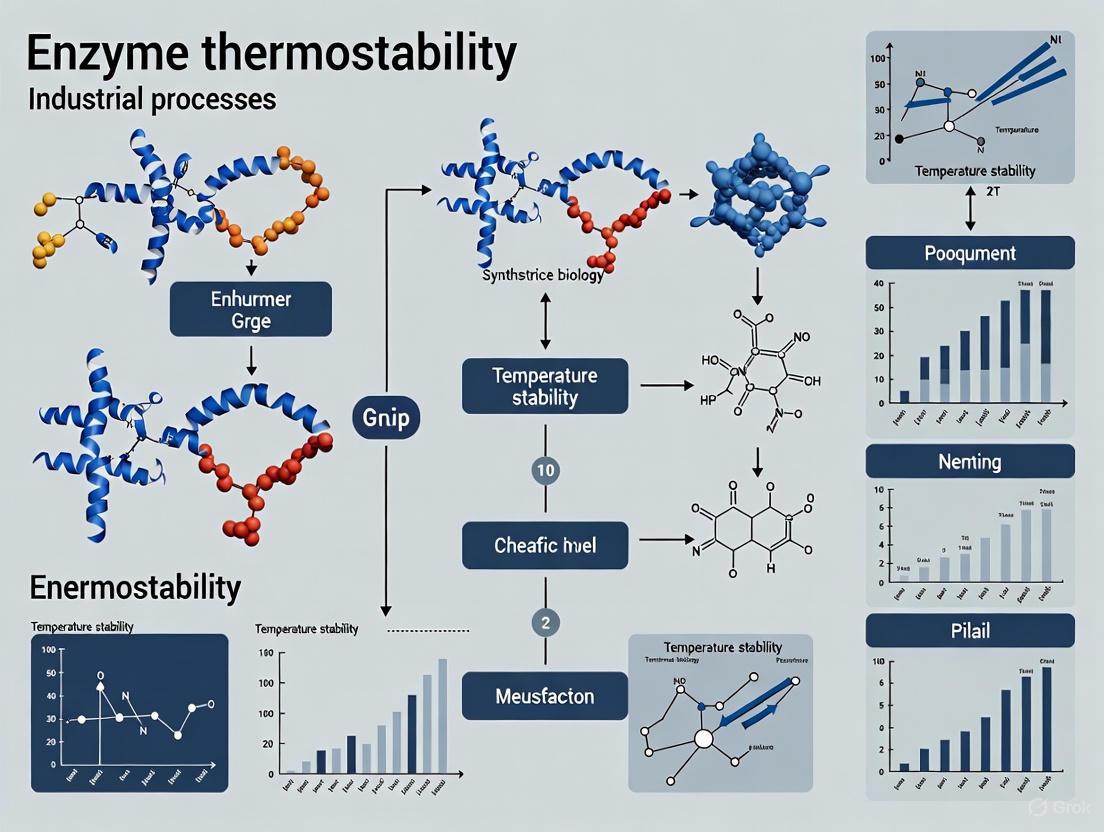
This article provides a comprehensive analysis of contemporary strategies for enhancing enzyme thermostability, a critical factor for efficiency and cost-effectiveness in industrial and pharmaceutical processes.
Engineering Enzyme Thermostability: AI-Driven Strategies for Industrial and Biomedical Applications
Abstract
This article provides a comprehensive analysis of contemporary strategies for enhancing enzyme thermostability, a critical factor for efficiency and cost-effectiveness in industrial and pharmaceutical processes. We explore the foundational principles of protein stability, examine cutting-edge methodologies from machine learning to immobilization, and address key challenges like the stability-activity trade-off. Tailored for researchers and drug development professionals, the content synthesizes current research and validated case studies to offer a roadmap for optimizing biocatalysts, with specific implications for improving the scalability and stability of enzyme-based therapeutics and diagnostics.
The Structural Basis of Enzyme Thermostability: Unraveling Molecular Interactions
For researchers in industrial processes, enzymatic thermostability is not merely an academic concern—it is a critical economic and operational determinant. Industrially relevant enzymes must maintain high activity and structural integrity under harsh conditions, including elevated temperatures, extended reaction times, and the presence of organic solvents [1] [2] [3]. Enhancing thermostability leads to improved catalytic efficiency at higher temperatures, reduced microbial contamination risks, longer functional half-lives, and lower enzyme replenishment costs, thereby making bioprocesses more sustainable and cost-effective [4] [3]. This guide defines the key parameters used to quantify thermostability and provides troubleshooting protocols to support your enzyme engineering efforts.
Thermostability Parameters: A Quantitative FAQ
Q1: What are the fundamental parameters for evaluating enzyme thermostability? Three key parameters form the cornerstone of thermostability assessment: the melting temperature (Tₘ), the optimum temperature (Tₒₚₜ), and the half-life (t₁/₂).
Table 1: Core Parameters for Evaluating Enzyme Thermostability
| Parameter | Definition | Industrial Significance | Common Measurement Techniques |
|---|---|---|---|
| Melting Temperature (Tₘ) | The temperature at which 50% of the enzyme molecules are unfolded [5]. | Indicates global structural rigidity and resistance to irreversible inactivation; a higher Tₘ generally correlates with better operational stability [3] [5]. | Differential Scanning Calorimetry (DSC), circular dichroism (CD) spectroscopy, or fluorimetry-based thermal shift assays. |
| Optimum Temperature (Tₒₚₜ) | The temperature at which the enzyme exhibits its maximum catalytic activity [3]. | Directly impacts process efficiency; a higher Tₒₚₜ allows for faster reaction rates and improved substrate solubility [3]. | Measuring reaction rates across a gradient of temperatures. |
| Half-Life (t₁/₂) | The time required for an enzyme to lose 50% of its initial activity when incubated at a specific temperature [6]. | Crucial for predicting operational longevity and calculating dosage requirements in continuous processes [7] [6]. | Incubating the enzyme at a target temperature and periodically assaying residual activity over time. |
Q2: How do Tₘ and Tₒₚₜ relate to each other? While related, Tₘ and Tₒₚₜ describe distinct properties. The Tₘ is a thermodynamic measure of structural stability, whereas the Tₒₚₜ is a kinetic parameter that defines the peak of the activity-temperature profile.
According to Macromolecular Rate Theory (MMRT), the reaction rate declines above the Tₒₚₜ even in the absence of enzyme denaturation due to a negative change in heat capacity (ΔCp‡) between the enzyme-substrate complex and the enzyme-transition state complex [3]. This means an enzyme's activity can begin to decrease before the protein globally unfolds, highlighting why both parameters must be measured independently.
Q3: Why is half-life (t₁/₂) particularly important for industrial applications? For most industrial processes, kinetic stability, measured by half-life, is more relevant than thermodynamic stability [6]. A longer half-life at the process temperature means the enzyme remains active for the duration of the reaction cycle, reducing the need for frequent re-dosing and lowering operational costs. For instance, a engineered lipase was reported with a half-life at 48°C extended by 13-fold, representing a dramatic improvement in operational economy [6].
Experimental Protocols for Parameter Determination
Protocol 1: Determining Thermal Half-Life (t₁/₂) This protocol outlines a standard method for determining the half-life of an enzyme, which can be adapted for various temperatures.
Table 2: Key Reagents for Thermostability Assays
| Research Reagent / Solution | Function / Explanation |
|---|---|
| Purified Enzyme Solution | The target enzyme in a suitable buffer. Concentration should be consistent across experiments. |
| Appropriate Reaction Buffer | Maintains optimal pH for enzyme activity during incubation and assay. |
| Enzyme Substrate | A specific compound converted by the enzyme to measure activity. |
| Reagents for Activity Assay | Chemicals required to stop the reaction and/or quantify product formation (e.g., colorimetric reagents). |
| Thermal Circulator / Heated Blocks | Provides precise and stable temperature control for incubation. |
- Preparation: Prepare multiple identical aliquots of your purified enzyme solution in a suitable buffer.
- Incubation: Place all aliquots in a thermostatically controlled water bath or heating block set to your target temperature (e.g., 60°C). Record this as time zero.
- Sampling: At predetermined time intervals (e.g., 0, 5, 15, 30, 60, 120 minutes), remove one aliquot and immediately place it on ice to stop thermal inactivation.
- Activity Assay: Measure the residual enzymatic activity in each aliquot using a standard assay under optimal conditions.
- Data Analysis:
- Plot the natural logarithm of residual activity (%) versus time.
- The inactivation rate constant (kinact) is the negative slope of the linear fit of this plot.
- Calculate the half-life using the formula: t₁/₂ = ln(2) / kinact [3].
The workflow for this experimental process is outlined below.
Protocol 2: High-Throughput Screening for Improved Tₘ using Dye-Based Assays This method is useful for quickly screening mutant libraries for improved thermal stability.
- Setup: In a PCR plate or microplate, mix the enzyme variant with a fluorescent dye that binds to hydrophobic regions (e.g., SYPRO Orange).
- Melting Curve: Run a thermal ramping protocol on a real-time PCR instrument, gradually increasing the temperature while monitoring fluorescence.
- Data Analysis: The dye fluoresces intensely as the protein unfolds and exposes its hydrophobic core. The Tₘ is determined as the inflection point of the fluorescence-versus-temperature curve.
Troubleshooting Common Experimental Issues
Problem: Inconsistent Half-Life Measurements Between Replicates
- Potential Cause: Fluctuations in incubation temperature or uneven heating in the water bath.
- Solution: Use a calibrated thermal circulator with high stability. Ensure enzyme aliquots are identical in volume and tube type.
Problem: Discrepancy Between High Tₘ and Poor Operational Stability
- Potential Cause: Tₘ measures global unfolding, but industrial inactivation often begins with local unfolding or aggregation. The enzyme may have a fragile "short board"—a weak domain or flexible region that dictates its overall kinetic stability [5].
- Solution: Complement Tₘ measurements with half-life assays at the process temperature. Employ engineering strategies like B-factor analysis or the iCASE strategy to identify and rigidify these flexible "short board" regions, often located near the active site or in flexible loops [8] [6] [5].
Problem: Low Success Rate in Engineering Thermostable Variants
- Potential Cause: Relying on a single engineering strategy and encountering the stability-activity trade-off.
- Solution: Adopt integrated approaches. Combine rational design (e.g., optimizing hydrophobic core packing [4]), directed evolution, and machine learning models. ML strategies like the iCASE method can analyze conformational dynamics to predict mutations that synergistically improve both stability and activity [8] [2].
The following diagram illustrates the interconnected strategies for engineering thermostable enzymes.
Key Takeaways for the Industrial Scientist
- Measure Contextual Half-Lives: Always determine t₁/₂ at, or near, your intended process temperature for the most relevant data.
- Look Beyond Tₘ: A high Tₘ is desirable, but it does not guarantee long-term kinetic stability under operational conditions.
- Target Flexibility: Identify and rigidify flexible regions, especially near the active site, to dramatically improve kinetic stability without compromising function [6] [5].
- Embrace Hybrid Strategies: Leverage machine learning and computational tools to guide rational design and directed evolution, effectively breaking the stability-activity trade-off [8] [9].
Disulfide Bridges
Troubleshooting Guide: Disulfide Bridges
| Problem | Possible Cause | Recommendations |
|---|---|---|
| Improper bond formation in protein | Reducing environment in cytoplasm inhibits oxidation [10]. | Express protein in oxidative periplasmic space (E. coli) or use eukaryotic systems. In vitro, use glutathione redox buffers to facilitate correct pairing [10]. |
| Protein aggregation or misfolding | Incorrect disulfide pairing or unpaired cysteine thiols [11]. | Use lower expression temperature to facilitate proper folding. Purify under denaturing conditions, then refold in a controlled redox buffer to allow correct bridge formation [10]. |
| Loss of activity under stress | Single disulfide bridge insufficient for extreme stability [12]. | Engineer additional disulfide bridges via site-directed mutagenesis to connect stable secondary structures, avoiding active sites [12]. |
Experimental Protocol: Analyzing and Engineering Disulfide Bridges
This protocol outlines the use of site-directed mutagenesis to introduce a novel disulfide bridge for enhancing thermostability, adapted from enzyme engineering studies [12].
Key Reagents:
- Template plasmid DNA containing the target enzyme gene.
- Mutagenic primers designed to convert chosen residues to cysteine.
- High-fidelity DNA polymerase (e.g., Pfu).
- Restriction enzyme DpnI to digest methylated template DNA [13].
- Dithiothreitol (DTT) or β-mercaptoethanol for reduction control [10].
Procedure:
- In Silico Design:
- Use protein structure analysis software to identify residue pairs (e.g., in loops linking stable secondary elements) suitable for mutation to cysteine. The Cβ atoms should be 4-6 Å apart.
- Design forward and reverse PCR primers encoding the cysteine codon (TGC or TGT).
Site-Directed Mutagenesis:
- Set up a PCR reaction with template DNA, mutagenic primers, and high-fidelity polymerase.
- Digest the PCR product with DpnI to eliminate the parental template [13].
- Transform the mutated plasmid into a suitable E. coli expression host.
Expression and Purification:
- Express the mutant protein and purify it using affinity chromatography.
- Confirm the presence of the disulfide bridge by running purified protein samples on non-reducing SDS-PAGE. A higher mobility shift indicates a more compact, oxidized form.
Functional and Stability Assays:
- Compare the activity of the mutant vs. wild-type enzyme.
- Assess thermostability by measuring the half-life at a elevated temperature or the melting temperature (Tm) using differential scanning calorimetry (DSC).
Disulfide Bridge FAQs
Q1: What is the primary role of a disulfide bridge in enzyme thermostability? A1: Disulfide bridges are covalent bonds that drastically limit the conformational flexibility of the protein backbone, particularly in loops and connecting regions. This reduces the entropy of the unfolded state, making denaturation at high temperatures less favorable and thereby increasing kinetic stability [11] [12].
Q2: Why might my engineered disulfide bridge fail to stabilize the enzyme? A2: This can occur if the bridge introduces steric strain or disrupts critical interactions in the native fold. It can also fail if the local protein dynamics are overly constrained, negatively affecting catalytic activity. Careful in silico modeling is crucial to avoid such pitfalls [11].
Q3: How can I experimentally confirm if my protein contains a disulfide bridge? A3: A common method is SDS-PAGE under non-reducing conditions (without DTT or β-mercaptoethanol). The protein with an intact disulfide bridge will migrate faster than its reduced form. Mass spectrometry under non-reducing conditions can also confirm the presence of the covalent bond [10].
Disulfide Bridge Data Table
| Parameter | Typical Value / Characteristic | Experimental Notes |
|---|---|---|
| Bond Dissociation Energy | ~251 kJ/mol (60 kcal/mol) [10] | Stronger than non-covalent bonds, but weaker than C-C bonds. |
| Bond Length | ~2.0 - 2.1 Å [10] | |
| Common Reductants | DTT, β-mercaptoethanol, TCEP [10] | Use excess reagent to fully reduce bonds. |
| Key Stability Role | Reduces entropy of unfolded state [12] | Most effective when connecting stable secondary structures. |
Salt Bridges
Troubleshooting Guide: Salt Bridges
| Problem | Possible Cause | Recommendations |
|---|---|---|
| Loss of stability at high ionic strength | Shielding of electrostatic interactions by salt ions [14]. | For industrial processes in high-salt buffers, engineer networks of multiple, cooperative salt bridges rather than relying on isolated pairs [15]. |
| pH-dependent stability loss | Protonation/deprotonation of charged residues at non-optimal pH [14] [16]. | Characterize the pKa of bridging residues via NMR titrations [14]. Design the enzyme for the specific pH of its application. |
| Destabilizing mutation | Introduced charged residue is isolated or creates charge repulsion [14]. | Prefer mutations that form multiple, short-range (<4 Å) interactions in the protein's interior. Surface salt bridges contribute less to stability [14]. |
Experimental Protocol: Quantifying Salt Bridge Contribution via Mutagenesis & NMR
This protocol describes how to measure the free energy contribution of a specific salt bridge by disrupting it via mutagenesis and analyzing the effect, as demonstrated in T4 lysozyme studies [14].
Key Reagents:
- Wild-type protein expression system.
- Primers for site-directed mutagenesis (e.g., to mutate Asp to Asn or Lys to Gln).
- NMR buffer (moderate ionic strength to mimic physiological conditions).
- Circular Dichroism (CD) spectrometer or Differential Scanning Calorimetry (DSC) instrument.
Procedure:
- Create Mutants:
- Use site-directed mutagenesis to create single (e.g., Asp70Asn) and double (e.g., Asp70Asn/His31Asn) mutants where the salt bridge is disrupted [14].
Assess Global Stability:
- Purify the wild-type and mutant proteins.
- Determine the melting temperature (Tm) via CD spectroscopy by monitoring the change in ellipticity at 222 nm with increasing temperature.
- Calculate the change in free energy (ΔΔG) using the formula: ΔΔG = ΔTm × ΔS, where ΔS is the change in entropy of unfolding for the wild-type protein [14].
Determine pKa Shifts via NMR:
- Record a series of 1H-NMR spectra of the wild-type and mutant proteins while titrating the pH.
- Monitor the chemical shift of protons near the charged residues (e.g., the C2 proton of a Histidine).
- Plot the chemical shift versus pH to determine the pKa value for the residue.
Calculate Energetic Contribution:
- The difference in pKa (ΔpKa) between the wild-type and mutant protein reflects the energy of the electrostatic interaction.
- Calculate the free energy contribution using the formula: ΔG = -RT ln(Keq), where Keq is derived from the ΔpKa [14]. This often yields a contribution of 3-4 kcal/mol for a buried salt bridge.
Salt Bridge FAQs
Q1: What is the typical distance constraint for an effective salt bridge? A1: The distance between the nitrogen (N) in the cationic group and the oxygen (O) in the anionic group should be less than 4 Å to qualify as a stabilizing salt bridge [14].
Q2: Are salt bridges on the protein surface stabilizing? A2: While common, surface salt bridges often have a smaller net stabilizing effect compared to buried ones. This is because they are highly solvated, and the entropic cost of fixing the side chains can be high. However, they can be stabilizing under specific conditions, and networks of surface bridges can significantly enhance stability [14] [15].
Q3: Which amino acids are most commonly involved in salt bridges? A3: The most common pairs involve the anionic carboxylate groups of Aspartic acid (Asp) or Glutamic acid (Glu) and the cationic ammonium group of Lysine (Lys) or the guanidinium group of Arginine (Arg). Histidine can also participate when protonated [14] [16].
Salt Bridge Data Table
| Parameter | Typical Value / Characteristic | Experimental Notes |
|---|---|---|
| Interaction Type | Non-covalent (ionic + H-bond) [14] | Strength is highly dependent on environment. |
| Distance (N-O) | < 4 Å [14] | Measure in crystal structure or model. |
| Free Energy (ΔG) | ~3-5 kJ/mol for a single, buried bridge [14] | Can be additive in networks. |
| pH Sensitivity | High [14] [16] | Stability is maximal between the pKa values of the two residues. |
Hydrophobic Interactions
Troubleshooting Guide: Hydrophobic Interactions
| Problem | Possible Cause | Recommendations |
|---|---|---|
| Protein aggregation at high T | Exposure of buried hydrophobic cores upon unfolding [17]. | Engineer the surface with charged residues to improve solubility. Enhance core packing by introducing larger hydrophobic residues (Val, Ile, Leu) via mutagenesis [12]. |
| Reduced activity at low T | Over-stabilization of hydrophobic core, restricting conformational flexibility needed for catalysis [18]. | Balance stability and activity by focusing mutations on the protein surface or regions away from the active site. |
| Poor expression/solubility | Exposure of large hydrophobic patches on the protein surface [17]. | Consider fusion tags (e.g., MBP, GST) to improve solubility during expression. |
Experimental Protocol: Enhancing Hydrophobic Core Packing
This protocol involves systematic mutagenesis to fill internal cavities with larger hydrophobic residues, a common strategy in rational protein design for thermostability [18] [12].
Key Reagents:
- High-resolution 3D structure of the target enzyme.
- Site-directed mutagenesis kit.
- Thermostability assay reagents (e.g., substrate for activity assay, dye for DSF).
- Differential Scanning Fluorometry (DSF) instrument or DSC.
Procedure:
- Identify Packing Defects:
- Analyze the protein structure using software like PyMol or Rosetta.
- Look for internal cavities or voids where the side chains are not in close van der Waals contact.
Design Mutations:
- Select positions where a residue (e.g., Ala, Gly, Ser) lines a cavity.
- Design mutants that replace this residue with a larger, hydrophobic one (e.g., Val, Leu, Ile, Phe) to improve packing density without causing steric clashes.
Generate and Express Mutants:
- Generate mutant libraries using site-directed mutagenesis.
- Express and purify the variant proteins.
High-Throughput Thermostability Screening:
- Use Differential Scanning Fluorometry (DSF). Mix the protein with a fluorescent dye (e.g., SYPRO Orange) that binds to hydrophobic patches exposed upon unfolding.
- Ramp the temperature and monitor fluorescence. The midpoint of the unfolding transition is the apparent Tm.
- Select variants with a higher Tm than the wild-type for further characterization.
Validate with Activity Assays:
- Measure the catalytic activity (e.g., kcat, Km) of stabilized variants to ensure that rigidifying the core has not compromised function [18].
Hydrophobic Interactions FAQs
Q1: What is the fundamental driving force behind the hydrophobic effect? A1: The hydrophobic effect is primarily driven by entropy. When hydrophobic molecules are dispersed in water, water molecules form a more ordered, "cage-like" structure around them (low entropy). When hydrophobic groups cluster together, this ordered water is released into the bulk solvent, resulting in a net increase in system entropy, which is thermodynamically favorable [17].
Q2: How does the hydrophobic effect scale with the size of the hydrophobic cluster? A2: The effect changes with scale. For small solutes, hydration free energy scales with volume, and the "classical" entropic driving force dominates. For large hydrophobic surfaces, hydration free energy scales with surface area, and the process can have a significant enthalpic penalty due to the breaking of water hydrogen bonds at the interface [17].
Q3: Can enhancing hydrophobic interactions negatively impact enzyme function? A3: Yes. Over-stabilizing the hydrophobic core can make the enzyme too rigid, reducing the conformational dynamics necessary for substrate binding, catalysis, or product release. This can manifest as increased thermostability but decreased catalytic activity, particularly at lower temperatures [18].
Hydrophobic Interactions Data Table
| Parameter | Typical Value / Characteristic | Experimental Notes |
|---|---|---|
| Driving Force | Entropy gain of released water molecules [17] | A "non-classical" enthalpic contribution can be dominant in some cases [17]. |
| Dependence on Size | Small solutes: volume scaling; Large surfaces: area scaling [17] | Design strategy differs for packing cores vs. stabilizing patches. |
| Key Role in Folding | Major driver of protein folding and stability [17] [12] | Stabilizes the protein core. |
| Impact of Temperature | Strength often increases with temperature (up to a point) [17] |
The Scientist's Toolkit: Essential Research Reagents
| Reagent / Material | Function in Research | Example Use Case |
|---|---|---|
| Dithiothreitol (DTT) | Reduces disulfide bonds to free thiols [10]. | Confirming disulfide bridge presence on non-reducing vs. reducing SDS-PAGE; ensuring complete reduction before labeling. |
| β-Mercaptoethanol | Reducing agent for disulfide bonds [10]. | Maintaining a reducing environment in protein storage buffers. |
| Glutathione (Oxidized/GSSG and Reduced/GSH) | Forms a redox buffer to control oxidation state [10]. | Promoting correct native disulfide bond formation during in vitro refolding. |
| Urea / Guanidine HCl | Chaotropic denaturing agents. | Unfolding proteins for refolding studies or accessing buried residues. |
| SYPRO Orange Dye | Fluorescent dye that binds hydrophobic patches [12]. | High-throughput thermostability screening using DSF. |
| Site-Directed Mutagenesis Kit | Enzymatically creates point mutations in plasmid DNA [18]. | Introducing specific mutations (e.g., Ser to Cys, Ala to Leu) to study interactions. |
| Differential Scanning Calorimeter (DSC) | Directly measures heat capacity changes during protein unfolding. | Providing a rigorous, model-free measurement of protein melting temperature (Tm) and unfolding enthalpy. |
Enzymes, as biological catalysts, are vital for various industrial and pharmaceutical applications, offering efficient and environmentally friendly catalytic capabilities [19]. A major challenge in industrial biotechnology, however, is that many natural enzymes lack the robustness to withstand the high temperatures typical of industrial processes, which often exceed 60°C [19] [1]. When an enzyme's intricate three-dimensional structure unfolds due to heat—a process called denaturation—it loses its catalytic function, much like a house of cards collapsing [20]. Enzyme thermostability is therefore defined as an enzyme's capacity to maintain its functional structure and activity at elevated temperatures [20]. Enhancing this property is not merely an academic exercise; it is critical for improving process efficiency, increasing reaction rates, reducing microbial contamination, and making enzymatic processes more economical and sustainable [19] [21]. This guide explores how an enzyme's inherent structural rigidity, from its primary sequence to its quaternary assembly, forms the foundation of heat resistance and provides practical methodologies for researchers aiming to engineer more stable biocatalysts.
The Structural Basis of Heat Resistance
A protein's ability to resist thermal denaturation is governed by the stability of its four levels of structural organization. The table below summarizes the key structural elements and interactions that contribute to thermostability at each level.
Table 1: Structural Elements Contributing to Enzyme Thermostability
| Structural Level | Definition | Key Stabilizing Interactions & Features | Contribution to Thermostability |
|---|---|---|---|
| Primary Structure | The linear sequence of amino acids [22]. | Amino acid composition (e.g., proline, glycine), uncharged organic molecules, specific and non-specific ion species [19] [21]. | Determines the potential for all higher-order structures and interactions. The sequence is the blueprint for stability. |
| Secondary Structure | Local folding into α-helices and β-sheets, held together by hydrogen bonds between the backbone amides [22]. | Hydrogen bonding within the polypeptide backbone [22]. | Stabilizes local regions. The transition from exchange-incompetent (N-Hclosed) to exchange-competent (N-Hopen) states is key to unfolding [23]. |
| Tertiary Structure | The three-dimensional folding of a single polypeptide chain into a globular structure [22]. | Hydrophobic interactions (core packing), disulfide bonds (covalent), salt bridges (ionic), hydrogen bonds between side chains [22]. | Creates a tightly packed, rigid internal core. Hydrophobic effects and covalent disulfide bonds are particularly strong stabilizers. |
| Quaternary Structure | The association of multiple folded polypeptide chains (subunits) [22]. | Hydrophobic interactions, dipole-dipole interactions, hydrogen bonds, salt bridges, and disulfide bonds between subunits [22]. | Can stabilize individual subunits through intersubunit interactions, creating a more robust complex. |
The relationship between these structural levels and thermal stability is hierarchical. The primary structure dictates the potential for forming all subsequent structures. Stabilizing interactions—such as hydrophobic clustering in the tertiary structure or salt bridges in the quaternary structure—collectively resist the disruptive energy introduced by heat. The following diagram illustrates the hierarchy of protein structure and the specific interactions that confer rigidity at each level.
Diagram 1: Hierarchy of Protein Structure and Stabilizing Interactions. The diagram shows how protein structure builds from primary to quaternary levels, with each level stabilized by a network of non-covalent and covalent interactions that collectively determine thermal stability.
Troubleshooting Guide: Common Issues in Thermostability Engineering
This section addresses specific challenges you might encounter during your research on enzyme thermostability.
FAQ 1: My engineered enzyme has higher thermostability but significantly reduced activity. What went wrong and how can I fix this?
- Problem: This is a classic trade-off in protein engineering, where mutations that increase structural rigidity (e.g., in the protein core) can also reduce the conformational flexibility needed for substrate binding and catalysis [24].
- Solutions:
- Target mutations distant from the active site: Focus engineering efforts on regions that do not directly participate in catalysis or substrate binding to minimize impact on the active site geometry and dynamics [24].
- Employ integrative strategies: Use semi-rational design that combines consensus analysis (looking for conserved residues in a protein family) with B-factor analysis (identifying flexible regions) to introduce mutations that stabilize flexible, non-catalytic loops [19] [24].
- Optimize electrostatic interactions at the surface: Re-arranging surface charge-charge interactions can improve both thermostability and activity by optimizing substrate affinity and surface solubility without over-rigidifying the active site [24].
FAQ 2: My enzyme is stable in a purified buffer but denatures quickly in the industrial reaction mixture. How can I improve its operational stability?
- Problem: The industrial process likely exposes the enzyme to additional stressors beyond heat, such as extreme pH, organic solvents, proteases, or high shear forces.
- Solutions:
- Enzyme Immobilization: Covalently attaching the enzyme to a solid support or entrapping it within a porous matrix can provide a more rigid microenvironment, protect it from denaturation, and allow for easy recovery and reuse [25] [21]. Covalent immobilization, in particular, offers strong enzyme/support interaction with minimal protein leakage [25].
- Use of Soluble Additives: Incorporate stabilizers like glycerol, sugars (e.g., trehalose), polymers, or specific ions into the reaction mixture. These additives can preferentially hydrate the enzyme surface, shifting the equilibrium towards the folded state and protecting against thermal unfolding [21] [20].
- Chemical Modification: Chemically modifying amino acid side chains with polymers like polyethylene glycol (PEG) can shield the enzyme from harsh conditions and increase its thermal resilience [21].
FAQ 3: How can I accurately determine if my engineering strategy has improved thermal stability?
- Problem: Relying on a single method can give an incomplete picture of stability.
- Solutions: Employ a combination of biochemical and biophysical techniques:
- Residual Activity Assay: This is the most functionally relevant method. Incubate the enzyme at elevated temperatures for specific times, then measure the remaining activity. This allows you to calculate the half-life at a given temperature [20].
- Differential Scanning Calorimetry (DSC): This technique directly measures the melting temperature (Tm), the point at which the protein unfolds. An increase in Tm indicates improved global stability [20] [24].
- Circular Dichroism (CD) Spectroscopy: CD monitors changes in the enzyme's secondary structure (α-helices, β-sheets) as temperature increases, providing insight into the structural basis of stabilization [20] [24].
Experimental Protocols for Analyzing and Engineering Thermostability
Protocol 1: Assessing Thermostability via Residual Activity and Melting Temperature (Tm)
Objective: To quantitatively determine the thermal stability of a wild-type enzyme and its engineered variants.
Materials:
- Purified enzyme samples (wild-type and mutants)
- Appropriate assay buffer (e.g., phosphate or Tris buffer)
- Substrate solution
- Thermostatic water baths or PCR cycler
- Spectrophotometer or other activity detection instrument
- Differential Scanning Calorimeter (DSC)
Method:
- Residual Activity Assay: a. Heat Challenge: Aliquot identical volumes of enzyme solution into thin-walled PCR tubes. Incubate them at a range of elevated temperatures (e.g., 50°C, 60°C, 70°C) for a fixed time (e.g., 10, 30, 60 minutes). Include a control kept on ice. b. Activity Measurement: After heat treatment, immediately place the samples on ice. Perform a standard activity assay for each sample under optimal conditions (e.g., 37°C), measuring the initial rate of reaction. c. Data Analysis: Calculate the residual activity as a percentage of the activity of the unheated control. Plot residual activity vs. temperature or time to determine the temperature at which 50% activity is lost or to calculate the half-life at a specific temperature.
- Melting Temperature (Tm) via DSC: a. Sample Preparation: Dialyze the enzyme sample into a suitable buffer and degas to avoid bubbles. b. Scanning: Load the sample and a buffer reference into the DSC cell. Perform a temperature ramp (e.g., from 20°C to 100°C at a rate of 1°C/min). c. Analysis: The DSC instrument will produce a thermogram. The Tm is the temperature at the peak of the endothermic transition, representing the midpoint of the protein unfolding process. A higher Tm for a mutant indicates improved thermostability.
Protocol 2: Rational Design for Introducing Thermostabilizing Mutations
Objective: To use computational tools to identify and design mutations that enhance enzyme rigidity.
Materials:
- High-performance computer
- Protein structure file (PDB format) of your target enzyme
- Software/Tools: Molecular visualization software (PyMOL, Chimera), stability prediction software (FoldX), molecular dynamics (MD) simulation software (GROMACS), and multiple sequence alignment tools (ClustalOmega).
Method:
- Identify Flexible Regions: a. B-factor Analysis: Analyze the PDB file of your enzyme. Regions with high B-factor values (indicating high atomic displacement) are flexible and often good targets for stabilization. b. Molecular Dynamics (MD): Run short, high-temperature MD simulations to observe which parts of the protein structure fluctuate the most.
- Select Mutation Strategy: a. Consensus Design: Perform a multiple sequence alignment of homologous enzymes from thermophilic and mesophilic organisms. Identify amino acid residues that are highly conserved in thermophilic homologs but differ in your enzyme. Substitute your residue with the "thermophilic consensus" residue. b. Stabilizing Interaction Engineering: * Disulfide Bond Design: Identify pairs of residues in flexible regions that could be mutated to cysteines to form a covalent disulfide bridge, reducing loop flexibility. * Salt Bridge & Hydrogen Bond Design: Look for positions where a mutation could introduce a new ionic interaction (salt bridge) or strengthen an existing hydrogen bonding network. * Core Packing: In the hydrophobic core, replace smaller residues (e.g., alanine) with larger ones (e.g., leucine, isoleucine) to improve packing and van der Waals contacts.
- In Silico Screening: a. Use a tool like FoldX to predict the change in folding free energy (ΔΔG) for each proposed mutation. Select mutations with predicted negative ΔΔG values (indicating stabilization). b. Model the mutant structure and check for steric clashes or disruption of the active site.
The following workflow diagram outlines the key steps in a rational protein engineering campaign.
Diagram 2: Rational Design Workflow for Enzyme Thermostabilization. This iterative process begins with structural analysis to identify weak spots, followed by computational design and screening of stabilizing mutations, and concludes with experimental validation.
The Scientist's Toolkit: Key Reagents and Technologies
Table 2: Essential Research Reagents and Solutions for Thermostability Research
| Reagent / Technology | Function / Purpose | Key Considerations |
|---|---|---|
| Site-Directed Mutagenesis Kits | To introduce specific point mutations into the gene encoding the enzyme. | Essential for rational and semi-rational design. High-fidelity polymerases are critical to avoid unwanted secondary mutations. |
| Stabilizing Additives (Glycerol, Trehalose) | To protect enzymes from thermal denaturation in storage and during assays. | Concentrations typically range from 5-20%. Can increase solution viscosity, which may affect activity measurements. |
| Immobilization Supports | To create a more rigid enzyme form with enhanced stability and reusability. | Covalent Supports: e.g., epoxy-activated resins; strong binding, low leakage.Adsorption Supports: e.g., alginate beads; simpler but can lead to enzyme leaching. |
| High-Throughput Screening (HTS) Platforms | To rapidly screen thousands of mutant variants from directed evolution libraries for improved thermostability. | Often use microfluidic culturing and fluorescent detection for sensitivity and efficiency with micro volumes [19]. |
| Differential Scanning Calorimeter (DSC) | To directly measure the thermal denaturation profile and determine the melting temperature (Tm) of an enzyme. | Requires highly purified, concentrated protein samples. Provides thermodynamic parameters of unfolding. |
| Circular Dichroism (CD) Spectrometer | To monitor changes in the secondary and tertiary structure of an enzyme as a function of temperature. | Useful for confirming that a mutation does not disrupt the native fold and for tracking unfolding transitions. |
Thermozymes, the enzymes produced by thermophilic and hyperthermophilic microorganisms, possess inherent structural adaptations that allow them to remain stable and catalytically active at elevated temperatures (60-125°C) [26] [27]. For researchers in industrial processes and drug development, understanding these natural blueprints is crucial for engineering more robust biocatalysts. This technical support center provides a foundational guide to the structural principles of thermozymes and practical guidance for troubleshooting common experimental challenges in thermostability research.
Frequently Asked Questions (FAQs)
1. What fundamental properties distinguish a thermozyme from its mesophilic counterpart? Thermozymes are characterized by both thermodynamic stability and kinetic stability [26]. Thermodynamic stability is defined by a higher free energy of stabilization (ΔGstab), typically 5-20 kcal/mol higher than mesophilic proteins, and a higher melting temperature (Tm) [26]. Kinetic stability is expressed as a longer half-life (t~1/2~) at a given temperature, reflecting a higher energy barrier to unfolding [26].
2. Are there unique amino acids or structural motifs responsible for extreme thermostability? No. Research has identified no new amino acids or unique covalent modifications that explain thermostability [26]. Instead, enhanced stability is achieved through a combination of subtle structural optimizations that amplify canonical forces present in all proteins, such as hydrogen bonds, ion-pair interactions, and hydrophobic interactions [26].
3. What is the "stability-activity trade-off," and how can it be overcome in enzyme engineering? The stability-activity trade-off refers to the phenomenon where mutations that increase an enzyme's thermal stability often come at the cost of reducing its catalytic activity [8]. Advanced strategies like the machine learning-based iCASE (isothermal compressibility-assisted dynamic squeezing index perturbation engineering) aim to simultaneously optimize both properties by constructing hierarchical modular networks and predicting mutations that enhance stability without compromising function [8].
4. Beyond flexible regions, what other areas of a protein should be targeted for stability engineering? While targeting highly flexible regions is a common strategy, recent studies show that rigid "sensitive residues" in short-loop regions can also be critical [28]. Mutating these residues to hydrophobic amino acids with large side chains (e.g., Tyr, Trp, Phe) can fill internal cavities and enhance hydrophobic interactions, leading to significant improvements in thermal stability [28].
Troubleshooting Common Experimental Issues
The following table outlines common problems, their potential causes, and recommended solutions in thermostability research.
| Problem | Potential Cause | Solution |
|---|---|---|
| Rapid loss of enzyme activity at high temperature | Low kinetic stability; insufficient structural rigidity [26]. | - Engineer additional hydrogen bonds or ion pairs into the structure [26].- Implement a cavity-filling strategy in short-loop regions [28]. |
| Successful thermostability mutation leads to low catalytic activity | Stability-activity trade-off; mutation may have overly rigidified the active site or disrupted catalytic dynamics [8]. | - Use multi-dimensional strategies like iCASE that consider dynamics to co-evolve both traits [8].- Avoid mutations in residues critical for substrate binding or catalysis. |
| Difficulty identifying key mutation sites for stability enhancement | Reliance on a single strategy (e.g., B-factor alone) may overlook critical rigid sites or long-range interactions [28]. | - Combine B-factor analysis for flexible regions with short-loop engineering for rigid cavities [28].- Employ machine learning models that account for epistasis and long-range effects [8]. |
| Introducing a disulfide bond does not improve stability | The disulfide bond may be introducing conformational strain or may not be in a geometrically favorable position [26]. | - Use structural analysis tools to model the disulfide bond geometry and minimize strain prior to experimental validation. |
Core Structural Features of Thermozymes and Analysis Protocols
The enhanced stability of thermozymes is attributed to a consortium of reinforcing structural factors. The table below summarizes these key features and how to investigate them.
| Structural Feature | Role in Thermostability | Experimental Analysis Method |
|---|---|---|
| Hydrogen Bonds | Increases the number of H-bonds, particularly buried ones, contributes a net stabilization energy (~0.6 kcal/mol per bond) [26]. | Analyze crystal structures; use Fourier Transform Infrared (FTIR) spectroscopy to assess bonding patterns [26]. |
| Ion Pairs (Salt Bridges) | Optimized networks of electrostatic interactions provide a "synergistic stability effect," especially on the protein surface [26]. | Determine high-resolution 3D structures; perform computational analysis of surface electrostatics. |
| Hydrophobic Interactions | Stronger hydrophobic interactions and higher packing efficiency in the protein core minimize structural voids and reduce the entropy of the unfolded state [26] [28]. | Use site-directed mutagenesis with large, hydrophobic residues to fill cavities; measure cavity volume with structural analysis software [28]. |
| Conformational Rigidity | A more rigid structure protects against thermal unfolding, as evidenced by reduced hydrogen-deuterium exchange rates and lower susceptibility to proteolysis [26]. | Use Hydrogen-Deuterium Exchange Mass Spectrometry (HDX-MS); perform molecular dynamics simulations to calculate Root-Mean-Square Fluctuation (RMSF) [28]. |
Experimental Protocol: Short-Loop Engineering for Enhanced Thermostability
This protocol outlines a standard procedure for identifying and mutating "sensitive residues" in short loops to improve enzyme stability [28].
1. Identify Short-Loop Regions
- Procedure: Analyze your protein's structure to identify short loops (typically 3-7 residues). These regions often connect secondary structural elements like α-helices and β-sheets.
2. Locate Sensitive Residues with Cavities
- Procedure:
- Perform virtual saturation mutagenesis on all residues within the short-loop region using a tool like FoldX.
- Calculate the change in folding free energy (ΔΔG) for each mutant.
- Identify "sensitive residues" where multiple mutations (especially to hydrophobic residues) result in a negative ΔΔG (indicating stabilized folding), and where the wild-type residue creates a noticeable cavity.
- Use a visualization plugin to inspect the cavity volume.
3. Construct and Validate Mutants
- Procedure:
- Create a saturation mutagenesis library at the identified sensitive residue.
- Express and purify the mutant enzymes.
- Measure thermal stability (e.g., half-life at elevated temperature, Tm) and compare it to the wild-type enzyme. Mutations to residues like Glu, Asp, Tyr, Trp, and Phe often yield the most significant improvements [28].
4. Conduct Molecular Dynamics (MD) Simulations
- Procedure: Run MD simulations for the wild-type and top mutant variants.
- Analyze Root-Mean-Square Fluctuation (RMSF) to confirm the mutated site was initially rigid (low B-factor) and to check if the mutation increases the rigidity of other structural domains.
- Inspect the model for new stabilizing interactions, such as hydrogen bonds with adjacent residues or enhanced hydrophobic clustering.
The Scientist's Toolkit: Essential Research Reagents and Solutions
| Reagent / Solution | Function in Thermostability Research |
|---|---|
| FoldX Software Suite | A computational tool for the rapid evaluation of the effect of mutations on protein stability, folding, and dynamics. It is used for virtual saturation screening based on un/folding free energy (ΔΔG) calculations [28]. |
| Rosetta 3.13 | A comprehensive software suite for macromolecular modeling. It is used for predicting changes in free energy (ΔΔG) upon mutations and for protein design [8]. |
| Molecular Dynamics (MD) Simulation Software (e.g., GROMACS) | Used to simulate the physical movements of atoms and molecules over time. It provides metrics like RMSD and RMSF to assess protein flexibility, rigidity, and the structural impact of mutations [28]. |
| iCASE Strategy Framework | A machine learning-based framework that uses isothermal compressibility and a dynamic squeezing index (DSI) to guide the selection of mutation sites for the simultaneous enhancement of enzyme stability and activity [8]. |
Workflow: Analyzing Thermostability Features
This diagram illustrates the logical workflow for analyzing a protein's structure to identify and validate key features that contribute to thermostability.
Workflow: Machine Learning-Guided Enzyme Engineering
This diagram outlines the modern machine learning-based strategy (iCASE) for engineering enzymes with enhanced thermostability and activity, addressing the stability-activity trade-off.
Advanced Engineering and Stabilization Techniques for Robust Biocatalysts
Frequently Asked Questions (FAQs)
Q1: What is the fundamental "stability-activity trade-off" challenge in enzyme engineering, and how does the iCASE strategy address it? A1: The stability-activity trade-off refers to the common observation that mutations increasing an enzyme's thermal stability often reduce its catalytic activity, and vice versa. The iCASE (isothermal compressibility-assisted dynamic squeezing index perturbation engineering) strategy addresses this by constructing hierarchical modular networks for enzymes of varying complexity. It uses a dynamic response predictive model with structure-based supervised machine learning to predict enzyme function and fitness, allowing researchers to identify mutations that synergistically improve both properties rather than sacrificing one for the other [8].
Q2: How does the concept of a "fitness landscape" help in understanding enzyme evolution, and what is the limitation of this metaphor? A2: A fitness landscape is a visualization of the relationship between genotypes (or protein sequences) and reproductive success (or enzyme fitness). In this metaphor, height represents fitness, and distance represents genetic dissimilarity. Evolution is visualized as a population climbing hills toward fitness peaks [29]. However, a significant limitation is that real biological landscapes are extremely high-dimensional, while humans can only easily visualize three dimensions. This can be misleading, as high-dimensional spaces may have connected networks of high-fitness genotypes rather than isolated peaks, changing how we think about evolutionary paths [30].
Q3: What is the critical difference between a "fitness landscape" and a "fitness seascape," and why does this matter for industrial enzyme design? A3: A fitness landscape is typically considered a static representation, whereas a fitness seascape models the adaptive topography as dynamic, with peaks and valleys that shift over time or across changing environments [29]. This is critical for industrial enzyme design because enzymes must often function under fluctuating industrial process conditions (e.g., variable temperature, pH, or substrate concentrations). Designing enzymes that are robust to these changes requires considering a dynamic, non-stationary selection environment [29].
Q4: Our team has limited high-throughput screening capacity. Which machine learning approach is most suitable for leveraging smaller, high-quality datasets? A4: For smaller, high-quality datasets, traditional machine learning models like ridge regression are often the most suitable choice. These models, including linear models, Bayesian ridge, and support vector regression, are widely used due to their high interpretability and lower computational training costs. They have been successfully applied to predict enzyme thermostability, even with emerging datasets, making them a practical starting point before investing in large-scale experimental data generation [31].
Troubleshooting Guides
Issue: Poor Performance of ML Models in Predicting Enzyme Thermostability
Problem: Your machine learning model is failing to accurately predict stabilizing mutations, leading to poor experimental success rates.
| Potential Cause | Diagnostic Steps | Solution |
|---|---|---|
| Insufficient or Low-Quality Data | Check dataset size and provenance. Is it from predictive models or curated experiments? [31] | Prioritize high-quality, manually curated data from sources like ThermoMutDB [31] or BRENDA [31]. Augment with targeted high-throughput experiments if possible [32]. |
| Inadequate Feature Representation | Evaluate if features capture relevant structural, evolutionary, or dynamic properties. | Incorporate features beyond simple sequence, such as isothermal compressibility (βT) and Dynamic Squeezing Index (DSI) as used in iCASE, which reflect conformational dynamics [8]. |
| Ignoring Epistatic Interactions | Review if the model treats mutations as purely additive. | Implement models like EVmutation [8] or DeepSequence VAE [8] that account for higher-order genetic interactions (epistasis) between residues. |
Issue: Navigating Rugged Fitness Landscapes During Directed Evolution
Problem: Your directed evolution campaign is stalling at local fitness optima, unable to find further improvements.
| Potential Cause | Diagnostic Steps | Solution |
|---|---|---|
| Rugged Landscape with Deep Valleys | Analyze the fitness of single-step mutants around your current variant. If many are deleterious, the landscape is rugged. | Adopt a semi-rational design. Use the iCASE strategy to identify key dynamic regions (high βT fluctuation) and target them with smart libraries, reducing the search space [8]. |
| Lack of Neutral Diversity | Sequence evolved populations; low diversity suggests a lack of neutral paths. | Explore neutral networks by selecting for stability under non-permissive conditions (e.g., high temperature) while maintaining activity, allowing the population to traverse neutral ridges [30]. |
| Static Library Design | Libraries are based only on the starting sequence. | Rebuild the model iteratively. Use a DBTL (Design-Build-Test-Learn) cycle where data from each round is used to retrain the ML model and design smarter subsequent libraries [32]. |
Experimental Protocol: Implementing the iCASE Strategy for a Monomeric Enzyme
This protocol outlines the steps to apply the iCASE strategy, as demonstrated for Protein-Glutaminase (PG) [8].
Objective: To improve the thermostability and activity of a monomeric enzyme using the machine learning-guided iCASE strategy.
Materials:
- Purified wild-type enzyme and its 3D structure (from crystallography or homology modeling).
- Molecular dynamics (MD) simulation software (e.g., GROMACS).
- Molecular docking software (e.g., AutoDock).
- Computational tools for free energy calculation (e.g., Rosetta).
- Standard site-directed mutagenesis, protein expression, and purification kits.
- Equipment for activity assays (e.g., spectrophotometer) and thermostability measurement (e.g., differential scanning calorimeter, DSF).
Step-by-Step Procedure:
Identify High-Fluctuation Regions:
- Perform MD simulations at the target temperature to analyze conformational dynamics.
- Calculate the isothermal compressibility (βT) across the enzyme structure.
- Identify secondary structures or loops with high βT fluctuations (e.g., α-helices 1 & 2, loops 2 & 6 for PG). These are potential "hot spots" for engineering [8].
Select Mutation Sites with the Dynamic Squeezing Index (DSI):
- Calculate the DSI, an indicator coupled with the active center, for residues in the high-fluctuation regions.
- Select candidate residues with a DSI > 0.8 (representing the top 20% of residues) for further analysis [8].
In Silico Screening of Mutations:
- For each candidate residue, model all 19 possible amino acid substitutions.
- Predict the change in folding free energy (ΔΔG) for each mutant using a tool like Rosetta.
- Screen and select mutants that are predicted to have neutral or stabilizing ΔΔG values [8].
Build, Test, and Learn:
- Build: Create the top-predicted single-point mutants (e.g., 10-15 variants) using site-directed mutagenesis.
- Test: Express, purify, and characterize the mutants. Measure specific activity and thermal stability (e.g., melting temperature, T_m).
- Learn: Combine beneficial single-point mutations to create combinatorial mutants. Re-test these to identify variants with synergistic improvements [8].
Quantitative Data from iCASE Application
The table below summarizes the experimental results from applying the iCASE strategy to different enzymes, demonstrating its effectiveness [8].
| Enzyme (Structure) | Key Mutations | Effect on Specific Activity | Effect on Thermostability (ΔT_m) |
|---|---|---|---|
| Protein-Glutaminase (Monomeric) | H47L | 1.42-fold increase | Slight increase |
| M49L | 1.82-fold increase | Slight increase | |
| K48R/M49E (double) | 1.74-fold increase | Nearly unchanged | |
| Xylanase (TIM Barrel) | R77F/E145M/T284R (triple) | 3.39-fold increase | +2.4 °C |
| Glutamate Decarboxylase (Hexameric) | Data not fully detailed in source | Improved | Improved |
| PET Hydrolase PES-H1 (α/β) | Data not fully detailed in source | Synergistically improved | Synergistically improved |
Key Signaling Pathways and Workflows
ML-Guided Enzyme Engineering Workflow
The following diagram illustrates the integrated machine learning and experimental workflow for enzyme engineering, synthesizing concepts from the iCASE strategy [8] and cell-free ML platforms [32].
Fitness Landscape Visualization Concept
This diagram conceptualizes the evolutionary process on a dynamic fitness landscape (seascape), illustrating how a population of enzyme variants adapts over time.
The Scientist's Toolkit: Research Reagent Solutions
This table lists key computational and experimental resources for implementing ML-guided enzyme engineering strategies.
| Tool / Reagent | Type | Function in ML-Guided Engineering |
|---|---|---|
| Rosetta [8] | Software Suite | Predicts changes in folding free energy (ΔΔG) upon mutation for in silico screening of mutant stability. |
| ThermoMutDB [31] | Database | Provides manually curated data on the thermodynamic effects of mutations (e.g., ΔT_m, ΔΔG) for training or validating ML models. |
| BRENDA [31] | Database | A comprehensive enzyme information resource containing functional data, including optimal temperatures, which can be used as features for ML. |
| Cell-Free Gene Expression (CFE) System [32] | Experimental Platform | Enables rapid, high-throughput synthesis and testing of thousands of protein variants without cloning, accelerating the "Build-Test" cycle. |
| Dynamic Squeezing Index (DSI) [8] | Computational Metric | An indicator used in the iCASE strategy to identify residues whose mutation is likely to improve activity, based on dynamic properties near the active site. |
| Ridge Regression Model [32] | Machine Learning Model | A supervised learning algorithm effective for building predictive models of enzyme fitness from sequence-function data, especially with limited datasets. |
| Saturation Mutagenesis | Molecular Biology Technique | Creates libraries where a specific residue is mutated to all other amino acids, essential for generating data to train ML models. |
Platform Selection Guide
The table below compares the core characteristics of modern continuous directed evolution platforms to help you select the appropriate system for your project.
| Platform | Host Organisms | Unit of Selection | Key Feature | Best for Evolving |
|---|---|---|---|---|
| OrthoRep [33] | Yeast (Kluyveromyces lactis) | Cell | Error-prone DNA polymerase replicates a linear plasmid encoding the GOI, fully orthogonal to genomic replication. | GOI functions that couple to cellular fitness and require very long, continuous evolution campaigns. |
| PACE [33] | E. coli (as reagent), with extensions to mammalian cells | Virus (Bacteriophage) | Viral fitness linked to GOI function; host cells are continuously supplied and are not the replicating unit. | Biomolecular functions that can be directly linked to viral infectivity and propagation. |
| MutaT7 [33] | E. coli, Yeast, Higher Eukaryotes | Cell | T7 RNA polymerase fused to a nucleobase deaminase specifically mutates genes under a T7 promoter via transcription-coupled mutagenesis. | GOI functions in diverse cellular hosts where transient, targeted hypermutation is desired. |
| EvolvR [33] | E. coli, Yeast, Higher Eukaryotes | Cell | Nickase Cas9 (nCas9) fused to an error-prone DNAP introduces mutations at a specific genomic locus defined by a guide RNA. | Introducing diverse mutations within a specific, short genomic window with high targeting flexibility. |
Frequently Asked Questions (FAQs)
General Platform Questions
Q1: What is the main advantage of these continuous in vivo evolution systems over classical directed evolution? Classical directed evolution relies on manual, staged rounds of in vitro diversification, transformation, and screening, which limits the depth and scale of evolutionary search. In vivo continuous evolution systems automate this cycle by running diversification, selection, and amplification perpetually inside replicating cells. This enables extensive exploration of sequence space, allowing you to traverse long mutational pathways and run many experiments in parallel [33].
Q2: My protein of interest requires a eukaryotic host for proper folding and function. Which platform should I consider? For eukaryotic expression, OrthoRep is a robust choice as it is specifically designed for and functions in yeast. Alternatively, the MutaT7 system has also been successfully implemented in yeast and higher eukaryotes, providing more flexibility [33].
Q3: How do I choose between a cellular system (like OrthoRep) and a viral system (like PACE)? The choice hinges on the unit of selection. If the function you want to evolve can be linked to cellular survival or growth, a cellular system like OrthoRep, MutaT7, or EvolvR is required. If the function can be linked to viral fitness (e.g., the production of infectious viral particles), then a viral system like PACE is applicable. In PACE, the host cells act as disposable reagents, which allows for very high mutation rates targeted exclusively at the viral genome [33].
Experimental Design & Setup
Q4: What are the key considerations when choosing a starting gene for evolution? Ideally, your starting gene sequence should have at least detectable basal activity for the function you wish to evolve. A significant advantage of these platforms is the ability to leverage experimental scale. Consider starting evolution from multiple different sequences (e.g., natural orthologs) in separate experiments to explore distinct evolutionary paths. Similarly, running many independent replicate experiments from a single starting point can help overcome clonal interference and allow the discovery of beneficial mutations that have weak effects early on [33].
Q5: Can these systems be used to evolve entirely new functions from a scaffold with no initial activity? While it is ideal to start with some detectable activity, the massive diversity that can be accumulated through in vivo hypermutation can sometimes overcome a complete lack of initial function. However, this is a high-risk strategy, and demonstrating even weak starting activity is strongly recommended [33].
Troubleshooting Guides
Low or No Evolution Observed
Problem: The population shows no improvement in the desired function after prolonged culturing.
| Possible Cause | Suggested Solution |
|---|---|
| Insufficient Mutational Pressure | Verify the hypermutation system is active. For OrthoRep, ensure the error-prone DNAP is functioning. For MutaT7/EvolvR, confirm expression of the hypermutator construct and, for EvolvR, the gRNA. |
| Selection Pressure is Too Strong | If the starting protein has low activity, a very strong selection will kill all cells before beneficial mutations can arise. Weaken the selection pressure (e.g., reduce inhibitor concentration, use a poorer nutrient source) to allow survival of weak clones. |
| Selection Not Properly Linked to GOI Function | Revisit the design of your selection circuit. The output that confers fitness (e.g., survival, viral propagation) must be tightly and exclusively coupled to the activity of your GOI. |
| GOI is Toxic to the Host | Test for toxicity by expressing the GOI without selection. If toxic, consider using a weaker promoter, an inducible expression system, or a different host strain. |
Unintended Mutations and Genetic Instability
Problem: The host genome is accumulating mutations, or the GOI is being inactivated.
| Possible Cause | Suggested Solution |
|---|---|
| Lack of Orthogonality (EvolvR/MutaT7) | The hypermutation machinery may be acting on off-target sites. For EvolvR, design new gRNAs with higher specificity and check for off-target nicking sites in the genome. For MutaT7, ensure the T7 promoter is only present upstream of the GOI. |
| Genomic Error Threshold Exceeded | This is less common in cellular systems but can occur if the background mutation rate is too high. Use a lower-activity or inducible hypermutator to reduce the global mutation load [33]. |
| Essential Gene Inactivated | If a specific essential gene is frequently lost, it may be linked to your GOI. Ensure the GOI and the selection circuit are designed to minimize disruption of essential genomic regions. |
Technical and Operational Issues
Problem: The experiment is not sustainable for long-term continuous evolution.
| Possible Cause | Suggested Solution |
|---|---|
| Host Cell Viability Declines | This can be due to hypermutator burden or cumulative mild toxicity. For OrthoRep, this is minimized as hypermutation is targeted to the plasmid. For other systems, periodically restart the evolution with a fresh, frozen stock of a promising intermediate to "reset" the host genome. |
| Contamination | Implement strict sterile technique. Use chemostats or other continuous culture devices with built-in safeguards against contamination. |
| Mutation Rate Too High | An excessively high mutation rate can lead to "error catastrophe," where too many deleterious mutations accumulate. Titrate the expression or activity of your hypermutator to find a balance that allows diversity generation without population collapse [33]. |
Key Experimental Protocols
General Workflow for a Continuous Evolution Campaign
The following diagram outlines the core steps for setting up and running a continuous evolution experiment.
Protocol 1: Establishing an OrthoRep System in Yeast
Objective: Stably integrate your Gene of Interest (GOI) into the orthogonal linear plasmid and begin continuous evolution in yeast.
- Clone GOI: Subclone your GOI into the expression vector derived from the natural linear plasmid of K. lactis.
- Co-transformation: Co-transform the yeast host strain (which already harbors the orthogonal DNAP and the linear plasmid scaffold) with your GOI-containing plasmid and a selection marker.
- Selection & Validation: Select for transformants and validate the presence and expression of your GOI on the orthogonal plasmid.
- Couple to Fitness: Implement your selection strategy (e.g., complementation of an essential gene, resistance to an inhibitor) such that cell survival and growth depend on your GOI's function.
- Initiate Evolution: Inoculate a culture medium containing your selection agent. Maintain the culture in continuous log-phase growth via serial passaging or using a chemostat.
- Monitoring: Regularly sample the population to monitor fitness (e.g., growth rate) and enzyme activity. Sequence the GOI from population samples or individual clones to track evolutionary trajectories [33].
Protocol 2: Implementing a MutaT7 System in E. coli
Objective: Use transcription-coupled mutagenesis to evolve a GOI in E. coli.
- Promoter Engineering: Place your GOI under the control of a T7 promoter in an E. coli expression vector.
- Hypermutator Expression: Introduce a plasmid constitutively expressing the T7 RNA polymerase fused to a nucleobase deaminase (e.g., the MutaT7 construct).
- Selection Coupling: Design and implement a genetic circuit that links the desired GOI activity to a selectable cellular outcome (e.g., antibiotic resistance, essential gene expression).
- Induce Mutagenesis: Grow the transformed cells under selective conditions. The mere transcription of your GOI by the MutaT7 fusion protein will lead to its continuous diversification.
- Harvest and Analyze: As with OrthoRep, continuously culture under selection and periodically sample the population to isolate and characterize improved variants [33].
The Scientist's Toolkit: Essential Research Reagents
This table lists key reagents and their functions for setting up directed evolution 2.0 experiments.
| Reagent / Tool | Function / Explanation |
|---|---|
| Error-Prone Orthogonal DNAP (OrthoRep) | A special DNA polymerase that replicates only the target linear plasmid with high error rates, enabling durable and targeted hypermutation [33]. |
| T7RNAP-Deaminase Fusion (MutaT7) | The engine of the MutaT7 system. T7RNAP targets the GOI, and the fused deaminase (e.g., APOBEC1) introduces mutations during transcription [33]. |
| nCas9-Error-Prone DNAP Fusion (EvolvR) | Nickase Cas9 (nCas9) targets a specific genomic locus, and the fused error-prone DNAP introduces localized mutations during nick repair [33]. |
| Selection Circuit | A genetically encoded system that links the desired GOI activity to cell survival (e.g., antibiotic resistance gene expression) or viral fitness (e.g., production of essential phage genes) [33]. |
| Chemostat / Turbidostat | Bioreactors for continuous culture, allowing for precise control of growth conditions and selection pressure over long periods, essential for sustained evolution. |
| High-Throughput Sequencing | Critical for monitoring the evolutionary process by tracking mutation accumulation and population dynamics in the GOI and, if necessary, the host genome. |
Within industrial processes, enzymes are powerful biocatalysts whose widespread application is often limited by challenges in stability, reusability, and efficiency under operational conditions. Enzyme immobilization addresses these challenges by fixing enzymes onto a solid support, facilitating their recovery and reuse while frequently enhancing their stability [34]. For researchers focused on improving enzyme thermostability—a critical property for processes running at elevated temperatures—selecting the appropriate immobilization method is paramount. This technical support guide focuses on three primary methods—Covalent Binding, Adsorption, and Encapsulation/Entrapment—providing a structured, practical resource to help scientists troubleshoot experiments and design robust, reusable biocatalytic systems for industrial application.
FAQs & Troubleshooting Guides
Q1: My covalently immobilized enzyme shows a significant loss in activity. What could be the cause?
A drastic loss in activity after covalent binding often suggests that the reaction conditions have altered the enzyme's conformation or modified critical amino acid residues in its active site.
- Potential Cause 1: Reaction conditions are too harsh, denaturing the enzyme.
- Troubleshooting: Ensure the pH and temperature during the immobilization process are within the enzyme's stability range. Avoid extreme pH levels, especially when working with carbodiimide chemistry or Schiff base formations [34].
- Potential Cause 2: The binding chemistry involves functional groups essential for catalysis.
- Troubleshooting: Identify the amino acids in your enzyme's active site. If possible, choose a support material and coupling chemistry that targets functional groups distant from the active site to preserve catalytic function [34].
- Potential Cause 3: The support material creates diffusion limitations for the substrate.
- Troubleshooting: Use a support with a wider pore size to reduce mass transfer resistance. Experiment with different support geometries or increase agitation during the catalytic reaction.
Q2: My adsorbed enzyme is leaching from the support during washing or operation. How can I improve binding strength?
Leaching occurs when the physical forces (ionic, hydrophobic, affinity) binding the enzyme to the support are too weak for the operational environment.
- Potential Cause 1: The pH of the solution disrupts ionic or affinity interactions.
- Troubleshooting: Perform the immobilization at a pH where the enzyme and support carry opposite charges. Ensure the operational pH buffer does not shift the conditions away from this optimal range.
- Potential Cause 2: The ionic strength of the buffer is too high, shielding charged groups.
- Troubleshooting: Use a lower concentration of salts in the immobilization and reaction buffers to strengthen electrostatic interactions.
- Potential Cause 3: The binding capacity of the support is saturated.
- Troubleshooting: Reduce the enzyme-to-support ratio to avoid multilayer adsorption, where the outer layers are more weakly bound and prone to leaching.
Q3: My encapsulated enzyme has very low activity, even though it's not leaching. What is wrong?
Low activity in encapsulation is typically a mass transfer issue, where the substrate cannot easily reach the enzyme or the product cannot diffuse out.
- Potential Cause 1: The polymer matrix is too dense, creating severe diffusion limitations.
- Troubleshooting: Optimize the concentration of the polymer used to form the matrix (e.g., in electrospinning). A less concentrated polymer solution may produce a more porous fiber network [35].
- Potential Cause 2: The pore size of the encapsulation material is too small for the substrate.
- Troubleshooting: If working with a large substrate, consider alternative encapsulation materials with inherent larger pores or switch to an entrapment method within a macroscopic hydrogel. For electrospun fibers, parameters like polymer type and solvent system can be adjusted to influence porosity [35].
- Potential Cause 3: The enzyme is deactivating during the encapsulation process.
- Troubleshooting: For methods like electrospinning, ensure the solvent used to dissolve the polymer is compatible with the enzyme. Use water-soluble or benign solvents, or employ emulsion electrospinning to protect the enzyme from organic solvents [35].
Q4: I need to choose an immobilization method for a high-temperature industrial process. Which method is most suitable for thermostability?
While all methods can benefit from using inherently thermostable enzymes, some immobilization techniques provide superior stabilization.
- Recommendation 1: For maximal stability and prevention of leaching, covalent binding is often the best choice. The strong, covalent linkages formed between the enzyme and the support can rigidify the enzyme's structure, reducing unfolding at high temperatures [34]. This method is less prone to enzyme desorption under changing reaction conditions.
- Recommendation 2: Encapsulation/Entrapment within a robust matrix can also significantly enhance stability. The confined environment can protect the enzyme from denaturation and aggregation. For instance, enzymes encapsulated in electrospun nanofibers have demonstrated high activity retention over extended periods (e.g., 90% after 40 days for laccase) [35].
- General Strategy: Combine method selection with enzyme engineering. Use rational design or machine learning strategies, like the iCASE approach, to first improve the innate thermostability of your enzyme, then immobilize it for reusability [8].
Comparative Data on Immobilization Methods
The following table summarizes the key characteristics, advantages, and disadvantages of the three immobilization methods to aid in selection and troubleshooting.
Table 1: Quantitative Comparison of Enzyme Immobilization Methods
| Feature | Covalent Binding | Adsorption | Encapsulation/Entrapment |
|---|---|---|---|
| Binding Force | Strong, Covalent bonds | Weak, Physical (Ionic, Hydrophobic, Affinity) | Physical confinement within a matrix |
| Stability | Very High | Low to Moderate | High |
| Risk of Leaching | Very Low | High | Very Low |
| Activity Retention | Variable (can be low due to conformational changes) | Typically High | Variable (can be low due to diffusion limits) |
| Support Material Examples | Chitosan, Agarose, Polymers with -NH₂ or -COOH groups | Ion-exchange resins, Porous carbon, Polymeric resins | Alginate, Polyacrylamide, Electrospun nanofibers (e.g., PMMA, PLA) [35] |
| Reusability | Excellent | Poor to Fair | Good to Excellent |
| Best for Industrial Processes Involving | Continuous processes, high temperatures, organic solvents | Short-batch processes, non-aqueous media, where cost is primary | Processes requiring high stability and minimal leakage, biosensors, therapeutic applications [35] |
Detailed Experimental Protocols
Protocol 1: Covalent Immobilization via Carbodiimide Chemistry
This protocol describes a common method for covalently immobilizing enzymes onto a support containing carboxyl groups (e.g., chitosan).
- Principle: Carbodiimide (e.g., EDC) activates carboxyl groups on the support to form an active O-acylisourea intermediate. This intermediate then reacts with primary amine groups (-NH₂) on the enzyme's surface (e.g., from lysine residues) to form a stable amide bond [34].
- Materials:
- Support material with carboxyl groups
- Enzyme of interest
- Coupling buffer (e.g., 0.1 M MES, pH 4.5-5.5)
- 1-Ethyl-3-(3-dimethylaminopropyl)carbodiimide (EDC)
- N-Hydroxysuccinimide (NHS) - optional, to enhance efficiency
- Washing buffers (e.g., with salt and at different pHs)
- Quenching solution (e.g., 1M Ethanolamine, pH 8.5)
- Step-by-Step Workflow:
- Support Activation: Wash and equilibrate the support in the coupling buffer. Suspend the support in the buffer and add EDC (and NHS if used). Mix gently for 15-30 minutes at room temperature.
- Enzyme Coupling: Wash the activated support to remove excess EDC/NHS. Immediately add the enzyme solution in a suitable buffer. Incubate for 2-24 hours at 4°C with gentle mixing.
- Quenching: After coupling, wash the support to remove unbound enzyme. Block any remaining active groups by incubating with the quenching solution for 1-2 hours.
- Final Wash and Storage: Wash the immobilized enzyme thoroughly with appropriate buffers (including a high-salt buffer to remove electrostatically adsorbed enzyme) and store in a suitable buffer at 4°C.
The workflow for this covalent binding protocol is summarized in the diagram below.
Protocol 2: Encapsulation in Electrospun Nanofibers
This protocol outlines the process for encapsulating enzymes within polymer nanofibers using electrospinning, a method known for creating high-surface-area supports.
- Principle: A polymer solution containing the enzyme is ejected from a syringe needle under a high-voltage electric field. The electric force draws the solution into a thin jet, which stretches and solidifies into continuous nanofibers collected on a grounded plate, entrapping the enzyme within the fiber matrix [35].
- Materials:
- Polymer (e.g., PMMA, PLA, PVA)
- Suitable solvent for the polymer
- Enzyme of interest
- Electrospinning apparatus (syringe pump, high-voltage power supply, collector)
- Syringe and metallic needle
- Step-by-Step Workflow:
- Polymer Solution Preparation: Dissolve the polymer in the chosen solvent to achieve a suitable viscosity for electrospinning.
- Enzyme Incorporation: Gently mix the enzyme into the polymer solution. Avoid vigorous stirring that could denature the enzyme. Ensure the enzyme is soluble and stable in any residual solvent/water mixture.
- Electrospinning: Load the enzyme-polymer solution into a syringe. Set the syringe pump to a slow, constant flow rate. Apply a high voltage (typically 10-25 kV) between the needle and the collector. The distance between the needle and collector (working distance) is a critical parameter (typically 10-20 cm).
- Fiber Collection: Collect the nanofibers mat on the collector (e.g., aluminum foil). Allow the mat to dry under vacuum to remove any residual solvent.
- Activity Assay: Determine the activity and loading efficiency of the encapsulated enzyme.
The electrospinning encapsulation process is visualized in the following diagram.
The Scientist's Toolkit: Research Reagent Solutions
Table 2: Essential Materials for Enzyme Immobilization Experiments
| Item | Function & Application | Example Use-Case |
|---|---|---|
| EDC (1-Ethyl-3-(3-dimethylaminopropyl)carbodiimide) | A zero-length crosslinker; activates carboxyl groups for covalent bonding to primary amines. | Covalent immobilization of enzymes on chitosan or carboxymethyl cellulose supports [34]. |
| NHS (N-Hydroxysuccinimide) | Used with EDC to form a more stable amine-reactive ester, improving coupling efficiency. | Enhancing the yield of amide bond formation in covalent enzyme immobilization [34]. |
| Glutaraldehyde | A homobifunctional crosslinker; reacts with primary amine groups, often used for support pre-activation or cross-linking adsorbed enzymes. | Creating reactive aldehyde groups on amine-containing supports (e.g., aminated silica) for Schiff base formation with enzymes [34]. |
| Chitosan Beads | A biocompatible, amine-rich polysaccharide support material. | A common support for covalent immobilization via glutaraldehyde crosslinking or for ionic adsorption. |
| Electrospinning Apparatus | A device for producing polymer nanofibers with high surface area for enzyme encapsulation. | Creating PMMA/Fe₃O₄ nanofiber mats for laccase encapsulation used in wastewater treatment [35]. |
| Polymer for Electrospinning (e.g., PMMA, PLA, PVA) | Forms the nanofiber matrix that entraps the enzyme, providing mechanical stability and a protective microenvironment. | Encapsulating horseradish peroxidase in sodium alginate/PVC nanofibers for pollutant degradation [35]. |
Chemical Modification and Co-expression with Stabilizing Peptides
This guide details practical strategies for enhancing enzyme thermostability through chemical modification and co-expression with stabilizing peptides. These methods are critical for developing robust industrial biocatalysts that maintain activity under high-temperature processing conditions.
Frequently Asked Questions
Q1: What are the primary advantages of chemical modification over genetic engineering for improving enzyme thermostability? Chemical modification allows for the direct alteration of surface amino acid residues using polymers like aldehydes, imidoesters, and anhydrides. This process enhances thermal stability by modifying surface characteristics without changing the enzyme's genetic code, which can be faster than protein engineering approaches. It is particularly effective for enzymes where genetic manipulation is challenging or for rapid prototyping of stabilized variants [21].
Q2: Why might a researcher choose co-expression with stabilizing peptides, and what is a common challenge? Co-expression with stabilizing peptides can enhance the correct folding and intrinsic stability of a target enzyme during its production within a host cell. A common challenge is optimizing the expression levels of both the target enzyme and the stabilizing peptide. Imbalanced expression can lead to insufficient yield of the target enzyme or inclusion body formation due to improper folding [36].
Q3: During chemical modification, how can I prevent the active site from being blocked? Employ targeted modification strategies that protect the active site. The differential labelling method is effective: first, a substrate or analogue is bound to the active site to physically protect it from modification; then, the exposed non-active site residues are chemically modified; finally, the protecting group is removed, leaving the active site intact and functional [21].
Q4: Our chemically modified enzyme shows increased thermal stability but significantly reduced activity. What could be the cause? This is a classic stability-activity trade-off. The modifications that rigidify the enzyme's structure (improving stability) may be restricting the conformational flexibility needed for catalytic activity. To address this, consider using more subtle modifiers or focusing modifications on regions distal from the active site, as identified by computational tools that analyze flexibility (e.g., B-factors or molecular dynamics simulations) [8] [19].
Q5: What formulation strategies can complement these techniques for long-term storage of stabilized enzymes? For aqueous formulations, several strategies can inhibit degradation pathways:
- pH Optimization: Maintaining the solution at the enzyme's optimal pH range is one of the most practical approaches.
- Additives: Using polyols (e.g., sorbitol) and sugars can stabilize protein structure.
- Air Exclusion: Replacing headspace oxygen with inert gases (e.g., nitrogen) can prevent oxidation of sensitive residues like Methionine and Cysteine [37] [38].
Troubleshooting Common Experimental Issues
Problem: Low Yield of Active Enzyme after Co-expression
- Potential Cause: The stabilizing peptide is misfolding or interacting improperly with the target enzyme.
- Solution: Fuse the stabilizing peptide to the enzyme via a flexible linker and test different peptide:enzyme stoichiometries. Monitor complex formation with analytical size-exclusion chromatography.
Problem: Enzyme Precipitation During Chemical Modification
- Potential Cause: The modification reaction is too harsh, causing denaturation, or the modifier is hydrophobic, disrupting solubility.
- Solution: Perform the reaction in a step-wise manner at a lower temperature (e.g., 4°C). For hydrophobic modifiers, include a co-solvent like glycerol in the reaction buffer to maintain solubility [21].
Problem: High Batch-to-Batch Variability in Modified Enzymes
- Potential Cause: Inconsistent reaction conditions or partial modification.
- Solution: Standardize the modifier-to-enzyme ratio, reaction time, temperature, and buffer composition. Use analytical techniques like mass spectrometry to confirm the consistency and degree of modification.
Experimental Protocols & Data Presentation
Protocol 1: PEGylation of Surface Lysine Residues
Objective: To enhance enzyme thermostability by covalently attaching Polyethylene Glycol (PEG) polymers to surface lysine residues.
Materials:
- Purified target enzyme
- mPEG-NHS ester (e.g., 5-20 kDa)
- Reaction buffer: 50 mM HEPES, pH 8.0-8.5
- Dialysis system or desalting column
Methodology:
- Preparation: Dialyze the purified enzyme into the reaction buffer. Keep the enzyme on ice.
- Reaction: Dissolve mPEG-NHS ester in a small volume of reaction buffer. Add the PEG solution dropwise to the enzyme solution with gentle stirring at a 10:1 to 50:1 molar excess of PEG:enzyme.
- Incubation: Allow the reaction to proceed for 2-4 hours on ice or at 4°C.
- Termination & Purification: Quench the reaction by adding a 10-fold molar excess of glycine to consume unreacted PEG. Remove excess reagents and byproducts by extensive dialysis or via a desalting column.
- Analysis: Confirm the molecular weight shift via SDS-PAGE and assess thermostability by measuring residual activity after heat incubation [19].
Protocol 2: Co-expression with a Stabilizing Peptide Tag
Objective: To improve the in vivo stability and folding of a target enzyme by co-expressing it with a stabilizing peptide.
Materials:
- Expression plasmid containing the target enzyme gene.
- Plasmid or gene fragment for the stabilizing peptide (e.g., a peptide derived from a thermostable protein).
- Suitable expression host (e.g., E. coli BL21).
- LB media and appropriate antibiotics.
Methodology:
- Construct Design: Design the co-expression system. This can be achieved by cloning the gene for the stabilizing peptide in tandem with the target enzyme on the same vector, separated by a ribosomal binding site, or by using two compatible plasmids.
- Transformation: Transform the constructed plasmid(s) into the expression host.
- Expression: Grow the culture to mid-log phase and induce with an appropriate inducer (e.g., IPTG).
- Purification: Harvest cells, lyse, and purify the enzyme. If the peptide is fused, use affinity chromatography based on the tag. If co-expressed separately, standard purification methods can be used.
- Validation: Compare the thermostability (e.g., half-life at elevated temperature) and activity of the co-expressed enzyme with the enzyme expressed alone [36].
Quantitative Data on Stabilization Strategies
Table 1: Performance Metrics of Different Enzyme Stabilization Techniques
| Strategy | Enzyme Example | Experimental Change | Reported Outcome | Key Measurement |
|---|---|---|---|---|
| Machine Learning-Guided Design | Xylanase (XY) | Introduction of triple-point mutant (R77F/E145M/T284R) | 3.39-fold increase in specific activity; ∆Tm = +2.4°C [8] | Specific Activity, Melting Temp (Tm) |
| Chemical Modification (PEGylation) | Various Industrial Enzymes | Covalent attachment of PEG polymer | Increased resistance to proteolysis & aggregation; Enhanced shelf-life [19] | Half-life (t₁/₂), Residual Activity |
| Surface Charge Engineering | Glutamate Decarboxylase (GADA) | Optimization of surface salt bridges and charge distribution | Improved kinetic stability at low pH and high temperature [19] | Kinetic Stability |
| Noncanonical Amino Acids | General Approach | Incorporation of synthetic amino acid analogs | Enhanced stability against enzymatic degradation; improved folding [19] | Proteolytic Resistance |
Table 2: Troubleshooting Common Stabilization Challenges
| Observed Problem | Potential Root Cause | Suggested Remedial Action |
|---|---|---|
| Loss of catalytic activity after stabilization | Rigidification of structure impacting active site dynamics | Use B-factor analysis to target flexible regions away from the active site for stabilization [19]. |
| Enzyme aggregation during modification | Use of hydrophobic modifiers or harsh reaction conditions | Include co-solvents (e.g., glycerol); perform reactions at lower temperatures [21]. |
| Low co-expression efficiency | Imbalanced expression levels; peptide toxicity | Use inducible promoters; titrate expression inducer concentration; try different peptide tags. |
The Scientist's Toolkit
Table 3: Essential Reagents for Stabilization Experiments
| Reagent / Material | Function / Application |
|---|---|
| mPEG-NHS Ester | Chemical modifier for covalent attachment to lysine residues on the enzyme surface (PEGylation) [19]. |
| Site-Directed Mutagenesis Kit | For creating specific point mutations in the enzyme's gene to improve stability or incorporate noncanonical amino acids [21]. |
| Flexible Peptide Linkers (e.g., GGGGS) | To connect a stabilizing peptide to the target enzyme, allowing independent folding while maintaining proximity [36]. |
| Noncanonical Amino Acids | Amino acid analogs used to replace natural amino acids during synthesis, conferring resistance to degradation or new properties [39] [19]. |
| Thermostability Assay Kits | Dye-based kits (e.g., using Sypro Orange) to measure the melting temperature (Tm) of enzymes via quantitative PCR instruments. |
| Analytical Size-Exclusion Chromatography (SEC) | To monitor enzyme aggregation state, oligomerization, and complex formation before and after stabilization procedures. |
Workflow and Pathway Visualizations
Stabilization Workflow
This diagram outlines the key decision points and experimental stages for implementing chemical modification or co-expression strategies, culminating in a unified evaluation process.
Stabilization Pathways
This diagram illustrates the conceptual pathways through which chemical modification and co-expression with stabilizing peptides lead to improved enzyme thermostability.
Semi-rational design represents a powerful methodology in enzyme engineering that strategically combines computational predictions with focused experimental screening to enhance enzyme properties, particularly thermostability. This approach has emerged as a highly efficient alternative to traditional directed evolution, enabling researchers to navigate the vast sequence space of proteins more intelligently. By leveraging bioinformatics analysis, structural data, and molecular simulations, semi-rational design identifies key amino acid positions likely to impact stability, then constructs small, smart libraries for experimental validation [40] [12].
For industrial processes, enzyme thermostability is a critical parameter that directly impacts process efficiency, operational lifetime, and production costs. Thermostable enzymes maintain structural integrity and catalytic function at elevated temperatures, allowing for accelerated reaction rates, reduced microbial contamination, and improved substrate solubility [12] [28]. The semi-rational framework addresses the common stability-activity trade-off by focusing mutations on positions that enhance stability without compromising catalytic efficiency, making it particularly valuable for industrial enzyme development [8] [41].
Core Methodologies and Workflows
Fundamental Workflow of Semi-Rational Design
The semi-rational design process follows a systematic workflow that integrates computational and experimental components. The diagram below illustrates this iterative process:
Computational Prediction Strategies
Semi-rational design employs multiple computational approaches to identify potential mutation sites:
Evolutionary-based Methods: These approaches analyze sequence conservation and variability within protein families. Multiple sequence alignments (MSA) of homologous proteins help identify conserved positions critical for structure and function, while variable regions indicate potential plasticity. Tools like 3DM and HotSpot Wizard create comprehensive databases that integrate sequence and structural information, enabling researchers to identify evolutionarily allowed substitutions [40]. For instance, engineering Pseudomonas fluorescens esterase using 3DM analysis of over 1700 α/β-hydrolase fold family members resulted in variants with 200-fold improved activity and 20-fold enhanced enantioselectivity [40].
Structure-based Methods: These techniques leverage protein three-dimensional structures to identify residues important for stability. Molecular dynamics (MD) simulations analyze conformational flexibility, residue interactions, and structural weak points. The B-factor strategy targets flexible regions for rigidification to reduce structural "wobble" at high temperatures [28]. Recent advances include the iCASE strategy, which uses isothermal compressibility and dynamic squeezing index calculations to identify key fluctuation regions in enzymes [8].
Energy-based Calculations: Computational tools predict the impact of mutations on protein folding stability by calculating changes in free energy (ΔΔG). FoldX uses empirical force fields for rapid virtual saturation mutagenesis, while Rosetta employs more sophisticated physical models for protein design and stability predictions [42] [28]. These methods allow researchers to filter out destabilizing mutations before experimental testing.
Machine Learning Approaches: Recent advances incorporate neural networks and other ML algorithms to predict stability-enhancing mutations. ProteinMPNN uses graph neural networks to design stable protein sequences, while Potts models and variational autoencoders learn evolutionary constraints from sequence databases [8] [43] [44]. These data-driven methods can identify non-obvious mutations that traditional approaches might miss.
Key Research Reagent Solutions
Table 1: Essential Research Reagents and Computational Tools for Semi-Rational Design
| Reagent/Tool | Function/Application | Key Features |
|---|---|---|
| FoldX | Protein stability prediction | Fast calculation of folding free energy changes (ΔΔG); virtual mutagenesis [28] |
| Rosetta | Comprehensive protein design | Flexible backbone design; enzyme active site optimization; FuncLib module [44] [41] |
| FireProt | Stability prediction web server | Combines evolutionary and energy-based approaches; automated design of stable variants [42] |
| HotSpot Wizard | Mutability mapping | Integrates sequence and structure data; identifies functional hotspots [40] |
| 3DM Database | Protein superfamily analysis | Evolutionary analysis; correlated mutation identification [40] |
| ProteinMPNN | Neural network-based design | Message-passing neural networks for stability enhancement [42] |
| Molecular Dynamics Software | Simulation of protein dynamics | Analyzes conformational flexibility; identifies structural weak points [44] |
Experimental Protocols and Validation
Library Construction and Screening Workflow
After computational predictions, the experimental phase involves creating and testing focused mutant libraries:
Library Design Strategies: Unlike random mutagenesis that explores sequence space blindly, semi-rational design creates focused libraries targeting specific regions. Common approaches include site-saturation mutagenesis (allowing all possible amino acids at selected positions), combinatorial active-site saturation testing (CAST) for active site optimization, and iterative saturation mutagenesis (ISM) for systematic exploration [44]. Library sizes typically range from dozens to a few thousand variants, dramatically reducing screening burden compared to traditional directed evolution [40].
High-throughput Screening Methods: Experimental screening employs various assays to identify improved variants:
- Thermal shift assays measure melting temperatures (Tm) using fluorescent dyes that bind hydrophobic patches exposed during unfolding.
- Temperature-based activity assays monitor enzymatic activity after heat incubation to determine half-life (t1/2).
- CD spectroscopy tracks secondary structure changes at elevated temperatures.
- Functional assays under process-relevant conditions ensure variants maintain catalytic performance [42] [12].
Case Study: Enhancing Lysine Hydroxylase Thermostability
A recent study on lysine hydroxylase (K4H) demonstrates a successful semi-rational design protocol [42]:
Step 1: Target Identification
- The wild-type K4H showed significantly reduced activity during long-term reactions at 40°C due to poor thermostability.
- Initial experiments determined optimal activity at 40°C for short durations (15min) but significantly better productivity at 30°C for longer reactions (1h).
Step 2: Computational Analysis
- Researchers used FireProt and ProteinMPNN to predict stabilizing mutations.
- Analysis focused on the active pocket region to balance stability and activity.
- Virtual screening evaluated ΔΔG values for potential mutations.
Step 3: Library Construction and Screening
- Created a focused mutant library based on computational predictions.
- Expressed and purified variants in E. coli BL21(DE3) using pRSFDuet1 vector.
- Screened for soluble expression and thermal stability.
Step 4: Hit Characterization
- Identified mutant M32 (Q257M/V298I) with Tm increased by 8.3°C.
- Half-life improved to 4.9 hours at 50°C compared to wild-type.
- Specific activity increased by approximately 20%.
Step 5: Validation
- Molecular dynamics simulations revealed enhanced rigidification of flexible regions.
- Improved hydrophobic interactions and hydrogen bonding networks explained stability gains.
Case Study: Tryptophan Monooxygenase Stabilization
Another exemplary application engineered tryptophan 2-monooxygenase (TMO) using combined computational and experimental approaches [45]:
Computational Design Phase
- Used FoldX for virtual saturation mutagenesis and ΔΔG calculations.
- Identified key positions for mutation based on stability predictions.
Experimental Validation
- Engineered variants TMO-PWS and TMO-PWSNR showed Tm of 65°C, 17°C higher than wild-type.
- At 50°C, half-lives improved 85-fold and 92.4-fold respectively.
- Soluble expression yields increased 1.4-fold and 2.1-fold.
- Kinetic parameters remained similar to wild-type, avoiding activity-stability trade-offs.
Mechanistic Insights
- Molecular dynamics simulations identified enhanced hydrogen bonding and regional hydrophobicity.
- Mutations strengthened overall protein structure without compromising function.
Advanced Applications and Specialized Strategies
Short-loop Engineering Strategy
Recent research has introduced short-loop engineering as a specialized semi-rational approach for enhancing enzyme thermostability [28]:
This innovative strategy targets short loops (3-8 residues) that typically exhibit high rigidity rather than flexible regions. The approach identifies "sensitive residues" within these loops that create structural cavities. When mutated to hydrophobic residues with large side chains (Phe, Tyr, Trp), these cavities are filled, enhancing stability through improved hydrophobic packing [28].
Application Examples:
- Lactate dehydrogenase from Pediococcus pentosaceus: Mutation A99Y filled a 265ų cavity, reducing it to less than 48ų and increasing half-life 9.5-fold.
- Urate oxidase from Aspergillus flavus: Half-life improved 3.11-fold through short-loop engineering.
- D-lactate dehydrogenase from Klebsiella pneumoniae: Half-life increased 1.43-fold using this strategy [28].
FuncLib for Kemp Eliminase Engineering
The FuncLib (Functional Library) method combines Rosetta design with phylogenetic analysis to create smart libraries. A recent study applied this approach to engineer highly efficient Kemp eliminases [41]:
Workflow Implementation:
- Hotspot Identification: Used NMR chemical shift perturbations induced by transition-state-analogue binding to identify catalytic hotspots.
- Computational Design: Applied FuncLib to predict stabilizing combinations of mutations at hotspot positions.
- Focused Screening: Tested only 25 computationally selected variants.
- Remarkable Results: Achieved a ∼3-fold enhancement in activity (kcat ∼ 1700 s-1) from an already optimized starting variant, creating the most proficient proton-abstraction Kemp eliminase designed to date.
This approach demonstrates how semi-rational design can optimize already highly efficient enzymes, overcoming the stability-activity trade-off that often limits enzyme engineering [41].
Troubleshooting Common Experimental Issues
Table 2: Troubleshooting Guide for Semi-Rational Design Experiments
| Problem | Potential Causes | Solutions | Preventive Measures |
|---|---|---|---|
| Low mutant solubility | Destabilizing mutations; improper folding | Test solubility tags; optimize expression conditions | Use computational tools (e.g., ProteinMPNN) that account for folding; avoid over-destabilizing mutations |
| Poor library diversity | Limited amino acid choices; biased codon usage | Use NNK codons; employ commercial library synthesis | Validate library design with sequencing; use multiple degenerate codons |
| High background in screening | Non-specific signal; assay interference | Optimize assay conditions; include proper controls | Validate screening assay with wild-type enzyme beforehand |
| No improved variants | Incorrect hotspot selection; overly conservative library | Expand mutation sites; include distal positions | Combine multiple prediction methods (evolutionary + structural) |
| Activity-stability trade-off | Mutations stabilize inactive conformations | Focus on flexible regions near active sites; use FuncLib | Balance stability and flexibility in design criteria |
| Computational predictions don't match experimental results | Force field inaccuracies; insufficient sampling | Use consensus approaches; combine multiple tools | Validate computational protocols on known stable mutants |
FAQs on Semi-Rational Design
Q1: How does semi-rational design differ from traditional directed evolution? Semi-rational design uses computational analysis to create small, focused libraries (typically <1000 variants) targeting specific regions, while traditional directed evolution relies on large random mutagenesis libraries (often >10,000 variants) and iterative screening. This focused approach significantly reduces experimental burden while often yielding better results [40] [44].
Q2: What are the key advantages of semi-rational design for industrial enzyme engineering? The main advantages include: (1) Higher success rates with smaller libraries, (2) Better understanding of structure-function relationships, (3) Ability to target specific properties like thermostability, (4) Reduced experimental time and costs, and (5) Minimized stability-activity trade-offs through intelligent design [40] [12] [41].
Q3: Which computational tools are most accessible for researchers new to semi-rational design? Web servers like HotSpot Wizard, FireProt, and FuncLib provide user-friendly interfaces for various aspects of semi-rational design. These tools offer automated pipelines that integrate multiple computational approaches without requiring extensive programming expertise [40] [42] [41].
Q4: How many mutation sites should be targeted in a typical semi-rational design project? Most successful projects target between 3-10 amino acid positions, with library sizes ranging from dozens to a few thousand variants. The optimal number depends on the protein and the computational resources available, but focusing on top-predicted sites typically yields best results [40] [45].
Q5: Can semi-rational design be applied to proteins without crystal structures? Yes, with advances in structure prediction tools like AlphaFold2, researchers can now apply semi-rational design to proteins with unknown structures. Predicted structures have been successfully used for various engineering projects, though results are generally better with experimental structures [43] [44].
Q6: How do you balance thermostability and catalytic activity in design? Strategies include: (1) Focusing mutations on regions distal to the active site, (2) Using tools like FuncLib that consider evolutionary conservation at active sites, (3) Incorporating activity assays early in screening, and (4) Targeting flexible regions that affect stability without disrupting catalytic residues [44] [41].
Q7: What experimental validation is essential for thermostability engineering? Key validation includes: (1) Melting temperature (Tm) determination, (2) Half-life (t1/2) measurements at process-relevant temperatures, (3) Activity assays before and after heat incubation, and (4) Structural analysis (e.g., MD simulations) to understand stabilization mechanisms [42] [12] [45].
Navigating Stability-Activity Trade-offs and Optimization Hurdles
Troubleshooting Guides
Guide 1: Addressing Poor Enzyme Performance After Mutation
Problem: Introduced mutations lead to increased thermostability but cause a significant loss in catalytic activity.
Explanation: This is a classic manifestation of the stability-activity trade-off. Stabilizing mutations often rigidify the enzyme structure, which can compromise the conformational flexibility required for efficient catalysis [8].
Solutions:
- Implement Cross-Region Combinatorial Design: Combine mutations from the enzyme's active site (for activity) with mutations on the protein surface (for stability). This approach, used successfully in the REvoDesign platform, helps balance both properties by targeting different regions and mitigating negative epistasis [46] [47].
- Employ Machine Learning Prediction: Use a structure-based supervised machine learning model, such as the dynamic response predictive model described in the iCASE strategy, to forecast enzyme function and fitness. This can help identify mutations that improve stability without adversely affecting activity by predicting epistatic interactions beforehand [8].
- Analyze Evolutionary Data: Consult co-evolutionary information and Position-Specific Scoring Matrices (PSSM) to identify residues where mutations are evolutionarily tolerated. Targeting these sites can reduce the risk of disruptive effects [46] [47].
Guide 2: Managing Negative Epistasis in Multi-Point Mutants
Problem: Combining individually beneficial mutations results in a variant with lower fitness than expected or even lower than the wild-type enzyme.
Explanation: This is negative epistasis, where the combined effect of mutations is worse than the sum of their individual effects. It often arises from unforeseen structural compromises or disrupted residue-residue communication networks [8] [46].
Solutions:
- Utilize Hierarchical Modular Networks: For enzymes of varying complexity, use a strategy like iCASE that constructs hierarchical modular networks for secondary structures, supersecondary structures, and domains. This helps in identifying key regulatory residues outside the active site that influence long-range interactions [8].
- Leverage Computational Screening: Before experimental testing, use computational tools like Rosetta (for free energy calculations, ΔΔG) and DSI (Dynamic Squeezing Index) to screen for potential epistatic effects. The iCASE strategy successfully used Rosetta and DSI > 0.8 as filters to select candidate mutants [8].
- Focus on Spatially Independent Mutations: When designing combinatorial libraries, prioritize combining mutations that are located in different structural regions (e.g., an active site mutation with a surface mutation) to minimize direct, antagonistic interactions [46] [47].
Guide 3: Low Heterologous Expression of Engineered Plant Enzymes
Problem: Engineered plant enzymes, such as taxadiene-5α-hydroxylase (T5αH), show poor expression or instability in microbial hosts like yeast.
Explanation: Plant enzymes are adapted to the unique microenvironment of plant cells. Their expression in heterologous microbial systems often leads to folding issues, incorrect post-translational modifications, or general instability [46].
Solutions:
- Target Stability-Enhancing Surface Mutations: Use a tool like REvoDesign to identify and mutate residues on the protein surface that can improve solubility and folding in the heterologous host. The platform guides the separate identification of "stability sites" versus "activity sites" [46] [47].
- Employ Advanced Structural Modeling: Generate high-quality structural models of the enzyme in complex with its substrate/cofactor using tools like AlphaFold2 and DiffDock. This provides a reliable basis for identifying stability-related residues outside the active pocket [47].
- Optimize Chassis and Fermentation Conditions: If product formation is low despite confirmed enzyme expression, investigate the host's metabolic capacity. Ensure sufficient precursor supply and consider optimizing fermentation parameters, such as temperature, based on literature for the specific pathway [47].
Frequently Asked Questions (FAQs)
FAQ 1: What is the most effective strategy to overcome the stability-activity trade-off?
There is no single universal rule, but integrated computational strategies show great promise. Approaches like the machine learning-based iCASE (isothermal compressibility-assisted dynamic squeezing index perturbation engineering) strategy and REvoDesign have demonstrated success. They work by systematically targeting different hierarchical levels of enzyme structure (secondary, supersecondary, domain) and explicitly designing mutations in separate functional regions (activity center vs. protein surface) to synergistically improve both properties [8] [46].
FAQ 2: How can I predict if two beneficial mutations will exhibit negative epistasis when combined?
Predicting epistasis remains challenging but is increasingly feasible with computational tools. The dynamic response predictive model used in the iCASE strategy is a structure-based supervised machine learning approach designed specifically to predict enzyme fitness and epistasis reliably across different datasets [8]. Furthermore, analyzing co-evolutionary data can provide insights into residue pairs that have evolved together, suggesting their combinations are less likely to be disruptive [46].
FAQ 3: Are machine learning methods better than traditional directed evolution for enzyme engineering?
They are powerful complements rather than outright replacements. Directed evolution excels at exploring vast sequence spaces without requiring prior structural knowledge but can be limited by high-throughput screening requirements and may stumble upon negative epistasis [48]. Machine learning and semi-rational design leverage structural and evolutionary data to create smaller, smarter libraries, reducing experimental burden and proactively addressing challenges like the stability-activity trade-off and epistasis [8] [46] [3]. A combined approach often yields the best results.
FAQ 4: What should I do if my engineered enzyme is stable but shows no catalytic activity?
This suggests the mutations may have critically altered the active site geometry or dynamics. First, verify the structural integrity of the active site through molecular docking and molecular dynamics simulations. Second, re-visit your design strategy: ensure that activity-enhancing residues (e.g., those forming hydrogen bonds with the ligand) were included in your design, as was done in the iCASE strategy for protein-glutaminase [8]. Finally, use a platform that performs cross-validation with multiple algorithms (e.g., PSSM, ΔΔG, ESM-1v) to filter out high-risk substitutions that disrupt catalytic function [47].
Table 1: Performance of Engineered Enzyme Variants Using Advanced Design Strategies
| Enzyme | Strategy | Mutations | Specific Activity (Fold Change vs. WT) | Thermal Stability (ΔTm °C) | Reference |
|---|---|---|---|---|---|
| Protein-glutaminase (PG) | iCASE (Secondary Structure) | H47L | 1.42 | Slight Increase | [8] |
| Protein-glutaminase (PG) | iCASE (Secondary Structure) | M49L | 1.82 | Slight Increase | [8] |
| Protein-glutaminase (PG) | iCASE (Secondary Structure) | K48R/M49E | 1.74 | Nearly Unchanged | [8] |
| Xylanase (XY) | iCASE (Supersecondary Structure) | R77F/E145M/T284R | 3.39 | +2.4 | [8] |
| Taxadiene-5α-hydroxylase (T5αH) | REvoDesign | L72M (Active Site) | Significantly Increased Yield* | Not Specified | [47] |
| Taxadiene-5α-hydroxylase (T5αH) | REvoDesign | V226E (Active Site) | Significantly Increased Yield* | Not Specified | [47] |
| Taxadiene-5α-hydroxylase (T5αH) | REvoDesign | Q122A/Q266A (Stability Site Double Mutant) | Highest Yield Increase* | Not Specified | [47] |
| *Yield data is relative; specific fold-increase not provided in the source. |
Table 2: Key Reagent Solutions for Enzyme Engineering Experiments
| Reagent / Tool | Category | Function in Experiment | Example / Note |
|---|---|---|---|
| Rosetta | Software Suite | Predicts changes in folding free energy (ΔΔG) upon mutation; used for mutant screening and structural modeling. | Used in iCASE and REvoDesign workflows [8] [47]. |
| AlphaFold2/3 | Software Tool | Provides highly accurate protein structure predictions, essential for enzymes without crystal structures. | Used for predicting T5αH and CarRP structures [47]. |
| DiffDock | Software Tool | Molecular docking tool for predicting enzyme-substrate complex structures. | Used for docking taxadiene and heme in T5αH [47]. |
| DLPacker / PIPPack | Software Tool | Algorithms for predicting and modeling protein side-chain conformations. | Used in the REvoDesign pipeline for mutant modeling [47]. |
| Error-Prone PCR (epPCR) | Laboratory Method | Random mutagenesis technique for creating diverse libraries in directed evolution. | A classic method for generating genetic diversity [48]. |
| Site-Saturation Mutagenesis | Laboratory Method | Systematically replaces a single amino acid with all other 19 possibilities. | A semi-rational approach for deeply exploring a specific site [48]. |
Experimental Protocols
Protocol 1: Implementing the iCASE Strategy for Enzyme Engineering
This protocol outlines the steps for the machine learning-based iCASE strategy to improve enzyme thermostability and activity [8].
- Identify High-Fluctuation Regions: Calculate the isothermal compressibility (βT) fluctuations across the enzyme's structure using molecular dynamics simulations. Identify regions with high fluctuations (e.g., specific loops or helices).
- Select Candidate Mutation Sites: Within the high-fluctuation regions, calculate the Dynamic Squeezing Index (DSI) coupled to the active center. Select residues with a DSI > 0.8 (top 20%) as primary candidates.
- Compute Energetic Favorability: For the candidate residues, predict the change in folding free energy (ΔΔG) for various amino acid substitutions using a computational tool like Rosetta.
- Screen and Combine Mutants: Select a final set of single-point mutants for experimental testing based on DSI and ΔΔG. Characterize the purified mutants for specific activity and thermal stability (e.g., Tm by DSF). Combine beneficial single-point mutants to generate combinatorial variants and test them.
Protocol 2: REvoDesign Workflow for Plant Enzyme Optimization
This protocol describes the process for using REvoDesign to optimize plant enzymes for heterologous expression [46] [47].
- Gather Structural and Evolutionary Data:
- Structure Modeling: Obtain a high-quality 3D structure of the target enzyme. Use AlphaFold2/3 for prediction if an experimental structure is unavailable.
- Evolutionary Analysis: Perform a Position-Specific Scoring Matrix (PSSM) analysis and Gremlin co-evolutionary modeling to generate conservation and co-evolution data.
- Identify Hotspots for Mutagenesis:
- Activity Sites: Define the active site pocket and identify residues within ~6 Å of the substrate. Use docking tools like DiffDock.
- Stability Sites: Identify residues on the protein surface, distant from the active site and cofactor pockets.
- Design and Filter Mutants:
- For the identified hotspots, design mutations, excluding proline and cysteine.
- Filter candidates based on predicted substrate binding energy (for activity sites) or protein folding free energy (for stability sites) using integrated tools.
- Experimental Validation:
- Clone the selected mutants into an appropriate expression vector.
- Transform the constructs into a pre-constructed microbial chassis (e.g., engineered yeast).
- Perform small-scale fermentations and analyze the products using analytical methods like HPLC or GC-MS to measure performance improvements.
Workflow and Pathway Diagrams
iCASE Strategy Workflow
Epistasis Mechanisms
Frequently Asked Questions (FAQs)
Q1: Why does my computational tool consistently predict that mutations will be destabilizing, and how can I address this bias?
A1: This is a common issue arising from historical training data that is skewed toward experimentally documented destabilizing mutations. To counter this bias, you should:
- Utilize Modern Tools with Anti-Symmetry: Employ newer predictors like DDMut or ThermoNet that are explicitly designed to mitigate this bias. These tools are trained using data augmentation with "hypothetical reverse mutations," which helps the model learn that for every mutation, a corresponding reverse mutation should have an equal but opposite ΔΔG value, ensuring balanced predictions for both stabilizing and destabilizing changes [49] [50].
- Inspect the Training Data: Before selecting a tool, investigate whether its training set is balanced and accounts for protein homology to prevent over-optimistic performance estimates [49].
- Benchmark Your Tool: Test the predictor on a small set of mutations with known, experimentally determined stabilizing effects to verify its performance on your specific use case.
Q2: What steps can I take when my predicted stabilizing mutation fails to improve thermostability in experimental validation?
A2: Discrepancies between prediction and experiment often stem from the model's simplified view. Follow this troubleshooting guide:
- Verify Structural Constraints: Computational ΔΔG predictions often assume the protein backbone remains rigid. In reality, mutations can cause subtle backbone shifts or alter protein dynamics, which are not captured by all tools. Consider using methods that incorporate molecular dynamics or flexibility analysis [8].
- Check for Stability-Activity Trade-offs: A mutation might stabilize the fold but inadvertently disrupt the precise geometry of the active site, leading to a loss of function. Re-screen the mutant for both activity and stability [51].
- Assess Epistatic Effects: The effect of a mutation can be different when present alone versus in combination with other mutations—a phenomenon known as epistasis [8]. If your stable mutant is part of a combinatorial library, the presence of other, unaccounted-for mutations might be influencing the outcome.
- Confirm Prediction Specificity: Ensure the tool you are using is predicting thermodynamic stability (ΔΔG). Some predictors output functional scores or other metrics that are correlated with, but not directly equivalent to, folding free energy.
Q3: How do I choose between different ΔΔG prediction methods for my enzyme engineering project?
A3: The choice depends on your project's scale, the availability of structural information, and the need for speed versus granularity. The table below summarizes key characteristics of major methodological approaches.
Table 1: Comparison of Computational Approaches for ΔΔG Prediction
| Method Type | Key Features | Typical Input | Strengths | Considerations |
|---|---|---|---|---|
| 3D CNN (e.g., ThermoNet) | Treats protein structure as a 3D image; captures local biophysical environments [49]. | Wild-type and mutant 3D structures [49]. | High performance; models complex, non-linear interactions directly from atom properties [49]. | Requires a 3D structure; model training must account for homology to avoid data leakage [49]. |
| Siamese Networks (e.g., DDMut) | Uses twin networks to process both forward and reverse mutations, enforcing anti-symmetry [50]. | Graph-based representations and sequence/structure features [50]. | Fast; accurate; reduced bias; performs well on single and multiple point mutations [50]. | For best results, requires a 3D structure for feature generation [50]. |
| Structure-Based Supervised ML (e.g., iCASE) | Integrates dynamics (e.g., isothermal compressibility) with stability predictions for fitness forecasts [8]. | 3D structure, molecular dynamics data [8]. | Predicts functional fitness and epistasis; useful for balancing stability and activity [8]. | More complex setup; integrates multiple computational analyses. |
| Physical Forcefields (e.g., Rosetta, FoldX) | Empirically derived functions estimating energy based on atomic interactions [8] [51]. | 3D structure. | Provides physical interpretability; can guide atom-level design. | Computationally demanding; lower throughput; accuracy can be variable [49]. |
Experimental Protocols & Workflows
Standard Protocol for Computational Prediction of ΔΔG
This protocol outlines the general workflow for using a structure-based ΔΔG prediction tool, such as DDMut or ThermoNet.
I. Input Preparation
- Obtain a 3D Structure: Acquire a high-resolution protein structure file (PDB format) for your wild-type enzyme. This can be from experimental sources (X-ray crystallography, Cryo-EM) or a high-quality homology model.
- Generate Mutant Structures: For a given point mutation (e.g., Valine 13 to Methionine, V13M), use a modeling tool (e.g., MODELLER, Rosetta) to generate a mutant structural model. Most web servers automate this step internally [50].
II. Feature Engineering The tool will process the structures to extract predictive features. These may include:
- Graph-based Signatures: Representing the local atomic environment around the mutation site with different pharmacophore labels (hydrophobic, charged, H-bond donors/acceptors, etc.) [50].
- Complementary Features: Including sequence-based features (e.g., from substitution matrices like BLOSUM, PAM) and structure-based features (e.g., solvent accessibility, secondary structure, changes in atomic interactions) [50].
- 3D Voxels: For CNN-based tools, the protein structure is converted into a 3D grid of voxels, each parameterized with atom-based biophysical properties (hydrophobicity, hydrogen bonding, charge, etc.) [49].
III. Model Prediction
- The engineered features are fed into the trained deep learning model (e.g., Siamese network, 3D-CNN).
- The model outputs a predicted ΔΔG value in kcal/mol. A negative (ΔΔG < 0) value indicates a stabilizing mutation, while a positive (ΔΔG > 0) value indicates a destabilizing mutation.
The following diagram illustrates the logical workflow and data flow for a standard ΔΔG prediction pipeline, integrating steps from tools like DDMut and ThermoNet.
Integrated Protocol for Stability and Activity Engineering (iCASE Strategy)
This protocol describes a more advanced, multi-dimensional strategy that integrates ΔΔG prediction with dynamic properties to balance stability and activity, addressing a key challenge in enzyme engineering [8].
I. Identify Dynamic Weak Regions
- Perform molecular dynamics (MD) simulations or analyze crystallographic B-factors to identify regions of high flexibility or fluctuation.
- Calculate the fluctuation of isothermal compressibility (βT) across the enzyme structure. Regions with high βT fluctuation are considered "hot" spots for potential modification [8].
II. Select Mutation Sites with Integrated Metrics
- Within the high-fluctuation regions, calculate the Dynamic Squeezing Index (DSI), an indicator coupled with the active center to target residues critical for function [8].
- Select candidate residues with a high DSI score (e.g., top 20%) [8].
III. Predict Stability and Screen
- For each candidate residue, perform in silico saturation mutagenesis.
- Calculate the predicted ΔΔG for every single-point mutant using a tool like Rosetta or a machine learning predictor [8].
- Screen for mutants that are predicted to be stabilizing (or neutral) and that may improve activity based on docking studies or evolutionary conservation analysis.
IV. Experimental Validation and Combination
- Synthesize and test the top-predicted single-point mutants for thermal stability (e.g., Tm measurement) and specific activity.
- Combine beneficial mutations to generate double or triple mutants, re-screening for synergistic effects (epistasis). The final variant should demonstrate an improved balance of stability and activity [8].
The workflow below outlines the key stages of the iCASE strategy for simultaneously enhancing enzyme stability and activity.
The Scientist's Toolkit: Research Reagent Solutions
Table 2: Essential Computational and Experimental Reagents for Stability Engineering
| Reagent / Tool | Type | Primary Function in Stability Engineering |
|---|---|---|
| DDMut | Software / Web Server | Predicts ΔΔG for single and multiple point mutations using a Siamese network, minimizing prediction bias [50]. |
| ThermoNet | Software | A 3D-CNN-based predictor that models protein structures as 3D images to estimate mutation-induced stability changes [49]. |
| Rosetta | Software Suite | Macromolecular modeling suite used for generating mutant structures and calculating ΔΔG with physical forcefields [8]. |
| MODELLER | Software | A tool for homology modeling, used to generate 3D structures of mutant proteins from a wild-type template [50]. |
| FoldX | Software Forcefield | Empirically derived forcefield for rapid calculation of mutational effects on stability, often used for large-scale analyses [51]. |
| CANDIDA ANTARCTICA LIPASE B (CALB) | Enzyme | A model enzyme frequently used in industrial biocatalysis and immobilization studies for enhancing stability [52]. |
| p53 TUMOR SUPPRESSOR | Protein | A clinically relevant protein often used as a benchmark for evaluating ΔΔG prediction methods on pathogenic and benign variants [49]. |
| Pickering Emulsion Scaffold | Immobilization System | A robust, cell-mimicking interface used to immobilize enzymes, providing a protective microenvironment that greatly enhances operational stability during long-term reactions [52]. |
Optimizing Expression and Folding in Heterologous Hosts
Core Concepts: Expression Systems and Common Challenges
What are the primary considerations when choosing a host for heterologous protein expression?
The choice of expression host depends on the protein's origin, complexity, and intended application. Escherichia coli is a prevalent prokaryotic host due to its rapid growth, high yield potential, and well-characterized genetics [53] [54]. However, for enzymes requiring complex post-translational modifications like specific glycosylation patterns, eukaryotic systems such as the yeast Pichia pastoris or filamentous fungi (e.g., Aspergillus spp., Myceliophthora thermophila) are often necessary [55] [56]. A key trade-off exists: while E. coli is simple and cost-effective, it may produce enzymes with altered properties if it cannot perform required modifications [55].
What are the most frequent issues encountered during heterologous expression?
Researchers commonly face several obstacles:
- Low or No Expression: Can result from toxic gene products, incorrect codon usage, or plasmid instability [57] [58].
- Protein Insolubility and Inclusion Body Formation: When proteins are expressed too quickly or lack proper folding machinery, they can aggregate into insoluble, non-functional inclusion bodies [57] [59].
- Improper Folding: The absence of necessary chaperones or an inappropriate cellular environment (e.g., the reducing cytoplasm of E. coli) can prevent the formation of correct disulfide bonds, leading to inactive proteins [60] [59] [58].
- Post-Translational Modification Deficiencies: Production in a non-native host can lead to incorrect or absent glycosylation, which can critically impact an enzyme's activity, stability, and specificity [55].
Troubleshooting FAQs
FAQ 1: My protein is not expressing at all. What steps should I take?
A lack of expression requires a systematic diagnostic approach.
- Verify the DNA Construct: Sequence the entire expression cassette to ensure there are no unintended mutations, frameshifts, or stray stop codons [57].
- Use a Sensitive Detection Method: Do not rely solely on SDS-PAGE with Coomassie staining. Use Western blotting or an activity assay to detect low expression levels [57].
- Check the Promoter and RBS: Secondary structures in the 5' untranslated region (UTR) or ribosomal binding site (RBS) can hinder translation. Trying a different promoter or optimizing the RBS sequence to closely match the ideal E. coli sequence (AGGAGGT) can help [57] [58].
- Assess Codon Usage: Check if your gene contains codons that are rare in your expression host. Use strains engineered to supply rare tRNAs (e.g., Rosetta strains for E. coli) or consider whole gene synthesis with host-optimized codons [57] [61].
- Control Basal Expression: For toxic proteins, high basal (uninduced) expression can inhibit cell growth. Use tightly regulated expression systems with additional repressors (e.g.,
lacIq) or T7 lysozyme (pLysS/lysYstrains) to suppress expression before induction [58].
Experimental Protocol: Detecting Low-Level Expression
- Method: Western Blot Analysis.
- Steps:
- Induce a small-scale culture and harvest cells by centrifugation.
- Lyse cells using a suitable method (e.g., lysozyme treatment, sonication).
- Separate proteins by SDS-PAGE and transfer to a nitrocellulose or PVDF membrane.
- Probe the membrane with a primary antibody specific for your protein or its affinity tag (e.g., His-tag).
- Incubate with a conjugated secondary antibody and detect using a chemiluminescent or colorimetric substrate [57].
FAQ 2: My protein is expressing but is insoluble. How can I improve solubility and folding?
Insolubility is often a folding issue. Multiple strategies can be employed to guide the protein toward its correct, soluble conformation.
- Modulate Expression Conditions:
- Reduce Temperature: Lower the growth temperature after induction (e.g., to 15–20°C) to slow down transcription and translation, giving the cellular folding machinery more time to function [57] [58] [54].
- Tune Induction: Use a lower concentration of inducer (e.g., IPTG) to reduce the rate of protein synthesis [58] [54].
- Employ Fusion Tags: Fuse your protein to a solubility-enhancing partner such as Maltose-Binding Protein (MBP), Thioredoxin (Trx), or N-utilization substance A (NusA) [57] [58] [54]. These tags can improve solubility and often allow for purification under native conditions.
- Utilize Chaperone Co-expression: Co-express your target protein with molecular chaperones like GroEL/GroES or DnaK/DnaJ/GrpE, which assist in the proper folding of nascent polypeptides [57] [56]. Commercial kits, such as the Takara Chaperone Plasmid Set, are available for this purpose.
- Target the Periplasm or Use Specialized Strains for Disulfide Bonds: For proteins requiring disulfide bonds, target them to the oxidative periplasm of E. coli using a signal sequence. Alternatively, use engineered strains like SHuffle T7, which have a more oxidizing cytoplasm and co-express disulfide bond isomerase (DsbC) to promote correct disulfide bond formation [60] [59] [58].
Experimental Protocol: Testing Protein Solubility
- Method: Solubility Fractionation.
- Steps:
- Induce and harvest a small culture.
- Resuspend the cell pellet in lysis buffer and lyse thoroughly (e.g., by sonication).
- Centrifuge the lysate at high speed (e.g., >12,000 x g) for 15-30 minutes.
- Carefully remove the supernatant—this is the soluble fraction.
- Wash the pellet and resuspend it in the same volume of buffer—this is the insoluble fraction.
- Analyze equal volumes of the total lysate, soluble fraction, and insoluble fraction by SDS-PAGE to determine the distribution of your protein [57].
FAQ 3: How does the expression host influence the thermostability of my enzyme?
The production host can significantly influence enzyme thermostability, primarily through post-translational modifications. A key example is glycosylation.
- Glycosylation and Thermostability: Research on the feruloyl esterase MtFae1a demonstrated that glycosylated versions produced in M. thermophila and P. pastoris had a higher melting temperature (Tm) and higher optimal temperature for activity compared to the non-glycosylated version produced in E. coli [55].
- Host-Dependent Glycan Patterns: The study also found that the specific length and structure of the glycan chains differed between M. thermophila and P. pastoris, which led to differences in the enzymes' specific activity and immobilization efficiency [55]. This indicates that the biotechnological value of an enzyme can be optimized by carefully selecting a production host that provides the most beneficial glycosylation pattern.
Essential Research Reagent Solutions
The table below lists key reagents and their functions for optimizing heterologous expression.
| Reagent / Tool | Function / Application |
|---|---|
| E. coli Strains | |
| BL21(DE3) | Standard host for T7 promoter-based protein expression [54]. |
| SHuffle T7 | Engineered for cytoplasmic disulfide bond formation; ideal for proteins requiring correct S-S bonding [60] [58]. |
| Lemo21(DE3) | Tunable expression via rhamnose; optimizes yield for toxic proteins by balancing protein production and cell health [60] [58]. |
| Rosetta | Supplies tRNAs for rare codons; enhances translation of genes with non-E. coli codon usage [57]. |
| Fusion Tags | |
| MBP, Trx, NusA | Enhances solubility of fused target proteins [57] [58] [54]. |
| Poly-His Tag | Enables immobilized metal affinity chromatography (IMAC) for simple purification [54]. |
| Molecular Tools | |
| Chaperone Plasmids | Co-expression of GroEL/GroES, DnaK/DnaJ/GrpE to assist in proper protein folding [57]. |
| pLysS/lysY Strains | Controls basal T7 RNA polymerase activity; useful for expressing toxic proteins [58]. |
| CyDisCo System | Co-expression of sulfhydryl oxidase and disulfide isomerase for producing complex disulfide-bonded proteins in the cytoplasm [59]. |
Workflow Diagrams for Optimization
Diagram 1: Troubleshooting Heterologous Expression
Diagram 2: Strategies for Solubility & Folding
Welcome to the Technical Support Center for Enzyme Engineering. This resource is designed to assist researchers, scientists, and drug development professionals in navigating the complex landscape of enzyme engineering strategies, particularly for improving thermostability in industrial processes. The following guides and FAQs synthesize cutting-edge research to help you select appropriate methodologies, troubleshoot experiments, and implement machine learning-driven approaches for enhancing enzyme performance.
FAQs: Enzyme Engineering Strategy Selection
1. How do I choose between rational design and directed evolution for improving enzyme thermostability?
The choice depends on your enzyme's structural complexity and the available functional data. For simple monomeric enzymes with known active sites, rational design approaches like the iCASE strategy are highly effective for targeting specific flexible regions. For enzymes with complex structures (e.g., TIM barrels, hexameric assemblies) where structure-function relationships are less defined, directed evolution coupled with high-throughput screening (HTS) methods is preferable. Recent advances enable hybrid approaches where machine learning guides library design and screening, optimizing both stability and activity simultaneously [8].
2. What computational tools are available for predicting enzyme-substrate specificity?
EZSpecificity is a recently developed tool that uses machine learning trained on extensive enzyme-substrate pairing data to predict enzyme specificity with significantly higher accuracy than previous models. In experimental validation, it achieved 91.7% accuracy for predicting optimal haloenzyme pairings. This tool is particularly valuable for identifying promising enzyme candidates for industrial processes without extensive manual screening [62].
3. How can I address the stability-activity trade-off in enzyme engineering?
The iCASE (isothermal compressibility-assisted dynamic squeezing index perturbation engineering) strategy specifically addresses this challenge. It uses multi-dimensional conformational dynamics to identify mutation sites that enhance stability without compromising catalytic function. Implementation involves calculating isothermal compressibility (βT) fluctuations to identify flexible regions, then applying the dynamic squeezing index (DSI) coupled with active center geometry to select mutations that optimize both properties [8].
4. What high-throughput screening methods are most effective for enzyme directed evolution?
The table below compares major HTS methods used in enzyme engineering:
| Method | Throughput | Principle | Best For |
|---|---|---|---|
| Microtiter Plates | Medium (~104 variants) | Colorimetric/fluorometric assays in multi-well formats | Enzymes with chromogenic/fluorogenic substrate conversions |
| Fluorescence-Activated Cell Sorting (FACS) | High (~107 variants/day) | Fluorescence-based sorting of single cells | Cell-surface displayed enzymes, product entrapment assays |
| In Vitro Compartmentalization (IVTC) | Very High (~1010 variants) | Water-in-oil emulsion droplets as picoliter reactors | Oxygen-sensitive enzymes, avoiding cellular regulatory networks |
| Cell Surface Display | High (~108 variants) | Enzyme anchoring to cell surface with fluorescent detection | Bond-forming enzymes, protein-protein interactions |
5. How can I predict the effect of mutations on enzyme thermostability?
ThermoLink is a specialized approach that connects disulfide bond formation to thermal stability through database construction and machine learning prediction. This method has demonstrated accurate prediction of optimal disulfide bond introduction sites to enhance thermostability while maintaining function. Additionally, Rosetta ΔΔG calculations can predict changes in folding free energy upon mutation, helping prioritize stabilizing mutations before experimental validation [64] [8].
Troubleshooting Guides
Common Experimental Issues in Enzyme Engineering
Problem: Engineered enzymes show improved thermostability but reduced catalytic activity
This indicates a potential stability-activity trade-off.
| Solution | Protocol | Application Context |
|---|---|---|
| iCASE Strategy | 1. Calculate βT fluctuations to identify flexible regions2. Apply DSI (>0.8) near active sites3. Predict ΔΔG with Rosetta4. Screen 10-15 single-point mutants5. Combine positive mutations | Universal for enzymes of varying complexity |
| Loop Engineering | 1. Identify flexible loops near active sites2. Design loop stabilization mutations3. Assess impact on substrate access4. Balance rigidity with flexibility needs | Enzymes with induced fit mechanisms |
| Disulfide Bond Design | 1. Use ThermoLink database2. Predict stabilizing disulfide bonds3. Verify minimal active site disruption4. Experimental validation of thermostability | Proteins with sufficient cysteine proximity |
Problem: Incomplete digestion in restriction enzyme experiments
While specific to restriction enzymes, this troubleshooting approach exemplifies systematic problem-solving in enzyme applications.
| Possible Cause | Solution | Reference |
|---|---|---|
| Enzyme Inactivity | Check expiration date; avoid freeze-thaw cycles; proper storage at -20°C | [13] |
| Suboptimal Buffer Conditions | Use manufacturer-recommended buffer; verify additives (DTT, Mg2+); maintain glycerol <5% | [66] [67] |
| DNA Methylation | Check methylation sensitivity; use dam-/dcm- E. coli strains for propagation | [66] [13] |
| Substrate Structure Issues | Add more enzyme for supercoiled DNA; verify sites near DNA ends have sufficient bases | [13] [67] |
Experimental Protocols
Machine Learning-Guided Enzyme Thermostability Enhancement
Protocol 1: iCASE Strategy Implementation
This protocol describes the machine learning-based iCASE strategy for simultaneous improvement of enzyme stability and activity [8].
Identify High-Fluctuation Regions
- Calculate isothermal compressibility (βT) fluctuations across enzyme structure
- Select regions with peak fluctuations (e.g., loops, flexible α-helices)
- For protein-glutaminase: focus on α1 (aa 8-19), loop2 (aa 20-41), α2 (aa 42-55), loop6 (aa 102-113)
Calculate Dynamic Squeezing Index (DSI)
- Compute DSI values for residues in high-fluctuation regions
- Select candidates with DSI > 0.8 (top 20% of residues)
- Verify proximity to active site using molecular docking
Predict Mutation Effects
- Calculate changes in free energy (ΔΔG) using Rosetta 3.13
- Select 10-15 single-point mutants with favorable ΔΔG for experimental testing
Experimental Validation
- Express and purify selected mutants
- Measure specific activity and thermal stability (Tm)
- Combine beneficial mutations iteratively
Protocol 2: ThermoLink Disulfide Bond Engineering
This protocol enhances thermostability through strategic disulfide bond introduction [64].
Database Analysis
- Access ThermoLink comprehensive disulfide bond database
- Identify naturally occurring disulfide patterns in structural homologs
Machine Learning Prediction
- Input enzyme structure into ThermoLink model
- Receive predictions of optimal disulfide bond positions
- Rank predictions by stability enhancement score
Experimental Implementation
- Introduce selected cysteine mutations via site-directed mutagenesis
- Express variants and verify disulfide bond formation
- Assess thermostability (Tm, half-life at elevated temperatures)
- Confirm maintained catalytic activity
Research Reagent Solutions
Essential materials for implementing enzyme engineering strategies:
| Reagent/Tool | Function | Application Example | |
|---|---|---|---|
| EZSpecificity Tool | AI-driven enzyme-substrate matching | Predicting optimal enzyme candidates for industrial processes | [62] |
| ThermoLink Database | Disulfide bond design for stability | Engineering thermal stability in industrial enzymes | [64] |
| Rosetta Software | Protein energy calculations | Predicting ΔΔG for mutation effects | [8] |
| Microtiter Plates (96-1536 well) | High-throughput screening | Directed evolution of enzyme libraries | [63] |
| FACS Equipment | Ultra-high-throughput screening | Cell surface display screening (107 variants/day) | [63] |
| IVTC Components | In vitro compartmentalization | Screening oxygen-sensitive enzymes (e.g., hydrogenases) | [63] |
Workflow Visualization
Enzyme Engineering Strategy Decision Framework
Machine Learning in Enzyme Engineering Workflow
For additional technical support regarding specific enzyme engineering challenges, please consult the referenced literature or contact our technical specialists with your experimental parameters and objectives.
Case Studies and Performance Benchmarking Across Industries
Enzyme thermostability is a paramount factor for their application in industrial processes, as it directly influences operational stability, resistance to chemical denaturants, and overall productivity under high-temperature conditions commonly found in industrial settings [12] [19]. Enhancing this stability allows enzymes to maintain catalytic activity under adverse conditions, including temperature fluctuations, extreme pH levels, and high concentrations of organic solvents, which is essential for efficient and economically viable bioprocesses [19]. This technical support center focuses on two key industrial enzymes—thermostable xylanase and PET hydrolase—providing detailed troubleshooting guides, experimental protocols, and analytical frameworks to support researchers in advancing enzyme engineering for industrial applications.
The pursuit of enhanced thermostability employs diverse protein engineering strategies, broadly categorized into rational design (requiring detailed structural knowledge), semi-rational design (combining structural insights with limited randomization), and directed evolution (utilizing random mutagenesis and high-throughput screening) [19]. Recent advancements incorporate artificial intelligence and protein language models to efficiently navigate complex epistatic interactions when combining multiple beneficial mutations [68]. The following sections provide detailed technical guidance for engineering and troubleshooting these vital industrial enzymes.
Thermostable Xylanase Engineering: A Case Study on Rational and Semi-Rational Collaborative Engineering
Xylanases are crucial for hydrolyzing β-1,4 glycosidic bonds in xylan, facilitating the degradation and conversion of lignocellulosic biomass. However, native enzymes often lack the thermal stability and catalytic activity required for industrial processes. A recent study successfully engineered a β-1,4-xylanase from Bacillus amyloliquefaciens BH072 (BaXynA) using a collaborative rational and semi-rational approach, resulting in the significantly improved mutant Mut-1 [69].
Table 1: Performance Comparison of Wild-type vs. Engineered Mut-1 Xylanase
| Parameter | Wild-type BaXynA | Mutant Mut-1 | Improvement |
|---|---|---|---|
| Specific Activity | 701.80 U/mg | 1929.30 U/mg | 174.84% increase |
| Optimal Temperature (Tₒₚₜ) | 50 °C | 65 °C | +15 °C |
| Catalytic Activity | Baseline | Significantly enhanced at 70–90 °C | Improved medium-to-high temperature performance |
| Expression Host | N/A | Lactococcus lactis NZ9000 | Facilitated expression and processing |
Detailed Experimental Protocol
Step 1: Target Identification and Mutant Library Construction
- Rational Design: Analyze the enzyme's three-dimensional structure to identify flexible non-catalytic regions and active site residues that influence stability. Target regions with high B-factor values, indicative of structural flexibility.
- Semi-Rational Design: Perform sequence alignment with homologous enzymes to identify variable regions (VRs). Use methods like saturation mutagenesis to create focused libraries at these target sites [69] [19].
- Molecular Biology: The gene encoding the target xylanase is cloned into an appropriate expression vector, such as pET26b for E. coli or a dedicated system for L. lactis NZ9000. Mutations are introduced via site-directed mutagenesis (SDM) or overlap extension PCR using primers designed for the specific amino acid substitutions [18].
Step 2: Expression and Purification
- Transformation: Introduce the constructed plasmids into the expression host, L. lactis NZ9000 [69].
- Cultivation: Grow transformed cells in a suitable medium (e.g., M17 with glucose) and induce protein expression with nisin.
- Harvesting and Lysis: Collect cells by centrifugation and resuspend in buffer (e.g., 50 mM Tris-HCl, 10 mM CaCl₂, 10 mM NaCl, pH 8.0). Lyse cells using sonication on ice.
- Activation and Purification: Recover the proform of the enzyme from the cell extract supernatant. Activate the enzyme by incubating the supernatant at 60°C for 1 hour. Purify the mature enzyme using affinity chromatography, such as a bacitracin-Sepharose 4B column. Confirm purity via SDS-PAGE [18].
Step 3: Biochemical Characterization
- Enzyme Activity Assay: Measure specific activity using a substrate like azocasein or a xylan-specific chromogenic substrate. One unit (U) of enzyme activity is typically defined as the amount of enzyme that produces 1 μmol of product per minute under defined conditions [18].
- Optimal Temperature (Tₒₚₜ): Determine by measuring enzyme activity across a temperature gradient (e.g., 25–95°C).
- Thermostability Assessment:
- Half-life (t₁/₂): Incubate the enzyme at a specific high temperature (e.g., 85°C). Withdraw aliquots at time intervals and measure residual activity. The time at which the enzyme loses half its initial activity is the t₁/₂ [18] [12].
- Melting Temperature (Tₘ): Determine using differential scanning calorimetry (DSC). The Tₘ is the temperature at which the protein unfolds, signifying the midpoint of the transition from folded to unfolded state [12].
PET Hydrolase Engineering: Tackling Plastic Waste
Standardization and Performance Benchmarking
PET hydrolases are pivotal for enzymatic depolymerization of polyethylene terephthalate, offering a green route to a circular plastic economy. A significant challenge in this field is the inconsistent assessment methods used to evaluate different enzymes, which hinders clear comparison and progress [70].
Table 2: Key Recommendations for Standardizing PET Hydrolase Research [70]
| Aspect | Common Pitfall | Standardization Guideline |
|---|---|---|
| Substrate | Using PET from unknown origins or of unspecified purity. | Use uniform, industry-relevant PET substrates (e.g., amorphous waste bottle PET) and fully disclose their source and properties. |
| Reaction Conditions | Conducting depolymerization under conditions unrelated to industrial settings. | Standardize reaction settings to mimic industrial environments (e.g., high temperature, pH control). |
| Performance Metrics | Reporting claims of superior performance based on limited evidence. | Employ consistent, reproducible metrics for depolymerization rate, extent of degradation, and enzyme stability. |
| Enzyme Diversity | Over-relying on a narrow set of benchmark enzymes (e.g., IsPETase, LCC). | Prioritize the discovery and tailoring of novel enzymes with distinct phylogenetic backgrounds and structures. |
Global initiatives like the 2025 PETase Tournament are fostering progress by creating a transparent platform for benchmarking PET hydrolase engineering. This community-driven challenge empowers researchers to evaluate and improve predictive and generative models, offering incentives such as DNA synthesis, wet lab testing, and cash prizes for high-performing designs [71].
AI-Augmented Engineering Workflow
The process of combining multiple positive mutations is complicated by epistasis, where the effect of a combination of mutations is not simply the sum of their individual effects. An AI-aided strategy using a protein language model (Pro-PRIME) has been demonstrated to efficiently recombine beneficial single-point mutations, successfully designing a 13-mutation creatinase variant with a 10.19°C increase in Tₘ and a 655-fold longer half-life at 58°C [68]. This approach can be adapted for PET hydrolase engineering.
The Scientist's Toolkit: Essential Research Reagents & Materials
Table 3: Key Reagents for Enzyme Thermostability Engineering
| Reagent / Material | Function / Application | Example & Notes |
|---|---|---|
| Expression Vectors | Host for cloning and expressing the target gene. | pET26b for E. coli; specific plasmids for L. lactis NZ9000 [69] [18]. |
| Restriction Enzymes | DNA cleavage for cloning and library construction. | High-Fidelity (HF) enzymes to minimize star activity [72]. |
| DNA Polymerase | PCR amplification and mutagenesis. | Fast Pfu DNA polymerase for high-fidelity amplification [18]. |
| Affinity Chromatography Media | Purification of expressed enzymes. | Bacitracin-Sepharose 4B for xylanase; Ni²⁺-charged resin for His-tagged proteins [18]. |
| Activity Assay Substrates | Quantifying enzymatic activity. | Azocasein, suc-AAPF-pNA for proteases; industry-relevant PET for PET hydrolases [18] [70]. |
| Stabilizing Additives | Enhancing enzyme stability during reaction or storage. | CaCl₂, DTT, Recombinant Albumin (rAlbumin) in reaction buffers [18] [72]. |
| dam⁻/dcm⁻ E. coli Strains | Propagating plasmids to avoid methylation that blocks digestion. | NEB #C2925 for producing DNA lacking Dam/Dcm methylation [72]. |
Frequently Asked Questions (FAQs) & Troubleshooting Guides
General Enzyme Engineering
Q1: What are the primary strategies to enhance enzyme thermostability?
- A1: Strategies can be grouped into three main categories [19]:
- Rational Design: Using computational tools and structural knowledge (e.g., B-factor analysis, MD simulations) to predict stabilizing mutations (e.g., adding disulfide bonds, salt bridges).
- Semi-Rational Design: Targeting specific regions (like flexible loops) for saturation mutagenesis to explore beneficial substitutions without the need for massive libraries.
- Directed Evolution: Creating large random mutant libraries and employing high-throughput screening (HTS) to select for improved thermostability, without requiring prior structural knowledge.
Q2: How can I efficiently combine multiple positive mutations without encountering negative epistasis?
- A2: Combining mutations is a major challenge due to epistatic interactions. Traditional stepwise combination is time-consuming. A modern solution is to use an AI-aided strategy [68]:
- Generate and characterize a set of single-point mutants.
- Use this data to fine-tune a protein language model (e.g., Pro-PRIME).
- The fine-tuned model can then accurately predict the stability and activity of all possible combinatorial mutants, identifying optimal high-order combinations with a high success rate.
Molecular Biology Troubleshooting
Q3: My restriction enzyme digestion is incomplete, showing unexpected bands on the gel. What could be wrong?
Table 4: Troubleshooting Restriction Enzyme Digests
| Problem | Possible Cause | Solution |
|---|---|---|
| Incomplete Digestion | Enzyme inactivity or denaturation. | Check expiration date; avoid freeze-thaw cycles; store at -20°C without frost. |
| Incorrect reaction buffer or conditions. | Use the manufacturer's recommended buffer and incubation temperature. | |
| Methylation sensitivity (Dam, Dcm, CpG). | Propagate plasmid in dam⁻/dcm⁻ host strains (e.g., NEB #C2925). | |
| Glycerol concentration >5%. | Ensure enzyme volume is ≤10% of total reaction volume. | |
| DNA structure (supercoiled, near DNA end). | Use more enzyme (5-10 U/μg) for supercoiled DNA; add extra bases when cutting near ends. | |
| Unexpected Cleavage Pattern (Star Activity) | Non-standard conditions. | Reduce enzyme units; avoid long incubation; use correct buffer and salt concentration. |
| Use High-Fidelity (HF) restriction enzymes engineered to eliminate star activity. |
Q4: My purified enzyme runs as a smear on an SDS-PAGE gel. How can I fix this?
- A4: A DNA smear often indicates nuclease contamination or that the restriction enzyme remains bound to the DNA [72]:
- For nuclease contamination: Use fresh, clean running buffer and a fresh agarose gel. Repurify the DNA using a silica spin-column (e.g., NEB #T1030).
- For enzyme binding: Lower the number of enzyme units in the reaction. Add SDS (0.1–0.5%) to the gel loading buffer and heat the sample at 65°C for 10 minutes before loading to dissociate the bound enzyme.
Bioprocessing and Characterization
Q5: Why is it critical to use industry-mimicking conditions when testing PET hydrolases?
- A5: Testing under conditions unrelated to industrial settings can lead to overoptimistic performance assessments and erroneous data interpretation. Using standardized substrates and industry-relevant conditions (e.g., temperature, pH) ensures that lab-scale results are reproducible, comparable across studies, and predictive of real-world performance, ultimately accelerating the development of viable bio-recycling methods [70].
Q6: What are the key parameters for reporting enzyme thermostability?
- A6: The most critical parameters are [12]:
- Half-life (t₁/₂): The time at which the enzyme loses half of its initial activity at a specific temperature. Indicates operational stability.
- Melting Temperature (Tₘ): The temperature at which 50% of the protein is unfolded. A measure of intrinsic conformational stability.
- Optimal Temperature (Tₒₚₜ): The temperature at which the enzyme exhibits its maximum catalytic activity. Reporting all three provides a comprehensive view of an enzyme's thermal performance.
This technical support resource provides a comparative techno-economic analysis between plant-based and fermentation-based production systems, with particular emphasis on enzyme thermostability for industrial processes. For researchers and scientists engaged in drug development and industrial biotechnology, this guide offers actionable frameworks for evaluating production pathways, troubleshooting common experimental challenges, and implementing strategies for enhancing enzyme stability. The analysis integrates current market data with practical methodologies to support decision-making for sustainable and economically viable bioproduction.
Economic Landscape and Market Outlook
The production of enzymes and alternative proteins represents a rapidly expanding sector within industrial biotechnology. Understanding the market dynamics and cost structures of different production methods is fundamental for strategic planning.
Table 1: Global Market Outlook for Production Methods (2024-2034)
| Production Method | Market Size (2024) | Projected Market Size (2034) | CAGR (2025-2034) | Primary Growth Drivers |
|---|---|---|---|---|
| Fermented Ingredients [73] | $38.11 billion | $59.9 billion | 9.7% | Demand for natural ingredients, functional foods, alternative proteins. |
| Precision Fermentation [74] | $4.05 billion | $151.01 billion | 43.6% | Demand for sustainable proteins, technological advances, regulatory support. |
Table 2: Key Techno-Economic Parameters for Production Platforms
| Parameter | Traditional Plant-Based | Fermentation-Based (Precision) | Notes & Impact on Cost |
|---|---|---|---|
| Capital Investment | Moderate | High | Fermentation requires expensive bioreactor infrastructure [74]. |
| Raw Material Costs | Low to Moderate | Moderate | Defined media for fermentation can be costly [75]. |
| Operational Stability | High | Can be a challenge | Enzyme thermostability is critical for reducing operational costs [76]. |
| Product Purity/Value | Standard | High | Precision fermentation yields high-purity, specific functional ingredients [74]. |
| Scale-Up Challenge | Low | High | High operational costs from energy-intensive processes are a key hurdle [74]. |
Troubleshooting Guide: FAQs for Researchers
FAQ: What are the primary cost drivers in fermentation-based production, and how can we mitigate them?
A: The high cost of fermentation-based production is often a significant barrier to commercialization.
- High Capital and Operational Costs: The construction of fermentation facilities and the energy-intensive nature of microbial processes contribute to high costs. Scaling up from lab to industrial bioreactors is a major financial challenge [74].
- Mitigation Strategy: Process intensification is key. This includes optimizing the microbial host for higher product yield, improving oxygen and nutrient transfer efficiency in bioreactors, and developing continuous rather than batch processes to maximize productivity [75].
FAQ: How does enzyme thermostability impact the economics of a bioprocess?
A: Enzyme thermostability is a critical factor influencing both operational efficiency and cost.
- Impact on Reaction Conditions: Thermostable enzymes allow reactions to be run at higher temperatures, which increases conversion rates, improves substrate solubility, and reduces the risk of microbial contamination. This directly enhances productivity [76] [21].
- Impact on Operational Longevity: Enzymes with high operational stability do not need to be replaced as frequently, reducing consumption and lowering the cost per unit of product. This is especially crucial for continuous processes [77] [21].
FAQ: Our recombinant enzymes inE. coliare forming inclusion bodies. What can we do?
A: The formation of insoluble inclusion bodies is a common challenge in recombinant protein expression.
- Strategy: Optimize Expression Conditions. Lowering the induction temperature (e.g., to 26°C) and using a slower feed rate in fed-batch cultures can reduce the rate of protein synthesis, giving the polypeptide more time to fold correctly and minimizing aggregation [75].
- Strategy: Use of Fusion Tags and Molecular Chaperones. Co-expressing molecular chaperones can assist in proper protein folding. Additionally, testing different fusion tags can improve the solubility of the target protein [75].
FAQ: What strategies are most effective for improving enzyme thermostability for industrial applications?
A: A multi-pronged approach combining computational and experimental methods is most effective.
- Protein Engineering: Both rational design and directed evolution are powerful tools. Rational design uses structural knowledge to introduce stabilizing mutations (e.g., salt bridges, disulfide bonds), while directed evolution mimics natural selection in the lab to discover beneficial mutations without requiring a prior structural understanding [8] [78].
- Immobilization: Attaching enzymes to an inert, insoluble support material, such as calcium alginate beads or silica gel, can dramatically increase their stability against heat, pH, and organic solvents. It also allows for easy recovery and reuse of the enzyme over multiple cycles, improving process economy [76] [21].
- Machine Learning (ML): Emerging ML strategies, like the iCASE platform, use structure-based supervised learning to predict mutations that synergistically improve both stability and activity, helping to overcome the traditional stability-activity trade-off [8].
Essential Experimental Protocols
Protocol: Assessing Enzyme Thermostability via Half-Life Determination
Objective: To determine the thermal stability of an enzyme by measuring its half-life (t₁/₂) at a specified temperature, a key parameter for industrial application feasibility [76].
Materials:
- Purified enzyme sample
- Appropriate assay reagents (substrate, buffers, cofactors)
- Thermostatic water bath or heating block
- Spectrophotometer or other activity detection instrument
Procedure:
- Pre-incubation: Aliquot the enzyme solution into microtubes. Place them in a pre-heated water bath at the target temperature (e.g., 60°C).
- Sampling: At regular time intervals (e.g., 0, 5, 15, 30, 60 minutes), remove a tube and immediately place it on ice to halt thermal denaturation.
- Residual Activity Assay: Measure the remaining enzymatic activity in each cooled sample under standard assay conditions.
- Data Analysis: Plot the residual activity (%) versus time. The half-life (t₁/₂) is the time point at which the enzyme's activity is reduced to 50% of its initial value.
Protocol: High-Throughput Screening for Thermostable Mutants
Objective: To rapidly identify enzyme variants with improved thermostability from a mutant library.
Materials:
- Library of enzyme mutants (e.g., from error-prone PCR)
- Expression host (e.g., E. coli in 96-well plates)
- Lysis buffer
- Thermostable substrate (if available) or standard substrate
- Microplate reader with temperature control
Procedure:
- Expression and Lysis: Express the mutant library in a 96-well format and lyse the cells to release the enzymes.
- Thermal Challenge: Subject the cell lysates to a defined heat challenge (e.g., 10 minutes at 65°C) in a thermal cycler or heated incubator.
- Activity Detection: Transfer the plates to a microplate reader and initiate the reaction by adding a substrate. A colorimetric or fluorogenic change is ideal for easy detection.
- Variant Selection: Identify mutants that show the highest residual activity post-challenge compared to the wild-type control. These hits are candidates for further characterization.
Diagram 1: Enzyme thermostability engineering workflow.
The Scientist's Toolkit: Key Research Reagents & Solutions
Table 3: Essential Reagents for Enzyme Engineering and Production
| Reagent / Solution | Function / Application | Example & Notes |
|---|---|---|
| Site-Directed Mutagenesis Kits | Introduces specific point mutations for rational design. | Commercial kits (e.g., Q5 from NEB) are reliable for creating targeted variants [8]. |
| Error-Prone PCR Kits | Generates random mutations for directed evolution campaigns. | Kits optimize Mg²⁺ and Mn²⁺ concentrations to create diverse mutant libraries [76]. |
| Immobilization Supports | Enhances enzyme stability and reusability. | Materials like calcium alginate beads, chitosan, or functionalized silica gel [21]. |
| Defined Fermentation Media | Supports high-density growth of recombinant microbes. | Critical for reproducible results in E. coli or yeast expression; allows control over metabolites [75]. |
| Thermostability Assay Kits | Measures enzyme half-life and melting temperature (Tₘ). | Kits often use fluorescence-based thermal shift assays for high-throughput analysis [78]. |
| Machine Learning Platforms (e.g., iCASE) | Predicts stabilizing mutations and models epistasis. | iCASE uses molecular dynamics and supervised ML to guide enzyme evolution [8]. |
Diagram 2: Enzyme stability improvement strategies.
For researchers in drug development and industrial biotechnology, enzyme performance is a critical determinant of process efficiency and cost-effectiveness. A central challenge in this domain lies in improving enzyme thermostability to withstand industrial processing conditions. While free enzymes in solution offer high catalytic activity, their practical application is often hampered by limited stability, difficult recovery, and single-use constraints [79] [80]. Enzyme immobilization has emerged as a powerful strategy to address these limitations, transforming soluble enzymes into solid, heterogeneous biocatalysts that are more robust and suitable for continuous or repeated-batch processes [81] [82]. This technical resource center provides a comparative analysis, detailed protocols, and troubleshooting guidance to support researchers in selecting and optimizing enzyme systems for their specific bioprocessing needs, with a particular focus on thermostability.
Performance Comparison: Immobilized vs. Free Enzymes
The choice between free and immobilized enzymes involves trade-offs between activity, stability, and operational practicality. The table below summarizes the key performance characteristics of each system, providing a quantitative basis for decision-making.
Table 1: Comparative performance of free and immobilized enzymes in bioprocessing.
| Performance Characteristic | Free Enzymes | Immobilized Enzymes |
|---|---|---|
| Operational Stability | Low; typically inactivated after single use [80] | High; can be reused for multiple cycles (e.g., >10 cycles reported) [81] |
| Thermal Stability | Generally lower; susceptible to denaturation at high temperatures | Enhanced; more resistant to environmental changes like temperature and pH [79] |
| Catalytic Activity | High activity due to unrestricted substrate access | Can be lower due to mass transfer limitations and conformational changes [79] [25] |
| Recovery & Reusability | Difficult and costly to recover; not reusable [80] [83] | Easy recovery of both enzyme and product; enables multiple re-use [79] |
| Suitability for Continuous Flow | Not suitable | Excellent; allows for continuous operation of enzymatic processes [79] [81] |
| Production Cost | Lower initial preparation cost [80] | Higher initial cost but lower long-term cost due to reusability |
| Product Contamination | High risk of enzyme contamination in the product [79] | Low risk; products are not contaminated with the enzyme [79] |
| Reaction Termination | Requires more complex processes | Rapid termination possible by simple solid-liquid separation [79] |
Essential Research Reagent Solutions
The following table catalogues key materials and reagents essential for experimental work in enzyme immobilization and engineering.
Table 2: Key research reagents and materials for enzyme immobilization and thermostability engineering.
| Reagent/Material | Function/Application | Examples & Notes |
|---|---|---|
| Support/Carrier Materials | Provides a solid surface or matrix for enzyme attachment or entrapment. | Inorganic (e.g., mesoporous silicates, silica), organic (e.g., agarose, chitosan), and synthetic polymers (e.g., polyacrylamide) [79] [83] [84]. |
| Cross-Linking Agents | Creates covalent bonds between enzyme molecules (carrier-free) or with the carrier. | Glutaraldehyde, bisepoxide glycerol diglycidyl ether, and dextran polyaldehyde are commonly used [81] [82]. |
| Precipitating Agents | Aggregates enzymes prior to cross-linking in carrier-free methods. | Inorganic salts like ammonium sulfate, organic solvents like acetone [81]. |
| Functionalized Magnetic Particles | Enables easy recovery of immobilized enzymes using a magnetic field. | Amino-functionalized Fe₃O₄ nanoparticles for forming magnetic CLEAs (m-CLEAs) [81]. |
| Stabilizers & Preservatives | Protects free enzymes from denaturation and microbial growth in liquid formulations. | Glycerol, sorbitol (stabilizers); sodium benzoate (preservative) [80]. |
| Non-Canonical Amino Acids | Used in protein engineering to introduce novel chemical functionalities for enhanced stability. | Incorporated via genetic code reassignment in semi-rational design strategies [19]. |
| Machine Learning Tools | Predicts beneficial mutations and guides enzyme engineering for stability and activity. | Tools like iCASE strategy, Fireprot, PROSS, and GRAPE for predicting fitness and stability [8] [28]. |
Experimental Protocols for Immobilization and Engineering
Protocol: Preparation of Cross-Linked Enzyme Aggregates (CLEAs)
CLEAs are a popular carrier-free immobilization method that provides high enzyme loading and stability without the cost of a support material [81] [82].
- Enzyme Precipitation: Add a precipitating agent (e.g., ammonium sulfate or an organic solvent like tert-butanol) dropwise to a stirred aqueous solution of the purified enzyme. The optimal precipitant and its concentration must be determined empirically. The enzyme will aggregate out of solution.
- Cross-Linking: Add a cross-linking agent (e.g., glutaraldehyde) to the suspension of enzyme aggregates. The concentration of cross-linker and the duration of the reaction (typically 1-24 hours) must be optimized to balance activity retention and stability.
- Quenching and Washing: Stop the cross-linking reaction by adding a quenching agent (e.g., sodium borohydride or Tris buffer). Wash the resulting CLEAs thoroughly with buffer and then with water to remove unreacted cross-linker and any non-immobilized enzyme.
- Storage: The final CLEAs can be stored as a wet paste at 4°C or lyophilized to a powder for long-term storage.
Protocol: Machine Learning-Guided Thermostability Engineering
The iCASE (isothermal compressibility-assisted dynamic squeezing index perturbation engineering) strategy is a modern approach for enhancing enzyme stability and activity [8].
- Identify High-Fluctuation Regions: Analyze the enzyme's 3D structure using molecular dynamics (MD) simulations to calculate the isothermal compressibility (βT) and identify flexible regions (e.g., specific loops, α-helices).
- Select Candidate Residues: Within the high-fluctuation regions, calculate the Dynamic Squeezing Index (DSI). Residues with a DSI > 0.8 are selected as candidates for mutation.
- Predict Mutation Effects: Use computational tools (e.g., Rosetta, FoldX) to predict the change in folding free energy (ΔΔG) for potential mutations at the candidate sites. Select mutations with negative ΔΔG values, indicating stabilizing effects.
- Experimental Validation: Construct the selected mutants via site-directed mutagenesis. Express and purify the variant enzymes, then assay for specific activity and thermal stability (e.g., half-life at elevated temperature, melting temperature Tm).
Diagram 1: iCASE stability engineering workflow.
Troubleshooting Guide & FAQs
Q1: After immobilization, my enzyme's activity is significantly lower than the free enzyme. What could be the cause?
- Mass Transfer Limitations: This is a common issue where the substrate cannot easily access the enzyme's active site due to pore diffusion or steric hindrance from the support [25] [84].
- Solution: Use a support with larger pore size or a more open matrix structure. Consider switching to a carrier-free method like CLEAs.
- Suboptimal Enzyme Orientation: With non-specific covalent binding or adsorption, a portion of enzyme molecules may be attached in a way that blocks the active site [25].
- Denaturation During Immobilization: Harsh conditions during the immobilization process (e.g., high glutaraldehyde concentration, organic solvents) can damage the enzyme.
- Solution: Optimize immobilization parameters (pH, time, cross-linker concentration). Use milder chemistries or cross-linkers.
Q2: My immobilized enzyme leaches from the support during the reaction. How can I prevent this?
- Weak Binding Forces: Physical adsorption is prone to leaching due to weak interactions.
- Solution: Switch to a covalent immobilization method. Ensure the covalent bonds formed are stable under your reaction conditions (e.g., pH) [83].
- Support Degradation or Erosion: The carrier material itself may be unstable.
- Insufficient Cross-Linking: In carrier-free methods, leaching can occur if aggregates are not fully cross-linked.
- Solution: Optimize the cross-linking time and cross-linker-to-enzyme ratio [81].
Q3: I need to use multiple enzymes in a cascade reaction. What is the best immobilization approach?
- Combi-CLEAs: Co-immobilize two or more enzymes into a single CLEA particle. This minimizes the diffusion of intermediates between different enzymes and can greatly enhance the overall reaction rate [81].
- Co-Immobilization on a Single Support: Attach different enzymes to the same porous carrier. This also brings enzymes into close proximity but requires careful optimization to match enzyme loading ratios.
- Sequential Immobilization in Reactors: Use separate reactors, each containing a different immobilized enzyme, arranged in sequence. This allows for optimal conditions for each enzymatic step and is often easier to develop and control.
Q4: What strategies can I use to further enhance the thermostability of an immobilized enzyme?
- Protein Engineering Pre-Immobilization: First, engineer the enzyme itself for higher intrinsic thermostability using strategies like directed evolution or the rational iCASE/short-loop engineering methods [8] [19] [28]. Then, immobilize the stabilized variant for additional robustness and reusability.
- Chemical Modification: Hydrophilization of the enzyme surface via chemical modification with hydrophilic polymers before immobilization can create a stabilizing microenvironment [82].
- Rigidification via Multipoint Covalent Attachment: Immobilize the enzyme on a highly activated support (e.g., glyoxyl-agarose) that allows for the formation of multiple covalent bonds between the enzyme and the support. This dramatically rigidifies the enzyme structure [84].
Diagram 2: Enzyme immobilization method selection guide.
Troubleshooting Guide: Frequently Asked Questions
FAQ 1: What are the common reasons for low catalytic activity in engineered Cytochrome P450 (CYP) variants, and how can this be addressed? Low catalytic activity often results from mutations that distort the active site geometry, disrupt electron transfer from redox partners, or reduce substrate binding affinity. To address this, consider re-engineering the substrate access channels or active site using structure-guided rational design. Machine learning tools, like the iCASE strategy, can identify key regulatory residues outside the active site that influence dynamics and function without compromising activity. Furthermore, ensure compatibility with redox partners; using a matched redox system from the same source organism or employing engineered fusion constructs can enhance electron transfer efficiency [8] [85].
FAQ 2: How can I improve the thermostability of an industrial enzyme without sacrificing its catalytic activity? Overcoming the stability-activity trade-off requires strategies that target flexible regions not directly involved in catalysis. Employ computational tools like molecular dynamics simulations to identify regions with high flexibility or low isothermal compressibility. Focus stabilization efforts on these "weak spots" by introducing mutations that enhance hydrophobic interactions, surface charge, or rigidity. A successful example is the engineering of a thermophilic subtilase where incorporating structural elements from a psychrophilic enzyme simultaneously improved both thermostability (9-fold longer half-life at 85°C) and activity across a broad temperature range [18] [8].
FAQ 3: Our engineered P450 enzyme shows good activity in vitro but poor performance in whole-cell biotransformation. What could be the cause? This common issue is frequently due to limited substrate uptake or product efflux across the cell membrane, enzyme instability under prolonged reaction conditions, or toxicity of substrates/products to the host. To troubleshoot, optimize host cell engineering by expressing membrane transporters to facilitate substrate/product exchange. Use a tuned expression system to prevent metabolic burden. Consider switching to a cell-free system, which eliminates permeability issues and can dramatically improve yields, with some systems reporting >90% conversion by removing cellular constraints [86] [85].
FAQ 4: What high-throughput screening methods are most effective for identifying P450 variants with desired properties? Advanced high-throughput screening combines efficient library generation with sensitive detection. For P450s, focus on generating smart libraries via saturation mutagenesis at hot-spot residues identified through consensus sequence analysis or structural weak spots. Detection methods are critical; colorimetric assays are preferable for primary screening due to their speed. For more precise analysis, especially with complex substrates, employ mass spectrometry coupled with ultra-performance liquid chromatography, even in a semi-high-throughput format. Recent advances use microfluidic culturing and fluorescent detection for higher sensitivity with smaller volumes [19] [87].
FAQ 5: We need to perform late-stage functionalization on a drug lead. Are there ready-to-use enzyme systems available? Yes, commercially available enzymatic kits provide access to diverse biotransformations without requiring in-house enzyme development. The PolyCYPs screening kit contains panels of microbial cytochrome P450s, human flavin monooxygenases, and aldehyde oxidase. These kits are designed for use by non-biologists and can perform hydroxylations, demethylations, and other complex transformations on structurally diverse compounds. Screening multiple enzymes in parallel can quickly identify the best candidate for your specific molecule, enabling milligram to gram-scale production of metabolites or analogues for testing [87].
Data Presentation: Engineered Enzyme Performance
Table 1: Quantitative Improvements in Enzyme Thermostability and Activity from Protein Engineering
| Enzyme / System | Engineering Strategy | Key Mutations | Thermostability Improvement | Activity Improvement |
|---|---|---|---|---|
| WF146 Protease (Thermophilic subtilase) | Incorporating structural elements from psychrophilic subtilase S41 | 8 residue substitutions from S41 (variant PBL5X) | Half-life at 85°C: 57.1 min (vs. WT 6.3 min); 9-fold increase. ΔTm: +5.5°C [18] | Increased caseinolytic activity (25–95°C); Higher Km and kcat (25–80°C) [18] |
| Protein-Glutaminase (PG) | Machine Learning (iCASE strategy) & Rational Design | H47L, M49E, M49L (single mutants) | Slightly increased thermal stability [8] | 1.42-fold, 1.29-fold, and 1.82-fold increase in specific activity [8] |
| Xylanase (XY) | Supersecondary-structure-based iCASE strategy | R77F/E145M/T284R (triple mutant) | ΔTm: +2.4°C [8] | 3.39-fold increase in specific activity [8] |
| CYP154C2 (Steroid hydroxylation) | Structure-guided rational design | L88F/M191F, M191F/V285L | Not Specified | Up to 46.5-fold increase in androstenedione (ASD) conversion [85] |
Table 2: Commercial Reagent Kits for Cytochrome P450 Research and Application
| Reagent / Kit Name | Function / Application | Key Components | Typical Use Case |
|---|---|---|---|
| PolyCYPs Screening Kit | Late-stage functionalization of lead compounds; Metabolite production | 23 microbial P450s, 5 FMOs, 1 AO; Lyophilized extracts; Cofactor regeneration system [87] | Hydroxylation, demethylation, carboxylation of drug leads for SAR or metabolite ID [87] |
| HepaRG Cell Line | In vitro assessment of CYP induction by MDCs | Human hepatic cell line | Assessing metabolic disruption & CYP1A2/2B6/3A4 induction by chemicals like BPA, PFOA [88] |
| Curated CYP450 Interaction Dataset | Machine learning training for substrate prediction | ~2000 substrates/non-substrates for 6 key human CYP isoforms [89] | Training predictive models (e.g., GCN) for drug metabolism and drug-drug interaction prediction [89] |
Experimental Protocols
Protocol 1: Assessing CYP Induction by Metabolism-Disrupting Chemicals in HepaRG Cells
This protocol is used to evaluate the capability of endocrine-disrupting chemicals to induce key CYP activities in a human-relevant model [88].
- Cell Culture: Maintain human hepatic HepaRG cells under standard conditions.
- Exposure: Treat cells with the candidate metabolism-disrupting chemical (e.g., BPA, PFOA, TBT) at a specified concentration range for a predetermined period.
- CYP Activity Measurement:
- Prepare a cocktail of CYP-selective probe substrates for CYP1A2, CYP2B6, and CYP3A4.
- Apply the substrate cocktail to the treated cells.
- Incubate to allow metabolism of the probes by the induced CYPs.
- Metabolite Quantification:
- Collect the supernatant or cell lysates.
- Quantify the formation of specific probe metabolites using mass spectrometry.
- Compare metabolite levels in treated vs. control cells to determine fold-induction of each CYP activity.
Protocol 2: Late-Stage Functionalization of Lead Compounds Using a Commercial P450 Kit
This protocol describes the use of a commercially available enzyme kit for the biotransformation of drug leads [87].
- Reaction Setup:
- Resuspend lyophilized PolyCYP extracts according to the manufacturer's instructions.
- In a reaction vessel, mix the enzyme extract with the test compound (typical concentration: 0.1 mg/mL). Add formulants like hydroxypropyl-beta-cyclodextrin if needed to improve compound solubility.
- Initiate Reaction:
- Add a premixed cofactor regeneration system containing NADP+, glucose-6-phosphate, and glucose-6-phosphate dehydrogenase to initiate the reaction.
- Screening and Analysis:
- Incubate with shaking and monitor reaction progress by UPLC-MS at regular intervals.
- Identify enzymes that successfully convert the parent compound to new products.
- Scale-Up:
- For promising reactions, scale up the volume (30-250 mL) using larger-scale enzyme vials or fresh enzyme extracts.
- Incubate, then extract and purify the products (e.g., via preparative HPLC) to obtain milligram quantities for structural elucidation by NMR and biological testing.
Protocol 3: Machine Learning-Guided Thermostability Engineering (iCASE Strategy)
This protocol outlines a computational and experimental workflow for enhancing enzyme thermostability and activity [8].
- Identify Flexible Regions:
- Calculate the isothermal compressibility (βT) from the enzyme's 3D structure to pinpoint high-fluctuation regions (e.g., specific loops, α-helices).
- Select Mutation Sites:
- Combine βT analysis with a Dynamic Squeezing Index coupled to the active center to identify residues critical for dynamics and function (DSI > 0.8).
- Predict changes in free energy (ΔΔG) upon mutation for candidate residues using computational tools like Rosetta.
- Generate and Screen Variants:
- Construct a focused library of single-point mutants based on the computational predictions.
- Express and purify the variant enzymes.
- Characterization:
- Measure specific activity and thermal stability (e.g., melting temperature Tm, half-life at a target temperature) of the variants.
- Combine beneficial single-point mutations to generate multi-point mutants with additive or synergistic effects.
Experimental Workflow Visualizations
Enzyme Engineering Workflow
P450 Kit Screening Process
The Scientist's Toolkit: Research Reagent Solutions
Table 3: Essential Research Reagents for Enzyme Engineering and Validation
| Reagent / Material | Function / Application | Key Features & Considerations |
|---|---|---|
| Directed Evolution Kits | Creating random or semi-rational mutant libraries | Methods include DNA shuffling, error-prone PCR. Critical to pair with a robust High-Throughput Screening (HTS) platform [19]. |
| Machine Learning Software | Predicting stabilizing mutations and fitness landscapes | Tools like Rosetta for ΔΔG, iCASE for dynamic analysis. Use structure-based supervised ML models for predicting epistasis and function [8]. |
| Commercial P450 Kits | Accessing diverse biocatalytic activities without in-house engineering | Kits like PolyCYPs or MicroCYPs contain numerous pre-engineered variants for screening against novel substrates [87]. |
| Cofactor Regeneration Systems | Sustaining P450 reactions in vitro | Systems based on NADPH, glucose-6-phosphate/Glucose-6-phosphate dehydrogenase are essential for supplying reducing equivalents during catalysis [87]. |
| Stability Assay Reagents | Characterizing thermostability of engineered variants | Use Differential Scanning Calorimetry to determine Tm. Measure half-life by incubating enzyme at target temperature and sampling residual activity over time [18]. |
| HepaRG Cell Line | A human-relevant in vitro model for CYP induction studies | Used to assess the potential of chemicals to induce CYP1A2, CYP2B6, and CYP3A4 activities, relevant for metabolic disruption studies [88]. |
Conclusion
The pursuit of enzyme thermostability has evolved from relying on natural isolates to employing a sophisticated toolkit of AI-driven design, directed evolution, and innovative immobilization. Success hinges on a synergistic approach that integrates computational predictions with robust experimental validation, carefully navigating the stability-activity trade-off. For biomedical research, these advances promise more stable and effective enzyme-based therapeutics, scalable production of biologic drugs, and novel biocatalysts for pharmaceutical synthesis. The future lies in the deeper integration of explainable AI and molecular dynamics simulations to predict conformational dynamics, paving the way for de novo design of hyper-stable, tailor-made enzymes for next-generation clinical and industrial applications.
References
- 1. Review: Engineering of thermostable enzymes for industrial ... [https://pmc.ncbi.nlm.nih.gov/articles/PMC6481699/]
- 2. Protein Engineering Advances Unlock Pathways to ... [https://www.newswise.com/articles/protein-engineering-advances-unlock-pathways-to-greener-industrial-biocatalysts]
- 3. Protein Engineering for Industrial Biocatalysis: Principles ... [https://www.mdpi.com/2073-4344/15/2/147]
- 4. Structure-guided engineering of protein stability through ... [https://pubmed.ncbi.nlm.nih.gov/41230880/]
- 5. Novel Insights into Enzymatic Thermostability - PubMed Central [https://pmc.ncbi.nlm.nih.gov/articles/PMC11615740/]
- 6. Enhanced Enzyme Kinetic Stability by Increasing Rigidity ... [https://pmc.ncbi.nlm.nih.gov/articles/PMC3953309/]
- 7. From Prospective of Upstream Oil and Gas Industry [https://www.mdpi.com/1422-0067/23/3/1597]
- 8. Tailoring industrial enzymes for thermostability and activity ... [https://www.nature.com/articles/s41467-025-55944-5]
- 9. Prediction of Thermostability of Enzymes Based on the ... [https://www.mdpi.com/1420-3049/28/24/8097]
- 10. Disulfide - Wikipedia [https://en.wikipedia.org/wiki/Disulfide]
- 11. Disulfide Bridge: More Than Just a Simple Bond [https://www.biophysics.org/blog/disulfide-bridge-more-than-just-a-simple-bond]
- 12. Exploring enzyme thermostability enhancement through ... [https://www.sciencedirect.com/science/article/abs/pii/S0022286025005381]
- 13. Restriction enzyme troubleshooting guide [https://www.thermofisher.com/us/en/home/life-science/cloning/cloning-learning-center/invitrogen-school-of-molecular-biology/molecular-cloning/restriction-enzymes/restriction-enzyme-troubleshooting-guide.html]
- 14. Salt bridge (protein and supramolecular) [https://en.wikipedia.org/wiki/Salt_bridge_(protein_and_supramolecular)]
- 15. Complex salt bridges in proteins: statistical analysis of ... [https://pubmed.ncbi.nlm.nih.gov/7500348/]
- 16. Salt Bridges - (Organic Chemistry) - Vocab, Definition ... [https://fiveable.me/key-terms/organic-chem/salt-bridges]
- 17. The Hydrophobic Effects: Our Current Understanding - PMC [https://pmc.ncbi.nlm.nih.gov/articles/PMC9609269/]
- 18. Improving the Thermostability and Activity of a ... [https://pmc.ncbi.nlm.nih.gov/articles/PMC4542237/]
- 19. Engineering thermostability of industrial enzymes for ... [https://www.sciencedirect.com/science/article/abs/pii/S0141813024098787]
- 20. Enzyme Thermal Stability → Term [https://pollution.sustainability-directory.com/term/enzyme-thermal-stability/]
- 21. Top 4 Strategies To Improve The Stability Of Enzyme [https://infinitabiotech.com/blog/stability-of-enzyme/]
- 22. Levels of Protein Structure – MCAT Biochemistry [https://www.medschoolcoach.com/levels-of-protein-structure-mcat-biochemistry/]
- 23. Protein Quaternary Structure - an overview [https://www.sciencedirect.com/topics/chemistry/protein-quaternary-structure]
- 24. Recent advances in simultaneous thermostability-activity ... [https://www.sciencedirect.com/science/article/abs/pii/S0141813023003264]
- 25. A Comprehensive Guide to Enzyme Immobilization: All You ... [https://pmc.ncbi.nlm.nih.gov/articles/PMC11857967/]
- 26. Structural features of thermozymes [https://www.sciencedirect.com/science/article/abs/pii/S0734975005000030]
- 27. Structural features of thermozymes [https://pubmed.ncbi.nlm.nih.gov/15848038/]
- 28. Short-loop engineering strategy for enhancing enzyme ... [https://pmc.ncbi.nlm.nih.gov/articles/PMC11982487/]
- 29. Fitness landscape [https://en.wikipedia.org/wiki/Fitness_landscape]
- 30. Visualizing fitness landscapes - PMC [https://pmc.ncbi.nlm.nih.gov/articles/PMC3668694/]
- 31. Data-driven strategies for enzyme thermostability design - PMC [https://pmc.ncbi.nlm.nih.gov/articles/PMC10160227/]
- 32. Accelerated enzyme engineering by machine-learning ... [https://www.nature.com/articles/s41467-024-55399-0]
- 33. In vivo hypermutation and continuous evolution - PMC [https://pmc.ncbi.nlm.nih.gov/articles/PMC10108624/]
- 34. Covalent immobilization: A review from an enzyme ... [https://www.sciencedirect.com/science/article/pii/S1385894724095457]
- 35. Progress on encapsulation and entrapment of enzymes in ... [https://link.springer.com/article/10.1007/s00449-025-03244-z]
- 36. Peptide Stability - an overview [https://www.sciencedirect.com/topics/biochemistry-genetics-and-molecular-biology/peptide-stability]
- 37. Designing Formulation Strategies for Enhanced Stability of ... [https://pmc.ncbi.nlm.nih.gov/articles/PMC10056213/]
- 38. Biopharmaceutical Product Stability Considerations, Part 1 [https://www.bioprocessintl.com/formulation/stability-considerations-for-biopharmaceuticals-overview-of-protein-and-peptide-degradation-pathways]
- 39. Therapeutic peptides: chemical strategies fortify ... [https://pmc.ncbi.nlm.nih.gov/articles/PMC12062087/]
- 40. Beyond directed evolution - semi-rational protein ... [https://pmc.ncbi.nlm.nih.gov/articles/PMC2982887/]
- 41. Enzyme Enhancement Through Computational Stability ... [https://pmc.ncbi.nlm.nih.gov/articles/PMC12151457/]
- 42. Enhancing thermostability of lysine hydroxylase via a semi- ... [https://www.sciencedirect.com/science/article/abs/pii/S1359511324004082]
- 43. Computational scoring and experimental evaluation of ... [https://www.nature.com/articles/s41587-024-02214-2]
- 44. Cutting-edge computational approaches in enzyme design ... [https://www.sciencedirect.com/science/article/abs/pii/S1369703X24002973]
- 45. a strategic design to minimize experimental investigation [https://pubs.rsc.org/en/content/articlelanding/2024/cb/d4cb00102h]
- 46. Description | YNNU-China - iGEM 2025 [https://2025.igem.wiki/ynnu-china/description]
- 47. Engineering | YNNU-China - iGEM 2025 [https://2025.igem.wiki/ynnu-china/engineering]
- 48. A Technical Guide to Directed Evolution for Enhancing ... [https://www.ranomics.com/a-technical-guide-to-directed-evolution-for-enhancing-protein-stability-and-function]
- 49. Predicting changes in protein thermodynamic stability upon ... [https://pmc.ncbi.nlm.nih.gov/articles/PMC7728386/]
- 50. DDMut: predicting effects of mutations on protein stability ... [https://pmc.ncbi.nlm.nih.gov/articles/PMC10320186/]
- 51. How Protein Stability and New Functions Trade Off [https://journals.plos.org/ploscompbiol/article?id=10.1371/journal.pcbi.1000002]
- 52. Enhanced enzyme stability at the interphase of water-oil for ... [https://www.nature.com/articles/s41467-025-63476-1]
- 53. Factors involved in heterologous expression of proteins in ... [https://pmc.ncbi.nlm.nih.gov/articles/PMC10148705/]
- 54. The Easiest-to-Understand Overview of Protein Expression [https://www.goldbio.com/blogs/articles/the-easiest-to-understand-overview-of-protein-expression?srsltid=AfmBOopx5M69PNrv9PfKWj4r-IrWnu8X_fXpr0f-gjtyDtllcf3oysmG]
- 55. Glycosylation influences activity, stability and immobilization of the... [https://amb-express.springeropen.com/articles/10.1186/s13568-019-0852-z]
- 56. Heterologous Protein Production - an overview [https://www.sciencedirect.com/topics/engineering/heterologous-protein-production]
- 57. Solved: Heterologous Gene Expression Problems [https://bitesizebio.com/10285/heterologous-gene-expression-problems/]
- 58. Avoid Common Obstacles in Protein Expression [https://www.neb.com/en-us/tools-and-resources/feature-articles/bypassing-common-obstacles-in-protein-expression?srsltid=AfmBOooS6NQitoNFY4NW_fVphSVyba28k-1NR8Zsdb5tMXtBhEJYk3y3]
- 59. Heterologous Expression of Difficult to Produce Proteins in ... [https://pmc.ncbi.nlm.nih.gov/articles/PMC10815505/]
- 60. Expression of Difficult Proteins [https://www.neb.com/en-us/applications/protein-expression/expression-of-difficult-proteins?srsltid=AfmBOorD5AUG_JtXCuh-czGKGe9qEW4RQZF_SGKpdmeJ4D_3hFMT7ADR]
- 61. Current state of molecular and metabolic strategies for the... [https://pmc.ncbi.nlm.nih.gov/articles/PMC10323146/]
- 62. 人工智能在酶工程领域的革命性突破:从精准匹配到自主优化 [https://www.forwardpathway.com/265182]
- 63. High Throughput Screening and Selection Methods for ... [https://pmc.ncbi.nlm.nih.gov/articles/PMC4461044/]
- 64. 澳门理工大学学者研究揭示二硫键提升蛋白质热稳定性之谜 [https://www.gov.mo/zh-hans/news/790808/]
- 65. 综述:从结构到功能的酶循环工程:机制、方法与策略 [https://www.ebiotrade.com/newsf/2025-9/20250919082822181.htm]
- 66. 酶切问题解决指南 [https://www.neb.cn/zh-cn/tools-and-resources/troubleshooting-guides/restriction-enzyme-troubleshooting-guide]
- 67. 限制性内切酶疑难解决指南 - 赛默飞 [https://www.thermofisher.cn/cn/zh/home/life-science/cloning/cloning-learning-center/invitrogen-school-of-molecular-biology/molecular-cloning/restriction-enzymes/restriction-enzyme-troubleshooting-guide.html]
- 68. Optimizing enzyme thermostability by combining multiple ... [https://pmc.ncbi.nlm.nih.gov/articles/PMC11685841/]
- 69. Enhancement of Thermostability and Catalytic Activity of β- ... [https://pubmed.ncbi.nlm.nih.gov/41168089/]
- 70. Standardization guidelines and future trends for PET ... [https://www.nature.com/articles/s41467-025-60016-9]
- 71. 2025 PETase Tournament [https://alignbio.org/get-involved/competitions/2025-petase-tournament/]
- 72. Restriction Enzyme Troubleshooting Guide [https://www.neb.com/en-us/tools-and-resources/troubleshooting-guides/restriction-enzyme-troubleshooting-guide?srsltid=AfmBOooQRUaDwaapYtQBgSuUSAU7LtMG64TGBcXRPF0b6rH-kkkSlYmE]
- 73. Fermented Ingredients Market Report 2025: Major Trends ... [https://finance.yahoo.com/news/fermented-ingredients-market-report-2025-080100344.html]
- 74. Precision Fermentation Market Size to Climb USD 5.82 ... [https://www.towardsfnb.com/insights/precision-fermentation-market]
- 75. the case of recombinant β-glucosidase [https://pmc.ncbi.nlm.nih.gov/articles/PMC5875018/]
- 76. Enzyme Stability - an overview [https://www.sciencedirect.com/topics/agricultural-and-biological-sciences/enzyme-stability]
- 77. Importance of enzyme specificity and stability for the ... [https://www.sciencedirect.com/science/article/abs/pii/S0959652623030731]
- 78. Enhancing stability of enzymes for industrial applications [https://pubmed.ncbi.nlm.nih.gov/41060484/]
- 79. Enzyme immobilization: an update - PMC [https://pmc.ncbi.nlm.nih.gov/articles/PMC3787205/]
- 80. Free Enzyme - an overview | ScienceDirect Topics [https://www.sciencedirect.com/topics/engineering/free-enzyme]
- 81. Advances and Challenges in the Development of Immobilized ... [https://pmc.ncbi.nlm.nih.gov/articles/PMC11997919/]
- 82. An Insight in Developing Carrier-Free Immobilized Enzymes [https://pmc.ncbi.nlm.nih.gov/articles/PMC8924610/]
- 83. Strategies, challenges and opportunities of enzyme ... [https://www.sciencedirect.com/science/article/abs/pii/S2213343720306151]
- 84. Pros and Cons in Various Immobilization Techniques ... [https://link.springer.com/article/10.1007/s12010-023-04838-7]
- 85. Recent Advances in the Engineering of Cytochrome P450 ... [https://www.mdpi.com/2073-4344/15/4/374]
- 86. How enzymatic technology is reinventing materials ... [https://www.weforum.org/stories/2025/07/enzymatic-technology-materials-production-manufacturing/]
- 87. Use of P450 Enzymes for Late-Stage Functionalization in ... [https://pmc.ncbi.nlm.nih.gov/articles/PMC12557363/]
- 88. Induction of human cytochrome P450 enzyme activities by ... [https://www.sciencedirect.com/science/article/pii/S0300483X25002598]
- 89. Curated CYP450 Interaction Dataset: Covering the Majority ... [https://www.nature.com/articles/s41597-025-05753-8]