DNA Assembly: Mechanisms, Methods, and Modern Applications in Biomedical Research
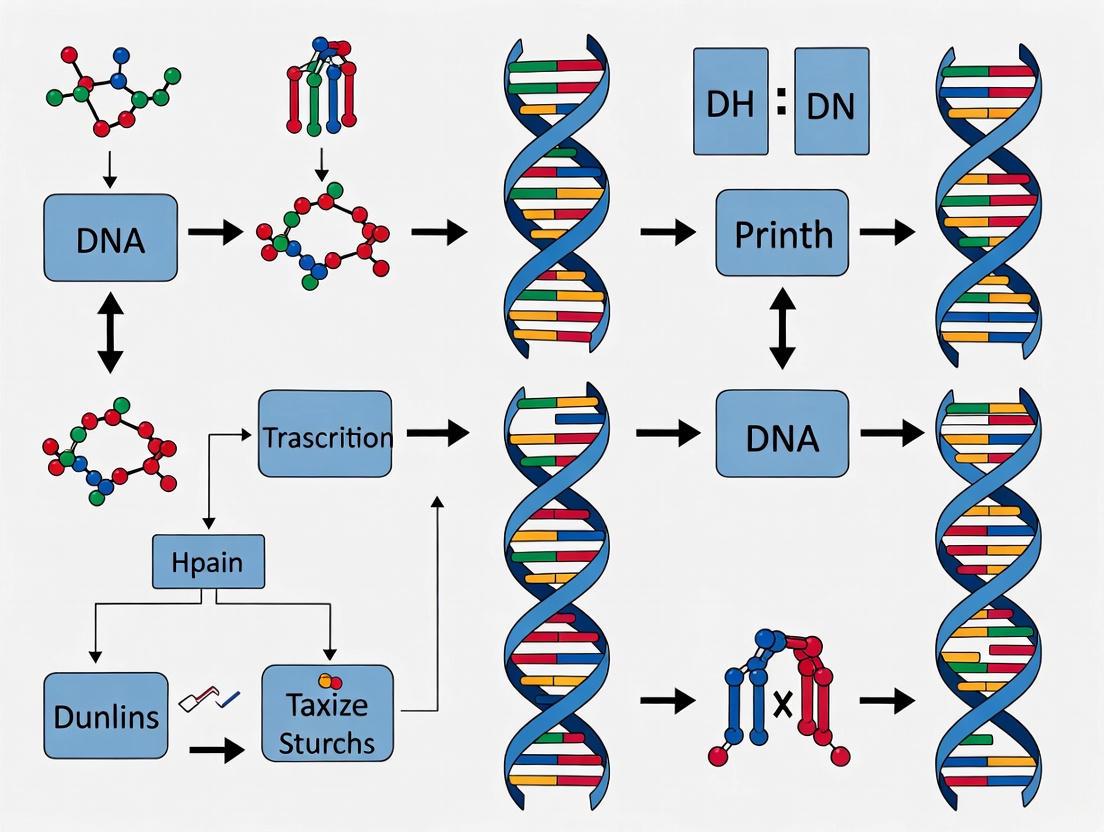
This article provides a comprehensive overview of DNA assembly mechanisms, from foundational principles to cutting-edge technologies.
DNA Assembly: Mechanisms, Methods, and Modern Applications in Biomedical Research
Abstract
This article provides a comprehensive overview of DNA assembly mechanisms, from foundational principles to cutting-edge technologies. It explores the historical evolution from restriction enzyme-based methods to modern seamless assembly techniques like Gibson Assembly and Golden Gate cloning. The content delves into specialized applications in synthetic biology, gene therapy, and drug development, offering practical troubleshooting guidance and a comparative analysis of current methodologies. Aimed at researchers, scientists, and drug development professionals, this resource serves as both an educational primer and a practical reference for selecting and optimizing DNA assembly strategies for diverse research and clinical applications.
The Building Blocks of Life: Exploring Fundamental DNA Assembly Mechanisms
Recombinant DNA (rDNA) technology represents a pivotal breakthrough in molecular biology, enabling the precise manipulation of genetic material to create novel DNA sequences. This field originated with the discovery of restriction enzymes, which serve as the fundamental "molecular scissors" for genetic engineering. The development of these tools initiated a revolution across biological research, pharmaceutical development, and biotechnology, allowing scientists to isolate, analyze, and modify specific genes with unprecedented precision [1] [2]. The progression from basic bacterial defense mechanisms to sophisticated genome editing systems exemplifies how understanding fundamental biological principles can yield transformative technologies. This whitepaper examines the key historical milestones in this journey, details the core mechanisms and principles of DNA assembly techniques, and explores their critical applications in contemporary drug development research, providing researchers with both theoretical background and practical methodological guidance.
Historical Timeline of Key Discoveries
The evolution of recombinant DNA technology spans several decades of intensive research, marked by key discoveries that built upon one another to create the sophisticated genetic engineering tools available today. The table below chronicles the most critical milestones in this developmental pathway.
Table 1: Historical Timeline of Key Discoveries in Restriction Enzymes and Recombinant DNA Technology
| Year(s) | Discovery/Event | Key Researchers/Institutions | Significance |
|---|---|---|---|
| 1950s-1960s | Observation of host-controlled restriction | Various | Initial recognition of bacterial defense systems against bacteriophages [2]. |
| 1960s | Identification of restriction enzymes | Werner Arber, Hamilton Smith | Discovery of enzymes that cleave DNA at specific sites [1] [2]. |
| 1970 | Concept for creating rDNA in vitro | Paul Berg, Peter Lobban | Theoretical foundation for cross-species gene manipulation [3]. |
| 1971-1972 | Development of DNA joining methods | David Jackson, Peter Lobban, A.D. Kaiser | First methods for joining DNA fragments in laboratory settings [3]. |
| 1972 | Creation of first chimeric DNA | Jackson et al. | First successful generation of recombinant DNA molecules [3]. |
| 1973 | Development of bacterial cloning vector | Stanley Cohen et al. | Created pSC101 plasmid, enabling bacterial replication of foreign DNA [3]. |
| 1973 | First Asilomar Conference | International Scientists | Early discussions on biohazards and containment of rDNA research [3]. |
| 1974 | NIH establishes Recombinant DNA Advisory Committee (RAC) | National Institutes of Health | Creation of formal oversight for rDNA research in the United States [3]. |
| 1978 | Nobel Prize for Restriction Enzymes | Werner Arber, Daniel Nathans, Hamilton Smith | Recognition of the fundamental importance of restriction enzymes [2]. |
| 1980 | First rDNA pharmaceutical (human insulin) | Genentech | Approval of Humulin, first commercial healthcare product from rDNA technology [4]. |
| 1987 | Discovery of CRISPR sequences | Yoshizumi Ishino et al. | Initial identification of clustered repeats in bacterial DNA [5]. |
| 2005 | Identification of CRISPR as adaptive immune system | Francisco Mojica et al. | Recognition of CRISPR's biological function in prokaryotic immunity [5] [6]. |
| 2012 | CRISPR-Cas9 adapted for genome editing | Emmanuelle Charpentier, Jennifer Doudna, Feng Zhang | Development of programmable "genetic scissors" for eukaryotic cells [5] [6]. |
| 2020 | Nobel Prize for CRISPR-Cas9 | Emmanuelle Charpentier, Jennifer Doudna | Award for the development of a method for genome editing [5]. |
The initial discovery phase was characterized by the identification and understanding of restriction enzymes in bacteria. Werner Arber's proposal of the restriction-modification (R-M) system explained how bacteria protect their own DNA while cleaving foreign viral DNA [2]. The true potential of these systems was realized with the discovery of Type II restriction enzymes by Hamilton Smith, which cleave DNA at specific symmetrical sequences within their recognition sites, providing predictable and consistent cleavage patterns [1] [2]. This critical property enabled Daniel Nathans to perform the first restriction enzyme mapping of simian virus 40 DNA, demonstrating the practical application of these enzymes for DNA analysis [2].
The subsequent recombinant DNA era was pioneered by researchers who recognized the potential of combining restriction enzymes with DNA ligase to create novel genetic constructs. The first intentional creation of recombinant DNA molecules in 1972 by Paul Berg, Herbert Boyer, Annie Chang, and Stanley Cohen at Stanford University and UCSF marked the birth of genetic engineering technology [7]. This was quickly followed by the development of plasmid vectors and the successful cloning and propagation of eukaryotic DNA in bacteria, proving that genetic material could be transferred and expressed across species boundaries [3].
The modern genome editing era has been defined by the discovery and adaptation of the CRISPR-Cas9 system. What began as the identification of unusual repetitive sequences in bacterial genomes by Yoshizumi Ishino in 1987 [5] evolved through the dedicated work of Francisco Mojica, who recognized these sequences as part of an adaptive immune system [6]. The crucial understanding that the Cas9 protein could be programmed with guide RNAs to target specific DNA sequences for cleavage led to the development of the versatile CRISPR-Cas9 genome editing platform, earning Emmanuelle Charpentier and Jennifer Doudna the Nobel Prize in Chemistry in 2020 [5].
Fundamental Mechanisms and Principles
Restriction Enzyme Classification and Function
Restriction enzymes, also known as restriction endonucleases, are bacterial defense mechanisms that cut DNA sequences of invading pathogens at precise locations to prevent replication [1]. These enzymes recognize specific DNA sequences (recognition sequences) and cleave the DNA at or near these sites. The natural biological function of restriction enzymes is to protect prokaryotic cells from foreign DNA, such as bacteriophages, through restriction-modification (R-M) systems where the host cell produces both a restriction enzyme and a corresponding DNA methyltransferase that modifies and protects the host's own DNA [2].
Restriction enzymes are classified into four main types based on their structural complexity, recognition sequence, cleavage site position, and cofactor requirements [1] [2].
Table 2: Classification and Characteristics of Restriction Enzymes
| Enzyme Class | Recognition & Cleavage Characteristics | Cofactor Requirements | Primary Applications |
|---|---|---|---|
| Type I | Cleaves DNA at random sites far from recognition sequence (≥1000 bp) | ATP, Mg²⁺, AdoMet | Limited research applications due to non-specific cleavage |
| Type II | Cleaves within or at specific positions close to recognition sequence | Mg²⁺ | Molecular cloning, DNA analysis, RFLP, genome mapping |
| Type III | Cleaves DNA 25-27 bp downstream of recognition sequence | ATP, Mg²⁺ | Specialized research applications |
| Type IIS | Cleaves DNA at defined distance outside recognition sequence | Mg²⁺ | Golden Gate assembly, modular cloning |
Type II restriction enzymes are the most widely used in molecular biology research due to their precise cleavage at specific sites [2]. They recognize palindromic sequences (sequences that read the same on both DNA strands in the 5' to 3' direction) and can produce two types of ends after cleavage:
- Blunt ends: The DNA is directly cleaved at the recognition site, producing two DNA fragments with flat ends [1] [8].
- Sticky ends: The DNA is cleaved asymmetrically, generating fragments with overhanging single-stranded ends that can form base pairs with complementary sequences [1] [8].
The naming convention for restriction enzymes follows a systematic approach based on their organismal origin. For example, the enzyme HindIII derives its name from: "H" for Haemophilus, "in" for influenzae, "d" for serotype d, and "III" to distinguish it from other restriction enzymes from the same strain [2].
Core Principles of DNA Assembly
The creation of recombinant DNA molecules relies on several fundamental principles that enable the precise assembly of DNA fragments:
Complementary Ends and Ligation: DNA fragments with compatible ends (either sticky ends with complementary overhangs or blunt ends) can be joined together using DNA ligase, an enzyme that catalyzes the formation of phosphodiester bonds between adjacent nucleotides [9] [8]. This principle forms the basis of restriction enzyme cloning, where a DNA insert and vector are digested with the same restriction enzyme(s) to generate compatible ends for ligation [9].
Vector-Based Cloning: DNA fragments of interest are typically inserted into cloning vectors (e.g., plasmids, bacteriophages, or artificial chromosomes) that can replicate autonomously in host organisms [4] [8]. Vectors contain essential elements such as origin of replication, selectable markers (e.g., antibiotic resistance genes), and multiple cloning sites with concentrated restriction enzyme recognition sequences [8].
Host Organism Transformation: The recombinant DNA molecules must be introduced into host organisms (most commonly E. coli) for replication and propagation [4] [8]. Transformation methods include heat-shock, electroporation, and non-bacterial transformation techniques [4].
Selection and Screening: Transformed host cells are selected using antibiotic resistance markers, and additional screening methods (e.g., blue-white screening, PCR screening, or restriction digest analysis) are employed to identify clones containing the correct recombinant DNA construct [8].
The following diagram illustrates the logical relationships and workflow between the core mechanisms and principles of recombinant DNA technology:
Diagram 1: Core DNA Assembly Workflow
Evolution of DNA Assembly Techniques
Traditional Cloning Methods
Restriction Enzyme Cloning: This "classic" cloning method was the first developed and remains widely used today [9] [8]. The process involves digesting both the insert DNA and cloning vector with the same restriction enzyme(s) to generate compatible ends, followed by ligation with DNA ligase to create a recombinant molecule [9]. The key advantages of this method include the wide availability of restriction enzymes, predictable cleavage patterns, and relatively low cost [9] [8]. Limitations include the necessity for compatible restriction sites, potential for recircularization of empty vectors, and the time-consuming nature of the multi-step process [9] [8].
TA Cloning: Topoisomerase-based cloning (TOPO cloning or TA cloning) utilizes the properties of Taq polymerase, which naturally leaves a single adenosine (A) overhang on the 3' end of PCR products [9] [8]. These fragments are cloned into linearized TOPO vectors containing 3' thymidine (T) overhangs with covalently bound topoisomerase I, which functions as both a restriction enzyme and ligase [9] [8]. This method offers rapid cloning without the need for restriction enzymes but is limited by the availability of TOPO-ready vectors and potential efficiency issues with polymerases that don't produce A-overhangs [9].
Advanced DNA Assembly Methods
Gateway Recombination Cloning: This system uses site-specific recombination rather than restriction enzymes and ligase [9] [8]. Based on the bacteriophage λ integration and excision system, it employs specific attachment sites (attB, attP, attL, attR) and proprietary enzyme mixes (BP Clonase and LR Clonase) to transfer DNA fragments between vectors [9]. The process involves creating an "entry clone" containing the gene of interest flanked by attL sites, which can then be rapidly transferred to multiple "destination vectors" containing attR sites [9]. This system provides high efficiency, directionality, and the ability to easily move genes between multiple vectors, but can be expensive and creates short "scar" sequences at the junctions [9] [8].
Gibson Assembly: Developed by Daniel Gibson and colleagues, this isothermal assembly method allows for the simultaneous joining of multiple DNA fragments in a single reaction [9] [10]. The technique uses three enzymes in one pot: a 5' exonuclease chews back DNA ends to create long overhangs, DNA polymerase fills in gaps, and DNA ligase seals nicks [9] [10]. The major advantages include the ability to assemble multiple fragments seamlessly without unwanted sequence additions and customization of assembly design [9]. Limitations include potential degradation of short DNA fragments by the 5' exonuclease and higher cost compared to traditional methods [9].
Golden Gate Assembly: This method utilizes Type IIS restriction enzymes, which cut DNA at a specified distance away from their recognition sites [9]. This property allows researchers to create custom overhangs and assemble multiple fragments in a defined order in a single-tube reaction [9]. The recognition sequences are encoded in such a way that they are removed from the final assembly product, creating seamless junctions without scars [9]. Golden Gate systems are particularly valuable for modular cloning (MoClo) and constructing complex genetic circuits [9].
The following experimental workflow illustrates the key steps in a standard restriction enzyme-based cloning protocol, which remains foundational to many molecular biology techniques:
Diagram 2: Standard Restriction Cloning Workflow
The Scientist's Toolkit: Essential Reagents and Materials
Successful implementation of recombinant DNA techniques requires specific reagents and materials carefully selected for their intended applications. The following table details essential components of the molecular biologist's toolkit.
Table 3: Essential Research Reagents for Recombinant DNA Technology
| Reagent/Material | Function | Examples & Applications |
|---|---|---|
| Restriction Enzymes | Recognize and cleave DNA at specific sequences | Type IIP (EcoRI, HindIII, BamHI) for standard cloning; Type IIS (BsaI, BsmBI) for Golden Gate assembly [1] [9] |
| DNA Ligase | Joins compatible DNA ends by forming phosphodiester bonds | T4 DNA Ligase for sticky or blunt end ligation [9] |
| DNA Polymerases | Amplify DNA fragments via PCR; fill gaps in DNA sequences | Taq polymerase for routine PCR; high-fidelity enzymes (Q5, Phusion) for cloning [9] |
| Cloning Vectors | Serve as carrier molecules for replication of inserted DNA | Plasmids (pUC19, pBR322), Bacteriophages (λ, M13), Artificial Chromosomes (BACs, YACs) [9] [4] |
| Host Organisms | Provide cellular machinery for replication and expression | E. coli (DH5α, BL21), Yeast (S. cerevisiae), Mammalian cells (HEK293, CHO) [4] |
| Selection Agents | Enable selection of successfully transformed cells | Antibiotics (ampicillin, kanamycin), Auxotrophic markers, Colorimetric substrates (X-Gal) [8] |
| Modifying Enzymes | Alter DNA ends or perform specific modifications | Alkaline phosphatase (prevents vector recircularization), Kinase (adds 5' phosphate) [8] |
Applications in Drug Development and Research
Recombinant DNA technology has revolutionized pharmaceutical development and biomedical research, enabling the production of therapeutic proteins, creation of disease models, and development of novel treatment modalities.
Therapeutic Protein Production
The first commercial application of rDNA technology was the production of human insulin (Humulin) in 1982, which replaced animal-derived insulin and provided a consistent, reliable diabetes treatment [4] [7]. This was followed by the development of numerous recombinant proteins, including:
- Erythropoietin (EPO): For treating anemia in patients with chronic kidney disease and cancer [4]
- Human Growth Hormone (hGH): For treating growth disorders in children [4]
- Tissue Plasminogen Activator (tPA): For dissolving blood clots in stroke and heart attack patients [4]
- Coagulation Factors: Factor VIII for hemophilia A patients [4]
- Monoclonal Antibodies: Trastuzumab (Herceptin) for HER2-positive breast cancer [4]
Drug Discovery and Target Validation
Recombinant DNA techniques have transformed drug discovery by enabling the identification and validation of therapeutic targets:
Gene Cloning and Expression: Researchers can clone and express potential drug targets (e.g., receptor proteins, enzymes) in heterologous systems for high-throughput screening of compound libraries [7].
Animal Model Generation: Genetically modified mice and other model organisms created through rDNA techniques allow for the study of disease mechanisms and evaluation of drug efficacy in vivo [7].
CRISPR-Based Screening: Genome-wide CRISPR screens enable systematic identification of genes essential for cell survival, drug resistance, or specific disease pathways [5] [7].
Vaccine Development
Recombinant DNA technology has enabled the development of safer and more effective vaccines:
Subunit Vaccines: Recombinant protein subunits (e.g., hepatitis B surface antigen) provide immunization without exposure to pathogenic viruses [4].
Viral Vector Vaccines: Modified viruses (e.g., adenovirus vectors) serve as delivery systems for vaccine antigens [7].
mRNA Vaccines: The COVID-19 pandemic demonstrated the utility of recombinant technology in rapidly developing and manufacturing mRNA vaccines [7].
Gene Therapy and Personalized Medicine
The evolution from simple DNA manipulation to precise genome editing has opened new possibilities for treating genetic disorders:
Ex Vivo Gene Therapy: Cells are removed from a patient, genetically modified using recombinant vectors, and reintroduced to the patient [7].
In Vivo Gene Therapy: Therapeutic genes are delivered directly to target tissues within the patient using viral or non-viral vectors [7].
CRISPR-Based Therapeutics: CRISPR-Cas9 systems are being developed to correct genetic mutations responsible for diseases such as sickle cell anemia, beta-thalassemia, and muscular dystrophy [5].
The journey from the initial discovery of restriction enzymes to the sophisticated genome editing technologies of today represents one of the most transformative progressions in modern science. The foundational work on bacterial restriction-modification systems provided the essential tools that enabled the recombinant DNA revolution, which in turn has revolutionized nearly every aspect of biological research and therapeutic development. The continuing evolution of DNA assembly techniques—from restriction enzyme cloning to Gibson Assembly and CRISPR-based editing—has progressively increased the precision, efficiency, and scope of genetic engineering.
For researchers and drug development professionals, understanding these historical developments provides crucial context for selecting appropriate methodologies for specific applications. The principles underlying restriction enzyme specificity, DNA ligation, and cellular transformation remain fundamental to genetic engineering, even as newer techniques offer enhanced capabilities. The ongoing refinement of these technologies promises to further accelerate biomedical research and therapeutic development, particularly in the areas of personalized medicine, gene therapy, and complex disease modeling. As recombinant DNA technology continues to evolve, it will undoubtedly yield new insights into biological systems and create novel approaches for addressing unmet medical needs.
Molecular cloning is a foundational technique in molecular biology that enables the replication of specific DNA sequences to produce identical copies (clones). The core principle involves inserting a foreign DNA fragment, known as the insert, into a self-replicating genetic element called a vector to form a recombinant DNA molecule [11]. This recombinant DNA is then introduced into a host cell, typically the bacterium Escherichia coli, where it replicates alongside the host's genome, generating multiple copies of the target sequence [11] [12]. This process revolutionized biological research by allowing for the precise isolation and amplification of individual genes from complex genomes, tasks that were previously daunting or impossible [11]. Cloning is an essential upstream step for diverse applications, including the study of gene function, production of recombinant proteins for therapeutics, and the construction of CRISPR-Cas9 systems for gene therapy [11] [12].
Core Component I: Vectors
A vector is a small DNA molecule that serves as a vehicle to deliver foreign genetic material into a host cell, enabling the replication or expression of the introduced DNA [11]. Vectors can be plasmids, bacteriophages, bacterial artificial chromosomes (BACs), or yeast artificial chromosomes (YACs), with plasmids being the most commonly used in cloning experiments [11].
Essential Elements of a Cloning Vector
All autonomously replicating cloning vectors share several key genetic elements [12] [13]:
- Origin of Replication (Ori): This is the specific DNA sequence where DNA replication is initiated. The Ori determines the copy number of the vector within a single host cell, which can range from high (e.g., 500-700 copies for the pUC series) to low (e.g., 1-2 copies for BACs) [11] [12].
- Selectable Marker: This gene, often conferring resistance to an antibiotic like ampicillin or kanamycin, allows for the selection of host cells that have successfully taken up the vector. Cells without the vector are unable to grow on media containing the antibiotic [12] [13].
- Multiple Cloning Site (MCS): Also known as a polylinker, the MCS is a short DNA segment containing a series of unique restriction enzyme recognition sites. This facilitates the insertion of the foreign DNA fragment [13].
- Reporter Gene (for Screening): Some vectors contain a reporter gene, such as lacZα, which enables visual screening for successful insertion. When the insert is successfully ligated into the MCS, it disrupts the reporter gene, allowing researchers to distinguish recombinant clones from non-recombinant ones, for example, through blue-white screening [13].
Types of Vectors and Their Applications
Different cloning applications require vectors with specialized features. The table below summarizes the common types of vectors and their primary uses.
Table 1: Types of Cloning Vectors and Their Applications
| Vector Type | Key Features | Insert Size Capacity | Primary Applications |
|---|---|---|---|
| Cloning Vectors | Basic elements (Ori, MCS, marker); high copy number [11] | < 10 kb | Routine amplification and maintenance of DNA inserts [11] |
| Expression Vectors | Contain strong promoters (e.g., T7, lac), ribosome-binding sites (RBS), and tags (e.g., His-tag) [11] | < 10 kb | High-level production of recombinant proteins in host cells like E. coli, yeast, or mammalian cells [11] |
| gRNA Vectors (for CRISPR) | Designed with RNA polymerase III promoters (e.g., U6) for guide RNA expression [11] | N/A | Construction of CRISPR-Cas9 systems for gene editing and therapy [11] |
| BACs (Bacterial Artificial Chromosomes) | Single-copy F-plasmid origin; par genes for segregation stability [11] | 150-350 kb | Cloning and stable maintenance of large DNA fragments for genomic libraries [11] |
| YACs (Yeast Artificial Chromosomes) | Contains yeast centromere (CEN), telomeres (TEL), and autonomous replication sequence (ARS) [11] | 100-2000 kb | Cloning of very large DNA fragments, functional studies of entire genes, and mapping of complex genomes [11] |
Core Component II: Host Cells
The host cell provides the cellular machinery for the replication of the recombinant vector and, in the case of expression vectors, the transcription and translation of the inserted gene [11].
The Role of Competent Cells
Naturally, bacterial cells like E. coli are not permeable to external DNA. Therefore, they must be made competent—that is, physiologically altered to permit DNA uptake [12]. Two main methods are employed to achieve this:
- Chemical Transformation: Cells in log-phase growth are treated with calcium chloride and subjected to a brief heat shock (42°C). This process is thought to create pores in the cell membrane, allowing plasmid DNA to enter [12] [13].
- Electroporation: Cells are exposed to a brief high-voltage electrical pulse, which creates transient pores in the cell membrane. This method is approximately 10 times more efficient than chemical transformation but requires specialized equipment [12].
Selection of Host Cell Strains
The choice of host cell strain is critical for experimental success. Different strains are engineered for specific applications [13]:
- Standard Cloning Strains: Such as DH5α, are optimized for high transformation efficiency and plasmid yield.
- Protein Expression Strains: Such as BL21, are deficient in specific proteases (e.g., Lon and OmpT) to minimize recombinant protein degradation.
- Methylation-Sensitive Strains: Strains lacking the dcm and dam methylation enzymes (e.g., JM110) are used when subsequent digestion with methylation-sensitive restriction enzymes is required.
- Blue-White Screening Strains: Strains containing the lacZΔM15 mutation (e.g., DH5α) are necessary for alpha-complementation in blue-white screening protocols [13].
Table 2: Common Host Cell Strains and Their Applications in E. coli
| Host Strain | Genotype Features | Primary Applications | Transformation Efficiency (CFU/μg) |
|---|---|---|---|
| DH5α | lacZΔM15, endA1, recA1 | Routine cloning, blue-white screening [13] | High (e.g., 1 x 10⁸) [13] |
| BL21(DE3) | ompT, lon, hsdS | Recombinant protein expression with T7 RNA polymerase [11] | Varies |
| NEB 5-alpha | lacZΔM15, endA1, recA1 | General cloning and library construction [14] | ~1 x 10⁹ [14] |
| JM110 | dam, dcm, endA1, recA1 | Propagation of plasmids for methylation-sensitive digestion | Varies |
| Alpha-Select Gold | lacZΔM15, endA1, recA1 | High-efficiency cloning and blue-white screening [14] | High efficiency [14] |
The Molecular Cloning Workflow
The standard cloning workflow involves a series of sequential steps to produce and identify the desired recombinant DNA molecule.
The following diagram illustrates the key stages of the traditional cloning workflow.
Detailed Protocol for Key Steps
Vector and Insert Preparation
The first step is to generate complementary ends on both the vector and the insert DNA for subsequent joining.
- Restriction Enzyme Digestion: The vector and the insert DNA are digested with the same one or two restriction enzymes. Using two enzymes that generate non-compatible ends (e.g., EcoRI and KpnI) allows for directional cloning, ensuring the insert is ligated in the correct orientation [13].
- Vector Dephosphorylation: To prevent the self-ligation of the empty vector, the 5' phosphate groups are removed from the digested vector using an enzyme like alkaline phosphatase. This dramatically reduces background colonies during transformation [13].
- Purification: The digested fragments are typically separated by agarose gel electrophoresis and purified from the gel using commercial kits to remove enzymes, salts, and to isolate the correct fragments [13].
Ligation
The prepared vector and insert are spliced together using DNA ligase.
- Enzyme: T4 DNA Ligase is the most common enzyme, which catalyzes the formation of a phosphodiester bond between the 5' phosphate of one fragment and the 3' hydroxyl group of another [12] [13].
- Reaction Conditions: A typical 20 μL reaction includes T4 DNA Ligase, its buffer (which supplies ATP and Mg²⁺), and the purified vector and insert. The reaction is often incubated at 14-25°C for 10 minutes to 16 hours [13].
- Molar Ratios: To improve efficiency, multiple reactions with varying insert:vector molar ratios (typically 1:1 to 5:1) are set up. Using a molar excess of the insert favors the formation of the desired recombinant molecule [13].
Transformation and Selection
The ligation mixture is introduced into competent host cells.
- Transformation: For chemically competent cells, the ligation mix is added to the cells, incubated on ice, subjected to a heat shock (42°C for 30-60 seconds), and then placed back on ice. The cells are then allowed to recover in a nutrient broth [14] [13].
- Plating and Selection: The transformed cells are plated on agar plates containing a selective antibiotic. Only cells that have taken up the plasmid, and thus contain the antibiotic resistance gene, will grow and form colonies [14] [13].
Clone Screening and Validation
Not all colonies on the selective plate will contain the correct recombinant plasmid. Therefore, screening and validation are essential.
- Blue-White Screening: If using a vector like pUC18 with the lacZα gene, colonies with an empty vector (self-ligated) will produce functional β-galactosidase and turn blue in the presence of X-gal. Colonies with a successful insert will have a disrupted lacZα gene and remain white, providing a quick visual screen [14] [13]. The mechanism is outlined below.
- Colony PCR: A small part of a colony is used as a template in a PCR reaction with primers specific to the vector or insert. The presence and size of the PCR product can rapidly confirm the presence of the insert [12].
- Diagnostic Restriction Digest: Plasmid DNA is isolated from a culture of the candidate colony (miniprep) and digested with restriction enzymes. The resulting fragment pattern, analyzed by gel electrophoresis, confirms the size and orientation of the insert [15].
- Sequencing: Sanger sequencing of the miniprep DNA across the cloning junction provides the highest level of validation, confirming the precise DNA sequence of the insert and the absence of mutations [14] [12].
The Scientist's Toolkit: Essential Reagents and Materials
Table 3: Key Research Reagent Solutions for Molecular Cloning
| Reagent / Kit | Function | Example Use Case |
|---|---|---|
| Restriction Endonucleases | Enzymes that cleave DNA at specific recognition sequences [11] | Preparing vector and insert with compatible ends for ligation [13] |
| T4 DNA Ligase | Enzyme that catalyzes the joining of DNA fragments [12] [13] | Ligation of the insert into the prepared vector backbone [13] |
| Alkaline Phosphatase (CIP, SAP) | Removes 5' phosphate groups to prevent vector self-ligation [13] | Treatment of linearized vector after restriction digest [13] |
| DNA Polymerases (for PCR) | Amplifies specific DNA fragments from a template [12] | Generating an insert for cloning or screening colonies via colony PCR [12] |
| Gel Extraction & DNA Purification Kits | Purify DNA fragments from agarose gels or enzymatic reactions [13] | Isolating the digested vector and insert from an agarose gel [13] |
| Chemically Competent E. coli | Bacterial cells treated for efficient DNA uptake via heat shock [13] | Transformation of the ligation reaction mixture to amplify plasmids [13] |
| Plasmid Miniprep Kits | Rapid isolation of plasmid DNA from bacterial cultures [15] | Purifying plasmid DNA for validation by restriction digest or sequencing [15] |
This technical guide details the core enzymatic toolkit fundamental to modern molecular biology and drug development. Restriction endonucleases, DNA ligases, and DNA polymerases perform distinct, essential functions in DNA assembly mechanisms, enabling the precise manipulation and analysis of genetic material. The synergistic application of these enzymes underpins recombinant DNA technology, a cornerstone of biomedical research and therapeutic development. This whitepaper provides an in-depth examination of their mechanisms, classifications, and integrated experimental use, providing a framework for their application in advanced DNA assembly research.
Restriction Endonucleases: The Molecular Scissors
Restriction endonucleases are enzymes that cleave double-stranded DNA at specific recognition sequences, functioning as precise molecular scissors within the researcher's toolkit [2] [16]. They were first identified for their role in bacterial host defense, where they selectively degrade foreign DNA while the host's own DNA is protected by methylation, a system known as the restriction-modification (R-M) system [2] [17].
Classification and Characteristics
More than 3,000 type II restriction endonucleases have been characterized, and they are the primary class used in molecular biology due to their simplicity and predictability [17]. They are categorized based on their structural complexity, recognition sequence, cleavage position, and cofactor requirements. The following table outlines the primary classes and their key features.
Table 1: Classes of Restriction Endonucleases
| Enzyme Class | Key Characteristics | Example | Recognition/Cleavage Sequence (↓ = cleavage site) |
|---|---|---|---|
| Type I | Multi-subunit; cleavage at variable distances from site; requires ATP [2] | EcoKI | Not applicable |
| Type II (Orthodox) | Homodimer; cleaves within or close to palindromic recognition site; requires Mg²⁺ [2] [17] | EcoRI [17] | G↓A-A-T-T-C |
| Type IIS | Recognizes asymmetric sequence; cleavage occurs at a defined distance away [2] [17] | FokI [17] | G-G-A-T-G-N₉↓ |
| Type IIE | Requires binding to two recognition sites; one acts as an allosteric effector [17] | NaeI [17] | G-C-C↓G-G-C |
| Type IIF | Homotetramer; cleaves two recognition sites in a concerted reaction [17] | NgoMIV [17] | G↓C-C-G-C |
| Type IIT | Heterodimeric or heterotetrameric structure with different subunits [17] | Bpu10I [17] | C-C-T-G-A-G-C |
{: .custom-table}
Reaction Mechanism and Specificity
Type II restriction enzymes typically recognize short, palindromic sequences of 4-8 base pairs and cleave the DNA backbone in the presence of Mg²⁺ to produce fragments with 5'-phosphate and 3'-hydroxyl termini [17]. The cleavage can result in two types of ends, which are critical for downstream ligation:
- Sticky Ends: The enzyme cleaves the two DNA strands at staggered positions, generating short, single-stranded overhangs. These can be 5' overhangs (e.g., EcoRI) or 3' overhangs (e.g., KpnI) [2] [16].
- Blunt Ends: The enzyme cleaves both DNA strands at the same position, resulting in no overhang (e.g., EcoRV) [2] [16].
The specificity of these enzymes is governed by an intricate process of DNA recognition and conformational activation. In a non-specific binding mode, the enzyme interacts primarily with the DNA backbone, facilitating a rapid search for its target site via facilitated diffusion [17]. Upon encountering the specific recognition sequence, the enzyme and DNA undergo significant conformational changes, leading to tight binding through approximately 15-20 hydrogen bonds to the nucleotide bases, in addition to van der Waals contacts and backbone interactions [17]. This "induced fit" mechanism activates the catalytic centers, which often contain a PD...(D/E)xK motif for coordinating the essential Mg²⁺ ions, leading to cleavage and inversion of configuration at the phosphorus atom [17].
Key Concepts: Isoschizomers and Neoschizomers
- Isoschizomers are different restriction enzymes that recognize the same sequence and cleave at the same position (e.g., BshTI and AgeI both recognize A↓CCGGT) [2].
- Neoschizomers recognize the same sequence but cleave at different positions (e.g., SmaI produces blunt ends (CCC↓GGG) while its neoschizomer, XmaI, produces sticky ends (C↓CCGGG)) [2] [16].
DNA Ligases: The Molecular Glue
DNA ligase catalyzes the formation of a phosphodiester bond between the 3'-hydroxyl end of one DNA fragment and the 5'-phosphate end of another, effectively acting as molecular glue [18] [19]. This function is essential in vivo for DNA replication, repair, and recombination, and in vitro for cloning and next-generation sequencing (NGS) library preparation [18] [19].
Mechanism of DNA Ligation
The DNA ligation mechanism is an ATP- or NAD⁺-dependent process that occurs in three defined steps [18] [19]:
- Adenylation: The ligase reacts with ATP (e.g., T4 DNA Ligase) or NAD⁺ (e.g., E. coli DNA Ligase), forming a covalent ligase-adenylate intermediate where an AMP molecule is linked to a lysine residue in the enzyme's active site.
- DNA Adenylation: The adenyl group is transferred from the enzyme to the 5'-phosphate group of the donor DNA strand, forming a DNA-adenylate complex (AppDNA).
- Ligation: The 3'-hydroxyl group of the acceptor DNA strand attacks the activated 5'-phosphate of the donor strand, displacing AMP and forming a new phosphodiester bond that seals the nick in the DNA backbone.
Types of DNA Ligase and Their Applications
Different DNA ligases are suited for specific research applications based on their source and properties.
Table 2: Common DNA Ligases in Molecular Biology
| Ligase Type | Source | Cofactor | Key Features and Common Applications |
|---|---|---|---|
| T4 DNA Ligase | Bacteriophage T4 [18] [19] | ATP [19] | Highly versatile; can ligate blunt ends and cohesive ends, and repair nicks in DNA/RNA hybrids. Most common in cloning. |
| E. coli DNA Ligase | Escherichia coli [18] [19] | NAD⁺ [19] | Efficient for cohesive-end ligation; generally less efficient for blunt ends without unique conditions. |
| Thermostable Ligase | Thermophilic bacteria (e.g., Thermus thermophilus) [18] [19] | NAD⁺ or ATP [18] | Stable at high temperatures; essential for techniques requiring thermal cycling, such as the ligase chain reaction (LCR). |
| Mammalian Ligases | Eukaryotic cells (I, II, III, IV) [18] | ATP | Involved in specific DNA repair and replication pathways in vivo; less commonly used in standard in vitro workflows. |
{: .custom-table}
DNA Polymerases: The Molecular Copy Machines
DNA polymerases are enzymes that catalyze the template-directed synthesis of DNA from deoxyribonucleoside triphosphates (dNTPs) [20]. They are fundamental to DNA replication and repair, and are indispensable in vitro for techniques like PCR, DNA sequencing, and site-directed mutagenesis.
Mechanism of DNA Synthesis
DNA polymerases synthesize DNA exclusively in the 5' to 3' direction by adding nucleotides to the 3'-hydroxyl end of a primer strand that is base-paired to a template strand [20]. The minimal reaction pathway for nucleotide insertion involves several key steps [21]:
- DNA Binding: The polymerase binds to a primer-template junction.
- dNTP Binding: A nucleoside triphosphate (dNTP) that correctly base-pairs with the template base enters the active site.
- Conformational Change: The enzyme undergoes a global conformational change from an "open" to a "closed" state, correctly positioning the substrates for catalysis.
- Chemistry: The 3'-OH of the primer strand performs a nucleophilic attack on the α-phosphate of the incoming dNTP, resulting in the formation of a phosphodiester bond and the release of pyrophosphate (PPi). This reaction is catalyzed by two divalent metal ions (e.g., Mg²⁺) [21].
- Translocation: The enzyme moves forward by one base to begin the next cycle.
Fidelity and Proofreading
The accuracy, or fidelity, of DNA polymerase is critical for maintaining genomic integrity. High-fidelity polymerases achieve this through two primary mechanisms:
- Base Selection: The active site has a shape that strongly favors the incorporation of correct, Watson-Crick base-paired nucleotides [20].
- Proofreading: Many DNA polymerases possess an associated 3'→5' exonuclease activity. After a mispaired nucleotide is incorporated, the polymerase can reverse its direction, excise the incorrect base, and then resume synthesis with the correct nucleotide [20].
DNA polymerase β, a model enzyme for structural studies, plays a key role in eukaryotic base excision repair (BER) by filling in short, single-nucleotide gaps [21].
Integrated Experimental Workflows
The power of these enzymes is fully realized when they are used in concert within standardized experimental workflows.
Standard Restriction Cloning Protocol
This foundational method for recombinant DNA construction leverages restriction endonucleases and DNA ligase.
- Step 1: Digestions. Incubate the plasmid vector and the DNA fragment of interest (insert) with the same restriction enzyme(s) to generate complementary ends. A typical reaction includes 1 µg of DNA, 1X reaction buffer, and 10 units of enzyme per µg of DNA, incubated at the optimal temperature (usually 37°C) for 15-60 minutes [16].
- Step 2: Purification. Run the digested products on an agarose gel and excise the correct bands, or use a spin column kit to purify the DNA fragments from the reaction mix. This removes the enzyme, salts, and small fragments.
- Step 3: Ligation. Mix the prepared vector and insert at an optimal molar ratio (typically 1:3 vector-to-insert) with DNA ligase (e.g., T4 DNA Ligase) and its corresponding ATP-containing buffer. Incubate at a temperature that balances end association and enzyme activity (e.g., 16°C for 4-16 hours or 22°C for 1 hour) [18] [19].
- Step 4: Transformation and Verification. Introduce the ligation mixture into competent E. coli cells. Select transformed cells using antibiotics and verify the recombinant plasmid through colony PCR, restriction analysis, or sequencing [18].
DNA Assembly Workflow and Enzyme Coordination
The following diagram illustrates the coordinated action of restriction endonucleases, DNA polymerases, and DNA ligases in a generalized DNA assembly workflow, such as cloning or library preparation for NGS.
Research Reagent Solutions
Successful execution of these protocols relies on a suite of reliable reagents. The following table details essential components for restriction-ligation experiments.
Table 3: Essential Research Reagents for DNA Assembly Experiments
| Reagent / Material | Function / Role in Experiment |
|---|---|
| Type II Restriction Endonucleases | Enzymes that provide sequence-specific cleavage of DNA to generate defined ends (sticky or blunt) for assembly [2] [16]. |
| T4 DNA Ligase | The most versatile ligase for joining DNA fragments with either compatible sticky ends or blunt ends [18] [19]. |
| Agarose Gel Electrophoresis System | Standard method for analyzing the success of restriction digests and for size-based separation and purification of DNA fragments [18]. |
| Optimized Reaction Buffers | Commercially provided buffers (e.g., 5X Restriction Buffer, 10X Ligation Buffer) ensure optimal salt, pH, and cofactor (Mg²⁺, ATP) conditions for maximum enzyme activity and fidelity, helping to prevent star activity [16]. |
| Competent E. coli Cells | Genetically engineered bacterial cells that can uptake foreign DNA during transformation, allowing for the amplification and propagation of the recombinant plasmid [18]. |
| Thermostable DNA Polymerase | Essential enzyme for verification steps like colony PCR and for sequencing the final construct to confirm the correct sequence and orientation of the insert [18] [20]. |
{: .custom-table}
The precise and coordinated functions of restriction endonucleases, DNA ligases, and DNA polymerases form the mechanistic foundation of DNA assembly. Restriction endonucleases provide specificity, ligases deliver seamless integration, and polymerases ensure accuracy and amplification. Mastery of this enzyme toolkit—including their individual mechanisms, optimal reaction conditions, and synergistic application in standardized protocols—is a fundamental prerequisite for advanced research in molecular biology, functional genomics, and rational drug development. As the field progresses toward assembling more complex genetic constructs, the principles governing the use of these core enzymes will remain permanently relevant.
Molecular cloning represents a cornerstone of modern biological research, enabling the precise isolation and high-fidelity amplification of individual genes from complex genomes. The core principle involves inserting a foreign DNA fragment—the insert—into a self-replicating DNA element called a vector, which is then introduced into a host cell for replication [11]. Cloning vectors serve as fundamental vehicles for artificially carrying foreign genetic material into host cells, where it can be replicated and expressed [22]. These DNA molecules "transport" cloned sequences between biological hosts and the test tube, making molecular gene cloning possible [22]. The development of vector technology has progressed from simple bacterial plasmids to sophisticated artificial chromosome systems, each designed to address specific challenges in genetic engineering. Within the broader context of DNA assembly mechanism research, understanding vector design principles is essential for selecting appropriate tools for experimental and therapeutic applications, particularly as demands grow for manipulating larger and more complex genetic constructs.
Essential Features of Cloning Vectors
All cloning vectors share fundamental features that enable them to function effectively as DNA carriers. These characteristics ensure stable maintenance and replication of foreign DNA within host cells.
Core Functional Elements
The essential features of a functional cloning vector include:
- Origin of Replication (ori): This specific nucleotide sequence enables autonomous replication within the host cell, controlling the vector's copy number [23] [24] [22]. When foreign DNA is linked to a vector with an ori, it replicates along with the vector inside the host.
- Selectable Marker: These genes, typically conferring resistance to antibiotics like ampicillin or tetracycline, allow selection of host cells that have successfully taken up the vector [23] [24] [22]. Selectable markers enable researchers to identify transformed cells in selective growth media containing particular antibiotics.
- Multiple Cloning Site (MCS): Also known as a polylinker, this region contains unique restriction enzyme recognition sites where foreign DNA can be inserted without disrupting essential vector functions [23] [24] [22]. Modern vectors often contain extensive MCS regions with up to 20 different restriction sites.
- Additional Features: Depending on their intended application, vectors may contain specialized elements such as reporter genes (e.g., lacZα for blue-white screening), promoter sequences for gene expression, or tags for protein purification [24] [11].
Table 1: Core Functional Elements of Cloning Vectors
| Vector Component | Function | Examples |
|---|---|---|
| Origin of Replication (ori) | Controls autonomous replication and copy number | pUC (high copy), F-plasmid (low copy) |
| Selectable Marker | Allows selection of transformed cells | Ampicillin resistance (ampR), Kanamycin resistance (kanR) |
| Multiple Cloning Site | Provides restriction sites for DNA insertion | pUC18 polylinker, pBR322 restriction sites |
| Reporter Gene | Enables screening of recombinant clones | lacZα for blue-white selection |
Types of Cloning Vectors and Their Applications
Cloning vectors have evolved into diverse forms, each optimized for specific applications, insert sizes, and host systems. The choice of vector depends on multiple factors including the size of the DNA fragment to be cloned, the host system, and the intended application [24].
Plasmid Vectors
Plasmids are circular, double-stranded DNA molecules that represent the most widely used cloning vectors, particularly in bacterial systems. These autonomously replicating, extrachromosomal elements are physically separated from chromosomal DNA and can replicate independently [22]. The classic pBR322 plasmid, developed in 1977, was one of the first recognized plasmid vectors and contained important features like unique restriction sites and antibiotic resistance genes for selection [24] [22].
Most plasmid cloning vectors are designed to replicate in E. coli and typically accommodate DNA inserts up to 10 kb in size [24] [22]. They offer advantages including small size (usually 2.5-5 kb), circular structure for stability, replication independent of the host cell, presence in multiple copies per cell, and frequently include antibiotic resistance markers for easy detection [24] [22]. However, their limited cloning capacity represents a significant constraint for larger DNA fragments [22].
Modern plasmid vectors often incorporate specialized features such as the ccdB killer gene used in positive selection systems, where cloning a DNA fragment inactivates the lethal gene, allowing only successful recombinants to survive [24]. The copy number of plasmid vectors varies significantly, with high-copy plasmids (hundreds per cell) preferred for high yield applications, while low-copy plasmids (fewer than 20 per cell) may be used when the cloned gene product is toxic to the host [24].
Bacteriophage Vectors
Bacteriophage vectors, particularly those derived from phage λ, offer higher efficiency for cloning large DNA fragments compared to plasmids [23]. The λ phage genome is approximately 48.5 kb, with an upper packaging limit of 53 kb, enabling cloning of inserts up to 24 kb [23] [22].
Two main types of λ phage vectors exist: insertion vectors (containing a unique cleavage site for inserts of 5-11 kb) and replacement vectors (where cleavage sites flank non-essential genes that can be replaced by DNA inserts) [22]. Bacteriophage vectors provide the advantage of more efficient screening of recombinant plaques compared to bacterial colonies, and higher transformation efficiency for large DNA fragments [23] [22].
M13 filamentous phage vectors represent another important category, used primarily for obtaining single-stranded DNA copies suitable for DNA sequencing and in vitro mutagenesis [22]. These vectors can accommodate very large inserts and produce pure single-stranded copies of double-stranded DNA inserts [22].
Specialized Vectors for Large DNA Fragments
As research progressed toward analyzing larger genomic regions, specialized vectors were developed to accommodate increasingly large DNA fragments.
Cosmids are hybrid vectors that combine features of plasmids and bacteriophage λ, containing the cos (cohesive end) sites required for packaging DNA into λ phage particles [23] [22]. These vectors can carry DNA fragments between 25 and 45 kb, replicating as plasmids while benefiting from the high transformation efficiency of phage transduction [22].
Bacterial Artificial Chromosomes (BACs) are derived from the naturally occurring F' plasmid and are designed to clone very large DNA fragments (150-350 kb) at low copy number (1-2 copies per cell) [23] [22]. BACs are preferred for genetic studies of inherited or infectious diseases because they accommodate large sequences without rearrangement risk, offering greater stability than other vector types [22].
Yeast Artificial Chromosomes (YACs) represent a more advanced system capable of carrying extremely large DNA fragments (up to 2000 kb) [23] [22]. YACs are linear DNA molecules that contain all essential elements of a eukaryotic chromosome: telomeres, a centromere, and an autonomous replication sequence [22]. While offering tremendous capacity, YACs suffer from lower transformation efficiency and potential instability [22].
P1-Derived Artificial Chromosomes (PACs) incorporate features of both P1 phage and F' plasmids, capable of cloning inserts from 100-300 kb with improved stability compared to YACs [22].
Table 2: Comparison of Major Cloning Vector Systems
| Vector Type | Insert Size Capacity | Host System | Key Features | Primary Applications |
|---|---|---|---|---|
| Plasmid | 0-10 kb | Bacteria | High copy number, easy manipulation | Routine cloning, protein expression |
| Phage λ | 5-24 kb | Bacteria | High efficiency, plaque screening | Genomic libraries, larger inserts |
| Cosmid | 25-45 kb | Bacteria | cos sites for packaging | Intermediate-size genomic fragments |
| BAC | 150-350 kb | Bacteria | Low copy, high stability | Genome mapping, sequencing projects |
| YAC | up to 2000 kb | Yeast | Extremely large capacity | Genome mapping, large genomic regions |
| HAC | >1000 kb (no upper limit) | Human cells | Autonomous chromosome function | Gene therapy, functional genomics |
Human Artificial Chromosomes: The Next Generation Vector
Human Artificial Chromosomes (HACs) represent the most advanced vector system, designed to function as autonomous, self-replicating chromosomes in human cells. These vectors offer the potential to overcome significant limitations associated with conventional viral and plasmid vectors, including insertional mutagenesis, transgene silencing, and limited carrying capacity [25].
Development and Design Principles
HACs can be generated through two primary approaches: "top-down" engineering of existing human chromosomes, or "bottom-up" de novo assembly from constituent elements [25] [26]. The top-down approach involves telomere-associated chromosome fragmentation in specialized cell lines like DT40, generating mitotically stable mini-chromosomes from human X or Y chromosomes [25]. The bottom-up strategy transfects cloned or synthetic centromeric DNA precursors into human cell lines to form functional chromosomes de novo [26].
Recent technical breakthroughs have addressed early challenges in HAC development. Traditional methods were limited by DNA multimerization—where input DNA constructs join together in unpredictably long series with rearrangements [27]. A novel approach developed at the University of Pennsylvania bypasses this problem by using larger initial DNA constructs with more complex centromeres, enabling HAC formation from single copies of these constructs [27]. This method allows HACs to be crafted more quickly and precisely, existing alongside natural chromosomes without altering the host genome [27].
Key Features and Advantages
HAC vectors exhibit several ideal characteristics for gene delivery applications [25]:
- Large Carrying Capacity: HACs can carry very large DNA fragments (>1000 kb) with no strict upper size limit, enabling transfer of complete genomic loci with all regulatory elements [25] [22].
- Episomal Maintenance: HACs replicate and segregate independently from host chromosomes, avoiding insertional mutagenesis and position effects that plague integrating vectors [25].
- Physiological Gene Regulation: Their capacity to hold complete genomic loci with upstream and downstream regulatory elements allows transgenes to be expressed at physiological levels in a manner mimicking native chromosomes [25].
- Mitotic Stability: Properly designed HACs demonstrate long-term stability throughout many cell divisions, maintaining genetic corrections or therapeutic genes indefinitely [25].
Advanced HAC systems like 21HAC and 21ΔqHAC incorporate acceptor sites (e.g., loxP sequences) that allow efficient insertion of desired genes through Cre-mediated recombination [25]. These engineered HAC vectors have been successfully transmitted through the germline in animals and show high mitotic stability in human cell lines [25].
Experimental Applications and Workflows
Molecular Cloning Procedures
The fundamental process of molecular cloning involves a series of standardized steps, regardless of the specific vector system employed. The core procedure begins with vector preparation, where the cloning vector is digested with appropriate restriction enzymes at unique sites within the multiple cloning site [24] [11]. Simultaneously, the foreign DNA fragment (insert) is prepared, either through restriction digestion or PCR amplification [11].
The prepared vector and insert are then joined using DNA ligase, which catalyzes the formation of phosphodiester bonds between the fragments, creating a stable recombinant DNA molecule [24] [11]. This chimeric DNA is introduced into host cells through transformation (for plasmids) or transduction (for phage vectors), with electroporation representing the most efficient technique for DNA transformation in many systems [24].
Following introduction into host cells, successfully transformed cells are selected using antibiotic resistance markers or other selection systems [24]. Blue-white screening provides a visual method for identifying recombinant clones when using vectors containing the lacZα reporter gene [24]. In this system, insertion of foreign DNA into the MCS disrupts the lacZα gene, resulting in white colonies rather than blue, allowing easy identification of successful recombinants [24].
Diagram 1: Standard Molecular Cloning Workflow
HAC Construction and Gene Delivery
The process for constructing and utilizing Human Artificial Chromosomes involves more complex procedures tailored to eukaryotic systems. For bottom-up HAC construction, the process begins with the preparation of alphoid DNA precursors containing CENP-B boxes, which are essential for centromere formation [26]. These precursors are cloned in large-capacity vectors such as BACs, YACs, or PACs to accommodate the extensive repetitive sequences required for centromere function [26].
The alphoid DNA constructs are then transfected into human HT1080 cells, where they multimerize and form functional de novo HACs through a process that may involve both circular and linear formation pathways [26]. For gene delivery applications, the gene of interest can be incorporated either by co-transfection with the alphoid DNA or through subsequent loading into pre-formed HACs using site-specific recombination systems [25] [26].
The completed HACs are transferred to target cells primarily through microcell-mediated chromosome transfer (MMCT), a technique that enables movement of entire chromosomes between cells [25]. Successful transfer and maintenance of HACs are verified through selection markers, fluorescence in situ hybridization (FISH), and analysis of mitotic stability across multiple cell divisions [25] [26].
Diagram 2: Human Artificial Chromosome Construction
Research Reagent Solutions
Successful implementation of DNA cloning and vector technologies requires specific research reagents and materials. The following table outlines essential solutions for working with various vector systems.
Table 3: Essential Research Reagents for Vector Applications
| Reagent/Material | Function | Application Examples |
|---|---|---|
| Restriction Endonucleases | Recognize and cleave specific DNA sequences | EcoRI, HindIII for creating compatible ends for ligation [24] [11] |
| DNA Ligase | Catalyzes phosphodiester bond formation between DNA fragments | T4 DNA Ligase for joining vector and insert [24] [11] |
| Alkaline Phosphatase | Removes 5' phosphate groups to prevent vector self-ligation | Calf Intestinal Phosphatase (CIP) for vector dephosphorylation [11] |
| Competent Cells | Chemically or electrically treated cells for DNA uptake | E. coli DH5α for plasmid transformation; HT1080 for HAC formation [24] [26] |
| Selection Antibiotics | Select for cells containing vector with resistance marker | Ampicillin, Kanamycin, Tetracycline for bacterial selection [24] |
| Cre Recombinase | Catalyzes site-specific recombination between loxP sites | Gene insertion into HAC vectors with loxP acceptor sites [25] |
Applications in Therapeutic Development and Biotechnology
Vector systems play crucial roles in advancing therapeutic development across multiple fronts. In gene therapy, viral vectors derived from adenovirus, adeno-associated virus (AAV), and lentivirus have been widely employed, though they face challenges including immunogenicity, insertional mutagenesis, and limited carrying capacity [25] [28]. HAC vectors offer promising alternatives by providing episomal maintenance without integration, minimizing risks of insertional mutagenesis while allowing physiological regulation of therapeutic genes [25] [27].
The market for viral vector and plasmid DNA manufacturing is experiencing significant growth, projected to reach USD 40.71 billion by 2034, reflecting the expanding therapeutic applications of these technologies [28]. Adeno-associated viruses (AAV) currently dominate the therapeutic vector market due to their safety profile and efficiency in gene delivery, particularly for rare and inherited diseases [28] [29]. Lentiviral vectors show the fastest growth rate, driven by their ability to integrate into both dividing and non-dividing cells, making them particularly valuable for CAR-T cell therapies and cancer treatments [28] [29].
In the pharmaceutical and biotechnology sectors, vector applications extend to multiple areas [28] [29]:
- Cancer Therapies: Viral vectors deliver genes for CAR-T cell engineering, oncolytic virotherapy, and cancer vaccines
- Genetic Disorders: HAC and viral vectors enable replacement of defective genes in monogenic diseases like Duchenne muscular dystrophy
- Vaccinology: Plasmid DNA and viral vectors serve as platforms for vaccine development against infectious diseases
- Protein Production: Vectors express therapeutic proteins including monoclonal antibodies, cytokines, and growth factors
The continued development of vector technologies, particularly HAC systems, promises to overcome current limitations in gene therapy and enable more sophisticated genetic engineering approaches for both basic research and clinical applications [25] [27] [26].
The core principles of Insertion, Ligation, and Transformation constitute the fundamental framework of molecular cloning, forming a "central dogma" that enables precise DNA assembly and manipulation. These foundational techniques continue to underpin modern genome engineering technologies, including CRISPR-Cas systems that have revolutionized genetic research and therapeutic development [30]. While contemporary tools have dramatically enhanced targeting precision and efficiency, they operate on the same foundational molecular principles: the insertion of foreign genetic material, ligation-mediated joining of DNA fragments, and transformation-based delivery into host cells.
The evolution from traditional restriction enzyme-based cloning to CRISPR-enabled genome editing represents a paradigm shift in our capacity for genetic manipulation. CRISPR-Cas systems function as programmable nucleases that create targeted double-strand breaks (DSBs) in DNA, harnessing cellular repair mechanisms to achieve precise genetic modifications [30] [31]. This technological advancement has transformed molecular cloning from a process dependent on naturally occurring restriction sites to one capable of targeting virtually any genomic sequence. Nevertheless, the successful application of these advanced systems remains dependent on the core principles of insertion, ligation, and transformation, which facilitate the integration of CRISPR components and donor templates into host cells and genomes.
This technical guide examines these fundamental processes within the context of modern DNA assembly mechanisms, providing researchers with both theoretical foundations and practical methodologies for their experimental applications.
Core Principles and Molecular Mechanisms
Insertion: Strategic DNA Integration
Insertion encompasses the integration of foreign genetic material into specific genomic locations, a process dramatically enhanced by CRISPR-Cas systems. These systems create controlled DSBs at predetermined genomic sites, leveraging endogenous cellular repair pathways to facilitate insertion [31].
Primary DNA Repair Pathways:
- Non-Homologous End Joining (NHEJ): An error-prone repair mechanism that directly ligates broken DNA ends, often resulting in small insertions or deletions (indels) that can disrupt gene function [30].
- Microhomology-Mediated End Joining (MMEJ): Utilizes short homologous sequences (5-25 bp) flanking the break site for repair, typically producing deletions [31].
- Homology-Directed Repair (HDR): A high-fidelity pathway that uses homologous donor DNA templates to precisely repair DSBs, enabling accurate gene insertion or correction when a donor template is provided [30] [31].
The HDR pathway is particularly valuable for therapeutic applications, as it supports the precise integration of therapeutic transgenes. Studies have demonstrated successful HDR-based insertion of the human factor IX (hF9) gene into the albumin (Alb) locus in murine models, achieving plasma hFIX levels up to 120% of normal in neonates and 40% in adults [31].
Ligation: Cohesive DNA End Joining
Ligation represents the enzymatic joining of DNA fragments through phosphodiester bond formation, a critical step in both natural DNA repair and molecular cloning applications. While traditional cloning relies on DNA ligases to join compatible restriction fragments, CRISPR-based systems harness cellular ligation machinery during DNA repair processes.
Modern Ligation Applications:
- In-library Ligation Strategy: Advanced methodologies enable the precise ligation of thousands of sequence pairs through specifically designed complementary overhangs. This approach facilitates the construction of complex combinatorial libraries, such as 4gRNA-combo libraries that simultaneously perturb four pre-designed targets in a single cell [32].
- CRISPR-Cas Molecular Ligation: The type V-A CRISPR effector Cas12a (Cpf1) creates staggered DNA ends with 5' overhangs, unlike the blunt ends produced by Cas9. These "sticky ends" enhance the efficiency of subsequent ligation events, particularly for HDR-based gene insertion strategies [30].
Table 1: CRISPR Nucleases and Their Ligation Characteristics
| Nuclease | DSB End Structure | PAM Sequence | Ligation Compatibility |
|---|---|---|---|
| SpCas9 | Blunt ends | NGG | Standard ligation |
| Cas12a | Staggered ends (5' overhang) | T-rich (TTTV) | Directional ligation |
| Cas12b | Staggered ends | T-rich | Directional ligation |
| AsCas12f | Staggered ends | T-rich | Directional ligation |
The design of optimal overhangs for efficient ligation requires careful consideration of multiple parameters, including GC content (45-60%), melting temperature (60-65°C), secondary structure formation, and avoidance of restriction enzyme recognition sites [32].
Transformation: Nucleic Acid Delivery Systems
Transformation encompasses the methodologies for introducing nucleic acids into host cells, a critical step for CRISPR-Cas system delivery. The choice of delivery method significantly impacts editing efficiency and is influenced by factors including target cell type, application (in vivo vs. ex vivo), and cargo size.
Viral Delivery Systems:
- Adeno-Associated Virus (AAV): Characterized by low immunogenicity and long-term transgene expression, AAV vectors have a limited packaging capacity (~4.7 kb) that necessitates the use of compact Cas orthologs or split-intron systems [33] [31].
- Lentivirus: Capable of accommodating larger genetic payloads and transducing non-dividing cells, making them suitable for delivering multiple gRNA expression cassettes in combinatorial screening approaches [32].
Non-Viral Delivery Systems:
- Lipid Nanoparticles (LNPs): Emerging as promising vehicles for CRISPR component delivery, LNPs offer transient expression that may reduce off-target effects and have demonstrated therapeutic potential in clinical applications [31].
- Electroporation: Particularly effective for ex vivo applications in primary cells and stem cells, enabling high-efficiency delivery of ribonucleoprotein (RNP) complexes.
Table 2: Delivery Systems for CRISPR Components
| Delivery Method | Cargo Capacity | Advantages | Limitations |
|---|---|---|---|
| AAV | ~4.7 kb | Low immunogenicity, sustained expression | Limited capacity, potential pre-existing immunity |
| Lentivirus | ~8 kb | Large capacity, stable integration | Insertional mutagenesis risk |
| LNP | Variable | Transient expression, scalable production | Variable efficiency across cell types |
| Electroporation | N/A (RNP or DNA) | High efficiency ex vivo, precise dosage | Cell toxicity, specialized equipment |
Experimental Protocols and Methodologies
In-Library Ligation for Multiplexed CRISPR Library Construction
The in-library ligation strategy enables the construction of complex gRNA libraries for combinatorial genetic screening [32].
Procedure:
- Overhang Design: Generate 21-nt overhang sequences meeting these criteria:
- GC content: 45-60%
- Tm: 60-65°C
- Secondary structure energy: > -3 kcal/mol (RNAfold)
- No restriction enzyme recognition sites
- Minimum 5 mismatches with other sequences
- Duplex energy with any pool sequence: > -15 kcal/mol (RNAduplex)
Oligo Pool Amplification:
- Set up 24×50 μL PCR reactions per subpool
- Composition: 25 μL NEBNext Ultra II Q5 Master Mix, 2.5 μL forward primer (10 μM), 2.5 μL reverse primer (10 μM), 1 μL template (2.6 ng/μL oligo pool)
- Cycling conditions: 98°C for 30s; 4 cycles of (98°C 10s, 64°C 30s, 72°C 30s); 16 cycles of (98°C 10s, 69°C 30s, 72°C 30s); 72°C for 2 mins
Enzymatic Processing:
- Digest with Nb.BsrDI (NEB R0648L) at 60°C for 4 hours
- Purify using Dynabeads MyOne Streptavidin C1 with 0.25 M NaCl binding/washing buffer
- Incubate with beads at 60°C with 800 RPM shaking for 1 hour
Ligation Assembly:
- Combine 350 ng of each subpool with 5 μL 10× HiFi Taq DNA ligase buffer, 2 μL HiFi Taq DNA ligase
- Thermocycling: 10 cycles of (70°C 30s, 65°C 30 mins, 60°C 10 mins, 55°C 10 mins, 50°C 10 mins)
- Add 5 μL T7E1 to ligation product, incubate at 37°C for 30 mins
- Inactivate with 4 μL 0.5M EDTA
- Purify with 1.2× AMPure XP beads
HDR-Based Gene Insertion for Therapeutic Applications
This protocol enables precise gene insertion via HDR using CRISPR-Cas systems [31].
Procedure:
- Donor Template Design:
- Incorporate homology arms (0.6-1.4 kb) flanking the therapeutic transgene
- For AAV delivery, ensure total construct size <4.7 kb including ITRs
- Position DSB site within 10-50 bp of insertion point
CRISPR Component Delivery:
- Prepare AAV vectors encoding Cas nuclease and gRNA(s)
- For in vivo delivery in murine models: Systemically administer 1×10^12 to 1×10^13 vector genomes via tail vein injection
- Co-deliver donor template and CRISPR components simultaneously
Efficiency Assessment:
- Harvest target tissue (e.g., liver) 2-4 weeks post-injection
- Extract genomic DNA and analyze insertion efficiency via PCR genotyping
- For hemophilia B models, quantify hFIX expression via ELISA 4-8 weeks post-treatment
Functional Validation:
- Measure plasma protein levels (e.g., hFIX for hemophilia B)
- Assess phenotypic correction (e.g., coagulation assays)
- Evaluate potential immune responses against therapeutic transgene
Analysis of CRISPR Editing Efficiency with ICE
The Inference of CRISPR Edits (ICE) tool enables quantitative analysis of editing efficiency from Sanger sequencing data [34].
Procedure:
- Sample Preparation:
- Extract genomic DNA from edited cells
- Design PCR primers flanking target site (amplicon size: 300-800 bp)
- Purify PCR products and submit for Sanger sequencing
ICE Analysis:
- Upload Sanger sequencing files (.ab1 format) to ICE platform
- Input gRNA target sequence (excluding PAM)
- Select appropriate nuclease (SpCas9, hfCas12Max, Cas12a, or MAD7)
- For knock-in analysis: Provide donor sequence (up to 300 bp)
Data Interpretation:
- Indel Percentage: Overall editing efficiency
- Model Fit (R²): Confidence metric for ICE score (≥0.9 indicates high confidence)
- Knockout Score: Proportion of frameshift or 21+ bp indels
- Knock-in Score: Proportion of sequences with desired insertion
Validation:
- For knockouts: Confirm protein loss via Western blot or flow cytometry
- For knock-ins: Perform functional assays specific to inserted sequence
Visualization of Workflows and Signaling Pathways
Diagram 1: CRISPR-Enhanced Cloning Workflow (Width: 760px)
Diagram 2: DNA Repair Pathways After CRISPR Cleavage (Width: 760px)
The Scientist's Toolkit: Essential Research Reagents
Table 3: Key Research Reagent Solutions for CRISPR-Enhanced Cloning
| Reagent Category | Specific Examples | Function & Application |
|---|---|---|
| CRISPR Nucleases | SpCas9, Cas12a (Cpf1), hfCas12Max, MAD7 | Programmable DNA cleavage enzymes with distinct PAM requirements and cutting profiles [33] [30] |
| Guide RNA Design Tools | Rule Set 2, DeepCRISPR, CRISPRon | AI-enhanced algorithms for predicting gRNA on-target efficiency and minimizing off-target effects [35] |
| Delivery Vectors | AAV serotypes (AAV8, AAV9), Lentiviral packaging systems, Lipid nanoparticles (LNPs) | Vehicles for in vivo or ex vivo delivery of CRISPR components [31] |
| DNA Repair Modulators | HDR enhancers (e.g., RS-1), NHEJ inhibitors (e.g., SCR7) | Small molecules that bias DNA repair toward desired pathways to improve editing outcomes [31] |
| Editing Analysis Tools | ICE (Inference of CRISPR Edits), T7E1 assay, NGS-based amplicon sequencing | Platforms for quantifying editing efficiency and characterizing mutation profiles [34] |
| Library Construction Reagents | NEBNext Ultra II Q5 Master Mix, HiFi Taq DNA Ligase, Nb.BsrDI nicking enzyme | Enzymes for constructing multiplexed gRNA libraries via in-library ligation [32] |
| Cell Culture Supplements | CloneR, RevitaCell, Rock inhibitors | Compounds that enhance cell viability post-transformation, particularly for sensitive primary cells |
| Selection Markers | Puromycin, Blasticidin, GFP/mCherry | Enable enrichment of successfully transformed cells for downstream analysis |
The foundational processes of insertion, ligation, and transformation continue to underpin modern genome engineering methodologies, even as technologies like CRISPR-Cas systems dramatically enhance our targeting capabilities. The integration of artificial intelligence with CRISPR technology further refines these processes, enabling more accurate gRNA design, improved efficiency prediction, and enhanced safety profiles [35] [36]. As these tools evolve, they open new possibilities for therapeutic development, with clinical trials already demonstrating promising results for genetic disorders, oncology, and infectious diseases [31].
The future of DNA assembly mechanisms lies in the continued refinement of these core principles, developing increasingly precise insertion strategies, more efficient ligation methodologies, and safer transformation protocols. By mastering these fundamental techniques within the context of modern genome engineering platforms, researchers can leverage the full potential of CRISPR-enabled cloning for both basic research and therapeutic applications.
From Bench to Bedside: Methodological Advances and Real-World Applications
The field of synthetic biology relies on robust and efficient methods to assemble DNA constructs, which are fundamental tools for applications ranging from recombinant protein expression to advanced genome editing and synthetic gene circuit construction [37]. Among the various techniques developed, restriction enzyme-based methods form a cornerstone of molecular cloning. This technical guide provides an in-depth examination of two significant approaches: the traditional BioBrick standard and the more recent Golden Gate Assembly system. The BioBrick standard, popularized by the iGEM competition, offers a standardized framework for part interoperability but leaves behind sequence scars. In contrast, Golden Gate Assembly utilizes Type IIS restriction enzymes to enable seamless, scarless fusion of multiple DNA fragments in a single reaction [38] [39]. Understanding the mechanisms, advantages, and limitations of each method is crucial for researchers selecting the optimal cloning strategy for their specific applications in metabolic engineering, therapeutic development, and basic biological research.
Core Principles and Mechanisms of Action
BioBrick Standard Assembly
The BioBrick assembly standard follows a hierarchical approach using traditional Type IIP restriction enzymes that cut within their palindromic recognition sequences. The standard employs prefix and suffix sequences flanking genetic parts, containing specific restriction sites (EcoRI, XbaI in the prefix; SpeI, PstI in the suffix). Assembly is achieved through a cut-and-paste mechanism: the upstream part is digested with EcoRI and SpeI, while the downstream part is digested with EcoRI and XbaI. The compatible sticky ends from XbaI and SpeI facilitate ligation, but this results in a composite scar sequence that cannot be re-cut by either enzyme. While this ensures idempotency (assembled parts maintain the same standard format), the 8-nucleotide scar sequence interrupts the original genetic sequence, making this system suboptimal for protein fusions where maintaining an open reading frame is critical [38].
Golden Gate Assembly Mechanism
Golden Gate Assembly represents a significant mechanistic advancement by utilizing Type IIS restriction enzymes, which cleave DNA outside of their recognition sequences. Commonly used enzymes include BsaI, BsmBI, and BbsI, which recognize asymmetric sequences and cut 1-4 bases away from these sites [40] [41]. This external cleavage enables the creation of user-defined, 4-base overhangs that are independent of the enzyme's recognition sequence. In a Golden Gate reaction, DNA parts are cloned in entry vectors with inward-facing Type IIS sites flanking the insert. The destination vector contains outward-facing Type IIS sites. When the Type IIS enzyme and DNA ligase are combined in a single reaction, they undergo simultaneous digestion and ligation. Crucially, only correctly assembled constructs lose the restriction sites and are thus protected from further digestion. This "trapping" mechanism enables highly efficient assembly of multiple fragments (up to 35 in optimized protocols) in a one-pot reaction [37] [41]. The reaction is typically performed in a thermocycler with alternating temperature cycles (37°C for digestion, 16-20°C for ligation), which can be repeated numerous times to drive the reaction toward complete assembly [38].
Diagram 1: Type IIS restriction enzyme mechanism creating custom overhangs for Golden Gate Assembly.
Comparative Analysis of Methodologies
Technical Comparison of Assembly Methods
The table below provides a quantitative comparison of the key technical parameters between Golden Gate Assembly, BioBrick Standard assembly, and Traditional Cloning methods.
| Parameter | Golden Gate Assembly | BioBrick Standard | Traditional Cloning |
|---|---|---|---|
| Restriction Enzyme Type | Type IIS | Type IIP | Type IIP |
| Assembly Site | Seamless/scarless | 8-bp scar sequence | Varies (scar or scarless) |
| Multifragment Assembly | High (up to 35 fragments) | Limited (typically 2 fragments) | Limited (typically 2 fragments) |
| Reaction Format | Single-tube digestion-ligation | Sequential digestion & ligation | Sequential digestion & ligation |
| Overhang Design | Programmable (4-bp overhangs) | Fixed (XbaI/SpeI compatible) | Fixed (enzyme-defined) |
| Recognition Site Persistence | Eliminated in final construct | Scar sequence persists in construct | May persist depending on design |
| Suitability for Protein Fusions | Excellent | Poor | Variable |
| Standardization Level | High (multiple toolkits available) | High (RFC10 standard) | Low |
Table 1: Technical comparison between Golden Gate Assembly, BioBrick Standard, and Traditional Cloning methods [37] [38] [39].
Practical Implementation and Workflow
Diagram 2: Generalized workflow for Golden Gate Assembly projects.
Experimental Protocols and Methodologies
Golden Gate Assembly Protocol
The following protocol is adapted from established Golden Gate methodologies [38] and can be used to assemble multiple DNA fragments into a destination vector in a single reaction.
Reaction Setup:
- Combine approximately 40 fmoles of each DNA part (entry clones or PCR fragments)
- Add 100-200 ng of destination vector
- Include 1.5 μL of 10x T4 DNA Ligase Buffer (containing ATP)
- Add 1 μL (15 U) of Type IIS restriction enzyme (e.g., BsaI-HFv2, BsmBI-v2)
- Add 1 μL (400 U) of T4 DNA Ligase
- Adjust final volume to 15 μL with nuclease-free water
Thermocycler Program:
- 37°C for 5 minutes (digestion phase)
- 20°C for 5 minutes (ligation phase)
- Repeat steps 1 and 2 for 25-50 cycles
- 50°C for 10 minutes (final ligation)
- 80°C for 10 minutes (enzyme inactivation)
Following the reaction, transform 5-10 μL of the mixture into competent E. coli cells using standard transformation protocols. Screen colonies by colony PCR or restriction digest to verify correct assembly [40] [38].
Simplified Golden Gate Variations
Recent methodological developments have simplified Golden Gate protocols to enhance accessibility. The Golden EGG system utilizes a universal entry vector with a ccdB negative selection cassette flanked by outward-directed BsaI recognition sites [42]. This approach employs a specialized primer design with 5' extensions (NGGTCTCHGTCTCNn₁n₂n₃n₄) to generate entry clones that can be used with any Golden Gate toolkit. A key innovation in this method is the implementation of a cold treatment step (4°C for 15 minutes) after the initial digestion-ligation phase, which shifts reaction kinetics toward ligation without requiring heat inactivation and restarting of the reaction, thus simplifying the protocol and reducing costs [42].
Another advancement, Expanded Golden Gate (ExGG), addresses compatibility limitations by enabling Golden Gate Assembly with a much broader range of existing plasmids, not just dedicated destination vectors [43]. This retains the efficiency of Golden Gate while significantly expanding its applicability to existing plasmid collections.
BioBrick Standard Assembly Protocol
For traditional BioBrick assembly, the following protocol can be used to join two standardized parts:
Digestion Reaction:
- Digest the upstream part with EcoRI and SpeI
- Digest the downstream part with EcoRI and XbaI
- Use 1 μL of each enzyme in appropriate buffer
- Incubate at 37°C for 1-2 hours
- Gel purify the digested fragments
Ligation Reaction:
- Combine digested upstream and downstream parts
- Add T4 DNA Ligase and buffer
- Incubate at room temperature for 1 hour or 16°C overnight
- Transform into competent E. coli cells
The resulting assembled part will contain the signature 8-bp scar sequence (TACTAGAG) between the two original parts, which can be confirmed by sequencing [38].
Research Reagent Solutions
Essential Materials for Golden Gate Assembly
| Reagent Category | Specific Examples | Function in Assembly |
|---|---|---|
| Type IIS Restriction Enzymes | BsaI-HFv2, BsmBI-v2, BbsI | Creates defined overhangs outside recognition site |
| DNA Ligase | T4 DNA Ligase | Joins DNA fragments with complementary overhangs |
| Entry Vectors | MoClo Toolkit, GoldenBraid Kit | Stores standardized DNA parts for repeated use |
| Destination Vectors | Level 1 vectors with antibiotic selection | Receives assembled construct for propagation |
| Competent Cells | E. coli DH10B, other cloning strains | Transformation and propagation of assembled constructs |
| Selection Markers | Antibiotic resistance genes | Selects for successfully transformed constructs |
| Negative Selection Markers | ccdB toxin gene | Counterselection against empty vectors |
Table 2: Key research reagents for implementing Golden Gate Assembly [37] [40] [42].
Compatibility and Standardization Frameworks
Integration of Golden Gate and BioBrick Standards
The Freiburg iGEM team pioneered an approach to maintain compatibility between Golden Gate and BioBrick (RFC10) standards by strategically positioning Type IIS restriction sites between the prefix and suffix restriction sites of BioBrick parts [38]. This placement preserves the idempotency of the BioBrick standard while enabling the use of Golden Gate for more efficient assembly. Specifically, they positioned BbsI sites within the prefix (between EcoRI and XbaI sites) and suffix (between SpeI and PstI sites) regions. This design allows the same parts to be used in both RFC10 assembly and Golden Gate assembly without compromising either standard.
For creating new parts compatible with both standards, they proposed standardized primer designs with 5' extensions that incorporate both the BioBrick prefix/suffix and the Golden Gate overhangs. For example, promoter forward primers include the sequence: GATGAATTCGCGGCCGCTTCTAGAGAAGAC, which contains EcoRI, NotI, and XbaI sites followed by a BbsI recognition sequence and the specific 4-bp overhang [38]. This elegant solution prevents functional splitting of the Registry of Standard Biological Parts and enables researchers to leverage the advantages of both systems as needed.
Available Golden Gate Toolkits
Multiple standardized Golden Gate toolkits have been developed for various applications and organisms. The Modular Cloning (MoClo) toolkit provides empty backbones for DNA part domestication and hierarchical assembly, using spectinomycin resistance for part plasmids and BsaI as the assembly enzyme [37]. The GoldenBraid system offers destination vectors and assorted parts specifically designed for plant synthetic biology, using chloramphenicol or ampicillin resistance and BsaI assembly [37]. Specialized toolkits have also been developed for specific applications, including the MoClo Plant Parts Kit for plant transformation, the CIDAR MoClo Parts Kit for E. coli protein expression tuning, the CyanoGate Kit for cyanobacteria, and various CRISPR/Cas toolkits for genome editing applications [37]. These standardized resources facilitate sharing and reusing DNA parts across laboratories and projects, promoting reproducibility and collaboration in synthetic biology research.
Applications in Research and Drug Development
Golden Gate Assembly has become particularly valuable in pharmaceutical and therapeutic development due to its efficiency in constructing complex genetic systems. In plant engineering, it has been instrumental in assembling TALEN and CRISPR-Cas systems for advanced genome editing, enabling the development of crops with enhanced nutritional profiles or improved therapeutic compound production [41]. For metabolic engineering applications, Golden Gate allows efficient assembly of entire biosynthetic pathways in a single reaction, significantly accelerating the development of microbial strains for producing pharmaceutical compounds. The method's capability to seamlessly assemble multiple guide RNA expression cassettes makes it particularly useful for CRISPR-based functional genomics screens in drug target identification [37] [41]. Furthermore, the technology's standardization through various toolkits supports reproducible research across laboratories, a critical requirement in preclinical drug development.
Golden Gate Assembly and BioBrick Standards represent two powerful but philosophically distinct approaches to DNA assembly. While the BioBrick system established important principles of standardization and part interoperability, Golden Gate technology offers superior efficiency, scalability, and seamless assembly capabilities. The development of compatible systems that bridge these methodologies demonstrates the evolving nature of synthetic biology tools. As research demands increasingly complex genetic constructs for applications in therapeutic development, metabolic engineering, and basic research, Golden Gate Assembly and its simplified derivatives provide robust platforms that continue to push the boundaries of what is possible in DNA construction. The ongoing refinement of these methods, including expanded vector compatibility and reduced technical barriers, promises to further accelerate biological research and innovation.
The field of molecular cloning has been revolutionized by the development of restriction-free cloning techniques, which overcome the limitations of traditional restriction enzyme-based methods. These advanced strategies eliminate dependence on specific restriction sites, prevent the introduction of unwanted "scar" sequences, and enable seamless assembly of multiple DNA fragments in a single reaction [11]. Among these, Gibson Assembly, Sequence and Ligation-Independent Cloning (SLIC), and Circular Polymerase Extension Cloning (CPEC) have emerged as powerful homology-based methods that exploit enzymatic mechanisms and homologous recombination principles to facilitate efficient DNA construction [44] [45].
These techniques have become indispensable tools in synthetic biology, functional genomics, and therapeutic development, supporting applications ranging from genetic circuit construction and metabolic pathway engineering to the production of CRISPR-based therapeutic constructs [11] [46] [45]. Their flexibility and efficiency have accelerated research timelines and expanded the possibilities for complex genetic engineering projects that were previously challenging with conventional methods. This technical guide examines the mechanistic principles, experimental protocols, and practical applications of these three key homology-based cloning techniques, providing researchers with a comprehensive resource for implementing these methods in their experimental workflows.
Mechanistic Principles and Comparative Analysis
Gibson Assembly
Gibson Assembly is a one-step, isothermal in vitro method that simultaneously joins multiple overlapping DNA fragments through the coordinated activity of three enzymes: a 5' exonuclease, a DNA polymerase, and a DNA ligase [47] [48]. The reaction typically occurs at 50°C, where the T5 exonuclease begins by chewing back the 5' ends of DNA fragments to create single-stranded overhangs with 3' overhangs [48]. These complementary overhangs then anneal through homologous sequences. The Phusion DNA polymerase fills in any gaps after annealing, while Taq DNA ligase seals the nicks in the DNA backbone, resulting in a seamless circular plasmid [48]. This method is particularly valued for its ability to assemble very large DNA constructs up to several hundred kilobases, making it suitable for genome-scale engineering projects [47].
Sequence and Ligation-Independent Cloning (SLIC)
SLIC utilizes the 3'→5' exonuclease activity of T4 DNA polymerase to generate single-stranded DNA overhangs on both insert and vector fragments [49] [50]. In the absence of dNTPs, T4 DNA polymerase exhibits exonuclease activity, but this can be controlled by providing a single dNTP to stop digestion at specific points [49]. The generated homologous overhangs (typically 20-60 base pairs) allow the fragments to anneal in vitro, forming a circular recombination intermediate that may contain nicks, gaps, or flaps [49]. This intermediate is transformed directly into E. coli, where the host repair machinery completes the formation of intact circular plasmids [49]. SLIC can be enhanced by adding RecA recombinase protein to improve efficiency with low DNA concentrations, and it can assemble up to five fragments in a single reaction with high efficiency [49] [50].
Circular Polymerase Extension Cloning (CPEC)
CPEC operates on the principle of polymerase overlap extension and requires only a single PCR enzyme for its assembly reaction [46] [45]. In CPEC, linearized vector and insert fragments with overlapping homologous ends are mixed and subjected to PCR-like thermal cycling [46]. During the denaturation step, double-stranded DNA fragments are separated into single strands. When the temperature is lowered, the overlapping homologous regions anneal, and the high-fidelity DNA polymerase extends these annealed fragments to synthesize complete double-stranded circular plasmids [46]. CPEC is considered one of the most cost-effective methods as it eliminates the need for restriction digestion, ligation, and specialized enzyme mixes, relying solely on PCR components [46].
Table 1: Comparative Analysis of Homology-Based Cloning Techniques
| Parameter | Gibson Assembly | SLIC | CPEC |
|---|---|---|---|
| Key Enzymes | T5 exonuclease, Phusion polymerase, Taq ligase [48] | T4 DNA polymerase (optionally RecA) [49] | High-fidelity DNA polymerase [46] |
| Reaction Temperature | 50°C (isothermal) [48] | 37°C (exonuclease step), then room temperature (annealing) [49] | PCR thermal cycling (denaturation: 98°C, annealing: 55-65°C, extension: 72°C) [46] |
| Homology Length | 20-40 bp [48] | 20-60 bp [49] | 15-40 bp [46] |
| Multi-fragment Assembly Capacity | High (up to ~15 fragments) [47] | Medium (up to 5 fragments efficiently) [49] | Medium (typically 2-5 fragments) [46] |
| Primary Advantage | One-step, seamless assembly of very large constructs [47] | Cost-effective, flexible vector design [49] | Extremely cost-effective, uses only standard PCR reagents [46] |
| Primary Limitation | Higher cost due to specialized enzyme mix [49] | Sensitive to secondary structures in overhangs [49] | Optimization needed to prevent vector self-ligation [46] |
| Cellular Repair Required | No (complete in vitro) [48] | Yes (in vivo repair in E. coli) [49] | No (complete in vitro) [46] |
Workflow Visualization
Experimental Protocols
Gibson Assembly Protocol
Step 1: Fragment Preparation
- Amplify DNA fragments with primers designed to add 20-40 bp overlaps complementary to adjacent fragments or vector ends [47] [48].
- For vector preparation, use PCR amplification or restriction enzyme digestion to create linear molecules with appropriate ends.
- Purify all fragments using gel electrophoresis or PCR cleanup kits and quantify accurately.
Step 2: Assembly Reaction
- Set up the reaction on ice with the following components:
- 100-200 ng of total DNA (vector + inserts)
- Gibson Assembly Master Mix (commercially available or prepared in-house)
- Incubate at 50°C for 15-60 minutes. The reaction time depends on the number and size of fragments being assembled [47].
Step 3: Transformation and Verification
- Transform 2-5 µL of the assembly reaction into competent E. coli cells.
- Plate on selective media and incubate overnight.
- Screen colonies by colony PCR or restriction digest, followed by sequencing to verify correct assembly [47].
SLIC Protocol
Step 1: Insert and Vector Preparation
- Amplify the gene of interest using primers that add 5' homologous regions (20-40 bp) matching the vector insertion site [49] [50].
- Linearize the vector by PCR amplification or restriction enzyme digestion.
- Purify all DNA fragments.
Step 2: T4 DNA Polymerase Treatment
- Set up separate reactions for insert and vector:
- 100-500 ng DNA fragment
- 1× T4 DNA polymerase buffer
- 0.5 µL T4 DNA polymerase
- Incubate at room temperature for 30 minutes [49]
- Stop the reaction by adding dCTP to a final concentration of 2 mM and incubating for 10 minutes [49].
- Optional: Heat-inactivate the enzyme at 75°C for 20 minutes.
Step 3: Annealing and Transformation
- Mix vector and insert fragments in a 1:3 molar ratio.
- Incubate at 37°C for 30 minutes, then place on ice [49] [50].
- For enhanced efficiency with low DNA concentrations, add RecA protein to the annealing reaction [49].
- Transform 1-5 µL of the annealed product into competent E. coli cells.
- After transformation, cells repair the remaining nicks and gaps in vivo [49].
CPEC Protocol
Step 1: Primer and Fragment Design
- Design primers to amplify the insert with 15-40 bp overlaps homologous to the vector insertion site [46].
- Design primers to linearize the vector backbone by PCR if not using restriction digestion.
- The melting temperature (Tm) of overlapping regions should be as high as possible to minimize vector self-ligation and concatenation [46].
Step 2: CPEC Reaction Assembly
- Set up the reaction as follows:
- 10-100 ng linearized vector
- 3:1 molar ratio of insert:vector
- 1× Q5 reaction buffer
- 1× Q5 high GC enhancer (if needed)
- 200 µM dNTPs
- 0.02 U/µL Q5 high-fidelity DNA polymerase
- Nuclease-free water to final volume [46]
Step 3: Thermal Cycling
- Use the following cycling conditions:
- Initial denaturation: 98°C for 30 seconds
- 25-35 cycles of:
- Denaturation: 98°C for 10 seconds
- Annealing: 55-72°C (depending on overlap Tm) for 20 seconds
- Extension: 72°C for 20-30 seconds per kb of total assembly size
- Final extension: 72°C for 5 minutes [46]
Step 4: Transformation and Analysis
- Transform 5-10 µL of the CPEC reaction into competent E. coli cells.
- Plate on selective media and incubate overnight.
- Screen colonies by colony PCR and verify constructs by sequencing.
Table 2: Essential Research Reagent Solutions
| Reagent/Enzyme | Function in Cloning | Specific Application |
|---|---|---|
| T4 DNA Polymerase | 3'→5' exonuclease activity generates single-stranded overhangs for annealing [49] | SLIC |
| T5 Exonuclease | 5'→3' exonuclease activity chews back DNA ends to create complementary overhangs [48] | Gibson Assembly |
| Phusion DNA Polymerase | High-fidelity polymerase fills gaps after fragment annealing [48] | Gibson Assembly |
| Taq DNA Ligase | Seals nicks in the DNA backbone after annealing and gap filling [48] | Gibson Assembly |
| Q5 High-Fidelity DNA Polymerase | Polymerase overlap extension to assemble and circularize DNA fragments [46] | CPEC |
| RecA Protein | Enhances homologous recombination efficiency in vitro [49] | Optional for SLIC with low DNA concentrations |
| dNTP Mix | Nucleotides for DNA polymerization and extension steps | All methods |
| Electrocompetent E. coli | High-efficiency transformation of assembled constructs | All methods |
Applications in Research and Therapeutic Development
Homology-based cloning techniques have enabled advanced applications across multiple domains of biological research and drug development. In basic research, these methods facilitate the construction of complex genetic circuits, metabolic pathway engineering, and gene function studies through precise manipulation of DNA sequences without introducing unwanted scars or mutations [45].
In therapeutic development, these techniques have proven invaluable for CRISPR-based applications. Gibson Assembly, SLIC, and CPEC are widely used to construct CRISPR libraries and vectors for gene editing therapies [11] [46]. For instance, CPEC has been successfully implemented to construct the EpiTransNuc knockout gRNA library targeting epigenetic regulators, transcription factors, and nuclear proteins, demonstrating the utility of these methods for large-scale library construction [46]. The 40,820 gRNA library, comprising 10 gRNAs per gene along with 100 non-targeting controls, was efficiently assembled using CPEC methodology [46].
These cloning strategies also support the development of advanced cell therapies, including CAR-T cells engineered via vectors encoding gRNA cassettes to disrupt endogenous genes such as TCR or PD-1, thereby enhancing safety or anti-tumor activity [11]. Similarly, editing hematopoietic stem cells (HSCs) for blood disorders such as sickle cell disease or β-thalassemia benefits from these efficient DNA assembly methods [11].
Technical Considerations and Troubleshooting
Fragment Design and Optimization
Successful implementation of homology-based cloning requires careful attention to fragment design. Homology arm length should be optimized for each method: Gibson Assembly typically uses 20-40 bp, SLIC uses 20-60 bp, and CPEC uses 15-40 bp overlaps [49] [48] [46]. The GC content of overlap regions should be balanced (40-60%) to facilitate proper annealing without stable secondary structures that might interfere with the assembly process [49].
For multi-fragment assemblies, hierarchical design approaches often yield better results than attempting to assemble all fragments simultaneously, particularly for complex constructs with more than 5 components [49]. When designing primers for fragment amplification, verify specificity and avoid regions with significant homology to other parts of the assembly to prevent incorrect recombination events.
Troubleshooting Common Issues
Table 3: Troubleshooting Guide for Homology-Based Cloning
| Problem | Potential Causes | Solutions |
|---|---|---|
| Low Efficiency | Insufficient homology length, low DNA quality/quantity, incorrect molar ratios | Increase overlap length to 30-40 bp, repurify DNA fragments, optimize insert:vector ratio (typically 2:1 to 3:1) |
| Vector Self-Ligation | Incomplete linearization, insufficient insert concentration | Verify vector linearization by electrophoresis, increase insert:vector ratio to 5:1, use alkaline phosphatase treatment for restriction-digested vectors |
| Incorrect Assemblies | Homology between non-adjacent fragments, secondary structures in overlaps | Redesign fragments to eliminate shared homology regions, increase annealing temperature, use betaine or DMSO to reduce secondary structures |
| No Colonies | Toxic expression, ineffective competent cells, antibiotic concentration too high | Use control DNA to verify transformation efficiency, sequence verify vector backbone, adjust antibiotic concentration |
Future Perspectives
The continued evolution of homology-based cloning techniques is moving toward increased integration with emerging technologies in synthetic biology. The combination of these methods with CRISPR-based editing systems, cell-free expression systems, and advanced DNA synthesis technologies promises to further expand the capabilities and applications of genetic engineering [45].
Automation and standardization of these protocols will enhance reproducibility and enable high-throughput implementation for industrial applications [44] [45]. Furthermore, the adaptation of these methods for use in diverse host organisms beyond E. coli, including yeast, mammalian cells, and plant systems, will broaden their impact across different biological disciplines [11] [44].
As these techniques become more refined, we can anticipate improvements in assembly efficiency for larger and more complex DNA constructs, reduced error rates, and simplified workflows that make sophisticated genetic engineering accessible to a wider range of researchers and applications [44] [45]. The integration of machine learning for optimized fragment design and the development of more efficient enzyme systems will likely drive the next generation of homology-based cloning methodologies.
DNA assembly is a cornerstone enabling technology of synthetic biology, allowing researchers to construct and engineer genetic pathways and entire genomes. The fundamental principle involves aligning and merging multiple DNA fragments to reconstruct larger, functional DNA sequences, a process essential since current sequencing technology cannot interpret entire genomes in a single step [51]. The field has evolved from simple fragment assembly to sophisticated methods capable of building megabase-scale DNA, enabling the reprogramming of cellular functions and the study of fundamental biological principles.
The core challenge in DNA assembly lies in correctly ordering DNA fragments, particularly when dealing with repetitive sequences that can confound the assembly process [51]. Success depends on several factors: the size and number of DNA parts, the specificity of their interactions, and the host system's capacity to maintain and replicate assembled constructs. Advanced assembly methods now allow synthetic biologists to prototype and optimize biochemical pathways by testing vast design spaces, accelerating progress in metabolic engineering, therapeutic development, and basic biological research [52].
Established DNA Assembly Methods for Pathway Construction
Core Principles and Methodologies
Pathway construction typically involves assembling multiple genes and regulatory elements into coherent genetic circuits that function within host organisms. Several standardized methods have emerged as workhorses for this purpose, categorized primarily into scarless assembly methods that leave no residual sequences between fragments, and standardized methods that utilize specific flanking sequences for hierarchical construction [52].
Gibson Assembly and Sequence and Ligation Independent Cloning (SLIC) represent two widely adopted scarless assembly methods. Both require linearizing the plasmid backbone and ensuring all DNA fragments share 20-60 base pair overlapping ends. For Gibson Assembly, linear fragments are combined with a three-enzyme cocktail: T5 exonuclease resects DNA fragments to create 3' overhangs that self-anneal, a DNA polymerase fills gaps, and Taq DNA ligase seals nicks, resulting in a double-stranded circular molecule ready for transformation [52]. SLIC employs T4 DNA polymerase treatment to create complementary overhangs through exonuclease activity, with resection halted by adding specific nucleoside triphosphates. Fragments anneal in vitro before transformation, with final nicks repaired during plasmid replication in the host [52].
Standardized assembly methods like the BioBrick standard and Type IIS assembly enable hierarchical construction. BioBrick parts feature prefix and suffix sequences containing restriction enzyme sites (EcoRI/XbaI in prefix, SpeI/PstI in suffix) that allow directional assembly through complementary overhangs, creating new composite parts separated by a small scar sequence [52]. Type IIS methods (e.g., Golden Gate) use enzymes that cleave outside recognition sequences, enabling multiple fragments with unique overhangs to be assembled in a single reaction in predetermined order and orientation [52].
Quantitative Comparison of Assembly Methods
Table 1: Comparison of DNA Assembly Methods for Pathway Construction
| Method | Principle | Maximum Construct Size | Key Advantages | Typical Efficiency | Best Applications |
|---|---|---|---|---|---|
| Gibson Assembly | Scarless, enzymatic master mix | <12 kb [52] | One-step, seamless, high efficiency | ~40% correct colonies [52] | Pathway libraries, combinatorial assembly |
| SLIC | Ligation-independent, homologous recombination | <12 kb [52] | No specialized enzymes, cost-effective | Similar to Gibson | Routine cloning, modular construction |
| BioBrick | Standardized restriction sites | Varies | Standardization, parts compatibility | Varies | Education, modular part repositories |
| Type IIS | Restriction outside recognition site | Varies | One-pot multi-fragment assembly, standardization | High for designed overhangs | Golden Gate assemblies, modular automation |
| LCR | Automated, robotics-compatible | <12 kb [52] | High-throughput, automated, reproducible | 40% of colonies correct [52] | High-throughput pathway prototyping |
Experimental Protocol: Gibson Assembly for Pathway Construction
Materials Required:
- DNA fragments with 20-40 bp overlaps
- Gibson Assembly Master Mix (commercially available or prepared containing T5 exonuclease, DNA polymerase, and Taq ligase)
- Competent E. coli cells
- Appropriate antibiotic selection plates
- PCR purification kit
- Thermocycler
Procedure:
- Fragment Preparation: Amplify all DNA parts via PCR with primers designed to add appropriate overlapping sequences (20-40 bp) to each fragment. Include the linearized vector backbone as one fragment.
- Purification: Purify all PCR products using a PCR purification kit and quantify using spectrophotometry.
- Assembly Reaction: Combine approximately 100-200 ng of total DNA with equal molar ratios of each fragment in a final volume of 20 μL containing 10 μL of 2× Gibson Assembly Master Mix.
- Incubation: Incubate reaction at 50°C for 15-60 minutes in a thermocycler.
- Transformation: Transform 2-5 μL of the assembly reaction into 50 μL of competent E. coli cells following standard transformation protocols.
- Selection and Screening: Plate transformed cells on appropriate antibiotic selection plates and incubate overnight at 37°C. Screen resulting colonies by colony PCR and/or restriction digest for correct assembly.
- Verification: Sequence verified constructs to confirm sequence-perfect assembly, particularly critical for pathway functionality.
Troubleshooting Tips:
- For assemblies with >5 fragments, increase overlap lengths to 35-40 bp
- Optimize fragment molar ratios if efficiency is low (typically 1:1 for all fragments)
- For large constructs (>8 kb), extend incubation time to 60 minutes
- Use high-quality PCR products with minimal primer dimers for best results
Advanced Genome Synthesis at Megabase Scale
Breakthroughs in Large-Scale DNA Assembly
Recent advances have pushed DNA assembly capabilities to megabase scales, enabling synthetic reconstruction of entire genomic regions. The SynNICE method represents a cutting-edge approach for assembling and delivering intact, naive, synthetic megabase-scale human DNA into mammalian cells [53]. This technology addresses two critical challenges: the synthesis and assembly of Mb-scale DNA with designer sequences including highly repetitive regions, and the efficient delivery of these large, intact DNA molecules into totipotent mammalian cells [53].
A landmark demonstration involved the de novo assembly of a 1.14-Mb human AZFa (hAZFa) locus, a region associated with male infertility. This region exhibited significantly higher repetitive sequence content (69.38%) compared to model organism genomes, presenting substantial assembly challenges [53]. The successful assembly and delivery of this locus into mouse embryos enabled groundbreaking studies of de novo epigenetic regulation, showing spontaneous incorporation of murine histones and establishment of DNA methylation at the one-cell stage, with transcription initiating at the four-cell stage regulated by newly established DNA methylation patterns [53].
Combinatorial Assembly Strategy for Megabase DNA
The assembly of the 1.14-Mb hAZFa region employed a sophisticated combinatorial strategy to manage the high repetitive sequence content:
Initial Fragment Preparation: The 1.14-Mb sequence was divided into 233 individual 5.5-kb DNA fragments that were chemically synthesized commercially [53].
First Assembly Stage: The 233 fragments were assembled into 23 larger segments (40-71 kb) using chemical transformation and homologous recombination in S. cerevisiae BY4741. Success rates varied significantly (1/108 to 33/48 colonies correct), with three 55-kb fragments requiring additional assembly steps due to complexity [53].
Second Assembly Stage: The 23 fragments were assembled into four large constructs (SynA, SynG, SynB, SynC) ranging from 268 kb to 331 kb using protoplast transformation with yeast strains VL6-48α and VL6-48a with opposite mating types. Assembly efficiency decreased with increasing fragment size, highlighting the size limitations at this stage [53].
Final Assembly Stage: Yeast mating combined with CRISPR/Cas9-mediated cleavage enabled parallel assembly of Mb-scale constructs in two rounds. First, SynA and SynG were assembled into SynAG (90% efficiency), while SynB and SynC formed SynBC (92% efficiency). A final mating step produced the full 1.14-Mb hAZFa construct, validated by pulsed-field gel electrophoresis and deep sequencing [53].
Table 2: Megabase DNA Assembly Workflow and Outcomes
| Assembly Stage | Input Fragments | Output Constructs | Host System | Efficiency/Success Rate | Key Challenges |
|---|---|---|---|---|---|
| Fragment Synthesis | N/A | 233 × 5.5-kb fragments | Commercial synthesis | N/A | Repetitive sequence handling |
| First Stage Assembly | 233 fragments | 23 segments (40-71 kb) | S. cerevisiae BY4741 | 1/108 to 33/48 colonies correct [53] | Three 55-kb fragments required re-assembly |
| Second Stage Assembly | 23 segments | 4 constructs (268-331 kb) | S. cerevisiae VL6-48 | Varied by size | Lower efficiency for larger fragments |
| Final Assembly | 4 constructs | 1.14-Mb hAZFa | S. cerevisiae mating + CRISPR | 90-92% efficiency [53] | Maintaining integrity of full construct |
Experimental Protocol: Combinatorial Assembly for Large DNA Constructs
Materials Required:
- Chemically synthesized DNA fragments
- Yeast strains with complementary mating types (e.g., VL6-48α and VL6-48a)
- CRISPR/Cas9 plasmids for yeast
- Yeast culture media and sporulation media
- Protoplast transformation reagents
- Pulsed-field gel electrophoresis system
- Sequencing capabilities for large constructs
Procedure:
- Fragment Design and Synthesis: Divide target sequence into 5-6 kb fragments with 500 bp overlapping homologous regions. Order fragments from commercial synthetic biology provider.
- Primary Assembly: Transform 5-6 kb fragments into S. cerevisiae BY4741 using chemical transformation with homologous recombination. Screen for correct assembly of 40-70 kb intermediate constructs.
- Secondary Assembly: Use protoplast transformation to assemble intermediate constructs into 250-350 kb constructs in both VL6-48α and VL6-48a yeast strains.
- CRISPR-Assisted Assembly: Design sgRNAs to linearize acceptor constructs. Mate yeast strains containing different large constructs and CRISPR components to facilitate homologous recombination between large fragments.
- Final Assembly and Validation: Perform additional mating rounds to combine all fragments. Verify final assembly by pulsed-field gel electrophoresis against size standards and deep sequencing to confirm sequence fidelity.
- Nucleus Isolation: For delivery to mammalian cells, use Nucleus Isolation for Chromosomes Extraction (NICE) technique to isolate yeast nuclei with intact chromosomes, avoiding physical breakage of large DNA molecules.
Critical Considerations:
- Design fragments to minimize highly repetitive sequences at assembly junctions
- Include selection markers at each stage for efficient screening
- Use long homologous arms (500 bp) for efficient recombination of large fragments
- Implement combinatorial approaches to avoid simultaneous assembly of very large fragments
- Regularly validate assembly progress with appropriate analytical techniques
Visualization of DNA Assembly Workflows
Gibson Assembly and SLIC Methodologies
Megabase-Scale Combinatorial Assembly
Research Reagent Solutions for DNA Assembly
Table 3: Essential Research Reagents for DNA Assembly Applications
| Reagent/Tool Category | Specific Examples | Function in DNA Assembly | Key Considerations for Selection |
|---|---|---|---|
| Assembly Enzymes | Gibson Assembly Master Mix, T4 DNA Polymerase, Taq Ligase | Enable fragment joining through recombination, gap filling, and nick sealing | Commercial mixes vs. homemade preparations; compatibility with automation |
| Host Systems | E. coli strains (cloning), S. cerevisiae (large fragments) | Provide cellular machinery for DNA repair and replication | Transformation efficiency; ability to maintain large constructs; methylation handling |
| DNA Ladders & Size Standards | Thermo Fisher, Bio-Rad, NEB DNA Mass Ladders | Sizing and quantification of DNA fragments during analysis | Resolution range; batch-to-batch consistency; compatibility with detection methods |
| Synthetic DNA Fragments | Commercial synthesis (GenScript/GENEWIZ) | Source material for de novo gene assembly | Length limitations; error rates; turnaround time; repetitive sequence handling |
| Selection Markers | Antibiotic resistance genes, auxotrophic markers | Enable selection of successfully assembled constructs | Host compatibility; multiple markers for hierarchical assembly; minimal cross-talk |
| Validation Tools | Sequencing services, PFGE systems, restriction enzymes | Confirm assembly accuracy and construct integrity | Long-read sequencing for large constructs; pulsed-field gel for Mb-scale DNA |
DNA assembly technologies have progressed remarkably from basic fragment joining to sophisticated genome-scale engineering capabilities. The integration of automated workflows with advanced assembly methods like Gibson Assembly and Golden Gate has enabled high-throughput pathway prototyping, while combinatorial strategies in yeast have overcome previous limitations on construct size and repetitive sequence content [52] [53]. These advances provide researchers with unprecedented capabilities to engineer biological systems for therapeutic development, metabolic engineering, and fundamental biological research.
Future developments will likely focus on enhancing assembly precision, increasing throughput, and expanding delivery capabilities for large DNA constructs across diverse host systems. The emerging ability to study de novo epigenetic regulation on synthetic DNA, as demonstrated with the SynNICE platform, opens new avenues for understanding how genome sequence directs higher-order chromatin organization and gene regulation [53]. As DNA assembly becomes more accessible and scalable, it will continue to drive innovation across synthetic biology, enabling the construction of increasingly complex genetic programs and functional genomic elements.
The fusion of CRISPR-based gene editing with Chimeric Antigen Receptor (CAR)-T cell engineering represents a paradigm shift in the development of precision cellular therapeutics. This synergy addresses fundamental limitations of conventional CAR-T cell products, which typically rely on semi-random viral integration of the CAR transgene. The precision of CRISPR vector systems enables targeted genomic modifications that enhance CAR-T cell function, safety, and manufacturability. This technical guide examines the DNA assembly mechanisms and principles underpinning the construction of CRISPR tools for engineering next-generation CAR-T cell therapies, providing researchers with methodologies to advance this rapidly evolving field.
CRISPR Vector Assembly: Mechanisms and Methodologies
The construction of precise CRISPR vectors is a foundational step in creating effective gene editing tools for cell engineering. Several DNA assembly strategies have been developed to accommodate the need for efficiency, modularity, and high-throughput application.
DNA Assembly-Based Cloning
A one-step DNA assembly method can produce fully functional CRISPR vectors in a single cloning reaction, significantly reducing construction time from several days to a single day. This approach is based on assembling four DNA fragments: a linearized backbone vector, a promoter (e.g., Medicago truncatula U6 promoter), a synthesized gRNA oligo, and a scaffold RNA component. The assembly reaction uses a high-fidelity DNA assembly master mix incubated at 50°C for 60 minutes, followed by transformation into competent E. coli. This method allows for pooled vector construction, enabling parallel generation of multiple CRISPR vectors to increase efficiency and reduce material costs [54].
Key to this protocol is the design of 60-mer gRNA oligos that incorporate the GN19 target motif flanked by 5' and 3' 20-nt sequences required for DNA assembly (TCAAGCGAACCAGTAGGCTT-GN19-GTTTTAGAGCTAGAAATAGC). The vector backbone (p201N:Cas9) is prepared through sequential digestion with restriction enzymes SpeI and SwaI, yielding a single 14,313 bp fragment that can be verified by agarose gel electrophoresis [54].
Golden Gate Assembly for Modular Vector Systems
Golden Gate assembly using type IIS restriction enzymes (e.g., BbsI) has enabled the creation of modular CRISPR toolkit systems such as Fragmid. This system employs a combinatorial approach with fewer than 200 modular fragments that can be mixed and matched to create millions of possible vectors for diverse CRISPR applications, including knockout, activation (CRISPRa), interference (CRISPRi), base editing, and prime editing [55].
Table 1: Golden Gate Assembly Fragment Types for CRISPR Vectors
| Fragment Type | Components | Function |
|---|---|---|
| Guide Cassettes | RNA Pol III promoter + constant RNA sequence (tracrRNA-derived sequence for Cas9 or direct repeat for Cas12a) | Targets Cas protein to specific genomic loci |
| RNA Pol II Promoters | Various promoters (EF-1α, CMV, etc.) | Drives expression of Cas proteins in different cell types |
| N′-terminal Domains | Nuclear localization signals, transactivation domains, repression domains | Determines cellular localization and functional mechanisms |
| Cas Proteins | Cas enzymes from different species (SpCas9, SaCas9, etc.), including deactivated and nickase versions | Executes DNA or RNA cleavage or binding |
| C′-terminal Domains | Deaminase domains, reverse transcriptase domains | Enables base editing or prime editing capabilities |
| 2A-Selection Markers | Antibiotic resistance genes, fluorescent markers | Allows selection and tracking of engineered cells |
The Fragmid system demonstrates high assembly fidelity, with 93% of clones (112/120) passing initial restriction digest screening and 98% (80/82) of sequenced clones showing perfect matches to anticipated plasmid maps [55].
Multiplex CRISPR Array Assembly
For simultaneous targeting of multiple genomic loci, advanced CRISPR array assembly strategies enable efficient assembly of up to 12 CRISPR RNAs (crRNAs) for AsCas12a or 15 crRNAs for RfxCas13d in a single reaction. These arrays can be driven by either Pol II or Pol III promoters, with each promoter type exhibiting distinct expression patterns that can be exploited for specific distributions of CRISPR intensity across applications [56].
Diagram 1: CRISPR Vector Assembly Workflow and Applications (Max Width: 760px)
CRISPR Systems for CAR-T Cell Engineering
The selection of appropriate CRISPR systems is critical for successful CAR-T cell engineering, with different Cas proteins offering distinct advantages for specific applications.
CRISPR System Comparison
Table 2: Comparison of CRISPR Systems for CAR-T Cell Engineering
| Feature | CRISPR/Cas9 | CRISPR/Cas12a | CRISPR/Cas13d |
|---|---|---|---|
| Target Molecule | Genomic DNA | Genomic DNA | RNA |
| PAM Sequence Requirement | NGG | TTTN | N/A (targets RNA) |
| Editing Efficiency | High | Moderate to High | Low |
| Cleavage Mechanism | Blunt ends | Staggered ends | RNA cleavage |
| Advantages for CAR-T | Well-characterized, high efficiency | Higher specificity, sticky ends facilitate HDR | Modulates gene expression without genomic changes |
| Clinical Applicability | High | Moderate | Moderate to Low |
The CRISPR/Cas9 system remains the most widely used platform, with a 20-base pair single guide RNA (sgRNA) directing the DNA endonuclease to the desired cutting site specified by a protospacer adjacent motif (PAM) sequence located downstream of the cleavage site within the target DNA [57].
Delivery Methods for CRISPR Components in T Cells
Effective delivery of CRISPR components to primary T cells is crucial for successful CAR-T cell engineering. Three primary approaches have been developed:
Viral Delivery: Lentiviral (LV) or adeno-associated virus (AAV) vectors deliver CRISPR components in DNA form, enabling stable expression but potentially increasing off-target risks due to prolonged nuclease expression [57].
mRNA and Synthetic Guide RNA: Cas9 mRNA combined with synthetic guide RNA offers transient expression, reducing off-target effects. The use of modified guides (MS or MSP modifications) can significantly enhance editing efficiency, with MS-modified sgRNAs showing a 2.4-fold increase in indel frequencies compared to unmodified ones (30.7% vs. 12.8%) [57].
Ribonucleoprotein (RNP) Complexes: Pre-formed complexes of Cas9 protein and synthetic guide RNA enable rapid editing with minimal off-target effects due to quick degradation of components once internalized. RNP delivery facilitates high-fidelity editing as Cas9 is active immediately but quickly degraded, maintaining an optimal threshold of on-target editing while minimizing off-target cleavage [58].
Advanced CAR-T Cell Engineering Strategies
Precision Knockin of CAR Transgenes
Conventional CAR-T cell production using γ-retroviral vectors or lentiviral vectors results in random DNA integration, carrying risks of malignant transformation, clonal expansion, and variegated transgene expression. CRISPR-mediated knockin enables site-specific integration of CAR transgenes into defined genomic loci, addressing these limitations [57].
The TRAC locus (T Cell Receptor Alpha Constant) has emerged as a promising site for CAR integration. Compared to retrovirally transduced CAR-T cells, TRAC-integrated CAR-T cells exhibit diminished differentiation and depletion, while demonstrating significantly improved anti-tumor effects in mouse models. This approach positions the CAR under endogenous TCR regulatory elements, resulting in more physiological expression [57].
Non-viral, gene-specific targeted CAR-T cells generated through CRISPR-Cas9 at the PD-1 locus have demonstrated both high safety and efficacy, providing an innovative technology for CAR-T cell therapy of B-cell acute lymphoblastic leukemia (B-ALL) [57].
Enhancing CAR-T Cell Functionality
CRISPR editing can overcome several limitations of conventional CAR-T cells:
Overcoming T-cell Exhaustion: Knockout of inhibitory receptors such as PD-1 enhances CAR-T cell persistence and antitumor activity, particularly in solid tumors where the immunosuppressive microenvironment normally dampens T-cell responses [58] [57].
Improving Antigen Sensitivity: Engineering a membrane-tethered version of the cytosolic signaling adaptor molecule SLP-76 (MT-SLP-76) substantially enhances CAR-T cell sensitivity to antigen-low tumor cells. This innovation overcomes a common resistance mechanism where tumors downregulate target antigens to escape CAR-T cell recognition. MT-SLP-76 amplifies CAR signaling through recruitment of ITK and PLCγ1, lowering the activation threshold and enabling response to antigen densities as low as 600 molecules per cell [59].
Creating Allogeneic Universal CAR-T Cells: CRISPR-mediated knockout of endogenous TCR and HLA molecules reduces the risk of graft-versus-host disease, enabling the development of off-the-shelf allogeneic CAR-T products from healthy donors, which addresses limitations of autologous cell availability [58].
Diagram 2: Enhanced CAR-T Cell Signaling Through MT-SLP-76 (Max Width: 760px)
Multiplexed Engineering Approaches
Next-generation CAR-T products often require multiple genetic modifications to optimize function. CRISPR enables efficient multiplexed engineering through:
Multi-gRNA Vectors: Vectors expressing multiple gRNAs allow simultaneous knockout of multiple inhibitory genes (e.g., PD-1, TCR, HLA) while inserting the CAR transgene [54] [56].
AAV6-CRISPR Systems: AAV6 vectors have been employed to engineer multiple edits simultaneously, with one system achieving a knockin efficiency of 37% for CAR integration—seven times higher than conventional CRISPR/Cas9 systems. The AAV-Cpf1 KIKO system enables efficient expression of two CARs in the same T cell, facilitating clinical application of bispecific CAR-T cells [57].
Cas12a Ultra Systems: Engineered Cas12a variants (AsCas12a Ultra) carrying M537R and F870L mutations significantly enhance knockout and knockin efficiency in T cells, with single transgene knockin reaching up to 60% and double knockin up to 40% [57].
Experimental Protocols and Validation
Protocol: CRISPR-Mediated CAR Knockin into TRAC Locus
sgRNA Design: Design sgRNAs targeting the TRAC locus, considering both on-target efficiency and potential off-target effects using tools such as CHOPCHOP or Synthego's design tool.
Donor Template Construction: Create a donor template containing the CAR expression cassette flanked by homology arms (800-1000 bp) specific to the TRAC locus. The CAR should be positioned to utilize the endogenous TRAC promoter or include its own promoter.
Electroporation Preparation: Combine Cas9 RNP complex (formed by incubating 10μg of purified Cas9 protein with 5μg of synthetic sgRNA at room temperature for 10 minutes) with 1-2μg of donor template DNA.
T Cell Electroporation: Isolate primary human T cells from donor apheresis product and activate with CD3/CD28 beads. Electroporate 1-2×10^6 cells with the RNP-donor mixture using appropriate settings (e.g., 1600V, 3 pulses, 10ms interval).
Expansion and Validation: Culture edited T cells in IL-2 and IL-15 containing media for 10-14 days. Validate CAR integration by flow cytometry, PCR, and sequencing [57].
Protocol: BreakTag Analysis of CRISPR Editing Precision
BreakTag is a versatile method for profiling Cas9-induced DNA double-strand breaks (DSBs) and identifying determinants of Cas9 incisions, enabling assessment of editing precision.
End Repair/A-tailing: Prepare DSB ends in genomic DNA digested by RNPs in vitro.
Adapter Ligation: Ligate an adaptor with a unique molecular identifier (UMI) for DSB count and a sample barcode for multiplexing.
Tagmentation: Perform tagmentation with Tn5 transposase.
PCR Amplification: Amplify ligated fragments using polymerase chain reaction.
Sequencing and Analysis: Sequence libraries and analyze with BreakInspectoR pipeline to identify and count Cas9-induced DSBs [60].
This method has revealed that approximately 35% of SpCas9 DSBs are staggered, and the type of incision is influenced by DNA:gRNA complementarity. Staggered breaks are linked with precise, templated, and predictable single-nucleotide insertions, enabling correction of clinically relevant pathogenic single-nucleotide deletions [60].
Research Reagent Solutions
Table 3: Essential Research Reagents for CRISPR-CAR-T Cell Engineering
| Reagent Category | Specific Examples | Function | Application Notes |
|---|---|---|---|
| CRISPR Vectors | p201N:Cas9, Fragmid toolkit | Delivery of CRISPR components | Modular systems enable rapid vector assembly |
| Cas Proteins | SpCas9, AsCas12a Ultra, RfxCas13d | DNA/RNA cleavage | Engineered variants offer improved specificity and efficiency |
| Guide RNA Formats | Synthetic sgRNA, IVT sgRNA, plasmid-expressed | Target recognition | Synthetic sgRNA offers highest editing efficiency with minimal off-target effects |
| Delivery Tools | Electroporation systems, AAV6, Lentivirus | Introduction of editing components | RNP electroporation preferred for primary T cells |
| Validation Assays | BreakTag, Flow cytometry, NGS | Assessment of editing efficiency | BreakTag enables comprehensive DSB profiling |
| Cell Culture Reagents | CD3/CD28 activators, IL-2, IL-15 | T cell expansion and maintenance | Cytokine combination affects final T cell phenotype |
The strategic integration of CRISPR vector assembly and CAR-T cell engineering has created unprecedented opportunities for developing advanced cellular therapeutics. The DNA assembly mechanisms and principles discussed—from modular Golden Gate assembly to precision knockin strategies—provide researchers with robust methodologies to engineer CAR-T cells with enhanced functionality, specificity, and safety profiles. As these technologies continue to evolve, they promise to overcome current limitations in cancer immunotherapy and expand the applicability of CAR-T cells to solid tumors and non-oncological indications. The experimental protocols and reagent frameworks outlined in this guide offer a foundation for researchers to implement and further advance these cutting-edge approaches in their therapeutic development programs.
The precise spatial organization of cells into functional tissues represents a fundamental challenge in biology and regenerative medicine. Conventional methods for directing cell assembly, such as hanging-drop, spinner flasks, and magnetic levitation, often yield structures with heterogeneous size, composition, and poor reproducibility due to stochastic cell placement, thereby limiting their biomimetic fidelity and functionality [61] [62]. DNA-programmed assembly of cells (DPAC) has emerged as a revolutionary strategy that leverages the innate molecular recognition properties of DNA to engineer predictable cell-cell interactions and construct hierarchically ordered tissue models [61] [62]. This approach utilizes DNA as a programmable and biocompatible material to functionalize cell membranes with synthetic DNA-based nanodevices, enabling selective recognition between cells bearing complementary sequences [61]. By tuning the length, sequence, and structural configuration of DNA, as well as its surface density on cells, researchers can precisely control the strength, specificity, and logic-gated dynamics of intercellular adhesion, mirroring developmental processes [61] [62]. This technical guide explores the core principles, methodologies, and applications of DNA-programmed cell assembly, providing researchers with a comprehensive framework for implementing these cutting-edge techniques in tissue engineering and regenerative medicine.
DNA Toolbox for Cell Assembly
DNA self-assembly furnishes a versatile toolbox for cellular manipulation from the molecular to the mesoscale. The programmability of DNA through Watson-Crick base pairing enables predictable construction of nanostructures with high fidelity, emulating natural ligand-receptor recognition mechanisms [61] [62]. The table below summarizes the fundamental DNA nanostructures used in cell assembly applications:
Table 1: DNA Nanostructures for Cell Assembly and Their Properties
| DNA Structure | Key Characteristics | Advantages | Limitations | Primary Applications |
|---|---|---|---|---|
| DNA Duplex | Two complementary strands stabilized by hydrogen bonding [61] | Simple, adaptable; binding strength tunable via length/sequence [61] | Poor nuclease stability; finite binding strength [61] | Basic cell-cell linking via "lock-and-key" mechanism [61] |
| DNA Tetrahedron | Rigid 3D nanostructure assembled from DNA strands [61] | Geometrical rigidity; precise spatial positioning; enhanced membrane stability [61] | More complex synthesis than simple duplexes | Controlling intermembrane spacing; enhancing immune synapse formation [61] |
| DNA Origami | 2D/3D structures from folded scaffold strand with staple strands [61] [63] | Nanometer precision; "patterned" adhesion with defined spatial architectures [61] | Complex design process; potential yield challenges | Molecular-scale membrane-bound breadboards; multivalent receptor emulation [61] |
| DNA Hydrogels | 3D polymer networks from DNA hybridization [61] [64] | Programmability, biocompatibility; tunable mechanics; stimulus responsiveness [61] [64] | Potential mechanical strength limitations for some tissues | Artificial extracellular matrices; spatiotemporally controlled drug release [61] [64] |
Cell Surface Modification Strategies
Efficient, precise, and stable anchoring of DNA to the cell surface is foundational for programmable cell assembly. The following table compares the primary methods for conjugating DNA to cell membranes:
Table 2: Cell Surface DNA Modification Techniques
| Modification Method | Mechanism | Advantages | Limitations | Stability |
|---|---|---|---|---|
| Covalent Conjugation | Forms covalent bonds to lysine or cysteine residues on membrane proteins [61] | Stable linkage; broad applicability [61] | Can compromise protein function; complex operations may affect cell viability [62] | High (covalent bonding) |
| Hydrophobic Insertion | Utilizes lipophilic groups (cholesterol, tocopherol) to embed into lipid bilayer [62] | Simple, general, minimally disruptive to membranes; highly designable [62] | Potential probe aggregation; DNA internalization or shedding [62] | Moderate (membrane-dependent) |
| Aptamer Binding | Exploits aptamer-target recognition for specific localization [64] | High specificity; inherent biocompatibility [64] | Limited to available aptamer-target pairs | Moderate to high |
| Antibody Recognition | Uses antibody-antigen interactions for DNA localization [62] | High specificity and affinity | Potential immunogenicity; larger size may sterically hinder interactions | High |
DNA Assembly Mechanisms and Principles
DNA-programmed cell assembly operates through specific molecular mechanisms that emulate natural cell recognition processes. The following diagram illustrates the core principle of complementary DNA hybridization directing spatial cell organization:
The fundamental principle involves functionalizing cell membranes with single-stranded DNA (ssDNA) sequences, where complementary ssDNA sequences attached to another cell's membrane hybridize when cells are in proximity, forming stable connections via a "lock-and-key" mechanism that prevents cell drift [61]. This process can be made dynamic through strand displacement reactions and environmental responsiveness, enabling reversible, real-time switching of cell-cell binding that mirrors developmental processes [61] [62].
More sophisticated approaches utilize structural DNA nanotechnology to create advanced assembly systems. DNA tetrahedra provide geometrical rigidity that enables precise spatial positioning of functional elements down to the nanometer scale, allowing fine control over intercellular assembly [61]. DNA origami upgrades "point-to-point" hybridization to "patterned" adhesion with defined spatial architectures, thereby improving the precision and topological complexity of cell assembly [61]. These systems can be designed to respond to various stimuli, including pH, light, and ATP, enabling externally controlled regulation of cellular organization [61].
Experimental Protocols for DNA-Programmed Assembly
DNA Tetrahedron Assembly and Cell Functionalization
This protocol describes the creation of DNA tetrahedron nanostructures and their application for cell surface engineering, based on established methodologies [61].
Materials:
- Four specifically designed ssDNA strands (typically 55-70 nt each) with complementary regions
- TM buffer (10 mM Tris, 5 mM MgCl₂, pH 8.0)
- Cholesterol-modified strands for membrane anchoring
- Cell culture media and appropriate cell lines
Procedure:
- DNA Tetrahedron Assembly:
- Mix the four ssDNA strands in equimolar ratios (typically 1 µM each) in TM buffer
- Heat the mixture to 95°C for 5 minutes in a thermal cycler
- Gradually cool to 4°C over 2-4 hours using a controlled temperature ramp
- Verify assembly by native PAGE or AFM imaging
- Cell Surface Functionalization:
- Harvest cells at 70-80% confluency using standard trypsinization methods
- Wash cells twice with serum-free media to remove residual enzymes
- Resuspend cells at 1×10⁶ cells/mL in serum-free media
- Incubate with 100-500 nM DNA tetrahedron solution for 1-2 hours at 4°C with gentle agitation
- Wash cells three times with PBS to remove unbound DNA nanostructures
- Verify functionalization using flow cytometry with fluorescently labeled complementary strands
DNA-Programmed Multicellular Spheroid Formation
This protocol enables the formation of spatially controlled multicellular spheroids using DNA-programmed adhesion [61].
Materials:
- DNA-functionalized cells (from Protocol 5.1)
- Low-attachment 96-well U-bottom plates
- Cell culture media with serum
- Orbital shaker or rotating bioreactor
Procedure:
- Prepare a suspension of DNA-functionalized cells at 1×10⁵ cells/mL
- Aliquot 200 µL of cell suspension into each well of a low-attachment 96-well U-bottom plate
- Centrifuge plates at 100×g for 5 minutes to gently pellet cells
- Incubate at 37°C, 5% CO₂ for 24-48 hours
- For enhanced uniformity, place plates on an orbital shaker at 60 rpm or use a rotating bioreactor system
- Monitor spheroid formation periodically using brightfield microscopy
- Harvest spheroids for downstream applications after 48-72 hours
The experimental workflow for creating DNA-programmed tissues progresses from nucleic acid design to functional tissue assessment, as illustrated below:
Applications in Tissue Engineering and Organoid Development
DNA-programmed cell assembly has demonstrated significant potential across various tissue engineering applications, particularly in developing complex organoid systems. In immunological applications, DNA tetrahedra anchored to antigen-presenting cells (APCs) have been used to precisely tune the intermembrane spacing between APCs and T cells. Reducing this spacing significantly enhanced T cell receptor triggering and activation by combining additional mechanical forces with strict CD45 exclusion, revealing a distance-dependent mechanism in immunological synapse formation [61]. Similarly, DNA tetrahedra have been employed to enhance the affinity of receptors binding to cancer cells, strengthening the anchoring stability of receptors on cell membranes and significantly promoting the interaction between NK cells and cancer cells and their killing efficiency [61].
In organoid engineering, DNA hydrogels with tunable mechanics and photoresponsiveness have been fabricated into nanoengineered DNA microspheres with tissue-mimetic, tunable stiffness. These enable spatiotemporally controlled release of morphogenetic factors within organoids, thereby inducing retinal organoids exhibiting in vivo-like cellular diversity and reproducing morphogen gradient-driven pattern formation processes [61]. Exploiting the programmability of DNA cross-linked matrices, researchers have achieved computational predictability and systematic regulation of viscoelastic, thermodynamic, and kinetic parameters by modifying sequence information [61]. These matrices support diverse cell types and guide polarization and morphogenesis by tuning adhesive ligands and stress relaxation, providing a programmable platform to model tissue mechanics and cell-matrix mechanobiology [61].
For cancer research, researchers have controlled aptamer identity, valency, and spatial arrangement on DNA origami to develop adjustable multivalent aptamer-based DNA nanostructures. These structures not only discriminate tumor types and emulate multiheteroreceptor-mediated recognition but also guide specific interactions between macrophages and tumor cells, thereby leading to effective immune clearance [61]. This demonstrates great potential for personalized tumor treatment by leveraging the programmability of DNA interfaces to direct specific cellular interactions in the tumor microenvironment.
The Scientist's Toolkit: Research Reagent Solutions
Successful implementation of DNA-programmed cell assembly requires specific reagents and materials. The following table details essential research solutions for this emerging field:
Table 3: Essential Research Reagents for DNA-Programmed Cell Assembly
| Reagent/Material | Function | Specifications | Example Applications |
|---|---|---|---|
| Cholesterol-modified DNA | Membrane anchoring via lipid bilayer insertion [62] | Typically 20-30 nt with 3' or 5' cholesterol modification | Hydrophobic insertion-based cell surface engineering [62] |
| DNA Tetrahedron Kit | Pre-designed or custom DNA tetrahedron formation [61] | Four specifically designed 55-70 nt strands with complementary regions | Controlling intermembrane spacing; enhancing immune synapses [61] |
| Scaffold DNA for Origami | Long ssDNA for origami structures (e.g., M13mp18) [63] | ~7000 nt circular or linear scaffold DNA | Creating complex patterned surfaces for precise cell assembly [61] |
| Staple Strand Library | Short strands for folding scaffold DNA in origami [63] | Set of 200+ short strands (typically 32-64 nt) | Programming specific adhesion patterns on cell surfaces [61] |
| Rolling Circle Amplification (RCA) Kit | Enzymatic production of long DNA strands for hydrogels [64] | Includes circular template, phi29 polymerase, nucleotides | Generating pure DNA hydrogels without synthetic polymers [64] |
| HCR Initiator System | Enzyme-free DNA assembly through hybridization chain reaction [64] | Hairpin DNA pairs that open upon initiator recognition | Creating responsive DNA hydrogels for dynamic cell culture [64] |
| Non-Fouling Cell Culture Plates | Low-attachment surfaces for spheroid formation | U-bottom plates with hydrophilic polymer coating | 3D multicellular spheroid formation after DNA programming [61] |
DNA-programmed cell assembly represents a paradigm shift in tissue engineering, offering unprecedented control over cellular organization through programmable molecular recognition. By leveraging the diverse DNA toolbox—from simple duplexes to complex origami and hydrogels—researchers can now engineer tissue architectures with precision that approaches native biological systems. The methodologies outlined in this technical guide provide a foundation for implementing these advanced techniques across various applications, from basic biological research to therapeutic tissue engineering. As the field continues to evolve, integration of dynamic responsiveness, improved in vivo stability, and scalability will further enhance the translational potential of DNA-programmed assembly strategies. The unique ability to precisely control cell-cell interactions at the molecular level positions this technology as a cornerstone of next-generation tissue engineering and regenerative medicine approaches, potentially enabling the construction of increasingly complex tissues and organoids that better recapitulate native structure and function.
Recombinant protein production is a cornerstone of modern biotechnology, enabling the generation of specific proteins for applications ranging from therapeutic drugs to industrial enzymes. The process begins with the insertion of a target protein's gene into an expression vector, such as a plasmid, to create recombinant DNA [65]. This recombinant DNA is then introduced into a host organism, where the cellular machinery is harnessed to produce the desired protein [11]. The core principle involves replicating a specific DNA fragment by inserting it into a self-replicating vector, resulting in a recombinant molecule that can be propagated in a host cell, typically E. coli [11]. The field was revolutionized by key discoveries in recombinant DNA technology, including the identification of DNA ligase in 1967, which provides the enzymatic "glue" to join DNA fragments, and the discovery of Type II restriction enzymes, which allow precise DNA cleavage at defined sequences [11]. The pioneering Cohen–Boyer experiment in 1973, which involved using EcoRI to cut and ligate plasmid DNA before successfully transforming it into E. coli, marked the birth of modern genetic engineering [11].
This technical guide explores the current methodologies, applications, and future directions of recombinant protein production, framed within the context of DNA assembly mechanisms. The ability to efficiently assemble DNA constructs is a critical upstream step that underpins the entire workflow, influencing the success and optimization of protein expression for both basic research and biomedical applications [11].
DNA Assembly Mechanisms and Strategic Selection
The choice of DNA assembly method is a critical first step in recombinant protein production, as it determines the efficiency, fidelity, and scalability of constructing the expression vector. Modern methods have moved beyond traditional restriction enzyme cloning to overcome limitations such as dependency on available restriction sites and the introduction of unwanted 'scar' sequences [11].
Gibson Assembly is a robust, isothermal method that uses a one-pot reaction containing three enzymatic activities: a 5’ exonuclease to generate long overhangs, a polymerase to fill in gaps in the annealed single-strand regions, and a DNA ligase to seal the nicks. This allows for the seamless assembly of multiple DNA fragments [66].
Golden Gate Assembly employs Type IIS restriction enzymes, which cleave DNA outside of their recognition site, to generate unique, non-palindromic cohesive ends. These fragments can be efficiently and directionally assembled in a single reaction using a ligase. A key advantage is the reaction's self-selection property; correctly ligated products do not regenerate the restriction site and are thus protected from further cleavage, leading to highly efficient assembly [11] [67].
Start-Stop Assembly is a modular method designed to be functionally scarless, which is particularly important at junctions between coding sequences (CDS) and regulatory elements. It uses 3 bp overhangs corresponding to start and stop codons to assemble CDSs into expression units, avoiding scars that could affect mRNA structure, ribosome binding, and ultimately protein expression levels. This makes it highly suitable for combinatorial assembly of metabolic pathway-encoding constructs [67].
The table below provides a comparative overview of these key assembly strategies.
Table 1: Comparison of Modern DNA Assembly Methods
| Method | Principle | Scar Formation | Key Advantage | Ideal Use Case |
|---|---|---|---|---|
| Gibson Assembly [66] | One-pot isothermal reaction using exonuclease, polymerase, and ligase. | Seamless (scarless). | Robust and simple for assembling overlapping fragments. | Assembling a small number of large DNA fragments. |
| Golden Gate Assembly [11] [67] | Uses Type IIS restriction enzymes and ligase in a single reaction. | Leaves defined fusion site "scars". | High efficiency and modularity; suitable for hierarchical assembly. | High-throughput, modular construction of multi-gene constructs. |
| Start-Stop Assembly [67] | Uses 3 bp overhangs corresponding to start/stop codons with a ligase. | Functionally scarless at CDS boundaries. | Precisely controls protein coding sequence junctions. | Combinatorial assembly of metabolic pathways where scar sequences can impact function. |
Host Systems and Expression Optimization
Selecting the appropriate host system is paramount for successful recombinant protein production. Each host offers distinct advantages and limitations, making it more or less suitable for different types of target proteins [68].
Escherichia coli: As a prokaryotic workhorse, E. coli remains the most widely used and cost-effective system for producing a vast array of recombinant proteins [68]. Its key advantages include rapid growth, well-established genetics, and high-yield fermentation. However, it often fails to produce functional eukaryotic proteins that require specific post-translational modifications (PTMs) such as glycosylation, or that contain multiple disulfide bonds. A major challenge is the formation of inclusion bodies (IBs), which are aggregates of misfolded protein [65]. To overcome this, engineered E. coli strains like the Rosetta strain (enhances expression of eukaryotic proteins with rare codons), ArcticExpress (reduces misfolding at low temperatures), and LOBSTR (reduces contamination during His-tag purification) are frequently employed [68]. For example, a 2025 study successfully expressed a functional fragment of human type I collagen (rhLCOL-I) in E. coli using a temperature-induced system, demonstrating the system's capability for producing complex mammalian proteins with exceptional thermal stability [65].
Saccharomyces cerevisiae & Pichia pastoris: These yeast systems offer a balance between the simplicity of a microbial system and the ability to perform some eukaryotic PTMs. S. cerevisiae is particularly valuable for expressing membrane-associated enzymes or those that perform poorly in E. coli, such as eukaryotic Cytochrome P450s (which require co-expression of a cytochrome P450 reductase) [68]. The yeast Pichia pastoris is known for its high-density cultivation and strong, inducible promoters, making it suitable for large-scale production [68].
Insect and Mammalian Cells: For proteins that require complex, human-like PTMs for full biological activity, baculovirus-infected insect cells (e.g., Sf9, Sf21) and mammalian cell lines (e.g., CHO, HEK293) are the systems of choice [11] [68]. These systems are essential for producing therapeutic proteins like monoclonal antibodies, cytokines, and complex membrane proteins like GPCRs and ion channels [11] [69]. Recent innovations, such as next-generation 293-based expression systems, are designed to produce higher yields of a broader range of proteins, including those typically difficult to express in existing platforms [69].
Cell-Free Systems: Emerging as a powerful alternative, cell-free transcription-translation (TXTL) systems bypass the use of living cells altogether [69]. This platform, derived from systems like E. coli, offers precise control over the reaction environment and allows for the rapid production of proteins, including toxic ones or those requiring non-canonical amino acids. A key application is the production of complex glycoproteins by incorporating glycosylation machinery into the cell-free reaction [69].
Table 2: Key Host Systems for Recombinant Protein Production
| Host System | Key Features | Advantages | Limitations | Typical Proteins Produced |
|---|---|---|---|---|
| E. coli [68] [65] | Prokaryotic; no native PTMs. | Low cost, high yield, fast growth, extensive toolkit. | Incapable of complex PTMs; prone to inclusion body formation. | Soluble enzymes, growth factors, insulin, collagen fragments. |
| Yeast (S. cerevisiae, P. pastoris) [68] | Eukaryotic; simple glycosylation. | Performs some PTMs, scalable, cost-effective. | Hypermannosylation can occur, altering protein function. | Cytochrome P450s, industrial enzymes, vaccine antigens. |
| Mammalian Cells (CHO, HEK293) [11] [69] | Eukaryotic; complex human-like PTMs. | Authentic folding and PTMs, secretes properly folded proteins. | High cost, slow growth, complex media requirements. | Monoclonal antibodies, complex cytokines, viral envelope proteins. |
| Cell-Free Systems [69] | In vitro transcription-translation. | Rapid, open system, high controllability, can incorporate non-standard amino acids. | Limited scalability, high cost for large volumes. | Toxic proteins, personalized therapeutics, glycoproteins (with engineered systems). |
Detailed Experimental Workflow: From Gene to Functional Protein
This section outlines a standard workflow for producing a recombinant enzyme in E. coli, a common scenario in both research and industrial settings.
Gene Cloning and Vector Construction
The process begins with the preparation of the gene of interest (GOI). The GOI can be amplified from cDNA via PCR or synthesized as a codon-optimized open reading frame (ORF) for enhanced expression in the chosen host [68]. The DNA assembly method is then employed to clone the GOI into an appropriate expression vector. This vector typically contains a bacterial origin of replication, a selectable marker (e.g., an antibiotic resistance gene), and an inducible promoter (e.g., T7/lac or arabinose-inducible promoter) that provides tight control over protein expression [11] [65]. For example, in the Start-Stop Assembly framework, the GOI is formatted with specific 3 bp overhangs for scarless integration [67]. The resulting recombinant plasmid is then introduced into a chemically competent or electrocompetent E. coli strain for propagation and storage.
Small-Scale Expression Screening
Before large-scale production, small-scale trials are essential to optimize expression conditions. A single colony of the transformed E. coli (e.g., BL21(DE3)) is inoculated into a rich medium containing the appropriate antibiotic and grown to mid-log phase (OD600 ~0.6-0.8). Protein expression is then induced by adding an inducer such as IPTG (for the T7/lac system) or arabinose (for araBAD promoters) [65]. Key parameters to optimize include:
- Inducer concentration (e.g., 0.1 - 1 mM IPTG).
- Temperature post-induction (e.g., 16°C, 25°C, or 37°C) – lower temperatures often favor soluble protein folding.
- Induction time (e.g., 3-16 hours).
Cells are harvested by centrifugation, and the cell pellet is lysed, typically by sonication or enzymatic methods. The lysate is separated into soluble and insoluble fractions by centrifugation, which are then analyzed by SDS-PAGE to determine the yield and solubility of the target protein [68].
Protein Purification and Characterization
If the protein is soluble, purification is typically achieved using affinity chromatography. A common strategy is to engineer a polyhistidine-tag (His-tag) at the N- or C-terminus of the target protein, allowing it to bind to an immobilized metal ion (e.g., Ni²⁺ or Co²⁺) chromatography resin [68]. The basic protocol is as follows:
- The clarified lysate is loaded onto the affinity column.
- The column is washed with a buffer containing a low concentration of imidazole (e.g., 20-50 mM) to remove weakly bound contaminating proteins.
- The His-tagged protein is eluted using a buffer with a high concentration of imidazole (e.g., 250-500 mM) or a low pH buffer. Further purification steps, such as ion-exchange chromatography or size-exclusion chromatography, may be employed to achieve higher purity [68] [65].
For proteins that form inclusion bodies, the insoluble pellet is solubilized using a strong denaturant like guanidine hydrochloride or urea. The denatured protein is then purified under denaturing conditions and must be refolded, often by gradual removal of the denaturant through dialysis or dilution [68].
The final purified protein must be characterized for identity, purity, and function. This involves:
- SDS-PAGE and Western blotting for analysis of purity and identity.
- Mass spectrometry for precise molecular weight determination.
- Enzymatic activity assays to confirm functional integrity.
Applications in Therapeutics and Industry
Therapeutic Proteins and Drug Development
Recombinant proteins are the backbone of the modern biopharmaceutical industry. The global protein drugs market is substantial, expected to grow from $441.7 billion in 2024 to $655.7 billion by 2029, reflecting a compound annual growth rate (CAGR) of 8.2% [70]. Key therapeutic classes include:
- Monoclonal Antibodies: Used for cancer therapy (e.g., anti-CD20), autoimmune diseases, and as anti-infectives [11].
- Cytokines and Hormones: Proteins like interleukin-6 (IL-6), interferon-gamma (IFN-γ), insulin, and growth hormone are produced recombinantly for therapeutic use [11].
- Vaccines: Recombinant protein subunits are a safe and effective platform for vaccines against viruses like Hepatitis B and SARS-CoV-2 [11] [65].
- CRISPR-Based Therapies: Recombinant proteins are crucial for gene editing; the Cas9 nuclease and guide RNA (gRNA) cassettes are delivered via plasmids or viral vectors for ex vivo cell therapies, such as engineering CAR-T cells or correcting mutations in hematopoietic stem cells for sickle cell disease [11].
Breakthroughs in 2025 focus on AI-driven protein engineering to optimize stability and reduce immunogenicity, next-gen delivery systems like nanocarriers for targeted delivery, and the development of biosimilars to increase patient access [70].
Industrial Enzymes
Beyond therapeutics, recombinant enzymes have transformed multiple industrial sectors by offering more efficient and sustainable alternatives to traditional chemical processes.
- Textile Industry: Recombinant cellulases, amylases, and pectinases are used for bio-polishing and desizing fabrics, improving quality while reducing environmental impact [71].
- Paper and Pulp Manufacturing: Xylanases are employed in the bleaching process to reduce the need for chlorine-based chemicals, lowering toxic effluent production [71].
- Leather Tanning: Proteases and lipases enhance the removal of non-collagenous proteins and fats, resulting in higher quality leather with a smaller ecological footprint [71].
- Biofuels: Cellulases and hemicellulases are critical for breaking down plant biomass into fermentable sugars for bioethanol production, supporting the transition to renewable energy [71].
- Cosmetics: Enzymes like hyaluronidase and superoxide dismutase are used in formulations to provide anti-aging and skin hydration benefits [71].
The Scientist's Toolkit: Essential Research Reagents
Successful recombinant protein production relies on a suite of specialized reagents and tools. The following table details key components for a standard experiment.
Table 3: Essential Research Reagents for Recombinant Protein Production in E. coli
| Reagent / Tool | Function | Example(s) |
|---|---|---|
| Expression Vector [11] | Plasmid DNA designed to carry the gene of interest and enable its expression in the host. | pET series (with T7 promoter), pBAD (with arabinose-inducible promoter). |
| Cloning Enzymes [67] [66] | Enzymes for assembling the gene into the vector. | Type IIS Restriction Enzymes (for Golden Gate), T5 Exonuclease, DNA Ligase, Polymerase (for Gibson Assembly). |
| Competent E. coli Strains [68] | Genetically engineered host cells optimized for transformation and protein expression. | BL21(DE3) for protein expression; Rosetta for eukaryotic proteins with rare codons; ArcticExpress for reducing misfolding. |
| Affinity Chromatography Resin [68] | Matrix for purifying tagged proteins from a complex lysate. | Ni-NTA (Nickel Nitrilotriacetic Acid) resin for purifying His-tagged proteins. |
| Lysis & Purification Buffers [68] | Chemical solutions for cell disruption, washing, and elution during purification. | Lysis Buffer (e.g., with lysozyme), Wash Buffer (e.g., with 20-50 mM imidazole), Elution Buffer (e.g., with 250-500 mM imidazole). |
| Detection Reagents | For analyzing protein expression and purity. | SDS-PAGE gels, Coomassie Blue stain, Western Blotting reagents with specific antibodies. |
The field of recombinant protein production is dynamically evolving, driven by innovations in DNA assembly, host engineering, and bioprocessing. The integration of synthetic biology is enabling the creation of entirely new protein modalities with enhanced therapeutic profiles, while AI and machine learning are accelerating protein design and optimization [70] [65]. Future directions point towards personalized protein therapeutics tailored to individual patients, and significant research is underway to overcome the challenges of oral protein drug administration [70].
Furthermore, novel platforms like plant exosome-like nanoparticles (PELNVs) show promise as biological shuttles for transdermal drug delivery, potentially enhancing the delivery of recombinant therapeutic proteins [65]. As these technologies converge, they will continue to push the boundaries of what is possible, solidifying recombinant protein production's role as a foundational technology for advancing human health and sustainable industrial processes.
Optimizing Success: A Practical Guide to Troubleshooting DNA Assembly
Transformation efficiency is a critical benchmark in molecular cloning, serving as the ultimate indicator of a successful DNA assembly and introduction into a host cell. Within the broader study of DNA assembly mechanisms and principles, understanding and troubleshooting transformation efficiency is essential, as it is the point where in vitro biochemical successes are validated through in vivo biological application. This guide provides a systematic framework for researchers to diagnose and resolve the common issues that lead to no or low transformation efficiency.
A Systematic Troubleshooting Framework
When faced with low or no transformation efficiency, a methodical investigation is required. The problem typically lies within one of four key areas: the assembled DNA product, the host cell viability, the transformation protocol itself, or the selection system.
The following decision tree provides a logical pathway for diagnosing the root cause.
Investigating the Assembled DNA Product
The integrity and quality of the final assembled DNA construct are the most frequent sources of transformation failure. Even a seemingly successful in vitro assembly reaction can produce molecules that are incompatible with cellular propagation.
DNA Quality and Purity
Contaminants from the assembly reaction are a major cause of failure.
- Inhibitory Substances: Residual enzymes (e.g., restriction enzymes, polymerases, ligases), salts, and solvents from the assembly reaction can inhibit the transformation process [72]. Always use a validated DNA purification method, such as column-based purification or ethanol precipitation, before transformation.
- DNA Quantity and Concentration: Use spectrophotometry (A260/A280, A260/A230) and fluorometry to accurately quantify DNA. While 10-100 ng of plasmid DNA is often used for transformation, the optimal amount should be determined empirically. Excess DNA can be toxic.
DNA Structure and Sequence
The molecular architecture of the assembled DNA must be correct for stable replication within the host.
- Incorrect Assembly or Mutations: Even highly efficient assembly methods like NEBuilder HiFi DNA Assembly (>95%) are not infallible [72]. The use of Sanger sequencing to verify the sequence of the cloned insert and the assembly junctions is mandatory. For larger constructs, restriction digest analysis can provide a preliminary check of the assembly outcome.
- Improper Vector Backbone: A fully functional origin of replication (ori) and selectable marker gene are essential. A damaged or incorrect ori will prevent plasmid replication, while a faulty marker gene will prevent selection, even if transformation occurs. Verify the backbone sequence and function.
- Toxic Genes or Inserts: The expression of certain genes can be toxic to the host cell (e.g., E. coli), preventing the growth of transformants [11]. If toxicity is suspected, consider using tightly regulated expression systems, propagating the plasmid in a different host strain designed to suppress toxic gene expression, or using a vector with a transcription terminator upstream of the insert.
- Incompatible Replication Origin: Ensure the plasmid's origin of replication is compatible with the host strain. Some specialized or high-copy-number origins may require specific host genotypes for optimal function.
Assessing Host Cells and Transformation Protocol
If the DNA is verified, the issue likely resides with the cells or the procedure used to introduce the DNA.
Cell Competence and Viability
The physiological state of the host cells is paramount.
- Competent Cell Quality: Commercially prepared competent cells are highly reliable. However, their efficiency can degrade if they are improperly stored at -80°C, subjected to freeze-thaw cycles, or handled incorrectly. Always use cells with a documented efficiency suitable for your application (e.g., >1 x 10^8 CFU/μg for routine cloning, >1 x 10^9 CFU/μg for large constructs or library generation) [72].
- Host Strain Genotype: Certain cloning and assembly strategies require specific host strains. For example, assembling a construct containing toxic genes like ccdB in a Gateway system requires a ccdB-survival strain [11]. Similarly, propagating DNA with methylated bases may require a methylation-tolerant strain. Verify that your host strain genotype is compatible with your assembly method and vector system.
Transformation Protocol Fidelity
Minor deviations in the transformation protocol can have major effects on efficiency.
- Heat-Shock Optimization: For heat-shock transformation, the timing and temperature are critical. Typical heat-shock is performed at 42°C for 30-60 seconds. Under- or over-exposure can drastically reduce efficiency.
- Recovery Time: After the heat-shock or electroporation pulse, cells require a recovery period in a nutrient-rich, antibiotic-free medium. This allows them to repair their membranes and begin expressing the antibiotic resistance gene. A recovery period of 45-90 minutes at 37°C with shaking is standard. Skipping or shortening this step is a common mistake.
- Electroporation Parameters: When using electroporation, ensure the voltage, capacitance, and resistance are optimized for your specific cell type. The electroporation cuvette gap width (usually 1-2 mm) must also be correct. The DNA should be in a low-salt buffer to prevent arcing.
The Selection System
Failure in the selection system will result in no colonies, even if transformation was successful.
- Antibiotic Concentration: Use the correct concentration of antibiotic for your plasmid and host system. Verify the antibiotic stock solution is not degraded. For example, ampicillin degrades in solution and selected colonies can develop satellite colonies due to β-lactamase secretion; using carbenicillin can be more stable.
- Correct Selectable Marker: Ensure the antibiotic resistance gene on your plasmid is functional and that the selection agent (antibiotic, auxotrophy complementation) is appropriate for your host cells.
Advanced Considerations for Complex Assemblies
As DNA assembly projects increase in complexity, new challenges to transformation efficiency emerge.
- Large Construct Size: The transformation efficiency of large DNA constructs (>10-50 kb) drops exponentially compared to standard plasmids [53] [10]. For these, specialized techniques are required:
- Electroporation is generally more effective than heat-shock for large DNA molecules.
- Use of high-efficiency bacterial artificial chromosome (BAC)-competent cells.
- For megabase-scale DNA, methods like NICE use isolated nuclei or yeast spheroplasts as shuttles to deliver intact DNA into embryos or mammalian cells, avoiding the physical shear of large DNA during purification [53].
- Complex Libraries and Combinatorial Biosynthesis: When assembling libraries of pathways, as in combinatorial biosynthesis, the throughput of traditional restriction enzyme cloning is a major limitation [10]. Modern, seamless assembly methods like Gibson Assembly and Golden Gate Assembly are designed for higher efficiency and multi-fragment assembly, enabling the creation of complex libraries that were previously intractable [72] [10].
The following diagram outlines an experimental design workflow that incorporates verification steps to preemptively catch issues that lead to low efficiency.
The choice of DNA assembly method itself can be a significant factor in determining the success and efficiency of your downstream transformation. The table below summarizes key performance metrics for contemporary techniques.
Table 1: Performance Metrics of Modern DNA Assembly Methods
| Method | Mechanism | Typical Cloning Efficiency | Optimal Fragment Size | Maximum Fragment Number | Key Advantages & Pitfalls |
|---|---|---|---|---|---|
| NEBuilder HiFi DNA Assembly [72] | In vitro, homology-based, exonuclease + polymerase + ligase | >95% | 120 bp to >10 kb (dsDNA) | Up to 12 (routine), up to 50+ (optimized) | Adv: Seamless, high-fidelity, one-pot.Pitfall: Requires careful primer design for overlaps. |
| Golden Gate Assembly [72] [73] | In vitro, Type IIS restriction enzyme + ligase | >95% | <50 bp to >10 kb | Up to 30 (routine), 50+ (optimized) [73] | Adv: Extremely efficient for multi-fragment, scarless.Pitfall: Requires unique 3-4 bp overhangs, can be limited by sequence. |
| Traditional Restriction Enzyme Cloning (REC) [11] | In vitro, Type IIP restriction enzyme + ligase | Variable, often lower | Dependent on enzyme sites | Typically 1-2 | Adv: Simple, well-established.Pitfall: Scar sequences, dependency on restriction sites. |
| Gateway Cloning [11] | In vitro, site-specific recombination (λ phage) | High | N/A | N/A | Adv: Highly efficient for vector conversion.Pitfall: Proprietary vectors, costly, leaves recombination scars. |
The Scientist's Toolkit: Essential Reagents and Materials
A successful transformation experiment relies on a suite of reliable reagents. The following table details key solutions used in the field.
Table 2: Key Research Reagent Solutions for DNA Assembly and Transformation
| Item | Function | Application Notes |
|---|---|---|
| NEBuilder HiFi DNA Assembly Master Mix [72] | All-in-one mix for seamless assembly of multiple DNA fragments. | Ideal for 2-6 fragment assemblies. Contains exonuclease, polymerase, and ligase in a single buffer. |
| Golden Gate Assembly Mix (e.g., from NEB) [72] [73] | Pre-mixed Type IIS restriction enzyme and high-fidelity DNA ligase. | Optimized for one-pot assembly of up to 30+ fragments. Crucial for modular cloning standards. |
| High-Efficiency Competent E. coli | Genetically engineered strains for high DNA uptake. | Efficiencies of >1 x 10^9 CFU/μg are recommended for challenging assemblies (large constructs, libraries) [72]. |
| T4 DNA Ligase | Joins DNA fragments by catalyzing phosphodiester bonds. | Essential for traditional RE cloning and Golden Gate Assembly. Fidelity is critical for complex assemblies [72]. |
| Type IIS Restriction Enzymes (e.g., BsaI, BsmBI) | Cleave DNA outside recognition site, creating custom overhangs. | The workhorse enzymes for Golden Gate Assembly, enabling scarless fusion of fragments [72] [73]. |
| Electrocompetent Cells | Cells made permeable to DNA via an electrical pulse (electroporation). | The preferred method for transforming large DNA constructs (>10 kb) and for achieving maximum efficiency [53]. |
The success of modern molecular biology, particularly in advanced applications like DNA assembly for synthetic biology and drug development, is fundamentally reliant on two upstream processes: the purification of high-quality nucleic acids and the precise calculation of their molar ratios for assembly reactions. Efficient DNA assembly mechanisms, which are the cornerstone of combinatorial biosynthesis and therapeutic development, require not only pure DNA but also accurate stoichiometric mixtures of genetic fragments to function correctly [10]. This guide details the core principles and methodologies for extracting high-quality DNA and performing the essential molar ratio calculations, providing the foundational knowledge required for robust DNA assembly and related biotechnological applications.
DNA Purification: Principles and Methodologies
The goal of DNA purification is to isolate nucleic acids from a complex biological mixture, resulting in a sample free of contaminants such as proteins, salts, and other cellular debris that can inhibit downstream enzymatic reactions [74].
Core Process of Solid-Phase Extraction
Most modern molecular biology workflows utilize a form of solid-phase extraction, which is robust and automatable. The process consists of three key steps [74] [75]:
- Cellular Lysis: Chemical or mechanical disruption of cells to release nucleic acids.
- Binding/Precipitation: Adsorption of DNA onto a solid matrix (e.g., silica beads or membranes) in the presence of chaotropic salts.
- Washing and Elution: Removal of impurities followed by release of purified DNA into an aqueous buffer.
The Boom method, or silica-based extraction, uses high concentrations of chaotropic salts (e.g., guanidinium thiocyanate) to facilitate DNA binding to silica. While these salts are potent PCR inhibitors and require thorough washing, they are highly effective at denaturing proteins like DNases and inactivating viruses in samples [75]. In a head-to-head comparison, silica-based kits demonstrated better yield and quality when extracting DNA from whole blood compared to anion-exchange methods [75].
Optimizing for Yield and Speed: The SHIFT-SP Method
Recent advancements focus on optimizing these steps for maximum efficiency. The SHIFT-SP (Silica bead based HIgh yield Fast Tip based Sample Prep) method is a magnetic silica bead-based workflow designed for speed and high yield [75]. Key optimized parameters include:
- Binding Buffer pH: A lower pH (e.g., 4.1) reduces the negative charge on silica beads, minimizing electrostatic repulsion with negatively charged DNA and significantly improving binding efficiency (98.2% binding at pH 4.1 vs. 84.3% at pH 8.6) [75].
- Mode of Bead Mixing: Replacing orbital shaking with a rapid "tip-based" method, where the binding mix is repeatedly aspirated and dispensed, drastically reduces binding time. For 100 ng of input DNA, ~85% binding was achieved in 1 minute with the tip-based method, compared to ~61% with orbital shaking [75].
- Bead Quantity: For higher DNA inputs (e.g., 1000 ng), increasing the bead volume to 30-50 µL was critical to achieving ~92-96% binding efficiency [75].
This optimized workflow is completed in 6-7 minutes and elutes nearly all nucleic acid from the starting sample, making it particularly valuable for applications requiring high sensitivity, such as detecting low-abundance pathogens in sepsis or circulating tumor DNA [75].
Sample-Specific Purification Challenges
Different sample types present unique challenges that necessitate tailored approaches for effective DNA extraction [74]:
- Blood and Bodily Fluids: Contain inhibitors like heme (blood) or mucin (saliva) that can hinder PCR. Protocols require forceful lysis and digestion to break cells without damaging DNA. Magnetic bead workflows can enhance throughput and consistency [74].
- Plant Tissues: Feature rigid cell walls and secondary metabolites (polysaccharides, polyphenols) that co-purify with DNA. Kits incorporating polyvinylpyrrolidone (PVP) are used to reduce polyphenol inhibition [74].
- Formalin-Fixed Paraffin-Embedded (FFPE) Samples: Among the most challenging due to DNA cross-linking and fragmentation. Traditional methods use harmful xylene for deparaffinization, but automated alternatives now use heating and proteinase digestion [74].
- Microbial Samples: Have robust cell walls that require specialized lysis techniques, such as enzymatic or bead-beating, to access genetic material [74].
Quantitative Analysis and Molar Ratio Calculations
Accurately quantifying DNA and calculating molar ratios are critical steps for downstream cloning and assembly applications, ensuring optimal reaction efficiency.
DNA Quantification Methods
Following purification, DNA concentration and quality are typically assessed using:
- Spectrophotometry (e.g., NanoDrop): Measures absorbance at 260 nm (A260) to determine concentration. The A260/A280 ratio indicates purity, with an ideal range of ~1.8 for pure DNA. Values significantly lower may suggest protein contamination [74].
- Fluorometry (e.g., Qubit): Uses DNA-binding dyes for more specific and accurate quantification, as it is less affected by contaminants like RNA or salts.
Molar Ratio Calculations for DNA Assembly
In-Fusion and other seamless cloning technologies require specific molar ratios of DNA fragments to vector for optimal efficiency. The standard recommended molar ratio for a single insert to a linearized vector is 2:1 [76]. This ratio ensures there is sufficient insert DNA to drive the reaction to completion without a large excess that could promote non-specific recombination.
The following formula is used to calculate the mass of each component required for the reaction:
Mass (ng) = [Size of DNA fragment (bp) × Desired molar amount (pmol) × 650 Daltons/bp] / 1000
Where 650 Daltons/bp is the average mass of a single DNA base pair.
For a standard 10 µl In-Fusion reaction with a total DNA mass of 200 ng, the calculations for a single insert are straightforward [76]. The table below illustrates this for a 5 kb vector and a 1 kb insert at a 2:1 molar ratio.
Table: Mass Calculation for DNA Assembly (Single Insert)
| Component | Size (bp) | Molar Ratio | Relative Moles | Mass per Reaction (ng) |
|---|---|---|---|---|
| Vector | 5000 | 1 | 1 | 133 |
| Insert | 1000 | 2 | 10 | 67 |
| Total | 200 |
For multi-insert assemblies (e.g., assembling two inserts into a vector simultaneously), the molar ratio principle scales accordingly. The recommended ratio for two inserts and one vector is 2:2:1 [76]. The following DOT script visualizes this calculation workflow, from quantification to assembly.
Diagram: Workflow for DNA Molar Ratio Calculation and Assembly
The Scientist's Toolkit: Essential Reagents and Materials
Successful execution of DNA purification and assembly protocols relies on a suite of specialized reagents and tools.
Table: Essential Research Reagents for DNA Purification and Assembly
| Item | Function/Description | Example Use Case |
|---|---|---|
| Chaotropic Salts (e.g., Guanidinium Thiocyanate) | Denature proteins, inactivate nucleases, and facilitate DNA binding to silica matrices. | Key component in lysis/binding buffers for silica-based extraction methods [75]. |
| Magnetic Silica Beads | Solid matrix for nucleic acid binding; enables separation via a magnetic field, facilitating automation. | Used in high-throughput, automated DNA extraction systems (e.g., KingFisher systems) [74] [75]. |
| Lysis Binding Buffer (LBB) | A buffer containing chaotropic salts and detergents to lyse cells and create conditions for nucleic acid binding. | Optimized LBB at low pH (e.g., 4.1) is critical for maximizing DNA yield in SHIFT-SP and similar protocols [75]. |
| In-Fusion Enzyme Mix | A proprietary enzyme preparation that catalyzes the seamless assembly of multiple DNA fragments via homologous recombination. | Used in a single 15-minute reaction for directional cloning of PCR fragments into any linearized vector [76]. |
| RNase A | An enzyme that degrades RNA, reducing RNA contamination in DNA samples. | Added during DNA extraction from tissue samples to improve the purity of the final DNA eluate [74]. |
Mastering DNA purification and molar ratio calculations is a non-negotiable prerequisite for successful DNA assembly and subsequent research in synthetic biology and drug development. The ongoing optimization of purification methods, exemplified by the SHIFT-SP protocol, focuses on maximizing yield, speed, and compatibility with downstream applications. Concurrently, the precise application of molar ratio principles ensures the high efficiency of modern assembly techniques like In-Fusion cloning. A deep understanding of these foundational elements empowers researchers to reliably construct complex genetic circuits and pathways, thereby driving innovation in combinatorial biosynthesis and therapeutic discovery.
Molecular cloning and DNA assembly are foundational to modern biological research and therapeutic development, enabling the precise construction of genetic circuits, expression vectors, and entire biosynthetic pathways. However, the efficient assembly of recombinant DNA molecules is frequently hampered by two significant classes of problematic sequences: toxic genes, which compromise host cell viability, and GC-rich regions, which pose biophysical and technical challenges during manipulation and sequencing. Within the broader context of DNA assembly mechanism of action and principles research, understanding and overcoming these obstacles is critical for advancing synthetic biology, combinatorial biosynthesis, and genetic engineering technologies.
The presence of toxic genes—sequences whose products interfere with essential host cellular processes—can selectively eliminate transformed cells, preventing the successful cloning of desired constructs. Simultaneously, sequences with elevated guanine-cytosine (GC) content present distinct challenges due to their physical properties, including high thermostability and propensity to form complex secondary structures, which hinder enzymatic processing and accurate sequencing. This technical guide examines the molecular basis of these challenges, presents systematically compared experimental data, and provides detailed methodologies for successful handling of these problematic sequences, thereby facilitating more robust and predictable DNA assembly outcomes for research and drug development applications.
The Challenge of Toxic Genes in DNA Assembly
Molecular Mechanisms of Toxicity
Toxic genes encode products that, when expressed in a host cell, disrupt vital physiological processes, leading to reduced transformation efficiency, selective pressure against recombinant cells, or outright cell death. Common toxic products include membrane-destabilizing peptides, nucleases, proteases, and proteins that interfere with replication or metabolic pathways. The ccdB gene, a well-characterized example, functions by poisoning bacterial DNA gyrase, an essential type II topoisomerase, thereby halting cell division and leading to bacterial death [11]. In molecular cloning, this very toxicity is exploited in positive selection systems; vectors containing the ccdB gene are lethal to standard laboratory E. coli strains unless the gene is replaced or inactivated by successful insertion of a DNA fragment of interest [11].
The fundamental challenge in assembling pathways containing toxic elements lies in the selective disadvantage imposed upon host cells. Even low levels of basal expression from a standard constitutive promoter can be sufficient to prevent the establishment of a stable recombinant plasmid. This necessitates specialized genetic systems that tightly suppress expression until the desired time or utilize host strains engineered to tolerate the specific toxic product.
Strategic Approaches for Mitigating Toxicity
Successful cloning of toxic genes requires strategies that minimize their expression during the initial transformation and plasmid establishment phases. The following table summarizes the most effective approaches.
Table 1: Strategies for Cloning Toxic Genes
| Strategy | Mechanism of Action | Key Features | Suitable Hosts/Systems |
|---|---|---|---|
| Tightly Repressed Promoters | Uses inducible promoters (e.g., araBAD, T7/lac) to keep gene silent until induction. | Prevents basal expression; requires optimized induction protocols. | Standard E. coli strains [11]. |
| Operator-Repressor Systems | Incorporates specific operator sequences bound by repressor proteins (e.g., LacI, TetR). | Adds layers of transcriptional control; may require repressor-overproducing strains. | Standard E. coli strains [11]. |
| Toxin-Specific Resistant Hosts | Utilizes engineered host strains with mutated target sites (e.g., gyrase for ccdB). | Directly negates the mechanism of toxicity; host-dependent. | Specialized E. coli strains (e.g., DB3.1) [11]. |
| CRISPR-Based Interference | Employs CRISPRi to block transcription of the toxic gene via a catalytically dead Cas9. | Programmable and reversible; requires a second plasmid or genomic locus for gRNA. | Various prokaryotic and eukaryotic systems [11]. |
The choice of strategy depends on the specific toxic gene, the desired control level, and the intended downstream application. For instance, in combinatorial biosynthesis, where large gene clusters are assembled, a combination of tight repression and the use of recombination-based in vitro assembly methods like Gibson Assembly can circumvent toxicity issues associated with intermediate constructs in bacterial hosts [10].
The Complexities of GC-Rich Sequences
Biophysical and Functional Properties
GC-content is defined as the percentage of nitrogenous bases in a DNA molecule that are guanine (G) or cytosine (C). While the average GC-content of the human genome is approximately 41%, it can vary significantly, from 35% to over 60% in 100-kb fragments, creating genomic regions known as isochores [77] [78]. GC-rich sequences are not merely statistical anomalies; they possess distinct biophysical and functional properties that directly impact DNA assembly and analysis.
The primary challenge stems from the triple hydrogen bonding between G and C bases, compared to the double bonding between A and T bases. This results in significantly higher thermostability of GC-rich duplexes [78]. While this was historically attributed to hydrogen bonding, research has shown that the base-stacking interactions between adjacent GC pairs provide the most significant contribution to this thermal stability [77] [78]. These strong interactions elevate the melting temperature (Tₘ) of the DNA, making it resistant to denaturation, which can impede techniques like PCR that rely on thermal cycling.
Furthermore, GC-rich regions, particularly those with runs of guanines, readily form stable non-B DNA secondary structures, including G-quadruplexes and hairpins [79]. These structures can stall polymerases during PCR and replication, cause sequencing failures, and interfere with the binding of restriction enzymes and other DNA-modifying proteins. Functionally, GC-rich sequences are often associated with gene regulatory regions. In mammals, CpG islands—stretches of DNA longer than 200 bp with a GC content >55% and a higher observed-to-expected CpG ratio—are frequently found in promoter regions of more than 50% of genes, including many involved in neural development and function [79]. The methylation status of these CpG islands is a key epigenetic mechanism for regulating gene expression, adding another layer of complexity to their manipulation [79].
Impact on DNA Assembly and Analysis Techniques
The unique properties of GC-rich sequences directly interfere with core molecular biology techniques. The following table quantifies the correlation between GC-content and key DNA physical parameters, illustrating the source of these technical challenges.
Table 2: Correlation of GC Content with DNA Physical Parameters in Human Genomic Sequences
| Physical Parameter | Correlation with GC Content (Human Intergenic Spacers) | Impact on DNA Manipulation |
|---|---|---|
| Thermostability | Strong Positive Correlation (R² = 0.99) [77] | Hinders PCR denaturation and sequencing; requires higher temperatures. |
| Bendability | Strong Positive Correlation (R² = 0.95) [77] | Alters DNA-protein interactions; may affect nucleosome positioning. |
| Ability to B-Z Transition | Strong Positive Correlation (R² = 0.97) [77] | Indicates propensity for structural polymorphism, potentially stalling enzymes. |
| Curvature | Strong Negative Correlation (R² = -0.94) [77] | Reduces intrinsic DNA curvature, which can influence promoter function. |
In techniques like PCR, high thermostability necessitates specialized polymerases and buffer additives (e.g., DMSO, formamide, betaine) to lower the Tₘ and disrupt secondary structures, ensuring efficient primer annealing and strand extension [78]. Many next-generation sequencing platforms, such as Illumina, have documented difficulties reading through high-GC regions, which can lead to coverage drop-outs and "missing genes" [78]. This was a particular issue in bird genome sequencing until improved methods were implemented. For restriction enzyme-based cloning, the formation of secondary structures can block enzyme access to recognition sites, leading to incomplete digestion. Even advanced, ligation-independent assembly methods like Gibson Assembly can be less efficient with GC-rich fragments due to the formation of stable secondary structures that compete with the correct annealing of homologous ends [10].
Experimental Protocols for Problematic Sequences
Protocol 1: Cloning a Toxic Gene Using a Tightly Regulated System
This protocol details the steps for cloning a toxic gene into an inducible expression vector, such as a pET vector system, utilizing the T7/lac hybrid promoter for tight repression.
- Vector Preparation: Linearize the expression vector (e.g., pET-28a) using appropriate restriction enzymes. If using a positive selection vector like pDEST containing the ccdB gene, perform a Gateway BP recombination reaction with an attB-flanked entry clone [11].
- Insert Preparation: Amplify the toxic gene of interest via PCR. Avoid using a strong constitutive promoter during amplification. Design primers to add necessary overlaps for the chosen assembly method (e.g., Gibson Assembly) and terminal restriction sites compatible with the linearized vector.
- Ligation/Assembly: Combine the purified vector and insert fragments using a high-efficiency, seamless assembly method such as Gibson Assembly [10]. This method utilizes a combination of T5 exonuclease, Phusion polymerase, and Taq ligase to join fragments with homologous ends in a single-tube, isothermal reaction, reducing hands-on time and increasing efficiency.
- Transformation: Transform the assembled product into a chemically competent E. coli strain engineered for robust repression, such as BL21(DE3). These strains contain the genomic copy of the T7 RNA polymerase gene under control of the lacUV5 promoter, which is suppressed by the LacI repressor. Use a high-efficiency transformation protocol, and plate onto selective media supplemented with the appropriate antibiotic.
- Colony Screening: After 16-24 hours of growth at 37°C, pick several colonies for analysis. Screen colonies via colony PCR or restriction digest of purified plasmid DNA to confirm the presence and correct orientation of the insert.
- Validation and Expression: Sequence-validate the final construct. For small-scale protein expression testing, grow a positive clone to mid-log phase and induce with IPTG. Monitor cell growth (OD600) and analyze protein production via SDS-PAGE to confirm successful control of toxicity.
Toxic Gene Cloning Workflow
Protocol 2: Amplifying and Sequencing a GC-Rich Region
This protocol is optimized for the PCR amplification and subsequent sequencing of a challenging GC-rich DNA template (>70% GC).
- Template Preparation: Use high-quality, minimally sheared genomic DNA or plasmid DNA. Avoid repeated freeze-thaw cycles.
- PCR Reaction Setup:
- Polymerase: Select a high-fidelity, GC-enhanced polymerase mix (e.g., KAPA HiFi HotStart ReadyMix, Q5 High-GC Enhancer Mix). These polymerases are often blended with single-stranded binding proteins that help unwind secondary structures.
- Buffer System: Use the specialized buffer provided with the polymerase, which typically includes additives to mitigate GC-content challenges.
- Additives: Supplement the reaction with 3-5% DMSO, 1 M betaine (trimethylglycine), or both. These compounds help to equalize the melting temperatures of AT- and GC-rich regions and disrupt secondary structures [78].
- Primer Design: Design primers with a melting temperature (Tₘ) of 65-75°C. Avoid secondary structures within the primers themselves. If possible, position primers in flanking regions of lower GC content.
- Thermocycling Conditions:
- Initial Denaturation: 98°C for 2 minutes.
- Denature: 98°C for 20 seconds.
- Anneal: Use an temperature 3-5°C above the calculated Tₘ of the primers for 20 seconds. A higher annealing temperature promotes specificity.
- Elongation: 72°C for 30 seconds/kb. Use a slow ramp rate (e.g., 1-2°C/second) between the annealing and elongation steps to allow for complete denaturation of the template.
- Final Elongation: 72°C for 5 minutes.
- Cycle Number: 30-35 cycles.
- Product Analysis: Analyze the PCR product on an agarose gel. GC-rich amplicons may appear as smears or fail to amplify without optimized conditions.
- Sequencing: For Sanger sequencing, use the same GC-rich optimized PCR protocol but with a single sequencing primer. For difficult templates, request a "GC-rich" sequencing service from your provider, which often uses a different chemistry. For next-generation sequencing, shearing DNA via sonication rather than enzyme-based methods can provide more uniform coverage of GC-extreme regions [78].
GC-Rich DNA Analysis Workflow
The Scientist's Toolkit: Essential Reagents and Materials
The following table catalogs key reagents and materials essential for experiments involving toxic genes and GC-rich sequences.
Table 3: Research Reagent Solutions for Problematic Sequences
| Reagent/Material | Function/Benefit | Example Use Cases |
|---|---|---|
| ccdB-Survival Cells | Engineered E. coli strains (e.g., DB3.1) with resistant DNA gyrase, allowing propagation of plasmids carrying the ccdB toxin gene. | Cloning with Gateway destination vectors; maintaining toxin-gene containing plasmids [11]. |
| Tightly Repressed Strains | Strains like BL21(DE3) containing repressor proteins (e.g., LacI) that minimize basal expression from inducible promoters. | Expression of toxic proteins; stable maintenance of lethal gene circuits [11]. |
| GC-Enhanced Polymerase Mixes | Specialized enzyme blends (e.g., KAPA HiFi, Q5) with additives that disrupt DNA secondary structures and improve processivity. | PCR amplification of high-GC templates (>70% GC) for cloning or sequencing [78]. |
| PCR Additives (DMSO, Betaine) | Chemicals that reduce DNA melting temperature and destabilize secondary structures like hairpins and G-quadruplexes. | Improving yield and specificity of PCR from GC-rich genomes [78]. |
| Seamless Assembly Master Mixes | All-in-one reagent mixes (e.g., Gibson Assembly Master Mix) for highly efficient, ligation-independent multi-fragment assembly. | Combining multiple DNA fragments, including those from difficult templates, in a single reaction [10]. |
| Long-Read Sequencing | Technologies (e.g., Nanopore, PacBio) that are less biased by GC-content and can span repetitive regions and complex secondary structures. | Sequencing through GC-rich isochores, resolving complex structural variants [80]. |
The successful handling of problematic sequences is a critical determinant of success in advanced DNA assembly projects. A mechanistic understanding of the challenges—whether rooted in the biological toxicity of gene products or the biophysical stubbornness of GC-rich DNA—enables researchers to select and implement appropriate strategic solutions. The integration of specialized genetic tools, such as tightly regulated expression systems, with advanced biochemical methods, including GC-optimized polymerases and seamless in vitro assembly, provides a robust framework for overcoming these obstacles. As DNA assembly continues to underpin progress in synthetic biology and therapeutic development, the principles and protocols outlined herein will remain essential for the reliable construction of complex genetic designs, pushing the boundaries of what is engineerable in biological systems.
In modern molecular biology and synthetic biology, the selection of appropriate competent cells is a foundational step that directly determines the success of DNA assembly and cloning experiments. Within the broader context of DNA assembly mechanism of action and principles research, competent cells serve as the biological "factories" that replicate and maintain assembled DNA constructs. The efficiency and fidelity with which these cells take up and propagate recombinant DNA molecules significantly impacts all downstream applications, from basic research to pharmaceutical development. For drug development professionals, optimizing this first step is crucial for generating the diverse DNA libraries required for screening novel therapeutic compounds. The growing sophistication of DNA assembly techniques, including Gibson Assembly and Golden Gate Assembly, has placed increasing demands on competent cell performance, particularly for complex multi-fragment assemblies and large construct transformation [10]. This technical guide examines the critical strain considerations and transformation protocols that researchers must master to advance our understanding of DNA assembly mechanisms and their applications in synthetic biology and drug discovery.
Core Principles of Competent Cell Selection
Transformation Method: Chemical Transformation vs. Electroporation
The choice between chemical transformation and electroporation represents one of the most fundamental decisions in planning DNA assembly experiments, with significant implications for efficiency, throughput, and equipment requirements. Chemical transformation, utilizing heat shock, employs cationic solutions to neutralize the negative charges of the cell membrane and DNA, followed by a thermal shock that creates temporary pores for DNA entry [81]. This method requires only standard laboratory equipment (e.g., water baths) and is highly adaptable to various throughput needs, from single tubes to 96-well plates [81] [82]. However, its transformation efficiency typically ranges from 1×10^6 to 5×10^9 CFU/µg, which may be insufficient for certain challenging applications [81].
In contrast, electroporation uses a brief, high-voltage electrical pulse to create temporary pores in the cell membrane, allowing DNA entry through electrophoretic forces [81]. This method achieves significantly higher transformation efficiencies (1×10^10 to 3×10^10 CFU/µg) and is more effective for transforming large plasmids (>10 kb), bacterial artificial chromosomes (BACs), and low quantities of DNA [81] [83]. Electroporation requires specialized equipment (electroporator and cuvettes) and salt-free competent cells to prevent arcing, but offers advantages for library construction and transformation of difficult DNA samples [81] [84].
Table 1: Comparison of Chemical Transformation and Electroporation Methods
| Parameter | Chemical Transformation | Electroporation |
|---|---|---|
| Setup Requirements | Standard equipment only (water bath) | Requires electroporator and specialized cuvettes |
| Transformation Efficiency | 1×10^6 to 5×10^9 CFU/µg | 1×10^10 to 3×10^10 CFU/µg |
| Protocol Characteristics | Longer protocol, less prone to errors | Standardized but sensitive to salts and contaminants |
| Ideal Applications | Routine cloning, subcloning, protein expression | cDNA/gDNA libraries, large plasmids (>30 kb), low DNA quantities |
| Throughput Capability | Low to high (adaptable to high-throughput workflows) | Low to medium (limitations for high-throughput applications) |
| Compatible Cell Types | Limited range of bacterial species | Broader range of bacterial and microbial species |
Understanding Transformation Efficiency Requirements
Transformation efficiency, expressed as colony-forming units per microgram of DNA (CFU/µg), quantifies how effectively competent cells take up and propagate foreign DNA [81]. Different research applications demand specific efficiency thresholds, making proper selection crucial for experimental success.
For routine cloning and subcloning experiments with standard-sized plasmids (<10 kb), transformation efficiencies of approximately 10^6 CFU/µg are generally sufficient [81] [84]. More challenging applications, such as blunt-end ligations, assembly of short or large inserts, or transformation with low DNA inputs, require higher efficiencies in the range of 10^8–10^9 CFU/µg [81]. The most demanding applications, including genomic DNA (gDNA) and complementary DNA (cDNA) library construction, transformation of very large plasmids (>30 kb), or cloning with limited DNA quantities (e.g., 10 pg), typically necessitate the highest efficiencies exceeding 1×10^10 CFU/µg, often achievable only with electrocompetent cells [81].
Transformation efficiency is calculated using the formula: Transformation efficiency (CFU/µg) = (Number of transformants ÷ Amount of DNA (µg)) × Dilution Factor
For example, with 50 ng of DNA ligated in a 20 µL reaction, diluted 2-fold, with 5 µL added to 100 µL competent cells [81]: DNA added to cells = (0.05 µg/20 µL) × 1/2 × 5 µL = 0.00625 µg If 300 colonies form after plating with appropriate dilutions: Transformation efficiency = (300 CFU/0.00625 µg) × (100 µL/200 µL) × 5 = 1.2×10^5 CFU/µg [81]
Bacterial Genotype Considerations for DNA Assembly
The bacterial genotype determines fundamental cellular capabilities that directly impact DNA assembly outcomes. Key genetic markers must be considered when selecting competent cells for specific applications:
Plasmid Propagation and Stability: The
endAmutation prevents non-specific DNA cleavage, resulting in higher yield and quality of plasmid DNA during purification [81] [85]. TherecAmutation increases stability of cloned plasmids carrying direct-repeat sequences by preventing recombination between plasmid DNA and host genomic DNA [81] [84].Methylation Compatibility: The
mcrA,mcrBC, andmrrmutations enable propagation of methylated DNA of plant and animal origin by preventing cleavage of methylated sequences [81] [84].dam/dcmmethyltransferase-free strains allow propagation of plasmids that can be restricted by methylation-sensitive enzymes [85].Selection and Screening: The
lacZΔM15genotype enables blue/white screening through alpha-complementation when using vectors containing the lacZα fragment [81] [85]. Phage resistance markers liketonA(also labeled T1R) safeguard against bacterial cell infection and lysis by bacteriophages T1, T5, and φ80 [81] [85].Specialized Functions: The
F'episome enables single-stranded DNA (ssDNA) production through M13 phage infection, whilelacIqoverproduces the lac repressor protein for tight regulation of IPTG-inducible expression systems [81] [85].
Table 2: Essential Genetic Markers and Their Applications in DNA Assembly
| Genetic Marker | Wild-Type Function | Mutant Phenotype/Benefit | Primary Applications |
|---|---|---|---|
endA |
Cleaves DNA nonspecifically | Improves plasmid yield and quality | High-quality plasmid preparation |
recA |
Recombines homologous DNA | Increases plasmid stability | Cloning unstable inserts, direct repeats |
lacZΔM15 |
Beta-galactosidase alpha fragment | Enables blue/white screening | Clone selection with X-gal |
mcrA, mcrBC, mrr |
Cleaves methylated DNA | Permits cloning of methylated DNA | Eukaryotic genomic DNA cloning |
dam/dcm |
Methylates specific DNA sequences | Enables restriction by methylation-sensitive enzymes | Specific restriction digestion |
lacIq |
Regulates lac operon | Tight control of lac-based expression | Protein expression with IPTG induction |
F' |
Encodes F pili | Enables ssDNA production | Phage display, ssDNA production |
tonA (T1R) |
Phage T1 receptor | Phage resistance | Safer plasmid propagation |
Strain Selection for Research Applications
Cloning and Subcloning Strains
For standard cloning applications, including subcloning and plasmid propagation, NEB 5-alpha and DH5α-derived strains offer versatile options with high transformation efficiencies (1-3×10^9 CFU/µg) [85]. These strains typically feature endA1 and recA1 mutations for high-quality plasmid preparation and insert stability, along with lacZΔM15 for blue/white screening [85] [84]. Their robust growth characteristics and general-purpose nature make them ideal for routine molecular biology workflows.
For cloning unmethylated DNA from PCR or cDNA, GB5-alpha provides specific advantages with its recA1 and endA1 mutations, ensuring DNA stability and quality [84]. When working with methylated eukaryotic DNA, strains with mcrA, mcrBC, and mrr mutations (e.g., GB10B, NEB 10-beta) prevent restriction of foreign methylated DNA, significantly improving cloning efficiency [85] [84].
Specialized Strains for Challenging DNA Assembly
Complex DNA assembly projects demand specialized strains with optimized cellular machinery. For large plasmids and BACs, NEB 10-beta (a DH10B derivative) provides exceptional performance with transformation efficiencies >2×10^10 CFU/µg for electrocompetent formats [85]. This strain combines multiple beneficial mutations including mcrA, mcrBC, mrr, endA1, and recA1, making it suitable for large insert libraries and fosmid/BAC propagation [85].
The recently developed E. coli BW3KD strain demonstrates remarkable capabilities for DNA assembly, achieving transformation efficiencies up to (7.21±1.85)×10^9 CFU/µg with the TSS-HI preparation method [86]. This strain exhibits superior performance for one-step transformation of assemblies containing 1 to 7 fragments and significantly enhanced cloning efficiency with large plasmids – up to 828-fold higher than conventional strains like XL1-Blue MRF' [86]. Additionally, its fast growth rate (colony formation within 7 hours) accelerates experimental timelines [86].
For library construction (cDNA and gDNA libraries), high-efficiency electrocompetent cells such as GB10B-Pro provide the necessary transformation efficiency and stability for generating comprehensive, representative libraries [84]. These applications typically require the highest possible efficiencies to ensure adequate library coverage and diversity.
Protein Expression Strains
For recombinant protein production, strain selection depends on the expression system and protein characteristics. BL21 and BL21(DE3) strains, derived from the B lineage, are deficient in Lon and OmpT proteases, reducing target protein degradation and enhancing stability [85] [84]. BL21 is suitable for protein expression from vectors without T7 promoters, while BL21(DE3) contains the DE3 lysogen encoding T7 RNA polymerase for use with T7 promoter-based vectors [84].
For challenging proteins requiring cytoplasmic disulfide bond formation, SHuffle strains are engineered to enhance correct folding of proteins with multiple disulfide bonds by constitutively expressing disulfide bond isomerase (DsbC) in the cytoplasm [85]. These strains have revolutionized the production of complex eukaryotic proteins in bacterial systems.
Tight regulation of expression is critical for toxic proteins. Strains with additional control elements, such as T7 Express lysY/Iq, provide the highest level of expression control through a combination of lacIq and lysY mutations, minimizing basal expression before induction [85].
Transformation Protocols and Methodologies
Standard Chemical Transformation Protocol
The following protocol for chemical transformation of competent cells is adapted from established methodologies [83] [86]:
Thawing Competent Cells: Remove competent cells from -80°C storage and thaw on ice (approximately 20-30 minutes). For high-efficiency transformations, avoid thawing by hand as this reduces transformation efficiency.
DNA Addition: Add 1-100 ng of plasmid DNA or 1-5 µL of ligation mixture to 50 µL of competent cells in a sterile microcentrifuge tube. Gently mix by stirring with the pipette tip and avoid vortexing.
Incubation on Ice: Incubate the cell-DNA mixture on ice for 20-30 minutes. Do not exceed 30 minutes as this may reduce transformation efficiency.
Heat Shock: Transfer the tubes to a pre-heated 42°C water bath for exactly 30-60 seconds (45 seconds is typically optimal). The duration may require optimization for different cell strains.
Recovery: Immediately return the tubes to ice for 2 minutes.
Outgrowth: Add 250-1000 µL of recovery medium (LB or SOC) without antibiotic to the bacteria and incubate in a 37°C shaking incubator for 45-60 minutes. This critical step allows bacteria to express the antibiotic resistance marker encoded on the plasmid.
Plating: Plate 100-200 µL of the transformation mixture onto pre-warmed LB agar plates containing the appropriate antibiotic. For ampicillin resistance, plate the entire transformation; for other antibiotics, concentrate cells by centrifugation if necessary.
Incubation: Incubate plates at 37°C overnight (12-16 hours). Fast-growing strains may form colonies in 6-8 hours [85].
Figure 1: Chemical Transformation Workflow for Competent Cells
Advanced Protocol: TSS-HI Method for High-Efficiency Transformation
The TSS-HI (Transformation Storage Solution optimized by Hannahan and Inoue) method represents a significant advancement in competent cell preparation, combining operational simplicity with exceptional transformation efficiency [86]. When applied to the BW3KD strain, this method achieves efficiencies up to (7.21±1.85)×10^9 CFU/µg, surpassing many commercial chemically competent cells and homemade electrocompetent cells [86].
Key advantages of the TSS-HI method include:
- Simplified protocol requiring fewer steps than traditional methods
- Exceptional efficiency for multiple fragment assemblies (1-7 fragments)
- Superior performance with large plasmids
- Significantly improved cloning efficiency (up to 828-fold improvement over conventional methods)
- Compatibility with fast-growing strains for same-day results [86]
High-Throughput Transformation Workflows
Modern DNA assembly and combinatorial biosynthesis often require high-throughput approaches. For these applications, competent cells are available in specialized formats designed for automation and parallel processing [82]:
- StripWell Format: Capped 8-tube strips in lidded storage racks allowing flexible numbers of transformations (1-96 reactions)
- FlexPlate Format: Foil-sealed 96-well break-away plates that can be separated into 12 8-well segments
- 96-Well Plates: Standard foil-sealed plates compatible with automated liquid handling systems
These formats maintain transformation efficiency while enabling scalable workflows essential for combinatorial biosynthesis and library construction [82]. The heat-sealed foil covers prevent freezer burn and maintain cell viability during long-term storage at -80°C.
Integration with DNA Assembly Techniques
Synergy with Modern DNA Assembly Methods
Competent cell selection must align with the DNA assembly methodology employed. Modern techniques like NEBuilder HiFi DNA Assembly and NEBridge Golden Gate Assembly offer efficient, seamless cloning with success rates >95%, but place specific demands on competent cell performance [87].
Gibson Assembly (one-pot isothermal assembly) utilizes three enzymatic activities in a single reaction: T5 exonuclease for 5' chew-back, Phusion polymerase for gap filling, and Taq ligase for nick sealing [10]. The efficiency of this method, particularly for complex multi-fragment assemblies, benefits tremendously from high-efficiency competent cells like BW3KD, which can dramatically increase the yield of correct constructs [86].
Golden Gate Assembly employs Type IIS restriction enzymes that cleave outside their recognition sites, creating unique 4-base overhangs for precise fragment assembly [87]. This method can assemble up to 30-50+ fragments in a single reaction and works efficiently with sequences having high GC content and repetitive regions [87]. The success of such complex assemblies depends on competent cells with high transformation efficiency and stability for large constructs.
Application in Combinatorial Biosynthesis
Combinatorial biosynthesis represents a powerful approach for pharmaceutical development, enabling the creation of novel "non-natural natural products" by combining enzymatic activities from disparate biological sources [10]. This strategy has been successfully applied to polyketides, flavonoids, terpenoids, and lipopeptides, generating libraries of compounds with therapeutic potential [10].
For example, modification of the erythromycin PKS system through substitution of acyl-transferase domains produced a library of 61 novel macrolides, many with unprecedented structures [10]. Similarly, combinatorial assembly of carotenoid pathway genes from various sources in E. coli generated 29 different compounds, including 10 previously unknown structures [10].
The success of such ambitious combinatorial biosynthesis projects depends critically on high-efficiency transformation systems capable of handling large, complex DNA constructs. Advanced competent cells like NEB 10-beta and BW3KD enable researchers to overcome the traditional bottlenecks in library generation, supporting the creation of diverse molecular entities for drug discovery screens [85] [86].
Figure 2: Combinatorial Biosynthesis Workflow Utilizing High-Efficiency Transformation
The Scientist's Toolkit: Essential Research Reagent Solutions
Table 3: Key Research Reagents for Competent Cell Applications in DNA Assembly
| Reagent/Cell Line | Primary Function | Application Context |
|---|---|---|
| NEB 5-alpha Competent Cells | Versatile cloning strain with high efficiency | General cloning, subcloning, plasmid propagation |
| NEB 10-beta Competent Cells | High-efficiency cloning of large plasmids | BAC/fosmid cloning, large insert libraries |
| BL21(DE3) Expression Strain | Recombinant protein expression | T7 promoter-based protein production |
| SHuffle T7 Express Strain | Cytoplasmic disulfide bond formation | Expression of disulfide-rich eukaryotic proteins |
| GB10B-Pro Electrocompetent Cells | Ultra-high efficiency transformation | cDNA/gDNA library construction, large plasmids |
| E. coli BW3KD with TSS-HI | Supreme DNA assembly efficiency | Multiple fragment assembly, challenging clones |
| SOC Outgrowth Medium | Post-transformation recovery | Enhanced cell viability after heat shock |
| Electroporation Cuvettes | Delivery of DNA via electrical pulse | Electrotransformation of competent cells |
| X-gal/IPTG Solution | Blue/white colony screening | Identification of recombinant clones |
The strategic selection of competent cells based on strain characteristics, transformation methodology, and intended application is fundamental to successful DNA assembly and its applications in synthetic biology and drug development. As DNA assembly techniques continue to evolve toward greater complexity and higher throughput, the demands on competent cell performance will similarly increase. The development of specialized strains like BW3KD with optimized preparation methods such as TSS-HI represents the cutting edge in transformation technology, enabling previously challenging applications in combinatorial biosynthesis and library generation [86]. By aligning cell selection with research objectives – whether standard cloning, large plasmid propagation, protein expression, or library construction – researchers can significantly enhance their experimental outcomes and contribute to advancing our understanding of DNA assembly mechanisms and their applications in therapeutic development. The integration of optimal competent cells with modern DNA assembly methods creates a powerful platform for engineering biological systems and expanding the scope of synthetic biology in pharmaceutical research.
The engineering of biological systems through synthetic biology and metabolic engineering necessitates the assembly of increasingly large and complex DNA constructs. The limitations of traditional restriction enzyme and ligation-based cloning—including dependence on available restriction sites, low efficiency with multiple fragments, and the generation of unwanted scar sequences—have driven the development of advanced, seamless assembly strategies [11] [88]. These advanced methods are foundational for applications such as constructing entire metabolic pathways, engineering genomes, and producing therapeutic agents [11]. This guide focuses on two powerful approaches for assembling multi-fragment constructs and large DNA molecules: in vivo assembly in Saccharomyces cerevisiae and in vitro methods like Gibson Assembly, providing a detailed examination of their mechanisms, protocols, and applications.
Key DNA Assembly Methods
Modern DNA assembly methods can be broadly categorized based on their underlying mechanisms and the environment in which the assembly occurs. The following table summarizes the principal classes of methods relevant to the assembly of complex constructs.
Table 1: Classification of Key DNA Assembly Methods
| Method Category | Representative Examples | Core Mechanism | Typical Fragment Capacity | Key Applications |
|---|---|---|---|---|
| In Vivo Homologous Recombination | Yeast in vivo Assembly (TAR) | Homologous recombination in S. cerevisiae using >60 bp overlaps [89] [90]. | High (e.g., 25 fragments [89]) | Assembly of very large constructs (>100 kb), pathway engineering, genome synthesis [89] [90]. |
| In Vitro Sequence Homology-Based | Gibson Assembly, SLIC, CPEC | Enzyme-driven (exonuclease, polymerase, ligase) annealing and fusion of overlapping fragments [88] [91]. | Moderate to High (e.g., up to 15 fragments [91]) | Seamless cloning of multiple PCR products, construct assembly for E. coli transformation [88] [91]. |
| Restriction Enzyme-Based | Golden Gate, BioBrick, BglBrick | Type IIS restriction enzyme digestion and ligation to create scarless or defined-scar fusions [11] [88]. | Moderate | Modular assembly of standard biological parts, combinatorial library construction [88]. |
In Vivo Assembly inSaccharomyces cerevisiae
Core Mechanism and Principle
The innate efficiency of homologous recombination in the yeast Saccharomyces cerevisiae can be harnessed to assemble multiple overlapping linear DNA fragments into a single, functional circular plasmid or a chromosomally integrated construct in a single transformation step [89] [90]. This process, known as in vivo assembly or Transformation-Associated Recombination (TAR), relies on terminal homologous sequences (typically 60 bp or more) that flank each fragment. During transformation, yeast's cellular machinery recombines these homologous regions, stitching the fragments together in the correct order [89].
Optimized Strategy: SHR-Separated Survival Elements
A significant challenge in early in vivo assembly protocols was the high frequency of false-positive transformants containing re-circularized vector backbones. An optimized strategy effectively mitigates this by implementing two key improvements [89]:
- Disconnection of Survival Elements: Instead of using a single linearized plasmid backbone containing both the episome (e.g., CEN/ARS) and the selection marker, these two essential elements are provided on separate, non-homologous DNA fragments. This requires the correct assembly of all fragments for a transformant to survive selection, drastically reducing background [89].
- Implementation of Synthetic Homologous Recombination (SHR) Sequences: Standardized 60 bp synthetic recombination sequences, non-homologous to the yeast genome, are used as the overlapping termini for all assembly fragments. This enhances versatility, prevents unwanted recombination with genomic DNA, and allows for easy PCR generation of all parts [89].
This optimized approach has demonstrated a 100-fold decrease in false positives and achieved a 95% correct assembly yield for a 21 kb plasmid from nine overlapping fragments [89].
Experimental Protocol: Multi-Fragment Plasmid Assembly
1. Fragment Design and Preparation:
- Design: Define the final plasmid map. Each component (genes, promoters, terminators, survival elements) must be flanked by appropriate 60 bp SHR-sequences [89]. The survival elements (e.g., K.l.URA3 and CEN6/ARS4) should be on separate fragments with non-homologous SHRs (e.g., A-B for marker, B-C for episome) [89].
- Generation: Amplify all DNA fragments by PCR using primers with 5' tails encoding the SHR-sequences. Use a high-fidelity DNA polymerase (e.g., Phusion Hot Start II) [89] [90].
- Purification: Purify PCR products using PCR clean-up columns. If non-specific amplification occurs, gel-purify the fragments. Precipitate and concentrate fragments, especially for large assemblies [90].
2. Yeast Transformation and Assembly:
- Transformation: Co-transform an equimolar mixture of all purified, overlapping linear fragments (e.g., 100 fmol of each) into a competent S. cerevisiae strain (e.g., CEN.PK113-5D) using a standard lithium acetate protocol [89].
- Plating and Selection: Plate the transformation mixture onto solid synthetic medium lacking the appropriate nutrient (e.g., without uracil for URA3 selection) and incubate at 30°C for 2-3 days until colonies appear [89] [90].
3. Screening and Validation:
- Primary Screening: Pick colonies and perform colony PCR or multiplex PCR with primers verifying the junctions between assembled fragments [90].
- Secondary Validation: Isolate plasmid DNA from positive clones (often via E. coli transformation and amplification) [89]. Verify the final construct by analytical restriction digestion and full-length sequencing.
Combined Assembly and Targeted Integration (CATI)
For industrial applications, stable chromosomal integration is often preferred over plasmid-based expression. The CATI method enables the one-step assembly of a multi-fragment construct and its targeted integration into a specific chromosomal locus [90].
Protocol Enhancement for CATI:
- Fragment Design: The outermost fragments of the assembly must contain homology arms (e.g., 500 bp) targeting a specific chromosomal locus.
- Enhancing Efficiency: To overcome low native integration efficiency, induce a double-strand break at the target locus using a meganuclease like I-SceI. This can increase the efficiency of correct assembly and integration from ~5% to over 95% [90].
- Implementation: Engineer the yeast strain to express I-SceI under a regulatable promoter (e.g., GAL1). Grow the transformation culture in inducing conditions (e.g., galactose medium) prior to transformation with the assembly fragments [90].
The following diagram illustrates the workflow for the Combined Assembly and Targeted Integration (CATI) strategy.
Diagram 1: CATI Workflow with I-SceI Enhancement.
The Scientist's Toolkit: Reagents for Yeast Assembly
Table 2: Essential Reagents for Yeast In Vivo Assembly
| Reagent / Material | Function / Role | Specification / Example |
|---|---|---|
| S. cerevisiae Strain | Host organism for in vivo homologous recombination. | Auxotrophic strain (e.g., CEN.PK113-5D ura3-52) for selection [89] [90]. |
| High-Fidelity DNA Polymerase | Amplification of assembly fragments with high accuracy. | Phusion Hot Start II DNA Polymerase [89] [90]. |
| Synthetic Oligonucleotides | PCR primers to amplify fragments; 5' tails encode SHR-sequences. | 60 bp SHR-sequences non-homologous to yeast genome [89]. |
| Yeast Episome Fragment | Allows plasmid replication in yeast. | CEN6/ARS4 cassette on a separate fragment [89]. |
| Yeast Selection Marker | Selects for transformants containing assembled DNA. | K.l.URA3, LEU2, etc., on a separate fragment [89]. |
| I-SceI Meganuclease System | (For CATI) Drastically improves targeted integration efficiency. | Engineered yeast strain with galactose-inducible SCEI gene [90]. |
In Vitro Assembly: Gibson Assembly
Core Mechanism and Principle
Gibson Assembly is a powerful one-pot, isothermal in vitro method that can seamlessly assemble multiple overlapping DNA fragments [88] [91]. It employs a master mix containing three enzymatic activities:
- T5 Exonuclease: Chews back the 5' ends of DNA fragments, creating single-stranded 3' overhangs that can anneal to complementary sequences on other fragments.
- DNA Polymerase: Fills in the gaps within the annealed fragments.
- DNA Ligase: Seals the nicks in the assembled DNA backbone, creating a covalently closed molecule [91].
Experimental Protocol
1. Insert and Vector Preparation:
- Design: Design PCR primers to amplify the insert(s). The 5' end of each primer must include a ~20-40 bp overlap with the sequence of the adjacent fragment or linearized vector [91].
- Amplification: Amplify inserts and vector backbone using high-fidelity PCR. The vector can be linearized by restriction digestion or inverse PCR [91].
- Purification: Gel-purify all fragments to ensure specificity and remove contaminants.
2. Gibson Assembly Reaction:
- Setup: Combine the linearized vector and insert(s) in an equimolar ratio in a tube containing the Gibson Assembly master mix. The total DNA amount and fragment stoichiometry should follow the manufacturer's guidelines [91].
- Incubation: Incubate the reaction at 50°C for 15-60 minutes. Simpler assemblies require less time, while complex multi-fragment assemblies benefit from longer incubation [91].
3. Transformation and Screening:
- Transformation: Transform the entire assembly reaction into competent E. coli cells.
- Screening: Screen resulting colonies by colony PCR, analytical restriction digest, and sequence verification.
Critical Parameters for Success
Table 3: Gibson Assembly Optimization Guide
| Parameter | Consideration | Recommendation |
|---|---|---|
| Overlap Length | Critical for annealing efficiency and specificity. | 15-30 bp for simple assemblies. Increase length with increasing fragment size and number (e.g., 40-60 bp for >4 fragments) [91]. |
| Fragment Quantity | Accurate quantification is vital for proper stoichiometry. | Use UV spectroscopy and gel electrophoresis for quantification. |
| Fragment Stoichiometry | Molar ratio of fragments influences assembly efficiency. | A 1:1 molar ratio of vector to each insert is a common starting point; consult specific manufacturer protocols [91]. |
| Reaction Time | Ensures complete assembly and ligation. | 15 min for 1-3 fragments; extend to 60 min for ≥4 fragments or large constructs [91]. |
The advancement of DNA assembly strategies has been a cornerstone of the progress in synthetic biology and metabolic engineering. In vivo assembly in yeast and in vitro methods like Gibson Assembly provide researchers with powerful, sequence-independent tools to overcome the limitations of traditional cloning. The choice between these methods depends on the specific project requirements: yeast assembly is unparalleled for its capacity to handle a very high number of fragments and its inherent compatibility with chromosomal integration, while Gibson Assembly offers a rapid, in vitro workflow suitable for a broad range of standard cloning applications. By understanding the mechanisms, optimized protocols, and critical success factors of these advanced strategies, researchers and drug developers can more effectively engineer complex biological systems for therapeutic discovery and production.
Diagnosing Ligation and Phosphorylation Issues
The precision of DNA assembly is a cornerstone of modern molecular biology, underpinning advancements in synthetic biology, recombinant protein production, and therapeutic development [11]. Within this framework, the enzymatic processes of phosphorylation and ligation are critical for successful cloning, yet they represent frequent points of failure for many researchers. Phosphorylation, catalyzed by kinases such as T4 Polynucleotide Kinase (T4 PNK), prepares DNA fragments for ligation by donating a 5' phosphate group, a mandatory requirement for DNA ligase activity [92]. Ligation, performed by enzymes like T4 DNA Ligase, then seals the sugar-phosphate backbone between adjacent fragments [93]. When these reactions are inefficient, the entire cloning workflow stalls, leading to diminished transformation efficiency, excessive background, or complete experimental failure. This whitepaper provides an in-depth technical guide for diagnosing and resolving issues in DNA ligation and phosphorylation, framing these core techniques within the broader mechanistic principles of DNA assembly to empower researchers in methodically troubleshooting their experiments.
Core Principles and Common Failure Points
The Essential Biochemistry of Phosphorylation and Ligation
The mechanism of DNA phosphorylation involves the transfer of the terminal gamma phosphate from ATP to the 5' hydroxyl terminus of a DNA molecule [92]. This reaction is absolutely required for the subsequent ligation step, as T4 DNA Ligase specifically depends on a 5' phosphate group to serve as the donor in the formation of a phosphodiester bond with an adjacent 3' hydroxyl group [93]. A critical principle is that a minimum of one fragment end participating in the ligation must possess this 5' phosphate. Understanding the source of your DNA is therefore paramount:
- Restriction Enzyme Digests: DNA fragments generated by restriction enzyme digestion inherently possess 5' phosphates and do not require phosphorylation prior to ligation [92].
- PCR-Amplified Fragments: The requirement depends on the polymerase. PCR products generated with proofreading polymerases lack a 5' phosphate and must be phosphorylated before ligation with a non-phosphorylated vector. In contrast, products from Taq-like polymerases have a single-base overhang and also lack the necessary 5' phosphate [93].
Systematic Diagnosis of Common Problems
A systematic approach to diagnosing issues begins with understanding the symptomatic outcome of your cloning experiment. The table below categorizes common problems, their potential causes, and evidence-based solutions.
Table 1: Troubleshooting Guide for Ligation and Phosphorylation
| Problem | Potential Cause | Recommended Solution |
|---|---|---|
| Few or No Transformants | DNA fragment is toxic to cells. | Incubate plates at a lower temperature (25–30°C); use a strain with tighter transcriptional control (e.g., NEB-5-alpha F´ Iq) [94]. |
| Inefficient ligation due to lack of 5' phosphate. | Ensure at least one DNA fragment has a 5' phosphate; phosphorylate PCR products with T4 PNK if necessary [94] [93]. | |
| Inefficient ligation due to degraded ATP. | Use fresh ligation buffer, as ATP degrades after multiple freeze-thaw cycles [94] [93]. | |
| Inefficient phosphorylation due to contaminants. | Purify DNA prior to phosphorylation to remove excess salt, phosphate, or ammonium ions that inhibit T4 PNK [94]. | |
| Inefficient phosphorylation of blunt/recessed ends. | For blunt or 5' recessed ends, heat the substrate/buffer mix for 10 min at 70°C before adding ATP and enzyme [94]. | |
| Excessive Background (Empty Vectors) | Vector self-ligation due to inefficient dephosphorylation. | Heat-inactivate or remove restriction enzymes prior to vector dephosphorylation [94]. |
| Incomplete restriction digest. | Check methylation sensitivity; use the recommended NEBuffer; clean up DNA to remove contaminants [94]. | |
| Active kinase re-phosphorylating dephosphorylated vector. | Heat-inactivate T4 PNK after the phosphorylation step [94]. | |
| Colonies Contain Wrong Construct | Internal restriction site present in insert. | Use sequence analysis tools (e.g., NEBcutter) to check for internal recognition sites [94]. |
| Recombination of the plasmid in vivo. | Use a recA– strain such as NEB 5-alpha or NEB 10-beta [94]. |
Experimental Protocols for Diagnosis and Optimization
Control Experiments for Systematic Workflow Validation
Implementing a rigorous set of control experiments is non-negotiable for isolating the failed step in a cloning workflow. The following controls are strongly recommended during transformation [94]:
- Uncut Vector Control (100 pg–1 ng): Checks cell viability, transformation efficiency, and verifies antibiotic resistance.
- Cut Vector Control: Determines background from undigested plasmid. Colonies should be <1% of the uncut vector control.
- Vector-Only Ligation Control: Should yield a similar number of colonies as the cut vector control, confirming the vector ends cannot re-ligate.
- Single-Enzyme Digest, Re-ligate, and Transform: The compatible ends should re-ligate efficiently, resulting in a high number of colonies, similar to the uncut plasmid control.
Optimized Step-by-Step Protocols
Protocol 1: DNA Phosphorylation with T4 PNK
This protocol is for phosphorylating DNA fragments lacking a 5' phosphate, such as PCR products from proofreading polymerases.
- Reaction Setup:
- DNA (up to 10 µg): 1–45 µL
- 10X T4 PNK Buffer: 5 µL
- 10 mM ATP: 5 µL [Note: Required for the forward reaction; alternatively, T4 DNA Ligase Buffer can be used as it contains ATP] [94]
- T4 Polynucleotide Kinase (10 U/µL): 1 µL
- Nuclease-free water to 50 µL
- Incubation:
- For standard ends: 37°C for 30 minutes.
- For blunt or 5' recessed ends: Pre-incubate DNA and buffer at 70°C for 10 min, chill on ice, then add ATP and enzyme. Incubate at 37°C for 30 minutes [94].
- Inactivation: 65°C for 20 minutes.
Protocol 2: DNA Ligation with T4 DNA Ligase
This protocol provides a starting point for both sticky-end and blunt-end ligations, which require different optimization strategies.
- Reaction Setup:
- Use a 20 µL final volume to help dilute potential inhibitors [93].
- Table 2: Ligation Reaction Components
| Component | Sticky-end Ligation | Blunt-end Ligation |
|---|---|---|
| Vector DNA | 20–100 ng | 20–100 ng |
| Insert DNA | Molar ratio 1:1 to 1:10 | Molar ratio 1:1 to 1:10 (higher ratios, e.g., 10:1, recommended) |
| 10X Ligation Buffer | 2 µL | 2 µL |
| 50% PEG 4000 | Optional | 2 µL (highly recommended) |
| T4 DNA Ligase | 1.0–1.5 Weiss Units | 1.5–5.0 Weiss Units |
| Nuclease-free Water | to 20 µL | to 20 µL |
- Incubation:
The Scientist's Toolkit: Essential Reagents
Table 3: Key Research Reagent Solutions for Ligation and Phosphorylation
| Reagent | Function | Key Application Note |
|---|---|---|
| T4 Polynucleotide Kinase (T4 PNK) | Catalyzes the transfer of a phosphate group from ATP to the 5' end of DNA. | Essential for phosphorylating PCR products generated by proofreading polymerases prior to ligation [92] [96]. |
| T4 DNA Ligase | Joins DNA fragments by catalyzing the formation of a phosphodiester bond. | Standard enzyme for sealing nicks in DNA; required for both sticky-end and blunt-end ligation [93]. |
| Rapid DNA Dephosphorylation Kit | Removes 5' phosphate groups to prevent vector self-ligation. | Critical for reducing background when using a single restriction enzyme or when the vector and insert have compatible ends [94]. |
| Monarch PCR & DNA Cleanup Kit | Purifies DNA to remove enzymes, salts, and other inhibitors. | Essential step after phosphorylation, restriction digest, or PCR to ensure clean DNA for subsequent reactions [94]. |
| Polyethylene Glycol (PEG 4000) | Molecular crowding agent. | Dramatically increases the effective concentration of DNA, significantly improving the efficiency of blunt-end ligations [93] [95]. |
Visualizing Workflows and Mechanisms
The following diagrams, generated with Graphviz DOT language, illustrate the core mechanisms and diagnostic workflows.
Diagram 1: DNA Phosphorylation Decision Workflow. This chart guides the decision of whether a DNA fragment requires enzymatic phosphorylation prior to ligation, based on its molecular origin.
Diagram 2: T4 DNA Ligase Reaction Mechanism. This diagram outlines the key biochemical steps by which T4 DNA Ligase seals a nick in double-stranded DNA, highlighting the cofactor requirements.
Within the expansive context of DNA assembly research, the foundational techniques of ligation and phosphorylation remain critical. While modern methods like NEBuilder HiFi DNA Assembly [97] and Start-Stop Assembly [67] offer powerful seamless alternatives, the principles of end-modification and junction sealing are universal. Mastering the diagnosis of ligation and phosphorylation issues—through systematic controls, reaction optimization, and a deep understanding of the underlying biochemistry—equips researchers to build DNA constructs with high efficiency and reliability. This proficiency not only accelerates routine cloning but also provides the fundamental knowledge required to evaluate and implement the next generation of DNA assembly technologies that continue to push the boundaries of synthetic biology and therapeutic development.
Choosing the Right Tool: Comparative Analysis of DNA Assembly Technologies
The engineering of genetic circuits and development of gene-based therapeutics rely fundamentally on the ability to accurately and efficiently assemble DNA constructs. DNA assembly techniques form the cornerstone of synthetic biology and genetic engineering efforts, enabling researchers to build complex multi-gene constructs from simpler DNA fragments. Despite recent technological progresses, significant limitations persist in the ability to flexibly assemble and collectively share different types of DNA segments, creating a need for method-specific selection criteria [98]. The choice of assembly method directly impacts experimental success, efficiency, and applicability for downstream applications, particularly in therapeutic development.
This technical analysis provides a comprehensive comparison of three fundamental approaches: restriction enzyme-based methods, homology-based assembly, and emerging bridging oligonucleotide techniques. Each method employs distinct molecular mechanisms of action, with unique advantages and limitations that determine their suitability for specific research contexts. Understanding these core principles is essential for researchers designing genetic constructs, developing oligonucleotide-based therapeutics, or engineering complex biological systems. The following sections examine the mechanistic foundations, experimental requirements, and optimal applications of each method, supported by quantitative performance data and detailed protocols.
Restriction Enzyme-Based Methods
Restriction enzyme-based cloning methods utilize sequence-specific endonucleases to generate DNA fragments with compatible termini for ligation. The TNT-cloning system represents an advanced restriction-based platform that employs type IIS restriction enzymes (EarI and LguI) which cleave outside their recognition sequences, creating predefined three-nucleotide (TNT) overhangs [98]. This system uses a universal entry vector (pSTART) to house DNA elements and two families of assembling vectors (alpha (α) and omega (Ω)) that define the order and orientation of each DNA element in the final construct [98].
The core mechanism involves reiterative digestion and ligation steps that automatically maintain open reading frames without requiring linkers, adaptors, sequence homology, or fragment domestication. Specialized engineering enables this system to overcome the inherent limitation of nested restriction sites (EarI recognition site: 5'CTCTTCN▼NNN▲3' is nested within LguI site: 5'GCTCTTCN▼NNN▲3') through methylation sensitivity. Specifically, methylation of adenines at positions 9/6 via M.TaqI inhibits EarI activity by 99.9% (SE ± 0.03), enabling selective enzyme control [98]. This methylation is achieved in vivo using an engineered E. coli strain (T7X.MT) that expresses M.TaqI during regular growth cycles, resulting in 97.1% (SE ± 0.8) of plasmid DNA being resistant to EarI digestion [98].
Homology-Based Methods
Homology-based assembly methods rely on sequence complementarity between DNA fragments to facilitate recombination. These techniques include isothermal assembly, recombination-based systems, and polymerase chain reaction (PCR)-based methods. The fundamental mechanism involves homology-directed pairing between complementary single-stranded overhangs of DNA fragments, followed by gap repair and ligation to form seamless constructs without residual scars.
These methods require sequence overlaps between fragments, which can limit the type and order of fragment cloning. While some strategies employ adaptors to create alternate libraries, they often produce intermediary products incompatible with future assembling units and create scars between fragments [98]. Additionally, PCR-dependent methods are inherently error-prone due to polymerase incorporation errors, potentially introducing mutations during fragment amplification. The requirement for specific sequence overlaps restricts fragment modularity and can complicate the assembly of highly repetitive sequences or sequences with low complexity regions.
Bridging Oligonucleotide Methods
Bridging oligonucleotide methods utilize short synthetic DNA strands to facilitate connections between DNA fragments through complementary base pairing. These approaches are particularly valuable for homology-directed gene targeting and therapeutic applications. The core mechanism involves oligonucleotides designed with regions complementary to both target sequences, effectively "bridging" gaps between DNA fragments or facilitating homologous recombination with chromosomal DNA.
The pairing dynamics and stability of these complexes are crucial for efficiency. Research indicates that optimal oligonucleotide design represents a compromise between the mean time to reach perfect alignment and complex stability [99]. A single base heterology can be placed anywhere without significantly affecting triplex stability, but with three consecutive heterologies, oligonucleotides should be at least 35 bases with heterologous sequences positioned intermediately [99]. Oligonucleotides should not contain more than 10% consecutive heterologies to guarantee stable pairing with target double-stranded DNA [99].
Comparative Performance Analysis
Table 1: Quantitative Comparison of DNA Assembly Method Characteristics
| Performance Parameter | Restriction-Based Methods | Homology-Based Methods | Bridging Oligonucleotide Methods |
|---|---|---|---|
| Assembly Efficiency | High (>97% with optimized buffers) [98] | Variable depending on homology length and identity | Dependent on oligonucleotide design and positioning of heterologies [99] |
| Maximum Fragment Number per Reaction | 3 fragments (tertiary assembly) [98] | Theoretical unlimited with sufficient homology arms | Limited by oligonucleotide design constraints and complex stability |
| Sequence Requirements | Specific recognition sequences (EarI: 5'CTCTTCN▼NNN▲3', LguI: 5'GCTCTTCN▼NNN▲3') [98] | 15-40 bp homology arms depending on method | Minimum 35 bases for 3 heterologies; <10% consecutive heterologies [99] |
| Scar Size | No scars with optimized TNT system [98] | Typically scar-free when properly designed | Depends on application; can be designed for seamless integration |
| Mutation Risk | Low (no amplification required) [98] | Higher (PCR-based methods are error-prone) [98] | Medium (dependent on oligonucleotide synthesis fidelity) |
| Typical Application Scope | Modular assembly of genetic circuits; library construction [98] | Pathway assembly; genome engineering | Gene targeting; therapeutic correction; precise editing [99] |
Table 2: Applications and Limitations Across Methodologies
| Aspect | Restriction-Based Methods | Homology-Based Methods | Bridging Oligonucleotide Methods |
|---|---|---|---|
| Optimal Applications | Quick joining of assorted DNA fragments; testing multi-gene circuitry; library sharing [98] | Assembly of fragments with native homology; metabolic pathway engineering | Gene therapy; correction of specific mutations; individualized treatments [100] [99] |
| Therapeutic Suitability | Limited for direct therapeutic use | Moderate for vector construction | High, with 15 ASO therapies already approved [100] |
| Key Limitations | Requires specific vector systems; domestication may be needed for some systems | Limited by fragment order and homology requirements; intermediate scars possible [98] | Cellular delivery challenges; nuclear uptake efficiency; potential off-target effects [99] |
| Scalability | High for modular construction (e.g., 27 fragments in 4 rounds) [98] | High for simultaneous multi-fragment assembly | Limited by oligonucleotide synthesis quality and delivery efficiency |
Experimental Protocols
TNT-Cloning System Protocol
The TNT-cloning system provides a streamlined workflow for assembling multiple DNA fragments with maintained open reading frames and specific orientation control:
Library Construction: Clone DNA elements into pSTART universal entry vector using standard molecular techniques. Elements should be amplified or synthesized to include "1" and "2" signatures at borders [98].
Vector Preparation: Digest alpha (α) and omega (Ω) assembling vectors with appropriate restriction enzymes (EarI or LguI). For α vectors, use DNA methylated with M.TaqI to inhibit EarI activity where necessary [98].
Fragment Release: Digest pSTART constructs containing desired fragments with EarI or LguI to release fragments with specific "1" and "2" signatures at termini [98].
One-Pot Assembly: Combine released fragments with prepared assembling vectors in TNT optimized buffer formulation. Perform simultaneous digestion and ligation reactions:
- For binary assemblies: Use α1A and α2 (or Ω1A and Ω2) vectors
- For tertiary assemblies: Use α1A, αB and αC (or Ω1A, ΩB and ΩC) vectors [98]
Transformation and Screening: Transform reaction products into engineered E. coli strain T7X.MT for propagation and screen for correct constructs using colony PCR or restriction analysis.
Iterative Assembly: For larger constructs, use assembled products as entries for subsequent rounds of assembly, alternating between α and Ω vectors to build complex multi-gene circuits [98].
Bridging Oligonucleotide Design Protocol
Optimizing oligonucleotides for gene targeting requires careful consideration of length, mismatch placement, and structural dynamics:
Length Determination: Select oligonucleotide length based on number and type of heterologies:
- For single base heterologies: Minimum 25 bases
- For three consecutive heterologies: Minimum 35 bases [99]
Heterology Positioning: Place consecutive heterologies at intermediate positions within the oligonucleotide sequence rather than at terminals to maximize pairing stability [99].
Stability Assessment: Ensure oligonucleotides contain no more than 10% consecutive heterologies relative to total length to maintain stable pairing with target dsDNA [99].
Chemical Modification: Incorporate appropriate modifications to enhance stability and cellular uptake:
- Phosphorothioate (PS) backbone modifications for nuclease resistance [101]
- 2'-O-methyl (2'-O-Me) or 2'-O-methoxyethyl (2'-O-MOE) ribose modifications for increased binding affinity and reduced immune stimulation [101]
- Locked nucleic acids (LNA) for enhanced thermal stability and mismatch discrimination [101]
Validation: Test oligonucleotide efficacy using Metropolis Monte-Carlo algorithms to predict pairing dynamics with target double-stranded DNA before experimental validation [99].
Mechanism of Action Visualization
Diagram 1: Molecular Mechanisms of DNA Assembly Methods. Restriction-based methods use type IIS enzymes for precise fragment joining. Homology-based methods rely on complementary overlaps for seamless assembly. Bridging oligonucleotide methods employ HR proteins and complementary oligos for targeted correction.
Research Reagent Solutions
Table 3: Essential Research Reagents for DNA Assembly Methods
| Reagent Category | Specific Examples | Function and Application |
|---|---|---|
| Restriction Enzymes | EarI (Type IIS), LguI (Type IIS) | Create specific overhangs outside recognition sites for fragment assembly [98] |
| Methyltransferases | M.TaqI | Inhibits EarI activity when specific adenines are methylated, enabling enzyme control [98] |
| Specialized Vectors | pSTART, Alpha (α) vectors, Omega (Ω) vectors | Universal library and assembling vectors for TNT-cloning system [98] |
| Engineered Cell Strains | T7X.MT E. coli | Expresses M.TaqI methyltransferase for in vivo methylation to control restriction enzyme activity [98] |
| Chemical Modifications for Oligonucleotides | Phosphorothioate (PS), 2'-O-methyl (2'-O-Me), 2'-O-methoxyethyl (2'-O-MOE), Locked Nucleic Acids (LNA) | Enhance oligonucleotide stability, binding affinity, and cellular uptake while reducing immune stimulation [101] |
| Homologous Recombination Proteins | Rad51, RecA | Catalyze strand pairing and exchange in homology-based methods and bridging oligonucleotide approaches [99] |
| Optimized Buffer Systems | TNT-cloning buffer | Enables quick one-pot digestion and ligation reactions with enhanced efficiency [98] |
The selection of appropriate DNA assembly methodology requires careful consideration of experimental goals, sequence parameters, and desired outcomes. Restriction-based methods offer precision and modularity for standardized genetic circuit construction, particularly with advanced systems like TNT-cloning that overcome historical limitations. Homology-based approaches provide flexibility for assembling native sequences without scars but face constraints in fragment ordering and require careful optimization of homology arms. Bridging oligonucleotide techniques enable precise genetic corrections and therapeutic applications, with efficiency dependent on sophisticated oligonucleotide design and delivery strategies.
Each method occupies a distinct niche in the molecular biology toolkit, with optimal application contexts defined by specific research requirements. As DNA assembly continues to evolve, methodological refinements will further expand capabilities for synthetic biology, therapeutic development, and genetic engineering. Researchers should select methodologies based on comprehensive evaluation of efficiency, scalability, and compatibility with their specific experimental systems.
The evolution of DNA assembly technologies has been fundamental to the advancement of molecular biology, synthetic biology, and therapeutic development. Moving beyond traditional restriction enzyme and ligase cloning, modern techniques now offer unprecedented control over the construction of genetic material [11]. The efficiency of these methods is paramount, as it directly impacts the pace and reliability of scientific discovery and biotechnological application. This whitepaper provides an in-depth technical analysis of the core efficiency metrics—Speed, Fidelity, and Scalability—that define modern DNA assembly. Framed within a broader thesis on the mechanism of action and principles of DNA assembly, this guide equips researchers and drug development professionals with the data and methodologies necessary to select and optimize assembly strategies for their specific applications, from basic research to the development of next-generation cell and gene therapies [11] [102].
Core Efficiency Metrics in DNA Assembly
The performance of any DNA assembly strategy can be quantified through three interdependent metrics: the rapidity of the process (Speed), the accuracy of the constructed product (Fidelity), and the capacity to handle complex or large-scale assemblies (Scalability). These metrics are influenced by the underlying biochemical principles of the assembly method, whether it relies on restriction enzymes, in vivo recombination, or enzymatic assembly like Golden Gate.
Assembly Speed refers to the time required to proceed from individual DNA parts to a verified construct. This encompasses both the hands-on time for experimental setup and the incubation time for enzymatic reactions. Methods that consolidate multiple steps into a single "one-pot" reaction significantly accelerate this process.
Fidelity denotes the accuracy with which the final assembled DNA sequence matches the intended design. Errors can arise from various sources, including synthesis mistakes in oligonucleotides, polymerase errors during PCR amplification, and incorrect ligation or recombination events. High-fidelity assembly is non-negotiable for applications in gene therapy and functional genomics, where even a single nucleotide error can have profound consequences [103].
Scalability evaluates the method's capacity for increasingly ambitious projects. This includes the ability to assemble a large number of fragments in a single reaction, the total length of the DNA that can be constructed (from plasmids to genomes), and the feasibility of performing assemblies in a high-throughput manner. Scalability is often the bottleneck in the Design-Build-Test-Learn (DBTL) cycle for bioproduct development [102].
Table 1: Comparative Analysis of DNA Assembly Methods and Their Efficiency Metrics.
| Assembly Method | Typical Fragment Limit | Key Principle | Relative Speed | Key Fidelity Considerations | Scalability & Throughput |
|---|---|---|---|---|---|
| Restriction Enzyme (REC) | 1-2 fragments | Sequence-specific cleavage and ligation | Slow (Multi-step) | Prone to scar sequences; fidelity depends on enzyme specificity [11] | Low; limited by restriction sites [11] |
| Golden Gate / IGGYPOP | >10 fragments [104] | Type IIs restriction enzyme digestion and ligation in a one-pot reaction | Fast (One-pot) | High efficiency with optimized overhangs; potential for misligation | High; modular and standardized for high-throughput cloning [102] [104] |
| Gibson Assembly | 5-10 fragments | Exonuclease, polymerase, and ligase activity in an isothermal reaction | Fast (One-pot) | PCR errors in fragment generation can propagate | Moderate; suitable for multi-fragment assemblies but can be costly at scale [102] |
| In Vivo (Conjugation-Mediated) | Large-scale genomes [102] | Bacterial conjugation and homologous recombination | Slow (Involves cell culture) | Susceptible to off-target recombination in host [102] | Very High; enables construction of large combinatorial libraries without in vitro manipulation [102] |
Quantitative Data and Experimental Evaluation
Rigorous evaluation of assembly efficiency requires quantification. The following data provides benchmarks for comparing methods.
Throughput and Efficiency Measurements: In a typical Golden Gate assembly, such as in the IGGYPOP pipeline, researchers often screen 6-8 colonies per construct to identify a correct clone, indicating high assembly efficiency [104]. For conjugation-mediated in vivo assembly, the simplicity of the process—essentially mixing and culturing bacteria—allows for the processing of thousands of DNA samples, dramatically increasing throughput compared to methods requiring plasmid extraction, PCR, and in vitro enzymatic reactions [102].
Fidelity and Error Correction: In the context of DNA data storage, where fidelity is critical, advanced error-correction codes like DNA StairLoop can recover original data even when the nucleotide error rate exceeds 6% or sequence dropout rates are over 30% within a block [103]. For nanopore sequencing readouts, the PNC-LDPC coding scheme enables error-free data recovery at coverages as low as 1.24× to 3.15×, despite a typical sequencing error rate of 1.83% [105]. While these metrics are from data storage applications, the underlying principles of error detection and correction are highly relevant to evaluating the fidelity of synthetic DNA assembly.
Table 2: Key Quantitative Metrics for DNA Assembly and Synthesis.
| Metric | Representative Value(s) | Context & Method |
|---|---|---|
| Colony Screening for Correct Clone | 6-8 colonies [104] | IGGYPOP (Golden Gate) protocol to identify a sequence-verified construct. |
| Sequencing Coverage for Data Recovery | 1.24× - 3.15× [105] | PNC-LDPC coding with nanopore sequencing, despite ~1.83% error rate. |
| Error Correction Capability | >6% nucleotide error rate [103] | DNA StairLoop coding scheme performance in data storage. |
| Oligo Pool Input Concentration | 0.1 ng/μL [104] | Template concentration for PCR amplification in the IGGYPOP protocol. |
| Golden Gate Cycling Conditions | 90 cycles of (42°C, 5 min → 16°C, 5 min) [104] | Standard protocol for one-step BsmBI-v2 assembly. |
Detailed Experimental Protocol: IGGYPOP for Large-Scale Assembly
The IGGYPOP (indexed golden gate gene assembly from PCR amplified oligonucleotide pools) pipeline exemplifies a modern, scalable assembly method. Below is a detailed protocol for assembling large single-transcript pathways from oligonucleotide pools [104].
1. Oligonucleotide Pool Design and Preparation:
- Input: Provide sequences of interest in FASTA or GenBank format.
- Software: Run the
iggypopsoftware with pre-configured parameters. The tool automatically fragments sequences, designs oligonucleotides with synonymous mutations to remove internal BsaI and BsmBI restriction sites, and adds necessary external overhangs and BsaI sites for subsequent cloning [104]. - Output: The key outputs are:
*_oligo_pool_to_order.fasta(for synthesis) and*_pcr_primers_required.fasta(gene-specific primers for PCR).
2. Oligo Amplification (96-Well Plate Format):
- Template Preparation: Resuspend the synthesized oligo library to 1 ng/μL, then create a working dilution at 0.1 ng/μL.
- PCR Reaction:
- Components: 5 μL HF Buffer, 0.25 μL Phusion Enzyme, 0.5 μL dNTPs (10 μM), 5 μL Primer F+R mix (10 μM), 1 μL template (0.1 ng/μL), and nuclease-free water to a total volume of 25 μL.
- Thermocycling: 98°C for 30 sec; 30 cycles of (98°C for 10 sec, 60°C for 10 sec, 72°C for 30 sec); 72°C for 5 min; hold at 12°C.
- Purification & QC: Purify PCR products using bead-based cleanup (e.g., 2x bead volume to PCR volume). Quantify yield via Nanodrop and check amplification quality on an agarose gel.
3. One-Step Golden Gate Assembly:
- Reaction Setup (10 μL total):
- 60 ng of destination vector (e.g., pPlantPOP).
- Inserts: approximately 5.5 ng multiplied by the average number of fragments.
- 1 μL 10X T4 DNA Ligase Buffer.
- 0.5 μL NEB Golden Gate Assembly Mix (BsmBI-v2).
- Nuclease-free water to 10 μL.
- Cycling Protocol: Perform 90 cycles of (42°C for 5 minutes, 16°C for 5 minutes), followed by a final 5-minute incubation at 60°C.
4. Transformation and Sequence Verification:
- Transformation: Thaw competent cells on ice, add 2 μL assembly reaction per 50 μL aliquot, incubate on ice 30 min, heat shock at 42°C for 1 min, recover in SOC medium at 37°C for 1 hour, and plate on selective agar.
- Verification: Pick 6-8 colonies per construct. Generate barcoded amplicons via colony PCR and validate assemblies using nanopore sequencing of the pooled amplicons.
Diagram 1: IGGYPOP assembly workflow for large-scale DNA construction.
The Scientist's Toolkit: Essential Research Reagents
Successful execution of advanced DNA assembly protocols relies on a suite of reliable reagents and tools. The following table details key components used in the IGGYPOP and other modern assembly workflows [104].
Table 3: Essential Research Reagent Solutions for DNA Assembly.
| Reagent / Kit | Manufacturer | Critical Function in Workflow |
|---|---|---|
| Phusion High-Fidelity DNA Polymerase | New England Biolabs | High-fidelity amplification of DNA fragments from oligonucleotide pools with minimal PCR errors [104]. |
| NEBridge Golden Gate Assembly Kit (BsmBI-v2) | New England Biolabs | All-in-one mix of Type IIs restriction enzyme and ligase for efficient, one-pot, scarless assembly [104]. |
| T4 DNA Ligase | New England Biolabs | Catalyzes the formation of phosphodiester bonds between adjacent DNA fragments during ligation-based assembly [104]. |
| Ligation Sequencing Kit V14 | Oxford Nanopore Technologies | Prepares DNA libraries for long-read sequencing, enabling rapid validation of assembled constructs [104]. |
| pPOP / pPlantPOP Vectors | Custom / Protocol-specific | Specialized destination plasmids with standardized cloning sites for accepting assembled fragments in systems like IGGYPOP [104]. |
| Nuclease-free Water | Various (e.g., Invitrogen) | A critical solvent and diluent to ensure reactions are free of contaminating nucleases that could degrade DNA. |
| UltraPure BSA (50 mg/ml) | Invitrogen | Used as a reaction stabilizer and to prevent enzyme adhesion in PCR and assembly mixes [104]. |
Visualization of Method Selection and Workflow Logic
Choosing the optimal assembly method requires a strategic balance between project goals and method capabilities. The following diagram outlines a decision-making workflow for selecting a DNA assembly strategy based on key project parameters.
Diagram 2: DNA assembly method selection logic based on project goals.
Molecular cloning, the process of assembling recombinant DNA molecules, is a foundational technique that revolutionized biological research and underpins advances in synthetic biology, recombinant protein production, and gene therapy [11]. The core principle involves inserting a foreign DNA fragment (the insert) into a self-replicating vector to be introduced into a host cell for propagation [11]. The field was born from key discoveries between the 1960s and 1970s, including DNA ligase as the enzymatic "glue," restriction enzymes for precise DNA cleavage, and the first successful creation and replication of recombinant DNA in E. coli by Cohen and Boyer in 1973 [11].
The limitations of traditional restriction enzyme and ligase cloning—such as multi-step processes, dependency on available restriction sites, and the propensity to leave unwanted scar sequences—have spurred the development of more efficient, flexible, and cost-effective methods [11]. This guide elucidates the essential principles of modern DNA assembly, provides a comparative analysis of prevailing strategies, and offers a structured framework for selecting the optimal technique based on specific project requirements.
Core DNA Assembly Methodologies
Classification by Mechanism of Action
DNA assembly methods can be mechanistically classified into several categories:
- Restriction & Ligase-Dependent Cloning: This traditional approach relies on Type IIP restriction enzymes (e.g., EcoRI) that cleave within palindromic recognition sites to generate complementary overhangs. DNA ligase then covalently joins the insert and vector fragments [11]. While simple, its efficiency is constrained by the availability and compatibility of restriction sites.
- Recombinase-Based Cloning: Exemplified by Gateway technology, this method uses bacteriophage λ integrase and excisionase enzymes to catalyze in vitro recombination between specific attachment sites (attB and attP) [11]. This site-specific recombination allows for the rapid transfer of DNA fragments between different vectors without using restriction enzymes.
- Exonuclease-Based Seamless Cloning (ESC): Techniques like NEBuilder HiFi DNA Assembly employ an exonuclease to chew back DNA ends and create single-stranded 5' or 3' overhangs. These complementary overhangs anneal, and the assembly is completed by a polymerase and ligase [106]. This method is "seamless" as it does not leave extraneous "scar" sequences.
- Type IIS Assembly: Methods like Golden Gate Assembly and IGGYPOP utilize Type IIS restriction enzymes (e.g., BsaI, BsmBI). These enzymes cleave outside of their recognition sites, enabling the precise excision of DNA fragments with user-defined, non-palindromic overhangs [11] [104]. This allows for the ordered, one-pot, and scarless assembly of multiple DNA fragments.
Comparative Analysis of DNA Assembly Strategies
The following table summarizes the key characteristics, advantages, and limitations of major DNA assembly methods to facilitate initial screening.
Table 1: Comparative Overview of DNA Assembly Methods
| Method | Core Mechanism | Key Feature(s) | Multi-Fragment Capacity | Scars/Residual Sequence | Typical Best Use Case |
|---|---|---|---|---|---|
| Restriction Enzyme (REC) [11] | Restriction enzyme digestion & ligation | Simple, widely understood | Low (1-2 fragments) | Yes (restriction site) | Simple cloning with compatible sites |
| TA/TOPO-TA [11] | Topoisomerase-mediated ligation | Utilizes single 3'-T overhangs | Low (1 fragment) | Yes | Direct cloning of PCR products |
| Gateway [11] | Recombinase-mediated exchange | Rapid vector conversion | Low (1 fragment) | Yes (attB sites) | High-throughput transfer between standardized vectors |
| Golden Gate [11] [104] | Type IIS enzyme digestion & ligation | Scarless, one-pot assembly | High (5-10+ fragments) | No | Modular assembly of genetic circuits and pathways |
| NEBuilder HiFi [106] | Exonuclease, polymerase, ligase | Seamless, flexible overhangs | Medium (5-11 fragments) | No | Joining PCR fragments with short homologies |
| IGGYPOP [104] | Type IIS assembly from oligo pools | De novo gene synthesis from oligos | High (large single transcripts) | No | Building large DNA constructs not available in nature |
Quantitative Method Selection Framework
Project requirements dictate the optimal assembly strategy. The following table provides a quantitative guide for method selection based on critical experimental parameters.
Table 2: Method Selection Guide Based on Project Parameters
| Project Parameter | Recommended Method(s) | Protocol & Ratio Guidance [106] | Rationale |
|---|---|---|---|
| Number of Fragments: 1-2 | REC, TA/TOPO-TA, Gateway, NEBuilder HiFi | REC: Standard protocol. NEBuilder: 15-60 min incubation. | Simplicity and speed for basic cloning tasks. |
| Number of Fragments: 3-5 | Golden Gate, NEBuilder HiFi | NEBuilder (e.g., 750 bp x 4): 1:1:1:1 molar ratio (20 fmol each), 15-60 min. | Efficient one-pot assembly without sequential cloning. |
| Number of Fragments: >5 | Golden Gate, IGGYPOP, NEBuilder HiFi | NEBuilder (e.g., 450 bp x 11): 1:1:...:1 molar ratio (50 fmol each insert), 60 min. | Handles high complexity; IGGYPOP for de novo synthesis. |
| Very Short Inserts (< 200 bp) | NEBuilder HiFi | Use 10-5:1 insert:vector molar ratio (200-100 fmol:20 fmol), 15-60 min. | Optimized ratios prevent loss of small fragments. |
| Large Inserts (> 2-3 kb) | NEBuilder HiFi, IGGYPOP (2-step) | IGGYPOP: Use 2-step assembly for sequences >2 kb for higher efficiency [104]. | Reduces assembly errors and improves transformation efficiency. |
| Scarless/Seamless Requirement | Golden Gate, NEBuilder HiFi, ESC variants | All methods are inherently scarless by design. | Essential for maintaining open reading frames and sensitive protein domains. |
| De Novo Gene Synthesis | IGGYPOP | Fragments amplified from oligo pools & assembled via Golden Gate (BsmBI-v2) [104]. | Pipeline for designing and synthesizing genes from oligonucleotide pools. |
Detailed Experimental Protocols
One-Step Golden Gate Assembly (IGGYPOP Protocol)
This protocol is adapted for assembling multiple fragments from PCR-amplified oligonucleotide pools [104].
- Principle: Uses Type IIS enzyme BsmBI-v2 to cleave outside its recognition site, generating unique, user-defined overhangs for seamless, ordered assembly in a single reaction.
- Reaction Setup (10 µL total):
- pPlantPOP or pPOP-BsmBI vector: 60 ng or 35 ng, respectively
- Insert fragments (purified PCR products): ~5.5 ng × average number of fragments
- 10X T4 DNA Ligase Buffer: 1 µL
- NEB Golden Gate Assembly Mix (BsmBI-v2): 0.5 µL
- Nuclease-free water: to 10 µL
- Thermocycling Protocol:
- (42°C for 5 minutes → 16°C for 5 minutes) × 90 cycles
- 60°C for 5 minutes
- Hold at 4°C
- Downstream Processing: Transform 2 µL of the assembly reaction into 50 µL of competent cells [104].
NEBuilder HiFi DNA Assembly
This protocol is for seamless assembly of fragments with homologous ends [106].
- Principle: An exonuclease chews back DNA ends to create single-stranded overhangs. Complementary overhangs anneal, and the gaps are filled in by a polymerase and sealed by a ligase.
- Reaction Setup (20 µL total):
- Follow molar ratio guidelines from Table 2. For example, to assemble four ~750 bp fragments with 20-30 bp overlaps circularly:
- Molar Ratio: 1:1:1:1 (20 fmol of each fragment)
- Incubation Time: 15-60 minutes at 50°C
- Application Note: This method is highly versatile for fragments from chemical synthesis or PCR and is particularly effective with overlaps greater than 15 bp [106].
IGGYPOP Two-Step Assembly for Large Constructs
For long sequences (>2 kb), a two-step assembly significantly improves efficiency and simplifies error-free clone identification [104].
- Step 1: Sub-assembly into pPOP-BbsI
- Reaction Setup (10 µL total):
- pPOP-BbsI vector: 35 ng
- Insert fragments: ~5.5 ng × average number of fragments
- 10X T4 DNA Ligase Buffer: 1 µL
- BbsI HF: 0.5 µL
- T4 DNA Ligase: 0.5 µL
- Nuclease-free water: to 10 µL
- Thermocycling Protocol:
- (37°C for 5 minutes → 16°C for 5 minutes) × 90 cycles
- 60°C for 5 minutes
- Reaction Setup (10 µL total):
- Step 2: Final Assembly
- Sequence-verified "step one" clones are used as entry modules.
- A final Golden Gate assembly is performed using BsmBI-v2 and the pPlantPOP destination vector, as described in section 4.1 [104].
Workflow and Decision Pathway Visualization
The following diagram illustrates the logical decision process for selecting a DNA assembly method based on key project criteria, from input DNA to sequence-verified clone.
The Scientist's Toolkit: Essential Research Reagents
Table 3: Key Reagent Solutions for DNA Assembly Workflows
| Reagent / Kit | Function / Principle | Example Use Case |
|---|---|---|
| NEBridge Golden Gate Assembly Kit (BsmBI-v2) [104] | Pre-mixed enzyme master mix containing the Type IIS restriction enzyme and high-concentration T4 DNA Ligase for robust one-pot assembly. | IGGYPOP final assembly; modular cloning. |
| NEBuilder HiFi DNA Assembly Master Mix [106] | Pre-mixed cocktail of exonuclease, polymerase, and ligase for seamless assembly of fragments with homologous ends. | Joining PCR fragments; cloning into linearized vectors. |
| BbsI-HF [104] | A high-fidelity (HF) Type IIS restriction enzyme with reduced star activity, used for the first step of IGGYPOP two-step assembly. | Digesting PCR-amplified oligo fragments for sub-assembly. |
| T4 DNA Ligase [104] | Standard DNA ligase for covalently joining DNA fragments with complementary cohesive or blunt ends. | Ligation in traditional REC or second step of assembly. |
| Phusion High-Fidelity DNA Polymerase [104] | High-fidelity PCR enzyme for accurate amplification of DNA fragments from oligonucleotide pools or template DNA with minimal error introduction. | Amplifying gene fragments for assembly. |
| pPOP / pPlantPOP Vectors [104] | Specialized destination vectors for IGGYPOP and Golden Gate assembly, containing the appropriate Type IIS enzyme sites (BsmBI or BbsI) and selection markers (e.g., Chloramphenicol or Spectinomycin resistance). | Receiving assembled DNA fragments; plasmid propagation in E. coli. |
Emerging Trends and Future Directions
The field of DNA assembly continues to evolve towards greater precision, scale, and integration with biological systems. Beyond in vitro assembly, DNA-programmed assembly of cells (DPAC) represents a cutting-edge frontier. DPAC uses synthetic DNA nanostructures (e.g., DNA duplexes, tetrahedra, origami) attached to cell membranes to programmatically control cell-cell interactions and construct complex tissue architectures and organoids [62]. This approach leverages Watson-Crick base pairing to emulate natural ligand-receptor systems, enabling the building of hierarchically ordered 3D tissue models with defined spatial organization for applications in regenerative medicine and drug screening [62]. The convergence of traditional DNA assembly with these advanced bioengineering principles points toward a future where genetic instructions directly govern both molecular composition and multicellular structure.
Within the framework of DNA assembly mechanism and principles research, the validation of constructed recombinant DNA molecules is a critical downstream step. The fidelity of DNA assembly, whether for basic research, recombinant protein production, or advanced therapeutic applications such as CRISPR-based gene editing and cell therapies, hinges on robust confirmation techniques [11]. This guide details three cornerstone validation methodologies—Colony PCR, Restriction Analysis, and Sequencing—providing researchers with detailed protocols, comparative analysis, and implementation frameworks to ensure accuracy in genetic engineering workflows. These strategies form an essential quality control triad, verifying the presence, size, structure, and precise nucleotide sequence of cloned DNA fragments.
Core Validation Methodologies
Colony PCR: Rapid Presence/Absence Screening
Colony PCR is a high-throughput technique that rapidly screens bacterial colonies for the presence of plasmid inserts, eliminating the need for time-consuming plasmid purification. This method directly uses bacterial cells as the PCR template, with the resulting amplicon size indicating whether the colony contains the desired insert [107] [108].
Detailed Protocol:
- Master Mix Preparation: Prepare a PCR master mix on ice. For one 25 µL reaction using a commercial premix like SapphireAmp Fast PCR Master Mix, combine 12.5 µL of 2X Premix, 0.5 µL each of forward and reverse primers (20 µM), and 11.5 µL of nuclease-free water [107].
- Template Addition: Pick a well-isolated bacterial colony with a sterile pipette tip or toothpick. Gently poke the colony onto a replica plate for archiving. Then, resuspend the cells remaining on the tip directly in the prepared PCR master mix by pipetting up and down [109] [107].
- PCR Amplification: Run the PCR with optimized cycling conditions. An example protocol is:
- Initial Denaturation: 94°C for 1 minute
- 30 cycles of:
- Denaturation: 98°C for 5 seconds
- Annealing: 55°C for 5 seconds (temperature must be optimized for primer pair)
- Extension: 72°C for 40 seconds (time adjusted based on amplicon size, e.g., 10 sec/kb)
- Final Extension: 72°C for 5 minutes [107].
- Analysis: Analyze 5-10 µL of the PCR product by agarose gel electrophoresis. A band at the expected size confirms the presence of the insert [108].
Performance Considerations: This method is exceptionally fast, with amplification of a 2 kb insert possible in approximately 60 minutes using advanced master mixes [107]. However, success rates can vary depending on the microbial genus. For example, while Fusarium and Geomyces show >85% success, Trichoderma and Penicillium may have success rates below 65% [109].
Restriction Analysis: Structural Verification
Restriction analysis, or diagnostic digest, uses restriction enzymes to cleave DNA at specific sequences, generating a unique fragmentation pattern that verifies the plasmid's structure, insert size, and orientation [110].
Detailed Protocol:
- Plasmid Preparation: Purify plasmid DNA from selected bacterial colonies, typically using mini-prep procedures.
- Digest Setup: Set up the restriction digest on ice. A typical 20-50 µL reaction contains:
- 500 ng to 1 µg of purified plasmid DNA
- 1X appropriate restriction enzyme buffer
- 5-10 units of the selected restriction enzyme(s)
- Nuclease-free water to volume [110].
- Incubation: Incubate the reaction at the enzyme's optimal temperature (usually 37°C) for 30-60 minutes.
- Analysis: Separate the digested fragments by agarose gel electrophoresis. Compare the observed band sizes against the expected pattern derived from the plasmid map [110].
Strategic Applications:
- Verifying Total Plasmid Size: Using a single enzyme that cuts once linearizes the plasmid, allowing size confirmation [110].
- Insert and Backbone Separation: Using two enzymes that flank the insert releases both the insert and backbone as separate fragments for individual sizing [110].
- Plasmid Fingerprinting: Using one or more enzymes that cut the plasmid into several unique fragments (3-8 pieces) generates a distinctive banding pattern that serves as a unique identifier for the plasmid, distinguishing it from other similar constructs [110].
- Confirming Insert Orientation: Using one enzyme within the insert (asymmetrically located) and one in the backbone produces fragment sizes that are diagnostic for the insert's orientation [110].
Sequencing: Ultimate Nucleotide-Level Confirmation
DNA sequencing provides the highest level of validation by determining the exact nucleotide sequence of the cloned insert and the flanking regions in the vector, confirming the absence of unwanted mutations such as SNPs or indels.
Methodological Evolution:
- First-Generation (Sanger Sequencing): Ideal for confirming single inserts or specific regions. It remains a standard, cost-effective method for routine validation of cloned constructs [111].
- Next-Generation Sequencing (NGS): Enables deep characterization of complex libraries, detection of minor sequence variants, and is pivotal in clinical genomics and advanced research applications. NGS platforms include short-read technologies like Illumina and long-read technologies like PacBio SMRT and Oxford Nanopore [111].
Quality Control in Clinical NGS: For clinical or diagnostic applications, NGS workflows require stringent quality control (QC) metrics as outlined by various professional organizations. Key parameters and the bodies that mandate them are summarized in Table 1 below [112].
Table 1: Key NGS Quality Control Parameters and Oversight Bodies
| QC Parameter | CAP | CLIA | EuroGentest | NIST/GIAB | ACMG | AMP | RCPA | ACGS |
|---|---|---|---|---|---|---|---|---|
| Sample Quality | x | x | x | x | x | x | x | x |
| DNA/RNA Integrity | x | x | x | x | x | x | x | x |
| Library QC (Insert Size, etc.) | x | x | x | x | x | x | x | |
| Depth of Coverage | x | x | x | x | x | x | x | x |
| Base Quality (e.g., Q30) | x | x | x | x | x | x |
Comparative Analysis and Workflow Integration
The three validation methods offer complementary strengths, and their sequential application creates a powerful, efficient workflow. The following diagram illustrates a typical integrated validation pipeline.
Figure 1: Integrated DNA Validation Workflow. This logic flow depicts the sequential application of colony PCR, restriction analysis, and sequencing to efficiently identify correct clones.
Table 2: Comparative Analysis of DNA Validation Techniques
| Feature | Colony PCR | Restriction Analysis | Sanger Sequencing | NGS Sequencing |
|---|---|---|---|---|
| Primary Purpose | Rapid insert presence/size check | Structural verification & fingerprinting | Base-precision confirmation | Comprehensive variant detection |
| Typical Speed | ~1 hour [107] | 2-3 hours (incl. digestion) | Several hours | Days to weeks |
| Throughput | High (96-well plates) | Medium | Low to Medium | Very High |
| Information Depth | Low (size-based) | Medium (pattern-based) | High (precise sequence) | Very High (entire construct) |
| Cost per Sample | Low | Low | Medium | High |
| Key Advantage | Speed, no DNA purification needed | Confirms structure and orientation | Gold standard for accuracy | Detects low-frequency variants |
The Scientist's Toolkit: Essential Research Reagents
Successful validation relies on a suite of specific reagents and tools. The following table details key components essential for executing the protocols described in this guide.
Table 3: Essential Reagents for DNA Validation
| Research Reagent | Function/Description | Example Use Case |
|---|---|---|
| Fast PCR Master Mix | A hot-start, dye-added premix containing Taq polymerase, dNTPs, and buffer for rapid, specific amplification. | Colony PCR screening with extension times of 10 sec/kb, enabling a 2 kb amplicon in 60 min [107]. |
| Sequence-Specific Primers | Short, single-stranded DNA oligonucleotides (typically 18-25 bp) designed to flank the insert. | Binding to target sequences to initiate DNA amplification in Colony PCR and sequencing [108]. |
| Restriction Endonucleases | Enzymes that recognize and cleave DNA at specific palindromic sequences (4-8 bp long). | Diagnostic digest to linearize a plasmid or excise an insert for structural verification by gel electrophoresis [110] [11]. |
| DNA Ladder | A mixture of DNA fragments of known sizes, used as a molecular weight standard in gel electrophoresis. | Estimating the size of PCR amplicons or restriction fragments to verify the identity of the DNA construct [110] [108]. |
| TA Cloning Vector | A linearized plasmid with 3´-T overhangs designed for efficient ligation of PCR products with 3´-A overhangs. | Rapid cloning of amplicons for subsequent validation steps [11]. |
Colony PCR, restriction analysis, and sequencing form a complementary triad for the robust validation of recombinant DNA. Colony PCR offers an unparalleled first pass, rapidly filtering numerous clones. Restriction analysis provides a crucial secondary check of structural integrity. Finally, sequencing delivers absolute, nucleotide-level confirmation. The strategic integration of these methods, as part of a broader research thesis on DNA assembly principles, ensures both efficiency and fidelity in genetic engineering workflows. This is paramount across all applications, from basic gene characterization to the development of advanced therapeutics like the prime editing systems used to correct nonsense mutations associated with many rare diseases [113]. As DNA assembly techniques and their applications continue to evolve, these foundational validation strategies will remain indispensable to scientific progress.
In the fields of synthetic biology and DNA data storage, the fidelity of DNA synthesis is paramount. Error correction techniques have emerged as a critical component for ensuring data integrity and successful construct assembly. High error rates inherent in emerging synthesis technologies, such as electrochemical and photochemical synthesis, pose significant challenges for applications requiring high fidelity. This technical guide examines the sources of synthesis errors and the advanced coding strategies developed to mitigate them, with particular focus on their application within DNA assembly mechanisms and principles. For researchers and drug development professionals, understanding these correction methodologies is essential for developing robust biological systems and storage solutions.
The growing demand for large-scale data storage and complex genetic constructs has intensified the need for reliable DNA synthesis. While traditional correction methods provided foundational capabilities, recent advances in error-correcting codes now enable data recovery even under extreme conditions, facilitating more cost-effective and scalable synthesis technologies. This guide explores both the molecular origins of synthesis errors and the computational strategies that correct them, providing a comprehensive resource for scientists working at the intersection of molecular biology and information theory.
DNA synthesis errors originate from multiple biochemical processes, each contributing to the overall error rate that correction systems must overcome. These errors can be broadly categorized into polymerase-mediated mistakes during enzymatic copying and DNA thermal damage.
Polymerase Editing Errors: During polymerase-catalyzed enzymatic copying, the fidelity depends on the enzyme's editing efficiency and reaction conditions. Different polymerases exhibit varying error profiles; for instance, Pfu polymerase offers outstanding fidelity but slow extension rates (~20 nt/sec at 72°C), while KOD Pol demonstrates an extremely low error rate of approximately 1.1 errors per 10^6 base pairs under high-speed PCR conditions [114].
Thermal Damage: Thermal degradation represents a major contributor to errors in synthetic DNA molecules, with three primary mechanisms:
- A+G Depurination: The hydrolytic cleavage of purine bases from the DNA backbone, with rate constants predicting damage levels of 0.2-0.3% after one hour at 72°C [114].
- Cytosine Deamination: The conversion of cytosine to uracil, which occurs more frequently in single-stranded DNA regions [114].
- Oxidative Damage: Particularly the conversion of guanine to 8-oxoguanine, which can be mitigated by purging mixtures with argon to remove dissolved oxygen [114].
Quantitative Analysis of Synthesis Bias
Recent research has quantified significant bias in DNA synthesis processes, with important implications for error correction strategies. Studies using unique molecular identifiers (UMIs) to decouple synthesis bias from PCR bias have revealed that DNA synthesis itself is a prominent source of sequence copy number variation [115].
Synthesis bias has been directly linked to spatial location on synthesis chips, creating distinct patterns of oligo representation across the synthesis surface [115]. This spatial bias results from variations in synthesis efficiency across different regions of the chip. One study analyzing a pool of 1,536,168 unique DNA sequences found that oligo distribution followed a normal distribution after process improvements, compared to highly skewed distributions in earlier synthesis technologies [115].
Table 1: Quantitative Analysis of Synthesis Bias Sources
| Bias Source | Measurement Method | Key Finding | Impact on Distribution |
|---|---|---|---|
| Synthesis Process | UMI labeling | Synthesis is a primary source of copy number variation | Highly skewed in early technologies |
| Spatial Location | Chip mapping | Efficiency varies by position on synthesis substrate | Distinct spatial patterns observed |
| PCR Amplification | Population fraction tracking | Stochastic effects dominant at low copy numbers | Widens distribution, especially for rare sequences |
| GC Content | Controlled pool comparison | No practically important association found | Minimal impact compared to stochastic effects |
The quantitative relationship for PCR stochasticity can be modeled as a function of initial strand count, where the standard deviation of the amplification ratio (σα) follows: σα = a/√(UMI count) + b, where a and b are constants [115]. This model demonstrates that variations are most pronounced when oligos have low initial copy numbers, highlighting the importance of sufficient representation in initial pools.
Error Correction Coding Strategies for DNA Systems
Traditional Error Correction Codes
Early DNA error correction relied on established coding schemes adapted from digital communications systems. These include:
- Reed-Solomon (RS) codes: Widely employed in pioneering DNA data storage systems for their burst-error correction capabilities [103].
- Low-density Parity-check (LDPC) codes: Offer near-capacity performance on noisy channels and have been adapted for DNA storage applications [103].
- Cyclic redundancy check (CRC) codes: Primarily used for error detection rather than correction [103].
- Varshamov-Tenengolts (VT) code: An early example of insertion-deletion-substitution (IDS) specific error correction [103].
While these traditional codes provided foundational error correction, their capabilities are limited—none can correct more than 8% of IDS errors, which aligns with error rates observed in electrochemical synthesis experiments [103]. This limitation has driven the development of more specialized coding schemes tailored to DNA's unique error characteristics.
Advanced Coding Schemes: DNA StairLoop
The DNA StairLoop coding scheme represents a significant advancement in error correction for DNA-based data storage, specifically designed to address the high error rates of electrochemical synthesis. This approach provides robust error-correcting capabilities through several innovative features [103]:
Staircase Interleaver: The encoding structure utilizes a staircase interleaver where connections between successive data bit matrices follow a staircase pattern. This enables information exchange between data blocks to enhance overall error resilience, overcoming limitations of traditional block interleavers that lack parallel decoding support [103].
Serial-Concatenated Code Architecture: The scheme employs independent row and column codes that can incorporate various error correction codes such as convolutional codes and LDPC codes. The flexible arrangement allows optimization for different error patterns and synthesis conditions [103].
Iterative Soft-Input Soft-Output (SISO) Decoding: The decoder follows the turbo principle, with both row and column decoders employing soft-input soft-output algorithms. These iteratively exchange probabilities of information bits to improve error correction performance [103].
Biochemical Constraint Integration: An extended encoding scheme using convolutional code with a rate of 1/3 maintains GC content between 33.3% and 66.6% within a sliding window and prevents homopolymers exceeding three consecutive nucleotides, addressing biochemical factors that affect synthesis fidelity [103].
Table 2: Performance Comparison of DNA Error Correction Codes
| Coding Scheme | Error Types Addressed | Maximum Correctable Error Rate | Key Applications | Sequencing Depth Requirements |
|---|---|---|---|---|
| Traditional Codes (RS, LDPC) | Substitutions, dropouts | <8% IDS errors | General DNA data storage | Higher coverage needed |
| IDS-Specific Codes (VT, DNA-Aeon) | Insertions, deletions, substitutions | Up to 8% IDS errors | Archival storage | Moderate to high coverage |
| DNA StairLoop | Insertions, deletions, substitutions, dropouts | >10% IDS errors, >30% dropout rates | Electrochemical synthesis, low-coverage applications | <3x for harsh conditions |
Validated through in-vitro experiments, StairLoop successfully recovers original data under harsh conditions, including nucleotide error rates exceeding 6% or dropout rates over 30% within a block, with sequencing depths of less than 3x [103]. Simulation results demonstrate that StairLoop can achieve error correction capability of 10% at a mean coverage rate of 15x, outperforming other coding methods [103].
Diagram 1: Framework for DNA synthesis error correction, showing the relationship between error sources, correction approaches, and applications. The pathway illustrates how different error types necessitate specific correction strategies with distinct applications.
Experimental Protocols for Error Quantification and Correction
Protocol 1: Quantifying Synthesis Bias Using Unique Molecular Identifiers
Purpose: To decouple and quantify bias originating from DNA synthesis versus PCR amplification processes.
Materials:
- DNA pool with known sequences (≥400,000 unique sequences recommended)
- UMI (Unique Molecular Identifier) barcodes
- High-fidelity polymerase (e.g., KOD Pol for low error rates)
- PCR purification columns
- Sequencing platform (Illumina recommended)
Methodology:
- UMI Labeling: Tag each molecule in the initial DNA pool with unique molecular identifiers during library preparation [115].
- Amplification: Perform PCR amplification following standard protocols optimized for your polymerase.
- Sequencing: Sequence the UMI-labeled library using an appropriate sequencing platform.
- Data Analysis - Two Alignment Approaches:
- Standard Alignment: Align reads to reference sequences independent of UMI to determine total coverage per sequence.
- UMI-Filtered Alignment: Align reads to references, then filter by UMI label to determine initial synthesis distribution [115].
- Bias Calculation: Compare the two distributions to quantify synthesis versus PCR bias.
Analysis: The UMI-filtered results represent the oligo distribution after DNA synthesis, while the standard alignment shows distribution after PCR. Calculate amplification ratios for each sequence as the ratio of total reads after PCR to UMI count [115].
Protocol 2: Validation of Error Correction Codes
Purpose: To validate the performance of error correction codes like DNA StairLoop under high-error conditions.
Materials:
- Synthesized DNA pool with known error profiles
- StairLoop encoding/decoding software implementation
- Sequencing platform
- Computational resources for decoding
Methodology:
- Test Data Preparation: Encode known digital data using the StairLoop encoding scheme with appropriate parameters [103].
- DNA Synthesis: Convert encoded data to DNA sequences with controlled biochemical constraints (GC content, homopolymer limits).
- In-vitro Simulation: Subject DNA pools to conditions that generate high error rates (6%+ nucleotide errors, 30%+ dropout rates) [103].
- Sequencing: Sequence with low coverage (<3x) to simulate challenging recovery conditions.
- Decoding: Implement iterative decoding using the SISO row and column decoders following the turbo principle [103].
- Fidelity Assessment: Compare recovered data to original to calculate recovery rates.
Analysis: Successful recovery should approach 100% even under the specified harsh conditions, demonstrating the robust error correction capability of the coding scheme [103].
Research Reagent Solutions for Error-Corrected DNA Assembly
Table 3: Essential Research Reagents for Error-Corrected DNA Synthesis and Assembly
| Reagent / Kit | Manufacturer / Source | Primary Function | Application in Error Correction |
|---|---|---|---|
| NEBuilder HiFi DNA Assembly | New England Biolabs | One-pot DNA assembly of multiple fragments | High-efficiency (>95%) assembly of error-corrected constructs [116] |
| NEBridge Golden Gate Assembly | New England Biolabs | Modular assembly using Type IIS restriction enzymes | Suitable for high-GC content and repetitive sequences problematic for synthesis [116] |
| Gibson Assembly Master Mix | Multiple suppliers | One-pot isothermal assembly of overlapping DNA fragments | Assembly of large constructs from error-corrected fragments [91] |
| High-Fidelity Polymerases (KOD, Pfu) | Multiple suppliers | PCR amplification with minimal introduction of errors | Amplification of synthetic DNA with maintained sequence fidelity [114] |
| StairLoop Encoding Software | Research implementation | Implementation of staircase interleaver error correction | Correcting high error rates (>10%) in synthesized DNA [103] |
Implications for DNA Assembly and Synthetic Biology
The advancement of error correction techniques has profound implications for DNA assembly mechanisms and synthetic biology applications. For combinatorial biosynthesis—a crucial approach for pharmaceutical development—enhanced fidelity enables creation of more complex natural product pathways.
Traditional restriction digestion/ligation-based cloning methods have limited throughput and scope for combinatorial biosynthesis experiments [10]. Modern homology-based assembly methods like Gibson Assembly allow efficient one-pot construction of complex pathways from error-corrected DNA fragments [10] [91]. These techniques enable rapid assembly of complete libraries of natural product biosynthetic pathways, ushering in the next generation of combinatorial biosynthesis for drug discovery [10].
In DNA data storage, robust error correction allows utilization of more cost-effective synthesis technologies like electrochemical synthesis, despite their higher native error rates [103]. This significantly reduces the cost barrier for large-scale DNA archival storage while maintaining reliability. The parallel decoding capability of schemes like StairLoop further addresses throughput limitations in data recovery [103].
Diagram 2: DNA StairLoop architecture, showing the three core components of the system and their sub-elements. The diagram illustrates how the coding scheme integrates multiple innovative approaches to achieve robust error correction.
For drug development professionals, these advances translate to an expanded toolkit for creating novel chemical entities. The ability to efficiently assemble and correct complex biosynthetic pathways enables generation of diverse compound libraries for screening, potentially increasing hit rates in drug discovery pipelines [10]. Implementation of robust error correction ensures that designed genetic constructs accurately reflect intended sequences, reducing experimental noise and improving reproducibility in synthetic biology applications.
The precise reconstruction of DNA sequences from sequencing data is a fundamental challenge in modern genomics, directly influencing our understanding of genetic mechanisms, disease pathogenesis, and cellular function. This technical guide focuses on two particularly complex areas: the analysis of extrachromosomal circular DNA (eccDNA) and de novo assembly of complex genomes. eccDNA represents a class of circular DNA molecules that exist independently of chromosomes, ranging from a few hundred base pairs to several million base pairs in size [117]. Once considered molecular curiosities, eccDNAs are now recognized as integral genomic components with profound roles in gene regulation, genomic instability, cancer progression, and therapeutic resistance [117]. Similarly, advances in complex genome assembly are revealing unprecedented levels of genetic variation, closing persistent gaps in human reference genomes and enabling the complete assembly of centromeres and other structurally complex regions [118].
The biological significance of these elements necessitates robust computational approaches for their accurate identification and characterization. For eccDNA, this is particularly crucial given its function in oncogene amplification, where it allows rapid genetic adaptation independent of chromosomal constraints [117]. In cancer biology, eccDNA-driven genomic instability promotes tumor heterogeneity and evolution, posing significant challenges for therapeutic interventions [117]. Meanwhile, complete genome assemblies are essential for uncovering the full spectrum of genetic diversity, including complex structural variants, mobile element insertions, and inversions that were previously inaccessible to short-read technologies [118].
This guide provides a comprehensive evaluation of current computational pipelines for eccDNA analysis and complex assembly, presenting structured comparisons, detailed methodologies, and practical frameworks to assist researchers in selecting appropriate tools for their specific research contexts within the broader field of DNA assembly mechanisms.
Computational Pipelines for eccDNA Analysis
Performance Benchmarking of eccDNA Detection Tools
The detection of eccDNA from sequencing data presents unique bioinformatic challenges due to its circular nature and varying sizes. Multiple specialized computational pipelines have been developed, each with distinct algorithmic approaches and performance characteristics. A comprehensive evaluation of seven analysis pipelines using seven simulated datasets revealed significant variations in accuracy, identity, duplication rate, and computational resource consumption [119].
Table 1: Performance Metrics of eccDNA Analysis Pipelines for Short-Read Data
| Pipeline | F1-Score | Base Pair Difference | Key Strengths | Optimal Use Case |
|---|---|---|---|---|
| Circle_finder (bwa-mem-samblaster) | 0.912 | 4.344 bp | Highest accuracy in identification | General eccDNA detection |
| Circle-Map | 0.908 | 1.354 bp | Low base pair difference | Precision-sensitive applications |
| Circle_finder (microDNA.InOne.sh) | 0.825 | 1.383 bp | Good balance of metrics | Smaller eccDNA focused studies |
| ECCsplorer | Variable | Lowest (when functional) | - | Limited specific applications |
Table 2: Performance Metrics of eccDNA Analysis Pipelines for Long-Read Data
| Pipeline | F1-Score | Base Pair Difference | Optimal Sequencing Depth | Key Application |
|---|---|---|---|---|
| CReSIL | 0.918 | 4.160 bp | >10X | High-depth long-read studies |
| eccDNARCAnanopore | 0.859 | 3.592 bp | <10X | Low-coverage sequencing |
| NanoCircle | 0.905 | 4.214 bp | >10X | General long-read analysis |
| ecc_finder (asm-ont) | 0.179 | 66.158 bp | - | Not recommended |
The benchmarking data reveals that Circle-Map and Circlefinder (bwa-mem-samblaster) outperform other pipelines for short-read data analysis, with F1-scores of 0.912 and 0.908 respectively [119]. However, Circle-Map demonstrates superior precision with a lower base pair difference (1.354 bp) compared to Circlefinder (4.344 bp) [119]. For long-read data, CReSIL achieves the highest performance at sequencing depths exceeding 10X, while eccDNARCAnanopore shows superior capability at lower depths below 10X coverage [119].
Sequencing depth significantly impacts pipeline performance, particularly for long-read technologies. CReSIL maintains the highest F1-scores at depths over 10X, while eccDNARCAnanopore excels below this threshold [119]. This depth-dependent performance highlights the importance of matching computational tools with experimental design parameters to optimize eccDNA detection efficiency.
Experimental Methods for eccDNA Enrichment and Detection
Beyond computational pipelines, the selection of experimental methods profoundly influences eccDNA detection efficiency. Current approaches can be broadly categorized into enrichment-based and non-enriched methods, each with distinct advantages for detecting specific eccDNA types.
Table 3: Experimental Methods for eccDNA Detection
| Method | Key Principle | Advantages | Limitations | Optimal eccDNA Targets |
|---|---|---|---|---|
| Circle-Seq (SR/LR) | Rolling circle amplification | High sensitivity for circular DNA | Preferential amplification <10 kb | eccDNA under 10 kb |
| 3SEP (SR/LR) | Solution A for selective circular DNA recovery | Avoids amplification bias | Unclear size preference bias | Various sizes, bias not fully characterized |
| WGS (SR/LR) | No enrichment, direct sequencing | Captures genomic context | Lower efficiency for non-amplified eccDNA | Copy number amplified eccDNA (ecDNA) |
| ATAC-Seq (SR) | Assay for Transposase-Accessible Chromatin | Identifies accessible circular DNA | Limited by linear DNA background | Open chromatin-associated eccDNA |
Long-read sequencing-based Circle-Seq demonstrates superior efficiency in detecting copy number-amplified eccDNA over 10 kb in length [119]. This size-dependent performance is particularly relevant for cancer studies, where large eccDNA elements often harbor amplified oncogenes. The RCA step in Circle-Seq, while sensitive for circular DNA, preferentially amplifies molecules under 10 kb, introducing a size bias that researchers must consider when interpreting results [119].
The detection efficiency varies significantly across methods, quantified as the number of eccDNA per gigabase (Gb) of sequencing data [119]. This metric provides researchers with practical guidance for experimental planning, allowing for calculations of required sequencing depth based on expected eccDNA abundance in their specific biological systems.
Hybrid De Novo Assembly of Complex Genomes
Benchmarking Assembly Pipelines for Complex Genomes
The assembly of complex genomes, particularly humans, remains challenging despite advancements in sequencing technologies. A comprehensive benchmarking study evaluated 11 pipelines, including four long-read only assemblers and three hybrid assemblers, combined with four polishing schemes using the HG002 human reference material sequenced with Oxford Nanopore Technologies and Illumina [120].
The study revealed that Flye outperformed all assemblers, particularly when combined with Ratatosk error-corrected long reads [120]. Post-assembly polishing significantly improved accuracy and continuity, with two rounds of Racon and Pilon yielding the best results [120]. This hybrid approach effectively integrated the long-range continuity of ONT data with the high accuracy of Illumina reads to enhance overall assembly quality.
Performance validation using non-reference human samples and non-human genomes (including bacterial strains with varying GC content and viruses) demonstrated the robustness of the optimal pipeline across diverse genomic contexts [120]. The assembly of data from validation samples showed comparable metrics to those of the reference material, confirming the broad applicability of the identified best practices.
Advanced Assembly Techniques for Complex Structural Variation
Recent advances in assembly methodologies have enabled unprecedented resolution of complex genomic regions. The integration of PacBio HiFi reads, known for high base-level accuracy, with ultra-long ONT reads exceeding 100 kb in length has facilitated the production of nearly gapless chromosomes, including previously problematic centromeres and complex segmental duplications [118].
The utilization of multiple complementary technologies has been instrumental in these advances. The combination of Strand-seq for global phasing, Bionano Genomics optical mapping, Hi-C sequencing, and isoform sequencing (Iso-Seq) with long-read data has enabled the generation of highly contiguous and accurate haplotype-resolved assemblies [118]. This multi-technology approach has achieved remarkable results, including the complete assembly of 602 chromosomes as single gapless contigs from telomere to telomere and an additional 559 as single scaffolds [118].
These advanced assemblies have dramatically improved complex structural variant detection, identifying 188,500 SVs, 6.3 million indels, and 23.9 million single-nucleotide variants against the T2T-CHM13 reference [118]. Particularly noteworthy is the characterization of 1,852 complex structural variants and 1,246 human centromeres, revealing up to 30-fold variation in α-satellite higher-order repeat array length [118]. This resolution of complex loci has significant implications for understanding genetic diversity and its role in disease.
Experimental Protocols and Workflows
Detailed Methodologies for eccDNA Analysis
The wet laboratory procedures for eccDNA analysis begin with appropriate sample preparation and enrichment. For Circle-Seq protocols, the critical steps include:
DNA Extraction and Enrichment: Start with crude DNA extraction from cell lines or tissues, followed by enzymatic treatments to deplete linear DNA. The rolling circle amplification (RCA) step selectively amplifies circular DNA molecules, significantly enhancing detection sensitivity for eccDNA under 10 kb in size [119]. For methods like 3SEP, Solution A provides selective recovery of circular DNA without amplification bias, though its size preference requires further characterization [119].
Library Preparation and Sequencing: Post-enrichment, eccDNA undergoes library construction compatible with either short-read (Illumina) or long-read (Oxford Nanopore Technology) platforms [119]. For copy number-amplified eccDNA (ecDNA), WGS without enrichment may be sufficient, though with lower detection efficiency for non-amplified circles [119].
Quality Control: Include spike-in controls such as pUC-19 plasmid (2686 bp) and mouse Egfr gene fragment (2651 bp) at a 1:1000 ratio to crude circular DNA to monitor enrichment efficiency and detect potential biases [119].
The subsequent bioinformatic analysis follows this generalized workflow:
Figure 1: Generalized eccDNA Analysis Workflow
Optimal De Novo Assembly Workflow
For hybrid de novo assembly of complex genomes, the benchmarking study established this optimal workflow:
Sequencing Data Generation: Generate approximately 47-fold coverage of PacBio HiFi and approximately 56-fold coverage of ONT (with approximately 36-fold ultra-long) long reads on average per individual [118]. Supplement with Strand-seq, Bionano Genomics optical mapping, Hi-C sequencing, and isoform sequencing for comprehensive genome resolution [118].
Preprocessing and Error Correction: Perform quality control and adapter removal, then apply error correction to long reads before assembly using tools like Ratatosk, which significantly enhances subsequent assembly performance [120].
Assembly Execution: Execute assembly with Flye, which demonstrated superior performance in benchmarking studies, particularly with error-corrected long reads [120]. For the most complex regions, complementary assembly with hifiasm (ultra-long) may be necessary after manual curation [118].
Polishing and Quality Assessment: Implement two rounds of polishing with Racon and Pilon, which yielded the best results for improving assembly accuracy and continuity [120]. Validate assemblies using QUAST, BUSCO, and Merqury metrics, alongside computational cost analyses [120].
Figure 2: Hybrid De Novo Assembly Workflow
Key Research Reagent Solutions
Table 4: Essential Research Reagents for DNA Assembly Studies
| Reagent/Resource | Function | Application Context | Considerations |
|---|---|---|---|
| pUC-19 plasmid | Spike-in control for circular DNA | eccDNA detection protocols | 2686 bp size; use at 1:1000 ratio |
| Mouse Egfr gene fragment | Linear DNA control | eccDNA method validation | 2651 bp; assesses linear DNA contamination |
| Solution A | Selective circular DNA recovery | 3SEP enrichment method | Unclear size preference bias |
| RCA enzymes | Rolling circle amplification | Circle-Seq protocols | Preferentially amplifies circles <10 kb |
| HiFi reads (PacBio) | Long-read sequencing with high accuracy | Genome assembly | ~18 kb length; high base-level accuracy |
| Ultra-long ONT reads | Extended long-read sequencing | Complex region resolution | >100 kb length; lower base-level accuracy |
The evaluation of bioinformatic pipelines requires consideration of computational resource consumption, which varies significantly between tools [119]. For laboratories without dedicated bioinformatics support, platforms like Galaxy provide web-based solutions with comprehensive tool integration and user-friendly graphical interfaces, making complex analyses more accessible [121]. For more customized analyses, Bioconductor offers extensive R-based packages for genomic data analysis, though it requires programming knowledge [121].
High-performance computing resources are often necessary for genome assembly tasks, as tools like GATK can be computationally intensive, requiring significant hardware resources [121]. The implementation of workflows on platforms like Nextflow enables efficient parallelization and built-in dependency management, significantly enhancing computational efficiency for large-scale genomic analyses [120].
The field of DNA assembly analysis continues to evolve rapidly, with computational pipelines playing an increasingly critical role in extracting biological insights from complex genomic data. For eccDNA research, the benchmarking data clearly indicates that Circle-Map and Circle_finder (bwa-mem-samblaster) currently provide the optimal balance of sensitivity and precision for short-read data, while CReSIL excels for long-read data at sufficient sequencing depths [119]. For complex genome assembly, the combination of Flye with Ratatosk error-corrected long reads and iterative polishing with Racon and Pilon represents the current state-of-the-art approach [120].
The integration of multiple complementary technologies—including long-read sequencing, optical mapping, and chromatin conformation capture—has dramatically improved our ability to resolve complex genomic regions and structural variants [118]. These advances are directly enhancing our understanding of DNA assembly mechanisms and their functional consequences in both health and disease.
Future developments will likely focus on improving computational efficiency, enhancing sensitivity for low-abundance eccDNA species, and further refining assembly continuity in the most challenging genomic regions. As these methodologies continue to mature, they will undoubtedly uncover new dimensions of genomic complexity, further illuminating the intricate mechanisms of DNA assembly and their profound implications for biology and medicine.
Conclusion
DNA assembly technologies have evolved from basic restriction enzyme techniques to sophisticated, seamless methods that empower unprecedented control over genetic material. The choice of assembly strategy significantly impacts project success, requiring careful consideration of factors such as fragment number, size, and final application. As these methods continue to advance, they are pushing the boundaries of synthetic biology, enabling more complex pathway engineering, accelerating drug development, and opening new frontiers in gene and cell therapies. Future directions will likely focus on increasing automation, enhancing fidelity for larger constructs, and developing more integrated computational and experimental platforms. These advancements promise to further transform biomedical research and clinical applications, making precise genetic engineering more accessible and powerful than ever before.
References
- 1. Restriction Enzymes | Restriction Endonuclease [https://lifesciences.danaher.com/us/en/library/restriction-enzymes.html]
- 2. Restriction Endonuclease Basics [https://www.thermofisher.com/us/en/home/life-science/cloning/cloning-learning-center/invitrogen-school-of-molecular-biology/molecular-cloning/restriction-enzymes/restriction-enzyme-basics.html]
- 3. Historical and Policy Timelines for Recombinant DNA ... - NCBI [https://www.ncbi.nlm.nih.gov/books/NBK195888/]
- 4. Recombinant DNA technology – Steps, Methods & Examples [https://www.evitria.com/journal/recombinant-antibodies/recombinant-dna-technology/]
- 5. CRISPR–Cas9: A History of Its Discovery and Ethical ... [https://pmc.ncbi.nlm.nih.gov/articles/PMC9377665/]
- 6. CRISPR Timeline [https://www.broadinstitute.org/what-broad/areas-focus/project-spotlight/crispr-timeline]
- 7. Role of Recombinant DNA Technology to Improve Life - PMC [https://pmc.ncbi.nlm.nih.gov/articles/PMC5178364/]
- 8. Introduction to Molecular Cloning Methods [https://www.geneious.com/guides/molecular-cloning-methods]
- 9. Molecular Cloning Techniques [https://www.addgene.org/mol-bio-reference/cloning/]
- 10. DNA Assembly Techniques for Next Generation Combinatorial ... [https://pmc.ncbi.nlm.nih.gov/articles/PMC3947933/]
- 11. A comparative review of DNA assembly strategies [https://www.sciencedirect.com/science/article/pii/S2452014425002493]
- 12. Brief guide to gene cloning - PMC [https://pmc.ncbi.nlm.nih.gov/articles/PMC12302143/]
- 13. Traditional Cloning Basics | Thermo Fisher Scientific - ES [https://www.thermofisher.com/us/en/home/life-science/cloning/cloning-learning-center/invitrogen-school-of-molecular-biology/molecular-cloning/cloning/traditional-cloning-basics.html]
- 14. Standardizing Automated DNA Assembly: Best Practices ... [https://pmc.ncbi.nlm.nih.gov/articles/PMC6819997/]
- 15. Protocols for Molecular Biology, Plasmid Cloning, and Viral ... [https://www.addgene.org/protocols/]
- 16. Restriction Endonucleases - The Molecular Scissors [https://www.sigmaaldrich.com/US/en/technical-documents/technical-article/genomics/cloning-and-expression/restriction-endonucleases-the-molecular-scissors?srsltid=AfmBOopW7FIpcS-t3sDpgpXSZ-6XdxCil-iPgN1Z-sZdanyXu87Xsch6]
- 17. Structure and function of type II restriction endonucleases - PMC [https://pmc.ncbi.nlm.nih.gov/articles/PMC55916/]
- 18. DNA Ligation: Mechanisms, Types and Applications [https://lifesciences.danaher.com/us/en/library/unveiling-dna-ligation.html]
- 19. What is DNA ligase? [https://eu.idtdna.com/page/support-and-education/decoded-plus/how-dna-ligation-works/]
- 20. DNA polymerase [https://en.wikipedia.org/wiki/DNA_polymerase]
- 21. Structure and Mechanism of DNA Polymerase β - PMC [https://pmc.ncbi.nlm.nih.gov/articles/PMC4018062/]
- 22. Cloning vectors | PPTX [https://www.slideshare.net/slideshow/cloning-vectors-71509947/71509947]
- 23. Cloning Vectors - CBSE Notes Class 12 - GeeksforGeeks [https://www.geeksforgeeks.org/biology/cloning-vectors-types/]
- 24. Plasmid Vector - an overview [https://www.sciencedirect.com/topics/medicine-and-dentistry/plasmid-vector]
- 25. Human Artificial Chromosomes for Gene Delivery and the ... [https://pmc.ncbi.nlm.nih.gov/articles/PMC3182354/]
- 26. Applications of bottom-up human artificial chromosomes in ... [https://www.sciencedirect.com/science/article/abs/pii/S0014482719306809]
- 27. Scientists create way to form human artificial chromosomes [https://www.pennmedicine.org/news/a-novel-technique-to-form-human-artificial-chromosomes]
- 28. Viral Vector and Plasmid DNA Manufacturing Market Size ... [https://www.biospace.com/press-releases/viral-vector-and-plasmid-dna-manufacturing-market-size-to-surpass-usd-40-71-billion-by-2034]
- 29. Viral Vector & Plasmid DNA Manufacturing Market to ... [https://finance.yahoo.com/news/viral-vector-plasmid-dna-manufacturing-085600123.html]
- 30. Advances in CRISPR-Cas technology and its applications [https://pmc.ncbi.nlm.nih.gov/articles/PMC11669675/]
- 31. Targeted Gene Insertion: The Cutting Edge of CRISPR ... [https://link.springer.com/article/10.1007/s40259-024-00654-5]
- 32. An in-library ligation strategy and its application in CRISPR ... [https://pmc.ncbi.nlm.nih.gov/articles/PMC9226518/]
- 33. Diverse Class 2 CRISPR-Cas Effector Proteins for Genome ... [https://pmc.ncbi.nlm.nih.gov/articles/PMC6768076/]
- 34. How To Use ICE: A Detailed Guide for Analyzing CRISPR ... [https://www.synthego.com/guide/how-to-use-crispr/ice-analysis-guide/]
- 35. Revolutionizing CRISPR technology with artificial intelligence [https://www.nature.com/articles/s12276-025-01462-9]
- 36. CRISPR-GPT for agentic automation of gene-editing ... [https://www.nature.com/articles/s41551-025-01463-z]
- 37. A User's Guide to Golden Gate Cloning Methods and ... [https://pmc.ncbi.nlm.nih.gov/articles/PMC9680027/]
- 38. Golden Gate Standard [https://2012.igem.org/Team:Freiburg/Project/Golden]
- 39. Advanced Approaches: PCR, Traditional Cloning, and ... [https://blog.edvotek.com/2025/08/06/advanced-approaches-pcr-traditional-cloning-and-golden-gate-assembly-compared/]
- 40. NEBridge® Golden Gate Assembly [https://www.neb.com/en-us/applications/cloning-and-synthetic-biology/dna-assembly-and-cloning/golden-gate-assembly?srsltid=AfmBOorOeUZP4HjbDgg-7FaemTgghQuM7vNcxT7pUCnI7tPOGnzDuaxA]
- 41. Restriction Endonucleases 101: Basics to Golden Gate ... [https://www.thermofisher.com/blog/life-in-the-lab/restriction-endonuclease-101-from-basics-to-golden-gate-cloning/]
- 42. Golden EGG, a simplified Golden Gate cloning system to ... [https://www.nature.com/articles/s41598-024-77327-4]
- 43. An efficient cloning method to expand vector and restriction ... [https://www.sciencedirect.com/science/article/pii/S2667237523002084]
- 44. A Review of DNA Restriction-Free Overlapping Sequence ... [https://pubmed.ncbi.nlm.nih.gov/40713804/]
- 45. DNA Restriction-Free Overlapping Sequence Cloning ... [http://www.msrajournal.com/index.php/Journal/article/view/220]
- 46. Leveraging Circular Polymerization and Extension Cloning ... [https://pmc.ncbi.nlm.nih.gov/articles/PMC11865837/]
- 47. Assembling Multiple Fragments: The Gibson Assembly [https://pubmed.ncbi.nlm.nih.gov/36853455/]
- 48. Sequence and Ligation Independent Cloning [https://www.embl.org/groups/protein-expression-purification/services/strategy-and-construct-design/sequence-and-ligation-independent-cloning/]
- 49. Sequence and Ligation Independent Cloning (SLIC) [https://blog.addgene.org/plasmids-101-sequence-and-ligation-independent-cloning]
- 50. a method for sequence- and ligation-independent cloning [https://pubmed.ncbi.nlm.nih.gov/22328425/]
- 51. Sequence DNA Assembly [https://www.news-medical.net/life-sciences/DNA-Sequence-Assembly.aspx]
- 52. sciencedirect.com/topics/agricultural-and-biological-sciences/ dna ... [https://www.sciencedirect.com/topics/agricultural-and-biological-sciences/dna-assembly]
- 53. De novo assembly and delivery of synthetic megabase ... [https://www.nature.com/articles/s41592-025-02746-8]
- 54. High-throughput CRISPR Vector Construction and ... [https://pmc.ncbi.nlm.nih.gov/articles/PMC4942015/]
- 55. Modular vector assembly enables rapid assessment of ... [https://pmc.ncbi.nlm.nih.gov/articles/PMC10943585/]
- 56. High-accuracy crRNA array assembly strategy for multiplex ... [https://www.sciencedirect.com/science/article/pii/S2162253124003159]
- 57. CRISPR/Cas-based CAR-T cells: production and application [https://pmc.ncbi.nlm.nih.gov/articles/PMC11140991/]
- 58. Engineering the next-generation of CAR T-cells with ... [https://molecular-cancer.biomedcentral.com/articles/10.1186/s12943-022-01559-z]
- 59. Engineering T cells with a membrane-tethered version of ... [https://www.nature.com/articles/s43018-025-01056-4]
- 60. Linking CRISPR–Cas9 double-strand break profiles to ... [https://www.nature.com/articles/s41587-024-02238-8]
- 61. DNA-programmed cell assembly: from cells, tissues to ... [https://www.frontiersin.org/journals/bioengineering-and-biotechnology/articles/10.3389/fbioe.2025.1716071/full]
- 62. DNA-programmed cell assembly: from cells, tissues to organoids [https://pmc.ncbi.nlm.nih.gov/articles/PMC12602540/]
- 63. Models and simulations of structural DNA nanotechnology ... [https://pubs.rsc.org/en/content/articlehtml/2025/cs/d4cs01095g]
- 64. DNA hydrogels and their derivatives in biomedical ... [https://jnanobiotechnology.biomedcentral.com/articles/10.1186/s12951-024-02791-z]
- 65. New Frontiers in the Production of Functional Recombinant ... [https://pmc.ncbi.nlm.nih.gov/articles/PMC12024608/]
- 66. Gibson Assembly [https://www.neb.com/en-us/applications/cloning-and-synthetic-biology/dna-assembly-and-cloning/gibson-assembly?srsltid=AfmBOooYMvLmtkAOOAM7GGLGqTJxyfUD34FsAIvL71b2ZkAIAWmNvAXh]
- 67. Start-Stop Assembly: a functionally scarless DNA assembly ... [https://pmc.ncbi.nlm.nih.gov/articles/PMC6379671/]
- 68. Recombinant Enzyme - an overview [https://www.sciencedirect.com/topics/pharmacology-toxicology-and-pharmaceutical-science/recombinant-enzyme]
- 69. Recombinant Protein Production - Part 1 - 2025 Archive [https://www.chi-peptalk.com/25/protein-expression-production]
- 70. The Future of Protein Drugs in 2025: Breakthroughs, ... [https://blog.bccresearch.com/the-future-of-protein-drugs-in-2025-breakthroughs-challenges-and-whats-next]
- 71. 5 Surprising Industrial Applications of Recombinant Enzymes [https://synapse.patsnap.com/article/5-surprising-industrial-applications-of-recombinant-enzymes]
- 72. DNA Assembly and Cloning [https://www.neb.com/en-us/applications/cloning-and-synthetic-biology/dna-assembly-and-cloning?srsltid=AfmBOor_9KdzuNeVsdbWgB2UyaK-Fbq1lsBomkjKvY1V7Bd-gT3_k3wj]
- 73. Breaking the limits of in vitro DNA Assembly [https://www.neb.com/en-us/research-labs/lohman-lab/research-projects/breaking-the-limits-of-in-vitro-dna-assembly?srsltid=AfmBOoozZW7BPX_8LPgy1abJeK1BV0GMR7z4f5NLhbj26SLhTXJluOh-]
- 74. DNA Extraction Guide: Mastering 7 Essential Sample Types [https://www.thermofisher.com/blog/life-in-the-lab/dna-extraction-guide-mastering-7-essential-sample-types/]
- 75. A rapid and high-yield method for nucleic acid extraction [https://www.nature.com/articles/s41598-025-95226-0]
- 76. In-Fusion molar ratio calculator [https://www.takarabio.com/learning-centers/cloning/primer-design-and-other-tools/in-fusion-molar-ratio-calculator?srsltid=AfmBOoorO7A4nRp791PltUiJwY936KGSWzNaT7Pa-Bm_qpQCsRwr6Drw]
- 77. DNA helix: the importance of being GC-rich - PMC [https://pmc.ncbi.nlm.nih.gov/articles/PMC152811/]
- 78. GC-content [https://en.wikipedia.org/wiki/GC-content]
- 79. GC Rich Sequence - an overview [https://www.sciencedirect.com/topics/neuroscience/gc-rich-sequence]
- 80. Genetic and in silico functional characterization of a novel ... [https://www.frontiersin.org/journals/genetics/articles/10.3389/fgene.2025.1669007/full]
- 81. Six Considerations for Competent Cell Selection [https://www.thermofisher.com/us/en/home/life-science/cloning/cloning-learning-center/invitrogen-school-of-molecular-biology/molecular-cloning/transformation/competent-cell-considerations.html]
- 82. Competent Cells for High Throughput Cloning - 分子克隆 - 赛默飞 [https://www.thermofisher.cn/cn/zh/home/life-science/cloning/competent-cells-for-transformation/competent-cells-applications/competent-cells-for-high-throughput-cloning.html]
- 83. Protocol - Bacterial Transformation [https://www.addgene.org/protocols/bacterial-transformation/]
- 84. How to Choose Competent Cells [https://www.goldbio.com/blogs/articles/how-to-choose-competent-cells?srsltid=AfmBOoqkESn62YcylZ-aDECiPb4YgLN1mit0ZREkT8DTEwGhFEnGuUG4]
- 85. Competent Cell Selection Guide [https://www.neb.com/en-us/tools-and-resources/selection-charts/competent-cell-selection-guide?srsltid=AfmBOoqyaF_pRdK7R1E8F9HcqVPNa18yE7Ywnjf_8f7-sG_wJ1r91kCM]
- 86. An Optimized Transformation Protocol for Escherichia coli ... [https://pubmed.ncbi.nlm.nih.gov/36317996/]
- 87. DNA Assembly and Cloning [https://www.neb.com/en-us/applications/cloning-and-synthetic-biology/dna-assembly-and-cloning?srsltid=AfmBOopyn_y8dpJvAJ0aI9I9r1fF-OJV1Lx79FHhovoBRgxMZOd_6AEY]
- 88. Recent advances in DNA assembly technologies - PMC [https://pmc.ncbi.nlm.nih.gov/articles/PMC4257898/]
- 89. A versatile, efficient strategy for assembly of multi-fragment ... [https://microbialcellfactories.biomedcentral.com/articles/10.1186/1475-2859-12-47]
- 90. One-step assembly and targeted integration of multigene ... [https://pmc.ncbi.nlm.nih.gov/articles/PMC4068284/]
- 91. Gibson Assembly [https://www.snapgene.com/guides/gibson-assembly]
- 92. The Mechanism of DNA Phosphorylation [https://www.neb.com/en-us/tools-and-resources/video-library/the-mechanism-of-dna-phosphorylation?srsltid=AfmBOor5KU6XbCDwPR46i0rl2Vy_2M4B5Ucp3HsNR3OfC9SnXb5WaVHW]
- 93. Optimize Your DNA Ligation with 7 Must-Have Tips [https://www.thermofisher.com/us/en/home/brands/thermo-scientific/molecular-biology/molecular-biology-learning-center/molecular-biology-resource-library/spotlight-articles/optimize-dna-ligase.html]
- 94. Troubleshooting Guide for Cloning [https://www.neb.com/en-us/tools-and-resources/troubleshooting-guides/troubleshooting-guide-for-cloning?srsltid=AfmBOooQy5bgLf0I8h38NIXCGrgl8lZnM3Jr5Ts1QLQm30ng5rw_zIZU]
- 95. 10 ways to improve blunt-end ligations [https://bitesizebio.com/19149/7-ways-to-improve-blunt-end-ligations/]
- 96. DNA digestion, phosphorylation, and ligation [https://bio-protocol.org/exchange/minidetail?id=9626388&type=30]
- 97. NEBuilder® HiFi DNA Assembly [https://www.neb.com/en-us/applications/cloning-and-synthetic-biology/dna-assembly-and-cloning/nebuilder-hifi-dna-assembly?srsltid=AfmBOopIUvW_O8jRTwevfIMkk2eXy2RIe9kM9qY-7-VQRwYczW7Abe19]
- 98. An innovative platform for quick and flexible joining of assorted DNA fragments | Scientific Reports [https://www.nature.com/articles/srep19278]
- 99. Optimizing the Design of Oligonucleotides for Homology ... [https://journals.plos.org/plosone/article?id=10.1371/journal.pone.0014795]
- 100. Possibilities and limitations of antisense oligonucleotide ... [https://www.nature.com/articles/s43856-023-00419-1]
- 101. Antisense Oligonucleotides: An Emerging Area in Drug ... [https://pmc.ncbi.nlm.nih.gov/articles/PMC7355792/]
- 102. Scaling DNA engineering [https://www.sciencedirect.com/science/article/abs/pii/S0167779925001684]
- 103. DNA StairLoop: enabling high-fidelity data recovery and ... [https://www.nature.com/articles/s41467-025-64230-3]
- 104. IGGYPOP: Rapid and Large-Scale DNA Assembly Method [https://www.protocols.io/view/iggypop-rapid-and-large-scale-dna-assembly-method-gzzpbx75p.html]
- 105. Approaching single-molecule assembly-free readout from ... [https://pmc.ncbi.nlm.nih.gov/articles/PMC12623992/]
- 106. Guidelines for using NEBuilder® HiFi DNA Assembly [https://www.neb.com/en-us/tools-and-resources/usage-guidelines/guidelines-for-using-nebuilder-hifi-dna-assembly?srsltid=AfmBOorqEcwqbbiWGuSTkkZ1xP4uKKAChZRqGBsrLZJh8kpqxIcc9zfU]
- 107. Colony PCR: Protocol complete in under an hour [https://www.takarabio.com/learning-centers/pcr/technical-notes/colony-pcr-in-under-an-hour?srsltid=AfmBOopAt1fo5MMUD5ABjBXO4x7Q6bh_C7_CCBqqzw_y-UMrmKIJGQ86]
- 108. Molecular Approach for Screening and Identification ... [https://microbiologyjournal.org/molecular-approach-for-screening-and-identification-of-food-containments-using-colony-pcr/]
- 109. Colony-PCR Is a Rapid Method for DNA Amplification of ... [https://pmc.ncbi.nlm.nih.gov/articles/PMC5753074/]
- 110. Protocol - How to Perform a Diagnostic Digest [https://www.addgene.org/protocols/diagnostic-digest/]
- 111. Next-Generation Sequencing Technology: Current Trends ... [https://pmc.ncbi.nlm.nih.gov/articles/PMC10376292/]
- 112. Evolving Standards in Clinical NGS (updated) [https://www.euformatics.com/blog-post/evolving-standards-in-clinical-ngs]
- 113. Single prime editing system could potentially treat multiple ... [https://www.broadinstitute.org/news/single-prime-editing-system-could-potentially-treat-multiple-genetic-diseases]
- 114. A QUANTITATIVE MODEL OF ERROR ACCUMULATION ... [https://pmc.ncbi.nlm.nih.gov/articles/PMC1544370/]
- 115. Quantifying molecular bias in DNA data storage [https://www.nature.com/articles/s41467-020-16958-3]
- 116. DNA Assembly and Cloning [https://www.neb.com/en-us/applications/cloning-and-synthetic-biology/dna-assembly-and-cloning?srsltid=AfmBOorkJ94zmB9vkxl-9STo20seL3VOeSdVqI5CwZMKcnmJurc3nnXi]
- 117. Emerging research insights and future perspectives on the ... [https://www.sciencedirect.com/science/article/abs/pii/S073497502500179X]
- 118. Complex genetic variation in nearly complete human ... [https://www.nature.com/articles/s41586-025-09140-6]
- 119. Comparative analysis of methodologies for detecting ... [https://www.nature.com/articles/s41467-024-53496-8]
- 120. Benchmarking of bioinformatics tools for the hybrid de novo ... [https://pmc.ncbi.nlm.nih.gov/articles/PMC12284544/]
- 121. Top 10 Bioinformatics Tools in 2025: Features, Pros, Cons ... [https://www.devopsschool.com/blog/top-10-bioinformatics-tools-in-2025-features-pros-cons-comparison/]