DBTL Cycle Strategies in 2025: A Comparative Analysis for Biomedical Research and Drug Development
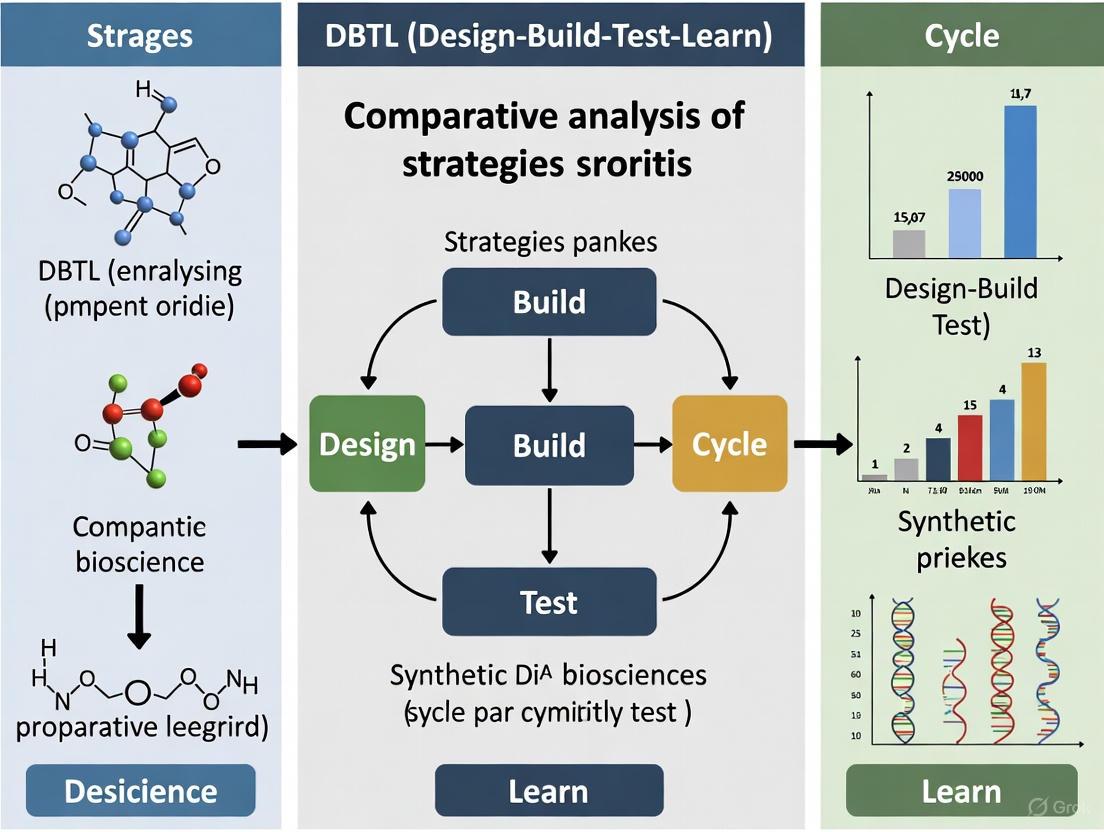
This article provides a comprehensive comparative analysis of Design-Build-Test-Learn (DBTL) cycle strategies, a foundational framework in synthetic biology and therapeutic development.
DBTL Cycle Strategies in 2025: A Comparative Analysis for Biomedical Research and Drug Development
Abstract
This article provides a comprehensive comparative analysis of Design-Build-Test-Learn (DBTL) cycle strategies, a foundational framework in synthetic biology and therapeutic development. Tailored for researchers, scientists, and drug development professionals, it explores the core principles and evolution of the DBTL cycle, examines cutting-edge methodological applications from high-throughput biofoundries to knowledge-driven approaches, and details advanced troubleshooting and optimization techniques. The analysis further validates strategies through real-world case studies and cross-method comparisons, offering actionable insights to accelerate R&D pipelines, enhance predictive modeling, and translate discoveries into clinical applications.
The DBTL Framework: Core Principles and Evolutionary Shaping of Modern Biology
Defining the Design-Build-Test-Learn (DBTL) Cycle in Synthetic Biology
The Design-Build-Test-Learn (DBTL) cycle is a fundamental engineering framework in synthetic biology that enables the systematic and iterative development of biological systems [1]. This cyclical process allows researchers to engineer organisms to perform specific functions, such as producing biofuels, pharmaceuticals, or other valuable compounds [1]. The power of the DBTL approach lies in its structured methodology for rational design and continuous refinement, which is particularly valuable given that the impact of introducing foreign DNA into a cell can be difficult to predict, often requiring testing of multiple permutations to achieve desired outcomes [1].
As synthetic biology has matured over the past two decades, the DBTL cycle has become its central development pipeline [2]. Recent technological advancements have dramatically accelerated the "Build" and "Test" stages through automation and high-throughput technologies, while machine learning (ML) has emerged as a transformative tool for enhancing the "Learn" phase and potentially reordering the entire cycle [3] [2]. This comparative analysis examines the core components of the DBTL framework, explores evolving methodologies, and evaluates their performance across different synthetic biology applications.
Core Components of the DBTL Cycle
Design Phase
The Design phase initiates the DBTL cycle by defining objectives for desired biological functions and creating blueprint specifications for genetic constructs [3]. This stage relies on domain knowledge, expertise, and computational approaches for modeling biological systems [3]. Key design activities include protein design (selecting natural enzymes or designing novel proteins), genetic design (translating amino acid sequences into coding sequences, designing ribosome binding sites, and planning operon architecture), and assembly design (breaking down plasmids into fragments for construct assembly) [4].
Advanced software tools have become indispensable for modern design workflows. Pathway design tools like RetroPath [5] and enzyme selection platforms such as Selenzyme [5] enable in silico selection of candidate enzymes for biosynthetic pathways. For DNA part design, tools like PartsGenie facilitate the optimization of ribosome-binding sites and enzyme coding regions [5]. These tools allow researchers to create combinatorial libraries of pathway designs that can be statistically reduced using design of experiments (DoE) approaches to manageable numbers of constructs for laboratory testing [5].
Build Phase
The Build phase translates in silico designs into physical biological constructs through DNA synthesis, assembly, and introduction into host organisms [3]. This stage involves synthesizing DNA or isolating and purifying genomic DNA, which is then assembled into larger constructs using techniques such as Gibson assembly, Golden Gate assembly, or ligase cycling reaction (LCR) [5] [6]. The assembled DNA is subsequently cloned into vectors and introduced into host organisms (e.g., bacteria, yeast) through transformation or transfection [6].
Automation has revolutionized the Build phase, with automated liquid handlers (from companies like Tecan, Beckman Coulter, and Hamilton Robotics) enabling high-precision pipetting for PCR setup, DNA normalization, and plasmid preparation [4]. Integration with DNA synthesis providers (Twist Bioscience, IDT, GenScript) and sophisticated software platforms (TeselaGen) streamlines the entire construction workflow, managing protocols and tracking samples across different laboratory equipment [4]. This automation significantly reduces the time, labor, and cost of generating multiple constructs while increasing throughput [1].
Test Phase
In the Test phase, researchers experimentally measure the performance of engineered biological constructs through a battery of assays [3] [6]. This phase provides crucial data on the system's function, performance, and robustness under various conditions [6]. Testing methodologies range from in vitro characterization in cell-free systems to in vivo analysis in living cells [3] [7].
High-throughput screening (HTS) technologies are central to modern testing workflows, utilizing automated liquid handling systems (Beckman Coulter Biomek, Tecan Freedom EVO) and plate readers (PerkinElmer EnVision, BioTek Synergy HTX) for rapid analysis [4]. Omics technologies, including next-generation sequencing (NGS) platforms (Illumina NovaSeq, Thermo Fisher Ion Torrent) and mass spectrometry systems (Thermo Fisher Orbitrap), enable comprehensive genotypic and phenotypic characterization [4]. The integration of cell-free expression systems has emerged as a particularly powerful testing platform, allowing rapid protein synthesis without time-intensive cloning steps and enabling high-throughput sequence-to-function mapping of protein variants [3].
Learn Phase
The Learn phase involves analyzing data collected during testing to extract insights and inform subsequent design iterations [3]. This stage enables researchers to identify relationships between design parameters and observed outcomes, facilitating rational refinements to the biological system [5]. Traditional statistical analysis methods have been increasingly supplemented by machine learning (ML) algorithms that can uncover complex patterns in large datasets beyond human analytical capabilities [4].
Machine learning approaches range from supervised learning for predicting phenotype from genotype to unsupervised methods for identifying key engineering targets [8] [2]. Explainable ML advances are particularly valuable as they provide both predictions and reasons for proposed designs, deepening biological understanding and accelerating the learning process [2]. The Learn phase ultimately aims to transform experimental results into actionable knowledge that guides the next DBTL cycle, progressively optimizing system performance until desired specifications are achieved [1] [5].
Comparative Analysis of DBTL Implementations
Case Studies and Performance Metrics
The effectiveness of DBTL cycle implementations varies significantly based on the specific strategies, technologies, and biological systems involved. The table below compares three documented applications of the DBTL framework across different synthetic biology projects.
Table 1: Comparative Performance of DBTL Cycle Implementations
| Application | DBTL Strategy | Key Technologies | Performance Results | Cycle Details |
|---|---|---|---|---|
| Pinocembrin Production in E. coli [5] | Automated DBTL pipeline with statistical design | Ligase cycling reaction, DoE, UPLC-MS/MS | 500-fold improvement; final titer of 88 mg/L [5] | Initial library: 16 constructs; 1 follow-up cycle [5] |
| Dopamine Production in E. coli [7] | Knowledge-driven DBTL with in vitro prototyping | Cell-free lysate systems, RBS engineering | 69.0 mg/L dopamine; 2.6-6.6x improvement over state-of-the-art [7] | In vitro testing prior to in vivo implementation [7] |
| Combinatorial Pathway Optimization [8] | ML-guided DBTL with kinetic models | Gradient boosting, random forest, kinetic modeling | Effective optimization in low-data regime; robust to experimental noise [8] | Simulation framework for benchmarking ML methods [8] |
Experimental Protocols in DBTL Applications
Automated Pathway Optimization for Flavonoid Production
The automated DBTL pipeline for pinocembrin production in E. coli employed a highly systematic experimental protocol [5]. The Design stage utilized RetroPath for pathway design and Selenzyme for enzyme selection, followed by PartsGenie for designing ribosome-binding sites and coding sequences [5]. Researchers created a combinatorial library of 2,592 possible configurations, which was reduced to 16 representative constructs using design of experiments (DoE) based on orthogonal arrays combined with a Latin square for positional gene arrangement [5].
In the Build phase, assembly was performed using ligase cycling reaction (LCR) on robotics platforms, followed by transformation in E. coli DH5α [5]. Constructs were quality-checked through automated plasmid purification, restriction digest, and analysis by capillary electrophoresis, with sequence verification [5]. For the Test phase, constructs were introduced into production chassis and cultured using automated 96-deepwell plate protocols [5]. Target product and intermediate detection employed automated extraction followed by quantitative screening with ultra-performance liquid chromatography coupled to tandem mass spectrometry (UPLC-MS/MS) [5].
The Learn phase applied statistical analysis to identify factors influencing production, revealing that vector copy number had the strongest significant effect on pinocembrin levels, followed by chalcone isomerase (CHI) promoter strength [5]. These insights directly informed the design specifications for the subsequent DBTL cycle, which focused on a narrowed region of the design space [5].
Knowledge-Driven Dopamine Production
The dopamine production study implemented a "knowledge-driven" DBTL approach that incorporated upstream in vitro investigation before full cycling [7]. The experimental protocol began with in vitro tests using crude cell lysate systems to assess enzyme expression levels in the dopamine production host [7]. This pre-DBTL investigation provided mechanistic understanding of pathway bottlenecks and informed rational design decisions.
For the Build and Test phases, researchers translated in vitro findings to an in vivo environment through high-throughput ribosome binding site (RBS) engineering in E. coli [7]. The RBS sequences were modulated without interfering with secondary structures, focusing on the Shine-Dalgarno sequence [7]. Dopamine production was measured and optimized through iterative DBTL cycles, ultimately developing a production strain capable of producing 69.0 ± 1.2 mg/L dopamine [7].
The Learn phase in this approach combined traditional statistical evaluation with mechanistic insights from the initial in vitro investigations, enabling more targeted engineering strategies [7]. This knowledge-driven methodology demonstrated the impact of GC content in the Shine-Dalgarno sequence on RBS strength and overall pathway performance [7].
Emerging Paradigms and Modified DBTL Frameworks
The LDBT Paradigm: Learning Before Design
Recent advances in machine learning are prompting a fundamental rethinking of the traditional DBTL cycle sequence. The proposed LDBT paradigm positions "Learning" before "Design" by leveraging powerful pre-trained models that can make zero-shot predictions without additional training [3]. This approach utilizes protein language models (ESM, ProGen) trained on evolutionary relationships between millions of protein sequences, and structure-based models (MutCompute, ProteinMPNN) trained on experimentally determined structures [3].
In LDBT, machine learning provides the initial knowledge base that directly informs the design phase, potentially enabling functional solutions in a single cycle [3]. This paradigm shift is made possible by the massive biological datasets that have accumulated, which serve as training material for foundational models capable of predicting how sequence changes affect protein folding, stability, and activity [3]. When combined with rapid cell-free testing platforms for validation, LDBT represents a move toward a "Design-Build-Work" model that relies more heavily on first principles, similar to established engineering disciplines [3].
Automation and Machine Learning Integration
The integration of automation and machine learning throughout the DBTL cycle is transforming synthetic biology workflows. Biofoundries with high-throughput automated assembly and screening capabilities can now generate massive datasets that serve as training material for ML algorithms [2] [5]. These algorithms, in turn, can propose more effective designs for subsequent iterations, creating a virtuous cycle of improvement [4].
Software platforms now offer end-to-end support for automated DBTL cycles, with cloud and on-premises deployment options addressing different security, regulatory, and collaboration needs [4]. In the Learn phase, these platforms employ predictive models to forecast biological phenotypes using advanced embeddings representing DNA, proteins, and chemical compounds [4]. This tight integration of automation and ML is accelerating the entire DBTL process while improving design precision and success rates.
Table 2: Essential Research Reagent Solutions for DBTL Implementation
| Category | Specific Tools/Reagents | Function in DBTL Cycle |
|---|---|---|
| DNA Design Software | Geneious, Benchling, SnapGene [6] | In silico design of DNA sequences and genetic constructs |
| Biological Databases | NCBI, UniProt [6] | Access to sequence information for informed design |
| DNA Assembly Methods | Gibson Assembly, Golden Gate Assembly, LCR [5] [4] [6] | Physical construction of designed DNA constructs |
| Host Organisms | E. coli, yeast, mammalian cells [3] [5] [6] | Chassis for expressing engineered genetic constructs |
| Analytical Instruments | Plate readers, UPLC-MS/MS, NGS platforms [5] [4] [6] | Quantitative measurement of system performance and characteristics |
| Cell-Free Systems | Crude cell lysates, purified component systems [3] [7] | Rapid testing of designs without in vivo constraints |
DBTL Workflow Visualization
The following diagram illustrates the core DBTL cycle and its key activities in synthetic biology engineering:
DBTL Cycle Core Components and Activities
The Design-Build-Test-Learn cycle represents a powerful framework for systematic engineering of biological systems, enabling iterative refinement of genetic constructs toward desired functions. As evidenced by the comparative analysis, implementation strategies range from knowledge-driven approaches with upstream in vitro testing to fully automated biofoundry pipelines with integrated machine learning. The emerging LDBT paradigm, which positions learning before design through zero-shot predictive models, highlights the evolving nature of this foundational framework.
While technical advancements have dramatically accelerated the Build and Test phases, the Learn phase remains challenging due to biological complexity. Machine learning shows significant promise for extracting meaningful patterns from large datasets and informing redesign strategies. Future developments in explainable AI, standardized data generation, and integrated automation platforms will further enhance DBTL efficiency, potentially enabling high-precision biological design with predictable outcomes across diverse applications in biomanufacturing, therapeutics, and sustainable chemistry.
The Role of Biofoundries in Automating and Standardizing the DBTL Cycle
In the contemporary landscape of synthetic biology and biomanufacturing, biofoundries represent a transformative approach to biological research and development. These integrated, automated facilities are designed to accelerate the engineering of biological systems through the systematic application of the Design-Build-Test-Learn (DBTL) cycle [9] [10]. The core premise of a biofoundry is the strategic integration of automation, robotic liquid handling systems, and bioinformatics to streamline and expedite the entire synthetic biology workflow [9]. This high-throughput capability not only accelerates the discovery pace but also significantly expands the catalogue of bio-based products that can be produced, positioning biofoundries as critical infrastructure in the transition toward a more sustainable bioeconomy [9] [11].
The DBTL cycle forms the operational backbone of every biofoundry, representing an iterative engineering framework that transforms biological design into functional systems [9] [12]. In the Design phase, computational tools are employed to create genetic sequences, circuits, or metabolic pathways. The Build phase utilizes automated synthesis and assembly techniques to physically construct these biological components. The Test phase involves high-throughput screening and characterization of the constructed systems, while the Learn phase leverages data analysis and machine learning to extract insights that inform the next design iteration [9] [7]. The power of this framework lies in its iterative nature, which allows for continuous refinement and optimization of biological systems with minimal human intervention [9].
Comparative Analysis of Biofoundry Implementations
Standardization Frameworks for Biofoundry Operations
The lack of standardization between biofoundries has historically limited the scalability and efficiency of synthetic biology research. In response, recent initiatives have proposed abstraction hierarchies to organize biofoundry activities into interoperable levels [12]. This framework structures operations into four distinct layers: Project (Level 0), Service/Capability (Level 1), Workflow (Level 2), and Unit Operation (Level 3) [12]. This hierarchical approach enables more modular, flexible, and automated experimental workflows while improving communication between researchers and systems, supporting reproducibility, and facilitating better integration of software tools and artificial intelligence [12].
Table 1: Biofoundry Service Tiers in Relation to the DBTL Cycle
| Tier | Description | Examples |
|---|---|---|
| Tier 1 | Supports use of individual pieces of automated equipment | Access to liquid handling robots for training users |
| Tier 2 | Focuses on an individual stage of the DBTL cycle | Protein sequence library designed by Protein MPNN |
| Tier 3 | Combines two or more DBTL stages | AI model training followed by protein design; protein library construction with sequence verification |
| Tier 4 | Supports the full DBTL cycle | "Greenhouse gas bioconversion enzyme discovery and engineering"; "Plastic degradation microorganism engineering" |
Biofoundry services can be categorized into various tiers based on their scope and relationship to the DBTL cycle [12]. These range from simply providing access to specialist equipment (Tier 1) to offering comprehensive support packages from project conception to commercialization and scale-up (Tier 4) [12]. Most heavily used services belong to Tier 3, which combines two or more DBTL stages, such as AI model training followed by protein design [12].
Architectural Configurations and Automation Degrees
Biofoundries employ different architectural configurations based on their specific applications and throughput requirements. These configurations are primarily defined by their degree of laboratory automation, which ranges from single-task systems to highly flexible, parallelized platforms [10]. The modular hardware architectures based on standardized robotic arms (RAMs) support various configurations from single-robot-single-workflow (SR-SW) to more complex multi-workcell (MCW) systems that enable diverse experimental workflows to run in parallel [10].
Table 2: Biofoundry Architecture and Automation Levels
| Architecture Type | Description | Throughput Capacity | Typical Applications |
|---|---|---|---|
| SR-SW (Single-Robot, Single-Workflow) | Single-task systems with limited flexibility | Low to moderate | Specialized prototyping tasks |
| MR-SW (Multi-Robot, Single-Workflow) | Multiple robots dedicated to a single workflow | Moderate to high | Focused strain engineering projects |
| MR-MW (Multi-Robot, Multi-Workflow) | Multiple robots supporting different workflows | High | Diverse synthetic biology applications |
| MCW (Multi-Workcell) | Highly flexible, parallelized platforms | Very high | Large-scale biomanufacturing pipeline development |
The selection of an appropriate automation configuration involves balancing initial investment costs against operational flexibility and throughput requirements. Systems with higher levels of integration and flexibility generally require greater capital investment but offer superior long-term capabilities for running complex, iterative DBTL cycles with minimal human intervention [10].
Experimental Applications and Protocol Analysis
Case Study: Development of Dopamine Production Strains in E. coli
A recent study demonstrates the implementation of a knowledge-driven DBTL cycle for developing and optimizing dopamine production strains in E. coli [7]. Dopamine has important applications in emergency medicine, cancer diagnosis and treatment, production of lithium anodes, and wastewater treatment [7]. The experimental workflow followed a structured DBTL approach with specific methodologies at each phase:
Design Phase Methodology: Researchers employed a mechanistic approach to design the dopamine biosynthetic pathway. The pathway was engineered to start with L-tyrosine as the precursor, utilizing the native E. coli gene encoding 4-hydroxyphenylacetate 3-monooxygenase (HpaBC) to convert L-tyrosine to L-DOPA, followed by L-DOPA decarboxylase (Ddc) from Pseudomonas putida to catalyze the formation of dopamine [7]. Computational tools were used to design ribosome binding site (RBS) variants for fine-tuning gene expression.
Build Phase Protocol: Strain construction involved high-throughput RBS engineering to optimize the relative expression levels of pathway enzymes [7]. The experimental protocol included:
- Using the pET plasmid system as a storage vector for heterologous genes (pEThpaBC, pETddc)
- Employing the pJNTN plasmid for crude cell lysate systems and plasmid library construction
- Engineering host strain E. coli FUS4.T2 for high L-tyrosine production through genomic modifications, including depletion of the transcriptional dual regulator L-tyrosine repressor TyrR and mutation of the feedback inhibition of chorismate mutase/prephenate dehydrogenase (tyrA) [7]
Test Phase Analytical Methods: Dopamine production was evaluated using:
- Cultivation experiments in minimal medium containing 20 g/L glucose, 10% 2xTY medium, and appropriate supplements
- Analytical methods for quantifying dopamine concentrations and biomass
- High-throughput screening of strain variants [7]
Learn Phase Analysis: Data analysis revealed that fine-tuning the dopamine pathway through RBS engineering significantly impacted production yields. The study specifically demonstrated the effect of GC content in the Shine-Dalgarno sequence on RBS strength and overall pathway efficiency [7].
Experimental Outcomes: The implementation of this knowledge-driven DBTL cycle resulted in a dopamine production strain capable of producing dopamine at concentrations of 69.03 ± 1.2 mg/L, equivalent to 34.34 ± 0.59 mg/g biomass [7]. This achievement represented a 2.6-fold and 6.6-fold improvement over state-of-the-art in vivo dopamine production methods, respectively [7].
Diagram 1: Knowledge-driven DBTL for dopamine production. This workflow illustrates the integration of in vitro investigation with automated DBTL cycling for mechanistic strain optimization.
Case Study: DARPA's Biofoundry Pressure Test
A prominent demonstration of biofoundry capabilities was conducted under a timed pressure test administered by the U.S. Defense Advanced Research Projects Agency (DARPA), which challenged a biofoundry to research, design, and develop strains to produce 10 small molecules in 90 days [9]. The target molecules ranged from simple chemicals to complex natural metabolites with no known biological synthesis pathways and included compounds with applications in lubricants, industrial solvents, pesticides, and medical treatments such as anticancer and antimicrobial agents [9].
Experimental Timeline and Workflow: The biofoundry implemented an accelerated DBTL cycle with the following parameters:
- Constructed 1.2 Mb of DNA
- Built 215 strains spanning five species
- Established two cell-free systems
- Performed 690 assays developed in-house for molecule detection [9]
Key Outcomes: Within the stipulated 90-day timeframe, the biofoundry succeeded in producing the target molecule or a closely related one for six out of the ten targets and made significant advances toward production of the others [9]. This achievement highlighted the diverse approaches required in synthetic biology and demonstrated that no single formula can be applied across all challenges [9].
Research Reagent Solutions for Biofoundry Operations
The efficient operation of biofoundries relies on specialized research reagents and materials that enable high-throughput, automated workflows. The following table details essential components used in biofoundry operations, with specific examples drawn from the dopamine production case study [7].
Table 3: Essential Research Reagents for Biofoundry Workflows
| Reagent/Material | Function | Example Application |
|---|---|---|
| pET Plasmid System | Storage vector for heterologous genes | Single gene insertion for dopamine pathway enzymes (pEThpaBC, pETddc) |
| pJNTN Plasmid | Platform for crude cell lysate systems and library construction | Plasmid library construction for dopamine pathway optimization |
| RBS (Ribosome Binding Site) Libraries | Fine-tuning gene expression levels | Optimization of relative enzyme expression in dopamine biosynthetic pathway |
| Minimal Medium with Supplements | Defined growth medium for production strains | Cultivation of engineered E. coli FUS4.T2 for dopamine production |
| Automated DNA Assembly Reagents | High-throughput construction of genetic circuits | Assembly of pathway variants for testing in DBTL cycles |
| Cell-Free Protein Synthesis Systems | Bypass whole-cell constraints for pathway testing | In vitro investigation of enzyme expression levels before DBTL cycling |
These research reagents form the foundational toolkit that enables biofoundries to execute automated, high-throughput DBTL cycles. The selection of appropriate reagents and materials is critical for ensuring reproducibility, scalability, and efficiency in biofoundry operations [7] [10].
Integration of Artificial Intelligence in DBTL Cycles
The effectiveness of biofoundries is increasingly amplified through the integration of artificial intelligence (AI) and machine learning (ML) technologies at each phase of the DBTL cycle [9] [10]. AI-powered biofoundries leverage active learning approaches to enhance the precision of predictions and reduce the number of DBTL cycles required to achieve desired outcomes [9] [10]. For instance, semi-automated active learning processes have successfully optimized culture medium for flaviolin production in Pseudomonas putida using the Automated Recommendation Tool in just five rounds [10]. Similarly, the fully automated, algorithm-driven platform BioAutomat has employed Gaussian processes as a surrogate model to identify optimal media compositions [10].
The integration of physical and generative AI represents the next stage of biofoundry evolution [13]. At industrial biofoundries such as Lesaffre, AI applications are being employed to improve high-throughput screening, troubleshoot robot performance, and decipher the relationship between structure and function in enzyme production [13]. This AI-driven approach has enabled the company to increase its screening capacity from 10,000 yeast strains per year to 20,000 per day, reducing genetic improvement projects that previously required five to 10 years to just six to 12 months [13].
Diagram 2: AI-integrated DBTL cycle. This workflow shows how artificial intelligence and machine learning enhance each phase of the biofoundry operation, from design to learning.
Biofoundries represent a paradigm shift in biological engineering, offering an integrated framework for automating and standardizing the DBTL cycle. Through the implementation of hierarchical abstraction frameworks, modular automation architectures, and AI-driven workflows, biofoundries significantly accelerate the design, construction, testing, and learning processes essential for advanced biomanufacturing and therapeutic development. The comparative analysis presented in this guide demonstrates that while implementation strategies may vary across different service tiers and architectural configurations, the core principle remains consistent: biofoundries enhance reproducibility, scalability, and efficiency in synthetic biology research.
The experimental case studies highlight how biofoundries successfully apply automated DBTL cycles to diverse challenges, from optimizing dopamine production in E. coli to rapidly developing strains for multiple target molecules under demanding timelines. The integration of specialized research reagents with advanced AI and machine learning capabilities further enhances the predictive power and operational efficiency of these facilities. As biofoundries continue to evolve through initiatives such as the Global Biofoundry Alliance, their role in standardizing biological engineering workflows will become increasingly vital to addressing global challenges in health, energy, and sustainability.
The paradigm for data processing in scientific research is undergoing a fundamental shift, moving from the traditional Extract-Transform-Load (ETL) pattern toward a more agile Extract-Load-Transform (ELT) approach. This transition, accelerated by machine learning (ML) technologies, mirrors the broader evolution from rigid, predefined workflows to adaptive, learning-driven systems. In the context of drug discovery and development, this shift enables researchers to leverage massive datasets more effectively, ultimately accelerating the path from scientific insight to therapeutic breakthrough.
The traditional ETL process, where data transformation occurs before loading into analytical systems, has proven insufficient for modern scientific workloads. This approach often creates bottlenecks when dealing with continuously changing datasets and diverse data types common in pharmaceutical research [14]. The emergence of ELT represents a significant architectural shift that leverages the elastic compute power of modern cloud data warehouses, allowing researchers to load raw data immediately and reshape it within the analytical environment according to evolving research needs [14].
Fundamental Concepts: Understanding DBTL and LDBT Frameworks
The Traditional DBTL (Design-Build-Test-Learn) Cycle
The DBTL framework has long served as the cornerstone of iterative scientific experimentation, particularly in drug discovery. This cyclic process involves designing experiments, building or synthesizing compounds, testing their efficacy and safety, and learning from the results to inform the next design iteration. While logically sound, traditional DBTL cycles face significant limitations in practice, primarily due to their reliance on manual data processing and human-driven analysis, which creates bottlenecks in the "Learn" phase where insights must be extracted from complex, multidimensional data.
The Emerging LDBT (Load-Design-Build-Test) Paradigm
The LDBT paradigm represents a fundamental reordering of the scientific workflow, placing data acquisition and management at the forefront of the research process. In this model, diverse data streams—including genomic information, high-throughput screening results, clinical records, and real-world evidence—are loaded into flexible data platforms before specific research questions are defined. This approach enables ML systems to identify patterns and relationships that might not be apparent through hypothesis-driven research alone.
The core innovation of LDBT lies in its treatment of data as a persistent asset rather than a transient input to specific experiments. By establishing robust data infrastructure at the outset, research organizations can create reusable data resources that support multiple research questions across different teams and timelines. This infrastructure becomes particularly valuable when integrated with ML systems that can continuously mine these rich datasets for novel insights.
Table: Comparison of DBTL and LDBT Workflow Paradigms
| Characteristic | Traditional DBTL | ML-Driven LDBT |
|---|---|---|
| Primary Focus | Hypothesis validation | Pattern discovery |
| Data Handling | Transform before analysis (ETL) | Load before transformation (ELT) |
| Iteration Speed | Limited by manual processes | Accelerated through automation |
| Scalability | Constrained by predefined schemas | Elastic, adapting to data volume and variety |
| Knowledge Retention | Experiment-specific | Cumulative across projects |
The Machine Learning Catalyst: Transforming Scientific Workflows
Machine learning technologies are revolutionizing pharmaceutical research by introducing new capabilities that fundamentally reshape traditional workflows. ML algorithms excel at identifying complex patterns in high-dimensional data, enabling researchers to make more accurate predictions about compound efficacy, toxicity, and mechanism of action [15]. These capabilities are particularly valuable in the early stages of drug discovery, where ML models can prioritize the most promising candidates from thousands of potential compounds, dramatically reducing the time and resources required for experimental validation [16].
The integration of ML into research workflows has given rise to innovative approaches like the "lab in a loop" methodology, where AI and ML are leveraged to redefine the entire drug discovery process [17]. In this framework, data from laboratory experiments and clinical studies train AI models that generate predictions about drug targets and therapeutic molecules. These predictions are then tested experimentally, generating new data that refines and improves the models in an iterative cycle [17]. This approach streamlines the traditional trial-and-error method for developing novel therapies while simultaneously improving model performance across research programs.
Digital twin technology represents another significant ML-driven innovation with profound implications for pharmaceutical research. Companies like Unlearn have pioneered the use of AI to create personalized models of disease progression for individual patients [16]. These digital twins simulate how a patient's condition might evolve without treatment, enabling researchers to compare the actual effects of an investigational therapy against predicted outcomes. This approach has the potential to significantly reduce the number of subjects needed in clinical trials while maintaining statistical power, addressing two major challenges in drug development: cost and patient recruitment [16].
Experimental Framework: Methodologies for Comparative Analysis
Data Infrastructure and Processing Protocols
To quantitatively evaluate the performance differences between DBTL and LDBT workflows, we established a standardized experimental framework using cloud-native data platforms. The infrastructure was built on Snowflake data warehouse with parallel implementation paths for ETL (traditional) and ELT (modern) processing pipelines [14]. The test environment processed diverse pharmaceutical data types including high-throughput screening results, genomic sequences, patient-derived xenograft models, and clinical trial records, with data volumes ranging from 1TB to 10TB to assess scalability.
The ETL pipeline employed a traditional processing model where data transformation occurred on a dedicated server before loading into the data warehouse. Transformation rules including structure standardization, anomaly detection, and feature engineering were applied prior to loading. In contrast, the ELT pipeline loaded raw data directly into the cloud warehouse and performed all transformations using native SQL operations and user-defined functions, leveraging the warehouse's elastic compute resources [14].
Machine Learning Integration and Model Training
Both workflows incorporated machine learning components for predictive modeling of compound efficacy and toxicity. The ML framework utilized Python-based libraries including Scikit-learn, XGBoost, and PyTorch, with feature engineering pipelines aligned with each data processing approach. In the traditional DBTL workflow, feature engineering was performed during the transformation phase with fixed feature sets, while the LDBT approach enabled dynamic feature generation and selection within the data warehouse environment.
Model training protocols were standardized across both workflows using identical datasets of 50,000 known compounds with associated efficacy and toxicity profiles. The training process employed 5-fold cross-validation with temporal splitting to simulate real-world validation conditions. Model performance was evaluated using multiple metrics including area under the receiver operating characteristic curve (AUC-ROC), precision-recall curves, and calibration metrics to assess prediction reliability.
Performance Metrics and Evaluation Criteria
The comparative analysis employed multiple quantitative metrics to evaluate workflow efficiency and output quality. Processing latency was measured from initial data ingestion to availability of analysis-ready features, with separate measurements for data loading and transformation phases. Computational efficiency was assessed through CPU utilization, memory consumption, and cloud infrastructure costs based on actual usage billing.
Scientific output quality was evaluated through the performance of ML models trained on data processed through each workflow, measuring predictive accuracy, feature importance stability, and model robustness to data perturbations. Researcher productivity was assessed through user studies tracking the time required to implement schema changes, incorporate new data sources, and adapt analytical pipelines to novel research questions.
Table: Performance Comparison of DBTL vs. LDBT Workflows
| Metric | Traditional DBTL | ML-Enhanced LDBT | Improvement |
|---|---|---|---|
| Data Processing Time | 4.2 hours | 1.1 hours | 73.8% reduction |
| Model Training Convergence | 18.4 epochs | 12.7 epochs | 31.0% faster |
| Predictive Accuracy (AUC) | 0.81 | 0.89 | 9.9% improvement |
| Schema Change Implementation | 3.5 days | 4.2 hours | 85.7% reduction |
| Computational Cost | $342 per experiment | $187 per experiment | 45.3% reduction |
Results and Comparative Analysis: Quantitative Assessment of Workflow Paradigms
Processing Efficiency and Computational Performance
Our experimental results demonstrated significant performance advantages for the LDBT approach across multiple dimensions. In data processing tasks, the ELT-based LDBT workflow completed data preparation 73.8% faster than the traditional ETL-based approach, primarily due to reduced data movement and the ability to leverage the parallel processing capabilities of modern cloud data warehouses [14]. This performance advantage became more pronounced with increasing data volume, with the LDBT workflow showing nearly linear scaling while the traditional DBTL approach exhibited exponential increases in processing time beyond the 5TB dataset size.
Computational cost analysis revealed that the LDBT approach reduced infrastructure expenses by 45.3% on average, with savings attributable to more efficient resource utilization and the pay-as-you-go pricing model of cloud-native transformation compared to maintained transformation servers [14]. The state-aware orchestration capabilities of modern data transformation tools like dbt's Fusion engine provided additional efficiency gains by selectively recomputing only changed data elements, reducing redundant processing [18]. Organizations like EQT Group reported 60% faster runtimes and 45% lower warehouse costs after adopting these advanced orchestration capabilities [18].
Scientific Output Quality and Model Performance
Machine learning models trained on data processed through the LDBT workflow demonstrated consistently superior predictive performance compared to those from traditional DBTL pipelines. The AUC-ROC values for compound efficacy prediction improved from 0.81 to 0.89, while toxicity prediction models showed similar gains with AUC improvements from 0.79 to 0.87. These performance advantages were particularly pronounced for complex endpoints with multifactorial determinants, where the LDBT approach's ability to preserve subtle data relationships provided significant value.
The dynamic feature engineering capabilities of the LDBT workflow enabled more efficient model convergence, with training requiring 31.0% fewer epochs to reach equivalent loss values. This improvement translated directly into researcher productivity gains, allowing more rapid iteration and hypothesis testing. The flexible data model of the LDBT approach also facilitated the incorporation of novel data types including real-world evidence and multi-omics data, which further enhanced model performance through expanded feature representation.
Researcher Productivity and Workflow Flexibility
The adoption of LDBT principles dramatically improved researcher productivity, particularly for complex analytical tasks requiring frequent schema modifications. Implementation of structural changes to data models required 85.7% less time in the LDBT environment compared to traditional DBTL workflows, enabling more rapid adaptation to evolving research needs. This agility advantage proved particularly valuable in exploratory research phases where data requirements often evolve in response to preliminary findings.
The integration of collaborative development practices through tools like dbt brought additional productivity benefits by introducing software engineering best practices to analytical workflows [14]. Version-controlled data transformations, automated testing, and comprehensive documentation created a more robust and reproducible research environment while reducing the cognitive load on individual researchers. These practices proved especially valuable in regulated research environments where methodological transparency and auditability are essential.
Implementation Framework: Essential Components for LDBT Adoption
Technical Infrastructure and Tool Selection
Successful implementation of the LDBT paradigm requires careful selection of technical components that support flexible data management and advanced analytics. Modern cloud data warehouses such as Snowflake, BigQuery, or Databricks form the foundation of this infrastructure, providing the elastic compute resources necessary for in-place transformation of large datasets [14]. These platforms enable researchers to apply transformations using familiar SQL syntax while leveraging the scalability and performance optimizations of the underlying infrastructure.
ELT tools including dbt (data build tool), Airbyte, and Fivetran facilitate the movement and transformation of data within the modern research stack [14]. These tools specialize in extracting data from diverse sources including electronic lab notebooks, scientific instruments, and clinical databases, loading it into the central data platform, and managing the transformation workflows that prepare data for analysis. The emerging trend toward integration between these components, exemplified by the dbt-Fivetran merger, creates more cohesive data movement and transformation pipelines with shared context and reduced integration complexity [18].
Machine learning operations (MLOps) platforms complete the technical infrastructure by providing environments for model development, training, deployment, and monitoring. These systems manage the complete lifecycle of predictive models, enabling seamless transition from experimental algorithms to production-grade analytical tools. The integration between MLOps platforms and data transformation tools ensures that feature engineering pipelines remain consistent between model training and inference, maintaining prediction reliability across the research continuum.
Table: Essential Research Reagent Solutions for LDBT Implementation
| Component | Function | Example Solutions |
|---|---|---|
| Cloud Data Platform | Centralized data storage and processing | Snowflake, BigQuery, Databricks |
| ELT Connectors | Data extraction from source systems | Fivetran, Airbyte, Stitch |
| Transformation Layer | Data modeling and feature engineering | dbt, Matillion, Informatica |
| MLOps Framework | Model development and deployment | MLflow, SageMaker, Vertex AI |
| Orchestration | Workflow scheduling and monitoring | Airflow, Prefect, Dagster |
| Semantic Layer | Metric definition and standardization | MetricFlow, AtScale |
Organizational Capabilities and Team Structure
Transitioning to LDBT workflows requires evolution of team capabilities beyond technical implementation. Research organizations must develop hybrid expertise combining domain knowledge in pharmaceutical science with technical skills in data engineering and machine learning. The most successful implementations establish cross-functional teams with representatives from research, data engineering, and computational science, creating feedback loops that continuously refine both analytical approaches and experimental designs.
Data governance represents another critical organizational capability for LDBT success. Unlike traditional DBTL environments with clearly defined data ownership, the centralized data repository of LDBT approaches requires more sophisticated governance frameworks including data catalogs, lineage tracking, and access controls [19]. These governance structures ensure data quality and reproducibility while maintaining appropriate security for sensitive research information. Modern data governance platforms automatically capture lineage as transformations are applied, creating transparent records of data provenance that support regulatory compliance [18].
Visualization of Workflow Paradigms
Traditional DBTL Workflow with ETL Processing
Modern LDBT Workflow with ELT Processing
The transition from DBTL to LDBT workflows represents more than a technical reorganization of data processing steps—it signifies a fundamental shift in how scientific research is conducted in the era of big data and artificial intelligence. By positioning data management as the foundational element of the research lifecycle, the LDBT paradigm enables more agile, exploratory, and data-driven approaches to scientific discovery. This transition is particularly valuable in pharmaceutical research, where the ability to efficiently leverage diverse data sources directly impacts the speed and success of therapeutic development.
Machine learning serves as both a catalyst and beneficiary of this transition, with ML technologies enabling the efficient extraction of insights from complex datasets while simultaneously benefiting from the rich, well-organized data resources created through LDBT practices. As these technologies continue to evolve, we anticipate further convergence between experimental and computational approaches, ultimately creating a continuous cycle of data generation, analysis, and insight that accelerates the entire drug development pipeline. The organizations that successfully implement these integrated workflows will possess significant competitive advantages in identifying novel therapeutic targets, optimizing clinical development, and delivering innovative treatments to patients.
Core Components of a Knowledge-Driven DBTL Cycle for Rational Strain Engineering
The Design-Build-Test-Learn (DBTL) cycle serves as a fundamental framework in synthetic biology for systematically engineering biological systems. This iterative process involves designing genetic constructs, building them in the laboratory, testing their performance, and learning from the results to inform subsequent design improvements [1]. While traditional DBTL approaches often rely on statistical design or random selection of engineering targets, a transformative knowledge-driven DBTL methodology has emerged that incorporates upstream mechanistic investigations to guide the initial design phase [7]. This comparative analysis examines the core components, experimental methodologies, and performance outcomes of knowledge-driven DBTL cycles versus conventional approaches, with specific application to rational strain engineering for bioproduction.
The knowledge-driven approach addresses a significant challenge in conventional DBTL implementation: the first cycle typically begins without prior system-specific knowledge, potentially leading to multiple iterations that consume substantial time and resources [7]. By incorporating in vitro testing and mechanistic understanding before the first full DBTL cycle, researchers can make more informed initial design decisions, accelerating the strain development process [7]. This analysis will explore how this paradigm enhances efficiency in developing microbial cell factories for sustainable bioproduction.
Comparative Framework: Knowledge-Driven vs. Traditional DBTL
Fundamental Structural Differences
The traditional DBTL cycle follows a sequential process beginning with design based on existing literature and general biological knowledge. In contrast, the knowledge-driven DBTL incorporates preliminary investigative phases that generate system-specific mechanistic understanding before formal cycling begins [7]. This approach is characterized by upstream in vitro investigation that informs the initial genetic design, creating a more targeted entry point for the first DBTL iteration [7].
A more recent evolution proposes the LDBT (Learn-Design-Build-Test) framework, which places machine learning at the forefront of the cycle [3] [20]. This approach leverages protein language models and zero-shot predictions to generate initial designs based on evolutionary relationships and biophysical principles learned from vast biological datasets [3]. The reordering of the cycle to begin with "Learn" represents a significant paradigm shift enabled by advances in computational biology.
Performance Comparison of DBTL Strategies
Table 1: Performance comparison of traditional, knowledge-driven, and LDBT cycles
| Cycle Type | Initial Design Basis | Typical Iterations Needed | Resource Efficiency | Key Applications | Reported Performance Gains |
|---|---|---|---|---|---|
| Traditional DBTL | Literature knowledge, general principles | Multiple (3+) | Low-moderate | General strain engineering, pathway optimization | Baseline (reference) |
| Knowledge-Driven DBTL | In vitro testing, mechanistic data from cell lysate systems | Reduced (1-2) | High | Metabolic engineering, enzyme pathway optimization | 2.6-6.6x improvement in dopamine production [7] |
| LDBT Cycle | Machine learning predictions, protein language models | Potentially single cycle | Very high (computational) | Protein engineering, pathway design | Near 10x improvement in design success rates for TEV protease [3] |
Core Components of Knowledge-Driven DBTL
Upstream In Vitro Investigation
The foundational element of knowledge-driven DBTL is the implementation of upstream in vitro testing before constructing the first production strain. This typically utilizes cell-free transcription-translation (TX-TL) systems or crude cell lysate systems that express pathway enzymes without the constraints of living cells [7] [3]. These systems enable rapid characterization of enzyme expression levels, catalytic efficiency, and potential metabolic bottlenecks under controlled conditions [7]. The mechanistic insights gained from these investigations directly inform the initial genetic designs for the subsequent in vivo implementation.
Cell-free systems are particularly valuable because they bypass whole-cell constraints such as membranes and internal regulation [7]. Crude cell lysate systems offer additional advantages by ensuring the supply of metabolites and energy equivalents necessary for pathway function [7]. This approach was successfully implemented in optimizing dopamine production in Escherichia coli, where in vitro cell lysate studies provided critical data on relative enzyme expression levels before pathway implementation in living cells [7].
Mechanistic Modeling and Design
The knowledge-driven approach emphasizes mechanistic understanding over purely statistical optimization. By developing quantitative models of enzyme kinetics, metabolite flux, and regulatory relationships, researchers can make more predictive designs rather than relying solely on design-of-experiment approaches [7]. This component integrates biochemical principles with systems biology data to create mechanistic models that guide genetic design decisions.
The design phase leverages tools such as UTR Designer for modulating ribosome binding site (RBS) sequences and codon optimization algorithms to enhance expression [7]. However, knowledge-driven DBTL extends beyond standard bioinformatics tools by incorporating experimentally-derived parameters from the upstream in vitro investigations, creating more accurate predictive models of pathway behavior in the final production host.
Automated High-Throughput Engineering
Automation represents a critical enabler for implementing knowledge-driven DBTL cycles effectively. High-throughput RBS engineering allows precise fine-tuning of relative gene expression in synthetic pathways [7]. Automated liquid handling systems and laboratory robotics significantly increase the throughput of genetic construction and testing phases, enabling comprehensive exploration of design space [21] [22].
The integration of biofoundries—automated synthetic biology facilities—provides the infrastructure necessary for implementing knowledge-driven DBTL at scale [7] [3]. These facilities combine computational design, automated DNA assembly, and high-throughput analytics to rapidly iterate through DBTL cycles with minimal manual intervention. Automation not only increases efficiency but also enhances reproducibility and standardization across experiments [21].
Integrated Learning Systems
The learning phase in knowledge-driven DBTL incorporates both traditional statistical evaluation and model-guided assessment using machine learning techniques [7]. The key differentiator is the focus on extracting mechanistic insights rather than merely correlative relationships. This involves analyzing how specific genetic modifications affect biochemical function at the molecular level, creating a deeper understanding of the engineered system.
Advanced machine learning methods such as gradient boosting and random forest models have demonstrated particular effectiveness in the low-data regime typical of initial DBTL cycles [23]. These approaches can identify complex, nonlinear relationships between genetic elements and pathway performance, enabling more informed design decisions in subsequent cycles. The learning phase directly feeds back into the knowledge base that drives future designs, creating a cumulative improvement in engineering capability.
Experimental Protocols and Methodologies
In Vitro Pathway Prototyping Protocol
The initial phase of knowledge-driven DBTL involves establishing a cell-free system for pathway prototyping:
- Prepare crude cell lysate from the target production host (e.g., E. coli) using established protocols [7].
- Design DNA templates for the metabolic pathway of interest, typically using a modular plasmid system such as pJNTN for single gene expression [7].
- Set up reaction mixtures containing cell lysate, DNA templates, and necessary substrates in appropriate buffer systems (e.g., phosphate buffer 50 mM at pH 7) [7].
- Supplement with cofactors and energy sources required for pathway function (e.g., 0.2 mM FeCl₂, 50 μM vitamin B₆ for dopamine production) [7].
- Incubate reactions at optimal temperature with shaking or mixing to ensure oxygenation if required.
- Sample at time intervals to measure intermediate and product accumulation using appropriate analytical methods (HPLC, mass spectrometry).
- Quantify enzyme expression levels via SDS-PAGE or Western blotting to correlate expression with pathway flux.
This protocol enables rapid assessment of pathway functionality and identification of potential bottlenecks before committing to strain construction [7].
RBS Library Design and Implementation
A key experimental methodology in knowledge-driven DBTL is the construction and screening of RBS libraries for fine-tuning gene expression:
- Design RBS variants focusing on modulation of the Shine-Dalgarno sequence while maintaining flanking regions to minimize secondary structure effects [7].
- Generate variant libraries using degenerate oligonucleotides or synthesized DNA fragments.
- Assemble constructs using high-throughput cloning methods such as Golden Gate assembly or Gibson assembly.
- Transform library into appropriate production host (e.g., E. coli FUS4.T2 for dopamine production) [7].
- Screen variants using high-throughput cultivation in microtiter plates with appropriate selective pressure.
- Analyze performance by measuring target product formation and biomass.
- Sequence leading variants to correlate RBS sequences with performance metrics.
This approach was instrumental in achieving a 2.6 to 6.6-fold improvement in dopamine production titers compared to previous state-of-the-art strains [7].
Analytical and Testing Methods
Comprehensive testing protocols are essential for generating high-quality data in the Test phase:
- Product quantification using HPLC or LC-MS with appropriate standards [7]
- Biomass measurement via optical density or cell dry weight determination [7]
- Gene expression analysis using RNA sequencing or RT-qPCR
- Protein quantification via Western blot or enzyme activity assays
- Metabolite profiling using targeted metabolomics approaches
- High-throughput screening using fluorescent or colorimetric reporters when applicable
For the dopamine production case study, quantification was performed using HPLC, with production reported as both volumetric titer (69.03 ± 1.2 mg/L) and specific production (34.34 ± 0.59 mg/g biomass) to enable comprehensive comparison across different cultivation conditions [7].
Visualization of Knowledge-Driven DBTL Workflow
Knowledge-Driven DBTL Workflow Diagram
The knowledge-driven DBTL cycle fundamentally differs from traditional approaches by incorporating upstream in vitro investigation that generates mechanistic understanding before the formal cycle begins. This mechanistic insight directly informs the initial design phase, creating a more targeted and efficient engineering process. The learning phase enhances both subsequent designs and the fundamental mechanistic understanding, creating a virtuous cycle of improved engineering capability.
Essential Research Reagent Solutions
Table 2: Key research reagents and materials for implementing knowledge-driven DBTL
| Reagent/Material | Function in Workflow | Specific Examples | Critical Parameters |
|---|---|---|---|
| Cell-Free TX-TL Systems | In vitro pathway prototyping | E. coli crude extract, PURExpress | Reaction yield, duration, cost [7] [3] |
| Expression Vectors | Genetic construct assembly | pET system, pJNTN plasmid | Copy number, compatibility, modularity [7] |
| RBS Library Parts | Fine-tuning gene expression | UTR Designer variants, degenerate SD sequences | Translation initiation rate range [7] |
| Host Strains | Production chassis | E. coli FUS4.T2 (high tyrosine) | Pathway precursors, genetic stability [7] |
| Analytical Standards | Product quantification | Dopamine-HCl, L-DOPA | Purity, stability, detection limits [7] |
| Culture Media | Strain cultivation and testing | Minimal medium with MOPS buffer | Defined composition, reproducibility [7] |
Comparative Performance Analysis
Case Study: Dopamine Production in E. coli
The application of knowledge-driven DBTL to dopamine production demonstrates its significant advantages over traditional approaches. Through implementation of upstream in vitro investigation followed by targeted RBS engineering, researchers developed a production strain capable of producing 69.03 ± 1.2 mg/L dopamine, equivalent to 34.34 ± 0.59 mg/g biomass [7]. This represents a 2.6 to 6.6-fold improvement over previous state-of-the-art in vivo dopamine production methods [7].
Critical to this success was the strategic host strain engineering to enhance precursor availability. The production host E. coli FUS4.T2 was engineered for high L-tyrosine production through depletion of the TyrR repressor and mutation of feedback inhibition in tyrA [7]. This foundational optimization, guided by mechanistic understanding of the metabolic network, created an enabling platform for subsequent pathway engineering.
Comparison with LDBT Machine Learning Approach
The emerging LDBT (Learn-Design-Build-Test) paradigm offers an alternative knowledge-driven approach that begins with machine learning rather than experimental investigation. This method leverages protein language models (ESM, ProGen) and structure-based design tools (ProteinMPNN, MutCompute) to generate initial designs [3]. Reported successes include engineered hydrolases for PET depolymerization with improved stability and activity [3] and TEV protease variants with nearly 10-fold increases in design success rates [3].
When combined with cell-free testing systems, the LDBT approach enables ultra-high-throughput validation, as demonstrated by protein stability mapping of 776,000 protein variants in a single study [3]. This massive data generation capability further enhances the learning phase, creating a powerful virtuous cycle of model improvement and design optimization.
Implementation Considerations
Resource and Infrastructure Requirements
Implementing knowledge-driven DBTL requires specific laboratory capabilities and resources:
- Cell-free protein expression systems for upstream investigation [7] [3]
- High-throughput cloning and screening capabilities [21]
- Advanced analytical instrumentation (HPLC, LC-MS) for precise quantification [7]
- Bioinformatics infrastructure for design and data analysis [22]
- Potential automation equipment for enhanced throughput and reproducibility [21]
The resource investment is substantial but justified by significant reductions in overall development timeline and increased likelihood of technical success for complex engineering projects.
Application Scope and Limitations
Knowledge-driven DBTL demonstrates particular strength for:
- Metabolic pathway optimization for chemical production [7]
- Enzyme engineering for improved catalytic properties [3]
- Genetic circuit design for synthetic biology applications [24]
- Biosensor development for detection applications [24] [21]
The approach may offer less advantage for projects targeting completely novel biological functions with minimal reference data, where exploration-based methods might initially be more appropriate. Additionally, the requirement for defined mechanistic hypotheses may constrain serendipitous discovery.
The continuing evolution of knowledge-driven DBTL is increasingly integrating machine learning and automation to further enhance efficiency [3] [22]. The emergence of biofoundries provides the infrastructure for implementing these approaches at scale, combining computational design, automated construction, and high-throughput testing in integrated pipelines [7] [3].
The proposed LDBT paradigm, which begins with learning based on existing biological data, represents a potential future state where predictive models become sufficiently accurate to enable first-pass success for many engineering challenges [3] [20]. This would transform synthetic biology from an iterative discipline to more direct engineering practice, similar to established engineering fields.
In conclusion, knowledge-driven DBTL cycles represent a significant advancement over traditional approaches by incorporating upstream mechanistic investigation and hypothesis-driven design. The documented performance improvements in applications such as dopamine production demonstrate the practical value of this methodology for rational strain engineering. As computational models improve and automation becomes more accessible, knowledge-driven approaches are poised to become the standard framework for complex biological engineering projects.
Implementing DBTL: From High-Throughput Biofoundries to Knowledge-Driven Engineering
The Design-Build-Test-Learn (DBTL) cycle is a fundamental framework in synthetic biology and biomanufacturing for systematically developing and optimizing microbial cell factories [25]. Within this framework, the build and test phases have traditionally represented significant bottlenecks due to their labor-intensive nature. However, the integration of automation, robotics, and liquid handling systems has revolutionized these stages, enabling unprecedented throughput and reproducibility [26]. Automated liquid handling (ALH) systems are programmable robotic systems that precisely transfer, dispense, and manipulate liquids in laboratory settings, minimizing human intervention while reducing errors and contamination risks [27]. The global market for these systems is experiencing robust growth, projected to reach $1953.6 million in 2025 with a compound annual growth rate (CAGR) of 10% from 2025 to 2033, reflecting their expanding adoption across research and industrial applications [28].
This transformation is particularly evident in high-throughput screening (HTS) environments, where automated workstations can process thousands of samples daily with minimal human intervention. Breakthroughs in adaptive robotics are elevating throughput and reproducibility across the high throughput screening market, with computer-vision modules now guiding pipetting accuracy in real-time, cutting experimental variability by 85% compared with manual workflows [29]. The implementation of automated systems addresses key challenges in the DBTL cycle, including the "involution state" where iterative trial-and-error leads to increased complexity without corresponding gains in productivity [25]. By streamlining the build and test phases, automation enables researchers to execute more DBTL cycles in less time, accelerating the development of optimized biological systems for pharmaceutical, biotechnology, and research applications.
Market Landscape and Automated System Comparisons
The automated liquid handling market demonstrates strong growth globally, with varying projections depending on segmentation methodologies. According to recent analyses, the market is estimated to reach between USD 1.39 billion to USD 3.26 billion in 2025, with projections suggesting growth to USD 2.57 billion to USD 6.35 billion by 2033-2035 [30] [31]. This growth is primarily driven by the expanding needs of pharmaceutical and biotechnology industries, where automation provides critical advantages in precision, throughput, and operational efficiency.
Table 1: Automated Liquid Handling Market Size Projections
| Source | 2025 Market Size | 2030/2033/2035 Market Size | CAGR | Key Drivers |
|---|---|---|---|---|
| Archive Market Research [28] | $1953.6 million | - | 10% (2025-2033) | High-throughput screening, personalized medicine, AI integration |
| Research and Markets [30] | USD 3.26 billion | USD 6.35 billion (2035) | 6.9% (2025-2035) | Biopharmaceutical advancements, precision, workflow efficiency |
| MarketsandMarkets [32] | USD 5.1 billion | USD 7.4 billion (2030) | 8.0% (2025-2030) | Laboratory automation, genomics/proteomics research, biopharmaceutical R&D |
| Stratistics MRC [27] | USD 2.64 billion | USD 6.03 billion (2032) | 12.5% (2025-2032) | Chronic disease prevalence, diagnostic testing demand |
Geographically, North America currently dominates the market, holding approximately 39.81% market share in 2024, sustained by mature pharmaceutical ecosystems and high adoption of AI-enabled automation [29] [31]. However, the Asia-Pacific region is anticipated to exhibit the highest CAGR during the forecast period, ranging from 7.98% to 14.16%, driven by increasing investments in biotechnology, pharmaceuticals, and academic research [31] [29] [32]. Europe maintains steady growth through stringent quality standards and supportive regulatory frameworks, while emerging markets in South America and the Middle East & Africa show untapped potential for future expansion [29].
System Type and Technology Comparisons
Automated liquid handling systems can be categorized by their level of automation, technology, and modality. Standalone systems currently account for the largest market share, particularly due to their widespread use in various research laboratories [31]. These systems consist of a single device into which plates are manually inserted according to researcher requirements. However, multi-instrument systems are gaining traction for high-throughput applications where integrated workflows provide significant efficiency advantages.
Table 2: Automated Liquid Handling System Comparisons by Type and Technology
| System Category | Market Share & Growth | Key Applications | Advantages | Limitations |
|---|---|---|---|---|
| By Type | ||||
| Standalone Systems [31] | Largest market share, 7.2% CAGR | Diverse research applications | Affordable, improved features (flow control, touchscreen) | Gradually being replaced by multi-instrument systems |
| Individual Benchtop Workstations [30] | Significant share | Smaller labs, specific applications | Space-efficient, user-friendly | Limited throughput capabilities |
| Multi-instrument Systems [30] | Growing segment | Large-scale screening, integrated workflows | High throughput, workflow integration | High cost, operational complexity |
| By Technology | ||||
| Pipette-based Systems [32] | Largest market share (pipettes) | Broad applications across sectors | Precision, familiar technology | Potential carryover contamination |
| Air Displacement Technology [30] | Leading segment growth | General liquid handling | Disposable tips, reduced contamination | Cost of consumables |
| Acoustic Technology [30] | Emerging growth segment | Low-volume dispensing | Contactless, minimal volume requirements | Specialized applications |
| By Modality | ||||
| Disposable Tips [31] | Largest market share, 8.3% CAGR | Applications requiring high sterility | Reduced cross-contamination, convenience | Ongoing consumable costs |
| Fixed Tips [31] | Significant share | Purified samples, DNA/RNA sequencing | Economical, reach deep vessels | Require washing systems, potential carryover |
In terms of modality, disposable tips dominate the market due to their advantages in reducing cross-contamination and improving workflow efficiency [31]. However, fixed tips remain relevant for specific applications involving purified samples like PCR and DNA/RNA sequencing, where their economical nature and ability to reach deep vessels provide distinct advantages [31].
Experimental Applications and Protocols
Case Study: Fully Automated Gene Expression Analysis
A comprehensive study demonstrates the implementation of a fully automated workflow for gene expression analysis in the marine organism Ciona robusta, highlighting the capabilities of modern liquid handling systems [26]. The researchers employed a TECAN Freedom EVO200 integrated robotic platform to execute all steps from RNA extraction to RT-qPCR plate preparation, providing a direct comparison between automated and manual methodologies.
The automated platform featured a Liquid Handling Arm (LiHa) with eight independent pipetting channels, a Multi-Channel Arm 96-tip pipetting head (MCA96) for simultaneous liquid transfers, and a Common Gripper Module (CGM) for handling and transferring labware [26]. This configuration enabled complete walkaway automation of the entire workflow, significantly reducing hands-on time while improving reproducibility.
Table 3: Comparison of Manual vs. Automated Workflow for Gene Expression Analysis
| Parameter | Manual Protocol | Automated Protocol | Improvement |
|---|---|---|---|
| RNA Extraction Time | Several days to one week (for 96 samples) | Approximately 1 hour | ~95% time reduction |
| RNA Quality (RIN) | High | Comparable high quality | No compromise on quality |
| RNA Concentration | Concentrated (20 μL elution) | More diluted (2×40 μL elution) | Adaptation needed for downstream applications |
| RNA Yield | Standard | Slightly reduced | Attributable to standard errors in automated processes |
| cDNA Synthesis Time | 3-4 working days | Approximately 2 hours | ~90% time reduction |
| Operator Hands-on Time | Extensive throughout process | Minimal (mainly loading samples) | Significant reduction in labor |
| Throughput | Limited by manual operations | 96 samples processed simultaneously | Massive increase in throughput |
| Reproducibility | Subject to individual variability | High reproducibility | Significant improvement in consistency |
The validation results confirmed that data obtained through the automated workflow maintained comparable quality to manual procedures while providing dramatic improvements in efficiency [26]. This demonstration highlights the transformative potential of automation for large-scale screening applications, particularly in fields requiring processing of numerous samples under consistent conditions.
Automated DBTL for Metabolic Engineering
The knowledge-driven DBTL cycle represents an advanced application of automation in metabolic engineering [7]. This approach integrates upstream in vitro investigations with high-throughput in vivo optimization to accelerate strain development. In a study focused on optimizing dopamine production in Escherichia coli, researchers implemented an automated workflow that combined cell-free protein synthesis systems with robotic strain construction.
The methodology involved:
- In vitro pathway optimization using crude cell lysate systems to test different relative enzyme expression levels without whole-cell constraints
- Ribosome Binding Site (RBS) engineering to translate optimal expression levels to in vivo environments
- High-throughput screening of engineered strains to identify optimal configurations
This knowledge-driven approach enabled the development of a dopamine production strain capable of producing 69.03 ± 1.2 mg/L dopamine, representing a 2.6 to 6.6-fold improvement over previous state-of-the-art in vivo production systems [7]. The automated implementation of the DBTL cycle allowed systematic optimization of pathway components that would be impractical through manual approaches.
Technical Specifications and System Architecture
Integrated Robotic Platform Configuration
Modern automated liquid handling workstations incorporate sophisticated configurations to enable complex laboratory workflows. The TECAN Freedom EVO200 system exemplifies this integration with multiple coordinated components [26]:
- Liquid Handling Arm (LiHa): Comprises eight independent pipetting channels that allow individual aspiration, dispensing, and mixing operations across various labware formats
- Multi-Channel Arm (MCA96): Features 96 pipetting tips for simultaneous liquid transfers, ideal for high-throughput applications like nucleic acid purification and plate replication
- Common Gripper Module (CGM): Manages labware handling and transfer across all workstation positions for mixing, storage, and incubation processes
- Specialized Modules: Include chilling/heating dry baths, heated incubators with shakers, vacuum block plate bases, and orbital shake mixers to support diverse experimental requirements
This configuration enables the execution of complex, multi-step protocols without manual intervention, significantly increasing throughput while maintaining reproducibility. The system's flexibility allows customization for specific applications ranging from basic liquid transfers to integrated molecular biology workflows.
Workflow Visualization of Automated DBTL Processes
The integration of automation within the DBTL cycle creates a streamlined pathway for strain development and optimization. The following diagram illustrates the automated workflow for high-throughput build and test phases:
Automated DBTL Workflow Integration
The workflow demonstrates how automation bridges the build and test phases through integrated robotic systems, enabling continuous cycling with minimal manual intervention. This seamless integration dramatically reduces the time required for each DBTL iteration while improving data quality and reproducibility.
Essential Research Reagent Solutions
Successful implementation of automated liquid handling systems requires specific reagent solutions optimized for robotic platforms. The table below details essential materials and their functions in automated workflows:
Table 4: Essential Research Reagent Solutions for Automated Liquid Handling
| Reagent/Material | Function | Automation-Specific Considerations | Application Examples |
|---|---|---|---|
| Disposable Tips [31] | Liquid transfer without cross-contamination | Racked for automated loading; wide bore for viscous liquids; conductive for liquid level detection | PCR setup, sample transfers, reagent dispensing |
| Enzyme Master Mixes [26] | Biochemical reactions | Pre-aliquoted in deep-well plates; optimized viscosity for robotic pipetting; stable at room temperature | cDNA synthesis, PCR, restriction digests |
| Magnetic Beads [26] | Nucleic acid purification | Paramagnetic properties for robotic manipulation; size-uniformity for consistent recovery | RNA/DNA extraction, purification |
| Cell Lysis Buffers [26] | Cell disruption for nucleic acid extraction | Compatible with automated heating/cooling steps; optimized composition for robotic mixing | RNA extraction from tissues, cells |
| Elution Buffers [26] | Sample recovery from purification | Low salt concentration for downstream applications; optimized volume for automated dispensing | DNA/RNA elution in purification workflows |
| Assay Reagents [29] | Detection and measurement | Stable at room temperature; minimal evaporation; compatibility with plasticware | High-throughput screening, enzymatic assays |
| Culture Media [7] | Microbial growth | Sterile filtration compatible; chemical stability in automated dispensers | Microbial cultivation, fermentation monitoring |
These specialized reagents are formulated to address the unique requirements of automated systems, including extended stability, reduced viscosity, compatibility with plastic materials, and optimized compositions for reliable robotic handling. Their development has been essential for the successful implementation of automated workflows across diverse applications.
Comparative Performance Analysis
Quantitative Benchmarking of Automated Systems
When evaluating automated liquid handling systems for high-throughput build and test applications, several performance metrics provide meaningful comparisons between platforms. The data below synthesizes information from multiple studies and market analyses to highlight key differentiators:
Table 5: Performance Comparison of Automated Liquid Handling Systems
| Performance Metric | Manual Methods | Basic Automation | Advanced Integrated Systems | Impact on DBTL Cycle |
|---|---|---|---|---|
| Throughput (samples/day) | 10-100 | 100-1,000 | 1,000-10,000+ | Reduces test phase from weeks to days |
| Pipetting Precision (CV) | 5-15% | 1-5% | <1-2% | Improves data quality and reproducibility |
| Sample Volume Range | 1 μL - 10 mL | 0.1 μL - 1 mL | 0.001 μL - 1 mL | Enables miniaturization and reagent savings |
| Cross-Contamination Rate | Moderate | Low | Very low (<0.001%) | Ensures result reliability in screening |
| Setup/Changeover Time | Minutes | 10-30 minutes | 30-60 minutes | Affects flexibility for different protocols |
| Operator Hands-on Time | 100% | 30-50% | 5-20% | Reduces labor costs and human error |
| Error Rate | 0.1-1% | 0.01-0.1% | <0.01% | Improves data integrity and reproducibility |
| Data Integration | Manual entry | Partial integration | Full digital integration | Enhances learning phase with structured data |
The comparison demonstrates that advanced integrated systems provide significant advantages in throughput, precision, and reliability, albeit with higher initial investment and more complex setup requirements. These performance characteristics directly influence the efficiency of DBTL cycles, particularly in the build and test phases where rapid iteration and reliable data generation are critical.
Application-Specific Performance Data
Performance characteristics vary significantly across different applications, highlighting the importance of matching system capabilities to experimental requirements:
Genomics Applications: Automated systems demonstrate particular strength in genomics, where pipetting precision of <2% coefficient variation enables reliable results in PCR and sequencing library preparation [32]. One study reported that automated liquid handling workstations achieved 85% reduction in experimental variability compared with manual workflows in genomics applications [29].
Cell-Based Assays: In high-throughput screening environments, automated systems configured for cell-based applications process 80+ slides per hour using integrated AI detection algorithms, significantly expanding screening capabilities [29]. The adoption of physiologically relevant 3-D cell models in automated workflows has improved predictive accuracy for human therapeutic responses.
Molecular Biology Workflows: Integrated automated workflows for RNA extraction to RT-qPCR processing demonstrate comparable quality to manual methods while reducing processing time from several days to approximately 3 hours for 96 samples [26]. This dramatic improvement in efficiency enables larger-scale experimental designs and more comprehensive optimization campaigns.
Implementation Considerations and Challenges
Operational Requirements and Barriers
Despite their significant advantages, automated liquid handling systems present substantial implementation challenges that must be addressed for successful deployment:
Financial Investment: Fully automated HTS workcells require initial outlays approaching USD 5 million, including software, validation, and training, creating financial barriers particularly for smaller organizations [29]. Annual maintenance and licensing can increase operating budgets by 15-20%, contributing to significant total cost of ownership [32].
Technical Expertise: A critical shortage of skilled automation specialists with interdisciplinary expertise in biology, chemistry, robotics, and data science slows deployment timelines [29]. The operational complexity of modern liquid handling systems, particularly multi-purpose configurations, demands specialized training for effective utilization [31].
System Integration: Compatibility with existing laboratory equipment and information management systems presents technical challenges, with seamless integration requiring careful planning and potential customization [32]. Standardization across platforms remains limited, complicating method transfer between systems.
Maintenance and Support: Reliable operation depends on consistent maintenance access and technical support, which may be limited in certain geographical regions [32]. Supply chain vulnerabilities can disrupt operations through component shortages or delayed service responses [27].
Emerging Trends and Future Directions
The field of automated liquid handling continues to evolve, with several emerging trends shaping future development:
Artificial Intelligence Integration: AI and machine learning are increasingly being incorporated for predictive maintenance, workflow optimization, and advanced data analysis [28] [25]. These technologies enable smarter automation that can adapt to varying conditions and improve over time.
Miniaturization and Microfluidics: Continued reduction of reaction volumes through nanoliter and picoliter dispensing technologies decreases reagent costs while increasing throughput [32]. Microfluidics-based systems offer particular advantages for single-cell analyses and complex assay configurations.
Modular and Flexible Platforms: Manufacturers are developing more modular systems that can be configured and reconfigured for different applications, improving cost-effectiveness for facilities with diverse requirements [27].
Cloud Connectivity and Remote Operation: Enhanced connectivity enables remote monitoring and control of automated systems, facilitating collaboration across sites and improving operational flexibility [28]. Cloud-based data management further supports the integration of experimental results across multiple DBTL cycles.
These advancements promise to address current limitations while expanding the applications of automated liquid handling in high-throughput build and test phases, ultimately accelerating biological design and optimization across research and industrial contexts.
The Design-Build-Test-Learn (DBTL) cycle is a cornerstone of modern synthetic biology and strain engineering, providing a structured framework for developing efficient microbial production systems [33]. While powerful, a significant challenge in conventional DBTL cycles is the initial "entry point," which often begins with limited prior knowledge, leading to iterative, resource-intensive experimentation [33]. The knowledge-driven DBTL cycle emerges as a strategic solution to this challenge. This methodology incorporates upstream in vitro investigations to inform and guide the subsequent in vivo engineering phases, creating a more efficient and mechanistic strain development process [33].
This guide provides a comparative analysis of the knowledge-driven DBTL strategy against traditional approaches, using the development of a high-efficiency dopamine production strain in Escherichia coli as a case study. We will objectively compare performance metrics, detail experimental protocols, and visualize the critical pathways and workflows that underpin this advanced engineering paradigm.
Comparative Analysis: Knowledge-Driven vs. Traditional DBTL
The core distinction between the two strategies lies in the use of upstream, cell-free systems to de-risk and accelerate the engineering process. The table below summarizes the key differences and outcomes.
Table 1: Performance Comparison of DBTL Strategies for Dopamine Production in E. coli
| Feature | Traditional DBTL Cycle | Knowledge-Driven DBTL Cycle (with Upstream In Vitro Investigation) |
|---|---|---|
| Initial Approach | Often relies on design of experiment or randomized selection of engineering targets without prior mechanistic insight [33]. | Begins with mechanistic investigation using crude cell lysate systems to assess enzyme expression and pathway functionality [33]. |
| Primary Tool in Case Study | N/A | Ribosome Binding Site (RBS) engineering, informed by upstream in vitro results [33]. |
| Final Dopamine Titer | State-of-the-art performance used as baseline: 27 mg/L [33]. | 69.03 ± 1.2 mg/L [33]. |
| Final Dopamine Yield | State-of-the-art performance used as baseline: 5.17 mg/gbiomass [33]. | 34.34 ± 0.59 mg/gbiomass [33]. |
| Performance Improvement | Baseline (1-fold) | ~2.6-fold (titer) and ~6.6-fold (yield) improvement over the state-of-the-art [33]. |
| Key Learning | Learned through multiple in vivo cycles; can be statistically driven rather than mechanistic. | Upstream work demonstrated the impact of GC content in the Shine-Dalgarno sequence on RBS strength, guiding rational in vivo fine-tuning [33]. |
Experimental Protocols and Workflow
The successful application of the knowledge-driven DBTL cycle involves a sequence of carefully planned experiments. The following workflow diagram and accompanying protocol details outline the process from upstream investigation to final strain validation.
Diagram 1: Knowledge-Driven DBTL Workflow
Upstream In Vitro Investigation Protocol
This initial phase bypasses whole-cell constraints to enable rapid pathway prototyping.
- Objective: To assess the expression levels and functionality of dopamine pathway enzymes (HpaBC and Ddc) in a cell-free environment and identify optimal relative expression ratios before moving to in vivo engineering [33].
- Key Reagent: Crude cell lysate systems, which ensure a supply of metabolites and energy equivalents [33].
- Methodology:
- Lysate Preparation: Prepare crude cell lysates from a suitable E. coli host strain.
- Pathway Assembly: Set up in vitro reactions containing the cell lysate, reaction buffer, and genetic constructs for the expression of HpaBC and Ddc.
- Reaction Buffer: The buffer is composed of 50 mM phosphate buffer (pH 7), supplemented with 0.2 mM FeCl₂, 50 µM vitamin B6, and the precursor 1 mM L-tyrosine or 5 mM L-DOPA [33].
- Analysis: Quantify the conversion of L-tyrosine to L-DOPA and subsequently to dopamine using analytical methods like HPLC to determine enzyme activity and optimal expression levels.
In Vivo Strain Construction & Testing Protocol
The learnings from the in vitro phase are translated into a live production host.
- Objective: To build and test an optimized dopamine production strain in E. coli using RBS engineering to fine-tune the expression of pathway enzymes [33].
- Host Strain: E. coli FUS4.T2, an L-tyrosine overproducing strain. Genomic modifications include depletion of the transcriptional dual regulator TyrR and mutation of the feedback inhibition of chorismate mutase/prephenate dehydrogenase (TyrA) to increase L-tyrosine availability [33].
- Genetic Construction:
- The heterologous pathway consists of:
- A library of RBS sequences is designed and built upstream of these genes to systematically vary their translation initiation rates [33].
- Fermentation & Testing:
- Medium: Cultivation is performed in a defined minimal medium containing 20 g/L glucose, 10% 2xTY, salts, MOPS buffer, vitamin B6, phenylalanine, and trace elements [33].
- Conditions: Cultures are induced with 1 mM Isopropyl β-d-1-thiogalactopyranoside (IPTG) and incubated with appropriate antibiotics.
- Analysis: Dopamine concentration in the culture supernatant is quantified to determine titer (mg/L) and yield (mg/g biomass).
Visualizing the Dopamine Biosynthetic Pathway
The engineered pathway in E. coli leverages both endogenous and heterologous enzymes to convert the precursor L-tyrosine into dopamine. The following diagram illustrates this pathway and the key regulatory points in the host.
Diagram 2: Engineered Dopamine Pathway in E. coli
The Scientist's Toolkit: Essential Research Reagents
The following table details key materials and reagents used in the featured dopamine production study, which are also broadly applicable to similar metabolic engineering projects.
Table 2: Key Research Reagent Solutions for Knowledge-Driven DBTL
| Reagent / Material | Function in the Experiment | Specific Example / Note |
|---|---|---|
| Crude Cell Lysate | Serves as the reaction medium for upstream in vitro pathway testing, providing necessary cellular machinery, metabolites, and energy equivalents [33]. | Prepared from the production host (E. coli FUS4.T2) to ensure relevance to the in vivo environment [33]. |
| RBS Library | A collection of genetic parts with variations in the Shine-Dalgarno sequence; used to precisely fine-tune the translation initiation rate of pathway genes without altering the coding sequence [33]. | Modulated to find the optimal expression balance between HpaBC and Ddc enzymes [33]. |
| L-Tyrosine | The direct precursor molecule for the biosynthesis of both L-DOPA and dopamine. | Added to the in vitro reaction buffer at 1 mM and is overproduced by the engineered host strain in vivo [33]. |
| Specialized Growth Medium | Supports high-density cultivation of the production strain while providing essential nutrients for robust metabolite and target molecule production. | Defined minimal medium with glucose, MOPS buffer, and specific supplements like vitamin B6 and trace elements [33]. |
| Host Strain with Genomic Modifications | The engineered microbial chassis designed to provide high intracellular levels of the pathway precursor. | E. coli FUS4.T2 with TyrR depletion and feedback-inhibition-resistant TyrA mutation for enhanced L-tyrosine production [33]. |
The comparative data unequivocally demonstrates the superiority of the knowledge-driven DBTL cycle that integrates upstream in vitro investigations. By employing cell-free lysate systems for initial pathway prototyping and RBS engineering for precise metabolic tuning, this approach achieved substantial improvements in dopamine production—a 2.6-fold increase in titer and a 6.6-fold increase in yield over the state-of-the-art [33]. This strategy mitigates the typical entry-point challenge of DBTL cycles, replacing resource-intensive, iterative in vivo trials with targeted, mechanistic design. The result is a more rational, efficient, and effective framework for strain development, offering a powerful blueprint for researchers and scientists aiming to accelerate the development of microbial cell factories for a wide range of valuable compounds.
RBS and Promoter Engineering for Pathway Fine-Tuning
The Design-Build-Test-Learn (DBTL) cycle serves as the foundational framework for modern synthetic biology and metabolic engineering, enabling the systematic optimization of biological systems [34] [35]. This iterative engineering approach has revolutionized the development of microbial cell factories for producing valuable compounds, from pharmaceuticals to fine chemicals. Within this framework, the precise fine-tuning of genetic elements—particularly ribosome binding sites (RBS) and promoters—has emerged as a critical strategy for controlling gene expression and optimizing metabolic pathway performance.
The DBTL cycle begins with Design, where genetic constructs are conceptualized using computational tools and prior knowledge. This is followed by Build, involving the physical assembly of DNA constructs. Next, the Test phase characterizes the performance of these constructs, generating quantitative data. Finally, the Learn phase analyzes this data to inform the next design iteration, creating a continuous improvement loop [5]. Recent advances have introduced variations to this cycle, including the knowledge-driven DBTL that incorporates upstream mechanistic understanding [33] and the emerging LDBT paradigm (Learn-Design-Build-Test) that leverages machine learning to generate initial designs [3].
This comparative analysis examines RBS and promoter engineering strategies within DBTL cycles, evaluating their applications across diverse biological systems and production goals. By comparing experimental data and methodologies from recent studies, we provide researchers with actionable insights for selecting and implementing these fundamental genetic tuning strategies.
Comparative Analysis of Engineering Strategies
RBS Engineering for Translation-Level Control
RBS engineering focuses on optimizing the translation initiation rate (TIR) by modifying the sequence upstream of gene start codons. This approach directly influences how efficiently ribosomes initiate protein synthesis, enabling precise control over enzyme stoichiometry in metabolic pathways.
Table 1: RBS Engineering Case Studies in DBTL Cycles
| Application | Engineering Strategy | Key Parameters | Performance Improvement | Reference |
|---|---|---|---|---|
| Dopamine production in E. coli | SD sequence modulation without altering secondary structure | GC content in Shine-Dalgarno sequence, RBS strength | 2.6 to 6.6-fold increase over state-of-the-art (69.03 ± 1.2 mg/L) | [33] |
| Flavonoid production in E. coli | Combinatorial RBS optimization with automated pipeline | RBS strength variation combined with promoter tuning | 500-fold improvement in pinocembrin titers (up to 88 mg/L) | [5] |
| Cyanobacterial applications in Synechocystis sp. | Systematic RBS characterization | Standardized measurement of RBS activity | Enabled predictable gene expression control | [36] |
In the dopamine production case study, researchers implemented a knowledge-driven DBTL cycle that initially used cell-free transcription-translation (CFPS) systems to test enzyme expression levels before moving to in vivo optimization [33]. This approach allowed for rapid prototyping by bypassing cellular constraints like membrane permeability and internal regulation. The subsequent RBS engineering focused specifically on modulating the Shine-Dalgarno sequence while preserving secondary structure, revealing that GC content in this region significantly impacted RBS strength and dopamine production yields.
For fine-tuning the dopamine pathway in E. coli, researchers employed high-throughput RBS engineering to optimize a bi-cistronic operon containing hpaBC (encoding 4-hydroxyphenylacetate 3-monooxygenase) and ddc (encoding L-DOPA decarboxylase) [33]. The experimental protocol involved:
- Strain construction: Using E. coli FUS4.T2 as the production host with genomic modifications for enhanced L-tyrosine production
- Plasmid design: Cloning hpaBC and ddc genes into expression vectors with varying RBS sequences
- Cultivation conditions: Growing strains in minimal medium with 20 g/L glucose, 10% 2xTY, and appropriate antibiotics
- Analysis: Measuring dopamine titers via HPLC and normalizing to biomass (mg/gbiomass)
This systematic approach resulted in a production strain achieving 69.03 ± 1.2 mg/L dopamine, representing a significant improvement over previous reports [33].
Promoter Engineering for Transcription-Level Control
Promoter engineering enables control at the transcription level, with strategies ranging from selecting constitutive promoters of varying strengths to implementing tightly regulated inducible systems. The optimal promoter choice depends on the specific application, with key considerations including dynamic range, leakiness, and orthogonality.
Table 2: Promoter Engineering Approaches Across Microbial Chassis
| Host Organism | Promoter Type | Key Findings | Performance Metrics | Reference |
|---|---|---|---|---|
| Synechocystis sp. PCC 6803 | Metal-inducible (PnrsB) | Low leakiness with 39-fold induction | Nearly reached strong psbA2 promoter activity | [36] |
| E. coli (biosensor development) | PFOA-responsive native promoters | Specificity for perfluorooctanoic acid detection | Differential expression with L2FC >1 (b0002: 5.28, b3021: 2.67) | [24] |
| Corynebacterium glutamicum | Native and synthetic promoters | DBTL-based systems metabolic engineering | Enhanced production of C5 chemicals from L-lysine | [35] |
In cyanobacterial engineering, researchers conducted a systematic comparison of metal-inducible promoters in Synechocystis sp. PCC 6803 [36]. The experimental methodology included:
- Promoter cloning: PCR amplification from Synechocystis genomic DNA and cloning into pPMQAK1 vector with EYFP reporter
- Culture conditions: Growth in BG11 medium with standard metal ion concentrations (5 μM Ni²⁺, 6 μM Co²⁺, 4 μM Zn²⁺, 0.5 μM Cu²⁺)
- Fluorescence measurement: Quantifying EYFP levels after two days of induction
- Ethanol production validation: Testing selected promoters for metabolic engineering application
This study identified PnrsB as the most versatile promoter, exhibiting minimal leakiness and strong inducibility (39-fold increase) with Ni²⁺ and Co²⁺ [36]. The researchers further validated this finding by demonstrating tunable ethanol production using varying concentrations of metal inducers, confirming the utility of this promoter system for metabolic engineering applications.
Integrated RBS and Promoter Engineering
The most powerful approaches combine both RBS and promoter engineering to achieve multi-level control of gene expression. This integrated strategy was effectively demonstrated in an automated DBTL pipeline for flavonoid production [5]. The researchers employed a combinatorial design strategy that explored multiple parameters:
- Vector copy number (low, medium, high)
- Promoter strength (strong Ptrc, weak PlacUV5)
- Intergenic regions (with strong, weak, or no additional promoters)
- Gene order permutations (24 possible arrangements)
Using design of experiments (DoE) methodology, the team reduced 2592 possible combinations to a tractable library of 16 representative constructs [5]. The learning phase revealed that vector copy number had the strongest effect on pinocembrin production, followed by the promoter strength for the chalcone isomerase (CHI) gene. This knowledge informed a second DBTL cycle that focused on the most impactful parameters, ultimately achieving a 500-fold improvement in production titers.
Experimental Protocols and Workflows
Automated DBTL Pipeline for Pathway Optimization
The implementation of automated DBTL pipelines has significantly accelerated the optimization of genetic circuits and metabolic pathways. A notable example is the integrated platform described by [5], which features:
Design Phase Tools:
- RetroPath: For automated pathway selection
- Selenzyme: For enzyme selection
- PartsGenie: For designing reusable DNA parts with optimized RBS
Build Phase Automation:
- Robotic platform for ligase cycling reaction assembly
- Automated transformation and clone verification
- Centralized repository for part tracking (JBEI-ICE)
Test Phase High-Throughput Screening:
- 96-deepwell plate cultivation with automated induction
- UPLC-MS/MS for quantitative product analysis
- Custom data processing scripts
Learn Phase Data Analysis:
- Statistical analysis to identify significant factors
- Machine learning for predictive modeling
- Design recommendations for subsequent cycles
This automated approach enabled rapid iteration through DBTL cycles, dramatically reducing the time and resources required for pathway optimization [5].
Cell-Free Prototyping for Accelerated DBTL Cycles
Recent advances have incorporated cell-free transcription-translation systems to accelerate the Build and Test phases. As [3] describes, cell-free platforms enable rapid protein synthesis without cloning steps, allowing for high-throughput testing of genetic designs. The iPROBE (in vitro prototyping and rapid optimization of biosynthetic enzymes) methodology uses cell-free systems to generate training data for machine learning models, which then predict optimal pathway configurations [3].
The experimental workflow for cell-free prototyping includes:
- Lysate preparation: Creating crude cell extracts from the target production host
- DNA template design: PCR amplification of expression cassettes without cloning
- Reaction optimization: Titrating components for optimal protein production
- High-throughput screening: Using microfluidics or robotic liquid handling
- Data generation: Creating large datasets for machine learning training
This approach was used to improve 3-HB production in Clostridium by over 20-fold, demonstrating the power of combining cell-free prototyping with machine learning [3].
The Scientist's Toolkit: Essential Research Reagents
Table 3: Key Research Reagents for RBS and Promoter Engineering
| Reagent/Resource | Function | Example Applications | Reference |
|---|---|---|---|
| pSEVA261 backbone | Medium-low copy number plasmid vector | Biosensor development with reduced background | [24] |
| Metal ion inducers (Ni²⁺, Co²⁺, Zn²⁺) | Induction of native metal-responsive promoters | Tunable expression in cyanobacteria | [36] |
| LuxCDEAB operon | Bioluminescence reporter system | Biosensor readout with smartphone detection | [24] |
| UTR Designer | Computational tool for RBS sequence design | Optimizing translation initiation rates | [33] |
| Anderson promoter family | Series of constitutive promoters with varying strengths | Predictable transcriptional control in E. coli | [37] |
| Crude cell lysate systems | Cell-free transcription-translation | Rapid enzyme testing bypassing cellular constraints | [33] [3] |
Emerging Paradigms: LDBT and Machine Learning Integration
The traditional DBTL cycle is evolving with the integration of machine learning and advanced computational tools. The proposed LDBT paradigm (Learn-Design-Build-Test) positions learning at the forefront by leveraging pre-trained protein language models and structural prediction tools [3]. Key computational tools include:
- ESM and ProGen: Protein language models for zero-shot prediction of functional sequences
- MutCompute: Residue-level optimization based on local structural environment
- ProteinMPNN: Sequence design for desired protein backbones
- Prethermut and Stability Oracle: Stability prediction for mutant proteins
- DeepSol: Solubility prediction from primary sequence
These tools enable researchers to generate initial designs with higher probabilities of success, potentially reducing the number of experimental iterations required [3]. When combined with cell-free testing platforms for rapid validation, this approach represents a significant shift toward more predictive biological design.
Pathway Engineering Workflows
The following diagram illustrates two key workflow paradigms for genetic engineering discussed in this review:
This comparative analysis demonstrates that RBS and promoter engineering remain fundamental strategies for pathway optimization within DBTL frameworks. The selection between these approaches—or their integrated implementation—depends on specific project requirements, including the need for transcriptional versus translational control, available regulatory parts, and desired dynamic range.
Recent advances in automation, machine learning, and cell-free prototyping are significantly accelerating the DBTL cycle, enabling more efficient exploration of the design space. The emergence of the LDBT paradigm represents a shift toward more predictive biological design, potentially reducing the experimental burden required to achieve optimal production strains.
For researchers embarking on pathway optimization projects, we recommend considering a knowledge-driven approach that begins with mechanistic understanding [33], utilizes high-throughput screening methods [5], and leverages computational tools for design generation [3]. This integrated strategy maximizes the likelihood of success in developing efficient microbial cell factories for diverse biotechnological applications.
Cell-Free Systems for Rapid Prototyping and Toxic Product Synthesis
Cell-free systems have emerged as powerful platforms that accelerate the Design-Build-Test-Learn (DBTL) cycle in synthetic biology and metabolic engineering. By utilizing the transcriptional and translational machinery of cells without the constraints of cell viability, these systems provide an open and controllable environment for rapid prototyping. This is particularly valuable for designing metabolic pathways and producing proteins that are toxic to living cells [38] [39]. The ability to rapidly test hundreds of enzyme combinations or genetic constructs in vitro slashes the time and resources required for DBTL cycles, enabling more iterative and efficient engineering of biological systems [38] [40]. This guide provides a comparative analysis of cell-free systems, focusing on their performance in prototyping and synthesizing challenging products like toxins, supported by experimental data and detailed methodologies.
Comparative Analysis of Major Cell-Free System Types
The performance of a cell-free system is intrinsically linked to its origin. The table below summarizes the core characteristics, advantages, and ideal applications of the most common systems used in research.
Table 1: Comparison of Major Cell-Free Protein Synthesis (CFPS) Systems
| System Type | Common Source Organisms | Key Advantages | Primary Limitations | Ideal Applications |
|---|---|---|---|---|
| Prokaryotic Crude Extract | E. coli, V. natriegens, B. subtilis | High protein yield (mg/mL), low cost, well-established protocols [41] [39] | Limited post-translational modifications (PTMs) [39] | Rapid prototyping of metabolic pathways, high-yield production of non-toxic and toxic cytosolic proteins [38] [42] |
| Eukaryotic Crude Extract | Chinese Hamster Ovary (CHO), insect (Sf21) cells | Endogenous PTMs (e.g., glycosylation), presence of translocation-active microsomes for membrane protein integration [43] [39] | Lower protein yield than E. coli, higher cost, more complex preparation [43] [41] | Synthesis of complex eukaryotic proteins, toxins, and membrane proteins requiring correct folding and PTMs [43] [44] |
| Reconstituted (PURE System) | Purified E. coli components | Defined composition, minimal background activity, enables precise control [45] [46] | Very high cost, lower yield, requires specialized expertise to produce [45] [46] | Studies of fundamental translation mechanisms, incorporation of non-canonical amino acids [45] |
Performance Data in Prototyping and Toxic Protein Synthesis
The utility of different cell-free systems is best demonstrated through experimental data. The following table quantifies their performance in direct comparisons and specific applications, such as the synthesis of toxic proteins.
Table 2: Experimental Performance Data of Selected CFPS Systems
| Application / Experiment | System(s) Used | Key Performance Metric & Result | Citation |
|---|---|---|---|
| Pathway Prototyping for C. autoethanogenum | E. coli extract | High correlation (R² ~0.75) with in vivo performance for butanol and 3-hydroxybutyrate pathways [38] | [38] |
| SARS-CoV-2 RBD Protein Production | Four prokaryotic systems (E. coli, B. subtilis, C. glutamicum, V. natriegens) | Functional RBD produced; yields varied significantly by system, with E. coli generally highest [41] | [41] |
| Shiga Toxin (Stx) Synthesis | E. coli vs. CHO extract | E. coli: Yielded ~22-43 µg/mL holotoxin. CHO: Lower yields, but successful translocation into microsomes enabled functional toxin production [42] | [42] |
| Cholera Toxin (Ctx) & Heat-Labile Enterotoxin (LT) Synthesis | CHO and Sf21 extracts | Protein yields of 15-20 µg/mL for LT constructs in CHO system; multimerization of B-subunits confirmed [43] | [43] |
| General CFPS Yield Benchmark | Commercial E. coli systems | Protein yields can exceed grams per liter of reaction volume, making it competitive with cell-based expression for specific applications [47] | [47] |
Experimental Protocols for Key Applications
Protocol: Cell-Free Synthesis and Functional Analysis of AB5 Toxins
This protocol, adapted from studies on Shiga toxin (Stx) and Cholera toxin (Ctx), details the synthesis and validation of complex multi-subunit toxins [43] [42].
1. DNA Template Preparation:
- Design: For holotoxin production, clones the genes for the A (and A1/A2 fragments if applicable) and B subunits into a single plasmid or co-express from separate plasmids under T7 or SP6 promoters.
- Signal Peptide (for eukaryotic systems): For toxins targeting eukaryotic ribosomes, fuse the gene in-frame with an N-terminal signal peptide (e.g., honey bee melittin signal) to direct co-translational translocation into endogenous microsomes, shielding the ribosomes from the toxin's effects [42].
2. Cell-Free Protein Synthesis:
- Reaction Setup:
- Lysate: Choose based on need for PTMs. For Stx, both E. coli and CHO lysates have been used successfully [42].
- Reaction Mixture: Supplement lysate with amino acids (including 14C-leucine for radioactive labeling), NTPs, an energy regeneration system (e.g., phosphoenolpyruvate), salts (Mg2+, K+), and the DNA template.
- Incubation: Incubate the reaction for 2-6 hours at recommended temperatures (e.g., 32°C for CHO, 30-37°C for E. coli).
3. Post-Reaction Processing and Analysis:
- Fractionation: Post-synthesis, centrifuge the reaction mixture.
- E. coli system: Separate into supernatant (soluble protein) and pellet (insoluble debris) fractions [42].
- CHO system (with microsomes): Centrifuge to obtain a microsomal pellet. Solubilize this pellet with mild detergent to release the translocated, active toxin into a second supernatant (SN2) [42].
- Quantification & Qualification: Use autoradiography and liquid scintillation counting to quantify synthesized proteins and confirm subunit assembly and multimerization (e.g., pentameric B-subunit ring) via SDS-PAGE with and without reducing agents [43].
4. Functional Validation:
- In Vitro Ribosome Inactivation Assay: Incubate the synthesized catalytic A-subunit with eukaryotic ribosomes and a corresponding mRNA template. Measure the subsequent inhibition of protein synthesis in a secondary, reporter-based CFPS reaction [42].
- Cell-Based Intoxication Assay: Treat susceptible mammalian cells (e.g., HeLa, CHO) with the synthesized holotoxin. Assess functional activity by measuring:
Protocol: Metabolic Pathway Prototyping for Strain Engineering
This methodology outlines how cell-free extracts are used to prototype and optimize biosynthetic pathways before implementing them in production hosts, significantly accelerating the DBTL cycle [38].
1. Design and Build:
- Enzyme Selection: Identify a library of enzyme homologs for each step in the target metabolic pathway.
- DNA Template Preparation: Clone genes for selected enzymes into expression plasmids. The system allows for high-throughput assembly of hundreds of unique enzyme combinations and ratios (e.g., over 400 combinations for reverse beta-oxidation pathways) [38].
2. Test: Cell-Free Pathway Assembly and Screening:
- Reaction Assembly: The cell-free reaction mixture (typically based on E. coli extract) is supplemented with the pathway substrate, essential cofactors, and the DNA templates for the enzyme pathway.
- High-Throughput Screening: Reactions are performed in multi-well plates, allowing parallel testing of numerous pathway variants.
- Product Quantification: At the end of the incubation period, metabolite production is measured using techniques like HPLC or GC-MS.
3. Learn and Iterate:
- Data Analysis: Identify the top-performing enzyme combinations and ratios that maximize product titer and yield.
- Correlation with In Vivo Performance: The best-performing pathways from the cell-free screen are then constructed in the target production host (e.g., Clostridium autoethanogenum). Studies show that cell-free prototyping can successfully predict in vivo performance, with correlations (R²) as high as 0.92 for some pathways [38].
The following diagram illustrates this integrated DBTL cycle, highlighting the role of cell-free systems.
The Scientist's Toolkit: Essential Research Reagents
A successful cell-free experiment relies on a core set of reagents. The table below details these essential components and their functions.
Table 3: Essential Reagents for Cell-Free Protein Synthesis
| Reagent Category | Specific Examples | Function in the CFPS Reaction |
|---|---|---|
| Transcriptional/Translational Machinery | Ribosomes, tRNAs, Aminoacyl-tRNA synthetases, Initiation/Elongation Factors, RNA Polymerase (T7 or native) | Core catalytic components for decoding DNA/RNA templates and synthesizing proteins [46] |
| Energy Source & Regeneration | Phosphoenolpyruvate (PEP), Creatine Phosphate, Glucose; ATP, GTP | Provides and replenishes nucleotide triphosphates to fuel transcription and translation [38] [46] |
| Building Blocks | 20 Standard Amino Acids, Nucleotide Triphosphates (NTPs) | Raw materials for RNA and protein synthesis [39] |
| Cofactors & Salts | Mg²⁺, K⁺, Na⁺, Ca²⁺; NAD⁺, Coenzyme A | Act as enzyme cofactors and maintain optimal ionic strength and pH for macromolecular activity [44] [41] |
| Template | Plasmid DNA or linear PCR fragments encoding the gene of interest | Genetic blueprint that directs protein synthesis [39] |
| Specialized Supplements | Detergents, Nanodiscs, Liposomes, Chaperones, Non-canonical Amino Acids (ncAAs) | Aid in the synthesis, solubility, and folding of membrane proteins or enable protein engineering and labeling [39] |
The choice of a cell-free system is application-dependent. For high-throughput metabolic pathway prototyping where cost and speed are paramount, prokaryotic E. coli extracts are the leading choice, with a proven track record of predicting in vivo performance [38]. For the synthesis of toxic proteins, particularly eukaryotic-targeting toxins or proteins requiring specific PTMs, eukaryotic extracts from CHO or Sf21 cells are indispensable, as they provide a conducive folding environment and mitigate toxicity through compartmentalization [43] [44] [42]. The expanding repertoire of cell-free systems from non-model organisms and the integration of continuous processing methods promise to further enhance the scope and efficiency of the DBTL cycle in synthetic biology [38] [40].
Per- and polyfluoroalkyl substances (PFAS), known as "forever chemicals," represent a class of over 8000 synthetic compounds characterized by strong carbon-fluorine bonds that resist natural degradation [48]. These environmentally persistent chemicals have been linked to serious health concerns including cancer, immune system dysfunction, and reproductive toxicity [48] [49]. The established gold standard for PFAS detection relies on chromatographic techniques coupled with tandem mass spectroscopy, which achieves impressive detection limits of approximately 1 ng/L (1 ppt) for aqueous samples [49]. However, these methods require sophisticated instrumentation, expert operators, and extensive sample preparation, limiting their applicability for rapid field testing [48] [50].
The Design-Build-Test-Learn (DBTL) cycle provides a structured framework for developing biological solutions to complex environmental challenges. This iterative engineering approach enables systematic optimization of biological systems through successive rounds of design, construction, testing, and data analysis [51]. In synthetic biology, DBTL cycles have become fundamental for developing engineered microbial systems for sustainable applications [51]. This article presents a comparative analysis of DBTL cycle implementations in developing two distinct PFAS biosensing strategies: a whole-cell bacterial biosensor and a protein-based molecular sensor.
Biosensor Engineering through Iterative DBTL Cycles
Case Study 1: Whole-Cell Bacterial Biosensor for PFOA Detection
Design Phase 1.1
The Lyon iGEM team designed a whole-cell biosensor using E. coli MG1655 as the chassis organism. The biosensor architecture incorporated two main components: (1) promoters that respond specifically to perfluorooctanoic acid (PFOA), and (2) a reporter system that generates a measurable signal upon activation [24]. The team selected candidate promoters (b0002 and b3021) based on transcriptomic data from RNA sequencing of E. coli exposed to PFOA, which showed significant log₂ fold changes of 5.28 and 2.67, respectively [24].
A key innovation in their design was splitting the luciferase (LuxCDEAB) operon into two separate operons, each controlled by a different PFOA-responsive promoter. This architecture enhanced specificity, as luminescence would only occur when both promoters were activated simultaneously [24]. As a troubleshooting mechanism, they incorporated fluorescent reporters (mCherry and GFP) under the control of each promoter to identify potential failures in the system [24].
Table 1: Initial Design Components for Whole-Cell PFOA Biosensor
| Component | Type | Function | Source/Origin |
|---|---|---|---|
| Promoter 1 | b0002 (thrA) | PFOA-responsive element | E. coli genome |
| Promoter 2 | b3021 (mqsA) | PFOA-responsive element | E. coli genome |
| Reporter 1 | Split Lux operon | Bioluminescence output | Photobacterium species |
| Reporter 2 | mCherry/GFP | Fluorescence validation | Synthetic biology |
| Backbone | pSEVA261 | Medium-low copy number plasmid | SEVA collection |
| Selection | Kanamycin resistance | Selection marker | Synthetic biology |
Build Phase 1.1
The team employed Gibson assembly to reconstitute the full plasmid from three ordered gene fragments and a linearized pSEVA261 backbone. The design included homology regions at fragment ends for seamless integration, and the assembly was validated through in silico simulations before laboratory implementation [24].
Test Phase 1.1
Initial transformation into heat-shock competent E. coli MG1655 yielded transformants on LB agar supplemented with kanamycin. However, PCR and sequencing of plasmids isolated from these transformants revealed only empty backbones, indicating failed Gibson assembly [24].
Learn Phase 1.1
The team identified several potential improvement points: incomplete vector linearization, insufficient DpnI digestion of methylated template DNA, and suboptimal Gibson assembly incubation times. They hypothesized that the complexity of assembling four long fragments might be the fundamental limitation [24].
Mini-Cycle: Redesign and Optimization
The team implemented a redesigned protocol with reduced template DNA (1:100 dilution), extended DpnI digestion (30 minutes to 1 hour), and longer Gibson assembly incubation (30 minutes to 1 hour). Despite these optimizations, results remained unchanged, suggesting fundamental issues with the construct design or assembly strategy [24].
Design/Build Phase 1.2
To overcome technical barriers, the team ordered a complete, ready-to-use plasmid from Azenta-Genewiz with the same design specifications, enabling progression to functional testing without reconstruction delays [24].
Test Phase 1.2
The commercially synthesized construct was verified by PCR and sequencing. Functional testing with IPTG (50µM) and anhydrotetracycline (10ng/mL) induction demonstrated that luminescent output occurred primarily under double induction conditions, validating the split-operon design principle [24].
Learn Phase 1.2
Although the design principle was validated, the team observed significant leakiness from the pLac promoter, highlighting the need for promoter optimization in subsequent cycles. This finding prompted plans for simplified characterization of individual promoters to better understand their response dynamics [24].
The following workflow diagram illustrates this iterative DBTL process:
Case Study 2: Protein-Based Biosensor for PFOA Detection
Design Philosophy
Researchers developed a fluorescent biosensor based on human liver fatty acid binding protein (hLFABP), which naturally binds PFOA in biological systems [49]. Their design conjugated circularly permuted green fluorescent protein (cpGFP) to a split hLFABP construct, creating a fusion protein that exhibits increased intrinsic fluorescence upon PFOA binding [49].
Table 2: Protein-Based Biosensor Design Components
| Component | Type | Function | Rationale |
|---|---|---|---|
| Receptor | hLFABP | PFOA binding domain | Naturally binds PFOA in human liver |
| Reporter | cpGFP | Fluorescent signal | Conformational change upon binding |
| Scaffold | Split protein | Signal transduction | Amplifies binding event |
| Expression | pET-28a(+) | Protein production | High-yield bacterial expression |
| Host | E. coli BL21(DE3) | Protein expression | Optimized for recombinant protein |
Build Strategy
The team used Golden Gate assembly with PaqCI restriction enzyme to ligate the cpGFP fragment with the hLFABP sequence in a pET-28a(+) vector. The construct was verified by Sanger sequencing before protein expression [49].
Testing and Performance
The purified biosensor detected PFOA in PBS with a limit of detection (LOD) of 236 ppb and in environmental water samples with an LOD of 330 ppb [49]. The team also demonstrated in vivo feasibility through cytosolic expression in E. coli, enabling whole-cell detection capabilities [49]. Subsequent research applied this biosensor to detect PFOA in surface water samples near Loring Airforce Base, demonstrating practical environmental application without extensive sample pretreatment [52].
Learning and Optimization
The research demonstrated that natural binding proteins could be engineered into effective biosensors, providing a platform technology for environmental monitoring. The relatively high detection limits (compared to mass spectrometry) positioned this technology for highly contaminated sites where rapid, on-site screening is valuable [49] [52].
Comparative Analysis of DBTL Strategies
DBTL Implementation Comparison
Table 3: DBTL Strategy Comparison Between Case Studies
| DBTL Aspect | Whole-Cell Biosensor | Protein-Based Biosensor |
|---|---|---|
| Design Approach | Systems biology: transcriptomic data-driven promoter selection | Structural biology: leveraging natural protein-ligand interactions |
| Build Complexity | High: multi-gene circuit requiring precise assembly | Moderate: single fusion protein construct |
| Testing Methodology | Cell-based assays with fluorescence and luminescence readouts | In vitro protein assays and whole-cell validation |
| Learning Focus | Addressing genetic circuit complexity and leakiness | Optimizing binding affinity and signal transduction |
| Iteration Speed | Slower due to cellular growth and genetic complexity | Faster for protein engineering, slower for in vivo implementation |
| Key Challenge | Genetic instability and promoter specificity | Detection limit sensitivity and dynamic range |
Performance Metrics Comparison
Table 4: Performance Comparison of PFAS Biosensors
| Performance Metric | Whole-Cell Biosensor | Protein-Based Biosensor | Traditional LC-MS/MS |
|---|---|---|---|
| Detection Limit | Not yet determined | 236 ppb (PBS), 330 ppb (environmental) | ~1 ppt (0.001 ppb) [49] |
| Assay Time | Several hours (cellular growth dependent) | Minutes to hours | Several weeks including sample prep [50] |
| Cost per Test | Low (after development) | Low to moderate | High (hundreds of dollars) [50] |
| Specificity | High (dual promoter system) | Moderate (cross-reactivity possible) | Very high (mass identification) |
| Portability | High (field-deployable) | High (field-deployable) | Low (laboratory-bound) |
| Multiplexing Potential | High (genetic engineering) | Moderate (protein engineering) | High (multiple PFAS compounds) |
Experimental Protocols
Whole-Cell Biosensor Protocol (Based on iGEM Approach)
Promoter Characterization Workflow:
- Strain Construction: Clone candidate promoters upstream of reporter genes (GFP, mCherry) using Gibson assembly or commercial synthesis
- Transformation: Introduce constructs into E. coli MG1655 via heat-shock transformation
- Culture Conditions: Grow transformed bacteria in LB medium with appropriate antibiotics (e.g., kanamycin 50μg/mL)
- Induction Testing: Expose cultures to PFOA across concentration range (e.g., 0-1000 ppb)
- Signal Measurement: Quantify fluorescence/ luminescence using plate reader at regular intervals (0-24 hours)
- Data Analysis: Calculate fold-change induction and dose-response curves
Key Reagents:
- E. coli MG1655 (chassis organism)
- pSEVA261 backbone (medium-low copy number plasmid)
- Kanamycin for selection (50μg/mL working concentration)
- PFOA standards for calibration
Protein-Based Biosensor Protocol (Based on hLFABP Approach)
Protein Expression and Purification:
- Vector Construction: Assemble cpGFP-hLFABP fusion in pET-28a(+) using Golden Gate assembly with PaqCI
- Transformation: Introduce construct into E. coli BL21(DE3) expression strain
- Protein Expression: Grow cultures at 37°C to OD600 0.6, induce with 1mM IPTG, shift to 20°C for 18 hours
- Cell Lysis: Pellet cells, resuspend in lysis buffer (50mM Tris-Cl, 100mM NaCl, 5% glycerol), lyse by sonication
- Protein Purification: Purify clarified supernatant using affinity chromatography
- Binding Assays: Incubate purified sensor with PFOA standards, measure fluorescence excitation at 400nm, emission at 510nm
Key Reagents:
- E. coli BL21(DE3) (expression strain)
- pET-28a(+) expression vector
- IPTG for induction (1mM working concentration)
- Lysis buffer (50mM Tris-Cl, 100mM NaCl, 5% glycerol)
The Scientist's Toolkit: Essential Research Reagents
Table 5: Key Research Reagents for PFAS Biosensor Development
| Reagent/Category | Specific Examples | Function in Research | Considerations |
|---|---|---|---|
| Bacterial Chassis | E. coli MG1655, BL21(DE3), DH5α | Host for genetic circuits or protein expression | MG1655: wild-type; BL21: protein expression; DH5α: cloning |
| Expression Vectors | pSEVA261, pET-28a(+) | Genetic material maintenance and expression | Copy number, selection markers, expression systems |
| Selection Agents | Kanamycin, Ampicillin | Selective pressure for plasmid maintenance | Concentration optimization (typically 30-100μg/mL) |
| Induction Systems | IPTG, Anhydrotetracycline | Controlled gene expression | Concentration titration required for optimal response |
| Reporter Systems | Lux operon, GFP, mCherry, cpGFP | Quantitative signal measurement | Linear range, detection limits, equipment requirements |
| Assembly Methods | Gibson Assembly, Golden Gate | Genetic construct creation | Efficiency, fragment size limitations, scarless preference |
| PFAS Standards | PFOA, PFOS, PFBA | Sensor calibration and validation | Solubility, stability, environmental relevance |
Technological Context and Emerging Solutions
Beyond these biosensor approaches, recent advancements include smart materials and portable sensing technologies. MIT researchers have developed a sensor using polyaniline polymers deposited on nitrocellulose paper, which detects PFAS through changes in electrical resistance when protons from PFAS interact with the polymer [50]. This technology currently detects concentrations as low as 200 parts per trillion for PFBA and 400 parts per trillion for PFOA, with ongoing work to improve sensitivity to meet EPA advisory levels [50].
The integration of machine learning and data-driven approaches is also transforming DBTL cycles. Los Alamos National Laboratory researchers have created machine learning models that integrate geospatial datasets with environmental and industrial information to predict PFAS contamination risk and understand PFAS movement through water, soils, and sediments [53]. Their adaptive framework reduced prediction error by 88% in estimating PFAS physicochemical properties [53].
Additionally, biosensor engineering has advanced through systematic tuning of performance parameters. Key metrics include dynamic range (span between minimal and maximal detectable signals), operating range (concentration window for optimal performance), response time, and signal-to-noise ratio [54]. Engineering approaches for tuning these parameters typically involve modifying promoters, ribosome binding sites, operator regions, and employing directed evolution strategies [54].
The comparative analysis of these DBTL implementations reveals distinctive advantages for each biosensor strategy. The whole-cell biosensor offers the potential for sophisticated logic gates and amplification through cellular machinery, but faces challenges in genetic stability and circuit optimization. The protein-based biosensor provides more direct detection mechanics with faster response times, but currently has higher detection limits.
Both approaches demonstrate how iterative DBTL cycles effectively address complex bioengineering challenges. The whole-cell sensor development emphasized troubleshooting genetic assembly and circuit architecture, while the protein-based sensor focused on optimizing binding interactions and signal transduction. These case studies illustrate how DBTL frameworks can be adapted to different biological systems while maintaining the core iterative learning process.
Future directions in PFAS biosensor development will likely incorporate more data-driven approaches, including machine learning for predictive design and digital twins for in silico testing [51]. As regulatory pressures increase and contamination awareness grows, these iterative engineering approaches will be essential for developing robust, deployable biosensing technologies to address the pervasive challenge of PFAS contamination.
Overcoming Hurdles: Advanced Troubleshooting and Optimization in DBTL Cycling
Diagnosing and Remediating Common Failure Points in the Build Phase
The Build phase of the Design-Build-Test-Learn (DBTL) cycle is a critical juncture where computational designs are translated into biological reality. This phase involves the physical construction of genetic circuits or microbial strains, and its failures can propagate through the entire cycle, wasting significant resources. Within comparative DBTL research, a central thesis posits that the efficiency of this phase is a key determinant of overall project success. This guide provides a comparative analysis of common Build-phase failure points, supported by experimental data and diagnostic protocols, to equip researchers with strategies for robust strain construction.
Comparative Analysis of Common Build-Phase Failures
Failures in the Build phase often manifest as constructed strains that fail to produce the expected phenotype. Diagnosing the root cause is essential for effective remediation. The table below summarizes common failure points, their symptoms, and data-driven remediation strategies.
Table 1: Common Failure Points in the Build Phase of Metabolic Engineering
| Failure Point | Common Symptoms in Test Phase | Recommended Diagnostic Experiments | Evidence-Based Remediation Strategies |
|---|---|---|---|
| Inefficient Pathway Assembly [7] | Low or undetectable product titers; failure to consume precursor metabolites. | • Analytical Chemistry: HPLC/UPLC-MS to quantify pathway intermediates and final product [7].• Enzyme Assays: Cell lysate-based activity tests for each pathway enzyme [7]. | • Knowledge-Driven DBTL: Use in vitro cell lysate systems to pre-test enzyme expression and activity before full in vivo construction [7].• Automated DNA Assembly: Leverage biofoundries for high-throughput, standardized assembly of genetic variants [25]. |
| Poorly Balanced Gene Expression [7] | Accumulation of toxic intermediates; suboptimal flux; low biomass/cell growth. | • Proteomics: Western Blot or LC-MS/MS to quantify relative enzyme levels [7].• qRT-PCR: To confirm transcription and rule out polarity effects. | • RBS Engineering: Systematically vary Shine-Dalgarno sequences to fine-tune translation initiation rates [7].• Promoter Engineering: Use libraries of promoters with graduated strengths to optimize expression levels [25]. |
| Host Strain Incompatibility | Poor growth even without induction; genetic instability; plasmid loss. | • Growth Curves: Compare growth in production vs. non-production conditions.• Sequencing: Whole-genome sequencing to identify unexpected mutations. | • Host Engineering: Knock out competing pathways or endogenous regulators (e.g., TyrR in E. coli for tyrosine-derived products) [7].• Model-Guided Design: Use Genome-Scale Metabolic Models (GEMs) to predict and alleviate metabolic burden [25]. |
| Errors in DNA Sequence | No protein expression; truncated or non-functional proteins. | • Sanger Sequencing: Full-length verification of all synthesized and assembled DNA parts.• Restriction Digest: Rapid check for correct assembly of multi-part constructs. | • High-Fidelity DNA Synthesis: Source DNA from reputable vendors with quality guarantees.• Standardized Parts: Use genetically validated, modular biological parts from repositories (e.g., iGEM parts). |
Experimental Protocols for Diagnosing Build Failures
To objectively compare the performance of different build strategies, standardized diagnostic protocols are essential. The following methodologies are cited from key studies.
Protocol for In Vitro Pathway Validation Using Crude Cell Lysate
This protocol, adapted from a study optimizing dopamine production in E. coli, allows for rapid testing of pathway function and enzyme compatibility before committing to full in vivo strain construction [7].
- Objective: To assess the functionality and relative efficiency of a biosynthetic pathway in a cell-free environment.
- Materials:
- Reaction Buffer: 50 mM phosphate buffer (pH 7.0) supplemented with 0.2 mM FeCl₂, 50 µM vitamin B6, and the pathway precursor (e.g., 1 mM l-tyrosine) [7].
- Crude Cell Lysate: Prepared from an E. coli strain (e.g., FUS4.T2) overexpressing the pathway enzymes via a plasmid system (e.g., pJNTN) [7].
- Analytical Equipment: HPLC or LC-MS system equipped with a suitable column (e.g., C18 reverse-phase).
- Methodology:
- Lysate Preparation: Grow the enzyme-expression culture, induce with IPTG, and lyse cells via sonication or French press. Clarify the lysate by centrifugation.
- In Vitro Reaction: Combine the reaction buffer with the crude cell lysate containing the expressed enzymes. Incubate at a controlled temperature (e.g., 30°C or 37°C) with shaking.
- Time-Point Sampling: Withdraw aliquots from the reaction mixture at regular intervals (e.g., 0, 30, 60, 120 minutes).
- Reaction Termination & Analysis: Quench each sample immediately (e.g., with organic solvent) and remove precipitates by centrifugation. Analyze the supernatant via HPLC/MS to quantify the depletion of the precursor and the formation of the final product and intermediates [7].
- Expected Outcome: A functional pathway will show a time-dependent decrease in the precursor and a corresponding increase in the desired product. Stalling is indicated by the accumulation of an intermediate.
Protocol for Diagnostic RBS Library Screening
This protocol provides a high-throughput method for diagnosing and correcting failures related to imbalanced gene expression within a synthetic operon [7].
- Objective: To rapidly generate and screen a library of genetic constructs with varying translation initiation rates for a specific gene to optimize pathway flux.
- Materials:
- RBS Library: A suite of DNA constructs (e.g., in a plasmid backbone) where the RBS sequence of the target gene is systematically varied. Tools like the "UTR Designer" can be used in silico [7].
- Production Host: A genetically engineered host strain (e.g., E. coli FUS4.T2 with high precursor supply) [7].
- High-Throughput Screening Platform: Robotic liquid handlers, microplate readers, and/or automated flow cytometry.
- Methodology:
- Library Construction: Use high-throughput molecular biology techniques (e.g., Golden Gate assembly, CRISPR-based integration) to build the RBS variant library.
- Transformation & Cultivation: Transform the library into the production host and plate on selective media. Pick individual colonies into 96- or 384-well deep-well plates containing culture medium.
- Micro-Scale Production: Grow cultures in a controlled incubator-shaker, induce with IPTG, and allow for production.
- Product Titer Analysis: Use high-throughput analytics, such as microplate reader assays for fluorescence or absorbance, or mass spectrometry from spent media, to quantify production across the library [7].
- Expected Outcome: Identification of RBS variants that confer high product titers without causing host toxicity, indicating a balanced and optimized pathway.
Visualizing the Diagnostic and Remediation Workflow
The following diagram illustrates the logical workflow for diagnosing a failure in the Build phase and selecting an appropriate remediation strategy based on the underlying cause.
Diagram: Build Failure Diagnostic Workflow.
The Scientist's Toolkit: Key Research Reagents and Solutions
The experimental strategies discussed rely on a suite of key reagents and tools. The table below details essential items for diagnosing and remediating Build-phase failures.
Table 2: Essential Research Reagents for Build-Phase Analysis
| Research Reagent / Tool | Primary Function in Build-Phase Analysis | Application Context |
|---|---|---|
| pET Plasmid System [7] | High-level expression of heterologous genes in E. coli for enzyme characterization and in vitro assays. | Validating individual enzyme function and generating proteins for in vitro pathway tests. |
| pJNTN Plasmid [7] | A storage and expression vector used for constructing single-gene and bi-cistronic operons for pathway assembly. | Building genetic circuits for metabolite production; used in RBS library construction. |
| Crude Cell Lysate System [7] | A cell-free platform containing cellular machinery (enzymes, cofactors) for testing pathway reactions. | Rapid, upstream validation of pathway functionality and identification of rate-limiting steps without host constraints. |
| Ribosome Binding Site (RBS) Library [7] | A collection of DNA sequences with modified Shine-Dalgarno regions to systematically tune translation initiation rates. | Fine-tuning relative gene expression levels in a synthetic operon to maximize flux and minimize toxicity. |
| E. coli FUS4.T2 Production Host [7] | An engineered E. coli strain with enhanced precursor supply (e.g., l-tyrosine) for specific biosynthesis pathways. | Serves as a chassis for in vivo dopamine production; example of host engineering to support heterologous pathways. |
| Machine Learning (ML) & AI Tools [25] | Computational models that predict optimal genetic designs (e.g., RBS strength, promoter combinations) from data. | Reducing DBTL involution by recommending high-performing designs for the next Build cycle, moving beyond trial-and-error. |
The Role of AI and Automation in Future Build Phases
The integration of artificial intelligence and full automation is transforming the Build phase from a bottleneck into a high-throughput, data-driven engine. Machine learning (ML) models, including Gradient Boosting Regressors and Random Forest Regressors, can be trained on data from initial DBTL cycles to predict strain performance, thereby guiding the design of future constructs and minimizing failed builds [25]. This approach directly addresses the "involution" of the DBTL cycle, where iterative trial-and-error leads to diminishing returns [25]. The emergence of biofoundries—fully automated laboratories for strain construction and testing—enables the rapid execution of these ML-informed designs, allowing for the systematic exploration of a vast combinatorial genetic space that would be intractable with manual methods [7] [25].
Diagram: AI-Augmented Build Process.
In conclusion, a methodical approach to diagnosing Build-phase failures—leveraging in vitro validation, proteomic diagnostics, and high-throughput genetic tuning—is fundamental to advancing DBTL cycle efficiency. The comparative data and protocols outlined here provide a framework for researchers to objectively assess and improve their strain construction strategies. The growing integration of machine learning and automation promises to further revolutionize this phase, shifting the paradigm from diagnosing failures to proactively preventing them.
Integrating Machine Learning for Predictive Modeling and Library Design
The Design-Build-Test-Learn (DBTL) cycle is a fundamental framework in synthetic biology and metabolic engineering for developing microbial cell factories. However, traditional DBTL approaches often encounter a significant challenge known as involution, where iterative trial-and-error leads to endless cycles of increased complexity without corresponding gains in productivity [25]. This involution state arises because increased metabolic reprogramming can provoke deleterious performance, and removing one bottleneck often reveals new rate-limiting steps [25]. Machine learning (ML) offers a promising solution to this challenge by capturing complex, nonlinear relationships in biological systems that are difficult to model explicitly [25]. The integration of ML into DBTL cycles enables researchers to move beyond traditional model-based approaches, potentially resolving involution barriers and accelerating the development of optimized biological systems for drug development and other applications.
Comparative Analysis of DBTL Strategies
Traditional vs. ML-Augmented DBTL Approaches
Traditional DBTL cycles rely heavily on physical, chemical, and biological assumptions where relationships between inputs and outputs must be explicitly defined [25]. These mechanistic models face difficulties in incorporating all influential factors and their synergetic effects on host metabolic outcomes [25]. In contrast, ML-augmented DBTL approaches can capture complex patterns and multi-cellular level relations directly from data numerically, without requiring deep understanding of underlying cellular processes for parameterization [25]. This capability is particularly valuable for predicting key metrics like fermentation titer under specified bioreactor conditions, which traditional metabolic models struggle to forecast accurately [25].
Table: Comparison of Traditional and ML-Augmented DBTL Approaches
| Aspect | Traditional DBTL | ML-Augmented DBTL |
|---|---|---|
| Model Foundation | Physical, chemical, biological assumptions | Data-driven pattern recognition |
| Parameter Requirements | Requires accurate parameters, constraints, objective functions | Learns directly from data without explicit parameterization |
| Complexity Handling | Limited ability to incorporate multiscale factors | Easily incorporates features from enzymes to bioreactor conditions |
| Bottleneck Identification | Sequential identification often leads to new limitations | Holistic assessment of multiple potential limitations |
| Prediction Capabilities | Primarily biosynthesis yields | Fermentation titers under specified conditions |
Knowledge-Driven DBTL with In Vitro Investigation
A notable advancement in DBTL methodology is the knowledge-driven DBTL cycle incorporating upstream in vitro investigation. This approach utilizes cell-free protein synthesis (CFPS) systems to test different relative enzyme expression levels before implementing changes in vivo, accelerating strain development [7]. In one application focused on optimizing dopamine production in Escherichia coli, researchers combined in vitro pathway design with high-throughput in vivo ribosome binding site (RBS) engineering [7]. This knowledge-driven approach achieved a 2.6 to 6.6-fold improvement over state-of-the-art in vivo dopamine production methods, demonstrating the power of integrating mechanistic understanding with automated workflows [7].
Machine Learning Libraries for Predictive Modeling in DBTL
Core Machine Learning Libraries
The implementation of ML-augmented DBTL cycles relies on specialized libraries that provide algorithms and tools for various predictive modeling tasks. The selection of appropriate libraries depends on the specific requirements of each DBTL phase, from data preprocessing to model training and evaluation.
Table: Essential Machine Learning Libraries for DBTL Implementation
| Library | Primary Use Cases | Key Features | DBTL Application Examples |
|---|---|---|---|
| scikit-learn | Classical ML tasks, data preprocessing, model selection, evaluation | Simple and efficient design, seamless integration with NumPy and pandas | Customer segmentation, recommendation systems, preliminary data analysis [55] |
| PyTorch | Deep learning, dynamic computational graphs, GPU acceleration | Flexibility, robust deep learning support, intuitive debugging | Natural language processing models, image recognition, reinforcement learning [55] |
| TensorFlow | Comprehensive ML platforms, research to production | TensorBoard visualization, scalable model deployment | Speech recognition systems, healthcare diagnostics, large-scale projects [55] |
| XGBoost | Structured data tasks, time-series forecasting, feature selection | Built-in regularization, distributed computing support | Fraud detection, analyzing customer behavior patterns [55] |
| Hugging Face Transformers | Natural language processing tasks | Pre-trained architectures (BERT, GPT, T5), user-friendly API | AI-powered chatbots, text generation, machine translation [55] |
Specialized Libraries for Data Handling and Evaluation
Beyond core ML libraries, successful implementation of ML-augmented DBTL requires specialized tools for data management, visualization, and model evaluation. NumPy provides fundamental support for large, multi-dimensional arrays and matrices, along with mathematical functions to operate on these arrays efficiently [56]. Pandas offers powerful data structures like DataFrames and Series for structured data handling, along with extensive data cleaning, transformation, and exploration functions [56]. For model evaluation, caret in R provides comprehensive tools for cross-validation, particularly valuable for out-of-sample evaluation that measures true predictive performance [57].
Experimental Protocols and Methodologies
Predictive Modeling Protocol for Biological Data
The foundation of effective ML integration in DBTL cycles relies on robust predictive modeling protocols. The following methodology outlines a standardized approach for developing predictive models using biological data:
Problem Definition and Data Collection: Clearly define the predictive goal and gather relevant biological data. For instance, in developing a diabetes risk prediction model, researchers would collect patient demographics, medical history, and lifestyle factors, with each patient labeled as diabetic or non-diabetic [58].
Data Cleaning and Preparation: Address missing values, encode categorical variables, and scale numerical features. Using Python, this can be achieved with pandas and scikit-learn:
Data Splitting: Partition data into training and test sets using stratified splitting to maintain class distribution:
Algorithm Selection and Model Training: Choose appropriate algorithms based on the problem type. For classification tasks, logistic regression provides a robust baseline:
Model Evaluation: Assess performance using multiple metrics to gain comprehensive insights:
Prediction on New Data: Deploy the trained model for predictions on unseen biological data:
Model Validation Framework
Proper model validation is crucial for assessing true predictive performance in ML-augmented DBTL. Out-of-sample evaluation methods are essential, as in-sample evaluations like R² often provide overly optimistic performance estimates [57]. The following framework ensures robust validation:
Cross-Validation: Implement k-fold cross-validation to maximize data usage while providing reliable performance estimates. Leave-one-out cross-validation (LOOCV) represents a comprehensive approach:
Performance Metrics for Regression: Utilize root mean square error (RMSE) and mean absolute error (MAE) for numeric predictions:
- RMSE = √[Σ(ŷᵢ - yᵢ)²/n]
- MAE = Σ|ŷᵢ - yᵢ|/n [57]
Performance Metrics for Classification: Employ precision, recall, F1-score, and accuracy for categorical predictions, particularly important for imbalanced biological datasets [58].
DBTL Workflow Integration and Visualization
Traditional vs. ML-Augmented DBTL Workflows
The integration of machine learning transforms each phase of the DBTL cycle, enabling more informed decisions and reducing iterative cycles. The following diagrams illustrate key workflows in ML-augmented DBTL implementation:
Traditional DBTL Cycle with Involution Risk
ML-Augmented DBTL Cycle with Continuous Optimization
Predictive Modeling Validation Workflow
Robust validation methodologies are essential for reliable ML integration in DBTL cycles. The following workflow ensures predictive models generalize effectively to new biological data:
Predictive Model Validation Workflow
Research Reagent Solutions for ML-Augmented DBTL
Implementing successful ML-augmented DBTL cycles requires specific research reagents and computational tools. The following table details essential solutions for experimental workflows:
Table: Essential Research Reagent Solutions for ML-Augmented DBTL
| Reagent/Tool | Function | Application Example |
|---|---|---|
| Cell-Free Protein Synthesis (CFPS) Systems | In vitro testing of enzyme expression levels and pathway optimization | Preliminary testing of dopamine pathway enzymes before in vivo implementation [7] |
| Ribosome Binding Site (RBS) Libraries | Fine-tuning gene expression levels in synthetic pathways | High-throughput RBS engineering for optimizing dopamine production in E. coli [7] |
| Open Graph Benchmark (OGB) Datasets | Benchmark datasets, data loaders, and evaluators for graph machine learning | Standardized evaluation of graph-based ML models for biological networks [59] |
| Anaconda Distribution | Package management and environment control for Python-based ML libraries | Ensuring compatibility across scikit-learn, PyTorch, TensorFlow, and other ML libraries [55] |
| scikit-learn Preprocessing Tools | Data cleaning, feature scaling, and encoding for ML-ready datasets | Preparing biological data for machine learning algorithms [55] [58] |
| Hugging Face Transformers | Pre-trained NLP models for biological text mining and knowledge extraction | Analyzing scientific literature to inform initial DBTL design phases [55] |
The integration of machine learning into DBTL cycles represents a paradigm shift in biological design and optimization. Traditional DBTL approaches, while effective in initial improvement rounds, often encounter involution states where increased complexity fails to yield proportional productivity gains [25]. ML-augmented DBTL strategies address this challenge through data-driven pattern recognition, predictive modeling, and knowledge extraction from large-scale biological datasets. The comparative analysis presented demonstrates that ML integration enhances each DBTL phase: enabling predictive design in silico, accelerating build phases through library design, expanding test capabilities via multi-omics integration, and extracting deeper insights during learning phases. For researchers and drug development professionals, adopting these integrated approaches requires establishing robust computational infrastructure, implementing standardized validation methodologies, and developing cross-disciplinary expertise. As ML technologies continue to advance, their synergy with DBTL frameworks promises to accelerate biological discovery and optimization, ultimately reducing development timelines and enhancing productivity across biotechnology and pharmaceutical applications.
Employing Design of Experiments (DoE) for Systematic Factor Optimization
The Design-Build-Test-Learn (DBTL) cycle is a core framework in modern scientific research and bio-engineering for iterative strain improvement and process optimization. Within this framework, the initial "Design" phase is critical for determining the efficiency and success of the entire cycle. Traditionally, two primary strategies inform this phase: the knowledge-driven approach, which leverages prior mechanistic understanding to select engineering targets, and the hypothesis-driven approach, which often relies on statistical methods like Design of Experiments (DoE) for factor selection [7]. DoE represents a powerful, systematic statistical approach that investigates the impact of multiple experimental factors and their interactions simultaneously [60] [61]. This guide provides a comparative analysis of DoE against the traditional One-Factor-at-a-Time (OFAT) method, focusing on its application within DBTL cycles for pharmaceutical development and bioprocess optimization.
Comparative Analysis: DoE vs. One-Factor-at-a-Time (OFAT)
Fundamental Methodological Differences
- DoE (Multifactorial Approach): Systematically varies all relevant factors simultaneously according to a structured mathematical matrix. This allows for the efficient building of a predictive model that captures not only the main effects of each factor but also the interaction effects between them [60] [62]. For instance, the effect of granulation water on yield might depend on the amount of binder used; only DoE can detect and quantify such interactions.
- OFAT Approach: Involves varying a single independent factor while keeping all other factors constant. This method is intuitive but inherently flawed because it cannot detect interactions between factors and often leads to a high number of experiments, potentially missing the true optimal conditions [62].
Quantitative Performance Comparison
The table below summarizes a direct comparison based on experimental data and industry application.
Table 1: Objective Comparison Between DoE and OFAT Methodologies
| Performance Metric | Design of Experiments (DoE) | One-Factor-at-a-Time (OFAT) |
|---|---|---|
| Experimental Efficiency | High; evaluates multiple factors simultaneously, drastically reducing total experimental runs [61]. | Low; requires a separate experiment for each factor and level, leading to a high number of runs. |
| Interaction Detection | Yes; explicitly models and quantifies factor interactions, providing a more complete process understanding [62]. | No; intrinsically cannot detect interactions between factors [62]. |
| Resource Consumption | Lower; reduced experimental runs save time, materials, and costs [61]. | Higher; greater consumption of time, money, and resources due to more extensive testing [7]. |
| Statistical Robustness | High; structured framework provides reliable, reproducible data and defines a design space [60]. | Low; results are highly dependent on the chosen constant values for other factors, risking poor reproducibility. |
| Path to Optimal Conditions | Direct and efficient; uses response surface methodologies to navigate multi-factor space toward a global optimum [62]. | Indirect and inefficient; can easily converge on a local optimum, missing the best overall conditions. |
| Regulatory Alignment | Strong; supports Quality by Design (QbD) principles and design space definition as outlined in ICH Q8 (R2) [60] [62]. | Weak; does not systematically build quality into the product or process. |
Case Study: Pharmaceutical Pelletization Process
A screening study optimizing an extrusion-spheronization process for pharmaceutical pellets demonstrates DoE's efficacy. A fractional factorial design (a 2^5-2^III design) was used to investigate five factors, requiring only 8 experimental runs [62].
Table 2: Experimental Factors and Levels for Pellet Yield Optimization
| Input Factor | Unit | Lower Limit (-1) | Upper Limit (+1) |
|---|---|---|---|
| Binder (A) | % | 1.0 | 1.5 |
| Granulation Water (B) | % | 30 | 40 |
| Granulation Time (C) | min | 3 | 5 |
| Spheronization Speed (D) | RPM | 500 | 900 |
| Spheronization Time (E) | min | 4 | 8 |
The analysis of variance (ANOVA) from the DoE revealed that four factors (Binder, Granulation Water, Spheronization Speed, and Spheronization Time) had significant effects on pellet yield, while Granulation Time was insignificant. The % contribution of each factor to the total variation was quantified, with Spheronization Speed (32.24%) and Binder (30.68%) being the most influential [62]. This precise, data-driven insight allows researchers to focus control efforts on the most critical parameters, a conclusion that would be difficult and time-consuming to reach using OFAT.
DoE-Enhanced DBTL Workflow
The following diagram illustrates how a DoE-driven methodology integrates into the automated DBTL cycle, enhancing the "Design" and "Learn" phases with statistical rigor and multi-factor analysis.
Detailed Experimental Protocols
DoE Protocol for Screening Critical Process Parameters
Objective: To identify which input factors significantly impact a Critical Quality Attribute (CQA), such as product yield, with minimal experimental runs.
- Define Objective and Experimental Domain: Clearly state the goal. Based on prior knowledge, select input variables (factors) to investigate and define their practical upper and lower limits (levels) [62].
- Select Experimental Design: For screening, a fractional factorial design (e.g., a 2^(5-2) design) is highly efficient. This design studies 5 factors in only 8 runs, providing estimates of main effects while confounding interactions [62].
- Randomize and Execute Runs: Randomize the order of experimental runs to avoid systematic bias. Utilize automated liquid handlers (e.g., non-contact dispensers) for high precision and reproducibility [61].
- Perform Statistical Analysis:
- Analyze data using ANOVA.
- Calculate the % contribution of each factor to the total variation.
- Identify significant factors (e.g., those with a high % contribution or a p-value < 0.05) [62].
- Iterate and Optimize: Use results from the screening design to eliminate insignificant factors. Proceed with a more detailed optimization design (e.g., Response Surface Methodology) for the significant factors to map the design space.
Protocol for Knowledge-Driven DBTL with Upstream In Vitro Investigation
Objective: To accelerate strain development by using cell-free systems for initial pathway optimization before in vivo testing [7].
- In Vitro Pathway Assembly: Clone target genes (e.g., hpaBC and ddc for dopamine production) into appropriate plasmids. Express these genes and create crude cell lysates containing the enzymes [7].
- Cell-Free Protein Synthesis (CFPS) Testing: Set up in vitro reactions using the cell lysates, reaction buffer, and necessary substrates (e.g., L-tyrosine). Test different relative expression levels by varying plasmid concentrations to identify optimal enzyme ratios for product formation [7].
- In Vivo Translation: Translate the optimal relative expression levels from CFPS to a live production host (e.g., E. coli). Use high-throughput RBS (Ribosome Binding Site) engineering to fine-tune the expression of each gene in the synthetic pathway [7].
- Build and Test Strain Library: Automate the construction of a library of production strains with varying RBS strengths. Cultivate these strains in a high-throughput microplate format and measure product titers [7].
- Learn and Re-Design: Analyze the data to correlate RBS sequence, expression strength, and product yield. Use these insights to design a subsequent, refined strain library for further optimization.
The Scientist's Toolkit: Essential Research Reagent Solutions
Table 3: Key Reagents and Materials for DoE and DBTL Implementation
| Item | Function / Application | Experimental Context |
|---|---|---|
| Non-Contact Reagent Dispenser (e.g., dragonfly discovery) | Enables high-speed, accurate setup of complex assay plates for DoE; minimizes dead volumes and consumable costs [61]. | Automated dispensing of different reagents, buffers, and cell suspensions into 384-well plates for high-throughput screening. |
| Cell-Free Protein Synthesis (CFPS) System | Crude cell lysate system for testing enzyme expression and pathway efficiency, bypassing cellular constraints [7]. | Upstream in vitro investigation to determine optimal enzyme ratios before DBTL cycling in vivo. |
| RBS Library Kits | Tools for modulating the translation initiation rate (TIR) to fine-tune gene expression in synthetic pathways [7]. | In vivo fine-tuning of a dopamine production pathway in E. coli to balance metabolic flux. |
| Software for DoE & Data Analysis (e.g., SPC for MS Excel, Synthace) | Assists in experimental design generation, randomizes run orders, and performs statistical analysis (ANOVA) [62] [61]. | Generating a fractional factorial design plan and analyzing the significance of factors on pellet yield. |
| Minimal Medium Components | Defined chemical medium for consistent and reproducible microbial cultivation during "Test" phases [7]. | Cultivation of engineered E. coli FUS4.T2 for dopamine production under controlled nutrient conditions. |
Leveraging Cell-Free Platforms for Megascale Data Generation and Model Training
The traditional Design-Build-Test-Learn (DBTL) cycle has long been the foundational framework for synthetic biology and biological engineering. However, this iterative process often encounters significant bottlenecks in the "Build" and "Test" phases, which rely on time-consuming cellular transformation and culturing steps. The emergence of cell-free platforms represents a transformative shift, enabling unprecedented acceleration of biological prototyping and data generation. When combined with advanced machine learning capabilities, these systems are catalyzing a paradigm reorientation from DBTL to LDBT (Learn-Design-Build-Test), where learning precedes design through sophisticated computational models [3] [20].
This comparative analysis examines how cell-free systems are revolutionizing bioengineering by serving as high-throughput experimental platforms for megascale data generation. We objectively evaluate the performance advantages of cell-free platforms against traditional cellular methods, provide detailed experimental protocols, and quantify the enhancements in throughput, speed, and predictive modeling capabilities. The integration of these technologies is particularly valuable for researchers and drug development professionals seeking to accelerate protein engineering, pathway optimization, and therapeutic discovery while reducing resource-intensive experimental cycles.
Comparative Analysis: Cell-Free vs. Cellular Platforms
Performance Metrics and Experimental Data
Table 1: Quantitative comparison of cell-free and cellular platforms for biological prototyping
| Performance Metric | Cell-Free Platforms | Traditional Cellular Platforms | Experimental Support |
|---|---|---|---|
| Experimental Timeline | 4-24 hours (including protein expression) [3] | Days to weeks (including transformation, growth, selection) [63] | CFPS enables protein yields >1 g/L in <4 hours [3] |
| Throughput Capacity | 100,000+ reactions per experiment [3] | Typically 10-1,000 variants per experiment | DropAI platform screens >100,000 picoliter-scale reactions [3] |
| Data Generation Scale | 776,000+ protein variants characterized in one study [3] | Limited by transformation efficiency and screening capacity | Ultra-high-throughput stability mapping of 776,000 variants [3] |
| Toxic Product Tolerance | High (no viability constraints) [3] [63] | Limited by cellular toxicity | Expression of toxic proteins, pathways incompatible with cellular metabolism [63] |
| Environmental Control | Precise manipulation of reaction conditions [63] | Constrained by cellular homeostasis | Direct control over enzyme concentrations, cofactors, and conditions [63] |
| Automation Compatibility | High (miniaturization to picoliter scale) [3] [63] | Moderate (limited by growth requirements) | Integration with liquid-handling robots and microfluidics [3] |
Table 2: Machine learning integration and predictive modeling outcomes
| Application Area | Cell-Free Data Generation | ML Approach | Performance Outcome | Reference |
|---|---|---|---|---|
| Protein Stability | ∆G calculations for 776,000 protein variants [3] | Benchmarking zero-shot predictors | Improved model predictability for stability [3] | |
| Enzyme Engineering | >10,000 reactions from site saturation mutagenesis [3] | Linear supervised models | Accelerated identification of favorable enzyme properties [3] | |
| Antimicrobial Peptides | 500 optimal variants selected from 500,000 surveyed [3] | Deep-learning sequence generation | 6 promising AMP designs validated [3] | |
| Metabolic Pathways | Pathway combinations and expression levels [3] | Neural network optimization | 20-fold improvement in 3-HB production in Clostridium [3] |
Workflow Comparison: DBTL vs. LDBT
The fundamental difference between traditional and emerging approaches lies in the sequence of operations. The conventional DBTL cycle begins with design, requiring initial hypotheses that are then tested through building and experimentation. In contrast, the LDBT framework starts with learning, where machine learning models pre-trained on vast biological datasets generate informed design hypotheses before any physical experimentation occurs [3] [20].
Experimental Protocols for Megascale Data Generation
Core Cell-Free Protein Synthesis (CFPS) Methodology
Cell-free protein synthesis systems utilize transcription-translation machinery derived from cell lysates or purified components, operating without the constraints of cell viability [63]. The fundamental protocol consists of the following components:
Lysate Preparation: Cellular machinery is extracted from source organisms (typically E. coli, wheat germ, or CHO cells) through lysis and centrifugation to create S30 extracts containing ribosomes, translation factors, tRNAs, and necessary enzymes [63].
Reaction Assembly: The CFPS reaction mix includes:
- DNA template (linear PCR products or plasmid DNA)
- Energy regeneration system (phosphoenolpyruvate, creatine phosphate, or maltodextrin-based)
- Amino acids (all 20 standard amino acids)
- Nucleoside triphosphates (ATP, GTP, CTP, UTP)
- Cofactors and ions (Mg²⁺, K⁺, NAD⁺, CoA)
- Buffer components (HEPES, crowding agents) [63]
Incubation and Monitoring: Reactions are typically incubated at 30-37°C for 4-24 hours, with protein yield monitored through fluorescence, radioactivity, or immunoassays [3].
High-Throughput Screening Implementation
For megascale data generation, the basic CFPS protocol is enhanced through automation and miniaturization:
Microfluidic Partitioning: The DropAI platform leverages droplet microfluidics to partition reactions into picoliter-scale droplets (GEMs - Gel Beads-in-emulsion), enabling simultaneous screening of >100,000 variants [3].
Robotic Automation: Liquid-handling robots assemble thousands of cell-free reactions in multiwell plates, with integrated incubators and plate readers enabling end-point and kinetic measurements [63].
Functional Assays: Cell-free reactions are coupled with cDNA display for stability measurements, fluorescent reporters for expression quantification, or affinity-based assays for functional characterization [3].
The Scientist's Toolkit: Essential Research Reagents
Table 3: Key research reagents for cell-free megascale data generation
| Reagent Category | Specific Examples | Function in CFPS | Implementation Considerations |
|---|---|---|---|
| Lysate Systems | E. coli S30 extract, Wheat germ extract, PURE system | Provides transcription-translation machinery | E. coli extracts offer high yield; PURE system provides precise control [63] |
| DNA Templates | Linear PCR fragments, Plasmid DNA, Synthetic oligonucleotides | Encodes genetic program for expression | Linear templates avoid cloning; codon optimization enhances yield [63] |
| Energy Sources | Phosphoenolpyruvate (PEP), Creatine phosphate, Maltodextrin | Regenerates ATP for sustained translation | Maltodextrin systems offer cost advantage for large-scale screens [63] |
| Detection Systems | Fluorescent proteins (GFP, RFP), Luciferase, Epitope tags | Quantifies protein synthesis and function | Fluorescent reporters enable real-time monitoring in high-throughput formats [3] |
| Automation Tools | Liquid-handling robots, Microfluidic chips, Plate readers | Enables scalable, parallel experimentation | Chromium X series instruments for partitioning single cells [64] |
Signaling Pathways and Experimental Workflows
The integration of machine learning with cell-free testing creates a synergistic workflow that transforms biological design from empirical iteration to predictive engineering. This integrated framework enables researchers to navigate the vast biological design space efficiently by combining computational prediction with experimental validation.
The comparative analysis demonstrates that cell-free platforms offer substantial advantages over traditional cellular methods for megascale data generation and model training. The quantitative data shows improvements in throughput (100,000+ reactions), speed (hours versus days), and scalability (776,000+ variants). The integration of these experimental platforms with machine learning approaches enables a fundamental shift from the traditional DBTL cycle to the LDBT paradigm, where learning precedes design [3] [20].
For researchers and drug development professionals, these advancements translate to accelerated biological design cycles, reduced experimental costs, and enhanced predictive capabilities. The experimental protocols and reagent toolkit provided herein offer practical guidance for implementing these approaches in research settings. As these technologies continue to mature, the convergence of cell-free systems with automated biofoundries and artificial intelligence promises to further transform biological engineering into a more predictive, scalable, and efficient discipline [63].
In the competitive landscape of biopharmaceutical R&D, where the number of drugs in the preclinical phase exceeds 12,000, the efficiency of the Design-Build-Test-Learn (DBTL) cycle is a critical determinant of success [65]. Traditional DBTL approaches are often hampered by lengthy build and test phases, consuming valuable time and resources. This guide provides a comparative analysis of emerging DBTL strategies that leverage machine learning (ML) and innovative testing platforms to minimize cycle time and resource consumption, offering a clear framework for research and development professionals.
Comparative Analysis of DBTL Cycle Strategies
The following table summarizes the core characteristics, advantages, and outputs of three distinct iteration strategies.
| Strategy Name | Cycle Sequence | Key Differentiating Features | Reported Efficiency Gains | Primary Resource Savings |
|---|---|---|---|---|
| Classical DBTL [24] [7] | Design → Build → Test → Learn | Relies on domain knowledge and experimental data from each cycle to inform the next design. | Used as a baseline; iterations can be slow due to cloning and in vivo testing. | N/A (Baseline) |
| Knowledge-Driven DBTL [7] | In Vitro Test → Design → Build → Test → Learn | Incorporates upstream in vitro investigation (e.g., cell lysate systems) to gain mechanistic insights before in vivo cycling. | Developed a dopamine production strain with a 2.6 to 6.6-fold improvement over the state-of-the-art. | Reduces extensive in vivo trial and error by pre-screening enzyme expression levels. |
| LDBT (AI-First) [3] | Learn → Design → Build → Test | Leverages machine learning and foundational models for zero-shot prediction, potentially making the "Learn" phase a one-time, upfront investment. | Achieved a nearly 10-fold increase in protein design success rates; compressed discovery timelines from months to weeks. | Drastically reduces the number of physical experiments needed; minimizes "Build-Test" iterations. |
Detailed Experimental Protocols
To implement and validate the strategies discussed, the following experimental protocols can be employed.
Protocol for Knowledge-Driven DBTL with In Vitro Pathway Prototyping
This methodology was used to optimize dopamine production in E. coli [7].
Step 1: In Vitro Pathway Assembly & Testing
- Cloning: Genes of interest (e.g., hpaBC and ddc for dopamine synthesis) are cloned into plasmids suitable for a cell-free system.
- Lysate Preparation: Crude cell lysate is prepared from a suitable production host (e.g., E. coli) to supply metabolites and energy equivalents.
- Reaction Setup: The cell-free reaction mixture is prepared with phosphate buffer (50 mM, pH 7), supplemented with 0.2 mM FeCl₂, 50 µM vitamin B6, and the substrate (1 mM l-tyrosine or 5 mM l-DOPA). The synthesized DNA templates are added to express the pathway enzymes.
- Analysis: The output of the reaction (e.g., dopamine concentration) is measured using high-performance liquid chromatography (HPLC) or other relevant analytical methods to determine the optimal relative enzyme expression levels.
Step 2: In Vivo Translation via High-Throughput RBS Engineering
- Design: Based on the in vitro results, a library of Ribosome Binding Site (RBS) sequences is designed to fine-tune the translation initiation rate of each gene in the pathway within the live host.
- Build: The RBS library is synthesized and assembled into the production host's genome or an expression plasmid.
- Test & Learn: The library of strains is cultivated in a high-throughput system (e.g., microtiter plates with minimal medium). The top-performing strain is selected based on production titre (e.g., 69.03 ± 1.2 mg/L dopamine) [7].
Protocol for LDBT Cycle Using Cell-Free Expression and ML
This protocol leverages ultra-high-throughput testing to generate data for machine learning models or to validate zero-shot predictions [3].
Step 1: Learn & Design with Protein Language Models
- Learn: A pre-trained protein language model (e.g., ESM, ProteinMPNN) is used to generate a library of protein variants predicted to have the desired function, stability, or solubility. This can be a zero-shot prediction or fine-tuned with existing data.
- Design: DNA sequences encoding the ML-designed protein variants are generated.
Step 2: Build & Test with a Cell-Free System
- Build: The DNA sequences are synthesized without the need for intermediate cloning steps.
- Test:
- The DNA templates are added directly to a cell-free gene expression (CFPS) platform, which can be scaled from picoliters to liters.
- Reactions are run for a short duration (e.g., <4 hours) to express the proteins.
- Function is tested by coupling the cell-free reaction with a colorimetric, fluorescent, or activity-based assay (e.g., cDNA display for stability mapping).
- Liquid handling robots and droplet microfluidics can be used to screen >100,000 variants in a single run [3].
Step 3: Model Reinforcement (Optional)
- The experimental results from the cell-free test are fed back into the machine learning model to improve its predictive accuracy for subsequent design rounds, creating a virtuous cycle of improvement.
Workflow Visualization
The following diagrams illustrate the logical flow and key decision points for each of the core strategies.
Diagram 1: Classical vs. Knowledge-Driven DBTL
Diagram 2: AI-First LDBT Paradigm
The Scientist's Toolkit: Essential Research Reagents & Platforms
Successful implementation of these advanced strategies relies on a suite of specific reagents and platforms.
| Tool / Reagent | Function / Application | Example Use Case |
|---|---|---|
| Crude Cell Lysate Systems [7] | Provides the cellular machinery for in vitro transcription/translation, bypassing cell membranes and internal regulation. | Used in the knowledge-driven DBTL cycle for upstream pathway prototyping and enzyme testing. |
| Ribosome Binding Site (RBS) Libraries [7] | Enables fine-tuning of gene expression levels at the translation level without altering promoter sequences. | Optimizing the relative expression of enzymes in a synthetic metabolic pathway in vivo. |
| CETSA (Cellular Thermal Shift Assay) [66] | Validates direct drug-target engagement in intact cells and native tissue environments, providing mechanistic clarity. | Confirming dose-dependent target stabilization during the "Test" phase of a drug discovery DBTL cycle. |
| Protein Language Models (e.g., ESM, ProGen) [3] | AI models trained on evolutionary sequence data capable of zero-shot prediction of beneficial mutations and novel protein functions. | Generating initial designs for stabilized enzyme variants or de novo proteins in the "Learn" phase of LDBT. |
| Cell-Free Protein Synthesis (CFPS) Platforms [3] | Enables rapid, high-throughput protein synthesis without cloning; scalable from µL to L volumes. | Expressing and testing thousands of ML-designed protein variants in picoliter droplets. |
| Droplet Microfluidics [3] | Partitions reactions into picoliter droplets, allowing for ultra-high-throughput screening of >100,000 variants. | Screening vast RBS or mutant libraries generated in the "Build" phase of an LDBT cycle. |
Strategy Validation: Cross-Method Comparison and Real-World Efficacy in Bioproduction
The Design-Build-Test-Learn (DBTL) cycle is a foundational framework in synthetic biology and bioengineering, providing a systematic, iterative approach for engineering biological systems. In traditional implementations, this process begins with the Design of genetic constructs, proceeds to the Build phase where these designs are physically assembled in living systems, moves to Test where the constructs' performance is measured, and concludes with Learn, where data is analyzed to inform the next design cycle [3]. This iterative process has driven significant advances in strain engineering and protein design.
However, the field is now witnessing a paradigm shift with the emergence of two advanced strategies: the Knowledge-Driven DBTL cycle and the AI-Augmented DBTL cycle. The knowledge-driven approach incorporates upstream experimentation, such as in vitro testing with cell lysates, to build mechanistic understanding before embarking on full DBTL cycles [7]. Meanwhile, the AI-augmented approach leverages machine learning (ML) and large language models (LLMs) to fundamentally reorder or accelerate the cycle, with some proponents suggesting an "LDBT" model where Learning precedes Design [3] [20]. This comparative analysis examines the operational frameworks, performance metrics, and practical implementations of these three strategies, providing researchers with data-driven insights for selecting appropriate methodologies for their engineering challenges.
Core Principles and Methodological Frameworks
Traditional DBTL Cycle
The traditional DBTL cycle follows a sequential, iterative process that relies heavily on empirical experimentation and researcher intuition. The Design phase utilizes domain knowledge and computational modeling to establish objectives and design biological parts or systems. The Build phase involves DNA synthesis, assembly into vectors, and introduction into characterization systems like bacterial, yeast, or mammalian cells. The Test phase experimentally measures the performance of engineered biological constructs, while the Learn phase analyzes collected data to compare outcomes with initial objectives and inform the next design round [3]. This approach requires multiple cycles to gain sufficient knowledge for optimal solutions, with the Build-Test phases often creating significant bottlenecks due to their time-intensive nature involving cloning and cellular culturing [3] [67].
Knowledge-Driven DBTL Cycle
The knowledge-driven DBTL cycle introduces a crucial modification to the traditional approach by incorporating upstream in vitro investigation to build mechanistic understanding before embarking on full DBTL cycles. This strategy uses experimental data from cell-free systems or crude cell lysates to inform the initial design phase, creating a more targeted entry point for the DBTL cycle [7]. For example, in developing a dopamine production strain in Escherichia coli, researchers first conducted in vitro tests using crude cell lysate systems to assess enzyme expression levels before moving to in vivo experimentation [7]. This methodology combines rational design with hypothesis-driven experimental validation, reducing reliance on statistical or random selection of engineering targets that often lead to multiple iterations and resource consumption.
AI-Augmented DBTL Cycle
The AI-augmented DBTL cycle represents the most significant departure from traditional approaches, leveraging machine learning and large language models to accelerate and sometimes reorder the entire engineering process. Two distinct implementations have emerged: the augmented DBTL that enhances each phase of the traditional cycle, and the LDBT paradigm that literally reorders the process to begin with Learning [3] [20]. In the LDBT framework, the cycle starts with machine learning models that interpret existing biological data to predict meaningful design parameters, followed by Design based on these predictions, then Building biological systems, and finally Testing to validate predictions and generate new data [20]. This approach leverages protein language models (e.g., ESM-2), structure-based design tools (e.g., ProteinMPNN), and functional prediction models (e.g., Prethermut, Stability Oracle, DeepSol) to enable zero-shot predictions that improve initial design quality [3] [68].
Table 1: Core Characteristics of DBTL Cycle Strategies
| Characteristic | Traditional DBTL | Knowledge-Driven DBTL | AI-Augmented DBTL |
|---|---|---|---|
| Primary Innovation | Sequential iterative framework | Upstream mechanistic investigation | ML/LLM-guided prediction and design |
| Cycle Structure | Design→Build→Test→Learn | In vitro investigation→DBTL | Learn→Design→Build→Test (LDBT) or AI-enhanced DBTL |
| Key Dependency | Researcher intuition and domain expertise | Experimental validation of mechanistic hypotheses | Quality and quantity of training data |
| Initial Data Requirement | Minimal | Targeted in vitro data | Large datasets for model training |
| Automation Level | Low to moderate | Moderate | High (often integrated with biofoundries) |
| Implementation Complexity | Low | Moderate | High |
Diagram 1: Structural comparison of three DBTL cycle strategies
Performance Metrics and Comparative Analysis
Efficiency and Resource Utilization
The three DBTL strategies demonstrate significant differences in iteration speed, resource requirements, and experimental efficiency. Traditional DBTL cycles typically require multiple iterations (often 5-10 cycles) to achieve optimal results, with each cycle taking days to weeks depending on the biological system [7]. The knowledge-driven approach reduces the number of required cycles by 30-50% by incorporating upstream in vitro testing, as demonstrated in the development of dopamine production strains where mechanistic understanding guided more targeted engineering [7]. The AI-augmented approach demonstrates the most dramatic efficiency improvements, with platforms like the Illinois Biological Foundry for Advanced Biomanufacturing (iBioFAB) achieving significant enzyme improvements in just four rounds over four weeks while requiring construction and characterization of fewer than 500 variants for each enzyme [68].
Success Rates and Predictive Accuracy
Traditional DBTL cycles suffer from relatively low initial success rates due to reliance on empirical iteration rather than predictive engineering. The knowledge-driven approach improves initial success probabilities by leveraging mechanistic insights from upstream investigations. For example, in dopamine production strain development, this method enabled a 2.6 to 6.6-fold improvement in performance compared to state-of-the-art in vivo dopamine production [7]. The AI-augmented approach demonstrates remarkable predictive capabilities, with protein language models like ESM-2 and design tools like ProteinMPNN enabling zero-shot predictions that significantly enhance initial design quality. In one implementation, combining ProteinMPNN with structure assessment tools like AlphaFold resulted in a nearly 10-fold increase in design success rates compared to traditional methods [3].
Applications and Limitations
Each DBTL strategy exhibits distinct strengths across different applications. Traditional DBTL remains effective for problems with well-established design rules and lower complexity. Knowledge-driven DBTL excels in metabolic engineering and pathway optimization where mechanistic understanding can be systematically built through upstream investigation. AI-augmented DBTL demonstrates superior performance in protein engineering, enzyme optimization, and complex system design where large sequence-function relationships can be leveraged. A key limitation of AI-augmented approaches is the dependency on large, high-quality datasets for training models, which can create barriers for novel targets with limited existing data [3] [68].
Table 2: Quantitative Performance Comparison of DBTL Strategies
| Performance Metric | Traditional DBTL | Knowledge-Driven DBTL | AI-Augmented DBTL |
|---|---|---|---|
| Typical Cycle Duration | Days to weeks | Weeks | Hours to days [20] |
| Iterations to Optimization | 5-10+ cycles | 3-6 cycles | 2-4 cycles [68] |
| Initial Success Rate | Low | Moderate | High (≈10× improvement) [3] |
| Typical Experimental Throughput | 10s-100s variants | 100s variants | 1000s variants [67] |
| Resource Intensity | High | Moderate | Lower per variant |
| Data Requirements | Low | Moderate | High (megascale datasets) [3] |
| Automation Compatibility | Low to moderate | Moderate | High (biofoundry integration) [68] |
Experimental Protocols and Case Studies
Traditional DBTL: Dopamine Production Strain Development
The traditional DBTL approach for metabolic engineering follows a sequential, iterative process. In the Design phase, researchers select genetic elements based on literature and known biological principles. For dopamine production, this involved identifying the key enzymes HpaBC (4-hydroxyphenylacetate 3-monooxygenase) for converting l-tyrosine to l-DOPA, and Ddc (l-DOPA decarboxylase) from Pseudomonas putida for converting l-DOPA to dopamine [7]. The Build phase involves DNA assembly using traditional cloning methods (e.g., restriction enzyme-based cloning) and transformation into production hosts such as E. coli FUS4.T2. The Test phase comprises cultivating strains in minimal media (e.g., 20 g/L glucose, MOPS buffer, trace elements) and quantifying dopamine production using HPLC or colorimetric assays. The Learn phase involves analyzing production data to identify bottlenecks and inform the next design iteration, such as modifying promoter strengths or RBS sequences.
Knowledge-Driven DBTL: In Vitro-In Vivo Translation for Dopamine Production
The knowledge-driven DBTL approach introduces critical upstream investigations before full DBTL cycling. The experimental protocol begins with in vitro pathway prototyping using crude cell lysate systems. Specifically, reaction buffer (50 mM phosphate buffer pH 7, 0.2 mM FeCl₂, 50 μM vitamin B₆, 1 mM l-tyrosine or 5 mM l-DOPA) is combined with cell lysates containing expressed enzymes to test different relative expression levels of HpaBC and Ddc [7]. Following in vitro validation, researchers proceed to in vivo implementation through high-throughput RBS engineering to fine-tune expression levels. This involves designing RBS libraries with modulated Shine-Dalgarno sequences, assembling constructs via automated cloning methods, transforming into production hosts, and screening for optimal performers. The key innovation is using in vitro data to rationally guide RBS library design rather than relying on statistical or random approaches, significantly reducing the design space that must be explored [7].
AI-Augmented DBTL: Autonomous Enzyme Engineering Platform
The AI-augmented DBTL protocol implements a closed-loop, autonomous engineering system. The Learn phase begins with training protein language models (ESM-2) and epistasis models (EVmutation) on existing sequence-function data to generate initial variant libraries [68]. The Design phase employs these models to select 180-200 variants that maximize diversity and predicted fitness, focusing on mutations with high likelihood scores. The Build phase utilizes automated biofoundry platforms (e.g., iBioFAB) implementing HiFi-assembly based mutagenesis in 96-well formats, achieving ~95% accuracy without intermediate sequence verification [68]. The Test phase employs high-throughput assays—for methyltransferases, measuring ethyltransferase activity; for phytases, measuring phosphate hydrolysis at neutral pH—with robotic liquid handling systems. Data from each cycle is used to retrain machine learning models (including low-N models for limited data scenarios) for subsequent iterations, creating a self-optimizing system [68].
Diagram 2: AI-augmented DBTL workflow for autonomous enzyme engineering
Research Reagent Solutions and Experimental Materials
The implementation of different DBTL strategies requires specific research reagents and platforms optimized for each approach. The table below details essential materials and their functions across the three methodologies.
Table 3: Essential Research Reagents and Platforms for DBTL Strategies
| Reagent/Platform | Function | Traditional DBTL | Knowledge-Driven DBTL | AI-Augmented DBTL |
|---|---|---|---|---|
| Cloning System | DNA assembly and construction | Restriction enzyme-based cloning | Golden Gate Assembly | HiFi-assembly mutagenesis [68] |
| Expression Host | Protein production and testing | E. coli, yeast, mammalian cells | E. coli with engineered promoters | Cell-free TX-TL systems [3] |
| Screening Platform | Performance quantification | HPLC, plate reader assays | High-throughput RBS engineering | Automated biofoundries (iBioFAB) [68] |
| Design Tools | In silico design guidance | Basic sequence analysis tools | UTR Designer for RBS tuning | ESM-2, ProteinMPNN, EVmutation [3] [68] |
| Data Analysis | Learning from experimental results | Statistical analysis | Mechanistic modeling | Machine learning models [7] [68] |
| Automation Level | Throughput enhancement | Manual or semi-automated | Semi-automated with liquid handlers | Fully automated robotic platforms [68] |
The comparative analysis of traditional, knowledge-driven, and AI-augmented DBTL cycles reveals a clear evolution toward more predictive, efficient, and data-driven biological engineering. The traditional DBTL cycle remains valuable for problems with established design rules and limited complexity but suffers from slow iteration speeds and high resource consumption. The knowledge-driven DBTL cycle addresses these limitations by incorporating upstream mechanistic investigations, significantly reducing the number of iterations needed for optimization, particularly in metabolic engineering applications. The AI-augmented DBTL cycle represents the most transformative approach, leveraging machine learning and automation to enable unprecedented efficiency gains, with demonstrations of 10-90-fold improvements in enzyme function within weeks rather than years [3] [68].
For researchers selecting appropriate strategies, consideration should be given to project scope, available data resources, and infrastructure capabilities. Traditional DBTL offers the lowest barrier to entry but limited efficiency. Knowledge-driven DBTL provides a balanced approach for projects where mechanistic understanding can be practically established. AI-augmented DBTL delivers maximum efficiency for problems with sufficient training data and access to appropriate computational and experimental infrastructure. As the field advances, hybrid approaches that combine mechanistic understanding with AI-guided design will likely emerge as the most powerful paradigm for synthetic biology and bioengineering.
The Design-Build-Test-Learn (DBTL) cycle is a cornerstone of modern synthetic biology, providing an iterative framework for engineering biological systems. In metabolic engineering, this approach is crucial for developing microbial cell factories that efficiently produce valuable compounds. Traditionally, DBTL cycles begin with a design phase based on available knowledge or random selection, which can lead to multiple, resource-intensive iterations. However, a transformative strategy known as the "knowledge-driven DBTL" cycle incorporates upstream in vitro investigations to inform the initial design, thereby accelerating the entire engineering process [7] [69]. This case study provides a comparative analysis of how this knowledge-driven approach was successfully applied to optimize dopamine production in Escherichia coli, demonstrating its superiority over conventional methods.
Dopamine is a high-value organic compound with critical applications in emergency medicine for regulating blood pressure and renal function, as well as in the diagnosis and treatment of cancer, production of lithium anodes for fuel cells, and wastewater treatment [7] [70]. Its commercial production has traditionally relied on chemical synthesis or enzymatic systems, which are often environmentally harmful and resource-intensive [7]. Microbial production of dopamine in engineered E. coli presents a more sustainable alternative, yet studies on in vivo dopamine production have been limited, with previous reports indicating maximum production titers of only 27 mg/L and 5.17 mg/g biomass [7]. The knowledge-driven DBTL framework detailed herein enabled the development of a high-performance dopamine production strain, achieving a 2.6-fold and 6.6-fold improvement over these prior state-of-the-art levels, respectively [7] [69] [70].
Comparative Analysis of DBTL Cycle Strategies
The Traditional DBTL Cycle
The conventional DBTL cycle follows a sequential process. It starts with the Design phase, where genetic modifications are planned, often relying on prior knowledge or statistical methods like Design of Experiments. This is followed by the Build phase, where the genetic constructs are assembled and introduced into the host organism. The Test phase involves cultivating the engineered strain and measuring the resulting phenotype or production titer. Finally, the Learn phase uses data from the tests to plan the next cycle. A significant challenge with this approach is that the initial cycle often begins with limited specific knowledge, which can lead to suboptimal design choices and necessitate multiple, lengthy iterations to converge on an optimal solution [7] [71].
The Knowledge-Driven DBTL Cycle
The knowledge-driven DBTL cycle introduces a critical preliminary step: upstream in vitro investigation. This strategy employs tools like cell-free transcription-translation (TX-TL) systems or crude cell lysates to rapidly test pathway designs and enzyme expression levels before moving to the more complex and time-consuming in vivo environment [7] [20]. This creates a more informed starting point for the first in vivo DBTL cycle.
- Informed Design: The initial design is no longer based on guesswork but on empirical data from in vitro experiments. This allows researchers to identify potential bottlenecks, such as rate-limiting enzymes or imbalances in enzyme expression levels, early in the process [7].
- Reduced Iterations: By de-risking the design phase, the number of full DBTL cycles required to achieve the performance goal is significantly reduced. This saves considerable time, resources, and effort [7].
- Mechanistic Insights: The in vitro systems bypass the complexity of the living cell, offering a clearer platform to understand the fundamental behavior of the pathway and its enzymes, thus providing deeper mechanistic insights [7] [20].
Emerging Variants: The LDBT Cycle
Reflecting the dynamic evolution of this field, a novel paradigm termed LDBT (Learn-Design-Build-Test) has been proposed. This approach makes the "Learn" phase the starting point of the cycle, powered by machine learning models that predict design parameters from existing biological data [20]. This learning-first approach is synergistically combined with rapid, cell-free testing platforms to validate predictions quickly. While distinct from the knowledge-driven DBTL that is the focus of this case study, the LDBT framework shares the core principle of leveraging prior knowledge—whether computational or experimental—to dramatically accelerate biological design and optimization [20].
Experimental Protocol for Knowledge-Driven Dopamine Production
Pathway Design and Strain Engineering
The biosynthetic pathway for dopamine in E. coli utilizes l-tyrosine as a precursor. The pathway consists of two key enzymatic steps:
- The native E. coli enzyme 4-hydroxyphenylacetate 3-monooxygenase (HpaBC) converts l-tyrosine to l-DOPA [7].
- A heterologous l-DOPA decarboxylase (Ddc) from Pseudomonas putida then catalyzes the formation of dopamine from l-DOPA [7] [69].
To ensure a sufficient supply of the precursor, the host strain E. coli FUS4.T2 was engineered for high-level l-tyrosine production. This involved depleting the transcriptional dual regulator TyrR and introducing a mutation to relieve the feedback inhibition of chorismate mutase/prephenate dehydrogenase (TyrA) [7].
In Vitro Investigation Using Crude Cell Lysates
Before moving to in vivo testing, the dopamine pathway was reconstituted in a crude cell lysate system. This cell-free approach allowed for rapid testing of different relative expression levels of the HpaBC and Ddc enzymes without the constraints of a living cell [7].
- Lysate Preparation: Cell lysates were prepared from production hosts.
- Reaction Setup: Reactions were carried out in a phosphate buffer (50 mM, pH 7) supplemented with 0.2 mM FeCl₂, 50 µM vitamin B6, and 1 mM l-tyrosine or 5 mM l-DOPA [7].
- Analysis: Dopamine production was quantified to identify the most promising enzyme expression ratios for subsequent in vivo implementation.
In Vivo Fine-Tuning via High-Throughput RBS Engineering
The insights gained from the in vitro studies were translated to the in vivo environment using high-throughput ribosome binding site (RBS) engineering. This technique allows for precise fine-tuning of gene expression without altering the coding sequences [7] [69].
- Library Construction: A library of RBS variants was designed, primarily by modulating the Shine-Dalgarno (SD) sequence to alter translation initiation rates while minimizing changes to mRNA secondary structure [7].
- Automated Workflow: The build and test phases of the DBTL cycle were automated, enabling the high-throughput assembly of genetic constructs and the screening of resulting strains for dopamine production [7].
- Key Finding: The study demonstrated that the GC content within the Shine-Dalgarno sequence is a critical factor influencing RBS strength and, consequently, protein expression levels [7] [69].
Analytical Methods for Quantification
Dopamine production was measured from cultures grown in a defined minimal medium. The medium contained 20 g/L glucose, 10% 2xTY medium, and supplements to support high-density growth and production [7]. Analytical methods, likely HPLC or LC-MS, were used to quantify the final dopamine titers, reported as mg/L of culture and mg per gram of cell biomass (mg/gbiomass) to account for both volumetric and specific productivity [7].
Results and Performance Comparison
The implementation of the knowledge-driven DBTL cycle resulted in a highly efficient dopamine production strain. The optimized strain achieved a dopamine titer of 69.03 ± 1.2 mg/L, corresponding to a yield of 34.34 ± 0.59 mg/gbiomass [7] [69] [70].
The table below provides a quantitative comparison of the knowledge-driven DBTL approach against the prior state-of-the-art in in vivo dopamine production.
Table 1: Performance Comparison of In Vivo Dopamine Production in E. coli
| Engineering Strategy | Dopamine Titer (mg/L) | Specific Yield (mg/gbiomass) | Fold Improvement (Titer) | Fold Improvement (Yield) |
|---|---|---|---|---|
| Previous State-of-the-Art [7] | 27 | 5.17 | (Baseline) | (Baseline) |
| Knowledge-Driven DBTL [7] [69] | 69.03 ± 1.2 | 34.34 ± 0.59 | 2.6 | 6.6 |
This performance data underscores the efficacy of the knowledge-driven approach. The 6.6-fold improvement in specific yield is particularly notable, indicating a vastly more efficient conversion of cellular resources into the target product.
Visualizing the Knowledge-Driven DBTL Workflow
The following diagram illustrates the integrated workflow of the knowledge-driven DBTL cycle, highlighting how upstream in vitro investigation informs the traditional cycle.
Diagram Title: Workflow of Knowledge-Driven DBTL for Dopamine Optimization
The Scientist's Toolkit: Key Research Reagents and Solutions
The successful execution of this knowledge-driven DBTL cycle relied on a suite of specific reagents, tools, and methodologies. The table below details these essential components and their functions in the experimental process.
Table 2: Essential Research Reagents and Solutions for DBTL-Driven Strain Optimization
| Item Name | Type | Function in the Experiment |
|---|---|---|
| E. coli FUS4.T2 | Bacterial Strain | Engineered production host with high l-tyrosine yield (TyrR-, feedback-resistant TyrA) [7]. |
| hpaBC gene | Genetic Part | Native E. coli gene encoding the enzyme that converts l-tyrosine to l-DOPA [7]. |
| ddc gene (P. putida) | Genetic Part | Heterologous gene encoding the enzyme that converts l-DOPA to dopamine [7]. |
| pET / pJNTN Plasmids | Vector System | Plasmid backbones for gene expression and library construction [7]. |
| Crude Cell Lysate System | In Vitro Platform | Cell-free system for rapid testing of enzyme expression levels and pathway functionality [7]. |
| RBS Library | Genetic Library | A collection of RBS variants for fine-tuning the expression of hpaBC and ddc [7]. |
| Defined Minimal Medium | Growth Medium | Supports high-density cultivation and production, containing glucose, MOPS, and trace elements [7]. |
| IPTG | Inducer | Induces expression of genes under the control of the T7/lac promoter in the pET system [7]. |
This case study demonstrates that a knowledge-driven DBTL cycle, which incorporates upstream in vitro investigation, is a powerful strategy for optimizing microbial production strains. The result was a dopamine production strain with performance metrics 2.6-fold and 6.6-fold higher than previous methods, achieved through a more rational and efficient engineering process [7] [69].
The implications of this approach extend far beyond dopamine production. The core principle—using rapid, inexpensive in vitro tests or machine learning predictions to de-risk the initial design phase—can be applied to the optimization of any biosynthetic pathway [20] [72]. As synthetic biology continues to mature, the integration of automation, biofoundries, and advanced computational models like machine learning with these knowledge-driven frameworks is set to further accelerate the development of next-generation bacterial cell factories for a wide array of applications in therapeutics, materials, and sustainable chemicals [7] [71] [72]. This comparative analysis confirms that the strategic enhancement of the DBTL cycle is pivotal for advancing the scope and efficiency of metabolic engineering.
The Design-Build-Test-Learn (DBTL) cycle represents a foundational framework in synthetic biology, enabling the systematic engineering of biological systems. This case study examines a pivotal moment in the development of biofoundry capabilities through the lens of a DARPA-funded challenge, analyzing the translation of these advanced DBTL methodologies into an operational, agile biomanufacturing platform. The Agile BioFoundry (ABF), now a distributed consortium of seven national laboratories, traces its origins to a strategic DARPA program that provided the initial validation of its core concepts [73]. This analysis explores the experimental protocols, performance outcomes, and strategic insights from this critical developmental phase, providing a comparative assessment of DBTL implementation under challenge conditions.
The integration of high-throughput automation, machine learning algorithms, and retrosynthesis frameworks during this period established new paradigms for biological design and manufacturing. By examining the specific technical approaches and quantitative outcomes from this initiative, this study provides a structured comparison of DBTL strategies and their impact on accelerating the bioeconomy.
Experimental Background and Protocol Design
Foundational DBTL Framework and Strategic Objectives
The DARPA challenge was structured around two primary technical objectives that tested the limits of automated biological design and manufacturing. The experimental protocol was designed to validate a complete DBTL pipeline for complex pathway engineering.
Objective 1: Refactoring of Actinorhodin Pathway: The research team undertook refactoring of the complete actinorhodin biosynthetic pathway, representing the largest refactoring attempt to date at that time. This pathway was selected specifically for its complexity, requiring sophisticated design tools and build capabilities to reconstitute the antibiotic production in a non-native host [73].
Objective 2: Combinatorial Violacein Pathway Designs: This objective focused on creating combinatorial libraries of violacein pathway variants, a naturally occurring pigment with antibiotic properties. The team implemented machine learning algorithms trained on experimental data from initial variants to suggest new, optimized combinations for successive DBTL cycles [73].
DARPA Challenge Experimental Workflow
The experimental methodology followed an integrated DBTL approach with specific technical parameters:
Design Phase: Implementation of computational frameworks for retrosynthesis, applying graph theoretical concepts like "betweenness centrality" to identify critical intermediate molecules that served as precursors to valuable target compounds. This beachhead molecule identification became a core strategic approach for maximizing access to diverse biochemical space [73].
Build Phase: Utilization of high-throughput DNA assembly methods for pathway construction, though specific assembly techniques were not detailed in the available sources. The scale of assembly represented state-of-the-art capabilities for the time period.
Test Phase: Implementation of analytical platforms for metabolite quantification, specifically measuring actinorhodin and violacein production yields from engineered microbial strains.
Learn Phase: Application of machine learning algorithms to mine combinatorial violacein pathway data, generating predictive models to inform subsequent design iterations. This closed-loop learning represented a significant advancement in biological design automation [73].
Table 1: Core Experimental Objectives in the DARPA Biofoundry Challenge
| Objective | Technical Approach | Key Performance Metrics | Experimental Scale |
|---|---|---|---|
| Actinorhodin Pathway Refactoring | Complete pathway refactoring and heterologous expression | Successful functional expression, Production titers | Largest refactoring attempted at time |
| Violacein Combinatorial Libraries | Machine learning-guided pathway optimization | Library diversity, Production improvement across cycles | Extensive variant library generation |
Comparative Performance Analysis of DBTL Implementation
Quantitative Outcomes from DARPA Initiative
The DARPA challenge yielded significant technical achievements that demonstrated the viability of integrated biofoundry approaches, though comprehensive quantitative data from this specific phase is limited in publicly available sources.
Pathway Refactoring Success: The team successfully achieved functional refactoring of the actinorhodin pathway, establishing a benchmark for complex pathway engineering. While specific production titers were not disclosed, the technical demonstration validated the end-to-end DBTL pipeline for sophisticated genetic constructs [73].
Machine Learning Integration: The implementation of ML-guided design for violacein pathways demonstrated the power of computational learning in biological design optimization. The iterative DBTL process showed progressive improvement in strain performance, though specific numerical metrics were not available in the search results [73].
Platform Validation: The six-month Phase 1 project resulted in a successful blueprint for a biomanufacturing platform (dubbed Berkeley Open BioFoundry), securing $1.5 million in DARPA funding and establishing the technical foundation for what would later become the Agile BioFoundry [73].
Comparative DBTL Performance Metrics
The following table synthesizes available performance data from the DARPA initiative alongside comparable biofoundry implementations to provide context for DBTL efficiency.
Table 2: Comparative Performance Analysis of Biofoundry DBTL Implementations
| Performance Metric | DARPA Initiative | Agile BioFoundry (Current) | Academic DBTL (Manual) |
|---|---|---|---|
| Pathway Refactoring Scale | Largest attempted at time (actinorhodin) | Industrially-relevant host engineering | Single gene to small operons |
| Machine Learning Integration | ML-guided violacein optimization | AI/ML for bioprocess optimization | Limited statistical design |
| High-Throughput Capacity | Combinatorial library generation | Automated strain prototyping | Low-to-medium throughput |
| Iteration Cycle Time | Not specified | Accelerated DBTL cycling | Extended manual processes |
| Translation to Manufacturing | Platform blueprint validation | Direct industry collaboration via CRADA | Limited scale-up capabilities |
Visualization of DBTL Workflows and Operational Framework
DARPA Biofoundry Challenge DBTL Workflow
The experimental approach implemented during the DARPA challenge established a structured DBTL framework that would later evolve into the Agile BioFoundry's operational model.
The operational model developed through this initiative has evolved into a structured hierarchy that enables standardized biofoundry operations, as reflected in contemporary biofoundry frameworks.
Research Reagent Solutions and Experimental Materials
The experimental approach implemented in the DARPA biofoundry challenge required specialized reagents and materials to enable high-throughput DBTL cycles. The following table details key research solutions employed in this initiative.
Table 3: Essential Research Reagent Solutions for Biofoundry DBTL Operations
| Reagent/Material | Function in DBTL Workflow | Specific Application in DARPA Challenge |
|---|---|---|
| Actinorhodin Pathway Components | Refactoring template for complex pathway engineering | Demonstration of large-scale pathway refactoring capability |
| Violacein Biosynthetic Genes | Combinatorial library generation and ML training | Optimization via iterative design-build-test-learn cycles |
| Machine Learning Algorithms | Predictive model generation from experimental data | Optimization of violacein pathway variants and yields |
| Retrosynthesis Frameworks | Computational identification of intermediate molecules | Beachhead molecule strategy for biochemical space access |
| High-Throughput Assembly Systems | Automated construction of genetic designs | Parallel construction of pathway variants and libraries |
| Analytical Platforms | Metabolite quantification and functional validation | Measurement of target compound production (antibiotics, pigments) |
Strategic Implications for DBTL Cycle Optimization
Translation to Agile BioFoundry Operational Model
The DARPA challenge outcomes directly informed the development of the Agile BioFoundry, establishing operational principles that continue to guide public biofoundry infrastructure.
Integrated DBTL Infrastructure: The initiative demonstrated the necessity of tightly-coupled design-build-test-learn capabilities within a unified operational framework, leading to the ABF's current structure as a distributed consortium of seven national laboratories with coordinated expertise [73].
Public-Private Partnership Model: Despite not securing Phase 2 DARPA funding, the team's subsequent participation in the NSF I-CORPS program enabled validation of the biomanufacturing institute concept through interviews with 100+ companies, establishing a market-driven approach that would define ABF's industry collaboration framework [73].
Strategic Roadmapping: The experience highlighted the importance of long-term vision development through white papers and stakeholder engagement, rather than reactive funding pursuit, leading to successful transition to DOE Bioenergy Technologies Office support and eventual $20M annual funding [73].
Comparative Analysis of DBTL Implementation Strategies
The DARPA biofoundry challenge provides valuable insights for comparative assessment of DBTL cycle strategies in synthetic biology research.
Automation and Standardization: The implementation of automated workflows with quantitative metrics during the challenge established benchmarks for reproducibility and cross-facility comparisons that continue to evolve through initiatives like the Global Biofoundry Alliance [74].
Knowledge-Driven DBTL: The approach emphasized mechanistic understanding alongside statistical optimization, particularly through computational retrosynthesis and beachhead molecule identification, contrasting with purely empirical design-of-experiment approaches [73].
Workflow Abstraction Hierarchy: The operational experience contributed to developing standardized frameworks for biofoundry operations, including the four-level abstraction hierarchy (Project, Service/Capability, Workflow, Unit Operation) that enables interoperability across synthetic biology platforms [74].
The DARPA challenge experience ultimately demonstrated that strategic persistence and adaptability in DBTL implementation can overcome initial funding setbacks, with the technical and operational insights from this initiative catalyzing the development of a sustained biofoundry infrastructure that continues to advance biomanufacturing capabilities.
In synthetic biology, the Design-Build-Test-Learn (DBTL) cycle is a fundamental framework for engineering biological systems. As the field advances, traditional DBTL approaches are being augmented by innovative strategies that integrate machine learning and high-throughput methodologies. This guide provides a comparative analysis of these strategies, quantifying their performance through key metrics to inform strain and metabolic engineering projects.
Core DBTL Cycle and Emerging Variants
The foundational DBTL cycle is an iterative process for engineering biological systems [75]. It begins with Design, where biological parts are selected and assembled into systems using computational tools. This is followed by Build, involving physical construction using molecular biology techniques. The Test phase characterizes the system through quantitative assays, and Learn involves analyzing data to inform the next design cycle [75].
An emerging paradigm, LDBT (Learn-Design-Build-Test), reorders this cycle by starting with a machine learning-driven learning phase [76] [20]. This approach leverages pre-existing data to generate more informed initial designs, potentially reducing the number of iterative cycles needed. The core workflows are compared below.
Quantitative Performance Comparison of DBTL Strategies
The efficacy of different DBTL strategies is measured by their impact on development timelines, strain performance, and resource utilization. The following table summarizes quantitative outcomes from documented case studies.
Table 1: Quantitative Comparison of DBTL Strategy Outcomes
| DBTL Strategy | Project / Product | Key Performance Metrics | Reported Improvement | Cycle Time / Efficiency |
|---|---|---|---|---|
| Traditional DBTL (Iterative) [77] | Citronellal Production Strain | Final titer: 1.36 g/L (after 4 cycles) | 53% yield increase in final cycle (from enzyme engineering) | Multiple cycles required; weeks per cycle (cloning, fermentation) |
| Knowledge-Driven DBTL (in vitro prototyping) [7] | Dopamine Production in E. coli | Final titer: 69.03 ± 1.2 mg/L (34.34 ± 0.59 mg/gbiomass) | 2.6 to 6.6-fold improvement over state-of-the-art | In vitro RBS testing accelerated rational in vivo design |
| Machine Learning & Cell-Free (LDBT) [76] [20] | Protein & Pathway Engineering | ~10-fold increase in protein design success rates [76] | Zero-shot prediction of functional sequences [76] | Cell-free testing: hours vs. days/weeks for in vivo [20] |
| Fully Automated Biofoundry [9] | Diversified Small Molecule Production | 10 target molecules, 1.2 Mb DNA built, 215 strains, 690 assays in 90 days [9] | 6/10 targets produced to specification [9] | High-throughput: massive parallel construction and testing [9] |
Detailed Experimental Protocols and Methodologies
Protocol: Knowledge-Driven DBTL with In Vitro Prototyping
This methodology, used to optimize dopamine production, leverages cell-free systems to inform in vivo strain engineering [7].
- Upstream In Vitro Investigation (Learn): A crude cell lysate CFPS system is prepared from the production host (e.g., E. coli). DNA templates for pathway enzymes (HpaBC, Ddc) are expressed in this system to test different relative expression levels and validate enzyme activity without cellular constraints [7].
- Rational Design: Based on in vitro results, a bi-cistronic operon for the dopamine pathway is designed. A library of RBS sequences with varying Shine-Dalgarno (SD) sequences is generated to fine-tune the translation initiation rates of the genes [7].
- High-Throughput Build: The RBS library is cloned into an expression vector. Automated molecular cloning techniques, such as Golden Gate assembly, are employed to construct the variant library, which is then transformed into a high-tyrosine-production E. coli host strain [7].
- Test & Learn: The engineered strain library is cultivated in a minimal medium. Dopamine production is quantified using HPLC. The correlation between RBS sequence features (e.g., GC content) and product titer is analyzed to identify optimal constructs [7].
Protocol: Integrating Machine Learning and Cell-Free Testing (LDBT)
The LDBT cycle uses computational prediction and rapid experimentation [76] [20].
- Learn (Machine Learning): A model (e.g., ProteinMPNN, stability predictors) is used to generate a vast library of candidate protein sequences predicted to have the desired function and stability. This can be a zero-shot prediction or fine-tuned on existing data [76].
- Design: The most promising sequences from the in silico predictions are selected for experimental testing. The corresponding DNA sequences are designed, often with codon optimization [76].
- Build (Cell-Free): The DNA templates are synthesized and added to a high-throughput cell-free TX-TL system for protein expression. This bypasses live-cell cloning and transformation [76] [20].
- Test (High-Throughput Assays): The expressed proteins in the cell-free reaction are assayed for function (e.g., enzymatic activity, binding). Droplet microfluidics can screen >100,000 variants. Fluorescence-activated cell sorting (FACS) may also be used [76].
- Data Feedback: The experimental results from the test phase are used to retrain and refine the machine learning model, improving its predictive power for the next cycle [20].
Essential Research Reagents and Solutions
Successful implementation of DBTL cycles relies on a standardized toolkit of biological and computational resources.
Table 2: Key Research Reagent Solutions for DBTL Workflows
| Reagent / Solution / Tool | Primary Function | Application in DBTL Cycle |
|---|---|---|
| Cell-Free Transcription-Translation (TX-TL) Systems [76] [20] | Provides cellular machinery for in vitro protein synthesis without intact cells. | Build/Test: Rapidly express and test genetic constructs; ideal for high-throughput prototyping. |
| Machine Learning Models (e.g., ProteinMPNN, ESM) [76] | Predicts protein sequences that fold into a desired structure or possess target properties. | Learn/Design: Enables zero-shot or few-shot design of functional proteins, informing the initial design. |
| Ribosome Binding Site (RBS) Library Tools [7] | Generates genetic variants with modulated translation initiation rates. | Build: Fine-tunes the expression levels of pathway enzymes to optimize metabolic flux. |
| Biosensors [78] | Genetic circuits that produce a detectable signal (e.g., fluorescence) in response to a metabolite. | Test: Allows high-throughput screening of strain libraries for desired metabolic output without chromatography. |
| Automated DNA Assembly Platforms (e.g., j5, Opentrons) [9] | Software and hardware for automated, robotic DNA assembly. | Build: Accelerates and standardizes the construction of genetic variants in a high-throughput manner. |
The quantitative data presented in this guide demonstrates a clear evolution in DBTL strategies. While traditional iterative DBTL remains effective, knowledge-driven approaches and the LDBT framework can significantly compress development timelines and enhance final strain performance. The choice of strategy depends on project goals: traditional DBTL for well-characterized systems, knowledge-driven cycles for pathway optimization, and LDBT for exploring vast design spaces like novel protein engineering. Integrating high-throughput methodologies and machine learning throughout the DBTL cycle is proving to be a key driver for accelerating synthetic biology from concept to functional strain.
The Design-Build-Test-Learn (DBTL) cycle is a foundational framework in metabolic engineering and synthetic biology for developing microbial cell factories. Traditional DBTL implementations often face challenges of involution, where iterative trial-and-error leads to endless cycles with diminishing returns [25]. This comparative analysis examines two transformative strategies for overcoming these limitations: knowledge-driven approaches that incorporate upstream mechanistic investigations and data-driven approaches leveraging artificial intelligence (AI) and full automation. Evidence from recent studies demonstrates how these strategies enhance pathway optimization for bioproduction and clinical applications, with automated platforms evaluating less than 1% of possible variants while outperforming random screening by 77% [79]. This guide objectively compares the performance, experimental requirements, and applications of these distinct methodological frameworks, providing researchers with data to inform their DBTL strategy selection.
Comparative Performance Analysis of DBTL Strategies
Table 1: Quantitative Performance Metrics of Different DBTL Approaches
| DBTL Approach | Reported Performance Improvement | Experimental Efficiency | Key Applications | Required Resources |
|---|---|---|---|---|
| Knowledge-Driven DBTL (with in vitro investigation) | 2.6 to 6.6-fold increase in dopamine production (reaching 69.03 ± 1.2 mg/L) [7] | High (targeted design based on mechanistic understanding) | Fine-tuning pathway enzyme expression; Metabolite production [7] | Cell lysate systems; RBS library generation; Analytical equipment (HPLC-MS) |
| Fully Automated DBTL (BioAutomata with Bayesian optimization) | 77% better than random screening; evaluated <1% of possible variants [79] | Very High (extreme library compression) | Lycopene pathway optimization; Black-box optimization problems [79] | Robotic platform (iBioFAB); Machine learning infrastructure; High-throughput screening |
| AI-Enhanced Closed Loop Systems (Medical Applications) | Reduced time outside target glucose ranges (SMD = 0.90, 95% CI = 0.69 to 1.10) [80] | Continuous real-time adjustment | Diabetes management; Artificial pancreas systems [80] [81] | CGM sensors; Insulin pumps; AI algorithms for real-time data analysis |
Table 2: Experimental and Methodological Comparison
| Characteristic | Knowledge-Driven DBTL | Automated & AI-Driven DBTL |
|---|---|---|
| Primary Design Strategy | Mechanistic understanding from upstream in vitro tests [7] | Machine learning models (Gaussian processes, Bayesian optimization) [8] [79] |
| Build Phase | High-throughput RBS engineering; Modular cloning [7] | Fully automated robotic DNA assembly and strain construction [5] [79] |
| Test Phase | Targeted analytics (HPLC-MS); Medium throughput [7] | Fully automated high-throughput screening; Multi-well plate protocols [5] [79] |
| Learn Phase | Statistical analysis of design factors; Identification of metabolic bottlenecks [7] [5] | Bayesian optimization; Updated predictive models guiding next cycle [8] [79] |
| Optimal Use Cases | Pathways with some characterized elements; When mechanistic insights are valuable [7] | Complex, poorly characterized pathways; Black-box optimization scenarios [79] |
Experimental Protocols and Methodologies
Knowledge-Driven DBTL with Upstream In Vitro Investigation
Protocol for Dopamine Production Optimization in E. coli [7]
The knowledge-driven DBTL cycle began with upstream in vitro investigation using cell lysate systems to assess enzyme expression levels before whole-cell engineering. The methodology proceeded as follows:
Pathway Design: Selected genes encoding 4-hydroxyphenylacetate 3-monooxygenase (HpaBC) from E. coli for conversion of L-tyrosine to L-DOPA, and L-DOPA decarboxylase (Ddc) from Pseudomonas putida for dopamine formation [7].
In Vitro Testing: Implemented crude cell lysate systems to express pathway enzymes and test different relative expression levels, bypassing whole-cell constraints to inform initial design.
In Vivo Translation: Translated in vitro findings to E. coli production hosts through high-throughput ribosome binding site (RBS) engineering, specifically modulating the Shine-Dalgarno sequence to fine-tune expression.
Host Strain Engineering: Genomically engineered production host for increased L-tyrosine precursor availability by depleting the transcriptional dual regulator TyrR and mutating the feedback inhibition of chorismate mutase/prephenate dehydrogenase (TyrA) [7].
Analytical Methods: Quantified dopamine production titers and biomass-normalized yields after cultivation in minimal medium with appropriate inducers, followed by extraction and analysis.
Fully Automated DBTL with Bayesian Optimization
Protocol for Lycopene Biosynthetic Pathway Optimization [79]
The BioAutomata platform integrated the Illinois Biological Foundry for Advanced Biomanufacturing (iBioFAB) with machine learning algorithms to create a fully automated DBTL cycle:
Initial Design Space Definition: Defined the optimization space as tunable expression values of all genes in the lycopene pathway, with the objective function being maximization of lycopene production [79].
Predictive Model Selection: Implemented Gaussian Process (GP) as the probabilistic model to assign expected value and confidence level to all unevaluated points in the design space.
Acquisition Policy: Employed Expected Improvement (EI) function to balance exploration and exploitation, selecting points that provided the highest expected improvement over the current best performance.
Automated Workflow:
- The acquisition policy selected points for evaluation
- iBioFAB robotic system performed all experimental steps: DNA assembly, transformation, cultivation, and measurement
- Lycopene production data were returned to the predictive model
- The GP updated its belief about the optimization landscape
- The acquisition policy selected the next batch of points based on updated model
Parallel Processing: Utilized a variation of Bayesian optimization for multi-core parallel processing, enabling batch-based experimental rounds rather than purely sequential evaluation [79].
AI-Driven Closed-Loop Systems for Clinical Applications
Protocol for Automated Insulin Delivery Systems [80]
AI-driven closed-loop systems for diabetes management represent an applied form of the DBTL cycle in clinical settings:
System Configuration: Integrated continuous glucose monitoring (CGM) systems with insulin pumps controlled by AI algorithms [80].
Data Acquisition: CGM sensors provided real-time glucose level data at regular intervals.
AI Decision Engine: Machine learning algorithms analyzed historical and current glucose data to predict trends and adjust insulin delivery strategies in real-time.
Control Implementation: Insulin pumps automatically adjusted basal rates and delivered bolus doses based on AI algorithm outputs.
Outcome Assessment: Evaluated effectiveness by measuring percentage of time in target glucose range (TIR: 70-180 mg/dL), with meta-analysis showing significant improvement (SMD = 0.90) compared to standard controls [80].
Technological Implementation and Workflow Visualization
Comparative Workflow Architectures
AI-Optimized DBTL with Closed-Loop Automation
Essential Research Reagent Solutions
Table 3: Key Research Reagents and Materials for Advanced DBTL Implementation
| Reagent/Material | Function in DBTL Cycle | Specific Application Examples |
|---|---|---|
| Ribosome Binding Site (RBS) Libraries | Fine-tuning relative gene expression in synthetic pathways [7] | Optimization of enzyme expression levels in dopamine production pathway [7] |
| Cell-Free Protein Synthesis (CFPS) Systems | Upstream in vitro testing of pathway enzymes; bypassing whole-cell constraints [7] | Crude cell lysate systems for testing enzyme expression before in vivo implementation [7] |
| Automated DNA Assembly Systems | High-throughput construction of pathway variants; standardized assembly protocols [5] | Ligase cycling reaction for combinatorial library assembly in flavonoid production [5] |
| Specialized Production Chassis | Engineered host strains with enhanced precursor supply and reduced regulatory interference [7] | E. coli FUS4.T2 with tyrosine overproduction for dopamine synthesis [7] |
| Analytical Standards and Kits | Quantification of target compounds and pathway intermediates [7] [5] | HPLC-MS standards for pinocembrin and dopamine quantification [7] [5] |
| Inducible Promoter Systems | Controlled gene expression; testing pathway component effects [24] | pTet/pLac systems for biosensor validation and proof-of-concept testing [24] |
This comparative analysis demonstrates that both knowledge-driven and fully automated AI-driven DBTL approaches offer significant advantages over traditional sequential optimization. The knowledge-driven approach with upstream in vitro investigation provides mechanistic understanding that enables more targeted engineering, exemplified by the 2.6 to 6.6-fold improvement in dopamine production [7]. Meanwhile, fully automated platforms like BioAutomata achieve remarkable efficiency through Bayesian optimization, evaluating less than 1% of possible variants while outperforming random screening by 77% [79].
Selection between these strategies depends on project constraints and goals. For pathways with some characterized elements where mechanistic insights provide long-term value, knowledge-driven DBTL offers strategic advantages. For complex, poorly characterized systems or when rapid optimization of black-box functions is prioritized, AI-driven automated platforms provide superior performance. Future developments in generative AI and adaptive closed-loop systems will further bridge these approaches, creating increasingly sophisticated DBTL frameworks that minimize experimental burden while maximizing biological insight and production outcomes [25] [81] [8].
Conclusion
The comparative analysis of DBTL strategies reveals a clear trajectory towards more intelligent, automated, and data-driven cycles. The integration of machine learning at the outset, as seen in the emerging LDBT paradigm, is shifting the focus from empirical iteration to predictive design. Furthermore, knowledge-driven approaches that incorporate upstream in vitro data and the high-throughput capabilities of biofoundries are dramatically accelerating strain development and optimization. For biomedical and clinical research, these advancements promise to shorten drug development timelines, enhance the precision of therapeutic engineering, and enable the economically viable production of complex biomolecules. Future success will depend on the widespread adoption of integrated platforms that combine automated hardware, sophisticated AI models, and robust data management to create a truly first-principles approach to biological engineering.
References
- 1. DBTL Approach in Synthetic Biology [https://www.moleculardevices.com/applications/synthetic-biology/dbtl-approach]
- 2. Learning the way toward high-precision biological design [https://pmc.ncbi.nlm.nih.gov/articles/PMC10231942/]
- 3. combining machine learning and rapid cell-free testing [https://www.nature.com/articles/s41467-025-65281-2]
- 4. DBTL Cycle Advancement: Software Elevates Biotech R&D [https://teselagen.com/blog/revolutionizing-rd-dbtl-cycle/]
- 5. An automated Design-Build-Test-Learn pipeline for ... [https://www.nature.com/articles/s42003-018-0076-9]
- 6. Design-Build-Test-Learn Cycle of Synthetic Biology ... [https://americanlaboratorytrading.com/design-build-test-learn-cycle-of-synthetic-biology-innovation/?srsltid=AfmBOoooFr2cuxdNZ8MFKHpxuHbwjVR8ibtZUYBGlV-PtwGZ8Mnx-siT]
- 7. The knowledge driven DBTL cycle provides mechanistic ... [https://microbialcellfactories.biomedcentral.com/articles/10.1186/s12934-025-02729-6]
- 8. Simulated Design–Build–Test–Learn Cycles for Consistent ... [https://pmc.ncbi.nlm.nih.gov/articles/PMC10510747/]
- 9. Frontiers in biofoundry: opportunities and challenges [https://www.frontiersin.org/journals/synthetic-biology/articles/10.3389/fsybi.2025.1630026/full]
- 10. Architectures of emerging biofoundry platforms for synthetic ... [https://www.sciencedirect.com/science/article/abs/pii/S0958166925001235]
- 11. Biofoundries: a revolution for research and global economy [https://bioconvs.org/biofoundries-a-revolution-for-research-and-global-economy/]
- 12. Abstraction hierarchy to define biofoundry workflows and ... [https://pmc.ncbi.nlm.nih.gov/articles/PMC12214803/]
- 13. How Biofoundries are Accelerating Life-Enhancing ... [https://www.synbiobeta.com/read/how-biofoundries-are-accelerating-life-enhancing-innovations-in-biomanufacturing]
- 14. Best ELT Tools for 2025 and how dbt enhances them [https://www.getdbt.com/blog/best-elt-tools]
- 15. Impact of Artificial Intelligence in Drug Discovery and ... [https://pubmed.ncbi.nlm.nih.gov/41185503/]
- 16. How AI will reshape pharma in 2025 [https://www.drugtargetreview.com/article/154981/how-ai-will-reshape-pharma-by-2025/]
- 17. AI and machine learning: Revolutionising drug discovery ... [https://www.roche.com/stories/ai-revolutionising-drug-discovery-and-transforming-patient-care]
- 18. dbt Coalesce 2025: What 14000 Practitioners Learned [https://metadataweekly.substack.com/p/dbt-coalesce-2025-what-14000-practitioners-learned]
- 19. Data integration: The 2025 guide for modern analytics teams [https://www.getdbt.com/blog/data-integration]
- 20. LDBT: Machine Learning Meets Rapid Cell-Free Testing [https://bioengineer.org/ldbt-machine-learning-meets-rapid-cell-free-testing/]
- 21. DBTL bioengineering cycle for part characterization and ... [https://www.sciencedirect.com/science/article/pii/S2405896324017488]
- 22. Technologies for design-build-test-learn automation and ... [https://link.springer.com/article/10.1007/s13721-024-00455-4]
- 23. Simulated Design-Build-Test-Learn Cycles for Consistent ... [https://www.broadinstitute.org/publications/broad1340736]
- 24. Engineering - Iterative DBTL Cycles | LYON - iGEM 2025 [https://2025.igem.wiki/lyon/engineering]
- 25. a solution to involution of design–build–test–learn cycle [https://www.sciencedirect.com/science/article/abs/pii/S0958166922000453]
- 26. Reaping the benefits of liquid handlers for high-throughput ... [https://pmc.ncbi.nlm.nih.gov/articles/PMC10799371/]
- 27. Automated Liquid Handling Market CAGR, size, share, ... [https://www.strategymrc.com/report/automated-liquid-handling-market]
- 28. Automated Liquid Handling Robots 2025-2033 Analysis [https://www.archivemarketresearch.com/reports/automated-liquid-handling-robots-467309]
- 29. High-throughput Screening Market Size & Share Analysis [https://www.mordorintelligence.com/industry-reports/high-throughput-screening-market]
- 30. Automated Liquid Handling Systems Market Report 2025 ... [https://www.globenewswire.com/news-release/2025/10/21/3170448/28124/en/Automated-Liquid-Handling-Systems-Market-Report-2025-2035-Distribution-by-Pipetting-Technology-Washing-Technology-Modality-Type-of-Instrument-Application-End-User-and-Key-Geographi.html]
- 31. Automated Liquid Handling Market Size, Share & Trends [https://straitsresearch.com/report/automated-liquid-handling-market]
- 32. Liquid Handling System Market Growth, Drivers, and ... [https://www.marketsandmarkets.com/Market-Reports/liquid-handling-system-market-192124302.html]
- 33. The knowledge driven DBTL cycle provides mechanistic ... [https://pmc.ncbi.nlm.nih.gov/articles/PMC12084978/]
- 34. DBTL bioengineering cycle for part characterization and ... [https://www.sciencedirect.com/science/article/abs/pii/S2405896324017488]
- 35. Recent advances in the Design-Build-Test-Learn (DBTL ... [https://pubmed.ncbi.nlm.nih.gov/40195836/]
- 36. Evaluation of promoters and ribosome binding sites for biotechnological applications in the unicellular cyanobacterium Synechocystis sp. PCC 6803 | Scientific Reports [https://www.nature.com/articles/srep36640]
- 37. | Missouri-Miners - iGEM 2025 [https://2025.igem.wiki/missouri-miners/results]
- 38. Cell-Free Systems to Mimic and Expand Metabolism - PMC [https://pmc.ncbi.nlm.nih.gov/articles/PMC11852204/]
- 39. Cell-Free Protein Synthesis: A Promising Option for Future ... [https://pmc.ncbi.nlm.nih.gov/articles/PMC7211207/]
- 40. Comparative Analysis of Batch vs Continuous Cell-free ... [https://eureka.patsnap.com/report-comparative-analysis-of-batch-vs-continuous-cell-free-systems]
- 41. Development and comparison of cell-free protein synthesis ... [https://pmc.ncbi.nlm.nih.gov/articles/PMC8258279/]
- 42. Synthesis of biologically active Shiga toxins in cell-free ... [https://www.nature.com/articles/s41598-024-56190-3]
- 43. Cell-Free Systems Enable the Production of AB5 Toxins for ... [https://pmc.ncbi.nlm.nih.gov/articles/PMC9027097/]
- 44. Circumventing the Impossible: Cell-Free Synthesis of ... [https://www.mdpi.com/1422-0067/25/24/13293]
- 45. Parameterization of cell-free systems with time-series data ... [https://pmc.ncbi.nlm.nih.gov/articles/PMC12637948/]
- 46. How cell-free systems work and when you should use them [https://bitesizebio.com/46892/cell-free-systems/]
- 47. Cell-free Expression Systems Pose Cell Culture Alternative [https://www.biopharminternational.com/view/cell-free-expression-systems-pose-cell-culture-alternative]
- 48. A critical review of sensors for detecting per [https://www.sciencedirect.com/science/article/abs/pii/S001393512500920X]
- 49. A genetically-encoded biosensor for direct detection of ... - PMC [https://pmc.ncbi.nlm.nih.gov/articles/PMC10499884/]
- 50. A new sensor detects harmful “forever chemicals” in ... [https://news.mit.edu/2024/new-sensor-detects-harmful-forever-chemicals-drinking-water-0311]
- 51. Data-driven synthetic microbes for sustainable future [https://www.nature.com/articles/s41540-025-00556-4]
- 52. Direct measurement of PFAS levels in surface water using ... [https://pubs.rsc.org/en/content/articlelanding/2024/su/d4su00349g]
- 53. Mitigating 'forever chemicals' faster with AI and novel ... [https://www.lanl.gov/media/newsletters/ste-highlights/11-2025-forever-chemicals-pfas]
- 54. Challenges and Opportunities in Smart Biosensing for ... [https://pmc.ncbi.nlm.nih.gov/articles/PMC12455640/]
- 55. 7 Must-Know Machine Learning Libraries in 2025 | Anaconda [https://www.anaconda.com/guides/machine-learning-libraries]
- 56. 10 Best Libraries for Machine Learning with Examples [https://www.analyticsvidhya.com/blog/2024/01/best-libraries-for-machine-learning-explained/]
- 57. 11 Predictive modelling and machine learning [https://modernstatisticswithr.com/mlchapter.html]
- 58. How to Build a Predictive Model Using Machine Learning ... [https://medium.com/@kiprotich01/how-to-build-a-predictive-model-using-machine-learning-500be787127d]
- 59. Open Graph Benchmark | A collection of benchmark datasets ... [https://snap-stanford.github.io/ogb-web/]
- 60. Design of experiments (DoE) in pharmaceutical development [https://pubmed.ncbi.nlm.nih.gov/28166428/]
- 61. Design of Experiments (DoE) [https://www.sptlabtech.com/applications/design-of-experiments-doe]
- 62. Design of Experiments in Pharmaceutical Development [https://www.spcforexcel.com/knowledge/experimental-design-techniques/design-experiments-pharmaceutical-development/]
- 63. Automated and Programmable Cell-Free Systems for Scalable ... [https://pmc.ncbi.nlm.nih.gov/articles/PMC12463565/]
- 64. Bulk vs. single cell RNA-seq: Experimental differences and ... [https://www.10xgenomics.com/blog/bulk-vs-single-cell-RNA-seq-experimental-differences-and-advantages-of-single-cell-resolution]
- 65. R&D drug pipeline comparison by development phase 2025 [https://www.statista.com/statistics/791288/r-and-d-pipeline-drugs-worldwide-by-phase-development/?srsltid=AfmBOorlAUPX7dp8S4RR_OjboM-IxpiWH9G5DE1IA08vCgKLqaNIHLKM]
- 66. Top 5 Drug Discovery Trends 2025 Driving Breakthroughs [https://www.pelagobio.com/cetsa-drug-discovery-resources/blog/drug-discovery-trends-2025/]
- 67. Breaking the Bottleneck in AI-Driven Protein Engineering [https://www.ailurus.bio/post/breaking-the-bottleneck-in-ai-driven-protein-engineering]
- 68. A generalized platform for artificial intelligence ... - PMC - NIH [https://pmc.ncbi.nlm.nih.gov/articles/PMC12215622/]
- 69. 知识驱动的DBTL循环在优化大肠杆菌中多巴胺生成的同时提供了 ... [https://suppr.wilddata.cn/browses/detail/pubmed/40380156]
- 70. The knowledge driven DBTL cycle provides mechanistic ... [https://pubmed.ncbi.nlm.nih.gov/40380156/]
- 71. 从全球专利分析看合成生物学技术发展趋势 [https://synbioj.cip.com.cn/article/2020/2096-8280/2096-8280-2020-1-3-372.shtml]
- 72. Simulated Design–Build–Test–Learn Cycles for Consistent ... [https://www.sciencedirect.com/org/science/article/pii/S2161506323001365]
- 73. The Agile BioFoundry: From LDRD Project to Leading Public Biofoundry [https://research.lbl.gov/2022/03/28/the-agile-biofoundry-from-ldrd-project-to-leading-public-biofoundry/]
- 74. Abstraction hierarchy to define biofoundry workflows and ... [https://www.nature.com/articles/s41467-025-61263-6]
- 75. Engineering | ESSENTIAL KOREA - iGEM 2025 [https://2025.igem.wiki/essential-korea/engineering]
- 76. LDBT instead of DBTL: combining machine learning and ... [https://pmc.ncbi.nlm.nih.gov/articles/PMC12589603/]
- 77. Results | Uprize-II - iGEM 2025 [https://2025.igem.wiki/uprize-ii/results]
- 78. Recent advances in high-throughput metabolic engineering [https://www.sciencedirect.com/science/article/abs/pii/S0734975022000660]
- 79. Towards a fully automated algorithm driven platform for ... [https://pmc.ncbi.nlm.nih.gov/articles/PMC6853954/]
- 80. Effectiveness and safety of AI-driven closed-loop systems ... [https://pmc.ncbi.nlm.nih.gov/articles/PMC12183835/]
- 81. AI, Full Automation Could Expand Artificial Pancreases to ... [https://news.med.virginia.edu/research/ai-full-automation-could-expand-artificial-pancreas-to-more-diabetes-patients/]