CRISPRi Performance Across Bacterial Species: A Comprehensive Guide for Functional Genomics and Drug Discovery
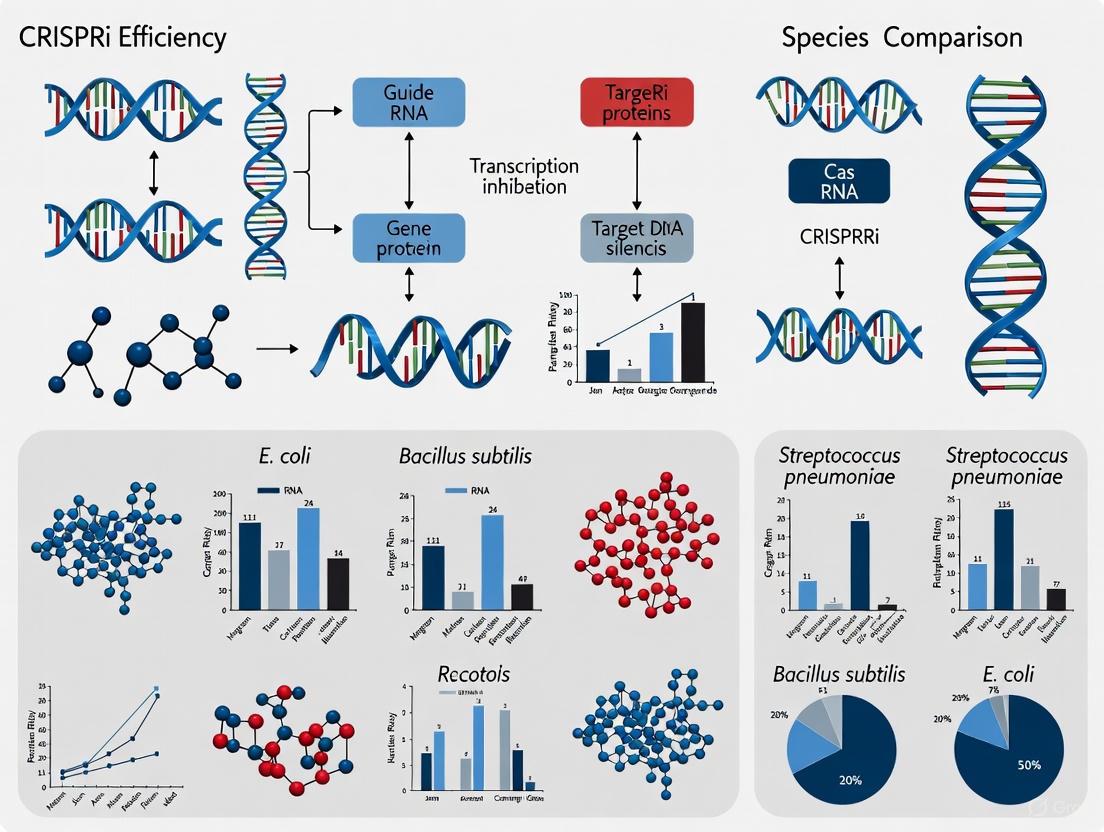
This article provides a systematic comparison of CRISPR interference (CRISPRi) performance and implementation across diverse bacterial species, including Escherichia coli, Streptococcus pneumoniae, Staphylococcus aureus, and Mycobacterium tuberculosis.
CRISPRi Performance Across Bacterial Species: A Comprehensive Guide for Functional Genomics and Drug Discovery
Abstract
This article provides a systematic comparison of CRISPR interference (CRISPRi) performance and implementation across diverse bacterial species, including Escherichia coli, Streptococcus pneumoniae, Staphylococcus aureus, and Mycobacterium tuberculosis. It explores the foundational principles of bacterial CRISPRi, details advanced methodological adaptations for different genera, and addresses key challenges in system optimization. By synthesizing evidence from recent genome-wide screens and comparative studies, this resource is tailored for researchers and drug development professionals seeking to leverage CRISPRi for functional genomics, essential gene identification, and the discovery of novel antibiotic targets and resistance mechanisms.
Core Principles and System Diversity of Bacterial CRISPRi
CRISPR Interference (CRISPRi) is a powerful gene-silencing technology derived from the CRISPR-Cas system. It uses a catalytically inactive Cas9 protein, known as dCas9, which lacks DNA-cutting ability but can still be guided by a single guide RNA (sgRNA) to bind specific DNA sequences. This binding physically blocks RNA polymerase, preventing transcription of the target gene and enabling programmable, reversible gene repression without altering the underlying DNA sequence [1] [2].
The Core dCas9 Mechanism and Transcriptional Repression
The fundamental components of the CRISPRi system are the dCas9 protein and the sgRNA. The sgRNA, through its 20-nucleotide guide sequence, directs the dCas9-sgRNA complex to a specific target site on the bacterial chromosome [1] [2].
The system's mechanism and key structural features are outlined in the diagram below:
The repression occurs through two primary mechanisms:
- Transcription Initiation Blockade: When dCas9 binds to a promoter region, it prevents RNA polymerase from initiating transcription [2].
- Transcription Elongation Blockade: When dCas9 binds within the coding sequence of a gene, it acts as a physical roadblock, halting the progression of the elongating RNA polymerase [1] [2].
The system requires a short Protospacer Adjacent Motif (PAM) sequence adjacent to the target site for recognition. While the canonical PAM for S. pyogenes dCas9 is NGG, other orthologs like S. pasteurianus dCas9 use different PAMs (e.g., NNGTGA or NNGCGA), which influences the range of targetable genes [1] [3].
CRISPRi Performance Across Bacterial Species: A Comparative Analysis
CRISPRi has been successfully adapted for a wide range of bacterial species, with its performance varying based on the specific dCas9 ortholog used, the delivery system, and the host's genetics. The table below summarizes its application and efficacy in key model organisms.
Table 1: Comparison of CRISPRi System Performance in Different Bacterial Species
| Bacterial Species | dCas9 Ortholog | Repression Efficiency | Key Applications & Findings | Experimental Evidence |
|---|---|---|---|---|
| Pseudomonas aeruginosa | S. pasteurianus | Up to 100-fold (β-galactosidase), 300-fold (pyoverdine) [3] | Repression of non-essential (gdhA) and essential (ftsZ) genes; genome-wide CRISPRi-seq screens for gallium therapy synergy [4] [3] | Tightly regulated system using genomic integration of dcas9 and sgRNA plasmid; confirmed by enzyme assays and growth phenotyping [3] |
| Salmonella entericaserovar Typhimurium | Endogenous Type I-E | Functional for genome-wide screening | Identified genes influencing IgA-mediated agglutination (e.g., fimW); screen of >36,000 sgRNA spacers [5] | Library transduction and serial passage under antibody selection; enriched spacers identified via NGS [5] |
| Bifidobacterium spp. | S. thermophilus | Effective phenotypic repression demonstrated | Targeted repression of nucleotide and carbohydrate metabolism genes; functions across species without extensive optimization [6] | One-plasmid system; growth assays on alternative carbon sources and with 5-fluorouracil [6] |
| Escherichia coli | S. pyogenes | High, but requires optimization | Model organism for proof-of-concept; requires RBS tuning to mitigate dCas9 toxicity and "bad-seed" effects [2] | Fluorescence reporter assays (e.g., mCherry); screening RBS libraries to balance repression and toxicity [2] |
| Staphylococcus aureus | S. pyogenes | Efficient knockdown of essential genes | Silencing of the essential gene rpsL; use of broad-host-range plasmids (pC194, pLZ12) [2] | Growth inhibition assays and qPCR validation of gene repression [2] |
Essential Experimental Protocols for Bacterial CRISPRi
A standard workflow for implementing and validating a CRISPRi system in a bacterial species involves several key steps.
System Delivery and Genomic Integration
A common and effective strategy is to genomically integrate the dcas9 gene into a neutral site (e.g., attTn7 for Gram-negative bacteria) under the control of an inducible promoter (e.g., Ptet, Plac, Ptac) [3]. This provides stable, low-copy expression and minimizes toxicity. The sgRNA is typically expressed from a plasmid with a high-copy-number origin of replication and a constitutive promoter [3]. This two-part system allows for flexible targeting by simply replacing the sgRNA sequence.
sgRNA Design and Validation
- Target Selection: For optimal repression, sgRNAs should be designed to bind the non-template (coding) strand of the target gene, either within the promoter (especially between the -10 and -35 elements) or near the 5' end of the coding sequence [2] [3].
- PAM Consideration: The target site must be adjacent to a compatible PAM sequence for the dCas9 ortholog being used [1] [3].
- Validation: Repression efficiency is typically validated by measuring:
Optimization of dCas9 Expression
A critical factor for success is titrating dCas9 expression to a level that is effective but not toxic to the host cell. This can be achieved by:
- Using tunable inducible promoters and varying the inducer concentration (e.g., aTc, IPTG, Dox) [4] [3].
- Engineering a library of ribosome binding sites (RBS) to fine-tune dCas9 translation rates, which is crucial for mitigating "bad-seed" toxicity in some species [2].
The experimental workflow from system design to validation is summarized below:
The Scientist's Toolkit: Key Research Reagent Solutions
Table 2: Essential Reagents for Bacterial CRISPRi Experiments
| Reagent / Tool | Function | Examples & Notes |
|---|---|---|
| dCas9 Orthologs | Catalytic core of the repression complex; different PAM requirements. | S. pyogenes dCas9 (PAM: NGG) [2]; S. pasteurianus dCas9 (PAM: NNGTGA/NNGCGA) [3]. |
| Inducible Promoters | Allows precise temporal control over dCas9/sgRNA expression to minimize toxicity. | Tetracycline (Ptet), IPTG (Plac, Ptac), Arabinose (PBAD) [4] [3]. |
| Delivery Vectors | Stable chromosomal integration or plasmid-based expression of system components. | Tn7 integration vectors [3]; broad-host-range plasmids (pBBR1, pLZ12) [2] [3]. |
| sgRNA Library | Enables high-throughput functional genomics screens. | Genome-wide libraries with >36,000 sgRNAs for loss-of-function screens [5] [4]. |
| Repressor Domains | Fused to dCas9 to enhance repression in some systems. | KRAB domain, though more common in eukaryotic systems [8] [7]. |
CRISPRi has firmly established itself as an indispensable tool for bacterial functional genomics due to its high programmability, efficiency, and reversibility. Its successful deployment across diverse species—from Pseudomonas and Salmonella to the genetically recalcitrant Bifidobacteria [5] [6] [3]—highlights its broad utility. Performance is maximized by carefully selecting the dCas9 ortholog, tightly controlling its expression, and following optimized sgRNA design rules. As demonstrated by its pivotal role in genome-wide screens [5] [4], CRISPRi continues to empower researchers to dissect complex genetic networks, identify new drug targets, and unravel bacterial physiology with unprecedented precision.
Comparative Analysis of CRISPR Loci and Cas Protein Variants Across Bacterial Genera
Clustered Regularly Interspaced Short Palindromic Repeats (CRISPR) and CRISPR-associated (Cas) proteins constitute an adaptive immune system in prokaryotes, providing resistance against foreign genetic elements such as viruses and plasmids [9] [10]. Since their initial discovery in Escherichia coli in 1987 [9], CRISPR-Cas systems have been identified in approximately 87% of archaeal and 45% of bacterial genomes [10], though their distribution varies significantly across taxonomic groups. These systems have not only revolutionized genetic engineering technologies but also serve as valuable tools for molecular epidemiology and bacterial genotyping due to their hypervariability across strains [9] [11]. This review provides a comprehensive comparison of CRISPR loci architecture and Cas protein variants across diverse bacterial genera, with particular emphasis on implications for CRISPR interference (CRISPRi) performance in functional genomics studies.
Classification and Diversity of CRISPR-Cas Systems
Evolutionary Classification Framework
CRISPR-Cas systems exhibit extensive diversity in their organization, cas gene composition, and sequences of Cas proteins, necessitating a robust classification framework [12] [13]. The current classification system, updated in 2025, organizes CRISPR-Cas systems into 2 primary classes, 7 distinct types, and 46 subtypes [12]. This represents a significant expansion from the 6 types and 33 subtypes recognized five years prior, reflecting the rapid discovery of novel systems.
Class 1 systems (Types I, III, IV, and VII) utilize multi-subunit effector complexes for target recognition and interference [12] [10]. The newly characterized Type VII systems, found predominantly in diverse archaeal genomes, feature a Cas14 effector with metallo-β-lactamase (β-CASP) nuclease activity and target RNA in a crRNA-dependent manner [12].
Class 2 systems (Types II, V, and VI) employ single multi-domain effector proteins such as Cas9 (Type II) and Cas12 (Type V), making them particularly amenable for genetic engineering applications [10] [14].
Table 1: Updated Classification of CRISPR-Cas Systems (2025)
| Class | Type | Signature Protein | Effector Complex | Target | Notes |
|---|---|---|---|---|---|
| Class 1 | I | Cas3 | Multi-protein (Cascade) | DNA | Most common in bacteria [10] |
| III | Cas10 | Multi-protein | DNA/RNA | Includes subtypes III-G, III-H, III-I [12] | |
| IV | DinG | Multi-protein | DNA | Variable cas gene content [12] | |
| VII | Cas14 | Multi-protein | RNA | Newly characterized; archaea-dominated [12] | |
| Class 2 | II | Cas9 | Single protein | DNA | Most widely used in biotechnology [14] |
| V | Cas12 | Single protein | DNA | Includes Cas12i engineered variants [14] | |
| VI | Cas13 | Single protein | RNA | RNA-targeting capability [14] |
System Distribution Across Bacterial Genera
Comparative genomic analyses reveal that CRISPR-Cas system distribution is non-uniform across bacterial taxa. In lactic acid bacteria (LAB), a comprehensive survey identified eight distinct families of CRISPR loci based on repeat sequences and cas gene content [11]. These families do not strictly follow phylogenetic relationships, with some spanning multiple genera across both Firmicutes and Actinobacteria phyla [11].
Notably, CRISPR systems are present in approximately 48% of sequenced LAB genomes, with significant variation between genera: Lactobacillus (58%), Streptococcus (43%), Lactococcus (29%), and Oenococcus (17%) [11]. This patchy distribution reflects the complex evolutionary history of CRISPR-Cas systems, involving extensive horizontal gene transfer and frequent loss or degradation of loci [11].
Comparative Architecture of CRISPR Loci
Core Structural Components
All CRISPR loci share fundamental architectural features, though their specific composition varies across bacterial genera:
Direct Repeats: Short (23-55 bp), partially palindromic sequences that form hairpin structures and are conserved within a species but variable across taxa [9]. Bacterial genomes typically contain an average of three CRISPR arrays [9].
Spacer Sequences: Variable sequences (26-72 bp) derived from previous encounters with mobile genetic elements that confer immunological memory [9]. Spacer content demonstrates significant polymorphism between strains of the same species, enabling molecular genotyping applications [9].
Leader Sequence: An AT-rich, non-coding region upstream of the CRISPR array that contains promoters for transcription and signals for spacer acquisition [9].
cas Genes: CRISPR-associated genes that encode proteins responsible for adaptation, crRNA processing, and interference functions [9] [10].
Genus-Specific Variations
The composition and organization of CRISPR loci display remarkable diversity across bacterial genera:
Table 2: Comparative CRISPR Loci Features Across Bacterial Genera
| Bacterial Genus | CRISPR Prevalence | Common System Types | Notable Features | Applications |
|---|---|---|---|---|
| Streptococcus | 43% [11] | Type II-A (SpCas9) [14] | First experimental evidence of CRISPR function [9] | CRISPRi development [6] |
| Bifidobacterium | Varies by species [11] | Type I-C, I-G [6] | Extensive R-M systems complicate genetic manipulation [6] | Endogenous system repurposing [6] |
| Lactobacillus | 58% [11] | Multiple types [11] | High strain-to-strain variability | Molecular genotyping [9] |
| Escherichia | Well-characterized | Type I-E [9] | Model for adaptation studies [10] | Protospacer acquisition mechanisms [10] |
| Staphylococcus | Present | Type II (SaCas9) [14] | Small Cas9 variant (1053 aa) [14] | AAV delivery applications [14] |
Cas Protein Variants and Their Functional Implications
Key Cas Proteins and Their Functions
Cas proteins perform specialized functions in the three stages of CRISPR immunity:
Adaptation Module: Cas1 and Cas2 form a heterohexameric complex responsible for spacer acquisition from foreign DNA [10]. These are the most conserved Cas proteins across systems and genera [13].
Effector Nucleases: Type-specific nucleases including Cas3 (Type I), Cas9 (Type II), Cas10 (Type III), and Cas14 (Type VII) execute target cleavage [12]. Cas9 requires both crRNA and tracrRNA for activity and recognizes a protospacer adjacent motif (PAM) sequence (5'-NGG-3' for SpCas9) [14].
Natural and Engineered Cas Variants
Different bacterial genera harbor distinct Cas protein variants with unique biochemical properties:
SaCas9: Isolated from Staphylococcus aureus, this compact Cas9 (1053 amino acids) recognizes a 5'-NNGRRT-3' PAM and can be packaged into AAV vectors for therapeutic applications [14].
ScCas9: From Streptococcus canis, exhibits 89.2% sequence homology to SpCas9 but recognizes a less stringent 5'-NNG-3' PAM, expanding potential targeting range [14].
hfCas12Max: An engineered high-fidelity variant derived from Cas12i with enhanced editing specificity and reduced off-target effects, recognizing a 5'-TN-3' PAM [14].
eSpOT-ON: An engineered Parasutterella secunda Cas9 variant achieving exceptionally low off-target editing while maintaining robust on-target activity [14].
Experimental Methodologies for CRISPR Analysis
CRISPR Loci Identification and Typing
Standardized protocols for comparative analysis of CRISPR loci across bacterial genera include:
Genome Sequencing and Assembly: Obtain complete genome sequences from databases such as GenBank [11].
CRISPR Loci Detection: Utilize bioinformatic tools such as CRISPRFinder and CRISPRdb to identify repeats and spacers [11].
cas Gene Annotation: Annotate cas genes using comparative sequence analysis with position-specific scoring matrices (PSSMs) from databases like CDD [13].
System Classification: Determine CRISPR-Cas type and subtype based on signature gene content and locus architecture [13].
Phylogenetic Analysis: Construct phylogenetic trees of conserved Cas proteins (e.g., Cas1) to elucidate evolutionary relationships [13].
CRISPRi Implementation Across Bacterial Genera
The development of CRISPR interference (CRISPRi) systems for targeted gene repression requires genus-specific optimization:
Diagram 1: CRISPRi Experimental Workflow for Bacterial Genera. This workflow highlights key optimization steps required for successful CRISPRi implementation across diverse bacterial species.
A recent study demonstrated successful CRISPRi implementation in Bifidobacterium species using a single-plasmid system based on a catalytically dead Cas9 (dCas9) from Streptococcus thermophilus [6]. This system achieved efficient gene repression targeting nucleotide metabolism and carbohydrate metabolism genes across multiple bifidobacterial species without requiring extensive optimization of transformation parameters [6].
Performance Variation in CRISPRi Applications
Genus-Specific Challenges and Solutions
The effectiveness of CRISPR-based technologies varies considerably across bacterial genera due to physiological and genetic barriers:
Restriction-Modification Systems: Bifidobacterium species possess extensive and diverse R-M systems that degrade incoming foreign DNA, requiring vector methylation or elimination of recognition sites [6].
Transformation Efficiency: Thick cell walls and exopolysaccharide layers in many Gram-positive bacteria, including Bifidobacterium and Lactobacillus, hinder DNA delivery [6].
Cas9 Compatibility: Endogenous CRISPR-Cas systems may interfere with heterologous Cas9 expression, necessitating the use of compatible or engineered variants [6].
PAM Specificity: The targeting range of CRISPR systems is constrained by PAM requirements, which vary between Cas orthologs from different bacterial genera [14].
Quantitative Assessment of Editing Efficiency
Recent comparative studies have quantified the performance of different Cas variants:
Table 3: Performance Metrics of Select Cas Protein Variants
| Cas Variant | Origin | Size (aa) | PAM | Editing Efficiency | Specificity | Delivery Compatibility |
|---|---|---|---|---|---|---|
| SpCas9 | S. pyogenes | 1368 | 5'-NGG-3' | High | Moderate | Plasmid, mRNA |
| SaCas9 | S. aureus | 1053 | 5'-NNGRRT-3' | High | Moderate | AAV, Plasmid |
| hfCas12Max | Engineered | 1080 | 5'-TN-3' | High | High | AAV, LNP |
| eSpOT-ON | P. secunda | ~1400 | 5'-NNNC-3' | High | High | Plasmid, mRNA |
| StCas9 | S. thermophilus | ~1400 | 5'-NNAGAAW-3' | Moderate | High | Plasmid |
Research Reagent Solutions for Comparative CRISPR Studies
Table 4: Essential Research Reagents for Cross-Genera CRISPR Analysis
| Reagent Category | Specific Examples | Function | Application Notes |
|---|---|---|---|
| Cas Expression Systems | dCas9-KRAB, HiFi Cas9 | Target binding/interference | Select based on bacterial host compatibility [6] |
| Guide RNA Scaffolds | sgRNA, crRNA:tracrRNA duplex | Target recognition | Optimize for specific Cas variants [14] |
| Delivery Vectors | AAV, Lentivirus, Plasmid | Component delivery | Consider size constraints (e.g., SaCas9 for AAV) [14] |
| Detection Tools | GUIDE-Seq, CIRCLE-Seq | Off-target identification | Empirical methods complement in silico prediction [15] |
| Bioinformatic Tools | CRISPRaDesign, COSMID, CCTop | Guide design and OT prediction | Essential for experimental planning [16] [15] |
The comparative analysis of CRISPR loci and Cas protein variants across bacterial genera reveals a remarkable diversity that reflects the complex evolutionary arms race between bacteria and their mobile genetic elements. This diversity presents both challenges and opportunities for developing CRISPR-based research tools. The structural and functional variations between systems from different bacterial genera directly impact the performance and optimization of CRISPRi applications. Understanding these genus-specific characteristics enables more effective selection of Cas variants and implementation strategies for functional genomics studies across diverse bacterial species. Future directions include the continued discovery and characterization of novel CRISPR-Cas systems from the "long tail" of microbial diversity, engineering of enhanced variants with improved specificity and targeting range, and development of optimized delivery strategies that overcome genus-specific barriers to genetic manipulation.
CRISPR interference (CRISPRi) has become an indispensable tool for programmable gene silencing in bacteria, enabling functional genomics studies and metabolic engineering. However, its effectiveness and reliability are critically dependent on two core performance metrics: silencing efficiency and off-target effects. Silencing efficiency refers to the ability of a CRISPRi system to effectively repress transcription of a target gene, while off-target effects describe the unintended binding and repression of non-target genes. Evaluating these metrics is essential for designing robust experiments and interpreting results accurately, particularly in comparative studies across diverse bacterial species where genetic and physiological contexts vary significantly. This guide provides a structured framework for quantifying these key parameters, comparing performance across systems, and implementing experimental best practices to ensure data validity.
Quantifying Silencing Efficiency
Core Metrics and Measurement Techniques
Silencing efficiency is quantitatively assessed by measuring the reduction in gene expression or the resulting functional impairment following CRISPRi deployment. The table below summarizes the primary metrics and corresponding methodological approaches used for evaluation.
Table 1: Key Metrics and Methods for Assessing Silencing Efficiency
| Performance Metric | Measurement Method | Typical Data Output | Advantages |
|---|---|---|---|
| Transcriptional Knockdown | RNA-Seq, qRT-PCR | Log2 Fold Change (logFC) in mRNA levels | Direct measure of primary effect; highly quantitative |
| Functional Gene Knockdown | Growth Phenotype Assays | Growth rate, optical density (OD) in non-permissive conditions | Directly links silencing to biological function; ideal for essential genes |
| Protein Level Reduction | Proteomics, Western Blotting | Percentage reduction in protein abundance | Captures functional downstream effect |
| Guide Depletion in Pools | NGS of guide libraries | Log2 Fold Change in guide abundance | Enables genome-wide assessment in a single screen |
The most direct metric is the measurement of mRNA level reduction via quantitative methods like RNA-Seq or qRT-PCR, expressed as a log2 Fold Change (logFC). For essential genes, a highly effective proxy for silencing efficiency is the induction of a growth defect when the gene is targeted, as a non-viable phenotype indicates highly efficient silencing [17]. In pooled genome-wide screens, the efficiency of individual guides is quantified by sequencing the guide library before and after selection; guides targeting essential genes effectively are depleted from the population, with the magnitude of depletion (negative logFC) correlating with silencing efficiency [17].
Factors Influencing Silencing Efficiency
Multiple factors determine the success of a CRISPRi silencing experiment. Understanding these variables is crucial for both guide design and data interpretation.
- Guide RNA Design: While traditional wisdom suggests that guide binding proximity to the transcriptional start site (TSS) enhances silencing, recent large-scale data in E. coli indicates this feature has a relatively minor effect (~1.07-fold) compared to other factors [17].
- Target Gene Properties: Surprisingly, gene-specific features are the dominant predictors of silencing efficiency. Machine learning models reveal that maximal RNA expression of the target gene is the single most influential feature, with highly expressed genes showing stronger guide depletion, potentially due to more critical dependence on their function or increased vulnerability to transcriptional interference. Other significant gene-level features include GC content, gene length, and the number of downstream essential genes in the same operon (indicating polar effects) [17].
- Physiological and Delivery Context: The specific dCas9 ortholog used, its expression level (e.g., from a strong promoter), and the bacterial strain's transformation efficiency all contribute to the final observed silencing outcome [17] [6].
Assessing and Managing Off-Target Effects
Origins and Consequences of Off-Target Activity
CRISPRi off-target effects occur when the dCas9-sgRNA complex binds to genomic sites with sequence similarity to the intended target, leading to unintended gene repression. A key finding from genome-wide studies is that these effects are more common than previously assumed [18]. The primary mechanism driving off-target binding is complementarity between the genomic DNA and the seed sequence (the PAM-proximal 10-12 nucleotides of the sgRNA spacer). While seed sequence stability is central, the specific length of this critical region and the tolerance for mismatches at various positions can vary across different sgRNAs [18].
The consequences of these off-target effects are significant. They can cause direct and extensive secondary changes in the transcriptome, confounding phenotypic analysis and leading to erroneous conclusions about gene function [18]. In therapeutic development, off-target effects pose a substantial safety risk, potentially disrupting essential genes or regulatory pathways.
Detection and Mitigation Strategies
A multi-faceted approach is required to comprehensively identify and minimize off-target effects.
Table 2: Methods for Off-Target Effect Analysis in CRISPRi
| Method Category | Specific Technique | Key Principle | Application in CRISPRi |
|---|---|---|---|
| In Silico Prediction | Cas-OFFinder, CCTop, FlashFry | Computational genome-wide search for sites with sequence similarity to the sgRNA | Pre-screening tool for guide design; fast and inexpensive but may miss context-dependent effects [19] |
| Genome-Wide Binding Profiling | ChIP-seq of dCas9 | Maps all binding sites of catalytically dead Cas9 genome-wide | Identifies potential off-target binding sites in the specific cellular context; can be affected by antibody specificity [19] |
| Transcriptomic Analysis | RNA-Seq | Profiles global gene expression changes after sgRNA expression | Gold standard for detecting functional off-target effects via unintended gene expression changes [18] |
To minimize off-target risks, researchers should adopt the following strategies:
- Refine gRNA Design: Select target sequences with maximal uniqueness in the seed region and use bioinformatics tools to scan for potential off-target sites with high sequence homology [18] [20].
- Utilize High-Fidelity Cas Variants: Engineered dCas9 variants with reduced non-specific DNA binding can enhance specificity without compromising on-target binding [19].
- Employ Controlled Expression: Transient, inducible expression of the CRISPRi system limits the window for off-target activity, reducing the accumulation of unintended effects [20].
- Interpret Data Cautiously: Especially in single-gene studies, phenotypic results should be interpreted with caution and validated with complementary approaches, given the pervasiveness of off-target transcriptome changes [18].
Experimental Workflows for Systematic Evaluation
The following workflow diagrams and reagent toolkit provide a practical foundation for designing rigorous CRISPRi validation experiments.
Workflow for a CRISPRi Efficiency Screen
Workflow for Off-Target Assessment
Research Reagent Solutions for CRISPRi Evaluation
Table 3: Essential Reagents and Tools for CRISPRi Experiments
| Reagent/Tool | Function | Example/Note |
|---|---|---|
| dCas9 Orthologs | CRISPRi effector protein; binds DNA without cleavage | S. pyogenes dCas9 common; S. thermophilus dCas9 validated in Bifidobacteria [6] |
| gRNA Expression Vector | Plasmid for sgRNA transcription | Often combined with dCas9 on a single plasmid for ease of use [6] |
| gRNA Design Software | Computational selection of specific guide sequences | Tools like CRISPOR or CCTop incorporate off-target prediction [20] |
| NGS Library Prep Kit | Preparation of sequencing libraries for guide abundance or RNA-Seq | Critical for quantifying guide depletion or transcriptome changes |
| Automated ML Platforms | Modeling guide efficiency from screen data | e.g., Auto-Sklearn; integrates sequence and genomic features [17] |
| Growth Phenotype Assay Media | Functional assessment of gene silencing | Defined media for testing auxotrophies or substrate utilization [6] |
Comparative Performance Across Bacterial Species
The performance of CRISPRi systems is not universal and must be optimized for different bacterial genera. The development of a one-plasmid CRISPRi system for Bifidobacterium highlights this point. This system, based on a nuclease-dead Streptococcus thermophilus Cas9, achieved successful gene repression across multiple species, including B. breve, B. animalis, and B. longum, without the need for extensive optimization of transformation parameters [6]. This demonstrates that well-designed systems can function across a range of species, facilitating comparative studies.
However, key differences remain. The dominant factors predicting guide efficiency in E. coli screens—such as high target gene expression correlating with stronger depletion—may not hold to the same degree in other bacterial systems with different transcriptional or translational landscapes. Furthermore, the pervasiveness of seed-sequence-mediated off-target effects, as characterized in one model, necessitates that researchers perform initial empirical validation of the system in their specific chassis organism of interest to understand its local performance characteristics [18].
Evaluating CRISPRi performance through the dual lenses of silencing efficiency and off-target activity is a non-negotiable step for rigorous bacterial genetics research. The key to success lies in a holistic approach: employing predictive computational models for guide design, followed by empirical validation using high-throughput phenotyping and transcriptomic analyses. Researchers should prioritize gRNAs with high predicted on-target efficiency and minimal potential for seed-sequence-driven off-target binding. Furthermore, the choice of CRISPRi machinery (dCas9 variant, expression system) must be tailored to the bacterial host, and conclusions from silencing experiments should always be tempered by the awareness of potential confounding off-target effects. By adopting the metrics, methods, and mitigation strategies outlined in this guide, scientists can more reliably harness the power of CRISPRi to dissect gene function and engineer microbial physiology across diverse bacterial species.
CRISPR interference (CRISPRi) has emerged as a powerful tool for functional genomics in bacteria, enabling programmable, reversible, and titratable repression of gene expression. This technology utilizes a catalytically dead Cas9 (dCas9) protein that binds to DNA in a guide RNA-directed manner without cleaving it, thereby blocking transcription by bacterial RNA polymerase [21]. Unlike CRISPR nuclease systems that create double-strand breaks, CRISPRi does not induce DNA damage or activate endogenous DNA repair pathways, making it particularly valuable for studying essential genes and creating partial loss-of-function phenotypes [22] [23].
However, the application of CRISPRi across diverse bacterial species presents unique challenges rooted in fundamental biological differences. Cell envelope permeability varies dramatically between Gram-positive and Gram-negative bacteria, directly impacting the efficiency of delivering CRISPRi components. Operon structures, which are prevalent in bacterial genomes but rare in eukaryotes, complicate targeted repression due to polar effects on downstream genes [24]. Furthermore, species-specific restriction-modification systems can degrade foreign DNA, while variations in transcription and translation machinery affect the performance of standardized CRISPRi components [6].
This guide provides an objective comparison of CRISPRi performance across bacterial species, supported by experimental data, to equip researchers with the knowledge needed to design effective CRISPRi experiments in their organism of interest.
Fundamental Challenges in Bacterial CRISPRi Implementation
Cell Envelope Permeability and DNA Delivery
The bacterial cell envelope presents the primary physical barrier for introducing CRISPRi components. Gram-negative bacteria possess an outer membrane containing lipopolysaccharides that restricts macromolecule passage, while Gram-positive species have thick, cross-linked peptidoglycan layers that can hinder transformation [6]. These structural differences necessitate species-specific optimization of DNA delivery methods.
In bifidobacteria, for instance, the thick cell wall and exopolysaccharides significantly hinder plasmid DNA delivery to cells, resulting in suboptimal transformation rates even with optimized protocols [6]. Similar challenges have been reported in other Gram-positive organisms, including Bacillus subtilis and Streptomyces species. By contrast, Gram-negative bacteria like Escherichia coli generally exhibit higher transformation efficiencies, though their outer membrane still presents a substantial barrier that must be overcome through methods such as electroporation or chemical transformation.
Restriction-Modification Systems
Bacterial restriction-modification (R-M) systems function as innate immune defenses that recognize and cleave foreign DNA lacking the host's specific methylation patterns. These systems represent a major obstacle for CRISPRi implementation, as plasmid vectors containing CRISPRi components may be degraded before they can be established in the target organism.
Bifidobacteria possess extensive and diverse restriction-modification systems that lead to the removal of incoming foreign DNA, significantly reducing transformation efficiency [6]. Research has shown that overcoming these barriers requires specialized approaches, such as propagating plasmids in E. coli strains expressing cloned methylases from the target bifidobacterial strain [6] or engineering vectors to be devoid of recognition sequences for the host's R-M systems [6]. The effectiveness of these strategies varies across bacterial taxa, necessitating prior knowledge of the specific R-M systems present in the target organism.
Operon Structures and Polar Effects
Unlike eukaryotes, where genes are typically transcribed individually, bacterial genes are often organized into operons—co-transcribed units under the control of a single promoter. This fundamental genetic organizational difference creates unique challenges for CRISPRi applications in bacteria.
When CRISPRi targets a gene within an operon, it can exert polar effects on downstream genes in the same transcriptional unit [24] [21]. This occurs because dCas9 binding creates a steric block that impedes the progression of elongating RNA polymerase, potentially repressing not only the targeted gene but all genes downstream in the operon [21]. In some cases, reverse polarity effects on upstream genes have also been observed, though the mechanisms remain less understood [21]. This polar effect complicates the interpretation of CRISPRi results, as phenotypic changes cannot be automatically attributed solely to repression of the targeted gene.
Table 1: Major Challenges for CRISPRi Implementation Across Bacterial Species
| Challenge | Affected Species | Impact on CRISPRi | Documented Solutions |
|---|---|---|---|
| Cell Envelope Permeability | Gram-positive bacteria (e.g., Bifidobacteria, Bacillus) | Hinders delivery of plasmid DNA; reduces transformation efficiency | Electroporation optimization; cell wall weakening protocols [6] |
| Restriction-Modification Systems | Diverse species including Bifidobacteria | Degrades incoming CRISPRi plasmids; prevents stable transformation | Plasmid propagation in methylase-positive E. coli; R-M sequence avoidance in vector design [6] |
| Operon Structures & Polar Effects | Most bacterial species | Repression of non-target genes in same operon; complicates phenotype interpretation | Strategic sgRNA placement; complementary experiments to validate specific gene effects [24] [21] |
| Cas9 Toxicity | High-GC content bacteria | Reduced cell viability; selection for escape mutants | Inducible promoters; codon optimization; reduced exposure time [21] |
| Variable CRISPRi Efficiency | All species, particularly non-model organisms | Inconsistent gene repression across targets | sgRNA tiling; optimized sgRNA design rules [17] [24] |
Species-Specific CRISPRi Performance Comparison
CRISPRi in Model Organisms: E. coli and B. subtilis
The application of CRISPRi in well-characterized model organisms has established benchmark performance standards and revealed fundamental principles of bacterial CRISPRi function. In E. coli, CRISPRi achieves highly efficient repression, with studies reporting up to 1000-fold repression when targeting the non-template strand of coding regions [21]. Repression efficiency shows strong positional dependence, with the most effective sgRNAs located within the first 5% of the coding region proximal to the start codon [24].
Research directly comparing CRISPRi performance between E. coli and B. subtilis has demonstrated that mismatched sgRNAs function similarly in both species, despite their evolutionary distance of approximately 2 billion years [25]. This conservation enables the development of broadly applicable sgRNA design rules, though important nuances exist. For instance, the fitness relationships between gene expression and cellular growth show remarkable conservation between essential homologs in these two organisms, suggesting shared evolutionary constraints on essential gene expression levels [25].
CRISPRi in Bifidobacteria and Other Challenging Species
Bifidobacteria represent a taxon where traditional genetic manipulation has been particularly challenging due to both cell envelope barriers and diverse restriction-modification systems. The development of a one-plasmid CRISPRi system based on a catalytically dead Cas9 from Streptococcus thermophilus has enabled targeted gene repression in multiple bifidobacterial species without extensive optimization [6]. This system successfully repressed genes involved in nucleotide metabolism and carbohydrate metabolism across several bifidobacterial species, demonstrating its broad applicability within this genus [6].
Notably, this CRISPRi system achieved efficient gene repression without requiring prior knowledge of active restriction-modification systems or extensive optimization of transformation parameters, effectively removing key barriers to genetic manipulation in these commercially important microbes [6]. The success in bifidobacteria suggests that similar approaches could be applied to other genetically recalcitrant bacteria.
Performance Metrics Across Species
Direct comparisons of CRISPRi efficacy across bacterial species reveal both conserved features and important differences. The positional dependence of sgRNA activity—with the most effective targets located near the start codon—appears to be a conserved feature in both Gram-positive and Gram-negative species [24]. However, the optimal number of sgRNAs per gene for reliable phenotype identification may vary based on the transformation efficiency and repression kinetics in different species.
Table 2: Experimental Performance Metrics of CRISPRi Across Bacterial Species
| Species | Repression Efficiency | Optimal sgRNA Position | Key Applications Demonstrated | Transformation Efficiency |
|---|---|---|---|---|
| E. coli | Up to 1000-fold repression [21] | First 5% of ORF [24] | Genome-wide essentiality screens [24]; metabolic engineering [21] | High (model organism) |
| B. subtilis | Highly efficient repression [25] | Near start codon | Expression-fitness relationship mapping [25]; essential gene analysis | Moderate |
| Bifidobacteria spp. | Efficient repression across species [6] | Not specifically reported | Nucleotide & carbohydrate metabolism studies [6] | Low (requires specialized methods) [6] |
| B. animalis subsp. lactis | Efficient repression [6] | Not specifically reported | Endogenous Type I-G system repurposing [6] | Species-dependent |
Experimental Protocols and Methodologies
Protocol for Genome-wide CRISPRi Screens in Bacteria
The following protocol for pooled CRISPRi screening in bacteria has been adapted from established methods in E. coli [24], with considerations for application to other bacterial species:
sgRNA Library Design: Design sgRNAs to target the non-template strand of coding sequences, focusing on the first 5% of the ORF proximal to the start codon [24]. Include approximately 10 sgRNAs per gene for reliable hit identification, with the exact number adjustable based on library size constraints [24].
Library Construction: Synthesize the sgRNA library via microarray oligonucleotide synthesis, then amplify using PCR and clone into an appropriate sgRNA expression vector [24].
Transformation: Introduce the sgRNA library into the target strain expressing dCas9 using optimized transformation methods (e.g., electroporation). For species with low transformation efficiency, consider using a methylase-positive E. coli strain for plasmid propagation to avoid restriction-modification systems [6].
Selection and Screening: Culture the transformed library under selective conditions (e.g., antibiotic selection) and control conditions. For fitness screens, passage cells for approximately 10 doublings to allow depletion of strains with sgRNAs targeting essential genes [24].
Fitness Profiling: Harvest genomic DNA from initial and final populations, amplify integrated sgRNA cassettes, and quantify abundance changes by next-generation sequencing. Calculate sgRNA fitness scores based on depletion/enrichment ratios [24].
Hit Validation: Confirm phenotypes using individual sgRNAs and complementary methods when possible to address potential polar effects in operon structures.
Mismatch-CRISPRi for Titratable Repression
A modified CRISPRi approach leveraging mismatched sgRNAs enables precise titration of gene expression levels, which is particularly valuable for studying essential genes [25]. The experimental workflow involves:
Library Design: Generate sgRNAs with single mismatches at specific positions to create a spectrum of repression efficiencies. Mismatches closer to the PAM sequence generally produce stronger reductions in efficacy [25].
Efficacy Prediction: Use a linear model incorporating mismatch position, base substitution type, and spacer GC content to predict relative sgRNA efficacy [25].
Expression-Fitness Mapping: Corporate fitness effects with predicted repression levels to define expression-fitness relationships for essential genes, revealing whether these relationships are linear, bimodal, or follow other patterns [25].
This approach has successfully revealed conserved expression-fitness relationships between E. coli and B. subtilis homologs, providing insights into evolutionary constraints on essential gene expression [25].
Visualization of Key Concepts and Workflows
Bacterial CRISPRi Mechanism and Challenges
Diagram 1: Bacterial CRISPRi Mechanism and Key Challenges. The diagram illustrates how the dCas9-sgRNA complex binds DNA to block RNA polymerase (RNAP), alongside major implementation barriers including cell envelope permeability, restriction-modification systems, and operon polar effects.
Experimental Workflow for Cross-Species CRISPRi
Diagram 2: Cross-Species CRISPRi Experimental Workflow. The diagram outlines a generalized workflow for implementing CRISPRi across bacterial species, highlighting critical decision points that require species-specific optimization.
Research Reagent Solutions
Table 3: Essential Research Reagents for Bacterial CRISPRi Experiments
| Reagent Category | Specific Examples | Function & Application | Species-Specific Considerations |
|---|---|---|---|
| dCas9 Variants | dCas9 from S. pyogenes; dCas9 from S. thermophilus [6] | Transcriptional repression; different variants may perform better in specific species | S. thermophilus dCas9 works well in bifidobacteria; codon optimization may be needed for high-GC bacteria [6] [21] |
| Vector Systems | One-plasmid systems [6]; Inducible dCas9 expression vectors [21] | All-in-one convenience; controlled dCas9 expression to reduce toxicity | Vectors must be devoid of target species R-M recognition sites [6]; replication origin must be compatible |
| Delivery Methods | Electroporation; Conjugation [21] | Introducing CRISPRi components into cells | Method efficiency varies significantly between species; may require cell wall weakening treatments |
| sgRNA Design Tools | Position-based design rules [24]; Mismatch-CRISPRi models [25] | Predicting effective sgRNA targets | Rules may need adjustment for different species; operon structure must be considered [24] |
| Library Formats | Single sgRNA; Dual sgRNA [26] | Genome-wide screening; enhanced repression | Dual sgRNA shows improved knockdown but presents cloning challenges [26] |
| Selection Markers | Antibiotic resistance; Auxotrophic markers | Maintaining CRISPRi elements in population | Must use markers effective in target species; concentration may need optimization |
The implementation of CRISPRi across diverse bacterial species requires careful consideration of species-specific biological features, particularly cell envelope architecture and genetic organization. While fundamental principles of CRISPRi function are conserved, optimal experimental parameters vary significantly between organisms. The development of specialized vectors that avoid restriction-modification recognition sequences [6] and the establishment of design rules for sgRNA placement [24] have substantially improved the portability of CRISPRi technology.
Future advances in bacterial CRISPRi will likely focus on expanding the toolkit to encompass more diverse Cas variants, improving the predictability of sgRNA efficacy through machine learning approaches [17], and developing more sophisticated systems for titratable control of gene expression [25]. As these tools mature, CRISPRi will continue to transform functional genomics in both model organisms and genetically recalcitrant bacteria, enabling mechanistic studies of commercially and medically important species that were previously inaccessible to genetic manipulation.
Implementing CRISPRi Screens: From Library Design to Functional Genomics
Genome-Scale Guide RNA Library Design Rules for Prokaryotes
Clustered Regularly Interspaced Short Palindromic Interference (CRISPRi) has emerged as a powerful approach for functional genomics in prokaryotes, enabling high-resolution genotype-phenotype mapping through programmable gene repression [27] [28]. Unlike eukaryotic systems, prokaryotic genomes present unique challenges for guide RNA (gRNA) design, including distinct chromosomal organization, intracellular conditions, and the prevalence of polycistronic operons [27]. The performance of genome-scale CRISPRi screens depends critically on the design principles governing gRNA libraries, where optimal design must balance on-target efficiency with minimal off-target effects [27] [29]. This review provides a comprehensive comparison of established and emerging design rules for prokaryotic CRISPRi libraries, evaluating their experimental performance across diverse bacterial species to establish best practices for researchers investigating gene function and engineering microbial physiology.
Computational Design Frameworks for Prokaryotic gRNA Libraries
Specialized Tools for Prokaryotic Genome Targeting
GLiDe (Guide Library Designer) represents a specialized web-based tool explicitly created for genome-scale design of single-guide RNA (sgRNA) libraries tailored for CRISPRi screening in prokaryotic organisms [27]. Its design framework incorporates a robust quality control system rooted in experimental knowledge to accurately identify and mitigate off-target effects, a primary concern in CRISPRi applications due to mismatch tolerance between sgRNAs and their intended targets [27]. The tool features an extensive built-in database encompassing 1,397 common prokaryotic species while also accepting user-uploaded design resources for newly sequenced organisms [27].
GLiDe's computational workflow begins by constructing a coding list connecting gene features with corresponding sequences, then groups genes with high similarity (>95% identity, >95% coverage) into clusters to prevent misclassification of off-target effects against paralogous genes [27]. Candidate sgRNAs are identified targeting both canonical NGG and non-canonical NAG protospacer adjacent motifs (PAMs), with particular emphasis on the seed region (PAM-proximal 12-bp) crucial for binding specificity [27]. The quality control process rigorously eliminates sgRNAs with potential off-target hits before applying user-defined GC content filters [27].
Design Principles for Shewanella oneidensis Libraries
Recent research with Shewanella oneidensis MR-1 has established specific design principles for genome-wide CRISPRi libraries in electroactive microorganisms [29]. The developed library employed up to seven sgRNAs for each coding gene and up to ten sgRNAs for noncoding genes, ensuring comprehensive genome coverage [29]. Key design rules included: (i) positioning sgRNAs within the region from -50 to +300 bp relative to the transcription start site (TSS) to maximize repression efficiency; (ii) maintaining GC content between 30% and 70%; (iii) excluding sgRNAs with four or more consecutive thymines (TTTT) to prevent premature transcription termination; and (iv) incorporating 350 non-targeting sgRNAs as internal negative controls [29].
Table 1: Key Design Parameters for Prokaryotic CRISPRi Libraries
| Design Parameter | GLiDe Implementation | Shewanella Library Implementation | Impact on Performance |
|---|---|---|---|
| PAM Recognition | NGG and NAG | NGG | Determines targetable genomic space |
| GC Content Range | User-defined (typically 30%-70%) | 30%-70% | Affects sgRNA stability and binding affinity |
| Off-Target Evaluation | Comprehensive seed region analysis | Not specified | Reduces false positives in screening |
| sgRNAs per Gene | Variable based on quality control | 7 for coding genes, 10 for noncoding | Improves statistical confidence in hit calling |
| Positioning Relative to TSS | Prioritizes proximity to start codon | -50 to +300 bp from TSS | Maximizes transcriptional repression efficiency |
| Negative Controls | Designed with no specific targets | 350 non-targeting sgRNAs | Enables assessment of background phenotypic variation |
Experimental Benchmarking of Library Performance
Quantitative Assessment of On-Target Efficiency and Specificity
Experimental validation of GLiDe demonstrated enhanced precision in identifying off-target binding sites for the CRISPRi system [27]. Through rigorous design principles and meticulous experimentation, GLiDe showcased substantial performance improvement in designing sgRNA libraries for CRISPRi screening, firmly establishing it as a highly promising tool for functional genomic studies in prokaryotes [27]. The reporting system for validation utilized two separate plasmids: one harboring dCas9 and another for sgRNA expression with mCherry as a reporter, allowing quantitative assessment of repression efficiency [27].
In Shewanella oneidensis, the genome-wide CRISPRi library covering nearly the entire genome achieved remarkable comprehensiveness, with only 16 genes excluded from targeting [29]. The library comprised 30,804 sgRNAs, with over 95% of coding genes targeted by seven sgRNAs each and more than half of noncoding genes targeted by ten sgRNAs each [29]. This high coverage was achieved despite technical challenges including inefficient foreign DNA transformation due to thick peptidoglycan layers in the cell wall and the necessity for conjugative transfer through intermediate strains [29].
Comparison with Eukaryotic gRNA Design Considerations
While eukaryotic gRNA library design has been extensively benchmarked, with libraries like Brunello, Dolcetto, and Calabrese demonstrating optimized performance [30], prokaryotic systems present distinct challenges. Eukaryotic designs benefit from extensive training datasets and algorithms like Rule Set 2 [30], whereas prokaryotic tools must account for fundamental differences in genome architecture and transcriptional regulation. Recent benchmarking in eukaryotic systems reveals that smaller, well-designed libraries with fewer sgRNAs per gene can outperform larger libraries when guides are chosen according to principled criteria [31]. This finding has significant implications for prokaryotic library design, suggesting that quality of sgRNA design may outweigh quantity in screening performance.
Table 2: Experimental Performance Metrics of CRISPRi Libraries
| Performance Metric | Prokaryotic Systems | Eukaryotic Systems | Significance |
|---|---|---|---|
| Library Coverage | >95% of coding genes [29] | Typically >90% [30] | Determines comprehensiveness of functional genomics screening |
| Repression Efficiency | 10- to 300-fold repression demonstrated in E. coli [28] | Varies by library design and target [30] | Critical for generating strong phenotypic signals |
| Off-Target Effects | Mitigated through seed region analysis [27] | Addressed through specificity scores [31] | Reduces false positive hits in screening |
| Screening Applications | Essential gene identification, metabolic engineering [29] | Drug-gene interactions, functional genomics [31] | Determines utility for different research questions |
| Optimal sgRNAs per Gene | 7-10 for comprehensive coverage [29] | 4-6 in optimized libraries [31] [30] | Balances screening throughput with statistical confidence |
Experimental Protocols for Library Validation
Plasmid Construction and Library Assembly
For prokaryotic CRISPRi systems, library construction typically employs a two-plasmid approach [27] [29]. The first plasmid harbors dCas9 under a regulated promoter, while the second contains the sgRNA expression cassette and optional reporter genes [27]. In the Shewanella oneidensis implementation, high coverage and uniform sgRNA representation were achieved by extensively exploring transformation methods and tailoring conjugative transfer procedures [29]. This involved using donor strains with substantially higher initial coverage to maintain library diversity across multiple transfer steps [29].
Gibson Assembly is commonly employed for library construction, utilizing a mixture containing T5 exonuclease, Phusion High-Fidelity DNA polymerase, and Taq DNA ligase [27]. All constructed plasmids should be confirmed through Sanger sequencing before pooled library assembly [27]. For the sgRNA expression vector, the J23119 promoter effectively drives sgRNA transcription while the target-specific N20 sequence is inserted upstream of suitable promoters controlling reporter genes [27].
Screening Methodologies for Diverse Phenotypes
Pooled CRISPRi screening in prokaryotes employs either fluorescence-activated cell sorting (FCS) for fluorescence-based reporters or fitness screening for growth-based selection [27]. In Shewanella oneidensis, identification of candidate essential genes under both aerobic and anaerobic conditions demonstrated the utility of CRISPRi libraries for determining gene essentiality across different environmental conditions [29]. For electroactive microorganisms, a significant limitation is the lack of efficient screening methods specifically tailored for extracellular electron transfer properties, as current approaches are largely growth-based and may not adequately capture electroactive traits [29].
After introducing the sgRNA library, cells are typically cultured for multiple generations to allow phenotype manifestation, followed by genomic DNA extraction, sgRNA cassette amplification, and high-throughput sequencing to quantify sgRNA abundance changes [27] [29]. For the Shewanella library, screening enabled the identification of genes involved in carbohydrate metabolism pathways, successfully expanding the substrate spectrum of S. oneidensis MR-1 to improve chitin utilization for bioelectricity generation [29].
Diagram 1: gRNA Library Design and Screening Workflow
Advanced CRISPR Systems for Prokaryotic Functional Genomics
Diversity of CRISPR-Cas Systems for Gene Regulation
The expanding diversity of CRISPR-Cas systems provides multiple platforms for prokaryotic gene perturbation. The current classification includes 2 classes, 7 types, and 46 subtypes, with ongoing discovery of rare variants [12]. Beyond the commonly used class 2 type II-A CRISPR-dCas9 from Streptococcus pyogenes, alternative systems include:
- Class 2 type V-A CRISPR-dCas12a: Features RNase activity for processing CRISPR RNA arrays and staggered DNA cleavage, enabling multiplex gene repression through single crRNA arrays [28] [12].
- Class 1 type I-E systems: Utilize native multimeric Cas protein complexes (Cascade) for programmable gene repression when Cas3 nuclease is deleted [28].
- Class 2 type VI CRISPR-Cas13: RNA-targeting systems that directly cleave and degrade mRNA, though collateral cleavage activity may cause growth retardation in some applications [28].
The selection of appropriate CRISPR systems depends on the target organism, with varying demonstration across prokaryotic species including Escherichia coli, Clostridium sp., Klebsiella pneumoniae, Shewanella oneidensis, and Pseudomonas sp. [28].
Integrating CRISPRi with Base Editing for Comprehensive Functional Analysis
Complementary to CRISPRi, base-editing libraries represent a powerful approach for introducing precise genetic modifications in prokaryotes [29]. While CRISPRi enables scalable gene expression knockdown suitable for high-throughput screening of essential genes, base editing allows targeted amino acid substitutions that probe protein-level functional nuances [29]. This integration offers a multilayered strategy combining broad functional exploration with fine-resolution mechanistic analysis.
In Shewanella oneidensis, base-editing libraries targeting 57 genes involved in carbohydrate metabolism pathways successfully expanded the substrate spectrum for bioelectricity generation [29]. From a functional perspective, enzyme activity represents the product of enzyme abundance and intrinsic catalytic efficiency—CRISPRi primarily affects abundance, while base editing directly alters catalytic efficiency through amino acid substitutions [29].
Diagram 2: CRISPR System Diversity and Applications
Essential Research Reagent Solutions
Table 3: Key Reagents for Prokaryotic CRISPRi Library Construction and Screening
| Reagent/Resource | Function | Example Sources/References |
|---|---|---|
| dCas9 Expression Vector | Provides nuclease-deficient Cas9 for transcriptional repression | pdCas9-J23111 [27] |
| sgRNA Cloning Backbone | Enables library assembly and sgRNA expression | pN20test-114mCherry-r0-m1 [27] |
| Gibson Assembly Master Mix | Facilitates efficient library construction through homologous recombination | T5 exonuclease, Phusion polymerase, Taq ligase mixture [27] |
| High-Fidelity Polymerase | Amplifies library elements with minimal errors | KOD One PCR Master Mix [27] |
| Selection Antibiotics | Maintains plasmid selection pressure during screening | Kanamycin, Ampicillin [27] |
| Conjugative Transfer Strains | Enables library delivery to non-transformable hosts | E. coli WM3064 [29] |
| Reporter Genes | Provides phenotypic readout for screening | mCherry, GFP [27] |
| Next-Generation Sequencing Platform | Quantifies sgRNA abundance pre- and post-selection | Illumina sequencing [27] [29] |
The development of specialized tools like GLiDe and organism-specific design rules represents significant advancement in prokaryotic CRISPRi library design. The rigorous benchmarking of library performance across bacterial species demonstrates that optimized design principles—including comprehensive off-target assessment, strategic sgRNA positioning relative to TSS, and careful GC content control—substantially improve screening outcomes. The integration of CRISPRi with complementary technologies like base editing provides a multi-layered approach for comprehensive functional genomics. As CRISPR system diversity continues to expand, with ongoing characterization of class 1 systems and rare variants, prokaryotic researchers are increasingly equipped with sophisticated tools for systematic genetic decoding and strain engineering. Future developments will likely focus on expanding the scope of targetable organisms, improving screening methodologies for complex phenotypes like electroactivity, and enabling precise control of gene expression levels beyond simple repression.
The advent of Clustered Regularly Interspaced Short Palindromic Repeats interference (CRISPRi) has revolutionized functional genomics, enabling precise, scalable mapping of gene fitness landscapes across bacterial species. This case study objectively compares the performance of established and emerging CRISPRi methodologies in two model bacteria: Escherichia coli, a Gram-negative workhorse, and Streptococcus pneumoniae, a Gram-positive pathogen. By examining experimental data, protocols, and applications, we highlight how system-specific adaptations address unique biological challenges, from cell wall composition to diverse restriction-modification systems. The findings demonstrate that optimized CRISPRi systems provide powerful, species-tailored platforms for dissecting bacterial physiology and identifying novel therapeutic targets.
Comparative Performance Data
The table below summarizes key performance metrics of CRISPRi systems in E. coli and S. pneumoniae, illustrating the adaptation of core technology to distinct bacterial characteristics.
Table 1: Comparative Performance of CRISPRi Systems in E. coli and S. pneumoniae
| Feature | E. coli | S. pneumoniae |
|---|---|---|
| Primary dCas Protein | dCas9, dCas12a, dCas13d [32] | dCas9 [33] [34] [35] |
| Common Induction System | aTc-inducible (pTet) [32] | Doxycycline- or IPTG-inducible [33] [35] |
| Key Application | Phage functional genomics (CRISPRi-ART) [32] | Genetic interaction mapping (CRISPRi-TnSeq) [34], antibiotic resistance profiling [35] |
| Repression Efficiency | >100-fold knockdown of essential genes via RBS targeting [32] | Strong, titratable repression (>20-fold) with minimal growth delay [33] |
| Notable Advantage | Broad efficacy across diverse phage phylogeny [32] | Enables study of essential genes under in vivo conditions [33] |
| Genetic Tool Compatibility | Effective in diverse wild-type E. coli strains [32] | Compatible with Tn-Seq libraries for double genetic perturbation [34] |
Experimental Protocols for High-Resolution Fitness Mapping
CRISPRi-ART for Phage Functional Genomics in E. coli
CRISPR Interference through Antisense RNA-Targeting (CRISPRi-ART) leverages the RNA-targeting capability of dCas13d to inhibit translation in E. coli and its phages [32].
- Strain Construction: A donor E. coli strain is engineered to express dRfxCas13d (HEPN-deactivated) under the control of an anhydrotetracycline (aTc)-inducible pTet promoter [32].
- crRNA Library Design and Cloning: A pooled library of CRISPR RNAs (crRNAs) is designed to tile across the transcriptome of interest. For phage studies, crRNAs are designed to bind near the ribosome-binding site (RBS) of target phage genes, a region identified as most susceptible to translational repression. The library is cloned into a plasmid under a crystal violet (CV)-inducible promoter [32].
- Transformation and Induction: The crRNA library plasmid is transformed into the dCas13d-expressing E. coli strain. Expression of dCas13d and the crRNA library is induced with aTc and CV, respectively [32].
- Phage Infection and Fitness Measurement: Induced cells are infected with the target phage. Gene fitness is quantified by measuring changes in crRNA abundance before and after infection using Illumina sequencing. crRNAs targeting essential genes drop out of the population, identifying genes critical for phage fitness [32].
CRISPRi-TnSeq for Genetic Interaction Mapping in S. pneumoniae
This method combines CRISPRi knockdown of essential genes with transposon (Tn) knockout of non-essential genes to map genome-wide genetic interactions in S. pneumoniae [34].
- CRISPRi Strain Generation: A library of S. pneumoniae strains is created, each harboring an inducible dCas9 and a single guide RNA (sgRNA) targeting a specific essential gene (e.g., parC, fabH) [34].
- Transposon Library Construction: In each distinct CRISPRi strain, a genome-saturating Tn-mutant library is generated, creating a pool of double mutants where one essential gene is knockdownable and one non-essential gene is knocked out [34].
- Dual Perturbation and Screening: Each Tn-mutant library is grown under two conditions: with inducer (IPTG) to trigger essential gene knockdown, and without. The fitness of each double mutant under both conditions is assessed by sequencing the transposon junctions (Tn-Seq) [34].
- Genetic Interaction Analysis: For each non-essential gene, the fitness with IPTG is compared to the expected fitness, calculated from the product of the individual knockdown and knockout fitness effects. A significant deviation identifies a genetic interaction (negative or positive) between the essential and non-essential gene [34].
Signaling Pathways and Workflow Diagrams
Core Mechanism of dCas13d-Mediated Translational Repression (CRISPRi-ART)
The following diagram illustrates the mechanism by which CRISPRi-ART achieves gene repression in E. coli by blocking translation.
CRISPRi-TnSeq Workflow for Genetic Interaction Screening
This workflow outlines the key steps in the CRISPRi-TnSeq method used in S. pneumoniae to map interactions between essential and non-essential genes.
The Scientist's Toolkit: Essential Research Reagents
The successful implementation of high-resolution fitness mapping requires a suite of specialized reagents. The table below details key solutions for constructing and deploying these CRISPRi systems.
Table 2: Key Research Reagent Solutions for Bacterial CRISPRi
| Reagent / Solution | Function | Example Application |
|---|---|---|
| dCas Protein Variants | Catalytically dead Cas protein; binds DNA/RNA without cutting to block transcription or translation. | dCas9 for transcriptional repression in S. pneumoniae [33] [34]; dCas13d for translational repression in E. coli [32]. |
| Inducible Promoter Systems | Provides temporal control over dCas or sgRNA expression, vital for studying essential genes. | Doxycycline-inducible system for in vivo studies in S. pneumoniae [33]; aTc-inducible pTet for dCas13d in E. coli [32]. |
| One-Plasmid System | Combines dCas and sgRNA on a single vector for simplified delivery and stability. | Used to overcome transformation barriers in Bifidobacterium [6]; applicable for streamlining workflows in other species. |
| Anti-CRISPR Proteins | Temporarily inhibits Cas9 activity to prevent premature editing before sgRNA library integration. | AcrIIA4 used in Drosophila IntAC system to improve screen resolution [36]; a potential solution for other systems. |
| Specialized Delivery Vectors | Plasmid engineered to evade host restriction-modification systems for efficient transformation. | Vectors like pFREM28, devoid of specific recognition sequences, used in Bifidobacterium [6]; similar principles apply to other recalcitrant bacteria. |
| Pooled sgRNA Libraries | A collection of sgRNAs targeting multiple genes for genome-wide parallel screening. | A 1,498-sgRNA library targeting nearly all operons in S. pneumoniae D39V [35]; tiled crRNA libraries for phage transcriptomes in E. coli [32]. |
Uncovering Antibiotic Resistance and Essential Genes via Pooled CRISPRi Screens
Clustered Regularly Interspaced Short Palindromic Repeats interference (CRISPRi) has emerged as a powerful functional genomics tool for systematically identifying essential genes and antibiotic resistance mechanisms in bacterial pathogens. Unlike CRISPR-Cas9 knockout systems that create permanent DNA breaks, CRISPRi utilizes a catalytically inactive "dead" Cas9 (dCas9) to block transcription of target genes without damaging DNA, enabling reversible gene knockdown and analysis of essential gene function [37] [4]. This approach provides significant advantages over traditional methods such as gene knockouts and transposon mutagenesis, particularly for studying essential genes whose complete disruption would be lethal to the cell [37].
Pooled CRISPRi screens allow researchers to introduce genome-wide sgRNA libraries into bacterial populations, exposing these cultures to various antibiotic stresses, and then using next-generation sequencing to monitor sgRNA abundance changes, thereby identifying genes critical for survival under selective pressure [37] [38]. This methodology has been successfully implemented across diverse bacterial species including Escherichia coli, Pseudomonas aeruginosa, and Streptococcus pneumoniae, generating comprehensive genetic fitness landscapes that reveal novel antibiotic targets and resistance mechanisms [37] [4] [34].
Experimental Methodologies for CRISPRi Screening
Core CRISPRi System Components and Workflow
The foundational CRISPRi experimental framework consists of several standardized components and procedural steps, though specific implementations vary across bacterial species and research objectives. The core system typically includes two plasmid vectors—one expressing the dCas9 protein and another harboring the sgRNA library—though some advanced systems integrate both components into a single genetic construct [4].
Universal Workflow Steps:
- Library Design and Construction: Researchers design sgRNA libraries targeting the coding sequences of interest. Library density varies significantly, from high-density designs targeting every 100bp of coding sequences [37] to more conventional libraries with 3-10 sgRNAs per gene [29].
- Library Delivery: The sgRNA library is introduced into bacterial strains expressing dCas9 via transformation or conjugation, maintaining sufficient coverage to preserve library diversity (typically 500-1000x coverage) [4] [29].
- Selection Under Stress: Transformed bacterial pools are cultured under antibiotic stress at sub-inhibitory concentrations, alongside untreated control cultures.
- Sequencing and Analysis: Genomic DNA is extracted from both treated and control populations, sgRNAs are amplified and sequenced, and bioinformatic tools quantify sgRNA enrichment or depletion to identify genetic determinants of antibiotic susceptibility [38].
Species-Specific Protocol Adaptations
The successful implementation of CRISPRi screening requires significant optimization for different bacterial species, particularly regarding inducible expression systems and library delivery methods.
Table 1: Species-Specific CRISPRi Protocol Variations
| Bacterial Species | Inducible System | Library Delivery | Notable Adaptations |
|---|---|---|---|
| Escherichia coli | Not specified in results | Direct transformation | High-density library (sgRNA every 100bp) targeting 4,198 CDSs [37] |
| Pseudomonas aeruginosa | Tetracycline-inducible (Dox) | Tn7 integrative vector | Optimized to avoid dCas9 toxicity; verified across clinical isolates [4] |
| Streptococcus pneumoniae | IPTG-inducible | Not specified | Combined with Tn-Seq (CRISPRi-TnSeq) for genetic interaction mapping [34] |
| Shewanella oneidensis | Not specified | Conjugative transfer from E. coli | Addressed thick peptidoglycan barrier; specialized for electroactive studies [29] |
The following diagram illustrates the generalized workflow for a pooled CRISPRi screen, from library construction to hit identification:
Key Research Findings and Comparative Data
Antibiotic Resistance Mechanisms Across Bacterial Species
CRISPRi screens have uncovered both universal and species-specific genetic networks governing antibiotic responses. In E. coli, a high-density screen targeting every 100bp of coding sequences identified 1,085 gene knockdowns that significantly affected fitness under 12 different antibiotics [37]. Notably, 72.9% of these knockdowns were specific to only one or two antibiotics, while a small subset of genes exhibited pleiotropic effects across multiple antibiotics [37].
Universal Stress Response Genes: The E. coli screen revealed seven genes with consistent fitness effects across 10 or more antibiotics, including degP (encodes a periplasmic protease), yacG, and ybbC [37]. Follow-up experiments with a degP null mutant confirmed its protective role, though with a relatively minor competitive disadvantage under antibiotic stress [37].
Species-Specific Resistance Determinants: In P. aeruginosa, a genome-wide CRISPRi screen for gallium susceptibility identified fprB—a conserved gene encoding ferredoxin-NADP⁺ reductase—as a critical resistance factor [4]. Knockdown of fprB lowered gallium's MIC by 32-fold and shifted its activity from bacteriostatic to bactericidal, revealing this gene as a promising target for combination therapy [4].
Essential Gene Identification and Validation
CRISPRi screens have generated comprehensive essential gene sets across multiple bacterial pathogens, revealing both core essential functions and condition-specific genetic requirements.
Table 2: Essential Gene Discovery Across Bacterial Species
| Bacterial Species | Screening Conditions | Essential Genes Identified | Notable Findings |
|---|---|---|---|
| E. coli K-12 MG1655 | LB media & 12 antibiotics | Not quantified | Distinguished essential vs. non-essential with high confidence (ER: 0.346 vs 0.989) [37] |
| P. aeruginosa PA14 | Standard laboratory conditions | Not fully quantified | Classified essential genes by vulnerability & responsiveness; identified FprB in gallium resistance [4] |
| S. oneidensis MR-1 | Aerobic & anaerobic conditions | Candidate genes identified | First genome-wide essential gene map; 16 genes excluded from library due to essentiality constraints [29] |
| S. pneumoniae | Standard laboratory conditions | 13 essential genes targeted | CRISPRi-TnSeq mapped 1,334 genetic interactions between essential and non-essential genes [34] |
The S. pneumoniae study exemplified how CRISPRi can be integrated with other functional genomics approaches. The CRISPRi-TnSeq method mapped 1,334 genetic interactions between essential and non-essential genes, identifying 754 negative interactions (synthetic sickness/lethality) and 580 positive interactions (suppressors) [34]. This approach revealed 17 "pleiotropic" non-essential genes that interact with more than half of the targeted essential genes, potentially serving as global regulators of cellular stress responses [34].
Advanced Applications: CRISPRi-TnSeq for Genetic Interaction Mapping
A significant methodological innovation combines CRISPRi with transposon sequencing (Tn-Seq) in an approach called CRISPRi-TnSeq, which enables systematic mapping of genetic interactions between essential and non-essential genes [34]. This powerful integration allows researchers to identify both synthetic lethal and suppressor relationships across the genome.
In this methodology, CRISPRi strains targeting essential genes serve as the foundation for constructing transposon mutant libraries. When essential gene knockdown is induced (e.g., with IPTG), the resulting fitness changes for each non-essential gene knockout are measured through Tn-Seq. Significant deviations from expected fitness values indicate genetic interactions [34].
The application of CRISPRi-TnSeq in S. pneumoniae revealed several key biological insights:
- Functional Module Identification: Gene set enrichment analysis demonstrated that knockdown of specific essential genes frequently led to genetic interactions with functionally linked non-essential genes. For example, DNA repair genes were enriched in interactions with parC (DNA topoisomerase), while lipid metabolism genes interacted with fabH (fatty acid biosynthesis) [34].
- Pleiotropic Modulators: The screen identified 17 non-essential genes that interact with more than half of the targeted essential genes. Validation experiments confirmed that a subset of these genes (ctsR, glnR, clpC, divIVA, purA, phoU, and glnA) provide broad protection against diverse essential gene perturbations [34].
- Hidden Redundancies: The approach uncovered previously unknown backup systems that compensate for essential gene function loss, revealing the remarkable robustness of bacterial genetic networks [34].
The following diagram illustrates the conceptual framework of the CRISPRi-TnSeq method for mapping genetic interactions:
Successful implementation of pooled CRISPRi screens requires carefully optimized genetic tools and screening resources. The table below details essential experimental components and their functions:
Table 3: Essential Research Reagents for Bacterial CRISPRi Screening
| Reagent/Resource | Function | Implementation Examples |
|---|---|---|
| dCas9 Expression System | Transcriptional repression | P. aeruginosa: Tet-inducible dCas9 with codon optimization [4] |
| sgRNA Library Design | Target gene specificity | E. coli: 39,574 sgRNAs targeting every 100bp of CDS [37] |
| Inducible Promoter Systems | Tunable knockdown | Tetracycline (Dox), IPTG, or arabinose-inducible systems [4] |
| Delivery Vectors | Library introduction | Lentiviral (eukaryotes), conjugative transfer (Shewanella) [29] |
| Bioinformatic Tools | sgRNA abundance analysis | MAGeCK, STARS, PinAPL-Py [38] |
| Validation Assays | Hit confirmation | Growth curves, MIC determinations, animal infection models [4] |
Pooled CRISPRi screens have revolutionized our ability to systematically identify essential genes and antibiotic resistance mechanisms across diverse bacterial pathogens. The methodology provides several key advantages over traditional genetic approaches: (1) reversible gene knockdown enabling study of essential genes; (2) high-resolution fitness assessment under various selective pressures; and (3) scalability to genome-wide investigations [37] [4].
The continuing evolution of CRISPRi methodologies—including integration with transposon mutagenesis (CRISPRi-TnSeq) and base-editing platforms—promises to further enhance our understanding of bacterial genetic networks [29] [34]. These approaches are particularly valuable for identifying potential antibiotic adjuvants that could sensitize resistant bacteria to conventional antibiotics, opening new avenues for combination therapy development.
As CRISPRi toolkits become available for an expanding range of bacterial species, their systematic application will undoubtedly yield novel insights into fundamental bacterial physiology and reveal new targets for next-generation antimicrobial strategies. The standardized methodologies and comparative data presented here provide a framework for researchers to implement these powerful approaches in their own bacterial systems of interest.
CRISPRi-TnSeq represents a powerful high-throughput methodology that merges two established functional genomics tools—CRISPR interference (CRISPRi) and transposon insertion sequencing (Tn-Seq)—to systematically map genetic interactions between essential and non-essential genes in bacteria. This innovative approach addresses a fundamental limitation in microbial genetics: the inability to directly sample essential genes using conventional knockout techniques. By enabling genome-wide interaction screening, CRISPRi-TnSeq provides unprecedented insights into functional connections between genes and pathways, establishing gene functions and identifying potential druggable targets with high precision and scalability [39] [40].
The technology exploits the complementary strengths of its component systems. CRISPRi enables titratable knockdown of essential genes using a nuclease-deficient Cas9 (dCas9) that blocks transcription when targeted to specific genomic loci, allowing researchers to probe genes that would be lethal if completely inactivated [41]. Meanwhile, Tn-Seq facilitates simultaneous knockout of thousands of non-essential genes through random transposon mutagenesis, enabling fitness profiling across the entire non-essential genome [39]. The integration of these approaches creates a powerful platform for deciphering complex genetic networks in diverse bacterial species.
Comparative Performance Analysis of Bacterial Functional Genomics Methods
Table 1: Comparison of Major Functional Genomics Methods in Bacteria
| Method | Key Features | Genetic Coverage | Key Advantages | Principal Limitations |
|---|---|---|---|---|
| CRISPRi-TnSeq | Combines CRISPRi knockdown of essential genes with Tn-Seq knockout of non-essential genes | Both essential and non-essential genes | Identifies synthetic and suppressor relationships; enables essential gene interrogation [39] | Requires established CRISPRi and Tn-Seq protocols for the target species [40] |
| Tn-Seq | Random transposon insertion mutants pooled for competitive growth assays | Non-essential genes only | Genome-wide quantitative fitness profiling; established protocols [24] | Cannot directly sample essential genes; bias toward longer genes [39] [24] |
| Arrayed Knockout Collections | Individual deletion strains for each non-essential gene | Non-essential genes only | Gold standard for phenotypic analysis; enables diverse assay formats [24] | Limited to few model organisms; requires expensive automation [24] |
| CRISPRi Pooled Screening | dCas9-mediated knockdown with genome-wide sgRNA libraries | Both essential and non-essential genes | Tunable gene repression; identifies vulnerable targets; precise targeting [24] [42] | Potential off-target effects; variable knockdown efficiency [41] |
Table 2: Performance Metrics of CRISPRi-TnSeq in Streptococcus pneumoniae
| Performance Parameter | Result | Experimental Context |
|---|---|---|
| Gene-Gene Pairs Screened | ~24,000 | 13 CRISPRi strains with Tn-mutant libraries [39] |
| Significant Genetic Interactions Identified | 1,334 | Combined results from multiple screening conditions [39] |
| Negative Genetic Interactions | 754 | Synthetic sick/lethal relationships [39] |
| Positive Genetic Interactions | 580 | Suppressor or compensatory relationships [39] |
| Pleiotropic Non-essential Genes | 17 | Genes interacting with >50% of tested essential genes [39] |
| Reproducibility Between Conditions | 65% overlap | Two sub-inhibitory IPTG concentrations [39] |
The comparative data reveals distinct advantages of CRISPRi-TnSeq over established methods. While Tn-Seq remains limited to non-essential genes and shows bias toward longer coding regions [24], CRISPRi-TnSeq overcomes this fundamental constraint by enabling simultaneous perturbation of both essential and non-essential genomic elements. When compared to standard CRISPRi pooled screening, CRISPRi-TnSeq provides enhanced scalability for interaction studies, as demonstrated by its implementation in Streptococcus pneumoniae where it successfully mapped thousands of gene-pair interactions in a single experimental framework [39].
The performance metrics from the S. pneumoniae implementation highlight the method's robust capability to identify both negative genetic interactions (synthetic sick/lethal relationships) and positive genetic interactions (suppressor relationships) at an unprecedented scale [39]. This balanced detection of both interaction types provides a comprehensive view of genetic networks, revealing not only functional redundancies but also compensatory relationships that maintain cellular robustness despite genetic perturbations.
Experimental Protocol for CRISPRi-TnSeq Implementation
Detailed Methodological Components
Strain Development and Validation: The protocol initiates with the construction of specialized CRISPRi strains targeting essential genes involved in diverse biological processes. In the foundational S. pneumoniae study, researchers selected 12 essential and 1 conditionally essential (clpP) gene covering various cellular functions including DNA replication, cell division, and metabolic processes [39]. Each strain incorporates an inducible dCas9 system alongside gene-specific sgRNAs, with critical validation steps confirming the absence of leaky expression and demonstrating tunable knockdown through IPTG titration [39]. Functional assessment typically includes growth profiling and qPCR measurement of target gene expression to verify efficient and controllable repression [39].
Library Construction and Quality Control: The second phase involves creating comprehensive transposon mutant libraries within each CRISPRi strain background. The S. pneumoniae implementation confirmed preserved CRISPRi functionality in Tn mutants through growth assays and qPCR validation after library construction [39]. This quality control step is essential to ensure that the CRISPRi system remains operational despite the genome-wide transposon insertions, and that the induced knockdown produces the expected fitness defects in the pooled library context.
Competitive Growth and Fitness Profiling: The core experimental procedure involves culturing each Tn-mutant library with and without CRISPRi induction (e.g., using IPTG) to create differential fitness conditions [39]. Fitness without induction (WnoIPTG) represents the effect of non-essential gene disruption alone, while fitness with induction (WIPTG) combines both non-essential gene disruption and essential gene knockdown. Significant deviations between observed WIPTG and the expected multiplicative fitness (WnoIPTG × essential gene knockdown fitness) indicate genetic interactions—negative when significantly lower, positive when significantly higher [39]. This experimental design enables systematic screening of thousands of gene pairs in parallel.
Genetic Interaction Calculation and Statistical Analysis: The final analytical phase involves sequencing transposon junctions to quantify mutant abundance, followed by computational identification of significant genetic interactions. The approach uses specialized algorithms to calculate fitness scores for each gene under different perturbation conditions and detects interactions through statistical comparison of observed versus expected double-mutant fitness [39]. Validation through permutation testing confirms enrichment of true genetic interactions, with reproducibility assessment across different induction levels strengthening confidence in identified hits [39].
Key Signaling Pathways and Genetic Networks Revealed by CRISPRi-TnSeq
Functional Relationships in Cell Envelope Biogenesis
Network Properties and Pleiotropic Regulation
CRISPRi-TnSeq analyses have revealed unexpected connectivity between seemingly distinct cellular processes. In S. pneumoniae, network analysis of 1,334 genetic interactions identified 17 non-essential genes that interact pleiotropically with more than half of the essential genes tested [39]. Among these, seven genes (ctsR, glnR, clpC, divIVA, purA, phoU, and glnA) were experimentally validated as providing broad protection against diverse perturbations, functioning as critical nodes in the genetic network [39]. These pleiotropic genes predominantly operate in stress response systems, division control, and metabolic regulation, suggesting they serve as network hubs that maintain cellular robustness when essential processes are compromised.
The technology has proven particularly effective for elucidating functional relationships between cell wall synthesis, integrity maintenance, and cell division machinery [39]. These connections manifest as dense clusters of genetic interactions between genes operating in these related pathways, revealing how the cell coordinates envelope biogenesis with division processes. Additionally, CRISPRi-TnSeq has uncovered previously hidden redundancies that compensate for essential gene loss, explaining how bacteria maintain viability despite perturbations to critical cellular functions [39].
The application of gene set enrichment analysis to CRISPRi-TnSeq data further demonstrates its ability to identify biologically relevant functional connections. For instance, knockdown of the essential gene parC (DNA topoisomerase) enriched for genetic interactions with DNA repair genes, while knockdown of fabH (fatty acid biosynthesis) enriched for interactions with lipid metabolism genes [39]. This pattern of functional congruence validates the methodological approach and strengthens confidence in the biological significance of identified interactions.
Essential Research Reagents and Experimental Tools
Table 3: Key Research Reagents for CRISPRi-TnSeq Implementation
| Reagent Category | Specific Examples | Function in Experimental Workflow |
|---|---|---|
| CRISPRi Components | dCas9 protein, sgRNA expression cassettes, inducible promoters | Enables targeted knockdown of essential genes without DNA cleavage [41] |
| Transposon Systems | Mariner-based transposons, Tn5 derivatives, delivery vectors | Creates genome-wide knockout libraries for non-essential genes [39] |
| Selection Markers | Antibiotic resistance genes (erythromycin, kanamycin) | Allows selection and maintenance of CRISPRi strains and transposon mutants [39] |
| Induction Systems | IPTG-inducible promoters, anhydrotetracycline-responsive elements | Provides temporal control over dCas9 or sgRNA expression [41] |
| Sequencing Adapters | Barcoded primers, transposon-specific sequencing primers | Enables multiplexed sequencing and quantification of mutant abundance [39] |
| Bioinformatics Tools | MAGeCK, custom computational pipelines | Identifies significant genetic interactions from fitness profiling data [43] |
Successful implementation of CRISPRi-TnSeq depends on several critical reagent systems that must be optimized for the target bacterial species. The CRISPRi component requires a well-characterized dCas9 protein compatible with the host bacterium, alongside efficient sgRNA expression systems [41]. The transposon system must demonstrate sufficiently random insertion patterns to ensure comprehensive coverage of non-essential genes, with Mariner-based systems often preferred for their minimal insertion bias [39]. Importantly, the induction system must provide tight control without leaky expression, as even basal levels of dCas9-sgRNA activity can complicate genetic interaction measurements [39] [41].
The experimental design must also incorporate appropriate controls and validation strategies. These include verification of CRISPRi functionality in transposon mutant backgrounds, demonstration of titratable knockdown through inducer concentration response curves, and inclusion of replicate libraries to assess technical reproducibility [39]. The S. pneumoniae protocol confirmed CRISPRi operation in Tn mutants through growth assays and qPCR measurements, ensuring the system remained functional despite genome-wide mutagenesis [39]. Additionally, performing screens at multiple sub-inhibitory inducer concentrations provides valuable data on interaction stability across different perturbation strengths [39].
Applications in Antimicrobial Discovery and Bacterial Genetics
CRISPRi-TnSeq has significant implications for antibacterial drug development and understanding bacterial pathogenesis. The technology enables systematic identification of gene networks that influence susceptibility to existing antibiotics, potentially revealing new drug synergies and resistance mechanisms [39] [43]. For example, application in Mycobacterium tuberculosis identified hundreds of genes whose inhibition altered bacterial fitness during drug treatment, uncovering diverse mechanisms of intrinsic drug resistance that represent potential targets for synergistic combinations [43].
The method also provides unique insights into bacterial vulnerability landscapes, distinguishing between essential genes whose partial inhibition severely compromises fitness (vulnerable targets) versus those with minimal fitness consequences (invulnerable targets) [42]. This distinction has profound implications for drug discovery, as vulnerable essential genes represent the most promising targets for new antibacterial development. Comparative vulnerability analysis across bacterial strains further reveals conservation of essential gene vulnerability, predicting differential drug susceptibility patterns that could inform treatment strategies [42].
Beyond direct antimicrobial applications, CRISPRi-TnSeq serves as a powerful tool for fundamental bacterial genetics research. The technology enables systematic mapping of genetic interaction networks at an unprecedented scale, revealing functional connections between pathways and providing mechanistic insights into cellular processes. The discovery of pleiotropic genes that interact with multiple essential functions highlights the interconnected nature of cellular systems and identifies key nodes that maintain network stability despite perturbations [39]. As the method becomes established in additional bacterial species, it promises to generate comparable genetic network maps across diverse microorganisms, enabling comparative studies of network evolution and organization.
Optimizing CRISPRi Efficiency and Overcoming Species-Specific Barriers
Machine Learning for Predictive Guide RNA Design in Bacteria
The application of Clustered Regularly Interspaced Short Palindromic Repeats interference (CRISPRi) in bacteria has become a cornerstone technique for functional genomics and metabolic engineering. Unlike eukaryotes, many bacteria lack efficient repair pathways for double-strand breaks, making nuclease-deficient dead Cas9 (dCas9) systems that block transcription particularly valuable [17]. However, a significant challenge persists: the silencing efficiency of guide RNAs (gRNAs) varies dramatically, and design rules remain poorly defined [17]. This variability is a critical hurdle in applications ranging from genome-wide fitness screens to the precise engineering of synthetic circuits and metabolic pathways [17].
The growing diversity of bacterial hosts in research, from model organisms like Escherichia coli to non-model species such as Shewanella oneidensis and various Bifidobacterium species, further complicates gRNA design [29] [6]. These species possess unique genetic and physiological contexts, meaning that a gRNA highly effective in one species may perform poorly in another. Consequently, there is a pressing need for predictive models that can accurately forecast gRNA efficiency across different bacterial systems.
Enter machine learning (ML). By analyzing large-scale experimental datasets, ML models can uncover complex sequence-feature relationships that govern gRNA efficacy, moving beyond simplistic rule-based designs. This article compares the current landscape of ML-based predictive tools for bacterial CRISPRi guide design, detailing their performance, underlying methodologies, and practical applications for researchers and drug development professionals engaged in cross-species bacterial research.
Performance Comparison of Machine Learning Models
The shift from traditional statistical models to more sophisticated machine learning approaches has yielded significant improvements in predicting gRNA silencing efficiency. The table below summarizes the key features and performance of prominent models developed for bacterial systems.
Table 1: Comparison of Machine Learning Models for Bacterial CRISPRi Guide Efficiency Prediction
| Model Name | Core Algorithm | Key Innovation | Primary Test Organism | Reported Performance (Spearman's ρ) |
|---|---|---|---|---|
| Mixed-Effect Random Forest [17] | Random Forest | Separates guide-specific from gene-specific effects; integrates multiple datasets | Escherichia coli | ~0.66 (Cross-validation) |
| LASSO Regression Model [17] | LASSO Regression | Early proof-of-concept for prediction in bacteria | Escherichia coli | Lower than mixed-effect model (specific value not provided) |
| Automated ML (Auto-Sklearn) [17] | Ensemble of Scikit-learn models | Automated feature and model selection | Escherichia coli | ~0.21 (guide features only); ~0.66 (with gene features) |
The Mixed-Effect Random Forest model represents a current best-in-class approach [17]. Its key advantage lies in explicitly modeling two distinct classes of variables: 1) fixed effects, which are properties of the gRNA sequence itself (e.g., sequence, thermodynamics), and 2) random effects, which are properties inherent to the targeted gene (e.g., expression level, GC content). This separation is crucial because gene-specific features like high expression levels and the presence of essential downstream genes in an operon were found to have the largest impact on guide depletion in screens, even though they cannot be altered during guide design [17]. By accounting for this, the model provides a more accurate and interpretable estimate of the intrinsic efficiency of the gRNA.
Furthermore, data fusion—training models on multiple independent genome-wide CRISPRi screens—has been shown to enhance prediction accuracy and model robustness, mirroring advancements in eukaryotic CRISPR editing tools [17].
Experimental Protocols for Model Development and Validation
The development of reliable ML models hinges on high-quality, large-scale experimental data. The following workflow outlines the standard methodology for generating and utilizing such data to build predictive tools for gRNA efficiency.
Diagram Title: Workflow for Developing ML Models for gRNA Design
Library Design and Genome-Wide Screening
The process begins with the design and synthesis of a comprehensive gRNA library targeting essential genes. For example, one foundational study used a library of 1,951 gRNAs targeting 293 essential E. coli genes [17]. The bacterial population expressing this library and dCas9 is then subjected to a depletion screen under selective growth conditions, typically in rich or minimal medium. During this screen, gRNAs that effectively silence essential genes are depleted from the population over time as the cells carrying them are outcompeted [17].
Data Processing and Feature Engineering
After the screen, next-generation sequencing is used to count the abundance of each gRNA at the beginning (T0) and end (Tfinal) of the experiment. The log₂ fold-change (logFC) in abundance serves as the primary experimental measure of gRNA silencing efficiency [17]. The critical step for ML is feature engineering, where a wide array of predictive features is computed for each gRNA:
- Guide Sequence Features: One-hot encoding of the gRNA and PAM sequence, including flanking genomic bases [17].
- Thermodynamic Features: Minimum free energy of gRNA folding and gRNA:DNA hybridization energy, calculated using tools like the ViennaRNA package [17].
- Genomic Context Features: Distance of the target site from the transcriptional start site (TSS) or start codon [17] [29].
- Gene-Specific Features: Maximal RNA expression level of the target gene, gene GC content, operon structure, and presence of downstream essential genes [17].
Model Training and Validation
The computed features and the measured logFC values are used to train ML models, such as the mixed-effect random forest, typically using a k-fold cross-validation approach to prevent overfitting [17]. Model performance is evaluated using correlation metrics like Spearman's rank correlation coefficient between predicted and observed depletion values. Finally, techniques from explainable AI (XAI), such as SHAP (SHapley Additive exPlanations) analysis, are applied to interpret the model and extract actionable, interpretable design rules from the complex model [17].
The Scientist's Toolkit: Key Research Reagents and Materials
Successful implementation of ML-guided CRISPRi requires a combination of computational tools and wet-lab reagents. The following table details essential components for such projects.
Table 2: Essential Research Reagents and Computational Tools for Bacterial CRISPRi Research
| Item Name | Function/Description | Relevant Application/Bacterial Species |
|---|---|---|
| dCas9 Orthologs | Catalytically dead Cas9 protein; serves as programmable transcription blocker. | E. coli [17]; Bifidobacterium breve (from S. thermophilus) [6]; Shewanella oneidensis [29] |
| CRISPRi Plasmid Systems | Single plasmid systems for dCas9 and gRNA expression. | One-plasmid system for Bifidobacterium [6]; Conjugative transfer systems for non-transformable species [29] |
| gRNA Library Clones | Pre-designed, pooled oligonucleotide libraries for genome-wide screening. | E. coli essential gene libraries [17] |
| Feature Extraction Software | Tools for calculating predictive features from sequence data. | ViennaRNA package (for thermodynamic features) [17] |
| Explainable AI (XAI) Tools | Software for interpreting ML model predictions. | SHAP (SHapley Additive exPlanations) with TreeExplainer [17] |
Machine learning is revolutionizing bacterial CRISPRi by transforming gRNA design from an empirical art into a predictive science. The latest models, particularly those that use mixed-effect architectures to disentangle guide efficiency from gene context and that leverage multiple datasets, set a new standard for accuracy [17]. The insights gained from explainable AI are yielding clearer, more robust design rules, such as the significant influence of target gene expression and operon architecture.
Looking ahead, the field will likely trend toward the development of generalizable models that perform well across diverse bacterial species, overcoming the current limitation of models being primarily trained on E. coli data. Furthermore, as the volume of high-quality data grows, deep learning models—which have shown remarkable success in eukaryotic systems and in predicting protein structures for novel Cas variants—are poised to make a significant impact in bacterial applications as well [44] [45]. For researchers conducting cross-species comparisons, adopting these data-driven approaches is no longer optional but essential for achieving precise, reliable, and efficient genetic manipulation in both model and non-model bacteria.
Clustered Regularly Interspaced Short Palindromic Repeats interference (CRISPRi) technology has revolutionized functional genomics by enabling precise, programmable gene knockdown without permanent DNA alteration. Its application in bacterial species comparison research offers unparalleled opportunities to dissect genetic essentiality and pathway functionality across diverse microbiological contexts. The performance of CRISPRi screens, however, is not uniform and is influenced by a complex interplay of molecular and cellular factors. Understanding how gene expression levels, genomic context, and single-guide RNA (sgRNA) positioning affect CRISPRi efficiency is fundamental to designing robust comparative studies and interpreting results accurately. This guide systematically examines these influential factors through the lens of experimental evidence, providing researchers with a structured framework for optimizing CRISPRi performance in bacterial research.
Molecular Mechanisms of CRISPRi and Key Research Reagents
CRISPRi utilizes a catalytically dead Cas9 (dCas9) protein that binds DNA without creating double-strand breaks. When guided to specific genomic loci by sgRNAs, dCas9 physically obstructs RNA polymerase, leading to transcriptional repression [46]. The core components required for implementing CRISPRi technology are detailed in Table 1.
Table 1: Essential Research Reagents for CRISPRi Experiments
| Reagent Category | Specific Examples | Function in CRISPRi Experiments |
|---|---|---|
| Cas9 Variants | dCas9 (catalytically dead), dCas9-KRAB (enhanced repression) | DNA-binding effector that blocks transcription upon sgRNA guidance [47] |
| Guide RNA Design Tools | CRISPRiaDesign, VBC scoring algorithm, Rule Set 3, DeepCRISPR | Computational platforms for predicting high-efficiency sgRNAs with minimal off-target effects [47] [31] [48] |
| Delivery Vectors | Lentiviral vectors, Adeno-Associated Viruses (AAV), Plasmid Systems | Vehicles for introducing CRISPR components into target cells [49] |
| sgRNA Libraries | Genome-wide, Targeted/Sub-pools (e.g., for translation factors) | Collections of sgRNAs targeting multiple genes for high-throughput screening [47] [31] |
| Validation Assays | RT-qPCR, Western Blotting, Quantitative Mass Spectrometry | Methods to confirm successful gene knockdown and measure functional impact [47] |
The fundamental workflow begins with designing sgRNAs complementary to the target gene's promoter or early coding regions. These sgRNAs form a complex with dCas9, and the resulting ribonucleoprotein (RNP) binds to the target DNA sequence, sterically hindering transcription initiation or elongation [46]. The repression efficiency is not binary but exists on a spectrum influenced by the factors discussed in subsequent sections.
Diagram 1: Core experimental workflow for CRISPRi implementation.
Factor 1: Gene Expression Levels and Proteome Demands
Cellular transcriptional activity and protein synthesis requirements significantly modulate CRISPRi toxicity and essentiality profiles. Highly expressed genes often exhibit greater susceptibility to CRISPRi-mediated repression, with the cellular context dictating the consequences of perturbation.
Experimental Evidence from Comparative Studies
Rodschinka et al. (2025) conducted comparative CRISPRi screens in human induced pluripotent stem cells (hiPS cells) and their derived neural and cardiac lineages. They quantified global protein synthesis rates using metabolic labeling and found that hiPS cells, which exhibited exceptionally high translation rates, were significantly more sensitive to perturbations in mRNA translation factors. These cells showed dependency on 200 out of 262 targeted genes (76%), compared to 67% in neural progenitor cells with lower synthesis rates [47]. This demonstrates that cells with high proteome demands are more vulnerable to translational machinery disruption.
Table 2: CRISPRi Sensitivity Across Cell Types with Varying Translation Rates
| Cell Type | Global Protein Synthesis Rate | Essential Genes (out of 262) | Key Dependent Pathways |
|---|---|---|---|
| hiPS Cells | Exceptionally High | 200 (76%) | Ribosome rescue, ZNF598 for start-site collision resolution [47] |
| Neural Progenitor Cells (NPCs) | Lower than hiPS cells | 175 (67%) | Context-specific quality control factors |
| HEK293 Cells | Intermediate | 176 (67%) | Core translation machinery components |
Protocol for Assessing Expression-Dependent Effects
To evaluate how gene expression levels influence CRISPRi efficiency in bacterial comparisons:
- Quantify Basal Expression: Perform RNA-seq or RT-qPCR on your bacterial strains under study conditions to establish target gene expression levels.
- Measure Protein Synthesis Rates: Use metabolic labeling with puromycyclin or O-propargyl-puromycin (OP-Puro) to quantify global translation rates across strains [47].
- Correlate with CRISPRi Depletion: Calculate gene-level depletion scores from CRISPRi screens and correlate with expression data. Highly expressed genes often show stronger depletion when targeted.
- Validate with Orthogonal Assays: Confirm knockdown efficiency for high- and low-expression targets using RT-qPCR and western blotting to verify that basal expression affects repression magnitude.
Factor 2: Genomic Context and Sequence Environment
The local genomic landscape surrounding the sgRNA target site profoundly influences CRISPRi efficiency through accessibility, chromatin organization, and sequence-specific features.
Key Genomic Determinants
Bacterial genomes vary significantly in GC content, chromatin structure, and epigenetic modifications, all of which affect dCas9 binding accessibility. AT-rich regions may exhibit different binding kinetics compared to GC-rich targets. Furthermore, the presence of proximal regulatory elements like transcription factor binding sites can compete with or enhance dCas9 binding.
Experimental Approaches for Characterization
Researchers systematically evaluated sgRNA design by creating benchmark libraries targeting essential and non-essential genes. They quantified on-target efficiency using the Vienna Bioactivity CRISPR (VBC) score, which incorporates genomic context features [31]. The study revealed that sgRNAs with high VBC scores showed significantly stronger depletion of essential genes, demonstrating the predictive power of sequence-based features.
Advanced algorithms like CRISPR_HNN, a hybrid deep neural network, now integrate multiple genomic features including local sequence composition, DNA shape parameters, and chromatin accessibility data to more accurately predict sgRNA activity [50]. These models demonstrate that cross-sequence dependencies and dynamic feature weighting are critical for accounting for genomic context effects.
Factor 3: sgRNA Positioning and Design Parameters
The precise genomic location of sgRNA binding and its sequence composition are perhaps the most significant controllable factors affecting CRISPRi efficiency.
Optimal sgRNA Positioning
The most effective CRISPRi repression occurs when sgRNAs target the non-template strand within the promoter region or early coding sequence (approximately +1 to +100 relative to transcription start site). This positioning maximizes transcriptional interference by blocking the progression of RNA polymerase during the early stages of transcription [46]. Targeting the template strand is generally less effective.
Benchmarking sgRNA Design Algorithms
Multiple studies have systematically compared sgRNA design algorithms to identify optimal positioning and sequence parameters. A 2025 benchmark study evaluated six genome-wide libraries (Brunello, Croatan, Gattinara, Gecko V2, Toronto v3, Yusa v3) and found substantial performance variation based on sgRNA selection criteria [31].
Table 3: Performance Comparison of sgRNA Selection Strategies
| Library/Strategy | Guides Per Gene | Relative Depletion Efficiency | Key Advantages |
|---|---|---|---|
| Top3-VBC | 3 | Strongest | Optimal balance of efficiency and library size [31] |
| Yusa v3 | ~6 | High | Comprehensive coverage |
| Croatan | ~10 | High | Dual-targeting approach |
| Bottom3-VBC | 3 | Weakest | Demonstrates importance of informed selection |
| MiniLib-Cas9 | 2 | Potentially strongest | Maximum compression for complex models [31] |
Notably, libraries selecting sgRNAs based on VBC scores outperformed larger libraries, with the top 3 VBC guides per gene performing equivalently to libraries with 6-10 guides per gene. This highlights that proper sgRNA selection can reduce library size by 50% while maintaining screening sensitivity and specificity [31].
Protocol for sgRNA Optimization
- Target Site Selection: Design sgRNAs to bind the non-template strand at positions between -50 and +300 relative to the transcription start site.
- Algorithmic Scoring: Evaluate potential sgRNAs using multiple algorithms (Rule Set 3, VBC scoring, DeepSpCas9) and prioritize those with consistent high scores [48] [31].
- Off-Target Assessment: Use tools like CCTop or Cas-OFFinder to identify potential off-target sites with up to 3-4 mismatches [51].
- Experimental Validation: For critical targets, synthesize multiple sgRNAs and quantitatively measure knockdown efficiency using RT-qPCR.
Diagram 2: Decision workflow for optimal sgRNA design and validation.
Integrated Experimental Design for Bacterial Comparisons
When applying CRISPRi across bacterial species, a systematic approach that accounts for all three factors is essential for generating comparable, interpretable data.
Standardized Screening Protocol
- Library Design: For each bacterial species, design a customized sgRNA library using the top 3-4 scoring sgRNAs per gene based on VBC or Rule Set 3 scores, targeting the optimal genomic positions.
- Delivery Optimization: Adapt delivery methods (electroporation, conjugation) for each bacterial strain to ensure efficient RNP introduction while maintaining viability.
- Screen Implementation: Conduct pooled CRISPRi screens under standardized condition-matched growth assays with appropriate controls.
- Fitness Quantification: Sequence sgRNA pools over multiple generations and calculate gene fitness scores using algorithms like Chronos, which models screen data as a time series [31].
- Multi-Omics Validation: Integrate RNA-seq and proteomic data to verify knockdown efficiency and identify compensatory mechanisms.
Data Interpretation Framework
The essentiality of a gene should be interpreted relative to the growth condition and genetic background. A 2025 study highlighted that only 1.5% of genes (4/262) showed absolute cell-type-specific essentiality, while most dependencies were quantitative rather than qualitative [47]. This underscores the importance of using consistent thresholds and normalization methods when comparing essentiality across bacterial species.
CRISPRi performance in bacterial comparison studies is governed by a triad of interdependent factors: cellular gene expression context, local genomic environment, and precise sgRNA positioning. The experimental evidence demonstrates that high-expression environments increase sensitivity to CRISPRi perturbations, genomic context dictates accessibility and binding efficiency, and sgRNA positioning within transcriptional start regions significantly impacts repression efficacy. By applying the standardized protocols and benchmarking data presented here, researchers can design more interpretable cross-species CRISPRi screens, ultimately accelerating the identification of core and context-specific genetic vulnerabilities across bacterial species.
In the field of bacterial genomics and therapeutic development, CRISPR interference (CRISPRi) has emerged as a powerful tool for programmable gene repression. Traditional CRISPRi systems often rely on external chemical inducers to activate the Cas machinery and antibiotic selection to maintain plasmids within cells. While effective in controlled lab settings, these dependencies limit the application of CRISPRi in dynamic, real-world environments such as industrial biomanufacturing or live bacterial therapeutics. The development of selection-free and inducer-free platforms represents a significant advancement, enhancing the practicality, biosafety, and scalability of CRISPRi technologies. This guide objectively compares the performance of these innovative systems against traditional alternatives and other cutting-edge platforms, providing a structured analysis for researchers and drug development professionals.
Platform Comparison: Mechanisms and Key Characteristics
The following table summarizes the core attributes of the featured next-generation platforms alongside traditional and other contemporary CRISPRi systems for a comparative overview.
Table 1: Comparison of CRISPRi Platform Designs and Key Features
| Platform Name | Control Mechanism | Inducer | Selection Required? | Host Organisms/Systems | Key Advantage |
|---|---|---|---|---|---|
| Selection-Free System (S. aureus) [52] | DNA-targeting (dCas9) | None (Constitutive) | No | Staphylococcus aureus | Simplifies workflow; enables long-term host interaction studies. |
| QICi (Quorum Sensing-Controlled Type I CRISPRi) [53] | DNA-targeting (Type I system) | None (Cell-density dependent) | Yes (for construction) | Bacillus subtilis | Autonomous, dynamic metabolic regulation tied to population density. |
| CRISPRi-ART [32] | RNA-targeting (dCas13d) | aTc (for dCas13d) | Yes | Diverse E. coli phages (ss/dsDNA/RNA) | Broad-spectrum efficacy; avoids polar effects on operons. |
| Phage-Delivered i-CRISPRi [54] | DNA-targeting (dCas9) | None (Constitutive) | No (Phage-delivered) | E. coli consortia | Enables scalable, multiplexed biocomputation between bacterial cells. |
| Traditional Inducible CRISPRi | DNA-targeting (dCas9) | Chemical (e.g., IPTG, aTc) | Yes | Various | Standard, well-characterized system; high, tunable repression. |
Experimental Performance Data
When deployed in practical applications, these platforms demonstrate distinct performance outcomes. The table below summarizes quantitative data on their efficacy in key metrics such as gene repression and product yield.
Table 2: Summary of Quantitative Performance Data from Experimental Implementations
| Platform | Experimental Context / Target | Key Performance Outcome | Reported Quantitative Result |
|---|---|---|---|
| Selection-Free System (S. aureus) [52] | Long-term host interaction studies. | Programmable gene repression without selection pressure. | Data not specified in source; noted as stable for long-term studies. |
| QICi System [53] | Dynamic regulation of citZ for DPA biosynthesis in B. subtilis. | Increased final product titer in fed-batch fermentation. | DPA titer reached 14.97 g/L without precursor supplementation. |
| QICi System [53] | Dynamic repression of pgi for riboflavin biosynthesis in B. subtilis. | Boost in product yield through metabolic flux rewiring. | Riboflavin production increased by 2.49-fold. |
| CRISPRi-ART [32] | Targeting essential genes (e.g., Major Capsid Protein) in diverse phages. | Reduction in phage infectivity (Efficiency of Plaquing - EOP). | EOP reduced by 10² to 10⁴-fold for essential genes. |
| Phage-Delivered i-CRISPRi [54] | Multi-input processing in bacterial consortia. | Fold-activation of output signal with multiple genetic messages. | Single input: 21-fold; Dual input: 14.3-fold; Triple input: 7.7-fold. |
Detailed Experimental Protocols
To ensure reproducibility and provide clear insight into the data generation process, this section outlines the detailed methodologies for the key experiments cited in the performance tables.
This protocol details the process for using the Quorum Sensing-Controlled Type I CRISPRi (QICi) system for dynamic metabolic engineering in Bacillus subtilis.
Step 1: Strain and Plasmid Construction.
- The native PhrQ-RapQ-ComA quorum sensing system is integrated with a type I CRISPR system (lacking the Cas3 nuclease).
- CRISPR RNA (crRNA) expression vectors are constructed to target key metabolic genes, such as citZ (citrate synthase for DPA production) or pgi (glucose-6-phosphate isomerase for riboflavin production). The crRNA vectors are streamlined for easier construction.
- The engineered genetic circuits are transformed into production chassis strains (e.g., B. subtilis MU8 for DPA; B. subtilis 168 for riboflavin).
Step 2: Cultivation and Fed-Batch Fermentation.
- Initial seed cultures are grown in liquid LB medium with appropriate antibiotics.
- For high-yield production evaluation, cultures are scaled up in M9 minimal medium with glucose as the carbon source in 5-L fed-batch fermenters.
- The fermentation process is run without supplementation of expensive chemical inducers or precursors. The QICi system autonomously activates in response to high cell density.
Step 3: Monitoring and Analysis.
- Cell density (OD₆₀₀) and, if applicable, reporter fluorescence (RFU) are measured periodically to monitor growth and circuit activity.
- Metabolite analysis: Samples are taken from the fermentation broth. The concentrations of target products (D-pantothenic acid and riboflavin) are quantified using high-performance liquid chromatography (HPLC).
- The final product titer (g/L) and fold-increase are calculated relative to control strains lacking the QICi dynamic regulation.
This protocol describes how to perform a transcriptome-wide CRISPRi-ART screen to identify genes essential for bacteriophage fitness.
Step 1: crRNA Library Design and Cloning.
- A pooled library of CRISPR RNAs (crRNAs) is designed to tile across all transcripts in the phage genome of interest.
- crRNAs are specifically designed to target the ribosome-binding site (RBS) region of phage mRNAs, as this region is identified as most susceptible to dCas13d-mediated translational repression.
Step 2: Bacterial Culture and Library Transformation.
- E. coli cells expressing the HEPN-deactivated dCas13d under a tightly controlled, anhydrotetracycline (aTc)-inducible promoter (pTet) are prepared.
- The pooled crRNA library is transformed into the dCas13d-expressing E. coli cells. The crRNAs are expressed from a crystal violet (CV)-inducible promoter (pJEx).
Step 3: Phage Infection and Competitive Growth.
- The transformed bacterial pool is infected with the target phage at a high multiplicity of infection (MOI).
- Cells are cultured for a set number of doublings (e.g., 15 generations) with induction of both dCas13d and crRNA expression.
- During this competitive growth, bacteria expressing crRNAs that target essential phage genes are protected from lysis and become enriched in the population.
Step 4: Sequencing and Hit Identification.
- Genomic DNA is extracted from the bacterial population before and after the competitive growth phase.
- The crRNA sequences are amplified and analyzed by high-throughput Illumina sequencing.
- Essential phage genes are identified by calculating the enrichment of targeting crRNAs in the final population compared to the initial library. A significant fitness defect (e.g., >100-fold depletion) indicates successful knockdown of an essential gene.
Signaling Pathways and Experimental Workflows
The following diagrams, generated using Graphviz DOT language, illustrate the core signaling pathways and logical workflows of the featured platforms.
Quorum Sensing-Controlled CRISPRi (QICi) Pathway
(Diagram Title: Autonomous QICi Gene Regulation Pathway)
Phage-Delivered Intercellular CRISPRi (i-CRISPRi) Workflow
(Diagram Title: i-CRISPRi Bacterial Communication Workflow)
CRISPRi-ART Translational Repression Mechanism
(Diagram Title: CRISPRi-ART RBS Targeting Mechanism)
The Scientist's Toolkit: Key Research Reagent Solutions
Successful implementation of these advanced CRISPRi platforms relies on a set of core reagents. The table below lists essential materials and their functions as derived from the experimental setups.
Table 3: Essential Research Reagents for Selection-Free and Inducer-Free CRISPRi Platforms
| Reagent / Component | Function / Role | Example in Context |
|---|---|---|
| Nuclease-deactivated Cas (dCas) Protein | The core DNA- or RNA-binding protein that enables programmable targeting without DNA cleavage. | dCas9 (Type II) for DNA-targeting in S. aureus and i-CRISPRi [52] [54]; dCas13d (Type VI) for RNA-targeting in CRISPRi-ART [32]; Type I complex for DNA-targeting in QICi [53]. |
| Guide RNA (sgRNA or crRNA) | The programmable RNA component that directs the dCas protein to a specific DNA or RNA sequence. | crRNAs targeting phage mRNA RBS in CRISPRi-ART [32]; sgRNAs for dCas9 in the S. aureus system [52]; crRNAs for the Type I system in QICi [53]. |
| Quorum Sensing System | A biological module that allows the system to sense population density and activate gene expression autonomously. | The optimized PhrQ-RapQ-ComA module from B. subtilis, used to control the Type I CRISPRi system in QICi [53]. |
| Engineered Bacteriophage | A viral vector for delivering genetic material (e.g., guide RNAs) between bacterial cells without chemical transfection. | M13 bacteriophage, engineered to package and deliver guide RNA messages from sender to receiver cells in the i-CRISPRi platform [54]. |
| Specialized Production Chassis | A genetically tractable host organism optimized for high-yield metabolite production or complex circuit operation. | Bacillus subtilis strains MU8 and 168, used for the production of D-pantothenic acid and riboflavin, respectively [53]. |
Addressing Polar Effects in Operons and Toxicity in Pathogens
CRISPR interference (CRISPRi) has emerged as a powerful tool for functional genomics in bacterial pathogens, offering programmable gene silencing without DNA cleavage. However, two significant challenges—polar effects in operons and sequence-specific toxicity—impact its performance and reliability. This guide compares CRISPRi against traditional methods, providing experimental data and protocols to help researchers optimize systems for studying bacterial pathogenesis and identifying novel drug targets.
Performance Comparison: CRISPRi vs. Alternative Methods
The table below summarizes the comparative performance of CRISPRi against two established functional genomics methods across key parameters relevant to bacterial pathogen research.
| Feature | CRISPRi | Transposon Sequencing (Tn-seq) | Single-Gene Knockouts |
|---|---|---|---|
| Mechanism of Action | dCas9-mediated transcription repression [1] | Random transposon insertion for gene disruption [24] | Targeted gene deletion [24] |
| Polar Effects in Operons | Can induce polar and reverse polar effects on neighboring genes [1] [55] | High polar effect potential due to transcription termination | High polar effect potential in operons |
| Toxicity & Off-Targets | "Bad-seed" effect; toxicity from off-target binding with minimal homology [1] [55] | Minimal sequence-specific toxicity | Not applicable |
| Essential Gene Study | Enables tunable knockdown without lethal disruption [1] [37] | Limited to non-essential genes | Not suitable for essential genes |
| Resolution & Target Range | High; targets all genomic features (protein-coding, ncRNAs) [24] | Biased against short genes and ncRNAs [24] | Comprehensive but laborious |
| Throughput & Scalability | High-throughput pooled screening [37] [24] | High-throughput pooled screening [24] | Low-throughput, arrayed format |
Experimental Analysis of Key Challenges
Polar Effects in Operons
In bacteria, genes are often organized in operons and transcribed as polycistronic mRNA. When dCas9 binds within an operon, it can act as a physical roadblock to the RNA polymerase, repressing not only the target gene but also downstream genes in the same operon—a phenomenon known as the polar effect [1] [55].
Key Experimental Findings:
- A genome-wide CRISPRi screen in E. coli confirmed that targeting a non-essential gene upstream of an essential gene within an operon produces a significant fitness defect due to the silencing of the downstream essential gene [55].
- A "reverse polar effect," where targeting a downstream gene affects an upstream essential gene, was also observed. This effect is typically short-range, occurring when dCas9 binds within approximately 100 nucleotides after the stop codon of an essential gene [55].
Experimental Protocol: Mapping and Validating Polar Effects
- sgRNA Library Design: For the operon of interest, design a tiling library of sgRNAs targeting the non-template strand of each gene, including intergenic regions [24].
- Pooled Screening: Transform the sgRNA library into a pathogen strain expressing dCas9. Culture the pool under desired conditions and harvest genomic DNA at multiple time points.
- Fitness Score Calculation: Use next-generation sequencing to quantify sgRNA abundance over time. Calculate a log₂ fold change (log₂FC) in abundance for each sgRNA as a fitness score [55].
- Data Interpretation: Guides targeting a non-essential gene that show strong fitness defects (log₂FC < -3.5) suggest a polar effect on a downstream essential gene. This can be validated by measuring mRNA levels of both the target and downstream genes via RT-qPCR [55].
Toxicity in Pathogens
A critical challenge in CRISPRi application is unexpected toxicity that is not related to on-target gene repression.
Key Experimental Findings:
- The "Bad-Seed" Effect: A genome-wide screen revealed that sgRNAs sharing specific 5-nucleotide "seed" sequences (PAM-proximal region) can cause strong fitness defects or cell death, regardless of the other 15 nucleotides of the guide sequence. This effect is exacerbated by high intracellular concentrations of dCas9 [1] [55].
- Off-Target Binding: dCas9 can bind to off-target genomic sites with as little as 9-10 nucleotides of homology to the seed region of the guide RNA. If this binding occurs in the promoter or coding sequence of an essential gene, it can block its expression and cause toxicity [55].
Experimental Protocol: Mitigating dCas9 Toxicity
- Titrate dCas9 Expression: Express dCas9 from a tunable promoter (e.g., Ptet or PBAD). Reduce the inducer concentration (e.g., anhydrotetracycline) to the lowest level that still provides strong on-target repression, thereby minimizing bad-seed and off-target effects [55].
- In Silico Off-Target Screening: During sgRNA design, use BLASTn or similar tools to scan the pathogen genome for regions with ≥9 nt of perfect homology to the 5' seed sequence of the guide. Avoid guides with seed matches in essential gene regions [55].
- Empirical Validation: Test candidate sgRNAs individually. An sgRNA causing severe growth defects while producing only minimal repression of its intended target is likely toxic. Compare its effect to a non-toxic guide targeting the same gene [55].
Research Workflow and Mechanisms
The following diagram illustrates the experimental workflow for a CRISPRi pooled screen and the molecular mechanisms of the key challenges discussed.
The Scientist's Toolkit: Essential Research Reagents
The table below lists key materials and reagents required for implementing CRISPRi screens in bacterial pathogens, based on the methodologies cited.
| Reagent / Tool | Function | Example / Note |
|---|---|---|
| dCas9 Expression System | Catalytically dead Cas9 for RNA-guided binding and repression without cleavage [1]. | Integrated into chromosome or on plasmid; use inducible promoters (Ptet, PBAD) for toxicity control [55]. |
| Genome-wide sgRNA Library | Pooled guide RNAs targeting all genes for high-throughput functional screening [37] [24]. | Designed with ~10 sgRNAs per gene, prioritizing targets near the 5' end of the coding sequence [24]. |
| Optimized sgRNA Expression Vector | Plasmid for stable, constitutive expression of individual sgRNAs in the host pathogen [24]. | - |
| Next-Generation Sequencing (NGS) | Quantifying sgRNA abundance changes in pooled populations to calculate fitness effects [37] [24]. | - |
| Bioinformatics Pipeline | Analyzing NGS data to compute enrichment ratios and identify genes affecting fitness [37]. | Fitness is often quantified as Enrichment Ratio (ER) or log2 Fold Change (log2FC) [37] [55]. |
Benchmarking CRISPRi Performance Against Established Genetic Tools
Within bacterial species comparison research, functional genomics tools are indispensable for linking genes to phenotypes. For years, transposon mutagenesis coupled with sequencing (Tn-Seq) has been the benchmark method for genome-wide fitness studies in bacteria. More recently, CRISPR interference (CRISPRi) has emerged as a powerful alternative for targeted gene repression. This guide provides a direct performance comparison of these two methodologies, framing the analysis within the broader thesis that CRISPRi delivers complementary and often superior capabilities for probing essential gene function and genetic interactions across diverse bacterial species. We summarize objective experimental data and detailed protocols to help researchers and drug development professionals select the optimal tool for their specific application.
Core Principles
- CRISPRi (CRISPR Interference): This technology utilizes a catalytically inactive Cas9 protein (dCas9) complexed with a programmable single-guide RNA (sgRNA). The complex binds to specific DNA sequences without cleaving them, acting as a steric block to RNA polymerase and thereby repressing transcription of the target gene [56] [57]. Its effects are tunable and reversible, allowing for the study of essential genes.
- Tn-Seq (Transposon Sequencing): This method involves the random insertion of transposons throughout the bacterial genome. The resulting library of mutants is pooled and grown under selective conditions. High-throughput sequencing of the transposon insertion sites before and after selection reveals which genes are essential for fitness or survival under the given condition, as a lack of insertions in a gene indicates essentiality [58].
Visualizing the Core Workflows
The fundamental workflows for pooled CRISPRi and Tn-Seq screening are outlined below, highlighting the key steps from library construction to phenotype analysis.
Direct Performance Comparison: Key Metrics
Empirical studies across multiple bacterial species have directly compared the performance of CRISPRi and Tn-Seq, revealing distinct strengths and weaknesses.
Table 1: Direct Performance Comparison of CRISPRi and Tn-Seq
| Performance Metric | CRISPRi | Tn-Seq | Supporting Experimental Evidence |
|---|---|---|---|
| Essential Gene Identification | Identifies essential genes via knockdown & growth defect [58]. | Identifies essential genes via absence of transposon insertions [58]. | In C. difficile, CRISPRi confirmed essentiality for 167 of 181 (92%) genes initially identified by Tn-seq [58]. |
| Sensitivity with Short Genes | Superior performance, minimal gene length bias [24]. | Poor performance, significant bias against short genes [24]. | In E. coli, CRISPRi showed superior statistical robustness for identifying essential short genes and ncRNAs where Tn-seq struggles [24]. |
| Functional Resolution | High; can target individual genes within operons and reveal terminal phenotypes [58]. | Lower; polar effects can disrupt downstream operon genes, complicating analysis [24] [58]. | In C. difficile, CRISPRi knockdown of essential genes revealed specific morphological defects (e.g., filamentation in division genes) [58]. |
| Genetic Interaction Mapping | Enables systematic mapping of essential/non-essential gene interactions (e.g., CRISPRi-TnSeq) [39]. | Limited to non-essential gene interactions. | In S. pneumoniae, CRISPRi–TnSeq mapped ~24,000 gene pairs, identifying 1,334 genetic interactions [39]. |
| Quantitative Titration | Enables tunable gene repression for vulnerability studies and partial inhibition phenotypes [42]. | All-or-nothing gene disruption. | In M. tuberculosis, CRISPRi titration identified "vulnerable" essential genes as high-value drug targets [42]. |
Experimental Protocols for Bacterial Systems
Genome-Wide CRISPRi Screening (CRISPRi-seq)
The following protocol, adapted from studies in Haemophilus influenzae and E. coli, is representative of a pooled CRISPRi-seq screen [24] [56].
- sgRNA Library Design and Construction: Design a genome-wide sgRNA library targeting the non-template strand of coding sequences. For prokaryotes, the most effective sgRNAs are typically located within the first 5% of the coding sequence, proximal to the start codon [24]. A minimum of 10 sgRNAs per gene is recommended for reliable hit-calling. The library is synthesized via microarray oligonucleotide synthesis and cloned into a sgRNA expression vector.
- Library Delivery and Strain Generation: The sgRNA library vector is introduced into a recipient bacterial strain that constitutively or inducibly expresses dCas9. This is often achieved through conjugation or electroporation [57]. The transformed population is selected to create a pooled knockdown library.
- Pooled Growth and Fitness Measurement: The library is grown in biological replicates under the condition of interest (e.g., a specific culture medium, presence of an antibiotic). A sample of the population is also grown in a permissive control condition. After multiple generations of competitive growth, genomic DNA is harvested from both experimental and control pools.
- Sequencing and Data Analysis: The sgRNA sequences are amplified from the genomic DNA and quantified by next-generation sequencing (NGS). The relative abundance of each sgRNA in the experimental condition versus the control is calculated to determine a fitness score for each gene. Significant depletion of sgRNAs targeting a gene indicates that its knockdown impairs growth.
Genome-Wide Tn-Seq Screening
This protocol is a standard approach for essential gene discovery, as used in C. difficile and other pathogens [58].
- Saturated Mutagenesis: Generate a large, random transposon mutant library, aiming for a high density of insertions across the genome. This is typically done using a mariner-based transposon system delivered via conjugation or electroporation.
- Pooled Outgrowth: The entire library of mutants is pooled and grown in a rich, permissive medium for several generations to allow for stabilization of the mutant population.
- Genomic DNA Extraction and Library Preparation: Genomic DNA is isolated from the pooled culture. The DNA is then sheared, and fragments containing the transposon junctions are selectively amplified using PCR.
- Sequencing and Essential Gene Calling: The amplified fragments are sequenced. The resulting reads are mapped to the reference genome to identify the exact location of each transposon insertion. Genes with a statistically significant lack of insertions, after accounting for gene length and other factors, are classified as essential for growth under the tested condition.
The Scientist's Toolkit: Key Research Reagents
Successful implementation of CRISPRi and Tn-Seq relies on a suite of specialized reagents and tools.
Table 2: Essential Research Reagents for CRISPRi and Tn-Seq Studies
| Reagent / Tool | Function | Key Considerations |
|---|---|---|
| dCas9 Expression System | The core CRISPRi protein; a catalytically dead Cas9 that binds DNA without cutting. | Can be fused to repressor domains (e.g., KRAB) for enhanced silencing. Requires inducible or constitutive promoter functional in the host species [8]. |
| sgRNA Expression Vector | Expresses the single-guide RNA that targets dCas9 to a specific genomic locus. | Requires a strong, constitutive promoter. The scaffold must be compatible with the dCas9 protein used [24] [57]. |
| Mobile-CRISPRi Platform | A modular system for transferring CRISPRi components to diverse bacteria via conjugation. | Uses broad-host-range RP4 (γ-Proteobacteria) or ICEBs1 (Firmicutes) machinery for stable genomic integration at neutral sites (e.g., glmS, trnS-leu2) [57]. |
| Mariner Transposon System | A common tool for generating random insertional mutagenesis libraries. | Exhibits minimal insertion bias, which is critical for comprehensive genome coverage in Tn-seq [58]. |
| HaemoBrowse / BioCyc | Online resources for genome annotation visualization and operon mapping. | Crucial for informed sgRNA design and for interpreting Tn-seq/CRISPRi data in a genomic context (e.g., avoiding polar effects in operons) [56] [58]. |
CRISPRi and Tn-Seq are not mutually exclusive technologies but rather complementary pillars of modern bacterial functional genomics. Tn-Seq remains a powerful, one-step method for profiling gene fitness on a genome-wide scale under specific conditions. However, the accumulated experimental evidence strongly supports the thesis that CRISPRi offers distinct advantages for bacterial research, particularly for its precision in probing essential genes, its ability to titrate gene expression and reveal vulnerability, and its power to map complex genetic interactions. The choice between them should be guided by the specific biological question: Tn-Seq for broad, discovery-based fitness profiling, and CRISPRi for targeted, mechanistic dissection of gene function, especially for essential processes and genetic networks.
Validation Through Chemical Genetics and Comparative Genomics
Clustered Regularly Interspaced Short Palindromic Repeats interference (CRISPRi) has emerged as a powerful technology for programmable gene silencing in bacteria. Utilizing a catalytically dead Cas9 (dCas9) protein guided by a single-guide RNA (sgRNA) to bind specific DNA sequences without cleaving them, CRISPRi blocks transcription through steric hindrance of RNA polymerase [59] [4]. This technology enables targeted gene knockdown, allowing researchers to investigate gene function, identify drug targets, and understand mechanisms of intrinsic drug resistance. Unlike gene knockout techniques, CRISPRi permits titratable control of gene expression, making it particularly valuable for studying essential genes whose complete inactivation would be lethal [43] [60]. The development of robust CRISPRi systems across diverse bacterial species has revolutionized bacterial functional genomics, chemical genetics, and drug discovery efforts.
Performance Comparison of CRISPRi Across Bacterial Species
CRISPRi platforms have been successfully implemented in various bacterial pathogens and commensals, with performance characteristics varying based on genetic components, delivery methods, and target organisms. The table below provides a comparative overview of CRISPRi applications across different bacterial species, highlighting key performance metrics and experimental findings.
Table 1: Comparative Performance of CRISPRi Systems Across Bacterial Species
| Bacterial Species | CRISPRi System Components | Key Performance Metrics | Primary Applications | Notable Findings |
|---|---|---|---|---|
| Mycobacterium tuberculosis [43] | dCas9 from S. pyogenes | Identified 1,373 sensitizing and 775 resistance genes across 9 drugs | Genome-wide fitness screens, drug target identification | Essential genes enriched for chemical-genetic interactions; discovered mtrAB-lpqB operon as key intrinsic resistance factor |
| Pseudomonas aeruginosa [4] | Tet-inducible dCas9, optimized sgRNA | 32-fold reduction in gallium MIC with fprB knockdown; 108-fold induction dynamic range | Essential gene vulnerability assessment, combination therapy discovery | FprB knockdown shifted gallium activity from bacteriostatic to bactericidal; enhanced efficacy in murine lung infection model |
| Campylobacter jejuni [59] | Constitutive dCas9 and sgRNA expression | Successful repression of astA, hipO, and flagellar genes; motility reduction | Functional genomics in genetically recalcitrant bacteria | System functioned independently of endogenous CRISPR-Cas9 system; achieved phenotypic changes in flagella biosynthesis |
| Escherichia coli [17] | dCas9 with optimized sgRNAs | Spearman's ρ ~0.66 for guide efficiency prediction with gene-specific features | Genome-wide essentiality screens, predictive model development | Maximal RNA expression of target gene had largest effect on guide depletion; polar effects observed in operons |
| Bifidobacterium spp. [6] | dCas9 from S. thermophilus | Successful repression in multiple species without extensive optimization | Functional genomics in commensal bacteria | Overcame genetic recalcitrance; enabled study of beneficial properties without high transformation efficiency |
Experimental Protocols for CRISPRi Implementation
Genome-wide CRISPRi Screening in Mycobacterium tuberculosis
The CRISPRi chemical genetics platform developed for M. tuberculosis enables systematic identification of genes influencing drug potency [43]. The experimental workflow comprises:
Library Construction: A genome-scale CRISPRi library was designed to enable titratable knockdown of nearly all M. tuberculosis genes, including both protein-coding genes and non-coding RNAs. The library includes sgRNAs targeting essential genes, allowing creation of hypomorphic alleles through partial silencing.
Screen Execution: The library is grown in the presence of nine different drugs at concentrations spanning the predicted minimum inhibitory concentration (MIC). After library outgrowth, genomic DNA is collected from cultures treated with three descending doses of partially inhibitory drug concentrations.
Sequence Analysis: sgRNA abundance is quantified by deep sequencing, and hit genes are identified using the MAGeCK algorithm [43]. Genes whose knockdown led to sensitization or resistance are classified based on statistical significance of sgRNA depletion or enrichment.
Validation: Individual hypomorphic CRISPRi strains are constructed for candidate genes, and drug susceptibility is quantified through IC50 measurements. Chemical validation using small-molecule inhibitors further confirms screen findings, as demonstrated with the KasA inhibitor GSK3011724A [43].
This protocol identified the mtrAB two-component system as a critical regulator of envelope integrity and intrinsic resistance, with mtrA knockdown increasing permeability to ethidium bromide and fluorescent vancomycin conjugates [43].
Tet-Inducible CRISPRi System in Pseudomonas aeruginosa
The optimized CRISPRi system for P. aeruginosa incorporates several key advancements [4]:
Genetic Circuit Design: Construction of a tetracycline-inducible (tet-inducible) genetic circuit containing Ptet and a codon-optimized tetR repressor gene for P. aeruginosa. This system enables precise regulation of dCas9 expression by addition of doxycycline (Dox).
System Validation: The induction system was validated using a LuxABCDE luminescence reporter, demonstrating a 108-fold increase in expression with Dox induction without growth impairment. This significantly outperformed arabinose-inducible systems, which showed only 29-fold induction.
CRISPRi Library Construction: A comprehensive genome-wide CRISPRi library targeting 98% of genetic elements in P. aeruginosa PA14 was developed, incorporating a ccdB-based counter selection system for efficient sgRNA cloning.
Vulnerability Assessment: Essential genes were classified by response time and growth reduction following knockdown, identifying the most vulnerable therapeutic targets. The screen identified FprB, a ferredoxin-NADP+ reductase, whose knockdown reduced gallium MIC by 32-fold and shifted its activity from bacteriostatic to bactericidal.
Mechanistic Investigation: Follow-up studies revealed FprB's critical role in modulating oxidative stress induced by gallium, via control of iron homeostasis and reactive oxygen species accumulation [4].
Mobile CRISPRi for Genetic Interaction Studies
The mobile CRISPRi system developed by Rachwalski et al. enables high-throughput genetic interaction screening in diverse bacterial backgrounds [60]:
Plasmid Design: The conjugative plasmid pFD152 carries dcas9 under control of an anhydrotetracycline (aTc)-inducible promoter and a gene-specific sgRNA under a constitutive promoter. The plasmid includes an RP4 origin of transfer for conjugation into other strains.
Library Assembly: The CRISPRi library targets 356 E. coli genes (353 essential genes plus 3 non-essential controls). Each CRISPRi plasmid is introduced into the conjugative donor strain E. coli MFDpir, which is counter-selected by diaminopimelic acid depletion after conjugation.
Interaction Screening: The library is introduced into mutant backgrounds (e.g., Δlpp from the Keio collection) and screened at different aTc concentrations. Colony size on agar plates serves as a readout for genetic interactions, with suppressors showing less severe growth defects and enhancers showing stronger defects in the mutant background.
Control Implementation: Appropriate controls are essential to exclude confounding factors affecting repression efficiency. The study included control CRISPRi plasmids targeting unrelated genes (pssA, mreD) to identify deletions that generally modulate CRISPRi efficiency rather than specific genetic interactions [60].
Visualization of CRISPRi Mechanisms and Applications
Core CRISPRi Mechanism and Genetic Screening Workflow
Diagram 1: CRISPRi screening workflow. This diagram illustrates the key steps in a typical CRISPRi experiment, from sgRNA design to phenotypic measurement.
CRISPRi Genetic Interaction Screening Methodology
Diagram 2: Genetic interaction screening. This workflow shows how mobile CRISPRi libraries are used to identify genetic interactions in bacterial mutants.
The Scientist's Toolkit: Essential Research Reagents
Table 2: Key Reagents for CRISPRi Experiments in Bacteria
| Reagent/Resource | Function/Purpose | Implementation Examples |
|---|---|---|
| dCas9 Expression Vector | Provides nuclease-deficient Cas9 for transcriptional repression | Tet-inducible dCas9 in P. aeruginosa [4]; constitutive dCas9 in C. jejuni [59] |
| sgRNA Library | Targets dCas9 to specific genomic loci | Genome-scale libraries for M. tuberculosis [43] and E. coli [17]; focused libraries for pathway analysis |
| Inducer Systems | Enables titratable control of dCas9 expression | Doxycycline (tet-system) [4]; anhydrotetracycline [60]; arabinose [17] |
| Conjugative Plasmids | Facilitates transfer of CRISPRi system between strains | pFD152 for E. coli [60]; essential for strains with low transformation efficiency |
| Bioinformatics Tools | Predicts guide efficiency and analyzes screen data | Mixed-effect random forest models [17]; MAGeCK for hit identification [43] |
| Reporter Systems | Validates CRISPRi system functionality | LuxABCDE for induction efficiency [4]; pyocyanin production in P. aeruginosa [4] |
CRISPRi technology has fundamentally transformed functional genomics in bacteria, enabling systematic dissection of gene function, drug mechanisms, and genetic interactions across diverse species. The development of optimized systems for M. tuberculosis, P. aeruginosa, C. jejuni, and other pathogens has provided researchers with powerful tools to address previously intractable questions in bacterial physiology and drug discovery. Key advancements include titratable knockdown systems for essential genes, mobile CRISPRi platforms for genetic interaction studies, and computational tools for guide efficiency prediction. As CRISPRi methodologies continue to evolve, they will undoubtedly yield new insights into bacterial pathogenesis, antibiotic resistance, and therapeutic vulnerabilities, accelerating the development of novel antibacterial strategies to address the growing threat of antimicrobial resistance.
Clustered Regularly Interspaced Short Palindromic Repeats interference (CRISPRi) has emerged as a powerful tool for programmable gene repression in bacteria, enabling functional genomics studies and therapeutic applications. This technology utilizes a catalytically dead Cas protein (dCas9, dCas12, or dCas13) that binds to specific DNA or RNA sequences without cleaving them, thereby blocking transcription or translation [61]. While CRISPRi has been successfully implemented across diverse bacterial species, its performance varies significantly between Gram-negative and Gram-positive bacteria due to fundamental differences in cell wall structure, genetic accessibility, and molecular machinery.
The therapeutic relevance of this comparison is underscored by the World Health Organization's classification of ESKAPE pathogens (Enterococcus faecium, Staphylococcus aureus, Klebsiella pneumoniae, Acinetobacter baumannii, Pseudomonas aeruginosa, and Enterobacter species) as highest-priority targets for new antimicrobial development [62]. These pathogens include both Gram-positive (E. faecium, S. aureus) and Gram-negative (K. pneumoniae, A. baumannii, P. aeruginosa, Enterobacter spp.) species, highlighting the need for broad-spectrum CRISPRi platforms.
This review systematically compares CRISPRi performance between Gram-negative and Gram-positive bacteria, analyzing efficiency metrics, delivery methods, and functional applications to guide researchers in optimizing this technology for specific bacterial targets.
Performance Comparison of CRISPRi Systems
Efficiency Metrics Across Bacterial Species
Table 1: CRISPRi Efficiency Comparison Between Gram-negative and Gram-positive Bacteria
| Performance Metric | Gram-negative Bacteria | Gram-positive Bacteria | Key Supporting Evidence |
|---|---|---|---|
| Transformation Efficiency | Generally higher | Typically lower due to thick peptidoglycan layer | Bifidobacteria require extensive optimization to overcome restriction-modification systems [6] |
| Repression Efficiency | High (>90% for essential genes) | Variable across species | E. coli essential gene knockdown showed median relative fitness of 0.73 with full induction [63] |
| Multiplexing Capacity | Well-established | Emerging capabilities | dCas13d enables transcriptome-wide knockdown in diverse phages infecting E. coli [32] |
| Delivery Methods | Conjugative plasmids, engineered phages, nanoparticles | Limited by cell wall structure | E. coli clinical isolates resensitized via conjugative plasmid delivery [64] |
| Genetic Tool Availability | Extensive (multiple vectors, inducible systems) | Limited, species-specific | CRISPRi-ART works across diverse E. coli strains without optimization [32] |
| Polar Effects | Moderate, manageable | Can be significant in operon-dense genomes | CRISPRi-ART minimizes polar effects compared to DNA-targeting systems [32] |
Applications in Antimicrobial Resistance Reversal
Table 2: CRISPRi-Mediated Antibiotic Resensitization in Pathogenic Bacteria
| Bacterial Species | Gram Classification | Target Gene(s) | Resensitized Antibiotic(s) | Efficiency | Reference |
|---|---|---|---|---|---|
| Escherichia coli | Negative | blaTEM-116, tetA, blaNDM-1, mcr-1 | Ampicillin, Tetracycline, Meropenem, Colistin | 4-fold MIC reduction, >8-hour growth delay [64] | |
| Klebsiella pneumoniae | Negative | Endogenous CRISPR-Cas3 target | Multiple antibiotics | ~100% plasmid elimination in vivo [62] | |
| E. coli clinical isolates | Negative | blaNDM-5, mcr-1, blaCTX-M-14, blaCTX-M-15 | Meropenem, Colistin, Cefotaxime | >4-fold MIC reduction, successful in human urine [64] | |
| Bifidobacterium spp. | Positive | Nucleotide metabolism, EPS production genes | N/A (functional genomics) | Efficient repression across multiple species [6] | |
| Staphylococcus aureus | Positive | Methicillin resistance genes | Beta-lactams | Demonstrated but requires optimization [64] |
Experimental Protocols for Cross-Species CRISPRi Implementation
CRISPRi Platform Design and Delivery
The core CRISPRi system consists of two key components: a nuclease-dead Cas protein (typically dCas9 from Streptococcus pyogenes or dCas13d from Ruminococcus flavefaciens) and a single-guide RNA (sgRNA) targeting specific genetic sequences [61]. For Gram-negative bacteria, the system is typically delivered via medium-copy (15-20 copies/cell) plasmids carrying the dCas9 under a constitutive promoter (e.g., PJ23116) and a low-copy (5 copies/cell) plasmid carrying the sgRNA under inducible control (e.g., PLlacO1 with IPTG induction) [64].
For Gram-positive bacteria with extensive restriction-modification systems, such as bifidobacteria, specialized approaches are required. These include using plasmids devoid of recognition sequences for endogenous restriction enzymes or pre-methylating plasmid DNA in methylase-positive E. coli strains [6]. Recent advances include a one-plasmid system for bifidobacteria based on dCas9 from Streptococcus thermophilus, which achieved efficient gene repression across multiple species without extensive optimization [6].
Figure 1: Experimental workflow for implementing CRISPRi in Gram-negative and Gram-positive bacteria, highlighting key decision points and methodological differences.
Guide RNA Design and Efficiency Prediction
Effective guide RNA design is crucial for successful CRISPRi implementation. For DNA-targeting systems (dCas9), guides should target the non-template strand within 50-100 base pairs downstream of the transcription start site for optimal repression [17]. For RNA-targeting systems (dCas13d), the most effective target is the ribosome-binding site (RBS) region, approximately 70 nucleotides surrounding the start codon [32].
Machine learning approaches have significantly improved guide efficiency prediction. Mixed-effect random forest models that incorporate both guide-specific features (sequence, free energy, distance to TSS) and gene-specific features (expression level, GC content, operon position) achieve Spearman correlations of ~0.66 in predicting guide depletion [17]. These models reveal that maximal target gene expression is the most important predictor of guide efficiency, followed by the number of downstream essential genes in operons.
Efficiency Validation and Phenotypic Assessment
CRISPRi knockdown efficiency should be validated using both molecular and phenotypic approaches. For essential genes, competitive growth assays quantify relative fitness by measuring the depletion of specific sgRNAs in pooled libraries over multiple generations [63]. For antimicrobial resistance genes, minimum inhibitory concentration (MIC) reduction and growth delay measurements provide quantitative assessment of resensitization efficiency [64].
Single-cell morphology analysis via microscopy can reveal non-canonical gene functions and subtle phenotypic changes upon partial gene knockdown [63]. For phage-related applications, efficiency of plaquing (EOP) and plaque size measurements quantify infectivity impacts [32] [65].
The Scientist's Toolkit: Essential Research Reagents
Table 3: Key Research Reagent Solutions for CRISPRi Experiments
| Reagent Category | Specific Examples | Function | Application Notes |
|---|---|---|---|
| dCas Variants | dCas9 (S. pyogenes), dCas13d (R. flavefaciens) | Binds target DNA/RNA without cleavage | dCas13d more effective for phage transcript targeting [32] |
| Delivery Vectors | pCRISPRi, pDcas9, pORTMAGE-2 | Plasmid-based delivery of CRISPR components | Must consider copy number and compatibility [64] |
| Induction Systems | IPTG-inducible PLlacO1, aTc-inducible pTet | Controlled sgRNA or dCas expression | Leaky expression may require tight regulation [64] |
| sgRNA Libraries | Genome-wide, targeted, custom arrays | High-throughput functional screening | Design affects efficiency; RBS targeting optimal [32] |
| Efficiency Reporters | Fluorescent proteins (GFP, RFP), antibiotic resistance | Knockdown validation | Fluorescent reporters enable rapid screening [65] |
| Bioinformatics Tools | Mixed-effect random forest models, SHAP analysis | Guide efficiency prediction | Incorporates gene-specific and guide-specific features [17] |
CRISPRi technology demonstrates robust performance across both Gram-negative and Gram-positive bacteria, albeit with distinct optimization requirements for each classification. Gram-negative species generally show higher transformation efficiency and more consistent repression across diverse strains, while Gram-positive bacteria require specialized delivery methods and species-specific optimization. The emergence of RNA-targeting CRISPRi-ART systems and machine learning-guided guide design has significantly improved cross-species applicability, enabling functional genomics and antimicrobial resensitization in clinically relevant pathogens from both classifications.
Future developments should focus on expanding the genetic toolbox for Gram-positive species, improving delivery efficiency across taxonomic boundaries, and developing standardized evaluation metrics for direct cross-system comparisons. As CRISPRi technology matures, it holds significant promise for addressing the critical need for targeted antimicrobial strategies against both Gram-negative and Gram-positive ESKAPE pathogens.
Establishing Best Practices for Reproducible Bacterial CRISPRi Screens
CRISPR interference (CRISPRi) has emerged as a transformative technology for functional genomics in bacteria, enabling systematic investigation of gene essentiality across diverse genomic and environmental contexts [60]. Unlike eukaryotic systems, bacterial functional genomics must account for fundamental differences in genomic organization, such as the prevalence of polycistronic operons, and the practical challenges of working with diverse bacterial species, including pathogens and commensal organisms [60] [24]. As the adoption of CRISPRi screening expands across bacterial species, establishing standardized best practices becomes paramount for generating reproducible, comparable data that can advance our understanding of bacterial genetics and identify novel therapeutic targets.
This guide objectively compares current methodological approaches, analyzes performance metrics against established techniques, and provides standardized protocols to enhance reproducibility in bacterial CRISPRi research. By synthesizing experimental data from multiple studies, we aim to establish a framework for cross-study comparisons that will strengthen conclusions in bacterial genomics and drug discovery.
Performance Comparison: CRISPRi Versus Alternative Methods
Quantitative Comparison of Functional Genomics Methods
Table 1: Comparison of major high-throughput functional genomics methods in bacteria
| Method | Principle | Key Advantages | Limitations | Best Applications |
|---|---|---|---|---|
| CRISPRi Screening | dCas9-mediated transcriptional repression | Programmable targeting; superior performance for short genes and ncRNAs; minimal gene length bias [24] | Potential polar effects in operons; guide efficiency variability [17] | Essential gene identification; genetic interaction mapping; condition-specific essentiality |
| Transposon Mutagenesis (Tn-Seq) | Random transposon insertion and knockout | Established benchmark; comprehensive libraries; no introduction of foreign proteins required [24] | Bias against short genes; poor statistical robustness for ncRNAs; random insertion pattern [24] | Core essential gene sets; fitness cost quantification in permissive conditions |
| Ordered Gene Deletion Collections | Arrayed individual gene knockouts | Gold standard for validation; enables individual mutant characterization [60] | Limited to non-essential genes; unavailable for most species; requires expensive automation [60] | Validation studies; detailed phenotypic characterization |
Performance Metrics and Experimental Validation
CRISPRi demonstrates particular advantage in essential gene identification, especially when compared to Tn-seq at similar library sizes. Experimental data from E. coli shows CRISPRi achieves superior performance for short genes and non-coding RNAs (ncRNAs) that are challenging for Tn-seq to assess [24]. Genome-wide essentiality screening in E. coli with a ~60,000 guide RNA library demonstrated CRISPRi's enhanced detection capability for genes shorter than 500 base pairs, where Tn-seq suffers from limited insertion sites and consequently poor statistical power [24].
The technology also shows exceptional utility for mapping genetic interaction networks. In a study investigating interactions with the fatty acid synthase (FASN), CRISPRi enabled identification of context-specific genetic interactions that distinguished true biological signals from general fitness effects [66]. Similarly, mobile CRISPRi systems have enabled systematic studies of gene essentiality in diverse genetic backgrounds, allowing researchers to identify synthetic lethal and synthetic viable interactions in E. coli [60].
Best Practices for Experimental Design
Guide RNA Library Design and Optimization
Table 2: Guide RNA design parameters for optimal bacterial CRISPRi performance
| Parameter | Optimal Design | Rationale | Experimental Support |
|---|---|---|---|
| Target Position | First 5% of coding region, proximal to start codon [24] | Maximizes transcriptional repression efficiency | Tiling screens show ~80% increase in guide activity [24] |
| Guides per Gene | Minimum 10 sgRNAs/gene [24] | Ensures reliable hit calling; mitigates efficiency variability | Computational sampling showed >95% true positive rate with 10 guides [24] |
| Control Guides | 400+ non-targeting guides dispersed throughout library [24] | Accounts for positional effects; establishes baseline fitness | Reproducibility between biological replicates (r = 0.9) [24] |
| Sequence Considerations | Avoid off-targets; consider gene-specific features (expression, GC content) [17] | Gene expression impacts depletion; GC content affects efficiency | Machine learning models show expression has ~1.6-fold effect on predictions [17] |
Effective guide RNA design must account for species-specific genomic architecture. For prokaryotic genomes with abundant operon structures, designs should target the 5' end of individual genes within polycistronic transcripts to minimize polar effects on downstream genes [24]. This approach enables functional dissection of operons, distinguishing the contributions of individual genes to observed phenotypes.
Recent advances in machine learning have improved guide efficiency predictions. Mixed-effect random forest regression models that incorporate both guide sequence features and gene-specific characteristics (such as expression levels and GC content) provide better estimates of guide efficiency from depletion screens [17]. These models account for the substantial impact of gene-specific features, which surprisingly explain most variation in guide depletion across essentiality screens.
Experimental Workflow for Arrayed and Pooled Screens
The experimental workflow for bacterial CRISPRi screens varies based on screening format (arrayed vs. pooled) and readout method. The following diagram illustrates a standardized workflow integrating both approaches:
Diagram 1: Integrated workflow for arrayed and pooled bacterial CRISPRi screens. Arrayed screening (green) enables detailed morphological analysis, while pooled screening (blue) facilitates genome-scale fitness profiling through competitive growth and sequencing.
Arrayed CRISPRi screens provide rich morphological data and are particularly valuable for characterizing gene function. In Mycobacterium smegmatis, arrayed screening of 263 essential gene knockdown mutants combined with quantitative imaging revealed that functionally related genes cluster by morphotypic similarity, enabling functional annotation of uncharacterized genes [67]. This approach generated "phenoprints" - quantitative descriptions of bacillary morphologies consequent on gene silencing that can inform investigations of gene function and antibiotic mechanism of action.
Pooled CRISPRi screens enable genome-scale functional assessment through competitive growth experiments. In these screens, cells containing the sgRNA library are cultured together under selective conditions, and guide abundance is tracked over time via next-generation sequencing [24]. Essential gene targeting guides deplete over time, enabling systematic identification of conditionally essential genes. This approach has been successfully applied to identify essential, auxotrophic, and chemical tolerance-related genes in E. coli [24].
Reproducibility Assessment and Quality Control
Quality Control Metrics Across Experimental Stages
Table 3: Essential quality control measures for reproducible bacterial CRISPRi screens
| QC Level | Metrics | Acceptance Criteria | Tools/Methods |
|---|---|---|---|
| Sequence Level | GC content distribution; Base quality scores | Median base quality >25; Similar GC distributions across replicates [68] | FastQC; Custom scripts |
| Read Count Level | Mapping rate; Gini index; Zero-count sgRNAs | >80% mapping rate; Appropriate Gini index for screen type [68] | MAGeCK-VISPR [68] |
| Sample Level | Pearson correlation; PCA clustering; Read count distributions | Biological replicates with r > 0.8; Clustering by expected groups [68] | R/Python packages |
| Gene Level | Essential ribosomal gene enrichment; Negative control distribution | Significant enrichment of ribosomal genes (p < 0.001) [68] | GO enrichment analysis |
Advanced Reproducibility Metrics for Context-Specific Effects
Standard correlation metrics often fail to adequately capture the reproducibility of context-specific genetic interactions, which are typically sparse compared to core fitness effects [66]. The Within-vs-Between Context (WBC) score provides a more appropriate metric by comparing similarity within the same genetic context versus different contexts [66]. In genetic interaction screens, the WBC score effectively distinguishes true biological signal from technical noise, whereas Pearson correlation cannot differentiate context-specific effects from general fitness effects [66].
For genome-wide screens with sparse true hits, even high-quality data may show low Pearson correlation coefficients between replicates. Simulation studies demonstrate that with only 0.1% true hit density (approximately 18 genes in a genome-wide screen), the expected Pearson correlation is approximately 0.13, rising to 0.59 with 1% hit density [66]. Researchers should therefore select reproducibility metrics aligned with their screening objectives and expected effect sparsity.
Essential Research Reagents and Tools
Core Reagent Solutions for Bacterial CRISPRi
Table 4: Essential research reagents for implementing bacterial CRISPRi screens
| Reagent Category | Specific Examples | Function | Key Characteristics |
|---|---|---|---|
| CRISPRi Plasmids | pFD152 [60]; pdCas9-J23111 [24] | dCas9 and sgRNA delivery | Conjugative origin (RP4); aTc-inducible promoter; spectinomycin resistance |
| Model Systems | E. coli MFDpir donor strain [60]; M. smegmatis ParB-mCherry [67] | Screening implementation | Counter-selection capability; fluorescent reporters for imaging |
| sgRNA Libraries | Genome-scale library (~60,000 guides) [24]; Targeted sub-libraries | Gene perturbation | 10 sgRNAs/gene; tiling designs for optimization studies |
| Induction Systems | Anhydrotetracycline (aTc) [60] [67] | dCas9 expression control | Titratable (5-500 ng/mL); minimal background leakage |
| Analysis Tools | MAGeCK-VISPR [68]; Mixed-effect random forest models [17] | Data QC and hit calling | Multiple condition support; guide efficiency estimation |
Standardized Protocols for Implementation
Protocol: Genome-Scale Pooled CRISPRi Screening
Library Design: Design 10 sgRNAs per gene targeting the first 5% of the coding region relative to the start codon. Include a minimum of 400 non-targeting control guides distributed throughout the library [24].
Library Construction: Synthesize the oligonucleotide pool via microarray oligonucleotide synthesis, then amplify via PCR and clone into an appropriate CRISPRi vector backbone [24].
Transformation: Introduce the pooled library into the target bacterial strain expressing dCas9 via electroporation, ensuring sufficient library coverage (at least 500x per guide) to maintain diversity [24].
Competitive Growth: Inoculate the transformed pool in biological triplicate under selective conditions and control conditions. Passage cells for approximately 10 doublings, maintaining adequate representation throughout [24].
Sequencing Library Preparation: Harvest samples at multiple timepoints, including the initial library (T0) and endpoint (Tfinal). Amplify sgRNA regions with barcoded primers for multiplexed sequencing [68].
Data Analysis: Count sgRNA reads, normalize for sequencing depth, calculate guide depletion scores, and identify significantly depleted genes using robust statistical frameworks that account for guide efficiency [68].
Protocol: Arrayed CRISPRi with Phenotypic Imaging
Strain Arraying: Spot individual CRISPRi strains in 384-well format, including empty vector controls randomly dispersed throughout the array [60] [67].
Gene Knockdown: Induce dCas9 expression with appropriate aTc concentrations (typically 100 ng/mL for strong repression) [60].
Image Acquisition: Capture high-resolution phase contrast and fluorescence images at multiple time points following induction using automated microscopy [67].
Morphological Feature Extraction: Apply image analysis pipelines to quantify cellular morphology, size, shape, and subcellular localization features [67].
Phenotypic Clustering: Use statistical learning approaches to cluster strains by morphotypic similarity and associate unknown genes with established pathways [67].
Establishing reproducible bacterial CRISPRi screens requires careful attention to guide design, experimental execution, and appropriate data analysis. As the field advances, several areas warrant continued development: improved machine learning models for guide efficiency prediction [17], standardized reproducibility metrics for context-specific effects [66], and expanded application to non-model bacteria [60]. By adopting the best practices outlined here, researchers can generate robust, comparable data that advances our understanding of bacterial gene function and accelerates therapeutic development.
The unique advantages of CRISPRi—particularly its programmability, scalability, and superior performance for short genes and ncRNAs—position it as the method of choice for bacterial functional genomics in an increasing range of applications [24]. As the technology continues to evolve, adherence to these standardized practices will ensure the generation of reproducible, biologically meaningful insights across the microbial sciences.
Conclusion
CRISPRi has emerged as a transformative, versatile tool for functional genomics across a wide spectrum of bacterial species, enabling high-resolution fitness studies, including of essential genes. Its performance is consistently robust, often outperforming traditional methods like Tn-seq, particularly for short genes and non-coding RNAs. Future directions will focus on refining predictive models for guide efficiency, expanding the toolkit for understudied pathogens, and further integrating CRISPRi with omics technologies to accelerate antibacterial drug discovery and the mechanistic understanding of bacterial pathogenesis. The continued evolution of selection-free and precision-tuned systems promises to unlock new frontiers in both basic research and clinical applications.
References
- 1. Gene Silencing Through CRISPR Interference in Bacteria [https://pmc.ncbi.nlm.nih.gov/articles/PMC8044314/]
- 2. Gene silencing with CRISPRi in bacteria and optimization ... [https://www.sciencedirect.com/science/article/abs/pii/S1046202318304973]
- 3. A Robust CRISPR Interference Gene Repression System ... [https://pmc.ncbi.nlm.nih.gov/articles/PMC5847647/]
- 4. CRISPRi screen identifies FprB as a synergistic target for ... [https://www.nature.com/articles/s41467-025-61208-z]
- 5. A Salmonella enterica serovar Typhimurium genome-wide ... [https://pmc.ncbi.nlm.nih.gov/articles/PMC12070745/]
- 6. A CRISPRi Gene Regulation System for Bifidobacteria - PMC [https://pmc.ncbi.nlm.nih.gov/articles/PMC12592239/]
- 7. CRISPR interference-mediated silencing of pro ... [https://www.sciencedirect.com/science/article/abs/pii/S1567576925012470]
- 8. Engineering novel CRISPRi repressors for highly efficient ... [https://pmc.ncbi.nlm.nih.gov/articles/PMC12164210/]
- 9. Bacterial CRISPR Regions: General Features and their ... [https://pmc.ncbi.nlm.nih.gov/articles/PMC5925864/]
- 10. CRISPR-Cas: Converting A Bacterial Defence Mechanism into ... [https://pmc.ncbi.nlm.nih.gov/articles/PMC6466564/]
- 11. Comparative analysis of CRISPR loci in lactic acid bacteria ... [https://www.sciencedirect.com/science/article/abs/pii/S0168160508002808]
- 12. An updated evolutionary classification of CRISPR–Cas ... [https://www.nature.com/articles/s41564-025-02180-8]
- 13. Annotation and Classification of CRISPR-Cas Systems - PMC [https://pmc.ncbi.nlm.nih.gov/articles/PMC5901762/]
- 14. How to Choose the Right Cas Variant for Every CRISPR ... [https://www.synthego.com/guide/how-to-use-crispr/cas-nuclease-variants/]
- 15. Comparative analysis of CRISPR off-target discovery tools ... [https://pmc.ncbi.nlm.nih.gov/articles/PMC10124080/]
- 16. Comparative CRISPRi screens reveal a human stem cell ... [https://www.nature.com/articles/s41594-025-01616-3]
- 17. Improved prediction of bacterial CRISPRi guide efficiency from ... [https://genomebiology.biomedcentral.com/articles/10.1186/s13059-023-03153-y]
- 18. Seed sequences mediate off-target activity in the CRISPR- ... [https://www.sciencedirect.com/science/article/pii/S2666979X24003227]
- 19. Off-target effects in CRISPR/Cas9 gene editing - PMC [https://pmc.ncbi.nlm.nih.gov/articles/PMC10034092/]
- 20. Comprehensive Analysis of CRISPR Off-Target Effects [https://www.cd-genomics.com/resource-comprehensive-analysis-crispr-off-target-effects.html]
- 21. Bacterial CRISPR: Accomplishments and Prospects - PMC [https://pmc.ncbi.nlm.nih.gov/articles/PMC4659716/]
- 22. CRISPRi and CRISPRa screens in mammalian cells for ... [https://pmc.ncbi.nlm.nih.gov/articles/PMC5886776/]
- 23. Engineering novel CRISPRi repressors for highly efficient ... [https://genomebiology.biomedcentral.com/articles/10.1186/s13059-025-03640-4]
- 24. Pooled CRISPR interference screening enables genome ... [https://www.nature.com/articles/s41467-018-04899-x]
- 25. Mismatch-CRISPRi reveals the co-varying expression-fitness ... [https://pmc.ncbi.nlm.nih.gov/articles/PMC7704046/]
- 26. Maximizing CRISPRi efficacy and accessibility with dual- ... [https://elifesciences.org/articles/81856]
- 27. a web-based genome-scale CRISPRi sgRNA design tool for ... [https://bmcbioinformatics.biomedcentral.com/articles/10.1186/s12859-024-06012-0]
- 28. Genome-scale CRISPRi screening: A powerful tool in ... [https://pmc.ncbi.nlm.nih.gov/articles/PMC11611010/]
- 29. Genome-scale CRISPRi and base-editing libraries for ... [https://www.sciencedirect.com/science/article/abs/pii/S0167779925004123]
- 30. Optimized libraries for CRISPR-Cas9 genetic screens with ... [https://www.nature.com/articles/s41467-018-07901-8]
- 31. A benchmark comparison of CRISPRn guide-RNA design ... [https://bmcgenomics.biomedcentral.com/articles/10.1186/s12864-025-11386-3]
- 32. CRISPRi-ART enables functional genomics of diverse ... [https://www.nature.com/articles/s41564-025-01935-7]
- 33. Exploration of bacterial bottlenecks and Streptococcus ... [https://pmc.ncbi.nlm.nih.gov/articles/PMC7855995/]
- 34. CRISPRi–TnSeq maps genome-wide interactions between ... [https://www.nature.com/articles/s41564-024-01759-x]
- 35. Genome-wide antibiotic-CRISPRi profiling identifies LiaR ... [https://www.nature.com/articles/s41467-025-61814-x]
- 36. Higher resolution pooled genome-wide CRISPR knockout ... [https://pmc.ncbi.nlm.nih.gov/articles/PMC12259957/]
- 37. Rapid identification of key antibiotic resistance genes in E. ... [https://pmc.ncbi.nlm.nih.gov/articles/PMC12063145/]
- 38. Use of CRISPR-based screens to identify mechanisms ... [https://pmc.ncbi.nlm.nih.gov/articles/PMC10722205/]
- 39. CRISPRi–TnSeq maps genome-wide interactions between ... [https://pmc.ncbi.nlm.nih.gov/articles/PMC11371651/]
- 40. CRISPRi-TnSeq maps genome-wide interactions between ... [https://pubmed.ncbi.nlm.nih.gov/39030344/]
- 41. Gene Silencing Through CRISPR Interference in Bacteria [https://www.frontiersin.org/journals/microbiology/articles/10.3389/fmicb.2021.635227/full]
- 42. Genome-wide gene expression tuning reveals diverse ... [https://www.sciencedirect.com/science/article/pii/S0092867421008242]
- 43. CRISPRi chemical genetics and comparative genomics ... [https://www.nature.com/articles/s41564-022-01130-y]
- 44. Advancing CRISPR with deep learning: A comprehensive ... [https://pmc.ncbi.nlm.nih.gov/articles/PMC12476096/]
- 45. Revolutionizing CRISPR technology with artificial intelligence [https://pmc.ncbi.nlm.nih.gov/articles/PMC12322281/]
- 46. RNAi vs. CRISPR: Guide to Selecting the Best Gene ... [https://www.synthego.com/blog/rnai-vs-crispr-guide/]
- 47. Comparative CRISPRi screens reveal a human stem cell ... [https://pmc.ncbi.nlm.nih.gov/articles/PMC12527931/]
- 48. Revolutionizing CRISPR technology with artificial intelligence [https://www.nature.com/articles/s12276-025-01462-9]
- 49. Challenges and Opportunities in the Application of CRISPR ... [https://pmc.ncbi.nlm.nih.gov/articles/PMC12503735/]
- 50. Prediction of CRISPR-Cas9 on-target activity based on a ... [https://www.sciencedirect.com/science/article/pii/S2001037025001643]
- 51. Optimization of gene knockout approaches and sgRNA ... [https://www.nature.com/articles/s41598-025-24184-4]
- 52. A programmable, selection-free CRISPR interference ... [https://www.sciencedirect.com/science/article/pii/S2589004225016815]
- 53. A quorum sensing-controlled type I CRISPRi toolkit for ... [https://pmc.ncbi.nlm.nih.gov/articles/PMC12276013/]
- 54. Phage-delivered CRISPRi enables bacterial biocomputation [https://pmc.ncbi.nlm.nih.gov/articles/PMC12371406/]
- 55. A CRISPRi screen in E. coli reveals sequence-specific ... [https://www.nature.com/articles/s41467-018-04209-5]
- 56. CRISPRi-seq in Haemophilus influenzae reveals genome ... [https://journals.plos.org/plospathogens/article?id=10.1371/journal.ppat.1013650]
- 57. Enabling Genetic Analysis of Diverse Bacteria with Mobile- ... [https://pmc.ncbi.nlm.nih.gov/articles/PMC6424567/]
- 58. Analysis of Essential Genes in Clostridioides difficile by ... [https://pmc.ncbi.nlm.nih.gov/articles/PMC12157513/]
- 59. Development and validation of a CRISPR interference system ... [https://pmc.ncbi.nlm.nih.gov/articles/PMC9533551/]
- 60. Mobile CRISPRi moves through the complexity of bacterial ... [https://pmc.ncbi.nlm.nih.gov/articles/PMC10832260/]
- 61. Harnessing bacterial immunity: CRISPR-Cas system as a ... [https://www.frontiersin.org/journals/cellular-and-infection-microbiology/articles/10.3389/fcimb.2025.1588446/full]
- 62. CRISPR-Cas mediated targeting of resistance genes for ... [https://www.sciencedirect.com/science/article/abs/pii/S0141813025097375]
- 63. Morphological and Transcriptional Responses to CRISPRi ... [https://pmc.ncbi.nlm.nih.gov/articles/PMC8510551/]
- 64. Harnessing CRISPR interference to resensitize laboratory ... [https://www.nature.com/articles/s41598-024-81989-5]
- 65. Programming CRISPRi to control the lifecycle of ... [https://www.frontiersin.org/journals/microbiology/articles/10.3389/fmicb.2025.1497650/full]
- 66. Reproducibility metrics for context-specific CRISPR screens [https://pmc.ncbi.nlm.nih.gov/articles/PMC10266068/]
- 67. Arrayed CRISPRi and quantitative imaging describe the ... [https://pmc.ncbi.nlm.nih.gov/articles/PMC7647400/]
- 68. Quality control, modeling, and visualization of CRISPR ... [https://genomebiology.biomedcentral.com/articles/10.1186/s13059-015-0843-6]