CRISPRi Microbial Consortia: Engineering Synthetic Co-Cultures for Biomedicine and Bioproduction
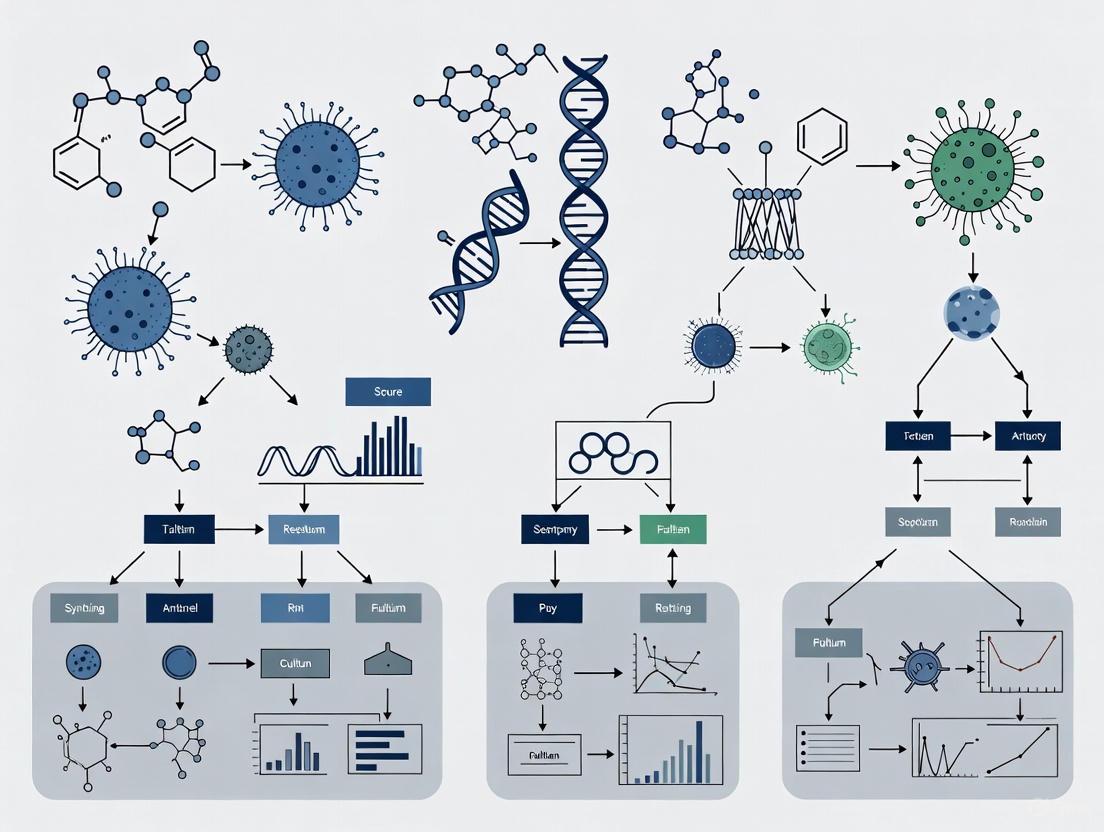
This article explores the rapidly advancing field of CRISPRi-based synthetic microbial consortia, a technology that enables precise control over multi-strain communities for complex tasks.
CRISPRi Microbial Consortia: Engineering Synthetic Co-Cultures for Biomedicine and Bioproduction
Abstract
This article explores the rapidly advancing field of CRISPRi-based synthetic microbial consortia, a technology that enables precise control over multi-strain communities for complex tasks. It covers the foundational principles of using CRISPR interference (CRISPRi) to program metabolic switches and orchestrate division of labor. The scope extends to cutting-edge methodologies for consortium design, including computational tools and communication systems, alongside critical troubleshooting strategies for maintaining stability and specificity. Finally, the article provides a comparative analysis of consortium performance against traditional monocultures, highlighting validated applications in metabolic engineering and therapeutic development. This resource is tailored for researchers, scientists, and drug development professionals seeking to harness microbial communities for advanced biomedical and industrial applications.
The Foundations of CRISPRi in Microbial Consortia: From Basic Principles to Ecological Engineering
Defining CRISPRi Microbial Consortia and Core Advantages Over Single-Strain Systems
CRISPRi microbial consortia are synthetic microbial communities comprising multiple, specialized strains that interact via CRISPR interference (CRISPRi) to perform complex functions that are challenging for single-strain systems. These consortia utilize a programmable, deactivated Cas9 (dCas9) system to achieve targeted gene repression without DNA cleavage. A key differentiator is the implementation of intercellular CRISPRi (i-CRISPRi), where guide RNA (gRNA) messages are transmitted between sender and receiver cells within the consortium, enabling sophisticated distributed computation and control [1]. This architecture moves beyond single-cell engineering to create a division of labor across the microbial community, mimicking the functional specialization found in natural ecosystems.
The core principle involves engineering distinct populations to assume specific roles—such as signal sensing, information processing, or compound production—and coordinating these activities through precise, CRISPR-mediated gene regulation. This approach leverages the programmability of gRNAs to create a versatile and scalable communication system. Unlike previous systems reliant on a limited set of unprogrammable signal molecules, i-CRISPRi allows for a vast array of specific messages by simply altering the gRNA sequence, thus enabling the silencing of virtually any gene in response to intercellular signals [1]. This foundational capability allows researchers to construct more robust, efficient, and complex biological systems for a wide range of biotechnological applications.
Core Advantages Over Single-Strain Systems
Engineering microbial consortia provides significant, measurable benefits over conventional single-strain engineering. The table below summarizes the core competitive advantages of a consortium-based approach.
Table 1: Core Advantages of CRISPRi Microbial Consortia over Single-Strain Systems
| Advantage | Description | Key Supporting Evidence |
|---|---|---|
| Reduced Metabolic Burden | Distributing genetic circuits and metabolic pathways across multiple strains prevents any single cell from being overburdened, leading to higher overall productivity and circuit stability [2]. | Division of labor eliminates competition for gene expression resources, which can cause unintended correlations between genes on the same plasmid in a single strain [2]. |
| Enhanced Robustness & Stability | Consortia are less susceptible to collapse from mutations or environmental fluctuations. Stability can be engineered via negative feedback loops (e.g., synchronized lysis circuits) to prevent one strain from outcompeting another [2]. | Programmed population control enables stable co-culture of strains with different growth rates, a feat impossible in competitive co-cultures without engineering [2]. |
| Division of Labor & Specialization | Enables modular design where individual strains are optimized for specific tasks (e.g., high-yield production or functionalization), combining their strengths [3] [2]. | In a bacterial-fungal co-culture, E. coli produces a taxadiene precursor efficiently, which is then oxygenated by yeast S. cerevisiae to produce 33 mg/L of oxygenated taxanes in 120 hours, leveraging the strengths of both organisms [3]. |
| Scalable & Programmable Communication | Phage-delivered i-CRISPRi allows for a scalable, programmable, and versatile communication channel using gRNAs as signals, unlike limited, fixed molecule-based systems [1]. | A single-input i-CRISPRi signal can activate expression 21-fold. While signal strength decreases with multiplexing (14.3-fold for dual, 7.7-fold for triple inputs), the system remains functional [1]. |
| Improved Environmental Performance | Microbial consortia can exhibit superior performance and reproducibility, especially under challenging real-world conditions where single strains may fail [4]. | In agricultural trials, microbial consortia products (MCPs) showed superior performance to single-strain inoculants under challenging desert conditions, improving phosphate acquisition and final fruit yield [4]. |
Key Experimental Protocols
This section details the foundational methodology for establishing a phage-mediated i-CRISPRi communication system within a bacterial consortium, as well as the computational design of strain-specific gRNAs.
Protocol: Establishing Phage-Mediated i-CRISPRi Communication
This protocol enables the transmission of genetic messages from sender to receiver cells using engineered M13 bacteriophage.
Research Reagent Solutions Table 2: Essential Reagents for i-CRISPRi Experiments
| Reagent / Tool | Function in the Experiment |
|---|---|
| dCas9 Protein | The catalytically "dead" Cas9 core; binds DNA targets specified by gRNAs but does not cut, enabling reversible gene repression (CRISPRi). |
| Sender Cells (gp3φ-positive) | Engineered bacterial cells that package specific gRNA sequences into M13 phage particles and secrete them. The gp3φ protein prevents re-infection. |
| Receiver Cells (gp3φ-negative) | Engineered bacterial cells that are susceptible to M13 infection. They receive gRNAs, which form complexes with dCas9 to repress target genes. |
| M13 Bacteriophage | A non-lytic virus used as a vector to package and deliver gRNA messages between microbial cells in a consortium. |
| Strain-Specific gRNAs | Computationally designed guide RNAs that target genes in receiver cells without off-target effects on other consortium members [5]. |
Methodology
- Strain Engineering:
- Sender Strains: Engineer strains to constitutively express the phage capsid protein gp3φ. Introduce genetic circuits that produce and package specific gRNA sequences into M13 phage particles under a controllable promoter.
- Receiver Strains: Engineer gp3φ-negative strains to constitutively express dCas9. Introduce reporter genes (e.g., GFP) or metabolic pathway genes under the control of promoters that can be repressed by the incoming gRNA-dCas9 complex.
Consortium Cultivation:
- Co-culture sender and receiver cells in a defined ratio. The optimal ratio and timing for message transmission must be determined empirically, as communication efficiency is influenced by the growth stage and metabolic state of both cell types [1].
- The sender cells will produce and release M13 phage particles containing the encoded gRNA messages.
Signal Transmission & Reception:
- The released phage particles infect the gp3φ-negative receiver cells.
- Upon infection, the gRNA payload is delivered into the receiver cell.
Gene Regulation:
- Inside the receiver cell, the delivered gRNA complexes with the resident dCas9 protein.
- This complex binds to the target DNA sequence, blocking transcription and repressing the target gene.
Output Measurement:
- Quantify the repression efficiency by measuring the reduction in reporter signal (e.g., fluorescence) or the change in metabolic output.
- Use next-generation sequencing (NGS) or Sanger sequencing with analysis tools like CRISPResso2 or TIDE to verify the binding and its specificity [6].
Protocol: Computational Design of Strain-Specific gRNAs
The specificity of i-CRISPRi hinges on gRNAs that selectively target intended strains without affecting others in the consortium. The ssCRISPR program is designed for this purpose [5].
Methodology
- Input Definitions:
- Target Strains: Specify the bacterial strains whose genomes will be searched for shared gRNA target sequences.
- Protected Strains: Define all non-target strains in the consortium; the program will eliminate gRNAs with significant homology to these genomes.
- CRISPR System Parameters: Input the desired PAM sequence, target sequence length, and PAM-target orientation for the specific Cas protein (e.g., dCas9).
Genome Screening & Specificity Filtering:
- The program scans the genomes of all target strains to identify PAM sequences and extract the adjacent target sequences.
- It retains only gRNA sequences that are identical across all target strains.
- The program then screens these candidate gRNAs against the genomes of all protected strains. To ensure perfect specificity, it is recommended to filter for gRNAs with at least 3 nucleotide mismatches relative to all non-target genomes, as 1-2 mismatches may not prevent cleavage in all contexts [5].
Efficiency Ranking:
- The final list of strain-specific gRNAs is ranked by predicted on-target cutting efficiency using a machine learning model (e.g., gradient boosting regression) that considers sequence composition and thermodynamic properties [5].
Visualizing the i-CRISPRi Workflow and Logic
The following diagrams illustrate the core architecture and operational logic of a CRISPRi microbial consortium.
Mechanisms of CRISPR Interference for Precision Gene Silencing in Bacterial Communities
CRISPR Interference (CRISPRi) is a powerful, programmable tool for precision gene silencing derived from the bacterial adaptive immune system. This technology utilizes a catalytically inactive Cas9 (dCas9) protein, which binds to DNA without creating double-strand breaks. When directed by a guide RNA (gRNA) to a specific genomic locus, dCas9 acts as a physical barrier to transcription, enabling reversible and sequence-specific gene repression [7] [8]. Unlike traditional gene knockouts, CRISPRi allows for transient and tunable control of gene expression, making it an indispensable technology for dissecting complex genetic networks and engineering synthetic microbial consortia [9] [10]. In bacterial communities, CRISPRi facilitates the precise manipulation of individual population members and the orchestration of communal behaviors, such as metabolic division of labor and coordinated biofilm formation, thereby advancing research in sustainable bioproduction and microbiome engineering.
Key Mechanisms and Operational Principles
The efficacy of CRISPRi hinges on the steric obstruction of RNA polymerase (RNAP). For effective transcriptional repression, the dCas9-gRNA complex must target a specific window within the promoter region or the early coding sequence of a gene. Key operational principles include:
- Target Site Selection: The dCas9-gRNA complex binds to DNA sequences adjacent to a Protospacer Adjacent Motif (PAM). Effective interference requires targeting regions with high chromatin accessibility and low nucleosome occupancy. In S. cerevisiae, the most effective gRNAs target the region between the Transcription Start Site (TSS) and 200 bp upstream of it [8].
- Transcriptional Repression: Upon binding, dCas9 physically blocks the progression of RNAP, thereby preventing transcription initiation or elongation. The repression can be enhanced by fusing dCas9 to transcriptional repressor domains, such as Mxi1 [8].
- Specificity and Reversibility: CRISPRi is highly specific to the target gene and is reversible upon removal of the inducer that controls dCas9 or gRNA expression, allowing for dynamic and temporal control of gene expression without permanent genomic alterations [10] [8].
Quantitative Data on CRISPRi Performance
The performance of CRISPRi systems is quantified by their repression efficiency and impact on microbial growth. The following table summarizes key quantitative findings from recent studies.
Table 1: Quantitative Data on CRISPRi Performance in Microbial Systems
| Organism/System | Target Gene/Pathway | Repression Efficiency/Outcome | Key Performance Metric | Reference |
|---|---|---|---|---|
| E. coli Consortium | cydA (Cytochrome BD-I) |
Effective growth arrest after ~1-2 cell doublings; stable for >30 hours. | Molar yield of xylitol: 3.5 (±0.76) with CRISPRi vs. 1.9 (±0.08) uninduced. | [10] |
| S. cerevisiae | Essential Genes & Haploinsufficient Genes (e.g., ERG11, ERG25) |
Up to ~10-fold transcriptional repression; induced specific chemical-genetic interactions. | Strong, reproducible fitness defects for most essential genes in pooled screens. | [8] |
| Phage-mediated i-CRISPRi in E. coli | Various targets for logic gates | Successful regulation of gene expression across cells. | Implementation of NOT, YES, AND, and AND-AND-NOT logic gates. | [11] |
| Food Safety Biofilm Control | Pathogen virulence and resistance genes | Up to ~3-log reduction of target pathogens in biofilms. | Precision killing, sparing beneficial microbes. | [9] |
Application Notes and Protocols
This section provides detailed methodologies for implementing CRISPRi in bacterial consortia, from foundational strain engineering to advanced multicellular computation.
Protocol 1: Implementing a Metabolic Switch in an Engineered Consortium
This protocol describes how to engineer a syntrophic consortium where one strain uses a CRISPRi-mediated metabolic switch to produce a compound, while a partner strain valorizes the byproduct [10].
Research Reagent Solutions:
- Bacterial Strains: E. coli K-12 MG1655 or other suitable chassis.
- Plasmids: (1) dCas9 expression plasmid (e.g., under anhydrotetracycline (ATc)-inducible promoter). (2) gRNA expression plasmid with a guide targeting
cydA(e.g., under a tetracycline-inducible RPR1 promoter). - Culture Media: Minimal media (e.g., M9) supplemented with appropriate carbon sources (e.g., glucose and xylose) and antibiotics for plasmid maintenance.
- Key Reagents: Anhydrotetracycline (ATc) for induction, antibiotics.
Step-by-Step Methodology:
- Base Strain Construction:
- Start with an E. coli strain and sequentially delete genes for native fermentation pathways (
focA-pflB,ldhA,adhE,frdA) andxylABto prevent xylose catabolism. - Replace the native cAMP receptor protein (CRP) with a mutant version (CRP*) to enable simultaneous sugar uptake.
- Integrate a heterologous xylose reductase gene (e.g., from Candida boidinii) under a constitutive promoter into the genome.
- Delete the
cyoBandappBgenes, which are part of cytochromes BD-o and BD-II.
- Start with an E. coli strain and sequentially delete genes for native fermentation pathways (
CRISPRi System Integration:
- Stably integrate the gene for dCas9 into the genome under the control of an ATc-inducible promoter to create the "xylitol base strain."
- Introduce a plasmid expressing a gRNA designed to target the
cydAgene (essential for cytochrome BD-I function) to create the final "xylitol strain."
Induction and Fermentation:
- Inoculate the xylitol strain in a bioreactor containing minimal media with glucose, xylose, and antibiotics.
- Grow the culture under oxic conditions to mid-log phase.
- Induce the CRISPRi system by adding ATc. This will repress
cydA, forcing the strain to adopt an anaerobic physiology despite the presence of oxygen, and shift its metabolism to convert xylose to xylitol. - Monitor growth (OD600) and product formation (e.g., via HPLC) over 24-96 hours. Expect growth arrest and enhanced xylitol yield post-induction.
Co-culture with Acetic Acid Auxotroph:
- Co-culture the induced xylitol strain with a second, aerobically growing E. coli strain engineered to be an acetate auxotroph and to produce a secondary product (e.g., isobutyric acid) from glucose and acetate.
- The second strain will consume the acetate byproduct excreted by the xylitol strain, preventing inhibition and valorizing the waste stream, enabling "two fermentations in one go."
Diagram 1: CRISPRi Metabolic Switch Workflow
Protocol 2: Phage-Mediated Intercellular CRISPRi (i-CRISPRi) for Multicellular Logic
This protocol enables gene regulation across different bacterial cells using engineered M13 phagemids to deliver sgRNA payloads, facilitating distributed biological computation [11].
Research Reagent Solutions:
- Bacterial Strains: E. coli strains with F-pilus (e.g., ER2738) for M13 phage infection. Sender and receiver strains with appropriate antibiotic resistance.
- Plasmids/Phagemids: Engineered M13 phagemid vectors (e.g., -gp3φ or +gp3φ variants) containing the sgRNA expression cassette. Receiver strains should harbor a constitutively expressed dCas9 (e.g., fused to a repressor domain).
- Culture Media: LB broth and agar plates with appropriate antibiotics (e.g., Kanamycin, Ampicillin, Tetracycline, Spectinomycin).
- Key Reagents: Antibiotics, IPTG, X-gal for plaque assays.
Step-by-Step Methodology:
- Sender and Receiver Strain Preparation:
- Sender Strain: Engineer an E. coli strain containing the phagemid with the sgRNA gene of interest under a constitutive or inducible promoter.
- Receiver Strain: Engineer an E. coli strain that constitutively expresses the dCas9 repressor protein. This strain should also be susceptible to M13 phage infection.
Phage Particle Production:
- Grow the sender strain in LB with antibiotic selection until the late exponential/early stationary phase (~15 hours).
- Centrifuge the culture and filter the supernatant (0.22 µm filter) to obtain a sterile phage preparation.
- Determine the phage titer (CFU/mL or PFU/mL) using a plaque assay with the receiver strain.
Communication and i-CRISPRi Induction:
- Mix the phage preparation with the receiver strain culture and incubate at room temperature for 20-30 minutes to allow for phage adsorption and sgRNA delivery.
- Plate the mixture on selective agar or continue growth in liquid culture to allow for sgRNA expression and dCas9-mediated repression of the target gene in the receiver cells.
Implementing Logic Gates:
- For multicellular logic (e.g., an AND gate), design two sender strains, each producing a unique phage carrying a different sgRNA. The receiver strain is engineered such that the output (e.g., GFP expression) is only activated if BOTH sgRNAs are delivered and repress their respective target genes (e.g., repressors of the output).
- Co-culture the two sender strains with the single receiver strain. The system will only produce the desired output if phages from both senders successfully infect the receiver cell, delivering the complete set of sgRNAs.
Diagram 2: i-CRISPRi Communication Mechanism
Protocol 3: Genome-Scale CRISPRi Screens for Gene Function Analysis
This protocol outlines the steps for performing pooled CRISPRi screens to identify genes involved in specific phenotypes, such as drug resistance or biofilm formation [12] [8].
Research Reagent Solutions:
- gRNA Library: A comprehensive library of guide plasmids (e.g., 10 guides per gene) designed to target promoter regions, considering chromatin accessibility and distance from the TSS.
- Strain: A model microbial strain (e.g., S. cerevisiae) stably expressing dCas9 fused to a repressor domain like Mxi1.
- Culture Media: Appropriate minimal or rich media for the organism, with inducers (e.g., ATc) for gRNA expression.
- Key Reagents: Array-synthesized oligonucleotide library, high-throughput sequencing reagents, barcoded primers, chemicals for selection (e.g., drugs).
Step-by-Step Methodology:
- Library Design and Cloning:
- Design gRNAs to target the non-template strand in the region from -220 bp to +20 bp relative to the known Transcription Start Site (TSS). Prioritize regions with low nucleosome occupancy and high chromatin accessibility [8].
- Clone the pooled oligonucleotide library into a gRNA expression vector, such as a plasmid with a tetracycline-inducible RPR1 promoter. The library should include multiple gRNAs per gene and negative control gRNAs.
Library Transformation and Pool Creation:
- Transform the pooled gRNA plasmid library into the microbial strain expressing dCas9-Mxi1. Ensure high transformation efficiency to achieve full library coverage (typically >1000x).
- Pool all transformants to create the initial screening library. Harvest a sample as the "T0" time point for genomic DNA extraction.
Phenotypic Selection:
- Subject the pooled library to the selective condition of interest (e.g., treatment with a sub-lethal concentration of an antifungal drug, or growth in biofilm-promoting conditions). Maintain a control culture in a non-selective condition.
- Allow the cells to grow competitively for multiple generations (typically 5-10 population doublings).
gRNA Abundance Quantification and Analysis:
- Extract genomic DNA from the pooled populations after selection and from the T0 control.
- Amplify the gRNA regions (or associated barcodes) for high-throughput sequencing. Using linear amplification by in vitro transcription (IVT-RT) can reduce quantitative noise compared to direct PCR amplification [12].
- Sequence the amplified products and count the reads for each gRNA.
- Calculate the fold-enrichment or depletion of each gRNA in the selected pool compared to the T0 control. Guides targeting genes important for fitness under the selective condition will be depleted. Software like MAGeCK is commonly used for this analysis.
Essential Research Reagent Solutions
The successful implementation of CRISPRi relies on a standardized toolkit of biological parts and reagents.
Table 2: Key Research Reagent Solutions for CRISPRi Experiments
| Reagent Category | Specific Example(s) | Function and Application Notes |
|---|---|---|
| dCas9 Repressor Fusions | dCas9-Mxi1 (in yeast) [8]; dCas9-KRAB (in mammals) [7]. | The Mxi1 or KRAB domain recruits chromatin-modifying complexes to enhance transcriptional repression. |
| Inducible Promoters | Tetracycline-inducible RPR1 promoter (yeast) [8]; ATc-inducible promoter (bacteria) [10]. | Enables temporal control over gRNA or dCas9 expression, allowing for reversible gene silencing and study of essential genes. |
| gRNA Design & Libraries | Genome-scale libraries with 10 guides/gene [12]; Guides targeting -200 to TSS [8]. | High-coverage libraries are critical for functional genomics screens. Design must consider genomic context for high efficacy. |
| Delivery Vectors | Lentiviral vectors (mammals); M13 phagemids (bacterial consortia) [11]; Episomal plasmids (yeast/bacteria). | Phagemids enable intercellular communication in consortia. Lentiviruses allow stable integration in hard-to-transfect cells. |
| Engineered Host Strains | E. coli with deleted fermentation pathways [10]; Acetic acid auxotrophs [10]; F-pilus containing strains for phage infection [11]. | Pre-engineered chassis strains with simplified metabolisms or specific dependencies are crucial for building robust synthetic consortia. |
Application Note
This application note details a methodology for implementing a CRISPRi-mediated metabolic switch to induce anaerobic-like physiology in Escherichia coli under oxic conditions. This engineered strain serves as the foundation for a syntrophic microbial consortium, enabling concurrent aerobic and synthetic anaerobic fermentations within a single bioreactor. The protocol is designed for researchers engineering microbial consortia for sustainable biochemical production.
Key Experimental Outcomes
The implementation of the metabolic switch and consortium cultivation yielded the following quantitative results:
Table 1: Performance Summary of the Xylitol Production Strain with Induced Metabolic Switch
| Condition | Media | Molar Yield (Xylitol/Glucose) | Growth Arrest Post-Induction | Long-term Stability |
|---|---|---|---|---|
| CRISPRi Induced | Minimal | 3.5 (±0.76) | ~1 doubling in cell density | Stable for >96 hours [10] |
| CRISPRi Uninduced | Minimal | 1.9 (±0.08) | N/A | N/A [10] |
| CRISPRi Induced | Rich (0.5% Yeast Extract) | 2.4 (±0.08) | ~2 doublings in cell density | Stable for >96 hours [10] |
Table 2: Constructed Strains and Their Key Genotypes
| Strain Name | Primary Function | Key Genetic Modifications |
|---|---|---|
| Xylitol Production Strain | Growth-decoupled xylitol production under oxic conditions | ΔfocA-pflB; ΔldhA; ΔadhE; ΔfrdA; ΔxylAB; ΔcyoB; ΔappB; CRP; Integrated dCas9; Plasmid with gRNA targeting *cydA [10] |
| Acetate Auxotroph Strain (IBA Producer) | Co-utilization of glucose and acetate for isobutyric acid production | ΔaceEF; ΔfocA-pflB; ΔpoxB; ΔtdcE; ΔpflDC; Δpfo; ΔdeoC; ΔxylAB; ΔaraBA; (ΔptsG for improved performance) [10] |
Traditional bioprocesses rely on single-strain fermentations, which can be limited by metabolic burdens and byproduct inhibition. Microbial consortia offer a powerful alternative by distributing metabolic tasks. A key challenge is independently controlling the physiology of different strains within a shared environment [10].
This protocol uses CRISPR interference (CRISPRi) to program a metabolic switch in an engineered E. coli strain. By repressing the essential gene cydA, which encodes part of cytochrome BD-I, the switch forces the strain into an anaerobic fermentative state even in the presence of oxygen [10]. This growth-arrested, production-focused strain can be co-cultured with an aerobic partner strain designed for byproduct valorization, creating a efficient "two-fermentations-in-one" system [10].
Protocol
This protocol is divided into two main parts: (1) Construction of the metabolic switch strain and its partner, and (2) Operation of the syntrophic consortium.
Part 1: Strain Construction
Construction of the Xylitol Producer with Inducible Metabolic Switch
Key Reagents:
- E. coli K-12 MG1655 WT
- CRISPRi plasmids (dCas9 expression and gRNA)
- Oligonucleotides for gene deletions and integration
Procedure:
- Create Base Production Strain:
- Knock out native fermentation pathways to minimize byproducts: Delete
focA-pflB,ldhA,adhE, andfrdA[10]. - Knock out xylose catabolism genes: Delete
xylAB[10]. - Replace the native cAMP receptor protein (CRP) with a constitutively active mutant (CRP*) to enable simultaneous sugar uptake [10].
- Integrate a xylose reductase gene (e.g., from Candida boidinii) under a constitutive promoter (e.g., BBa_J23100) into the genome [10].
- Knock out native fermentation pathways to minimize byproducts: Delete
- Engineer Aerobic Respiration Control:
- Delete the genes for cytochromes BD-o and BD-II (
cyoBandappB). The strain will now rely solely on cytochrome BD-I (encoded bycydAB) for aerobic growth [10].
- Delete the genes for cytochromes BD-o and BD-II (
- Integrate the CRISPRi System:
- Genomically integrate a dCas9 gene under the control of an anhydrotetracycline (aTc)-inducible promoter [10].
- Transform a plasmid containing a guide RNA (gRNA) sequence designed to target the
cydAgene [10]. - gRNA Design Consideration: For perfect strain specificity within a consortium, computational tools like ssCRISPR can design gRNAs requiring up to 3 nucleotide mismatches in non-target strains to prevent off-target effects [5].
Construction of the Acetate-Valorizing Partner Strain
Procedure:
- Create Acetate Auxotroph:
- Knock out key acetate generation pathways: Delete
aceEF,focA-pflB, andpoxB[10]. - Use constraint-based metabolic modeling to identify and delete additional genes that could provide metabolic escape routes from auxotrophy: Delete
tdcE,pflDC,pfo, anddeoC[10]. - To prevent catabolism of pentose sugars, delete
xylABandaraBA[10].
- Knock out key acetate generation pathways: Delete
- Introduce Product Pathway:
- Engineer the strain for isobutyric acid (IBA) production or another desired product from acetyl-CoA.
- For improved performance, consider deleting
ptsGto slightly increase IBA titers and yield [10].
Part 2: Consortium Cultivation and Analysis
Key Reagents:
- M9 minimal medium or similar with 0.5% yeast extract (optional)
- Carbon sources: Glucose, Xylose
- Inducer: Anhydrotetracycline (aTc)
Procedure:
- Inoculum Preparation: Grow pure cultures of the engineered xylitol strain and the acetate-auxotroph strain overnight in LB medium with appropriate antibiotics.
- Bioreactor Inoculation and Induction:
- Inoculate a bioreactor containing minimal medium with glucose and xylose with the xylitol production strain.
- Add 1 µg/mL anhydrotetracycline (aTc) to the culture at the mid-exponential growth phase (OD600 ~0.5) to induce dCas9 expression and trigger the repression of
cydA[10]. - Monitor culture growth (OD600). Expect growth arrest after approximately one (minimal media) to two (richer media) doublings post-induction [10].
- Introduction of Partner Strain:
- Once growth arrest of the first strain is confirmed and acetate is detected in the medium, inoculate the acetate-auxotroph strain into the same bioreactor.
- Process Monitoring:
- Sample the consortium regularly to monitor optical density (OD600) for each strain (via selective plating or flow cytometry), substrate consumption (glucose, xylose), and product formation (xylitol, IBA) using HPLC or GC-MS.
- Acetate concentration should be monitored; the partner strain is typically designed to consume ~17 mM acetate, which is depleted within ~13 hours under tested conditions [10].
The Scientist's Toolkit
Table 3: Essential Research Reagents and Materials
| Reagent/Material | Function/Description | Example/Note |
|---|---|---|
| dCas9 and gRNA Plasmids | CRISPRi system for targeted gene repression. dCas9 lacks nuclease activity but binds DNA, blocking transcription. | dCas9 under aTc-inducible promoter; gRNA plasmid with scaffold targeting cydA [10]. |
| Engineered E. coli Strains | Host organisms for metabolic engineering. | E. coli K-12 MG1655, with deletions to create acetate auxotrophy and block byproducts [10]. |
| Anhydrotetracycline (aTc) | Small molecule inducer for the dCas9 promoter. | Used at 1 µg/mL to trigger the metabolic switch [10]. |
| Constraint-Based Modeling | Computational framework to predict metabolic fluxes and identify key gene knockouts. | Used to design the acetate auxotroph and identify non-essential genes for deletion [10]. |
| Strain-Specific gRNA Design Tool (ssCRISPR) | Computational program to design gRNAs that target specific strains within a consortium. | Ensures guide RNAs are specific to target strain, preventing off-target effects in co-cultures [5]. |
Visualizations
Metabolic Switch and Consortium Workflow
Engineered Acetate Auxotroph Metabolism
Engineering Syntrophic Interactions for Stable Co-cultivation and Cross-Feeding
Within synthetic biology, the construction of microbial consortia represents a paradigm shift from single-strain fermentations toward more complex, cooperative systems. Dividing biosynthetic pathways across multiple specialized strains can reduce metabolic burden, minimize intermediate toxicity, and enhance overall production yields. A central challenge in this field is maintaining stable, balanced co-cultivation. This application note details a robust methodology for establishing a syntrophic consortium between two Escherichia coli strains, enabled by a programmable CRISPR interference (CRISPRi) metabolic switch and designed auxotrophy. The protocols herein are designed for researchers and scientists developing advanced co-culture systems for bioproduction and therapeutic applications.
Core Principles and Quantitative Performance
This system engineers a "two fermentations in one go" process within a single bioreactor. The core innovation is a CRISPRi-mediated metabolic switch that decouples cellular growth from product synthesis and forces a shift to anaerobic metabolism under oxic conditions [10]. This enables a syntrophic partnership: one strain (the Xylitol Producer) performs anaerobic xylitol production and excretes acetate, while a second, engineered Acetate Auxotroph aerobically co-consumes the acetate and glucose to produce isobutyric acid (IBA) [10].
Table 1: Key Performance Metrics of the Syntrophic Consortium
| Performance Parameter | Xylitol Producer (CRISPRi-induced) | Acetate Auxotroph | Overall Consortium |
|---|---|---|---|
| Primary Product | Xylitol | Isobutyric Acid (IBA) | Xylitol & Isobutyric Acid |
| Key Metabolic Switch | CRISPRi repression of cydA (Cytochrome BD-I) |
Constraint-based model-guided auxotrophy design | Concurrent aerobic & synthetic anaerobic metabolism |
| Critical Genetic Modifications | ΔfocA-pflB, ΔldhA, ΔadhE, ΔfrdA, ΔxylAB, CRP*, cydA gRNA |
ΔaceEF, ΔfocA-pflB, ΔpoxB, ΔtdcE, ΔpflDC, Δpfo, ΔdeoC |
Division of labor via metabolic specialization |
| By-product Valorization | Excretes Acetate | Consumes Acetate | Closed-loop carbon cycling |
| Theoretical Maximum Yield | 4 mol Xylitol / mol Glucose [10] | N/A | N/A |
| Achieved Xylitol Yield | 3.5 (±0.76) mol/mol (Minimal Media) [10] | N/A | Comparable titers & productivities to separate fermentations [10] |
| Growth Characteristic | Growth-arrested production | Requires acetate & glucose for growth | Stabilized via syntrophic dependency |
| Process Longevity & Stability | Stable growth arrest for >96 hours; reversible upon inducer removal [10] | N/A | Robust co-cultivation |
Experimental Protocols
Protocol 1: Constructing the Xylitol Producer with Inducible Metabolic Switch
This protocol outlines the creation of an E. coli strain that can be metabolically switched to anaerobic metabolism under oxic conditions for growth-decoupled xylitol production [10].
Stage 1: Base Strain Engineering
- Knockout Fermentation Pathways: Sequentially delete the genes
focA-pflB,ldhA,adhE, andfrdAto eliminate major native fermentation pathways and minimize by-product formation. - Knockout Xylose Catabolism: Delete
xylABto prevent the strain from metabolizing xylose, redirecting it solely to xylitol. - Modulate Carbon Catabolite Repression: Replace the native cAMP receptor protein (CRP) with a mutated version (CRP*) to enable simultaneous uptake of multiple sugar types [10].
- Integrate Xylitol Synthesis Cassette: Insert a gene encoding xylose reductase from Candida boidinii under the control of a constitutive promoter (e.g., BBa_J23100) into the genome.
- Knockout Cytochromes: Delete
cyoBandappB(components of cytochromes BD-o and BD-II) to simplify the respiratory chain. The resulting intermediate strain (Xylitol Base Strain) relies solely on cytochrome BD-I for respiration under oxic conditions.
Stage 2: CRISPRi System Integration
- Integrate dCas9: Stably integrate a gene for catalytically dead Cas9 (dCas9) into the genome, under the control of an anhydrotetracycline (aTc)-inducible promoter.
- Introduce Guide RNA: Transform the strain with a plasmid carrying a guide RNA (gRNA) specifically targeting the
cydAgene, which is essential for the function of cytochrome BD-I. - Validation: The final strain (Xylitol Strain) should be tested. Induction with aTc should lead to repression of
cydA, resulting in rapid growth arrest within ~1-2 cell doublings and a subsequent shift to fermentative metabolism for xylitol production [10].
Protocol 2: Designing and Building an Acetate Auxotroph for Cross-Feeding
This protocol creates a partner strain that depends on the Xylitol Producer for acetate, ensuring mutualistic coexistence.
Stage 1: Constraint-Based Model-Guided Design
- In Silico Modeling: Use genome-scale metabolic models (e.g., via COBRApy) to identify and simulate gene knockout combinations that would render the strain auxotrophic for acetate while maintaining the ability to co-utilize it with glucose. The model should confirm the inability to produce acetyl-CoA from glucose alone.
- Identify Target Genes: The primary knockout targets are
aceEF(pyruvate dehydrogenase),focA-pflB(pyruvate formate-lyase), andpoxB(pyruvate oxidase). To enhance auxotrophy robustness and prevent evolutionary escape, also targettdcE,pflDC,pfo(oxygen-sensitive pyruvate-converting enzymes), anddeoC(involved in nucleoside degradation) [10].
Stage 2: Genetic Construction
- Sequential Gene Deletion: Perform sequential knockout of the identified target genes (
aceEF,focA-pflB,poxB,tdcE,pflDC,pfo,deoC) in an E. coli host strain. - Knockout Pentose Catabolism: Delete
xylABandaraBAto prevent catabolism of C5 sugars, ensuring compatibility with the xylitol production medium. - Introduce Product Pathway: Introduce the biosynthetic pathway for isobutyric acid (or another target product) into the genome.
- Validation: Screen the final strain (IBA Strain) for growth in M9 minimal media. It should not grow with glucose as the sole carbon source, should show limited growth with acetate alone, and must exhibit robust growth and IBA production when both glucose and acetate (e.g., 17-34 mM) are present [10].
Protocol 3: Establishing and Maintaining the Syntrophic Co-culture
This protocol describes the process for initiating and running the consolidated fermentation.
- Inoculum Preparation: Grow pure cultures of the Xylitol Producer and the Acetate Auxotroph overnight in their respective media.
- Bioreactor Inoculation: Co-inoculate both strains into a single, aerated bioreactor containing minimal media with glucose and xylose as carbon sources. The dissolved oxygen should be maintained at oxic levels.
- Induction of Metabolic Switch: Once the co-culture reaches early/mid-exponential phase (OD600 ~0.3-0.5), induce the CRISPRi system in the Xylitol Producer by adding aTc (e.g., 100 ng/mL). This will trigger growth arrest and initiate anaerobic xylitol production and acetate excretion.
- Process Monitoring: Monitor cell density (OD600), carbon source consumption (glucose, xylose), and product formation (xylitol, IBA, acetate) over time. The system should stabilize with the Xylitol Producer in a non-growing, productive state and the Acetate Auxotroph growing on the provided glucose and the excreted acetate.
- Long-term Stability: The co-culture can be maintained for extended periods (>96 hours). The CRISPRi-mediated growth arrest is highly stable, but can be reversed by removing the inducer via washing if needed [10].
Visualizing the Syntrophic System and Workflow
The following diagrams illustrate the core metabolic interactions and the experimental workflow for establishing the co-culture.
Figure 1: Metabolic Interaction Map. The diagram shows the syntrophic relationship. The Xylitol Producer (red) consumes glucose and xylose, and upon CRISPRi repression of cydA, excretes acetate and produces xylitol. The Acetate Auxotroph (blue) consumes this acetate along with glucose to produce IBA, creating a mutualistic system.
Figure 2: Experimental Workflow. A step-by-step visualization of the process from strain construction and validation to co-cultivation, induction, and final analysis.
The Scientist's Toolkit: Essential Research Reagents
Table 2: Key Reagents and Genetic Parts for Consortium Engineering
| Reagent/Parts Category | Specific Example(s) | Function/Application |
|---|---|---|
| CRISPRi System | dCas9 (aTc-inducible promoter), gRNA plasmid targeting cydA |
Programmable transcriptional repression for essential gene knockdown and metabolic switching [10]. |
| Reporter Systems | Fluorescent proteins (e.g., GFP, mCherry) | Real-time monitoring of individual strain population dynamics and spatial organization in co-cultures. |
| Auxotrophic Markers | Deletions in aceEF, focA-pflB, poxB, etc. |
Engineered metabolic dependency to enforce stable, mutualistic interactions between consortium members [10]. |
| Inducible Promoters | aTc-inducible promoter (for dCas9), IPTG-inducible promoters | Precise temporal control over gene expression, such as the induction of the metabolic switch or product pathways [10]. |
| Modeling Software | Constraint-Based Reconstruction and Analysis (COBRA) tools | In silico prediction of essential genes, identification of auxotrophy targets, and simulation of community metabolism [10]. |
| Analytical Tools | HPLC, GC-MS | Quantification of substrate consumption, product titers (xylitol, IBA), and by-product formation (acetate) [10]. |
Key Historical Developments and Theoretical Frameworks for Consortium Design
The engineering of synthetic microbial consortia represents a paradigm shift in synthetic biology, moving beyond single-strain engineering to communities where division of labor, specialized function, and syntrophic interactions enhance overall system performance and stability. Framed within CRISPRi microbial consortium research, this approach enables precise orchestration of microbial behavior for applications ranging from bioproduction to therapeutic intervention. The integration of CRISPR interference (CRISPRi) provides an unparalleled toolset for implementing dynamic metabolic switches and stabilizing consortia through programmed interactions, offering solutions to longstanding challenges in co-culture stability and resource allocation [10] [13]. This document outlines the key historical developments, theoretical foundations, and practical protocols for designing and implementing CRISPRi-mediated synthetic co-cultures.
Historical Developments in Synthetic Consortium Engineering
The conceptual framework for synthetic microbial consortia has evolved through several distinct phases, marked by key technological breakthroughs.
Table 1: Historical Evolution of Synthetic Microbial Consortia
| Time Period | Development Phase | Key Innovations | Technical Limitations |
|---|---|---|---|
| Pre-2010 | Natural Consortium Observation | Study of interspecies interactions in natural environments; Simple co-culturing | Limited genetic tools; Reliance on natural microbial behavior |
| 2010-2015 | Early Genetic Engineering | Division of labor concepts; Metabolic cross-feeding; Quorum sensing circuits | Static control systems; Consortium instability; Load balancing issues |
| 2015-Present | CRISPR-Enabled Control | CRISPRi-mediated metabolic switches; Dynamic population control; Growth-production decoupling | Off-target effects; Delivery efficiency in consortia [14] |
| Present-Future | AI-Integrated Consortia | Machine learning for predictive design; Multi-input/output biosensors; Therapeutic applications [13] [15] | Scaling complexity; Standardization across chassis organisms |
The advent of CRISPR-Cas systems marked a transformative period in consortium design, moving from static engineering to dynamic control [16]. Specifically, the development of CRISPRi (using deactivated Cas9 fused to repressive domains) enabled precise temporal control of gene expression without DNA cleavage, facilitating metabolic reprogramming while maintaining genetic integrity. This capability proved essential for implementing metabolic switches that could decouple growth from production phases—a critical advancement for consortium stability and productivity [10].
Theoretical Frameworks for Consortium Design
Ecological Principles in Engineering
Synthetic consortium design draws heavily from ecological theory, translating natural interaction motifs into engineering principles:
- Competition: Engineered through niche partitioning to minimize resource competition between consortium members [17]
- Commensalism: Designed as unidirectional cross-feeding where one member's waste product becomes another's nutrient source [17] [10]
- Mutualism: Implemented through bidirectional metabolite exchange that stabilizes the consortium [17] [13]
- Predation: Less commonly used but implemented through programmed lysis circuits for population control
These ecological interactions are not static but context-dependent, shaped by environmental factors, population densities, and the specific genetic makeup of the engineered strains [17].
CRISPRi-Mediated Metabolic Switching Theory
A cornerstone of modern consortium design, CRISPRi-enabled metabolic switching allows researchers to forcibly alter microbial physiology without changing bioreactor conditions. The theoretical foundation rests on:
- Essential Gene Targeting: CRISPRi repression of genes essential under specific conditions but not others creates programmable growth arrest [10]
- Resource Reallocation: Growth arrest redirects cellular resources from biomass accumulation to product formation
- Syntrophic Stabilization: By-products from growth-arrested production strains become nutrients for partner strains, creating mutual dependence [10]
This approach was spectacularly demonstrated in a synthetic E. coli consortium where CRISPRi repression of cydA (encoding cytochrome BD-I) forced aerobic cells to adopt fermentative metabolism under oxic conditions, enabling concurrent aerobic and anaerobic processes in a single bioreactor [10].
Quorum Sensing Communication Frameworks
Microbial communication via quorum sensing (QS) provides the temporal coordination necessary for complex consortium behaviors:
- Acyl-homoserine lactones (AHLs): Enable Gram-negative bacterial communication in consortium design [13]
- Autoinducer-2 (AI-2): Facilitates interspecies communication in synthetic communities
- Density-Dependent Activation: Ensures coordinated behavior only at appropriate population densities [13]
QS circuits allow consortia to mimic natural ecosystem behaviors, including oscillation, bistable switches, and crisis response mechanisms, making them particularly valuable for therapeutic applications where precise timing of therapeutic delivery is essential [13].
Figure 1: Consortium Communication Logic. This diagram illustrates the integration of quorum sensing with CRISPRi control for coordinated consortium behavior.
Application Note: CRISPRi-Mediated Concurrent Fermentation
A landmark demonstration of CRISPRi-mediated consortium engineering achieved concurrent aerobic and synthetic anaerobic fermentations in a single bioreactor [10]. The system employed two specialized E. coli strains: a xylitol-producing strain with a CRISPRi-programmable metabolic switch and an acetate-utilizing strain engineered for isobutyric acid (IBA) production.
Table 2: Quantitative Performance of CRISPRi-Engineered Consortium
| Performance Metric | Uninduced (Respiring) | CRISPRi-Induced (Growth-Arrested) | Improvement Factor |
|---|---|---|---|
| Xylitol molar yield (minimal media) | 1.9 (±0.08) | 3.5 (±0.76) | 1.8x |
| Xylitol molar yield (rich media) | ~1.9 | 2.4 (±0.08) | 1.3x |
| Growth arrest stability | Continuous growth | >30 hours (minimal media) | Functional stability |
| Long-term induction | Not applicable | >96 hours without escape | Operational stability |
| Acetate valorization | Not applicable | Complete co-utilization with glucose | Waste-to-product conversion |
Strain Engineering and Workflow
The experimental implementation followed a systematic workflow for constructing and testing the syntrophic consortium:
Figure 2: Metabolic Switch Engineering Workflow. This diagram outlines the sequential genetic modifications required to construct the xylitol-producing strain with inducible anaerobic physiology.
The xylitol-producing strain was constructed through systematic genomic modifications: deletion of native fermentation pathways (focA-pflB, ldhA, adhE, frdA) to minimize byproduct formation; deletion of xylose catabolism genes (xylAB); introduction of a mutated cAMP receptor protein (CRP*) for simultaneous sugar uptake; and integration of a xylose reductase from Candida boidinii [10]. Critical to the metabolic switch strategy was the deletion of cytochromes BD-o and BD-II (cyoB, appB), leaving cytochrome BD-I (encoded by cydAB) as the sole terminal oxidase. Since cytochrome BD-I is essential for growth under these conditions, its repression via CRISPRi creates an effective growth switch [10].
Experimental Protocols
Protocol: CRISPRi-Mediated Metabolic Switch Implementation
Objective: Implement and validate a CRISPRi-mediated metabolic switch to induce anaerobic metabolism under oxic conditions.
Materials:
- Engineered E. coli strain with dCas9 integrated under anhydrotetracycline (ATc)-inducible promoter
- Plasmid expressing gRNA targeting cydA
- Minimal media (e.g., M9 with appropriate carbon sources)
- Richer media (e.g., minimal media + 0.5% yeast extract)
- Anhydrotetracycline (ATc) inducer stock solution
Procedure:
- Inoculate the engineered strain into appropriate media containing selective antibiotics
- Grow cultures to mid-exponential phase (OD600 ≈ 0.4-0.6)
- Split culture into induced (+ATc, 100-200 ng/mL) and uninduced controls
- Monitor growth (OD600) and product formation (xylitol) over 24-48 hours
- Sample periodically for metabolite analysis (HPLC or GC-MS)
- For long-term stability assays, extend monitoring to 96+ hours with periodic dilution into fresh media + inducer
- For reversibility testing, harvest induced cells at late time points (e.g., 29 hours), wash to remove inducer, and resuspend in fresh media without inducer
Validation Measures:
- Growth arrest within 1-2 cell doublings post-induction
- Increased product yield in induced vs. uninduced cells
- Stable growth arrest maintained >30 hours
- Reversible growth arrest following inducer removal [10]
Protocol: Synthetic Consortium Co-cultivation
Objective: Establish stable co-culture between CRISPRi-engineered production strain and partner strain with complementary metabolism.
Materials:
- CRISPRi-engineered xylitol production strain (as in Protocol 5.1)
- Engineered acetate-utilizing strain with deletions (aceEF, focA-pflB, poxB, tdcE, pflDC, pfo, deoC, xylAB, araBA)
- Co-culture media with mixed carbon sources
- Selective antibiotics as needed for plasmid maintenance
Procedure:
- Grow pure cultures of each strain separately to mid-exponential phase
- Inoculate co-culture at appropriate starting ratio (e.g., 1:1 based on OD600)
- Induce CRISPRi system in production strain with ATc
- Monitor co-culture density and composition (via strain-specific markers or plating)
- Sample periodically for metabolite analysis (xylitol, acetate, IBA, glucose)
- Assess population dynamics and product formation over 24-96 hours
Validation Measures:
- Stable co-culture maintenance without one population dominating
- Acetate production by growth-arrested strain matches consumption by partner strain
- Final product titers and yields comparable to separate fermentations [10]
The Scientist's Toolkit: Research Reagent Solutions
Table 3: Essential Research Reagents for CRISPRi Consortium Engineering
| Reagent/Category | Specific Examples | Function/Application | Implementation Notes |
|---|---|---|---|
| CRISPRi Components | dCas9, sgRNA expression constructs | Targeted gene repression | Use anhydrotetracycline-inducible systems for temporal control [10] |
| Machine Learning Tools | Comprehensive Guide Designer (CGD) | gRNA efficiency prediction | Utilizes Elastic Net Logistic Regression (ENLOR); outperforms previous models [18] |
| Metabolic Modeling | Constraint-based modeling | Identify escape pathways from auxotrophy | Used to design acetate auxotroph by identifying all possible acetyl-CoA sources [10] |
| Biosensor Systems | Nitrate-responsive (NarX-NarL), Thiosulfate-responsive (ThsS-ThsR) | Environmental signal detection | Enable AND-gate logic for precise activation in specific environments [13] |
| Delivery Methods | Electroporation, Nucleofection, RNP transfection | CRISPR component delivery | RNP format recommended for sensitive cells; nuclear delivery for non-dividing cells [19] |
| Analytical Methods | HPLC, GC-MS | Metabolite quantification | Essential for measuring cross-fed metabolites (acetate, xylitol, IBA) in co-cultures |
The integration of CRISPRi technology with ecological design principles has transformed synthetic microbial consortium engineering from a conceptual framework to a practical platform for complex biomanufacturing and therapeutic applications. The key developments—CRISPRi-mediated metabolic switching, syntrophic stabilization through cross-feeding, and quorum sensing coordination—provide researchers with a robust toolkit for designing stable, productive co-cultures. The protocols and reagents outlined here offer a foundation for implementing these approaches, with the CRISPRi-mediated concurrent fermentation system serving as an exemplary model of how programmed metabolic interactions can enable novel bioprocess configurations. As the field advances, the integration of machine learning for predictive design and the expansion of biosensing capabilities will further enhance our ability to program sophisticated collective behaviors in microbial communities.
Methodologies and Real-World Applications: Building Functional Consortia for Biomedicine and Bioremediation
Computational Design of Strain-Specific gRNAs for Targeted Consortium Engineering
The engineering of synthetic microbial consortia represents a frontier in biotechnology, enabling complex tasks through division of labor among different microbial populations [20]. A significant challenge in this field is the precise targeting and manipulation of individual strains within a mixed community without disrupting others. The advent of CRISPR interference (CRISPRi) technology has provided a powerful framework for achieving this strain-specific control [21]. This application note details computational and experimental methodologies for designing and implementing strain-specific guide RNAs (gRNAs) to enable targeted engineering of microbial consortia, with particular emphasis on the ssCRISPR computational platform and its validation in bacterial systems.
CRISPRi employs a deactivated Cas protein (dCas) that binds to DNA without cleaving it, thereby blocking transcription through steric inhibition of RNA polymerase [21]. The sequence-specific nature of CRISPR gRNAs can be leveraged to accurately differentiate between closely related microorganisms, facilitating the creation of tools that can manipulate consortium composition with precision [5]. The computational program ssCRISPR addresses the critical need for carefully designed gRNAs that can distinguish between target and non-target strains based on minimal genetic variations.
Computational Design of Strain-Specific gRNAs
The ssCRISPR Algorithm Framework
The ssCRISPR program operates through a sequential, multi-stage pipeline to identify optimal strain-specific gRNA sequences [5]. This process begins with user-defined parameters including target strains, protected non-target strains, and CRISPR system specifications. The algorithm then scans the genomes of all selected target strains for protospacer adjacent motif (PAM) sequences and extracts adjacent target sequences. A comparative analysis retains only those gRNA sequences with exact matches across all target strains while ensuring sufficient mismatch (typically ≥3 nucleotides) with all non-target strains.
Table 1: Key Input Parameters for ssCRISPR Design
| Parameter | Options | Significance |
|---|---|---|
| PAM Sequence | NGG (SpCas9), TTTV (LbCas12a), TTN (AacCas12b) | Determines Cas protein compatibility and binding specificity |
| Target Sequence Length | 20-32 nt | Varies by Cas protein; affects specificity and efficiency |
| PAM Orientation | 5'-PAM-target-3' or 5'-target-PAM-3' | Protein-specific requirement for binding |
| Specificity Stringency | 1-4 nt mismatches | Controls required genetic distance from non-target strains |
The program incorporates a machine learning model trained on approximately 56,000 CRISPR-Cas9 gRNA sequences to predict relative cleavage efficiency based on sequence composition and thermodynamic properties [5]. This efficiency prediction considers 396 different sequence and energetic features, including nucleotide content, GC percentage, and structural characteristics of the gRNA.
Specificity Considerations in gRNA Design
A critical finding from ssCRISPR development is that single nucleotide mismatches often provide insufficient specificity, with up to three nucleotide mismatches frequently required to ensure perfect strain discrimination [5]. This stringency requirement highlights the challenge of designing specific gRNAs for closely related bacterial strains and underscores the importance of comprehensive computational analysis.
The genetic diversity between target strains significantly impacts the number of available gRNA target sites. Analysis of 2,068 sequenced E. coli genomes identified 1,441 broad-targeting gRNA sequences, while examination of 1,020 Pseudomonas strains revealed only 142 suitable targets, reflecting the greater genetic diversity within the Pseudomonas genus [5].
Figure 1: Computational workflow for strain-specific gRNA design using ssCRISPR
Experimental Protocols
Strain Purification from Mixed Consortia
Purpose: To isolate a specific microbial strain from a complex consortium using strain-specific CRISPR-Cas9 targeting.
Materials:
- Computationally designed strain-specific gRNA plasmids
- Competent cells of the mixed consortium
- Selective media appropriate for the target strain
- Transformation equipment (electroporator or water bath)
- Plasmid purification kits
Procedure:
- gRNA Plasmid Preparation: Clone the computationally designed gRNA sequence into an appropriate CRISPR-Cas9 expression plasmid backbone. Verify sequence accuracy through Sanger sequencing.
- Consortium Transformation: Introduce the plasmid into the mixed microbial consortium via electroporation or chemical transformation. Include appropriate selective markers to ensure plasmid retention.
- Selective Pressure Application: Allow transformed cells to recover in non-selective media for 2-4 hours, then transfer to selective media containing antibiotics corresponding to the plasmid marker.
- Colony Screening: Isolate individual colonies and verify identity through PCR amplification of strain-specific genetic markers or full genome sequencing.
- Validation: Confirm purification efficiency by comparing community composition before and after treatment using 16S rRNA sequencing or strain-specific qPCR.
Validation Metrics: Successful implementation typically results in isolation of the target strain with >99% purity while maintaining viability and genetic integrity [5].
Targeted Strain Elimination from Consortia
Purpose: To selectively remove a specific strain from a mixed community while preserving other consortium members.
Materials:
- Liposome encapsulation reagents (DOTAP, DOPE, cholesterol)
- Strain-specific CRISPR-Cas9 expression cassette
- Microbial consortia culture
- Appropriate growth media
- DNA quantification equipment
Procedure:
- CRISPR Cassette Preparation: Amplify the strain-specific CRISPR-Cas9 expression cassette containing both dCas9 and the designed gRNA using high-fidelity PCR.
- Liposome Formulation: Prepare cationic liposomes by mixing DOTAP, DOPE, and cholesterol in a molar ratio of 1:0.7:0.3. Hydrate the lipid film with the CRISPR cassette solution and extrude through 100nm membranes.
- Liposome Characterization: Determine encapsulation efficiency using fluorescent DNA dyes and measure particle size distribution via dynamic light scattering.
- Consortium Treatment: Add DNA-loaded liposomes to the microbial consortia at a concentration of 10-100μg DNA/mL culture. Incubate for 12-48 hours under optimal growth conditions.
- Efficiency Assessment: Sample the consortium at regular intervals and quantify the target strain population using selective plating, flow cytometry with strain-specific markers, or qPCR.
Validation Metrics: Successful implementation typically achieves >90% reduction in target strain abundance while maintaining >80% viability of non-target strains [5].
Figure 2: Experimental applications of strain-specific gRNAs for consortium engineering
CRISPRi-Mediated Metabolic Switching
Purpose: To implement a metabolic switch in engineered E. coli using CRISPRi for coordinated consortium function.
Materials:
- Engineered E. coli strain with integrated dCas9 under inducible promoter
- gRNA plasmid targeting cydA (cytochrome BD-I)
- Anhydrotetracycline inducer
- Minimal media with carbon sources
- Aerobic and anaerobic growth equipment
Procedure:
- Strain Preparation: Engineer production host by deleting native fermentation pathways (focA-pflB, ldhA, adhE, frdA) and sugar catabolism genes (xylAB) [22].
- CRISPRi System Integration: Incorporate dCas9 under control of anhydrotetracycline-inducible promoter and gRNA targeting cydA to enable metabolic switching.
- Metabolic Switch Induction: Grow engineered strain to mid-log phase in appropriate media and induce CRISPRi system with 100-200ng/mL anhydrotetracycline.
- Production Phase Monitoring: Cultivate induced cells for 24-96 hours, sampling regularly for optical density, substrate consumption, and product formation.
- Byproduct Valorization: Introduce secondary strain engineered to consume inhibitory byproducts (e.g., acetate) while producing valuable compounds.
Validation Metrics: Successful implementation results in growth arrest within 1-2 cell doublings post-induction with stable production for >30 hours [22].
Research Reagent Solutions
Table 2: Essential Research Reagents for Strain-Specific Consortium Engineering
| Reagent/Category | Specific Examples | Function & Application Notes |
|---|---|---|
| CRISPR Systems | Sp dCas9, Fn dCas12a, As dCas12a | Transcriptional repression; dCas12a variants often show lower cellular toxicity [21] |
| Computational Tools | ssCRISPR, CASA | gRNA design and screen analysis; CASA produces conservative CRE calls robust to low-specificity gRNAs [5] [23] |
| Delivery Methods | Electroporation, Liposome encapsulation, Conjugation | Introducing CRISPR systems into consortia; liposomes enable DNA delivery without transformation [5] |
| gRNA Validation | Deep sequencing, Growth phenotyping, RT-qPCR | Confirming specificity and efficiency; requires validation of ≥3 nt mismatches for specificity [5] |
| Consortium Stabilization | Synchronized lysis circuits, Quorum sensing systems | Maintaining population balance; negative feedback prevents competitive exclusion [20] |
Discussion & Technical Considerations
Implementation Challenges and Solutions
The implementation of strain-specific gRNAs in microbial consortia presents several technical challenges. Cellular toxicity from dCas overexpression can be mitigated by using dCas12a variants, which have demonstrated reduced toxicity compared to dCas9 across diverse bacterial phyla [21]. Additionally, employing tightly regulated inducible promoters helps minimize basal expression and associated fitness costs.
A critical consideration is the potential for escape mutants to develop during long-term cultivation. The study demonstrating CRISPRi-mediated metabolic switching addressed this by performing a 96-hour experiment that showed no escape populations, indicating remarkable stability of the growth arrest phenotype [22]. Furthermore, the reversibility of the CRISPRi system was confirmed through inducer removal and subsequent regrowth after a 12-hour lag phase, highlighting the controllability of this approach.
Applications in Metabolic Engineering and Biomanufacturing
Microbial consortia enable division of labor that can reduce metabolic burden and improve overall productivity [20]. The CRISPRi-mediated metabolic switch platform demonstrates how engineered consortia can perform "two fermentations in one go" by enabling concurrent aerobic and anaerobic metabolism in a single bioreactor [22]. This approach achieved molar yields of 3.5 (±0.76) xylitol per oxidized glucose in minimal media, significantly higher than the 1.9 (±0.08) yield in uninduced respiring cells.
Constraint-based metabolic modeling supports the design of strains with syntrophic relationships, such as acetate auxotrophy that enables co-utilization of glucose and inhibitory byproducts [22]. This modeling identified and eliminated potential escape routes from auxotrophy by targeting oxygen-sensitive genes (tdcE, pflDC, pfo) and deoC that could provide alternative acetyl-CoA sources.
The computational design of strain-specific gRNAs represents a transformative approach for targeted engineering of microbial consortia. The ssCRISPR platform provides a robust framework for designing gRNAs with the necessary specificity to distinguish between closely related microbial strains, typically requiring at least three nucleotide mismatches to ensure perfect discrimination. When combined with experimental implementations such as strain purification, targeted elimination, and metabolic switching, these tools enable unprecedented control over multi-strain communities.
The integration of computational design with experimental validation creates a powerful pipeline for advancing synthetic ecology, metabolic engineering, and bioprocessing applications. As CRISPRi tools continue to be developed for diverse bacterial species beyond model organisms, and as machine learning approaches for gRNA efficiency prediction improve, the precision and efficacy of consortium engineering will continue to advance, opening new possibilities for complex biomanufacturing processes and fundamental research in microbial ecology.
The engineering of synthetic microbial consortia represents a frontier in biotechnology, enabling complex tasks that are difficult or impossible for single-strain systems to accomplish. A critical element for coordinating these multi-strain communities is the implementation of robust intercellular communication systems that allow engineered bacteria to exchange information and execute coordinated behaviors. This Application Note provides detailed protocols and frameworks for implementing two powerful communication paradigms: well-established quorum sensing (QS) mechanisms and the emerging technology of phage-delivered CRISPR interference (CRISPRi). Within the context of CRISPRi microbial consortium synthetic co-cultures research, these systems enable sophisticated programming of population dynamics, distributed computation, and division of labor, with significant implications for therapeutic development, biomanufacturing, and biosensing [13] [1].
Quorum sensing provides a natural, density-dependent communication channel based on diffusible signaling molecules, while phage-delivered CRISPRi establishes a programmable, DNA-based messaging system that leverages viral transduction capabilities. This document provides comparative performance data, standardized protocols, and implementation guidelines to assist researchers in selecting and deploying the optimal communication strategy for their specific consortium applications.
Comparative Analysis of Communication Systems
Table 1: Performance Characteristics of Intercellular Communication Systems
| Parameter | Quorum Sensing (AHL-based) | Phage-Delivered CRISPRi |
|---|---|---|
| Communication Mechanism | Diffusible small molecules (AHL, AI-2, AIP) | M13 phage transduction of sgRNA-encoding phagemids [24] |
| Theoretical Orthogonality | Limited (∼5-10 orthogonal systems) | High (programmable sgRNA specificity) [1] |
| Typical Response Time | Hours (dependent on cell density and diffusion) | 2-4 hours for initial signal detection [24] |
| Information Capacity | Single bit (signal present/absent) | Multi-bit (different sgRNA messages) [24] |
| Repression Fold-Change | Variable (dependent on promoter strength) | 13-60 fold repression demonstrated [24] |
| Metabolic Burden | Moderate (signal production and detection) | Lower (leveraging existing cellular machinery) [24] |
| Best Applications | Density-dependent activation, population control, biofilm formation | Complex logic gates, multi-strain computation, precision regulation [1] [24] |
Table 2: Quantitative Performance of Phage-Delivered CRISPRi Systems
| System Component | Performance Metric | Result |
|---|---|---|
| pBR322-based phagemid | sfGFP repression fold-change | 13-25 fold [24] |
| RSF1030-based phagemid | sfGFP repression fold-change | Comparable to pBR322 system [24] |
| Strong promoter (J23119) | sfGFP repression fold-change | Up to 60 fold [24] |
| Single input system | Signal activation fold-change | 21-fold [1] |
| Dual input system | Signal activation fold-change | 14.3-fold [1] |
| Triple input system | Signal activation fold-change | 7.7-fold [1] |
| Time to transduction | Initial signal detection | Within 2 hours [24] |
| Time to full repression | sfGFP repression stabilization | ~4 hours [24] |
Quorum Sensing Implementation Protocols
AHL-Based Signaling System Setup
Principle: Autoinducer molecules (AHLs) diffuse between cells and accumulate proportionally to cell density. Upon reaching a threshold concentration, they activate transcription of target genes by binding to LuxR-type regulators [13].
Materials:
- Sender Strains: Engineered to produce AHL signals (e.g., luxI, lasI genes)
- Receiver Strains: Engineered with AHL-responsive promoters (e.g., Plux, Plas) driving output genes
- Signaling Molecules: N-acyl homoserine lactones (AHLs) of specific chain lengths (e.g., 3-oxo-C6-HSL, 3-oxo-C12-HSL)
- Culture Media: Appropriate for strain selection and maintenance
Protocol:
- Strain Engineering:
- Clone luxI-type synthase genes into sender strains under constitutive or inducible promoters
- Incorporate luxR-type regulator genes and cognate promoter elements (Plux, Plas) into receiver strains
- Verify circuit functionality by measuring fluorescence/output in response to exogenous AHL
Co-culture Setup:
- Inoculate sender and receiver strains in appropriate ratios (typically 1:1 to 10:1 sender:receiver)
- Culture in suitable media with necessary antibiotics for plasmid maintenance
- Maintain optimal growth conditions (temperature, aeration) for the specific chassis organisms
Signal Calibration:
- Measure output gene expression as a function of cell density (OD600)
- Determine threshold concentration and response dynamics for specific AHL molecules
- Optimize sender:receiver ratios for desired activation kinetics
Logic Gate Implementation with QS Systems
AND Gate Protocol:
- Design a circuit requiring two different AHL signals for activation
- Engineer receiver strains with hybrid promoters responsive to multiple LuxR-AHL complexes
- Validate gate specificity by testing all possible input combinations
- Applications: Pathogen detection requiring multiple biomarkers, multi-input therapeutic activation [13]
Phage-Delivered CRISPRi Protocols
System Components and Strain Engineering
Principle: M13 bacteriophage packages and transfers sgRNA-encoding phagemids from sender to receiver cells. Upon transduction, sgRNA complexes with dCas9 in receivers to repress target genes, enabling intercellular genetic regulation [24].
Key Reagents:
- Sender Strains: JM101 E. coli with helper plasmid (HP17_KO7) and message phagemid
- Receiver Strains: JM101 E. coli with dCas9/Csy4 plasmid (pJ1996v2) and reporter plasmid
- Phagemid Backbones: pBR322-origin (ampicillin resistance) or RSF1030-origin (gentamicin resistance)
- Message Constructs: sgRNA sequences under J23110 or J23119 promoters
Strain Construction Protocol:
- Receiver Strain Preparation:
- Transform receiver cells with pJ1996v2 (constitutively expresses dCas9 and Csy4 nuclease)
- Subsequently transform with reporter plasmid containing sgRNA target sites upstream of output gene
- Validate dCas9 functionality with constitutive sgRNA expression
Sender Strain Preparation:
- Transform sender cells with helper plasmid HP17_KO7 (provides M13 phage proteins)
- Transform with message phagemid containing sgRNA under constitutive promoter
- Confirm phagemid packaging capability through transduction assays
System Validation:
- Co-culture senders and receivers at 1:1 to 2:1 ratios in 2x YT media
- Monitor transduction efficiency via antibiotic resistance markers on phagemids
- Quantify gene repression via fluorescence measurements or other output assays
Multicellular Logic Gate Implementation
NOT Gate Construction:
- Design phagemid encoding sgRNA targeting output gene promoter
- Co-culture senders (with phagemid) and receivers (with output gene)
- Measure output repression after 4-6 hours of co-culture
- Expected results: 13-25 fold repression with standard promoters, up to 60 fold with strong promoters [24]
Multi-Input Gate Construction:
- Utilize multiple sender strains, each producing distinct sgRNAs
- Engineer receiver with complex regulatory logic requiring multiple sgRNA inputs
- Applications: Biocomputation, environmental sensing, therapeutic decision-making [1]
The Scientist's Toolkit: Research Reagent Solutions
Table 3: Essential Reagents for Intercellular Communication Systems
| Reagent/Solution | Function | Example Sources/References |
|---|---|---|
| AHL Signaling Molecules | QS communication mediators | Sigma-Aldrich, Cayman Chemical [13] |
| dCas9 Expression Plasmids | CRISPRi effector protein | Addgene (pJ1996v2) [24] |
| M13 Helper Plasmid (HP17_KO7) | Provides phage packaging proteins | Laboratory of Philippe Bouloc [24] |
| Phagemid Vectors | sgRNA message delivery vehicles | pBR322 or RSF1030 backbones with F1 ori [24] |
| Orthogonal sgRNA Scaffolds | Target-specific repression modules | Designed with unique spacer sequences [1] [24] |
| Csy4 Nuclease System | Transcriptional insulation for sgRNAs | P. aeruginosa RNase for processing sgRNAs [24] |
| Flow Cytometry Reagents | Single-cell resolution analysis | Commercial buffers and calibration standards |
Implementation Workflows and Signaling Pathways
Troubleshooting and Optimization Guidelines
Quorum Sensing Systems:
- Problem: Low signal response - Solution: Increase sender:receiver ratio or optimize promoter strength for signal production
- Problem: High background activation - Solution: Incorporate additional regulatory layers or optimize promoter specificity
- Problem: Cross-talk between orthogonal systems - Solution: Validate receptor-promoter specificity and use maximally orthogonal AHL variants
Phage-Delivered CRISPRi Systems:
- Problem: Low transduction efficiency - Solution: Optimize sender:receiver ratios (typically 2:1 for gentamicin systems) and extend co-culture time
- Problem: Incomplete repression - Solution: Use stronger promoters for sgRNA expression (J23119) and verify dCas9 expression levels
- Problem: Growth phase effects - Solution: Standardize growth conditions and monitor communication efficiency across growth phases
Applications in Therapeutic Development
The implementation of these communication systems enables sophisticated therapeutic applications, particularly in the context of live biotherapeutic products. QS-based systems allow for density-dependent drug production in synthetic microbial consortia (SyMCon), reducing metabolic burden compared to single-strain approaches [13]. Phage-delivered CRISPRi facilitates distributed biocomputation for diagnostic applications, where engineered consortia can detect disease markers and respond with precise therapeutic outputs [1]. These platforms are particularly valuable for gastrointestinal disorders, metabolic diseases, and targeted cancer therapies, where spatial and temporal control of therapeutic activity is essential for efficacy and safety.
Division of Labor Strategies for Complex Metabolic Pathway Engineering
Engineering microbial consortia represents a frontier in metabolic engineering, enabling the division of complex biosynthetic pathways across specialized strains. This approach reduces the metabolic burden on individual cells and can improve the overall yield and stability of target compound production. A powerful strategy within this domain involves creating synthetic microbial communities (SynComs) where metabolic labor is partitioned, often stabilized by syntrophic interactions such as cross-feeding [25]. The integration of CRISPR interference (CRISPRi) allows for precise, dynamic regulation of these communities without altering the host genome, facilitating metabolic switches that decouple growth from production phases [10]. This protocol details the application of CRISPRi to engineer a two-strain E. coli consortium for concurrent aerobic and anaerobic fermentations in a single bioreactor, serving as a model for complex pathway division.
Key Principles and Rationale
Division of labor in synthetic consortia is engineered by leveraging ecological principles, primarily commensalism and mutualism [25]. In the featured system, this is achieved through a unidirectional cross-feeding relationship: one strain (the producer) excretes a metabolite (acetate) that is utilized by the second strain (the converter) [10]. This creates a dependency that can stabilize the consortium.
The core innovation is the use of inducible CRISPRi to enact a metabolic switch. In the producer strain, CRISPRi-mediated repression of an essential gene for aerobic growth (cydA, part of cytochrome BD-I) forces the cells to adopt an anaerobic physiology even in the presence of oxygen [10]. This switch halts biomass accumulation while maintaining the energy and redox balance needed for product synthesis, effectively decoupling growth from production. This allows the second, aerobic strain to thrive and utilize the by-products in the same vessel, enabling "two fermentations in one go" [10].
Experimental Protocol: A CRISPRi-Mediated Metabolic Switch for a Xylitol and Isobutyric Acid Consortium
Strain Design and Construction
Xylitol Producer Strain (Anaerobic Physiology under Oxic Conditions)
- Base Strain Engineering:
- Knockout Fermentation Pathways: Delete focA-pflB, ldhA, adhE, and frdA in E. coli K-12 MG1655 to minimize byproduct formation [10].
- Knockout Xylose Catabolism: Delete xylAB to prevent xylose utilization [10].
- Modulate Carbon Catabolite Repression: Replace the native cAMP receptor protein (CRP) with a mutant version (CRP*) to enable simultaneous sugar uptake [10].
- Integrate Xylitol Pathway: Insert a xylose reductase gene from Candida boidinii under the constitutive promoter BBa_J23100 into the genome [10].
- Reduce Cytochrome Complexity: Delete cyoB and appB (components of cytochromes BD-o and BD-II) [10]. The strain now relies solely on cytochrome BD-I for aerobic growth.
- CRISPRi System Integration:
Isobutyric Acid (IBA) Converter Strain (Acetic Acid Auxotroph)
- Constraint-Based Design: Use genome-scale metabolic modeling (e.g., COBRA models) to identify all possible reactions leading to acetyl-CoA formation from sugars [10] [26].
- Systematic Gene Deletions: Perform the following knockouts to create an acetate auxotroph that co-utilizes glucose and acetate [10]:
- Primary Acetate Sources: Delete aceEF, focA-pflB, and poxB.
- Oxygen-Sensitive bypasses: Delete tdcE, pflDC, and pfo.
- Nucleotide Degradation Pathway: Delete deoC.
- Pentose Sugar Catabolism: Delete xylAB and araBA.
- IBA Pathway Engineering: Introduce the isobutyric acid biosynthetic pathway. Deletion of ptsG may slightly improve performance [10].
Cultivation and Fermentation
- Pre-culture: Inoculate separate cultures of the xylitol producer and IBA converter strains and grow overnight.
- Consortium Inoculation: Co-inoculate both strains into a single bioreactor containing minimal media (e.g., M9extra) with appropriate antibiotics. The bioreactor conditions are set to oxic (e.g., >20% dissolved oxygen) [10].
- Induction of Metabolic Switch: During the mid-exponential growth phase, add anhydrotetracycline (aTc) to the culture to a final concentration of 100-200 ng/mL to induce dCas9 expression and trigger the CRISPRi-mediated repression of cydA in the producer strain [10].
- Process Monitoring: Monitor optical density (OD600) to track growth and take samples periodically for HPLC analysis of substrates (glucose, xylose) and products (xylitol, IBA, acetate).
The following workflow diagram illustrates the experimental timeline and key process stages.
Analytical Methods
- Cell Growth: Measure optical density at 600 nm (OD600).
- Metabolite Quantification: Use High-Performance Liquid Chromatography (HPLC) with a refractive index (RI) or UV detector. Employ an Aminex HPX-87H column for separation of organic acids (acetate), alcohols, and sugars (glucose, xylose) [27].
- CRISPRi Efficiency: Assess growth arrest of the producer strain post-induction and validate cydA repression via RT-qPCR.
Data Presentation and Analysis
The successful implementation of this protocol results in distinct growth and production profiles. Key quantitative outcomes from the model system are summarized below.
Table 1: Performance Metrics of the Engineered Consortium
| Metric | Xylitol Producer Strain (Induced) | IBA Converter Strain | Overall System |
|---|---|---|---|
| Growth Profile | Growth arrest after ~1-2 doublings [10] | Robust growth in co-culture [10] | Stable co-culture for >30h [10] |
| Product Titer | Xylitol: High titer (see yield) [10] | Isobutyric Acid: Produced from acetate [10] | Two products in one reactor |
| Product Yield | 3.5 mol xylitol / mol glucose (minimal media) [10] | Co-utilizes glucose & acetate [10] | Efficient carbon conversion |
| Key Feature | Metabolic decoupling; reversible switch [10] | Acetate auxotrophy; byproduct valorization [10] | Syntrophic stabilization |
Table 2: Stability and Control Characteristics
| Characteristic | Result | Implication |
|---|---|---|
| Long-term Stability | No escape from growth arrest observed over 96 hours [10] | Robust and sustained metabolic switch |
| Reversibility | Growth resumed after inducer wash-out post-29h [10] | Controllable and non-lethal population regulation |
| Consortium Stability | Maintained by unidirectional cross-feeding (acetate) [10] | Syntrophic interaction prevents population collapse |
The Scientist's Toolkit: Essential Research Reagents
Table 3: Key Reagent Solutions for CRISPRi Consortium Engineering
| Reagent / Material | Function | Specification / Note |
|---|---|---|
| dCas9 Expression System | CRISPRi effector; binds DNA without cleavage | Integrated under aTc-inducible promoter [10] |
| Guide RNA (gRNA) Plasmid | Targets Cas protein to specific genomic locus | Plasmid-borne gRNA targeting cydA [10] |
| Anhydrotetracycline (aTc) | Inducer for dCas9 expression | Final conc. 100-200 ng/mL [10] |
| Genome-Scale Model | In silico design of auxotrophic strains | Constraint-based model (e.g., for E. coli) [10] [26] |
| HPLC with RI/UV Detector | Quantification of substrates and products | Aminex HPX-87H column for metabolites [27] |
Visualizing the Metabolic Interaction Network
The syntrophic interaction and engineered pathways within the two-strain consortium are illustrated below. This division of labor allows for specialized and efficient bioproduction.
Applications in Gut Microbiome Engineering and Live Biotherapeutic Development
Conceptual Foundation: CRISPRi for Microbial Consortia Engineering
The engineering of synthetic microbial consortia represents a paradigm shift from single-strain interventions, enabling complex, division-of-labor approaches for sophisticated therapeutic applications. Unlike conventional CRISPR-Cas9 which creates lethal double-strand breaks, CRISPR interference (CRISPRi) utilizes a catalytically dead Cas9 (dCas9) protein to bind DNA without cleavage, thereby reversibly repressing target genes. This technology is particularly suited for consortium engineering because it enables precise, tunable control of metabolic pathways without genomic damage, allowing for stable coexistence of multiple engineered strains [28] [29].
The application of CRISPRi in synthetic co-cultures addresses fundamental challenges in microbiome engineering, including metabolic burden and population stability. By partitioning complex biosynthetic pathways across specialized strains, co-cultures can achieve production yields unattainable by single strains [30]. For instance, the co-culture of Saccharomyces cerevisiae and Clostridium autoethanogenum demonstrated a 40% increase in bioethanol yield compared to monocultures by segregating sugar fermentation and carbon fixation pathways [30]. CRISPRi enhances this modularity by allowing dynamic regulation of each strain's metabolic contributions, mitigating redox imbalances and toxic intermediate accumulation.
Furthermore, CRISPRi enables the construction of synthetic ecological relationships such as mutualism, commensalism, and competition within designed consortia. These relationships are context-dependent, shaped by environmental factors, interacting populations, and surrounding species [17]. Advanced computational models and machine learning now allow researchers to predict these interactions and design more robust communities, moving the field from trial-and-error to rational design [30].
Application Notes: Implementing CRISPRi in Synthetic Co-Cultures
Key Experimental Workflows
The implementation of CRISPRi-based microbial consortia follows a structured workflow from design to validation, integrating computational prediction with experimental validation. The key stages include consortium design, genetic modification, cultivation & optimization, and functional validation [31] [30].
Consortium Design Rationalization: Successful co-culture engineering begins with careful strain selection based on functional complementarity. Partners should possess compatible growth requirements while minimizing direct resource competition. For example, in a lignocellulosic biomass degradation system, fungal-bacterial synergy between Trichoderma reesei and Corynebacterium glutamicum combined fungal enzymatic hydrolysis with bacterial metabolism of inhibitory byproducts, overcoming critical bottlenecks in biomass valorization [30]. Computational tools, including machine learning models that predict microbial interactions based on growth and metabolism parameters, significantly enhance consortium design [30].
Pathway Partitioning Strategy: Biosynthetic pathways are divided between strains at points where toxic intermediates or incompatible regulatory requirements exist. A notable example is the synthesis of the antimalarial precursor artemisinin-11,10-epoxide, where co-culturing S. cerevisiae (engineered for amorpha-4,11-diene production) with Pichia pastoris (expressing cytochrome P450 enzymes) achieved titers of 2.8 g/L—a 15-fold improvement over monoculture attempts [30].
CRISPRi Circuit Configuration: Synthetic gene circuits are designed for dynamic regulation, incorporating inducible promoters, regulatory proteins, and guide RNA arrays targeting multiple metabolic genes simultaneously. These circuits can be designed to respond to environmental cues or population dynamics via quorum sensing systems, enabling self-regulating consortia [29].
Therapeutic Applications in Live Biotherapeutic Development
Engineered microbial consortia show particular promise for inflammatory bowel disease (IBD) treatment, where multi-factorial pathogenesis benefits from multi-strain approaches. CRISPRi-engineered consortia can be designed to detect inflammation markers and execute coordinated therapeutic responses [29]. For instance, engineered Escherichia coli Nissle 1917 (EcN) has been successfully reprogrammed to produce short-chain fatty acids (SCFAs) like butyrate, which exhibit anti-inflammatory properties and enhance gut barrier integrity [31] [28]. Similarly, yeast-based systems (Saccharomyces boulardii) have been engineered for butyrate production, taking advantage of their natural resistance to antibiotics and different niche specialization [29].
Another advanced application involves synthetic gene circuits where bacteria sense pathological signals (e.g., TNF-α, tetrathionate) and respond with targeted therapeutic outputs. These circuits employ genetic logic gates (AND/OR) to ensure precision, activating only in disease contexts [29]. For example, engineered E. coli have been designed as living diagnostics that record inflammatory events in the gut through DNA-based memory circuits, providing readouts from fecal bacteria [31].
Table 1: Therapeutic Outputs from Engineered Microbial Consortia
| Therapeutic Application | Engineered Strain/Consortium | Therapeutic Output | Efficacy/Production Yield |
|---|---|---|---|
| IBD Treatment | E. coli Nissle 1917 | Butyrate production | Enhanced gut barrier integrity [31] |
| Phenylketonuria (PKU) | Engineered EcN | Phenylalanine ammonia-lyase (PAL) | Degradation of excess phenylalanine [31] |
| Artemisinin Production | S. cerevisiae + P. pastoris | Artemisinin-11,10-epoxide | 2.8 g/L (15-fold improvement) [30] |
| Bioethanol Production | S. cerevisiae + C. autoethanogenum | Bioethanol | 40% yield increase [30] |
| HMO Production | Engineered EcN | Lacto-N-triose II (LNT II) | 46.2 g/L in fed-batch fermentation [31] |
Experimental Protocols
Protocol 1: CRISPRi System Assembly for Bacterial Consortia
Objective: Implement a CRISPRi system for tunable gene repression in multiple bacterial species within a synthetic consortium.
Materials:
- dCas9 expression vector (e.g., pDCas9)
- Guide RNA (gRNA) cloning vector
- Target bacterial strains (e.g., E. coli Nissle 1917, Bacteroides thetaiotaomicron)
- Anaerobic chamber (for anaerobic gut species)
- Inducer compounds (aTc, AHL, etc.)
Methodology:
gRNA Design and Cloning:
- Identify 20-nt target sequences 5' of PAM (NGG for S. pyogenes Cas9) in gene promoters.
- Design oligonucleotides with overhangs compatible with gRNA expression vector.
- Anneal and ligate oligonucleotides into BsaI-digested gRNA vector.
- Transform into high-efficiency cloning strain (e.g., E. coli DH5α), screen colonies by PCR.
Dual-Vector System Assembly:
- Co-transform dCas9 expression vector and gRNA vector into target strains.
- For difficult-to-transform strains (e.g., Bacteroides), use CRISPR/Cas12a-based editing methods specifically developed for gut commensals [31].
- Select colonies using appropriate antibiotics, verify by colony PCR and sequencing.
Induction and Validation:
- Grow engineered strains to mid-log phase, add inducer compound.
- Measure repression efficiency via qRT-PCR (transcript level) and fluorescence assays (for reporter genes).
- Optimize inducer concentration for desired repression level (typically 70-95%).
Troubleshooting:
- Low repression efficiency: Verify gRNA target accessibility, optimize promoter strength.
- Toxic effects: Titrate dCas9 expression, use weaker promoters or inducible systems.
- Strain instability: Include selective pressure, validate plasmid retention.
Protocol 2: Synthetic Co-culture Setup for Therapeutic Production
Objective: Establish a stable, productive co-culture system for sustained therapeutic molecule production.
Materials:
- Engineered strain A (e.g., pathway precursor producer)
- Engineered strain B (e.g., final product converter)
- Defined minimal medium with selective antibiotics
- Anaerobic workstation (for gut-relevant conditions)
- In-line sensors or HPLC for metabolite monitoring
Methodology:
Monoculture Optimization:
- Independently optimize growth conditions for each strain, identifying key parameters (pH, temperature, aeration).
- Determine essential nutrients and potential inhibitory metabolites for each strain.
- Establish growth curves and production kinetics in monoculture.
Inoculation Strategy Development:
- Test different inoculation ratios (e.g., 1:1, 10:1, 1:10) to identify optimal starting conditions.
- Evaluate both simultaneous inoculation and staggered approaches (e.g., precursor producer inoculated first).
- For aerobic-anaerobic partnerships, establish compartmentalized co-culture systems.
Co-culture Maintenance and Monitoring:
- Use species-specific primers to quantify population dynamics via qPCR.
- Monitor substrate consumption and product formation through regular sampling and HPLC analysis.
- Implement adaptive laboratory evolution to improve consortium stability over serial passages.
Therapeutic Output Validation:
- Quantify target therapeutic molecule (e.g., butyrate, anti-inflammatory cytokine) using ELISA or mass spectrometry.
- Assess functional activity in relevant assay systems (e.g., epithelial barrier integrity models).
- For in vivo validation, use gnotobiotic mouse models with human microbiota transplants [29].
Troubleshooting:
- Population imbalance: Adjust medium composition to create mutual dependence; implement quorum sensing-based feedback regulation [30].
- Reduced productivity: Verify genetic stability of engineered constructs; check for plasmid loss.
- Contamination: Maintain strict antibiotic selection; use auxotrophic strains requiring cross-feeding.
Table 2: Troubleshooting Common Issues in Microbial Consortia
| Problem | Potential Causes | Solutions |
|---|---|---|
| Population drift | Competitive exclusion, resource competition | Implement mutualistic cross-feeding, use dynamic regulation [30] |
| Reduced productivity | Metabolic burden, genetic instability | Distribute pathway steps, use genomic integration [31] |
| Unstable therapeutic output | Environmental fluctuations, genetic drift | Incorporate feedback control circuits, optimize growth conditions [29] |
| Contamination | Inadequate selective pressure | Use auxotrophic strains, antibiotic selection [30] |
| Inconsistent results | Variable inoculation ratios, medium composition | Standardize protocols, use defined media [30] |
Visualization: Signaling Pathways and Experimental Workflows
Synthetic Gene Circuit for IBD
Consortium Development Workflow
The Scientist's Toolkit: Research Reagent Solutions
Table 3: Essential Research Reagents for CRISPRi Consortium Engineering
| Reagent/Category | Specific Examples | Function/Application | Key Considerations |
|---|---|---|---|
| CRISPRi Vectors | pDCas9, pdCas9-bacterial | dCas9 expression for gene repression | Choose species-specific backbones, appropriate antibiotic resistance [28] |
| Guide RNA Cloning Systems | BsaI-gRNA vectors, sgRNA scaffolds | Target-specific gRNA expression | Optimize for high-efficiency cloning, minimal size [28] |
| Delivery Tools | Electroporation apparatus, Conjugative plasmids | Introducing DNA into diverse bacterial species | Species-specific protocol optimization required [31] |
| Inducer Compounds | aTc, AHL, Arabinose | Controlled dCas9/gRNA expression | Titrate for minimal basal expression, maximal induction [29] |
| Selection Markers | Antibiotic resistance, Auxotrophic markers | Maintain engineered constructs | Use different markers for multiple strains in consortia [30] |
| Strain Engineering | E. coli Nissle 1917, B. thetaiotaomicron | Chassis for therapeutic functions | Select well-characterized, genetically tractable strains [31] |
| Analytical Tools | HPLC, qPCR, Flow cytometry | Monitor consortia composition and function | Establish species-specific quantification methods [30] |
The field of synthetic biology is increasingly moving beyond single-strain engineering toward the design of sophisticated microbial consortia that leverage division-of-labor principles. Within this context, CRISPR interference (CRISPRi) has emerged as a pivotal tool for constructing synthetic microbial ecosystems with precisely regulated functions for biosensing and biocomputation. CRISPRi microbial consortia represent synthetic co-culture systems where multiple microbial strains, engineered with CRISPRi circuits, work in concert to perform complex tasks that individual strains cannot accomplish alone. These systems typically consist of specialized strains that communicate through molecular signals, enabling distributed computation and enhanced sensing capabilities [1] [32].
The core advantage of consortium-based approaches lies in their ability to distribute metabolic burden, reduce genetic circuit complexity within individual cells, and implement sophisticated behaviors through coordinated interactions. Unlike single-strain systems, consortia can maintain stability through syntrophic relationships where different strains depend on each other for survival or function [10]. This architectural principle makes them particularly suitable for environmental monitoring and diagnostic applications, where they can simultaneously detect multiple analytes, perform logical computations on detected signals, and generate measurable outputs in complex environments.
Fundamental Mechanisms and Signaling Pathways
CRISPRi Fundamentals in Consortia
CRISPRi operates through a deactivated Cas9 (dCas9) protein that retains DNA-binding capability but lacks nuclease activity. When guided by sequence-specific RNAs, dCas9 can bind to target DNA regions and sterically block transcription initiation or elongation [33]. In microbial consortia, this fundamental mechanism is deployed across multiple strains to create distributed genetic regulation systems. The CRISPRi system can be programmed to respond to different environmental signals in different strains, enabling consortium-wide coordination.
Key properties make CRISPRi particularly suitable for consortia engineering. The system is highly programmable through guide RNA sequences, allowing the same dCas9 protein to target different genes across consortium members. It exhibits tunable repression through modifications to guide RNA-target interactions or inducer concentration control. The system is reversible, enabling dynamic control of gene expression in response to changing conditions. It supports multiplexing, allowing simultaneous regulation of multiple genes within and across consortium members [33]. These characteristics provide the foundation for implementing complex biosensing and computational functions in synthetic microbial ecosystems.
Intercellular Communication Pathways
Effective consortium function depends on robust communication mechanisms between constituent strains. Several well-characterized molecular signaling systems enable this intercellular communication:
Bacteriophage-Mediated Message Delivery: Engineered M13 bacteriophages can package and deliver genetic messages, particularly guide RNAs, between sender and receiver cells in a consortium. This system, termed intercellular CRISPR interference (i-CRISPRi), enables one strain to directly manipulate gene expression in another [1]. The sender cells transmit encoded guide RNAs that, upon delivery to receiver cells, direct CRISPRi mechanisms to regulate specific genes. Since guide RNAs are genetically encodable, modifying their sequences allows i-CRISPRi to target virtually any gene for silencing, creating a programmable system of diverse signals.
Quorum Sensing Systems: Natural bacterial communication systems based on acyl-homoserine lactones (AHLs) can be repurposed for consortium coordination. In these systems, signal molecules diffuse between cells and activate transcriptional responses when threshold concentrations are reached. These systems can implement coupling mechanisms where a shared signal simultaneously controls the activity of diverse biosensing strains within a consortium [32].
Metabolic Cross-Feeding: Synthetic interdependencies can be established through engineered metabolic pathways where one strain consumes byproducts generated by another. For example, a strain might be engineered to depend on acetate produced by a partner strain, creating stable syntrophic relationships that maintain consortium composition [10].
The diagram below illustrates the intercellular CRISPRi (i-CRISPRi) communication mechanism using bacteriophage delivery:
Figure 1: i-CRISPRi Communication via Bacteriophage
Application Protocols
Protocol 1: Implementing a Two-Strain Biosensing Consortium for Metabolic Byproduct Detection
This protocol details the implementation of a syntrophic consortium for continuous monitoring of environmental parameters through metabolic byproduct detection, adapted from the system described in [10].
Research Reagent Solutions
Table 1: Essential Research Reagents for Consortium Implementation
| Reagent | Function | Specifications |
|---|---|---|
| dCas9 Protein | CRISPRi mediator | Catalytically dead Cas9 with D10A and H840A mutations |
| Guide RNA Plasmids | Target specificity | Expressing guide RNAs against cydA with minimal off-target effects |
| Engineered E. coli Strain 1 | Biosensing strain | ΔfocA-pflB; ΔldhA; ΔadhE; ΔfrdA; ΔxylAB; CRP*; integrated XR gene |
| Engineered E. coli Strain 2 | Byproduct utilization strain | ΔaceEF; ΔfocA-pflB; ΔpoxB; ΔtdcE; ΔpflDC; Δpfo; ΔdeoC; ΔxylAB; ΔaraBA |
| M9 Minimal Medium | Culture medium | Supplied with 20 mM glucose and 10 mM xylose as carbon sources |
| Anhydrotetracycline (aTc) | Inducer | For CRISPRi induction; working concentration: 100 ng/mL |
Experimental Procedure
Strain Preparation
- Inoculate separate cultures of Strain 1 and Strain 2 in LB medium with appropriate antibiotics.
- Grow overnight at 37°C with shaking at 250 rpm.
Consortium Assembly
- Mix strains in a 1:2 ratio (Strain 1:Strain 2) in fresh M9 minimal medium supplemented with 20 mM glucose and 10 mM xylose.
- Add anhydrotetracycline (aTc) to a final concentration of 100 ng/mL to induce CRISPRi-mediated metabolic switching in Strain 1.
Culture Conditions
- Maintain the consortium in aerobic conditions at 37°C with shaking at 250 rpm.
- Monitor optical density (OD600) every 2 hours to track growth dynamics.
Metabolic Monitoring
- Sample the culture supernatant hourly for the first 8 hours, then every 4 hours for 24 hours total.
- Analyze xylitol production via HPLC using an Aminex HPX-87H column.
- Monitor acetate concentrations using HPLC or enzymatic assays.
Data Collection
- Record OD600 values for growth assessment.
- Quantify metabolite concentrations from HPLC analysis.
- Calculate product yields (mmol product/mmol substrate) and productivities (mmol/L/h).
The expected outcomes include growth arrest of Strain 1 within 2-4 hours post-induction, xylitol production at yields of 2.4-3.5 mmol/mmol glucose, and simultaneous acetate consumption by Strain 2. This system demonstrates how metabolic cross-feeding creates a stable biosensing consortium capable of continuous monitoring through coordinated metabolic activities.
Protocol 2: Phage-Delivered CRISPRi for Environmental Biocomputation
This protocol implements a bacteriophage-mediated message passing system for distributed biocomputation in environmental samples, based on the i-CRISPRi platform described in [1].
Research Reagent Solutions
Table 2: Reagents for Phage-Delivered CRISPRi System
| Reagent | Function | Specifications |
|---|---|---|
| Sender Strains | Message originators | Engineered E. coli with gp3φ protein, carrying guide RNA plasmids |
| Receiver Strains | Message processors | Engineered E. coli lacking gp3φ, with chromosomal dCas9 and reporter genes |
| M13 Bacteriophage | Message delivery vector | Engineered for guide RNA packaging and delivery |
| Guide RNA Library | Message content | Encoded sequences targeting various genes with minimal off-target effects |
| Selection Antibiotics | Strain maintenance | Appropriate antibiotics for plasmid maintenance in senders and receivers |
| Inducer Compounds | Circuit control | AHL or other inducers for tunable activation |
Experimental Procedure
Strain Validation
- Confirm sender strains express gp3φ protein to prevent reinfection.
- Verify receiver strains lack gp3φ but express dCas9 and reporter genes.
- Test guide RNA functionality in monoculture before consortium assembly.
Communication Optimization
- Mix sender and receiver strains in ratios from 1:10 to 1:1 in LB medium.
- Add engineered M13 bacteriophage at MOI of 0.1-10.
- Incubate at 37°C with sampling at 2-hour intervals for 12 hours.
Signal Processing Assessment
- Measure reporter gene expression (e.g., GFP) via flow cytometry.
- Quantify message delivery efficiency through RT-qPCR of guide RNAs in receiver cells.
- Assess circuit functionality by measuring repression of target genes.
Environmental Application
- Introduce the optimized consortium into environmental samples (water, soil extracts).
- Spike with target analytes to trigger sender strain activation.
- Monitor output signals over 24-48 hours to assess environmental stability.
This system enables distributed computation where different sender strains detect various environmental signals and transmit specific guide RNA messages that collectively program receiver strain behavior. The platform can process up to three coordinated inputs from distinct information-carrying cells, performing logical operations like AND, OR, and NOT gates through combinatorial guide RNA delivery.
Data Presentation and Analysis
Quantitative Performance Metrics
Table 3: Performance Metrics of CRISPRi Consortium Systems
| System Type | Application | Key Metrics | Reported Values | Duration |
|---|---|---|---|---|
| Metabolic Switch Consortium [10] | Xylitol production | Xylitol yield | 3.5 (±0.76) mol/mol glucose (minimal media) | 30+ hours |
| Xylitol yield | 2.4 (±0.08) mol/mol glucose (richer media) | 30+ hours | ||
| Growth arrest | After 1-2 doublings | Stable >30 hours | ||
| Reversibility | ~12 hour lag after inducer removal | Full recovery | ||
| Phage i-CRISPRi [1] | Biocomputation | Signal activation (single input) | 21-fold activation | 12-24 hours |
| Signal activation (dual input) | 14.3-fold activation | 12-24 hours | ||
| Signal activation (triple input) | 7.7-fold activation | 12-24 hours | ||
| Message delivery | Chronic infection established | Maintained indefinitely | ||
| IFFL Consortium Biosensor [32] | Heme/Lactate detection | Signal stability | >15 hours (LB medium) | 15+ hours |
| Coupling efficiency | Reduced population dependence | Robust output |
Experimental Workflow
The diagram below illustrates the complete workflow for developing and testing CRISPRi microbial consortia:
Figure 2: Consortium Development Workflow
Advanced Implementation and Troubleshooting
Guide RNA Design and Optimization
Effective CRISPRi consortium performance depends heavily on guide RNA efficiency. Recent advances in machine learning approaches have improved predictions of guide efficiency in bacteria. Key considerations for guide design include:
Sequence Features: Guide efficiency correlates with specific sequence characteristics. Automated machine learning analysis of genome-wide depletion screens reveals that gene-specific features substantially impact guide efficiency predictions [34]. Models incorporating both guide sequence features and gene-specific features achieve significantly better predictions (Spearman's ρ ~0.66) compared to models using sequence features alone (ρ ~0.21).
Positioning Effects: Guide RNA targeting efficiency depends on distance to the transcriptional start site. Guides positioned closer to the promoter region generally show stronger repression for transcription initiation blocking, while guides targeting open reading frames can effectively block transcription elongation [33] [35].
PAM Sequence Flexibility: While native Cas9 requires 5'-NGG PAM sequences, CRISPRi applications demonstrate flexibility with modified PAM sequences (NNG and NGN), expanding potential targeting sites [35]. This flexibility is particularly valuable when designing systems that need to target multiple genomic locations across different consortium members.
Consortium Stabilization Strategies
Maintaining stable population ratios in microbial consortia presents a significant challenge. Several stabilization strategies have proven effective:
Syntrophic Dependency: Engineering mutual metabolic dependencies ensures consortium stability. In the two-strain system described in Protocol 1, Strain 2 depends on acetate produced by Strain 1, while Strain 1 benefits from byproduct removal [10]. This creates a self-regulating system that maintains population balance without external intervention.
Quorum Sensing Coupling: Implementing shared quorum sensing signals that simultaneously control multiple consortium members creates coupling that reduces population dependence. When the shared signal concentration is lower than the total cell population, it acts as a limiting factor that coordinates member activities rather than being driven by individual population sizes [32].
Incoherent Feedforward Loops (IFFL): Implementing IFFL circuits to regulate shared signals maintains signals at low, stable levels over extended periods (e.g., >15 hours in laboratory conditions). This configuration demonstrates improved performance and robustness against perturbations in cell populations compared to direct regulation systems [32].
Troubleshooting Common Issues
Unstable Population Ratios: If consortium populations drift significantly, strengthen syntrophic dependencies by additional gene knockouts that create essential metabolite requirements. Alternatively, implement quorum sensing-based growth regulation circuits that dynamically adjust growth rates to maintain target ratios.
Low Signal Strength: For weak output signals, consider promoter engineering to enhance expression, implement signal amplification circuits, or optimize guide RNA designs for stronger repression. Multi-step amplification cascades can significantly enhance sensitivity.
Cross-Talk Between Strains: Unexpected interactions between consortium members can be minimized by using orthogonal communication systems (different AHL variants for different channels) and implementing insulation devices such as terminator sequences between genetic components.
Loss of Function Over Time: Genetic instability can be addressed by chromosomal integration of key circuits rather than plasmid-based expression, implementing toxin-antitoxin systems for plasmid maintenance, or periodic re-selection with antibiotics where appropriate.
CRISPRi microbial consortia represent a powerful platform for implementing complex biosensing and biocomputation systems for environmental monitoring and diagnostics. The protocols presented here provide researchers with practical methodologies for constructing, validating, and applying these systems. Current research continues to expand the capabilities of these systems through improved guide RNA design algorithms, more robust intercellular communication mechanisms, and enhanced stabilization strategies.
Future developments will likely focus on increasing the complexity of computable functions, enhancing stability in challenging environmental conditions, and improving detection limits for trace analytes. Integration of CRISPRi consortia with electronic reporting systems and portable detection platforms will further expand their practical application in real-world environmental monitoring and point-of-care diagnostics. As the field advances, these living computation systems promise to transform our approach to environmental surveillance, medical diagnostics, and distributed biological computation.
Troubleshooting and Optimization: Ensuring Stability, Specificity, and Long-Term Performance
Application Note: Engineered Strategies for Stable Microbial Consortia
Maintaining stable, balanced populations within a microbial consortium is a fundamental challenge in synthetic biology. Uncontrolled growth of one strain can lead to the collapse of the entire community and the failure of its intended function, such as coordinated bioproduction. This application note details three established strategies for enforcing population control, summarizing their key performance characteristics and implementation considerations for researchers developing CRISPRi-based synthetic co-cultures.
Table 1: Strategies for Population Control in Engineered Microbial Consortia
| Strategy | Core Mechanism | Key Features | Reported Stability/Performance | Implementation Considerations |
|---|---|---|---|---|
| CRISPRi-Mediated Metabolic Switching [10] | Inducible repression of an essential gene (e.g., cydA) forces metabolic shift and growth arrest. | - Decouples growth from production- Reversible- Functions under oxic conditions | - Stable growth arrest for >96 hours [10]- Xylitol yield of 3.5 mol/mol glucose in minimal media [10] | - Requires strain-specific essential gene target- Dependent on tight CRISPRi repression |
| Programmed Synchronized Lysis [2] | Quorum sensing triggers lysis gene expression, limiting population density via self-lysis. | - Autonomous, negative feedback- Orthogonal circuits enable multi-strain control | - Enables stable co-culture of strains with different growth rates [2] | - Circuit tuning required for target density- Biomass is continuously lost |
| Syntrophic Mutualism [2] | Strains cross-feed essential metabolites, creating obligate dependency. | - Self-stabilizing through mutual need- Mimics natural ecosystems | - Improved co-culture stability and product titer vs. competitive co-cultures [2] | - Metabolic burden of molecule export/import- Requires careful balancing of exchange rates |
Protocol: Implementing a CRISPRi-Mediated Metabolic Switch for Growth Decoupling
This protocol describes the process of engineering a microbial strain to use CRISPRi for inducible growth arrest, facilitating stable co-culture with a partner strain. The example is adapted from a system where an E. coli strain is engineered for xylitol production under oxic conditions [10].
Background and Principle
In a standard fermentation, cell growth and product formation are often linked. This protocol uses CRISPRi to disrupt this link by conditionally repressing an essential gene for aerobic respiration (cydA), forcing the production strain into a growth-arrested, anaerobic metabolism even in the presence of oxygen. This allows a partner strain to perform aerobic processes in the same bioreactor concurrently. The system is reversible, allowing for the recovery of the production strain if needed [10].
Materials and Equipment
2.2.1 Bacterial Strains and Genetic Components
- Base Production Strain: E. coli with production pathway (e.g., xylose reductase) and key knockouts (focA-pflB; ldhA; adhE; frdA; xylAB; cyoB; appB) [10].
- CRISPRi System: Genome-integrated dCas9 under anhydrotetracycline (aTc)-inducible promoter [10].
- gRNA Plasmid: Plasmid expressing guide RNA targeting cydA (or other essential gene).
2.2.2 Culture Conditions
- Bioreactor: Fed-batch or continuous bioreactor with controlled oxygenation.
- Media: Defined minimal media (e.g., M9) with appropriate carbon sources (e.g., glucose and xylose) [10].
- Inducer: Anhydrotetracycline (aTc) stock solution.
Experimental Procedure
Step 1: Strain Construction and Preparation
- Engineer the base production strain with all necessary metabolic knockouts to eliminate byproduct formation and redirect flux [10].
- Integrate the dCas9 gene under the control of an aTc-inducible promoter into the genome.
- Transform the strain with a plasmid constitutively expressing the gRNA targeting the essential gene cydA.
- As a control, prepare the same strain with a non-targeting gRNA plasmid.
Step 2: Pre-culture and Bioreactor Inoculation
- Inoculate a single colony of the engineered strain into a shake flask with minimal media and appropriate antibiotics.
- Grow overnight at 37°C with shaking.
- Use the pre-culture to inoculate the bioreactor to an initial OD600 of ~0.1.
Step 3: Fermentation with Induced Metabolic Switch
- Allow the culture to grow until it reaches the mid-exponential phase (OD600 ~0.5).
- Induce the CRISPRi system by adding aTc to the bioreactor to a final concentration optimized for complete repression (e.g., 100 ng/mL). An uninduced control should be run in parallel.
- Monitor OD600 and product (e.g., xylitol) concentration over time. Expect to see a rapid arrest in OD increase in the induced culture within one to two doubling periods, while product titer continues to rise [10].
Step 4: Co-culture with Aerobic Partner Strain
- After confirming growth arrest of the production strain, inoculate the aerobic partner strain (e.g., an acetate-utilizing strain) into the same bioreactor.
- The partner strain can now grow under the oxic conditions, consuming byproducts (e.g., acetate) and potentially producing a second compound.
Step 5: Process Monitoring and Analysis
- Cell Density: Track OD600 for both strains separately, if possible, using selective plating or flow cytometry.
- Substrates and Products: Quantify concentrations of substrates (glucose, xylose) and products (xylitol, acetate, isobutyric acid) via HPLC or GC.
- CRISPRi Efficiency: Validate target gene knockdown using qPCR on samples taken before and after induction [10].
Troubleshooting
- Incomplete Growth Arrest: Optimize aTc concentration; verify gRNA efficiency and dCas9 expression; check for potential off-target effects.
- Loss of Plasmid: Maintain antibiotic selection throughout the process.
- Low Product Yield: Ensure the production pathway is optimally expressed and that redox balance (NAD(P)H) is maintained.
Visualization of Core Concepts
Diagram 1: Control Mechanisms for Consortium Stability. The top workflow illustrates the CRISPRi-mediated metabolic switch for decoupling growth and production. The bottom section shows a mutualistic interaction where two strains achieve stability through metabolite exchange.
Diagram 2: Negative Feedback via Synchronized Lysis. This circuit uses quorum sensing to trigger lysis genes upon reaching a critical density, creating an oscillatory population control mechanism.
The Scientist's Toolkit: Essential Research Reagents
Table 2: Key Reagents for Engineering CRISPRi Microbial Consortia
| Reagent / Tool | Function / Application | Specific Examples & Notes |
|---|---|---|
| CRISPRi Repressors | Programmable transcriptional repression for gene knockdown. | dCas9-KOX1(KRAB)-MeCP2: A "gold standard" repressor. [36]dCas9-ZIM3(KRAB)-MeCP2(t): A novel, highly effective repressor with improved knockdown. [36] |
| Guide RNA (gRNA) Design Tools | In silico design of gRNAs to maximize on-target and minimize off-target effects. | CRISPR MultiTargeter: Finds target sequences and analyzes uniqueness. [37]Cas OFFinder: Comprehensively identifies potential off-target sites. [37] |
| Metabolic Modeling Software | Constraint-based modeling to predict auxotrophies and metabolic interactions. | Used to design acetate auxotrophs and identify potential metabolic escape routes in engineered strains. [10] |
| Orthogonal Communication Systems | Enables strain-to-strain signaling for coordinated community behavior. | Quorum Sensing (QS) Molecules: Used in predator-prey systems and synchronized lysis circuits. [2] |
| Selective Plasmids & Markers | For stable maintenance of genetic circuits and for tracking individual strains in a consortium. | Antibiotic resistance genes and fluorescent proteins are essential for construction and monitoring. [10] [2] |
Overcoming Metabolic Burden and Resource Competition in Multi-Strain Systems
Engineering microbial consortia for bioproduction presents a promising alternative to single-strain fermentations, enabling division of labor and more complex metabolic tasks. However, a significant challenge in developing robust multi-strain systems is managing metabolic burden and resource competition between strains. Metabolic burden occurs when engineered pathways compete with host cellular machinery for finite resources, including energy, nucleotides, amino acids, and precursor metabolites. This burden can reduce growth rates, decrease genetic stability, and ultimately limit bioproduction yields. In multi-strain systems, this problem is compounded when different populations compete for shared nutrients and physical space, often leading to unpredictable population dynamics and reduced overall system performance.
Recent advances in CRISPR interference (CRISPRi) technology provide powerful tools to address these challenges. CRISPRi enables precise, programmable control of gene expression without permanent genetic alterations, allowing researchers to dynamically manage metabolic fluxes and engineer synthetic interactions between microbial strains. This protocol details the application of CRISPRi-based strategies to mitigate metabolic burden and resource competition in synthetic co-cultures, with a specific focus on establishing stable, productive relationships between engineered Escherichia coli strains.
Key Experimental Data and Performance Metrics
The following tables summarize key quantitative data from implementing CRISPRi-mediated metabolic control in model co-culture systems.
Table 1: Strain Engineering and Validation Data
| Strain/Parameter | Genetic Modifications | Key Performance Metrics | Conditions |
|---|---|---|---|
| Xylitol Producer Base Strain | ΔfocA-pflB; ΔldhA; ΔadhE; ΔfrdA; ΔxylAB; CRP; Integrated *C. boidinii xylose reductase; ΔcyoB; ΔappB | Max growth rate: Lower than WTFinal cell density: Lower than WT | Minimal media, oxic conditions |
| Xylitol Producer with CRISPRi Switch | Base strain + genomic dCas9 (aTc-inducible) + plasmid with gRNA against cydA | Growth arrest: After ~1 doubling (minimal media)Growth arrest: After ~2 doublings (richer media)Stable growth arrest: >30 hours | Minimal media + 0.5% yeast extract |
| Acetate Auxotroph Strain | ΔaceEF; ΔfocA-pflB; ΔpoxB; ΔtdcE; ΔpflDC; Δpfo; ΔdeoC; ΔxylAB; ΔaraBA | No growth: Glucose onlySome growth: Acetate onlyRapid growth: Glucose + Acetate | M9extra minimal media |
Table 2: Bioproduction Performance in Consortium
| Product | Maximum Molar Yield | Productivity | Culture System |
|---|---|---|---|
| Xylitol | 3.5 (±0.76) mol xylitol / mol glucose (CRISPRi active, minimal media)1.9 (±0.08) mol xylitol / mol glucose (uninduced) | Maintained for >30 hours | Single bioreactor, oxic conditions |
| Isobutyric Acid (IBA) | Comparable to single-strain fermentations | Similar to two separate fermentations | Syntrophic consortium |
CRISPRi Strain Engineering Protocol
Constructing a Xylitol Producer with Inducible Anaerobic Physiology
This protocol creates an E. coli strain that can be metabolically switched to anaerobic metabolism under oxic conditions for growth-decoupled production.
Materials:
- E. coli K-12 MG1655
- CRISPRi plasmids (dCas9 expression vector, gRNA expression vector)
- Antibiotics for selection
- Oligonucleotides for gene deletions
- Constitutive promoter BBa_J23100
- Candida boidinii xylose reductase gene
Method:
- Delete native fermentation pathways to minimize byproduct formation:
- Perform sequential deletions of: focA-pflB, ldhA, adhE, and frdA [10].
- Eliminate xylose catabolism by deleting xylAB genes [10].
- Replace native CRP with a mutated CRP* (cyclic AMP receptor protein) to enable simultaneous sugar uptake [10].
- Integrate xylose reductase from Candida boidinii under constitutive promoter BBa_J23100 into the genome [10].
- Delete high-affinity terminal oxidases cyoB and appB (components of cytochromes BD-o and BD-II), leaving only cytochrome BD-I (cydAB) for respiration [10].
- Integrate dCas9 into the genome under control of an anhydrotetracycline (aTc)-inducible promoter [10].
- Transform with a plasmid containing guide RNA (gRNA) targeting cydA to enable repression of the remaining cytochrome BD-I [10].
Validation:
- Confirm growth arrest upon aTc induction in both minimal and richer media
- Measure xylitol production and yield under induced vs. uninduced conditions
- Verify long-term stability of growth arrest (>30 hours) [10]
Engineering an Acetate Auxotroph for Syntrophic Cooperation
This protocol creates a strain that co-utilizes glucose and acetate while being unable to grow on C5 sugars, making it compatible with the xylitol producer.
Materials:
- E. coli K-12 MG1655
- Constraint-based metabolic model (e.g., COBRApy)
- Oligonucleotides for gene deletions
Method:
- Create initial acetate auxotroph by deleting:
- aceEF (pyruvate dehydrogenase complex)
- focA-pflB (pyruvate formate lyase)
- poxB (pyruvate oxidase) [10]
- Identify potential acetate escape pathways using constraint-based metabolic modeling [10]
- Delete additional acetate-producing pathways:
- tdcE (oxygen-sensitive pyruvate formate lyase)
- pflDC (pyruvate formate-lyase II)
- pfo (oxygen-sensitive pyruvate:flavodoxin oxidoreductase)
- deoC (deoxyribose-phosphate aldolase) [10]
- Eliminate C5 sugar catabolism by deleting:
- xylAB (xylose catabolism)
- araBA (arabinose catabolism) [10]
- Optional: Delete ptsG for potentially improved production [10]
Validation:
- Confirm inability to grow on glucose alone
- Verify growth on glucose + acetate (17-34 mM)
- Test inability to grow on xylose or arabinose [10]
Establishing and Maintaining the Synthetic Consortium
Consortium Setup and Cultivation
Materials:
- Engineered xylitol producer strain
- Engineered acetate auxotroph strain
- Bioreactor with oxygenation capability
- Minimal media with glucose and xylose
- Anhydrotetracycline (aTc) inducer
Method:
- Inoculum preparation:
- Grow each strain separately overnight in appropriate media with antibiotics
- Harvest cells during exponential phase
- Co-culture inoculation:
- Mix strains at appropriate ratio (e.g., 1:1 based on OD600)
- Inoculate into bioreactor containing minimal media with:
- Glucose (primary carbon source)
- Xylose (substrate for xylitol production)
- Appropriate antibiotics for plasmid maintenance
- Induction protocol:
- Allow initial growth without induction (2-4 hours)
- Add aTc to final concentration for dCas9 induction
- Maintain oxic conditions throughout cultivation [10]
- Monitoring:
- Track optical density (OD600) for total biomass
- Use strain-specific markers (e.g., antibiotic resistance, fluorescent tags) to monitor individual populations
- Sample periodically for metabolite analysis (xylitol, acetate, glucose)
Addressing Resource Competition and Metabolic Burden
Strategies to Stabilize Consortium Composition:
Spatial segregation (if using immobilized systems):
- Encapsulate different strains in separate hydrogels
- Use membrane-based physical separation
Nutrient partitioning:
- Utilize strains with complementary carbon source utilization
- Implement cross-feeding dependencies [10]
Dynamic population control:
- Use inducible CRISPRi to control growth rates
- Implement quorum sensing systems for autonomous regulation [38]
Table 3: Research Reagent Solutions
| Reagent/Strain | Function/Purpose | Key Features |
|---|---|---|
| dCas9 Expression System | CRISPR interference-mediated gene repression | aTc-inducible promoter; catalytically dead Cas9 [10] |
| Guide RNA (gRNA) Plasmids | Target dCas9 to specific genes | Orthogonal designs available; minimal resource competition [39] |
| Csy4 RNase Processing System | Transcriptional insulation within operons | Releases sgRNAs and mRNAs from same transcript [38] |
| Metabolic Model (COBRA) | Predict escape pathways from auxotrophy | Constraint-based modeling; identifies redundant pathways [10] |
| Orthogonal Fluorescent Reporters | Track individual strain populations | Different degradation tags for distinct dynamics [38] |
| Terminator Sequences | Prevent transcriptional readthrough | Isolate transcriptional units; reduce context-dependency [38] |
Troubleshooting and Optimization
Common Issues and Solutions
Problem: Incomplete growth arrest in xylitol producer
- Potential cause: Insufficient dCas9 expression
- Solution: Optimize aTc concentration; verify dCas9 integration
- Alternative: Use stronger promoter for dCas9 expression
Problem: Unstable consortium composition
- Potential cause: Resource competition favoring one strain
- Solution: Adjust initial inoculation ratios; modify carbon source concentrations
- Alternative: Implement additional metabolic dependencies [10]
Problem: Reduced productivity compared to single strains
- Potential cause: Metabolic burden from CRISPRi components
- Solution: Use low-copy plasmids; integrate key components into genome
- Alternative: Optimize induction timing to separate growth and production phases [10] [40]
Problem: Genetic instability or loss of function
- Potential cause: Evolutionary escape from auxotrophy
- Solution: Include additional redundant gene deletions predicted by metabolic modeling
- Alternative: Use toxin-antitoxin systems for plasmid maintenance [10]
Advanced Engineering Strategies
For more complex consortium engineering, consider these advanced approaches:
CRISPRi/a hybrid circuits: Combine interference and activation for precise metabolic control, though be mindful of potential resource competition between sgRNA and scRNA scaffolds [39].
Multi-input dynamic control: Implement logical gates using multiple inducible systems to create complex population control programs [38].
Orthogonal CRISPR systems: Use different Cas proteins (e.g., Cas12, Cas13) to minimize resource competition and cross-talk [39].
Optimizing gRNA Specificity to Prevent Off-Target Effects in Complex Communities
Application Notes
In the field of microbial consortium synthetic co-cultures, achieving precise genetic control without unintended effects is paramount. CRISPR interference (CRISPRi) has emerged as a powerful tool for this purpose, yet its application in complex communities introduces unique challenges for guide RNA (gRNA) specificity. Off-target effects—where gRNAs unintentionally silence non-target genes—pose a significant risk to community stability and function, potentially derailing experiments and bioprocesses [41] [33]. The programmable nature of CRISPRi, while a great advantage, means that a single gRNA can have multiple binding sites across a complex genome or within a consortium of different microorganisms. Addressing this is not merely a technical detail but a foundational requirement for reliable research and development.
The consequences of off-target activity are particularly acute in synthetic co-cultures, where balanced metabolic interactions and population dynamics are essential. For instance, in a pioneering study that engineered an E. coli consortium for concurrent fermentations, the researchers relied on a CRISPRi-mediated metabolic switch to decouple growth from production [10]. The success of this syntrophic system was contingent on the highly specific repression of the cydA gene. Any off-target repression could have disrupted the delicate metabolic balance between the two strains, leading to reduced product yield or consortium collapse. This underscores that optimizing gRNA specificity is directly linked to the predictability and efficiency of the entire synthetic ecosystem [10].
Recent large-scale analyses, such as the multicenter study by the ENCODE Consortium, have provided critical quantitative insights into noncoding CRISPRi screens. Their work, which analyzed over 540,000 perturbations, offers a framework for understanding the factors that influence successful and specific targeting [23]. Key guidelines from this research emphasize the importance of gRNA design and analytical methods to mitigate artifacts. Furthermore, the development of advanced computational models like Graph-CRISPR represents a significant step forward. This model uniquely integrates both the sequence and secondary structure features of single-guide RNA to more accurately predict editing efficiency and, by extension, potential specificity issues [42].
Experimental Protocols
Protocol 1: In Silico gRNA Design and Specificity Analysis
This protocol details the steps for designing highly specific gRNAs using state-of-the-art computational tools, a critical first step in any CRISPRi experiment for microbial consortia.
- Define Target Sequence: Identify the precise genomic region (e.g., promoter or coding sequence) for knockdown.
- Generate Candidate gRNAs: Use design software (e.g., CHOPCHOP, Benchling) to generate a list of all possible gRNAs targeting the region.
- Predict On-Target Efficiency: Score each candidate gRNA for its predicted on-target efficiency. The model Graph-CRISPR is recommended, as it leverages a graph neural network to integrate sequence and secondary structure information, providing a robust efficiency score [42].
- Perform Off-Target Analysis:
- Input each candidate gRNA sequence into a genome-wide alignment tool (e.g., BLAST) against the full genome sequences of all strains present in the intended microbial consortium.
- Identify all genomic sites with significant sequence similarity to the gRNA, allowing for up to 3-5 base pair mismatches, especially in the "seed" region near the Protospacer Adjacent Motif (PAM).
- Select Final gRNAs: Prioritize gRNAs with high on-target efficiency scores and zero or minimal off-target sites with high sequence similarity. The table below summarizes key metrics for gRNA selection.
Table 1: Key Metrics for gRNA Specificity Selection
| Metric | Target Value | Explanation |
|---|---|---|
| On-Target Efficiency Score (Graph-CRISPR) | > 0.7 | A normalized score indicating high predicted activity at the intended target [42]. |
| Number of Exact Matches | 1 | The gRNA sequence should be unique in the genome. |
| Number of Off-Targets (<3 Mismatches) | 0 | Minimizes risk of binding to highly similar sites [41]. |
| Secondary Structure Stability | Low (High ΔG) | Avoids gRNAs that form stable hairpins, which can reduce efficiency and specificity [42]. |
Protocol 2: Experimental Validation of gRNA Specificity Using CiBER-Seq
This protocol adapts the CRISPRi with Barcoded Expression Reporter Sequencing (CiBER-Seq) method [43] to experimentally quantify off-target transcriptional effects in a pooled format, ideal for profiling multiple gRNAs simultaneously.
- Construct Reporter Strain:
- For each gene of interest that may be susceptible to off-target effects, create a transcriptional reporter by fusing its promoter to a unique mRNA barcode sequence.
- Clone these barcoded reporters into your host microbial strain(s).
- Generate gRNA Library: Synthesize a plasmid library containing the gRNA to be validated alongside a set of control gRNAs (positive, negative, and non-targeting controls).
- Transform and Induce CRISPRi:
- Introduce the dCas9 expression plasmid and the gRNA library into the reporter strain(s).
- Induce gRNA expression with a defined inducer (e.g., anhydrotetracycline).
- Sample Preparation and Sequencing:
- Harvest cells before and after induction of CRISPRi.
- Extract total RNA and DNA from the same sample.
- From the RNA, reverse-transcribe and amplify the barcode regions for sequencing to measure reporter expression.
- From the DNA, amplify the barcode regions to measure barcode abundance as a control for cellular abundance.
- Data Analysis:
- Using a tool like
mpralm[43], normalize the RNA-derived barcode counts (phenotype) to the DNA-derived barcode counts (abundance) for each gRNA. - A significant decrease in the normalized barcode count for a reporter linked to an off-target gene indicates transcriptional repression and confirms an off-target effect for that gRNA.
- Using a tool like
The following diagram illustrates the core workflow and logic of the CiBER-Seq method for validating gRNA specificity.
Protocol 3: Managing Resource Competition in Consortia with Combined CRISPRi/a
In circuits that combine CRISPRi and CRISPR activation (CRISPRa), predictable function can be lost due to competition between different gRNA scaffolds (sgRNA vs. scRNA) for the limited dCas9 pool [39]. This protocol ensures robust performance.
- Diagnose Interference: If observing weak or unexpected circuit behavior (e.g., low activation when both i and a are present), suspect resource competition.
- Standardize gRNA Scaffolds: To equalize binding affinity for dCas9, use the same scaffold RNA for both repression and activation functions. Specifically, employ the scaffold RNA (scRNA) with an MS2 hairpin for both CRISPRi and CRISPRa complexes [39].
- Tune Expression Levels: If issues persist, modulate the expression levels of dCas9 and activator proteins (e.g., MCP-SoxS) from inducible promoters. Note that high dCas9 expression can be toxic [39].
The following tables consolidate key quantitative findings from recent literature to guide experimental design.
Table 2: Benchmarking of CRISPRi Screen Analysis Tools for Hit Calling [23]
| Analysis Tool | Conservative CRE Calls | Robust to Low-Specificity gRNAs | Notes |
|---|---|---|---|
| CASA | Yes | Yes | Recommended for producing the most conservative and reliable set of functional cis-regulatory elements (CREs). |
| Other Tools (MAGeCK, etc.) | Variable | Less Robust | Performance varies; may be more susceptible to artifacts from low-specificity single guide RNAs. |
Table 3: Functional Overlap of CRISPRi-Hit CREs with Epigenetic Marks in K562 Cells [23]
| Genomic/Epigenetic Feature | Overlap with Functional CREs | Enrichment (Odds Ratio) |
|---|---|---|
| ENCODE SCREEN cCREs | 97.6% (205/210) | 7.88 |
| H3K27ac Peaks | High | 22.1 |
| RNA Polymerase II (RNA Pol II) | High | 14.5 |
| H3K4me3 Peaks | High | 10.8 |
| Accessible Chromatin (DHSs) | High | >5 (vs. 95 cell types) |
The Scientist's Toolkit
Table 4: Essential Research Reagents for CRISPRi in Microbial Consortia
| Reagent / Tool | Function | Application Notes |
|---|---|---|
| dCas9 (nuclease-dead Cas9) | The core effector protein; binds DNA specified by gRNA but does not cut, thereby blocking transcription [33]. | Can be expressed from a plasmid or integrated into the chromosome. Inducible promoters are recommended for essential genes [10] [43]. |
| scaffold RNA (scRNA) | A single guide RNA with an added RNA aptamer (e.g., MS2 hairpin) that recruits activator proteins for CRISPRa [39]. | Critical for building combined CRISPRi/a circuits without resource competition. Use the same scaffold for both i and a. |
| MCP-SoxS Activator | A fusion protein that binds the MS2 hairpin on scRNA and recruits RNA polymerase to activate transcription [39]. | Required for CRISPRa. Constitutively expressed on a high-copy plasmid in the demonstrated system. |
| Graph-CRISPR Model | A computational model that predicts gRNA on-target efficiency by integrating sequence and secondary structure data [42]. | Used in silico during gRNA design to select candidates with high predicted activity and reduced misfolding. |
| CiBER-Seq Reporter Library | A pool of DNA barcodes linked to promoters of interest, allowing pooled measurement of transcriptional effects from gRNA libraries [43]. | The preferred method for experimentally profiling off-target effects in a high-throughput manner. |
HERE ARE THE APPLICATION NOTES AND PROTOCOLS
Ensuring Long-Term Functional Stability and Preventing Escape from Growth Arrest
In the field of CRISPRi microbial consortium synthetic co-cultures, achieving long-term functional stability is a paramount challenge. A primary risk is the emergence of escape mutants—cells that evade CRISPRi-mediated growth arrest—which can outcompete production strains and collapse the consortium. This document details a validated protocol for implementing a stable, synthetic anaerobic xylitol-producing E. coli strain within an engineered consortium, with a focus on ensuring durable growth arrest and quantifying escape frequency. The methodology is adapted from a foundational study demonstrating a functional consortium for "concurrent aerobic and synthetic anaerobic fermentations in one bioreactor" [10].
The stability of the CRISPRi-mediated growth arrest and the resulting production metrics were rigorously quantified. The data below summarize the key findings from long-term and reversibility experiments.
Table 1: Quantitative Profile of CRISPRi-Mediated Growth Arrest and Production
| Parameter | Value/Outcome | Experimental Conditions |
|---|---|---|
| Escape Frequency | No escapees detected | Monitoring over 96 hours in induced cultures [10]. |
| Growth Arrest Onset | ~1-2 population doublings | After induction with aTc; faster in minimal media [10]. |
| Growth Arrest Durability | Stable for >30 hours | Maintained in non-washed, induced cultures [10]. |
| Reversibility Lag Phase | ~12 hours | Upon inducer removal via washing at 29 hours [10]. |
| Xylitol Molar Yield | 3.5 (±0.76) | In minimal media with CRISPRi active [10]. |
| Theoretical Max Yield | 4 xylitol per glucose | Under anaerobic, growth-arrested conditions [10]. |
Table 2: Essential Research Reagent Solutions
| Reagent / Strain | Function / Key Characteristic | Application in Protocol |
|---|---|---|
| dCas9 Expression System | Catalytically dead Cas9 for gene repression. | Genomically integrated under anhydrotetracycline (aTc)-inducible promoter [10]. |
| gRNA_cydA Plasmid | Targets the cydA gene (Cytochrome BD-I). | CRISPRi plasmid for metabolic switch to anaerobic physiology [10]. |
| Xylitol Base Strain | E. coli ΔfocA-pflB; ΔldhA; ΔadhE; ΔfrdA; ΔxylAB; CRP*; XR integrated. | Production chassis with deleted native fermentation and xylose catabolism pathways [10]. |
| Acetic Acid Auxotroph | E. coli ΔaceEF; ΔfocA-pflB; ΔpoxB; ΔtdcE; ΔpflDC; Δpfo; ΔdeoC; ΔxylAB; ΔaraBA. | Aerobic partner strain for consortium; consumes acetate and produces isobutyric acid [10]. |
| Anhydrotetracycline (aTc) | Inducer for dCas9/gRNA expression. | Used at a defined concentration to trigger the CRISPRi metabolic switch. |
| M9 Minimal Media | Defined growth medium. | Used for fermentation experiments, optionally supplemented with 0.5% yeast extract [10]. |
Experimental Protocols
Protocol 1: Validating Long-Term Growth Arrest and Escape Frequency
This protocol describes the procedure for inducing growth arrest and monitoring for escapees over an extended duration.
I. Materials
- Prepared culture of the xylitol production strain (harboring dCas9 and gRNA_cydA) in early exponential phase.
- Anhydrotetracycline (aTc) stock solution (e.g., 100 ng/µL).
- Appropriate liquid growth media (e.g., M9 minimal media with carbon sources).
- Shaking incubator.
- Spectrophotometer for OD600 measurement.
- Plating equipment and solid media plates with and without aTc.
II. Procedure
- Induction Setup: Inoculate the main culture to a starting OD600 of ~0.05. Split the culture into two flasks: an uninduced control and an experimental flask. Add aTc to the experimental flask at the pre-optimized concentration (e.g., 100 ng/mL). Maintain the uninduced flask as a negative control.
- Long-Term Monitoring: Incubate both cultures with shaking at the appropriate temperature (e.g., 37°C). Monitor OD600 every 2-4 hours for the first 24 hours, then at least twice daily for a total of 96 hours.
- Viability Plating for Escapers: At each 24-hour time point (24h, 48h, 72h, 96h), serially dilute samples from both the induced and uninduced cultures. Plate these dilutions on solid media plates without aTc to allow for the growth of any potential escapees that are no longer dependent on the inducer for repression.
- Colony Counting and Analysis: After 24-48 hours of incubation, count the colonies on the plates. The escape frequency is calculated as (Number of colonies from induced culture / Number of colonies from uninduced culture) at the same dilution and time point. A stable system should show a drastic reduction in viable counts from the induced culture with no increasing trend over time [10].
Protocol 2: Testing Reversibility of Growth Arrest
This protocol tests whether growth arrest is reversible upon removal of the inducer, confirming that the arrest is due to specific CRISPRi repression and not toxic mutations.
I. Materials
- Induced culture of the xylitol production strain from Protocol 1 (e.g., after 29 hours of induction).
- Fresh, pre-warmed media without aTc.
- Centrifuge and reagents for washing cells.
II. Procedure
- Cell Washing: Take a 10-50 mL aliquot of the induced culture. Pellet the cells by centrifugation (e.g., 4000 x g, 10 minutes). Carefully decant the supernatant and resuspend the cell pellet in an equal volume of fresh, pre-warmed media without aTc. Repeat this washing step two more times to ensure complete removal of the inducer.
- Re-inoculation and Growth Monitoring: Inoculate the washed cells into fresh media without aTc to an OD600 of ~0.1. Also, maintain a control of non-washed, induced cells in fresh media with aTc. Monitor the OD600 of both cultures over the next 24 hours.
- Analysis: The non-washed control should remain in growth arrest. The washed culture, after a lag phase of approximately 12 hours, should resume growth at a rate similar to the uninduced control, confirming the reversibility of the CRISPRi-mediated arrest [10].
Visual Workflows and Pathways
The following diagrams illustrate the core genetic circuit for the metabolic switch and the experimental workflow for stability assessment.
Diagram 1: The CRISPRi genetic circuit for metabolic switch. The inducer (aTc) triggers expression of dCas9 and the cydA-targeting gRNA. Their complex binds and represses the cydA gene, shutting down aerobic respiration and forcing a switch to anaerobic metabolism, leading to growth arrest and product synthesis [10].
Diagram 2: Experimental workflow for stability assessment. The process involves inducing the metabolic switch, monitoring culture density over an extended period, and periodically plating samples on non-selective media to quantify any cells that escape growth arrest [10].
The optimization of microbial consortia for bioproduction and therapeutic applications requires precise control over population dynamics and metabolic interactions. Traditional methods often lack the scalability and resolution needed to dissect complex syntrophic relationships. This Application Note details integrated protocols leveraging microfluidics for single-cell analysis and cultivation, combined with CRISPR interference (CRISPRi) screens for high-throughput functional genomics. These methodologies enable robust engineering of synthetic co-cultures, as demonstrated in a recent study where a CRISPRi-mediated metabolic switch facilitated concurrent aerobic and anaerobic fermentations in a single bioreactor [10].
Core Methodologies and Workflows
Microfluidics for Consortium Analysis and Control
Microfluidic systems provide unparalleled resolution for monitoring and manipulating microbial consortia at the single-cell level. Key applications in consortium optimization include:
- Single-cell encapsulation and culturing: Enables tracking of individual cell behaviors within heterogeneous populations.
- Real-time metabolic monitoring: Integrated biosensors detect metabolite exchanges (e.g., acetate, xylitol) between consortium members [44] [10].
- High-throughput screening of co-cultures: Thousands of distinct microbial combinations can be tested in parallel using droplet-based microfluidics [44].
Table 1: Quantitative Parameters for Microfluidic Device Operation
| Parameter | Typical Range | Application in Consortium Studies |
|---|---|---|
| Channel Width | 10–100 µm | Encapsulation of bacterial pairs or triples |
| Flow Rate | 0.1–10 µL/min | Maintain stable co-culture gradients |
| Droplet Volume | 1–100 pL | High-throughput monoculture screening |
| Temporal Resolution | 1–60 seconds | Real-time monitoring of metabolite exchange |
CRISPRi Functional Genomics for Consortium Engineering
CRISPRi enables targeted gene repression without DNA cleavage, making it ideal for dynamic metabolic engineering in consortia. A representative workflow for implementing a CRISPRi-mediated metabolic switch involves [10]:
- Integration of dCas9: Chromosomal insertion of catalytically dead Cas9 under an inducible promoter.
- gRNA library design: Targeting essential metabolic genes (e.g.,
cydAfor anaerobic switch). - Metabolic reprogramming: Repression of target genes to shift metabolic states (e.g., aerobic to anaerobic).
Table 2: CRISPRi Screening Outcomes for Consortium Optimization
| Target Gene | Phenotype | Effect on Consortium | Efficiency |
|---|---|---|---|
cydA |
Growth arrest, anaerobic metabolism | Enabled xylitol production under oxic conditions | >95% repression [10] |
pflB |
Acetate reduction | Reduced byproduct inhibition | Varies by strain |
ldhA |
Lactate elimination | Redirected carbon flux | ~90% knockdown |
Integrated Experimental Protocol: CRISPRi-Mediated Metabolic Switch
Objective: Engineer an E. coli consortium for concurrent aerobic and anaerobic production in a single bioreactor [10].
Protocol 3.1: Strain Construction
- Base strain engineering:
- Knock out native fermentation genes:
ΔfocA-pflB ΔldhA ΔadhE ΔfrdA. - Delete sugar catabolism genes:
ΔxylAB. - Insert heterologous pathway (e.g., xylose reductase from Candida boidinii).
- Knock out native fermentation genes:
- CRISPRi system integration:
- Integrate
dCas9into genome under anhydrotetracycline (aTc)-inducible promoter. - Clone gRNA targeting
cydA(cytochrome BD-I subunit) into plasmid.
- Integrate
- Partner strain engineering:
- Create acetate auxotroph by deleting
aceEF, focA-pflB, poxB, tdcE, pflDC, pfo, deoC. - Introduce product pathway (e.g., isobutyric acid biosynthesis).
- Create acetate auxotroph by deleting
Protocol 3.2: Microfluidic Cultivation and Screening
- Device preparation:
- Use PDMS-based microfluidic chips with 50 µm channels.
- Coat with PEG to prevent bacterial adhesion.
- Co-culture loading:
- Mix CRISPRi-engineered strain and partner strain at 1:1 ratio.
- Inject into microfluidic device at 2 µL/min flow rate.
- Induction and monitoring:
- Add 100 ng/mL aTc to induce
cydArepression. - Image every 10 minutes for 24–48 hours using phase-contrast/fluorescence microscopy.
- Add 100 ng/mL aTc to induce
- Product quantification:
- Collect effluent droplets for HPLC analysis (xylitol, acetate, isobutyric acid).
Visualization of Workflows and Pathways
Below are DOT scripts for generating key diagrams illustrating the experimental workflows and metabolic pathways.
Diagram 1: Workflow for CRISPRi Consortium Engineering and Screening.
Diagram 2: Metabolic Interaction Map in Engineered Consortium.
The Scientist's Toolkit: Essential Research Reagents
Table 3: Key Reagents for Consortium Optimization
| Reagent/Material | Function | Example Use Case |
|---|---|---|
| dCas9 (KRAB domain) | Transcriptional repression | CRISPRi-mediated gene silencing [45] [10] |
| Microfluidic PDMS chips | Single-cell encapsulation | High-resolution co-culture monitoring [44] |
| Anhydrotetracycline (aTc) | Inducer for dCas9 expression | Tight control of metabolic switches [10] |
| Lentiviral gRNA libraries | High-throughput screening | Genome-wide CRISPRi screens [46] |
| Acetate auxotroph strains | Syntrophic dependency | Ensures consortium stability [10] |
| Xylose reductase (C. boidinii) | Heterologous pathway | Xylitol production in E. coli [10] |
The integration of microfluidics and CRISPRi screening provides a powerful framework for optimizing microbial consortia. The protocols outlined here enable precise metabolic reprogramming and real-time monitoring of syntrophic interactions, advancing the development of robust co-cultures for bioproduction and therapeutic applications.
Validation and Comparative Analysis: Benchmarking Performance and Therapeutic Potential
In the evolving field of synthetic biology, microbial consortia represent a frontier for complex biomanufacturing processes. The implementation of CRISPR interference (CRISPRi) has enabled unprecedented control over metabolic pathways in co-cultured organisms, allowing for division of labor and enhanced resource efficiency. However, the true measure of these advanced systems lies in rigorous quantitative benchmarking. This application note provides a structured framework for evaluating the performance of CRISPRi-mediated microbial consortia, focusing on the critical triumvirate of metrics: titer, yield, and productivity. We frame these metrics within the context of a groundbreaking fermentation platform that enables concurrent aerobic and synthetic anaerobic fermentations in a single bioreactor, a concept recently demonstrated to achieve titers and productivities comparable to separate single-strain fermentations [10]. The protocols and data presentation standards herein are designed to equip researchers and drug development professionals with tools for direct comparison and optimization of consortium-based bioprocesses.
Quantitative Performance Benchmarking
The performance of a microbial consortium is ultimately quantified by its ability to convert substrates into valuable products efficiently. The table below summarizes the key quantitative metrics, their definitions, and the benchmark values obtained from a published CRISPRi-engineered E. coli consortium for xylitol production [10].
Table 1: Key Performance Indicators (KPIs) for Consortium Evaluation
| Metric | Definition | Calculation | Reported Benchmark (Xylitol Consortium) |
|---|---|---|---|
| Titer | Concentration of the final product in the fermentation broth. | Measured in g/L or mM at the end of fermentation. | - |
| Volumetric Productivity | The rate of product formation per unit volume of bioreactor. | (Final Titer) / (Total Process Time); units: g/L/h [10] | - |
| Yield | Efficiency of substrate conversion into the target product. | (Moles of Product Formed) / (Moles of Substrate Consumed); units: mol/mol [10] | 3.5 (±0.76) mol Xylitol / mol Glucose (in minimal media) |
| Biomass Yield | Cell density achieved, indicating growth performance. | Optical Density (OD600) or Dry Cell Weight (g/L). | Growth arrest after 1-2 doublings post-CRISPRi induction [10] |
| By-product Utilization | Consumption of a secondary metabolite by a partner strain. | Concentration of by-product (e.g., acetate) over time. | Acetate depleted by 13 hours in co-culture (from 17 mM initial) [10] |
The benchmark data highlights the success of a metabolic switch, where CRISPRi-mediated repression of the cydA gene forced a metabolic shift to anaerobic physiology under oxic conditions. This decoupling of growth from production was crucial for achieving a high yield of 3.5 mol xylitol per mol of glucose, approaching the theoretical maximum [10]. Long-term experiments confirmed the stability of this growth arrest for over 96 hours, with the system demonstrating reversibility upon removal of the inducer, adding a layer of dynamic control to the process [10].
Experimental Protocols
Protocol 1: Cultivation and Induction of the CRISPRi-Mediated Metabolic Switch
This protocol describes the process for running the concurrent fermentation system and inducing the metabolic switch in the production strain.
Research Reagent Solutions:
- Engineered Production Strain: E. coli with deleted native fermentation pathways (focA-pflB, ldhA, adhE, frdA), deleted xylAB, integrated dCas9, and a gRNA plasmid targeting cydA [10].
- Engineered Acetate-Valorizing Strain: E. coli with deletions (aceEF, focA-pflB, poxB, tdcE, pflDC, pfo, deoC, xylAB, araBA) creating acetate auxotrophy and engineered for isobutyric acid production [10].
- Inducer: Anhydrotetracycline (aTc) for the dCas9 expression system.
- Media: Defined minimal media (e.g., M9Extra) supplemented with appropriate carbon sources (e.g., glucose, xylose).
Procedure:
- Inoculum Preparation: Inoculate separate pre-cultures of the production strain and the acetate-valorizing strain. Grow overnight to mid-exponential phase.
- Bioreactor Inoculation: Co-inoculate both strains into a single bioreactor containing the production medium. Maintain oxic conditions through aeration and agitation.
- Growth Phase: Allow the consortium to grow until a target cell density is reached (e.g., OD600 ~0.5).
- CRISPRi Induction: Add aTc to the final specified concentration to induce dCas9 expression and trigger gRNA-mediated repression of the cydA gene.
- Production Phase: Monitor the culture. Growth of the production strain should arrest within one to two doublings, initiating the production phase while the valorizing strain continues to grow aerobically.
- Sampling and Analysis: Take periodic samples to measure OD600, substrate consumption (glucose, xylose), and product formation (xylitol, isobutyric acid, acetate).
Protocol 2: Analytical Methods for Quantifying Metrics
Research Reagent Solutions:
- HPLC System: Equipped with a refractive index (RI) or UV detector.
- Analytical Columns: e.g., Aminex HPX-87H column for organic acids and sugars.
- GC-MS System: For analysis of volatile products like isobutyric acid.
Procedure:
- Sample Preparation: Centrifuge culture samples (e.g., 1 mL) at high speed to pellet cells. Filter the supernatant through a 0.2 µm filter.
- Titer Measurement (HPLC):
- Inject the filtered supernatant onto the HPLC system.
- Use an isocratic mobile phase (e.g., 5 mM H2SO4) at a specified flow rate.
- Quantify glucose, xylose, xylitol, and acetate by comparing peak areas to standard curves of pure compounds.
- Titer Measurement (GC-MS for Isobutyric Acid):
- Derivatize the sample if necessary.
- Inject into the GC-MS system and quantify based on selective ion monitoring and comparison to authentic standards.
- Yield and Productivity Calculation:
- Yield (YP/S): Calculate as the molar amount of product (e.g., xylitol) formed divided by the molar amount of primary substrate (e.g., glucose) consumed at the end of fermentation.
- Volumetric Productivity: Calculate as the final titer (g/L) divided by the total process time (hours).
Visualizing the Consortium Workflow and Metabolic Network
The following diagrams, generated with Graphviz, illustrate the core experimental workflow and the metabolic interactions within the engineered consortium.
Diagram 1: Experimental workflow for CRISPRi consortium.
Diagram 2: Metabolic network of the engineered consortium.
Application Notes
Metabolic engineering aims to rewire microbial metabolism for efficient production of valuable chemicals. Traditional approaches rely on single-strain engineering, where one microbial host is modified to perform all required tasks, from substrate utilization to final product synthesis [2]. While successful for many applications, this approach faces fundamental limitations in metabolic burden, resource competition, and pathway complexity as engineering tasks become more ambitious [2] [47].
Microbial consortia represent an alternative paradigm where complex metabolic tasks are distributed among multiple specialized strains [2] [47]. This approach mimics natural ecosystems, leveraging division of labor, modularity, and ecological interactions to achieve functionality beyond the capabilities of single strains [48] [47]. By dividing biosynthetic pathways across different populations, consortia can reduce individual metabolic burden, bypass incompatible pathway components, and utilize complex substrate mixtures more efficiently [48] [47].
Key Advantages and Limitations: A Quantitative Comparison
Table 1: Systematic Comparison of Single-Strain vs. Consortium-Based Approaches
| Parameter | Single-Strain Systems | Microbial Consortia | Key References |
|---|---|---|---|
| Metabolic Burden | High: All pathway enzymes and genetic circuits expressed in one strain | Distributed: Metabolic load shared among multiple specialists | [2] [47] |
| Pathway Complexity Limit | Limited by cellular capacity and toxicity | Higher: Incompatible pathways can be separated | [2] [48] |
| Substrate Utilization | Typically optimized for single carbon source | Can utilize complex, mixed substrates simultaneously | [47] |
| Genetic Stability | Relatively stable but prone to plasmid loss or mutation | Requires stabilization strategies; prone to population drift | [2] [10] |
| Process Control | Straightforward process optimization | Complex: Requires population balance control | [2] [10] |
| Theoretical Yield | Constrained by native host stoichiometry | Can exceed native yield limits via division of labor | [49] |
| Scale-Up Considerations | Well-established for many industrial hosts | Emerging; co-culture stability challenges at scale | [2] [48] |
| Tool Availability | Comprehensive genetic tools for model organisms | Limited but growing toolbox for multi-strain control | [2] [10] |
Key Applications and Case Studies
Breaking Yield Barriers Through Division of Labor
Computational analyses reveal that over 70% of product pathway yields can be improved by introducing appropriate heterologous reactions, with consortium approaches enabling strategies that break theoretical yield limits of single hosts [49]. For instance, non-oxidative glycolysis (NOG) pathways introduced into consortia have demonstrated yield improvements for products like farnesene and poly(3-hydroxybutyrate)- surpassing native stoichiometric constraints [49].
Concurrent Aerobic/Anaerobic Fermentations
A recent breakthrough demonstrated a CRISPRi-mediated metabolic switch enabling concurrent aerobic and synthetic anaerobic fermentations in a single bioreactor [10]. This unique syntrophic consortium achieved "two fermentations in one go" with similar titers and productivities as separate single-strain fermentations, significantly improving resource efficiency while minimizing bioreactor capacity requirements [10].
Table 2: Quantitative Performance Metrics from Representative Studies
| System Type | Product | Titer (g/L) | Yield (mol/mol) | Productivity (g/L/h) | Reference |
|---|---|---|---|---|---|
| Single Strain | Xylitol | N/R | 1.9 (±0.08) | N/R | [10] |
| CRISPRi Consortium | Xylitol | N/R | 3.5 (±0.76) | N/R | [10] |
| P. putida/C. glutamicum Consortium | Theanine | 2.6 | N/R | N/R | [48] |
| P. putida/C. glutamicum Consortium | GIPA | 2.8 | N/R | N/R | [48] |
| E. limosum/E. coli Consortium | Itaconic acid/3-HP | Improved over mono-culture | N/R | N/R | [2] |
N/R = Not reported in the cited source
Synthetic Ecosystem Engineering
Beyond metabolic engineering, consortia enable construction of complex synthetic ecosystems with programmable interactions. Engineered predator-prey systems using quorum sensing demonstrate how population dynamics can be controlled through designed interactions [2]. Such systems provide platforms for fundamental studies of microbial ecology while offering potential applications in dynamic bioprocessing.
Experimental Protocols
Protocol 1: Establishing a Synthetic Microbial Consortium with Programmed Interactions
Background
This protocol describes the establishment of stable synthetic consortia between two industrially relevant production hosts, Pseudomonas putida KT2440 and Corynebacterium glutamicum ATCC13032 [48]. By implementing different dependency mechanisms, various ecological interactions—including commensalism (+/0 and 0/+) and mutualism (+/+)—can be engineered [48]. These consortia enable fermentative production of valuable compounds like γ-glutamylated amines while maintaining population stability through cross-feeding.
Materials and Reagents
Table 3: Essential Research Reagent Solutions
| Reagent/Solution | Function/Application | Storage Conditions | Critical Notes |
|---|---|---|---|
| M9 Minimal Medium | Base cultivation medium for consortium | 4°C, short-term | Must be carbohydrate-defined for metabolic studies |
| Formamide (0.5-1.0%) | Rare nitrogen source for selective growth | Room temperature | Enables formamidase-based selection |
| Anhydrotetracycline (aTc) | Inducer for CRISPRi system | -20°C, protected from light | Concentration typically 100-200 ng/mL |
| L-Arginine | Auxotrophic supplement for dependency | 4°C, aqueous solution | Concentration 0.1-1.0 mM |
| Monethylamine (MEA) or Isopropylamine (IPA) | Amine donors for theanine/GIPA production | 4°C | Concentration 50-200 mM |
| Quorum Sensing Molecules (AHL variants) | Inter-strain communication signals | -20°C in DMSO stock | Species-specific (e.g., 3OC6HSL for LuxI/R) |
Procedure
Day 1: Strain Preparation
- Pre-culture preparation: Inoculate separate tubes containing 5 mL LB medium with single colonies of:
- P. putida Thea1 (engineered with γ-glutamyl-methylamide synthetase)
- C. glutamicum (engineered with arginine auxotrophy or formamidase activity)
- Incubation: Grow cultures overnight at 30°C with shaking at 200 rpm.
- Cell harvesting: Centrifuge 1 mL of each culture at 5,000 × g for 5 minutes.
- Washing: Resuspend cell pellets in 1 mL fresh M9 minimal medium. Repeat centrifugation and resuspension.
Day 2: Consortium Establishment
- Initial inoculation: Mix the prepared strains in specific ratios (typically 1:1 to 1:10) in M9 minimal medium containing:
- 20 g/L glucose as carbon source
- Formamide (0.5%) as nitrogen source (for formamidase-based selection)
- OR L-arginine (0.5 mM) for arginine-based dependency
- Co-culture conditions: Incubate at 30°C with shaking at 200 rpm.
- Population monitoring: Sample at 0, 4, 8, 12, 24, and 48 hours for:
- Optical density (600 nm) for total biomass
- Selective plating for individual strain quantification
- HPLC analysis for substrate consumption and product formation
Day 3: Production Phase
- Induction: At mid-exponential phase (OD600 ~0.6-0.8), add amine donor:
- 100 mM monoethylamine (MEA) for theanine production
- OR 100 mM isopropylamine (IPA) for γ-glutamyl-isopropylamide (GIPA) production
- Continued incubation: Maintain culture for additional 24-48 hours with periodic sampling.
Day 4-5: Analytical Procedures
- Product quantification:
- Centrifuge 1 mL culture sample at 13,000 × g for 5 minutes
- Filter supernatant through 0.2 μm membrane
- Analyze by HPLC with appropriate standards
- Population stability assessment: Plate serial dilutions on selective media to determine individual strain ratios.
Data Analysis
- Population dynamics: Calculate specific growth rates for each strain from selective plating data.
- Product yield: Determine molar yield (mol product/mol substrate) from HPLC quantification.
- Consortium stability: Assess ratio maintenance between strains over time using colony-forming unit (CFU) counts from selective plating.
Validation
This protocol has been validated for production of γ-glutamylated amines, yielding up to 2.8 g/L GIPA and 2.6 g/L theanine in co-culture systems [48]. The dependency mechanisms ensure stable co-cultivation over multiple generations without population collapse.
Protocol 2: CRISPRi-Mediated Metabolic Switching for Concurrent Fermentations
Background
This protocol implements a CRISPRi-mediated metabolic switch to enable concurrent aerobic and anaerobic metabolism in a single bioreactor [10]. The system creates a syntrophic consortium where one strain performs anaerobic production (xylitol) while its partner aerobically consumes inhibitory byproducts (acetate) [10]. This approach demonstrates growth-decoupled production and enables two distinct fermentation processes to occur simultaneously.
Materials and Reagents
- E. coli xylitol production strain (Engineered with: ΔfocA-pflB; ΔldhA; ΔadhE; ΔfrdA; ΔxylAB; CRP* mutation; integrated xylose reductase; ΔcyoB; ΔappB; integrated dCas9)
- E. coli acetate-utilizing strain (Engineered with: ΔaceEF; ΔfocA-pflB; ΔpoxB; ΔtdcE; ΔpflDC; Δpfo; ΔdeoC; ΔxylAB; ΔaraBA)
- M9 Minimal Medium with appropriate carbon sources
- Anhydrotetracycline (aTc) for CRISPRi induction
- Antibiotics for plasmid maintenance (strain-dependent)
Procedure
Part A: Xylitol Producer Strain Preparation
- Pre-culture: Inoculate xylitol production strain in LB medium with appropriate antibiotics.
- Growth: Incubate overnight at 37°C with shaking at 200 rpm.
- Induction preparation: Dilute culture to OD600 ~0.1 in fresh M9 medium containing:
- 20 g/L glucose
- 10 g/L xylose
- Required antibiotics
- CRISPRi induction: At OD600 ~0.3-0.4, add anhydrotetracycline (aTc) to final concentration of 100-200 ng/mL.
- Metabolic switch verification: Monitor growth arrest after 1-2 cell doublings.
Part B: Acetate Utilizer Strain Preparation
- Pre-culture: Inoculate acetate-utilizing strain in LB medium with appropriate antibiotics.
- Growth: Incubate overnight at 37°C with shaking at 200 rpm.
- Adaptation: Harvest cells and resuspend in M9 medium containing both:
- 20 g/L glucose
- 1 g/L acetate (17 mM)
Part C: Consortium Operation
- Co-culture establishment: Combine induced xylitol producer and adapted acetate utilizer in 1:1 ratio in M9 medium containing:
- 20 g/L glucose
- 10 g/L xylose
- 1 g/L acetate
- Inducing concentration of aTc
- Bioreactor conditions: Maintain at 37°C with shaking at 200 rpm (oxic conditions).
- Process monitoring: Sample regularly for:
- OD600 (total biomass)
- Substrate consumption (glucose, xylose, acetate)
- Product formation (xylitol, isobutyric acid)
- Strain ratios (via selective plating or fluorescence if tagged)
Data Analysis
- Xylitol yield: Calculate molar yield of xylitol from glucose during growth-arrested production phase.
- Acetate kinetics: Monitor acetate concentration over time to verify consumption by utilizer strain.
- Consortium productivity: Compare overall volumetric productivity to equivalent single-strain processes.
Validation
This protocol achieves 3.5 (±0.76) mol xylitol/mol glucose in the consortium configuration, significantly higher than the 1.9 (±0.08) mol/mol in uninduced respiring cells [10]. The system demonstrates long-term stability (>30 hours) and reversibility upon inducer removal [10].
The Scientist's Toolkit
Essential Research Reagent Solutions
Table 4: Key Reagents for Consortium Engineering and Analysis
| Category | Specific Reagent/Kit | Function | Application Notes |
|---|---|---|---|
| Selection Systems | Formamidase/N-source selection | Enforces interdependency | Use with formamide (0.5-1%) as rare N-source [48] |
| Antibiotic resistance markers | Plasmid maintenance and selection | Use orthogonal markers for different consortium members | |
| Metabolic Modulators | Anhydrotetracycline (aTc) | CRISPRi induction | Typical working concentration: 100-200 ng/mL [10] |
| Acyl-homoserine lactones (AHLs) | Quorum sensing communication | Specific variants for different QS systems (Lux, Las, etc.) [2] | |
| Analytical Tools | Selective media plates | Individual strain quantification | Formulate with strain-specific antibiotics or carbon sources |
| HPLC/RID detection | Substrate and product quantification | For sugars, organic acids, and pathway intermediates | |
| Strain Engineering | CRISPR-Cas9/dCas9 systems | Targeted gene knockout/knockdown | [10] demonstrates CRISPRi for metabolic switching |
| Plasmid systems with orthogonal replication | Multi-strain genetic manipulation | Ensure compatibility across consortium members |
Advanced computational tools are essential for successful consortium engineering:
- Constraint-Based Metabolic Modeling: Tools like CSMN (Cross-Species Metabolic Network) and QHEPath algorithm enable prediction of yield improvements and identification of optimal pathway divisions [49] [47].
- Flux Balance Analysis (FBA): Used to predict metabolic fluxes in multi-strain systems and identify potential bottlenecks [49] [47].
- Population Dynamics Modeling: Predicts stability of consortia and helps design interaction networks that prevent population collapse [2] [47].
Validation of Long-Term Stability and Reversibility of CRISPRi-Mediated Switches
In the burgeoning field of microbial consortia engineering, the precise spatial and temporal control of gene expression is paramount for maintaining community stability and directing complex biosynthesis tasks. While synthetic microbial consortia offer distinct advantages such as modular division of labor, reduced metabolic burden, and enhanced processing of complex substrates [30] [50], their practical application is often hampered by unpredictable population dynamics and loss of function over time. CRISPR interference (CRISPRi) technology emerges as a powerful tool for this purpose, offering programmable, reversible gene repression. However, the validation of its long-term stability and functional reversibility within multi-strain systems remains a critical, yet underexplored, frontier. This application note provides a detailed protocol for the rigorous quantification of these essential parameters, framed within the context of developing robust, controllable synthetic co-cultures for advanced biomanufacturing and therapeutic applications.
Key Concepts and Definitions
CRISPRi-Mediated Switch: A synthetic genetic circuit that uses a catalytically dead Cas9 (dCas9) protein guided by one or more single guide RNAs (sgRNAs) to repress gene expression in a programmable manner. Its "switch" functionality is defined by the ability to toggle between OFF (repressed) and ON (de-repressed) states.
Long-Term Stability: The capacity of the CRISPRi system to maintain consistent repression performance (i.e., a stable OFF state) over an extended number of generations or duration in a continuous culture, without genetic drift, mutational inactivation, or loss of functional components.
Reversibility: The ability to fully de-repress the target gene(s), restoring expression to pre-repression levels upon removal or inactivation of the CRISPRi machinery (e.g., removal of an inducer, degradation of the sgRNA).
Microbial Consortium (Co-culture): A deliberately constructed community of two or more microbial strains that interact to perform a combined function, often through cross-feeding, division of labor, or other symbiotic relationships [51] [52].
Experimental Protocol for Stability and Reversibility Assessment
Strain and Consortium Construction
- CRISPRi Strain Engineering: The dCas9 gene (e.g., from S. pyogenes) must be integrated into a neutral genomic locus under the control of a tightly regulated, inducible promoter (e.g., PLtetO-1). A reporter module, consisting of a target promoter (Ptarget) driving the expression of a fluorescent protein (e.g., GFP), should be integrated at a separate locus. The Ptarget must contain a protospacer adjacent motif (PAM) sequence and a target sequence for sgRNA binding upstream of the core promoter elements [53].
- sgRNA Delivery: Design and clone sgRNA(s) targeting Ptarget into a plasmid with a selectable marker and an inducible promoter. A non-targeting sgRNA should be constructed as a negative control.
- Consortium Assembly: For co-culture experiments, the CRISPRi-reporter strain is partnered with a helper strain. The design of this consortium is critical. Implement strategies like multi-metabolite cross-feeding (MMCF) to enhance stability [51]. For instance, engineer the reporter strain to be auxotrophic for a metabolite (e.g., an amino acid) produced by the helper strain, and vice-versa, creating mutual dependence.
Cultivation Conditions
- Medium: Use a defined minimal medium to avoid confounding effects of complex nutrients. For co-cultures, the medium should lack the cross-fed metabolites to enforce interdependence.
- Induction: Maintain selective pressure for plasmids and genetic elements throughout the experiment. Induce dCas9 and sgRNA expression using their respective inducers at predetermined, saturating concentrations at the experiment's start.
- Culture Regime: Perform long-term cultivation in biological triplicate. Serial batch culture is recommended: periodically dilute the culture into fresh, pre-warmed medium to maintain exponential growth. The dilution factor determines the number of generations per batch. Continue for a target of 150-200 generations.
Data Collection and Monitoring
- Flow Cytometry: Sample the culture every 10-12 generations. Analyze at least 50,000 cells per sample to quantify the distribution of fluorescence. This provides single-cell resolution data on repression stability and population heterogeneity [53].
- Optical Density (OD600): Monitor growth to calculate generation times and ensure culture health.
- Population Ratio (for Co-cultures): Use strain-specific fluorescent markers (e.g., mCherry in the helper strain, CFP as a constitutive marker in the reporter strain) to track the population ratio by flow cytometry every 2-3 generations [51].
Reversibility Assay
- At a mid-point (e.g., ~75 generations) and at the end of the long-term culture, initiate the reversibility assay.
- For Inducible Systems: Wash cells to remove the inducer of dCas9/sgRNA expression. Inoculate the washed cells into fresh medium lacking the inducer.
- Monitor fluorescence and growth every 2-3 hours for 12-18 hours post-wash. Compare the kinetics and final level of fluorescence recovery to an unrepressed control strain.
The following workflow diagrams the complete experimental process from strain construction to final data analysis.
Data Analysis and Presentation
Collect single-cell fluorescence data via flow cytometry to quantify the stability of repression and the efficiency of reversal. Calculate key metrics to benchmark performance.
- Repression Efficiency:
(1 - (Mean Fluorescence_repressed / Mean Fluorescence_control)) * 100% - Reversibility Efficiency:
(Mean Fluorescence_recovered / Mean Fluorescence_control) * 100% - Population Homogeneity: The percentage of cells within the main, repressed fluorescence peak.
The table below summarizes hypothetical quantitative data for key performance metrics.
Table 1: Quantitative metrics for CRISPRi switch performance in monoculture and co-culture over 150 generations.
| Cultivation System | Initial Repression Efficiency (%) | Repression at 150 Generations (%) | Reversibility Efficiency at 150 Generations (%) | Coefficient of Variation (CV) at 150 Generations (%) |
|---|---|---|---|---|
| Monoculture | 98.5 | 92.1 | 95.3 | 25.7 |
| Co-culture (MMCF) | 98.8 | 96.5 | 97.8 | 15.2 |
The Scientist's Toolkit
Table 2: Key research reagents and solutions for CRISPRi consortium validation.
| Reagent / Solution | Function / Application | Key Considerations |
|---|---|---|
| dCas9 Protein Expression System | Engineered core effector for programmable gene repression. | Integrate into genome under a tightly regulated, inducible promoter (e.g., anhydrotetracycline-aTc) to minimize leakiness and burden [53]. |
| sgRNA Expression Plasmid | Guides dCas9 to specific DNA target sequence. | Use a high-copy plasmid with a strong, inducible promoter. Design multiple sgRNAs for the same target to hedge against mutation [13]. |
| Fluorescent Reporter Proteins (eGFP, mCherry) | Quantitative readout of target gene repression and population dynamics. | Use fast-folding, stable variants. Employ different colors for the reporter gene and constitutive population markers [51]. |
| Defined Minimal Medium | Supports growth while enabling control over cross-feeding metabolites and inducers. | Eliminates complex media interference. Formulate to lack specific amino acids or carboxylic acids to enforce designed interdependencies in the consortium [51] [50]. |
| Flow Cytometer | Single-cell analysis of fluorescence and population structure. | Essential for quantifying heterogeneity and detecting sub-populations that may lose repression over time [53]. |
Troubleshooting and Technical Notes
- Loss of Repression: If repression is lost, sequence the target locus and the sgRNA plasmid in the non-repressed cells. High mutation rates in the target or sgRNA sequence indicate evolutionary pressure, necessitating a re-design of the target site or a stronger interdependence strategy like MMCF [51].
- Incomplete Reversibility: Slow or incomplete fluorescence recovery can result from genetic mutations in the reporter construct, epigenetic silencing, or the accumulation of misfolded proteins. Using a high-stability GFP and regularly passaging a frozen reference stock can help distinguish between these causes.
- Consortium Instability: If one strain is consistently outcompeted, re-evaluate the cross-feeding design. The metabolic exchange must be balanced so that both strains derive a fitness benefit from the partnership. Model-based methods, such as using Genome-scale Metabolic Models (GEMs), can be invaluable for predicting and optimizing these interactions in silico before experimental implementation [50].
- High Cell-to-Cell Variability: Significant heterogeneity (high CV) often points to inconsistent expression of the dCas9 or sgRNA. Ensure the genetic circuits are well-characterized and use promoters and RBSs that minimize noise. Integrating all components into the genome can also reduce variability compared to plasmid-based systems [53].
Visualizing the CRISPRi Mechanism and Workflow
The following diagram illustrates the core molecular mechanism of the CRISPRi switch and its operational states within a single cell, leading to the phenotypic output measured in the protocol.
In vivo and Ex vivo Validation Models for Therapeutic Consortia
Therapeutic microbial consortia represent a paradigm shift in synthetic biology, moving beyond single-strain engineering to multi-population systems that distribute complex therapeutic tasks across specialized cellular chassis. These consortia leverage division of labor to mitigate metabolic burden, enhance pathway efficiency, and achieve sophisticated control mechanisms that are challenging to implement in single strains [54] [55]. The integration of CRISPR interference (CRISPRi) technology provides precise, programmable gene regulation essential for maintaining consortium stability and function. This application note details standardized validation methodologies encompassing both ex vivo and in vivo models, providing a framework for characterizing therapeutic consortia within the context of CRISPRi-mediated synthetic co-cultures.
Essential Research Reagent Solutions
The table below catalogues critical reagents and their functions for constructing and testing CRISPRi-based microbial consortia.
Table 1: Key Research Reagents for CRISPRi Microbial Consortium Research
| Reagent Category | Specific Examples | Function in Consortium Research |
|---|---|---|
| CRISPRi Components | dCas9 (nuclease-deficient Cas9), sgRNA expression plasmids, Completely defective Cas9 (dCas9) is the foundation of CRISPRi, binding DNA without cutting to block transcription [33]. | |
| Computational Design Tools | ssCRISPR (strain-specific CRISPR design program) [5] | Designs strain-specific gRNAs from user-defined target/non-target strains; critical for precise targeting in complex consortia. |
| Microbial Chassis | Escherichia coli Nissle 1917 (EcN), Saccharomyces cerevisiae, Pseudomonas putida [56] [55] | Well-characterized, generally safe chassis with established genetic tools; enables division of labor (e.g., sensing vs. production). |
| Communication Modules | AHL-based Quorum Sensing (QS) systems (e.g., LuxI/LuxR) [57] | Enables precise, low-interference communication between constituent strains in a consortium, allowing coordinated behaviors. |
| Biosensing Modules | pLldR (lactate sensor), pCadC (pH sensor), pPepT (hypoxia sensor) [56] | Engineered promoters that allow consortia to detect and respond to disease-specific microenvironment signals (e.g., in tumors). |
| Delivery Vectors | Adeno-associated virus (AAV), Lentivirus, Liposomes [5] [58] | Facilitates the efficient delivery of genetic cargo (e.g., CRISPR components) both for engineering consortia and for in vivo applications. |
Ex Vivo Validation Models and Protocols
Ex vivo models provide a controlled environment for initial functional validation, minimizing variables present in live organisms.
Protocol: Co-culture Cytotoxicity Assay with Engineered Consortia
This protocol assesses the targeted cytotoxic activity of a therapeutic consortium against cancer cells [56].
Application Note: The XOR switch amplified the cytotoxic effect of the therapeutic strain by 25-45% under induction conditions, demonstrating how genetic circuitry can enhance consortium function [56].
Protocol: Strain-Specific Isolation and Elimination from Complex Consortia
This protocol validates the specificity of ssCRISPR-designed gRNAs by selectively isolating or removing a target strain from a mixed culture [5].
In Vivo Validation Models and Protocols
In vivo models are crucial for evaluating consortium function, stability, and therapeutic efficacy within a physiologically relevant context.
Protocol: Subcutaneous Tumor Model for Targeted Therapy
This model tests the ability of therapeutic consortia to localize to and inhibit the growth of solid tumors in vivo [56].
Application Note: The use of a synthetic consortium (SynCon) equipped with multiple sensing modules showed superior outcomes in a colitis-associated tumorigenesis model, including a ~1.2-fold increase in colon length and a 2.4-fold decrease in polyp count compared to controls [56].
Protocol: In Vivo CRISPRi Screen for Genetic Modifiers
This protocol uses AAV-delivered sgRNAs in Cas9-expressing mice to perform high-throughput in vivo genetic screens, a method adaptable for testing genetic components that stabilize or enhance consortium performance [58].
In Vivo Screening Workflow: Diagram illustrating the process for conducting in vivo CRISPRi screens to identify genetic modifiers in mouse models.
The table below consolidates key performance metrics from referenced studies on therapeutic microbial consortia.
Table 2: Summary of Quantitative Outcomes from Consortium Studies
| Validation Model | Therapeutic Approach / Target | Key Quantitative Outcome | Reference |
|---|---|---|---|
| In Vivo (Mouse Tumor Model) | Engineered EcN sensing TME (lactate, pH, hypoxia) | 47-52% inhibition of tumor growth | [56] |
| In Vivo (Mouse Tumorigenesis Model) | Synthetic Consortium (SynCon) with multiple sensors | ~1.2x increased colon length; 2.4x decreased polyp count | [56] |
| Ex Vivo (Co-culture Cytotoxicity) | EcN expressing hemolysin controlled by TME sensors | 50-65% loss of tumor cell activity under induction | [56] |
| Ex Vivo (Strain-Specific Elimination) | ssCRISPR-designed gRNAs delivered via liposomes | Specific removal of target microbes from a mixed consortium | [5] |
| In Vivo (CRISPRi Screen in Liver) | Targeting DNA repair genes (e.g., Msh2, Mlh1) | Significant suppression of somatic CAG repeat expansion | [58] |
| Ex Vivo (Metabolic Engineering) | S. cerevisiae and C. autoethanogenum co-culture | 40% increase in bioethanol yield vs. monoculture | [55] |
The strategic combination of ex vivo and in vivo validation models is indispensable for advancing therapeutic microbial consortia from conceptual designs to viable biotherapeutics. The protocols outlined herein—ranging from cytotoxicity assays in co-culture to sophisticated in vivo tumor and screening models—provide a robust framework for characterizing the stability, specificity, and efficacy of these complex systems. The integration of computational design tools like ssCRISPR for guide RNA design and modular genetic circuits for control and communication is critical for success. Future developments will likely focus on increasing the complexity of consortia while ensuring their predictability and safety, ultimately unlocking the potential of synthetic microbial ecosystems for next-generation, personalized medicines.
The development of microbial consortia represents a frontier in metabolic engineering, enabling complex biochemical transformations that are challenging for single-strain fermentations. Traditional bioprocesses are often limited by redox balancing constraints and compromises between biomass generation and product synthesis [59]. This case study examines a groundbreaking approach where CRISPR interference (CRISPRi) enables a metabolic switch to decouple growth from production, facilitating concurrent aerobic and synthetic anaerobic fermentations within a single, engineered Escherichia coli consortium [10]. This platform demonstrates how synthetic biology can overcome fundamental physiological constraints, creating "two fermentations in one go" without modifying physical bioreactor conditions [10]. The integration of computational design with experimental validation provides a powerful framework for developing next-generation bioprocesses with enhanced carbon efficiency and resource utilization.
Key Experimental Data and Performance Metrics
The engineered consortium demonstrated robust performance, achieving product titers and yields comparable to separate single-strain fermentations while operating in a unified system.
Table 1: Performance Metrics of the Engineered Xylitol Production Strain with Inducible Metabolic Switch
| Parameter | Minimal Media (CRISPRi Induced) | Richer Media (CRISPRi Induced) | Uninduced Control (Minimal Media) |
|---|---|---|---|
| Xylitol Molar Yield (mol xylitol/mol glucose) | 3.5 (±0.76) | 2.4 (±0.08) | 1.9 (±0.08) |
| Theoretical Maximum Yield (mol xylitol/mol glucose) | 4.0 | 4.0 | - |
| Growth Characteristics | Growth arrest after ~1 doubling | Growth arrest after ~2 doublings | Normal respiratory growth |
| Long-term Stability | Stable growth arrest for >96 hours | Not reported | Not applicable |
Table 2: Performance of the Acetic Acid Auxotroph Strain for Isobutyric Acid (IBA) Production
| Parameter | Performance with 17 mM Acetate | Performance with 34 mM Acetate |
|---|---|---|
| Growth Requirement | Requires both glucose and acetate | Requires both glucose and acetate |
| Acetate Depletion | Depleted after 13 hours | No significant difference observed |
| Impact on Growth & IBA Production | Rapid growth and IBA production | No significant difference in growth or IBA production |
| Optimal Condition | 17 mM (1 g L⁻¹) acetate selected |
Detailed Experimental Protocols
Protocol 1: Construction of the Xylitol-Producing Strain with Inducible Anaerobic Physiology
Principle: This protocol creates an E. coli strain that can be metabolically switched from respiratory to fermentative metabolism under oxic conditions using CRISPRi-mediated repression of a terminal cytochrome, forcing redox balancing through xylitol production [10].
Materials:
- E. coli K-12 MG1655 WT
- CRISPRi plasmids with dCas9 and gRNA targeting cydA
- Oligonucleotides for gene deletions and genotyping
Procedure:
- Knockout of Native Fermentation Pathways: Sequentially delete genes focA-pflB, ldhA, adhE, and frdA to eliminate major native fermentation routes and minimize by-product formation [10].
- Prevention of Xylose Catabolism: Delete xylAB to block xylose metabolism, ensuring it functions solely as a substrate for xylitol production [10].
- Promoter Engineering: Replace the native cAMP receptor protein (CRP) with a mutated version (CRP*) to enable simultaneous uptake of multiple sugars [10].
- Integration of Xylose Reductase: Insert the xylose reductase gene from Candida boidinii under the constitutive promoter BBa_J23100 into the genome [10].
- Partial Disruption of Respiratory Chain: Delete cyoB and appB, components of cytochromes BD-o and BD-II, leaving cytochrome BD-I (cydAB) as the primary remaining oxidase [10].
- Integration of CRISPRi System: Genomically integrate dCas9 under the control of an anhydrotetracycline (aTc)-inducible promoter [10].
- Introduction of gRNA Plasmid: Transform a plasmid expressing a guide RNA (gRNA) specifically targeting the cydA subunit of the essential cytochrome BD-I, creating the final "xylitol strain" [10].
Validation:
- Confirm genotype via PCR and sequencing.
- Test the metabolic switch by adding aTc to exponentially growing cultures in oxic conditions and monitor growth (OD₆₀₀) and xylitol production.
- Expected outcome: Induced cultures should exhibit rapid growth arrest and significantly increased xylitol yield compared to uninduced controls [10].
Protocol 2: Fermentation of the Synthetic Consortium
Principle: This protocol describes the operation of the co-culture, where the xylitol strain performs anaerobic fermentation under oxic conditions, and the partner strain aerobically consumes its inhibitory by-product (acetate) for the production of a second compound (isobutyric acid) [10].
Materials:
- Pre-cultures of the engineered xylitol strain and the acetic acid auxotroph IBA production strain
- Bioreactor with controlled aeration and temperature
- Anhydrotetracycline (aTc) inducer stock solution
Procedure:
- Inoculation: Co-inoculate the engineered xylitol strain and the IBA-producing acetic acid auxotroph into a single bioreactor containing appropriate medium with glucose and xylose [10].
- Induction of Metabolic Switch: During the mid-exponential phase, add aTc to the culture to induce dCas9 expression and trigger CRISPRi-mediated repression of cydA in the xylitol strain [10].
- Process Monitoring: Monitor optical density (OD₆₀₀), glucose consumption, and product formation (xylitol, acetate, IBA) over time via HPLC or similar methods.
- Harvest: Terminate the fermentation when glucose is depleted or product titers plateau.
Expected Outcomes:
- Upon induction, the xylitol strain will cease growth and shift metabolism to produce xylitol and acetate.
- The IBA strain will simultaneously consume the excreted acetate along with glucose to produce isobutyric acid, preventing acetate accumulation [10].
- The consortium should achieve a final xylitol yield approaching the theoretical maximum and efficient co-valorization of carbon streams.
Signaling Pathways and Experimental Workflows
Diagram 1: A comprehensive workflow illustrating the genetic engineering and fermentation process for the synthetic microbial consortium.
Diagram 2: The syntrophic metabolic interaction between the two engineered E. coli strains, showing carbon and electron flows.
The Scientist's Toolkit: Research Reagent Solutions
Table 3: Essential Research Reagents and Strains for Consortium Engineering
| Reagent/Strain | Function/Description | Key Feature/Application |
|---|---|---|
| dCas9 (dead Cas9) | CRISPRi effector protein | Binds DNA without cleavage, enabling reversible transcriptional repression [10] [60]. |
| Anhydrotetracycline (aTc) | Inducer for CRISPRi system | Triggers dCas9 expression, initiating the metabolic switch [10]. |
| Engineered Xylitol Strain | Production strain for anaerobic fermentation under oxic conditions | Contains CRISPRi-switchable respiration and optimized xylitol pathway [10]. |
| Acetic Acid Auxotroph Strain | Partner strain for by-product valorization | Engineered via constraint-based modeling to co-utilize glucose and acetate for IBA production [10]. |
| Constraint-Based Metabolic Modeling | Computational design tool | Identifies gene knockout targets to create specific auxotrophies and optimize metabolic fluxes [10]. |
| Genome-Scale CRISPRi Libraries | Functional genomics screening | Enables high-throughput identification of essential genes and optimization targets in non-model hosts [60]. |
Conclusion
CRISPRi-based synthetic microbial consortia represent a paradigm shift in microbial engineering, offering unprecedented control over complex biological systems. The integration of foundational CRISPRi mechanisms with advanced computational design and ecological principles enables the construction of robust, multi-functional communities. These systems demonstrate clear advantages over single-strain approaches, including reduced metabolic burden, enhanced pathway efficiency, and the ability to perform concurrent processes. Validated applications in metabolic engineering, gut microbiome modulation, and biosensing underscore their transformative potential. Future directions should focus on enhancing the robustness of consortia in complex real-world environments, developing next-generation orthogonal communication systems, and establishing rigorous safety and biocontainment protocols for clinical translation. As the field matures, these engineered ecosystems are poised to become indispensable platforms for sustainable bioproduction, personalized medicine, and advanced diagnostic systems, ultimately bridging the gap between laboratory innovation and therapeutic application.
References
- 1. Phage-delivered CRISPRi enables bacterial biocomputation [https://pmc.ncbi.nlm.nih.gov/articles/PMC12371406/]
- 2. Engineered microbial consortia: strategies and applications [https://microbialcellfactories.biomedcentral.com/articles/10.1186/s12934-021-01699-9]
- 3. Interkingdom microbial consortia mechanisms to guide ... [https://pmc.ncbi.nlm.nih.gov/articles/PMC6116752/]
- 4. Microbial Consortia versus Single-Strain Inoculants [https://www.mdpi.com/2073-4395/9/2/105]
- 5. Computational design of CRISPR guide RNAs to enable ... [https://pmc.ncbi.nlm.nih.gov/articles/PMC9910470/]
- 6. Optimizing gRNA selection for high-penetrance F0 CRISPR ... [https://pmc.ncbi.nlm.nih.gov/articles/PMC11915512/]
- 7. Cornerstones of CRISPR-Cas in drug development and therapy [https://pmc.ncbi.nlm.nih.gov/articles/PMC5459481/]
- 8. Quantitative CRISPR interference screens in yeast identify ... [https://genomebiology.biomedcentral.com/articles/10.1186/s13059-016-0900-9]
- 9. CRISPR–Cas systems as emerging tools for precision ... [https://www.sciencedirect.com/science/article/abs/pii/S0963996925021416]
- 10. CRISPRi-mediated metabolic switch enables concurrent ... [https://www.nature.com/articles/s41467-024-53381-4]
- 11. Phage-mediated intercellular CRISPRi for biocomputation ... [https://pmc.ncbi.nlm.nih.gov/articles/PMC11797038/]
- 12. A genome-scale CRISPR interference guide library enables ... [https://pmc.ncbi.nlm.nih.gov/articles/PMC7986282/]
- 13. Synthetic microbial consortia based on quorum-sensing for ... [https://pmc.ncbi.nlm.nih.gov/articles/PMC12583265/]
- 14. The application of CRISPR /Cas mediated gene editing in ... [https://pmc.ncbi.nlm.nih.gov/articles/PMC9452635/]
- 15. CRISPR and AI in Drug Discovery: Finding the Needle ... [https://www.editco.bio/blog/crispr-and-ai-in-drug-discovery-finding-the-needle-in-the-genomic-haystack]
- 16. Using CRISPR to understand and manipulate gene ... [https://pmc.ncbi.nlm.nih.gov/articles/PMC8126405/]
- 17. Advances in synthetic microbial ecosystems approach for ... [https://www.sciencedirect.com/science/article/pii/S2667370325000190]
- 18. Comprehensive guide designer for CRISPR-Cas systems [https://pmc.ncbi.nlm.nih.gov/articles/PMC7152703/]
- 19. CRISPR Transfection Protocols Guide: How To Select The ... [https://www.synthego.com/guide/how-to-use-crispr/transfection-protocols/]
- 20. Engineered microbial consortia: strategies and applications [https://pmc.ncbi.nlm.nih.gov/articles/PMC8597270/]
- 21. CRISPR-Based Approaches for Gene Regulation in Non- ... [https://pmc.ncbi.nlm.nih.gov/articles/PMC9260158/]
- 22. -mediated metabolic switch enables... | Nature Communications CRISPRi [https://www.nature.com/articles/s41467-024-53381-4?error=cookies_not_supported&code=431209d4-9510-4df5-bc91-f0219b3cb883]
- 23. Multicenter integrated analysis of noncoding CRISPRi ... [https://www.nature.com/articles/s41592-024-02216-7]
- 24. Engineering intercellular communication using M13 ... [https://www.nature.com/articles/s41467-025-58760-z]
- 25. Ecological design of high-performance synthetic microbial ... [https://pmc.ncbi.nlm.nih.gov/articles/PMC12373479/]
- 26. Questions, data and models underpinning metabolic ... [https://www.frontiersin.org/journals/systems-biology/articles/10.3389/fsysb.2022.998048/full]
- 27. Analytics for Metabolic Engineering - PMC - PubMed Central [https://pmc.ncbi.nlm.nih.gov/articles/PMC4561385/]
- 28. CRISPR-based genetic tools for the study of host-microbe ... [https://pmc.ncbi.nlm.nih.gov/articles/PMC12418746/]
- 29. Microbiome engineering: unlocking therapeutic potential in ... [https://www.frontiersin.org/journals/microbiology/articles/10.3389/fmicb.2025.1610029/full]
- 30. Editorial: Microbial co-cultures: a new era of synthetic ... [https://www.frontiersin.org/journals/microbiology/articles/10.3389/fmicb.2025.1587450/full]
- 31. Therapeutic engineering of the gut microbiome using ... [https://pmc.ncbi.nlm.nih.gov/articles/PMC12328466/]
- 32. Engineering coupled consortia-based biosensors for ... [https://www.nature.com/articles/s41467-025-58996-9]
- 33. Gene Silencing Through CRISPR Interference in Bacteria [https://www.frontiersin.org/journals/microbiology/articles/10.3389/fmicb.2021.635227/full]
- 34. Improved prediction of bacterial CRISPRi guide efficiency from ... [https://genomebiology.biomedcentral.com/articles/10.1186/s13059-023-03153-y]
- 35. Regulation of Microbial Metabolic Rates Using CRISPR ... [https://www.frontiersin.org/journals/microbiology/articles/10.3389/fmicb.2020.00282/full]
- 36. Engineering novel CRISPRi repressors for highly efficient ... [https://pmc.ncbi.nlm.nih.gov/articles/PMC12164210/]
- 37. Resources for the design of CRISPR gene editing experiments [https://genomebiology.biomedcentral.com/articles/10.1186/s13059-015-0823-x/tables/1]
- 38. Multistable and dynamic CRISPRi-based synthetic circuits [https://www.nature.com/articles/s41467-020-16574-1]
- 39. Synthetic Gene Circuits Combining CRISPR Interference ... [https://pmc.ncbi.nlm.nih.gov/articles/PMC10594877/]
- 40. Relieving metabolic burden to improve robustness and ... [https://www.sciencedirect.com/science/article/pii/S0734975024000958]
- 41. Off-target effects in CRISPR-Cas genome editing for ... [https://www.sciencedirect.com/science/article/pii/S2162253125001908]
- 42. Graph-CRISPR: a gene editing efficiency prediction model ... [https://pmc.ncbi.nlm.nih.gov/articles/PMC12354951/]
- 43. CiBER-Seq dissects genetic networks by quantitative ... [https://pmc.ncbi.nlm.nih.gov/articles/PMC7819735/]
- 44. Microfluidics 2025 | September 15-16 | Paris, France ... [https://microfluidics.insightconferences.com/]
- 45. Comparative CRISPRi screens reveal a human stem cell ... [https://pmc.ncbi.nlm.nih.gov/articles/PMC12527931/]
- 46. A genome-scale gain-of-function CRISPR screen in CD8 T ... [https://pmc.ncbi.nlm.nih.gov/articles/PMC8986623/]
- 47. Modelling microbial communities: Harnessing consortia for ... [https://pmc.ncbi.nlm.nih.gov/articles/PMC8441623/]
- 48. Establishment of synthetic microbial consortia with ... [https://pmc.ncbi.nlm.nih.gov/articles/PMC10832564/]
- 49. Unveiling Metabolic Engineering Strategies by Quantitative ... [https://pmc.ncbi.nlm.nih.gov/articles/PMC11615770/]
- 50. Rational construction of synthetic consortia: Key ... [https://www.sciencedirect.com/science/article/abs/pii/S0734975024000429]
- 51. Design of stable and self-regulated microbial consortia for ... [https://www.nature.com/articles/s41467-022-29215-6]
- 52. Biosynthesis of biobased products from lignocellulose using ... [https://biotechnologyforbiofuels.biomedcentral.com/articles/10.1186/s13068-025-02715-5]
- 53. Harnessing microbial heterogeneity for improved ... [https://pmc.ncbi.nlm.nih.gov/articles/PMC11646789/]
- 54. In Vivo Multicellular Feedback Control in Synthetic ... [https://pubmed.ncbi.nlm.nih.gov/40499137/]
- 55. Editorial: Microbial Co-cultures: A New Era of Synthetic ... [https://www.frontiersin.org/journals/microbiology/articles/10.3389/fmicb.2025.1587450/abstract]
- 56. Enhancing tumor-specific recognition of programmable ... [https://www.nature.com/articles/s41522-024-00479-8]
- 57. Synthetic microbial consortia based on quorum-sensing for ... [https://bioresourcesbioprocessing.springeropen.com/articles/10.1186/s40643-025-00962-w]
- 58. In vivo CRISPR–Cas9 genome editing in mice identifies ... [https://www.nature.com/articles/s41588-024-02054-5]
- 59. Balancing Cell Growth and Product Synthesis for Efficient ... [https://pmc.ncbi.nlm.nih.gov/articles/PMC12561436/]
- 60. Genome-scale CRISPRi and base-editing libraries for ... [https://www.sciencedirect.com/science/article/abs/pii/S0167779925004123]