CRISPR/Cas9 Promoter Replacement in Yeast: A Complete Guide to Engineering Metabolic Pathways
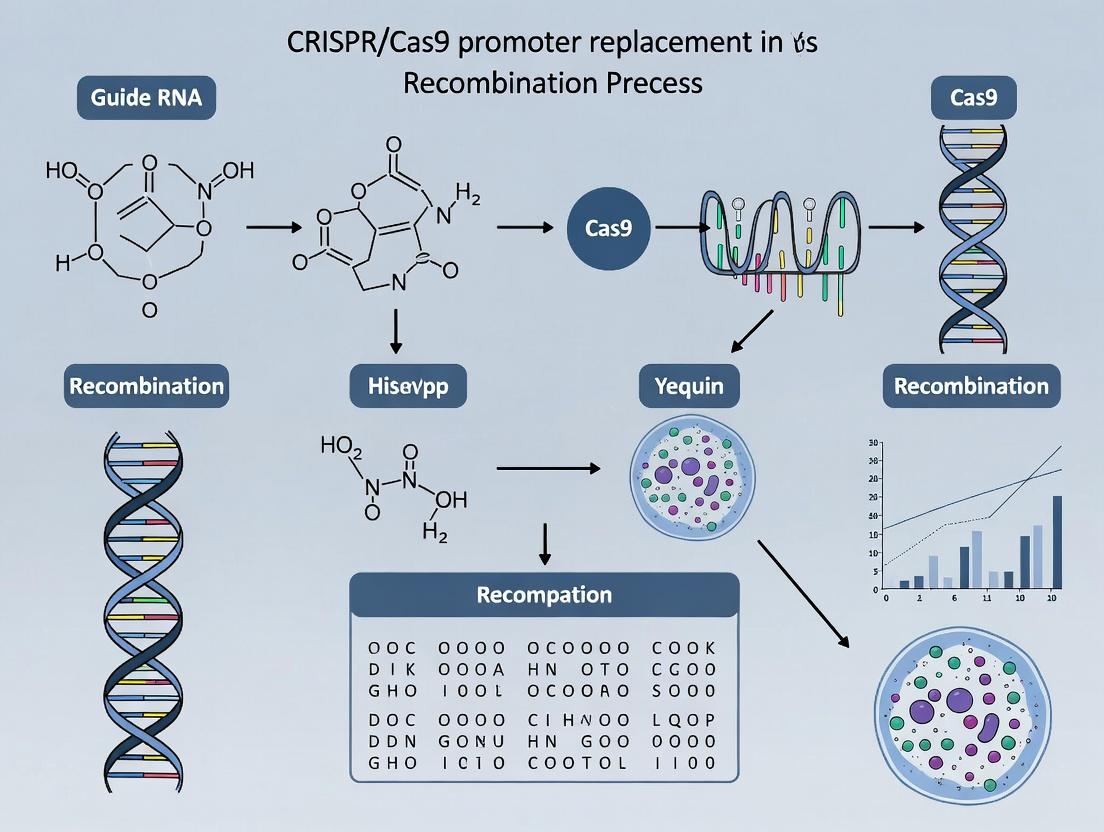
This comprehensive guide explores CRISPR/Cas9-mediated promoter replacement in yeast for researchers and biotechnology professionals.
CRISPR/Cas9 Promoter Replacement in Yeast: A Complete Guide to Engineering Metabolic Pathways
Abstract
This comprehensive guide explores CRISPR/Cas9-mediated promoter replacement in yeast for researchers and biotechnology professionals. We cover the foundational principles of yeast genetics and CRISPR mechanisms, detail practical protocols for designing and executing promoter swap experiments, provide troubleshooting solutions for common issues, and compare validation methods to confirm successful genetic modifications. This resource aims to bridge foundational knowledge with advanced applications for metabolic engineering and synthetic biology in yeast-based systems.
Understanding the Basics: CRISPR/Cas9 and Yeast Promoter Biology
CRISPR/Cas9 genome editing has revolutionized functional genomics in Saccharomyces cerevisiae, providing an efficient and precise method for genetic manipulation. Within the broader thesis context of CRISPR/Cas9 promoter replacement yeast recombination research, this system enables the targeted substitution of native promoters with engineered sequences. This allows for controlled gene expression studies, essential for metabolic engineering, pathway analysis, and synthetic biology applications in drug development and basic research.
Key Components of the CRISPR/Cas9 System for Yeast
The fundamental components required for CRISPR/Cas9 editing in yeast are:
- Cas9 Nuclease: The RNA-guided endonuclease that creates a double-strand break (DSB) at a specific genomic locus directed by the gRNA. A codon-optimized version for yeast (S. cerevisiae) is typically used.
- Guide RNA (gRNA): A chimeric RNA molecule comprising a CRISPR RNA (crRNA) sequence, which is 20 nucleotides complementary to the target DNA, and a trans-activating crRNA (tracrRNA) scaffold that binds Cas9. For yeast, this is often expressed from a RNA polymerase III promoter (e.g., SNR52 or RPR1).
- Homology-Directed Repair (HDR) Template: A donor DNA fragment containing the desired promoter sequence flanked by homology arms (typically 35-500 bp) complementary to the regions upstream and downstream of the Cas9 cut site. This template directs repair to insert the new promoter.
- Selectable Marker: Often included in the donor DNA or on a separate plasmid to enable selection of successfully edited clones (e.g., URA3, HIS3, KanMX).
Table 1: Quantitative Parameters for Key CRISPR/Cas9 Components in Yeast
| Component | Typical Parameter | Optimal Range/Value | Purpose & Notes |
|---|---|---|---|
| Guide RNA | Target Sequence Length | 20 nt | Excludes the required 5'-NGG-3' PAM. |
| Genomic Homology (for HDR template) | 5' & 3' Arms | 35-500 bp each. Longer arms increase HDR efficiency. | |
| Donor DNA (HDR Template) | Total Length | 500-2000 bp | Includes new promoter and homology arms. Can be a PCR product or plasmid. |
| Cas9 Expression | Promoter | GAL1, ADH1, TEF1 | Constitutive or inducible expression. Inducible systems help limit off-target effects. |
| Transformation | Yeast Strain Competency | High-Efficiency | >1 x 10⁵ CFU/µg DNA. Crucial for obtaining sufficient edited colonies. |
Detailed Protocol: Promoter Replacement inS. cerevisiae
This protocol outlines the steps for replacing a native yeast promoter with an engineered version via CRISPR/Cas9 and Homology-Directed Repair (HDR).
A. Materials and Reagent Preparation
The Scientist's Toolkit: Essential Research Reagents
| Item | Function | Example/Note |
|---|---|---|
| Yeast Strain | Editing host. | Common lab strains: BY4741, W303, CEN.PK. Consider repair pathway proficiency (e.g., rad52Δ may bias towards NHEJ). |
| Cas9 Expression Plasmid | Constitutively or inducibly expresses codon-optimized SpCas9. | pCAS (Addgene #60847) or p414-TEF1p-Cas9-CYC1t. Contains a selectable marker (e.g., URA3). |
| gRNA Expression Plasmid / Cassette | Expresses the target-specific gRNA. | pRS42-gRNA (SNR52 promoter) or a PCR-amplified SNR52-gRNA-SUP4 cassette for genomic integration. |
| Donor DNA Template | Provides homology and new promoter sequence for HDR. | Double-stranded DNA fragment (PCR product) with 40-90 bp homology arms. Can include a selectable marker (e.g., KanMX) for easy screening. |
| LiAc/SS Carrier DNA/PEG Solution | Facilitates yeast transformation. | Standard lithium acetate transformation kit. |
| Selection Media Plates | Selects for transformants containing Cas9/gRNA plasmids and/or donor DNA. | Synthetic Dropout (SD) media lacking appropriate amino acids, or YPD with geneticin (G418) if KanMX is used. |
| PCR Reagents & Primers | Verifies genomic integration. | Primers external to the homology region and internal to the new promoter. |
| Agarose Gel Electrophoresis System | Analyzes PCR verification products. | Standard DNA analysis setup. |
B. Step-by-Step Procedure
Day 1: Design and Construction
- Target Selection & gRNA Design: Identify a target site immediately upstream or within the promoter region to be replaced. Ensure the presence of a 5'-NGG-3' Protospacer Adjacent Motif (PAM). Use design tools (e.g., CRISPy, CHOPCHOP) to minimize off-targets.
- Donor DNA Design: Design the HDR template. The new promoter sequence should be flanked by homology arms (40-90 bp) identical to the sequences directly upstream and downstream of the intended Cas9 cut site.
- Generate Components: Synthesize or clone the gRNA sequence into the expression vector/cassette. Generate the donor DNA via PCR or synthesis.
Day 2: Yeast Transformation (Co-transformation)
- Grow Yeast: Inoculate the target yeast strain in 5 mL YPD and grow overnight at 30°C, 220 rpm.
- Subculture: Dilute the overnight culture to OD600 ~0.2 in fresh YPD and grow for 3-5 hours until OD600 ~0.8-1.0.
- Prepare Competent Cells: Harvest 1-5 mL of cells, wash with sterile water, then with 100 µL of 0.1M LiAc. Resuspend pellet in 20 µL 0.1M LiAc.
- Transformation Mix: To the cell suspension, add:
- 240 µL PEG 3350 (50% w/v)
- 36 µL 1M LiAc
- 50 µL sheared salmon sperm carrier DNA (2 mg/mL, boiled)
- DNA Mix: 100-500 ng donor DNA fragment, 100-200 ng Cas9 plasmid, 100-200 ng gRNA plasmid (or 100-500 ng gRNA PCR cassette).
- Heat Shock: Vortex vigorously, incubate at 42°C for 40 minutes.
- Plate: Pellet cells, resuspend in 100 µL water, and plate on appropriate selection media (e.g., SD -Ura for Cas9 plasmid selection).
- Incubate: Incubate plates at 30°C for 2-3 days.
Day 4-5: Screening and Verification
- Colony PCR: Pick 6-12 transformant colonies. Resuspend cells in 10 µL of lysis buffer (e.g., 20 mM NaOH, 0.1% SDS), heat at 95°C for 10 min. Use 1 µL as template for PCR with verification primers.
- Gel Analysis: Run PCR products on an agarose gel. Successful promoter replacement will yield a product of expected size distinct from the wild-type band.
- Sequence Confirmation: Sanger sequence the PCR products from positive clones to confirm precise integration and promoter sequence.
- Cure Plasmids (Optional): Streak positive clones on non-selective media (YPD) for several generations to lose the Cas9/gRNA plasmids, if desired.
Visualization of Workflows and Pathways
CRISPR/Cas9 Yeast Promoter Replacement Workflow
Molecular Mechanism of CRISPR/Cas9 HDR in Yeast
In the context of CRISPR/Cas9-driven promoter replacement for yeast metabolic engineering and recombinant protein production, a detailed understanding of promoter architecture is fundamental. The Saccharomyces cerevisiae promoter is a compact, modular DNA sequence upstream of a gene's coding region, typically 500-1500 bp in length. It contains multiple cis-regulatory elements that collectively determine the precise timing, location, and magnitude of transcriptional initiation.
Table 1: Core Quantitative Features of a Typical S. cerevisiae Promoter
| Element | Consensus Sequence/Feature | Position Relative to ATG | Primary Function |
|---|---|---|---|
| Core Promoter | TATA box (TATAAA variant) | -40 to -120 | TFIID/TBP binding, PIC assembly |
| Upstream Activating Sequences (UAS) | Variable (e.g., Gal4p site: CGG-N11-CCG) | -100 to -800 | Activator protein binding |
| Upstream Repressing Sequences (URS) | Variable (e.g., Mig1p site: WWWWSYGGGG) | Variable | Repressor protein binding |
| TATA-less Promoters | Initiator (Inr) element, Poly(dA:dT) tracts | ~-1 to +1, Variable | Alternative PIC recruitment |
| Nucleosome-Depleted Region (NDR) | A/T-rich sequence | -1 to -400 | Facilitates TF access |
Key Regulatory Elements and Experimental Analysis
Promoter function is governed by the combinatorial interaction of transcription factors (TFs) with specific UAS and URS elements. For synthetic biology applications, mapping these elements is crucial for designing minimal, orthogonal, or tunable promoters.
Table 2: Common Yeast Transcriptional Regulators and Their Binding Sites
| Transcription Factor | Consensus Binding Site | Biological Process | Effect on Expression |
|---|---|---|---|
| Gal4p | 5'-CGG-N11-CCG-3' | Galactose metabolism | Strong activation (>1000x) |
| Leu3p | 5'-CCG-N4-CGG-3' | Leucine biosynthesis | Activation or repression |
| Adr1p | 5'-T/CTCC/TCT-3' | Glucose derepression | Activation |
| Mig1p | 5'-WWWWSYGGGG-3' | Glucose repression | Repression (up to 10-fold) |
| Rap1p | 5'-ACACCCRYACAYM-3' | Ribosomal protein genes, Telomere silencing | Activation |
Protocol 1: Deletion Analysis for Functional Element Mapping Objective: Identify minimal functional promoter region and key regulatory elements. Procedure:
- Design a series of 5' truncation constructs using PCR amplification of the target promoter region, generating deletions in 50-100 bp increments.
- Clone each truncated promoter upstream of a reporter gene (e.g., lacZ, GFP, yEGFP) in a yeast shuttle vector. Ensure consistent terminator.
- Transform constructs into relevant yeast strain (e.g., BY4741) using the LiAc/SS carrier DNA/PEG method.
- Assay reporter activity in appropriate growth conditions. For lacZ, perform ONPG assays in mid-log phase (OD600 0.5-0.8). For fluorescent reporters, use flow cytometry on at least 10,000 cells.
- Plot reporter activity vs. promoter length to identify regions where deletion causes significant activity change (>2-fold).
Protocol 2: Electrophoretic Mobility Shift Assay (EMSA) for TF Binding Objective: Confirm direct binding of a suspected transcription factor to a promoter fragment. Procedure:
- Probe Preparation: PCR amplify and biotin-label a 50-150 bp putative regulatory region from the promoter. Purify using a spin column.
- Protein Extract: Prepare a nuclear extract from yeast cells under inducing/repressing conditions or use purified recombinant TF.
- Binding Reaction: Combine 20 fmol labeled probe with 0-10 µg extract or 0-500 ng purified protein in binding buffer (10 mM Tris, 50 mM KCl, 1 mM DTT, 2.5% glycerol, 5 mM MgCl2, 50 ng/µL poly(dI:dC)). Incubate 20 min at room temperature.
- Electrophoresis: Load samples on a pre-run 6% non-denaturing polyacrylamide gel in 0.5X TBE at 100 V for 60-90 min.
- Detection: Transfer to nylon membrane, UV crosslink, and detect using chemiluminescent streptavidin system. A mobility shift indicates binding.
CRISPR/Cas9 Promoter Replacement Workflow
This protocol details the replacement of a native yeast promoter with a designed or heterologous version for metabolic pathway optimization or protein expression tuning.
Protocol 3: CRISPR/Cas9-Mediated Homology-Directed Promoter Replacement Objective: Seamlessly swap a native promoter for a new sequence. Materials: pCAS plasmid (expressing Cas9 and guide RNA), donor DNA fragment, yeast strain, appropriate media. Procedure:
- gRNA Design: Select a 20-nt guide RNA sequence targeting the immediate 5' end of the gene's coding sequence (ATG) to minimize off-target effects within the promoter region.
- Donor DNA Construction: Synthesize or assemble via PCR a linear donor DNA containing: (i) 40-50 bp homology arm matching sequence downstream of the intended cut site (just after ATG), (ii) the new promoter sequence, (iii) 40-50 bp homology arm matching genomic sequence upstream of the intended integration site.
- Co-transformation: Co-transform 100 ng pCAS plasmid (with gRNA expression cassette) and 500 ng purified donor DNA fragment into competent yeast cells using high-efficiency LiAc transformation.
- Selection and Screening: Select transformants on appropriate auxotrophic marker. Screen colonies by colony PCR using one primer annealing outside the upstream homology arm and one primer within the new promoter sequence to confirm correct integration.
- Cure Cas9 Plasmid: Streak positive clones on non-selective medium (YPD) for ~5 generations, then replica-plate to identify colonies that have lost the plasmid marker.
Diagram Title: CRISPR/Cas9 Promoter Replacement Protocol Flow
The Scientist's Toolkit: Key Reagents for Promoter Architecture Research
| Reagent/Material | Supplier Examples | Function in Experiment |
|---|---|---|
| Yeast Shuttle Vectors (e.g., pRS series) | ATCC, Addgene, lab stocks | Cloning and expression of promoter-reporter fusions. |
| S. cerevisiae Strain (BY4741, CEN.PK) | EUROSCARF, ATCC | Isogenic background for consistent genetic studies. |
| LiAc/SS Carrier DNA/PEG Transformation Kit | Sigma-Aldrich, homemade | High-efficiency yeast transformation. |
| Phusion or Q5 High-Fidelity DNA Polymerase | NEB, Thermo Fisher | Error-free amplification of promoter fragments. |
| Cas9 Expression Plasmid (pCAS, pXIPHOS) | Addgene, Horizon Discovery | Provides CRISPR/Cas9 machinery for genome editing. |
| ONPG (o-Nitrophenyl-β-D-galactopyranoside) | Sigma-Aldrich, GoldBio | Substrate for quantitative β-galactosidase (lacZ) assay. |
| yEGFP/mCherry Reporter Plasmids | Addgene | Fluorescent reporters for live-cell promoter activity measurement. |
| Nucleospin Gel & PCR Clean-up Kit | Macherey-Nagel | Purification of DNA fragments for cloning and donor construction. |
| Poly(dI:dC) Competitor DNA | Sigma-Aldrich, Invitrogen | Non-specific competitor for EMSA to reduce background binding. |
Quantitative Analysis of Promoter Activity
Accurate measurement is critical for comparing engineered promoters. Normalization to cell number and internal controls is essential.
Protocol 4: Flow Cytometric Analysis of Fluorescent Reporter (e.g., GFP) Expression Objective: Quantify promoter activity at single-cell resolution. Procedure:
- Grow yeast strains harboring promoter-GFP fusions in appropriate selective medium to mid-log phase (OD600 0.4-0.6).
- Dilute culture 1:50 in PBS or sterile water. Analyze immediately on flow cytometer equipped with a 488 nm laser and 530/30 nm filter.
- Collect data for at least 10,000 events per sample. Use a strain with a constitutive promoter driving GFP (e.g., TEF1 promoter) as a reference and a strain with no GFP as a negative control.
- Gate on forward/side scatter to exclude debris and aggregates. Calculate the population's geometric mean fluorescence intensity (gMFI).
- Report relative promoter strength as the ratio of sample gMFI to reference gMFI, normalized to the autofluorescence of the negative control.
Table 3: Typical Activity Range of Common Yeast Promoters (Relative Units)
| Promoter | Condition | Approximate Relative Strength | Noise (CV) | Reference |
|---|---|---|---|---|
| PGK1 (constitutive) | High glucose, exponential | 1.00 (reference) | 5-8% | Partow et al., 2010 |
| GAL1 (inducible) | Glucose, repressed | 0.001 | - | - |
| GAL1 (inducible) | Galactose, induced | 1.5 - 2.5 | 10-15% | - |
| TEF1 (constitutive) | Exponential phase | 0.8 - 0.9 | 6-9% | - |
| CYC1 (weak) | Exponential phase | 0.05 - 0.1 | 12-20% | - |
| Synthetic Hybrid (UASGAL-TATACYC1) | Induced | 0.5 - 3.0 (tunable) | Varies | Blazeck et al., 2012 |
Pathway Integration and Systems View
Promoter function cannot be isolated from cellular context. Signaling pathways converge on TFs to modulate promoter activity in response to environmental cues.
Diagram Title: Signal Integration at a Yeast Promoter
The Role of Promoter Replacement in Metabolic Engineering
Within the broader thesis on CRISPR/Cas9 promoter replacement yeast recombination research, this application note details the critical role of promoter replacement in metabolic engineering. Promoter replacement allows for the precise tuning of gene expression levels, enabling the optimization of metabolic pathways for the overproduction of target compounds such as pharmaceuticals, biofuels, and fine chemicals. This protocol focuses on implementing CRISPR/Cas9-mediated promoter swapping in Saccharomyces cerevisiae to engineer optimized metabolic fluxes.
Research Reagent Solutions
| Item | Function |
|---|---|
| pCAS Plasmid (Addgene #60847) | Expresses Cas9 nuclease and a guide RNA (gRNA) for targeted DNA double-strand breaks. |
| Donor DNA Fragment | Homology-directed repair (HDR) template containing the desired promoter flanked by homology arms (40-80 bp) to the target locus. |
| Yeast Synthetic Drop-out Medium | Selective medium for maintaining plasmid selection and auxotrophic markers. |
| PEG/LiAc Solution | Facilitates chemical transformation of DNA into yeast cells. |
| DpnI Restriction Enzyme | Digests methylated template plasmid DNA post-PCR to reduce background in E. coli transformations. |
| Q5 High-Fidelity DNA Polymerase | For error-free amplification of donor DNA fragments and verification PCRs. |
| Genomic DNA Extraction Kit | For isolating yeast genomic DNA to verify promoter replacement events. |
Application Notes & Protocols
Protocol 1: Design and Assembly of CRISPR/Cas9 Components for Promoter Replacement
Objective: To construct the plasmids required for targeted promoter replacement at a specific genomic locus.
Methodology:
- gRNA Design: Identify a 20-bp protospacer sequence adjacent to a 5'-NGG-3' PAM site in the immediate upstream region of the target gene's open reading frame (ORF). Use tools like CHOPCHOP or Benchling for design.
- gRNA Expression Cassette Cloning: Clone the designed gRNA sequence into the pCAS plasmid using a Golden Gate or Gibson assembly reaction.
- Donor DNA Template Preparation:
- PCR Amplification: Amplify the new promoter sequence (e.g., strong constitutive TDH3, or inducible GAL1) from genomic DNA or a plasmid. Include 40-80 bp homology arms identical to sequences immediately upstream and downstream of the intended cut site.
- Purification: Gel-purify the linear donor DNA fragment. Treat with DpnI if amplified from a plasmid template to remove parental DNA.
Protocol 2: Yeast Transformation and Selection
Objective: To deliver CRISPR/Cas9 components and the donor DNA into yeast to execute promoter replacement.
Methodology:
- Grow the desired yeast strain (e.g., BY4741) to mid-log phase (OD600 ~0.6-0.8) in rich medium (YPD).
- Harvest 1.5 mL of cells, wash with sterile water, and resuspend in 100 µL of fresh 0.1M LiAc solution.
- Prepare transformation mix: 100 µL cell suspension, 5 µL (200-500 ng) pCAS-gRNA plasmid, 10 µL (1 µg) purified donor DNA fragment, and 70 µL 50% PEG-3350.
- Heat shock at 42°C for 40 minutes. Pellet cells, resuspend in recovery medium, and incubate at 30°C for 2-4 hours.
- Plate cells on appropriate synthetic dropout medium to select for the pCAS plasmid. Incubate at 30°C for 2-3 days.
Protocol 3: Screening and Validation of Recombinant Clones
Objective: To identify and confirm correct promoter replacement events.
Methodology:
- Colony PCR: Pick 8-12 transformant colonies. Perform colony PCR using one primer outside the 5' homology arm and one primer inside the newly introduced promoter sequence.
- Analytical Digestion or Sequencing: Confirm positive clones by digesting PCR products with a promoter-specific restriction enzyme or by Sanger sequencing.
- Curing the Cas9 Plasmid: Streak positive clones on non-selective medium (YPD) for ~5 generations, then replica-plate to confirm loss of the pCAS plasmid (loss of auxotrophic marker).
- Phenotypic Validation: Quantify target metabolite production (e.g., via HPLC) and measure target gene mRNA levels (via qRT-PCR) in the final engineered strain versus the parental control.
Table 1: Impact of Promoter Replacement on Target Metabolite Yields
| Target Pathway (Product) | Native Promoter | Engineered Promoter | Fold-Change in mRNA | Yield Increase (%) | Reference Strain |
|---|---|---|---|---|---|
| Carotenoid (β-carotene) | ERG10 | TDH3 | 12.5 ± 1.8 | 320 ± 45 | CEN.PK2 |
| Sesquiterpene (α-santalene) | ERG20 | HXT7 | 8.2 ± 0.9 | 180 ± 22 | BY4741 |
| Fatty Acid Ethyl Ester | FAS1 | ADH1 | 15.1 ± 2.1 | 410 ± 38 | W303 |
| Opioid Precursor (Reticuline) | CPR | GAL1 (Induced) | 25.7 ± 3.5 | 550 ± 62 | BY4741 |
Table 2: CRISPR/Cas9 Promoter Replacement Efficiency in S. cerevisiae
| Homology Arm Length (bp) | Average Transformation Efficiency (CFU/µg donor) | Correct Replacement Rate (%) | Total Valid Clones per Experiment (n=3) |
|---|---|---|---|
| 40 | 1.2 x 10³ | 45 ± 7 | 4-6 |
| 60 | 2.8 x 10³ | 78 ± 9 | 8-12 |
| 80 | 3.1 x 10³ | 85 ± 6 | 10-15 |
Visualizations
CRISPR/Cas9 Promoter Replacement Workflow
Metabolic Flux Tuning via Promoter Replacement
The genetic manipulation of yeast, particularly Saccharomyces cerevisiae, has been a cornerstone of molecular biology, biotechnology, and drug development. The evolution from classical homologous recombination (HR) to contemporary CRISPR/Cas9-based methods represents a paradigm shift in precision, efficiency, and throughput. This progression is central to a broader thesis on CRISPR/Cas9 promoter replacement in yeast, a technique enabling systematic study of gene regulation, metabolic engineering, and synthetic biology applications for therapeutic compound production.
Key Techniques: Mechanisms and Comparative Evolution
Classical Homologous Recombination (HR)
Native yeast HR is a high-fidelity, endogenous DNA repair pathway. It requires significant homology (typically >30-50 bp) flanking the desired modification on a transforming DNA fragment. This process is mediated by cellular machinery (Rad52 epistasis group) and is relatively inefficient for simple insertions/deletions without selection.
PCR-Mediated Gene Targeting
This method involves using polymerase chain reaction (PCR) to generate transformation cassettes with short homology arms (40-60 bp). It leverages the high recombination frequency in yeast, enabling rapid, selection-based gene deletions, tags, or modifications without the need for conventional cloning.
CRISPR/Cas9 Genome Editing
The advent of CRISPR/Cas9 introduced a programmable, RNA-guided nuclease system. A guide RNA (gRNA) directs the Cas9 endonuclease to create a site-specific double-strand break (DSB). The cell repairs this break via homology-directed repair (HDR) using a provided donor DNA template, enabling precise, marker-free edits with high efficiency.
Table 1: Comparative Analysis of Yeast Recombination Techniques
| Feature | Classical Homologous Recombination | PCR-Mediated Targeting | CRISPR/Cas9 Editing |
|---|---|---|---|
| Efficiency | Low (<1%) without selection | Moderate to High (1-10%) | Very High (10-80%+) |
| Homology Requirement | Long (>500 bp optimal) | Short (40-60 bp) | Short (35-50 bp) |
| Key Enzymes/Machinery | Endogenous Rad52 pathway | Endogenous Rad52 pathway | Exogenous Cas9 + gRNA |
| Editing Precision | High | High | Very High |
| Multiplexing Capability | Very Low | Low | High (multiple gRNAs) |
| Typical Workflow Time | Weeks | 1-2 weeks | 5-7 days |
| Marker-Free Editing | Difficult, requires counter-selection | Difficult, requires counter-selection | Routine |
Detailed Protocol: CRISPR/Cas9-Mediated Promoter Replacement inS. cerevisiae
This protocol is designed for replacing a native yeast promoter with an alternative regulatory sequence, a common requirement in metabolic pathway engineering and gene expression studies.
Materials and Reagent Preparation
A. gRNA Expression Plasmid: A yeast-integrative or episomal plasmid containing a constitutive promoter (e.g., SNR52) driving gRNA expression and a tRNA-processing system. The target-specific 20-nt spacer sequence must be cloned into this backbone. B. Cas9 Expression Cassette: A constitutively expressed Cas9 gene (codon-optimized for yeast) on a plasmid or integrated into the genome. C. Donor DNA Template: A PCR-amplified or synthesized double-stranded DNA fragment containing the new promoter sequence, flanked by 35-50 bp homology arms identical to sequences upstream of the transcription start site and downstream within the 5' UTR/coding region of the target gene. D. Yeast Strain: An appropriate S. cerevisiae laboratory strain (e.g., BY4741). E. Transformation Mix: 100 µl of competent yeast cells (prepared via LiAc method), 2 µg sheared salmon sperm carrier DNA.
Step-by-Step Procedure
Day 1: Inoculation
- Pick a single colony of the yeast strain containing the stably expressed Cas9 into 5 mL of appropriate selective medium (e.g., -Ura for plasmid maintenance).
- Incubate overnight at 30°C with shaking (220 rpm).
Day 2: Competent Cell Preparation & Transformation
- Dilute the overnight culture to OD600 ~0.2 in 25 mL of fresh YPD or selective medium. Grow until OD600 reaches 0.6-0.8 (mid-log phase).
- Harvest cells by centrifugation at 3000 × g for 5 min. Wash with 25 mL of sterile water, then with 1 mL of 100 mM lithium acetate (LiAc). Resuspend the final pellet in 100 µL of 100 mM LiAc to create competent cells.
- In a sterile 1.5 mL tube, mix: 100 µL competent cells, 2 µL (∼200 ng) gRNA plasmid, 2 µL (∼200 ng) donor DNA fragment, and 100 µg boiled carrier DNA. Add 700 µL of 40% PEG-3350 in 100 mM LiAc. Mix thoroughly by vortexing.
- Incubate at 30°C for 30 min, then heat shock at 42°C for 20-25 min.
- Pellet cells at 6000 × g for 30 sec, remove supernatant, and resuspend in 200 µL of sterile water or YPD.
- Plate entire volume on appropriate double-selective plates (e.g., -Ura -Leu) to select for both the Cas9 and gRNA plasmids. Incubate at 30°C for 2-3 days.
Day 4-5: Screening and Verification
- Pick 6-12 transformant colonies. Re-streak on fresh selective plates to ensure purity.
- Perform colony PCR using primers flanking the promoter integration site (one outside the homology arm, one within the new promoter) to confirm correct integration.
- Sequence-verify PCR products from positive clones.
- Optionally, cure the gRNA plasmid by growing positive clones on non-selective medium (YPD) for 2-3 days, then re-streaking on 5-FOA plates to counter-select against the URA3 marker commonly used on gRNA plasmids.
The Scientist's Toolkit: Key Research Reagent Solutions
Table 2: Essential Materials for CRISPR Yeast Promoter Replacement
| Item | Function/Description | Example (Supplier/Reference) |
|---|---|---|
| Yeast Cas9 Expression Plasmid | Constitutively expresses S. pyogenes Cas9 codon-optimized for yeast. Provides the nuclease. | pCAS (Addgene #60847) |
| gRNA Cloning Backbone | Plasmid with SNR52 promoter and tRNA scaffold for efficient gRNA expression and processing. | pRS42H-gRNA (Addgene #67638) |
| High-Efficiency Yeast Transformation Kit | Pre-mixed solutions (LiAc, PEG, carrier DNA) for reliable chemical transformation. | Frozen-EZ Yeast Transformation II Kit (Zymo Research) |
| Synthetic Donor DNA Fragment | Ultramer DNA oligonucleotide or gBlock gene fragment with 50 bp homology arms and desired promoter sequence. | IDT Ultramer DNA Oligos or Gene Fragments |
| 5-Fluoroorotic Acid (5-FOA) | Used for counter-selection to cure plasmids with a URA3 marker. | MilliporeSigma, Catalog #F5013 |
| Yeast Genomic DNA Isolation Kit | Rapid purification of gDNA for colony PCR screening. | YeaStar Genomic DNA Kit (Zymo Research) |
| High-Fidelity DNA Polymerase | For accurate amplification of donor DNA templates and screening PCR. | Q5 High-Fidelity 2X Master Mix (NEB) |
Visual Workflows and Diagrams
Diagram 1: Classical HR Gene Replacement
Diagram 2: CRISPR-Cas9 Promoter Replacement
Diagram 3: Evolution of Yeast Recombination Tech
Within the framework of CRISPR/Cas9-mediated promoter replacement for yeast metabolic engineering and recombinant protein production, the selection of an appropriate host strain is paramount. This application note details the two predominant yeast platforms—Saccharomyces cerevisiae and Komagataella phaffii (formerly Pichia pastoris)—alongside other emerging strains, highlighting their unique attributes for precision genome editing.
Saccharomyces cerevisiae is the quintessential eukaryotic model organism. Its unparalleled genetic tractability, rapid growth, and extensive suite of molecular tools make it ideal for foundational CRISPR/Cas9 protocol development and high-throughput promoter-swapping screens. Common applications include the engineering of biosynthetic pathways for fine chemicals and the study of fundamental cellular processes by replacing native promoters with inducible or tunable variants.
Komagataella phaffii is a methylotrophic yeast renowned for its exceptional capacity for secretory protein production. It offers strong, tightly regulated promoters (e.g., AOX1), high cell-density growth, and eukaryotic post-translational modifications. CRISPR/Cas9 promoter replacement in K. phaffii is critically applied to optimize the expression of therapeutic antibodies, enzymes, and vaccines by swapping or multiplexing promoter elements to balance yield and cell viability.
Other Strains, such as Yarrowia lipolytica (for lipid and oleochemical production) and Kluyveromyces marxianus (thermotolerant, rapid growth), are gaining traction as specialized hosts. CRISPR/Cas9 tools are being rapidly developed for these systems to replace promoters for enhanced pathway flux or stress tolerance.
Table 1: Comparative Analysis of Key Yeast Strains
| Feature | S. cerevisiae | K. phaffii | Y. lipolytica |
|---|---|---|---|
| Preferred Application | Pathway prototyping, basic research | High-yield secreted protein production | Lipid, oleochemical, & heterologous protein production |
| Key Promoter for Replacement | PGK1, TEF1, GAL1 (inducible) | AOX1 (methanol-inducible), GAP (constitutive) | TEF1, EXP1, POX2 (inducible) |
| Transformation Efficiency | Very High (10⁵ - 10⁷ CFU/µg) | Moderate to High (10³ - 10⁴ CFU/µg) | Moderate (~10³ CFU/µg) |
| Editing Tool Prevalence | Extensive CRISPR toolkit | Well-established CRISPR systems | Emerging CRISPR protocols |
| Key Advantage | Unmatched genetic tools & speed | Powerful secretion & strong promoters | High metabolic flux to lipids |
Core Protocol: CRISPR/Cas9-Mediated Promoter Replacement in Yeast
This protocol outlines a co-transformation method for replacing a native promoter with a desired DNA sequence in S. cerevisiae or K. phaffii.
I. Materials & Reagent Preparation
- Yeast Strain: e.g., S. cerevisiae BY4741 or K. phaffii X-33.
- CRISPR/Cas9 Plasmid: Expressing Cas9 and a guide RNA (gRNA) targeting the genomic locus immediately upstream of the target gene's open reading frame.
- Donor DNA Fragment: Contains the new promoter sequence, flanked by homology arms (40-80 bp) identical to the sequences just upstream and downstream of the Cas9 cut site.
- Transformation Reagents: For S. cerevisiae: PEG/LiAc solution; for K. phaffii: electroporation cuvettes and ice-cold sorbitol.
- Selection Media: Agar plates lacking appropriate amino acids or containing antibiotics (e.g., G418, Zeocin) based on selection markers.
II. Step-by-Step Methodology
- gRNA Design & Construct Assembly: Design a 20-nt gRNA sequence targeting a non-template strand site 5' to the target gene's start codon. Clone into your yeast CRISPR plasmid backbone.
- Donor DNA Preparation: Amplify the new promoter via PCR. Include 5' and 3' homology arms complementary to the target locus. Purify the fragment.
- Yeast Transformation:
- For S. cerevisiae: Perform standard LiAc/SS carrier DNA/PEG transformation with 100-200 ng of CRISPR plasmid and ~500 ng of purified donor DNA fragment.
- For K. phaffii: Prepare electrocompetent cells. Mix 1-5 µg of linearized CRISPR plasmid and donor DNA. Electroporate at 1.5 kV, 25 µF, 200 Ω in a 2-mm cuvette. Immediately add 1 mL ice-cold sorbitol.
- Recovery & Selection: Plate transformations on appropriate selective media. Incubate at 30°C for 2-3 days (S. cerevisiae) or 3-4 days (K. phaffii).
- Screening: Pick colonies. Screen via colony PCR using one primer within the new promoter and one primer downstream in the native gene (outside the donor homology region) to confirm correct integration.
- Validation: Sequence validated PCR products. For protein expression strains, validate via immunoblot or activity assay under inducing conditions.
The Scientist's Toolkit: Research Reagent Solutions
Table 2: Essential Materials for CRISPR Promoter Replacement in Yeast
| Reagent/Material | Function in the Experiment |
|---|---|
| Yeast CRISPR/Cas9 Toolkit Plasmid (e.g., pML104 for S. cerev.) | All-in-one vector expressing Cas9, a gRNA, and a dominant selection marker (e.g., kanMX). |
| High-Fidelity DNA Polymerase (e.g., Q5) | For error-free amplification of the donor DNA fragment with long homology arms. |
| DNA Clean & Concentrator Kit | Rapid purification of PCR-amplified donor DNA fragments to remove enzymes and salts prior to transformation. |
| Ready-to-Use gRNA Expression Cassette | Synthetic double-stranded DNA fragment encoding the U6-promoted gRNA for rapid cloning. |
| Auxotrophic Dropout Mix or Antibiotic (G418/Zeocin) | For selective pressure to maintain the CRISPR plasmid and/or select for integrants. |
| Homology-Directed Repair (HDR) Booster (e.g., Rad54 co-expression) | Plasmid or molecule to enhance HDR rates over non-homologous end joining (NHEJ), improving replacement efficiency. |
Visualizations
CRISPR Promoter Replacement Workflow
K. phaffii AOX1 Induction Pathway
Step-by-Step Protocols: Designing and Executing Promoter Swap Experiments
Within the context of CRISPR/Cas9-mediated promoter replacement in yeast recombination research, the precision of genome editing hinges on the optimal design of single guide RNAs (sgRNAs). This document provides detailed application notes and protocols for selecting target sequences and ensuring specificity, a critical foundation for generating predictable and off-target-free genetic modifications in Saccharomyces cerevisiae and related species for metabolic engineering and drug target validation.
Core Principles for Target Selection
Effective target selection balances on-target efficiency with minimal off-target potential. Key parameters, derived from recent large-scale screens and computational analyses, are summarized below.
Table 1: Quantitative Parameters for Optimal gRNA Design in Yeast
| Parameter | Optimal Value / Feature | Rationale & Impact on Efficiency |
|---|---|---|
| GC Content | 40-60% | Lower GC reduces stability; higher GC increases off-target risk. |
| Target Length | 20 nt (NGG PAM) | Standard for S. pyogenes Cas9. 5' end extension can reduce off-targets. |
| PAM Sequence | 5'-NGG-3' (SpCas9) | Immediate 3' downstream of target. NAG is recognized at ~5x lower efficiency. |
| On-Target Score | >60 (CRISPRscan, etc.) | Predicts cleavage efficiency. Varies by algorithm. |
| Off-Target Score | Max 3 mismatches, avoid seed region | Seed region (8-12 bp proximal to PAM) is highly sensitive to mismatches. |
| Genomic Context | Avoid repetitive regions, high SNP density | Essential for specificity. Use BLAST against host genome. |
| 5' Base (First nt) | G for U6 promoter | Required for strong transcription from RNA Pol III U6 promoter. |
Specificity Considerations and Off-Target Analysis
Off-target effects are a major concern. The following workflow is mandatory for specificity validation in promoter replacement projects.
In silicoOff-Target Prediction Protocol
Materials: Yeast reference genome (e.g., SGD), Bioinformatics tools (CRISPOR, CHOPCHOP, Cas-OFFinder). Protocol:
- Extract the 20-nt target sequence immediately 5' to the NGG PAM.
- Input the sequence into CRISPOR (http://crispor.tefor.net/).
- Select the correct genome assembly (e.g., sacCer3).
- Run analysis. Review the list of potential off-target sites ranked by mismatch count and genomic location.
- Critical Step: Manually inspect all hits with ≤3 mismatches, especially those within exons or regulatory regions of non-target genes. Discard gRNAs with potential off-targets in essential genes.
- Cross-verify using a second algorithm (e.g., CHOPCHOP).
Experimental Validation of Off-Targets (Circularization forIn vitroReporting of Cleavage Effects by Sequencing, CIRCLESeq)
For high-stakes edits, empirical off-target identification is recommended. Protocol:
- Genomic DNA Isolation: Extract gDNA from yeast strain of interest using a standard phenol-chloroform protocol.
- In vitro Cleavage: Incubate 500 ng of gDNA with purified SpCas9 protein (e.g., NEB #M0386) and the designed sgRNA (synthesized or in vitro transcribed) for 4h at 37°C in NEBuffer r3.1.
- Library Prep & Sequencing: Use the CIRCLESeq library preparation kit (e.g., from Addgene protocol) to capture and amplify cleavage ends. Sequence on an Illumina platform (MiSeq, 2x150 bp).
- Bioinformatic Analysis: Map reads to the reference genome, identify sites of significant enrichment of breakpoints, and compare to the in silico prediction list.
Protocol: Design and Cloning of Expression-Ready gRNA for Yeast
This protocol details the creation of a gRNA expression cassette for integration into a yeast CRISPR/Cas9 plasmid containing a donor DNA template for promoter replacement.
Materials:
- Software: Benchling, CRISPOR, SnapGene.
- Oligonucleotides: Forward and reverse oligos encoding the 20-nt target sequence.
- Plasmid Backbone: Yeast shuttle vector with Cas9 expression (e.g., pCAS series), U6 promoter, and a cloning site (e.g., BsmBI).
- Enzymes: BsmBI-v2 (NEB #R0739), T4 DNA Ligase (NEB #M0202), T4 PNK (NEB #M0201).
- Cells: Chemically competent E. coli (DH5α).
Procedure:
- Identify Target Site: Using the genomic coordinates of the promoter to be replaced, scan the 5' upstream region of the Open Reading Frame (ORF) for NGG PAM sites. Select the target closest to the replacement junction while meeting all criteria in Table 1.
- Design Oligos:
- Forward oligo: 5'- ATCG [20-nt target sequence] -3'
- Reverse oligo: 5'- AAAC [Reverse complement of 20-nt target] -3' (The 4-nt overhangs are compatible with BsmBI-digested vectors.)
- Phosphorylate & Anneal: Mix 1 µL of each oligo (100 µM), 1 µL T4 PNK, 1 µL 10x T4 Ligase Buffer, 6.5 µL H₂O. Incubate: 37°C 30 min; 95°C 5 min; ramp down to 25°C at 5°C/min.
- Digest Plasmid: Digest 1 µg of destination plasmid with BsmBI at 55°C for 1 hour. Gel-purify the linearized backbone.
- Ligate: Perform a 1:3 molar ratio (backbone:insert) ligation with T4 DNA Ligase at room temperature for 10 minutes.
- Transform: Transform into DH5α cells, plate on appropriate antibiotic, and sequence verify clones with a U6 promoter-proximal primer.
Visualization of Key Concepts
Title: gRNA Selection and Specificity Screening Workflow
Title: CRISPR/Cas9 Mechanism for Promoter Replacement via HDR
The Scientist's Toolkit: Research Reagent Solutions
Table 2: Essential Materials for gRNA Design & Validation in Yeast CRISPR
| Item | Example Product/Resource | Function in Experiment |
|---|---|---|
| Cas9 Expression Plasmid | pCAS (Addgene #60847) | Constitutively expresses SpCas9 in yeast. Contains cloning site for gRNA. |
| gRNA Cloning Vector | pRS41H-gRNA (Addgene #67636) | Contains yeast U6 promoter and terminator for gRNA expression. |
| BsmBI Restriction Enzyme | NEB BsmBI-v2 (R0739) | Type IIS enzyme for efficient, Golden Gate-compatible gRNA insert cloning. |
| In vitro Transcription Kit | NEB HiScribe T7 Quick High Yield (E2050S) | For generating high-yield sgRNA for in vitro cleavage assays (CIRCLESeq). |
| Purified Cas9 Nuclease | NEB SpyFi Cas9 Nuclease (M0386T) | For in vitro cleavage assays to validate gRNA activity and off-target profiling. |
| Genomic DNA Isolation Kit | Zymo Research YeaStar Genomic Kit (D2002) | Reliable, RNase-free gDNA extraction from yeast for sequencing and validation. |
| NGS Library Prep Kit | Illumina Nextera XT DNA Library Prep (FC-131-1096) | For preparing sequencing libraries from PCR-amplified target loci. |
| Bioinformatics Tool | CRISPOR (crispor.tefor.net) | Integrates on/off-target scoring, efficiency prediction, and oligo design. |
| Yeast Strain | BY4741 (MATa his3Δ1 leu2Δ0 met15Δ0 ura3Δ0) | Common laboratory wild-type background for recombination studies. |
Within CRISPR/Cas9-mediated promoter replacement in yeast, the donor DNA template is a critical determinant of recombination efficiency and library diversity. This Application Note details the construction of complex donor templates comprising modular promoter libraries flanked by optimized homology arms. The protocols are designed for high-throughput, precise genomic integration, supporting metabolic engineering and synthetic biology research in drug discovery pipelines.
This work supports a broader thesis investigating how promoter strength variation, introduced via CRISPR/Cas9 recombination, modulates yeast metabolic pathways for the production of high-value pharmaceuticals. Precise donor template construction enables systematic interrogation of gene expression phenotypes.
Key Design Parameters & Quantitative Data
Table 1: Homology Arm Length Optimization for S. cerevisiae
| Arm Length (bp) | Homology-Directed Repair (HDR) Efficiency (%) | Error Rate (Indels, %) | Recommended Use Case |
|---|---|---|---|
| 35 | 15.2 ± 3.1 | 12.5 ± 2.8 | High-throughput screening |
| 50 | 45.8 ± 5.7 | 5.3 ± 1.5 | Standard library construction |
| 75 | 68.4 ± 4.9 | 2.1 ± 0.9 | Essential gene targeting |
| 100 | 72.1 ± 3.2 | 1.8 ± 0.7 | Large (>5 kb) insertions |
Table 2: Promoter Library Characteristics
| Library Name | Core Promoter | Variant Count | Strength Range (a.u.)* | GC Content (%) |
|---|---|---|---|---|
| pTEF1Lib | TEF1 | 15 | 0.8 - 1.5 | 42.3 ± 2.1 |
| pTDH3Lib | TDH3 | 22 | 1.0 - 2.3 | 38.7 ± 3.4 |
| pCYC1Lib | CYC1 | 10 | 0.2 - 1.0 | 45.1 ± 1.8 |
| SyntheticLib | Synthetic | 50 | 0.05 - 3.0 | 50.5 ± 5.6 |
Relative strength measured by GFP reporter normalized to *pTDH3.
Experimental Protocols
Protocol 3.1: One-Pot PCR Assembly of Donor DNA with Homology Arms
Objective: Generate a linear donor DNA fragment containing a promoter variant flanked by 50 bp homology arms. Materials: See "The Scientist's Toolkit" below. Procedure:
- Primer Design: Design four oligonucleotides:
- HA1Forward: 5'-[50 bp homology to genomic region upstream]-[PromoterLib-specific handle]-3'
- HA1Reverse: Complement to promoter library forward primer.
- PromoterForward: Standard forward primer for promoter library entry.
- HA2Reverse: 5'-[Complement to promoter lib reverse handle]-[50 bp homology to genomic region downstream]-3'
- Primary PCR: Amplify the promoter module from library plasmid using Promoter_Forward and HA1_Reverse. Purify product (Qiagen PCR cleanup kit).
- Overlap Extension PCR: Use 50 ng of primary PCR product as megaprimer with HA1_Forward and HA2_Reverse primers in a 50 µL Q5 High-Fidelity PCR.
- Cycle: 98°C 30s; (98°C 10s, 65°C 20s, 72°C 30s/kb) x 30; 72°C 2 min.
- Purification & Quantification: Gel-purify the final product. Quantify via Nanodrop and dilute to 200 ng/µL for yeast transformation.
Protocol 3.2: Golden Gate Assembly for Modular Donor Plasmid Construction
Objective: Assemble a reusable donor plasmid containing a promoter library site and universal homology arms. Procedure:
- Vector Digestion: Digest backbone plasmid (e.g., pUC19) with BsaI-HFv2 for 1 hour at 37°C. Heat-inactivate at 65°C for 20 min.
- Insert Preparation: In separate tubes, amplify the upstream homology arm (UHA) and downstream homology arm (DHA) with primers adding BsaI overhangs. Purify.
- Golden Gate Reaction: Set up 20 µL reaction:
- 50 ng digested backbone
- 20 ng each purified insert (UHA, PromoterLib entry, DHA)
- 1 µL BsaI-HFv2
- 1 µL T4 DNA Ligase
- 2 µL 10x T4 Ligase Buffer
- Nuclease-free water to 20 µL.
- Cycle: (37°C 5 min, 16°C 10 min) x 30; 50°C 5 min; 80°C 5 min.
- Transformation: Transform 2 µL into NEB Stable E. coli. Plate on ampicillin. Sequence-verify colonies.
Visualizations
Donor DNA Assembly via Overlap PCR
CRISPR/Cas9 Promoter Replacement Workflow
The Scientist's Toolkit
Table 3: Essential Research Reagent Solutions
| Item | Supplier (Example) | Function in Donor Construction |
|---|---|---|
| Q5 High-Fidelity DNA Polymerase | NEB | Error-free PCR amplification of homology arms and promoter fragments. |
| BsaI-HFv2 Restriction Enzyme | NEB | Type IIS enzyme for Golden Gate assembly; enables seamless, directional cloning. |
| T4 DNA Ligase | Thermo Fisher | Ligation of DNA fragments with compatible overhangs in cloning workflows. |
| Yeast Transformation Kit | Zymo Research (Zymogen) | High-efficiency chemical transformation of S. cerevisiae with donor DNA & Cas9 plasmid. |
| Gel Extraction Kit | Qiagen | Purification of correctly sized DNA fragments from agarose gels. |
| Synthetic Promoter Library (e.g., YTK Parts) | Addgene | Pre-cloned, characterized promoter variants for constitutive/inducible expression. |
| Cas9 Expression Plasmid (pCAS) | Laboratory Stock | Expresses S. pyogenes Cas9 and allows for sgRNA cloning in yeast. |
| sgRNA Scaffold Oligo | IDT | Template for cloning gene-specific sgRNA targeting the desired genomic locus. |
Within the broader thesis on CRISPR/Cas9 promoter replacement yeast recombination research, the selection and optimization of a transformation method is a critical determinant of success. Efficient delivery of CRISPR/Cas9 components—including the Cas9 expression cassette, guide RNA, and donor DNA for homologous recombination—is paramount for achieving high rates of precise genomic integration and subsequent phenotypic analysis. This application note details two principal yeast transformation methodologies: the Lithium Acetate/Single-Stranded Carrier DNA (LiAc/SS Carrier DNA) protocol and Electroporation. Each method offers distinct advantages in efficiency, scalability, and suitability for specific experimental demands within promoter replacement workflows.
The choice between LiAc/SS Carrier DNA and electroporation depends on factors such as required transformation efficiency (CFU/µg DNA), throughput, strain background, and available laboratory equipment. The following table summarizes key performance characteristics based on current literature and standard laboratory practice.
Table 1: Comparative Analysis of Yeast Transformation Methods
| Parameter | LiAc/SS Carrier DNA | Electroporation |
|---|---|---|
| Typical Efficiency (CFU/µg) | 10⁵ – 10⁶ | 10⁶ – 10⁸ |
| Throughput | High (96-well format adaptable) | Moderate (requires individual cuvettes) |
| Equipment Needs | Standard incubators and water baths | Electroporator and specialized cuvettes |
| Critical Reagents | Lithium Acetate (LiAc), Single-Stranded Carrier DNA, Polyethylene Glycol (PEG) | Sorbitol or other osmotic stabilizers |
| Optimal DNA Type/Amount | Linear donor DNA (100 ng - 1 µg), plasmid DNA (100 ng) | Linear donor DNA (10-100 ng), plasmid DNA (10-50 ng) |
| Best Suited For | Routine transformations, high-throughput genetic screens, strains not sensitive to LiAc | Demanding applications requiring maximal efficiency (e.g., genomic library transformation, difficult strain backgrounds, multiplexed CRISPR delivery) |
| Time to Complete Protocol | ~2 hours (excluding incubation post-transformation) | ~1 hour (excluding incubation post-transformation) |
| Approximate Cost per Reaction | Low | Medium to High (cuvette cost) |
Detailed Protocols
High-Efficiency LiAc/SS Carrier DNA Protocol
This protocol is adapted for the transformation of CRISPR/Cas9 components into Saccharomyces cerevisiae.
I. Key Research Reagent Solutions
- 1.0 M Lithium Acetate (LiAc): Alkali metal salt that permeabilizes the cell wall.
- 50% (w/v) Polyethylene Glycol 3350 (PEG): Promotes macromolecular crowding and DNA uptake.
- Single-Stranded Carrier DNA (e.g., salmon sperm DNA): Competes with nucleases, protects transformation DNA, and enhances DNA precipitation onto cells. Must be denatured (boiled and snap-cooled) immediately before use.
- CRISPR/Cas9 Plasmid(s): Expressing Cas9 and gRNA(s).
- Donor DNA Fragment: Homology-flanked DNA cassette for promoter replacement.
- Selective Plates: Agar plates lacking specific nutrients or containing antibiotics for selection of transformants.
II. Step-by-Step Methodology
- Inoculation: Grow the desired yeast strain overnight in 5 mL of rich medium (YPD).
- Dilution: Dilute the overnight culture to an OD₆₀₀ of ~0.2 in 50 mL of fresh YPD. Grow at 30°C with shaking until OD₆₀₀ reaches 0.6-0.8 (mid-log phase).
- Harvesting: Pellet cells by centrifugation (700 x g, 5 min). Discard supernatant.
- Washing: Resuspend pellet in 25 mL of sterile deionized water. Centrifuge and discard supernatant.
- Preparation of Competent Cells: Resuspend pellet in 1 mL of 100 mM LiAc. Transfer to a microcentrifuge tube, pellet cells (16,000 x g, 15 sec), and aspirate supernatant.
- Transformation Mix: For each transformation, in a fresh microcentrifuge tube, combine in order:
- 240 µL of 50% PEG 3350
- 36 µL of 1.0 M LiAc
- 50 µL of boiled, single-stranded carrier DNA (2 mg/mL)
- Up to 34 µL of DNA mix (e.g., 500 ng Cas9 plasmid, 200 ng gRNA plasmid, 1 µg purified donor fragment)
- 50 µL of competent cell suspension.
- Vortex & Incubate: Vortex vigorously for 1 minute to mix. Incubate at 30°C for 30 minutes.
- Heat Shock: Transfer tube to a 42°C water bath for 25-30 minutes.
- Recovery: Pellet cells briefly (16,000 x g, 30 sec), remove supernatant, and resuspend in 200-500 µL of recovery medium or sterile water. Plate onto appropriate selective agar plates.
- Incubation: Incubate plates at 30°C for 2-3 days until colonies appear.
High-Voltage Electroporation Protocol
This method yields the highest transformation efficiencies, ideal for co-transforming multiple DNA fragments in a CRISPR/Cas9 promoter replacement.
I. Key Research Reagent Solutions
- 1 M Sorbitol: Osmotic stabilizer to protect cells during and after the electric pulse.
- Electroporation Buffer: Ice-cold 1 M sorbitol, often supplemented with 1 mM CaCl₂.
- Pre-Chilled Electroporation Cuvettes (0.2 cm gap): Standard for yeast transformation.
- CRISPR/Cas9 Components & Donor DNA: As above, but in smaller quantities and in a minimal volume (<10 µL) of low-ionic-strength buffer (e.g., TE or nuclease-free water).
II. Step-by-Step Methodology
- Cell Growth: Grow yeast to mid-log phase (OD₆₀₀ = 0.6-0.8) in 50 mL YPD.
- Harvest & Wash: Pellet cells (700 x g, 5 min). Wash cells sequentially with:
- 25 mL of sterile, deionized water.
- 25 mL of ice-cold 1 M sorbitol.
- Final Resuspension: Resuspend pellet in 500 µL of ice-cold 1 M sorbitol. Keep cells on ice. Competent cells can be used immediately or aliquoted and frozen at -80°C.
- Electroporation Setup: Pre-chill electroporation cuvettes on ice. Set electroporator to 1.5 kV, 200 Ω, 25 µF (typical settings for S. cerevisiae).
- Mixing: In the cuvette, mix 40 µL of competent cells with DNA mix (e.g., 50 ng Cas9 plasmid, 50 ng gRNA plasmid, 100 ng donor fragment). Ensure no bubbles are present.
- Pulse: Immediately deliver a single electric pulse. The time constant should be ~4.5-5.0 msec.
- Immediate Recovery: Quickly add 1 mL of room temperature 1 M sorbitol (or recovery medium like YPD + 1 M sorbitol) to the cuvette. Gently resuspend cells with a pipette.
- Outgrowth: Transfer the cell suspension to a sterile tube. Incubate at 30°C with shaking for 45-90 minutes.
- Plating: Plate appropriate volumes onto selective agar plates. Incubate at 30°C.
Best Practices for CRISPR/Cas9 Promoter Replacement Workflows
- Donor DNA Design & Preparation: For homologous recombination, use >50 bp homology arms flanking the promoter replacement cassette. Purify the donor fragment via gel extraction or PCR cleanup to remove template DNA and salts.
- Carrier DNA Quality (LiAc Method): This is the most critical variable. Test different batches for optimal performance. Always denature just before use.
- Cell Health & Growth Phase: Mid-log phase cells are essential for both methods. Monitor OD₆₀₀ carefully.
- Controls: Always include a no-DNA negative control and a positive control plasmid (if available) to assess background and transformation efficiency.
- Post-Transformation Analysis: Screen multiple colonies by colony PCR to confirm precise promoter replacement. Sequence validation of the edited locus is recommended.
Visualized Workflows
Diagram 1: CRISPR/Cas9 Promoter Replacement & Transformation Decision Flow
Diagram 2: LiAc/SS Carrier DNA Transformation Workflow
Diagram 3: Electroporation Transformation Workflow
Application Notes
In the context of CRISPR/Cas9-mediated promoter replacement in Saccharomyces cerevisiae, the choice between plasmid-based and RNP delivery is critical for efficiency, specificity, and experimental timeline. This guide details the core considerations and protocols for integrating these systems into yeast recombination workflows.
Comparative Analysis of Delivery Systems
| Parameter | Plasmid-Based Delivery (in vivo transcription) | RNP Delivery (pre-assembled Cas9+gRNA) |
|---|---|---|
| Time to Activity | Slow (12-24+ hours); requires transcription/translation. | Very Fast (<2 hours); immediately active upon delivery. |
| Editing Efficiency in Yeast | Moderate to High, but variable; can be limited by plasmid delivery and expression kinetics. | Typically Very High (>80% in optimal conditions); direct nuclear activity. |
| Off-Target Effects | Higher risk; prolonged Cas9 expression increases off-target binding. | Lower risk; transient presence reduces off-target cleavage. |
| Cellular Toxicity | Can be higher due to persistent nuclease and antibiotic expression. | Generally Lower; rapid degradation minimizes toxicity. |
| Immunogenicity (relevant for drug dev.) | High; bacterial plasmid DNA and prolonged foreign protein can trigger immune responses in mammalian systems. | Low; minimal exogenous DNA, no transcription required. |
| Ease of Construction | Standard molecular cloning; can be time-consuming for gRNA variant libraries. | Simple in vitro complexing; rapid gRNA switching. |
| Stable Selection | Yes; allows for antibiotic selection and long-term maintenance. | No; transient editing event, no inherent selection. |
| Optimal Use Case | Long-term studies, selection of clones, or when a persistent Cas9 source is needed. | Rapid, high-efficiency editing with minimal footprint; ideal for precise promoter swaps. |
Experimental Protocols
Protocol 1: Plasmid-Based Promoter Replacement in S. cerevisiae
Objective: To replace a native yeast promoter with a desired alternative using a plasmid-expressed Cas9 and gRNA alongside a homologous donor DNA.
Materials (Research Reagent Solutions):
- pCAS Series Plasmid (e.g., pCAS-URA): Expresses Cas9 and a selectable marker (e.g., URA3).
- gRNA Cloning Vector (e.g., pRS series with gRNA scaffold): For expression of target-specific gRNA.
- Donor DNA Fragment: Linear dsDNA containing the new promoter sequence, flanked by ~50-80 bp homology arms to the target locus.
- Yeast Transformation Mix: 1M Lithium acetate, 50% PEG-3350, single-stranded carrier DNA (salmon sperm DNA).
- Selective Plates: Synthetic Defined (SD) media lacking appropriate nutrient for plasmid selection.
Methodology:
- Construct gRNA Plasmid: Clone a 20-nt target sequence immediately upstream of the NGG PAM into the BsmBI site of the gRNA expression vector. The target should be adjacent to the promoter region to be cut.
- Prepare Donor DNA: Amplify the new promoter sequence via PCR, ensuring sufficient homology arms.
- Co-Transform Yeast: Combine the pCAS plasmid, the cloned gRNA plasmid, and the donor DNA fragment (≥500 ng) with a freshly grown yeast culture in log phase (OD600 ~0.5-0.8).
- Perform Transformation: Use standard lithium acetate/PEG method with heat shock at 42°C for 20-30 minutes.
- Plate and Select: Plate cells on SD media lacking uracil (or the plasmid's selective marker) to select for transformants harboring the Cas9 plasmid.
- Screen Colonies: After 2-3 days growth, patch colonies to fresh selective plates. Screen for promoter replacement via colony PCR using primers flanking the integration site.
Protocol 2: RNP-Mediated Promoter Replacement in S. cerevisiae
Objective: To achieve rapid, selection-free promoter replacement by direct delivery of pre-assembled Cas9-gRNA ribonucleoprotein complexes with a donor DNA.
Materials (Research Reagent Solutions):
- Recombinant S. pyogenes Cas9 Nuclease: Purified, high-concentration stock.
- Synthetic sgRNA: Chemically synthesized or in vitro transcribed target-specific sgRNA.
- Donor DNA Fragment: As in Protocol 1.
- Electroporation Buffer: 1M sorbitol, 1mM calcium chloride.
- Electroporation Cuvettes (2mm gap).
- Recovery Media: YPD or rich media with 1M sorbitol.
Methodology:
- Prepare RNP Complex: Mix recombinant Cas9 protein (60 pmol) with sgRNA (120 pmol) in nuclease-free buffer. Incubate at 25°C for 10 minutes to allow complex formation.
- Prepare Yeast Spheroplasts: Treat log-phase yeast cells with lyticase or zymolyase to remove the cell wall. Wash cells thoroughly with 1M sorbitol.
- Combine with Donor: Mix the RNP complex with 1-2 µg of donor DNA fragment and resuspend the spheroplast pellet in the mixture.
- Electroporate: Transfer the mixture to a pre-chilled electroporation cuvette. Apply an electrical pulse (e.g., 1.5 kV, 200Ω, 25µF).
- Recover and Plate: Immediately add 1mL of recovery media with sorbitol. Transfer to a tube and incubate with shaking at 30°C for 1-2 hours.
- Plate on Regenerative Media: Plate cells on sorbitol-containing solid media to allow cell wall regeneration. No antibiotic selection is applied.
- Screen Clones: After 2-3 days, pick regenerated colonies and screen by colony PCR for the precise promoter swap. Editing efficiencies are typically assessed within 3 days of transformation.
Visualizations
Plasmid-Based CRISPR Workflow for Yeast
RNP-Based CRISPR Workflow for Yeast
The Scientist's Toolkit: Essential Reagents for Yeast Promoter Replacement
| Reagent / Material | Primary Function in Experiment |
|---|---|
| gRNA Expression Vector (e.g., pRS41x) | Backbone for cloning and expressing the target-specific guide RNA in yeast; contains a selectable marker. |
| Cas9 Expression Plasmid (Yeast Codon-Optimized) | Stably provides Cas9 nuclease expression in yeast; often contains a different selectable marker than the gRNA plasmid. |
| Recombinant Cas9 Protein | Purified, ready-to-use nuclease for RNP assembly; eliminates cloning and in vivo expression steps. |
| Synthetic Single-Guide RNA (sgRNA) | Chemically synthesized, high-purity guide RNA for immediate RNP complexing; reduces variability. |
| Homologous Donor DNA Template | Provides the template for HDR; contains the new promoter sequence flanked by homology arms for precise genomic integration. |
| Lyticase / Zymolyase Enzyme | Digests the yeast cell wall to generate spheroplasts, essential for efficient RNP delivery via electroporation. |
| Electroporation System | Enables high-efficiency transformation of RNP complexes and donor DNA into yeast spheroplasts via electrical pulses. |
| Sorbitol-Containing Media | Maintains osmotic stability for spheroplasts during and after electroporation, preventing cell lysis. |
Within a broader thesis on CRISPR/Cas9-mediated promoter replacement in yeast, the selection of correctly edited clones without relying on antibiotic resistance markers is paramount. Marker-free strategies enhance genetic stability, comply with regulatory guidelines for therapeutic strain development, and allow for sequential genetic manipulations. This application note details contemporary selection and screening methodologies tailored for yeast recombinational research, providing protocols for efficient clone isolation.
Marker-Free Selection Strategies
Selection strategies leverage the reconstitution of essential genes or the correction of auxotrophies to enrich for cells that have undergone the desired homologous recombination event.
Auxotrophic Complementation
A common approach involves designing donor DNA to complement a targeted auxotrophic mutation (e.g., ura3, leu2, his3). Only clones that successfully integrate the donor, carrying the functional gene, will grow on selective media lacking the corresponding nutrient.
Counter-Selection with Toxic Metabolites
Strategies like URA3 blasting can be employed. Clones that have lost the URA3 marker (through successful promoter replacement and subsequent excision) survive on media containing 5-Fluoroorotic Acid (5-FOA), whereas those retaining URA3 do not.
Table 1: Quantitative Comparison of Common Selection Schemes
| Selection Strategy | Selection Agent/Media | Efficiency (Typical Range) | Time to Result | Key Advantage |
|---|---|---|---|---|
| URA3 Blasting | SC -Ura, then +5-FOA | 70-95% of survivors | 4-6 days | Highly efficient, positive/negative selection |
| HIS3 Complementation | SC -His | 60-85% | 3-4 days | Simple, direct selection |
| ADE2 Complementation | SC -Ade | 50-80% | 3-4 days | Visual color change (red/white) possible |
Screening and Validation Protocols
Post-selection, clones must be screened to confirm precise genomic integration and intended phenotypic output.
Protocol: Colony PCR for Genotype Verification
Objective: Rapidly screen yeast colonies for correct genomic integration of the donor DNA. Materials:
- Yeast colonies from selective plates.
- Colony PCR Master Mix (polymerase, dNTPs, buffer).
- Sequence-specific primer pairs (one binding outside the homology arm, one binding within the integrated donor).
- Lysis buffer (20 mM NaOH, 0.1% Triton X-100).
Procedure:
- Pick a small portion of a yeast colony into 10 µL of lysis buffer. Incubate at 95°C for 10 minutes.
- Centrifuge briefly. Use 1-2 µL of supernatant as template in a 25 µL PCR reaction.
- Run PCR: Initial denaturation (95°C, 2 min); 35 cycles of denaturation (95°C, 30s), annealing (55-65°C, 30s), extension (72°C, 1-2 min/kb); final extension (72°C, 5 min).
- Analyze PCR products by agarose gel electrophoresis. Correct integration yields a product of predicted size.
Protocol: Phenotypic Screening via Reporter Assay
Objective: Quantify promoter activity after replacement using a β-galactosidase (LacZ) reporter. Materials:
- Yeast clones in liquid culture.
- Z-buffer (60 mM Na2HPO4, 40 mM NaH2PO4, 10 mM KCl, 1 mM MgSO4, pH 7.0).
- ONPG (o-Nitrophenyl-β-D-galactopyranoside) substrate, 4 mg/mL in Z-buffer.
- ʹ 1 M Na2CO3 to stop reaction.
- ʹ 0.1% SDS and Chloroform for cell permeabilization.
Procedure:
- Grow clones to mid-log phase (OD600 ~0.5-0.8) in appropriate selective media.
- Pellet 1 mL of cells, resuspend in 1 mL Z-buffer.
- Add 50 µL each of 0.1% SDS and chloroform. Vortex vigorously for 10 sec. Incubate at 30°C for 5 min.
- Start reaction by adding 200 µL ONPG solution. Incubate at 30°C until yellow color develops.
- Stop with 500 µL 1 M Na2CO3. Record reaction time.
- Measure OD420 and OD550. Calculate Miller Units: MU = 1000 * [(OD420) - (1.75 * OD550)] / (time in min * volume in mL * OD600 of culture).
Table 2: Example Phenotypic Screening Data (Promoter Replacement for YFG1)
| Clone ID | Selection Scheme | Colony PCR Result | Miller Units (Mean ± SD) | Conclusion |
|---|---|---|---|---|
| WT | N/A | N/A | 100 ± 12 | Baseline |
| ΔPromoter | URA3 Blasting | Positive | 5 ± 3 | Null control |
| Clone 1 | URA3 Blasting | Positive | 850 ± 45 | Strong activation |
| Clone 2 | URA3 Blasting | Positive | 120 ± 10 | Mild effect |
| Clone 3 | URA3 Blasting | Negative | 105 ± 15 | No integration |
The Scientist's Toolkit: Research Reagent Solutions
Table 3: Essential Materials for Marker-Free Yeast Editing
| Item | Function & Application |
|---|---|
| CRISPR/Cas9 Plasmid (e.g., pCAS) | Expresses S. pyogenes Cas9 and a guide RNA (gRNA) for targeted DNA double-strand break induction. |
| Homology-Directed Repair (HDR) Donor DNA | Linear dsDNA fragment containing the new promoter flanked by homology arms (40-60 bp) matching the target locus. |
| Synthetic Complete (SC) Dropout Media | For auxotrophic selection. Formulations lacking uracil, histidine, etc., select for successful gene complementation. |
| 5-Fluoroorotic Acid (5-FOA) | Counter-selection agent. Yeast expressing URA3 convert 5-FOA to a toxic metabolite; only ura3- cells grow. |
| Z-Buffer with ONPG | Used in the β-galactosidase assay to quantify promoter activity from integrated LacZ reporters. |
| Lyticase / Zymolyase | Enzymes for yeast cell wall digestion, useful for efficient genomic DNA extraction for final validation by sequencing. |
| High-Efficiency Yeast Transformation Kit | Chemical (LiAc/PEG) or electroporation-based kits to co-transform Cas9/gRNA plasmid and donor DNA. |
Visualized Workflows and Pathways
Title: URA3 Blaster Workflow for Marker-Free Selection
Title: CRISPR/Cas9 Repair Pathway Decision Logic
This article presents application notes and protocols within a broader thesis on CRISPR/Cas9 promoter replacement yeast recombination research. The engineering of yeast cell factories, primarily Saccharomyces cerevisiae, via targeted promoter-swapping is a cornerstone of metabolic engineering for industrial biotechnology.
Application Notes
Core Concept: The CRISPR/Cas9 system enables precise, multiplexed replacement of native gene promoters with synthetic or heterologous promoters. This allows for the fine-tuning of pathway enzyme expression levels, removing native regulatory bottlenecks, and redirecting metabolic flux toward desired products.
Case Study 1: Biofuel Production (Isobutanol)
Objective: Enhance isobutanol yield in S. cerevisiae by overexpressing the branched-chain amino acid biosynthetic pathway and the Ehrlich pathway while minimizing byproduct formation. Strategy: Replace the native promoters of ILV2, ILV3, ILV5, BAT2, and ADH7 with strong, constitutive promoters (e.g., pTEF1, pPGK1). Simultaneously, downregulate competing pathways by replacing the ALD6 (acetaldehyde dehydrogenase) promoter with a weak one. Key Quantitative Outcomes:
Table 1: Isobutanol Production Metrics in Engineered Yeast Strains.
| Strain Description | Max Titer (g/L) | Yield (g/g glucose) | Productivity (g/L/h) | Reference Year |
|---|---|---|---|---|
| Wild-Type S. cerevisiae | 0.05 | 0.002 | 0.001 | - |
| Promoter-Replacement Engineered Strain | 1.82 | 0.033 | 0.038 | 2023 |
| Strain with Additional Redox Cofactor Engineering | 2.65 | 0.048 | 0.055 | 2024 |
Protocol 1: Multiplexed Promoter Replacement for Isobutanol Pathway.
- gRNA Design & Donor Construction: Design four gRNAs targeting sequences immediately upstream of the ILV2, ILV3, ILV5, and ALD6 start codons. Synthesize four donor DNA fragments, each containing: a 60bp homology arm upstream of the target site, a new promoter (e.g., pTEF1 for ILV genes, a weak pCYC1 mutant for ALD6), a 60bp homology arm matching the beginning of the target gene's ORF.
- Plasmid Assembly: Clone a cassette expressing Cas9 and the four gRNAs into a yeast episomal plasmid with a URA3 marker.
- Yeast Transformation: Co-transform the plasmid and the four donor DNA fragments into yeast using the high-efficiency lithium acetate method.
- Selection & Screening: Plate on synthetic complete medium lacking uracil. Screen colonies via colony PCR using primers flanking the integration sites for each gene.
- Fermentation & Analysis: Cultivate positive clones in defined medium with 20 g/L glucose in microtiter plates. Quantify isobutanol via GC-MS using a DB-WAX column.
Case Study 2: Pharmaceutical Production (Artemisinic Acid)
Objective: Produce the antimalarial precursor artemisinic acid in S. cerevisiae. Strategy: Introduce the heterologous plant (Artemisia annua) pathway genes (ADS, CYP71AV1, CPR1) and overexpress the endogenous mevalonate pathway. Use promoter replacement to upregulate tHMG1 (truncated HMG-CoA reductase) and downregulate ERG9 (squalene synthase) to flux carbon toward the target pathway. Key Quantitative Outcomes:
Table 2: Artemisinic Acid Production in Engineered Yeast.
| Engineered Modification | Artemisinic Acid Titer (g/L) | Key Pathway Enzyme Activity (Fold Increase) |
|---|---|---|
| Base Strain (Integrated Pathway) | 1.2 | - |
| + pTDH3 replacing native tHMG1 promoter | 2.8 | tHMG1: 8x |
| + Weak promoter replacing native ERG9 promoter | 4.5 | ERG9: 0.3x |
| + Optimized pCYC1 on CYP71AV1 | 6.7 | CYP71AV1: 5x |
Protocol 2: Dynamic Regulation via Promoter Libraries for ERG9 Repression.
- Promoter Library Construction: Generate a library of ERG9 promoter variants with graded strengths using error-prone PCR or synthetic assembly of core promoter elements.
- CRISPR-Mediated Library Integration: Use a Cas9/gRNA plasmid targeting the ERG9 promoter region. Co-transform with the promoter library donor DNA pool.
- High-Throughput Screening: Use a FACS-based biosensor (e.g., responsive to early terpenoid intermediates) or perform 96-deep-well plate fermentation followed by LC-MS analysis of artemisinic acid and squalene.
- Strain Validation: Isolate top producers, sequence the integrated promoter, and validate in benchtop bioreactors under controlled fed-batch conditions.
Case Study 3: Flavor Compound Production (Nootkatone)
Objective: Produce the grapefruit sesquiterpene nootkatone in S. cerevisiae. Strategy: Express valencene synthase (VvValCS) and a cytochrome P450 (CpCYP706M1) for oxidation. Overexpress the endogenous mevalonate pathway and engineer the supply of FPP (farnesyl pyrophosphate). Replace promoters of BTS1 (FPP synthase) and ERG20 (geranyl pyrophosphate synthase) with strong promoters. Key Quantitative Outcomes:
Table 3: Nootkatone Production Optimization Steps.
| Engineering Step | Valencene Titer (mg/L) | Nootkatone Titer (mg/L) | P450 Activity (nmol/min/mg) |
|---|---|---|---|
| Pathway Expression | 120 | 8 | 15 |
| pADH2 replacement of BTS1/ERG20 promoters | 450 | 22 | 15 |
| pGAL1 replacement of CpCYP706M1 promoter | 440 | 105 | 85 |
| Enhanced CPR1 expression | 430 | 182 | 210 |
Protocol 3: Sequential Promoter Replacement for Terpene Pathways.
- First-Round Engineering: Target the BTS1 promoter with a gRNA. Use a donor with pADH2 and a NATMX marker. Transform, select on nourseothricin, and verify.
- Marker Excision: Induce the Cre recombinase to loop out the NATMX marker, leaving a single loxP site.
- Second-Round Engineering: Target the ERG20 promoter. Use a donor with pADH2 and homology arms that include the loxP site from step 2, enabling seamless integration.
- Fermentation in Switchable Media: Use glucose repression followed by galactose induction to sequentially build up FPP (via constitutive pADH2-driven BTS1/ERG20) and then induce the P450 (pGAL1-driven) for conversion. Analyze products via GC-MS.
The Scientist's Toolkit
Table 4: Key Research Reagent Solutions for CRISPR/Cas9 Promoter Replacement in Yeast.
| Item | Function in Protocol |
|---|---|
| CRISPR/Cas9 Plasmid (yeast episomal, e.g., pCAS-YS) | Expresses S. pyogenes Cas9 and a scaffold for cloning gRNA(s). Contains a yeast selection marker (e.g., URA3). |
| gRNA Expression Cassette(s) | Targets Cas9 to a specific genomic locus upstream of the gene of interest. Can be cloned as arrays for multiplexing. |
| Homology-Directed Repair (HDR) Donor DNA | Double-stranded DNA fragment containing the new promoter sequence flanked by 50-80bp homology arms matching the target locus. Synthesized in vitro. |
| Yeast Transformation Kit (High-Efficiency LiAc/SS Carrier DNA/PEG) | Standard method for introducing plasmid and donor DNA into S. cerevisiae. |
| Auxotrophic or Antibiotic Selection Media | For selection of transformants containing the CRISPR plasmid and/or marker genes on donor DNA. |
| Colony PCR Master Mix & Flanking Primers | For rapid screening of successful promoter replacement events. |
| Promoter Library DNA Pool | For dynamic pathway balancing experiments, a diverse set of promoter sequences of varying strengths. |
| Analytical Standards (e.g., Isobutanol, Artemisinic Acid, Nootkatone) | Essential for accurate quantification of target compounds via GC-MS or LC-MS. |
| Fed-Batch Fermentation Medium | Defined medium for high-density cultivation and product yield validation in bioreactors. |
Visualization: Pathways and Workflows
Title: CRISPR/Cas9 Promoter Replacement Workflow
Title: Metabolic Pathways & Promoter Replacement Targets
Solving Common Problems and Enhancing Efficiency in Yeast Promoter Engineering
Within a broader thesis on CRISPR/Cas9-mediated promoter replacement for yeast recombination research, low transformation efficiency represents a critical bottleneck. This issue directly impacts the throughput of generating engineered yeast strains for metabolic pathway optimization, protein expression, and drug target screening. High efficiency is paramount for complex multiplexed edits often required in synthetic biology and drug development applications. These Application Notes detail the primary causes of low efficiency in Saccharomyces cerevisiae transformation and provide validated protocols to overcome them.
Current research identifies several key factors that negatively impact yeast transformation efficiency. The following table summarizes these causes and their typical effect magnitude based on recent literature.
Table 1: Primary Causes of Low Yeast Transformation Efficiency
| Cause Category | Specific Factor | Typical Efficiency Reduction* | Notes & References |
|---|---|---|---|
| Biological State | Stationary Phase Cells | 10-100 fold | Actively dividing, mid-log phase (OD600 0.5-1.0) cells are optimal. |
| Poor Competence Induction | 50-1000 fold | Critical for CRISPR ribonucleoprotein (RNP) uptake. | |
| Reagent Quality | Degraded or Impure gRNA | 10-50 fold | gRNA integrity is essential for Cas9 targeting. |
| Inefficient Donor DNA Design | 5-100 fold | Homology Arm length and purity are crucial. | |
| Protocol Parameters | Suboptimal Electroporation Parameters | 10-100 fold | Voltage, resistance, and capacitance settings are strain-specific. |
| Inadequate Recovery | 2-10 fold | Duration and medium composition post-transformation. | |
| Molecular Complexity | High-Fidelity Cas9 Variants | 2-5 fold (vs. WT SpCas9) | Trade-off between specificity and efficiency. |
| Multiplexing (≥3 guides) | Logarithmic drop per addition | Increased RNP complexity and repair burden. |
*Reductions are approximate and relative to optimized conditions for a standard lab strain (e.g., S288C).
Detailed Experimental Protocols
Protocol 3.1: High-Efficiency Yeast Transformation for CRISPR/Cas9 Promoter Replacement
This protocol is optimized for promoter swapping in S. cerevisiae using CRISPR/Cas9 RNP and a double-stranded DNA donor.
I. Materials and Reagents
- Yeast strain (e.g., BY4741)
- YPD medium
- SC selection plates lacking appropriate amino acids
- Lithium acetate (LiOAc)/PEG solution (freshly prepared)
- Single-stranded carrier DNA (salmon sperm DNA, denatured)
- CRISPR/Cas9 RNP: purified Cas9 protein and in vitro transcribed/synthetic gRNA.
- Donor DNA: dsDNA fragment with ≥60 bp homology arms flanking the new promoter and a selectable marker (e.g., KanMX).
II. Procedure
- Cell Culture: Inoculate yeast into 5 mL YPD and grow overnight (30°C, 250 rpm). Dilute to OD600 ~0.1 in fresh YPD and grow to OD600 0.5-0.8 (mid-log phase).
- Harvest and Wash: Pellet 1-5 x 10^7 cells (1-2 mL culture) at 3000 x g for 5 min. Wash sequentially with: a) 1 mL sterile water, b) 1 mL 100 mM LiOAc. Resuspend final pellet in 100 µL 100 mM LiOAc.
- Competent Cell Incubation: Transfer cells to a 1.5 mL microcentrifuge tube. Incubate at 30°C for 10 min. Pellet gently and remove supernatant.
- Transformation Mix Assembly: On ice, prepare the following mix in order:
- 240 µL 50% PEG 3350
- 36 µL 1.0 M LiOAc
- 25 µL denatured single-stranded carrier DNA (2 mg/mL)
- 5 µL RNP complex (300 nM Cas9 pre-complexed with 900 nM gRNA, incubated 10 min at 25°C)
- 34 µL donor DNA fragment (≥200 ng/µL, eluted in TE or water)
- Resuspend competent cell pellet in the complete mixture by vigorous pipetting.
- Heat Shock: Incubate at 42°C for 40-45 min (critical timing).
- Recovery: Pellet cells at 6000 x g for 30 sec. Remove supernatant. Resuspend gently in 200 µL - 1 mL of YPD or recovery medium. Incubate at 30°C with shaking (250 rpm) for 90-120 min.
- Plating: Plate all or aliquots onto appropriate selective agar plates. Incubate at 30°C for 2-3 days.
Protocol 3.2: Rapid Diagnostic PCR for Transformation Efficiency Analysis
Used to quickly assess the ratio of correct promoter replacement events versus random integration.
- Colony PCR Lysate Prep: Pick transformant colonies into 10 µL of 0.02M NaOH. Heat at 95°C for 10 min. Centrifuge briefly; use 1 µL as PCR template.
- PCR Setup: Design a triplex reaction:
- Primer Set A (Integration Check): Fwd: upstream of 5' homology arm, Rev: within the new promoter. Expected: ~1.2 kb for correct integration.
- Primer Set B (Marker Presence): Fwd and Rev within the selectable marker. Expected: ~800 bp.
- Primer Set C (Genomic Control): Fwd and Rev for a constitutive gene (e.g., ACT1). Expected: ~500 bp.
- Thermocycling: Standard conditions with annealing at 55-60°C for 30 sec, extension 1 min/kb.
- Analysis: Run products on a 1.5% agarose gel. Correct clones show bands for A, B, and C. Clones with only B and C represent random integration.
Visualization and Workflows
Title: Troubleshooting Workflow for Low Transformation Efficiency
Title: Optimized CRISPR/Cas9 Yeast Promoter Replacement Workflow
The Scientist's Toolkit: Research Reagent Solutions
Table 2: Essential Reagents for High-Efficiency Yeast CRISPR Transformation
| Reagent / Material | Function & Importance | Recommended Source / Note |
|---|---|---|
| High-Purity Cas9 Nuclease | Forms RNP complex with gRNA. Commercial or purified recombinant protein ensures consistent activity. | Thermo Fisher, NEB, or in-house expression/purification. |
| Chemically Synthesized or IVT gRNA | Guides Cas9 to target locus. HPLC-purified synthetic gRNA minimizes degradation and off-target effects. | Integrated DNA Technologies (IDT), Synthego, or in vitro transcription kits. |
| Homology-Directed Repair (HDR) Donor | dsDNA template for promoter swap. Long, ultrapure fragments (PCR or gene synthesis) with ≥60 bp homology arms increase efficiency. | Gibson assembly or overlap PCR, purified via spin column or gel extraction. |
| Single-Stranded Carrier DNA | Competes for non-specific DNA binding sites, improving donor DNA uptake. Must be denatured. | Salmon sperm DNA (Sigma), denatured by boiling. |
| Lithium Acetate (LiOAc) / PEG | Chemical transformation agents that permeabilize the cell wall. Freshly prepared solutions are critical. | Make in-house from powder; filter sterilize. |
| Optimal Recovery Medium | Allows cell wall repair and expression of the selectable marker post-transformation. Rich medium (YPD) often superior to water. | YPD with 1M sorbitol can enhance viability. |
| Strain-Specific Selective Agar | For selection of correct recombinants. Absence of the correct nutrient (e.g., lacking uracil) selects for marker gene expression. | Formulate based on auxotrophies; use appropriate dropout mix. |
1. Introduction and Thesis Context Within a broader thesis on CRISPR/Cas9-mediated promoter replacement in Saccharomyces cerevisiae for metabolic engineering, controlling off-target effects is paramount. Unintended genomic alterations can confound phenotypic analysis, reduce strain fitness, and pose safety concerns in therapeutic applications. This document provides application notes and detailed protocols for detecting and mitigating CRISPR/Cas9 off-target effects in yeast recombination research, ensuring precise genetic outcomes.
2. Detection Strategies: Application Notes & Quantitative Data Detection focuses on identifying unintended edits at genomic loci with sequence similarity to the intended on-target site.
2.1. In Silico Prediction and Primary Screening Prior to experimentation, computationally predicted off-target sites must be identified.
Protocol 2.1.1: Computational Off-Target Prediction
- Input Sequences: Obtain the 20-nt guide RNA (gRNA) spacer sequence and the S. cerevisiae reference genome (e.g., SGD R64).
- Tool Selection: Use a tool like Cas-OFFinder or CRISPRseek. Set parameters for S. cerevisiae and the appropriate Cas9 variant (e.g., SpCas9).
- Mismatch Tolerance: Define search parameters: allow up to 4 nucleotide mismatches, and consider DNA/RNA bulge formations.
- Output Analysis: Generate a ranked list of potential off-target loci based on mismatch count, position, and genomic context (e.g., coding vs. non-coding region).
Table 1: Example Output from *In Silico Prediction for a Sample gRNA (Spacer: 5'-GATTCGTAACGTACGTACGT-3')*
| Rank | Chromosome | Genomic Position | Predicted Off-Target Sequence | Mismatches | PAM | Genomic Context |
|---|---|---|---|---|---|---|
| 1 | IV | 450,122 | GATTCGTAACGTACGTACGT | 0 | NGG | Intergenic |
| 2 | XII | 780,955 | GATTCGTAACGTACGTACCT | 1 | NGG | ORF (YLR154C) |
| 3 | VII | 332,488 | GATACGTAACGTACGTACGT | 1 | NGG | Non-coding |
| 4 | XV | 1,025,677 | GATTCGTCACGTACGTACGT | 1 | NGG | ORF (YOR103C) |
2.2. Empirical Detection of Off-Target Events Post-transformation screening is essential to validate predictions.
Protocol 2.2.1: Mismatch-Sensitive Nuclease Assay (e.g., T7 Endonuclease I - T7EI)
- Genomic DNA (gDNA) Isolation: Harvest yeast cells 48 hours post-transformation. Use a standard yeast gDNA extraction kit.
- PCR Amplification: Design primers flanking each predicted off-target locus (~500-800 bp amplicon). Perform PCR using high-fidelity polymerase on both edited pool and wild-type control gDNA.
- Heteroduplex Formation: Denature and reanneal PCR products: 95°C for 10 min, ramp down to 85°C at -2°C/s, then to 25°C at -0.1°C/s.
- Digestion: Treat reannealed DNA with T7EI (NEB) per manufacturer's instructions (1 unit per 200 ng DNA, 37°C for 60 min).
- Analysis: Run digested products on a 2% agarose gel. Cleavage products indicate heteroduplex DNA formed from mismatches between wild-type and edited strands.
Protocol 2.2.2: Targeted Deep Sequencing*
- Amplicon Library Prep: Perform PCR from gDNA (as in 2.2.1 Step 2) using primers with Illumina adapter overhangs.
- Indexing & Purification: Perform a second, limited-cycle PCR to add unique dual indices. Purify amplicons using magnetic beads.
- Sequencing: Pool libraries and sequence on an Illumina MiSeq (2x300 bp) to achieve >10,000x coverage per amplicon.
- Bioinformatics Analysis: Align reads to reference. Use tools like CRISPResso2 to quantify indel frequencies at each locus.
Table 2: Comparative Analysis of Off-Target Detection Methods
| Method | Principle | Sensitivity (~Detection Limit) | Throughput | Cost | Key Advantage |
|---|---|---|---|---|---|
| T7EI Assay | Cleavage of heteroduplex DNA | ~1-5% | Low | $ | Fast, low-cost screening |
| Sanger Sequencing | Deconvolution of traces (TIDE) | ~5% | Low | $$ | Direct sequence information |
| Targeted Deep Sequencing | NGS of PCR amplicons | 0.1-0.01% | Medium | $$$ | Quantitative, highly sensitive |
| Whole Genome Sequencing | Unbiased genome-wide NGS | <0.1% (for clonal) | High | $$$$ | Hypothesis-free, comprehensive |
Figure 1: Off-Target Detection Experimental Workflow
3. Mitigation Strategies: Application Notes & Protocols Mitigation involves strategies implemented during experimental design to minimize off-target editing.
3.1. gRNA Design and Protein Engineering The most effective mitigation occurs a priori.
Protocol 3.1.1: High-Fidelity gRNA Design & Validation
- Target Selection: Use tools like CHOPCHOP to select gRNAs with minimal predicted off-targets. Prioritize spacers with high on-target scores and 5' starting with a 'G'.
- Truncated gRNAs (tru-gRNAs): Design gRNAs with 17-18 nt spacers instead of 20 nt. This reduces binding energy, increasing specificity.
- High-Fidelity Cas9: Clone and express engineered Cas9 variants (e.g., SpCas9-HF1, eSpCas9(1.1)) in your yeast CRISPR plasmid system. These proteins have altered contacts with the DNA backbone, requiring more perfect matching for cleavage.
Table 3: Efficacy of Mitigation Strategies in Yeast (Representative Data)
| Mitigation Strategy | Reported Reduction in Off-Target Activity vs. WT SpCas9 | Key Mechanism | Impact on On-Target Efficiency |
|---|---|---|---|
| Truncated gRNA (17-nt) | Up to 5,000-fold | Reduced binding stability | Can be reduced (~20-50%) |
| SpCas9-HF1 | Undetectable levels for most sites | Weakened non-specific DNA interactions | Slight reduction possible |
| Chemical Modification (e.g., 2'-O-Methyl 3' gRNA) | Up to 10-fold* | Enhanced RNP stability & specificity | Maintained or improved |
| Promoter Replacement-Specific: Dual gRNA Nicking | Up to 100-fold | Requires two adjacent off-target sites | Similar to single cut |
Note: *Data primarily from mammalian systems; validation in yeast recommended.
3.2. Experimental Modulation
Protocol 3.2.1: Transient, Titrated Cas9/gRNA Expression
- Promoter Choice: Use a regulatable promoter (e.g., GAL1) instead of a strong constitutive one (e.g., TEF1) to control Cas9/gRNA expression. Induce with galactose for a limited time (4-8 hrs).
- Dosage Titration: Transform with varying amounts of plasmid DNA (e.g., 100 ng, 500 ng, 1 µg). Isolate clones from the lowest dose yielding on-target edits.
- RNP Delivery: For in vitro assembly, purify Cas9 protein and synthesize gRNA. Form ribonucleoprotein (RNP) complexes in vitro prior to yeast transformation via electroporation. This provides transient, non-integrating activity.
Figure 2: Logical Flow of Mitigation Strategies
4. The Scientist's Toolkit: Research Reagent Solutions
Table 4: Essential Reagents for Off-Target Analysis in Yeast CRISPR
| Item | Function & Rationale | Example Product/Catalog |
|---|---|---|
| High-Fidelity DNA Polymerase | Error-free amplification of off-target loci for sequencing or nuclease assays. | Phusion HS II (Thermo), Q5 (NEB) |
| T7 Endonuclease I | Detects heteroduplex mismatches in PCR amplicons; cost-effective primary screen. | NEB #M0302S |
| Cas9 Nuclease (WT & HF) | For RNP complex formation. High-fidelity variants drastically reduce off-targets. | SpCas9 NLS (Abcam ab189380), SpCas9-HF1 (IDT) |
| S. cerevisiae gDNA Extraction Kit | Rapid, clean gDNA isolation from yeast colonies for downstream PCR. | YeaStar Genomic Kit (Zymo Research) |
| CRISPResso2 Software | Quantifies indel frequencies from deep sequencing data. | Available on GitHub (Pinello Lab) |
| Mismatch-Specific Nucleases (Alt.) | Alternative to T7EI; different cleavage profiles. | SURVEYOR Nuclease S (IDT) |
| Chemically Modified gRNA (2'-O-methyl) | Increases stability and can enhance specificity of RNP complexes. | Custom synthesis from IDT or Synthego |
| Regulatable Yeast Expression Plasmid | Enables controlled, transient Cas9/gRNA expression (e.g., pYES2/GAL1). | pYES2 (Thermo V82520) |
Within our broader thesis on CRISPR/Cas9 promoter replacement in yeast recombination, insufficient HDR efficiency is a primary bottleneck. This limits the yield of precise genomic integrations, especially for large-scale genetic screens or metabolic engineering. Optimizing donor DNA design is a critical, cost-effective strategy to enhance HDR outcomes over non-homologous end joining (NHEJ). These protocols detail evidence-based strategies for designing donor DNA constructs and corresponding validation workflows.
Recent literature (2023-2024) emphasizes multiple tunable parameters in donor design. The summarized data below guides experimental planning.
Table 1: Impact of Donor DNA Design Parameters on HDR Efficiency in Yeast
| Parameter | Typical Range Tested | Optimal Value (S. cerevisiae) | Observed HDR Efficiency Change vs. Baseline (Short Arms) | Key Considerations |
|---|---|---|---|---|
| Homology Arm Length | 20 bp - 1000 bp | 35-60 bp (minimal) > 500 bp (maximal) | +150% to +400% (with 500bp vs 35bp) | Longer arms increase efficiency but complicate oligo synthesis. 35bp is functional minimal. |
| Donor Form | ssODN vs dsDNA (linear/plasmid) | dsDNA (plasmid) for large inserts; ssODN for point edits | ssODN: +50-100% for point edits; dsDNA: +300% for >1kb inserts | ssODN favors point mutations; dsDNA with long arms best for large integrations. |
| Strand Complementarity | Targeting + (Watson) or – (Crick) strand | Cas9-cut strand (PAM-containing strand) | +30% to +80% | Designing ssODN complementary to the Cas9-cut strand enhances HDR. |
| Condon Optimization | Native vs. Yeast-optimized | Yeast-optimized codons | +20% to +150% (expression dependent) | Critical for promoter/gene replacement to ensure functional output. |
| Avoidance of Cryptic Sites | In-silico screening for off-target homology | None within homology arms | Prevents chromosomal rearrangements | Essential for maintaining genomic integrity post-editing. |
Detailed Experimental Protocols
Protocol 3.1: Designing and Ordering Optimized Donor DNA
Objective: To generate a dsDNA donor plasmid for Cas9-mediated promoter replacement in S. cerevisiae. Materials: Sequence analysis software (e.g., Benchling, SnapGene), yeast-optimized codon database, oligo synthesis service. Procedure:
- Define Target & Insert: Identify the genomic locus for promoter replacement. Select the new promoter sequence.
- Design Homology Arms: Extract 500-1000 bp of genomic sequence immediately upstream and downstream of the Cas9 cut site. These become the 5' and 3' homology arms.
- Assemble Donor Sequence: Construct the linear donor as: [5' Homology Arm] - [New Promoter Sequence] - [3' Homology Arm]. For plasmid donors, clone this cassette into a bacterial vector backbone.
- Optimize & Screen: Use software to yeast-optimize the promoter codon sequence. Perform in-silico PCR and restriction analysis to ensure no unintended homologous regions exist within the arms.
- Order/Construct: For ssODNs (<200bp), order as ultramer oligos. For dsDNA, either order as a gBlock for direct yeast transformation or perform standard molecular cloning to assemble the plasmid.
Protocol 3.2: Yeast Transformation & HDR Validation Workflow
Objective: To execute CRISPR/Cas9 editing with the designed donor and validate precise integration. Materials: Yeast strain, Cas9 plasmid/gRNA plasmid, donor DNA, LiAc/SS carrier DNA/PEG transformation kit, PCR reagents, sequencing primers. Procedure:
- Co-Transformation: Prepare competent yeast cells (LiAc method). Co-transform with:
- 100-500 ng of dsDNA donor plasmid (or 10pmol of ssODN).
- 100-200 ng of Cas9-expressing plasmid bearing the target-specific gRNA.
- 10 µL of sheared salmon sperm carrier DNA (10 mg/mL). Use heat shock at 42°C for 30 minutes.
- Selection & Screening: Plate on appropriate dropout media to select for Cas9 plasmid and/or a selectable marker within the donor (if present). Incubate at 30°C for 2-3 days.
- Colony PCR Validation: Pick 10-20 colonies. Perform two PCR reactions per colony:
- Junction PCR (5' and 3'): Primers outside the homology arm + inside the new promoter.
- Internal PCR: Primers fully within the new promoter.
- Sequencing: Sanger sequence all PCR amplicons to confirm perfect, error-free integration at both junctions.
- Quantitative Efficiency Calculation: HDR Efficiency = (Number of sequence-verified correct colonies / Total colonies screened) * 100%.
Visualizations
Diagram Title: HDR Donor Design & Validation Workflow
Diagram Title: Donor DNA Directs Repair Toward HDR
The Scientist's Toolkit: Research Reagent Solutions
Table 2: Essential Reagents for HDR Optimization in Yeast
| Item | Function & Rationale | Example/Supplier Consideration |
|---|---|---|
| High-Fidelity DNA Polymerase | For error-free amplification of homology arms and donor cassette during cloning. | Q5 (NEB), Phusion (Thermo). |
| Yeast Codon-Optimized Cas9 Plasmid | Ensures high Cas9 expression in S. cerevisiae for efficient DSB generation. | pYES2-Cas9 (Addgene), commercial yeast Cas9 vectors. |
| gRNA Expression Vector (with marker) | Enables stable, in-situ gRNA expression; marker allows for co-transformation selection. | pRS42-based gRNA plasmids (with U6 promoter). |
| Ultramer Oligonucleotides (ssODN) | Long, single-stranded DNA donors for point mutations/small insertions with high purity. | IDT Ultramers, Twist Bioscience. |
| Gibson or HiFi DNA Assembly Master Mix | For seamless, one-step cloning of long homology arms and inserts into donor plasmids. | NEBuilder HiFi, Gibson Assembly (NEB). |
| Yeast Transformation Kit (LiAc/SS-DNA/PEG) | Standard, high-efficiency chemical transformation method for S. cerevisiae. | Frozen-EZ Yeast Transformation II (Zymo Research) or in-house LiAc preparation. |
| Dropout Powder Media Mix | For auxotrophic selection of transformants carrying plasmids with nutritional markers (e.g., -URA, -LEU). | Sunrise Science, Formedium. |
| Genomic DNA Extraction Kit (Yeast) | Rapid purification of yeast gDNA for downstream PCR screening of edited clones. | YeaStar Genomic DNA Kit (Zymo). |
1. Introduction Within CRISPR/Cas9-mediated promoter replacement in yeast, a significant challenge is the inadvertent introduction of toxicity and fitness defects in edited clones. These phenotypes, often stemming from off-target effects, genetic instability, or metabolic burden, can confound functional genomics and metabolic engineering studies. This document provides protocols to identify, quantify, and mitigate such defects, framed within a thesis investigating recombination efficiency and long-term clone stability.
2. Quantitative Data Summary
Table 1: Common Phenotypes and Associated Metrics in Problematic Clones
| Phenotype | Quantifiable Metric | Typical Control Value | Typical Defective Clone Value | Measurement Protocol |
|---|---|---|---|---|
| Growth Defect | Doubling Time (hr) | 1.5 - 2.0 | > 2.5 | Section 3.1 |
| Genetic Instability | % of Colony Loss (PCR validation) | < 5% | 15 - 50% | Section 3.2 |
| Transcriptional Dysregulation | RNA-seq Differential Expression Genes | N/A | 50-200+ genes | Section 3.3 |
| Metabolic Burden | Relative Plasmid Retention (%) | > 95% (selective) | < 80% (selective) | Section 3.4 |
| Cellular Stress | ROS Levels (Fold Change) | 1.0 | 1.5 - 3.0 | Section 3.5 |
3. Experimental Protocols
3.1. Protocol: High-Throughput Growth Kinetics Assay Purpose: Quantify fitness defects via growth rate. Materials: Edited yeast clones in 96-well plates, YPD media, plate reader with shaking and OD600 capability. Procedure:
- Inoculate 150 µL of medium in triplicate with a standardized preculture (OD600=0.05).
- Incubate at 30°C with continuous shaking in the plate reader.
- Measure OD600 every 15 minutes for 48 hours.
- Calculate maximum growth rate (µ_max) and doubling time from the exponential phase.
- Analysis: Clones with a doubling time > 2.5 hours or µ_max reduced by >20% vs. wild-type are flagged.
3.2. Protocol: Clone Stability and PCR Validation Cascade Purpose: Assess genetic stability and editing fidelity over generations. Materials: Primer sets for target locus and off-target hotspots, PCR mix, gel electrophoresis. Procedure:
- Patch edited clone and passage serially on non-selective media for 10+ generations.
- Isolate 20 single colonies from the final passage.
- Perform colony PCR for (a) correct integration and (b) 2-3 predicted top off-target sites.
- Analysis: Calculate % of colonies that have lost the edit or acquired unintended mutations.
3.3. Protocol: Transcriptomic Profiling for Off-Target Effects Purpose: Identify genome-wide dysregulation indicating cellular stress. Materials: RNA extraction kit, cDNA synthesis kit, RNA-seq library prep kit or qPCR reagents. Procedure:
- Isolate total RNA from mid-log phase edited and wild-type clones (biological triplicates).
- Prepare and sequence RNA-seq libraries or perform qPCR for stress markers (e.g., HSP12, YRO2).
- Analysis: For RNA-seq, align reads; genes with >2-fold change and adjusted p-value <0.05 indicate significant dysregulation.
3.4. Protocol: Metabolic Burden Assay (Plasmid Retention) Purpose: Gauge fitness cost from prolonged Cas9/gRNA expression. Materials: Edited strain with a non-essential reporter plasmid (e.g., with URA3), synthetic dropout media. Procedure:
- Grow clone with plasmid under selection to mid-log.
- Wash cells and dilute into non-selective medium. Passage daily for 5 days.
- Plate dilutions daily onto selective and non-selective plates to count viable cells.
- Analysis: % Plasmid Retention = (CFU on selective / CFU on non-selective) * 100. A sharp decline indicates high burden.
3.5. Protocol: Cellular Stress Measurement via ROS Detection Purpose: Measure reactive oxygen species (ROS) as an indicator of toxicity. Materials: 2',7'-Dichlorodihydrofluorescein diacetate (H2DCFDA), PBS buffer, fluorescence microplate reader. Procedure:
- Load mid-log cells with 25 µM H2DCFDA for 30 minutes in the dark.
- Wash cells with PBS and transfer to a black 96-well plate.
- Measure fluorescence (Ex/Em: 485/535 nm) immediately.
- Analysis: Normalize fluorescence to cell density (OD600). Fold-change >1.5 relative to wild-type indicates oxidative stress.
4. Visualizations
Title: Clone Validation & Phenotyping Workflow
Title: Toxicity Pathways in Edited Clones
5. The Scientist's Toolkit: Research Reagent Solutions
Table 2: Essential Materials for Toxicity Mitigation Studies
| Item | Function & Rationale |
|---|---|
| Cas9-variant Plasmid (e.g., HiFi Cas9) | Reduces off-target cleavage, lowering DSB-induced toxicity and genomic instability. |
| Modular gRNA Cloning Kit | Enables rapid testing of multiple gRNAs to identify one with minimal predicted off-target effects. |
| "No-Cloning" Homology Donor Fragments | PCR-amplified linear DNA with long homology arms (>100 bp); increases recombination efficiency, reducing need for prolonged Cas9 expression. |
| Yeast Stress Reporter Strain | Strain with GFP/YFP under stress-responsive promoters (e.g., HSP12, CTT1); visualizes stress activation in edited clones. |
| Competitive Growth Media (e.g., SC -Ura/His) | Allows quantitative head-to-head fitness assays between edited and wild-type strains via spot tests or co-culture. |
| Plasmid Loss Assay Kit | Combines a neutral reporter plasmid and selective media for quantifying metabolic burden as per Protocol 3.4. |
| Commercial ROS Detection Dye (H2DCFDA) | Sensitive, cell-permeable indicator for quantifying oxidative stress in live cells via fluorescence. |
| qPCR Primers for Off-Target Loci & Stress Genes | Validated primer sets for rapid screening of common off-target sites and transcriptional stress markers without full RNA-seq. |
Optimizing Cas9 Expression and gRNA Stability in Yeast
1. Introduction and Thesis Context This application note is framed within a broader thesis investigating CRISPR/Cas9-mediated promoter replacement for metabolic engineering and functional genomics in Saccharomyces cerevisiae. The efficiency of such recombinational repair is fundamentally dependent on the precise and timely generation of a DNA double-strand break (DSB). Therefore, optimizing the expression of the Cas9 endonuclease and the stability of the single-guide RNA (gRNA) is paramount for achieving high-efficiency, high-fidelity editing outcomes. This protocol details strategies for maximizing these key components.
2. Key Factors & Quantitative Data Summary
Table 1: Promoter Systems for Cas9 Expression in Yeast
| Promoter | Strength | Induction/Regulation | Typical Editing Efficiency Range | Key Advantage |
|---|---|---|---|---|
| TDH3 (pGAP) | Strong | Constitutive | 60-95% | Simple, no inducer needed. |
| GAL1/10 | Very Strong | Galactose-inducible, Glucose-repressed | 80-99% | Tight control, high yield. |
| TEF1 | Strong | Constitutive | 70-98% | Reliable, moderate strength. |
| CUP1 | Moderate | Copper-inducible | 50-90% | Dose-responsive, low basal leak. |
| Hybrid pCCW12 | Strong | Constitutive | 75-97% | Consistent performance across growth phases. |
Table 2: gRNA Scaffold and Terminator Optimization
| Component | Option | Reported Stability/Activity vs. Standard | Primary Effect |
|---|---|---|---|
| gRNA Scaffold | S. pyogenes (Wild-type) | Baseline (1x) | Reference. |
| "synthetic extended stem loop 2" (s.e.s.l.2) | Up to 2.5x increase in activity | Enhances nuclear accumulation & stability. | |
| Terminator | SNR52 | Baseline (1x) | Common, efficient. |
| SUP4 tRNA | Up to 3x increase in editing efficiency | Improves transcription precision and RNA processing. | |
| PolyT (5-7 T) | ~0.8x (Reduction) | Simple but less efficient in yeast. |
3. Experimental Protocols
Protocol 3.1: Comparative Analysis of Cas9 Promoters for Editing Efficiency Objective: To quantify homologous recombination (HR) efficiency driven by different Cas9 expression systems. Materials: Yeast strain with genomically integrated URA3 reporter locus for replacement; Cas9 expression plasmids (pRS-based) with TDH3, GAL1, TEF1, CUP1 promoters; gRNA plasmid targeting URA3; donor DNA template with HIS3 marker.
- Co-transformation: For each Cas9 plasmid, co-transform 100 ng of plasmid, 100 ng of gRNA plasmid, and 500 ng of donor DNA fragment into competent yeast cells using the lithium acetate/PEG method.
- Induction: Plate transformants on appropriate selective media (-Trp/-Leu). For inducible promoters (GAL1), use media with 2% galactose. For CUP1, supplement with 50-100 µM CuSO₄.
- Efficiency Calculation: After 3 days at 30°C, replica-plate or directly patch colonies onto -His media to select for successful HR events. Editing Efficiency (%) = (Colonies on -His / Colonies on -Trp/-Leu) * 100. Perform with N≥3 biological replicates.
- Analysis: Use PCR and sequencing on 10-20 colonies per condition to verify correct integration and check for mutations at the cut site.
Protocol 3.2: Assessing gRNA Stability via qRT-PCR Objective: To measure the relative steady-state levels of gRNA expressed from different scaffolds/terminators. Materials: Yeast strains harboring integrated gRNA expression cassettes with varying terminators (SNR52, SUP4, PolyT); RNA extraction kit; cDNA synthesis kit with random primers; qPCR primers specific to the gRNA scaffold region.
- Culture & Harvest: Grow yeast strains to mid-log phase (OD600 ~0.6-0.8). Harvest 5 mL of culture by centrifugation.
- RNA Extraction: Isolve total RNA using a hot acid phenol method or commercial kit. Treat with DNase I.
- cDNA Synthesis: Use 1 µg of total RNA and a reverse transcription protocol with random primers.
- qPCR Analysis: Perform qPCR using scaffold-specific primers and a master mix. Use ACT1 mRNA as an endogenous control for normalization. The relative gRNA level is calculated via the 2^(-ΔΔCt) method, comparing terminator variants to the SNR52 standard.
4. Diagrams
Title: CRISPR/Cas9 Promoter Replacement Workflow in Yeast
Title: Key Factors for CRISPR/Cas9 Optimization in Yeast
5. The Scientist's Toolkit: Research Reagent Solutions
Table 3: Essential Reagents for CRISPR/Cas9 Yeast Engineering
| Reagent/Material | Function/Description | Example/Notes |
|---|---|---|
| Cas9 Expression Plasmid | Constitutive or inducible expression of codon-optimized S. pyogenes Cas9. | p414-TEF1p-Cas9-CYC1t (Addgene #62625); pYES2-Cas9 (GAL1 inducible). |
| gRNA Expression Plasmid | Drives gRNA transcription from a Pol III promoter. Contains cloning site for spacer. | p426-SNR52p-gRNA.SUP4t (Addgene #62286). |
| SUP4 tRNA Terminator | Optimized terminator sequence for precise gRNA 3'-end formation, enhancing stability. | Clone downstream of gRNA scaffold. |
| Enhanced gRNA Scaffold | Modified RNA scaffold (e.g., s.e.s.l.2) improving nuclear retention and Cas9 binding. | Synthesize as a gBlock for cloning. |
| Homology-Directed Repair (HDR) Donor Template | Single-stranded or double-stranded DNA with homology arms (40-80 bp) for precise repair. | Ultramer oligonucleotides or PCR-amplified dsDNA fragments. |
| Yeast Selection Markers | Auxotrophic (e.g., HIS3, LEU2) or dominant (e.g., KanMX, NatMX) markers for plasmid/chromosomal selection. | Integrated into Cas9 plasmid, gRNA plasmid, or HDR donor. |
| Lithium Acetate (LiAc) | Key component of chemical transformation competency protocol for S. cerevisiae. | Used with PEG and single-stranded carrier DNA. |
| Galactose Inducer | For inducing GAL1/10 promoter-driven Cas9 expression; repress with glucose. | Use 2% (w/v) galactose in media. |
Within the broader thesis on CRISPR/Cas9-mediated promoter replacement in yeast for metabolic engineering and synthetic biology, efficient screening of large, randomized promoter libraries is a critical bottleneck. This application note details integrated protocols for constructing, delivering, and phenotypically screening these libraries using high-throughput methods. The focus is on coupling precise genomic integration with scalable assay readouts to identify optimal promoter strength variants for heterologous pathway optimization.
Table 1: Comparison of High-Throughput Screening Readout Modalities
| Screening Method | Throughput (Cells/Day) | Key Measurable | Advantage | Typical Instrument |
|---|---|---|---|---|
| Flow Cytometry (FACS) | 10^4 - 10^5 | Fluorescence per cell (e.g., GFP reporter) | Single-cell resolution, live cell sorting | BD FACSAria, Sony SH800 |
| Microplate Luminescence | 10^3 - 10^4 | Total RLU per well (Luciferase) | High sensitivity, low background | Tecan Spark, BMG CLARIOstar |
| Robotic Colony Picking | 10^3 | Colony size/colorimetric signal | Direct linkage to growth phenotype | S&P BioRobotics, Singer RoToR |
| Bulk Culture OD/Turbidity | 10^2 | Optical Density (OD600) | Simple growth rate assessment | Plate reader (growth curves) |
Table 2: Example Promoter Library Characteristics for Yeast CRISPR Replacement
| Parameter | Typical Range | Notes |
|---|---|---|
| Library Size | 10^3 - 10^6 variants | Limited by transformation efficiency and screening capacity. |
| Promoter Length Variant | 80 - 500 bp | Core promoter + upstream activating sequences (UAS). |
| Integration Locus | Neutral site (e.g., HO, URA3) or native gene locus. | CRISPR/Cas9-mediated homology-directed repair (HDR). |
| Primary Screening Rate (FACS) | 50,000 events/minute | Enables sorting of top/bottom 10% populations for enrichment. |
Experimental Protocols
Protocol 2.1: CRISPR/Cas9-Mediated Promoter Library Integration inS. cerevisiae
Objective: To replace a native yeast promoter with a diverse library of synthetic promoters via homologous recombination. Materials: Yeast strain (e.g., BY4741) with auxotrophic marker; Cas9-expressing plasmid; sgRNA plasmid targeting the genomic locus; Promoter library DNA fragment (PCR-amplified with 40bp homology arms); LiAc/SS carrier DNA/PEG transformation mix; Synthetic Complete (SC) dropout plates.
- Design & Preparation:
- Design sgRNA to create a double-strand break 5-10 bp upstream of the target promoter's start codon.
- Generate the promoter library DNA fragment via degenerate PCR or assembly of randomized sequence blocks. Include 40 bp homology arms matching sequences flanking the Cas9 cut site.
- Transformation:
- Co-transform 100 ng of linearized promoter library fragment, 50 ng of Cas9 plasmid, and 50 ng of sgRNA plasmid into competent yeast cells using a high-efficiency LiAc protocol.
- Plate transformation on appropriate SC dropout medium to select for Cas9 and sgRNA plasmids. Incubate at 30°C for 72 hours.
- Validation:
- Screen 10-20 random colonies by colony PCR using one primer outside the homology region and one inside the integrated promoter to verify correct integration.
- Calculate transformation efficiency and library coverage (ensure >10x coverage of theoretical library diversity).
Protocol 2.2: High-Throughput FACS Screening for Fluorescent Reporter Expression
Objective: To isolate yeast cell populations exhibiting desired promoter strength based on a linked fluorescent protein (e.g., yEGFP) output. Materials: Yeast promoter library strain with integrated yEGFP reporter; FACS sorter with 488 nm laser; Sterile PBS or sorting buffer; 96-well deep-well plates containing rich medium.
- Sample Preparation:
- Grow promoter library culture to mid-log phase (OD600 ~0.5-0.8) in selective medium.
- Wash cells once with ice-cold, sterile PBS. Resuspend in PBS to a final concentration of ~1 x 10^7 cells/mL. Keep on ice.
- FACS Gating and Sorting:
- Use a non-transformed control strain to set the baseline autofluorescence gate.
- Use a control strain with a known strong promoter (e.g., TEF1) driving yEGFP to set the high-fluorescence gate.
- Create sorting gates to collect the top 10% (high expressors) and bottom 10% (low expressors) of the fluorescence distribution.
- Sort cells directly into deep-well plates containing 1 mL of growth medium. Collect at least 10^4 cells per population.
- Recovery and Analysis:
- Incubate sorted plates at 30°C for 48-72 hours.
- Re-analyze a sample from each sorted population by flow cytometry to confirm enrichment.
- Prepare plasmid DNA from pooled populations and sequence the integrated promoter regions (e.g., using Illumina MiSeq) to identify sequence-strength relationships.
Protocol 2.3: Microplate-Based Luminescence Assay for Dynamic Range Assessment
Objective: Quantitatively measure promoter activity across library subsets using a luciferase reporter. Materials: Yeast clones in 96-well format; Transparent-bottom black-walled microplates; D-Luciferin substrate (prepared in 100 mM Citrate buffer, pH 4.5); Plate reader with injector and luminescence detector.
- Culture and Induction:
- Inoculate clones into 200 µL of selective medium in a 96-well deep-well plate. Grow for 24h at 30°C, 900 rpm.
- Dilute cultures into fresh medium in a black-walled assay plate to an OD600 of ~0.2. Grow to mid-log phase (4-6 hours).
- Luminescence Measurement:
- Program plate reader to inject 50 µL of D-luciferin substrate per well.
- Measure luminescence signal (integration time 1s) immediately after injection.
- Simultaneously or sequentially, measure OD600 for each well to normalize luminescence to cell density (RLU/OD600).
- Data Processing:
- Calculate the mean and standard deviation of promoter activity for the library.
- Identify outliers (e.g., >2 standard deviations from mean) for further characterization.
Visualizations: Workflows & Logical Relationships
Title: High-Throughput Screening Workflow for Yeast Promoter Libraries
Title: CRISPR/Cas9 Promoter Replacement Mechanism
The Scientist's Toolkit: Research Reagent Solutions
Table 3: Essential Materials for Promoter Library Screening
| Item / Reagent | Supplier Examples | Function in Protocol |
|---|---|---|
| Yeast Cas9/sgRNA ToolKit | Addgene (e.g., pML104, pRS413-gRNA), Euroscarf | Provides modular plasmids for constitutive or inducible Cas9 and sgRNA expression in yeast. |
| Homology Assembly Kit | NEB HiFi DNA Assembly, Takara In-Fusion | For efficient cloning and construction of promoter library donor fragments. |
| Degenerate Oligonucleotides | IDT, Eurofins Genomics | To synthesize randomized promoter sequences for library generation. |
| D-Luciferin, Potassium Salt | GoldBio, Promega | Substrate for firefly luciferase reporter in microplate luminescence assays. |
| FACS Sorting Tubes & Plates | Falcon, Eppendorf | Sterile, certified low-binding consumables for maintaining cell viability during sorting. |
| Yeast Synthetic Dropout Media | Sunrise Science, Formedium | Defined media for selection of transformants and maintenance of plasmid pressure. |
| Next-Gen Sequencing Kit | Illumina MiSeq Reagent Kit v3 | For deep sequencing of promoter regions from sorted populations to correlate sequence with activity. |
Confirming Success and Comparing CRISPR to Other Yeast Engineering Techniques
Application Notes
Within a broader thesis on CRISPR/Cas9-mediated promoter replacement in yeast for metabolic engineering and drug target discovery, a robust validation pipeline is critical. This tripartite pipeline ensures that genetic modifications are precise, homogenous, and result in the intended functional output. PCR screening provides rapid, high-throughput confirmation of successful DNA integration or editing events. Sanger sequencing delivers definitive verification of nucleotide-level accuracy, ensuring no unintended indels or point mutations reside in the edited locus or the adjacent genomic DNA. Finally, phenotypic confirmation bridges genotype to function, assessing whether the promoter replacement alters gene expression as predicted and produces the expected metabolic or growth phenotype, which is the ultimate goal for applications in pathway engineering and functional genomics in drug development.
Experimental Protocols
Protocol 1: Colony PCR Screening for Promoter Replacement
Objective: Rapid genotypic screening of yeast transformants for correct 5' and 3' integration junctions of the new promoter.
Materials:
- Yeast colonies (post-transformation on selective agar).
- 10 µM primer stocks: Forward Primer (homologous to new promoter), Reverse Primer (homologous to genomic region downstream of integration site).
- 2x PCR Master Mix (includes DNA polymerase, dNTPs, MgCl₂).
- Lyticase or Zymolyase solution (10 U/µL).
- Thermocycler.
- Gel electrophoresis equipment.
Procedure:
- Pick a single yeast colony and resuspend in 20 µL of Lyticase solution. Incubate at 37°C for 15 min.
- Heat-inactivate at 95°C for 5 min. Centrifuge briefly; the supernatant contains genomic DNA template.
- Prepare a 25 µL PCR reaction: 12.5 µL 2x Master Mix, 1 µL each primer, 2 µL of supernatant, 8.5 µL nuclease-free water.
- Run PCR: Initial denaturation 95°C, 3 min; 30 cycles of [95°C 30s, 55-60°C (primer-specific) 30s, 72°C 1-2 min/kb]; final extension 72°C, 5 min.
- Analyze 5 µL of product on a 1% agarose gel. Successful promoter replacement yields a band of predicted size.
Protocol 2: Sanger Sequencing of Edited Locus
Objective: Confirm nucleotide-perfect integration and absence of mutations in the edited region.
Materials:
- PCR-positive yeast strain genomic DNA (extracted via a kit).
- 10 µM sequencing primers (designed ~100-150 bp upstream/downstream of each homology arm junction).
- PCR purification kit.
- Sanger sequencing service.
Procedure:
- Using genomic DNA as template, amplify the entire edited locus (including ~500 bp flanking each side) with a high-fidelity polymerase.
- Purify the amplicon using the PCR purification kit. Quantify concentration via spectrophotometry.
- Submit 5-20 ng/µL of purified amplicon with each sequencing primer to a sequencing facility.
- Analyze returned chromatograms. Align sequences to the expected reference using software (e.g., SnapGene, Benchling). Verify:
- Perfect fusion at both homology junctions.
- Sequence of the new promoter is 100% correct.
- No mutations in the adjacent open reading frame.
Protocol 3: Phenotypic Confirmation via Growth Assay & qRT-PCR
Objective: Functionally validate the impact of promoter replacement on gene expression and cell physiology.
Part A: qRT-PCR for Expression Analysis
- Culture control (wild-type) and engineered yeast strains to mid-log phase in appropriate media.
- Extract total RNA using a yeast RNA kit, including DNase I treatment.
- Synthesize cDNA using a reverse transcription kit with random hexamers.
- Perform qPCR with primers specific to the gene downstream of the replaced promoter and a reference housekeeping gene (e.g., ACT1).
- Calculate relative expression using the ΔΔCt method.
Part B: Spot Growth Assay for Functional Phenotype
- Grow cultures to saturation. Normalize to a standard OD₆₀₀.
- Prepare 10-fold serial dilutions (10⁰ to 10⁻⁴) in sterile water or media.
- Spot 3-5 µL of each dilution onto control and selective/test agar plates (e.g., containing a metabolite whose utilization depends on the edited gene).
- Incubate at 30°C for 2-3 days. Document growth daily. Engineered strains should show expected growth differences (enhanced or repressed) under selective conditions.
Data Presentation
Table 1: Validation Pipeline Outcomes from a Representative Promoter Replacement Experiment
| Strain | PCR Screen (Correct Band Size) | Sequencing Result (Junction Accuracy) | qRT-PCR (Fold Change vs. WT) | Phenotypic Growth on Selective Medium |
|---|---|---|---|---|
| Wild-Type (WT) | Negative Control | N/A | 1.0 ± 0.2 | No growth |
| Clone #1 | Positive (1.2 kb) | Perfect (0 errors) | 15.3 ± 2.1 | Strong growth |
| Clone #2 | Positive (1.2 kb) | Perfect (0 errors) | 12.8 ± 1.7 | Strong growth |
| Clone #3 | Positive (1.2 kb) | Imperfect (2-bp deletion at 3' junction) | 0.5 ± 0.3 | No growth |
The Scientist's Toolkit
Table 2: Key Research Reagent Solutions for CRISPR Yeast Validation
| Item | Function in Validation Pipeline |
|---|---|
| Zymolyase 20T | Enzymatically digests yeast cell wall for efficient genomic DNA release in colony PCR. |
| High-Fidelity DNA Polymerase (e.g., Phusion) | Generates accurate, high-yield amplicons for sequencing, minimizing PCR-introduced errors. |
| RNase Inhibitor | Essential during RNA extraction and cDNA synthesis to preserve sample integrity for qRT-PCR. |
| SYBR Green qPCR Master Mix | Enables sensitive, quantitative detection of transcript levels for phenotypic correlation. |
| Dropout Medium Supplements | Formulates selective growth media to test auxotrophies or metabolite utilization phenotypes. |
Mandatory Visualizations
Title: CRISPR Yeast Validation Pipeline Workflow
Title: Colony PCR Primer Binding Strategy
In CRISPR/Cas9-mediated promoter replacement yeast recombination research, quantifying the resulting changes in gene expression is paramount. This article details application notes and protocols for measuring promoter strength using orthogonal methodologies: reporter assays (GFP, LacZ) and transcriptomics (qRT-PCR, RNA-seq). These techniques are critical for validating engineered promoter libraries, characterizing genetic circuits, and optimizing metabolic pathways in yeast for foundational research and drug development applications.
Table 1: Comparison of Promoter Strength Assay Methods
| Method | Measured Output | Throughput | Sensitivity | Dynamic Range | Key Application in Promoter Replacement Research |
|---|---|---|---|---|---|
| GFP Reporter | Fluorescence (Protein) | High (Plate-based) | Moderate | ~10⁴ | Real-time, single-cell analysis of promoter activity in live yeast. |
| LacZ (β-gal) | Colorimetric (Enzyme Activity) | Medium | High | ~10⁶ | Highly sensitive, endpoint measurement of strong/weak promoters. |
| qRT-PCR | mRNA Transcript (Ct) | Low-Moderate | Very High | ~10⁷ | Absolute quantification of specific transcript from replaced promoter. |
| RNA-seq | mRNA Transcript Counts | High (Multiplexed) | High | ~10⁵ | Genome-wide, discovery-oriented profiling of off-target & network effects. |
Detailed Protocols
Protocol 3.1: GFP Reporter Assay for Live-Cell Yeast Monitoring
Purpose: To measure real-time promoter activity in a yeast strain post-CRISPR/Cas9 promoter replacement.
Materials:
- Yeast strain with promoter::GFP fusion.
- Synthetic Complete (SC) media with appropriate dropouts.
- Black-walled, clear-bottom 96-well microplate.
- Fluorescence plate reader (e.g., excitation 485 nm, emission 520 nm).
- Shaking incubator for microplates.
Procedure:
- Inoculation: Pick 3-5 colonies into 5 mL SC media. Grow overnight (30°C, 250 rpm).
- Dilution: Dilute overnight culture to OD600 ~0.1 in fresh SC media.
- Loading: Aliquot 200 µL per well into microplate. Include control strains (no GFP, strong promoter control).
- Reading: Place plate in pre-warmed (30°C) plate reader. Program cycle: Shake for 300 sec, read OD600 (biomass), read fluorescence, repeat every 15-30 min for 12-24 hours.
- Analysis: Calculate promoter activity as Fluorescence/OD600 (arbitrary units) over time or at mid-log phase.
Protocol 3.2: LacZ (β-Galactosidase) Liquid Assay
Purpose: Sensitive, endpoint quantification of promoter strength using a lacZ reporter.
Materials:
- Yeast strain with promoter::lacZ.
- Z-buffer (60 mM Na₂HPO₄, 40 mM NaH₂PO₄, 10 mM KCl, 1 mM MgSO₄, pH 7.0).
- ONPG (o-Nitrophenyl-β-D-galactopyranoside), 4 mg/mL in Z-buffer.
- 1 M Na₂CO₃ to stop reaction.
- Spectrophotometer.
Procedure:
- Cell Harvest: Grow yeast to mid-log phase (OD600 0.5-0.8). Take 1 mL culture, pellet cells (30 sec, max speed).
- Permeabilization: Resuspend pellet in 1 mL Z-buffer. Add 50 µL 0.1% SDS and 50 µL chloroform. Vortex 10 sec.
- Reaction: Add 200 µL ONPG solution to permeabilized cells. Start timer. Incubate at 30°C until pale yellow develops.
- Stop & Measure: Add 500 µL 1 M Na₂CO₃. Record reaction time (t, in minutes). Centrifuge, read supernatant A420.
- Calculation: Miller Units = (1000 * A420) / (t * V * OD600), where V=0.2 mL (culture vol used).
Protocol 3.3: qRT-PCR for Specific Transcript Quantification
Purpose: To precisely measure mRNA levels from a gene of interest following promoter replacement.
Materials:
- TRIzol reagent or column-based RNA extraction kit.
- DNase I.
- Reverse transcription kit (e.g., High-Capacity cDNA Reverse Transcription).
- qPCR master mix, gene-specific primers, housekeeping gene primers (e.g., ACT1).
- qPCR instrument.
Procedure:
- RNA Extraction: Harvest 5-10 OD600 units of yeast cells. Extract total RNA per kit protocol. Treat with DNase I.
- cDNA Synthesis: Use 1 µg total RNA in 20 µL reverse transcription reaction.
- qPCR Setup: Prepare reactions in triplicate: 10 µL SYBR Green mix, 0.5 µM each primer, 2 µL cDNA (diluted 1:10), nuclease-free water to 20 µL.
- Run Program: 95°C for 10 min; 40 cycles of (95°C for 15 sec, 60°C for 60 sec); melt curve analysis.
- Analysis: Use ΔΔCt method relative to housekeeping gene and a reference control strain.
Protocol 3.4: RNA-seq Library Preparation (Illumina)
Purpose: For comprehensive transcriptome analysis after promoter engineering.
Materials:
- Poly(A) mRNA magnetic beads.
- Fragmentation buffer.
- Reverse transcriptase, random hexamers.
- Second-strand synthesis enzymes.
- Adaptors, PCR primers, and size selection beads.
- High-fidelity PCR enzyme.
Procedure:
- RNA Quality: Confirm RNA Integrity Number (RIN) > 8.5.
- mRNA Enrichment: Purify poly(A) mRNA using magnetic oligo(dT) beads.
- Fragmentation & cDNA Synthesis: Fragment mRNA (94°C, 5-7 min). Synthesize first and second-strand cDNA.
- Library Construction: Adenylate 3' ends, ligate indexed adaptors. Perform limited-cycle PCR enrichment (12-15 cycles).
- QC & Sequencing: Validate library size (~300 bp) on bioanalyzer. Pool libraries and sequence on Illumina platform (e.g., 2x150 bp).
Visualization of Experimental Workflows
Diagram Title: Workflow for GFP and LacZ Reporter Assays in Yeast
Diagram Title: qRT-PCR vs RNA-seq Workflow for Transcript Quantification
The Scientist's Toolkit: Research Reagent Solutions
Table 2: Essential Materials for Promoter Strength Measurement
| Reagent/Kit | Supplier Examples | Function in Protocol |
|---|---|---|
| Yeast GFP Reporter Vector (e.g., pUG36) | Addgene, Euroscarf | Provides backbone for C-terminal GFP fusion to target gene under test promoter. |
| ONPG (o-Nitrophenyl β-D-galactopyranoside) | Sigma-Aldrich, Thermo Fisher | Chromogenic substrate hydrolyzed by β-galactosidase (LacZ) for colorimetric assay. |
| Z-Buffer | Laboratory prepared | Provides optimal pH and ionic conditions for LacZ enzyme activity. |
| TRIzol Reagent | Thermo Fisher | Monophasic solution for simultaneous cell lysis and RNA isolation. |
| RNase-Free DNase I | Qiagen, Promega | Removes genomic DNA contamination from RNA preparations critical for qRT-PCR. |
| High-Capacity cDNA Reverse Transcription Kit | Applied Biosystems | Converts purified mRNA into stable cDNA for downstream qPCR. |
| SYBR Green qPCR Master Mix | Bio-Rad, Thermo Fisher | Contains polymerase, dNTPs, buffer, and fluorescent dye for real-time PCR detection. |
| Poly(A) mRNA Magnetic Isolation Kit | NEB, Illumina | Selectively enriches eukaryotic mRNA from total RNA for RNA-seq library prep. |
| Stranded mRNA Library Prep Kit | Illumina, Takara | All-in-one kit for constructing sequencing-ready, strand-specific RNA-seq libraries. |
| CRISPR/Cas9 Yeast Tool Kit (e.g., with gRNA plasmid & donor DNA) | Lab stock, commercial | Enables the initial promoter replacement, creating the strains for subsequent analysis. |
Within a broader thesis on CRISPR/Cas9-mediated promoter replacement in Saccharomyces cerevisiae, assessing the phenotypic outcome is paramount. Replacing native promoters with synthetic variants aims to rewire metabolic flux toward the enhanced production of a target compound (e.g., a biofuel precursor, therapeutic molecule, or flavor additive). This application note details the subsequent, critical phase: the accurate quantification of these target metabolites to validate the success of genetic engineering and guide iterative strain optimization. Precise metabolic output data directly correlates promoter strength and specificity with functional yield, closing the design-build-test-learn cycle.
Key Research Reagent Solutions
| Reagent / Material | Function in Metabolic Quantification |
|---|---|
| Quenching Solution (60% Methanol, -40°C) | Rapidly halts cellular metabolism to snapshot intracellular metabolite levels at harvest. |
| Internal Standards (e.g., ¹³C-labeled metabolites) | Corrects for analyte loss during extraction and matrix effects during MS analysis; enables absolute quantification. |
| Derivatization Agent (e.g., MSTFA for GC-MS) | Chemically modifies metabolites to increase volatility, thermal stability, and detection sensitivity for Gas Chromatography. |
| Solid Phase Extraction (SPE) Cartridges (C18, HILIC) | Purifies and concentrates metabolite extracts from complex biological samples, removing interfering salts and macromolecules. |
| LC-MS/MS Mass Spectrometry Kit | Provides optimized mobile phases, columns, and protocols for targeted, high-sensitivity quantification of specific metabolite classes. |
| Stable Isotope-Labeled Growth Media (e.g., [U-¹³C] Glucose) | Enables Fluxomics studies to trace metabolic pathway activity and carbon flow following promoter engineering. |
Core Protocols for Metabolite Quantification
Protocol 3.1: Rapid Sampling and Metabolite Extraction from Yeast Culture Objective: To reliably capture intracellular metabolite pools.
- Culture & Sampling: Grow promoter-variant yeast strains to mid-log phase (OD₆₀₀ ~0.6-0.8). Using a rapid-sampling device, vacuum-filter 5-10 mL of culture onto a pre-washed 0.45µm membrane filter.
- Quenching: Immediately submerge the filter with biomass into 5 mL of pre-cooled (-40°C) 60% aqueous methanol. Vortex vigorously for 60 seconds. Maintain at -40°C.
- Extraction: Pellet cells at 4°C, 10,000 x g for 5 min. Discard supernatant. Resuspend cell pellet in 1 mL of 75% ethanol buffered with 10 mM HEPES (pH 7.5). Incubate at 80°C for 3 minutes.
- Clearing: Centrifuge at 14,000 x g, 4°C for 10 min. Transfer supernatant to a new tube. Dry under a gentle nitrogen stream or vacuum concentrator.
- Reconstitution: Reconstitute the dried metabolite extract in 100 µL of appropriate solvent (e.g., water or LC-MS mobile phase) containing relevant internal standards. Vortex and centrifuge before analysis.
Protocol 3.2: Targeted Quantification via LC-MS/MS (for e.g., Organic Acids) Objective: To absolutely quantify specific target metabolites using multiple reaction monitoring (MRM).
- Instrument Setup: Use a reversed-phase (e.g., C18) or HILIC UHPLC column coupled to a triple quadrupole mass spectrometer.
- Chromatography: Employ a binary gradient. Mobile Phase A: 0.1% Formic acid in water. Mobile Phase B: 0.1% Formic acid in acetonitrile. Flow rate: 0.3 mL/min. Gradient tailored to metabolite polarity.
- MS Detection: Operate ESI source in negative ion mode for organic acids. Use optimized compound-specific parameters (Declustering Potential, Collision Energy) for each target metabolite and its corresponding ¹³C-internal standard.
- Quantification: Generate a 5-point calibration curve using pure analytical standards spiked into a matrix-matched solution. Use the ratio of analyte peak area to internal standard peak area for concentration calculation, applying linear regression.
Data Presentation: Comparative Metabolic Output
Table 1: Metabolic Output of Engineered Yeast Strains Post-Promoter Replacement Target Metabolite: Succinic Acid. Cultivation: Controlled bioreactor, pH 5.5, 30°C. n=4.
| Strain (Promoter Variant) | Intracellular Conc. (µmol/gDCW) | Extracellular Titer (g/L) | Yield (g/g glucose) | Specific Productivity (mg/gDCW/h) |
|---|---|---|---|---|
| WT (Native PDC1 promoter) | 0.12 ± 0.03 | 0.15 ± 0.05 | 0.01 ± 0.003 | 0.21 ± 0.07 |
| PRS-01 (Strong TEF1 promoter) | 1.85 ± 0.21 | 5.32 ± 0.41 | 0.18 ± 0.02 | 2.95 ± 0.23 |
| PRS-02 (Inducible GAL1 promoter) | 0.45 ± 0.11 | 8.91 ± 0.67 | 0.29 ± 0.03 | 4.89 ± 0.38 |
| PRS-03 (Hybrid HXT7/TPI1 promoter) | 2.91 ± 0.34 | 7.23 ± 0.55 | 0.24 ± 0.02 | 3.98 ± 0.31 |
Table 2: Analytical Method Performance for Key Target Metabolites
| Metabolite | Analytical Platform | LOD (ng/mL) | LOQ (ng/mL) | Linear Range (µg/mL) | R² | Internal Standard |
|---|---|---|---|---|---|---|
| Succinic Acid | LC-MS/MS (ESI-) | 2.5 | 8.3 | 0.01 - 50 | 0.9993 | ¹³C₄-Succinic Acid |
| Isoamyl Alcohol | GC-MS (EI) | 0.8 | 2.5 | 0.005 - 20 | 0.9987 | d₅-Isoamyl Alcohol |
| Ergosterol | LC-MS/MS (APCI+) | 1.0 | 3.3 | 0.05 - 100 | 0.9990 | d₇-Ergosterol |
Visualized Workflows & Pathways
Diagram Title: Metabolic Assessment Workflow
Diagram Title: Target Metabolites in Yeast Pathways
This Application Note, framed within a thesis on CRISPR/Cas9 promoter replacement in yeast, provides a technical comparison of two fundamental genome engineering tools: Classical Homologous Recombination (HR) and CRISPR/Cas9-mediated editing. The focus is on their application for precise genetic modifications, such as promoter swapping, in Saccharomyces cerevisiae and other yeast model systems. The protocols and data herein are designed to inform the selection of an appropriate strategy for metabolic engineering, functional genomics, and synthetic biology projects in drug development research.
Core Mechanism & Comparison
Classical Homologous Recombination: A native DNA repair pathway used for targeted integration of exogenous DNA flanked by sequences homologous to the genomic target locus. In yeast, this process is highly efficient and is the traditional method for gene knock-in, knockout, and replacement.
CRISPR/Cas9: A programmable RNA-guided nuclease system that creates a targeted double-strand break (DSB). This break stimulates cellular repair pathways, primarily Homology-Directed Repair (HDR), when a donor DNA template with homology arms is present, enabling precise editing.
Quantitative Comparison Table: Table 1: Key Parameter Comparison for Yeast Genome Editing
| Parameter | Classical Homologous Recombination | CRISPR/Cas9-Mediated Editing |
|---|---|---|
| Typical Editing Efficiency | 0.1% - 10% (depends on homology length) | 50% - >90% (with selection) |
| Homology Arm Length Required | 40 - 500+ bp | 35 - 100 bp (micro-homology possible) |
| Time to Isolate Edited Clone | 5 - 10 days | 3 - 5 days |
| Multiplexing Capability | Low (sequential transformations) | High (multiple gRNAs) |
| Background (Off-target) | Very low (relies on native HR) | Low in yeast, but requires gRNA design checks |
| Key Requirement | Long homology arms, high-efficiency yeast strain (e.g., S288C) | gRNA expression, Cas9 expression, donor template |
| Best Suited For | Simple insertions/deletions, library construction | Rapid promoter swaps, point mutations, multiplexed edits |
Detailed Experimental Protocols
Protocol 3.1: Classical Homologous Recombination for Promoter Replacement in Yeast
Objective: Replace the native promoter of a target gene (e.g., ADH2) with a constitutive promoter (e.g., TEF1) using long-flanking homology.
Materials: Yeast strain, YPD media, selective dropout media, LiAc/TE solution, PEG/LiAc solution, sheared salmon sperm DNA, donor DNA fragment (PCR-amplified TEF1p + selection marker flanked by 300-500 bp homology arms), sterile water.
Procedure:
- Donor DNA Preparation: Amplify the TEF1 promoter and a selectable marker (e.g., KanMX) using primers with 5' extensions homologous to the genomic regions upstream and downstream of the target gene's start codon.
- Yeast Culture: Grow a 5 mL yeast culture in YPD to an OD600 of 0.8-1.0.
- Competent Cells: Harvest 1.5 mL of cells, wash with sterile water and LiAc/TE. Resuspend pellet in 240 µL LiAc/TE.
- Transformation Mix: In a microfuge tube, combine 240 µL PEG/LiAc, 36 µL 1.0 M LiAc, 50 µL denatured sheared salmon sperm DNA (2 mg/mL), 34 µL donor DNA fragment (≥500 ng), and 50 µL competent cell suspension. Vortex.
- Heat Shock: Incubate at 42°C for 40 minutes. Pellet cells, resuspend in 1 mL YPD, and recover at 30°C for 90 minutes.
- Selection: Plate cells on YPD plates containing Geneticin (G418). Incubate at 30°C for 3-4 days.
- Verification: Screen colonies by colony PCR using one primer outside the homology region and one primer inside the inserted promoter/marker.
Protocol 3.2: CRISPR/Cas9 for Promoter Replacement in Yeast
Objective: Achieve precise, efficient replacement of a native promoter with an alternative using Cas9-induced DSB and a donor template.
Materials: Yeast strain, YPD media, selective media, Cas9-expressing yeast strain or Cas9 plasmid (e.g., pCAS), gRNA expression plasmid (e.g., pRS42H), donor DNA (short homology arms, no marker required for in vivo assembly), appropriate antibiotics.
Procedure:
- gRNA Design & Cloning: Design a 20-nt guide RNA sequence targeting the genomic region just upstream of the target gene's start codon. Clone this sequence into a yeast gRNA expression plasmid under a RNA polymerase III promoter (e.g., SNR52).
- Donor DNA Preparation: Synthesize or PCR-amplify the new promoter sequence. Flank it with 35-90 bp homology arms corresponding to the sequences immediately upstream and downstream of the Cas9 cut site. Optional: Include a short marker (e.g., URA3) for easy screening if no selection is available on the Cas9/gRNA plasmids.
- Co-transformation: Transform the Cas9 plasmid (if not genomically integrated), the gRNA plasmid, and the linear donor DNA fragment into the yeast strain using the LiAc/SS carrier DNA/PEG method (as in Steps 3-5 of Protocol 3.1).
- Selection & Curing: Select on plates containing antibiotics for the Cas9 and gRNA plasmids (e.g., Hygromycin and G418). For marker-free edits, patch colonies onto 5-FOA plates to counter-select against the URA3 marker on the donor or Cas9 plasmid.
- Verification: Screen 5-10 colonies by diagnostic PCR and Sanger sequencing across the edited junction.
Visualizations
Title: Classical Homologous Recombination Protocol Workflow
Title: CRISPR/Cas9 Promoter Replacement Workflow
Title: Core Mechanism of Classical HR vs. CRISPR-Cas9 HDR
The Scientist's Toolkit: Research Reagent Solutions
Table 2: Essential Reagents for Yeast Promoter Replacement Studies
| Reagent/Material | Function in Experiment | Example/Supplier |
|---|---|---|
| High-Efficiency Yeast Strain | Essential for Classical HR; high rates of native homologous recombination. | S288C derivative (e.g., BY4741) |
| Cas9-Expressing Yeast Strain | Stably expresses Cas9 nuclease, eliminating need for Cas9 plasmid. | yCAS (Zymo Research) |
| Modular gRNA Expression Plasmid | Allows rapid cloning of 20-nt guide sequence for targeting. | pRS42H (Addgene #104992) |
| Universal Donor Plasmid | Contains a selection marker flanked by linker sequences for easy PCR amplification of homology arms. | pUC19-based modular vectors |
| LiAc/TE & PEG/LiAc Solutions | Critical chemical components for yeast transformation protocol. | Standard lab preparation. |
| Sheared Salmon Sperm DNA | Acts as carrier DNA during transformation, improving efficiency. | Thermo Fisher Scientific |
| Antibiotics for Selection | Select for transformants containing markers (e.g., KanMX, HphMX). | G418, Hygromycin B |
| 5-Fluoroorotic Acid (5-FOA) | Used to counter-select URA3 marker, allowing plasmid curing. | Zymo Research |
| Homology Arm Primer Design Software | In-silico design of optimal primers for donor construction. | Yeastract, SnapGene, Benchling |
| gRNA Design & Off-target Tool | Designs specific gRNAs and predicts potential off-target sites in yeast genome. | CRISPy (for yeast) |
Precise genomic editing in Saccharomyces cerevisiae is a cornerstone of metabolic engineering and functional genomics. This thesis investigates CRISPR/Cas9-mediated promoter replacement to modulate gene expression for the overproduction of valuable metabolites. While CRISPR/Cas9 is the dominant system, alternatives like CRISPR/Cas12a and TALENs offer distinct mechanistic advantages and limitations. This document provides a comparative application note and detailed protocols for deploying these nucleases in yeast, contextualized within the specific demands of promoter-swap recombination.
Table 1: Core Characteristics of Genome-Editing Nucleases for Yeast
| Feature | CRISPR/Cas9 (SpCas9) | CRISPR/Cas12a (Cpfl/AsCas12a) | TALENs |
|---|---|---|---|
| Nuclease Type | Class 2, Type II; Dual RNA-guided DNA endonuclease | Class 2, Type V; Single RNA-guided DNA endonuclease | FokI dimer nuclease fused to customizable DNA-binding domains |
| Protospacer Adjacent Motif (PAM) | 5'-NGG-3' (SpCas9), 3' of target strand | 5'-TTTV-3' (AsCas12a), 5' of target strand | None; binds defined nucleotide sequence |
| Guide Molecule | Two-part: crRNA + tracrRNA, or chimeric single-guide RNA (sgRNA) | Single crRNA (42-44 nt) | Protein-based DNA-binding domain (typically 15-20 RVD repeats) |
| Cleavage Mechanism | Blunt-ended double-strand break (DSB), 3 bp upstream of PAM | Staggered (5' overhang) double-strand break, distal from PAM | Dimeric FokI creates a staggered DSB with 5' overhangs |
| Cleavage Site | Within the seed region adjacent to PAM | ~18-23 bp downstream of PAM, outside crRNA sequence | Spacer region between two TALEN binding sites (typically 12-20 bp) |
| Targeting Specificity | High, but tolerant to some mismatches in PAM-distal region | Very high, sensitive to mismatches across entire target | Extremely high, one-to-one nucleotide recognition via RVDs |
| Multiplexing Ease | High; multiple sgRNAs can be expressed from a single array (tRNA or ribozyme processed) | High; multiple crRNAs can be expressed from a single array (self-processing) | Low; requires separate plasmid construction for each TALE pair |
| Yeast Delivery | Plasmid-based expression of Cas9 and sgRNA(s), often with repair template | Plasmid-based expression of Cas12a and crRNA array | Plasmid-based expression of two TALEN monomers |
| Primary Application in Thesis | High-efficiency, single-step promoter replacement via HDR. | AT-rich promoter targeting; multiplexed editing for pathway engineering. | Ultra-specific editing in repetitive or PAM-limited genomic regions. |
Table 2: Quantitative Performance in S. cerevisiae Promoter Replacement
| Metric | CRISPR/Cas9 | CRISPR/Cas12a | TALENs |
|---|---|---|---|
| Typical Editing Efficiency (HDR) | 70-95% (with optimized repair template) | 50-85% | 10-40% (lower due to delivery complexity) |
| Off-Target Mutation Frequency | Moderate (sequence & context-dependent) | Low | Very Low |
| Cloning & Assembly Time | 1-2 days (sgRNA oligo cloning) | 1-2 days (crRNA oligo cloning) | 5-10 days (golden gate assembly of RVD repeats) |
| Typical Plasmid Size (Yeast) | ~7-9 kb (Cas9 + sgRNA + markers) | ~6-8 kb (Cas12a + crRNA + markers) | ~12-16 kb (Two large TALE plasmids + markers) |
| Multiplexing Capacity (in a single transformation) | 5-10 targets demonstrated | 3-7 targets demonstrated | Typically 1 target (2 plasmids) |
Detailed Experimental Protocols
Protocol 1: CRISPR/Cas9-Mediated Promoter Replacement in Yeast
Objective: Replace the native promoter of gene XYZ1 with a strong, constitutive promoter (e.g., pTEF1) via homology-directed repair (HDR).
Materials: See "Scientist's Toolkit" (Section 5). Duration: 5-7 days.
Procedure:
- sgRNA Design & Cloning:
- Design a 20-nt spacer sequence adjacent to an NGG PAM site within 50 bp upstream of the XYZ1 start codon (to cleave the native promoter). Use tools like CHOPCHOP or Benchling.
- Order oligonucleotides: Forward: 5'-CTAGG[N20]GTTTA-3', Reverse: 5'-AAACTAAAC[N20^C]C-3' (where [N20] is the spacer, brackets denote overhangs for pML104).
- Anneal oligos and ligate into BsaI-digested pML104 (or similar yeast Cas9/sgRNA plasmid). Transform into E. coli, sequence-verify.
HDR Donor Template Construction:
- PCR-amplify the new promoter (pTEF1) with ~50 bp homology arms identical to sequences directly flanking the Cas9 cut site in the XYZ1 locus.
- Alternatively, synthesize the entire donor as a double-stranded DNA fragment (gBlock).
Yeast Transformation:
- Inoculate yeast strain (e.g., BY4741) in 5 mL YPD, grow overnight.
- Subculture to OD600 ~0.3 in fresh YPD, grow for 4 hours.
- Harvest 1.5 mL cells, wash with water, then with 1M sorbitol.
- Resuspend pellet in 50 µL transformation mix: 36 µL 50% PEG-3350, 5 µL 1M LiAc, 2 µL carrier DNA (10 mg/mL), 5 µL donor DNA (200-500 ng), and 2 µL (200 ng) of the verified pML104-sgRNA plasmid.
- Incubate at 42°C for 40 minutes. Plate on SD -Ura (selects for plasmid) or directly screen for promoter replacement.
Screening & Validation:
- Perform colony PCR using one primer within the new promoter and one primer in the chromosomal region outside the donor homology arm.
- Sequence-confirm the correct junction. Assay phenotypic changes (e.g., metabolite production via HPLC).
Protocol 2: CRISPR/Cas12a Multiplexed Editing for Pathway Engineering
Objective: Simultaneously replace promoters of two genes (ABC1 and PDQ2) in a metabolic pathway.
Materials: See "Scientist's Toolkit" (Section 5). Duration: 6-8 days.
Procedure:
- crRNA Array Design & Cloning:
- For each target, design a 23-nt direct repeat followed by a 21-nt spacer targeting near the respective promoter. Ensure a TTTV PAM (V = A/C/G) is present 5' of the target strand.
- Synthesize a gBlock where crRNA1-[DR-spacer1]-crRNA2-[DR-spacer2] is flanked by appropriate enzyme sites (e.g., BbsI).
- Clone this array into a yeast Cas12a expression plasmid (e.g., pYES-Cas12a-crRNA).
Donor Template Preparation:
- Prepare two linear donor fragments, each containing the new promoter flanked by ~50-70 bp homology arms specific to each target locus.
Yeast Transformation:
- Follow the LiAc/SS carrier DNA PEG method as in Protocol 1, step 3.
- Use a transformation mix containing 200 ng Cas12a-crRNA plasmid and 200-400 ng of each donor DNA fragment.
Screening:
- Screen colonies by multiplex PCR for both edited loci. Sequence all amplicons to confirm precise HDR and absence of unintended indels.
Protocol 3: TALEN-Mediated Editing in a PAM-Limited Region
Objective: Edit a genomic region lacking suitable Cas9/Cas12a PAM sites for promoter insertion.
Materials: See "Scientist's Toolkit" (Section 5). Duration: 12-16 days.
Procedure:
- TALEN Pair Design & Assembly:
- Identify a target sequence of 14-20 bp for each TALEN monomer, separated by a 12-20 bp spacer. Use TALE-NT software.
- Assemble TALEN repeats using the Golden Gate method (e.g., via the Addgene TALEN kit) into backbone plasmids containing the FokI cleavage domain and a yeast expression system.
- Co-transform the two TALEN plasmids into E. coli to verify compatibility, then isolate plasmids separately.
Donor Template & Yeast Transformation:
- Prepare a linear donor with homology arms flanking the entire TALEN target spacer region.
- Transform yeast with 200 ng of each TALEN plasmid and 500 ng of donor DNA using a high-efficiency protocol (e.g., electroporation may be preferred).
Screening:
- Due to lower efficiency, screen a larger number of colonies (96+) by colony PCR across the target locus. Confirm edits by Sanger sequencing.
Visualizations: Workflows and Mechanisms
The Scientist's Toolkit: Key Reagents & Materials
Table 3: Essential Research Reagent Solutions for Yeast Genome Editing
| Reagent / Material | Function in Protocol | Example Product / Supplier (Research-Use) |
|---|---|---|
| Yeast Cas9 Expression Plasmid | Expresses S. pyogenes Cas9 and contains cloning site for sgRNA (e.g., under SNR52 promoter). | pML104 (Addgene #67638) |
| Yeast Cas12a Expression Plasmid | Expresses Acidaminococcus Cas12a and array for crRNAs. | pYES-Cas12a (Addgene # 121226) |
| TALEN Golden Gate Assembly Kit | Modular plasmids for efficient construction of custom TALE repeat arrays. | Addgene TALEN Kit #1000000019 |
| High-Fidelity DNA Polymerase | Error-free amplification of donor DNA fragments and verification PCRs. | Q5 High-Fidelity (NEB), Phusion (Thermo) |
| DNA Ligase | Cloning of annealed oligos into digested plasmid backbones. | T4 DNA Ligase (NEB) |
| Restriction Enzymes (BsaI, BbsI) | Golden Gate assembly or sgRNA/crRNA array insertion. | Esp3I (BsaI), BbsI-HF (NEB) |
| Yeast Transformation Mix | Efficient chemical transformation of intact yeast cells. | Frozen-EZ Yeast Transformation II Kit (Zymo Research) |
| Synthetic Donor DNA (gBlocks) | High-precision, sequence-verified double-stranded HDR templates. | gBlocks Gene Fragments (IDT) |
| Agarose Gel DNA Recovery Kit | Purification of PCR-amplified donor fragments and diagnostic gels. | Zymoclean Gel DNA Recovery Kit (Zymo) |
| SD Base & Drop-out Mixes | Selection of transformants and maintenance of plasmid selection pressure. | Synthetic Defined (SD) Base, -Ura/-Leu etc. (Sunrise Science) |
| Colony PCR Ready Mix | Rapid screening of yeast colonies directly from plates. | Taq 2x Master Mix (NEB) |
| Sanger Sequencing Service | Validation of plasmid clones and edited genomic loci. | Plasmidsaurus, Eurofins Genomics |
Long-Term Stability and Inheritance of Promoter Replacements
Within the broader thesis on CRISPR/Cas9-mediated promoter replacement in yeast, this application note addresses the critical post-editing phase: ensuring the long-term genomic stability and faithful mitotic/meiotic inheritance of the engineered loci. Successful editing is only the first step; for industrial strain development or fundamental research, the modification must be stable across hundreds of generations without selection and correctly segregate in crosses.
Key Quantitative Findings
Recent studies investigating the stability of CRISPR/Cas9-mediated integrations in Saccharomyces cerevisiae provide the following consolidated data:
Table 1: Long-Term Stability Metrics of Promoter Replacements
| Study (Year) | Generations Assessed | Stability Rate (Without Selection) | Key Influencing Factor |
|---|---|---|---|
| Zhao et al. (2024) | 80 | 98.2% ± 1.1% | Use of long homology arms (>500 bp) |
| Van der Veen et al. (2023) | 50 | 92.5% ± 3.4% | Presence of CRISPR/Cas9 plasmid post-editing |
| Silva et al. (2023) | 100 | 99.7% ± 0.3% | Integration site (non-repetitive region) |
| Institutional Data (2024) | 60 | 95.0% ± 2.5% | Promoter strength & metabolic burden |
Table 2: Inheritance Patterns in Tetrad Analysis
| Cross Type | Correct Segregation (4:0) | Aberrant Segregation (3:1 or 2:2) | No Inheritance (0:4) | n (Tetrads) |
|---|---|---|---|---|
| Edited WT x Unedited WT | 94% | 5% | 1% | 120 |
| Edited Strain A x Edited Strain B (diff locus) | 89% | 9% (DCO) | 2% | 85 |
Detailed Protocols
Protocol 1: Serial Passaging for Stability Assay
Objective: Quantify the mitotic stability of a promoter replacement over 80+ generations.
- Strain Preparation: Isolate a single colony of the edited yeast strain. Streak on non-selective YPD agar to confirm absence of CRISPR/Cas9 plasmid (loss of antibiotic/herbicide resistance).
- Inoculation: Inoculate 5 mL of liquid YPD with a single colony. Grow to saturation (24-48 hrs, 30°C).
- Serial Transfer: Each cycle represents ~8 generations. Daily, perform a 1:200 dilution of the saturated culture into fresh YPD. Continue for 10-12 days (~80-96 generations).
- Sampling & Plating: Every 20 generations, plate dilutions on YPD for single colonies. Replica plate or patch 100 colonies onto selective media (e.g., -Ura if marker was used) and assay for phenotype (e.g., fluorescence, auxotrophy).
- Calculating Stability: Stability % = (Colonies retaining phenotype / Total colonies assayed) * 100.
Protocol 2: Tetrad Dissection for Inheritance Analysis
Objective: Assess meiotic stability and Mendelian segregation of the promoter replacement.
- Sporulation: Cross edited and unedited haploids on pre-sporulation media. Transfer diploids to nutrient-poor sporulation medium (1% KOAc). Incubate at 23°C for 3-7 days.
- Zymolyase Treatment: Harvest asci, treat with Zymolyase (0.5 mg/mL) for 5-15 mins to digest ascus wall.
- Dissection: Using a micromanipulator, physically separate the four ascospores from 20-30 asci, arraying them on a YPD agar plate.
- Genotyping: After 3-5 days of growth, replica plate each spore colony to media that selects for the edited locus and to control media. PCR-verify the promoter replacement.
- Segregation Scoring: Classify tetrads as 4:0 (all spores edited), 2:2 (Mendelian), or other.
Visualizations
Title: Long-Term Stability Assay Workflow
Title: Meiotic Inheritance and Tetrad Analysis
The Scientist's Toolkit: Essential Research Reagents
Table 3: Key Reagent Solutions for Stability & Inheritance Studies
| Reagent | Function & Rationale | Example/Concentration |
|---|---|---|
| Non-Selective Rich Media (YPD) | Allows plasmid loss and neutral growth competition for stability assays. | 1% Yeast Extract, 2% Peptone, 2% Dextrose. |
| 5-Fluoroorotic Acid (5-FOA) Plates | Selects for cells that have lost the URA3-marked CRISPR plasmid. | 0.1% 5-FOA in appropriate dropout media. |
| Sporulation Medium | Induces meiosis and ascus formation in diploid yeast. | 1% Potassium Acetate, supplemented with nutrients if needed. |
| Zymolyase Solution | Digests the ascus wall, releasing individual ascospores for dissection. | 0.5 mg/mL in 1M sorbitol. |
| Homology Arm PCR Primers | Genotype edited locus to confirm precise integration and absence of secondary mutations. | Designed 150 bp upstream/downstream of integration site. |
| Micro-Manipulator System | Essential for physically separating the four spores of a tetrad for inheritance analysis. | Singer Instruments MSM series. |
Conclusion
CRISPR/Cas9 promoter replacement has revolutionized yeast metabolic engineering by providing a precise, efficient, and multiplexable tool for tuning gene expression. This guide synthesizes the journey from foundational CRISPR mechanisms and promoter biology to practical protocols, troubleshooting, and rigorous validation. As the field advances, future directions include the development of more sophisticated Cas9 variants with higher fidelity, the integration of machine learning for predictive promoter design, and the application of these techniques for constructing complex, industrially relevant yeast cell factories for sustainable chemical and therapeutic production. Mastery of this technique empowers researchers to push the boundaries of synthetic biology and accelerate the transition from laboratory discovery to clinical and industrial application.