CRISPR/Cas9 Genome Editing in Streptomyces: A Complete Guide for Natural Product Discovery and Optimization
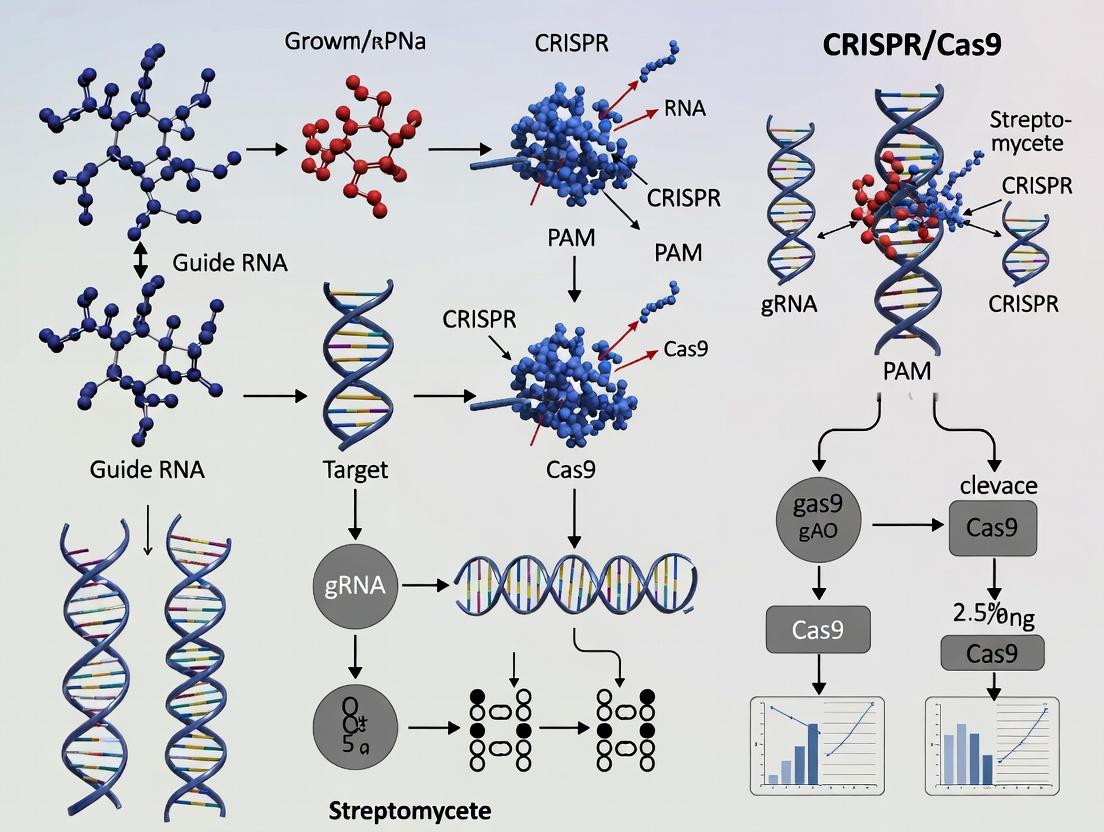
This comprehensive guide explores the transformative role of CRISPR/Cas9 genome editing in Streptomyces research and industrial biotechnology.
CRISPR/Cas9 Genome Editing in Streptomyces: A Complete Guide for Natural Product Discovery and Optimization
Abstract
This comprehensive guide explores the transformative role of CRISPR/Cas9 genome editing in Streptomyces research and industrial biotechnology. Targeting researchers, scientists, and drug development professionals, it provides a foundational understanding of why Streptomycetes are prime candidates for genetic engineering due to their complex genomes and prolific secondary metabolite production. The article details current methodologies, from plasmid design and transformation protocols to multiplex editing and large deletions, enabling precise manipulation of biosynthetic gene clusters (BGCs). It addresses common troubleshooting scenarios and optimization strategies for overcoming low editing efficiency and homologous recombination hurdles. Finally, it validates these techniques through comparative analysis with traditional methods, highlighting CRISPR's superiority in speed and precision for strain improvement and novel compound discovery. This resource synthesizes the latest advancements to empower efficient genome mining and engineering of these invaluable antibiotic-producing bacteria.
Why Edit Streptomyces? Unlocking the Genetic Potential of an Antibiotic Powerhouse
Streptomyces species are renowned for their complex, GC-rich genomes and their unparalleled capacity to produce bioactive secondary metabolites, including the majority of clinically used antibiotics. The core thesis of modern Streptomyces research posits that the systematic application of advanced genome editing tools, specifically CRISPR/Cas9 systems, is imperative to decode their complex genomics and unlock their vast, silent biosynthetic potential for novel drug discovery. This guide details the technical approaches enabling this research frontier.
Table 1: Key Genomic Features of Model Streptomyces Species
| Species | Genome Size (Mb) | GC Content (%) | Predicted Biosynthetic Gene Clusters (BGCs) | RefSeq Assembly |
|---|---|---|---|---|
| S. coelicolor A3(2) | 8.67 | 72.1 | ~30 | GCF_000203835.1 |
| S. avermitilis MA-4680 | 9.03 | 70.7 | ~37 | GCF_000165735.1 |
| S. bingchenggensis BCW-1 | 11.94 | 70.8 | ~78 | GCF_000448525.1 |
| S. roseosporus NRRL 11379 | 6.72 | 70.4 | ~34 | GCF_001870945.1 |
Table 2: CRISPR/Cas9 Editing Efficiency in Streptomycetes (Recent Data)
| Target Locus (Species) | Editing Goal | Delivery Method | Efficiency Range | Key Factor |
|---|---|---|---|---|
| actII-ORF4 (S. coelicolor) | Gene Knockout | Conjugative Plasmid | 90-100% | Use of pre-assembled Cas9:gRNA RNP |
| redD (S. coelicolor) | Point Mutation | ssDNA recombineering + CRISPR | 60-80% | Length of homology arms (≥80 bp) |
| PKS Module (S. albus) | Large Deletion (30 kb) | Integrative Plasmid | ~40% | Dual-gRNA targeting |
| Cryptic BGC (S. venezuelae) | Activation (Promoter Swap) | E. coli-Streptomyces Conjugation | 50-70% | Strong constitutive promoter choice (ermE*p) |
Core Experimental Protocols
Protocol 1: CRISPR/Cas9-Mediated Gene Knockout in S. coelicolor via Conjugative Plasmid
- gRNA Design: Design a 20-nt spacer targeting the gene of interest using an online tool (e.g., CHOPCHOP). Ensure specificity via BLAST against the host genome. Append the 5'-G- for S. coelicolor σ70-like promoters if needed.
- Plasmid Construction: Clone the spacer into a Streptomyces CRISPR/Cas9 plasmid (e.g., pCRISPomyces-2) containing a Cas9 gene (codon-optimized), the gRNA scaffold, and a temperature-sensitive origin.
- Conjugative Transfer: Transform the plasmid into E. coli ET12567/pUZ8002. Mate with S. coelicolor spores on MS agar with 10 mM MgCl2 at 30°C for 9-16 hours.
- Selection & Screening: Overlay with agar containing apramycin (plasmid selection) and nalidixic acid (counterselection against E. coli). Incubate at 30°C for 3-5 days.
- Curing: Pick exconjugants and propagate at 37°C (non-permissive temperature for plasmid replication) without antibiotic to cure the plasmid. Verify knockout via PCR and sequencing.
Protocol 2: CRISPRi for Repression of Biosynthetic Pathway Regulators
- Design: Design gRNA to target the template strand of the promoter or early coding region of a pathway-specific activator gene (e.g., pathR).
- System Assembly: Utilize a plasmid expressing a catalytically dead Cas9 (dCas9) fused to a transcriptional repressor domain (e.g., Mxi1) under a strong constitutive promoter.
- Integration: Introduce the plasmid via conjugation and integrate it site-specifically into a phage attachment site (e.g., attB site) for stable inheritance.
- Phenotypic Analysis: Compare metabolite production (e.g., via HPLC-MS) of the CRISPRi strain against the wild-type control to assess pathway repression.
Mandatory Visualizations
CRISPR/Cas9 Editing Workflow in Streptomyces
CRISPRa Activation of a Silent Biosynthetic Gene Cluster
The Scientist's Toolkit: Research Reagent Solutions
Table 3: Essential Reagents for Streptomyces CRISPR Research
| Reagent / Material | Function & Brief Explanation |
|---|---|
| pCRISPomyces-2 Plasmid | A standard E. coli-Streptomyces shuttle vector with codon-optimized Cas9, temperature-sensitive replicon, and apramycin resistance. |
| E. coli ET12567/pUZ8002 | Non-methylating, conjugation-competent donor strain essential for efficient plasmid transfer into Streptomyces. |
| Tris-HCl (pH 7.5) with 0.1% Tween 80 | Spore wash and germination solution; Tween 80 reduces clumping for consistent conjugation. |
| Apramycin (50 µg/mL) | Antibiotic for selection of Streptomyces exconjugants containing the CRISPR plasmid. |
| Nalidixic Acid (25 µg/mL) | Antibiotic for counterselection against the E. coli donor strain post-conjugation. |
| HR Donor DNA (ssDNA/dsDNA) | Homologous repair template for introducing precise mutations or inserting new sequences after Cas9 cleavage. |
| dCas9-Repressor/Activator Plasmids | For CRISPRi (knockdown) or CRISPRa (activation) studies to fine-tune gene expression without cleavage. |
| Mycelium Lysis Kit (Lysozyme + Proteinase K) | For high-quality genomic DNA extraction necessary for post-editing verification (PCR, sequencing). |
Within the broader thesis on CRISPR/Cas9 applications in streptomycete genome editing, this whitepaper details the transformative journey from classical, untargeted genetic manipulation to the current era of precision genome engineering. Streptomyces spp., the prolific producers of antibiotics and other bioactive natural products, have long been genetically intractable. The advent of CRISPR/Cas9 and derivative systems has revolutionized their genetic analysis and metabolic engineering, enabling targeted multiplexed edits, transcriptional modulation, and high-throughput functional genomics.
Historical Context: The Random Mutagenesis Era
Classical strain improvement relied on random mutagenesis using physical (UV, gamma radiation) or chemical (NTG, EMS) agents, followed by phenotypic screening. While successful for industrial scaling, this approach lacked precision, often introducing undesirable secondary mutations and offering no mechanistic insight.
Table 1: Comparison of Historical Mutagenesis Methods
| Method | Agent | Typical Mutation Rate | Primary Lesion | Key Limitation |
|---|---|---|---|---|
| UV Irradiation | Ultraviolet Light | ~0.1-1% survivors | Pyrimidine dimers | Poor penetration, photo-reactivation |
| Chemical (NTG) | N-methyl-N'-nitro-N-nitrosoguanidine | ~0.5-2% mutants | Alkylation (O⁶-guanine) | Highly toxic, requires careful neutralization |
| EMS | Ethyl methanesulfonate | ~1-5% mutants | Alkylation (Guanine) | High background of unrelated mutations |
Protocol 1: Classical NTG Mutagenesis of Streptomyces
- Culture Preparation: Grow the Streptomyces strain in a rich liquid medium (e.g., TSB) to mid-exponential phase (OD₆₀₀ ~0.5).
- Harvest and Wash: Pellet mycelia/spores by centrifugation (3000 × g, 10 min). Wash twice with 0.1 M Tris-maleate buffer (pH 9.0).
- Mutagen Treatment: Resuspend in the same buffer to ~10⁸ CFU/mL. Add NTG from a fresh stock (1 mg/mL in acetone) to a final concentration of 50-100 µg/mL. Incubate at 30°C with shaking for 30-60 min.
- Neutralization and Wash: Pellet cells, carefully discard supernatant as hazardous waste. Resuspend in 5% sodium thiosulfate to neutralize residual NTG. Wash twice with sterile buffer.
- Outgrowth and Plating: Dilute and plate on non-selective medium for survivor count and on selective medium for mutant isolation. Incubate at 30°C for 3-7 days.
- Mutant Screening: Isolate colonies and screen for desired phenotype (e.g., antibiotic overproduction).
The Recombinant DNA Revolution
The development of plasmid vectors, phage-based delivery systems (e.g., φC31, VWB), and homologous recombination techniques (e.g., PCR-targeting with λ-RED in E. coli) enabled targeted gene knockouts and heterologous expression. However, these methods were often multi-step, time-consuming, and inefficient, especially for streptomycetes with low natural recombination frequencies.
The CRISPR/Cas9 Precision Era
The adaptation of the Type II Streptococcus pyogenes CRISPR/Cas9 system has provided a quantum leap in Streptomyces genetic engineering, allowing for single-base resolution edits, multiplexing, and transcriptional control.
Core Mechanism and Delivery
The Cas9 endonuclease is guided by a single guide RNA (sgRNA) to a specific genomic locus, where it creates a double-strand break (DSB). In the absence of a repair template, error-prone non-homologous end joining (NHEJ) leads to indels and gene disruption. When co-delivered with a homologous repair template (donor DNA), high-fidelity homology-directed repair (HDR) enables precise edits.
Diagram 1: CRISPR/Cas9 Editing Workflow in Streptomyces (Max 760px)
Protocol 2: CRISPR/Cas9-Mediated Gene Knockout in S. coelicolor
- sgRNA Design: Using a target sequence (20-nt, 5'-NGG PAM), design oligonucleotides. Clone into a Streptomyces CRISPR plasmid (e.g., pCRISPomyces-2) downstream of a constitutive promoter via Golden Gate or Gibson assembly.
- Vector Construction: Verify plasmid sequence. For conjugation, the plasmid must contain an oriT and an appropriate antibiotic marker (apramycin resistance).
- Conjugal Transfer: a. Prepare electrocompetent E. coli ET12567/pUZ8002 (methylation-deficient, carrying conjugation helper functions). b. Transform the CRISPR plasmid into this E. coli strain. c. Mix the E. coli donor with S. coelicolor spores (heat-shocked at 50°C for 10 min) on an SFM plate. Incubate at 30°C for 16-20h. d. Overlay plate with 1 mL water containing nalidixic acid (to counter-select E. coli) and apramycin (to select for Streptomyces exconjugants). Incubate for 3-5 days.
- Screening and Curing: Isolate exconjugants. Screen for desired deletions via colony PCR. To cure the plasmid, streak colonies onto non-selective medium and screen for apramycin-sensitive clones.
Advanced CRISPR Tools
- Base Editing: Fusion of catalytically dead Cas9 (dCas9) with a deaminase enzyme (e.g., APOBEC1) enables C•G to T•A conversions without requiring a DSB or donor DNA.
- CRISPRi/a: dCas9 fused to transcriptional repressors (e.g., KRAB) or activators (e.g., SoxS) allows for targeted gene knockdown (CRISPRi) or activation (CRISPRa).
- Multiplexed Editing: Delivery of arrays of multiple sgRNAs enables simultaneous manipulation of several genomic loci, crucial for engineering biosynthetic gene clusters.
Table 2: Quantitative Performance of Modern Streptomyces Genome Editing Tools
| Tool | System | Editing Efficiency (Typical Range) | Time to Verified Mutant (Days) | Key Application |
|---|---|---|---|---|
| CRISPR/Cas9 (KO) | pCRISPomyces-2 | 50-100% | 7-14 | Single gene disruption |
| CRISPR/Cas9 (HDR) | pCRISPR-Cas9* | 10-60%* | 14-21 | Precise allele replacement |
| Base Editor (CBE) | pBAC-bEC | 30-90% | 10-18 | Point mutations without DSB |
| CRISPRi | dCas9-Sox4 | 70-95% repression | 7-10 | Tunable gene knockdown |
*Efficiency highly dependent on donor design and homology arm length (optimal: 1 kb each side).
Diagram 2: CRISPR Tool Derivations and Key Applications (Max 760px)
The Scientist's Toolkit: Key Research Reagent Solutions
Table 3: Essential Materials for Streptomyces CRISPR-Cas9 Genome Editing
| Reagent/Material | Supplier Examples | Function & Critical Notes |
|---|---|---|
| pCRISPomyces-2 Plasmid | Addgene (#61737) | All-in-one Streptomyces CRISPR/Cas9 vector; contains cas9, sgRNA scaffold, and tracrRNA. |
| dCas9-pCRISPomyces-2 | Addgene (#141732) | Catalytically dead Cas9 variant for CRISPRi/a studies. |
| E. coli ET12567/pUZ8002 | Laboratory stocks | Methylation-deficient E. coli donor strain for intergeneric conjugation. |
| S. coelicolor A3(2) | DSMZ / John Innes Centre | Model organism with well-annotated genome; ideal for protocol optimization. |
| BTX Electroporator & 2mm Cuvettes | Harvard Apparatus | Alternative delivery method for plasmids into Streptomyces protoplasts. |
| Gibson Assembly Master Mix | NEB / Thermo Fisher | For seamless assembly of donor DNA with long homology arms into vectors. |
| Streptomyces Specific Media (SFM, MS, R5) | Formulated in-house or commercial | Optimized for growth, sporulation, and conjugation efficiency. |
| Apramycin Sulfate | Sigma-Aldrich | Common selective antibiotic for Streptomyces (typically 50 µg/mL in plates). |
| Nalidixic Acid | Sigma-Aldrich | Used in conjugation to counterselect against the E. coli donor strain (25 µg/mL). |
| Phire Plant Direct PCR Master Mix | Thermo Fisher | Enables rapid colony PCR from tough Streptomyces mycelia/spores. |
The evolution from random mutagenesis to CRISPR-driven precision tools has fundamentally reshaped Streptomyces genetic engineering. These advances, central to the thesis on CRISPR/Cas9 applications, now permit hypothesis-driven research, rational metabolic engineering, and accelerated drug discovery pipelines. Future integration of machine learning for sgRNA design and automation for high-throughput editing will further solidify Streptomyces as a premier chassis for natural product discovery and development.
This guide details the core principles of implementing CRISPR/Cas9 for genome editing in bacteria, with a specific focus on the genetically complex and industrially vital Streptomyces genus. Efficient genome editing in streptomycetes is pivotal for engineering novel antibiotic and secondary metabolite pathways, a central theme in modern drug discovery research. The fundamental requirements—precise gRNA design and selection of appropriate Cas9 variants—are critical for success in these high-GC-content, often polyploid, actinobacteria.
Fundamentals of gRNA Design for Bacterial Systems
Effective gRNA design is the first critical step. For streptomycetes, specific adaptations from standard bacterial protocols are required.
Core Principles:
- Protospacer Adjacent Motif (PAM) Specificity: The Cas9 variant dictates the PAM sequence requirement, which must be present in the target genomic DNA. The canonical S. pyogenes Cas9 (SpCas9) requires a 5'-NGG-3' PAM downstream of the target.
- Target Sequence Selection: The 20-nt spacer sequence immediately 5' to the PAM must be unique within the host genome to minimize off-target effects.
- gRNA Scaffold: The non-complementary, structural portion of the guide RNA is essential for Cas9 binding and nuclease activation.
Streptomycete-Specific Considerations:
- High GC-content: Spacer sequences should be designed with a GC content between 40-80%, favoring the higher end for Streptomyces (genomic GC ~70-74%), to ensure stable DNA:RNA hybridization.
- Secondary Structure: The gRNA, especially its spacer region, should be free of significant internal hairpins that could impede Cas9 binding. Tools like UNAFold or mFold are used for analysis.
- Genomic Copy Number: For targets in multi-copy genomic regions (e.g., rRNA genes), longer homology arms in repair templates are advised.
Table 1: Key Quantitative Parameters for gRNA Design in Streptomyces
| Parameter | Optimal Range / Target | Rationale for Streptomycetes |
|---|---|---|
| Spacer Length | 20 nucleotides (nt) | Standard for SpCas9; can be truncated to 18-19 nt for increased specificity. |
| GC Content | 50-75% | Higher stability in high-GC genomic context; avoid extremes. |
| On-Target Score | >50 (tool-dependent) | Predicts cleavage efficiency (e.g., using CRISPRscan, DeepCRISPR). |
| Off-Target Score | <3 potential sites with ≤3 mismatches | Ensures specificity; use BLAST against the host genome. |
| PAM Proximity | Close to edit site | For HDR, the edit should be within 10-15 bp of the PAM for high efficiency. |
Experimental Protocol: In Silico gRNA Design and Validation
- Identify Target Locus: Obtain the precise genomic sequence of the target region from a trusted database (e.g., GenBank for S. coelicolor).
- Scan for PAM Sites: Using a script or tool (e.g., Benchling, CRISPRfinder), identify all 5'-NGG-3' sequences in both strands within your locus of interest.
- Extract Spacer Candidates: Select the 20-nt sequence directly upstream of each PAM.
- Evaluate Specificity: Perform a BLASTN search of each candidate spacer against the complete genome of your streptomycete host. Reject any spacer with >90% identity over 15+ nt to other genomic locations.
- Calculate Efficiency Scores: Input selected spacer sequences into a prediction algorithm (e.g., CRISPOR, CHOPCHOP) to rank them by predicted on-target activity.
- Check Secondary Structure: Model the full gRNA (spacer + scaffold) sequence to ensure the spacer region is accessible.
Cas9 Variants for Bacterial Genome Editing
While wild-type SpCas9 is common, its use in bacteria, particularly for streptomycete engineering where precise editing is paramount, is often supplanted by engineered variants.
Key Variants and Their Applications:
- Wild-Type SpCas9: Generates a blunt-ended double-strand break (DSB) 3 bp upstream of the PAM. Can be used for gene knockouts via error-prone non-homologous end joining (NHEJ), though NHEJ is inefficient in most Streptomyces.
- Cas9 D10A (Nickase): A single-strand nicking variant. Used in pairs with offset PAMs to create staggered DSBs, reducing off-target effects by >1000-fold. Essential for precise editing in streptomycetes.
- Dead Cas9 (dCas9): Catalytically inactive. Used for transcriptional repression (CRISPRi) or activation (CRISPRa) when fused to effector domains, crucial for modulating secondary metabolite clusters without altering DNA sequence.
- High-Fidelity Variants (e.g., SpCas9-HF1, eSpCas9): Contain mutations that reduce non-specific electrostatic interactions with the DNA backbone. They exhibit drastically reduced off-target activity with minimal loss of on-target efficiency, ideal for multiplexed edits in large genomes.
- PAM-Relaxed Variants (e.g., SpCas9-NG, xCas9): Recognize broader PAM sequences (e.g., NG, GAA), vastly expanding the targetable genomic space, beneficial for AT-rich regions within streptomycete genomes.
Table 2: Comparison of Common Cas9 Variants for Streptomycete Editing
| Variant | Key Mutations | PAM | Primary Application in Streptomyces | Key Advantage |
|---|---|---|---|---|
| Wild-Type SpCas9 | None | NGG | Gene knockout (with NHEJ machinery), plasmid curing. | Simplicity, high on-target activity. |
| Cas9 D10A (Nickase) | D10A | NGG | Precise HDR editing using paired nickases. | Drastically reduced off-target cleavage. |
| dCas9 | D10A, H840A | NGG | CRISPRi/a for gene expression modulation. | No DNA cleavage; reversible knockdown. |
| SpCas9-HF1 | N497A, R661A, Q695A, Q926A | NGG | High-accuracy multiplex editing of biosynthetic gene clusters. | Ultra-high specificity. |
| SpCas9-NG | R1335V, L1111R, D1135V, G1218R, E1219F, A1322R, T1337R | NG | Targeting AT-rich regions within high-GC genomes. | Expanded targeting range (~4x more sites). |
Experimental Protocol: HDR-Mediated Gene Editing inStreptomycesusing Cas9 Nickase
This protocol outlines a standard two-plasmid system for precise allele replacement.
Materials:
- pCRISPR-Cas9 Plasmid: Contains a Streptomyces codon-optimized cas9 (D10A nickase), a gRNA scaffold, and a temperature-sensitive origin of replication.
- pDonor Plasmid: Contains the homology-directed repair (HDR) template with desired edits, flanked by ~1 kb homology arms.
- Conjugative E. coli ET12567/pUZ8002: Donor strain for intergeneric conjugation.
- Streptomyces Spores: Recipient strain.
- Selection Antibiotics: Apramycin (for pCRISPR), Kanamycin (for pDonor), Nalidixic acid (counter-selection for Streptomyces).
Method:
- Clone gRNA: Anneal and ligate oligonucleotides encoding the target-specific 20-nt spacer into the BsaI site of the pCRISPR-Cas9 plasmid.
- Clone HDR Template: PCR-amplify the homology arms and assemble them with the mutated sequence into the pDonor plasmid via Gibson Assembly.
- Transform Donor E. coli: Co-transform the constructed pCRISPR and pDonor plasmids into the methylation-deficient E. coli ET12567/pUZ8002. Select on LB agar with Apramycin and Kanamycin.
- Intergeneric Conjugation: Mix the donor E. coli with Streptomyces spores. Plate on MS agar, incubate at 30°C for 16-20 hours. Overlay with Apramycin (to select for exconjugants) and Nalidixic acid (to counter-select E. coli). Incubate at 30°C for 5-7 days.
- Curing of Plasmids: Pick exconjugants and propagate at 37°C (non-permissive temperature for plasmid replication) without antibiotics for several rounds. Screen for Apramycin- and Kanamycin-sensitive colonies.
- Genotype Verification: Confirm the edit via colony PCR and Sanger sequencing of the target locus.
The Scientist's Toolkit: Research Reagent Solutions
Table 3: Essential Reagents for CRISPR/Cas9 Editing in Streptomycetes
| Reagent / Material | Function / Purpose | Example / Note |
|---|---|---|
| Codon-Optimized Cas9 Expression Plasmid | Expresses Cas9 variant efficiently in high-GC actinobacteria. | Plasmid with Streptomyces rpsL promoter, thiostrepton-inducible. |
| gRNA Expression Backbone | Provides the structural scaffold for the custom spacer. | Contains a strong, constitutive promoter (e.g., ermE). |
| Temperature-Sensitive Origin | Allows for easy plasmid curing after editing. | pSG5-based or pKC1139-based replicons. |
| Methylation-Deficient E. coli | Enables efficient conjugation into Streptomyces by avoiding host restriction systems. | ET12567 (dam-/dem-/hsdM-). |
| Conjugative Helper Plasmid | Provides transfer functions (tra genes) for mobilizing plasmids from E. coli. | pUZ8002 (non-integrative, Kan^R). |
| Homology-Directed Repair Template | DNA template for precise repair of Cas9-induced DSB. | Can be delivered on a plasmid or as a linear dsDNA fragment (1-2 kb arms). |
| Selection/Counter-Selection Agents | Selects for exconjugants and against donor E. coli. | Apramycin (selection), Nalidixic acid (counter-selection). |
| Inducer for Regulated Expression | Tightly controls Cas9/gRNA expression to limit toxicity. | Thiostrepton (for tipA promoter) or Anhydrotetracycline (for tet promoters). |
Diagrams
Title: CRISPR/Cas9 Workflow for Streptomyces Genome Editing
Title: DNA Repair Pathways After Cas9 Cleavage
This whitepaper, framed within the broader thesis of advancing CRISPR/Cas9 applications in streptomycete genome editing, details the principal technical barriers of host Restriction-Modification (R-M) systems and inherently low transformation efficiencies. We provide a comprehensive technical guide with current (as of 2024) strategies, quantitative data comparisons, and detailed protocols to overcome these challenges, enabling robust genetic manipulation in these industrially critical, GC-rich bacteria for drug discovery.
Streptomyces species are prolific producers of antibiotics and other pharmaceuticals but are notoriously recalcitrant to genetic manipulation. Two intertwined challenges dominate:
- Restriction-Modification (R-M) Systems: These innate bacterial defense systems recognize and cleave incoming foreign DNA (e.g., plasmid vectors), drastically reducing transformation success.
- Low Transformation Efficiency: Even when R-M systems are bypassed, classic methods like PEG-mediated protoplast transformation yield low numbers of transformants, hindering complex multiplexed CRISPR editing.
Overcoming these hurdles is essential for leveraging CRISPR/Cas9 to engineer biosynthetic gene clusters (BGCs) for novel drug development.
In-Depth Analysis of Restriction-Modification Systems
Streptomycetes often possess multiple Type I, II, and IV R-M systems. Current internet research confirms the primary strategy is to evade or temporarily disable these systems.
Quantitative Comparison of R-M Bypass Strategies
Table 1: Strategies to Overcome R-M Systems in Streptomycetes
| Strategy | Mechanism | Relative Efficiency Increase* | Key Advantages | Key Limitations |
|---|---|---|---|---|
| In Vitro DNA Methylation | Mimics host methylation patterns using methyltransferase enzymes (e.g., phage-derived Φ31, TuZI). | 10 - 10,000x | Direct, applicable to any strain. | Requires prior knowledge of host R-M systems; cost of enzymes. |
| Use of Restriction-Deficient Mutants | Employ mutant host strains (e.g., S. coelicolor ΔhsdMS, S. albus ΔresΔmod) as intermediates. | 100 - 100,000x | Highly effective for cloning; enables conjugation from E. coli. | Requires construction/availability of mutant; extra cloning step. |
| Conjugation from E. coli (ET12567/pUZ8002) | Delivers plasmid as single-stranded DNA, less recognizable by R-M systems. | 50 - 1,000x | Bypasses many systems; no protoplast preparation needed. | Requires biparental mating; potential for uncontrolled spread. |
| CRISPR-Aided R-M Gene Knockout | Use CRISPR/Cas9 to delete key restriction (hsdR) or methylase (hsdM) genes in the target strain. | Permanent solution | Permanently removes the barrier for future edits. | Initial transformation to deliver CRISPR machinery remains challenging. |
*Efficiency increase is highly strain-dependent and reported relative to unmethylated DNA transformation in wild-type strains.
Detailed Protocol: In Vitro Methylation and Transformation
This protocol uses commercially available methyltransferases.
Materials:
- Purified plasmid DNA (1-2 µg) for transformation.
- CpG Methyltransferase (M.SssI) or specific phage Methyltransferase (e.g., M.Φ31T from commercial suppliers).
- Corresponding S-Adenosyl methionine (SAM).
- Appropriate reaction buffer.
- PEG-assisted protoplast transformation reagents for streptomycetes.
Method:
- Methylation Reaction: Set up a 50 µL reaction containing 1x reaction buffer, 1 µg plasmid DNA, 160 µM SAM, and 4 units of methyltransferase. Incubate at 30°C (for phage enzymes) or 37°C (for M.SssI) for 4 hours.
- Enzyme Inactivation: Heat-inactivate at 65°C for 20 minutes.
- Precipitation: Ethanol-precipitate the DNA, wash with 70% ethanol, and resuspend in 10 µL TE buffer.
- Transformation: Use the methylated DNA immediately in your standard streptomycete protoplast transformation protocol. Include an unmethylated plasmid control.
Addressing Low Transformation Efficiency
High-efficiency transformation is critical for obtaining the rare double-crossover events needed for precise CRISPR/Cas9-mediated gene replacements.
Quantitative Comparison of Efficiency-Enhancing Methods
Table 2: Methods to Improve Transformation Efficiency in Streptomycetes
| Method | Core Principle | Typical CFU/µg DNA* | Suitability for CRISPR Editing |
|---|---|---|---|
| Standard PEG-Protoplast | Cell wall removal, PEG-mediated DNA uptake. | 10^2 - 10^4 | Low; often insufficient for screening CRISPR edits. |
| Intergeneric Conjugation | Plasmid transfer from E. coli via mating pore. | 10^3 - 10^5 | High; preferred method for initial CRISPR plasmid delivery. |
| Electrical Transformation of Mycelia | Electroporation of germinated spores/mycelia. | 10^3 - 10^5 | Moderate; requires strain-specific optimization of pulse parameters. |
| Chemically Competent Cell Transformation | Treatment of young mycelia with divalent cations and PEG. | 10^4 - 10^6 | Very High; emerging as the most effective method for plasmid DNA. |
*CFU = Colony Forming Units. Ranges are strain-dependent.
Detailed Protocol: High-Efficiency Chemically Competent Cell Transformation
Adapted from recent (2023) publications for S. coelicolor and S. lividans.
Materials:
- SMM Buffer: 0.5M Sucrose, 20mM Maleic Acid, 20mM MgCl2, pH 6.5.
- P Buffer: SMM Buffer supplemented with 5% (v/v) PEG 6000.
- 2xYT Medium: Standard yeast extract-tryptone medium.
- Mannitol-Soy Flour (MS) Agar.
Method:
- Culture Growth: Inoculate spores into 2xYT medium with 10% sucrose. Grow for 24-36h at 30°C until late-exponential phase (hyphal clumps visible).
- Mycelia Preparation: Harvest mycelia by gentle centrifugation (2000-3000 x g, 10 min). Wash twice with 10% sucrose.
- Competent Cell Preparation: Resuspend the washed mycelial pellets in P Buffer (1 mL per 50mL original culture). Incubate at 30°C for 1 hour. The mycelia are now competent.
- Transformation: Aliquot 100 µL of competent mycelia into a tube. Add 100-500 ng of plasmid DNA (optimally methylated). Mix gently and incubate at 30°C for 5 minutes.
- Regeneration: Add 900 µL of P Buffer and mix. Plate the entire mixture onto MS agar plates containing 10% sucrose (and appropriate antibiotics). Incubate at 30°C for 12-24 hours before overlaying with soft agar containing antibiotics to select for transformants.
Integrated Workflow and Visual Guides
Title: Integrated Workflow for CRISPR Delivery in Streptomycetes
Title: R-M System Action and Bypass Mechanisms
The Scientist's Toolkit: Research Reagent Solutions
Table 3: Essential Reagents for Streptomycete CRISPR Genome Editing
| Reagent / Material | Function in Experiment | Example Product / Source |
|---|---|---|
| Phage-Derived Methyltransferases | Methylates plasmid DNA in vitro to evade specific host R-M systems. | M.Φ31T, M.ΦBT1, M.ΦC31 (commercial kits available). |
| CpG Methyltransferase (M.SssI) | Methylates all cytosine residues in a CpG context; broadly protects against many Type II systems. | New England Biolabs M0226S. |
| E. coli Donor Strain ET12567/pUZ8002 | A non-methylating, conjugation-helper strain for intergeneric mating with Streptomyces. | Widely available from research culture collections. |
| pCRISPomyces-2 Vector | A specifically designed, shuttle plasmid for CRISPR/Cas9 editing in Streptomyces. | Addgene Plasmid #61737. |
| pKCcas9dO Vector | A temperature-sensitive, "dead" Cas9 (dCas9) vector for CRISPR interference (CRISPRi). | Addgene Plasmid #125595. |
| S-Adenosyl Methionine (SAM) | Essential methyl donor cofactor for all in vitro methylation reactions. | Supplied with methyltransferase kits. |
| High-Purity PEG 6000 / 1000 | Critical for inducing membrane fusion during protoplast and chemical transformation. | Sigma-Aldrich 81170 (PEG 1000). |
| Mycelial Protoplasting Enzymes | Lysozyme and other lytic enzymes for cell wall removal in protoplast preparation. | Lysozyme from chicken egg white (Sigma L6876). |
| Sucrose & MgCl2 | Osmotic stabilizers in transformation buffers (SMM, P Buffer) to prevent protoplast lysis. | Standard laboratory reagents. |
| Thiostrepton & Apramycin | Common selectable antibiotics for Streptomyces genetics and CRISPR plasmid maintenance. | Sigma T8902 (Thiostrepton). |
Protocols in Practice: Step-by-Step CRISPR/Cas9 Workflows for Streptomyces Engineering
The development of efficient CRISPR/Cas9 systems for Streptomyces has been pivotal in unlocking the genetic potential of these prolific antibiotic producers. A central decision in experimental design is the choice of plasmid delivery system: integrating or replicating. This guide, framed within a broader thesis on advancing CRISPR/Cas9 tools for streptomycete metabolic engineering and natural product discovery, provides a technical comparison of two seminal vectors: the integrating pCRISPomyces systems and the temperature-sensitive replicating pKCcas9dO.
pCRISPomyces (Integrating System)
The pCRISPomyces plasmids (e.g., pCRISPomyces-1, -2) are E. coli-Streptomyces shuttle vectors that integrate site-specifically into the attB site of the Streptomyces chromosome via the ΦBT1 integrase. They are maintained as single-copy, stable genetic elements.
pKCcas9dO (Replicating System)
The pKCcas9dO plasmid is a derivative of the pKC1139-based vectors. It contains a temperature-sensitive origin of replication (pSG5) that allows for plasmid replication at permissive temperatures (∼28-30°C) and facilitates plasmid curing at non-permissive temperatures (∼37-39°C), enabling the creation of marker-free strains.
Table 1: Core Quantitative Comparison of Plasmid Systems
| Feature | pCRISPomyces (Integrating) | pKCcas9dO (Replicating) |
|---|---|---|
| Plasmid Backbone | pCRISPomyces-1/2 | pKC1139 derivative |
| Replication in Streptomyces | Chromosomal integration (ΦBT1 attB/int) | Temperature-sensitive (pSG5 ori) |
| Copy Number in Streptomyces | Single (integrated) | Low-copy, unstable at >37°C |
| Selection Marker | Apramycin (aac(3)IV) | Apramycin (aac(3)IV) |
| Key Components | codon-optimized cas9, sgRNA scaffold, tracrRNA | codon-optimized cas9, sgRNA expression cassette |
| Primary Advantage | Genetic stability, suitable for long-term/fermentation studies | Easy curing, rapid iterative editing, marker-free final strains |
| Primary Limitation | Permanent marker, requires recombinase for excision | Instability during extended culture, requires temperature control |
| Typical Editing Efficiency* | 30-100% for gene knockouts | 50-100% for gene knockouts |
| Key Reference | Cobb et al. (2015) ACS Synth. Biol. | Zeng et al. (2018) Metab. Eng. |
*Efficiency is highly dependent on the target locus, sgRNA design, and host strain.
Detailed Experimental Protocols
Protocol: Genome Editing Using pCRISPomyces-2
This protocol outlines the construction of a gene knockout in Streptomyces coelicolor.
Materials:
- E. coli ET12567/pUZ8002 (non-methylating conjugal donor)
- Streptomyces sp. target strain
- pCRISPomyces-2 plasmid
- Primers for sgRNA template amplification and homology-directed repair (HDR) template assembly.
- Apramycin (50 µg/mL for E. coli, 50 µg/mL for Streptomyces), Carbenicillin (100 µg/mL), Kanamycin (50 µg/mL).
Method:
- sgRNA Design & Cloning:
- Design a 20-nt target-specific sequence (N20) adjacent to a 5'-NGG-3' PAM.
- Amplify the sgRNA expression cassette using pCRISPomyces-2 as template and primers containing the N20 overhangs (Forward: 5'-GGTGN20GTTTA-3', Reverse: 5'-AAACN20reversecomplementC-3').
- Perform Golden Gate assembly using BsaI-HFv2 into the BsaI-digested pCRISPomyces-2 plasmid.
- Transform into E. coli and select on Apramycin/Carbenicillin plates. Sequence-verify the insert.
HDR Template Construction:
- For a clean deletion, PCR-amplify ∼1 kb upstream and downstream flanking regions of the target gene.
- Assemble these fragments into a linear dsDNA HDR template via overlap extension PCR. Ensure the final product contains no PAM site or protospacer sequence.
Conjugal Transfer & Exconjugant Selection:
- Introduce the verified pCRISPomyces-2 plasmid into E. coli ET12567/pUZ8002.
- Grow donor and recipient (Streptomyces spores) separately, mix, and plate on MS agar with 10 mM MgCl2.
- After 16-20h at 30°C, overlay with sterile water containing Apramycin (final 50 µg/mL) and Nalidixic Acid (final 25 µg/mL) to inhibit E. coli.
- Incubate at 30°C until exconjugant colonies appear (5-10 days).
Screening & Verification:
- Patch exconjugants onto Apramycin plates. Screen for desired mutants via colony PCR using verification primers outside the HDR template region.
- Successful integration of the HDR template results in apramycin-sensitive candidates (as the aac(3)IV marker is not integrated).
- Validate by sequencing the target locus.
Protocol: Iterative Editing Using pKCcas9dO
This protocol enables rapid, sequential gene edits without permanent antibiotic markers.
Materials:
- pKCcas9dO plasmid.
- E. coli ET12567/pUZ8002.
- Streptomyces sp. target strain.
- Standard molecular biology reagents.
Method:
- Plasmid Construction:
- Clone the designed sgRNA expression cassette (target N20 + scaffold) into the BsaI site of pKCcas9dO. The sgRNA is expressed from a constitutive promoter (ermE*p).
- If using an HDR template for precise editing, clone it as a dsDNA fragment into a unique restriction site (e.g., PacI) located adjacent to the sgRNA cassette.
Conjugation & Primary Editing:
- Perform intergeneric conjugation as described in Section 3.1, Step 3.
- Plate conjugations on apramycin-containing medium and incubate at 30°C (permissive temperature) for exconjugant growth.
- Isolate single colonies and culture in liquid medium with apramycin at 30°C.
Plasmid Curing & Strain Purification:
- Take a sample from the primary mutant culture and streak for single colonies on non-selective medium (no antibiotic).
- Incubate at 37-39°C (non-permissive temperature) for 1-2 generations.
- Patch resulting colonies onto plates with and without apramycin. Select colonies that are apramycin-sensitive, indicating loss of the pKCcas9dO plasmid.
- Verify genotype of the cured, edited strain by PCR/sequencing.
Iterative Editing Cycle:
- Use the cured, marker-free mutant as the recipient for the next round of conjugation with a new pKCcas9dO plasmid harboring the next sgRNA/HDR template.
- Repeat steps 2 and 3.
Visual Workflows
The Scientist's Toolkit: Research Reagent Solutions
Table 2: Essential Reagents for CRISPR/Cas9 Editing in Streptomyces
| Reagent / Material | Function & Rationale | Example/Note |
|---|---|---|
| pCRISPomyces-2 Plasmid | Integrating vector backbone. Contains cas9, sgRNA scaffold, and apramycin resistance for selection in Streptomyces. | Available from Addgene (#61737). |
| pKCcas9dO Plasmid | Temperature-sensitive replicating vector backbone. Enables plasmid curing for marker-free strains. | Derived from pKC1139, contains pSG5 ori. |
| E. coli ET12567/pUZ8002 | Non-methylating, conjugative donor strain. Essential for efficient plasmid transfer from E. coli to Streptomyces. | pUZ8002 provides tra genes for mobilization. |
| BsaI-HFv2 Restriction Enzyme | For Golden Gate assembly of sgRNA expression cassettes into pCRISPomyces/pKCcas9dO. | High-fidelity version prevents star activity. |
| Apramycin Sulfate | Antibiotic for selection of plasmid-bearing E. coli and Streptomyces exconjugants. | Working concentration: 50 µg/mL for both. |
| Nalidixic Acid | Counterselection agent against the E. coli donor strain during conjugation. | Used in overlay at 25-50 µg/mL. |
| MS Agar | A defined medium optimal for conjugation between E. coli and Streptomyces. | Contains mannitol and soy flour. |
| Q5 High-Fidelity DNA Polymerase | For error-free amplification of HDR templates and verification PCRs. Critical for large fragment assembly. | Reduces introduction of unwanted mutations. |
| PCR Clean-Up/Gel Extraction Kit | For purification of DNA fragments during sgRNA cloning and HDR template preparation. | Essential for high-efficiency assemblies. |
| Temperature-Controlled Incubators | Critical for pKCcas9dO system: 30°C for plasmid maintenance, 37-39°C for plasmid curing. | Requires accurate temperature control. |
This guide is framed within the thesis: "Advancing Natural Product Discovery through Precision CRISPR/Cas9 Genome Engineering in Streptomycetes." Streptomycetes are prolific producers of bioactive secondary metabolites encoded by Biosynthetic Gene Clusters (BGCs). The application of CRISPR/Cas9 for targeted gene knockout or CRISPRa for activation is revolutionizing the activation of silent BGCs and the functional analysis of essential genes in this genus, accelerating drug development pipelines.
Principles of gRNA Design for Streptomycetes
Effective gRNA design must account for the high GC-content (often >70%) and unique genomic architecture of streptomycetes.
- Target Selection: For BGC knockout, target core biosynthetic genes (e.g., polyketide synthases, non-ribosomal peptide synthetases). For activation (CRISPRa), target promoter regions upstream of BGCs or pathway-specific regulators. For essential gene knockout, use a complementation strategy.
- Protospacer Adjacent Motif (PAM): For standard Streptococcus pyogenes Cas9 (SpCas9), the PAM sequence is 5'-NGG-3'. PAM must be present on the genomic DNA, not on the gRNA.
- gRNA Length: 20 nucleotides upstream of the PAM.
- Specificity: Perform BLAST against the host genome (e.g., S. coelicolor, S. avermitilis) to minimize off-target effects. Mismatches in the "seed region" (8-12 bases proximal to PAM) are most critical for specificity.
- Efficiency Prediction: Tools like Benchling or CHOPCHOP, adjusted for high GC-content, can predict on-target efficiency scores.
Table 1: Key Parameters for gRNA Design in High-GC Streptomycetes
| Parameter | Optimal Value/Range | Rationale & Consideration |
|---|---|---|
| GC Content | 50-70% | Balances stability and specificity; avoid extreme highs (>80%). |
| On-Target Score | >60 (Tool-dependent) | Higher scores correlate with increased cleavage/activation efficiency. |
| Off-Target Score | Max 3-4 mismatches, especially in seed region | Minimizes unintended genomic edits. Essential for essential genes. |
| PAM for SpCas9 | 5'-NGG-3' | Must be present immediately downstream of target. |
| gRNA Length | 20 nt (spacer) + scaffold | Standard for SpCas9. |
| Self-Complementarity | Avoid hairpins in spacer | Prevents gRNA misfolding. |
Cloning Strategies for gRNA Expression Vectors
Streptomycetes often utilize plasmid-based systems with constitutive (e.g., ermEp) or inducible promoters for gRNA expression.
Protocol 1: Golden Gate Assembly for Multiplex gRNA Cloning This method allows assembly of multiple gRNA expression cassettes into a single E. coli-Streptomyces shuttle vector.
- Design Oligos: For each gRNA, design two oligonucleotides:
- Top strand: 5'-GGGC[20-nt target sequence]-3'
- Bottom strand: 5'-AAAC[reverse complement of target]-3' (The overhangs are compatible with BsaI-digested vector.)
- Phosphorylate & Anneal: Mix 1 µL of each oligo (100 µM), 1 µL T4 PNK, 1 µL 10x T4 Ligation Buffer, 6.5 µL H₂O. Incubate: 37°C for 30 min; 95°C for 5 min; ramp down to 25°C at 5°C/min.
- Golden Gate Reaction: Mix 50 ng BsaI-digested destination vector (e.g., pCRISPomyces-2), 1 µL diluted annealed duplex (1:200), 1 µL T4 DNA Ligase, 1 µL BsaI-HFv2, 2 µL 10x T4 Ligase Buffer, H₂O to 20 µL.
- Thermocycle: 30 cycles of (37°C for 5 min, 16°C for 5 min), then 50°C for 5 min, 80°C for 5 min.
- Transform: Transform 5 µL reaction into competent E. coli, plate on appropriate antibiotic. Verify by colony PCR and Sanger sequencing.
Protocol 2: Site-Directed Cloning into a Streptomyces CRISPRa Vector For activation, gRNA must be cloned into a vector expressing a deactivated Cas9 (dCas9) fused to an activator domain (e.g., Sox2, Mxi1).
- PCR Amplify gRNA Scaffold: Using a template plasmid, amplify the gRNA expression cassette with primers containing homology arms to the target locus in the destination CRISPRa plasmid.
- Gibson Assembly: Mix ~100 ng of linearized destination vector, a 3-fold molar excess of the PCR insert, 10 µL 2x Gibson Assembly Master Mix. Incubate at 50°C for 1 hour.
- Transform and Screen: Transform into E. coli, screen colonies. The final plasmid will express the dCas9-activator fusion and the target-specific gRNA.
Experimental Workflow: From Design to Validation
Diagram 1: CRISPR Workflow in Streptomycetes
The Scientist's Toolkit: Research Reagent Solutions
Table 2: Essential Materials for CRISPR/Cas9 in Streptomycetes
| Reagent/Material | Function/Description | Example (Supplier) |
|---|---|---|
| CRISPR Toolkits | Pre-assembled E. coli-Streptomyces shuttle vectors for knockout or activation. | pCRISPomyces-2 (Addgene #61737); pCRISPRa-Sox2 (constructed in-house). |
| High-GC Polymerase | PCR amplification of genomic DNA and vector fragments from high-GC templates. | Q5 High-Fidelity DNA Polymerase (NEB). |
| Golden Gate Assembly Kit | Modular cloning for multiple gRNAs. | MoClo Toolkit (Addgene) or BsaI-based custom mix. |
| Gibson Assembly Master Mix | Seamless, single-step cloning of gRNA cassettes. | NEBuilder HiFi DNA Assembly Master Mix (NEB). |
| Methylation-Competent E. coli | Allows replication of Streptomyces plasmids that require methylation. | ET12567/pUZ8002 (Kerry Lab strain). |
| Conjugation Media | Facilitates transfer of plasmid from E. coli to Streptomyces via intergeneric conjugation. | MS agar with 10mM MgCl₂. |
| Selective Antibiotics | Selection for exconjugants. | Apramycin (plasmid), Thiostrepton (inducible promoter), Nalidixic acid (counterselection). |
| Genotyping Primers | Validate gene knockout, integration, or activation. | Designed to flank target site and internal check. |
| HPLC-MS System | Analyze secondary metabolite production from activated or mutated BGCs. | Agilent 1260 Infinity II/6546 LC/Q-TOF. |
Validation and Data Interpretation
- Genotypic Validation: Perform colony PCR using primers flanking the target site. For knockouts, look for a size shift (deletion) or loss of amplification (large deletion). Sequence the amplified product.
- Phenotypic Validation:
- For BGC Activation: Extract metabolites from wild-type and engineered strains. Analyze by HPLC-MS. Look for new or enhanced peaks. Quantify yield.
- For Essential Gene Knockout: Use a conditionally replicating plasmid or a second-site complementation. Validate via essential growth defect under non-permissive conditions and rescue under permissive conditions.
- For BGC Knockout: Confirm loss of metabolite production via HPLC-MS.
Table 3: Example Quantitative Data from a Fictional BGC Activation Study
| Strain | Target (gRNA) | HPLC Peak Area (Target Metabolite) | Relative Yield (%) | Genotyping Success Rate |
|---|---|---|---|---|
| Wild-type S. coelicolor | N/A | 15,500 ± 1,200 | 100% | N/A |
| pCRISPRa-empty vector | N/A | 14,800 ± 950 | 95% | 100% (vector control) |
| pCRISPRa-gRNA_1 | actII-ORF4 P1 | 285,000 ± 32,000 | 1839% | 85% (12/14 exconjugants) |
| pCRISPRa-gRNA_2 | actII-ORF4 P2 | 45,000 ± 5,500 | 290% | 80% (8/10 exconjugants) |
| pCRISPRa-gRNA_3 | actVA-ORF1 | 18,200 ± 2,100 | 117% | 90% (9/10 exconjugants) |
1. Introduction
In the context of CRISPR/Cas9 applications for streptomycete genome editing, efficient delivery of editing machinery is paramount. While techniques like protoplast transformation and electroporation exist, intergeneric conjugation from E. coli stands as the gold standard for introducing DNA into Streptomyces species. This method reliably yields high transformation efficiencies, especially for large DNA constructs like BACs or cosmids, and is less dependent on the strain-specific idiosyncrasies that often hinder other methods. This guide details the protocol, rationale, and optimization of this critical technique.
2. Core Protocol: Triparental Conjugal Transfer from E. coli to Streptomyces
2.1. Principle The method utilizes a three-strain mating system. The donor E. coli ET12567(pUZ8002) contains the plasmid with the desired CRISPR/Cas9 construct but is methylation-deficient (Dam-/Dcm-) and carries the conjugal machinery (oriT, tra genes) on a helper plasmid. The presence of a non-methylated plasmid is crucial as Streptomyces possess restriction-modification systems that degrade methylated DNA. A third E. coli strain, often HB101 containing a pRK2013 helper, can be used in biparental matings to mobilize non-mobilizable plasmids.
2.2. Required Reagents & Materials
Table 1: Research Reagent Solutions for Conjugation
| Reagent/Material | Function/Brief Explanation |
|---|---|
| E. coli ET12567(pUZ8002) | Donor strain; dam-/dcm-/hsdM- to produce non-methylated DNA, carries helper plasmid with tra genes. |
| Streptomyces Spores/Mycelium | Recipient strain. Heat-shocked spores are typically used. |
| pKC1139-based or pCRISPR-Cas9 Plasmid | Shuttle vector containing oriT for mobilization, Streptomyces replicon, and CRISPR editing machinery. |
| LB with appropriate antibiotics | For growth of E. coli donor and helper strains. |
| TSBS (Trypticase Soy Broth with Sucrose) | Medium for germination of Streptomyces spores. |
| Mannitol Soya Flour (MS) Agar Plates | Solid medium for conjugal mating and subsequent selection. |
| 10mM MgSO₄ | Used for washing and diluting Streptomyces spores. |
| Nalidixic Acid | Selects against E. coli donor on mating plates. |
| Apramycin/Thiostrepton | Antibiotics for selection of Streptomyces exconjugants containing the delivered plasmid. |
| L-Glutamine (0.5%) | Optional supplement to improve Streptomyces growth on plates post-mating. |
2.3. Detailed Methodology
Day 1: Preparation
- Donor Culture: Inoculate E. coli ET12567(pUZ8002) containing your construct from a single colony into LB with appropriate antibiotics (e.g., kanamycin for pUZ8002, apramycin for CRISPR plasmid). Grow overnight at 37°C with shaking.
- Recipient Preparation: Harvest Streptomyces spores from a fresh plate (7-10 days old) using 10mM MgSO₄ and glass beads. Heat-shock the spore suspension at 50°C for 10 minutes to synchronize germination. Adjust concentration.
Day 2: Mating
- Donor Preparation: Subculture the overnight E. coli donor 1:100 into fresh LB with antibiotics and grow at 37°C to an OD₆₀₀ of ~0.4-0.6. Wash cells 2x with an equal volume of LB to remove antibiotics.
- Mixing: Mix 100 µl of washed donor cells, 100 µl of heat-shocked Streptomyces spores (~10⁸ CFU), and 800 µl of LB in a microfuge tube.
- Pellet and Plate: Pellet the mixture, gently resuspend in 100 µl LB, and spot onto the center of a pre-dried MS agar plate (without antibiotics). Let the spot absorb completely.
- Incubation: Incubate the plate right-side-up at 30°C for 16-20 hours.
Day 3: Selection
- Overlay: After incubation, overlay the conjugation spot with 1 ml of sterile water containing 0.5 mg nalidixic acid (to counter-select E. coli) and the appropriate antibiotic(s) for plasmid selection in Streptomyces (e.g., 50 µg/ml apramycin). Spread gently with a sterile spreader.
- Final Incubation: Allow the plate to dry and incubate at 30°C for 3-7 days until exconjugant colonies appear.
3. Quantitative Data & Optimization
Table 2: Typical Efficiency and Key Variables
| Factor | Typical Range/Optimum | Impact on Conjugation Efficiency |
|---|---|---|
| Donor Strain | ET12567(pUZ8002) | Essential for non-methylated DNA and mobilization. |
| Recipient Form | Heat-shocked spores > Mycelium | Spores are more consistent and resistant to lysis. |
| Donor-to-Recipient Ratio | 1:1 to 10:1 (by volume) | Critical; must be optimized per Streptomyces strain. |
| Mating Medium | MS Agar > SFM Agar > R5 Agar | MS provides high efficiency for many species. |
| Overlay Timing | 16-20 hours post-mating | Allows for initial cell fusion and establishment. |
| Typical Yield | 10⁻⁴ to 10⁻⁶ exconjugants per recipient spore | Varies significantly with plasmid size and strain. |
4. Integration within a CRISPR/Cas9 Workflow for Streptomyces
The conjugation delivery method is the first critical step in the genome editing pipeline. The delivered plasmid typically contains the Cas9 gene, a guide RNA expression cassette, and a template for homology-directed repair (HDR). After selection of exconjugants, the CRISPR machinery is induced to create a double-strand break, leading to the desired edit.
CRISPR Workflow with Conjugation Delivery
5. Molecular Basis of Conjugal Transfer
The efficiency of conjugation hinges on specific genetic elements. The helper plasmid (pUZ8002) provides the tra genes in trans for pilus formation and mating pair stabilization. The shuttle vector must contain an origin of transfer (oriT), where the relaxosome nicks and initiates transfer. The Streptomyces replicon ensures maintenance in the recipient.
Key Elements in Conjugal DNA Transfer
6. Conclusion
For CRISPR/Cas9 genome editing in Streptomyces, reliable DNA introduction is non-negotiable. Conjugation from E. coli provides a robust, high-efficiency delivery platform that overcomes the significant barriers posed by Streptomyces cell walls and restriction systems. Mastery of this protocol, including optimization of donor-recipient ratios and media, is a foundational skill for any researcher aiming to leverage modern genetic tools in these industrially and medically vital bacteria.
The advent of CRISPR/Cas9 genome editing has revolutionized genetic manipulation in streptomycetes, the prolific producers of clinically vital antibiotics and other natural products. This whitepaper details three synergistic applications enabled by this precise editing: the activation of cryptic biosynthetic gene clusters (BGCs), the rational redesign (refactoring) of pathways, and the generation of novel chemical entities via combinatorial biosynthesis. These approaches are central to revitalizing natural product discovery and expanding chemical diversity for drug development.
Activating Silent Gene Clusters
Silent or cryptic BGCs represent a vast untapped reservoir of bioactive compounds. CRISPR/Cas9 facilitates their activation through targeted genetic perturbations.
Core Strategies & Quantitative Outcomes:
| Activation Strategy | Target Gene/Element | Example Host | Efficiency (Activation Rate) | Key Outcome |
|---|---|---|---|---|
| Promoter Replacement | Native promoter of cluster pathway-specific regulator | S. albus J1074 | >90% (via homologous recombination) | Production of novel polyketide |
| Deletion of Repressors | bldA (tRNA for rare leucine codon) or cluster-specific repressors | S. coelicolor | 70-80% repression relief | Enhanced actinorhodin production |
| CRISPRa Interference | dCas9 fused to transcriptional activators (e.g., SoxS) targeting promoter regions | S. venezuelae | 5-50 fold increase in transcription | Triggering of specific cryptic cluster expression |
| Epigenetic Remodeling | Deletion of histone methyltransferase (ΔlmbB2) | S. ambofaciens | Up to 100-fold yield increase | Production of stambomycins |
Detailed Protocol: Promoter Replacement for Cluster Activation
- Design: Identify the putative pathway-specific regulator within the silent BGC. Design a CRISPR/Cas9 sgRNA to introduce a double-strand break (DSB) immediately upstream of its start codon. Synthesize a donor DNA template containing a strong constitutive promoter (e.g., ermEp*) flanked by ~1 kb homology arms.
- Delivery: Transform Streptomyces protoplasts with a plasmid expressing Cas9, the sgRNA, and the donor template, or use a two-plasmid system.
- Selection & Screening: Select for apramycin resistance (or other markers). Screen colonies by PCR for correct promoter integration.
- Fermentation & Analysis: Cultivate positive clones in suitable media. Analyze metabolite profiles via LC-MS and compare to parental strain.
Pathway Refactoring
Refactoring involves the systematic redesign of a BGC into a modular, host-agnostic format for predictable expression and optimization.
Key Refactoring Metrics:
| Refactored Pathway | Original Cluster Size (kb) | Refactored Elements | Titer Improvement | Host Strain |
|---|---|---|---|---|
| Redeomycin BGC | 45 kb | Native promoters replaced with synthetic counterparts; codon optimization | 12-fold | S. albus |
| Spectinomycin | 35 kb | Regulatory genes removed; ribosomal binding sites standardized | 8-fold | S. lividans |
| Violacein (heterologous) | 7.5 kb | Divided into 3 transcriptional units under T7 promoters | 20 mg/L in S. coelicolor | S. coelicolor |
Detailed Protocol: CRISPR/Cas9-Mediated Multi-Gene Refactoring
- Deconstruction: Design sgRNAs to delete native promoters and intervening sequences between core biosynthetic genes. Provide a donor template containing a series of synthetic, orthogonal promoters (e.g., SF14p, gapdhp) and strong RBSs, assembled in the desired order with homology arms.
- Iterative Editing: Employ successive rounds of CRISPR/Cas9 editing, or use a multi-sgRNA plasmid for simultaneous cuts.
- Validation: Verify the final refactored locus by long-range PCR and sequencing. Transcriptional analysis via RT-qPCR confirms expected expression patterns.
- Titer Optimization: Ferment refactored strain while modulating key parameters (precursor feeding, media composition).
Combinatorial Biosynthesis
CRISPR/Cas9 enables precise swapping, deletion, or insertion of domains, modules, or entire genes from different BGCs to create hybrid pathways.
Combinatorial Biosynthesis Examples:
| Combinatorial Approach | Enzyme Domains/Genes Swapped | Parent Compounds | Number of Novel Analogs Generated | Bioactivity Change |
|---|---|---|---|---|
| PKS Module Swapping | AT (Acyltransferase) domains from different polyketide synthases | Doxycycline / Tetracenomycin | 5 | Altered antibacterial spectrum |
| NRPS Adenylation Domain Engineering | A domains with different substrate specificities | Daptomycin / CDA | 8 | Improved anti-MRSA activity |
| Glycosyltransferase Swapping | Sugar-biosynthesis genes and glycosyltransferases | Erythromycin / Oleandomycin | >10 | Modified pharmacokinetic properties |
Detailed Protocol: Domain Swapping in a Type I PKS using CRISPR/Cas9
- Targeting: Design two sgRNAs to create DSBs precisely at the boundaries of the target AT domain within the PKS gene. The donor template should contain the heterologous AT domain, flanked by ~1.5 kb homology arms corresponding to the upstream and downstream sequences of the native domain.
- Cloning & Transformation: Clone sgRNAs and donor into a Streptomyces CRISPR/Cas9 vector. Introduce into the producer strain via conjugation from E. coli ET12567/pUZ8002.
- Screening: Screen exconjugants by PCR and sequence the modified PKS locus to confirm precise domain exchange.
- Metabolite Characterization: Iscale fermentation, extract metabolites, and purify novel polyketides using HPLC. Elucidate structures using NMR and HR-MS.
The Scientist's Toolkit: Research Reagent Solutions
| Reagent/Material | Function in CRISPR/Streptomyces Experiments |
|---|---|
| pCRISPomyces-2 Plasmid | Integrative Streptomyces vector expressing Cas9 and sgRNA, with temperature-sensitive origin for curing. |
| ET12567/pUZ8002 E. coli Strain | Non-methylating E. coli donor strain for intergeneric conjugation with Streptomyces. |
| Tris-HCl (pH 7.5) with Sucrose | Osmotic stabilizer for preparation and regeneration of Streptomyces protoplasts. |
| Apramycin (AprR) & Thiostrepton (TsrR) | Common selection antibiotics for Streptomyces genetic markers. |
| HR-Donor DNA Fragments | Linear dsDNA with 1-1.5 kb homology arms for high-efficiency homology-directed repair (HDR). |
| dCas9-SoxS Fusion Protein | CRISPR activation (CRISPRa) tool for targeted transcriptional upregulation of silent genes. |
| Gibson Assembly Master Mix | For rapid, seamless assembly of multiple DNA fragments (e.g., refactored operons) for donor constructs. |
| MS agar with Mannitol | Solid medium for efficient sporulation and conjugation of most Streptomyces species. |
Visualizations
Title: CRISPR/Cas9 Strategies for Activating Silent Gene Clusters
Title: Pathway Refactoring from Native to Modular Design
Title: Workflow for Combinatorial Biosynthesis via CRISPR/Cas9
Solving the Puzzle: Troubleshooting Low Efficiency and Optimizing CRISPR Editing in Streptomyces
Within the expanding thesis of CRISPR/Cas9 applications in streptomycete genome editing, the confirmation of intended genetic modifications remains a critical bottleneck. Streptomyces species, renowned for their complex life cycles and prolific secondary metabolite production, present unique challenges including high GC-content genomes, intricate DNA repair pathways, and frequent genomic rearrangements. Successful genome engineering in these industrially vital actinomycetes hinges on robust, multi-tiered diagnostic workflows to differentiate between editing success, partial outcomes, and failure. This guide details the core post-editing analytical pipeline centered on PCR screening and sequencing, providing a systematic approach to validate edits and troubleshoot common issues.
Core Diagnostic Workflow: From Colony to Sequence
The standard workflow for verifying CRISPR/Cas9 edits in streptomycetes involves sequential steps of increasing resolution, designed to efficiently triage numerous candidates before committing resources to definitive sequencing.
Primary Colony PCR Screening
The first line of analysis is a colony PCR designed to rapidly screen for the presence or absence of the edit.
Protocol: Colony PCR for Deletion/Insertion Screening
- Template Preparation: Using a sterile pipette tip, pick a portion of a candidate colony and resuspend in 20 µL of lysis buffer (e.g., 20 mM NaOH, 0.1% Tween 20). Heat at 95°C for 10 minutes, then centrifuge briefly. Use 1 µL of supernatant as PCR template.
- PCR Reaction Mix:
- 10 µL 2x High-Fidelity PCR Master Mix
- 1 µL Forward Primer (10 µM), designed ~200-300 bp upstream of the 5' edit junction
- 1 µL Reverse Primer (10 µM), designed ~200-300 bp downstream of the 3' edit junction
- 7 µL Nuclease-free water
- 1 µL Colony lysate
- Thermocycling Conditions (for a 1-2 kb amplicon):
- 98°C for 2 min (initial denaturation)
- 35 cycles of: 98°C for 10 s, 68°C for 20 s, 72°C for 60 s/kb
- 72°C for 5 min (final extension)
- Analysis: Run products on a 0.8-1.2% agarose gel. Compare amplicon size to wild-type control.
- Deletion: A smaller product indicates successful deletion.
- Insertion: A larger product indicates successful insertion.
- Wild-type size: Suggests editing failure or heterogenous culture.
- Multiple bands: Suggests mixed population or incomplete editing.
Primary Diagnostic PCR Workflow
Diagnostic PCR Strategies for Different Edit Types
Different edits require tailored primer design and interpretation.
Table 1: PCR Strategy for Common Edit Types in Streptomycetes
| Edit Type | Primer Design Strategy | Expected Outcome (vs. WT) | Common Pitfall |
|---|---|---|---|
| Gene Knockout | One primer pair flanking the entire target deletion. | Single, smaller band. | PCR across large deletions may be inefficient. |
| Gene Insertion | One primer pair flanking the insertion site. | Single, larger band. | Mis-priming within repetitive insertion sequences. |
| Point Mutation | Primer pairs creating/removing a restriction site (RFLP-Check) or using mismatch primers for ARMS-PCR. | Altered restriction pattern or selective amplification. | Incomplete digestion; false positives in ARMS-PCR. |
| Promoter Swap | Junction-specific primers: Fwd in new promoter, Rev in downstream gene. | Band only in successful edit. | Non-specific amplification from homologous promoters. |
Sequencing-Based Confirmation
Positive candidates from primary screening must be validated by Sanger sequencing to confirm the precise genomic alteration and rule out unintended mutations.
Protocol: Amplicon Purification and Sequencing
- PCR Clean-up: Purify the diagnostic PCR product using a spin-column based PCR purification kit. Elute in 30 µL nuclease-free water.
- Quantification: Measure DNA concentration using a spectrophotometer (e.g., Nanodrop). Aim for >20 ng/µL.
- Sequencing Reaction: Prepare reaction using 5-10 ng of purified PCR product per 100 bp of amplicon length, 1 µM of either forward or reverse primer, and sequencing mix. Cycle sequencing conditions: 96°C for 1 min, followed by 25 cycles of 96°C for 10 s, 50°C for 5 s, 60°C for 4 min.
- Purification & Capillary Electrophoresis: Clean up sequencing reactions and run on a capillary sequencer.
Analysis: Align sequencing chromatograms to the reference sequence using software (e.g., SnapGene, Geneious, Benchling). Scrutinize the edit junction and the entire amplicon for:
- Precise intended edit.
- Unintended single-nucleotide variants (SNVs).
- Small insertions/deletions (indels) at the cut site, indicative of error-prone NHEJ repair.
- Multi-peak chromatograms after the edit site, suggesting a mixed clone population.
Troubleshooting Common Failure Modes
A systematic diagnostic approach identifies the root cause of editing failures.
Table 2: Common Issues and Diagnostic Pathways in Streptomycete Editing
| Observed Result | Potential Cause | Diagnostic Action | Interpretation & Next Steps |
|---|---|---|---|
| No colonies after editing | Cas9 toxicity, inefficient DSB repair, lethal edit. | Check transformation efficiency with control plasmid. Perform TUNEL assay or qPCR for apoptosis markers. | Optimize Cas9 expression (inducible promoter). Use NHEJ-deficient (ΔligD) host for HDR. |
| Colonies, but all are WT by PCR | Inefficient gRNA, poor HDR template delivery, plasmid loss. | Sequence the gRNA expression cassette. PCR for editing plasmid backbone in candidates. | Re-design gRNA with improved efficiency. Use replicating or integrative templates with longer homology arms. |
| Mixed PCR results (multiple bands) | Heterogeneous population, merodiploid intermediate state. | Re-streak colony for isolation. Perform Southern blot for copy number. | Execute 2-3 rounds of single-colony isolation. Screen more colonies from initial transformation. |
| Correct size amplicon but failed Sanger | Large, complex rearrangement at target site. | Use long-range PCR across extended region. Perform whole-genome sequencing (WGS) on candidate. | Streptomyces prone to large deletions/amplifications. Design gRNAs avoiding repetitive regions. |
| Unexpected mutations elsewhere | Off-target effects, stress-induced mutagenesis. | Perform WGS or target potential off-target sites predicted in silico. | Use high-fidelity Cas9 variants. Express Cas9 transiently. Validate phenotype with complemented strain. |
Decision Tree for Diagnosing Editing Failures
The Scientist's Toolkit: Research Reagent Solutions
Table 3: Essential Reagents for Diagnostic PCR and Sequencing in Streptomyces
| Reagent / Kit | Function & Rationale | Key Consideration for Streptomycetes |
|---|---|---|
| High-Fidelity DNA Polymerase (e.g., Q5, Phusion) | Amplifies GC-rich templates with low error rate for sequencing. | Essential for high-GC (>70%) Streptomyces genomic DNA. Use with GC enhancer. |
| Colony Lysis Buffer (NaOH/Tween) | Rapid, PCR-compatible DNA release from tough mycelial/clonal mats. | More reliable than direct colony PCR for sporulating and mycelial samples. |
| PCR Purification Kit | Removes primers, enzymes, and dNTPs post-amplification for clean sequencing. | Mandatory step before Sanger sequencing to obtain high-quality chromatograms. |
| Cycle Sequencing Kit (BigDye etc.) | Incorporates fluorescent chain-terminators for capillary electrophoresis. | Optimize template:primer ratio due to high GC content. |
| Agarose Gel DNA Recovery Kit | Isolates specific amplicon from gel if multiple bands are present. | Necessary for resolving mixed populations or non-specific amplification. |
| Next-Generation Sequencing (NGS) Service/Library Kit | For whole-genome validation of edits and off-target analysis. | Crucial for final publication-quality validation in a new host strain. |
| Southern Blotting Components | Historical gold standard for detecting large deletions/insertions/rearrangements. | Useful when PCR-based methods are inconclusive due to complex edits. |
Within the broader context of CRISPR/Cas9 applications in Streptomyces genome editing, achieving high-efficiency homologous recombination (HR) is paramount. These industrially vital, GC-rich bacteria are prolific producers of antibiotics and other secondary metabolites. CRISPR-mediated double-strand breaks (DSBs) must be repaired via homology-directed repair (HDR) for precise genome engineering. This guide details two synergistic strategies to enhance HDR rates: the empirical optimization of donor DNA length and the deployment of recombineering proteins (e.g., RecET, λ-Red) to catalyze the recombination process, overcoming the inherent limitations of native streptomycete recombination machinery.
Quantitative Data on Donor DNA Homology Arm Length
The efficiency of HR in Streptomyces is directly correlated with the length of homologous sequences (homology arms) in the donor DNA. Recent studies in model species like S. coelicolor provide critical benchmarks.
Table 1: Impact of Donor DNA Homology Arm Length on Editing Efficiency in Streptomyces
| Homology Arm Length (bp) | Relative Editing Efficiency (%) | Primary Outcome & Notes |
|---|---|---|
| < 500 bp | 0 - 10% | Very low efficiency; high rate of non-homologous end joining (NHEJ) or failure. |
| 500 - 800 bp | 10 - 40% | Moderate efficiency; sufficient for simple deletions/insertions with strong selection. |
| 800 - 1200 bp | 40 - 70% | High efficiency; recommended for most routine gene knock-outs and point mutations. |
| > 1200 bp | 70 - >95% | Very high efficiency; optimal for large insertions (>5 kb) or complex edits without selection. |
| Asymmetric Arms (e.g., 500 bp / 1200 bp) | 30 - 60% | Useful when upstream/downstream sequence constraints differ; longer arm dictates efficiency. |
Data synthesized from recent studies utilizing CRISPR/Cas9 systems in S. coelicolor and S. albus (2022-2024).
Protocol: Optimizing and Assembling Donor DNA
Objective: To construct a donor DNA template with optimized homology arms for CRISPR/Cas9-mediated HDR in Streptomyces.
Materials:
- Genomic DNA from the target Streptomyces strain.
- High-fidelity DNA polymerase (e.g., Q5).
- Gibson Assembly or Golden Gate Assembly reagents.
- Desired editing cassette (e.g., antibiotic marker, promoter).
- Plasmid backbone for E. coli propagation.
Method:
- Design: Using the genomic sequence flanking the Cas9 cut site (typically within 10 bp of the PAM), design two homology arms. For a standard knock-in, aim for 1000 bp each.
- Amplification: PCR-amplify the left homology arm (LHA) and right homology arm (RHA) from wild-type genomic DNA. Include 20-30 bp overhangs complementary to your editing cassette and cloning vector.
- Assembly: Use a seamless assembly method (e.g., Gibson Assembly) to clone the LHA, editing cassette, and RHA into an appropriate E. coli vector. This plasmid serves as the donor template.
- Validation: Sequence the entire assembled donor construct to ensure perfect homology and the absence of mutations.
- Delivery: For Streptomyces, the donor DNA can be delivered as a linear PCR product (amplified from the plasmid) or as a non-replicating plasmid. Linear dsDNA with long homology arms is often most effective when combined with recombineering.
Recombineering Proteins: Mechanisms and Applications
Native HR in Streptomyces can be inefficient. Heterologous recombineering systems introduce bacterial phage-derived proteins that bind to linear dsDNA ends and promote strand annealing/invasion.
Key Systems:
- λ-Red (from phage λ): Requires three proteins: Gam (inhibits host RecBCD nuclease), Exo (a 5'→3' exonuclease that generates 3' ssDNA overhangs), and Beta (a single-stranded DNA-binding protein that promotes annealing).
- RecET (from Rac prophage): Simpler two-component system: RecE (a 5'→3' exonuclease similar to λ-Exo) and RecT (a ssDNA annealing protein similar to λ-Beta).
These systems are typically introduced into Streptomyces on a temperature-sensitive plasmid or integrated into the genome under an inducible promoter.
Protocol: Implementing λ-Red/RecET Recombineering inStreptomyces
Objective: To transiently express recombineering proteins to enhance the integration of a donor DNA template.
Materials:
- Streptomyces strain harboring a CRISPR/Cas9 plasmid targeting the locus of interest.
- Donor DNA template (linear dsDNA with ~1000 bp homology arms).
- Expression plasmid carrying λ-Red (gam, exo, bet) or RecET (recE, recT) under a constitutive or inducible promoter (e.g., tipA or ermE).
- Culture media appropriate for the strain and plasmid maintenance.
Method:
- Strain Preparation: Transform the target Streptomyces strain with the recombineering protein expression plasmid. Grow at permissive conditions.
- Induction: Inoculate the strain into fresh medium and induce expression of the recombineering proteins (e.g., by temperature shift for a heat-sensitive promoter or addition of an inducer like thiostrepton for tipA).
- Electrocompetent Cell Preparation: Harvest mycelia during late exponential growth. Wash extensively with cold 10% glycerol to create electrocompetent protoplasts or mycelial fragments.
- Co-transformation: Electroporate a mixture of the CRISPR/Cas9 plasmid (or a plasmid expressing Cas9 and sgRNA) and the linear donor DNA (100-500 ng) into the induced, competent cells.
- Recovery and Selection: Allow cells to recover in non-selective liquid medium for 12-24 hours to permit recombination and repair. Plate onto selective media containing antibiotics for both the CRISPR plasmid (to maintain selection pressure for DSB repair) and the donor DNA marker.
- Screening: Isolate colonies and screen via colony PCR and sequencing to identify precise edits.
Visualization of the Enhanced HR Workflow
Diagram 1: Workflow for Enhanced HR in Streptomyces.
Diagram 2: Molecular Mechanism of RecET Recombineering.
The Scientist's Toolkit: Essential Reagents for Enhanced HR inStreptomyces
Table 2: Key Research Reagent Solutions
| Reagent / Material | Function in Enhanced HR | Example/Notes |
|---|---|---|
| Long-Homology Arm Donor DNA | Template for HDR; longer arms (>800 bp) increase recombination frequency. | Can be generated as linear PCR fragment or cloned in a vector. |
| CRISPR/Cas9 Plasmid for Streptomyces | Provides sequence-specific DSB at the target locus to stimulate repair. | Use a plasmid with a Streptomyces replicon (e.g., pKC1139 derivative) and appropriate promoter (ermE*). |
| Recombineering Protein Expression Plasmid | Expresses phage-derived proteins (RecET or λ-Red) to catalyze recombination of linear DNA. | Often temperature-sensitive (e.g., pIJ790 derivative) or inducible. |
| High-Fidelity DNA Polymerase | Error-free amplification of long homology arms for donor construction. | Q5, Phusion. |
| Seamless DNA Assembly Kit | For cloning long homology arms and edit cassettes without introducing scars. | Gibson Assembly, Golden Gate Assembly. |
| Electrocompetent Streptomyces Cells | Essential for high-efficiency transformation of DNA (CRISPR plasmid + linear donor). | Prepared from germinated spores or young mycelia in 10% glycerol. |
| Inducer (e.g., Thiostrepton) | To control expression of recombineering proteins or Cas9/sgRNA from inducible promoters. | Used with tipA or other inducible systems. |
| HR-Specific Selection Antibiotics | Selects for cells that have integrated the donor DNA cassette. | Choice depends on donor's resistance marker (apramycin, hygromycin, etc.). |
The synergy between optimized donor DNA design and phage-derived recombineering systems represents a powerful methodological advance for CRISPR/Cas9 genome editing in Streptomyces. By systematically applying the principles and protocols outlined here—employing donors with homology arms extending beyond 800 bp and transiently expressing proteins like RecET—researchers can achieve high-efficiency, precise genetic modifications. This capability is foundational for advanced metabolic engineering, silent gene cluster activation, and functional genomics in these biotechnologically critical bacteria, accelerating drug discovery and development pipelines.
This technical guide addresses two critical, interconnected challenges in the advancement of CRISPR/Cas9 applications for Streptomyces genome editing research: the inherent toxicity of constitutively expressed Cas9 nucleases and the difficulty of mutating essential genes for functional analysis. Within the broader thesis of developing robust, high-throughput genetic tools for Streptomyces—a genus renowned for its complex secondary metabolism and antibiotic production—solving these problems is paramount. The ability to precisely control Cas9 activity and to probe essential gene function unlocks new avenues for pathway engineering, discovery of novel bioactive compounds, and fundamental studies of bacterial development.
The Toxicity Problem and Inducible Cas9 Expression Systems
Sustained, constitutive expression of Cas9 can lead to DNA damage toxicity, cell cycle arrest, and increased off-target effects due to prolonged exposure of the genome to double-strand break-inducing activity. This is particularly detrimental in Streptomyces, where efficient transformation and regeneration are already limiting steps.
Core Strategy: Decouple Cas9 expression from the editing event, allowing cell growth without nuclease activity, followed by precise, transient induction for efficient editing.
Experimental Protocol: Construction and Testing of an Inducible Cas9 System in Streptomyces
- Vector Design: Clone the cas9 gene (codon-optimized for Streptomyces) downstream of a tightly regulated, high-expression inducible promoter (e.g., tipAp [thiostrepton-inducible], ermEp* [erythromycin-inducible], or a synthetic, acyl-homoserine lactone (AHL)-inducible system).
- Integration: Introduce the inducible Cas9 construct into the Streptomyces chromosome via site-specific integration (e.g., ΦBT1 attB site) to ensure stable, single-copy inheritance.
- Delivery of sgRNA and Repair Template: Provide the sequence-specific sgRNA (targeting a non-essential locus as a test) and a homologous repair template (HRT) for a desired edit (e.g., antibiotic resistance marker insertion or point mutation) on a separate, replicating or integrating plasmid. The sgRNA can be expressed constitutively from a strong promoter (e.g., kasOp*).
- Induction and Editing:
- Transform the strain containing the inducible cas9 with the sgRNA/HRT plasmid.
- Plate transformations on non-selective medium to allow colony formation without Cas9 activity.
- Replica-plate or patch colonies to medium containing the inducer (e.g., thiostrepton) to activate Cas9 expression.
- Screen for successful editing events via phenotypic selection (antibiotic resistance) and confirm by colony PCR and sequencing.
- Quantitative Assessment: Compare editing efficiency and cell viability (CFU counts) between the inducible system and a constitutive cas9 control under both induced and non-induced conditions.
Table 1: Comparison of Inducible Promoter Systems for Cas9 in Streptomyces
| Promoter System | Inducer | Induction Kinetics | Leakiness | Typical Editing Efficiency* | Key Advantages |
|---|---|---|---|---|---|
| tipAp | Thiostrepton (5-50 µg/mL) | Fast (hours) | Very Low | 40-80% | Tight regulation, well-characterized, strong induction. |
| ermEp | Erythromycin (0.5-5 µg/mL) | Moderate | Low | 30-70% | Strong, alternative to thiostrepton. |
| AHL-inducible (e.g., LuxR/Plux) | Synthetic AHL (e.g., 3OC6-HSL, 100-500 nM) | Fast | Can be low with optimized parts | 20-60% | Chemically distinct, tunable, useful for complex regulation. |
| TetR/Ptet | Anhydrotetracycline (0.5-5 µg/mL) | Fast | Moderate | 25-65% | Widely used in other bacteria, tunable. |
Efficiency is highly dependent on target locus, *Streptomyces species, and HRT design.
Figure 1: Workflow of Inducible Cas9 Expression for Controlled Genome Editing.
Strategies for Editing Essential Genes
Editing essential genes requires a method that allows cell survival despite transient loss of gene function. Knockout is not possible; therefore, strategies focus on conditional knockdowns or allelic replacement.
A. CRISPRi (CRISPR Interference) for Essential Gene Knockdown
- Principle: Use a catalytically "dead" Cas9 (dCas9) fused to a transcriptional repressor domain (e.g., KRAB, Mxi1). The dCas9:sgRNA complex binds to the promoter or coding sequence of an essential gene, blocking transcription without cutting DNA.
- Experimental Protocol:
- Express a Streptomyces-optimized dcas9 gene (constitutively or inducibly).
- Design sgRNAs targeting the non-template strand of the promoter region or early coding sequence of the essential gene.
- Introduce sgRNA expression plasmid into the dCas9-expressing strain.
- Induce dCas9/sgRNA expression and measure knockdown phenotype (e.g., growth defect, morphological changes) and transcript levels via RT-qPCR.
B. Conditional Essential Gene Editing via One-Step PCR Allelic Exchange
- Principle: Use a modified editing template to simultaneously disrupt the native essential gene and provide an inducible copy elsewhere in the genome, allowing for phenotypic study under non-permissive conditions.
- Experimental Protocol:
- Template Design: Construct an HRT containing: (i) an antibiotic resistance marker, (ii) the essential gene under control of an inducible promoter (e.g., tipAp), (iii) flanking homology arms (~1 kb each) targeting the native chromosomal locus of the essential gene.
- Editing: Co-transform an inducible Cas9 strain with a plasmid expressing an sgRNA targeting the native essential gene locus and the long HRT.
- Selection: Induce Cas9 and select for antibiotic-resistant colonies. These represent double-crossover events where the native promoter/allele is replaced by the resistance marker and inducible copy.
- Validation: Confirm correct integration by PCR. Test cell viability and function in the presence and absence of the inducer for the essential gene.
Table 2: Strategies for Probing Essential Gene Function in Streptomyces
| Strategy | Molecular Mechanism | Genetic Outcome | Phenotypic Information Gained | Key Considerations |
|---|---|---|---|---|
| CRISPRi Knockdown | dCas9-mediated transcriptional repression. | Tunable reduction in gene expression. | Dose-response of gene essentiality; morphology/development defects. | Efficiency varies by sgRNA target site; potential incomplete knockdown. |
| Inducible Complementation | Replacement of native allele with inducible copy. | Conditional allele under precise transcriptional control. | Phenotype upon full gene shutdown; essentiality for growth vs. development. | Requires careful promoter selection; may not replicate native expression timing. |
| CRISPR-Mediated Point Mutation | Cas9 cutting + HDR with point mutation template. | Single amino acid change (e.g., catalytic site mutant). | Structure-function analysis of essential proteins. | Requires high HDR efficiency; must design non-lethal, informative mutations. |
Figure 2: Strategic Pathways for Editing Essential Genes in Streptomycetes.
The Scientist's Toolkit: Research Reagent Solutions
Table 3: Essential Reagents for Inducible CRISPR-Cas9 Editing in Streptomyces
| Reagent / Material | Function / Purpose | Example / Notes |
|---|---|---|
| Streptomyces-Optimized Cas9/dCas9 Vectors | Source of nuclease/interference protein. | Plasmid set with ΦBT1 attP site for chromosomal integration; codon-optimized for high expression in Streptomyces. |
| Tightly Regulated Inducible Promoters | Control Cas9/dCas9 expression. | tipAp (thiostrepton), ermEp* (erythromycin), synthetic AHL-responsive systems in E. coli-Streptomyces shuttle vectors. |
| sgRNA Expression Backbones | Delivery of target-specific guide RNA. | Plasmids with strong constitutive Streptomyces promoter (e.g., kasOp, *gapdhp) and terminator; contain multiple cloning sites for oligo insertion. |
| Homology-Directed Repair (HRT) Templates | Template for precise edits. | Long double-stranded DNA fragments (PCR-amplified or synthesized) with 1 kb homology arms; can include point mutations, tags, or selectable markers. |
| Chemical Inducers | Activate inducible promoters. | Thiostrepton (for tipAp), Anhydrotetracycline (for tet systems), N-(3-Oxohexanoyl)-L-homoserine lactone (3OC6-HSL, for Lux systems). |
| Streptomyces-Specific Antibiotics | Selection for plasmids and edited alleles. | Apramycin, Thiostrepton, Hygromycin, Kanamycin/Nomycin. Used at species-appropriate concentrations. |
| Methylation-Tolerant E. coli ET12567/pUZ8002 | Conjugal donor strain for plasmid transfer from E. coli to Streptomyces. | Essential for intergeneric conjugation, the most efficient DNA delivery method for many Streptomyces. |
Within the ongoing thesis on expanding CRISPR/Cas9 applications in Streptomyces genome editing, a primary challenge is the cytotoxicity and unpredictable repair outcomes associated with Cas9-induced double-strand breaks (DSBs). This is particularly detrimental in streptomycetes, where complex secondary metabolite biosynthetic gene clusters (BGCs) are often recalcitrant to traditional manipulation. This whitepaper details advanced, DSB-free techniques—base editing and CRISPR interference/activation (CRISPRi/a)—enabling precise nucleotide conversion and tunable transcriptional regulation. These methods are revolutionizing functional genomics and metabolic engineering in these industrially critical bacteria.
Base Editing
Base editors are fusion proteins combining a catalytically impaired Cas9 (nCas9 or dCas9) with a deaminase enzyme. They enable direct, irreversible conversion of one base pair to another (C•G to T•A or A•T to G•C) without a DSB, template strand, or donor DNA. This is ideal for introducing premature stop codons (knockouts) or correcting point mutations in streptomycete BGCs.
CRISPR Interference and Activation (CRISPRi/a)
CRISPRi/a utilizes a dead Cas9 (dCas9) devoid of nuclease activity, fused to transcriptional effector domains. When guided to a genomic locus, dCas9 blocks RNA polymerase (CRISPRi) or recruits transcriptional activators (CRISPRa). This allows for reversible, titratable gene knockdown or upregulation, enabling the study of essential genes and fine-tuning of metabolic pathways in streptomycetes.
Quantitative Data Comparison
Table 1: Performance Comparison of DSB-Free CRISPR Tools in Streptomycetes
| Feature | Cytosine Base Editor (CBE) | Adenine Base Editor (ABE) | CRISPRi | CRISPRa |
|---|---|---|---|---|
| Primary Mechanism | nCas9 + Cytidine Deaminase | nCas9 + Adenosine Deaminase | dCas9 + Transcriptional Repressor (e.g., Mxi1) | dCas9 + Transcriptional Activator (e.g., SoxS) |
| Editing Outcome | C•G → T•A | A•T → G•C | Transcriptional Knockdown | Transcriptional Activation |
| Typical Efficiency in Streptomyces | 20-60% (product-dependent) | 10-40% (product-dependent) | 70-95% repression | 5-50x activation (fold-change) |
| Editing Window | ~5 nucleotides (positions 4-8, protospacer) | ~5 nucleotides (positions 4-8, protospacer) | Promoter or coding sequence (TSS) | Promoter region upstream of TSS |
| Key Advantage | Install stop codons; precise point mutations. | Install favorable A•T to G•C transitions. | Reversible; low off-target transcriptional effects. | Multiplexed activation of pathways. |
| Main Limitation | Requires specific PAM (NGG); bystander edits. | Requires specific PAM (NGG); fewer targetable sites. | Knockdown, not knockout; potential toxicity from dCas9 binding. | Activation level is gene/context dependent. |
| Primary Use Case in Thesis | Knockout of individual BGC genes via nonsense mutations. | Functional rescue or allele correction. | Titrating expression of essential biosynthetic genes. | Awakening silent BGCs or boosting precursor supply. |
Table 2: Common Delivery and Expression Systems for Streptomycetes
| System | Vector Backbone | Replicon | Key Components Expressed | Typical Application |
|---|---|---|---|---|
| Integrative | pSET152, pMS82 | ΦC31 attP/int | dCas9-effector, gRNA, base editor | Stable, long-term expression for CRISPRi/a. |
| Self-Replicating | pKC1139, pIJ10257 | pSG5, pIJ101 | Base editor + gRNA (transient) | Rapid, high-copy number base editing. |
| Inducible Promoter | N/A (feature) | N/A | Gene of interest under tipA, ermEp* | Titratable control of dCas9 or effector expression. |
Detailed Experimental Protocols
Protocol: Cytosine Base Editing inStreptomyces coelicolor
Objective: Introduce a premature stop codon in a target gene within a BGC via C•G to T•A conversion.
- gRNA Design: Design a 20-nt spacer targeting the non-template strand. The editable cytosine(s) must lie within positions 4-8 (counting from the distal PAM end). The PAM (5'-NGG-3') must be present immediately 3' of the spacer.
- Vector Construction: Clone the gRNA spacer into a Streptomyces expression plasmid (e.g., pCRISPomyces-2 derivative) containing a codon-optimized nCas9 (D10A)-PmCDA1/rAPOBEC1-UGI fusion and the gRNA scaffold under the constitutive ermEp* promoter.
- Transformation: Introduce the constructed plasmid into S. coelicolor via polyethylene glycol (PEG)-mediated protoplast transformation or intergeneric conjugation from E. coli ET12567/pUZ8002.
- Selection and Cultivation: Select exconjugants/apramycin-resistant colonies and cultivate for 2-3 generations on non-selective medium to allow editing and segregate the plasmid.
- Genotyping: Isolate genomic DNA from sporulating cultures. PCR-amplify the target region and perform Sanger sequencing. Analyze chromatograms for C-to-T peaks within the editing window. Calculate editing efficiency as (edited colonies / total sequenced colonies)*100%.
- Phenotypic Validation: For BGC genes, analyze secondary metabolite production via HPLC-MS.
Protocol: Multiplexed CRISPRi for Repressing an Essential Gene Cluster
Objective: Simultaneously repress three genes in a pathway to modulate intermediate flux.
- Array gRNA Design: Design three individual gRNAs targeting the promoter or early coding sequence of each gene. Clone them in tandem into a single plasmid, each under its own strong promoter (e.g., J23119) upstream of the gRNA scaffold.
- dCas9-Repressor Expression: Clone a Streptomyces-codon-optimized dCas9 gene fused to a strong repressor domain (e.g., M. tuberculosis Mxi1) into an integrative vector (e.g., pSET152) under control of the titratable tipA promoter.
- Dual Vector Delivery: Co-transform/co-conjugate the gRNA array plasmid and the dCas9-repressor plasmid into the streptomycete host. Select for both antibiotic markers.
- Induction of Repression: In the presence of thiostrepton, the tipA promoter is induced, expressing the dCas9-Mxi1 fusion. dCas9 localizes to all three targets, enabling simultaneous repression.
- Quantitative Analysis: Extract total RNA 24-48 hours post-induction. Perform RT-qPCR for each target gene using housekeeping genes (hrdB, sigA) for normalization. Assess metabolic flux changes via targeted metabolomics.
Signaling and Workflow Visualizations
Diagram 1: DSB-Free CRISPR Workflows & Mechanisms
The Scientist's Toolkit: Research Reagent Solutions
Table 3: Essential Reagents for Streptomycete DSB-Free Editing
| Reagent / Solution | Function in Experiment | Critical Notes for Streptomycete Use |
|---|---|---|
| CBE Plasmid (e.g., pCRISP-BEC) | Delivers cytosine base editor (nCas9-deaminase-UGI) and gRNA. | Must contain Streptomyces replicon (e.g., pSG5) and antibiotic marker (e.g., aac(3)IV). |
| ABE Plasmid (e.g., pABE_S.) | Delivers adenine base editor (nCas9-TadA-UGI) and gRNA. | Codon optimization for Streptomyces is essential for high efficiency. |
| dCas9-Effector Vectors | Integrative plasmids for stable dCas9-Mxi1 (i) or dCas9-SoxS (a) expression. | Use inducible promoters (tipAp) to control potential dCas9 toxicity. |
| Multiplex gRNA Cloning Kit | Enables assembly of tandem gRNA arrays in a single plasmid. | Streptomyces promoters like ermEp* or synthetic J23119 work for gRNA expression. |
| PEG-assisted Protoplast Transformation Buffer | Facilitates DNA uptake by Streptomyces protoplasts. | Requires precise osmotic stabilization with 10.3% sucrose. |
| E. coli ET12567/pUZ8002 | Donor strain for intergeneric conjugation. | Provides mob function; lacks methylation to avoid Streptomyces restriction systems. |
| Thiostrepton | Antibiotic for selection and inducer of tipA promoter. | Critical for titrating dCas9 expression in CRISPRi/a experiments. |
| Mycelium Lysis Kit for Gram-positive Bacteria | For high-quality genomic DNA and RNA from fibrous streptomycete mycelium. | Must include lysozyme and mechanical disruption steps. |
| HPLC-MS with C18 Column | For analyzing changes in secondary metabolite profiles post-editing. | Essential for validating functional outcomes of BGC editing/regulation. |
Benchmarking CRISPR: Performance Validation and Comparison to Traditional Genetic Tools
The application of CRISPR/Cas9 systems has revolutionized the genetic manipulation of Streptomyces species, the prolific producers of antibiotics and other bioactive secondary metabolites. A core challenge in this field is the variable editing efficiency observed across different species and strains, which directly impacts the feasibility of metabolic engineering and genome mining projects. This technical guide analyzes the key efficiency metrics—transformation efficiency, homologous recombination (HR) success rate, and overall editing fidelity—across several model and industrially relevant Streptomyces species. This analysis is framed within the broader thesis that understanding and benchmarking these species-specific variables is critical for accelerating the development of rational design strategies in streptomycete synthetic biology.
Experimental Protocols for Assessing Editing Success
Standardized CRISPR/Cas9 Editing Workflow for Streptomyces
Key Steps:
- gRNA Design & Plasmid Construction: Design a 20-nt spacer sequence targeting a neutral locus (e.g., ftsZ or a "safe harbor" region) or a specific gene of interest. Clone the spacer into a streptomycete CRISPR/Cas9 plasmid (e.g., pCRISPomyces-2, pCRISPR-Cas9-Km) containing:
- A Streptomyces-origin of replication (ori).
- A Cas9 gene codon-optimized for Streptomyces.
- A gRNA expression cassette (U6 or rpsL promoter).
- A homologous repair template (for HR-mediated editing).
- Selectable markers (apramycin, thiostrepton resistance).
Protospacer Adjacent Motif (PAM) Verification: Confirm the presence of an NGG PAM sequence adjacent to the 3' end of the target spacer in the genome of the target species.
Transformation: Introduce the plasmid into the target Streptomyces species via intergeneric conjugation from E. coli ET12567/pUZ8002 or via protoplast transformation. Plate on selective media containing appropriate antibiotics and nalidixxic acid (for conjugation) to select for exconjugants.
Screening & Validation: After incubation (2-7 days at 30°C), pick exconjugants. Screen initially via colony PCR across the target locus. For HR edits, perform diagnostic restriction digests or sequencing to confirm precise integration of the repair template.
Curing of the CRISPR Plasmid: Pass colonies on non-selective media to facilitate plasmid loss, then replica-plate to confirm loss of the antibiotic resistance marker associated with the CRISPR plasmid.
Efficiency Metric Calculation Protocols
- Transformation Efficiency (CFU/µg DNA): (Number of exconjugants or transformants / Amount of plasmid DNA used) * Dilution factor.
- Editing Success Rate (%): (Number of colonies with confirmed desired edit via PCR/sequencing / Total number of screened colonies) * 100.
- Allelic Replacement Efficiency (%): A subset of the Editing Success Rate, specifically for HR-mediated gene knock-outs or knock-ins.
- Plasmid Curing Efficiency (%): (Number of colonies losing plasmid marker / Total colonies tested after non-selective growth) * 100.
Comparative Data on Editing Efficiencies
Table 1: Comparative CRISPR/Cas9 Editing Success Rates in Key Streptomyces Species
| Species / Strain | Primary Editing Goal | Avg. Transformation Efficiency (CFU/µg) | Avg. Editing Success Rate (%) | Avg. Plasmid Curing Efficiency (%) | Key Notes & Challenges |
|---|---|---|---|---|---|
| S. coelicolor A3(2) (Model) | Gene Knock-out (HR) | 1–5 x 10⁴ | 80–95 | >90 | High homologous recombination proficiency; robust model system. |
| S. albus J1074 (Chassis) | Heterologous Gene Integration | 5–10 x 10³ | 60–80 | 85 | Lower HR efficiency; requires longer homology arms (~2 kb). |
| S. avermitilis (Industrial) | Large Deletion (>30 kb) | 1–3 x 10³ | 40–70 | 70 | Efficient but requires optimized sporulation/protoplast protocols. |
| S. roseosporus (Daptomycin Producer) | Promoter Replacement | 10²–10³ | 20–50 | 60 | Often recalcitrant to transformation; high methyl-specific restriction barrier. |
| S. venezuelae (Fast-growing) | Point Mutation (SSD) | 1–5 x 10⁴ | 70–90 | >90 | High efficiency but requires careful timing due to rapid life cycle. |
| S. hygroscopicus | Gene Cluster Inactivation | 10²–5 x 10² | 10–30 | 50 | Notoriously low transformation and recombination efficiency. |
Note: Data synthesized from recent literature (2022-2024). Efficiency ranges reflect variations due to specific loci, repair template design, and protocol optimization.
Table 2: Key Factors Influencing Efficiency Metrics
| Factor | Impact on Transformation | Impact on Editing Success | Mitigation Strategy |
|---|---|---|---|
| Restriction-Modification Systems | Severe Negative | Moderate Negative | Use dam-/dem-/hsdM- E. coli donor; plasmid DNA methylation tailoring. |
| Homology Arm Length | Minimal | Critical Positive | Increase to 1.5-2.5 kb for low-HR species. |
| Cas9/gRNA Expression Level | Toxic if High | Biphasic (Optimum) | Use medium-strength, inducible promoters (e.g., tipA, ermE). |
| Growth Phase of Recipient | Critical Positive | Moderate Positive | Use freshly germinated spores or mid-exponential phase mycelia. |
| Temperature Post-Transformation | Moderate Positive | Moderate Positive | Lower initial incubation (28-30°C) reduces Cas9 toxicity. |
The Scientist's Toolkit: Essential Reagent Solutions
Table 3: Research Reagent Solutions for Streptomyces CRISPR Editing
| Reagent / Material | Function & Application | Critical Notes |
|---|---|---|
| pCRISPomyces-2 Plasmid | All-in-one Streptomyces CRISPR/Cas9 vector with temperature-sensitive ori. | Standard backbone; allows plasmid curing via temperature shift. |
| E. coli ET12567/pUZ8002 | Non-methylating, conjugation-proficient donor strain. | Essential for bypassing host restriction systems via intergeneric conjugation. |
| MS (Mannitol Sucrose) Medium | Protoplast formation, regeneration, and transformation medium. | Osmotic stabilizer is critical for protoplast integrity. |
| Apoplastan Solution (Lysozyme) | Enzymatic digestion of Streptomyces cell wall to generate protoplasts. | Concentration and incubation time are species-specific. |
| Histidine/Tryptophan Solution | Nutritional supplementation for recovery of exconjugants on SFM plates. | Supports growth of Streptomyces while suppressing E. coli donor. |
| Polyethylene Glycol (PEG) 1000 | Facilitates protoplast fusion and DNA uptake during transformation. | High-purity grade required for consistent results. |
| GeneArt Genomic Cleavage Detection Kit | Enables detection of CRISPR/Cas9-induced indels via mismatch detection assay. | Useful for initial screening when HR template is not used (NHEJ events). |
Visualizations of Workflows and Pathways
Key Molecular Pathways in CRISPR/Cas9-Mediated Editing
The data and protocols presented highlight significant disparities in CRISPR/Cas9 editing efficiencies across Streptomyces species. For high-efficiency models like S. coelicolor, standard protocols are robust. For recalcitrant species like S. hygroscopicus, a multi-pronged strategy is essential: employing elongated homology arms, utilizing methylase-deficient donor DNA, and potentially implementing alternative editors (e.g., CRISPR/Cpf1 or base editors). The consistent tracking of the defined efficiency metrics is paramount for diagnosing bottlenecks and enabling cross-species and cross-laboratory comparisons, ultimately driving forward the systematic engineering of this biotechnologically vital bacterial genus.
Within the specialized field of streptomycete genome editing research, the development of efficient genetic tools is paramount for unlocking the biosynthetic potential of these antibiotic-producing bacteria. The broader thesis on CRISPR/Cas9 applications seeks to establish its supremacy over legacy techniques. This analysis provides a direct, technical comparison between the modern CRISPR/Cas9 system and the established Red/ET recombineering technology, focusing on two critical parameters: operational speed from design to clone and multipotency (the ability to perform diverse genomic manipulations).
Core Mechanisms & Key Reagents
CRISPR/Cas9 in Streptomycetes: This system utilizes a Cas9 endonuclease guided by a single-guide RNA (sgRNA) to create a targeted double-strand break (DSB) in the genome. In the absence of a repair template, error-prone non-homologous end joining (NHEJ) leads to gene knockouts. For precise edits, a homologous repair template (a double-stranded or single-stranded DNA oligonucleotide) is co-delivered, and the cell's homology-directed repair (HDR) machinery incorporates the change. Key to success in high-GC Streptomyces is the optimization of codon-usage for Cas9 and the design of efficient sgRNAs.
Red/ET Recombineering: This technique utilizes bacteriophage-derived proteins (Redα/Exo, Redβ/Bet, RecE/RecT) to promote highly efficient homologous recombination in E. coli. For streptomycetes, it is primarily used for in vitro engineering of large DNA constructs, such as Bacterial Artificial Chromosomes (BACs) or cosmids, which are then transferred into the streptomycete host via conjugation. It enables seamless insertions, deletions, and point mutations without the need for restriction sites or in vivo DSBs.
The Scientist's Toolkit: Core Research Reagent Solutions
| Reagent / Material | Primary Function in CRISPR | Primary Function in Red/ET Recombineering |
|---|---|---|
| Codon-Optimized Cas9 | Expresses the DSB-generating endonuclease in the streptomycete host. | Not used. |
| sgRNA Expression Vector | Delivers the target-specific guide RNA, often from a constitutive promoter. | Not used. |
| Homology-Directed Repair (HDR) Template | Double-stranded DNA (PCR product/fragment) or long single-stranded oligonucleotide for precise edits. | Double-stranded linear DNA PCR product or oligonucleotide with homology arms for recombination in E. coli. |
| Recombineering Proteins (Redαβγ or RecET) | Not typically used in the final host. | Purified proteins or expressed from a plasmid in the E. coli engineering host to catalyze recombination. |
| BAC/Cosmid Vector | Can be used as a source of large homology arms. | Primary substrate. The large DNA construct (e.g., containing a streptomycete gene cluster) to be engineered. |
| Methylation-Compatible E. coli Strain | Used for plasmid propagation. | Critical. Specialized strains (e.g., GB05-dir, GBRed) express recombineering proteins and lack restriction systems to handle unmethylated DNA. |
| Conjugative E. coli Strain (ET12567/pUZ8002) | Essential for transferring CRISPR editing plasmids from E. coli into Streptomyces. | Used to transfer the in vitro-engineered BAC/cosmid from E. coli into Streptomyces. |
Quantitative Comparison: Speed and Multipotency
The following table summarizes the comparative analysis based on key experimental phases.
Table 1: Side-by-Side Comparison of Key Parameters
| Parameter | CRISPR/Cas9 (in Streptomyces) | Red/ET Recombineering (in E. coli) |
|---|---|---|
| Primary Editing Locus | Directly in the streptomycete chromosome or plasmid. | Large, cloned DNA fragments (BACs/Cosmids) in vitro or in E. coli. |
| Typical Workflow Duration | ~2-3 weeks (from design to verified mutant). | ~3-4 weeks (including cloning, in vitro engineering, and conjugal transfer). |
| Design & Cloning Phase | Fast (1-3 days). Requires sgRNA oligo design and cloning into a plasmid. | Moderate (3-5 days). Requires PCR of homology arms and assembly. |
| Delivery & Screening Phase | Slow (2-3 weeks). Requires conjugation, sporulation, and genomic screening. | Slow (3 weeks). Requires E. coli engineering, conjugation, and double-crossover screening. |
| Multipotency: Gene Knockout | Excellent. Efficient via NHEJ-promoting plasmids. | Possible but indirect. Requires engineering the locus on a BAC prior to transfer. |
| Multipotency: Point Mutations | Good. Efficiency depends on HDR rates in the host. | Excellent. Highly efficient, seamless editing in E. coli. |
| Multipotency: Large Deletions/Insertions | Challenging. Limited by HDR efficiency for large fragments. | Superior. Ideal for inserting reporters, tags, or entire gene clusters. |
| Throughput | High. Multiple sgRNAs can be processed in parallel. | Low to Moderate. Typically serial, single edits per construct. |
| Key Limitation | Lower HDR efficiency in streptomycetes; host toxicity of Cas9. | Not a direct in vivo method; requires pre-cloned target DNA. |
Detailed Experimental Protocols
Protocol A: CRISPR/Cas9-Mediated Gene Knockout in Streptomyces coelicolor (NHEJ-based)
- Design: Identify a 20-nt target sequence (5'-NGG PAM) within the gene of interest using design tools (e.g., CRISPy-web). Order oligos for the sgRNA.
- Cloning: Digest the Streptomyces CRISPR plasmid (e.g., pCRISPomyces-2). Phosphorylate, anneal, and ligate the sgRNA oligos into the BsaI site.
- Propagation: Transform the ligated plasmid into a methylation-compatible E. coli strain, isolate validated plasmid DNA.
- Conjugation: Transform the plasmid into the methyl-deficient E. coli ET12567/pUZ8002. Co-cultivate this donor strain with S. coelicolor spores on SFM agar for 18-24h.
- Selection: Overlay plates with appropriate antibiotics (apramycin for plasmid, nalidixic acid to counter-select E. coli) and the Cas9-inducer (e.g., thiostrepton). Incubate at 30°C.
- Screening: After 3-5 days, pick exconjugant colonies. Re-streak for sporulation. Perform colony PCR and sequence the target locus to identify frameshift mutations.
Protocol B: Red/ET-Mediated Gene Cluster Tagging on a Cosmid (λ-Red based)
- Template Preparation: Amplify an antibiotic resistance cassette (e.g., aac(3)IV) with primers containing 50-bp homology arms identical to sequences flanking the desired insertion site on the target cosmid.
- Induction: Transform the target cosmid into an E. coli strain expressing λ-Red proteins (e.g., GB05-dir). Grow a culture and induce recombinase expression with L-arabinose at 30°C.
- Electroporation: Make electrocompetent cells from the induced culture. Electroporate ~200 ng of the purified PCR product from Step 1.
- Recovery & Selection: Recover cells in SOC medium for 2 hours, then plate on LB agar with the antibiotic corresponding to the inserted cassette (apramycin). Incubate at 37°C to eliminate the temperature-sensitive Red plasmid.
- Validation: Screen colonies by PCR and restriction digest to confirm correct, seamless insertion of the cassette.
- Intergeneric Conjugation: Isolate the engineered cosmid and transfer it via electroporation into E. coli ET12567/pUZ8002. Use this strain to conjugate the cosmid into the target Streptomyces host for integration via homologous recombination.
Workflow and Pathway Visualizations
Title: CRISPR Workflow for Streptomyces Genome Editing
Title: Red/ET Recombineering Workflow for DNA Engineering
Title: Core Mechanism Comparison: CRISPR vs Red/ET
This side-by-side analysis underscores that the choice between CRISPR and Red/ET is not one of outright replacement but of strategic application within streptomycete research. CRISPR excels in speed for direct, simple chromosomal modifications like gene knockouts and is indispensable for high-throughput functional genomics directly in the native host. Red/ET recombineering remains superior in multipotency for complex, seamless engineering of large DNA constructs, such as tailoring antibiotic biosynthetic gene clusters, prior to their introduction into Streptomyces. The most powerful genome engineering pipelines now often integrate both: using Red/ET for flawless in vitro construction of donor DNA, and CRISPR/Cas9 for efficient chromosomal integration or manipulation in the final host, thereby leveraging the unique strengths of each technology.
The application of CRISPR/Cas9 for genome editing in streptomycetes represents a paradigm shift in natural product discovery. Streptomycetes, the source of over two-thirds of clinically used antibiotics, possess complex biosynthetic gene clusters (BGCs) that are often silent under laboratory conditions. This case study validates a targeted CRISPR mining approach, demonstrating its superiority over traditional heterologous expression or random mutagenesis for activating cryptic BGCs and discovering novel bioactive compounds. The work underscores a core thesis: CRISPR/Cas9 enables precise, multiplexed, and in situ manipulation of regulatory and structural genes within native streptomycete hosts, dramatically accelerating the discovery pipeline.
Core Experimental Protocol & Methodology
The following validated protocol details the key steps for CRISPR-mediated activation of a cryptic type-I polyketide synthase (PKS) cluster in Streptomyces coelicolor A3(2).
Step 1: Target Identification and sgRNA Design.
- Bioinformatic Mining: Use antiSMASH 7.0 to identify "cryptic" BGCs with low or no expression in RNA-seq data. Prioritize clusters with atypical GC content or phylogenetic divergence.
- Regulatory Node Mapping: Identify pathway-specific repressors (e.g., scbR), global regulators, and potential activator genes via co-expression network analysis.
- sgRNA Design: Design two sgRNAs per target using CHOPCHOP. One targets the promoter region of a putative positive regulator (Gene X) for replacement with a constitutive strong promoter (PermE*). The second targets a known repressor gene (Gene Y) for knockout. All sgRNA sequences are checked for off-targets via BLAST against the host genome.
Step 2: CRISPR Plasmid Assembly for Multiplexed Editing.
- Utilize the pCRISPomyces-2 plasmid system.
- Assemble the editing template by PCR fusion: a ~1.2 kb PermE* promoter flanked by 1 kb homology arms (HA) upstream and downstream of the Gene X start codon.
- For Gene Y knockout, design a template with two HAs flanking a premature stop codon and frameshift.
- Perform Golden Gate assembly to clone both sgRNA expression cassettes and their respective homology-directed repair (HDR) templates into the plasmid.
Step 3: Conjugation and Mutant Screening.
- Transform the assembled plasmid into E. coli ET12567/pUZ8002 for conjugation.
- Perform intergeneric conjugation with S. coelicolor spores on MS agar with 10 mM MgCl2. Overlay with apramycin (for plasmid selection) and nalidixic acid (to counter-select E. coli).
- Incubate at 30°C for 7-10 days.
- Isolate exconjugants and screen by colony PCR across the edited junctions. Validate correct integration by Sanger sequencing.
Step 4: Fermentation and Metabolite Analysis.
- Inoculate validated mutant and wild-type control in 50 mL of liquid R5 medium. Ferment at 30°C, 220 rpm for 5 days.
- Extract metabolites from whole broth with equal volume ethyl acetate.
- Analyze extracts via LC-HRMS (Thermo Q Exactive) in positive and negative ionization modes.
- Process data with MZmine 3: Perform peak picking, alignment, and gap filling. Identify features unique to or >50-fold enhanced in the mutant strain.
Step 5: Compound Isolation and Bioactivity Testing.
- Scale-up fermentation to 2 L. Perform bioassay-guided fractionation using HPLC-DAD-MS.
- Purify novel compounds using preparatory HPLC.
- Structure elucidation via 1D/2D NMR (Bruker 800 MHz) and MS/MS fragmentation.
- Determine minimum inhibitory concentration (MIC) against a panel of ESKAPE pathogens and cytotoxicity against HEK293 cells.
Data Presentation: Quantitative Results
Table 1: Editing Efficiency and Mutant Yield
| Editing Target | sgRNA Efficiency Score | Exconjugants Screened | Correct Mutants Obtained | Success Rate |
|---|---|---|---|---|
| Gene X Promoter Swap | 89 | 45 | 32 | 71.1% |
| Gene Y Knockout | 94 | 45 | 38 | 84.4% |
| Dual Edit (Both Targets) | N/A | 80 | 24 | 30.0% |
Table 2: Metabolomic and Bioactivity Profile of Novel Compound "Criptomycin A"
| Parameter | Result |
|---|---|
| Molecular Formula | C₄₂H₅₈N₂O₁₂ |
| [M+H]+ (m/z) | 783.4067 (calculated 783.4062) |
| Yield in Mutant | 15.2 ± 2.3 mg/L |
| Yield in Wild-Type | Not Detectable |
| MIC vs. MRSA | 0.5 μg/mL |
| MIC vs. A. baumannii | 4.0 μg/mL |
| Cytotoxicity (HEK293 IC₅₀) | >128 μg/mL |
| Therapeutic Index (vs. MRSA) | >256 |
Visualizations: Pathways and Workflows
Diagram 1: CRISPR Activation Strategy for a Cryptic BGC
Diagram 2: Experimental Workflow for CRISPR Mining
The Scientist's Toolkit: Key Research Reagent Solutions
Table 3: Essential Reagents and Materials for CRISPR Mining in Streptomycetes
| Item Name | Supplier/Example | Function in Protocol |
|---|---|---|
| pCRISPomyces-2 Plasmid | Addgene (#75010) | CRISPR/Cas9 delivery vector with apramycin resistance, temperature-sensitive origin for Streptomyces. |
| ET12567/pUZ8002 E. coli Strain | Laboratory stock | Non-methylating, conjugation-proficient donor strain for plasmid mobilization into streptomycetes. |
| T4 DNA Ligase (HC) | Thermo Scientific | High-concentration ligase for efficient Golden Gate assembly of multiple sgRNA/HDR fragments. |
| Phusion High-Fidelity DNA Polymerase | NEB | For error-free PCR amplification of homology arms and assembly fragments. |
| Apramycin Sulfate | Sigma-Aldrich | Selection antibiotic for maintaining the CRISPR plasmid in both E. coli and Streptomyces. |
| Nalidixic Acid | Sigma-Aldrich | Counterselection antibiotic to kill the E. coli donor post-conjugation. |
| R5 Liquid Medium | Home-made (per recipe) | Nutrient-rich, defined medium for high-yield secondary metabolite fermentation in S. coelicolor. |
| Octadecylsilyl (C18) SPE Cartridges | Waters | For rapid desalting and concentration of crude culture extracts prior to LC-MS analysis. |
| Sephadex LH-20 | Cytiva | Size-exclusion chromatography medium for gentle fractionation of polar natural products. |
The application of CRISPR/Cas9 genome editing in streptomycetes represents a paradigm shift in industrial strain improvement. This guide details the technical pathway for scaling CRISPR-engineered lab strains (e.g., Streptomyces coelicolor or S. avermitilis model systems) into robust, high-titer production hosts for antibiotics, antifungals, and other bioactive compounds. The core thesis posits that CRISPR/Cas9 is not merely a lab tool but the cornerstone for a new era of rational, high-throughput Design-Build-Test-Learn (DBTL) cycles in industrial fermentation.
Core Challenges in Scale-Up of Engineered Streptomycetes
Transitioning a CRISPR-edited lab strain to a large-scale bioreactor introduces multifaceted challenges summarized in Table 1.
Table 1: Key Challenges in Scaling CRISPR-Edited Streptomycete Strains
| Challenge Category | Lab-Scale Manifestation | Industrial-Scale Impact | Quantitative Metric (Typical Range) |
|---|---|---|---|
| Genetic Instability | Plasmid loss, genomic rearrangement. | Titer drop (>50%), population heterogeneity. | Plasmid retention <70% after 50 gens without selection. |
| Metabolic Burden | Reduced growth rate from Cas9/sgRNA expression. | Lower biomass yield, extended fermentation time. | Growth rate decrease of 15-40% during editing phase. |
| Physiological Stress | Response to DNA damage during editing. | Altered secondary metabolism, byproduct formation. | Up to 60% variation in intended secondary metabolite vs. byproducts. |
| Scale-Down | Homogeneous culture conditions. | Gradients in pH, O₂, nutrients in large tank. | pO₂ gradients can vary by >30% of setpoint in >10,000 L vessels. |
| Regulatory | Use of antibiotic resistance markers. | Non-GMO status requirements, regulatory clearance. | Required marker excision efficiency >99.9% for deployment. |
High-Throughput Strain Improvement Pipeline: A CRISPR-Centric Workflow
The integrated pipeline for scalable strain development.
Diagram Title: High-Throughput CRISPR DBTL Pipeline for Streptomycetes
Detailed Experimental Protocols
Protocol 1: High-Efficiency CRISPR/Cas9 Editing in Streptomycetes
Objective: Multiplex gene knockout and integration in Streptomyces.
- sgRNA Cassette Construction: For each target gene, design a 20-bp protospacer adjacent to a 5'-NGG-3' PAM. Clone tandem sgRNA expression units into a temperature-sensitive plasmid (e.g., pKC1132 derivative) under the control of a constitutive promoter (ermEp*).
- Donor DNA Preparation: Synthesize linear dsDNA donors with ~1 kb homology arms flanking the desired edit (e.g., gene deletion, point mutation, promoter swap).
- Protoplast Preparation & Transformation: Grow parent strain in YEME + 34% sucrose to mid-exponential phase. Treat with lysozyme (1-2 mg/mL) for 30-40 min at 30°C. Wash protoplasts and co-transform with 100-200 ng of CRISPR plasmid and 500 ng of donor DNA using PEG-assisted protoplast transformation.
- Selection & Curing: Plate on R2YE regeneration plates with appropriate antibiotic (e.g., apramycin). Incubate at 30°C (permissive) for 5-7 days. Isolate exconjugants and propagate at 37°C (non-permissive) without antibiotic to cure the temperature-sensitive plasmid.
- Genotype Validation: Perform colony PCR and Sanger sequencing across all edited loci to confirm edits and absence of plasmid.
Protocol 2: Microscale 24-well Plate Fermentation Screening
Objective: High-throughput phenotyping of engineered strain libraries.
- Inoculum Prep: Grow CRISPR-edited strains in 5 mL TSB for 48h as seed culture.
- Micro-fermentation: Transfer 0.5 mL seed culture into 10 mL of production medium (e.g., SGGP for actinorhodin) in deep 24-well plates. Use breathable seals.
- Culture Conditions: Incubate at 30°C, 80% humidity, with orbital shaking at 220 rpm for 5-7 days.
- Analytical Sampling: At set intervals, extract 500 µL culture broth. Separate biomass (centrifugation). Analyze supernatant for pH, glucose (HPLC), and product titer (LC-MS). Lyse biomass for intracellular metabolite analysis.
- Data Normalization: Normalize product titer to final cell dry weight (CDW) or optical density (OD₆₀₀).
Signaling Pathways Engineering for Scale-Up Robustness
Engineering pathways critical for handling bioreactor stress.
Diagram Title: Engineering Stress Response Pathways for Bioreactor Robustness
The Scientist's Toolkit: Research Reagent Solutions
Table 2: Essential Reagents for CRISPR Streptomycete Strain Improvement
| Reagent / Material | Function in Workflow | Key Consideration for Scale-Up |
|---|---|---|
| Temperature-Sensitive CRISPR Plasmid (e.g., pKC1132-based) | Delivers Cas9 and sgRNA(s); allows for subsequent curing. | Essential for generating marker-free, genetically stable production strains. |
| Chemically Synthesized dsDNA Donor Fragments | Serves as homology-directed repair (HDR) template for precise edits. | High-purity, long (~1kb) homology arms crucial for efficient HDR in streptomycetes. |
| Lysozyme (High-Purity) | Degrades cell wall for protoplast generation in transformation. | Activity lot-to-lot consistency is critical for reproducible high-efficiency protoplasting. |
| PEG 1450 (50% w/v) | Facilitates DNA uptake during protoplast transformation. | A standardized, sterile-filtered preparation is required for reliable transformation. |
| Deep-Well Microtiter Plates (24/48-well) with Breathable Seals | Enables parallel microscale fermentation screening. | Seals must allow for sufficient O₂ transfer while preventing evaporation and contamination. |
| Automated Liquid Handling System | For inoculating, sampling, and adding inducers in screening. | Enables high-throughput DBTL cycles with minimal manual error. |
| LC-MS/MS System with Automated Sampler | Quantitative analysis of metabolites, products, and byproducts. | High sensitivity and throughput are needed to analyze 100s of strain variants rapidly. |
| Bioinformatics Pipeline (e.g., AntiSMASH, sgRNA Design Tools) | For target gene identification and guide RNA design. | Must be tailored for high-GC Streptomyces genomes to predict optimal protospacers. |
Data-Driven Scale-Up: From Microplate to Bioreactor
Correlation of high-throughput data with production-scale performance is vital.
Table 3: Correlation Metrics Between Screening and Production Scale
| Screening Parameter (24-well plate) | Correlation with 10L Bioreactor (R² Value) | Industrial Relevance & Action |
|---|---|---|
| Specific Productivity (mg product/g CDW/day) | 0.75 - 0.90 | Strong predictor. Top 5% of screen hits advance. |
| Growth Rate (μ, h⁻¹) in Production Media | 0.60 - 0.80 | Moderate predictor. Identifies strains with potential lag issues. |
| Pellet Morphology Score (Image Analysis) | 0.65 - 0.85 | Predicts oxygen transfer efficiency. Small, loose pellets desired. |
| Byproduct/Acetate Accumulation at 48h | 0.70 - 0.88 | Identifies metabolically unbalanced strains early. |
| pH Drift Profile | 0.50 - 0.70 | Helps inform feed strategy and buffer requirements. |
The integration of CRISPR/Cas9 with high-throughput fermentation analytics creates a closed-loop, data-driven framework for strain improvement. This approach directly addresses the scalability gap by front-loading industrial relevance into the earliest stages of lab-strain engineering, significantly de-risking and accelerating the development of next-generation streptomycete bioprocesses. The future lies in automating this pipeline, where AI-driven target prediction feeds directly into robotic CRISPR editing and phenotyping, creating a continuous improvement cycle for microbial cell factories.
Conclusion
CRISPR/Cas9 has revolutionized Streptomyces genome editing, transitioning the field from laborious, random techniques to a precise, programmable, and multiplexable paradigm. This guide has detailed the journey from foundational principles, through robust methodological pipelines, to advanced troubleshooting and validation. The key takeaway is that CRISPR enables the systematic interrogation and engineering of biosynthetic gene clusters with unprecedented efficiency, accelerating the discovery and optimization of novel antibiotics and other therapeutics. Future directions point toward the integration of CRISPR with systems biology ('omics' data) and machine learning for predictive genome mining, as well as the application of newer CRISPR tools like prime editing for seamless DNA integrations. For biomedical research, this translates directly into a powerful engine for combating antimicrobial resistance by unlocking new chemical diversity from Streptomyces, the planet's most prolific antibiotic producers. The clinical implication is a more sustainable pipeline for the next generation of life-saving drugs.