CAST Systems for Large DNA Insertion: A New Era in Gene Therapy and Genome Engineering
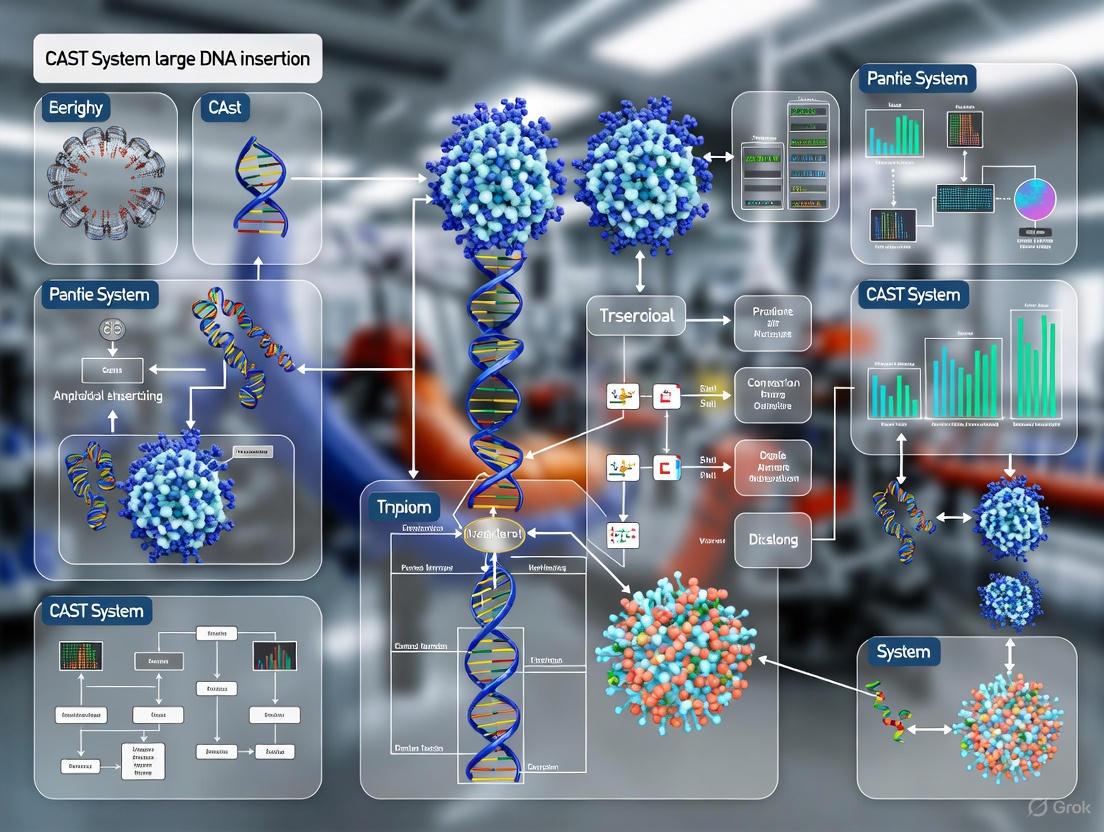
This article provides a comprehensive overview of CRISPR-associated transposase (CAST) systems, a revolutionary genome engineering technology enabling targeted insertion of large DNA sequences.
CAST Systems for Large DNA Insertion: A New Era in Gene Therapy and Genome Engineering
Abstract
This article provides a comprehensive overview of CRISPR-associated transposase (CAST) systems, a revolutionary genome engineering technology enabling targeted insertion of large DNA sequences. Tailored for researchers, scientists, and drug development professionals, it covers the foundational mechanisms of CAST systems, explores cutting-edge methodological advances like evoCAST and HELIX, details strategies to overcome critical challenges such as off-target integration and low efficiency, and offers a comparative analysis with other editing platforms. The review synthesizes how these evolved systems are achieving therapeutically relevant efficiencies for installing entire genes, paving the way for novel treatments for genetic diseases and advanced cell engineering.
Understanding CAST Systems: From Bacterial Immunity to Programmable Gene Insertion
CRISPR-associated transposases (CASTs) represent a groundbreaking fusion of CRISPR-guided target recognition and transposase-mediated DNA insertion machinery. Discovered through bioinformatic analyses that revealed associations between Tn7-like transposons and specific CRISPR-Cas systems, CASTs function as natural RNA-guided transposition systems in bacteria [1] [2]. Unlike conventional CRISPR-Cas systems that cleave target DNA, CASTs typically utilize catalytically impaired CRISPR effectors that identify target sites without inducing double-strand breaks, instead recruiting transposase proteins to facilitate precise integration of DNA cargo [3] [2]. This mechanism enables CASTs to insert large DNA fragments (ranging from 10-30 kb) in a programmable manner, operating independently of host DNA repair pathways that often lead to unintended editing byproducts in eukaryotic cells [3]. The unique "cut-and-paste" mechanism of CAST systems distinguishes them from nuclease-based CRISPR tools, offering distinct advantages for precision genome engineering applications where accurate, targeted integration of genetic material is paramount.
Molecular Architecture and Classification
CAST systems are broadly classified based on their CRISPR effector modules, which directly influence their molecular composition and mechanistic details. The two primary classes are Class 1 CASTs (types I-F3, I-B, and I-D) that employ multi-subunit Cascade complexes for target recognition, and Class 2 CASTs (type V-K) that utilize the single-protein effector Cas12k [2]. Despite these architectural differences, all CAST systems share core components: (1) a CRISPR RNA-guided targeting complex that identifies specific genomic loci, (2) the AAA+ ATPase regulator TnsC that bridges targeting and transposition modules, and (3) the transposase machinery (TnsA and TnsB in Class 1; TnsB alone in Class 2) that executes DNA cleavage and integration [4] [2].
Table 1: Core Components of Major CAST Systems
| Component | Class 1 CAST | Class 2 CAST (V-K) | Function |
|---|---|---|---|
| Targeting Module | Cascade multi-subunit complex | Cas12k single protein | RNA-guided DNA target recognition |
| Regulator | TnsC AAA+ ATPase | TnsC AAA+ ATPase | Molecular bridge, activation |
| Transposase | TnsA + TnsB heteromeric | TnsB homomeric | DNA cleavage and integration |
| Adaptor | TniQ | TniQ | Recruits TnsC to targeting complex |
| Transposon Ends | Left End (LE), Right End (RE) | Left End (LE), Right End (RE) | Transposase binding sites |
Structural studies have revealed critical insights into CAST organization. In type V-K CAST systems, TnsB forms a C2-symmetric tetrameric assembly organized around strand-transfer DNA, with architectural similarities to the MuA transposase from bacteriophage Mu but with distinct protein-protein interactions that stabilize its quaternary structure [4]. The TnsB transposase contains multiple functional domains: DNA-binding domains (Iβ, Iγ, and IIβ), the catalytic domain (IIα) featuring the characteristic DDE motif (two aspartic acids and one glutamic acid) common to DDE transposases, and C-terminal domains (IIIα and IIIβ) that facilitate critical protein interactions [4]. The C-terminal end of TnsB adopts a short, structured 15-residue "hook" that decorates TnsC filaments, enabling proper recruitment of the transposase to the target site [4].
The CAST 'Cut-and-Paste' Mechanism
The molecular mechanism of CAST-mediated transposition follows an ordered pathway that ensures precise RNA-directed DNA integration, comprising three major stages: target site recognition, transposon excision, and strand transfer.
Target DNA Recognition and R-loop Formation
The CAST mechanism initiates with crRNA-guided target recognition, where the CRISPR effector complex (Cascade for Class 1 or Cas12k for Class 2) scans DNA for protospacer sequences adjacent to the appropriate protospacer adjacent motif (PAM) [2]. For type V-K CAST systems, Cas12k recognizes GTN PAM sequences, facilitating binding to complementary target DNA [1]. Upon PAM recognition, the effector complex unwinds DNA, forming an R-loop structure through crRNA-protospacer hybridization, which exposes the target site for subsequent recruitment of transposition proteins [2]. This R-loop formation is critical as it provides the molecular signature that directs the entire integration machinery to the specific genomic locus.
Transposase Recruitment and Assembly
Following target recognition, the TniQ adaptor protein recruits the AAA+ ATPase TnsC to the R-loop structure [2]. In the presence of ATP, TnsC assembles into helical filaments that serve as the central organizational platform for the transposition complex [4] [2]. These filaments subsequently recruit the TnsB transposase to the target site through interactions between TnsB's C-terminal "hook" domain and the TnsC filament [4]. Concurrently, TnsB molecules bind to specific recognition sequences at the transposon ends (Left End and Right End) within the donor DNA, forming a stable synaptic complex that positions the transposon for excision and integration.
Transposon Excision and Integration
The excision and integration mechanisms differ between CAST classes, representing a key functional distinction:
- Class 1 CAST Systems: Employ the heteromeric TnsA+TnsB transposase that follows a cut-and-paste mechanism. TnsB catalyzes cleavage at the 3' ends of the transposon, while TnsA cleaves the 5' ends, generating a double-stranded DNA fragment for integration [2].
- Class 2 CAST Systems: Utilize only TnsB and likely follow a replicative transposition mechanism similar to bacteriophage Mu, involving cleavage only at the 3' ends of the transposon and subsequent replication [4].
Following excision, the transposase complex integrates the DNA cargo unidirectionally at a precise location 50-66 bp downstream of the PAM sequence [1]. Structural studies of the TnsB strand-transfer complex reveal a base-flipping mechanism that stabilizes the 5' end of the transposon, ensuring fidelity during synaptic complex assembly [4]. Integration typically generates short 5-bp target site duplications flanking the inserted DNA, characteristic of Tn7-like transposition [1].
Diagram 1: CAST Mechanism Overview
Quantitative Analysis of CAST Systems
The functional efficiency and targeting specificity of CAST systems have been quantitatively characterized through various experimental approaches, revealing both their capabilities and limitations across different biological contexts.
Table 2: Performance Metrics of Characterized CAST Systems
| CAST System | Integration Efficiency | Insertion Size Capacity | Insertion Location | PAM Specificity |
|---|---|---|---|---|
| ShCAST (V-K) | Up to 80% in E. coli [1] | ~10 kb [3] | 60-66 bp downstream of PAM [1] | GTN [1] |
| AcCAST (V-K) | Comparable to ShCAST in E. coli [1] | Similar to ShCAST | 49-56 bp downstream of PAM [1] | GTN [1] |
| evoCAST | 10-20% in human cells [5] | >10 kb [5] | Precise, programmable | Programmable [5] |
| Metagenomi CAST | Therapeutically relevant levels [6] | Large therapeutic genes [6] | Safe-harbor sites [6] | Not specified |
Recent high-throughput screening approaches have enabled systematic quantification of CAST specificity and activity. For the V-K CAST system, researchers developed a screening method that evaluated thousands of CAST variants in a single experiment, identifying mutations that improved activity fivefold while maintaining or enhancing specificity [7]. This approach addressed the critical challenge of simultaneously measuring both the overall activity and targeting accuracy of CAST systems, revealing that strategic combination of beneficial mutations could synergistically enhance performance without the tradeoffs observed with previous engineering strategies [7].
Experimental Protocols for CAST Evaluation
Bacterial Transposition Assay
The following protocol enables quantitative assessment of CAST activity in bacterial systems, adapted from established methodologies [1]:
Reagents and Materials:
- Helper plasmid encoding CAST genes (TnsB, TnsC, TniQ, Cas12k)
- Donor plasmid containing transposon ends flanking cargo DNA
- Target plasmid with protospacer and PAM sequence
- Electrocompetent E. coli cells
- Selection antibiotics appropriate for the system
Procedure:
- Plasmid Design: Construct a helper plasmid (pHelper) expressing all CAST genes (tnsB, tnsC, tniQ, and cas12k) along with the endogenous tracrRNA region and a crRNA targeting your desired protospacer. Design the donor plasmid (pDonor) to contain your gene of interest flanked by the transposon left end (LE) and right end (RE) sequences. Prepare the target plasmid (pTarget) with the appropriate protospacer sequence flanked by the required PAM.
Transformation: Co-electroporate 100 ng each of pHelper, pDonor, and pTarget into electrocompetent E. coli cells. Include controls lacking the helper plasmid or containing non-targeting crRNA.
Incubation and Recovery: Recover transformed cells in SOC medium at 37°C for 2 hours, then plate on selective media containing appropriate antibiotics.
Analysis: After 16-24 hours of growth, extract plasmid DNA from pooled transformants. Analyze insertion events by:
- Diagnostic PCR using primers flanking the insertion site
- Droplet digital PCR (ddPCR) for quantitative assessment
- Deep sequencing of the target region for comprehensive profiling
Validation: Confirm precise insertion location and orientation by Sanger sequencing of both LE and RE junctions. Verify the presence of characteristic 5-bp target site duplications.
Mammalian Cell Integration Assay
For evaluating CAST activity in human cells, this protocol utilizes evolved CAST systems with enhanced mammalian functionality [5]:
Reagents and Materials:
- Laboratory-evolved CAST system (e.g., evoCAST)
- Mammalian cells (HEK293T or other relevant cell lines)
- Delivery vehicle (lentivirus, AAV, or lipid nanoparticles)
- Reporter constructs for efficiency assessment
- Genomic DNA extraction kit
- qPCR reagents and specific primers
Procedure:
- CAST Delivery: Formulate the evolved CAST system (effector protein, guide RNA, and donor DNA) into an appropriate delivery vehicle. For evoCAST, a single mRNA design encoding all necessary components has been successfully employed [5].
Cell Transfection/Transduction: Introduce the CAST delivery system into mammalian cells at 50-70% confluency using optimized transfection protocols. Include controls lacking guide RNA or donor DNA.
Incubation and Expansion: Culture transfected cells for 72-96 hours to allow for integration events, then expand for genomic DNA extraction.
Genomic Analysis: Extract genomic DNA using standard protocols. Quantify integration efficiency using:
- qPCR Analysis: Employ primers specific to the integrated sequence and a reference genomic locus
- Next-Generation Sequencing: Perform targeted amplicon sequencing of the integration site
- Functional Assays: Measure expression of integrated reporter or therapeutic genes
Specificity Assessment: Evaluate off-target integration through:
- Whole-genome sequencing at moderate coverage
- GUIDE-seq or similar methods to map double-strand breaks
- Analysis of known safe-harbor sites for non-specific integration
Diagram 2: CAST Engineering Workflow
Research Reagent Solutions
Table 3: Essential Research Reagents for CAST Studies
| Reagent/Category | Specific Examples | Function/Application |
|---|---|---|
| CAST Effectors | ShCAST (Scytonema hofmanni), AcCAST (Anabaena cylindrica), evoCAST | RNA-guided transposition; comparative studies and therapeutic development |
| Delivery Vectors | All-in-one mRNA, Lentiviral, AAV, Lipid Nanoparticles | Efficient intracellular delivery of CAST components |
| Target Plasmids | pTarget with variable PAM libraries, Safe harbor targeting constructs | Specificity profiling and therapeutic gene integration |
| Donor Templates | Fluorescent reporters, Antibiotic resistance genes, Therapeutic transgenes (e.g., for Fanconi anemia, phenylketonuria) | Assessment of integration efficiency and therapeutic potential |
| Cell Lines | E. coli (DH10B), HEK293T, Primary T-cells, iPSCs | Functional testing across biological contexts |
| Detection Reagents | ddPCR assays, NGS library prep kits, Junction PCR primers | Sensitive detection and quantification of integration events |
Applications and Future Directions in Therapeutic Development
CAST systems hold particular promise for therapeutic gene insertion applications where precise integration of large DNA sequences is required. The ability to insert entire genes at specific genomic locations enables development of mutation-agnostic therapies for monogenic diseases, where a single corrected gene copy can restore function regardless of the patient's specific mutation [5] [3]. Recent demonstrations include successful integration of genes relevant to Fanconi anemia, phenylketonuria, and improved CAR-T cell immunotherapy at efficiencies of 10-20% in human cells using evolved CAST systems [5]. Companies like Metagenomi are advancing compact CAST systems capable of inserting large, therapeutically relevant genes into safe-harbor sites in the human genome using single mRNA delivery platforms [6].
Future CAST development will focus on enhancing efficiency and specificity in eukaryotic cells, optimizing delivery methods for in vivo applications, and expanding the targeting scope through engineered PAM specificities [3] [2]. The continued discovery of novel CAST variants from metagenomic sources, coupled with protein engineering approaches such as phage-assisted continuous evolution (PACE), promises to yield next-generation systems with enhanced properties for both basic research and clinical applications [7] [5] [6]. As CAST technology matures, it is poised to overcome longstanding challenges in therapeutic gene editing, particularly for diseases requiring insertion of large genetic elements without relying on error-prone DNA repair pathways.
CRISPR-associated transposons (CASTs) represent a groundbreaking fusion of CRISPR-guided targeting and transposase-mediated DNA insertion, enabling precise, large-scale genome engineering without relying on double-strand break (DSB) repair pathways [8] [3]. These systems naturally evolved from Tn7-like transposons that co-opted nuclease-deficient CRISPR-Cas systems to direct transposition to specific genomic sites [8] [2]. Unlike conventional CRISPR-Cas tools that introduce DSBs and depend on endogenous cellular repair mechanisms (e.g., NHEJ or HDR), CASTs facilitate homology-independent integration of substantial DNA payloads (ranging from 10 to 30 kb) through a cut-and-paste transposition mechanism [9] [3]. This key advantage minimizes unintended indels and off-target effects, positioning CASTs as powerful tools for therapeutic development, synthetic biology, and functional genomics [3] [2]. CAST systems are broadly classified into Class 1 (types I-F, I-B, I-D) utilizing multi-subunit Cascade complexes, and Class 2 (type V-K) employing a single effector protein like Cas12k [8] [2]. The core machinery universally includes a CRISPR-guided targeting module and a transposase integration module, working in concert to achieve RNA-programmable DNA insertion [2].
Core Component Structures and Functions
The functional integrity of CAST systems relies on the coordinated action of several core protein complexes and nucleic acid guides. The table below summarizes the primary functions and key characteristics of each essential component.
Table 1: Core Components of CRISPR-Associated Transposon (CAST) Systems
| Component | Primary Function | Key Structural Features | CAST Type Specificity |
|---|---|---|---|
| Guide RNA (gRNA/crRNA) | Guides CRISPR complex to specific DNA target via complementary base pairing [8] | Comprises CRISPR RNA (crRNA) with spacer sequence and tracrRNA scaffold [10] | Universal to all types |
| Cascade Complex | Multi-protein effector that recognizes PAM, unwinds DNA, and forms R-loop [11] | Cas8b (large subunit), Cas7b (backbone), Cas5b, Cas6b, Cas11b [11] | Class 1 (I-F, I-B, I-D) |
| TniQ | Adaptor protein linking Cascade to transposition machinery; dimerizes upon recruitment [8] | Transposon-encoded protein; often C-terminally fused to Cascade [8] | Primarily Class 1 |
| TnsC | AAA+ ATPase; forms heptameric ring; regulatory hub verifying target engagement [12] | Recruited by TniQ; hydrolyzes ATP; recruits transposase upon activation [12] | Universal |
| TnsB | DDE-transposase; catalyzes transposon end cleavage and strand transfer [13] | Recognizes transposon ends; contains RNase H fold catalytic domain [13] | Universal |
| TnsA | Endonuclease cleaving 5' strands of transposon (in "cut-and-paste" transposition) [2] | Works with TnsB for precise excision [2] | Class 1 (not in V-K) |
The CRISPR-Guided Targeting Module
The targeting module is responsible for specific DNA recognition, forming the programmable foundation of CAST systems. In Class 1 systems, the Cascade complex (CRISPR-associated complex for antiviral defense) performs this role. For example, the type I-B Cascade from Synechocystis sp. PCC 6714 exhibits a stoichiometry of Cas8b₁-Cas7b₇-Cas5b₁-Cas6b₁-Cas11b₃, forming a sea horse-shaped architecture that wraps around the crRNA [11]. The crRNA guide consists of a customizable ~20-30 nucleotide spacer sequence flanked by repeat-derived structures that facilitate processing and complex assembly [8] [11]. The Cascade complex employs its Cas8b large subunit for PAM recognition – for instance, the type I-B system prefers a 5'-A-Y-G-3' PAM sequence, where Y denotes a pyrimidine base [11]. Upon PAM identification, the complex initiates DNA unwinding, facilitating R-loop formation through progressive hybridization between the crRNA spacer and the target DNA protospacer [11]. This conformational change creates a structural scaffold for subsequent recruitment of transposition proteins.
The Transposase Integration Module
The integration module executes the physical insertion of donor DNA into the identified target site. Central to this process is TnsC, an AAA+ ATPase that forms a heptameric ring structure in the presence of ATP and target DNA [12]. This nucleoprotein assembly acts as a regulatory checkpoint, verifying proper target engagement before activating the transposase. Recent structural studies of the type I-B CAST system from Peltigera membranacea cyanobiont reveal that TnsC heptamers recruit the transposase through interactions with the C-terminal tails of TnsB without inducing ring disassembly – a notable distinction from type V-K systems [12]. The TnsB transposase belongs to the retroviral integrase superfamily characterized by an RNase H fold catalytic domain containing the conserved DDE motif (two aspartate and one glutamate residue) essential for metal coordination and phosphodiester bond hydrolysis [13]. TnsB recognizes and binds specific sequences at the transposon ends, catalyzing both the excision of the donor DNA and its integration into the target site [13]. In Class 1 systems, TnsA collaborates with TnsB to execute precise "cut-and-paste" transposition by cleaving the 5' strands of the transposon, while V-K systems lacking TnsA generate co-integrate structures requiring resolution [2].
Molecular Mechanism and Workflow
The integration process in CAST systems follows an ordered pathway, ensuring precise transposition only upon successful target site recognition. The sequential mechanism is illustrated below and detailed in the subsequent sections.
Target Recognition and Cascade Assembly
The process initiates with PAM-dependent DNA binding by the Cascade complex. In type I-B systems, both Cas5b and Cas8b subunits contribute to PAM recognition, with a loop of Cas5b directly intercalating into the major groove of the PAM sequence [11]. Successful PAM interaction triggers local DNA melting, allowing the crRNA spacer to progressively hybridize with the target strand, forming an R-loop structure [11]. This displacement of the non-target strand creates a distinctive architecture that serves as a molecular beacon for the downstream recruitment of transposition factors. The conformational changes during R-loop formation, particularly in the large subunit Cas8b, expose interaction surfaces specifically recognized by TniQ, ensuring transposition commences only when a stable target complex has formed [8] [11].
Transposon Recruitment and Integration
Following stable R-loop formation, the TniQ adaptor protein docks onto the Cascade complex, often forming a dimeric structure that serves as a platform for TnsC recruitment [8] [2]. TnsC, in its ATP-bound state, assembles into a heptameric ring around the target DNA, forming a nucleoprotein filament that acts as a verifiable regulatory gate [12]. This TnsC assembly undergoes conformational activation, enabling interaction with the TnsB transposase bound to transposon ends. Structural studies reveal that in type I-B systems, TnsAB interacts with TnsC heptamers via C-terminal tails without inducing ring disassembly [12]. The activated complex then catalyzes donor DNA integration through a series of coordinated DNA cleavage and strand transfer reactions. TnsB mediates both the excision of the transposon from the donor site and its integration into the target DNA, utilizing its DDE catalytic motif to execute nucleophilic attacks that result in covalent joining of the transposon ends to the target site [13]. In systems containing TnsA, this process results in clean "cut-and-paste" transposition, while V-K systems without TnsA require subsequent resolution of co-integrate structures [2].
Experimental Protocols for CAST Analysis
Protocol 1: In Vitro Reconstitution of CAST Complexes
This protocol outlines the methodology for purifying and assembling functional CAST components for biochemical studies, based on procedures described in recent structural biology publications [12] [13] [11].
Step 1: Protein Expression and Purification
- Clone genes encoding CAST components (TnsB, TnsC, TniQ, Cascade subunits) into expression vectors with appropriate affinity tags (e.g., His₆-SUMO, His₆-MBP).
- Express recombinant proteins in E. coli BL21 (DE3) or similar strains. Induce with 0.2-0.5 mM IPTG at 16-18°C for 16-18 hours.
- Purify proteins using affinity chromatography (Ni-NTA for His-tagged proteins), followed by tag cleavage with TEV protease.
- Further purify by heparin affinity and size exclusion chromatography (SEC) in storage buffer (e.g., 20 mM Tris-HCl pH 7.5, 200 mM NaCl, 10% glycerol, 1 mM DTT).
Step 2: Cascade-crRNA Complex Assembly
- Co-express Cascade subunits (e.g., Cas8b, Cas7b, Cas5b, Cas6b, Cas11b) with the cognate CRISPR array in E. coli.
- Purify the assembled complex via affinity chromatography using a tag on one subunit (e.g., Strep-tag on Cas8b).
- Confirm complex integrity by SDS-PAGE and analytical SEC. Verify crRNA presence and length (e.g., ~71 nt for type I-B) by denaturing urea-PAGE [11].
Step 3: Functional Complex Assembly for Biochemical Assays
- Incubate Cascade-crRNA complex with target DNA (59-80 bp dsDNA containing appropriate PAM) at a 1:3 molar ratio in reaction buffer (e.g., 25 mM HEPES pH 7.5, 150 mM KCl, 5 mM MgCl₂, 1 mM DTT) at 25°C for 1 hour.
- Add purified TniQ and TnsC proteins (with 1-2 mM ATP) to form the targeting complex.
- Analyze assembly by electrophoretic mobility shift assay (EMSA) or SEC with multi-angle light scattering (SEC-MALS).
Protocol 2: Assessing DNA Integration Efficiency In Vivo
This protocol describes a droplet digital PCR (ddPCR)-based method to quantify CAST-mediated transposition efficiency in bacterial cells, adapted from established genetic assays [12].
Step 1: Plasmid Construction
- Prepare three essential plasmids:
- pDonor: Contains the transposon DNA flanked by left (LE) and right (RE) ends recognized by TnsB.
- pHelper: Encodes all CAST proteins (Cascade subunits, TniQ, TnsC, TnsA, TnsB) under inducible promoters.
- pTarget: Carries a targetable site with PAM and protospacer matching the crRNA.
- Include appropriate selection markers and origins of replication for plasmid maintenance.
- Prepare three essential plasmids:
Step 2: Cell Transformation and Transposition Induction
- Co-transform competent E. coli cells with the pDonor, pHelper, and pTarget plasmids. Plate on selective media.
- Inoculate single colonies into liquid media with appropriate antibiotics and induce CAST expression with optimized concentrations of inducer (e.g., 0.2 mM IPTG or 0.2% arabinose).
- Grow cultures for 12-16 hours at 30-37°C with shaking.
Step 3: Transposition Efficiency Quantification
- Harvest cells and isolate genomic DNA.
- Design ddPCR assays with one primer pair specific to the transposon and another specific to the chromosomal integration site.
- Perform ddPCR using a system such as Bio-Rad QX200 according to manufacturer's protocols.
- Calculate transposition efficiency as the ratio of transposon-chromosome amplicons to reference gene amplicons. Include control plasmids that simulate successful integration for quantification standards [12].
The Scientist's Toolkit: Essential Research Reagents
Successful CAST research requires carefully selected molecular tools and reagents. The following table catalogs essential resources for establishing and optimizing CAST systems in the laboratory.
Table 2: Essential Research Reagents for CAST System Investigation
| Reagent Category | Specific Examples | Function and Application Notes |
|---|---|---|
| Expression Vectors | pET28a, pCDF-Duet, pHelper (PmcCAST) from Addgene | Heterologous protein expression in E. coli; compatible origins and resistance markers for co-expression [12] |
| CAST Protein Complexes | His₆-SUMO-TnsC, His₆-MBP-TnsAB, Strep-tag-Cas8b | Affinity-tagged proteins for purification; tags removed by TEV protease for functional studies [12] [11] |
| DNA Substrates | 59-bp dsDNA with ATG-PAM, LE/RE oligonucleotides, pTarget_ΔtRNA | Target DNA for structural studies; transposon end sequences for binding assays; target plasmid for integration assays [12] [11] |
| Cell Lines | E. coli BL21 (DE3), Mach1, DH5α | Protein expression; plasmid propagation and cloning; genetic assays for transposition efficiency [12] |
| Analytical Tools | Superose 6 Increase 10/300 GL, Ni-NTA cartridges, Heparin HP column | SEC for complex purification; affinity chromatography; nucleic acid binding purification [12] [11] |
| Detection Reagents | 6-FAM-labeled dsDNA, SYBR Gold nucleic acid stain, ddPCR supermix | EMSA with fluorescent detection; nucleic acid visualization; digital PCR quantification of integration events [12] [11] |
Current Research Applications and Therapeutic Outlook
CAST systems have demonstrated remarkable potential for programmable DNA integration across diverse biological systems. In bacterial engineering, CASTs enable multicopy chromosomal integration of large genetic circuits and metabolic pathways with near 100% efficiency in some applications [2]. The systems have been successfully deployed in cyanobacteria for metabolic pathway engineering and in E. coli for enhanced protein production by coupling optimized transposition with CRISPR interference [2]. Recent advances have extended CAST applications to human cells, with laboratory-evolved systems achieving 10-30% targeted integration of payloads exceeding 10 kb without double-strand breaks – a critical milestone for therapeutic development [3] [2]. The high fidelity and precision of type I CAST systems, particularly their minimal guide RNA-independent transposition, make them attractive candidates for therapeutic gene insertion strategies aimed at treating loss-of-function genetic diseases [3]. Ongoing research focuses on improving eukaryotic integration efficiency, which remains a challenge (approximately 1% in human cells compared to near 100% in bacteria), through protein engineering and directed evolution approaches such as PACE (phage-assisted continuous evolution) [3] [2]. As structural insights continue to illuminate the molecular determinants of PAM recognition, target unwinding, and transposase activation, rational design of enhanced CAST variants promises to unlock their full potential for genome engineering across basic research and clinical applications.
CRISPR-associated transposases (CASTs) represent a groundbreaking fusion of CRISPR-guided target recognition and transposase-mediated DNA integration. These systems naturally occur in bacteria, where Tn7-like transposons have captured and repurposed nuclease-deficient CRISPR-Cas systems to facilitate their spread [14]. Unlike conventional CRISPR-Cas tools that rely on creating double-strand breaks (DSBs) and endogenous repair mechanisms, CASTs enable DSB-free, RNA-guided integration of large DNA payloads. This capability addresses a significant limitation in genome engineering: the precise insertion of large genetic sequences, which is crucial for therapeutic applications, synthetic biology, and functional genomics [9] [3].
CAST systems are broadly categorized into two classes based on their effector complex architecture. Class 1 CASTs (Types I and III) utilize multi-protein complexes for target recognition, while Class 2 CASTs (Type V) employ a single effector protein [2]. For genome editing applications, Type I-F and Type V-K have emerged as the most prominent and well-characterized systems. Their distinct molecular architectures and mechanisms offer complementary advantages and challenges for precise genome engineering, particularly for large DNA insertions in human cells [15] [5].
Comparative Analysis of Key CAST Subtypes
The functional diversity among CAST subtypes stems from differences in their genetic composition, effector complex structures, and mechanisms of action. The following sections and comparative tables detail the characteristics of the primary CAST systems under investigation.
Table 1: Core Characteristics of Major CAST Subtypes
| CAST Subtype | Class | Effector Complex | Key Protein Components | PAM Preference | Integration Mechanism |
|---|---|---|---|---|---|
| Type I-F [15] [2] | 1 | Cascade (Multi-subunit) | Cas6/7/8, TniQ dimer, TnsA, TnsB, TnsC | 5'-CC-3' (for PseCAST) [15] | TnsB catalyzes insertion; TnsA cleaves donor flank [2] |
| Type I-B [2] | 1 | Cascade (Multi-subunit) | Cas6/7/8, TniQ monomer, TnsA, TnsB, TnsC | Varies | Similar to I-F; differs in TniQ stoichiometry [2] |
| Type V-K [2] [16] | 2 | Cas12k (Single protein) | Cas12k, TniQ, TnsB, TnsC | Varies by system | TnsB alone catalyzes cleavage and insertion [2] |
Type I-F CAST Systems
Type I-F is one of the most advanced CAST systems for eukaryotic genome engineering. Its effector complex, called QCascade, is a multi-protein assembly that includes Cas8, Cas7, and Cas6 proteins, a crRNA guide, and a TniQ homodimer that recruits transposition proteins [15]. A defining feature of the type I-F integration mechanism is the requirement for two transposase proteins: TnsB, which catalyzes the DNA strand transfer, and TnsA, which cleaves the opposite end of the transposon [2]. The TnsC ATPase acts as a bridge, forming a helical filament that connects the DNA-bound QCascade complex to the TnsAB transposase [15] [2].
Recent structural work on a type I-F system called PseCAST using cryogenic electron microscopy (cryoEM) has revealed intricate details of DNA recognition, showcasing subtype-specific interactions and the dynamic behavior of the TniQ dimer relative to the Cascade complex [15]. This structural insight is critical for rational engineering. For instance, PseCAST demonstrates robust DNA integration in human cells but suffers from weak DNA binding, which has been identified as a bottleneck. Structure-guided engineering of its PAM-interacting domain has successfully yielded variants with increased integration efficiencies and modified PAM specificities [15].
Type V-K CAST Systems
Type V-K CASTs are more compact than type I-F systems, utilizing a single Cas12k protein for RNA-guided DNA targeting instead of a multi-subunit Cascade complex [2]. Similar to type I-F, a TniQ protein is involved in recruiting the transposition machinery. However, the integration module is simpler, relying solely on TnsB for catalyzing both the cleavage of the transposon ends and their integration into the target site, without the need for a TnsA homolog [2].
While their compact nature is advantageous for delivery, initial studies of type V-K systems in heterologous contexts revealed challenges, including reduced specificity, low editing efficiencies, and poor product purity [15]. These systems are also phylogenetically restricted, having been identified almost exclusively in cyanobacteria [16]. Research has identified a novel subgroup, V-K_V2, characterized by an alternative tracrRNA and distinct protein domain architectures, highlighting the ongoing discovery of diversity within this subtype [16].
Other CAST Variants
While I-F and V-K are the most studied, other CAST subtypes exist. Type I-B systems have been characterized and share a similar multi-subunit Cascade for targeting but differ in their molecular details, such as employing a single TniQ monomer instead of a dimer to recruit TnsC [2]. Type I-D systems have also been described, further expanding the natural diversity of CAST systems available for tool development [2]. The continued mining of genomic and metagenomic data suggests that the current classification, which includes 7 types and 46 subtypes of CRISPR-Cas systems, will likely expand, revealing more rare CAST variants in the "long tail" of CRISPR-Cas distribution [17].
Table 2: Performance and Engineering of CAST Systems in Mammalian Cells
| System / Variant | Key Features | Reported Integration Efficiency | Payload Capacity | Notable Engineering |
|---|---|---|---|---|
| Native PseCAST (I-F) [15] | First I-F CAST active in human cells | Low (~1%) [3] | Multi-kb [15] | Structure-guided PAM domain engineering [15] |
| evoCAST (I-F) [5] | Laboratory-evolved PseCAST | 10-20% in human cells [5] | Up to 15 kb [14] [5] | 20 mutations in TnsB via PACE; optimized component ratios [5] |
| Native V-K [18] | Compact, single effector | Very low (<0.1%) in human cells [5] | ~10 kb | High-throughput mutational screening [18] |
| Engineered V-K [18] | Combination of beneficial mutations | 5-fold increase over native [18] | ~10 kb | Combined mutations improved activity & specificity [18] |
Experimental Protocols for CAST Engineering and Application
The transition of CAST systems from bacterial immunity tools to eukaryotic genome editors requires sophisticated engineering and validation. Below are detailed protocols for key methodologies that have driven recent breakthroughs.
Protocol: Directed Evolution of CAST Systems using Phage-Assisted Continuous Evolution (PACE)
Purpose: To rapidly evolve CAST systems with significantly enhanced activity in human cells without requiring prior mechanistic knowledge [5]. Principle: Bacteriophage infectivity is coupled to CAST integration efficiency. Only phages carrying highly active CAST variants can propagate, enabling continuous evolution under selection pressure. Applications: Evolution of evoCAST from PseCAST, resulting in >100-fold efficiency increase in human cells [5].
Workflow:
- Coupling Phage Propagation to CAST Function: Clone a gene essential for phage propagation (e.g., for capsid formation) into a plasmid lacking its promoter. This gene will only be expressed if a CAST system integrates a promoter sequence upstream of it.
- Host Strain Preparation: Use an E. coli host strain that constitutively expresses all CAST components (TnsA, TnsB, TnsC, TniQ, and QCascade/Cas12k) from a separate, mutagenesis-prone plasmid.
- Lagged Phage Preparation: Generate a stock of "lagged" phages that contain the essential gene without a promoter. These phages can only form plaques if CAST mediates promoter integration.
- PACE Setup and Evolution:
- Inoculate a PACE bioreactor with the host E. coli strain.
- Continuously dilute the culture with fresh media while maintaining constant bacterial growth.
- Continuously introduce the lagged phage stock into the bioreactor.
- Harvest phage particles from the effluent over time. Phages that emerge will contain CAST variants that successfully catalyzed integration.
- Isolate the mutagenized CAST plasmid from effluent phages for analysis and testing.
- Variant Validation: Clone evolved CAST mutations into mammalian expression vectors and quantitatively assess integration efficiency in human cell lines (e.g., HEK293T) using targeted sequencing assays.
Protocol: High-Throughput Screening for CAST Specificity and Activity
Purpose: To comprehensively profile the activity and specificity of thousands of CAST variants in parallel [18]. Principle: A pooled library of CAST mutants is expressed in bacteria, and their integration outcomes are simultaneously assessed via next-generation sequencing to quantify on-target efficiency and off-target events. Applications: Identification of mutations in V-K CAST that simultaneously improve activity and specificity [18].
Workflow:
- CAST Mutant Library Construction: Generate a library encompassing every possible single amino acid mutation across the CAST proteins (e.g., via saturation mutagenesis).
- Dual-Reporter Bacterial Assay: Use a bacterial screen with two distinct reporter systems:
- Activity Reporter: A selectable or screenable marker (e.g., antibiotic resistance) that is activated only upon successful CAST integration at a defined on-target site.
- Specificity Reporter: A counter-selectable marker (e.g., toxin gene) placed at a common off-target site. Successful integration at this site leads to cell death.
- Library Transformation and Selection: Transform the mutant library into the reporter bacterial strain and subject it to selection for the on-target marker and against the off-target marker.
- Deep Sequencing and Analysis:
- Isolate genomic DNA from the pre-selection library and the post-selection population.
- Amplify the regions encoding the CAST proteins and subject them to high-depth next-generation sequencing.
- Calculate the enrichment or depletion of each mutation in the post-selection population relative to the pre-selection library. Mutations enriched for on-target activity and depleted for off-target activity represent hits.
- Hit Combination and Validation: Combine the most promising individual mutations into a single CAST construct and validate its performance in both bacterial and mammalian systems.
Protocol: Structure-Guided Engineering of the Cascade-DNA Interface
Purpose: To rationally modify CAST DNA binding properties, such as PAM specificity and binding affinity, based on atomic-level structural data [15]. Principle: CryoEM structures of the QCascade complex bound to target DNA reveal precise amino acid-nucleotide interactions. Targeted mutagenesis of these residues can alter binding characteristics. Applications: Engineering of PseCAST PAM-interacting residues to create variants with relaxed PAM stringency and improved integration efficiency in human cells [15].
Workflow:
- Structure Determination: Purify the native QCascade complex, form a complex with a target dsDNA oligonucleotide, and determine its structure using single-particle cryoEM [15].
- Interaction Analysis: Analyze the cryoEM density map to identify Cas protein residues (particularly in the Cas8 subunit) that make direct hydrogen bonds or van der Waals contacts with the PAM nucleotides or the crRNA-DNA heteroduplex.
- Rational Mutagenesis:
- PAM Relaxation: For residues that make specific contacts with PAM bases, design mutations (e.g., alanine substitutions) to disrupt unfavorable interactions or introduce residues that could form new, favorable contacts with a broader range of nucleotides.
- Affinity Enhancement: For regions involved in non-specific DNA backbone contacts or R-loop stabilization, design mutations that could introduce additional positive charges or polar interactions.
- Library Screening: Create a focused mutant library of the identified residues and screen for desired PAM preferences using a bacterial positive-selection assay, where cell survival depends on CAST integration at a site with the new PAM.
- Validation in Eukaryotic Cells: Clone the most promising variants from the bacterial screen into a mammalian expression system and quantify their integration efficiency and product purity at endogenous genomic loci in human cells.
Visualization of CAST Mechanisms and Engineering Workflows
The following diagrams illustrate the core architecture of two primary CAST systems and a key engineering pipeline.
Diagram 1: Comparative architectures of Type I-F and Type V-K CAST systems, highlighting multi-subunit versus single-effector targeting complexes and distinct transposase requirements.
Diagram 2: Phage-Assisted Continuous Evolution (PACE) workflow for enhancing CAST activity, connecting bacterial selection to mammalian cell performance.
The Scientist's Toolkit: Essential Reagents for CAST Research
Successful implementation of CAST-based genome engineering requires a suite of specialized reagents and resources.
Table 3: Key Research Reagent Solutions for CAST Engineering
| Reagent / Resource | Function and Description | Example Application |
|---|---|---|
| CryoEM Structural Models [15] | Provides atomic-resolution data of protein-DNA/RNA interactions for rational design. | Guided engineering of PAM specificity in PseCAST by revealing key residue contacts [15]. |
| CAST Mutant Libraries [18] | Comprehensive collections (e.g., single-amino-acid) of CAST variants for functional screening. | High-throughput profiling to find mutations that boost V-K CAST activity and specificity [18]. |
| PACE System [5] | A continuous evolution platform that links protein function to phage propagation. | Directed evolution of PseCAST into evoCAST, yielding >100-fold efficiency gains [5]. |
| Mammalian Reporter Cell Lines | Engineered cells with landing pad or reporter constructs to quantify CAST integration. | Validation of evolved/engineered CAST efficiency and specificity in a therapeutically relevant context [5]. |
| AlphaFold-Multimer [15] | An AI tool for predicting the 3D structure of multi-protein complexes. | Prediction of TnsABC co-complex structures to guide the design of hybrid/chimeric CAST systems [15]. |
The ability to insert large DNA fragments into a genome without creating double-strand breaks (DSBs) represents a paradigm shift in genetic engineering. CRISPR-associated transposase (CAST) systems have emerged as a powerful technology that achieves this goal by harnessing a natural cut-and-paste mechanism from bacteria [14]. Unlike conventional CRISPR-Cas tools that rely on inducing DSBs and exploiting host cell repair mechanisms, CAST systems combine the programmability of CRISPR with the efficient integration capabilities of transposons [19] [20]. This fusion enables precise, DSB-free integration of large genetic payloads, addressing a critical limitation in therapeutic gene editing where DSBs can lead to unintended genomic rearrangements and mixed editing outcomes [15].
CAST systems occur naturally in bacteria, where Tn7-like transposons have co-opted nuclease-deficient CRISPR-Cas systems to facilitate their spread through bacterial genomes [14]. The fundamental advantage of this molecular machinery lies in its bipartite architecture: a CRISPR-based targeting module that specifies the genomic location through guide RNA programming, and a transposase effector module that catalyzes the integration of donor DNA without creating DSBs [19] [15]. This mechanism preserves genomic integrity while enabling the insertion of multi-kilobase DNA sequences, opening new possibilities for gene therapy, synthetic biology, and functional genomics.
Molecular Mechanisms of DSB-Free Integration
System Architecture and Key Components
CAST systems comprise specialized protein complexes that work in concert to achieve programmed DNA integration. The two best-characterized subtypes are type I-F and type V-K CASTs, which differ in their molecular composition but follow similar functional principles [19] [15]. Type I-F systems utilize a multi-subunit Cascade complex (comprising Cas8, Cas7, and Cas6 proteins) for DNA recognition, while type V-K systems employ a single-effector protein (Cas12k) for this purpose [19] [14]. Both systems incorporate the transposase proteins TnsB (the catalytic subunit that inserts DNA) and TnsC (an ATPase that regulates the integration complex), along with TniQ that bridges the targeting and integration modules [19] [15].
The mechanism begins with the formation of the DNA targeting complex, where guide RNA directs Cas proteins to a specific genomic locus through base-pairing interactions. Target recognition requires the presence of a protospacer adjacent motif (PAM), which varies between CAST subtypes [19]. Following target binding, the transposase recruitment module assembles, with TniQ serving as an adaptor that physically connects the DNA-bound Cas complex to the transposition machinery [15]. This assembly process culminates in the formation of the holo transpososome, a megadalton complex that positions the donor DNA for integration and catalyzes its insertion at a precise distance downstream of the target site [15].
The Integration Pathway
The integration mechanism proceeds through a carefully orchestrated sequence of molecular events that avoids DNA breakage. Structural studies using cryo-electron microscopy have revealed that CAST systems position the transposase complex adjacent to the CRISPR-specified target site without cleaving the genomic DNA [15]. The TnsB transposase then catalyzes the excision of the donor DNA from its source and the subsequent integration into the genome through a cut-and-paste mechanism [19] [14].
In type I-F systems, DNA integration occurs approximately 50-66 base pairs downstream of the target site, with the precise offset varying between different CAST homologs [19]. This integration is unidirectional and produces homogeneous products, unlike the heterogeneous outcomes typically observed with DSB-dependent methods [15]. The process does not require the cellular DNA repair machinery, making it effective across different cell types and states, including non-dividing cells where homology-directed repair is inefficient [15].
Figure 1: CAST System Mechanism for DSB-Free DNA Integration. The targeting module (yellow/red) specifies genomic location through guide RNA programming, while the integration module (green/blue) catalyzes donor DNA insertion without double-strand breaks.
Performance Comparison of CAST Systems
Quantitative Assessment of Editing Capabilities
CAST systems demonstrate variable performance across different subtypes and experimental contexts. The tables below summarize key quantitative metrics for major CAST systems reported in recent literature, providing researchers with comparative data for experimental planning.
Table 1: Performance Comparison of CAST Systems in Prokaryotic and Eukaryotic Cells
| CAST System | Subtype | Host Organism | Insertion Efficiency | Payload Capacity | Product Purity | Key Features |
|---|---|---|---|---|---|---|
| PseCAST [15] | I-F3 | HEK293 cells | ~1-5% | ~1.3-3.6 kb | High | Structure-guided engineering, specific integration |
| evoCAST [14] | I-F (Evolved) | HEK293T cells | 19% | Up to 15 kb | High | 20 TnsB mutations, 500x improvement over precursor |
| Type I-F CAST [19] | I-F | E. coli | Nearly 100% | ~15.4 kb | High | Efficient in bacteria, minimal off-target effects |
| Type V-K CAST [19] | V-K | E. coli | Not specified | Up to 30 kb | Moderate | Larger capacity but lower specificity |
| MG64-1 [19] | V-K | HEK293 cells | ~3% | 3.2-3.6 kb | Moderate | Metagenomically discovered, therapeutic potential |
Table 2: Molecular Characteristics of CAST System Components
| Component | Protein Family | Key Functions | Structural Features | Engineering Targets |
|---|---|---|---|---|
| Cas8 (Type I-F) | Cas protein | PAM recognition, complex assembly | Two domains: bulky and α-helical | PAM specificity, binding affinity |
| Cas12k (Type V-K) | Cas protein | DNA targeting, TniQ recruitment | Single effector, compact size | PAM expansion, efficiency |
| TnsB | DDE-transposase | Donor excision and integration | Catalytic core, DNA binding | Hyperactive mutations (evoCAST) |
| TnsC | ATPase | Transposase regulation | Filament formation, allosteric control | ATP hydrolysis, complex assembly |
| TniQ | Adaptor protein | Bridge targeting and integration | Dimer formation, flexible linkers | Protein-protein interactions |
Advantages Over Conventional Editing Technologies
CAST systems offer distinct advantages compared to traditional genome engineering tools. Unlike DSB-dependent methods such as CRISPR-Cas9, CAST integration does not activate the error-prone non-homologous end joining (NHEJ) pathway, virtually eliminating indel formation at the target site [15]. While base and prime editors also avoid DSBs, they are generally restricted to single-nucleotide changes or small insertions (<50 bp), whereas CAST systems can deliver multi-kilobase payloads [15]. Compared to viral vectors, CAST systems enable precise locus-specific integration rather than random insertion, reducing the risk of oncogenic transformation [21]. Additionally, CAST editing efficiency remains relatively stable across different insertion sizes, whereas homology-directed repair efficiency decreases drastically with increasing payload size [15].
Experimental Protocols for Mammalian Cell Engineering
Protocol: Targeted DNA Integration Using PseCAST
This protocol outlines the methodology for implementing PseCAST-mediated gene integration in human cells, based on recent structure-guided engineering approaches [15].
Reagent Preparation
Expression Plasmids: Clone the following components into mammalian expression vectors:
- pCAG-PseQCascade: Codon-optimized genes for Cas8, Cas7.1-7.6, Cas6, and TniQ under CAG promoter
- pCAG-PseTnsA-TnsB-TnsC: Codon-optimized transposase genes with 2A self-cleaving peptides
- pU6-gRNA: Guide RNA expression vector with target-specific 32-nt spacer sequence
- Donor Template: Plasmid containing payload flanked by ~150 bp PseCAST-specific attachment sites
Cell Line Preparation: Culture HEK293T cells in Dulbecco's Modified Eagle Medium (DMEM) supplemented with 10% fetal bovine serum (FBS) and 1% penicillin-streptomycin at 37°C in 5% CO₂. Plate cells at 70-80% confluence in 6-well plates 24 hours before transfection.
Transfection and Integration
Transfection Mixture: For each well, prepare:
- 1.0 µg pCAG-PseQCascade
- 1.0 µg pCAG-PseTnsA-TnsB-TnsC
- 0.5 µg pU6-gRNA
- 1.5 µg donor template plasmid
- 8 µL polyethylenimine (PEI) transfection reagent in 200 µL serum-free DMEM
Procedure:
- Incubate transfection mixture for 20 minutes at room temperature
- Add dropwise to cells with gentle swirling
- Replace medium after 6-8 hours with fresh complete DMEM
- Harvest cells 72-96 hours post-transfection for analysis
Analysis and Validation
- Genomic DNA Extraction: Use commercial kit to isolate genomic DNA from harvested cells
Integration Efficiency Assessment:
- Perform quantitative PCR using junction-specific primers spanning donor-genome boundaries
- Use digital droplet PCR for absolute quantification of integration events
- Calculate efficiency as: (integrated copy number / reference gene copy number) × 100%
Product Characterization:
- Amplify integration site by PCR and sequence to verify precise junction formation
- Perform off-target analysis using GUIDE-seq or CIRCLE-seq to assess specificity
- Validate functional expression of integrated payload through appropriate assays
Protocol: evoCAST for Enhanced Integration Efficiency
This protocol implements the laboratory-evolved evoCAST system for improved editing efficiency in human cells [14].
System Configuration
Plasmid Components: The evolved system incorporates:
- evoCAST Transposase: 20 mutations in TnsB (L49F, R118S, N174Y, etc.) that enhance catalytic activity
- Optimized Cascade: Engineered Cas8 fusion with improved nuclear localization
- All-in-One Vector: Combined expression of targeting and integration components
Delivery Optimization:
- For difficult-to-transfect cells, use lentiviral delivery with SFFV promoter
- Titrate viral particles to achieve MOI of 5-10 for optimal expression
- Consider mRNA delivery for reduced cytotoxicity in primary cells
Efficiency Maximization
Donor Design:
- Flank payload with minimal 100 bp transposon ends
- Include 50 bp homology arms matching genomic flanking regions
- Avoid high GC content (>70%) in terminal regions
Culture Conditions:
- Supplement medium with 5 mM caffeine to suppress NHEJ pathways
- Maintain cells at subconfluent density (60-70%) during integration phase
- Extend expression period to 5-7 days for slow-integration kinetics
Research Reagent Solutions
Table 3: Essential Research Reagents for CAST System Implementation
| Reagent Category | Specific Examples | Function | Source/Reference |
|---|---|---|---|
| Targeting Modules | PseQCascade, evoCAST Cascade, Cas12k-TniQ | Programmable DNA recognition, complex assembly | [15] [14] |
| Transposase Enzymes | TnsA-TnsB-TnsC (wild-type and evolved variants) | Donor excision and genomic integration | [19] [14] |
| Guide RNA Scaffolds | crRNA with 32-nt spacers, direct repeat structure | Target specification through complementary base-pairing | [15] |
| Donor Templates | Plasmid DNA with transposon ends, genomic safe harbor targeting vectors | Payload delivery with appropriate flanking sequences | [19] [21] |
| Delivery Vehicles | Polyethylenimine (PEI), lentiviral particles, mRNA-LNP formulations | Efficient intracellular component delivery | [15] [14] |
| Host Factors | ClpX, S15 ribosomal protein, single-chain IHF | Enhancement of integration efficiency in eukaryotic contexts | [19] [21] |
| Validation Tools | Junction-specific PCR primers, digital droplet PCR assays, NGS libraries | Detection and quantification of integration events | [15] |
Applications and Future Directions
CAST technology enables diverse applications across biomedical research and therapeutic development. In gene therapy, CAST systems can insert full-length therapeutic genes (e.g., F8 for hemophilia A or dystrophin for Duchenne muscular dystrophy) to replace mutated sequences [21] [20]. For synthetic biology and biomanufacturing, CAST facilitates the insertion of multi-gene circuits for therapeutic protein production or metabolic engineering [19]. In drug discovery and disease modeling, researchers can develop reporter cell lines by inserting sensor constructs at specific genomic locations, enabling high-throughput compound screening [21]. Additionally, CAST systems support functional genomics applications by allowing precise tagging of endogenous genes with fluorescent markers or modulatory domains to study protein function and localization [19].
Future directions for CAST system development focus on enhancing efficiency and specificity through continued protein engineering, expanding targeting scope by modifying PAM recognition, and improving delivery efficiency using viral and non-viral vectors [15] [14]. The creation of orthogonal CAST systems with distinct targeting specificities will enable simultaneous integration of multiple payloads, while adaptation to different transposon families may further expand payload capacity and integration specificity [15]. As CAST technology matures, it holds particular promise for treating monogenic diseases through therapeutic gene insertion and advancing cancer immunotherapy through precise engineering of chimeric antigen receptor (CAR) constructs [14] [20].
Figure 2: Experimental Workflow for CAST System Implementation. The process involves sequential phases from component design through delivery, integration, and validation, culminating in therapeutic or research applications.
The discovery of CRISPR-Cas systems has revolutionized genetic engineering, offering unprecedented control over DNA sequences. Within this broad field, two distinct approaches have emerged: traditional CRISPR-Cas nucleases (such as Cas9 and Cas12a) that create double-strand breaks to initiate DNA repair, and the more recently developed CRISPR-associated transposase (CAST) systems that enable targeted DNA integration without creating damaging breaks. Understanding the fundamental differences between these systems—from their natural biological functions to their engineered applications—is crucial for researchers selecting the appropriate tool for large-scale DNA insertion projects. This application note delineates these differences through mechanistic analysis, quantitative comparison, and practical protocols, providing a framework for their application in therapeutic development.
Fundamental Mechanisms: Cleavage Versus Integration
Natural Biological Functions
In their native contexts, these systems serve distinct immunological purposes:
- Traditional Cas Nucleases (Cas9, Cas12a): Function as adaptive immune defenses in bacteria, recognizing and cleaving foreign genetic elements from invaders like bacteriophages [22]. They operate as RNA-guided DNA cutters that destroy target sequences.
- CAST Systems: Derived from bacterial transposable elements, their primary natural function is gene mobility and spread [19]. They function as RNA-guided DNA mobilizers that facilitate the movement of genetic material within genomes.
Molecular Mechanisms
The mechanistic differences between these systems underlie their distinct engineering potentials:
Diagram 1: Comparative molecular mechanisms of traditional CRISPR nucleases versus CAST systems.
The core mechanistic difference lies in DNA break formation and resolution. Traditional nucleases create double-strand breaks (DSBs) that activate cellular repair pathways. The non-homologous end joining (NHEJ) pathway often introduces random insertions or deletions (indels), while homology-directed repair (HDR) can incorporate template-directed edits but operates inefficiently in non-dividing cells [19] [23]. In contrast, CAST systems utilize a cut-and-paste transposition mechanism where the transposase complex facilitates direct integration of donor DNA without generating free DSBs [19] [5]. This fundamental distinction makes CAST systems particularly valuable for inserting large genetic payloads while minimizing unintended mutagenic consequences.
Quantitative Comparison: Performance Metrics
The engineering potential of these systems becomes evident when comparing their operational characteristics across key parameters relevant to therapeutic applications.
Table 1: Performance comparison between traditional CRISPR nucleases and CAST systems
| Parameter | Traditional CRISPR Nucleases | CAST Systems |
|---|---|---|
| DNA Modification Approach | Creates DSBs, relies on cellular repair pathways [23] | Direct, RNA-guided transposition without DSBs [19] [5] |
| Editing Byproducts | High indel rates with NHEJ; requires suppression for precision [19] | High editing purity with minimal indels [5] |
| Theoretical Insert Size Limit | Limited by HDR efficiency, typically <1-2 kb [19] | Demonstrated capacity for 10-30 kb inserts [19] |
| Insertion Efficiency in Human Cells | HDR typically 1-20% (varies by cell type) [24] | evoCAST: 10-20% therapeutic-level efficiency [5] |
| PAM Requirements | Cas9: NGG; Cas12a: TTTV (restricts targetable sites) [25] [26] | Specific but distinct requirements; varies by CAST type [19] |
| Delivery Considerations | Requires donor template + nuclease + gRNA for HDR [23] | Single-step integration of donor DNA [5] |
Table 2: Characteristics of specific CAST systems for large DNA integration
| CAST System | Type | Native Insert Size Capacity | Efficiency in Human Cells | Key Features |
|---|---|---|---|---|
| evoCAST | Evolved I-F CAST | Not specified | 10-20% [5] | Laboratory-evolved from Pseudoalteromonas; therapeutic-grade efficiency |
| Type I-F CAST | Natural I-F CAST | ~15.4 kb [19] | ~1% (HEK293 cells) [19] | Utilizes Cascade complex; DNA integration ~50 bp downstream of target |
| Type V-K CAST | Natural V-K CAST | Up to 30 kb [19] | 0.06%-3% (HEK293T cells) [19] | Single-effector Cas12k; integration 60-66 bp downstream of PAM |
| MG64-1 | Metagenomically mined V-K CAST | 3.2-3.6 kb tested [19] | ~3% (HEK293 cells) [19] | Identified via metagenomic mining; improved eukaryotic performance |
The data reveal CAST systems' superior capability for large DNA integration, with type V-K CAST systems demonstrating capacity for inserts up to 30 kb [19]. The development of evoCAST through laboratory evolution represents a particularly significant advancement, achieving 10-20% integration efficiency in human cells—hundreds of times more efficient than natural CAST systems and approaching therapeutic utility [5].
Experimental Protocols: Implementing CAST Systems
Protocol: evoCAST-Mediated Gene Integration in Human Cells
Adapted from Witte et al. (2025) [5]
Objective: Insert a therapeutic gene (e.g., for Fanconi anemia or phenylketonuria) into a defined genomic locus in human cells using the evolved evoCAST system.
Materials:
- evoCAST system components (Cas-effector fusion, transposase subunits)
- Bridge RNA expression plasmid or synthetic RNA
- Donor DNA template containing gene of interest (with appropriate attachment sites)
- Target cells (HEK293T, K562, or therapeutic cell types)
- Delivery method (electroporation for most cell types)
- Validation reagents (PCR primers, sequencing reagents)
Procedure:
- Component Preparation:
- Design and synthesize bridge RNA sequences targeting the desired genomic locus.
- Clone the gene of interest (up to 10+ kb) into a donor vector containing the necessary transposon ends.
- Express and purify evoCAST proteins or use plasmid-based expression systems.
Cell Preparation and Transfection:
- Culture target cells to 70-80% confluence with optimal viability (>90%).
- For electroporation: Harvest and resuspend 1×10^6 cells in appropriate electroporation buffer.
- Combine evoCAST proteins (or plasmids), bridge RNA, and donor DNA (molar ratio 1:2:1).
- Electroporate using cell-type specific parameters (e.g., HEK293T: 1350V, 10ms pulse width).
Post-Transfection Processing:
- Allow cells to recover in complete medium for 48-72 hours.
- Exchange media periodically to maintain cell health.
- Expand cells for analysis and validation.
Validation and Analysis:
- Extract genomic DNA from edited cells.
- Perform PCR screening across both insertion junctions.
- Validate precise integration via Sanger sequencing or next-generation sequencing.
- Assess insertion efficiency via digital PCR or flow cytometry (if fluorescent reporter included).
Troubleshooting Notes:
- Low integration efficiency may require optimization of bridge RNA design or donor DNA configuration.
- Cell toxicity can be addressed by adjusting component ratios or delivery parameters.
- Always include appropriate controls (empty vector, bridge RNA only) to distinguish specific integration from random insertion events.
The Scientist's Toolkit: Essential Reagents for CAST Research
Successful implementation of CAST systems requires specialized reagents and components. The following table outlines essential materials for researchers establishing CAST-based gene insertion workflows.
Table 3: Essential research reagents for CAST system experiments
| Reagent Category | Specific Examples | Function & Importance |
|---|---|---|
| CAST Enzymes | evoCAST proteins, Cas12k variants, TnsB transposase [5] | Core catalytic components that execute RNA-guided DNA integration |
| Guide Molecules | Bridge RNAs, crRNAs customized to target loci [19] [5] | Provide targeting specificity through RNA-DNA base pairing |
| Donor Templates | DNA constructs with transposon ends, therapeutic gene cassettes [19] | Source material for integration; design affects efficiency and precision |
| Delivery Tools | Electroporation systems, lipid nanoparticles (LNPs) [27] [26] | Enable intracellular delivery of CAST components in hard-to-transfect cells |
| Enhancer Proteins | Alt-R HDR Enhancer Protein (for traditional HDR) [24] | Increases precise editing efficiency in challenging primary cells |
| Validation Tools | NGS assays, junction PCR primers, Sanger sequencing [26] | Essential for confirming on-target integration and assessing off-target effects |
Application Workflows: From Selection to Validation
Choosing between traditional nucleases and CAST systems depends on the specific research goals. The following diagram illustrates the decision pathway for selecting the appropriate genome editing system based on project requirements.
Diagram 2: Decision pathway for selecting between traditional CRISPR and CAST systems.
Therapeutic Application Workflow
For therapeutic development, the workflow for implementing CAST systems involves:
- Target Selection: Identify therapeutically relevant genomic safe harbor sites or specific loci for gene insertion.
- Component Design: Design bridge RNAs with minimal off-target potential; assemble donor DNA with therapeutic transgene and appropriate regulatory elements.
- Delivery Optimization: Select and optimize delivery method based on target cell type (LNP for in vivo, electroporation for ex vivo).
- Integration Validation: Confirm precise insertion using multi-parameter validation (junction PCR, off-target assessment, functional assays).
- Safety Profiling: Conduct comprehensive genomic analysis to rule off unwanted rearrangements or truncations.
CAST systems represent a paradigm shift in large-scale DNA engineering, offering distinct advantages over traditional CRISPR nucleases for therapeutic gene insertion. Their ability to integrate large genetic payloads without creating double-strand breaks addresses fundamental limitations of earlier technologies. The recent development of evoCAST through laboratory evolution demonstrates the potential for enhancing natural systems to achieve therapeutically relevant efficiencies [5].
For drug development professionals, CAST systems open new possibilities for treating genetic diseases caused by diverse mutations—a single therapeutic could potentially benefit multiple patients regardless of their specific mutation by inserting an entire healthy gene copy [5]. As delivery technologies advance and safety profiles are further refined, CAST-based therapies are poised to become important tools in the gene therapy arsenal, complementing rather than replacing traditional CRISPR approaches for different application classes.
The future of CAST research will likely focus on expanding targeting scope, improving efficiency in primary human cells, and developing more sophisticated delivery strategies for in vivo applications. Integration of CAST systems with other emerging technologies—such as prime editing and recombinase-based systems—may further enhance their versatility and therapeutic potential.
Implementing CAST Technology: Workflows, Efficiencies, and Therapeutic Applications
The advent of Clustered Regularly Interspaced Short Palindromic Repeats (CRISPR) technology has revolutionized genetic engineering, enabling precise modifications to genomic DNA. A typical CRISPR system consists of two core components: a CRISPR-associated (Cas) endonuclease and a guide RNA (gRNA) [28]. The gRNA is a short synthetic RNA composed of a scaffold sequence necessary for Cas-binding and a user-defined ~20-nucleotide spacer that defines the genomic target to be modified [28]. This application note details a standardized laboratory workflow for designing gRNAs and delivering CRISPR components into human cells, with a specific focus on the context of CRISPR-associated transposase (CAST) systems for large DNA insertions. CAST systems, which combine the programmability of CRISPR with the DNA-integrating ability of transposases, represent a significant advance for efficiently inserting entire genes without relying on endogenous DNA repair pathways [5] [29].
Guide RNA (gRNA) Design and Validation
The success of any CRISPR experiment, including CAST, hinges on the careful design and validation of the gRNA.
Computational Design of Target-Specific gRNAs
The gRNA spacer sequence must be unique to the genomic target and located immediately adjacent to a protospacer adjacent motif (PAM), the sequence requirement for Cas protein binding [28] [30].
- PAM Identification: The PAM sequence varies depending on the Cas protein used. For the commonly used Streptococcus pyogenes Cas9 (SpCas9), the PAM is 5'-NGG-3' [30]. Using sequence analysis software, identify all PAM sites near your intended edit site.
- Target Sequence Selection: The 20 nucleotides directly 5' to the PAM constitute the gRNA spacer sequence [30]. This sequence should be checked for specificity to minimize off-target effects.
- Specificity and Efficiency Checks: Several online tools are available to help select an optimized gRNA by predicting off-target sites and scoring gRNAs for predicted efficiency [28] [30]. Ideally, the gRNA targeting sequence should have perfect homology to the target DNA with no significant homology elsewhere in the genome.
Obtaining and Validating the gRNA
Once designed, the gRNA can be obtained in two primary forms:
- Synthesized gRNA: Fully synthesized gRNA can be ordered from commercial suppliers. This is a direct and rapid approach [30].
- gRNA Expression Plasmid: The gRNA sequence can be cloned into a plasmid vector under the control of an RNA polymerase promoter. These plasmids are readily available from repositories like Addgene and can be engineered for conditional expression [31] [30].
It is critical to validate gRNA activity before proceeding to large-scale experiments. This can be done using reporter assays or by sequencing the target locus in treated cells to measure the frequency of indels (insertions/deletions) [31] [30].
Delivery of CRISPR Components into Human Cells
Efficient delivery of CRISPR components is a key step. The choice of delivery method depends on the target cells, the type of cargo, and the application (e.g., research vs. therapy) [32].
Types of CRISPR Cargo
CRISPR components can be delivered in three primary forms, each with distinct advantages [32]:
Table 1: Comparison of CRISPR Cargo Types
| Cargo Type | Description | Advantages | Disadvantages |
|---|---|---|---|
| DNA Plasmid | A plasmid encoding both the Cas protein and the gRNA. | Simple to construct and produce. | Prolonged expression can increase off-target effects; risk of genomic integration. |
| mRNA + gRNA | In vitro transcribed mRNA for the Cas protein, co-delivered with the gRNA. | Transient expression, reducing off-target effects; no risk of genomic integration. | mRNA can be unstable and may trigger an immune response. |
| * Ribonucleoprotein (RNP)* | Pre-complexed Cas protein and gRNA. | Immediate activity; highly precise with reduced off-target effects; minimal immunogenicity. | More complex to produce and deliver, especially in vivo. |
For CAST systems, the cargo is particularly complex, as it includes the transposase proteins and the large donor DNA in addition to the Cas12k/gRNA complex. Laboratory-evolved systems like evoCAST have shown efficiencies of 10–20% in inserting therapeutic genes in human cells, a level considered therapeutically useful [5].
Delivery Methods
Delivery vehicles are broadly categorized into viral, non-viral, and physical methods. The following workflow outlines the decision process for selecting a delivery method based on experimental needs.
The following table summarizes the key characteristics of common viral delivery vectors, which are frequently used for their high efficiency.
Table 2: Comparison of Viral Delivery Methods for CRISPR
| Vector | Payload Capacity | Genomic Integration | Key Advantages | Key Disadvantages |
|---|---|---|---|---|
| Adeno-Associated Virus (AAV) | ~4.7 kb [32] | No [32] | Mild immune response; FDA-approved for some therapies [32]. | Small payload is limiting for large Cas proteins or donor templates [32]. |
| Adenovirus (AdV) | Up to 36 kb [32] | No [32] | Large payload capacity; infects dividing and non-dividing cells [32]. | Can cause undesirable immune responses [32]. |
| Lentivirus (LV) | ~8 kb | Yes [32] | Infects dividing and non-dividing cells; long-term expression [32]. | Safety concerns due to proviral integration [32]. |
For non-viral delivery, Lipid Nanoparticles (LNPs) have emerged as a leading technology, particularly for delivering RNA-based cargo or RNPs. LNPs were successfully used in mRNA COVID-19 vaccines and are now being adapted for CRISPR due to their favorable safety profile and potential for organ-specific targeting [32]. Electroporation is a physical method widely used for ex vivo delivery, especially in hard-to-transfect cells like primary T-cells for CAR-T therapy [32].
Experimental Protocol: CAST System for Gene-Sized Insertion
The following protocol is adapted from recent breakthroughs with laboratory-evolved CAST systems (evoCAST) for inserting entire genes into human cells [5].
Materials and Reagents
Table 3: Research Reagent Solutions for CAST Experiments
| Reagent / Tool | Function / Description | Example/Source |
|---|---|---|
| evoCAST System | Laboratory-evolved CRISPR-associated transposase for efficient, targeted insertion of large DNA cargo in human cells [5]. | Witte et al., Science (2025) [5]. |
| Cas12k Effector | The nuclease-deficient Cas protein in the CAST system that provides RNA-guided targeting to the DNA locus [29]. | Purified from Scytonema hofmanni or Anabaena cylindrica [29]. |
| Donor Plasmid | Plasmid carrying the "cargo" DNA (e.g., a therapeutic gene) flanked by the necessary transposon ends for integration [29]. | Custom molecular cloning. |
| Helper Plasmid | Plasmid encoding all CAST protein components (TnsB, TnsC, TniQ, Cas12k) and RNA components (tracrRNA) [29]. | Custom molecular cloning. |
| Delivery Vehicle | Method to introduce CAST components into human cells (e.g., Lipid Nanoparticles for RNP/mRNA, Lentivirus for plasmids) [32]. | Commercial LNP systems; Lentiviral packaging kits. |
| Selection Antibiotics | To select for cells that have successfully integrated the donor cargo, if a resistance marker is included. | e.g., Puromycin, G418. |
Step-by-Step Methodology
gRNA Design and Complex Formation: Design a gRNA targeting your genomic locus of interest, considering the PAM requirement for Cas12k (e.g., 5'-GTN- for some CAST systems) [29]. Form the targeting complex by pre-assembling the Cas12k protein with the gRNA and tracrRNA in vitro.
Preparation of Donor and Transposase Components: Clone your gene of interest (up to 10 kb has been demonstrated efficiently) into a donor plasmid containing the appropriate transposon left and right ends [29]. Prepare the transposase proteins (TnsB, TnsC, TniQ) and the targeting complex (Cas12k-gRNA).
Delivery into Human Cells: Co-deliver the donor plasmid and all protein/RNA components into the target human cells. For ex vivo work on adherent cell lines, this can be achieved via lipofection or electroporation [32]. The use of RNP complexes is recommended to maximize efficiency and minimize off-target effects.
Selection and Expansion: Allow the cells to recover and then apply appropriate selection (e.g., antibiotic selection if the donor carries a resistance marker) to enrich for cells that have undergone successful transposition.
Validation and Analysis: After 1-2 weeks, isolate genomic DNA from the selected cell population. Validate the insertion by:
- Junction PCR: Using one primer within the genomic DNA outside the insertion site and another primer within the inserted donor sequence [29].
- Sequencing: Sanger or next-generation sequencing of the PCR product to confirm the precise, "scarless" integration of the cargo at the intended site [5].
- Functional Assays: Perform assays specific to the inserted gene's function (e.g., fluorescence microscopy for a reporter, or a biochemical assay for a therapeutic enzyme).
This application note provides a detailed workflow for transitioning from gRNA design to functional delivery of CRISPR systems in human cells. The integration of these protocols with novel CAST systems opens new avenues for advanced genetic engineering. The ability of evolved CAST systems like evoCAST to insert large DNA segments with high efficiency and purity at therapeutically relevant levels marks a significant milestone, laying the foundation for new gene therapies that can benefit patients regardless of their specific disease-causing mutation [5]. As delivery methods continue to improve in efficiency and specificity, the application of CRISPR and CAST technologies in both basic research and clinical settings will continue to expand.
The development of gene therapies for genetic disorders caused by diverse mutations has long been hampered by a fundamental technological gap: the inability to efficiently and precisely insert entire healthy genes into the human genome without creating unwanted modifications. Existing tools, such as CRISPR-Cas systems and viral vectors, present significant limitations. CRISPR-Cas is ideal for making small corrections but struggles with large gene insertions, while viruses randomly insert genes and can trigger immune responses [33] [34].
CRISPR-associated transposases (CASTs) offer a promising alternative. These natural bacterial systems can mobilize large stretches of DNA without relying on double-strand breaks, thus minimizing unintended errors [33] [9]. However, their initial application in human cells was impractical for therapies, functioning with efficiencies of only about 0.1% [5] [35]. This application note details how the evoCAST system, a laboratory-evolved CAST, overcomes this barrier to achieve therapeutic-level efficiency, establishing a robust protocol for targeted gene installation.
Quantitative Performance of evoCAST
The following tables summarize the key quantitative data demonstrating evoCAST's performance in human cells.
Table 1: Comparative Efficiency of Gene Insertion Systems
| System | Insertion Mechanism | Key Advantage | Key Disadvantage | Typical Insertion Efficiency in Human Cells |
|---|---|---|---|---|
| Viral Vectors | Random integration | Can deliver large genes | Random insertion, immune response | Varies; high transduction but uncontrolled integration |
| HDR with CRISPR | Homology-directed repair | Precise, programmable | Inefficient for large inserts; requires DSBs | Low for large DNA segments (<1-10%) |
| Prime Editing | Reverse transcription & integration | Precise edits without DSBs | Limited cargo size (typically <100 bp) | N/A for gene-sized inserts |
| Original CAST | RNA-guided transposition | Targeted, DSB-free, large cargo | Extremely low efficiency in human cells | ~0.1% [5] [35] |
| evoCAST | Evolved RNA-guided transposition | Targeted, DSB-free, high efficiency | Delivery complexity | 10% - 40% [33] [5] [34] |
Table 2: evoCAST Gene Installation Outcomes in Disease Models
| Target Disease / Application | Gene Installed | Demonstrated Efficiency | Key Finding |
|---|---|---|---|
| Fanconi Anemia | Not Specified | 10-20% [5] | Proof-of-concept for monogenic disease |
| Phenylketonuria | Not Specified | 10-20% [5] | Proof-of-concept for monogenic disease |
| CAR-T Cell Therapy | Chimeric Antigen Receptor | 10-20% [5] | Potential for enhanced cancer immunotherapy |
| General Proof-of-Concept | Reporter Genes | Up to 30-40% [33] [34] | Maximum reported efficiency in human cell cultures |
Experimental Protocol: Targeted Gene Installation Using evoCAST
This protocol describes the methodology for installing a therapeutic gene into a specific genomic locus in human cells using the evoCAST system.
Principle
The evoCAST system is a multi-component machinery derived from Pseudoalteromonas bacteria and evolved via Phage-Assisted Continuous Evolution (PACE). It uses a guide RNA (gRNA) to programmably target a specific genomic location. Once bound, the associated transposase complex catalyzes the insertion of a large donor DNA cargo ("therapeutic gene") into that site. This process does not create double-strand breaks, resulting in highly precise edits with minimal byproducts [33] [5] [35].
Materials and Reagents
Table 3: Research Reagent Solutions for evoCAST Workflow
| Reagent / Material | Function in Protocol | Critical Notes for Success |
|---|---|---|
| evoCAST Transposase Complex | Catalyzes the gene insertion reaction. | Complex includes TnsB, TnsC, TniQ proteins. Must be from a highly active, PACE-evolved batch [5] [9]. |
| Programmable gRNA Expression Plasmid | Directs the complex to the target genomic locus. | Design gRNA sequence for unique, safe-harbor or therapeutically relevant genomic site. |
| Donor DNA Plasmid (with Therapeutic Gene) | Provides the cargo for insertion. | Must contain the necessary terminal inverted repeats (TIRs) recognized by the transposase [33]. |
| Human Cell Line | Target for genetic modification. | HEK293T used in initial validation; therapeutically relevant cells (e.g., hematopoietic stem cells) required for translation. |
| Transfection Reagent | Delivers evoCAST components into cells. | Use high-efficiency reagent suitable for large ribonucleoprotein (RNP) complexes and plasmids. |
| Cell Culture Medium | Supports cell growth and viability post-transfection. | Use standard medium appropriate for the cell line. |
| Selection Antibiotics / FACS | Enriches for successfully edited cells. | If donor includes a selectable marker, apply antibiotics 48-72 hours post-transfection. |
Step-by-Step Procedure
Guide RNA and Donor Design (Day 1):
- Design a gRNA sequence (typically ~20 nt) complementary to the desired target site in the human genome. Verify specificity to minimize off-target binding.
- Clone the therapeutic gene of interest into a donor plasmid vector. Ensure the gene is flanked by the specific terminal sequences (TIRs) required for recognition and cleavage by the evoCAST transposase.
Cell Seeding (Day 1):
- Seed human cells (e.g., HEK293T) into a multi-well plate at a density that will yield 70-90% confluence at the time of transfection (typically 24-48 hours later). Incubate at 37°C, 5% CO₂.
Transfection Complex Formation (Day 2 or 3):
- For each reaction, prepare a transfection mix containing:
- Plasmid DNA encoding the evoCAST proteins OR pre-assembled evoCAST ribonucleoprotein (RNP) complex.
- Plasmid encoding the target-specific gRNA.
- Donor plasmid carrying the therapeutic gene.
- Incubate the DNA/RNP mix with the transfection reagent according to the manufacturer's protocol.
- For each reaction, prepare a transfection mix containing:
Transfection (Day 2 or 3):
- Apply the transfection complexes drop-wise to the cells in fresh medium. Gently swirl the plate to ensure even distribution.
Post-Transfection Incubation (Days 3-5):
- Return the cells to the incubator for 48-72 hours. This allows sufficient time for the evoCAST system to enter the nucleus and perform the gene insertion.
Analysis and Validation (Days 5-7):
- Efficiency Assessment: Harvest cells and analyze editing efficiency using genomic DNA PCR across the target site, followed by sequencing (Sanger or NGS) to confirm precise, error-free integration.
- Functional Assay: Perform disease-relevant functional assays (e.g., protein expression analysis via Western blot, enzymatic activity assays) to confirm therapeutic rescue.
- Purity Assessment: Use NGS to screen for the absence of large, unintended on-target indels or integrations.
Diagram 1: evoCAST experimental workflow overview.
The evoCAST Mechanism and Its Evolution
The evoCAST system's functionality is rooted in its unique mechanism and the protein evolution process that made it viable for human cell application.
Diagram 2: From CAST discovery to therapeutic tool evolution.
Mechanism of Action
The evoCAST system functions through a coordinated, multi-step process:
- Target Complex Formation: The complex, guided by a programmable gRNA, searches the genome and binds to the target DNA sequence [33] [9].
- Donor DNA Capture: The transposase component (an evolved DDE-family transposase, TnsB) recognizes and engages the donor DNA plasmid via its terminal inverted repeats (TIRs) [9].
- Strand Transfer and Integration: Without creating a double-strand break, the transposase catalyzes the excision of the donor DNA segment and its subsequent integration into the target site [33] [34]. This "cut-and-paste" mechanism is inherently precise.
Protein Evolution via PACE
The critical breakthrough for evoCAST was the application of Phage-Assisted Continuous Evolution (PACE). The original CAST system, while programmable, was inefficient in human cells because its natural function in bacteria operates over evolutionary timescales without selective pressure for speed or efficiency in a mammalian environment [33].
- Process: The genes encoding the CAST system were placed in a bacterial host under a system where their activity was directly linked to the replication of a bacteriophage. This created a powerful selection pressure.
- Outcome: Over hundreds of generations of continuous evolution in this PACE system, the CAST proteins accumulated beneficial mutations that significantly enhanced their activity in the challenging environment of a human cell [33] [5] [35]. This evolved system, evoCAST, demonstrated a several-hundred-fold increase in efficiency compared to the ancestral system.
The evoCAST system represents a paradigm shift in therapeutic genome engineering. It successfully addresses the long-standing challenge of efficient, targeted installation of entire genes, moving beyond small corrections and random integration. The detailed protocol and performance data outlined in this application note provide a framework for researchers to apply this technology to a wide range of monogenic diseases, from cystic fibrosis to hemophilia, with a single therapeutic strategy regardless of the specific underlying mutation [33] [34].
The primary challenge that now confronts the field, alongside further refining evoCAST's efficiency, is delivery. Translating this technology into in vivo therapies requires solving the problem of how to package and deliver the large and complex evoCAST machinery—including multiple proteins and guide RNAs—safely and efficiently to specific human tissues and cells [33] [35]. Overcoming this hurdle will unlock the full potential of evoCAST, paving the way for a new generation of precise and curative gene therapies.
The ability to insert large DNA payloads into the human genome represents a transformative frontier in genetic engineering, enabling potential therapies for genetic diseases and advancing fundamental biological research. While classic CRISPR-Cas systems excel at making small edits, they face significant challenges in efficiently integrating entire genes. CRISPR-associated transposases (CASTs) have emerged as powerful tools that overcome these limitations by facilitating the insertion of large DNA fragments without creating double-strand breaks (DSBs), thereby avoiding error-prone repair pathways [3].
This Application Note details the insertion capacities of current state-of-the-art systems, providing a quantitative comparison and detailed protocols for implementing these technologies. We frame this within the broader thesis that the evolution of CAST systems and the discovery of novel recombinases are paving the way for a new generation of gene insertion tools capable of delivering therapeutic genes irrespective of their size or the specific mutation a patient carries [5] [36].
The capacity for inserting large DNA fragments varies significantly across different gene-editing systems. The table below summarizes the key performance metrics of contemporary platforms.
Table 1: Performance Comparison of Large-DNA Insertion Systems
| System Name | System Type | Theor. Max. Payload | Demonstrated Payload | Reported Efficiency | Key Advantage |
|---|---|---|---|---|---|
| evoCAST [5] | Evolved CAST | Not Specified | >10 kb | 10-20% | High precision, single-step integration |
| LSRs (Bxb1) [36] | Large Serine Recombinase | No obvious upper limit | 27 kb | 40-75% | Very large cargo capacity, no DSBs |
| STRAIGHT-IN [37] | Bxb1 Integrase Platform | Virtually unlimited | >3 kb | High-throughput | Precise, high-throughput for hiPSCs |
| Type V-K CAST [3] | CAST (Cas12k) | 10-30 kb | - | ~1% (in mammalian cells) | Large payload capacity, no DSBs |
The data reveals a trade-off between payload size and integration efficiency. While Large Serine Recombinases (LSRs) like Bxb1 demonstrate the largest payload capacity (up to 27 kb) and high efficiency in specific contexts [36], newly evolved systems like evoCAST offer a compelling balance of substantial payload size (>10 kb) and notable efficiency (10-20%) with high precision [5].
Detailed Experimental Protocols
Protocol A: Targeted Gene Insertion Using the evoCAST System
The following protocol is adapted from Witte et al. (2025) for installing a therapeutic gene, such as one for Fanconi anemia, into human cells using the evolved CAST system [5].
- Key Reagents: evoCAST ribonucleoprotein (RNP) complex; Donor DNA plasmid containing >10 kb therapeutic gene flanked by the necessary attachment sites; Human cells in culture (e.g., HEK293T or therapeutic cell lines like CD34+ cells); Transfection reagent suitable for RNP delivery.
- Procedure:
- Complex Formation: Pre-complex the evoCAST RNP by incubating the laboratory-evolved transposase with its guide RNA for 10 minutes at room temperature. The guide RNA should be designed to target a safe harbor locus in the human genome.
- Donor Preparation: Mix the RNP complex with the donor plasmid DNA at a molar ratio of 1:5 (RNP:Donor).
- Cell Delivery: Deliver the RNP/donor mixture into the target human cells using an appropriate method, such as electroporation for primary cells or lipofection for cell lines.
- Incubation and Analysis: Allow the cells to recover and express the integrated gene for 5-7 days. Analyze integration efficiency via flow cytometry (if a reporter gene is co-integrated) or next-generation sequencing to confirm precise, targeted insertion.
This protocol leverages a single-step integration mechanism that avoids free double-strand breaks, resulting in high-purity edits with minimal indels [5].
Protocol B: High-Throughput Gene Integration with LSRs
This protocol utilizes newly discovered Large Serine Recombinases (LSRs) for efficient, multi-kilobase gene integration, ideal for creating engineered cell lines [36].
- Key Reagents: A high-efficiency LSR (e.g., from the discovered set that outperforms Bxb1); Donor construct (plasmid or amplicon) with cargo >7 kb flanked by cognate attP sites; Target human cells (e.g., pluripotent stem cells) containing a genomic "landing pad" with the corresponding attB site; Delivery vector (e.g., AAV) for the LSR.
- Procedure:
- Landing Pad Validation: First, confirm the presence and accessibility of the pre-installed attB landing pad site in your target cell line.
- Co-delivery: Co-transfect the cells with the LSR expression vector and the donor DNA construct.
- Selection and Expansion: Apply antibiotic selection (if the donor contains a resistance marker) 48 hours post-transfection. Expand the resistant cell pools.
- Efficiency Assessment: Quantify integration efficiency via droplet digital PCR (ddPCR) to measure copy number or antibiotic resistance colony formation assays. Efficiencies of 40-75% can be expected with optimized LSRs [36].
A major advantage of LSRs is their independence from host cell repair machinery, making them effective in both dividing and non-dividing cells. Their unidirectional integration mechanism also prevents re-excision of the payload [36].
Workflow Visualization
The following diagram illustrates the core mechanism and experimental workflow for the evoCAST system, from cellular delivery to precise gene integration.
Diagram 1: evoCAST Workflow for Gene Insertion. The process involves delivering the evolved CRISPR-associated transposase complex with a donor template into the cell, where it enters the nucleus and inserts a large therapeutic gene payload at a specific genomic location without causing double-strand breaks [5] [3].
The Scientist's Toolkit: Essential Research Reagents
Successful implementation of large-DNA insertion protocols requires a set of core reagents. The table below lists these key components and their functions.
Table 2: Essential Reagents for Large-Payload Genome Engineering
| Reagent / Material | Function / Description | Example Use Case |
|---|---|---|
| Evolved CAST (evoCAST) | Laboratory-evolved transposase complex for precise, single-step gene insertion [5]. | Inserting a healthy gene copy (e.g., for phenylketonuria) independent of the patient's specific mutation. |
| High-Efficiency LSRs | Novel large serine recombinases identified via computational mining; enable highly efficient integration into landing pads [36]. | Creating engineered cell lines with large, complex genetic circuits or multiple integrated transgenes. |
| Donor DNA Template | Plasmid or amplicon containing the therapeutic/diagnostic gene cargo (from kb to >30 kb) flanked by necessary attachment sites (attP for LSRs). | Providing the genetic material to be inserted into the genome. |
| Genomic Landing Pad | A pre-engineered, specific locus in the host cell genome containing the target attachment site (attB for LSRs) [36] [37]. | Ensuring safe and predictable insertion of the donor cargo. |
| RNP Complex | Pre-assembled Ribonucleoprotein of the CAST enzyme and its guide RNA for high-precision delivery [5]. | Reducing off-target effects and improving editing efficiency in primary cells. |
The precise integration of large DNA cargoes into specific genomic locations is a central goal in modern genetic engineering, enabling advanced gene and cell therapies. While technologies like CRISPR-Cas9 have revolutionized genome editing, their reliance on double-strand breaks (DSBs) presents challenges for large DNA insertions, including unpredictable editing outcomes and low integration efficiencies [38]. CRISPR-associated transposase (CAST) systems have emerged as promising solutions, facilitating DSB-free integration of multi-kilobase DNA sequences through RNA-guided targeting [39] [38].
This Application Note examines strategies for targeting safe harbor and therapeutically relevant genomic sites using CAST systems and other advanced genome engineering tools. We provide a comprehensive overview of genomic safe harbor sites, detailed quantitative comparisons of integration technologies, standardized protocols for CAST-mediated integration, and visualization of critical workflows to support research and therapeutic development.
Genomic Safe Harbor Sites: Criteria and Identification
Safe harbor sites (SHS) are genomic regions that can accommodate transgene integration without disrupting vital genetic functions or causing adverse cellular effects. These sites enable predictable transgene expression while minimizing risks of insertional mutagenesis [40].
Established and Newly Identified Safe Harbor Sites
The most widely used human SHS is the AAVS1 site on chromosome 19q, initially identified as a recurrent adeno-associated virus insertion site [40]. Other established sites include the human homolog of the murine Rosa26 locus (hROSA26) and the CCR5 gene [40].
Recent research has expanded the catalog of potential SHS. A 2019 study identified 35 new candidate sites on 16 chromosomes using eight stringent genomic criteria [40]. Among these, SHS231 on chromosome 4 has been extensively characterized and demonstrates excellent properties for transgene insertion and expression [40].
Criteria for Safe Harbor Site Validation
Systematic assessment of SHS potential incorporates multiple safety and functionality criteria [40] [41]:
- Safety Parameters: Location >300 kb from cancer-related genes, >300 kb from miRNAs/functional small RNAs, and >50 kb from any 5' gene end
- Functional Silence: >50 kb from replication origins, >50 kb from ultra-conserved elements, and low inherent transcriptional activity (no mRNA ±25 kb)
- Structural Accessibility: Not in copy number variable regions, presence in open chromatin (DNase I hypersensitivity sites ±1 kb), and unique sequence in the human genome
These criteria provide a framework for evaluating existing SHS and identifying new genomic regions suitable for therapeutic transgene integration.
Advanced Technologies for Site-Specific DNA Integration
CAST Systems: Mechanisms and Applications
CAST systems combine CRISPR-guided targeting with transposase-mediated DNA insertion, enabling programmable integration without double-strand breaks [39] [38]. Type V-K CAST systems are particularly promising due to their simplified architecture requiring only a single Cas12k effector protein for DNA targeting [39].
Recent advances in type V-K CAST systems include the identification of novel systems through metagenomic mining, such as MG64-1 and MG64-6, which demonstrate efficient programmable integration in human cells [39]. Engineering these systems for nuclear localization and function has enabled integration of therapeutically relevant transgenes, including the full-length Factor IX gene, into safe harbor sites across multiple human cell types [39].
Comparison of DNA Integration Technologies
Table 1: Comparison of Advanced DNA Integration Technologies
| Technology | Mechanism | Max Efficiency | Cargo Capacity | Key Advantages | Limitations |
|---|---|---|---|---|---|
| Type V-K CAST (MG64-1) | RNA-guided transposition | ~3% in HEK293 cells [39] | >10 kb [19] | DSB-free; simple protein composition | Requires bacterial host factors |
| evoCAST (Engineered CAST) | Evolved RNA-guided transposition | 10-30% in human cells [38] | >10 kb [38] | High efficiency; DSB-free | Early development stage |
| PASSIGE/evoPASSIGE | Prime editing + recombinases | Up to 60% with pre-installed sites; 23% average at endogenous sites [42] | >10 kb [42] | High efficiency; precise | Requires two-step process |
| Engineered LSRs (superDn29-dCas9) | Optimized serine recombinase + dCas9 targeting | Up to 53% at endogenous loci [43] | Up to 12 kb [43] | Single-step; high specificity; works in primary cells | Requires engineering for each target |
| λ-Integrase System | Site-specific recombination | Demonstrated for 10 kb F8 gene [44] | ~10 kb (demonstrated) [44] | Large cargo capacity; seamless integration | Limited to specific genomic sites |
Table 2: Performance Metrics of CAST Systems in Human Cells
| CAST System | Cell Type | Target Locus | Cargo Size | Integration Efficiency | Key Features |
|---|---|---|---|---|---|
| Type I-F CAST (PseCAST) | HEK293 | Genomic sites | ~1.3 kb | ~1% [19] | DSB-free; high specificity |
| Type V-K CAST (MG64-1) | HEK293T | AAVS1 | 3.2 kb | ~3% [19] | Single effector protein; compact system |
| Type V-K CAST (MG64-1) | K562 | AAVS1 | 3.6 kb therapeutic donor | ~3% [19] | Therapeutic application potential |
| Type V-K CAST (MG64-1) | Hep3B | AAVS1 | 3.6 kb therapeutic donor | <0.05% [19] | Cell-type dependent efficiency |
| Engineered V-K CAST (PseCAST) | Human cells | Genomic sites | Not specified | Improved over baseline [15] | Structure-guided engineering |
Experimental Protocols
Protocol 1: Type V-K CAST-Mediated Integration in Human Cells
This protocol describes targeted integration of therapeutic transgenes using the type V-K CAST system MG64-1 in human cells, based on recently published methodology [39].
Reagent Preparation
- CAST Expression Construct: Clone MG64-1 CAST components (Cas12k, TnsB, TnsC, TniQ) into mammalian expression vectors with optimized nuclear localization signals (NLS).
- Guide RNA Design: Design sgRNA targeting safe harbor loci (e.g., AAVS1) with 5'-GTN-3' or 5'-rGTN-3' PAM requirements. Synthesize sgRNA with conserved tracrRNA structural motifs.
- Donor DNA Construction: Prepare donor vector containing therapeutic transgene (e.g., Factor IX) flanked by minimal terminal inverted repeats (TIRs). For optimal activity, maintain at least 50% of native TIR sequences.
Cell Transfection and Analysis
- Cell Culture: Maintain HEK293T, K562, or other relevant cell lines in appropriate media. For primary cells, use optimized culture conditions.
- Transfection: Co-transfect CAST expression constructs, sgRNA, and donor DNA using lipid nanoparticle (LNP) or electroporation-based delivery. For all-in-one delivery, use mRNA formats of CAST components.
- Validation and Analysis:
- Harvest cells 72-96 hours post-transfection
- Extract genomic DNA and perform junction PCR to detect precise integration events
- Quantify integration efficiency via qPCR with probes targeting donor-genome junctions
- Sequence integration sites to verify precision and identify potential off-target events
Protocol 2: PASSIGE for High-Efficiency Large DNA Integration
Prime-editing-assisted site-specific integrase gene editing (PASSIGE) combines prime editing with evolved recombinases for efficient large DNA integration [42].
Installation of Recombinase Landing Sites
- Prime Editor Design: Construct a dual-flap prime editor (PE) system to install Bxb1 attB or attP landing sites at the target genomic locus.
- Transfection and Validation: Transfect PE components into target cells and validate landing site installation via sequencing (>50% efficiency typically achievable).
Recombinase-Mediated Integration
- Recombinase Selection: Use evolved Bxb1 variants (evoBxb1 or eeBxb1) for enhanced integration efficiency (2.7-4.2× improvement over wild-type).
- Donor Design: Prepare donor DNA containing complementary attachment site (attP or attB) and cargo gene (up to 10+ kb).
- Single-Transfection Approach: Co-deliver all components (PE, recombinase, donor) in a single transfection for streamlined editing.
- Efficiency Assessment: Analyze integration via flow cytometry (for fluorescent reporters) or genomic qPCR. Expect 20-46% integration efficiency at safe harbor and therapeutic loci.
The Scientist's Toolkit: Research Reagent Solutions
Table 3: Essential Reagents for Targeted DNA Integration Research
| Reagent Category | Specific Examples | Function/Application | Key Characteristics |
|---|---|---|---|
| CAST Systems | Type V-K CAST (MG64-1, MG64-6) [39] | Programmable transgene integration without DSBs | Single Cas12k effector; 5'-GTN-3' PAM; compact size |
| Evolved Recombinases | evoBxb1, eeBxb1 [42] | High-efficiency site-specific integration | 2.7-4.2× improvement over wild-type; works with PASSIGE |
| Engineered LSRs | superDn29-dCas9, goldDn29-dCas9 [43] | Precise integration at endogenous loci | Up to 53% efficiency; 97% specificity; dCas9 fusion for targeting |
| Safe Harbor Targeting gRNAs | AAVS1-specific guides [39] [42] | Targeting transgenes to validated safe harbor loci | Well-characterized safety profile; consistent expression |
| Delivery Systems | Lipid nanoparticles (LNPs), mRNA formats [39] [38] | Efficient component delivery to human cells | Compatible with CAST components; reduced immunogenicity |
Workflow Visualization
Diagram 1: CAST System Workflow for Safe Harbor Integration. This workflow outlines the key steps for targeted DNA integration using CAST systems, from site selection to validation.
Diagram 2: Strategic Framework for Targeted Genomic Integration. This diagram illustrates the relationship between safe harbor sites, integration technologies, and therapeutic applications.
Targeted integration of large DNA cargoes into safe harbor and therapeutically relevant genomic sites represents a critical capability for advancing gene and cell therapies. CAST systems, particularly type V-K variants, offer a promising approach for DSB-free, programmable integration with improving efficiencies in human cells. When combined with validated safe harbor sites and optimized delivery strategies, these technologies enable precise genetic engineering for therapeutic development.
The continued evolution of CAST systems through protein engineering and structural optimization, alongside emerging technologies like PASSIGE and engineered recombinases, provides researchers with an expanding toolkit for diverse application needs. As these technologies mature, they hold significant potential for addressing previously intractable genetic diseases through safe and effective gene integration strategies.
CRISPR-associated transposase (CAST) systems represent a groundbreaking advance in genome engineering, enabling the precise insertion of large DNA sequences without relying on the cell's native repair mechanisms. These systems combine the programmable, RNA-guided targeting of CRISPR with the DNA integration capabilities of bacterial transposons [38]. Unlike conventional CRISPR-Cas systems that create double-strand breaks (DSBs), CAST systems facilitate a "cut-and-paste" mechanism that avoids DSB-associated toxicity and unpredictable editing outcomes [38] [45]. This unique functionality makes CAST systems particularly valuable for applications requiring the insertion of entire genes or large genetic regulatory elements, opening new frontiers in synthetic biology, disease modeling, and cell engineering.
The recent development of evoCAST through laboratory evolution marks a critical milestone for applying this technology in human cells. Researchers from the Broad Institute and Columbia University used a phage-assisted continuous evolution (PACE) system to enhance the natural CAST system from Pseudoalteromonas bacteria, boosting its efficiency in human cells from a therapeutically useless 0.1% to a promising 10-30% [35] [5]. This dramatic improvement establishes CAST systems as a viable platform for human therapeutic applications, complementing other advanced editing tools like prime editing and eePASSIGE while offering distinct advantages in editing purity and single-step integration of large DNA payloads [5].
Quantitative Analysis of CAST System Performance
Performance Metrics Across Applications
CAST systems demonstrate versatile capabilities across different biological contexts, from bacterial engineering to human cell therapy development. The table below summarizes key performance metrics for various CAST applications.
Table 1: Performance Metrics of CAST Systems Across Biological Applications
| Application Context | System/Variant | Insertion Size | Reported Efficiency | Key Outcome |
|---|---|---|---|---|
| Human Cell Gene Therapy | evoCAST | Gene-sized (multiple kb) | 10-20% | Therapeutic-level insertion in disease models [35] [5] |
| Human Cell Gene Therapy | Natural CAST | Gene-sized | ~0.1% | Below therapeutic utility [35] |
| Bacterial Engineering | Type I-F CAST (VchCAST) | Up to 10 kb | Up to 100% | Highly efficient multiplexed edits [46] [45] |
| Bacterial Engineering | Type V-K CAST | 1-10 kb | Variable | Lower fidelity than Type I-F [45] |
| CAR-T Cell Engineering | evoCAST | Therapeutic genes | 10-30% | Enhanced persistence and targeting [38] [5] |
| Microalgae Metabolic Engineering | CAST systems | Large pathways | Research phase | Potential for photosynthetic optimization [47] |
Molecular Architecture and Component Function
The functional core of CAST systems consists of two coordinated molecular machineries. The targeting module utilizes a CRISPR-guided complex (Cascade in Type I-F systems or Cas12k in Type V-K systems) to identify specific genomic loci through RNA-DNA base pairing [38] [45]. The transposition module, comprising TnsA, TnsB, and TnsC proteins, then executes the precise integration of the donor DNA payload [45]. This bipartite architecture enables programmable integration without dependence on host repair machinery, distinguishing it from conventional nuclease-based editing tools.
Table 2: Core Components of Type I-F CAST Systems and Their Functions
| Component | Type | Function in CAST System |
|---|---|---|
| TnsA | Protein | Endonuclease; partners with TnsB for cut-and-paste transposition [45] |
| TnsB | Protein | DDE-family transposase; catalyzes DNA strand transfer [45] |
| TnsC | Protein | ATPase; regulates transposase activity [45] |
| TniQ-Cascade | Multi-protein complex | RNA-guided DNA targeting; directs integration to specific sites [45] |
| crRNA | RNA | Guide RNA; provides targeting specificity through 32-nt guide sequence [45] |
| Mini-Tn | DNA | Genetic payload; flanked by transposon left (L) and right (R) ends [45] |
Experimental Protocols for CAST System Implementation
Protocol for Bacterial Genome Engineering Using CAST
This protocol adapts established methods for Type I-F CAST systems (e.g., VchCAST) in Gram-negative bacteria, enabling targeted integration of large DNA payloads [46] [45].
Materials and Reagents
- Plasmid system: pDonor (encoding mini-Tn payload), pQCascade (encoding TniQ-Cascade complex), pTnsABC (encoding TnsABC transposase)
- Bacterial strains: E. coli or other Gram-negative species
- crRNA expression cassette targeting 32-bp sequence with 5'-CN-3' PAM
- Antibiotics for selection
- Luria-Bertani (LB) medium and agar plates
- Molecular biology reagents: PCR reagents, DNA purification kits, sequencing primers
Procedure
Guide RNA Design and Cloning
- Identify target site with 5'-CN-3' PAM using CRISPR guide design tools
- Clone crRNA expression sequence into pQCascade vector
- Verify construct by Sanger sequencing
Donor DNA Payload Design
- Clone genetic payload of interest (up to 10 kb) between transposon left (L) and right (R) ends in pDonor vector
- Ensure payload includes necessary regulatory elements (promoters, terminators)
- Verify payload sequence and orientation
Vector Delivery
- Co-transform pDonor, pQCascade, and pTnsABC vectors into target bacterial strain using electroporation or chemical transformation
- Plate on selective media containing appropriate antibiotics
- Incubate at 37°C for 24-48 hours
Screening and Validation
- Pick individual colonies and inoculate in liquid culture
- Isolate genomic DNA and perform PCR screening across integration junctions
- Confirm precise integration by Sanger sequencing of PCR products
- For multiplexed integration, repeat with multiple guide RNAs
Troubleshooting Notes
- Low efficiency: Optimize crRNA target site; verify component expression
- Off-target integration: Use computational design tools to minimize cross-homology [46]
- Payload size effects: Efficiency may decrease for payloads >10 kb
Protocol for Mammalian Cell Engineering Using evoCAST
This protocol describes the application of evolved CAST systems (evoCAST) for gene integration in human cells, based on recent breakthroughs [35] [5].
Materials and Reagents
- evoCAST system: Evolved transposase, guide RNA, donor DNA template
- Human cell lines (HEK293T, HCT116, or target primary cells)
- Delivery vehicle (lentivirus, AAV, or lipid nanoparticles)
- Cell culture media and reagents
- Transfection reagents (if using non-viral delivery)
- Flow cytometry analysis equipment
- Genomic DNA extraction kit
- PCR and sequencing reagents
Procedure
evoCAST Component Preparation
- Design guide RNA targeting safe harbor loci (e.g., AAVS1) or disease-relevant genomic regions
- Clone full-length therapeutic gene (e.g., Factor IX, Factor VIII) into donor vector with appropriate terminal repeats
- Package evoCAST components into delivery vehicle (viral or non-viral)
Cell Transduction and Culture
- Transduce target cells at appropriate multiplicity of infection (MOI)
- For non-viral delivery, use lipid nanoparticles or electroporation
- Culture cells for 7-14 days to allow integration and expression
Analysis and Validation
- Harvest cells for genomic DNA and protein analysis
- Assess integration efficiency by droplet digital PCR or next-generation sequencing
- Measure functional protein expression by ELISA or Western blot
- Evaluate phenotypic correction in disease models
Clonal Isolation and Expansion
- Use limiting dilution or FACS sorting to isolate single-cell clones
- Expand clonal populations and verify stable transgene expression
- Perform off-target analysis using GUIDE-seq or similar methods
Technical Considerations
- The evoCAST system achieves 10-30% integration efficiency in human cells [35] [5]
- Integration occurs without double-strand breaks, reducing indel formation
- Payload orientation can be polarized depending on CAST system used
CAST System Workflow and Mechanism
The molecular mechanism of CAST systems involves a coordinated process of target site recognition and DNA integration, as visualized in the following diagram.
Diagram 1: CAST System Experimental Workflow. This diagram outlines the key steps in implementing CAST systems, from initial design to final verification of DNA integration.
CAST System Applications in Synthetic Biology and Therapeutics
Synthetic Biology and Metabolic Engineering
CAST systems enable revolutionary approaches in synthetic biology by facilitating the insertion of entire metabolic pathways into microbial hosts. In microalgal engineering, CAST tools allow insertion of large biosynthetic gene clusters for enhanced production of high-value compounds including biofuels, carotenoids, and omega-3 fatty acids [47]. The single-step integration of multiple pathway genes synchronizes metabolic flux and avoids rate-limiting bottlenecks associated with sequential gene insertions. Furthermore, CAST-mediated insertion into specific genomic "safe harbor" loci ensures stable, predictable expression without disrupting essential genes, enabling the creation of robust microbial cell factories for sustainable biomanufacturing [47].
The integration of CAST systems with AI-driven biodesign tools represents the next frontier in synthetic biology. Machine learning algorithms can predict optimal integration sites and payload designs, while CAST systems execute the physical implementation of these designs [48]. This convergence enables the engineering of complex biological systems with unprecedented precision and scale, from rewiring carbon fixation pathways in photosynthetic organisms to creating novel biosynthetic routes for pharmaceutical compounds.
CAR-T Cell Engineering and Immunotherapy
CAST systems offer transformative potential for advanced CAR-T cell engineering by enabling precise insertion of complex genetic circuits into specific genomic loci. The evoCAST system has demonstrated successful integration of therapeutic genes relevant to improved CAR-T cell immunotherapy at efficiencies of 10-20% in human cells [5]. This capability enables the creation of next-generation "armored" CAR-T cells with enhanced persistence, targeting specificity, and resistance to exhaustion in the immunosuppressive tumor microenvironment.
Current research focuses on using CAST systems to engineer CAR-T cells with multiple enhancements, including:
- Multitargeting capabilities: Insertion of genes encoding tandem or logic-gated CARs that recognize multiple tumor antigens, reducing antigen escape [49]
- Cytokine engineering: Precise integration of inducible cytokine genes (e.g., IL-18, IL-9 receptors) to enhance proliferation and antitumor activity without systemic toxicity [49]
- Exhaustion resistance: Knock-in of genetic modules that suppress exhaustion pathways, prolonging functional persistence
- Safety switches: Insertion of suicide genes or inhibitory CARs that enable controlled elimination of CAR-T cells if adverse events occur
The ability of CAST systems to insert large DNA payloads without creating double-strand breaks is particularly advantageous for T cell engineering, as it minimizes genotoxic stress that can trigger apoptosis or senescence in these sensitive primary cells [49] [5].
Disease Modeling and Gene Therapy
CAST systems provide a powerful platform for creating more accurate disease models and developing novel gene therapies. The technology enables precise insertion of full-length human genes into their endogenous genomic context, preserving natural regulatory elements and expression patterns. This capability is particularly valuable for modeling polygenic disorders and developing gene replacement strategies for monogenic diseases.
Recent advances demonstrate CAST-mediated insertion of genes relevant to Fanconi anemia and phenylketonuria at therapeutically meaningful efficiencies [5]. This "one-size-fits-many" approach allows a single therapeutic construct to benefit multiple patients with different mutations in the same gene, simplifying drug development and manufacturing. Furthermore, CAST systems facilitate the creation of isogenic cell lines that differ only in specific disease-associated mutations, enabling cleaner experimental comparisons in drug screening and functional studies.
Research Reagent Solutions for CAST Applications
The successful implementation of CAST systems requires specific molecular tools and reagents. The following table details essential components for establishing CAST protocols in research settings.
Table 3: Essential Research Reagents for CAST System Implementation
| Reagent Category | Specific Examples | Function and Application Notes |
|---|---|---|
| CAST Enzyme Systems | VchCAST (Type I-F), ShCAST (Type V-K), evoCAST | Core transposase machinery; choice depends on host organism and desired payload size [46] [45] [5] |
| Delivery Vectors | pDonor, pQCascade, pTnsABC plasmids; viral vectors (AAV, lentivirus); lipid nanoparticles | Component delivery; vector choice depends on target cell type and efficiency requirements [46] [45] |
| Guide RNA Design Tools | CAST-specific computational tools (GitHub repositories) | crRNA design and off-target prediction; essential for optimizing targeting specificity [46] |
| Target-Specific Reagents | crRNAs targeting safe harbor loci (AAVS1, albumin); disease-regenic gene payloads | Application-specific targeting; pre-validated reagents accelerate implementation [38] [5] |
| Validation Tools | Junction PCR primers; NGS libraries for on/off-target analysis; antibodies for protein expression | Integration verification and functional assessment; critical for quality control [46] [45] |
| Host Cell Systems | E. coli strains; HEK293T; HCT116; primary T cells; iPSCs | Engineering substrates; choice depends on research goals and CAST system compatibility [46] [45] [5] |
Future Directions and Implementation Challenges
While CAST systems represent a significant advance in genome engineering, several challenges remain for widespread implementation. Delivery efficiency continues to be a primary obstacle, particularly for therapeutic applications requiring in vivo delivery [35] [38]. The large size of CAST components presents packaging challenges for preferred delivery vehicles like adeno-associated viruses. Ongoing research focuses on developing miniaturized CAST variants and optimizing lipid nanoparticle formulations to address this limitation [38].
The potential for off-target integration, though generally lower than random transposon systems, requires careful characterization for therapeutic development [45]. Computational guide design and protein engineering approaches are being employed to enhance specificity further. Additionally, the immune recognition of bacterial-derived CAST components in human patients warrants investigation, potentially requiring humanization of protein sequences for clinical applications.
Looking forward, the integration of CAST systems with emerging technologies like artificial intelligence and automated bioengineering platforms promises to accelerate the design-build-test-learn cycle [48]. As CAST systems mature, they are poised to become indispensable tools for both basic research and therapeutic development, enabling sophisticated genome engineering applications that extend far beyond the capabilities of current editing technologies.
Overcoming CAST System Hurdles: Boosting Efficiency and Ensuring Precision
The ability to insert entire genes precisely into the human genome represents a cornerstone goal for next-generation therapeutic applications, particularly for genetic diseases like cystic fibrosis and hemophilia, which can be caused by hundreds to thousands of different mutations in a single gene [50]. While CRISPR-Cas systems have revolutionized genome editing, conventional methods that rely on DNA double-strand breaks (DSBs) and host repair mechanisms face significant limitations for large DNA insertions. These include low efficiency of homology-directed repair (HDR), dependence on cell cycle, and generation of unintended indel mutations [51] [19]. CRISPR-associated transposases (CASTs) emerged as a promising solution, offering RNA-guided, DSB-free integration of large DNA fragments. However, their initial application in human cells was hampered by extremely low efficiency—around 0.1% in early systems—creating a critical bottleneck for therapeutic relevance [5] [50]. This application note details how the phage-assisted continuous evolution (PACE) platform was leveraged to engineer the evoCAST system, transforming a biologically interesting but inefficient CAST system into a high-performance genome editing tool capable of installing entire therapeutic genes in human cells with efficiencies suitable for gene therapy applications.
Quantitative Performance Comparison of CAST Systems
The table below summarizes key performance metrics for CAST systems before and after protein engineering, highlighting the transformative impact of PACE on editing efficiency in human cells.
Table 1: Performance Comparison of CAST Systems in Human Cells
| System | Engineering Approach | Editing Efficiency | Insert Size Demonstrated | Key Features |
|---|---|---|---|---|
| Early PseCAST | None (Wild-type derived) | ~1% [19] | ~1.3 kb [19] | DSB-free, high product purity, but low efficiency |
| Other V-K CASTs | Rational design & metagenomic mining | 0.06% - ~3% [19] | 2.6 - 3.6 kb [19] | Compact system but often with reduced specificity and product purity |
| evoCAST | PACE (Directed Evolution) | 10% - 40% [5] [50] | >10 kb [3] | High efficiency, high precision, single-step integration, therapeutically useful levels |
Phage-Assisted Continuous Evolution (PACE) is a powerful protein engineering technology that turbocharges Darwinian evolution in the laboratory. Developed by the Liu lab, PACE enables hundreds of rounds of protein evolution to occur in a single day with minimal researcher intervention [52]. The core principle links the desired activity of a protein encoded on a modified bacteriophage (the selection phage, or SP) to the phage's own ability to survive and propagate.
PACE Workflow and Mechanism
The following diagram illustrates the continuous evolution workflow used to generate evoCAST.
Experimental Protocol: PACE Setup for CAST Evolution
- System Configuration: A modified M13 bacteriophage, lacking the essential gene III (gIII), is used to carry the gene encoding the CAST system (the transposase and targeting components). The gIII is placed on an accessory plasmid (AP) within host E. coli cells, under the control of a promoter that is activated by a successful CAST activity [52].
- Linking CAST to Phage Survival: The specific link between CAST function and pIII production must be engineered. For CAST evolution, this likely involved linking successful, targeted integration of a DNA payload in the host E. coli to the transcriptional activation of a reporter, which in turn drives pIII expression. Only phage encoding CAST variants that perform this integration efficiently trigger sufficient pIII production to package infectious progeny phage.
- Continuous Evolution: The host E. coli cells are continuously flowed into a fermentation vessel (the "lagoon") containing the selection phage. A mutagenesis plasmid (MP) in the host cells introduces random mutations into the phage genome at a high rate. Phage that encode hyperactive CAST variants produce infectious progeny and persist in the lagoon. Those with weak activity are washed out due to the constant dilution [52]. For the evoCAST project, this process was run for hundreds of generations [5].
The Scientist's Toolkit: Key Research Reagent Solutions
The development and application of evoCAST rely on a specific set of molecular tools and reagents. The following table catalogs the essential components for researchers working in this field.
Table 2: Essential Research Reagents for evoCAST and CAST System Engineering
| Reagent / Component | Function / Description | Example / Source |
|---|---|---|
| PACE Platform | Continuous evolution system for protein engineering. | Technology from Liu Lab [52] |
| PseCAST System | Foundational Type I-F CAST system from Pseudoalteromonas bacteria. | Tn7016 transposon [51] |
| CRISPR gRNA | Provides target site specificity for the CAST system. | Designed to match genomic target locus [5] |
| Donor DNA Template | The genetic payload to be integrated (e.g., therapeutic gene). | Up to >10 kb inserts demonstrated [3] |
| Host Factor (ClpX) | Bacterial host factor that enhances CAST activity in human cells. | Co-expressed to boost initial system efficiency [51] |
| HEK293T Cells | Standard mammalian cell line for initial functional testing. | Used for benchmarking editing efficiency [5] [19] |
Experimental Protocol: Assessing evoCAST Editing in Human Cells
The following is a detailed protocol for evaluating the gene insertion efficiency of an evolved CAST system like evoCAST in a human cell model, based on methodologies cited in the literature.
Aim: To quantify the targeted integration efficiency of evoCAST at a defined genomic locus in HEK293T cells.
Materials:
- Plasmids encoding the evolved evoCAST system (evoCAST transposase and Cascade components).
- Plasmid encoding the target-specific gRNA.
- Donor plasmid containing the gene of interest (e.g., a therapeutic cDNA) flanked by the necessary transposon ends.
- HEK293T cell line.
- Standard cell culture reagents (Dulbecco's Modified Eagle Medium (DMEM), Fetal Bovine Serum (FBS), transfection reagent, antibiotics).
- Lysis buffer and reagents for genomic DNA extraction.
- PCR primers flanking the target integration site and specific to the inserted donor sequence.
- Quantitative PCR (qPCR) instrumentation or next-generation sequencing (NGS) library preparation kits.
Procedure:
- Cell Seeding and Transfection: Seed HEK293T cells in a 24-well plate at a density of 1x10^5 cells per well. Incubate for 24 hours to reach ~70% confluency. Transfect the cells with a mixture of the evoCAST plasmids, gRNA plasmid, and donor plasmid using a preferred transfection method (e.g., PEI or commercial lipofectamine reagents). Include control transfections lacking the donor plasmid or containing a non-functional CAST system.
- Genomic DNA Extraction: 72 hours post-transfection, harvest the cells and extract genomic DNA using a commercial kit or standard phenol-chloroform method. Quantify the DNA concentration.
- Efficiency Quantification (Choose One Method):
- qPCR Method: Perform two parallel qPCR reactions on the extracted genomic DNA. One reaction uses primers specific for the integrated donor sequence and a primer binding the genomic insertion site. The second reaction uses primers for a reference gene to normalize for DNA input. The percentage of edited alleles can be calculated using a standard curve or the ΔΔCt method [5].
- NGS Method: Design PCR amplicons spanning the expected integration site. Prepare sequencing libraries from the genomic DNA of transfected cells and perform high-throughput sequencing. The editing efficiency is calculated as the percentage of sequencing reads that contain the precise integration of the donor sequence [51].
- Data Analysis: Calculate the final integration efficiency from the qPCR or NGS data. The evoCAST system has been reported to show efficiencies between 10% and 40% for gene-sized insertions at validated genomic loci [5] [50].
Functional Mechanism of the Evolved CAST System
The evolved evoCAST system maintains the core "cut-and-paste" transposition mechanism of native Type I-F CASTs but with enhanced activity. The following diagram outlines the functional mechanism of the engineered system in a human cell.
This DSB-free mechanism, powered by the laboratory-evolved components, results in highly specific integration of large DNA payloads with high product purity, distinguishing it from methods that rely on endogenous DNA repair pathways [5] [51] [3].
The application of PACE to the CAST engineering bottleneck has successfully generated evoCAST, a system that achieves targeted gene integration at therapeutically relevant efficiencies of 10-40% in human cells [5] [50]. This breakthrough demonstrates the power of continuous directed evolution to overcome inherent limitations in natural biomolecules, paving the way for mutation-agnostic therapeutic strategies for a wide range of genetic diseases. Future work in this field will focus on further optimizing the system, expanding its targeting scope, and, most critically, solving the challenge of in vivo delivery to enable clinical application of this transformative gene-editing technology [50] [3].
The field of genome engineering is progressively shifting its focus from making small sequence changes to inserting entire therapeutic genes. This capability is crucial for developing blanket therapies for genetic diseases caused by diverse mutations spread across a gene, where correcting individual mutations would be impractical [53]. CRISPR-associated transposases (CASTs) have emerged as a promising technology for this purpose, as they facilitate RNA-guided integration of large DNA payloads without relying on the cell's error-prone repair machinery [51] [9]. Unlike conventional CRISPR-Cas systems that create double-strand breaks (DSBs)—which can lead to a mixture of unwanted indels and chromosomal rearrangements—CASTs offer a cleaner mechanism for DNA insertion [51] [54].
However, in their natural state, CAST systems are hampered by properties that limit their therapeutic application, primarily suboptimal product purity and unwanted off-target integration [53]. Product purity refers to the proportion of editing events that result in the intended, precise insertion. Early CAST systems achieved this desired outcome in only about 50% of cases, with the remainder being off-target integrations or other byproducts [53]. The HELIX system (Homing Endonuclease-assisted Large-sequence Integrating CAST-compleX) was developed to address this critical bottleneck, representing a significant engineering advance that enhances the fidelity and specificity of programmable gene insertion [53].
The HELIX System: Mechanism and Key Components
The HELIX system is built upon a foundational CAST system but is substantially improved through the strategic addition of a nicking homing endonuclease and targeted protein engineering of the CAST complex itself [53]. The core innovation lies in using the nicking homing endonuclease to bias the integration process overwhelmingly toward the intended outcome.
The mechanism can be broken down into a logical sequence of molecular events, illustrated in the diagram below.
Core Functional Components
The system relies on several key reagents, each playing a critical role in ensuring high-purity DNA insertion.
Table 1: Key Research Reagent Solutions for the HELIX System
| Reagent | Function in the System | Therapeutic or Experimental Implication |
|---|---|---|
| CAST Complex | The RNA-guided DNA binding module, often from Pseudoalteromonas (PseCAST), which identifies the specific genomic target site for integration [51] [53]. | Provides the programmability and specificity for targeted insertion. Engineered versions (e.g., evoCAST) show significantly higher activity in human cells [5]. |
| Transposase Effector (TnsAB) | The enzyme catalytic subunit that executes the cut-and-paste reaction, moving the donor DNA payload from the delivery vector into the target genome [51] [46]. | Enables the physical integration of large (kilobase-sized) genetic sequences without causing double-strand breaks [9] [53]. |
| Nicking Homing Endonuclease | A specially engineered enzyme that introduces single-strand breaks (nicks) into the donor plasmid backbone at specific recognition sites [53]. | Critically biases the system toward on-target integration by degrading donor plasmids that have integrated off-target, thereby dramatically improving product purity [53]. |
| Donor Plasmid with Recognition Site | The vector carrying the therapeutic gene payload. It contains a specific recognition sequence for the nicking homing endonuclease within its backbone [53]. | Serves as the template for the new genetic material to be inserted. The recognition site is essential for the purity-enhancing negative selection mechanism. |
Quantitative Performance Enhancement
The engineering of the HELIX system resulted in a dramatic improvement in key performance metrics compared to the wild-type CAST system. The following table summarizes the quantitative gains as reported in the foundational study.
Table 2: Quantitative Performance Comparison: Wild-Type CAST vs. HELIX System
| Performance Metric | Wild-Type CAST System | HELIX System | Fold Improvement/Impact |
|---|---|---|---|
| On-Target Integration Specificity | ~50% | >96% [53] | Approximately 2-fold increase |
| Integration Efficiency in Human Cells | Very low (~0.1% for some systems) [5] | Reached 10-20% for therapeutic genes (e.g., for Fanconi anemia) with evolved systems like evoCAST [5] | 100 to 200-fold improvement over initial candidates |
| Indel Formation at Target Site | Common with DSB-dependent methods [54] | Largely abolished due to DSB-free mechanism [53] [5] | Major reduction in unintended mutations |
| Unwanted Off-Target Integration | Relatively high rate [53] | Vastly reduced [53] | Major improvement in genomic safety |
Detailed Protocol: Assessing HELIX System Purity in Human Cells
This protocol outlines the key steps for delivering the HELIX system into human cells and quantifying its integration purity and efficiency, adapting methodologies from recent studies [53] [5].
Materials and Reagent Preparation
- HELIX Plasmid Constructs: Mammalian expression plasmids encoding the engineered CAST proteins (e.g., PseCAST variants) and the nicking homing endonuclease.
- Donor Plasmid: A plasmid containing the gene of interest (e.g., a GFP reporter or a therapeutic gene like for phenylketonuria) flanked by the necessary CAST recognition sequences and the homing endonuclease site in the backbone.
- Human Cell Line: HEK293T or other readily transfectable cell lines for initial testing.
- Transfection Reagent: A high-efficiency transfection reagent suitable for the chosen cell line.
- Genomic DNA Extraction Kit.
- PCR Reagents and Next-Generation Sequencing (NGS) Library Preparation Kit.
- qPCR Reagents for copy number analysis.
Experimental Workflow
The entire process, from cell preparation to analysis, is summarized in the workflow below.
Step 1: Cell Seeding and Transfection
- Seed an appropriate number of human cells (e.g., HEK293T) in a multi-well plate to reach 70-80% confluency at the time of transfection.
- The next day, co-transfect the cells with a mixture of the HELIX system plasmids and the donor plasmid containing the payload, using a optimized ratio (e.g., 1:1 mass ratio) and a high-quality transfection reagent.
Step 2: Cell Expansion and Genomic DNA Harvesting
- Allow the cells to recover and expand for 3-7 days post-transfection to ensure robust expression of the integrated gene.
- Harvest the cells and extract high-quality genomic DNA using a commercial kit, ensuring the DNA is free of RNA and protein contamination.
Genotypic Analysis of Integration Events
Step 3: Assessing On-Target Integration Specificity
- PCR Amplification: Design primers that flank the expected genomic integration site. Perform PCR using the harvested genomic DNA as a template.
- Next-Generation Sequencing (NGS): Prepare an NGS library from the purified PCR amplicons and sequence on a high-throughput platform.
- Bioinformatic Analysis: Map the sequencing reads to a reference sequence containing the perfect, intended integration. The percentage of reads containing the precise insertion at the correct genomic location, without deletions or rearrangements, quantifies the on-target integration specificity. The HELIX system has been shown to increase this metric to over 96% [53].
Step 4: Quantifying Total Integration Efficiency
- Quantitative PCR (qPCR): Perform qPCR on the genomic DNA using two probe sets:
- A probe specific to the inserted donor gene.
- A probe for a reference single-copy endogenous gene (e.g., RPPH1).
- Calculation: Use the ΔΔCq method to determine the average copy number of the inserted gene per genome. This provides an estimate of the percentage of cells that have undergone a successful integration event. Efficiencies of 10-20% for therapeutic genes have been achieved with advanced systems like evoCAST [5].
The development of the HELIX system marks a pivotal step toward realizing the therapeutic potential of CAST systems for gene-sized insertions. By tackling the critical issue of product purity through the ingenious use of a nicking homing endonuclease, this technology minimizes the risk of genotoxic off-target effects that have plagued other genome-editing approaches [53]. When combined with parallel advances such as the laboratory evolution of CAST components for higher activity—exemplified by the evoCAST system, which shows hundreds of times greater efficiency in human cells—the path forward is clear [5].
These engineered CAST systems, including HELIX, provide a versatile and powerful platform for both therapeutic development and fundamental research. They enable the precise installation of entire genes, opening avenues for:
- Blanket Therapies: Treating diverse mutations within a single disease-associated gene with one universal therapeutic construct [53] [5].
- Advanced Cell Engineering: Creating novel cell models and engineering therapeutic cells like CAR-T cells with precisely integrated transgenes, obviating safety concerns associated with random viral integration [53].
As research continues to refine the efficiency and delivery of these systems, their integration into clinical pipelines promises to significantly expand the toolbox for addressing a wide spectrum of genetic disorders.
The development of Clustered Regularly Interspaced Short Palindromic Repeats (CRISPR)-associated transposases (CASTs) represents a paradigm shift in large-scale DNA engineering, enabling the insertion of genetic cargo up to 30 kilobases without relying on double-strand break (DSB) repair pathways [19] [38]. Unlike conventional CRISPR-Cas9 systems that introduce potentially genotoxic DSBs, CAST systems combine the programmability of RNA-guided CRISPR systems with the DNA integration capabilities of transposases [38] [2]. This mechanism offers significant advantages for therapeutic applications requiring the insertion of entire therapeutic genes, such as in the treatment of monogenic disorders like hemophilia A and B [38] [5].
However, natural CAST systems exhibit suboptimal properties for precise genome editing applications, including undesirable off-target integration at unintended genomic locations and suboptimal product purity (the frequency of intended versus unintended insertion events) [55] [56]. Early studies of the wild-type V-K CAST system revealed on-target targeting specificity ranging between 10-70% in bacterial systems, with substantial integration activity even in the absence of the CRISPR effector [55]. This specificity challenge necessitates sophisticated engineering approaches to transform CAST systems into reliable genome editing tools suitable for therapeutic applications.
Quantitative Landscape of CAST Specificity and Efficiency
The engineering landscape for CAST systems has yielded dramatic improvements in both integration efficiency and targeting specificity. The table below summarizes key performance metrics for both natural and engineered CAST systems across different cellular contexts.
Table 1: Performance Metrics of CAST Systems in Various Cellular Contexts
| System | Type | Cell Type | Integration Efficiency | On-Target Specificity | Cargo Size |
|---|---|---|---|---|---|
| Wild-type CAST (V-K) | V-K | E. coli | Variable | 10-70% [55] | Up to 30 kb [19] |
| Wild-type CAST (V-K) | V-K | HEK293T | ~0.1% [5] | ~50% [56] | ~1.3 kb [19] |
| HELIX System | Engineered V-K | Human Cells | Maintained efficiency | >96% (from ~50%) [56] | Not specified |
| evoCAST | Evolved I-F | HEK293T | 19% (500x improvement) [14] [5] | High product purity [14] | Up to 15 kb [14] |
| MG64-1 | V-K (metagenomic) | HEK293 | ~3% [19] | Not specified | 3.2 kb [19] |
| PseCAST | Engineered I-F | Human Cells | Improved over wild-type | Not specified | Not specified |
The trade-off between activity and specificity presents a fundamental challenge in CAST engineering. Research indicates that different CAST components have varying trade-offs between these parameters, necessitating balanced engineering approaches [55]. For instance, conventional screening pipelines that optimize solely for integration activity may inadvertently select variants with increased promiscuity in targeting, mirroring observations with CRISPR-Cas9 systems [55].
Molecular Engineering Strategies for Enhanced Specificity
Protein Engineering and Directed Evolution
Substantial improvements in CAST specificity have been achieved through structure-guided engineering and laboratory evolution. The HELIX system (Homing Endonuclease-assisted Large-sequence Integrating CAST-compleX) exemplifies this approach, where researchers added a nicking homing endonuclease to CASTs, resulting in a dramatic increase in product purity toward the intended insertion [56]. Further optimization of CAST structure led to DNA insertions with high integration efficiency at intended genomic targets with "vastly reduced insertions at unwanted off-target sites" [56].
Directed evolution has proven particularly powerful for enhancing CAST performance in human cells. Using Phage-Assisted Continuous Evolution (PACE), researchers evolved a CAST system from Pseudoalteromonas bacteria through hundreds of rounds of evolution, generating evoCAST with 500-fold higher efficiency than the original system in mammalian cells [14] [5]. This system successfully installed therapeutic genes relevant to Fanconi anemia and phenylketonuria at efficiencies between 10-20% while maintaining high product purity [5].
Structural Insights and Rational Design
Cryogenic electron microscopy (cryoEM) structures of type I-F CAST complexes have revealed critical determinants of DNA recognition, including subtype-specific interactions and RNA-DNA heteroduplex features [15]. These structural insights enable rational engineering approaches, such as:
- PAM-interacting domain modifications: Mutations in PAM-interacting residues can modify PAM specificity, expanding the range of targetable sites [2].
- Transposase engineering: Structure-based engineering of TnsB transposase domains improves interaction with target DNA and enhances integration efficiency [2].
- Chimeric CAST systems: Hybrid CASTs combine orthogonal DNA binding and integration modules from different systems, leveraging advantageous properties from each [15].
Table 2: Key CAST Components and Engineering Targets for Improved Specificity
| Component | Function | Engineering Strategies | Impact on Specificity |
|---|---|---|---|
| Cas12k (V-K) / Cascade (I-F) | RNA-guided DNA targeting | PAM interaction engineering; crRNA optimization | Increases binding specificity to intended targets |
| TnsB | Catalyzes DNA cleavage and integration | Directed evolution (20 mutations in evoCAST) [14]; Domain optimization | Enhances precise integration while reducing off-target events |
| TnsC | AAA+ ATPase regulator | Site-saturation mutagenesis; Interface optimization | Improves complex assembly fidelity on target DNA |
| TniQ | Recruits transposition machinery | Dimerization interface engineering; Fusion constructs | Enhances precise recruitment to Cas-bound targets |
| Homing Endonuclease | Additional nicking activity | Fusion with CAST complex (HELIX system) [56] | Dramatically increases product purity |
Experimental Protocols for Specificity Assessment
High-Throughput Dual Genetic Screening
A robust high-throughput screening method enables simultaneous quantification of CAST activity and specificity across variant libraries [55].
Protocol: Dual Genetic Screen for CAST Specificity
Library Generation:
- Create CAST variant libraries using site-saturation mutagenesis of core components (TnsB, TnsC, TniQ)
- Incorporate unique barcodes for each variant to enable tracking
Selection System Setup:
- Engineer recipient E. coli strain with inducible ccdB gene integrated downstream of glmS "safe haven" locus
- Implement two selection pathways:
- On-target: ccdB expression lethal without correct integration
- Off-target: Counterselection against random integration
Transposition Assay:
- Transform variant library into recipient strain with donor plasmid
- Induce CAST expression and select for successful integration events
- Sequence barcodes from selected populations to quantify variant performance
Data Analysis:
- Calculate relative abundance of each variant in on-target vs. off-target populations
- Determine specificity score as ratio of on-target to total integration events
- Identify variants with optimal activity-specificity balance
This protocol revealed that under optimized screening conditions, the wild-type V-K CAST system can achieve between 88% and 95% on-site targeting specificity, higher than previously reported [55].
HELIX System Implementation
The HELIX system protocol demonstrates how engineered CAST components achieve >96% on-target specificity [56].
Protocol: HELIX System for High-Specificity Integration
Vector Preparation:
- Engineer CAST construct to include homing endonuclease module
- Modify transposon ends to prevent unintended recombination
- Clone donor DNA cargo with appropriate flanking sequences
Cell Transfection:
- Deliver HELIX components (mRNA or protein) alongside guide RNA to human cells
- Include control groups with standard CAST for comparison
- Use lipid nanoparticles or electroporation for efficient delivery
Integration Analysis:
- Extract genomic DNA 72-96 hours post-transfection
- Perform targeted sequencing of potential off-target sites
- Use quantitative PCR to assess total integration load
- Apply specialized algorithms to distinguish simple from co-integrate products
Specificity Quantification:
- Calculate on-target specificity as: (On-target reads / Total integration reads) × 100
- Validate with orthogonal methods like CAST-seq for chromosomal rearrangements
The following diagram illustrates the key molecular components and their interactions in engineered high-specificity CAST systems:
Research Reagent Solutions for CAST Engineering
Table 3: Essential Research Reagents for CAST Specificity Engineering
| Reagent/Category | Specific Examples | Function/Application | Key Features |
|---|---|---|---|
| CAST Expression Plasmids | pHelperShCASTsgRNA (Addgene #127921) [55] | Delivers CAST components to cells | Modular design for component engineering |
| Donor Plasmids | pDonor-Kan (Addgene #127924) [55] | Provides DNA cargo for integration | Selectable markers for efficiency quantification |
| Engineering Systems | PACE (Phage-Assisted Continuous Evolution) [5] | Directed evolution of CAST proteins | Links CAST activity to phage survival |
| Specificity Screening Tools | Dual genetic screen with ccdB counterselection [55] | Simultaneously measures activity and specificity | High-throughput variant characterization |
| Analytical Tools | CAST-seq [57], Whole genome sequencing | Detects on- and off-target integration | Comprehensive specificity profiling |
| Host Factors | ClpX, S15 ribosomal protein [19] [2] | Enhances CAST activity in heterologous systems | Improves efficiency in human cells |
The engineering of CAST systems to achieve >96% on-target specificity represents a milestone in the development of precise genome editing tools for therapeutic applications. The convergence of multiple strategies—including protein engineering, directed evolution, and structural biology—has transformed CAST systems from bacterial curiosities into promising platforms for therapeutic gene insertion [56] [5].
Future efforts will likely focus on further optimizing the balance between integration efficiency and targeting specificity, expanding the targetable genomic space, and developing efficient delivery systems for therapeutic applications [38] [2]. The first clinical applications of CAST-based therapeutics are projected to enter human trials around 2026, with potential approvals estimated within 5-7 years thereafter [38]. As these technologies mature, they hold exceptional promise for treating genetic disorders requiring whole-gene replacement, ultimately enabling curative therapies for conditions that remain intractable to conventional treatments.
The continued refinement of CAST specificity underscores a broader paradigm in genome editing: the transition from simply making cuts in DNA to precisely managing the complete integration process. This evolution promises to unlock new therapeutic possibilities while minimizing the risks associated with off-target effects, paving the way for safer, more effective genetic medicines.
The application of CRISPR-associated transposase (CAST) systems for therapeutic large DNA insertion represents a frontier in gene therapy. These systems, which include type I-F and V-K variants, enable the precise, double-strand break (DSB)-free integration of multi-kilobase DNA cargos, overcoming a critical limitation of earlier CRISPR-Cas technologies [19] [5]. However, their translation to clinical applications faces significant delivery challenges. The macromolecular nature of CAST components, comprising large multi-protein complexes and nucleic acids, presents substantial barriers to cellular entry and nuclear localization [58] [59]. Furthermore, achieving tissue-specific targeting following systemic administration remains a primary obstacle for in vivo applications. This Application Note details the key challenges and presents optimized protocols and solutions to advance the in vivo delivery and clinical translation of CAST-based therapies.
Key Delivery Challenges and Quantitative Analysis
Systemic and Cellular Barriers
The efficacy of in vivo CAST delivery is constrained by multiple biological barriers. Systemically, delivered cargoes face rapid clearance by the reticuloendothelial system (RES) and degradation by serum nucleases, limiting their bioavailability at target tissues [58] [59]. At the cellular level, the large size of CAST ribonucleoprotein complexes impedes their passage through the cell membrane and subsequent endosomal escape. Finally, nuclear import represents a final bottleneck, particularly in non-dividing cells where the nuclear envelope is intact [58].
Comparative Analysis of CAST Delivery Formats
The CAST system can be delivered in various formats, each with distinct advantages and limitations for in vivo application. The table below summarizes the key characteristics of these delivery modalities.
Table 1: Comparison of CAST System Delivery Formats
| Delivery Format | Key Components | Theoretical Advantages | Major Challenges for In Vivo Use |
|---|---|---|---|
| Viral Vectors [58] | AAV, Lentivirus encoding CAST genes | High transduction efficiency; potential for durable expression. | Limited packaging capacity (<~4.7 kb for AAV); immunogenicity; persistent nuclease expression. |
| RNA-Based [58] | mRNA encoding CAST proteins + sgRNA | Transient expression; reduced immunogenicity; no risk of genomic integration of vector. | Instability in vivo; requires packaging for delivery; potential for innate immune activation. |
| RNP Complex [58] [59] | Pre-assembled Cas protein + sgRNA ribonucleoprotein | Immediate activity; shortest exposure; highest safety profile. | Most complex delivery; requires efficient cellular and nuclear uptake. |
Experimental Protocols for Delivery Optimization
Protocol 1: Formulating Lipid Nanoparticles (LNPs) for CAST mRNA Delivery
This protocol describes the formulation of LNPs to deliver CAST mRNA in vivo, leveraging technology similar to that used for SARS-CoV-2 vaccines. This approach is suitable for delivering the mRNA of evolved CAST systems like evoCAST [5].
Reagents and Materials:
- Ionizable cationic lipid (e.g., DLin-MC3-DMA), cholesterol, DSPC, DMG-PEG-2000.
- CAST mRNA (e.g., evoCAST TnsB, TnsC, TniQ, and Cascade component mRNAs).
- sgRNA targeting the desired genomic locus.
- Microfluidic mixer (e.g., NanoAssemblr).
- DPBS, pH 7.4.
Procedure:
- Prepare Lipid Mix: Dissolve the ionizable lipid, cholesterol, DSPC, and DMG-PEG-2000 in ethanol at a molar ratio of 50:38.5:10:1.5.
- Prepare Aqueous Phase: Dilute the CAST mRNA and sgRNA in 10 mM citrate buffer, pH 4.0, to a final concentration of 0.2 mg/mL.
- Formulate LNPs: Using a microfluidic mixer, combine the aqueous and ethanol phases at a 3:1 flow rate ratio (aqueous:ethanol) with a total flow rate of 12 mL/min.
- Dialyze and Concentrate: Dialyze the resulting LNP suspension against a large volume of DPBS (pH 7.4) for 18 hours at 4°C to remove ethanol and adjust the pH. Concentrate the LNPs using centrifugal filter units (100 kDa MWCO).
- Quality Control: Measure particle size and polydispersity index (PDI) via dynamic light scattering. Determine encapsulation efficiency using a RiboGreen assay.
- *In Vivo Administration: Administer LNPs via systemic injection (e.g., tail-vein injection in mice at 5 mg mRNA/kg body weight). For hepatocyte targeting, leverage the natural tropism of LNPs for the liver [58].
Protocol 2: Electroporation of evoCAST RNP for Ex Vivo Cell Therapy
This protocol is optimized for engineering primary human cells, such as T-cells or hematopoietic stem cells (HSCs), for ex vivo gene therapy using the highly efficient evoCAST system [5].
Reagents and Materials:
- Primary human cells (e.g., CD4+ T-cells, HSCs).
- Recombinant evoCAST proteins (purified TnsB, TnsC, TniQ, Cascade complex).
- In vitro-transcribed sgRNA targeting the AAVS1 safe harbor locus.
- Donor DNA plasmid containing the therapeutic transgene (e.g., for phenylketonuria or Fanconi anemia [5]).
- Electroporation system (e.g., Lonza 4D-Nucleofector).
- Cell-specific Nucleofector Kit (e.g., P3 Primary Cell Kit).
Procedure:
- Pre-complex RNP: Incubate the evoCAST proteins (TnsB, TnsC, TniQ, Cascade) with sgRNA at a 1:1.2 molar ratio in room temperature for 10 minutes to form the RNP complex.
- Prepare Cell Suspension: Isolate and count target cells. Centrifuge 1x10^6 cells and resuspend in 20 µL of supplemented Nucleofector Solution.
- Mix Cargos: Combine the resuspended cells with the pre-complexed RNP and 5 µg of donor DNA plasmid.
- Electroporation: Transfer the cell/cargo mixture to a certified cuvette and electroporate using the recommended program (e.g., EO-115 for T-cells, EO-100 for HSCs).
- Recovery and Analysis: Immediately add pre-warmed culture medium and transfer cells to a culture plate. Incubate at 37°C, 5% CO2. After 72 hours, analyze integration efficiency by flow cytometry (if using a fluorescent reporter) or by genomic DNA PCR and sequencing.
Visualization of Delivery Workflows and Engineering Strategies
Optimizing CAST Delivery: From Systemic Administration to Genomic Integration
Engineering and Screening Strategy for Enhanced CAST Systems
The Scientist's Toolkit: Essential Reagents for CAST Delivery Research
Table 2: Key Research Reagent Solutions for CAST Delivery Development
| Reagent / Material | Function / Role | Example Application / Note |
|---|---|---|
| Ionizable Cationic Lipids [58] | Core component of LNPs; encapsulates nucleic acids and facilitates endosomal escape. | Critical for in vivo mRNA delivery; e.g., DLin-MC3-DMA. |
| AAV Vectors (Serotype Specific) | Viral delivery of CAST genes; offers high transduction efficiency for certain tissues. | Packaging capacity is a major constraint; suitable for split CAST systems [59]. |
| Nuclear Localization Signal (NLS) Peptides | Fused to CAST proteins to enhance nuclear import of RNPs. | Crucial for efficient editing with RNP delivery in non-dividing cells [58]. |
| Recombinant CAST Proteins | For forming RNP complexes for ex vivo electroporation. | Requires high-purity, endotoxin-free purification of multiple subunits (e.g., TnsB, Cascade) [5]. |
| Chemically Modified sgRNA | Increases stability and reduces immunogenicity of guide RNA. | 2'-O-methyl and phosphorothioate modifications enhance performance in vivo [58]. |
| Donor DNA Template | Provides the cargo for targeted insertion. | For evoCAST, achieved 10-20% efficiency inserting therapeutic genes up to several kb [5]. |
The clinical translation of CAST systems for large DNA insertion hinges on overcoming formidable delivery challenges. The protocols and analyses presented herein provide a roadmap for navigating these barriers. Promising solutions include the use of LNPs for mRNA delivery and electroporation for ex vivo RNP delivery, particularly when paired with evolved systems like evoCAST that demonstrate therapeutically relevant efficiencies (10-20%) in human cells [5]. Future efforts must focus on developing tissue-specific targeting ligands and optimizing the biophysical properties of delivery vehicles to enhance biodistribution. Furthermore, continued protein engineering to reduce the size and complexity of CAST modules will directly alleviate delivery constraints. By integrating advanced delivery strategies with next-generation CAST systems, the goal of precise, therapeutic gene-sized insertion in vivo is increasingly within reach.
CRISPR-associated transposase (CAST) systems represent a groundbreaking advance in genome engineering, enabling the insertion of large DNA fragments without creating double-strand breaks (DSBs) [38]. Unlike conventional CRISPR-Cas systems that rely on DSBs and host repair mechanisms, CAST systems combine the programmable targeting of CRISPR with the DNA integration capability of transposases [19]. This unique mechanism avoids the unpredictable outcomes associated with non-homologous end joining (NHEJ) and homology-directed repair (HDR), while facilitating the integration of genetic payloads ranging from 10 to 30 kb [19] [3].
Despite their transformative potential, CAST systems face significant limitations that must be addressed for therapeutic and research applications. The primary challenges include low integration efficiency in mammalian cells, target site constraints imposed by protospacer adjacent motif (PAM) requirements, and system complexity involving multiple protein components [19] [51] [38]. This application note examines these limitations quantitatively, provides detailed protocols for assessing CAST performance, and outlines engineering strategies to overcome these efficiency ceilings.
Quantitative Analysis of Current Efficiency Limitations
Performance Benchmarks Across CAST Systems
CAST systems exhibit dramatically different efficiencies across organisms, with significantly reduced performance in mammalian compared to bacterial cells. The table below summarizes the current efficiency benchmarks for prominent CAST systems.
Table 1: Efficiency Benchmarks of CAST Systems in Various Host Organisms
| CAST System | Host Organism/Cell Type | Insert Size | Efficiency | Key Limitations |
|---|---|---|---|---|
| Type I-F CAST (PseCAST) | Human (HEK293) | ~1.3 kb | ~1% | DNA binding bottleneck [51] |
| Type V-K CAST (nAnil-TnsB fusion) | Human (HEK293T) | 2.6 kb | 0.06% | Low efficiency in human cells [19] |
| Type V-K CAST (MG64-1) | Human (HEK293) | 3.2 kb | ~3% | Cell-type variability [19] |
| Type V-K CAST (MG64-1) | Human (K562) | 3.6 kb | ~3% | - [19] |
| Type V-K CAST (MG64-1) | Human (Hep3B) | 3.6 kb | <0.05% | Poor performance in certain cell types [19] |
| Type I-F CAST (evoCAST) | Human cells | >10 kb | 10-30% | Requires directed evolution [3] |
| Type I-F CAST | E. coli | ~15.4 kb | Nearly 100% | Dramatic efficiency drop in mammalian systems [19] |
| Type V-K CAST | E. coli | Up to 30 kb | Nearly 100% | Poor adaptation to mammalian contexts [19] |
Key Limitation Factors
The efficiency ceilings observed in mammalian systems stem from several interconnected factors:
- DNA Binding Bottlenecks: Structural studies of the PseCAST QCascade complex revealed that DNA binding represents a critical limitation, with PseCAST exhibiting markedly weaker DNA binding activity relative to other CAST systems despite its comparatively robust DNA integration [51].
- System Complexity and Delivery Challenges: Type I-F CAST systems require approximately 8 kb of coding sequence, compared to ~5 kb for type V-K systems, creating substantial delivery challenges for therapeutic applications [51]. This multi-component architecture complicates packaging into delivery vectors such as adeno-associated viruses (AAVs) [38].
- PAM Stringency: Natural CAST systems exhibit strict protospacer adjacent motif (PAM) requirements that limit targetable genomic sites. For example, PseCAST initially recognized 5'-CC-3' PAM sequences, constraining the genomic loci accessible for integration [51].
- Host Factor Dependence: Efficient transposition in human cells requires bacterial host factors such as ClpX, with their absence reducing integration efficiency by over 100-fold in some systems [51].
Experimental Protocols for CAST Evaluation
Protocol 1: High-Throughput Screening of CAST Variants
This protocol adapts the method developed by St. Jude Children's Research Hospital for comprehensive profiling of CAST activity and specificity [18].
Research Reagent Solutions
Table 2: Essential Reagents for CAST Screening
| Reagent | Function | Example/Notes |
|---|---|---|
| Q5 High-Fidelity DNA Polymerase | Amplification of transposon-chromosome junctions | Reduces PCR-introduced errors [60] |
| CAST Variant Library | Collection of engineered CAST systems | Include both single and combinatorial mutants [18] |
| dNTP Mix | PCR substrate | Standard molecular biology reagent [60] |
| Reporter Cell Line | Contains genomic safe harbor locus (e.g., AAVS1) | Enables standardized efficiency comparisons [19] [38] |
| Next-Generation Sequencing Platform | Quantifying integration events and specificity | Measures both on-target and off-target integration [18] |
| Selection Antibiotics | Enrichment of successful integration events | Depends on resistance marker in donor DNA [60] |
Procedure
Library Design: Create a CAST variant library focusing on key protein domains, such as PAM-interacting regions and crRNA-binding interfaces. For V-K CAST systems, generate all possible single amino acid substitutions to comprehensively explore the mutational landscape [18].
Delivery: Transfect the CAST variant library into reporter cell lines using appropriate delivery methods (e.g., lipid nanoparticles, electroporation). Include the donor DNA payload containing your gene of interest and a selectable marker.
Selection and Expansion: Apply appropriate antibiotic selection 48 hours post-transfection to enrich cells with successful integration events. Expand the selected population for 7-10 days to ensure robust recovery.
Genomic DNA Extraction: Harvest cells and extract genomic DNA using standard phenol-chloroform extraction or commercial kits. Ensure DNA quality and quantity through spectrophotometric and gel electrophoretic analysis.
Junction Amplification: Perform two rounds of PCR amplification to isolate transposon-genome junctions:
- Round 1: Use a transposon-specific primer paired with an arbitrary primer containing a defined anchor sequence for subsequent amplification.
- Round 2: Employ nested transposon-specific primers with primers targeting the anchor sequence to increase specificity and yield [60].
Sequencing and Analysis: Subject amplification products to next-generation sequencing. Map reads to the reference genome to identify integration sites and calculate:
- Integration Efficiency: (Number of on-target integration events / Total number of sequenced events) × 100
- Specificity Score: (On-target integrations / Total integrations) × 100
- Off-target Profile: Comprehensive catalog of non-target integration sites
Variant Validation: Select top-performing variants (improved efficiency and/or specificity) for secondary validation in relevant cell types using standardized payloads.
Figure 1: High-throughput screening workflow for CAST variants
Protocol 2: Structure-Guided Engineering of CAST Systems
This protocol leverages cryo-electron microscopy (cryoEM) and computational predictions to engineer enhanced CAST systems, based on methodologies applied to PseCAST [51] [61].
Research Reagent Solutions
Table 3: Essential Reagents for Structure-Guided Engineering
| Reagent | Function | Example/Notes |
|---|---|---|
| Purified QCascade Complex | Structural and biophysical studies | Recombinantly expressed in E. coli [51] |
| cryoEM Instrumentation | High-resolution structure determination | Enables visualization of RNA-DNA heteroduplex [51] |
| AlphaFold-Multimer Software | Prediction of protein-protein interactions | Guides rational design of chimeric systems [51] |
| dsDNA Substrate with Target PAM | Structural studies | Contains 32-bp target sequence and 5'-CC-3' PAM [51] |
| Mammalian Reporter Cell Line | Functional validation of engineered CASTs | HEK293 cells with safe harbor loci [51] |
Procedure
Complex Purification: Express and purify the QCascade complex using affinity and size-exclusion chromatography. For PseCAST, this complex follows a 1:6:1:2:1 stoichiometry of Cas8:Cas7:Cas6:TniQ:crRNA components [51].
CryoEM Sample Preparation and Data Collection:
- Incubate purified QCascade with dsDNA substrate containing the target sequence and appropriate PAM.
- Prepare cryoEM grids using standard vitrification methods.
- Collect single-particle cryoEM data using modern detectors, targeting a resolution of ≤3.0 Å.
Structure Determination and Analysis:
- Process cryoEM data using standard software pipelines (e.g., Relion, cryoSPARC).
- For flexible regions, employ multibody refinement and cryoDRGN analysis to characterize conformational dynamics.
- Identify key protein-RNA and protein-DNA interactions, especially in the PAM-interaction region.
Rational Mutagenesis: Design mutations based on structural insights to:
- Enhance DNA binding affinity through improved PAM recognition
- Reduce conformational flexibility in the TniQ dimer region
- Create chimeric systems by combining DNA binding and integration modules from orthogonal CAST systems
Functional Validation: Test engineered CAST variants in mammalian cells using the efficiency assessment methods described in Protocol 3.1.
Figure 2: Structure-guided CAST engineering workflow
Engineering Strategies to Overcome Efficiency Limitations
DNA Binding and PAM Optimization
Structural analyses have revealed that DNA binding represents a critical bottleneck for CAST efficiency in human cells [51]. The following engineering approaches address this limitation:
PAM Relaxation Engineering: Using the PseCAST cryoEM structure as a guide, engineer mutations in Cas8 subunits to reduce PAM stringency. For example, targeted mutations in the PAM-interacting region can expand the range of targetable genomic sites beyond the native 5'-CC-3' preference [51].
TniQ Stabilization: Address the observed flexibility in the TniQ dimer region through structure-guided introduction of stabilizing mutations or fusion constructs that reduce conformational heterogeneity and improve recruitment of transposition components [51].
Bridge RNA Engineering: For IS110-family systems, engineer programmable bridge RNAs to enable fully customizable target recognition and insertion specificity, bypassing natural PAM limitations [19].
Integration Module Enhancement
Directed evolution approaches have demonstrated remarkable success in enhancing CAST performance:
evoCAST Development: Through laboratory evolution, the evoCAST system achieves 10-30% targeted integration efficiency in human cells while maintaining high precision with payloads exceeding 10 kb [3]. This represents a substantial improvement over natural CAST systems that typically operate at ≤1% efficiency in mammalian contexts [19].
Combinatorial Mutagenesis: As demonstrated in V-K CAST engineering, combining multiple beneficial mutations can yield additive improvements, with some combinatorial mutants showing fivefold increases in activity without compromising specificity [18].
Chimeric System Design: Leverage computational predictions from AlphaFold-Multimer to create hybrid CAST systems that combine orthogonal DNA binding and integration modules, potentially enhancing both efficiency and specificity [51].
Host Factor and Delivery Optimization
Bypassing Host Factor Requirements: Engineer CAST systems to function independently of bacterial-specific host factors like ClpX through either direct evolution or rational design of self-contained systems [51].
Delivery Vector Optimization: Address the substantial coding requirements of CAST systems through:
- Split Intein Systems: Divide large transposase components for delivery in multiple AAV vectors
- Lipid Nanoparticle Formulations: Optimize synthetic delivery vehicles for CAST ribonucleoprotein complexes
- Miniaturization Efforts: Develop compact CAST variants through deletion of non-essential domains
Table 4: Engineering Strategies to Address CAST Limitations
| Limitation | Engineering Approach | Expected Outcome | Current Evidence |
|---|---|---|---|
| Low DNA Binding Affinity | Structure-guided mutagenesis of Cas8 | Improved targeting and integration efficiency | 2.6-3.0 Å cryoEM structure reveals targetable regions [51] |
| Restricted PAM Specificity | PAM-interacting domain engineering | Expanded targetable genomic landscape | Mutants with modified PAM stringencies identified [51] |
| Multi-component Complexity | Creation of chimeric systems | Simplified delivery and improved efficiency | Hybrid CASTs with orthogonal modules function in human cells [51] |
| Low Integration Efficiency | Directed evolution (evoCAST) | 10-30% efficiency in human cells | Successfully demonstrated with >10 kb payloads [3] |
| Host Factor Dependence | Engineering independent systems | Broader cell-type applicability | Identification of ClpX-dependent mechanisms [51] |
The systematic addressing of CAST system limitations through integrated structural biology, high-throughput screening, and protein engineering represents a promising pathway toward therapeutic application. Current evidence suggests that DNA binding bottlenecks and host factor dependencies constitute the primary barriers to robust efficiency in human cells [51]. However, recent advances in evoCAST systems demonstrate that laboratory evolution can achieve order-of-magnitude improvements, bringing CAST technology closer to clinical relevance [3].
As CAST engineering matures, the focus must expand beyond efficiency metrics to encompass specificity, delivery, and safety parameters. The development of standardized screening protocols, as outlined in this application note, will enable systematic comparison across platforms and accelerate the transition from basic research to therapeutic development. With ongoing optimization, CAST systems hold exceptional promise for addressing genetic diseases requiring large gene insertions, potentially offering one-time curative treatments for conditions such as hemophilia, Duchenne muscular dystrophy, and other loss-of-function disorders [38].
CAST vs. The Genome Editing Landscape: A Critical Performance and Safety Analysis
The precise integration of large DNA sequences into a predetermined genomic location is a cornerstone of advanced genetic engineering, with critical applications in gene therapy, functional genomics, and synthetic biology [9] [62]. The ideal tool for this task would combine high efficiency, a large cargo capacity, and minimal on-target and off-target side effects. This application note provides a head-to-head comparison of four leading technologies for large DNA insertions: CRISPR-Associated Transposase (CAST), Homology-Directed Repair (HDR), Homology-Independent Targeted Integration (HITI), and Prime Editing (PE)-derived methods. The content is framed within the context of a broader thesis on CAST system research, highlighting its unique position as a RNA-guided, "cut-and-paste" transposition system that operates without generating double-strand breaks (DSBs) [19].
CRISPR-Associated Transposase (CAST)
CAST systems leverage naturally occurring bacterial transposons that have co-opted CRISPR systems for RNA-guided DNA integration [9] [19]. Unlike nuclease-based methods, CAST facilitates the direct, DSB-free integration of large genetic cargos. Two well-characterized subtypes are type I-F and type V-K CAST, which utilize different Cas effectors but share core components and a general mechanism [19].
- Mechanism: A CRISPR RNA (crRNA) guides a Cas complex (Cascade for type I-F or Cas12k for type V-K) to a specific DNA target. The transposase proteins, including TnsB (the catalytic transposase), TnsC (an ATP-dependent regulator), and TniQ (which bridges the Cas and transposase complexes), are recruited to this site. This assembled integration complex then catalyzes the excision of the donor DNA and its insertion at the target locus [19].
- Key Features: CAST does not require homology arms and is inherently independent of the cell's DNA repair machinery, enabling integration in both dividing and non-dividing cells [62].
Homology-Directed Repair (HDR)
HDR is a classic DSB-dependent strategy for precise genome editing. It requires a programmable nuclease (e.g., Cas9) to create a double-strand break at the target locus, alongside a donor DNA template containing the desired insertion flanked by homology arms [62].
- Mechanism: After a DSB is introduced, the cell's repair machinery uses the provided donor DNA as a template for accurate repair via the HDR pathway. This results in the precise copying of the insert from the donor into the genomic target [63] [62].
- Key Features: While HDR can achieve high-fidelity integration, its efficiency is intrinsically linked to the cell cycle, being primarily active during the S and G2 phases. It is also often outcompeted by more error-prone repair pathways like non-homologous end joining (NHEJ) [64] [62].
Homology-Independent Targeted Integration (HITI)
HITI is another DSB-dependent method but exploits the NHEJ pathway, which is active throughout the cell cycle [62] [65].
- Mechanism: The Cas9 nuclease is used to create simultaneous DSBs in both the genomic target and a linearized donor vector. The NHEJ machinery then ligates these broken ends together, leading to the integration of the donor cassette [62].
- Key Features: HITI is advantageous in non-dividing cells where HDR is inefficient. However, the NHEJ pathway is error-prone, frequently resulting in indel mutations at the integration junctions and potential integration of the donor in incorrect orientations [62] [65].
Prime Editing (PE) and Advanced Derivatives
Prime editing is a versatile and precise editing technology that does not require DSBs or donor DNA templates. The core prime editor is a fusion of a Cas9 nickase (nCas9) and a reverse transcriptase (RT), programmed by a specialized prime editing guide RNA (pegRNA) [66] [67]. While original PE is best suited for small edits, advanced derivatives have been developed for larger insertions.
- Mechanism: The nCas9 nicks the target DNA strand, and the exposed 3' end serves as a primer for the RT, which uses the pegRNA's template to synthesize new DNA containing the desired edit. This edited strand is then incorporated into the genome [66] [67].
- Key Derivatives for Large Insertions:
- PAINT (Primed Micro-homologues-Assisted Integration): This strategy uses a Cas9-RT fusion protein and pegRNAs to generate donor DNA fragments with single-stranded micro-homology overhangs (MHOs) or micro-homology flaps (MHFs) in situ. These homologous ends then promote highly efficient and precise integration of the transgene cassette [68].
- PEAC (Prime Editing-assisted cloning) / PEDAR (Prime Editing-mediated Deletion and Insertion): These twinPE strategies use two pegRNAs to create a double-nick, effectively deleting a genomic segment and replacing it with a newly synthesized DNA flap, enabling larger insertions [64] [67].
The following diagram illustrates the core mechanistic workflows for each of these four technologies.
Quantitative Performance Comparison
The following tables summarize the key performance characteristics of the four genome insertion technologies, based on current literature and experimental data.
Table 1: Key Characteristics and Performance Metrics of Genome Insertion Technologies
| Technology | Mechanism | DSB Generation | Cell Cycle Dependence | Theoretical Cargo Capacity | Editing Efficiency in Mammalian Cells | Key Advantage | Key Limitation |
|---|---|---|---|---|---|---|---|
| CAST | RNA-guided transposition [19] | No [62] | No [62] | Wide range (up to 30 kb reported) [19] | Extremely low in human cells (e.g., ~3% with 3.2 kb donor) [19] | DSB-free insertion of large cargo [19] | Very low efficiency in eukaryotic cells [19] [62] |
| HDR | DSB repair with homologous template [62] | Yes [64] [62] | Yes (S/G2 phase) [64] [62] | 1-10 kb [62] | Can be high, but highly variable [62] | High fidelity when successful [62] | Low efficiency in non-dividing cells; competes with NHEJ [64] [62] |
| HITI | NHEJ-mediated ligation of concurrent DSBs [62] | Yes [62] [65] | No [62] | >1 kb [62] | Variable; can be high but also very low (e.g., 0.15% reported) [65] | Works in non-dividing cells [62] | High indel rates at junctions; imprecise [62] [65] |
| Prime Editing (PAINT) | Reverse transcription & microhomology [68] | No [68] | No [62] | Demonstrated for ~2.5 kb [68] | High (e.g., up to 80% with PAINT 3.0) [68] | High precision and efficiency; minimal indels [68] | Limited cargo size in current versions [68] |
Table 2: Experimental Data from Key Studies
| Technology | Study Model | Target Locus | Cargo Size | Reported Efficiency | Reference |
|---|---|---|---|---|---|
| CAST (V-K) | HEK293 cells | AAVS1 | 3.2 kb | ~3% | [19] |
| HDR | HEK293T cells | GAPDH 3' UTR | IRES-EGFP reporter | ~3% | [68] |
| HITI | HEK293T cells | SLC26A4 | Wild-type sequence | 0.15% | [65] |
| PAINT 3.0 | 293T cells | GAPDH 3' UTR | IRES-EGFP reporter | ~40% | [68] |
| PAINT 3.0 | 293T cells | Housekeeping genes | 2.5 kb transgene | Up to 85% | [68] |
| PAINT 3.0 | Primary T cells | TRAC locus | CAR transgene | 50-60% | [68] |
Detailed Experimental Protocols
Protocol 1: Targeted Transgene Integration Using PAINT 3.0
This protocol is adapted from the high-efficiency PAINT 3.0 strategy for inserting a transgene into a housekeeping gene locus in human cells [68].
Principle: A Cas9-Reverse Transcriptase (Cas9-RT) fusion protein and specialized pegRNAs are used to generate a linearized donor fragment with single-stranded micro-homology flaps (MHFs) directly within the cell. These MHFs facilitate highly efficient and precise integration into the target genomic locus via a microhomology-mediated end joining (MMEJ)-like pathway [68].
Reagents and Materials:
- SpCas9-RT Fusion Protein: Expression plasmid for the Streptococcus pyogenes Cas9 fused to Moloney Murine Leukemia Virus Reverse Transcriptase (M-MLV RT) [68].
- pegRNAs: Chemically synthesized pegRNAs with a 35-nucleotide RT-template length, optimized for high efficiency. The RT template should encode the MHF sequence homologous to the target genomic locus [68].
- PAINT Donor Plasmid: Contains the transgene cassette (e.g., promoterless reporter or therapeutic gene) flanked by two generic SpCas9-RT/pegRNA recognition sequences. The plasmid is engineered so that the pegRNA RT-templates add the desired MHFs upon excision [68].
- Target Site sgRNA: A standard sgRNA that directs the creation of a DSB at the desired genomic integration site [68].
- Appropriate Cell Line Culture Reagents and Transfection Kit.
Procedure:
- Design and Cloning:
- Design pegRNAs to generate 25-35 bp MHFs on the ends of your transgene upon excision from the donor plasmid. The MHF sequence must be homologous to the genomic target site.
- Clone your transgene of interest into the PAINT donor plasmid vector.
- Cell Seeding and Transfection:
- Seed HEK293T (or other relevant) cells in a 24-well plate to reach 70-90% confluency at the time of transfection.
- Co-transfect the cells with the following plasmids using a suitable transfection reagent (e.g., lipofectamine):
- SpCas9-RT expression plasmid (or mRNA).
- PAINT donor plasmid.
- pegRNA expression plasmid(s).
- Target site sgRNA expression plasmid.
- Culture and Analysis:
- Incubate the transfected cells for 48-72 hours.
- Harvest cells and extract genomic DNA.
- Assess integration efficiency using junction PCR, droplet digital PCR (ddPCR) for accurate quantification, and Sanger sequencing of the PCR products to verify precise, scarless integration.
Protocol 2: Assessing CAST-mediated Integration in Human Cells
This protocol outlines the general workflow for testing type V-K CAST-mediated integration of a donor cassette in human cells, based on recent advancements [19].
Principle: The type V-K CAST system uses the Cas12k protein, which is guided by an RNA to a specific genomic target without cleaving the DNA. The associated transposase proteins (TnsB, TnsC, TniQ) then catalyze the integration of the donor DNA cargo downstream of the target site [19].
Reagents and Materials:
- Cas12k Expression Plasmid: For the type V-K Cas effector.
- Transposase Plasmids: For TnsB, TnsC, and TniQ proteins. Some systems use engineered fusion proteins (e.g., nAnil-TnsB) to improve activity [19].
- crRNA or sgRNA: A guide RNA targeting your genomic locus of interest (e.g., AAVS1 safe harbor).
- Donor Plasmid: Contains the cargo DNA flanked by the necessary transposon ends (attL and attR sites) recognized by the transposase.
Procedure:
- Component Delivery:
- Co-transfect HEK293T cells with all system components: Cas12k, TnsB, TnsC, TniQ, the guide RNA, and the donor plasmid. Due to the large size, consider using virus-free methods like lipofection or nucleofection.
- Incubation and Expansion:
- Allow 72 hours or more for integration and transgene expression.
- If using a selective marker, begin antibiotic selection to enrich for successfully transfected/integrated cells.
- Efficiency Analysis:
- Genomic DNA is extracted from the pooled population or isolated clones.
- Integration efficiency is typically assessed using quantitative PCR (qPCR) or targeted sequencing. Given the low initial efficiencies (often <1-3%), analysis of pooled cells may be necessary before single-cell cloning [19].
The Scientist's Toolkit: Essential Research Reagents
Table 3: Key Reagent Solutions for Large DNA Insertion Experiments
| Reagent / Solution | Function in Experiment | Example Use Case |
|---|---|---|
| Cas9-RT Fusion Protein | Core editor protein for prime editing approaches; nicks DNA and reverse transcribes the template. | Essential for PAINT and other prime-editing based knock-in methods [68]. |
| pegRNA | Specialized guide RNA that specifies the target site and provides the template for the new DNA sequence. | Directs the PAINT system to generate donor fragments with micro-homology flaps [68]. |
| Cas12k Protein & Transposase Suite (TnsB, TnsC, TniQ) | Core effector and enzyme complex for CRISPR-associated transposase (CAST) systems. | Required for type V-K CAST-mediated, RNA-guided integration of large DNA cargos [19]. |
| NHEJ Inhibitor (e.g., AZD7648) | Small molecule inhibitor of DNA-PK, a key kinase in the NHEJ pathway. | Can be used to suppress NHEJ and favor HDR in DSB-dependent strategies, improving precise integration yields [62]. |
| MMEJ/RAD51 Enhancers | Chemicals or genetic elements that promote the MMEJ pathway or the HDR-related RAD51 protein. | Can enhance the efficiency of PAINT and HDR, respectively, by stimulating the desired repair pathways [68] [62]. |
| Optimized Donor Vectors (with attL/attR, Homology Arms, or pegRNA Targets) | Plasmid or DNA template carrying the cargo, engineered with the necessary sequences for the specific integration method. | The donor construct's design is critical and varies significantly between HDR, HITI, PAINT, and CAST methods. |
The choice of technology for large DNA insertions involves a critical trade-off between cargo capacity, efficiency, and precision.
- CAST systems offer the unique advantage of DSB-free, RNA-guided integration of very large fragments, making them a highly promising tool for genomic writing. However, their current extremely low efficiency in mammalian cells is a major barrier to widespread application [19] [62]. Overcoming this limitation through protein engineering and optimized delivery is a central goal of ongoing CAST research.
- HDR and HITI, while historically important, are constrained by their reliance on DSBs, leading to toxicity, genotoxicity, and unwanted byproducts like indels [64] [62] [65].
- Prime editing derivatives like PAINT currently represent a compelling middle ground, achieving an impressive combination of high efficiency, high precision, and a cargo capacity sufficient for many therapeutic applications (e.g., CAR genes, cDNA sequences) without requiring DSBs [68].
For research focused on pushing the boundaries of CAST systems, the future lies in leveraging insights from more mature technologies like PAINT while pursuing directed evolution and mechanistic studies to unlock CAST's full potential in eukaryotic cells. The ultimate goal is a single tool that combines the massive cargo capacity of CAST with the robust efficiency and precision of advanced prime editing.
The advent of Clustered Regularly Interspaced Short Palindromic Repeats (CRISPR) systems has revolutionized genome engineering, enabling precise modifications across diverse biological applications. Conventional CRISPR-Cas systems, such as those utilizing Cas9 nucleases, operate by inducing DNA double-strand breaks (DSBs) at target loci. These DSBs activate endogenous cellular repair mechanisms, primarily non-homologous end joining (NHEJ) and homology-directed repair (HDR), to facilitate gene knockouts or targeted insertions [9]. While powerful, this DSB-dependent pathway is inherently genotoxic, frequently resulting in a spectrum of unintended genetic alterations including small insertions/deletions (indels), large-scale structural variations (SVs), and chromosomal translocations [69].
The risks associated with DSB-dependent editing are significant and well-documented. Beyond off-target activity at sites with sequence similarity to the intended target, the DSBs themselves can trigger complex on-target rearrangements. These include megabase-scale deletions, chromosomal truncations, and loss of heterozygosity, which pose substantial safety concerns for therapeutic applications [69]. Furthermore, strategies to enhance the efficiency of precise HDR editing, such as the use of DNA-PKcs inhibitors, have been shown to exacerbate these genomic aberrations, leading to an alarming increase in the frequency of chromosomal translocations [69].
In response to these challenges, DSB-independent editing technologies have emerged as a safer alternative for precise genome modifications. Among the most promising are CRISPR-associated transposases (CASTs), which leverage a CRISPR RNA-guided system for target recognition but catalyze the integration of large DNA fragments without generating DSBs [51]. This application note details the superior safety profile of DSB-independent editors, with a specific focus on CAST systems, and provides a structured experimental protocol for their use in large DNA insertion research.
Quantitative Safety Comparison: DSB-Dependent vs. DSB-Independent Editing
The table below summarizes key risk factors associated with conventional DSB-dependent editing and contrasts them with the profile of DSB-independent CAST systems.
Table 1: Safety and Outcome Profile Comparison of Genome Editing Technologies
| Feature | DSB-Dependent Editors (e.g., Cas9 Nuclease) | DSB-Independent CAST Systems |
|---|---|---|
| Core Mechanism | Relies on induction of DNA double-strand breaks and host cell repair pathways [9] | RNA-guided transposition; does not create DSBs [51] |
| Primary Repair Pathway | NHEJ (error-prone) and HDR (precise) [9] | DSB-free, homology-independent [51] |
| Typical Unintended Outcomes | Indels, large deletions (>1 Mb), chromosomal translocations, chromothripsis [69] | Homogeneous integration products; significantly reduced SVs [51] |
| Impact of HDR Enhancers | DNA-PKcs inhibitors can aggravate structural variations [69] | Not applicable (HDR pathway not utilized) |
| Efficiency for Large Insertions | HDR efficiency decreases drastically with insertion size [51] | Designed for efficient, multi-kilobase insertions [51] |
| Product Purity | Heterogeneous mixture of outcomes (precise integration, indels, rearrangements) [51] | Highly specific and homogeneous integration products [51] |
| Applicability in Non-Dividing Cells | HDR is largely inaccessible in non-dividing cells [51] | Functional in both dividing and non-dividing cells [51] |
The CAST System: A Mechanism for DSB-Free Integration
CRISPR-associated transposases, such as the engineered type I-F PseCAST system, represent a paradigm shift in genome engineering. They function through a bipartite mechanism that decouples target recognition from DNA integration [51].
- DNA Targeting Module: The process begins with a TniQ-Cascade (QCascade) complex. This multi-protein assembly includes a guide RNA (crRNA) that provides the programmability of the system. The QCascade complex binds specifically to the target DNA sequence without cleaving it, guided by base-pairing between the crRNA and the target DNA, and recognition of a short protospacer adjacent motif (PAM) [51].
- DNA Integration Module: The bound QCascade complex then recruits the transposase effector proteins (TnsA, TnsB, TnsC). This forms the holo-transpososome complex, which catalyzes the excision of a donor DNA segment and its subsequent integration into the target site. The entire process is catalyzed without making a double-strand break in the genomic DNA, thereby avoiding the activation of error-prone repair pathways and the associated genomic instability [51].
The following diagram illustrates the logical workflow and key components of the CAST system for safe, targeted DNA integration.
Experimental Protocol for DSB-Free Gene Insertion Using Type I-F CAST
This protocol outlines the steps for implementing the PseCAST system for targeted, DSB-free gene integration in human cells, based on recent structure-guided engineering advancements [51].
Materials and Reagents
Table 2: Research Reagent Solutions for CAST System Engineering
| Reagent / Material | Function / Description | Source / Example |
|---|---|---|
| PseCAST Plasmid System | Engineered type I-F CAST from Pseudoalteromonas Tn7016; provides TnsA, TnsB, TnsC, and QCascade (Cas8, Cas7, Cas6, TniQ) genes [51] | Addgene, custom synthesis |
| crRNA Expression Vector | Plasmid for expressing the guide RNA that determines target site specificity. | Custom design based on genomic target |
| Donor DNA Plasmid | Contains the transposon ends (e.g., ~150 bp ME sequences) flanking the cargo/payload for integration. | Molecular cloning |
| Host Factor (ClpX) | Bacterial host factor that enhances PseCAST activity in human cells [51]. | Commercial protein vendors |
| HEK293T Cells | A widely used, highly transfectable human cell line for protocol validation. | ATCC |
| Lipofectamine 3000 | Transfection reagent for plasmid delivery into human cells. | Thermo Fisher Scientific |
| PCR Reagents | For genotyping and validation of integration events. | Various suppliers |
| Nucleofector System | For high-efficiency transfection of hard-to-transfect cells like primary cells. | Lonza |
Step-by-Step Procedure
System Design and Cloning (Day 1)
- Target Selection: Choose a genomic target site with the appropriate PAM sequence (e.g., 5'-CC-3' for PseCAST). Design the crRNA spacer sequence with perfect complementarity to the target.
- Plasmid Preparation: Clone the desired cargo (e.g., a reporter gene or therapeutic transgene) into the donor plasmid, ensuring it is flanked by the necessary transposon ends. Co-transform or co-transfect the PseCAST expression plasmid and the crRNA expression plasmid. Ensure all plasmids are prepared endotoxin-free.
Cell Transfection (Day 2)
- Seed HEK293T cells in a 24-well plate at a density of 1-2 x 10^5 cells per well to achieve 70-90% confluency at the time of transfection.
- For each well, prepare two mixtures:
- Mixture A: Dilute 500 ng of the PseCAST+crRNA plasmid mix and 250 ng of the donor plasmid in Opti-MEM medium.
- Mixture B: Dilute 1.5 µL of Lipofectamine 3000 reagent in Opti-MEM medium.
- Combine Mixtures A and B, incubate for 15 minutes at room temperature, and then add the complex dropwise to the cells.
- Include a control well transfected with a "dead" CAST system or donor plasmid only.
Incubation and Expression (Days 3-5)
- Incubate the transfected cells at 37°C with 5% CO2 for 48-72 hours to allow for robust expression of the CAST system and integration of the donor DNA.
Analysis and Validation (Day 6 Onwards)
- Genomic DNA Extraction: Harvest cells and extract genomic DNA using a standard kit.
- Integration Efficiency Assessment:
- Perform junction PCR using one primer binding within the integrated cassette and another binding in the flanking genomic region.
- Use quantitative PCR (qPCR) to measure relative copy number changes.
- Product Purity Analysis:
- Sequence the PCR amplicons spanning the 5' and 3' integration junctions using Sanger sequencing to confirm precise, non-mosaic integration.
- For a comprehensive assessment of on-target and potential off-target events, employ long-read sequencing (e.g., Oxford Nanopore, PacBio) or specialized assays like CAST-Seq to detect any large-scale structural variations [69].
Troubleshooting Notes
- Low Integration Efficiency: Consider co-expressing the bacterial host factor ClpX, which has been shown to boost PseCAST activity in human cells. Alternatively, explore newly engineered PseCAST variants with mutations in the Cas8 subunit that enhance DNA binding and overall integration efficiency [51].
- Inaccurate Amplicon Sequencing: Large insertions can be challenging to amplify and sequence with standard methods. Utilize long-range PCR kits and confirm results with long-read sequencing technologies.
The transition from DSB-dependent to DSB-independent editing platforms is a critical evolution in the field of therapeutic genome engineering. CAST systems, exemplified by the type I-F PseCAST, offer a mechanism for large DNA insertions that fundamentally avoids the primary source of genotoxicity in conventional CRISPR tools: the DNA double-strand break. By eliminating DSBs, these systems significantly reduce the risk of introducing on-target structural variations and complex chromosomal rearrangements, thereby presenting a markedly improved safety profile. As ongoing research continues to optimize the efficiency and specificity of CAST systems through structural biology and protein engineering, they are poised to become the cornerstone of safe and effective next-generation gene and cell therapies.
CRISPR-associated transposase (CAST) systems represent a significant advancement in the field of large-scale DNA engineering, combining the precise targeting ability of CRISPR with the DNA integration capability of transposases [19]. Unlike traditional CRISPR-Cas systems that create double-strand breaks (DSBs) and rely on cellular repair mechanisms, CAST systems enable the insertion of large DNA fragments without inducing DSBs, thereby minimizing unintended mutations and offering a more controlled approach to gene integration [38]. This technology has shown remarkable potential for applications requiring the insertion of entire genes or large genetic constructs, including gene therapy, synthetic biology, and functional genomics research.
The fundamental mechanism of CAST systems involves a guide RNA that directs the transposase machinery to specific genomic locations, where it then catalyzes the integration of donor DNA [19]. CAST systems are classified into different subtypes, with type I-F and type V-K being the most well-characterized [19]. These systems are naturally found in bacteria and have been adapted for use in various host organisms, though with markedly different efficiency profiles between prokaryotic and mammalian contexts. This application note provides a comprehensive comparison of integration efficiencies across these systems, detailed protocols for their implementation, and essential resources for researchers pursuing large-DNA insertion projects.
Quantitative Efficiency Benchmarks
The efficiency of CAST systems varies dramatically between prokaryotic and mammalian environments. The table below summarizes key performance metrics across different systems and host organisms, highlighting the substantial disparity in integration rates and the recent progress achieved through protein engineering.
Table 1: Comparative Efficiency Benchmarks of CAST Systems
| CAST System | Host Organism/Cell Type | Donor DNA Size | Integration Efficiency | Key Features & Notes |
|---|---|---|---|---|
| Type I-F CAST | Escherichia coli (Prokaryotic) | Up to ~15.4 kb | Nearly complete insertion (~100%) | Natural system; highly efficient in native context [19] |
| Type V-K CAST | Escherichia coli (Prokaryotic) | Up to ~30 kb | High efficiency | Natural system; larger cargo capacity [19] |
| Type I-F CAST | HEK293 (Mammalian) | ~1.3 kb | ~1% | Early demonstration in human cells; low efficiency [19] |
| Type V-K CAST (initial) | HEK293T (Mammalian) | 2.6 kb | 0.06% (plasmid target) | Required fusion protein (nAnil-TnsB) [19] |
| V-K CAST MG64-1 (metagenomic) | HEK293 (Mammalian) | 3.2 kb | ~3% (AAVS1 locus) | Identified via metagenomic mining [19] |
| K562 (Mammalian) | 3.6 kb (therapeutic donor) | ~3% | Myeloid leukemia cell line [19] | |
| Hep3B (Mammalian) | 3.6 kb (therapeutic donor) | <0.05% | Hepatocellular carcinoma cell line [19] | |
| evoCAST (lab-evolved) | Human cells (various) | Gene-sized (e.g., for Fanconi anemia, phenylketonuria) | 10-20% | Dramatic improvement via PACE evolution; therapeutically relevant levels [5] |
The data reveals a stark efficiency contrast: while natural CAST systems function with near-perfect efficiency in prokaryotes like E. coli, their initial performance in mammalian cells was extremely low (0.06%-1%) [19]. Recent innovations, particularly laboratory-evolved systems like evoCAST, have narrowed this gap significantly, achieving integration rates of 10-20% in human cells—a hundreds-fold improvement that brings CAST technology into therapeutically relevant ranges [5].
Experimental Protocols
Protocol for Prokaryotic DNA Integration Using Native CAST Systems
This protocol outlines the procedure for efficient, large-DNA insertion in E. coli using a natural Type I-F CAST system, achieving nearly 100% integration efficiency for DNA fragments up to 15.4 kb [19].
Table 2: Key Reagents for Prokaryotic Integration
| Reagent | Function | Specifications |
|---|---|---|
| Type I-F CAST Components | Catalyzes targeted DNA integration | Cas6, Cas7, Cas8 (Cascade complex), TnsA, TnsB, TnsC, TniQ [19] |
| Donor DNA Plasmid | Contains DNA cargo for integration | Includes transposon ends (~-50 bp from target site); up to 15.4 kb capacity [19] |
| Guide RNA Expression Vector | Provides target specificity | CRISPR RNA spacer complementary to target protospacer [19] |
| E. coli Strain | Host for transformation | RecA- strain recommended to minimize recombination |
Procedure:
- Vector Construction: Clone your gene of interest (up to 15.4 kb) into a donor plasmid containing the necessary transposon ends recognized by the Type I-F system.
- Guide RNA Design: Design a guide RNA with a spacer sequence complementary to your target genomic site, ensuring presence of the required protospacer adjacent motif (PAM).
- Transformation: Co-transform the donor plasmid, CAST expression vector, and guide RNA vector into competent E. coli cells using standard heat-shock or electroporation methods.
- Selection and Screening: Plate transformed cells on selective media containing appropriate antibiotics. Screen colonies for successful integration via colony PCR and sequencing across the insertion junctions.
- Validation: Confirm insertion size and sequence fidelity through restriction analysis and full-length sequencing of the integrated DNA.
Protocol for Mammalian DNA Integration Using Evolved CAST Systems
This protocol describes the use of laboratory-evolved CAST systems (e.g., evoCAST) for inserting gene-sized DNA fragments into specific genomic loci in human cells, achieving efficiencies of 10-20% [5].
Table 3: Key Reagents for Mammalian Integration
| Reagent | Function | Specifications |
|---|---|---|
| evoCAST System | Evolved integration machinery | Laboratory-evolved CAST variants with enhanced activity in mammalian cells [5] |
| Donor DNA Template | Therapeutic gene cargo | Contains full-length genes (e.g., for Fanconi anemia, phenylketonuria); designed for targeted integration [5] |
| Delivery Vehicle | Introduces CAST components into cells | Lipid nanoparticles or AAV vectors optimized for large cargo delivery [38] |
| Guide RNA | Targets specific genomic loci | RNA sequence complementary to safe harbor loci (e.g., AAVS1) [5] |
Procedure:
- Component Preparation: Express the evolved CAST proteins (evoCAST) and synthesize guide RNAs targeting clinically relevant safe harbor loci (e.g., AAVS1).
- Donor DNA Design: Construct a donor DNA template containing your therapeutic gene of interest flanked by the necessary recognition sequences for the CAST system.
- Cell Transfection: Deliver the CAST components and donor DNA into human cells (e.g., HEK293, K562, or Hep3B) using appropriate methods such as lipid nanoparticle encapsulation or electroporation. For in vivo applications, optimize delivery formulations for target tissues.
- Incubation and Expansion: Culture transfected cells for 5-7 days to allow for integration and expression of the inserted gene.
- Efficiency Quantification: Assess integration efficiency using droplet digital PCR (ddPCR) or next-generation sequencing (NGS) to accurately measure copy number and insertion sites.
- Functional Validation: Confirm functional gene expression through relevant assays (e.g., ELISA for therapeutic proteins, rescue of disease phenotypes).
Visualization of CAST System Mechanisms
The following diagrams illustrate the fundamental mechanisms and experimental workflows for CAST systems in prokaryotic and mammalian contexts.
Diagram 1: CAST system mechanisms and workflow. The top section illustrates the highly efficient natural Type I-F CAST mechanism in prokaryotes, while the bottom section shows the optimized workflow for laboratory-evolved CAST systems in mammalian cells.
The Scientist's Toolkit: Essential Research Reagents
Successful implementation of CAST technology requires careful selection of specialized reagents and components. The following table details essential materials for designing and executing CAST-based integration experiments.
Table 4: Essential Research Reagents for CAST Experiments
| Reagent Category | Specific Examples | Function & Application Notes |
|---|---|---|
| CAST Enzymes | Type I-F CAST (Cas6, Cas7, Cas8, TnsA, TnsB, TnsC, TniQ), Type V-K CAST (Cas12k, TnsB, TnsC, TniQ), evoCAST variants | Catalytic core of the integration system; choice depends on host organism and required cargo size [19] [5] |
| Guide RNA Components | CRISPR RNA spacers, trans-activating CRISPR RNA (tracrRNA) | Provides targeting specificity; must be designed with appropriate PAM for the CAST subtype used [19] |
| Delivery Systems | Lipid nanoparticles (LNPs), Adeno-associated viruses (AAVs), Electroporation systems | Critical for mammalian cell delivery; LNPs preferred for reduced immunogenicity, especially with large cargoes [38] |
| Donor DNA Constructs | Plasmid vectors with transposon ends, PCR-amplified linear fragments | Carries the genetic payload; must include appropriate recognition sequences (e.g., transposon ends) for the specific CAST system [19] |
| Efficiency Quantification Tools | ddPCR assays, NGS libraries (e.g., for insertion site mapping), residual DNA quantification kits | Essential for accurately measuring integration rates and verifying specific insertion; digital PCR offers absolute quantification without standard curves [70] [71] |
| Host Cells | E. coli (prokaryotic), HEK293, K562, Hep3B (mammalian) | Model systems for protocol optimization; efficiency varies significantly between cell types [19] |
Discussion and Future Perspectives
The quantitative benchmarks presented herein clearly demonstrate both the substantial efficiency gap between prokaryotic and mammalian CAST systems and the remarkable progress being made through protein engineering approaches. While native CAST systems achieve near-perfect integration in bacteria, their initial performance in human cells was insufficient for therapeutic applications. The development of evolved CAST systems like evoCAST, achieving 10-20% efficiency in human cells, represents a critical breakthrough that could enable new therapeutic modalities for genetic diseases requiring whole-gene replacement [5].
Future directions for CAST technology will likely focus on several key areas: First, further enhancement of integration efficiency through continued protein engineering and system optimization. Second, addressing the significant challenge of delivery, particularly for the large genetic cargoes that CAST systems can accommodate [38]. Third, comprehensive assessment and minimization of potential off-target integration events to ensure therapeutic safety. As these challenges are addressed, CAST systems are poised to become indispensable tools in the genome editing arsenal, complementing existing technologies like base editing and prime editing by enabling a unique set of applications requiring large-DNA insertion [38]. With clinical trials for CAST-based therapeutics anticipated by 2026, this technology represents a promising frontier in genetic medicine with the potential to treat previously intractable genetic disorders [38].
The precision of genome editing is a paramount concern in therapeutic development. While Clustered Regularly Interspaced Short Palindromic Repeats (CRISPR)-associated transposases (CASTs) enable double-strand break (DSB)-free, targeted integration of large DNA sequences, a rigorous analysis of their editing outcomes—purity, precision, and unintended byproducts—is essential for assessing their therapeutic suitability [19] [15]. Traditional editing tools reliant on DNA double-strand breaks and homology-directed repair (HDR) often produce heterogeneous mixtures of outcomes, including undesirable insertions and deletions (indels) and complex rearrangements [19] [72]. CAST systems represent a paradigm shift by leveraging a RNA-guided transposition mechanism, potentially offering superior product purity and a reduced burden of unintended mutations [5] [15]. This application note provides a detailed framework for quantifying these critical quality attributes in CAST-mediated large DNA insertion experiments, providing standardized protocols and metrics for the research community.
Quantitative Analysis of Editing Outcomes Across Technologies
A comparative analysis of editing outcomes reveals distinct efficiency and purity profiles across different genome editing platforms. The data below summarize key performance metrics for systems capable of introducing genetic changes, from small-scale edits to large insertions.
Table 1: Comparative Outcomes of Genome Editing Technologies
| Editing Technology | Typical Edit Size | Key Editing Outcome Metrics | Primary Unintended Byproducts |
|---|---|---|---|
| CRISPR-Cas9 HDR [73] | Varies with donor | Low HDR efficiency (often <10%); High NHEJ-mediated indels | Predominant indels at target site; Chromosomal rearrangements |
| Prime Editing [72] | Point mutations, small indels (<50 bp) | High precision; PE3 system enhances efficiency | Low but non-zero indel formation, reduced by engineered Cas9 variants |
| Base Editing [72] | Single nucleotide | Efficient conversion within a narrow window | Off-target DNA/RNA editing; Bystander edits in the window |
| CAST Systems (Natural) [19] [15] | Large inserts (kb-scale) | Highly specific and homogeneous integration; Low initial efficiency in human cells (~0.1-1%) | Precise, DSB-free integration with minimal reported byproducts |
| Evolved CAST (evoCAST) [5] | Large inserts (kb-scale) | High efficiency (10-20% in human cells); High purity | High-fidelity, single-step integration with high product purity |
Table 2: Performance Metrics of Specific CAST Systems in Human Cells
| CAST System | Subtype | Donor Size | Reported Integration Efficiency | Key Outcome Characteristics |
|---|---|---|---|---|
| VchCAST [15] | I-F | N/A | Minimal activity | Strong DNA binding but low integration in human cells |
| PseCAST [15] | I-F | N/A | Single-digit efficiencies | Robust DNA integration despite weaker DNA binding |
| Type I-F CAST [19] | I-F | ~1.3 kb | ~1% (HEK293 cells) | DSB-free, specific integration |
| Type V-K CAST [19] | V-K | 2.6 - 3.6 kb | 0.06% - ~3% (HEK293/293T cells) | DSB-free integration; Efficiency varies by locus and cell type |
| evoCAST [5] | I-F (Evolved) | Gene-sized (kb-scale) | 10-20% (HEK293 cells) | High purity; Therapeutically relevant efficiency; Single-step integration |
Experimental Protocol for Assessing CAST Editing Outcomes
This protocol details the steps for conducting a CAST editing experiment and analyzing the resulting outcomes for purity and precision in human cell lines.
Materials and Equipment
- Cell Line: HEK293T or other relevant human cell lines.
- CAST Components:
- Plasmids encoding the CAST effector proteins (e.g., TnsA, TnsB, TnsC, TniQ, and Cascade complex or Cas12k).
- Donor plasmid containing the DNA cargo of interest, flanked by the necessary transposon ends.
- Plasmid for expressing the guide RNA (crRNA).
- Reagents: Cell culture media and supplements; Transfection reagent (e.g., PEI or commercial kits); Antibiotics for selection; Lysis buffer for genomic DNA extraction; PCR reagents; Gel electrophoresis equipment.
- Sequencing: Sanger sequencing reagents; Next-Generation Sequencing (NGS) library preparation kit.
Procedure
Day 1: Cell Seeding
- Seed HEK293T cells in a multi-well plate at a density that will reach 60-80% confluency at the time of transfection (24-48 hours later).
Day 2: Transfection
- Prepare a transfection mixture containing the following plasmids:
- Donor plasmid (with cargo).
- CAST effector protein expression plasmid(s).
- crRNA expression plasmid.
Table 3: Research Reagent Solutions for CAST Editing
Research Reagent Function in the Experiment CAST Effector Plasmid(s) Expresses the core transposase (TnsA, TnsB, TnsC) and targeting (TniQ-Cascade/Cas12k) proteins. Donor Plasmid Provides the DNA cargo (e.g., therapeutic gene) flanked by transposon ends recognized by TnsB. crRNA Expression Plasmid Encodes the guide RNA that directs the CAST complex to the specific genomic target site. Transfection Reagent Facilitates the delivery of plasmid DNA into the human cells. Selection Antibiotic Enriches for a population of cells that have successfully incorporated the donor DNA, if a resistance marker is used.
- Incubate the mixture according to the transfection reagent protocol.
- Add the mixture to the cells and gently mix.
Day 3: Media Change
- Approximately 24 hours post-transfection, replace the cell culture media with fresh media.
Days 4-7: Cell Expansion and Harvest
- Allow cells to expand for several days to enable expression and genomic integration.
- Harvest a portion of the cells for genomic DNA extraction using a standard protocol.
Analysis: Assessing Editing Outcomes
- Primary Screening (PCR):
- Design primers flanking the target integration site.
- Perform PCR on the harvested genomic DNA.
- Analyze the PCR products via gel electrophoresis. A larger amplicon indicates potential successful integration of the donor cargo.
- Quantification of Efficiency (qPCR or Digital PCR):
- Use quantitative methods to determine the proportion of alleles that have undergone successful insertion relative to a control, non-targeted locus.
- Analysis of Purity and Byproducts (NGS):
- For a comprehensive analysis, prepare an NGS library from the PCR-amplified target site.
- Sequence the library to a high depth (>10,000x coverage).
- Bioinformatic Analysis:
- Map sequences to the reference genome.
- Quantify the percentage of reads containing the precise, full-length insertion without mutations.
- Quantify unintended byproducts: indels at the integration junctions, partial insertions, and off-target integrations (if multiple genomic sites are assessed).
The quantitative data and standardized protocols presented herein provide a roadmap for rigorously evaluating CAST systems. The evolution from natural to laboratory-evolved CAST systems (evoCAST) marks a critical inflection point, demonstrating that the inherent purity of CAST integration can be combined with therapeutically relevant efficiencies [5]. A key finding from outcome analyses is that CAST systems, particularly evolved variants, achieve high-fidelity insertion of large DNA cargoes with a significantly reduced burden of unintended byproducts like indels, a common issue with DSB-dependent methods [19] [73] [5].
Future work must focus on further enhancing efficiency across diverse cell types and in vivo environments, minimizing any residual off-target integration events, and thoroughly characterizing the long-term stability and safety of CAST-mediated edits. As these systems mature, the framework for analyzing editing outcomes will be essential for translating the precision of CAST systems from a research tool into a new class of gene insertion therapies. The high purity and single-step installation of entire genes position CAST systems to potentially benefit patients with a wide range of genetic mutations.
The advent of clustered regularly interspaced short palindromic repeats (CRISPR) technology has revolutionized genetic engineering, yet the selection of appropriate tools for specific applications remains challenging for researchers. CRISPR-associated transposases (CASTs) represent an emerging class of genome-editing tools that combine the targeting precision of CRISPR systems with the DNA-inserting capabilities of transposases [38]. Unlike traditional CRISPR-Cas9 which introduces double-strand breaks (DSBs) to edit genes, CAST systems enable the insertion of large DNA sequences without causing such breaks, thereby reducing the risk of unintended mutations [38]. This Application Note provides a strategic framework for researchers and drug development professionals to determine when CAST systems represent the optimal choice over alternative gene integration technologies. We contextualize this decision-making process within the broader thesis of CAST system development for large DNA insertion research, detailing specific experimental scenarios where CAST technology provides distinct advantages and offering implementable protocols for its application.
CAST System Fundamentals: Mechanism and Evolution
Architectural and Functional Principles
CAST systems are natural bacterial systems organized in operons encoding CRISPR ribonucleoparticles (RNPs) associated with transposon Tn7-like subunits [2]. The core innovation of CAST technology lies in its RNA-guided transposition mechanism, where an inactive nuclease RNP recognizes a target DNA but does not cleave it [2]. The system operates by using a guide RNA to direct the insertion machinery to specific genomic locations, where transposase components then integrate the desired DNA sequence [38]. This mechanism allows for the precise addition of large genetic elements, making it particularly valuable for applications requiring the insertion of entire genes or regulatory sequences without relying on the cell's error-prone repair mechanisms [38].
CAST systems are broadly divided into two classes based on their CRISPR modules. Class 1 CASTs (types I-F3, I-B, and I-D) utilize multi-subunit Cascade complexes, while Class 2 CASTs (type V-K) employ single-effector proteins like Cas12k [2]. The relative simplicity of type V-K systems, relying on a single protein for targeting, represents a significant advantage for therapeutic development due to easier delivery compatibility with viral vectors or lipid nanoparticles [38].
Enhanced CAST Systems: From Natural Mechanisms to Therapeutic Tools
Recent breakthroughs in CAST engineering have dramatically improved their utility for mammalian cell applications. Natural CAST systems demonstrated minimal activity in human cells (approximately 0.1% efficiency), limiting their therapeutic potential [5]. Through directed evolution using the Phage-Assisted Continuous Evolution (PACE) system, researchers have developed evoCAST variants with dramatically improved performance [5] [3]. These laboratory-evolved systems achieve targeted integration efficiencies of 10-30% in human cells, supporting insertion of payloads exceeding 10 kilobases while maintaining high precision [5] [3]. This evolution process addressed a key bottleneck in CAST function – limited transposition activity in mammalian cellular environments [5].
Strategic Comparison: CAST Versus Alternative Technologies
Quantitative Performance Metrics
The table below summarizes key performance characteristics of CAST systems compared to other genome-editing technologies, highlighting scenarios where CAST provides distinct advantages.
Table 1: Comparative Analysis of Genome Editing Technologies
| Technology | Maximum Insert Size | DSB Formation | Theoretical Efficiency in Human Cells | Key Advantages | Primary Limitations |
|---|---|---|---|---|---|
| CAST Systems | 10-30 kb [2] [3] | No [38] | 10-30% (evoCAST) [5] [3] | Large insertions without DSBs; high precision | Early development stage; delivery challenges |
| CRISPR-Cas9 HDR | < 1 kb | Yes [38] | Variable (cell cycle-dependent) [9] [19] | Well-established; highly versatile | DSB-related risks; inefficient for large inserts |
| Prime Editing | < 100 bp | No [38] | Clinical candidates in Phase 1 [38] | Versatile small edits without DSBs | Limited cargo capacity |
| Base Editing | Single nucleotide | No [38] | Clinical candidates in Phase 1 [38] | High efficiency for point mutations | Only specific nucleotide conversions |
| Recombinase Systems | Varies | No | High in designed cell lines [9] [19] | High specificity | Require pre-engineered recognition sites |
Decision Framework: When to Select CAST Technology
CAST systems provide particular advantage in these specific research scenarios:
Therapeutic Gene Replacement: When inserting full-length therapeutic genes (e.g., Factor VIII for hemophilia A, Factor IX for hemophilia B) exceeding 3 kb into safe harbor loci (e.g., AAVS1, albumin) [38] [39]. Metagenomi's lead candidate MGX-001 demonstrates this application, inserting a B-domain-deleted Factor VIII gene into the albumin locus [38].
Mutation-Agnostic Therapies: When developing treatments for loss-of-function diseases with diverse mutation profiles across patient populations, where inserting a functional gene copy can benefit multiple patients regardless of their specific mutation [5].
Large Cargo Delivery: When integrating large genetic circuits for synthetic biology applications or multiple gene cassettes for complex trait engineering, particularly where CAST's capacity for 10-30 kb inserts is necessary [2] [3].
Safety-Critical Applications: When minimizing genomic disruption is paramount, as CAST systems avoid the DSB-related risks of chromosomal translocations, large deletions, and oncogenic potential associated with conventional CRISPR-Cas9 [38] [74].
Table 2: CAST System Selection Decision Matrix
| Research Goal | Recommended CAST Type | Alternative Technology | Rationale |
|---|---|---|---|
| Gene-sized insertion (>3 kb) | Type V-K (evoCAST) [5] | HITI [9] [19] | CAST avoids DSBs and shows higher precision for large inserts |
| Multiplexed integration | Type I-F3 [2] | Cas3-based systems [74] | CAST enables simultaneous integration at multiple loci |
| Rapid therapeutic development | Engineered Type V-K (MG64-1) [39] | Prime editing [38] | Simplified delivery with single Cas protein |
| High-efficiency delivery in dividing cells | evoCAST [5] | HDR [9] [19] | evoCAST achieves 10-30% efficiency without cell cycle dependence |
| Prokaryotic engineering | Native Type I-F [2] | Recombinase systems [9] [19] | CAST achieves near 100% efficiency in E. coli [39] |
Experimental Protocols: Implementing CAST Systems
Protocol 1: Targeted Gene Integration Using Type V-K CAST
This protocol outlines the methodology for targeted integration of therapeutic genes in human cells using engineered type V-K CAST systems, based on recently published work [39].
Research Reagent Solutions
Table 3: Essential Reagents for CAST Implementation
| Reagent | Function | Example/Format |
|---|---|---|
| Cas12k Effector | RNA-guided DNA targeting | MG64-1 with nuclear localization signal (NLS) [39] |
| TnsB Transposase | Catalyzes DNA cleavage and integration | NLS-tagged TnsB from MG64-1 system [39] |
| TnsC ATPase | Recruits transposase to targeting complex | NLS-tagged TnsC [39] |
| TniQ Adaptor | Bridges Cas complex and transposition machinery | C-terminal fusion to Cas12k [39] |
| Guide RNA | Target site specification | Single guide RNA (sgRNA) with optimized tracrRNA [39] |
| Donor Template | DNA cargo for integration | Plasmid or linear DNA with terminal inverted repeats (TIRs) [39] |
| Delivery Vehicle | Cellular component delivery | All-in-one mRNA or lipid nanoparticles [38] |
Step-by-Step Procedure
System Selection and Design:
- Select a type V-K CAST system with appropriate PAM compatibility for your target locus (e.g., MG64-1 recognizes 5' GTN PAM) [39].
- Design sgRNA targeting your genomic site of interest, ensuring presence of the required PAM sequence adjacent to the target site.
Component Engineering:
- Tag all protein components (Cas12k, TnsB, TnsC) with nuclear localization signals (NLS) to ensure proper nuclear localization in human cells [39].
- For type V-K systems, fuse TniQ to the C-terminus of Cas12k to create a simplified two-component (Cas12k-TniQ and TnsB-TnsC) system [39].
- Clone your gene of interest into a donor vector flanked by the appropriate terminal inverted repeats (TIRs), typically reducing the endogenous TIR length by 50% to maintain activity while optimizing delivery [39].
Delivery and Expression:
- For in vivo applications, package CAST components and donor DNA into lipid nanoparticles (LNPs) [38].
- For ex vivo applications, deliver components via mRNA electroporation into target cells (e.g., HEK293, K562, Hep3B) [39].
- Utilize an all-in-one mRNA format encoding Cas12k-TniQ fusion and TnsB-TnsC fusion for coordinated expression [38].
Analysis and Validation:
- Assess integration efficiency 72-96 hours post-delivery using next-generation sequencing (NGS) of the target locus [39].
- Validate specific integration using junction PCR with primers binding to genomic sequence outside the insertion site and donor cassette.
- Perform off-target analysis using unbiased whole genome sequencing to detect rare off-target events, typically found in specific genomic regions [39].
Protocol 2: Efficiency Optimization Using Evolved CAST Systems
For applications requiring higher efficiency in human cells, this protocol details the implementation of evolved CAST systems.
evoCAST Selection:
- Utilize PACE-evolved CAST variants (evoCAST) for enhanced efficiency in mammalian cells [5].
- Source evoCAST components through academic technology transfer or commercial licensing.
Multi-component Delivery:
- Co-deliver CAST mRNA with donor DNA template in a single formulation.
- For in vivo delivery, utilize optimized lipid nanoparticles (LNPs) capable of packaging large cargo sizes [38].
Efficiency Assessment:
- Measure integration efficiency using flow cytometry for fluorescent reporter genes or digital PCR for therapeutic transgenes.
- Compare against positive controls (e.g., Cas9-based HDR) to establish relative performance.
CAST systems represent a transformative addition to the genome editing toolkit, offering unique capabilities for large DNA integration without double-strand breaks. The strategic selection of CAST over alternative technologies is warranted when research objectives require the insertion of gene-sized DNA fragments (>3 kb) with high precision and minimal genomic disruption. While CAST systems are still in development stages compared to established technologies like CRISPR-Cas9, recent advances in protein engineering and directed evolution have substantially improved their efficiency and applicability in human cells [5] [3].
The trajectory of CAST development suggests increasing therapeutic relevance, with companies like Metagenomi advancing CAST-based therapeutics toward clinical trials [38]. As delivery challenges are addressed through continued engineering and optimization, CAST systems are poised to become indispensable tools for therapeutic gene replacement, synthetic biology, and functional genomics applications requiring precise integration of large genetic elements. Researchers are encouraged to consider CAST technology for appropriate applications while monitoring this rapidly evolving field for continued improvements in efficiency, specificity, and delivery methodologies.
Conclusion
CAST systems represent a paradigm shift in genome engineering, moving beyond simple gene correction to the programmable insertion of entire therapeutic genes. Through protein engineering, systems like evoCAST and HELIX have overcome initial limitations, achieving high efficiency and purity critical for clinical applications. Their unique ability to install large DNA sequences without inducing double-strand breaks offers a potentially safer profile by mitigating risks associated with structural variants and chromosomal abnormalities. As optimization continues, CAST technology is poised to unlock a new class of 'one-size-fits-all' gene therapies for diverse genetic mutations and revolutionize cell engineering for research and medicine, marking a significant step toward curing genetic diseases at their root cause.
References
- 1. RNA-guided DNA insertion with CRISPR-associated ... [https://pmc.ncbi.nlm.nih.gov/articles/PMC6659118/]
- 2. Unlocking the potential of CRISPR-associated transposons [https://www.sciencedirect.com/science/article/abs/pii/S0168952525000800]
- 3. Navigating the CAST Landscape: A Review of Mechanisms ... [https://crisprmedicinenews.com/news/navigating-the-cast-landscape-a-review-of-mechanisms-and-therapeutic-potential/]
- 4. Mechanistic details of CRISPR-associated transposon ... [https://pmc.ncbi.nlm.nih.gov/articles/PMC9371665/]
- 5. Evolved gene editor inserts entire genes in human cells [https://www.broadinstitute.org/news/evolved-gene-editor-inserts-entire-genes-human-cells]
- 6. Metagenomi Announces Publication in Nature ... [https://ir.metagenomi.co/news-releases/news-release-details/metagenomi-announces-publication-nature-communications-large]
- 7. Screening approach enhances CRISPR genome-editing ... [https://www.stjude.org/media-resources/news-releases/2025-medicine-science-news/screening-approach-enhances-crispr-genome-editing-efficiency.html]
- 8. Insight into the molecular mechanism of the transposon ... [https://pmc.ncbi.nlm.nih.gov/articles/PMC10188703/]
- 9. Advances in large-scale DNA engineering with the ... [https://pmc.ncbi.nlm.nih.gov/articles/PMC12508223/]
- 10. The Complete Guide to Understanding CRISPR sgRNA [https://www.synthego.com/guide/how-to-use-crispr/sgrna/]
- 11. Structure and genome editing of type I-B CRISPR-Cas [https://www.nature.com/articles/s41467-024-48598-2]
- 12. Structural basis of TnsC oligomerization and transposase ... [https://pmc.ncbi.nlm.nih.gov/articles/PMC11915506/]
- 13. Structure of the TnsB transposase-DNA complex of type ... [https://www.nature.com/articles/s41467-022-33504-5]
- 14. CASTing Off for New Shores in Human Genome Editing [https://blog.addgene.org/casting-off-for-new-shores-in-human-genome-editing]
- 15. Structure-guided engineering of type I-F CASTs for ... [https://pmc.ncbi.nlm.nih.gov/articles/PMC12375015/]
- 16. Analysis of tracrRNAs reveals subgroup V2 of type V-K CAST ... [https://pmc.ncbi.nlm.nih.gov/articles/PMC12416283/]
- 17. An updated evolutionary classification of CRISPR–Cas ... [https://www.nature.com/articles/s41564-025-02180-8]
- 18. New screening method boosts efficiency and accuracy of ... [https://www.news-medical.net/news/20250923/New-screening-method-boosts-efficiency-and-accuracy-of-CAST-genome-editing.aspx]
- 19. Advances in large-scale DNA engineering with the ... [https://www.nature.com/articles/s12276-025-01530-0]
- 20. New gene-editing system precisely inserts large DNA ... [https://news.mit.edu/2019/gene-editing-system-precisely-inserts-large-dna-sequences-0612]
- 21. A non-viral genome editing platform for site-specific ... [https://pmc.ncbi.nlm.nih.gov/articles/PMC7650303/]
- 22. CRISPR‐driven diagnostics: Molecular mechanisms, clinical ... [https://pmc.ncbi.nlm.nih.gov/articles/PMC12464570/]
- 23. Gene Editing [https://crisprtx.com/gene-editing]
- 24. Boost HDR Efficiency with new HDR Enhancer Protein | IDT [https://www.idtdna.com/pages/about/news/2025/09/25/integrated-dna-technologies-launches-new-enhancer-protein-to-accelerate-crispr-based-therapies-from-translational-research-to-clinical-breakthrough]
- 25. Directed evolution expands CRISPR-Cas12a genome-editing ... [https://pubmed.ncbi.nlm.nih.gov/40671523/]
- 26. Alt-R CRISPR-Cas9 vs Cas12a systems [https://eu.idtdna.com/pages/technology/crispr/crispr-genome-editing/Alt-R-systems]
- 27. CRISPR Clinical Trials: A 2025 Update [https://innovativegenomics.org/news/crispr-clinical-trials-2025/]
- 28. CRISPR Guide [https://www.addgene.org/guides/crispr/]
- 29. TL Inserting DNA with CRISPR [https://www.trilinkbiotech.com/blog/inserting-dna-with-crispr/]
- 30. CRISPR: Guide to gRNA design [https://www.snapgene.com/guides/design-grna-for-crispr]
- 31. CRISPR Guide RNA Design: Methods and Protocols [https://link.springer.com/book/10.1007/978-1-0716-0687-2]
- 32. CRISPR Delivery Methods: Cargo, Vehicles, and Challenges [https://www.synthego.com/blog/delivery-crispr-cas9/]
- 33. Gene Editing Tool evoCAST Boosts Precision... | Technology Networks [https://www.technologynetworks.com/genomics/news/new-gene-editor-enables-greater-precision-399748]
- 34. Novel tool enables more precise gene therapy [https://www.labonline.com.au/content/life-scientist/article/novel-tool-enables-more-precise-gene-therapy-1438432275]
- 35. Efficient gene insertion in human cells [https://cen.acs.org/biological-chemistry/gene-editing/Efficient-gene-insertion-human-cells/103/web/2025/05]
- 36. Systematic discovery of recombinases for efficient integration ... [https://pmc.ncbi.nlm.nih.gov/articles/PMC10083194/]
- 37. STRAIGHT-IN enables high-throughput targeting of large ... [https://www.sciencedirect.com/science/article/pii/S2667237522001825]
- 38. Beyond CRISPR: What CAST could bring to genome editing [https://www.labiotech.eu/trends-news/cast-genome-editing/]
- 39. Integration of therapeutic cargo into the human genome ... [https://www.nature.com/articles/s41467-025-57416-2]
- 40. New Human Chromosomal Sites with “Safe Harbor ... [https://pmc.ncbi.nlm.nih.gov/articles/PMC6648220/]
- 41. Discovery and validation of human genomic safe harbor ... [https://www.sciencedirect.com/science/article/pii/S2667237521002319]
- 42. Efficient site-specific integration of large genes in ... [https://www.nature.com/articles/s41551-024-01227-1]
- 43. Site-specific DNA insertion into the human genome with ... [https://www.nature.com/articles/s41587-025-02895-3]
- 44. A non-viral genome editing platform for site-specific insertion ... [https://stemcellres.biomedcentral.com/articles/10.1186/s13287-020-01890-6]
- 45. Bacterial genome engineering using CRISPR RNA-guided... [https://pmc.ncbi.nlm.nih.gov/articles/PMC10055292/]
- 46. Bacterial genome engineering using... | Nature Protocols [https://www.nature.com/articles/s41596-023-00927-3?error=cookies_not_supported]
- 47. Beyond Cutting: CRISPR-Driven Synthetic Biology Toolkit for ... [https://pmc.ncbi.nlm.nih.gov/articles/PMC12347677/]
- 48. The convergence of AI and synthetic biology: the looming ... [https://www.nature.com/articles/s44385-025-00021-1]
- 49. Unleashing the Power of CAR T Cells: Insights from AACR IO [https://www.aacr.org/blog/2025/02/27/unleashing-the-power-of-car-t-cells-insights-from-day-3-of-aacr-io/]
- 50. New Gene Editor Enables Greater Precision [https://www.cuimc.columbia.edu/news/sternberg-evocast-gene-editor]
- 51. Structure-guided engineering of type I-F CASTs for ... [https://www.nature.com/articles/s41467-025-63164-0]
- 52. A system for the continuous directed evolution of biomolecules [https://otd.harvard.edu/explore-innovation/technologies/a-system-for-the-continuous-directed-evolution-of-biomolecules/]
- 53. Modified CRISPR-Based Enzymes Improve the Prospect of ... [https://www.massgeneral.org/news/press-release/modified-crispr-based-enzymes-improve-prospect-of-inserting-entire-genes-into-genome]
- 54. Efficient high-precision homology-directed repair ... [https://www.nature.com/articles/s41592-023-01949-1]
- 55. Comprehensive profiling of activity and specificity of RNA ... [https://pmc.ncbi.nlm.nih.gov/articles/PMC12455611/]
- 56. Modified CRISPR-based enzymes improve the prospect of ... [https://www.sciencedaily.com/releases/2023/01/230117193002.htm]
- 57. On- and off-target effects of paired CRISPR-Cas nickase in ... [https://www.sciencedirect.com/science/article/pii/S1525001624001473]
- 58. Delivery Approaches for CRISPR/Cas9 Therapeutics In Vivo [https://pmc.ncbi.nlm.nih.gov/articles/PMC6295289/]
- 59. Approach for in vivo delivery of CRISPR/Cas system [https://pmc.ncbi.nlm.nih.gov/articles/PMC11072787/]
- 60. Current Protocols in Molecular Biology: Mapping Transposon ... [https://pmc.ncbi.nlm.nih.gov/articles/PMC5679462/]
- 61. Structure-guided engineering of type I-F CASTs for targeted ... [https://pubmed.ncbi.nlm.nih.gov/40849322/]
- 62. Recent advances in CRISPR-Cas9-based genome insertion ... [https://pmc.ncbi.nlm.nih.gov/articles/PMC10878794/]
- 63. Precise genome-editing in human diseases [https://www.nature.com/articles/s41392-024-01750-2]
- 64. cutting-edge applications of base editing and prime editing in ... [https://pmc.ncbi.nlm.nih.gov/articles/PMC11662623/]
- 65. Low Efficiency of Homology-Independent Targeted ... [https://www.mdpi.com/1422-0067/26/11/4980]
- 66. Emerging trends in prime editing for precision genome ... [https://pmc.ncbi.nlm.nih.gov/articles/PMC12322275/]
- 67. Prime editing for precise and highly versatile genome ... [https://pmc.ncbi.nlm.nih.gov/articles/PMC10989687/]
- 68. High-efficiency targeted transgene integration via primed ... [https://www.nature.com/articles/s41421-023-00552-0]
- 69. The hidden risks of CRISPR/Cas: structural variations and ... [https://pmc.ncbi.nlm.nih.gov/articles/PMC12325979/]
- 70. U.S. Residual DNA Testing Market 2025 Trends and Updates [https://www.towardshealthcare.com/insights/us-residual-dna-testing-market-sizing]
- 71. Residual DNA Quantification Kits Report 2025 [https://www.datainsightsmarket.com/reports/residual-dna-quantification-kits-946303]
- 72. Emerging trends in prime editing for precision genome ... [https://www.nature.com/articles/s12276-025-01463-8]
- 73. Precision gene editing: The power of CRISPR-Cas in ... [https://pmc.ncbi.nlm.nih.gov/articles/PMC12590234/]
- 74. Alternatives to CRISPR-Cas9: Nucleases for Next-Gen ... [https://www.synthego.com/blog/alternatives-to-crispr-cas9-nucleases-for-next-gen-therapy/]