Biosynthetic Gene Clusters: A Comprehensive Guide to Discovery and Analysis for Drug Development
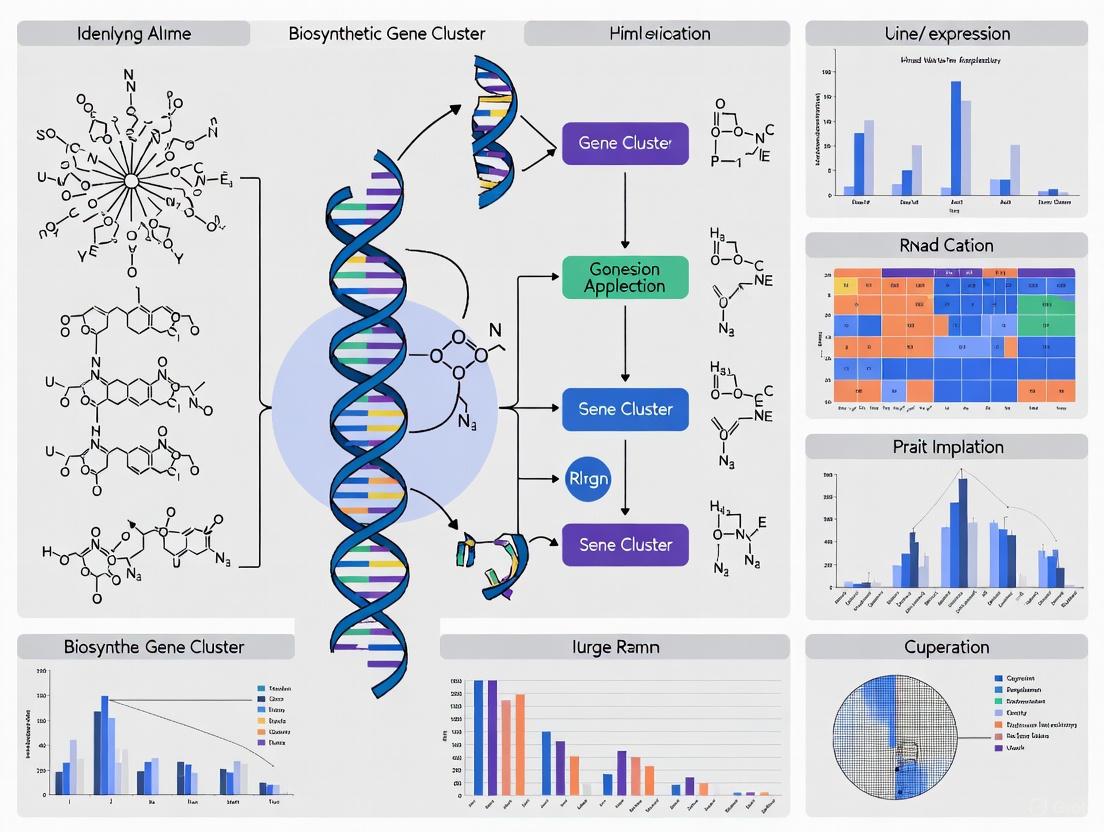
This article provides a comprehensive guide for researchers and drug development professionals on the fundamentals and advanced methodologies for discovering and analyzing biosynthetic gene clusters (BGCs).
Biosynthetic Gene Clusters: A Comprehensive Guide to Discovery and Analysis for Drug Development
Abstract
This article provides a comprehensive guide for researchers and drug development professionals on the fundamentals and advanced methodologies for discovering and analyzing biosynthetic gene clusters (BGCs). Covering foundational concepts of BGCs as genomic loci encoding specialized metabolites, the content details cutting-edge bioinformatics tools and workflows for BGC identification, addresses common challenges in cluster boundary determination and silent cluster activation, and explores validation techniques and comparative genomic approaches. By integrating genome mining with experimental validation, this resource aims to accelerate the discovery of novel bioactive compounds with therapeutic potential from diverse microbial sources.
Decoding Biosynthetic Gene Clusters: The Genomic Blueprint for Natural Products
Biosynthetic Gene Clusters (BGCs) represent fundamental genetic architectures in living organisms, defined as physically clustered groups of two or more genes in a genome that collectively encode a biosynthetic pathway for the production of a specialized metabolite [1]. These clusters consist primarily of non-homologous genes that participate in a common, discrete metabolic pathway, with the genes maintained in physical proximity to each other and often exhibiting coregulated expression [2]. BGCs are responsible for producing specialized metabolites (also known as secondary metabolites), which serve as the source or basis for most pharmaceutical compounds, natural toxins, and chemical communication molecules between organisms [2] [3].
These genomic elements are common features of bacterial and fungal genomes, though they appear less frequently in other organisms [2]. The specialized metabolites they produce have profound biomedical significance, providing many clinically relevant antibiotics, anticancer agents, and other therapeutic compounds. Examples include erythromycin, azithromycin, penicillin, and vancomycin—the latter considered a last-resort drug for Gram-positive bacterial infections [3]. Beyond their pharmaceutical value, BGCs also play crucial roles in microbial ecology, influencing nutrient acquisition, toxin degradation, antimicrobial resistance, vitamin biosynthesis, and overall ecosystem dynamics [2].
Biological Significance and Evolutionary Context
Ecological and Physiological Roles
BGCs encode pathways that produce specialized metabolites serving diverse ecological functions. These compounds act as chemical warfare agents between competing microorganisms, communication signals within and between species, and facilitators of survival in harsh environments [4]. For pathogenic bacteria, certain specialized metabolites significantly enhance virulence; for instance, P. aeruginosa produces pyocyanin, a phenazine redox-active SM that functions as a virulence factor in lung infections [4]. Similarly, siderophores—iron-chelating SMs produced by many bacteria—help pathogens acquire essential iron from host environments where this nutrient is typically tightly bound to proteins [4].
The production of these compounds represents a significant metabolic investment for the producing organism, indicating their critical importance for survival and competitive fitness. This is particularly evident in clinical settings, where ESKAPE pathogens (Enterococcus faecium, Staphylococcus aureus, Klebsiella pneumoniae, Acinetobacter baumannii, Pseudomonas aeruginosa, and Enterobacter species) utilize SMs to enhance their persistence and pathogenicity [4].
Evolutionary Origins and Dynamics
The origin and evolution of metabolic gene clusters have been debated since the 1990s, with research demonstrating that BGCs can arise through several mechanisms [2]. Genome rearrangement, gene duplication, and horizontal gene transfer all contribute to BGC formation and diversification [2]. Some metabolic clusters have evolved convergently in multiple species, while others have been horizontally transferred between organisms, often linked to ecological niches where the encoded pathways provide a selective advantage [2].
The "selfish operon" theory proposes that horizontal transfer may drive the evolution of gene clusters, though evidence both supports and contests this hypothesis [2]. An alternative perspective suggests that clustering of genes for ecological functions results from reproductive trends among organisms and contributes to accelerated adaptation by increasing refinement of complex functions in the pangenome of a population [2]. This evolutionary dynamic allows for rapid adaptation and specialization in response to environmental challenges and opportunities.
Computational Identification of BGCs
Bioinformatics Tools and Algorithms
The identification of BGCs in genomic sequences relies on specialized bioinformatics tools that employ various algorithms and detection strategies. The table below summarizes major BGC prediction tools, their specific features, and target organisms:
Table 1: Bioinformatics Tools for BGC Prediction and Analysis
| Tool | Target Organisms | Key Features | Methodology |
|---|---|---|---|
| antiSMASH [5] [3] | Bacteria, Fungi, Plants | Identifies BGCs using HMMer3 to search for experimentally characterized signature proteins | Web/Command line |
| BAGEL [5] [3] | Bacteria | Identifies bacteriocins and RiPPs using HMM search with bacteriocin database | Web server |
| ClusterFinder [5] [3] | Bacteria | Identifies BGCs using a hidden Markov model-based probabilistic algorithm | Command line |
| PRISM [5] [3] | Bacteria | Identifies BGCs using BLAST and HMMER with structure prediction using HMM | Web server |
| SMURF [5] [3] | Fungi | Predicts secondary metabolite biosynthesis gene clusters based on genomic context and domain content using HMM search | Web server |
| RODEO [5] [3] | Bacteria | Identifies BGC and RiPP precursor peptide using HMM and machine learning | Web server |
| ARTS [5] [3] | Bacteria | Prioritizes antiSMASH-detected BGCs using BGC proximity, gene duplication, and horizontal gene transfer | Web server |
| EvoMining [5] [3] | Actinobacteria | Identifies BGCs using phylogenomic analysis of duplicated primary metabolic enzymes | Command line |
| BiG-SCAPE [5] | Various | Uses distances between gene clusters to build sequence similarity networks and gene cluster families | Analysis tool |
| plantiSMASH [5] | Plants | Specialized version of antiSMASH dedicated to plant genomes | Web server |
These tools employ diverse computational strategies, including Hidden Markov Models (HMMs) for domain detection, homology searches using BLAST, phylogenomic analyses, and machine learning approaches to identify signature patterns associated with BGCs [5] [3]. The choice of tool depends on the target organism, the class of specialized metabolite of interest, and the specific research objectives.
BGC Detection Workflow
The typical workflow for computational identification of BGCs involves multiple stages, from genomic data preparation to final prioritization of clusters for experimental characterization. The following diagram illustrates this multi-step process:
This workflow begins with genome sequencing and assembly, followed by BGC prediction using specialized tools. The predicted clusters then undergo detailed domain analysis and classification before comparative analysis against databases of known BGCs. Finally, the most promising candidates are prioritized for experimental validation based on various criteria such as novelty, domain architecture, and phylogenetic distribution.
Experimental Characterization and Validation
Standard Experimental Protocols
Following computational prediction, BGCs require experimental validation to confirm their functional activity and characterize their metabolic products. A typical experimental protocol includes:
Gene Cluster Isolation: Targeted amplification or cloning of the predicted BGC region using long-range PCR or cosmid/bacterial artificial chromosome (BAC) libraries [3].
Heterologous Expression: Introduction of the isolated BGC into a suitable expression host (such as Streptomyces coelicolor or Saccharomyces cerevisiae) that lacks competing pathways, enabling observation of the cluster's metabolic output without background interference [3].
Metabolite Extraction and Analysis: Culturing the engineered host under appropriate conditions followed by extraction of metabolites using organic solvents, then analysis via liquid chromatography-mass spectrometry (LC-MS/MS) or nuclear magnetic resonance (NMR) spectroscopy to determine the chemical structure of the produced compound [3] [6].
Gene Function Verification: Systematic inactivation of individual genes within the cluster through gene knockout or CRISPR-Cas9 editing to determine each gene's role in the biosynthetic pathway, observing changes in metabolite production [1] [3].
Enzyme Biochemical Characterization: Heterologous expression and purification of individual enzymes from the BGC, followed by in vitro activity assays to confirm their catalytic functions and substrate specificities [1].
Research Reagent Solutions
Table 2: Essential Research Reagents for BGC Characterization
| Reagent/Resource | Function | Examples/Specifications |
|---|---|---|
| DNA Extraction Kits [4] | High-quality genomic DNA preparation for sequencing | QIAamp DNA Mini Kit |
| Sequence Databases [1] | Reference data for comparative analysis | MIBiG, GenBank, ENA, DDBJ |
| Cloning Systems [3] | BGC isolation and manipulation | Cosmid/BAC libraries, Gibson Assembly |
| Expression Hosts [3] | Heterologous BGC expression | Streptomyces coelicolor, Aspergillus nidulans |
| Chromatography Systems [6] | Metabolite separation and analysis | LC-MS/MS, HPLC-UV |
| Structure Elucidation Tools [6] | Chemical structure determination | NMR spectroscopy, HR-MS |
| Gene Editing Systems [3] | Functional gene validation | CRISPR-Cas9, homologous recombination |
BGC Classification and Diversity
Major Classes of Biosynthetic Gene Clusters
BGCs are categorized based on the chemical class of their metabolic products and the key biosynthetic enzymes they encode. The major classes include:
Nonribosomal Peptide Synthetase (NRPS) Clusters: These encode large modular enzymes that assemble peptide products without ribosomal translation, often incorporating non-proteinogenic amino acids and creating structurally diverse compounds with various biological activities [4] [6].
Polyketide Synthase (PKS) Clusters: PKS clusters encode enzymes that sequentially assemble polyketide scaffolds from small carboxylic acid precursors, creating complex structures with diverse pharmacological properties [4].
Ribosomally Synthesized and Post-translationally Modified Peptide (RiPP) Clusters: These clusters encode precursor peptides that are ribosomally synthesized and then modified by various enzymes to produce the final bioactive compound [5] [4].
Terpene Clusters: These contain genes for terpene cyclases and modifying enzymes that produce terpenoid compounds from isoprenoid precursors [1].
Siderophore Clusters: Specialized for producing iron-chelating compounds that facilitate iron acquisition, particularly important for pathogenic bacteria [4].
Hybrid Clusters: Many BGCs incorporate genes from multiple classes, creating hybrid pathways that produce compounds with structural elements from different biochemical origins [1].
The distribution of these BGC classes varies significantly across bacterial taxa. For instance, in clinical isolates of ESKAPE pathogens, P. aeruginosa strains predominantly contain NRPS-type BGCs, K. pneumoniae isolates frequently harbor RiPP-like clusters, and A. baumannii isolates commonly feature siderophore clusters [4].
MIBiG Standardization Framework
The Minimum Information about a Biosynthetic Gene cluster (MIBiG) standard provides a comprehensive framework for documenting and reporting BGC data [1]. Developed through community consensus, MIBiG specifies the exact annotation and metadata parameters required for consistent storage and retrieval of BGC information. This standardization is crucial for comparative analyses, function prediction, and the design of novel biosynthetic pathways [1].
The MIBiG standard includes both general parameters applicable to all BGCs (such as genomic coordinates, associated publications, and compound structures) and class-specific checklists for different types of biosynthetic pathways [1]. Each annotation is assigned a specific evidence code indicating the experimental support for the assigned function, distinguishing between "activity assay," "structure-based inference," and "sequence-based prediction" [1].
Current Challenges and Future Directions
Prioritization Strategies in BGC Discovery
A significant challenge in BGC research is the prioritization of candidate clusters among the thousands of predictions generated from genomic data. With traditional biochemical characterization approaches representing a bottleneck in the discovery pipeline, effective prioritization strategies are essential for reducing experimental procedures, cutting costs, and saving time [3].
Several biological hypotheses can guide prioritization computational tools:
- Self-protection mechanism: Detection of resistance genes near BGCs indicates production of bioactive compounds [3]
- Gene duplication events: Duplicates of primary metabolic enzymes often incorporated into BGCs [3]
- Horizontal gene transfer signals: BGCs with evidence of horizontal transfer may encode adaptive traits [3]
Tools like ARTS (Antibiotic Resistance Target Seeker) implement these principles by using additional selection criteria including BGC proximity, gene duplication, and horizontal gene transfer signals to prioritize antiSMASH-detected BGCs with higher probability of encoding novel bioactive compounds [5] [3].
Emerging Technologies and Approaches
Future directions in BGC research include the integration of multi-omics data (genomics, transcriptomics, metabolomics), the development of improved algorithms for connecting gene clusters to metabolic products, and the application of synthetic biology approaches to activate silent clusters and engineer novel pathways [1] [3].
The connection of BGC data to environmental and ecological metadata through standards like MIxS (Minimum Information about any Sequence) enables biogeographical mapping of secondary metabolite biosynthesis, helping identify locations and ecosystems harboring rich biosynthetic diversity [1]. This will play a significant role in guiding sampling efforts for future natural product discovery and in understanding the ecological functions of specialized metabolites in their native environments.
As sequencing technologies continue to advance and computational methods become more sophisticated, the systematic exploration of BGCs across the tree of life promises to reveal a wealth of novel chemical structures with potential applications in medicine, agriculture, and industry.
Biosynthetic gene clusters (BGCs) are sets of co-localized genes in microbial, plant, and fungal genomes that collectively encode the molecular machinery for producing secondary metabolites (SM) [7]. These metabolites are not essential for basic cellular growth but provide competitive advantages, influencing ecological interactions, defense mechanisms, and cellular communication [8]. The organized cluster structure facilitates the coordinated expression of enzymes required for complex biosynthetic pathways. BGCs are a valuable resource for developing new drugs and optimizing drug production processes, with genome mining significantly accelerating the identification of SMs and providing unique molecular frameworks for therapeutic development [7].
Understanding BGCs is crucial for natural product (NP) discovery, as the genes encoding for the biosynthesis of a single compound are typically grouped together [9]. This collinear architecture enables researchers to identify the genetic blueprints for entire metabolic pathways through genome sequencing and computational analysis. The ability to rapidly sequence and mine genomes has revealed a vast, untapped reservoir of BGCs, far exceeding the number of characterized natural products, highlighting their immense potential for biotechnology and medicine [7] [8].
Core BGC Classes and Their Biosynthetic Principles
This section details the fundamental classes of biosynthetic gene clusters, their unique enzymatic mechanisms, and the distinct chemical profiles of their resulting natural products.
Non-Ribosomal Peptide Synthetases (NRPS)
Non-Ribosomal Peptide Synthetases (NRPSs) are large, multi-modular enzyme complexes that synthesize peptides independently of the ribosome in an assembly-line fashion [10] [11]. Each module within an NRPS is responsible for incorporating a single amino acid building block into the growing peptide chain. The biosynthesis is directional, starting at the N-terminal module and ending with peptide release at the C-terminal module, a principle known as the colinearity rule [10].
A canonical NRPS module contains several core domains [10] [11]:
- Adenylation (A) Domain: Selects and activates a specific amino acid (either proteinogenic or non-proteinogenic) as an aminoacyl-adenylate using ATP.
- Peptidyl Carrier Protein (PCP or T) Domain: A flexible arm that shuttles the activated amino acid (and the growing chain) between catalytic domains using a covalently attached 4'-phosphopantetheine cofactor.
- Condensation (C) Domain: Catalyzes peptide bond formation between the upstream PCP-bound peptide and the downstream PCP-bound amino acid.
Additionally, modules may contain auxiliary domains for modifications, such as Epimerization (E) domains for converting L-amino acids to D-amino acids, and Methyltransferase (MT) domains for N-methylation [11] [12]. The final module typically contains a Thioesterase (TE) domain that releases the full-length peptide via hydrolysis or macrocyclization [11]. This domain organization allows NRPSs to generate structurally diverse peptides, including cyclic, branched, and linear scaffolds, often containing unusual amino acids and modifications that confer enhanced stability and bioactivity [11].
Ribosomally Synthesized and Post-Translationally Modified Peptides (RiPPs)
Ribosomally synthesized and Post-translationally Modified Peptides (RiPPs) represent a major and rapidly growing class of natural products whose biosynthesis fundamentally differs from NRPSs [10]. RiPPs are initially synthesized as a linear precursor peptide (the "core peptide") on the ribosome, and this precursor is subsequently extensively modified by a suite of pathway-specific enzymes [10] [12].
The biosynthetic pathway generally follows these steps [12]:
- Ribosomal Synthesis: A gene-encoded precursor peptide is produced. This precursor typically consists of an N-terminal leader peptide (essential for recognition by modifying enzymes) and the core peptide that will become the final natural product.
- Post-Translational Modification (PTM): The precursor peptide is acted upon by maturation enzymes that install a wide array of chemical modifications on the core peptide. The arsenal of modifications is vast and can include dehydration, cyclization, epimerization, and cross-linking, among many others [10].
- Proteolytic Cleavage and Export: The leader peptide is cleaved off by a specific protease, releasing the mature, highly modified RiPP.
A key advantage of RiPP pathways is their genetic tractability and modularity. Because the "template" for the peptide is a gene and the modifying enzymes are often promiscuous, these pathways are highly amenable to engineering for the production of novel "designer" peptides [10] [12]. The structural features of RiPPs are incredibly diverse, and notably, there is a significant overlap with modifications once thought to be exclusive to NRPSs, such as the presence of D-amino acids [12].
Other Major BGC Classes
While NRPS and RiPP pathways are dedicated to peptide synthesis, other major BGC classes produce different types of valuable metabolites.
- Polyketide Synthases (PKS): PKSs are mega-enzymes that share a modular, assembly-line logic with NRPSs. However, instead of amino acids, they use acyl-CoA precursors (e.g., acetyl-CoA, malonyl-CoA) as building blocks. Key domains include the ketosynthase (KS), acyltransferase (AT), and acyl carrier protein (ACP). PKSs produce a vast array of complex molecules, including clinically vital antibiotics (e.g., erythromycin) and antifungals [8].
- Terpenes: Terpene BGCs encode enzymes for the biosynthesis of isoprenoids, a massive class of compounds built from isoprene (C5) units (IPP and DMAPP). Core enzymes include terpene synthases (TPS), which catalyze the cyclization or rearrangement of linear prenyl diphosphates (e.g., geranyl pyrophosphate, farnesyl pyrophosphate) into the diverse carbon skeletons of mono-, sesqui-, and diterpenes. These skeletons are often further modified by cytochrome P450 enzymes and other tailoring enzymes [8].
- Siderophores: Siderophore BGCs encode the machinery for producing small, high-affinity iron-chelating molecules. Biosynthesis can proceed via two primary routes: the NRPS-dependent pathway or the NRPS-independent (NIS) pathway [8]. The NIS pathway utilizes a family of synthetases that ligate carboxylic acid-containing precursors (like citrate or α-ketoglutarate) with amine-containing compounds (like diamines or amino acids) to form the iron-chelating functional groups. Siderophores are critical virulence factors for many pathogens and are key players in microbial competition [8].
Table 1: Comparative Overview of Major BGC Classes
| BGC Class | Key Biosynthetic Machinery | Building Blocks | Representative Products |
|---|---|---|---|
| NRPS | Multi-modular NRPS enzymes (A, PCP, C domains) [10] [11] | Proteinogenic and non-proteinogenic amino acids [10] | Vancomycin (antibiotic), Cyclosporin (immunosuppressant) [10] |
| RiPP | Precursor peptide + post-translational modification enzymes [10] [12] | Proteinogenic amino acids (extensively modified) [12] | Nisin (preservative), Duramycin (drug candidate) [10] |
| PKS | Multi-modular PKS enzymes (KS, AT, ACP domains) [8] | Acyl-CoA derivatives (e.g., Malonyl-CoA) [8] | Erythromycin (antibiotic), Amphotericin (antifungal) |
| Terpene | Terpene Synthases (TPS), Cytochrome P450s [8] | Isopentenyl pyrophosphate (IPP), Dimethylallyl pyrophosphate (DMAPP) [8] | Taxol (anticancer), Artemisinin (antimalarial) |
| Siderophore | NRPS or NRPS-Independent Siderophore (NIS) synthetases [8] | Carboxylic acids, amines, amino acids [8] | Vibrioferrin, Enterobactin |
Computational Discovery and Analysis of BGCs
The discovery of BGCs has been revolutionized by computational genome mining, which allows for the high-throughput identification of BGCs in publicly available genome sequences, bypassing the need for culturing organisms or laborious experimental screening [9] [7].
Core Bioinformatics Workflows
A standard computational workflow for BGC discovery involves several key steps, from acquiring genomic data to the functional prediction of the encoded metabolite.
Diagram 1: BGC Discovery Workflow
BGC Databases and Prediction Tools
A robust ecosystem of databases and software tools has been developed to support BGC research. These resources can be categorized into comprehensive databases, organism-specific databases, and prediction tools that leverage both rule-based and machine learning approaches [7].
Table 2: Key Resources for BGC Discovery and Analysis
| Resource Name | Type | Primary Function | Relevance |
|---|---|---|---|
| antiSMASH [7] [8] | Prediction Tool | The most widely used platform for comprehensive BGC identification in genomic data. | Detects all major BGC classes (NRPS, PKS, RiPP, Terpene, etc.) and provides detailed module/domain annotation. |
| MIBiG [8] | Database | A curated repository of experimentally characterized BGCs. | Serves as a gold-standard reference for comparing and annotating newly discovered BGCs. |
| BiG-SCAPE [8] | Analysis Tool | Groups predicted BGCs into Gene Cluster Families (GCFs) based on sequence similarity. | Allows for global analysis of BGC diversity and prioritization of clusters with novel architectures. |
| PRISM [7] | Prediction Tool | A computational platform for predicting the chemical structures of NRPs and PKs. | Goes beyond identification to propose the likely chemical product of a BGC, guiding isolation efforts. |
The Role of Machine Learning and AI
The field is increasingly leveraging artificial intelligence (AI), particularly machine learning (ML) and deep learning, to overcome the limitations of rule-based algorithms [9] [7]. While tools like antiSMASH are excellent at finding BGCs that resemble known clusters, they struggle with novel or "cryptic" BGCs that lack sequence homology to characterized families.
ML models trained on known BGCs can learn complex, hidden patterns in genetic sequences to predict BGCs with greater sensitivity and accuracy [9]. These models are also being developed to predict the bioactivity and chemical structures of the encoded metabolites, further streamlining the drug discovery pipeline by providing a virtual screen of BGC potential before dedicating wet-lab resources [7].
Experimental Protocols for BGC Characterization
Following computational identification, BGCs require experimental validation and characterization. This process involves isolating the compound and confirming its structure and bioactivity.
Protocol: Metabolomic Profiling and Compound Isolation
This protocol outlines a standard workflow for verifying the product of a predicted BGC.
1. Cultivation and Metabolite Extraction:
- Cultivate the host organism under various conditions (multiple media, temperatures, co-culture) to activate silent BGCs.
- Harvest the culture broth and biomass via centrifugation.
- Extract metabolites using organic solvents (e.g., ethyl acetate, butanol) chosen based on the predicted polarity of the target compound.
2. Metabolite Analysis (LC-MS/MS):
- Analyze the crude extract using Liquid Chromatography coupled with Tandem Mass Spectrometry (LC-MS/MS).
- LC Method: Use a C18 column with a water-acetonitrile gradient (e.g., 5% to 100% acetonitrile over 20 minutes) to separate compounds.
- MS Method: Employ data-dependent acquisition (DDA) in positive and negative ion modes. Key steps include:
- Full MS scan (m/z 150-2000) for precursor ions.
- Isolation of the top 10 most intense ions with a 2 m/z window.
- Fragmentation via Higher-energy C-trap dissociation (HCD) at normalized collision energies of 20, 35, and 50 eV.
- Data Mining: Use molecular networking (e.g., with GNPS) to cluster MS/MS spectra and visualize the chemical space, identifying related compounds and potential novel metabolites [13].
3. Bioactivity-Guided Fractionation:
- Screen the crude extract for a desired bioactivity (e.g., antibacterial, anticancer).
- Fractionate the extract using preparative HPLC or vacuum liquid chromatography.
- Test each fraction for bioactivity, tracking the active principle.
- Iterate the fractionation and bioassay steps until a pure active compound is obtained.
4. Structural Elucidation:
- Analyze the pure compound using NMR spectroscopy (1D and 2D experiments like 1H, 13C, COSY, HSQC, HMBC) to determine its planar structure and relative stereochemistry.
- Confirm the absolute configuration via X-ray crystallography or chemical derivatization methods, if necessary.
Protocol: Heterologous Expression of a BGC
For uncultivable organisms or silent BGCs, heterologous expression is a powerful technique. This protocol uses E. coli as an example host.
1. BGC Cloning and Vector Assembly:
- Amplify the entire BGC from genomic DNA using transformation-associated recombination (TAR) cloning or Gibson assembly to capture large DNA fragments (e.g., >50 kb).
- Clone the assembled BGC into a suitable expression vector (e.g., a BAC or cosmid vector with an inducible promoter).
2. Heterologous Expression in E. coli:
- Transform the constructed vector into a genetically engineered E. coli expression host (e.g., E. coli BAP1), which is engineered to supply necessary precursors and cofactors.
- Culture the transformed E. coli in LB medium at 37°C until the OD600 reaches ~0.6.
- Induce BGC expression by adding a chemical inducer (e.g., 0.5 mM IPTG for lac-based promoters). Incubate further for 24-72 hours at a lower temperature (e.g., 18-25°C) to facilitate proper protein folding.
3. Metabolite Detection and Analysis:
- Extract metabolites from the culture as described in Section 4.1.
- Analyze extracts using LC-MS/MS and compare the chromatograms to those from a control strain containing an empty vector.
- Identify new peaks ("metabolites of interest") that are unique to the BGC-containing strain, indicating successful heterologous production.
Diagram 2: BGC Heterologous Expression
Successful BGC research relies on a suite of computational and experimental resources. The following table lists key reagents, tools, and databases essential for discovery and characterization.
Table 3: Essential Research Reagents and Resources for BGC Research
| Category | Item/Resource | Function/Application |
|---|---|---|
| Computational Tools | antiSMASH [7] [8] | Primary tool for de novo BGC identification and annotation in genome sequences. |
| BiG-SCAPE [8] | Correlates BGC sequence diversity with chemical diversity by grouping BGCs into families (GCFs). | |
| MIBiG Database [8] | Reference database of known BGCs for comparative analysis and hypothesis generation. | |
| Molecular Biology | Cosmids / BAC Vectors | Vectors for cloning and maintaining large (>30 kb) DNA fragments containing entire BGCs. |
| E. coli BAP1 / other heterologous hosts | Engineered bacterial strains designed for efficient expression of exogenous BGCs. | |
| Gibson Assembly or TAR Cloning Kits | Reagents for seamlessly assembling large DNA constructs for heterologous expression. | |
| Analytical Chemistry | LC-MS/MS System | Core instrumentation for separating, detecting, and fragmenting metabolites for identification. |
| NMR Spectrometer | Critical for determining the precise chemical structure and stereochemistry of purified compounds. | |
| Solid Phase Extraction (SPE) Cartridges | For rapid desalting and fractionation of crude culture extracts. | |
| Cultivation | Various Growth Media | To trigger the expression of cryptic BGCs by simulating different environmental conditions. |
The systematic study of NRPS, PKS, RiPP, Terpene, and Siderophore BGCs provides a powerful framework for understanding and accessing microbial chemical diversity. The integration of computational genome mining with advanced experimental characterization has created a robust pipeline for natural product discovery, moving the field beyond traditional bioactivity-guided screening [7].
Future advancements will be heavily driven by artificial intelligence and machine learning, which promise to break the current dependency on known BGC sequences and unlock the vast universe of truly novel biosynthetic pathways [9] [7]. Furthermore, the lines between different BGC classes are blurring, with synthetic biology enabling the creation of hybrid pathways. A particularly promising trend is the use of the genetically tractable RiPP biosynthetic machinery to emulate the structural complexity of NRPS-derived peptides, offering a more streamlined route to engineered peptide therapeutics [10] [12]. As these technologies mature, the pace of discovering novel bioactive compounds with applications in medicine and biotechnology will continue to accelerate.
Biosynthetic Gene Clusters (BGCs) are physically clustered groups of two or more genes in a genome that together encode a biosynthetic pathway for the production of specialized metabolites (also known as secondary metabolites) [14]. These metabolites are small molecules of biological origin that often exhibit potent biological activities with significant applications in pharmaceutical drugs, crop protection agents, and biomaterials [15] [16]. Living organisms produce a diverse array of these compounds with exotic chemical structures and diverse metabolic origins, many of which have been repurposed for medicinal, agricultural, and industrial applications [14]. The research field of natural product biosynthesis is undergoing a substantial transformation, driven by technological developments in genomics, bioinformatics, analytical chemistry, and synthetic biology [14].
The fundamental challenge that necessitated the development of the MIBiG standard was the dispersion of critical information about these clusters, pathways, and metabolites throughout the scientific literature [14]. Prior to standardization, researchers had to perform in-depth reading of numerous papers to discern which molecular functions associated with a gene cluster had been experimentally verified versus those predicted solely on bioinformatic algorithms [14]. This scattered information landscape made it difficult to exploit the growing body of knowledge about BGCs systematically. Although some valuable manually curated databases existed, they were specialized toward certain subcategories of BGCs and included only limited parameters defined by subsets of the scientific community [14]. The Minimum Information about a Biosynthetic Gene cluster (MIBiG) data standard was proposed in 2015 to facilitate consistent and systematic deposition and retrieval of data on biosynthetic gene clusters, enabling comparative analysis, function prediction, and collection of building blocks for designing novel biosynthetic pathways [14].
The MIBiG Standard: Architecture and Specifications
Conceptual Framework and Development
MIBiG is a Genomic Standards Consortium (GSC) project that builds upon the Minimum Information about any Sequence (MIxS) framework, an extensible standardization framework that includes Minimum Information about a Genome Sequence (MIGS) and Minimum Information about a MARKer gene Sequence (MIMARKS) [14] [17]. The GSC, founded in 2005 as an open-membership working body, promotes standardization of genome descriptions and the exchange and integration of genomic data [14]. The MIBiG specification was designed as a coherent extension of the GSC's MIxS standards framework, providing a comprehensive and standardized specification of BGC annotations and gene cluster-associated metadata that enables systematic deposition in databases [14].
The standard was developed with careful consideration of the needs of diverse research communities, incorporating an online community survey at an early stage of development to ensure compliance with the current state of the art in various subfields of natural product research [14]. The design accommodates unusual biosynthetic pathways, such as branched or module-skipping polyketide synthase (PKS) and nonribosomal peptide synthetase (NRPS) assembly lines [14]. The modularity of the checklist system allows for straightforward addition of further class-specific checklists when new types of molecules are discovered in the future [14].
Core Data Structure and Components
The MIBiG standard encompasses general parameters applicable to every gene cluster and compound type-specific parameters that apply only to specific classes of pathways [14]. This dual-structured approach ensures comprehensive coverage of essential information while maintaining specificity for different biosynthetic pathways.
Table 1: General Parameters in the MIBiG Standard
| Parameter Category | Specific Elements | Purpose and Significance |
|---|---|---|
| Publication Identifiers | PubMed IDs, DOIs | Links entries to original scientific literature and enables traceability |
| Genomic Locus Information | INSDC accession numbers, coordinates | Connects MIBiG entries to nucleotide sequences in international databases |
| Chemical Compound Data | Structures, molecular masses, biological activities, molecular targets | Documents the metabolic products and their functional properties |
| Gene and Operon Experimental Data | Gene knockout phenotypes, verified gene functions, operon structures | Provides experimental evidence for functional annotations |
| Evidence Attribution | Experimental methods supporting annotations | Distinguishes between experimental validation and computational prediction |
The standard includes dedicated class-specific checklists for major categories of biosynthetic pathways [14]:
- Polyketides: Includes items such as acyltransferase domain substrate specificities and starter units
- Nonribosomal peptides (NRPs): Captures release/cyclization types and adenylation domain substrate specificities
- Ribosomally synthesized and post-translationally modified peptides (RiPPs): Documents precursor peptides and peptide modifications
- Terpenes: Records specific terpene synthase activities
- Saccharides: Includes glycosyltransferase specificities
- Alkaloids: Captures pathway-specific modifications
For hybrid BGCs that span multiple biochemical classes, information can be entered for each of the constituent compound types without conflict due to the carefully designed checklist structure [14]. A minimal set of key parameters is mandatory for submission, while other parameters remain optional, striking a balance between comprehensiveness and practical implementability [14].
Evidence Attribution System
A critical innovation in the MIBiG standard is its integrated evidence attribution system that specifies the types of experiments performed to support each annotation [14]. For each parameter, submitters assign a specific evidence code that distinguishes between different levels of experimental validation. For example, when annotating the substrate specificity of a nonribosomal peptide synthetase (NRPS) adenylation domain, the submitter can select among evidence categories such as 'activity assay', 'structure-based inference', and 'sequence-based prediction' [14]. This evidence tracking is fundamental for assessing the reliability of annotations and guiding future research efforts toward experimental validation of predictions.
Implementation and Workflow: From BGC Discovery to MIBiG Submission
BGC Discovery and Experimental Characterization
The process of identifying and characterizing BGCs typically begins with genome mining using computational tools such as antiSMASH (Automated identification of Biosynthetic Gene Clusters), PlantiSMASH (for plant genomes), and GECCO [15]. These tools scan genomic sequences for signatures of biosynthetic pathways, identifying candidate regions that may encode specialized metabolites [15]. For fungal genomes, tools such as fungiSMASH, DeepBGC, and TOUCAN are employed, though these often require optimization as they may overestimate cluster boundaries [18]. Following computational identification, experimental characterization involves various techniques including gene knockouts to establish genotype-phenotype relationships, mass spectrometry to identify metabolic products, and RNA-seq to verify operon structures and regulation [14].
MIBiG Submission Workflow
The process for submitting data to the MIBiG repository follows a standardized workflow designed to ensure completeness and accuracy [19]. The following diagram illustrates the key steps in this process:
The submission workflow involves several critical stages that ensure data quality and completeness:
Thorough Literature Research: Submitters must perform comprehensive literature searches using platforms such as Google Scholar, PubMed, and Web of Science to gather all available information about the BGC [19]. This includes tracking citation networks of key papers and examining bibliographies of relevant authors.
Checking for Existing Entries: Researchers must verify whether the BGC has already been annotated in MIBiG by searching the repository and sorting by main product [19]. If a partial entry exists, submitters can build upon it; if no entry exists, a new accession number must be requested.
Requesting an MIBiG Accession Number: To request a new accession number, researchers provide contact information, the name of the main chemical compound, and the accession number to the nucleotide sequence containing the gene cluster from international databases such as GenBank, ENA, or DDBJ [19].
Completing Cluster and Compound Information: Submitters complete detailed information about the biosynthetic class, key publications, genomic loci, and chemical compounds produced [19]. Excel templates are available to scaffold this annotation process before online submission.
Providing Pathway-Specific Data: Depending on the biosynthetic class, researchers complete specialized fields for the relevant type of natural product, including domain specificities, modification types, and substrate information [14].
Submission and Peer Review: The completed entry is submitted through the online portal, where it undergoes validation and peer review before publication in the MIBiG repository [20].
Evolution and Current Status: MIBiG 4.0
Since its initial release in 2015, MIBiG has undergone significant updates and expansions. MIBiG 2.0 in 2019 expanded to 2021 entries [15], while MIBiG 3.0 in 2023 added 661 new entries and placed particular attention on compound structures, biological activities, and protein domain selectivities [15] [16]. The most recent iteration, MIBiG 4.0, represents a substantial advancement with 3059 curated entries resulting from a massive community annotation effort where 267 contributors performed 8304 edits, creating 557 new entries and modifying 590 existing entries [20]. This version introduced enhanced data quality measures, including automated data validation using a custom submission portal prototype paired with a novel peer-reviewing model [20]. MIBiG 4.0 also moves toward a rolling release model and broader community involvement [20].
Table 2: MIBiG Database Version History and Statistics
| Version | Release Year | Number of Entries | Key Improvements and Features |
|---|---|---|---|
| MIBiG 1.0 | 2015 | ~500 | Initial standard and repository establishment |
| MIBiG 2.0 | 2019 | 2021 | Schema redesign, manual curation of all entries |
| MIBiG 3.0 | 2023 | ~2682 | Large-scale validation, re-annotation, 661 new entries |
| MIBiG 4.0 | Recent | 3059 | Enhanced quality control, peer-reviewing model, rolling releases |
Essential Research Tools and Reagents for BGC Studies
The field of BGC research relies on a diverse set of experimental and computational tools that enable the identification, characterization, and manipulation of gene clusters. The table below summarizes key reagents and resources frequently used in these studies:
Table 3: Essential Research Reagents and Resources for BGC Studies
| Resource Category | Specific Tools/Reagents | Function and Application |
|---|---|---|
| BGC Discovery Software | antiSMASH [15], PlantiSMASH [15], GECCO [15], fungiSMASH [18], DeepBGC [18], TOUCAN [18] | Computational identification of biosynthetic gene clusters in genomic data |
| Genomic Databases | GenBank [19], ENA [19], DDBJ [19] | Repository of nucleotide sequences essential for locating BGC sequences |
| Analytical Chemistry Tools | Mass spectrometry [14], NMR [14] | Structural elucidation of specialized metabolites produced by BGCs |
| Experimental Validation Resources | Gene knockout systems [14], RNA-seq [14], Heterologous expression hosts [14] | Functional characterization of BGC genes and verification of metabolic products |
| Protein Domain Databases | Pfam [18] | Identification of functional domains in BGC-encoded enzymes |
| Reference Data Resources | MIBiG Repository [21] [15], OrthoDB [18] | Curated reference datasets for comparison and training of prediction tools |
Impact on Natural Product Research and Future Directions
The implementation of the MIBiG standard has profoundly influenced the field of natural product research by providing a standardized framework for data sharing and comparison. The repository serves as a critical reference dataset for training new machine learning models to predict sequence-structure-function relationships for diverse natural products [15]. This has accelerated the process of connecting genes to chemical structures, understanding biosynthetic gene clusters in environmental diversity, and performing computer-assisted design of synthetic gene clusters [19].
The MIBiG standard also plays a crucial role in educational contexts, where its annotation workflow has been integrated into undergraduate and graduate curricula to provide meaningful research experiences while developing scientific literacy and research skills [19]. The partially annotated BGCs in the MIBiG repository represent fertile ground for students to make contributions to the biochemistry community [19].
Future developments in the field will likely focus on enhancing the automation of data validation, expanding the scope of compound classes covered, and improving integration with other 'omics' data types [20]. The move toward a rolling release model in MIBiG 4.0 indicates a commitment to maintaining current and relevant data resources that can keep pace with the rapid advancements in natural product research [20]. As genomic sequencing technologies continue to generate ever-increasing amounts of data, standards such as MIBiG will remain essential for extracting meaningful biological insights and harnessing the full potential of biosynthetic gene clusters for drug discovery and biotechnology applications.
Biosynthetic Gene Clusters (BGCs) are chromosomal loci encoding pathways for specialized metabolites that provide organisms with a remarkable capacity for environmental adaptation and virulence. These clusters enable bacteria to thrive in hostile environments, outcompete rivals, and cause disease through the production of iron-chelating siderophores, antibacterial compounds, antioxidant pigments, and redox-active molecules. This whitepaper examines the evolutionary mechanisms shaping BGC diversity and distribution, with particular focus on their roles in pathogenicity of ESKAPE pathogens and marine bacteria. We present standardized methodologies for BGC identification, annotation, and experimental characterization, along with computational workflows that leverage machine learning and genomic mining tools. The growing understanding of BGC evolution provides crucial insights for developing novel therapeutic strategies against multidrug-resistant pathogens.
Biosynthetic Gene Clusters (BGCs) represent physically clustered groups of two or more genes in a particular genome that collectively encode the biosynthetic pathway for specialized metabolites (also known as secondary metabolites or natural products) [1]. These metabolites are chemically diverse compounds including polyketides, non-ribosomal peptides, ribosomally synthesized and post-translationally modified peptides (RiPPs), terpenes, and siderophores that confer significant selective advantages to producing organisms [4] [1]. Unlike primary metabolic pathways that are essential for growth and development, specialized metabolites provide ecological and functional benefits that enhance survival in specific environmental contexts.
The evolutionary significance of BGCs stems from their modular organization and genetic plasticity. Many BGCs appear to have been shaped by horizontal gene transfer events, leading to their discontinuous distribution across phylogenetic lineages [8]. This mobility enables rapid adaptation to new ecological niches and environmental challenges. The MIBiG (Minimum Information about a Biosynthetic Gene cluster) data standard was established to provide a consistent framework for storing and retrieving data on experimentally characterized BGCs, facilitating systematic comparative analyses across diverse taxa [1].
BGCs in Environmental Adaptation
Iron Acquisition Mechanisms
In iron-limited environments such as marine ecosystems, where surface waters contain merely 0.1-2 nM of iron (far below the micromolar levels required for bacterial growth), BGCs encoding siderophore production become essential for survival [8]. Marine bacteria have evolved diverse siderophore-mediated iron delivery systems, including both non-ribosomal peptide synthetase (NRPS)-dependent and NRPS-independent siderophore (NIS) pathways.
A recent study of 199 marine bacterial genomes revealed that NI-siderophore BGCs were among the most prevalent cluster types, particularly in Vibrio and Photobacterium species [8]. These clusters show remarkable genetic plasticity, with high variability in accessory genes while core biosynthetic genes remain conserved. For example, vibrioferrin BGCs exhibited significant structural diversity across Vibrio harveyi, Vibrio alginolyticus, and Photobacterium damselae strains, potentially influencing their iron-chelation properties and ecological competitive dynamics [8].
Stress Response and Chemical Defense
BGCs encode diverse metabolites that provide protection against abiotic stresses and biological antagonists. In clinical settings, ESKAPE pathogens utilize BGC-encoded specialized metabolites to survive hostile hospital environments, with these compounds functioning as antibacterial and anti-biofilm agents that eliminate competing microorganisms [4]. Some specialized metabolites also serve as antioxidants that neutralize reactive oxygen species (ROS), protecting bacterial cells from oxidative damage [4].
Table 1: Prevalence of BGC Types in Clinical ESKAPE Pathogens
| Bacterial Species | Total BGCs Identified | Most Abundant BGC Type | Ecological Function |
|---|---|---|---|
| Pseudomonas aeruginosa (21 strains) | 590 | Non-ribosomal peptide synthase (NRPS) | Virulence factor production |
| Klebsiella pneumoniae (28 strains) | 146 | RiPP-like | Antimicrobial activity |
| Acinetobacter baumannii (17 strains) | 133 | Siderophore | Iron acquisition |
BGCs in Bacterial Virulence
Virulence Factors in ESKAPE Pathogens
BGCs contribute significantly to the virulence of clinically relevant pathogens through multiple mechanisms. In ESKAPE pathogens (Enterococcus faecium, Staphylococcus aureus, Klebsiella pneumoniae, Acinetobacter baumannii, Pseudomonas aeruginosa, and Enterobacter species), BGCs encode specialized metabolites that enhance pathogenicity and persistence in host environments [4].
Pseudomonas aeruginosa primarily utilizes NRPS-type BGCs to produce virulence factors such as pyocyanin, a phenazine redox-active compound that damages host tissues during lung infections [4]. The siderophore pyochelin and rhamnolipids further contribute to its virulence by facilitating iron acquisition and biofilm formation, respectively.
Klebsiella pneumoniae clinical isolates predominantly harbor RiPP-like BGCs, with sactipeptides and bottromycin being the most frequently detected clusters [4]. These compounds may provide competitive advantages against other microbes in clinical settings and potentially contribute to host tissue damage.
Acinetobacter baumannii strains mainly possess siderophore-type BGCs that enable efficient iron scavenging in iron-limited host environments [4]. Additionally, the wee BGC encodes an extracellular polysaccharide matrix essential for biofilm formation, representing a crucial virulence mechanism in this pathogen [4].
Evolutionary Adaptations in Pathogens
The distribution of BGC types across pathogenic species reflects evolutionary adaptations to specific host environments and nutritional strategies. Each species appears to possess a characteristic "BGC signature" that correlates with its virulence strategy and ecological niche specialization [4]. The concentration of virulence-related BGCs in hospital-adapted strains suggests these genetic elements have been selectively maintained and refined through evolutionary processes to enhance survival in clinical environments.
Comparative genomic analyses reveal that BGCs in pathogens often exhibit evidence of horizontal gene transfer and gene duplication events, allowing for rapid evolution of new metabolic capabilities and adaptation to antimicrobial pressures [8]. This genetic plasticity makes BGCs important drivers of pathogen evolution and contributors to the emergence of hypervirulent strains.
Methodologies for BGC Identification and Analysis
Genomic DNA Extraction and Sequencing
Protocol for Bacterial Whole-Genome Sequencing:
- DNA Extraction: Use commercial kits such as the QIAamp DNA Mini Kit for high-quality genomic DNA isolation [4].
- Quality Control: Assess DNA purity and concentration using spectrophotometry (A260/A280 ratio ~1.8-2.0) and fluorometric methods.
- Library Preparation: Fragment DNA to appropriate size (typically 300-500 bp) and attach sequencing adapters following manufacturer protocols.
- Sequencing: Perform whole-genome sequencing using Illumina platforms (e.g., NextSeq 550) with paired-end reads for optimal coverage [4].
- Quality Filtering: Process raw sequencing data using fastp or similar tools to remove adapter sequences and low-quality reads [4].
- Genome Assembly: Assemble quality-filtered reads into contigs using assemblers such as Unicycler [4].
Computational BGC Detection and Analysis
Bioinformatic Workflow:
- BGC Prediction: Identify potential BGCs using antiSMASH (antibiotics and Secondary Metabolite Analysis Shell) with default detection settings [4] [8]. Enable complementary analysis tools including KnownClusterBlast, ClusterBlast, SubClusterBlast, and Pfam domain annotation.
- Specialized Detection: For specific BGC types, employ additional tools such as BAGEL (for bacteriocins), GECCO (for low-abundance clusters), and PRISM (for structural prediction) [4].
- Cluster Comparison: Align similar BGCs using Clinker to generate synteny plots and visualize conservation patterns [4].
- Network Analysis: Perform BGC clustering using BiG-SCAPE (Biosynthetic Gene Similarity Clustering and Prospecting Engine) to group BGCs into Gene Cluster Families (GCFs) based on domain sequence similarity [8]. Visualize resulting networks using Cytoscape.
- Phylogenetic Analysis: Construct maximum likelihood phylogenies using marker genes (e.g., rpoB) with MEGA11 software and 1000 bootstrap replicates [8].
Diagram 1: Experimental workflow for BGC identification and analysis
Experimental Validation of BGC Function
Protocol for Functional Characterization:
- Gene Knockout: Create targeted gene knockouts in putative BGCs using CRISPR-Cas9 or homologous recombination to assess phenotypic changes [1].
- Metabolite Profiling: Extract specialized metabolites from wild-type and mutant strains using organic solvents (e.g., ethyl acetate, methanol) and analyze via LC-MS/MS [4].
- Bioactivity Testing: Test metabolite extracts against indicator strains (e.g., Listeria monocytogenes) to determine antimicrobial activity [22].
- Heterologous Expression: Clone complete BGCs into suitable expression hosts (e.g., E. coli, S. lividans) to confirm metabolite production [1].
- Transcriptional Analysis: Verify BGC expression under relevant environmental conditions using RNA-seq or RT-qPCR [1].
Computational Advances in BGC Discovery
The field of BGC discovery has been transformed by computational approaches that leverage machine learning and deep learning algorithms to enhance both the speed and precision of BGC identification and annotation [9]. These methods have proven particularly valuable for detecting novel BGC classes and predicting their functional outputs.
Current computational tools can be categorized into several functional classes:
- BGC Prediction Tools: antiSMASH remains the most widely used platform, with continuous improvements in detection algorithms and user interface [8].
- Similarity Networking: BiG-SCAPE enables comparison of BGCs across multiple genomes and organizes them into Gene Cluster Families based on sequence similarity [8].
- Database Resources: MIBiG provides a curated repository of experimentally characterized BGCs, serving as a reference dataset for genome mining efforts [1].
The integration of artificial intelligence in BGC mining has addressed several key challenges, including the identification of "cryptic" clusters that are not expressed under laboratory conditions and the prediction of novel chemical structures encoded by uncharacterized BGCs [9].
Table 2: Essential Computational Tools for BGC Research
| Tool Name | Primary Function | Application in BGC Research |
|---|---|---|
| antiSMASH | BGC detection and annotation | Comprehensive BGC identification in genomic sequences [8] |
| BiG-SCAPE | BGC similarity networking | Grouping BGCs into Gene Cluster Families [8] |
| MIBiG | BGC data repository | Reference database for characterized BGCs [1] |
| BAGEL | Bacteriocin identification | Specific detection of ribosomally synthesized antimicrobial peptides [4] |
| PRISM | Structural prediction | Prediction of specialized metabolite structures from genomic data [4] |
Table 3: Key Research Reagent Solutions for BGC Studies
| Reagent/Resource | Function | Example Application |
|---|---|---|
| QIAamp DNA Mini Kit | High-quality genomic DNA extraction | Preparation of sequencing-ready DNA from bacterial cultures [4] |
| Illumina Sequencing Platforms | Whole-genome sequencing | Generating high-coverage genomic data for BGC mining [4] |
| antiSMASH Database | BGC annotation and comparison | Identification and preliminary classification of BGCs [8] |
| MIBiG Repository | Reference BGC database | Comparative analysis of newly discovered BGCs [1] |
| Cell-free Protein Synthesis Systems | In vitro gene expression | Functional characterization of BGC pathways [22] |
Biosynthetic Gene Clusters represent evolutionary innovations that significantly enhance bacterial adaptability and virulence through the production of specialized metabolites. Their roles in iron acquisition, stress response, microbial competition, and host pathogenesis underscore their importance in bacterial ecology and evolution. The integration of advanced computational tools with experimental validation provides a powerful framework for deciphering BGC function and evolutionary dynamics. Future research directions should focus on elucidating the regulatory networks controlling BGC expression, exploring the ecological interactions mediated by specialized metabolites, and harnessing this knowledge for developing novel therapeutic strategies against multidrug-resistant pathogens.
Biosynthetic gene clusters (BGCs) are sets of co-localized genes in microbial genomes that encode the enzymatic pathways for the production of specialized metabolites, also known as natural products. These complex molecules, including many of our current antibiotics, possess diverse biological activities and play crucial roles in microbial ecology, defense, and communication. The study of BGCs is fundamental to understanding microbial interactions and for the discovery of novel bioactive compounds, especially in an era of escalating antibiotic resistance.
This guide frames BGC discovery within a "One Health" context, examining two distinct bacterial groups: the ESKAPE pathogens (Enterococcus faecium, Staphylococcus aureus, Klebsiella pneumoniae, Acinetobacter baumannii, Pseudomonas aeruginosa, and Enterobacter spp.) and selected marine bacteria. ESKAPE pathogens are a critical focus due to their propensity to "escape" the effects of antibacterial drugs, posing a severe threat in healthcare settings globally [23]. Concurrently, marine environments, particularly host-associated marine bacteria, are recognized as prolific sources of novel BGCs with unique chemical scaffolds [24] [25]. This case study provides a technical overview of the methods and tools used to identify and compare the BGCs in these organisms, highlighting their diversity and ecological implications.
BGC Diversity: A Comparative Analysis of Pathogenic and Environmental Bacteria
The distribution, type, and biological role of BGCs can vary significantly between opportunistic pathogens and environmental bacteria. The ESKAPE pathogens prioritize BGCs that confer survival advantages in clinical settings, such as virulence and resistance. In contrast, marine bacteria often produce compounds that mediate complex host-symbiont interactions or competition in nutrient-limited environments.
BGCs in ESKAPE Pathogens: Virulence and Resistance
ESKAPE pathogens are a major cause of nosocomial infections worldwide, and their threat level is compounded by widespread antimicrobial resistance (AMR). The World Health Organization (WHO) has classified several ESKAPE pathogens as critical or high priority due to their resistance to carbapenems, third-generation cephalosporins, vancomycin, and methicillin [23]. The prevalence of ESKAPE pathogens in aquatic environments is a significant public health concern, as rivers and lakes can act as reservoirs and conduits for the dissemination of antibiotic-resistant bacteria and their resistance genes [23].
The primary function of BGCs in ESKAPE pathogens is often linked to virulence and persistence. For instance, Acinetobacter baumannii utilizes BGCs that contribute to its remarkable ability to develop multi-drug resistance (MDR) and form biofilms, making it one of the most difficult ESKAPE pathogens to treat [23]. Staphylococcus aureus, including methicillin-resistant (MRSA) and vancomycin-resistant strains, causes millions of invasive infections annually. The BGCs in its genome can produce toxins and other virulence factors that complicate treatment [26]. A key characteristic of ESKAPE pathogens is the localization of many resistance genes on mobile genetic elements (plasmids, transposons), facilitating horizontal gene transfer (HGT) and the rapid spread of resistance mechanisms within and between species [23].
BGCs in Marine Bacteria: Diversity and Symbiosis
Marine bacteria, especially those in symbiotic relationships, represent a rich and largely untapped reservoir of BGC diversity. The family Endozoicomonadaceae, for example, is commonly associated with marine invertebrates like corals, sponges, and bivalves. Genomic analyses reveal that these bacteria possess a wide array of BGCs, with a noted prevalence of those encoding non-ribosomal peptide synthetases (NRPS), beta-lactones, type III polyketide synthases (T3PKS), and siderophores [24]. These metabolites are indicative of a lifestyle that involves close interaction with a host, potentially providing protective or nutritional benefits.
Another study on marine bacterial "bloomers"—copiotrophic bacteria that rapidly increase in abundance during nutrient pulses like phytoplankton blooms—found their genomes enriched in genes for transcriptional regulation, transport, secretion, stress resistance, and nutrient uptake [27] [28]. While not exclusively BGCs, these functional traits enable a rapid response to environmental changes and are often co-located with biosynthetic pathways. Furthermore, marine actinomycetes are renowned for producing chemically distinct compounds, such as angucyclines and angucyclinones, which exhibit a range of biological activities [25].
Table 1: Comparative Profile of BGCs and Associated Lifestyles
| Feature | ESKAPE Pathogens | Marine Bacteria (e.g., Endozoicomonadaceae) |
|---|---|---|
| Primary Ecological Niche | Healthcare settings, human hosts, contaminated environments [23] | Marine water, symbiotic with invertebrates (corals, sponges) [24] |
| Representative BGC Types | Biofilm-associated clusters, toxin gene clusters | Non-ribosomal peptide synthetases (NRPS), type III polyketide synthases (T3PKS), beta-lactones, siderophores [24] |
| Putative Role of Metabolites | Virulence, immune evasion, antibiotic resistance [23] | Symbiosis maintenance, host defense, nutrient acquisition [24] |
| Genomic Context | High prevalence of mobile genetic elements promoting HGT of resistance genes [23] | Varies from large genomes (metabolic versatility) to reduced genomes (host-specific lineages) [24] |
Experimental Protocols for BGC Identification and Analysis
A robust workflow for BGC analysis involves sample preparation, genome sequencing, computational prediction, and comparative analysis. The following protocols are synthesized from current methodologies used in the cited research.
Protocol 1: Genome-Resolved Analysis from Environmental Samples
This protocol is ideal for discovering BGCs from novel or uncultured marine bacteria [24] [27].
- Sample Collection and DNA Extraction: Collect environmental samples (e.g., seawater, sediment, host tissue). For marine hosts, surface-sterilize the tissue to isolate associated bacteria. Concentrate microbial biomass via filtration. Extract high-molecular-weight genomic DNA using a commercial kit (e.g., Zymo Quick-DNA Fungal/Bacteria Miniprep Kit) [26].
- Metagenomic Sequencing and Assembly: Perform both Illumina short-read and Oxford Nanopore long-read sequencing on the extracted DNA. For Oxford Nanopore, use amplification-free library prep with R10.4.1 flow cells. Assemble the reads using a hybrid assembler like Unicycler or a long-read assembler like Flye, followed by polishing with tools like Medaka [26].
- Binning and Quality Checking: Reconstruct individual genomes from the metagenomic assembly through binning. Check the completeness and contamination of resulting Metagenome-Assembled Genomes (MAGs) using CheckM. A common threshold is >90% completeness and <5% contamination [28].
- BGC Prediction: Annotate the MAGs and isolate genomes using Bakta. Run BGC prediction using antiSMASH with relaxed strictness for HMM detection (
--hmmdetection-strictness relaxed) to maximize the identification of divergent BGCs [29].
Protocol 2: Comparative Genomics and BGC Clustering
This protocol details how to compare BGCs across a dataset to identify conserved or unique families [30] [29].
- Create a Genome Dataset: Compile a set of genomes of interest, for example, all available genomes for a specific bacterial genus. Reduce redundancy by clustering genomes at a high Average Nucleotide Identity (ANI), e.g., 99% [30].
- Generate BGC Absence/Presence Matrix: Use the tool BiG-SCAPE to analyze all antiSMASH-predicted BGCs from the dataset. BiG-SCAPE compares BGCs based on protein sequence similarity and clusters them into Gene Cluster Families (GCFs), creating a network of related BGCs [30] [29].
- Correlate BGCs with Lifestyles: To identify BGCs associated with a specific lifestyle (e.g., phytopathogenicity), use a computational framework like bacLIFE [30]. This workflow integrates antiSMASH and BiG-SCAPE output, then applies a random forest machine learning model to an absence/presence matrix of gene clusters (including BGCs) to predict lifestyle-associated genes (LAGs) [30].
- Benchmark and Validate: Assess the correlation between BGC similarity and the structural similarity of their products. Methods like BiG-SCAPE have been benchmarked and show moderate correlation, which improves for more similar BGCs [31]. Validate predictions experimentally, for instance, by gene knockout and phenotypic assays [30].
The Scientist's Toolkit: Essential Reagents and Software
Table 2: Key Research Reagents and Computational Tools for BGC Analysis
| Item Name | Category | Function / Application | Reference / Source |
|---|---|---|---|
| Zymo Quick-DNA Fungal/Bacteria Miniprep Kit | Wet-lab Reagent | High-quality genomic DNA extraction from bacterial cultures or environmental samples. | [26] |
| Oxford Nanopore R10.4.1 Flow Cell | Sequencing | Long-read sequencing for improved genome assembly and resolution of repetitive BGC regions. | [26] |
| antiSMASH | Software | The primary tool for the automated genomic identification and annotation of BGCs in bacterial genomes. | [30] [29] |
| BiG-SCAPE | Software | Correlates BGC similarity with structural similarity and clusters BGCs into Gene Cluster Families (GCFs). | [31] [30] |
| bacLIFE | Software | A computational workflow for comparative genomics and prediction of lifestyle-associated genes (LAGs), including BGCs. | [30] |
| CheckM | Software | Assesses the quality (completeness and contamination) of genomes derived from sequencing assemblies. | [26] |
Visualizing Workflows and Relationships
The following diagrams illustrate the core experimental and computational pathways for BGC analysis.
BGC Discovery Workflow: From Genome Mining to Experimental Validation
Microbial secondary metabolism represents a rich resource of evolved, bioactive small molecules that form the foundations of many therapeutic regimens and crop protection agents [32] [33]. These specialized metabolites are typically encoded by biosynthetic gene clusters (BGCs)—distinct genomic loci where two or more co-localized genes function collaboratively to construct a single natural product or related family of compounds [34]. The systematic identification and functional characterization of BGCs is set to enhance our understanding of microbial genetics and biochemistry, leading to the development of new preventive strategies, diagnostic tools, and therapeutics [34]. Historically, natural product discovery relied on activity-guided isolation from microbial sources, but genome sequencing has revealed that the majority of genetically encoded natural products remain unknown [33] [35]. Genome mining has consequently emerged as a fundamental approach to explore, access, and analyze the available biodiversity of these compounds, helping researchers prioritize strains and experiments for natural product discovery [32].
The field of BGC prediction has witnessed rapid tool development, with computational methods generally falling into two categories: rule-based systems that use manually curated models to identify known biosynthetic logic, and machine learning approaches that train on known BGCs to recognize patterns associated with secondary metabolism [34]. Among these, the "antibiotics and secondary metabolite analysis shell—antiSMASH" has established itself as the most widely used tool for microbial genome mining since its 2011 release [32]. Complementing this, tools like PRISM (PRediction Informatics for Secondary Metabolomes) focus on predicting the chemical structures of encoded metabolites, while GECCO (GEne Cluster prediction with Conditional Random Fields) employs machine learning for de novo BGC identification [36] [33]. Together, these tools form a powerful pipeline for comprehensive BGC analysis, from initial detection to structural prediction of the encoded small molecules.
antiSMASH: The Comprehensive BGC Detection Workhorse
antiSMASH uses a rule-based approach to identify biosynthetic pathways involved in secondary metabolite production, employing profile hidden Markov models (pHMMs) from multiple databases including PFAM, TIGRFAMs, SMART, BAGEL, and custom models [32]. The tool has continuously expanded its capabilities, with version 7.0 increasing the number of supported cluster types from 71 to 81, adding detection for 2-deoxy-streptamine aminoglycosides, aminopolycarboxylic acid metallophores, arginine-containing cyclo-dipeptides (RCDPs), crocagins, methanobactins, mycosporines, NRP-metallophores, opine-like metallophores, and fungal-RiPP-likes [32]. Beyond mere detection, antiSMASH provides in-depth analyses for specific cluster types including non-ribosomal peptide synthetases (NRPSs), type I and type II polyketide synthases (PKSs), and several classes of ribosomally synthesized and post-translationally modified peptides (RiPPs) [32].
Recent versions of antiSMASH have introduced significant improvements in multiple areas. The NRPyS library has replaced NRPSPredictor2 for NRPS adenylation (A) domain substrate prediction, substantially expanding the Stachelhaus code lookup table from 554 to 2319 entries based on the recent MIBiG 3 release [32]. The CompaRiPPson analysis helps users evaluate the novelty of RiPP precursor peptides by comparing predicted core peptides against those in the antiSMASH-DB and MIBiG 3.1 databases [32]. Additionally, antiSMASH 7.0 incorporates transcription factor binding site (TFBS) predictions using position weight matrices from the LogoMotif database, providing insights into gene cluster regulation [32]. New visualizations for NRPS and PKS clusters depict enzymatic domains and modules in conventional publication style, allowing researchers to use the vector graphics as starting points for publication-quality figures [32].
GECCO: Machine Learning-Powered De Novo BGC Identification
GECCO represents a different philosophical approach to BGC detection, using conditional random fields (CRFs) to identify putative novel BGCs in genomic and metagenomic data without relying exclusively on predefined biosynthetic rules [36] [37]. This machine learning method has demonstrated particular strength in identifying BGCs with novel architectures that might evade rule-based detection systems [37]. The tool is implemented in Python and available through both PyPI and Bioconda package managers, supporting all Python versions from 3.7 and running on Linux and OSX systems [36].
GECCO's methodology follows a four-step process: (1) identification of open reading frames (ORFs) in assembled prokaryotic (meta)genomes; (2) annotation of protein domains in the resulting ORFs using profile hidden Markov models (pHMMs); (3) application of a conditional random field that uses the ordered domain vectors as features to predict whether contiguous genes belong to a BGC; and (4) classification of predicted BGCs into one of six major biosynthetic classes as defined in the MIBiG database using a Random Forest classifier [37]. The software provides several adjustable parameters including --jobs to control parallelization, --cds to set the minimum number of consecutive genes a BGC region must contain (default: 3), and --threshold to control the minimum probability for a gene to be considered part of a BGC region (default: 0.8) [36].
PRISM: From Genetic Code to Chemical Structure
While antiSMASH and GECCO excel at BGC detection, PRISM specializes in chemical structure prediction of the encoded natural products [33]. PRISM 4 represents a comprehensive platform for prediction of the chemical structures of genomically encoded antibiotics, including all classes of bacterial antibiotics currently in clinical use [33]. The accuracy of chemical structure prediction enables the development of machine-learning methods to predict the likely biological activity of encoded molecules, creating a direct link between genetic information and potential therapeutic application [33].
PRISM achieves accurate structure prediction by connecting biosynthetic genes to the enzymatic reactions they catalyze, permitting the in silico reconstruction of complete biosynthetic pathways and their final products [33]. In total, PRISM 4 includes 1772 hidden Markov models (HMMs) and implements 618 in silico tailoring reactions to predict the chemical structures of 16 different classes of secondary metabolites [33]. Unlike earlier versions focused primarily on modular assembly lines, PRISM 3 introduced a chemical graph-based approach where natural product scaffolds are modeled as chemical graphs, permitting structure prediction for aminocoumarins, antimetabolites, bisindoles, and phosphonate natural products, in addition to non-ribosomal peptides, polyketides, and RiPPs [35].
Table 1: Comparative Overview of BGC Prediction Tools
| Feature | antiSMASH | GECCO | PRISM |
|---|---|---|---|
| Primary Function | BGC detection & analysis | BGC identification | Chemical structure prediction |
| Core Methodology | Rule-based with pHMMs | Conditional Random Fields (CRF) | Chemical graph-based with HMMs |
| Supported BGC Types | 81 cluster types | 6 major biosynthetic classes | 16 secondary metabolite classes |
| Key Innovation | Comprehensive detection rules | Machine learning for novel architectures | In silico tailoring reactions |
| Structure Prediction | Limited to specific classes | No | Comprehensive for encoded metabolites |
| Strengths | Most widely used, continuously updated | Identifies novel architectures | Accurate chemical structure prediction |
Experimental Protocols and Workflows
antiSMASH Implementation Protocol
The antiSMASH pipeline begins with input preparation, accepting genomic data in various formats including FASTA, GenBank, and EMBL. For a standard analysis using the web server (https://antismash.secondarymetabolites.org/), users upload their sequence file and select appropriate analysis parameters. The standalone version can be installed via Bioconda (conda install -c bioconda antismash) for larger datasets or proprietary genomes [32].
The analysis proceeds through multiple stages: (1) ORF prediction and primary annotation using Prodigal; (2) pHMM search against the curated antiSMASH database using HMMER; (3) Cluster detection based on the predefined rules for each BGC type; (4) Cluster-specific analysis including NRPS/PKS domain annotation, RiPP precursor prediction, and substrate specificity prediction; (5) Comparative analysis against known clusters in the MIBiG database; and (6) Results compilation into various output formats [32]. For NRPS and PKS clusters, additional specialized analyses are performed, including trans-AT PKS analysis using transATor pHMMs and A-domain substrate prediction using the NRPyS library [32]. The CompaRiPPson analysis compares identified RiPP precursors against databases to assess novelty [32].
The output includes interactive HTML reports showing cluster locations with detailed annotations, GenBank files with annotated clusters, and structured data files (JSON, XLS) for downstream analysis. The results depict clusters in their genomic context, with color-coded genes according to their predicted functions, and include detailed information about key domains and their predicted substrates [32].
GECCO Implementation Protocol
GECCO installation is straightforward via pip (pip install gecco-tool) or Conda (conda install -c bioconda gecco) [36] [38]. The basic execution command for DNA sequences in FASTA or GenBank format is:
For large genomes or metagenomic assemblies, additional parameters can optimize performance: --jobs controls the number of parallel threads (default: 0, which auto-detects available CPUs), --cds sets the minimum number of consecutive genes for BGC detection (default: 3), and --threshold adjusts the minimum probability for gene inclusion in a BGC (default: 0.8) [36]. When working with pre-annotated GenBank files, the --cds-feature parameter (e.g., --cds-feature CDS) instructs GECCO to extract existing gene annotations rather than predicting genes de novo [36].
GECCO generates several output files: (1) {genome}.genes.tsv containing genes and per-gene BGC probabilities; (2) {genome}.features.tsv with identified protein domains; (3) {genome}.clusters.tsv listing coordinates and types of predicted clusters; and (4) GenBank files for each predicted cluster ({genome}_cluster_{N}.gbk) [36]. Additionally, GECCO provides conversion utilities to transform results into GFF3 format for genomic viewers, GenBank files with antiSMASH-style features for compatibility with BiG-SLiCE, and FASTA files of BGC or protein sequences [36].
PRISM Implementation Protocol
PRISM 4 is accessible as an interactive web application at http://prism.adapsyn.com or as standalone software [33]. The web interface accepts microbial nucleotide sequences in FASTA or GenBank format and provides options to enable or disable specific analysis modules depending on the research goals.
The PRISM algorithm follows these key steps: (1) ORF detection and translation; (2) Domain identification using its library of 1772 HMMs; (3) Cluster detection based on biosynthetic rules for 22 cluster types; (4) Scaffold identification for the core structural elements; (5) Tailoring reaction prediction applying 618 virtual enzymatic reactions; and (6) Combinatorial structure generation accounting for uncertainties in modification sites [33] [35]. For NRPS and PKS clusters, PRISM predicts the linear sequence of monomers, while for other classes like aminocoumarins and phosphonates, it applies class-specific biosynthetic logic [35].
Validation studies demonstrate that PRISM 4 detected 96% (1230/1281) of reference BGCs with known products and generated at least one predicted chemical structure for 94% of detected BGCs [33]. The predicted structures showed statistically significant similarity to true products across multiple secondary metabolite classes when measured by Tanimoto coefficient, with PRISM 4 achieving significantly higher accuracy than alternative tools [33].
Table 2: Performance Characteristics of BGC Prediction Tools
| Metric | antiSMASH | GECCO | PRISM |
|---|---|---|---|
| BGC Detection Sensitivity | 96% (1230/1281 reference BGCs) | Higher accuracy for BGC boundaries vs. other ML approaches | 96% (1230/1281 reference BGCs) |
| Structure Prediction Rate | Limited to specific classes | Not applicable | 94% (1157/1230 detected BGCs) |
| Structure Prediction Accuracy | Varies by cluster type | Not applicable | Average maximum Tanimoto coefficient 0.81-0.87 |
| Comparative Advantage | Broad coverage of BGC types | Identifies novel BGC architectures | Accurate chemical structure prediction |
| Computational Demand | Medium (web server and standalone) | Fast and scalable | High (median 58.8 min per genome) |
Integrated Bioinformatics Pipeline for BGC Discovery
Complementary Workflow Design
An integrated BGC discovery pipeline leveraging antiSMASH, GECCO, and PRISM maximizes the strengths of each tool while compensating for their individual limitations. The recommended workflow begins with comprehensive BGC detection using both antiSMASH and GECCO in parallel, as their complementary approaches (rule-based and machine learning) can identify different aspects of biosynthetic potential [34]. antiSMASH provides extensive annotation and comparative analysis, while GECCO excels at detecting BGCs with novel architectures and precisely defining cluster boundaries [37].
Following BGC identification, chemical structure prediction with PRISM generates specific hypotheses about the encoded metabolites, facilitating prioritization based on structural novelty or desired bioactivity [33]. The combinatorial structure libraries generated by PRISM account for uncertainties in tailoring reactions, with the maximum Tanimoto coefficient to known structures providing the most relevant similarity measure [33]. Finally, comparative genomics using tools like BiG-SCAPE and CORASON contextualizes discovered BGCs within families of known and unknown clusters, enabling dereplication and novelty assessment [39].
Figure 1: Integrated BGC Discovery Pipeline Combining antiSMASH, GECCO, and PRISM
Table 3: Essential Resources for BGC Prediction and Analysis
| Resource | Type | Function | Access |
|---|---|---|---|
| antiSMASH | Web server/Standalone tool | Comprehensive BGC detection and analysis | https://antismash.secondarymetabolites.org/ |
| GECCO | Python package/CLI tool | De novo BGC identification using CRFs | https://gecco.embl.de/ |
| PRISM | Web server | Chemical structure prediction from BGCs | http://prism.adapsyn.com/ |
| MIBiG | Reference database | Experimentally validated BGCs for comparison | https://mibig.secondarymetabolites.org/ |
| BiG-SCAPE | Analysis tool | BGC sequence similarity networking | https://bigscape-corason.secondarymetabolites.org/ |
| antiSMASH-DB | Precomputed database | BGC predictions for public genomes | https://antismash-db.secondarymetabolites.org/ |
| LogoMotif | Database | Transcription factor binding sites | https://logomotif.bioinformatics.nl/ |
Discussion and Future Perspectives
Genome mining for natural product BGCs with tools like antiSMASH, GECCO, and PRISM forms a cornerstone of modern natural product discovery workflows [32]. Each tool brings distinct capabilities to the research pipeline: antiSMASH offers the most comprehensive detection system with continuous updates, GECCO provides machine-learning powered identification of novel architectures, and PRISM delivers unparalleled chemical structure prediction [32] [33] [37]. The integration of these tools creates a powerful ecosystem for connecting genetic information to chemical potential.
The field continues to evolve rapidly, with several emerging trends shaping future development. Deep learning approaches are being incorporated into BGC prediction, as evidenced by tools like DeepBGC and DeepRiPP that use bidirectional long short-term memory networks and transformer architectures [34]. Metagenomic mining of uncultured microorganisms represents another frontier, with tools like GECCO designed specifically for scalability to large metagenomic datasets [36] [34]. Additionally, integration with metabolomic data through tools like NPLinker and Pep2Path enables validation of bioinformatic predictions through experimental mass spectrometry, creating closed-loop discovery pipelines [34].
As these tools mature, they are increasingly being applied to human microbiome studies, revealing the biosynthetic potential of commensal microorganisms and its implications for health and disease [34]. Resources like the Atlas of Biosynthetic gene Clusters in the Human Microbiome (ABC-HuMi) and the Atlas of Secondary Metabolite Biosynthetic Gene Clusters from the Human Gut Microbiome (sBGC-hm) catalog thousands of human-associated BGCs, highlighting the differential representation of biosynthetic pathways in health- versus disease-associated microbiomes [34]. This expanding application space underscores the growing importance of bioinformatic BGC prediction tools in both fundamental research and therapeutic development.
Biosynthetic gene clusters (BGCs) are sets of co-localized genes that encode the enzymatic machinery for producing specialized secondary metabolites, which include many clinically vital compounds such as antibiotics, antifungals, and cytotoxins [40] [41] [8]. These metabolites are not essential for primary growth but provide competitive advantages to microorganisms in their ecological niches. The discovery of BGCs and their bioactive products is crucial for addressing the growing threat of antimicrobial resistance and for developing new therapeutics [42] [43].
Sequencing technologies provide the foundational tools for accessing this biosynthetic potential. Whole-genome sequencing (WGS) characterizes the complete genetic material of individual, cultured microbial isolates, enabling detailed analysis of their genomic architecture and precise BGC localization [40] [44]. In contrast, metagenomic sequencing allows for culture-independent analysis of the collective genetic material recovered directly from environmental or clinical samples, providing access to the vast biosynthetic potential of uncultured microorganisms [42] [43] [45]. This technical guide examines the core principles, methodologies, and applications of both approaches within the context of BGC discovery.
Whole-Genome Sequencing for BGC Analysis
Core Principles and Workflow
Whole-genome sequencing of isolated bacterial strains enables the comprehensive identification of all BGCs within a single organism. This approach is ideal for characterizing prolific producers of secondary metabolites, such as Streptomyces, Bacillus, and Xenorhabdus species [40] [44]. The standard workflow involves cultivating the microbe, extracting its genomic DNA, sequencing the entire genome, and subsequently performing in silico BGC prediction and analysis.
Table 1: Key Whole-Genome Sequencing Platforms for BGC Discovery
| Platform | Sequencing Technology | Read Length | Key Advantages for BGC Research |
|---|---|---|---|
| Illumina NovaSeq [44] | Short-read, sequencing by synthesis | 150-300 bp | Very high accuracy, high throughput, cost-effective for large projects |
| Oxford Nanopore GridION [40] | Long-read, electronic signal detection | >10,000 bp | Very long reads ideal for resolving repetitive BGC regions, portable |
| Pacific Biosciences (PacBio) | Long-read, real-time sequencing | >10,000 bp | High accuracy long reads for complete genome finishing |
Experimental Protocol: Whole-Genome Sequencing and BGC Profiling
Step 1: DNA Extraction from Bacterial Isolates
- Culture the bacterial strain in an appropriate liquid medium (e.g., Lysogeny Broth) under optimal conditions [40].
- Harvest cells and extract high-molecular-weight genomic DNA using a commercial kit (e.g., GenFind V2 kit, Beckman Coulter) or a standard phenol-chloroform protocol [40] [44]. Assess DNA purity and integrity via spectrophotometry (A260/A280 ratio) and gel electrophoresis.
Step 2: Library Preparation and Sequencing
- For short-read (Illumina) sequencing, fragment DNA and construct libraries using platform-specific kits (e.g., Illumina DNA Prep kit). This generates high-accuracy, gigabase-scale data [40].
- For long-read (Nanopore/PacBio) sequencing, prepare libraries with kits like SQK-NBD114-96 (Oxford Nanopore) without fragmentation. Long reads are essential for spanning repetitive regions within large BGCs, such as Non-Ribosomal Peptide Synthetase (NRPS) and Polyketide Synthase (PKS) clusters [40].
Step 3: Genome Assembly and Annotation
- Perform hybrid assembly using tools like Unicycler v0.5.0, which integrates accurate short reads with long reads to generate high-contiguity, complete genome assemblies [40].
- Annotate the assembled genome using Prokka v1.14.6 or similar tools to identify all protein-coding sequences, tRNA, and rRNA genes [40].
Step 4: BGC Prediction and Analysis
- Identify BGCs using the antibiotics & Secondary Metabolite Analysis Shell (antiSMASH) software (e.g., version 7.0 or higher) with default settings [40] [8]. antiSMASH compares genomic regions against a database of known BGCs and detects hallmark biosynthetic domains.
- Perform comparative analysis of BGCs using the Biosynthetic Gene Similarity Clustering and Prospecting Engine (BiG-SCAPE) to group BGCs into Gene Cluster Families (GCFs) based on sequence similarity, which helps prioritize novel clusters [8].
Metagenomic Sequencing for BGC Discovery
Core Principles and Workflow
Metagenomic sequencing bypasses the need for microbial cultivation, allowing researchers to access the "silent" majority of BGCs from uncultured microorganisms in environmental and clinical samples [42] [45]. This approach has revealed a stunning diversity of BGCs in habitats ranging from ocean sediments and soils to the human microbiome and pharmaceutical waste streams [42] [41] [8].
Two primary metagenomic strategies are employed:
- Shotgun Metagenomic Sequencing: Sequences all DNA in a sample, enabling simultaneous taxonomic profiling and functional gene analysis, including BGC prediction [42].
- Functional Metagenomics: Involves cloning large fragments of environmental DNA (eDNA) into heterologous bacterial hosts (e.g., Streptomyces albus) and screening for desired activities (e.g., antimicrobial production) [45].
Table 2: Metagenomic Sequencing Approaches for BGC Discovery
| Approach | Description | Primary Application | Key Challenge |
|---|---|---|---|
| Shotgun mNGS [46] [42] | Hypothesis-free sequencing of all microbial DNA in a sample | Comprehensive BGC cataloging from complex communities | High host DNA contamination, fragmented BGC assemblies |
| Functional Metagenomics [45] | Cloning of eDNA into culturable hosts for expression screening | Discovery of novel, expressed bioactive compounds | Low cloning and expression efficiency in heterologous hosts |
Experimental Protocol: Shotgun Metagenomic Sequencing for BGCs
Step 1: Sample Collection and DNA Extraction
- Collect samples (e.g., soil, marine sediment, clinical specimens) aseptically and store immediately at -20°C or below [42].
- For complex samples like soil, extract metagenomic DNA using a CTAB-based method with mechanical disruption (bead beating) to maximize lyse of diverse microbial cells [42].
- For clinical body fluid samples, process by centrifugation to separate microbial cells (precipitate) from host-derived cell-free DNA (cfDNA) in the supernatant. Extract whole-cell DNA (wcDNA) from the precipitate using kits such as the Qiagen DNA Mini Kit, as it demonstrates higher sensitivity for pathogen detection and BGC recovery compared to cfDNA [47].
Step 2: Host DNA Depletion and Library Preparation
- To increase microbial sequencing efficiency, implement host DNA depletion strategies. Treatment with Benzonase and Tween20 selectively degrades mammalian DNA while preserving microbial DNA [46].
- Construct sequencing libraries using kits such as the VAHTS Universal Pro DNA Library Prep Kit for Illumina. For low-biomass samples, incorporate an amplification step [47].
Step 3: Sequencing and Data Preprocessing
- Sequence the library on an Illumina HiSeq or NovaSeq platform to generate 100-150 bp paired-end reads, targeting 8-20 GB of data per sample depending on complexity [42] [47].
- Process raw data with Fastp to remove adapter sequences and low-quality reads. Remove host-derived reads by aligning to a host reference genome (e.g., hg38 for human) using Burrows-Wheeler Aligner (BWA) [46].
Step 4: BGC Analysis from Metagenomic Data
- Two primary analytical paths can be taken:
- Assembly-Based Approach: Assemble quality-filtered reads into longer contigs using metaSPAdes or similar metagenomic assemblers. Subsequently, run antiSMASH on the assembled contigs to identify BGCs [42].
- Read-Based Approach: Map reads directly to reference BGC databases (e.g., MiBIG) to assess the presence and abundance of known BGC families without assembly [41].
- For comparative metagenomics, use tools like the Metagenome Comparison (MC) framework to identify unique or enriched BGCs across different sample types (e.g., diseased vs. healthy states) [48].
The Scientist's Toolkit: Essential Reagents and Tools
Table 3: Key Research Reagent Solutions for BGC Discovery
| Reagent/Tool Name | Function | Application Context |
|---|---|---|
| QIAamp UCP Pathogen DNA Kit (Qiagen) [46] | High-purity microbial DNA extraction | WGS and mNGS; efficiently removes contaminants |
| antiSMASH [40] [8] | In silico BGC identification and annotation | Primary tool for BGC prediction from genomic/metagenomic data |
| Benzonase (Qiagen) [46] | Enzyme that degrades linear DNA | Host DNA depletion in mNGS samples to increase microbial read coverage |
| Trimmomatic [40] | Bioinformatics tool for read quality control | Removes adapter sequences and low-quality bases from raw sequencing reads |
| BiG-SCAPE [8] | BGC comparative genomics and networking | Groups BGCs into Gene Cluster Families (GCFs) to assess diversity/novelty |
| VAHTS Free-Circulating DNA Kit (Vazyme) [47] | Extraction of cell-free DNA (cfDNA) | Specialized preparation for metagenomic analysis of clinical liquid biopsies |
| pCRISPomyces2 vector [45] | CRISPR/Cas9-based genome editing in Streptomyces | Genetic engineering of heterologous hosts for BGC expression |
Comparative Analysis: Choosing the Appropriate Strategy
The choice between whole-genome and metagenomic sequencing depends on research goals, sample type, and resources.
Table 4: Whole-Genome vs. Metagenomic Sequencing for BGCs
| Parameter | Whole-Genome Sequencing | Metagenomic Sequencing |
|---|---|---|
| Target | Cultured microbial isolates | Complex microbial communities |
| BGC Access | All BGCs from the sequenced isolate | BGCs from both cultured and uncultured organisms |
| BGC Assembly | Complete, closed BGCs possible | Often fragmented, partial BGCs |
| Heterologous Expression | Straightforward cloning from pure DNA | Requires functional metagenomics or sophisticated reassembly |
| Key Strength | Precise genetic manipulation and linking BGCs to known species | Access to immense, untapped biosynthetic diversity |
| Primary Limitation | Limited to culturable organisms (<1%) | Difficult to associate BGCs with host taxonomy and express them |
Integrated Approaches: Leading-edge research often combines both strategies. For instance, WGS can characterize cultured isolates from an environment, while mNGS simultaneously captures the broader BGC diversity of the uncultured community [42] [8]. Furthermore, metagenomic data can guide the cultivation of previously "unculturable" microbes by revealing their growth requirements, which are then subjected to WGS.
Whole-genome and metagenomic sequencing provide complementary and powerful lenses for exploring the biosynthetic potential of the microbial world. Whole-genome sequencing of isolates offers a deep dive into the genetic blueprint of individual microbes, yielding complete BGCs that are readily amenable to genetic engineering and heterologous expression. In contrast, metagenomic sequencing provides a wide-angle view, revealing the vast, untapped reservoir of BGCs hidden within uncultured microorganisms from diverse environments.
The future of BGC discovery lies in the intelligent integration of these approaches, coupled with emerging technologies. Long-read sequencing will continue to improve the recovery of complete BGCs from complex metagenomes [43]. Furthermore, machine learning and artificial intelligence are being deployed to prioritize the most promising BGCs for experimental characterization from ever-expanding genomic and metagenomic datasets [43] [48]. By leveraging the respective strengths of whole-genome and metagenomic strategies within this evolving technological landscape, researchers can systematically unlock nature's biosynthetic treasure trove for the next generation of therapeutic agents.
Biosynthetic gene clusters (BGCs) are physically clustered sets of mostly non-homologous genes that work in concert to encode a discrete metabolic pathway, typically for the production of specialized secondary metabolites [2]. These metabolites represent a prolific source of natural products with diverse chemical structures and significant pharmacological properties, including antibiotics, anticancer agents, immunosuppressants, and other therapeutically valuable compounds [49] [50]. The discovery that bacterial genomes contain far more BGCs than previously predicted based on known secondary metabolites has generated renewed interest in developing efficient methods to tap into this hidden biosynthetic potential [51].
Genome mining has emerged as a revolutionary approach for natural product discovery, shifting the paradigm from traditional culture-based screening to bioinformatics-driven identification of BGCs within genomic data [49] [52]. This approach leverages the conservation of biosynthetic pathways across microbial species, particularly for major classes of compounds such as non-ribosomal peptides (NRPs), polyketides (PKs), and ribosomally synthesized and post-translationally modified peptides (RiPPs) [52]. However, a significant challenge remains in connecting predicted BGCs to their actual chemical products, which is where MS-based molecular networking provides a powerful complementary approach [51].
Integrative analysis combines these two methodologies, creating a synergistic workflow that links genetic potential with chemical reality. This powerful combination allows researchers to simultaneously compare large numbers of complex microbial extracts, identify known compounds and their derivatives, and prioritize new compounds for structure elucidation [51] [53]. By bridging the gap between gene cluster detection and compound discovery, this integrated approach has become instrumental in accelerating natural product research and unlocking previously inaccessible chemical diversity [51].
Computational Tools for Genome Mining
BGC Prediction Software
A critical first step in genome mining involves the use of specialized bioinformatics tools to identify and annotate BGCs within genomic sequences. These tools employ different algorithms and detection strategies, each with distinct strengths and applications.
Table 1: Major Bioinformatics Tools for BGC Detection
| Tool Name | Detection Approach | Strengths | Limitations |
|---|---|---|---|
| antiSMASH [49] [7] | Rule-based (Known Cluster Blast, ClusterBlast, SubClusterBlast) | High accuracy (97.7%) for known BGC types; comprehensive annotation | Limited ability to detect novel BGC architectures |
| PRISM [52] [7] | Rule-based with structural prediction | Predicts chemical structures of encoded metabolites | Relies on existing knowledge of biosynthetic rules |
| ClusterFinder [49] [7] | Hidden Markov Model (HMM) | Detects novel BGC classes with high novelty | Provides lower confidence predictions |
| ClustScan [49] | Rule-based | Specialized for specific biosynthetic classes | Limited to known BGC types |
| NAPDOS [49] | Phylogenetic analysis of domains | Useful for analyzing specific biosynthetic domains | Narrow focus on domain evolution |
The effectiveness of genome mining relies heavily on comprehensive databases that catalog experimentally characterized BGCs and their associated metabolites. These resources provide essential reference data for comparative analysis.
Table 2: Key Databases for BGC Analysis
| Database | Type | Key Features | Applications |
|---|---|---|---|
| MIBiG [2] [1] | Comprehensive | Minimum Information standard; curated experimental data | BGC annotation; comparative genomics |
| antiSMASH DB [7] | Comprehensive | Integrated with antiSMASH tool; regularly updated | Rapid BGC screening and comparison |
| BiG-FAM [2] [7] | Gene Cluster Families | Groups BGCs into families based on similarity | Evolutionary studies; chemical space mapping |
| BAGEL [54] | Specific Metabolites | Focus on ribosomally synthesized peptides | Bacteriocin discovery and analysis |
| DoBISCUIT [7] | Comprehensive | Manually curated BGC data | Reference for validated pathways |
The MIBiG (Minimum Information about a Biosynthetic Gene cluster) standard has been particularly instrumental in systematizing BGC annotations [1]. This framework establishes consistent parameters for documenting BGCs, including general information (publications, genomic loci, chemical compounds) and class-specific data (adenylation domain specificities for NRPS, starter units for PKS, etc.) [1]. The adoption of such standards enables more reliable comparisons across studies and facilitates the development of improved prediction algorithms.
MS-Based Molecular Networking
Fundamentals of Molecular Networking
Molecular networking is a tandem mass spectrometry (MS/MS)-based computational approach that organizes complex metabolomic data into visual networks based on spectral similarities [51]. The fundamental principle underlying this technique is that structurally related molecules produce similar fragmentation patterns in MS/MS spectra [51]. In these networks, individual MS/MS spectra are represented as nodes, and the similarity between two spectra is computed using a modified cosine score, which defines the edges connecting nodes [51]. A series of connected nodes typically indicates structurally related molecules or molecular families (MFs), allowing for rapid visualization of chemical relationships within complex metabolite mixtures [51].
This approach provides several significant advantages for natural product discovery: it enables high-throughput multi-strain comparisons, facilitates rapid dereplication (identification of known compounds), aids in identifying new compounds with known structural scaffolds, and prioritizes novel compounds for isolation and structure elucidation [51] [52]. By visualizing the chemical space of microbial extracts in this manner, researchers can quickly identify clusters of interest that may represent new natural products or interesting derivatives of known compounds.
Technical Implementation
The implementation of molecular networking begins with standardized fermentation and extraction protocols to ensure reproducible metabolite profiles [51]. In a typical workflow, bacterial cultures are monitored using indicators like phenol red to extract upon entry into stationary phase, which corresponds to a shift from primary to secondary metabolism [51]. Crude extracts are then analyzed by high-resolution tandem mass spectrometry (HR-MS/MS), generating thousands of MS1 and MS/MS spectra over a defined mass range [51].
Data processing involves several critical steps:
- Spectral filtering: Removal of low-quality spectra and background noise
- Spectral alignment: Correcting for minor mass deviations between runs
- Similarity calculation: Pairwise comparison of spectra using modified cosine similarity
- Network visualization: Creation of interactive networks using tools like Cytoscape
The resulting networks can be annotated by comparison with spectral databases of authentic standards, enabling identification of known compound classes and their derivatives [51]. For example, application of this approach to Salinispora strains revealed considerable metabolite diversity, including known compounds like cyclomarin A and D alongside putative demethylated, methylated, and hydrated analogues [51].
Integrated Workflow: Connecting Genomic and Metabolomic Data
Pattern-Based Genome Mining
The true power of integrative analysis emerges when genomic and metabolomic data are combined through pattern-based genome mining. This approach involves correlating the distribution patterns of BGCs across multiple strains with the detection of specific molecular families in their metabolic profiles [51]. When a particular molecular family is consistently observed only in strains containing a specific uncharacterized BGC, this pattern provides strong circumstantial evidence linking the cluster to the metabolites [51].
This methodology was elegantly demonstrated in a study of 35 Salinispora strains, where molecular networking facilitated the identification of media components, known compounds, their derivatives, and new compounds that could be prioritized for structure elucidation [51]. These efforts revealed considerable metabolite diversity and led to several molecular family-gene cluster pairings, including the characterization of retimycin A and its linkage to gene cluster NRPS40 using pattern-based bioinformatic approaches [51].
Figure 1: Integrated workflow combining genomic and metabolomic approaches for natural product discovery.
Case Studies in Integrated Analysis
Several recent studies exemplify the power of integrating genome mining with molecular networking:
In the discovery of thermoactinoamides, researchers identified the putative non-ribosomal peptide synthetase (NRPS) gene cluster responsible for thermoactinoamide A biosynthesis in Thermoactinomyces vulgaris [52]. By combining genome mining with LC-HRMS/MS molecular networking, they discovered 10 structural variants, five of which were new compounds (thermoactinoamides G-K) [52]. This study demonstrated how the same NRPS system could generate chemical diversity through relaxed substrate selectivity and iterative use of specific modules [52].
The analysis of mangrove-derived Streptomyces sp. B1866 revealed 42 BGCs in its genome, more than half of which showed low similarity to characterized BGCs [53]. Molecular networking of crude extracts revealed nodes that could not be assigned to known compounds, guiding the isolation of a novel benzoxazole compound, streptoxazole A, with anti-inflammatory properties [53]. This case highlights how integration can uncover novel chemistry from genetically distinct strains.
In Shark Bay microbial mats, researchers detected 1,477 BGCs across mat layers, with terpene and bacteriocin BGCs highly represented [50]. Notably, this study identified potentially novel BGCs from evolutionarily significant archaeal phyla (Heimdallarchaeota and Lokiarchaeota) not previously known to possess such clusters [50], demonstrating how integrated approaches can reveal biosynthetic potential in uncharted taxonomic groups.
Experimental Protocols
Genome Mining Protocol
The following step-by-step protocol outlines the standard procedure for BGC identification and analysis using antiSMASH, the most widely used tool for genome mining [54]:
Genome Sequence Acquisition: Obtain complete or draft genome sequence of the target microorganism. For novel strains, perform whole-genome sequencing using Illumina, PacBio, or Oxford Nanopore technologies [50] [53].
Genome Assembly and Annotation: Assemble sequencing reads into contigs using appropriate assemblers (e.g., Megahit, Unicycler). For metagenomic data, perform binning to obtain metagenome-assembled genomes (MAGs) [50]. Annotate the genome using Prokka or RAST to identify coding sequences [50].
BGC Detection with antiSMASH:
- Submit the assembled genome to the antiSMASH web server or run antiSMASH locally [54]
- Set detection strictness to "relaxed" to maximize sensitivity [52]
- Enable extra features including KnownClusterBlast, ClusterBlast, SubClusterBlast, and ActiveSiteFinder [52]
- For NRPS/PKS clusters, enable additional analysis modules
BGC Annotation and Analysis:
- Parse antiSMASH results to identify BGCs of interest based on novelty, size, and predicted class
- Use NRPSpredictor2 to predict adenylation domain specificities [52]
- Perform NaPDoS analysis to classify condensation and ketosynthase domains [52]
- Compare identified BGCs against MIBiG database for known analogues [1]
Cross-Strain Comparison: For pattern-based mining, repeat the above steps for multiple related strains and correlate BGC distribution patterns [51].
Molecular Networking Protocol
The protocol for MS-based molecular networking involves both laboratory and computational components:
Standardized Fermentation:
- Grow bacterial strains in appropriate media under controlled conditions
- Monitor growth phase using indicators (e.g., phenol red) and extract upon entry into stationary phase [51]
- Include biological replicates to ensure reproducibility
Metabolite Extraction:
- Lyophilize cultures and rehydrate with distilled water
- Extract metabolites using appropriate solvent systems (e.g., MeOH/CHCl3, 2:1) [52]
- Concentrate extracts under reduced pressure and resuspend in suitable solvents for MS analysis
LC-HRMS/MS Analysis:
- Use UPLC systems coupled to high-resolution mass spectrometers (e.g., Orbitrap instruments)
- Employ reverse-phase C18 columns with gradient elution (typically water/acetonitrile with 0.1% formic acid) [52]
- Acquire data in data-dependent acquisition mode, fragmenting top ions in each cycle
- Include blank runs and quality control samples
Data Processing and Network Generation:
- Convert raw data to open formats (mzML, mzXML)
- Process using MZmine or similar software for feature detection and alignment
- Create molecular networks using GNPS platform or MetGem software
- Set appropriate parameters (min. pairs cos score: 0.7, min. matched peaks: 6) [51]
Network Annotation and Interpretation:
- Annotate nodes by comparison with spectral libraries (GNPS, MassBank)
- Identify molecular families based on network topology
- Correlate molecular families with BGC distribution patterns
Figure 2: Parallel genomic and metabolomic streams converging through data integration.
Successful implementation of integrative analysis requires specific reagents, software tools, and experimental materials. The following table details essential components of the methodology.
Table 3: Essential Research Reagents and Resources for Integrated Analysis
| Category | Specific Items/Resources | Function/Application | Examples/References |
|---|---|---|---|
| Bioinformatics Tools | antiSMASH | BGC detection and annotation | [49] [7] |
| PRISM | Structural prediction of metabolites | [52] [7] | |
| NRPSpredictor2 | Adenylation domain specificity prediction | [52] | |
| NaPDoS | KS and C domain phylogenetic analysis | [52] [50] | |
| Databases | MIBiG | Curated BGC database with experimental data | [2] [1] |
| GNPS | Tandem mass spectrometry database | [51] | |
| BiG-FAM | Gene cluster families database | [2] [7] | |
| Laboratory Materials | Phenol red indicator | Monitoring growth phase and extraction timing | [51] |
| Czapek Dox/YC media | Standardized fermentation conditions | [52] | |
| MeOH/CHCl3 extraction solvent | Comprehensive metabolite extraction | [52] | |
| C18 UPLC columns | Chromatographic separation | [52] | |
| Instrumentation | High-resolution mass spectrometers | MS/MS data acquisition | [51] [52] |
| UPLC systems | Chromatographic separation | [52] [53] |
The integration of genome mining with MS-based molecular networking represents a powerful paradigm shift in natural product discovery, effectively bridging the gap between genetic potential and chemical reality. This synergistic approach enables researchers to navigate the vast biosynthetic potential encoded in microbial genomes while simultaneously characterizing the actual metabolic output of producing strains. Through pattern-based correlation of BGC distributions with molecular family detection, this methodology has proven highly effective in prioritizing novel compounds for isolation and structure elucidation [51] [53].
Future developments in this field will likely focus on increasing automation and enhancing predictive capabilities. Machine learning and artificial intelligence approaches are already being applied to BGC prediction, offering the potential to identify novel cluster architectures that evade detection by current rule-based algorithms [7]. Similarly, advances in computational metabolomics, including in silico prediction of MS/MS spectra from chemical structures, will improve annotation of molecular networks [7]. The growing availability of standardized data through resources like MIBiG will continue to fuel these developments, creating a virtuous cycle of improved prediction and discovery [1].
As sequencing technologies become more accessible and mass spectrometry platforms more sensitive, integrated analysis will undoubtedly remain at the forefront of natural product research. By continuing to refine these methodologies and develop new computational approaches, researchers will be increasingly equipped to unlock the immense chemical diversity encoded in microbial genomes, with significant implications for drug discovery and biotechnology.
Biosynthetic gene clusters (BGCs) are physically clustered sets of mostly non-homologous genes in microbial genomes that encode the biosynthetic machinery for specialized metabolites [2]. These metabolites, also known as natural products, include numerous pharmaceutical compounds with antibiotic, anticancer, and immunosuppressant activities that have been crucial in drug development [49]. The genes within BGCs are typically coregulated and participate in a common, discrete metabolic pathway, making them recognizable functional units in genomic analyses [2].
The field of natural product discovery has undergone a significant paradigm shift from traditional culture-based methods to genome mining approaches driven by advances in sequencing technologies and bioinformatics [49]. With over 200,000 microbial genomes now publicly available, holding information on abundant novel chemistry, researchers require efficient computational methods to navigate this vast genomic diversity [2]. One powerful approach is the comparative analysis of homologous BGCs through clustering into Gene Cluster Families (GCFs), which allows identification of cross-species patterns that can be matched to metabolite presence or biological activities [2].
The Role of BiG-SCAPE in BGC Analysis
Computational Challenges in Large-Scale BGC Analysis
Large-scale genomic and metagenomic studies can identify thousands of BGCs with varying degrees of mutual similarity, creating analytical challenges for researchers [55]. Current methods face several limitations: they often fail to correctly measure similarity between complete and fragmented gene clusters (common in metagenomic data), do not consider complex multi-layered evolutionary relationships within and between GCFs, require lengthy computation times on supercomputers when processing large datasets, and lack user-friendly implementation that interacts directly with other key resources [55].
BiG-SCAPE as a Solution
The Biosynthetic Gene Similarity Clustering And Prospecting Engine (BiG-SCAPE) addresses these challenges by providing a streamlined computational workflow for exploring and classifying large collections of BGCs through sequence similarity network analysis [56] [55]. Written in Python and freely available as open source software, BiG-SCAPE takes BGCs predicted by antiSMASH or annotated in MIBiG as inputs to automatically generate sequence similarity networks and assemble GCFs [55].
BiG-SCAPE integrates tightly with the CORASON (CORe Analysis of Syntenic Orthologues to prioritize Natural product gene clusters) tool, which elucidates phylogenetic relationships within and across GCFs [56] [55]. This combined workflow enables researchers to comprehensively map biosynthetic diversity and evolutionary relationships across large datasets.
Table 1: Key Bioinformatics Tools for BGC Analysis
| Tool Name | Primary Function | Key Features | Reference |
|---|---|---|---|
| BiG-SCAPE | BGC similarity networks and GCF classification | Glocal alignment mode, class-specific metrics, handles fragmented BGCs | [56] [55] |
| CORASON | Phylogenetic analysis of GCFs | High-resolution multi-locus phylogenies of BGCs | [56] [55] |
| antiSMASH | BGC identification and annotation | Rule-based detection of known BGC classes in genomic data | [49] [8] |
| BiG-FAM | Database of precomputed GCFs | Contains 29,955 GCFs from 1.2 million BGCs; enables rapid querying | [57] [58] |
| ClusterFinder | Novel BGC detection | Hidden Markov model approach for identifying new BGC classes | [49] |
Technical Framework of BiG-SCAPE
Distance Metrics and Similarity Measurement
BiG-SCAPE employs a sophisticated combination of distance metrics to measure BGC similarity, combining the strengths of previous approaches while addressing their limitations [55]. The algorithm incorporates three primary indices:
- Jaccard Index (JI): Measures Pfam domain content similarity between gene clusters by treating them as sets of domains and calculating the intersection over union [55].
- Adjacency Index (AI): Quantifies synteny conservation by measuring how many pairs of adjacent domains are shared between gene clusters, providing information about gene organization [55].
- Domain Sequence Similarity (DSS) Index: Measures both Pfam domain copy number differences and sequence identity using a profile-based alignment approach for computational efficiency [55].
A key innovation in BiG-SCAPE is the implementation of class-specific distance metrics that account for the different evolutionary dynamics of various BGC classes [55]. For example, aryl polyenes maintain stable chemical structures across large evolutionary timescales despite low sequence identity (30-40%), while rapamycin-family polyketides exhibit major structural differences even at high sequence identities (~80%) [55]. BiG-SCAPE calibrates specific weights for the JI, AI, and DSS indices for eight different BGC classes: type I polyketide synthases (PKS), other PKSs, nonribosomal peptide synthetases (NRPS), PKS/NRPS hybrids, RiPPs, saccharides, terpenes, and others [55].
Handling Fragmented BGCs with Glocal Alignment
BiG-SCAPE introduces a novel 'glocal' alignment mode to address challenges in comparing complete and partial BGCs from fragmented genome assemblies [55]. This approach first finds the longest common substring between the Pfam strings of a BGC pair, then uses match/mismatch penalties to extend this alignment [55]. The software can automatically select between global alignment for complete clusters and glocal alignment when at least one BGC in a pair is fragmented, using antiSMASH annotations about whether a cluster is located at a contig edge [55].
Clustering and Network Analysis
BiG-SCAPE generates BGC sequence similarity networks by applying a cutoff to the distance matrix, followed by two rounds of affinity propagation clustering to group BGCs into GCFs and further into "Gene Cluster Clans" (GCCs) [55]. The stringency of the similarity cutoff affects the resolution of the clustering, as demonstrated in a study of vibrioferrin BGCs from marine bacteria, where a 10% similarity cutoff resulted in 12 distinct families, while a 30% cutoff merged them into a single GCF [8].
Figure 1: BiG-SCAPE Workflow for GCF Analysis - from genome input to Gene Cluster Families
Experimental Implementation Protocol
Input Preparation
The standard input for BiG-SCAPE consists of GenBank files of BGCs predicted by antiSMASH, which contain "region" within their filenames [59]. To avoid file naming conflicts when combining BGCs from multiple genomes, it is recommended to rename files to include species and strain identifiers using a systematic approach [59]. A sample script for this process is provided in the Carpentries Incubator genome mining lesson, which fuses directory names with filenames to create unique identifiers for each BGC [59].
All prepared GenBank files should be copied to a single input directory, which will be specified to BiG-SCAPE using the -i or --inputdir parameter [59]. For a typical analysis involving multiple bacterial genomes, this directory might contain dozens to hundreds of BGC files.
Running BiG-SCAPE Analysis
BiG-SCAPE can be executed with various parameters depending on the research question and data characteristics [59]. Key parameters include:
--mix: Perform an analysis of all BGCs together alongside class-separated analyses--hybrids-off: Prevent duplicate representation of hybrid BGCs that could belong to multiple classes--mode auto: Automatically select between global and glocal alignment modes based on BGC completeness--cutoff: Set similarity cutoff value (default is 0.3)
A typical BiG-SCAPE command appears as:
The computation time depends on the number of BGCs being analyzed, with larger datasets requiring more extensive computational resources [55] [59].
Output Interpretation
BiG-SCAPE generates several output files, with the core result being sequence similarity networks that can be visualized using tools like Cytoscape [8] [59]. The networks depict BGCs as nodes and similarities as edges, with different colors representing distinct GCFs [59]. Additionally, BiG-SCAPE provides detailed information about each GCF, including member BGCs, taxonomic distributions, and domain architectures.
Table 2: BiG-SCAPE Distance Metrics and Their Functions
| Metric | Calculation Method | Biological Significance | Weighting by BGC Class |
|---|---|---|---|
| Jaccard Index (JI) | Intersection over union of Pfam domains | Measures domain content similarity | Yes, calibrated for 8 BGC classes |
| Adjacency Index (AI) | Shared adjacent domain pairs | Quantifies synteny conservation | Yes, accounts for structural variation patterns |
| Domain Sequence Similarity (DSS) | Profile HMM alignment of domains | Measures sequence-level homology | Yes, reflects different evolutionary rates |
Case Studies and Research Applications
Marine Bacterial BGC Diversity
A recent study demonstrated the application of BiG-SCAPE in analyzing biosynthetic diversity across 199 marine bacterial genomes from 21 species [8]. Researchers identified 29 different BGC types, with non-ribosomal peptide synthetases (NRPS), betalactone, and NRPS-independent siderophores being most predominant [8]. Focusing on vibrioferrin-producing BGCs, the study used BiG-SCAPE to reveal high genetic variability in accessory genes while core biosynthetic genes remained conserved [8]. The clustering analysis showed that vibrioferrin BGCs formed 12 families at 10% similarity cutoff but merged into a single GCF at 30% similarity, highlighting how cutoff selection affects GCF resolution [8].
Metabologenomic Correlations
BiG-SCAPE has been validated through correlations with metabolomic data across 363 actinobacterial strains, demonstrating that GCFs accurately connect to mass features in metabolomic studies [55]. This metabologenomics approach—statistically correlating GCF presence/expression with molecular families in mass spectrometry data—enables researchers to connect BGCs to their expressed products, facilitating natural product discovery [55] [58].
Pathogen Virulence-Associated BGCs
In clinical microbiology, BiG-SCAPE has been employed to analyze BGC signatures in ESKAPE pathogens, revealing species-specific patterns [4]. A study of 66 clinical isolates showed that Pseudomonas aeruginosa strains predominantly contained NRPS-type BGCs, Klebsiella pneumoniae encoded mostly RiPP-like BGCs, and Acinetobacter baumannii featured siderophore BGCs [4]. These species-specific BGC signatures may contribute to virulence mechanisms and represent potential targets for antivirulence therapies [4].
Complementary Tools and Databases
BiG-FAM Database
The BiG-FAM database provides a comprehensive resource of precomputed GCFs from publicly available microbial genomes and metagenome-assembled genomes (MAGs) [57] [58]. Containing 29,955 GCFs capturing the global diversity of 1,225,071 BGCs, BiG-FAM enables researchers to rapidly query putative BGCs against this global map to assess their novelty and relationships to known BGCs [57] [58]. The database offers multi-criterion GCF searches, direct links to BGC databases, and rapid GCF annotation of user-supplied BGCs from antiSMASH results [58].
MIBiG Standard
The Minimum Information about a Biosynthetic Gene cluster (MIBiG) standard provides a community-developed framework for consistent annotation and storage of data on characterized BGCs [1]. MIBiG facilitates systematic connection of genes to chemistry by registering substrate specificities of biosynthetic enzymes with associated evidence codes, enabling accurate prediction of core scaffolds for newly identified BGCs [1].
Figure 2: BGC Analysis Ecosystem - tools and databases for comprehensive biosynthetic studies
Research Reagent Solutions
Table 3: Essential Research Reagents and Computational Tools for BGC Analysis
| Resource Type | Specific Tool/Resource | Function in BGC Analysis | Access Information |
|---|---|---|---|
| BGC Prediction Software | antiSMASH | Identifies and annotates BGCs in genomic data | https://antismash.secondarymetabolites.org/ |
| GCF Clustering Tool | BiG-SCAPE | Constructs similarity networks and groups BGCs into GCFs | https://bigscape-corason.secondarymetabolites.org/ |
| GCF Database | BiG-FAM | Repository of precomputed GCFs for rapid BGC classification | https://bigfam.bioinformatics.nl/ |
| Reference BGC Database | MIBiG | Collection of experimentally characterized BGCs with standardized annotations | https://mibig.secondarymetabolites.org/ |
| Network Visualization | Cytoscape | Visualizes BiG-SCAPE similarity networks and GCF relationships | https://cytoscape.org/ |
BiG-SCAPE represents a critical advancement in computational approaches for natural product discovery, enabling researchers to navigate the vast diversity of biosynthetic gene clusters through systematic comparison and family classification. Its integration with complementary tools like CORASON and databases like BiG-FAM and MIBiG creates a powerful ecosystem for exploring biosynthetic diversity across taxonomic and ecological boundaries. As genomic data continues to expand at an accelerating pace, BiG-SCAPE's scalable approach to BGC clustering will remain essential for connecting genes to chemistry, understanding secondary metabolite evolution, and prioritizing novel natural products for drug development.
Biosynthetic gene clusters (BGCs) are sets of co-localized genes in microbial genomes that collectively encode the molecular machinery for producing secondary metabolites [60]. These specialized metabolites are not essential for primary growth but provide competitive advantages, with many exhibiting pharmaceutically valuable activities such as antibiotic, antitumor, or immunosuppressive properties [60]. In actinomycetes, BGCs can remain silent or poorly expressed under standard laboratory conditions, revealing only a fraction of the biosynthetic potential predicted by genome sequencing [60]. The discovery that microbial genomes harbor far more BGCs than previously observed through traditional fermentation approaches has driven the development of dedicated genome mining strategies to unlock this hidden chemical diversity [61] [52].
Thermoactinoamides represent an ideal case study for BGC identification. These bioactive lipophilic cyclopeptides were initially isolated from the thermophilic bacterium Thermoactinomyces vulgaris and shown to possess antibacterial activity against Staphylococcus aureus [61] [52]. Their structural features suggested assembly by non-ribosomal peptide synthetase (NRPS) machinery, making them promising targets for genome mining approaches [61]. This guide details the comprehensive methodology for identifying, characterizing, and validating the thermoactinoamide BGC, providing researchers with a framework applicable to diverse microbial systems.
Thermoactinomyces as a Source of Bioactive Metabolites
Taxonomic and Ecological Background
Thermoactinomyces are Gram-positive, thermophilic bacteria historically grouped with actinomycetes due to their morphological characteristics, though phylogenetic analyses based on 16S rRNA gene sequences place them closer to Bacillus species [62] [63]. These organisms thrive in high-temperature environments (40-60°C) such as composts, hay, manure, and other decomposing organic matter [63] [64]. Their adaptation to extreme habitats suggests unique metabolic capabilities, making them promising sources of novel secondary metabolites with potential pharmaceutical applications.
Thermoactinomyces vulgaris DSM 43016, the specific strain investigated for thermoactinoamide production, was isolated from compost environments [65]. This strain grows optimally at approximately 50-55°C and produces spores, characteristic of the genus [65]. The thermophilic nature of this organism presents both challenges and opportunities for natural product discovery, as the enzymes and metabolic pathways operating at elevated temperatures may produce structurally unique compounds.
Bioactive Potential
Thermoactinomycetes have demonstrated significant biosynthetic capabilities, producing compounds with diverse biological activities. Thermoactinoamide A, the founding member of this compound family, exhibits not only antibacterial properties but also moderate growth-inhibitory effects against BxPC-3 cancer cells in the low micromolar range, highlighting its therapeutic potential [61] [66]. The discovery of multiple structural variants from a single biosynthetic system further underscores the chemical diversity accessible from this microbial genus [61] [52].
Experimental Workflow for BGC Identification
The comprehensive identification and validation of the thermoactinoamide BGC required an integrated approach combining bioinformatic predictions with analytical chemistry techniques. The workflow proceeded through several defined stages, each building upon the previous to establish a complete biosynthetic picture.
Figure 1: Experimental workflow for identifying and validating the thermoactinoamide biosynthetic gene cluster
Genome Sequencing and Bioinformatic Analysis
The initial phase focused on genomic DNA extraction from T. vulgaris DSM 43016 followed by whole genome sequencing using high-throughput platforms [61]. The resulting sequence data underwent comprehensive bioinformatic analysis using specialized algorithms designed for BGC detection:
- antiSMASH 4.0 [61] [52]: This bacterial version was employed with detection strictness set to "relaxed" and extra features including KnownClusterBlast, ClusterBlast, SubClusterBlast, ActiveSiteFinder, and Cluster Pfam analysis enabled.
- PRISM 3 [61] [52]: Parameters were configured with a structure limit of 50, window size of 10,000, all biosynthetic domain families enabled for search, and all open reading frame prediction methods selected.
This bioinformatic examination revealed the thermoactinoamide (thd) gene cluster distributed across two distinct contigs (Ga0070019105 and Ga0070019114) in the initial assembly [61] [52]. These contigs were successfully re-assembled using the reference-guided assembly approach with the intact thd cluster from Thermoactinomyces AS95 (contig NODE_4) as a template [61]. Sequence alignment and re-assembly were performed using the blastn suite and SeqMan software (DNASTAR v.5.00) [61], resulting in a complete cluster sequence available as supplementary material in the original study.
BGC Characterization and Domain Analysis
The re-assembled thd cluster was found to contain two trimodular NRPS genes, designated ThdA and ThdB [61] [52]. In-depth analysis of the enzymatic domains within these megasynthases provided critical insights into the biosynthetic logic:
- NRPSpredictor2 [61] [52]: This tool predicted substrate specificity for each adenylation (A) domain, indicating potential amino acid incorporation.
- NaPDoS [61] [52]: This platform identified and classified condensation (C) and epimerization (E) domains, elucidating the peptide bond formation and stereochemical adjustments.
The collinear architecture of the NRPS system with specific modules dedicated to amino acid incorporation supported the hypothesis that this cluster was responsible for thermoactinoamide assembly [61]. The bioinformatic predictions suggested the NRPS could generate structural diversity through relaxed substrate selectivity of certain adenylation domains and iterative use of specific modules [61] [66].
Metabolite Detection and Structural Variants
To validate the bioinformatic predictions, chemical analysis of bacterial extracts was essential. A 500-mL culture of T. vulgaris DSM 43016 was grown in CYC-medium at 50°C for 24 hours, followed by freeze-drying and extraction with MeOH/CHCl₃ (2:1) to obtain crude extracts [61] [52]. Metabolic profiling employed:
- LC-HRMS/MS [61] [52]: Extracts were analyzed using a Thermo LTQ Orbitrap XL high-resolution ESI mass spectrometer coupled to a Thermo U3000 HPLC system with a C18 column and gradient elution.
- Molecular Networking [61] [52]: MS/MS data were processed through the Global Natural Products Social Molecular Networking (GNPS) platform to visualize structural relationships among metabolites.
This integrated approach confirmed the production of thermoactinoamide A and led to the remarkable discovery of 10 structural variants (including five new compounds designated thermoactinoamides G-K) [61] [52]. As only one thermoactinoamide operon was identified in the genome, all congeners were presumed to originate from the same NRPS system, demonstrating its remarkable biosynthetic flexibility [61].
The Thermoactinoamide BGC: Key Characteristics
The completely assembled thd cluster represents a compact and efficient biosynthetic system for producing complex cyclic peptides. The cluster's architectural features reflect specialized adaptation for generating chemical diversity.
Table 1: Key Features of the Thermoactinoamide Biosynthetic Gene Cluster
| Feature | Description | Significance |
|---|---|---|
| Cluster Type | Non-ribosomal peptide synthetase (NRPS) | Assembles peptide natural products independently of ribosomes |
| NRPS Genes | Two trimodular NRPSs (ThdA and ThdB) | Six modules total for hexapeptide assembly |
| Cluster Size | Not specified in results | Compact arrangement of biosynthetic genes |
| Adenylation Domains | Show relaxed substrate specificity | Enables incorporation of diverse amino acids, creating structural variants |
| Bioactive Compound | Thermoactinoamide A and analogs | Exhibits antibacterial and moderate antiproliferative activity |
Structural Diversity Generation
The thd NRPS system employs sophisticated biochemical strategies to increase structural variation in its peptide products:
- Relaxed substrate selectivity: Specific adenylation domains demonstrate flexibility in amino acid recognition and activation, allowing incorporation of alternative substrates [61] [66].
- Iterative module use: Certain synthetic modules may be used multiple times during assembly, creating peptides with repeating units or altered sequences [61].
- Alternative module ordering: The NRPS may occasionally deviate from strict collinearity, shuffling the sequence of module utilization [61].
This biosynthetic plasticity results in the production of multiple thermoactinoamide congeners from a single genetic template, significantly expanding the chemical space explored from one BGC [61] [52].
Research Reagent Solutions and Methodologies
Successful BGC identification relies on specialized reagents, software platforms, and analytical tools. The following toolkit summarizes essential resources employed in the thermoactinoamide case study.
Table 2: Essential Research Reagents and Tools for BGC Identification
| Tool/Reagent | Specific Type/Version | Application Purpose |
|---|---|---|
| BGC Prediction | antiSMASH 4.0 | Identify biosynthetic gene clusters in genomic data |
| BGC Prediction | PRISM 3 | Structural prediction of secondary metabolites |
| Domain Analysis | NRPSpredictor2 | Predict substrate specificity of adenylation domains |
| Domain Analysis | NaPDoS | Classify condensation and epimerization domains |
| Sequence Assembly | SeqMan (DNASTAR v.5.00) | Reference-guided contig re-assembly |
| Culture Medium | CYC-Medium (DSMZ Medium 550) | Optimized growth of Thermoactinomyces strains |
| Metabolite Analysis | LC-HRMS/MS (Orbitrap Technology) | High-resolution mass spectrometry for metabolite detection |
| Molecular Networking | GNPS Platform | MS/MS data analysis and metabolite variant identification |
Culture Conditions and Extraction Protocols
For optimal production of thermoactinoamides, specific culture and processing conditions were established [61] [52]:
- Growth Medium: CYC-medium containing Czapek Dox agar (48.0 g/L), yeast extract (2.0 g/L), casamino acids (6.1 g/L), and tryptophan (0.02 g/L) in sterile Milli-Q H₂O.
- Culture Conditions: 500-mL scale, 24-hour incubation at 50°C with aeration.
- Extraction Method: Freeze-dried culture rehydrated with distilled water, sonicated, then extracted with MeOH/CHCl₃ (2:1, 6 mL), paper filtered, and dried to afford crude extract.
- Analysis Preparation: Extract resuspended in MeOH at 10 mg/mL for LC-HRMS/MS analysis.
These standardized protocols ensure reproducible metabolite production and detection, essential for correlating genomic predictions with chemical output.
Advanced Genome Mining and Editing Approaches
Beyond traditional BGC identification, modern actinomycete research employs sophisticated genetic tools to unlock silent biosynthetic potential. The thermoactinoamide discovery exemplifies how integrated approaches can reveal complex metabolite families, but further optimization may leverage advanced genome editing technologies.
Genome Editing Strategies
Recent advances in actinomycete genetic manipulation offer powerful approaches for BGC characterization and activation [60]:
- Site-directed mutagenesis: Targeted introduction of specific mutations into BGCs to alter product profiles or enhance production [60].
- CRISPR/Cas-based systems: Precision editing tools for activating silent clusters or optimizing producer strains [60].
- Heterologous expression: Transfer of complete BGCs into optimized host strains for improved metabolite production and characterization [60].
These approaches address the fundamental challenge in microbial natural product discovery: the significant gap between genetic potential (as revealed by genome sequencing) and observed metabolite production under standard laboratory conditions [60].
Computational Advances
Emerging computational methods further enhance BGC discovery efficiency [9]:
- Machine learning algorithms: Improved prediction of BGC boundaries and substrate specificity from sequence data.
- Deep learning models: Enhanced accuracy in connecting genomic signatures with structural features of metabolites.
- Automated database mining: Streamlined comparison of newly identified BGCs with known clusters across public repositories.
These computational advances, combined with the experimental framework demonstrated in the thermoactinoamide case study, create a powerful toolkit for comprehensive BGC exploration in actinomycetes and other microorganisms.
The successful identification of the thermoactinoamide BGC in Thermoactinomyces vulgaris demonstrates the power of integrated genome mining approaches for natural product discovery. By combining bioinformatic predictions with analytical validation, researchers established a direct connection between genetic information and chemical structures, confirming the NRPS assembly line responsible for producing thermoactinoamide A and its structural variants [61] [52].
This case study provides a transferable framework for BGC identification applicable to diverse microbial systems. The methodology highlights several critical success factors: the importance of accurate gene cluster assembly, the value of molecular networking for detecting structural variants, and the necessity of correlating in silico predictions with experimental metabolite data. For drug discovery professionals, this approach offers a systematic pathway from genome to compound, potentially accelerating the identification of novel therapeutic candidates from microbial sources.
Future directions in BGC research will likely emphasize activation of silent clusters through genetic engineering, heterologous expression in optimized hosts, and increasingly sophisticated computational predictions to prioritize the most promising targets. As these methodologies continue to evolve, the integration of genome mining with metabolomics will remain fundamental to unlocking the full biosynthetic potential encoded in microbial genomes.
Overcoming BGC Analysis Challenges: Boundary Determination and Silent Clusters
Biosynthetic Gene Clusters (BGCs) are physical groupings of genes in genomic DNA that collectively encode the biosynthetic machinery for producing secondary metabolites [49]. These natural products, including antibiotics, antifungals, immunosuppressants, and anticancer agents, have profound applications in medicine and biotechnology [49]. The accurate identification of BGCs—a process known as genome mining—has become a fundamental approach in natural product discovery [9]. However, a significant challenge persists: the precise delineation of BGC boundaries. Erroneous boundary prediction can lead to incomplete pathway identification, failed heterologous expression attempts, and incorrect functional assignment of metabolite products.
Synteny, the conserved order of genomic sequences across related species, provides a powerful solution to this boundary problem [67]. While traditional genome mining tools like antiSMASH identify potential BGCs based on domain composition and homology, they can struggle with defining exact start and end points, especially for novel or rapidly evolving clusters [49]. Synteny-based approaches leverage evolutionary conservation patterns to overcome this limitation. These methods operate on the principle that genuine BGCs, particularly their core biosynthetic genes, often maintain conserved microsynteny—the preserved order and orientation of genes—across related taxa, while flanking regions may be more variable [68] [69]. This conservation provides a biological signal for verifying cluster boundaries and distinguishing true BGCs from random gene assemblies.
The Conceptual Framework of Synteny-Based Delineation
Defining Synteny in Comparative Genomics
In modern genomics, the term "synteny" refers to the preservation of gene order on chromosomes across different species [67]. Originally describing genes on the same chromosome, the term has been repurposed to mean genes arrayed in the same order and relative orientations between genomes [67]. Microsynteny specifically describes the local conservation of genetic-marker order in genomic regions and constitutes a rich, often untapped source of information for microbial strain comparisons and BGC delineation [69].
Synteny analysis provides two critical lines of evidence for BGC boundary definition. First, conserved gene order around core biosynthetic genes helps distinguish between evolutionarily stable cluster components and randomly associated neighboring genes. Second, breaks in synteny often correspond to natural cluster boundaries, indicating where conserved gene order dissipates and intergenic regions become more variable [68] [70]. This is particularly evident when comparing the genomic context of housekeeping genes versus specialized resistance genes within BGCs; housekeeping genes typically show perfect synteny among relatives, while resistance genes embedded in BGCs display unique, non-syntenic neighborhoods [68].
Theoretical Foundation: Synteny Anchors and Evolutionary Conservation
The computational identification of syntenic regions relies on the concept of "synteny anchors"—genomic loci that are unambiguously orthologous between compared genomes [70]. According to formal definitions, a DNA sequence w in genome G is considered a potential synteny anchor if it is "sufficiently unique" in its own genome, meaning it has minimal sequence similarity to all other loci in G [70]. When such unique sequences from two different genomes show significant mutual similarity, they form "anchor matches" that define orthologous positions [70].
For BGC delineation, these anchors typically correspond to core biosynthetic genes (e.g., polyketide synthase or non-ribosomal peptide synthetase genes) that are evolutionarily conserved and provide reliable markers for comparative analysis. The regions between these anchors in multiple related genomes then define the putative cluster boundaries. Annotation-based methods use protein-coding genes as anchors, while annotation-free approaches can identify unique DNA sequences directly, offering complementary advantages depending on the evolutionary distance and annotation quality of the genomes being compared [70].
Computational Methodologies and Workflows
Two principal methodologies dominate synteny-based BGC analysis: alignment-based and gene cluster-based approaches [67]. Each offers distinct advantages and limitations, making them suitable for different research scenarios.
Alignment-based approaches use whole-genome sequence comparisons to identify collinear regions without relying on gene annotations. Tools like Minimap2 perform pairwise genome alignments to detect regions of conserved sequence order [67]. These methods work particularly well with closely related genomes where sufficient sequence similarity exists, but they struggle with more divergent sequences where homology becomes difficult to detect [67].
Gene cluster-based approaches require annotated genomes but can function across larger evolutionary distances. Tools like SYNY identify protein orthologs using bidirectional homology searches (e.g., with DIAMOND), then locate gene pairs arrayed identically between genomes, ultimately reconstructing clusters from overlapping gene pairs [67]. By leveraging protein sequences, these methods circumvent issues with silent mutations and codon usage biases that complicate nucleotide-level comparisons [67].
Integrated Workflow for Synteny-Based BGC Delineation
A robust synteny-based BGC boundary definition pipeline integrates multiple computational steps, from data preparation through visualization. The following workflow represents a synthesis of current best practices from tools like SYNY [67] and SYN-View [68].
Figure 1: Integrated workflow for synteny-based BGC boundary delineation, combining alignment-based and gene cluster-based approaches.
Implementation Protocols
Gene Cluster-Based Detection with SYNY Pipeline
The SYNY pipeline exemplifies a gene cluster-based approach to synteny detection, particularly useful when working with annotated genomes or analyzing evolutionarily divergent species [67].
Input Requirements:
- Annotated genome files in NCBI GenBank Flat file format (.gbff)
- Protein sequences for orthology detection
Methodological Steps:
- Data Parsing: Extract genome/protein sequences and annotation data from input GenBank files.
- Orthology Identification: Perform round-robin pairwise bidirectional homology searches using DIAMOND to identify protein orthologs between genomes.
- Collinear Gene Pair Detection: Identify gene pairs arrayed in the same order and relative orientations between genomes, allowing user-defined gaps between genes to account for potential annotation errors.
- Cluster Reconstruction: Reconstruct syntenic blocks from overlapping gene pairs to define regions of conserved gene order.
- Visualization: Generate multiple visualization outputs including dot plots, chromosome maps (bar plots), and Circos plots to illustrate syntenic relationships.
A key parameter in this process is the gap threshold, which determines how many non-syntenic genes are permitted between syntenic anchors. Permitting small gaps (1-5 genes) can help account for occasional missing annotations while maintaining the integrity of syntenic block identification [67].
Alignment-Based Detection with Genome-Wide Approaches
For unannotated genomes or closely related species, alignment-based methods provide an alternative pathway that doesn't depend on gene annotations.
Input Requirements:
- Genome sequences in FASTA format
- Reference genome for anchor identification
Methodological Steps:
- Anchor Candidate Identification: Pre-compute "sufficiently unique" sequences in each genome using k-mer statistics, following the AncST (Anchor Synteny Tool) approach [70].
- Cross-Species Comparison: Perform pairwise cross-species comparisons limited to anchor candidates using high-stringency nucleotide BLAST (BLASTn) with typical parameters (identity ≥97%, minimal query coverage ≥70%).
- Rearrangement Identification: Detect genomic rearrangements between species by analyzing the order and orientation of anchor matches.
- Synteny Scoring: Calculate synteny scores based on the number of synteny blocks identified in pairwise sequence alignments and the overlap between sequences, with scores inversely proportional to block count and directly proportional to sequence overlap.
This annotation-free approach offers higher resolution for closely related genomes, as it's not limited by gene density and can detect conservation in intergenic regions [70].
Phylogeny-Enhanced Delineation with SYN-View
SYN-View incorporates phylogenetic context to improve BGC boundary definition, specifically designed to distinguish resistance genes within BGCs from regular housekeeping genes [68].
Input Requirements:
- Annotated genome file in GenBank format
- HMM or protein FASTA file for gene/protein of interest
- autoMLST results or custom folder with related genomes
Methodological Steps:
- Phylogenetic Context Establishment: Use autoMLST to generate a high-resolution species tree of the input strain and identify closest relatives.
- Neighborhood Extraction: For each gene of interest, extract Neighborhoods of Gene Interest (NGIs) typically defined as the gene plus three surrounding genes on each side.
- Comparative Synteny Analysis: Compare NGIs from the input genome to homologous NGIs from closest phylogenetic relatives.
- Functional Discrimination: Score NGI similarity using cumulative BLAST bit scores, with housekeeping genes typically showing high synteny conservation and resistance genes within BGCs displaying unique, non-syntenic neighborhoods.
This approach is particularly valuable for target-directed genome mining, where distinguishing self-resistance genes from essential housekeeping genes is crucial for identifying BGCs encoding antibiotics with novel modes of action [68].
Experimental Design and Data Interpretation
Key Metrics and Quantitative Assessment
Synteny-based BGC delineation relies on several quantitative metrics to assess boundary accuracy and conservation levels across genomes. The table below summarizes core metrics used in synteny analysis pipelines.
Table 1: Key Metrics for Synteny-Based BGC Delineation
| Metric | Calculation | Interpretation | Optimal Range |
|---|---|---|---|
| Synteny Score [69] | Inverse proportional to number of synteny blocks, direct proportional to sequence overlap | Measures conservation of gene order; higher scores indicate better synteny | 0-1 (1 = perfect synteny) |
| Average Pairwise Synteny Score (APSS) [69] | Mean of synteny scores across multiple genomic regions | Quantifies overall synteny conservation between genomes | Species-dependent |
| Cumulative BLAST Bit Score [68] | Sum of individual bit scores of all genes in a Neighborhood of Gene Interest (NGI) | Indicates sequence similarity of entire genomic region | Higher scores suggest greater conservation |
| Gap Threshold [67] | Number of non-syntenic genes permitted between syntenic anchors | Balances sensitivity to missing annotations with specificity | Typically 0-5 genes |
| Region Overlap [69] | Ratio of accumulative block length to shorter sequence length in pairwise comparison | Measures proportion of aligned sequence | 0-1 (1 = complete overlap) |
Interpretation Frameworks for Boundary Definition
Interpreting synteny analysis results requires understanding specific patterns that distinguish true BGC boundaries from random genomic organization. Several evidence-based frameworks guide this interpretation:
The Housekeeping vs. Resistance Gene Framework: When analyzing potential self-resistance genes within BGCs, SYN-View employs a comparative framework where housekeeping genes demonstrate nearly identical neighborhoods across closely related taxa, while resistance genes embedded in BGCs show no orthologous genes in their neighborhood [68]. This pattern results from evolutionary processes where essential genes maintain synteny, while specialized resistance genes undergo unique integration events.
The Synteny Gradient Framework: Natural BGC boundaries often manifest as gradients of synteny conservation rather than abrupt borders. Core biosynthetic genes typically show the highest synteny conservation, with gradually decreasing conservation in modifying, regulatory, and resistance genes, until synteny dissipates entirely in flanking regions [71]. This pattern was clearly demonstrated in lichen-forming fungi, where orthologous polyketide synthase clusters maintained high synteny across Hypogymnia physodes, Hypogymnia tubulosa, and Parmelia sulcata, while flanking regions showed substantial divergence [71].
The Phylogenetic Conservation Framework: BGC boundaries can be validated by examining synteny conservation across different phylogenetic distances. Genuine BGCs typically maintain microsynteny across closely related species, with conservation gradually breaking down at greater evolutionary distances. The threshold at which synteny dissipates provides information about the evolutionary constraints acting on the cluster and helps distinguish functionally important regions from偶然gene associations.
Research Reagent Solutions
Implementing synteny-based BGC delineation requires specific computational tools and resources. The table below catalogues essential research reagents and their applications in the workflow.
Table 2: Essential Research Reagents for Synteny-Based BGC Analysis
| Tool/Resource | Type | Function | Application Context |
|---|---|---|---|
| SYNY Pipeline [67] | Perl/Python pipeline | Identifies collinearity from genome alignments and gene clusters | General synteny detection in eukaryotic and prokaryotic genomes |
| SYN-View [68] | Python pipeline | Compares gene neighborhoods across phylogenetic relatives | Distinguishing resistance genes from housekeeping genes in BGCs |
| SynTracker [69] | R-based tool | Tracks strains using genome synteny in metagenomic assemblies | Strain comparison in complex microbiomes; low sensitivity to SNPs |
| AncST [70] | Annotation-free algorithm | Identifies synteny anchors using k-mer statistics | Closely related genomes where annotation-based methods fail |
| antiSMASH [49] | BGC detection platform | Initial BGC identification and annotation | Primary BGC prediction before synteny-based refinement |
| DIAMOND [67] | Sequence aligner | Rapid protein homology searches | Orthology identification in gene cluster-based approaches |
| Minimap2 [67] | Sequence aligner | Pairwise genome alignment | Alignment-based synteny detection |
| Circos [67] | Visualization tool | Generates circular synteny plots | Publication-quality visualization of syntenic relationships |
| MIBiG Repository [72] | BGC database | Reference repository of known BGCs | Validation and comparison of putative BGC boundaries |
Case Studies and Validation
Lichen-Forming Fungi: Orthologous PKS Cluster Identification
A comprehensive study of three lichen mycobionts—Hypogymnia physodes, Hypogymnia tubulosa, and Parmelia sulcata—demonstrated the power of synteny-based approaches for identifying orthologous polyketide synthase (PKS) clusters [71]. Researchers generated a high-quality PacBio metagenome of Parmelia sulcata and extracted the mycobiont bin containing 214 BGCs [71]. Through comparative analysis, they identified nine highly syntenic clusters present in all three species, with four belonging to non-reducing PKSs and five to reducing PKSs [71].
Two of the non-reducing PKS clusters were putatively linked to lichen substances derived from orsellinic acid, while one was associated with compounds derived from methylated forms of orsellinic acid, and another with melanin synthesis [71]. The high synteny conservation in these core biosynthetic regions, contrasted with more variable flanking regions, enabled precise boundary definition and functional assignment. This study highlighted how synteny analysis across multiple related species can dereplicate the vast PKS diversity in lichenized fungi and provide evolutionary insights into BGC conservation [71].
Streptomyces niveus: Distinguishing Resistance Genes
The SYN-View tool was validated using Streptomyces niveus NCIMB 11891, which produces the antibiotic novobiocin and contains a duplicated gyrB gene as a known self-resistance mechanism [68]. Initial analysis with the ARTS (Antibiotic Resistant Target Seeker) tool yielded numerous false positives, but SYN-View clearly differentiated the housekeeping gyrB gene from the resistance gyrB copy by comparing their genomic neighborhoods across closely related species [68].
The housekeeping gyrB gene showed perfect synteny conservation with orthologs in related species, while the resistance gyrB copy displayed a completely unique genomic context without syntenic conservation [68]. This case study demonstrates how synteny-based analysis provides critical orthogonal validation for distinguishing specialized resistance genes within BGCs from essential housekeeping genes, addressing a fundamental challenge in target-directed genome mining.
Marine Bacteria: Structural Variability in Siderophore BGCs
Analysis of vibrioferrin-producing NI-siderophore BGCs across Vibrio harveyi, Vibrio alginolyticus, and Photobacterium damselae strains revealed how synteny approaches capture both conservation and variability in BGC organization [8]. While core biosynthetic genes remained highly conserved, accessory genes displayed substantial structural plasticity, with clustering analysis showing that at 10% similarity, vibrioferrin BGCs formed 12 families, while at 30% similarity, they merged into a single gene cluster family [8].
This study exemplifies how synteny analysis at different similarity thresholds can reveal both the core conserved architecture and variable components of BGCs, providing insights into how structural variations might influence functional properties like iron-chelation and microbial interactions [8].
Comparative Analysis of Methodologies
Performance Under Different Evolutionary Distances
The choice between alignment-based and gene cluster-based synteny detection methods significantly impacts performance across varying evolutionary distances. Research with the SYNY pipeline demonstrates that gene cluster-based approaches maintain robust performance even at average nucleotide identity (ANI) values as low as 68% between genera, where alignment-based methods become significantly fragmented [67]. In comparisons between Encephalitozoon and Ordospora species (~68% ANI), alignment-based approaches mapped only 19.1% of bases in collinear segments, while gene cluster-based methods identified 66.7% of protein-coding genes in clusters, producing more contiguous and biologically meaningful synteny maps [67].
For closely related genomes (ANI >90%), annotation-free approaches like AncST can provide higher resolution synteny maps by detecting conservation in intergenic regions and avoiding annotation biases [70]. The complementary strengths of these approaches suggest that a hybrid methodology, selecting tools based on the evolutionary divergence of target genomes, yields optimal results for BGC boundary definition.
Integration with Complementary Approaches
Synteny-based boundary definition achieves maximum accuracy when integrated with complementary genomic and phylogenetic approaches. The combination of SynTracker (synteny-based) with SNP-based strain comparison tools enables detection of distinct evolutionary modes—identifying both "hypermutators" (high SNPs, low structural variation) and "hyper-recombinators" (low SNPs, high structural variation) within microbial populations [69].
Similarly, embedding synteny analysis within a phylogenetic framework, as implemented in SYN-View, significantly enhances discrimination between housekeeping genes and specialized resistance genes within BGCs [68]. This integration leverages evolutionary relationships to inform synteny expectations, recognizing that conservation patterns must be interpreted in light of phylogenetic distance to distinguish functional conservation from evolutionary constraint.
Synteny-based approaches represent a powerful methodology for addressing the persistent challenge of BGC boundary delineation in genome mining workflows. By leveraging evolutionary conservation patterns, these methods provide biological validation for computationally predicted clusters and enable more accurate functional assignment. As sequencing technologies advance and genomic datasets expand, synteny-based approaches will play an increasingly critical role in distinguishing true BGCs from random gene assemblies and precisely defining their boundaries for subsequent experimental characterization.
Future developments will likely focus on integrating synteny analysis with machine learning approaches [9], enabling more sophisticated pattern recognition across diverse phylogenetic contexts. Additionally, as long-read sequencing becomes more accessible [71], the improved contiguity of genome assemblies will enhance synteny detection accuracy, particularly for complex BGCs with repetitive elements. The integration of synteny-based boundary definition with heterologous expression systems and metabolomic validation will further strengthen the pipeline from in silico prediction to functional characterization, accelerating the discovery of novel bioactive natural products for therapeutic applications.
Biosynthetic Gene Clusters (BGCs) are contiguous stretches of DNA in microbial genomes that encode the enzymes, regulators, and resistance mechanisms for the production of secondary metabolites. These metabolites, also known as natural products, include a vast array of clinically valuable compounds with antibiotic, anticancer, and immunosuppressant activities [73] [74]. In bacteria, these genes are typically clustered together, facilitating coordinated expression and regulation. In Streptomyces, a genus renowned for its prolific production of antibiotics, genomic sequencing has revealed that a single genome typically encodes 25 to 50 BGCs [73] [74]. Astonishingly, approximately 90% of these BGCs are "silent" or "cryptic" under standard laboratory cultivation conditions [73] [74]. This means the genes are not expressed, and their associated natural products are not produced, presenting a major hurdle for drug discovery. Activating these cryptic clusters is therefore essential to access this hidden trove of chemical diversity.
Strategies for BGC Activation
Strategies for activating silent BGCs can be broadly divided into two categories: those applied in a native host and those that utilize heterologous expression. The following diagram illustrates the decision workflow for selecting an appropriate activation strategy.
In Situ Activation in the Native Host
In situ activation involves genetically manipulating the original host organism to trigger expression of its cryptic BGCs.
Promoter Engineering: This strategy involves replacing the native promoter of a key biosynthetic gene with a strong, constitutive promoter to drive high-level expression. The CRISPR-Cas9 system has been successfully used for such knock-in strategies, enabling precise promoter replacement and activation of pentangular polyketide production in Streptomyces [73]. For example, the identification and use of the strong promoter
groESpin S. chattanoogensis L10 led to a 20% increase in natamycin production [73].Manipulation of Regulatory Genes: Many BGCs contain pathway-specific regulatory genes. Overexpressing these activators or inactivating repressors can unlock the cluster. For instance, overexpression of
slnRactivated salinomycin production in S. albus, while expression oftoyAactivated the toyocamycin BGC in S. diastatochromogenes, achieving a titer of 456.3 mg/L [73]. Furthermore, manipulating global regulators, such as deleting thewblAgene in Streptomyces ansochromogenes, activated the production of tylosin analogue compounds (TACs) [75].Ribosome and RNA Polymerase Engineering: Introducing mutations in ribosomal protein S12 (
rpsL) or RNA polymerase β-subunit (rpoB) can pleiotropically activate silent BGCs. This approach, known as ribosome engineering, alters the translational and transcriptional fidelity of the cell, leading to a global stress response that often includes the activation of secondary metabolism [73]. For example, anrpoBmutation (H437Y) in S. chattanoogensis L10 activated the anthrachamycin BGC [73].
Heterologous Expression
Heterologous expression involves cloning a target BGC and transferring it into a genetically tractable surrogate host for production [73] [74]. This is particularly useful for BGCs from uncultivable organisms or those with complex, uncharacterized native regulation.
Cloning of Large BGCs: Several advanced methods have been developed to clone large DNA fragments.
- TAR (Transformation-Associated Recombination): A yeast-based system that uses homologous recombination to directly capture large BGCs from genomic DNA [73] [74].
- Red/ET Recombineering: A powerful homologous recombination tool in E. coli for assembling large DNA fragments. An upgraded in vitro version, ExoCET, was used to clone the entire 106 kb salinomycin BGC [73] [74].
- CRISPR-Based Methods: Techniques like CATCH (Cas9-Assisted Targeting of CHromosome segments) use CRISPR-Cas9 to excise specific BGCs from genomic DNA for subsequent cloning. This method has been used to clone the 36 kb jadomycin BGC [73] [74].
BGC Reconstruction and Refactoring: Once cloned, BGCs can be "refactored" by replacing native regulatory elements with standardized, well-characterized parts like promoters and ribosomal binding sites (RBS). This process simplifies the complex regulatory network and ensures robust expression in the heterologous host [73]. The RedEx method was used to refactor the spinosyn BGC, leading to the production of butenyl-spinosyn A at 2.36 mg/L and spinosyn J at 7.34 mg/L [73].
Table 1: Comparison of Primary BGC Activation Strategies
| Strategy | Key Principle | Key Advantage(s) | Key Challenge(s) | Example (Product) |
|---|---|---|---|---|
| In Situ: Promoter Engineering [73] | Replace native promoter with a strong, constitutive one. | Precise control; can lead to high yields. | Requires genetic tractability; knowledge of key gene. | groESp for natamycin (+20% yield) [73] |
| In Situ: Regulator Manipulation [75] [73] | Overexpress activators or delete repressors. | Can activate entire clusters; can be global or specific. | Identification of correct regulator. | Overexpression of toyA for toyocamycin (456.3 mg/L) [73] |
| In Situ: Ribosome Engineering [73] | Introduce mutations in rpsL or rpoB genes. |
Simple; can unlock multiple BGCs simultaneously. | Random mutagenesis; potential growth defects. | rpoB H437Y for anthrachamycin [73] |
| Heterologous Expression [73] [74] | Clone and express BGC in a tractable surrogate host. | Bypasses native host regulation; uses optimized chassis. | Cloning large BGCs can be technically demanding. | ExoCET for 106 kb salinomycin BGC [73] [74] |
| Co-cultivation [76] | Cultivate with other microorganisms. | Mimics ecological competition; no genetic manipulation needed. | Unpredictable; difficult to scale and reproduce. | Co-culture with Rhodococcus for fibrostatin [76] |
Detailed Experimental Protocols
Reporter-Guided Mutant Construction and Screening
This protocol, adapted from a 2018 study, describes the use of the xylE reporter gene to screen for BGC activation conditions [77].
- Construct the Inactivation Cassette: Amplify the promoter-less
xylE-kanaR(kanamycin resistance) cassette from a template plasmid like pUC119xylE-kana. The primers should introduce homology arms (~1.9 kb) flanking the key structure gene (e.g., a PKS or NRPS gene) you intend to replace. - Clone into a Suicide Vector: Clone the inactivation cassette into a non-replicating vector (e.g., pKC1132) for conjugation, creating the final inactivation plasmid.
- Conjugal Transfer and Mutant Selection: Introduce the plasmid into the Streptomyces strain via E. coli-Streptomyces conjugation. Select for double-crossover mutants that are kanamycin-resistant and sensitive to the antibiotic marker of the suicide vector (e.g., apramycin). Verify the mutant genotype by PCR.
- Screen for Activation Conditions: Grow the mutant library on a variety of solid media. At different growth stages (substrate mycelia, aerial mycelia, sporulation), spray the plates with a 0.5 M catechol solution.
- Identify Positive Conditions: The catechol dioxygenase (XylE) enzyme converts catechol to a brightly yellow product. Media that induce yellow coloration are candidate activation conditions for the BGC.
- Link Cluster to Product: Compare the metabolic profiles (e.g., by HPLC-MS) of the wild-type strain and the mutant cultivated under the activation condition. Compounds present in the wild-type but absent in the mutant are the likely products of the inactivated BGC [77].
The following workflow visualizes the key steps in this reporter-guided screening method.
CRISPR-Cas9-Mediated Promoter Replacement
This protocol outlines the use of CRISPR-Cas9 for precise promoter knock-in to activate a BGC [73] [78].
- Design gRNA and Donor DNA: Design a single-guide RNA (sgRNA) sequence that targets a site immediately upstream of the native promoter of your target BGC's key gene. Design a donor DNA fragment containing your desired strong promoter (e.g.,
ermE*p) flanked by homology arms (~1 kb) that match the regions upstream and downstream of the Cas9 cut site. - Clone into CRISPR Vector: Clone the sgRNA expression cassette and the donor DNA fragment into a Streptomyces CRISPR-Cas9 plasmid.
- Protoplast Transformation: Introduce the constructed plasmid into Streptomyces protoplasts via transformation.
- Selection and Screening: Select for transformants that have integrated the donor DNA via homologous recombination. Screen for the loss of the Cas9/sgRNA plasmid (often induced by temperature shift). Verify the promoter replacement by PCR and DNA sequencing.
- Analyze Metabolite Production: Cultivate the engineered strain and analyze its metabolic profile using LC-MS to detect newly produced compounds.
The Scientist's Toolkit: Essential Research Reagents
This section details key reagents and tools essential for conducting research in BGC activation.
Table 2: Key Research Reagent Solutions for BGC Activation
| Reagent / Tool | Function and Utility | Specific Examples & Notes |
|---|---|---|
| antiSMASH Software [8] [54] | The primary bioinformatics tool for in silico identification and preliminary analysis of BGCs in a sequenced genome. | AntiSMASH 7.0 can predict BGC type, core structure, and offer comparisons to known clusters [8]. |
Reporter Genes (xylE) [77] |
A chromogenic reporter for monitoring gene expression in high-throughput screening. | xylE encodes catechol dioxygenase. Upon spraying with catechol, expressing colonies turn yellow, allowing visual identification of activation conditions [77]. |
| CRISPR-Cas9 Systems [73] [78] | Enables precise genome editing, including gene knock-outs, promoter insertions, and point mutations. | Used for promoter knock-ins [73]. ACTIMOT is an advanced system for mobilizing and multiplying BGCs [78]. |
| TAR Cloning System [73] [74] | A powerful method for direct cloning of large, intact BGCs (often >50 kb) from genomic DNA. | Utilizes yeast homologous recombination. The mCRISTAR platform combines TAR with CRISPR for simultaneous multi-promoter replacement [73] [74]. |
| Standardized Chassis Strains [73] [74] | Genetically well-characterized and minimized host strains for heterologous expression of BGCs. | Examples include Streptomyces albus J1074 and S. coelicolor M1146. They offer clean metabolic backgrounds and mature genetic tools [73]. |
| Conjugative Vectors [54] | Shuttle vectors that allow efficient transfer of DNA from E. coli to Streptomyces via intergeneric conjugation. | Essential for introducing CRISPR plasmids, reporter constructs, and entire BGCs into Streptomyces. A standard protocol involves preparing donor E. coli and recipient Streptomyces spores for conjugation [54]. |
The activation of cryptic biosynthetic gene clusters represents a pivotal frontier in natural product discovery. As genomic data continues to expand, the efficient linkage of BGCs to their chemical products through genetic manipulation becomes ever more critical. The strategies outlined in this guide—from in situ promoter engineering and regulator manipulation to sophisticated heterologous expression systems—provide a robust toolkit for researchers. The ongoing development of more efficient cloning techniques, standardized chassis, and precision genome-editing tools like CRISPR-Cas9 continues to lower the technical barriers. By systematically applying these methods, the vast hidden chemical potential encoded within microbial genomes, particularly in Streptomyces, can be unlocked, paving the way for the discovery of novel therapeutic agents to address pressing human health challenges.
The pursuit of biosynthetic gene clusters (BGCs) represents a cornerstone of modern natural product discovery, with profound implications for pharmaceutical development, agricultural innovation, and understanding microbial ecology. BGCs are physical groupings of genes responsible for assembling secondary metabolites (SM)—specialized, bioactive molecules that are not essential for survival but provide competitive advantages to organisms producing them [79] [49]. These clusters typically include backbone biosynthetic enzymes, tailoring enzymes, transcription factors, and transport proteins situated in close proximity on the chromosome [79]. The accurate identification of these clusters, however, is fundamentally dependent on the quality and completeness of the genome assemblies in which they reside.
Incomplete genomes pose significant challenges for comprehensive BGC identification. Gaps and fragmentation in draft genome assemblies can disrupt the architectural integrity of BGCs, leading to false negatives, truncated clusters, or erroneous annotations [80]. Since BGC discovery relies on identifying co-localized genes functioning in coordinated pathways, assembly errors can obscure the genuine biosynthetic potential of an organism. The complex, often repetitive nature of BGC regions further exacerbates assembly difficulties, making them particularly prone to misassembly or incomplete representation [81]. Within the context of biosynthetic gene cluster research, robust assembly and contig integration strategies are therefore not merely preliminary technical steps but foundational requirements for generating biologically meaningful data that can reliably inform downstream experimental validation and natural product discovery.
Assessing Genome Assembly Quality: Prerequisites for BGC Analysis
Before embarking on BGC discovery, a rigorous evaluation of genome assembly quality is essential. Several metrics and tools have been developed to assess assembly contiguity, completeness, and accuracy, providing researchers with critical information about the reliability of their genomic data for secondary metabolite profiling.
Key Quality Metrics and Evaluation Tools
The quality of a genome assembly directly impacts all downstream genomic analyses, including BGC identification [80]. The following metrics and tools are indispensable for assembly evaluation:
Contiguity Metrics: The N50 and NGA50 values represent assembly contiguity. N50 is the contig length such that all contigs of that length or longer cover at least half the reference genome, while NGA50 represents a block length such that all blocks of at least the same length together cover at least 50% of the reference genome after alignment to a reference [80]. Higher N50 values generally indicate more contiguous assemblies, though this metric alone does not guarantee accuracy.
Completeness Assessment: The BUSCO (Benchmarking Universal Single-Copy Orthologs) tool assesses genome completeness by evaluating the presence of near-universal single-copy orthologs that are highly conserved across different species [81]. BUSCO completeness values range from 60% to 99% across available genome assemblies, with higher percentages indicating more complete genomes [81]. For BGC research, high BUSCO scores are particularly important as they suggest that specialized metabolic genes are less likely to be missing.
Error Detection: Tools like REAPR (Recognition of Errors in Assemblies using Paired Reads) precisely identify errors in genome assemblies without requiring a reference sequence [82]. REAPR uses mapped paired-end reads to test each base of a genome sequence, detecting both small local errors (single base substitutions, short indels) and structural errors (scaffolding errors) through fragment coverage distribution (FCD) analysis [82]. This capability to pinpoint mis-assemblies is crucial for BGC studies, as errors in cluster regions could lead to incorrect predictions of metabolic capabilities.
Unique k-mer Analysis: For gap-filled genomes, completeness and accuracy can be quantified using unique k-mer counts with the formulas below, where k is typically set to 21 [80]:
- Completeness = (Reference unique k-mers ∩ Filled genome unique k-mers) / Reference unique k-mers
- Accuracy = (Reference unique k-mers ∩ Filled genome unique k-mers) / Filled genome unique k-mers
These metrics provide a quantitative assessment of how well gap-filling has preserved biological sequence information while minimizing the introduction of errors.
The Impact of Assembly Quality on BGC Prediction
The consequences of poor assembly quality are particularly pronounced in BGC research. Fragmented assemblies may split single BGCs across multiple contigs, preventing detection by algorithms that require clusters to be physically linked in the assembly [79]. A study of Alternaria genomes found that an average of 34 BGCs were detected per genome, with significant variation across taxonomic sections [79]. Such comparative analyses depend heavily on uniform assembly quality across the dataset to avoid biasing conclusions about metabolic potential. Furthermore, as the number of telomere-to-telomere (T2T) gapless assemblies increases—with 11 medicinal plants achieving this standard as of 2025—the benchmark for reference-quality genomes in BGC research continues to rise [81].
Strategic Approaches to Genome Completion and Improvement
Gap Closing Tools and Performance Evaluation
The process of closing gaps in draft genome assemblies has been revolutionized by single-molecule sequencing (SMS) technologies, which generate long reads that can span complex or repetitive regions. Several computational tools have been developed specifically for gap-filling using these long reads, each with distinct strengths and performance characteristics.
Table 1: Genome Gap-Filling Tools and Key Characteristics
| Tool | Supported Inputs | Core Methodology | Key Considerations |
|---|---|---|---|
| FGAP [80] [83] | Long reads or contigs | Uses BLAST to align sequences to draft genome, selects best sequences to fill gaps | Excelled in both haploid and tetraploid scenarios in comprehensive evaluation |
| LR_Gapcloser [80] | Corrected/uncorrected long reads | Segments long reads into uniform fragments, aligns with BWA to identify gap-bridging reads | Requires specification of read type and alignment parameters |
| TGS-GapCloser [80] | Various long reads and contigs | Identifies gap regions, splits scaffolds, aligns long reads, refines candidate sequences | Versatile for different data types; showed variable performance across ploidy levels |
| PGcloser [80] | Long reads and contigs | Identifies anchor points at gap ends, aligns to long reads to select suitable sequences | Involves only basic parameters for alignment and gap length |
| DENTIST [80] | Long reads | Identifies/masks repetitive regions, aligns long reads to scaffolds, derives consensus | Requires configuration of read type, coverage, and ploidy in settings file |
| RFfiller [80] | Long reads and contigs | Creates Markov chain from alignment information to allocate sequences to gap regions | Simplest operation with only basic thread number options |
| SAMBA [80] | Long reads | Reassembles contigs from existing assembly using long reads, filling gaps during reconstruction | May introduce errors in contigs due to reconstruction process |
A comprehensive evaluation of these seven gap-filling tools in 2024 revealed that their performance varies across different ploidy levels, with FGAP emerging as the top-performing tool, excelling in both haploid and tetraploid scenarios based on accuracy and completeness metrics [80]. This evaluation employed QUAST for traditional assembly metrics and introduced two additional criteria: completeness and accuracy based on unique k-mer counts [80]. The selection of an appropriate gap-filling tool should therefore consider the organism's ploidy and the specific requirements of the downstream BGC analysis.
Integrated Assembly Strategies for Complex Genomes
For particularly challenging genomes such as those of medicinal plants characterized by high heterozygosity, polyploidy, and extensive repetitive content, a single technology or tool is often insufficient. Successful assembly of these genomes typically requires an integrated approach:
Hybrid Sequencing Strategies: The prevalent strategy has shifted toward combining Illumina (second-generation sequencing) data with PacBio SMRT or ONT (third-generation sequencing) data [81]. This approach leverages the high accuracy of short reads with the long-range continuity of long reads, effectively addressing the limitations of each technology individually. Notably, 98.04% of medicinal plant genomes sequenced in the past three years have utilized TGS technologies, with 92.64% assembled to the chromosome level [81].
Scaffolding Techniques: Chromosome conformation capture (Hi-C) techniques and optical mapping are widely adopted (89.3%) for scaffolding draft assemblies to chromosome-length scaffolds [81]. These methods provide long-range structural information by capturing the three-dimensional organization of chromosomes or generating ordered restriction maps, dramatically improving assembly continuity.
Assembly Algorithm Selection: The choice of assembly software should be guided by the specific genomic characteristics of the target organism. For instance, SOAPdenovo2 and Platanus are frequently selected for highly heterozygous genomes, while Hifiasm and Falcon are preferred for genomes with high repeat content [81]. Most successful assembly results are based on multiple software applications, requiring experimentation with different assembly tools to optimize outcomes for particular genomic features.
Table 2: Essential Research Reagents and Tools for Genome Assembly and BGC Analysis
| Category | Item | Specific Examples | Function in Workflow |
|---|---|---|---|
| Sequencing Technologies | Short-read sequencing | Illumina NovaSeq [44] | Provides high-accuracy base calling for error correction |
| Long-read sequencing | PacBio SMRT, ONT [81] | Generates long reads to span repetitive regions and gaps | |
| Assembly Tools | De novo assemblers | Hifiasm, Falcon, Canu, SPAdes [79] [81] | Constructs genome sequences from sequencing reads |
| Gap-filling tools | FGAP, LR_Gapcloser, TGS-GapCloser [80] | Closes gaps in draft assemblies using long reads | |
| Quality Assessment | Metrics tools | QUAST, BUSCO [80] [81] | Evaluates assembly contiguity and completeness |
| Error detection | REAPR [82] | Identifies mis-assemblies without reference sequence | |
| BGC Analysis | Prediction software | antiSMASH [79] [49] [8] | Identifies and annotates biosynthetic gene clusters |
| Cluster analysis | BiG-SCAPE, MIBiG database [79] [8] | Compares BGCs across genomes and classifies them |
Experimental Protocol: From Raw Sequencing to BGC Prediction
Comprehensive Genome Assembly and Refinement Workflow
The following detailed protocol outlines the complete process from DNA sequencing to a gap-free assembly suitable for reliable BGC detection:
Step 1: DNA Sequencing and Data Generation
- Extract high-molecular-weight genomic DNA using standardized protocols [44].
- Perform library preparation for both short-read (Illumina) and long-read (PacBio SMRT or ONT) platforms. For BGC-focused projects, aim for at least 100x coverage with Illumina and 30x coverage with long-read technologies [80] [81].
- For complex plant genomes with high heterozygosity or polyploidy, consider chromosome conformation capture (Hi-C) sequencing to support chromosome-scale scaffolding [81].
Step 2: De Novo Genome Assembly
- Conduct initial assembly using long reads with a specialized assembler such as Hifiasm (for PacBio HiFi reads) or Canu (for lower accuracy ONT reads) [80] [81].
- Polish the initial assembly using Illumina short reads with tools like Pilon to correct small errors and improve base-level accuracy [81].
- For highly heterozygous genomes, employ specialized assemblers such as SOAPdenovo2 or Platanus that can handle allelic variation without collapsing haplotypes [81].
Step 3: Scaffolding and Gap Closing
- Perform scaffolding using Hi-C data with tools like 3D-DNA or LACHESIS to achieve chromosome-scale contiguity [80] [81].
- Identify remaining gaps in the scaffolded assembly and apply gap-filling tools such as FGAP or TGS-GapCloser using the available long-read data [80] [83].
- Validate the gap-filling results using the completeness and accuracy metrics based on unique k-mer analysis [80].
Step 4: Quality Assessment and Validation
- Evaluate assembly quality with QUAST to generate contiguity statistics (N50, NGA50) and BUSCO to assess gene completeness [80] [81].
- Perform error detection using REAPR without a reference genome to identify potential mis-assemblies, particularly in regions with irregular fragment coverage distribution [82].
- For organisms with existing reference genomes, conduct whole-genome alignment to identify large-scale structural errors.
The following workflow diagram illustrates the complete genome assembly and refinement process:
Figure 1: Comprehensive Workflow for Genome Assembly and Refinement
BGC Prediction and Analysis from Complete Genomes
Once a high-quality genome assembly is obtained, BGC detection can proceed with greater confidence in the results:
Step 1: BGC Identification
- Run antiSMASH (antibiotics and secondary metabolite analysis shell) with default detection settings, enabling KnownClusterBlast, ClusterBlast, SubClusterBlast, and Pfam domain annotation [79] [8].
- For fungal genomes, use the fungal-specific version of antiSMASH, while for bacterial genomes, use the bacterial version [79] [8].
- Compile results systematically, recording the total number of BGCs and their classifications for each genome [8].
Step 2: Comparative BGC Analysis
- Perform clustering of identified BGCs using BiG-SCAPE (Biosynthetic Gene Similarity Clustering and Prospecting Engine) to group them into Gene Cluster Families (GCFs) based on domain sequence similarity [79] [8].
- Conduct analysis at multiple similarity cutoffs (e.g., 10% and 30%) to resolve both fine-scale and broad-scale families within GCFs [8].
- Visualize the resulting networks using Cytoscape to explore relationships between BGCs across different strains or species [8].
Step 3: Phylogenomic Correlation
- Construct a phylogenomic tree using conserved marker genes (e.g., rpoB for bacteria) to establish evolutionary relationships [8].
- Map BGC distribution patterns onto the phylogenetic tree to identify vertical inheritance versus horizontal transfer events [79].
- Correlate GCF presence/absence patterns with phylogenomic patterns at different taxonomic levels [79].
The following diagram illustrates the BGC discovery and analysis workflow:
Figure 2: BGC Discovery and Analysis Workflow
Case Studies and Applications in BGC Research
Large-Scale Genomic Mining of Fungal BGCs
A comprehensive study of Alternaria species and related fungi demonstrates the critical importance of complete genomes for accurate BGC assessment. Researchers analyzed 187 genomes—123 Alternaria and 64 from other closely related genera—identifying a total of 6,323 BGCs [79]. The detection of an average of 34 BGCs per genome (29 on average for Alternaria genomes) was facilitated by rigorous assembly methods including gene prediction using the funannotate pipeline to remove bias caused by technical variation between analysis pipelines [79].
This large-scale analysis revealed that divergent Alternaria sections possessed highly unique GCF profiles compared to other sections, identifying nine ideal candidates for diagnostic or chemotaxonomic marker development [79]. Importantly, the GCF for the most prominent Alternaria mycotoxin alternariol (AOH) was found specifically in Alternaria sections Alternaria and Porri, suggesting that food safety monitoring efforts should prioritize these two sections [79]. Such taxon-specific insights would be impossible without complete genome assemblies that preserve the genomic context of these biosynthetic pathways.
Structural Variability in Marine Bacterial BGCs
Research on marine bacteria further illustrates how complete genomes reveal nuanced aspects of BGC organization and diversity. A study analyzing 199 marine bacterial genomes from 21 species identified 29 BGC types, with non-ribosomal peptide synthetases (NRPS), betalactone, and NI-siderophores being predominant [8]. Focusing specifically on vibrioferrin-producing BGCs encoding siderophores, researchers discovered high genetic variability in accessory genes while core biosynthetic genes remained conserved [8].
Clustering analysis showed that at 10% similarity, vibrioferrin BGCs formed 12 families, while at 30% similarity, they merged into a single gene cluster family (GCF) [8]. This structural plasticity may influence iron-chelation properties and microbial interactions in iron-limited marine environments [8]. The study highlights how complete genome sequences enable researchers to move beyond simple BGC identification to understanding the functional implications of structural variations within specialized metabolic pathways.
The integration of robust assembly and contig integration strategies is fundamental to unlocking the full potential of biosynthetic gene cluster research. As sequencing technologies continue to advance and computational tools become more sophisticated, the standard for genome completeness in natural product discovery continues to rise. The recent achievement of telomere-to-telomere gapless assemblies for multiple medicinal plants represents a new benchmark for the field [81]. These complete genomes not only facilitate more comprehensive BGC identification but also enable researchers to study the evolutionary dynamics, regulatory networks, and ecological contexts of specialized metabolic pathways with unprecedented resolution.
For researchers embarking on BGC discovery projects, the strategic implementation of hybrid sequencing approaches, appropriate assembly algorithms, and rigorous gap-closing protocols will significantly enhance the reliability and biological relevance of their findings. By prioritizing genome completeness and accuracy from the initial stages of project design, scientists can ensure that their investigations into the vast chemical diversity encoded in biosynthetic gene clusters yield discoveries that are both scientifically valid and translationally promising for drug development and other biotechnological applications.
The discovery of Biosynthetic Gene Clusters (BGCs)—co-localized groups of genes that orchestrate the synthesis of specialized microbial metabolites—has been revolutionized by computational genome mining. These natural products constitute a rich source of drug candidates, with approximately one-third of FDA-approved small-molecule drugs originating from natural products or their derivatives [84]. Early BGC discovery relied on traditional experimental methods that were labor-intensive, costly, and limited to detecting known BGC classes under specific laboratory conditions [7]. The advent of next-generation sequencing technologies generated an explosion of genomic data, creating both an opportunity and imperative for computational approaches to navigate this vast sequence space [9] [7]. This whitepaper provides a comprehensive technical comparison of the three dominant algorithmic paradigms—Hidden Markov Models (HMMs), traditional Machine Learning (ML), and Deep Learning (DL)—for BGC identification, contextualized within the broader thesis of understanding what BGCs are and how to find them.
Core Algorithmic Approaches: A Comparative Framework
Hidden Markov Models (HMMs): The Foundation
Methodology and Implementation: HMMs represent a probabilistic approach for modeling protein domain families using multiple sequence alignments. Tools like antiSMASH and PRISM employ profile HMMs (pHMMs) to identify signature biosynthetic domains in genomic sequences [85]. The methodology involves:
- Domain Identification: Protein sequences from input genomes are scanned against curated pHMM libraries (e.g., Pfam) using tools like
hmmscanfrom the HMMER suite [84] [86]. Results are filtered based on gathering thresholds or E-values (typically <0.01) to retain significant domain hits [84]. - BGC Detection: Genomic regions are evaluated based on the presence and arrangement of biosynthetic domains using manually curated, rule-based algorithms [84] [85]. These rules define BGC boundaries by identifying clusters of co-localized biosynthetic domains.
Strengths and Limitations: HMMs excel at identifying BGCs with strong homology to known clusters due to their reliance on predefined domain models [84] [7]. However, this dependence also constitutes their primary limitation: a reduced capability to detect novel BGC classes that lack characterized domain architectures or deviate from established rules [84] [85]. Furthermore, HMMs cannot intrinsically capture long-range dependency effects between distant genomic entities, as they process domains without preserving positional context across the entire cluster [84].
Traditional Machine Learning: The Transition
Methodology and Implementation: Machine learning approaches, such as the Hidden Markov Model implementation in ClusterFinder, marked a transition towards greater generalizability. These methods move beyond strict rules to learn patterns from data [84].
- Training Data: Models are trained on known BGCs (positive set) and non-BGC genomic regions (negative set). For example, ClusterFinder used a positive set of 617 validated BGC sequences [84].
- Feature Extraction: BGCs are represented using features such as the presence or absence of Pfam domains. ClusterFinder uses a probabilistic model to score genomic regions based on domain sequences [84].
- Prediction: The trained model calculates a score indicating the likelihood that a given genomic region constitutes a BGC.
This data-driven approach offered an improved ability to identify BGCs with variations in their domain composition compared to strict rule-based HMM methods [84].
Deep Learning: The Advanced Paradigm
Methodology and Implementation: Deep Learning (DL) represents the most advanced paradigm, leveraging neural networks with multiple layers to automatically learn hierarchical features from data. DeepBGC is a prominent example that adapts Natural Language Processing (NLP) techniques to treat a sequence of protein domains as a "sentence" to be analyzed [84] [85].
- Domain Embedding (pfam2vec): A skip-gram neural network (similar to word2vec) generates vector representations (embeddings) for each Pfam domain, capturing functional and contextual relationships. The model is trained on a corpus of 3376 bacterial genomes, resulting in 100-dimensional vectors for 15,686 unique Pfam domains [84].
- Sequence Modeling (BiLSTM RNN): A Bidirectional Long Short-Term Memory (BiLSTM) Recurrent Neural Network processes the sequence of domain vectors. This architecture is critical because it can "remember" contextual information from both ends of the sequence, thereby capturing both short- and long-range dependencies between domains that are characteristic of BGC architecture [84].
- Training Configuration: The DeepBGC model was implemented in Keras with a TensorFlow backend, using a training configuration of 256 timesteps, a batch size of 64, and the Adam optimizer with a learning rate of 1e-4. It was trained for 328 epochs on a dataset comprising 617 positive samples and 10,128 generated negative samples [84].
This end-to-end deep learning approach demonstrates reduced false positive rates and an enhanced ability to extrapolate and identify novel BGC classes that are not detectable by previous methods [84].
Table 1: Comparative Analysis of HMM, Machine Learning, and Deep Learning Algorithms for BGC Discovery
| Feature | Hidden Markov Models (HMMs) | Traditional Machine Learning | Deep Learning |
|---|---|---|---|
| Core Principle | Profile-based matching to known domain models | Probabilistic learning from known BGC features | Representation learning from domain sequence context |
| Key Example Tools | antiSMASH, PRISM [85] | ClusterFinder [84] | DeepBGC, Deep-BGCpred [84] [85] |
| BGC Representation | Presence/absence of predefined biosynthetic domains [86] | Pfam domain sequences [84] | Vector embeddings of Pfam domains in sequence [84] |
| Context Awareness | Low (local domain context only) | Medium (limited to predefined sequence lengths) | High (captures long-range dependencies via BiLSTM) [84] |
| Primary Strength | High accuracy for known BGC classes | Improved generalization over rule-based HMM | Superior novel class discovery and reduced false positives [84] |
| Key Limitation | Poor detection of novel BGC classes [84] | Limited ability to model complex, long-range patterns [84] | High computational cost; complex model interpretation |
| Data Dependency | Curated domain databases (e.g., Pfam) | Labeled sets of BGCs and non-BGCs | Large datasets of genomic sequences for training |
Experimental Protocols and Validation
Benchmarking Performance
The performance of BGC discovery tools is typically evaluated using reference genomes with well-annotated BGCs and non-BGC regions. A standard metric is the Receiver Operating Characteristic (ROC) curve, which plots the true positive rate against the false positive rate across different prediction score thresholds [84]. DeepBGC demonstrated a superior ROC performance compared to ClusterFinder, indicating both higher sensitivity and specificity [84]. This evaluation is crucial for quantifying the trade-off between identifying true BGCs and generating false positives, a key consideration for researchers prioritizing experimental validation efforts.
Downstream Analysis and Validation
Identifying a BGC is only the first step. Computational pipelines increasingly integrate downstream analysis modules to prioritize candidates and generate hypotheses about their function.
- Gene Cluster Family (GCF) Analysis: Tools like BiG-SLiCE and BiG-SCAPE cluster thousands of BGCs into GCFs based on shared architecture and homology [86]. This allows researchers to place a novel BGC into a functional context and prioritize clusters that are phylogenetically widespread or unique.
- Comparative Genomics: Platforms like CAGECAT provide user-friendly access to homology search and visualization tools, enabling researchers to rapidly compare their BGC of interest against continually updated public databases [87]. This facilitates the identification of conserved genes and synteny across species.
- Activity Prediction: Machine learning models, particularly Random Forest classifiers, can be trained to predict the potential biological activity (e.g., antimicrobial, anticancer) of the compound encoded by a BGC based on its genetic features [84] [85]. This provides a valuable pre-screening step before costly heterologous expression and chemical testing.
Table 2: Key Databases and Software Tools for BGC Discovery
| Resource Name | Type | Primary Function | Relevance to BGC Discovery |
|---|---|---|---|
| Pfam Database | Protein Family Database | Curated collection of protein family HMMs [84] | Foundational resource for domain identification in HMM, ML, and DL tools |
| MIBiG | BGC Repository | Repository of experimentally characterized BGCs [87] | Gold-standard dataset for training and validating ML/DL models |
| antiSMASH | Rule-based Prediction Tool | Comprehensive BGC identification using HMMs and rules [87] [85] | Industry standard for detecting known BGC classes; often used as a baseline |
| DeepBGC | Deep Learning Tool | BGC prediction using BiLSTM RNN and domain embeddings [84] [85] | State-of-the-art tool for identifying novel BGC classes with high accuracy |
| BiG-SLiCE | Clustering & Analysis Tool | Ultra-fast clustering of BGCs into Gene Cluster Families (GCFs) [86] | Downstream analysis for contextualizing and prioritizing discovered BGCs |
| CAGECAT | Web Platform | User-friendly homology search and visualization of gene clusters [87] | Accessible comparative genomics without requiring command-line expertise |
The evolution from HMMs to machine learning and deep learning represents a fundamental shift in BGC discovery strategy—from a reference-based search for known entities to a data-driven exploration of genomic patterns. For researchers and drug development professionals, the choice of algorithm carries direct implications for project outcomes. HMM-based tools like antiSMASH remain the most efficient and reliable method for cataloging known BGC types within a genome. However, for projects aimed at discovering novel chemistry, deep learning tools like DeepBGC offer a powerful, albeit computationally intensive, advantage by identifying BGCs that defy existing classification rules [84] [7].
The future of the field lies in the integration of these paradigms and the development of even more sophisticated AI models. Promising directions include the application of large protein language models (e.g., ESM-1b, BERT) for BGC detection, as seen in tools like BiGCARP, which may further improve the sensitivity for detecting remote homologies and entirely novel biosynthetic systems [85]. As these computational methods mature, they will continue to transform our ability to navigate the vast landscape of microbial secondary metabolism, accelerating the discovery of the next generation of therapeutic agents.
The successful detection of specialized metabolites is fundamentally constrained by the cultivation strategies employed prior to analysis. These metabolites, encoded by biosynthetic gene clusters (BGCs), are not produced constitutively; their synthesis is highly dependent on specific physiological cues and environmental conditions [2] [88]. An unoptimized cultivation process is a predominant source of failure in metabolite detection projects, often leading to false negatives where potentially valuable compounds remain undiscovered. This guide details a systematic experimental design to bridge the gap between genomic potential, revealed through BGC identification, and observable metabolic output, ensuring that the rich biosynthetic potential of microbial strains is fully realized and detectable.
Foundational Knowledge: Biosynthetic Gene Clusters
What is a Biosynthetic Gene Cluster?
A Biosynthetic Gene Cluster (BGC) is a set of two or more genes located in close proximity on a genome that collectively encode the biosynthetic pathway for a specialized metabolite [2] [1]. These clusters are ubiquitous in bacteria and fungi and are responsible for producing a vast array of compounds with pharmaceutical and ecological relevance, including antibiotics, siderophores, toxins, and vitamins [2] [89] [4]. The genes within a BGC are often coregulated, frequently from a single promoter, ensuring coordinated expression of the entire metabolic pathway [2].
How to Find BGCs: A Workflow
The discovery of BGCs is now predominantly achieved through computational genome mining, a process that leverages bioinformatic tools to scan sequenced genomes for signature genetic patterns.
The following diagram illustrates the core workflow for BGC discovery and the subsequent transition to experimental cultivation for metabolite detection:
The process begins with sequenced genomic DNA being assembled into a draft or complete genome. This assembly is then analyzed by specialized BGC prediction tools, with the antibiotics & Secondary Metabolite Analysis Shell (antiSMASH) being the most widely used [8] [89] [4]. antiSMASH and similar tools (e.g., PRISM) use rule-based algorithms to identify genomic loci that harbor hallmark genes of secondary metabolism, such as non-ribosomal peptide synthetases (NRPS), polyketide synthases (PKS), and other signature biosynthetic enzymes [9] [7]. The predicted BGCs are then annotated with functional predictions for the genes they contain. A critical step is comparing these BGCs against reference databases like the Minimum Information about a Biosynthetic Gene Cluster (MIBiG) [1], which provides a curated collection of experimentally characterized BGCs. This comparison helps prioritize clusters and informs hypotheses about the metabolites they might produce, directly influencing the design of the cultivation strategy.
Core Experimental Design: Optimizing Cultivation
Once a target BGC has been identified, the focus shifts to creating laboratory conditions that trigger its expression and facilitate the detection of its metabolic products. The following sections provide a detailed, step-by-step methodology.
Step 1: Culture Media and Inoculum Standardization
The initial screening of culture media is crucial, as the nutrient composition is a primary regulator of BGC expression.
- Protocol: Initial Media Screening
- Objective: To identify the basal culture medium that supports both robust growth and the production of the target metabolite.
- Procedure:
- Select a range of standard media (e.g., ISP2, Trypticase Soy Broth, King's B, defined minimal media) known to support diverse secondary metabolism [8] [88].
- Prepare a standardized inoculum from a freshly grown stock culture. The inoculum should be in the mid- to late-exponential growth phase.
- Inoculate each media type in triplicate with the same volume of standardized inoculum (e.g., 1% v/v).
- Incubate under standard conditions (e.g., temperature, agitation) for a fixed duration.
- Data Analysis: Measure final biomass (e.g., dry cell weight) and analyze metabolite extracts for the presence of the target compound. For the strain Streptomyces sp. MFB27, ISP2 medium was found to maximize metabolite production during initial screening [88].
Step 2: Profiling Growth and Metabolite Production Kinetics
The timing of harvest is critical, as the production of specialized metabolites is often decoupled from primary growth and may occur during late exponential or stationary phase.
- Protocol: Time-Course Analysis
- Objective: To determine the optimal incubation time that maximizes metabolite yield.
- Procedure:
- Inoculate the optimal medium from Step 1 in multiple replicate flasks.
- Harvest entire flasks in triplicate at regular time intervals (e.g., every 12-24 hours).
- At each time point, measure:
- Growth metrics: Optical density (OD600) or cell count.
- Extracellular metabolites: Analyze spent media directly or after extraction.
- Intracellular metabolites: Proceed to cell harvest and metabolite extraction (see Step 3).
- Data Analysis: Plot growth and metabolite abundance over time. The peak of metabolite concentration may not coincide with peak biomass. A study on Pseudomonas aeruginosa highlighted that metabolite profiles and cellular responses are severely compromised if cells are harvested after nutrient depletion, leading to irreproducible results [90].
Step 3: Systematic Optimization of Physical Parameters
After identifying a productive medium and a tentative harvest window, key physical parameters should be fine-tuned using a Design of Experiments (DoE) approach, which is more efficient than one-factor-at-a-time optimization.
- Protocol: Response Surface Methodology (RSM) using a Box-Behnken Design
- Objective: To model the interaction of critical factors (Temperature, pH, Agitation) and identify their optimal combination for metabolite production.
- Procedure:
- Define the low, middle, and high levels for each of the three factors based on preliminary data.
- Set up the experiment according to the Box-Behnken design, which requires a specific set of factor combinations (runs).
- For each run, cultivate the microorganism and measure the response variables: Biomass and Metabolite Yield.
- Fit the data to a quadratic model and generate response surface plots.
- Data Analysis: The model will identify the optimal set point for each factor. For example, optimization of Streptomyces sp. MFB27 revealed that the ideal conditions for biomass production (33°C, pH 7.3, 110 rpm) were distinct from those for intra-mycelial metabolite production (32°C, pH 7.6, 112 rpm) [88]. The table below summarizes key cultivation parameters and their typical impact.
Table 1: Key Cultivation Parameters for Metabolite Detection
| Parameter | Impact on Growth & Metabolite Production | Optimization Consideration |
|---|---|---|
| Culture Medium | Defines nutrient availability; directly influences BGC expression. | Screen multiple media types; consider low-nutrient stress to induce production [88] [90]. |
| Temperature | Affects enzyme kinetics and cellular metabolism. | Often optimized between 25-37°C; can be strain-specific [88]. |
| pH | Influences enzyme activity and membrane transport. | Use buffered media or monitor/adjust pH continuously [88]. |
| Aeration/Agitation | Impacts oxygen transfer, crucial for aerobic organisms. | Optimize to balance oxygen supply with shear stress [88]. |
| Inoculum Size & Age | Affects lag phase and synchrony of culture. | Standardize using growth phase (e.g., OD) rather than fixed time [88]. |
| Incubation Time | Metabolite production is often phase-dependent. | Conduct time-course experiments to identify production peak [90]. |
Metabolite Extraction and Analysis
An efficient cultivation must be paired with a robust metabolite extraction protocol to ensure comprehensive detection. The choice of extraction method significantly impacts the range and quantity of metabolites recovered.
Protocol: Comparative Evaluation of Extraction Methods
- Objective: To select the most effective solvent system for extracting the target metabolite(s) from the cultured biomass.
- Procedure (Adapted from [91]):
- Cell Harvest and Washing: Pellet cells by centrifugation. Wash the pellet with 1X PBS to remove residual media components. PBS has been demonstrated to minimize leakage of intracellular metabolites compared to low-ionic-strength solutions like water or metabolite-quenching solutions like 60% methanol [91].
- Cell Lysis and Extraction: Split the washed cell pellet into aliquots for parallel extraction with different solvent systems:
- Method A: 50% Methanol with freeze-thaw cycles and sonication.
- Method B: 100% Methanol with freeze-thaw cycles and sonication.
- Method C: Methanol/Chloroform/Water (a classic biphasic system).
- Method D: 100% Water.
- Sample Processing: After extraction, separate the supernatant, dry it under vacuum, and resuspend in a compatible solvent for downstream analysis (e.g., NMR buffer or LC-MS solvent).
- Data Analysis: Use a sensitive and quantitative detection method like 1H NMR or LC-MS to compare the number and signal intensity of metabolites extracted by each method. For P. aeruginosa, extraction with 50% methanol combined with sonication resulted in a two-fold increase in signal intensities for approximately half of the metabolites detected by NMR [91].
Table 2: Comparison of Intracellular Metabolite Extraction Methods
| Solvent System | Principle | Advantages | Disadvantages | Best For |
|---|---|---|---|---|
| 50% Methanol with sonication [91] | Polar solvent, disrupts H-bonds, sonication aids lysis. | High efficiency for a broad range of polar metabolites; suitable for biofilm and planktonic cells. | May miss some very non-polar compounds. | General purpose, broad-spectrum polar metabolite extraction. |
| Methanol/Chloroform/ Water [91] | Biphasic system, separates polar and non-polar metabolites. | Comprehensive coverage of both polar and non-polar metabolite classes. | More complex procedure; potential for sample loss during phase separation. | Global metabolomics, lipidomics. |
| 100% Water [91] | Polar, non-denaturing. | Simple; preserves labile metabolites. | Poor cell lysis efficiency for many microbes; can lead to enzymatic degradation. | Very hydrophilic, labile metabolites. |
The Scientist's Toolkit: Essential Reagents and Materials
Table 3: Research Reagent Solutions for Cultivation and Metabolite Analysis
| Item | Function/Benefit | Example/Note |
|---|---|---|
| antiSMASH [8] [89] | The primary bioinformatic tool for the identification and annotation of BGCs in genomic sequences. | Used with default settings; enables KnownClusterBlast against MIBiG. |
| MIBiG Database [1] | A curated repository of experimentally characterized BGCs, essential for comparative analysis and prioritization. | Used as a reference to compare newly discovered BGCs against known ones. |
| ISP2 Medium [88] | A rich culture medium frequently used for the cultivation of Actinobacteria and other microbes known for secondary metabolite production. | Identified as optimal for growth and metabolite production in Streptomyces sp. MFB27. |
| Phosphate-Buffered Saline (PBS) [91] | An isotonic wash solution used to remove extracellular media without causing leakage of intracellular metabolites. | Superior to 60% methanol or water for preserving intracellular metabolite pools. |
| Deuterated NMR Solvent with DSS [91] | Solvent for 1H NMR spectroscopy; DSS serves as an internal chemical shift reference and quantification standard. | Enables accurate metabolite identification and quantification. |
| Box-Behnken Experimental Design [88] | A response surface methodology for efficiently optimizing multiple cultivation parameters with a reduced number of experimental runs. | Used to model and optimize temperature, pH, and agitation interactions. |
The path from a genomic sequence to a detected metabolite is fraught with potential pitfalls, most of which can be mitigated by a rational and systematic approach to cultivation. This guide has outlined a comprehensive experimental framework, beginning with in silico BGC discovery and progressing through the sequential optimization of media, timing, and physical culture parameters, culminating in the validation of a metabolite extraction protocol. By adopting this rigorous methodology, researchers can significantly enhance the reproducibility of their experiments and maximize their chances of unlocking the novel chemical entities encoded within the vast and untapped world of microbial BGCs.
Validating BGC Predictions: From Computational Analysis to Functional Characterization
Biosynthetic Gene Clusters (BGCs) are sets of co-localized genes in microbial genomes that collectively encode the biosynthetic machinery for specialized metabolites, also known as natural products. These metabolites represent a rich source of bioactive compounds with diverse applications, particularly in medicine where they serve as antibiotics, anticancer agents, and immunosuppressants [8]. The emerging discipline of genome mining leverages computational tools to identify BGCs in genomic data and predict their chemical products, creating a crucial bridge between genetic information and chemical structure [9]. This technical guide examines the methodologies and tools enabling researchers to correlate BGC predictions with chemical products, framed within the broader context of BGC discovery research relevant to drug development professionals.
Understanding the relationship between BGC architecture and the resulting chemical structures is fundamental to modern natural product discovery. With over 147,000 BGC sequences identified by antiSMASH alone, efficient prioritization strategies are essential [92]. This guide provides a comprehensive overview of current computational approaches, experimental protocols, and integrative frameworks that enable researchers to move from genome sequences to predicted compounds with potential biological activity, thereby accelerating the discovery of novel therapeutic agents.
BGC Fundamentals and Prediction Tools
Biosynthetic Gene Cluster Composition and Diversity
BGCs typically contain core biosynthetic genes that establish the basic molecular scaffold, alongside ancillary genes responsible for tailoring, regulation, transport, and self-resistance. The most common BGC classes include:
- Non-Ribosomal Peptide Synthetases (NRPS): Large, modular enzymes that function as assembly lines to synthesize diverse peptide natural products [8]
- Polyketide Synthases (PKS): Multi-domain enzymes that produce polyketides through sequential condensation of carboxylic acid precursors
- Ribosomally synthesized and Post-translationally Modified Peptides (RiPPs): Ribosomally produced peptides that undergo extensive enzymatic modifications
- NRPS-Independent Siderophores (NIS): Enzymatic pathways for siderophore biosynthesis that operate independently of NRPS machinery [8]
- Terpenoids and other specialized metabolite pathways
Recent genomic analyses have revealed extraordinary BGC diversity. One study examining 199 marine bacterial genomes identified 29 distinct BGC types, with NRPS, betalactone, and NI-siderophore pathways being particularly predominant [8]. This diversity underscores the vast untapped potential for novel natural product discovery through comprehensive BGC analysis.
Computational Tools for BGC Prediction
Table 1: Core Bioinformatics Tools for BGC Prediction and Analysis
| Tool Name | Primary Function | Key Features | Applications |
|---|---|---|---|
| antiSMASH | BGC identification & annotation | Rule-based detection, comparative genomics, domain annotation [8] | Initial BGC discovery, boundary prediction, functional domain annotation [8] |
| PRISM 4 | Chemical structure prediction | 1,772 HMMs, 618 tailoring reactions, 16 metabolite classes [33] | Predicting complete chemical structures from BGC sequences [33] |
| BiG-SCAPE | BGC classification & networking | Pairwise distance calculation, similarity networks [8] | Grouping BGCs into Gene Cluster Families (GCFs) [8] |
| BiG-SLiCE | Large-scale BGC clustering | Vectorization of BGCs, near-linear clustering [86] | Analyzing massive datasets (>1 million BGCs) [86] |
| DeepBGC | Machine learning-based prediction | PFAM domain-based, random forest classifier [92] | BGC identification with activity prediction [92] |
| NPLinker | Metabolome-genome integration | Metcalf scoring, NPClassScore [93] | Linking BGCs to MS/MS spectra [93] |
From BGC Prediction to Chemical Structure
Accurate Chemical Structure Prediction
The accurate prediction of chemical structures from BGC sequences represents a significant computational challenge. PRISM 4 addresses this by connecting biosynthetic genes to the specific enzymatic reactions they catalyze, enabling in silico reconstruction of complete biosynthetic pathways [33]. The platform employs 1,772 hidden Markov models (HMMs) and implements 618 in silico tailoring reactions to predict structures of 16 different classes of secondary metabolites [33].
Validation studies demonstrate PRISM 4's significant predictive accuracy. When evaluated on 1,281 BGCs with known products, PRISM 4 detected 96% of reference BGCs and generated at least one predicted chemical structure for 94% of detected clusters [33]. The tool achieved statistically significant predictive accuracy across diverse metabolite classes as quantified by the Tanimoto coefficient, a measure of chemical similarity that reflects the fraction of substructures shared between predicted and true structures [33].
Workflow for Structure-Function Correlation
The following diagram illustrates the integrated workflow for correlating BGC predictions with chemical products and their biological activities:
Diagram 1: Integrated workflow for structure-function correlation
Quantitative Assessment of Prediction Accuracy
Table 2: Performance Metrics of BGC Analysis Tools
| Tool | BGC Detection Rate | Structure Prediction Rate | Key Performance Metrics |
|---|---|---|---|
| PRISM 4 | 96% (1,230/1,281 BGCs) [33] | 94% (1,157/1,230 BGCs) [33] | Significantly higher Tanimoto coefficient vs. alternatives (p < 10⁻¹⁵) [33] |
| antiSMASH 5 | 95% (1,212/1,281 BGCs) [33] | 61% (753/1,212 BGCs) [33] | Lower structure prediction accuracy compared to PRISM 4 [33] |
| Machine Learning Classifiers [92] | N/A | N/A | Antibacterial activity prediction: 80% accuracy [92] |
| NPClassScore [93] | N/A | N/A | Reduces false-positive BGC-MS/MS links by 63% [93] |
Predicting Biological Function from BGCs
Machine Learning Approaches for Activity Prediction
Predicting the biological activity of natural products directly from BGC sequences represents a frontier in genome mining. Machine learning classifiers have been trained to predict various bioactivities using features derived from BGC annotations, including:
- Protein family (PFAM) domains and sub-PFAM classifications
- Biosynthetic capabilities and substrate specificity predictions
- Resistance gene markers identified using the Resistance Gene Identifier (RGI) [92]
These approaches have demonstrated considerable success, with classifiers achieving up to 80% accuracy in predicting antibacterial activity and 74-80% accuracy for anti-Gram-positive and antifungal/antitumor/cytotoxic activity predictions [92]. This capability enables prioritization of BGCs for experimental characterization based on predicted biological function rather than structural novelty alone.
Workflow for Machine Learning-Based Activity Prediction
Diagram 2: Machine learning workflow for bioactivity prediction
Integrative Omics Approaches
Metabologenomics: Linking Genomes and Metabolomes
Metabologenomics represents a powerful integrative approach that couples genomic BGC predictions with metabolomic data to establish direct links between gene clusters and their metabolic products. The process involves:
- MS/MS spectral profiling of microbial extracts
- Molecular networking via Global Natural Products Social Molecular Networking (GNPS) to group related spectra
- BGC clustering into Gene Cluster Families (GCFs) using tools like BiG-SCAPE
- Correlation analysis using co-occurrence-based scoring [93]
A significant challenge in metabologenomics is the high rate of false-positive associations, as many BGCs are co-conserved across bacterial strains. The recently developed NPClassScore algorithm addresses this by matching chemical compound class ontologies between genomics and metabolomics data, reducing false-positive BGC-MS/MS links by 63% while retaining 96% of experimentally validated connections [93].
Case Study: Marine Bacteria BGC Diversity
A comprehensive analysis of 199 marine bacterial genomes illustrates the practical application of these methodologies. The study identified:
- 29 distinct BGC types across 21 bacterial species
- Prevalence of NRPS, betalactone, and NI-siderophore pathways
- Significant diversity in vibrioferrin-producing BGCs, which displayed high genetic variability in accessory genes while maintaining conservation in core biosynthetic genes [8]
Clustering analysis using BiG-SCAPE revealed that vibrioferrin BGCs formed 12 distinct families at 10% similarity threshold, but merged into a single gene cluster family at 30% similarity, demonstrating how similarity thresholds influence GCF organization [8].
Experimental Protocols
Comprehensive BGC Identification and Analysis Protocol
Materials Required:
- Microbial genome sequences (complete or draft assemblies)
- High-performance computing resources
- antiSMASH 7.0 software suite
- BiG-SCAPE or BiG-SLiCE for clustering analysis
- PRISM 4 for chemical structure prediction
Procedure:
Genome Retrieval and Quality Assessment
- Obtain genome sequences from NCBI or other repositories
- Verify genome completeness using appropriate metrics
- For the marine bacteria study, 199 genomes representing 21 species were retrieved [8]
BGC Prediction with antiSMASH
- Run antiSMASH 7.0 with default detection settings
- Enable KnownClusterBlast, ClusterBlast, SubClusterBlast, and Pfam domain annotation
- Compile results systematically for comparative analysis [8]
Phylogenetic Analysis
- Extract and align rpoB gene sequences (or other phylogenetic markers)
- Construct maximum likelihood phylogeny with 1000 bootstrap replicates
- Visualize using Interactive Tree of Life (iToL) platform [8]
BGC Clustering and Network Analysis
- Process antiSMASH results with BiG-SCAPE
- Perform clustering at multiple similarity cutoffs (e.g., 10% and 30%)
- Visualize similarity networks using Cytoscape [8]
Chemical Structure Prediction
- Input BGC sequences into PRISM 4
- Generate predicted chemical structures based on biosynthetic logic
- Assess structural novelty and complexity metrics [33]
Machine Learning-Based Activity Prediction Protocol
Materials Required:
- Curated set of BGCs with known activities (e.g., from MIBiG database)
- Python scikit-learn library
- Feature extraction tools (antiSMASH, RGI)
Procedure:
Training Data Assembly
- Collect BGCs with experimentally validated bioactivities from MIBiG
- Manually curate literature to document specific activities
- Record activities as binary yes/no values [92]
Feature Extraction
- Process BGCs with antiSMASH to identify PFAM domains and biosynthetic features
- Run Resistance Gene Identifier (RGI) to detect resistance markers
- Generate sequence similarity networks (SSNs) for key biosynthetic domains [92]
Classifier Training and Optimization
- Train multiple classifier types (Random Forest, SVM, Logistic Regression)
- Optimize parameters using 10-fold cross-validation
- Evaluate performance using balanced accuracy metrics [92]
Validation and Application
- Validate classifiers on independent test sets
- Apply trained models to predict activities of novel BGCs
- Prioritize BGCs for experimental characterization based on prediction scores [92]
The Researcher's Toolkit
Table 3: Essential Research Reagents and Computational Tools
| Tool/Resource | Type | Function | Access |
|---|---|---|---|
| antiSMASH | Software | Comprehensive BGC identification and annotation [8] | Web server and standalone |
| MIBiG Database | Data Repository | Curated repository of experimentally characterized BGCs [92] | Publicly accessible |
| BiG-SCAPE | Software | BGC similarity networking and GCF analysis [8] | Standalone tool |
| PRISM 4 | Software | Chemical structure prediction from BGC sequences [33] | Web application |
| NPLinker | Software | Integrative platform linking BGCs to MS/MS spectra [93] | Standalone platform |
| Cytoscape | Software | Network visualization and analysis [8] | Standalone application |
The field of BGC analysis has evolved from simple identification to sophisticated prediction of chemical structures and biological activities. The integration of multiple computational approaches—including comparative genomics, machine learning, and metabologenomics—enables researchers to prioritize the most promising BGCs for experimental characterization. As these methods continue to mature, they will dramatically accelerate the discovery of novel natural products with therapeutic potential, addressing the critical need for new antibiotics and other bioactive compounds. The protocols and tools outlined in this technical guide provide a comprehensive framework for researchers seeking to navigate the complex journey from BGC prediction to chemical product.
Biosynthetic gene clusters (BGCs) are groups of clustered genes found in bacteria, fungi, and some plants and animals that encode the enzymatic machinery for synthesizing secondary metabolites (SMs) [9]. These metabolites are not essential for primary growth and development but provide producing organisms with significant competitive advantages in their ecological niches, including defense mechanisms, iron acquisition, and microbial communication [8] [94]. The historical importance of microbial natural products is underscored by the fact that over the past four decades, more than half of all approved antibacterial agents were developed from microbial natural products or their derivatives [94].
In natural product discovery, BGCs represent a genetic blueprint for the vast chemical diversity observed in microbial systems. Common classes of BGCs include polyketide synthases (PKS), non-ribosomal peptide synthetases (NRPS), ribosomally synthesized and post-translationally modified peptides (RiPPs), and siderophores [8] [94]. The distribution and diversity of these BGCs across microbial species and environments reflect adaptive evolutionary processes and offer immense potential for discovering novel therapeutics [8] [95]. Understanding the principles of BGC identification and the methods for comparing their diversity across species and environments forms the foundation of modern natural product discovery efforts.
Computational Workflow for BGC Discovery and Analysis
Core Principles and Tools for BGC Identification
The process of BGC discovery begins with genome sequencing and is followed by specialized genome mining to identify regions encoding secondary metabolic pathways. This computational approach has significantly surpassed traditional experimental methods in throughput and efficiency, enabling researchers to identify BGCs that may remain silent under laboratory conditions [7]. The core principle involves identifying genomic loci containing coordinated genes for key biosynthetic enzymes, tailoring enzymes, regulatory elements, and resistance mechanisms [95].
Several sophisticated bioinformatics tools have been developed specifically for BGC prediction. antiSMASH (antibiotics and Secondary Metabolite Analysis SHell) represents the most widely used platform, which employs a combination of rule-based algorithms and hidden Markov models to detect known and novel BGCs in genomic data [8] [7]. Current versions can identify over 80 different BGC types, providing detailed annotations of core biosynthetic genes, additional features, and putative chemical structures [7]. Other tools like PRISM and ClustScan offer complementary approaches, though they primarily excel at detecting known cluster types with limited capability for novel BGC discovery [7].
Table 1: Key Bioinformatics Tools for BGC Identification and Analysis
| Tool Name | Primary Function | Methodology | Strengths |
|---|---|---|---|
| antiSMASH [8] [7] | BGC detection & annotation | Rule-based & HMM | Comprehensive BGC prediction, user-friendly web interface |
| BiG-SCAPE [8] [31] | BGC comparison & clustering | Sequence similarity networking | Groups BGCs into families, handles large datasets |
| PRISM [7] | BGC detection & chemical prediction | Rule-based | Predicts chemical structures of NRPs and polyketides |
| BiG-FAM [96] [7] | BGC family classification | HMM-based clustering | Maps BGCs to known families across public databases |
BGC Similarity Analysis and Gene Cluster Family (GCF) Classification
Once BGCs are identified, comparative analysis requires methods to quantify their similarities and differences. BiG-SCAPE (Biosynthetic Gene Similarity Clustering and Prospecting Engine) has emerged as a leading tool for this purpose, analyzing BGCs based on domain sequence similarity and grouping them into Gene Cluster Families (GCFs) [8] [31]. This clustering approach helps researchers identify which BGCs are likely to produce similar chemical compounds, prioritizing them for further investigation.
The process involves calculating pairwise similarity scores between BGCs and building similarity networks that can be visualized using platforms like Cytoscape [8]. Benchmarking studies have demonstrated that BiG-SCAPE shows moderate correlation between BGC similarity and structural similarity of their products, with performance varying significantly by BGC biosynthetic class [31]. The selection of similarity thresholds profoundly affects GCF classification; for example, vibrioferrin BGCs formed 12 distinct families at 10% similarity but merged into a single GCF at 30% similarity [8]. This hierarchical clustering allows researchers to explore BGC relationships at different evolutionary scales.
Experimental Design for Cross-Species and Cross-Environment BGC Assessment
Strain Selection and Genome Curation
A well-designed comparative genomics study begins with strategic strain selection representing taxonomic diversity and environmental variation. Studies typically include multiple strains from closely related species to enable both intra- and interspecies comparisons. For example, a recent marine bacteria study analyzed 199 strains across 21 species from the Proteobacteria, Bacteroidetes, Firmicutes, and Actinobacteria phyla [8], while a fungal study examined 187 genomes from Alternaria and related genera [95]. This comprehensive sampling strategy enables researchers to distinguish conserved BGCs from those that are lineage-specific or horizontally acquired.
Genome quality directly impacts BGC prediction accuracy, making quality control essential. Researchers should prioritize complete genomes when available, though high-quality contig-level assemblies can be included with proper filtering [8]. Metrics such as N50 values, percentage of uncalled bases, and genome completeness should be assessed using tools like QUAST (Quality Assessment Tool) [95]. For consistency across datasets from different sources, uniform gene prediction using pipelines like funannotate or RAST is recommended to minimize technical artifacts in downstream analyses [95].
Phylogenetic Framework Construction
Establishing a robust phylogenetic framework is crucial for interpreting BGC distribution patterns in an evolutionary context. While 16S rRNA genes are commonly used for broad taxonomic assignments, protein-coding genes like rpoB (RNA polymerase beta subunit) often provide higher resolution for phylogenetic analysis of closely related strains [8]. The phylogenetic reconstruction process involves multiple sequence alignment using tools like ClustalW or MAFFT, followed by tree building with Maximum Likelihood or Bayesian methods implemented in software such as MEGA11 [8]. The resulting trees can be visualized and annotated with BGC data using platforms like the Interactive Tree of Life (iToL) to identify phylogenetic patterns in biosynthetic potential [8].
Table 2: Core Methodological Approaches for BGC Diversity Assessment
| Methodological Component | Standard Tools/Approaches | Key Outputs |
|---|---|---|
| Genome Quality Assessment [95] | QUAST, CheckM | Assembly statistics, completeness estimates |
| Gene Prediction [96] [95] | funannotate, RAST | Consistent gene models across genomes |
| BGC Identification [8] [94] | antiSMASH, PRISM | BGC boundaries, types, and core genes |
| Phylogenetic Analysis [8] | MEGA11, iToL | Evolutionary relationships among strains |
| BGC Clustering [8] [31] | BiG-SCAPE, BiG-FAM | Gene Cluster Families (GCFs) |
| Regulatory Element Detection [96] | HMMER, Pfam domains | Transcription factors, histidine kinases |
Key Analytical Approaches in Comparative BGC Genomics
BGC Diversity Quantification and Distribution Analysis
Quantifying BGC diversity involves both abundance measures (number of BGCs per genome) and compositional analysis (types of BGCs present). Studies consistently report significant variation in BGC abundance across taxa. For instance, marine bacterial genomes analyzed through antiSMASH 7.0 revealed 29 different BGC types, with NRPS, betalactone, and NI-siderophore BGCs being most predominant [8]. Similarly, Alternaria fungi were found to contain an average of 34 BGCs per genome, with section Alternaria possessing distinct profiles from sections Infectoriae and Pseudoalternaria [95].
The distribution of BGCs across taxa follows several patterns, including phylogenetically conserved distributions where BGC presence correlates with evolutionary relationships, and patchy distributions suggesting horizontal gene transfer or frequent loss [95]. Analytical approaches include presence-absence matrices of GCFs across strains, correlation analysis with phylogenetic distances, and ordination methods to visualize patterns in BGC composition. These analyses can reveal how biosynthetic potential correlates with ecological specialization, as seen in respiratory Corynebacterium species, which maintain diverse BGC repertoires despite their compact genomes [94].
Regulatory Element Analysis Within BGCs
Beyond identifying BGCs, understanding their regulation is essential for predicting when and under what conditions they are expressed. Regulatory mechanisms control the transient expression of natural products in nature and artificial cultures [96]. Key regulatory components include one-component systems (OCS) featuring transcription factors with both sensing and effector domains, and two-component systems (TCS) consisting of a sensor histidine kinase (HK) and a response regulator (RR) [96].
Computational identification of regulatory elements involves using Hidden Markov Models from databases like Pfam to detect conserved protein domains characteristic of regulatory proteins [96]. For example, histidine kinases can be identified by detecting their catalytic ATPase (CA) domains and histidine phospho-acceptor (DHp) domains [96]. Phylogenetic analysis of these regulatory elements across BGCs can reveal conserved regulatory mechanisms, potentially enabling the activation of silent BGCs in experimental settings by applying known inducers from characterized systems [96].
Case Studies in Comparative BGC Analysis
Marine Bacterial BGC Diversity
A comprehensive study of 199 marine bacterial genomes revealed extensive diversity in BGC content, identifying 29 distinct BGC types across the dataset [8]. The research specifically investigated vibrioferrin-producing BGCs across Vibrio harveyi, Vibrio alginolyticus, and Photobacterium damselae strains, finding that while core biosynthetic genes remained conserved, accessory genes showed high genetic variability [8]. This structural plasticity in vibrioferrin BGCs may influence iron-chelation properties and microbial interactions in marine environments where iron concentration is exceptionally low (0.1-2 nM) [8].
The study employed BiG-SCAPE clustering at multiple similarity thresholds, demonstrating how analytical parameters affect GCF classification: vibrioferrin BGCs formed 12 families at 10% similarity but merged into a single GCF at 30% similarity [8]. This hierarchical perspective enables researchers to explore BGC relationships at different evolutionary scales, from recent diversification events to ancient conserved pathways. The findings highlight how marine bacteria, despite facing nutrient limitations, have evolved diverse biosynthetic strategies for competition and survival.
Fungal BGC Distribution in Alternaria and Related Genera
A large-scale analysis of 187 fungal genomes from Alternaria and related genera in the family Pleosporaceae identified 6,323 BGCs, grouped into 548 GCFs [95]. This research revealed that BGC distribution patterns generally correlated with phylogeny, but also identified highly unique GCF profiles in the divergent Alternaria sections Infectoriae and Pseudoalternaria [95]. These sections contained nine ideal candidate GCFs for diagnostic or chemotaxonomic marker development, though none were associated with known compounds, highlighting the significant unexplored biosynthetic potential in these fungi [95].
The study provided practical applications for food safety, finding that the BGC for the mycotoxin alternariol (AOH) was restricted to Alternaria sections Alternaria and Porri, suggesting these sections should be prioritized in monitoring efforts [95]. Additionally, the research supported phytosanitary regulations regarding Alternaria gaisen by confirming the presence of the AK-toxin I BGC in this pear pathotype [95]. This demonstrates how comparative BGC analysis can directly inform agricultural practices and food safety protocols.
Respiratory Microbiome BGC Diversity
Genome mining of 161 Corynebacterium strains from the human upper respiratory tract revealed 672 BGCs, with 495 being unique, including PKS, NRPS, RiPP, and siderophore families [94]. Despite their compact genomes (averaging 2.44 Mbp), Corynebacterium species possessed a multitude of predicted BGCs, exceeding the diversity identified in multiple other respiratory bacteria [94]. This extensive biosynthetic capacity may contribute to their ability to exclude pathogens like Streptococcus pneumoniae and Staphylococcus aureus from the respiratory tract, potentially through the production of inhibitory compounds [94].
The study highlighted the ecological importance of siderophores in the iron-scarce respiratory environment, where molecules like dehydroxynocardamine produced by C. propinquum inhibit competing Staphylococcus species [94]. Comparative analysis with other common respiratory bacteria revealed that Corynebacterium's biosynthetic capacity was more diversified than many neighboring taxa, suggesting these understudied commensals represent a rich source of natural products with biotherapeutic potential [94].
Table 3: Quantitative BGC Diversity Across Case Studies
| Study System | Number of Genomes | Total BGCs Identified | Predominant BGC Types | Key Findings |
|---|---|---|---|---|
| Marine Bacteria [8] | 199 | 29 BGC types | NRPS, betalactone, NI-siderophore | Vibrioferrin BGCs show conserved cores with variable accessory genes |
| Alternaria Fungi [95] | 187 | 6,323 | Polyketide synthases, NRPS | BGC distribution patterns correlate with phylogenetic relationships |
| Respiratory Corynebacterium [94] | 161 | 672 (495 unique) | PKS, NRPS, RiPP, siderophore | Compact genomes contain diverse BGCs exceeding other respiratory bacteria |
Successful comparative BGC genomics relies on a suite of computational tools and databases. The following table summarizes key resources mentioned in the cited studies:
Table 4: Essential Research Reagents and Computational Resources
| Resource Name | Type | Primary Function | Application in BGC Research |
|---|---|---|---|
| antiSMASH [8] [7] | Software Tool | BGC detection & annotation | Identifies BGCs in genomic sequences using rule-based and HMM approaches |
| MIBiG [96] [7] | Reference Database | Curated BGC repository | Provides reference BGCs for comparison and annotation validation |
| BiG-SCAPE [8] [31] | Analysis Tool | BGC similarity & clustering | Groups BGCs into families based on domain sequence similarity |
| Pfam [96] | Protein Family Database | HMM profiles for protein domains | Identifies functional domains in biosynthetic and regulatory proteins |
| HMMER [96] | Software Tool | Sequence homology search | Detects distant homologs using hidden Markov models |
| Cytoscape [8] | Visualization Platform | Network visualization & analysis | Displays similarity networks of BGC relationships |
| MEGA11 [8] | Phylogenetic Software | Evolutionary analysis | Constructs phylogenetic trees from sequence alignments |
| funannotate [95] | Annotation Pipeline | Genome annotation | Provides consistent gene predictions across diverse genomes |
Future Perspectives in Comparative BGC Genomics
The field of comparative BGC genomics is rapidly evolving, with several emerging trends shaping its future. Artificial intelligence, particularly deep learning algorithms, is increasingly being applied to BGC prediction and analysis, offering potential improvements in identifying novel BGC types that diverge from known architectures [9] [7]. These methods can detect patterns that may escape traditional rule-based approaches, potentially unlocking the vast majority of microbial BGCs that remain uncharacterized.
Integration of multi-omics data represents another frontier, with transcriptomic, proteomic, and metabolomic data being correlated with BGC predictions to prioritize clusters for experimental characterization [95]. This approach helps bridge the gap between genetic potential and actual compound production, addressing the challenge of "silent" BGCs that are not expressed under standard laboratory conditions. Additionally, the development of specialized databases targeting specific organism groups or metabolite classes continues to enrich the analytical ecosystem, providing improved reference datasets for comparative studies [7].
As these methodologies mature, comparative BGC genomics will increasingly inform drug discovery pipelines, agricultural management practices, and our fundamental understanding of microbial ecology and evolution across diverse environments.
Biosynthetic Gene Clusters (BGCs) are sets of co-localized genes in microbial genomes that collectively encode the machinery for producing a natural product. Establishing a definitive link between a BGC and the compound it produces is a fundamental challenge in natural product research. Gene knockout studies serve as a critical experimental tool for validating these relationships by disrupting specific genes within a putative BGC and observing the resulting changes in metabolite production [97]. This guide details the technical application of gene knockout methodologies for elucidating BGC function, providing a framework for researchers engaged in drug discovery and natural product biosynthesis.
The Role of Gene Knockouts in BGC Elucidation
Gene knockout experiments operate on a straightforward principle: if a gene is essential for the biosynthesis of a natural product, its disruption should lead to the abolition of compound production or the accumulation of pathway intermediates. This loss-of-function approach provides direct experimental evidence for the involvement of a gene, and by extension the entire BGC, in the biosynthesis of a target metabolite [97].
Beyond mere validation, knockout studies enable detailed pathway mapping. By systematically inactivating individual genes within a cluster, researchers can trap and isolate biosynthetic intermediates, thereby reconstructing the sequential steps of the biosynthetic pathway [97]. Furthermore, these experiments can generate engineered microbial strains that produce novel "unnatural" natural products or single, preferred compounds from a mixture, optimizing downstream purification and application [97].
Experimental Workflow for Knockout Studies
The following diagram outlines the core logical workflow for conducting gene knockout studies to link a BGC with its natural product.
Phase 1: Pre-Knockout Planning and Design
Step 1: BGC Identification and Analysis
- Objective: Identify a putative BGC and predict its functional role.
- Protocol: Utilize genome sequencing data and bioinformatic tools like antiSMASH to detect BGCs [98] [8]. Analyze the cluster for core biosynthetic genes (e.g., PKS, NRPS), tailoring enzymes, and potential regulatory elements. This analysis informs hypothesis generation about the cluster's product.
Step 2: Selection of Knockout Target
- Objective: Choose the most appropriate gene within the BGC to disrupt.
- Protocol: Prioritize genes encoding large, multi-domain catalytic proteins that form the core biosynthetic backbone, such as polyketide synthases (PKS) or non-ribosomal peptide synthetases (NRPS) [97]. Knocking these out typically leads to a complete loss of the final product. Alternatively, target genes for tailoring enzymes (e.g., oxidases, methyltransferases) to isolate earlier intermediates and understand pathway sequence [97].
Phase 2: Molecular Genetics and Microbial Cultivation
Step 3: Knockout Vector Construction
- Objective: Create a genetic construct for targeted gene disruption.
- Protocol: A standard method is allelic exchange using a suicide vector. Clone ~500-1000 bp DNA fragments homologous to the regions immediately upstream and downstream of the target gene into a plasmid containing a selectable marker (e.g., an antibiotic resistance gene) and a conditionally replicative origin. The goal is to replace the wild-type allele with the disrupted version via double-crossover homologous recombination [97].
Step 4: Transformation and Mutant Selection
- Objective: Introduce the knockout vector into the host organism and isolate genetically pure mutant strains.
- Protocol: For bacteria like Pseudomonas fluorescens, this often involves conjugation with an E. coli donor strain [97]. Select for transconjugants on media containing the appropriate antibiotic. Screen colonies via PCR to confirm correct gene replacement and the absence of the wild-type gene.
Step 5: Microbial Fermentation and Metabolite Extraction
- Objective: Cultivate wild-type and knockout strains under conditions that stimulate secondary metabolism and extract their metabolites.
- Protocol: Inoculate parallel cultures of wild-type and confirmed mutant strains. Fermentation conditions (media, temperature, duration) must be optimized for the specific host and target compound [97]. Harvest cells and/or culture broth. Extract metabolites using solvents of varying polarity (e.g., ethyl acetate, methanol) to capture a broad spectrum of natural products.
Phase 3: Metabolomic Analysis and Data Interpretation
Step 6: Comparative Metabolite Analysis
- Objective: Identify quantitative and qualitative differences in the metabolic profiles of wild-type versus knockout strains.
- Protocol: Use high-resolution liquid chromatography-mass spectrometry (LC-MS). The disappearance of the target natural product peak in the mutant chromatogram compared to the wild-type provides strong evidence for the BGC-product link [97]. Additionally, the appearance of new peaks may indicate the accumulation of pathway intermediates, aiding in biosynthetic pathway elucidation.
Step 7: Structural Elucidation of Intermediates
- Objective: Determine the chemical structure of accumulated intermediates to map the biosynthetic pathway.
- Protocol: Isolate the compound using preparative chromatography. Employ nuclear magnetic resonance (NMR) spectroscopy (¹H, ¹³C, 2D-NMR) and high-resolution MS for full structural characterization [97].
Case Studies in BGC Validation
Mupirocin Biosynthesis inPseudomonas fluorescens
Mupirocin is a clinically important antibiotic produced by P. fluorescens. Systematic knockout studies of the mup BGC were instrumental in deciphering its complex biosynthesis.
Table 1: Key Knockout Studies in the Mupirocin BGC
| Gene Knocked Out | Observed Phenotype in Mutant | Interpretation & Implication |
|---|---|---|
| mmpE (Oxidase) | Production shifted from pseudomonic acid A (PA-A, major product) to pseudomonic acid C (PA-C) [97]. | Confirmed mmpE encodes the 10,11-epoxidase. Demonstrated rational strain engineering to produce a more stable antibiotic variant. |
| Multiple genes (mupF, C, V, O) | Accumulation of various linear and ring-containing biosynthetic intermediates [97]. | Enabled detailed mapping of the biosynthetic pathway, revealing an anti-Baldwin cyclization step crucial for forming the tetrahydropyran core. |
| Series of unrelated genes | Unexpected shift to exclusive, high-titre production of PA-B [97]. | Solved the biosynthetic conundrum, revealing PA-B is a precursor to PA-A, with the final step involving 8-hydroxyl removal. |
Thiomarinol Biosynthesis inPseudoalteromonassp.
Thiomarinols are marine bacterial antibiotics structurally related to mupirocin but with an added pyrrothine moiety.
Table 2: Knockout Studies in the Thiomarinol BGC
| Genetic Modification | Observed Phenotype in Mutant | Interpretation & Implication |
|---|---|---|
| ΔNRPS (holA) | Abolished thiomarinol production; produced marinolic acid (lacking pyrrothine) and related analogues [97]. | Formally linked the NRPS to pyrrothine biosynthesis and confirmed the hybrid PKS-NRPS nature of the thiomarinol BGC. |
| ΔPKS | No thiomarinols produced; retained production of xenorhabdins (acylpyrrothines) [97]. | Established the independence of the pyrrothine and polyketide biosynthetic lines, which are joined in the final step. |
| ΔtmlU (acyl CoA synthase) | No thiomarinols; produced both marinolic acid and xenorhabdins [97]. | Suggested tmlU is essential for the final ligation of the polyketide acid to the pyrrothine moiety. |
The following diagram summarizes the logical process of discovery and engineering in the mupirocin and thiomarinol case studies.
The Scientist's Toolkit: Essential Research Reagents
Table 3: Key Reagents and Materials for BGC Knockout Studies
| Reagent / Material | Function & Application in Knockout Studies |
|---|---|
| Suicide Vector (e.g., pEX18Tc) | Plasmid used for allelic exchange; carries a replicon that functions in the donor but not the recipient host, ensuring vector loss after recombination. |
| Selectable Marker Cassette | An antibiotic resistance gene (e.g., for kanamycin, apramycin) used to select for mutants that have integrated the knockout construct. |
| Donor Strain (e.g., E. coli S17-1) | An E. coli strain equipped for conjugation, used to deliver the suicide vector into the non-transformable host bacterium. |
| Optimized Fermentation Media | Culture media specifically designed to activate secondary metabolism and promote production of the target natural product [97]. |
| Solid-Phase Extraction (SPE) Cartridges | Used for rapid cleanup and concentration of crude culture extracts prior to chromatographic analysis. |
| LC-HRMS System | Liquid Chromatography-High Resolution Mass Spectrometry system for precise separation and mass analysis of metabolites from wild-type and mutant extracts. |
| NMR Solvents (e.g., DMSO-d6, CDCl3) | Deuterated solvents used for preparing samples for Nuclear Magnetic Resonance spectroscopy to determine the structure of isolated natural products and intermediates. |
Integration with Other Genomic Techniques
Gene knockout is most powerful when integrated with other methodologies. Comparative transcriptomics can reveal which BGCs are actively expressed under laboratory conditions, guiding the prioritization of clusters for knockout studies [99]. Heterologous expression—clustering and transferring the entire BGC into a model host like Aspergillus oryzae or Streptomyces coelicolor—can confirm BGC function in a clean genetic background and facilitate manipulation [97]. Finally, advances in biosynthetic domain architecture (BDA) analysis allow for the computational comparison of BGCs across diverse organisms, identifying conserved core biosynthetic machinery that can be validated through targeted gene knockouts [98].
Biosynthetic gene clusters (BGCs) are sets of closely linked genes in a genome that collectively encode the biosynthetic pathway for a specialized metabolite [2]. These metabolites, also known as natural products, have immense pharmaceutical and biotechnological value as antibiotics, anticancer agents, insecticides, and more [100] [4]. BGCs are characterized by physical proximity of genes and coordinated expression, typically producing compounds through a cascade of biochemical reactions [2]. The discovery of these clusters has evolved from traditional activity-based screening to sophisticated computational mining of genomic data, enabling researchers to identify BGCs with unprecedented speed and scale [101] [7].
The fundamental challenge in BGC discovery lies in the vast diversity of cluster types and organizations. Canonical BGCs contain recognizable core biosynthetic enzymes that define the metabolic backbone, while unusual gene clusters (uGCs) may lack prominent canonical core enzymes yet produce structurally diverse natural products through novel biosynthetic logic [100]. This diversity necessitates computational approaches that can recognize both known and novel cluster architectures.
Cross-tool validation has emerged as a critical strategy to overcome the limitations of individual bioinformatics platforms. By integrating multiple tools and databases, researchers can achieve more comprehensive BGC annotations, minimize false positives/negatives, and gain confidence in their predictions through convergent evidence [5] [4] [7]. This guide provides a technical framework for implementing robust cross-tool validation pipelines in BGC discovery research, with specific methodologies and benchmarks for researchers in natural product discovery and drug development.
Essential Bioinformatics Platforms for BGC Mining
Core BGC Detection Tools
Table 1: Primary Tools for BGC Detection and Analysis
| Tool Name | Primary Function | BGC Types Detected | Key Features | Citation |
|---|---|---|---|---|
| antiSMASH | Identification & annotation of secondary metabolite gene clusters | Polyketides, NRPS, RiPPs, terpenes, others | Most widely used; provides cluster regions & core enzymes | [5] [102] |
| PRISM | Prediction of chemical structures from microbial genomes | Nonribosomal peptides, type I/II polyketides, RiPPs | Chemical structure prediction; linked to LC-MS/MS data | [5] [102] |
| BAGEL | Mining for ribosomally synthesized and post-translationally modified peptides (RiPPs) | Bacteriocins, lanthipeptides, other RiPPs | Identification, classification & analysis of RiPP products | [5] [102] |
| ARTS | Detection of BGCs & prioritization based on antibiotic resistance | Various BGCs with self-resistance elements | Identifies antibiotic resistance genes within BGCs | [5] [102] |
| DeepBGC | Machine learning-based BGC detection | Novel & known BGC classes | Uses deep learning to identify BGCs without strict rule-based criteria | [7] |
Table 2: Tools for Comparative Analysis & Essential Databases
| Tool/Database | Function | Application in Validation | Citation |
|---|---|---|---|
| BiG-SCAPE | Gene cluster similarity clustering & network analysis | Groups BGCs into Gene Cluster Families (GCFs); dereplication | [5] |
| BiG-SLiCE | Large-scale BGC clustering & diversity analysis | Maps BGC diversity across thousands of genomes; near-linear scaling | [2] [102] |
| MIBiG | Curated repository of experimentally characterized BGCs | Reference database for known BGCs; gold standard for validation | [103] [1] |
| CORASON | Phylogenetic analysis of BGC evolution | Examines evolutionary relationships between BGCs | [102] |
| EvoMining | Phylogenomics-based discovery of divergent BGCs | Identifies BGCs encoding duplicates of primary metabolism enzymes | [5] [102] |
Integrated Experimental Protocols for Cross-Tool Validation
Multi-Tool BGC Identification Workflow
The following protocol outlines a comprehensive approach for BGC discovery using complementary bioinformatics tools:
Step 1: Initial BGC Detection
- Run antiSMASH on target genome(s) with strict (default) and relaxed parameters to identify both known and putative BGCs [5] [4].
- Submit the same genome to at least two additional tools with different detection algorithms (e.g., PRISM for chemical structure focus, DeepBGC for machine-learning approach) [7].
- For fungal genomes, incorporate fungi-specific tools such as SMURF or FunGeneClusterS to account for fungal genomic architectures [5].
- Extract genomic coordinates and gene annotations from all tools for cross-comparison.
Step 2: Specialized Validation by BGC Class
- For nonribosomal peptides (NRPS), use SANDPUMA integrated with antiSMASH to predict adenylation domain substrate specificities with ensemble algorithms [5].
- For ribosomally synthesized and post-translationally modified peptides (RiPPs), apply BAGEL4 and RODEO to identify precursor peptides and post-translational modifications [5] [102].
- For polyketides, utilize SBSPKS for structure-based sequence analysis of polyketide synthases [5] [102].
- For clusters lacking prominent core enzymes (uGCs), employ tools like EvoMining that use phylogenomic approaches rather than motif-based searches [100] [5].
Step 3: Comparative Analysis and Dereplication
- Input antiSMASH results into BiG-SCAPE to compute sequence similarity networks and group BGCs into Gene Cluster Families (GCFs) [5].
- Compare identified BGCs against the MIBiG database to identify known clusters and potentially novel BGCs [1].
- Use BiG-SLiCE for large-scale comparisons when working with multiple genomes, enabling efficient clustering of up to millions of BGCs [2] [102].
Step 4: Prioritization for Experimental Characterization
- Apply ARTS to identify BGCs with self-resistance elements, which often indicate bioactive compounds with novel mechanisms of action [5] [102].
- Prioritize BGCs identified by multiple tools with consistent annotations.
- Rank novel BGC architectures highly, particularly those present in pathogenic or understudied organisms [4].
BGC Cross-Tool Validation Workflow: This diagram illustrates the integrated pipeline for comprehensive BGC identification and validation using complementary bioinformatics platforms.
Case Study: ESKAPE Pathogen BGC Analysis
A recent study analyzing BGCs in ESKAPE pathogens demonstrates the power of cross-tool validation [4]. Researchers sequenced 66 clinical isolates of Acinetobacter baumannii, Klebsiella pneumoniae, and Pseudomonas aeruginosa and implemented a multi-tool approach:
Methodology:
- Initial BGC detection with antiSMASH for comprehensive cluster identification
- Complementary analysis with BAGEL for RiPP-like clusters
- Additional screening with GECCO and PRISM for different algorithmic perspectives
- Cluster alignment and visualization with Clinker
- Cross-referencing with MIBiG for known cluster identification
Key Findings:
- P. aeruginosa isolates contained predominantly non-ribosomal peptide synthase (NRPS) BGCs
- K. pneumoniae isolates featured primarily ribosomally synthesized and post-translationally modified peptide-like (RiPP-like) BGCs
- A. baumannii isolates shared mostly siderophore-type BGCs
- The species-specific "BGC signatures" suggest specialized ecological adaptations and virulence mechanisms
This integrated approach revealed how BGC composition differs among pathogenic species and provided insights into potential virulence factors that could be targeted for therapeutic development [4].
Table 3: Key Research Reagent Solutions for BGC Discovery
| Reagent/Resource | Function | Application in BGC Research | |
|---|---|---|---|
| MIBiG Database | Curated repository of known BGCs | Reference standard for validation; training data for ML tools | [103] [1] |
| antiSMASH Database | Collection of predicted BGCs from public genomes | Context for novel BGCs; comparative analysis | [7] |
| BiG-FAM Database | BGC family classification | Dereplication and novelty assessment | [2] [7] |
| APEX Model | Deep learning for antimicrobial activity prediction | Validates putative antimicrobial BGCs | [101] |
| NCBI Genome Data | Publicly available genomic sequences | Primary input data for BGC mining | [4] |
Advanced Applications: AI and Machine Learning in BGC Discovery
Artificial intelligence has dramatically accelerated antibiotic discovery by enabling digital mining of biological data [101] [104]. Key advances include:
AI-Driven Discovery Pipelines:
- Deep learning models like APEX can predict antimicrobial activity from amino acid sequences, identifying potential antibiotics within hours rather than years [101].
- Molecular de-extinction approaches mine genetic information from extinct organisms to discover antimicrobial agents lost to evolutionary history [101].
- Explainable AI models identify structural classes of antibiotics with interpretable features, enabling rational design of improved variants [104].
Encrypted Peptide Discovery:
- Systematic screening of entire proteomes has revealed encrypted peptides - small antimicrobial peptides hidden within larger protein sequences [101].
- This approach has been scaled to analyze 42,000 human proteins, identifying thousands of previously unrecognized antimicrobial peptides [101].
- Extension to the human microbiome has uncovered novel antimicrobial molecules like prevotellin-2 from gut bacterium Prevotella copri, with efficacy in preclinical models [101].
AI-Driven BGC Discovery Pipeline: Artificial intelligence approaches enable high-throughput mining of genomic and proteomic data for novel antimicrobial candidates, including encrypted peptides and molecules from extinct organisms.
Future Perspectives in BGC Discovery and Validation
The field of BGC discovery continues to evolve with several emerging trends:
Integration of Multiple Data Types: Future platforms will increasingly integrate genomic, transcriptomic, metabolomic, and chemical data to provide more comprehensive BGC annotations [7]. This multi-omics approach will help prioritize BGCs for experimental characterization by linking cluster presence to compound detection.
Explainable AI and Machine Learning: While current tools predominantly use rule-based algorithms, machine learning approaches are becoming more prevalent [7]. Deep learning models like DeepBGC can identify novel BGCs beyond known architectures, but challenges remain in model interpretability and training data quality [101] [7]. Future developments will focus on creating more transparent AI systems that provide biological insights alongside predictions.
Expanded Database Coverage: As sequencing efforts continue to diversify, BGC databases will expand beyond model organisms to include environmental isolates, eukaryotic microbes, and plant genomes [1]. Tools like plantiSMASH and PhytoClust are already extending BGC mining to plant genomes, revealing previously overlooked metabolic diversity [5].
Automated Validation Pipelines: The future of cross-tool validation lies in automated workflows that systematically integrate multiple algorithms, validate predictions against experimental data, and provide confidence scores for BGC annotations [7]. These pipelines will dramatically accelerate natural product discovery and help address the growing antimicrobial resistance crisis [101] [104].
Biosynthetic Gene Clusters (BGCs) are sets of two or more physically clustered genes in a genome that collectively encode the biosynthetic pathway for a specialized metabolite [1]. These metabolites, often referred to as secondary metabolites, perform crucial ecological functions including antimicrobial activity, chemical communication, nutrient acquisition, and toxin degradation [2]. In microbial ecosystems, BGCs represent an adaptive biochemical toolkit that enables organisms to thrive in specific environmental niches and interact with other organisms [96]. The ecological context of BGCs is paramount—microbes produce these compounds in response to environmental stimuli, competition for resources, and symbiotic relationships [42] [96]. Understanding the phylogenetic distribution and metagenomic abundance of BGCs across environments provides valuable insights into microbial evolutionary ecology and enables the discovery of novel bioactive compounds with applications in medicine, agriculture, and biotechnology [42] [8].
Current Methodologies for BGC Analysis
The integration of metagenomic and phylogenetic approaches has revolutionized BGC discovery, moving beyond traditional culture-based methods that captured only a fraction of microbial diversity [105]. Modern workflows combine multiple complementary techniques to identify, characterize, and contextualize BGCs from complex microbial communities.
Table 1: Core Methodological Approaches for BGC Analysis
| Method Type | Key Technique | Primary Application | Advantages | Limitations |
|---|---|---|---|---|
| Sequencing | PacBio HiFi Long-Read | BGC assembly from metagenomes | Recovers complete, repetitive BGCs (e.g., NRPS, PKS) | Higher cost per gigabase [106] |
| Illumina Short-Read | Metagenomic profiling | Cost-effective for community composition | Fragmented BGC assembly [106] [105] | |
| BGC Prediction | antiSMASH | BGC identification & annotation | Comprehensive detection using pHMMs & curated rules | May miss novel BGC classes [8] [106] |
| BGC Clustering | BiG-SCAPE | Gene Cluster Family (GCF) analysis | Groups BGCs by sequence similarity | Dependent on quality of input BGCs [8] [106] |
| Phylogenetic Analysis | rpoB/rRNA Gene Trees | Evolutionary relationships | Stable phylogenetic marker for bacterial lineages | Limited resolution in recently diverged taxa [8] |
| Metagenomic Binning | Metagenome-Assembled Genomes (MAGs) | Genome recovery without cultivation | Accesses uncultivated microbial diversity | Variable completeness/contamination [107] |
Integrated Workflow for Metagenomic and Phylogenetic Analysis
The following diagram illustrates a comprehensive workflow that integrates metagenomic and phylogenetic approaches for BGC discovery and analysis, synthesizing methods from multiple recent studies:
Advanced Computational Workflows
Recent advances address the challenge of complete BGC recovery from complex metagenomes. HiFiBGC represents a sophisticated ensemble approach that leverages multiple metagenome assemblers (hifiasm-meta, metaFlye, HiCanu) and incorporates unmapped reads to maximize BGC recovery [106]. This workflow identifies approximately 78% more BGCs compared to single-assembler approaches, significantly improving access to fragmented and low-abundance BGCs that would otherwise be missed [106]. For functional screening, large-insert metagenomic libraries in bacterial artificial chromosome (BAC) vectors combined with next-generation sequencing identification circumvent PCR amplification biases and enable heterologous expression of complete BGCs [105].
Detailed Experimental Protocols
Comprehensive BGC Discovery from Metagenomes
Objective: Identify and characterize novel BGCs from environmental samples using integrated metagenomic and phylogenetic approaches.
Materials:
- Environmental samples (soil, water, sediment, etc.)
- DNA extraction kits suitable for metagenomic DNA
- PacBio HiFi or Illumina sequencing platforms
- High-performance computing resources
Procedure:
Metagenomic DNA Extraction:
- For soil samples: Suspend 5g soil in 13.5ml extraction buffer (1% CTAB, 100mM Tris-HCl [pH 8.0], 100mM Na₂HPO₄, 100mM EDTA, 1.5M NaCl) with proteinase K (20mg/ml) [42].
- Incubate at 37°C for 30 minutes with shaking (150 RPM).
- Add 1.5ml of 20% SDS and incubate at 65°C for 2 hours with occasional mixing.
- Centrifuge at 6,000 × g for 10 minutes and recover supernatant.
- Extract with phenol:chloroform:isoamyl alcohol (25:24:1) and precipitate with isopropanol [42].
- For water samples: Filter through 0.22μm membrane and process filters with extraction buffer.
Library Preparation and Sequencing:
- For HiFi sequencing: Use SMRTbell library preparation with size selection (>10kb) for optimal BGC recovery [106].
- For Illumina sequencing: Use standard metagenomic library protocols with 350-500bp insert sizes.
- Sequence to appropriate depth (≥10Gbp for complex environments).
Metagenomic Assembly and Binning:
- Perform ensemble assembly using multiple assemblers:
- hifiasm-meta (default parameters)
- metaFlye (with
--pacbio-hifiand--metaflags) - HiCanu (with
-pacbio-hifiand coverage parameters) [106]
- Concatenate assemblies and map reads to identify unmapped reads for additional BGC discovery.
- Bin contigs into Metagenome-Assembled Genomes (MAGs) using metabat2 or similar tools.
- Assess MAG quality using MIMAG standards (≥75% complete, ≤10% contamination) [107].
- Perform ensemble assembly using multiple assemblers:
BGC Prediction and Annotation:
- Run antiSMASH (v7.0+) on all contigs >5kb and MAGs with parameters:
--genefinding-tool prodigal-m --allow-long-headers[8] [106]. - Enable KnownClusterBlast, ClusterBlast, and SubClusterBlast for comparative analysis.
- Annotate BGC products (e.g., NRPS, PKS, terpene, bacteriocin) based on domain composition.
- Run antiSMASH (v7.0+) on all contigs >5kb and MAGs with parameters:
BGC Clustering and Classification:
- Cluster BGCs into Gene Cluster Families (GCFs) using BiG-SCAPE with parameters:
--cutoffs 0.3 --mix --no_classify[106]. - Analyze GCF networks at multiple similarity cutoffs (10% and 30%) to capture both fine-scale and broad families [8].
- Visualize networks using Cytoscape (v3.10.3+) to explore BGC relationships.
- Cluster BGCs into Gene Cluster Families (GCFs) using BiG-SCAPE with parameters:
Phylogenetic Analysis:
- Extract marker genes (rpoB, 16S rRNA) from MAGs and reference genomes [8].
- Align sequences using ClustalW or MAFFT.
- Construct maximum likelihood phylogenies with 1000 bootstrap replicates using MEGA11 or RAxML.
- Map BGC distribution onto phylogenetic trees to identify evolutionary patterns.
Cross-Compatibility with MIBiG Standards:
- Annotate BGCs following Minimum Information about a Biosynthetic Gene cluster (MIBiG) standards [1].
- Include evidence codes for functional predictions (e.g., 'sequence-based prediction', 'structure-based inference', 'activity assay').
- Submit characterized BGCs to MIBiG database with complete metadata.
Phylogenetic Classification of BGC Regulatory Elements
Objective: Classify BGCs based on regulatory mechanisms to predict activation conditions.
Procedure:
- Identify regulatory genes within BGCs (transcription factors, histidine kinases) using Pfam domain searches (e.g., PF02518, HATPase_c) [96].
- Build hidden Markov models (HMMER v3.3.2) for regulatory domains.
- Construct phylogenetic trees of regulatory elements using maximum likelihood methods.
- Correlate regulatory mechanisms with taxonomic groups and environmental origins.
- Predict potential activators for silent BGCs based on regulatory element conservation [96].
Table 2: Key Research Reagents and Computational Tools for BGC Analysis
| Category | Resource/Tool | Specific Function | Application Context |
|---|---|---|---|
| Database | MIBiG | Repository of experimentally characterized BGCs | BGC annotation and comparison [1] |
| BiG-FAM | BGC family analysis and completeness assessment | Contextualizing novel BGC discoveries [96] | |
| Software | antiSMASH | BGC identification and annotation | Primary BGC prediction from genomes/metagenomes [8] [106] |
| BiG-SCAPE | BGC clustering into Gene Cluster Families (GCFs) | Comparative analysis of BGC diversity [8] [106] | |
| HiFiBGC | Ensemble assembly for BGC discovery from HiFi data | Comprehensive BGC recovery from metagenomes [106] | |
| Methodological Standard | MIMAG | Minimum Information about a Metagenome-Assembled Genome | Quality standards for MAG reporting [107] |
| MIxS | Minimum Information about any (x) Sequence | Environmental metadata standardization [1] | |
| Sequencing Technology | PacBio HiFi | Long-read sequencing with high accuracy | Complete BGC assembly, especially for repetitive regions [106] |
| Cloning System | pSmartBAC-S | Bacterial Artificial Chromosome vector | Construction of large-insert metagenomic libraries [105] |
Data Interpretation and Ecological Inference
The integration of metagenomic and phylogenetic data enables sophisticated ecological inferences about BGC distribution and function. Phylogenetic patterns in BGC distribution can reveal horizontal gene transfer events, with some BGCs showing taxonomic correlation while others display evidence of horizontal acquisition [96]. Environmental mapping demonstrates that BGC abundance and diversity vary across ecosystems, with particular BGC types enriched in specific environments such as marine systems (e.g., vibrioferrin siderophores) [8] or pharmaceutical wastes (e.g., beta-lactam resistance genes) [42]. Expression correlates can be identified through additional metatranscriptomic analysis, with studies revealing increased expression of specific BGCs (e.g., in Prevotella and Selenomonas) in animals with lower feed efficiency, linking BGC activity to host phenotypes [107].
The workflow presented here provides a comprehensive framework for discovering and characterizing biosynthetic diversity in its ecological context, enabling researchers to connect genetic potential to ecological function and ultimately access novel bioactive compounds from diverse microbial communities.
Conclusion
The systematic exploration of biosynthetic gene clusters represents a paradigm shift in natural product discovery, offering unprecedented access to the chemical diversity encoded in microbial genomes. By integrating robust bioinformatics pipelines with experimental validation and comparative genomics, researchers can efficiently navigate the vast biosynthetic potential of both cultured and uncultured microorganisms. Future directions will likely focus on activating silent BGCs through innovative genetic and cultivation strategies, leveraging machine learning for improved prediction accuracy, and exploring underexplored environments like the human microbiome and extreme habitats. This integrated approach promises to accelerate the discovery of novel therapeutic agents, particularly crucial in addressing the escalating antimicrobial resistance crisis and uncovering new treatments for human diseases.
References
- 1. Minimum Information about a Biosynthetic Gene cluster [https://www.nature.com/articles/nchembio.1890]
- 2. Metabolic gene cluster [https://en.wikipedia.org/wiki/Metabolic_gene_cluster]
- 3. Detecting and prioritizing biosynthetic gene clusters for ... [https://pmc.ncbi.nlm.nih.gov/articles/PMC6449301/]
- 4. Biosynthetic gene cluster signature profiles of pathogenic ... [https://pmc.ncbi.nlm.nih.gov/articles/PMC10580877/]
- 5. Cluster mining tools - SMBP - SecondaryMetabolites.org [https://www.secondarymetabolites.org/mining/]
- 6. BioCAT: Search for biosynthetic gene clusters producing ... [https://www.sciencedirect.com/science/article/pii/S2001037022000538]
- 7. Computational advances in biosynthetic gene cluster ... [https://www.sciencedirect.com/science/article/abs/pii/S0734975025000187]
- 8. Genomic insights into biosynthetic gene cluster diversity ... [https://www.nature.com/articles/s41598-025-21523-3]
- 9. Computational advances in biosynthetic gene cluster ... [https://pubmed.ncbi.nlm.nih.gov/39924008/]
- 10. Complex peptide natural products: Biosynthetic principles ... [https://pmc.ncbi.nlm.nih.gov/articles/PMC8842026/]
- 11. Nonribosomal Peptide Synthesis - an overview [https://www.sciencedirect.com/topics/medicine-and-dentistry/nonribosomal-peptide-synthesis]
- 12. Emulating nonribosomal peptides with ribosomal biosynthetic ... [https://pmc.ncbi.nlm.nih.gov/articles/PMC9811515/]
- 13. The 30th Anniversary of Molecules—Recent Advances in ... [https://www.mdpi.com/journal/molecules/special_issues/VMB9L64D1L]
- 14. Minimum Information about a Biosynthetic Gene cluster [https://pmc.ncbi.nlm.nih.gov/articles/PMC5714517/]
- 15. MIBiG 3.0: a community-driven effort to annotate ... - PubMed [https://pubmed.ncbi.nlm.nih.gov/36399496/]
- 16. MIBiG 3.0: a community-driven effort to annotate ... [https://www.jcvi.org/publications/mibig-30-community-driven-effort-annotate-experimentally-validated-biosynthetic-gene]
- 17. MIBiG - Database Commons [https://ngdc.cncb.ac.cn/databasecommons/database/id/7127]
- 18. Improving candidate Biosynthetic Gene Clusters in fungi ... [https://pmc.ncbi.nlm.nih.gov/articles/PMC9364373/]
- 19. A standardized workflow for submitting data to the Minimum ... [https://environmentalmicrobiome.biomedcentral.com/articles/10.1186/s40793-018-0318-y]
- 20. MIBiG 4.0: advancing biosynthetic gene cluster curation ... [https://www.jcvi.org/publications/mibig-40-advancing-biosynthetic-gene-cluster-curation-through-global-collaboration]
- 21. MIBiG [https://mibig.secondarymetabolites.org/repository.html]
- 22. Screening and Genomic Profiling of Antimicrobial Bacteria ... [https://pubmed.ncbi.nlm.nih.gov/39766831/]
- 23. The Prevalence of ESKAPE Pathogens and Their Drug ... [https://www.mdpi.com/2036-7481/16/9/201]
- 24. A genomic view of the bacterial family ... [https://www.nature.com/articles/s42003-025-08828-9]
- 25. Review article Marine actinomycetes-derived angucyclines ... [https://www.sciencedirect.com/science/article/pii/S0223523424010432]
- 26. Isolation and Whole Genome Sequence Analysis of ... [https://pmc.ncbi.nlm.nih.gov/articles/PMC12235956/]
- 27. Decoding the genetic drivers of marine bacterial blooms ... [https://pubmed.ncbi.nlm.nih.gov/41029845/]
- 28. Decoding the genetic drivers of marine bacterial blooms ... [https://microbiomejournal.biomedcentral.com/articles/10.1186/s40168-025-02182-y]
- 29. Two new psychrotolerant Massilia species inhibit plant ... [https://www.nature.com/articles/s41598-025-09734-0]
- 30. bacLIFE: a user-friendly computational workflow for ... [https://www.nature.com/articles/s41467-024-46302-y]
- 31. Benchmarking Methods for Measuring Biosynthetic Gene ... [https://pubmed.ncbi.nlm.nih.gov/41269115/]
- 32. antiSMASH 7.0: new and improved predictions for ... [https://pmc.ncbi.nlm.nih.gov/articles/PMC10320115/]
- 33. Comprehensive prediction of secondary metabolite ... [https://www.nature.com/articles/s41467-020-19986-1]
- 34. Sequence modeling tools to decode the biosynthetic diversity ... [https://pmc.ncbi.nlm.nih.gov/articles/PMC12282076/]
- 35. PRISM 3: expanded prediction of natural product chemical ... [https://pmc.ncbi.nlm.nih.gov/articles/PMC5570231/]
- 36. zellerlab/GECCO: GEne Cluster prediction with ... [https://github.com/zellerlab/GECCO]
- 37. GECCO - The Zeller Lab [https://zellerlab.github.io/tools/gecco]
- 38. GECCO — GECCO 0.9.10 documentation [https://gecco.embl.de/]
- 39. tutorial - BiG-SCAPE CORASON [https://bigscape-corason.secondarymetabolites.org/tutorial/]
- 40. Whole-Genome Sequencing and Biosynthetic Gene Cluster ... [https://pmc.ncbi.nlm.nih.gov/articles/PMC12383660/]
- 41. A systematic analysis of biosynthetic gene clusters in the ... [https://pmc.ncbi.nlm.nih.gov/articles/PMC4164201/]
- 42. Secondary metabolite biosynthetic gene clusters and ... [https://www.nature.com/articles/s41598-025-03467-w]
- 43. Metagenomic Next-Generation Sequencing in Infectious ... [https://pmc.ncbi.nlm.nih.gov/articles/PMC12384723/]
- 44. Whole genome analysis and biosynthetic gene cluster ... [https://www.sciencedirect.com/science/article/pii/S071734582500034X]
- 45. Identification of biosynthetic gene clusters from ... [https://pmc.ncbi.nlm.nih.gov/articles/PMC5827622/]
- 46. Comparative diagnostic performance of metagenomic and ... [https://www.nature.com/articles/s41598-025-11834-w]
- 47. Comparative analysis of metagenomic next-generation ... [https://bmcmicrobiol.biomedcentral.com/articles/10.1186/s12866-025-03887-8]
- 48. Metagenome comparison (MC): A new framework for ... [https://www.sciencedirect.com/science/article/abs/pii/S0010482524009375]
- 49. New Approaches to Detect Biosynthetic Gene Clusters in ... [https://pmc.ncbi.nlm.nih.gov/articles/PMC6473659/]
- 50. Discovery of an Abundance of Biosynthetic Gene Clusters ... [https://www.frontiersin.org/journals/microbiology/articles/10.3389/fmicb.2020.01950/full]
- 51. Molecular Networking and Pattern-Based Genome Mining ... [https://pmc.ncbi.nlm.nih.gov/articles/PMC4409930/]
- 52. Identification of the Biosynthetic Gene Cluster ... [https://www.frontiersin.org/journals/chemistry/articles/10.3389/fchem.2020.00397/full]
- 53. Integrated genome mining and molecular networking uncover ... [https://bmcgenomics.biomedcentral.com/articles/10.1186/s12864-025-11966-3]
- 54. A guide to genome mining and genetic manipulation ... [https://www.jmicrobiol.or.kr/journal/view.php?number=2974]
- 55. A computational framework to explore large-scale biosynthetic ... [https://pmc.ncbi.nlm.nih.gov/articles/PMC6917865/]
- 56. BiG-SCAPE CORASON | August 2023 [https://bigscape-corason.secondarymetabolites.org/]
- 57. Welcome to the BiG-FAM database! [https://bigfam.bioinformatics.nl/]
- 58. BiG-FAM: the biosynthetic gene cluster families database [https://pmc.ncbi.nlm.nih.gov/articles/PMC7778980/]
- 59. BGC Similarity Networks – Genome Mining in Prokaryotes [https://carpentries-incubator.github.io/genome-mining/04-bigscape/index.html]
- 60. Modern Approaches to the Genome Editing of Antibiotic ... [https://pmc.ncbi.nlm.nih.gov/articles/PMC10615194/]
- 61. Identification of the Biosynthetic Gene Cluster ... [https://pmc.ncbi.nlm.nih.gov/articles/PMC7253712/]
- 62. Thermoactinomyces - an overview [https://www.sciencedirect.com/topics/biochemistry-genetics-and-molecular-biology/thermoactinomyces]
- 63. Phylogenetic diversity of thermophilic actinomycetes and ... [https://www.sciencedirect.com/science/article/pii/S037810970100307X]
- 64. Thermoactinomyces - an overview [https://www.sciencedirect.com/topics/medicine-and-dentistry/thermoactinomyces]
- 65. Thermoactinomyces vulgaris MVD | Type strain [https://bacdive.dsmz.de/strain/16755]
- 66. Identification of the Biosynthetic Gene Cluster ... [https://pubmed.ncbi.nlm.nih.gov/32528927/]
- 67. SYNY: a pipeline to investigate and visualize collinearity ... [https://pmc.ncbi.nlm.nih.gov/articles/PMC11118330/]
- 68. SYN-View: A Phylogeny-Based Synteny Exploration Tool ... [https://www.mdpi.com/1420-3049/26/1/144]
- 69. Strain tracking in complex microbiomes using synteny ... [https://www.nature.com/articles/s41587-024-02276-2]
- 70. Unbiased anchors for reliable genome-wide synteny detection [https://almob.biomedcentral.com/articles/10.1186/s13015-025-00275-9]
- 71. Biosynthetic gene cluster synteny: Orthologous polyketide ... [https://pmc.ncbi.nlm.nih.gov/articles/PMC10582450/]
- 72. Gene Cluster - an overview [https://www.sciencedirect.com/topics/neuroscience/gene-cluster]
- 73. Recent Advances in Silent Gene Cluster Activation in ... [https://pmc.ncbi.nlm.nih.gov/articles/PMC7930741/]
- 74. Recent Advances in Silent Gene Cluster Activation ... [https://www.frontiersin.org/journals/bioengineering-and-biotechnology/articles/10.3389/fbioe.2021.632230/full]
- 75. Activation of Cryptic Antibiotic Biosynthetic Gene Clusters ... [https://pubmed.ncbi.nlm.nih.gov/34572679/]
- 76. Genome mining of Streptomyces bambergiensis AC-800 ... [https://www.nature.com/articles/s41598-025-17585-y]
- 77. Activation of three natural product biosynthetic gene ... [https://pmc.ncbi.nlm.nih.gov/articles/PMC6223227/]
- 78. Activating cryptic biosynthetic gene clusters via ACTIMOT [https://www.sciencedirect.com/science/article/pii/S2667370325000025]
- 79. Genome mining reveals the distribution of biosynthetic gene ... [https://pmc.ncbi.nlm.nih.gov/articles/PMC12278603/]
- 80. Comprehensive Evaluation of Genome Gap-Filling Tools ... [https://pmc.ncbi.nlm.nih.gov/articles/PMC10815858/]
- 81. A long road ahead to reliable and complete medicinal plant ... [https://www.nature.com/articles/s41467-025-57448-8]
- 82. REAPR: a universal tool for genome assembly evaluation [https://genomebiology.biomedcentral.com/articles/10.1186/gb-2013-14-5-r47]
- 83. FGAP: an automated gap closing tool. [https://www.pacb.com/publications/fgap-an-automated-gap-closing-tool/]
- 84. A deep learning genome-mining strategy for biosynthetic ... [https://pmc.ncbi.nlm.nih.gov/articles/PMC6765103/]
- 85. Machine learning-enabled genome mining and bioactivity ... [https://pmc.ncbi.nlm.nih.gov/articles/PMC10615616/]
- 86. BiG-SLiCE: A highly scalable tool maps the diversity of 1.2 ... [https://pmc.ncbi.nlm.nih.gov/articles/PMC7804863/]
- 87. CAGECAT: The CompArative GEne Cluster Analysis Toolbox ... [https://bmcbioinformatics.biomedcentral.com/articles/10.1186/s12859-023-05311-2]
- 88. Optimization of culture conditions for growth and secondary ... [https://www.sciencedirect.com/science/article/pii/S2950194625001918]
- 89. Biosynthetic Gene Clusters in Sequenced Genomes of Four ... [https://pmc.ncbi.nlm.nih.gov/articles/PMC10269915/]
- 90. Rational cell culture optimization enhances experimental ... [https://www.nature.com/articles/s41598-018-21050-4]
- 91. Optimization of Metabolite Extraction Protocols for the ... [https://pmc.ncbi.nlm.nih.gov/articles/PMC8152816/]
- 92. A Machine Learning Bioinformatics Method to Predict ... [https://pmc.ncbi.nlm.nih.gov/articles/PMC8243324/]
- 93. Enhanced correlation-based linking of biosynthetic gene ... [https://pmc.ncbi.nlm.nih.gov/articles/PMC9869629/]
- 94. Genome mining identifies a diversity of natural product ... [https://pmc.ncbi.nlm.nih.gov/articles/PMC12188740/]
- 95. Genome mining reveals the distribution of biosynthetic gene ... [https://bmcgenomics.biomedcentral.com/articles/10.1186/s12864-025-11754-z]
- 96. Phylogenetic classification of natural product biosynthetic ... [https://pmc.ncbi.nlm.nih.gov/articles/PMC10663231/]
- 97. Synthetic biology routes to new and extinct natural products [https://pmc.ncbi.nlm.nih.gov/articles/PMC11956838/]
- 98. Global characterization of biosynthetic gene clusters in non ... [https://pmc.ncbi.nlm.nih.gov/articles/PMC10794256/]
- 99. Comparative transcriptomics as a guide to natural product ... [https://pmc.ncbi.nlm.nih.gov/articles/PMC5748202/]
- 100. Microbial unusual gene clusters without prominent core ... [https://www.nature.com/articles/s41429-025-00874-z]
- 101. Mining biology for antibiotic discovery - PMC - PubMed Central [https://pmc.ncbi.nlm.nih.gov/articles/PMC11620567/]
- 102. Genome mining tools [https://actinobase.org/index.php/Genome_mining_tools]
- 103. MIBiG: Minimum Information about a Biosynthetic Gene cluster [https://mibig.secondarymetabolites.org/]
- 104. Accelerating antibiotic discovery through artificial intelligence [https://www.nature.com/articles/s42003-021-02586-0]
- 105. Frontiers | Discovery of Novel Biosynthetic Diversity... Gene Cluster [https://www.frontiersin.org/journals/microbiology/articles/10.3389/fmicb.2020.585398/full]
- 106. an ensemble approach for improved biosynthetic gene ... [https://pmc.ncbi.nlm.nih.gov/articles/PMC11569603/]
- 107. Insights into rumen microbial biosynthetic diversity... gene cluster [https://pmc.ncbi.nlm.nih.gov/articles/PMC8241843/]