Beyond Medicine: How Biological Circuits are Revolutionizing Our World
Programming living cells to tackle environmental, industrial, and technological challenges
Introduction: The Invisible Engineers
Imagine if we could program living cells to clean up environmental disasters, design self-repairing materials, or transform waste into valuable resources. This isn't the premise of a science fiction novel—it's the reality being built today in synthetic biology laboratories worldwide. While medical applications like gene therapies often dominate headlines, a quiet revolution is underway that extends far beyond the clinic.
Synthetic biologists are treating biology as a programmable platform, designing intricate genetic circuits that enable cells to perform complex tasks with unprecedented precision. These biological circuits function much like their electronic counterparts, processing information and executing logical operations, but with the distinct advantage of operating within living systems.
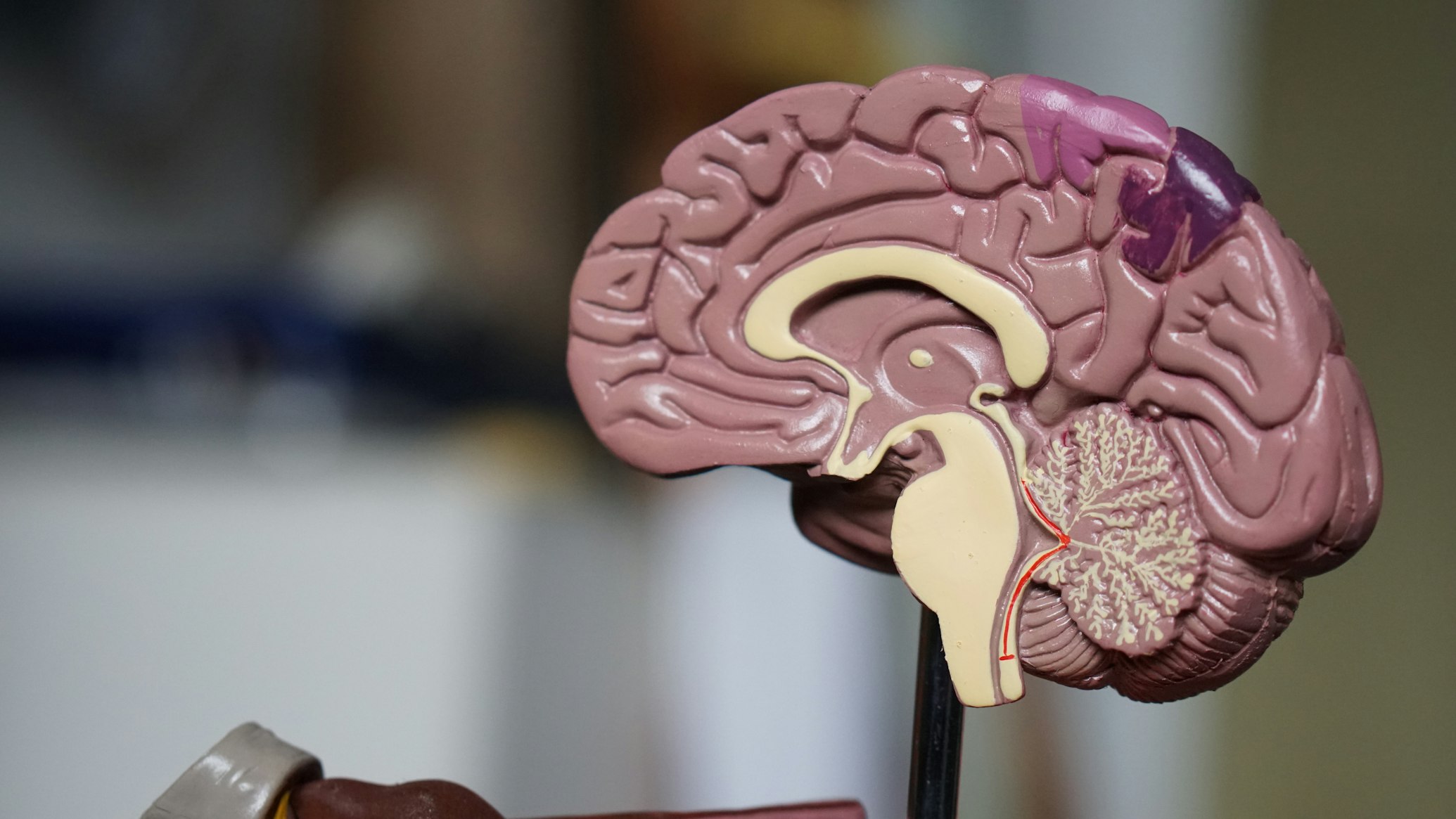
The potential impact of this technology is staggering. The Organisation for Economic Co-operation and Development (OECD) notes that synthetic biology "has the potential to become as impactful as the digital revolution" 6 . From creating sustainable alternatives to petrochemicals to engineering organisms that detect environmental hazards, synthetic biology is poised to transform nearly every industry.
The Nuts and Bolts of Biological Circuits
At its core, synthetic biology applies engineering principles to biology. Scientists design standardized genetic parts—such as promoters, genes, and regulators—that can be assembled into larger circuits with predictable functions. Much like electronic circuits use transistors and capacitors to process information, biological circuits use DNA, RNA, and proteins to sense, compute, and respond to their environment.
The foundation for this approach dates back to 1948 when Norbert Wiener introduced "cybernetics," a framework that unified the study of control and communication in biological and mechanical systems 1 . This eventually evolved into "cybergenetics," which integrates synthetic biology and control theory to regulate cellular processes at the genetic level 1 .

Standardized Parts
Modular genetic components that can be assembled like building blocks to create complex biological systems.
Information Processing
Biological circuits perform logical operations similar to electronic circuits but within living cells.
Self-Replication
Biological systems can replicate themselves, enabling scalable production and distribution.
From Lab to World: Real-World Applications
Environmental Monitoring and Remediation
Biological circuits are being deployed to address some of our most pressing environmental challenges. Researchers have engineered microorganisms that can detect heavy metals in water sources and produce visible color changes as alerts.
Other systems are designed to break down persistent pollutants like plastics and industrial chemicals into harmless components. These living sensors and cleanup crews offer a sustainable alternative to conventional monitoring and remediation methods.
"Fermentation production sites can be established anywhere with access to sugar and electricity," enabling swift responses to sudden demands like environmental cleanup 4 .
Sustainable Production and Manufacturing
The manufacturing sector is undergoing a biological transformation through synthetic biology. Companies are now using engineered microorganisms to produce everything from biodegradable plastics to sustainable textiles and food ingredients.
Unlike traditional petrochemical processes, these biological factories operate at ambient temperatures and pressures, significantly reducing energy consumption and environmental impact.
"Enzymes are being recognized as essential tools in green chemistry" with advantages over traditional chemical methods 3 .
Next-Generation Computing and Materials
Perhaps the most futuristic applications of biological circuits lie in computing and materials science. Researchers are exploring how biological systems can perform computations, with DNA serving as a storage medium and molecular circuits processing information.
Major tech companies are investing heavily in what some are calling "unbound biology"—the convergence of biological and computational systems 8 .
"Some bacteria are capable of growing arrays of tiny magnets, and select sea sponges grow glass filaments similar to human-made fiber-optic cables" 4 .
Spotlight Experiment: Precision Control of Gene Expression with the DIAL System
The Challenge of Genetic Precision
A significant hurdle in synthetic biology has been the inability to precisely control expression levels of synthetic genes after introducing them into cells. Traditional approaches often result in inconsistent protein production across a cell population, limiting the reliability of biological circuits.
MIT's Innovative Solution
To overcome this challenge, a team of MIT engineers led by Assistant Professor Katie Galloway developed a groundbreaking system called DIAL (Dynamic Inducible Adjustment of Levels) that allows researchers to establish and later edit desired protein levels for any gene circuit 5 .
Their innovative approach manipulates the physical distance between a gene and its promoter—the genetic region that initiates transcription. By inserting a longer DNA "spacer" between the promoter and the gene, they could achieve lower expression levels.

Methodology Step-by-Step
1. Circuit Design
Design synthetic genetic circuit with gene, promoter, and engineered spacer sequence.
2. Delivery
Deliver DNA segment carrying the circuit into cells using nonpathogenic viruses.
3. Initial Expression
Circuit produces target protein at baseline level determined by original spacer length.
4. Precision Adjustment
Add recombinases to excise spacer portions, increasing expression as needed.
Experimental Data
| Gene Expression Levels Achieved with Different DIAL Spacer Configurations | ||
|---|---|---|
| Spacer Configuration | Relative Expression Level | Uniformity Across Cell Population |
| Full length spacer | Low (baseline) | 85% |
| 1 excision site removed | Medium (3.2x baseline) | 89% |
| 2 excision sites removed | High (7.1x baseline) | 91% |
| 3 excision sites removed | Maximum (12.5x baseline) | 87% |
| Fibroblast to Neuron Conversion with DIAL-Controlled HRasG12V | ||
|---|---|---|
| Expression Level | Conversion Efficiency | Cell Viability |
| Low | 12% | 95% |
| Medium | 38% | 92% |
| High | 67% | 88% |
| Maximum | 74% | 85% |
"We achieved uniform and stable control. This is very exciting for us because lack of uniform, stable control has been one of the things that's been limiting our ability to build reliable systems in synthetic biology." — Katie Galloway, MIT 5
The Scientist's Toolkit: Essential Research Reagents
The advances in synthetic biology described throughout this article depend on a sophisticated collection of research reagents and tools.
DNA Assemblies
Standardized genetic parts that can be combined in modular fashion to build complex circuits.
Circuit construction; pathway engineering; logic gatesReporter Genes
Visual markers (e.g., fluorescent proteins) used to monitor gene expression and circuit activity.
Real-time monitoring; optimization; troubleshooting 5Recombinases
Enzymes that recognize specific DNA sequences and catalyze excision, insertion, or inversion of DNA segments.
DIAL system; genetic memory; state switching 5DNA Nanostructures
Artificially designed DNA assemblies that create precise structures at the nanoscale.
Membrane engineering; molecular transport; biosensing 7Cell-Free Systems
Biochemical machinery extracted from cells that enables protein synthesis without living cells.
Rapid prototyping; toxic circuit testing; educational kits 8BioLLMs
Biological large language models trained on natural DNA, RNA, and protein sequences.
Protein design; optimization; discovering new biological parts 4Programmable DNA Motifs
Designed DNA sequences that fold into specific shapes and interact with target molecules.
Live-cell membrane engineering; biosensors; organizational scaffoldsConclusion: A Biological Frontier
The development of sophisticated biological circuits represents more than just technical progress—it signals a fundamental shift in how humanity interacts with the living world. We're transitioning from simply understanding biology to programming it, creating systems that can address complex challenges from environmental degradation to sustainable manufacturing.
The DIAL system for precise genetic control exemplifies how synthetic biology is maturing from a crude manipulation tool to a precision engineering discipline. As these technologies continue to advance, they raise important questions about safety, ethics, and equitable access.
The OECD has convened global experts to identify areas where synthetic biology may have transformative impacts, emphasizing the need for thoughtful governance 6 . Similarly, initiatives like the proposed BioEconomy Safety, Security, and Technology (BESST) Partnership aim to develop evidence-based risk mitigation strategies 8 .
What makes synthetic biology particularly compelling is its potential to become what economists call a general-purpose technology—one that pervades and transforms multiple sectors, much like electricity or computing have done 4 . The coming decades will likely see biology integrated into everything from construction materials to information systems, creating a future where the boundaries between natural and engineered systems become increasingly blurred.
In this future, biological circuits may well become the invisible engines of a more sustainable and adaptable world.