Benchmarking Machine Learning in DBTL Cycles: A Framework for Accelerating Drug Discovery
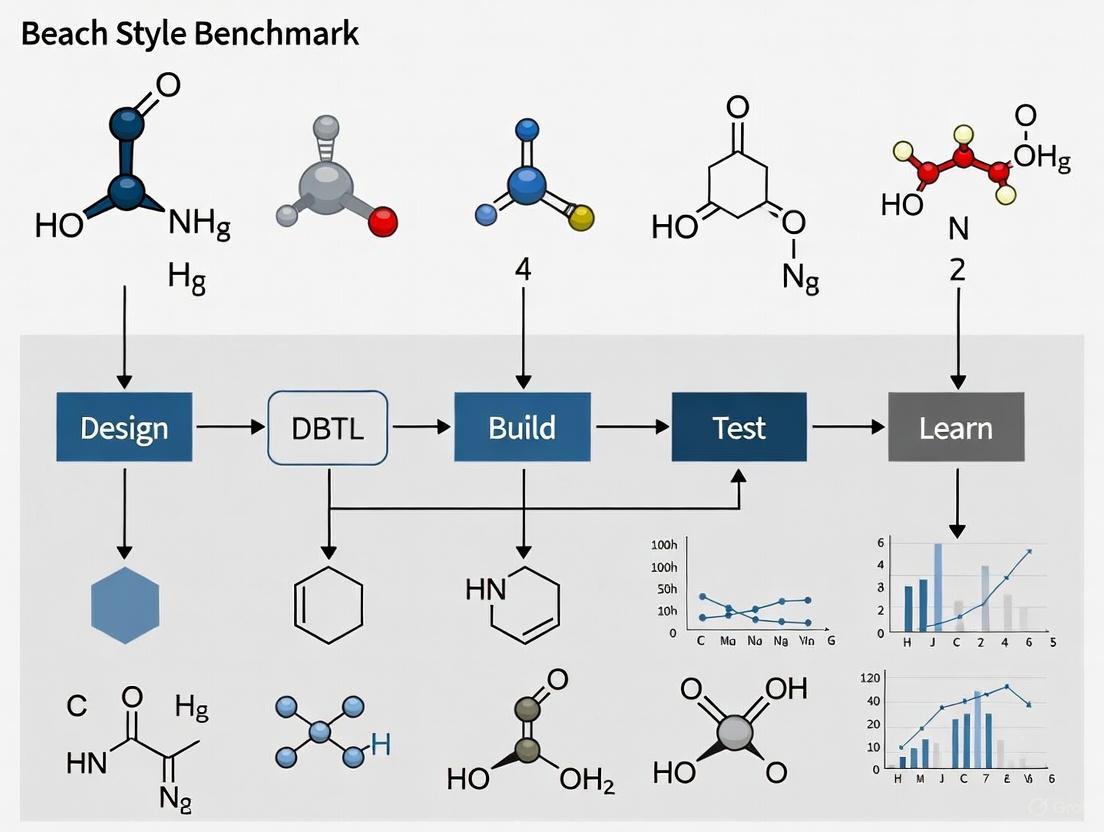
This article provides a comprehensive framework for benchmarking machine learning (ML) methods within Design-Build-Test-Learn (DBTL) cycles, tailored for researchers and professionals in drug development.
Benchmarking Machine Learning in DBTL Cycles: A Framework for Accelerating Drug Discovery
Abstract
This article provides a comprehensive framework for benchmarking machine learning (ML) methods within Design-Build-Test-Learn (DBTL) cycles, tailored for researchers and professionals in drug development. It explores the foundational shift towards data-driven bioengineering, details the practical application of ML models and validation techniques, addresses common pitfalls in benchmarking, and presents rigorous methods for comparative model analysis. By synthesizing current trends and methodologies, this guide aims to equip scientists with the knowledge to reliably benchmark ML approaches, thereby enhancing the efficiency and predictive power of DBTL cycles in biomedical research.
From DBTL to LDBT: The Foundational Shift of Machine Learning in Bioengineering
Understanding the Classic DBTL Cycle in Synthetic Biology
The Design-Build-Test-Learn (DBTL) cycle is a systematic, iterative framework central to synthetic biology, enabling the engineering of biological systems with desired functionalities [1] [2]. This guide compares the performance of the classic DBTL framework against emerging machine learning (ML)-augmented paradigms, providing experimental data and protocols for benchmarking ML methods in DBTL research.
The Classic DBTL Framework: A Foundational Benchmark
The DBTL cycle provides a structured approach for biological engineering, mirroring principles from established engineering disciplines [3]. Its four stages form a continuous loop for system optimization.
- Design: Researchers define objectives and create a conceptual plan using computational modeling, domain knowledge, and existing biological parts to specify genetic sequences or system alterations [1] [3].
- Build: The digital design is physically implemented through DNA synthesis, assembly into vectors (e.g., plasmids), and introduction into a host chassis (e.g., bacteria, yeast, or cell-free systems) [1] [2].
- Test: The constructed biological systems are experimentally characterized to measure performance against the desired objectives, often using high-throughput sequencing and functional assays [1] [4].
- Learn: Data from the test phase are analyzed to understand system behavior, identify bottlenecks, and inform revisions for the next design iteration [1] [5].
The diagram below illustrates the logical flow and iterative nature of the classic DBTL cycle.
Performance Comparison: Classic vs. ML-Augmented DBTL
The table below summarizes key performance indicators, comparing the classic DBTL cycle against modern ML-enhanced approaches. This data serves as a benchmark for evaluating ML method efficacy.
| Performance Metric | Classic DBTL Cycle | ML-Augmented DBTL Cycle |
|---|---|---|
| Primary Workflow | Reactive testing and iterative refinement [1] | Proactive, data-driven prediction [1] [5] |
| Cycle Iteration Speed | Time-consuming, often requires multiple turns [3] [5] | Dramatically accelerated via predictive design [1] [3] |
| Data Handling & Learning | Challenging to learn from big data; relies on trial-and-error [4] | Leverages large datasets for pattern recognition and predictive modeling [1] [4] |
| Predictive Power | Limited by first-principles biophysical models [1] | High; captures non-linear, high-dimensional interactions [1] [5] |
| Typical Experimental Throughput | Manual or semi-automated, lower throughput [2] [6] | Highly automated (e.g., biofoundries), enabling megascale testing [3] [7] |
| Encountered Bottlenecks | "Learning" phase is a major bottleneck [4] | "Build" and "Test" phases can become bottlenecks without automation [7] |
| Automation Dependency | Automation improves throughput but is not always integral [6] | Tight integration with automation is crucial for data generation [3] [7] |
A significant paradigm shift emerging from ML integration is the reordering of the cycle to LDBT (Learn-Design-Build-Test), where machine learning models pre-trained on vast biological datasets are used for zero-shot prediction, potentially reducing the need for multiple iterative cycles [3]. The comparative workflow illustrates this shift.
Experimental Protocols for Benchmarking ML in DBTL
To objectively compare DBTL approaches, researchers can implement the following key experiments focusing on protein engineering, a common application in synthetic biology.
Experiment 1: Benchmarking Zero-Shot Prediction for Protein Engineering
This protocol tests the ability of pre-trained ML models to design functional proteins without prior specific experimental data.
- Objective: To compare the initial success rate of ML zero-shot designs against designs generated by traditional, knowledge-based methods.
- Methodology:
- Design: Use a pre-trained protein language model (e.g., ESM, ProGen) or a structure-based tool (e.g., ProteinMPNN) to generate sequences for a target protein with desired properties (e.g., thermostability, catalytic activity). In parallel, design a control set using traditional homology modeling or site-directed mutagenesis based on literature [3].
- Build: Synthesize DNA sequences for all designed variants. Use a cell-free protein expression system for rapid, high-throughput synthesis without cloning [3].
- Test: Express and purify protein variants. Assay for the target function (e.g., enzyme activity via colorimetric assay) and stability (e.g., thermal shift assay). The cell-free system allows for direct screening of thousands of variants in plate reader format [3].
- Learn: Calculate the fraction of functional variants in the ML-designed pool versus the traditional design pool. Use the results to benchmark the predictive power of the ML model.
- Supporting Data: In one study, combining ProteinMPNN with AlphaFold for structure assessment led to a nearly 10-fold increase in design success rates for TEV protease variants compared to previous methods [3].
Experiment 2: Resolving DBTL Involution with ML-Guided Fermentation Optimization
This protocol addresses the "involution" problem where traditional DBTL cycles lead to diminished returns in complex strain engineering.
- Objective: To test if ML can incorporate multiscale bioprocess data to predict and optimize fermentation titers, breaking the involution cycle [5].
- Methodology:
- Design: Train an ML model (e.g., a Random Forest or Gradient Boosting regressor) on a historical dataset linking strain genotypes, fermentation conditions (e.g., pH, temperature, feed rate), and final product titer [5].
- Build: Engineer a new microbial strain based on insights from the model or use a set of existing production strains.
- Test: Conduct fermentations in bioreactors under conditions predicted by the ML model to be high-performing. Monitor and record the final product titer.
- Learn: Compare the achieved titer against model predictions and against titers from strains developed through classical DBTL without ML guidance. Use the new data to retrain and improve the ML model.
- Supporting Data: Integrative ML models that combine genomic and fluxomic data have been shown to accurately predict complex phenotypes like cellular growth in E. coli, outperforming traditional genome-scale metabolic models (GEMs) alone [5].
The Scientist's Toolkit: Essential Research Reagent Solutions
The table below details key reagents and platforms essential for implementing both classic and ML-augmented DBTL cycles.
| Tool / Reagent | Function in DBTL Cycle |
|---|---|
| Cell-Free Gene Expression Systems | Accelerates the Build and Test phases by enabling rapid protein synthesis without cloning; ideal for high-throughput data generation for ML training [3]. |
| Automated Biofoundries | Integrates laboratory robotics to automate Build and Test processes, dramatically increasing throughput and reproducibility for gathering large-scale data [7]. |
| Protein Language Models (e.g., ESM, ProGen) | Core to the Learn and Design phases; pre-trained on evolutionary data to predict protein function and generate novel, functional sequences via zero-shot inference [3]. |
| Structure-Based Design Tools (e.g., ProteinMPNN) | Used in the Design phase to generate amino acid sequences that will fold into a desired protein backbone structure [3]. |
| High-Throughput DNA Synthesizers | Enables the physical Build phase of large genetic variant libraries designed computationally, providing the link between digital models and physical DNA [1]. |
| CRISPR-Cas9 Genome Editing | A key Build technology for making precise, targeted modifications to an organism's genome to implement designed genetic changes [1]. |
The traditional Design-Build-Test-Learn (DBTL) cycle has long been the cornerstone framework for scientific experimentation in fields like synthetic biology and metabolic engineering. In this paradigm, researchers design biological systems, build DNA constructs, test their performance, and finally learn from the results to inform the next design iteration [3]. However, this process often requires multiple costly and time-consuming cycles to achieve desired functions, with the Build-Test phases creating significant bottlenecks [3].
A fundamental paradigm shift is now emerging: the LDBT cycle, where Machine Learning (ML) precedes the Design phase [3]. This reordering leverages the predictive power of machine learning models trained on vast biological datasets to generate more optimal initial designs, potentially reducing the number of experimental iterations needed. The LDBT approach aims to transform biological engineering into a more predictive discipline, moving closer to a "Design-Build-Work" model similar to established engineering fields [3].
Comparative Analysis: LDBT vs. Traditional DBTL Performance
The performance difference between LDBT and traditional DBTL approaches can be quantified across several key metrics, from experimental efficiency to success rates in protein and pathway engineering.
Table 1: Overall Performance Comparison of DBTL vs. LDBT Approaches
| Performance Metric | Traditional DBTL | LDBT Approach | Experimental Basis |
|---|---|---|---|
| Cycle Efficiency | Multiple iterative cycles required [3] | Potential for single-cycle success [3] | Computational analysis of cycle efficiency [3] |
| Design Success Rate | Limited by empirical iteration [3] | ~10x increase in protein design success [3] | ProteinMPNN + AlphaFold combination [3] |
| Data Utilization | Learns only from current experiment data | Leverages evolutionary and structural data [3] | Protein language models (ESM, ProGen) [3] |
| Throughput Capability | Limited by in vivo building/testing [3] | Ultra-high-throughput via cell-free testing [3] | Cell-free systems screening >100,000 variants [3] |
| Optimal Configuration Finding | Sequential optimization may miss global optimum [8] | Identifies globally optimal configurations [8] | Kinetic modeling of metabolic pathways [8] |
Table 2: Machine Learning Model Performance in Simulated DBTL Cycles
| Machine Learning Model | Performance in Low-Data Regime | Robustness to Training Bias | Robustness to Experimental Noise | Study Findings |
|---|---|---|---|---|
| Gradient Boosting | Top performer [8] | High [8] | High [8] | Effective for combinatorial pathway optimization [8] |
| Random Forest | Top performer [8] | High [8] | High [8] | Effective for combinatorial pathway optimization [8] |
| Automated Recommendation Tool | Variable performance [8] | Moderate [8] | Moderate [8] | Success in some applications (dodecanol, tryptophan) [8] |
| Bayesian Optimization | Can "get lost" in high-dimensional spaces [9] | Requires careful space definition [9] | Dependent on surrogate model [9] | Enhanced by multimodal data integration (CRESt system) [9] |
Experimental Protocols and Methodologies
Core LDBT Protocol for Protein Engineering
Objective: To engineer stabilized protein variants with enhanced catalytic activity using an LDBT approach.
Learning Phase:
- Utilize protein language models (ESM, ProGen) trained on millions of protein sequences for zero-shot prediction of beneficial mutations [3].
- Employ structure-based tools (MutCompute, ProteinMPNN) to identify mutations probable given the local chemical environment [3].
- Generate initial variant libraries computationally, prioritizing sequences with predicted stabilizing mutations and improved function [3].
Design Phase:
- Select top-ranking variants from in silico predictions for experimental testing [3].
- Design DNA sequences codon-optimized for the expression system.
Build Phase:
- Synthesize DNA templates without intermediate cloning steps [3].
- Express protein variants using cell-free transcription-translation systems, enabling rapid production (>1 g/L in <4 hours) of potentially toxic proteins without cellular constraints [3].
Test Phase:
- Measure protein stability via cDNA display, enabling ΔG calculations for hundreds of thousands of variants [3].
- Assess catalytic activity using fluorescent or colorimetric assays in microtiter plates or droplet microfluidics [3].
- Validate predictions and generate data for subsequent model refinement.
Integrated ML-Experimental Workflow for Pathway Optimization
Objective: To optimize a metabolic pathway for maximal product flux using simulated DBTL cycles and machine learning.
Workflow:
- Kinetic Model Development: Represent the metabolic pathway using ordinary differential equations (ODEs) embedded in a physiologically relevant cell model (e.g., E. coli core kinetic model) [8].
- In Silico Library Generation: Create in silico libraries by varying multiple enzyme concentrations (Vmax parameters) simultaneously to mimic combinatorial DNA library construction [8].
- Data Generation: Simulate product flux for thousands of pathway variants to create a comprehensive training dataset, accounting for metabolic burden and bioprocess conditions [8].
- Machine Learning Training: Train gradient boosting and random forest models on the simulated data to predict product flux from enzyme expression levels [8].
- Recommendation Algorithm: Implement an algorithm that uses ML model predictions to recommend new strain designs for the next DBTL cycle, balancing exploration and exploitation [8].
- Validation: Test the optimized pathway designs experimentally, feeding results back to improve model accuracy.
Multimodal Active Learning for Materials Discovery
Objective: To discover novel catalyst materials using the CRESt (Copilot for Real-world Experimental Scientists) platform that integrates diverse data sources.
Workflow:
- Knowledge Integration: The system searches scientific literature for descriptions of elements or precursor molecules relevant to the target material [9].
- Representation Learning: Creates embeddings for each recipe based on the existing knowledge base before experimentation [9].
- Search Space Reduction: Performs principal component analysis (PCA) in the knowledge embedding space to identify a reduced search space capturing most performance variability [9].
- Bayesian Optimization: Uses Bayesian optimization in the reduced space to design new experiments [9].
- Robotic Experimentation: Employs liquid-handling robots, carbothermal shock synthesis systems, and automated electrochemical workstations for high-throughput testing [9].
- Multimodal Feedback: Incorporates newly acquired experimental data, literature knowledge, and human feedback into large language models to augment the knowledge base and refine the search space [9].
Visualizing the Paradigm Shift: Workflows and Signaling Pathways
The Traditional DBTL Cycle vs. The LDBT Paradigm
Machine Learning-Driven Experimental Optimization
The Scientist's Toolkit: Essential Research Reagent Solutions
Table 3: Key Research Reagents and Platforms for LDBT Implementation
| Tool/Reagent | Function | Application in LDBT |
|---|---|---|
| Cell-Free Expression Systems | Protein biosynthesis machinery from cell lysates or purified components for in vitro transcription/translation [3]. | Rapid building and testing of protein variants without cloning; enables high-throughput screening [3]. |
| cDNA Display Platforms | Technology for linking proteins to their encoding cDNA for stability screening [3]. | Ultra-high-throughput protein stability mapping (e.g., 776,000 variants) [3]. |
| Droplet Microfluidics | Picoliter-scale reaction compartments for massively parallel screening [3]. | Screening >100,000 cell-free reactions with multi-channel fluorescent imaging [3]. |
| Protein Language Models (ESM, ProGen) | Deep learning models trained on evolutionary relationships in protein sequences [3]. | Zero-shot prediction of beneficial mutations and protein function in Learning phase [3]. |
| Structure-Based Design Tools (ProteinMPNN, MutCompute) | Deep neural networks trained on protein structures for sequence design [3]. | Designing protein variants that fold into desired structures with improved properties [3]. |
| Ax Adaptive Experimentation Platform | Open-source platform using Bayesian optimization for experiment guidance [10]. | Efficient parameter optimization in complex experimental spaces with multiple constraints [10]. |
| CRESt Platform | Integrated system combining multimodal AI with robotic experimentation [9]. | Materials discovery through literature mining, robotic synthesis, and automated characterization [9]. |
| Kinetic Modeling Frameworks (SKiMpy) | Symbolic kinetic modeling in Python for metabolic pathways [8]. | Simulating DBTL cycles and benchmarking ML methods for metabolic engineering [8]. |
The iterative process of Design-Build-Test-Learn (DBTL) cycles is a cornerstone of modern bioengineering, enabling the systematic development and optimization of biological systems. However, the "Build" and "Test" phases often create significant bottlenecks, being both time-consuming and resource-intensive. The integration of advanced machine learning (ML) is transforming this paradigm by shifting predictive capabilities earlier in the cycle. This guide focuses on two key ML concepts—zero-shot prediction and protein language models (PLMs)—which are critical for bioengineers aiming to accelerate research in areas like drug discovery and protein engineering. By enabling accurate forecasts of biological behavior without the need for experimental data on every new variant, these methods are paving the way for more efficient and intelligent bioengineering workflows. This article provides an objective comparison of leading tools in this space, detailing their performance, experimental protocols, and integration into next-generation DBTL frameworks.
Understanding Zero-Shot Prediction in Biology
In the context of bioengineering, zero-shot prediction refers to the ability of a machine learning model to accurately predict the properties or functions of a biological sequence (e.g., a protein, DNA sequence, or drug compound) without having been explicitly trained on labeled data for that specific task or entity. This is achieved by leveraging foundational knowledge learned from vast, general datasets during pre-training.
The significance for DBTL cycles is profound. A model capable of zero-shot prediction can inform the "Design" phase with reliable forecasts for novel compounds or protein variants, potentially reducing the number of iterative cycles required to reach an optimal solution. This approach directly addresses the challenge of predicting responses for novel compounds with unknown properties, a scenario where conventional supervised learning methods fail [11].
Comparative Analysis of Zero-Shot Prediction Tools
The table below summarizes key zero-shot prediction tools and their documented performance.
Table 1: Comparison of Zero-Shot Prediction Tools for Bioengineering
| Tool Name | Primary Application | Key Features | Reported Performance |
|---|---|---|---|
| ProMEP [12] [13] | Protein Mutational Effect Prediction | Multimodal (sequence & structure); MSA-free; ~160M protein training set | Spearman's correlation: 0.523 (ProteinGym benchmark); Guided engineering of TnpB (5-site mutant efficiency: 74.04% vs WT 24.66%) |
| MSDA (Zero-shot DRP) [11] | Drug Response Prediction | Multi-source domain adaptation; Predicts response for novel compounds | General performance improvement of 5-10% in preclinical screening (GDSCv2, CellMiner datasets) |
| ProGen [14] | Protein Sequence Generation | Language model trained on 280M sequences; Controllable generation via tags | Generated functional lysozymes with catalytic efficiency similar to natural ones (sequence identity as low as 31.4%) |
The Rise of Protein Language Models (PLMs)
Protein Language Models are a class of large language models adapted to the "language of life." Just as LLMs like ChatGPT learn the statistical relationships between words in human language, PLMs are trained on millions of protein sequences to learn the underlying "grammar" and "syntax" of proteins. This self-supervised pre-training allows them to build rich, internal representations of proteins that encapsulate information about evolution, structure, and function.
PLMs are revolutionizing the "Learn" phase of DBTL cycles. They can automatically extract features from massive amounts of unlabeled protein data, moving beyond traditional methods that rely on hand-designed feature extractors [15]. These models are then fine-tuned for specific downstream tasks such as predicting protein function, fitness, or structure, thereby providing a powerful, generalizable starting point for various bioengineering challenges.
Comparative Analysis of Protein Language Models
The field of PLMs is rapidly evolving, with models differing in architecture, training data, and specialization.
Table 2: Comparison of Protein Language Models (PLMs)
| Model Name | Modality | Key Architecture/Features | Primary Applications & Performance |
|---|---|---|---|
| ProteinGPT [16] | Multimodal (Sequence & Structure) | Integrates ESM-2 sequence encoder & inverse folding structure encoder; LLM backbone | Protein property Q&A; Outperforms baseline models and general-purpose LLMs on protein-specific queries. |
| ESM (Evolutionary Scale Modeling) [17] [15] | Sequence | Transformer-based; Pre-trained on UniRef databases | Protein function prediction; Widely used as a state-of-the-art sequence encoder. |
| ProMEP's Base Model [12] | Multimodal (Sequence & Structure) | Equivariant structure embedding; trained on ~160M AlphaFold structures | State-of-the-art (SOTA) performance on function annotation and protein-protein interaction tasks. |
| ProGen [14] | Sequence | Language model based on Transformer architecture; control tags | Generation of functional protein sequences across diverse families. |
Benchmarking Methodologies for DBTL Cycles
Evaluating the real-world performance of ML-guided bioengineering requires robust, standardized benchmarking. Due to the cost and time associated with physical DBTL cycles, mechanistic kinetic model-based frameworks have emerged as a valuable tool for simulation and comparison [8].
These frameworks use ordinary differential equations (ODEs) to model cellular metabolism, representing a synthetic pathway embedded within a physiologically relevant cell model. Researchers can simulate combinatorial pathway optimization by in silico perturbations of enzyme concentrations (e.g., changing Vmax parameters) and then use the simulated product flux data to benchmark different machine learning models and DBTL cycle strategies [8].
Experimental Protocol for In Silico Benchmarking
The following workflow, adapted from research in this area, outlines a general protocol for benchmarking ML models in iterative metabolic engineering [8]:
- Pathway and Model Definition: A kinetic model of a core metabolic host (e.g., E. coli) is established, integrating a synthetic pathway for a product of interest.
- Combinatorial Library Simulation: A large in silico library of strain designs is created by varying the expression levels of multiple pathway enzymes simultaneously. Each design is simulated to obtain the product flux (the fitness metric).
- Initial DBTL Cycle Sampling: An initial subset of designs is selected from the full library to simulate the first experimental "Build-Test" cycle.
- Machine Learning Model Training: The data from the initial subset is used to train various ML models (e.g., gradient boosting, random forest) to predict product flux from enzyme expression levels.
- Recommendation and Iteration: The trained model predicts the fitness of all remaining designs in the library. A recommendation algorithm selects the next set of promising strains for the subsequent simulated DBTL cycle.
- Performance Evaluation: The process is repeated over multiple cycles. The performance of different ML models is compared based on how quickly they identify the highest-producing strain designs across iterations.
Studies using this framework have found that gradient boosting and random forest models tend to outperform other methods in low-data regimes and are robust to training set biases and experimental noise [8].
The Evolving DBTL Workflow: From DBTL to LDBT
The power of zero-shot prediction and advanced PLMs is catalyzing a fundamental shift in the synthetic biology paradigm. The traditional DBTL cycle is being reordered into a new LDBT (Learn-Design-Build-Test) cycle [3].
In this new paradigm, the "Learn" phase comes first. Researchers leverage pre-trained foundational models (PLMs, zero-shot predictors) that already contain vast biological knowledge. This knowledge directly informs the "Design" of parts and systems. The subsequent "Build" and "Test" phases then serve to validate the in silico predictions, often in a single, efficient cycle. This approach brings bioengineering closer to a "Design-Build-Work" model used in other engineering disciplines [3].
The following diagram illustrates the logical relationship and flow between the traditional DBTL cycle and the emerging LDBT paradigm.
The Scientist's Toolkit: Essential Research Reagents & Platforms
Success in ML-guided bioengineering relies on a combination of computational tools and experimental platforms that enable high-throughput validation.
Table 3: Key Research Reagent Solutions and Experimental Platforms
| Item / Solution | Function in ML-Guided Bioengineering |
|---|---|
| Cell-Free Expression Systems [3] | Rapid, high-throughput protein synthesis and testing without cloning; enables megascale data generation for model training and validation. |
| AlphaFold2/3 & RoseTTAFold [18] | Provides high-accuracy protein structure predictions; used as inputs for structure-based models and for functional analysis. |
| Liquid Handling Robots & Microfluidics [3] | Automates the "Build" and "Test" phases; allows for screening of thousands to hundreds of thousands of reactions (e.g., picoliter-scale droplet assays). |
| Pre-trained Model Weights (e.g., for ESM, ProGen) | Foundational models that can be fine-tuned on specific datasets or used for zero-shot prediction, saving computational resources and time. |
| Biofoundries (e.g., ExFAB) [3] | Integrated facilities that combine automation, computation, and biology to execute DBTL/LDBT cycles at a large scale. |
Zero-shot prediction models and sophisticated Protein Language Models are no longer speculative technologies but are actively reshaping bioengineering research. As benchmarked against traditional DBTL cycles, their integration offers a clear path to drastically reduced development times and more intelligent exploration of biological design spaces. The emergence of the LDBT cycle underscores a move toward a more predictive, first-principles approach to biological design. For researchers and drug development professionals, proficiency in these tools—understanding their strengths, limitations, and appropriate application contexts—is becoming indispensable for maintaining a competitive edge. The future will likely see these models become more accurate, multimodal, and seamlessly integrated with automated experimental platforms, further closing the loop between digital design and physical biological systems.
The Critical Role of High-Quality, Megascale Data for Foundational Models
In the realm of scientific machine learning (ML), particularly for biomedical and synthetic biology applications, the quality and scale of training data fundamentally determine the predictive power and utility of resulting models. The established paradigm of Design-Build-Test-Learn (DBTL) cycles for biological engineering relies on iterative experimentation to accumulate knowledge and refine biological designs [8]. Within this framework, megascale experimental datasets—those encompassing hundreds of thousands to millions of precise measurements—provide the essential substrate for training foundational models that can accurately predict complex biological phenomena like protein folding stability and metabolic pathway behavior.
The emergence of high-throughput experimental techniques has enabled a dramatic shift from small-scale, bespoke measurements to industrial-scale data generation. This shift is critical because the complex sequence-structure-function relationships in biology inhabit high-dimensional spaces that can only be effectively navigated with vast amounts of high-fidelity data [19] [3]. This article examines the generation, quality requirements, and application of such data through the lens of DBTL cycle research, providing a comparative analysis of experimental platforms and their outputs.
Megascale Data Generation: Experimental Platforms and Protocols
cDNA Display Proteolysis for Protein Folding Stability
Overview and Principle: cDNA display proteolysis is a recently developed high-throughput method for quantifying protein thermodynamic folding stability (ΔG) at an unprecedented scale [19]. The technique leverages the principle that proteases cleave unfolded proteins more rapidly than folded ones, allowing folding stability to be inferred from protease susceptibility measurements.
Table 1: Key Characteristics of cDNA Display Proteolysis
| Characteristic | Specification |
|---|---|
| Throughput | Up to 900,000 protein domains per one-week experiment |
| Total Measurements | 1.8 million (776,000 high-quality curated ΔG values) |
| Cost | ~$2,000 per library (excluding DNA synthesis/sequencing) |
| Key Innovation | Cell-free molecular biology combined with next-generation sequencing |
| Proteases Used | Trypsin and chymotrypsin (orthogonal specificity) |
| Dynamic Range | Reproducibility R = 0.97 for trypsin, 0.99 for chymotrypsin |
Experimental Workflow: The method involves creating a DNA library encoding test proteins, which are then transcribed and translated using cell-free cDNA display, resulting in proteins covalently attached to their cDNA. These protein-cDNA complexes are incubated with varying protease concentrations, followed by pull-down of intact (protease-resistant) proteins and quantification via deep sequencing [19].
Figure 1: cDNA Display Proteolysis Workflow for Megascale Protein Stability Data
Data Quality and Validation: The resulting sequencing counts are processed through a Bayesian model incorporating single-turnover protease kinetics to infer K50 values (protease concentration at half-maximal cleavage rate) and ultimately thermodynamic ΔG values [19]. The method demonstrates high consistency with traditional purified protein measurements (Pearson correlations >0.75 across 1,188 variants of 10 proteins), establishing its reliability for quantitative biophysical measurements [19].
Kinetic Model-Based Framework for Metabolic Pathway Optimization
Overview and Principle: For metabolic pathway engineering, a mechanistic kinetic model-based framework provides a simulated environment for generating megascale data and benchmarking ML approaches [8]. This approach uses ordinary differential equations (ODEs) to describe changes in intracellular metabolite concentrations over time, with reaction fluxes modeled using kinetic mechanisms derived from mass action principles.
Simulation Framework: The framework integrates synthetic pathways into established core kinetic models of organisms like Escherichia coli, embedding the pathway within a physiologically relevant cell and bioprocess model [8]. This allows in silico perturbation of enzyme concentrations and properties to simulate their effects on metabolic flux and product formation.
Figure 2: Kinetic Modeling Framework for Metabolic Pathway Simulation
Applications for ML Benchmarking: This simulated framework enables systematic testing of ML methods over multiple DBTL cycles without the cost and time constraints of physical experiments [8]. Researchers have used this approach to demonstrate that gradient boosting and random forest models outperform other methods in low-data regimes and remain robust against training set biases and experimental noise [8].
Comparative Analysis of Megascale Data Generation Platforms
Table 2: Platform Comparison for Megascale Biological Data Generation
| Platform | Primary Application | Scale | Key Advantages | Validation Metrics |
|---|---|---|---|---|
| cDNA Display Proteolysis [19] | Protein folding stability measurement | 776,000 high-quality ΔG measurements | Fast (1 week), accurate, uniquely scalable | R=0.94 between trypsin/chymotrypsin; >0.75 correlation with traditional methods |
| Kinetic Modeling Framework [8] | Metabolic pathway optimization | Virtually unlimited in silico designs | Enables DBTL strategy comparison; models complex physiology | Captures non-intuitive pathway behaviors; embedded in bioprocess context |
| Cell-Free Expression Systems [3] | Protein and pathway prototyping | >100,000 reactions via microfluidics | Rapid (>1g/L protein in <4h); scalable pL-kL; customizable | Successful AMP design (6/500 candidates); 20-fold pathway improvement |
The Scientist's Toolkit: Essential Research Reagents and Platforms
Table 3: Research Reagent Solutions for Megascale Experimentation
| Reagent/Platform | Function | Application Context |
|---|---|---|
| Cell-Free cDNA Display [19] | In vitro protein synthesis with cDNA linkage | Enables protein stability mapping via display technology |
| Orthogonal Proteases (Trypsin/Chymotrypsin) [19] | Cleave at different amino acid residues | Provides complementary stability measurements; controls for protease specificity |
| DropAI Microfluidics [3] | Encapsulates reactions in picoliter droplets | Enables ultra-high-throughput screening (>100,000 reactions) |
| DNA Library Synthesis [19] | Generates diverse variant libraries | Creates input material for megascale screening experiments |
| Next-Generation Sequencing [19] | Quantifies protein survival post-proteolysis | Provides digital readout for millions of protein variants |
| Mechanistic Kinetic Models [8] | Simulates metabolic pathway dynamics | Generates training data for ML; predicts pathway behavior |
Data Quality Framework for ML-Ready Biological Data
The utility of megascale datasets for training foundational models depends critically on adherence to data quality dimensions. The "Six Dimensions" model of data quality provides a framework for evaluation [20]:
- Completeness – Comprehensive coverage of sequence space (e.g., all single amino acid variants) [19]
- Accuracy – High correlation with gold-standard measurements (R>0.75 with traditional methods) [19]
- Validity – Conformance to expected biophysical parameters and model constraints [20]
- Consistency – Reproducibility between experimental replicates (R=0.97-0.99) and orthogonal methods [19]
- Timeliness – Rapid generation compatible with iterative DBTL cycles (900,000 measurements/week) [19]
- Uniqueness – Avoidance of duplicate measurements that bias training datasets [20]
Databricks Lakehouse Platform provides technological infrastructure for implementing this quality framework through features like Lakehouse Monitoring for quality metrics, Delta Live Tables for data pipeline reliability, and Unity Catalog for lineage tracking [20].
Transforming DBTL Cycles Through Megascale Data and ML
Enhanced Learning Through Expanded Experimental Scale
The massive scale of modern biological datasets fundamentally transforms the Learning phase of DBTL cycles. Where traditional approaches might examine dozens or hundreds of variants, megascale experiments generate sufficient data to train complex ML models that capture subtle, non-intuitive relationships in biological systems [8]. For example, the protein stability dataset of 776,000 measurements enables quantification of environmental factors affecting amino acid fitness, identification of thermodynamic couplings between protein sites, and analysis of evolutionary amino acid usage patterns [19].
The Emergence of LDBT: Learning-Driven Design
The accumulation of megascale datasets, combined with advanced ML models, is prompting a paradigm shift from Design-Build-Test-Learn (DBTL) to Learn-Design-Build-Test (LDBT) cycles [3]. In this new framework, Learning precedes Design through:
- Protein language models (ESM, ProGen) trained on evolutionary relationships [3]
- Structure-based design tools (ProteinMPNN, MutCompute) enabling zero-shot prediction [3]
- Hybrid physico-ML approaches combining statistical power with physical principles [3]
This reordering allows researchers to leverage prior knowledge embedded in pre-trained models, potentially reducing the number of experimental cycles required to achieve functional designs [3].
Figure 3: LDBT Cycle with Learning-First Approach
The generation and utilization of high-quality, megascale datasets represent a critical enabling capability for developing foundational models in biology. As experimental technologies continue to advance in throughput and accuracy, and as ML methodologies become increasingly sophisticated at extracting insights from complex biological data, the synergy between large-scale experimentation and computational modeling will drive accelerated progress in synthetic biology, metabolic engineering, and drug development. The integration of these approaches within structured DBTL (or LDBT) frameworks provides a systematic methodology for navigating the vast design spaces of biological systems, ultimately reducing the time and cost required to develop novel biological solutions to pressing human challenges.
Methodologies and Real-World Applications of ML in DBTL Workflows
In the rapidly evolving field of biological data science, selecting the optimal machine learning (ML) approach is pivotal for accelerating research and development cycles, particularly within the Design-Build-Test-Learn (DBTL) framework. The paradigm is even shifting towards LDBT, where learning precedes design, underscoring the critical role of predictive modeling [3] [21]. This guide provides a comprehensive comparison between ensemble and single-model ML approaches, offering researchers, scientists, and drug development professionals an evidence-based foundation for model selection. We synthesize recent findings and benchmark studies to delineate the performance, applicability, and practical implementation of these strategies in biological prediction tasks.
The table below summarizes the core comparative insights between ensemble and single-model approaches, drawing on recent benchmark studies across various biological domains.
Table 1: High-Level Comparison of Ensemble and Single-Model Approaches
| Aspect | Ensemble Models | Single-Model Approaches |
|---|---|---|
| Average Predictive Accuracy | Generally higher, with documented accuracy up to 95.4% in classification tasks [22]. | Variable; can be high but often lower than ensembles in head-to-head comparisons [23]. |
| Prediction Error | Lower, as error is reduced by leveraging the "Diversity Prediction Theorem" [23]. | Typically higher for a given model, as it lacks error-cancellation from diverse predictions [23]. |
| Robustness & Stability | High; produces more stable predictive features and is resilient to overfitting [22] [24]. | Can be susceptible to overfitting and less stable across different prediction scenarios [22]. |
| Data Integration Prowess | Excels at integrating multi-modal, multi-omics data (e.g., genomics, transcriptomics) [24]. | Often struggles with heterogeneous data types; simpler models may require extensive pre-processing [25]. |
| Theoretical Foundation | Supported by the "Diversity Prediction Theorem" and the "No Free Lunch Theorem" [23]. | Limited by the "No Free Lunch Theorem", which states no single model is best for all problems [23]. |
| Computational Cost | Higher during training and prediction due to multiple model runs [25]. | Lower, making them suitable for resource-constrained settings or specific, well-defined tasks [25]. |
| Interpretability | Can be complex to interpret ("black box"), though methods like feature importance exist [23]. | Often simpler to interpret, especially linear models or decision trees [25]. |
| Ideal Use Case | Integrating diverse data types for robust clinical outcome prediction or complex trait analysis [24] [23]. | Efficiently adapting to specific datasets with limited computational resources or for simpler tasks [25]. |
Performance and Benchmarking Data
Quantitative benchmarks from recent studies provide compelling evidence for the performance advantages of ensemble methods.
Accuracy and Error Metrics in Direct Comparisons
In a landmark study on genomic prediction for crop breeding, an ensemble-average model was benchmarked against six individual genomic prediction models for traits like "days to anthesis" and "tiller number." The ensemble approach consistently increased prediction accuracies and reduced prediction errors compared to the best individual models [23]. The performance gain is quantitatively explained by the Diversity Prediction Theorem, where the ensemble's squared error equals the average squared error of the individual models minus the diversity of their predictions [23].
Another study on biomedical signal classification achieved a state-of-the-art classification accuracy of 95.4% by employing an ensemble framework that integrated Random Forest, Support Vector Machines (SVM), and Convolutional Neural Networks (CNNs). This hybrid model outperformed its individual components by effectively mitigating overfitting and leveraging the strengths of each algorithm [22].
Multi-Omics Data Integration Performance
Ensemble methods have proven particularly powerful for integrating multi-class, multi-omics data for clinical outcome prediction. A 2025 benchmarking study showed that ensemble models like PB-MVBoost and AdaBoost with soft vote were the best-performing models for integrating complementary omics modalities, achieving an Area Under the Receiver Operating Curve (AUC) of up to 0.85 in predicting outcomes for hepatocellular carcinoma, breast cancer, and irritable bowel disease. The study concluded that these ensembles produced more stable predictive features than models using individual data modalities or simple data concatenation [24].
Table 2: Benchmark Performance in Multi-Omics Clinical Prediction
| Study Focus | Best-Performing Ensemble Model(s) | Key Performance Metric | Comparison Baseline |
|---|---|---|---|
| Multi-omics clinical outcome prediction [24] | PB-MVBoost, AdaBoost (Soft Vote) | AUC up to 0.85 | Simple concatenation of modalities and other individual models. |
| Biomedical signal classification from spectrograms [22] | Ensemble of RF, SVM, and CNN | Classification Accuracy: 95.4% | Individual Random Forest, SVM, and CNN classifiers. |
| Genomic prediction for crop breeding [23] | Naïve Ensemble-Average | Higher prediction accuracy, lower prediction error | Six individual genomic prediction models (e.g., Bayesian models, RR-BLUP). |
Theoretical Foundations: Why Ensembles Work
The superiority of ensemble approaches is not merely empirical; it is grounded in robust theoretical principles.
The No Free Lunch Theorem: This theorem posits that no single ML model can be universally superior across all possible problems. When averaged over all scenarios, the performance of all models is equivalent [23]. This fundamentally explains why relying on a single "best" model is a flawed strategy for the diverse and unpredictable challenges in biological research.
The Diversity Prediction Theorem: This theorem provides the mathematical backbone for ensembles. It states that the error of an ensemble is equal to the average error of its individual models minus the diversity of their predictions [23]. By combining models that make different types of errors, the ensemble's collective prediction cancels out individual mistakes, leading to a lower overall error. This is the core mechanism behind the success of ensembles.
Experimental Protocols and Workflows
Implementing a successful ML strategy requires a structured workflow, from data preparation to model validation.
Protocol for Ensemble Construction in Biomedical Signal Classification
The 95.4%-accurate ensemble model for classifying percussion and palpation signals followed a rigorous protocol [22]:
- Signal Preprocessing and Feature Extraction: Raw biological signals were first converted into time-frequency representations (spectrograms) using the Short-Time Fourier Transform (STFT). This step captures crucial temporal and spectral properties for analysis.
- Model Selection and Training: Three distinct classifiers were trained independently:
- Convolutional Neural Network (CNN): To extract spatial and hierarchical features from the spectrogram images.
- Support Vector Machine (SVM): To handle high-dimensional data and find optimal separating hyperplanes.
- Random Forest (RF): An ensemble method itself, used to reduce overfitting through its committee of decision trees.
- Ensemble Integration: Predictions from the CNN, SVM, and Random Forest were combined into a final meta-prediction. This leverages the complementary strengths of each model, where one model's weakness is compensated by another's strength.
Protocol for Ensemble Genomic Prediction
The study demonstrating enhanced genomic prediction in teosinte plants detailed the following methodology [23]:
- Data Preparation: A population of Recombinant Inbred Lines (RILs) was genotyped with single nucleotide polymorphisms (SNPs) and phenotyped for complex traits. Quality control and imputation were performed to handle missing marker calls.
- Individual Model Training: Six different genomic prediction models were trained separately. These models represented a diverse set of statistical approaches to capture both additive and non-additive genetic effects.
- Naïve Ensemble-Averaging: A straightforward ensemble was constructed by averaging the predicted phenotypes from all six individual models. This equal-weighting approach is simple yet powerful, as dictated by the Diversity Prediction Theorem.
- Validation: The ensemble's prediction accuracy was compared against each individual model using cross-validation techniques.
The following diagram illustrates the core logical relationship and workflow of building an ensemble model based on the Diversity Prediction Theorem.
The Scientist's Toolkit: Key Research Reagents and Solutions
The following table details essential computational tools and materials referenced in the featured studies.
Table 3: Key Research Reagent Solutions for ML in Biology
| Item / Solution Name | Function / Application | Relevant Context |
|---|---|---|
| Cell-Free Transcription-Translation (TX-TL) Systems [3] [21] | Rapid, high-throughput testing of genetic designs without using live cells. Accelerates the "Build-Test" phase of DBTL cycles. | Synthetic biology, metabolic engineering, protein engineering. |
| Short-Time Fourier Transform (STFT) [22] | Converts raw, time-series biomedical signals (e.g., from percussion) into spectrograms for machine learning analysis. | Biomedical signal processing and classification. |
| scFMs (Single-Cell Foundation Models) [25] [26] | Large-scale pretrained models (e.g., Geneformer, scGPT) for analyzing single-cell omics data. Can be adapted to various downstream tasks. | Single-cell genomics, cancer research, drug sensitivity prediction. |
| UTR Designer [27] | A computational tool for designing ribosome binding site (RBS) sequences to fine-tune gene expression in synthetic biology. | Rational strain engineering, metabolic pathway optimization. |
| Voting Ensemble / Meta Learner [24] | A class of ensemble methods that combine predictions from multiple base models via voting or a meta-classifier. | Multi-omics data integration, clinical outcome prediction. |
| Random Forest (RF) [22] | An ensemble learning method that uses many decision trees and is robust against overfitting. | General-purpose classification and regression, biomedical signal processing. |
| Liquid Biopsy & ctDNA Analysis [28] | A non-invasive method to obtain tumor-derived genetic material from blood or CSF for diagnostic and monitoring purposes. | Neuro-oncology, cancer diagnostics, minimal residual disease (MRD) detection. |
Integrated Workflow: The LDBT Cycle with ML Selection
The choice of ML model is deeply embedded in the modern synthetic biology workflow. The emerging LDBT (Learn-Design-Build-Test) cycle places learning first, where machine learning models pre-trained on vast biological datasets inform the initial design [3] [21]. Ensemble models are particularly suited for the "Learn" phase when integrating diverse, multi-modal data. The "Test" phase is increasingly accelerated by high-throughput platforms like cell-free systems, which generate the large-scale, high-quality data required to train and validate both single and ensemble models effectively [3]. This creates a powerful, closed-loop system where experimental testing continuously improves the predictive ML models, which in turn guide more effective designs.
The diagram below illustrates this integrated, iterative cycle, highlighting the role of ML and rapid testing.
The evidence strongly indicates that ensemble machine learning approaches generally offer superior performance, robustness, and data integration capabilities for complex biological prediction tasks within DBTL research cycles. Their foundation in the Diversity Prediction Theorem makes them a powerful strategy for navigating the "No Free Lunch" reality of data science.
However, single-model approaches remain relevant for specific, well-defined tasks, particularly under computational resource constraints [25]. The future of ML in biology is not a strict choice between one or the other but will involve intelligent model selection ecosystems. As seen in single-cell foundation models, the trend is towards leveraging large, pre-trained models as powerful feature extractors, upon which simpler, task-specific models or ensembles can be efficiently built [25] [26]. This hybrid strategy, combined with the accelerating power of high-throughput experimental testing, promises to further compress the DBTL cycle and drive the next wave of discovery in biomedicine and biotechnology.
Accelerating the Build and Test Phases with Cell-Free Expression Systems
In synthetic biology and metabolic engineering, the Design-Build-Test-Learn (DBTL) cycle is a foundational framework for engineering biological systems. This iterative process involves designing genetic constructs, building them in a host organism, testing their performance, and learning from the data to inform the next design cycle [3] [8]. However, the traditional DBTL cycle faces significant bottlenecks, particularly in the Build and Test phases where molecular cloning, cell-based expression, and functional characterization can require weeks of experimental work. These temporal constraints severely limit the iteration speed necessary for rapid biological engineering and the generation of large datasets required for training robust machine learning models [3] [27].
Cell-free expression systems (CFES) have emerged as a transformative technology for accelerating the Build and Test phases. Also known as cell-free protein synthesis (CFPS), this technology utilizes the transcriptional and translational machinery extracted from cells to produce proteins in vitro without the constraints of living organisms [29] [30]. By decoupling protein production from cell viability, CFES enables rapid protein synthesis in hours rather than days, direct access to the reaction environment, and high-throughput implementation [31] [29]. This review provides a comprehensive comparison of how cell-free platforms are revolutionizing DBTL cycles by dramatically accelerating build and test phases, with specific focus on benchmarking machine learning applications in biomedical research and drug development.
Technical Comparison: Cell-Free vs. Cell-Based Expression Systems
Key Performance Metrics and Experimental Outcomes
Cell-free expression systems offer distinct advantages and some limitations compared to traditional cell-based methods. The table below summarizes key performance metrics based on current experimental data.
Table 1: Performance comparison between cell-free and cell-based expression systems
| Parameter | Cell-Free Expression Systems | Traditional Cell-Based Systems |
|---|---|---|
| Expression Timeline | 4-24 hours [29] [30] | 1-7 days (including cell growth) [29] |
| Throughput Capability | High (pL to kL scale); >100,000 reactions in parallel [3] | Limited by cell culture requirements |
| Toxic Protein Production | Suitable [32] [29] | Often problematic |
| Non-Canonical Amino Acid Incorporation | Straightforward [30] | Complex, limited by cell viability |
| Open System Accessibility | Direct manipulation possible [30] | Restricted by cell membranes |
| Automation Compatibility | High (compatible with microfluidics) [3] | Moderate |
| Typical Protein Yield | >1 g/L in <4 hours demonstrated [3] | Variable, depends on optimization |
Applications in Pharmaceutical Development
The unique advantages of CFES have enabled specific applications in drug discovery and development:
- Antibody Discovery: Accelerated workflows for synthesizing and screening antigen-binding fragments (sdFab) against targets like SARS-CoV-2 spike protein within days instead of weeks [30].
- Membrane Protein Production: Successful synthesis of functionally active G protein-coupled receptors (GPCRs) – targets for 34% of FDA-approved drugs – which are often challenging to express in cellular systems [30].
- Vaccine Development: Rapid prototyping of virus-like particles (VLPs) and glycoconjugate vaccines with improved stability characteristics [30].
- Antibody-Drug Conjugates: Site-specific conjugation of cytotoxic payloads to antibodies via non-canonical amino acids for targeted cancer therapies [30].
Experimental Protocols for DBTL Integration
Core Methodology: Cell-Free System Preparation and Operation
The fundamental workflow for implementing CFES in DBTL cycles involves several key stages, with variations depending on the specific application requirements.
Table 2: Key research reagent solutions for cell-free expression systems
| Reagent Component | Function | Examples & Notes |
|---|---|---|
| Cell Extract | Provides transcriptional/translational machinery | E. coli S30 extract, wheat germ extract, HEK293 lysate [29] [30] |
| Energy Source | Fuels phosphorylation and polymerization | Phosphoenolpyruvate, creatine phosphate, or glycolytic intermediates [30] |
| Template DNA | Encodes gene of interest | Linear expression templates (LETs) or plasmids; LETs bypass cloning [30] |
| Amino Acid Mixture | Building blocks for translation | All 20 canonical amino acids; may include non-canonical variants [30] |
| Cofactors | Enzyme activators | Mg²⁺, K⁺, NH₄⁺ ions [29] |
| Detection Components | Enable functional testing | Fluorescent dyes, split-protein systems for complementation assays [30] |
Protocol 1: Basic E. coli-Based CFPS Setup
- Extract Preparation: Grow E. coli cells to mid-log phase in rich medium (e.g., 2xYT) to maximize ribosome content. Harvest cells by centrifugation and disrupt via homogenization or sonication. Clarify lysate by centrifugation and perform runoff reaction to reduce endogenous mRNA [29].
- Reaction Assembly: Combine cell extract with energy solution (e.g., 3mM ATP, GTP, CTP, UTP), amino acid mixture (1mM each), cofactors (10-15mM Mg²⁺, 100-150mM K⁺), DNA template (10-50nM), and energy-regenerating system (e.g., phosphoenolpyruvate) [29] [30].
- Incubation and Monitoring: Conduct reaction at 30-37°C for 2-24 hours. Monitor protein synthesis in real-time if using fluorescent reporters [30].
- Analysis: Assess protein yield via SDS-PAGE, western blot, or activity assays. For high-throughput applications, use fluorescence-based methods [30].
Protocol 2: High-Throughput Screening with Microfluidics
- Miniaturization: Utilize droplet microfluidics to create picoliter-scale reaction chambers [3].
- Parallelization: Implement platforms like DropAI to screen >100,000 conditions simultaneously [3].
- Detection: Integrate multi-channel fluorescent imaging for real-time monitoring [3].
- Data Collection: Couple with automated image analysis and machine learning for pattern recognition [3].
Case Study: Dopamine Production Optimization
A knowledge-driven DBTL cycle successfully optimized dopamine production in E. coli by integrating cell-free and cell-based approaches:
- In Vitro Prototyping: Tested different relative enzyme expression levels for HpaBC and Ddc in cell lysate systems to identify optimal ratios without the constraints of cellular metabolism [27].
- In Vivo Translation: Translated optimal expression ratios to engineered E. coli strains through ribosomal binding site (RBS) engineering [27].
- Results: Achieved dopamine production of 69.03 ± 1.2 mg/L (34.34 ± 0.59 mg/g biomass), a 2.6 to 6.6-fold improvement over previous in vivo production systems [27].
Workflow Visualization: Integrating CFES into Machine Learning-Enhanced DBTL Cycles
The integration of cell-free systems with machine learning creates a powerful framework for biological engineering. The following workflow diagrams illustrate this synergistic relationship.
Figure 1: The accelerated LDBT cycle powered by cell-free expression systems and machine learning. This paradigm reshapes the traditional DBTL cycle by placing Learning first, enabled by pre-trained models that can make zero-shot predictions, while CFES dramatically accelerates the Build and Test phases.
Figure 2: Machine learning and CFPS integration for therapeutic protein development. ML models generate designs which are rapidly tested in CFPS platforms, creating large datasets that further refine the models in an iterative improvement cycle.
Quantitative Benchmarking Data
Performance Metrics in Published Studies
The effectiveness of CFES in accelerating DBTL cycles is demonstrated through concrete experimental data from recent studies.
Table 3: Quantitative benchmarking of cell-free expression in research applications
| Application | Experimental Scale | Time Savings | Key Outcomes | Reference |
|---|---|---|---|---|
| Antimicrobial Peptide Engineering | 500 variants validated from 500,000 surveyed computationally | Weeks to days | 6 promising AMP designs identified | [3] |
| Antibody Discovery | High-throughput sdFab screening | Single 3-day experiment | Effective antibody sequences against SARS-CoV-2 | [30] |
| Enzyme Engineering | 776,000 protein variants | Ultra-high-throughput mapping | ΔG calculations for stability optimization | [3] |
| Metabolic Pathway Optimization | 20-fold improvement in product titer | Accelerated prototyping | 3-HB production increased in Clostridium | [3] |
| Deep Screening of scFVs | Library diversity 4×10⁶ | Traditional methods require larger libraries | 5200-fold increased binding affinity | [30] |
Impact on Machine Learning Model Training
The massive datasets generated through CFES-enabled high-throughput testing directly enhance machine learning model performance:
- Data Volume: CFPS enables experimental testing of >100,000 protein variants, providing the mega-scale datasets required for training robust ML models [3].
- Model Accuracy: When deep-learning sequence generation was paired with CFPS validation, researchers successfully engineered enzymes with improved catalytic activity and stability [3].
- Zero-Shot Prediction Improvement: CFPS-generated datasets have been extensively utilized to benchmark and improve zero-shot predictors for protein folding and function [3].
Cell-free expression systems represent a transformative technology for accelerating the Build and Test phases of DBTL cycles in biomedical research. By enabling rapid, high-throughput protein synthesis and characterization, CFES directly addresses the critical bottleneck in iterative biological engineering. The integration of these systems with machine learning approaches creates a powerful synergy – CFPS generates the large-scale experimental data required for training accurate models, while ML provides intelligent design predictions that can be rapidly validated in cell-free platforms. This virtuous cycle is reshaping the landscape of synthetic biology, drug discovery, and enzyme engineering, moving the field closer to a predictive engineering discipline where designed biological systems work as intended on the first or second iteration. As both CFES and ML technologies continue to advance, their integration promises to further accelerate the pace of biological innovation and therapeutic development.
The paradigm of Design-Build-Test-Learn (DBTL) has long been the cornerstone of biological engineering and drug discovery. This iterative cycle involves designing biological constructs, building them, testing their performance, and learning from the data to inform the next design iteration [3]. However, the integration of machine learning (ML) is fundamentally reshaping this workflow, accelerating its pace, and enhancing its predictive power. The application of ML now spans the entire drug development pipeline, from the initial design of novel drug molecules to the optimization of late-stage clinical trials. This guide provides a comparative analysis of the performance of various applied ML methods, frameworks, and platforms, benchmarking them within the modern DBTL cycle context to offer an objective resource for researchers and drug development professionals.
A significant shift is the move from a traditional DBTL cycle to an "LDBT" (Learn-Design-Build-Test) cycle, where machine learning and prior knowledge precede the design phase [3]. This is further powered by technologies like cell-free expression systems, which accelerate the Build and Test phases by enabling rapid, high-throughput synthesis and testing of proteins without the constraints of living cells [3]. The diagram below illustrates this evolved, data-driven cycle.
ML in Molecular Design and Optimization
Key Generative Models and Performance Benchmark
In molecular design, generative artificial intelligence (GenAI) models are used to create novel, synthesizable chemical structures with desired properties. Different model architectures offer distinct advantages and are suited for specific tasks.
Table 1: Comparative Performance of Key Generative AI Models in Molecular Design
| Model Architecture | Key Principle | Strengths | Common Applications | Example Performance Notes |
|---|---|---|---|---|
| Variational Autoencoder (VAE) [33] [34] | Encodes input into a latent distribution; decodes to generate new data. | Smooth, continuous latent space for interpolation; disentangled representations allow property editing. | Inverse molecular design; exploring chemical space. | Integrated with Bayesian optimization for efficient candidate identification [34]. |
| Generative Adversarial Network (GAN) [33] [34] | A generator and discriminator network are trained adversarially. | Can produce highly realistic, novel molecules. | Image synthesis; molecular generation. | Can suffer from mode collapse (limited diversity of outputs) [34]. |
| Transformer [34] | Uses self-attention mechanisms to process sequential data. | Captures long-range dependencies in data; highly adaptable. | Generating molecules represented as text (e.g., SMILES); predicting properties. | Excels in tasks like goal-directed generation and molecular optimization [34]. |
| Flow-based Models [33] | Learns a series of invertible transformations to map data to a latent distribution. | Explicitly models the probability density function, enabling exact likelihood calculation. | Molecular generation and efficient computation of properties. | -- |
| Diffusion Models [34] | Progressively adds noise to data and learns to reverse the process. | High-quality generation; stability in training. | High-quality molecular generation; refining structures against target properties. | GaUDI framework achieved 100% validity in generated structures for organic electronics [34]. |
Optimization Strategies for Enhanced Molecular Design
To steer these generative models toward molecules with optimal drug-like properties, several optimization strategies are employed:
- Reinforcement Learning (RL): An agent is trained to make sequential decisions (e.g., adding atoms) to build a molecule, receiving rewards based on achieving target properties like drug-likeness, binding affinity, and synthetic accessibility [34]. For example, GraphAF combines flow-based models with RL fine-tuning for targeted optimization [34].
- Property-Guided Generation: This integrates property prediction directly into the generation process. The Guided Diffusion for Inverse Molecular Design (GaUDI) framework combines a property prediction network with a diffusion model to optimize for single or multiple objectives simultaneously [34].
- Bayesian Optimization (BO): Particularly useful when evaluating candidates is computationally expensive (e.g., docking simulations), BO builds a probabilistic model to guide the search for optimal molecules in a latent or chemical space [34].
Experimental Benchmarking: The Lo-Hi Framework
Evaluating ML models for molecular property prediction requires realistic benchmarks. The Lo-Hi benchmark provides a practical framework based on real-world drug discovery stages [35]:
- Hit Identification (Hi): Focuses on identifying active compounds from large, diverse chemical libraries.
- Lead Optimization (Lo): Focuses on optimizing a smaller set of candidate compounds for properties like potency and selectivity.
This benchmark addresses limitations of earlier benchmarks (like MoleculeNet) which were found to be "unrealistic and overoptimistic" [35]. It employs a novel molecular splitting algorithm (Balanced Vertex Minimum k-Cut) to create more challenging and realistic test scenarios, providing a more reliable measure of model performance in practical settings [35].
Case Study: AI-Driven Platform Performance
Several AI-driven platforms have demonstrated the real-world impact of these technologies by advancing novel drug candidates into clinical trials.
Table 2: Performance Metrics of Leading AI-Driven Drug Discovery Platforms (2025 Landscape)
| Company / Platform | Core AI Approach | Key Achievements & Clinical Candidates | Reported Efficiency Gains |
|---|---|---|---|
| Exscientia [36] | Generative AI for small-molecule design; "Centaur Chemist" integrating human expertise. | Multiple clinical candidates, including the first AI-designed drug (DSP-1181 for OCD) to enter Phase I. | Design cycles ~70% faster, requiring 10x fewer synthesized compounds than industry norms. A CDK7 inhibitor candidate was identified after synthesizing only 136 compounds. |
| Insilico Medicine [36] | Generative AI for target discovery and molecule design. | AI-designed drug for Idiopathic Pulmonary Fibrosis (IPF) progressed from target to Phase I in 18 months. | Demonstrated rapid transition from target identification to clinical candidate. |
| BenevolentAI [37] [36] | Knowledge-graph-driven target discovery and validation. | Identified and validated novel targets for IPF and chronic kidney disease (in collaboration with AstraZeneca). | AI used to analyze scientific literature and biomedical data to hypothesize novel disease targets. |
| Schrödinger [36] | Physics-based simulations combined with ML. | Multiple partnered and internal programs in clinical stages. | Platform aims to predict binding affinity and molecular properties with high accuracy. |
ML in Clinical Trial Planning and Optimization
The application of ML extends significantly into clinical development, aiming to de-risk trials and improve their efficiency and success rates.
AI Applications Across the Clinical Trial Workflow
Machine learning algorithms analyze large, complex datasets—including electronic health records, past trial data, and real-world evidence—to optimize key aspects of trial planning and execution [37] [38]. The following diagram maps the primary AI use cases onto the clinical trial lifecycle.
Quantitative Impact of AI on Clinical Trial Efficiencies
The integration of AI and ML tools in clinical trial management is yielding measurable improvements in performance and timelines.
Table 3: Reported Impact of AI/ML Solutions on Clinical Trial Operations
| Application Area | AI Function | Reported Outcome / Performance Gain |
|---|---|---|
| Study Timelines [39] | Integrated data insights for faster decision-making. | Removes 50% of study timeline "whitespace". |
| Site Selection [38] | Predictive analytics to identify high-performing sites. | Improved identification of top-enrolling sites by 30-50%; accelerated enrollment by 10-15%. |
| Contracting & Negotiations [39] | Automated issue detection and mitigation. | Negotiations completed almost a month faster. |
| Patient Enrollment [39] | Early detection of enrollment risk at clinical sites. | Enables proactive creation of action plans before issues are manually apparent. |
A major challenge in traditional trials is patient recruitment, where an estimated 40% of sites fail to enroll a single patient and nearly 90% of trials experience significant delays due to recruitment issues [38]. AI tools directly address this by analyzing site-level data to predict enrollment potential and flag at-risk sites early [38] [39]. Furthermore, AI can enhance trial diversity by identifying investigators and clinics in underserved areas that have access to more diverse patient pools [38].
The effective application of ML in drug development relies on a foundation of high-quality data, software tools, and experimental systems.
Table 4: Essential Research Reagents and Resources for ML-Driven Drug Development
| Item / Resource | Type | Primary Function in ML-DBTL Cycles |
|---|---|---|
| ZINC Database [33] | Chemical Database | A source of ~2 billion purchasable compounds for virtual screening and training generative models on "drug-like" chemical space. |
| ChEMBL Database [33] | Bioactivity Database | A curated resource of ~1.5M bioactive molecules with experimental measurements, used for training predictive models. |
| Cell-Free Expression System [3] | Experimental Platform | Accelerates the "Build" and "Test" phases by enabling rapid, high-throughput protein synthesis and testing without cloning into living cells. |
| ProteinMPNN [3] | Software Tool | A deep learning-based tool for designing protein sequences that fold into a desired backbone structure, improving design success rates. |
| AlphaFold2 [33] | Software Tool | Provides highly accurate protein 3D structure predictions, which are crucial for structure-based drug design and generating training data. |
| Lo-Hi Benchmark [35] | Evaluation Framework | Provides a practical benchmark for evaluating ML models on tasks relevant to real-world hit identification and lead optimization. |
| Cloud-Based AI Platforms (e.g., AWS) [36] | Computational Infrastructure | Provides scalable computing power and managed services for training and deploying large, complex AI models. |
| RBS Library (e.g., UTR Designer) [27] | Genetic Tool | Enables fine-tuning of gene expression levels in synthetic biological pathways, a key aspect of the "Design" and "Build" phases in strain engineering. |
Experimental Protocols for Key Applications
Protocol: Coupling Cell-Free Protein Synthesis with ML for Pathway Optimization
This methodology, as exemplified by the iPROBE (in vitro prototyping and rapid optimization of biosynthetic enzymes) approach, integrates high-throughput experimental data generation with machine learning to optimize metabolic pathways [3].
- Design: Use ML models to generate a diverse set of pathway designs (e.g., varying enzyme homologs or expression levels via RBS sequences) [3] [27].
- Build: Assemble DNA templates encoding the pathway variants. This can be done rapidly using automated cloning techniques.
- Test (Cell-Free): Express the pathway variants in a cell-free protein synthesis (CFPS) system derived from crude cell lysates. The system is supplemented with necessary precursors and energy sources. Measure the output of the desired metabolite using colorimetric or fluorescent assays in microtiter plates or droplet microfluidics [3]. This allows for testing thousands of variants in parallel.
- Learn: Train a neural network or other supervised learning model on the generated dataset, where the inputs are the pathway designs (e.g., RBS sequences, enzyme combinations) and the outputs are the measured metabolite titers. The trained model can then predict the performance of untested designs [3].
- Iterate: Use the model's predictions to select a new, optimized batch of designs for the next round of testing, closing the DBTL loop.
Protocol: AI-Driven Site Selection and Enrollment Forecasting
This protocol outlines how AI is used to optimize operational planning in clinical trials [38] [39].
- Data Aggregation: Compile a large, historical dataset from past clinical trials. This dataset should include operational data (e.g., country and site performance, contract negotiation timelines), protocol details, and patient enrollment records.
- Feature Engineering: Process the data to create meaningful features for the model, such as site activation timelines, past enrollment rates by therapeutic area, and protocol complexity scores.
- Model Training: Train a machine learning model (e.g., a regression model for forecasting timelines, a classification model for identifying at-risk sites) on the historical data. The model learns the complex relationships between protocol characteristics, site attributes, and enrollment outcomes.
- Prediction and Scenario Analysis: For a new trial protocol, use the trained model to:
- Predict site activation dates and forecast patient enrollment rates for different potential sites [39].
- Identify sites with a high risk of under-enrollment before the trial begins [38].
- Run "what-if" scenarios to model the impact of adding or removing sites, or changing inclusion criteria, on the overall enrollment timeline [38].
- Actionable Outputs: The model's outputs guide strategic decisions, allowing study planners to select the optimal mix of high-performing sites, proactively deploy enrollment support to at-risk sites, and create a more accurate and efficient global trial footprint [38].
Implementing Automated, Closed-Loop DBTL Cycles in Biofoundries
The Design-Build-Test-Learn (DBTL) cycle has long been the cornerstone of synthetic biology, providing a systematic framework for engineering biological systems. This iterative process involves designing genetic constructs, building them in biological systems, testing their functionality, and learning from the results to inform the next design iteration. However, traditional DBTL approaches have been hampered by significant bottlenecks, particularly in the Build and Test phases, which are often slow, resource-intensive, and reliant on deep human expertise [40]. These limitations have constrained the pace of innovation in fields ranging from metabolic engineering to therapeutic development.
A transformative shift is now underway with the emergence of fully automated, closed-loop DBTL cycles integrated within biofoundries. These integrated facilities combine robotic automation, computational analytics, and advanced data science to streamline and accelerate biological engineering [41]. Most notably, a paradigm reordering of the cycle itself is being proposed—from DBTL to LDBT (Learn-Design-Build-Test)—where machine learning models pre-trained on vast biological datasets precede and inform the design phase [42] [21]. This evolution, powered by artificial intelligence and automation, is transitioning synthetic biology from a bespoke craft to a scalable, predictable engineering discipline, potentially realizing the ambition of a "Design-Build-Work" model akin to more established engineering fields [42].
Comparative Analysis of DBTL Implementation Frameworks
The implementation of automated DBTL cycles varies significantly across different platforms and methodologies. The table below compares three distinct approaches: the emerging LDBT paradigm, fully autonomous AI-powered platforms, and traditional knowledge-driven DBTL cycles.
Table 1: Comparison of Automated DBTL Implementation Frameworks
| Framework | Core Innovation | Automation Level | Key Technologies | Reported Performance |
|---|---|---|---|---|
| LDBT Paradigm [42] [21] | Reorders cycle with Learning first; emphasizes zero-shot predictions | Closed-loop with AI-guided design | Protein language models (ESM, ProGen); Cell-free TX-TL systems; Foundational models | Reduces experimental effort; Enables single-cycle part generation [42] |
| Fully Autonomous AI Platform [40] | Integrated AI "scientist" requiring only sequence and fitness metric | Fully autonomous closed-loop | ESM-2 & EVmutation models; Robotic biofoundry (iBioFAB); Low-N regression models | 16-90x activity improvement in 4 weeks; <500 variants screened per enzyme [40] |
| Knowledge-Driven DBTL [27] | In vitro prototyping to inform rational in vivo engineering | Semi-automated with human guidance | Cell-free protein synthesis (CFPS); High-throughput RBS engineering; Mechanistic modeling | 2.6-6.6x improvement in dopamine production vs. state-of-the-art [27] |
The LDBT Paradigm: A Learning-First Approach
The LDBT framework represents a fundamental rethinking of the synthetic biology workflow. By placing Learning at the beginning of the cycle, it leverages pre-trained machine learning models to generate initial designs, potentially bypassing multiple empirical iterations [42] [21].
- Learning Phase: Utilizes protein language models (e.g., ESM, ProGen) trained on evolutionary relationships between millions of protein sequences. These models capture long-range dependencies within amino acid sequences, enabling zero-shot prediction of beneficial mutations without additional training [42].
- Design Phase: Employs structure-based deep learning tools like ProteinMPNN and MutCompute that take entire protein structures as input to predict sequences folding into desired backbone configurations or optimizing residues for specific local environments [42].
- Build-Test Acceleration: Leverages cell-free transcription-translation (TX-TL) systems for rapid construction and testing, enabling swift assessment of genetic circuit performance within hours rather than days or weeks [21].
This approach is particularly powerful when combined with high-throughput cell-free testing platforms, which provide the large-scale datasets necessary for training and refining machine learning models [42].
Fully Autonomous AI Platforms: The "AI Scientist"
Recent breakthroughs have demonstrated fully autonomous platforms that close the DBTL loop with minimal human intervention. These systems function as complete "AI scientists," capable of designing, building, testing, and learning independently [40].
- Architecture and Workflow: The platform employs a multi-stage, AI-driven workflow that begins with intelligent library design using unsupervised models, proceeds through automated build-and-test processes in robotic biofoundries, and iterates using supervised learning models trained on experimental results [40].
- Validation and Performance: In a landmark demonstration, this platform engineered two distinct enzymes with remarkable efficiency. For Arabidopsis thaliana halide methyltransferase (AtHMT), it identified a variant with ~16-fold increase in ethyltransferase activity and another with ~90-fold shift in substrate preference. For Yersinia mollaretii phytase (YmPhytase), it discovered a variant with ~26-fold higher specific activity at neutral pH. These improvements were achieved in just four weeks and four iterative cycles, screening fewer than 500 variants for each enzyme [40].
- Key Innovation: A high-fidelity mutagenesis method achieving ~95% accuracy enables a truly continuous workflow by removing the need for time-consuming intermediate sequence verification [40].
Knowledge-Driven DBTL: Mechanistic Insight for Rational Engineering
The knowledge-driven DBTL cycle represents an alternative approach that emphasizes mechanistic understanding through upstream in vitro investigation before proceeding to in vivo engineering [27].
- Methodology: This framework utilizes cell-free protein synthesis (CFPS) systems to test different relative enzyme expression levels in a dopamine production pathway, identifying optimal expression ratios before strain construction [27].
- Implementation: The insights gained from in vitro testing are translated to in vivo environments through high-throughput ribosome binding site (RBS) engineering, enabling precise fine-tuning of synthetic pathways [27].
- Performance Outcomes: Application of this knowledge-driven DBTL cycle to dopamine production in Escherichia coli resulted in a strain capable of producing dopamine at concentrations of 69.03 ± 1.2 mg/L (34.34 ± 0.59 mg/g biomass), representing a 2.6-6.6 fold improvement over state-of-the-art production methods [27].
Experimental Protocols for DBTL Implementation
Protocol for Autonomous AI-Driven DBTL Cycles
The fully autonomous platform described by Zhao and colleagues implements a precise experimental protocol for enzyme engineering [40]:
Initial Library Design:
- Input: Protein sequence and fitness metric
- Process: Leverage pre-trained protein language models (ESM-2) and epistasis models (EVmutation) to design initial variant libraries without prior experimental data
- Output: Diverse, high-quality variant sequences targeting promising regions of sequence space
Automated Build Phase:
- Platform: Illinois Biological Foundry for Advanced Biomanufacturing (iBioFAB)
- Steps: Automated gene synthesis, cloning, and protein expression
- Key Innovation: High-fidelity mutagenesis (~95% accuracy) eliminating intermediate sequence verification
High-Throughput Test Phase:
- Method: Automated protein expression and activity measurement
- Throughput: Capable of screening thousands of variants with minimal manual labor
Iterative Machine Learning:
- Process: Experimental data from first round trains supervised "low-N" regression models
- Application: Models predict subsequent mutant generations by combining best single mutations into higher-order variants
- Cycling: Continuous loop of prediction and experimentation to rapidly climb fitness landscape
Protocol for Knowledge-Driven DBTL with Cell-Free Systems
The knowledge-driven DBTL approach employs a different experimental strategy focused on mechanistic insight [27]:
Upstream In Vitro Investigation:
- Prepare crude cell lysate systems from production host (E. coli)
- Test different relative enzyme expression levels in dopamine pathway
- Identify optimal expression ratios for maximal production
In Vivo Translation and Fine-Tuning:
- Implement insights from in vitro tests through RBS engineering
- Utilize UTR Designer tools to modulate RBS sequences
- Focus on Shine-Dalgarno sequence modulation without disrupting secondary structures
High-Throughput Strain Construction and Screening:
- Automated DNA assembly and molecular cloning
- Cultivation in minimal medium with precise supplementation
- HPLC analysis for dopamine quantification
This protocol successfully demonstrated that GC content in the Shine-Dalgarno sequence significantly impacts RBS strength, providing both practical engineering success and fundamental biological insight [27].
Visualization of DBTL Workflows and Signaling Pathways
The LDBT Cycle Workflow
The following diagram illustrates the core workflow of the LDBT paradigm, highlighting the reordered cycle that begins with Learning:
Diagram Title: LDBT Cycle Workflow
Autonomous AI Platform Architecture
This diagram details the architecture of the fully autonomous AI platform for enzyme engineering:
Diagram Title: Autonomous AI Platform Architecture
Knowledge-Driven DBTL for Metabolic Engineering
This workflow depicts the knowledge-driven DBTL cycle as implemented for dopamine production:
Diagram Title: Knowledge-Driven DBTL for Metabolic Engineering
The Scientist's Toolkit: Essential Research Reagents and Platforms
Successful implementation of automated, closed-loop DBTL cycles requires specific research reagents and platforms. The following table details key solutions and their functions in biofoundry workflows.
Table 2: Essential Research Reagent Solutions for Automated DBTL Cycles
| Tool Category | Specific Solution | Function in DBTL Workflow | Implementation Example |
|---|---|---|---|
| Protein Language Models | ESM (Evolutionary Scale Modeling) [42] [40] | Pre-trained models for zero-shot prediction of beneficial mutations; captures evolutionary relationships | Initial library design without prior experimental data [40] |
| Structure-Based Design Tools | ProteinMPNN [42] | Input: protein backbone structure; Output: sequences folding into that structure | Nearly 10x increase in design success rates when combined with AlphaFold [42] |
| Cell-Free Expression Systems | TX-TL (Transcription-Translation) [42] [21] | Rapid protein synthesis without cellular constraints; enables high-throughput testing | Testing >100,000 picoliter-scale reactions via droplet microfluidics [42] |
| Automated DNA Assembly | j5 DNA Assembly Design [41] | Automated design of DNA assembly protocols for modular construction | Integration with Opentrons liquid handling for automated assembly [41] |
| RBS Engineering Tools | UTR Designer [27] | Computational design of ribosome binding sites for fine-tuning gene expression | Optimizing relative expression levels in dopamine pathway [27] |
| Stability Prediction | Prethermut, Stability Oracle [42] | Machine learning tools predicting thermodynamic stability changes from mutations | Filtering destabilizing mutations during design phase [42] |
| Automated Biofoundry | iBioFAB [40] | Fully automated system for gene synthesis, cloning, protein expression, and assay | Closed-loop enzyme engineering with minimal human intervention [40] |
The implementation of automated, closed-loop DBTL cycles represents a transformative advancement in synthetic biology, with each framework offering distinct advantages for specific applications. The LDBT paradigm excels in scenarios with sufficient pre-existing biological data for training foundational models, potentially enabling single-pass cycles for part generation [42] [21]. Fully autonomous AI platforms provide the highest level of automation and efficiency for protein engineering tasks, dramatically reducing both time and resource requirements while delivering exceptional performance improvements [40]. The knowledge-driven DBTL approach offers valuable mechanistic insights alongside engineering success, making it particularly suitable for metabolic engineering applications where pathway balancing is critical [27].
Critical to the continued advancement of these approaches will be the development of standardized frameworks and abstraction hierarchies that improve interoperability between biofoundries [43]. The emerging global network of biofoundries, facilitated by organizations like the Global Biofoundry Alliance, promises to accelerate this progress through shared resources and protocols [41] [43]. As these technologies mature, the integration of multi-omics datasets and more sophisticated AI models will further enhance predictive capabilities, potentially realizing the ultimate goal of true design-from-first-principles in biological engineering [42] [21].
Troubleshooting ML Benchmarks and Optimizing for Real-World Performance
In the rigorous world of scientific research, particularly in data-driven fields like metabolic engineering and drug development, the Design-Build-Test-Learn (DBTL) cycle is a cornerstone methodology for iterative optimization. Within these cycles, benchmarking—the process of evaluating performance against standardized metrics and datasets—is indispensable for comparing machine learning models and guiding experimental design. However, a dangerous over-reliance on these standardized benchmarks can create an "Benchmark Island"—an isolated perception of performance that fails to translate to real-world, complex biological systems. This guide explores the inherent limitations of standard evaluation metrics within DBTL research, providing a structured comparison of methodological approaches to help researchers navigate beyond deceptive benchmarks.
The Allure and Illusion of Standard Benchmarks
Benchmarks are designed to offer an objective, standardized measure of performance, allowing researchers to compare algorithms and models fairly [44]. In machine learning for DBTL cycles, they are crucial for tasks like predicting metabolic flux or optimizing enzyme expression levels [8]. Their widespread adoption provides a common language and a quick, top-line method for model assessment [45].
However, this very utility sows the seeds of deception. Benchmarks inevitably become targets, a phenomenon described by Goodhart's Law: "When a measure becomes a target, it ceases to be a good measure" [45]. Model developers are incentivized to over-optimize for specific benchmark scores, which can lead to benchmark saturation where performance plateaus not due to genuine algorithmic improvement but from exploiting subtle biases within the benchmark data itself [45]. Furthermore, data contamination—where a model is trained, whether accidentally or maliciously, on data suspiciously similar to the benchmark questions—can artificially inflate performance, creating a false impression of capability [45]. This problem is exacerbated by the static nature of many benchmarks, which can quickly become obsolete in fast-moving fields, failing to reflect current challenges [46].
Evaluating Machine Learning Performance in Simulated DBTL Cycles
To objectively assess the real-world performance of machine learning models, researchers have turned to simulated DBTL cycles based on mechanistic kinetic models. This approach provides a controlled environment to test how models would perform in actual metabolic engineering projects, moving beyond abstract benchmark scores. The table below summarizes a comparative analysis of different ML methods under these more realistic conditions.
Table 1: Performance Comparison of ML Methods in Simulated Metabolic Pathway Optimization
| Machine Learning Method | Performance in Low-Data Regime | Robustness to Training Set Bias | Robustness to Experimental Noise | Key Strengths |
|---|---|---|---|---|
| Gradient Boosting | Outperforms others [8] | Robust [8] | Robust [8] | High predictive accuracy with limited data |
| Random Forest | Outperforms others [8] | Robust [8] | Robust [8] | Handles non-linear relationships well |
| Automated Recommendation Tool | Variable performance [8] | Can perform poorly in some cases [8] | Not specified | Balances exploration and exploitation |
The data reveals that Gradient Boosting and Random Forest models demonstrate superior and more reliable performance in the challenging, low-data scenarios typical of early-stage research projects [8]. Their robustness to imperfect data is a critical advantage, suggesting that these models are better equipped to navigate the complexities of real-world DBTL cycles, where clean, abundant data is often a luxury.
Experimental Protocols for Rigorous ML Evaluation
To generate reliable comparative data, a consistent and physiologically relevant experimental framework is required. The following methodology outlines a robust approach for simulating DBTL cycles to benchmark machine learning models.
Mechanistic Kinetic Model Framework
- Objective: Simulate a metabolic pathway embedded within a realistic model of cell physiology, such as an E. coli core kinetic model [8].
- Implementation: The model should incorporate ordinary differential equations (ODEs) to describe changes in intracellular metabolite concentrations over time. A synthetic pathway is integrated, with the optimization objective set to maximize the production of a target compound [8].
- Validation: The model must capture non-intuitive pathway behaviors, such as scenarios where increasing enzyme concentrations do not lead to higher product fluxes due to substrate depletion or other regulatory effects [8].
In Silico Strain Design and DBTL Cycling
- Combinatorial Library Generation: Create a large library of in silico strain designs by systematically varying enzyme expression levels (e.g., by modulating Vmax parameters) to mimic the effect of using different genetic parts like promoters and ribosomal binding sites [8].
- DBTL Cycle Simulation:
- Design: Select a subset of strain designs from the library for "testing."
- Build & Test: Use the kinetic model to simulate the production output (titer/yield/rate) of each designed strain.
- Learn: Train machine learning models on the collected in silico data to predict strain performance. Use these models to recommend new, potentially improved designs for the next cycle [8].
- Comparison: Execute multiple, iterative DBTL cycles, using different ML models as the recommendation engine, and track the performance of the best strain found over time.
Stress-Testing with Real-World Conditions
- Training Set Bias: Intentionally introduce biases in the training data (e.g., sampling from a non-representative portion of the design space) to evaluate model robustness [8].
- Experimental Noise: Add random or systematic noise to the simulated production data during the "Test" phase to assess how well the models perform with imperfect measurements [8].
Diagram 1: The iterative Design-Build-Test-Learn (DBTL) cycle.
Table 2: Essential Research Reagents and Computational Tools for DBTL Research
| Tool/Reagent | Function in DBTL Research | Specific Example / Note |
|---|---|---|
| Mechanistic Kinetic Models | Serves as a "virtual lab" to simulate pathway behavior and generate training data for ML models [8]. | E. coli core kinetic model implemented in SKiMpy [8]. |
| Cell-Free Expression Systems | Accelerates the "Build" and "Test" phases by enabling rapid, high-throughput protein synthesis without cloning [42]. | Crude cell lysate systems for pathway prototyping (e.g., iPROBE) [42]. |
| RBS Library | Allows for fine-tuning gene expression levels in the "Build" phase during in vivo strain engineering [27]. | Modulating the Shine-Dalgarno sequence to control translation initiation rate [27]. |
| Machine Learning Models | Powers the "Learn" phase by analyzing data to predict performance and recommend new designs [8] [42]. | Gradient Boosting, Random Forest for low-data regimes; Protein Language Models (e.g., ESM, ProGen) for zero-shot design [8] [42]. |
| Benchmarking Datasets | Provides a standardized, but potentially limited, basis for comparing algorithm performance [44]. | Should be validated, fairly sized, and periodically updated to reflect new challenges [44]. |
A Paradigm Shift: From DBTL to LDBT
The limitations of standard benchmarks and the growing power of pre-trained models are catalyzing a fundamental shift in the synthetic biology workflow. The emerging paradigm, termed "LDBT" (Learn-Design-Build-Test), places learning at the forefront.
In this new cycle, researchers leverage vast, pre-existing biological datasets—often through zero-shot machine learning models—to inform the initial design. For example, protein language models like ESM and ProGen, which are trained on millions of evolutionary sequences, can be used to design functional protein parts without any project-specific experimental data [42]. This approach can potentially reduce the number of iterative cycles needed or even lead to a "Design-Build-Work" model for well-understood problems, moving synthetic biology closer to more mature engineering disciplines [42].
Diagram 2: The emerging LDBT cycle, prioritizing learning via machine learning first.
For researchers and scientists in drug development and metabolic engineering, navigating beyond "Benchmark Island" is not merely an academic exercise—it is a practical necessity for achieving transformative results. Standard metrics provide a useful starting point, but their value diminishes when they become the primary target. The path forward requires a more nuanced, context-aware approach to evaluation: leveraging simulated DBTL cycles for robust model comparison, understanding the strengths and weaknesses of different ML algorithms as shown in our comparative analysis, and embracing new workflows like LDBT that leverage foundational AI models. By adopting these more sophisticated tools and methodologies, scientists can ensure their research remains grounded in biological reality, leading to discoveries that truly translate from the bench to the world.
In the context of design–build–test–learn (DBTL) cycles for machine learning (ML) in metabolic engineering and drug discovery, the adage "garbage in, garbage out" is particularly pertinent. The performance of ML models in predicting promising strain designs or compound activities is fundamentally constrained by the quality of the underlying biochemical data. Inaccurate structures, stereochemical errors, and poor curation practices introduce noise and systematic biases that mislead model training, compromise predictive accuracy, and ultimately derail iterative learning cycles. This guide details common data pitfalls, provides protocols for their identification and correction, and compares tools to ensure data integrity, forming a critical foundation for robust ML benchmarking and effective DBTL implementations.
Pitfall 1: Invalid Chemical Structures and Representations
Invalid chemical structures represent a primary source of error in biochemical databases. These errors often propagate into public repositories, undermining subsequent analyses and model development.
Common Structural Errors and Experimental Validation
A study analyzing medicinal chemistry publications found an average of two molecules with erroneous structures per article, with an overall error rate of 8.4% for compounds in the WOMBAT database [47]. Another analysis of public and commercial databases found error rates ranging from 0.1% to 3.4% [47]. These errors typically fall into several categories, which are detailed in the table below.
Table 1: Common Chemical Structure Errors and Impacts
| Error Type | Description | Impact on ML/DBTL |
|---|---|---|
| Valence Violations | Atoms with incorrect number of bonds (e.g., pentavalent carbon). | Renders structures chemically impossible, leading to faulty descriptor calculation. |
| Incorrect Stereochemistry | Misassignment of chiral centers (e.g., L- vs. D-amino acids). | Dramatically alters 3D shape and biological activity, misleading structure-activity models [48]. |
| Tautomeric Forms | Non-standard representation of dominant tautomer. | Affects computed physicochemical properties and interaction predictions [47]. |
| Inorganic/Mixtures | Presence of salts, solvents, or mixtures not handled by descriptors. | Introduces noise; models interpret entire complex as a single active structure. |
| Structural Duplicates | The same compound represented multiple times with conflicting activity data. | Artificially inflates or skews model performance during validation [47]. |
Experimental Protocol for Structural Curation
Objective: To standardize and clean a set of chemical structures in preparation for ML model training. Materials: Raw chemical data (e.g., SMILES, SDF files), curation software (e.g., RDKit, ChemAxon JChem, Schrodinger LigPrep). Method:
- Filter Incompatible Entries: Remove inorganic compounds, organometallics, salts, counterions, and mixtures.
- Structural Cleaning: Use software to detect and correct valence violations, extreme bond lengths, and angles.
- Aromatization: Standardize the representation of aromatic rings (e.g., Kekulé vs. aromatic form).
- Tautomer Standardization: Apply empirical rules (e.g., the Sitzmann method) to represent the most populated tautomer consistently [47].
- Stereochemistry Verification: Check for undefined or incorrectly defined chiral centers. Compare to known stereochemistry of similar compounds in authoritative databases.
- Duplicate Management: Identify structurally identical compounds and reconcile their associated bioactivity data (e.g., by averaging, taking the mean, or applying a quality filter).
Pitfall 2: Stereochemical Errors and Their Consequences
Stereochemistry is a critical aspect of biomolecular structure, and its incorrect assignment can have catastrophic effects on computational simulations and predictive models.
The Critical Role of Stereochemistry in Biomolecules
Most biological molecules are chiral. All amino acids except glycine possess at least one chiral center at Cα, and naturally occurring proteins are composed almost exclusively of L-amino acids [48]. Similarly, the sugars in nucleic acids have multiple chiral centers. The peptide bond itself also has a stereochemical aspect, existing predominantly in the more stable trans isomer (ω ≈ 180°), with cis isomers (ω ≈ 0°) occurring rarely, mostly before proline residues [48]. Force fields used in molecular dynamics (MD) simulations do not enforce stereochemistry; therefore, errors in the input structure will persist and propagate throughout the simulation.
Experimental Data on Structural Disruption
The dramatic impact of stereochemical errors was demonstrated through MD simulations of a 15-amino-acid α-helix (AAQAAAAQAAAAQAA) [48].
- Correct Helix: The stereochemically correct helix remained intact over a 32 ns simulation [48].
- Chirality Flip: Introducing a single chirality error at Cα of Gln8 (creating a D-amino acid in an L-amino acid helix) caused a ~90° kink in the helix, disrupting its linear structure [48].
- Cis Peptide Bond: Introducing a cis peptide bond between Gln8 and Ala9 led to a complete loss of helicity downstream of the error, as the cis configuration disrupts the hydrogen-bonding network essential for the helix [48].
This evidence underscores that stereochemical errors are not merely formalities but can induce severe artifacts in simulations and lead to completely incorrect interpretations of structure-function relationships.
Workflow for Stereochemical Validation and Correction
The following workflow, adapted from tools developed for VMD, outlines a semi-automatic protocol for identifying and correcting stereochemical errors in protein structures [48].
Pitfall 3: Inadequate Data Curation Workflows
Beyond single-molecule errors, the lack of integrated, systematic curation for both chemical and biological data is a major pitfall that reduces the reliability of entire datasets.
The Irreproducibility Problem
Analyses have shown alarmingly low reproducibility rates for published biological assertions. One study found that only 20-25% of findings from published papers were consistent with in-house data, while another reported a reproducibility rate as low as 11% [47]. This problem is not limited to biological data; subtle experimental variations, such as the difference between tip-based and acoustic dispensing in HTS, can significantly influence assay results and, consequently, any models built from that data [47].
Integrated Curation Workflow
A comprehensive chemogenomics data curation workflow addresses both chemical and biological data integrity. Adherence to this workflow is essential before depositing data in public repositories or using it for QSAR model development [47].
Comparative Analysis of Data Curation Tools and Solutions
Selecting the right tools is essential for implementing an effective curation strategy. The table below compares key software and resources.
Table 2: Comparison of Data Curation and Validation Tools
| Tool/Resource | Primary Function | Key Features | Considerations for DBTL |
|---|---|---|---|
| RDKit | Open-source cheminformatics | Structural standardization, descriptor calculation, duplicate search. | Free, customizable, and can be integrated into automated ML pipelines. |
| ChEMBL/PubChem | Public chemogenomics repositories | Large-scale bioactivity data; PubChem has a standardization workflow. | Essential source data, but require rigorous curation before use in model training [47]. |
| ChemAxon JChem | Commercial cheminformatics | Molecular standardization, tautomer normalization, vendor platform integration. | High performance and support; cost may be a factor. |
| SAVES/MolProbity | Structure validation servers | Checks stereochemistry, geometry, clashes for proteins/nucleic acids. | Critical for validating 3D structural models before molecular dynamics simulations [48]. |
| Crowd-Sourced (ChemSpider) | Community-curated database | Collective intelligence for structure verification and annotation. | Quality can be high, but dependent on community engagement [47]. |
The Scientist's Toolkit: Essential Research Reagents and Solutions
The following reagents, software, and databases are fundamental for conducting rigorous biochemical data curation and analysis.
Table 3: Essential Research Reagents and Solutions for Data Curation
| Item | Function | Example Use Case |
|---|---|---|
| Standardization Software (e.g., RDKit, ChemAxon) | Corrects valences, standardizes tautomers, and aromatizes rings. | Preparing a consistent set of SMILES strings from a raw vendor catalog for virtual screening. |
| Stereochemistry Plugins (e.g., for VMD) | Identifies, visualizes, and corrects chirality and peptide bond isomerization errors. | Checking and repairing a protein structure file (.pdb) before running a molecular dynamics simulation [48]. |
| Validation Servers (e.g., MolProbity) | Provides detailed reports on steric clashes, rotamer outliers, and geometry. | Final quality check of a homology model before using it for docking studies. |
| Public Databases (e.g., ChEMBL, PubChem) | Provide large-scale bioactivity data for training ML models. | Sourcing initial data for a QSAR model on kinase inhibitors; requires subsequent curation [47]. |
| Electronic Lab Notebook (ELN) | Documents experimental parameters and data provenance. | Tracking the specific assay conditions (e.g., dispensing method) that can explain data variance [47]. |
The integrity of biochemical data is not a separate concern but a foundational element of successful machine learning in biology. Invalid structures, stereochemical errors, and uncurated data directly impair the learning phase of DBTL cycles, leading to poor predictions and failed experiments in subsequent cycles. By adopting the standardized protocols, workflows, and tool comparisons outlined in this guide, researchers can systematically eliminate these pitfalls. Building a culture of rigorous data curation ensures that ML models are trained on high-quality, reproducible data, thereby accelerating the reliable discovery and optimization of new therapeutics and biocatalysts.
Defining Relevant and Realistic Benchmark Tasks for Drug Discovery
Benchmarking serves as a fundamental pillar for evaluating and advancing computational methods in drug discovery, enabling direct comparison between different techniques and providing objective performance assessments. In the context of Design-Build-Test-Learn (DBTL) cycles for machine learning research, well-designed benchmarks are particularly vital as they quantify progress, validate new methodologies, and guide resource allocation decisions in pharmaceutical development [49] [50]. The development of computational drug discovery platforms promises to reduce failure rates and increase cost-effectiveness in a field where bringing a single new drug to market is estimated to cost between $985 million and over $2 billion [51]. However, despite benchmarking's crucial role, current approaches suffer from significant limitations that undermine their utility and real-world relevance.
The field faces a critical challenge: many widely adopted benchmark datasets do not accurately reflect real-world scenarios encountered in actual drug discovery pipelines [52] [53]. This disconnect between benchmarking environments and practical applications leads to overoptimistic performance estimates and limits the translational potential of computational methods. This article examines the shortcomings of existing benchmarking paradigms, proposes criteria for more relevant and realistic benchmark tasks, and provides practical guidance for implementing robust evaluation frameworks that can genuinely advance machine learning applications in drug discovery.
Critical Limitations of Current Benchmarking Practices
Technical Deficiencies in Widely Used Benchmarks
An analysis of popular benchmarking resources reveals multiple technical flaws that compromise their utility for meaningful method comparison. The MoleculeNet collection, cited in over 1,800 papers, exemplifies these challenges through various structural and methodological issues [52]:
Invalid Chemical Structures: Benchmark datasets should contain chemically valid structures that widely used cheminformatics toolkits can parse. The MoleculeNet BBB dataset contains 11 SMILES strings with uncharged tetravalent nitrogen atoms—a chemically impossible scenario that should always carry a positive charge. Popular toolkits like RDKit cannot parse these structures, raising questions about how hundreds of published papers handled these errors [52].
Inconsistent Stereochemistry Representation: Stereoisomers can exhibit vastly different biological activities and properties. The MoleculeNet BACE dataset contains 28 sets of stereoisomers, with one case showing a 1,000-fold potency difference between configurations. Alarmingly, 71% of molecules in this dataset have at least one undefined stereocenter, 222 molecules have 3 undefined stereocenters, and one molecule has 12 undefined stereocenters, making it challenging to understand what is actually being predicted [52].
Data Curation Errors: The BBB dataset in MoleculeNet contains 59 duplicate structures, with 10 of these duplicates having conflicting labels—the same molecule labeled as both brain penetrant and non-penetrant. Additional errors include mislabeled compounds, such as glyburide being incorrectly labeled as brain penetrant when literature indicates the contrary [52].
Methodological and Philosophical Shortcomings
Beyond technical issues, current benchmarking approaches suffer from conceptual limitations that reduce their practical relevance:
Non-Representative Experimental Measurements: Many benchmarks aggregate data from multiple sources without accounting for experimental variability. The MoleculeNet BACE dataset combines IC₅₀ measurements from 55 different papers, each likely employing different experimental procedures. Studies show that 45% of IC₅₀ values for the same molecule measured in different papers differ by more than 0.3 logs, exceeding typical experimental error margins [52].
Mismatched Dynamic Ranges: Benchmark dynamic ranges often fail to reflect realistic pharmaceutical contexts. The ESOL aqueous solubility dataset spans more than 13 logs, while most pharmaceutical compounds fall between 1-500 μM (spanning 2.5-3 logs). Models achieving good performance on ESOL may not maintain this performance on more realistic, narrower ranges [52].
Arbitrary Classification Boundaries: Many classification benchmarks use scientifically unjustified cutoff values. The BACE classification benchmark uses 200 nM as an activity cutoff—significantly more potent than typical screening hits (single to double-digit μM range) and 10-20 times more potent than targets in lead optimization [52].
Table 1: Common Deficiencies in Drug Discovery Benchmark Datasets
| Deficiency Category | Specific Examples | Impact on Benchmarking |
|---|---|---|
| Structural Issues | Invalid SMILES, undefined stereocenters, inconsistent representations | Compromises chemical validity and model generalizability |
| Data Quality Problems | Duplicate entries with conflicting labels, mislabeled compounds | Introduces noise and reduces reliability of performance metrics |
| Experimental Concerns | Combined data from multiple sources, inconsistent assay protocols | Increases variability and reduces reproducibility |
| Task Relevance | Unrealistic dynamic ranges, arbitrary classification boundaries | Limits translational potential to real drug discovery scenarios |
Essential Criteria for Relevant and Realistic Benchmark Tasks
Technical Requirements for High-Quality Benchmarks
Well-constructed benchmarks must meet specific technical standards to enable fair and meaningful method comparisons:
Structurally Valid and Standardized Representations: All chemical structures must be synthetically plausible and parseable by standard cheminformatics toolkits. Structures should be standardized according to accepted conventions, with consistent representation of tautomers, charges, and stereochemistry [52].
Clearly Defined Data Splits: Benchmarks should include predefined training, validation, and test set splits with appropriate stratification strategies. For drug discovery applications, scaffold-based splits that separate structurally distinct molecules often provide more realistic assessments than random splits [52] [53].
Experimental Consistency: Whenever possible, benchmark data should originate from consistent experimental conditions rather than being aggregated from multiple sources with different protocols. When aggregation is necessary, standardization procedures should be applied to normalize measurements [52].
Domain-Relevance Considerations
Beyond technical soundness, benchmarks must align with real-world drug discovery contexts:
Task Relevance: Benchmark tasks should reflect actual decisions made in drug discovery workflows. For example, the FreeSolv dataset was designed to evaluate molecular dynamics simulations for estimating free energy of solvation—an important component of free energy calculations but not a property typically used in isolation in practical decision-making [52].
Appropriate Data Distributions: Benchmarks should mirror the data characteristics encountered in real applications. The CARA benchmark distinguishes between virtual screening (VS) and lead optimization (LO) assays based on their compound distribution patterns. VS assays typically contain diverse compounds with low pairwise similarities, while LO assays contain congeneric compounds with high structural similarities [53].
Meaningful Evaluation Metrics: Metrics should align with practical decision needs. While AUROC and AUPRC are commonly reported, their relevance to drug discovery has been questioned. More interpretable metrics like recall, precision, and accuracy at specific thresholds often provide more actionable insights [51].
Table 2: Criteria for Relevant Drug Discovery Benchmarks
| Criterion | Technical Implementation | Practical Benefit |
|---|---|---|
| Structural Validity | RDKit-parseable SMILES, defined stereochemistry | Ensures chemical meaningfulness of predictions |
| Domain-Appropriate Splitting | Scaffold-based, temporal, or cluster-based splits | Prevents data leakage and tests generalization |
| Task Alignment | VS vs. LO distinction, realistic activity thresholds | Increases translational potential to real decisions |
| Contextual Metrics | Recall@K, precision at relevant thresholds | Provides actionable performance assessments |
Implementing Robust Benchmarking Frameworks: The CARA Case Study
CARA Benchmark Design Principles
The Compound Activity benchmark for Real-world Applications (CARA) addresses many limitations of previous benchmarks through careful design considerations:
Assay Type Distinction: CARA explicitly distinguishes between virtual screening (VS) and lead optimization (LO) assays based on compound distribution patterns. VS assays contain compounds with low pairwise similarities (diffused distribution), while LO assays contain congeneric compounds with high structural similarities (aggregated distribution) [53].
Realistic Data Splitting: CARA implements task-specific splitting strategies. For VS tasks, splitting maintains the characteristic diversity of screening libraries, while for LO tasks, splitting reflects the congeneric series typical of optimization campaigns [53].
Few-Shot and Zero-Shot Scenarios: The benchmark includes evaluation scenarios with limited task-specific data (few-shot) and no task-specific data (zero-shot), reflecting common real-world constraints where extensive data for every target is unavailable [53].
Experimental Protocol for Benchmark Implementation
Implementing robust benchmarks requires standardized experimental protocols:
Diagram 1: Drug Discovery Benchmark Implementation Workflow
Data Curation and Preprocessing Protocol
- Structure Standardization: Convert all structures to standardized representations using tools like RDKit or OpenBabel. Apply consistent rules for tautomers, charges, and stereochemistry [52].
- Activity Data Harmonization: Normalize activity measurements to standard units (e.g., nM for IC₅₀/Ki) and apply appropriate transforms (e.g., pIC₅₀). Flag or remove potential outliers.
- Assay Classification: Calculate pairwise compound similarities within assays using Tanimoto coefficients on ECFP4 fingerprints. Classify assays as VS (mean similarity <0.4) or LO (mean similarity ≥0.4) based on distribution patterns [53].
Data Splitting Strategies
- Virtual Screening Splits: Implement scaffold-based splits using Bemis-Murcko scaffold analysis to ensure structural diversity between training and test sets.
- Lead Optimization Splits: Use time-based splits or random splits within congeneric series to reflect realistic optimization scenarios.
- Cross-Validation Protocol: Apply nested cross-validation with outer loops for performance estimation and inner loops for hyperparameter tuning.
Model Training and Evaluation
- Baseline Models: Include appropriate baseline methods (e.g., random forests, gradient boosting, simple neural networks) alongside state-of-the-art approaches.
- Evaluation Metrics: Calculate multiple metrics including AUROC, AUPRC, recall@1%, recall@5%, and precision at relevant activity thresholds.
- Statistical Testing: Perform appropriate statistical tests (e.g., paired t-tests, corrected resampled t-tests) to assess significance of performance differences.
Essential Research Reagents and Computational Tools
Table 3: Key Research Reagents and Computational Tools for Drug Discovery Benchmarking
| Resource Category | Specific Examples | Function and Application |
|---|---|---|
| Chemical Databases | ChEMBL, BindingDB, PubChem | Sources of compound structures and activity data for benchmark construction |
| Cheminformatics Tools | RDKit, OpenBabel, CDK | Structure standardization, descriptor calculation, and molecular manipulation |
| Machine Learning Libraries | Scikit-learn, DeepChem, PyTorch | Implementation of ML algorithms and neural network architectures |
| Benchmark Platforms | MoleculeNet, TDC, CARA | Standardized benchmarks for method comparison (with noted limitations) |
| Visualization Tools | Matplotlib, Seaborn, Plotly | Creation of performance visualizations and chemical space projections |
The development of relevant and realistic benchmark tasks is essential for advancing computational methods in drug discovery. Current benchmarks, while widely used, suffer from significant technical and methodological limitations that reduce their utility for guiding real-world decision-making. By implementing the criteria and protocols outlined in this article—including structural validity, domain-appropriate task design, realistic data splits, and meaningful evaluation metrics—researchers can create more robust benchmarking frameworks.
The field must move beyond convenience-based benchmarking toward purpose-driven evaluation that genuinely reflects the challenges and decision contexts of pharmaceutical research. This transition requires closer collaboration between computational researchers and domain experts, careful attention to data quality and relevance, and ongoing refinement of benchmarking methodologies. Only through such rigorous approaches can benchmarking fulfill its potential as a reliable guide for method development and selection in the computationally-driven drug discovery pipelines of the future.
In the context of Design-Build-Test-Learn (DBTL) cycles for drug discovery, the validation of machine learning models is paramount. A critical, yet often underestimated, step in this process is the strategy used to split available data into training and test sets. The chosen method can either provide a realistic estimate of a model's prospective performance or lead to misleading conclusions that derail a research program. This guide provides a comparative analysis of three prominent data splitting strategies—Scaffold, Cluster, and Temporal splits—framed within the rigorous demands of benchmarking machine learning methods for medicinal chemistry applications.
Each splitting method tests a model's ability to generalize under different conditions, which must align with the real-world application scenario. The fundamental principle is that the test set should resemble the "unknown" data the model will encounter in production. For DBTL cycles, where each cycle generates new data to refine subsequent models, choosing a splitting strategy that mimics this iterative learning process is crucial for developing robust and predictive tools.
The Splitting Paradigms: Core Concepts and Workflows
Scaffold Split
Concept: Scaffold splitting partitions molecules based on their core molecular framework, or scaffold. The Bemis-Murcko scaffold algorithm is commonly used, which iteratively removes degree-one atoms from a molecule, leaving the central ring systems and the linkers between them [54]. The intent is to assess a model's performance on entirely new chemical series not seen during training, which is highly relevant for virtual screening and lead optimization.
Workflow Logic: The process begins with a set of molecules. Each molecule is decomposed to extract its Bemis-Murcko scaffold. Unique scaffolds are then identified and grouped. Finally, the data is split such that all molecules sharing a scaffold are assigned entirely to either the training or the test set.
Cluster Split
Concept: Cluster splitting groups molecules based on their overall chemical similarity, typically calculated using molecular fingerprints and a clustering algorithm like Butina clustering. This method aims to create chemically distinct training and test sets by ensuring that molecules within a cluster are highly similar to each other and dissimilar to molecules in other clusters. Entire clusters are then assigned to different sets.
Workflow Logic: The workflow involves generating a molecular fingerprint (e.g., Morgan fingerprint) for each compound. Pairwise similarities are computed to form a distance matrix. A clustering algorithm groups molecules into chemically similar clusters. The splits are created by assigning whole clusters to the training or test set, ensuring structural distinction.
Temporal Split
Concept: Temporal splitting orders data based on time—typically the registration or testing date of compounds in a medicinal chemistry project—and uses earlier data for training and later data for testing [55]. This is considered the gold standard for validating models intended for use in lead optimization, as it directly mimics the real-world scenario where a model is trained on past data and used to predict future compounds.
Workflow Logic: Molecules are first ordered chronologically by their registration date. A cutoff point in time is selected. All molecules registered before this date form the training set, and all molecules registered after the date form the test set.
Comparative Performance Analysis
Robust benchmarking studies reveal significant differences in model performance estimates across splitting strategies. The following tables summarize key experimental findings that quantify these disparities.
Table 1: Performance Overestimation of Scaffold Splits (Virtual Screening Benchmark) [56]
| Splitting Method | AI Model | Average Performance (vs. UMAP) | Implied Realism |
|---|---|---|---|
| Scaffold Split | Model A | Overestimated | Low |
| Scaffold Split | Model B | Overestimated | Low |
| Scaffold Split | Model C | Overestimated | Low |
| Butina Clustering | Model A | Overestimated | Medium |
| UMAP Clustering | Model A | Baseline (Most Realistic) | High |
Note: This study evaluated three AI models on 60 NCI-60 cancer cell line datasets (~30,000-50,000 molecules each). Performance was consistently and significantly more optimistic with scaffold splits compared to more rigorous UMAP clustering splits, which better reflect the structural distinctness of real-world virtual screening libraries.
Table 2: Simulated Temporal Splits (SIMPD) vs. Other Methods [55]
| Splitting Method | Data Source | Key Characteristic | Performance Estimation |
|---|---|---|---|
| Random Split | NIBR Project Data | Overestimates performance | Over-optimistic |
| Neighbor/Scaffold Split | NIBR Project Data | Overestimates difficulty | Over-pessimistic |
| True Temporal Split | NIBR Project Data | Gold Standard Realism | Realistic |
| SIMPD (Simulated Temporal) | ChEMBL & NIBR Data | Mimics true temporal splits | Most Realistic for Public Data |
Note: Analysis of over 130 Novartis (NIBR) lead-optimization projects showed that true temporal splits are the gold standard. The SIMPD algorithm generates splits from public data (like ChEMBL) that mimic the property shifts and performance characteristics of real project temporal splits, providing more realistic validation than random or scaffold splits.
Detailed Experimental Protocols
To ensure reproducibility and proper implementation of these splitting strategies, detailed methodologies are provided below.
Protocol 1: Evaluating Scaffold Split Generality
This protocol is designed to test a model's ability to generalize to novel chemical scaffolds [56] [54].
- Data Preparation: Obtain a dataset of molecules with associated biochemical activity data (e.g., from ChEMBL). Apply standard curation: remove duplicates, check for measurement variability (e.g., standard deviation > 0.1 * mean pAC50), and filter molecular weight (e.g., 250-700 g/mol) [55].
- Scaffold Generation: For each molecule, generate the Bemis-Murcko scaffold. The RDKit implementation is commonly used, which preserves degree-one atoms with double bonds to the scaffold [54].
- Split Execution: Identify all unique scaffolds. Randomly assign entire scaffolds to the training set (e.g., 80% of scaffolds) and the test set (e.g., 20% of scaffolds). This ensures no scaffold is shared between sets.
- Model Training & Validation: Train a machine learning model (e.g., Random Forest, Graph Neural Network) on the training set. Evaluate its performance on the held-out test set of novel scaffolds using metrics like ROC-AUC or PR-AUC.
- Critical Analysis: Compare the performance against a random split. Be aware that a high number of unique Murcko scaffolds relative to the number of compounds (a median ratio of 0.4 was found in ChEMBL assays) may indicate the split is artificially challenging and not representative of a project's core chemical series [54].
Protocol 2: Implementing a Temporal Split with SIMPD
For public data where true temporal metadata is unavailable, the SIMPD algorithm provides a robust alternative [55].
- Data Curation: Select a bioactivity dataset from a source like ChEMBL. Filter to ensure a sufficient activity range (e.g., pAC50 range > 3 log units) and a balanced ratio of active/inactive compounds (e.g., > 0.05 in both entire set and early/late subsets).
- SIMPD Application: Use the public SIMPD code from the associated GitHub repository. The algorithm employs a multi-objective genetic algorithm with objectives derived from analyzing temporal shifts in real project data (e.g., trends in potency, molecular properties).
- Split Generation: The algorithm outputs a training/test split that mimics a real medicinal chemistry project timeline. The "early" (training) and "late" (test) compounds will exhibit property differences characteristic of lead optimization.
- Model Benchmarking: Train your model on the SIMPD-generated training set. Evaluate its performance on the test set. This performance is a more realistic estimator of how the model would perform when applied prospectively in a drug discovery project.
The Scientist's Toolkit: Essential Research Reagents
The following tools and resources are fundamental for implementing the data splitting strategies discussed in this guide.
Table 3: Key Software and Resources for Data Splitting
| Item Name | Type | Function in Experiment |
|---|---|---|
| RDKit | Software Library | Open-source cheminformatics toolkit used for generating molecular fingerprints, calculating descriptors, and computing Bemis-Murcko scaffolds [55] [54]. |
| splito | Python Library | A dedicated library for implementing various chemical data splitting strategies, including scaffold splits [57]. |
| SIMPD Algorithm | Algorithm/Code | An algorithm for generating simulated time splits from public data to mimic real-world medicinal chemistry project splits [55]. |
| mATChmaker | Software Pipeline | A computational tool that combines domain annotations, substrate specificity prediction, and 3D modeling to select compatible donor modules for NRPS engineering, illustrating a domain-specific splitting application [58]. |
| ChEMBL | Database | A large, open-source bioactivity database often used as a source for public datasets to benchmark machine learning models [55] [54]. |
The choice of data splitting strategy is not a mere technicality but a fundamental decision that dictates the real-world relevance of a machine learning model in drug discovery. Within the DBTL cycle framework, this choice should be guided by the specific question the model is intended to answer.
- Scaffold splits test a model's ability to generalize across diverse chemical classes but can be overly pessimistic and may not accurately reflect a project's chemical series [56] [54].
- Cluster splits offer a more nuanced approach to ensuring chemical distinction between training and test sets.
- Temporal splits (and their simulations like SIMPD) provide the most realistic assessment for models used in iterative lead optimization, as they inherently account for the evolving nature of project data and the resulting model decay [55].
The experimental data consistently shows that relying solely on random or scaffold splits can lead to significantly biased performance estimates. For robust benchmarking, researchers should prioritize temporal-like splits or use a combination of methods to fully understand their models' strengths and limitations, thereby building more reliable and effective tools for accelerating drug development.
Validation and Comparative Analysis of Machine Learning Models
In the context of the Design-Build-Test-Learn (DBTL) cycle for machine learning in scientific research, robust model evaluation is not merely a final step but an integral component that guides each iterative phase. Cross-validation (CV) stands as a cornerstone technique in this process, providing critical protection against overfitting—a phenomenon where models learn dataset-specific noise rather than generalizable patterns [59]. The fundamental premise of cross-validation is to repeatedly partition the available data into complementary subsets, training the model on one portion and validating it on another, thus providing a more reliable estimate of a model's performance on unseen data than a single train-test split [60] [61].
This guide focuses on three prominent cross-validation techniques—K-Folds, Leave-One-Out Cross-Validation (LOOCV), and Repeated K-Folds—objectively comparing their performance characteristics, computational demands, and suitability for different experimental conditions. For researchers in fields such as drug development, where dataset sizes may be limited and model reliability is paramount, understanding these nuances is essential for building trustworthy predictive models that can effectively generalize to new data [59].
Cross-Validation Techniques: Mechanisms and Methodologies
K-Folds Cross-Validation
K-Folds Cross-Validation operates by randomly partitioning the original dataset into k equal-sized, disjoint subsets (folds). For each of the k iterations, a single fold is retained as the validation data, while the remaining k-1 folds are used for training. The process is repeated k times, with each fold used exactly once as the validation set. The final performance metric is computed as the average of the k validation results [60] [61] [62]. This approach ensures that every observation is used for both training and validation exactly once, making efficient use of limited data.
A key consideration in implementing K-Folds CV is the choice of k, which involves a bias-variance trade-off. Common values are k=5 or k=10, as these have been empirically shown to provide test error estimates that suffer neither from excessively high bias nor very high variance [62]. Lower values of k (e.g., 2 or 3) result in more biased estimates but lower variance and computational cost, while higher values of k reduce bias but increase variance and computational requirements [60].
K-Fold Cross-Validation splits data into K folds, using each fold once for validation.
Leave-One-Out Cross-Validation (LOOCV)
Leave-One-Out Cross-Validation represents the extreme case of k-fold cross-validation where k equals the number of observations (n) in the dataset [61] [63]. In each iteration, a single data point is used as the validation set, and the remaining n-1 points form the training set. This process repeats n times until each observation has served as the validation sample exactly once [60] [63].
The primary advantage of LOOCV is its virtually unbiased estimation of model performance, as each training set contains n-1 samples, closely approximating the full dataset [63]. However, this comes with significant computational costs, as the model must be trained n times, making it particularly challenging for large datasets [60] [64]. Additionally, LOOCV tends to produce higher variance in performance estimation because the validation metrics depend heavily on individual data points, which may be outliers or unrepresentative samples [63] [62].
LOOCV uses each sample as a test set once, requiring n model trainings.
Repeated K-Folds Cross-Validation
Repeated K-Folds Cross-Validation enhances the standard k-fold approach by performing multiple iterations of k-fold cross-validation with different random partitions of the data [65] [64]. In this method, the entire k-fold process is repeated r times, with each repetition using a different random split of the data into k folds. The final performance estimate is the average of all k × r validation results [65].
This approach reduces the variance in performance estimation associated with a single random partition of the data, providing a more stable and reliable measure of model performance [65] [66]. The main drawback is the increased computational cost, as the model must be trained and validated r times more than in standard k-fold cross-validation [64]. The choice of both k and r involves a trade-off between computational expense and the stability of the performance estimate.
Repeated K-Fold performs multiple K-Fold cycles with different random splits.
Comparative Analysis: Experimental Data and Performance Metrics
Quantitative Performance Comparison
Experimental studies directly comparing these cross-validation techniques provide valuable insights into their performance characteristics under different conditions. Research evaluating Support Vector Machines (SVM), K-Nearest Neighbors (K-NN), Random Forest (RF), and Bagging classifiers on both balanced and imbalanced datasets reveals notable performance patterns across these validation approaches [64].
Table 1: Performance Comparison on Imbalanced Datasets Without Parameter Tuning
| Model | CV Method | Sensitivity | Balanced Accuracy | Computational Time (s) |
|---|---|---|---|---|
| SVM | Repeated K-Folds | 0.541 | 0.764 | High |
| Random Forest | K-Folds | 0.784 | 0.884 | Moderate |
| Random Forest | LOOCV | 0.787 | 0.881 | Very High |
| Bagging | LOOCV | 0.784 | 0.879 | Very High |
Table 2: Performance Comparison on Balanced Datasets With Parameter Tuning
| Model | CV Method | Sensitivity | Balanced Accuracy | Computational Time (s) |
|---|---|---|---|---|
| SVM | LOOCV | 0.893 | 0.892 | Very High |
| Bagging | LOOCV | 0.886 | 0.895 | Very High |
| SVM | Stratified K-Folds | 0.881 | 0.885 | Moderate |
| Random Forest | Stratified K-Folds | 0.879 | 0.882 | Moderate |
The data indicates that LOOCV can achieve high sensitivity, particularly when models are tuned on balanced datasets. However, this comes with substantially increased computational requirements. K-Folds and Repeated K-Folds methods offer a favorable balance between performance and computational efficiency for many applications [64].
Bias-Variance Tradeoff Characteristics
Each cross-validation technique exhibits distinct characteristics in the bias-variance tradeoff, which significantly impacts their reliability for model evaluation:
LOOCV typically provides low bias but high variance in performance estimation. The high variance occurs because each validation metric depends on a single observation, making the estimate sensitive to individual data points [63] [62].
K-Folds CV with k=5 or k=10 offers a moderate balance between bias and variance. The bias increases slightly as k decreases since the training sets become smaller relative to the full dataset [62].
Repeated K-Folds CV generally provides lower variance than standard K-Folds due to the averaging of multiple random partitions, though it may retain similar bias characteristics [65] [66].
For small datasets, LOOCV's low bias is advantageous, but the high variance can make model comparisons unreliable. As dataset size increases, K-Folds and Repeated K-Folds become increasingly preferable due to better variance control and computational feasibility [64] [62].
Computational Requirements
Computational efficiency represents a critical practical consideration in cross-validation method selection, particularly for large datasets or complex models:
LOOCV requires n model trainings, making it computationally prohibitive for large datasets. For a dataset with 10,000 instances, LOOCV requires 10,000 model trainings [60] [63].
Standard K-Folds CV requires only k model trainings, typically 5-10, making it substantially more efficient than LOOCV for large n [62].
Repeated K-Folds CV requires r × k model trainings, where r is the number of repetitions. While more computationally intensive than standard K-Folds, it remains more efficient than LOOCV for large datasets [64].
Experimental results demonstrate this computational disparity clearly. In one study, SVM training with K-Folds CV required only 21.48 seconds, while Random Forest with Repeated K-Folds CV required approximately 1986.57 seconds [64]. These computational differences become particularly significant in the DBTL cycle, where rapid iteration is essential.
Experimental Protocols and Implementation Guidelines
Standardized Experimental Protocol
To ensure reproducible and comparable results when evaluating cross-validation techniques, researchers should adhere to standardized experimental protocols:
Data Preprocessing: Perform all data cleaning, normalization, and feature selection procedures within each cross-validation fold to prevent data leakage [59] [67]. Utilize scikit-learn's Pipeline functionality to ensure preprocessing is fitted only on training data.
Stratified Splitting: For classification problems with imbalanced classes, employ stratified sampling to maintain consistent class distribution across folds [60] [65]. This approach prevents folds with minimal or no representation of minority classes.
Hyperparameter Tuning: Implement nested cross-validation when performing both model selection and hyperparameter tuning to prevent optimistic bias in performance estimates [59] [66]. The inner loop selects optimal hyperparameters, while the outer loop provides an unbiased performance assessment.
Multiple Metrics: Evaluate model performance using multiple appropriate metrics (e.g., accuracy, precision, recall, F1-score, AUC-ROC) to capture different aspects of model behavior [67]. This is particularly important for imbalanced datasets where accuracy alone can be misleading.
Statistical Testing: Apply appropriate statistical tests (e.g., paired t-tests, corrected resampled t-tests) to determine whether performance differences between models or CV methods are statistically significant [64].
Implementation in Python
The scikit-learn library provides comprehensive implementations for all major cross-validation techniques:
For hyperparameter tuning with cross-validation, scikit-learn's GridSearchCV and RandomizedSearchCV can be employed:
The Scientist's Toolkit: Essential Research Reagents
Table 3: Essential Computational Tools for Cross-Validation Research
| Tool/Resource | Function | Application Context |
|---|---|---|
| scikit-learn (Python) | Machine learning library with CV implementations | Primary tool for implementing K-Folds, LOOCV, and Repeated K-Folds [60] [67] |
| StratifiedKFold | Cross-validation preserving class distribution | Essential for imbalanced datasets common in medical research [60] [65] |
| Pipeline class | Ensures proper preprocessing without data leakage | Critical for maintaining CV integrity when normalization or feature selection is required [67] |
| cross_validate function | Allows multiple metric evaluation | Comprehensive model assessment beyond single metrics [67] |
| NestedCrossValidation | Implements double CV for hyperparameter tuning | Prevents optimistic bias when tuning and evaluating models [59] [66] |
The comparative analysis of K-Folds, LOOCV, and Repeated K-Folds cross-validation techniques reveals that method selection should be guided by dataset characteristics, computational resources, and research objectives:
K-Folds CV (k=5 or k=10) represents the most generally practical approach, offering a reasonable balance between bias, variance, and computational efficiency for most applications [60] [62].
LOOCV is most appropriate for very small datasets where maximizing training data and minimizing bias are paramount, and computational cost is not prohibitive [63].
Repeated K-Folds CV provides superior variance reduction and more stable performance estimates, making it valuable when computational resources permit and highly reliable performance estimation is required [65] [64].
Stratified K-Folds should be preferred for imbalanced classification problems to maintain representative class distributions in each fold [60] [65].
Within the DBTL cycle for machine learning model development, these cross-validation techniques serve as critical tools for robust performance estimation, model selection, and hyperparameter optimization. By strategically selecting appropriate cross-validation methods based on dataset characteristics and research goals, scientists can develop more reliable, generalizable models that accelerate discovery in fields such as drug development and biomedical research.
In the context of design-build-test-learn (DBTL) cycles for metabolic engineering and synthetic biology, machine learning models are increasingly employed to optimize complex biological systems, such as predicting optimal pathway configurations for maximizing product yield. Comparing the performance of these models is not merely an academic exercise but a practical necessity for efficient resource allocation. However, standard statistical tests can be misleading when applied to performance metrics derived from common resampling methods like k-fold cross-validation, due to violated independence assumptions. Corrected resampled t-tests address this issue by accounting for dependencies between training sets, providing researchers with more reliable inferences about model performance differences.
The fundamental challenge arises because standard paired t-tests assume that performance measurements being compared are independent. When using k-fold cross-validation, this assumption is violated because each observation appears in multiple training folds, creating dependencies between the estimated performance scores. This dependency leads to inflated Type I error rates, increasing the likelihood of falsely declaring significant differences between models when none exist [68]. For DBTL cycle research, where model selection directly influences experimental direction and resource investment, such statistical reliability is paramount for making informed decisions in strain optimization and predictive modeling.
The Problem: Why Standard Statistical Tests Fail for Model Comparison
The Dependency Problem in Resampling Methods
In machine learning evaluation, particularly within DBTL cycle research, k-fold cross-validation is widely used to estimate model performance when data is limited. However, this method introduces inherent dependencies between performance measurements that standard statistical tests cannot properly accommodate. During k-fold cross-validation, each data point appears in the training set (k-1) times, creating correlated performance estimates across folds [68]. When researchers subsequently apply a standard paired t-test to the k performance measurements, the test's assumption that observations are independent is violated.
The consequence of this violation is systematic: the test statistic becomes miscalibrated, leading to excessively liberal p-values and an inflated risk of false positives. In practical terms, this means researchers may incorrectly conclude that one ML method outperforms another in predicting metabolic flux or optimizing pathway expression, potentially leading to suboptimal decisions in subsequent DBTL cycles. As noted in research comparing ML models, "the resampled t test should never be employed" due to these fundamental limitations [68].
Table 1: Consequences of Using Standard Tests for Resampled Performance Estimates
| Statistical Issue | Impact on Model Comparison | Practical Consequence in DBTL Research |
|---|---|---|
| Violated independence assumption | Inflated Type I error rate | Increased false positive findings |
| Miscalibrated test statistics | Overly liberal p-values | Potentially selecting inferior models |
| Underestimated variance | Excessive confidence in differences | Misallocation of experimental resources |
Evidence from Machine Learning Research
Seminal work by Dietterich (1998) empirically demonstrated the problematic Type I error rates of standard t-tests with cross-validated data, showing that the 10-fold cross-validated t-test has a high Type I error rate, though it maintains high statistical power [68]. This finding has been reinforced by subsequent research highlighting that naive model comparisons relying solely on performance metrics without accounting for statistical variability introduced by dataset partitioning produce inconsistent and unreliable results [69].
The problem extends beyond simple cross-validation to various resampling methods commonly used in ML comparisons. As noted in comparative analyses of machine learning models, "random splits of data into training and test subsets often produce inconsistent and unreliable results, potentially undermining the validity of any claims regarding model superiority" [69]. This is particularly relevant in DBTL cycle research, where dataset sizes may be constrained by experimental throughput and the combinatorial explosion of possible pathway variants [8].
Solutions: Corrected Statistical Tests for Reliable Comparison
The Corrected Resampled T-Test
Nadeau and Bengio (2003) proposed a solution to the dependency problem through a corrected resampled t-test that adjusts for the non-independence of performance measurements [69]. This method incorporates a correction factor that accounts for the correlation between sample estimates introduced by overlapping training sets, leading to more reliable variance estimation and more accurate hypothesis testing [70].
The key innovation of this approach is its mathematical adjustment of the variance estimate used in the t-test calculation. By recognizing that the usual variance estimator is biased downward when samples are dependent, the corrected test applies an adjustment factor based on the number of folds and the degree of overlap between training sets. This results in more conservative inference with better-controlled Type I error rates while maintaining reasonable statistical power [69].
Table 2: Comparison of Statistical Tests for Model Comparison
| Statistical Test | Data Structure | Independence Assumption | Appropriate for CV Results | Key Reference |
|---|---|---|---|---|
| Standard paired t-test | Independent samples | Yes | No | Traditional statistics |
| McNemar's test | Single test set results | Yes (on different principle) | Yes (for single train/test split) | Dietterich (1998) |
| 5×2 cross-validation test | 5 replications of 2-fold CV | Modified for dependency | Yes | Dietterich (1998) |
| Corrected resampled t-test | k-fold CV results | No (explicitly corrected) | Yes | Nadeau & Bengio (2003) |
Alternative Recommended Tests
Beyond the corrected resampled t-test, several alternative approaches have gained support in the machine learning community:
McNemar's Test: Dietterich recommended this test for situations where learning algorithms can be run only once, making it suitable for large, computationally intensive models [68]. This test uses a different approach based on contingency tables of disagreements between classifiers, completely bypassing the dependency issue.
5×2 Cross-Validation Test: Also recommended by Dietterich, this procedure involves 5 replications of 2-fold cross-validation, with a modified paired t-test that accounts for the limited degrees of freedom [68]. The use of only 2 folds ensures that each observation appears in either the training or test set for a given performance estimate, reducing dependency issues.
Research comparing ML models for predicting innovation outcomes has emphasized the importance of using "corrected cross-validation techniques" and accounting for overlapping data splits to reduce bias and ensure reliable comparisons [69]. These methodological considerations directly apply to DBTL cycle research, where model performance guides experimental iterations.
Implementation Protocols for DBTL Cycle Research
Experimental Design for Model Comparison
When comparing machine learning models in DBTL cycle research—such as evaluating gradient boosting, random forests, and neural networks for predicting metabolic flux—researchers should implement the following experimental protocol:
Performance Estimation: Apply k-fold cross-validation (typically k=10) to obtain performance measurements for each model. In metabolic engineering contexts, relevant performance metrics may include ROC-AUC, F1-score, or mean squared error depending on whether the task is classification or regression.
Correction Application: Implement the corrected resampled t-test using the appropriate variance adjustment. For k-fold cross-validation, the correction factor accounts for the 1/k overlap between training sets.
Statistical Testing: Calculate the modified t-statistic using the corrected variance estimate and compare to the t-distribution with appropriate degrees of freedom.
Result Interpretation: Report both the point estimate of performance differences and the corrected confidence intervals or p-values to convey statistical uncertainty.
This approach aligns with findings from simulated DBTL cycle research, where gradient boosting and random forest models were found to outperform other methods in low-data regimes common in metabolic engineering [8].
Practical Implementation in Research Software
The corrected resampled t-test has been implemented in statistical software to facilitate adoption by researchers. For example, the correctR package for R provides functions such as resampled_ttest and kfold_ttest specifically designed for cases "when samples are not independent, such as when classification accuracy values are obtained over resamples or through k-fold cross-validation" [70].
When implementing these tests, researchers in DBTL cycles should:
- Use the same data splits for all models being compared to ensure paired measurements
- Pre-specify the primary performance metric based on research objectives
- Report the specific correction method used and its parameters
- Consider computational efficiency when working with large-scale DBTL data
Application in DBTL Cycle Research: A Case Example
In metabolic engineering, simulated DBTL cycles have demonstrated the value of rigorous model comparison. Research has shown that gradient boosting and random forest models outperform other methods in the low-data regime typical of early DBTL cycles, with these findings bolstered by appropriate statistical comparisons [8]. The robustness of these models to training set biases and experimental noise further underscores the importance of reliable statistical comparisons.
When applying corrected resampled t-tests in DBTL contexts, researchers can make more confident decisions about which ML methods to trust for predicting strain performance, pathway optimization, and other metabolic engineering challenges. This is particularly important when determining how to allocate limited experimental resources across multiple DBTL cycles.
Table 3: Essential Research Reagent Solutions for DBTL Cycle Experiments
| Reagent/Resource | Function in DBTL Research | Application in Model Comparison |
|---|---|---|
| Kinetic modeling frameworks (e.g., SKiMpy) | Simulate metabolic pathway behavior | Generate synthetic data for method benchmarking [8] |
| Cell-free expression systems | Rapid testing of protein variants | High-throughput data generation for model training [3] |
| Automated biofoundries | Integrated design, build, test processes | Standardized data collection for model comparison [71] |
| Community Innovation Survey (CIS) data | Firm-level innovation metrics | Benchmark dataset for predictive model comparison [69] |
| Corrected statistical test implementations (e.g., correctR package) | Reliable model performance comparison | Statistical validation of performance differences [70] |
Corrected resampled t-tests provide an essential methodological foundation for reliable machine learning model comparison in DBTL cycle research. By properly accounting for dependencies in cross-validated performance estimates, these tests help researchers avoid inflated false positive rates and make more confident decisions about model selection. As machine learning continues to transform metabolic engineering and synthetic biology, rigorous statistical comparison methods will play an increasingly important role in ensuring robust and reproducible findings across iterative DBTL cycles.
In the rapidly advancing fields of data science (DS) and machine learning (ML), rigorous evaluation methodologies are paramount for tracking genuine progress. Benchmarking serves as a critical "product" for the research community—a standardized offering that enables credible comparison of algorithms, models, and synthetic biology workflows. The emergence of sophisticated ML applications in biomedical contexts, particularly within the Design-Build-Test-Learn (DBTL) cycles of synthetic biology, has created an urgent need for robust evaluation frameworks that can keep pace with methodological innovations [42] [72]. Unlike traditional benchmarks that risk rapid obsolescence, modern benchmarking-as-a-product requires careful architectural planning, ongoing maintenance, and strategic evolution to maintain scientific utility.
This landscape is characterized by a significant evaluation gap. While ML models have achieved near-saturation performance on existing benchmarks like MMLU-ML (containing only 112 machine learning questions), their capabilities in specialized DS/ML domains remain inadequately measured [72]. The recently introduced HardML benchmark addresses this by presenting 100 challenging multiple-choice questions where even state-of-the-art AI models exhibit approximately 30% error rates—three times higher than on established evaluations [72]. This disparity underscores the critical role of specialized, domain-specific benchmarking products in quantifying true progress in ML applications for scientific domains like drug development.
Foundational Principles for Effective Benchmark Design
Core Design Philosophies
Creating credible benchmarks requires adherence to several foundational principles that ensure reliable measurement and meaningful comparisons. These principles form the architectural blueprint for benchmarking-as-a-product:
Difficulty Calibration: Benchmarks must present appropriate challenge levels for target audiences. HardML exemplifies this principle by crafting questions "challenging even for a typical Senior Machine Learning Engineer," ensuring sufficient headroom for measuring improvement [72].
Originality and Contamination Prevention: To prevent artificially inflated performance from data leakage, benchmark contents should prioritize originality. HardML's development involved "primarily original questions devised by the author" and contamination checks through similarity evaluation against existing sources [72].
Contemporary Relevance: Effective benchmarks incorporate "the latest advancements in machine learning from the past two years," reflecting current rather than historical challenges [72].
Structured Difficulty Progression: Supporting multiple expertise levels through tiered difficulty (e.g., EasyML for foundational knowledge and HardML for advanced reasoning) makes benchmarks accessible while maintaining challenging upper tiers [72].
Clear Evaluation Metrics: Well-defined scoring methodologies and statistical significance testing protocols enable unambiguous performance comparisons across different ML approaches.
The DBTL Connection: LDBT Paradigm Shift
The DBTL cycle represents a fundamental framework in synthetic biology engineering, but ML advancements are catalyzing a structural transformation. Traditionally, DBTL cycles begin with Design, proceed through Build and Test phases, and conclude with Learning to inform subsequent iterations [42]. However, the integration of machine learning is prompting a reordering to "LDBT" (Learn-Design-Build-Test), where learning precedes design [42].
This paradigm shift is significant for benchmarking because it positions knowledge acquisition as the initial phase of biological engineering. With the "increasing success of zero-shot predictions," machine learning models can now generate functional designs from accumulated knowledge before physical construction [42]. Protein language models like ESM and ProGen "can capture long-range evolutionary dependencies within amino acid sequences, enabling the prediction of structure-function relationships" without additional training [42]. This reordering potentially "do(es) away with cycling altogether" in some applications, moving synthetic biology closer to a "Design-Build-Work model that relies on first principles" [42]. Benchmarks must therefore evolve to measure not only final outcomes but also the efficiency of this LDBT process, particularly in drug development contexts where rapid iteration is valuable.
Table 1: Core Principles for Benchmark Design
| Principle | Implementation Example | Impact on Evaluation Quality |
|---|---|---|
| Appropriate Difficulty | HardML questions challenging for senior ML engineers | Prevents ceiling effects and enables progress measurement |
| Original Content | 6-month development of original questions for HardML | Minimizes data contamination and inflated performance |
| Contemporary Relevance | Inclusion of 2023-2024 ML advances in HardML | Ensures measurement of relevant rather than historical capabilities |
| Rigorous Quality Control | Multi-stage refinement and beta testing in HardML development | Enhances reliability and reduces ambiguous evaluation scenarios |
| Multi-level Assessment | EasyML (85 questions) for foundational knowledge alongside HardML | Supports evaluation across experience levels and model sizes |
Experimental Design for Benchmarking ML in DBTL
Benchmark Development Methodology
The construction of scientifically rigorous benchmarks requires meticulous methodology. The HardML development process exemplifies a systematic approach to benchmark creation, involving a 4-step pipeline refined over six months [72]:
Raw Data Collection and Scraping: Sourcing approximately 400 questions from diverse platforms including Glassdoor, Blind, Quora, Stack Exchanges, YouTube, papers, books, and original content creation, with specific focus on "recent interviews on the topic of the latest development in Natural Language Understanding (NLU) or Computer Vision (CV)" [72].
Devising Golden Solutions and Refinement: Creating definitive "golden" answers with clear, accurate solutions and identifying "core ideas—the essential elements required for a respondent to achieve a perfect score." This phase consumed the majority of the development period and included iterative refinement for "clarity and coherence" [72].
Adaptation to Multiple-Choice Format: Transforming refined questions into machine-parsable format while increasing difficulty by requiring "at least one answer is correct, instead of exactly one that is correct" [72].
Quality Control and Data Contamination Prevention: Implementing "rigorous quality assurance and final checks" through collaboration with beta testers and contamination checks to "detect potential plagiarism" [72].
This methodology balances comprehensive coverage with practical implementability, ensuring the resulting benchmark product meets scientific standards for evaluation.
Case Study: Knowledge-Driven DBTL for Dopamine Production
A compelling example of ML-enhanced DBTL cycles emerges from recent work optimizing dopamine production in Escherichia coli. The knowledge-driven DBTL framework incorporated upstream in vitro investigation before full cycling, accelerating strain development [27]. The experimental workflow demonstrates the integration of computational and biological approaches:
Table 2: Experimental Protocol for Knowledge-Driven DBTL
| Phase | Experimental Components | Methodological Approach |
|---|---|---|
| Learn (In Vitro) | Cell-free protein synthesis (CFPS) systems | Testing enzyme expression levels in crude cell lysate systems to bypass whole-cell constraints [27] |
| Design | RBS (ribosome binding site) engineering | Using UTR Designer and modulating Shine-Dalgarno sequence without interfering secondary structure [27] |
| Build | High-throughput DNA assembly | Automated construction of variant libraries using pET and pJNTN plasmid systems [27] |
| Test | Cultivation in minimal medium | HPLC analysis of dopamine production titers in engineered E. coli FUS4.T2 strains [27] |
This knowledge-driven DBTL approach delivered substantial performance improvements, developing "a dopamine production strain capable of producing dopamine at concentrations of 69.03 ± 1.2 mg/L," representing a 2.6 to 6.6-fold improvement over state-of-the-art alternatives [27]. The methodology demonstrates how machine learning-guided design, informed by carefully structured experimental data, can dramatically accelerate biological engineering outcomes relevant to pharmaceutical development.
Implementation Framework for Research Institutions
Successfully implementing benchmarking-as-a-product requires addressing practical considerations across the research organization:
Tooling Infrastructure: Establishing accessible platforms for benchmark distribution and submission management, similar to getaiquestions.com which provided "user interface (UI)" for beta testing [72].
Version Control and Evolution: Developing clear policies for benchmark updates while maintaining backward compatibility for longitudinal progress tracking.
Documentation Standards: Comprehensive documentation of benchmark design decisions, evaluation methodologies, and scoring procedures to ensure transparent interpretation of results.
Legal and Ethical Frameworks: Addressing copyright and licensing considerations, particularly for benchmarks incorporating proprietary content or personal data.
Essential Research Tools for ML-Enhanced DBTL
The integration of machine learning into DBTL cycles requires specialized computational and experimental tools. These resources form the essential toolkit for implementing and evaluating ML-enhanced biological engineering:
Table 3: Research Reagent Solutions for ML-DBTL Implementation
| Tool Category | Specific Examples | Function in DBTL Workflow |
|---|---|---|
| Protein Language Models | ESM, ProGen, ProteinMPNN | Zero-shot prediction of protein structure-function relationships for initial Design phase [42] |
| Stability Prediction | Prethermut, Stability Oracle | Predicting thermodynamic stability changes of mutant proteins to prioritize designs [42] |
| Cell-Free Expression Systems | Crude cell lysate platforms | High-throughput testing of enzyme combinations without cellular constraints [42] [27] |
| Automated Strain Engineering | Biofoundries, ExFAB | Automated DNA assembly and transformation for Build phase acceleration [42] |
| Pathway Optimization | iPROBE, UTR Designer | Neural network-guided pathway optimization and ribosome binding site engineering [42] [27] |
These tools collectively enable the implementation of the LDBT paradigm, where machine learning models pre-train on evolutionary data to generate functional designs before physical construction [42]. The integration of cell-free systems is particularly valuable for generating "large datasets for training machine learning models" while rapidly testing in silico predictions [42].
Comparative Evaluation of ML Benchmarks
The benchmarking landscape for machine learning encompasses diverse approaches with distinct strengths and limitations. Understanding these differences is essential for appropriate benchmark selection and interpretation:
Table 4: Comparative Analysis of ML Benchmarking Approaches
| Benchmark | Scope and Format | Key Differentiators | Performance Metrics |
|---|---|---|---|
| HardML | 100 challenging multiple-choice questions; at least one correct answer | Original content minimizing contamination; contemporary ML topics; senior ML engineer difficulty | 30% error rate for state-of-the-art models (3× higher than MMLU-ML) [72] |
| MMLU-ML | 112 multiple-choice questions; exactly one correct answer | Broad machine learning coverage within general knowledge evaluation; established baseline | Near-saturation performance for state-of-the-art models [72] |
| MLE-bench | 75 coding questions modeling Kaggle competitions | Practical ML engineering skills evaluation; focus on implementation rather than theory | Evaluates end-to-end ML solution development [72] |
| EasyML | 85 multiple-choice questions for foundational knowledge | Accessible evaluation for entry-level professionals and smaller language models | Foundational knowledge assessment [72] |
This comparative analysis highlights how specialized benchmarks like HardML provide more discriminating evaluation for advanced ML capabilities, while broader benchmarks risk ceiling effects that limit their utility for tracking progress at the frontier.
Benchmarking-as-a-product represents an essential infrastructure component for rigorous evaluation of machine learning advances, particularly in specialized domains like DBTL cycle optimization for drug development. The principles outlined—appropriate difficulty calibration, contamination prevention, contemporary relevance, and rigorous quality control—provide a foundation for developing benchmarks that yield credible and conclusive evaluations.
The evolving LDBT paradigm in synthetic biology underscores the transformative potential of machine learning when properly evaluated and guided. As ML models increasingly contribute to biological design and pharmaceutical development, specialized benchmarking products will play a crucial role in distinguishing genuine capability advances from incremental improvements. Future benchmarking efforts must continue to adapt to emerging methodologies while maintaining scientific rigor, ensuring that evaluation frameworks keep pace with the accelerating innovation in machine learning and its applications to critical domains like drug development.
The integration of specialized benchmarks like HardML with practical engineering frameworks like knowledge-driven DBTL creates a virtuous cycle: improved evaluation enables better model development, which in turn advances biological engineering capabilities. This synergistic relationship positions benchmarking not as a passive measurement tool, but as an active product that drives progress across multiple scientific domains.
The iterative process of Design-Build-Test-Learn (DBTL) cycles is a cornerstone of modern scientific research, particularly in fields like synthetic biology and drug discovery. This framework streamlines the engineering of biological systems by providing a systematic approach to innovation [3]. However, the traditional DBTL cycle can be time-consuming and resource-intensive, with the "Build" and "Test" phases often acting as significant bottlenecks.
Machine learning (ML) is fundamentally reshaping this research landscape. This case study objectively compares the performance of various ML methods in predicting innovation outcomes, specifically within the context of DBTL cycles. The analysis focuses on benchmarking the accuracy, efficiency, and applicability of different ML models, with a particular emphasis on a paradigm-shifting approach: the Learning-Design-Build-Test (LDBT) cycle, where machine learning precedes and informs the initial design phase [3].
Performance Benchmarking of Machine Learning Models
The predictive performance of ML models is critical for their successful integration into research cycles. The following table summarizes benchmark accuracy data for popular ML models as of 2025, providing a baseline for comparison.
Table 1: Benchmark Performance of Prevalent Machine Learning Models (2025)
| Model | Primary Use Case | 2025 Benchmark Accuracy | Suitability for DBTL Context |
|---|---|---|---|
| Deep Neural Networks (DNNs) | Image, text, and audio recognition | 96% [73] | High for complex, high-dimensional data like biological images or omics data [74]. |
| Transformer-based Models | NLP, contextual understanding | 98% [73] | High for protein sequence and function prediction using models like ESM and ProGen [3]. |
| Gradient Boosting (XGBoost, LightGBM) | Forecasting, churn prediction | 94% [73] | High for predictive analytics on structured experimental data. |
| Random Forest | Predictive analytics, classification | 92% [73] | High for robust classification tasks with smaller datasets. |
| Graph Neural Networks (GNNs) | Networked data, fraud analysis | 91% [73] | Medium-High for analyzing biological networks and structure-based protein design [74]. |
Beyond general benchmarks, specific ML tools have demonstrated quantifiable success in protein engineering, a key application within DBTL cycles.
Table 2: Performance of Specific ML Tools in Protein Engineering Tasks
| ML Tool | ML Approach | Task | Reported Outcome |
|---|---|---|---|
| ProteinMPNN | Structure-based deep learning | Protein sequence design | Nearly 10-fold increase in design success rates when combined with structure assessment tools (AlphaFold, RoseTTAFold) [3]. |
| MutCompute | Structure-based deep neural network | Residue-level optimization | Engineered hydrolase with increased stability and activity compared to wild-type [3]. |
| Stability Oracle | Graph-transformer architecture | Protein stability prediction (ΔΔG) | Accurate prediction of thermodynamic stability changes from protein structures [3]. |
| Prethermut | Various ML methods | Effects of single/multi-site mutations | Prediction of stabilizing mutations using experimentally measured stability data [3]. |
Experimental Protocols for ML-Enhanced DBTL
To ensure reproducibility and provide a clear framework for benchmarking, this section outlines the detailed methodologies for two key experimental approaches cited in this study.
Protocol 1: High-Throughput Protein Stability Mapping with ML
This protocol, used to generate datasets for benchmarking zero-shot predictors, couples cell-free expression with cDNA display [3].
- Library Construction: Generate a comprehensive library of DNA templates encoding the protein variants of interest (e.g., via site-saturation mutagenesis).
- In Vitro Expression: Use a cell-free gene expression system to synthesize the protein variants. This system leverages transcription/translation machinery from cell lysates or purified components, enabling rapid, high-yield protein production without cloning [3].
- cDNA Display: Covalently link each expressed protein to its corresponding mRNA/cDNA molecule, creating a physical link between phenotype and genotype.
- Stability Assay: Subject the protein-cDNA library to a denaturing stress (e.g., a gradient of chemical denaturant or elevated temperature).
- Selection and Sequencing: Isolate the stable protein variants that withstand the stress. Recover and amplify the cDNA from these stable variants, then perform high-throughput sequencing (Next-Generation Sequencing) to identify the enriched sequences.
- Data Calculation & Model Training: Calculate the ∆G (free energy of stabilization) for each variant based on its survival under stress conditions. Use the resulting dataset of hundreds of thousands of variants [3] to train and benchmark the predictive accuracy of various ML stability predictors.
Protocol 2: Closed-Loop ML for Enzyme Engineering
This protocol describes an iterative DBTL cycle enhanced by machine learning for optimizing enzyme function [3].
- Initial Design (D): Design an initial library of enzyme sequences. This can be informed by a pre-trained protein language model (e.g., ESM, ProGen) for zero-shot prediction of functional sequences [3].
- Build (B): Synthesize the DNA constructs and express the enzyme variants using a rapid cell-free protein synthesis system. This platform is scalable and avoids time-consuming cloning [3].
- Test (T): Assay the expressed enzyme variants for the desired functional properties (e.g., catalytic activity, enantioselectivity) in a high-throughput manner, often using colorimetric or fluorescent assays in microtiter plates or via droplet microfluidics [3].
- Learn (L): Train a supervised machine learning model (e.g., a linear model or neural network) on the collected dataset of sequences and their corresponding performance data. The model learns the complex sequence-function relationship.
- Iterate: Use the trained ML model to predict the next, more promising set of enzyme variants to test. Return to the Design phase, where the model now informs the design, creating a closed-loop cycle that progressively converges on high-performing solutions.
Workflow Visualization: Traditional DBTL vs. ML-Driven LDBT
The integration of ML leads to a fundamental shift in the research workflow, as illustrated below.
The Traditional DBTL Cycle
Figure 1: The traditional DBTL cycle is sequential and iterative.
The ML-Driven LDBT Paradigm
Figure 2: The LDBT paradigm starts with a foundational ML model, enabling a single, efficient cycle.
The Scientist's Toolkit: Key Research Reagent Solutions
The experimental protocols rely on specialized tools and platforms. The following table details these essential materials and their functions.
Table 3: Essential Research Reagents and Platforms for ML-Enhanced DBTL
| Item | Function | Application in Workflow |
|---|---|---|
| Cell-Free Gene Expression System | Protein biosynthesis machinery from cell lysates or purified components for in vitro transcription and translation [3]. | Build Phase: Rapid, scalable protein synthesis without cloning, enabling high-throughput testing [3]. |
| Pre-Trained Protein Language Models (e.g., ESM, ProGen) | ML models trained on evolutionary relationships in millions of protein sequences to predict structure and function [3]. | Learn/Design Phase: Enables zero-shot prediction of beneficial mutations and functional sequences before physical testing [3]. |
| Structure-Based Design Tools (e.g., ProteinMPNN, MutCompute) | Deep learning tools that use protein structure data to design new sequences that fold into a specific backbone or optimize local environments [3]. | Design Phase: Computational protein design, leading to higher success rates in experimental validation [3]. |
| Droplet Microfluidics / Liquid Handling Robots | Automated systems for handling picoliter- to microliter-scale reactions with immense parallelism [3]. | Test Phase: Allows ultra-high-throughput screening of >100,000 reactions to generate large-scale training data for ML models [3]. |
| AutoML (Automated Machine Learning) Platforms | Software that automates critical stages of the ML workflow, such as model selection and hyperparameter tuning [75]. | Learn Phase: Accelerates the development of robust ML models, making advanced analytics accessible to non-experts [75]. |
Conclusion
The effective integration of machine learning into DBTL cycles marks a transformative leap for synthetic biology and drug discovery. Success hinges on moving beyond simplistic benchmarks to adopt a holistic framework that prioritizes relevant tasks, rigorous validation, and real-world performance. The shift towards an LDBT paradigm, powered by foundational models and accelerated by cell-free systems and automated biofoundries, promises to reshape the bioeconomy. Future progress depends on the development of standardized, high-quality biochemical datasets and benchmarking products that are credible, reproducible, and truly reflective of the complex challenges in biomedical research. By embracing these principles, researchers can unlock more predictive, efficient, and successful engineering of biological systems.
References
- 1. Digital to Biological Translation: How the Algorithmic Data ... [https://www.mdpi.com/2674-0583/3/4/17]
- 2. DBTL Approach in Synthetic Biology [https://www.moleculardevices.com/applications/synthetic-biology/dbtl-approach]
- 3. combining machine learning and rapid cell-free testing [https://www.nature.com/articles/s41467-025-65281-2]
- 4. Learning the way toward high-precision biological design [https://pmc.ncbi.nlm.nih.gov/articles/PMC10231942/]
- 5. a solution to involution of design–build–test–learn cycle [https://www.sciencedirect.com/science/article/abs/pii/S0958166922000453]
- 6. DBTL bioengineering cycle for part characterization and ... [https://www.sciencedirect.com/science/article/pii/S2405896324017488]
- 7. Design-Build-Test-Learn: Impact of AI on the Synthetic Biology ... [https://www.ncbi.nlm.nih.gov/books/NBK614601/]
- 8. Simulated Design–Build–Test–Learn Cycles for Consistent ... [https://pmc.ncbi.nlm.nih.gov/articles/PMC10510747/]
- 9. AI system learns from many types of scientific information ... [https://news.mit.edu/2025/ai-system-learns-many-types-scientific-information-and-runs-experiments-discovering-new-materials-0925]
- 10. Efficient Optimization With Ax, an Open Platform for Adaptive ... [https://engineering.fb.com/2025/11/18/open-source/efficient-optimization-ax-open-platform-adaptive-experimentation/]
- 11. [2310.12996] Zero - shot of Drug Response Learning for... Prediction [https://arxiv.org/abs/2310.12996]
- 12. Zero-shot prediction of mutation effects with multimodal ... [https://www.nature.com/articles/s41422-024-00989-2]
- 13. - Zero of mutation effects with multimodal deep... shot prediction [https://pubmed.ncbi.nlm.nih.gov/38969803/]
- 14. Large language models generate functional protein ... [https://www.nature.com/articles/s41587-022-01618-2]
- 15. Evaluating the advancements in protein language models ... [https://www.frontiersin.org/journals/bioengineering-and-biotechnology/articles/10.3389/fbioe.2025.1506508/full]
- 16. ProteinGPT: Multimodal LLM for Protein Property ... [https://arxiv.org/html/2408.11363v2]
- 17. Researchers glimpse the inner workings of protein ... [https://news.mit.edu/2025/researchers-glimpse-inner-workings-protein-language-models-0818]
- 18. What's Hot in 2025: Protein Structure Prediction using AI [https://www.criver.com/eureka/whats-hot-2025-protein-structure-prediction-using-ai]
- 19. Mega-scale experimental analysis of protein folding ... [https://www.nature.com/articles/s41586-023-06328-6]
- 20. Data Quality Management With Databricks [https://www.databricks.com/discover/pages/data-quality-management]
- 21. LDBT: Machine Learning Meets Rapid Cell-Free Testing [https://bioengineer.org/ldbt-machine-learning-meets-rapid-cell-free-testing/]
- 22. Ensemble learning for biomedical signal classification [https://www.nature.com/articles/s41598-025-05027-8]
- 23. Improved genomic prediction performance with ensembles ... [https://pmc.ncbi.nlm.nih.gov/articles/PMC12060242/]
- 24. Benchmarking ensemble machine learning algorithms for ... [https://pubmed.ncbi.nlm.nih.gov/40116658/?utm_source=FeedFetcher&utm_medium=rss&utm_campaign=None&utm_content=0MUDgoX_3AKQ_8FjIHbDSim-inHbHvZmzgZIOj5My8q&fc=None&ff=20250323204302&v=2.18.0.post9+e462414]
- 25. Biology-driven insights into the power of single-cell ... [https://pmc.ncbi.nlm.nih.gov/articles/PMC12492631/]
- 26. Single-cell foundation models: bringing artificial ... [https://www.nature.com/articles/s12276-025-01547-5]
- 27. The knowledge driven DBTL cycle provides mechanistic ... [https://microbialcellfactories.biomedcentral.com/articles/10.1186/s12934-025-02729-6]
- 28. Highlights from SNO 2025 Meeting by Elias Ortega Chahla [https://oncodaily.com/voices/sno-2025-414444]
- 29. Cell-free expression system: a promising platform for ... [https://pmc.ncbi.nlm.nih.gov/articles/PMC11834285/]
- 30. Cell-free protein synthesis platforms for accelerating drug ... [https://pmc.ncbi.nlm.nih.gov/articles/PMC11929937/]
- 31. Cell-Free Protein Expression Market Grows at 8.63% ... [https://www.towardshealthcare.com/insights/cell-free-protein-expression-market-sizing]
- 32. Cell-free Protein Synthesis Market worth $308.9 million by ... [https://www.marketsandmarkets.com/PressReleases/cell-free-protein-synthesis.asp]
- 33. Deep generative molecular design reshapes drug discovery [https://pmc.ncbi.nlm.nih.gov/articles/PMC9797947/]
- 34. Generative artificial intelligence based models optimization ... [https://jcheminf.biomedcentral.com/articles/10.1186/s13321-025-01059-4]
- 35. [2310.06399] Lo-Hi: Practical ML Drug Discovery Benchmark [https://arxiv.org/abs/2310.06399]
- 36. Leading AI-Driven Drug Discovery Platforms [https://www.sciencedirect.com/science/article/abs/pii/S0031699725075118]
- 37. Revolutionizing clinical trials: the role of AI in accelerating ... [https://pmc.ncbi.nlm.nih.gov/articles/PMC10720846/]
- 38. Clinical Trial Planning: How AI is Transforming the Process [https://www.medidata.com/en/life-science-resources/medidata-blog/clinical-trial-planning-ai/]
- 39. Leveraging AI Solutions for Clinical Trial Efficiencies [https://www.ppd.com/blog/leveraging-ai-solutions-clinical-trial-efficiencies/]
- 40. The Autonomous Lab: AI Platforms Redefining Enzyme ... [https://www.ailurus.bio/post/the-autonomous-lab-ai-platforms-redefining-enzyme-engineering]
- 41. Frontiers in biofoundry: opportunities and challenges [https://www.frontiersin.org/journals/synthetic-biology/articles/10.3389/fsybi.2025.1630026/full]
- 42. LDBT instead of DBTL: combining machine learning and ... [https://pmc.ncbi.nlm.nih.gov/articles/PMC12589603/]
- 43. Abstraction hierarchy to define biofoundry workflows and ... [https://pmc.ncbi.nlm.nih.gov/articles/PMC12214803/]
- 44. Benchmarking Dataset - an overview | ScienceDirect Topics [https://www.sciencedirect.com/topics/computer-science/benchmarking-dataset]
- 45. Beyond Benchmarks: Really Evaluating AI - Open Data Science [https://opendatascience.com/beyond-benchmarks-really-evaluating-ai/]
- 46. Beyond Benchmarks: Why Copying Industry Standards Is ... [https://www.linkedin.com/pulse/beyond-benchmarks-why-copying-industry-standards-dangerous-branin-lvpue]
- 47. A Practical Guide to Chemogenomics Data Curation - PMC [https://pmc.ncbi.nlm.nih.gov/articles/PMC5657146/]
- 48. Stereochemical errors and their implications for molecular ... [https://pmc.ncbi.nlm.nih.gov/articles/PMC3124434/]
- 49. Essential guidelines for computational method benchmarking [https://pmc.ncbi.nlm.nih.gov/articles/PMC6584985/]
- 50. Better Benchmarking Improves Drug Development ... [https://www.intelligencia.ai/better-benchmarking-elevates-pharma-decision-making/]
- 51. Strategies for robust, accurate, and generalizable ... [https://pmc.ncbi.nlm.nih.gov/articles/PMC12607264/]
- 52. We Need Better Benchmarks for Machine Learning in Drug ... [http://practicalcheminformatics.blogspot.com/2023/08/we-need-better-benchmarks-for-machine.html]
- 53. Benchmarking compound activity prediction for real-world ... [https://www.nature.com/articles/s42004-024-01204-4]
- 54. The problem(s) with scaffold splits, part 1 – RDKit blog [https://greglandrum.github.io/rdkit-blog/posts/2024-05-31-scaffold-splits-and-murcko-scaffolds1.html]
- 55. SIMPD: an algorithm for generating simulated time splits for ... [https://jcheminf.biomedcentral.com/articles/10.1186/s13321-023-00787-9]
- 56. Scaffold Splits Overestimate Virtual Screening Performance [https://arxiv.org/abs/2406.00873]
- 57. Splitting dataset with splito - Datamol.io [https://splito-docs.datamol.io/stable/tutorials/The_Basics.html]
- 58. Our Platform How to use the NRPieceS Library [https://2025.igem.wiki/marburg/our-platform]
- 59. A Guide to Cross-Validation for Artificial Intelligence in ... [https://pmc.ncbi.nlm.nih.gov/articles/PMC10388213/]
- 60. Cross Validation in Machine Learning [https://www.geeksforgeeks.org/machine-learning/cross-validation-machine-learning/]
- 61. Cross-validation (statistics) [https://en.wikipedia.org/wiki/Cross-validation_(statistics)]
- 62. A Gentle Introduction to k-fold Cross-Validation [https://www.machinelearningmastery.com/k-fold-cross-validation/]
- 63. How Leave-One-Out Cross Validation (LOOCV) Improve's ... [https://dataaspirant.com/leave-one-out-cross-validation-loocv/]
- 64. LOOCV, K-folds Cross-Validation, and Repeated ... [https://sciencepublishinggroup.com/article/10.11648/j.ajtas.20241305.13]
- 65. Cross-Validation Unleashed: The Key to Robust Model ... [https://medium.com/the-modern-scientist/cross-validation-unleashed-the-key-to-robust-model-performance-18441d52111d]
- 66. Nested cross validation vs repeated k-fold [https://stats.stackexchange.com/questions/283303/nested-cross-validation-vs-repeated-k-fold]
- 67. 3.1. Cross-validation: evaluating estimator performance [https://scikit-learn.org/stable/modules/cross_validation.html]
- 68. Statistical Significance Tests for Comparing Machine ... [https://www.machinelearningmastery.com/statistical-significance-tests-for-comparing-machine-learning-algorithms/]
- 69. Comparative Analysis of Machine Learning Models for ... [https://www.mdpi.com/2076-3417/15/7/3636]
- 70. correctR: Corrected Test Statistics for Comparing Machine ... [https://hendersontrent.r-universe.dev/correctR]
- 71. Automating the design-build-test-learn cycle towards next- ... [https://www.sciencedirect.com/science/article/pii/S187167842300002X]
- 72. HardML: A Benchmark For Evaluating Data Science And ... [https://arxiv.org/html/2501.15627v1]
- 73. Machine Learning Models in 2025: Trends & Insights [https://thepermatech.com/machine-learning-models-in-2025-trends/]
- 74. Applications of machine learning in drug discovery and ... [https://pmc.ncbi.nlm.nih.gov/articles/PMC6552674/]
- 75. Top 13 Machine Learning Trends CTOs Need to Know in ... [https://mobidev.biz/blog/future-machine-learning-trends-impact-business]