Base Editing vs. Prime Editing: A Comprehensive Guide to Precision Genome Editing
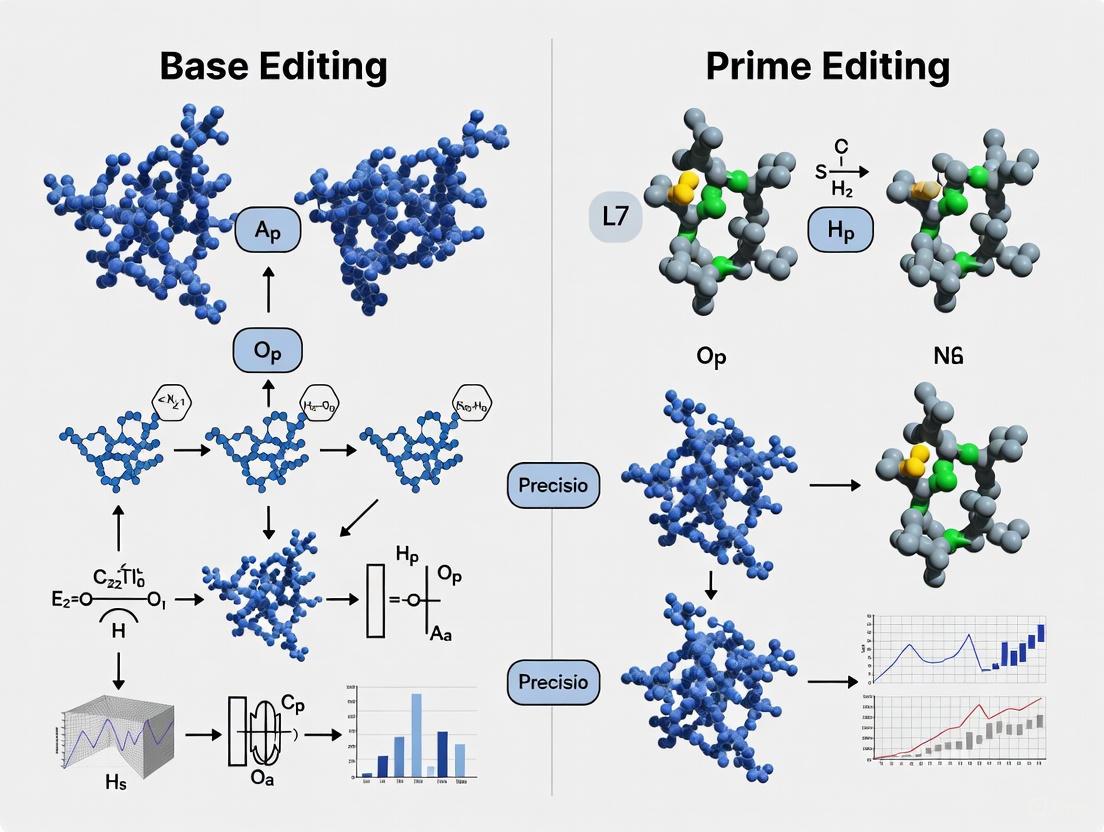
This article provides a detailed comparative analysis of base editing and prime editing, two revolutionary CRISPR-derived technologies that enable precise genome manipulation without double-strand breaks.
Base Editing vs. Prime Editing: A Comprehensive Guide to Precision Genome Editing
Abstract
This article provides a detailed comparative analysis of base editing and prime editing, two revolutionary CRISPR-derived technologies that enable precise genome manipulation without double-strand breaks. Tailored for researchers, scientists, and drug development professionals, it explores the fundamental mechanisms, therapeutic applications, optimization strategies, and clinical validation of these tools. By synthesizing the latest research and clinical trial data up to 2025, this review serves as a strategic guide for selecting the appropriate editing technology based on precision requirements, target mutation, and therapeutic context, ultimately illuminating the path toward next-generation genetic medicines.
The Core Mechanics: Understanding Base Editing and Prime Editing Fundamentals
The advent of CRISPR-Cas9 technology revolutionized molecular biology by providing researchers with an unprecedented ability to manipulate genomic sequences. However, this initial revolution remained tethered to a fundamental biological process: the creation of double-strand breaks (DSBs) in DNA. While effective for gene disruption, DSB-dependent editing presents significant limitations for precision applications, primarily due to the unpredictable nature of the cellular repair processes that follow. The dominant non-homologous end joining (NHEJ) pathway often results in insertions or deletions (indels), while the more precise homology-directed repair (HDR) is inefficient in many therapeutically relevant cell types [1] [2]. These limitations triggered a paradigm shift, leading to the development of two breakthrough technologies: base editing and prime editing. These "post-CRISPR" tools achieve precise genetic modifications without inducing DSBs, thereby offering a new definition of precision in genome engineering. This guide provides an objective comparison of these two technologies, focusing on their mechanisms, capabilities, and performance metrics to inform research and therapeutic development.
Base Editing (BE): Chemical Conversion of Bases
Base editors achieve DNA modification through a chemical conversion mechanism without breaking the DNA backbone. They are fusion proteins that combine a catalytically impaired Cas protein (a nickase that cuts only one DNA strand) with a nucleotide-modifying enzyme [1] [2] [3]. The process involves several key steps. The base editor complex, guided by a standard single-guide RNA (sgRNA), binds to the target DNA sequence. The Cas nickase portion exposes a small window of single-stranded DNA without creating a DSB. Within this exposed window, the deaminase enzyme performs a chemical reaction on a specific base: cytidine deaminase in Cytosine Base Editors (CBEs) converts cytosine (C) to uracil (U), leading to a C•G to T•A transition, while engineered adenine deaminase in Adenine Base Editors (ABEs) converts adenine (A) to inosine (I), read as guanine (G) by polymerases, leading to an A•T to G•C transition [1] [2] [3]. The cellular DNA repair machinery then fixes the nicked strand and incorporates the edited base, permanently changing the genetic sequence. A key limitation is the occurrence of "bystander edits," where other bases of the same type within the editing window are unintentionally modified [4].
Prime Editing (PE): A "Search-and-Replace" Approach
Prime editing represents a more versatile "search-and-replace" methodology. It uses a prime editing guide RNA (pegRNA) that both specifies the target site and encodes the desired edit(s) [4] [3] [5]. The core effector is a fusion protein comprising a Cas9 nickase fused to an engineered reverse transcriptase (RT). The mechanism is more complex and can be broken down into distinct phases. First, the PE:pegRNA complex binds to the target DNA, and the Cas9 nickase makes a single-strand cut. Second, the primer binding site (PBS) on the pegRNA hybridizes to the exposed 3' end of the nicked DNA, which acts as a primer for the reverse transcriptase. Third, the reverse transcriptase synthesizes a new DNA strand directly into the genomic site, using the reverse transcription template (RTT) on the pegRNA as a blueprint. This new strand contains the desired genetic alteration. Finally, cellular enzymes resolve the resulting DNA flap structure, and the edited strand is incorporated into the genome. To increase efficiency, a second nicking sgRNA is often used (in the PE3/PE3b system) to nick the non-edited strand, encouraging the cell to use the edited strand as a repair template [4] [5].
The following diagram illustrates the core mechanism of prime editing, highlighting its key components and multi-step process.
Quantitative Performance Comparison
The theoretical mechanisms of base editing and prime editing translate into distinct practical performance profiles. The table below summarizes key quantitative metrics for the two technologies, based on data from recent studies and reviews.
Table 1: Performance Metrics of Base Editing vs. Prime Editing
| Performance Metric | Base Editing | Prime Editing |
|---|---|---|
| Primary Editing Outcome | Transition mutations (C→T, G→A, A→G, T→C) [1] [2] | All 12 possible point mutations, small insertions, deletions [4] [3] [5] |
| Theoretical Coverage of Pathogenic SNPs | ~25% [1] | Up to ~89% [1] |
| Typical Editing Efficiency | Often high (e.g., 50-80% in optimized systems) [6] | Variable; can be lower, highly dependent on context (e.g., 20-50% in HEK293T for PE2) [5] |
| Indel Byproduct Rate | Generally low (<1-2%) [2] [6] | Low with optimized systems; original PE3 ~1-10% [5] |
| Editing Window / PAM Dependency | Limited window (~5-10 nt relative to PAM) [1] [7] | More flexible; can edit far from PAM (>30 bp) [5] |
| Bystander Edits | Common within the editing window [4] [7] | Very rare; edits are highly specific to the pegRNA template [4] [5] |
| Recent Error Rate (Unwanted Mutations) | Not the primary focus of recent optimization | Greatly reduced; from ~1 in 7 to ~1 in 101-543 edits with vPE system [8] |
Experimental Protocols for Precision Assessment
To objectively compare the precision of base editors and prime editors, researchers must employ rigorous experimental workflows. The following protocols outline key assays for evaluating editing outcomes and unwanted byproducts.
Protocol for Measuring On-Target Editing Efficiency and Byproducts
This protocol uses deep amplicon sequencing to quantify precise edits and undesired mutations at the target locus [7].
- Design and Cloning: Design sgRNAs for base editors or pegRNAs for prime editors targeting the genomic region of interest. Clone them into appropriate expression plasmids alongside the editor construct (e.g., BE4-Gam for CBE, ABE8e for ABE, PEmax for PE).
- Cell Transfection: Culture HEK293T cells (or other relevant cell lines) and transfect with the editor plasmid and guide RNA plasmid using a standard method like lipofection.
- Harvesting Genomic DNA: Incubate cells for 48-72 hours post-transfection. Harvest cells and extract genomic DNA using a commercial kit.
- PCR Amplification: Design primers flanking the target site. Perform PCR to generate amplicons covering the edited region.
- Library Prep and Sequencing: Prepare a sequencing library from the purified amplicons and perform high-coverage deep sequencing (e.g., Illumina MiSeq).
- Data Analysis: Use bioinformatic tools (e.g., CRISPResso2) to align sequencing reads to a reference sequence and quantify the percentage of reads with the desired edit, bystander edits (for BE), and indel mutations.
Protocol for Assessing Off-Target Editing
Evaluating the specificity of editing is crucial for therapeutic applications. This protocol assesses off-target editing at known genomic sites [2].
- Prediction of Off-Target Sites: Use in silico tools (e.g., Cas-OFFinder) to predict potential off-target sites in the reference genome that have sequence similarity to the guide RNA.
- Amplicon Sequencing: Design PCR primers for the top predicted off-target sites (e.g., 10-20 sites). Perform PCR on the harvested genomic DNA from Protocol 4.1.
- Deep Sequencing: Prepare a sequencing library and perform deep sequencing as in Step 5 of Protocol 4.1.
- Variant Calling: Analyze the sequencing data from off-target sites for any significant increase in mutation frequency (single-nucleotide variants or indels) compared to a negative control (e.g., cells transfected with a non-targeting guide).
The Scientist's Toolkit: Essential Reagents for Precision Editing
Successful implementation of base and prime editing experiments requires a suite of specialized reagents. The table below lists key solutions and their functions.
Table 2: Research Reagent Solutions for Base and Prime Editing
| Reagent / Solution | Function / Description | Key Considerations |
|---|---|---|
| Editor Plasmids | Mammalian expression vectors for BE (e.g., BE4, ABE8e) or PE (e.g., PE2, PEmax) proteins [5]. | Size matters, especially for viral delivery. PEmax is codon-optimized for human cells. |
| pegRNAs & epegRNAs | Specialized guides for prime editing. epegRNAs contain 3' RNA motifs to resist degradation, improving efficiency [4] [5]. | Long length (~120-145 nt) makes synthesis and delivery challenging; epegRNAs are highly recommended. |
| Delivery Vectors | AAVs: Common for in vivo work; require split-intein systems due to small packaging capacity [1] [6]. LNPs: Emerging for mRNA/protein delivery, reduce immunogenicity [6]. | AAV serotype determines tropism. Dual-AAV systems are often needed for PEs. |
| Mismatch Repair Inhibitors | Proteins like dominant-negative MLH1 (MLH1dn) used in PE4/PE5 systems to temporarily inhibit MMR, boosting editing efficiency [5]. | Increases editing yield by preventing the cell from rejecting the newly synthesized DNA flap. |
| Stabilizing Proteins | Fusion of the La protein to PE (as in PE7) to bind and stabilize pegRNAs, enhancing their intracellular longevity and activity [9] [5]. | An alternative strategy to epegRNAs for improving pegRNA stability. |
| Deep Learning Design Tools | Computational models (e.g., CRISPRon-ABE/CBE) that predict gRNA efficiency and editing outcomes from a target sequence, improving success rates [7]. | Helps in silico screening and prioritization of guides before costly experiments. |
The shift away from double-strand breaks has endowed researchers with powerful tools for precision genome engineering. Base editing and prime editing are not simply incremental improvements but represent a fundamental advance in how we modify the genome. The choice between them is not a matter of which is universally better, but which is more appropriate for a specific application.
Base editing is the specialist—highly efficient and clean for installing specific transition mutations (C→T, A→G) within its defined window, making it ideal for modeling or correcting a large subset of point mutations where bystander editing is not a concern [6]. Prime editing is the generalist—uniquely versatile, capable of installing virtually any small edit (transitions, transversions, insertions, deletions) with exceptionally high precision and a dramatically reduced error rate in its latest versions [8]. Its flexibility comes at the cost of greater complexity in guide design and, often, lower initial efficiency, though rapid optimizations are closing this gap.
For researchers and drug developers, the strategic path forward involves a clear-eyed assessment of the target mutation and context. For well-positioned transition mutations where maximum efficiency is critical, base editors remain a strong choice. For more complex edits, for targets in "PAM deserts," or for applications where absolute precision and minimal bystander effects are paramount, prime editing is the unequivocal tool of choice. As both technologies continue to evolve, their convergence with improved delivery systems and computational design will undoubtedly unlock new frontiers in genetic research and therapeutic development.
Base editors represent a groundbreaking class of precision genome editing tools that enable direct, irreversible chemical conversion of one DNA base pair into another without requiring double-strand DNA breaks (DSBs) or donor DNA templates [1] [10]. The core architecture of all base editors strategically combines a programmable DNA-binding protein with a single-stranded DNA-modifying enzyme [1]. This innovative fusion creates a molecular machine that can precisely target specific genomic loci and catalyze defined chemical changes to DNA nucleotides.
The development of base editors addressed significant limitations associated with earlier CRISPR-Cas9 nuclease approaches, which relied on inducing DSBs and harnessing cellular repair mechanisms to introduce genetic changes [11]. Traditional CRISPR-Cas9 editing suffers from relatively low efficiency of precise edits, a strong bias toward random insertions and deletions (indels) through non-homologous end joining (NHEJ) repair, restriction to dividing cells for homology-directed repair (HDR), and potential for chromosomal abnormalities resulting from DSBs [11] [1]. Base editors circumvent these challenges by operating through a fundamentally different mechanism that directly rewrites DNA bases without breaking the DNA backbone.
The strategic fusion of a catalytically impaired Cas protein (most commonly a nickase variant that cuts only one DNA strand) with a deaminase enzyme creates an editor that combines precise targeting with chemical conversion capabilities [10]. This architectural paradigm has spawned multiple classes of base editors with distinct functionalities, expanding the toolbox for precision genome manipulation in research and therapeutic contexts.
Core Architectural Components
Cas Nickase: The Targeting Module
The foundation of every base editor is a programmable DNA-binding component that provides targeting specificity. This is typically achieved using a Cas9 nickase—a modified version of the Streptococcus pyogenes Cas9 protein containing a single inactive catalytic domain [1] [10]. The most common nickase variant (Cas9n) contains a D10A mutation that inactivates the RuvC domain while retaining functional HNH activity, enabling cleavage of only the DNA strand complementary to the guide RNA [11]. This single-strand nicking activity is crucial for base editing efficiency as it biases cellular repair toward the edited strand without creating DSBs.
The Cas nickase component serves multiple critical functions in the base editor architecture. First, it is responsible for programmable DNA recognition, scanning the genome for protospacer adjacent motif (PAM) sequences and unwinding DNA to form an R-loop structure when a matching target site is identified [1]. Second, its nickase activity creates a transient single-strand break that stimulates cellular repair mechanisms to replace the non-edited strand, thereby permanently installing the desired base change into the genome [11]. The specific Cas nickase used significantly influences the targeting scope of the base editor through its PAM requirements, with different natural and engineered variants offering complementary targeting capabilities [1].
Deaminase Enzymes: The Conversion Modules
The catalytic core of base editors consists of DNA deaminase enzymes that directly convert one DNA base to another through chemical deamination. These enzymes are strategically positioned within the base editor architecture to act specifically on the single-stranded DNA region displaced by the Cas nickase component. Two primary classes of deaminases form the foundation of most base editors:
Cytidine Deaminases: These enzymes catalyze the hydrolytic deamination of cytosine to uracil, which is subsequently read as thymine during DNA replication or repair [1]. In base editors, evolved versions of the APOBEC family of cytidine deaminases (particularly rAPOBEC1 from rat) are commonly used [12] [13]. The uracil product then directs cellular machinery to replace the original G base with an A on the opposite strand, effectively converting a C•G base pair to T•A [10].
Adenine Deaminases: Engineered from tRNA-specific adenosine deaminases (TadA), these enzymes catalyze the deamination of adenine to inosine, which is interpreted as guanine by cellular polymerases [1]. This conversion ultimately results in an A•T to G•C base pair change [10]. The development of adenine base editors required extensive protein engineering since natural DNA adenine deaminases do not exist in eukaryotic systems [1].
These deaminase modules operate within a restricted "activity window" of approximately 4-5 nucleotides within the R-loop structure formed by the Cas nickase, determining which specific bases within the target site can be edited [11] [1]. The positioning of this window relative to the PAM sequence is a critical architectural consideration that influences targetability and efficiency.
Table 1: Core Components of Base Editor Architecture
| Component | Function | Common Variants | Key Features |
|---|---|---|---|
| Cas Nickase | Programmable DNA binding and single-strand nicking | SpCas9 (D10A), SaCas9, CjCas9 | Provides targeting specificity through PAM recognition; nickase activity promotes permanent editing |
| Cytidine Deaminase | Converts C to U (C•G to T•A) | rAPOBEC1, hAPOBEC3A, hAID | Acts on single-stranded DNA within activity window; requires uracil glycosylase inhibitor to prevent repair |
| Adenine Deaminase | Converts A to I (A•T to G•C) | TadA variants (TadA8e) | Engineered through directed evolution; works on DNA substrates despite originating from tRNA deaminase |
Ancillary Components: Enhancing Efficiency and Fidelity
Beyond the core Cas nickase and deaminase modules, base editors typically incorporate additional protein domains that enhance editing efficiency and product purity. The most strategically important of these is the uracil glycosylase inhibitor (UGI), which is commonly included in cytosine base editors [12]. UGI functions by blocking cellular uracil DNA glycosylase enzymes that would otherwise remove the uracil bases created by cytidine deaminases, initiating base excision repair that could revert the edit or introduce undesired indels [1].
Additionally, linker sequences between protein domains represent a crucial but often overlooked architectural element. These flexible peptide connectors allow proper spatial orientation of the catalytic domains and can significantly influence editor performance [12] [13]. Recent engineering efforts have optimized both the composition and length of these linkers to maximize editing efficiency while maintaining structural integrity.
Architectural Comparison of Base Editor Classes
The modular nature of base editor architecture has enabled the development of multiple specialized classes of editors with distinct capabilities. The two primary categories are cytosine base editors (CBEs) for C•G to T•A conversions and adenine base editors (ABEs) for A•T to G•C conversions [1]. More recently, additional variants have emerged that further expand the editing capabilities.
Table 2: Comparison of Base Editor Classes
| Editor Class | Core Architecture | Base Conversion | Editing Window | Primary Applications |
|---|---|---|---|---|
| Cytosine Base Editors (CBEs) | Cas9 nickase + cytidine deaminase + UGI | C•G → T•A | Positions ~4-8 (PAM as 21-23) | Creating stop codons, correcting C•G to T•A mutations |
| Adenine Base Editors (ABEs) | Cas9 nickase + engineered TadA deaminase | A•T → G•C | Positions ~4-8 (PAM as 21-23) | Correcting A•T to G•C mutations, creating amino acid substitutions |
| Glycosylase Base Editors (GBEs) | CBE + uracil DNA glycosylase | C•G → G•C | Narrower window | Transversion mutations beyond standard transitions |
| DMCBEs | CBE + DddAE1347A deaminase | C•G → T•A | Expanded window (positions ~4-15) | Enhanced efficiency especially at PAM-proximal sites |
Cytosine Base Editors (CBEs)
Cytosine base editors represent the first class of base editors developed and establish the core architectural paradigm for the field [1]. The standard CBE architecture consists of a Cas9 nickase (typically SpCas9-D10A) fused to a cytidine deaminase enzyme (often rAPOBEC1) with one or more copies of UGI included to protect the edited U•G intermediate [12]. These components work in concert to efficiently convert C•G base pairs to T•A without creating DSBs.
The editing window of CBEs is typically restricted to approximately positions 4-8 within the protospacer (counting the PAM as positions 21-23), corresponding to the region of single-stranded DNA most accessible to the deaminase enzyme [1] [12]. This spatial restriction contributes to the high specificity of base editors but can limit targetability when the desired cytosine falls outside this window. A notable limitation of CBEs is the potential for "bystander editing" where additional cytosines within the activity window are unintentionally modified, which can be mitigated through careful target selection and engineered deaminase variants with narrower activity windows [11].
Adenine Base Editors (ABEs)
Adenine base editors share the overall architectural blueprint of CBEs but employ engineered tRNA adenosine deaminase (TadA) derivatives to catalyze A•T to G•C conversions [1]. The development of ABEs required extensive protein engineering since natural DNA adenine deaminases do not exist in eukaryotes [1]. Through multiple rounds of directed evolution, researchers created TadA variants that efficiently deaminate adenine in DNA substrates while maintaining high specificity [1].
ABEs typically exhibit similar editing windows to CBEs (positions ~4-8) and share the advantages of high product purity with minimal indel formation [11]. The architectural symmetry between CBEs and ABEs enables complementary applications, with the two editor classes collectively covering all four possible transition mutations (C→T, T→C, A→G, and G→A) [1]. This coverage is particularly significant therapeutically, as approximately 25% of human pathogenic single-nucleotide polymorphisms can be corrected by targeting these four transition mutations [1].
Recent Architectural Innovations
DddA Fusion to Enhance CBE Efficiency
A recent groundbreaking innovation in base editor architecture involves the fusion of double-stranded DNA-specific cytosine deaminases to conventional CBEs. Researchers discovered that inserting a DddAE1347A deaminase variant between the rAPOBEC1 and Cas9n domains of BE4max created a dramatically more efficient editor dubbed DMBE4max [12] [13]. This architectural modification significantly improved editing activity and broadened the editing window from the conventional positions 4-8 to positions 4-15, with particularly dramatic improvements at PAM-proximal cytosines (positions 14-15) [13].
The performance enhancements observed with this novel architecture are substantial. DMBE4max demonstrated up to 93-fold increased editing efficiency compared to BE4max at certain genomic loci, achieving efficiencies up to 52% at positions C14 and C15 where conventional CBEs show minimal activity [12] [13]. This expanded targeting scope and enhanced efficiency represents a significant advance for applications requiring editing at sites with restrictive PAM placement or suboptimal sequence context.
Architecture of DMBE4max with integrated DddA deaminase
Editor Architecture and Performance Optimization
The strategic positioning of the DddA domain within the base editor architecture proved critical to its performance enhancement. Researchers systematically tested multiple spatial arrangements, including N-terminal (DddAE1347A-N), C-terminal (DddAE1347A-C), and middle (DddAE1347A-M) fusions [12] [13]. Only the middle positioning between rAPOBEC1 and Cas9n resulted in significantly enhanced editing efficiency, highlighting the importance of precise architectural planning in base editor engineering [13].
This innovative architecture maintains the specificity of conventional CBEs while dramatically expanding capabilities. The DMBE4max system did not alter the intrinsic sequence preferences of the rAPOBEC1 deaminase or significantly increase indel frequencies, indicating that the fusion primarily affects efficiency rather than specificity [13]. The enhanced editor demonstrated broad compatibility across cell types and organisms, showing improved performance in mammalian cell lines, mouse embryos, tobacco, and cotton [13].
Experimental Assessment of Base Editor Performance
Standardized Evaluation Protocols
Rigorous evaluation of base editor performance requires standardized experimental approaches that quantitatively measure editing efficiency, product purity, and specificity. The most common methodology involves transfection of editor-encoding plasmids into cultured cells (such as HEK293T or N2a cells) followed by high-throughput sequencing (HTS) of target loci to precisely quantify editing outcomes [12] [13].
A typical experimental workflow includes:
- Design and cloning of guide RNAs targeting genomic sites of interest
- Delivery of base editor components to target cells via plasmid transfection, viral transduction, or ribonucleoprotein (RNP) electroporation
- Incubation period of 48-72 hours to allow editing and cellular processing
- Genomic DNA extraction and PCR amplification of target loci
- High-throughput sequencing and bioinformatic analysis to quantify base conversion frequencies, indel rates, and byproduct formation
This methodology enables precise measurement of key performance metrics including editing efficiency (percentage of reads containing desired edits), product purity (ratio of desired edits to byproducts), and specificity (minimal off-target editing) [12].
Table 3: Performance Comparison of Base Editor Architectures
| Editor | Average Editing Efficiency | Editing Window | Indel Frequency | Notable Features |
|---|---|---|---|---|
| BE4max (CBE) | 0.87-43.4% across 10 loci | Positions 4-8 | <1.5% | Standard CBE architecture with UGI protection |
| DMBE4max | 14.3-58.84% across 10 loci | Positions 4-15 | <1.5% | DddA fusion enhances efficiency 1.35-17.7 fold |
| ABE8e | Typically 30-60% | Positions 4-8 | <0.5% | Highly evolved adenine deaminase |
| PE (Prime Editor) | Variable (5-50% depending on optimization) | Programmable via pegRNA | Very low (<0.1%) | Versatile but generally less efficient than optimized CBEs |
Assessing Editing Specificity
Beyond on-target efficiency, comprehensive evaluation of base editors must include careful assessment of specificity. Common approaches include genome-wide off-target screening using methods like GUIDE-seq or CIRCLE-seq to identify potential off-target sites, followed by targeted sequencing to confirm editing specificity [1]. Additionally, transcriptome-wide RNA off-target analysis is particularly important for base editors since some deaminase domains can exhibit low-level activity on cellular RNA [11].
Recent studies of advanced base editor architectures like DMBE4max have demonstrated excellent specificity profiles, with no significant increases in DNA or RNA off-target editing compared to earlier generations despite substantially enhanced on-target efficiency [13]. This maintained specificity is crucial for therapeutic applications where unwanted edits could have serious consequences.
Comparative Analysis with Prime Editing
Fundamental Architectural and Mechanistic Differences
While both base editing and prime editing represent precision genome editing technologies that avoid double-strand breaks, their underlying architectures and mechanisms differ substantially. Prime editors employ a fundamentally different architecture consisting of a Cas9 nickase fused to a reverse transcriptase enzyme, programmed by a specialized prime editing guide RNA (pegRNA) that both specifies the target site and templates the desired edit [11] [10].
The key distinction lies in their editing mechanisms. Base editors directly chemically convert one DNA base to another within a restricted activity window, while prime editors use a "search-and-replace" approach where the pegRNA programs the reverse transcription of new genetic information directly at the target site [11]. This fundamental difference translates to complementary strengths and limitations—base editors generally offer higher efficiencies for simple transition mutations within their activity windows, while prime editors provide greater versatility for all possible substitutions, small insertions, and small deletions [11] [10].
Architectural and functional comparison of base editing vs. prime editing
Therapeutic Scope and Applications
The architectural differences between base editors and prime editors directly influence their therapeutic applications. Base editors are ideally suited for correcting specific point mutations that fall within their activity windows and involve transition mutations [1]. With recent architectural innovations like the DddA fusion that expand editing windows and enhance efficiency, the therapeutic scope of base editors continues to grow [12] [13].
Prime editors offer broader theoretical versatility—capable of correcting up to 89% of known pathogenic genetic variants—but often require more extensive optimization and generally show more variable efficiencies across different targets [11] [1]. The recent development of PERT (prime editing-mediated readthrough of premature termination codons) demonstrates how prime editing's unique architecture enables innovative approaches, such as installing suppressor tRNAs that can potentially treat multiple different genetic diseases caused by nonsense mutations with a single editor [14] [15] [16].
Research Reagent Solutions
Table 4: Essential Research Reagents for Base Editing Studies
| Reagent Category | Specific Examples | Function in Base Editing Research |
|---|---|---|
| Base Editor Plasmids | BE4max, ABE8e, DMBE4max | Encodes editor proteins for delivery into cells |
| Guide RNA Vectors | sgRNA expression clones, pegRNAs | Provides targeting specificity and edit templating |
| Delivery Tools | AAV vectors, lipid nanoparticles (LNPs) | Enables efficient editor delivery to target cells |
| Cell Lines | HEK293T, N2a, iPSCs | Standardized systems for editor evaluation |
| Detection Assays | HTS platforms, Sanger sequencing | Quantifies editing efficiency and specificity |
| Specificity Screening | GUIDE-seq, CIRCLE-seq | Identifies potential off-target editing events |
The architecture of base editors—centered on the strategic fusion of Cas nickases with DNA deaminase enzymes—has established a powerful paradigm for precision genome editing that avoids double-strand breaks. Continuous refinement of this architecture, including recent innovations like DddA fusion that dramatically enhance efficiency and expand editing windows, demonstrates the ongoing potential for engineering improvements [12] [13]. The modular nature of base editor components enables tailored optimization for specific research or therapeutic applications, while maintaining the core advantages of high product purity and minimal indel formation.
When selecting between base editing and prime editing technologies, researchers must consider the specific genetic modification requirements against the architectural strengths of each system. Base editors generally provide more efficient and predictable outcomes for transition mutations within their activity windows, while prime editors offer greater versatility for diverse edits including transversions, insertions, and deletions [11] [10]. The ongoing architectural innovations in both technologies continue to expand the possibilities for precision genome manipulation, bringing us closer to realizing the full therapeutic potential of gene editing for treating genetic diseases.
The advent of precision genome editing has revolutionized genetic research and therapeutic development, moving beyond the limitations of early CRISPR systems that relied on double-strand breaks (DSBs) and inefficient homology-directed repair [17]. Base editors represent a transformative class of gene-editing tools that enable direct chemical conversion of DNA bases without introducing DSBs, thereby avoiding the unpredictable insertions, deletions, and chromosomal rearrangements associated with earlier technologies [4] [18]. These editors function as programmable molecular machines that combine the targeting precision of CRISPR systems with the chemical modification capabilities of deaminase enzymes, offering researchers unprecedented control over single-nucleotide changes in the genome [17] [18].
The development of base editing technologies addresses a critical need in genetic medicine, as an estimated 90% of known pathogenic genetic variants are caused by single-nucleotide variants (SNVs) [18]. Within the broader thesis of base editing versus prime editing precision research, base editors occupy a distinct niche—offering superior efficiency for specific transition mutations while being constrained to a more limited set of possible conversions compared to the more versatile but complex prime editing systems [4] [3]. This comparison guide objectively examines the mechanisms, capabilities, and experimental applications of the two primary base editor classes: cytosine base editors (CBEs) and adenine base editors (ABEs), providing researchers with the necessary framework to select appropriate tools for their specific precision editing requirements.
Fundamental Mechanisms of Base Editors
Core Architecture and Function
All base editors share a fundamental architecture consisting of three essential components: (1) a modified Cas protein (either catalytically dead Cas9/dCas9 or Cas9 nickase/nCas9) that binds specific DNA sequences without creating double-strand breaks; (2) a deaminase enzyme that chemically modifies target bases; and (3) a guide RNA (gRNA) that directs the complex to a specific genomic locus [17] [18]. The Cas component serves as a programmable DNA-binding scaffold that positions the deaminase enzyme with nucleotide-level precision, enabling targeted chemical conversion of specific bases within a defined "editing window" [18].
The mechanism of base editing fundamentally differs from traditional CRISPR-Cas9 systems by avoiding double-strand DNA breaks, instead exploiting cellular DNA repair and replication processes to permanently incorporate base changes [17] [18]. When the base editor complex binds to its target DNA sequence, the Cas protein partially unwinds the DNA duplex, exposing a single-stranded region to the fused deaminase enzyme. This spatial arrangement creates a protected environment where the deaminase can access and modify specific bases within the exposed DNA strand, typically within a 3-10 nucleotide window determined by the structural constraints of the Cas-deaminase fusion [17].
Cytosine Base Editor Mechanism
Cytosine base editors mediate the conversion of cytosine (C) to thymine (T), effectively achieving C•G to T•A base pair transitions [17] [18]. The first-generation CBE, BE3, established the core mechanism: a Cas9 nickase (nCas9) fused to a cytidine deaminase enzyme (typically APOBEC1) and a uracil glycosylase inhibitor (UGI) [17]. The editing process initiates when the gRNA directs the CBE to the target locus, where nCas9 binds and unwinds the DNA, exposing a single-stranded region. The APOBEC1 deaminase then catalyzes the deamination of cytosine to uracil within this exposed DNA window, creating a U•G mismatch opposite the edited base [17] [18].
The subsequent steps leverage cellular machinery to permanentize the edit. The uracil glycosylase inhibitor (UGI) component plays a critical role by blocking base excision repair pathways that would otherwise recognize and remove the uracil, reversing the modification [17] [18]. Meanwhile, the nickase activity of nCas9 introduces a single-strand break on the unedited DNA strand containing the guanine (G). This strategic nick biases cellular repair systems to use the uracil-containing strand as a template, resulting in the replacement of the G with an A during repair [17]. After DNA replication, the original U•G intermediate becomes a T•A base pair, completing the C to T conversion [18]. Fourth-generation CBEs like BE4 further improved editing efficiency and product purity by incorporating two UGI domains and optimizing linkers between protein components, significantly reducing undesired C to G or C to A byproducts [17].
Adenine Base Editor Mechanism
Adenine base editors facilitate the conversion of adenine (A) to guanine (G), resulting in A•T to G•C base pair transitions [17] [18]. The development of ABEs presented a unique engineering challenge, as no known natural DNA adenine deaminases existed. Researchers addressed this limitation through directed evolution of the Escherichia coli tRNA adenosine deaminase (TadA) to create a DNA-editing capable enzyme [17]. After seven rounds of molecular evolution, the laboratory of David Liu generated ABE7.10, which contained a heterodimer of wild-type TadA and engineered TadA* that together enable efficient A to G editing in DNA [17].
The ABE mechanism parallels CBEs but with distinct chemical conversions. Once the ABE complex binds to target DNA and exposes the single-stranded region, the engineered TadA deaminase catalyzes the conversion of adenine to inosine [17] [18]. Inosine is structurally similar to guanine and preferentially base-pairs with cytosine during DNA replication and repair. The nCas9 component then nicks the unedited strand, prompting cellular repair mechanisms to replace the thymine (T) with a cytosine (C) opposite the inosine base [17]. After DNA replication, the original A•T base pair is permanently replaced with a G•C pair. ABEs typically demonstrate higher product purity than CBEs, with minimal A to non-G conversions, likely because inosine is less frequently recognized and removed by DNA repair pathways than uracil [17].
Comparative Analysis: CBEs vs. ABEs
Editing Scope and Biochemical Properties
The fundamental distinction between CBEs and ABEs lies in their base conversion capabilities and associated biochemical properties. CBEs mediate C•G to T•A transitions, while ABEs facilitate A•T to G•C transitions [17] [18]. These complementary activities enable researchers to address different categories of point mutations—a critical capability given that approximately 90% of known pathogenic genetic variants are single-nucleotide polymorphisms [18].
Table 1: Fundamental Properties of CBEs and ABEs
| Property | Cytosine Base Editors (CBEs) | Adenine Base Editors (ABEs) |
|---|---|---|
| Core Conversion | C•G to T•A | A•T to G•C |
| Deaminase Origin | Natural cytidine deaminases (e.g., APOBEC1, AID, CDA1) | Engineered TadA via directed evolution |
| Intermediate Base | Uracil (U) | Inosine (I) |
| Editing Window | Positions ~2-11 (protospacer positions 1-23) | Positions ~4-10 (protospacer positions 1-23) |
| Key Inhibitor Components | Uracil glycosylase inhibitor (UGI) | None required |
| Product Purity | Moderate (C to G/A byproducts possible) | High (minimal A to non-G conversions) |
| Sequence Context Preference | Variable by deaminase; some prefer GC context | Minimal sequence preference |
The editing windows—the regions within the target DNA where base editing can occur efficiently—differ between editor types. CBEs typically exhibit broader editing windows spanning positions 2-11 (numbered relative to the protospacer sequence), while ABEs generally operate within a slightly more constrained window of positions 4-10 [17] [19]. These windows are determined by the structural constraints of the Cas-deaminase fusion and the accessibility of single-stranded DNA to the deaminase enzyme [17].
Efficiency, Specificity, and Byproduct Profiles
Recent advancements in base editor engineering have substantially improved the efficiency and specificity of both CBEs and ABEs, though important differences remain in their performance characteristics and byproduct profiles.
Table 2: Performance Comparison of Advanced Base Editors
| Performance Metric | Cytosine Base Editors | Adenine Base Editors |
|---|---|---|
| Typical On-Target Efficiency | 30-70% (varies by construct and target) [19] [20] | 40-60% (ABE7.10); up to 98% in primary T cells (ABE8) [17] |
| Indel Formation | 0.5-2.0% (BE4: 1.5-2 fold reduction vs BE3) [17] | ~1.2% (ABE7.10) [17] |
| Common Byproducts | C to G, C to A conversions [17] | Minimal non-G conversions [17] |
| Off-Target DNA Editing | gRNA-dependent and independent deamination possible [19] | Lower off-target editing than Cas9 [17] |
| Bystander Editing | Common within editing window [19] | Less frequent than CBEs [17] |
| Evolutionary Advances | BE4max, AncBE4max, Sdd7 variants, evoAPOBEC1-BE4max [17] [19] | ABEmax, ABE8e, ABE8 variants [17] [20] |
CBEs historically faced challenges with bystander editing—unintended modification of adjacent cytosines within the editing window—and product purity issues where deaminated cytosines could lead to C to G or C to A conversions through alternative repair pathways [17] [19]. The incorporation of double UGI domains in BE4 and subsequent architectures significantly improved product purity by more effectively suppressing uracil excision by uracil N-glycosylase (UNG) during base excision repair [17]. Recent engineering efforts have yielded CBEs with dramatically reduced bystander editing, such as the Sdd7e1 and Sdd7e2 variants, which maintain on-target efficiency while minimizing off-target effects [19].
ABEs generally demonstrate superior product purity with minimal A to non-G conversions, as inosine is less frequently recognized and excised by DNA repair pathways than uracil [17]. However, the latest ABE8 variants exhibit extremely wide editing windows and correspondingly increased potential for bystander editing, prompting the development of optimized versions with narrowed activity windows [17] [20]. In comprehensive off-target assessments, ABE7.10 demonstrated significantly lower indel formation (1.2%) compared to Cas9 (14%) at known off-target sites, highlighting the inherent specificity of base editing approaches compared to nuclease-based editing [17].
Experimental Applications and Protocols
Key Research Reagent Solutions
Successful implementation of base editing experiments requires careful selection of appropriate reagents and delivery systems. The following research toolkit outlines essential components for base editing applications:
Table 3: Essential Research Reagents for Base Editing Experiments
| Reagent Category | Specific Examples | Function and Application Notes |
|---|---|---|
| Base Editor Plasmids | BE4max, AncBE4max, ABEmax, ABE8e | Fourth-generation editors with optimized nuclear localization and expression [17] |
| Specialized CBEs | Sdd7e1, Sdd7e2, evoAPOBEC1-BE4max | Enhanced specificity variants with reduced bystander editing [17] [19] |
| Delivery Systems | Plasmid transfection, RNP delivery, eVLPs, AAV vectors | RNP delivery reduces off-target effects; eVLPs enable in vivo delivery [19] [21] |
| gRNA Design Tools | CRISPR gRNA design software with base editing modules | Must account for editing window positioning and bystander cytosine avoidance |
| Analysis Methods | Targeted deep sequencing, Repair-seq, CRISPRi screens | Essential for quantifying editing efficiency and detecting off-target effects [22] |
| Control Elements | UGI-deficient controls, catalytically dead deaminase controls | Critical for distinguishing specific editing from background mutations |
Representative Experimental Workflow
A comprehensive understanding of base editing mechanisms enables researchers to design robust experimental protocols. The following workflow illustrates a typical base editing experiment to assess editor efficiency and specificity:
Step 1: Target Selection and gRNA Design - Researchers identify target bases ensuring they fall within the editor's characteristic activity window (typically positions 4-8 for optimal efficiency). Bioinformatics analysis should identify and minimize potential bystander bases (additional editable bases within the window) that could complicate interpretation. The gRNA must be designed with appropriate PAM compatibility for the Cas variant being used [17] [18].
Step 2: Editor Selection - The choice between CBE and ABE depends on the desired base conversion. For CBEs, fourth-generation editors like BE4max or high-specificity variants like Sdd7e1 offer improved product purity and reduced bystander editing. For ABEs, ABE8 variants provide dramatically increased efficiency but may require window-optimized versions (e.g., from continuous directed evolution) for applications requiring minimal bystander editing [17] [19] [20].
Step 3: Delivery System Optimization - Plasmid-based delivery remains common for initial screening, but ribonucleoprotein (RNP) delivery offers reduced off-target effects and transient editor exposure [17] [19]. For therapeutic applications, engineered virus-like particles (eVLP) provide efficient in vivo delivery with improved editing efficiency [19] [21].
Step 4: Editing Validation - Cells are harvested 72-96 hours post-editing to allow for turnover and stabilization of edits. Genomic DNA is extracted and the target region amplified using PCR with barcoded primers to enable multiplexed sequencing [19] [22].
Step 5: Analysis and Specificity Assessment - Targeted deep sequencing with minimum 500x coverage provides quantitative assessment of editing efficiency, product purity, and bystander editing. Computational pipelines specifically designed for base editing analysis (such as BEAT or CRISPResso2) help quantify base conversion frequencies and detect insertion/deletion byproducts [19] [22].
Methodology for Specificity Assessment
Comprehensive evaluation of base editor specificity requires multiple orthogonal approaches to assess both gRNA-dependent and gRNA-independent off-target effects:
gRNA-Independent Deamination Assessment - Researchers employ orthogonal R-loop assays using catalytically inactive Cas9 (dCas9) from different bacterial species (e.g., Staphylococcus aureus) to create artificial single-stranded DNA regions. Measuring deamination events within these R-loops at multiple endogenous genomic loci quantifies gRNA-independent off-target activity [19].
Genome-Wide Off-Target Analysis - Methods such as CIRCLE-seq or GUIDE-seq identify potential gRNA-dependent off-target sites across the genome. Following initial identification, targeted deep sequencing of these loci quantifies actual off-target editing frequencies in treated cells [17] [19].
Bystander Editing Quantification - Targeted deep sequencing of the entire editing window, including regions upstream and downstream of the primary target, enables precise quantification of bystander editing. Recent studies have revealed that both BE4max and Sdd7 CBEs can induce bystander editing upstream of the protospacer, particularly within TC sequence contexts [19].
Emerging Innovations and Future Directions
The field of base editing continues to evolve rapidly, with recent advances addressing key limitations in specificity, efficiency, and delivery. The development of continuous directed evolution systems in mammalian cells (CDEM) represents a significant breakthrough, enabling full-length base editor evolution under physiologically relevant conditions [20]. This approach has yielded evolved CBE and ABE variants with narrowed editing windows, higher product purity, and reduced off-target effects without compromising on-target efficiency [20].
Engineering efforts have produced increasingly specialized base editors with enhanced properties. For CBEs, novel deaminases like Sdd7 demonstrate high activity across broad protospacer ranges but initially exhibited significant bystander editing and off-target effects [19]. Rational engineering approaches have addressed these limitations through strategic point mutations (V132L, R119A, R153A) that reduce non-specific DNA interactions while maintaining on-target efficiency [19]. Similarly, ABE8 variants evolved through phage-assisted continuous evolution show dramatically improved editing kinetics (∼590-fold faster than ABE7.10) and expanded editing windows, enabling near-complete target modification in primary T cells [17].
The emerging paradigm of dual base editors that combine cytosine and adenine editing capabilities in single molecules promises to further expand the therapeutic potential of base editing technologies [17]. These systems aim to enable simultaneous C-to-T and A-to-G conversions at coordinated genomic locations, potentially addressing a broader spectrum of pathogenic mutations in single treatment regimens.
In the broader context of base editing versus prime editing precision research, base editors offer distinct advantages for specific transition mutations with higher efficiency and simpler implementation, while prime editing provides more versatile editing capabilities including transversions, insertions, and deletions [4] [3]. The optimal choice between these technologies depends on the specific research or therapeutic application, with base editors remaining the preferred option for straightforward transition mutations where maximum efficiency is required, and prime editors offering solutions for more complex editing scenarios beyond the scope of base editing capabilities [4] [3] [21].
As base editing technologies mature, addressing delivery challenges and potential immune responses will be critical for therapeutic translation [8] [21]. The development of optimized delivery systems, including virus-like particles and lipid nanoparticles engineered specifically for base editor delivery, represents an active area of innovation that will determine the clinical impact of these powerful precision genetic tools [19] [8] [21].
The advent of CRISPR-Cas systems revolutionized genome engineering by providing researchers with unprecedented tools for targeted DNA manipulation. However, first-generation CRISPR technologies reliant on double-strand breaks (DSBs) faced significant limitations including unpredictable editing outcomes, unwanted indel formations, and activation of DNA damage response pathways [9] [2]. The pursuit of greater precision led to two transformative advancements: base editing and prime editing. While base editing enabled single nucleotide conversions without DSBs, its application remained constrained to specific transition mutations and carried risks of bystander edits within its activity window [9] [23].
Prime editing emerged as a more versatile "search-and-replace" technology capable of installing all 12 possible base-to-base conversions, small insertions, and deletions without requiring DSBs or donor DNA templates [5]. This innovative system combines a Cas9 nickase with a reverse transcriptase, programmed through a specialized guide RNA that both identifies the target site and encodes the desired edit [9] [3]. This review provides a comprehensive comparison of prime editing technology, detailing its molecular mechanism, experimental performance data, and practical implementation relative to other precision editing platforms.
Molecular Architecture of Prime Editing Systems
Core Components and Mechanism
The prime editing system functions through a coordinated multi-step process mediated by two essential components:
Prime Editor Protein: A fusion protein consisting of a Cas9 nickase (H840A) connected to an engineered reverse transcriptase (RT) derived from Moloney Murine Leukemia Virus (M-MLV) [9] [3]. The H840A mutation inactivates the HNH nuclease domain, creating a nickase that cuts only the non-target DNA strand [24].
Prime Editing Guide RNA (pegRNA): A specialized guide RNA that both directs target recognition and encodes the desired edit. The pegRNA contains four critical regions [3]:
- Spacer sequence: A ~20 nucleotide region complementary to the target DNA site
- Scaffold sequence: Binds the Cas9 nickase
- Primer Binding Site (PBS): A 10-15 nucleotide sequence that anneals to the nicked DNA
- Reverse Transcription Template (RTT): Encodes the desired edit and typically ranges from 25-40 nucleotides
The prime editing mechanism proceeds through five defined molecular steps, illustrated in Figure 1 below:
Figure 1. Prime Editing Molecular Mechanism. This workflow illustrates the five key steps in prime editing: (1) Target recognition and binding, (2) DNA strand nicking, (3) Primer binding and reverse transcription, (4) Edited flap formation and resolution, and (5) Complementary strand correction (in PE3/PE3b systems).
Following target binding, the Cas9 nickase creates a single-strand cut in the non-target DNA strand [3]. The exposed 3' end serves as a primer that hybridizes with the PBS region of the pegRNA, enabling the reverse transcriptase to synthesize DNA using the RTT as a template [9] [5]. This generates a branched intermediate structure containing both edited and original DNA sequences. Cellular repair machinery then resolves this intermediate by removing the unedited 5' flap and ligating the edited 3' flap into the genome [9]. In advanced PE3 and PE3b systems, a second sgRNA directs nicking of the non-edited strand to encourage the cell to use the edited strand as a repair template, thereby increasing editing efficiency [3] [5].
Evolution of Prime Editing Systems
Since the initial development of PE1, prime editors have undergone significant optimization to improve efficiency and precision. The table below summarizes key developments in prime editing systems:
Table 1. Evolution of Prime Editing Systems
| System | Components | Editing Frequency | Key Innovations | Applications |
|---|---|---|---|---|
| PE1 | Cas9 nickase (H840A) + wild-type M-MLV RT [9] | ~10-20% in HEK293T [9] | Proof-of-concept system [9] | Initial validation of prime editing concept [9] |
| PE2 | Cas9 nickase + engineered M-MLV RT (5 mutations) [9] [5] | ~20-40% in HEK293T [9] | Enhanced RT thermostability and processivity [9] [5] | Improved editing efficiency across diverse sites [5] |
| PE3 | PE2 + additional sgRNA for non-edited strand nicking [9] [5] | ~30-50% in HEK293T [9] | Dual nicking strategy to enhance edit incorporation [9] | Higher efficiency edits with slightly increased indels [5] |
| PE4/PE5 | PE2/PE3 + dominant-negative MLH1 [9] [5] | ~50-80% in HEK293T [9] | Mismatch repair inhibition to favor edited strands [5] | Reduced indel formation, improved product purity [9] |
| PEmax | Codon-optimized PE2 with additional NLS sequences [5] | Context-dependent improvement [5] | Enhanced nuclear localization and expression [5] | Broad application across cell types [5] |
| PE6a-g | Specialized RT and Cas9 variants [9] [5] | ~70-90% in HEK293T [9] | Phage-assisted evolution for specific edit types [5] | Compact editors for viral delivery; specialized applications [5] |
| PE7 | PEmax + La protein fusion [9] [5] | ~80-95% in HEK293T [9] | Enhanced pegRNA stability through La binding [9] | Improved outcomes in challenging cell types [9] |
Recent engineering efforts have addressed fundamental limitations in prime editing efficiency. The development of epegRNAs (engineered pegRNAs) with 3' RNA pseudoknot structures significantly improved stability by protecting against exonuclease degradation [5]. The PE7 system further enhanced RNA stability by fusing the prime editor with the La protein, which naturally binds and protects RNA molecules in eukaryotic cells [9] [5]. Additionally, specialized PE6 variants emerged from phage-assisted evolution campaigns, resulting in compact editors suitable for viral delivery and variants optimized for specific editing contexts [5].
Performance Comparison: Prime Editing vs. Alternative Technologies
Quantitative Comparison of Editing Technologies
Table 2. Performance Comparison of Major Genome Editing Technologies
| Parameter | CRISPR-Cas9 Nuclease | Base Editing | Prime Editing |
|---|---|---|---|
| Editing Scope | Gene knockouts, large deletions [2] | C→T, G→A, A→G, T→C (4 conversions) [23] [5] | All 12 base substitutions, insertions, deletions [9] [5] |
| DSB Formation | Yes (high frequency) [2] | No [23] | No [9] |
| Donor DNA Required | For precise edits [2] | No [23] | No [9] |
| Typical Efficiency | High for knockouts [2] | Moderate to high [5] | Variable (context-dependent) [5] |
| Bystander Edits | N/A | Common in activity window [9] [23] | Specific to pegRNA template [5] |
| Indel Formation | High (primary outcome) [2] | Low (1-10%) [5] | Low to moderate (1-10%) [5] |
| PAM Flexibility | Limited by NGG PAM [2] | Limited by NGG PAM [9] | Extended range (edit can be >30bp from PAM) [5] |
| Theoretical Coverage | All genes | ~30% of pathogenic SNPs [5] | ~89% of known pathogenic variants [23] |
Key Advantages of Prime Editing
Prime editing offers several distinct advantages over alternative technologies:
Versatility: Can install all 12 possible base-to-base changes, small targeted insertions (up to 30bp in zebrafish models), and deletions without size constraints of donor templates [9] [25]. This versatility theoretically enables correction of up to 89% of known pathogenic genetic variants [23].
Precision and Specificity: Unlike base editors which often modify multiple bases within their activity window, prime editing creates only the specific change encoded in the pegRNA template [5]. The requirement for three separate hybridization events (spacer-target, PBS-DNA flap, and RTT-genome) enhances targeting specificity [2].
Reduced Byproducts: Prime editing produces significantly fewer undesired indels compared to Cas9 nuclease-mediated HDR, which typically results in less than 10% HDR efficiency alongside predominantly mutagenic NHEJ repair [5].
Flexible Targeting: Edits can be located far from the PAM sequence (over 30bp), substantially expanding targetable genomic sites compared to base editors with restricted editing windows [5].
Limitations and Challenges
Despite its advantages, prime editing faces several implementation challenges:
Variable Efficiency: Editing efficiency is highly context-dependent and can be low in some genomic loci and cell types, ranging from <1% to >50% in mammalian cells [26] [5].
Complex Delivery: The large size of the prime editor protein (∼6.6kb coding sequence) and pegRNAs (120-190 nucleotides) presents challenges for delivery via viral vectors, particularly adeno-associated viruses (AAVs) with limited packaging capacity [3] [23].
Cellular Response: Cellular DNA repair machinery, particularly mismatch repair (MMR) systems, can interfere with edit incorporation, leading to reduced efficiency or heterogeneous outcomes [9] [5].
Experimental Optimization and Protocol Development
Strategies for Enhancing Prime Editing Efficiency
Research has identified multiple strategies to optimize prime editing performance, with the most effective approaches summarized in Figure 2:
Figure 2. Prime Editing Optimization Strategies. Four key approaches for enhancing prime editing efficiency: (1) Protein engineering to improve editor performance, (2) pegRNA design modifications to increase stability, (3) Cellular environment manipulation to favor edit incorporation, and (4) Advanced delivery methods for efficient editor transport.
Recent research has demonstrated that combining optimization strategies yields synergistic improvements. For example, MIT researchers recently developed a vPE system incorporating Cas9 mutations that lower the error rate to 1/60th of the original prime editors by making original DNA strands less stable during flap resolution [8]. This approach reduced errors from approximately one in seven edits to one in 101 for standard editing modes, and from one in 122 edits to one in 543 for high-precision modes [8].
Experimental Protocol for Mammalian Cell Prime Editing
A standard protocol for implementing prime editing in mammalian cells includes these critical steps:
pegRNA Design: Design pegRNA with 10-15nt PBS and RTT containing desired edit with 10-15nt homologous arm. Software tools and AI-based design algorithms can assist with optimal pegRNA selection [2].
Editor Selection: Choose appropriate prime editor (PE2, PEmax, PE6 variants) based on edit type and cell system. PEmax generally offers improved performance across diverse contexts [5].
Delivery Method Selection:
- Plasmid Transfection: Co-deliver editor and pegRNA expression plasmids using lipid-based transfection or electroporation
- RNA Delivery: Deliver in vitro transcribed editor mRNA and synthetic pegRNA via electroporation or lipid nanoparticles (LNPs)
- Viral Delivery: Utilize lentiviral or engineered AAV vectors for challenging cell types [3]
Efficiency Enhancement: For difficult edits, consider incorporating MMR inhibition (PE4/PE5 systems) [5] or utilizing epegRNAs with 3' pseudoknot structures [5].
Analysis: Assess editing efficiency 48-72 hours post-delivery using amplicon sequencing. For heterogeneous cell populations, include selection markers or reporter systems to enrich edited cells [26].
Essential Research Reagents and Tools
Table 3. Essential Reagents for Prime Editing Research
| Reagent Category | Specific Examples | Function | Considerations |
|---|---|---|---|
| Prime Editor Plasmids | PE2, PEmax, PE4, PE6 variants [5] | Express the fusion protein component | PE6 variants specialized for specific edit types [5] |
| pegRNA Expression Systems | pegRNA scaffolds, epegRNA vectors [5] | Encode targeter and edit template | epegRNAs with 3' pseudoknots enhance stability [5] |
| Delivery Tools | Lipid nanoparticles (LNPs), electroporation systems [3] | Introduce editing components into cells | LNPs effective for RNA delivery [3] |
| Control Elements | Mismatch repair inhibitors (MLH1dn) [5] | Enhance editing efficiency in PE4/PE5 | Transient expression recommended [5] |
| Analysis Tools | Next-generation sequencing, T7E1 assay [25] | Quantify editing efficiency and specificity | Amplicon sequencing provides precise quantification [25] |
| Cell Culture Systems | HEK293T, induced pluripotent stem cells [9] | Provide cellular context for editing | Efficiency varies by cell type [26] |
Prime editing represents a significant advancement in precision genome editing, offering researchers an versatile tool for installing a broad range of genetic modifications without double-strand breaks. While editing efficiency remains variable and context-dependent, ongoing optimization efforts continue to expand its capabilities and applications.
The technology has already demonstrated success in preclinical models, with the first prime editing-based therapeutic (PM359 for chronic granulomatous disease) receiving FDA IND clearance for clinical trials [27]. This milestone highlights the translational potential of prime editing for treating genetic disorders.
Future development will likely focus on improving delivery efficiency through novel vector systems, enhancing editing specificity through continued protein engineering, and expanding the targetable genomic space through Cas protein diversification. As these technical challenges are addressed, prime editing is poised to become an increasingly indispensable tool for both basic research and therapeutic applications, potentially enabling precise correction of a vast majority of disease-causing genetic variants.
The Critical Role of pegRNA in Specifying Target Site and Encoding Desired Edits
Prime editing represents a transformative advancement in precision genome engineering, capable of making targeted insertions, deletions, and all 12 possible base-to-base conversions without requiring double-strand DNA breaks (DSBs) or donor DNA templates [11] [9]. At the core of this technology lies the prime editing guide RNA (pegRNA), a uniquely engineered molecule that serves dual functions: specifying the target genomic locus and encoding the desired genetic alteration [11] [28]. Unlike conventional CRISPR systems that rely solely on spatial targeting, pegRNAs incorporate both targeting and template information within a single RNA architecture, enabling precise "search-and-replace" genome editing [5] [28]. This review examines the structural and functional properties of pegRNAs, their performance relative to alternative editing technologies, and their critical role in advancing therapeutic genome editing.
pegRNA Architecture and Mechanism: Beyond Conventional Guide RNAs
Structural Components of pegRNA
The pegRNA molecule consists of several distinct functional domains that work in concert to enable precise genome editing:
- Spacer Sequence: A 20-nucleotide guide region that specifies the target DNA site through Watson-Crick base pairing, identical to conventional sgRNAs [11] [28]
- scaffold Sequence: The standard Cas9-binding portion that facilitates complex formation with the prime editor protein [28]
- Primer Binding Site (PBS): A novel component that hybridizes to the nicked DNA strand, serving as a primer for reverse transcription [11] [28]
- Reverse Transcriptase Template (RTT): The region that encodes the desired edit and provides the template for DNA synthesis [9]
This multi-domain structure enables pegRNAs to perform three separate DNA binding events: (1) guide sequence to target DNA complementarity, (2) PBS to nicked DNA strand hybridization, and (3) 3' end alignment for reverse transcription priming [11] [28]. This multi-layered recognition system contributes to the high specificity of prime editing compared to conventional CRISPR-Cas9 systems.
Molecular Mechanism of Prime Editing
The prime editing mechanism proceeds through several well-defined molecular steps, all orchestrated by the pegRNA and its associated prime editor protein (typically a Cas9 nickase-reverse transcriptase fusion) [11] [9]:
Target Recognition and Nicking: The prime editor-pegRNA complex binds to the target DNA sequence complementary to the pegRNA spacer. The Cas9 nickase (H840A) nicks the non-target DNA strand, exposing a 3' hydroxyl group [11] [28]
Primer Binding and Reverse Transcription: The PBS region of the pegRNA hybridizes to the nicked 3' DNA end, which primes the reverse transcriptase to synthesize DNA using the RTT as a template [11] [9]
Flap Interconversion and Ligation: The newly synthesized edited DNA flap displaces the original 5' DNA flap, which is subsequently excised. The remaining nick is ligated, creating a heteroduplex with one edited and one non-edited strand [11]
Heteroduplex Resolution: Cellular repair mechanisms, particularly mismatch repair (MMR), resolve the heteroduplex. Additional nicking of the non-edited strand (PE3 system) or MMR inhibition (PE4/PE5 systems) can bias resolution toward the edited strand [9] [5]
This mechanism enables precise genome editing without DSBs, significantly reducing indel byproducts compared to nuclease-based editing approaches [11] [5].
Quantitative Comparison: pegRNA-Driven Prime Editing Versus Alternative Technologies
Editing Efficiency and Specificity Across Platforms
Table 1: Performance comparison of major genome editing technologies
| Editing Technology | Editing Types Supported | Typical Efficiency Range | Indel Byproducts | PAM Constraints | Key Limitations |
|---|---|---|---|---|---|
| Prime Editing (PE2) | All substitutions, small insertions/deletions [11] | 20-40% in HEK293T cells [9] | Low (1-10%) [5] | Flexible editing window (>30 bp from PAM) [5] | Efficiency varies by locus and cell type [11] |
| Prime Editing (PE3) | All substitutions, small insertions/deletions [11] | 30-50% in HEK293T cells [9] | Moderate (increased vs PE2) [5] | Flexible editing window (>30 bp from PAM) [5] | Increased indels from dual nicking [5] |
| Base Editing | C•G-to-T•A, A•T-to-G•C, C•G-to-G•C [11] | Typically higher than prime editing [5] | Very low [11] | Restricted editing window (4-5 nucleotides) [11] | Bystander editing within window [11] |
| Cas9 Nuclease + HDR | All changes with donor template [11] | Typically <10% HDR efficiency [5] | High (indels dominate) [11] | Limited by cleavage site | Requires DSBs, active division for HDR [11] |
Advanced Prime Editor Systems and Their Performance
Table 2: Evolution of prime editing systems and their experimental performance
| Prime Editor Version | Key Components | Editing Efficiency | Indel Rate | Optimal Use Cases |
|---|---|---|---|---|
| PE1 | Cas9 H840A + wild-type M-MLV RT [11] [9] | ~10-20% in HEK293T cells [9] | Not reported | Proof-of-concept studies [9] |
| PE2 | Cas9 H840A + engineered M-MLV RT [11] [9] | ~20-40% in HEK293T cells [9] | 1-10% [5] | Standard prime editing applications [11] |
| PE3 | PE2 + additional nicking sgRNA [11] [9] | ~30-50% in HEK293T cells [9] | Increased vs PE2 [5] | High-efficiency editing with acceptable indel rate [11] |
| PE4/PE5 | PE2/PE3 + MLH1dn (MMR inhibition) [9] | ~50-70% (PE4), ~60-80% (PE5) in HEK293T cells [9] | Reduced vs PE2/PE3 [9] | Applications requiring high purity and efficiency [9] |
| PEmax | Codon-optimized PE2 with additional NLS [5] | Improved over PE2 (varies by locus) [5] | Similar to PE2 [5] | Versatile general-purpose prime editing [5] |
| vPE (2025) | Engineered Cas9 interface mutations [29] | Comparable to PEmax [29] | Up to 60-fold lower than PEmax [29] | Therapeutic applications requiring minimal errors [29] |
Experimental Design: Methodology for pegRNA Evaluation and Optimization
pegRNA Design and Validation Workflow
Key Experimental Parameters for pegRNA Optimization
Successful implementation of prime editing requires careful optimization of several pegRNA parameters, which significantly impact editing efficiency:
Primer Binding Site (PBS) Length: Typically 8-15 nucleotides, optimized empirically for each target [11]. The PBS must be sufficiently long to stabilize the primer-template complex but not so long that it impedes later steps in the editing process [11]
Reverse Transcriptase Template (RTT) Design: Must encode the desired edit with sufficient flanking homology (typically 10-16 nucleotides) to facilitate recombination [11]. The RTT length should be minimized to reduce susceptibility to degradation while maintaining necessary homology [11]
pegRNA Stability Enhancements: Engineered pegRNAs (epegRNAs) incorporate evopreQ1 or similar RNA motifs at the 3' end to prevent degradation and improve editing efficiency [5]. Recent PE7 systems fuse the La protein to the prime editor complex to further stabilize pegRNAs [9]
Specificity Validation: Tools like GuideScan2 enable comprehensive off-target prediction by enumerating all potential off-target sites through efficient genome indexing [30]. This analysis is critical for therapeutic applications where off-target editing must be minimized
Recent Advances and Future Directions: Enhancing pegRNA Performance
Next-Generation Prime Editing Systems
Recent engineering efforts have substantially improved pegRNA performance through multiple innovative approaches:
The vPE system (2025) incorporates Cas9 interface mutations (K848A-H982A) that relax nick positioning and promote degradation of the competing 5' DNA strand, resulting in up to 60-fold reduction in indel errors while maintaining high editing efficiency [29]. This system achieves remarkable edit:indel ratios of up to 543:1, addressing a major limitation of earlier prime editors [29].
PE6 variants represent specialized prime editors with optimized reverse transcriptase domains derived from bacterial retrons (PE6a) or retrotransposons (PE6b), offering compact size for viral delivery while maintaining or improving editing efficiency for certain classes of edits [5]. These systems enable researchers to select specialized prime editors optimized for specific editing tasks.
PE7 systems fuse the La ribonucleoprotein to the prime editor complex, stabilizing pegRNAs and improving editing outcomes in challenging cell types [9]. This approach addresses the vulnerability of pegRNA 3' extensions to cellular exonuclease activity.
Advanced computational tools have emerged to support pegRNA design and optimization:
GuideScan2 provides memory-efficient, parallelizable construction of high-specificity gRNA databases and enables user-friendly design and analysis of individual gRNAs and gRNA libraries for targeting coding and non-coding regions [30]
Deep Learning Approaches are increasingly applied to predict editing efficiency and optimize pegRNA design [31] [32]. These models leverage large-scale CRISPR screening data to identify sequence features that correlate with high editing efficiency
Algorithmic Design Tools help researchers avoid common pitfalls in pegRNA design, such as secondary structure formation in the RTT region or insufficient PBS binding energy [31]
Research Reagent Solutions: Essential Tools for Prime Editing
Table 3: Key research reagents for pegRNA experimentation
| Reagent Category | Specific Examples | Function and Application | Considerations |
|---|---|---|---|
| Prime Editor Proteins | PE2, PEmax, PE6a-g, vPE [5] [29] | Engineered fusion proteins with Cas9 nickase and reverse transcriptase | Size constraints for viral delivery; editing efficiency varies by variant |
| pegRNA Expression Systems | epegRNAs with 3' pseudoknots [5] | Encode target specificity and edit template; engineered versions resist degradation | PBS and RTT regions require empirical optimization for each target |
| MMR Modulation Tools | MLH1dn (dominant-negative) [9] [5] | Temporarily inhibit mismatch repair to improve editing efficiency | Critical for PE4/PE5 systems; reduces repair-mediated rejection of edits |
| Delivery Technologies | AAV vectors (split-intein), LNPs [33] [6] | In vivo delivery of prime editing components; LNPs enable redosing [33] | Size constraints for AAV; LNP tropism determines tissue targeting |
| Analysis Tools | GuideScan2 [30], deep learning predictors [31] [32] | Design pegRNAs with high specificity and predict editing efficiency | Essential for minimizing off-target effects in therapeutic applications |
The pegRNA represents the definitive component that differentiates prime editing from previous genome editing technologies, serving as both a targeting mechanism and a template for precise genetic rewriting. While base editors offer higher efficiency for specific transition mutations within their restricted editing windows, pegRNAs provide unprecedented versatility in edit type and genomic context [11] [5]. The development of advanced pegRNA stabilization strategies, computational design tools, and error-reduced prime editor proteins has addressed many early limitations, positioning pegRNA-driven prime editing as a powerful tool for both basic research and therapeutic development [9] [29]. As delivery methods improve and our understanding of pegRNA design parameters expands, this technology promises to enable correction of a broad spectrum of genetic variants previously inaccessible to genome editing.
The advent of CRISPR-based technologies has ushered in a new era of precision genome editing, moving beyond simple gene disruption to the precise correction of disease-causing mutations. Within this landscape, two innovative platforms have emerged as frontrunners for therapeutic applications: base editing and prime editing [2]. While both technologies represent significant advancements over traditional nuclease-based approaches that create double-strand breaks (DSBs), their capabilities in terms of the types of genetic modifications they can perform differ substantially [34] [18]. Base editing offers high efficiency for a specific subset of point mutations, known as transition mutations. In contrast, prime editing provides a more versatile "search-and-replace" capability, enabling all 12 possible point mutations, as well as small insertions and deletions, without inducing DSBs [4] [3]. This guide provides an objective comparison of these two technologies, detailing their respective scopes, underlying mechanisms, and experimental supporting data, framed within the broader context of precision editing research.
The fundamental distinction between base editing and prime editing lies in their core mechanisms and the resulting breadth of edits they can accomplish, as summarized in the table below.
Table 1: Fundamental Comparison of Base Editing and Prime Editing
| Feature | Base Editing | Prime Editing |
|---|---|---|
| Core Components | Nickase Cas9 (nCas9) or dead Cas9 (dCas9) fused to a deaminase enzyme; standard sgRNA [18]. | nCas9 (H840A) fused to an engineered reverse transcriptase (RT); prime editing guide RNA (pegRNA) [4] [3]. |
| Primary Mechanism | Chemical deamination of a single base (C or A) within a narrow editing window, followed by DNA repair or replication [34] [18]. | Reverse transcription of a pegRNA-encoded template directly at the nicked genomic site, followed by flap resolution and DNA repair [4] [3]. |
| Double-Strand Break Induction | No DSBs; uses a nick or binds without cutting [2] [18]. | No DSBs; uses a single-strand nick [4] [2]. |
| Donor DNA Template Required | No [34]. | No [3]. |
| Theoretical Editing Scope | Transition Mutations (4 of 12):• C-to-T (G-to-A on opposite strand)• A-to-G (T-to-C on opposite strand) [34] [18]. | All 12 Point Mutations, plus targeted insertions, deletions, and combinations thereof [4] [3]. |
Quantitative Comparison of Editing Capabilities
The theoretical scopes of base and prime editing translate into different practical capabilities for correcting pathogenic mutations. The following table breaks down the specific types of edits each technology can perform, supported by data on pathogenic mutation prevalence.
Table 2: Comparative Analysis of Editing Scope and Therapeutic Coverage
| Editing Type | Base Editing | Prime Editing | Relevant Data |
|---|---|---|---|
| Point Mutations (Total) | 4 of 12 possible conversions [18]. | All 12 possible conversions [3]. | Single nucleotide variants (SNVs) cause up to 90% of known pathogenic genetic variants [18]. |
| C-to-T (G-to-A) | Yes (via CBEs) [18]. | Yes [3]. | ~10% of pathogenic SNVs require C-to-G transversions, which CBEs cannot perform [34]. |
| A-to-G (T-to-C) | Yes (via ABEs) [18]. | Yes [3]. | |
| Transversions (e.g., C-to-G, A-to-C/T) | No; requires indirect and inefficient editing on the opposite strand [34]. | Yes; can be directly programmed [34]. | Nearly 50% of disease-causing SNVs require a transversion mutation [34]. |
| Targeted Insertions | No. | Yes; demonstrated insertions of up to 30 bp in zebrafish models [25]. | |
| Targeted Deletions | No. | Yes [4]. | |
| Therapeutic Coverage | Can address a significant subset of pathogenic point mutations caused by transitions [18]. | Can correct a wider range of mutations, including transversions, insertions, and deletions; can address ~24% of pathogenic alleles that are nonsense mutations [15]. |
Experimental Protocols and Workflows
Base Editing Workflow
The experimental protocol for base editing involves a relatively straightforward design, leveraging the familiarity of the CRISPR-Cas system.
- gRNA Design: A standard sgRNA is designed to bind the target genomic locus, positioning the specific nucleotide to be edited within the "editing window" of the base editor, typically nucleotides 4-8 in the protospacer [18].
- Editor Selection: The appropriate base editor is selected based on the desired conversion:
- Cytosine Base Editor (CBE): For C-to-T conversions. A common example is BE3, which consists of nCas9 fused to the cytidine deaminase APOBEC1 and a uracil glycosylase inhibitor (UGI) to prevent repair of the U intermediate back to C [34] [18].
- Adenine Base Editor (ABE): For A-to-G conversions. ABE7.10 is an early example, using an engineered TadA adenosine deaminase heterodimer fused to nCas9 to convert A to inosine (I), which is read as G by cellular machinery [34] [18].
- Delivery: The base editor (as plasmid DNA, mRNA, or ribonucleoprotein) and the sgRNA are delivered into the target cells.
- Editing Action: The sgRNA directs the base editor to the target DNA. The deaminase enzyme chemically modifies the specific base (C or A) within the R-loop formed by Cas9 binding. Cellular repair and replication then permanently incorporate the new base into the genome [18].
Prime Editing Workflow
Prime editing requires a more complex experimental setup but offers greater versatility.
- pegRNA Design: This is a critical step. The pegRNA must contain:
- A spacer sequence (∼20 nt) to target the genomic locus.
- A primer Binding Site (PBS) (10-15 nt) that anneals to the nicked DNA strand.
- A Reverse Transcription Template (RTT) sequence that encodes the desired edit(s) [3].
- Prime Editor Selection: Common systems include:
- PE2: The core system, consisting of nCas9 (H840A) fused to an engineered Moloney Murine Leukemia Virus (MMLV) reverse transcriptase [4] [9].
- PE3: An enhanced system that uses PE2 along with a second, standard sgRNA to nick the non-edited strand, thereby encouraging the cell to use the edited strand as a repair template and increasing final editing efficiency [4] [9] [3].
- Delivery: The prime editor and the pegRNA are co-delivered into cells. Due to the large size of the system, this can be a challenge and may require optimized methods like dual-AAV vectors or lipid nanoparticles [4] [3].
- Editing Action: The PE:pegRNA complex binds to the target DNA and nicks one strand. The 3' end of the nicked DNA hybridizes with the PBS and serves as a primer for the RT, which writes the edited sequence from the RTT into the genome. Cellular repair mechanisms then resolve this intermediate to fully incorporate the edit [4] [3].
Diagram: Decision workflow for selecting between base editing and prime editing based on the desired genetic modification.
Supporting Experimental Data and Performance
Efficiency and Precision in Model Systems
Independent studies have quantified the performance of both editors in direct comparisons.
- Prime Editing for Nonsense Mutations: A 2025 study demonstrated the use of prime editing to install suppressor tRNAs, correcting nonsense mutations in cell models of Batten disease, Tay–Sachs disease, and cystic fibrosis. This "PERT" strategy restored 20–70% of normal enzyme activity, showcasing prime editing's therapeutic potential for a wide range of stop codon diseases [15].
- Side-by-Side Comparison in Zebrafish: A 2025 study directly compared nickase-based PE2 and nuclease-based PEn in zebrafish embryos. For single nucleotide substitutions, PE2 showed higher precision (8.4% efficiency, 40.8% precision score) compared to PEn (4.4% efficiency, 11.4% precision score). However, for the insertion of a 3-bp stop codon, PEn/pegRNA and PEn/springRNA combinations were more effective than PE2, indicating that the optimal editor can vary based on the edit type [25].
Advancements in Editor Engineering
Both platforms are undergoing rapid evolution to enhance their performance.
- Prime Editor Evolution: The original PE1 system has been iteratively improved to PE2 and PE3/PE3b, with subsequent versions like PE4/PE5 incorporating mismatch repair inhibitors (e.g., MLH1dn) to boost efficiency from ~10-20% (PE1) to ~60-80% (PE5) in HEK293T cells [9]. Further innovations include engineered pegRNAs (epegRNAs) with stabilizing RNA motifs to prevent degradation and improve efficiency by 3–4 fold [4] [9].
- Base Editor Expansion: While limited to transitions, base editors have been optimized for higher efficiency and purity. Recent work has also led to the development of "transversion base editors" that use glycosylases to create different mutations (e.g., C-to-G), but these are less mature and can be inefficient compared to ABEs and CBEs [34].
The Scientist's Toolkit: Essential Research Reagents
Successful experimentation with base and prime editing requires a suite of specialized reagents and tools, as detailed below.
Table 3: Essential Reagents and Resources for Precision Genome Editing
| Reagent / Resource | Function | Key Considerations |
|---|---|---|
| Cytosine Base Editor (CBE) | Catalyzes C•G to T•A conversions. | Contains a cytidine deaminase (e.g., APOBEC1) and UGI domain. Check editing window and specificity [34] [18]. |
| Adenine Base Editor (ABE) | Catalyzes A•T to G•C conversions. | Uses an engineered adenosine deaminase (e.g., TadA). Check editing window and specificity [34] [18]. |
| Prime Editor (e.g., PE2, PEn) | Catalyzes all point mutations, insertions, and deletions. | A fusion of nCas9 (H840A) and reverse transcriptase. PE3 systems require a second nicking sgRNA [4] [25]. |
| pegRNA | Guides the prime editor to the target locus and provides the template for the new sequence. | Requires careful design of PBS and RTT sequences. Use epegRNAs with stabilizing motifs for improved performance [4] [3]. |
| Delivery Vehicle (e.g., AAV, LNP) | Introduces editing components into cells. | Prime editors are large; dual-AAV systems or non-viral methods like LNPs are often necessary [4] [3] [34]. |
| MMR Inhibitors (e.g., MLH1dn) | Co-expressed with prime editors to inhibit the mismatch repair pathway, which can reverse edits and increase efficiency. | Used in advanced systems like PE4 and PE5 [9]. |
| NGS Analysis Pipeline | For quantifying editing efficiency, precision, and assessing off-target effects. | Essential for robust experimental validation. Amplicon sequencing is commonly used [25]. |
Diagram: Mechanism of prime editing, showing the critical components of the pegRNA and their functional roles in the editing process.
The choice between base editing and prime editing is not a matter of one technology being superior to the other, but rather a strategic decision based on the specific research or therapeutic goal. Base editing is a highly optimized, efficient, and relatively simple solution for introducing transition mutations (C-to-T and A-to-G), making it ideal for correcting a substantial subset of pathogenic point mutations. Its main limitation is its restricted scope. Prime editing, with its ability to perform all 12 point mutations as well as insertions and deletions, offers unparalleled versatility and is the only option for correcting transversions or making small sequence adjustments without DSBs. This versatility comes at the cost of greater design complexity and potential challenges with delivery and efficiency, though rapid engineering efforts are continuously improving its performance. For the research and drug development community, understanding the comparative scope and mechanics of these powerful tools is essential for designing effective experiments and developing targeted genetic therapies.
From Bench to Bedside: Therapeutic Applications and Workflow Implementation
The advent of precision genome editing has ushered in a new era for therapeutic intervention in oncology, moving beyond traditional gene disruption toward the precise correction of pathogenic point mutations. While CRISPR-Cas nucleases have demonstrated remarkable success in creating therapeutic gene knockouts, their reliance on double-strand breaks (DSBs) introduces significant risks, including unpredictable indels and chromosomal rearrangements that limit their application for precise correction of disease-causing mutations [9] [2]. Base editing and prime editing have emerged as transformative technologies that overcome these limitations by enabling precise nucleotide conversions without requiring DSBs. This review examines the clinical validation of base editing in oncology, with a focus on its groundbreaking application in T-cell leukemia, while contextualizing its performance relative to the emerging capabilities of prime editing platforms.
Table: Comparison of Genome Editing Platforms for Therapeutic Applications
| Editing Platform | Editing Capabilities | DSB Formation | Clinical Stage | Key Advantages | Primary Limitations |
|---|---|---|---|---|---|
| CRISPR-Cas Nuclease | Gene knockouts, large deletions | Yes | Approved therapies (Casgevy) | High efficiency for disruption | Unpredictable indels, chromosomal rearrangements |
| Base Editing | C•G to T•A, A•T to G•C conversions | No | Multiple clinical trials | High efficiency, minimal byproducts | Restricted to specific transitions, bystander editing |
| Prime Editing | All 12 base-to-base conversions, insertions, deletions | No | Early clinical trials | Versatility, high precision | Variable efficiency, delivery challenges |
Base Editing: Mechanism and Therapeutic Rationale
Base editing represents a revolutionary approach to precision gene correction that directly converts one DNA base pair to another without requiring double-strand DNA breaks [3] [2]. The technology utilizes a catalytically impaired Cas protein (typically a nickase) fused to a nucleobase deaminase enzyme, creating a modular system that can be programmed to target specific genomic sequences. Two primary classes of base editors have been developed: cytosine base editors (CBEs) that mediate C•G to T•A conversions, and adenine base editors (ABEs) that mediate A•T to G•C conversions [2]. These editors function by chemically modifying their target bases rather than breaking the DNA backbone, resulting in higher efficiency and significantly fewer byproducts compared to nuclease-dependent approaches [9].
The therapeutic rationale for base editing in oncology centers on its ability to precisely correct point mutations that drive oncogenesis or to introduce protective mutations that enhance therapeutic efficacy. In the context of cellular therapies, base editing enables the elimination of alloreactive domains that would otherwise cause graft-versus-host disease (GVHD) in allogeneic approaches, while preserving the antitumor functionality of therapeutic cells [35]. Compared to prime editing, which utilizes a reverse transcriptase to write new genetic information from a pegRNA template, base editing offers a more streamlined mechanism that has proven particularly advantageous for multiplexed editing applications where multiple genomic modifications are required simultaneously [36].
Clinical Success: Base-Edited T-Cells for Leukemia
The most prominent clinical success of base editing in oncology to date has been in the treatment of T-cell leukemia, demonstrating the technology's potential to overcome critical limitations of allogeneic cell therapies. In 2022, Alyssa Tapley became the first human to receive a base-edited therapeutic for life-threatening T-cell leukemia that had proven refractory to conventional treatments [36]. This groundbreaking therapy involved engineering donor T cells with three precise base edits to create an "off-the-shelf" cellular product capable of targeting leukemia cells while avoiding host immune recognition and preventing graft-versus-host disease.
The therapeutic approach utilized adenine base editing to disrupt the TCRαβ/CD3 complex on donor T-cells, specifically targeting the TRAC locus to prevent GVHD by eliminating alloreactivity [35] [36]. Simultaneously, base editing was employed to disrupt CD52, enabling the engineered cells to persist in patients receiving alemtuzumab conditioning regimens [35]. These modifications allowed the creation of universal CAR-T cells that could be manufactured from healthy donors in advance, overcoming the manufacturing delays and logistical challenges associated with autologous CAR-T therapies [35]. Following infusion of the base-edited cells, the treatment rapidly cleared the patient's cancer, with sustained remission reported for more than three years post-treatment [36].
Table: Key Base Editing Reagents and Their Functions in Allogeneic CAR-T Development
| Research Reagent | Function in Therapeutic Development | Therapeutic Role |
|---|---|---|
| Adenine Base Editor (ABE) | Mediates A•T to G•C conversions | Disrupts TCRαβ and CD52 expression to prevent GVHD and confer chemoresistance |
| Cytosine Base Editor (CBE) | Mediates C•G to T•A conversions | Alternative platform for introducing stop codons or disrupting splicing sites |
| Single Guide RNA (sgRNA) | Directs base editor to specific genomic loci | Enables precise targeting of TRAC, TRBC, and CD52 genes |
| Lipid Nanoparticles (LNPs) | Delivery vehicle for base editing components | Facilitates in vivo delivery; enabled redosing in clinical trials |
Experimental Protocols and Workflows
The development of base-edited therapies for oncology applications follows a rigorous experimental pathway that begins with target identification and proceeds through iterative optimization and safety validation. For the base-edited T-cell therapy for leukemia, the experimental workflow encompassed several critical stages:
Target Selection and gRNA Design: The initial phase involved identification of the TRAC, TRBC, and CD52 genes as critical targets for disruption to prevent GVHD and enable persistence in conditioned patients [35]. Multiple guide RNAs were designed and screened for each target to identify candidates with optimal on-target efficiency and minimal predicted off-target activity.
Editor Selection and Optimization: Adenine base editors were selected for their ability to introduce precise stop codons via A•T to G•C conversions within the coding sequences of target genes [36]. The editors were further optimized through protein engineering to enhance specificity and reduce the potential for bystander editing at adjacent adenines within the editing window.
In Vitro Functional Validation: Edited T-cells underwent comprehensive functional characterization to confirm loss of TCR expression while preserving CAR-mediated antitumor activity [35]. This included flow cytometry for surface marker expression, in vitro cytotoxicity assays against leukemic cell lines, and cytokine release profiling.
Preclinical Safety Assessment: Extensive safety studies were conducted in immunodeficient mouse models to assess the potential for off-target editing through whole-genome sequencing of edited cells and to confirm the absence of GVHD in vivo [35] [36].
The following diagram illustrates the experimental workflow for developing base-edited allogeneic CAR-T therapies:
Comparative Analysis: Base Editing vs. Prime Editing in Precision Oncology
While base editing has demonstrated clear clinical success in oncology applications, prime editing offers distinct advantages and faces unique challenges that position it as a complementary technology in the precision editing landscape. Prime editing systems utilize a Cas9 nickase fused to a reverse transcriptase that is programmed with a specialized prime editing guide RNA (pegRNA) to directly write new genetic information into a target DNA site [9] [4]. This "search-and-replace" capability enables prime editors to perform all 12 possible base-to-base conversions, along with targeted insertions and deletions, without restrictions of the editing window that limit base editors [3].
The editing efficiency of both technologies varies significantly based on target sequence, cell type, and delivery method. Advanced base editing systems have demonstrated efficiency rates of 50-80% in clinical applications [36], while prime editing efficiency has historically been more variable, ranging from <5% to 50% depending on the specific edit and optimization strategies employed [9]. However, recent improvements in prime editing technology, including engineered pegRNAs (epegRNAs) and optimized reverse transcriptase enzymes, have substantially enhanced efficiency in some contexts [4].
From a safety perspective, base editors have demonstrated a favorable profile in clinical applications, with minimal DSB formation and low rates of indels [36]. However, they remain susceptible to bystander editing, where additional bases within the activity window are unintentionally modified [9] [2]. Prime editors offer superior editing precision with minimal bystander effects but face challenges related to the structural complexity and delivery of the pegRNA component [4] [3]. The following diagram illustrates the key mechanistic differences between these two precision editing platforms:
Table: Performance Comparison of Base Editing vs. Prime Editing in Therapeutic Development
| Performance Metric | Base Editing | Prime Editing | Therapeutic Implications |
|---|---|---|---|
| Editing Efficiency | 50-80% in clinical applications | Variable (5-50%), highly target-dependent | Base editing offers more predictable potency |
| Editing Precision | High, but limited by bystander editing | Very high, minimal bystander effects | Prime editing superior for complex mutations |
| Therapeutic Versatility | Limited to 4 transition mutations | All 12 possible point mutations, insertions, deletions | Prime editing addresses broader mutation spectrum |
| Delivery Complexity | Moderate (Cas9-deaminase fusion + sgRNA) | High (Cas9-RT fusion + large pegRNA) | Base editing more amenable to current delivery platforms |
| Clinical Validation | Multiple trials, including oncology applications | Early-stage clinical trials for genetic disorders | Base editing has established clinical proof-of-concept |
Base editing has unequivocally demonstrated its therapeutic potential in oncology through the successful treatment of T-cell leukemia, establishing a new paradigm for precision genetic medicine. The technology's ability to efficiently create multiple precise edits simultaneously has proven particularly valuable for engineering allogeneic cell therapies that overcome the limitations of autologous approaches. While base editing offers a robust and clinically validated platform for specific transition mutations, prime editing represents a more versatile though less mature technology with the potential to address a broader spectrum of genetic alterations.
The future of precision editing in oncology will likely involve the strategic deployment of both technologies based on their complementary strengths. Base editing remains the preferred approach for applications requiring highly efficient introduction of specific transition mutations, particularly in multiplexed editing scenarios. Meanwhile, prime editing continues to evolve rapidly, with recent advances in engineered pegRNAs and optimized reverse transcriptase enzymes addressing early limitations in efficiency [4] [8]. As delivery technologies improve and our understanding of cellular determinants of editing outcomes deepens, the integration of both base editing and prime editing into the therapeutic arsenal promises to expand the scope of addressable genetic alterations in oncology, ultimately enabling more personalized and effective treatments for cancer patients.
The advent of clustered regularly interspaced short palindromic repeats (CRISPR) technology marked a transformative period for genetic engineering, yet the reliance on double-strand breaks (DSBs) introduced significant limitations for therapeutic applications. Traditional CRISPR-Cas9 systems create DSBs that activate error-prone repair pathways, potentially leading to unpredictable insertions and deletions (indels) and chromosomal rearrangements [4]. While base editing emerged as a DSB-free alternative, its application remains confined to specific transition mutations and is susceptible to bystander editing within a narrow window [4] [23]. Prime editing (PE), a more recent "search-and-replace" technology, overcomes these constraints by enabling precise modifications without requiring DSBs or donor DNA templates [4] [37]. This guide provides an objective comparison of prime editing's performance against other genome-editing tools, focusing on its unique versatility in addressing point mutations, insertions, deletions, and more complex genetic alterations.
Foundational Technologies: CRISPR-Cas9 and Base Editing
- CRISPR-Cas9: This system utilizes a Cas9 nuclease and a guide RNA (gRNA) to create a DSB at a targeted genomic locus. Cellular repair occurs primarily via non-homologous end joining (NHEJ), often resulting in indels for gene knockout, or homology-directed repair (HDR), which requires a donor DNA template for precise editing but is inefficient and largely restricted to dividing cells [37] [23].
- Base Editing: Base editors fuse a catalytically impaired Cas9 (nCas9) to a deaminase enzyme. They mediate direct chemical conversion of one base to another—for instance, cytidine base editors (CBEs) convert C•G to T•A, and adenine base editors (ABEs) convert A•T to G•C. This occurs without a DSB but is limited to four of the twelve possible base-to-base conversions and can cause unwanted "bystander" edits at nearby nucleotides [4] [23].
Prime Editing: A Versatile "Search-and-Replace" Tool
Prime editing represents a paradigm shift, functioning as a versatile and precise genome editor. The system comprises two core components:
- The Prime Editor Protein: A fusion of a Cas9 nickase (nCas9, H840A) and an engineered reverse transcriptase (RT) from the Moloney Murine Leukemia Virus (MMLV) [4] [3].
- The Prime Editing Guide RNA (pegRNA): A specialized RNA that not only specifies the target site but also contains a reverse transcription template (RTT) encoding the desired edit(s) and a primer binding site (PBS) that initiates the synthesis [4] [3].
The mechanism proceeds in several key steps, as illustrated in the diagram below.
Figure 1: The Prime Editing Workflow. The diagram illustrates the key steps: (1) The PE complex binds the target DNA and nicks the strand. (2) The PBS anneals, and RT synthesizes new DNA from the RTT. (3) Flap resolution integrates the edit. (4, in PE3/PE3b) a second nick encourages repair using the edited strand. (5) Cellular machinery permanently incorporates the edit [4] [3].
Performance and Efficacy: Quantitative Comparisons
Editing Capabilities and Efficiencies Across Systems
The following table provides a comparative summary of the editing scope and documented efficiencies of prime editing, base editing, and traditional CRISPR-Cas9 systems across various mutation types and disease models.
Table 1: Comparison of Genome Editing Technologies' Performance
| Editing Technology | Mutation Types Addressed | Theoretical Target Scope | Reported Editing Efficiencies (Sample Models) |
|---|---|---|---|
| CRISPR-Cas9 (HDR) | Insertions, Deletions, Point Mutations [37] | Limited by HDR efficiency & need for donor template [37] | Highly variable and typically low, especially in non-dividing cells [37] |
| Base Editing | C•G to T•A, A•T to G•C transitions [23] | ~30% of known pathogenic SNPs [23] | High efficiency for specific transitions, but limited by PAM and editing window [4] |
| Prime Editing | All 12 base-to-base conversions, small insertions, deletions, and combinations thereof [4] [37] | ~89% of known pathogenic human genetic variants [23] | Sickle Cell Disease (HBB A to T): 58% [37]Tay-Sachs (4-bp insertion): >20% [37]Prion Disease (PRNP G to T): 53% [37] |
| Dual Nickase Systems (e.g., PE3) | Enhanced correction of point mutations and small edits [4] | Same as prime editing, but with higher efficiency [4] | Sickle Cell Disease (HBB): Up to 58% [37] |
Advancements in Prime Editing Systems
The evolution from the initial PE1 to more advanced systems has focused on enhancing efficiency and precision. Key developments include:
- PE2: Incorporated an engineered reverse transcriptase with improved stability and processivity, leading to a significant increase in editing efficiency over PE1 [4] [3].
- PE3 and PE3b: These systems introduce a second sgRNA to nick the non-edited DNA strand. This encourages the cell to use the edited strand as a repair template, further boosting editing efficiency, particularly in certain genomic contexts [4] [3].
- epegRNAs: Engineered pegRNAs with structured RNA motifs (e.g., evopreQ) at their 3' end protect against degradation and improve editing efficiency by 3- to 4-fold in human cell lines [4].
- PERT: A novel approach that installs a suppressor tRNA to bypass premature termination codons (nonsense mutations), which cause about 30% of rare diseases. This "disease-agnostic" system restored protein function in cell and animal models of four different rare diseases with a single editor [14].
Experimental Protocols for Prime Editing
Key Workflow for In Vitro Prime Editing
A standard protocol for conducting prime editing experiments in mammalian cells involves the following critical steps [37]:
- pegRNA Design: Design the pegRNA spacer sequence (~20 nt) to target the genomic locus. The RTT (~25-40 nt) must encode the desired edit and sufficient homology, while the PBS (~10-15 nt) should have a melting temperature of ~30°C [37] [3].
- Component Delivery: Deliver the prime editor and pegRNA into target cells. Common methods include:
- Plasmid Transfection: Using lipids like Lipofectamine 2000 [37].
- Electroporation of RNP: Delivery of ribonucleoprotein complexes is faster and can reduce off-target effects [37].
- Viral Vectors: For in vivo work, adeno-associated viruses (AAVs) or lipid nanoparticles (LNPs) are employed, though the large size of PEs requires sophisticated solutions like dual-AAV systems [4] [33].
- Analysis and Validation: After allowing time for editing and cellular repair (typically 48-72 hours), analyze the target locus using next-generation sequencing (NGS) to quantify editing efficiency and byproducts. Sanger sequencing with specialized decomposition tools can also be used [37].
Case Study: Correcting a Mutation in Human Hepatocytes
An experiment demonstrating high-efficiency correction of the SERPINA1-E342K mutation (responsible for Alpha-1 Antitrypsin Deficiency) used a novel SyNTase editor [38].
- Methodology: The editor components, including a Cas9-integrated polymerase optimized via AI-guided modeling and an engineered synthetic nucleotide template, were encapsulated in LNPs and administered via a single intravenous (IV) infusion to humanized mouse models [38].
- Results: The treatment achieved up to 95% editing efficiency in human hepatocyte cell models with <0.5% off-target effects. In vivo, it led to >70% mRNA correction and a significant, clinically relevant upregulation of serum AAT protein [38].
Essential Research Reagents and Solutions
Successful prime editing experiments rely on a suite of specialized reagents and tools. The following table details key components and their functions.
Table 2: Essential Research Reagents for Prime Editing
| Reagent / Solution | Function in Prime Editing | Key Considerations |
|---|---|---|
| Prime Editor Plasmid | Expresses the fusion protein (nCas9-RT) in cells. | Systems like PE2 and PE3 are common starting points. Size can impact delivery efficiency [4] [3]. |
| pegRNA | Guides the editor to the target locus and templates the new sequence. | Requires careful design of spacer, RTT, and PBS. Long length (~120-145 nt) can challenge synthesis and stability; epegRNAs can mitigate this [4] [3]. |
| Second sgRNA (for PE3/PE3b) | Directs nicking of the non-edited strand to increase efficiency. | Must be designed to avoid re-nicking the edited strand [4] [3]. |
| Delivery Vectors (LNPs, AAVs) | Encapsulate and transport editing components into cells. | LNPs are effective for in vivo delivery to the liver and allow for re-dosing [33]. AAVs have limited cargo capacity, often requiring split systems [4] [33]. |
| Mismatch Repair Inhibitors (e.g., MLH1dn) | Enhances editing efficiency by suppressing cellular repair pathways that can reverse edits. | Used in advanced systems like PE4 and PE5 [4]. |
| Cell Culture & Transfection Reagents | Maintain target cells and facilitate introduction of editing components. | Lipofection or electroporation reagents must be optimized for the specific cell type and the large size of PE components [37]. |
Prime editing establishes a new standard for precision in genome engineering by directly addressing the limitations of its predecessors. Its ability to mediate all 12 base-to-base conversions, along with small insertions and deletions, without inducing DSBs, provides a versatile and safer platform for research and therapeutic development [4] [37]. While challenges in delivery efficiency and the complexity of pegRNA design remain active areas of research, the technology's capacity to correct a vast majority of known pathogenic mutations is clear [23]. As optimization continues—through improved editors like PERT and enhanced delivery methods—prime editing is poised to fundamentally advance the field of genetic medicine, offering potential one-time treatments for a broad spectrum of genetic diseases.
The clinical application of precise genome-editing technologies, such as base editing and prime editing, has historically been constrained by a "one-mutation, one-therapy" paradigm, an approach that is economically and logistically challenging to scale for thousands of rare genetic diseases [15]. These technologies, while powerful, typically require the development of a unique therapeutic agent for each pathogenic mutation, making it impractical to address the vast landscape of over 8,000 genetic diseases [39]. Within this landscape, nonsense mutations—single nucleotide changes that create a premature stop codon in a gene—represent a compelling therapeutic target. They account for approximately 24% of pathogenic alleles in the ClinVar database and contribute to roughly 30% of inherited rare diseases [15] [14]. Instead of correcting each of these mutations individually, a new strategy termed Prime Editing-mediated Readthrough of premature Termination codons (PERT) aims to create a universal therapeutic platform. Developed by David Liu's team at the Broad Institute, PERT uses prime editing to install a single, optimized suppressor tRNA (sup-tRNA) into the genome, enabling a patient's cells to bypass premature stop codons regardless of which gene harbors the mutation [15] [14]. This article situates the PERT strategy within the broader thesis of base editing versus prime editing precision research, comparing its performance, experimental data, and therapeutic potential against existing alternatives.
Understanding the Alternatives: A Comparative Framework for Nonsense Mutations
Before delving into PERT, it is essential to understand the existing therapeutic strategies for nonsense mutations. Each approach has distinct mechanisms, advantages, and limitations, which are summarized in the table below.
Table 1: Comparison of Therapeutic Strategies for Nonsense Mutations
| Strategy | Mechanism of Action | Key Advantages | Major Limitations |
|---|---|---|---|
| Small-Molecule Readthrough Drugs | Promotes ribosome mis-reading of premature stop codons [16]. | Simple administration; potential for broad tissue distribution [16]. | Modest protein rescue efficiency; requires lifelong dosing; inconsistent effect across different codons [16]. |
| Gene Therapy (AAV-delivered) | Delivers a correct copy of the entire gene to cells [16]. | Can provide lasting expression; disease-agnostic for a specific gene [16]. | Limited by the carrying capacity of viral vectors; can trigger immune responses; not mutation-agnostic [16]. |
| AAV-delivered sup-tRNA | Introduces an engineered suppressor tRNA gene into cells via a viral vector [15] [16]. | Mutation-agnostic; can theoretically treat many diseases caused by the same stop codon type [15]. | Requires potentially toxic overexpression; risk of disrupting global translation; transient or repeated dosing may be needed [15] [16]. |
| Allele-Specific Base/Prime Editing | Directly corrects the pathogenic nonsense mutation back to the wild-type DNA sequence in the genome [15]. | Precise, one-time, permanent correction; restores the native gene sequence. | Requires a unique drug development program for each mutation; not scalable for ultra-rare variants [15] [39]. |
| PERT (Prime Editing-installed sup-tRNA) | Prime editing permanently converts a dispensable endogenous tRNA gene into an optimized sup-tRNA [15]. | Single composition treats many diseases; permanent correction without overexpression; leverages native regulation [15] [16]. | Delivery efficiency to relevant tissues; requires further optimization for all stop codon types (e.g., TAA) [16] [39]. |
The PERT Workflow: From tRNA Engineering to In Vivo Validation
The development of PERT was a multi-stage process that involved engineering a highly efficient suppressor tRNA and then using prime editing to install it permanently into the genome. The following diagram and workflow outline the key steps and their logical relationships.
Figure 1: The logical workflow of the PERT strategy development, from initial screening to functional validation.
Detailed Experimental Protocols
1. tRNA Screening and Engineering: The researchers first designed a fluorescent reporter system (mCherry-STOP-GFP) where GFP expression is contingent on readthrough of a premature stop codon [15]. They then iteratively screened tens of thousands of variants of all 418 high-confidence human tRNA genes to identify optimal sup-tRNA backbones [15] [14]. This process involved three key optimizations: (1) modifying the 40-bp leader sequence of the tRNAs; (2) performing saturation mutagenesis on the tRNA sequence itself; and (3) optimizing the terminator sequence of the tRNAs [15]. This intensive screening yielded a "super-suppressor" tRNA with dramatically enhanced potency, capable of efficient readthrough even when expressed from a single genomic copy [15] [16].
2. Prime Editing Installation: The team used a prime editor 2 (PE2) system, which consists of a Cas9 nickase (H840A) fused to an engineered reverse transcriptase, programmed with a prime editing guide RNA (pegRNA) [9]. The pegRNA was designed to direct the editor to a specific, dispensable endogenous tRNA locus (e.g., a leucine tRNA) and rewrite its anticodon sequence into that of the optimized sup-tRNA [15] [16]. This process achieved conversion efficiencies of approximately 70-80% in human cells, permanently installing the sup-tRNA under the control of its native regulatory elements [16].
3. In Vitro and In Vivo Functional Assays: To validate functionality, the researchers treated human cell models of Batten disease (TPP1 p.L211X), Tay-Sachs disease (HEXA p.L273X/L274X), and cystic fibrosis (unspecified mutation) with the same prime editor [15] [14]. Protein function was assessed by measuring the activity of the rescued, full-length enzymes. In vivo, an AAV9 vector delivering the PERT system was administered via intracerebroventricular injection to a mouse model of Hurler syndrome (caused by the IDUA p.W392X nonsense mutation) [16] [14]. Therapeutic efficacy was evaluated by measuring IDUA enzyme activity in tissues and assessing the resolution of glycosaminoglycan accumulation, a key disease pathology [15] [14].
Performance and Safety Data: Quantitative Analysis of PERT Efficacy
The PERT strategy has demonstrated significant success across multiple disease models. The following table synthesizes the key quantitative findings from the recent Nature publication.
Table 2: Experimental Efficacy Data for the PERT Strategy
| Disease Model | Mutation/Gene | Reported Efficacy | Assessment Method |
|---|---|---|---|
| Batten Disease | TPP1 p.L211X, p.L527X | 20-70% of normal enzyme activity restored [15] [14] | Enzyme activity assay |
| Tay-Sachs Disease | HEXA p.L273X, p.L274X | 20-70% of normal enzyme activity restored [15] [14] | Enzyme activity assay |
| Niemann-Pick Type C1 | NPC1 p.Q421X, p.Y423X | 20-70% of normal enzyme activity restored [15] | Enzyme activity assay |
| Hurler Syndrome (Mouse) | IDUA p.W392X | ~6% of normal enzyme activity restored; near-complete rescue of disease pathology [15] [16] [14] | Enzyme activity assay & histopathology |
| GFP Reporter (Mouse) | GFP nonsense mutation | ~25% of normal GFP production [15] [16] | Fluorescence intensity |
A critical aspect of the PERT strategy is its potential safety profile, particularly the concern that the sup-tRNA might also read through natural termination codons (NTCs), producing aberrant elongated proteins. The researchers conducted comprehensive safety assessments. Using targeted mass spectrometry, they searched for peptides that would result from readthrough at over 4,000 native TAG stop codons. As a positive control, they confirmed abundant readthrough peptides from their engineered GFP reporter. However, they did not detect any statistically significant peptides corresponding to readthrough at natural TAG stop codons in treated cells, with the exception of one very faint signal from the YARS gene [16]. Furthermore, genome-wide off-target editing analyses using state-of-the-art detection methods found no detectable off-target edits above background levels [16]. Global transcriptomic and proteomic analyses also revealed no significant changes (defined as greater than a twofold difference) between treated and untreated cells, indicating that the installed sup-tRNA did not cause widespread cellular stress or disrupt global gene expression [16].
The Scientist's Toolkit: Essential Reagents for PERT Research
The following table details key reagents and tools required to implement the PERT strategy, providing a resource for laboratories aiming to work in this area.
Table 3: Key Research Reagent Solutions for PERT
| Reagent / Tool | Function in PERT Workflow | Specific Examples / Notes |
|---|---|---|
| Prime Editor System | Executes the precise installation of the sup-tRNA sequence into the genomic DNA. | PE2 system: nCas9 (H840A)-MMLV Reverse Transcriptase fusion protein [9]. |
| pegRNA | Guides the prime editor to the target tRNA locus and provides the template for the new sup-tRNA sequence. | Must be designed with a spacer for the endogenous tRNA locus and an RTT encoding the sup-tRNA edits [9]. |
| sup-tRNA Design | The engineered sequence that enables readthrough of premature stop codons. | Product of intensive screening; often involves mutations in the anticodon loop, leader, and terminator sequences [15]. |
| Dispensable tRNA Locus | The genomic "landing pad" for the sup-tRNA, chosen for redundancy to minimize disruption to native translation. | e.g., tRNA-Leu or tRNA-Arg loci identified as repurposeable [15] [16]. |
| AAV Delivery Vector | Enables in vivo delivery of the PERT machinery. | AAV9 was used for in vivo mouse studies via intracerebroventricular injection [16] [14]. |
| Readthrough Reporter | A tool to screen for and quantify sup-tRNA activity. | mCherry-STOP-GFP construct where GFP fluorescence indicates successful readthrough [15]. |
The PERT strategy represents a paradigm shift in therapeutic genome editing, moving from a mutation-specific to a mechanism-specific approach. When framed within the broader research on base editing versus prime editing, PERT leverages the key strength of prime editing: its unparalleled versatility in making precise, complex DNA edits without double-strand breaks [9]. While base editing is highly efficient for specific base transitions, its application is limited by a narrow editing window and the inability to make all desired nucleotide changes [9]. Prime editing, and PERT by extension, surmounts these limitations. The experimental data confirms that a single prime editing agent can rescue protein function across multiple, unrelated genetic diseases caused by nonsense mutations, achieving restoration levels (6% to over 70% of normal activity) that are often therapeutically relevant [15] [14]. Combined with a promising initial safety profile showing no detected off-target editing or significant disruption of natural translation termination, PERT establishes a foundational framework for disease-agnostic therapeutic genome editing [16]. Future work will focus on expanding PERT's scope to cover all stop codon types, improving in vivo delivery efficiency, and advancing toward clinical trials, with the ultimate goal of bringing scalable genetic medicines to a much larger fraction of patients with rare diseases [16] [39].
The advancement of precision genome editing tools, notably base editing and prime editing, has brought the choice of delivery paradigm—ex vivo or in vivo—into sharp focus for researchers and drug development professionals. Ex vivo approaches involve extracting patient cells, genetically modifying them outside the body under controlled conditions, and then reinfusing the engineered cells back into the patient [40]. In vivo delivery, in contrast, involves administering the editing machinery directly into the patient to modify cells within their native physiological environment [41] [40]. This comparative guide objectively analyzes the performance of these two foundational paradigms, drawing on recent clinical trial data and preclinical studies to inform strategic decisions in therapeutic development.
Comparative Performance Analysis: Clinical and Preclinical Data
The following tables summarize key quantitative and qualitative findings from recent clinical trials and studies, highlighting the distinct performance profiles of each paradigm.
Table 1: Comparative Analysis of Key Performance Metrics
| Performance Metric | Ex Vivo Paradigm | In Vivo Paradigm |
|---|---|---|
| Manufacturing Complexity | High (Patient-specific process) [40] | Lower (Off-the-shelf reagents) [42] [40] |
| Vein-to-Vein Time | Weeks [42] | Days (Single injection) [42] |
| Therapeutic Cost | Very High (e.g., >$400,000 per patient) [40] | Anticipated to be Lower [42] [40] |
| Editing Control & Safety | High (Fully controlled environment) [40] | Evolving (Dependent on delivery vector) [42] |
| Regulatory Milestones | Multiple approved therapies (e.g., CAR-Ts) [40] | Growing approvals (e.g., for hemophilia) [40] |
| Tropism & Targeting | Specific to the cell type being engineered [43] | Dependent on vector/payload targeting (e.g., LNP, AAV) [42] |
Table 2: Clinical Trial Outcomes and Evidence
| Therapeutic Area | Ex Vivo Evidence | In Vivo Evidence |
|---|---|---|
| Hematologic Cancers | Approved CAR-T products; 91% feasibility for 7-day ex vivo drug response profiling reported in SMARTrial (NCT03488641) [44]. | Phase 1 trials initiated for in vivo CAR-T (e.g., anti-BCMA for multiple myeloma) [42]. |
| Genetic Diseases | Clinical trials for sickle-cell disease and beta-thalassemia using edited hematopoietic stem cells. | In vivo mouse model of Hurler syndrome: PERT strategy restored ~6% enzyme activity, rescuing pathology [15]. |
| Solid Tumors | Limited application due to tumor infiltration challenges. | Investigated for solid tumors via localized delivery; potential for immune reset in autoimmune diseases [42]. |
Experimental Protocols: Methodologies from Key Studies
Ex Vivo Drug Response Profiling (SMARTrial Protocol)
The prospective non-interventional SMARTrial (NCT03488641) demonstrated the clinical feasibility of ex vivo drug response profiling for hematologic malignancies [44].
- Sample Acquisition & Preparation: Primary tumor cells were obtained from patients via peripheral blood (74% of cases), bone marrow aspirates (15%), or lymph node biopsies (11%). Median tumor purity was 84.5% [44].
- Ex Vivo Drug Exposure: Isolated cells were exposed to a panel of drugs, including components of the patient's scheduled in vivo therapy. The panel included chemotherapeutic agents, targeted small-molecule inhibitors, and immunotherapies.
- Viability Readout: Cell viability was measured after drug exposure. The study used evenly distributed dimethyl sulfoxide (DMSO) controls across drug plates to estimate technical variability (median standard deviation: 0.08) [44].
- Data Analysis & Reporting: Dose-response curves were generated. Treatment sensitivity and resistance were determined based on the viability data. The primary endpoint was the successful generation of a drug response report within 7 days, which was achieved in 91.3% of the 80 participants, with a median reporting time of 3 days [44].
In Vivo Prime Editing Installation of Suppressor tRNAs (PERT Protocol)
The PERT (Prime Editing-mediated Readthrough of premature Termination codons) strategy represents a disease-agnostic in vivo editing approach [16] [15].
- Vector Design & Packaging: A prime editor (PE)—a fusion of a Cas9 nickase (H840A) and an engineered reverse transcriptase—is packaged into a delivery vector (e.g., AAV or LNP) along with a prime editing guide RNA (pegRNA). The pegRNA is designed to target a specific, dispensable endogenous tRNA locus [15].
- In Vivo Delivery: The vector payload is administered directly into the patient. For example, in a mouse model of Hurler syndrome, an AAV vector was used to deliver the PERT machinery systemically [15].
- In Vivo Editing & Expression: Inside the host cells, the PE complex uses the pegRNA to locate the target tRNA gene and convert it into an optimized suppressor tRNA (sup-tRNA). This sup-tRNA is then expressed from its native genomic locus under endogenous regulation [15].
- Efficacy Assessment: Functional rescue is measured. In the Hurler syndrome model, this involved mass spectrometry to quantify restoration of IDUA enzyme activity and histological analysis to assess correction of disease pathology in tissues [15]. Safety was evaluated by searching for off-target editing and unintended read-through of natural stop codons using targeted mass spectrometry [16].
Visualization of Workflows and Clinical Translation
The diagram below illustrates the fundamental workflows and decision points in the ex vivo and in vivo therapeutic development pathways.
The following diagram outlines the key stages and considerations for translating these paradigms from the lab to the clinic, based on current regulatory and commercial landscapes.
The Scientist's Toolkit: Essential Reagents and Materials
Table 3: Key Research Reagent Solutions for Ex Vivo and In Vivo Editing
| Reagent / Material | Function | Application Notes |
|---|---|---|
| Lentiviral (LV) / Retroviral Vectors | Stable integration of transgenes (e.g., CAR) into host cell genome. | Dominant in ex vivo CAR-T therapy (40.12% of products); enables long-term expression [43]. |
| Adeno-Associated Virus (AAV) | In vivo delivery of genetic payloads. | Common for in vivo gene therapy; tropism determined by serotype; used in PERT in vivo studies [15]. |
| Lipid Nanoparticles (LNPs) | In vivo delivery of mRNA or editing machinery. | Validated by mRNA vaccines; can encapsulate prime editing components (PE and pegRNA) for hepatic delivery [42] [3]. |
| Prime Editor (PE) | Fusion protein (Cas9 nickase + Reverse Transcriptase). | Catalyzes targeted insertions, deletions, and all base conversions without double-strand breaks. PE2-PE6 versions offer increasing efficiency [9] [3]. |
| pegRNA | Prime editing guide RNA. | Directs PE to target locus and templates the desired edit. Requires optimization of length and secondary structure [3]. |
| Cell Culture Media & Cytokines | Ex vivo cell expansion and maintenance. | Critical for preserving cell viability and function during the ex vivo modification process. |
| Tissue-Specific Promoters | Restricts transgene expression to target cell types. | Enhances safety and efficacy of in vivo therapies by limiting off-target editing [40]. |
The advent of precision genome editing tools like base editing and prime editing has heralded a new therapeutic era. However, their clinical translation is critically dependent on the delivery vector. Adeno-associated virus (AAV) is a leading vehicle for in vivo gene therapy due to its safety profile and tropism for diverse tissues. Its stringent packaging capacity of approximately 4.7 kb presents a significant challenge for delivering increasingly sophisticated editors [45] [46] [47]. This guide objectively compares the innovative strategies developed to overcome this hurdle, framing them within the pursuit of precision in genetic medicine.
# AAV Delivery Strategies at a Glance
The field has evolved multiple paradigms to circumvent AAV's packaging constraints, each with distinct advantages and experimental support. The following table summarizes the core strategies.
Table 1: Overview of AAV Delivery Strategies for Large Genome Editors
| Strategy | Key Principle | Representative Editors Delivered | Therapeutic Evidence (Model/Editing Efficiency) |
|---|---|---|---|
| All-in-One Vectors with Compact Effectors | Using naturally small Cas orthologs to fit Cas + gRNA within a single AAV vector [45]. | CasMINI, CjCas9, SaCas9, Nme2ABE, IscB-CBE, TnpB [45] | - CasMINI_v3.1/ge4.1: >70% transduction in mouse retina; improved cone function [45].- IscB-CBE: 30% exon skipping & dystrophin recovery in DMD mouse model [45].- TnpB: Up to 56% editing in mouse liver; reduced blood cholesterol [45]. |
| Dual Vector Systems | Splitting the large transgene (e.g., Cas9) into two separate AAV vectors for co-delivery [45]. | Full-length SpCas9, Base Editors [45] | Varies significantly based on transduction efficiency of both vectors; can enable editing otherwise impossible with a single vector [45]. |
| Intein-Mediated Trans-Splicing | Splitting the editor protein at a specific site and fusing with intein sequences; full protein reconstitutes post-translation via protein splicing [48]. | Prime Editors (PE) [48] | - Early Systems: Low efficiency (1-10%) in postnatal mouse brain [48].- Optimized v3em PE-AAV: 42% editing in mouse brain, 46% in liver [48]. |
The relationships and typical achieved editing efficiencies of these primary strategies are visualized below.
# Detailed Experimental Protocols and Data
To enable informed vector selection, a deeper dive into the experimental methodologies and quantitative outcomes is essential.
# Strategy 1: Employing Compact Effectors
This approach leverages the discovery and engineering of ultra-compact CRISPR systems, which are small enough to be packaged into a single AAV vector alongside their guide RNAs and regulatory elements.
Table 2: Experimental Data for Compact Effector Delivery
| Effector | Model System | Administration Route | Editing Efficiency | Therapeutic Outcome |
|---|---|---|---|---|
| IscB-CBE [45] | Humanized DMD (hDMD) mouse model | Intramuscular injection (rAAV9) | 30% exon skipping | Recovery of dystrophin expression. |
| TnpB [45] | Mouse liver (targeting Pcsk9) | Systemic injection (scAAV9) | Up to 56% editing | Significantly reduced blood cholesterol levels. |
| Nme2-ABE8e [45] | FahPM/PM mouse model (Hereditary Tyrosinemia) | Systemic injection (rAAV9) | 0.34% editing efficiency | Restored 6.5% FAH+ hepatocytes, exceeding therapeutic threshold. |
Protocol Outline: Liver Editing with Compact Base Editors
- Vector Production: Package the compact editor (e.g., Nme2-ABE8e, IscB-CBE) and its gRNA expression cassette into an AAV vector, typically serotype 8 or 9 for hepatotropism [45].
- Animal Administration: Inject the purified AAV vectors systemically (e.g., via tail vein) into adult mouse models. Doses can range from 1x10^11 to 1x10^13 vector genomes (vg) per animal [45] [47].
- Efficiency Analysis: After 4-8 weeks, harvest target tissues (e.g., liver).
- Next-Generation Sequencing (NGS): Amplify and sequence the target genomic region to quantify the percentage of sequencing reads containing the intended base conversion [45].
- Immunohistochemistry: For functional assessment (e.g., in tyrosinemia models), stain liver sections for the restored protein (FAH) to quantify the percentage of positive hepatocytes [45].
# Strategy 2: Intein-Mediated Trans-Splicing for Prime Editors
Prime editors (PEs), consisting of a Cas9 nickase-reverse transcriptase fusion, are too large for a single AAV. Intein-mediated trans-splicing is a leading solution.
Protocol Outline: Optimized Prime Editing in Mouse Brain (Based on Davis et al.'s v3em PE-AAV system [48])
- Vector Design:
- Split the prime editor protein at a specific site into N-terminal and C-terminal halves.
- Fuse each half to a corresponding split intein segment.
- Package each PE-intein fragment into separate AAV vectors, along with the pegRNA and a nick sgRNA for the PE3 system.
- In Vivo Delivery: Co-inject both AAV vectors (e.g., AAV9-PHP.B for crossing the blood-brain barrier) into the mouse brain via intracerebroventricular or intraparenchymal injection.
- Editing Confirmation:
# The Scientist's Toolkit: Essential Reagents for AAV Editor Delivery
Successfully implementing these strategies requires a suite of specialized reagents.
Table 3: Key Research Reagent Solutions for AAV-Delivered Editing
| Reagent / Material | Critical Function | Application Notes |
|---|---|---|
| Engineered AAV Serotypes (e.g., AAV9, AAV-PHP.B, AAVrh.10) | Determines tissue tropism and transduction efficiency. Different serotypes preferentially target liver, CNS, muscle, etc. [45] [46] [47]. | Selection is critical for in vivo success. AAV9 and AAV-PHP.B variants are common for CNS and systemic delivery. |
| Compact Cas Orthologs (e.g., IscB, TnpB, CasMINI, SaCas9) | The core editing enzyme. Their small size enables all-in-one AAV delivery [45]. | Trade-offs may exist between size and intrinsic editing efficiency or PAM flexibility. |
| pegRNA (Prime Editing Guide RNA) | Directs the PE to the target site and serves as the template for the new genetic sequence [9] [3]. | Requires careful design of PBS and RTT regions. Can be unstable; engineered pegRNAs (epegRNAs) with structured RNA motifs improve performance [9]. |
| Split Intein Pairs | Mediates post-translational protein splicing, reconstituting a full-length, active protein from two separately delivered fragments [48]. | The choice of intein and split site significantly impacts reconstitution efficiency and fidelity. |
| Mismatch Repair (MMR) Inhibitors (e.g., dominant-negative MLH1) | Enhances prime editing efficiency by suppressing cellular repair pathways that would otherwise reverse the edit [9] [3]. | Can be co-delivered as part of the AAV expression cassette (e.g., in PE5 systems) [9]. |
# Navigating the Choice: A Decision Workflow
Selecting the optimal strategy involves balancing editor size, desired efficiency, and target tissue. The following diagram outlines a logical decision-making pathway.
The tension between the large size of precision genome editors and AAV's limited cargo capacity has driven remarkable innovation. No single strategy is universally superior; the choice hinges on the specific editor and therapeutic context. Compact effectors offer a streamlined, all-in-one solution but may require compromises on editor performance. Intein-mediated trans-splicing currently stands out for delivering large, optimized editors like prime editors with high efficiency, as demonstrated by recent advances achieving >40% editing in the brain. As the field progresses, the continued refinement of these delivery strategies will be just as crucial as the development of the editors themselves for realizing the full potential of precision genetic medicine.
Prime editing represents a significant leap forward in the field of precision genome editing. As a "search-and-replace" technology, it allows for precise corrections to DNA, including all 12 possible base-to-base conversions, as well as targeted insertions and deletions, without causing double-stranded DNA breaks (DSBs) or requiring donor DNA templates [10] [27]. This differentiates it from earlier CRISPR-Cas9 techniques that rely on creating DSBs, which can lead to unintended mutations [49]. The technology utilizes a fusion protein consisting of a Cas9 nickase and a reverse transcriptase, guided by a specialized prime editing guide RNA (pegRNA) that both specifies the target site and encodes the desired edit [3].
In a landmark development for the field, Prime Medicine's PM359 became the first prime editor to enter clinical trials, receiving FDA investigational new drug (IND) clearance [50] [27]. This case study examines the first-in-human trial of PM359 for treating chronic granulomatous disease (CGD), focusing on its experimental protocols, quantitative performance data, and places these findings within the broader context of precision editing research, particularly in comparison to base editing technologies.
Chronic Granulomatous Disease (CGD) and PM359 Therapeutic Strategy
Disease Pathology and Unmet Need
Chronic granulomatous disease is a rare inherited immune deficiency that severely compromises the ability of phagocytic cells, particularly neutrophils, to combat pathogens [51] [50]. This life-limiting condition arises from mutations in genes encoding subunits of the NADPH oxidase complex, an enzyme essential for producing infection-fighting chemicals like superoxide and hydrogen peroxide [51]. The resulting immunodeficiency leads to recurrent, severe bacterial and fungal infections, as well as inflammatory and autoimmune complications that often begin in early childhood [51] [50].
PM359 specifically targets the p47phox variant of CGD, which accounts for approximately 25% of cases and is caused by a recurrent delGT mutation in the NCF1 gene [51] [50]. Current curative options are limited to allogeneic hematopoietic stem cell transplantation, which carries risks of graft-versus-host disease and graft failure, and is constrained by donor availability [50]. PM359 aims to address these limitations by using prime editing to correct a patient's own hematopoietic stem cells, creating an autologous, curative therapy.
PM359 Therapeutic Mechanism and Design
PM359 is an ex vivo prime-edited autologous hematopoietic stem cell (HSC) product designed to correct the disease-causing delGT mutation in the NCF1 gene [51]. The therapeutic strategy involves:
- Cell Collection: Harvesting a patient's own CD34+ hematopoietic stem and progenitor cells [52].
- Ex Vivo Editing: Using prime editors to correct the delGT mutation in the NCF1 gene in these cells.
- Myeloablative Conditioning: Administering busulfan to prepare the bone marrow for engraftment.
- Reinfusion: Transplanting the corrected cells back into the patient via intravenous infusion [51].
The prime editing system in PM359 employs a Cas9 nickase-reverse transcriptase fusion protein along with a pegRNA specifically designed to target the NCF1 delGT mutation. The editing process avoids double-strand breaks, instead using a nicking mechanism and reverse transcription to write the corrected genetic sequence into the genome [3] [27].
Experimental Design and Methodologies
Clinical Trial Protocol
The Phase 1/2 multinational, first-in-human trial was designed to evaluate the safety, biological activity, and preliminary efficacy of PM359 in adult and pediatric participants with CGD [51]. The key methodological components included:
- Study Population: Adult and pediatric study participants with p47phox CGD caused by the NCF1 delGT mutation.
- Intervention: Single dose of PM359 administered via intravenous infusion following myeloablative conditioning with busulfan [51].
- Primary Endpoints: Safety (incidence of adverse events) and efficacy (restoration of NADPH oxidase activity measured by dihydrorhodamine (DHR) assay) [51].
- Secondary Endpoints: Engraftment kinetics (time to neutrophil and platelet engraftment), persistence of corrected cells, and freedom from CGD-related infections [51] [50].
Key Analytical Methods
Dihydrorhodamine (DHR) Assay: The primary efficacy measure quantified the restoration of NADPH oxidase function in neutrophils [51]. This flow cytometry-based assay measures the oxidation of dihydrorhodamine to rhodamine by reactive oxygen species produced by functional NADPH oxidase complexes. The percentage of DHR-positive neutrophils indicates the proportion of cells with restored oxidase activity, with a threshold of 20% considered potentially curative [51] [50].
Engraftment Monitoring: Neutrophil engraftment was defined as the first of three consecutive days when the absolute neutrophil count reached ≥500/μL, while platelet engraftment was defined as the first of three consecutive days when platelet counts reached ≥20,000/μL without transfusion [51].
Safety Assessment: Comprehensive monitoring for adverse events, with particular attention to events related to myeloablative conditioning and potential off-target effects of gene editing [51].
Prime Editing Workflow
The following diagram illustrates the experimental workflow for the PM359 therapeutic approach, from cell collection to functional assessment:
Key Experimental Results and Performance Data
Efficacy Outcomes from First Patient
Initial data from the first adult patient treated with PM359 demonstrated remarkable therapeutic efficacy, significantly exceeding predefined thresholds for clinical benefit:
Table: PM359 Efficacy Outcomes in First CGD Patient
| Parameter | Baseline | Day 15 | Day 30 | Therapeutic Threshold |
|---|---|---|---|---|
| DHR Positive Neutrophils | Not Reported | 58% | 66% | 20% |
| Neutrophil Engraftment | - | Day 14 | - | - |
| Platelet Engraftment | - | - | Day 19 | - |
The restoration of NADPH oxidase activity to 66% of neutrophils by Day 30 far surpassed the 20% threshold believed to be necessary for clinical benefit, suggesting a potentially curative effect [51] [50]. The rapid engraftment kinetics observed – nearly twice as fast as approved gene editing technologies – indicates robust engraftment of the edited cells [51].
Safety Profile
Treatment with PM359 demonstrated an acceptable safety profile in the initial patient:
- No serious adverse events related to PM359 were reported as of the data cutoff [51].
- Adverse events observed were consistent with those typically associated with myeloablative conditioning using busulfan [51].
- No laboratory evidence of clonal dysregulation or transgene silencing was reported [50].
Comparative Analysis with Alternative Gene Editing Approaches
PM359 vs. Other Gene Therapies for CGD
Table: Comparison of Gene Therapy Approaches for CGD
| Parameter | PM359 (Prime Editing) | Lentiviral Gene Therapy | Allogeneic HSCT |
|---|---|---|---|
| Editing Approach | Precise correction of delGT mutation | Random insertion of functional gene | Donor immune system |
| Theoretical Risks | Potential off-target edits | Insertional mutagenesis, transgene silencing | Graft-versus-host disease |
| Engraftment Time | Neutrophils: Day 14Platelets: Day 19 | Not specified in results | Typically longer |
| Efficacy Measure | 66% DHR+ neutrophils at Day 30 | 16-46% oxidase+ neutrophils at 12 months [52] | Variable |
| Donor Requirement | Autologous (no donor needed) | Autologous (no donor needed) | Matched donor required |
Prime Editing vs. Base Editing: Technological Comparison
Table: Precision Gene Editing Technologies Comparison
| Characteristic | Prime Editing | Base Editing | Traditional CRISPR-Cas9 |
|---|---|---|---|
| DNA Break Mechanism | Single-strand nick | No double-strand break | Double-strand break |
| Editing Scope | All 12 base conversions, insertions, deletions [10] [3] | C→T, G→A, A→G, T→C (4 transitions) [10] [49] | Relies on cellular repair |
| Precision | High precision with minimal indels | High for specific conversions | Lower precision, indels common |
| Therapeutic Example | PM359 for CGD (NCF1 correction) | Sickle cell disease (intermediate correction) [10] | Exa-cel for sickle cell disease |
| pegRNA Requirement | Yes (complex design) [3] | No (uses standard sgRNA) | No (uses standard sgRNA) |
| Efficiency in Hematopoietic Cells | 66% functional correction in CGD trial | Efficient but limited in scope | Variable, often lower HDR efficiency |
Mechanism of Action Comparison
The following diagram compares the molecular mechanisms of prime editing versus base editing, highlighting key differences in their approaches to precision genome editing:
Research Reagent Solutions for Prime Editing
The successful development and clinical application of PM359 relied on specialized research reagents and methodologies that form the essential toolkit for prime editing applications:
Table: Essential Research Reagents for Prime Editing Applications
| Reagent/Resource | Function in PM359 Development | Technical Considerations |
|---|---|---|
| Prime Editor (PE) Construct | Cas9 nickase-reverse transcriptase fusion protein (e.g., PE2, PEmax) [3] [27] | Engineered versions (PE2-PE6) show improved efficiency and product purity [27] |
| pegRNA | Prime editing guide RNA with spacer sequence, PBS, and RT template encoding the NCF1 correction [3] | Extended length (120-190 nt) requires optimized synthesis; secondary structure impacts efficiency [3] |
| Delivery System | Ex vivo delivery to CD34+ hematopoietic stem cells [51] | Electroporation typically used for hard-to-transfect cells; viral vectors also explored [3] |
| HSC Culture Media | Maintenance and expansion of CD34+ cells during editing process | Specialized cytokine cocktails essential for preserving stemness during ex vivo manipulation |
| DHR Assay Reagents | Functional assessment of NADPH oxidase activity in neutrophils [51] | Flow cytometry-based assay requiring specific controls and standardization |
| MLH1dn | Mismatch repair inhibitor to prevent reversal of edits (PE5 system) [3] | Improves editing efficiency by blocking cellular mechanisms that revert edits |
Discussion and Future Directions
The promising initial results from the PM359 clinical trial represent a validation of prime editing as a therapeutic platform and highlight its distinct advantages within the precision editing landscape. The demonstration that a single administration of PM359 restored NADPH oxidase function to 66% of neutrophils – well above the curative threshold – with a favorable safety profile, provides compelling evidence that prime editing can successfully correct disease-causing mutations in humans [51] [50].
From a technological perspective, prime editing offers a more versatile editing capability compared to base editing, which is limited to four transition mutations [10] [49]. While base editors efficiently perform specific conversions (C→T, G→A, A→G, T→C), they cannot address the full spectrum of mutations, including transversions, insertions, and deletions [10]. Prime editing's ability to perform all 12 possible base conversions, plus targeted insertions and deletions, makes it applicable to a broader range of genetic mutations [3] [27]. Furthermore, the avoidance of double-strand breaks by both base editing and prime editing represents a significant safety advantage over conventional CRISPR-Cas9 approaches, which frequently generate indels at target sites [10] [49].
Despite these promising results, several challenges remain for the broader implementation of prime editing. The large size of the prime editing machinery presents delivery challenges, particularly for in vivo applications [3] [27]. The complexity of pegRNA design and optimization requires sophisticated bioinformatic tools and experimental validation [3]. Additionally, cellular processes such as mismatch repair can reverse prime edits, necessitating strategies such as the incorporation of mismatch repair inhibitors in systems like PE5 [3] [27].
Prime Medicine has announced that while the PM359 program has demonstrated proof-of-concept, the company will focus its internal resources on in vivo liver programs (Wilson's Disease and Alpha-1 Antitrypsin Deficiency) and is seeking external partnerships to advance PM359 through later-stage clinical development [51] [53]. This strategic decision reflects both the promising nature of the initial results and the resource-intensive process of advancing gene therapies through clinical trials.
The success of PM359 in its first clinical application suggests a promising future for prime editing technology across a broad spectrum of genetic disorders. As the technology continues to evolve with improvements in editing efficiency, delivery systems, and safety profiles, prime editing is positioned to become a foundational platform for the next generation of precision genetic medicines.
Overcoming Technical Hurdles: Strategies for Enhancing Efficiency and Precision
Bystander edits—unintended single-nucleotide conversions at bases adjacent to the target site—represent a significant challenge in therapeutic base editing. These inaccuracies arise from the relatively broad activity window of base editors, which can span multiple nucleotides within the protospacer region. This comprehensive guide compares two principal strategies for mitigating bystander edits: protein engineering of the deaminase component to narrow the editing window and chemical modification of guide RNAs (gRNAs) to enhance specificity. Within the broader context of base editing versus prime editing precision research, each approach offers distinct mechanisms and trade-offs for achieving the precision required for therapeutic applications.
Mechanisms and Impact of Bystander Editing
Bystander editing occurs because base editors cannot discriminate between the target base and other identical bases (e.g., multiple adenines for ABEs) present within the activity window [54]. The width of this editing window is often positively correlated with the editor's activity. For example, the highly active ABE8e variant exhibits a 10-base-pair (bp) editing window, much wider than the 5-bp window of earlier ABEs [54]. This broad activity poses a substantial therapeutic risk; approximately 82.3% of human disease-associated mutations correctable by ABEs are located within genomic regions containing multiple adenines, creating a high probability that correcting a pathogenic mutation will inadvertently introduce a second, potentially harmful, mutation [54]. A real-world consequence was demonstrated in a mouse model of Leber congenital amaurosis, where bystander editing by an ABE was shown to impair vision restoration [55].
Comparative Strategies for Mitigating Bystander Edits
The following table summarizes the core features of the two main strategies for reducing bystander edits, which will be explored in detail in subsequent sections.
Table 1: Comparison of Strategies to Minimize Bystander Editing
| Strategy | Mechanism of Action | Key Example | Reduction in Bystander Editing | Primary Advantage | Key Limitation |
|---|---|---|---|---|---|
| Deaminase Engineering | Integrates oligonucleotide-binding modules into the deaminase to stabilize substrate conformation and restrict the editing window. | ABE-NW1 (TadA-NW1 deaminase) [54] | Narrows window from ~10 bp to ~4 bp; up to 97.1-fold lower bystander-to-target ratio [54] | Intrinsic editor property; does not require complex gRNA design. | Requires sophisticated protein engineering; may have sequence context preferences. |
| gRNA Modification | Uses hybrid gRNAs with DNA nucleotides in the spacer sequence to alter binding kinetics and specificity. | PAH1_hyb series for PKU therapy [56] | Bystander edits reduced from ~4.4% to ~1% at the PAH P281L locus [56] | Can be applied to existing editors; tunable (single/double/triple substitutions). | Requires screening of multiple hybrid gRNA designs; effects can be unpredictable. |
Protein Engineering: Narrowing the Editing Window
This strategy focuses on directly re-engineering the deaminase enzyme to achieve a more focused activity profile.
- Structural Rationale and Development: Analysis of DNA-bound deaminase structures revealed that a highly flexible, U-shaped conformation of the DNA nontarget strand in the active-site pocket allows flanking nucleotides to access the deaminase, causing bystander edits [54]. To address this, researchers integrated a structural feature from the RNA-binding domain of the human Pumilio1 protein into the substrate-binding pocket of the highly active TadA-8e deaminase [54]. This engineered variant, dubbed TadA-NW1, introduces additional stacking interactions and hydrogen bonds with nucleotides flanking the target base, stabilizing the substrate and narrowing the effective editing window [54].
- Experimental Protocol for Validation:
- Editor Construction: The engineered TadA-NW1 variant is fused to a Cas9 nickase (e.g., nSpCas9) to create ABE-NW1.
- Cell Transfection: The ABE-NW1 plasmid is transfected into relevant cell lines (e.g., HEK293T).
- Efficiency Assessment: Editing efficiency and specificity are quantified at multiple endogenous genomic sites containing target adenines flanked by bystander adenines.
- Data Analysis: Targeted amplicon high-throughput sequencing (HTS) is performed. The editing window is defined as positions within the protospacer showing ≥20% of the peak editing efficiency [54].
- Key Experimental Data: In head-to-head comparisons, ABE8e consistently edits adenines from positions 3 to 12 within the protospacer. In contrast, ABE-NW1 refines this activity window to positions 4 to 7 [54]. At one genomic site, ABE-NW1 increased the peak-to-bystander editing ratio by 97.1-fold compared to ABE8e, while maintaining comparable on-target editing efficiency at the peak site [54].
Guide RNA Engineering: Hybrid gRNAs
An alternative strategy modifies the gRNA itself to improve specificity, reducing editing at both off-target and bystander sites.
- Mechanism and Screening: This approach involves synthesizing hybrid gRNAs where specific ribonucleotides in the spacer sequence are replaced with their DNA counterparts [56]. These substitutions alter the kinetics and energetics of the gRNA's interaction with the target DNA. The optimal configuration is determined empirically by systematically screening a library of hybrid gRNAs with single, double, or triple DNA nucleotide substitutions at various positions in the spacer [56].
- Experimental Protocol for gRNA Optimization:
- gRNA Library Design: Design a series of hybrid gRNAs with DNA substitutions (e.g., positions 3-10) for a clinical lead gRNA.
- In Cellulo Screening: Co-transfect ABE mRNA (e.g., ABE8.8) with each hybrid gRNA into target cells (e.g., HuH-7 hepatocytes).
- Comprehensive Profiling: For each gRNA, assess (a) on-target editing at the pathogenic variant, (b) bystander editing at adjacent adenines, and (c) off-target editing at known off-target sites (e.g., verified by ONE-seq) [56].
- Lead Selection: Identify hybrid gRNAs that maximize on-target correction while minimizing bystander and off-target effects. The most effective candidates often combine multiple DNA substitutions [56].
- Key Experimental Data: In correcting the PAH P281L variant, a standard ABE8.8/PAH1 gRNA combination achieved ~90% on-target correction but with 4.4% bystander editing [56]. Selected hybrid gRNAs (e.g., PAH1_hyb22) maintained high on-target editing (~90%) while reducing bystander editing to approximately 1% and also significantly reducing editing at a primary off-target site [56].
Visualizing the Strategies for Reducing Bystander Edits
The following diagram illustrates the core mechanisms through which deaminase engineering and hybrid gRNAs work to achieve a narrower, more precise editing profile.
The Scientist's Toolkit: Essential Reagents for Bystander Editing Research
Table 2: Key Research Reagents and Resources
| Reagent / Resource | Function in Research | Specific Examples |
|---|---|---|
| Engineered Base Editors | Core editing machinery with intrinsically narrow activity windows. | ABE-NW1 (TadA-NW1 + nCas9) [54] |
| Hybrid gRNAs | Synthetic guides with DNA substitutions to enhance editing specificity for a given editor. | PAH1_hyb22 (with multiple DNA substitutions) [56] |
| Specificity Profiling Assays | Methods to comprehensively identify and quantify off-target and bystander edits. | ONE-seq (for ABE off-target nomination) [56]; Targeted amplicon HTS [54] |
| Computational Design Tools | In silico platforms to predict gRNA efficiency and specificity. | BExplorer (for gRNA design and pleiotropic effect evaluation) [57] |
| Delivery Systems | Vectors for introducing editors and gRNAs into cells. | Lipid Nanoparticles (LNP) for mRNA/gRNA delivery in vivo [56] |
The ongoing refinement of base editing through deaminase engineering and hybrid gRNAs significantly enhances its precision profile. Strategies like TadA-NW1 and DNA-modified gRNAs demonstrate that bystander edits are a tractable problem, bringing base editors closer to the therapeutic safety threshold. When framed within the broader thesis of base editing versus prime editing precision, these advances highlight a critical trade-off. Base editing offers high efficiency for specific transition mutations (C>T, A>G) and is being actively honed to minimize its primary inaccuracy (bystander edits). Prime editing, while offering unparalleled versatility in the types of edits (all 12 base-to-base changes, insertions, deletions) without a reliance on deamination, has historically faced challenges with variable and lower efficiency, though recent systems like PE6 and PE7 have made remarkable progress [9]. The choice between these platforms for therapeutic or research applications will therefore continue to depend on the specific genetic context: the type of mutation, the sequence surrounding it, and the absolute requirement for purity in the editing outcome.
The evolution of CRISPR-based technologies has progressed from initial nuclease systems that create double-strand breaks (DSBs) to more precise "cut-free" alternatives. While base editing represented a significant advancement by enabling single-nucleotide conversions without DSBs, its application remains limited to only four of the twelve possible base-to-base transitions and can suffer from bystander edits at adjacent nucleotides [4] [23]. Prime editing emerged to overcome these limitations, offering a versatile "search-and-replace" capability that enables all 12 possible base substitutions, targeted insertions, and deletions without requiring DSBs or donor DNA templates [4] [3]. This technology combines a Cas9 nickase (H840A) fused to a reverse transcriptase enzyme, programmed with a specialized prime editing guide RNA (pegRNA) that both specifies the target site and encodes the desired edit [4].
Despite its remarkable precision, the initial prime editing systems faced challenges with editing efficiency, prompting extensive optimization efforts focused on both the protein components and the guide RNA architecture [58] [4]. This review examines the systematic evolution from foundational PE systems to advanced versions incorporating engineered pegRNAs (epegRNAs) and optimized editor proteins, providing researchers with a comprehensive comparison of performance characteristics and experimental protocols for implementation.
The Evolution of Prime Editing Systems: From PE2 to PEmax and Beyond
The development of prime editing has progressed through several generations, each offering improved efficiency and purity. The journey began with PE1, which established the proof-of-concept but showed limited editing efficiency of approximately 10-20% in HEK293T cells [9]. The subsequent development of PE2 incorporated engineered reverse transcriptase (RT) variants with enhanced processivity and thermostability, improving editing efficiency to the 20-40% range [4] [9]. PE3 further augmented this by introducing a second nicking sgRNA to target the non-edited strand, encouraging cellular repair machinery to use the edited strand as a template and achieving 30-50% efficiency [4] [9].
Recent iterations have focused on addressing cellular barriers to efficient prime editing, particularly the mismatch repair (MMR) pathway that can reverse edits. The PE4 and PE5 systems incorporate a dominant-negative MLH1 (MLH1dn) mutant to suppress the MMR response, significantly boosting editing efficiency to 50-80% [58] [9]. The current state-of-the-art PEmax system represents a comprehensively optimized editor with improved nuclear localization, codon usage, and protein stability, while PE6 variants introduce compact RT domains and enhanced Cas9 variants to further improve delivery and efficiency [9] [27].
Table 1: Evolution of Prime Editing Systems and Their Performance Characteristics
| System | Key Components | Editing Efficiency | Key Innovations | Limitations |
|---|---|---|---|---|
| PE1 | nCas9(H840A)-M-MLV RT, pegRNA | ~10-20% (HEK293T) | Foundational proof-of-concept | Moderate efficiency [9] |
| PE2 | Engineered RT, optimized pegRNA | ~20-40% (HEK293T) | Enhanced RT processivity and stability | Limited by cellular repair pathways [9] |
| PE3/PE3b | PE2 + additional nicking sgRNA | ~30-50% (HEK293T) | Dual nicking strategy promotes edit incorporation | Potential for increased indel formation [4] [9] |
| PE4 | PE2 + MLH1dn | ~50-70% (HEK293T) | MMR inhibition enhances edit yield | Requires additional component [9] |
| PE5 | PE3 + MLH1dn | ~60-80% (HEK293T) | Combines dual nicking with MMR inhibition | Increased complexity [9] |
| PEmax | Optimized PE2 + nuclear localization + codon optimization | Up to 80% (multiple cell lines) | Comprehensive protein and expression optimization | Large size challenges delivery [58] [27] |
| PE6 | Compact RT variants, enhanced Cas9, epegRNAs | ~70-90% (HEK293T) | Size-reduced editors, stabilized pegRNAs | Newest system, less extensively validated [9] |
Engineered pegRNAs (epegRNAs): Design Principles and Mechanisms
The prime editing guide RNA represents both a critical determinant of success and a limitation in early prime editing systems. Conventional pegRNAs consist of four key components: the spacer sequence that targets the editor to the DNA, the scaffold that binds Cas9 nickase, the primer binding site (PBS) that anchors the reverse transcription complex, and the reverse transcription template (RTT) that encodes the desired edit [3]. A significant challenge with early pegRNAs was their susceptibility to 3' end degradation by cellular exonucleases, which substantially reduced editing efficiency [4].
Engineered pegRNAs (epegRNAs) address this limitation through strategic modifications to the 3' end of the pegRNA. The most effective approach incorporates structured RNA motifs - including the evopreQ1 and mpknot riboswitch aptamers - that form stable secondary structures resistant to exonuclease activity [4]. Alternative stabilization strategies include the Zika virus exoribonuclease-resistant RNA motif (xr-pegRNA), G-quadruplex structures (G-PE), and MS2 stem-loops, all of which have demonstrated 3-4 fold improvements in editing efficiency across multiple human cell lines and primary cells [4] [59]. These modifications enhance prime editing efficiency by protecting the critical PBS and RTT elements from degradation, ensuring that more editor complexes remain competent for productive editing [4].
The following diagram illustrates the key structural differences between conventional pegRNAs and engineered epegRNAs:
Quantitative Performance Comparison: epegRNAs and System Optimization
The combined impact of system evolution and epegRNA implementation has yielded substantial improvements in prime editing efficiency. Recent studies demonstrate that optimized approaches combining PEmax with epegRNAs and efficient delivery systems can achieve up to 80% editing efficiency across multiple genomic loci and cell lines [58]. Even in challenging cell types like human pluripotent stem cells (hPSCs) in both primed and naïve states, these optimized systems achieve substantial editing efficiencies of up to 50% [58].
Systematic optimization incorporating the piggyBac transposon system for stable genomic integration of prime editors, coupled with epegRNA delivery via lentivirus, demonstrates that sustained expression of both components for up to 14 days is crucial for maximizing editing outcomes [58]. The performance advantage of epegRNAs over conventional pegRNAs is consistent across various editing contexts, with studies reporting 3-4 fold improvements in editing efficiency when using structured motifs like evopreQ1 and mpknot [4].
Table 2: Quantitative Performance Comparison of Prime Editing Configurations
| Editing Context | Standard PE2 + pegRNA | PEmax + epegRNA | Fold Improvement | Experimental Conditions |
|---|---|---|---|---|
| HEK293T cells (multiple loci) | 20-40% | 60-80% | 2-3x | Lentiviral delivery, 14-day expression [58] [9] |
| HCT116 cells (endogenous sites) | 10-30% | 40-70% | 3-4x | piggyBac transposon stable integration [58] [60] |
| hPSCs (primed state) | 10-20% | 40-50% | 3-4x | Combined PEmax + epegRNA + MLH1dn [58] |
| MDA-MB-231 cells | 15-25% | 50-65% | 3-4x | PEmax with evopreQ1-epegRNA [60] |
| Primary human fibroblasts | 5-15% | 25-40% | 4-5x | xr-pegRNA stabilization [4] |
Computational approaches have further enhanced the ability to predict and optimize pegRNA performance. The OPED (Optimized Prime Editing Design) platform utilizes deep transfer learning to predict editing efficiency from nucleotide sequences, achieving a Pearson correlation coefficient of 0.769 between predicted and measured efficiencies [60]. This represents a significant advancement over previous rule-based design tools, enabling researchers to select high-efficiency pegRNAs without extensive experimental screening.
Experimental Protocols for Implementing Optimized Prime Editing
High-Efficiency Prime Editing Workflow
The following diagram outlines a comprehensive experimental workflow for achieving high-efficiency prime editing, incorporating the latest optimizations in both editor delivery and pegRNA design:
piggyBac Transposon-Mediated Stable Integration
The piggyBac transposon system enables high-efficiency integration of large prime editor constructs through a cut-and-paste mechanism. The protocol involves:
- Vector Construction: Clone the PEmax editor into a piggyBac transposon vector containing CAG or EF1α promoters for robust expression. The vector should include selection markers (e.g., puromycin resistance or fluorescent proteins) for tracking [58].
- Transposase Co-transfection: Co-transfect the piggyBac transposon plasmid containing the prime editor with a hyperactive piggyBac transposase (hyPBase) expression plasmid at a 3:1 ratio using appropriate transfection reagents [58].
- Stable Cell Line Selection: Begin antibiotic selection 48 hours post-transfection and maintain for 7-14 days. Isolate single-cell clones by limiting dilution or fluorescence-activated cell sorting (FACS) for mCherry-positive cells when using fluorescent markers [58].
- Editor Expression Validation: Confirm prime editor expression in selected clones via Western blotting, immunofluorescence, or functional assays using validated reporter constructs [58].
epegRNA Design and Delivery Protocol
- Computational Design: Utilize the OPED web application or similar tools to design pegRNAs with optimal predicted efficiency. Input the target genomic sequence and desired edit to receive ranked pegRNA designs [60].
- Stabilizing Motif Incorporation: Append evopreQ1 or mpknot RNA motifs to the 3' end of the pegRNA sequence using PCR-based assembly or synthesized gBlocks [4].
- Lentiviral Vector Cloning: Clone designed epegRNAs into lentiviral transfer plasmids under U6 or H1 promoters. For PE3 systems, include the additional nicking sgRNA in the same or separate vector [58].
- Virus Production and Transduction: Package lentiviral particles using second-generation packaging systems in HEK293T cells. Transduce target cells with appropriate multiplicity of infection (MOI) and confirm delivery via included markers [58].
Efficiency Validation and Analysis
- Editing Assessment: Harvest genomic DNA 7-14 days post-transduction. Assess editing efficiency using targeted next-generation sequencing (NGS) with amplicon coverage of at least 5,000x [58] [60].
- Byproduct Analysis: Evaluate indel formation and unpredicted edits by analyzing the full NGS read composition, not just the intended edit percentage [4] [59].
- Functional Validation: Where applicable, confirm functional correction through Western blotting, enzymatic assays, or phenotypic recovery assays appropriate to the target gene [58].
The Scientist's Toolkit: Essential Research Reagents
Table 3: Key Research Reagents for Advanced Prime Editing Applications
| Reagent Category | Specific Examples | Function & Application | Considerations |
|---|---|---|---|
| Prime Editor Plasmids | pCMV-PE2 (Addgene #132775), pCMV-PEmax-P2A-hMLH1dn (Addgene #174828) | Core editor expression; PE2 foundational, PEmax optimized | PEmax shows improved nuclear localization and expression [58] [9] |
| Delivery Systems | piggyBac transposon system, Lentiviral epegRNA vectors | Stable genomic integration (piggyBac); sustained epegRNA expression (lentivirus) | piggyBac offers high cargo capacity (>20 kb); lentivirus provides high transduction efficiency [58] |
| pegRNA Design Tools | OPED web application, PrimeDesign, pegFinder | Computational prediction of optimal pegRNA designs | OPED uses machine learning for improved accuracy [60] |
| Stabilizing Motifs | evopreQ1, mpknot, xrRNA, G-quadruplex | 3' pegRNA protection from exonuclease degradation | evopreQ1 shows 3-4 fold efficiency improvement [4] [59] |
| MMR Inhibitors | MLH1dn (dominant-negative MLH1) | Suppression of mismatch repair to enhance editing yield | Key component in PE4/PE5 systems [58] [9] |
| Validation Tools | Next-generation sequencing, Sanger sequencing, T7E1 assay | Editing efficiency quantification and byproduct analysis | NGS provides most comprehensive editing assessment [58] [60] |
The systematic optimization of prime editing systems through combined improvements in editor proteins, pegRNA engineering, and delivery methods has dramatically enhanced editing efficiency from the modest performance of early systems to the robust 80% efficiency now achievable in multiple cell types [58]. The strategic implementation of epegRNAs with stabilizing 3' motifs represents a particularly impactful advancement, addressing a fundamental limitation of early pegRNAs while maintaining the precision and versatility that distinguish prime editing from other genome editing technologies [4].
Future developments will likely focus on further expanding the targeting scope through novel Cas variants with altered PAM requirements, enhancing the specificity of editing through improved computational design tools, and addressing the delivery challenges that remain the primary bottleneck for therapeutic applications [27] [59]. The recent development of systems like EXPERT, which enables editing on both sides of the pegRNA nick and significantly improves large fragment editing efficiency, demonstrates the continued rapid innovation in this field [59]. As these technologies mature, prime editing is poised to transition from a powerful research tool to a transformative therapeutic platform capable of addressing a broad spectrum of genetic disorders.
The evolution of CRISPR-based genome editing has been marked by a continuous drive toward greater precision. While foundational tools like CRISPR-Cas9 nucleases and base editors have revolutionized genetic research, they present significant limitations for therapeutic applications where precision is paramount. Traditional nucleases induce double-strand breaks (DSBs), leading to unpredictable repair outcomes such as insertions, deletions, and chromosomal rearrangements [9]. Base editors, though avoiding DSBs, are constrained to specific base transitions (C-to-T or A-to-G) and often cause unwanted "bystander" edits to adjacent nucleotides within their editing window [9] [3]. Prime editing emerged as a versatile "search-and-replace" technology capable of installing all 12 possible base-to-base conversions, insertions, and deletions without requiring DSBs or donor DNA templates [61] [5]. However, the initial prime editing systems PE2 and PE3 showed variable efficiency and unwanted byproducts, prompting the development of refined systems—PE4 and PE5—that strategically manipulate cellular DNA repair pathways to achieve unprecedented product purity [9] [62].
The Core Challenge: Cellular Mismatch Repair and Prime Editing Outcomes
A critical breakthrough in understanding prime editing efficiency came from the discovery that cellular mismatch repair (MMR) pathways actively oppose prime editing outcomes [62]. The prime editing process creates a heteroduplex DNA intermediate where one strand contains the newly reverse-transcribed edit and the other retains the original sequence. Cellular MMR machinery recognizes this heteroduplex as an error and frequently excises the edited strand, using the non-edited strand as a template for repair. This action effectively reverses the intended edit and can also lead to increased indel formation [5] [62]. The recognition that MMR is a major cellular determinant of prime editing outcomes provided a clear target for engineering improved systems.
Engineering Solutions: PE4/PE5 Systems
Mechanism of Mismatch Repair Inhibition
To counteract the limiting effects of MMR, researchers developed PE4 and PE5 systems through the transient expression of an engineered, dominant-negative version of the MLH1 protein (MLH1dn), a key component of the MutSα–MutLα MMR complex [5] [62]. This engineered protein disrupts the normal function of the MMR machinery, preventing it from recognizing and removing the edited DNA strand.
- PE4 System: Builds upon the PE2 system (which uses an optimized reverse transcriptase fused to Cas9 nickase) by adding transient MLH1dn expression [5].
- PE5 System: Builds upon the PE3 system (which uses an additional sgRNA to nick the non-edited strand) by adding transient MLH1dn expression [5].
This temporary inhibition of MMR gives the cell time to resolve the heteroduplex in favor of the edited strand, allowing DNA repair enzymes to use the edited strand as a template to correct the complementary strand [5].
Quantitative Performance of PE4/PE5 Systems
The following table summarizes key experimental data demonstrating the enhancement in editing efficiency and product purity achieved by PE4 and PE5 systems across various mammalian cell types.
Table 1: Performance Enhancement of PE4/PE5 Systems over PE2/PE3
| System | Modification | Key Experimental Findings | Average Efficiency Enhancement | Average Edit/Indel Ratio Improvement | Study |
|---|---|---|---|---|---|
| PE4 | PE2 + MLH1dn | Enhanced substitution, small insertion, and deletion edits across 191 edits in seven mammalian cell types. | 7.7-fold over PE2 | 3.4-fold over PE2 | [62] |
| PE5 | PE3 + MLH1dn | Improved editing efficiency with the dual-nicking strategy. | 2.0-fold over PE3 | Data not specified | [62] |
| PEmax | Optimized editor architecture | Improved nuclear localization, codon optimization, and Cas9 activity; used as the base for PE4/5max. | 2.8-fold on average in HeLa cells | Data not specified | [62] |
The data show that MMR inhibition is particularly effective for the single-nicking PE2 system, resulting in a dramatic 7.7-fold average increase in efficiency. The improvement for the already more efficient dual-nicking PE3 system (PE5) is more modest but still significant [62].
Complementary Strategy: Nickase Engineering for Improved Specificity
While PE4/PE5 address the MMR challenge, another strategy focuses on enhancing the precision of the Cas9 nickase itself. The commonly used nCas9 (H840A) variant, while only nicking one strand, can sometimes generate DSBs, leading to unwanted indel byproducts [4]. To address this, researchers introduced an additional mutation (N863A) into the nickase, creating nCas9 (H840A+N863A) [4].
Mechanism: The N863A mutation further reduces the enzyme's ability to create DSBs, thereby minimizing on-target and off-target indels. When this engineered nickase was incorporated into prime editors (PE2 and PE3) and combined with engineered pegRNAs (epegRNAs), it significantly improved the purity of editing outcomes by reducing unwanted indels while maintaining efficient target editing [4]. This engineering approach provides a path to even cleaner editing profiles, which is crucial for therapeutic applications.
Integrated Workflow: From Mechanism to Application
The diagram below illustrates the logical relationship between the challenge (MMR), the engineering solutions (PE4/PE5 and Nickase Engineering), and the resulting improved outcomes in prime editing.
The Scientist's Toolkit: Essential Reagents for Implementation
Successfully implementing these advanced prime editing systems requires a specific set of molecular tools. The table below details key reagents and their functions.
Table 2: Essential Research Reagents for High-Purity Prime Editing
| Reagent | Function | Key Considerations |
|---|---|---|
| PE4/PE5 Plasmid Systems | Express the prime editor (nCas9-RT fusion) and the dominant-negative MLH1 (MLH1dn). | PE4 is based on PE2; PE5 is based on PE3. Use optimized versions (e.g., PEmax) as a backbone [5] [62]. |
| Engineered Nickase Plasmids | Express the high-fidelity nCas9 (H840A + N863A) fused to reverse transcriptase. | Reduces DSB formation and minimizes indel byproducts [4]. |
| pegRNA / epegRNA | Guides the editor to the target locus and templates the edit. Includes PBS and RTT. | Use epegRNA with 3' RNA motifs to protect against degradation and enhance efficiency [9] [4]. |
| Nicking sgRNA (for PE3/PE5) | Directs nicking of the non-edited strand to bias repair toward the edit. | Not required for PE2/PE4 systems. Design to avoid creating a DSB with the primary nick [5]. |
The strategic inhibition of mismatch repair in PE4/PE5 systems and the refinement of Cas9 nickase specificity represent significant milestones in the journey toward truly precise genome editing. By directly targeting cellular determinants of editing outcomes, these engineered systems achieve substantial gains in efficiency and product purity over previous methods. When combined with other advancements such as optimized pegRNAs (epegRNAs) [4] [63] and improved reverse transcriptase variants [5], they form a powerful and versatile platform for research and therapeutic development. As the field progresses, the integration of these strategies will be crucial for realizing the full potential of prime editing in correcting disease-associated mutations and advancing precision medicine.
The field of genome engineering is increasingly defined by a trade-off between the breadth of edits a tool can introduce and the precision with which it operates. Within this context, two advanced systems have emerged as significant solutions for distinct challenges. Prime editing represents a versatile "search-and-replace" technology capable of installing a wide range of precise mutations without causing DNA double-strand breaks (DSBs). In contrast, base editing enables efficient single-nucleotide conversions but within a more limited editing scope. This guide objectively compares two cutting-edge implementations of these technologies: the ProPE (Prime editing with Prolonged Editing window) system, which enhances traditional prime editing, and Cas12a-derived base editors, which enable unprecedented multiplexing capabilities. Understanding their performance characteristics, experimental requirements, and optimal applications is crucial for researchers and drug development professionals aiming to leverage these tools for functional genomics and therapeutic development [9] [10].
The core architecture of these systems builds upon distinct CRISPR protein scaffolds. ProPE utilizes a Cas9 nickase (nCas9) fused to a reverse transcriptase, while the multiplexed base editors employ catalytically dead Cas12a (dCas12a) fused to deaminase enzymes. Their fundamental mechanisms, and consequently their applications, differ significantly, as summarized in the table below.
Table 1: Technology Overview and Key Performance Metrics
| Feature | ProPE System | Cas12a-Derived Base Editors |
|---|---|---|
| Core Editor Type | Advanced Prime Editor | Base Editor (CBE or ABE) |
| CRISPR Protein | Nickase Cas9 (nCas9) | dead Cas12a (dCas12a) |
| Effector Domain | Reverse Transcriptase | Deaminase (e.g., APOBEC3A for CBE) |
| Primary Guide RNA | engRNA + tpgRNA | Processable crRNA Array |
| Key Innovation | Extends editing window & enhances low-efficiency edits | Enables high-level multiplexing from a single transcript |
| Editing Window | Extended beyond typical prime editing range [64] | Defined by deaminase activity window (∼5 bp) [65] |
| Max Editing Efficiency | 29.3% for edits <5% with standard PE [64] | Up to 69.9% at individual sites in a 15-plex array [65] |
| Multiplexing Capacity | Not explicitly demonstrated | 15 target sites simultaneously [65] |
| Indel/Error Rate | Not the focus of ProPE study; Next-gen vPE achieves edit:indel ratios up to 543:1 [29] | Bystander mutations can occur; reducible via gRNA engineering [65] |
Experimental Workflows and Protocols
Implementing the ProPE System
The ProPE system addresses five key bottlenecks of traditional prime editing by decoupling the nicking and templating functions onto two separate molecules [64].
Required Components:
- Prime Editor Protein: A nickase SpCas9 (H840A)-reverse transcriptase fusion.
- Essential Nicking Guide RNA (engRNA): A standard sgRNA that directs the prime editor to nick the target DNA strand.
- Template Providing Guide RNA (tpgRNA): A specialized sgRNA containing the primer binding site (PBS) and reverse transcriptase template (RTT). It features a truncated spacer (11–15 nt) that renders the associated Cas9 enzymatically inactive but still capable of target binding.
Detailed Protocol:
- Vector Construction: Clone expression plasmids for the prime editor protein, the engRNA, and the tpgRNA. The tpgRNA spacer should be designed to bind a site near the engRNA target.
- Delivery: Co-transfect all three components into the target cells (e.g., HEK293T). The optimal engRNA-coding plasmid quantity should be determined empirically, as high levels can be counterproductive [64].
- Analysis: Editing efficiency can be quantified 3-7 days post-transfection using the PEAR (Prime Editing Activity Reporter) plasmid assay or amplicon deep sequencing of endogenous genomic targets [64].
The following diagram illustrates the core mechanism of the ProPE system and its advantages over traditional prime editing.
Implementing Cas12a-Derived Multiplexed Base Editing
This protocol enables the installation of multiple point mutations across the genome in a single experiment by leveraging Cas12a's innate ability to process a single RNA transcript into multiple guide RNAs [65].
Required Components:
- Base Editor Protein: A dLbCas12a fused to a deaminase enzyme (e.g., BEACON1/2 for C-to-T editing or LbABE8e for A-to-G editing).
- gRNA Array Expression Cassette: A single construct where the human U6 promoter drives expression of a crRNA array. The array consists of multiple targeting crRNAs separated by Cas12a direct repeats.
Detailed Protocol:
- gRNA Array Design: Design a crRNA array with up to 15 distinct targeting sequences. Consider the position and %GC content of each crRNA, as these factors can influence secondary structure and processing efficiency [65].
- Delivery: Co-transfect the dCas12a-base editor expression plasmid and the gRNA array plasmid into target cells (e.g., HEK293T).
- Selection and Outgrowth: Select for transfected cells using 2 µg/mL puromycin for 48 hours. Allow cells to grow for 7 days post-transfection to ensure sufficient time for editing [65].
- Analysis: Assess editing efficiency and specificity at all target loci using amplicon deep sequencing. To reduce bystander mutations, employ truncated gRNAs (tru-gRNAs) that leverage the mismatch sensitivity of Cas12a to direct editing to a single nucleotide [65].
The workflow for setting up a multiplexed base editing experiment is outlined below.
The Scientist's Toolkit: Essential Research Reagents
Successfully applying these advanced editors requires a specific set of molecular tools. The table below catalogs the key reagent solutions and their functions as derived from the experimental protocols.
Table 2: Essential Research Reagents for Advanced Editing Systems
| Reagent / Solution | Function / Description | Considerations for Use |
|---|---|---|
| Prime Editor Protein (nCas9-RT) | Engineered fusion protein (e.g., PEmax, PE6); nicks DNA and writes new sequence. | Thermostability and processivity vary; PE6 uses compact RT variants [9]. |
| Cas12a Base Editor (dLbCas12a-Deaminase) | Fusion protein (e.g., BEACON, enAsBE); binds DNA and performs chemical base conversion. | dLbCas12a systems showed more robust multiplex editing than dAsCas12a variants [65]. |
| engRNA (for ProPE) | Standard sgRNA that directs the prime editor to create a nick at the genomic target. | Amount must be optimized; too much can decrease efficiency due to re-nicking [64]. |
| tpgRNA (for ProPE) | sgRNA with truncated spacer (11-15 nt), carrying PBS and RTT for the edit. | Spacer length of 10-15 nt is effective. Dynamic exchange mitigates degradation issues [64]. |
| Processable crRNA Array | Single transcript encoding multiple gRNAs for Cas12a-BE; enables multiplexing. | Position and GC content of gRNAs in the array impact editing efficiency [65]. |
| PEAR Plasmid Reporter | Fluorescent reporter used to rapidly quantify prime editing efficiency. | Activity correlates with efficiency at genomic sites, useful for parameter optimization [64]. |
| MLH1dn Protein | Dominant-negative MMR protein; enhances PE efficiency by suppressing mismatch repair. | Used in PE4/PE5 systems to increase editing yields [9]. |
Discussion and Research Outlook
The experimental data reveals that ProPE and Cas12a-derived base editors are not competing technologies but are specialized for different research objectives. ProPE is the tool of choice when the goal is to install challenging edits that fall outside the scope of standard prime or base editors. Its ability to perform efficient edits at sites where traditional PE fails (<5% efficiency), and to access an extended editing window, makes it invaluable for modeling pathogenic mutations and for therapeutic interventions targeting a wide range of genetic variants [64] [66]. The recent development of next-generation prime editors like vPE, which reduces indel errors by up to 60-fold, further strengthens the case for prime editing in applications demanding ultra-high precision [29].
Conversely, Cas12a-derived base editors excel in polygenic studies and synthetic biology, where introducing multiple point mutations simultaneously is required. The demonstrated capacity to edit 15 genomic sites in a single experiment represents a three-fold increase over previous state-of-the-art and is a transformative capability for studying complex diseases like cancer or for engineering synthetic mammalian genomes [65]. While bystander mutations remain a challenge, the accompanying gRNA engineering strategies provide a pathway to mitigate this issue and achieve single-base-pair precision within a multiplexed setup [65] [67].
Future developments will likely continue to enhance the efficiency, precision, and delivery of both systems. For prime editing, ongoing work focuses on improving pegRNA stability and engineering the editor complex for better performance in diverse cell types [9]. For base editing, expanding the targeting scope and further refining specificity in a multiplexed context are key goals. For researchers and drug developers, the strategic selection between these tools will be guided by a clear alignment of the technology's strengths with the specific genetic perturbation goals of the project.
The therapeutic application of base editors and prime editors hinges on the development of safe and efficient in vivo delivery systems. Lipid nanoparticles (LNPs) have emerged as a leading platform for this purpose, offering a transient, chemically defined method to deliver gene-editing machinery that aligns with the need to minimize off-target effects associated with prolonged editor expression [68]. LNPs are versatile nanocarriers composed of an ionizable lipid, phospholipid, cholesterol, and a PEGylated lipid, which synergize to encapsulate, protect, and deliver fragile nucleic acid or ribonucleoprotein (RNP) cargo [69] [70]. Their modular nature allows for precise optimization of composition and physicochemical properties to enhance stability, cellular uptake, and endosomal escape, thereby improving editing potency [68]. This guide objectively compares the performance of LNP formulations for delivering base and prime editing agents, providing a direct analysis of critical experimental data to inform preclinical development.
Performance Comparison of LNP Formulations
The efficacy of LNP-mediated delivery is highly dependent on the formulation, particularly the choice of ionizable lipid. The table below summarizes key performance metrics from comparative studies.
Table 1: Performance Comparison of LNP Formulations with Different Ionizable Lipids
| Ionizable Lipid | In Vitro Protein Expression (Relative Performance) | In Vivo Protein Expression (Relative Performance) | Editing Efficiency (Fold-Change vs. Naked RNP) | Key Findings and Applications |
|---|---|---|---|---|
| SM-102 | Significantly higher (p<0.05) in immortalized and immune cells [69] | High; no significant difference from ALC-0315 [69] | >300-fold enhancement in vivo [68] | Optimal for RNP delivery; high potency and efficiency with minimal off-target edits [68]. |
| ALC-0315 | Lower than SM-102 [69] | High; no significant difference from SM-102 [69] | Data not specified in results | Effective in vivo mRNA expression; used in licensed vaccines [69]. |
| MC3 | Lower than SM-102 [69] | Lower than SM-102/ALC-0315 [69] | Data not specified in results | An earlier-generation lipid with lower performance in comparative studies [69]. |
| C12-200 | Lower than SM-102 [69] | Lower than SM-102/ALC-0315 [69] | Data not specified in results | Shows variable performance; in vitro data may not predict in vivo efficacy [69]. |
Detailed Experimental Protocols for LNP Development and Evaluation
To ensure reproducible and reliable results, researchers follow standardized protocols for formulating LNPs and evaluating their performance in gene editing applications. The following workflows detail these critical methodologies.
LNP Formulation via Microfluidic Mixing
The preparation of LNPs for gene editor delivery relies on precise microfluidic techniques to ensure reproducible particle size and high encapsulation efficiency [68] [69].
- Lipid Stock Preparation: Individual lipid components are dissolved in ethanol at specific molar ratios. A typical formulation includes an ionizable lipid (e.g., SM-102), a phospholipid (e.g., DSPC), cholesterol, and a PEG-lipid (e.g., DMG-PEG2000) [69]. The concentration of DMG-PEG2000 is a critical optimization parameter for RNP encapsulation stability [68].
- Aqueous Phase Preparation: The payload—either mRNA encoding the editor or preassembled ribonucleoproteins (RNPs)—is prepared in an acidic aqueous buffer, such as citrate buffer (pH 4) or sodium acetate buffer with sodium chloride [69].
- Microfluidic Mixing: Using a device like the NanoAssemblr Ignite, the aqueous and ethanol phases are mixed at a controlled flow rate ratio (typically 3:1 aqueous-to-solvent) [69]. This rapid mixing process induces nanoprecipitation, forming LNPs with encapsulated cargo.
- Buffer Exchange and Characterization: The formulated LNPs are dialyzed or processed using spin columns to remove ethanol and exchange the buffer, such as phosphate-buffered saline [69]. The final product is characterized for critical quality attributes, including:
- Particle Size and Polydispersity Index (PDI): Typically measured by dynamic light scattering, with target sizes of 70–100 nm and a low PDI indicating a monodisperse population [69].
- Zeta Potential: Near-neutral surface charge is common [69].
- Encapsulation Efficiency: The percentage of cargo encapsulated within the LNPs, with high efficiency (>90%) being crucial for potency [69].
Evaluation of Editing Efficiency and Therapeutic Outcomes
Rigorous in vitro and in vivo testing is essential to link LNP formulation to editing outcomes.
- In Vitro Transfection and Potency Assays: LNPs are incubated with relevant cell lines (e.g., HEK293, HeLa, THP-1). Editing potency is quantified using methods like flow cytometry to measure the percentage of edited cells or luciferase assays to report on functional protein expression [69].
- In Vivo Administration and Analysis: LNPs are administered to animal models (e.g., mice) via intravenous or intramuscular injection [68] [69]. To assess delivery and redosing potential, researchers track:
- Biodistribution and Protein Expression: Using luciferase-based imaging or mass spectrometry to quantify editor delivery and target protein rescue in various tissues [68] [69].
- Editing Efficiency: Genomic DNA is extracted from target tissues, and the editing frequency at the on-target site is measured using next-generation sequencing [68].
- Therapeutic Efficacy: In disease models, functional rescue is assessed. For example, in a mouse model of Hurler syndrome, the restoration of 5–7% of normal enzyme activity—above the ~1% therapeutic threshold—led to near-complete correction of disease symptoms [16].
- Safety Profiling: Comprehensive analyses are conducted to detect off-target edits, unintended read-through of natural stop codons, and global changes in the transcriptome and proteome [68] [16].
The Scientist's Toolkit: Essential Research Reagents
Successful development of LNP-based gene editing therapeutics requires a suite of specialized reagents and materials. The table below details key components and their functions.
Table 2: Essential Reagents for LNP-Based Gene Editing Research
| Reagent / Material | Function in LNP Development | Examples / Notes |
|---|---|---|
| Ionizable Lipids | Critical for endosomal escape; becomes protonated in acidic endosomes, disrupting the membrane [69] [70]. | SM-102, ALC-0315, DLin-MC3-DMA (MC3), C12-200 [68] [69]. |
| Structural Lipids | Form the structural backbone of the LNP, influencing stability and rigidity [69]. | DSPC (phospholipid), Cholesterol [69]. |
| PEG-Lipids | Stabilize LNP formation, reduce aggregation, and control particle size; surface concentration can impact cellular uptake [68] [69]. | DMG-PEG2000, ALC-0159, DMPE-PEG2000 [68] [69]. |
| Microfluidic Instrument | Enables reproducible, scalable LNP formulation with precise control over particle characteristics [69]. | NanoAssemblr Ignite [69]. |
| Editing Payload | The active therapeutic cargo to be delivered. | Preassembled ABE or PE RNP [68], mRNA encoding editor [71]. |
| Cell-penetrating Peptides (CPPs) | Can be covalently fused to editor proteins or used as excipients to enhance intracellular delivery efficiency [68]. | TAT, CPP5, ANTP [68]. |
The data demonstrates that LNP formulations, particularly those optimized with ionizable lipids like SM-102, represent a powerful delivery platform for in vivo base and prime editing. The ability of LNPs to facilitate efficient, transient editing activity while minimizing off-target effects addresses a critical safety concern in the gene therapy field [68]. However, the observed disconnect between in vitro and in vivo performance of various lipids underscores the necessity of rigorous in vivo validation during the formulation optimization process [69]. As research progresses, further refinement of LNP components and targeting strategies will be crucial for unlocking the full therapeutic potential of precision gene editors across a wider range of tissues and diseases.
The pursuit of precision in genome editing has driven the development of advanced technologies beyond standard CRISPR-Cas9 nucleases. The following table summarizes the core specificity characteristics of major editing platforms, highlighting the evolution toward greater precision.
Table 1: Specificity Profiles of Genome Editing Technologies
| Editing Technology | Primary Off-Target Concerns | Key Specificity Advantages | Major Engineering Strategies for Improvement |
|---|---|---|---|
| CRISPR-Cas9 Nuclease | Double-strand breaks (DSBs) leading to unpredictable indels, large deletions, and chromosomal rearrangements; off-target cleavage at sites with sequence similarity to the gRNA [9] [72] | High on-target efficiency for gene knockouts; well-characterized systems [72] | High-fidelity Cas9 variants; truncated gRNAs; computational gRNA design to minimize off-target sites [73] [74] |
| Base Editors (BEs) | Bystander edits (unwanted modifications of adjacent bases within the editing window); off-target deamination in DNA and RNA [9] [23] [72] | Avoids DSBs; significantly reduces indel byproducts compared to Cas9 nucleases [72] [10] | Engineering deaminase domains for narrower activity windows; protein engineering to reduce DNA/RNA off-target activity [9] [72] |
| Prime Editors (PEs) | Relatively low indel formation; potential for reverse transcription of erroneous pegRNA sequences [9] [72] [3] | Avoids DSBs; enables all 12 base-to-base conversions without bystander edits; high product purity [9] [23] [5] | Engineered pegRNAs (e.g., epegRNAs) for stability; inhibition of mismatch repair (e.g., PE4/PE5); fusion of exonuclease protection factors (e.g., PE7) [9] [3] [5] |
The transition from traditional CRISPR-Cas9 nucleases to base and prime editing represents a paradigm shift toward minimizing unintended genomic alterations [72]. While standard CRISPR-Cas9 induces double-strand breaks (DSBs)—imprecisely repaired by error-prone cellular mechanisms leading to insertions, deletions (indels), and chromosomal rearrangements—base and prime editing were conceived to circumvent these pitfalls [9] [10]. Base editing achieves precision by chemically converting one base into another without DSBs, but introduces new specificity challenges, primarily bystander editing [23] [72]. Prime editing further expands capabilities by functioning as a "search-and-replace" system, capable of making precise substitutions, insertions, and deletions without DSBs or donor DNA templates, offering a potentially superior specificity profile [9] [5]. This guide objectively compares the off-target effects and the protein/gRNA engineering strategies deployed to enhance the specificity of these advanced editing systems.
Mechanistic Foundations of Off-Target Effects
Understanding the inherent mechanisms of each editing technology is crucial for appreciating their distinct off-target profiles and the rationale behind engineering solutions.
Base Editing and the Bystander Problem
Base editors are fusion proteins comprising a catalytically impaired Cas protein (a nickase) tethered to a deaminase enzyme [72] [3]. Cytosine Base Editors (CBEs) convert C•G to T•A, while Adenine Base Editors (ABEs) convert A•T to G•C [10]. The primary specificity challenge arises because the deaminase acts on a single-stranded DNA segment—the "editing window"—exposed by the Cas protein. If multiple targetable bases (e.g., multiple cytosines for a CBE) reside within this window, the editor may modify all of them, resulting in bystander edits [9] [72]. For instance, correcting a disease-causing point mutation might inadvertently introduce a second, silent mutation that could have unforeseen functional consequences.
Prime Editing and the Precision of pegRNA-Directed Synthesis
Prime editors fuse a Cas9 nickase to a reverse transcriptase (RT) and are programmed by a prime editing guide RNA (pegRNA) [9] [3]. The pegRNA both specifies the target site and carries a template for the desired edit. The system nicks the target DNA, and the RT directly synthesizes the new DNA sequence containing the precise edit, which is then incorporated into the genome [5]. This "search-and-replace" mechanism is inherently more specific for several reasons: it is not confined to a small editing window, it can avoid PAM-sequence constraints that limit targeting scope, and it makes only the edit encoded in the pegRNA, virtually eliminating the bystander edit problem associated with base editors [9] [5].
The diagram below illustrates the core mechanisms of base editing and prime editing, highlighting the structural differences that underlie their specificity profiles.
Engineering Strategies for Enhanced Specificity
Significant research efforts have been dedicated to protein and gRNA engineering to mitigate the off-target effects inherent to each platform.
Protein Engineering to Refine Editing Activity
Table 2: Protein Engineering Strategies for Improved Specificity
| Engineering Strategy | Technology Platform | Specific Mechanism | Impact on Specificity |
|---|---|---|---|
| Deaminase Domain Engineering | Base Editors | Directed evolution to narrow the effective editing window and reduce non-target base deamination [72] | Reduces the frequency and scope of bystander edits within the target site |
| Cas9 Nickase Optimization | Prime Editors | Use of high-fidelity Cas9 nickase variants (e.g., in PEmax) and exploration of alternative Cas proteins like Cas12a [9] [3] [5] | Improves on-target binding and reduces spurious nicking at off-target sites |
| Reverse Transcriptase (RT) Engineering | Prime Editors | Phage-assisted evolution to create specialized RT domains (PE6 variants) with higher fidelity and processivity [9] [5] | Increases the accuracy of the DNA synthesis step, reducing errors during edit incorporation |
| Mismatch Repair (MMR) Inhibition | Prime Editors | Co-expression of a dominant-negative MLH1dn protein (PE4/PE5 systems) to transiently inhibit MMR [9] [3] [5] | Prevents the cellular machinery from rejecting the newly edited strand, thereby increasing editing efficiency and reducing indel byproducts |
gRNA Engineering for Stability and Fidelity
The guide RNA is a critical determinant of specificity, and its engineering has been pivotal for both base and prime editing.
Optimized gRNA Design for Base Editors: For all CRISPR systems, careful computational gRNA design is the first line of defense against off-target effects. This involves selecting target sequences with minimal similarity to other genomic sites to reduce off-target binding [74]. Tools are available to design highly specific gRNAs, even in complex polyploid genomes like wheat, a principle directly applicable to human cells [74].
Engineered pegRNAs (epegRNAs) for Prime Editors: The long, unstructured 3' tail of the pegRNA is susceptible to cellular exonuclease degradation, leading to truncated, non-functional RNAs that compete with full-length pegRNAs and reduce efficiency [3] [5]. To address this, researchers have developed epegRNAs, which incorporate RNA pseudoknot structures at the 3' end. These pseudoknots act as physical barriers to exonuclease digestion, significantly enhancing pegRNA stability and, consequently, prime editing efficiency across diverse genomic targets [9] [5].
La Protein Fusion (PE7): An alternative stabilization approach fuses the prime editor with the human La protein, an exonuclease protection factor. This fusion (PE7) similarly stabilizes the pegRNA 3' tail, boosting editing efficiency and expanding the potential for therapeutic applications in primary cells [9] [5].
The following diagram outlines a generalized experimental workflow for developing and validating high-specificity editors, integrating both protein and gRNA engineering steps.
Experimental Protocols for Assessing Specificity
Robust experimental validation is essential to quantify the off-target profiles of engineered editors. Below are key methodologies cited in the literature.
Protocol for Bystander Edit Analysis in Base Editing
This protocol is used to quantify the purity of base editing outcomes and the frequency of unwanted bystander mutations within the editing window [72].
- Design and Transfection: Design base editors (e.g., ABE or CBE) with gRNAs targeting a locus of interest. Transfect the editor into the desired cell line (e.g., HEK293T).
- Harvest and Extract: 48-72 hours post-transfection, harvest cells and extract genomic DNA.
- Amplify and Sequence: Amplify the target genomic region by PCR and subject the product to next-generation sequencing (NGS).
- Data Analysis: Analyze the NGS data to calculate:
- Editing Efficiency: (Number of reads with desired base change / Total reads) × 100%.
- Bystander Rate: (Number of reads with additional, unintended base changes within the editing window / Total edited reads) × 100%.
Protocol for Genome-Wide Off-Target Detection (GUIDE-seq)
GUIDE-seq is a widely used method to identify off-target sites across the entire genome for CRISPR-based systems, including base and prime editors [73].
- Oligonucleotide Transduction: Co-transfect cells with the genome editor (e.g., Cas9 nuclease, BE, or PE) and a blunt, double-stranded oligonucleotide tag.
- Integration and Repair: When a DSB or nick occurs (including nicks from base or prime editors), the tag is integrated into the break site during repair.
- Genomic DNA Extraction and Library Prep: Harvest cells, extract genomic DNA, and fragment it. Prepare a sequencing library using primers specific to the integrated tag.
- Sequencing and Bioinformatics: Perform NGS and use bioinformatic tools to map the sequences flanking the integrated tag back to the reference genome, thereby identifying all potential off-target sites.
The Scientist's Toolkit: Essential Reagents for Specificity Research
Table 3: Key Research Reagent Solutions for Specificity Engineering
| Reagent / Material | Primary Function | Example Use Case in Specificity R&D |
|---|---|---|
| High-Fidelity Cas9 Variants | Engineered Cas9 proteins with reduced off-target binding and cleavage while maintaining high on-target activity [75] [76]. | Serves as the foundation for constructing next-generation base and prime editors with improved DNA recognition fidelity. |
| Engineered pegRNAs (epegRNAs) | pegRNAs with 3' RNA pseudoknots to protect against exonuclease degradation, enhancing stability and prime editing efficiency [9] [5]. | Critical reagent for increasing the rate of precise prime edits and reducing the noise from incomplete editing events. |
| Mismatch Repair Inhibitors (e.g., MLH1dn) | A dominant-negative protein that temporarily suppresses the cellular mismatch repair pathway [9] [3]. | Used in PE4 and PE5 systems to bias DNA repair in favor of the edited strand, significantly boosting prime editing efficiency and product purity. |
| Specialized Prime Editor Variants (PE6 series) | A suite of prime editors with evolved reverse transcriptase (RT) and Cas9 domains for improved performance and delivery [9] [5]. | PE6a/b offer compact size for AAV delivery. PE6c/d balance size and efficiency for complex edits. Researchers test these to find the optimal editor for a specific target. |
| Computational gRNA Design Tools | Bioinformatics software to design highly specific g/pegRNA sequences with minimal off-target potential across the genome [74]. | The essential first step for any editing experiment, ensuring the guide RNA binds uniquely to the intended genomic locus. |
The journey toward perfectly precise genome editing is ongoing. While base editing and prime editing represent monumental leaps over first-generation nucleases by avoiding DSBs, each platform carries a distinct specificity profile requiring tailored engineering solutions. Base editing contends with the challenge of bystander edits, addressed through deaminase engineering and careful gRNA design. Prime editing, though inherently more specific in its output, faces hurdles in efficiency and cellular resolution of edits, mitigated through pegRNA stabilization, RT engineering, and modulation of mismatch repair.
The choice between base and prime editing for a specific application depends on the required edit type and the acceptable threshold for bystander modifications. For therapeutic development, the continuous innovation in protein engineering and guide RNA design—exemplified by systems like PE4, PE5, PE6, and epegRNAs—is systematically closing the gap between the ideal of absolute precision and practical reality, paving the way for safer and more effective genetic medicines.
Head-to-Head Comparison and Clinical Validation of Editing Platforms
The advent of CRISPR-based technologies has revolutionized genetic engineering, but the reliance on double-strand breaks (DSBs) in conventional CRISPR-Cas9 systems has posed significant challenges for therapeutic applications. These DSBs activate DNA repair pathways that often result in unpredictable insertions, deletions (indels), and other unintended mutations, limiting the precision required for correcting pathogenic mutations in clinical settings [2]. To address these limitations, two innovative "cut-free" technologies have emerged: base editing and prime editing [10]. Both developed primarily in the laboratory of David Liu, these technologies represent a paradigm shift in precision gene editing by enabling targeted DNA modifications without creating DSBs [23] [10].
Base editing, introduced in 2016, functions as a "chemical pencil" that directly converts one DNA base into another through deamination, avoiding the need for DNA backbone cleavage [3] [17]. Prime editing, unveiled in 2019, operates as a "search-and-replace" system that can precisely rewrite genetic information using a reverse transcriptase enzyme guided by a specialized RNA template [3] [10]. While both technologies offer superior precision compared to traditional CRISPR systems, they differ significantly in their mechanisms, capabilities, and precision profiles. This comparison guide provides an objective analysis of these two platforms, focusing specifically on their editing purity, indel rates, and byproduct formation—critical parameters for researchers, scientists, and drug development professionals working in precision medicine and therapeutic development.
Base Editing Architecture and Mechanism
Base editors are sophisticated molecular machines that combine a partially inactivated Cas protein (a nickase that cuts only one DNA strand) with a base-modifying enzyme [17] [2]. The system utilizes two main classes of editors: Cytosine Base Editors (CBEs) convert cytosine (C) to thymine (T) through a deamination process that changes C to uracil (U), which is then recognized as T during DNA replication or repair [17]. Adenine Base Editors (ABEs) convert adenine (A) to guanine (G) using an engineered deaminase that first changes A to inosine (I), which is then read as G by cellular machinery [17]. The original CBEs and ABEs have undergone multiple optimization cycles, leading to improved versions such as BE4 and ABEmax, which feature enhanced editing efficiency and product purity [17].
The base editing process initiates when the guide RNA directs the base editor complex to the target DNA sequence. The Cas nickase portion binds to DNA and exposes a single-stranded region within an "editing window" typically spanning 4-5 nucleotides [2]. The deaminase enzyme then chemically modifies specific bases within this window. To improve editing outcomes, the non-edited DNA strand is nicked, encouraging the cell to use the edited strand as a template during repair [17]. CBEs additionally incorporate uracil glycosylase inhibitor (UGI) proteins to prevent repair of the U-G intermediate back to C-G, thereby increasing editing efficiency [17].
Prime Editing Architecture and Mechanism
Prime editors represent a more versatile platform that combines a Cas9 nickase with an engineered reverse transcriptase (RT) enzyme [3] [4]. This system uses a specialized prime editing guide RNA (pegRNA) that serves dual functions: it directs the complex to the target DNA sequence and also encodes the desired genetic edit [3]. The pegRNA contains a primer binding site (PBS) and an RT template containing the edit to be introduced, making it significantly longer than conventional guide RNAs [3].
The prime editing mechanism involves multiple coordinated steps: first, the prime editor complex binds to the target DNA and the Cas9 nickase creates a single-strand nick [3]. The exposed 3' end hybridizes with the PBS sequence of the pegRNA, serving as a primer for the RT to synthesize new DNA using the RT template as a guide [3] [4]. This creates a branched DNA structure where the newly synthesized edited strand competes with the original unedited flap. Cellular repair machinery then resolves this structure to incorporate the edit into the genome [3]. To improve efficiency, additional nicking strategies using a second guide RNA (PE3 and PE3b systems) can be employed to encourage the cell to use the edited strand as a repair template [3] [4].
Direct Precision Comparison
The following comprehensive comparison analyzes the precision characteristics of base editing and prime editing technologies across multiple parameters critical for research and therapeutic applications.
Table 1: Direct Precision Comparison Between Base Editing and Prime Editing
| Precision Parameter | Base Editing | Prime Editing |
|---|---|---|
| Editing Purity | High for intended base conversions, but compromised by bystander edits [2] | Generally high; multi-step mechanism provides multiple checkpoints against incorrect editing [16] |
| Indel Formation | Low (typically 0.1-1.5%) due to avoidance of DSBs [17] [2] | Very low (often <0.1%) as system creates only nicks, not DSBs [3] [68] |
| Byproduct Formation | Significant concern: bystander edits within activity window, gRNA-independent off-target editing [4] [2] | Minimal; primarily consists of spurious nicking events without incorporation of unwanted edits [3] [16] |
| Primary Byproducts | C→G, C→A conversions in CBEs due to uracil excision; unwanted base conversions within editing window [17] [2] | Incomplete editing; small insertions/deletions at nick sites [3] |
| Off-Target Editing (DNA) | Moderate; Cas9-dependent and deaminase-dependent off-target activity observed [4] [2] | Very low; requires three independent hybridization events, enhancing specificity [2] [16] |
| Theoretical Correction Scope | Limited to 4 of 12 possible base transitions (C→T, T→C, A→G, G→A) [23] [10] | All 12 possible base-to-base conversions, plus insertions and deletions [3] [4] |
| Editing Window | Narrow (typically 4-5 nucleotides); restricts targeting but increases bystander risk [4] [2] | Precise; determined by pegRNA template sequence with minimal spreading [3] |
Table 2: Performance Comparison in Therapeutic Applications
| Application Parameter | Base Editing | Prime Editing |
|---|---|---|
| Point Mutation Correction | Highly efficient for specific transitions (C→T, A→G) [6] | Broad capability but variable efficiency across targets [2] |
| Small Insertion/Deletion | Not possible | Possible with good efficiency [3] [4] |
| Therapeutic Clinical Stage | Multiple candidates in clinical trials (e.g., VERVE-102, BEAM-101) [23] | Preclinical development; first human trials anticipated [10] [16] |
| In Vivo Delivery Efficiency | Moderate; constrained by vector packaging limits [6] | Challenging; large size complicates delivery [3] [23] |
| Reported Editing Efficiency | Typically 30-60% in human cells; up to 99% in optimized systems [17] [77] | Highly variable (10-50%); depends on cell type, target, and pegRNA design [3] [2] |
Experimental Data and Methodologies
Quantifying Editing Purity and Byproducts
Base Editing Purity Assessment: Experimental protocols for evaluating base editing purity typically involve transfecting target cells with base editor plasmids or delivering base editor ribonucleoproteins (RNPs). After 48-72 hours, genomic DNA is extracted from edited cells and the target region is amplified by PCR for deep sequencing [17]. Analysis focuses on calculating the percentage of desired base conversion while quantifying unwanted byproducts, including bystander edits (additional C→T or A→G conversions within the editing window) and transversion mutations (C→G or C→A) resulting from uracil excision [17]. The editing window is determined by examining the frequency of base conversions at each position relative to the protospacer adjacent motif (PAM) site [77].
Indel frequencies in base editing are typically quantified using targeted amplicon sequencing, with careful analysis of the sequencing traces for insertions or deletions around the target site. Compared to traditional CRISPR-Cas9 editing which can generate indels at frequencies of 10-40%, base editors typically maintain indel rates below 1.5% [17]. However, recent studies have identified that certain Cas9 nickase variants (particularly H840A) can occasionally generate DSBs, leading to increased indel formation. Engineering approaches such as incorporating the N863A mutation have demonstrated significant reduction in DSB formation and subsequent decrease in indel rates [4].
Prime Editing Purity Assessment: Prime editing efficiency and purity evaluation follows similar transduction and sequencing workflows but requires specialized analysis for pegRNA-encoded edits [3]. The complex architecture of prime editors means that purity assessment must account for multiple potential outcomes: precise intended edits, incomplete edits, small insertions/deletions at the nick site, and potential for reverse transcriptase errors [3] [2]. Deep sequencing data analysis for prime editing experiments typically reveals a cleaner profile with minimal indels (generally <0.1%) and virtually no bystander edits, as the editing scope is precisely defined by the pegRNA template [3].
Recent studies using optimized prime editing systems (PE5) with mismatch repair inhibitors such as MLH1dn have demonstrated further improvements in editing purity by preventing the reversal of installed edits [3]. Genome-wide off-target analysis of prime editing systems using sensitive detection methods has revealed minimal to no detectable off-target editing activity, supporting the high specificity of this platform [16].
Key Experimental Protocols
High-Purity Base Editing Protocol (BE4 System):
- Plasmid Design: Clone BE4max base editor construct with optimized nuclear localization signals and codon usage for the target cell type [17].
- gRNA Design: Design gRNAs with target bases positioned at optimal locations within the editing window (typically positions 4-8 counting from the PAM) [77].
- Delivery: Transfect cells using appropriate method (lipofection, electroporation) with 1:3 mass ratio of BE4max plasmid to gRNA expression plasmid.
- Harvest and Analysis: Extract genomic DNA 72 hours post-transfection, amplify target region, and analyze by next-generation sequencing.
- Byproduct Quantification: Calculate percentages of desired base conversion, bystander edits, transversion mutations, and indels from sequencing data [17].
Optimized Prime Editing Protocol (PE3 System):
- pegRNA Design: Design pegRNA with 10-15 nt primer binding site (PBS) and 10-35 nt reverse transcription template containing desired edit. Incorporate evopreQ1 or mpknot RNA motifs at the 3' end to enhance pegRNA stability [4].
- Editor Delivery: Transfect cells with PE2 expression plasmid and pegRNA plasmid, or deliver as RNP complex for reduced off-target effects.
- Secondary Nicking: Include a second nicking gRNA (PE3 system) to nick the non-edited strand and increase editing efficiency [3] [4].
- Analysis Window: Extend analysis period to 96-120 hours post-transfection to account for slower editing kinetics.
- Outcome Assessment: Use specialized analysis tools (e.g., PE-Analyzer) to quantify precise edits, indels, and byproducts from sequencing data [3].
Advanced Research Reagents and Tools
Table 3: Essential Research Reagents for Precision Editing Studies
| Reagent/Tool | Function | Examples & Notes |
|---|---|---|
| Cytosine Base Editors | C to T (G to A) conversions | BE4max: Improved efficiency and purity; evoAPOBEC1-BE4max: Flexible sequence context [17] |
| Adenine Base Editors | A to G (T to C) conversions | ABEmax: Enhanced nuclear localization; ABE8e: 590-fold faster editing kinetics [17] [68] |
| Prime Editor Systems | All 12 base conversions, insertions, deletions | PE2: Engineered reverse transcriptase; PE3: Additional nicking gRNA; PE5: Mismatch repair inhibition [3] [4] |
| Engineered pegRNAs | Enhanced stability and efficiency | epegRNAs: Incorporated evopreQ1/mpknot motifs; xr-pegRNAs: Exoribonuclease-resistant [4] |
| Delivery Systems | Intracellular editor delivery | AAV vectors (split-intein for large editors); Lipid Nanoparticles (RNP delivery); Electroporation (ex vivo) [3] [6] [68] |
| Analysis Tools | Quantifying editing outcomes | Next-generation sequencing; PE-Analyzer; CRISPResso2;专用analysis pipelines for base editing [3] |
Base editing and prime editing represent complementary approaches in the precision genome editing toolkit, each with distinct precision profiles. Base editing offers higher efficiency for specific base transitions but faces challenges with bystander editing and limited scope. Prime editing provides remarkable versatility and cleaner editing profiles but currently suffers from variable efficiency and delivery challenges.
Future directions for both technologies focus on enhancing precision while maintaining efficacy. For base editing, this includes developing editors with narrower activity windows to minimize bystander edits, and engineering deaminases with reduced off-target activity [2]. Prime editing research is focused on improving efficiency through protein engineering of the reverse transcriptase component, optimizing pegRNA design rules, and developing more efficient delivery systems [3] [4]. The recent development of dual-AAV systems for prime editor delivery and the optimization of lipid nanoparticles for RNP delivery represent significant advances toward therapeutic applications [6] [68].
As both technologies continue to evolve, the choice between base editing and prime editing for specific applications will depend on the required edit type, the sequence context, the target cell type, and the precision requirements. Base editing remains preferable for straightforward transition mutations in favorable sequence contexts, while prime editing offers a solution for more complex edits and situations where maximal purity is essential. With both approaches rapidly advancing toward clinical applications, the future of precision genome editing promises unprecedented capabilities for research and therapeutic intervention.
The protospacer adjacent motif (PAM) represents a fundamental targeting constraint in CRISPR-derived genome editing systems, dictating the specific short DNA sequence that must flank a target site for Cas enzyme recognition and cleavage. This requirement creates "PAM deserts" - genomic regions inaccessible to editing due to the absence of appropriate PAM sequences nearby. The limitations imposed by PAM requirements present significant challenges for therapeutic applications where precise editing at specific genomic locations is essential. As genome editing has evolved from early nuclease-based systems to more sophisticated base editing and prime editing platforms, PAM constraints have remained a critical factor influencing targeting flexibility and therapeutic potential [9] [4].
The PAM constraint is particularly consequential when comparing base editing and prime editing technologies, as their different molecular architectures and mechanisms interact distinctly with PAM requirements. While both systems originate from CRISPR-Cas systems, their engineering paths have created different limitations and opportunities for overcoming PAM restrictions. This analysis examines the PAM constraints of both platforms through empirical data, structural considerations, and emerging solutions that enhance targeting flexibility while maintaining editing precision. Understanding these nuances is essential for researchers and drug development professionals selecting appropriate editing systems for specific therapeutic targets, particularly those located in traditionally difficult-to-access genomic regions [78].
Comparative Analysis of PAM Constraints in Base Editing vs. Prime Editing
Molecular Architectures and Their Impact on PAM Requirements
Base editors and prime editors employ fundamentally different protein architectures that directly influence their PAM interactions and targeting scopes. Base editors typically fuse catalytically impaired Cas proteins (Cas9 nickase or dead Cas9) with deaminase enzymes that mediate direct chemical conversion of nucleotide bases without generating double-strand breaks. This architecture maintains the PAM specificity of the parent Cas protein while operating within a restricted editing window of approximately 4-5 nucleotides within the spacer region [9] [4]. The confined activity window means that even when an appropriate PAM is present, the target nucleotide must fall within this narrow region to be editable, effectively compounding the targeting limitations.
Prime editors employ a more complex architecture, fusing a Cas9 nickase (H840A) with an engineered reverse transcriptase (RT) from the Moloney murine leukemia virus (MMLV). This system utilizes a prime editing guide RNA (pegRNA) that both specifies the target site and encodes the desired edit. While prime editors similarly inherit the PAM specificity of their associated Cas protein, their editing window is more flexible, typically spanning positions -3 to +29 relative to the nick site, with optimal efficiency between +1 and +10 [9]. This expanded operational range provides greater flexibility even with the same PAM constraint, as a single PAM site can potentially address multiple target nucleotides across a broader genomic region.
Table 1: PAM Requirements and Targeting Flexibility of Major Editing Systems
| Editing System | Cas Variant | PAM Requirement | Editing Window | Theoretical Targeting Coverage* |
|---|---|---|---|---|
| Base Editors | SpCas9 | 5'-NGG-3' | ~4-5 nucleotides (positions 4-8 in protospacer) | ~1/16 genomic sites |
| Prime Editors | SpCas9 | 5'-NGG-3' | Positions -3 to +29 (optimal: +1 to +10) | ~1/16 genomic sites (but more edits per PAM) |
| Prime Editors | Cas12a | 5'-TTTV-3' | Similar to SpCas9-based PE | Prefers T-rich regions |
| Engineered PE | SpCas9-NG | 5'-NG-3' | Similar to standard PE | ~1/4 genomic sites |
| Engineered PE | xCas9 | 5'-NG, GAA, GAT-3' | Similar to standard PE | ~1/3 genomic sites |
Theoretical targeting coverage based on random DNA sequence; actual genomic coverage varies due to sequence biases
Empirical Data on Targeting Scope and Efficiency
The practical implications of PAM constraints become evident when examining experimental data across different genomic contexts. While both base editing and prime editing face PAM limitations, their efficiency profiles differ significantly when targeting sequences with suboptimal PAM sites. Base editors typically demonstrate higher editing efficiencies (often 30-70%) at optimal targets within their narrow window but experience precipitous efficiency drops for targets with imperfect PAMs or outside the editing window [9] [79].
Prime editing systems generally show lower absolute efficiencies (initially 10-20% for PE1, improved to 20-50% for PE2/PE3 in HEK293T cells) but maintain more consistent performance across their broader editing window [9]. Recent engineering efforts have yielded substantial improvements, with PE6 systems achieving 70-90% editing efficiency in HEK293T cells while maintaining flexibility across the editing window [9]. The development of Cas12a-based prime editors provides an alternative PAM specificity (5'-TTTV-3') that enables targeting of T-rich genomic regions inaccessible to SpCas9-based systems, with reported efficiencies up to 40.75% in HEK293T cells [9].
The following experimental workflow diagram illustrates a standardized protocol for comparing PAM constraint impacts across different editing platforms:
Figure 1: Experimental Workflow for PAM Constraint Evaluation
Emerging Strategies to Overcome PAM Limitations
Protein Engineering for Expanded PAM Recognition
Significant progress has been made in engineering Cas protein variants with altered PAM specificities to reduce targeting constraints. For prime editing systems, the development of Cas9 variants with relaxed PAM requirements has substantially increased targeting scope. The NG PAM variant (recognizing 5'-NG-3') increases theoretical genomic coverage from approximately 6.25% (1/16 bp) to 25% (1/4 bp), while the xCas9 variant (recognizing 5'-NG, GAA, GAT-3') further expands coverage to approximately 33% of genomic sites [64]. However, these gains often come with trade-offs in editing efficiency, as many engineered Cas variants with altered PAM specificities exhibit considerably lower editing activity than the parent SpCas9-based systems [64].
Recent engineered prime editors have addressed this efficiency challenge through comprehensive protein optimization. The precise Prime Editor (pPE), which incorporates K848A-H982A mutations, demonstrates that nickase domain engineering can simultaneously reduce indel errors by up to 36-fold while maintaining editing efficiency across diverse genomic loci [29]. The development of next-generation prime editors (vPE) combines error-suppressing strategies with efficiency-boosting architectures, achieving edit:indel ratios as high as 543:1 while operating with standard or relaxed PAM requirements [29].
Table 2: Engineered Systems for Enhanced PAM Flexibility
| System | Parent Cas | PAM Specificity | Theoretical Genomic Coverage | Relative Efficiency | Key Features |
|---|---|---|---|---|---|
| BE4max | SpCas9 | 5'-NGG-3' | ~1/16 sites | 100% (baseline) | Optimized base editor architecture |
| PEmax | SpCas9 | 5'-NGG-3' | ~1/16 sites | 100% (baseline) | Optimized prime editor architecture |
| PE-SpCas9-NG | SpCas9-NG | 5'-NG-3' | ~1/4 sites | 30-60% of PEmax | Expanded coverage with efficiency trade-off |
| PE-xCas9 | xCas9 | 5'-NG, GAA, GAT-3' | ~1/3 sites | 20-50% of PEmax | Broadest coverage among SpCas9 variants |
| Cas12a-PE | Cas12a | 5'-TTTV-3' | ~1/16 sites (T-rich) | 40.75% in HEK293T | Alternative PAM preference |
| proPE | SpCas9 | 5'-NGG-3' | ~1/16 sites | 6.2× improvement for low-efficiency edits | Enhanced efficiency without PAM alteration |
Innovative Approaches to Enhance Editing Efficiency within Existing PAM Constraints
Beyond expanding PAM recognition, significant innovation has focused on maximizing efficiency within existing PAM constraints. The proPE (prime editing with prolonged editing window) system represents a particularly advanced approach that enhances editing efficiency where traditional prime editing performs poorly. By employing two distinct single guide RNAs - an essential nicking guide RNA (engRNA) and a template-providing guide RNA (tpgRNA) - proPE achieves a 6.2-fold average increase in editing efficiency for low-performing edits (<5% with standard PE), boosting efficiency up to 29.3% while simultaneously extending the effective editing window [64].
The molecular architecture of proPE addresses five distinct bottlenecks in the prime editing process: (1) elimination of inhibitory PBS-spacer interactions within the pegRNA, (2) reduced susceptibility to degraded PBS sequences, (3) more efficient completion of truncated DNA flaps through faster tpgRNA exchange, (4) optimized nicking complex levels to prevent re-binding inhibition, and (5) reduced re-nicking of edited DNA through engRNA titration [64]. This multi-faceted enhancement mechanism demonstrates that sophisticated system engineering can substantially improve targeting flexibility without altering the fundamental PAM recognition.
The following diagram illustrates the key structural differences between traditional prime editing and the proPE system:
Figure 2: Architectural Comparison of Standard PE vs. proPE Systems
Experimental Protocols for PAM Constraint Evaluation
Quantitative Assessment of PAM-Dependent Editing Efficiency
To systematically evaluate PAM constraints across different editing platforms, researchers can implement a standardized protocol that quantifies editing efficiency as a function of PAM context. The following methodology enables direct comparison between base editing and prime editing systems:
Cell Culture and Transfection:
- Culture HEK293T cells in Dulbecco's Modified Eagle Medium (DMEM) supplemented with 10% fetal bovine serum (FBS) and 1% penicillin-streptomycin at 37°C with 5% CO₂.
- Seed cells at a density of 1.5×10⁵ cells per well in 24-well plates 24 hours before transfection.
- Transfect cells with 500ng editor plasmid (base editor or prime editor variant), 250ng guide RNA expression plasmid (for base editors) or pegRNA plasmid (for prime editors), and 250ng nicking gRNA plasmid (for PE3 systems) using Lipofectamine 3000 according to manufacturer's protocol.
- Include appropriate controls: empty vector, reporter-only, and positive control with validated high-efficiency target.
Harvest and Genomic Analysis:
- Harvest cells 72 hours post-transfection and extract genomic DNA using silica column-based purification.
- Amplify target regions by PCR using high-fidelity DNA polymerase with Illumina adapter-tailed primers.
- Prepare sequencing libraries using dual indexing and quantify by quantitative PCR.
- Sequence on Illumina MiSeq or NovaSeq platform with 2×150bp paired-end reads to achieve minimum 10,000× coverage per amplicon.
Data Processing and Efficiency Calculation:
- Demultiplex raw sequencing data and trim adapter sequences using cutadapt.
- Align reads to reference genome using BWA-MEM.
- Quantify editing efficiency using CRISPResso2 with parameters optimized for base editing (quantification window positions 4-8) or prime editing (quantification across entire potential editing window).
- Calculate bystander editing rates, indel frequencies, and product purity ratios for each PAM context.
- Normalize efficiency rates to positive control and plot as function of PAM strength and positioning.
This protocol enables systematic comparison of how both platforms perform across diverse PAM contexts, identifying which system provides superior coverage and efficiency for specific genomic targets of therapeutic interest.
The Scientist's Toolkit: Essential Research Reagents
Table 3: Key Research Reagents for PAM Constraint Studies
| Reagent/Category | Specific Examples | Function in PAM Studies | Considerations for Experimental Design |
|---|---|---|---|
| Editor Plasmids | BE4max, PEmax, PE6, pPE, vPE | Core editing machinery with varying PAM specificities | Select editors spanning range of PAM preferences for comparative studies |
| Guide RNA Plasmids | U6-sgRNA, U6-pegRNA, U6-engRNA/tpgRNA (for proPE) | Target specification and edit encoding | Include modified architectures (epegRNA, circular pegRNA) for stability enhancement |
| Cell Lines | HEK293T, HAP1, iPSCs, primary cells | Editing substrates with varying genomic contexts | Include multiple cell types to assess cell-type specific effects on PAM efficiency |
| Delivery Tools | Lipofectamine 3000, electroporation, AAV, LNP | Editor introduction into cells | Match delivery method to eventual therapeutic application where possible |
| Target Reporters | PEAR plasmid, GFP/ΒFP conversion assays | Rapid efficiency screening across PAM variants | Enable high-throughput PAM preference profiling before genomic targeting |
| Sequencing Tools | Illumina platforms, CRISPResso2, rhPCR | Quantification of editing outcomes and byproducts | Employ unique molecular identifiers (UMIs) for accurate efficiency quantification |
The comparative analysis of PAM constraints in base editing versus prime editing reveals a complex landscape where theoretical targeting scope must be balanced against practical editing efficiency and product purity. While both platforms face fundamental limitations imposed by their Cas protein origins, prime editing demonstrates distinct advantages in flexibility through its broader editing window and more versatile edit types. The rapid innovation in prime editing systems - including PE6 variants achieving 70-90% efficiency, proPE systems enhancing difficult edits 6.2-fold, and vPE editors achieving remarkable 543:1 edit:indel ratios - suggests a promising trajectory for overcoming current limitations [9] [64] [29].
For researchers and drug development professionals, the strategic selection between base editing and prime editing platforms must consider both the specific target sequence constraints and the rapidly evolving editor capabilities. While base editing may offer advantages for specific point mutations falling within its narrow window with optimal PAMs, prime editing provides a more flexible solution for diverse edit types across broader genomic regions. The ongoing development of engineered Cas variants with relaxed PAM requirements will further expand the therapeutic landscape, potentially enabling access to previously inaccessible "PAM deserts" for precision genetic medicine applications. As these technologies continue to mature, the comprehensive understanding of PAM constraints and their mitigation strategies will be essential for maximizing the therapeutic impact of next-generation genome editing platforms.
The advent of precision genome editing has revolutionized biological research and therapeutic development, with base editing and prime editing emerging as two leading technologies that overcome the limitations of traditional CRISPR-Cas nuclease systems. Unlike conventional CRISPR approaches that create double-strand breaks (DSBs)—which can lead to unpredictable insertions, deletions, and chromosomal rearrangements—both base editing and prime editing offer more controlled manipulation of genetic information [2]. Understanding their performance characteristics across different experimental contexts is crucial for selecting the appropriate tool for specific research or therapeutic applications.
Base editing, first introduced in 2016, enables the direct conversion of one DNA base into another without inducing DSBs through a deamination process [3]. Cytosine base editors (CBEs) facilitate C-to-T conversions, while adenine base editors (ABEs) facilitate A-to-G conversions [3] [80]. Prime editing, developed in 2019, represents a more versatile "search-and-replace" technology that uses a Cas9 nickase-reverse transcriptase fusion and a specialized prime editing guide RNA (pegRNA) to mediate all 12 possible base-to-base conversions, as well as small insertions and deletions, without requiring DSBs or donor DNA templates [3] [4] [9]. This article provides a comprehensive comparison of the efficiency benchmarks for these technologies across diverse cell types and genomic loci, framing their performance within the broader context of precision editing research.
Technology Mechanisms and Workflows
Base Editing Mechanism
Base editors are sophisticated molecular machines that combine a catalytically impaired Cas protein with a deaminase enzyme. The mechanism involves multiple coordinated steps:
- Target Recognition: The guide RNA (gRNA) directs the base editor complex to the specific genomic locus through complementary base pairing [2].
- DNA Strand Separation: The Cas component unwinds the DNA double helix, exposing a single-stranded DNA region [2].
- Nucleotide Conversion: The deaminase enzyme catalyzes the chemical conversion of cytosine to uracil (for CBEs) or adenine to inosine (for ABEs) within a defined editing window [2].
- Cellular Repair: The cell's inherent DNA repair machinery recognizes and processes these altered bases, ultimately resulting in permanent C•G to T•A or A•T to G•C base pair changes [2].
Table: Base Editor Components and Functions
| Component | Function | Examples |
|---|---|---|
| Cas Protein | Target DNA recognition and localization | nCas9, dCas9, dCas12a |
| Deaminase Enzyme | Chemical conversion of target nucleotides | APOBEC1 (CBE), TadA (ABE) |
| Guide RNA | Specificity for genomic target | sgRNA |
| Inhibitor Domains | Prevention of unwanted DNA repair | UGI (in CBEs) |
The following diagram illustrates the base editing workflow:
Prime Editing Mechanism
Prime editing employs a fundamentally different approach that combines a Cas9 nickase with a reverse transcriptase enzyme, programmed by a specialized pegRNA. The process occurs through these precise molecular steps:
- Complex Assembly: The prime editor protein binds to the pegRNA, which contains both a spacer sequence for target recognition and a reverse transcription template encoding the desired edit [3] [4].
- DNA Nicking: The Cas9 nickase component creates a single-strand break at the target DNA site, exposing a 3'-hydroxyl group [3].
- Primer Binding: The primer binding site (PBS) sequence of the pegRNA hybridizes with the complementary region on the nicked DNA strand [3].
- Reverse Transcription: The reverse transcriptase synthesizes new DNA using the pegRNA's template, incorporating the desired genetic changes [3].
- Flap Resolution and Strand Correction: Cellular machinery resolves the DNA intermediate structure, with the edited strand displacing the original flap. Additional nicking strategies (PE3/PE3b systems) can be employed to encourage repair using the edited strand as a template [3] [4].
Table: Prime Editing System Evolution
| System | Key Components | Editing Efficiency | Notable Features |
|---|---|---|---|
| PE1 | nCas9(H840A) + M-MLV RT | ~10-20% | Initial proof-of-concept |
| PE2 | nCas9(H840A) + engineered RT | ~20-40% | Improved reverse transcriptase |
| PE3 | PE2 + additional sgRNA | ~30-50% | Dual nicking strategy |
| PE5 | PE3 + MLH1dn | ~60-80% | Mismatch repair inhibition |
| PE7 | PE2 + La protein fusion | ~80-95% | Enhanced pegRNA stability |
The prime editing workflow is depicted in the following diagram:
Efficiency Benchmarks Across Technologies
Performance Comparison: Base Editing vs. Prime Editing
Direct comparisons between base editing and prime editing reveal distinct efficiency profiles influenced by multiple factors. Base editors typically demonstrate higher absolute editing efficiencies at compatible sites, while prime editors offer substantially broader editing capabilities despite generally lower efficiency averages.
Table: Base Editing vs. Prime Editing Efficiency Profiles
| Parameter | Base Editing | Prime Editing |
|---|---|---|
| Editing Types | 4 transition mutations (C→T, G→A, A→G, T→C) [3] | All 12 possible base substitutions, insertions, deletions [3] [4] |
| Typical Efficiency Range | 30-80% (optimized systems) [65] [81] | 10-50% (highly variable by system and target) [4] [9] |
| DSB Formation | Minimal when properly designed [3] | None [3] [4] |
| Bystander Editing | Common limitation (multiple edits within window) [65] [2] | Minimal with proper design [3] |
| PAM Constraints | Dependent on Cas variant [4] | Dependent on Cas variant [4] |
| Therapeutic Applicability | High for specific point mutations [2] | Broad but limited by delivery [3] [4] |
Context-Dependent Performance Variation
Both technologies exhibit significant performance variation across different biological contexts, influenced by cell type, genomic location, and specific target sequences.
Cell Type Variability
Editing efficiencies show remarkable variation across different cell types, reflecting differences in intracellular environments, DNA repair machinery, and cell state:
Base Editing Performance: In human embryonic stem cells (hESCs) and various cancer cell lines, the AI-engineered AncBE4max-AI-8.3 variant demonstrated a 2-3-fold increase in average editing efficiency compared to previous generations [81]. Cas12a-derived base editors have achieved up to 39% editing efficiency across multiple target sites in HEK293 cells when using optimized protocols [65].
Prime Editing Performance: A systematic review in crops revealed that prime editing efficiency is highly species-dependent, with desirable efficiency in rice but minimal efficacy in important economic crops like tomato and legumes [82]. In mammalian cells, the newly developed porcine endogenous retrovirus-derived prime editing (pvPE) system shows enhanced cross-species compatibility [83].
Genomic Locus and Sequence Dependence
The local genomic context and specific target sequence significantly impact editing outcomes for both technologies:
Base Editing: Efficiency is strongly influenced by sequence context, with ABE7.10 exhibiting high activity for 5'TAC motifs (A as edited site) but failing to edit sites with 5'AAA motifs [7]. Similarly, BE4 demonstrates high activity for 5'TC motifs but poor efficiency with 5'GC motifs [7].
Prime Editing: Efficiency varies drastically even within the same species and cell type. In rice, editing efficiency targeting the OsCDC48 gene reached 29.17%, while no successful events were detected for the OsACC1 gene [82]. Simply using four different pegRNAs for the same base substitution at the same locus resulted in efficiencies ranging from 0.0% to 14.6% [82].
Experimental Protocols for Efficiency Assessment
Base Editing Efficiency Measurement
Standardized protocols for assessing base editing efficiency involve careful experimental design and precise analytical methods:
Cell Transfection and Selection: Transfect HEK293T cells with base editor and sgRNA plasmids using optimized protocols. For multiplexed editing, employ gRNA arrays with 2 μg/mL puromycin selection and 7-day outgrowth phase for optimal results [65].
Editing Efficiency Quantification: Harvest cells 48-72 hours post-transfection. Extract genomic DNA and amplify target regions using PCR. Utilize next-generation sequencing (NGS) to precisely quantify base conversion frequencies and bystander editing rates [81] [7].
Data Analysis: Calculate editing efficiency as the percentage of sequencing reads containing the desired base conversion. Use tools like CRISPRon for predicting gRNA efficiency and outcome frequencies based on 30-nucleotide input DNA target sequences [7].
Prime Editing Efficiency Optimization
Measuring and optimizing prime editing efficiency requires specialized approaches addressing the technology's unique components:
pegRNA Design and Stabilization: Design pegRNAs with 25-40 nucleotide reverse transcription templates and 10-15 nucleotide primer binding sites. Incorporate structured RNA motifs (evopreQ, mpknot, xr-pegRNA) at the 3' end of pegRNAs to protect against degradation, improving editing efficiency by 3-4-fold [4] [9].
System Delivery: Employ optimized delivery systems including lipid nanoparticles (LNPs), engineered viral vectors, and non-viral approaches to accommodate the large size of prime editing components [3]. For challenging cell types, consider split systems like sPE that enable delivery via dual AAV vectors [4].
MMS Inhibition: Enhance editing persistence by incorporating mismatch repair inhibitors such as dominant-negative MLH1 (MLH1dn) in PE5 systems to prevent reversal of edits [3] [9].
The Scientist's Toolkit: Essential Research Reagents
Successful implementation of precision editing technologies requires access to specialized reagents and tools. The following table catalogs essential solutions for researchers designing base editing or prime editing experiments:
Table: Essential Research Reagents for Precision Editing
| Reagent Category | Specific Examples | Function/Purpose |
|---|---|---|
| Base Editor Systems | BE4max, ABE8e, AI-AncBE4max [81] [80] | Core editor proteins with varying efficiency and specificity profiles |
| Prime Editor Systems | PE2, PE3, PE5, pvPE [4] [9] [83] | Editor systems with progressive efficiency improvements |
| pegRNA Design Tools | Computational and AI-based design tools [2] | Optimize pegRNA design considering cell type and sequence context |
| Delivery Vehicles | Lipid nanoparticles (LNPs), AAV vectors [3] [4] | Enable efficient intracellular delivery of editing components |
| Efficiency Prediction | CRISPRon-ABE, CRISPRon-CBE [7] | Deep learning models predicting gRNA efficiency and outcomes |
| MMR Inhibitors | MLH1dn [3] [9] | Enhance prime editing persistence by suppressing mismatch repair |
| Structured RNA Motifs | evopreQ, mpknot, xr-pegRNA [4] [9] | Stabilize pegRNAs against cellular degradation |
The comprehensive analysis of efficiency benchmarks reveals that both base editing and prime editing technologies offer distinct advantages and face unique challenges in precision genome editing. Base editors demonstrate generally higher efficiency for specific transition mutations but are limited in their editing scope and prone to bystander effects. Prime editors provide remarkable versatility in editing types with minimal off-target effects but suffer from variable and often lower efficiency across different contexts.
The performance of both systems is profoundly context-dependent, influenced by cell type, genomic location, and specific sequence motifs. Recent advancements in protein engineering, delivery methods, and computational design tools are steadily addressing these limitations. AI-guided approaches, such as the ProMEP system for predicting Cas9 mutation effects, have yielded base editor variants with 2-3-fold efficiency improvements [81]. Similarly, deep learning models trained on multiple datasets simultaneously significantly improve base-editing activity prediction [7].
As these technologies continue to evolve, researchers must carefully consider the specific requirements of their applications when selecting between base editing and prime editing approaches. The development of increasingly sophisticated efficiency prediction tools and standardized benchmarking protocols will further enable researchers to maximize the potential of these transformative technologies for both basic research and therapeutic applications.
The advent of clustered regularly interspaced short palindromic repeats (CRISPR)-based technologies has revolutionized genetic engineering, offering unprecedented control over genomic sequences. However, traditional CRISPR-Cas9 systems create double-strand breaks (DSBs), leading to unpredictable repair outcomes, including unwanted insertions, deletions (indels), and chromosomal rearrangements [4] [9]. This inherent genotypic uncertainty presents significant safety concerns for therapeutic applications. Base editing and prime editing have emerged as transformative "precision" genome editing technologies designed to minimize these risks by avoiding DSBs altogether [10] [84]. While both represent significant advancements over conventional methods, a critical and nuanced assessment of their respective safety profiles—specifically regarding off-target effects and immunogenicity—is essential for researchers and drug development professionals selecting the optimal tool for therapeutic and research applications.
This guide provides a comparative analysis of the safety profiles of base editing and prime editing, synthesizing current experimental data to inform platform selection for precision medicine and research.
Mechanisms of Action and Inherent Safety Implications
Understanding the fundamental operational mechanisms of base and prime editing is crucial for appreciating their distinct safety characteristics.
Base Editing Mechanics
Base editors achieve single-nucleotide conversions without DSBs by fusing a catalytically impaired Cas protein (a nickase, nCas9) to a deaminase enzyme [3] [10]. Cytosine base editors (CBEs) convert cytosine (C) to thymine (T), while adenine base editors (ABEs) convert adenine (A) to guanine (G) [3]. The process involves the Cas nickase binding to the DNA and exposing a single-stranded DNA region, which the deaminase enzyme then chemically modifies. A subsequent cellular repair process permanently incorporates the change into the genome.
Table 1: Core Components and Initial Editing Systems
| Feature | Base Editing | Prime Editing |
|---|---|---|
| Core Components | nCas9 (nickase) + Deaminase Enzyme (e.g., APOBEC, TadA) [3] [10] | nCas9 (H840A) + Engineered Reverse Transcriptase (e.g., MMLV RT) [4] [3] |
| Guide RNA | Standard single guide RNA (sgRNA) [3] | Prime Editing Guide RNA (pegRNA) [4] [3] |
| Initial System | PE1: Demonstrated proof of concept with moderate efficiency [4] [9] | PE1: Demonstrated proof of concept with moderate efficiency [4] [9] |
| Evolved System | PE2: Incorporated engineered reverse transcriptase for improved efficiency and fidelity [4] [9] | PE2: Incorporated engineered reverse transcriptase for improved efficiency and fidelity [4] [9] |
| Advanced System | PE3/PE3b: Uses a second sgRNA to nick the non-edited strand, boosting editing efficiency [4] [3] | PE3/PE3b: Uses a second sgRNA to nick the non-edited strand, boosting editing efficiency [4] [3] |
Prime Editing Mechanics
Prime editing offers greater versatility by using a prime editing guide RNA (pegRNA) that both specifies the target site and encodes the desired edit [4] [3]. A fusion protein of nCas9 and a reverse transcriptase (RT) nicks the target DNA, and the RT uses the pegRNA's template to synthesize a new DNA strand containing the edit directly into the genome. This "search-and-replace" mechanism enables all 12 possible base-to-base conversions, as well as small insertions and deletions, without requiring DSBs [4] [10].
Diagram 1: Comparative mechanisms of base and prime editing.
Comparative Analysis of Off-Target Effects
A critical safety parameter for any genome-editing technology is its propensity for off-target editing—modifications at unintended genomic sites.
DNA Off-Target Editing
Base editors face several documented challenges regarding DNA off-target effects. The deaminase enzymes (APOBEC for CBEs, TadA for ABEs) can exhibit activity at non-target sites, leading to bystander editing where adjacent nucleotides within the editing window are unintentionally altered [4] [9]. Furthermore, some base editors can cause widespread Cas9-independent off-target mutations in both DNA and RNA due to the free circulation of the deaminase enzymes [4].
In contrast, prime editors demonstrate a significantly reduced risk of DNA off-target effects. Because the editing machinery requires precise binding and reverse transcription from the pegRNA, prime editing shows a much lower propensity for off-target modifications compared to both base editors and standard CRISPR-Cas9 nucleases [4] [85]. The prime editing system's requirement for homology between the synthesized DNA flap and the target site adds an additional layer of specificity.
RNA Off-Target Editing
A less frequently discussed but important consideration is transcriptome-wide off-target editing. Some early cytosine base editors were found to cause substantial RNA off-target mutations due to the constitutive activity of the engineered APOBEC1 deaminase domain [4]. While next-generation base editors have been engineered to mitigate this issue, it remains a parameter that requires careful characterization during therapeutic development.
Prime editors, lacking hyperactive deaminase enzymes, are not generally associated with widespread RNA off-target effects, contributing to a cleaner overall safety profile in this regard [4].
Table 2: Comparative Analysis of Off-Target Effects
| Parameter | Base Editing | Prime Editing | Supporting Experimental Data |
|---|---|---|---|
| DNA Off-Target (Cas9-dependent) | Moderate. Similar to nCas9, but deaminase activity can be promiscuous [4]. | Low. Requires precise pegRNA binding and reverse transcription, increasing specificity [4] [85]. | PE3 systems showed no detectable off-target editing in cell models and mouse models, as measured by whole-genome sequencing (WGS) [14]. |
| DNA Off-Target (Cas9-independent) | High (Early versions). Deaminase activity can cause bystander edits and edits at sites with minimal homology [4]. | Very Low. No known mechanism for Cas9-independent DNA editing. | Engineered base editors with reduced bystander editing windows (4-5 nucleotides) have been developed, but unintended edits remain a key limitation [4] [9]. |
| RNA Off-Target | High (Early CBEs). APOBEC1 deaminase caused transcriptome-wide cytidine deamination [4]. | Very Low. No deaminase activity present. | Second-generation CBEs using different deaminases (e.g., SECURE-base editors) showed reduced RNA off-targets in HEK293T cells [4]. |
| Bystander Edits | Yes. Common within the active editing window (4-10 nucleotides) [4] [9]. | No. The pegRNA template dictates precise sequence changes. | ProPE system demonstrated enhanced specificity and reduced indels at the target site compared to PE3 in human cell lines [64]. |
Immunogenicity of Editing Platforms
The immunogenicity of bacterial-derived Cas proteins is a significant consideration for in vivo therapeutic applications. Immune recognition can trigger both innate and adaptive responses, potentially compromising treatment efficacy and safety [86].
Both base editors and prime editors utilize Cas9 proteins, which can be recognized by the human immune system as foreign antigens. Pre-existing immunity to Streptococcus pyogenes Cas9 (SpCas9) is present in a substantial portion of the population, which could lead to rapid clearance of edited cells or inflammatory toxicities [86]. A study investigating Cas9-based in vivo therapies noted that "immune recognition of CRISPR-Cas9 components can trigger both innate and adaptive responses," which "play a crucial role in determining the safety and efficacy of CRISPR-based treatments" [86].
Strategies to mitigate immunogenicity are applicable to both platforms and include [86] [68]:
- Epitope engineering: Modifying surface residues of Cas9 to eliminate immunodominant T-cell epitopes.
- Delivery system optimization: Using ribonucleoprotein (RNP) complexes or virus-like particles (VLPs) that have shorter half-lives and lower immunogenicity compared to viral vectors [68].
- Using novel Cas orthologs: Employing Cas proteins from bacteria with lower human exposure.
Notably, the delivery method profoundly impacts immunogenicity. Transient delivery formats like lipid nanoparticles (LNPs) carrying RNPs offer reduced immunogenicity compared to sustained-expression viral vectors like AAV [68]. A 2025 study demonstrated that LNP-encapsulated PE and BE RNPs achieved efficient in vivo editing "without detectable off-target edits" and with minimal immune activation [68].
Methodologies for Assessing Safety Profiles
Robust experimental protocols are essential for characterizing the safety of genome-editing tools. The following methodologies represent the current gold standard.
Off-Target Detection Methods
- GUIDE-seq (Genome-wide, Unbiased Identification of DSBs Enabled by Sequencing): This method uses short, double-stranded oligodeoxynucleotides to tag double-strand break sites, allowing for genome-wide mapping of off-target sites for nucleases and nickases [85].
- CIRCLE-seq (Circularization for In Vitro Reporting of Cleavage Effects by Sequencing): An in vitro method that uses circularized genomic DNA to identify potential off-target sites with high sensitivity, independent of cellular context [85].
- Digenome-seq (Digital Genome Sequencing): An in vitro method where cell-free genomic DNA is digested with the CRISPR-Cas RNP and subjected to whole-genome sequencing to identify cleavage sites [85].
- Whole Genome Sequencing (WGS): The most comprehensive approach for identifying off-target effects and large-scale genomic rearrangements in edited clonal populations. It is considered the gold standard for preclinical therapeutic safety assessment [85].
Immunogenicity Assessment Protocols
- ELISpot (Enzyme-Linked Immunospot) Assay: Used to detect antigen-specific T-cell responses by measuring interferon-gamma (IFN-γ) secretion upon stimulation with Cas9 peptides.
- Cytometric Bead Array (CBA): A flow cytometry-based technique to quantify multiple inflammatory cytokines (e.g., IL-2, IL-6, TNF-α) in serum or cell culture supernatants after exposure to editing components.
- Anti-Cas9 Antibody Titer Measurement: Typically performed using enzyme-linked immunosorbent assays (ELISA) to detect and quantify humoral immune responses against Cas proteins in serum samples.
Diagram 2: Comprehensive safety assessment workflow for genome editing platforms.
The Researcher's Toolkit: Essential Reagents and Solutions
Successful and safe application of base and prime editing technologies requires a suite of specialized reagents and tools.
Table 3: Essential Research Reagents and Solutions
| Reagent/Solution | Function | Example Applications |
|---|---|---|
| High-Fidelity Cas9 Variants | Engineered Cas9 proteins with reduced off-target activity while maintaining on-target efficiency [85]. | Alt-R S.p. HiFi Cas9, eSpCas9(1.1), SpCas9-HF1. |
| Chemically Modified gRNAs/pegRNAs | Synthetic guide RNAs with chemical modifications (e.g., 2'-O-methyl, phosphorothioate) to enhance stability, reduce off-target effects, and improve editing efficiency [85]. | Synthego Synthetic gRNAs with 2'-O-methyl analogs (2'-O-Me) and 3' phosphorothioate bonds (PS). |
| Optimized Delivery Vehicles | Lipid nanoparticles (LNPs) or viral vectors (AAV, lentivirus) optimized for efficient RNP or nucleic acid delivery with reduced immunogenicity [68]. | LNP formulations using ionizable lipid SM102 for RNP delivery [68]. |
| Off-Target Prediction Software | Computational tools to design gRNAs with minimal predicted off-target sites across the genome. | CRISPOR, Cas-OFFinder. |
| Editing Analysis Software | Tools to analyze sequencing data and quantify editing efficiency (on-target and off-target). | Inference of CRISPR Edits (ICE) [85]. |
| MLH1dn (Mismatch Repair Inhibitor) | Protein or coding sequence for dominant-negative MLH1 to temporarily inhibit mismatch repair, increasing prime editing efficiency (used in PE4/PE5 systems) [9]. | PE4 and PE5 systems [9]. |
| epegRNAs (Engineered pegRNAs) | pegRNAs with structured RNA motifs (e.g., evopreQ, mpknot) at the 3' end to protect against degradation and improve editing efficiency [4]. | Used in advanced prime editing systems to achieve 3–4-fold efficiency improvements [4]. |
The comprehensive safety profile analysis indicates that prime editing generally offers a superior safety profile compared to base editing regarding specificity, with minimal risks of bystander edits, DNA/RNA off-target effects, and indels at the target site [4] [85]. However, base editing currently holds advantages in editing efficiency and smaller construct size, which can be beneficial for certain delivery applications [10].
The future of precise genome editing will likely focus on integrating the strengths of both platforms. Key areas of development include:
- Enhanced Delivery: Optimizing non-viral delivery methods, such as LNP-encapsulated RNPs, to improve efficiency while minimizing immunogenicity [68].
- Improved Editors: Engineering smaller, more efficient prime editors with expanded PAM compatibility and reduced immunogenic potential [4] [64].
- Systemic Delivery Solutions: Developing targeting strategies for tissue-specific delivery of editing machinery to broaden therapeutic applications.
For researchers and drug developers, the choice between base editing and prime editing must be guided by a careful balance of the specific genomic modification required, the efficiency thresholds for the application, and the acceptable safety risk profile based on comprehensive off-target and immunogenicity assessments.
This guide provides a comparative analysis of recent efficacy and safety data from clinical trials across three distinct disease areas, framing the outcomes within the broader context of precision gene editing research.
The table below summarizes key efficacy and safety data from recent clinical trials in hereditary transthyretin amyloidosis (hATTR), hereditary angioedema (HAE), and chronic granulomatous disease (CGD).
| Disease & Therapy | Therapy Type & Target | Key Efficacy Findings | Safety Profile |
|---|---|---|---|
| hATTR (RNA Therapeutics) [87] | siRNA/ASO; TTR gene silencing | - Significant improvement in Norfolk QoL-DN score (MD: -18.79; p<0.00001) [87]- Significant improvement in mNIS+7 score (MD: -26.90; p<0.00001) [87]- Significant preservation of mBMI (MD: 114.98; p<0.00001) [87] | No significant difference vs. placebo in adverse effects, serious adverse events, or all-cause mortality [87] |
| HAE (CRISPR/Cas9) [88] | In vivo CRISPR/Cas9; KLKB1 gene | - 97% (31/32) attack-free and prophylaxis-free post-treatment [88]- 75% (24/32) attack-free for ≥7 months (up to 32 months) [88]- Mean 89% reduction in plasma kallikrein at 24 months [88] | Well-tolerated; most frequent AEs: infusion reactions, fatigue, headache; no new long-term risks identified [88] |
| CGD (Prime Editing) [51] [50] | Ex vivo Prime Editing; NCF1 gene correction | - Restoration of NADPH oxidase in 66% of neutrophils by Day 30 (threshold for benefit: 20%) [51] [50]- Rapid engraftment (neutrophils: Day 14; platelets: Day 19) [51] | No serious adverse events related to PM359; AEs consistent with myeloablative conditioning [51] [50] |
Detailed Therapeutic Approaches and Experimental Data
Hereditary Transthyretin Amyloidosis (hATTR)
a) Therapeutic Mechanism: RNA Interference (RNAi) RNA therapeutics for hATTR, including small interfering RNAs (siRNAs) and antisense oligonucleotides (ASOs), function by silencing the expression of the mutant transthyretin (TTR) gene in the liver. They target TTR messenger RNA (mRNA) for degradation, thereby reducing the production of misfolded TTR protein responsible for amyloid deposits in peripheral nerves and the heart [87].
b) Experimental Protocol & Meta-Analysis Data The supporting data originates from a systematic review and meta-analysis of four randomized controlled trials (RCTs) involving 842 patients [87].
- Intervention Groups: Patients received either siRNA (patisiran, vutrisiran) or ASO (inotersen, eplontersen) therapies.
- Control Groups: Patients received a placebo.
- Primary Outcomes: Change from baseline in Norfolk Quality of Life–Diabetic Neuropathy (QoL-DN) score and modified Neuropathy Impairment Score +7 (mNIS+7).
- Secondary Outcomes: Change in modified body mass index (mBMI), adverse effects, serious adverse events, and all-cause mortality.
- Follow-up Duration: Ranged from 15 to 18 months [87].
- Key Findings: The meta-analysis concluded that RNA therapeutics significantly improved quality of life, slowed neuropathy progression, and preserved nutritional status compared to placebo, with a safety profile comparable to placebo. The analysis also noted that siRNAs demonstrated better outcomes compared to ASOs [87].
Hereditary Angioedema (HAE)
a) Therapeutic Mechanism: In Vivo CRISPR/Cas9 Gene Editing Lonvoguran ziclumeran (lonvo-z) is an investigational in vivo CRISPR-based therapy. It is designed to inactivate the kallikrein B1 (KLKB1) gene in the liver, which encodes for prekallikrein. By reducing the levels of plasma kallikrein, the therapy addresses the underlying cause of HAE attacks—excessive bradykinin production—leading to a preventative, one-time treatment effect [88].
Diagram Title: HAE Therapeutic Target Pathway
b) Experimental Protocol & Clinical Trial Data The data is based on a pooled analysis of a Phase 1/2 clinical trial of 32 adult patients with HAE Types I or II who received a one-time 50 mg dose of lonvo-z via intravenous infusion [88].
- Intervention: A single 50 mg IV infusion of lonvo-z.
- Key Efficacy Assessments:
- Clinical: Monthly HAE attack rate and freedom from attacks and long-term prophylaxis (LTP).
- Biomarker: Percent reduction in plasma kallikrein levels from baseline.
- Follow-up Duration: Data cut-off was up to 32 months for the longest-followed patients.
- Key Findings: The therapy resulted in deep, stable, and durable reductions in the target biomarker (kallikrein) and nearly all patients became attack-free without the need for other prophylactic medications [88].
Chronic Granulomatous Disease (CGD)
a) Therapeutic Mechanism: Ex Vivo Prime Editing PM359 is the first prime-editing therapy to be administered in humans. It is an ex vivo therapy where the patient's own hematopoietic stem cells (HSCs) are harvested and edited outside the body to correct the specific disease-causing delGT mutation in the NCF1 gene. The corrected cells are then infused back into the patient after myeloablative conditioning. This correction restores the function of the NADPH oxidase complex in neutrophils, enabling them to produce bacteria-killing reactive oxygen species and reverse the immune deficiency [51] [50].
b) Experimental Protocol & Clinical Trial Data The data comes from the initial patient dosed in an ongoing Phase 1/2, multinational trial of PM359 [51] [50].
- Intervention:
- Harvest of autologous HSCs.
- Ex vivo prime editing of HSCs using PM359 to correct the NCF1 delGT mutation.
- Myeloablative conditioning with busulfan.
- Reinfusion of a single dose of edited cells (PM359).
- Key Efficacy Assessments:
- Functional Assay: Dihydrorhodamine (DHR) test to measure NADPH oxidase activity in neutrophils, reported as percent DHR-positive cells.
- Engraftment: Time to neutrophil and platelet count recovery post-transplant.
- Follow-up Duration: Data reported at Day 15 and Day 30 post-infusion.
- Key Findings: The therapy demonstrated rapid, high-level functional correction well above the curative threshold and enabled faster engraftment compared to other gene-editing technologies [51].
Comparative Analysis of Precision Editing Platforms
The trials for HAE and CGD represent two distinct generations of gene-editing technology, which can be contextualized within the broader thesis of base editing versus prime editing.
| Feature | CRISPR/Cas9 (e.g., HAE Therapy) | Prime Editing (e.g., CGD Therapy) |
|---|---|---|
| Core Mechanism | Induces a double-strand break (DSB) in DNA [3]. | Uses a nickase and reverse transcriptase for "search-and-replace" without DSBs [9] [3]. |
| Precision | Relies on cellular repair; can lead to small insertions/deletions (indels) [3]. | Highly precise; capable of targeted insertions, deletions, and all 12 base-to-base conversions without donor DNA [3] [23]. |
| Therapeutic Versatility | Ideal for gene knockouts (e.g., KLKB1 inactivation) [88]. | Ideal for precise gene correction (e.g., NCF1 mutation repair) [51] [9]. |
| Key Limitation | Potential for off-target edits due to DSBs [3]. | Large size of editing complex presents delivery challenges [9] [3] [23]. |
Prime editing was developed to overcome the limitations of both traditional CRISPR/Cas9 and base editing. While base editing allows for single-nucleotide changes without DSBs, it is limited to four types of base transitions and can cause unwanted "bystander" edits at nearby bases [9] [23]. Prime editing, a more recent technology, offers superior versatility and precision by avoiding DSBs entirely and enabling a broader range of edits, as demonstrated by the first successful clinical application in CGD [51] [9] [3].
The Scientist's Toolkit: Essential Research Reagents
The following table details key reagents and materials essential for developing and analyzing these advanced therapies.
| Research Reagent / Solution | Function in Development/Analysis |
|---|---|
| pegRNA (Prime Editing Guide RNA) | A specialized guide RNA that both directs the editor to the DNA target and contains a template for the new genetic sequence [9] [3]. |
| Lipid Nanoparticles (LNPs) | A non-viral delivery system used to encapsulate and deliver large RNA molecules, such as pegRNAs, into cells [3]. |
| Adeno-Associated Virus (AAV) Vectors | Engineered viral vectors commonly used for in vivo delivery of gene-editing machinery; cargo size is a key limitation [4]. |
| Dihydrorhodamine (DHR) Assay | A flow cytometry-based functional test used to measure NADPH oxidase activity in neutrophils, critical for assessing CGD therapy efficacy [51] [50]. |
| Modified Cas9 Nickase (H840A) | A core component of prime editors. It cuts only one strand of the DNA, avoiding double-strand breaks and enabling the reverse transcriptase to write new genetic information [9] [3]. |
| Engineered Reverse Transcriptase | A component of the prime editor protein fusion that synthesizes new DNA using the pegRNA template [9]. |
The advent of precision genome editing has moved beyond the one-size-fits-all approach of early CRISPR-Cas9 systems. Base editing and prime editing represent two powerful, yet distinct, next-generation technologies that enable precise genetic alterations without inducing double-strand DNA breaks (DSBs), a key limitation of traditional methods [9] [84] [23]. While both aim to enhance safety and accuracy, their underlying mechanisms, capabilities, and ideal applications differ significantly. This guide provides a strategic framework for researchers and drug development professionals to select the optimal editing technology based on specific project goals, supported by comparative data and experimental workflows.
Base editing and prime editing employ fundamentally different molecular mechanisms to achieve precision genome editing, leading to distinct profiles of editing scope, precision, and efficiency.
Table 1: Fundamental Characteristics of Base Editing vs. Prime Editing
| Feature | Base Editing | Prime Editing |
|---|---|---|
| Core Mechanism | Chemical conversion of one base into another using a deaminase enzyme fused to a Cas9 nickase [3] [23]. | "Search-and-replace" using a Cas9 nickase fused to a reverse transcriptase and a prime editing guide RNA (pegRNA) [9] [3]. |
| DNA Cleavage | Single-strand nick or no cut [23]. | Single-strand nick [9] [3]. |
| Editing Scope | Limited to specific point mutations: C-to-T, G-to-A, A-to-G, and T-to-C [3] [23]. | Broad. All 12 possible base-to-base conversions, plus small insertions, deletions, and combinations thereof [9] [3]. |
| Theoretical Coverage | Addresses a subset of known pathogenic single-nucleotide variants (SNVs). | Can theoretically correct up to ~89% of known pathogenic human genetic variants [23]. |
| Primary Byproducts | Bystander edits: Unintended editing of adjacent bases within the editing window [9] [89]. | Mismatch repair-mediated reversal of edits; lower propensity for bystander edits [9] [3]. |
| Molecular Component Size | Smaller than prime editors, but still large [23]. | Very large due to the Cas9-reverse transcriptase fusion and long pegRNA, posing delivery challenges [3] [23]. |
The following diagram illustrates the core mechanistic workflows of each technology, highlighting key differences in their operational pathways.
Quantitative Data and Performance Metrics
Empirical data is crucial for evaluating the real-world performance of each editor. The following tables summarize key efficiency and outcome metrics.
Table 2: Editing Efficiency and Outcomes of Prime Editor Generations
Data derived from HEK293T cells demonstrates the evolution of prime editing systems, with successive versions showing marked improvements in editing frequency through protein engineering and suppression of cellular repair pathways [9].
| Prime Editor Version | Key Components | Average Editing Frequency | Primary Improvement |
|---|---|---|---|
| PE1 | nCas9(H840A)-RT, pegRNA | ~10–20% | Proof-of-concept [9] |
| PE2 | Optimized RT, pegRNA | ~20–40% | Enhanced reverse transcriptase stability/processivity [9] |
| PE3 | PE2 + additional sgRNA | ~30–50% | Additional nick on non-edited strand to bias repair [9] |
| PE4/PE5 | PE3 + MLH1dn (MMR inhibitor) | ~50–80% | Suppression of mismatch repair to increase editing persistence [9] |
Table 3: Base Editing Specificity and Bystander Activity
Analysis of base editors like ABE7.10 and BE4 reveals high specificity for their intended base changes, but also a measurable rate of bystander edits within the protospacer's editing window [7] [89].
| Base Editor | Intended Edit | Specificity | Notable Bystander or Off-Target Activity |
|---|---|---|---|
| ABE7.10 | A•T to G•C | ~97% A to G transition [7] | Low indel frequency (~2.06%) [7] |
| BE4 | C•G to T•A | ~92% C to T transition [7] | Low C•G transversion (3.5%) and indel frequency (~2.96%) [7] |
Experimental Protocols for Validation
Before committing to a large-scale project, validating editing efficiency and specificity for a specific target is essential. Below are generalized protocols for such validation.
Protocol 1: In vitro Screening of Base Editing Candidates
This workflow is adapted from a study screening base editors for correcting mutations in the USH2A gene [79].
- Guide RNA (gRNA) Design: Design gRNAs targeting the pathogenic SNV, ensuring the target base falls within the editor's core activity window (typically positions 4-8 in the protospacer).
- Library Construction: Clone candidate gRNA sequences into an appropriate plasmid expression system.
- Cell Transfection: Co-transfect the base editor plasmid (e.g., ABE7.10 or BE4) and gRNA plasmids into a relevant cell line (e.g., HEK293T).
- Harvest and Analysis: Harvest genomic DNA 3-7 days post-transfection.
- Efficiency and Outcome Assessment:
- Next-Generation Sequencing (NGS): Amplify the target region by PCR and perform deep sequencing. This provides a quantitative measure of editing efficiency and a comprehensive profile of all outcomes, including precise conversion rates and bystander edits [7] [79].
- Sanger Sequencing: Can be used for initial, lower-throughput confirmation but lacks the sensitivity of NGS for quantifying low-frequency outcomes [79].
- In vivo Validation: The top-performing candidate from in vitro screening can be packaged into a delivery vector (e.g., AAV9) and administered to a humanized animal model to confirm efficacy and safety in vivo [79].
Protocol 2: Assessing Prime Editing with pegRNA Optimization
This protocol outlines steps for testing a prime editing system, based on established methodologies [9] [3].
- pegRNA Design: The pegRNA must contain: (a) the spacer sequence for target binding, (b) the scaffold, (c) the primer binding site (PBS, ~10-15 nt), and (d) the reverse transcription template (RTT) encoding the desired edit. The length of the PBS and RTT often requires empirical optimization.
- Prime Editor Delivery: Co-deliver the prime editor construct (e.g., PE2) and the pegRNA plasmid into cells. This is a major challenge due to the large size of the components, and may require optimized viral vectors or lipid nanoparticles (LNPs) [3] [33].
- Genomic DNA Harvest and NGS: As with base editing, harvest genomic DNA and analyze the target locus via deep amplicon sequencing. This quantifies the percentage of alleles with the desired edit and identifies any byproducts.
- Employing Advanced Systems: To boost efficiency, use the PE3/PE3b system by co-delivering a second sgRNA that nicks the non-edited strand. For difficult targets, consider using PE4/PE5 systems that incorporate mismatch repair inhibitors [9].
- Functional Assay: Where possible, couple sequencing-based efficiency measurements with a functional assay (e.g., restoration of enzyme activity in a disease model) to confirm biological impact [14] [15].
Table 4: Key Research Reagent Solutions for Precision Gene Editing
| Reagent / Resource | Function in Editing | Considerations |
|---|---|---|
| Base Editor Plasmids (e.g., ABE8e, BE4-Gam) | Express the fusion protein (Cas9-deaminase) for targeted base conversion. | Different variants (e.g., ABE7.10 vs. ABE8e) offer different efficiencies and sequence preferences [7] [89]. |
| Prime Editor Plasmids (e.g., PE2, PEmax) | Express the fusion protein (Cas9-Reverse Transcriptase). | Larger size complicates cloning and delivery. Newer variants (PE6/7) use compact RTs [9]. |
| pegRNA | Guides the prime editor to the locus and templates the new sequence. | Long, complex RNA (~120-145 nt) requires careful design and synthesis; stability can be enhanced with engineered motifs (epegRNA) [9] [3]. |
| Delivery Vectors (AAV, Lentivirus, LNPs) | Introduce editing machinery into cells. | AAV has limited cargo capacity, challenging for prime editors. LNPs are promising for in vivo delivery and allow for re-dosing [33] [23]. |
| Deep Learning Prediction Tools (e.g., CRISPRon-ABE/CBE) | Predict gRNA efficiency and editing outcomes for base editors [7] [89]. | Models trained on multiple datasets provide more accurate, dataset-aware predictions, improving gRNA design. |
| NGS Amplicon-Seq Services | Quantify editing efficiency and profile outcomes with high accuracy. | Essential for capturing the full spectrum of edits, including low-frequency bystander events [7] [79]. |
The choice between base and prime editing is not a matter of which technology is superior, but which is optimal for a given research or therapeutic goal. The following decision pathway synthesizes the comparative data into an actionable strategy.
Framework Application and Future Outlook
Choose Base Editing when the goal is highly efficient correction of a specific single-nucleotide transition (especially A•T to G•C or C•G to T•A) within a permissible sequence context, and where potential bystander edits are either absent or tolerable for the application. Its higher efficiency and smaller size make it a robust choice for these specific use cases, as evidenced by its rapid progression into clinical trials for diseases like sickle cell disease and familial hypercholesterolemia [84] [23].
Choose Prime Editing when the required edit falls outside the scope of base editors, including transversions, small insertions or deletions, or when maximum product purity with minimal bystander edits is essential. Its versatility to address a wide array of mutation types with high precision is its greatest strength, exemplified by innovative strategies like PERT (Prime Editing-mediated Readthrough of premature termination codons), which uses a single editor to potentially treat many different diseases caused by nonsense mutations [14] [15]. The primary trade-off is the current challenge of achieving uniformly high editing efficiency across all targets and the significant delivery hurdle due to the large size of the system.
In conclusion, the strategic selection between base and prime editing hinges on a clear definition of the desired genetic outcome, a thorough understanding of each technology's inherent strengths and limitations, and empirical validation of candidate reagents. As both technologies continue to evolve—with improvements in efficiency, specificity, and delivery—this framework will empower researchers to make informed decisions, accelerating the development of precise genetic medicines.
Conclusion
Base editing and prime editing represent a monumental leap in precision genome editing, each with distinct strengths. Base editing offers high efficiency for specific transition mutations and has demonstrated remarkable clinical success in treating certain cancers. Prime editing, with its unparalleled versatility to correct a vast majority of known genetic variants, including transversions, insertions, and deletions, is now entering clinical trials, promising to address an even wider range of genetic diseases. The choice between these technologies is not a matter of superiority but of strategic alignment with the target mutation and therapeutic context. Future progress hinges on overcoming delivery challenges for large editor cargoes, further enhancing editing efficiency and specificity, and responsibly navigating the regulatory pathway. As the clinical data matures, these technologies are poised to redefine precision medicine, moving from bespoke therapies for single diseases toward platform approaches capable of treating multiple disorders with a single therapeutic agent.
References
- 1. CRISPR-Cas9 DNA Base-Editing and Prime-Editing - PMC [https://pmc.ncbi.nlm.nih.gov/articles/PMC7503568/]
- 2. From bench to bedside: cutting-edge applications of base editing and prime editing in precision medicine | Journal of Translational Medicine | Full Text [https://translational-medicine.biomedcentral.com/articles/10.1186/s12967-024-05957-3]
- 3. Prime Editing as a Precision Gene Editing Tool [https://www.synthego.com/guide/crispr-methods/prime-editing/]
- 4. Emerging trends in prime editing for precision genome ... [https://www.nature.com/articles/s12276-025-01463-8]
- 5. Prime Editing: Adding Precision and Flexibility to CRISPR Editing [https://blog.addgene.org/prime-editing-crisp-cas-reverse-transcriptase]
- 6. In vivo precision base editing to rescue mouse models of ... [https://www.sciencedirect.com/science/article/pii/S2162253125001763]
- 7. Deep learning models simultaneously trained on multiple ... [https://www.nature.com/articles/s41467-025-65200-5]
- 8. A more precise way to edit the genome [https://news.mit.edu/2025/more-precise-way-edit-genome-0917]
- 9. Emerging trends in prime editing for precision genome ... [https://pmc.ncbi.nlm.nih.gov/articles/PMC12322275/]
- 10. Back to Basics - Base & Prime Editing [https://frontlinegenomics.com/back-to-basics-base-and-prime-editing/]
- 11. Prime editing for precise and highly versatile genome ... [https://pmc.ncbi.nlm.nih.gov/articles/PMC10989687/]
- 12. Double-stranded DNA deaminase DddAE1347A can ... [https://pmc.ncbi.nlm.nih.gov/articles/PMC12621369/]
- 13. Double-stranded DNA deaminase DddAE1347A can increase ... [https://genomebiology.biomedcentral.com/articles/10.1186/s13059-025-03849-3]
- 14. Single prime editing system could potentially treat multiple ... [https://www.broadinstitute.org/news/single-prime-editing-system-could-potentially-treat-multiple-genetic-diseases]
- 15. Prime editing-installed suppressor tRNAs for disease ... [https://www.nature.com/articles/s41586-025-09732-2]
- 16. Reporter's Notebook: The Dawn of Disease-Agnostic Gene ... [https://www.insideprecisionmedicine.com/topics/translational-research/reporters-notebook-the-dawn-of-disease-agnostic-gene-editing-therapies/]
- 17. CRISPR 101: Cytosine and Adenine Base Editors [https://blog.addgene.org/single-base-editing-with-crispr]
- 18. CRISPR Base Editing Explained | ABE & CBE in Gene ... [https://www.synthego.com/crispr-base-editing-guide/]
- 19. Engineered Sdd7 cytosine base editors with enhanced ... [https://www.nature.com/articles/s41467-025-60789-z]
- 20. Evolved cytidine and adenine base editors with high ... [https://pmc.ncbi.nlm.nih.gov/articles/PMC11408606/]
- 21. Prime Editing Brings Precision and Breadth to Genome Editing [https://www.the-scientist.com/prime-editing-brings-precision-and-breadth-to-genome-editing-73253]
- 22. Elucidating the genetic mechanisms governing cytosine ... [https://www.nature.com/articles/s41467-025-59948-z]
- 23. The Arrival of Precision Gene Therapy with Base and ... [https://hp-ne.com/blog/the-arrival-of-precision-gene-therapy-with-base-and-prime-editing/]
- 24. Prime editing with genuine Cas9 nickases minimizes ... [https://www.nature.com/articles/s41467-023-37507-8]
- 25. Optimised genome editing for precise DNA insertion and ... [https://elifesciences.org/reviewed-preprints/107475]
- 26. Prime Editing in Mammals: From Promise to Practicalities [https://www.sciencedirect.com/science/article/pii/S2162253125002732]
- 27. Prime Editing: The Next Frontier in Precision Gene Therapy [https://pubmed.ncbi.nlm.nih.gov/41038616/]
- 28. Prime editing - Wikipedia [https://en.wikipedia.org/wiki/Prime_editing]
- 29. Engineered prime editors with minimal genomic errors [https://www.nature.com/articles/s41586-025-09537-3]
- 30. Genome-wide CRISPR guide RNA design and specificity ... [https://genomebiology.biomedcentral.com/articles/10.1186/s13059-025-03488-8]
- 31. CRISPR–Cas9 gRNA efficiency prediction: an overview of ... [https://pmc.ncbi.nlm.nih.gov/articles/PMC9023298/]
- 32. Review Advancing CRISPR with deep learning [https://www.sciencedirect.com/science/article/pii/S2162253125002458]
- 33. CRISPR Clinical Trials: A 2025 Update [https://innovativegenomics.org/news/crispr-clinical-trials-2025/]
- 34. Advances in base editing: A focus on base transversions [https://www.sciencedirect.com/science/article/abs/pii/S1383574224000280]
- 35. Genome-edited allogeneic CAR-T cells - PubMed Central - NIH [https://pmc.ncbi.nlm.nih.gov/articles/PMC12553175/]
- 36. Q&A: David Liu's bold vision to make on-demand ... [https://www.broadinstitute.org/news/qa-one-scientists-bold-vision-make-demand-treatments-routine-life-threatening-rare-genetic]
- 37. Prime Editing: A Revolutionary Technology for Precise ... [https://pmc.ncbi.nlm.nih.gov/articles/PMC11969253/]
- 38. Press Release [https://ir.crisprtx.com/news-releases/news-release-details/crispr-therapeutics-present-preclinical-data-alpha-1-antitrypsin]
- 39. A Universal Strategy for Rare Diseases? Researchers ... [https://www.pharmasalmanac.com/articles/a-universal-strategy-for-rare-diseases-researchers-unveil-a-mutation-agnostic-editor]
- 40. Ex Vivo vs In Vivo: The Big Shift Pharma is Betting On [https://www.hyperec.com/blog/ex-vivo-vs-in-vivo-the-big-shift-pharma-is-betting-on/]
- 41. The Future of Gene Therapy: A Review of In Vivo and Ex ... [https://pubmed.ncbi.nlm.nih.gov/38363528/]
- 42. In vivo CAR-T Therapy Challenges the Cancer Treatment ... [https://www.isctglobal.org/telegrafthub/blogs/isct-head-office1/2025/10/07/scientific-spotlight-in-vivo-car-t-therapy-challen]
- 43. Landscape of ex vivo gene therapies: Technological trends ... [https://www.sciencedirect.com/science/article/pii/S2329050125001755]
- 44. Ex vivo drug response profiling for response and outcome ... [https://www.nature.com/articles/s43018-023-00645-5]
- 45. innovations and challenges in rAAV vector-based CRISPR ... [https://www.nature.com/articles/s41434-025-00573-2]
- 46. Revolution of AAV in Drug Discovery: From Delivery System to ... [https://pmc.ncbi.nlm.nih.gov/articles/PMC12178111/]
- 47. Adeno-associated virus as a delivery vector for gene ... [https://www.nature.com/articles/s41392-024-01780-w]
- 48. Trends and challenges of AAV-delivered gene editing ... [https://pmc.ncbi.nlm.nih.gov/articles/PMC12341529/]
- 49. Improvement of base editors and prime editors advances ... [https://pmc.ncbi.nlm.nih.gov/articles/PMC8968349/]
- 50. First-Ever Prime-Editing Therapy Shows Safety and ... [https://crisprmedicinenews.com/news/first-ever-prime-editing-therapy-shows-safety-and-efficacy-in-patient-with-chronic-granulomatous-dis/]
- 51. Prime Medicine Announces Breakthrough Clinical Data ... [https://investors.primemedicine.com/news-releases/news-release-details/prime-medicine-announces-breakthrough-clinical-data-showing]
- 52. Lentiviral gene therapy for X-linked chronic granulomatous ... [https://pubmed.ncbi.nlm.nih.gov/31988463/]
- 53. Prime Editing Shows Promise in Chronic Disease Treatment [https://www.clinicaltrialvanguard.com/news/prime-editing-shows-promise-in-chronic-disease-treatment/]
- 54. A streamlined base editor engineering strategy to reduce ... [https://www.nature.com/articles/s41467-025-63609-6]
- 55. Bystander editing by adenine base editors impairs vision ... [https://www.sciencedirect.com/science/article/pii/S2329050125000567]
- 56. Improved specificity and efficiency of in vivo adenine base ... [https://www.nature.com/articles/s41551-025-01545-y]
- 57. Systematic Exploration of Optimized Base Editing gRNA ... [https://pmc.ncbi.nlm.nih.gov/articles/PMC11082405/]
- 58. Systematic optimization of prime editing for enhanced ... [https://pmc.ncbi.nlm.nih.gov/articles/PMC12069386/]
- 59. EXPERT expands prime editing efficiency and range of ... [https://www.nature.com/articles/s41467-025-56734-9]
- 60. Design of prime-editing guide RNAs with deep transfer ... [https://www.nature.com/articles/s42256-023-00739-w]
- 61. Base Editing and Prime Editing | SpringerLink [https://link.springer.com/chapter/10.1007/978-3-031-46150-7_2]
- 62. Enhanced prime editing systems by manipulating cellular determinants of editing outcomes - PubMed [https://pubmed.ncbi.nlm.nih.gov/34653350/]
- 63. Improving prime editing with an endogenous small RNA- ... [https://www.nature.com/articles/s41586-024-07259-6]
- 64. ProPE expands the prime editing window and enhances ... [https://www.nature.com/articles/s41929-025-01406-6]
- 65. Precision multiplexed base editing in human cells using ... [https://www.nature.com/articles/s41467-025-59653-x]
- 66. ProPE Method Extends Prime Editing Window and Boosts ... [https://www.geneonline.com/prope-method-extends-prime-editing-window-and-boosts-efficiency-for-challenging-genomic-targets/]
- 67. Precision multiplexed base editing in human cells ... - PubMed [https://pubmed.ncbi.nlm.nih.gov/40449999/]
- 68. Safer and efficient base editing and prime editing via ... [https://www.nature.com/articles/s41551-024-01296-2]
- 69. Exploring the Challenges of Lipid Nanoparticle Development [https://pmc.ncbi.nlm.nih.gov/articles/PMC12031360/]
- 70. Translational Advances in Lipid Nanoparticle Drug Delivery ... [https://pmc.ncbi.nlm.nih.gov/articles/PMC12567512/]
- 71. Advancing gene editing therapeutics: Clinical trials and ... [https://www.sciencedirect.com/science/article/pii/S2162253125002203]
- 72. cutting-edge applications of base editing and prime editing in ... [https://pmc.ncbi.nlm.nih.gov/articles/PMC11662623/]
- 73. Off-target effects in CRISPR-Cas genome editing for ... [https://www.sciencedirect.com/science/article/pii/S2162253125001908]
- 74. Comprehensive approaches to design efficient gRNA for ... [https://pmc.ncbi.nlm.nih.gov/articles/PMC12259558/]
- 75. Design of highly functional genome editors by modelling ... [https://www.nature.com/articles/s41586-025-09298-z]
- 76. Loop Engineering of AtCas9 for effective and broad ... [https://www.sciencedirect.com/science/article/pii/S2772892725000604]
- 77. Expanding the CRISPR base editing toolbox in Drosophila ... [https://www.nature.com/articles/s42003-024-06848-5]
- 78. Enhancing Specificity, Precision, Accessibility, Flexibility, ... [https://pubmed.ncbi.nlm.nih.gov/40548648/]
- 79. Systematic empirical evaluation of individual base editing ... [https://www.sciencedirect.com/science/article/pii/S1525001625000462]
- 80. Charting the development and engineering of CRISPR ... [https://www.sciencedirect.com/science/article/abs/pii/S2451945625001643]
- 81. AI-guided Cas9 engineering provides an effective strategy ... [https://pmc.ncbi.nlm.nih.gov/articles/PMC12583830/]
- 82. Prime Editing for Crop Improvement: A Systematic Review ... [https://pmc.ncbi.nlm.nih.gov/articles/PMC12385346/]
- 83. Highly efficient prime editors for mammalian genome ... [https://www.sciencedirect.com/science/article/pii/S0167779925003142]
- 84. David Liu Wins 2025 Breakthrough Prize for Base Editing and ... [https://www.the-scientist.com/david-liu-wins-2025-breakthrough-prize-for-base-editing-and-prime-editing-72888]
- 85. CRISPR Off-Target Editing: Prediction, Analysis, and More [https://www.synthego.com/blog/crispr-off-target-editing/]
- 86. Peeling back the layers of immunogenicity in Cas9-based ... [https://www.sciencedirect.com/science/article/pii/S1525001625005350]
- 87. Neurological efficacy and safety of RNA therapeutics in ... [https://pmc.ncbi.nlm.nih.gov/articles/PMC12612535/]
- 88. Release Details [https://ir.intelliatx.com/news-releases/news-release-details/intellia-therapeutics-presents-positive-pooled-phase-12-data]
- 89. Breaking: Deep learning multi-dataset training improves ... [https://crisprmedicinenews.com/news/breaking-deep-learning-multi-dataset-training-improves-crispr-base-editing-predictions/]