Base Editing Therapeutics: Precision, Applications, and Clinical Outlook in 2025
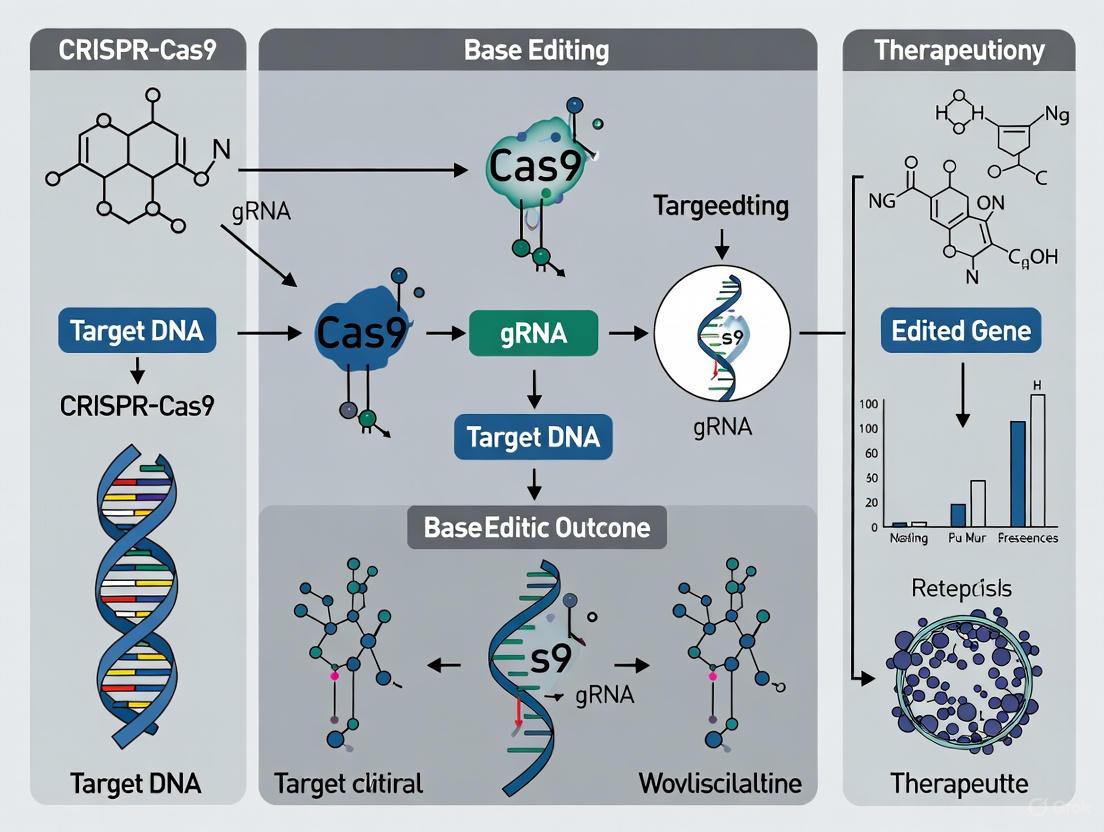
This article provides a comprehensive overview of CRISPR base editing, a transformative technology in precision gene therapy.
Base Editing Therapeutics: Precision, Applications, and Clinical Outlook in 2025
Abstract
This article provides a comprehensive overview of CRISPR base editing, a transformative technology in precision gene therapy. Tailored for researchers and drug development professionals, it explores the foundational mechanisms of base editors (BEs), detailing their core components and how they enable single-nucleotide changes without double-strand breaks. The scope extends to current methodological applications, including clinical trials for sickle cell disease, cardiovascular conditions, and rare genetic disorders. The content also addresses critical troubleshooting aspects such as off-target effects, editing efficiency, and delivery challenges, while presenting validation strategies and comparative analyses with traditional CRISPR-Cas9 and other editing platforms. The article synthesizes the current landscape, highlighting both the immense therapeutic potential and the hurdles that remain for clinical translation.
The Foundation of Precision: Understanding Base Editing Mechanics and Core Concepts
CRISPR-dependent base editing represents a significant evolution in genome engineering, enabling the direct, precise correction of single nucleotide variants without creating DNA double-strand breaks (DSBs). This technology is particularly valuable for therapeutic development, as it bypasses the reliance on error-prone repair pathways and offers greater control over genetic outcomes [1] [2]. Traditional CRISPR-Cas9 systems introduce DSBs, which are predominantly repaired by non-homologous end joining (NHEJ), often resulting in insertions or deletions (indels) that can compromise therapeutic precision [3]. In contrast, base editors achieve precise chemical conversion of one DNA base into another, dramatically reducing unintended mutations and presenting a safer profile for clinical applications [4] [2].
The therapeutic potential of this technology is substantial. It is estimated that adenine and cytosine base editors can theoretically correct approximately 95% of pathogenic transition mutations cataloged in ClinVar, encompassing a wide range of rare monogenic disorders [1]. For drug development professionals, this opens avenues for developing "one-and-done" curative treatments for diseases that currently have limited or only symptomatic therapeutic options [1].
Core Components and Mechanisms
All CRISPR base editors share a common fundamental architecture consisting of three essential components:
- A Catalytically Impaired Cas Protein: Instead of the wild-type Cas9, base editors use a nickase variant (nCas9) that cuts only a single DNA strand, or a catalytically dead Cas9 (dCas9) that lacks all cleavage activity. The primary function of this protein is to act as a programmable DNA-binding module that positions the editor at the correct genomic location [4] [5].
- A Deaminase Enzyme: This is the core catalytic component that performs the chemical conversion of the target base. It is fused directly to the Cas protein [4].
- A Guide RNA (gRNA): This RNA molecule is responsible for the system's specificity, directing the Cas-deaminase fusion complex to the target DNA sequence via complementary base pairing [6] [4].
The editing process is initiated when the gRNA directs the base editor complex to the target genomic locus. Upon binding, the Cas protein unwinds the DNA duplex, exposing a single-stranded DNA region—referred to as the "editing window"—to the deaminase enzyme. The chemical modification performed by the deaminase is then processed by the cell's endogenous DNA replication or repair machinery to permanently install the point mutation [6] [4].
Visualizing the Core Base Editing Mechanism
The following diagram illustrates the universal mechanism shared by both Cytosine Base Editors (CBEs) and Adenine Base Editors (ABEs).
Deconstructing Cytosine Base Editors (CBEs)
Cytosine Base Editors catalyze the conversion of a C•G base pair to a T•A base pair. The original CBE, known as BE3, was developed in 2016 and consists of three key parts: a Cas9 nickase (nCas9), a cytidine deaminase enzyme, and a uracil glycosylase inhibitor (UGI) [6] [4].
Mechanism of Action: The gRNA directs the CBE to the target site, where nCas9 binds and unwinds the DNA, exposing a single-stranded region. The cytidine deaminase (e.g., APOBEC1) then acts on a cytosine within the editing window, converting it into uracil by deamination. The UGI is a critical component that blocks the cellular base excision repair (BER) pathway by inhibiting uracil DNA glycosylase (UNG). Without UGI, UNG would recognize and remove the uracil, reverting the edit back to cytosine. Finally, the nCas9 nicks the non-edited DNA strand. This nick signals the cell to repair the strand, using the uracil-containing strand as a template. During replication, the uracil (U) is read as thymine (T), resulting in a permanent C•G to T•A conversion [6] [4].
Evolution and Improvements of CBEs
Since the development of BE3, the CBE toolbox has expanded significantly. Key improvements are summarized in the table below.
Table 1: Evolution of Cytosine Base Editors (CBEs)
| Editor Version | Key Components & Modifications | Primary Improvement | Therapeutic Application/Note |
|---|---|---|---|
| BE3 (Komor et al., 2016) [6] | nCas9 + APOBEC1 + UGI | First functional CBE; uses nickase to increase efficiency. | Foundation for all subsequent CBEs. |
| Target-AID (Nishida et al., 2016) [6] | nCas9 + sea lamprey cytidine deaminase (PmCDA1) | Alternative deaminase with a 3-5 base editing window. | Provides a different editing window profile. |
| BE4 (Komor et al., 2017) [6] | Second UGI copy + extended linkers | ≥2.3-fold reduction in undesired C-to-G/A products and indels. | Improved product purity is critical for safety. |
| BE4max (Koblan et al., 2018) [6] | Optimized NLS and codons | 4.2-6-fold improvement in editing efficiency in human cells. | Enhanced efficiency for therapeutic development. |
| evoAPOBEC1-BE4max (Thuronyi et al., 2019) [6] | Engineered, flexible deaminase | Effective at editing cytosines preceded by guanine. | Broader sequence context targeting. |
| Tad-CBEs (e.g., Chen et al., 2023) [6] | Engineered TadA deaminase (from ABEs) | Smaller size, reduced off-target mutations, precise single-C editing. | Improved safety profile and specificity. |
Deconstructing Adenine Base Editors (ABEs)
Adenine Base Editors perform the reverse conversion, changing an A•T base pair to a G•C base pair. The creation of the first ABE, reported in 2017, was a remarkable feat of protein engineering because no natural DNA adenine deaminases were known to exist. The laboratory of David Liu used directed evolution to engineer a DNA-acting enzyme from the E. coli tRNA adenosine deaminase, TadA [6] [4].
Mechanism of Action: The ABE complex, guided by its gRNA, localizes to the target DNA. Within the exposed editing window, the engineered TadA deaminase converts an adenine (A) into an intermediate molecule called inosine (I). In the genetic code, the cellular machinery interprets inosine as if it were guanine (G). Consequently, during DNA replication or repair, inosine pairs with cytosine (C), leading to a permanent A•T to G•C change on both DNA strands. A notable advantage of ABEs is that they do not require a UGI component, as inosine is not efficiently recognized and removed by DNA repair pathways, which contributes to their high editing purity with minimal byproducts [6] [4].
Evolution and Improvements of ABEs
The continuous engineering of ABEs has focused on enhancing their efficiency, precision, and applicability.
Table 2: Evolution of Adenine Base Editors (ABEs)
| Editor Version | Key Components & Modifications | Primary Improvement | Therapeutic Application/Note |
|---|---|---|---|
| ABE7.10 (Gaudelli et al., 2017) [6] | nCas9 + engineered TadA heterodimer | First functional ABE; average editing efficiency of ~53%. | Corrects a major class of pathogenic mutations. |
| ABEmax | Optimized NLS and codons | Improved nuclear localization and expression in human cells. | Standard backbone for modern ABEs. |
| ABE8e (Richter et al., 2020) [6] | TadA-8e variant | ~590-fold faster editing kinetics; high efficiency in primary T cells. | Enables editing in difficult-to-transfect cells. |
| ABE9e | Engineered for reduced DNA off-target activity | Maintains efficiency with lower off-target editing. | Improved safety profile for therapeutics. |
| ABE H52L/D53R (2025, New Study) [7] | TadA8e mutant with minimized RNA editing | Retains efficient on-target DNA editing while mitigating RNA off-target toxicity. | Addresses a key safety concern for clinical translation. |
Experimental Protocol: Assessing Base Editor Performance
The following protocol is adapted from recent methodologies for the functional validation of base editors, crucial for preclinical development [8].
Workflow for Base Editor Assessment
Detailed Methodological Steps
Step 1: Design and Cloning of Base Editor Components [8]
- sgRNA Design: Select a 20-nucleotide protospacer sequence directly adjacent to the required PAM sequence (e.g., 5'-NNNNNNNNNNNNNNNNNNNGG-3' for SpCas9). The target base must lie within the editor's characteristic activity window (typically positions 4-8 for original ABE7.10/CBE).
- Specificity Check: Utilize computational tools (e.g., Cas-OFFinder) to perform a genome-wide screen for potential off-target sites with high sequence similarity.
- Structure Prediction: Analyze the secondary structure of the designed sgRNA (protospacer + scaffold) using the mfold server. A stable, unhindered scaffold is critical for efficient Cas9 binding.
- Molecular Cloning: Clone the sgRNA expression cassette and the base editor (BE) construct into appropriate plasmids. To mitigate cellular toxicity from high BE expression, use optimized promoter-terminator pairs:
- sgRNA Expression: A plant-derived pAtU6 promoter has shown effective, non-toxic expression in E. coli.
- BE Expression: Use a high-strength promoter like synthetic pGlpT or a lower-strength promoter like p35S(L)I, depending on the toxicity and expression level required.
Step 2: Delivery and Transformation [8]
- Prepare chemically competent cells of a suitable E. coli strain (e.g., 10-beta, DH5α, BL21(DE3)).
- Transform the assembled BE plasmid DNA using a standard heat-shock protocol.
- Plate transformed cells on selective media and incubate overnight. Monitor colony formation as an initial indicator of BE component toxicity; robust growth suggests successful mitigation of toxicity.
Step 3: Editing and Analysis
- Inoculate cultures from successful transformants and grow under selection.
- Harvest cell biomass and extract genomic DNA.
- Amplify the target genomic region via PCR using high-fidelity DNA polymerase.
Step 4: Validation and Sequencing
- Sequence Analysis: Subject the PCR amplicons to Sanger sequencing or next-generation sequencing (NGS) for a more quantitative assessment.
- Efficiency Calculation: Calculate base editing efficiency as the percentage of sequencing reads that contain the desired base conversion at the target site.
- Purity Assessment: Quantify undesired byproducts, such as indels or other base substitutions (e.g., C-to-G/A for CBEs), as a percentage of total reads. This is a key safety metric.
The Scientist's Toolkit: Essential Reagents for Base Editing Research
Table 3: Key Research Reagent Solutions for Base Editing
| Reagent / Tool | Function / Description | Example & Note |
|---|---|---|
| Cas9 Nickase (nCas9) | Programmable DNA-binding module that positions the deaminase and nicks the non-edited strand. | SpCas9-D10A is the most common variant. Foundation for many BE systems [4] [8]. |
| Deaminase Enzymes | Catalyzes the chemical conversion of the target base. | CBE: APOBEC1, PmCDA1, evoAPOBEC1. ABE: Engineered TadA (TadA-8e) [6]. |
| Uracil Glycosylase Inhibitor (UGI) | Prevents repair of the U:G intermediate in CBEs, increasing editing efficiency. | Often included as one or two copies in CBE constructs (e.g., BE4) [6]. |
| Optimized sgRNA Scaffolds | Ensures high-efficiency binding and function of the Cas complex. | Modified scaffolds can improve specificity and efficiency [2]. |
| Promoter-Terminator Pairs | Controls expression levels of BE components to balance efficiency and toxicity. | pAtU6 for sgRNA; pGlpT (high) or p35S(L)I (low) for BE [8]. |
| AccuBase CBE | Commercial, GMP-grade CBE. | Example of a therapeutic-grade reagent designed for high efficiency and exceptional fidelity [4]. |
| HDR Enhancer Protein | Recombinant protein that increases HDR efficiency, useful for donor template-assisted edits. | Alt-R HDR Enhancer Protein can improve efficiency in challenging cells like iPSCs [7]. |
Cytosine and Adenine Base Editors have fundamentally expanded the toolkit available to therapeutic developers. By enabling precise single-nucleotide changes without inducing double-strand breaks, they offer a potentially safer and more efficient path to correcting the vast number of genetic diseases caused by point mutations. The ongoing refinement of these tools—focusing on expanding targeting scope, improving specificity, and reducing off-target effects—continues to enhance their therapeutic potential.
The future of base editing lies in addressing the remaining challenges, such as delivery efficiency to target tissues in vivo, editing precision to avoid bystander edits, and managing immune responses. The successful application of AI to design highly functional genome editors, such as the recently reported OpenCRISPR-1, signals a new era of editor development that may rapidly overcome these hurdles [9]. As the field progresses, the collaboration between tool developers, academic researchers, and drug development professionals will be paramount in translating the profound promise of base editing into transformative therapies for patients with rare monogenic disorders and beyond.
CRISPR base editing represents a significant advancement in genome editing technology by enabling precise single-nucleotide changes without inducing double-strand breaks (DSBs) in DNA [4] [1]. Unlike traditional CRISPR-Cas9 systems that rely on creating DSBs and harnessing cellular repair mechanisms, base editors directly chemically modify target DNA bases through a catalytic process that leaves the DNA backbone intact [10]. This fundamental difference provides a precision advantage that minimizes unintended genetic consequences such as insertions, deletions, and chromosomal rearrangements, making base editing particularly valuable for therapeutic applications where accuracy is paramount [4] [11].
The core architecture of base editors consists of three essential components: a catalytically impaired Cas protein (either a nickase, nCas9, or dead Cas9, dCas9), a deaminase enzyme, and a base editing guide RNA (gRNA) [4]. These components work in concert to enable precise genetic modifications while maintaining genomic integrity—a critical consideration for therapeutic development.
Molecular Mechanisms of Strand-Specific Editing
Core Components and Their Functions
Base editors function through a coordinated mechanism that avoids complete DNA cleavage. The modified Cas9 variant (nCas9 or dCas9) serves as a programmable DNA-binding module that localizes the editor to specific genomic loci without creating double-strand breaks [4]. The deaminase enzyme performs the key chemical conversion of nucleotides within a defined editing window, while the gRNA ensures targeting specificity through complementary base pairing [1].
The editing process initiates when the base editor complex binds to DNA at the target site specified by the gRNA. The Cas component unwinds the DNA duplex, creating a temporary single-stranded region called the R-loop [12] [1]. Within this exposed single-stranded DNA, the deaminase enzyme catalyzes the chemical conversion of specific bases: cytosine base editors (CBEs) convert cytosine (C) to uracil (U), while adenine base editors (ABEs) convert adenine (A) to inosine (I) [4]. These modified bases are then recognized and processed by cellular machinery during DNA replication or repair, ultimately resulting in permanent base pair substitutions (C•G to T•A or A•T to G•C) without DSB formation [4] [12].
Figure 1: Molecular Mechanism of Base Editing. The base editor complex, comprising a nCas9 protein fused to a deaminase enzyme and guided by gRNA, binds target DNA and creates an R-loop structure. This exposes a single-stranded DNA region where the deaminase catalyzes base conversion without creating double-strand breaks.
Deaminase Engineering and Specificity
The deaminase components of base editors have been extensively engineered to achieve efficient DNA editing. Cytosine base editors utilize natural cytidine deaminases such as APOBEC1, which converts cytosine to uracil within the editing window [4]. Adenine base editors employ engineered tRNA adenosine deaminases (TadA) that have been evolved through directed evolution to recognize DNA substrates instead of their native RNA targets [4] [12]. The TadA deaminase in ABEs specifically converts adenine to inosine, which cellular machinery interprets as guanine during DNA replication [12].
Structural studies of ABE8e, one of the most efficient adenine base editors, reveal how mutations introduced during directed evolution optimize the enzyme for DNA deamination [12]. These mutations primarily occur in substrate-binding loops and the C-terminal α5-helix, enhancing interactions with single-stranded DNA substrates while maintaining the overall structural framework of the original tRNA deaminase [12]. The engineered deaminase forms a homodimer through the same dimerization interface as wild-type enzymes, though the functional significance of dimerization in DNA editing requires further investigation [12].
Quantitative Comparison of Base Editing Platforms
Base editing platforms demonstrate distinct biochemical properties and editing efficiencies that determine their suitability for specific research or therapeutic applications. The table below summarizes the key characteristics of major base editor systems.
Table 1: Comparison of Major Base Editing Platforms
| Base Editor Type | Base Conversion | Key Components | Editing Window | Therapeutic Correction Potential | Primary Considerations |
|---|---|---|---|---|---|
| Cytosine Base Editors (CBE) | C•G to T•A | nCas9 + APOBEC1 deaminase + UGI | ~5 nucleotide window (positions 3-8 in protospacer) [10] | Corrects ~30% of pathogenic transition mutations [1] | Potential for bystander edits within window; includes UGI to prevent repair reversal [4] |
| Adenine Base Editors (ABE) | A•T to G•C | nCas9 + engineered TadA deaminase | ~5 nucleotide window (positions 4-8 in protospacer) [10] | Corrects ~65% of pathogenic transition mutations [1] | Requires heterodimer of wild-type and engineered TadA; high specificity [4] [12] |
| Combined ABE + CBE | All transition mutations | Both systems combined | Varies by construct | Corrects ~95% of pathogenic transition mutations [1] | Coverage of most common SNVs; requires careful gRNA design to avoid off-target effects |
The positioning of the target base within the editing window is critical for efficient modification [4] [10]. Base editors typically operate within a narrow activity window of approximately 5 nucleotides, with the exact position dependent on the molecular architecture of the specific base editor [4]. This constraint, combined with protospacer adjacent motif (PAM) requirements, influences targetable genomic regions and necessitates careful gRNA design to ensure the desired base falls within the optimal editing window [4] [10].
Table 2: Therapeutic Potential of Base Editing for Genetic Disorders
| Disease Category | Example Conditions | Base Editing Approach | Clinical Development Stage |
|---|---|---|---|
| Monogenic Blood Disorders | Sickle Cell Disease, Beta Thalassemia | Ex vivo editing of hematopoietic stem cells | Approved therapy (Casgevy) using conventional CRISPR; base editing in preclinical development |
| Metabolic Liver Disorders | Hereditary Transthyretin Amyloidosis (hATTR), Familial Hypercholesterolemia | In vivo editing of hepatocytes using LNP delivery | Phase I-III clinical trials (e.g., Intellia Therapeutics hATTR program) [13] |
| Rare Monogenic Disorders | CPS1 Deficiency, Usher Syndrome Type II | Personalized in vivo editing or targeted correction | Preclinical studies and case reports (e.g., personalized CPS1 deficiency treatment) [13] |
| Oncology | T-cell Acute Lymphoblastic Leukemia | Creation of allogeneic CAR-T cells via multiplex base editing | Clinical case success (e.g., base-edited CAR-T for leukemia) [11] |
Experimental Protocols for Therapeutic Development
In Vitro Base Editing in Cell Lines
This protocol describes the implementation of base editing in mammalian cell lines for therapeutic proof-of-concept studies, utilizing the components detailed in the Scientist's Toolkit.
Materials Required
- Base editor plasmid (ABE8e-NGS or AccuBase-CBE)
- Base editing gRNA expression vector
- Target cell line (HEK293T, HepG2, or disease-relevant primary cells)
- Transfection reagent (lipofectamine 3000 or electroporation system)
- Genomic DNA extraction kit
- Next-generation sequencing supplies
Procedure
- gRNA Design and Cloning: Design gRNAs to position the target base within the optimal editing window (positions 4-8 for ABE, 3-8 for CBE). Verify target specificity and minimize off-target potential using computational tools [4] [10]. Clone selected gRNA sequences into appropriate expression vectors.
Cell Transfection: Plate cells at 60-80% confluence in appropriate culture vessels. Transfect with base editor and gRNA plasmids at optimized ratios (typically 1:1 to 3:1 editor:gRNA ratio). Include controls with empty vector and non-targeting gRNA.
Harvest and Analysis: Harvest cells 72-96 hours post-transfection. Extract genomic DNA using commercial kits. Amplify target regions by PCR and quantify editing efficiency through next-generation sequencing or restriction fragment length polymorphism analysis.
Functional Validation: For therapeutic applications, assess functional correction through Western blot (protein restoration), enzymatic assays, or phenotypic analyses specific to the disease model.
Troubleshooting Notes
- Low editing efficiency may require optimization of gRNA positioning or switching base editor variants.
- High bystander editing may necessitate redesign of gRNA to position only the desired base in the editing window.
- Cell-type specific delivery challenges may require alternative transfection methods or viral delivery systems.
In Vivo Therapeutic Base Editing Using Lipid Nanoparticles
This protocol outlines the implementation of systemic base editing for therapeutic applications, based on successful clinical approaches for conditions like hATTR amyloidosis [13].
Materials Required
- Base editor mRNA (research-grade or GMP-grade)
- Chemically modified gRNA
- Lipid nanoparticles (LNPs) for encapsulation
- Animal model of disease
- IV injection supplies
- Plasma and tissue collection supplies
Procedure
- mRNA and gRNA Preparation: Generate base editor mRNA through in vitro transcription with 5' capping and polyA tail addition. Synthesize gRNA with chemical modifications to enhance stability.
LNP Formulation: Encapsulate base editor mRNA and gRNA at optimized ratios in LNPs using microfluidic mixing technology. Characterize LNP size (preferably 70-100 nm), encapsulation efficiency, and stability.
In Vivo Administration: Administer LNPs via systemic intravenous injection at established therapeutic doses. For liver-targeted editing, standard LNPs naturally accumulate in hepatocytes [13].
Efficacy and Safety Assessment: Collect plasma and tissue samples at predetermined timepoints. Quantify editing efficiency through digital PCR or next-generation sequencing of target tissues. Assess therapeutic protein levels (e.g., TTR reduction for hATTR) and monitor for potential off-target effects through whole-genome sequencing or CIRCLE-seq.
Clinical Considerations
- Dosing may be adjusted based on therapeutic response, as demonstrated in clinical trials where patients received multiple LNP infusions [13].
- Monitoring should include assessment of potential immune responses to editing components, though LNP delivery shows reduced immunogenicity compared to viral vectors.
The Scientist's Toolkit: Essential Reagents for Base Editing Research
Table 3: Essential Research Reagents for Base Editing Applications
| Reagent Category | Specific Examples | Function | Therapeutic Application Notes |
|---|---|---|---|
| Base Editor Plasmids | ABE8e, BE4, AccuBase CBE | Engineered effector proteins for precise base conversion | Available in research-grade and GMP-grade formats; codon-optimized for human cells [4] [12] |
| Guide RNA Systems | CHOP-CHOP designed sgRNAs, Synthego edited gRNAs | Target specificity and positioning within editing window | Modified gRNAs with enhanced stability; designed for minimal off-target effects [4] [14] |
| Delivery Vehicles | Lipid Nanoparticles (LNPs), AAV vectors, Electroporation systems | In vivo and ex vivo delivery of editing components | LNPs preferred for liver-targeted in vivo editing; AAV for other tissues; electroporation for ex vivo applications [13] |
| Validation Tools | Next-generation sequencing, UMI-based error correction, Single-strand consensus sequencing | Assessment of editing efficiency and off-target profiling | Essential for therapeutic development; UMI methods reduce sequencing errors [14] |
| Cell Culture Systems | Ba/F3 cells, HEK293T, Primary human hepatocytes, Disease-specific iPSCs | Model systems for editing optimization and therapeutic testing | Primary cells and iPSCs provide most clinically relevant models for therapeutic development |
Base editing technology represents a transformative approach in therapeutic genome editing by eliminating the primary safety concern associated with conventional CRISPR-Cas9 systems: the induction of double-strand breaks. The precision advantage of base editing stems from its direct chemical conversion of nucleotides without DNA cleavage, significantly reducing unintended genetic consequences while maintaining high editing efficiency [4] [1] [10].
Current clinical applications demonstrate the therapeutic potential of this technology, with ongoing trials for hereditary transthyretin amyloidosis, hereditary angioedema, and familial hypercholesterolemia showing promising results [13] [11]. The ability to perform multiplexed editing, correct a broad range of pathogenic single-nucleotide variants, and achieve therapeutic levels of correction in vivo positions base editing as a leading technology for the next generation of genetic medicines.
Future developments will likely focus on expanding the targeting scope through engineered editors with relaxed PAM requirements, reducing already minimal off-target effects, and improving delivery efficiency to non-liver tissues. As the field advances, base editing is poised to deliver on the promise of precision medicine for a wide range of genetic disorders through its unique combination of efficiency and safety.
The development of programmable nucleases has revolutionized biological research and therapeutic development, transitioning from theoretical concept to powerful clinical tools. The field is built upon three foundational platforms: Zinc-Finger Nucleases (ZFNs), Transcription Activator-Like Effector Nucleases (TALENs), and the RNA-guided CRISPR-Cas systems [15]. While ZFNs and TALENs employ protein-based DNA recognition domains fused to FokI nuclease domains, CRISPR-Cas systems utilize RNA-guided targeting through a complex of Cas proteins with guide RNA (gRNA) [15]. This fundamental difference in targeting mechanism has made CRISPR technology particularly versatile and accessible.
CRISPR-Cas systems represent a bacterial adaptive immune system that has been repurposed for precise genome engineering. The system requires two key components: the Cas nuclease and a guide RNA (gRNA) that directs the nuclease to a specific DNA sequence through complementary base pairing [15]. The discovery that the system could be simplified to a single chimeric guide RNA (sgRNA) combining CRISPR RNA (crRNA) and trans-activating RNA (tracrRNA) functions significantly enhanced its utility for biotechnology applications [15]. A critical requirement for CRISPR targeting is the presence of a short Protospacer Adjacent Motif (PAM) sequence adjacent to the target site, which varies depending on the specific Cas protein being utilized [15].
The initial implementation of CRISPR-Cas9 represented a breakthrough in genome editing capability, but its dependence on creating double-strand breaks (DSBs) introduced significant limitations for therapeutic applications. The evolution to base editing technology has addressed many of these limitations by enabling precise single-nucleotide changes without requiring DSBs, creating a more predictable and safer editing platform for clinical applications [15] [1].
The Mechanism and Limitations of CRISPR-Cas9
DNA Cleavage and Repair Pathways
Traditional CRISPR-Cas9 functions through the creation of double-strand breaks (DSBs) at specific genomic locations. Once the Cas9-sgRNA complex binds to its target DNA sequence and verifies complementarity, the Cas9 enzyme cleaves both DNA strands using its two nuclease domains: the HNH domain, which cuts the complementary strand, and the RuvC domain, which cuts the non-complementary strand [15]. This DSB triggers the cell's endogenous DNA repair machinery, primarily through two competing pathways:
- Non-Homologous End Joining (NHEJ): An error-prone repair pathway that directly ligates the broken DNA ends, often resulting in small insertions or deletions (indels) that disrupt the target gene function, leading to gene knockout [15].
- Homology-Directed Repair (HDR): A precise repair pathway that uses a template DNA molecule to introduce specific genetic modifications at the target site, enabling gene knock-ins or precise nucleotide substitutions [15].
The following diagram illustrates the CRISPR-Cas9 mechanism and subsequent DNA repair pathways:
Therapeutic Limitations of DSB-Dependent Editing
The DSB-dependent nature of CRISPR-Cas9 creates several significant challenges for therapeutic applications:
- Dominance of NHEJ: In most therapeutically relevant somatic cells, the NHEJ pathway predominates over HDR, particularly in non-dividing or slowly dividing cells such as neurons and cardiomyocytes [15]. This efficiency imbalance makes precise HDR-mediated editing challenging.
- Unpredictable Outcomes: The error-prone nature of NHEJ results in heterogeneous editing outcomes, with potentially hundreds of different indel mutations occurring at a single target site [15]. This unpredictability is problematic for clinical applications requiring consistent results.
- Genotoxic Risks: DSBs can lead to significant genotoxic stress, activating p53-mediated DNA damage responses and potentially causing large chromosomal deletions, translocations, or other genomic rearrangements [1].
- Limited Correction Scope: While effective for gene disruption, traditional CRISPR-Cas9 is less efficient for precisely correcting point mutations, which account for approximately 50% of known pathogenic genetic variants [1].
These limitations prompted the development of more precise editing technologies that could avoid DSB formation while maintaining high editing efficiency.
Base Editing: Principles and Mechanisms
The Base Editing Architecture
Base editors represent a revolutionary advance in genome editing technology that directly chemically modifies DNA bases without creating DSBs. These chimeric proteins combine a catalytically impaired Cas nuclease (nickase) with a DNA-modifying enzyme, such as cytidine deaminase or adenine deaminase [15] [1]. The Cas nickase retains its DNA-targeting capability but is mutated to cut only one DNA strand (typically using a Cas9 D10A nickase variant), while the deaminase enzyme performs the base conversion chemistry on the exposed single-stranded DNA within the R-loop structure [1].
The core base editor architecture consists of three main components:
- Catalytically impaired Cas protein: Engineered to cut only the non-edited DNA strand (nickase)
- Deaminase enzyme: Catalyzes the chemical conversion of one base to another
- Guide RNA: Directs the complex to the specific target sequence
Two main classes of base editors have been developed:
- Cytosine Base Editors (CBEs): Convert C•G base pairs to T•A through deamination of cytosine to uracil, which is then read as thymine by DNA polymerases [15] [1].
- Adenine Base Editors (ABEs): Convert A•T base pairs to G•C through deamination of adenine to inosine, which is read as guanine by DNA polymerases [15].
Together, CBEs and ABEs can theoretically correct approximately 95% of pathogenic transition mutations cataloged in ClinVar, dramatically expanding the therapeutic potential of gene editing [1].
Molecular Mechanism of Base Editing
The base editing process occurs through a precise molecular mechanism that avoids DSB formation:
- DNA Binding and Strand Separation: The base editor complex binds to target DNA through gRNA complementarity and localizes to the PAM sequence, triggering DNA unwinding and R-loop formation [1].
- Deaminase Activity: The tethered deaminase enzyme acts on the exposed single-stranded DNA within a defined "activity window" (typically positions 4-8 within the protospacer), converting specific bases [1].
- DNA Mismatch Resolution: The edited base creates a DNA mismatch that is resolved through cellular repair pathways, ultimately resulting in a permanent base substitution [1].
The following diagram illustrates the comparative mechanisms of CRISPR-Cas9 versus base editing:
Quantitative Comparison of Editing Technologies
Table 1: Comparative Analysis of Major Genome Editing Platforms
| Editing Platform | Editing Mechanism | Primary Repair Pathway | Theoretical Correction Scope | DSB Formation | Key Advantages | Key Limitations |
|---|---|---|---|---|---|---|
| CRISPR-Cas9 | Double-strand break | NHEJ/HDR | All mutation types | Yes | High efficiency for gene disruption; Broad targeting | Unpredictable indels; Genotoxic risk; Low HDR efficiency |
| Cytosine Base Editors (CBEs) | Direct base conversion (C•G to T•A) | Mismatch repair | ~30% of pathogenic SNVs | No | High efficiency; Predictable products; Minimal indels | Restricted editing window; Off-target editing |
| Adenine Base Editors (ABEs) | Direct base conversion (A•T to G•C) | Mismatch repair | ~65% of pathogenic SNVs | No | High efficiency; Predictable products; Minimal indels | Restricted editing window; Off-target editing |
| Prime Editing | Reverse transcription with pegRNA | DNA repair with flap resolution | ~90% of known pathogenic variants | No | Versatility; Precise small edits; Reduced off-targets | Lower efficiency; Complex gRNA design |
Table 2: Preclinical Evidence for Base Editing Therapeutics in Monogenic Disorders
| Disease Model | Gene Target | Base Editor | Editing Efficiency | Functional Outcome | Reference |
|---|---|---|---|---|---|
| Sickle Cell Disease | HBB | ABE | Higher than CRISPR-Cas9 | Reduced sickling, improved engraftment | [16] |
| Hereditary Transthyretin Amyloidosis | TTR | LNP-CRISPR | ~90% protein reduction | Sustained response at 2 years | [13] |
| Hereditary Angioedema | KLKB1 | LNP-CRISPR | 86% kallikrein reduction | 8/11 patients attack-free | [13] |
| Junctional Epidermolysis Bullosa | COL17A1 | Prime editing | Up to 60% in keratinocytes | Protein restoration, selective advantage | [16] |
Experimental Protocol: Base Editing for Therapeutic Development
Protocol: In Vitro Assessment of Base Editor Efficacy
This protocol outlines a standardized approach for evaluating base editor performance in mammalian cell cultures, providing critical preclinical data for therapeutic development.
Materials Required:
Table 3: Essential Research Reagents for Base Editing Experiments
| Reagent/Category | Specific Examples | Function/Purpose | Therapeutic Relevance |
|---|---|---|---|
| Base Editor Plasmids | BE4max, ABE8e | Express editor components | Determines editing efficiency and specificity |
| Delivery Vehicles | Lipid nanoparticles (LNPs), AAV vectors | Intracellular delivery of editors | Critical for in vivo applications; liver tropism of LNPs advantageous [13] |
| Cell Lines | HEK293T, HEPG2, iPSCs, target primary cells | Editing substrates | Disease-relevant models essential for translational research |
| Control Elements | Positive editing controls (targeting TRAC, RELA), scramble gRNAs | Experimental validation | Essential for distinguishing specific from non-specific effects [17] |
| Analysis Tools | Next-generation sequencing, ICE analysis | Quantify editing efficiency and outcomes | Critical for assessing editing homogeneity and off-target effects |
Procedure:
Guide RNA Design and Validation
- Design sgRNAs with target bases positioned within the optimal activity window (typically protospacer positions 4-8)
- Include appropriate controls: non-targeting scramble gRNAs and positive control gRNAs targeting validated sites (e.g., TRAC, RELA) [17]
- Validate gRNA specificity using computational tools (e.g., Cas-OFFinder) to minimize off-target potential
Base Editor Delivery
- For in vitro studies: Transfect cells using appropriate methods (lipofection, electroporation) with base editor plasmid or ribonucleoprotein (RNP) complexes
- Include transfection controls (e.g., GFP reporter) to assess delivery efficiency [17]
- For therapeutic development: Utilize clinically relevant delivery systems such as lipid nanoparticles (LNPs) for in vivo applications [13]
Editing Efficiency Assessment
- Harvest cells 72-96 hours post-transfection
- Extract genomic DNA using standardized protocols
- Amplify target regions by PCR and quantify editing efficiency using next-generation sequencing (recommended) or Sanger sequencing with ICE analysis
- Assess protein-level functional consequences through Western blot, immunofluorescence, or functional assays as appropriate
Specificity and Safety Validation
- Perform whole-genome sequencing or targeted sequencing of predicted off-target sites
- Assess genomic integrity through karyotyping or γH2AX staining
- Evaluate p53 activation and DNA damage response pathways
Troubleshooting Notes:
- Low editing efficiency may require optimization of delivery methods, gRNA design, or editor expression levels
- High off-target activity may necessitate switching to high-fidelity base editor variants or revising gRNA design
- Cell toxicity may indicate excessive editor expression or off-target effects
Advanced Applications and Future Directions
Emerging Technologies and Clinical Translation
The gene editing field continues to evolve rapidly with several advanced technologies building upon the base editing foundation:
AI-Designed Genome Editors: Recent advances have demonstrated the successful application of large language models to design novel CRISPR-Cas proteins with optimal properties for therapeutic use. These AI-generated editors, such as OpenCRISPR-1, exhibit comparable or improved activity and specificity relative to natural Cas9 proteins while being highly divergent in sequence, representing a significant expansion of the gene editing toolbox [9].
Epigenome Editing: CRISPR-based tools can now precisely edit epigenetic marks without altering the underlying DNA sequence. Researchers have developed CRISPR-dCas9-based tools to bidirectionally control gene expression through targeted chromatin modifications, demonstrating reversible epigenetic editing of memory-associated genes with potential applications for neurological disorders [16].
Compact Editing Systems: Newly engineered compact Cas proteins (Cas12f1Super, TnpBSuper) combine small size suitable for viral delivery with high editing efficiency, addressing a critical limitation in therapeutic gene editing [16].
Clinical Trial Landscape and Therapeutic Applications
The therapeutic application of base editing has shown remarkable progress in clinical and preclinical studies:
- Cardiovascular Applications: A single LNP-administered dose of mRNA-encoded epigenetic editors has successfully silenced Pcsk9 in mice, reducing PCSK9 by ~83% and LDL cholesterol by ~51% for six months, demonstrating the potential for long-term gene modulation via transient mRNA delivery [16].
- Rare Genetic Disorders: Intellia Therapeutics has reported sustained ~90% reduction in disease-related protein levels in hereditary transthyretin amyloidosis patients treated with LNP-delivered CRISPR therapy, with sustained response maintained over two years of follow-up [13].
- Oncology Applications: Base editing has enhanced CAR T-cell therapies for solid tumors, with PTPN2-deficient CAR T-cells showing improved persistence and antitumor activity in mouse models [16].
The following diagram illustrates the therapeutic development pathway for base editing therapies:
The evolution from CRISPR-Cas9 to base editing technologies represents a paradigm shift in therapeutic genome editing. While CRISPR-Cas9 established the foundation for programmable gene editing, its dependence on DSB formation created significant limitations for clinical applications. Base editors have addressed these challenges by enabling precise single-nucleotide changes without DSBs, resulting in more predictable editing outcomes and reduced genotoxic risks. The rapid advancement of base editing technology, coupled with improved delivery systems and AI-assisted editor design, has accelerated the development of transformative therapies for genetic disorders. As the field progresses, base editing continues to expand the therapeutic landscape, offering promising solutions for previously untreatable genetic conditions through precise genomic correction.
In the rapidly advancing field of CRISPR-based therapeutic development, precision is paramount. Base editing technologies have emerged as powerful tools for correcting pathogenic single-nucleotide variants (SNVs) without inducing double-strand DNA breaks (DSBs), which are associated with unintended insertions, deletions, and complex rearrangements [18] [19]. Understanding three core technical concepts—editing windows, protospacer adjacent motif (PAM) requirements, and bystander edits—is essential for designing safe and effective therapeutic strategies. These elements fundamentally influence target selection, editor choice, and ultimately, the specificity of the genetic correction [4] [20]. This note defines these terms within the context of therapeutic application, provides quantitative comparisons of common base editors, outlines relevant experimental protocols, and visualizes the logical relationships governing precise base editing.
Key Terminology and Quantitative Comparisons
Definitions and Therapeutic Impact
Editing Window: The specific region within the protospacer where the deaminase component of a base editor can effectively access and modify target nucleotides [4] [21]. This window is typically a narrow stretch of 4-10 bases and is determined by the spatial constraints of the Cas protein-deaminase fusion complex [20] [22]. Therapeutically, the editing window defines whether a disease-relevant nucleotide falls within the accessible range of the editor. A broader window increases the number of targetable sites but also raises the potential for undesired bystander edits [20].
PAM (Protospacer Adjacent Motif) Requirements: A short, specific DNA sequence motif that must be located adjacent to the target DNA site for the Cas protein to recognize and bind to it [18] [21]. The PAM requirement is a property of the Cas protein used (e.g., SpCas9 typically requires an NGG PAM) and is a primary factor determining the proportion of the genome that can be targeted [22]. Overcoming PAM limitations is a major focus of editor engineering to expand the therapeutic target space [22].
Bystander Edits: Unintended single-nucleotide conversions that occur at editable bases (e.g., multiple adenines or cytosines) located within the activity window of the base editor but are not the intended therapeutic target [20]. These edits represent a significant challenge for therapeutic application, as they can potentially disrupt normal gene function or cellular processes, even if the intended correction is successful [20] [22]. Recent engineering efforts aim to narrow the editing window and enhance deaminase specificity to mitigate this risk [20].
Comparative Analysis of Base Editors
The following tables summarize the key characteristics of prominent base editors, highlighting the evolution of their properties relevant to therapeutic design.
Table 1: Characteristics of Adenine Base Editors (ABEs)
| Base Editor | Editing Window (Position from PAM) | PAM Requirement | Key Features & Therapeutic Implications |
|---|---|---|---|
| ABE7.10 [21] [6] | Positions 4-7 [21] | NGG (for SpCas9) | The first-generation ABE; demonstrates high specificity but a relatively narrow window. |
| ABE8e [20] | Positions 3-12 (~10 bp window) [20] | NGG (for SpCas9) | High activity but broad editing window, increasing the risk of bystander edits [20]. |
| ABE-NW1 [20] | Positions 4-7 [20] | NGG (for SpCas9) | Engineered for a narrower window; significantly reduces bystander editing while maintaining robust on-target efficiency [20]. |
Table 2: Characteristics of Cytosine Base Editors (CBEs) and Guanine Base Editors
| Base Editor | Editing Window (Position from PAM) | PAM Requirement | Key Features & Therapeutic Implications |
|---|---|---|---|
| BE3 [21] | Positions 4-8 [21] | NGG (for SpCas9) | An early CBE; incorporates a nickase and UGI to improve efficiency and product purity [21]. |
| BE4 [6] | Similar to BE3 | NGG (for SpCas9) | Reduces undesired C→G/A byproducts and indels compared to BE3 via a second UGI and optimized linkers [6]. |
| CGBE [21] | Positions 5-7 [21] | NGG (for SpCas9) | Mediates C-to-G transversions; contains uracil-N-glycosylase (UNG) instead of a UGI [21]. |
Experimental Protocol: Evaluating Bystander Editing
This protocol outlines a method to quantify on-target and bystander editing efficiencies for a candidate base editor, using a target site with multiple editable bases as an example.
Materials and Reagents
Table 3: Essential Research Reagents and Solutions
| Item | Function/Description | Example/Therapeutic Relevance |
|---|---|---|
| Base Editor Plasmid | Expresses the base editor fusion protein (e.g., ABE8e, ABE-NW1). | Engineered editors like ABE-NW1 are designed for therapeutic applications due to reduced bystander effects [20]. |
| Guide RNA (gRNA) Plasmid | Expresses the sgRNA that directs the editor to the genomic target. | Must be designed so that the intended edit and potential bystanders fall within the editor's predicted activity window [4] [22]. |
| Delivery Vehicle | Transfers genetic material into cells. | AAV vectors are common for in vivo work but have size constraints, often requiring dual-AAV or split-intein systems [22] [23]. LNPs are an emerging alternative [23]. |
| Cell Line | Model system for the experiment. | Immortalized cell lines (e.g., HEK293T) are used for initial screening. Patient-derived fibroblasts or iPSCs are critical for translational therapeutic research [20] [22]. |
| PCR Reagents | Amplify the target genomic locus for sequencing. | Requires high-fidelity polymerase to avoid introducing errors during amplification. |
| High-Throughput Sequencing (HTS) Platform | Quantifies the frequency and spectrum of base edits at the target locus. | Provides deep, quantitative data on editing outcomes (on-target, bystander, indels) [20]. |
Step-by-Step Methodology
Target Selection and gRNA Design:
- Identify a target genomic site relevant to a disease model (e.g., the CFTR W1282X mutation or the SMN2 C6T site) [20] [22].
- Design a sgRNA such that the disease-relevant nucleotide, along with one or more additional editable bases (bystanders), is contained within the editing window of the chosen base editor.
- Control: Include a negative control (e.g., cells transfected with gRNA only or a non-targeting gRNA).
Cell Transfection/Transduction:
- Deliver the base editor and sgRNA constructs into your chosen cell model. For in vivo studies, administer the editor via dual AAV vectors or LNPs into a mouse model [22] [23].
- Optimize delivery conditions (e.g., vector dose, transfection reagent, time) to achieve robust editing while maintaining cell viability.
Genomic DNA Extraction and Amplification:
- After a sufficient period for editing and expression (e.g., 72 hours post-transfection), harvest cells or tissue and extract genomic DNA.
- Design primers flanking the target site and perform PCR to amplify a ~300-500 bp region encompassing the target.
High-Throughput Sequencing and Data Analysis:
- Prepare sequencing libraries from the purified PCR amplicons and sequence on an appropriate HTS platform (e.g., Illumina MiSeq).
- Data Analysis: Process the sequencing data using a bioinformatics pipeline to:
- Align sequences to the reference genome.
- Calculate the percentage of reads containing the intended A-to-G or C-to-T conversion.
- Quantify the percentage of reads containing edits at each bystander adenine or cytosine within the window.
- Compute the bystander-to-target editing ratio for each bystander site [20].
- Assess the frequency of insertions or deletions (indels) at the target site.
Data Interpretation
A successful experiment will clearly distinguish the efficiency of the intended edit from unwanted bystander activity. A therapeutically viable editor, like ABE-NW1 in the CFTR model, will show a high rate of intended correction with a low bystander-to-target ratio [20]. The results directly inform the selection of the optimal base editor and gRNA combination for a given therapeutic target.
Visualizing the Core Concepts
The following diagram illustrates the logical and structural relationships between the key components of a base editor and the core terminology defined in this note.
Diagram 1: Logic of base editing components and key terms. The base editor complex, comprising a Cas nickase and a deaminase enzyme, is guided to the target DNA by the gRNA. Successful binding is contingent on the presence of a specific PAM sequence. The deaminase acts within a constrained "editing window" on the single-stranded DNA, where the intended on-target edit is performed. The presence of multiple editable bases within this window can result in unwanted bystander edits.
From Bench to Bedside: Current Methodologies and Clinical Applications of Base Editing
Application Note: CRISPR Base Editing for Therapeutic Development
CRISPR-dependent base editing represents a significant advancement in genetic medicine, enabling precise correction of genetic mutations through direct modification of DNA bases without creating double-stranded breaks (DSBs) [1]. This technology combines a nickase version of Cas9 with cytosine or adenine deaminases to facilitate specific base conversions: Cytosine Base Editors (CBEs) convert C•G to T•A, while Adenine Base Editors (ABEs) convert A•T to G•C [4]. Together, these editors can theoretically correct approximately 95% of pathogenic transition mutations cataloged in ClinVar, offering tremendous potential for treating monogenic disorders [1]. The fundamental components of base editing systems include a modified Cas9 variant (nickase or dead Cas9), a deaminase enzyme, and a guide RNA (gRNA) that directs the complex to the target sequence [4].
Key Clinical-Stage Candidates
The therapeutic pipeline for base editing includes multiple promising candidates, with BEAM-101 for sickle cell disease and VERVE-102 for cardiovascular disease representing two of the most advanced programs currently in clinical trials.
BEAM-101 is an investigational, genetically modified ex vivo cell therapy for severe sickle cell disease (SCD) that utilizes autologous CD34+ hematopoietic stem and progenitor cells (HSPCs) [24]. The therapy employs base editing in the promoter regions of the HBG1/2 genes to inhibit the transcriptional repressor BCL11A from binding without disrupting its expression, thereby increasing production of non-sickling and anti-sickling fetal hemoglobin (HbF) to mimic the effects of hereditary persistence of fetal hemoglobin [25].
VERVE-102 is a novel, investigational in vivo base editing medicine designed as a single-course treatment that permanently turns off the PCSK9 gene in the liver to durably reduce low-density lipoprotein cholesterol (LDL-C) [26]. The therapy consists of an adenine base editor and a guide RNA targeting the PCSK9 gene, encapsulated in a proprietary GalNAc-lipid nanoparticle (LNP) and administered as a single intravenous infusion [27].
Table 1: Key Clinical-Stage Base Editing Therapeutics
| Therapeutic Candidate | Developer | Target Disease | Editing Approach | Delivery Method | Clinical Stage |
|---|---|---|---|---|---|
| BEAM-101 | Beam Therapeutics | Sickle Cell Disease | Adenine Base Editing (ABE) of HBG1/2 promoters | Ex vivo autologous CD34+ HSPC transplant | Phase 1/2 (BEACON trial) |
| VERVE-102 | Verve Therapeutics | Cardiovascular Disease (HeFH, CAD) | Adenine Base Editing (ABE) of PCSK9 gene | In vivo GalNAc-LNP intravenous infusion | Phase 1b (Heart-2 trial) |
Clinical Data and Efficacy
Recent clinical data from ongoing trials demonstrate promising efficacy for both candidates. As of February 2025, 17 patients with severe SCD were treated with BEAM-101 in the BEACON trial, with follow-up ranging from 0.2 to 15.1 months [24]. All patients achieved endogenous HbF levels exceeding 60% and durable reduction in sickle hemoglobin (HbS) below 40%, with rapid resolution of anemia and normalization of hemolysis markers after elimination of transfused blood [24]. These responses remained durable for up to 15 months, demonstrating the potential for long-term benefit [24].
For VERVE-102, initial data from the Heart-2 Phase 1b clinical trial announced in April 2025 showed dose-dependent decreases in blood PCSK9 protein and LDL-C levels across 14 participants [27]. The 0.6 mg/kg dose cohort demonstrated a mean LDL-C reduction of 53%, with a maximum reduction of 69% achieved in one participant [27]. The therapy was well-tolerated with no treatment-related serious adverse events and no clinically significant laboratory abnormalities observed [27].
Table 2: Quantitative Efficacy Data from Clinical Trials
| Parameter | BEAM-101 (SCD) | VERVE-102 (CVD) |
|---|---|---|
| Patient Population | 17 patients with severe SCD | 14 patients with HeFH/premature CAD |
| Key Efficacy Endpoint | HbF >60%, HbS <40% | LDL-C reduction |
| Dose Response | Consistent across all patients | Dose-dependent: 0.3 mg/kg (21%), 0.45 mg/kg (41%), 0.6 mg/kg (53%) |
| Durability | Up to 15 months follow-up | Data through 28 days post-infusion (longer follow-up ongoing) |
| Additional Effects | Resolution of anemia, normalized hemolysis markers, improved RBC health | Corresponding PCSK9 reduction: 0.3 mg/kg (46%), 0.45 mg/kg (53%), 0.6 mg/kg (60%) |
Safety Profiles
The safety profile of BEAM-101 has been consistent with busulfan conditioning, autologous hematopoietic stem cell transplantation, and underlying SCD [24]. The most common treatment-emergent adverse events included stomatitis, febrile neutropenia, and anemia, which are expected with the conditioning regimen [24]. Notably, no patients experienced any investigator-reported vaso-occlusive crises (VOCs) post-engraftment [24]. One patient death occurred four months after BEAM-101 infusion due to respiratory failure determined to be likely related to busulfan conditioning and unrelated to BEAM-101 [24].
VERVE-102 has demonstrated a favorable safety profile in initial clinical data, with no treatment-related serious adverse events, no dose-limiting toxicities, and no cardiovascular events observed [27]. Across all 14 participants, there was one Grade 2 infusion-related reaction involving transient symptoms that resolved with acetaminophen [27]. No clinically significant changes in liver enzymes (ALT, AST), bilirubin, or platelets were observed at any dose level [27].
Experimental Protocols
Protocol 1: Ex Vivo Base Editing of Hematopoietic Stem Cells (BEAM-101)
Patient Identification and Cell Collection
- Patient Selection: Identify eligible adult and adolescent patients with severe sickle cell disease (SCD) characterized by severe vaso-occlusive crises (VOCs) [24].
- Cell Mobilization and Apheresis: Administer mobilization agents and perform apheresis to collect autologous CD34+ hematopoietic stem and progenitor cells (HSPCs). In the BEACON trial, patients required a median of one mobilization cycle (range: 1-3 cycles) [24].
- Cell Processing: Isolate and purify CD34+ HSPCs using immunomagnetic selection techniques. Maintain cells in appropriate culture media under controlled conditions (37°C, 5% CO₂) until editing.
Base Editing Process
- Guide RNA Design: Design gRNAs targeting the promoter regions of HBG1 and HBG2 genes to disrupt BCL11A binding sites while preserving BCL11A expression [24].
- Electroporation Setup: Prepare the base editing complex consisting of adenine base editor mRNA and designed gRNA. Use electroporation to introduce the base editing components into the isolated CD34+ HSPCs.
- Editing Validation: After electroporation, culture cells for 24-48 hours and assess editing efficiency using next-generation sequencing to confirm successful introduction of desired base changes in HBG1/2 promoter regions.
Quality Control and Transplantation
- Viability and Potency Assessment: Determine cell viability and potency through flow cytometry, colony-forming unit assays, and measurement of fetal hemoglobin (HbF) expression.
- Myeloablative Conditioning: Administer busulfan conditioning to patients to create marrow space for engrafted edited cells [24].
- Cell Infusion: Cryopreserve edited CD34+ HSPCs and administer via intravenous infusion following busulfan conditioning. Monitor patients closely for infusion-related reactions.
Post-Treatment Monitoring
- Engraftment Assessment: Monitor neutrophil and platelet engraftment regularly. In the BEACON trial, median time to neutrophil engraftment was 16.5 days (range: 12-30) with median duration of severe neutropenia of 7.0 days (range: 4-17), and median time to platelet engraftment was 19.5 days (range: 11-34) [24].
- Efficacy Evaluation: Assess therapeutic efficacy through regular measurements of hemoglobin F (HbF) levels, hemoglobin S (HbS) levels, complete blood counts, and markers of hemolysis (indirect bilirubin, haptoglobin, lactate dehydrogenase, reticulocytes) [24].
- Long-term Follow-up: Monitor patients for long-term safety and durability of response, including continued assessment of HbF/HbS levels, occurrence of vaso-occlusive crises, and overall clinical status.
Protocol 2: In Vivo Base Editing for Liver-Directed Therapy (VERVE-102)
Formulation Preparation
- Guide RNA Design: Design and synthesize gRNA targeting the PCSK9 gene in hepatocytes to introduce a stop codon through A•T to G•C conversion [26].
- LNP Formulation: Encapsulate adenine base editor mRNA and gRNA within GalNAc-functionalized lipid nanoparticles (GalNAc-LNPs) to enable hepatocyte-specific delivery through both the low-density lipoprotein receptor (LDLR) and asialoglycoprotein receptor (ASGPR) [27].
- Quality Control: Characterize LNP size, encapsulation efficiency, and sterility before administration. Verify potency and specificity in relevant in vitro models.
Patient Dosing
- Patient Selection: Enroll adult patients with heterozygous familial hypercholesterolemia (HeFH) and/or premature coronary artery disease (CAD) who require additional LDL-C lowering despite standard therapies [27].
- Dose Escalation: Administer VERVE-102 as a single intravenous infusion over 2-4 hours using a weight-based dosing protocol. In the Heart-2 trial, dose cohorts included 0.3 mg/kg, 0.45 mg/kg, 0.6 mg/kg, and 0.7 mg/kg [27].
- Infusion Monitoring: Monitor patients closely during and after infusion for potential adverse reactions, including infusion-related reactions.
Efficacy and Safety Assessment
- Pharmacodynamic Evaluation: Monitor blood PCSK9 protein levels and LDL-C levels regularly post-infusion. In the Heart-2 trial, efficacy was assessed using time-averaged percent change from day 28 through the last available follow-up [27].
- Liver Function Monitoring: Assess liver safety through regular measurements of alanine aminotransferase (ALT), aspartate aminotransferase (AST), bilirubin, and platelet counts [27].
- Durability Assessment: Monitor long-term persistence of PCSK9 and LDL-C reduction to evaluate durability of base editing effect. Follow patients for extended periods to assess long-term safety.
Visualization of Experimental Workflows
BEAM-101 Ex Vivo Editing Workflow
VERVE-102 In Vivo Mechanism
Base Editing Molecular Mechanism
The Scientist's Toolkit: Research Reagent Solutions
Table 3: Essential Research Reagents for Base Editing Therapeutics
| Reagent/Material | Function | Example Application |
|---|---|---|
| Adenine Base Editor (ABE) | Catalyzes A•T to G•C conversions; typically consists of engineered TadA deaminase fused to nCas9 [4] | VERVE-102: PCSK9 inactivation; BEAM-101: HBG1/2 promoter editing |
| Cytosine Base Editor (CBE) | Catalyzes C•G to T•A conversions; typically consists of APOBEC1 deaminase fused to nCas9 [4] | Potential applications for C•G mutation corrections |
| Guide RNA (gRNA) | Specificity component that directs base editor to target genomic sequence [4] | PCSK9 targeting (VERVE-102); HBG1/2 promoter targeting (BEAM-101) |
| GalNAc-Lipid Nanoparticles (LNPs) | Delivery vehicle for in vivo base editing; hepatocyte-specific targeting via ASGPR [26] [27] | VERVE-102 delivery to liver cells |
| Electroporation Systems | Physical method for introducing base editing components into cells ex vivo [24] | BEAM-101 editing of CD34+ HSPCs |
| CD34+ Selection Kits | Immunomagnetic beads for isolation of hematopoietic stem and progenitor cells [24] | BEAM-101 patient cell processing |
| Cell Culture Media | Specialized formulations for maintaining and expanding HSPCs during editing process [24] | BEAM-101 cell maintenance post-editing |
| Next-Generation Sequencing Kits | Quality control assessment of editing efficiency and specificity [24] | Verification of on-target editing and off-target analysis |
The clinical development of BEAM-101 and VERVE-102 represents significant milestones in the translation of CRISPR base editing technologies into transformative therapeutics. These candidates demonstrate the versatility of base editing approaches, encompassing both ex vivo cell therapies and in vivo genetic medicines. The promising clinical data emerging from ongoing trials suggest potential for durable, one-time treatments for serious genetic and cardiovascular diseases. Continued research and development in this field will likely expand the application of base editing to additional therapeutic areas and optimize the safety and efficacy profiles of these innovative medicines.
The therapeutic application of CRISPR base editing hinges on the efficient and safe delivery of editing machinery to target cells. The choice between in vivo and ex vivo strategies fundamentally dictates the selection of delivery vehicles, experimental design, and clinical workflow. In vivo delivery involves the direct administration of editing components into the patient's body, whereas ex vivo delivery entails editing cells outside the body before reinfusing them into the patient. Lipid Nanoparticles (LNPs) and viral vectors, particularly recombinant Adeno-Associated Viruses (rAAVs), are the two predominant delivery platforms, each with distinct advantages and limitations tailored for these strategies [28] [29]. This protocol details the application of these platforms within the context of CRISPR base editing, providing a structured comparison and detailed methodologies to guide researchers and drug development professionals.
Comparative Analysis of Delivery Platforms
The table below summarizes the core characteristics of LNP and rAAV delivery platforms for therapeutic base editing applications.
Table 1: Strategic Comparison of LNP and rAAV Delivery Platforms for Base Editing
| Feature | Lipid Nanoparticles (LNPs) | rAAV Vectors |
|---|---|---|
| Primary Cargo | mRNA encoding base editor + gRNA [28] [30] | DNA encoding base editor + gRNA [31] [32] |
| Packaging Capacity | High; suitable for large base editor mRNAs [30] | Limited (<~4.7 kb), requiring compact editors or dual-vector systems [31] [33] [32] |
| Typical Applications | In vivo liver-targeting (e.g., hATTR, HAE, cardiovascular targets) [13] [28] [34] | In vivo delivery to retina, muscle, CNS; ex vivo cell engineering [31] [28] [32] |
| Editing Kinetics | Transient expression (days), reducing off-target risks [30] | Long-term, stable expression (months to years) [31] |
| Dosing Regimen | Amenable to re-dosing [13] [30] | Typically single-dose due to immunogenicity [30] [32] |
| Key Advantage | Rapid development, scalable manufacturing, re-dosability [13] [30] | High tissue specificity and sustained expression in non-dividing cells [31] [32] |
| Primary Challenge | Predominantly liver-tropic; extrahepatic targeting under development [35] [30] | Limited cargo capacity; potential pre-existing immunity [31] [30] [32] |
| Clinical Proof-of-Concept | NTLA-2001 (hATTR), NTLA-2002 (HAE), personalized CPS1 deficiency therapy [13] [34] [30] | EDIT-101 (LCA10) [31] |
Application Notes and Protocols
Protocol 1: LNP-MediatedIn VivoBase Editing for Liver-Targeted Diseases
This protocol outlines the methodology for developing and administering an LNP-formulated base editor to knock down a disease-causing gene in the liver, as demonstrated in clinical programs for hATTR (NTLA-2001) and hereditary angioedema (NTLA-2002) [13] [34].
Workflow Overview:
Detailed Procedure:
Payload Design and Production:
- Component 1: Synthesize mRNA encoding a base editor (e.g., an Adenine Base Editor, ABE, for a T•A to C•G conversion). The mRNA should be codon-optimized and incorporate chemically modified nucleotides (e.g., N1-methylpseudouridine) to enhance stability and reduce immunogenicity [30].
- Component 2: Chemically synthesize a single-guide RNA (sgRNA) designed to target the specific genomic locus with high efficiency and minimal predicted off-targets.
LNP Formulation:
- Prepare a lipid mixture containing an ionizable lipid (e.g., ALC-0315, ALC-0307), phospholipid, cholesterol, and a PEG-lipid [35] [30].
- Use a microfluidic device to mix the lipid solution (in ethanol) with the mRNA/sgRNA payload (in aqueous buffer) at a precise ratio to form LNPs of 50-120 nm in diameter.
- Dialyze the formulated LNPs against a suitable buffer (e.g., PBS) to remove residual ethanol and achieve the final formulation for administration.
In Vivo Administration and Pharmacokinetics:
- Administer the LNP formulation systemically via intravenous (IV) injection. The particles will naturally accumulate in the liver due to their biodistribution profile [28] [30].
- Upon uptake by hepatocytes via endocytosis, the ionizable lipid facilitates endosomal escape, releasing the mRNA and gRNA into the cytoplasm.
Editing and Functional Validation:
- The mRNA is translated into the base editor protein in the cytoplasm. The protein complexes with the sgRNA and enters the nucleus to perform the precise nucleotide conversion at the target site [30].
- Assessment: Monitor editing efficiency and therapeutic effect using methods appropriate to the target. For example:
The Scientist's Toolkit: Key Research Reagents for LNP-Based In Vivo Editing
Table 2: Essential Reagents for LNP-Mediated In Vivo Base Editing Protocols
| Reagent / Material | Function | Example & Notes |
|---|---|---|
| Ionizable Lipid | Enables mRNA encapsulation and endosomal escape | ALC-0315, ALC-0307 [35] [30]; Next-generation lipids improve potency and reduce liver enzyme elevation [35]. |
| Base Editor mRNA | Template for in vivo production of the editor | Codon-optimized, chemically modified mRNA to enhance expression and reduce innate immune sensing [30]. |
| Chemically Synthesized sgRNA | Directs base editor to genomic target | High-purity synthesis is critical for editing efficiency and minimizing off-target effects. |
| Microfluidic Mixer | Forms monodisperse LNPs | Essential for reproducible, scalable LNP production. |
| Animal Disease Model | For preclinical efficacy and safety testing | Mice or non-human primates (NHPs) with humanized disease targets are required for translational studies [34] [30]. |
Protocol 2: rAAV-MediatedIn VivoBase Editing for Extrahepatic Tissues
This protocol describes the use of rAAV for in vivo base editing, particularly suited for tissues like the retina and muscle, where rAAV's natural tropism and long-term expression are beneficial. The first in vivo CRISPR clinical trial, EDIT-101 for Leber Congenital Amaurosis (LCA10), utilized this approach [31].
Workflow Overview:
Detailed Procedure:
Vector and Payload Design:
- Select a serotype with high tropism for the target tissue (e.g., AAV5 for retina, AAV9 for muscle and CNS) [31] [32].
- Due to the ~4.7 kb packaging limit, use a compact base editor (e.g., CasMINI, Cas12f, or engineered SaCas9-based editors) that can be packaged into a single vector alongside its gRNA and a promoter [31].
- For larger editors, employ a dual-vector strategy (one for the editor, one for the gRNA) or intein-mediated trans-splicing systems, though this adds complexity [31] [32].
rAAV Production and Purification:
- Produce the rAAV vectors using a mammalian cell system (e.g., HEK293 cells) via triple transfection with the vector plasmid, rep/cap plasmid, and adenoviral helper plasmid.
- Purify the viral particles using ultracentrifugation (e.g., iodixanol gradient) or chromatography methods. Determine the vector genome (vg) titer via qPCR.
In Vivo Administration:
Validation and Long-Term Monitoring:
- Assess editing efficiency over time via DNA sequencing of the target region from biopsied tissue.
- Evaluate functional recovery (e.g., electroretinography for retinal function, muscle strength testing) [31].
- Monitor for potential immune responses against the AAV capsid or the transgene product and for any signs of off-target editing.
The Scientist's Toolkit: Key Research Reagents for rAAV-Based In Vivo Editing
Table 3: Essential Reagents for rAAV-Mediated In Vivo Base Editing Protocols
| Reagent / Material | Function | Example & Notes |
|---|---|---|
| rAAV Serotype | Determines tissue tropism and transduction efficiency | AAV5 (retina), AAV8/9 (liver, muscle, CNS) [31] [32]. |
| Compact Base Editor | Fits within rAAV packaging limit | SaCas9, Nme2Cas9, Cas12f, CasMINI [31]. |
| HEK293 Cell Line | Production platform for rAAV | Used for triple transfection to generate high-titer viral stocks. |
| Purification System | Isophoretic separation of viral particles | Iodixanol gradient centrifugation is a standard method for lab-scale purification. |
| Immunosuppression Protocol | (Optional) To mitigate immune responses | May be necessary for high-dose systemic administration or in pre-clinical models. |
Emerging Frontiers and Integrated Workflows
The field is rapidly advancing with strategies to overcome current limitations. Key developments include:
- Next-Generation LNPs for Extrahepatic Delivery: Novel LNP formulations are being engineered to target tissues beyond the liver. For instance, DARPin-conjugated LNPs have shown high specificity for T-cells, and mucous-penetrant LNPs are being developed for airway epithelial cells in cystic fibrosis models [35].
- Hybrid and Ex Vivo Strategies: The landmark case of a personalized CRISPR therapy for CPS1 deficiency in an infant demonstrates a powerful hybrid workflow. A bespoke in vivo therapy was developed and delivered via LNP in just six months, showcasing a regulatory and manufacturing pathway for rapid-response therapeutics [13] [30]. Furthermore, ex vivo strategies continue to be vital, as seen in the engineering of universal CAR-T cells and the correction of hematopoietic stem cells for diseases like pyruvate kinase deficiency [36] [34].
CRISPR-dependent base editing represents a transformative therapeutic modality for rare monogenic disorders by enabling the direct correction of point mutations without introducing double-strand DNA breaks. This precision editing approach addresses a significant unmet medical need, as approximately 80% of rare diseases are monogenic and often lack effective treatments. With base editing technology theoretically capable of correcting ∼95% of pathogenic transition mutations cataloged in ClinVar, its application offers the potential for durable "one-and-done" curative treatments. This application note provides researchers and drug development professionals with a comprehensive technical overview of base editing platforms, their therapeutic applications, optimized experimental protocols, and essential research tools for developing novel genetic medicines.
Base editors are sophisticated fusion proteins that combine a catalytically impaired Cas protein with a deaminase enzyme to enable precise single-nucleotide conversions without double-strand DNA breaks [1] [4]. The system functions through a coordinated mechanism: a guide RNA directs the base editor complex to a specific genomic locus, where the deaminase enzyme chemically modifies a target base within a defined editing window, resulting in a permanent base substitution during subsequent DNA replication or repair [4].
Table 1: Base Editor Systems and Characteristics
| Editor Type | Core Components | Base Conversion | Editing Window | Primary Applications |
|---|---|---|---|---|
| Cytosine Base Editors (CBE) | nCas9 + Cytidine deaminase (APOBEC1) + UGI | C•G to T•A | ~5 nucleotide window [1] | Correcting nonsense mutations, creating premature stop codons |
| Adenine Base Editors (ABE) | nCas9 + Engineered tRNA adenosine deaminase (TadA) | A•T to G•C | ~5 nucleotide window [1] | Correcting missense mutations, splice-site mutations |
| Advanced Systems | ABE8.8-m [37], CBE4max [38] | Enhanced efficiency & specificity | Narrowed windows | Therapeutic applications requiring high precision |
The architecture of base editors includes three essential components: (1) a modified Cas9 variant (nickase or dead Cas9) that enables DNA binding without double-strand breaks; (2) a deaminase enzyme that catalyzes the chemical conversion of target bases; and (3) a guide RNA that provides targeting specificity [4]. For CBEs, the original BE3 architecture incorporates uracil glycosylase inhibitor (UGI) to prevent repair of the uracil intermediate back to cytosine, thereby enhancing editing efficiency [4].
Therapeutic Landscape and Current Applications
The therapeutic potential of base editing is particularly promising for rare monogenic diseases, where approximately 90% of known pathogenic genetic variants are caused by single nucleotide variations [4]. Current research has demonstrated successful preclinical applications across multiple disease models, with several programs advancing toward clinical translation.
Table 2: Preclinical and Clinical Advancements in Base Editing Therapeutics
| Disease Target | Genetic Defect | Base Editing Approach | Model System | Key Outcomes |
|---|---|---|---|---|
| Phenylketonuria (PKU) | PAH P281L/R408W variants | ABE8.8 with hybrid gRNAs [37] | Humanized mouse model | Correction of pathogenic variant, reduced blood phenylalanine levels |
| Pseudoxanthoma Elasticum (PXE) | ABCC6 R1164X variant | ABE8.8 with hybrid gRNAs [37] | Humanized mouse model | Restoration of ABCC6 function, reduced tissue mineralization |
| Hereditary Tyrosinemia Type 1 (HT1) | FAH/HPD gene disruption | ABE-mediated HPD disruption [37] | Mouse model | Prevention of toxic metabolite accumulation |
| Spinal Muscular Atrophy (SMA) | SMN2 functional correction | Base editor optimization [39] | Cell and mouse models | Increased functional SMN protein production |
| Glycogen Storage Disease Type Ia | Metabolic pathway correction | Base editing [39] | Humanized mouse model | Metabolic abnormalities correction |
| hATTR Amyloidosis | TTR protein reduction | CRISPR-Cas9 (LNP delivery) [13] | Clinical trial | ~90% reduction in TTR protein, sustained response |
| Hereditary Angioedema (HAE) | Kallikrein reduction | CRISPR-Cas9 (LNP delivery) [13] | Clinical trial | 86% kallikrein reduction, attack frequency reduction |
Recent clinical advances demonstrate the accelerating translation of gene editing technologies. The landmark approval of Casgevy for sickle cell disease and transfusion-dependent beta thalassemia marked the first CRISPR-based medicine, while subsequent developments include the first personalized in vivo CRISPR treatment for an infant with CPS1 deficiency, developed and delivered in just six months [13]. Furthermore, early results from clinical trials of in vivo base editing for familial hypercholesterolemia have provided strong proof of concept for efficacy in human liver [37].
Delivery systems play a critical role in therapeutic success. Lipid nanoparticles (LNPs) have emerged as a preferred delivery method for liver-targeted therapies due to their natural affinity for hepatic tissue and reduced immunogenicity compared to viral vectors [13]. The LNP platform enables redosing, as demonstrated in the personalized CPS1 deficiency treatment where the patient safely received three doses with additional editing and symptomatic improvement following each administration [13].
Optimized Experimental Protocols
Hybrid gRNA Design for Enhanced Specificity
The design of guide RNAs critically influences base editing outcomes. Conventional gRNAs can exhibit significant off-target editing and bystander mutations, necessitating optimized designs such as hybrid gRNAs that incorporate DNA nucleotides at specific positions within the spacer sequence to enhance specificity [37].
Protocol: Hybrid gRNA Design and Optimization
- Initial gRNA Selection: Identify candidate gRNAs with the target adenine or cytosine positioned within the editing window (typically positions 4-8 for ABE8.8) [37].
- Off-Target Prediction: Perform comprehensive off-target analysis using ABE-tailored methods such as ONE-seq (OligoNucleotide Enrichment and sequencing) to identify potential off-target sites [37].
- Hybrid gRNA Design: Design hybrid gRNAs with single, double, or triple DNA nucleotide substitutions at positions 3-10 in the spacer sequence.
- Specificity Screening: Transfect base editor mRNA with each hybrid gRNA into target cells and assess:
- On-target editing efficiency (% desired base conversion)
- Bystander editing at on-target site (% conversion at non-target bases within window)
- Off-target editing at verified off-target sites
- Iterative Optimization: Combine effective substitution patterns (e.g., triple substitutions at positions 3-5 with double substitutions at positions 9-10) to maximize specificity while maintaining efficiency [37].
Experimental data demonstrate that optimized hybrid gRNAs can reduce off-target editing by 2-5 fold while simultaneously increasing on-target editing efficiency by 10-30% in vivo [37].
In Vivo Delivery and Editing Validation
Efficient delivery is essential for successful therapeutic base editing. Lipid nanoparticles (LNPs) have demonstrated particular efficacy for liver-targeted therapies, with optimized protocols enabling high editing efficiencies in preclinical models.
Protocol: LNP Formulation and In Vivo Delivery
- mRNA Preparation: Generate ABE8.8 or CBE mRNA using in vitro transcription with nucleotide modification (e.g., N1-methylpseudouridine) to enhance stability and reduce immunogenicity.
- LNP Formulation: Complex mRNA with hybrid gRNA and encapsulate in LNPs using microfluidic mixing with ionizable lipids, phospholipids, cholesterol, and PEG-lipid at precise ratios.
- In Vivo Administration: Administer LNP formulations via intravenous injection to target hepatocytes. Typical dosing ranges from 0.5-3 mg/kg mRNA in mouse models [37].
- Editing Validation:
- Collect tissue samples 7-14 days post-injection
- Extract genomic DNA from target tissues (e.g., liver)
- Amplify target regions by PCR and sequence using next-generation sequencing to quantify:
- On-target editing efficiency
- Bystander editing rates
- Product purity (ratio of desired:undesired edits)
- Functional Assessment: Monitor disease-relevant biomarkers (e.g., blood phenylalanine for PKU, pyrophosphate for PXE) to confirm phenotypic correction [37].
Research Reagent Solutions
Successful implementation of base editing therapeutics requires carefully selected research reagents and tools. The following table outlines essential components for developing base editing therapies.
Table 3: Essential Research Reagents for Base Editing Therapeutics
| Reagent Category | Specific Examples | Function & Application | Key Considerations |
|---|---|---|---|
| Base Editor Systems | ABE8.8-m, CBE4max, AccuBase CBE [4] | Core editor machinery for precise base conversion | Editing efficiency, specificity, size constraints for delivery |
| Delivery Platforms | Lipid Nanoparticles (LNPs), AAV vectors, Viral vectors [13] [29] | In vivo delivery of editor components | Tropism, immunogenicity, payload capacity, redosing capability |
| Guide RNA Systems | Hybrid gRNAs [37], epegRNAs [38] | Target specificity and editor positioning | Off-target potential, bystander editing, stability |
| Validation Tools | ONE-seq [37], NGS amplicon sequencing, Functional assays | Assessment of editing efficiency and specificity | Sensitivity, quantitative accuracy, predictive value |
| Cell Models | HuH-7 hepatocytes [37], Patient-derived iPSCs, Primary hepatocytes | Preclinical testing and optimization | Physiological relevance, scalability, editability |
| Animal Models | Humanized mouse models [37] [39] | In vivo efficacy and safety assessment | Disease phenotype, human gene incorporation, predictive value |
Technical Considerations and Challenges
While base editing offers significant therapeutic potential, several technical challenges require careful consideration during therapeutic development:
Bystander Editing: Base editors can modify non-target bases within the editing window, potentially introducing new pathogenic variants. Strategies to mitigate bystander editing include selecting gRNAs that position the target base to minimize bystanders, using editors with narrowed activity windows (e.g., ABE8.8), and implementing hybrid gRNA designs that reduce bystander editing by 2-4 fold [37].
Off-Target Editing: Comprehensive specificity profiling using methods like ONE-seq is essential for identifying potential off-target sites. Hybrid gRNAs with DNA substitutions have demonstrated 3-5 fold reduction in off-target editing while maintaining or enhancing on-target efficiency [37].
Delivery Optimization: Efficient delivery remains a primary challenge. LNPs show promise for liver-directed therapies but require further development for other tissues. The piggyBac transposon system has been successfully employed for stable genomic integration and sustained expression of prime editors in stem cells, achieving >50% editing efficiency in human pluripotent stem cells [38].
AI-Driven Editor Design: Recent advances in artificial intelligence have enabled the generation of novel CRISPR-Cas proteins with optimal properties for therapeutic applications. Large language models trained on biological diversity can design highly functional genome editors such as OpenCRISPR-1, which exhibits compatibility with base editing while being 400 mutations away from natural sequences [9].
Base editing represents a rapidly advancing therapeutic modality with significant potential for addressing the substantial unmet need in rare monogenic diseases. As delivery technologies improve and editor specificity enhances, this approach promises to deliver durable, one-time treatments for patients with these devastating disorders.
Chimeric Antigen Receptor T (CAR-T) cell therapy has revolutionized cancer treatment, particularly for hematological malignancies, by reprogramming a patient's own T cells to recognize and eliminate cancer cells [40]. Despite remarkable success, first-generation CAR-T therapies face significant challenges including high costs, complex manufacturing, limited efficacy against solid tumors, and potent side effects such as cytokine release syndrome (CRS) and immune effector cell-associated neurotoxicity syndrome (ICANS) [41] [40]. The integration of CRISPR-based genome editing technologies, particularly base editing, is now enabling the development of next-generation CAR-T cells that address these limitations through precise genetic modifications without creating double-stranded DNA breaks (DSBs) [1] [15] [42]. These advanced editors allow researchers to correct pathogenic mutations by direct modification of DNA bases, theoretically enabling correction of approximately 95% of pathogenic transition mutations cataloged in ClinVar [1]. This application note details the experimental protocols and methodologies for implementing base editing technologies to engineer enhanced allogeneic CAR-T cell therapies with improved safety, efficacy, and manufacturability profiles.
Current Challenges in CAR-T Cell Therapy
Limitations in Hematological Malignancies and Solid Tumors
While CAR-T cell therapies have demonstrated remarkable efficacy against B-cell malignancies, their application to other cancers, particularly solid tumors and acute myeloid leukemia (AML), remains limited [41]. The absence of ideal target antigens that are exclusively expressed on cancer cells poses a fundamental challenge, as targeting shared antigens can result in life-threatening on-target/off-tumor toxicities such as prolonged myeloablation [41]. Additional barriers include the immunosuppressive tumor microenvironment (TME), which detrimentally affects immune cell function, and tumor heterogeneity, where target antigen expression varies significantly between and within patients [41] [40].
Manufacturing and Scalability Constraints
The autologous CAR-T cell manufacturing process, which utilizes patient-derived T cells, faces substantial logistical and economic challenges [42]. The current paradigm requires custom manufacturing for each patient, resulting in production timelines of 3-5 weeks and costs that limit accessibility [40] [42]. Additionally, T cells from heavily pre-treated patients may exhibit functional impairments that compromise expansion and persistence after reinfusion [42]. These limitations have motivated the development of universal allogeneic CAR-T cells derived from healthy donors, which offer the potential for "off-the-shelf" availability with reduced complexity and cost [42].
Table: Key Challenges in Current CAR-T Cell Therapies
| Challenge Category | Specific Limitations | Impact on Therapy |
|---|---|---|
| Target Antigen Limitations | Lack of tumor-specific antigens; Antigen heterogeneity | On-target/off-tumor toxicity; Limited efficacy |
| Tumor Microenvironment | Immunosuppressive factors; Physical barriers | Reduced CAR-T cell activation and persistence |
| Manufacturing Constraints | Lengthy production (3-5 weeks); High cost; Variable cell quality | Treatment delays; Limited accessibility; Inconsistent outcomes |
| Safety Concerns | Cytokine release syndrome (CRS); Neurotoxicity (ICANS); Graft-versus-host disease (allogeneic) | Treatment-limiting toxicities; Required monitoring and management |
CRISPR Base Editing: A Precision Tool for CAR-T Engineering
Fundamental Mechanisms of Base Editing
CRISPR-dependent base editing represents a revolutionary advance in gene editing technology that enables direct, precise conversion of single DNA nucleotides without inducing double-strand breaks (DSBs) [1] [15]. Base editors are fusion proteins consisting of a catalytically impaired Cas variant (either nickase Cas9/nCas9 or dead Cas9/dCas9) tethered to a deaminase enzyme via a synthetic linker, guided to specific genomic loci by a guide RNA (gRNA) [1] [4]. Unlike traditional CRISPR-Cas9 systems that rely on creating DSBs and exploiting error-prone cellular repair pathways, base editors function through chemical modification of DNA bases, dramatically reducing unintended mutations such as insertions or deletions (indels) and chromosomal rearrangements [1] [15].
The two primary classes of base editors are Cytosine Base Editors (CBEs), which convert C•G base pairs to T•A, and Adenine Base Editors (ABEs), which convert A•T base pairs to G•C [1] [4]. CBEs utilize a cytidine deaminase enzyme (typically APOBEC1) that converts cytosine to uracil within a defined editing window, while ABEs employ an engineered adenine deaminase (TadA) that converts adenine to inosine [4]. Subsequent cellular DNA repair machinery or DNA replication processes then complete the base conversion, achieving precise single-nucleotide changes without DSB formation [1] [4].
Diagram 1: CRISPR Base Editing Mechanism. Base editor complexes consist of a catalytically impaired Cas protein fused to a deaminase enzyme, guided to specific DNA sequences by gRNA. This enables precise single-nucleotide conversions without double-strand breaks.
Advanced Base Editing Systems
Recent advancements have yielded enhanced base editing systems with improved efficiency and specificity. Modern CBEs typically incorporate uracil glycosylase inhibitors (UGI) to prevent unwanted repair of the U•G intermediate back to C•G, thereby increasing editing efficiency [4]. Additionally, protein engineering approaches have expanded the targeting scope and reduced off-target activity of both CBEs and ABEs [1]. The emergence of AI-designed editors such as OpenCRISPR-1 demonstrates the potential of machine learning to generate novel editing systems with optimal properties for therapeutic applications, including compatibility with base editing approaches [9].
Table: Comparison of Major Base Editing Platforms
| Editor Type | Base Conversion | Key Components | Primary Applications | Therapeutic Advantages |
|---|---|---|---|---|
| Cytosine Base Editor (CBE) | C•G → T•A | nCas9/dCas9 + Cytidine deaminase (APOBEC1) + UGI | Introduce stop codons; Correct G•C-rich mutations | Reduces ∼90% of C•G-rich pathogenic SNVs |
| Adenine Base Editor (ABE) | A•T → G•C | nCas9/dCas9 + Adenine deaminase (TadA) | Correct A•T-rich mutations; Create beneficial substitutions | Addresses ∼60% of pathogenic point mutations |
| Dual Base Editors | Multiple conversions | Engineered deaminases with expanded activity | Complex correction scenarios | Broader targeting spectrum |
| AI-Designed Editors | Programmable | Computationally generated Cas proteins | Custom therapeutic applications | Enhanced specificity and novel PAM preferences |
Experimental Protocols for Engineering Next-Generation CAR-T Cells
Protocol: Generation of Universal Allogeneic CAR-T Cells via Base Editing
This protocol outlines the methodology for creating allogeneic CAR-T cells from healthy donor T cells through multiplex base editing to prevent graft-versus-host disease (GvHD) and host-versus-graft rejection while introducing tumor-specific CAR constructs.
Materials and Reagents
- Primary T Cells: Isolated from healthy donor leukapheresis product
- Base Editor mRNA: ABE or CBE mRNA, purified and capped (e.g., AccuBase CBE)
- Guide RNAs: Chemically modified sgRNAs targeting TCRα constant (TRAC), TCRβ constant (TRBC), and HLA class I genes
- Electroporation System: Such as Lonza 4D-Nucleofector
- Cell Culture Media: X-VIVO 15 serum-free media supplemented with IL-7 and IL-15
- Activation Reagents: Anti-CD3/CD28 magnetic beads
- CAR Lentiviral Vector: Second or third-generation CAR construct with desired specificity
- Flow Cytometry Antibodies: Anti-CD3, CD19, CAR detection reagent, HLA typing antibodies
Step-by-Step Procedure
Day 1: T Cell Isolation and Activation
- Isolate CD3+ T cells from PBMCs using magnetic bead separation according to manufacturer's protocol.
- Assess cell viability using trypan blue exclusion; require >95% viability for subsequent steps.
- Activate T cells using anti-CD3/CD28 magnetic beads at 1:1 bead-to-cell ratio in complete media supplemented with 100 U/mL IL-2.
- Culture cells at 1×10^6 cells/mL in 24-well plates at 37°C, 5% CO2 for 24 hours.
Day 2: Base Editing Electroporation
- Prepare ribonucleoprotein (RNP) complexes by incubating 60 pmol base editor protein with 240 pmol sgRNA (targeting TRAC, TRBC, and B2M loci) for 10 minutes at room temperature.
- Harvest activated T cells, count, and resuspend at 10×10^6 cells/100 μL in P3 primary cell nucleofection solution.
- Combine 100 μL cell suspension with RNP complexes and transfer to nucleofection cuvette.
- Electroporate using the DS-137 program on the 4D-Nucleofector system.
- Immediately transfer cells to pre-warmed complete media and culture in 24-well plates at 0.5×10^6 cells/mL.
Day 3: CAR Transduction
- Remove anti-CD3/CD28 beads using magnetic separation.
- Transduce base-edited T cells with lentiviral CAR vector at MOI of 5 in the presence of 8 μg/mL polybrene.
- Centrifuge at 1000×g for 90 minutes at 32°C (spinoculation).
- Resuspend cells in fresh complete media and continue culture.
Days 4-12: Expansion and Analysis
- Expand CAR-T cells in complete media with periodic feeding every 2-3 days.
- Monitor cell density and maintain between 0.5-2×10^6 cells/mL.
- On day 12, harvest cells and evaluate editing efficiency, CAR expression, and functional activity.
Assessment and Quality Control
- Editing Efficiency: Assess using T7 Endonuclease I assay or Tracking of Indels by Decomposition (TIDE) on genomic DNA from edited cells [43].
- CAR Expression: Measure by flow cytometry using protein L or CAR-specific detection reagents.
- Functional Assessment: Evaluate cytotoxicity against target tumor cells in co-culture assays using real-time cell analysis or luciferase-based killing assays.
- Sterility Testing: Perform mycoplasma testing and endotoxin assessment following regulatory guidelines.
Protocol: Base Editing for Solid Tumor Targeting
This protocol describes the application of base editing to enhance CAR-T cell function against solid tumors through modulation of checkpoint receptors and improvement of tumor infiltration capacity.
Materials and Reagents
- Base Editor Constructs: ABE and CBE plasmids or mRNA
- Guide RNAs: Targeting PDCD1 (PD-1), TIGIT, LAG3, and other checkpoint genes
- Chemokine Receptor Expression Vectors: Such as CXCR2 or CCR4
- Solid Tumor Organoids: Patient-derived tumor models for functional testing
- Cytokine Multiplex Assays: For profiling T cell secretome
Step-by-Step Procedure
Sequential Base Editing Approach:
- Perform initial base editing to knock out checkpoint receptors (PD-1, TIGIT) using CBE to introduce premature stop codons.
- Allow 72 hours for protein turnover before subsequent editing steps.
- Introduce chemokine receptors using HDR-based approaches or viral transduction.
Functional Validation in 3D Models:
- Establish co-culture systems with patient-derived tumor organoids at various effector-to-target ratios.
- Monitor CAR-T cell infiltration using live-cell imaging and confocal microscopy.
- Assess cytokine production using multiplex ELISA at 24, 48, and 72 hours.
Diagram 2: CAR-T Cell Engineering Workflow. Sequential process for generating universal allogeneic CAR-T cells through base editing, CAR transduction, and functional validation.
The Scientist's Toolkit: Essential Research Reagents
Table: Key Research Reagent Solutions for CAR-T Cell Engineering
| Reagent Category | Specific Examples | Function | Application Notes |
|---|---|---|---|
| Base Editing Platforms | BE4max (CBE); ABE8e (ABE); AccuBase CBE | Precision nucleotide conversion | Select based on target mutation; ABEs generally show fewer off-target effects |
| Delivery Systems | Electroporation (4D-Nucleofector); Lipid Nanoparticles (LNPs); AAV vectors | Introduce editing components into cells | Electroporation optimal for T cells; LNPs show promise for in vivo editing |
| Guide RNA Design | TRAC-targeting sgRNA; B2M-targeting sgRNA; PD-1-targeting sgRNA | Direct editors to specific genomic loci | Chemical modifications enhance stability and reduce immunogenicity |
| Analytical Tools | T7E1 assay; TIDE/ICE analysis; ddPCR; Flow cytometry | Assess editing efficiency and functional outcomes | ddPCR provides highly quantitative measurements of editing frequencies |
| Cell Culture Systems | Anti-CD3/CD28 activation beads; IL-7/IL-15 cytokines; Serum-free media | Support T cell expansion and maintenance | Optimized cytokine combinations enhance memory T cell formation |
Assessment Methodologies for Editing Efficiency and Safety
Quantitative Analysis of Gene Editing Outcomes
Accurate measurement of editing efficiency is crucial for developing and optimizing base-edited CAR-T cell products [43]. Multiple methodologies exist for assessing on-target editing efficiencies, each with distinct advantages and limitations. The T7 Endonuclease I (T7EI) assay provides a rapid, cost-effective method for detecting insertions or deletions (indels) but is only semi-quantitative and lacks sensitivity compared to advanced techniques [43]. Tracking of Indels by Decomposition (TIDE) and Inference of CRISPR Edits (ICE) utilize Sanger sequencing chromatograms with sequence trace decomposition algorithms to quantitatively estimate frequencies of different editing outcomes [43]. For the highest precision, droplet digital PCR (ddPCR) enables absolute quantification of editing efficiencies using differentially labeled fluorescent probes, providing exceptional accuracy for discriminating between edit types and evaluating edited versus unedited cell frequencies [43].
Comprehensive Safety Profiling
Robust safety assessment of base-edited CAR-T cells must include evaluation of both on-target and off-target effects. Whole-genome sequencing provides the most comprehensive assessment of potential off-target editing, while targeted sequencing of predicted off-target sites offers a more cost-effective alternative for routine screening. Additionally, functional assessments should include:
- Proliferation capacity in long-term culture
- Cytokine secretion profiles upon antigen exposure
- Exhaustion marker expression (PD-1, TIM-3, LAG-3)
- Tumor killing potency in standardized assays
- Immunogenicity profiling to assess potential immune responses against edited cells
The integration of CRISPR base editing technologies with CAR-T cell therapy represents a transformative approach to overcoming the fundamental limitations of current cellular immunotherapies. The protocols outlined in this application note provide a framework for generating next-generation allogeneic CAR-T products with enhanced safety profiles and improved functionality against challenging malignancies. As base editing systems continue to evolve—with advancements in AI-designed editors [9], expanded targeting scope, and improved delivery methods—the therapeutic potential of engineered cell therapies will further expand. The convergence of these technologies promises to unlock the full potential of cancer immunotherapy, moving beyond hematological malignancies to address the substantial unmet need in solid tumors and ultimately democratizing access to these transformative treatments through scalable, off-the-shelf products.
Base editing represents a significant advancement in the field of gene editing, enabling precise and permanent single-nucleotide changes in genomic DNA without inducing double-strand breaks (DSBs). This technology leverages a fusion protein consisting of a catalytically impaired Cas nuclease (a nickase, nCas9, or deactivated Cas9, dCas9) tethered to a deaminase enzyme. The complex is guided to a specific genomic locus by a single guide RNA (sgRNA), where the deaminase catalyzes a chemical change on a specific DNA base. The primary base editor systems are Cytosine Base Editors (CBEs), which convert a C•G base pair to T•A, and Adenine Base Editors (ABEs), which convert an A•T base pair to G•C [4] [1]. Together, these editors can theoretically correct ~95% of pathogenic transition mutations cataloged in ClinVar, offering a powerful therapeutic platform for a wide range of genetic disorders [1].
The advantages of base editing over traditional CRISPR-Cas9 nuclease editing are profound. By avoiding DSBs, base editors minimize the formation of unpredictable insertions or deletions (indels) and reduce the risk of chromosomal rearrangements and p53-driven stress responses [44] [1]. This "search-and-replace" capability simplifies the editing process, as it does not require a donor DNA template or the activation of the HDR pathway, which is inefficient in non-dividing cells [4]. This mini-review will trace the development path of a base editing therapy, using a recent clinical candidate as a case study, and provide detailed protocols for key development steps.
Case Study: YOLT-101 – A Base Editing Therapy for Heterozygous Familial Hypercholesterolemia
Target Identification and Therapeutic Rationale
YOLT-101, developed by YolTech Therapeutics, is an in vivo base-editing therapeutic candidate designed to treat Heterozygous Familial Hypercholesterolemia (HeFH). HeFH is a genetic disorder characterized by life-long elevated levels of low-density lipoprotein cholesterol (LDL-C), leading to a significantly increased risk of atherosclerotic cardiovascular disease. It is caused by mutations in genes involved in cholesterol clearance, most commonly the LDLR gene [45].
The therapeutic strategy for YOLT-101 is permanent disruption of the PCSK9 gene in the liver. PCSK9 is a protein that promotes the degradation of the LDL receptor; inhibiting PCSK9 function increases the number of LDL receptors on the liver surface, enhancing the clearance of LDL-C from the bloodstream [45]. This makes PCSK9 an ideal target for a one-time, curative genetic therapy.
Mechanism of Action and Molecular Design
YOLT-101 is based on YolTech's proprietary adenine base editor, YolBE, specifically the hpABE5 variant. Its molecular components are detailed below:
- Catalytically Impaired Cas Protein: A nickase version of Cas9 (nCas9) that makes a single-strand break in the non-edited DNA strand. This nick stimulates the cell's repair machinery to use the edited strand as a template, enhancing editing efficiency [4] [46].
- Deaminase Enzyme: A novel deaminase evolved from the gram-negative bacteria Hafnia paralvei. This enzyme deaminates adenine (A) in DNA to inosine (I), which is subsequently read as guanine (G) during DNA replication [45].
- Delivery System: The hpABE5 editor and its sgRNA are packaged into YolTech's proprietary lipid nanoparticle (LNP) system and administered via a single intravenous infusion. LNPs naturally accumulate in the liver after systemic administration, enabling targeted delivery to the organ where the PCSK9 protein is primarily produced [13] [45].
Table 1: Quantitative Clinical Data from the Phase 1 Trial of YOLT-101
| Parameter | Result (Highest Dose Group: 0.6 mg/kg) |
|---|---|
| PCSK9 Level Reduction | 75.8% decrease at 4 months post-treatment |
| LDL-C Level Reduction | 50.4% decrease at 4 months post-treatment |
| Most Common Side Effects | Mild infusion-related reactions (83%); temporary liver enzyme elevations (50%) |
| Serious Adverse Events | None reported in the interim data |
Regulatory Milestones and IND Approval
YolTech successfully navigated the regulatory path for YOLT-101, achieving a critical developmental milestone: Investigational New Drug (IND) approval. Notably, the therapy gained IND clearance from both the U.S. Food and Drug Administration (FDA) in June 2025 and the Chinese National Medical Products Administration (NMPA) in July 2025 [45]. This dual approval underscores the global potential of base editing therapies and paves the way for initiating clinical trials in both the United States and China, making YOLT-101 the first in vivo gene-editing therapeutic candidate for cardiovascular disease to enter the clinic in these regions [45].
Experimental Protocols for Base Editing Therapeutic Development
Protocol: In Vitro Efficacy Screening of a Base Editor
Objective: To evaluate the on-target editing efficiency and product purity of a novel base editor (e.g., ABE or CBE) in a human hepatocyte cell line.
Materials:
- Research Reagent Solutions:
- HEK293T or HepG2 Cells: Commonly used mammalian cell lines for initial efficacy screening.
- Base Editor Plasmid: Plasmid encoding the base editor fusion protein (e.g., nCas9-deaminase).
- sgRNA Expression Plasmid: Plasmid containing the U6 promoter driving expression of the target-specific sgRNA.
- Lipofectamine 3000 Transfection Reagent: For delivering plasmid DNA into cells.
- Lysis Buffer: For extracting genomic DNA from transfected cells (e.g., QuickExtract DNA Solution).
- PCR Reagents: Primers flanking the target genomic site, high-fidelity DNA polymerase.
- Sanger Sequencing or Next-Generation Sequencing (NGS) Services: For analyzing the edited DNA sequence.
Methodology:
- Cell Seeding: Seed cells in a 24-well plate to reach 70-80% confluency at the time of transfection.
- Transfection Complex Formation:
- Dilute 500 ng of base editor plasmid and 250 ng of sgRNA plasmid in Opti-MEM medium.
- Add Lipofectamine 3000 reagent according to the manufacturer's instructions.
- Incubate the mixture for 15 minutes at room temperature.
- Transfection: Add the complex dropwise to the cells.
- Incubation: Incubate cells for 72 hours to allow for expression and editing.
- Genomic DNA Extraction: Harvest cells and extract genomic DNA using the lysis buffer.
- PCR Amplification: Amplify the target region from the extracted genomic DNA.
- Analysis of Editing:
- Perform Sanger sequencing of the PCR amplicon and analyze the chromatogram for base conversion using a tool like TIDE or EditR.
- For a more quantitative assessment, perform NGS on the amplicons and use bioinformatics tools to quantify the percentage of A•T to G•C (for ABE) or C•G to T•A (for CBE) conversions and the presence of indels.
Protocol: In Vivo Assessment in a Preclinical Model
Objective: To assess the efficacy and preliminary safety of the LNP-formulated base editor in a mouse model of the target disease.
Materials:
- Animal Model: A relevant mouse model (e.g., a humanized PCSK9 model for HeFH).
- LNP Formulation: LNP containing base editor mRNA and sgRNA.
- IV Injection Setup: Equipment for tail-vein intravenous injection.
- Blood Collection Tubes: For serum separation.
- ELISA Kits: For quantifying serum PCSK9 and LDL-C levels.
- Tissue Homogenizer: For processing liver tissue.
Methodology:
- Dosing: Divide mice into experimental groups (e.g., vehicle control, low-dose LNP, high-dose LNP). Administer a single IV injection via the tail vein.
- Longitudinal Monitoring: Monitor animals for weight, behavior, and general health for the study duration (e.g., 4-16 weeks).
- Blood Collection: Collect blood at baseline and at predetermined timepoints (e.g., 2, 4, 8, 12 weeks) post-injection.
- Biochemical Analysis: Isolate serum and measure PCSK9 and LDL-C levels using ELISA kits.
- Terminal Analysis: At the end of the study, euthanize the animals and harvest liver tissue.
- Ex Vivo Analysis:
- Genomic DNA Extraction: Isolate DNA from liver tissue.
- NGS: Amplify the target site and perform deep sequencing to determine editing efficiency in the liver and potential off-target editing in other tissues.
- Histopathology: Fix liver sections for histological examination to assess tissue health and signs of toxicity.
The Scientist's Toolkit: Essential Research Reagents
Table 2: Key Research Reagent Solutions for Base Editing Development
| Reagent / Solution | Function and Importance |
|---|---|
| Cytosine Base Editor (CBE) | A fusion protein (e.g., nCas9-APOBEC1-UGI) for converting C•G to T•A. Essential for correcting a large proportion of pathogenic point mutations [4] [1]. |
| Adenine Base Editor (ABE) | A fusion protein (e.g., nCas9-TadA) for converting A•T to G•C. Expands the correctable mutation spectrum and often exhibits higher product purity than CBEs [4] [45]. |
| Lipid Nanoparticles (LNPs) | A non-viral delivery vehicle for in vivo administration. Protects the base editing payload (mRNA/RNP) and facilitates delivery to target organs, particularly the liver [13] [45]. |
| Uracil Glycosylase Inhibitor (UGI) | A protein included in CBEs. It blocks base excision repair, which would otherwise reverse the C-to-U conversion, thereby significantly increasing CBE editing efficiency [4] [46]. |
| Next-Generation Sequencing (NGS) | A critical analytical tool. Used for quantifying on-target editing efficiency, assessing bystander edits (unintended edits within the activity window), and conducting genome-wide off-target analyses [4]. |
Visualization of the Base Editing Workflow and Regulatory Path
The following diagrams illustrate the core workflow of an adenine base editor and the strategic regulatory pathway utilized for bespoke therapies.
The development of YOLT-101 from target identification to IND approval provides a robust template for translating CRISPR base editing from a laboratory tool into a clinical therapeutic. Key success factors include the selection of a therapeutically validated target (PCSK9), the engineering of a precise molecular tool (hpABE5) that avoids double-strand breaks, and the use of an effective delivery vehicle (LNP) suited to the target organ. The establishment of regulatory pathways like the FDA's "plausible mechanism" pathway for bespoke therapies further accelerates the potential for such targeted genetic medicines to reach patients with serious rare diseases [47]. As the field advances, ongoing challenges such as optimizing delivery to non-liver tissues, minimizing off-target editing, and managing immune responses will continue to shape the next generation of base editing therapies.
Navigating Technical Hurdles: Optimization and Safety Considerations for Base Editing
The therapeutic application of CRISPR-based genome editing represents a paradigm shift in the treatment of genetic disorders, yet off-target editing activity remains a significant challenge for clinical translation. Off-target effects refer to the non-specific activity of the Cas nuclease at sites other than the intended target, leading to unintended genomic modifications that can confound experimental results and pose critical safety risks in therapeutic contexts [48]. While early CRISPR systems demonstrated remarkable efficiency, their propensity for off-target editing emerged as a primary concern, particularly for in vivo therapeutic applications where unintended edits in oncogenes or tumor suppressor genes could have life-threatening consequences [48] [3]. The wild-type Cas9 from Streptomyces pyogenes (SpCas9) can tolerate between three and five base pair mismatches between the guide RNA and target DNA, enabling potential cleavage at dozens to hundreds of genomic sites with sequence similarity to the intended target [48]. This promiscuity necessitates robust strategies to minimize off-target activity while maintaining high on-target efficiency. As CRISPR therapeutics progress through clinical trials and toward regulatory approval, comprehensive characterization and mitigation of off-target effects have become essential components of therapeutic development, with regulatory agencies now requiring detailed off-target assessments [48] [49]. This document outlines the current strategies, engineered editors, and experimental protocols for mitigating off-target effects within the broader context of developing safe CRISPR-based therapeutics.
Mechanisms and Consequences of Off-Target Editing
Fundamental Mechanisms
Off-target editing occurs primarily through two mechanisms: DNA-based recognition errors and chromatin-environment influences. The Cas9-sgRNA complex can bind and cleave DNA at sites with partial complementarity to the guide sequence, particularly when mismatches occur in the distal region from the Protospacer Adjacent Motif (PAM) and when the PAM itself is a near-cognate sequence [48] [50]. The tolerance for mismatches stems from the natural function of bacterial CRISPR systems as adaptive immune defenses, which benefit from recognizing slightly divergent phage sequences. In therapeutic applications, this tolerance becomes problematic, as the human genome contains numerous sequences with partial homology to any given target site. Beyond sequence complementarity, epigenetic factors significantly influence off-target susceptibility. Open chromatin regions marked by specific histone modifications (e.g., H3K4me3, H3K27ac) and accessible chromatin (as measured by ATAC-seq) are more prone to off-target editing, as Cas9 requires physical access to the DNA duplex [51]. This combination of sequence- and context-dependent factors creates a complex landscape of potential off-target sites that must be thoroughly characterized for therapeutic applications.
Functional Consequences
The functional impact of off-target edits depends on their genomic location and the cellular context. Edits in non-coding regions may have minimal consequences, while those in protein-coding exons, regulatory elements, or fragile sites can disrupt essential genes, activate oncogenes, or cause chromosomal rearrangements [48]. In research settings, off-target edits can confound phenotypic interpretations and reduce experimental reproducibility. In clinical applications, the risks are substantially greater. Off-target edits in hematopoietic stem cells could potentially predispose to hematologic malignancies, while edits in primary somatic cells might lead to functional impairments or oncogenic transformation [48] [3]. The persistence of these edits in vivo presents a particular challenge for therapies involving long-lived cell populations. Additionally, the immune consequences of introducing double-strand breaks throughout the genome, including p53 activation and chromosomal translocations, remain active areas of investigation [1] [3]. A comprehensive risk-benefit analysis that considers the specific disease context is therefore essential when evaluating the safety profile of CRISPR-based therapeutics [49].
Computational Prediction of Off-Target Sites
Prediction Tools and Algorithms
Computational prediction represents the first critical step in identifying potential off-target sites for a given sgRNA. Multiple algorithms have been developed that score and rank putative off-target sites based on sequence similarity to the intended target. Early tools including Cas-OFFinder, CHOPCHOP, and the CRISPR Design Tool provide initial assessments of guide specificity [48] [52]. More recently, deep learning approaches have demonstrated superior predictive performance by incorporating additional genomic features. DNABERT-Epi, a novel multi-modal model, integrates a DNA foundation model pre-trained on the entire human genome with epigenetic features including H3K4me3, H3K27ac, and ATAC-seq data [51]. This integration of sequence context and chromatin accessibility information significantly enhances prediction accuracy, as off-target sites are enriched in regions with open chromatin and active epigenetic marks [51]. The model architecture processes potential off-target sequences through the pre-trained DNABERT module, concatenates the output with processed epigenetic feature vectors, and passes this through a final classification layer to predict cleavage likelihood [51].
DNABERT-Epi Workflow
Table 1: Epigenetic Features in DNABERT-Epi Prediction Model
| Feature | Biological Significance | Processing Method | Contribution to Prediction |
|---|---|---|---|
| H3K4me3 | Active promoter mark | 1000bp window centered on cleavage site, binned into 100 10bp segments | Identifies transcriptionally active regions more accessible to Cas9 binding |
| H3K27ac | Active enhancer mark | Same as above, with outlier capping and Z-score normalization | Pinpoints regulatory regions with increased DNA accessibility |
| ATAC-seq | Chromatin accessibility | Same as above, averaging signal across bins | Directly measures physical access to DNA; strongest predictive feature |
Diagram 1: DNABERT-Epi architecture for off-target prediction integrating sequence and epigenetic features.
Protocol: Computational Off-Target Assessment
Purpose: To identify potential off-target sites for a given sgRNA sequence prior to experimental validation.
Materials:
- sgRNA sequence (20nt spacer + PAM requirement)
- Reference genome (e.g., GRCh38/hg38)
- Epigenetic data relevant to target cell type (H3K4me3, H3K27ac, ATAC-seq)
- Computational resources (minimum 16GB RAM, multi-core processor)
Procedure:
- Input Preparation: Format the sgRNA sequence including the 20-nucleotide spacer and specify the PAM requirement based on the Cas nuclease being used (NGG for SpCas9).
- Sequence-Based Screening:
- Execute initial screening using Cas-OFFinder or integrated tools in CRISPOR to identify genomic sites with up to 5 nucleotide mismatches to the sgRNA spacer sequence.
- Include sites with bulges (insertions/deletions) in the analysis, as these can also be cleaved by Cas9.
- Epigenetic Context Integration:
- Download relevant epigenetic markers for your target cell type from public repositories (ENCODE, GEO).
- Process epigenetic signals as described in Table 1, normalizing across the dataset.
- Multi-Modal Prediction:
- Input sequence candidates and processed epigenetic features into DNABERT-Epi or similar integrated model.
- Generate probability scores for each candidate off-target site.
- Result Interpretation:
- Rank potential off-target sites by prediction score.
- Prioritize sites with scores >0.5 for experimental validation.
- Pay particular attention to sites within protein-coding exons, regulatory regions, or known oncogenes/tumor suppressors.
Troubleshooting: If no epigenetic data is available for your specific cell type, use data from closely related cell types or primary tissues. The prediction accuracy will be reduced but still provides valuable guidance for experimental design.
Engineered High-Fidelity CRISPR Systems
Protein Engineering Strategies
Multiple protein engineering approaches have been employed to reduce off-target activity while maintaining on-target efficiency. Structure-guided rational design has yielded high-fidelity variants such as SpCas9-HF1, eSpCas9(1.1), and HypaCas9, which incorporate mutations that reduce non-specific DNA binding while preserving specific interactions [48] [53]. These variants typically show >90% reduction in off-target editing while retaining robust on-target activity for most targets. More recently, artificial intelligence-guided engineering has emerged as a powerful strategy for developing enhanced Cas variants. The Protein Mutational Effect Predictor (ProMEP) employs a multimodal architecture that integrates sequence and structural information to predict the fitness of Cas9 variants, enabling the identification of mutations that enhance editing precision [53]. This approach successfully generated AncBE4max-AI-8.3, a high-performance variant with eight mutations that achieves a 2-3-fold increase in average editing efficiency while maintaining specificity [53].
AI-Engineered Editors
Table 2: Engineered High-Fidelity CRISPR Systems
| Editor Name | Engineering Approach | Key Mutations | Off-Target Reduction | On-Target Efficiency |
|---|---|---|---|---|
| SpCas9-HF1 | Structure-guided rational design | N497A, R661A, Q695A, Q926A | >90% reduction compared to wild-type | Variable; some targets show reduced activity |
| eSpCas9(1.1) | Structure-guided rational design | K848A, K1003A, R1060A | >90% reduction compared to wild-type | Generally maintained for most targets |
| HypaCas9 | Structure-guided rational design | N692A, M694A, Q695A, H698A | >90% reduction compared to wild-type | Improved specificity with maintained activity |
| AncBE4max-AI-8.3 | AI-guided (ProMEP) | 8 mutations including G1218R, G1218K, C80K | Enhanced specificity with expanded sequence context | 2-3-fold increase in average editing efficiency |
Diagram 2: AI-guided engineering workflow for high-fidelity Cas9 variants using ProMEP.
Base Editing and Prime Editing Approaches
Beyond engineered nucleases, alternative CRISPR systems that avoid double-strand breaks offer inherently different off-target profiles. Base editors, comprising a catalytically impaired Cas protein (nickase or dead Cas9) fused to a deaminase enzyme, enable direct chemical conversion of DNA bases without creating double-stranded breaks [1] [4]. Cytosine base editors (CBEs) convert C•G to T•A base pairs, while adenine base editors (ABEs) convert A•T to G•C base pairs [4]. These systems theoretically can correct ~95% of known pathogenic transition mutations cataloged in ClinVar while generating significantly fewer indels than standard CRISPR-Cas9 systems [1]. Prime editors, which use a Cas9 nickase fused to a reverse transcriptase and a prime editing guide RNA (pegRNA), can mediate all 12 possible base-to-base conversions, small insertions, and small deletions with minimal off-target effects [4]. While these systems are not completely free of off-target activity (particularly off-target deamination in the case of base editors), their safety profiles are generally superior to standard nuclease-based approaches.
Experimental Detection and Validation Methods
Detection Methodologies
Comprehensive off-target detection requires a combination of in silico prediction and experimental validation. Several highly sensitive methods have been developed to identify off-target sites genome-wide. GUIDE-seq (Genome-wide, Unbiased Identification of DSBs Enabled by Sequencing) uses oligonucleotide tags to mark double-strand breaks, providing a comprehensive profile of nuclease activity [48] [49]. CIRCLE-seq is an in vitro method that uses circularized genomic DNA to achieve exceptional sensitivity for detecting potential off-target sites [49]. CHANGE-seq offers a high-throughput, multiplexable approach for profiling Cas9 cleavage specificity across multiple sgRNAs simultaneously [49] [51]. For therapeutic applications, DISCOVER-seq identifies off-target edits in vivo by tracking the DNA repair machinery, providing physiologically relevant data [49]. The selection of appropriate detection methods depends on the specific application, with cell-based methods (GUIDE-seq, DISCOVER-seq) providing more physiological relevance and in vitro methods (CIRCLE-seq) offering higher sensitivity.
Table 3: Experimental Methods for Off-Target Detection
| Method | Principle | Sensitivity | Advantages | Limitations |
|---|---|---|---|---|
| GUIDE-seq | Oligonucleotide tag integration at DSB sites | High (detects edits at ~0.1% frequency) | Performed in living cells; genome-wide coverage | Requires tag integration; may miss some off-targets |
| CIRCLE-seq | In vitro cleavage of circularized genomic DNA | Very high (theoretically single molecule) | Exceptional sensitivity; no cell-type limitations | In vitro system may not reflect cellular context |
| CHANGE-seq | In vitro sequencing of Cas9-cleaved ends | High; multiplexable | Can profile many sgRNAs simultaneously; quantitative | In vitro system without cellular context |
| DISCOVER-seq | Tracking MRE11 recruitment to DSB sites | Moderate | In vivo application; physiologically relevant | Lower sensitivity than in vitro methods |
| Whole Genome Sequencing | Comprehensive sequencing of entire genome | Theoretical gold standard | Truly genome-wide; detects all variants | Extremely expensive; high false positive rate |
Protocol: GUIDE-seq for Off-Target Detection
Purpose: To experimentally identify off-target cleavage sites of CRISPR-Cas9 nucleases in living cells.
Materials:
- Target cell line (dividing cells, e.g., HEK293T, U2OS)
- GUIDE-seq oligonucleotide (dsODN, 5' phosphorylated)
- Transfection reagent (e.g., Lipofectamine CRISPRMAX)
- Cas9 protein or expression plasmid and sgRNA
- PCR reagents and next-generation sequencing library preparation kit
- Bioinformatics pipeline for GUIDE-seq analysis
Procedure:
- Cell Preparation:
- Culture 200,000-500,000 cells per condition to 70-80% confluence in a 12-well plate format.
- Include untransfected controls and positive controls with known off-target profiles.
GUIDE-seq Transfection:
- Complex 1µg of Cas9 expression plasmid (or 1µg Cas9 protein + 1µg sgRNA) with 100pmol of GUIDE-seq dsODN using appropriate transfection reagent.
- Transfer complexes to cells according to manufacturer's protocol.
- Include controls without GUIDE-seq oligonucleotide to assess background.
Genomic DNA Extraction:
- Harvest cells 72 hours post-transfection using trypsinization.
- Extract genomic DNA using silica column-based kits, ensuring high molecular weight DNA.
- Quantify DNA concentration using fluorometric methods.
Library Preparation and Sequencing:
- Fragment genomic DNA to an average size of 300-500bp using acoustic shearing.
- Prepare sequencing libraries using kits compatible with your sequencing platform.
- Enrich for GUIDE-seq integration events using two rounds of nested PCR with primers specific to the GUIDE-seq oligonucleotide.
- Sequence amplified libraries on an appropriate next-generation sequencing platform (minimum 5 million reads per sample).
Bioinformatic Analysis:
- Align sequencing reads to the reference genome using optimized aligners (BWA, Bowtie2).
- Identify GUIDE-seq tag integration sites using established analysis pipelines (GUIDE-seq processing software).
- Compare identified sites to in silico predictions from computational tools.
- Validate top candidate off-target sites by targeted amplicon sequencing.
Troubleshooting: Low tag integration efficiency can result from poor oligonucleotide quality or suboptimal transfection conditions. Titrate oligonucleotide concentration and consider alternative delivery methods (nucleofection) for difficult-to-transfect cells.
Table 4: Research Reagent Solutions for Off-Target Assessment
| Reagent/Resource | Supplier Examples | Function | Application Notes |
|---|---|---|---|
| High-Fidelity Cas9 Variants | Addgene, Integrated DNA Technologies, Synthego | Reduce off-target editing while maintaining on-target activity | Select based on PAM requirements and efficiency in target cell type |
| Base Editor Systems | Beam Therapeutics, Addgene, commercial suppliers | Enable precise base conversion without double-strand breaks | Consider editing window width and sequence context requirements |
| GUIDE-seq Kit | Integrated DNA Technologies, custom synthesis | Comprehensive off-target identification in living cells | Requires optimization for different cell types and delivery methods |
| CIRCLE-seq Reagents | Custom assembly from published protocols | Ultra-sensitive in vitro off-target detection | Ideal for establishing baseline off-target profiles |
| Off-Target Prediction Software | Open source (CRISPOR, CHOPCHOP), commercial platforms | Computational identification of potential off-target sites | Use multiple algorithms for consensus prediction |
| Synthetic sgRNAs with Chemical Modifications | Synthego, Dharmacon, IDT | Enhanced stability and reduced off-target effects | 2'-O-methyl analogs and phosphorothioate bonds improve performance |
| Cas9 Recombinant Protein | Thermo Fisher, NEB, Sigma-Aldrich | RNP delivery for reduced off-target effects and improved kinetics | Shortened cellular exposure time decreases off-target activity |
The comprehensive mitigation of off-target effects requires a multi-faceted approach combining computational prediction, protein engineering, and rigorous experimental validation. The integration of AI-guided design, as demonstrated by ProMEP-generated variants and DNABERT-Epi prediction models, represents a significant advancement in the field [53] [51]. These tools enable more precise editing systems and more accurate identification of potential off-target sites before experimental validation. For therapeutic applications, the selection of appropriate CRISPR systems—whether high-fidelity nucleases, base editors, or prime editors—must be guided by the specific genetic context and disease pathology. As the field progresses, the continued refinement of prediction algorithms, coupled with more sensitive detection methods and improved editor design, will further enhance the safety profile of CRISPR-based therapeutics. The implementation of the strategies and protocols outlined herein provides a framework for developing safer genome editing applications across research and therapeutic contexts.
In the context of developing CRISPR base editing therapies for rare monogenic disorders, addressing bystander edits is a critical safety requirement. Bystander editing, also called proximal editing, occurs when adenine base editors (ABEs) or cytosine base editors (CBEs) modify non-target base(s) adjacent to the intended therapeutic target within the editing window [1]. While base editors were developed to avoid the double-strand breaks associated with traditional CRISPR-Cas9, the creation of unintended point mutations presents a different safety challenge [44]. These unintended edits can introduce new pathogenic variants alongside the desired correction, potentially compromising therapeutic efficacy and safety [37]. For example, in developing a therapy for phenylketonuria (PKU) targeting the PAH P281L variant, bystander editing at position 3 of the protospacer could disrupt a splice site, which itself is pathogenic for PKU [37]. This application note provides a structured framework for guide RNA (gRNA) design and editing window optimization to minimize bystander edits while maintaining therapeutic efficiency.
Understanding Base Editor Architecture and Editing Windows
Base editors consist of a catalytically impaired Cas nuclease (nickase or dead Cas9) fused to a deaminase enzyme via a linker region [1]. CBEs use cytidine deaminases to convert C•G to T•A base pairs, while ABEs use engineered adenosine deaminases to convert A•T to G•C base pairs [44]. Together, these editors can theoretically correct approximately 95% of pathogenic transition mutations cataloged in ClinVar [1].
The editing window refers to the specific region within the R-loop structure—formed when the gRNA binds to its target DNA—where the deaminase domain can access and modify nucleotides [1]. This window typically spans positions 4-10 (counting the PAM site as positions 21-23) but varies depending on the specific base editor variant used [44]. The eighth-generation ABE (ABE8.8) features a narrower editing window, which inherently reduces bystander editing potential [37]. The following diagram illustrates the key components and their relationships in addressing bystander edits:
Quantitative Analysis of Bystander Editing
The following table summarizes key quantitative findings from recent studies investigating bystander editing frequencies and optimization strategies:
Table 1: Quantitative Profile of Bystander Editing and Optimization Strategies
| Editor/gRNA Combination | Therapeutic Target | Bystander Position | Baseline Bystander Rate | Optimized Bystander Rate | Optimization Strategy |
|---|---|---|---|---|---|
| ABE8.8/PAH1 standard gRNA | PAH P281L (PKU) | Position 3 | 4.4% | ~1.0% | Hybrid gRNA with DNA substitutions (positions 4,5,6) [37] |
| ABE8.8/PAH1 hybrid gRNA | PAH P281L (PKU) | Position 3 | 4.4% | Significant reduction | Combination triple + double DNA substitutions [37] |
| STUminiABE | PCSK9 | N/A | N/A | 54% avg on-target (A-to-G) | Engineered Un1Cas12f1 with Sso7d fusion [54] |
| AI-AncBE4max | Multiple endogenous loci | N/A | N/A | 2-3× efficiency increase | AI-guided Cas9 protein engineering [53] |
Strategic gRNA design requires careful positioning of the target nucleotide within the editing window to minimize bystander activity. The following table outlines positioning strategies for different therapeutic scenarios:
Table 2: gRNA Positioning Strategies to Minimize Bystander Edits
| Therapeutic Scenario | Optimal Target Base Positioning | Rationale | gRNA Design Implication |
|---|---|---|---|
| Single nucleotide correction with adjacent bystanders | Position 5-6 in ABE8.8 window | Maximizes distance from other editable bases within window | Select gRNAs with target adenine at positions 5-6 [37] |
| Multiple adjacent editable bases | Off-center positioning | Avoids central positioning where deaminase activity is highest | Favor gRNAs that place target base at edge of activity window [37] |
| Correction with unavoidable bystanders | Combine positioning with hybrid gRNAs | Hybrid gRNAs can selectively reduce bystander editing | Implement DNA nucleotide substitutions in spacer sequence [37] |
| Target sequences with sparse PAM options | Prioritize bystander profile over perfect positioning | Limited location options require additional optimization | Willing to accept suboptimal positioning if hybrid gRNAs can mitigate bystanders [55] |
Protocol for Bystander-Free gRNA Design and Validation
Computational Design and Screening
Step 1: Identify Candidate gRNAs
- Input your target genomic sequence with at least 50bp flanking the target base into design tools (Benchling, Synthego CRISPR Tool) [55]
- Identify all possible PAM sites (NGG for SpCas9) near your target mutation [56]
- For each PAM, extract the 20nt target sequence immediately 5' to the PAM
- Filter gRNAs that place your target nucleotide at positions 4-8 in the editing window, avoiding placement at the extreme ends where efficiency may drop [37]
Step 2: Predict Bystander Edits
- For each candidate gRNA, identify all editable bases (adenines for ABE, cytosines for CBE) within positions 3-10 of the protospacer
- Annotate the potential amino acid changes resulting from each possible bystander edit using protein translation tools
- Cross-reference potential amino acid changes with known pathogenic variants in databases such as ClinVar
- Flag gRNAs where bystander edits could create known pathogenic variants or disrupt critical protein domains
Step 3: Design Hybrid gRNAs
- For lead gRNA candidates with problematic bystander profiles, design hybrid gRNAs with DNA nucleotide substitutions
- Systematically substitute RNA nucleotides with DNA at positions 3-10, creating single, double, and triple substitution variants [37]
- Prioritize substitution patterns that have demonstrated success: positions 4-5-6 or 3-4-5 for triple substitutions, combined with positions 9-10 for double substitutions [37]
- Use oligo synthesis services to produce standard and hybrid gRNAs for experimental validation
Experimental Validation Workflow
The following diagram outlines the complete experimental workflow for designing and validating gRNAs with minimal bystander editing:
Step 4: In Vitro Testing and Validation
- Co-transfect ABE8.8 mRNA (or your selected base editor) with each candidate gRNA (both standard and hybrid designs) into target cells (e.g., HuH-7 hepatocytes for liver diseases) [37]
- Include negative controls (editor without gRNA, gRNA without editor)
- Harvest genomic DNA 48-72 hours post-transfection
- Amplify the target region using PCR with barcoded primers suitable for next-generation sequencing (NGS)
- Perform targeted amplicon sequencing with minimum 5000x read depth to detect low-frequency edits
Step 5: Analysis and Lead Selection
- Process NGS data using base editing analysis tools (CRISPResso2, BE-Analyzer)
- Calculate on-target editing efficiency as percentage of reads containing the desired edit
- Quantify bystander editing at each position within the editing window
- For lead candidates, perform ONE-seq or CIRCLE-seq to assess off-target editing profiles [37]
- Select lead gRNA candidates that maintain >80% on-target editing while reducing bystander editing to <2% and show minimal off-target activity
Research Reagent Solutions
Table 3: Essential Research Reagents for Bystander Editing Optimization
| Reagent Category | Specific Examples | Function/Application | Therapeutic Considerations |
|---|---|---|---|
| Base Editors | ABE8.8, ABE8e, AncBE4max | Core editing machinery; ABE8.8 has narrower editing window | Narrower windows reduce bystander potential; ABE8.8 validated in preclinical models [37] |
| Cas9 Variants | SpCas9, HF-Cas9, AI-AncBE4max-AI-8.3 | DNA targeting component; engineered variants can enhance specificity or efficiency | High-fidelity variants reduce off-targets; AI-designed variants show 2-3× efficiency gains [53] |
| gRNA Formats | Synthetic sgRNA, Hybrid gRNAs with DNA substitutions | Direct targeting; hybrid gRNAs reduce off-target and bystander editing | DNA substitutions at positions 3-10 dramatically reduce off-target and bystander editing [37] |
| Delivery Systems | Lipid Nanoparticles (LNPs), AAV vectors | In vivo delivery of editing components | AAV has 4.7kb cargo limit; miniature editors like STUminiBEs (Un1Cas12f1-based) enable single-AAV delivery [54] |
| Validation Tools | ONE-seq, CIRCLE-seq, NGS amplicon sequencing | Specificity profiling and editing quantification | ABE-tailored ONE-seq detects base editing off-targets more accurately than DSB-based methods [37] |
| Design Tools | Synthego CRISPR Tool, Benchling, SnapGene | gRNA design and optimization | Synthego specializes in knockout designs; Benchling excels for knock-in/HDR experiments [55] |
The strategic optimization of gRNA design and editing window positioning represents a critical advancement in the development of safe CRISPR base editing therapies. The implementation of hybrid gRNAs with DNA substitutions, combined with narrower-window base editors like ABE8.8, provides researchers with a powerful methodology to minimize bystander edits while maintaining therapeutic efficacy. As the field progresses toward clinical applications, these refinement strategies will be essential for addressing the safety concerns that have historically hampered gene editing therapeutics. The comprehensive framework presented in this application note—encompassing computational design, experimental validation, and reagent selection—enables researchers to systematically address bystander editing challenges across diverse therapeutic contexts.
Overcoming Delivery Challenges: Improving LNP and Viral Vector Tropism
The therapeutic application of CRISPR base editing represents a frontier in modern medicine, offering the potential for precise, single-nucleotide corrections to treat a wide array of genetic disorders. However, the transition from in vitro success to in vivo efficacy is predominantly governed by a single, critical factor: the delivery system. The ideal delivery vehicle must protect the therapeutic cargo, navigate the biological environment to reach the target tissue, facilitate efficient cellular uptake, and ensure the CRISPR machinery reaches the nucleus, all while minimizing immunogenicity and off-target effects. Currently, lipid nanoparticles (LNPs) and recombinant adeno-associated viral (rAAV) vectors are the two most prominent delivery platforms, yet both face significant challenges related to tissue tropism, packaging capacity, and immune responses. This Application Note details the latest advancements and provides standardized protocols for enhancing the tropism of these systems to enable more effective and targeted CRISPR base editing therapies.
Advances in Lipid Nanoparticle (LNP) Tropism
LNPs have emerged as a leading non-viral delivery platform, validated by their successful use in mRNA vaccines. Their core advantages include a transient expression profile that reduces off-target risks, scalability, and a generally favorable safety profile. However, a primary limitation of first-generation LNPs has been their natural tropism for the liver, restricting their therapeutic application to hepatic targets. Recent research has focused on engineering next-generation LNPs to overcome this barrier.
Key Strategies for Enhanced LNP Targeting
Table 1: Strategies for Improving LNP Tropism and Performance
| Strategy | Mechanism | Key Findings/Examples |
|---|---|---|
| Novel Lipid Formulations | Development of new ionizable lipids with altered physicochemical properties. | Acuitas Therapeutics reported novel lipids that achieved a four-fold increase in potency for gene editing and reduced liver exposure while improving tolerability [35]. |
| Surface Functionalization | Conjugation of targeting ligands (e.g., DARPins) to the LNP surface. | DARPin-conjugated LNPs achieved highly targeted delivery to T-lymphocytes, a cell type traditionally difficult to transfect [35]. |
| Selective Organ Targeting (SORT) | Incorporation of supplementary molecules to systematically alter LNP tropism. | SORT molecules enabled redirection of LNPs to the lung, spleen, and specific cell types within the liver beyond the standard hepatocyte targeting [33]. |
| Mucous-Penetrant Formulations | Engineering LNPs to traverse mucosal barriers. | Novel LNP candidates demonstrated effective delivery to airway epithelial cells in cystic fibrosis lung models, enabling effective gene editing [35]. |
The following workflow diagram illustrates the process of developing and evaluating novel LNP formulations with enhanced tropism.
Diagram 1: Workflow for developing novel LNP formulations with enhanced tropism.
Protocol: Evaluating Novel LNP Formulations for Extrahepatic Delivery
Objective: To screen and validate the efficacy and tropism of novel LNP formulations encapsulating CRISPR base editor mRNA in vivo.
Materials:
- Test Articles: Novel LNP formulations (e.g., SORT-enabled, DARPin-conjugated).
- Control: Benchmark LNP (e.g., ALC-315 formulation).
- Cargo: mRNA encoding a reporter protein (e.g., luciferase) or a therapeutic base editor (e.g., ABE).
- Animal Model: C57BL/6 mice (6-8 weeks old).
- Reagents: IVIS imaging system substrate, tissue homogenization buffers, RNA extraction kit, RT-PCR reagents.
Procedure:
- LNP Preparation: Prepare LNPs using microfluidic mixing. Encapsulate mRNA at a nitrogen-to-phosphate (N:P) ratio optimized for the novel lipid composition. Purify LNPs via dialysis or tangential flow filtration and characterize for size, PDI, and encapsulation efficiency.
- In Vivo Dosing: Admininate LNPs intravenously to mice (n=5 per group) at a standardized mRNA dose (e.g., 1 mg/kg). Include a control group receiving benchmark LNPs.
- Biodistribution Analysis (24-48 hours post-injection):
- Live Imaging: If using a luciferase reporter, inject substrate and image animals using an IVIS spectrum system to quantify bioluminescence in different organs.
- Tissue Collection: Euthanize animals and harvest target organs (e.g., liver, lung, spleen, lymph nodes). Weigh and homogenize tissues.
- Efficacy Assessment:
- Molecular Analysis: Extract total RNA from homogenized tissues. Perform RT-qPCR to quantify mRNA expression levels of the reporter or the base editor, normalized to a housekeeping gene.
- Functional Analysis: If a therapeutic base editor was delivered, extract genomic DNA and perform next-generation sequencing (NGS) of the target locus to quantify base editing efficiency.
- Safety Assessment: Collect blood samples for clinical chemistry analysis, with a focus on liver transaminases (ALT, AST) to assess hepatotoxicity.
Data Analysis: Compare the relative expression/editing efficiency in extrahepatic tissues (e.g., lung, spleen) versus liver between the novel and benchmark LNP groups. A successful formulation will show a significant increase in the target tissue-to-liver activity ratio.
Innovations in rAAV Vector Engineering
rAAV vectors are renowned for their long-lasting transgene expression and broad tissue tropism, governed by their natural serotypes. A formidable constraint is their limited packaging capacity (~4.7 kb), which is insufficient for delivering SpCas9-based base editors. Innovations have therefore focused on circumventing this size limitation while refining tropism.
Key Strategies for Overcoming rAAV Limitations
Table 2: Engineering Strategies for rAAV-Based CRISPR Delivery
| Strategy | Mechanism | Key Findings/Examples |
|---|---|---|
| Compact Cas Orthologs | Utilizing naturally small Cas proteins to fit within a single AAV. | Cas12f and engineered variants like CasMINI are small enough for all-in-one AAV delivery and have shown efficacy in retinal and liver disease models [31] [16]. IscB and TnpB, ancestral to Cas9, offer ultra-compact size and have demonstrated therapeutic potential in mouse models of tyrosinemia and Duchenne muscular dystrophy [31]. |
| Dual-Vector Systems | Splitting the large transgene (e.g., BE) into two separate AAVs. | Two AAVs, one encoding the N-terminal and the other the C-terminal of the editor, are co-administered. Intracellular trans-splicing or overlapping homology reconstitutes the full protein, though with lower efficiency than all-in-one systems [31]. |
| Capsid Engineering | Modifying the viral capsid to alter tropism and evade pre-existing immunity. | Directed evolution and rational design create synthetic AAV capsids (e.g., AAVphp. family) with enhanced ability to cross biological barriers and target specific tissues like the central nervous system. |
The logical flow of selecting an appropriate rAAV engineering strategy based on project constraints is outlined below.
Diagram 2: Decision tree for selecting an rAAV engineering strategy for base editor delivery.
Protocol: Assessing In Vivo Efficacy of an rAAV-Encoded Compact Base Editor
Objective: To evaluate the therapeutic potential of an all-in-one rAAV vector encoding a compact base editor (e.g., Cas12f-ABE) in a mouse model of hereditary tyrosinemia type 1 (HT1).
Materials:
- rAAV Vector: rAAV9 (or a serotype with high liver tropism) encoding Nme2-ABE8e targeting the Fah gene mutation.
- Control: rAAV encoding a non-targeting guide RNA.
- Animal Model: FahPM/PM mice.
- Reagents: Antibodies for FAH immunohistochemistry, NGS library prep kit, liver enzyme assay kits.
Procedure:
- Vector Administration: Systemically inject (via tail vein) 6-week-old FahPM/PM mice (n=6-8 per group) with a single dose of 1x10¹¹ vector genomes (vg) of the therapeutic or control rAAV.
- Monitoring: Weigh mice weekly and monitor for signs of liver failure. Withdraw the protective drug NTBC post-injection to apply selective pressure, allowing only corrected hepatocytes to proliferate.
- Tissue Analysis (8-12 weeks post-injection):
- Immunohistochemistry: Harvest liver sections, fix, and stain with an anti-FAH antibody. Quantify the percentage of FAH-positive hepatocytes.
- Genomic DNA Extraction: Isolate genomic DNA from liver tissue.
- Editing Efficiency Analysis: Amplify the target region of the Fah gene by PCR and subject the product to NGS. Calculate the percentage of A•T to G•C conversion at the target base.
- Functional Rescue Assessment: Monitor survival and weight stability after NTBC withdrawal. A successful edit will lead to robust hepatocyte repopulation and survival.
Data Analysis: Correlate the NGS-measured editing efficiency with the percentage of FAH-positive cells and animal survival. Even low editing efficiencies (e.g., 0.34%) can restore a clinically significant number of FAH+ hepatocytes (>6.5%), demonstrating the power of base editing and in vivo selection [31].
The Scientist's Toolkit: Research Reagent Solutions
Table 3: Essential Reagents for Tropism-Optimized CRISPR Delivery Research
| Research Reagent | Function & Application |
|---|---|
| Next-Generation Ionizable Lipids (e.g., Acuitas novel lipids) | Core component of LNPs; determines packaging efficiency, endosomal escape, and in vivo tropism. Used for developing extrahepatic LNP formulations [35]. |
| SORT Molecules | Supplemental lipids incorporated into LNP formulations to systematically re-distribute LNP accumulation to specific organs like lungs and spleen [33]. |
| Targeting Ligands (e.g., DARPins, Affibodies) | Conjugated to LNP surface or viral capsid to actively target specific cell-surface receptors on target cells (e.g., T-cells, neurons) [35]. |
| Compact Base Editors (e.g., Cas12f-ABE/CBE, Nme2ABE) | CRISPR effector systems small enough for packaging into a single AAV vector, enabling all-in-one in vivo delivery [31] [16]. |
| Engineered rAAV Serotypes (e.g., AAVphp.B, AVM) | Synthetic capsids with enhanced ability to cross vascular barriers and transduce previously refractory tissues such as the central nervous system. |
| Pre-formed Vesicles (PFV) | An alternative LNP manufacturing method offering improvements in cost, storage stability, and flexibility, particularly for personalized therapies [35]. |
The relentless pursuit of solutions for delivery challenges is rapidly expanding the horizons of CRISPR base editing therapeutics. By leveraging engineered LNPs with novel lipids and targeting moieties, and by employing compact editors and sophisticated viral capsids for rAAVs, researchers can now direct precision genetic medicines to tissues beyond the liver. The protocols and tools outlined in this Application Note provide a roadmap for systematically evaluating and applying these advanced delivery systems. As these technologies mature, the promise of "one-and-done" curative treatments for a vast spectrum of rare genetic disorders moves closer to clinical reality.
1. Introduction
Within the context of developing CRISPR-based therapeutics, a central challenge lies in balancing the efficiency of genome editing with its specificity. This balance is intrinsically governed by the cell's endogenous DNA repair pathways, which are activated in response to CRISPR-induced DNA lesions. The two primary pathways, Non-Homologous End Joining (NHEJ) and Homology-Directed Repair (HDR), have distinct fidelity outcomes and operational niches [57]. While HDR facilitates precise, template-dependent corrections, it is inefficient in non-dividing cells. NHEJ, though active throughout the cell cycle, is error-prone and can lead to disruptive insertions or deletions (indels) [58] [59]. Furthermore, advanced CRISPR tools like base editors and prime editors, which can circumvent double-strand breaks (DSBs), still interact with DNA repair machinery, influencing their ultimate precision and efficacy [59] [57]. These application notes provide a structured overview of the DNA repair landscape, quantitative data on editing outcomes, and detailed protocols for researchers to manipulate these pathways to enhance the safety and efficacy of therapeutic gene editing.
2. DNA Repair Pathways at a Glance
The following table summarizes the key characteristics of the major DNA repair pathways relevant to CRISPR genome editing.
Table 1: Key DNA Repair Pathways in CRISPR-Mediated Genome Editing
| Pathway | Mechanism | CRISPR Editing Outcome | Efficiency/Activity | Specificity & Key Challenges |
|---|---|---|---|---|
| Non-Homologous End Joining (NHEJ) | Ligation of broken DNA ends without a template [57]. | Error-prone; leads to insertions or deletions (indels) for gene knockout [58] [57]. | Highly active in all cell cycle phases; predominant pathway [60]. | Low specificity; uncontrolled indels can cause oncogenic mutations; competes with HDR [59] [57]. |
| Homology-Directed Repair (HDR) | High-fidelity repair using a homologous DNA template [57]. | Precise insertion of new genetic material or correction of point mutations [61] [57]. | Restricted to S/G2 cell cycle phases; inherently low efficiency compared to NHEJ [61] [57]. | High specificity if successful; low relative efficiency is a major bottleneck for therapeutic knock-in [61]. |
| Homology-Independent Targeted Integration (HITI) | Utilizes the NHEJ machinery to integrate a donor template with microhomology [61]. | Insertion of large DNA fragments, effective in non-dividing cells [61]. | Does not depend on cell cycle; can be more efficient than HDR for knock-in in some contexts [61]. | Generates significant indel mutations at integration junctions, a critical safety limitation [61]. |
| CRISPR-Associated Transposases (CAST) | RNA-guided integration of large DNA cargos without creating DSBs [61]. | Precise insertion of large genetic cargos (up to 30 kb reported in prokaryotes) [61]. | Early-stage development for mammalian cells; current efficiency is low (e.g., ~3% in HEK293 cells) [61]. | High potential specificity by avoiding DSBs; off-target integration and low efficiency in human cells remain challenges [61]. |
The following diagram illustrates the critical decision points a cell faces following a CRISPR-induced DNA break and the subsequent repair pathways that can be harnessed or manipulated for gene editing.
Diagram 1: DNA Repair Pathway Decision Tree after CRISPR Cutting.
3. Quantitative Data on Editing Outcomes
The manipulation of DNA repair pathways directly impacts key performance metrics in experimental and therapeutic contexts. The table below compiles data from recent studies and trials highlighting this relationship.
Table 2: Quantitative Impact of Repair Pathway Manipulation in Editing Systems
| Editing System / Trial | Target / Disease | Key Metric & Outcome | Implication for Efficiency/Specificity |
|---|---|---|---|
| CRISPR-Cas9 Nuclease (Intellia) [13] | Hereditary ATTR (hATTR) | ~90% reduction in disease-related protein (TTR); sustained over 2 years. | High in vivo efficiency; sustained effect suggests permanent knockout via NHEJ. |
| CRISPR-Cas9 Nuclease (Intellia) [13] | Hereditary Angioedema (HAE) | 86% reduction in kallikrein; 8/11 participants attack-free. | High efficacy from targeted gene disruption (NHEJ) leading to therapeutic protein reduction. |
| Lipid Nanoparticle (LNP) Delivery [13] | CPS1 Deficiency / hATTR | Safe re-dosing demonstrated; efficacy increased with additional doses. | Enhanced efficiency; LNP delivery avoids viral vector immunity, enabling repeated dosing to improve editing rates. |
| Type V-K CAST System [61] | AAVS1 Safe Harbor Locus | ~3% integration efficiency of a 3.2 kb donor in HEK293 cells. | Moderate efficiency for large insertions without DSBs; high potential specificity but requires further development. |
| High-Fidelity Cas9 Variants [58] [59] | N/A | Significant reduction in off-target editing while maintaining robust on-target activity. | Enhanced specificity through protein engineering, mitigating inherent NHEJ/HDR competition. |
4. Detailed Experimental Protocols
Protocol 1: Validating Editing Efficiency and Specificity Using Enzymatic Assays
This protocol provides a rapid, accessible method for initial quantification of indel formation (NHEJ efficiency) at the target site using enzymatic mismatch detection [62].
- 1. Sample Preparation: Harvest cells 48-72 hours post-CRISPR delivery. Extract genomic DNA using a standard kit.
- 2. Target Site Amplification: Design PCR primers flanking the target site. Perform PCR amplification using a high-fidelity DNA polymerase.
- 3. Heteroduplex Formation: Denature the PCR amplicons at 95°C for 5 minutes and then slowly reanneal by ramping down to 25°C over 45 minutes. This step hybridizes wild-type and indel-containing strands, creating heteroduplexes with mismatches at the site of indels.
- 4. Enzymatic Digestion:
- Option A (T7 Endonuclease I): Incubate the heteroduplex DNA with T7 Endonuclease I, which cleaves at mismatched sites. Use the EnGen Mutation Detection Kit for optimized reagents [62].
- Option B (Authenticase): For broader detection capability across various mutation types, use Authenticase, a mixture of structure-specific nucleases [62].
- 5. Analysis & Quantification: Resolve the digestion products by agarose gel electrophoresis. The cleavage fragments indicate the presence of indels. Estimate editing efficiency using densitometry analysis of the gel bands with the formula: % Indel = 100 × (1 - √(1 - (b + c)/(a + b + c))), where
ais the integrated intensity of the undigested PCR product band, andbandcare the intensities of the cleavage products.
Protocol 2: Genome-Wide Off-Target Analysis Using CHANGE-seq
For a comprehensive, cell-free assessment of CRISPR nuclease specificity, CHANGE-seq offers a highly sensitive and scalable solution [59].
- 1. Library Preparation: Extract high-molecular-weight genomic DNA from a relevant cell type. Shear the DNA and ligate to adapters containing a Tn5 transposase recognition site.
- 2. In Vitro Cleavage: Incubate the adapter-ligated genomic DNA with the pre-assembled Cas9-gRNA Ribonucleoprotein (RNP) complex.
- 3. Tagmentation & Amplification: Use the Tn5 transposase to fragment the RNP-cleaved DNA. This step specifically labels the cleavage sites. Amplify the resulting fragments via PCR.
- 4. Sequencing & Bioinformatics: Perform next-generation sequencing (NGS) on the amplified library. Utilize dedicated bioinformatic pipelines to map the cleavage sites across the entire genome, generating a list of potential off-target sites for subsequent validation.
The workflow for this comprehensive specificity analysis is detailed below.
Diagram 2: Workflow for CHANGE-seq Off-Target Analysis.
5. The Scientist's Toolkit: Research Reagent Solutions
Table 3: Essential Reagents for DNA Repair and CRISPR Validation Studies
| Reagent / Kit | Function & Application | Example Use Case |
|---|---|---|
| T7 Endonuclease I / Authenticase [62] | Enzymatic detection of indels via mismatch cleavage in heteroduplex DNA. | Rapid, initial validation of NHEJ-mediated editing efficiency (Protocol 1). |
| NEBNext Ultra II DNA Library Prep Kit [62] | Preparation of sequencing-ready libraries for amplicon or whole-genome sequencing. | Generating NGS libraries from PCR amplicons for deep sequencing of on-target sites. |
| Cas9 Nuclease (S. pyogenes) [62] | Target-specific DNA cleavage for CRISPR editing and validation assays. | In vitro digestion to assess locus modification efficiency or as a core editing reagent. |
| Lipid Nanoparticles (LNPs) [13] | In vivo delivery vehicle for CRISPR components; enables redosing. | Systemic delivery of Cas9-gRNA RNP or mRNA for therapeutic in vivo editing, as used in clinical trials for hATTR. |
| Small Molecule NHEJ Inhibitors | Suppresses the error-prone NHEJ pathway to favor HDR. | Enhancing the efficiency of precise knock-in strategies by tilting the repair balance toward HDR. |
| Flow Cytometry Antibodies (e.g., p-H2AX) [63] | Marker for DNA double-strand breaks; used in functional DDR analysis. | Quantifying DNA damage response activation post-editing using Single Cell Network Profiling (SCNP). |
6. Conclusion
The strategic manipulation of DNA repair pathways is not merely a supportive technique but a central pillar in the advancement of CRISPR-based therapeutics. By understanding the trade-offs between NHEJ and HDR, and by leveraging emerging tools like CAST systems or high-fidelity editors, researchers can deliberately steer editing outcomes toward greater efficiency or specificity as required. The protocols and data summarized herein provide a framework for systematically evaluating and optimizing this critical balance, ultimately informing the development of safer and more effective gene therapies.
CRISPR-dependent base editing represents a significant advancement in therapeutic genome editing by enabling precise nucleotide conversion without generating double-strand breaks (DSBs), thereby theoretically reducing genotoxic risks associated with traditional CRISPR-Cas9 systems [1] [15]. Base editors utilize a catalytically impaired Cas9 nickase fused to a deaminase enzyme, enabling direct chemical conversion of DNA bases without triggering error-prone non-homologous end joining (NHEJ) pathways [15]. Cytosine base editors (CBEs) convert C•G to T•A base pairs, while adenine base editors (ABEs) convert A•T to G•C base pairs, collectively addressing approximately 95% of known pathogenic transition mutations [1]. Despite this refined mechanism, comprehensive genotoxicity assessment remains imperative as base editing therapies advance toward clinical application, particularly regarding unintended structural variations, off-target effects, and long-term genomic stability of edits [64] [15].
The transition from laboratory research to clinical trials necessitates robust frameworks for evaluating both immediate and latent genotoxic risks. Recent studies reveal that even base editors, which avoid DSBs, can induce genomic alterations beyond simple point mutations, including large structural variations and chromosomal rearrangements under certain conditions [64]. This application note provides a comprehensive experimental framework for assessing genotoxicity and edit stability, incorporating current methodologies, benchmarking data, and standardized protocols to support therapeutic development of CRISPR base editing technologies.
Current State of Genotoxicity Knowledge for Base Editors
Comparative Genotoxic Profiles of Editing Platforms
Traditional CRISPR-Cas9 nucleases introduce double-strand breaks that activate cellular DNA damage response pathways, predominantly resulting in small insertions or deletions (indels) but also capable of generating large-scale structural variations including kilobase- to megabase-scale deletions, chromosomal translocations, and chromothripsis [64]. These unintended alterations raise substantial safety concerns for clinical applications, particularly when DSB-repair pathways are chemically modulated to enhance editing efficiency [64].
Base editing systems demonstrate a improved safety profile relative to nuclease-based approaches. By avoiding double-strand breaks, base editors substantially reduce the frequency of indels and large structural variations at both on-target and off-target sites [1] [15]. However, emerging evidence indicates that base editors are not entirely free from genotoxic concerns. Nickase-based platforms can still generate genetic alterations, including structural variations, albeit at reduced frequencies compared to nuclease approaches [64]. Furthermore, bystander editing—where multiple bases within the activity window undergo conversion—represents a unique challenge for base editors, potentially creating unintended coding changes even at on-target sites [65].
Table 1: Comparative Genotoxic Risks of Genome Editing Platforms
| Editing Platform | Primary DNA Lesion | Major Genotoxic Concerns | Relative Risk Level |
|---|---|---|---|
| CRISPR-Cas9 Nuclease | Double-strand break | Large deletions (>1kb), chromosomal translocations, chromothripsis, indels | High |
| Base Editors (CBE/ABE) | Single-strand nick | Bystander editing, off-target deamination, structural variations (low frequency) | Moderate |
| Prime Editors | Single-strand nick | Off-target editing, small indels (low frequency) | Low-Moderate |
DNA Repair Pathways and Genotoxic Outcomes
Understanding cellular DNA repair mechanisms is fundamental to interpreting genotoxicity data. Base editor-induced modifications engage different repair pathways than DSB-based systems. Cytosine base editors create U•G mismatches that are primarily resolved through base excision repair (BER), while adenine base editors generate I•T mismatches processed by mismatch repair (MMR) pathways [15]. The efficiency and fidelity of these repair mechanisms vary across cell types and physiological states, influencing both on-target editing efficiency and genotoxic outcomes [15].
Recent investigations have revealed that chemical inhibition of specific DNA repair pathways to enhance editing efficiency can inadvertently exacerbate genotoxic outcomes. For instance, DNA-PKcs inhibitors used to promote homology-directed repair in nuclease-based systems have been shown to dramatically increase the frequency of kilobase- and megabase-scale deletions as well as chromosomal translocations [64]. While these findings primarily concern nuclease-based editing, they underscore the importance of understanding how manipulation of DNA repair pathways impacts genomic integrity across all editing platforms.
Methodologies for Comprehensive Genotoxicity Assessment
Detection Techniques for On-Target Genotoxicity
Comprehensive genotoxicity assessment requires multiple complementary techniques to capture the full spectrum of potential DNA alterations. Targeted amplicon sequencing (AmpSeq) serves as the gold standard for quantifying editing efficiency and identifying small indels, but its utility is limited for detecting large structural variations due to reliance on short-read technologies and primer binding requirements [64] [66].
Table 2: Methodologies for Detecting Genotoxic Events in Base Editing Experiments
| Genotoxic Event | Primary Detection Method | Alternative Methods | Detection Limit | Key Considerations |
|---|---|---|---|---|
| Small indels (<50bp) | Targeted amplicon sequencing | T7E1 assay, PCR-CE/IDAA, ddPCR | 0.1%-0.5% | Amplicon sequencing provides nucleotide resolution; enzymatic methods are cost-effective for screening |
| Large deletions (>1kb) | CAST-Seq, LAM-HTGTS | Long-read sequencing, karyotyping | 1%-5% | Specialized methods required as large deletions often eliminate primer binding sites for amplicon sequencing |
| Chromosomal translocations | CAST-Seq, LAM-HTGTS | FISH, karyotyping | 0.1%-1% | Genome-wide methods essential for unbiased detection |
| Off-target editing | GUIDE-seq, CIRCLE-seq | Targeted amplicon sequencing, whole-genome sequencing | 0.1%-1% | In silico prediction guides experimental design; orthogonal methods recommended |
| Bystander editing | Targeted amplicon sequencing | Sanger sequencing, ddPCR | 0.5%-1% | Deep sequencing required to quantify editing at all positions within activity window |
For detecting large structural variations, methods such as CAST-Seq (CRISPR off-target analysis by hybridization and sequencing of translocations) and LAM-HTGTS (linear amplification-mediated high-throughput genome-wide translocation sequencing) provide sensitive and comprehensive assessment of chromosomal rearrangements and large deletions [64]. These techniques are particularly valuable for evaluating the genomic integrity following base editing, as they can identify rare but clinically significant events that might be missed by conventional amplicon sequencing.
Experimental Workflow for Genotoxicity Assessment
The following workflow diagram illustrates a comprehensive strategy for assessing genotoxicity in base editing experiments:
Diagram 1: Genotoxicity assessment workflow for base editing experiments.
Benchmarking Detection Methods
Recent systematic benchmarking of genome editing quantification methods reveals significant variability in sensitivity, accuracy, and applicability across techniques [66]. When benchmarked against targeted amplicon sequencing—considered the gold standard—PCR-capillary electrophoresis/InDel detection by amplicon analysis (PCR-CE/IDAA) and droplet digital PCR (ddPCR) demonstrated strong correlation for quantifying editing efficiencies [66]. Enzymatic methods such as T7 endonuclease I (T7E1) assays showed reduced sensitivity, particularly for detecting low-frequency edits (<5%) [66].
The benchmarking study further highlighted that base calling algorithms significantly impact the sensitivity of Sanger sequencing-based quantification methods. Tools like ICE (Inference of CRISPR Edits), TIDE (Tracking of Indels by DEcomposition), and DECODR (Deconvolution of Complex DNA Repair) vary in their ability to detect and quantify editing outcomes, especially in heterogeneous cell populations [66]. These findings underscore the importance of method selection based on specific experimental requirements and the value of orthogonal validation for critical genotoxicity assessments.
DNA Repair Pathways in Base Editing
The following diagram illustrates the key DNA repair pathways involved in processing base editor-induced DNA modifications and their potential genotoxic outcomes:
Diagram 2: DNA repair pathways and genotoxic outcomes in base editing.
Protocols for Genotoxicity Assessment
Comprehensive On-Target and Structural Variation Analysis
Objective: Detect on-target editing efficiency, bystander editing, and structural variations at the target locus.
Materials:
- Genomic DNA from base-edited cells (minimum 200ng)
- Target-specific primers flanking the edited region (150-250bp amplicon)
- CAST-Seq kit (commercially available)
- High-fidelity DNA polymerase
- Next-generation sequencing platform
- Bioinformatic analysis pipeline (including tools for structural variation detection)
Procedure:
- Amplicon Sequencing Library Preparation:
- Design primers amplifying 150-250bp region surrounding the target site
- Perform PCR amplification with dual-indexed primers for multiplexing
- Purify amplicons using magnetic beads and quantify by fluorometry
- Pool libraries at equimolar concentrations and sequence with minimum 100,000x read depth
CAST-Seq for Structural Variations:
- Fragment genomic DNA to 500-800bp using ultrasonication
- Prepare sequencing libraries with target-specific biotinylated probes
- Capture target regions and potential translocation partners
- Sequence on appropriate platform and analyze with CAST-Seq bioinformatic pipeline
Data Analysis:
- Quantify base editing efficiency from amplicon data using BEATRICE or similar base editing-specific tools
- Calculate bystander editing rates at all positions within the activity window
- Identify large deletions (>100bp) and chromosomal translocations from CAST-Seq data
- Correlate genotoxic events with editing efficiency and cellular viability
Expected Outcomes: This protocol provides comprehensive assessment of on-target editing precision and identification of structural variations that may eliminate regulatory elements or disrupt non-target genes through chromosomal rearrangements.
Genome-Wide Off-Target Analysis
Objective: Identify and quantify off-target editing events across the genome.
Materials:
- Genomic DNA from base-edited cells and untreated controls (minimum 1μg)
- GUIDE-seq or CIRCLE-seq kit
- Next-generation sequencing platform
- Computational resources for whole-genome analysis
Procedure:
- GUIDE-seq Experimental Procedure:
- Transfect cells with base editor components and GUIDE-seq oligo
- Harvest genomic DNA after 72 hours
- Prepare sequencing libraries incorporating GUIDE-seq oligo tags
- Enrich for tag-integrated sites and sequence with sufficient coverage
Bioinformatic Analysis:
- Map sequencing reads to reference genome
- Identify GUIDE-seq tag integration sites as potential off-target loci
- Quantify editing efficiency at identified sites by targeted amplicon sequencing
- Perform functional annotation of off-target sites (e.g., coding regions, regulatory elements)
Orthogonal Validation:
- Design amplicons for top candidate off-target sites
- Perform deep sequencing to confirm and quantify off-target editing
- Assess potential functional consequences of validated off-target edits
Expected Outcomes: Identification of genome-wide off-target editing sites with assessment of their potential biological significance based on genomic context and editing frequency.
The Scientist's Toolkit: Research Reagent Solutions
Table 3: Essential Research Reagents for Base Editing Genotoxicity Assessment
| Reagent/Category | Specific Examples | Function & Application | Key Considerations |
|---|---|---|---|
| Base Editor Systems | ABE8e, ABEmax, SpRY-ABE | Enable precise A•T to G•C editing with varied PAM compatibilities | ABE8e shows higher processivity but potentially wider editing windows; SpRY variants expand targeting range |
| Delivery Systems | AAV9, LNPs with biodegradable ionizable lipids | In vivo delivery of base editing components | AAV offers sustained expression; LNPs enable transient delivery with reduced immunogenicity |
| Detection Kits | CAST-Seq kit, T7E1 assay kit, ddPCR mutation detection assays | Detect and quantify genotoxic events | CAST-Seq provides comprehensive structural variation data; ddPCR offers absolute quantification of specific edits |
| Control Materials | Positive control gRNAs with known editing profiles, Genomic DNA reference standards | Experimental standardization and quality control | Essential for benchmarking sensitivity and specificity across experiments |
| Bioinformatic Tools | BEDICT2.0, BEATRICE, CRISPResso2 | Predict editing efficiency and analyze sequencing data | BEDICT2.0 predicts ABE efficiency in vitro and in vivo; BEATRICE specializes in base editing outcome analysis |
As base editing therapies advance through clinical development, robust assessment of genotoxicity and long-term stability of edits becomes increasingly critical. The experimental framework presented here integrates current methodologies for detecting a comprehensive spectrum of genotoxic events, from single-nucleotide off-target edits to large structural variations. While base editing platforms demonstrate improved safety profiles relative to nuclease-based approaches, they present unique challenges including bystander editing and potential nick-induced genotoxicity.
Successful clinical translation will require standardized application of these assessment protocols across development stages, from preclinical optimization to post-treatment monitoring. The research reagent solutions and experimental workflows outlined provide a foundation for rigorous safety evaluation, enabling the development of base editing therapies with favorable risk-benefit profiles. Continued refinement of detection methodologies and deeper understanding of DNA repair mechanisms in response to base editing will further enhance our ability to predict and mitigate genotoxic risks, ultimately supporting the advancement of safer genetic medicines.
Benchmarking Success: Validation Frameworks and Comparative Analysis with Other Platforms
The advent of programmable gene editing has revolutionized molecular biology, providing researchers with unprecedented tools for modifying genomic DNA with high precision. Among these technologies, the CRISPR-Cas9 system has emerged as a versatile platform widely adopted for its simplicity and efficiency [57]. However, the fundamental mechanism of CRISPR-Cas9, which relies on creating double-strand breaks (DSBs) in DNA, presents significant limitations for therapeutic applications, including the potential for unintended mutations and structural variations [15] [64]. In response to these challenges, base editing has been developed as a more precise alternative that enables direct chemical conversion of single DNA bases without inducing DSBs [23] [15]. This application note provides a direct comparison of these two revolutionary technologies, focusing on their mechanisms, precision, safety profiles, and optimal applications within therapeutic development contexts. Framed within the broader thesis of CRISPR base editing therapeutic applications research, this document offers detailed experimental protocols and analytical frameworks to guide researchers in selecting and implementing the most appropriate gene editing strategy for their specific programmatic needs.
Mechanistic Foundations and Key Differentiators
The fundamental distinction between CRISPR-Cas9 and base editing lies in their mechanisms of action and subsequent cellular responses. Understanding these differential mechanisms is critical for selecting the appropriate technology for specific research or therapeutic goals.
CRISPR-Cas9 functions as molecular scissors, utilizing a Cas nuclease guided by a RNA molecule to create precise DSBs at targeted genomic locations [57] [15]. Once the break occurs, the cell activates one of two primary DNA repair pathways: the error-prone non-homologous end joining (NHEJ) pathway, which often results in small insertions or deletions (indels) that disrupt gene function; or the more precise homology-directed repair (HDR) pathway, which requires a donor DNA template to facilitate precise genetic modifications [57] [67]. The reliance on DSB formation constitutes a significant limitation, as it can lead to unintended on-target consequences such as large deletions, chromosomal rearrangements, and translocation events [64].
Base editing represents a paradigm shift from cutting to chemical conversion. This technology functions as a molecular pencil that directly rewrites one DNA base into another without breaking the DNA backbone [67] [15]. Base editors are fusion proteins consisting of a catalytically impaired Cas nuclease (nCas9) that only nicks one DNA strand, coupled with a deaminase enzyme. Cytosine base editors (CBEs) convert cytosine (C) to thymine (T), while adenine base editors (ABEs) convert adenine (A) to guanine (G) [15]. By avoiding DSBs, base editors significantly reduce the unwanted mutations associated with traditional CRISPR-Cas9 editing [23].
Table 1: Fundamental Mechanism Comparison
| Feature | CRISPR-Cas9 | Base Editing |
|---|---|---|
| Core Mechanism | Creates double-strand breaks | Direct chemical base conversion |
| DNA Break Type | Double-stranded break | Single-stranded nick or no break |
| Primary Repair Pathway | NHEJ or HDR | Base excision repair (BER) |
| Editing Outcomes | Indels, insertions, precise edits via HDR | C→T, G→A, A→G, T→C conversions |
| Key Components | Cas9 + gRNA | nCas9-deaminase fusion + gRNA |
| Template Requirement | Required for HDR-mediated precision editing | Not required |
The following diagram illustrates the fundamental mechanistic differences between these two technologies:
Quantitative Comparison of Editing Profiles
When selecting a gene editing platform for therapeutic applications, researchers must carefully consider the quantitative performance characteristics of each technology. The following table summarizes key performance metrics based on current literature and experimental data:
Table 2: Performance and Safety Metrics Comparison
| Parameter | CRISPR-Cas9 | Base Editing |
|---|---|---|
| Editing Efficiency | Variable (5-80% depending on cell type and delivery) | Generally high (typically 30-70%) [23] |
| Off-Target Effects | Higher risk of DNA off-targets [57] | Near-zero DNA off-targets with engineered editors [67] |
| Indel Formation | High (5-60% depending on context) [64] | Significantly reduced (<1.5% with AccuBase) [67] |
| Therapeutic Precision | Moderate (limited by repair pathway competition) | High for single-nucleotide changes |
| Large Structural Variations | Significant risk (kilobase to megabase deletions) [64] | Greatly reduced risk |
| Primary Safety Concerns | Chromosomal translocations, large deletions [64] | Bystander edits, potential RNA off-targets |
Recent advancements in base editing have demonstrated remarkable therapeutic potential across multiple disease models. In vivo delivery of base editors has achieved significant functional rescue in severe models including FAH-deficient tyrosinemia type I, Hutchinson-Gilford progeria, Duchenne muscular dystrophy, and neurodegenerative disorders [23]. Editing efficiencies vary widely (10-70%) depending on enzyme design, delivery method, and sequence context, but consistently show reduced indel formation compared to CRISPR-Cas9 approaches [23].
For CRISPR-Cas9, a critical safety consideration is the potential for large-scale structural variations that may be underestimated in standard analyses. Short-read sequencing approaches can miss megabase-scale deletions and chromosomal rearrangements that delete primer-binding sites, leading to overestimation of HDR rates and underestimation of indels [64]. These findings have substantial implications for therapeutic development, particularly for ex vivo editing of hematopoietic stem cells where aberrant edits could have consequential long-term effects.
Application-Specific Implementation Guidelines
The choice between CRISPR-Cas9 and base editing is primarily dictated by the nature of the desired genetic modification and the specific research or therapeutic objectives.
Optimal Use Cases for CRISPR-Cas9
CRISPR-Cas9 remains the preferred technology for applications requiring:
- Gene knockouts: Where NHEJ-mediated indels are desirable to disrupt gene function [68]
- Large DNA insertions: Such as reporter genes or therapeutic transgenes when using HDR with a donor template [67]
- Multiplexed editing: Simultaneous modification of multiple genomic loci [68]
- Genomic deletions: Removal of large genomic regions through dual cutting [64]
Optimal Use Cases for Base Editing
Base editing offers superior performance for:
- Single-nucleotide variant (SNV) correction: Precise repair of point mutations underlying many genetic diseases [23] [15]
- Installation of protective mutations: Such as the introduction of the fetal hemoglobin protective variant for sickle cell disease [67]
- Precise ablation of splice sites: Or regulatory elements without introducing DSBs [23]
- Therapeutic applications in non-dividing cells: Where HDR efficiency is particularly low [15]
Emerging Therapeutic Applications
The therapeutic landscape for both technologies is rapidly evolving. CRISPR-Cas9 has achieved landmark validation with the approval of Casgevy for sickle cell disease and transfusion-dependent beta thalassemia [13] [15]. Base editing therapies are advancing through clinical trials, with Beam Therapeutics' BEAM-101 for sickle cell disease representing a promising DSB-free approach [67]. In vivo base editing approaches are showing remarkable success in liver-targeted diseases, with clinical trials for hereditary transthyretin amyloidosis (hATTR) and hereditary angioedema (HAE) demonstrating sustained protein reduction and clinical improvement [13].
Detailed Experimental Protocols
Protocol 1: CRISPR-Cas9 Mediated Gene Knockout
This protocol describes a standardized approach for generating gene knockouts using the CRISPR-Cas9 system in mammalian cells.
Materials and Reagents:
- SpCas9 Nuclease: Wild-type Streptococcus pyogenes Cas9 with nuclear localization signals
- Guide RNA (gRNA): Synthetic crRNA and tracrRNA or single-guide RNA (sgRNA)
- Delivery Vehicle: Lipofectamine CRISPRMAX Cas9 Transfection Reagent or appropriate viral vector
- Cell Culture Media: Appropriate complete medium for target cell type
- Validation Primers: PCR primers flanking the target site (200-300 bp amplicon)
Procedure:
- gRNA Design: Design 2-3 gRNAs targeting early exons of the target gene using established design tools (e.g., CRISPick, CHOPCHOP). Select gRNAs with high on-target and low off-target scores.
- Complex Formation: Incubate 5 μg of Cas9 protein with 2 μg of sgRNA for 15 minutes at room temperature to form ribonucleoprotein (RNP) complexes.
- Cell Transfection: Seed cells at 50-70% confluence in 12-well plates 24 hours before transfection. Transfect with RNP complexes using appropriate delivery method.
- Editing Validation: Harvest cells 72 hours post-transfection. Extract genomic DNA and amplify target region by PCR. Analyze editing efficiency by T7E1 assay or TIDE analysis.
- Clonal Isolation: For stable cell lines, single-cell sort transfected cells into 96-well plates. Expand clones and validate knockout by sequencing and functional assays.
Troubleshooting Notes:
- Low editing efficiency may require optimization of gRNA design or delivery method
- High cellular toxicity may indicate excessive nuclease concentration - titrate accordingly
- For difficult-to-transfect cells, consider viral delivery or nucleofection approaches
Protocol 2: Base Editing for Point Mutation Correction
This protocol outlines the use of adenine base editing for correction of a disease-relevant A•T to G•C mutation in patient-derived cells.
Materials and Reagents:
- ABE8e Editor: High-performance adenine base editor variant
- Target-Specific gRNA: Designed to position the target adenine within editing window (positions 4-8)
- Delivery Vehicle: AAV vectors (dual for split-intein systems) or lipid nanoparticles (LNPs)
- Cell Culture Media: Optimized for primary cell maintenance
- Nuclease-Free Water: For reconstitution and dilution of editing components
Procedure:
- gRNA Design: Design gRNAs to place the target A within positions 4-8 of the protospacer, considering both editing efficiency and potential bystander edits.
- Editor Delivery: For AAV delivery, transduce cells with ABE8e and gRNA vectors at MOI 50,000-100,000 vg/cell. For LNP delivery, optimize mRNA and gRNA concentrations (typically 50-100 ng/μL each).
- Editing Incubation: Maintain cells for 7-14 days to allow for editor expression and turnover, ensuring stable culture conditions throughout.
- Efficiency Assessment: Extract genomic DNA and amplify target region. Quantify editing efficiency by deep sequencing (recommended coverage >100,000x).
- Phenotypic Validation: For therapeutic applications, assess functional correction through disease-relevant assays (e.g., protein expression, metabolic function, electrophysiology).
Critical Optimization Parameters:
- Editing Window: Position target base optimally within the 4-8 nucleotide window
- Bystander Analysis: Carefully assess potential bystander edits at adjacent adenines
- Delivery Optimization: Titrate editor-to-gRNA ratio for maximal efficiency
- Time Course: Evaluate editing efficiency at multiple timepoints (3,7,14 days)
The following workflow diagram illustrates the key decision points in selecting and implementing the appropriate gene editing strategy:
The Scientist's Toolkit: Essential Research Reagents
Successful implementation of gene editing technologies requires access to high-quality, well-validated research reagents. The following table outlines essential materials and their applications:
Table 3: Essential Research Reagents for Gene Editing Applications
| Reagent Category | Specific Examples | Applications | Considerations |
|---|---|---|---|
| CRISPR-Cas9 Nucleases | SpCas9, SaCas9, HiFi Cas9 [64] | Gene knockout, large insertions | HiFi variants reduce off-target effects |
| Base Editors | ABE8e, BE4max, AccuBase [67] [23] | Point mutation correction | Consider editing window and bystander activity |
| Delivery Systems | AAV vectors, LNPs, electroporation [13] [23] | In vivo and ex vivo editing | AAV has packaging limits; LNPs suitable for redosing [13] |
| Validation Tools | NGS assays, CAST-Seq [64], GOTI [67] | Off-target assessment, structural variation detection | GOTI provides genome-wide off-target analysis |
| Cell Culture reagents | Cytokines, serum-free media, transfection reagents | Maintenance of primary cells | Optimized for specific cell types (e.g., HSCs, T cells) |
| GMP-Grade Enzymes | GMP Cas9, GMP Base Editors [67] | Therapeutic development | Essential for clinical translation |
The strategic selection between base editing and CRISPR-Cas9 technologies represents a critical decision point in therapeutic development programs. Base editing offers superior precision and safety for applications requiring single-nucleotide changes, particularly in therapeutic contexts where minimizing DNA damage is paramount. CRISPR-Cas9 remains indispensable for applications requiring gene knockouts, large insertions, or multiplexed editing. As both technologies continue to evolve, with improvements in editor specificity, delivery methodologies, and safety profiling, their complementary applications will undoubtedly expand the scope of treatable genetic diseases. Researchers are advised to consider both the immediate experimental requirements and long-term therapeutic goals when selecting an editing platform, with particular attention to the specific genetic change needed, delivery constraints, and safety profile requirements for their intended application.
The advent of CRISPR-Cas9 technology marked a revolutionary moment in genetic engineering, but its reliance on double-strand breaks (DSBs) introduced significant limitations, including unintended mutations and chromosomal rearrangements [69]. The field has since evolved beyond nucleases toward "precision" editing tools that can rewrite genetic information without creating DSBs. Among these, base editing and prime editing represent two of the most promising platforms, each with distinct molecular mechanisms, capabilities, and therapeutic applications [70]. For researchers and drug development professionals, understanding the strategic positioning of these technologies is crucial for selecting the optimal approach for specific therapeutic targets.
Base editing, introduced in 2016, enables the direct conversion of one DNA base into another without DSBs through a deamination process [71]. Prime editing, developed in 2019, offers even greater versatility by performing precise small insertions, deletions, and all possible base-to-base conversions using a "search-and-replace" mechanism that similarly avoids DSBs [71]. This application note provides a comprehensive technical comparison of these technologies, detailing their mechanisms, therapeutic applications, experimental protocols, and implementation considerations for research and drug development.
Molecular Mechanisms: A Technical Comparison
Base Editing Architecture and Function
Base editing functions as a precise chemical conversion tool, designed to rewrite single nucleotides without backbone cleavage. The system employs a catalytically impaired Cas9 (nCas9) fused to a deaminase enzyme, creating a complex that chemically converts one base to another [71]. Cytosine base editors (CBEs) convert cytosine (C) to thymine (T), while adenine base editors (ABEs) convert adenine (A) to guanine (G) [71]. The nCas9 creates a single nick in the non-edited strand to encourage cellular repair mechanisms to use the edited strand as a template, thereby increasing editing efficiency.
The editing process occurs within a defined "editing window" of approximately 4-5 nucleotides in the spacer region, which can sometimes lead to bystander edits where adjacent nucleotides are unintentionally altered [72]. This represents a key consideration for therapeutic applications where precision is paramount. Base editors are further constrained by protospacer adjacent motif (PAM) requirements, which restrict their targeting scope [72].
Prime Editing Architecture and Function
Prime editing represents a more versatile "search-and-replace" system capable of installing all 12 possible base-to-base conversions, small insertions, and deletions without DSBs or donor DNA templates [72] [71]. The system comprises a prime editor protein—a fusion of nCas9 (H840A) and an engineered reverse transcriptase (RT)—programmed with a specialized prime editing guide RNA (pegRNA) [72] [71].
The pegRNA is a complex molecule containing both a spacer sequence for target recognition and an extended segment encoding the desired edit, including a reverse transcription template (RTT) sequence and a primer binding site (PBS) [71]. The editing process involves: (1) target recognition and binding, (2) nicking of the target DNA strand, (3) primer binding and reverse transcription using the pegRNA template, and (4) flap resolution and strand correction to incorporate the edit into the genome [71]. Recent iterations like PE3 incorporate an additional guide RNA to nick the non-edited strand, further enhancing editing efficiency by encouraging the cell to use the edited strand as a repair template [72].
Table 1: Core Components and Capabilities of Precision Editing Systems
| Feature | Base Editing | Prime Editing |
|---|---|---|
| Core Components | nCas9 + deaminase enzyme (e.g., ABE8e) [71] | nCas9 (H840A) + reverse transcriptase (e.g., PE2) [72] [71] |
| Guide RNA | Standard sgRNA (≈100 nt) [73] | pegRNA (120-190 nt) [71] |
| Editing Scope | C→T, G→A, A→G, T→C [70] [71] | All 12 base conversions, insertions, deletions [70] [71] |
| DSB Formation | No [71] | No [71] |
| Donor DNA Required | No [71] | No [71] |
| Theoretical Off-Target Risks | DNA/RNA deaminase activity; bystander edits [72] | Reduced risk profile; pegRNA mis-annealing [72] |
Diagram 1: Comparative molecular pathways of base editing versus prime editing. Base editing employs direct chemical conversion, while prime editing uses reverse transcription and flap resolution.
Therapeutic Applications and Clinical Landscape
Current Clinical Applications and Trials
Base editing has demonstrated significant promise in clinical applications, particularly for hematological disorders. Beam Therapeutics' BEAM-101, which targets sickle cell disease and beta-thalassemia by mimicking a benign hemoglobin variant, has shown encouraging Phase 1/2 trial results. As of mid-2025, 17 treated patients exhibited durable increases in fetal hemoglobin (HbF), reductions in sickle hemoglobin (HbS), and no vaso-occlusive crises after engraftment [74]. The company is also advancing BEAM-302 for alpha-1 antitrypsin deficiency (AATD) [74].
Prime editing, though newer, has shown remarkable potential in preclinical models. A prime editing strategy to correct pathogenic COL17A1 variants causing junctional epidermolysis bullosa achieved up to 60% editing efficiency in patient keratinocytes and successfully restored functional type XVII collagen protein [16]. In xenograft experiments, gene-corrected cells demonstrated a remarkable selective advantage, expanding from 55.9% of input cells to populate 92.2% of the skin's basal layer after six weeks [16].
Emerging Therapeutic Directions
Both technologies are expanding into new therapeutic areas. Intellia Therapeutics has pioneered in vivo CRISPR therapies, with early results from trials targeting hereditary transthyretin amyloidosis (hATTR) showing approximately 90% reduction in disease-related TTR protein levels sustained over two years [13]. Their program for hereditary angioedema (HAE) similarly demonstrated an 86% reduction in kallikrein and significant reduction in attacks, with eight of eleven participants in the higher dose group being attack-free in the 16-week period post-treatment [13]. Though not without setbacks—Intellia recently paused two Phase 3 trials of its CRISPR-Cas therapy for transthyretin amyloidosis after a patient experienced severe liver toxicity—the overall clinical progress remains promising [16].
Epigenetic editing represents another frontier, with companies like nChroma Bio (formed from the merger of Chroma Medicine and Nvelop Therapeutics) developing platforms that modify gene expression without changing the underlying DNA sequence [74]. This approach avoids risks associated with DNA breaks and allows for safer multiplex regulation, with a lead program (CRMA-1001) targeting hepatitis B/D treatment [74].
Table 2: Therapeutic Applications and Development Status of Precision Editors
| Therapeutic Area | Base Editing Examples | Prime Editing Examples | Development Stage |
|---|---|---|---|
| Hematological Disorders | BEAM-101 for sickle cell disease & beta-thalassemia [74] | - | Phase 1/2 (BEAM-101) [74] |
| Metabolic/Liver Disorders | BEAM-302 for AATD [74] | COL17A1 correction for epidermolysis bullosa [16] | Preclinical/Phase 1 |
| Neurological Disorders | - | Prader-Willi syndrome imprinting correction [16] | Preclinical (iPSC models) [16] |
| Oncology | CAR T-cell engineering (e.g., PTPN2 targeting) [16] | - | Preclinical (murine models) [16] |
Experimental Protocols and Workflows
Delivery Optimization Using Lipid Nanoparticles (LNPs)
Efficient delivery of editing components remains a critical challenge. Recent advances in lipid nanoparticle (LNP) formulations have significantly enhanced the delivery efficiency of base and prime editor ribonucleoproteins (RNPs). The following protocol, adapted from recently published methodology, details optimized LNP formulation for RNP delivery [75]:
Materials Required:
- Purified base editor or prime editor protein (e.g., ABE8e-SpCas9-NG or PE2)
- Chemically synthesized sgRNA or pegRNA
- Ionizable lipid SM102
- DMG-PEG 2000
- Other lipid components (DSPC, cholesterol)
- Microfluidic mixer
- Size exclusion chromatography columns
- Cell-penetrating peptides (TAT, CPP5, or ANTP) as needed
Procedure:
Protein Purification and RNP Complex Formation:
- Express ABE or PE protein with C-terminal 1D4 peptide tag in appropriate expression system
- Purify through sequential TALON metal affinity and 1D4 immunoaffinity chromatography
- Perform size exclusion chromatography (SEC) to remove contaminants and aggregates
- Complex purified protein with refolded sgRNA/pegRNA (heat to 65°C for 5 min, slow cool) at 1:1.2 molar ratio
- Stabilize RNP complex with 10% (w/v) sucrose [75]
LNP Formulation Optimization:
- Prepare lipid mixture containing ionizable lipid SM102, DSPC, cholesterol, and DMG-PEG 2000
- Optimize DMG-PEG 2000 concentration to balance stability and delivery efficiency
- Encapsulate RNP complexes using microfluidic mixing
- Characterize LNP size, polydispersity, and encapsulation efficiency
- Confirm RNP stability using differential scanning fluorimetry (DSF) [75]
In Vivo Delivery and Validation:
- Administer LNP-RNP formulations via appropriate route (IV for liver targeting)
- Assess editing efficiency at genomic level (amplicon sequencing)
- Evaluate potential off-target effects using comprehensive sequencing methods
- Monitor therapeutic outcomes (e.g., protein restoration, functional improvement)
This optimized LNP-RNP delivery approach has demonstrated >300-fold enhancement in editing efficiency compared to naked RNP delivery, without detectable off-target edits in mouse models of inherited retinal degeneration [75].
Prime Editing Experimental Workflow
For researchers establishing prime editing capabilities, the following workflow provides a foundation for experimental implementation:
Target Selection and pegRNA Design:
- Identify target site with appropriate PAM sequence for Cas9 variant
- Design pegRNA with primer binding site (PBS: 10-15 nt) and reverse transcription template (RTT: 25-40 nt)
- Include desired edits in RTT sequence with appropriate flanking homology
Prime Editor Selection:
- Choose appropriate PE version (PE2 for basic editing, PE3/PE3b for enhanced efficiency)
- Consider PE4/PE5 with MLH1dn for mismatch repair inhibition if needed
Delivery and Validation:
- Co-deliver PE and pegRNA using optimized method (LNP, electroporation, etc.)
- Include nicking sgRNA if using PE3 system
- Analyze editing efficiency with targeted NGS
- Assess off-target effects using appropriate controls
Diagram 2: Prime editing experimental workflow from target selection to therapeutic assessment, highlighting key decision points in editor selection and delivery method.
Implementation Considerations for Therapeutic Development
Delivery Challenges and Solutions
Effective delivery remains the primary bottleneck in therapeutic applications of both base and prime editing. Prime editing faces particular challenges due to the large size of pegRNAs (120-190 nucleotides) and the complexity of the editor complex [71]. Recent advances have addressed several key challenges:
Delivery Efficiency: The large size of pegRNAs complicates cellular delivery and co-delivery with the editor protein. Solution approaches include optimized lipid nanoparticles (LNPs) specifically engineered for pegRNA delivery, engineered viral vectors, and non-viral delivery approaches [71]. Recent success has been demonstrated with dual-delivery strategies pairing LNPs with electroporation for improved cellular uptake [71].
Mismatch Repair and Edit Reversal: Cellular mismatch repair systems can reverse prime edits, reducing overall efficacy. This challenge is addressed by incorporating mismatch repair inhibitors such as dominant-negative MLH1 (MLH1dn) in systems like PE5, which ensures edits are retained by blocking cellular pathways that undo modifications [71].
Immune Considerations: The bacterial origin of Cas9 components may trigger immune responses in therapeutic applications. Solutions under development include engineered Cas9 variants with reduced immunogenicity, transient delivery systems (non-integrative vectors, modified RNA), and patient screening for predispositions to immune reactions [71].
Technology Selection Framework
Selecting between base editing and prime editing requires careful consideration of the specific therapeutic goal:
Choose Base Editing When:
- The therapeutic goal requires specific single-nucleotide changes (C→T, G→A, A→G, T→C)
- Target falls within accessible editing window with minimal bystander risk
- Smaller payload size is advantageous for delivery constraints
- Proven efficiency for hematological disorders (e.g., sickle cell disease)
Choose Prime Editing When:
- The edit requires more complex changes (insertions, deletions, transversions)
- Multiple adjacent edits are needed
- Precision beyond single nucleotides is required
- Reducing off-target effects is paramount
Research Reagent Solutions
Table 3: Essential Research Reagents for Precision Editing Workflows
| Reagent Category | Specific Examples | Function/Purpose | Key Considerations |
|---|---|---|---|
| Editor Proteins | ABE8e-SpCas9-NG [75], PE2 [75] | Core editing machinery | Purification tags (1D4), stability, activity validation |
| Guide RNAs | sgRNA (BE) [73], pegRNA (PE) [71] | Target recognition & edit specification | pegRNA length/quality, chemical modifications, PBS/RTT design |
| Delivery Systems | SM102 LNPs [75], AAV variants, Electroporation | Cellular delivery of editors | Payload size, cell type specificity, transient vs sustained expression |
| Stability Enhancers | Sucrose (10% w/v) [75], CPPs (TAT, CPP5) [75] | RNP complex stabilization | Thermal stability, intracellular release, activity retention |
| Efficiency Boosters | MLH1dn (PE4/5) [72], nicking sgRNAs (PE3) [72] | Enhance editing outcomes | MMR inhibition, strand nicking, cellular context dependence |
Base editing and prime editing represent complementary technologies in the precision editing toolbox, each with distinct advantages and optimal applications. Base editing offers efficiency and simplicity for specific nucleotide conversions, with demonstrated clinical success in hematological disorders. Prime editing provides unprecedented versatility for diverse genetic modifications, though delivery challenges remain significant hurdles for widespread therapeutic application.
The future of both technologies will be shaped by ongoing innovations in multiple domains: continued optimization of editing efficiency and specificity through protein engineering [9]; improved delivery systems, particularly LNPs optimized for RNP delivery [75]; and expansion of therapeutic applications beyond monogenic disorders to common complex diseases. The emergence of AI-designed editors like OpenCRISPR-1 demonstrates the potential for computational approaches to generate novel editing proteins with enhanced properties [9].
For research and drug development professionals, the strategic selection between base editing and prime editing requires careful consideration of the specific genetic modification needed, delivery constraints, and safety profile requirements. As both technologies continue to mature, they promise to expand the therapeutic landscape for genetic disorders, enabling precise genomic medicines for previously untreatable conditions.
Within the development of CRISPR base editing therapeutics, robust validation techniques are paramount for translating laboratory research into safe and effective clinical treatments. Validation spans from initial, high-throughput maps of protein function generated by Deep Mutational Scanning (DMS) to targeted functional assays that confirm the physiological impact of specific gene edits. This application note provides a detailed framework of these critical methodologies, offering structured protocols, data analysis guides, and essential resource toolkits to aid researchers and drug development professionals in comprehensively characterizing their base editing outcomes. The integration of these techniques ensures that potential therapies are based on accurate genomic modifications and a thorough understanding of their functional consequences.
Deep Mutational Scanning (DMS) for Variant Effect Annotation
Deep Mutational Scanning is a powerful high-throughput technique that comprehensively measures the functional effects of thousands of protein variants in a single experiment. Its application is crucial for building foundational datasets that predict the phenotypic outcomes of mutations, informing which genetic changes are most likely to be pathogenic or therapeutic in the context of base editing.
The DiMSum Pipeline for DMS Data Processing
The DiMSum pipeline represents an end-to-end solution for processing raw sequencing data from DMS experiments to obtain reliable variant fitness scores and error estimates [76]. It is available as an R/Bioconda package and is organized into two primary modules:
- WRAP Module: Processes raw FASTQ files. It performs raw read quality assessment, error-tolerant removal of constant regions, and quality-aware alignment and filtering of paired-end reads to produce sample-wise variant counts.
- STEAM Module: Uses sample-wise variant counts to isolate substitution variants and perform statistical analysis. It fits a robust error model to estimate variant fitness scores and their associated measurement errors.
A key innovation of DiMSum is its interpretable error model, which captures the main sources of variability in DMS workflows by sharing information across all assayed variants. This model accounts for over-dispersion in count data compared to a simple Poisson expectation by incorporating both additive and multiplicative error terms [76]. The model's parameters, including multiplicative error terms for input (minput) and output (moutput) samples, as well as an additive error term (â), provide a quantitative measure of data quality, as shown in the table below.
Table 1: DiMSum Error Model Parameters and Performance Across Representative DMS Datasets [76]
| DMS Dataset | No. of Replicates | Error Model Parameters (avg ± s.d.) | Estimated Error Magnitude (DiMSum) | ||
|---|---|---|---|---|---|
minput |
moutput |
â |
|||
| FOS-JUN [20] | 3 | 1.1 ± 0.0 | 1.6 ± 0.7 | 0.02 ± 0.01 | 1.04 |
| GB1 [5] | 3 | 1.1 ± 0.1 | 1 ± 0 | 0.04 ± 0.02 | 0.98 |
| TDP-43 (290-331) [6] | 3 | 1.3 ± 0.4 | 1.5 ± 0.1 | 0.07 ± 0.05 | 0.98 |
| TDP-43 (332-373) [6] | 4 | 1.5 ± 0.6 | 1.2 ± 0.4 | 0.1 ± 0.06 | 0.92 |
Protocol: DMS Library Screen and Single Strand Consensus Sequencing
The following protocol is adapted from a comparative study of DMS and base editing [14].
Materials:
- Saturating mutagenesis library of the target gene region.
- Appropriate lentiviral vector (e.g., pUltra BCR-ABL WT, Addgene #210432).
- HEK293T cells for viral production.
- Target cell line (e.g., Ba/F3 cells).
- Terra PCR Direct Polymerase Mix.
- Cas9 protein for digestion.
- NEBNext Ultra II DNA Library Prep Kit for Illumina (NEB #E7645) [77].
Method:
- Library Cloning & Virus Production: Clone the saturating mutagenesis library into a lentiviral vector via transformation into competent cells (e.g., NEB Stable). Harvest plasmid DNA and transfect HEK293T cells to produce lentivirus.
- Cell Infection & Selection: Infect target cells (e.g., Ba/F3s) at a low multiplicity of infection (MOI). Enrich infected cells using fluorescence-activated cell sorting (FACS) if the vector contains a fluorescent marker.
- Selection Assay: Subject the infected cell pool to the relevant selective pressure (e.g., growth factor withdrawal for a survival screen). Maintain cells in exponential growth, enriching for viable cells if necessary.
- Genomic DNA Extraction & Target Enrichment: Extract high-quality genomic DNA from baseline and selected cell populations. Digest the DNA with Cas9 to enrich the mutagenized region.
- UMI Ligation & Library Prep: Perform end-repair and A-tailing on digested fragments. Ligate Unique Molecular Identifiers (UMIs) to label single DNA molecules. Add NGS indices via PCR and perform oligo enrichment to amplify the target region.
- Sequencing & Data Analysis: Sequence using paired-end reads to capture UMIs and the mutagenized region. Generate error-corrected single strand consensus sequences from UMI barcodes. Align consensus reads to the reference cDNA and call variants. Calculate mutant growth rates using the formula:
growthrate = ln( (MAF₁ × Count₁) / (MAF₀ × Count₀) ) ÷ (Time₁ − Time₀)where MAF is mutant allele frequency and Count is the total cell count at time points 0 and 1.
Computational Validation and Integration with Protein Language Models
DMS data serves as a powerful source of supervised training data to enhance computational prediction models. Fine-tuning Protein Language Models (PLMs) on experimental DMS data has emerged as a highly effective strategy for improving the accuracy of variant effect prediction, bridging the gap between high-throughput experiments and in silico analysis.
A novel approach involves using a Normalised Log-odds Ratio (NLR) head for fine-tuning PLMs [78]. This method involves:
- Data Acquisition & Normalization: Download DMS score-sets from repositories like MaveDB. Filter for missense, nonsense, and synonymous variants. Normalize the raw functional scores (
S_raw) so that the mean score of synonymous variants is 0 and the mean score of nonsense variants is -1, using the formula:S_norm = (S_raw - mean(S_syn)) / (mean(S_syn) - mean(S_nonsense))[78]. - Model Fine-Tuning: The normalized scores are used to fine-tune a pre-trained PLM (e.g., from the ESM family). The NLR head is a parameter-free layer added on top of the PLM's language modeling head, allowing the model to learn from the experimental fitness scores efficiently.
- Benchmarking: Evaluate the fine-tuned model's performance on held-out DMS datasets from benchmarks like ProteinGym and on clinical variant annotations from ClinVar, ensuring the training proteins are sequence-dissimilar from the test proteins to assess generalizability.
Functional Assays for CRISPR Base Editing Validation
After using DMS and computational tools to prioritize target variants, functional assays are essential for empirically confirming that CRISPR base edits yield the intended genomic and phenotypic outcomes in a therapeutic context.
Protocol: Cleavage Assay for Validating Gene Editing in Embryos
This protocol provides a rapid method to confirm successful CRISPR-Cas9-mediated gene editing in preimplantation mouse embryos before proceeding to embryo transfer, saving time and animal usage [79].
Principle: The assay is based on the inability of the Cas9 ribonucleoprotein (RNP) complex to recognize and cleave its target sequence after successful genome editing has modified the locus.
Materials:
- Electroporator (e.g., Genome Editor) and platinum plate electrode.
- NLS-Cas9 protein and annealed gRNA.
- Mouse zygotes.
- M2 and KSOM media.
- Lysis buffer and proteinase K.
- PCR reagents.
Method:
- Electroporation: Wash zygotes in Opti-MEM I and place them in an electrode gap filled with 5 µl of Opti-MEM I containing the RNP complex (e.g., 0.48 µl of 61 µM Cas9 and 0.3 µl of 100 µM annealed gRNA). Perform electroporation (e.g., 30 V, 3 ms ON + 97 ms OFF, 10 pulses).
- Embryo Culture & Lysis: Immediately collect and wash zygotes, then culture them in KSOM medium until the blastocyst stage. Transfer individual blastocysts to a PCR tube with lysis buffer and proteinase K. Incubate at 56°C for 10 min, then 95°C for 10 min.
- Primary PCR: Use the crude lysate as a template for a primary PCR to amplify the target region.
- Secondary PCR (Cleavage Assay): Use the primary PCR product as a template for a secondary PCR. Divide the product into two reactions:
- Test Reaction: Add fresh RNP complex.
- Control Reaction: No addition.
- Incubate to allow for cleavage.
- Analysis: Run the products on an agarose gel. A successful gene edit is indicated by the absence of cleavage in the test reaction, as the modified target site is no longer recognized by the RNP.
Standardized CRISPR Validation Workflow
A comprehensive validation strategy involves multiple techniques throughout the gene editing workflow [80].
Post-Transfection/Delivery Validation:
- Immunocytochemistry: Use an anti-Cas9 antibody to detect Cas9 protein presence in transfected cells.
- Flow Cytometry: If using a vector with a fluorescent reporter (e.g., OFP), measure the percentage of positive cells to determine transfection/transduction efficiency.
- Western Blotting: Detect and quantify Cas9 protein accumulation over time in transfected cells.
Post-Editing Genotypic Validation:
- T7 Endonuclease I (T7EI) Assay: The GeneArt Genomic Cleavage Detection Kit uses T7EI to detect and cleave heteroduplex DNA formed from re-annealed PCR products containing indels, providing a quick estimate of editing efficiency [80].
- Sanger Sequencing & Decomposition: Sequence the target region. Use software like Tracking of Indels by Decomposition (TIDE) to deconvolute the sequencing chromatogram and quantify the spectrum and frequency of mutations [80].
- Next-Generation Sequencing (NGS): For the most comprehensive and quantitative genotyping, use NGS. Prepare libraries with kits such as the NEBNext Ultra II DNA Library Prep Kit for Illumina for amplicon sequencing or PCR-free kits for whole-genome approaches to assess on- and off-target editing [77].
Phenotypic Validation:
- Western Blotting: Confirm changes in the expression level of the target protein.
- High-Content Screening (HCS): Use automated microscopy and analysis to quantify phenotypic changes like granule formation or alterations in cell morphology in response to the edit.
Figure 1: CRISPR Base Editing Validation Workflow. A comprehensive flowchart outlining key validation steps from component delivery to final functional assessment, with critical checkpoints to ensure experimental success [79] [80] [77].
Table 2: Key Research Reagent Solutions for DMS and CRISPR Validation [76] [79] [80]
| Item | Function/Application | Example Product/Resource |
|---|---|---|
| DiMSum Pipeline | End-to-end processing of DMS sequencing data to obtain variant fitness scores and error estimates. | R/Bioconda Package [76] |
| NLS-Cas9 Protein | CRISPR nuclease for creating RNP complexes for editing or cleavage assays. | IDT [79] |
| Genomic Cleavage Detection Kit | Fast, enzymatic detection of insertion/deletion mutations via T7 Endonuclease I assay. | Invitrogen GeneArt GCD Kit [80] |
| NGS Library Prep Kit | Preparation of high-quality sequencing libraries for deep sequencing of edited genomes. | NEBNext Ultra II DNA Library Prep Kit (NEB #E7645) [77] |
| CRISPR Validation Controls | Positive control gRNAs (e.g., HPRT-targeting) and negative control (scrambled) gRNAs to monitor editing efficiency and specificity. | LentiArray CRISPR Controls [80] |
| Anti-Cas9 Antibody | Detection of Cas9 protein delivery and expression via immunocytochemistry or western blot. | CRISPR-Cas9 Monoclonal Antibody [80] |
Synthesis: DMS and Base Editing in Therapeutic Development
The integration of DMS and base editing is a powerful paradigm for therapeutic development. A direct comparative study demonstrated that with careful filtering—focusing on high-efficiency sgRNAs and edits most likely to occur—base editing screens can achieve a surprising degree of correlation with "gold standard" DMS datasets [14]. This validates base editing as a reliable method for high-throughput variant annotation. For complex edits, directly sequencing the edited variants in the cell pool (via error-corrected NGS) rather than inferring edits from sgRNA abundance can recover high-quality data.
The ultimate application of these validated edits is in the clinic. The first in vivo CRISPR therapy, Casgevy, approved for sickle cell disease and beta thalassemia, marks a turning point [13]. Furthermore, lipid nanoparticles (LNPs) have proven to be a highly effective delivery vehicle for in vivo base editing, as demonstrated in clinical trials for hereditary transthyretin amyloidosis (hATTR), where a single intravenous infusion led to a sustained ~90% reduction in disease-related protein levels [13]. The ability to safely re-dose LNP-delivered therapies, as shown in trials and in a landmark case of a personalized CRISPR treatment for an infant, opens new avenues for titrating and optimizing therapeutic efficacy [13]. Together, rigorous validation from initial variant mapping to final functional profiling paves the way for the next generation of precise genetic medicines.
The transition of CRISPR base editing therapies from research to clinical application requires navigating complex regulatory pathways. With the first CRISPR-based therapy, Casgevy, receiving approval in 2023, regulatory bodies like the U.S. Food and Drug Administration (FDA) and European Medicines Agency (EMA) have developed increasingly specific frameworks for these innovative products [13] [81]. For CRISPR base editing—a technology that enables precise correction of genetic mutations without creating double-strand breaks—the preclinical data package forms the foundational evidence for regulatory approval [1] [15]. This application note provides detailed guidance on framing preclinical data for FDA and EMA submissions, specifically within the context of CRISPR base editing therapeutic applications.
The regulatory landscape for advanced therapies has evolved significantly to address the unique challenges posed by gene editing products. The FDA's Office of Therapeutic Products (OTP) has undergone substantial restructuring to enhance review capabilities for cell and gene therapies, including specialized divisions for clinical evaluation and pharmacology/toxicology [81]. Similarly, EMA has established specific guidelines for gene therapy products, with particular emphasis on the quality, safety, and efficacy requirements for marketing authorization applications [82]. Understanding these evolving frameworks is essential for successful investigational new drug (IND) and clinical trial application (CTA) submissions.
FDA Guidance for CRISPR-Based Therapies
The FDA has issued multiple guidance documents specifically addressing cell and gene therapy products, with several recent updates focusing on genome editing technologies:
Human Gene Therapy Products Incorporating Human Genome Editing (January 2024): This final guidance provides recommendations on information to include in IND applications for these therapies, including study design, safety, and manufacturing considerations [83]. It emphasizes the need for comprehensive preclinical data to support first-in-human trials.
Considerations for the Development of Chimeric Antigen Receptor (CAR) T Cell Products (January 2024): While specifically addressing CAR-T therapies, the FDA notes these guidelines are broadly applicable to other gene-edited cell therapies, including those utilizing CRISPR base editing technologies [83].
Innovative Designs for Clinical Trials of Cellular and Gene Therapy Products in Small Populations (Draft, September 2025): This guidance provides recommendations for clinical trial designs in rare diseases, which is particularly relevant as many CRISPR base editing therapies target monogenic rare disorders [84].
Preclinical Assessment of Investigational Cellular and Gene Therapy Products (November 2013): This foundational document outlines general principles for preclinical testing, though it should be interpreted in light of more recent, technology-specific guidances [83].
EMA Regulatory Considerations
EMA's regulatory framework for gene therapies includes:
Clinical Data Publication Policy (0070): EMA proactively publishes clinical data submitted for marketing authorization applications, with specific requirements for anonymization and handling of commercially confidential information [85]. This transparency initiative impacts how sponsors should prepare their submission documents.
Gene Therapy Guidelines: EMA has developed scientific guidelines to help medicine developers prepare marketing authorization applications for human gene therapy products [82]. These include requirements for quality, non-clinical, and clinical aspects.
Advanced Therapy Medicinal Products (ATMPs) Regulation: CRISPR-based therapies typically qualify as ATMPs, requiring compliance with specific regulatory standards outlined in Regulation (EC) No 1394/2007.
Table: Key FDA Guidance Documents Relevant to CRISPR Base Editing Submissions
| Guidance Document Title | Release Date | Status | Key Focus Areas |
|---|---|---|---|
| Human Gene Therapy Products Incorporating Human Genome Editing | January 2024 | Final | IND content requirements, manufacturing, study design, safety assessments |
| Considerations for the Development of CAR T Cell Products | January 2024 | Final | Safety, manufacturing, clinical study design (broadly applicable to gene-edited cell therapies) |
| Innovative Designs for Clinical Trials of CGT Products in Small Populations | September 2025 | Draft | Clinical trial designs for rare diseases, endpoints, evidence generation |
| Potency Assurance for Cellular and Gene Therapy Products | December 2023 | Draft | Potency testing strategies, assay validation |
| Manufacturing Changes and Comparability for Human CGT Products | July 2023 | Draft | CMC considerations for process changes, comparability studies |
Preclinical Data Requirements for CRISPR Base Editing Products
Proof-of-Concept Studies
For CRISPR base editing therapeutics, robust proof-of-concept data must demonstrate the molecular mechanism of action and biological activity. These studies should establish:
Editing Efficiency: Quantitative assessment of the percentage of target alleles successfully edited across biologically relevant cell types. For base editors, this includes measuring the specific base conversion (C•G to T•A for CBEs; A•T to G•C for ABEs) at the intended genomic location [1]. Data should include mean efficiency values and range across multiple experimental replicates.
Editing Precision: Comprehensive evaluation of on-target editing accuracy using next-generation sequencing methods to confirm the intended base change without unintended insertions, deletions, or other sequence alterations [15].
Functional Correction: Demonstration that the base editing achieves the intended functional consequence, such as restoration of protein function, correction of splicing defects, or disruption of pathogenic mutations [1]. This should include both molecular and cellular functional assays relevant to the disease pathophysiology.
Safety Pharmacology and Toxicology
The safety assessment for CRISPR base editing products requires specialized study designs to address technology-specific risks:
Off-Target Editing Analysis: Comprehensive assessment of potential off-target editing at genomic sites with sequence similarity to the target site. This should include:
- In silico prediction using multiple algorithms to identify potential off-target sites
- In vitro assays using cell-free systems or surrogate cell lines
- In vivo assessment in relevant animal models when feasible [15]
On-Target but Unintended Editing: Evaluation of potential unintended editing outcomes at the target site, including:
- Stochastic insertions/deletions (indels) despite the single-strand break mechanism
- Undesired base conversions within the editing window
- Structural variations or chromosomal rearrangements [1]
Immunogenicity: Assessment of immune responses to the base editing components, including the Cas protein (even if catalytically impaired), deaminase enzymes, and delivery vehicle (e.g., LNP or AAV capsid) [81].
Table: Recommended Preclinical Safety Studies for CRISPR Base Editing Products
| Study Type | Key Endpoints | Recommended Models | Duration |
|---|---|---|---|
| Off-target editing analysis | Sequencing-based detection of unintended edits at predicted and unpredicted sites | In silico prediction, cell-based assays, relevant animal models | Varies by model |
| On-target specificity assessment | Deep sequencing of target locus for intended and unintended edits | Primary human cells, disease-relevant cell models, animal models | 2-4 weeks post-editing |
| Immunogenicity assessment | Humoral and cellular immune responses to editing components | Human PBMCs, HLA-humanized mice, non-human primates | 4-13 weeks |
| General toxicology | Clinical observations, clinical pathology, histopathology | Relevant animal species | Single and repeat-dose up to 4 weeks |
Biodistribution and Pharmacokinetics
Biodistribution studies for CRISPR base editing products must account for the unique properties of the editing machinery and delivery system:
Vector/Component Distribution: Tracking the distribution of the editing components (mRNA, protein, or DNA) across tissues over time, with particular attention to target tissues and reproductive organs.
Persistence Assessment: Evaluation of the duration of editing component presence and activity, including assessment of whether editing components remain detectable after the editing event is complete.
Germline Editing Risk: Assessment of potential delivery to gonadal tissues and evaluation of any editing events in germ cells, which is particularly important for in vivo administration routes [83].
The following workflow diagram illustrates the key stages in generating preclinical data for regulatory submissions:
Experimental Protocols for Preclinical Studies
Protocol: Base Editing Efficiency and Specificity Assessment
Objective: To quantitatively assess the efficiency and precision of CRISPR base editing at the intended target site in biologically relevant models.
Materials:
- Base editor expression plasmid (ABE or CBE) or ribonucleoprotein complex
- Target-specific sgRNA
- Delivery vehicle (e.g., electroporation system, LNP, AAV)
- Biologically relevant cell types (primary cells, iPSCs, or cell lines)
- Next-generation sequencing platform
Methodology:
- Cell Preparation: Culture target cells to approximately 70% confluency or appropriate density for transfection/transduction.
- Editing Component Delivery:
- For plasmid delivery: Transfect with 1-2μg base editor plasmid and 0.5-1μg sgRNA expression plasmid using appropriate transfection reagent
- For RNP delivery: Complex 10pmol base editor protein with 20pmol sgRNA in Cas9 buffer, incubate 10min at room temperature, then deliver via electroporation
- For LNP delivery: Optimize lipid-to-RNA ratio and N:P ratio for specific base editor formulation
- Harvest and DNA Extraction: Harvest cells 72-96 hours post-delivery. Extract genomic DNA using silica column-based methods.
- Target Amplification: Amplify target region using PCR with barcoded primers (amplicon size: 300-500bp).
- Sequencing Analysis: Perform NGS on Illumina platform (minimum 50,000 reads per sample, 2×150bp).
- Data Analysis:
- Calculate editing efficiency as percentage of reads containing intended base conversion
- Assess precision as percentage of intended edits among all editing events at target site
- Identify any insertions, deletions, or other sequence alterations
Quality Controls:
- Include untreated controls and transfection controls
- Use standardized reference materials when available
- Perform technical replicates (n≥3)
- Establish limit of detection for minor editing byproducts
Protocol: Off-Target Editing Assessment
Objective: To identify and quantify potential off-target editing events at genomic sites with sequence similarity to the target site.
Materials:
- Genomic DNA from edited cells or tissues
- GUIDE-seq or CIRCLE-seq reagents
- NGS library preparation kit
- Bioinformatics analysis tools
Methodology:
- Sample Preparation: Extract high-quality genomic DNA from base-edited samples.
- Off-Target Identification:
- GUIDE-seq: Transfect cells with base editor components plus 100pmol GUIDE-seq oligo. Harvest after 72h, extract DNA, and prepare NGS libraries per published protocol.
- CIRCLE-seq: Fragment genomic DNA (100-500bp), circularize, digest with Cas9, prepare libraries, and sequence to identify potential off-target sites.
- In Silico Prediction: Use multiple algorithms (Cas-OFFinder, COSMID, others) to identify potential off-target sites with up to 5 mismatches and/or DNA/RNA bulges.
- Validation: Amplify and deep-sequence top predicted off-target sites (minimum 20 sites) from treated and untreated samples.
- Data Analysis: Compare editing frequency at off-target sites to background mutation rate in control samples.
Quality Controls:
- Include positive and negative controls for off-target detection methods
- Establish threshold for biologically significant off-target editing (typically >0.1% with statistical significance)
- Correlate with computational predictions
CMC Considerations for CRISPR Base Editing Products
Chemistry, Manufacturing, and Controls (CMC) information forms a critical component of regulatory submissions for CRISPR base editing products. Key considerations include:
Manufacturing Consistency: Demonstration of consistent production of base editing components with defined critical quality attributes (CQAs). This includes characterization of the Cas protein (size, purity, activity), guide RNA (sequence fidelity, modification pattern), and delivery vehicle (size, encapsulation efficiency, stability) [83].
Potency Assays: Development of quantitative, biologically relevant potency assays that measure the functional activity of the base editing product. For CRISPR base editors, this typically includes:
- In vitro editing assays in reporter cell lines
- Functional correction assays in disease-relevant cell models
- Molecular analyses of editing efficiency [83]
Product Characterization: Comprehensive analysis of the final drug product, including:
- Identity testing (sequence confirmation)
- Purity and impurity profiles (including process-related impurities)
- Strength/potency
- Stability under recommended storage conditions [81]
The following diagram illustrates the interconnected CMC considerations for base editing therapeutics:
The Scientist's Toolkit: Essential Research Reagents
Table: Key Research Reagent Solutions for CRISPR Base Editing Development
| Reagent Category | Specific Examples | Function in Development | Quality Considerations |
|---|---|---|---|
| Base Editor Enzymes | ABE8e, BE4max, AncBE4max | Catalyze specific base conversions without double-strand breaks | Purity, activity, endotoxin levels, sequence verification |
| Guide RNA Components | Synthetic sgRNA, crRNA:tracrRNA complexes | Target specificity through complementary base pairing | Modification pattern, HPLC purification, sequence fidelity |
| Delivery Systems | LNPs, AAV vectors, Electroporation systems | Facilitate cellular uptake of editing components | Size distribution, encapsulation efficiency, titer, purity |
| Control Materials | Targeting and non-targeting guides, Editor-only controls | Experimental specificity and background determination | Proper design, validation in relevant systems |
| Detection Reagents | NGS libraries, PCR primers, Antibodies for target protein | Assessment of editing efficiency and functional outcomes | Specificity, sensitivity, validated protocols |
| Cell Culture Models | Primary cells, iPSCs, Disease-relevant cell lines | Biologically relevant testing systems | Authentication, mycoplasma testing, passage number |
Strategic Considerations for Regulatory Submissions
Engagement with Regulatory Authorities
Early and strategic engagement with FDA and EMA is critical for successful development of CRISPR base editing therapies:
Pre-IND Meetings: Request meetings approximately 6-8 months before planned IND submission to discuss preclinical study designs, CMC strategies, and initial clinical trial design. For novel base editing approaches, consider earlier INTERACT meetings.
Scientific Advice Procedures: For EMA, utilize scientific advice procedures during preclinical development to align on requirements for first-in-human trials, particularly for novel therapeutic approaches.
Orphan Drug Designation: For therapies targeting rare diseases (affecting <200,000 people in US or <5 in 10,000 in EU), pursue orphan drug designation early to access regulatory and potential financial benefits.
Special Considerations for Rare Diseases
Given that many CRISPR base editing therapies target rare monogenic disorders, special regulatory considerations apply:
Natural History Studies: Conduct robust natural history studies to understand disease progression and identify clinically meaningful endpoints.
Novel Endpoint Development: Work with regulators to develop and validate novel endpoints that may be more sensitive to treatment effects in small populations.
Innovative Trial Designs: Consider adaptive designs, Bayesian methods, or external controls to maximize information from limited patient populations, as outlined in FDA's draft guidance on innovative designs for small populations [84].
Emerging Regulatory Challenges
The rapidly evolving field of CRISPR base editing presents several ongoing regulatory challenges:
Long-Term Follow-Up: Requirements for long-term monitoring of patients receiving genome editing therapies, particularly regarding persistence of editing and potential late-onset effects.
Platform Approaches: Regulatory pathways for platform technologies where the same base editing machinery is applied to different targets, as demonstrated by the recent personalized CRISPR treatment developed for an infant with CPS1 deficiency [13].
Commercial Viability: Balancing regulatory requirements with commercial feasibility for therapies targeting ultra-rare diseases with very small patient populations [81].
Successfully navigating FDA and EMA regulatory pathways for CRISPR base editing therapeutics requires strategic planning of preclinical development programs that address technology-specific considerations. By implementing robust proof-of-concept studies, comprehensive safety assessments, and rigorous CMC characterization, developers can build compelling evidence packages to support initial clinical trials. As the regulatory landscape continues to evolve, early engagement with health authorities and careful attention to emerging guidance documents will be essential for accelerating the development of these promising therapeutic modalities.
CRISPR-dependent base editing has emerged as a transformative therapeutic platform for rare monogenic disorders, enabling precise correction of pathogenic point mutations without inducing double-stranded DNA breaks (DSBs). This Application Note synthesizes quantitative preclinical data from recent studies to evaluate the efficacy, safety, and translational potential of base editing technologies. Designed for researchers and drug development professionals, this document provides structured comparisons of editing outcomes, detailed experimental protocols, and essential reagent solutions to support preclinical optimization.
Quantitative Preclinical Efficacy Data
Base editing outcomes vary significantly based on the editor type, delivery system, and disease model. The table below summarizes key efficacy metrics from preclinical studies:
Table 1: Preclinical Efficacy of Base Editing in Monogenic Disease Models
| Disease Model | Editor Type | Delivery System | Editing Efficiency (%) | Phenotypic Rescue | Reference |
|---|---|---|---|---|---|
| Sickle Cell Disease | ABE | Lentiviral HSPC Transduction | ~80% | Reduced sickling; superior to Cas9 nuclease | [16] |
| Hutchinson-Gilford Progeria | CBE | Dual AAV (Split Intein) | 20–60% | Extended survival; improved vascular pathology | [23] |
| Duchenne Muscular Dystrophy | CBE | AAV9 | 40–70% | Dystrophin restoration; improved muscle function | [23] |
| Tyrosinemia Type I (FAH-deficient) | ABE | LNP | >50% | Hepatocyte repopulation; survival extension | [23] |
| Hereditary Transthyretin Amyloidosis | ABE | LNP | ~90% | TTR reduction sustained for 2 years | [13] |
Key Observations:
- Editing Efficiency: Ranges from 20% to >90%, influenced by delivery method (e.g., LNP vs. AAV) and target tissue [23] [1].
- Phenotypic Rescue: Functional improvements include extended survival, protein restoration, and reduced pathological hallmarks.
- Safety Profile: Base editors demonstrate reduced indel formation compared to nuclease-dependent CRISPR systems [16] [86].
Experimental Protocols for Preclinical Validation
In VivoBase Editing in Mouse Models
Workflow:
- Guide RNA Design:
Editor Delivery:
- Lipid Nanoparticles (LNPs): Encapsulate mRNA encoding the base editor (e.g., ABE8e) and sgRNA. Administer via systemic injection (dose: 1–3 mg/kg).
- Adeno-Associated Virus (AAV): Use dual-vector systems (split intein) for editors exceeding AAV cargo capacity. Inject intravenously (dose: 1e12–1e13 vg/mL) [23].
Efficacy Assessment:
- DNA Sequencing: Amplicon-seq of target tissue (e.g., liver, muscle) to quantify editing efficiency.
- Protein Analysis: Western blot or ELISA to confirm functional protein restoration.
- Functional Assays: Echocardiography (cardiac models), grip strength (muscular models), or behavioral tests (neurological models) [23] [1].
Safety Evaluation:
- Off-Target Analysis: Whole-genome sequencing (WGS) to detect unintended edits.
- Immune Response Monitoring: Serum cytokine levels and histopathology of primary organs [86].
Organoid-Based Screening
Workflow:
- Organoid Generation: Differentiate patient-derived iPSCs into target tissue organoids (e.g., hepatic, neural).
- Electroporation: Deliver ribonucleoprotein (RNP) complexes of base editor and sgRNA.
- High-Content Imaging: Quantify editing via fluorescence reporters and morphological changes.
- Transcriptomic Analysis: RNA-seq to assess on-target efficiency and off-target transcriptome-wide effects [87] [88].
Visualization of Workflows and Pathways
Diagram 1: Base Editing Mechanism
Title: Base Editor Components and DNA Modification
Diagram 2: Integrated Preclinical Workflow
Title: Preclinical Efficacy and Safety Pipeline
The Scientist's Toolkit: Research Reagent Solutions
Table 2: Essential Reagents for Base Editing Studies
| Reagent/Category | Function | Examples & Specifications |
|---|---|---|
| Base Editor Plasmids | Express editor proteins (e.g., ABE8e, evoCDA) | Addgene: #138489 (ABE8e), #157456 (evoCDA) |
| Delivery Systems | In vivo packaging and transduction | LNPs (Acuitas A9), AAVs (serotypes 8/9), Electroporation (Neon System) |
| gRNA Synthesis Kits | High-yield sgRNA production | Trilink CleanCap Kit, Synthego sgRNA EZ Kit |
| Validation Tools | Assess editing efficiency and specificity | Illumina Amplicon-Seq, CIRCLE-seq, GUIDE-seq |
| In Vitro Models | Human-relevant disease modeling | iPSC-derived organoids, Organ Chips (Emulate) |
Safety and Biosafety Considerations
- Off-Target Effects: Screen for RNA and DNA off-targets using orthogonal methods (e.g., RNA-seq, WGS) [86].
- Immunogenicity: Monitor host responses to bacterial-derived Cas proteins and delivery vectors (e.g., AAV neutralizing antibodies) [86].
- Regulatory Compliance: Adhere to NIH guidelines for genome editing and obtain IBC approval for in vivo applications.
Base editing demonstrates robust efficacy in diverse preclinical models, with editing efficiencies exceeding 80% in optimized settings. LNPs and AAVs remain the dominant delivery platforms, though organoids and Organ Chips are emerging as critical tools for human-specific safety assessment. By integrating structured protocols, reagent solutions, and quantitative benchmarks, this Application Note provides a framework for accelerating the translational pipeline of base editing therapies.
For complete datasets and experimental details, refer to the cited references and CRISPR Medicine News (CMN) database.
Conclusion
Base editing represents a paradigm shift in gene therapy, offering an unprecedented level of precision for correcting pathogenic point mutations. As evidenced by a growing clinical pipeline targeting sickle cell disease, cardiovascular conditions, and rare disorders, the technology has moved firmly from theoretical promise to therapeutic reality. However, the path to widespread clinical adoption requires continued optimization to overcome challenges in delivery, off-target effects, and bystander editing. Future directions will focus on developing next-generation editors with expanded targeting scope and improved fidelity, refining delivery systems for a wider range of tissues, and establishing robust long-term safety data. For researchers and drug developers, success will hinge on a nuanced understanding of the comparative advantages of base editing within the broader genome-editing arsenal, enabling the selection of the optimal tool to unlock new curative treatments for genetic diseases.
References
- 1. CRISPR-dependent base editing as a therapeutic strategy ... [https://www.frontiersin.org/journals/genome-editing/articles/10.3389/fgeed.2025.1553590/full]
- 2. CRISPR-Cas9 DNA Base-Editing and Prime-Editing - PMC [https://pmc.ncbi.nlm.nih.gov/articles/PMC7503568/]
- 3. CRISPR Gene Therapy: Applications, Limitations, and ... [https://pmc.ncbi.nlm.nih.gov/articles/PMC7427626/]
- 4. CRISPR Base Editing Explained | ABE & CBE in Gene ... [https://www.synthego.com/crispr-base-editing-guide/]
- 5. CRISPR Guide [https://www.addgene.org/guides/crispr/]
- 6. CRISPR 101: Cytosine and Adenine Base Editors [https://blog.addgene.org/single-base-editing-with-crispr]
- 7. CMN Weekly (10 October 2025) [https://crisprmedicinenews.com/news/cmn-weekly-10-october-2025-your-weekly-crispr-medicine-news/]
- 8. Protocol for assessment of CRISPR base editors and their ... [https://pmc.ncbi.nlm.nih.gov/articles/PMC12305240/]
- 9. Design of highly functional genome editors by modelling ... [https://www.nature.com/articles/s41586-025-09298-z]
- 10. Base editing the mammalian genome - PMC [https://pmc.ncbi.nlm.nih.gov/articles/PMC6684841/]
- 11. Base editing: What is it and what does it mean for ... [https://www.genomicseducation.hee.nhs.uk/blog/base-editing-what-is-it-and-what-does-it-mean-for-healthcare/]
- 12. Unlocking the secrets of ABEs: the molecular mechanism ... [https://pmc.ncbi.nlm.nih.gov/articles/PMC10586758/]
- 13. CRISPR Clinical Trials: A 2025 Update [https://innovativegenomics.org/news/crispr-clinical-trials-2025/]
- 14. A side-by-side comparison of variant function ... [https://pmc.ncbi.nlm.nih.gov/articles/PMC11244880/]
- 15. Advancing CRISPR genome editing into gene therapy clinical ... [https://pmc.ncbi.nlm.nih.gov/articles/PMC12094669/]
- 16. CMN Weekly (31 October 2025) [https://crisprmedicinenews.com/news/cmn-weekly-31-october-2025-your-weekly-crispr-medicine-news/]
- 17. Ensure Proper Controls in Your CRISPR Experiments [https://www.synthego.com/blog/controls-crispr-experiments/]
- 18. /Cas-Mediated CRISPR : Technical Considerations and... Base Editing [https://pubmed.ncbi.nlm.nih.gov/30995964/]
- 19. cutting-edge applications of base editing and prime editing in ... [https://translational-medicine.biomedcentral.com/articles/10.1186/s12967-024-05957-3]
- 20. A streamlined base editor engineering strategy to reduce ... [https://www.nature.com/articles/s41467-025-63609-6]
- 21. Applications and Prospects of CRISPR/Cas9-Mediated ... [https://pmc.ncbi.nlm.nih.gov/articles/PMC9955079/]
- 22. Engineering CRISPR towards a permanent treatment for... base editors [https://communities.springernature.com/posts/engineering-crispr-base-editors-towards-a-permanent-treatment-for-sma]
- 23. In vivo precision base editing to rescue mouse models of ... [https://www.sciencedirect.com/science/article/pii/S2162253125001763]
- 24. Beam Therapeutics Announces New Data from BEACON Phase 1/2 Clinical Trial of BEAM-101 Supporting Differentiated Profile in Sickle Cell Disease (SCD) at European Hematology Association (EHA) 2025 Congress | Beam Therapeutics [https://investors.beamtx.com/news-releases/news-release-details/beam-therapeutics-announces-new-data-beacon-phase-12-clinical-0]
- 25. Beam Therapeutics to Highlight New Data from BEAM-101 Program in Sickle Cell Disease at European Hematology Association (EHA) 2025 Congress | Beam Therapeutics [https://investors.beamtx.com/news-releases/news-release-details/beam-therapeutics-highlight-new-data-beam-101-program-sickle]
- 26. Verve 102 [https://www.vervetx.com/our-programs/verve-102]
- 27. Release Details - Verve Therapeutics [https://vervetx.gcs-web.com/news-releases/news-release-details/verve-therapeutics-announces-positive-initial-data-heart-2-phase]
- 28. In Vivo | CRISPR Therapeutics [https://crisprtx.com/focus-areas/in-vivo]
- 29. Advancing gene editing therapeutics: Clinical trials and ... [https://www.sciencedirect.com/science/article/pii/S2162253125002203]
- 30. Advancing gene editing: the role of lipid nanoparticles in ... [https://www.drugtargetreview.com/article/188056/advancing-gene-editing-the-role-of-lipid-nanoparticles-in-crispr-delivery/]
- 31. innovations and challenges in rAAV vector-based CRISPR ... [https://www.nature.com/articles/s41434-025-00573-2]
- 32. Frontiers | Viral Vectors for the in Vivo Delivery of CRISPR Components: Advances and Challenges [https://www.frontiersin.org/journals/bioengineering-and-biotechnology/articles/10.3389/fbioe.2022.895713/full]
- 33. CRISPR Delivery Methods: Cargo, Vehicles, and Challenges [https://www.synthego.com/blog/delivery-crispr-cas9/]
- 34. CRISPR Clinical Trials to Follow [https://www.synthego.com/blog/crispr-clinical-trials/]
- 35. Acuitas Therapeutics Unveils Next-Generation Lipid ... [https://crisprmedicinenews.com/press-release-service/card/acuitas-therapeutics-unveils-next-generation-lipid-nanoparticle-advancements-at-the-2025-mrna-health/]
- 36. CMN Weekly (17 October 2025) [https://crisprmedicinenews.com/news/cmn-weekly-17-october-2025-your-weekly-crispr-medicine-news/]
- 37. Improved specificity and efficiency of in vivo adenine base ... [https://www.nature.com/articles/s41551-025-01545-y]
- 38. Systematic optimization of prime editing for enhanced ... [https://pmc.ncbi.nlm.nih.gov/articles/PMC12069386/]
- 39. CRISPR-dependent base editing as a therapeutic strategy ... [https://pubmed.ncbi.nlm.nih.gov/40242216/]
- 40. CAR T Cells: Engineering Immune Cells to Treat Cancer [https://www.cancer.gov/about-cancer/treatment/research/car-t-cells]
- 41. CAR-T cell therapy for cancer: current challenges and ... [https://www.nature.com/articles/s41392-025-02269-w]
- 42. Genome-edited allogeneic CAR-T cells [https://pubmed.ncbi.nlm.nih.gov/41137066/]
- 43. Comparative Analysis of Methods for Assessing On-Target ... [https://www.mdpi.com/2409-9279/8/2/23]
- 44. Methods and applications of CRISPR-mediated base editing ... [https://pmc.ncbi.nlm.nih.gov/articles/PMC5997582/]
- 45. Clinical Update: YolTech's Base-Editing Therapy YOLT ... [https://crisprmedicinenews.com/news/clinical-update-yoltechs-base-editing-therapy-yolt-101-gains-chinese-ind-approval/]
- 46. Applications and Prospects of CRISPR/Cas9-Mediated ... [https://www.mdpi.com/1467-3045/45/2/59]
- 47. FDA unveils new regulatory roadmap for bespoke drug ... [https://www.biopharmadive.com/news/fda-plausible-mechanism-pathway-n-of-1-crispr/805235/]
- 48. CRISPR Off-Target Editing: Prediction, Analysis, and More [https://www.synthego.com/blog/crispr-off-target-editing/]
- 49. Measurement and clinical interpretation of CRISPR off- ... [https://www.nature.com/articles/s41588-025-02428-3]
- 50. CRISPR/Cas9 therapeutics: progress and prospects [https://www.nature.com/articles/s41392-023-01309-7]
- 51. Improved CRISPR/Cas9 off-target prediction with DNABERT ... [https://pmc.ncbi.nlm.nih.gov/articles/PMC12611124/]
- 52. Comprehensive protocols for CRISPR/Cas9-based gene ... [https://pmc.ncbi.nlm.nih.gov/articles/PMC4988528/]
- 53. AI-guided Cas9 engineering provides an effective strategy ... [https://pmc.ncbi.nlm.nih.gov/articles/PMC12583830/]
- 54. Engineering miniature CRISPR-Cas Un1Cas12f1 for ... [https://www.sciencedirect.com/science/article/pii/S216225312400088X]
- 55. How To Design Guide RNA for CRISPR [https://www.synthego.com/guide/how-to-use-crispr/design-grna-crispr/]
- 56. CRISPR: Guide to gRNA design [https://www.snapgene.com/guides/design-grna-for-crispr]
- 57. Precision gene editing: The power of CRISPR-Cas in ... [https://pmc.ncbi.nlm.nih.gov/articles/PMC12590234/]
- 58. Increasing the Specificity of the CRISPR-Cas System ... [https://pmc.ncbi.nlm.nih.gov/articles/PMC7938333/]
- 59. Assessing and advancing the safety of CRISPR-Cas tools [https://www.nature.com/articles/s41467-023-35886-6]
- 60. DNA damage repair: historical perspectives, mechanistic ... [https://www.nature.com/articles/s41392-021-00648-7]
- 61. Advances in large-scale DNA engineering with the ... [https://www.nature.com/articles/s12276-025-01530-0]
- 62. Validation of CRISPR-based Gene Editing [https://www.neb.com/en-us/products/crispr-cas-gene-editing/crispr-validation?srsltid=AfmBOop-jrNaAVnG_GFU1zgyP63JLlt7ptHc58uq6ngOEi1arGSsfZs8]
- 63. Quantitative measurement of alterations in DNA damage ... [https://pmc.ncbi.nlm.nih.gov/articles/PMC4099151/]
- 64. The hidden risks of CRISPR/Cas: structural variations and ... [https://www.nature.com/articles/s41467-025-62606-z]
- 65. Predicting adenine base editing efficiencies in different ... [https://genomebiology.biomedcentral.com/articles/10.1186/s13059-025-03586-7]
- 66. Comprehensive benchmarking of genome editing ... [https://pmc.ncbi.nlm.nih.gov/articles/PMC12144422/]
- 67. Base Editing vs. CRISPR: Precision in Gene Therapy [https://kactusbio.com/blogs/gene-editing/base-editing-vs-crispr-navigating-precision-gene-therapy?srsltid=AfmBOoqbKLq1dpzV4aZ2JeUyw7l_nD6Ud19UwHiF57rSHCtts0vMR-P2]
- 68. CRISPR Genome Engineering: Advantages and Limitations [https://www.taconic.com/resources/crispr-genome-engineering-advantages-limitations]
- 69. Recent applications, future perspectives, and limitations of ... [https://www.sciencedirect.com/science/article/pii/S216225312500188X]
- 70. The Next Big Thing in CRISPR: Base Editing Prime ... [https://synapse.patsnap.com/article/the-next-big-thing-in-crispr-base-editing-prime-editing-compared]
- 71. Prime Editing as a Precision Gene Editing Tool [https://www.synthego.com/guide/crispr-methods/prime-editing/]
- 72. Emerging trends in prime editing for precision genome ... [https://pmc.ncbi.nlm.nih.gov/articles/PMC12322275/]
- 73. CRISPR base editing from gRNA design to analysis [https://www.synthego.com/blog/crispr-base-editing-from-grna-design-to-analysis/]
- 74. Ten CRISPR companies to watch in 2025 [https://www.labiotech.eu/best-biotech/crispr-companies/]
- 75. Safer and efficient base editing and prime editing via ... [https://www.nature.com/articles/s41551-024-01296-2]
- 76. DiMSum: an error model and pipeline for analyzing deep ... mutational [https://pmc.ncbi.nlm.nih.gov/articles/PMC7429474/]
- 77. Validation of CRISPR-based Gene Editing [https://www.neb.com/en-us/products/crispr-cas-gene-editing/crispr-validation?srsltid=AfmBOoqpLqsVXGiHn-g-s1_tuvaBvaHFC-J4qPxYG5WpTQBO1GhDgq1s]
- 78. Fine-tuning protein language models with deep ... mutational scanning [https://arxiv.org/html/2405.06729v1]
- 79. A simple validation and screening method for CRISPR ... [https://pmc.ncbi.nlm.nih.gov/articles/PMC11949363/]
- 80. TALEN and CRISPR Validation Tools [https://www.thermofisher.com/us/en/home/life-science/genome-editing/crispr-validation.html]
- 81. Understanding FDA Cell and Gene Therapy Guidance [https://www.synthego.com/blog/fda-cell-and-gene-therapy-guidance/]
- 82. Multidisciplinary: gene therapy [https://www.ema.europa.eu/en/human-regulatory-overview/research-development/scientific-guidelines/multidisciplinary-guidelines/multidisciplinary-gene-therapy]
- 83. Cellular & Gene Therapy Guidances [https://www.fda.gov/vaccines-blood-biologics/biologics-guidances/cellular-gene-therapy-guidances]
- 84. Innovative Designs for Clinical Trials of Cellular and Gene ... [https://www.fda.gov/regulatory-information/search-fda-guidance-documents/innovative-designs-clinical-trials-cellular-and-gene-therapy-products-small-populations]
- 85. Clinical data publication | European Medicines Agency (EMA) [https://www.ema.europa.eu/en/human-regulatory-overview/marketing-authorisation/clinical-data-publication]
- 86. Biosafety considerations triggered by genome-editing ... [https://pmc.ncbi.nlm.nih.gov/articles/PMC12276576/]
- 87. Human Organ Chip technology sets stage for pan-influenza A ... [https://wyss.harvard.edu/news/human-organ-chip-technology-sets-stage-for-pan-influenza-a-crispr-rna-therapies/]
- 88. Advances in CRISPR Disease Modeling: Cells, Organoids, ... [https://www.synthego.com/blog/crispr-disease-modeling-trends/]