Automated Recommendation Algorithms in DBTL Cycles: Accelerating Synthetic Biology and Drug Development
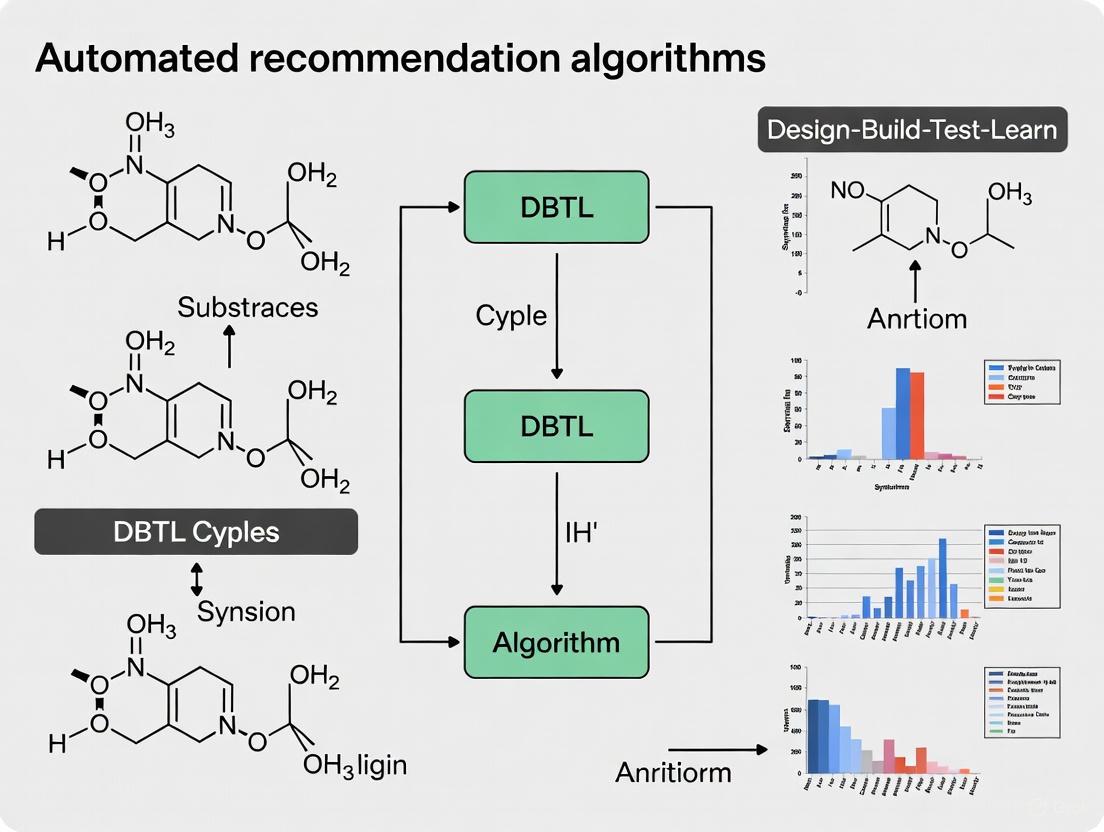
This article explores the transformative role of machine learning-based Automated Recommendation Tools (ART) in the Design-Build-Test-Learn (DBTL) cycle for researchers and drug development professionals.
Automated Recommendation Algorithms in DBTL Cycles: Accelerating Synthetic Biology and Drug Development
Abstract
This article explores the transformative role of machine learning-based Automated Recommendation Tools (ART) in the Design-Build-Test-Learn (DBTL) cycle for researchers and drug development professionals. It covers the foundational shift from manual to data-driven bioengineering, details methodological implementations like the ART tool and the emerging LDBT paradigm, addresses critical troubleshooting for real-world application, and provides validation through case studies in metabolic engineering and therapeutic production. The synthesis offers a roadmap for integrating these algorithms to drastically reduce development timelines and enhance predictive design in biomedical research.
From Manual Iteration to AI-Driven Design: The Foundation of Modern DBTL Cycles
Synthetic biology aims to reprogram organisms with desired functionalities through established engineering principles. A cornerstone of this discipline is the Design-Build-Test-Learn (DBTL) cycle, a systematic framework used to iteratively develop and optimize biological systems [1] [2]. This cyclical process allows researchers to engineer organisms to perform specific functions, such as producing biofuels, pharmaceuticals, or other valuable compounds [1]. The DBTL cycle provides a structured approach to tackle the complexity and unpredictability of biological systems, moving beyond ad-hoc engineering practices toward a more predictable and efficient methodology [3].
This article explores the core principles of the DBTL cycle, with a specific focus on the emerging role of machine learning and automated recommendation tools in accelerating biological design. We will provide practical troubleshooting guidance and contextualize these concepts within modern research on automated algorithms for DBTL cycles.
The Core DBTL Cycle: A Stage-by-Stage Breakdown
The DBTL cycle consists of four interconnected phases that form an iterative loop for biological engineering. The table below summarizes the key activities and outputs for each stage.
| Stage | Key Activities | Primary Outputs |
|---|---|---|
| Design | Rational design of biological parts and systems; pathway design; selection of genetic components [1] [2] | DNA construct designs; genetic circuit blueprints; experimental plans |
| Build | DNA assembly; molecular cloning; plasmid construction; genome editing; transformation into host cells [1] [4] [2] | Assembled genetic constructs; engineered microbial strains |
| Test | Functional assays; multi-omics profiling (transcriptomics, proteomics, metabolomics); production measurement [1] [2] [3] | Performance data (titer, yield, rate); omics datasets; phenotypic characterization |
| Learn | Data analysis; statistical evaluation; machine learning; model building; hypothesis generation [2] [3] | New insights; refined designs; predictive models; recommendations for next cycle |
The following diagram illustrates the iterative workflow and key technologies involved in each phase of the DBTL cycle:
Machine Learning and Automated Recommendation Tools
The "Learn" phase has traditionally been the most significant bottleneck in the DBTL cycle [2] [3]. However, machine learning (ML) has emerged as a powerful approach to distill complex biological information and generate predictive models from experimental data [2]. ML can process large datasets to identify non-obvious patterns and relationships between genetic designs and phenotypic outcomes, even without a complete mechanistic understanding of the biological system [3].
The Automated Recommendation Tool (ART)
The Automated Recommendation Tool (ART) represents a specialized ML application for synthetic biology that bridges the Learn and Design phases [3]. ART uses probabilistic modeling to recommend specific genetic designs likely to improve target metrics in the next DBTL cycle. Key capabilities include:
- Predictive Modeling: ART trains on available experimental data to build models that predict biological system behavior, providing full probability distributions rather than single-point estimates [3]
- Uncertainty Quantification: The tool quantifies prediction uncertainty, enabling researchers to balance exploration of new designs against exploitation of known productive regions [3]
- Multi-Objective Optimization: ART supports various engineering goals, including maximizing production, minimizing toxicity, or achieving specific target levels [3]
In practice, ART has demonstrated significant successes, such as improving tryptophan productivity in yeast by 106% from the base strain [3]. The following diagram illustrates how ML systems like ART integrate into the DBTL workflow:
Troubleshooting Guide: Common DBTL Challenges and Solutions
Build Phase: Molecular Cloning Issues
The Build phase, particularly molecular cloning, is a frequent source of experimental challenges. The table below outlines common problems and evidence-based solutions.
| Problem | Possible Causes | Recommended Solutions |
|---|---|---|
| Few or no transformants | Non-viable cells; incorrect heat-shock protocol; toxic DNA insert; inefficient ligation [5] | Transform uncut plasmid to check cell viability; use fresh ligation buffer with ATP; incubate at lower temperature (25-30°C) for toxic inserts [5] |
| Too much background growth | Incomplete restriction digestion; inefficient dephosphorylation; low antibiotic concentration [5] | Run proper digestion controls; heat-inactivate enzymes before dephosphorylation; verify antibiotic concentration [5] |
| Colonies contain wrong construct | Recombination in host; incorrect PCR amplicon; internal restriction sites [5] | Use recA– strains (e.g., NEB 5-alpha); sequence verify inserts; analyze sequence for internal restriction sites [5] |
| Unexpected mutations in sequence | PCR errors; nuclease contamination [5] | Use high-fidelity polymerase (e.g., Q5 High-Fidelity DNA Polymerase); clean up DNA fragments prior to assembly [5] |
Test Phase: Analytical and Screening Challenges
| Problem | Possible Causes | Recommended Solutions |
|---|---|---|
| High variability in screening data | Inconsistent culturing conditions; assay technical noise; cellular heterogeneity [6] | Implement automated cultivation systems; increase biological replicates; use controlled growth conditions [7] |
| Poor correlation between omics data and product titer | Insufficient pathway coverage; missing regulatory elements; incorrect sample timing [3] | Include targeted proteomics for pathway enzymes; analyze at multiple time points; integrate multiple omics layers [3] |
Learn Phase: Modeling and Data Interpretation Challenges
| Problem | Possible Causes | Recommended Solutions |
|---|---|---|
| Machine learning models fail to generalize | Small training datasets; inappropriate feature selection; experimental bias [6] [3] | Use ensemble methods (e.g., gradient boosting); incorporate prior knowledge; apply transfer learning [6] |
| Inability to extract mechanistic insights | Black-box ML approaches; insufficient hypothesis generation [2] [7] | Combine ML with mechanistic modeling; use explainable AI techniques; design experiments specifically for learning [7] |
Research Reagent Solutions for DBTL Workflows
Successful implementation of DBTL cycles relies on high-quality reagents and tools. The table below details essential materials and their applications in synthetic biology workflows.
| Reagent/Tool Category | Specific Examples | Function in DBTL Workflow |
|---|---|---|
| DNA Assembly Methods | NEBuilder HiFi DNA Assembly, Gibson Assembly, Golden Gate Assembly [4] | Modular assembly of genetic constructs from standardized parts during the Build phase [4] |
| Competent Cells | NEB 5-alpha, NEB 10-beta, NEB Stable Competent E. coli [5] | Transformation of assembled DNA constructs; specialized strains for large constructs or toxic genes [5] |
| Restriction Enzymes & Ligases | Various restriction endonucleases, T4 DNA Ligase, Quick Ligation Kit [4] [5] | Traditional cloning and modular assembly; DNA fragment preparation and vector construction [4] |
| High-Fidelity Polymerases | Q5 High-Fidelity DNA Polymerase [5] | PCR amplification of DNA fragments with minimal errors during the Build phase [5] |
| Cell-Free Protein Synthesis Systems | Crude cell lysate systems [7] | In vitro testing of enzyme expression and pathway function before full strain engineering [7] |
Case Study: Knowledge-Driven DBTL for Dopamine Production
A recent study demonstrates the practical application of a knowledge-driven DBTL cycle with upstream in vitro investigation for optimizing dopamine production in E. coli [7]. This approach highlights how strategic implementation of the DBTL framework can yield significant improvements in strain performance.
Experimental Methodology and Workflow
Initial In Vitro Investigation: Researchers first used cell-free protein synthesis systems to test different relative enzyme expression levels without the constraints of whole cells [7]
In Vivo Translation: Optimal expression levels identified in vitro were translated to the in vivo environment through high-throughput ribosome binding site (RBS) engineering [7]
Host Strain Engineering: The native E. coli host was engineered for increased L-tyrosine production (dopamine precursor) by depleting the transcriptional regulator TyrR and mutating the feedback inhibition of chorismate mutase/prephenate dehydrogenase (TyrA) [7]
Pathway Optimization: A bicistronic system expressing 4-hydroxyphenylacetate 3-monooxygenase (HpaBC) and L-DOPA decarboxylase (Ddc) was fine-tuned using RBS engineering to balance expression levels [7]
Results and Impact
This knowledge-driven DBTL approach achieved dopamine production of 69.03 ± 1.2 mg/L (equivalent to 34.34 ± 0.59 mg/g biomass), representing a 2.6 to 6.6-fold improvement over previous state-of-the-art in vivo production methods [7]. The study also provided mechanistic insights, demonstrating the impact of GC content in the Shine-Dalgarno sequence on RBS strength [7].
FAQs: DBTL Cycles in Synthetic Biology
Q: What is the primary advantage of using iterative DBTL cycles over single-pass engineering? A: Iterative DBTL cycles allow for continuous refinement of biological designs based on experimental data. Each cycle incorporates learning from previous iterations, enabling systematic convergence toward optimal strains rather than relying on one-time rational design, which often fails to account for biological complexity and unpredictable interactions [1] [6].
Q: How does machine learning address the "Learn" bottleneck in DBTL cycles? A: ML processes large, complex biological datasets to identify non-obvious patterns and generate predictive models that inform the next Design phase. This enables semi-automated recommendation of genetic designs likely to improve performance, significantly accelerating the engineering process [2] [3].
Q: What are the data requirements for effective machine learning in DBTL cycles? A: ML typically requires structured, high-quality datasets with sufficient examples to train accurate models. In synthetic biology, this often means combining multi-omics data (proteomics, transcriptomics) with phenotypic measurements from multiple engineered strains [6] [3]. Data standardization is crucial for effective learning across cycles.
Q: How can researchers mitigate combinatorial explosion in pathway optimization? A: Combinatorial explosion occurs when testing all possible combinations of genetic parts becomes infeasible. Strategic DBTL cycling with ML guidance helps explore the design space efficiently by focusing on the most promising regions, thus reducing experimental burden while still identifying high-performing combinations [6].
Q: What role does automation play in modern DBTL implementations? A: Automation is critical for high-throughput Building and Testing phases, enabling rapid construction and screening of numerous genetic variants. Automated biofoundries allow researchers to implement multiple DBTL cycles efficiently, dramatically reducing development timelines [2].
Troubleshooting Guide: Resolving the "Learn" Bottleneck
This guide helps researchers diagnose and solve common issues that cause delays in the "Learn" phase of the Design-Build-Test-Learn (DBTL) cycle.
1. Problem: Inadequate or Poor-Quality Data
- Question: Why are my machine learning (ML) models failing to make accurate predictions, leading to unsuccessful subsequent cycles?
- Diagnosis:
- Check if your experimental data is from low-throughput, manual methods.
- Verify for inconsistencies in how data is recorded and labeled across different experiments or team members.
- Assess if the dataset is too small for the complexity of the biological system you are modeling.
- Solution: Implement automated, high-throughput testing systems to generate large, consistent datasets rapidly [8] [9]. Use integrated software platforms that enforce standardized data formats and metadata recording from the point of data generation [8].
2. Problem: Inefficient Model Training and Learning
- Question: How can I accelerate the learning process from experimental data to inform the next design?
- Diagnosis:
- Determine if you are relying solely on traditional statistical analysis without leveraging modern ML.
- Check if model training is a manual, time-consuming process that cannot keep pace with new data generation.
- Solution: Integrate ML algorithms that are specifically designed to work with smaller datasets ("low-N" ML) [9]. Utilize platforms that automate the training of predictive models on experimental data to make genotype-to-phenotype predictions, turning data into actionable insights faster [8].
3. Problem: Lack of Integration Between Phases
- Question: Why is there a significant delay between the "Test" and "Learn" phases, and between "Learn" and the next "Design"?
- Diagnosis:
- Check if data from testing instruments must be manually transferred, formatted, and analyzed before learning can begin.
- Verify if design decisions are made separately from the data analysis environment.
- Solution: Adopt end-to-end biofoundry automation platforms where software automatically collects Test data, feeds it into ML models, and allows the outputs to directly inform the Design of the next variant library [8] [9]. This creates a continuous, closed-loop cycle.
Quantitative Impact of the Learn Bottleneck and Solutions
The tables below summarize the time, cost, and data challenges of the traditional "Learn" phase and the performance improvements offered by modern solutions.
Table 1: Traditional vs. AI-Powered Learn Phase
| Aspect | Traditional Learn Phase | AI/ML-Powered Learn Phase | Key Improvement |
|---|---|---|---|
| Data Analysis | Manual, time-consuming statistical analysis [10] | Automated machine learning models [8] [9] | Speed, ability to find complex patterns |
| Data Dependency | Relies on small, often private datasets [10] | Can leverage large public datasets and generate its own high-quality data [11] [9] | Better, more generalizable predictions |
| Predictive Power | Limited, based on direct experimental results only | High, can predict outcomes for unsynthesized variants [9] | Reduces number of physical experiments needed |
| Cycle Integration | Often disconnected from Design phase | Directly feeds into AI-driven Design for next cycle [9] | Creates a seamless, autonomous DBTL loop |
Table 2: Performance Metrics from Case Studies
| Engineering Campaign | Traditional Method Timeline (Estimated) | AI/Automated Platform Timeline | Fold Improvement | Variants Tested |
|---|---|---|---|---|
| Enzyme (AtHMT) | Several months to years [10] | 4 weeks for 4 rounds [9] | 16-fold activity [9] | < 500 variants [9] |
| Enzyme (YmPhytase) | Several months to years [10] | 4 weeks for 4 rounds [9] | 26-fold activity [9] | < 500 variants [9] |
| Metabolic Pathway | Multiple, lengthy DBTL cycles [8] | Accelerated by ML-guided predictions [8] | 20-fold product increase [8] | Data used to train models [8] |
Experimental Protocol: Autonomous DBTL for Enzyme Engineering
This protocol is based on a generalized platform for AI-powered autonomous enzyme engineering [9].
1. Design of Variant Library
- Objective: Create a high-quality, diverse initial library of protein variants.
- Methodology:
- Input: Provide the wild-type protein sequence and a defined fitness objective (e.g., improved activity at neutral pH).
- AI Tools: Use a combination of unsupervised models:
- Output: A ranked list of ~180 single-point mutations for the initial Build phase.
2. Build via Automated Biofoundry
- Objective: Physically construct the designed DNA variants with high fidelity and throughput.
- Methodology:
- Automated Workflow: Utilize a biofoundry (e.g., iBioFAB) with integrated robotic arms and liquid handlers.
- Key Module - HiFi-assembly Mutagenesis: A high-fidelity DNA assembly method that eliminates the need for intermediate sequencing verification, ensuring a continuous workflow with ~95% accuracy [9].
- Process: The platform automates mutagenesis PCR, DNA assembly, transformation, colony picking, and plasmid purification in 96-well format without human intervention [9].
3. Test with High-Throughput Assays
- Objective: Rapidly characterize the performance (fitness) of each variant.
- Methodology:
- Automated Protein Expression & Assay: The biofoundry automates protein expression in a 96-well microtiter format, cell lysis, and the enzyme activity assay [9].
- Data Collection: Assay results (e.g., absorbance, fluorescence) are automatically recorded by plate readers and fed directly into the central data system [8] [9].
4. Learn with Machine Learning
- Objective: Analyze test data to predict the next, better set of variants.
- Methodology:
- Model Training: The fitness data from the Test phase is used to train a supervised machine learning model (e.g., a low-N ML model) to predict variant performance based on sequence [9].
- Iterative Design: This trained model is used to design the next library, often focusing on combining beneficial mutations from the first round. The cycle (L-D-B-T) repeats autonomously.
Workflow Visualization: AI-Enhanced DBTL Cycle
The following diagram illustrates the integrated, AI-driven DBTL cycle that accelerates the "Learn" phase.
The Scientist's Toolkit: Research Reagent Solutions
Table 3: Essential Tools for Modern DBTL Cycles
| Item / Solution | Function in DBTL Cycle |
|---|---|
| Protein Language Models (e.g., ESM-2) | AI models that use evolutionary sequence data to zero-shot predict beneficial mutations, jump-starting the Design phase [11] [9]. |
| Structure-Based Design Tools (e.g., ProteinMPNN) | AI tools that design protein sequences which fold into a desired 3D structure, enabling precise engineering of stability and function [11]. |
| Automated Biofoundry (e.g., iBioFAB) | Integrated robotic platform that automates the Build and Test phases (transformation, colony picking, assay execution) for high-throughput and reproducibility [9]. |
| Integrated Software Platform (e.g., TeselaGen) | Centralized software that orchestrates the entire DBTL cycle, managing design, inventory, automated protocols, and data, ensuring seamless phase integration [8]. |
| Cell-Free Expression Systems | In vitro protein synthesis platforms that accelerate the Build and Test phases by bypassing cell cloning and enabling direct testing of designed DNA templates [11]. |
| Low-N Machine Learning Models | Specialized ML algorithms that can make accurate predictions from the small datasets typically generated in initial DBTL cycles, accelerating learning [9]. |
Frequently Asked Questions (FAQs)
Q1: Our lab doesn't have a multi-million dollar biofoundry. Can we still address the "Learn" bottleneck? Yes. The core principle is better data management and leveraging accessible AI tools. You can start by standardizing your data recording and using cloud-based or on-premises software platforms to structure your data for analysis [8]. Many AI protein design tools (e.g., ESM-2, ProteinMPNN) are publicly available and can be used for the Design phase, even if the Build and Test phases are semi-automated [11] [9].
Q2: Is the goal to completely remove humans from the DBTL cycle? No. The goal is to augment human expertise. AI and automation handle repetitive, data-intensive tasks and explore vast sequence spaces more efficiently. Scientists define the initial problem, set the fitness objectives, and interpret the final biological insights from the results, focusing on higher-level strategy and innovation [10] [9].
Q3: What is the "LDBT" paradigm shift mentioned in recent literature? LDBT proposes reordering the cycle to Learn-Design-Build-Test. This reflects that with powerful pre-trained AI models (the "Learn" step first), you can make highly accurate, zero-shot predictions to design optimal variants without any prior experimental cycles in your specific system. This can potentially deliver functional solutions in a single pass, moving closer to a "Design-Build-Work" ideal [11].
Q4: How critical is data quality for a successful AI-enhanced Learn phase? It is paramount. The principle of "garbage in, garbage out" is central to ML. Inconsistent, noisy, or poorly annotated data will lead to unreliable models and poor predictions. Investing in robust, automated, and standardized experimental protocols for the Test phase is a prerequisite for successful learning [8] [9].
Automated Recommendation Tools (ART) represent a transformative advancement in synthetic biology and metabolic engineering, leveraging machine learning to bridge the "Learn" and "Design" phases of the Design-Build-Test-Learn (DBTL) cycle. These algorithms guide bioengineering efforts by using probabilistic models to recommend optimal genetic designs or experimental conditions, enabling researchers to achieve desired biological outcomes, such as increased production of valuable molecules, more efficiently than with traditional ad-hoc methods [3]. This technical support center provides troubleshooting guides and FAQs to help researchers successfully implement these powerful tools in their experiments.
Frequently Asked Questions (FAQs)
What is an Automated Recommendation Tool (ART) in the context of DBTL cycles? ART is a machine learning system that closes the loop between the "Learn" and "Design" phases of the DBTL cycle. It trains a model on experimental data (e.g., from proteomics or promoter combinations) to predict system performance (e.g., product titer). Using sampling-based optimization, it then recommends a set of strains or conditions to build and test in the next cycle, alongside probabilistic predictions of their outcomes [3].
My experimental data is limited (<100 data points). Can I still use these machine learning algorithms effectively? Yes. Automated recommendation algorithms like ART are specifically designed for the data-sparse environments common in synthetic biology. They employ Bayesian approaches and probabilistic modeling, which are well-suited for making predictions and guiding experiments with limited data, unlike deep learning which requires larger datasets [3].
What is the difference between exploration and exploitation in the algorithm's recommendation? The algorithm balances a key trade-off:
- Exploitation: Recommending conditions similar to the best-performing ones found so far.
- Exploration: Recommending conditions in uncertain regions of the design space to gather new information and avoid local optima. Acquisition functions, such as Expected Improvement (EI), automatically manage this balance to maximize the chance of finding the global optimum [12].
Anomaly detection job is failing. What are the first recovery steps? A failed job may indicate a transient or persistent issue. The standard recovery procedure is:
- Force stop the corresponding datafeed using the API with the
forceparameter set totrue. - Force close the anomaly detection job using the API with the
forceparameter set totrue. - Restart the job via the management interface. If the job fails again immediately, it is a persistent issue requiring investigation of the node logs for specific error messages [13].
- Force stop the corresponding datafeed using the API with the
What is the minimum amount of data required to initialize an effective model? Requirements can vary, but a general rule of thumb is more than three weeks of data for periodic processes or a few hundred data buckets for non-periodic data. For specific metrics, the minimum is often the larger of either eight non-empty bucket spans or two hours of data [13].
Troubleshooting Guide
Poor Model Performance or Inaccurate Recommendations
| Symptom | Potential Cause | Recommended Action |
|---|---|---|
| Low predictive accuracy | Input features not predictive of output response [3] | Re-evaluate feature selection; incorporate different -omics data (e.g., transcriptomics) or design parameters. |
| Model fails to find global optimum | Improper balance between exploration and exploitation [12] | Adjust or change the acquisition function (e.g., ensure Expected Improvement is properly configured). |
| Recommendations are erratic or non-converging | High experimental noise or biological variability [14] | Increase biological replicates, review protocol standardization on automated platforms, and ensure model accounts for experimental error [12]. |
| Algorithm performs poorly from the start | Insufficient initial data to build a prior model [13] | Begin with a larger initial dataset or a design-of-experiments (DoE) set before starting the autonomous learning cycle. |
Platform and Integration Issues
| Symptom | Potential Cause | Recommended Action |
|---|---|---|
| Failed data transfer between platform and algorithm | Incorrect data formatting or import/export errors [3] | Ensure data is exported in the required format (e.g., EDD-style .csv). Verify the importer module in the software framework is correctly configured [14]. |
| Robotic platform fails to execute recommended experiments | Scheduling conflicts or resource allocation errors on the platform [14] | Check the platform's scheduler system and the interoperability of all components (incubators, liquid handlers, readers). |
| "Failed" state in an anomaly detection job | Transient system error or resource contention [13] | Follow the standard recovery procedure: force stop the datafeed, force close the job, and restart it. |
Experimental Protocols for Key Studies
Protocol 1: Optimizing a Lycopene Biosynthetic Pathway with BioAutomata
This protocol details the fully automated DBTL cycle for pathway optimization as performed by BioAutomata [12].
- 1. Objective Definition: Define the optimization goal. In this case, the objective was to maximize lycopene production in E. coli by fine-tuning the expression levels of genes in the biosynthetic pathway.
- 2. Initial Setup: Select the predictive model and acquisition function. The study used a Gaussian Process (GP) as the probabilistic model and Expected Improvement (EI) as the acquisition function to balance exploration and exploitation.
- 3. Automated Cycle Execution:
- Design: The Bayesian optimization algorithm selects the next batch of strain variants (points in the expression landscape) to evaluate based on the updated model.
- Build & Test: The iBioFAB robotic platform automatically constructs the genetic variants and measures their lycopene production.
- Learn: The new production data is fed back to the GP model, which updates its belief about the entire expression-production landscape. This cycle repeats autonomously.
- 4. Outcome: This approach evaluated less than 1% of all possible variants and outperformed random screening by 77% [12].
Protocol 2: Autonomous Optimization of Protein Production Induction
This protocol describes using a robotic platform with active learning to optimize inducer concentrations [14].
- 1. System Preparation:
- Biological System: Use bacterial strains (Bacillus subtilis or E. coli) with a GFP reporter gene under an inducible promoter.
- Robotic Platform: Utilize an integrated platform with incubators, liquid handlers (8-channel and 96-channel), and a plate reader.
- 2. Workflow Execution:
- The platform's software manager retrieves the next set of conditions (e.g., inducer concentration) from the database, which is populated by the optimizer module.
- The robotic arm transports microtiter plates to the liquid handler, which adds inducers and nutrients.
- Plates are incubated, and the plate reader periodically measures OD600 and fluorescence.
- 3. Data Analysis and Learning:
- An importer module retrieves measurement data from the plate reader and writes it to a database.
- The optimizer module (running a machine learning algorithm like Bayesian optimization or a random search baseline) analyzes the data to select the next most informative measurement points.
- The cycle runs for multiple consecutive iterations without human intervention [14].
Research Reagent Solutions
The following table details key materials used in the featured experiments for setting up automated DBTL platforms.
| Item | Function in the Experiment | Example/Reference |
|---|---|---|
| Gaussian Process (GP) Model | A probabilistic model that predicts the expected performance and uncertainty for untested genetic designs or conditions. | Used as the core predictive model in BioAutomata and ART [3] [12]. |
| Expected Improvement (EI) | An acquisition function that recommends the next experiments by calculating the point offering the highest expected improvement over the current best. | Balances exploration and exploitation in Bayesian optimization [12]. |
| Microbial Chassis | The host organism (e.g., E. coli, yeast) that is engineered to produce the target molecule. | E. coli for lycopene [12]; Bacillus subtilis and E. coli for GFP [14]. |
| Reporter Protein | A measurable protein (e.g., GFP) used as a proxy for system performance and to rapidly collect data. | GFP for optimizing induction parameters [14]. |
| Inducers | Chemicals that trigger gene expression from specific promoters (e.g., IPTG, lactose). | Key variables for optimizing protein production in bacterial systems [14]. |
| Robotic Liquid Handler | Automates the dispensing of liquids (culture media, inducers) in microtiter plates, ensuring high reproducibility. | CyBio FeliX liquid handlers [14]. |
| Plate Reader | Integrated into the robotic platform to automatically measure optical density (OD600, for growth) and fluorescence (for production). | PHERAstar FSX plate reader [14]. |
Automated DBTL Workflow with Machine Learning Bridge
The following diagram illustrates the continuous cycle of an algorithm-driven DBTL platform.
Bayesian Optimization Algorithm Workflow
This diagram details the core algorithmic process within the "Learn" and "Design" phases.
FAQs: Recommendation Systems in DBTL Cycles
FAQ 1: What are the core types of recommendation systems and how are they applied in a biological DBTL cycle?
Recommendation systems in DBTL cycles primarily use three filtering approaches to suggest optimal strain designs [15] [16] [17]:
- Collaborative Filtering: Recommends designs based on the performance of similar strains or from similar users, without needing detailed biological knowledge. It struggles with new projects lacking historical data (cold start problem) [16] [18].
- Content-Based Filtering: Recommends strain designs based on known biological features (e.g., promoter strengths, RBS sequences, enzyme concentrations). It is robust for new projects but can miss novel, high-performing designs by focusing only on existing feature spaces [15] [16].
- Hybrid Filtering: Combines both collaborative and content-based methods to mitigate their individual weaknesses. For example, the Automated Recommendation Tool (ART) uses a hybrid, ensemble machine learning approach to guide synthetic biology projects, leveraging probabilistic modeling to recommend new strains for the next DBTL cycle [3] [19] [20].
FAQ 2: Our research group is new to ML. What is a recommended, user-friendly tool for implementing recommendations in our DBTL cycle?
The Automated Recommendation Tool (ART) is specifically designed to leverage machine learning for synthetic biology without requiring deep ML expertise [3]. It integrates with the scikit-learn library and uses a Bayesian ensemble approach, which is tailored for the low-data, high-noise experimental environments common in biological research. ART is designed to bridge the Learn and Design phases by providing a set of recommended strains to build next, alongside probabilistic predictions of their production levels [3].
FAQ 3: How do we evaluate the performance and success of our recommendation system?
Evaluation happens at two levels: the machine learning model and the business/biological outcome [15].
- Model-Centric Metrics: Depending on your algorithm, use similarity metrics (e.g., Cosine similarity, Jaccard similarity) for content-based systems, or predictive and classification metrics (e.g., Mean Absolute Error, Precision, Recall) for collaborative and hybrid systems [15] [18].
- Business/Biological Metrics: The ultimate success is measured by the improvement in your Target Molecule's Titer, Rate, and Yield (TRY) [15] [3]. The recommendation system's goal is to help you reach your production target faster and with fewer experimental cycles.
FAQ 4: We face a "cold start" problem with a new pathway. How can we overcome this?
The cold start problem occurs when there is no prior user interaction or performance data [16] [21]. Solutions include:
- Leverage Content-Based Features: Start by using a content-based or hybrid approach. Use available biological features (e.g., DNA library parts, proteomics data, promoter strengths) to make initial recommendations [16] [19].
- Implement a Knowledge-Driven DBTL Cycle: Conduct upstream in vitro investigations, such as testing enzyme expression and pathway flux in cell-free systems, to generate initial data and guide the first in vivo engineering cycle [7].
- Use Global Recommendations: Begin with a "global" strategy, such as testing the most popular or theoretically optimal genetic parts from literature, to bootstrap your initial dataset [15].
FAQ 5: Our experimental data is noisy and limited. Is machine learning still viable?
Yes. Machine learning methods like Random Forest and Gradient Boosting have been shown to be particularly robust and effective in the low-data, noisy regimes typical of early DBTL cycles [6]. Furthermore, tools like ART are specifically designed for these conditions, using probabilistic modeling to quantify prediction uncertainty, which helps guide experimental design even when absolute accuracy is lower [3].
Troubleshooting Guides
Problem: Stagnating DBTL Cycles - Failure to Improve Production Titer After Multiple Rounds
| Observation | Potential Cause | Solution |
|---|---|---|
| Recommendations are always similar to past high-performers. | Over-exploitation by the algorithm, leading to a lack of diversity and exploration of the design space. | Adjust the exploration/exploitation parameter in your tool (e.g., in ART). Increase the weight on exploration to recommend riskier but potentially higher-performing strains [3]. |
| Model predictions are inaccurate and unreliable. | Data sparsity or a training set bias from a non-representative initial DNA library. | * Use a hybrid recommendation system to incorporate different data types [19].* In the next cycle, consciously build strains that cover a wider range of the biological feature space to reduce bias [6]. |
| The algorithm fails to learn from cyclical data. | Incorrect model choice for the data type and size. | For combinatorial pathway optimization with limited data, switch to or incorporate ensemble models like Random Forest or Gradient Boosting, which are known to be effective in this context [6]. |
Problem: The "Cold Start" - Unable to Generate Meaningful Initial Recommendations
| Observation | Potential Cause | Solution |
|---|---|---|
| No prior data for the new pathway or host. | The collaborative filtering approach has no user-item interactions to learn from. | Switch from a collaborative to a content-based or hybrid approach from the outset [16] [19]. Use any available meta-data about the genetic parts (e.g., promoter strength, RBS sequence, terminator efficiency) [15]. |
| Even content-based filtering lacks features. | Limited mechanistic understanding of the pathway. | Adopt a knowledge-driven DBTL approach. Use in vitro cell-free systems to rapidly test pathway components and generate initial performance data to feed into the recommendation system [7]. |
Table 1: Comparison of Core Recommendation Filtering Techniques
| Technique | Key Principle | Advantages | Disadvantages | Biological Context Example |
|---|---|---|---|---|
| Collaborative Filtering [15] [16] | Leverages behavior/performance data from similar users/strains. | No domain knowledge needed; can discover novel serendipitous connections. | Cold start problem; requires large amounts of data; can be computationally intensive. | Recommending a promoter to User A because it worked well in a similar strain built by User B. |
| Content-Based Filtering [15] [16] | Suggests items similar to those a user/strain has liked before, based on item features. | No cold-start for new users; highly transparent and interpretable. | Requires good feature data; limits discovery (no serendipity); can over-specialize. | Recommending a strong RBS because strong RBSs have historically led to high protein expression in your system. |
| Hybrid Filtering [19] [20] | Combines collaborative and content-based methods. | Mitigates weaknesses of individual methods; more robust and accurate. | More complex to implement and maintain. | Using ART to combine proteomics data (content) with historical strain performance data (collaborative) [3]. |
Table 2: Performance of Machine Learning Models in Simulated DBTL Cycles (Low-Data Regime) [6]
| Machine Learning Model | Robustness to Training Set Bias | Robustness to Experimental Noise | Relative Performance for Recommendation |
|---|---|---|---|
| Gradient Boosting | High | High | Top Tier |
| Random Forest | High | High | Top Tier |
| Other Tested Methods (e.g., Linear Models) | Lower | Lower | Lower |
Experimental Protocol: Implementing a Hybrid Recommendation System with ART
Objective: To integrate the Automated Recommendation Tool (ART) into a DBTL cycle for optimizing microbial production of a target compound (e.g., dopamine [7], biofuels [3]).
Workflow Overview: The following diagram illustrates the automated DBTL cycle, with ART central to the Learn and Design phases.
Materials/Reagents:
- Biological Strains: Microbial chassis (e.g., E. coli FUS4.T2 for dopamine production [7]).
- Genetic Parts: Plasmid system (e.g., pET or pJNTN vectors [7]), promoter/RBS library, genes of interest (e.g., hpaBC, ddc for dopamine [7]).
- Software & Data: Python environment with ART installation [3], access to an Experimental Data Depo or standardized .csv files for data input [3].
- Culture & Assay: Appropriate growth medium (e.g., defined minimal medium [7]), analytical equipment for titer measurement (HPLC, GC-MS).
Step-by-Step Methodology:
Initial Design & Build:
- Design an initial library of strain variants. For a new project, this can be based on rational design or a diverse sampling of genetic parts (e.g., a set of RBS sequences with varying predicted strengths [7]).
- Build these strains using standard molecular biology techniques (e.g., cloning, CRISPR).
Test & Data Collection:
- Cultivate the built strains under controlled conditions in a microtiter plate or bioreactor.
- Measure the key performance indicator (Titer, Rate, or Yield) for each strain variant.
- Compile the data into a standardized format. ART can import data directly from an Experimental Data Depo or from EDD-style .csv files [3]. The dataset should clearly link each strain design (input features) to its production level (output response).
Learn with ART:
- Input the historical data (including all previous cycles) into ART.
- ART trains an ensemble of machine learning models to build a predictive function that links your strain designs to production levels. Instead of a single prediction, ART provides a full probability distribution for the production level of any new design, rigorously quantifying uncertainty [3].
- Define your objective within ART (e.g., "Maximize production," "Minimize toxicity," or "Achieve a specific production level" [3]).
Recommendation:
- ART uses sampling-based optimization on the probabilistic model to provide a set of recommended strains to be built in the next DBTL cycle [3].
- The recommendations balance exploring uncertain regions of the design space and exploiting known high-performing regions.
Iterate:
- The recommended strains form the Design basis for the next DBTL cycle.
- Repeat the cycle until the production objective is met or the design space is sufficiently explored.
The Scientist's Toolkit: Key Research Reagent Solutions
Table 3: Essential Materials for DBTL-Driven Strain Engineering
| Item | Function in the Experiment | Example from Literature |
|---|---|---|
| Automated Recommendation Tool (ART) [3] | Machine learning tool that uses Bayesian ensemble models to recommend the best strain designs for the next DBTL cycle based on all accumulated data. | Used to optimize production of renewable biofuels, fatty acids, and tryptophan, leading to a 106% productivity increase in tryptophan production [3]. |
| Ribosome Binding Site (RBS) Library [7] | A set of DNA sequences with varying translation initiation rates, used to fine-tune the expression levels of pathway enzymes without changing the coding sequence. | Used in a knowledge-driven DBTL cycle to optimize relative enzyme expression for dopamine production in E. coli [7]. |
| Cell-Free Protein Synthesis (CFPS) System [7] | A crude cell lysate used for in vitro transcription and translation. Allows for rapid testing of enzyme expression and pathway flux without the constraints of a living cell, generating data to inform the first in vivo cycle. | Leveraged to test different relative enzyme expression levels for a dopamine pathway before moving to in vivo strain construction, accelerating the learning phase [7]. |
| Core Kinetic Model (e.g., in SKiMpy) [6] | A mechanistic model of cellular metabolism that uses ordinary differential equations. Can simulate the effect of perturbations (e.g., changing enzyme concentrations) on flux, used to generate in-silico data for benchmarking ML methods. | Used to create a simulated metabolic engineering scenario for benchmarking machine learning models like Gradient Boosting and Random Forest [6]. |
Implementing AI Recommenders: Tools, Techniques, and Real-World Workflows
The Automated Recommendation Tool (ART) is a machine learning tool designed to guide synthetic biology projects in a systematic fashion, without the need for a full mechanistic understanding of the biological system [3]. It powerfully enhances the Learn phase of the Design-Build-Test-Learn (DBTL) cycle [3]. In traditional synthetic biology, the Learn phase is often the most weakly supported, hindering the rapid development of strains for producing valuable molecules like biofuels or pharmaceuticals. ART bridges the Learn and Design phases by using data from previous cycles to build predictive models and recommend which strains to build and test next, thereby accelerating the entire bioengineering process [3].
Frequently Asked Questions (FAQs)
Core Functionality
Q: What is the primary function of ART? A: ART leverages machine learning and probabilistic modeling to predict the performance of biological systems (e.g., production of a target molecule) and provides a set of recommended genetic designs to be built and tested in the next DBTL cycle [3].
Q: What types of engineering objectives does ART support? A: ART supports three common metabolic engineering objectives [3]:
- Maximization: Increasing the titer, rate, or yield (TRY) of a target molecule.
- Minimization: Decreasing the production of a toxic by-product.
- Specification: Achieving a specific level of a molecule for a desired product profile.
Data and Modeling
Q: What kind of data can ART use? A: ART can use various data types as input, including promoter combinations, proteomics data, and other -omics data that can be expressed as a vector [3]. It can import data directly from Experimental Data Depo (EDD) or from EDD-style CSV files [3].
Q: How does ART handle prediction uncertainty? A: Instead of providing only a single prediction, ART provides a full probability distribution for the possible outcomes. This rigorous quantification of uncertainty is crucial for gauging prediction reliability and guiding recommendations toward the least-known parts of the design space [3].
Q: My dataset is small (less than 100 data points). Can I still use ART? A: Yes. ART is specifically tailored for the data-sparse environments typical in synthetic biology, where generating data is expensive and time-consuming. Its Bayesian ensemble approach is designed to function effectively with limited training instances [3].
Troubleshooting Guides
Issue 1: Poor Model Performance or Inaccurate Predictions
Problem: The model's predictions do not match the experimental test results.
| Potential Cause | Solution |
|---|---|
| Insufficient or low-quality training data. | Increase the number of engineered variants in your training set. Ensure experimental measurements are reproducible and accurate. |
| The chosen input features are not predictive of the output response. | Re-evaluate your experimental design. Consider using different -omics data (e.g., transcriptomics) or genetic parts (e.g., different promoter libraries) that may have a stronger causal link to production. |
| Underlying biological assumptions are violated. | ART assumes that recommended inputs can be built and will express as designed. Verify that genetic constructs are built correctly and that the host chassis can accommodate the changes. |
Issue 2: Data Formatting and Import Errors
Problem: ART cannot read the provided data file.
| Potential Cause | Solution |
|---|---|
| File is not in a compatible format. | Use the standard EDD export format. Ensure your CSV file follows EDD nomenclature and structure exactly [3]. |
| Missing metadata or incorrect column headers. | Consult the EDD documentation and the "Importing a study" section in ART's supplementary information to ensure all required fields are present and correctly labeled [3]. |
Issue 3: Interpreting Recommendations
Problem: It is unclear how to proceed with the list of strains recommended by ART.
Solution:
- ART provides a set of recommendations, not just one. It is advisable to build multiple top recommendations in parallel to maximize the chance of success [3].
- Use the provided probabilistic predictions to set experimental priorities. A strain with a slightly lower predicted yield but higher uncertainty might be worth investigating to expand the model's knowledge.
- Cross-reference recommendations with biological knowledge. If a recommendation seems biologically infeasible, it may indicate a problem with the model or training data.
Experimental Protocol: Implementing an ART-Guided DBTL Cycle
This protocol outlines the methodology for using ART to guide the optimization of a microbial production strain, as demonstrated in experimental work on tryptophan and dopamine production [3] [22].
Design Phase
- Define Goal: Specify the engineering objective (e.g., maximize dopamine production) [22].
- Plan Library: Design a library of genetic variants. This could involve modulating enzyme expression levels using tools like RBS engineering [22].
Build Phase
- Strain Construction: Use automated genetic engineering tools to build the planned library of strains in your chosen microbial host (e.g., E. coli) [22].
Test Phase
- Cultivation & Assaying: Cultivate the built strains in a defined medium under controlled conditions and assay for the desired output (e.g., dopamine titer) and potential input features (e.g., targeted proteomics) [3] [22].
- Data Collection: Collect data in a standardized format. Record production yields and corresponding -omics or part combination data for each strain.
Learn Phase with ART
- Data Import: Import the collected data into ART.
- Model Training: Train ART's machine learning model on the data to learn the relationship between inputs (e.g., proteomics) and the output (e.g., production) [3].
- Generate Recommendations: Use ART to obtain a list of recommended strains (e.g., specific proteomic profiles or genetic designs) predicted to improve performance in the next cycle [3].
Cycle Iteration
- Return to the Design Phase, using ART's recommendations to inform the design of the next strain library. Repeat the DBTL cycle until the production goal is met.
Research Reagent Solutions
The following table details key materials used in a typical metabolic engineering project that could be optimized with ART, such as the development of a dopamine production strain [22].
| Research Reagent | Function in the Experiment |
|---|---|
| E. coli FUS4.T2 | A production host strain engineered for high precursor (l-tyrosine) production [22]. |
| Plasmids with RBS libraries | Vectors containing the heterologous pathway genes (e.g., hpaBC, ddc) with modified Ribosome Binding Sites to fine-tune enzyme expression levels [22]. |
| Defined Minimal Medium | Provides essential nutrients and a controlled environment for reproducible fermentation and metabolite production [22]. |
| Inducer (IPTG) | A chemical used to precisely trigger the expression of genes in the engineered pathway [22]. |
| Analytical Standards (e.g., Dopamine) | Pure chemical compounds used as references for high-performance liquid chromatography (HPLC) to identify and quantify metabolite production [22]. |
Conceptual Foundation: FAQs on the LDBT Paradigm
FAQ 1: What is the LDBT cycle, and how does it fundamentally differ from the traditional DBTL cycle?
The LDBT (Learn-Design-Build-Test) cycle represents a paradigm shift from the established DBTL (Design-Build-Test-Learn) cycle in synthetic biology and bioengineering. In the traditional DBTL cycle, knowledge is gained retrospectively by analyzing data from the "Test" phase to inform the next "Design" round, often requiring multiple, time-consuming iterations. In contrast, the LDBT cycle places "Learn" at the forefront by leveraging advanced machine learning models capable of zero-shot prediction. This allows researchers to start with a knowledge-rich foundation, generating initial designs that are already highly informed, potentially reducing the need for multiple iterative cycles and accelerating the path to functional biological systems [23].
FAQ 2: What is zero-shot learning in the context of protein and pathway engineering?
Zero-shot learning refers to the capability of a machine learning model to make accurate predictions on data it was never explicitly trained on. In protein engineering, this is achieved by models that have been pre-trained on vast, evolutionary-scale datasets comprising millions of protein sequences or hundreds of thousands of structures. These models learn the underlying "grammar" of protein sequences and structures, allowing them to predict the function, stability, or beneficial mutations for a novel protein sequence without requiring additional, task-specific training data. This enables the "Learn" phase to precede any physical "Build" or "Test" activity [23].
FAQ 3: What are the primary advantages of using a cell-free system in the "Build" and "Test" phases?
Cell-free gene expression systems are a critical enabler for the LDBT paradigm. They use the protein synthesis machinery from cell lysates or purified components in an in vitro setting. Their key advantages include [23]:
- Speed: They can produce more than 1 gram per liter of protein in under 4 hours.
- Throughput: They are easily integrated with liquid handling robots and microfluidics, allowing for the screening of hundreds of thousands of reactions (e.g., in picoliter-scale droplets).
- Flexibility: They can express proteins that are toxic to living cells and allow for easy customization of the reaction environment, including the incorporation of non-canonical amino acids.
Troubleshooting Common Experimental Issues
Issue 1: Poor zero-shot prediction performance for my target protein.
- Problem: The designed sequences from a zero-shot model fail to show the desired function or stability when tested.
- Solution:
- Model Selection: Verify you are using the appropriate model for your task. Sequence-based language models (e.g., ESM, ProGen) are excellent for capturing evolutionary relationships, while structure-based models (e.g., ProteinMPNN, MutCompute) are better for stability and fold-specific design. A hybrid approach may be necessary [23].
- Input Quality: For structure-based models, ensure the input protein backbone structure is of high quality. Inaccurate structural templates will lead to poor sequence design.
- Model Augmentation: Consider using models that have been augmented with additional biophysical or evolutionary information, as they often show enhanced predictive power for specific functions like thermostability or solubility [23].
Issue 2: Low yield or misfolded protein in cell-free expression.
- Problem: The protein of interest is not expressed efficiently or is insoluble in the cell-free reaction.
- Solution:
- Template Quality: Ensure the DNA template is pure and of sufficient concentration. Linear DNA templates can be used for rapid prototyping without cloning.
- Codon Optimization: Check if the gene sequence has been optimized for the specific cell-free system you are using (e.g., derived from E. coli, wheat germ).
- Reaction Conditions: Optimize the reaction environment. Key parameters to adjust include magnesium and potassium ion concentrations, energy source concentration (e.g., phosphoenolpyruvate), and incubation temperature [23].
Issue 3: High background noise in high-throughput cell-free screening assays.
- Problem: The signal-to-noise ratio in the functional assay (e.g., fluorescence-based) is too low to reliably distinguish active variants.
- Solution:
- Assay Validation: First, validate the assay with a known positive control and a negative control in a low-throughput format.
- Reagent Purity: Confirm the purity of substrates and co-factors used in the assay. Impurities can lead to high background.
- Dispensing Accuracy: When using microfluidics or liquid handlers, check for consistent and accurate droplet or well dispensing. Inconsistent volumes can cause significant signal variation [23].
Experimental Protocols for LDBT Workflows
Protocol 1: In Silico Protein Variant Design Using a Zero-Shot Model
This protocol outlines the steps for designing novel protein variants using a pre-trained, zero-shot capable model.
- Objective: To generate a library of protein variant sequences predicted to have enhanced functional properties (e.g., enzymatic activity, stability) without prior experimental data on the target.
- Methodology:
- Define Input: For a structure-based model like ProteinMPNN, provide the 3D atomic coordinates of your target protein's backbone in PDB format. For a sequence-based model like ESM-2, provide the wild-type amino acid sequence in FASTA format.
- Set Parameters: Specify design constraints, such as which residues are allowed to mutate and which must remain fixed.
- Run Model: Execute the model to generate a set of predicted variant sequences. The number of sequences can range from hundreds to thousands.
- Filter Output: Rank the generated sequences based on the model's confidence score or other integrated metrics (e.g., predicted ΔΔG for stability). Select the top candidates for synthesis.
Protocol 2: High-Throughput Protein Function Screening via Cell-Free Expression
This protocol describes how to rapidly test the function of hundreds of designed protein variants using a cell-free system.
- Objective: To experimentally measure the functional output (e.g., enzyme activity, binding affinity) of a large number of protein variants designed in silico.
- Methodology:
- DNA Template Preparation: Synthesize the DNA templates for the selected variants as linear fragments or cloned plasmids. Normalize the DNA concentration.
- Cell-Free Reaction Assembly: Use an automated liquid handler to dispense cell-free reaction mix into a 96-well or 384-well plate. Add individual DNA templates to separate wells.
- Expression Incubation: Incubate the plate at a defined temperature (e.g., 30-37°C) for 2-4 hours to allow for protein synthesis.
- Functional Assay: Directly add the relevant assay reagents to the same well. For an enzymatic assay, this would include the substrate and any necessary cofactors. Measure the output (e.g., fluorescence, absorbance) using a plate reader.
- Data Analysis: Normalize the activity signals, identify top-performing variants, and correlate the experimental results with the in-silico predictions.
Performance Metrics of Zero-Shot Learning Models
The table below summarizes the predictive performance of various zero-shot learning models as cited in recent literature, providing a benchmark for researchers.
Table 1: Performance Comparison of Zero-Shot Learning Models in Biology
| Model Name | Model Type | Primary Application | Reported Performance / Advantage | Source/Reference |
|---|---|---|---|---|
| ESM & ProGen | Protein Language Model (Sequence-based) | Predicting beneficial mutations, inferring function, designing antibody sequences. | Capable of zero-shot prediction of diverse antibody sequences; used to design libraries for engineering enantioselective biocatalysts [23]. | [23] |
| MutCompute | Structure-based Deep Neural Network | Residue-level optimization for stability/function. | Successfully engineered a hydrolase for increased stability and PET depolymerization activity [23]. | [23] |
| ProteinMPNN | Structure-based Deep Learning | Designing sequences that fold into a given protein backbone. | Led to a nearly 10-fold increase in design success rates when combined with AlphaFold/RoseTTAFold [23]. | [23] |
| AI Sleep Apnea Model | Machine-learning (Clinical) | Predicting adverse outcomes of obstructive sleep apnea. | Predicted sleepiness with ~87% accuracy and cardiovascular mortality with ~81% accuracy, outperforming the standard index [24]. | [24] |
| LogitMat | Zero-shot Learning Algorithm (Recommender Systems) | Tackling cold-start problems without transfer learning. | Generates competitive results by leveraging Zipf Law properties of user-item rating values; described as fast, robust, and effective [25]. | [25] |
Essential Research Reagent Solutions
The following table lists key materials and reagents essential for implementing the LDBT cycle, specifically the Build and Test phases.
Table 2: Key Research Reagents for LDBT Cycle Implementation
| Reagent / Material | Function in LDBT Workflow | Key Considerations |
|---|---|---|
| Cell-Free Protein Synthesis Kit | Provides the biological machinery for in vitro transcription and translation in the "Build" phase. | Choose based on source organism (e.g., E. coli, wheat germ), yield, and ability to produce functional, complex proteins [23]. |
| Linear DNA Template | Serves as the genetic blueprint for protein expression in cell-free systems. | Enables rapid "Building" without time-consuming cloning steps; purity and sequence accuracy are critical [23]. |
| Microfluidic Droplet Generator | Partitions reactions into picoliter-volume droplets for ultra-high-throughput "Testing." | Allows screening of >100,000 variants in a single experiment; requires compatible surfactants and oils [23]. |
| Fluorescent or Colorimetric Assay Substrates | Enables detection and quantification of protein function (e.g., enzyme activity) in the "Test" phase. | Must be specific, sensitive, and compatible with the cell-free reaction environment and high-throughput detection systems [23]. |
Workflow and Troubleshooting Diagrams
LDBT Cycle Flow
LDBT Troubleshooting Guide
Technical Support Center: FAQs & Troubleshooting Guides
This technical support resource addresses common challenges researchers face when integrating cell-free protein synthesis (CFPS) systems with automated biofoundries. The guidance is framed within the context of the Design-Build-Test-Learn (DBTL) cycle, enhanced by automated recommendation algorithms.
Frequently Asked Questions (FAQs)
FAQ 1: How can machine learning accelerate the DBTL cycle in a biofoundry? Machine learning (ML) models, such as the Automated Recommendation Tool (ART), leverage experimental data to predict optimal genetic designs, drastically reducing the number of experimental cycles needed. ART uses a Bayesian ensemble approach to recommend strain designs or proteomic profiles likely to improve production titers, effectively bridging the Learn and Design phases of the DBTL cycle [3]. This is particularly valuable for optimizing "black-box" biological systems where a full mechanistic understanding is lacking [12].
FAQ 2: What are the key advantages of using CFPS over cell-based systems in automated workflows? CFPS platforms are cell-free and offer an open, programmable environment. This decouples gene expression from cell viability and growth constraints, enabling several key advantages for automation [26]:
- Rapid Iteration: Eliminates lengthy transformation and cell cultivation steps.
- High-Throughput Compatibility: Easily miniaturized for parallel experimentation in microplates or droplets.
- Precise Control: Allows direct manipulation of reaction conditions, enzyme concentrations, and cofactors.
- Tolerance: Capable of expressing toxic proteins or producing labile intermediates that would inhibit cell-based systems [26].
FAQ 3: What are the essential components of a functional CFPS reaction? A functional CFPS system requires a specific set of biochemical components to execute transcription and translation in vitro [26]:
Table 1: Core Components of a Cell-Free Protein Synthesis System
| Component Category | Specific Examples | Primary Function |
|---|---|---|
| Genetic Template | Plasmid DNA, linear PCR products | Provides the genetic blueprint for the protein to be synthesized. |
| Enzymatic Machinery | RNA polymerase, ribosomes, translation factors | Orchestrates the processes of transcription and translation. |
| Energy Source | Phosphoenolpyruvate (PEP), creatine phosphate | Regenerates ATP/GTP to sustain prolonged reaction activity. |
| Building Blocks | Amino acids, nucleoside triphosphates (NTPs) | The raw materials for synthesizing proteins and RNA. |
| Cofactors & Salts | Mg2+, K+, NAD+, CoA | Maintains optimal ionic and biochemical conditions for enzyme function. |
FAQ 4: How does a fully automated, algorithm-driven DBTL platform work? Platforms like BioAutomata integrate robotic hardware with machine learning in a closed-loop system. The workflow is as follows [12]:
- A predictive model (e.g., Gaussian Process) is trained on available data to create a probabilistic "landscape" of system performance.
- An acquisition policy (e.g., Expected Improvement algorithm) selects the most informative set of experiments to perform next.
- An automated biofoundry (e.g., the iBioFAB) executes the recommended experiments.
- Results are fed back to the model, which updates its predictions.
- The cycle repeats autonomously until a performance objective is met, evaluating only a tiny fraction of the total possible design space [12].
Troubleshooting Common Experimental Issues
Issue 1: Low or No Protein Yield in CFPS Reactions
Table 2: Troubleshooting Low Yield in CFPS
| Observation | Potential Cause | Recommended Action |
|---|---|---|
| Consistently low yield across all designs | Depleted energy system; suboptimal reaction conditions | Verify the integrity of the energy regeneration system (e.g., PEP). Titrate essential cofactors (Mg2+) and use a structured experimental design (e.g., DoE) to optimize concentrations [26]. |
| Low yield with a specific genetic construct | Poor translation initiation; toxic protein | Redesign the Ribosome Binding Site (RBS) using computational tools (e.g., UTR Designer) to modulate strength [7]. Consider using a different cell lysate (e.g., wheat germ for complex eukaryotic proteins) [26]. |
| High variability between replicate reactions | Inconsistent lysate preparation or pipetting errors | Standardize the lysate preparation protocol. On an automated platform, ensure regular calibration of liquid-handling robots and use of clean, contamination-free labware [27]. |
Issue 2: High-Throughput Data is Noisy and Inconsistent
- Cause: Technical variability in automated liquid handling, sensor calibration drift, or non-standardized protocols can obscure biological signals.
- Solution:
- Implement Alerting: Set up automated monitoring and alerting for key platform metrics, such as pipetting accuracy or incubator temperature, to quickly identify and respond to hardware issues [27].
- Regular Training: Provide continuous training for personnel on monitoring and alerting tools to build confidence and efficiency in troubleshooting [27].
- Standardize Protocols: Use integrated software platforms like
AssemblyTronorSynBiopythonto standardize DNA assembly and experimental workflows across the biofoundry, improving reproducibility [28].
Issue 3: Machine Learning Recommendations Are Not Improving System Performance
- Cause: The input features (e.g., promoter combinations, proteomics data) may not be predictive of the desired output, the training data set may be too small, or the underlying biological assumptions may be incorrect [3].
- Solution:
- Feature Re-evaluation: Re-assess the chosen input variables. A knowledge-driven approach, such as preliminary in vitro CFPS testing to inform which enzyme levels are critical, can provide more mechanistic insight and better features for the model [7].
- Uncertainty Quantification: Use an ML tool like ART, which provides probabilistic predictions. Prioritize experiments in regions of the design space with high uncertainty (exploration) to improve the model's global understanding, not just in areas predicted to be high-performing (exploitation) [3] [12].
- Increase Data Volume: Leverage the high-throughput capacity of the biofoundry to generate larger training data sets, which generally improve model accuracy [3].
Detailed Experimental Protocol: Knowledge-Driven DBTL for Pathway Optimization
This protocol details a methodology for optimizing a metabolic pathway, as demonstrated for dopamine production in E. coli [7]. It combines upstream in vitro testing with high-throughput in vivo engineering.
1. Design Phase: In Vitro Pathway Prototyping with CFPS
- Objective: Rapidly identify rate-limiting enzymes and optimal relative expression levels without the constraints of a living cell.
- Methodology: a. Construct Design: Clone genes of interest (e.g., hpaBC and ddc for dopamine) into compatible expression plasmids for the CFPS system [7]. b. CFPS Reaction: Use a crude cell lysate CFPS system (e.g., E. coli S30 extract) supplemented with an energy source, amino acids, and NTPs [26]. c. Expression Titration: Set up reactions with varying DNA template ratios to mimic different expression levels of the pathway enzymes. d. Product Quantification: After incubation, measure the concentration of the target product (e.g., dopamine) using HPLC or other analytical methods. This data identifies which enzyme ratios maximize flux through the pathway [7].
2. Build Phase: High-Throughput RBS Library Construction
- Objective: Translate the optimal expression ratios identified in vitro into a library of production strains.
- Methodology: a. RBS Design: Design a library of RBS sequences with varying translation initiation rates (TIR). A simplified approach is to modulate the Shine-Dalgarno sequence while keeping flanking regions constant to minimize secondary structure impacts [7]. b. Automated DNA Assembly: Use automated biofoundry platforms (e.g., with j5 and Opentrons robotics) to assemble the RBS variants into the target pathway construct [28]. c. Strain Transformation: Automatically transform the constructed library into a high-producing chassis strain (e.g., an E. coli strain engineered for high precursor supply) [7].
3. Test Phase: Automated Screening
- Objective: Characterize the library strains for product yield.
- Methodology: a. High-Throughput Cultivation: Using liquid handling robots, inoculate deep-well plates with the library strains and cultivate them in a defined medium [7]. b. Analytics: Automatically sample the cultures and quantify product titer and biomass using methods like online HPLC or spectrophotometry [12].
4. Learn Phase: Data Analysis and Model-Guided Redesign
- Objective: Identify top-performing strains and inform the next DBTL cycle.
- Methodology: a. Data Analysis: Correlate RBS sequence features (e.g., GC content) with production titers [7]. b. Machine Learning: Input the "Build" and "Test" data into a tool like ART. The model will predict the performance of untested RBS combinations and recommend a new set of strains to build in the next cycle, aiming for even higher production [3].
Workflow Visualization: Automated DBTL Cycle with Machine Learning
The following diagram illustrates the fully integrated, algorithm-driven DBTL cycle that forms the core of a modern biofoundry.
The Scientist's Toolkit: Key Research Reagent Solutions
This table outlines essential materials and tools for conducting research at the intersection of CFPS, biofoundries, and automated DBTL cycles.
Table 3: Essential Research Reagents and Tools
| Item | Function/Description | Example Tools / Components |
|---|---|---|
| CFPS Lysates | Source of transcriptional/translational machinery. Choice affects folding and post-translational modifications. | E. coli S30 extract, wheat germ extract, reconstituted PURE system [26]. |
| Automated Recommendation Tool | Machine learning software to guide the DBTL cycle by predicting optimal designs from data. | Automated Recommendation Tool (ART) [3]. |
| DNA Assembly Software | Standardizes and automates the design of complex DNA assemblies for robotic construction. | j5, AssemblyTron [28]. |
| Liquid Handling Robots | Core hardware for automating pipetting, dilution, and plate preparation in high-throughput workflows. | Opentrons, integrated systems in iBioFAB [28] [12]. |
| Energy Regeneration Systems | Maintains ATP/GTP levels to prolong CFPS reaction duration and increase protein yield. | Phosphoenolpyruvate (PEP), creatine phosphate [26]. |
| RBS Library Kits | Pre-designed genetic parts for fine-tuning gene expression levels within a synthetic pathway. | Libraries of Shine-Dalgarno sequence variants [7]. |
| Bayesian Optimization Algorithm | The core computational engine for efficient black-box optimization, balancing exploration and exploitation. | Gaussian Process with Expected Improvement acquisition function [12]. |
Frequently Asked Questions (FAQs)
FAQ 1: What is the core innovation of the knowledge-driven DBTL cycle compared to a traditional DBTL approach? The knowledge-driven DBTL cycle incorporates upstream in vitro investigation before the first full engineering cycle begins. This provides mechanistic understanding of the system, such as enzyme expression and interaction, which is then used to rationally select engineering targets for the subsequent in vivo DBTL cycles. This contrasts with traditional DBTL cycles that often start with statistical or random selection of targets, which can be more time and resource-intensive [22].
FAQ 2: Why is ribosome binding site (RBS) engineering a preferred method for fine-tuning metabolic pathways in this context?
RBS engineering allows for the precise control of translation initiation rates without altering the promoter or the coding sequence itself. In the dopamine production case, high-throughput RBS engineering was used to balance the expression of genes in the bicistronic operon (e.g., hpaBC and ddc), which is crucial for optimizing the flux through the pathway and minimizing the accumulation of intermediate metabolites like L-DOPA [22] [29].
FAQ 3: How does the "LDBT" paradigm differ from the classic "DBTL" cycle, and is it relevant to this work? The LDBT (Learn-Design-Build-Test) paradigm proposes a shift where machine learning (Learn) based on large existing datasets precedes the Design phase. This can enable highly accurate, zero-shot predictions of functional biological parts, potentially reducing the need for multiple iterative cycles. This approach, accelerated by rapid cell-free testing, represents a future direction that could build upon the knowledge-driven methodology demonstrated in this case study [23].
FAQ 4: What are common reasons for low dopamine yield despite a functional pathway being present in E. coli? Low yield can stem from several factors:
- Precursor Limitation: Inadequate supply of the precursor L-tyrosine.
- Suboptimal Enzyme Ratios: Imbalanced expression of HpaBC and Ddc enzymes, leading to bottlenecks or intermediate accumulation.
- Cofactor Limitations: Insufficient supply of essential cofactors like FADH2 for the HpaBC enzyme [29].
- Product Degradation: Dopamine can be oxidized or degraded by host enzymes, such as tyramine oxidase (TynA) [29].
Troubleshooting Guides
Issue 1: Low Biomass and Cell Growth After Genetic Modifications
Potential Causes and Solutions:
| Potential Cause | Diagnostic Steps | Recommended Solution |
|---|---|---|
| Metabolic Burden | Measure growth rate and plasmid stability. | Use genomic integrations instead of multi-copy plasmids to stabilize the pathway [29]. |
| Toxic Intermediate Accumulation | Quantify L-DOPA levels in the medium; if high, it may indicate a downstream bottleneck. | Fine-tune the expression of ddc relative to hpaBC using RBS engineering to ensure efficient conversion of L-DOPA to dopamine [22]. |
| Disruption of Essential Pathways | Review engineered modifications (e.g., gene knockouts). | Ensure that knockouts (e.g., tynA) do not have unintended polar effects on essential genes. |
Issue 2: High L-DOPA Accumulation with Low Dopamine Conversion
Potential Causes and Solutions:
| Potential Cause | Diagnostic Steps | Recommended Solution |
|---|---|---|
| Rate-Limiting Ddc Enzyme | Measure enzyme activity in cell lysates. | Screen for a more efficient Ddc variant (e.g., from Drosophila melanogaster) [29] or use directed evolution to improve the existing enzyme's activity. |
Weak RBS for ddc Gene |
Sequence the RBS region and measure relative protein levels of HpaBC and Ddc. | Employ high-throughput RBS library screening to find a stronger RBS sequence for the ddc gene to enhance its translation [22]. |
| Insufficient Cofactor (PLP) | Check culture medium for PLP (Vitamin B6) supplementation. | Ensure the medium is supplemented with 50 µM vitamin B6, an essential cofactor for Ddc [22]. |
Potential Causes and Solutions:
| Potential Cause | Diagnostic Steps | Recommended Solution |
|---|---|---|
| Dopamine Oxidation | Observe browning of the fermentation broth. | Implement a two-stage pH fermentation strategy and a combined feeding of Fe²⁺ and ascorbic acid to act as antioxidants and reduce product degradation [29]. |
| Insufficient Precursor Supply (L-tyrosine) | Quantify intracellular L-tyrosine levels. | Engineer the host strain for high L-tyrosine production by deleting transcriptional regulators (TyrR), using feedback-resistant enzymes (TyrAfbr), and knocking out competing pathways [30]. |
| Inefficient Cofactor Regeneration | Analyze metabolic flux. | Construct an FADH2-NADH supply module within the host to support the high energy demands of the HpaBC enzyme [29]. |
Key Experimental Data and Protocols
Table 1: Dopamine Production in EngineE. coliStrains: A Performance Comparison*
| Strain | Engineering Strategy | Dopamine Titer | Productivity | Key Reference |
|---|---|---|---|---|
| Knowledge-Driven DBTL Strain | RBS fine-tuning based on in vitro lysate studies | 69.03 ± 1.2 mg/L | 34.34 ± 0.59 mg/gbiomass | [22] |
| High-Yield Plasmid-Free Strain (DA-29) | Promoter optimization, multi-copy integration, cofactor module | 22.58 g/L | N/R | [29] |
| Previous State-of-the-Art | Heterologous expression of hpaBC and ssDdC |
27 mg/L | 5.17 mg/gbiomass | [22] [29] |
N/R: Not Reported in the source material.
Table 2: Research Reagent Solutions
| Reagent / Material | Function in the Experiment | Specific Example / Note |
|---|---|---|
| E. coli Production Chassis | Host organism for dopamine pathway expression. | E. coli FUS4.T2, engineered for high L-tyrosine production [22]. |
| hpaBC Gene Cluster | Encodes 4-hydroxyphenylacetate 3-monooxygenase; converts L-tyrosine to L-DOPA. | From E. coli BL21; requires FADH2 as cofactor [22] [29]. |
| ddc / dodc Gene | Encodes L-DOPA decarboxylase; converts L-DOPA to dopamine. | ddc from Pseudomonas putida or DmDdc from Drosophila melanogaster screened for high activity [22] [29]. |
| RBS Library | Allows for fine-tuning of translation initiation rates for each gene in the pathway. | Designed by modulating the Shine-Dalgarno sequence; GC content impacts strength [22]. |
| Crude Cell Lysate System | In vitro platform for rapid prototyping of pathway enzymes and predicting optimal expression ratios. | Contains cellular machinery for transcription and translation; bypasses cell membranes [22]. |
| Two-Stage pH Fermentation Strategy | Optimizes cell growth and then minimizes dopamine degradation. | Stage 1: pH for growth; Stage 2: Lower pH to stabilize dopamine [29]. |
| Fe²⁺ and Ascorbic Acid Feed | Antioxidant strategy to reduce oxidation of dopamine during fermentation. | Added to the bioreactor to protect the final product [29]. |
Detailed Experimental Protocol: Knowledge-Driven DBTL Workflow
Phase 1: In Vitro Learning and Design
- Construct Assembly: Clone the dopamine biosynthetic genes (
hpaBCandddc) into expression vectors under inducible promoters (e.g., lac/IPTG system). - Crude Lysate Production: Express the enzymes in E. coli and prepare crude cell lysates containing the functional HpaBC and Ddc enzymes.
- In Vitro Testing: Incubate the lysates with the substrate L-tyrosine and essential cofactors (FeCl₂, Vitamin B6) in a defined reaction buffer. Vary the relative amounts of the HpaBC and Ddc lysates to mimic different expression levels.
- Data Analysis: Quantify the production of L-DOPA and dopamine using HPLC or other analytical methods. Determine the enzyme ratio that maximizes dopamine output and minimizes L-DOPA accumulation. This optimal ratio informs the initial design for in vivo engineering [22].
Phase 2: Build and Test In Vivo
- RBS Library Design: Based on the in vitro results, design a library of RBS sequences with varying strengths (e.g., by altering the Shine-Dalgarno sequence) for the genes in the operon to achieve the desired protein expression ratio.
- Strain Construction: Use high-throughput molecular biology techniques (e.g., automated DNA assembly) to build the RBS library variants into the production strain's genome or a stable plasmid.
- High-Throughput Screening: Cultivate the library of strains in microtiter plates and measure dopamine production.
- Validation: Select the top-performing strains for validation in bench-scale bioreactors. Use optimized fermentation conditions, including the two-stage pH control and antioxidant feeding strategy [22] [29].
Workflow and Pathway Diagrams
Diagram 1: Knowledge-Driven DBTL Cycle for Dopamine Production
Diagram 2: Engineered Dopamine Biosynthesis Pathway inE. coli
Troubleshooting Guides and FAQs
This technical support resource addresses common challenges in applying Automated Recommendation Tool (ART)-guided engineering to boost L-tryptophan production in E. coli. The guidance is framed within Design-Build-Test-Learn (DBTL) cycles for automated strain engineering.
Frequently Asked Questions
Q1: Our high-throughput screening fails to identify high-producing mutants despite large library sizes. What could be wrong? The issue likely lies in the biosensor's dynamic range or specificity. Implement a biosensor-based screening system using an L-Trp-specific riboswitch coupled to a yellow fluorescent protein (YFP) [31]. Ensure your biosensor has a low detection threshold and high sensitivity by engineering components like the TrpR ligand-binding domain (e.g., V58E/V58K variants) or using the p15-ribo727 riboswitch for improved dynamic range [31]. Also, verify that your flow cytometer (FACS) is properly calibrated for YFP detection.
Q2: Our fermentation produces excessive acetate as a by-product, reducing tryptophan yields. How can we mitigate this? Acetate accumulation typically results from metabolic overflow due to excessive glucose or oxygen limitation. Implement a controlled glucose feeding strategy to avoid metabolic overflow [32]. Increase dissolved oxygen (DO) levels to boost the pentose phosphate pathway flux and reduce acetate formation [32]. Additionally, consider genetic modifications to weaken acetate synthesis pathways or enhance precursor channeling toward the aromatic amino acid pathway.
Q3: The machine learning models for predicting high-producing strains perform poorly on new data. What are the potential causes? This is a classic data quality issue. Machine learning models require clean, consistent, and well-documented data [33]. Ensure your historical assay data accounts for experimental variations over time, such as changes in operators, equipment, or software [33]. Implement "statistical discipline" by logging all hyperparameters and experimental conditions [33]. For expensive assays with limited data, use models with sophisticated uncertainty quantification [33]. Also, validate models on independent external datasets and perform regular maintenance to address "concept drift" [34].
Q4: What are the key fermentation parameters to optimize for high-density E. coli cultures producing tryptophan? Critical parameters include dissolved oxygen (maintain high levels), pH (optimal range 6.5-7.2), temperature (30-37°C), and substrate feeding rates [32]. The table below summarizes optimization strategies for common fermentation challenges.
Table: Fermentation Troubleshooting Guide
| Problem | Potential Causes | Solutions | Expected Outcome |
|---|---|---|---|
| Low Tryptophan Titer | Metabolic overflow, acetate accumulation, low precursor supply | Control glucose feed rate, increase dissolved oxygen, add supplements like betaine or citrate [32] | Increased tryptophan yield, reduced by-products |
| By-product Accumulation (Acetate) | Excessive glucose, oxygen limitation | Optimize carbon source feeding, enhance aeration and agitation [32] | Purity simplification, reduced metabolic burden |
| Reduced Cell Growth | Nutrient limitation, ammonium toxicity, osmotic stress | Regulate ammonium levels, use surfactants or osmoprotectants [32] | High-density cell cultures, improved production stability |
| Inconsistent Batch Yields | Uncontrolled pH or temperature drift | Strictly maintain pH at 6.5-7.2 and temperature at 30-37°C [32] | Maximized enzyme activity, reproducible results |
Q5: Which genetic modifications are most critical for enhancing tryptophan production in E. coli? Essential modifications include: knocking out the degradation gene tnaA and the intracellular transporter gene tnaB [31]; weakening competing pathways for tyrosine and phenylalanine; introducing feedback-resistant enzymes (e.g., trpEfbr, aroGS211F) [31]; and enhancing the expression of the aromatic amino acid exporter YddG [31]. Furthermore, consider employing atmospheric and room temperature plasma (ARTP) mutagenesis to generate diverse mutant libraries for screening [31].
Experimental Protocols for Key Experiments
Protocol 1: Biosensor-Assisted High-Throughput Screening of L-Trp Producing Strains
- Objective: To rapidly identify high L-Trp-producing E. coli mutants from a diverse library.
- Materials:
- Mutant library (e.g., generated via ARTP mutagenesis) [31]
- Plasmid pACYC184-727 or similar, harboring the L-Trp riboswitch (e.g., 727 fragment) and YFP reporter gene [31]
- Flow cytometer (FACS) equipped for YFP detection
- Trp medium: 27.5 g/L glucose, 7.5 g/L K₂HPO₄·3H₂O, 2.0 g/L MgSO₄·7H₂O, 1.6 g/L (NH₄)₂SO₄, 0.077 g/L FeSO₄·7H₂O, 2.0 g/L citric acid, 1.0 g/L yeast extract, 1 mL/L ionic liquid [31]
- Method:
- Transform the biosensor plasmid into the mutant library.
- Grow cultures in 96-deep-well plates containing Trp medium at 37°C for 48 hours.
- Harvest cells and resuspend in buffer for FACS analysis.
- Set gates to sort the population with the highest YFP fluorescence intensity, indicating high intracellular L-Trp.
- Collect sorted cells, plate on LB agar, and validate L-Trp production in shake-flask fermentations.
- The best-reported strain from such screening (GT3938) showed a 1.94-fold increase in production [31].
Protocol 2: Metabolic Engineering for Enhanced Precursor Supply and Export
- Objective: To construct an L-Trp overproducing strain by rational genetic modifications.
- Materials:
- Method:
- Knockout degradation/uptake genes: Use CRISPR/Cas9 to delete tnaA (tryptophanase) and tnaB (tryptophan transporter) [31].
- Enhance export: Integrate a strong promoter (e.g., P4) upstream of the aromatic amino acid exporter gene yddG to enhance tryptophan secretion [31].
- Optimize precursor supply: Enhance the expression of genes in the phosphoenolpyruvate (PEP) and erythrose-4-phosphate (E4P) supply pathways.
- Verify modifications: Sequence the modified genome to confirm genetic changes.
- Evaluate performance: Perform shake-flask fermentation with Trp medium. The final engineered strain zh08 achieved a titer of 3.05 g/L, a 7.71-fold improvement over the original strain [31].
Research Reagent Solutions
Table: Essential Reagents for Tryptophan Engineering Experiments
| Reagent / Tool | Function / Application | Example / Specification |
|---|---|---|
| L-Trp Biosensor Plasmid | High-throughput screening of producer strains; links intracellular L-Trp to measurable signal (e.g., YFP) [31] | pACYC184-727 with riboswitch and YFP reporter [31] |
| CRISPR/Cas9 System | Precise genome editing for gene knockouts (e.g., tnaA, tnaB) and gene integration (e.g., yddG) [31] | pTargetF plasmid with specific guide RNA sequences [31] |
| ARTP Mutagenesis System | Generation of diverse mutant libraries for screening; creates random genetic diversity [31] | ARTP-IIIS instrument; power: 120 W; gas: Helium at 10 SLM [31] |
| Fermentation Medium Components | Supports high-density growth and tryptophan production [32] [31] | Glucose (carbon source), (NH₄)₂SO₄ (nitrogen), MgSO₄·7H₂O, K₂HPO₄·3H₂O, trace metal solution [31] |
| Supplements | Alleviate osmotic stress and improve production efficiency [32] | Betaine monohydrate, citrate [32] |
Workflow and Pathway Visualizations
ART-Guided DBTL Cycle for Tryptophan Engineering
Key Metabolic Engineering Targets in Tryptophan Biosynthesis
Navigating Challenges: Data, Performance, and Practical Pitfalls
Troubleshooting Guide: Common Cold-Start Scenarios
| Scenario | Description | Symptoms | Recommended Solution |
|---|---|---|---|
| New User Cold-Start [35] | The system encounters a user with no prior interaction history. | Inability to provide personalized recommendations; generic or popularity-based suggestions. | Utilize content-based filtering or incorporate contextual information like user demographics during onboarding [35]. |
| New Item Cold-Start [35] | A new item (e.g., product, article) is introduced to the system without historical data. | New items are rarely recommended, limiting their discovery and creating a visibility bias. | Employ content-based recommendations using the item's inherent attributes (e.g., text descriptions, metadata) until interaction data is collected [35]. |
| Sparse Data [35] | Limited interactions exist between users and items, common in niche markets or with long-tail items. | The model fails to learn meaningful patterns; recommendations are inaccurate and lack personalization. | Apply data augmentation techniques or use hybrid models that combine multiple recommendation approaches to enhance robustness [35]. |
| Contextual Cold-Start [35] | The system lacks the necessary contextual information (e.g., time, location) to make a relevant prediction. | Recommendations are static and do not adapt to the user's current situation or changing needs. | Leverage context-aware recommendation methods and actively solicit user feedback to gather relevant contextual data [35]. |
Frequently Asked Questions (FAQs)
1. What exactly is the "cold-start problem" in the context of automated recommendation tools and DBTL cycles?
The cold-start problem is a major challenge in machine learning where a system cannot provide accurate predictions or recommendations for new users, new items, or in scenarios where historical data is limited or non-existent [35]. Within a Design-Build-Test-Learn (DBTL) cycle for biosystems design, this problem critically impacts the "Learn" phase. Without sufficient data, machine learning models like the Automated Recommendation Tool (ART) struggle to build a predictive model to inform the next "Design" phase, hindering the entire iterative engineering process [3].
2. What are the core technical strategies to mitigate the cold-start problem in a recommender system?
Several core strategies can be employed to mitigate this problem [35]:
- Content-Based Filtering: Recommends items based on their attributes and a user's profile, effective for new items.
- Hybrid Systems: Combines collaborative filtering with other methods like content-based filtering for more robust performance.
- Popularity-Based Recommendations: Suggests trending or popular items as a starting point for new users.
- Active Learning: The system strategically selects which data points would be most valuable to acquire next, optimizing the learning process from limited experiments [3].
3. How does the "Automated Recommendation Tool (ART)" for synthetic biology handle data scarcity?
ART is specifically designed for the data-scarce environments typical of synthetic biology projects. It uses a Bayesian ensemble approach and probabilistic modeling. Instead of providing a single prediction, ART gives a full probability distribution for its predictions, rigorously quantifying uncertainty. This allows researchers to gauge the reliability of recommendations and guides the design of experiments toward the least known but most promising areas of the design space, even with a low number of training instances [3].
4. Our project has almost no initial data. What is the first step we should take?
A practical first step is to leverage non-historical data sources. This can include [36]:
- Using publicly available datasets or purchasing relevant data.
- Generating synthetic data through simulation to bootstrap the initial model.
- Implementing a collaborative data-sharing framework where possible. Concurrently, you should design your product or experimental workflow to gather data organically from the start, for example, by simplifying user onboarding or using default configurations that encourage data generation [36].
Experimental Protocols & Methodologies
Protocol 1: Bayesian Optimization for Pathway Optimization using BioAutomata
This protocol details the methodology for using a fully automated, algorithm-driven platform (like BioAutomata) to optimize a biological pathway, such as for lycopene production, overcoming the cold-start problem with limited initial data [12].
- 1. Objective Definition: Define the optimization goal (e.g., maximize lycopene titer) and the tunable input parameters (e.g., expression levels of biosynthetic genes).
- 2. Initial Design: A small set of initial strains is built and tested to provide the first data points. This can be a random selection or based on prior knowledge.
- 3. Predictive Model Selection: A Gaussian Process (GP) is typically chosen as the probabilistic model. The GP assigns an expected value (mean) and a confidence level (variance) to every possible combination of input parameters, creating a probabilistic landscape of the objective function [12].
- 4. Acquisition Policy: An Expected Improvement (EI) function is used to decide which strain to build and test next. EI automatically balances exploration (testing points with high uncertainty) and exploitation (testing points with high expected performance) [12].
- 5. Automated Execution & Iteration:
- The acquisition function selects the next batch of points (strains) to evaluate.
- The automated foundry (e.g., iBioFAB) executes the Build and Test phases, constructing the strains and measuring their performance (e.g., lycopene titer).
- The new data is fed back to update the GP model.
- The cycle repeats until a performance target is met or resources are exhausted. This approach has been shown to evaluate less than 1% of possible variants while significantly outperforming random screening [12].
The following workflow diagram illustrates this closed-loop, automated DBTL cycle:
Protocol 2: Low-Contrast Text Detection for UI Accessibility Analysis
This protocol addresses the "cold-start" of testing a user interface for accessibility without pre-labeled data, using computer vision and OCR to automatically detect low-contrast text elements [37].
- 1. Web Page Capture: Use a tool like Selenium to automate a browser and take a full-page screenshot of the web page in question. This converts the problem into an image analysis task [37].
- 2. Text Detection/Recognition: Two primary approaches can be used:
- Text Detection (EAST model): A pre-trained deep learning model (EAST) detects bounding boxes for all text elements. This method has high recall [37].
- Text Recognition (Tesseract OCR): The Tesseract OCR engine identifies text and its location. Performance can be improved by running OCR on multiple altered versions of the screenshot (e.g., enhanced contrast, color-inverted) and de-duplicating the results [37].
- 3. Contrast Ratio Calculation: For each text bounding box [37]:
- Identify the two most frequent colors (typically the foreground and background).
- Compute the contrast ratio using the WCAG formula: (L1 + 0.05) / (L2 + 0.05), where L1 and L2 are the relative luminances of the lighter and darker colors, respectively.
- Flag text elements that do not meet the enhanced contrast requirement (≥ 7:1 for normal text, ≥ 4.5:1 for large text) [38].
The Scientist's Toolkit: Key Research Reagents & Platforms
| Item | Function in Context |
|---|---|
| Automated Recommendation Tool (ART) | A machine learning tool that uses Bayesian modeling to guide synthetic biology efforts by recommending the next best experiments within a DBTL cycle, even with sparse data [3]. |
| iBioFAB (Illinois Biological Foundry for Advanced Biomanufacturing) | A fully automated robotic platform that executes the "Build" and "Test" phases of the DBTL cycle, enabling high-throughput strain construction and phenotyping [12]. |
| Gaussian Process (GP) Model | A probabilistic model that serves as the core of many Bayesian optimization routines. It predicts the expected performance and uncertainty for untested designs, guiding exploration [12]. |
| Bayesian Optimization | An optimization framework ideal for maximizing black-box functions where experiments are expensive and noisy. It efficiently minimizes the number of experiments needed to find an optimum [12]. |
| Selenium | A browser automation tool used to capture consistent visual representations (screenshots) of web pages for automated UI/accessibility testing [37]. |
| EAST Text Detection Model | A pre-trained deep learning model used to accurately locate text within an image, which is a crucial first step in automated contrast checking [37]. |
Troubleshooting Guide: Common Issues in DBTL Cycles
Q1: My DBTL cycle recommendations are inconsistent and seem to change dramatically with small amounts of new data. How can I stabilize them? This is a classic sign of high sensitivity to experimental noise. To address it:
- Validate with Robust Optimization: Implement robust portfolio optimization for your recommender system. This technique explicitly accounts for the uncertainty in estimated statistics (like expected production values), leading to more reliable recommendations that are less swayed by noisy data points [39].
- Increase Initial Cycle Size: If possible, start with a larger initial DBTL cycle. Simulation studies have shown that building more strains in the first cycle provides a more stable foundational dataset for the machine learning model, making subsequent recommendations more robust [6].
- Audit Data Collection: Ensure your data collection process is standardized. Use an Electronic Lab Notebook (ELN) with real-time data validation to flag anomalies during data entry and automate data collection from equipment to reduce manual errors [40].
Q2: I suspect my initial training data is biased toward a certain type of genetic design. How can I prevent this from skewing all future recommendations? Training set biases can cause your DBTL cycle to get stuck in a local optimum. Mitigation strategies include:
- Algorithmic Bias Mitigation: Use fairness-aware machine learning techniques. For example, integrate libraries that offer the MinDiff algorithm during model training, which adds a penalty for differences in prediction distributions between different slices of your data (e.g., different promoter families), forcing the model to consider a broader design space [41].
- Data Augmentation: Proactively build and test strains that represent under-explored areas of the design space, even if initial models predict low performance. This "exploration" strategy directly counteracts bias by augmenting your training data with more diverse examples [41].
- Leverage Causal Models: For advanced users, generating fair data using causal models can help create a more transparent and explainable decision-making process, uncovering and correcting for underlying biases in the dataset [42].
Q3: My machine learning model performs well on the training data but fails to predict the performance of new, recommended strains. What might be happening? This indicates a problem with model generalizability, often linked to the "low-data" regime typical of early DBTL cycles.
- Choose the Right Model: In the low-data regime, tree-based models like Gradient Boosting and Random Forest have been shown to be more robust and generalize better than other algorithms [6].
- Quantify Uncertainty: Ensure your recommendation tool provides probabilistic predictions, not just point estimates. Tools like the Automated Recommendation Tool (ART) use Bayesian methods to provide a full probability distribution, helping you gauge the reliability of each prediction and guiding exploration [3].
- Check for Hidden Bias: The poor performance could be due to an unseen bias. Re-audit your training data for skewed distributions and apply the mitigation techniques listed in Q2.
Technical Reference Tables
Table 1: Machine Learning Model Performance in Simulated DBTL Cycles [6]
| Machine Learning Model | Performance in Low-Data Regime | Robustness to Training Set Bias | Robustness to Experimental Noise |
|---|---|---|---|
| Gradient Boosting | High | High | High |
| Random Forest | High | High | High |
| Other Tested Models | Lower | Variable | Variable |
Table 2: Comparison of Bias-Mitigation Techniques for Machine Learning Models [41]
| Technique | Mechanism | Best For |
|---|---|---|
| MinDiff | Penalizes differences in the overall distribution of predictions for two different data slices. | Balancing performance across predefined subgroups (e.g., different chassis organisms). |
| Counterfactual Logit Pairing (CLP) | Penalizes differences in predictions for individual pairs of examples that differ only in a sensitive attribute. | Ensuring that a specific, sensitive genetic feature does not directly dictate the outcome. |
| Augmenting Training Data | Collects additional data from under-represented areas of the design space. | Situations where data collection is feasible and the sources of bias can be identified. |
Experimental Protocols
Protocol 1: Simulating DBTL Cycles to Benchmark Robustness [6]
Purpose: To systematically test and optimize machine learning and recommendation strategies for combinatorial pathway optimization without the cost of full experiments.
Methodology:
- Kinetic Model Setup: Develop a mechanistic kinetic model of the metabolic pathway of interest, embedded within a realistic cell physiology and bioprocess model (e.g., a batch reactor).
- Define Design Space: Create a library of possible genetic designs (e.g., by varying promoter strengths or RBS sequences to alter enzyme expression levels
Vmax). - Generate Training Data: Sample an initial set of designs from the library. Use the kinetic model to simulate the production titer/yield/rate (TRY) for each design, optionally adding simulated experimental noise.
- Train and Test ML Models: Use the simulated dataset to train machine learning models (e.g., Gradient Boosting, Random Forest). Evaluate their performance on a held-out test set of simulated strains.
- Simulate Full DBTL Cycles: Use the model to recommend new strains for a subsequent "build" phase. Iterate this DBTL process in simulation to compare the convergence efficiency of different strategies.
Protocol 2: A Knowledge-Driven DBTL for Rational Strain Engineering [7]
Purpose: To accelerate the DBTL cycle and improve the quality of initial training data by using upstream in vitro experiments to inform the first in vivo design.
Methodology:
- In Vitro Pathway Analysis:
- Cell Lysate System: Create crude cell lysates from a suitable production host (e.g., E. coli).
- Test Enzyme Combinations: Express pathway enzymes (e.g., HpaBC, Ddc for dopamine production) in the lysate system at different relative levels.
- Measure Precursor/Product: Quantify the conversion of precursors (e.g., l-tyrosine) to the final product (e.g., dopamine) to identify the most efficient enzyme expression ratios.
- In Vivo Translation and Fine-Tuning:
- RBS Library Construction: Translate the optimal expression ratios from the in vitro study into an in vivo context by building a library of constructs with varying Ribosome Binding Site (RBS) strengths.
- High-Throughput Screening: Automate the cultivation and screening of the RBS library strains to identify top producers.
- Learn and Re-design: Analyze the data to refine understanding of pathway regulation and inform the next DBTL cycle.
Workflow and System Diagrams
Knowledge-Driven DBTL with Noise & Bias
Bias Mitigation in Recommendation Algorithms
The Scientist's Toolkit: Research Reagent Solutions
Table 3: Essential Tools for Robust DBTL Cycle Research
| Item / Reagent | Function in DBTL Context |
|---|---|
| Automated Recommendation Tool (ART) | A machine learning tool that uses Bayesian ensembles to recommend strains for the next DBTL cycle and provides probabilistic predictions of production, crucial for managing uncertainty [3]. |
| Mechanistic Kinetic Models | A computational model used to simulate metabolic pathways and bioprocesses, enabling the benchmarking of ML strategies and the study of noise/bias in a controlled, in silico environment [6]. |
| Constrained Layer Damping Materials | Composite materials (e.g., Sound Damped Steel) used to dampen vibrations in laboratory equipment like shakers and fermenters, a direct engineering control to reduce experimental noise at its source [43]. |
| Electronic Lab Notebook (ELN) | A digital system for standardizing data entry, automating collection from instruments, and providing real-time validation, which directly reduces human error and improves data integrity [40]. |
| Ribosome Binding Site (RBS) Library | A defined set of genetic parts with varying translation initiation rates, used in the "Build" phase to systematically fine-tune the expression levels of pathway enzymes without changing promoters [7]. |
| Cell-Free Protein Synthesis (CFPS) System | A crude cell lysate used for in vitro pathway prototyping. It allows for rapid testing of enzyme combinations and expression levels, providing high-quality initial data to guide the first in vivo DBTL cycle and reduce initial bias [7]. |
Frequently Asked Questions (FAQs)
Q1: In the 'Learn' phase of a DBTL cycle with limited proteomics data, which algorithm is generally more stable? A1: Random Forest is generally more stable. Its bagging technique, which builds multiple independent trees on random data subsets, makes it less prone to overfitting on small datasets, leading to more reliable and stable predictions for your proteomic profiles [44] [45].
Q2: We aim for the highest predictive accuracy in our flux model. Should we choose Gradient Boosting? A2: Yes, but with caution. Gradient Boosting often achieves higher accuracy by sequentially correcting errors. However, this requires careful hyperparameter tuning (e.g., learning rate, tree depth) to prevent overfitting, especially on noisy biological data [45] [46]. Ensure you have a robust validation strategy.
Q3: Our dataset of promoter combinations is small and contains categorical variables. Which algorithm is better suited? A3: Random Forest has demonstrated excellent predictive performance on small datasets composed mainly of categorical variables. Its inherent design handles such data environments effectively [44].
Q4: For a high-throughput screening project with limited computational time for model training, which algorithm is preferable? A4: Random Forest. Because it builds trees in parallel, it typically has faster training times than Gradient Boosting, which must build trees sequentially. This makes Random Forest more efficient for initial, fast-paced screening cycles [45].
Q5: How can I prevent my Gradient Boosting model from overfitting on my small metabolomics dataset? A5: Employ robust regularization techniques. Key strategies include:
- Using a low learning rate to control the contribution of each tree [47].
- Limiting the maximum depth of individual trees to create weak learners [45].
- Implementing early stopping to halt training once performance on a validation set stops improving [47].
Troubleshooting Guides
Issue: Model Performance is Poor or Erratic in Initial DBTL Cycles
Problem: Your machine learning model in the 'Learn' phase is providing inaccurate or unreliable recommendations for the next 'Design' phase.
Solution:
- Step 1: Algorithm Selection Check. Confirm you are using Random Forest for your initial cycles. Its robustness to overfitting and lower sensitivity to hyperparameters provides a more stable baseline with little data [44] [45].
- Step 2: Data Preprocessing. For small datasets, rigorously preprocess your data by eliminating outliers and normalizing the data to improve model stability [44].
- Step 3: Performance Validation. Use Leave-One-Out Cross-Validation (LOOCV) for performance evaluation. This technique is particularly effective for small datasets, as it uses all samples for both training and validation, providing a more robust performance estimate [44].
Issue: Transitioning from a Stable Model to a High-Accuracy Model
Problem: Your initial Random Forest model is stable, but performance has plateaued, and you need higher predictive accuracy.
Solution:
- Step 1: Switch to Gradient Boosting. Once you have a stable, baseline model and can invest time in tuning, transition to Gradient Boosting. It can capture more complex, non-linear relationships in the data for higher accuracy [46].
- Step 2: Systematic Hyperparameter Tuning.
- Step 3: Monitor with Early Stopping. Configure the algorithm with early stopping to automatically find the optimal number of iterations and prevent overfitting during the training process [47].
Algorithm Comparison and Selection
The following table summarizes key quantitative and technical differences to guide your algorithm selection within a DBTL cycle.
| Feature | Gradient Boosting | Random Forest |
|---|---|---|
| Model Building | Sequential, trees built one after another [45] | Parallel, trees built independently [45] |
| Best for Data Size | Effective for small to medium datasets [45] | Effective for small to large datasets, scales well [45] |
| Typical Tree Depth | Uses shallow trees (weak learners) [45] | Uses deep trees (strong learners) [45] |
| Handling Categorical Data | Performance can vary; requires careful handling [44] | Excellent performance on small, categorical datasets [44] |
| Robustness to Noise | More sensitive to outliers and noise [45] | Less sensitive to outliers and noise [45] |
| Hyperparameter Sensitivity | High sensitivity; requires careful tuning [45] | Lower sensitivity; more robust to suboptimal settings [45] |
DBTL Integration Protocol
Objective: Integrate machine learning into the Learn and Design phases of a DBTL cycle to optimize the production of a target molecule (e.g., flavonoids, biofuels).
Materials:
- Strain Library: A library of bio-engineered production strains (e.g., E. coli, P. putida) [3] [48].
- Cultivation Platform: Automated systems (e.g., BioLector) for high-throughput, reproducible cultivation [48].
- Analytics: HPLC, GC-MS, or microplate readers for quantifying target molecule production [48].
- Data Repository: A centralized database like the Experiment Data Depot (EDD) to store experimental designs and results [3] [48].
- Software: Machine learning environment with algorithms such as Random Forest and Gradient Boosting (e.g., via scikit-learn) and a recommendation tool like ART (Automated Recommendation Tool) [3].
Methodology:
- Test: Cultivate your current strain library under defined conditions. Measure the production titer of the target molecule for each strain. Import all data (e.g., strain genotypes, proteomics, production titers) into a structured database [3] [48].
- Learn: Train a predictive model (e.g., Random Forest or Gradient Boosting) using the collected data. The model's inputs (features) can be proteomics data, promoter combinations, or media components, and the output (response) is the production level. Use LOOCV or k-fold CV to validate model performance [44] [3].
- Design: Use the trained model to predict the production of unseen genetic or media designs. The ART tool can leverage these predictions and uncertainty estimates to recommend a new set of strains or conditions predicted to increase production [3].
- Build: Engineer the top-recommended strains using synthetic biology tools (e.g., CRISPR, RBS library cloning) or prepare the recommended culture media [7] [48].
- Iterate: Repeat the DBTL cycle, using the expanded dataset from newly built and tested strains to retrain and refine the model, progressively increasing production with each cycle [3] [48].
Workflow and Pathway Visualizations
DBTL Cycle with Integrated Machine Learning
Gradient Boosting vs. Random Forest Architecture
The Scientist's Toolkit: Essential Research Reagents & Materials
| Item | Function in Experiment |
|---|---|
| Automated Cultivation System (e.g., BioLector) | Enables high-throughput, highly reproducible cultivation of microbial strains with tight control over culture conditions (O2, humidity), generating reliable phenotypic data [48]. |
| Centralized Data Repository (e.g., EDD) | Stores experimental designs, 'omics data, and production results in a standardized format, which is crucial for training and validating machine learning models [3] [48]. |
| RBS Library Kit | A toolkit for Ribosome Binding Site engineering allows for the fine-tuning of gene expression levels in a pathway, a common genetic design variable in DBTL cycles [7]. |
| scikit-learn Python Library | A versatile software library providing implementations of both Random Forest (RandomForestRegressor/Classifier) and Gradient Boosting (GradientBoostingRegressor/Classifier) algorithms [47]. |
| ART (Automated Recommendation Tool) | A specialized machine learning tool that uses an ensemble approach and probabilistic modeling to recommend the next best strains to build in a DBTL cycle, effectively bridging the Learn and Design phases [3]. |
Technical Support Center: FAQs & Troubleshooting Guides
This technical support center provides resources for scientists and researchers implementing automated recommendation algorithms within Design-Build-Test-Learn (DBTL) cycles. The guides below address specific issues encountered when integrating Machine Learning (ML) and Uncertainty Quantification (UQ) into your experimental workflows.
Frequently Asked Questions (FAQs)
FAQ 1: What is the difference between aleatoric and epistemic uncertainty, and why does it matter for my DBTL cycle?
In machine learning for drug discovery, uncertainty is disentangled into two primary sources [49]:
- Aleatoric Uncertainty: This is the inherent stochastic variability or "noise" within experiments. It is often considered irreducible because it cannot be mitigated by collecting more data. In drug discovery, it reflects the inherent unpredictability of interactions between certain molecular compounds [49].
- Epistemic Uncertainty: This stems from the model's lack of knowledge, which can be due to insufficient training data or model limitations. Unlike aleatoric uncertainty, it can be reduced by acquiring additional data in underrepresented areas of the chemical space or by improving the model itself [49].
Understanding this distinction matters because it enables better risk management. A high aleatoric uncertainty highlights areas where outcomes are inherently variable, while high epistemic uncertainty indicates where your model would benefit from targeted data collection, making your DBTL cycles more efficient [49].
FAQ 2: Our ML model's predictions are often overconfident and lead to failed experiments. How can we calibrate our model to be more reliable?
Overconfident predictions are a common challenge. A leading approach is to use conformal prediction and selective classification frameworks [50]. These methods provide statistically rigorous uncertainty sets for model predictions. Specifically, selective classification allows the model to abstain from making a prediction when it has low confidence, ensuring that the predictions it does make are highly reliable. This approach has been shown to significantly improve performance metrics like the area under the precision-recall curve in critical tasks like clinical trial outcome prediction [50].
FAQ 3: How can we effectively use "censored" experimental data (e.g., activity values above/below a detection threshold) to improve our models?
Censored labels, which provide thresholds rather than precise values, are common in pharmaceutical assays. Standard regression models cannot use this partial information. To leverage it, you can adapt ensemble-based, Bayesian, and Gaussian models using tools from survival analysis, such as the Tobit model [49]. This allows the model to learn from the additional information that a value is, for instance, "greater than X," leading to more accurate and reliable uncertainty estimation for molecular property prediction [49].
FAQ 4: We are considering a shift from the classic DBTL cycle to an "LDBT" cycle. What are the practical advantages?
The "LDBT" cycle, where Learning precedes Design, represents a paradigm shift powered by modern ML [11]. Instead of multiple slow, empirical DBTL iterations, you can start with a machine learning model that has already learned from vast biological datasets. This model can make powerful, zero-shot predictions to design initial variants, which are then built and tested—often in a single cycle [11]. This brings synthetic biology closer to a "Design-Build-Work" model, drastically accelerating the path to functional proteins or pathways [11].
Troubleshooting Guides
Guide 1: Troubleshooting Poor Model Performance and High Epistemic Uncertainty
Issue or Problem Statement The machine learning model used for recommending experimental conditions (e.g., protein sequences) shows high epistemic uncertainty and poor predictive performance on new data, leading to failed experiments.
Symptoms or Error Indicators
- Model performance degrades significantly when applied to compounds with different molecular scaffolds than those in the training data.
- The model is consistently overconfident in its incorrect predictions.
- Predictive uncertainty does not correlate with prediction error.
Possible Causes
- Data Distribution Shift: The model is being applied to a region of chemical space not covered by its training data (an out-of-distribution problem) [49].
- Insufficient Training Data: The dataset for the specific task is too small for the model to learn robust patterns [49].
- Lack of Uncertainty Integration: The DBTL cycle uses only point predictions from the model without considering its uncertainty estimates.
Step-by-Step Resolution Process
- Quantify the Uncertainty: Implement an uncertainty quantification method like ensemble models, Bayesian neural networks, or conformal prediction to get a measure of confidence for each prediction [49] [50].
- Analyze the Failure Mode: Use the UQ metrics to determine if poor performance is linked to high epistemic uncertainty. If so, the issue is a lack of knowledge in that area.
- Prioritize Data Collection: Instead of following the model's point predictions, use an acquisition function like Bayesian active learning to design experiments that specifically target areas of high epistemic uncertainty [49].
- Iterate and Expand Dataset: Run the experiments, add the new data to your training set, and retrain the model. This should directly reduce epistemic uncertainty in the problematic regions [49].
Escalation Path or Next Steps If the above steps do not yield improvement after several cycles, the model architecture itself may be inadequate for the problem's complexity. Consider switching to or pre-training with large protein language models (e.g., ESM-2, ProGen) that have learned general biological principles from millions of sequences [11] [9].
Validation or Confirmation Step After retraining the model with the newly acquired data, check that prediction accuracy has improved and that the estimated uncertainty is now better calibrated (i.e., higher uncertainty correlates with higher prediction error) on a held-out test set [50].
Guide 2: Troubleshooting an Automated LDBT Platform for Protein Engineering
Issue or Problem Statement An autonomous enzyme engineering platform, integrating a biofoundry with ML, is yielding a low success rate (<5%) of improved variants after a full LDBT cycle [9].
Symptoms or Error Indicators
- The initial library of protein variants contains a low proportion of functional or improved mutants.
- The machine learning model fails to identify meaningful patterns from the first round of testing to improve designs in the next round.
- The "Build" phase is slow, with bottlenecks in DNA construction or sequence verification.
Possible Causes
- Poor Initial Library Design: The initial variants were generated without leveraging evolutionary or structural information, leading to a high rate of destabilizing mutations.
- Inefficient ML Model: The model is not suited for "low-N" learning from the limited data (a few hundred datapoints) generated in the first cycle [9].
- Bottlenecks in Automated Workflow: The automated pipeline for DNA assembly, transformation, or assay is not robust or reliable, causing high failure rates or noisy data [9].
Step-by-Step Resolution Process
- Redesign the Initial Library: Use a combination of a protein Large Language Model (LLM) like ESM-2 and an epistasis model like EVmutation for the "Learning" phase. This maximizes the diversity and quality of the initial variant library, increasing the chance of finding improved mutants early [9].
- Select a Suitable "Low-N" ML Model: For the first few cycles, employ machine learning models specifically designed to learn from small datasets (e.g., Gaussian processes, Bayesian optimization) to predict variant fitness from the screening data [9].
- Optimize and Modularize the Build-Test Workflow: Implement a highly reliable, modular automated workflow. For example, adopt a HiFi-assembly based mutagenesis method to eliminate the need for intermediate sequence verification, creating a continuous and robust pipeline [9]. Use cell-free systems for rapid, high-throughput testing of protein function [11].
- Close the Loop: Ensure the assay data is automatically formatted and used to retrain the ML model, which then autonomously designs the next set of variants to test.
Escalation Path or Next Steps If the success rate remains low, verify the quality of the high-throughput assay data. The assay must be a robust and accurate proxy for the desired protein function. Noisy or inaccurate assay data will mislead the ML model.
Validation or Confirmation Step A successful platform should see a steady increase in the fitness of designed variants over 3-4 rounds. As a benchmark, a generalized autonomous platform has been shown to engineer enzyme variants with 16- to 26-fold improvements in activity within four weeks [9].
Experimental Protocols & Data
Table 1: Uncertainty Quantification Methods in Drug Discovery Applications
| UQ Method Category | Key Mechanism | Pros | Cons | Example Application in Drug Discovery |
|---|---|---|---|---|
| Conformal Prediction / Selective Classification | Creates statistically rigorous prediction sets; can abstain on low-confidence samples [50]. | Distribution-free guarantees; improves precision on predicted samples [50]. | Trade-off between coverage and accuracy [50]. | Clinical trial approval prediction, achieving AUPRC >0.9 for Phase III trials [50]. |
| Ensemble Methods | Uses multiple models to make predictions; uncertainty from disagreement (e.g., variance) [49]. | Simple to implement; high performance. | Computationally expensive. | Molecular property prediction (e.g., IC50, solubility) [49]. |
| Bayesian Methods | Places distributions over model parameters; uncertainty captured in the posterior [49]. | Solid theoretical foundation. | Often computationally intractable; requires approximations. | Quantifying epistemic uncertainty in QSAR models [49]. |
| Censored Regression (e.g., Tobit Model) | Adapts loss functions to learn from censored data (e.g., ">X") [49]. | Leverages partial information from failed experiments. | More complex than standard regression. | Modeling activity values from assays with limited measurement ranges [49]. |
Table 2: Performance Metrics from an Autonomous Enzyme Engineering Platform
This table summarizes the quantitative outcomes of a generalized autonomous platform applied to engineer two different enzymes over four rounds [9].
| Metric | Arabidopsis thaliana Halide Methyltransferase (AtHMT) | Yersinia mollaretii Phytase (YmPhytase) |
|---|---|---|
| Goal of Engineering | Improve ethyltransferase activity and substrate preference [9]. | Improve activity at neutral pH [9]. |
| Number of Rounds / Duration | 4 rounds / 4 weeks [9]. | 4 rounds / 4 weeks [9]. |
| Total Variants Constructed & Tested | < 500 variants [9]. | < 500 variants [9]. |
| Final Improvement | 90-fold improvement in substrate preference; 16-fold improvement in ethyltransferase activity [9]. | 26-fold improvement in activity at neutral pH [9]. |
| Initial Library Quality | 59.6% of variants performed above wild-type baseline [9]. | 55% of variants performed above wild-type baseline [9]. |
Workflow Visualizations
LDBT Cycle for Autonomous Research
UQ-Integrated DBTL Cycle
The Scientist's Toolkit: Research Reagent Solutions
Table 3: Essential Tools for AI-Powered Autonomous Experimentation
| Item | Function / Application |
|---|---|
| Protein Language Models (e.g., ESM-2, ProGen) | Transformer-based models trained on millions of protein sequences; used for zero-shot prediction of beneficial mutations and protein function during the "Learn" or "Design" phase [11] [9]. |
| Structure-Based Design Tools (e.g., ProteinMPNN, MutCompute) | Deep learning tools that take protein structures as input to predict sequences that fold correctly or mutations that improve stability/activity [11]. |
| Cell-Free Gene Expression Systems | In vitro protein biosynthesis machinery that enables rapid, high-throughput expression and testing of protein variants without cloning, accelerating the "Build-Test" phases [11]. |
| Biofoundry Automation (e.g., iBioFAB) | Integrated robotic platforms that automate laboratory processes such as DNA assembly, transformation, and assays, enabling continuous and reliable execution of LDBT cycles [9]. |
| Censored Regression Models (e.g., adapted Tobit) | Statistical models that allow learning from censored experimental data (e.g., activity >X), turning failed experiment information into useful data for uncertainty quantification [49]. |
Balancing Exploration and Exploitation for Efficient Cycle Optimization
Frequently Asked Questions (FAQs)
1. My DBTL cycles are converging on suboptimal strains. How can I improve the search process? This is often caused by an imbalance between exploration (testing new designs) and exploitation (refining known good designs). Implementing a hybrid strategy that combines global and local search methods can help. For instance, the G-CLPSO algorithm integrates the global exploration of Comprehensive Learning Particle Swarm Optimization (CLPSO) with the local exploitation capability of the Marquardt-Levenberg method. This hybrid approach has been shown to outperform purely gradient-based or stochastic search algorithms in finding optimal solutions for problems like estimating soil hydraulic properties [51].
2. Which machine learning algorithms are most effective for recommendation in the low-data regime typical of early DBTL cycles? When experimental data is limited, gradient boosting and random forest models have been demonstrated to be robust and effective. These methods show strong performance even with small training sets and can handle experimental noise and potential biases in your initial DNA library distributions [6]. The Automated Recommendation Tool (ART) also uses a Bayesian ensemble approach, which is specifically tailored for sparse, expensive-to-generate biological data and provides crucial uncertainty quantification for its predictions [3].
3. How do I decide how many new strains to build and test in each DBTL cycle? There is a trade-off between the depth of a single cycle and the number of iterative cycles you can run. Evidence from simulated DBTL cycles suggests that when the total number of strains you can build is limited, it is more favorable to start with a larger initial DBTL cycle rather than distributing the same number of strains evenly across multiple cycles. A larger initial dataset provides more information for the machine learning model to learn from in subsequent, smaller cycles [6].
4. What is the difference between "directed" and "random" exploration strategies? These are two fundamental strategies for solving the explore-exploit dilemma:
- Directed Exploration: This strategy deterministically biases the search towards options that are expected to yield the most information. A common implementation is the Upper Confidence Bound (UCB) algorithm, which assigns an "information bonus" to less-known options [52].
- Random Exploration: This strategy introduces stochasticity (random noise) into the decision-making process. This can be implemented via algorithms like Thompson Sampling, which scales the noise with the agent's uncertainty, promoting exploration early on and exploitation later [52]. Many effective systems use a combination of both strategies [52].
Troubleshooting Guides
Problem: Machine Learning Recommendations Are Not Improving Production Titer
Possible Causes and Solutions:
Cause: Insufficient or Biased Initial Data The machine learning model does not have a representative set of examples to learn the underlying relationship between genetic designs and performance.
Solution:
- Expand Initial Library Diversity: Ensure your initial combinatorial DNA library covers a wide range of expression levels for the pathway enzymes. Avoid a library that is clustered in a narrow region of the design space [6].
- Utilize a Hybrid Search: If you are stuck in a local optimum, switch to or incorporate a global search strategy to explore a broader area. The G-CLPSO method is an example of a hybrid global-local search that can escape local optima [51].
Cause: Inadequate Balance of Exploration and Exploitation The recommendation algorithm is either exploring too randomly (failing to refine good leads) or exploiting too greedily (getting stuck in a local optimum).
Solution:
- Adjust the Algorithmic Trade-off: Implement or select an algorithm that explicitly balances this trade-off. For Bayesian optimization, this can be done by using different acquisition functions. The table below compares two strategies for multi-objective problems:
Table: Comparison of Trade-off Strategies in Bayesian Optimization
| Strategy | Mechanism | Key Feature |
|---|---|---|
| Expected Improvement (EI) [53] | Recommends points that are expected to improve upon the current best solution. | Leans towards exploitation of known promising regions. |
| Mean-Variance Framework [53] | Treats the predicted mean (performance) and variance (uncertainty) from the model as two competing objectives to be balanced. | Better for exploration of uncertain regions. |
Problem: Slow Experimental Turnaround in Build-Test Phases
Possible Causes and Solutions:
Cause: Manual Workflows Traditional cloning, transformation, and cultivation in flasks are time-consuming and limit throughput.
Solution: Adopt High-Throughput and Cell-Free Platforms
- Implement Robotic Platforms: Automated liquid handling and cultivation in microtiter plates can significantly increase throughput and reproducibility [14].
- Utilize Cell-Free Expression Systems: Platforms like iPROBE (in vitro Prototyping and Rapid Optimization of Biosynthetic Enzymes) use cell lysates for protein synthesis. This bypasses cell viability constraints, is much faster (protein production in hours), and is easily scalable for testing thousands of variants, such as in enzyme engineering campaigns [11].
Quantitative Data and Experimental Protocols
Performance of Machine Learning Algorithms
The following table summarizes the performance of various machine learning algorithms as evaluated in a kinetic model-based framework for combinatorial pathway optimization.
Table: Machine Learning Algorithm Performance in Low-Data Regime [6]
| Algorithm | Performance in Low-Data Regime | Robustness to Training Set Bias | Robustness to Experimental Noise |
|---|---|---|---|
| Gradient Boosting | High | Robust | Robust |
| Random Forest | High | Robust | Robust |
| Other Tested Methods | Lower | Less Robust | Less Robust |
Experimental Protocol: Autonomous Optimization on a Robotic Platform
This protocol details the methodology for setting up a closed-loop, autonomous Test-Learn cycle to optimize protein expression, as described in [14].
1. Objective Definition:
- Define the goal (e.g., maximize GFP fluorescence as a proxy for protein production).
- Define the input variables to be optimized (e.g., concentration of inducer like IPTG, amount of enzyme for feed release).
2. System Setup:
- Hardware: A robotic platform with integrated components is required:
- Cytomat shake incubator for cultivation.
- PheraSTAR FSX or similar plate reader for measuring OD600 and fluorescence.
- CyBio FeliX or similar liquid handling robots for pipetting.
- Robotic arm with gripper for transferring microtiter plates (MTPs).
- Storage racks and refrigerated positions for reagents [14].
- Software Framework: The platform must run a manager software (e.g., CyBio Composer) that integrates three key modules:
- Importer: Retrieves measurement data from devices and writes it to a database.
- Optimizer: Selects the next set of measurement points based on an objective function that balances exploration and exploitation.
- Scheduler: Executes the physical workflow based on the optimizer's recommendations [14].
3. Experimental Execution:
- The platform inoculates cultures in a 96-well MTP.
- The liquid handler adds the initial set of inducer/enzyme concentrations.
- The plate is incubated, and the plate reader periodically measures OD600 and fluorescence.
- After a set duration, the Importer module writes the data to the database.
- The Optimizer module (using a chosen algorithm like an active-learning method) analyzes the data and selects a new set of conditions predicted to improve the outcome.
- The platform automatically starts the next round of cultivation with the new parameters.
- This cycle repeats autonomously for a predefined number of iterations.
4. Analysis:
- Compare the final production levels achieved by the autonomous platform against a baseline, such as a random search over the same number of cycles [14].
Signaling Pathways and Workflow Visualizations
Autonomous Test-Learn Cycle
The Scientist's Toolkit: Key Research Reagent Solutions
Table: Essential Tools for Automated DBTL Cycle Research
| Item / Solution | Function in the Experiment |
|---|---|
| Robotic Liquid Handling Platform [14] | Automates the pipetting, cultivation, and sample transfer steps in the Build and Test phases, enabling high-throughput and reproducible data generation. |
| Cell-Free Expression System [11] | Provides a rapid, in vitro platform for testing enzyme variants or pathway designs without the constraints of cell viability, dramatically accelerating the Build-Test phases. |
| Combinatorial DNA Library [6] | A predefined set of DNA parts (promoters, RBS) that allow for the systematic variation of enzyme expression levels in a pathway, creating the design space for the DBTL cycle. |
| Automated Recommendation Tool (ART) [3] | A machine learning software that uses a Bayesian ensemble approach to analyze data from Test phases and recommend new strain designs for the next DBTL cycle, powering the Learn phase. |
| Kinetic Model Framework [6] | A mechanistic computational model that simulates metabolic pathway behavior, useful for in silico testing of machine learning methods and DBTL strategies before costly wet-lab experiments. |
Benchmarking Success: Validation Frameworks and Comparative Efficacy
Welcome to the Knowledge Base and Technical Support (KBTS) Center for in-silico validation of Design-Build-Test-Learn (DBTL) cycles. This resource addresses the growing need for standardized frameworks to benchmark machine learning algorithms and optimize automated recommendation tools in metabolic engineering. As DBTL cycles become increasingly central to synthetic biology, computational methods for predicting their performance are essential for reducing development time and resource consumption.
This guide provides targeted solutions for researchers developing and applying kinetic model-based frameworks to simulate DBTL cycles, with a special focus on supporting the development and validation of automated recommendation algorithms.
Foundational Knowledge: FAQs
FAQ 1: What is the primary advantage of using kinetic models over traditional constraint-based models for DBTL simulation?
Kinetic models provide a dynamic representation of metabolism through ordinary differential equations that explicitly link metabolite concentrations, metabolic fluxes, and enzyme levels. Unlike constraint-based models that rely on inequality constraints, kinetic models capture time-dependent responses and mechanistic relationships, allowing in-silico perturbation of pathway elements (e.g., enzyme concentrations) to simulate strain designs and predict production fluxes. This enables more realistic simulation of combinatorial pathway optimization strategies across multiple DBTL cycles [6] [54].
FAQ 2: Why is a specialized validation framework necessary for benchmarking automated recommendation tools?
Due to the costly and time-consuming nature of experimental DBTL cycles, publicly available datasets spanning multiple cycles are scarce. This lack of standardized validation data complicates systematic comparison of machine learning methods and DBTL strategies. A kinetic model-based framework provides a consistent testing environment with known ground truth, enabling researchers to evaluate algorithm performance, robustness to experimental noise, and effectiveness across multiple cycles without extensive laboratory work [6] [55].
FAQ 3: What are the key properties a kinetic model should capture to realistically simulate metabolic pathways for DBTL validation?
A biologically relevant kinetic model for DBTL simulation should:
- Be embedded in physiologically relevant cell and bioprocess models (e.g., batch reactor simulations)
- Capture non-intuitive pathway behaviors (e.g., instances where increasing enzyme concentrations decreases flux due to substrate depletion)
- Exhibit dynamic responses with appropriate timescales matching cellular processes
- Return to steady-state after perturbation, demonstrating robustness
- Model metabolic burden effects when pathway intermediates inhibit biomass equation [6] [54].
Technical Troubleshooting Guides
Issue 1: Poor Machine Learning Performance in Learning Phase
Problem: Automated recommendation algorithms show inaccurate predictions when learning from limited DBTL cycle data.
Solutions:
- Algorithm Selection: In low-data regimes typical of early DBTL cycles, implement gradient boosting and random forest models, which have demonstrated superior performance compared to other methods and robustness to training set biases and experimental noise [6].
- Experimental Design: Employ Resolution IV design of experiments (DoE) methodologies when building training strains. This approach captures most relevant information while requiring fewer strains than full factorial designs, making better use of limited experimental resources [55].
- Data Requirements: When possible, start with a larger initial DBTL cycle rather than distributing the same number of strains across multiple cycles, as this provides more comprehensive initial data for model training [6].
Implementation Protocol:
- Generate 5,000 steady-state profiles of metabolite concentrations and fluxes using thermodynamics-based flux balance analysis [54]
- Apply gradient boosting with Bayesian hyperparameter optimization
- Validate model performance using k-fold cross-validation with k=5
- Use uncertainty quantification to identify regions of design space requiring exploration
Issue 2: Kinetic Model Fails to Capture Realistic Cellular Physiology
Problem: Simulated DBTL cycles produce unrealistic predictions that don't correlate with experimental observations.
Solutions:
- Framework Integration: Implement the RENAISSANCE framework (REconstruction of dyNAmIc models through Stratified Sampling using Artificial Neural networks and Concepts of Evolution strategies) which uses generative machine learning to efficiently parameterize kinetic models that match experimentally observed steady states and dynamic response timescales [54].
- Timescale Validation: Ensure generated models produce metabolic responses with dominant time constants matching cellular division times (e.g., λmax < -2.5 for E. coli models with 134-minute doubling time) [54].
- Perturbation Testing: Validate model robustness by perturbing steady-state metabolite concentrations by ±50% and verifying the system returns to steady state within appropriate timeframes (e.g., within 24 minutes for 75.4% of models) [54].
Implementation Protocol:
- Integrate network structure (stoichiometry, regulatory structure, rate laws) with available multi-omics data
- Use natural evolution strategies to optimize generator neural network weights
- Generate 100 kinetic parameter sets per generator and compute maximum eigenvalues
- Iterate until >90% incidence of valid models is achieved
- Test robustness through systematic perturbation analysis
Issue 3: Inefficient DBTL Cycle Strategy
Problem: Iterative cycles fail to converge efficiently toward optimal production strains.
Solutions:
- Paradigm Consideration: For suitable projects, implement the LDBT approach (Learn-Design-Build-Test), where machine learning precedes design using pre-trained models on large biological datasets. This can potentially generate functional parts and circuits in a single cycle [11].
- Cell-Free Integration: Leverage cell-free expression systems for ultra-high-throughput building and testing phases, enabling rapid data generation for machine learning training. These systems can express proteins without cloning steps and scale from picoliter to kiloliter volumes [11].
- Knowledge-Driven Cycling: Incorporate upstream in vitro investigation before full DBTL cycling to gain mechanistic understanding and inform rational design, as demonstrated in dopamine production strain development [22].
Implementation Protocol:
- For LDBT: Utilize protein language models (ESM, ProGen) for zero-shot prediction
- Implement cell-free expression with liquid handling robots for Build-Test phases
- Use droplet microfluidics to screen >100,000 picoliter-scale reactions
- Apply automated recommendation tools (ART) to bridge Learn and Design phases
Experimental Protocols & Workflows
Protocol 1: Establishing a Kinetic Model-Based Validation Framework
Table 1: Key Components of Kinetic Model-Based Validation Framework
| Component | Specification | Function |
|---|---|---|
| Core Model | 113 ODEs, 502 parameters | Describes metabolic pathways including glycolysis, PPP, TCA cycle [54] |
| Integrated Pathways | Synthetic pathway integrated into E. coli core kinetic model | Enables perturbation studies and flux analysis [6] |
| Bioprocess Model | 1L batch reactor simulation with biomass growth | Contextualizes pathway performance in realistic conditions [6] |
| Validation Metric | Dominant time constant (<24 min for E. coli) | Ensures biologically relevant dynamics [54] |
Methodology:
- Pathway Representation: Integrate a synthetic pathway into an established core kinetic model (e.g., E. coli model in SKiMpy package) with degradation reactions and defined optimization objectives (e.g., maximize production of compound G) [6].
- Physiological Embedding: Implement the pathway within a basic bioprocess model (e.g., batch reactor with exponential biomass growth phase, glucose depletion dynamics) [6].
- Combinatorial Optimization Simulation: Simulate the effect of adjusting enzyme levels by changing Vmax parameters in the model, representing implementation with DNA library elements [6].
- Performance Evaluation: Use the framework to test different machine learning methods, training set biases, and experimental noise over multiple simulated DBTL cycles [6].
Diagram 1: Kinetic Model Framework Setup
Protocol 2: Implementing Automated Recommendation Tool (ART)
Table 2: Automated Recommendation Tool Configuration
| Parameter | Setting | Purpose |
|---|---|---|
| ML Approach | Bayesian ensemble with scikit-learn | Adapts to sparse, expensive biological data [3] |
| Input Data | Proteomics, promoter combinations | Links measurable features to production output [3] |
| Output | Probability distribution of predictions | Quantifies uncertainty for experimental guidance [3] |
| Optimization | Sampling-based recommendation | Balances exploration and exploitation [3] |
Methodology:
- Data Integration: Import standardized data from Experimental Data Depo or EDD-style CSV files, incorporating all historical DBTL cycle data [3].
- Model Training: Train ensemble models to predict response variables (e.g., production titers) from input features (e.g., proteomics profiles, promoter combinations) [3].
- Uncertainty Quantification: Generate full probability distributions of predictions rather than point estimates to guide experimental design [3].
- Recommendation Generation: Use sampling-based optimization to provide a set of recommended strains for the next DBTL cycle, with probabilistic production predictions [3].
Diagram 2: Automated Recommendation Workflow
Essential Research Reagent Solutions
Table 3: Key Research Reagents and Computational Tools
| Reagent/Tool | Function | Application Example |
|---|---|---|
| SKiMpy Package | Symbolic kinetic modeling in Python | Implementing E. coli core kinetic model with synthetic pathways [6] |
| RENAISSANCE Framework | Generative ML for kinetic parameterization | Efficiently creating large-scale dynamic models matching experimental observations [54] |
| Automated Recommendation Tool (ART) | Machine learning-guided strain recommendation | Bridging Learn and Design phases in DBTL cycles [3] |
| Cell-Free Expression Systems | High-throughput protein synthesis without cloning | Rapid building and testing of protein variants for training datasets [11] |
| UTR Designer | Ribosome binding site engineering | Fine-tuning relative gene expression in synthetic pathways [22] |
| RetroPath & Selenzyme | Automated pathway and enzyme selection | Designing pathways for target compounds in automated DBTL pipelines [56] |
| PlasmidGenie | Automated assembly recipe generation | Streamlining transition from design to build phase [56] |
In the context of automated recommendation algorithms for Design-Build-Test-Learn (DBTL) cycles, selecting the appropriate analytical method is crucial for efficient strain development and bioengineering. Machine Learning (ML) and Traditional Statistical Approaches represent two complementary paradigms for data analysis, each with distinct strengths, assumptions, and applications. ML models excel at identifying complex, hidden patterns in large, high-dimensional datasets to make accurate predictions, often functioning as "black boxes" where the primary focus is on predictive performance rather than understanding underlying mechanisms [57] [58]. In contrast, traditional statistics focuses on inferring population properties from sample data, testing prespecified hypotheses about relationships between variables, and providing interpretable, transparent models with quantifiable uncertainty [57] [59].
Within DBTL frameworks, this distinction becomes operationally significant. The Learn phase can be powered by either approach: statistical methods typically help understand the relationship between genetic modifications and phenotypic outcomes, while ML algorithms, particularly in automated recommendation tools, can predict high-performing strain designs for the next Design cycle, accelerating the iterative optimization process [6] [3].
Table: Fundamental Differences Between Machine Learning and Statistical Approaches
| Characteristic | Machine Learning | Traditional Statistics |
|---|---|---|
| Primary Goal | Prediction accuracy, pattern discovery [57] | Parameter inference, hypothesis testing [57] |
| Core Approach | Data-driven, algorithm-centric [58] | Hypothesis-driven, model-based [57] |
| Model Complexity | Can handle high complexity (e.g., deep neural networks) [57] | Prefers simpler, interpretable models [57] |
| Interpretability | Often low ("black box") [57] [59] | Typically high ("white box") [59] |
| Data Assumptions | Fewer inherent assumptions about data distribution [57] | Relies on strict assumptions (e.g., normality, independence) [58] |
| Typical Data Volume | Large datasets [57] | Works effectively with smaller samples [57] |
Experimental Protocols: Implementing ML and Statistics in DBTL Cycles
Protocol for a Machine Learning-Powered DBTL Cycle
This protocol outlines the procedure for using a machine learning Automated Recommendation Tool (ART) to optimize a metabolic pathway for product titer, as demonstrated in synthetic biology applications [3].
Key Research Reagent Solutions:
- Automated Recommendation Tool (ART): An open-source tool leveraging scikit-learn and Bayesian modeling [3].
- Standardized Data Repository (e.g., Experimental Data Depo): For importing and storing experimental data and metadata in a consistent format [3].
- High-Throughput Strain Construction Platform: For automated assembly of genetic designs.
- Analytical Equipment (e.g., HPLC, MS): For high-throughput quantification of target molecule (titer, rate, yield).
Methodology:
- Initial Design & Build: Construct an initial library of strain variants. This is often done by varying genetic parts like promoters or ribosomal binding sites (RBS) to create a diverse set of pathway expressions [3].
- Test: Cultivate the built strains under defined conditions and measure the performance metric of interest (e.g., product titer). This dataset (genetic design -> production level) forms the training data for ML [3].
- Learn with ART:
- Import the experimental data into ART.
- The tool trains an ensemble of ML models (e.g., Random Forest, Gradient Boosting) on the data to build a predictive model that links the input features (e.g., proteomics data, promoter combinations) to the output (production) [3].
- ART provides probabilistic predictions, quantifying the uncertainty for new designs.
- Automated Recommendation:
- Using the trained model, ART runs a sampling-based optimization to recommend a new set of genetic designs predicted to improve performance [3].
- The user can specify the objective (maximization, minimization, or reaching a specific target) and the number of new strains to be built.
- Iterate: The recommended strains are built and tested in the next DBTL cycle. Data from all previous cycles is used to retrain and improve the ML model in subsequent iterations [6] [3].
Protocol for a Statistics-Driven DBTL Cycle
This protocol describes a knowledge-driven DBTL cycle that relies on traditional statistical methods for rational strain engineering, exemplified by the optimization of dopamine production in E. coli [7].
Key Research Reagent Solutions:
- Statistical Software (e.g., R, SAS): For performing descriptive and inferential statistical analysis [57].
- Cell-Free Protein Synthesis (CFPS) System: A crude cell lysate system for in vitro testing of pathway enzyme expression and activity [7].
- RBS Library: A defined set of ribosomal binding site sequences for fine-tuning gene expression [7].
Methodology:
- In Vitro Investigation (Pre-DBTL):
- Express key pathway enzymes (e.g., HpaBC, Ddc for dopamine) separately in a CFPS system [7].
- Measure enzyme activities and reaction rates in vitro to understand kinetic bottlenecks and inform the initial in vivo design.
- Design & Build:
- Based on in vitro results, design an initial set of in vivo strains. This often involves RBS engineering to modulate the translation initiation rate (TIR) of genes and balance the metabolic pathway [7].
- Test: Cultivate the strains and measure the product titer and biomass.
- Learn with Statistical Analysis:
- Perform Exploratory Data Analysis (EDA): Calculate summary statistics (mean, standard deviation) for production levels across different strain variants [58].
- Conduct Hypothesis Testing: Use methods like Analysis of Variance (ANOVA) to determine if observed differences in production between strain groups are statistically significant [58] [7].
- Model Relationships: Employ regression analyses (e.g., linear regression) to quantify the strength of the relationship between RBS strength (predictor variable) and dopamine yield (response variable) [58].
- Iterate: The statistical inferences drawn from the data guide the rational design of the next strain library, focusing on the genetic modifications that the analysis identified as most impactful [7].
The Scientist's Toolkit: Essential Research Reagents
Table: Key Materials and Tools for DBTL Research
| Reagent / Tool | Function / Description | Relevant Context |
|---|---|---|
| Automated Recommendation Tool (ART) | Machine learning tool that recommends strain designs for the next DBTL cycle based on probabilistic modeling [3]. | ML-driven DBTL |
| Scikit-learn Library | A core open-source Python library providing a wide range of machine learning algorithms [3]. | ML-driven DBTL |
| R / SAS Software | Statistical computing environments used for traditional statistical analysis and hypothesis testing [57]. | Statistics-driven DBTL |
| Cell-Free Protein Synthesis (CFPS) System | A crude cell lysate used for in vitro testing of enzyme expression and pathway functionality before in vivo strain building [7]. | Knowledge-driven DBTL |
| Ribosome Binding Site (RBS) Library | A collection of genetic sequences used to systematically fine-tune the translation initiation rate of genes [7]. | Both approaches |
| Experimental Data Depo (EDD) | An online tool for standardizing and storing experimental data and metadata for machine learning import [3]. | ML-driven DBTL |
Technical Support Center: Troubleshooting Guides and FAQs
FAQ 1: When should I choose Machine Learning over Traditional Statistics for my DBTL cycle?
Answer: The choice depends on your primary goal and the nature of your data. Opt for Machine Learning when:
- The Goal is High Predictive Accuracy: Your main objective is to accurately predict which strain designs will perform best, even if the model's reasoning is complex to interpret [57].
- Working with Large, Complex Datasets: You have high-dimensional data (e.g., from proteomics or promoter combination libraries) where the relationships between variables are nonlinear and complex [57] [3].
- Lack of a Full Mechanistic Model: You are optimizing a system where a complete mechanistic understanding is lacking, but you have empirical data [3].
Choose Traditional Statistics when:
- The Goal is Inference and Understanding: You need to test a specific hypothesis (e.g., "Does strengthening this RBS significantly increase yield?") and understand the underlying relationships between variables [57] [7].
- Interpretability is Critical: You need a transparent, explainable model for regulatory purposes or to build fundamental knowledge [59].
- Data is Limited or Structured: Your dataset is smaller, and you can frame your research within a well-defined statistical model (e.g., testing the effect of a few factors via ANOVA) [57] [58].
FAQ 2: My ML model provides accurate predictions, but I cannot understandwhy. Is this normal, and how can I proceed?
Answer: Yes, this is a common characteristic of many complex ML models and is often described as a "black box" trade-off for gaining high predictive power [57] [59]. To address this:
- Leverage Uncertainty Quantification: Use tools like ART that provide probabilistic predictions. High uncertainty in a prediction signals a region of the design space where more experimental data is needed, turning the "black box" into a guide for exploration [3].
- Validate with Experimentation: Treat the ML model as a highly efficient recommendation engine. Its ultimate validation is whether the recommended strains actually perform better when built and tested in the lab [3].
- Combine Approaches: Use ML to narrow down the vast design space to a few promising candidates, and then use traditional statistical methods on the resulting smaller dataset to glean mechanistic insights about why the top-performing strains work well [7].
FAQ 3: What are the common reasons for a DBTL cycle to fail to improve production, and how can I fix it?
Answer: Failures can stem from issues in any phase of the DBTL cycle. Below is a troubleshooting guide.
Table: DBTL Cycle Troubleshooting Guide
| Problem | Potential Causes | Solutions |
|---|---|---|
| Poor ML Predictions | • Training data is too small or not diverse enough.• Input features are not predictive of the output.• Experimental noise is overwhelming the signal. | • Start with a larger, more diverse initial library [6].• Re-evaluate feature selection; consider using different -omics data [3].• Improve assay reliability and use replication. |
| No Significant Improvement Between Cycles | • The learning algorithm is stuck in a local optimum.• The design space is not being explored effectively.• Genetic modifications are causing unmodeled cellular burden. | • In the ML tool, adjust the exploration/exploitation balance to sample new regions [3].• Incorporate prior mechanistic knowledge into the initial design [7].• Test for toxicity and model growth effects explicitly. |
| Model Performs Well on Training Data but Poorly on New Strains | • Overfitting: The model has learned the noise in the training data instead of the underlying pattern. | • Use ML techniques like cross-validation and regularization [57].• Ensure the training and test data come from the same distribution.• Increase the amount of training data. |
| Inability to Draw Clear Conclusions from Statistical Analysis | • Violated statistical assumptions (e.g., non-normal data, lack of independence). • Underpowered experiment (sample size too small). | • Use non-parametric statistical tests if assumptions are violated.• Perform a power analysis before the experiment to determine the necessary sample size. |
FAQ 4: In a statistics-driven approach, how do I transition from "learning" to a new "design"?
Answer: The transition from Learn to Design in a statistics-driven cycle is a direct, knowledge-based process.
- Identify Significant Factors: From your statistical analysis (e.g., ANOVA), pinpoint which genetic factors (e.g., specific promoter strengths, RBS variants) had a statistically significant effect on the production output [58] [7].
- Determine Effect Direction and Magnitude: Use regression analysis to understand not just if a factor is significant, but how it influences production (positive or negative correlation) and the strength of that effect [58].
- Formulate a New Hypothesis: The learning leads to a new, testable hypothesis for the next cycle. For example, "Based on the positive correlation between RBS strength for Gene A and yield, but the negative correlation for Gene B, we hypothesize that a strain with a strong RBS for A and a weak RBS for B will maximize production" [7].
- Design the Next Library: The new strain library is rationally designed to test this specific hypothesis, often by creating combinations of the most impactful genetic parts identified.
The comparative analysis reveals that Machine Learning and Traditional Statistical Approaches are not adversaries but powerful, complementary tools in the synthetic biologist's toolkit. ML models, particularly when integrated into automated recommendation tools, offer unparalleled efficiency for navigating high-dimensional design spaces and making accurate predictions without requiring full mechanistic understanding [3]. Traditional statistics provides the rigorous, interpretable framework needed to test hypotheses, build foundational knowledge, and generate explainable results [57] [7].
The future of optimized DBTL cycles lies in their synergistic application. Researchers can leverage ML to rapidly converge on high-performing regions of the design space and then employ statistical methods on the resulting data to extract mechanistic insights and biological principles. This powerful combination of data-driven prediction and knowledge-driven inference promises to significantly accelerate the bioengineering of organisms for drug development, sustainable manufacturing, and other critical applications.
FAQs on Strain Performance and DBTL Cycle Challenges
What are the most critical KPIs for characterizing microbial production strains in early development?
The most critical Key Performance Indicators (KPIs) provide a snapshot of strain health and productivity. These should be monitored using automated online analytics where possible to reduce manual sampling and bias [60].
- Maximum Specific Growth Rate (µmax): Indicates how quickly the strain can grow under specific conditions, directly impacting production timelines.
- Specific Oxygen Uptake Rate (qO2): Reveals the strain's metabolic activity and oxygen demand, crucial for scale-up planning.
- Key Yields: These include biomass yield relative to substrate (YX/S) and product yield relative to biomass (YP/X). They measure the efficiency of converting raw materials into the desired product [60].
- Final Product Titer: The concentration of the target molecule, such as dopamine, achieved at the end of the fermentation. For example, a recently developed strain achieved 69.03 ± 1.2 mg/L of dopamine [22].
- Specific Productivity: The amount of product synthesized per unit of biomass (e.g., 34.34 ± 0.59 mg/g biomass for dopamine) [22].
Our DBTL cycles are taking too long. How can we accelerate the "Build" and "Test" phases?
The traditional DBTL cycle can be a bottleneck. A paradigm shift to an LDBT (Learn-Design-Build-Test) cycle, where machine learning informs the initial design, can dramatically reduce iteration time [23]. Furthermore, adopting specific high-throughput technologies is key.
- For the "Build" Phase: Utilize high-throughput RBS (Ribosome Binding Site) engineering to fine-tune the expression levels of pathway enzymes without altering the coding sequence. This was pivotal in achieving a 2.6 to 6.6-fold improvement in dopamine production [22].
- For the "Test" Phase: Implement cell-free expression systems (CFPS). These systems use crude cell lysates or purified components to express proteins and test pathways rapidly without the constraints of a living cell. They are fast (>1 g/L protein in <4 hours), scalable, and ideal for high-throughput screening [23].
How can we improve the predictability of our strain designs to reduce failed experiments?
Improving predictability involves leveraging better data and advanced computational models.
- Adopt a Knowledge-Driven DBTL Cycle: Start with upstream in vitro investigation using cell lysate systems to test enzyme expression and pathway functionality before moving to more complex in vivo engineering. This provides a mechanistic understanding that de-risks the subsequent design [22].
- Integrate Machine Learning (ML) and AI: Use ML models trained on large biological datasets to predict protein stability, solubility, and enzyme activity. Tools like Stability Oracle (predicts the impact of mutations on protein stability, ΔΔG) and ProteinMPNN (designs protein sequences that fold into a desired structure) can enrich your designs with functional variants before any physical building occurs [23].
- Utilize Neural Network Potentials (NNPs): For precise molecular-level design, tools like StrainRelief use NNPs to calculate ligand strain energy with quantum chemistry accuracy, helping to filter out non-viable molecular conformations early in the design process [61].
What strategies can help integrate the entire DBTL cycle for more efficient industrial strain engineering?
Optimizing individual stages is good, but integrating the entire cycle is essential for radical improvements. The core challenge is moving from sequential, siloed stages to a cohesive, data-flow-optimized process [62].
- Implement Automated Data Workflows: Develop a centralized recipe database that stores experimental conditions and resulting KPIs. Use algorithms to automatically detect exponential growth phases and calculate KPIs from online sensor data, standardizing analysis and enabling direct comparison across different experiments and organism types [60].
- Combine Rational and Target-Agnostic Approaches: Do not rely on a single design strategy. Use rational design for well-understood targets and complement it with semi-rational or random methods (like adaptive laboratory evolution) to uncover non-obvious beneficial mutations for complex phenotypes such as tolerance and fitness [62].
- Focus on Process Cycle Efficiency (PCE): Apply lean manufacturing principles to your R&D workflow. Measure your PCE by calculating the ratio of value-added time (e.g., active experimentation, data analysis) to total lead time. Identify and eliminate bottlenecks, such as lengthy cloning steps or manual data processing, to streamline the entire cycle [63].
Key Metrics and Data Tables
Table 1: Key Performance Indicators (KPIs) for Strain Characterization
| KPI | Description | Typical Measurement Method | Example Value |
|---|---|---|---|
| Maximum Specific Growth Rate (µmax) | The maximum rate of biomass increase during exponential growth. | Automated online backscattered light (BSL) analysis [60]. | Varies by organism and medium. |
| Specific Oxygen Uptake Rate (qO2) | The rate of oxygen consumption per unit of biomass. | Online dissolved oxygen (DO) sensors and off-gas analysis (e.g., RAMOS) [60]. | Varies by organism and metabolic state. |
| Final Product Titer | The concentration of the target product at process end. | HPLC, GC-MS, or other analytical methods. | 69.03 ± 1.2 mg/L for dopamine [22]. |
| Specific Productivity | The amount of product produced per unit of biomass. | Calculated from titer and dry cell weight. | 34.34 ± 0.59 mg/g biomass for dopamine [22]. |
| Biomass Yield (YX/S) | Biomass produced per mass of substrate consumed. | Calculated from offline biomass and substrate concentration data [60]. | Varies by organism and medium. |
Table 2: Comparison of Strain Engineering "Build" Methods
| Method | Throughput | Edit Precision | Key Advantage | Key Challenge |
|---|---|---|---|---|
| Chemical/UV Mutagenesis | High (genome-wide) | Low (random) | Easy to implement; accesses whole genome [62]. | Requires extensive deconvolution to find causal mutations [62]. |
| CRISPR-based Editing | Medium to High | High (precise) | Enables specific deletions, insertions, and substitutions [62]. | Requires significant effort and expertise to execute [62]. |
| RBS Engineering | High | High (fine-tuning) | Modulates translation without changing amino acid sequence [22]. | Requires screening of multiple variant libraries. |
| Automated Clone Selection | High | High | Integrated into biofoundries for seamless DBTL cycling [22]. | High initial investment in automation infrastructure. |
Detailed Experimental Protocols
Protocol 1: Fine-Tuning a Pathway using High-Throughput RBS Engineering
This protocol outlines the steps for optimizing a bicistronic dopamine production pathway in E. coli as described in the search results [22].
1. Design: * Objective: Balance the expression of two enzymes: HpaBC (which converts L-tyrosine to L-DOPA) and Ddc (which converts L-DOPA to dopamine). * Method: Design a library of RBS variants with modulated Shine-Dalgarno (SD) sequences to alter the Translation Initiation Rate (TIR) for each gene. The design can focus on the SD sequence to minimize impacts on mRNA secondary structure [22].
2. Build: * Strain Background: Use an E. coli production host (e.g., FUS4.T2) that has been engineered for high L-tyrosine production (e.g., via TyrR depletion and tyrA mutation) [22]. * DNA Assembly: Assemble the bicistronic construct (e.g., hpaBC-ddc) with the variant RBS sequences into a plasmid vector under an inducible promoter (e.g., IPTG-inducible). * Transformation: Transform the library of plasmid constructs into the production host.
3. Test: * Cultivation: Grow strains in a defined minimal medium in a high-throughput format (e.g., deep-well plates or shake flasks with online monitoring). * Induction: Induce pathway expression with IPTG during mid-exponential phase. * Analytics: After a set fermentation time, measure: * Biomass: Via optical density (OD600). * Dopamine Titer: Using HPLC. * KPI Calculation: Calculate the specific dopamine productivity (mg/g biomass) to identify top performers.
4. Learn: * Data Analysis: Correlate RBS sequence features (e.g., GC content of SD sequence) with dopamine titer and specific productivity. * Modeling: Use the data to inform a model of the pathway's flux limitations. * Iterate: The learning phase may indicate that one enzyme is still limiting. The next DBTL cycle could focus on further optimizing its RBS or applying enzyme engineering.
Protocol 2: Automated KPI Determination from Shake Flask Cultivations
This protocol describes a data science workflow for automatically determining KPIs from online shake flask data, reducing manual bias [60].
1. Prerequisite: Instrumentation * Equip shake flasks with non-invasive sensors for Backscattered Light (BSL), Dissolved Oxygen (DO), and pH [60].
2. Data Collection and Workflow
* Step 1 - Recipe Database: Create a recipe for the cultivation that includes meta-information like the expected approximate time of the exponential growth phase (e.g., "short" or "long" cultivation).
* Step 2 - Automated Phase Detection: Run an algorithm on the online BSL or Oxygen Uptake Rate (OUR) signal. The algorithm uses the recipe as a guide to robustly identify the start (phasestart) and end (phaseend) of the exponential growth phase, even in noisy signals.
* Step 3 - KPI Calculation: The algorithm automatically calculates KPIs within the detected exponential phase.
* µmax: The maximum slope of the ln(BSL) or ln(OUR) curve versus time.
* qO2: Calculated from the OUR and the biomass concentration (which can be correlated from BSL or an offline measurement).
* Step 4 - Data Storage: The calculated KPIs are automatically stored back into the database, enabling easy comparison with future experiments.
Workflow Visualizations
DBTL Cycle with Automated KPIs
LDBT: The ML-Driven Cycle
The Scientist's Toolkit: Research Reagent Solutions
Table 3: Essential Reagents and Tools for Advanced Strain Engineering
| Item | Function | Application Example |
|---|---|---|
| Crude Cell Lysate System | A cell-free protein synthesis (CFPS) system that provides the biological machinery for transcription and translation outside of a living cell. | Rapid in vitro prototyping and testing of enzyme pathways before moving to in vivo strain engineering [22] [23]. |
| RBS Library Kit | A set of pre-designed DNA sequences with varying Shine-Dalgarno sequences to modulate translation initiation rates. | Fine-tuning the expression levels of genes in a synthetic metabolic pathway to balance flux and maximize product yield [22]. |
| MACE Neural Network Potential (NNP) | A high-accuracy computational tool trained on quantum chemistry data to calculate molecular strain energy. | Filtering out proposed ligand molecules in drug design that have high conformational strain, as they are less likely to bind effectively [61]. |
| Online Shake Flask Sensors | Non-invasive sensor spots for measuring dissolved oxygen, pH, and backscattered light (biomass) in shake flasks in real-time. | Automated, high-throughput monitoring of cell growth and metabolism for unbiased KPI determination [60]. |
| CRISPR-Cas9 Genome Editing System | A precise molecular tool for making targeted deletions, insertions, and substitutions in an organism's genome. | Introducing specific genetic changes from rational design or ALE studies into a clean production strain background [62]. |
The Design-Build-Test-Learn (DBTL) cycle is a fundamental engineering framework in synthetic biology used to systematically develop microbial strains for producing valuable molecules. Traditionally, the "Learn" phase has been the most weakly supported, often relying on ad-hoc analysis. The Automated Recommendation Tool (ART) was developed to bridge this gap; it is a machine learning tool that leverages probabilistic modeling to powerfully augment the Learn phase and guide the Design phase of the next DBTL cycle [3].
ART is designed to function with the sparse, expensive-to-generate data typical of biological experiments. It imports data, builds a predictive model that provides full probability distributions for outcomes and quantifies uncertainty. It then provides a set of recommended strains to build in the next cycle, supporting objectives like maximizing production, minimizing toxicity, or hitting a specific target [3]. This case study explores its application across renewable biofuels, fatty acids, and hoppy beer flavors.
Technical Support Center: Troubleshooting Guides and FAQs
Frequently Asked Questions (FAQs)
Q: What is ART's primary advantage over traditional metabolic engineering approaches? A: ART uses machine learning to guide strain design without needing a full mechanistic understanding of the biological system. It reduces long development times by systematically recommending high-potential strains for the next DBTL cycle, moving beyond ad-hoc engineering practices [3].
Q: Our experimental data is limited (less than 100 data points). Can ART still be effective? A: Yes. ART's Bayesian ensemble approach is specifically tailored for sparse data sets that are common and costly to generate in synthetic biology. It does not require the massive datasets needed for deep learning [3].
Q: During a project to increase tryptophan production, our model's predictions were not quantitatively accurate. Does this mean the approach failed? A: Not necessarily. ART's ensemble approach can successfully guide bioengineering even in the absence of quantitatively accurate predictions. The directionality and relative rankings of recommendations are often sufficient to drive progress [3].
Q: How are unpleasant fatty acid flavors, like cheesy or soapy notes, introduced into beer? A: These off-flavors have multiple origins: 1) Oxidized hops, which can produce isovaleric acid; 2) Yeast metabolism, which produces short-chain fatty acids; and 3) Malt and trub, which contribute long-chain fatty acids that can oxidize into unpleasant aldehydes [64] [65].
Q: What is a key brewing process parameter that influences the formation of isovaleric acid? A: The mashing process significantly influences isovaleric acid levels. Research shows that the concentration of isovaleric acid is higher in beers brewed with an infusion mashing system compared to a decoction system [65].
Troubleshooting Guides
Problem 1: Low Biofuel Titer in Recombinant Strains
- Potential Cause: Inefficient coupling of the heterologous pathway to the host's central metabolism.
- Solution:
- Test: Collect targeted proteomics data to measure enzyme expression levels in your engineered strains [3].
- Learn: Use ART to model the relationship between protein levels and biofuel production. The model may reveal that low titers are linked to imbalanced enzyme expression rather than a lack of a single rate-limiting enzyme.
- Design: Allow ART to recommend a proteomic profile predicted to maximize flux. This profile is the new design target [3].
Problem 2: Unpleasant "Cheesy" or "Rancid" Off-Flavors in Beer
- Potential Cause: High concentrations of short-chain fatty acids (e.g., isovaleric acid, butyric acid).
- Solution:
Problem 3: Inconsistent Hopping Aroma in Bioengineered Yeast
- Potential Cause: Unpredictable expression of heterologous pathways for monoterpene biosynthesis (e.g., for limonene or citral).
- Solution:
- Test: Measure the production of target terpenes (e.g., citral, nootkatone) and corresponding enzyme expression levels across a library of strains with different promoter combinations [3] [66].
- Learn: Train ART on this dataset to predict terpene output from promoter combinations.
- Design: Use ART's sampling-based optimization to recommend new promoter combinations predicted to reliably produce the desired hoppy, citrus, or piney aroma profile [3] [66].
The following tables consolidate key quantitative information from the referenced studies to aid in experimental comparison and analysis.
Table 1: Fatty Acid Concentrations and Flavor Impact in Beer
| Fatty Acid | Typical Concentration in Beer | Flavor Threshold | Flavor/Aroma Descriptor | Primary Origin |
|---|---|---|---|---|
| Isovaleric Acid | 0.5 - 1.4 mg/L [65] | Very Low | Cheesy, sweaty feet [64] | Oxidized hops, mashing process, contamination [65] |
| Butyric Acid | Variable | Very Low | Rancid butter [64] | Bacterial contamination, yeast metabolism [64] |
| Diacetyl | Variable | 0.1 ppm [64] | Buttery, butterscotch (unpleasant in excess) [64] | Yeast metabolism (alpha-acetolactate conversion) [64] |
Table 2: Key Flavor Compounds in Hoppy and Specialty Beers
| Flavor Compound | Chemical Class | Typical Aroma/Flavor | Common Source in Beer |
|---|---|---|---|
| Isoamyl acetate [66] | Ester | Fruity, banana [66] | Yeast metabolism |
| Citral (Geranial/Neral) [66] | Terpene | Lemon [66] | Hops, engineered yeast |
| trans-2-Nonenal [67] | Aldehyde | Cardboard (staling) [67] | Oxidized fatty acids (linoleic/linolenic) |
| Nootkatone [66] | Terpene | Grapefruit, bitter [66] | Hops |
| Eugenol [66] | Phenol | Clove, spicy [66] | Malt, barrel-aging |
Experimental Protocols & Methodologies
Protocol: Mapping Proteomic Data to Metabolite Production using ART
This protocol outlines the process for using proteomics data to train ART for strain optimization, as applied in biofuel and tryptophan projects [3].
- Strain Library Construction: Build a diverse library of engineered strains (e.g., E. coli, S. cerevisiae) with variations in pathway gene expression. This can be achieved using different promoters, RBSs, or gene copy numbers.
- Protein Extraction and Quantification: For each strain, cultivate under standard conditions and harvest cells during mid-log phase. Extract proteins and perform absolute quantification using a targeted proteomics method (e.g., LC-MS/MS with selected reaction monitoring) [3].
- Metabolite Measurement: For the same cultures, measure the titer of the target molecule (e.g., limonene, tryptophan, fatty alcohol) using appropriate analytical techniques (e.g., GC-FID, HPLC).
- Data Integration: Create a data matrix where each row is a strain, columns are the measured levels of each target protein, and the response variable is the production titer.
- Model Training and Recommendation:
- Import the data matrix into ART.
- Train the ensemble model to predict production from protein levels.
- Use ART's optimization routine to generate a list of recommended proteomic profiles predicted to increase production.
- Next DBTL Cycle: Engineer a new set of strains aimed at achieving the top recommended proteomic profiles and repeat from step 2.
Protocol: Chemical Profiling of Fatty Acids During Brewing
This methodology details the tracking of fatty acids to diagnose off-flavor issues [65].
- Sample Collection: Collect representative samples at key stages: sweet wort, during fermentation (at 24h intervals), and finished beer.
- Sample Preparation: Acidify samples to convert soaps into free fatty acids. Extract fatty acids using a suitable organic solvent (e.g., dichloromethane, pentane) with vigorous mixing. Concentrate the extract under a gentle stream of nitrogen gas.
- Derivatization: Derivatize the fatty acids to their methyl ester (FAME) derivatives using a reagent like BF₃ in methanol to enhance volatility for GC analysis.
- Gas Chromatography Analysis: Inject the FAME sample into a GC system equipped with a flame ionization detector (FID) or mass spectrometer (MS). Use a capillary column suitable for fatty acid separation (e.g., HP-INNOWax).
- Chemometric Evaluation: Identify and quantify fatty acids by comparing retention times and mass spectra to authentic standards. Use statistical analysis (e.g., PCA) to identify correlations between mashing processes, fermentation parameters, and fatty acid profiles.
Signaling Pathways and Experimental Workflows
DBTL Cycle Augmented with Machine Learning
The following diagram illustrates the iterative DBTL cycle, highlighting the central role of the Automated Recommendation Tool (ART) in bridging the Learn and Design phases [3].
Fatty Acid Metabolism and Off-Flavor Formation in Brewing
This diagram maps the pathways through which fatty acids are introduced and transformed during brewing, leading to both essential yeast health and potential beer staling compounds [67] [64] [65].
The Scientist's Toolkit: Research Reagent Solutions
Table 3: Essential Research Reagents and Materials for DBTL-driven Metabolic Engineering
| Item | Function in Experiment | Example Application / Note |
|---|---|---|
| Targeted Proteomics Kit | Absolute quantification of pathway enzyme concentrations. | Critical for generating the input features (protein levels) for ART models mapping proteomics to production [3]. |
| GC-MS/FID System | Separation, identification, and quantification of volatile metabolites and fatty acids. | Used for measuring biofuel titers (e.g., limonene) or profiling fatty acids and flavor compounds in beer [65]. |
| Experimental Data Depo (EDD) | Online tool for standardized storage of experimental data and metadata. | ART can directly import data from EDD, facilitating data management and reproducibility across DBTL cycles [3]. |
| Versatile Microbial Chassis | Engineered host organisms for heterologous pathway expression. | S. cerevisiae (yeast) or E. coli are common hosts for biofuels, terpenes (hoppy flavors), and fatty acids [3]. |
| Promoter & RBS Library | Toolkit for fine-tuning gene expression in constructed pathways. | Used in the "Build" phase to create the diversity of strains needed to train the initial machine learning model [3]. |
In synthetic biology and metabolic engineering, the Design-Build-Test-Learn (DBTL) cycle has been a foundational engineering framework for developing biological systems [23] [3]. This iterative process involves designing genetic constructs, building them in biological systems, testing the outcomes, and learning from results to inform the next design cycle [3].
A transformative shift proposes reordering this cycle to LDBT (Learn-Design-Build-Test), where machine learning and large datasets precede the design phase [23] [68]. This technical support guide provides troubleshooting and FAQs for researchers implementing these cycles with automated recommendation algorithms.
DBTL vs. LDBT: Core Differences and Quantitative Comparison
The table below summarizes the key operational differences between the traditional DBTL cycle and the emerging LDBT paradigm.
| Feature | Traditional DBTL Cycle | LDBT Paradigm |
|---|---|---|
| Cycle Starting Point | Design (based on domain knowledge and expertise) [23] | Learn (leveraging pre-trained ML models and large datasets) [23] [68] |
| Primary Driver | Empirical iteration and domain knowledge [23] | Data-driven, zero-shot machine learning predictions [23] |
| Role of ML/AI | In the "Learn" phase, to analyze collected data [3] | Precedes "Design"; generates initial designs [23] [68] |
| Build/Test Speed | Slower, often relies on in vivo cloning and culturing [23] | Accelerated by rapid, high-throughput cell-free testing platforms [23] [68] |
| Data Dependency | Relies on data generated from previous cycles [3] | Leverages existing large-scale datasets or foundational models from the outset [23] |
| Predictive Power | Improves with multiple cycle iterations [3] | Aims for high initial prediction accuracy, potentially reducing iterations [23] |
| Example Outcome | 20-fold improvement in tryptophan production with ART [3] | 10-fold increase in design success rates for TEV protease variants [23] |
Frequently Asked Questions (FAQs)
Q1: Our machine learning model's predictions are inaccurate for the first LDBT cycle. What could be wrong?
- Insufficient or Irrelevant Training Data: The model may be trained on a dataset that is too small or not representative of your specific host chassis or experimental conditions. Pre-trained models require fine-tuning on relevant data [23] [3].
- Incorrect Feature Selection: The input variables (e.g., promoter sequences, proteomics data) may not be predictive of your desired output (e.g., production titer). Re-evaluate your feature engineering with domain expertise [3].
- Objective Mismatch: Ensure the model's optimization goal (e.g., maximize titer, minimize toxicity) aligns with your experimental goal. Tools like ART allow you to define this objective clearly [3].
Q2: How can we generate large-scale data efficiently for training models in the "Learn" phase?
- Adopt Cell-Free Systems: Use cell-free transcription-translation (TX-TL) platforms for rapid, high-throughput testing. They can produce protein in less than 4 hours and are easily scaled from picoliters to larger volumes, enabling the testing of thousands of variants [23] [68].
- Utilize Automation: Integrate liquid handling robots and microfluidics (e.g., droplet microfluidics) with cell-free systems to massively parallelize experiments and generate megascale data [23].
- Leverage Biofoundries: Access automated biofoundries (e.g., ExFAB) that are equipped to run high-throughput DBTL cycles and generate standardized, large datasets [23].
Q3: What are the best practices for transitioning from an LDBT computational design to a successful in vivo strain?
- Validate with Rapid Prototyping: Use cell-free systems to quickly screen and validate the top computational designs before moving to more time-consuming in vivo cloning and culturing [68].
- Bridge the Environment Gap: Be aware that cell-free conditions do not perfectly mimic the intracellular environment. Perform a small-scale in vivo pilot test of the most promising cell-free-validated designs to check for discrepancies related to cellular metabolism, regulation, or toxicity [23].
- Employ High--throughput In Vivo Engineering: Techniques like RBS library engineering can be automated to fine-tune gene expression in the final production host, translating optimal expression levels from in vitro tests to in vivo strains [7].
Q4: Our DBTL cycles have stalled, with no significant improvement between iterations. How can we break this plateau?
- Re-evaluate the Model and Data: The learning phase may be relying on an oversimplified model. Incorporate new types of data (e.g., transcriptomics, metabolomics) to give the model a more holistic view of the system [68].
- Explore the Design Space More Broadly: The algorithm may be trapped in a local optimum. Use the uncertainty quantification features in tools like ART to recommend designs in less-explored but potentially high-performing regions of the design space [3].
- Check for Reproducibility Issues: Biological noise and experimental variability can obscure real signals. Ensure strict standardization of build and test protocols, and use control strains in every experimental batch [3].
Troubleshooting Common Experimental Issues
Issue 1: Low Protein Expression in Cell-Free Testing
- Symptoms: Low yield in cell-free protein synthesis (CFPS) reactions.
- Potential Causes & Solutions:
- Cause: Inefficient DNA template. Solution: Check plasmid quality and concentration. Optimize codon usage for the cell-free system's source organism [68].
- Cause: Depleted energy/substrates. Solution: Use concentrated cell lysate systems and ensure the reaction buffer is freshly supplied with necessary metabolites and energy equivalents [7].
- Cause: Incorrect reaction conditions. Solution: Systematically optimize pH, magnesium ion concentration, and temperature for the specific protein [23].
Issue 2: Poor Correlation Between Cell-Free and In Vivo Results
- Symptoms: A design performs well in cell-free testing but fails in the live cell chassis.
- Potential Causes & Solutions:
- Cause: Cellular toxicity of the product or pathway intermediates. Solution: Engineer a more robust host chassis or implement dynamic regulatory circuits to control expression timing [23].
- Cause: Differences in cellular resource allocation (e.g., tRNA pools, energy). Solution: Measure and model host burdens. Tune expression levels to minimize metabolic load [68].
- Cause: Missing cofactors or post-translational modifications in the cell-free system. Solution: Supplement the CFPS with required cofactors or use lysates from specialized strains that provide the necessary modification machinery [23].
Issue 3: Automated Recommendation Tool (ART) Providing Poor Recommendations
- Symptoms: ART-recommended strains consistently underperform.
- Potential Causes & Solutions:
- Cause: Sparse or noisy training data. Solution: Generate more high-quality data points, focusing on a diverse set of designs to cover the feature space better. Use data from multiple DBTL cycles [3].
- Cause: Model mismatch. Solution: Experiment with different algorithms available within ART (e.g., ensemble methods) to find the best fit for your dataset [3].
- Cause: Incorrect objective function. Solution: Verify that the optimization goal (e.g., "maximize titer") in ART is correctly defined and aligns with your experimental measurements [3].
The Scientist's Toolkit: Essential Research Reagents & Platforms
The table below lists key reagents, tools, and platforms essential for implementing advanced DBTL and LDBT cycles.
| Tool / Reagent | Type | Primary Function | Example Use Case |
|---|---|---|---|
| Cell-Free TX-TL System [23] [68] | Experimental Platform | Rapid, high-throughput protein expression and circuit testing outside of living cells. | Ultra-high-throughput screening of enzyme variant libraries for stability or activity [23]. |
| Automated Recommendation Tool (ART) [3] | Software | Machine learning tool that uses Bayesian ensemble models to recommend optimal strains for the next DBTL cycle. | Mapping promoter combinations or proteomics data to production titers to predict high-performing designs [3]. |
| Protein Language Models (e.g., ESM, ProGen) [23] | Computational Model | Pre-trained deep learning models that predict protein structure and function from sequence. | Zero-shot prediction of beneficial mutations for stability or activity without additional experimental training [23]. |
| Structure-Based Design Tools (e.g., ProteinMPNN) [23] | Computational Tool | Designs protein sequences that fold into a desired backbone structure. | Designing stable and active variants of TEV protease [23]. |
| RBS Library [7] | Genetic Part | Collection of ribosome binding site sequences with varying strengths for fine-tuning gene expression. | Optimizing the relative expression levels of multiple genes in a synthetic pathway for dopamine production [7]. |
Experimental Protocol: Implementing a Knowledge-Driven DBTL Cycle
This protocol, adapted from a dopamine production study [7], integrates upstream in vitro investigation to rationally guide the DBTL cycle.
Objective
To develop an optimized E. coli strain for dopamine production by using cell-free lysate studies to inform the design of RBS libraries for in vivo testing.
Materials
- Production Strain: E. coli FUS4.T2 (engineered for high L-tyrosine production) [7].
- Plasmids: pJNTN or pET vectors containing the dopamine pathway genes (hpaBC and ddc) [7].
- Cell-Free System: Crude cell lysate prepared from the production strain [7].
- Reaction Buffer: 50 mM phosphate buffer (pH 7) supplemented with 0.2 mM FeCl₂, 50 µM vitamin B6, and 1 mM L-tyrosine [7].
- Analytical Equipment: HPLC for quantifying dopamine and L-DOPA.
Methodology
Step 1:In VitroInvestigation (Pre-DBTL Knowledge Gathering)
- Express Pathway Enzymes: Individually express HpaBC and Ddc enzymes in the E. coli production host and prepare crude cell lysates.
- Cell-Free Reactions: Set up small-scale cell-free reactions containing the reaction buffer. Test different relative volumes of the HpaBC and Ddc lysates to find the ratio that maximizes the conversion of L-tyrosine to dopamine.
- Quantify Metabolites: Use HPLC to measure concentrations of L-tyrosine, L-DOPA, and dopamine. The optimal lysate ratio provides the target for relative enzyme expression in vivo [7].
Step 2: Design
- Based on the optimal ratio from Step 1, design a library of RBS sequences with varying strengths for the genes in the bicistronic operon.
- Use computational tools (e.g., UTR Designer) to design RBS variants that will produce the desired relative expression levels [7].
Step 3: Build
- Use high-throughput molecular biology techniques (e.g., Golden Gate assembly) to clone the RBS library into the expression plasmid containing the hpaBC-ddc operon.
- Transform the library into the E. coli FUS4.T2 production host [7].
Step 4: Test
- Cultivate the strain library in deep-well plates containing minimal medium with appropriate inducers.
- After a set fermentation time, harvest cells and measure dopamine production titer using HPLC [7].
Step 5: Learn
- Analyze the data to correlate RBS sequence features (e.g., Shine-Dalgarno sequence, Gibbs free energy) with dopamine yield.
- This knowledge directly informs the design of a subsequent, more refined RBS library for further optimization, closing the DBTL loop [7].
Workflow Visualization: LDBT with Automated Closed-Loop Optimization
The following diagram illustrates the integrated, data-centric workflow of the LDBT cycle, highlighting the role of automation and machine learning.
Conclusion
Automated recommendation algorithms represent a paradigm shift in synthetic biology and drug development, transforming the DBTL cycle from a slow, empirical process into a rapid, predictive, and systematic engineering discipline. The integration of tools like ART, combined with high-throughput cell-free testing and new paradigms like LDBT, demonstrates a clear path toward drastically shortened development times and enhanced success rates for producing biofuels, therapeutics, and valuable chemicals. Future directions point toward the wider adoption of foundational models and large language models (LLMs) trained on biological data, promising even greater zero-shot design capabilities. For biomedical research, this evolution is pivotal, enabling more reliable inverse design of microbial strains for drug discovery and a closer realization of a true 'Design-Build-Work' framework, fundamentally reshaping the bioeconomy.
References
- 1. Approach in DBTL | Molecular Devices Synthetic Biology [https://www.moleculardevices.com/applications/synthetic-biology/dbtl-approach]
- 2. : Learning the way toward... | PLOS Synthetic biology Biology [https://journals.plos.org/plosbiology/article?id=10.1371/journal.pbio.3002116]
- 3. A machine learning Automated Recommendation Tool for ... [https://www.nature.com/articles/s41467-020-18008-4]
- 4. Cloning & Synthetic Biology [https://www.neb.com/en-us/applications/cloning-and-synthetic-biology?srsltid=AfmBOopcFtn5bx2gV7nIrPnkDtm5h4_HQmErsajsxD363my7FhzG76HE]
- 5. Troubleshooting Guide for Cloning [https://www.neb.com/en-us/tools-and-resources/troubleshooting-guides/troubleshooting-guide-for-cloning?srsltid=AfmBOor8s-bh09bDaXhWSztdwR3r5LTnGzBkVhunS71_G-MTHqukkR1h]
- 6. Simulated Design–Build–Test–Learn Cycles for Consistent ... [https://pmc.ncbi.nlm.nih.gov/articles/PMC10510747/]
- 7. The knowledge driven DBTL cycle provides mechanistic ... [https://microbialcellfactories.biomedcentral.com/articles/10.1186/s12934-025-02729-6]
- 8. DBTL Cycle Advancement: Software Elevates Biotech R&D [https://teselagen.com/blog/revolutionizing-rd-dbtl-cycle/]
- 9. A generalized platform for artificial intelligence-powered ... [https://www.nature.com/articles/s41467-025-61209-y]
- 10. The Evolving Role of AI in Shifting the Bottleneck in Early ... [https://www.appliedclinicaltrialsonline.com/view/the-evolving-role-of-ai-in-shifting-the-bottleneck-in-early-drug-discovery]
- 11. LDBT instead of DBTL: combining machine learning and ... [https://pmc.ncbi.nlm.nih.gov/articles/PMC12589603/]
- 12. Towards a fully automated algorithm driven platform for ... [https://pmc.ncbi.nlm.nih.gov/articles/PMC6853954/]
- 13. Troubleshooting and FAQ [https://www.elastic.co/docs/explore-analyze/machine-learning/anomaly-detection/ml-ad-troubleshooting]
- 14. Closing the loop: establishing an autonomous test-learn ... [https://www.frontiersin.org/journals/bioengineering-and-biotechnology/articles/10.3389/fbioe.2024.1528224/full]
- 15. Recommender Systems: Machine Learning Metrics and ... [https://neptune.ai/blog/recommender-systems-metrics]
- 16. A Comprehensive Guide to Recommendation Systems [https://medium.com/@post.gourang/a-comprehensive-guide-to-recommendation-systems-types-techniques-challenges-and-implementation-ad58f45e0b52]
- 17. Recommendation Systems: Ethical Challenges and the ... [https://www.holisticai.com/blog/recommendation-systems]
- 18. Movie Recommender Systems: Concepts, Methods ... [https://pmc.ncbi.nlm.nih.gov/articles/PMC9269752/]
- 19. Context-aware and hybrid recommendations [https://graphaware.com/blog/content-aware-and-hybrid-recommendations/]
- 20. Hybrid and Content-based Recommender Systems in Rel [https://relational.ai/blog/hybrid-and-content-based-recommender-systems-in-rel]
- 21. 7 Critical Challenges of Recommendation Engines [https://www.appier.com/en/blog/7-critical-challenges-of-recommendation-engines]
- 22. The knowledge driven DBTL cycle provides mechanistic ... [https://pmc.ncbi.nlm.nih.gov/articles/PMC12084978/]
- 23. combining machine learning and rapid cell-free testing [https://www.nature.com/articles/s41467-025-65281-2]
- 24. Mount Sinai Researchers Awarded $4.1 Million NIH Grant ... [https://www.mountsinai.org/about/newsroom/2024/mount-sinai-researchers-awarded-41-million-nih-grant-to-advance-understanding-of-sleep-apnea-using-artificial-intelligence]
- 25. Zeroshot Learning Algorithm for Recommender Systems ... [https://arxiv.org/abs/2307.05680]
- 26. Automated and Programmable Cell-Free Systems for Scalable ... [https://pmc.ncbi.nlm.nih.gov/articles/PMC12463565/]
- 27. Lessons From Troubleshooting High-Throughput Cloud ... [https://blog.mugizi.com/lessons-from-troubleshooting-high-throughput-cloud-data-systems-collaboratively]
- 28. Frontiers in biofoundry: opportunities and challenges [https://www.frontiersin.org/journals/synthetic-biology/articles/10.3389/fsybi.2025.1630026/full]
- 29. Metabolic engineering of Escherichia coli for high-yield ... [https://pmc.ncbi.nlm.nih.gov/articles/PMC12175537/]
- 30. Genome engineering Escherichia coli for L-DOPA ... [https://www.nature.com/articles/srep30080]
- 31. Improvement of L-Tryptophan Production in Escherichia ... [https://www.mdpi.com/2311-5637/11/5/267]
- 32. Optimizing Fermentation Strategies for Enhanced ... [https://www.mdpi.com/2227-9717/12/11/2422]
- 33. Making science run at the speed of thought: the reality of AI ... [https://www.drugtargetreview.com/article/190632/making-science-run-at-the-speed-of-thought-the-reality-of-ai-in-drug-discovery-part-1/]
- 34. Artificial Intelligence (AI) Applications in Drug Discovery and ... [https://pmc.ncbi.nlm.nih.gov/articles/PMC11510778/]
- 35. The Cold-Start Problem In ML Explained & 6 Mitigating ... [https://spotintelligence.com/2024/02/08/cold-start-problem-machine-learning/]
- 36. The AI Cold Start Problem: Strategies for Business Leaders [https://www.linkedin.com/pulse/ai-cold-start-problem-strategies-business-leaders-stephen-sklarew-x6h3c]
- 37. Detecting low-contrast text in websites using Machine ... [https://superlinear.eu/insights/articles/detecting-low-contrast-text-in-websites-using-machine-learning-a-guide]
- 38. Text has enhanced contrast | ACT Rule | WAI [https://www.w3.org/WAI/standards-guidelines/act/rules/09o5cg/]
- 39. Robust portfolio optimization for recommender systems ... [https://arxiv.org/abs/2406.10250]
- 40. Essential Tips for Reducing Errors in Experiments [https://www.labguru.com/blog/how-to-avoid-errors-in-experiments]
- 41. Fairness: Mitigating bias | Machine Learning [https://developers.google.com/machine-learning/crash-course/fairness/mitigating-bias]
- 42. Mitigating bias in artificial intelligence: Fair data generation ... [https://www.sciencedirect.com/science/article/pii/S0167739X24000694]
- 43. Top 10 Noise Control Techniques [https://invc.com/noise-control/top-10-noise-control-techniques/]
- 44. Comparison of Random Forest and Gradient Boosting ... [https://pmc.ncbi.nlm.nih.gov/articles/PMC8392226/]
- 45. Gradient Boosting vs Random Forest [https://www.geeksforgeeks.org/machine-learning/gradient-boosting-vs-random-forest/]
- 46. Gradient Boosting vs. Random Forest: Which Ensemble ... [https://medium.com/@hassaanidrees7/gradient-boosting-vs-random-forest-which-ensemble-method-should-you-use-9f2ee294d9c6]
- 47. What is Gradient Boosting? [https://www.ibm.com/think/topics/gradient-boosting]
- 48. Machine learning-led semi-automated medium optimization ... [https://pmc.ncbi.nlm.nih.gov/articles/PMC12008372/]
- 49. Enhancing Uncertainty Quantification in Drug Discovery ... [https://arxiv.org/html/2409.04313v1]
- 50. Uncertainty Quantification and Interpretability for Clinical ... [https://pmc.ncbi.nlm.nih.gov/articles/PMC11031120/]
- 51. Balancing exploitation and exploration: A novel hybrid ... [https://www.sciencedirect.com/science/article/pii/S1364815222000470]
- 52. Balancing exploration and exploitation with information ... [https://pmc.ncbi.nlm.nih.gov/articles/PMC7654823/]
- 53. Balancing Exploration and Exploitation in Multiobjective Batch ... [https://thuiar.github.io/publication/balancing-exploration-and-exploitation-in-multiobjective-batch-bayesian-optimization/]
- 54. Generative machine learning produces kinetic models that ... [https://www.nature.com/articles/s41929-024-01220-6]
- 55. In silico analysis of design of experiment methods for ... [https://www.sciencedirect.com/science/article/pii/S2001037024001442]
- 56. An automated Design-Build-Test-Learn pipeline for ... [https://www.nature.com/articles/s42003-018-0076-9]
- 57. Machine Learning vs. Statistics: What's the Best Approach? [https://und.edu/blog/machine-learning-vs-statistics.html]
- 58. Statistical Learning vs. Machine Learning: What's the ... [https://www.coursera.org/articles/statistical-learning-vs-machine-learning]
- 59. Statistical Analysis vs. Machine Learning vs. Deep Learning [https://answerrocket.com/statistical-analysis-vs-machine-learning-vs-deep-learning-whats-the-difference/]
- 60. Improved Time Resolved KPI and Strain Characterization ... [https://www.mdpi.com/2306-5354/9/8/339]
- 61. A Quantum-Accurate Tool for Ligand Strain Calculations [https://arxiv.org/html/2503.13352v1]
- 62. Optimizing the strain engineering process for industrial-scale ... [https://pmc.ncbi.nlm.nih.gov/articles/PMC10548853/]
- 63. Optimize your Processes with Process Cycle Efficiency [https://www.6sigma.us/business-process-management-articles/process-cycle-efficiency/]
- 64. Fatty Flavors and Diacetyl [https://www.morebeer.com/articles/Fatty_Flavors_Diacetyl?srsltid=AfmBOoomBJ1FkeYBXa9rZQbdV6SGZ2mk4CNQZO2qmRJRn63kEe5Fw5vI]
- 65. The chemical profiling of fatty acids during the brewing ... [https://pubmed.ncbi.nlm.nih.gov/30226273/]
- 66. The Chemistry of Beer Flavor [https://byo.com/articles/chemistry-of-beer-flavor/]
- 67. fatty acids, | The Oxford Companion to Beer [https://www.beerandbrewing.com/dictionary/eBpr7IQM8E]
- 68. LDBT: Machine Learning Meets Rapid Cell-Free Testing [https://bioengineer.org/ldbt-machine-learning-meets-rapid-cell-free-testing/]