Automated DBTL Pipelines: Accelerating Microbial Production of Fine Chemicals and Therapeutics
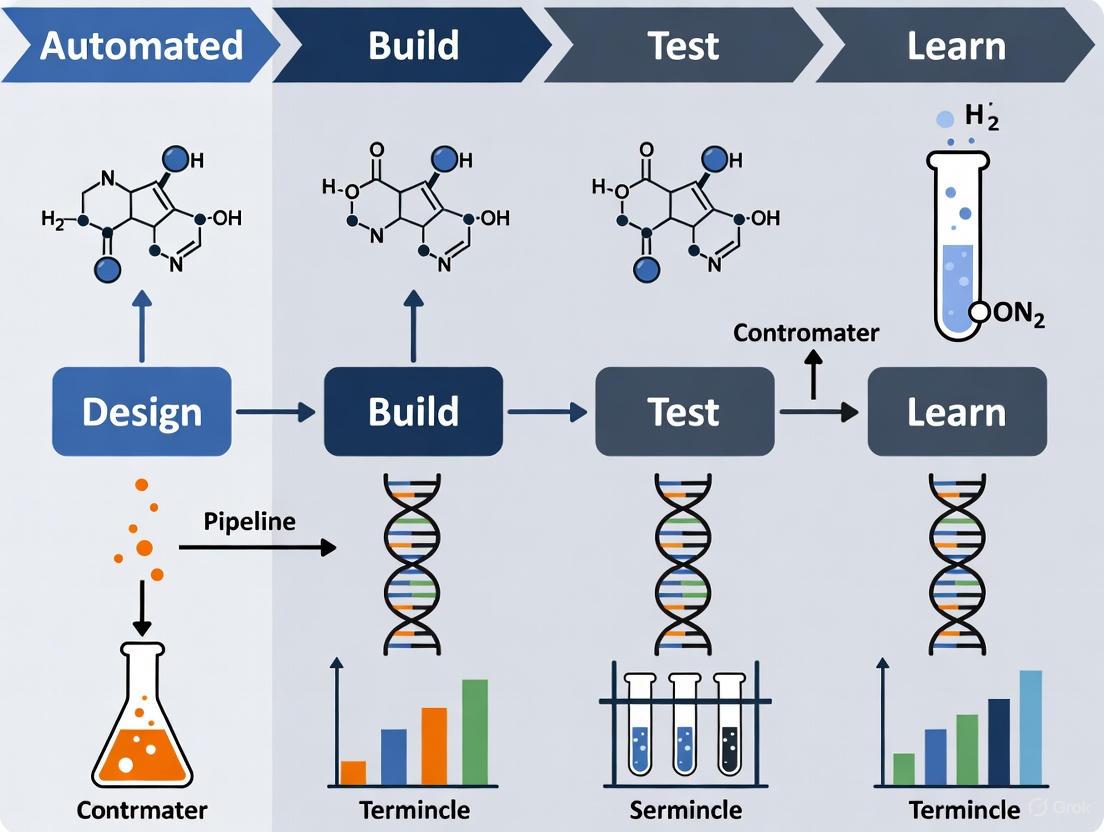
This article explores the transformative role of automated Design-Build-Test-Learn (DBTL) pipelines in synthetic biology for the microbial production of fine chemicals and pharmaceutical precursors.
Automated DBTL Pipelines: Accelerating Microbial Production of Fine Chemicals and Therapeutics
Abstract
This article explores the transformative role of automated Design-Build-Test-Learn (DBTL) pipelines in synthetic biology for the microbial production of fine chemicals and pharmaceutical precursors. Tailored for researchers, scientists, and drug development professionals, it provides a comprehensive examination of the foundational principles, methodological implementations, and AI-driven optimization of these integrated systems. Through specific case studies on compounds like pinocembrin, dopamine, and colicins, we detail how automation and machine learning are overcoming traditional bottlenecks in strain engineering and pathway optimization. The content further validates these approaches with performance benchmarks and discusses emerging paradigms, offering a strategic resource for deploying these accelerated engineering cycles in both academic and industrial biomanufacturing.
The DBTL Framework: Foundations for Automated Microbial Engineering
Defining the Design-Build-Test-Learn (DBTL) Cycle in Synthetic Biology
The Design-Build-Test-Learn (DBTL) cycle represents a systematic framework central to modern synthetic biology, enabling the iterative engineering of biological systems for enhanced production of valuable compounds. This article details the implementation of an automated DBTL pipeline for microbial production of fine chemicals, using the optimization of (2S)-pinocembrin in Escherichia coli as a primary case study. Through two iterative DBTL cycles, we achieved a 500-fold improvement in production titers, demonstrating the power of this approach for rapid strain development. The protocols and data presented provide researchers with a blueprint for implementing automated DBTL workflows in their own metabolic engineering projects.
In synthetic biology, the Design-Build-Test-Learn (DBTL) cycle provides a structured engineering framework for developing biological systems with desired functions [1]. This iterative process begins with in silico Design of biological parts, proceeds to physical Building of genetic constructs, advances to experimental Testing of system performance, and concludes with Learning from generated data to inform the next design cycle [2]. The DBTL framework has become fundamental to synthetic biology because it addresses a core challenge: despite rational design, introducing foreign DNA into cellular systems often produces unpredictable outcomes, necessitating multiple testing iterations [1].
Automation has dramatically accelerated DBTL cycling in recent years, with biofoundries implementing robotic platforms and computational tools to streamline each phase [3]. This automation enables researchers to explore vast design spaces efficiently, significantly reducing the time and resources required for strain optimization [4]. The DBTL approach is particularly valuable for microbial production of fine chemicals, where it has successfully optimized pathways for compounds ranging from flavonoids to alkaloids [4] [5].
DBTL Phase Protocols and Applications
Design Phase: Computational Planning
Objective: Design genetic constructs and pathways in silico to meet predefined engineering objectives.
Protocol:
- Pathway Selection: Utilize computational tools like RetroPath to identify potential biosynthetic pathways for your target compound [4].
- Enzyme Selection: Employ enzyme selection platforms such as Selenzyme to identify optimal enzymes for each pathway step based on catalytic efficiency, substrate specificity, and host compatibility [4].
- Genetic Design: Translate protein sequences to coding sequences with optimized codon usage for the host organism. Design regulatory elements including promoters, ribosome binding sites (RBS), and terminators [4].
- Assembly Design: Generate detailed DNA assembly protocols specifying cloning methods (Gibson assembly, Golden Gate, etc.), fragment ordering, and necessary overhang sequences [3].
- Library Design: For multivariate optimization, create combinatorial libraries covering different parameters (promoter strengths, gene orders, copy numbers). Apply Design of Experiments (DoE) methodologies to reduce library size while maintaining representativeness [4].
Application Note: In the pinocembrin case study, researchers designed an initial library of 2,592 possible configurations varying four parameters: vector copy number, promoter strength for each gene, and gene order. Using statistical DoE, this was reduced to 16 representative constructs, achieving a 162:1 compression ratio [4].
Build Phase: Physical Construction
Objective: Physically assemble designed genetic constructs and introduce them into host organisms.
Protocol:
- DNA Synthesis: Order DNA fragments from commercial providers (Twist Bioscience, IDT, GenScript) or amplify from existing stocks [4] [3].
- Automated Assembly: Implement robotic liquid handling systems (Tecan, Beckman Coulter, Hamilton) for high-throughput DNA assembly. For the pinocembrin pathway, ligase cycling reaction (LCR) was used for assembly [4].
- Transformation: Introduce assembled constructs into appropriate host cells (E. coli DH5α for plasmid propagation, production strains for functional testing) [4].
- Quality Control: Verify constructs through automated plasmid purification, restriction digest analysis, and sequencing (Sanger or NGS) [4] [3].
Application Note: Integration with laboratory information management systems (LIMS) like TeselaGen enables sample tracking and protocol management throughout the Build phase. Automated platforms can manage inventory, track freezer stocks, and execute complex pipetting workflows with minimal human intervention [3].
Test Phase: Functional Characterization
Objective: Experimentally measure performance of engineered biological systems.
Protocol:
- Cultivation: Grow engineered strains in appropriate media formats (96-deepwell plates for high-throughput screening) with standardized growth conditions [4].
- Induction: Implement automated induction protocols for gene expression control [4].
- Metabolite Analysis: Extract metabolites from cultures and quantify target compounds and intermediates using analytical methods such as:
- Data Processing: Implement automated data extraction and processing pipelines using custom scripts (R, Python) for rapid analysis [4].
Application Note: In the pinocembrin study, automated 96-deepwell plate growth and induction protocols enabled rapid screening of construct libraries. Quantitative UPLC-MS/MS analysis provided precise measurements of pinocembrin and key intermediates like cinnamic acid, revealing production tiers ranging from 0.002 to 0.14 mg/L in the initial library [4].
Learn Phase: Data Analysis and Insight Generation
Objective: Analyze experimental data to extract insights and guide subsequent design cycles.
Protocol:
- Statistical Analysis: Apply statistical methods to identify significant factors influencing system performance. For the initial pinocembrin library, this included ANOVA to determine effects of copy number, promoter strengths, and gene order [4].
- Machine Learning: Implement ML algorithms to build predictive models linking genotype to phenotype. These models can identify non-intuitive relationships and optimize multi-parameter systems [2] [3].
- Hypothesis Generation: Formulate new design hypotheses based on statistical and ML analysis to improve system performance in subsequent DBTL cycles.
Application Note: Analysis of the initial pinocembrin library revealed that vector copy number had the strongest significant effect on production (P value = 2.00 × 10⁻⁸), followed by chalcone isomerase (CHI) promoter strength (P value = 1.07 × 10⁻⁷). Interestingly, high levels of the intermediate cinnamic acid suggested phenylalanine ammonia-lyase (PAL) activity was not rate-limiting despite its promoter strength showing some effect [4].
Case Study: Pinocembrin Production inE. coli
The power of the automated DBTL pipeline was demonstrated through the optimization of (2S)-pinocembrin production in E. coli [4]. The biosynthetic pathway comprised four enzymes: phenylalanine ammonia-lyase (PAL), 4-coumarate:CoA ligase (4CL), chalcone synthase (CHS), and chalcone isomerase (CHI) converting L-phenylalanine to pinocembrin [4].
Table 1: Pinocembrin Production Through DBTL Iterations
| DBTL Cycle | Key Design Changes | Production Titer (mg/L) | Fold Improvement |
|---|---|---|---|
| Initial constructs | 16 representative designs from full combinatorial library | 0.002 - 0.14 | Baseline |
| Cycle 2 | High-copy backbone; optimized CHI promoter and position | Up to 88 | 500-fold |
Table 2: Statistical Analysis of Design Factors in Initial Library
| Design Factor | Effect on Pinocembrin Production | P-value |
|---|---|---|
| Vector copy number | Strongest positive effect | 2.00 × 10⁻⁸ |
| CHI promoter strength | Strong positive effect | 1.07 × 10⁻⁷ |
| CHS promoter strength | Moderate effect | 1.01 × 10⁻⁴ |
| 4CL promoter strength | Moderate effect | 1.01 × 10⁻⁴ |
| PAL promoter strength | Weak effect | 3.06 × 10⁻⁴ |
| Gene order | Not significant | > 0.05 |
Pathway Engineering and Workflow
Diagram 1: Pinocembrin biosynthetic pathway. The pathway converts L-phenylalanine to pinocembrin through five enzymatic steps. In the E. coli case study, the C4H step was bypassed by using cinnamic acid as a precursor or through endogenous activity [4].
Diagram 2: Automated DBTL workflow for pinocembrin production. The integrated pipeline features specialized computational tools for Design, robotic automation for Build, high-throughput analytics for Test, and statistical modeling for Learn phases [4] [3].
Advanced DBTL Methodologies
Knowledge-Driven DBTL and Cell-Free Prototyping
Recent advances have introduced knowledge-driven DBTL cycles that incorporate upstream in vitro investigation to guide rational strain engineering [6]. This approach was successfully applied to dopamine production in E. coli, where cell-free lysate systems were used to test different enzyme expression levels before implementing changes in vivo [6]. This strategy enabled the development of a dopamine production strain achieving 69.03 ± 1.2 mg/L, a 2.6 to 6.6-fold improvement over previous reports [6].
Cell-free expression systems represent another powerful methodology for accelerating DBTL cycles. These systems enable rapid protein synthesis without cloning steps, typically producing >1 g/L of protein in under 4 hours [2]. When combined with microfluidics, cell-free systems can screen over 100,000 reactions in picoliter-scale droplets, generating massive datasets for machine learning model training [2].
Machine Learning and the LDBT Paradigm
The integration of machine learning is transforming traditional DBTL approaches. Protein language models (ESM, ProGen) and structure-based design tools (ProteinMPNN) now enable zero-shot predictions of protein function and stability [2]. These advances have prompted proposals for a paradigm shift from DBTL to LDBT (Learn-Design-Build-Test), where machine learning precedes design based on large biological datasets [2].
Table 3: Machine Learning Tools for Biological Design
| Tool Name | Type | Primary Application | Key Feature |
|---|---|---|---|
| ESM [2] | Protein language model | Function prediction | Trained on evolutionary relationships |
| ProGen [2] | Protein language model | Sequence generation | Designs diverse functional sequences |
| MutCompute [2] | Structure-based deep learning | Residue optimization | Predicts stabilizing mutations |
| ProteinMPNN [2] | Structure-based deep learning | Sequence design | Designs sequences for target structures |
| Prethermut [2] | Stability prediction | Thermostability optimization | Predicts effects of mutations on stability |
| DeepSol [2] | Solubility prediction | Solubility optimization | Predicts protein solubility from sequence |
Essential Research Reagents and Solutions
Table 4: Key Research Reagent Solutions for DBTL Implementation
| Reagent/Resource | Function/Application | Example Suppliers/Tools |
|---|---|---|
| DNA Synthesis Providers | Supply custom DNA fragments and libraries | Twist Bioscience, IDT, GenScript [3] |
| Automated Liquid Handlers | Enable high-throughput pipetting and assembly | Tecan, Beckman Coulter, Hamilton [3] |
| Cell-Free Expression Systems | Rapid protein synthesis without cloning | PURExpress, homemade extracts [2] |
| Analytical Instruments | Metabolite quantification and characterization | UPLC-MS/MS, HPLC, plate readers [4] [3] |
| Software Platforms | DBTL cycle management and data analysis | TeselaGen, CLC Genomics, Geneious [3] |
| Design Tools | In silico pathway and part design | RetroPath, Selenzyme, PartsGenie [4] |
The Design-Build-Test-Learn cycle provides a powerful framework for systematic engineering of biological systems, with automated implementations dramatically accelerating strain development for fine chemical production. The pinocembrin case study demonstrates how iterative DBTL cycling coupled with statistical analysis can achieve remarkable improvements in production titers. Emerging methodologies including knowledge-driven DBTL, cell-free prototyping, and machine learning integration are further enhancing the efficiency and predictive power of this approach. As these technologies mature, DBTL pipelines will continue to transform synthetic biology from an empirical art to a predictive engineering discipline.
The Critical Need for Automation in Strain Development for Fine Chemicals
The microbial production of fine chemicals presents a promising biosustainable manufacturing solution but is often hindered by the immense resource investments and lengthy development times required for strain engineering [4]. The Design-Build-Test-Learn (DBTL) cycle, a core engineering paradigm, has been adopted to structure this development process. However, its traditional, manual implementation remains a major bottleneck. The integration of laboratory automation and robotics is therefore not merely an incremental improvement but a critical enabler that transforms the DBTL cycle from a slow, sequential process into a rapid, high-throughput, and iterative workflow [4] [7]. This automated pipeline is essential for the efficient discovery and optimization of microbial strains, making the production of high-value fine chemicals economically viable [4] [6].
This application note details the components of an automated DBTL pipeline, provides quantitative evidence of its impact, and outlines specific protocols for its implementation, framed within the context of a broader thesis on advancing microbial production research.
The Automated DBTL Pipeline: Components and Workflow
An automated DBTL pipeline for strain development integrates computational design, robotic construction, high-throughput analytics, and data analysis into a continuous, iterative cycle [4]. The workflow and logical relationships between these stages are illustrated below.
Stage 1: Design
The Design phase employs a suite of bioinformatics tools for in silico pathway prototyping. For any target compound, tools like RetroPath [4] and Selenzyme [4] automate the selection of potential biosynthetic routes and candidate enzymes. The PartsGenie software [4] then designs reusable DNA parts, optimizing elements like ribosome-binding sites (RBS) and codon usage. A critical step is using Design of Experiments (DoE) to reduce the vast combinatorial design space of pathway variants (e.g., promoters, gene order) into a smaller, statistically representative library for testing, achieving compression ratios as high as 162:1 [4].
Stage 2: Build
The Build stage translates digital designs into physical DNA constructs. This stage leverages commercial DNA synthesis followed by automated, robot-assisted assembly using methods like ligase cycling reaction (LCR) [4]. Automated protocols are also established for host transformation and subsequent quality control, including high-throughput plasmid purification, restriction digest, and sequence verification [4] [7]. A key advancement is the development of integrated robotic protocols for organisms like Saccharomyces cerevisiae, which can increase throughput to ~400 transformations per day, a 10-fold improvement over manual methods [7].
Stage 3: Test
In the Test phase, constructed strains are cultivated in automated systems, typically using 96-deepwell plates [4]. Following growth, the process of metabolite extraction is automated. Quantitative analysis of the target chemical and key intermediates is performed using fast, sensitive methods such as ultra-performance liquid chromatography coupled to tandem mass spectrometry (UPLC-MS/MS) [4]. The development of rapid LC-MS methods, which can reduce analyte detection runtime from 50 minutes to 19 minutes, is crucial for screening large libraries efficiently [7].
Stage 4: Learn
The Learn phase involves analyzing the high-throughput data to extract meaningful insights. This is achieved through the application of statistical methods and machine learning (ML) to identify the relationships between genetic design factors (e.g., promoter strength, copy number) and observed production titers [4] [8]. These insights directly inform the design of the next, improved library of strains, thus closing the DBTL loop [4] [6].
Quantitative Impact of Automation
The implementation of an automated DBTL cycle has demonstrated dramatic improvements in the speed and success of strain engineering projects. The following table summarizes key performance metrics from recent applications.
Table 1: Performance Metrics of Automated DBTL Pipelines in Strain Engineering
| Target Compound / Process | Host Organism | Key Automated Step | Quantitative Improvement | Throughput / Efficiency Gain |
|---|---|---|---|---|
| (2S)-Pinocembrin [4] | Escherichia coli | Pathway assembly & screening | 500-fold increase in production (over 2 cycles); final titer of 88 mg/L | Library compression of 162:1 via DoE [4] |
| Dopamine [6] | Escherichia coli | High-throughput RBS engineering | Final titer of 69.03 ± 1.2 mg/L; 2.6 to 6.6-fold improvement over previous state-of-the-art | Knowledge-driven DBTL cycle using upstream in vitro testing [6] |
| Verazine [7] | Saccharomyces cerevisiae | Robotic yeast transformation | Identified genes giving a 2 to 5-fold increase in production | Throughput of ~400 transformations/day (10x manual) [7] |
| General Strain Construction [7] | Saccharomyces cerevisiae | Integrated robotic workflow | Successful transformation rate compatible with downstream automation | Pipeline capacity of 2,000 transformations/week [7] |
Detailed Experimental Protocols
Protocol: Automated Build Phase for Yeast Strain Construction
This protocol outlines the automated high-throughput transformation of S. cerevisiae using a Hamilton Microlab VANTAGE system, as described by Robinson et al. [7].
I. Research Reagent Solutions
Table 2: Essential Reagents for Automated Yeast Transformation
| Reagent / Material | Function / Explanation |
|---|---|
| Competent S. cerevisiae cells | Engineered production host (e.g., verazine-producing strain PW-4). |
| pESC-URA plasmid library | Expression vector with auxotrophic marker for selection. |
| Lithium Acetate (LiOAc) | Component of transformation mix; alters cell wall to facilitate DNA uptake. |
| Single-Stranded Carrier DNA (ssDNA) | Blocks nucleases and improves plasmid DNA uptake efficiency. |
| Polyethylene Glycol (PEG) | Promotes cell membrane fusion and DNA entry during heat shock. |
| YPAD Agar Plates | Growth medium for outgrowth and selection of successful transformants. |
II. Workflow Diagram
III. Step-by-Step Procedure
- Workflow Initialization: Load the deck of the Hamilton VANTAGE platform according to the predefined labware layout. The user interface (programmed in Hamilton VENUS) allows for customization of parameters like DNA volume and incubation times.
- Transformation Mix Assembly: The robotic arm pipettes the plasmid DNA library, competent yeast cells, and transformation mix reagents (LiOAc, PEG, ssDNA) into a 96-well plate. Note: Pipetting parameters for viscous reagents like PEG are pre-optimized for accuracy.
- Heat Shock: The robotic arm transfers the 96-well plate to an off-deck thermal cycler (e.g., Inheco ODTC) for a heat shock incubation at 42°C. The plate is automatically sealed and peeled using integrated off-deck devices during this step.
- Cell Washing: Following heat shock, the plate is centrifuged, and the robot aspirates the supernatant. The cell pellets are then resuspended in water.
- Plating: The transformed cell suspension is automatically transferred onto solid YPAD agar plates for outgrowth.
- Downstream Processing: The resulting colonies can be picked using an automated colony picker (e.g., QPix 460) for subsequent high-throughput culturing and screening.
Protocol: Automated Test Phase for Metabolite Screening
This protocol details the high-throughput screening of microbial cultures for fine chemical production, compatible with 96-deepwell plate formats [4] [7].
I. Research Reagent Solutions
Table 3: Essential Reagents for Metabolite Screening
| Reagent / Material | Function / Explanation |
|---|---|
| Production Media | Chemically defined or rich media optimized for the production host and target pathway. |
| Inducer (e.g., IPTG, Galactose) | Triggers the expression of heterologous biosynthetic pathway genes. |
| Zymolyase / Lysozyme | Enzyme for efficient cell lysis, particularly for yeast/fungal cells. |
| Organic Solvents (e.g., Methanol, Acetonitrile) | Used for metabolite extraction and protein precipitation. |
| LC-MS Grade Solvents & Standards | High-purity solvents for UPLC-MS/MS; authentic chemical standards for quantification. |
II. Workflow Diagram
III. Step-by-Step Procedure
- Cultivation: Inoculate production media in 96-deepwell plates from the library of engineered strains. Use a liquid handling robot for consistency. Incubate the plates with shaking in a controlled environment. Induce pathway expression at the optimal growth phase using an automated dispenser.
- Metabolite Extraction: At a defined time post-induction, harvest the cells by centrifugation. Implement an automated extraction protocol, which may involve:
- Cell Lysis: For robust cell walls (e.g., yeast), add a buffer containing Zymolyase and incubate to digest the wall [7].
- Solvent Extraction: Add a suitable organic solvent (e.g., methanol or acetonitrile) to the lysate or cell pellet to extract the intracellular and extracellular metabolites. This also precipitates proteins.
- Sample Analysis: Centrifuge the extraction plate to pellet cell debris and precipitated protein. Transfer the clarified supernatant to a new plate for analysis.
- UPLC-MS/MS Quantification: Use an autosampler to inject samples onto the UPLC-MS/MS system. A rapid, optimized method (e.g., 19-minute runtime [7]) is critical for high throughput. The mass spectrometer should be operated in Multiple Reaction Monitoring (MRM) mode for high sensitivity and specificity when quantifying target compounds against a standard curve.
Automation is the cornerstone of a modern, efficient biofoundry. The integration of robotics and data science at every stage of the DBTL cycle—from design to learning—dramatically accelerates the development of microbial cell factories for fine chemicals. The quantitative data and detailed protocols provided herein serve as a blueprint for research institutions and industrial laboratories to implement these critical technologies, thereby overcoming traditional bottlenecks and unlocking new possibilities in sustainable biomanufacturing.
The implementation of automated Design-Build-Test-Learn (DBTL) pipelines represents a paradigm shift in microbial metabolic engineering for fine chemicals production. This application note details the core components of an integrated automated DBTL platform, from specialized software tools to robotic hardware systems. We present quantitative performance data from case studies on flavonoid and dopamine production in Escherichia coli, along with detailed protocols for pathway assembly and screening. The documented pipeline achieves up to 500-fold improvement in production titers through iterative cycling, demonstrating the transformative potential of automation in biopharmaceutical research and development.
The Design-Build-Test-Learn (DBTL) framework has emerged as a cornerstone of modern synthetic biology and metabolic engineering. Automated DBTL pipelines integrate computational design, robotic construction, high-throughput analytical testing, and machine learning-driven analysis into an iterative, closed-loop system [4]. These platforms are particularly valuable for optimizing microbial production of fine chemicals, where traditional approaches require substantial time and resource investments.
Biofoundries—specialized facilities housing integrated automation systems—enable the rapid prototyping of microbial strains through sophisticated robotic workflows [7]. The automation of each DBTL phase significantly accelerates strain development cycles, with demonstrated capacity of up to 2,000 transformations per week in yeast systems—a 10-fold improvement over manual methods [7]. For pharmaceutical applications, these systems enhance product quality through reduced human intervention and precise process control while ensuring compliance with regulatory requirements [9] [10].
Core Components of an Automated DBTL Pipeline
Design Phase: In Silico Pathway Design and Library Construction
The Design phase initiates the DBTL cycle through computational selection of biosynthetic pathways and enzymatic components. Automated pathway design utilizes software tools including RetroPath for pathway selection and Selenzyme for enzyme selection [4]. DNA parts are designed with simultaneous optimization of ribosome-binding sites (RBS) and coding sequences using tools such as PartsGenie [4].
Combinatorial libraries are constructed in silico by varying multiple parameters: plasmid copy number (e.g., ColE1, p15a, pSC101 origins), promoter strength (e.g., Ptrc, PlacUV5), intergenic regions, and gene order permutations [4]. Statistical methods like Design of Experiments (DoE) enable efficient exploration of design spaces, achieving compression ratios of 162:1 (reducing 2,592 combinations to 16 representative constructs) while maintaining library diversity [4].
Table 1: Software Tools for Automated DBTL Design Phase
| Tool Name | Function | Application Example | Reference |
|---|---|---|---|
| RetroPath | Pathway selection | Flavonoid biosynthesis pathway design | [4] |
| Selenzyme | Enzyme selection | Identification of optimal enzymes for target reactions | [4] |
| PartsGenie | DNA part design | RBS optimization and coding sequence refinement | [4] |
| UTR Designer | RBS engineering | Fine-tuning translation initiation rates | [6] |
| TeselaGen Platform | DNA assembly protocol generation | Managing complex combinatorial libraries | [3] |
Build Phase: Automated DNA Assembly and Strain Construction
The Build phase translates digital designs into physical biological constructs through automated laboratory workflows. Robotic platforms such as the Hamilton Microlab VANTAGE execute modular protocols for DNA assembly, transformation, and quality control [7]. Integration with external hardware (plate sealers, thermal cyclers, colony pickers) enables end-to-end automation of molecular biology workflows [7].
DNA assembly employs standardized methods such as ligase cycling reaction (LCR) or Gibson assembly, with automated worklist generation ensuring reagent precision [4]. Liquid handling robots from manufacturers including Tecan, Beckman Coulter, and Hamilton Robotics provide high-precision pipetting for PCR setup, DNA normalization, and plasmid preparation [3]. Quality control is implemented through automated plasmid purification, restriction digest analysis, and sequence verification [4].
Table 2: Robotic Systems for DBTL Build Phase
| System Type | Example Models | Primary Function | Throughput Capacity | |
|---|---|---|---|---|
| Automated Liquid Handlers | Hamilton VANTAGE, Tecan Freedom EVO, Beckman Coulter Biomek | Precise reagent dispensing, PCR setup, DNA normalization | 400-2,000 transformations/week | [7] [3] |
| Integrated Robotics | Hamilton iSWAP | Plate movement between instruments | Hands-free operation of multi-step protocols | [7] |
| External Hardware | Inheco ODTC thermocycler, 4titude plate sealer | Specific process steps (heat shock, sealing) | Parallel processing of 96-well plates | [7] |
| Colony Pickers | QPix 460 | Automated selection of transformed colonies | High-throughput strain library generation | [7] |
Test Phase: High-Throughput Screening and Analytics
The Test phase employs automated cultivation and analytical systems to rapidly characterize library performance. Robotic platforms execute 96-deepwell plate growth and induction protocols with precise environmental control [4]. Sample processing includes automated metabolite extraction followed by quantitative analysis using ultra-performance liquid chromatography coupled to tandem mass spectrometry (UPLC-MS/MS) [4] [7].
High-throughput screening systems incorporate plate readers (e.g., PerkinElmer EnVision, BioTek Synergy HTX) for rapid phenotypic assessment [3]. For secondary metabolite detection, automated sample preparation enables LC-MS runtime reduction from 50 to 19 minutes while maintaining data quality—critical for screening large libraries [7]. Data extraction and processing are automated through custom scripts (e.g., R-based pipelines) for streamlined conversion of raw data into analyzable formats [4].
Learn Phase: Data Integration and Machine Learning
The Learn phase applies statistical analysis and machine learning to extract design principles from experimental data. Statistical methods identify significant factors influencing production titers, such as plasmid copy number and promoter strength effects [4]. Machine learning algorithms build predictive models connecting genetic designs to phenotypic outcomes, enabling genotype-to-phenotype predictions for subsequent DBTL cycles [3].
Platforms like TeselaGen's Discover Module employ predictive models to forecast biological phenotypes using quantitative data and advanced embeddings representing DNA, proteins, and chemical compounds [3]. The integration of all experimental data into centralized repositories with standardized application programming interfaces (APIs) facilitates data mining and pattern recognition across multiple DBTL cycles [3].
Application Notes: Microbial Production of Fine Chemicals
Case Study 1: Flavonoid Production in E. coli
Background: Flavonoids represent a structurally diverse class of natural products with pharmaceutical applications. Pinocembrin serves as a key biosynthetic precursor, produced from L-phenylalanine via a four-enzyme pathway [4].
Experimental Protocol:
- Pathway Design: A combinatorial library was designed incorporating four expression levels (vector backbone selection), promoter strength variations (strong Ptrc vs. weak PlacUV5), intergenic region regulation (strong, weak, or no promoter), and 24 gene order permutations [4].
- Library Reduction: Design of Experiments based on orthogonal arrays combined with Latin square arrangement reduced 2,592 combinations to 16 representative constructs [4].
- Strain Construction: Automated LCR assembly was performed on robotic platforms, followed by transformation into E. coli DH5α. Constructs were verified through automated plasmid purification, restriction digest, and sequencing [4].
- Screening: Cultures were grown in 96-deepwell plates with automated induction and metabolite extraction. Pinocembrin and intermediate (cinnamic acid) quantification used UPLC-MS/MS with high mass resolution [4].
- Data Analysis: Statistical analysis identified significant factors affecting production titers using custom R scripts [4].
Results and Learning: Initial library screening revealed pinocembrin titers ranging from 0.002 to 0.14 mg/L [4]. Statistical analysis identified vector copy number as the strongest positive factor (P = 2.00×10⁻⁸), followed by chalcone isomerase (CHI) promoter strength (P = 1.07×10⁻⁷) [4]. A second DBTL cycle incorporating these insights achieved 88 mg/L pinocembrin—a 500-fold improvement over initial constructs [4].
Figure 1: Flavonoid Biosynthesis Pathway for Pinocembrin Production. Enzymes: PAL (phenylalanine ammonia-lyase), C4H (cinnamate 4-hydroxylase), 4CL (4-coumarate:CoA ligase), CHS (chalcone synthase), CHI (chalcone isomerase).
Case Study 2: Dopamine Production in E. coli
Background: Dopamine has applications in emergency medicine, cancer treatment, and materials science. A knowledge-driven DBTL approach incorporated upstream in vitro testing to inform strain design [6].
Experimental Protocol:
- In Vitro Testing: Crude cell lysate systems expressed pathway enzymes to assess relative expression levels and identify bottlenecks before in vivo implementation [6].
- Host Engineering: E. coli FUS4.T2 was engineered for enhanced L-tyrosine production through deletion of the transcriptional dual regulator TyrR and mutation of feedback inhibition in chorismate mutase/prephenate dehydrogenase (tyrA) [6].
- RBS Engineering: High-throughput RBS engineering fine-tuned expression of HpaBC (4-hydroxyphenylacetate 3-monooxygenase) and Ddc (L-DOPA decarboxylase) using simplified Shine-Dalgarno sequence modulation [6].
- Bioreactor Cultivation: Strains were cultured in minimal medium with 20 g/L glucose, 10% 2xTY, MOPS buffer, and appropriate supplements in 96-deepwell plates [6].
- Analytical Methods: Dopamine quantification employed LC-MS with optimized rapid methods to reduce analysis time while maintaining sensitivity [6].
Results and Learning: The optimized dopamine production strain achieved titers of 69.03 ± 1.2 mg/L (34.34 ± 0.59 mg/g biomass)—a 2.6 to 6.6-fold improvement over previous in vivo production systems [6]. The study demonstrated the impact of GC content in the Shine-Dalgarno sequence on RBS strength and translation efficiency [6].
Figure 2: Dopamine Biosynthesis Pathway from L-Tyrosine. Enzymes: HpaBC (4-hydroxyphenylacetate 3-monooxygenase), Ddc (L-DOPA decarboxylase).
Essential Research Reagent Solutions
Table 3: Key Research Reagents for Automated DBTL Pipelines
| Reagent Category | Specific Examples | Function in DBTL Pipeline | Application Notes | |
|---|---|---|---|---|
| DNA Assembly Systems | Ligase Cycling Reaction (LCR), Gibson Assembly | Construction of genetic pathways | Automated worklist generation enables robotic execution | [4] |
| Vector Systems | pET system, pJNTN, pESC-URA | Gene expression in microbial hosts | Varying copy numbers (ColE1, p15a, pSC101) modulate expression | [4] [6] |
| Induction Systems | IPTG-inducible promoters, GAL1 promoter | Controlled gene expression | Concentration optimization critical for metabolic burden management | [6] [7] |
| Selection Markers | Ampicillin, kanamycin resistance genes | Strain selection and maintenance | Antibiotic concentrations: ampicillin 100 μg/mL, kanamycin 50 μg/mL | [6] |
| Analytical Standards | Pinocembrin, dopamine, L-DOPA | Metabolite quantification | Essential for UPLC-MS/MS method development and validation | [4] [6] |
| Cell Lysis Reagents | Zymolyase, organic solvents | Metabolite extraction from cells | Automated processing enables high-throughput sample preparation | [7] |
Workflow Integration and Automation Protocols
Integrated DBTL Pipeline Operation
Figure 3: Integrated Automated DBTL Workflow. The cycle connects computational design with robotic execution and machine learning, with an automation layer ensuring seamless transitions between phases.
Protocol: Automated Yeast Transformation for Pathway Screening
This protocol adapts the lithium acetate/ssDNA/PEG method for 96-well format using Hamilton VANTAGE platform [7]:
Materials:
- Competent S. cerevisiae cells (prepared in-house)
- Plasmid DNA library (concentration normalized to 50-100 ng/μL)
- Lithium acetate (1.0 M)
- Single-stranded carrier DNA (2.0 mg/mL)
- PEG solution (40% w/v polyethylene glycol 3350)
- Selective agar plates
- 96-well microplates (capable of withstanding heat shock)
Automated Workflow:
- Transformation Setup: Program Hamilton VENUS software with customized parameters (DNA volume, reagent ratios, incubation times).
- Cell Resuspension: Distribute competent cells to 96-well plate using liquid handler (50 μL/well).
- Reagent Addition: Add plasmid DNA (1-5 μL), lithium acetate (25 μL), ssDNA (5 μL), and PEG solution (150 μL) with optimized pipetting parameters for viscous solutions.
- Heat Shock: Transfer plate to Inheco ODTC thermal cycler for 42°C incubation (20-40 minutes, user-defined).
- Washing: Centrifuge plate, remove supernatant, resuspend in recovery medium using robotic arm.
- Plating: Transfer aliquots to selective agar plates using automated plate replicator.
- Colony Picking: Incubate 2-3 days at 30°C, then pick colonies using QPix 460 system.
Critical Parameters:
- Pipetting accuracy: Adjust aspiration/dispense speeds for viscous PEG solution
- Heat shock uniformity: Ensure consistent temperature across 96-well plate
- Transformation efficiency: Optimize cell density and DNA concentration
- Quality control: Include positive (known plasmid) and negative (no DNA) controls
Automated DBTL pipelines represent a transformative technological platform for accelerating microbial strain engineering for fine chemicals production. The integration of specialized software tools, robotic hardware systems, and machine learning algorithms creates an iterative optimization cycle capable of achieving order-of-magnitude improvements in production titers. As demonstrated in the flavonoid and dopamine case studies, these systems enable rapid identification of metabolic bottlenecks and design principles that would be impractical to discover through manual approaches.
Future developments in automated bioprocessing will likely focus on enhanced integration across platforms, improved machine learning models leveraging larger datasets, and expansion to non-traditional microbial hosts. For the pharmaceutical industry, these advancements promise to accelerate development timelines while improving product quality and process consistency through reduced human intervention and precise control of critical process parameters.
The microbial production of fine chemicals presents a promising biosustainable manufacturing solution. Its advancement at an industrial level, however, has been hindered by the large resource investments required for strain development. The automated Design-Build-Test-Learn (DBTL) pipeline represents a transformative approach, integrating computational design and laboratory automation to rapidly prototype and optimize biochemical pathways in microbial chassis. This pipeline is designed to be compound-agnostic and enables rapid iterative cycling with automation at every stage, dramatically accelerating the development of efficient microbial cell factories [4].
The core of this pipeline involves:
- Design: In silico selection of pathways and enzymes, and automated design of genetic parts.
- Build: Automated DNA assembly and construction of pathway libraries.
- Test: High-throughput cultivation and analytical screening.
- Learn: Data analysis to identify optimal genetic configurations for the next cycle [4].
This article examines the application of this framework across three key chassis organisms: Escherichia coli, Saccharomyces cerevisiae, and Pseudomonas putida, detailing their unique metabolic capabilities and providing practical protocols for their engineering.
Organism Profiles and Recent Production Milestones
The selection of an appropriate chassis organism is fundamental to the success of any bioproduction process. E. coli, S. cerevisiae, and P. putida have emerged as predominant hosts due to their distinct metabolic advantages, well-characterized genetics, and suitability for industrial fermentation.
E. coli is a genetically tractable workhorse whose industrial competitiveness increasingly depends on expanding its molecular repertoire through first-in-class pathways and achieving best-in-class titer, rate, and yield (TRY). Recent milestones include the first demonstration of producing aromatic homopolyester and poly(ester amide)s directly from glucose [11].
S. cerevisiae offers the advantages of being Generally Regarded As Safe (GRAS), robust in industrial fermentations, and capable of performing complex eukaryotic post-translational modifications. Its industrial use is widespread, with global production of S. cerevisiae yeast estimated to be in the hundreds of millions of kilograms annually [12].
P. putida is valued for its remarkable metabolic versatility and exceptional tolerance to chemical and physical stresses, making it particularly suitable for the production of toxic compounds or for processes using heterogeneous feedstocks. The market for P. putida-based technologies is experiencing steady growth, indicative of its increasing industrial adoption [13].
Table 1: Key Characteristics of Chassis Organisms in Bioproduction
| Characteristic | Escherichia coli | Saccharomyces cerevisiae | Pseudomonas putida |
|---|---|---|---|
| Genetic Tools | Extensive, well-developed | Extensive, well-developed | Developing, but advanced |
| Growth Rate | Very High | High | Moderate |
| Stress Tolerance | Moderate | High | Very High |
| Preferred Substrate | Simple sugars (e.g., Glucose) | Simple sugars (e.g., Glucose, Sucrose) | Diverse, including aromatics and glycerol |
| Typical Bioreactor Cell Density | High (OD~50-100) | High (OD~50-100) | Very High (e.g., 50 million cells/mL) [13] |
| Key Advantage | Rapid prototyping, high yields | GRAS status, eukaryotic protein processing | Solvent tolerance, flexible metabolism |
| Example Product | (2S)-Pinocembrin [4] | Fatty Alcohols [14] | 7-Methylxanthine [15] |
Table 2: Recent Production Achievements with Chassis Organisms
| Organism | Target Product | Titer/ Yield | Key Engineering Strategy | Reference |
|---|---|---|---|---|
| E. coli | (2S)-Pinocembrin | 88 mg L⁻¹ | Application of an automated DBTL cycle for pathway optimization. | [4] |
| S. cerevisiae | Fatty Alcohols | Increase up to 56% | Downregulation of TOR1 and deletion of HDA1 to enhance cellular robustness and extend chronological lifespan. | [14] [16] |
| P. putida | 7-Methylxanthine | 9.2 ± 0.42 g L⁻¹, 100% yield | Deletion of glpR, integration of ndmABD, overexpression of fdhA, and identification of efficient caffeine transporter. | [15] |
Detailed Application Notes and Protocols
Protocol 1: Automated DBTL for Pathway Prototyping in E. coli
This protocol outlines the application of a fully integrated, automated DBTL pipeline for optimizing a flavonoid pathway in E. coli, as demonstrated for (2S)-pinocembrin production [4].
Design Phase
- Pathway Selection: Use retrobiosynthesis tools like RetroPath to identify potential pathways from a target compound (e.g., (2S)-pinocembrin) to host metabolites [4].
- Enzyme Selection: Employ enzyme selection tools like Selenzyme to choose candidate enzymes (e.g., PAL, 4CL, CHS, CHI for pinocembrin) based on sequence and function [4].
- Genetic Design: Use software (e.g., PartsGenie) to design genetic parts with optimized ribosome-binding sites (RBS) and codon-optimized coding sequences.
- Library Design: Create a combinatorial library of pathway designs by varying:
- Vector Backbone: Origin of replication (e.g., ColE1-high, p15a-medium, pSC101-low) and promoter (e.g., Ptrc-strong, PlacUV5-weak).
- Gene Order: Systematically permute the order of genes in the operon.
- Intergenic Regions: Include strong, weak, or no additional promoter between genes.
- Library Compression: Apply Design of Experiments (DoE) methodologies, such as orthogonal arrays combined with a Latin square, to reduce the combinatorial library (e.g., from 2592 to 16 constructs) to a tractable size for testing [4].
Build Phase
- DNA Synthesis: Commission commercial synthesis of the designed gene fragments.
- Automated Assembly: Use a liquid handling robot to assemble the pathway constructs via ligase cycling reaction (LCR) or other DNA assembly methods, following automated worklists generated by design software.
- Transformation: Transform assembled plasmids into an appropriate E. coli production chassis (e.g., DH5α or BL21).
- Quality Control (QC): Perform high-throughput, automated plasmid purification, analytical restriction digest, and sequence verification to ensure construction fidelity [4].
Test Phase
- Cultivation: Conduct growth and production in 96-deepwell plates using automated liquid handling. Induce expression at the appropriate growth phase.
- Metabolite Extraction: Use automated quenching and extraction protocols for intracellular metabolites.
- Analytical Screening: Employ fast UPLC-MS/MS for quantitative, high-throughput screening of the target product and key intermediates [4].
Learn Phase
- Data Analysis: Apply statistical analysis (e.g., ANOVA) to production data to identify the main factors (e.g., vector copy number, promoter strength for specific genes) significantly influencing product titer.
- Redesign: Use the statistical model to inform the design of a second, refined library targeting the most influential factors, initiating the next DBTL cycle [4].
Diagram 1: Automated DBTL pipeline for microbial strain engineering.
Protocol 2: Engineering Cellular Robustness in S. cerevisiae for Enhanced Production
This protocol details a strategy to enhance the production of fatty alcohols in S. cerevisiae by engineering cellular robustness rather than directly manipulating the product pathway, a method that can serve as a general strategy for building more effective microbial cell factories [14] [16].
Genetic Modifications for Robustness
- Downregulate TOR1 Expression: The Target of Rapamycin (TOR) kinase is a central regulator of cell growth and metabolism. Moderate downregulation (e.g., using a weaker promoter or CRISPRi) can extend chronological lifespan and enhance stress resistance without severely compromising growth.
- Delete Histone Deacetylase HDA1: Deletion of HDA1 alters global gene expression patterns, leading to improved stress response and metabolic balance. This can be achieved via standard homologous recombination or CRISPR-Cas9.
Verification of Robustness Phenotypes
- Chronological Lifespan (CLS) Assay:
- Inoculate yeast strains in synthetic complete medium and incubate at 30°C with shaking.
- Monitor the optical density (OD600) to determine the exponential growth phase.
- At stationary phase (day 2), serially dilute culture samples and spot them onto solid YPD plates to determine the number of colony-forming units (CFUs) per mL. This day is considered day 0 for the CLS assay.
- Continue incubating the main culture and periodically sample to determine CFUs over time (e.g., every 2-3 days). A strain with an extended CLS will maintain viability for a longer period.
- Stress Resistance Assay: Exponentially growing cells to various stressors (e.g., oxidative stress with H₂O₂, osmotic stress with NaCl) and monitor cell viability or growth inhibition compared to the wild-type strain.
Production Evaluation
- Cultivation for Production: Grow engineered and control strains in production medium with the appropriate carbon source (e.g., glucose). Induce expression of the fatty alcohol pathway genes if under an inducible promoter.
- Metabolite Extraction and Analysis: Extract fatty alcohols from the culture using an organic solvent (e.g., ethyl acetate). Quantify production using GC-MS or GC-FID. The engineered robust strain is expected to show significantly higher titers (e.g., up to 56% increase) and possibly higher productivity in prolonged fermentations [14] [16].
Protocol 3: Systematic Engineering of P. putida for High-Yield Bioconversion
This protocol describes the systematic engineering of P. putida EM42 for the selective and high-yield conversion of caffeine to 7-methylxanthine (7-MX) in minimal salt media with glycerol, culminating in high-titer production in a bioreactor [15].
Step 1: Enable Glycerol Utilization
- Delete the transcriptional repressor glpR: This deregulates the glp operon, enabling efficient glycerol catabolism. Use allelic exchange or CRISPR-based genome editing for clean deletion.
Step 2: Establish the Heterologous Production Pathway
- Genomically integrate the ndmABD cassette: This cassette encodes the heterologous N-demethylase complex from another bacterium, which catalyzes the specific demethylation of caffeine to 7-MX.
- Select a strong, constitutive native promoter (e.g., P_{gap}}) to drive the expression of ndmABD.
- Implement a redox-balancing strategy: Overexpress a native formate dehydrogenase (e.g., fdhA) to regenerate NADH required for the N-demethylase reaction, improving cofactor balance and reaction efficiency.
Step 3: Engineer Substrate Uptake
- Identify and overexpress a native caffeine transporter: The discovery and overexpression of the native transporter PP_RS18750 was crucial for efficient caffeine uptake from the media, preventing substrate limitation [15].
Step 4: Bioreactor Process Optimization
- Operate in fed-batch mode to achieve high cell density. Use a minimal salts medium with glycerol as the primary carbon and energy source.
- Maintain dissolved oxygen at a sufficient level (e.g., >30% air saturation) through controlled agitation and aeration.
- Employ a controlled feeding strategy for caffeine: Add caffeine feed once a high cell density is achieved to drive the bioconversion. The feeding rate should be optimized to maintain a sub-inhibitory concentration while maximizing conversion rate.
- Monitor the process: Track cell density (OD600), glycerol, and caffeine consumption, and 7-MX accumulation over time. Under optimized conditions, this process has achieved titers of 9.2 ± 0.42 g L⁻¹ of 7-MX with 100% yield in a 3-L bioreactor [15].
Diagram 2: Engineered 7-MX biosynthesis pathway in P. putida.
The Scientist's Toolkit: Essential Research Reagents and Materials
Table 3: Key Research Reagent Solutions for Microbial Metabolic Engineering
| Reagent/Material | Function/Application | Example Use Case |
|---|---|---|
| RetroPath [4] | Retrobiosynthetic tool for automated pathway design from a target molecule. | Design phase: Identifying potential pathways for (2S)-pinocembrin synthesis in E. coli. |
| Selenzyme [4] | Automated enzyme selection platform for suggested pathway reactions. | Design phase: Selecting candidate genes (PAL, 4CL, CHS, CHI) for the pinocembrin pathway. |
| PartsGenie & PlasmidGenie [4] | Software for designing genetic parts (RBS, coding sequences) and generating robotic assembly worklists. | Design/Build phase: Creating combinatorial libraries and automating DNA assembly protocols. |
| Ligase Cycling Reaction (LCR) [4] | A DNA assembly method suitable for automated, high-throughput construction of genetic pathways. | Build phase: Assembling multiple pathway variants in a 96-well plate format on a robotic platform. |
| UPLC-MS/MS [4] | High-resolution, quantitative analytical chemistry platform for metabolomics and pathway screening. | Test phase: Rapidly measuring titers of pinocembrin and key intermediates from many culture samples. |
| CRISPRi/sRNA Libraries [11] | Tools for targeted gene knockdown at genome scale to identify gene targets that enhance production. | Learn/Redesign phase: Systems-level identification of knockdown targets to optimize flux in E. coli. |
| Dynamic Biosensors [11] | Genetic circuits that link product concentration to a measurable output (e.g., fluorescence). | Test phase: High-throughput screening of mutant libraries for desired production phenotypes. |
Fine chemicals, such as flavonoids and alkaloids, represent a category of high-value, physiologically active compounds with critical applications in pharmaceuticals, cosmetics, and nutritional supplements [17]. Their conventional extraction from native plants faces significant challenges, including low abundance in natural sources, complex purification processes, and fluctuating supply chains [17] [18]. Bio-based production through microbial fermentation and enzymatic synthesis has emerged as a sustainable alternative, offering cost-effective and environmentally friendly manufacturing solutions [17].
The Design-Build-Test-Learn (DBTL) pipeline represents a transformative, automated approach for optimizing the microbial production of these fine chemicals [4] [19]. This framework enables rapid prototyping and iterative refinement of biosynthetic pathways, dramatically accelerating the development of efficient microbial cell factories. By integrating computational design with laboratory automation, the DBTL pipeline systematically addresses the bottlenecks that have traditionally hindered the industrial-scale development of bio-based fine chemical production [4].
Target Fine Chemicals: Structures, Functions, and Production Systems
Flavonoids
Flavonoids constitute a large family of plant secondary metabolites characterized by a C6-C3-C6 skeleton structure, comprising two aromatic rings linked by a three-carbon bridge [20]. These compounds exhibit diverse biological activities, including potent antioxidant, anti-inflammatory, antibacterial, and anticancer properties [20]. The global flavonoid market continues to expand, projected to reach USD 3.4 billion by 2031, driven by increasing applications in pharmaceutical and health food industries [20].
Pinocembrin, a simple flavonoid, serves as a key precursor to more complex flavonoids and has been successfully produced in engineered E. coli using automated DBTL approaches [4]. Similarly, chrysoeriol, a 3′-O-methoxy flavone derived from luteolin, demonstrates valuable pharmacological effects including neuroprotective, antidiabetic, and anticancer activities [20]. Recent advances in plant synthetic biology have enabled the production of chrysoeriol in engineered Nicotiana benthamiana by reconstructing a simplified four-step biosynthetic pathway [20].
Alkaloids
Alkaloids are nitrogen-containing compounds found in various plant species with vast potential for medicinal and pharmacological applications [21]. Their global interest as natural therapeutic agents continues to grow, particularly due to their lower toxicity profiles compared to synthetic compounds [21]. Notable plant-derived alkaloids that have become indispensable in modern pharmacotherapy include the anticancer agents vincristine and vinblastine from Madagascar periwinkle (Catharanthus roseus), and the analgesic morphine from opium poppy (Papaver somniferum) [18].
Research indicates that alkaloid potency and concentration are significantly influenced by environmental factors such as soil composition and climate, adding complexity to their standardized production [21]. Emerging evidence also suggests promising synergistic effects when alkaloids are combined with other phytochemicals, opening new avenues for multi-compound therapeutic formulations [21].
Pharmaceutical Precursors
Beyond complete compounds, bio-based production systems have been successfully applied to pharmaceutical precursors, addressing supply limitations of complex natural products. Seminal examples include artemisinic acid, a precursor to the antimalarial drug artemisinin, produced in both yeast (25 g/L) and tobacco (120 mg/kg) through synthetic biology approaches [20]. Similarly, amorpha-4,11-diene, a precursor to artemisinin, has been synthesized in engineered microorganisms [17].
The table below summarizes key fine chemicals, their functions, and production platforms:
Table 1: Fine Chemicals Overview: Functions and Production Platforms
| Chemical Category | Example Compounds | Therapeutic Functions | Production Platforms |
|---|---|---|---|
| Flavonoids | Pinocembrin, Chrysoeriol, Apigenin | Antioxidant, anti-inflammatory, anticancer | E. coli, S. cerevisiae, N. benthamiana |
| Alkaloids | Morphine, Vincristine, Quinine | Analgesic, anticancer, antimalarial | Microbial fermentation, plant extraction |
| Isoprenoids | Artemisinic acid, Amorpha-4,11-diene | Antimalarial, precursors | E. coli, S. cerevisiae, plant platforms |
| GABA | γ-aminobutyric acid | Neurotransmitter, antihypertensive | L. brevis, C. glutamicum, E. coli |
The Automated DBTL Pipeline: Methodology and Implementation
The automated DBTL pipeline represents an integrated, compound-agnostic platform for rapid optimization of biosynthetic pathways [4]. Its modular architecture enables efficient cycling through design, construction, testing, and data analysis phases with minimal manual intervention:
DBTL Stage Protocols
Design Stage Protocol
Objective: In silico selection and design of biosynthetic pathways and genetic constructs.
Procedure:
- Pathway Selection: Use RetroPath software to identify potential biosynthetic routes to the target compound [4].
- Enzyme Selection: Employ Selenzyme platform to select optimal enzymes for each pathway step based on catalytic efficiency, substrate specificity, and compatibility with the host organism [4].
- Parts Design: Utilize PartsGenie software to design genetic parts with optimized ribosome-binding sites and codon-optimized coding sequences [4].
- Library Design: Apply Design of Experiments (DoE) methodologies to reduce combinatorial libraries to tractable numbers. For example, reduce 2592 possible configurations to 16 representative constructs using orthogonal arrays combined with Latin square design [4].
Deliverable: Statistically representative library of pathway designs ready for construction.
Build Stage Protocol
Objective: Automated construction of designed genetic pathways.
Procedure:
- DNA Synthesis: Commission commercial synthesis of designed genetic parts [4].
- Part Preparation: Perform PCR amplification and clean-up of genetic parts (currently off-deck but amenable to automation) [4].
- Automated Assembly: Set up ligase cycling reaction (LCR) assembly on robotics platforms using automated worklists generated by PlasmidGenie software [4].
- Transformation: Introduce assembled constructs into suitable production host (e.g., E. coli DH5α) [4].
- Quality Control: Conduct high-throughput plasmid purification, restriction digest analysis by capillary electrophoresis, and sequence verification [4].
Deliverable: Sequence-verified constructs transformed into production host.
Test Stage Protocol
Objective: High-throughput screening of constructed strains for product formation.
Procedure:
- Cultivation: Grow strains in 96-deepwell plates using automated growth and induction protocols [4].
- Metabolite Extraction: Perform automated extraction of target compounds and intermediates from cultures [4].
- Analysis: Conduct quantitative analysis using fast ultra-performance liquid chromatography coupled to tandem mass spectrometry (UPLC-MS/MS) with high mass resolution [4].
- Data Processing: Extract and process data using custom-developed R scripts for quantification of target products and pathway intermediates [4].
Deliverable: Quantitative production data for all library constructs.
Learn Stage Protocol
Objective: Extract design principles from experimental data to inform next cycle.
Procedure:
- Statistical Analysis: Identify relationships between design factors (e.g., promoter strength, gene order, copy number) and production titers using statistical methods [4].
- Machine Learning: Apply machine learning algorithms to identify non-obvious interactions and optimize predictive models [4].
- Pathway Redesign: Use statistical insights to redesign pathway for improved performance in next DBTL cycle [4].
Deliverable: Redesigned pathway library with improved production characteristics.
Case Study: Flavonoid Production in E. coli
Pathway Engineering for Pinocembrin Production
The application of the automated DBTL pipeline to (2S)-pinocembrin production in E. coli demonstrates the power of this approach [4]. The reconstructed pathway comprises four enzymes converting L-phenylalanine to (2S)-pinocembrin: phenylalanine ammonia-lyase (PAL), 4-coumarate:CoA ligase (4CL), chalcone synthase (CHS), and chalcone isomerase (CHI) [4].
DBTL Iterations and Productivity Enhancement
The implementation of two iterative DBTL cycles for pinocembrin production demonstrated remarkable improvement in titers:
Table 2: DBTL Cycle Progression for Pinocembrin Production in E. coli
| DBTL Cycle | Key Design Factors | Production Titer (mg/L) | Fold Improvement |
|---|---|---|---|
| Initial Library | Broad exploration: 4 expression levels, promoter strength variations, 24 gene orders | 0.002 - 0.14 | Baseline |
| Statistical Analysis | Identified vector copy number and CHI promoter strength as most significant factors | N/A | N/A |
| Redesigned Library | High copy number (ColE1), CHI at pathway start, optimized 4CL and CHS expression | Up to 88 | 500-fold |
The statistical analysis from the first DBTL cycle revealed that vector copy number had the strongest significant effect on pinocembrin production (P value = 2.00 × 10^(-8)), followed by a positive effect of the CHI promoter strength (P value = 1.07 × 10^(-7)) [4]. Weaker effects were observed for CHS, 4CL, and PAL promoter strengths, respectively [4]. Interestingly, gene order did not show significant effects in this pathway [4].
Essential Research Reagents and Solutions
Successful implementation of DBTL pipelines requires carefully selected research reagents and molecular tools:
Table 3: Essential Research Reagent Solutions for DBTL Pipeline Implementation
| Reagent Category | Specific Examples | Function in DBTL Pipeline |
|---|---|---|
| Host Strains | E. coli DH5α, C. glutamicum, S. cerevisiae, N. benthamiana | Production chassis with complementary metabolic capabilities |
| Vector Systems | p15a (medium copy), pSC101 (low copy), ColE1 (high copy) origins | Tunable expression control through copy number variation |
| Promoter Systems | Ptrc (strong), PlacUV5 (weak) | Transcriptional regulation of pathway genes |
| Enzyme Tools | Ligase Cycling Reaction (LCR) reagents | Automated, efficient DNA assembly |
| Analytical Instruments | UPLC-MS/MS systems | High-throughput, quantitative metabolite analysis |
| Software Platforms | RetroPath, Selenzyme, PartsGenie, PlasmidGenie | In silico design, enzyme selection, and automated workflow generation |
Concluding Remarks
The integration of automated DBTL pipelines for microbial production of fine chemicals represents a paradigm shift in biomanufacturing, dramatically accelerating the development timeline for bio-based production processes [4]. The case studies presented demonstrate that iterative DBTL cycling can achieve remarkable improvements in production titers—up to 500-fold enhancement through just two cycles [4].
This approach effectively addresses the longstanding challenges in natural product supply chains by enabling sustainable, bio-based production of complex molecules that are difficult to synthesize chemically or extract in sufficient quantities from natural sources [17] [18]. As synthetic biology tools continue to advance and automation becomes more accessible, the DBTL framework is poised to become the standard methodology for developing microbial cell factories for diverse fine chemicals, from flavonoids and alkaloids to pharmaceutical precursors [4] [20].
The modular nature of the pipeline ensures its adaptability across different host organisms and target compound classes, promising broad impact on the sustainable production of high-value chemicals for pharmaceutical, nutraceutical, and cosmetic applications [4]. Future developments will likely focus on increasing automation throughput, enhancing computational prediction accuracy, and expanding the repertoire of amenable host systems to further accelerate the bio-based manufacturing revolution.
Building and Implementing Automated DBTL Pipelines: From Concepts to Bench
The microbial production of fine chemicals represents a sustainable alternative to traditional chemical synthesis. Central to this approach is the Design-Build-Test-Learn (DBTL) cycle, an engineering framework for the systematic development and optimization of microbial strains [4]. This application note focuses on the automated "Design" phase, specifically on the use of in silico tools for biochemical pathway design and enzyme selection. The integration of computational tools like RetroPath for pathway discovery and Selenzyme for enzyme selection into automated biofoundries has enabled the rapid prototyping of biosynthetic pathways, significantly reducing the time and resources required for strain development [22] [4]. The application of this pipeline has been successfully demonstrated for the production of compounds such as the flavonoid (2S)-pinocembrin and dopamine, leading to productivity improvements of several hundred-fold [4] [23].
Core Tool Functions
- RetroPath: This is a pathway discovery tool that uses reaction rules (encoded as reaction SMARTS) to establish possible biosynthetic pathways from a set of starting substrates to a target compound. It operates within a retrosynthesis workflow, identifying potential metabolic routes that may not exist in nature [22] [4].
- Selenzyme: This is a free online enzyme selection tool that takes a target reaction (e.g., from RetroPath output) as input and mines databases to shortlist candidate enzyme sequences. It ranks candidates based on multiple criteria, including reaction similarity, phylogenetic distance from the host chassis, and predicted protein properties [22].
Tool Comparison and Integration
The table below summarizes the key characteristics of these core design tools.
Table 1: Comparison of In Silico Tools for Pathway Design and Enzyme Selection
| Feature | RetroPath | Selenzyme |
|---|---|---|
| Primary Function | Retrosynthesis-based pathway discovery [22] [4] | Enzyme candidate selection and ranking [22] |
| Typical Input | Target compound molecule | A target reaction (e.g., in .rxn or SMIRKS format) [22] |
| Core Methodology | Uses reaction rules (e.g., reaction SMARTS) [22] | Screens reaction databases using Tanimoto similarity and collects annotated sequences [22] |
| Key Output | Potential metabolic pathways to the target compound [4] | A ranked list of enzyme candidate sequences with associated data [22] |
| Integration in DBTL | Upstream pathway design [4] | Downstream enzyme selection for a designed pathway [22] [4] |
These tools are designed to work in sequence. A typical workflow begins with RetroPath generating potential pathways, after which each reaction step in a selected pathway is submitted to Selenzyme to identify the most suitable enzyme sequences for the biological assembly [4].
Workflow Diagram
The following diagram illustrates the logical workflow and data flow between the key computational tools in the Design phase, and their integration with the subsequent Build phase.
Diagram 1: In Silico Design Workflow for DBTL Pipeline.
Case Study: Application to Flavonoid Production
The automated DBTL pipeline was applied to engineer an E. coli strain for the production of (2S)-pinocembrin, achieving a 500-fold increase in titer after two DBTL cycles, reaching competitive levels of up to 88 mg L⁻¹ [4].
Pathway Design and Enzyme Selection
The biosynthetic pathway for pinocembrin consists of four reaction steps, starting from the precursor L-phenylalanine. The enzymes catalyzing these steps are:
- Phenylalanine ammonia-lyase (PAL)
- 4-coumarate:CoA ligase (4CL)
- Chalcone synthase (CHS)
- Chalcone isomerase (CHI) [4]
For the initial design cycle, enzymes were selected from Arabidopsis thaliana (PAL, CHS, CHI) and Streptomyces coelicolor (4CL) using the Selenzyme tool [4]. This case study exemplifies the enzyme selection process within the broader DBTL context.
Quantitative Results from Iterative DBTL Cycling
The table below summarizes the quantitative outcomes from the two iterative DBTL cycles, highlighting the key factors that influenced production titers.
Table 2: Quantitative Results from Pinocembrin DBTL Cycles
| DBTL Cycle | Key Design Changes | Production Titer Range | Key Learning & Statistically Significant Factors |
|---|---|---|---|
| Cycle 1 | Combinatorial library of 16 constructs from 2592 designs using DoE. Varied vector copy number, promoter strength, and gene order. | 0.002 – 0.14 mg L⁻¹ | • Vector copy number had the strongest positive effect (P = 2.00 × 10⁻⁸).• CHI promoter strength had a significant positive effect (P = 1.07 × 10⁻⁷).• High accumulation of the intermediate cinnamic acid indicated PAL activity was not limiting [4]. |
| Cycle 2 | Designs focused on the high-copy-number vector. CHI position was fixed at the start of the operon. PAL was fixed at the end. | Up to 88 mg L⁻¹ | The re-design based on Cycle 1 learnings successfully alleviated bottlenecks, leading to a 500-fold improvement in production [4]. |
Experimental Protocols
Protocol: Using Selenzyme for Enzyme Candidate Selection
This protocol describes the steps for selecting enzyme sequences for a given biochemical reaction using the Selenzyme web server.
Prepare Reaction Query:
- Define the target reaction for which you need an enzyme.
- The reaction can be provided in several formats: an .rxn file, a SMILES string, a SMIRKS/SMARTS reaction rule, or an external database ID or EC number [22].
Submit Query to Web Server:
- Access the Selenzyme web server at http://selenzyme.synbiochem.co.uk.
- Submit the reaction query. The tool will screen it against its reaction database (powered by biochem4j) to find similar known chemical transformations [22].
Review and Rank Candidates:
- The server returns an interactive table of candidate enzyme sequences.
- Candidates are pre-ranked, but the table can be sorted based on user-defined summary scores. These scores are a weighted average of properties like:
- Reaction similarity.
- Phylogenetic distance between the source organism and your intended host (e.g., E. coli).
- UniProt protein evidence level.
- Predicted solubility and transmembrane regions (computed via the EMBOSS suite) [22].
Inspect Sequence Details (Optional):
- For selected candidates, a multiple sequence alignment (MSA) can be generated using T-Coffee and visualized with MSAViewer to highlight conserved regions and the predicted catalytic site [22].
Export Results:
- Download the final shortlist of candidate sequences as a .csv file for integration into the next stage of the DBTL pipeline [22].
Protocol: Initial Library Design and Statistical Compression
This protocol outlines the process of designing a manageable initial library for testing, following enzyme selection.
Define Combinatorial Space:
- Identify the genetic factors to vary. For the pinocembrin pathway, this included:
- Vector backbone (origin of replication controlling copy number).
- Promoter strength (e.g., strong Ptrc vs. weak PlacUV5) for each gene.
- Gene order within the operon [4].
- Identify the genetic factors to vary. For the pinocembrin pathway, this included:
Apply Design of Experiments (DoE):
- Use statistical methods (e.g., orthogonal arrays combined with a Latin square) to reduce the total number of constructs to a representative subset.
- In the pinocembrin case, a library of 2592 possible configurations was reduced to 16 representative constructs, a compression ratio of 162:1 [4].
Generate Assembly Instructions:
- Use downstream software (e.g., PlasmidGenie) to automatically generate assembly recipes and robotics worklists for the chosen library constructs, enabling automated pathway assembly via methods like ligase cycling reaction (LCR) [4].
The Scientist's Toolkit: Research Reagent Solutions
The table below lists key reagents, tools, and software used in the featured pinocembrin production case study.
Table 3: Essential Research Reagents and Tools for DBTL Implementation
| Item Name | Function / Description | Example Use in Case Study |
|---|---|---|
| Selenzyme | Online tool for selecting and ranking enzyme sequences for a given reaction. | Selected candidate genes for PAL, 4CL, CHS, and CHI [22] [4]. |
| RetroPath | Retrosynthesis tool for designing novel biochemical pathways to a target molecule. | Identified the four-step pathway from L-phenylalanine to (2S)-pinocembrin [4]. |
| PartsGenie | Software for designing reusable DNA parts with optimized RBS and coding sequences. | Designed DNA parts for pathway assembly following enzyme selection [4]. |
| Ligase Cycling Reaction (LCR) | A DNA assembly method for constructing pathways from multiple parts. | Used for the automated robotic assembly of pathway variants [4]. |
| E. coli DH5α | A standard cloning strain for plasmid propagation and maintenance. | Used as the host for pathway assembly and initial screening [4]. |
| UPLC-MS/MS | Ultra-Performance Liquid Chromatography coupled with tandem Mass Spectrometry. | Enabled high-throughput, quantitative screening of pinocembrin and intermediates from cultures [4]. |
Within the automated Design-Build-Test-Learn (DBTL) cycle for microbial production of fine chemicals, the Build phase is critical for translating digital designs into physical biological entities. This stage encompasses the high-throughput construction of genetic designs and the generation of engineered microbial strains, forming the foundation for all subsequent testing and learning. Automated biofoundries have dramatically accelerated this process, enabling the rapid prototyping of biosynthetic pathways that was previously a major bottleneck in metabolic engineering [5] [4]. This technical note details the implementation of an automated Build pipeline, specifically for high-throughput strain construction in Saccharomyces cerevisiae, providing application notes, protocols, and resources for researchers developing microbial production platforms for pharmaceuticals and fine chemicals.
Workflow Integration and Automation Architecture
The automated strain construction pipeline was implemented on a Hamilton Microlab VANTAGE liquid handling system, chosen for its modular deck layout and capacity for hardware integration [7]. The workflow was programmed using Hamilton VENUS software (v2.2.13.4) and strategically divided into three discrete, modular steps: (1) Transformation set up and heat shock, (2) Washing, and (3) Plating (Figure 1) [7]. This modular approach enables robust execution and troubleshooting while allowing researchers to customize parameters for specific experimental needs.
A critical innovation in this pipeline is the seamless integration of external off-deck hardware devices through the Hamilton iSWAP robotic arm, which enables complete hands-free operation after initial manual deck setup [7]. The system coordinates with several specialized instruments:
- Inheco ODTC 96-well thermocycler for precise temperature control during heat shock
- 4titude_a4S plate sealer for secure plate sealing during incubation
- HSLBrooksAutomationXPeel plate peeler for efficient seal removal [7]
This integration is facilitated through instrument-specific software drivers and communication protocols within the Hamilton device libraries, creating a cohesive automated platform that significantly reduces manual labor while improving reproducibility.
User Interface and Parameter Customization
To enhance usability and flexibility, a custom user interface was developed with dialog boxes for each workflow step, enabling researchers to adjust key experimental parameters on-demand [7]. Customizable parameters include:
- DNA volume and concentration
- Lithium acetate/single-stranded DNA/PEG ratios
- Heat shock incubation times and temperatures
- Washing and plating conditions
The interface incorporates programmed checkpoints to detect common errors, such as incomplete cell resuspension, and initiates corrective loops to ensure robust performance across diverse experimental conditions [7]. This focus on user experience makes automated strain construction accessible to researchers without specialized robotics expertise.
Application Notes: High-Throughput Yeast Transformation
Protocol Optimization and Validation
The core transformation protocol was adapted from the established lithium acetate/ssDNA/PEG method, systematically optimized from manual tube-based protocols to a robust 96-well format [7]. Key parameters optimized during this process included cell density at transformation, reagent volumes, and DNA concentration (Figure S1) [7]. Particular attention was paid to pipetting accuracy for viscous reagents like PEG, which required adjustments to aspiration and dispensing speeds, air gaps, and pre- and post-dispensing parameters to ensure reliable liquid transfer (Figure S3) [7].
Validation of the automated pipeline was performed by transforming competent S. cerevisiae with a high-copy 2μ vector containing a leu2 auxotrophic marker and a gene encoding red fluorescent protein (RFP) [7]. The method successfully generated numerous colonies per transformation (Figure 1d), with output compatible with downstream automation including the QPix 460 automated colony picker (Figure 1e) [7]. Robot-picked colonies were successfully inoculated for high-throughput culturing in 96-deep-well plates with confocal microscopy confirming RFP expression (Figure 1f) [7].
Quantitative Performance Metrics
The automated method achieves a throughput of approximately 96 transformations per run, with each workflow requiring approximately 2 hours of robotic execution time (including 1.5 hours of automated setup and hands-off heat shock) [7]. This enables a capacity of approximately 400 transformations per day and up to 2,000 transformations per week [7]. The table below compares the throughput of automated versus manual workflows:
Table 1: Throughput Comparison of Manual vs. Automated Strain Construction
| Parameter | Manual Workflow | Automated Workflow |
|---|---|---|
| Transformations per day | 40 | 400 |
| Transformations per week | 200 | 2,000 |
| Relative throughput | 1x | 10x |
| Researcher hands-on time | High | Minimal after setup |
| Consistency and reproducibility | Variable due to manual steps | High due to automation |
As shown in Table 1, the automated pipeline provides a 10-fold improvement in throughput compared to manual methods, while significantly reducing hands-on researcher time and improving experimental consistency [7]. While manual throughput can vary across laboratories, yeast transformation remains broadly regarded as a labor-intensive protocol, making these efficiency gains particularly valuable for pathway screening applications.
Research Reagent Solutions
The following table details essential reagents and materials required for implementing the automated high-throughput yeast transformation protocol:
Table 2: Key Research Reagents for Automated High-Throughput Yeast Transformation
| Reagent/Material | Function in Protocol | Specification Notes |
|---|---|---|
| Competent S. cerevisiae cells | Host for genetic transformation | PW-42 strain for verazine production; prepared in high-density 96-well format |
| Plasmid DNA Library | Genetic material for transformation | pESC-URA vectors with GAL1 promoter; 32 genes targeting sterol and verazine pathways |
| Lithium acetate (LiOAc) | Cell wall permeabilization | Component of LiOAc/ssDNA/PEG transformation method |
| Single-stranded carrier DNA | Prevents plasmid degradation & improves uptake | Denatured salmon sperm DNA |
| Polyethylene glycol (PEG) | Facilitates DNA uptake | Viscous reagent requiring optimized pipetting parameters |
| Selective growth media | Selective pressure for transformed cells | Lacks uracil for pESC-URA plasmid selection |
| Zymolyase | Enzyme for cell lysis in extraction | Enables chemical extraction from yeast in 96-well format |
| Organic solvents | Metabolite extraction | For verazine extraction post-culturing |
Case Study: Application in Steroidal Alkaloid Pathway Engineering
Pathway Screening Implementation
The automated Build pipeline was applied to optimize production of verazine, a key intermediate in the biosynthesis of steroidal alkaloid drug candidates such as cyclopamine [7]. Researchers targeted a library of 32 genes selected from multiple functional categories (Figure 2a, Table S2) [7]:
- Native sterol biosynthetic pathway (ERG1, ERG7, ERG11, NCP1, ERG24, ERG25, ERG26, ERG27, ERG28, ERG29, ERG2, ERG3)
- Heterologous verazine biosynthetic pathway (StDHCR7, GgDHCR24, DzCYP90B71, AtCPR, VnCYP94N2, VcGABAT1v2, VcCYP90G1v3, SvMSBP)
- Sterol transport/export proteins (ATF1, ATF2, ARE1, ARE2)
- Lipid droplet-associated proteins (LDB16, SEI1, NEM1, SPO7, PAH1, DGA1, FAS2) hypothesized to affect sterol storage [7]
Each gene was cloned into a pESC-URA plasmid under the control of the inducible GAL1 promoter (Figure 2b) and transformed into the verazine-producing S. cerevisiae strain PW-42, generating a library of 33 engineered strains (MA-1 through MA-33) including a negative control with empty plasmid [7].
Integrated Test-Learn Workflow
To enable high-throughput functional screening, the automated Build phase was integrated with subsequent Test phase operations. For each engineered strain, six biological replicates were picked and processed using a specialized chemical extraction method based on Zymolyase-mediated cell lysis followed by organic solvent extraction [7]. A rapid LC-MS method was developed specifically for this application, reducing the verazine detection runtime from 50 minutes to 19 minutes (Table S5), enabling efficient quantification of titers across the entire library [7].
Screening results identified several gene overexpression constructs that significantly enhanced verazine production compared to the empty plasmid control (Figure 2c) [7]. The top-performing strains—overexpressing erg26, dga1, cyp94n2, ldb16, gabat1v2, or dhcr24—exhibited 2- to 5-fold increases in normalized verazine titer [7]. These hits spanned multiple functional categories, providing insights into pathway bottlenecks and potential engineering targets for further optimization.
Downstream Workflow Integration
The output of the automated Build pipeline—libraries of engineered yeast strains—is specifically designed for compatibility with downstream automation systems. The workflow demonstrates seamless integration with:
- Automated colony picking using the QPix 460 system
- High-throughput culturing in 96-deep-well plates with selective media
- Chemical extraction and sample preparation for analytical chemistry
- LC-MS analysis with optimized rapid methods for metabolite quantification [7]
This end-to-end automation capability establishes a robust platform for rapid DBTL cycling in metabolic engineering projects, significantly compressing the timeline for pathway optimization compared to traditional manual approaches.
Visual Workflow Representation
Figure 1: Automated Strain Construction Workflow. The process begins with user input and manual deck setup, proceeds through automated transformation with off-deck hardware integration, and generates engineered strain libraries compatible with downstream automation.
Figure 2: Automated DBTL Cycle in Metabolic Engineering. The Build phase functions as a critical connection between in silico designs and experimental testing, enabling rapid iterative optimization of microbial production strains.
Within the framework of an automated Design-Build-Test-Learn (DBTL) pipeline for microbial production, the Test phase serves as the critical data generation engine. This phase transforms physical microbial strains into quantitative performance data, creating the essential dataset that drives machine learning and subsequent design iterations [2]. High-throughput cultivation coupled with advanced analytical techniques like Liquid Chromatography-Mass Spectrometry (LC-MS) represents the technological cornerstone of modern microbial strain engineering, enabling rapid, parallelized assessment of strain performance under controlled conditions. The integration of these technologies allows researchers to move beyond simple growth measurements to detailed molecular characterization of metabolic states and production titers, thereby accelerating the development of microbial cell factories for fine chemicals and pharmaceuticals.
The evolution toward Learning-Design-Build-Test (LDBT) cycles, where machine learning predictions precede physical strain construction, places even greater demands on the testing phase to rapidly validate in silico predictions and generate high-quality ground truth data [2]. This paradigm shift requires test methodologies that are not only high-throughput but also highly reproducible and quantitatively precise. The application notes and protocols detailed herein provide a framework for implementing such cutting-edge Test phase capabilities, with specific applications in biosynthetic pathway screening and metabolic phenotyping.
High-Throughput Cultivation Technologies
Instrumentation Platforms for Microbial Cultivation
High-throughput cultivation systems enable parallel monitoring of microbial growth and productivity across dozens to hundreds of cultures simultaneously. The table below compares several platforms used in contemporary microbial manufacturing research.
Table 1: Comparison of High-Throughput Cultivation Platforms
| Platform | Throughput | Key Features | Application Context | Detection Method |
|---|---|---|---|---|
| Compact Microplate Readers [24] | 96-well standard | Small footprint, real-time kinetic monitoring, anaerobic capability | Microbial isolation, bioprospecting, host-microbe interactions | Optical density (OD) |
| HTFA-BGM [25] | 40 samples per run | 785 nm laser scattering nephelometry, integrated magnetic stirring, temperature control | Antibacterial compound screening, colored compound analysis | Near-infrared scattering |
| Automated Robotic Cultivation [7] | ~2,000 transformations/week | Integrated robotic arms, thermal cyclers, plate sealers/peelers | Biosynthetic pathway screening, combinatorial biosynthesis | Compatible with downstream analytics |
Protocol: High-Throughput Growth Analysis of Anaerobic Bacteria in Microplate Readers
Background: Traditional methods for monitoring anaerobic microbial growth are labor-intensive and low-throughput. This protocol adapts anaerobic cultivation to microplate readers for increased efficiency [24].
Materials:
- Small-footprint microplate reader (capable of maintaining anaerobic conditions)
- Anaerobic chamber
- 96-well microplates
- Reduced media appropriate for target anaerobes
- Inoculum of anaerobic bacterial strain
Procedure:
- Prepare anaerobic media according to standard protocols for the target microorganisms.
- Within an anaerobic chamber, dispense 200 µL of media into each well of the 96-well microplate.
- Inoculate wells with bacterial suspension, maintaining consistent inoculum density across replicates.
- Seal the microplate with an oxygen-impermeable membrane to maintain anaerobic conditions.
- Transfer the sealed microplate to the microplate reader pre-equilibrated to the desired temperature (typically 37°C for mesophiles).
- Program the reader to measure optical density (OD600) at regular intervals (e.g., every 15-30 minutes) for the duration of the experiment.
- After data collection, export OD values and calculate growth rates using appropriate software (e.g., R, Python, or specialized growth curve analysis tools).
Technical Notes:
- Include uninoculated media controls in each plate to account for background absorbance.
- For slow-growing organisms, extended runtime may be necessary with appropriate evaporation controls.
- Position randomization across the plate helps account for potential position effects in the reader.
High-Throughput Analytical Techniques
Liquid Chromatography-Mass Spectrometry (LC-MS) in Metabolomics
LC-MS has emerged as a powerful analytical technique for quantifying metabolic changes in engineered microbial strains. The table below summarizes key applications of LC-MS in microbial strain characterization.
Table 2: LC-MS Applications in Microbial Metabolic Analysis
| Application | Specific Analysis | Key Metabolites/Pathways Identified | Performance Metrics |
|---|---|---|---|
| CPE Detection [26] | Endo- and exometabolome profiling | Arginine metabolism, purine metabolism, biotin metabolism, nucleotide metabolism | AUROCs ≥ 0.845 for 21 metabolite biomarkers |
| Verazine Production Screening [7] | Targeted analysis of verazine | Steroidal alkaloid pathway intermediates | 2- to 5-fold production increase identified |
| Polysaccharide Fingerprinting [27] | Derivatized mono- and oligosaccharides | Lipopolysaccharide components, microbial polysaccharides | Structural identification for epidemiological typing |
Protocol: LC-MS Metabolomics for Carbapenemase-Producing Enterobacterales Detection
Background: This protocol describes a rapid LC-MS method for detecting carbapenemase-producing Enterobacterales (CPE) based on metabolic fingerprints, reducing detection time from conventional culture-based methods [26].
Materials:
- LC-MS system (high resolution)
- C18 reverse-phase column
- Methanol, acetonitrile, water (LC-MS grade)
- Formic acid (LC-MS grade)
- Bacterial isolates (CPE and non-CPE controls)
- Extraction solvent (e.g., 80% methanol)
Procedure: Sample Preparation:
- Culture bacterial isolates in antibiotic-free media for 6 hours at 37°C.
- Harvest cells by centrifugation at 4°C.
- For endometabolome analysis:
- Resuspend cell pellet in 1 mL of 80% methanol
- Vortex vigorously for 30 seconds
- Incubate at -20°C for 1 hour
- Centrifuge at 14,000 × g for 15 minutes at 4°C
- Transfer supernatant to LC-MS vials
- For exometabolome analysis:
- Filter culture media through 0.22 µm filter
- Mix filtered media with equal volume of 80% methanol
- Centrifuge at 14,000 × g for 15 minutes at 4°C
- Transfer supernatant to LC-MS vials
LC-MS Analysis:
- Set column temperature to 40°C.
- Use mobile phase A: water with 0.1% formic acid
- Use mobile phase B: acetonitrile with 0.1% formic acid
- Employ a gradient starting at 10% B and reaching 50% B over 35 minutes.
- Set flow rate to 0.5 µL/min for nanoLC or adjust for conventional LC systems.
- Use positive ion mode over m/z range 100-1350.
- Include quality control samples (pooled reference samples) throughout the run.
Data Analysis:
- Process raw data using software such as DataAnalysis 6.1.
- Perform peak picking, alignment, and normalization.
- Use multivariate statistical analysis (PLS-DA, random forest) to identify significant metabolites.
- Validate biomarkers using receiver operating characteristic (ROC) curve analysis.
Technical Notes:
- Maintain consistent sample preparation timing to minimize metabolic changes.
- Include internal standards where available to account for instrument variability.
- For rapid screening, method runtime can be reduced to 19 minutes with method optimization [7].
Integrated Workflow for Pathway Screening
Application Note: Automated Biosynthetic Pathway Screening in Yeast
Background: This application note describes an integrated workflow for high-throughput screening of biosynthetic pathways in Saccharomyces cerevisiae, demonstrating the synergy between automated cultivation and analytics [7].
Experimental Design:
- Objective: Identify genes enhancing verazine production (a key intermediate in steroidal alkaloid biosynthesis)
- Strain: Engineered S. cerevisiae PW-42
- Library: 32 genes involved in sterol biosynthesis, transport, and storage
- Format: 6 biological replicates per gene + empty vector control
- Cultivation: 96-deep-well plates with selective media
- Analysis: LC-MS for verazine quantification
Implementation:
- Automated Strain Construction: Genes were cloned into pESC-URA plasmids under GAL1 promoter and transformed into yeast using automated robotic pipeline (Hamilton Microlab VANTAGE).
- High-Throughput Cultivation: Robot-picked colonies were inoculated in 96-deep-well plates for high-throughput culturing in selective media.
- Metabolite Extraction: Developed Zymolyase-mediated cell lysis followed by organic solvent extraction, adapted for 96-well format.
- LC-MS Analysis: Implemented rapid LC-MS method reducing verazine detection runtime from 50 to 19 minutes.
Results:
- Identified 6 genes (erg26, dga1, cyp94n2, ldb16, gabat1v2, dhcr24) that enhanced verazine production by 2- to 5-fold
- Achieved throughput of ~400 transformations per day
- Demonstrated compatibility between automated strain construction and downstream analytics
Workflow Visualization
Diagram 1: Automated Pathway Screening Workflow
Essential Research Reagent Solutions
Table 3: Key Reagents for High-Throughput Microbial Cultivation and Analytics
| Reagent Category | Specific Examples | Function/Application | Technical Considerations |
|---|---|---|---|
| Transformation Reagents [7] | Lithium acetate, ssDNA, PEG | Yeast transformation in automated pipeline | Optimize viscosity for robotic pipetting |
| Growth Media Components [25] | Mueller-Hinton broth, Columbia blood agar | Standardized antimicrobial susceptibility testing | Quality control for batch consistency |
| Extraction Solvents [26] [7] | 80% methanol, organic solvents | Metabolite extraction from microbial cells | Pre-chill to -20°C for quenching |
| LC-MS Mobile Phases [26] [27] | Water + 0.1% formic acid, Acetonitrile + 0.1% formic acid | Reverse-phase chromatographic separation | Use LC-MS grade to minimize background |
| Derivatization Reagents [27] | Vanillyl pararosaniline (HD ligand) | Polysaccharide derivatization for MS detection | Enables ionization without MALDI matrix |
| Enzymes for Lysis [7] | Zymolyase | Yeast cell wall digestion for metabolite extraction | Optimize concentration for 96-well format |
Data Analysis and Integration
Machine Learning for Metabolic Data Interpretation
The integration of machine learning with high-throughput analytical data has transformed the interpretation of complex metabolomic datasets:
Supervised Learning for Biomarker Discovery: In CPE detection, machine learning algorithms including partial least squares-discriminant analysis (PLS-DA), k-nearest neighbor, and random forest identified 21 metabolite biomarkers with high predictive value (AUROCs ≥ 0.845) [26]. These models successfully distinguished CPE from non-CPE isolates based on metabolic fingerprints in under 7 hours.
Pathway Analysis: Beyond individual biomarkers, pathway enrichment analysis revealed significant alterations in arginine metabolism, ATP-binding cassette transporters, purine metabolism, biotin metabolism, nucleotide metabolism, and biofilm formation pathways in CPE strains [26]. This systems-level analysis provides mechanistic insight into the resistance phenotype.
Integration with DBTL Cycles: The application of machine learning to analytical data enables a shift from traditional DBTL to LDBT (Learn-Design-Build-Test) cycles, where learning precedes design through protein language models and zero-shot predictions [2]. High-throughput analytical data from the Test phase provides the essential training data for these models, creating a virtuous cycle of improvement.
Data Management Considerations
Effective management of high-throughput analytical data requires:
- Standardized data formats for LC-MS raw data and processed results
- Metadata standards capturing cultivation conditions, extraction parameters, and instrument settings
- Integration with laboratory information management systems (LIMS) for sample tracking
- Version control for analytical methods and processing pipelines
High-throughput cultivation and analytics represent the physical implementation of the Test phase in automated DBTL pipelines for microbial production. The integration of robotic cultivation systems with sensitive analytical techniques like LC-MS enables rapid, parallel assessment of strain performance at unprecedented scale. The protocols and application notes detailed herein provide a framework for implementing these technologies in research focused on fine chemical production, with specific examples spanning antibiotic resistance detection [26], natural product pathway engineering [7], and antimicrobial compound screening [25]. As synthetic biology continues to evolve toward LDBT cycles with machine learning at the forefront [2], the importance of robust, reproducible, and information-rich Test phase methodologies will only increase, cementing the role of high-throughput analytics as a cornerstone of modern biofoundries and microbial manufacturing platforms.
Within the framework of developing automated Design-Build-Test-Learn (DBTL) pipelines for microbial fine chemical production, this application note presents a landmark case study. The study demonstrates the power of an integrated, automated DBTL pipeline to rapidly optimize the microbial biosynthesis of (2S)-pinocembrin, a key flavonoid with significant pharmacological potential, in Escherichia coli [4]. The implementation of two iterative DBTL cycles achieved a 500-fold improvement in pinocembrin titer, escalating production from a baseline of 0.14 mg/L to a final yield of 88 mg/L [4] [19]. This work serves as a robust protocol for the accelerated prototyping and optimization of biosynthetic pathways for a wide range of fine chemicals.
Background and Strategic Importance
Pinocembrin as a Target Molecule
Pinocembrin is a flavanone that serves as a crucial branch-point intermediate for synthesizing various pharmacologically active flavonoids, such as chrysin, pinostrobin, and galangin [28]. Its production via traditional plant extraction or chemical synthesis is often inefficient, low-yielding, and environmentally challenging [29] [30]. Microbial production in engineered E. coli offers a sustainable and scalable alternative.
The biosynthetic pathway for pinocembrin from the amino acid L-phenylalanine involves four key enzymes (Figure 1):
- Phenylalanine ammonia-lyase (PAL): Converts L-phenylalanine to cinnamic acid.
- 4-coumarate:CoA ligase (4CL): Activates cinnamic acid to cinnamoyl-CoA.
- Chalcone synthase (CHS): Condenses cinnamoyl-CoA with three molecules of malonyl-CoA to form pinocembrin chalcone.
- Chalcone isomerase (CHI): Isomerizes pinocembrin chalcone to (2S)-pinocembrin [4] [29] [30].
A significant challenge in optimizing this multi-gene pathway is balancing enzyme expression to prevent the accumulation of inhibitory intermediates, such as cinnamic acid, while ensuring an adequate supply of essential cofactors like malonyl-CoA and ATP [30] [31].
The Automated DBTL Pipeline Framework
Biofoundries employ the DBTL cycle as a core engineering principle to standardize and accelerate biological design [32]. This case study leverages a fully automated, compound-agnostic DBTL pipeline designed to overcome the traditional bottlenecks in pathway optimization. The pipeline integrates robotic automation, computational design tools, and advanced analytics to enable high-throughput, data-driven experimentation with minimal human intervention [4].
Experimental Protocols and Workflow
The following sections detail the specific protocols and methodologies employed across the two DBTL cycles that led to the 500-fold improvement in pinocembrin production. A summary of the workflow is provided in Figure 2.
DBTL Cycle 1: Initial Pathway Prototyping
Design Phase
- Objective: To create an initial library of pathway variants that broadly explores the genetic design space.
- Pathway Design: A four-gene pathway was designed, comprising PAL from Arabidopsis thaliana, 4CL from Streptomyces coelicolor, and CHS and CHI from A. thaliana [4].
- Combinatorial Library Design: A library of 2,592 possible genetic constructs was designed in silico by varying multiple parameters simultaneously:
- Vector Backbone: Four distinct backbones with different origins of replication (p15a medium-copy, pSC101 low-copy) and promoters (strong Ptrc, weak PlacUV5) to modulate overall plasmid copy number and transcription strength [4].
- Intergenic Regions: Each of the four genes could be preceded by a strong, weak, or no additional promoter [4].
- Gene Order: All 24 possible permutations of the four genes' positions in the operon were considered [4].
- Design of Experiments (DoE): The 2,592-combination library was statistically reduced to a tractable set of 16 representative constructs using orthogonal arrays and a Latin square for gene positioning, achieving a compression ratio of 162:1 [4].
Build Phase
- DNA Assembly: The 16 designed constructs were assembled using an automated ligase cycling reaction (LCR) on robotic platforms [4].
- Cloning and Verification: Assembled constructs were transformed into E. coli DH5α. Candidate clones were subjected to high-throughput quality control via automated plasmid purification, restriction digest analysis by capillary electrophoresis, and sequence verification [4].
Test Phase
- Culture and Induction: Verified constructs were introduced into production chassis E. coli BL21(DE3). Cultures were grown and induced in a 96-deepwell plate format using an automated growth and induction protocol [4].
- Metabolite Analysis: Target pinocembrin and the intermediate cinnamic acid were quantitatively analyzed. The process involved:
Learn Phase
- Statistical Analysis: The pinocembrin titers from the 16 constructs were statistically analyzed to identify the main factors influencing production.
- Key Findings:
- Vector copy number had the strongest positive effect on pinocembrin titer (P = 2.00 × 10⁻⁸) [4].
- Promoter strength upstream of CHI also had a significant positive effect (P = 1.07 × 10⁻⁷) [4].
- Weaker effects were observed for the promoters of CHS, 4CL, and PAL [4].
- Gene order was not a significant factor [4].
- All constructs accumulated high levels of cinnamic acid, suggesting that PAL activity was not a bottleneck and that downstream steps could be optimized [4].
DBTL Cycle 2: Targeted Pathway Optimization
Design Phase
- Objective: To create a second-generation library focused on the most influential parameters identified in Cycle 1.
- Design Constraints:
- Use a high-copy-number origin of replication (ColE1) for all constructs [4].
- Fix the CHI gene at the beginning of the operon to ensure it is always directly downstream of a promoter [4].
- Allow 4CL and CHS to exchange positions in the middle of the construct, each with no, low (PlacUV5), or high (Ptrc) strength promoters [4].
- Fix the PAL gene at the 3' end of the operon, as its expression was deemed non-limiting due to cinnamic acid accumulation in Cycle 1 [4].
Build, Test, and Learn Phases
- The Build and Test phases were repeated using the same automated protocols as in Cycle 1 [4].
- Result: The top-performing construct from the second DBTL cycle achieved a pinocembrin titer of 88 mg/L, representing a 500-fold improvement over the best construct from the initial library (0.14 mg/L) and a ~600-fold improvement over the baseline [4].
Complementary Strain Engineering Strategies
Beyond the genetic part optimization achieved via the DBTL pipeline, subsequent studies have demonstrated that host strain engineering is crucial for achieving even higher titers. Key strategies are summarized in Table 1.
Table 1: Key Strain Engineering Strategies for Enhanced Pinocembrin Production
| Engineering Strategy | Target | Key Genetic Modifications | Effect on Pinocembrin Production |
|---|---|---|---|
| Malonyl-CoA Supply [28] | Precursor Availability | Deleted pta-ackA and adhE to reduce acetate/ethanol byproducts. Overexpressed heterologous acetyl-CoA carboxylase (ACC) subunits (accBC, accD1, accE) from Corynebacterium glutamicum. Deleted fabF to limit fatty acid biosynthesis. | Increased intracellular malonyl-CoA pool. Enabled production of 353 mg/L from glycerol without precursor supplementation or cerulenin [28]. |
| ATP Engineering [31] | Cofactor Regeneration | Used CRISPR interference (CRISPRi) to downregulate ATP-consuming genes (metK, proB). | Increased intracellular ATP concentration. Combined with malonyl-CoA engineering, achieved a titer of 165 mg/L [31]. |
| Cinnamic Acid Flux Control [30] | Intermediate Toxicity | Screened PAL/4CL enzyme homologs (e.g., PAL from Bambusa oldhamii, 4CL from Petroselinum crispum). Used site-directed mutagenesis (S165M) of CHS to improve enzyme activity. | Reduced accumulation of inhibitory cinnamic acid. Coupled with malonyl-CoA engineering, increased titer to 67.81 mg/L [30]. |
The Scientist's Toolkit: Essential Research Reagents
Table 2: Key Research Reagent Solutions for Pinocembrin Pathway Engineering
| Reagent / Tool | Function in the Protocol | Specific Examples / Notes |
|---|---|---|
| Software Tools | ||
| RetroPath & Selenzyme [4] | In silico design of metabolic pathways and enzyme selection. | Used for automated enzyme selection for the pinocembrin pathway. |
| PartsGenie & PlasmidGenie [4] | Automated design of reusable DNA parts and generation of assembly recipes/robotics worklists. | Outputs compatible with Opentrons liquid handling system for automated DNA assembly. |
| Molecular Biology Reagents | ||
| Ligase Cycling Reaction (LCR) [4] | High-throughput, automated assembly of DNA constructs. | Alternative to traditional restriction-enzyme based cloning. |
| pETDuet-1, pRSFDuet-1 Vectors [30] | Compatible plasmids for co-expression of multiple genes. | Different origins of replication and antibiotic resistance enable stable co-expression. |
| Analytical Equipment | ||
| UPLC-MS/MS [4] | Quantitative, high-throughput screening of target compounds and intermediates. | Provides high resolution and sensitivity for detecting pinocembrin and cinnamic acid. |
| Host Strains | ||
| E. coli BL21(DE3) [30] | Standard production chassis for protein expression and pathway prototyping. | |
| E. coli MG1655-derived chassis [28] | Genome-engineered host with enhanced precursor supply. | Engineered for high L-phenylalanine and malonyl-CoA flux. |
Visualizing Pathways and Workflows
Figure 1: Biosynthetic Pathway and Engineering Cycle. The DBTL framework was applied to optimize the four-enzyme pathway converting L-phenylalanine to (2S)-pinocembrin [32] [4] [29].
Figure 2: Iterative DBTL Workflow for 500-Fold Improvement. The two automated DBTL cycles demonstrating data-driven optimization. DoE: Design of Experiments; LCR: Ligase Cycling Reaction; HTP: High-Throughput; QC: Quality Control [4].
The microbial production of fine chemicals presents a promising biosustainable manufacturing solution, yet its industrial development is often hindered by the substantial time and resource investments required for strain engineering. The Design-Build-Test-Learn (DBTL) cycle, long a cornerstone of traditional engineering disciplines, has emerged as a powerful framework for streamlining this process [4]. This case study details the application of automated, high-throughput DBTL pipelines for the enhanced microbial production of two target compounds: dopamine, a key organic compound with applications in medicine and materials science, and verazine, a critical intermediate in the biosynthesis of steroidal alkaloids [23] [33]. By framing our work within the context of automated DBTL pipelines for microbial production, we demonstrate how iterative cycling, supported by laboratory automation and statistical analysis, can rapidly overcome pathway bottlenecks and achieve significant improvements in product titers.
Results and Discussion
The application of two automated DBTL cycles for each compound led to substantial enhancements in production performance, as summarized in Table 1.
Table 1: Performance Summary of Optimized Microbial Strains
| Target Compound | Host Organism | Key Optimization Strategy | Final Titer Achieved | Fold Improvement |
|---|---|---|---|---|
| Dopamine | Escherichia coli | Knowledge-driven DBTL with in vitro prototyping and RBS engineering | 69.03 ± 1.2 mg/L (34.34 ± 0.59 mg/gbiomass) | 2.6 to 6.6-fold over state-of-the-art [23] |
| Verazine | Saccharomyces cerevisiae | Automated library construction and screening of a gene library | 2.0 to 5.0-fold increase over baseline | Identification of pathway bottlenecks and enhancing genes [33] |
| (2S)-Pinocembrin (Reference Case) | Escherichia coli | Automated, compound-agnostic DBTL pipeline with DoE | 88 mg/L | 500-fold improvement after two cycles [4] |
Dopamine Biosynthesis Optimization
The initial design for the dopamine pathway in E. coli utilized the native enzyme 4-hydroxyphenylacetate 3-monooxygenase (HpaBC) to convert L-tyrosine to L-DOPA, followed by a heterologous L-DOPA decarboxylase (Ddc) from Pseudomonas putida to form dopamine [23]. A key innovation in this work was the implementation of a "knowledge-driven" DBTL cycle, which incorporated an upstream in vitro investigation using crude cell lysate systems to inform the initial in vivo design [23]. This approach provided a mechanistic understanding of enzyme expression and interactions before committing to the full DBTL cycle, thereby de-risking the entry point.
The primary engineering target identified was the fine-tuning of gene expression levels. This was achieved in the Build and Test phases via high-throughput ribosome binding site (RBS) engineering to modulate the translation initiation rate of the pathway enzymes [23]. The results demonstrated a clear correlation between the GC content in the Shine-Dalgarno sequence and RBS strength, enabling precise control over the pathway flux. The optimized dopamine production strain, built upon an E. coli chassis engineered for elevated L-tyrosine production, achieved a final titer of 69.03 ± 1.2 mg/L, representing a 2.6 to 6.6-fold improvement over previous state-of-the-art in vivo production methods [23].
Verazine Biosynthesis Optimization
For the optimization of verazine production in yeast, the Build phase of the DBTL cycle was the primary focus. The research team developed and implemented a modular, integrated robotic protocol for automated strain construction in Saccharomyces cerevisiae [33]. This automated workflow, programmed on a Hamilton Microlab VANTAGE system, integrated off-deck hardware via a central robotic arm, achieving a throughput of up to 2,000 transformations per week [33].
In the Test phase, this high-throughput capacity enabled the screening of a gene library within an engineered yeast strain producing verazine. The pipeline successfully identified specific genes that, when expressed, alleviated pathway bottlenecks and enhanced verazine production by 2.0 to 5.0-fold compared to the baseline strain [33]. This case underscores the critical role of automation in the Build step for rapidly exploring genetic design spaces and accelerating pathway discovery and optimization.
Experimental Protocols
Protocol 1: Knowledge-Driven DBTL for Dopamine Production in E. coli
This protocol outlines the key stages of the knowledge-driven DBTL cycle used for optimizing dopamine production [23].
Design and In Vitro Prototyping
- Pathway Design: Select genes hpaBC (from E. coli) and ddc (from P. putida) for the biosynthesis of dopamine from L-tyrosine.
- Host Strain Engineering: Use an E. coli production host (e.g., FUS4.T2) with a genetically engineered L-tyrosine background (e.g., depletion of tyrR and mutation of tyrA to alleviate feedback inhibition).
- In Vitro Testing: Employ a crude cell lysate system to express pathway enzymes and test different relative expression levels. This step informs the initial in vivo design by identifying potential bottlenecks.
Build - RBS Library Construction
- Library Design: Design a library of RBS variants to fine-tune the expression of hpaBC and ddc. Focus on modulating the Shine-Dalgarno sequence while avoiding changes that alter mRNA secondary structure.
- Automated DNA Assembly: Use automated genetic engineering tools to assemble the RBS library into the production plasmid.
- Transformation: Transform the constructed plasmid library into the engineered E. coli production host.
Test - High-Throughput Cultivation and Analytics
- Cultivation: Inoculate transformed clones in 96-deepwell plates containing minimal medium (e.g., 20 g/L glucose, 10% 2xTY, MOPS buffer, trace elements, antibiotics, and inducer like IPTG).
- Metabolite Extraction: Perform automated extraction of metabolites from culture samples.
- Quantitative Analysis: Quantify dopamine and key intermediates (L-tyrosine, L-DOPA) using fast ultra-performance liquid chromatography coupled to tandem mass spectrometry (UPLC-MS/MS).
Learn - Data Analysis and Cycle Iteration
- Statistical Analysis: Apply statistical methods to identify relationships between RBS strength, enzyme expression levels, and dopamine titers.
- Modeling: Use computational modeling to understand the impact of GC content in the SD sequence on RBS strength and pathway performance.
- Redesign: Use the insights gained to inform the design of a subsequent, refined RBS library for further optimization in the next DBTL cycle.
Protocol 2: Automated Strain Construction for Verazine Screening in Yeast
This protocol details the automated Build process for high-throughput strain construction in yeast, which can be applied to pathways such as verazine biosynthesis [33].
Automated Workflow Setup
- Hardware Integration: Program a liquid handling robot (e.g., Hamilton Microlab VANTAGE) to integrate off-deck hardware (e.g., incubators, plate sealers) via its central robotic arm.
- Parameter Customization: Use the accompanying software (e.g., Hamilton VENUS) to create a user interface for on-demand parameter customization (e.g., DNA amount, carrier type).
Robotic Library Construction
- Transformation Preparation: The robotic system executes the steps for yeast transformation, including:
- Harvesting of culture cells.
- Preparation of competent cells.
- Addition of DNA library and carrier (e.g., salmon sperm DNA).
- Adding transformation reagents like polyethylene glycol (PEG) and lithium acetate.
- Heat Shock and Recovery: Perform heat shock and subsequent recovery steps on-deck.
- Plating and Selection: Plate the transformation mixture onto selective agar plates and incubate to select for transformants.
Screening and Analysis
- Strain Picking: Pick individual yeast colonies and culture them in a high-throughput format.
- Product Quantification: Screen the library for verazine production using appropriate analytical methods (e.g., LC-MS).
- Data Integration: Analyze production data to identify top-performing clones and pathway-enhancing genes.
The Scientist's Toolkit: Research Reagent Solutions
Table 2: Essential Research Reagents and Materials
| Item | Function/Application | Example/Details |
|---|---|---|
| E. coli Production Chassis | Engineered host for dopamine production. | E. coli FUS4.T2 with enhanced L-tyrosine yield [23]. |
| S. cerevisiae Production Chassis | Engineered host for verazine production. | Engineered yeast strain for verazine intermediate production [33]. |
| RetroPath & Selenzyme | In silico enzyme and pathway selection tools. | Software for automated pathway design (e.g., http://selenzyme.synbiochem.co.uk) [4]. |
| UTR Designer / PartsGenie | Design of RBS variants and genetic parts. | Software for modulating RBS sequences and optimizing genetic parts [4] [23]. |
| Ligase Cycling Reaction (LCR) | High-throughput DNA assembly method. | Used for automated pathway assembly on robotics platforms [4]. |
| Minimal Medium for E. coli | Defined cultivation medium for production. | Contains glucose, MOPS, trace elements, and selective antibiotics [23]. |
| Hamilton Microlab VANTAGE | Liquid handling robot for automation. | Enables automated strain construction with high throughput [33]. |
| UPLC-MS/MS | Quantitative metabolite analysis. | Used for high-throughput screening of target compounds and intermediates [4] [23]. |
Automated DBTL Pipeline for Microbial Production
Dopamine Biosynthetic Pathway in E. coli
Integration of Robotic Platforms and Biofoundries for Scalable Workflows
The engineering of microbial cell factories for the production of fine chemicals represents a cornerstone of the emerging bioeconomy. However, transitioning from conceptual pathway designs to industrially viable production strains has been historically constrained by the extensive time, labor, and resource investments required for iterative testing and optimization. The establishment of biofoundries—integrated facilities that synergize robotics, computational design, and data science—has emerged as a transformative solution to these challenges [32]. These automated platforms operationalize the Design-Build-Test-Learn (DBTL) cycle, a systematic engineering framework that accelerates biological design and optimization [34] [4].
At its core, a biofoundry is more than a collection of automated instruments; it is a structured R&D ecosystem where biological design, validated construction, functional assessment, and mathematical modeling are executed within a continuous, iterative loop [35]. The automation of this cycle enables high-throughput experimentation at a scale and precision unattainable through manual methods, facilitating the rapid prototyping of genetic designs and slashing development timelines from years to weeks [4]. This document provides detailed application notes and protocols for implementing scalable, automated DBTL workflows, with a specific focus on the microbial production of fine chemicals.
Core Architectural Framework of a Biofoundry
The operational efficiency of a biofoundry is underpinned by its architectural foundation, which is typically organized around Robot-Assisted Modules (RAMs). These modules can be configured from simple, single-task units to complex, multi-workstation systems, providing the flexibility required for diverse synthetic biology applications, from DNA assembly and strain engineering to pathway optimization [34]. To standardize operations and improve interoperability across different facilities, a four-level abstraction hierarchy has been proposed, detailed in the table below [35].
Table 1: Abstraction Hierarchy for Biofoundry Operations
| Level | Name | Description | Example |
|---|---|---|---|
| 0 | Project | The overall R&D goal to be fulfilled. | Engineering an E. coli strain for high-yield flavonoid production. |
| 1 | Service/Capability | A specific function the biofoundry provides. | Full DBTL cycle support for pathway optimization. |
| 2 | Workflow | A sequence of tasks for one stage of the DBTL cycle. | DNA Oligomer Assembly; High-Throughput Screening. |
| 3 | Unit Operation | The smallest executable task performed by hardware/software. | Liquid Transfer (hardware); Protein Structure Generation (software). |
This hierarchical framework modularizes complex processes, allowing researchers to operate at the project level without needing expert knowledge of every instrument. Furthermore, it lays the groundwork for cloud-based biofoundry initiatives, which aim to develop platform-agnostic, high-level workflow descriptions that can be executed across different facilities, thereby democratizing access to automated biology [36].
Application Note: Automated DBTL for Flavonoid Production
A seminal demonstration of an automated DBTL pipeline was its application to optimize the microbial production of the flavonoid (2S)-pinocembrin in Escherichia coli [4] [19]. The pipeline was designed to be compound-agnostic and highly automated, integrating a suite of software tools with robotic liquid handling systems to minimize manual intervention. The implementation of two iterative DBTL cycles resulted in a dramatic 500-fold improvement in pinocembrin titers, successfully increasing production from a baseline of 0.14 mg L⁻¹ to a competitive 88 mg L⁻¹ [4]. The following table summarizes the key parameters and outcomes from both cycles.
Table 2: Summary of DBTL Cycles for Pinocembrin Pathway Optimization
| Parameter | DBTL Cycle 1 | DBTL Cycle 2 |
|---|---|---|
| Objective | Initial pathway prototyping & bottleneck identification | Targeted optimization based on Cycle 1 learnings |
| Design Strategy | Broad exploration of combinatorial library (2592 possible constructs) | Focused exploration of a constrained design space |
| Library Compression | 16 constructs (162:1 compression via DoE) | 16 constructs |
| Key Learnings | - Vector copy number had the strongest positive effect- CHI promoter strength was highly significant- High accumulation of cinnamic acid intermediate indicated PAL activity was non-limiting | N/A |
| Applied Design Changes | N/A | - Switched to high-copy-number origin (ColE1)- Fixed CHI at the pathway start- Fixed PAL at the pathway end |
| Maximum Titer Achieved | 0.14 mg L⁻¹ | 88 mg L⁻¹ |
Detailed Experimental Protocols
This section outlines the specific methodologies employed in the pinocembrin case study, providing a replicable protocol for similar pathway optimization projects.
Protocol: Design Phase
- Objective: To design a optimized library of genetic constructs for a target biosynthetic pathway.
- Software Tools:
- Pathway Design: Use RetroPath [4] or RetroPath 2.0 [32] for in silico retrosynthesis of the target compound.
- Enzyme Selection: Employ Selenzyme [4] for automated selection of candidate enzymes from databases.
- DNA Part Design: Utilize PartsGenie [4] for the design of reusable DNA parts, including the simultaneous optimization of ribosome-binding sites (RBS) and codon usage for coding regions.
- Procedure:
- Input the target compound's SMILES string into RetroPath to identify potential biosynthetic pathways.
- Use Selenzyme with the identified enzyme classes (EC numbers) to select specific enzyme sequences with desired properties.
- Input selected enzyme sequences into PartsGenie to generate standardized, optimized DNA parts.
- Combine these parts in silico into a large combinatorial library of pathway designs. Variables can include:
- Vector Backbone: Varying origin of replication (e.g., p15a, pSC101, ColE1) to control copy number.
- Promoter Strength: Using different promoters (e.g., strong Ptrc, weak PlacUV5) for each gene.
- Gene Order: Systematically permuting the order of genes within an operon.
- Apply Design of Experiments (DoE) methodologies, such as orthogonal arrays, to reduce the combinatorial library to a tractable number of representative constructs (e.g., from 2592 to 16) for physical assembly.
Protocol: Build Phase
- Objective: To automate the physical construction and quality control of the designed genetic libraries.
- Key Equipment: Robotic liquid handling platforms (e.g., Opentrons, Hamilton), thermocyclers, fragment analyzers.
- Procedure:
- DNA Synthesis: Order designed gene fragments from a commercial supplier.
- Automated Assembly: Use the j5 DNA assembly design software [32] or a similar tool to generate robotic worklists for assembly. The pinocembrin study used Ligase Cycling Reaction (LCR) [4].
- Alternative Method: HiFi-assembly based mutagenesis can be used for protein engineering, achieving ~95% accuracy and eliminating the need for intermediate sequencing [37].
- Transformation: Perform high-throughput transformation of assembled constructs into a suitable E. coli host using 96-well microbial transformations on a robotic platform [37].
- Quality Control (QC):
- Conduct automated plasmid purification from candidate clones.
- Perform restriction digest and analyze fragments via capillary electrophoresis (e.g., Fragment Analyzer).
- Verify the sequence of final constructs by Sanger sequencing.
Protocol: Test Phase
- Objective: To functionally screen constructed variants for production of the target chemical.
- Key Equipment: 96-deepwell plate systems, automated liquid handlers, Ultra-Performance Liquid Chromatography coupled to tandem Mass Spectrometry (UPLC-MS/MS).
- Procedure:
- Cultivation: Inoculate and grow production strains in 96-deepwell plates using automated media dispensing and culture handling.
- Induction: Induce pathway expression using standardized protocols with automated inducers addition.
- Metabolite Extraction: Perform automated quenching and metabolite extraction from cell cultures.
- Analysis: Quantify the target product and key pathway intermediates using UPLC-MS/MS.
- Note: The platform must be calibrated with authentic chemical standards for absolute quantification.
- Data Processing: Use custom scripts (e.g., in R or Python) for automated data extraction, peak integration, and titer calculation.
Protocol: Learn Phase
- Objective: To analyze screening data and generate hypotheses for the next DBTL cycle.
- Software/Methods: Statistical analysis software (e.g., R, Python with scikit-learn), Machine Learning (ML) models.
- Procedure:
- Perform statistical analysis (e.g., Analysis of Variance - ANOVA) to identify the main factors (e.g., promoter strength, gene order, copy number) that significantly influence product titer.
- Use the results to identify pathway bottlenecks (e.g., accumulation of intermediates, under-expression of critical enzymes).
- Advanced Option: Train Machine Learning models (e.g., Gaussian process regression, random forests) on the collected data to build a predictive model of pathway performance. This model can then be used to in silico screen a vast design space and propose optimized constructs for the next DBTL cycle [37] [38].
The logical flow of this integrated pipeline, and the decision point between cycles, is visualized in the following workflow.
The successful execution of an automated DBTL pipeline relies on a curated set of computational tools, biological parts, and analytical methods. The following table catalogues key resources utilized in the cited studies.
Table 3: Key Research Reagent Solutions for Automated DBTL Pipelines
| Category | Item / Tool | Function / Description |
|---|---|---|
| Software Tools | RetroPath / Selenzyme [4] | Automated in silico pathway design and enzyme selection. |
| PartsGenie [4] | Design of standardized DNA parts with optimized RBS and codons. | |
| j5 / AssemblyTron [32] | Automated design of DNA assembly protocols and generation of robotic worklists. | |
| SynBiopython [32] | Open-source Python library for standardizing DNA design and assembly across biofoundries. | |
| Biological Parts | Standardized Promoters / RBS | A library of well-characterized genetic elements (e.g., Ptrc, PlacUV5) for predictable expression tuning. |
| Modular Vector Backbones | Plasmids with different origins of replication (e.g., ColE1, p15a, pSC101) to control gene dosage. | |
| Analytical Methods | UPLC-MS/MS [4] | High-sensitivity, quantitative analysis of target fine chemicals and pathway intermediates from culture broth. |
| High-Throughput Sequencing | Automated Sanger or NGS for quality control of constructed variant libraries. |
Advanced Applications: Integration of Artificial Intelligence
The next frontier in biofoundry development is the deep integration of Artificial Intelligence (AI) to create self-driving, or autonomous, laboratories. Recent platforms have successfully closed the DBTL loop by combining robotic biofoundries with AI for demanding tasks such as enzyme engineering [37] [38].
A generalized AI-powered platform operates as follows: starting from a wild-type protein sequence, a Protein Language Model (e.g., ESM-2) is used in a "zero-shot" manner to design an initial library of mutant sequences predicted to have improved fitness [37] [38]. This library is built and tested automatically by the biofoundry. The resulting experimental data is then used to train a supervised machine learning model, which learns the sequence-function relationship. This model then designs a subsequent, smarter library, and the cycle repeats autonomously. This approach has been used to engineer enzymes, achieving a 16-fold to 90-fold improvement in desired activities within just four rounds over four weeks [37]. The convergence of AI and automation marks a paradigm shift, dramatically accelerating the pace of biological engineering and discovery.
The integration of robotic platforms and biofoundries has fundamentally transformed the landscape of microbial strain engineering for fine chemical production. By implementing a structured, automated DBTL pipeline—exemplified by the 500-fold improvement in pinocembrin titers—researchers can achieve unprecedented speed and scale in biological design and optimization. The ongoing development of standardized abstraction hierarchies [35] and the integration of powerful AI-driven design tools [37] [38] promise to further enhance the scalability, reproducibility, and efficiency of these platforms. As these technologies mature and become more accessible, they will undoubtedly serve as a critical engine for innovation, driving the transition toward a sustainable, bio-based economy.
Advanced Optimization: Leveraging Machine Learning and AI in DBTL Cycles
Overcoming Pathway Bottlenecks through Statistical Design of Experiments (DoE)
In the context of automated Design-Build-Test-Learn (DBTL) pipelines for microbial production of fine chemicals, a critical challenge is the presence of rate-limiting steps or bottlenecks in engineered metabolic pathways. Traditional one-factor-at-a-time (OFAT) optimization approaches are insufficient for addressing these complex multivariate systems, as they consume extensive resources and fail to detect interactions between factors [39]. Statistical Design of Experiments (DoE) provides a powerful, systematic framework for efficiently identifying and overcoming these pathway bottlenecks by simultaneously investigating multiple variables and their interactions [39] [40].
The application of DoE within DBTL cycles enables researchers to rapidly optimize microbial strains for enhanced production of valuable chemicals. For instance, in one documented application, two iterative DBTL cycles incorporating DoE successfully improved flavonoid production in Escherichia coli by 500-fold, achieving competitive titers up to 88 mg L⁻¹ [4]. Similarly, a knowledge-driven DBTL approach incorporating DoE recently enabled the development of a dopamine production strain capable of producing 69.03 ± 1.2 mg/L, representing a 2.6 to 6.6-fold improvement over previous state-of-the-art methods [6].
Comparative Analysis of DoE Approaches
Table 1: Types of Design of Experiments (DoE) Approaches for Metabolic Pathway Optimization
| DoE Approach | Primary Application | Key Advantages | Limitations | Example Applications in DBTL |
|---|---|---|---|---|
| Full Factorial Design | Screening experiments to study all possible factor combinations [39] | Identifies all interaction effects between factors; Provides complete dataset [39] | Becomes prohibitively resource-intensive with many factors [39] | Investigation of translation efficiency in E. coli; Optimization of nutrient factors for enzyme activity [39] |
| Fractional Factorial (Plackett-Burman) | Screening many factors to identify the most significant ones [39] | Dramatically reduces number of experiments needed; Efficient for initial screening [39] | Does not capture full picture of interactions between factors [39] | Not specified in search results |
| Definitive Screening Designs (DSD) | Both screening and optimization [39] | More efficient optimization processes; Can perform screening effectively [39] | Limited documentation in biological contexts | Not specified in search results |
| Response Surface Methodology (RSM) | Optimization of a small number of critical factors [39] | Maps response surfaces to find optimal conditions; Identifies nonlinear relationships [39] | Requires prior knowledge of key factors | Central Composite Design (CCD) and Box-Behnken Design (BBD) for pathway optimization [39] |
| Orthogonal Arrays with Latin Square | Library compression for combinatorial designs [4] | Enables efficient exploration of large design spaces; Achieves high compression ratios [4] | May miss optimal combinations in highly nonlinear systems | Reduction of 2592 combinatorial pathway configurations to 16 representative constructs [4] |
Table 2: DoE Performance in Characterizing Biological Systems
| DoE Method | Performance in Nonlinear Systems | Resource Efficiency | Implementation Complexity | Recommended Use Cases |
|---|---|---|---|---|
| CCD (Central Composite Design) | Excellent for characterizing nonlinear systems [41] | Moderate to high experimental runs | Moderate | Thermal performance characterization; Pathway optimization with expected nonlinearities [41] |
| Taguchi Arrays | Good performance in characterization studies [41] | High | Low to Moderate | Initial screening of multifactorial biological systems |
| Plackett-Burman | Limited for nonlinear modeling [39] | Very high | Low | Initial factor screening when many variables are being considered [39] |
| Full Factorial | Excellent for detecting all interactions [39] | Very low for systems with >4 factors [39] | Low (conceptually) | Small systems (<5 factors) where complete interaction mapping is critical [39] |
Protocol: Implementing DoE for Pathway Bottleneck Identification
Experimental Design and Setup
Objective: Identify rate-limiting steps in a microbial production pathway and optimize enzyme expression levels to maximize product titer.
Materials:
- Strain: Engineered microbial production chassis (e.g., E. coli FUS4.T2 for dopamine production [6])
- Plasmids: Expression vectors with compatible origins and selection markers
- DNA Parts: Promoter libraries, RBS libraries, and gene coding sequences
- Culture Media: Minimal medium with appropriate carbon sources and supplements [6]
- Analytical Equipment: UPLC-MS/MS for product quantification [4]
Procedure:
Define Factors and Levels:
- Select genetic factors to optimize (promoter strengths, RBS sequences, gene order, copy number)
- For a 4-gene pathway, identify 3-5 expression levels per gene using different RBS sequences [6]
- Include relevant environmental factors (induction time, temperature, precursor feeding) if needed
Select Appropriate DoE Design:
Implement Library Construction:
- Use automated DNA assembly methods (e.g., ligase cycling reaction) for pathway construction [4]
- Employ high-throughput cloning techniques to build the designed variant library
- Verify constructs by sequence analysis and quality control checks
Case Study: Pinocembrin Production Optimization
Table 3: DoE Application in Flavonoid Production DBTL Cycle
| Experimental Factor | Levels Tested | Compression Method | Results from Initial DBTL Cycle | Implementation in Second Cycle |
|---|---|---|---|---|
| Vector Copy Number | 4 levels (varying origins: p15a, pSC101, ColE1) | Orthogonal arrays combined with Latin square | Strongest significant effect (P = 2.00 × 10⁻⁸) [4] | Fixed at high copy number (ColE1) for all constructs [4] |
| Promoter Strength | 3 levels (strong Ptrc, weak PlacUV5, none) for each gene | Same as above | CHI promoter strongest effect (P = 1.07 × 10⁻⁷) [4] | CHI kept at pathway start; 4CL and CHS allowed to exchange positions [4] |
| Gene Order | 24 permutations (all possible arrangements) | Same as above | Not statistically significant [4] | CHI fixed at beginning; PAL fixed at end of pathway [4] |
| Intergenic Regions | 3 levels (strong, weak, or no additional promoter) | Same as above | Lesser effects for CHS, 4CL, and PAL promoters [4] | Varied for middle genes in the pathway [4] |
Workflow Implementation: The initial DBTL cycle reduced 2592 possible combinations to 16 representative constructs using DoE, achieving a compression ratio of 162:1 [4]. This library was built, sequenced, and screened for pinocembrin production, with titers ranging from 0.002 to 0.14 mg L⁻¹ [4]. Statistical analysis of results informed the second DBTL cycle, which focused design space exploration on the most impactful factors identified [4].
Protocol: Knowledge-Driven DBTL with Upstream In Vitro Testing
Integrated In Vitro/In Vivo Workflow
Rationale: Incorporating upstream in vitro testing before DBTL cycling provides mechanistic insights and informs more intelligent DoE designs, reducing the number of required iterations [6].
Procedure:
In Vitro Pathway Characterization:
- Prepare crude cell lysate systems from production chassis [6]
- Test different relative enzyme expression levels in cell-free systems
- Identify potential bottlenecks and inhibitory effects
In Vivo Translation:
- Translate optimal expression ratios identified in vitro to in vivo system
- Use RBS engineering to fine-tune expression levels [6]
- Implement high-throughput ribosome binding site library construction
DoE Implementation:
- Apply DoE to optimize the remaining variables not addressed through in vitro testing
- Focus on factors with known significant effects from preliminary data
Case Study: Dopamine Production Optimization: The knowledge-driven DBTL approach for dopamine production involved:
- Upstream investigation in crude cell lysate systems to assess enzyme expression levels [6]
- Translation to in vivo environment through high-throughput RBS engineering [6]
- Focused optimization of GC content in the Shine-Dalgarno sequence to fine-tune RBS strength [6]
- Development of production strain achieving 69.03 ± 1.2 mg/L dopamine [6]
Research Reagent Solutions
Table 4: Essential Research Reagents for DoE Implementation in DBTL Pipelines
| Reagent/Tool Category | Specific Examples | Function in DoE Workflow | Implementation Notes |
|---|---|---|---|
| Statistical Design Software | General-purpose data analysis software [40], JMP, Modde | Assists in designing experimental arrays; Handles statistical modeling | Choose tools with visualization capabilities for multidimensional data [40] |
| DNA Design Tools | RetroPath [4], Selenzyme [4], PartsGenie [4], UTR Designer [6] | Automated enzyme selection and parts design; RBS strength prediction | Integrated tools can deposit designs directly to repositories [4] |
| Automated Assembly Methods | Ligase cycling reaction [4], Golden Gate assembly | High-throughput construction of variant libraries | Enable automated reaction setup via robotics platforms [4] |
| Analytical Screening Platforms | UPLC-MS/MS [4], fast resolution mass spectrometry | Quantitative screening of target products and intermediates | Custom R scripts for data extraction and processing [4] |
| RBS Engineering Resources | RBS library sequences [6], SD sequence variants [6] | Fine-tuning translation initiation rates | Modulate GC content in Shine-Dalgarno sequence without affecting secondary structures [6] |
| Cell-Free Systems | Crude cell lysate systems [6], CFPS systems | Upstream pathway testing before in vivo implementation | Bypass cellular constraints for initial bottleneck identification [6] |
Implementation Guidelines and Best Practices
Overcoming Common DoE Barriers
Barrier 1: Statistical Complexity
- Solution: Utilize specialized software that simplifies experimental design and analysis [40]
- Implementation: Foster collaboration between biologists and statisticians to bridge knowledge gaps [40]
Barrier 2: Experimental Planning and Execution
- Solution: Implement laboratory automation solutions for liquid handling and protocol execution [40]
- Implementation: Collaborate with automation engineers to translate DoE designs into automated protocols [40]
Barrier 3: Data Modeling and Visualization
- Solution: Employ data analysis software with multidimensional plotting and contour plots [40]
- Implementation: Use biology-specific applications with features like heatmaps in plate format [40]
Critical Success Factors
- Factor Selection: Carefully choose which variables to include based on prior knowledge and system understanding
- Level Definition: Select appropriate ranges for each factor to ensure biological relevance while exploring the design space effectively
- Design Choice: Match the DoE approach to the specific question (screening vs. optimization) and available resources [39]
- Quality Control: Implement rigorous quality control measures throughout library construction and screening
- Iterative Refinement: Use results from initial cycles to inform subsequent, more focused DoE designs
The integration of statistical DoE methodologies within automated DBTL pipelines represents a paradigm shift in metabolic engineering, enabling efficient navigation of complex biological design spaces and dramatically accelerating the development of microbial production strains for fine chemicals.
Active Learning for Efficient Exploration of Large Design Spaces
The microbial production of fine chemicals faces a fundamental challenge: the vastness of the biological design space. Exploring variables spanning genetic modifications, fermentation conditions, and bioreactor parameters through exhaustive experimentation is prohibitively expensive and time-consuming. The Design-Build-Test-Learn (DBTL) cycle, a cornerstone of synthetic biology, can enter inefficient loops, generating copious data without yielding performance breakthroughs [42]. This inefficiency often arises from complex, non-linear cellular responses where resolving one metabolic bottleneck creates another [42].
Active Machine Learning (AML) has emerged as a powerful strategy to overcome this exploration challenge. By combining machine learning with the design of experiments, AML enables more efficient and cheaper research [43]. It operates on a core principle: an algorithmic model selectively queries the most informative data points for experimental validation, thereby maximizing knowledge gain while minimizing resource expenditure. In the context of an automated DBTL pipeline for microbial production, this creates a data-driven feedback loop that intelligently navigates the combinatorial explosion of possible strain designs and process conditions, dramatically accelerating the development of high-performance microbial cell factories.
Active Learning Framework and Workflow
The integration of active learning into a DBTL cycle transforms it from a sequential process into an adaptive, intelligent system. The core of this framework is a loop where the machine learning model actively guides the "Design" phase based on knowledge accumulated from previous "Test" cycles.
The Active Learning-Enhanced DBTL Cycle
The following diagram illustrates the iterative workflow of an automated DBTL pipeline augmented with an active learning loop, guiding the efficient exploration of large biological design spaces.
Key Computational Components
The effectiveness of this workflow hinges on two computational pillars within the "Learn" and "Query" phases:
Uncertainty Sampling Methods: The model identifies the most uncertain samples from a pool of candidate designs for experimental testing. Common techniques include:
- Least Confidence: Selects samples where the model's predicted probability for the most likely class is lowest [44].
- Margin Sampling: Selects samples with the smallest difference between the top two predicted probabilities, indicating ambiguity in classification [44].
- Entropy Sampling: Selects samples with the highest computed entropy across all class probabilities, representing overall predictive uncertainty [44].
Hybrid Modeling: A promising approach combines data-driven artificial intelligence with mechanistic models [42]. While mechanistic models based on metabolic networks provide a structured understanding grounded in biology, they often fail to capture complex non-linearities. AI can digitally capture these complex metabolic relationships from data correlations and pattern recognition, enhancing predictive power and biological interpretability [42].
Quantitative Performance of Active Learning Strategies
The integration of active learning into discovery pipelines is validated by its substantial impact on key performance metrics, particularly the reduction in experimental effort and the acceleration of the design process.
Table 1: Performance Metrics of Active Learning in Discovery Pipelines
| Application Domain | Key Performance Indicator | Standard Approach | With Active Learning | Improvement | Source Context |
|---|---|---|---|---|---|
| Catalyst Design | Acetate Faradaic Efficiency | 21% (Pure Cu) | 50% (Cu/Pd), 47% (Cu/Ag) | >100% increase | [45] |
| General ML Tasks | Data Labeling Effort | 100% (Baseline) | 32-50% of original effort | 50-68% reduction | [44] |
| E-commerce Sentiment Analysis | Model F1-Score | 0.71 (Initial) | 0.84 (After 4 cycles) | ~18% increase | [44] |
These quantitative gains demonstrate that active learning is not merely a conceptual optimization but a practical tool that delivers superior performance with fewer resources. In a real-world case study for sentiment analysis, an active learning-driven pipeline using entropy sampling and diversity filtering achieved a 62% reduction in labeling cost while simultaneously improving the model's F1-score from 0.71 to 0.84 [44]. This dual benefit of cost reduction and performance enhancement is a hallmark of well-executed active learning strategies.
Experimental Protocol for Active Learning-Driven Bioprocess Optimization
This protocol details the application of active learning to optimize a microbial fermentation process for a fine chemical, using the DBTL workflow outlined in Section 2.
Phase 1: Initial Data Collection and Model Setup
Goal: Establish a baseline dataset and initialize the active learning model.
Procedure:
- Design of Initial Strain Library: Create an initial diverse library of 20-30 engineered microbial strains. Diversity should be based on:
- Genetic Modifications: Variations in promoter strengths, gene copy numbers, and knockout/knock-in of pathway genes.
- Cultivation Conditions: Define a plausible range for 3-5 key process variables (e.g., pH, temperature, inducer concentration, carbon source feed rate).
- High-Throughput Cultivation & Testing (Build & Test):
- Cultivate each strain in a microscale fermentation system (e.g., 96-well deep-well plates or mini-bioreactors).
- Measure key performance indicators (KPIs): Final product titer (g/L), yield (g product/g substrate), and productivity (g/L/h).
- Perform metabolomics or transcriptomics on a subset of strains to generate data for mechanistic hybrid modeling [42].
- Data Consolidation: Compile all experimental data into a structured database. This includes genetic features, process parameters, and the resulting KPIs [46].
- Model Initialization (Learn):
- Train an initial regression model (e.g., Random Forest or Gradient Boosting) to predict the KPIs from the design and process parameters.
- Start with a purely data-driven model. For a more robust approach, initiate a hybrid model by integrating constraints from a genome-scale metabolic model [42].
Phase 2: Iterative Active Learning Cycle
Goal: Efficiently guide subsequent DBTL cycles to maximize product titer.
Procedure:
- Uncertainty Scoring & Candidate Selection (Query):
- Use the trained model to predict the titer for a large in-silico library of ~10,000 potential strain/process combinations.
- Calculate uncertainty for each prediction using entropy sampling or Monte Carlo dropout (for neural networks) [44].
- Rank all candidates by a composite score balancing high predicted titer and high uncertainty.
- Select the top 5-10 most informative candidates for experimental validation.
Strain Construction & Validation (Build & Test):
- Use automated genetic engineering (e.g., robotic DNA assembly and transformation) to build the selected strains.
- Test these strains in microscale fermentations under their designated process conditions.
- Collect and analyze performance data as in Phase 1.
Model Retraining and Update (Learn):
- Append the new experimental data from Step 2 to the training database.
- Retrain the predictive model on the expanded dataset.
- Cycle Control: Plot a learning curve (achieved titer vs. number of experimental cycles). Continue iterations until performance plateaus or the target titer is met.
The Scientist's Toolkit: Essential Research Reagent Solutions
Successful implementation of an active learning-driven DBTL pipeline requires a suite of computational and biological tools.
Table 2: Key Reagents and Resources for Active Learning in Microbial DBTL
| Category | Item / Resource | Specification / Function | Application in Protocol |
|---|---|---|---|
| Computational Tools | Active Learning Library (e.g., modAL, ALiPy) | Provides pre-built query strategies (uncertainty, diversity). | Used in Phase 2, Step 1 for candidate selection. |
| Machine Learning Framework (e.g., Scikit-learn, PyTorch) | Enables building and training predictive models. | Used in Phase 1, Step 4 and Phase 2, Step 3 for model development. | |
| Genome-Scale Metabolic Model (GEM) | Mechanistic model of cellular metabolism. | Serves as the foundation for a hybrid model in Phase 1, Step 4. | |
| Biological & Analytical | Automated Strain Engineering System | Enables high-throughput genetic "Build" phase. | Critical for rapidly constructing the strains selected by the AL model. |
| Microscale Fermentation System | Allows parallel cultivation of many strains under controlled conditions. | Used for the high-throughput "Test" phase in Protocol Steps 1.2 and 2.2. | |
| Analytics Platform (HPLC, GC-MS, LC-MS) | Quantifies titer, yield, and extracellular metabolites. | Essential for generating accurate performance data for the model. |
AI-Generated Code and Automated Experimental Design with LLMs (e.g., ChatGPT-4)
The integration of Large Language Models (LLMs) like ChatGPT-4 into automated Design-Build-Test-Learn (DBTL) pipelines represents a transformative advancement in the microbial production of fine chemicals and drug discovery. This document details specific application notes and experimental protocols for leveraging LLMs to accelerate and enhance research workflows. LLMs demonstrate significant potential in generating experimental code, predicting compound properties, and assisting in the inference of complex, optimized solutions, thereby supporting more informed and efficient decision-making in scientific research [47] [48].
Current adoption metrics, derived from a survey of 127 drug development professionals, highlight the practical usage of ChatGPT across various task complexities, as summarized in Table 1 below [49].
Table 1: Baseline ChatGPT Usage in Drug Development (n=127 professionals)
| Task Category | Specific Task Example | Percentage of Regular (at least monthly) Users |
|---|---|---|
| Basic/Administrative | Creating outlines for work, editing/proofing reports | 39% |
| Basic/Administrative | Gathering articles and organizing references | 35% |
| Intermediary | Explaining difficult-to-understand concepts | 39% |
| Intermediary | Data management, analysis, storage, and retrieval | <20% |
| Advanced | Identifying new drug targets | 14% |
| Advanced | Predicting pharmacodynamics/toxic effects, monitoring adverse events | <10% |
Experimental Protocols
This section provides detailed methodologies for integrating LLMs into key stages of the DBTL pipeline for microbial engineering.
Protocol 1: LLM-Assisted Generation of Fermentation Control Code
This protocol outlines the use of ChatGPT-4 to generate Python code for monitoring and controlling a microbial bioreactor, a critical component in the "Build" and "Test" phases.
- Objective: To automatically generate executable Python scripts that regulate temperature, pH, and feed rate in a benchtop fermenter for fine chemical production.
- Materials:
- LLM Interface: ChatGPT-4 API or web interface.
- Software: Python 3.8+ with libraries including
pandas,numpy, andscikit-learn. - Hardware: Bioreactor system with compatible data acquisition and control modules.
- Procedure:
- Prompt Engineering: Provide the LLM with a detailed, multi-part prompt. The prompt must include the experimental goal, input variables (e.g., real-time temperature sensor readings, pH readings), desired control actions (e.g., activate cooling solenoid, open acid/base pump), and specific coding requirements (e.g., use a PID control logic, include error handling).
- Code Generation: Submit the engineered prompt to ChatGPT-4. An example prompt is: "Generate a Python class for a bioreactor controller. The class should have methods to read sensor data (temperature, pH, dissolved oxygen) from a CSV file and implement a PID control algorithm to adjust heating, acid pump, and base pump to maintain a setpoint of 37°C and pH 7.2. Include exception handling for sensor data outliers."
- Code Validation & Refinement: Execute the generated code in a simulated environment using historical bioreactor data. Analyze the output for logical errors and inefficiencies. Refine the original prompt based on these results and iterate the process until the code performance is satisfactory.
- Deployment: Deploy the validated code into the live fermentation control system for pilot-scale testing.
Protocol 2: LLM-Driven Analysis of Multi-Objective Optimization for Strain Design
This protocol employs LLMs to interpret the Pareto front solutions generated from Evolutionary Multi-Objective Optimization (EMO) of microbial strains, directly supporting the "Learn" phase [48].
- Objective: To automatically infer and articulate the key trade-offs and critical decision variables from a set of EMO solutions optimizing for both high product yield and high growth rate.
- Materials:
- Dataset: A CSV file containing the EMO solution set. Columns should include decision variables (e.g., gene knockout flags, plasmid copy number, promoter strength) and objective values (titer, yield, growth rate).
- LLM Interface: ChatGPT-4 with advanced data analysis capabilities.
- Procedure:
- Data Preparation: Format the EMO results into a structured CSV file. Ensure clarity in column headers (e.g.,
gene_knockout_A,final_titer_gL,growth_rate_hr). - LLM-Assisted Inference: a. Upload and Context: Upload the CSV file to the LLM. Provide contextual prompt: "This dataset contains optimized solutions for a metabolic engineering problem. The objectives were to maximize 'finaltitergL' and 'growthratehr'. Analyze the trade-offs between these two objectives." b. Stakeholder-Specific Queries: Submit follow-up prompts tailored to different expertise levels. For a domain expert, ask: "Identify the three most influential decision variables on the Pareto front and explain their biological impact on the trade-off." For a project manager, ask: "Summarize the performance trade-offs between the highest titer solution and the fastest growth solution in simple terms." [48]
- Output Synthesis: The LLM will generate a nuanced explanation, highlighting which genetic modifications (e.g., knockout of gene X) lead to high-titer but slow-growth phenotypes, and which combinations favor balanced performance. This output guides the next DBTL cycle.
- Data Preparation: Format the EMO results into a structured CSV file. Ensure clarity in column headers (e.g.,
The Scientist's Toolkit: Research Reagent Solutions
Table 2: Essential Reagents and Materials for Microbial Fine Chemical Production
| Item | Function/Explanation |
|---|---|
| SMILES Notation | Simplified Molecular-Input Line-Entry System; a string representation that allows LLMs and other computational tools to understand and generate chemical structures [49]. |
| Plasmid Vectors | Circular DNA molecules used as carriers to introduce genetic constructs into the microbial host for heterologous pathway expression. |
| CRISPR-Cas9 System | A gene-editing tool used for precise genomic modifications (knock-outs, knock-ins) in the microbial chassis to optimize metabolic flux. |
| LC-MS/MS | Liquid Chromatography with Tandem Mass Spectrometry; an analytical technique used to identify and quantify fine chemicals and metabolic intermediates in the culture broth. |
| Bioinformatics Suites (e.g., R, ggplot2) | Software environments used for the statistical analysis and visualization of omics data (transcriptomics, proteomics). ggplot2 is a powerful system for creating complex, publication-quality graphs from data [50]. |
Mandatory Visualizations
LLM in DBTL Workflow
The following diagram illustrates the integration points of an LLM within an automated DBTL pipeline for microbial production.
Multi-Objective Optimization Analysis
This diagram outlines the logical process of using an LLM to analyze and explain the results of a multi-objective optimization, such as balancing metabolic output traits.
Within automated Design-Build-Test-Learn (DBTL) pipelines for the microbial production of fine chemicals, extensive resources are often dedicated to genetic engineering and enzyme optimization. However, the cultivation environment—specifically, the growth media and induction conditions—is a critical determinant of final product titer that is frequently overlooked. An optimized medium provides the necessary precursors, energy, and redox balance for the engineered pathway to function at its peak. In high-throughput, automated pipelines, where thousands of microbial variants are screened in parallel, consistent and finely-tuned cultivation protocols are not just beneficial; they are essential for generating reproducible, high-quality data that feeds into the learning algorithms for the next cycle. This Application Note provides detailed protocols and data from automated DBTL case studies to guide effective media and cultivation optimization.
Media Optimization in an Automated DBTL Pipeline: A Case Study
The foundational study for automated DBTL pipelines demonstrated a 500-fold improvement in the production of the flavonoid (2S)-pinocembrin in Escherichia coli after just two cycles [4] [5] [19]. A key to this success was the integration of cultivation optimization at the "Test" phase. The pipeline employed automated 96-deepwell plate growth and induction protocols, where the impact of genetic design on production could only be accurately assessed against a background of highly controlled and consistent cultivation conditions [4].
Key Quantitative Results from the Pinocembrin DBTL Campaign
The following table summarizes the production outcomes from the two iterative DBTL cycles, highlighting the critical role of systematic testing in pinpointing optimal cultivation parameters.
| DBTL Cycle | Key Optimized Parameters | Resulting Pinocembrin Titer | Fold Improvement |
|---|---|---|---|
| Cycle 1 | Screening of promoter strengths, gene order, and vector copy number [4]. | 0.14 mg L⁻¹ (Max. from initial library) [4] | Baseline |
| Cycle 2 | Application of learning from Cycle 1: fixed high-copy number origin, optimized promoter strengths for specific genes (CHI, 4CL, CHS) [4]. | 88 mg L⁻¹ [4] [5] | ~500-fold from initial library [4] |
Statistical analysis of the first cycle data revealed that vector copy number had the strongest significant effect on pinocembrin titers, followed by the promoter strength of the chalcone isomerase (CHI) gene [4]. This learning directly informed the cultivation strategy for the second cycle, where high-copy-number plasmids were selected to maximize gene expression under the controlled fermentation conditions.
Detailed Experimental Protocols
Protocol 1: High-Throughput Cultivation for Bacterial Screening in Deep-Well Plates
This protocol is adapted from automated screenings for fine chemical production in E. coli [4] and is designed for integration with a robotic liquid handling system.
1. Reagent Preparation
- Growth Media: Prepare Lysogeny Broth (LB) or defined minimal media (e.g., M9) supplemented with appropriate antibiotics for plasmid selection.
- Induction Solution: Prepare a sterile stock solution of the inducer molecule (e.g., Isopropyl β-d-1-thiogalactopyranoside, IPTG). A typical stock concentration is 1 M.
- Substrate Solution: For feeding precursors, prepare a sterile, concentrated solution of the required precursor (e.g., L-phenylalanine for the pinocembrin pathway [4]).
2. Inoculum and Culture Setup
- A. Using a sterile 96-well pin replicator or a liquid handler, transfer single colonies from a transformation plate into a deep-well plate containing 500 µL of growth media per well.
- B. Seal the plate with a breathable seal. Incubate at the appropriate temperature (e.g., 37°C for E. coli) with shaking at 250 rpm for approximately 12-16 hours (overnight) to create a seed culture.
3. Main Culture and Induction
- A. Using a liquid handler, dilute the overnight culture into a new deep-well plate containing 1 mL of fresh, pre-warmed growth media per well. The typical dilution ratio is 1:50 to 1:100.
- B. Re-seal the plate with a breathable seal and incubate with shaking at the production temperature (which may differ from the growth temperature, e.g., 30°C or 25°C to reduce metabolic burden and improve protein folding).
- C. Monitor culture growth by measuring the optical density at 600 nm (OD₆₀₀) using a plate reader. When the cultures reach the target mid-log phase (e.g., OD₆₀₀ ≈ 0.5-0.6), proceed to induction.
- D. Automated Induction: The liquid handler adds a calculated volume of the induction stock solution to each well to achieve the final required concentration (e.g., 0.1 - 1.0 mM IPTG). Simultaneously, precursor solutions can be added.
4. Post-Induction and Harvest
- A. Continue incubation for the production phase (typically 24-72 hours).
- B. After the production period, harvest the cells by centrifuging the deep-well plate (e.g., 4000 × g for 15 minutes). The supernatant may be analyzed for secreted products, or the cell pellet may be processed for metabolite extraction [4].
Protocol 2: Automated Cultivation and Metabolite Screening in Yeast
This protocol is adapted from an automated pipeline for optimizing steroidal alkaloid production in Saccharomyces cerevisiae [7].
1. Strain and Media
- Strain: Competent cells of the engineered production strain (e.g., S. cerevisiae PW-42 for verazine production [7]).
- Media: Use appropriate synthetic dropout media (e.g., -Leu, -Ura) to maintain plasmid selection. For induction, have media containing galactose ready.
2. High-Throughput Cultivation
- A. Following automated transformation and outgrowth, robotically pick colonies into a deep-well plate containing 1 mL of selective media with glucose as the carbon source [7].
- B. Grow to saturation as a seed culture.
- C. Dilute into a new deep-well plate containing 1 mL of inductive media (containing galactose) to trigger expression of pathway genes under pGAL1 promoter control [7].
- D. Incubate with shaking for the production phase (e.g., 3-5 days).
3. Metabolite Extraction and Analysis
- A. Cell Lysis: Add Zymolyase to the culture to enzymatically digest the yeast cell wall. Incubate for several hours.
- B. Metabolite Extraction: Use a liquid handler to add an organic solvent (e.g., ethyl acetate or a methanol:chloroform mixture) to the lysate for metabolite extraction.
- C. Analysis: After centrifugation, transfer the organic solvent layer to a new plate for analysis via Liquid Chromatography-Mass Spectrometry (LC-MS). A rapid LC-MS method can reduce analysis time from 50 minutes to under 20 minutes, enabling high-throughput screening [7].
Workflow Visualization
The following diagram illustrates the integration of media and cultivation optimization within an automated DBTL pipeline.
The Scientist's Toolkit: Research Reagent Solutions
The table below lists key reagents and materials used in the automated cultivation workflows described in the protocols.
| Item | Function in the Protocol | Example/Notes |
|---|---|---|
| 96-Deepwell Plates | High-throughput microbial cultivation | Compatible with automated liquid handlers and plate readers [4]. |
| Breathable Seals | Allows gas exchange while preventing contamination and evaporation | Essential for extended cultivations [4]. |
| Inducer Molecules (e.g., IPTG, Galactose) | Precisely controls the timing of gene expression for the heterologous pathway | Concentration and timing are critical optimization parameters [4] [7]. |
| Precursor Molecules (e.g., L-Phenylalanine) | Provides building blocks for the target fine chemical | Feeding strategy can alleviate pathway bottlenecks [4]. |
| Lysis/Extraction Reagents (e.g., Zymolyase, Organic Solvents) | Disrupts cells and extracts the target metabolite for analysis | Automated protocols enable consistent processing of 100s of samples [7]. |
| LC-MS Systems | Quantifies target product and key intermediates with high sensitivity | Coupled with automated data processing scripts for rapid analysis [4] [7]. |
Media and cultivation optimization is not a standalone step but an integral component of a successful, automated DBTL pipeline. By implementing robust, high-throughput protocols for microbial growth, induction, and metabolite analysis, researchers can ensure that the data generated in the "Test" phase accurately reflects the genetic design, leading to more insightful "Learn" phases and accelerated strain improvement. The integration of AI and active learning models further promises to guide the efficient exploration of the complex multi-parameter space of cultivation media, making the optimization process faster and more effective than ever before [37] [51].
The integration of Explainable Artificial Intelligence (XAI) into the Design-Build-Test-Learn (DBTL) pipeline represents a transformative advancement for microbial production of fine chemicals. While automated DBTL pipelines dramatically accelerate strain engineering by iteratively designing, constructing, and testing genetic constructs, their full potential is unlocked by embedding XAI in the "Learn" phase [4]. XAI moves beyond black-box predictions, providing mechanistic insights into complex biological systems. For instance, in microbial production environments, factors like salt concentration can critically influence cellular metabolism and product yield. XAI techniques like SHAP (SHapley Additive exPlanations) can pinpoint such key operational factors, explaining their specific contribution to production outcomes [52]. This application note details how XAI can be integrated into an automated DBTL framework to uncover and understand these critical factors, enabling more intelligent and efficient bioprocess optimization.
Application Notes: Integrating XAI into the Automated DBTL Pipeline
The automated DBTL pipeline is a cornerstone of modern synthetic biology, enabling rapid prototyping of microbial strains for chemical production. Its power lies in its iterative nature [4]:
- Design: In silico design of biosynthetic pathways and genetic constructs using specialized software (e.g., RetroPath, Selenzyme).
- Build: Automated, robotic assembly of DNA parts and pathway construction.
- Test: High-throughput cultivation and analytics (e.g., LC-MS) to measure production titers and process variables.
- Learn: Analysis of experimental data to inform the next Design cycle.
The critical enhancement lies in the Learn phase. Traditionally, statistical analysis identified factors influencing production. For example, in a DBTL pipeline for flavonoid production, vector copy number and promoter strength for the chalcone isomerase (CHI) gene were statistically significant factors [4]. XAI supersedes this by not only confirming importance but also explaining the magnitude and direction of each feature's effect on the model's predictions. For example, while a statistical test might flag "salt concentration" as important, SHAP analysis can show that lowering salt concentration beyond a specific threshold linearly increases product yield, providing a clear, actionable insight. This transforms the learning process from descriptive to prescriptive and mechanistic.
Key XAI Techniques for Mechanistic Insight
Several XAI techniques are particularly suited for integration into DBTL pipelines, with SHAP being the most prominent [53].
Table 1: Key XAI Techniques for Microbial Production Pipelines
| Technique | Description | Primary Use Case in DBTL |
|---|---|---|
| SHAP (SHapley Additive exPlanations) | A game-theoretic approach that assigns each feature an importance value for a particular prediction, ensuring fair allocation of contribution [52]. | Global and local interpretation of machine learning models predicting product titer. Pinpoints key factors like nutrient levels or process parameters. |
| LIME (Local Interpretable Model-agnostic Explanations) | Approximates any complex model locally with an interpretable one to explain individual predictions [53]. | Explaining why a specific strain or cultivation run performed exceptionally well or poorly. |
| Partial Dependence Plots (PDPs) | Show the marginal effect of one or two features on the predicted outcome of a machine learning model [53]. | Visualizing the relationship between a single factor (e.g., salt concentration, temperature) and the predicted production yield. |
| Permutation Feature Importance | Measures the increase in model error when a single feature is randomly shuffled [53]. | Rapidly assessing which features (genetic or process-related) are most critical to model accuracy. |
The application of SHAP has been demonstrated across fields. In predicting soil respiration sensitivity (Q10), SHAP analysis identified glucose-induced soil respiration and the proportion of certain bacteria as the most influential predictors, offering a mechanistic understanding of climate feedback loops [52]. Similarly, in authenticating the origin of Mozzarella di Bufala Campana PDO, a Random Forest model combined with XAI could classify samples based on microbiota with an accuracy of 0.87 and an AUC of 0.93, with XAI revealing the specific microbial species driving the classification [54]. This same methodology can be directly applied to a fermentation dataset to identify which process variables and genetic elements are the true drivers of pinocembrin or alkaloid yield.
Protocols
Protocol: Integrating XAI into the DBTL Learn Phase for Factor Identification
This protocol outlines the steps for using XAI to identify key factors such as salt concentration following a high-throughput DBTL Test phase.
I. Experimental Design and Data Collection
- Execute multiple DBTL cycles for your target chemical (e.g., (2S)-pinocembrin) using an automated pipeline [4].
- During the Test phase, in addition to measuring final product titer (e.g., via LC-MS), quantitatively record a wide range of potential explanatory variables for each strain and cultivation condition.
- Data to collect:
- Genetic Design Features: Promoter strengths, gene order, copy number, RBS sequences.
- Process Parameters: Initial salt concentration, pH, temperature, induction timing, feed rate (in bioreactors).
- Metabolic Metrics: Growth rate (OD600), concentration of key intermediates (e.g., cinnamic acid for flavonoids), dissolved oxygen.
- Final Outcomes: Product titer (mg L⁻¹), yield, productivity.
II. Data Preprocessing and Model Training
- Compile Data: Assemble all data into a single structured table where rows represent experimental runs and columns represent features and the target variable (e.g., pinocembrin titer).
- Clean and Preprocess: Handle missing values, normalize, or scale numerical features as required.
- Train a Predictive Model: Train a machine learning model, such as a Random Forest regressor, to predict the target variable (titer) based on all input features [54]. Random Forest is recommended for its strong performance and compatibility with XAI techniques.
III. Explainable AI Analysis with SHAP
- Compute SHAP Values: Use the SHAP library (e.g., in Python) on the trained model to calculate SHAP values for every prediction in the dataset.
- Global Interpretation:
- Generate a SHAP summary plot (beeswarm plot). This plot ranks features by their overall importance (mean absolute SHAP value) and shows the distribution of each feature's impact (positive/negative) across the dataset.
- Identify top influencers (e.g.,
salt_concentration,CHI_promoter_strength).
- Local Interpretation:
- Select specific strains of interest (e.g., the highest and lowest producers).
- Generate force plots or waterfall plots for these individual predictions. These plots visually explain how the feature values for that specific strain combined to push the model's prediction above or below the baseline value.
- Dependency Analysis:
- Create SHAP dependence plots for the top features, such as
salt_concentration. This plot shows how the SHAP value (impact on prediction) changes as the feature value changes, potentially revealing non-linear relationships and interaction effects with other variables.
- Create SHAP dependence plots for the top features, such as
Workflow Visualization
The following diagram illustrates the enhanced, XAI-integrated DBTL workflow.
Protocol: Validating XAI-Driven Hypotheses on Salt Concentration
Once XAI identifies a factor like salt concentration as critical, a targeted validation experiment is required.
I. Hypothesis Generation
- Input: A SHAP dependence plot for salt concentration shows a clear negative correlation; lower salt levels lead to higher predicted titers.
- Hypothesis: "Reducing salt concentration in the fermentation medium from 100 mM to 25 mM will increase pinocembrin titer by more than 20% in the top-producing strain without significantly inhibiting growth."
II. Strain and Cultivation
- Strain: Select the best-performing strain identified from previous DBTL cycles.
- Media Preparation: Prepare a base fermentation medium with varying salt concentrations (e.g., 25 mM, 50 mM, 100 mM, 150 mM). Keep all other components identical.
- Cultivation: Inoculate cultures in a controlled, parallel bioreactor or deep-well plate system. Monitor growth (OD600) online or at regular intervals.
III. Sampling and Analysis
- Sampling: Take samples at mid-log phase, at induction, and at stationary phase.
- Analysis:
- Measure product titer and key intermediates using quantitative LC-MS.
- Measure final biomass (dry cell weight).
- Calculate yield (mg product / g biomass) and productivity.
IV. Data Interpretation
- Plot titer and yield against salt concentration to confirm the relationship predicted by the XAI model.
- Assess the trade-off between titer and growth rate to identify the optimal salt concentration.
The Scientist's Toolkit
Table 2: Essential Research Reagent Solutions for XAI-Driven DBTL
| Reagent/Material | Function in the Pipeline | Example & Notes |
|---|---|---|
| DNA Assembly Mix | Automated construction of genetic pathways. | Ligase Cycling Reaction (LCR) mix for robotic assembly of combinatorial libraries [4]. |
| Specialized Growth Media | High-throughput cultivation under varied conditions. | Media with systematically varied components (e.g., salt, trace metals) to generate data for XAI analysis. |
| LC-MS/MS Standards | Quantitative analysis of target chemicals and intermediates. | Authentic standards for (2S)-pinocembrin and cinnamic acid for calibration and quantification [4]. |
| DNA Sequencing Service | Quality control of constructed strains. | Confirms the accuracy of assembled genetic constructs post-Build phase [4]. |
| XAI Software Library | Interpreting machine learning models to gain insights. | Python libraries such as SHAP and LIME for calculating and visualizing feature importance [53] [52]. |
Validation, Benchmarks, and Emerging Paradigms in Automated Bioproduction
Within the framework of an automated Design-Build-Test-Learn (DBTL) pipeline for microbial production, quantifying improvements in Titers, Rates, and Yields (TRY) is the ultimate measure of success. The DBTL cycle, a central paradigm in synthetic biology and bioprocess engineering, provides a structured, iterative approach to strain and process development [4]. The automation of this cycle, through integrated software, laboratory robotics, and advanced analytics, dramatically accelerates the prototyping and optimization of microbial strains for the production of fine chemicals [4] [6]. This application note details the quantitative performance benchmarks achievable through automated DBTL pipelines, supported by specific case studies and detailed protocols for measuring and maximizing TRY metrics.
The Automated DBTL Pipeline: A Framework for Quantifiable Gains
The automated DBTL pipeline is a recursive engineering process designed to efficiently navigate the vast design space of genetic constructs and process conditions. Its power lies in the rapid iteration of four key phases, each generating data to inform the next [4] [6]:
- Design: In silico selection of pathways and enzymes, and computational design of genetic parts (e.g., promoters, RBS) and combinatorial libraries. Strategies like Design of Experiments (DoE) are used to reduce library size to a tractable, representative subset [4].
- Build: Automated, high-throughput laboratory construction of the designed genetic variants. This stage involves robotic DNA assembly, transformation, and clone verification [4] [6].
- Test: High-throughput cultivation of strains in microplates or bioreactors, followed by automated analytical techniques (e.g., UPLC-MS/MS) to quantify product titers, rates, and yields [4].
- Learn: Statistical analysis and machine learning applied to the experimental data to identify key factors influencing performance, thereby generating knowledge to design improved variants in the next cycle [4] [6] [55].
The following diagram illustrates the workflow and logical relationships within an automated DBTL pipeline.
Performance Benchmarks from Automated DBTL Case Studies
Application of the automated DBTL pipeline has led to significant improvements in the microbial production of various fine chemicals. The table below summarizes quantitative TRY benchmarks from recent, high-impact studies.
Table 1: Performance Benchmarks from Automated DBTL Pipeline Applications
| Target Compound | Host Organism | Key DBTL Strategy | Initial Titer | Optimized Titer | Fold Improvement | Key Citation |
|---|---|---|---|---|---|---|
| (2S)-Pinocembrin | E. coli | DoE-based library reduction; Promoter & copy number tuning | 0.14 mg/L | 88 mg/L | ~500-fold | [4] |
| Dopamine | E. coli | Knowledge-driven DBTL; In vitro testing & RBS engineering | 27 mg/L | 69 mg/L | 2.6-fold (titer) | [6] |
| 5.17 mg/gbiomass | 34.34 mg/gbiomass | 6.6-fold (yield) | [6] |
Case Study: 500-fold Improvement in Pinocembrin Production
In a landmark study, an automated DBTL pipeline was applied to optimize the flavonoid (2S)-pinocembrin in E. coli [4].
- Design: A combinatorial library of 2,592 possible pathway configurations was designed, varying gene order, promoter strength, and plasmid copy number. Using DoE, this was reduced to 16 representative constructs.
- Build & Test: All 16 constructs were built automatically and screened for pinocembrin production. The initial best titer was 0.14 mg/L.
- Learn: Statistical analysis revealed that vector copy number and the promoter strength upstream of the chalcone isomerase (CHI) gene had the most significant positive effects on titer. Accumulation of the intermediate cinnamic acid indicated that PAL enzyme activity was not a bottleneck.
- Iteration: A second DBTL cycle was designed with constraints informed by the first round: using a high-copy origin and fixing CHI at a strong promoter position. This iterative, data-driven process culminated in a final strain producing 88 mg/L of pinocembrin, a 500-fold improvement over the initial library [4].
Case Study: Knowledge-Driven DBTL for Dopamine
A knowledge-driven DBTL cycle incorporating upstream in vitro investigation was used to optimize dopamine production in E. coli [6].
- In Vitro Investigation: Cell lysate studies were first conducted to assess enzyme expression and activity, providing mechanistic insights before the first in vivo cycle.
- Design & Build: Relative expression levels of the key enzymes HpaBC and Ddc were fine-tuned in vivo using high-throughput RBS engineering, creating a library of bi-cistronic constructs.
- Test & Learn: Strains were screened, and analysis showed that the GC content in the Shine-Dalgarno sequence significantly impacted RBS strength and dopamine production. This led to the development of a high-performing strain.
- Final Benchmark: The optimized strain achieved a dopamine titer of 69 mg/L and a yield of 34 mg/gbiomass, representing a 2.6-fold improvement in titer and a 6.6-fold improvement in yield over the state-of-the-art [6].
Essential Workflows and Protocols for TRY Quantification
Protocol: High-Throughput Screening in Microplates
This protocol is adapted from established methods for screening microbial production strains in 96-deepwell plates [4] [6].
I. Materials and Reagents Table 2: Research Reagent Solutions for HTP Screening
| Item | Function / Application | Example / Specification |
|---|---|---|
| Deepwell Plates | High-throughput microbial cultivation | 96-deepwell plates (2 mL working volume) |
| Lids & Seals | Prevent evaporation and cross-contamination | Gas-permeable seals or sandwich covers |
| Microplate Shaker | Provides aeration and mixing for cell growth | Capable of controlled temperature, humidity, and shaking frequency |
| Automated Liquid Handler | For precise, reproducible media dispensing and sampling | |
| Minimal Media | Defined medium for controlled production experiments | E.g., MOPS-buffered medium with defined carbon source [6] |
| Inducer Solution | To induce expression of pathway genes | E.g., Isopropyl β-d-1-thiogalactopyranoside (IPTG) |
| Quenching Solution | Rapidly halts metabolism for accurate metabolite analysis | Cold methanol/buffer solution |
II. Procedure
- Inoculum Preparation: Inoculate single colonies from freshly transformed strains into 1-2 mL of growth medium with appropriate antibiotics. Grow overnight at the optimal temperature (e.g., 37°C for E. coli) with shaking.
- Plate Inoculation: Using an automated liquid handler, dilute the overnight cultures to a standard optical density (OD600) in fresh production medium. Dispense a standardized volume (e.g., 800 µL) into the deepwell plate.
- Induction and Cultivation: Seal the plate with a gas-permeable seal. Place it in a microplate shaker incubator set to the production temperature (e.g., 30°C). Induce culture at a target OD600 by automatically adding inducer.
- Sampling:
- Biomass Measurement: At regular intervals (e.g., 24, 48, 72 hours), sample a small volume (e.g., 10 µL) to measure OD600 in a microplate reader for growth and yield calculations.
- Metabolite Analysis: Centrifuge the plate to pellet cells. Automatically transfer a volume of supernatant to a new microplate for product analysis.
Protocol: Automated Metabolite Extraction and Analysis by UPLC-MS/MS
Quantitative analysis of the target chemical and key pathway intermediates is critical for calculating titers and yields, and for identifying metabolic bottlenecks [4].
I. Materials and Reagents
- UPLC-MS/MS System: Ultra-Performance Liquid Chromatography coupled to tandem Mass Spectrometry.
- Analytical Column: Reversed-phase C18 column (e.g., 1.7 µm particle size, 2.1 x 50 mm).
- Mobile Phases: (A) Water with 0.1% formic acid; (B) Acetonitrile with 0.1% formic acid.
- Analytical Standards: Pure standards of the target product and key intermediates for calibration curves.
II. Procedure
- Sample Preparation: Dilute culture supernatant samples as needed. Use an automated sample handler to transfer samples to UPLC vials.
- Chromatographic Separation: Inject a defined volume (e.g., 5 µL). Employ a fast, linear gradient (e.g., 5% B to 95% B over 3-5 minutes) at a high flow rate (e.g., 0.5 mL/min) to separate analytes.
- Mass Spectrometric Detection: Use electrospray ionization (ESI) in positive or negative mode. Employ Multiple Reaction Monitoring (MRM) for high specificity and sensitivity. Monitor specific precursor ion > product ion transitions for each analyte and internal standards.
- Data Analysis: Use custom R scripts or other software to integrate chromatographic peaks. Quantify concentrations by interpolating against a linear calibration curve of the authentic standards. Calculate titer (mg/L) and yield (mg product / g biomass).
Advanced Data Analysis and Learning for Enhanced TRY
The "Learn" phase transforms raw TRY data into actionable knowledge. Key methodologies include:
- Statistical Analysis: Tools like Analysis of Variance (ANOVA) are used post-screening to identify which design factors (e.g., promoter strength, gene order) have statistically significant effects on the output metrics (titer, yield) [4].
- Machine Learning & Bayesian Optimization (BO): For more complex optimization of media composition or process parameters, BO is a powerful tool. It uses a probabilistic model (e.g., a Gaussian Process) to build a surrogate of the objective function (e.g., titer). An acquisition function then suggests the next most informative experiments to run, efficiently navigating the parameter space with a minimal number of trials [55]. This is particularly useful for optimizing non-intuitive factor interactions in bioprocesses.
The following diagram visualizes the Bayesian Optimization cycle, a powerful machine learning method for process and strain optimization.
The Scientist's Toolkit
Table 3: Essential Research Reagent Solutions for Automated DBTL
| Category | Item | Critical Function |
|---|---|---|
| Bioinformatics & Design | RetroPath [4] | In silico pathway design and enzyme selection. |
| Selenzyme [4] | Automated enzyme selection for a given biochemical reaction. | |
| UTR Designer / PartsGenie [4] [6] | Computational design of RBS and other genetic parts for fine-tuning gene expression. | |
| Strain Engineering & Build | Ligase Cycling Reaction (LCR) [4] | High-efficiency, automated DNA assembly method for pathway construction. |
| JBEI-ICE Repository [4] | Centralized database for tracking DNA parts, designs, and samples. | |
| Analytics & Test | UPLC-MS/MS [4] | Gold-standard for quantitative, high-throughput analysis of metabolites (titers). |
| TitrationAnalysis [56] | Automated, high-throughput analysis of binding kinetics data (e.g., for enzyme characterization). | |
| Biosensors & PAT Tools [57] | Real-time monitoring of Critical Process Parameters (CPPs) and Critical Quality Attributes (CQAs) in bioreactors. | |
| Data Analysis & Learn | R / Python Scripts [4] | Custom data processing, statistical analysis, and visualization of TRY data. |
| Bayesian Optimization Software [55] | For data-efficient optimization of complex processes and media formulations. | |
| Digital Infrastructure | Digital Twin (DT) [57] | A virtual model of the bioprocess that uses real-time data to simulate, predict, and optimize performance. |
Strain engineering is a cornerstone of synthetic biology, enabling the microbial production of fine chemicals, pharmaceuticals, and biofuels. The Design-Build-Test-Learn (DBTL) cycle provides a structured framework for this engineering process. Traditionally executed manually, these workflows are increasingly being automated to enhance throughput, reproducibility, and efficiency. This application note provides a comparative analysis of automated and manual workflows within strain engineering, presenting quantitative data, detailed protocols, and essential resource information to guide researchers in selecting and implementing the optimal approach for their projects.
Quantitative Comparison of Workflow Performance
The integration of automation into the DBTL cycle significantly accelerates strain development. The table below summarizes a direct performance comparison between manual and automated workflows for yeast strain construction, based on a high-throughput transformation case study [7].
Table 1: Performance Metrics for Manual vs. Automated Yeast Strain Construction
| Performance Metric | Manual Workflow | Automated Workflow | Improvement Factor |
|---|---|---|---|
| Throughput (transformations/week) | ~200 | ~2,000 | 10x |
| Hands-on Time per 96 Reactions | High (~hours, precise setup) | Low (deck setup only) | Significant reduction |
| Total Process Time per 96 Reactions | ~4 hours (estimated) | ~2 hours | ~2x faster |
| Reproducibility | Subject to operator variability | High, due to standardized liquid handling | Markedly Improved |
| Error Rate | Prone to manual pipetting errors | Reduced via optimized liquid classes & error checkpoints | Lower |
The data demonstrates that automation can increase weekly throughput by an order of magnitude while reducing hands-on time and improving experimental consistency [7]. This acceleration is critical for exploring vast genetic design spaces in combinatorial biosynthesis and pathway optimization.
Detailed Experimental Protocols
Protocol: Automated High-Throughput Yeast Transformation
This protocol is adapted from an automated pipeline for Saccharomyces cerevisiae using a Hamilton Microlab VANTAGE platform [7].
1. Reagent Preparation
- Competent Cells: Grow verazine-producing S. cerevisiae strain PW-42 to mid-log phase. Prepare competent cells using a lithium acetate method resuspended in transformation buffer.
- Plasmid DNA: Purify plasmid DNA (e.g., pESC-URA with genes from verazine pathway) and dilute to 100-200 ng/µL in nuclease-free water.
- Transformation Mix: Prepare a master mix containing:
- 50% w/v PEG-3350
- 1.0 M Lithium Acetate (LiOAc)
- Single-stranded carrier DNA (denatured)
2. Robotic Workflow Setup
- Labware Deck Layout: Position on the robotic deck:
- Position 1: 96-well microplate containing competent cells
- Position 2: 96-well DNA source plate
- Position 3: Reagent reservoir with Transformation Mix
- Position 4: Empty 96-well destination plate for heat shock
- Position 5: Solid agar selection plates
- Off-deck Hardware Integration: Connect and calibrate external devices:
- Plate sealer
- Plate peeler
- Thermal cycler (for precise 42°C heat shock and recovery)
3. Automated Execution The robotic method is divided into three modular steps programmed in Hamilton VENUS software [7]:
- Step 1: Transformation Setup and Heat Shock
- The robotic arm transfers competent cells and plasmid DNA to the destination plate.
- It then adds the pre-prepared Transformation Mix, mixing via pipetting.
- The iSWAP arm moves the sealed plate to the off-deck thermal cycler for a programmed heat shock (e.g., 42°C for 40 minutes).
- Step 2: Washing
- Post heat shock, the plate is centrifuged (off-deck), returned to the deck, and the seal is removed by the integrated plate peeler.
- The robot aspirates the supernatant and resuspends the cell pellets in a recovery medium or sterile water.
- Step 3: Plating
- The transformed cell suspensions are spotted or spread onto solid agar plates containing appropriate selective media (e.g., lacking uracil for pESC-URA).
- Plates are manually transferred to a 30°C incubator for 2-3 days.
4. Downstream Processing
- Colony Picking: Use an automated colony picker (e.g., QPix 460) to inoculate transformed colonies into deep-well plates containing selective media [7].
- Screening: Culture cells in high-throughput bioreactors or deep-well plates. Analyze product titer (e.g., verazine) using an automated extraction method and LC-MS.
Protocol: Manual Yeast Transformation
The manual protocol mirrors the automated steps but is performed by a single researcher, limiting scale and consistency [7].
1. Reagent Preparation (Identical to automated protocol)
2. Transformation Procedure
- In individual 1.5 mL microcentrifuge tubes, combine:
- 50 µL of competent cells
- 5 µL of plasmid DNA (100-500 ng)
- 500 µL of Transformation Mix
- Vortex each tube thoroughly for complete mixing.
- Incubate in a water bath at 42°C for 40 minutes, manually inverting tubes periodically.
- Centrifuge tubes at high speed for 30 seconds. Aspirate and discard the supernatant carefully with a pipette.
- Resuspend the pellet in 100 µL of sterile water or recovery medium by pipetting up and down.
- Plate the entire suspension onto a single selective agar plate and incubate at 30°C.
Workflow Visualization
The following diagrams illustrate the logical flow and hardware integration of the automated DBTL pipeline for strain engineering.
Diagram 1: Automated DBTL Cycle. The cycle iterates until a strain with desired performance is achieved. LC-MS: Liquid Chromatography-Mass Spectrometry [4].
Diagram 2: Automated Strain Construction Workflow. The process is integrated and controlled by a central software platform, with minimal manual intervention after initial setup [7].
The Scientist's Toolkit: Key Research Reagents & Solutions
Successful implementation of automated strain engineering workflows relies on a suite of specialized reagents, software, and hardware.
Table 2: Essential Research Reagents and Solutions for Automated Strain Engineering
| Category | Item | Function / Application | Example / Specification |
|---|---|---|---|
| Biological Materials | Competent Cells | Engineered microbial host for pathway assembly | S. cerevisiae verazine-producing strain PW-42 [7] |
| Plasmid DNA Library | Vectors carrying genetic parts for pathway optimization | pESC-URA with pGAL1 promoter for inducible expression [7] | |
| Chemical Reagents | PEG-LiOAc-ssDNA Mix | Chemical transformation of yeast cells; induces DNA uptake [7] | Standard lithium acetate/single-stranded carrier DNA/PEG method |
| Selective Growth Media | Selects for successfully transformed cells and maintains plasmid pressure | Synthetic dropout media lacking uracil or leucine | |
| Software & Analytics | Automated Scheduling | Orchestrates complex, multi-step workflows across devices | FlowPilot (Tecan), Venus (Hamilton) for method control [7] [58] |
| Data Analysis Platforms | Manages experimental data, applies machine learning for the "Learn" phase | Custom R/Python scripts, platforms like Sonrai Discovery [58] [4] | |
| Hardware & Automation | Liquid Handling Robot | Core unit for precise, high-volume liquid transfers | Hamilton Microlab VANTAGE, Tecan Veya [7] [58] |
| Off-deck Hardware | Expands robot capabilities for specialized tasks | Plate sealer, peeler, thermal cycler, automated incubator [7] | |
| Analytical Instrumentation | Rapid quantification of target compounds and intermediates | LC-MS with fast runtime methods (e.g., 19 min for verazine) [7] |
The comparative data and protocols presented herein clearly demonstrate the transformative impact of automation on strain engineering. Automated workflows excel in applications requiring high throughput and reproducibility, such as screening large gene libraries or optimizing complex biosynthetic pathways. For instance, an automated DBTL pipeline applied to E. coli for flavonoid production achieved a 500-fold improvement in (2S)-pinocembrin titer over just two cycles [4].
Manual protocols retain value for low-throughput experiments, initial method development, or in laboratories with limited capital investment for robotics. However, the strategic integration of automation, even in a modular fashion, can dramatically accelerate the DBTL cycle. The future of strain engineering lies in fully integrated, autonomous systems that combine robotics with artificial intelligence. As highlighted in industry trends, the convergence of AI-driven experimental design with automated execution in "AI Science Factories" and "Self-driving Labs" promises to further compress development timelines and unlock new frontiers in microbial metabolic engineering [58] [59] [60].
Cell-Free Systems as a Rapid Prototyping Platform for DBTL Cycles
The Design-Build-Test-Learn (DBTL) cycle serves as the fundamental engineering framework in synthetic biology and metabolic engineering, providing a systematic, iterative approach for developing biological systems [61]. In this paradigm, researchers first Design biological constructs with desired functions, Build these designs using genetic engineering tools, Test the constructed systems experimentally, and finally Learn from the data to inform the next design iteration [61]. While effective, this approach often requires multiple lengthy cycles to achieve desired outcomes, particularly because the Build-Test phases can create significant bottlenecks when working with living cellular systems.
The integration of cell-free systems is revolutionizing this traditional workflow by dramatically accelerating the Build and Test phases [62]. Cell-free gene expression (CFE) platforms utilize protein biosynthesis machinery from crude cell lysates or purified components to activate transcription and translation in vitro, bypassing the need for time-consuming cloning steps and cellular transformation [61]. These systems enable rapid protein production (>1 g/L in <4 hours), allow direct access to the reaction environment, facilitate the production of toxic compounds, and support high-throughput screening through miniaturization [61]. This acceleration is particularly valuable for prototyping metabolic pathways for fine chemical production, where testing numerous genetic variants in living cells would be prohibitively time-consuming and labor-intensive [62].
A more profound transformation is emerging through the integration of advanced machine learning, prompting a proposed reordering of the cycle to "LDBT" (Learn-Design-Build-Test), where Learning precedes Design [61]. With the growing success of zero-shot predictions from protein language models, researchers can now leverage pre-trained algorithms on vast biological datasets to generate initial designs that are more likely to succeed, potentially reducing the need for multiple DBTL cycles and moving synthetic biology closer to a "Design-Build-Work" model [61].
Application Notes: Implementing Cell-Free Systems in Automated DBTL Pipelines
Key Advantages for Fine Chemical Production Research
Cell-free systems (CFS) offer distinct advantages for prototyping metabolic pathways aimed at fine chemical production. Their open nature allows for direct monitoring of metabolic conversions and precise control over reaction conditions, which is crucial for optimizing pathway flux [63]. By eliminating cellular membranes, CFS provide unrestricted access to the reaction environment, enabling real-time sampling without cell disruption and the addition of substrates or cofactors that might not penetrate cells [63]. This capability is particularly valuable for characterizing complex metabolic transformations where intermediate metabolites may be toxic to cells or difficult to detect within cellular environments.
For rapid pathway prototyping, CFS enable researchers to test multiple enzyme variants and pathway configurations without the constraints of cellular growth requirements or competing metabolic functions [62]. When combined with liquid handling robots and microfluidics, cell-free expression platforms can screen thousands of reaction conditions or pathway variants in parallel [61]. For instance, the DropAI platform leveraged droplet microfluidics to screen over 100,000 picoliter-scale reactions, demonstrating the potential for ultra-high-throughput prototyping of enzymatic pathways [61]. This scalability makes CFS ideal for generating the large datasets needed to train machine learning models for predictive pathway design.
Integration with Machine Learning and Automated Workflows
The combination of cell-free prototyping with machine learning creates a powerful closed-loop design platform where AI agents can automatically cycle through design iterations based on experimental results [61]. This integration is particularly effective for fine chemical production research, where multiple enzyme variants and pathway configurations need to be evaluated rapidly. For example, the iPROBE (in vitro prototyping and rapid optimization of biosynthetic enzymes) platform uses a training set of pathway combinations and enzyme expression levels to predict optimal pathway sets via a neural network, resulting in a 20-fold improvement in 3-HB production in a Clostridium host [61].
Table 1: Quantitative Performance of Cell-Free Systems in DBTL Applications
| Application Area | Throughput/Speed | Key Performance Metrics | Reference |
|---|---|---|---|
| Protein Stability Mapping | 776,000 variants screened | ΔG calculations for extensive benchmarking | [61] |
| Antimicrobial Peptide Screening | 500 variants validated from 500,000 surveyed | 6 promising AMP designs identified | [61] |
| Pathway Optimization (iPROBE) | Neural network-predicted pathway sets | 20-fold improvement in 3-HB production | [61] |
| General Protein Expression | >1 g/L in <4 hours | Rapid production without cloning | [61] |
| Droplet Microfluidics Screening | >100,000 reactions | Picoliter-scale reaction multiplexing | [61] |
Experimental Protocols
Protocol 1: Metabolic Flux Analysis in Lysate-Based CFME Systems
This protocol describes the use of high-performance liquid chromatography (HPLC) for monitoring metabolic conversions in E. coli-based cell-free metabolic engineering (CFME) systems, enabling the quantification of central metabolic intermediates and byproducts [63].
Reagent Preparation
- S30 Buffer Preparation: Prepare filter-sterilized (0.20 μm pore filter) S30 buffer containing 1 M Tris-OAc (pH 8.2, adjusted with glacial acetic acid), 1.4 M Mg(OAc)₂, and 6 M KOAc [63].
- Energy Mixture Preparation: In S30 buffer, prepare an energy mixture containing 100 mM glucose, 18 mM magnesium glutamate, 15 mM ammonium glutamate, 195 mM potassium glutamate, 1 mM ATP, 0.2 mM coenzyme A, 1 mM NAD⁺, 150 mM Bis-Tris, and 10 mM potassium phosphate [63].
- Cell Lysate Preparation: Use lysate from E. coli BL21(DE3) star grown in 2xYPTG medium (containing 1.8% glucose) to mid-log phase [63]. Follow established protocols for lysate preparation, ensuring all steps are performed on ice or at 4°C to preserve enzymatic activity.
CFME Reaction Setup and Time-Course Analysis
- In a 1.5 mL microcentrifuge tube, combine reaction components to achieve a final lysate protein concentration of 4.5 mg/mL in a total reaction volume of 50 μL [63].
- Add cell lysate as the final component to prevent premature metabolic reactions with glucose and glutamate in the energy mixture [63].
- Incubate reactions at 37°C for predetermined time periods (typically 0, 1, 2, 4, 8, and 24 hours) [63].
- For each time point, prepare triplicate reactions to ensure statistical significance.
Reaction Termination and Sample Processing for HPLC-RID
- At each time point, immediately add an equal volume of 5% trichloroacetic acid (TCA) (50 μL of 5% TCA to 50 μL reaction) to terminate metabolic activity and precipitate lysate proteins [63].
- For time zero controls, add 5% TCA to the lysate before adding other reaction components to prevent glucose metabolism before the reaction start [63].
- Dilute each sample with 2 volumes of sterile water (100 μL to 50 μL initial reaction volume) [63].
- Vortex samples and centrifuge at 11,600 × g for 5 minutes in a benchtop microcentrifuge [63].
- Transfer the supernatant containing metabolites to a clean tube. Store samples at -20°C if HPLC analysis will be performed on a different day [63].
- Filter the supernatant through a 0.22 μm pore filter using either a syringe filter or centrifuge tube filter at 16,300 × g for 1 minute [63].
- Transfer filtered samples to clean HPLC vials and load into the HPLC autosampler tray [63].
HPLC-RID Analysis and Quantification
- Utilize an HPLC system equipped with a refractive index detector (RID) and a column that separates compounds based on size exclusion and ligand exchange mechanisms (ion moderation partition chromatography) [63].
- Generate a standard curve using stock solutions of target analytes (glucose, pyruvate, lactate, formate, acetate, and ethanol) dissolved in S30 buffer at concentrations higher than the starting glucose concentration in CFME reactions [63].
- Perform 1:1 (v/v) serial dilutions of stock solutions to create triplicate 50 μL solutions with final concentrations ranging from 0 μM to stock concentration (e.g., 150 μM) [63].
- Process standard solutions with the same termination and filtration procedures as experimental samples [63].
- Quantify metabolites in experimental samples by comparing RID signals to the standard curve [63].
Figure 1: Workflow for Metabolic Flux Analysis in Cell-Free Systems
Protocol 2: LC-MS/MS for Isotopic Tracing in CFME Systems
This protocol enables precise tracking of metabolic fluxes using ¹³C-labeled glucose in CFME reactions, providing insights into pathway activities and carbon fate [63].
Preparation of ¹³C-Labeled CFME Reactions
- Prepare CFME reactions as described in Protocol 3.1.1, but substitute natural abundance glucose with ¹³C₆-glucose as the carbon source [63].
- Incubate reactions at 37°C for predetermined time points based on the metabolic conversion rates of interest.
Metabolite Extraction
- At each time point, transfer 50 μL of CFME reaction to a tube containing 200 μL of cold methanol:acetonitrile:water (2:2:1 v/v/v) extraction solvent [63].
- Vortex vigorously for 30 seconds and incubate on dry ice or at -80°C for 15 minutes to ensure complete metabolite extraction.
- Centrifuge at 16,300 × g for 10 minutes at 4°C to remove precipitated proteins.
- Transfer supernatant to a new tube and dry completely using a centrifugal vacuum concentrator.
- Resuspend dried metabolites in 50 μL of LC-MS compatible mobile phase for analysis.
Nano LC-MS/MS Analysis
- Utilize a nanoflow liquid chromatography system coupled to a tandem mass spectrometer equipped with a nanoelectrospray ionization (nano ESI) source [63].
- Employ reverse-phase liquid chromatography for separation of polar metabolites, using a C18 column with 1.7 μm particle size and 100 μm × 100 mm dimensions [63].
- Use a binary mobile phase system: (A) 0.1% formic acid in water and (B) 0.1% formic acid in acetonitrile.
- Apply a linear gradient from 2% to 95% B over 30 minutes at a flow rate of 400 nL/min.
- Operate the mass spectrometer in negative ion mode for detection of acidic compounds [63].
- Use multiple reaction monitoring (MRM) for targeted metabolite quantification or data-dependent acquisition for untargeted analysis.
- Monitor mass shifts in metabolites due to incorporated ¹³C atoms from the labeled glucose substrate to determine metabolic flux patterns [63].
The Scientist's Toolkit: Essential Research Reagents and Materials
Table 2: Essential Research Reagents for Cell-Free DBTL Prototyping
| Reagent/Material | Function/Purpose | Application Examples |
|---|---|---|
| S30 Buffer System | Maintains optimal ionic conditions for transcription/translation | Supports metabolic activity in lysate-based CFME systems [63] |
| Energy Mixture (Glucose, ATP, CoA, NAD⁺) | Provides substrates, cofactors, and energy for metabolic reactions | Fuels central metabolism in CFME; enables complex biotransformations [63] |
| Cell Lysates (E. coli, etc.) | Source of enzymatic machinery for metabolic conversions | Host-agnostic pathway prototyping; production of diverse fine chemicals [63] [62] |
| ¹³C-Labeled Substrates | Enables metabolic flux tracking through isotopic labeling | Mapping carbon fate in CFME; determining pathway activities [63] |
| Trichloroacetic Acid (TCA) | Precipitates proteins and terminates metabolic reactions | Sample preparation for metabolite analysis [63] |
| HPLC Columns with RID | Separates and detects metabolites without chromophores | Quantifying central carbon metabolites (sugars, organic acids) [63] |
| Nano LC-MS/MS Systems | Provides high-sensitivity detection and identification of metabolites | Comprehensive metabolomics; isotopic labeling analysis [63] |
Workflow Visualization: Integrating Cell-Free Systems in Automated DBTL Pipelines
Figure 2: LDBT Cycle with Cell-Free Systems and Machine Learning Integration
Cell-free systems represent a transformative platform for accelerating DBTL cycles in fine chemical production research. By decoupling metabolic processes from cellular constraints, these systems enable unprecedented speed and control in prototyping metabolic pathways. When integrated with machine learning approaches and automated workflows, cell-free technology facilitates a paradigm shift from traditional DBTL to more efficient LDBT cycles, where learning precedes design through predictive modeling [61]. As these platforms continue to evolve through improved computational models, enhanced lysate preparation methods, and more sophisticated analytical techniques, they promise to significantly shorten development timelines for microbial production of fine chemicals, ultimately contributing to more sustainable biomanufacturing processes.
The Design-Build-Test-Learn (DBTL) cycle has long been the foundational framework for systematic metabolic engineering and synthetic biology. However, recent advances in machine learning (ML) are fundamentally reshaping this paradigm. The emergence of the LDBT cycle, where 'Learning' precedes 'Design', represents a significant shift enabled by the predictive power of ML models trained on vast biological datasets [2]. This reordering allows researchers to start with data-driven insights, moving away from reliance on initial trial-and-error approaches.
This shift is particularly transformative for developing automated pipelines for microbial production of fine chemicals, where it accelerates the discovery and optimization of biosynthetic pathways. Machine learning models, including protein language models and structure-based design tools, can now make zero-shot predictions for protein engineering, bypassing the need for multiple iterative DBTL cycles [2]. By placing Learning first, the LDBT framework leverages prior knowledge to generate more intelligent initial designs, compressing development timelines and enhancing the efficiency of biofoundry operations.
Application Notes: LDBT in Action
The implementation of the LDBT paradigm is demonstrating measurable improvements in microbial production campaigns across various hosts and target compounds. The following applications highlight its impact.
Pathway Optimization for p-Coumaric Acid Production
In a study focused on optimizing p-coumaric acid (pCA) production in Saccharomyces cerevisiae, researchers employed ML-guided DBTL cycles to navigate a complex combinatorial library. The initial library was constructed by varying multiple factors simultaneously, including coding sequences and regulatory elements for genes in the prephenate pathway [64].
- Library Design: The library comprised a 7-gene cluster with factors for key pathway enzymes and regulatory parts, creating a vast design space explored through a reduced representative set [64].
- ML Guidance: Machine learning models were trained on the genotype-production data from the initial screen. The models' robustness and flexibility enabled effective pathway optimization, using feature importance and SHAP values to guide the expansion of the original design space [64].
- Outcome: This LDBT-informed approach achieved a 68% increase in pCA production within just two cycles, resulting in a final titer of 0.52 g/L and a yield of 0.03 g/g glucose [64].
Machine Learning-Led Media Optimization for Flaviolin Production
A machine learning-led, semi-automated pipeline was developed for media optimization to enhance flaviolin production in Pseudomonas putida KT2440. This approach is molecule- and host-agnostic, demonstrating the broad applicability of LDBT principles beyond genetic design [65].
- Active Learning Process: The Automated Recommendation Tool (ART) was used in an active learning loop to select media compositions for testing, dramatically increasing data efficiency [65].
- Semi-Automated Pipeline: A highly repeatable, semi-automated pipeline enabled rapid DBTL cycles, testing up to 15 media conditions in triplicate/quadruplicate within three days with minimal hands-on time [65].
- Key Finding: Explainable AI techniques identified sodium chloride (NaCl) as the most critical component influencing production—a non-intuitive discovery [65].
- Performance Gains: The active learning process led to a 60-70% increase in titer and a 350% increase in process yield across three different optimization campaigns [65].
Automated Strain Construction for Verazine Biosynthesis
An automated workflow for high-throughput transformation in Saccharomyces cerevisiae was developed to screen gene libraries for optimizing verazine biosynthesis, a key intermediate in steroidal alkaloid production [7].
- Throughput: The automated pipeline on a Hamilton Microlab VANTAGE platform increased capacity to ~2,000 transformations per week, a 10-fold increase over manual operations [7].
- Screening Results: Screening a library of 32 genes identified several enhancers of verazine production, with top-performing strains overexpressing erg26, dga1, cyp94n2, ldb16, gabat1v2, or dhcr24, resulting in a 2- to 5-fold increase in normalized titer [7].
- Workflow Integration: The platform featured a modular user interface for parameter customization and integrated off-deck hardware (plate sealer, peeler, thermal cycler) via a central robotic arm, enabling end-to-end automation of the Build step [7].
Table 1: Quantitative Performance Gains from LDBT Implementation
| Application / Host | Target Compound | Key ML/Automation Method | Performance Improvement |
|---|---|---|---|
| Saccharomyces cerevisiae [64] | p-Coumaric Acid | ML-guided library design & feature importance | +68% production; Titer: 0.52 g/L |
| Pseudomonas putida [65] | Flaviolin | Active Learning (ART) & semi-automated pipeline | +60-70% titer; +350% process yield |
| Saccharomyces cerevisiae [7] | Verazine | Automated robotic strain construction | 2- to 5-fold titer increase; 2,000 transformations/week |
| E. coli [4] | (2S)-Pinocembrin | Automated DBTL pipeline & statistical DoE | 500-fold pathway improvement; Titer: 88 mg/L |
| Deinococcus radiodurans [66] | Lycopene | Multilayer Perceptron (MLP) & Genetic Algorithm | Titer: 1.25 g/L; Yield: 15.6 mg/g glycerol |
Experimental Protocols
Protocol: Semi-Automated Media Optimization with Active Learning
This protocol outlines the ML-led media optimization process for enhancing microbial production [65].
Reagents and Equipment
- BioLector or similar automated micro-cultivation system
- Automated liquid handler (e.g., Hamilton Microlab VANTAGE)
- Microplate reader
- Stock solutions of all media components (e.g., carbon sources, nitrogen sources, salts, trace metals)
- Engineered microbial production strain (e.g., P. putida KT2440 for flaviolin)
- Experiment Data Depot (EDD) or other data management system
Procedure
Initial Experimental Design:
- Define the media component variables (typically 12-13 components) and their concentration ranges.
- The ML algorithm (e.g., ART) selects an initial set of media designs to explore the design space.
Automated Media Preparation:
- Program the liquid handler with instructions generated from the ML-recommended designs.
- The liquid handler combines stock solutions to create the desired media compositions in a 48-well plate, performing triplicate or quadruplicate preparations for each design.
Inoculation and Cultivation:
- Inoculate the media with the production strain.
- Transfer the plate to the automated cultivation system (e.g., BioLector). Cultivate for 48 hours under controlled conditions (temperature, humidity, shake speed).
High-Throughput Product Quantification:
- Measure product formation using a high-throughput assay. For flaviolin, use absorbance at 340 nm as a proxy for concentration.
- Validate key results with authoritative methods (e.g., HPLC).
Data Management and ML Recommendation:
- Store production data and corresponding media designs in EDD.
- ART retrieves data, trains models, and recommends a new set of improved media designs for the next cycle.
Iteration:
- Repeat steps 2-5 for multiple DBTL cycles (typically 3-4 cycles) until performance plateaus or desired titers are achieved.
Protocol: Automated High-Throughput Yeast Strain Construction
This protocol describes an automated pipeline for building a library of engineered yeast strains, as used for verazine pathway screening [7].
Reagents and Equipment
- Hamilton Microlab VANTAGE robotic platform with Hamilton VENUS software
- Integrated off-deck hardware: plate sealer, plate peeler, thermal cycler
- Competent Saccharomyces cerevisiae cells
- Plasmid DNA library
- Transformation reagents: Lithium acetate, single-stranded carrier DNA, PEG
- Solid and liquid selective media
Procedure
Workflow Programming and Deck Setup:
- Program the VANTAGE platform using Venus scripts with modular steps: "Transformation set up and heat shock," "Washing," and "Plating."
- Load the deck with labware according to a customized deck layout image. Pre-define positions for competent cells, DNA, reagents, and output plates.
Automated Transformation Setup:
- The robotic arm dispenses competent cells and plasmid DNA into a 96-well plate.
- The method adds lithium acetate, ssDNA, and PEG mixture. Optimize liquid classes for viscous reagents like PEG to ensure accurate pipetting.
Hands-off Heat Shock:
- The robotic arm transfers the plate to an off-deck thermal cycler for the heat shock step.
- The method includes programmed interaction with the plate sealer and peeler for this step.
Cell Washing and Plating:
- Post-heat shock, the robot performs washing steps to remove the transformation mixture.
- The transformed cell suspension is plated onto solid selective media.
Downstream Processing:
- Incubate plates to allow colony growth.
- Use an automated colony picker (e.g., QPix 460) to inoculate cultures in deep-well plates for high-throughput culturing and screening.
The Scientist's Toolkit: Research Reagent Solutions
Table 2: Essential Tools and Reagents for LDBT Pipeline Implementation
| Tool / Reagent Category | Specific Examples | Function / Application |
|---|---|---|
| Machine Learning & Software | Automated Recommendation Tool (ART) [65], Pre-trained Protein Language Models (ESM, ProGen) [2], UTR Designer [6] | Suggests optimal experiments; Zero-shot protein design; Predicts and designs RBS strength |
| Automation Hardware | Hamilton Microlab VANTAGE [7], Automated liquid handlers, BioLector micro-cultivation system [65], QPix automated colony picker [7] | Central robotic liquid handling; Controlled, parallel cultivation; High-throughput colony selection |
| Specialized Reagents | pESC-URA plasmid (for yeast) [7], T7 expression plasmids (for E. coli) [6], Ligase Cycling Reaction (LCR) reagents [4] | Inducible gene expression in yeast; High-level protein expression in E. coli; Efficient DNA assembly |
| Analytical Equipment | Ultra-Performance Liquid Chromatography-Mass Spectrometry (UPLC-MS) [4], Microplate reader [65] | Quantitative product and intermediate analysis; High-throughput product screening |
Workflow and Pathway Diagrams
LDBT Workflow
Experimental Pipeline
Application Note: Advancing Automated DBTL for Microbial Production
This application note details integrated strategies for enhancing the automated Design-Build-Test-Learn (DBTL) pipeline used in microbial production of fine chemicals. We focus on three critical pillars: high-throughput genome integration, scalable fermentation processes, and the implementation of biological foundation models. The methodologies presented herein demonstrate how the synergy between robotic automation and artificial intelligence can accelerate strain engineering, mitigate scale-up losses, and enable zero-shot prediction of functional biological designs. A case study on the production of verazine, a key intermediate for steroidal alkaloids, illustrates a successful implementation, where automated screening identified gene overexpression targets that increased titers by 2 to 5-fold [7].
The translation of laboratory-scale microbial production to economically viable industrial biomanufacturing remains a central challenge in synthetic biology. Performance losses of 10-30% in key metrics like biomass formation, product yield, and productivity are common during scale-up [67]. Biofoundries—integrated facilities leveraging robotic automation and computational analytics—address this challenge by streamlining and accelerating the DBTL cycle [32]. The emerging paradigm of "LDBT," which places Learning via machine learning at the beginning of the cycle, is poised to fundamentally reshape strain engineering workflows, potentially reducing the need for multiple empirical DBTL iterations [61].
Experimental Protocols & Methodologies
Protocol 1: Automated High-Throughput Strain Construction inS. cerevisiae
This protocol describes an automated, integrated pipeline for the construction of engineered yeast strains, achieving a throughput of ~2,000 transformations per week [7].
- Objective: To automate the "Build" phase of the DBTL cycle for high-throughput screening of gene libraries in Saccharomyces cerevisiae.
- Experimental Workflow: The automated workflow for strain construction is summarized in the diagram below:
- Detailed Methodology:
- Workstation Setup: A Hamilton Microlab VANTAGE platform is configured with a 96-well pipetting deck and integrated off-deck hardware, including a plate sealer, plate peeler, and a 96-well thermal cycler [7].
- Transformation Mix Preparation: Competent S. cerevisiae cells and plasmid DNA are dispensed into a 96-well microplate. An automated liquid handler then adds reagents for the lithium acetate/ssDNA/PEG method. The method is divided into modular steps ("Transformation set up and heat shock," "Washing," "Plating") within the Hamilton VENUS software, allowing for parameter customization (e.g., DNA volume, incubation times) [7].
- Automated Heat Shock: The robotic arm (Hamilton iSWAP) transfers the sealed sample plate to the off-deck thermal cycler for the programmed heat shock incubation. This represents the most time-intensive step but is fully hands-free [7].
- Cell Washing and Plating: Following heat shock, the plate is peeled automatically, and cells are washed and resuspended in a recovery solution. The cell suspension is then plated onto solid selective media in square bioassay dishes [7].
- Downstream Processing: Output plates are compatible with automated colony pickers (e.g., QPix 460). Picked colonies are inoculated for high-throughput culturing in 96-deep-well plates [7].
Protocol 2: Scale-Up Fermentation Optimization for Fungal Laccase Production
This protocol outlines a response surface methodology (RSM) for optimizing scale-up parameters to achieve high-yield production of fungal laccase, an industrially relevant enzyme [68].
- Objective: To identify and optimize crucial scale-up parameters for laccase production by Ganoderma lucidum in 200 L and 1200 L fermenters.
- Experimental Workflow: The sequential optimization process is illustrated below:
- Detailed Methodology:
- Factor Screening: A Plackett-Burman experimental design is first employed to identify the most significant factors affecting laccase activity from a broader set of potential variables (e.g., temperature, aeration ratio, agitation speed, pH, inducer concentration) [68].
- Path of Steepest Ascent: The levels of the significant factors are systematically adjusted along the path of steepest ascent to rapidly approach the region of the maximum response (i.e., highest laccase activity) [68].
- Response Surface Optimization: A Box-Behnken design is then applied to the identified significant factors. This establishes a quadratic regression model that describes the relationship between the experimental factors and laccase activity, allowing for the selection of optimal fermentation conditions [68].
- Scale-Up Validation: The optimized conditions are validated in a 1200 L industrial fermenter. Dissolved oxygen (DO) is monitored as a crucial scale-up criterion, with maintenance at a high level being key to achieving high enzyme activity [68].
Protocol 3: Implementing Foundation Models for Zero-Shot Protein Design
This protocol describes the use of pre-trained foundation models for the in silico design of protein variants with desired properties, enabling a "Learning-Design-Build-Test" (LDBT) cycle [61].
- Objective: To utilize AI foundation models for the zero-shot design of protein sequences, bypassing the need for initial experimental screening rounds.
- Experimental Workflow: The LDBT cycle, powered by foundation models, is depicted below:
- Detailed Methodology:
- Model Selection: Choose a foundation model based on the engineering goal.
- For general sequence design: Use a protein language model like ESM-3 [61] or ProGen [61], trained on evolutionary relationships across millions of sequences.
- For structure-based design: Use a model like ProteinMPNN, which takes a desired protein backbone structure as input and designs sequences that fold into it [61].
- For property optimization: Use models like Prethermut [61] or DeepSol [61], which predict thermodynamic stability and solubility, respectively.
- Zero-Shot Design: Input the target protein's sequence or structure into the model and generate a library of variant sequences predicted to possess the desired function (e.g., enhanced stability, altered activity, novel binding) without additional model training [61].
- Rapid Build & Test: Express and screen the AI-designed variants using ultra-high-throughput methods. Cell-free expression systems are ideal for this, as they are rapid (>1 g/L protein in <4 h), scalable, and avoid the time-consuming steps of cloning into living cells [61]. Functionality can be tested using coupled colorimetric or fluorescent assays in microtiter plates or via droplet microfluidics, which can screen >100,000 reactions [61].
- Model Selection: Choose a foundation model based on the engineering goal.
The Scientist's Toolkit: Key Research Reagent Solutions
Table 1: Essential research reagents, software, and equipment for automated DBTL pipelines.
| Category | Item/Reagent | Function/Application | Key Features |
|---|---|---|---|
| Strain Engineering | Hamilton Microlab VANTAGE | Automated liquid handling and integration of off-deck hardware for high-throughput workflows | Modular deck; integrates plate sealers/peelers and thermocyclers [7] |
| QPix 460 Series | Automated colony picking | Compatible with output from automated transformation protocols [7] | |
| Fermentation & Scale-Up | Laccase Production Medium | Optimized for Ganoderma lucidum; contains yeast extract, corn steep liquor, wheat bran, tobacco stem powder [68] | Utilizes agricultural waste for high-value enzyme production [68] |
| Dissolved Oxygen Probe | Monitoring and control of dissolved oxygen (DO) in fermenters | Critical scale-up criterion; high DO levels essential for high laccase yield [68] | |
| AI & Software | ESM-3, ProGen | Protein language models for zero-shot prediction and design | Trained on evolutionary data; predicts beneficial mutations and designs novel sequences [61] |
| ProteinMPNN | Structure-based protein sequence design | Designs sequences for a given backbone; increases design success rates [61] | |
| Cell-Free Gene Expression System | Rapid in vitro protein synthesis for high-throughput testing | Fast (>1 g/L in <4 h); bypasses cloning; enables toxic product expression [61] | |
| Ginkgo Bioworks & Google Cloud LLMs | Foundation models for genomics, protein function, and synthetic biology | Accelerates discovery in drug development and industrial biotechnology [69] |
Data Presentation and Analysis
Quantitative Analysis of Automated vs. Manual Strain Construction
Table 2: Throughput comparison between automated and manual yeast strain construction workflows.
| Metric | Manual Workflow | Automated Workflow (This Note) | Fold Improvement |
|---|---|---|---|
| Transformations per day | ~40 [7] | ~400 [7] | 10x |
| Transformations per week | ~200 [7] | ~2,000 [7] | 10x |
| Hands-on time | High (entire process) | Low (deck setup only) [7] | Significant |
| Process reproducibility | Variable | High (robot-executed SOP) [7] | Enhanced |
Scale-Up Optimization Results for Laccase Production
Table 3: Optimization results and enzymatic properties of laccase from Ganoderma lucidum fermentation.
| Parameter | Initial/Baseline | Optimized Condition | Impact/Note |
|---|---|---|---|
| Max. Laccase Activity | Not Specified | 214,185.2 U/L [68] | Achieved in scale-up fermenter |
| Optimal Temperature | Not Specified | 30°C [68] | Identified via RSM |
| Optimal Aeration Ratio | Not Specified | 0.66 [68] | Identified via RSM |
| Optimal Agitation Speed | Not Specified | 100 rpm [68] | Lower speed increased activity |
| Critical Scale-Up Criterion | N/A | Dissolved Oxygen (DO) [68] | High DO level crucial for yield |
| pH Trend | N/A | Decreases then increases mid-fermentation [68] | Coincides with peak enzyme activity |
Performance of Selected AI Foundation Models in Biology
Table 4: Overview of selected foundational AI models and their applications in biotechnology.
| Model Name | Developer/Company | Type | Primary Application |
|---|---|---|---|
| ESM-3 | Meta | Protein Language Model | Generating and scoring functional protein sequences [61] |
| Precious3GPT | InSilico Medicine | Multi-omics Transformer | Aging research and therapeutic prediction across species [69] |
| BigRNA | Deep Genomics | Transcriptomics Transformer | Predicting tissue-specific RNA biology and therapeutics [69] |
| xTrimo | BioMap | Cross-Modal Foundation Model | Understanding and predicting behavior across DNA, RNA, protein, and cellular modalities [69] |
| Chai-1 | Chai Discovery | Multi-Modal Model | Unified molecular structure prediction across proteins, DNA, RNA, and small molecules [69] |
| H-Optimus-0 | Bioptimus | Pathology Foundation Model | Gene expression prediction from morphology and cancer subtyping [69] |
Conclusion
Automated DBTL pipelines represent a paradigm shift in microbial metabolic engineering, systematically accelerating the development of strains for fine chemical production. The integration of robotics, high-throughput analytics, and sophisticated machine learning has transitioned the field from reliance on labor-intensive trial-and-error to a data-driven, predictive engineering discipline. Case studies across diverse chemicals and hosts consistently demonstrate dramatic improvements in titers—from 2-fold to over 500-fold—validating the effectiveness of this approach. Future progress hinges on the continued integration of AI, not just as an optimization tool but as a foundational component that can precede design, as seen in the emerging LDBT paradigm. For biomedical and clinical research, these advancements promise a faster, more reliable route to producing complex therapeutic molecules, natural product derivatives, and sustainable pharmaceutical precursors, ultimately strengthening the bridge between synthetic biology and human health.
References
- 1. DBTL Approach in Synthetic Biology [https://www.moleculardevices.com/applications/synthetic-biology/dbtl-approach]
- 2. combining machine learning and rapid cell-free testing [https://www.nature.com/articles/s41467-025-65281-2]
- 3. DBTL Cycle Advancement: Software Elevates Biotech R&D [https://teselagen.com/blog/revolutionizing-rd-dbtl-cycle/]
- 4. An automated Design-Build-Test-Learn pipeline for ... [https://www.nature.com/articles/s42003-018-0076-9]
- 5. An automated Design-Build-Test-Learn pipeline for enhanced ... [https://research.manchester.ac.uk/en/publications/an-automated-design-build-test-learn-pipeline-for-enhanced-microb/]
- 6. The knowledge driven DBTL cycle provides mechanistic ... [https://microbialcellfactories.biomedcentral.com/articles/10.1186/s12934-025-02729-6]
- 7. Automated strain construction for biosynthetic pathway ... [https://pmc.ncbi.nlm.nih.gov/articles/PMC12611344/]
- 8. Engineering modular enzyme assembly: synthetic interface ... [https://pubs.rsc.org/en/content/articlehtml/2025/np/d5np00027k]
- 9. Automation Downstream Controls Quality [https://www.biopharminternational.com/view/automation-downstream-controls-quality]
- 10. Automated bioprocessing – 7 advantages of automation [https://www.susupport.com/blogs/knowledge/automated-bioprocessing-7-advantages-of-automation]
- 11. Production of chemicals by metabolically engineered ... [https://pubmed.ncbi.nlm.nih.gov/41056806/]
- 12. Saccharomyces Cerevisiae Yeast 2025 to Grow at XX ... [https://www.archivemarketresearch.com/reports/saccharomyces-cerevisiae-yeast-411314]
- 13. Pseudomonas Putida 2025-2033 Trends: Unveiling Growth ... [https://www.archivemarketresearch.com/reports/pseudomonas-putida-365638]
- 14. Engineering robust Saccharomyces cerevisiae cell factory ... [https://pubmed.ncbi.nlm.nih.gov/40918556/]
- 15. Engineered Pseudomonas putida monoculture system for ... [https://pubs.rsc.org/en/content/articlelanding/2025/gc/d5gc02883c]
- 16. Engineering robust Saccharomyces cerevisiae cell factory ... [https://www.sciencedirect.com/science/article/pii/S2405805X25001140]
- 17. Development of bio-based fine chemical production through ... [https://pmc.ncbi.nlm.nih.gov/articles/PMC4302092/]
- 18. Discovery and resupply of pharmacologically active plant ... [https://pmc.ncbi.nlm.nih.gov/articles/PMC4748402/]
- 19. An automated Design-Build-Test-Learn pipeline for ... [https://pubmed.ncbi.nlm.nih.gov/30271948/]
- 20. Engineering Nicotiana benthamiana for chrysoeriol ... [https://www.frontiersin.org/journals/plant-science/articles/10.3389/fpls.2024.1458916/full]
- 21. Alkaloids unveiled: A comprehensive analysis of novel ... [https://www.sciencedirect.com/science/article/pii/S2949866X24001047]
- 22. Selenzyme: enzyme selection tool for pathway design - PMC [https://pmc.ncbi.nlm.nih.gov/articles/PMC9881682/]
- 23. The knowledge driven DBTL cycle provides mechanistic ... [https://pmc.ncbi.nlm.nih.gov/articles/PMC12084978/]
- 24. Cultivating Efficiency: High-Throughput Growth Analysis of ... [https://superfund.arizona.edu/news/2024/04/cultivating-efficiency-high-throughput-growth-analysis-anaerobic-bacteria-compact]
- 25. Research on the application of a high-throughput fully ... [https://bmcmicrobiol.biomedcentral.com/articles/10.1186/s12866-025-04340-6]
- 26. LC-MS/MS metabolomics unravels the resistant phenotype ... [https://pmc.ncbi.nlm.nih.gov/articles/PMC12343662/]
- 27. time-of-flight (LDI-TOF) and liquid chromatography-mass ... [https://www.frontiersin.org/journals/cellular-and-infection-microbiology/articles/10.3389/fcimb.2025.1658802/full]
- 28. Engineering an Escherichia coli strain for enhanced ... [https://pmc.ncbi.nlm.nih.gov/articles/PMC11575205/]
- 29. Metabolic engineering of Escherichia coli for (2S) [https://www.sciencedirect.com/science/article/abs/pii/S1096717612001279]
- 30. Enhanced pinocembrin production in Escherichia coli by ... [https://www.nature.com/articles/srep32640]
- 31. Regulation of ATP levels in Escherichia coli using CRISPR ... [https://microbialcellfactories.biomedcentral.com/articles/10.1186/s12934-018-0995-7]
- 32. Frontiers in biofoundry: opportunities and challenges [https://www.frontiersin.org/journals/synthetic-biology/articles/10.3389/fsybi.2025.1630026/full]
- 33. Automated Strain Construction for Biosynthetic Pathway ... [https://pubmed.ncbi.nlm.nih.gov/41063332/]
- 34. Architectures of emerging biofoundry platforms for synthetic ... [https://pubmed.ncbi.nlm.nih.gov/41177134/]
- 35. Abstraction hierarchy to define biofoundry workflows and ... [https://pmc.ncbi.nlm.nih.gov/articles/PMC12214803/]
- 36. Development of cloud biofoundry - NSF iBioFoundry [https://ibiofoundry.illinois.edu/cloud-biofoundry/]
- 37. A generalized platform for artificial intelligence-powered ... [https://www.nature.com/articles/s41467-025-61209-y]
- 38. Integrating protein language models and automatic ... [https://www.nature.com/articles/s41467-025-56751-8]
- 39. Using design of experiments to guide genetic optimization of ... [https://pmc.ncbi.nlm.nih.gov/articles/PMC10981448/]
- 40. Overcoming barriers to Design of Experiments (DOE) [https://www.synthace.com/blog/overcoming-barriers-to-design-of-experiments-doe]
- 41. Designing the design of experiments (DOE) [https://www.sciencedirect.com/science/article/pii/S037877882100582X]
- 42. 天津工业生物所等发表人工智能加速菌种改造DBTL循环的 ... [http://www.tib.cas.cn/xwdt/kyjz/202410/t20241019_7403236.html]
- 43. Active Machine Learning for Chemical Engineers: A Bright ... [https://www.sciencedirect.com/science/article/pii/S2095809923002862]
- 44. How to Present Active Learning in ML Pipelines [https://www.resumly.ai/blog/how-to-present-active-learning-in-ml-pipelines]
- 45. Active learning-guided catalyst design for selective acetate ... [https://www.nature.com/articles/s41467-025-66493-2]
- 46. 工业生物发酵过程模拟:进展与发展趋势 [https://cjb.ijournals.cn/html/cjbcn/2019/10/gc19101974.htm]
- 47. ChatGPT in Drug Discovery Process - PMC [https://pmc.ncbi.nlm.nih.gov/articles/PMC10997922/]
- 48. Enhancing Decision-Making in Optimization through LLM ... [https://arxiv.org/html/2405.07212v1]
- 49. Mapping Baseline ChatGPT Usage to Support Drug ... [https://www.appliedclinicaltrialsonline.com/view/mapping-baseline-chatgpt-usage-to-support-drug-development]
- 50. 1 Data visualization - R for Data Science (2e) - Hadley Wickham [https://r4ds.hadley.nz/data-visualize.html]
- 51. An AI-driven workflow for the accelerated optimization of ... [https://pmc.ncbi.nlm.nih.gov/articles/PMC12529354/]
- 52. Leveraging explainable AI to predict soil respiration ... [https://www.nature.com/articles/s41598-025-96216-y]
- 53. eXplainable Artificial Intelligence (XAI): A Systematic Review ... [https://pmc.ncbi.nlm.nih.gov/articles/PMC12609895/]
- 54. the Mozzarella di Bufala Campana PDO Case of Study - PMC [https://pmc.ncbi.nlm.nih.gov/articles/PMC11180736/]
- 55. A Guide to Bayesian Optimization in Bioprocess Engineering [https://arxiv.org/html/2508.10642v1]
- 56. TitrationAnalysis: a tool for high throughput binding kinetics ... [https://pmc.ncbi.nlm.nih.gov/articles/PMC10667272/]
- 57. On digital twins in bioprocessing: Opportunities and ... [https://www.sciencedirect.com/science/article/abs/pii/S1359511325001758]
- 58. Inside ELRIG's Drug Discovery 2025 [https://www.drugtargetreview.com/article/190237/inside-elrigs-drug-discovery-2025/]
- 59. Optimizing the strain engineering process for industrial-scale ... [https://pmc.ncbi.nlm.nih.gov/articles/PMC10548853/]
- 60. Companies Making Automated Drug Discovery a Reality [https://www.biopharmatrend.com/post/501-remote-labs-are-coming-of-age/]
- 61. LDBT instead of DBTL: combining machine learning and ... [https://pmc.ncbi.nlm.nih.gov/articles/PMC12589603/]
- 62. A synthetic biology tool for rapid prototyping in metabolic ... [https://pubmed.ncbi.nlm.nih.gov/39863189/]
- 63. 基于莱萨特的无细胞系统中的代谢物分析液色谱耦合折射 ... [https://app.jove.com/cn/t/62852/liquid-chromatography-coupled-to-refractive-index-or-mass]
- 64. Machine Learning-Guided Optimization of p-Coumaric Acid ... [https://pmc.ncbi.nlm.nih.gov/articles/PMC11036487/]
- 65. Machine learning-led semi-automated medium ... [https://www.nature.com/articles/s42003-025-08039-2]
- 66. Machine learning-guided prediction of potential ... [https://www.sciencedirect.com/science/article/abs/pii/S0960852422017886]
- 67. Scale-up of microbial processes: Impacts, tools and open ... [https://www.sciencedirect.com/science/article/abs/pii/S0168165611006663]
- 68. Optimization of the scale-up production process for high- ... [https://www.frontiersin.org/journals/bioengineering-and-biotechnology/articles/10.3389/fbioe.2025.1631687/full]
- 69. 17 Companies Pioneering AI Foundation Models in ... [https://www.biopharmatrend.com/business-intelligence/14-companies-pioneering-ai-foundation-models-in-pharma-and-biotech/]