Automated Biofoundry Workflows: Accelerating Biomedical Engineering from Discovery to Biomanufacturing
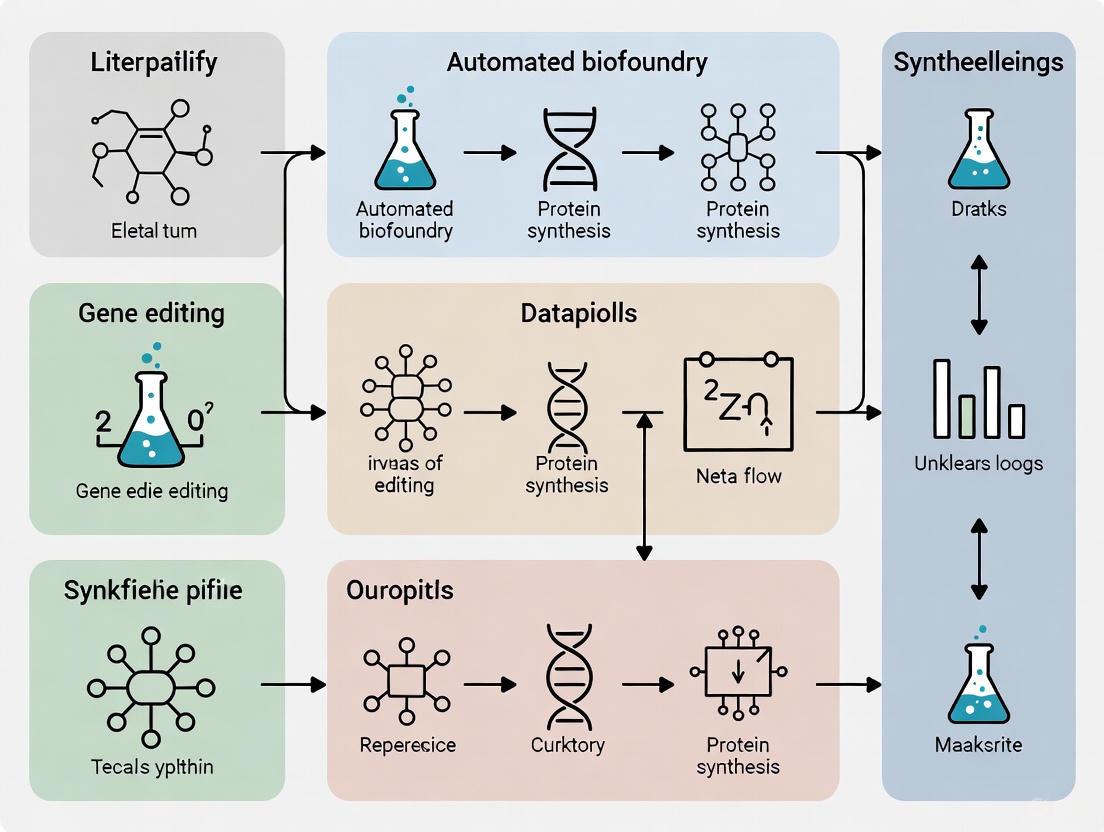
This article explores the transformative role of automated biofoundries in biomedical engineering, providing a comprehensive guide for researchers and drug development professionals.
Automated Biofoundry Workflows: Accelerating Biomedical Engineering from Discovery to Biomanufacturing
Abstract
This article explores the transformative role of automated biofoundries in biomedical engineering, providing a comprehensive guide for researchers and drug development professionals. It covers the foundational principles of the Design-Build-Test-Learn (DBTL) cycle and the emerging Global Biofoundry Alliance standardizing the field. The piece details cutting-edge methodologies, including the integration of protein language models for zero-shot enzyme design and semi-automated workflows for engineering therapeutic proteins. It addresses critical troubleshooting aspects, such as adapting manual protocols for automation and achieving interoperability. Finally, it examines real-world validation through case studies in enzyme engineering and biomanufacturing, demonstrating significant reductions in development timelines and enhanced production of biomedical targets, thereby charting a course toward more predictive and autonomous biomedical discovery.
The Biofoundry Framework: Core Principles and the DBTL Cycle Powering Modern Biomedicine
Automated biofoundries represent a paradigm shift in biological engineering, transforming traditional artisanal research processes into streamlined, industrialized workflows. These integrated facilities leverage robotic automation, computational analytics, and high-throughput instrumentation to accelerate synthetic biology research and applications through iterative Design-Build-Test-Learn (DBTL) cycles [1]. The global biofoundry ecosystem has expanded significantly since the establishment of the Global Biofoundry Alliance (GBA) in 2019, which now includes over 30 academic and research institutions worldwide [1] [2]. This growth reflects the increasing recognition of biofoundries as essential infrastructure for advancing biomedical engineering, sustainable biomanufacturing, and therapeutic development.
The transformative potential of biofoundries lies in their ability to address the fundamental challenges of biological complexity and experimental reproducibility. Where traditional biological research might require years of development for a single product – exemplified by the 150 person-years needed to develop artemisinin precursor production – biofoundries can compress these timelines dramatically through parallelization and automation [3]. By integrating advanced computational design with robotic implementation and analysis, biofoundries enable systematic exploration of biological design spaces that would be intractable through manual approaches.
Core Architectural Framework
The DBTL Engineering Cycle
The operational foundation of every biofoundry is the Design-Build-Test-Learn cycle, an iterative engineering framework that transforms biological designs into optimized systems [1] [4]. This closed-loop process enables continuous refinement of biological constructs, pathways, or organisms through successive iterations of computational design, physical construction, experimental validation, and data-driven learning.
Table 1: The Four Phases of the DBTL Cycle in Biofoundries
| Phase | Key Activities | Technologies & Tools | Outputs |
|---|---|---|---|
| Design | Genetic circuit design, Pathway optimization, DNA sequence design | CAD tools, Cello, Retrobiosynthesis algorithms, Protein MPNN, PLMs | Digital DNA sequences, Genetic constructs, Oligo libraries |
| Build | DNA synthesis, DNA assembly, Strain engineering, Genome editing | Liquid handlers, PCR systems, Colony pickers, Automated transformation | Physical DNA constructs, Engineered strains, Variant libraries |
| Test | High-throughput screening, Functional characterization, Analytics | Plate readers, Flow cytometers, Mass spectrometers, Fragment analyzers | Quantitative data, Production yields, Functional measurements |
| Learn | Data analysis, Pattern recognition, Model training, Prediction | Machine learning, Statistical analysis, Bayesian optimization, ART tool | Refined designs, Predictive models, New hypotheses |
The DBTL cycle's power emerges from its iterative nature – each cycle generates data that informs subsequent designs, creating a continuous improvement loop. Recent advances have enabled fully automated DBTL cycles with minimal human intervention, dramatically accelerating the engineering timeline [1]. The integration of artificial intelligence and machine learning at each phase has further enhanced the precision of predictions and reduced the number of cycles needed to achieve desired outcomes [5] [3].
Diagram 1: DBTL Cycle in Biofoundries
To address challenges in standardization and interoperability, a four-level abstraction hierarchy has been developed to organize biofoundry activities into modular, interoperable components [4]. This framework enables more flexible and automated experimental workflows while improving communication between researchers and systems.
Level 0: Project - Represents the overall research objectives and requirements from external users, such as developing a novel microbial strain for therapeutic protein production or optimizing a biosynthetic pathway.
Level 1: Service/Capability - Defines the specific functions that the biofoundry provides to achieve project goals. These services are categorized into tiers based on their complexity and scope within the DBTL cycle:
- Tier 1: Equipment access (e.g., liquid handler training)
- Tier 2: Single DBTL stage service (e.g., protein sequence design)
- Tier 3: Multiple DBTL stage integration (e.g., protein library construction and verification)
- Tier 4: Full DBTL cycle support (e.g., complete strain engineering for bioproduction) [4]
Level 2: Workflow - Comprises the sequence of tasks needed to deliver a specific service. Each workflow is assigned to a single stage of the DBTL cycle to ensure modularity. Examples include "DNA Oligomer Assembly" (Build stage) or "High-Throughput Screening" (Test stage). The standardization of 58 distinct biofoundry workflows enables reconfiguration and reuse across different projects [4].
Level 3: Unit Operations - Represents the fundamental hardware or software elements that perform individual experimental or computational tasks. These include 42 hardware unit operations (e.g., "Liquid Transfer" using liquid handling robots) and 37 software unit operations (e.g., "Protein Structure Generation" using RFdiffusion) [4].
Diagram 2: Biofoundry Abstraction Hierarchy
Application Notes: Success Stories and Implementation Cases
DARPA's Biofoundry Pressure Test
One of the most compelling demonstrations of biofoundry capabilities was a timed pressure test administered by the U.S. Defense Advanced Research Projects Agency (DARPA), which challenged a biofoundry to research, design, and develop microbial strains for producing 10 target molecules within 90 days [1]. The challenge was particularly demanding as the biofoundry had no prior knowledge of the target molecules or the starting date.
The target molecules represented diverse chemical classes and applications:
- 1-Hexadecanol: A simple chemical used as fastener lubricant
- Tetrahydrofuran: An industrial solvent with no known biological synthesis pathway
- Carvone: A monoterpene with applications as mosquito repellent and pesticide
- Epicolactone: A multicyclic tropolone with antimicrobial activity
- Barbamide: A potent molluscicide for antifouling applications
- Vincristine, Rebeccamycin, Enediyene C-1027: Anticancer agents
- Pyrrolnitrin: An antifungal agent
- Pacidamycin D: An antibacterial agent against pseudomonads
Despite the complexity and novelty of these targets, the biofoundry successfully constructed 1.2 Mb DNA, built 215 strains spanning five microbial species, established two cell-free systems, and performed 690 custom assays within the stipulated timeframe [1]. The team succeeded in producing the target molecule or a closely related analog for six of the ten targets and made significant progress on the others. This achievement highlighted the versatility and robustness of biofoundry approaches when addressing diverse biological engineering challenges.
AI-Driven Protein Engineering Platform
Recent advances have integrated protein language models (PLMs) with automated biofoundry operations to create a closed-loop system for protein evolution. The Protein Language Model-enabled Automatic Evolution (PLMeAE) platform demonstrates how machine learning can accelerate the DBTL cycle for enzyme optimization [6].
In a case study optimizing Methanocaldococcus jannaschii p-cyanophenylalanine tRNA synthetase (pCNF-RS), the PLMeAE platform implemented two complementary modules:
- Module I: For proteins without previously identified mutation sites, using PLMs to predict high-fitness single mutants through zero-shot learning
- Module II: For proteins with known mutation sites, employing PLMs to sample informative multi-mutant variants for experimental characterization
Through four rounds of automated DBTL cycles completed in just 10 days, the platform identified enzyme variants with activity improved by up to 2.4-fold compared to the wild type [6]. This performance surpassed traditional directed evolution approaches, demonstrating how the integration of foundational AI models with biofoundry automation can dramatically accelerate protein engineering timelines.
Isoprene Synthase Engineering for Gas Fermentation
Another successful implementation demonstrated the optimization of isoprene synthase (IspS) for methane-to-isoprene conversion using semi-automated biofoundry workflows [7]. The project achieved a 4.5-fold improvement in catalytic efficiency along with enhanced thermostability through sequence coevolution-guided engineering.
The engineered enzyme showed improved functionality in Methylococcus capsulatus Bath, validating its application in gas fermentation systems. This advancement reached Technology Readiness Level (TRL) 4, demonstrating proof-of-concept in a relevant environment [7]. The project highlights how biofoundries can bridge fundamental enzyme engineering with industrial bioprocess development, creating a pipeline from initial design to scalable production.
Table 2: Performance Metrics from Biofoundry Implementation Cases
| Project | Engineering Target | Performance Improvement | Timeframe | Key Technologies |
|---|---|---|---|---|
| DARPA Challenge | 10 diverse small molecules | 6/10 targets produced | 90 days | High-throughput DNA construction, Multi-species engineering, Custom assays |
| PLMeAE Platform | tRNA synthetase enzyme | 2.4-fold activity increase | 10 days (4 cycles) | Protein language models, Automated variant construction, ML-based fitness prediction |
| Isoprene Synthase | Catalytic efficiency & thermostability | 4.5-fold improvement | Not specified | Sequence coevolution analysis, Semi-automated workflows, Gas fermentation validation |
Experimental Protocols
Protocol: Automated DBTL for Cell-Free Protein Synthesis Optimization
This protocol describes a fully automated DBTL pipeline for optimizing cell-free protein synthesis (CFPS) systems, adapted from recent research that achieved 2- to 9-fold yield improvements for antimicrobial colicins in just four cycles [5].
Design Phase
- Objective: Generate experimental designs for optimizing CFPS component compositions
- Materials: ChatGPT-4 or similar LLM for code generation, Active Learning (AL) framework with Cluster Margin sampling strategy
- Procedure:
- Use natural language prompts to instruct ChatGPT-4 to generate Python scripts for experimental design and microplate layout generation
- Implement Active Learning with Cluster Margin approach to select experimental conditions that balance uncertainty and diversity
- Generate design of experiments (DoE) covering component variations in cell-free systems (extract concentration, energy sources, nucleotide ratios)
- Format output for compatibility with liquid handling systems
Note: The described approach successfully used ChatGPT-4 generated code without manual revisions, dramatically reducing coding time [5]
Build Phase
- Objective: Automatically prepare CFPS reactions according to designed experiments
- Materials: Opentrons or similar liquid handling system, 96-well microplates, CFPS components (cell extract, energy sources, amino acids, nucleotides, DNA template)
- Procedure:
- Program liquid handler using generated protocols from Design phase
- Set up temperature-controlled areas for reagent storage (4°C) and reaction incubation (30-37°C)
- Perform automated liquid transfers to assemble CFPS reactions in 96-well format
- Include appropriate controls (negative controls without DNA template, positive controls with known templates)
- Seal plates and transfer to incubation system
Test Phase
- Objective: Quantify protein synthesis yields and functional activity
- Materials: Plate reader with fluorescence/absorbance capabilities, activity assay reagents, standard curves for quantification
- Procedure:
- Measure protein yield using fluorescence (GFP-fusion) or absorbance methods
- Perform functional assays specific to target protein (e.g., antimicrobial activity assays for colicins)
- Normalize measurements using standard curves
- Export data in standardized format for analysis
Learn Phase
- Objective: Analyze data and generate improved designs for next DBTL cycle
- Materials: Machine learning platform (Python with scikit-learn), previously generated data
- Procedure:
- Train machine learning models to correlate CFPS composition with protein yield
- Apply Active Learning strategy to identify most informative next experiments
- Generate new experimental designs based on model predictions
- Iterate through additional DBTL cycles until performance targets are met
Protocol: Automated Protein Engineering Using PLMeAE Platform
This protocol outlines the implementation of the Protein Language Model-enabled Automatic Evolution platform for directed protein evolution [6].
Initial Variant Design (Module I - No Prior Mutation Sites)
- Objective: Identify promising single-point mutations for proteins without known mutation sites
- Materials: ESM-2 or similar protein language model, target protein sequence
- Procedure:
- Input wild-type protein sequence into PLM
- Systematically mask each amino acid position and calculate likelihood scores for all possible substitutions
- Rank variants by predicted fitness (likelihood score)
- Select top 96 variants for experimental characterization
- Output DNA sequences for synthesized variants
Multi-Site Variant Design (Module II - Known Mutation Sites)
- Objective: Design multi-mutant variants when target sites are identified
- Materials: Pre-trained PLM, identified mutation sites from previous cycles or structural analysis
- Procedure:
- Encode protein sequence using PLM to create sequence representations
- For given mutation sites, generate combinatorial variants
- Use PLM to predict fitness of multi-mutant variants
- Select diverse set of variants covering predicted fitness landscape
- Output sequences for automated DNA synthesis
Build Phase: Automated Variant Construction
- Objective: High-throughput construction of designed protein variants
- Materials: Automated biofoundry with liquid handlers, thermocyclers, DNA assembly reagents, expression vectors
- Procedure:
- Automate DNA assembly using standardized protocols (Golden Gate, Gibson Assembly)
- Transform constructs into expression host (E. coli or other chassis)
- Pick colonies and culture in 96-deep well plates
- Isopropyl β-d-1-thiogalactopyranoside (IPTG) induction of protein expression
- Harvest cells for functional testing
Test Phase: High-Throughput Functional Characterization
- Objective: Quantify fitness metrics for all variants
- Materials: Plate readers, activity assay reagents, cell lysis systems
- Procedure:
- Lyse cells using automated protocols
- Perform enzyme activity assays in high-throughput format
- Measure protein expression levels (e.g., via fluorescence, Western blot)
- Collect stability data (thermal shift assays)
- Compile dataset linking variants to functional metrics
Learn Phase: Model Retraining and Optimization
- Objective: Improve fitness predictions using experimental data
- Materials: Collected variant fitness data, ML platform (multi-layer perceptron)
- Procedure:
- Encode tested variants using PLM
- Train supervised ML model to predict fitness from sequence representations
- Validate model performance using cross-validation
- Apply Bayesian optimization or similar algorithms to explore sequence space
- Select next round of variants balancing exploration and exploitation
The Scientist's Toolkit: Essential Research Reagents and Materials
Table 3: Key Research Reagent Solutions for Automated Biofoundries
| Category | Specific Examples | Function in Workflow | Implementation Notes |
|---|---|---|---|
| DNA Assembly Systems | j5 DNA assembly design, Golden Gate Assembly, Gibson Assembly | Modular construction of genetic circuits and pathways | j5 outputs compatible with Opentrons via AssemblyTron [1] |
| Liquid Handling Platforms | Opentrons, Tecan Fluent, Labcyte Echo, Agilent Bravo | Automated reagent transfer and reaction assembly | Acoustic liquid handlers enable nanoliter-scale transfers [2] |
| Protein Language Models | ESM-2, Protein MPNN | Zero-shot prediction of functional protein variants | ESM-2 used for variant fitness prediction without experimental data [6] |
| Machine Learning Tools | Automated Recommendation Tool (ART), scikit-learn, Active Learning | Data analysis and predictive modeling for DBTL cycles | ART provides Bayesian optimization for strain engineering [3] |
| Cell-Free Systems | E. coli extract, HeLa extract, PURExpress | Rapid prototyping of protein production without living cells | CFPS enables high-throughput protein production optimization [5] |
| High-Throughput Screening | Plate readers, flow cytometers, fragment analyzers | Functional characterization of libraries | Multiplexed assays enable parallel testing of thousands of variants [8] |
| Automated Colony Processing | QPix systems, Singer Instruments PIXL | Picking, arraying, and replicating microbial colonies | Enables processing of thousands of colonies per hour [2] |
Automated biofoundries represent a transformative infrastructure for biological engineering, integrating computational design, robotic automation, and artificial intelligence to accelerate the design and optimization of biological systems. Through the structured implementation of Design-Build-Test-Learn cycles and standardized abstraction hierarchies, these facilities enable unprecedented throughput and reproducibility in synthetic biology research.
The continued advancement of biofoundries depends on several key factors: the development of interoperable standards and workflows, the integration of more sophisticated AI and machine learning capabilities, and the expansion of global collaboration through initiatives like the Global Biofoundry Alliance. As these facilities become more accessible and their methodologies more refined, they hold tremendous potential to accelerate breakthroughs in therapeutic development, sustainable biomanufacturing, and fundamental biological research.
The protocols and applications detailed in this article provide a roadmap for researchers seeking to leverage biofoundry capabilities for their own biomedical engineering projects. By adopting these automated, high-throughput approaches, the scientific community can overcome traditional limitations in biological design and usher in a new era of predictable, scalable biological engineering.
The Design-Build-Test-Learn (DBTL) cycle represents a foundational framework in modern biomedical engineering and synthetic biology, enabling systematic bioengineering of biological systems. This iterative process facilitates the development of optimized microbial strains for biomedical applications, such as drug discovery and therapeutic compound production. By integrating automation, machine learning, and high-throughput technologies within biofoundries, the DBTL cycle significantly accelerates research and development timelines while improving reproducibility and success rates. This article deconstructs the DBTL framework through practical applications in metabolic engineering, detailing experimental protocols, key reagents, and workflow visualizations to provide researchers with actionable methodologies for implementation in automated biofoundry environments.
The DBTL cycle is a crucial framework in synthetic biology for the development and optimization of biological systems, forming the core operational principle of modern biofoundries [9]. These specialized facilities integrate automation, synthetic biology, and advanced computational tools to accelerate the engineering of biological systems, transforming raw biological materials into finished products through a structured, iterative process [9]. The cycle consists of four interconnected phases: (1) Design, where computational tools are used to plan genetic circuits or metabolic pathways; (2) Build, where biological components are constructed through automated synthesis and assembly; (3) Test, where engineered systems are evaluated via high-throughput screening; and (4) Learn, where data is analyzed to refine subsequent designs [9]. This integrated approach significantly reduces the time and cost associated with biotechnological research, enhancing reproducibility, scalability, and standardization while making complex biological engineering projects more feasible and efficient [9].
In the context of biomedical engineering, DBTL cycles have demonstrated remarkable efficacy in optimizing the production of valuable compounds. For instance, researchers have successfully applied knowledge-driven DBTL cycles to develop an optimized dopamine production strain in Escherichia coli, achieving concentrations of 69.03 ± 1.2 mg/L—a 2.6 to 6.6-fold improvement over previous state-of-the-art production methods [10]. Similarly, semi-automated biofoundry workflows have enabled 4.5-fold improvements in catalytic efficiency for engineered isoprene synthase, demonstrating the framework's potential for enzyme engineering and pathway optimization [7]. The power of the DBTL approach lies in its iterative nature, where each cycle incorporates learning from previous iterations to progressively refine strain performance and pathway efficiency.
Phase 1: Design – Computational Planning and Pathway Design
The Design phase initiates the DBTL cycle, focusing on computational planning and pathway design using bioinformatics tools and mathematical modeling. This stage involves selecting appropriate genetic components, designing DNA constructs, and predicting system behavior before physical implementation. In metabolic engineering projects, the Design phase typically begins with identifying target pathways and selecting suitable enzyme variants, codon optimization, and designing regulatory elements such as promoters and ribosome binding sites (RBS) [10]. For combinatorial pathway optimization, simultaneous optimization of multiple pathway genes is essential, though this often leads to combinatorial explosions of the design space that must be addressed through strategic sampling [11].
Advanced computational approaches are increasingly employed to enhance the Design phase. Mechanistic kinetic models provide a valuable framework for representing metabolic pathways embedded in physiologically relevant cell models [11]. These models describe changes in intracellular metabolite concentrations over time using ordinary differential equations, with each reaction flux described by kinetic mechanisms derived from mass action principles. This approach allows for in silico manipulation of pathway elements, such as modifying enzyme concentrations or catalytic properties, to predict their effects on system performance [11]. Additionally, machine learning tools are being integrated into the Design phase to predict biological system behavior without requiring full mechanistic understanding [12]. The Automated Recommendation Tool (ART), for instance, leverages machine learning and probabilistic modeling to guide synthetic biology design in a systematic fashion, providing a set of recommended strains to be built in the next engineering cycle alongside probabilistic predictions of their production levels [12].
Figure 1: The iterative DBTL cycle for bioengineering. Each phase feeds into the next, creating a continuous improvement loop for strain development and pathway optimization.
Phase 2: Build – Genetic Construction and Automation
The Build phase translates computational designs into physical biological entities through genetic construction and assembly. This stage has been revolutionized by automation and standardized protocols, enabling high-throughput implementation of genetic designs. In biofoundries, the Build phase leverages robotic liquid-handling systems, automated DNA assembly, and molecular cloning techniques to construct plasmid libraries and engineer microbial strains with minimal human intervention [13]. A key aspect of this phase is the implementation of designed genetic modifications, such as RBS engineering to fine-tune relative gene expression in synthetic pathways [10].
Advanced biofoundries employ distributed workflow automation using directed acyclic graphs (DAGs) and orchestrators to manage complex construction processes [13]. This approach represents workflows with directed graphs and uses orchestrators for their execution, enabling highly flexible and standardized automation. The build process typically involves several key steps: (1) DNA synthesis or amplification of genetic parts, (2) assembly of genetic constructs using standardized methods (e.g., Golden Gate assembly, Gibson assembly), (3) transformation into microbial chassis, and (4) verification of constructed strains through colony PCR and sequencing [10]. For metabolic engineering applications, this often includes constructing plasmid libraries with varying expression levels for pathway enzymes. For example, in dopamine production strain development, researchers utilized the pJNTN plasmid system for crude cell lysate system testing and plasmid library construction, enabling high-throughput RBS engineering to optimize enzyme expression levels [10].
Phase 3: Test – High-Throughput Screening and Analytics
The Test phase involves comprehensive characterization and performance evaluation of constructed biological systems through high-throughput screening and analytical techniques. This critical stage provides the experimental data necessary to assess design efficacy and identify bottlenecks. In metabolic engineering applications, testing typically involves cultivation experiments, product quantification, and multi-omics analyses to evaluate strain performance and pathway functionality [10]. Advanced biofoundries automate this phase using integrated robotic systems that can conduct thousands of experiments simultaneously, drastically increasing data generation speed while enhancing reproducibility [9].
For dopamine production optimization, researchers employed a structured testing protocol including: (1) cultivation in minimal medium with appropriate carbon sources and inducers, (2) sampling at regular intervals to monitor biomass growth and metabolite concentrations, (3) HPLC analysis for dopamine quantification, and (4) calculation of production titers and yields [10]. The testing phase also often incorporates cell-free protein synthesis systems to bypass whole-cell constraints and rapidly assess enzyme expression levels and pathway functionality before full cellular implementation [10]. This approach allows for faster iteration and reduces the resource intensity of testing. The data generated during this phase typically includes targeted measurements of the desired product, biomass growth parameters, and potentially broader omics data (proteomics, metabolomics) to provide insights into system-wide responses to genetic modifications [12].
Detailed Protocol: Dopamine Quantification in Engineered E. coli
Purpose: To quantify dopamine production in engineered E. coli strains [10]
Materials:
- Engineered E. coli strains harboring dopamine pathway
- Minimal medium: 20 g/L glucose, 10% 2xTY medium, 2.0 g/L NaH₂PO₄·2H₂O, 5.2 g/L K₂HPO₄, 4.56 g/L (NH₄)₂SO₄, 15 g/L MOPS, 50 µM vitamin B₆, 5 mM phenylalanine, 0.2 mM FeCl₂, 0.4% (v/v) trace element stock solution [10]
- Antibiotics: ampicillin (100 µg/mL), kanamycin (50 µg/mL)
- Inducer: IPTG (1 mM)
- Phosphate buffer (50 mM, pH 7.0)
- HPLC system with electrochemical or UV detection
Procedure:
- Inoculate engineered E. coli strains in minimal medium with appropriate antibiotics and incubate at 37°C with shaking at 220 rpm.
- At OD₆₀₀ ≈ 0.6, induce dopamine pathway expression with 1 mM IPTG.
- Continue incubation for 24-48 hours, sampling at regular intervals (e.g., 0, 6, 12, 24, 48 hours).
- Centrifuge 1 mL culture samples at 13,000 × g for 5 minutes to separate biomass and supernatant.
- Analyze supernatant using HPLC with C18 column and mobile phase consisting of 50 mM phosphate buffer (pH 3.0) with 5-10% methanol.
- Detect dopamine at 280 nm or using electrochemical detection.
- Quantify dopamine concentration by comparison with standard curve (0-100 mg/L).
- Normalize production to biomass (OD₆₀₀) for yield calculations.
Notes: For intracellular dopamine quantification, resuspend cell pellets in 500 µL phosphate buffer and disrupt cells by sonication before centrifugation and HPLC analysis.
Phase 4: Learn – Data Analysis and Machine Learning
The Learn phase represents the knowledge extraction and hypothesis generation component of the DBTL cycle, where experimental data is analyzed to gain insights and inform subsequent design iterations. This critical phase transforms raw experimental results into actionable knowledge, enabling continuous improvement of biological designs. Traditional approaches to this phase have included statistical analysis and mechanistic modeling, but increasingly, machine learning algorithms are being employed to identify complex patterns and relationships within multidimensional data sets [11] [12]. The learning process typically involves correlating genetic designs (e.g., promoter combinations, RBS sequences) or molecular profiling data (e.g., proteomics, metabolomics) with performance metrics (e.g., product titer, yield) to build predictive models [12].
Research has demonstrated that gradient boosting and random forest models outperform other machine learning methods in the low-data regime typical of early DBTL cycles, showing robustness to training set biases and experimental noise [11]. These algorithms can effectively handle the complex, nonlinear relationships often encountered in biological systems. The Automated Recommendation Tool (ART) exemplifies the application of machine learning in the Learn phase, combining scikit-learn libraries with a Bayesian ensemble approach to provide predictions and uncertainty quantification specifically tailored to synthetic biology applications [12]. ART generates probabilistic predictions of strain performance and recommends specific designs for the next DBTL cycle based on optimization objectives. When applying these computational tools, if the number of strains to be built is limited, evidence suggests that starting with a larger initial DBTL cycle is more favorable than distributing the same number of strains equally across multiple cycles [11].
Figure 2: Engineered dopamine biosynthesis pathway in E. coli. Heterologous enzymes HpaBC and Ddc convert endogenous L-tyrosine to dopamine via L-DOPA intermediate.
Integrated DBTL Case Study: Optimizing Dopamine Production
The application of a knowledge-driven DBTL cycle to optimize dopamine production in E. coli provides an illustrative case study of the framework's power in metabolic engineering [10]. This project demonstrated how iterative DBTL cycles, incorporating upstream in vitro investigation, can significantly accelerate strain development while providing mechanistic insights. The approach achieved a 2.6 to 6.6-fold improvement over state-of-the-art dopamine production methods, reaching titers of 69.03 ± 1.2 mg/L (34.34 ± 0.59 mg/g biomass) [10].
The project began with in vitro testing using crude cell lysate systems to assess enzyme expression levels and pathway functionality before moving to full cellular implementation. This preliminary investigation informed the initial in vivo strain design, focusing on RBS engineering to optimize the expression of two key enzymes: 4-hydroxyphenylacetate 3-monooxygenase (HpaBC) and L-DOPA decarboxylase (Ddc) [10]. The Build phase involved constructing plasmid libraries with varying RBS sequences controlling the expression of these enzymes, followed by transformation into an engineered E. coli host with enhanced L-tyrosine production. The Test phase employed high-throughput cultivation and HPLC analysis to quantify dopamine production across different RBS combinations. In the Learn phase, researchers analyzed the correlation between RBS sequence features (particularly GC content in the Shine-Dalgarno sequence) and enzyme performance, determining that fine-tuning the translational initiation rates through RBS optimization was critical for maximizing pathway flux [10]. This learning informed subsequent DBTL cycles, progressively increasing dopamine production through iterative optimization.
Table 1: Key Research Reagent Solutions for DBTL-based Metabolic Engineering
| Reagent/Category | Specific Examples | Function in DBTL Workflow |
|---|---|---|
| Plasmid Systems | pET system, pJNTN system [10] | Storage and expression of heterologous genes in microbial hosts |
| Enzymes | HpaBC (4-hydroxyphenylacetate 3-monooxygenase), Ddc (L-DOPA decarboxylase) [10] | Catalyze specific reactions in engineered metabolic pathways |
| E. coli Strains | DH5α (cloning), FUS4.T2 (production) [10] | Serve as microbial chassis for genetic construction and production |
| Media Components | Minimal medium with MOPS buffer, trace elements, vitamin B₆ [10] | Support controlled microbial growth and product formation |
| Inducers | Isopropyl β-D-1-thiogalactopyranoside (IPTG) [10] | Regulate expression of pathway genes in inducible systems |
| Analytical Tools | HPLC with electrochemical or UV detection [10] | Quantify target compound production and pathway intermediates |
Table 2: Quantitative Performance Metrics in DBTL Cycle Implementation
| Performance Metric | Reported Value/Outcome | Application Context |
|---|---|---|
| Dopamine Production | 69.03 ± 1.2 mg/L (34.34 ± 0.59 mg/g biomass) [10] | Knowledge-driven DBTL cycle optimization in E. coli |
| Improvement Factor | 2.6 to 6.6-fold increase over previous methods [10] | Dopamine production strain development |
| Catalytic Efficiency | 4.5-fold improvement [7] | Isoprene synthase engineering in semi-automated biofoundry |
| Tryptophan Production | 106% increase from base strain [12] | ART-guided DBTL cycle implementation |
| Machine Learning Advantage | Gradient boosting and random forest outperform in low-data regime [11] | Simulated DBTL cycles for combinatorial pathway optimization |
Biofoundry Automation and Workflow Implementation
The implementation of DBTL cycles in automated biofoundry environments represents a transformative advancement in engineering biology, addressing limitations of manual approaches through standardized, high-throughput workflows [13]. Biofoundries specialize in integrating software-based design with automated construction and testing pipelines, organized around the DBTL paradigm to enable rapid prototyping of genetic devices [13]. A significant challenge in this context is workflow automation, which requires translating high-level experimental procedures into precise, machine-readable instructions that can be executed by robotic systems with minimal human intervention [13].
Advanced biofoundries address this challenge through three-tier hierarchical models for workflow implementation: (1) human-readable workflow descriptions, (2) procedures for data and machine interaction using directed acyclic graphs (DAGs) and orchestrators, and (3) automated implementation using biofoundry resources [13]. This approach employs DAGs for workflow representation and orchestrators like Airflow for execution, enabling complex, multi-step experiments to be conducted with high reproducibility and scalability [13]. The integration of physical and data standards is crucial for this automation, including ANSI standards for microplates and data standards like SBOL (Synthetic Biology Open Language) for genetic designs [13]. The resulting automated workflows can execute thousands of experiments simultaneously, generating standardized, high-quality data that feed directly into the Learn phase of the DBTL cycle. This infrastructure enables the exploration of vast biological design spaces that would be intractable using manual methods, dramatically accelerating the development timeline for engineered biological systems.
Table 3: Implementation Tools for Automated DBTL Workflows
| Tool Category | Specific Technologies | Role in DBTL Automation |
|---|---|---|
| Workflow Representation | Directed Acyclic Graphs (DAGs) [13] | Model experimental workflows as connected computational and laboratory tasks |
| Workflow Orchestration | Airflow [13] | Execute workflows, assign tasks to resources, and monitor progress |
| Data Management | Vendor-neutral archives, Neo4j graph database [13] | Store and link operational data, experimental results, and design information |
| Platform-Agnostic Programming | LabOP, PyLabRobot [13] | Enable protocol development transferable across different automated platforms |
| Genetic Design Standards | Synthetic Biology Open Language (SBOL) [13] | Standardize representation of genetic designs for reproducibility and sharing |
| Machine Learning Framework | Automated Recommendation Tool (ART) [12] | Bridge Learn and Design phases through predictive modeling and strain recommendation |
The field of synthetic biology stands at a pivotal juncture, where its potential to revolutionize biomedical engineering, drug development, and biomanufacturing is increasingly constrained by challenges of scalability, reproducibility, and interoperability across research facilities. Biofoundries—integrated facilities that combine automation, robotic systems, and computational analytics—aim to accelerate biological engineering through iterative Design-Build-Test-Learn (DBTL) cycles [1]. However, the lack of standardized methodologies and terminology has historically limited their efficiency and collaborative potential.
In response, the Global Biofoundry Alliance (GBA) was established as an international consortium to coordinate efforts and address common challenges [14]. Concurrently, recent research has proposed a conceptual framework of abstraction hierarchies to standardize biofoundry operations [15]. This application note examines how these parallel developments are fostering global standardization, thereby enhancing the reliability and throughput of automated workflows for biomedical research and therapeutic development.
The Global Biofoundry Alliance: A Framework for International Collaboration
Origin and Objectives
The GBA was formally launched in May 2019 in Kobe, Japan, following a preliminary meeting of 15 non-commercial biofoundries from four continents in London in June 2018 [14] [16]. This voluntary alliance operates under a non-binding Memorandum of Understanding, relying on goodwill and cooperation among its signatories, which include research institutions and funding agencies that operate non-commercial biofoundries [14].
The GBA's primary objectives are to:
- Develop, promote, and support non-commercial biofoundries worldwide.
- Intensify collaboration and communication among member facilities.
- Collectively develop responses to technological and operational challenges.
- Enhance the visibility and sustainability of biofoundries.
- Explore grand challenge projects with global societal impact [14].
Growth and Membership
The alliance has experienced significant growth since its inception. From the initial 15 founding members, the GBA has expanded to include over 40 member biofoundries globally as of 2025 [16]. The table below summarizes a selection of notable member biofoundries and their locations, illustrating the global distribution of this infrastructure.
Table 1: Selected Member Biofoundries of the Global Biofoundry Alliance
| Biofoundry Name | Location |
|---|---|
| London DNA Foundry | United Kingdom |
| iBioFoundry | USA (University of Illinois Urbana-Champaign) |
| DOE Agile BioFoundry | USA |
| VTT Biofoundry | Finland |
| Kobe Biofoundry | Japan |
| K-Biofoundry | South Korea |
| Australian Genome Foundry | Australia |
| Paris Biofoundry | France |
| A*STAR SPARROW Biofoundry | Singapore |
| Shenzhen Biofoundry | China |
This network enables cost-effective access to specialized equipment and expertise for product prototyping and commercial process validation, which are crucial for securing investment in biotechnological innovations [14].
The Four-Level Hierarchy
A recent landmark publication proposes an abstraction hierarchy that organizes biofoundry activities into four distinct but interoperable levels [15]. This framework is designed to streamline the DBTL cycle by creating modular, flexible, and automated experimental workflows.
Table 2: The Four-Level Abstraction Hierarchy for Biofoundry Operations
| Level | Name | Description | Example |
|---|---|---|---|
| Level 0 | Project | Series of tasks to fulfill requirements of external users | Engineering a microbial strain for therapeutic protein production |
| Level 1 | Service/Capability | Functions that the biofoundry provides to clients | AI-driven protein engineering or modular long-DNA assembly |
| Level 2 | Workflow | DBTL-based sequence of tasks needed to deliver a service | DNA Oligomer Assembly or Liquid Media Cell Culture |
| Level 3 | Unit Operation | Individual experimental or computational tasks | Liquid Transfer, Thermocycling, or Protein Structure Generation |
This hierarchical structure allows researchers and engineers to work at appropriate levels of complexity without needing to understand every detail of lower-level operations [15].
Workflow and Unit Operation Classification
The abstraction framework further catalogs specific processes within biofoundries. Researchers have identified 58 distinct biofoundry workflows, each assigned to a specific stage of the DBTL cycle [15]. These are supported by 42 hardware unit operations (e.g., Liquid Transfer, Nucleic Acid Extraction) and 37 software unit operations (e.g., Protein Structure Generation) [15].
The hierarchical relationship between these levels creates a standardized vocabulary and structure for describing complex biofoundry operations, as illustrated below.
Integrated Applications in Biomedical Engineering
Case Study: Semi-Automated Enzyme Engineering
The synergy between GBA collaboration and standardized abstraction hierarchies finds practical application in biomedical engineering. Recent research demonstrates scalable enzyme engineering workflows for isoprene synthase (IspS), a rate-limiting enzyme in isoprene biosynthesis with potential industrial and biomedical applications [17].
This study integrated computational mutation design based on sequence coevolution analysis with laboratory automation, conducting three rounds of site-directed mutagenesis and screening. Researchers synthesized approximately 100 genetic mutants per round, with workflows scalable to thousands without extensive optimization [17]. This approach identified IspS variants with a 4.5-fold improvement in catalytic efficiency and enhanced thermostability, subsequently improving methane-to-isoprene bioconversion in Methylococcus capsulatus Bath to achieve a titer of 319.6 mg/L [17].
Experimental Protocol: Sequence Coevolution-Guided Enzyme Engineering
Objective: Engineer enhanced IspS enzymes through iterative DBTL cycles using biofoundry automation and computational design.
Methodology:
Design Phase:
- Perform sequence coevolution analysis to identify potential beneficial mutations.
- Computationally design mutation sets targeting improved catalytic efficiency and stability.
- Format designs for automated DNA synthesis.
Build Phase:
- Utilize liquid-handling robots for high-throughput site-directed mutagenesis.
- Employ automated colony picking systems to isolate mutant constructs.
- Prepare mutant libraries in microtiter plates for screening.
Test Phase:
- Express mutant enzymes in suitable microbial hosts using automated culture systems.
- Implement high-throughput assays to measure isoprene production.
- Screen for thermostability using automated microplate thermoshift assays.
Learn Phase:
- Analyze mutant performance data to identify beneficial mutations.
- Feed results into subsequent DBTL cycles for further optimization.
- Use machine learning approaches to refine predictive models for mutation effects.
This workflow exemplifies the abstraction hierarchy, where the project (Level 0) is enzyme engineering, the service (Level 1) is protein optimization, the workflows (Level 2) include mutagenesis and screening, and the unit operations (Level 3) include specific automated steps like liquid handling and plate reading [15] [17].
Essential Research Reagents and Materials
Successful implementation of standardized biofoundry workflows requires specific reagents and instrumentation. The following table details key components essential for executing automated enzyme engineering protocols.
Table 3: Research Reagent Solutions for Biofoundry Workflows
| Reagent/Material | Function in Workflow |
|---|---|
| Liquid-handling robots | Automated transfer of liquids in microplate formats |
| Automated colony pickers | High-throughput selection of transformed clones |
| Microtiter plates (96/384/1536-well) | Standardized format for parallel experiments |
| Thermal cyclers | Automated DNA amplification and enzymatic reactions |
| DNA assembly reagents | Modular construction of genetic circuits |
| Cell lysis reagents | Preparation of biological samples for analysis |
| Enzyme substrates | Activity assays for engineered enzymes |
| Automated bioreactors | Controlled microbial cultivation for characterization |
Implications for Biomedical Research and Drug Development
The standardization efforts driven by the GBA and abstraction hierarchies have profound implications for biomedical engineering and pharmaceutical development. By establishing shared terminologies and operational standards, these initiatives directly address reproducibility challenges that have historically plagued biological research [15].
For drug development professionals, these advances translate to accelerated therapeutic discovery pipelines. The ability to rapidly engineer enzymatic pathways or microbial hosts for antibiotic production (as demonstrated in the DARPA pressure test that successfully produced therapeutic molecules like barbamide and pyrrolnitrin) showcases the potential of standardized biofoundry operations [1]. Furthermore, the integration of artificial intelligence and machine learning with standardized data outputs from biofoundry workflows enhances predictive modeling and reduces the number of DBTL cycles required to achieve desired biological functions [15] [1].
Visualizing the Integrated System
The relationship between the GBA, abstraction hierarchies, and final applications in biomedical engineering can be visualized as an integrated system where standardization enables collaboration and innovation.
The synergistic relationship between the Global Biofoundry Alliance and standardized abstraction hierarchies represents a transformative development in synthetic biology and biomedical engineering. The GBA provides the organizational framework for international collaboration, while abstraction hierarchies offer the conceptual infrastructure for standardizing complex operations. Together, they enable more reproducible, scalable, and efficient biofoundry workflows that accelerate the engineering of biological systems for therapeutic applications, biomanufacturing, and fundamental research. As these standards continue to evolve and be adopted, they promise to significantly shorten development timelines and enhance the reliability of biological engineering outcomes for drug development professionals and biomedical researchers.
The transition from artisanal, one-off experiments to automated, scalable research pipelines represents a paradigm shift in biomedical engineering. This evolution centers on achieving research reproducibility—the ability to independently verify scientific findings using the same materials and methods. Within automated biofoundry workflows, reproducibility extends beyond merely repeating an experiment to encompass the verification of results through biological feature values and computational provenance [18]. The "reproducibility crisis," in which a significant majority of researchers have failed to reproduce others' experiments (and even their own), underscores the critical need for this shift [18]. Modern approaches now differentiate between repeatability (same team, same environment), reproducibility (different team, different environment, same setup), and replicability (different team, different environment, different setup) [18].
Biofoundries operationalize this paradigm through integrated systems that automate the design-build-test-learn cycle, transforming biomedical research from a craft into an engineering discipline. The scalability of these systems enables researchers to systematically address complex biological questions that were previously intractable through manual approaches, while simultaneously generating the structured data necessary for true reproducibility assessment [18] [19].
Reproducibility Assessment Framework
The Reproducibility Scale
Moving beyond binary assessments of reproducibility requires a graduated framework that evaluates the degree of reproducibility achieved. This fine-grained approach enables researchers to determine not just whether results match, but how closely they align across key biological interpretations [18].
Table 1: Reproducibility Scale for Workflow Execution Results
| Reproducibility Level | Description | Validation Approach |
|---|---|---|
| Identical Results | Output files are exactly the same at the byte level | Checksum comparison of output files |
| Equivalent Biological Interpretation | Biological feature values match within acceptable thresholds | Comparison of extracted biological features (e.g., mapping rates, variant frequencies) |
| Consistent Trends | Overall conclusions align despite numerical differences | Qualitative comparison of results, trends, and statistical significance |
| Divergent Results | Fundamental interpretations differ | Identification of discrepancies in key findings and conclusions |
Quantitative Validation Methods
Automated validation of reproducibility employs biological feature values—quantifiable metrics representing the biological interpretation of results. For example, in RNA sequencing workflows, the mapping rate (percentage of reads mapped to a reference genome) serves as a key biological feature value for validation [18]. The validation process involves two critical steps:
- Biological Feature Extraction: Automated tools extract relevant numerical features from output files and logs (e.g., using SAMtools to extract mapping statistics from SAM files) [18].
- Threshold-Based Comparison: Extracted features are compared against expected values using predefined tolerance thresholds [18].
Table 2: Common Biological Feature Values for Reproducibility Assessment
| Research Domain | Biological Feature Values | Extraction Method | Typical Threshold |
|---|---|---|---|
| Genomics/RNA-seq | Mapping rate, read count, variant frequency | SAMtools, custom scripts | 1-5% variation |
| Medical Imaging | Signal-to-noise ratio, contrast measurements | Image analysis algorithms | 3-5% variation |
| Clinical Studies | Effect sizes, hazard ratios, confidence intervals | Statistical analysis | Determined by power |
| Drug Screening | IC50 values, efficacy metrics | Dose-response curve fitting | 2-fold variation |
Emerging Technologies Enabling Automated Reproducibility
Workflow Management Systems
Specialized workflow languages and execution systems provide the foundation for reproducible research by capturing computational methods in machine-readable formats. Common Workflow Language (CWL), Workflow Description Language (WDL), Nextflow, and Snakemake have formed large user communities and enable execution across different computing environments through virtualization technologies [18]. These systems abstract software and computational requirements, facilitating data analysis re-execution by different teams in different environments—a core requirement for reproducibility [18].
Provenance Capture and Metadata Standards
Workflow provenance—structured archives packaging workflow-related metadata in machine-readable formats—enables the verification of execution results. Frameworks such as Research Object Crate (RO-Crate) and CWLProv generate comprehensive provenance information that packages workflow descriptions, execution parameters, input and output data, tests, and documentation [18]. When distributed through platforms like WorkflowHub, Dockstore, and nf-core, this provenance allows researchers to verify new execution results against original findings [18].
LLM-Based Autonomous Agents for Reproducibility
Large Language Models are emerging as powerful tools for automating reproducibility assessments. Recent exploratory studies demonstrate that LLM-based autonomous agents can partially reproduce published research findings when provided with study abstracts, methods sections, and data dictionary descriptions [20]. In one study focusing on Alzheimer's disease research using National Alzheimer's Coordinating Center (NACC) data, LLM agents successfully reproduced approximately 53.2% of findings across five studies [20]. These agents operated by writing and executing code to dynamically reproduce study findings, though implementation flaws and missing methodological details limited complete reproducibility in some cases [20].
Experimental Protocols for Reproducibility Assessment
Protocol 1: Biological Feature Value Extraction
Purpose: To systematically extract quantitative biological feature values from workflow outputs for reproducibility assessment.
Materials:
- Workflow output files (BAM, VCF, CSV, etc.)
- Extraction scripts (Python/R)
- Data visualization tools (Tableau, matplotlib, ggplot2)
Procedure:
- Identify key biological interpretations from the original study
- Select appropriate feature values that represent these interpretations
- Implement extraction algorithms using standardized tools (e.g., SAMtools for BAM files)
- Validate extraction methods on control datasets
- Apply extraction to both original and reproduced output files
- Record feature values in structured format (JSON/CSV) for comparison
Validation: Compare extracted values against known benchmarks for accuracy.
Protocol 2: Threshold-Based Reproducibility Validation
Purpose: To determine reproducibility success using predefined tolerance thresholds for biological feature values.
Materials:
- Extracted feature values from original and reproduced results
- Statistical analysis software (R, Python, GraphPad Prism)
- Threshold criteria based on biological significance
Procedure:
- Calculate percentage differences or absolute differences for each feature value
- Apply predefined tolerance thresholds (established during workflow design)
- For multiple features, apply statistical tests (e.g., t-tests, correlation analysis)
- Classify reproducibility level based on the proportion of features within thresholds
- Generate reproducibility report with quantitative metrics
Analysis: Determine whether results meet criteria for "Equivalent Biological Interpretation" per the reproducibility scale.
Visualization Framework for Reproducibility Assessment
Reproducibility Validation Workflow
Reproducibility Scale Decision Framework
The Scientist's Toolkit: Essential Research Reagent Solutions
Table 3: Research Reagent Solutions for Reproducible Biofoundry Workflows
| Reagent Solution | Function | Implementation Example |
|---|---|---|
| Workflow Language Specifications | Describe computational methods in portable, executable formats | CWL, WDL, Nextflow scripts |
| Containerization Platforms | Package software dependencies for consistent execution | Docker, Singularity containers |
| Provenance Capture Tools | Generate structured metadata about workflow executions | RO-Crate, CWLProv |
| Biological Feature Extractors | Quantify key biological interpretations from raw outputs | SAMtools, custom Python/R scripts |
| Reproducibility Validation Frameworks | Automate comparison of results against thresholds | Tonkaz, custom validation pipelines |
| Workflow Sharing Platforms | Distribute reproducible workflows and provenance | WorkflowHub, Dockstore, nf-core |
| LLM-Based Validation Agents | Automate reproducibility assessment through AI | GPT-4o agents for code generation and execution [20] |
The transition from artisanal to automated biomedical research represents both a technological and cultural shift toward reproducibility by design. By implementing the frameworks, protocols, and tools outlined in these application notes, researchers can systematically enhance the reproducibility and scalability of their work. The integration of graduated reproducibility assessment, biological feature validation, and emerging technologies like LLM agents creates a foundation for more rigorous, transparent, and efficient biomedical discovery within automated biofoundry environments. As these practices mature, they promise to accelerate the translation of basic research into clinical applications through more reliable and verifiable scientific outcomes.
The global synthetic biology market is experiencing exponential growth, fueled by its convergence with the sustainable bioeconomy. The bioeconomy, an economic system that utilizes renewable biological resources to produce food, materials, and energy, is valued at over €2.4 trillion in the EU alone and provides work for approximately 17.2 million people [21]. Synthetic biology, which involves redesigning organisms by engineering their genetic material, is a key enabling technology for this bioeconomy [22].
Table 1: Synthetic Biology Market Size and Growth Projections
| Source | 2024 Market Size | 2025 Market Size | 2032/2034 Forecast Size | Projected CAGR |
|---|---|---|---|---|
| Fortune Business Insights [22] | USD 14.30 billion | USD 17.09 billion | USD 63.77 billion by 2032 | 20.7% |
| Precedence Research [23] | USD 20.01 billion | USD 24.58 billion | USD 192.95 billion by 2034 | 28.63% |
| Nova One Advisor [24] | USD 16.35 billion | - | USD 80.70 billion by 2034 | 17.31% |
This growth is propelled by several key drivers:
- Technological Advancements: Innovations in DNA sequencing, gene editing (e.g., CRISPR-Cas9), and software for designing biological systems are fundamental market drivers [22]. The integration of AI and machine learning is accelerating the design and optimization of biological systems [22].
- Demand for Sustainable Solutions: There is a significant shift toward sustainable production, with synthetic biology enabling eco-friendly drug production, biodegradable medical solutions, and the replacement of fossil-based materials with renewable alternatives [22] [21] [25].
- Healthcare Applications: The market is dominated by healthcare applications, including the development of novel therapeutics, vaccines, and advanced diagnostics [23] [24]. The rise in genetic disorders increases the demand for genetically engineered medicines [22].
- Strategic and Financial Investment: High levels of investment from both public and private sectors are fueling innovation and commercialization. For instance, the U.S. National Science Foundation awarded $75 million to create five biofoundries in 2024 [24].
Table 2: Regional Market Dynamics
| Region | Market Share (2024) | Key Growth Factors |
|---|---|---|
| North America [22] [23] | 39.6% - 52.09% | Advanced research infrastructure, strong presence of key players (e.g., Illumina, Thermo Fisher), supportive FDA policies, and significant investment in R&D and personalized medicine. |
| Europe [24] | Notable Growth | Adoption of sustainable manufacturing methods, government subsidies, and R&D investments, with strong contributions from the UK and Germany. |
| Asia Pacific [22] [23] | Fastest-Growing Region | Government support for domestic biotech, rising investments, increasing collaborations, and a growing need to address healthcare demands from a large and aging population. |
Application Note: An Automated Biofoundry Workflow for Enzyme Engineering
The following application note details a real-world experiment demonstrating how semi-automated biofoundry workflows can address key market and bioeconomy demands by engineering a critical enzyme for sustainable biomanufacturing.
This note describes a scalable, semi-automated workflow for engineering isoprene synthase (IspS), a rate-limiting enzyme in isoprene biosynthesis [7] [17]. Isoprene is a valuable chemical traditionally derived from petroleum. By integrating computational design with laboratory automation, we achieved a 4.5-fold improvement in the catalytic efficiency of IspS and enhanced its thermostability [17]. The engineered enzyme was successfully introduced into Methylococcus capsulatus Bath, enabling the conversion of methane—a potent greenhouse gas—into isoprene, achieving a titer of 319.6 mg/l in gas fermentation [7] [17]. This approach establishes a robust framework for rapid enzyme optimization, aligning with the synthetic biology market's drive towards sustainable chemical production and the bioeconomy's goal of using renewable and even waste resources.
The synthetic biology market demands higher-throughput and more reliable methods for biological design to accelerate R&D cycles [22]. Biofoundries, which integrate automation, analytics, and informatics, are emerging as transformative platforms to meet this demand. This application note outlines a protocol for sequence coevolution-guided enzyme engineering executed within a semi-automated biofoundry environment. The primary objectives were:
- To develop a scalable workflow for enzyme engineering suitable for biofoundry applications.
- To enhance the catalytic efficiency and thermostability of IspS.
- To validate the performance of the engineered enzyme in a relevant industrial biomanufacturing context—specifically, the conversion of methane to isoprene [7] [17].
This work directly contributes to the sustainable bioeconomy by creating a pathway to produce value-added chemicals from greenhouse gas, reducing dependence on fossil fuels [21] [26].
Experimental Protocol
The following protocol was adapted from the research conducted by Lee et al. [7] [17].
Stage 1: Computational Mutation Design
Procedure:
- Sequence Coevolution Analysis: Perform a multiple sequence alignment of homologous IspS protein sequences from diverse organisms using bioinformatics software (e.g., Clustal Omega, MAFFT).
- Identify Covarying Sites: Use a statistical analysis package (e.g., GREMLIN, EVcouplings) to identify pairs of amino acid residues that have coevolved throughout evolution. These pairs are indicative of functionally or structurally important interactions.
- Design Mutagenesis Libraries: Based on the coevolution analysis, select target residues for mutagenesis. Design oligonucleotide primers for site-directed mutagenesis to create focused mutant libraries. The workflow was scaled to synthesize approximately 100 genetic mutants per round [17].
Stage 2: Automated Build & Transform
Materials:
- Oligonucleotide primers for site-directed mutagenesis.
- DNA polymerase (e.g., Phusion U Hot Start DNA Polymerase).
- Template plasmid containing the wild-type IspS gene.
- E. coli competent cells for transformation.
- Liquid handling robot and thermal cycler.
Procedure:
- Gene Fragments Synthesis: Use the designed primers in a PCR reaction to generate mutant gene fragments. This step can be automated using a liquid handling robot for setting up parallel PCR reactions.
- DNA Assembly: Digest the PCR products and the destination vector with appropriate restriction enzymes, then perform a ligation reaction to assemble the mutant IspS gene into the expression vector.
- Transformation: Transform the assembled plasmids into competent E. coli cells using a high-throughput electroporation system.
- Culture and Plasmid Extraction: Plate transformed cells on selective agar and incubate. Pick individual colonies into deep-well plates containing liquid culture medium. After incubation, use an automated plasmid purification system to extract and normalize the mutant plasmid libraries.
Stage 3: High-Throughput Screening
Materials:
- Deep-well plates containing growth medium.
- Inducer for gene expression (e.g., IPTG).
- Substrate for IspS (dimethylallyl diphosphate, DMADP).
- Microplate reader or HPLC system.
Procedure:
- Expression of Mutant Library: Transfer the cultures to expression plates and induce protein expression with IPTG.
- Cell Lysis: Lyse the cells chemically or enzymatically to release the expressed IspS variants.
- Activity Assay: In a new assay plate, mix the cell lysates with the substrate DMADP. Isoprene production can be detected indirectly via a colorimetric coupled assay or, more precisely, by using a high-throughput GC-MS or HPLC system.
- Data Collection: Measure the initial velocity of the reaction for each variant to determine catalytic efficiency (kcat/Km). Perform a thermostability assay by incubating lysates at elevated temperatures for a set time before measuring residual activity.
Stage 4: Data Analysis and Iteration
Procedure:
- Data Integration: Automatically transfer screening data (activity, stability) to a central database linked to the mutant sequence information.
- Variant Selection: Rank variants based on combined improvements in catalytic efficiency and thermostability.
- Loop Closure: Use the data from the best-performing variants to inform the next round of computational design, creating subsequent-generation libraries that combine beneficial mutations. The described study completed three rounds of this design-build-test-learn cycle [17].
Stage 5: Bioprocess Validation
Procedure:
- Strain Engineering: Clone the top-performing engineered IspS gene into an appropriate expression vector and introduce it into the industrial host Methylococcus capsulatus Bath.
- Gas Fermentation: Evaluate the performance of the engineered strain in a controlled bioreactor system fed with methane as the sole carbon source.
- Product Quantification: Monitor cell growth and periodically sample the fermentation broth and off-gas to quantify isoprene production, confirming the industrial relevance of the engineered enzyme [7] [17].
The Scientist's Toolkit: Research Reagent Solutions
Table 3: Key Reagents and Materials for Automated Enzyme Engineering
| Item | Function/Description | Key Players/Examples |
|---|---|---|
| Oligonucleotide Pools & Synthetic DNA [23] [24] | Cost-effective source for constructing mutant libraries in protein and metabolic engineering; enables high-throughput screening. | Twist Bioscience [27], GenScript [27] |
| CRISPR/Cas9 Systems [22] [28] | Advanced gene-editing tool for precise genome manipulation; revolutionizes the engineering of host organisms. | CRISPR Therapeutics [27], Merck KGaA [27] |
| DNA Synthesis & Sequencing Tools [22] | Fundamental for reading (sequencing) and writing (synthesizing) genetic material, the core of all synthetic biology workflows. | Illumina [22], Thermo Fisher [22] [27] |
| Specialized Enzymes | High-fidelity DNA polymerases for accurate PCR, and restriction enzymes for DNA assembly in the Build phase. | New England Biolabs [24] |
| Biofoundry Automation Software | Enables experimental design, workflow automation, and data integration; critical for managing the design-build-test-learn cycle. | Synthace [27] |
| Cell-Free Systems [25] | Cell-free bioprocessing (e.g., for hyaluronic acid production) bypasses biological bottlenecks of living cells, enabling safer and more scalable production. | Enzymit [25] |
The integration of semi-automated biofoundry workflows represents a paradigm shift in biomedical engineering and industrial biomanufacturing. The demonstrated protocol for IspS engineering highlights a scalable, iterative approach that directly addresses key market needs: accelerating R&D cycles, improving the efficiency of biological systems, and enabling the sustainable production of chemicals from renewable or waste resources like methane [7] [17]. As these platforms become more integrated with AI-guided, closed-loop systems, they will further de-risk the scaling process and solidify synthetic biology's role as a cornerstone of the modern bioeconomy [7]. This synergy between advanced biofoundries and sustainable goals is essential for meeting the demands of the rapidly growing synthetic biology market and for building a more resilient, low-carbon economy [21] [26].
From Code to Cure: Implementing Automated Workflows for Enzyme and Therapeutic Protein Engineering
Application Notes
Biological and Engineering Context
Isoprene synthase (IspS) is a critical rate-limiting enzyme in the metabolic pathway for isoprene biosynthesis. Engineering this enzyme presents a significant challenge for sustainable biomanufacturing, as its catalytic efficiency and stability directly impact the viability of microbial platforms for converting renewable feedstocks into valuable chemicals. The integration of semi-automated biofoundry workflows with sequence coevolution analysis has established a robust framework for accelerating the engineering of such enzymes, moving beyond traditional, labor-intensive methods [17] [7].
This approach is firmly situated within the Design-Build-Test-Learn (DBTL) engineering cycle, a paradigm central to modern synthetic biology and biofoundry operations [13] [1]. Biofoundries are specialized facilities that integrate software-based design with automated construction and testing pipelines to streamline biological engineering. The trend toward automation is driven by the need for higher throughput, greater reliability, and improved replicability in biological research and development [13]. The case of IspS engineering exemplifies how these principles can be applied to a real-world protein engineering problem, demonstrating a scalable path from computational design to improved industrial performance.
The implementation of sequence coevolution-guided mutagenesis and semi-automated screening led to the rapid identification of superior IspS variants. The table below summarizes the key quantitative outcomes from the study.
Table 1: Key Experimental Results from IspS Engineering
| Parameter | Result | Context/Significance |
|---|---|---|
| Catalytic Efficiency | Up to 4.5-fold improvement | Compared to the wild-type IspS enzyme [17] [7]. |
| Thermostability | Simultaneously enhanced | Specific metrics not provided; noted as an important improvement alongside activity [17]. |
| Isoprene Titer | 319.6 mg/l | Achieved in Methylococcus capsulatus Bath using methane as a feedstock [17] [7]. |
| Technology Readiness Level (TRL) | Level 4 | Validated proof-of-concept in a relevant laboratory environment [7]. |
| Throughput Capability | ~100 mutants synthesized and screened per round; scalable to thousands [17]. | Demonstrates the high-throughput potential of the workflow. |
Experimental Protocols
The engineering of IspS was conducted through an integrated semi-automated workflow. The following diagram illustrates the logical flow and interactions between the key stages of this process.
Detailed Methodologies
Protocol 1: Computational Mutation Design via Sequence Coevolution
Objective: To identify residue pairs for mutagenesis that are predicted to be important for IspS function and stability.
Principle: Sequence coevolution analysis detects pairs of amino acid positions within a protein (or across interacting proteins) that have mutated in a correlated manner throughout evolution. This correlation often indicates a functional or structural constraint, such as a residue-residue contact that is crucial for stabilizing the protein's three-dimensional structure or its active site [29] [30] [31].
Procedure:
- Sequence Alignment Compilation: Collect a large and diverse multiple sequence alignment (MSA) of homologous isoprene synthase sequences from public databases.
- Coevolutionary Analysis: Process the MSA using a statistical model (e.g., a pseudolikelihood maximization method within a tool like EVcouplings) to compute evolutionary coupling (EC) scores for all possible pairs of amino acid positions [29] [30].
- Identification of Inter-protein ECs: The analysis generates both intra-protein couplings (within IspS) and inter-protein couplings (between IspS and its potential interaction partners, if relevant). Focus on high-ranking inter-protein ECs, as these are most likely to represent direct physical contacts at the protein-protein interface [30].
- Mutation Design: Select the top-ranked coevolving residue pairs. Design site-directed mutagenesis libraries that target these positions, exploring combinations of amino acids observed in the evolutionary record or predicted to enhance interactions.
Protocol 2: Semi-Automated Build and Test Workflow
Objective: To construct and screen a library of IspS genetic mutants in a high-throughput, reproducible manner.
Principle: Biofoundries automate laboratory tasks using liquid-handling robots and other automated platforms, which are coordinated by workflow management software. This translates a high-level experimental design into low-level, machine-readable instructions executed in a specific sequence [13] [15].
Procedure:
- Workflow Orchestration: Define the build-test workflow as a Directed Acyclic Graph (DAG)
, where each node is a discrete unit operation (e.g., "PCR Setup," "Transformation") and the edges define the sequence. An orchestrator software (e.g., Apache Airflow) executes the graph, instructing the biofoundry resources and collecting all operational and experimental data [13].
Semi-Automated Build and Test Workflow
- Automated Build Phase:
- Genetic Mutant Synthesis: Use a liquid-handling robot to set up approximately 100 site-directed mutagenesis PCR reactions per engineering round as defined by the computational design [17].
- Strain Construction: Automate the transformation of the constructed IspS variants into the production host, Methylococcus capsulatus Bath.
- Automated Test Phase:
- Cultivation: Inoculate and grow mutant strains in deep-well microplates.
- High-Throughput Screening: Employ an automated assay, likely based on a colorimetric or fluorometric readout linked to enzyme activity, to screen the library. The workflow is designed to be easily scaled up to screen thousands of mutants [17].
- Data Integration: All screening data is automatically captured, curated, and stored by the supporting IT infrastructure, ready for the Learn phase [13].
The Scientist's Toolkit: Research Reagent Solutions
The following table details key materials and resources essential for implementing this enzyme engineering workflow.
Table 2: Essential Research Reagents and Resources
| Item | Function/Description | Specific Example/Note |
|---|---|---|
| Sequence Coevolution Tool (e.g., EVcouplings) | Software for identifying evolutionarily coupled residues from multiple sequence alignments. | Critical for the Design phase; predicts stabilizing residue contacts [29] [30]. |
| Liquid-Handing Robot | Automated platform for precise liquid transfers in microplates. | Enables high-throughput PCR setup and assay screening in the Build and Test phases [13]. |
| Workflow Orchestrator (e.g., Apache Airflow) | Software that coordinates the execution of automated tasks in the correct sequence. | Manages the DAG representation of the experimental protocol [13]. |
| Methylococcus capsulatus Bath | Methanotrophic bacterial host for bioconversion. | Production chassis for converting methane to isoprene [17] [7]. |
| Microplates (ANSI Standard) | Standardized labware for automated cell culture and assays. | Physical standard (e.g., 96- or 384-well) ensuring compatibility across automated platforms [13]. |
| High-Throughput Assay | Method for rapidly measuring IspS activity (e.g., catalytic efficiency). | Used to screen mutant libraries; specific methodology not detailed in sources. |
Integrating AI and Protein Language Models (PLMs) for Zero-Shot Prediction of High-Fitness Variants
The integration of artificial intelligence (AI) and Protein Language Models (PLMs) represents a paradigm shift in protein engineering, enabling the zero-shot prediction of high-fitness variants without requiring prior experimental data on the target protein. This approach leverages models trained on evolutionary-scale protein sequence databases to infer the fundamental principles of protein structure and function. When combined with the high-throughput, automated capabilities of modern biofoundries, this technology establishes a powerful, closed-loop system for protein optimization. Such systems significantly accelerate the Design-Build-Test-Learn (DBTL) cycle, reducing protein engineering campaigns from months to days and opening new frontiers in biomedical engineering, therapeutic development, and enzyme design [6] [32].
The PLM-Enabled Automatic Evolution (PLMeAE) Platform
The PLM-enabled Automatic Evolution (PLMeAE) platform is a state-of-the-art framework that integrates computational prediction with automated experimental validation. Its core function is a closed-loop DBTL cycle that operates as follows:
- Design: PLMs are used for zero-shot prediction of promising protein variants. A supervised machine learning model, such as a Multi-Layer Perceptron (MLP), is trained to predict fitness from sequence data in subsequent rounds [6].
- Build: An automated biofoundry constructs the designed variant libraries. This involves high-throughput DNA synthesis, assembly, and transformation, often managed by liquid-handling robots and robotic arms [6] [13].
- Test: The biofoundry tests the constructed variants for target properties (e.g., enzyme activity) using high-content screening systems [6].
- Learn: Experimental results are fed back to refine the machine learning model, which then informs the design of the next variant library, creating an iterative active learning process [6].
This system has demonstrated the capability to improve enzyme activity by up to 2.4-fold through four rounds of evolution completed within 10 days, showcasing a significant speed and efficiency advantage over traditional directed evolution [6].
System Architecture and Workflow
The following diagram illustrates the closed-loop, automated architecture of the PLMeAE platform.
Core Methodologies and Modules
The PLMeAE platform employs two distinct computational modules, tailored to the availability of prior knowledge about the target protein.
Module I: Engineering Proteins Without Previously Identified Mutation Sites
This module is applied when no prior information about critical mutation sites is available.
- Objective: To identify novel, beneficial mutation sites and variants de novo.
- Protocol:
- Input: The wild-type amino acid sequence.
- Zero-Shot Prediction: Each residue in the sequence is individually masked. The PLM (e.g., ESM-2) then predicts the likelihood of all possible single-amino-acid substitutions at that position.
- Variant Ranking: The model calculates a pseudo-likelihood score for each single-point mutant, which serves as a proxy for its predicted fitness. Variants are ranked based on this score.
- Selection and Validation: The top 96 predicted variants are selected for experimental construction and testing by the automated biofoundry [6].
- Outcome: Identification of beneficial single-point mutations, which can subsequently serve as defined sites for multi-mutant optimization using Module II.
Module II: Engineering Proteins With Previously Identified Mutation Sites
This module is used when key mutation sites are already known from prior experiments, structural modeling, or Module I screening.
- Objective: To efficiently explore the combinatorial sequence space of a defined set of mutation sites.
- Protocol:
- Input: The wild-type sequence and a set of pre-defined target sites for mutagenesis.
- Variant Sampling: The PLM is used to sample multi-mutant sequences that incorporate variations at the given sites. The sampling is guided by the model's learned evolutionary principles.
- Initial Library Construction & Testing: The sampled variants (e.g., 96 variants) are built and tested by the biofoundry.
- Fitness Predictor Training: The experimental data from the first round is used to train a supervised ML model (e.g., an MLP). The PLM is often used to convert protein sequences into numerical embeddings (feature vectors) for this model.
- Iterative Optimization: The trained fitness predictor proposes a subsequent round of variants (e.g., a second set of 96) with improved predicted fitness. The DBTL cycle repeats until fitness converges or project goals are met [6].
Table 1: Summary of PLMeAE Modules and Their Applications
| Module | Application Context | Core Methodology | Output |
|---|---|---|---|
| Module I | No prior mutation sites | Zero-shot prediction of all single mutants; ranking by PLM likelihood | Top 96 single-point variants for experimental testing |
| Module II | Mutation sites are known | PLM sampling & supervised ML fitness prediction on multi-mutant libraries | Iteratively optimized multi-mutant variants over several DBTL rounds |
Performance Data and Validation
The PLMeAE platform has been rigorously validated in real-world protein engineering campaigns. The table below summarizes quantitative performance data from a study on Methanocaldococcus jannaschii p-cyanophenylalanine tRNA synthetase (pCNF-RS).
Table 2: Quantitative Performance Metrics of the PLMeAE Platform
| Metric | Reported Performance | Experimental Context |
|---|---|---|
| Activity Improvement | Up to 2.4-fold increase | Peak enzyme activity achieved in the fourth round of evolution [6] |
| Throughput | 96 variants per round | Number of variants designed, built, and tested in each DBTL cycle [6] |
| Cycle Time | 4 rounds in 10 days | Total time for a complete engineering campaign from start to finish [6] |
| Comparison Control | Superior to random selection and traditional directed evolution | Benchmarking against standard methods [6] |
Experimental Protocols
Protocol A: Zero-Shot Variant Prediction Using ESM-2
This protocol details the computational steps for zero-shot fitness prediction, a core component of Module I.
- Model Selection: Utilize a pre-trained Protein Language Model, such as ESM-2 [6].
- Sequence Preparation: Input the wild-type protein sequence in FASTA format.
- Inference with Dropout: To improve prediction robustness, enable inference-only dropout. A dropout rate of 0.1 has been shown to enhance zero-shot performance on fitness prediction tasks [33].
- Masked Residue Inference: For each position
iin the sequence:- Mask the residue at position
i(replace it with a special mask token). - Run the model
ntimes (e.g., 100 times) with inference dropout to get a distribution of log-likelihoods for all 20 amino acids at that position. - Calculate the average log-likelihood for each possible substitution.
- Mask the residue at position
- Variant Scoring: For each single-point mutant, its predicted fitness score is the average log-likelihood assigned to the new amino acid at the masked position.
- Library Design: Rank all single-point mutants by their predicted fitness score and select the top 96 candidates for the first round of experimental testing [6] [33].
Protocol B: Automated DBTL Cycle for Variant Validation
This protocol describes the wet-lab workflow executed by the biofoundry.
- Build Phase (Library Construction):
- DNA Synthesis: Convert the selected variant sequences into oligonucleotides using automated DNA synthesis platforms.
- Assembly: Use high-throughput assembly methods (e.g., Golden Gate Assembly) in microtiter plates, facilitated by liquid-handling robots like the Opentrons system [13] [1].
- Transformation: Automatically transform the assembled DNA into a microbial host (e.g., E. coli).
- Culture: Inoculate and grow cultures in deep-well plates using automated incubators and shakers.
- Test Phase (High-Throughput Screening):
- Protein Expression: Induce expression in the cultured cells.
- Assay Execution: Transfer aliquots to assay plates. Perform a colorimetric, fluorometric, or other suitable activity assay using plate readers.
- Data Capture: Automatically record raw activity measurements (e.g., absorbance, fluorescence) for each variant [6] [13].
- Learn Phase (Data Analysis and Model Retraining):
- Data Curation: Normalize the raw activity data for each variant against controls to calculate a fitness metric.
- Feature Generation: Use the PLM to generate a numerical embedding (vector representation) for each tested variant sequence.
- Model Training: Train a supervised ML model (e.g., an MLP) on the dataset of sequence embeddings and their corresponding experimental fitness values.
- Next-Round Design: The trained model predicts the fitness of a large in-silico library of new multi-mutant variants. The top 96 predicted variants are selected for the next Build phase [6].
The Scientist's Toolkit: Research Reagent Solutions
The successful implementation of an AI-driven protein engineering pipeline relies on key reagents, software, and hardware.
Table 3: Essential Resources for AI-Guided Protein Engineering in a Biofoundry
| Category | Item / Technology | Function and Application |
|---|---|---|
| PLM & AI Software | ESM-2 (Evolutionary Scale Modeling) [6] | A large protein language model used for zero-shot fitness prediction and sequence embedding. |
| AlphaFold2/3 [34] [35] | Accurately predicts 3D protein structures from sequences, aiding druggability assessment and structure-based design. | |
| RFdiffusion [32] [36] | A generative AI model for de novo design of novel protein structures and binders from scratch. | |
| Biofoundry Hardware | Liquid Handling Robots (e.g., Opentrons) [13] [1] | Automates precise liquid transfers in microplates for DNA assembly, PCR setup, and assay execution. |
| Automated Plate Handlers & Incubators [6] | Integrates and manages cell culture and assay incubation without manual intervention. | |
| High-Content Screening System [6] | Measures variant performance (e.g., enzyme activity, fluorescence) in a high-throughput manner. | |
| Data & Workflow Standards | Synthetic Biology Open Language (SBOL) [15] | A data standard for representing genetic designs, facilitating exchange and reproducibility. |
| Laboratory Operation Ontology (LabOP) [13] [15] | A platform-agnostic language for describing experimental protocols, enabling workflow automation. | |
| Experimental Reagents | DNA Assembly Kits (e.g., Golden Gate) | High-efficiency enzymes for automated, modular assembly of genetic constructs. |
| Chromogenic/Fluorogenic Enzyme Substrates | Reporter compounds for high-throughput activity screens of enzyme variants. |
The field of protein engineering is undergoing a transformative shift with the integration of fully automated biofoundries, which enable the implementation of closed-loop Design-Build-Test-Learn (DBTL) cycles for continuous protein evolution. These systems merge laboratory automation, robotic liquid handling, and artificial intelligence to create self-optimizing platforms that can operate with minimal human intervention for extended periods—in some cases, remaining operational for approximately one month autonomously [37]. This technological convergence addresses critical limitations in traditional protein engineering methods, which are often constrained by limited understanding of sequence-function relationships, the difficulty of designing complex properties, and the labor-intensive nature of conventional directed evolution [37].
For researchers in biomedical engineering and drug development, these automated systems offer unprecedented capabilities for accelerating the development of therapeutic proteins, enzymes for biomanufacturing, and diagnostic tools. By combining protein language models with automated biofoundry operations, these platforms can significantly compress optimization timelines—completing multiple rounds of protein evolution within days rather than months [6]. This application note details the core components, experimental protocols, and implementation frameworks for establishing fully automated DBTL cycles, providing researchers with practical guidance for deploying these systems in biomedical research environments.
Core Components of Automated DBTL Systems
The DBTL Framework in Biofoundries
Automated biofoundries orchestrate synthetic biology workflows through iterative DBTL cycles, where each phase is enhanced through specialized technologies [1]. The cycle begins with the Design phase, where researchers design new nucleic acid sequences, biological circuits, or bioengineering approaches using computer-aided design software. This is followed by the Build phase, where automated systems construct the predefined biological components. The Test phase employs high-throughput screening to characterize the constructs, and finally, the Learn phase analyzes the data to inform the next design iteration [1].
The integration of machine learning (ML) and artificial intelligence (AI) at each phase of the DBTL cycle enhances predictive precision and reduces the number of cycles needed to achieve desired outcomes [1]. Recent advances have enabled fully automated DBTL iteration with minimal human intervention, creating self-driving laboratories that autonomously navigate protein fitness landscapes [37] [6]. This closed-loop operation is particularly valuable for protein evolution, where traditional methods often become trapped in local fitness optima [6].
Integration of Protein Language Models
Protein language models (PLMs) have emerged as powerful tools for enhancing the Design and Learn phases of DBTL cycles. Models such as ESM-2 leverage training on vast datasets of protein sequences to learn fundamental principles of protein structure and function [6]. These models enable "zero-shot" prediction of protein variants with enhanced properties—designing improved variants without requiring prior experimental data for the specific protein being engineered [6].
In practice, PLMs can be deployed in two primary modules. Module I addresses proteins without previously identified mutation sites, using the PLM to identify potential mutation sites through zero-shot prediction of single mutants with high likelihood of improved fitness. Module II targets proteins with known mutation sites, where the PLM samples informative multi-mutant variants for experimental characterization [6]. These modules can be used independently or in combination, creating a flexible framework for various protein engineering scenarios.
Experimental Protocols & Implementation
Platform Configuration for Continuous Evolution
The establishment of a fully automated protein evolution platform requires integration of computational design tools with physical automation systems. The following workflow illustrates the core operational cycle:
This continuous operation enables rapid iteration, with platforms such as the PLM-enabled Automatic Evolution (PLMeAE) system completing four rounds of evolution within 10 days [6]. Each cycle typically designs, constructs, and tests 96 variants before using the resulting data to refine subsequent designs [6].
Detailed Protocol: PLM-Enabled Automatic Evolution
Objective: Implement a closed-loop protein evolution system combining PLMs with automated biofoundry operations.
Initial Setup Requirements:
- Automated biofoundry with liquid handling systems (e.g., Tecan, Beckman Coulter)
- High-throughput screening instrumentation
- Computational infrastructure for PLM operation
- Data management platform (e.g., TeselaGen for DBTL cycle management)
Procedure:
Design Phase Initiation:
- Input wild-type protein sequence into the PLM system
- For proteins without known mutation sites (Module I): Mask each amino acid position and calculate likelihood of improved fitness for all possible substitutions [6]
- Select top 96 variants based on PLM-predicted fitness gains [6]
- For proteins with known mutation sites (Module II): Use PLM to design multi-mutant variants focusing on specified positions [6]
Build Phase Automation:
- Translate designed variants to DNA sequences with optimized codon usage
- Utilize automated DNA assembly systems (e.g., Gibson Assembly, Golden Gate cloning)
- Implement quality control through fragment analyzers
- Employ robotic liquid handlers for transformation and culture inoculation
Test Phase High-Throughput Screening:
- Express protein variants using automated systems
- For enzyme evolution, implement kinetic assays in multi-well plates
- Measure fitness parameters (activity, stability, specificity) using plate readers
- Collect and standardize data for machine learning processing
Learn Phase Model Optimization:
- Encode tested protein sequences using PLM embeddings
- Train supervised ML models (e.g., multi-layer perceptron) to correlate sequences with experimental fitness data [6]
- Apply optimization algorithms (e.g., Bayesian optimization) to identify promising variants for next cycle
- Update design parameters for subsequent DBTL iteration
Validation Metrics:
- Successful implementation should yield progressive fitness improvement across cycles
- For tRNA synthetase evolution, demonstrated 2.4-fold activity improvement over four rounds [6]
- System should maintain continuous operation for extended periods (industrial systems operate for ~1 month autonomously) [37]
Performance Data & Applications
Quantitative Performance Metrics
Automated DBTL systems have demonstrated remarkable efficiency in protein engineering applications. The table below summarizes key performance indicators from recent implementations:
Table 1: Performance Metrics of Automated DBTL Systems for Protein Evolution
| Platform/System | Evolution Rounds | Timeframe | Throughput (Variants/Round) | Fitness Improvement | Reference |
|---|---|---|---|---|---|
| PLMeAE (tRNA synthetase) | 4 rounds | 10 days | 96 variants | 2.4-fold enzyme activity | [6] |
| iAutoEvoLab (LldR lactate sensitivity) | Continuous | ~1 month autonomous operation | Not specified | Significant sensitivity improvement | [37] |
| Semi-automated IspS engineering | 3 rounds | Not specified | ~100 variants | 4.5-fold catalytic efficiency | [17] |
| Automated genome editing platform | N/A | 1 week | Thousands of samples | N/A | [6] |
Research Reagent Solutions
Successful implementation of automated DBTL cycles requires specific reagents and instrumentation. The following table details essential components:
Table 2: Essential Research Reagents and Platforms for Automated DBTL Implementation
| Component Category | Specific Products/Systems | Function in DBTL Workflow | Key Features |
|---|---|---|---|
| Liquid Handling Systems | Beckman Coulter Biomek Series, Tecan Freedom EVO series, Hamilton Robotics | Build and Test phases | High-precision pipetting, protocol automation |
| DNA Synthesis Providers | Twist Bioscience, IDT, GenScript | Build phase | High-quality DNA fragment synthesis |
| Screening Instrumentation | EnVision Multilabel Plate Reader, BioTek Synergy HTX | Test phase | High-throughput phenotypic screening |
| DNA Assembly Design | j5 DNA assembly software, AssemblyTron | Design phase | Automated protocol generation |
| Data Management | TeselaGen platform, CLC Genomics Workbench | Learn phase | Data integration, ML model training |
| Protein Language Models | ESM-2 | Design and Learn phases | Zero-shot variant prediction, sequence embedding |
Technical Specifications & Deployment Options
Automation Infrastructure
Automated DBTL systems require coordinated integration of multiple instrumentation platforms. Liquid handling robots form the core of the Build phase, with systems from manufacturers such as Tecan, Beckman Coulter, and Hamilton Robotics providing the necessary precision for DNA assembly, PCR setup, and plasmid preparation [38]. These systems integrate with high-throughput screening platforms including plate readers, fragment analyzers, and next-generation sequencing systems to enable rapid phenotypic and genotypic characterization in the Test phase [38].
For data management and process control, platforms such as TeselaGen provide comprehensive laboratory information management system (LIMS) functionality, orchestrating protocols and tracking samples across different equipment [38]. This integration enables the seamless transition of experimental data to machine learning algorithms in the Learn phase, creating a truly closed-loop system.
Deployment Considerations: Cloud vs. On-Premises
The computational components of automated DBTL systems present important deployment decisions. Cloud-based solutions offer exceptional scalability and facilitate collaboration among geographically dispersed teams, with pay-as-you-go cost structures that reduce upfront investment [38]. These systems provide easy access to data and tools, with continuously updated security measures, though long-term costs may be higher for data-intensive projects [38].
On-premises deployment provides direct control over IT infrastructure, enabling extensive customization and meeting specific regulatory and compliance requirements [38]. This approach offers robust security through physical data control and can be cost-effective for large-scale, consistent workloads, though it requires significant upfront investment and may present collaboration challenges for non-co-located teams [38].
Applications in Biomedical Research
Therapeutic Protein Engineering
Closed-loop DBTL systems have significant applications in therapeutic protein development. The Protein CREATE platform demonstrates how these systems can accelerate the discovery of novel protein binders for therapeutic targets [39]. This framework uses a phage-based "binding by sequencing" assay to quantitatively evaluate thousands of designed protein binders in parallel, with the resulting data used to improve subsequent design generations [39].
These systems have been successfully applied to engineer proteins targeting clinically relevant pathways, including IL-7 receptor α and the insulin receptor [39]. The platform enables not only the discovery of individual novel binders but also reveals fundamental features of ligand-receptor interactions, providing insights that extend beyond individual protein optimization to general principles of molecular recognition [39].
Enzyme Engineering for Biomanufacturing
Automated DBTL platforms have demonstrated remarkable efficiency in enzyme optimization for industrial applications. The integration of sequence coevolution analysis with laboratory automation has enabled rapid improvement of enzyme properties such as catalytic efficiency and thermostability [17]. In one implementation focusing on isoprene synthase, this approach identified variants with up to 4.5-fold improvement in catalytic efficiency while simultaneously enhancing thermostability [17].
These engineering workflows typically involve three rounds of site-directed mutagenesis and screening, with approximately 100 genetic mutants synthesized per round [17]. The processes are designed for scalability, capable of being expanded to thousands of variants without extensive optimization, making them particularly valuable for industrial enzyme development [17].
Fully automated DBTL cycles represent a paradigm shift in protein engineering, transforming traditionally labor-intensive processes into continuous, self-optimizing systems. By integrating protein language models with automated biofoundry operations, these platforms enable rapid exploration of protein sequence space, overcoming the limitations of local fitness optima that constrain conventional directed evolution [6]. The demonstrated ability to improve enzyme activity by 2.4-fold within just four rounds over 10 days highlights the remarkable efficiency of these systems [6].
For biomedical researchers and drug development professionals, these technologies offer unprecedented acceleration in therapeutic protein optimization, enzyme engineering, and biomolecule discovery. As automated biofoundries continue to advance through initiatives like the Global Biofoundry Alliance, the implementation of closed-loop DBTL systems is poised to become increasingly accessible, driving innovation across biomedical engineering and biopharmaceutical development [1].
The advancement of synthetic biology and biomedical engineering is increasingly dependent on the ability to perform rapid, reliable, and reproducible DNA assembly. Biofoundries, which are structured research and development systems, address this need by organizing work around the Design–Build–Test–Learn (DBTL) engineering cycle [15]. A significant challenge in this automated environment is the translation of manual molecular biology protocols into robust, error-free, automated workflows that can be executed by liquid-handling robots and other automated platforms [13] [40]. Automated DNA assembly is critical for accelerating DBTL cycles, minimizing human error, and enabling high-throughput experimentation that is essential for ambitious research goals in therapeutic development and metabolic engineering [41] [40]. This application note details the integration of the j5 DNA assembly design platform with the AssemblyTron open-source automation package, providing a standardized framework for scalable genetic construction within automated biofoundry workflows for biomedical research.
The j5 construct design software is a critical tool for standardizing and optimizing the design of DNA assemblies. It automates the process of creating assembly plans for a variety of scarless DNA assembly methods, including Golden Gate assembly and homology-dependent methods like in vivo assembly (IVA) [40]. By using vetted algorithms, j5 minimizes researcher-to-researcher variation in primer and assembly design, thereby maximizing the likelihood of assembly success while reducing the costs associated with DNA synthesis [40].
AssemblyTron is an open-source Python package that directly addresses the bottleneck between in silico design and physical implementation. It serves as a bridge, processing the output files from j5 and generating executable protocols for Opentrons OT-2 liquid handling robots [40]. This integration allows for the automation of the entire DNA assembly process—from fragment amplification to the final assembly reaction—with minimal human intervention. AssemblyTron supports key assembly methodologies such as Golden Gate, IVA, and AQUA cloning, offering flexibility for different experimental needs [40]. The use of affordable, open-source robotics like the OT-2 makes this automated build platform economically accessible to a wider range of academic research laboratories, fostering greater adoption and standardization [40].
The following diagram illustrates the position of j5 and AssemblyTron within the broader context of an automated biofoundry's DBTL cycle:
Application Notes for Biomedical Research
The j5/AssemblyTron pipeline is particularly suited for complex biomedical research applications that require high fidelity and throughput.
- Combinatorial Library Construction: A primary application is the rapid assembly of combinatorial genetic libraries for pathway optimization or promoter testing. Researchers can input dozens of genetic parts (e.g., promoters, coding sequences, terminators) into j5, which designs an optimized assembly plan to create all desired combinations. AssemblyTron then executes the physical construction in a microplate format, dramatically increasing the scale and speed of library generation compared to manual cloning [40].
- Therapeutic Vector Assembly: The platform can be used to reliably build complex therapeutic vectors, such as those for CRISPR/Cas9 gene therapy or recombinant viral vectors for gene delivery. The automation and standardization provided by the pipeline reduce human error, a critical factor when assembling genetic constructs for preclinical and clinical research [42].
- Multiplexed Mutagenesis: AssemblyTron has been successfully validated for performing site-directed mutagenesis reactions via homology-dependent IVA, achieving comparable fidelity to manual assemblies as confirmed by sequencing [40]. This enables high-throughput mutagenesis studies for protein engineering.
A key quantitative metric for evaluating an automated method's advantage is the Q-metric, which characterizes improvements in output, cost, and time. Automated systems like the one enabled by j5 and AssemblyTron have demonstrated a 20-fold increase in throughput and have reduced the price of construct assembly by over 97% in some biofoundry settings [41] [40].
Table 1: Key Advantages of Automated j5/AssemblyTron Workflow
| Parameter | Manual Workflow | j5/AssemblyTron Automated Workflow | Impact on Research |
|---|---|---|---|
| Throughput | Low (handful of constructs per week) | High (dozens to hundreds of constructs) [40] | Enables large-scale combinatorial library screening |
| Reproducibility | Variable (dependent on technician skill) | High (standardized, error-free protocols) [13] | Enhances data reliability and experimental replicability |
| Assembly Success Rate | Moderate, often requires troubleshooting | High, comparable or superior to manual methods [40] | Reduces wasted time and reagents |
| Researcher Time | High (hands-on protocol execution) | Low (focus shifts to design and analysis) [40] | Accelerates DBTL cycles and frees up expert resources |
| Operational Cost per Construct | Higher (labor-intensive) | Significantly lower (e.g., >97% reduction reported) [40] | Makes large-scale genetic construction projects feasible |
Detailed Experimental Protocols
Protocol 1: Automated Golden Gate Assembly
This protocol uses AssemblyTron to perform a Golden Gate assembly, a restriction-ligation method that efficiently assembles multiple DNA fragments in a single reaction [40].
Workflow Overview:
Materials:
- Liquid Handling Robot: Opentrons OT-2 with a temperature module and magnetic module.
- Software: AssemblyTron Python package and j5 design files.
- Reagents: Phusion or Q5 High-Fidelity DNA Polymerase, restriction enzyme (e.g., BsaI), T4 DNA Ligase, corresponding buffer, DNA oligos and templates, competent E. coli cells.
Methodology:
- Design: Provide the sequences of the DNA parts and the destination vector to j5. Select "Golden Gate" as the assembly method. j5 will output files detailing the assembly plan, including oligo sequences and reaction conditions.
- Protocol Generation: Input the j5 output files into AssemblyTron. The software will automatically generate a Python script for the OT-2 robot, specifying liquid handling steps for the entire workflow.
- Fragment Amplification (PCR): AssemblyTron instructs the OT-2 to set up PCR reactions in a microplate to amplify all DNA parts from source templates. The protocol includes an optimal annealing temperature gradient calculation to ensure robust amplification across a range of fragment lengths and GC contents.
- Reaction Mix: DNA template, primers, dNTPs, high-fidelity polymerase in 1x reaction buffer.
- Thermocycling Conditions: Initial denaturation (98°C for 30 s); 34-36 cycles of denaturation (98°C for 10 s), annealing (temperature as calculated by j5 for 30 s), extension (72°C for 15-30 s/kb); final extension (72°C for 2 min).
- PCR Purification: The OT-2 uses magnetic beads to purify the PCR products, removing enzymes, primers, and salts. The purified DNA is eluted in nuclease-free water.
- Golden Gate Assembly Reaction: The robot prepares the master mix and aliquots it into a new microplate. It then transfers the purified PCR fragments into the mix.
- Reaction Mix: Purified DNA fragments, BsaI-HFv2 restriction enzyme, T4 DNA Ligase, ATP, DTT in 1x T4 DNA Ligase buffer.
- Thermocycling Conditions: 30 cycles of digestion/ligation (37°C for 5 min, 16°C for 5 min); final digestion (37°C for 15 min); heat inactivation (80°C for 10 min).
- Transformation: The final Golden Gate reaction product is transformed into competent E. coli cells (e.g., TOP10) manually or via an integrated transformation device. Cells are plated on selective media for analysis.
Protocol 2: Automated Homology-Dependent In Vivo Assembly (IVA)
This protocol describes an enzyme-free assembly method that relies on the native homologous recombination machinery of E. coli [40].
Workflow Overview:
Materials:
- Most materials are identical to Protocol 1, excluding the restriction enzyme and ligase.
- Critical Reagent: High-efficiency chemically competent E. coli cells prepared using methods like the Hanahan method.
Methodology:
- Design: In j5, select "IVA" as the assembly method. j5 will design primers with homologous overhangs for the DNA parts.
- Protocol Generation & Fragment Amplification: Identical to Steps 2-4 of the Golden Gate protocol. The OT-2 sets up PCR and purifies the products.
- Fragment Combination: Instead of an in vitro enzyme reaction, the OT-2 simply combines the purified, homologous PCR fragments in a molar ratio calculated by j5 into a single tube or well.
- Transformation and In Vivo Assembly: The mixture of DNA fragments is transformed directly into the competent E. coli cells. The homologous ends of the co-transformed fragments recombine inside the bacterial cells, forming circular, replicable plasmids. Cells are plated on selective media.
The Scientist's Toolkit: Research Reagent Solutions
Table 2: Essential Reagents for Automated DNA Assembly
| Reagent / Material | Function / Description | Example Product(s) |
|---|---|---|
| High-Fidelity DNA Polymerase | Amplifies DNA parts from templates with minimal error introduction. Essential for high-fidelity assembly. | Phusion HF, Q5 High-Fidelity DNA Polymerase [40] |
| Type IIs Restriction Enzyme | Enzymes like BsaI cleave outside their recognition site, enabling seamless Golden Gate assembly. | BsaI-HFv2 [40] |
| DNA Ligase | Joins DNA fragments with complementary ends in Golden Gate assembly. | T4 DNA Ligase [40] |
| Magnetic Beads | For automated purification and clean-up of PCR products, removing enzymes, salts, and primers. | (e.g., SPRIselect beads) |
| Competent E. coli Cells | Host cells for transformation and, in the case of IVA, in vivo homologous recombination. | NEB 5-alpha, NEB 10-beta, or lab-prepared TOP10 [40] [43] |
| Ligation Buffer | A single buffer that supports both restriction enzyme and ligase activity for one-pot Golden Gate reactions. | T4 DNA Ligase Buffer with ATP [40] |
| Selection Antibiotics | Added to growth media to select for bacteria containing the successfully assembled plasmid. | Ampicillin, Kanamycin [40] |
The integration of j5 and AssemblyTron provides a robust, accessible, and highly effective pipeline for automating the "Build" phase of the DBTL cycle in biofoundries. By standardizing and automating DNA assembly from design to physical construction, this workflow significantly increases throughput, enhances reproducibility, and reduces costs and human error. This enables biomedical researchers and drug development professionals to undertake more complex genetic engineering projects, such as large-scale combinatorial library construction and high-fidelity therapeutic vector assembly, with greater speed and confidence. The open-source nature of AssemblyTron, combined with the powerful design capabilities of j5, promises to democratize automated genetic design, accelerating discovery and innovation in synthetic biology and biomedical engineering.
Automated biofoundries are revolutionizing biomedical engineering by providing integrated platforms that accelerate the design and optimization of biological systems. Central to this approach is the Design-Build-Test-Learn (DBTL) cycle, a framework that strategically combines computational design, automated construction, high-throughput screening, and data analysis to engineer enzymes and microbial cell factories with enhanced properties [1]. The application of these workflows is critical for advancing biomanufacturing processes, particularly in the production of valuable therapeutics and industrial compounds. This application note details specific, scalable protocols for engineering enzyme catalytic efficiency and thermostability, and for implementing these optimized enzymes in microbial hosts for improved bioconversion, using recent case studies from isoprene synthase engineering and automated protein evolution platforms.
Key Research Reagent Solutions
The following reagents and tools are essential for implementing the automated biofoundry workflows described in this note.
Table 1: Essential Research Reagents and Tools for Biofoundry Workflows
| Reagent / Tool Name | Type | Function in the Workflow |
|---|---|---|
| Isoprene Synthase (IspS) | Enzyme | A rate-limiting enzyme in the isoprene biosynthesis pathway; the target for engineering catalytic efficiency and thermostability [17]. |
| p-cyanophenylalanine tRNA synthetase (pCNF-RS) | Enzyme | A model enzyme used for validating automated protein evolution platforms; accepts an unnatural amino acid [6]. |
| Methylococcus capsulatus Bath | Microbial Chassis | A methanotrophic bacterium used as a microbial cell factory for converting methane into isoprene [17]. |
| ESM-2 Protein Language Model (PLM) | Computational Model | A deep learning model used for zero-shot prediction of beneficial protein mutations without prior experimental data on the target protein [6]. |
| Sequence Coevolution Analysis | Computational Algorithm | Identifies pairs of amino acids in a protein sequence that evolve in a correlated manner, guiding the selection of mutation sites for functional enhancement [17]. |
Quantitative Outcomes of Engineered Systems
The implemented biofoundry workflows have led to significant improvements in enzyme performance and bioproduction metrics.
Table 2: Summary of Quantitative Experimental Outcomes
| Parameter | Wild-Type / Baseline Performance | Engineered System Performance | Experimental Context |
|---|---|---|---|
| Catalytic Efficiency (kcat/Km) | Baseline | Up to 4.5-fold improvement | IspS engineering via coevolution-guided mutagenesis [17]. |
| Isoprene Titer | Not specified | 319.6 mg/L | Achieved in Methylococcus capsulatus Bath using engineered IspS [17]. |
| Enzyme Activity | Baseline | Up to 2.4-fold improvement | pCNF-RS engineering via the PLMeAE platform over 4 rounds [6]. |
| Cycle Duration | Not applicable | 10 days for 4 rounds of evolution | Automated DBTL cycle for protein engineering [6]. |
| Throughput Capability | ~100 mutants per round (easily scalable) | Scalable to thousands of mutants without major optimization [17]. | Library construction and screening for IspS engineering. |
Experimental Protocols
Protocol 1: Sequence Coevolution-Guided Enzyme Engineering
This protocol describes a semi-automated workflow for enhancing enzyme catalytic efficiency and thermostability, as demonstrated for isoprene synthase [17].
Computational Design of Mutations
- Input: Wild-type amino acid sequence of the target enzyme (e.g., IspS).
- Analysis: Perform sequence coevolution analysis using appropriate algorithms to identify evolutionarily correlated amino acid pairs. These pairs indicate functionally or structurally important residues.
- Mutation Selection: Design site-directed mutagenesis libraries focusing on the identified coevolving residues. Plan for approximately 100 variants per DBTL round.
Automated Build Phase
- DNA Synthesis: Utilize automated DNA synthesizers or liquid handling robots to construct the designed genetic mutants.
- Strain Transformation: Automate the transformation of the constructed variants into a suitable microbial expression host (e.g., E. coli) using high-throughput electroporation or heat-shock methods in multi-well plates.
High-Throughput Test Phase
- Cultivation: Grow cultures of the expression strains in deep-well plates with controlled temperature and shaking.
- Assay: Implement an automated, high-throughput activity assay specific to the enzyme's function (e.g., a colorimetric or fluorometric assay for isoprene synthase activity).
- Analysis: Use plate readers and integrated software to quantify enzyme activity and identify top-performing variants.
Learn and Iterate
- Data Analysis: Correlate the screening data with the mutation sets to identify positions and combinations that confer improved properties.
- Redesign: Use these insights to design a subsequent, smarter mutagenesis library for the next DBTL round. Iterate the process typically for 3-4 rounds.
Protocol 2: Protein Language Model-Enabled Automated Evolution (PLMeAE)
This protocol outlines a closed-loop, automated platform for protein engineering that integrates machine learning with a biofoundry [6].
Design Phase (Module I - For proteins without known mutation sites)
- Zero-Shot Prediction: Using a protein language model (e.g., ESM-2), mask each amino acid in the wild-type sequence in silico. The model calculates the likelihood of all possible substitutions at that position, predicting which single-point mutations may improve fitness.
- Variant Selection: Select the top 96 predicted variants for experimental testing to initiate the cycle.
Build and Test Phases
- Automated Construction: The biofoundry's automated systems (liquid handlers, thermocyclers) construct the 96 designed variants.
- Robotic Screening: The variants are expressed, and their fitness (e.g., enzyme activity) is tested automatically by the biofoundry's screening systems.
Learn Phase and Model Retraining
- Data Encoding: The protein sequences of the tested variants are encoded into numerical representations using the PLM.
- Predictor Training: A supervised machine learning model (e.g., a multi-layer perceptron) is trained on the experimental data to learn the sequence-fitness relationship.
- Informed Design (Module II - For proteins with known mutation sites): For subsequent rounds, an optimization algorithm uses the trained fitness predictor to design the next set of 96 variants, which may now include beneficial multi-mutant combinations at the identified sites.
Iteration: The process repeats autonomously, with each round of experimental data refining the fitness predictor, leading to progressively improved variants over multiple cycles (e.g., 4 rounds in 10 days).
Workflow Visualization
Navigating Biofoundry Challenges: Strategies for Standardization, Workflow Adaptation, and AI Integration
The advancement of automated biofoundry workflows is fundamentally constrained by a critical interoperability gap. This gap, characterized by disparate data formats, non-standardized terminologies, and incompatible systems, severely limits the scalability, reproducibility, and efficiency of synthetic biology research and biomedical engineering applications [15]. The lack of universally accepted standards among electronic health record (EHR) systems and other biological data platforms creates significant compatibility issues, leading to fragmented data records and hindering collaborative research efforts [44]. As biofoundries evolve to encompass more complex, high-throughput operations using 96-, 384-, and 1536-well plates, the need for quantitative metrics becomes crucial for benchmarking performance, ensuring reproducibility, and maintaining operational quality across different scales and facilities [15]. This document outlines standardized application notes and detailed experimental protocols designed to bridge this interoperability gap through a structured, metrics-driven approach, enabling more modular, flexible, and automated experimental workflows within a globally interoperable biofoundry network.
Application Notes
A proposed solution to the interoperability challenge is the implementation of a flexible abstraction hierarchy that organizes biofoundry activities into four distinct, interoperable levels. This framework effectively streamlines the Design-Build-Test-Learn (DBTL) cycle, which is central to synthetic biology and engineering biology [15]. The hierarchy is designed to improve communication between researchers and systems, support reproducibility, and facilitate better integration of software tools and artificial intelligence (AI). The four levels are:
- Level 0: Project. This represents the highest abstraction level, encompassing the series of tasks required to fulfill the requirements of external users wishing to utilize the biofoundry [15].
- Level 1: Service/Capability. This level refers to the functions that external users require from the biofoundry and/or that the biofoundry can provide. Examples include modular long-DNA assembly or AI-driven protein engineering. Services can be tiered, ranging from simple equipment access to comprehensive support from project conception to commercialization [15].
- Level 2: Workflow. A service or capability consists of multiple sequentially and logically interconnected workflows. Each workflow is assigned to a single stage of the DBTL cycle (Design, Build, Test, or Learn) to ensure modularity and clarity in execution. Examples from the literature include 58 defined biofoundry workflows, such as "DNA Oligomer Assembly" specifically for the construction step [15].
- Level 3: Unit Operations. This is the lowest level of the hierarchy, representing individual experimental or computational tasks performed by automated instruments or software tools. Combining unit operations sequentially creates workflows. For instance, the "DNA Oligomer Assembly" workflow can be broken down into 14 unit operations, including "Liquid Handling" and "Thermocycling" [15].
This structured approach allows engineers or biologists working at higher abstraction levels (Project, Service) to operate without needing to understand the lowest-level operational details, thereby simplifying complex processes and enhancing interoperability [15].
Quantitative Metrics for Benchmarking and Performance
The development and implementation of quantitative metrics are prerequisites for assessing interoperability and benchmarking performance across biofoundries. Standardized protocols must be established first to enable the creation of reference materials and calibration tools [15]. These metrics are essential for comparing performance across different biofoundries, whether processes involve semi-automated workflows with manual plate transfers or fully automated workflows using robotic arms [15].
Table 1: Proposed Quantitative Metrics for Biofoundry Interoperability
| Metric Category | Specific Metric | Measurement Method | Target Value |
|---|---|---|---|
| Data Fidelity | Data transformation accuracy [45] | Percentage of data points correctly transformed from structured to unstructured format and back. | >99% (based on LLM benchmarks) |
| Semantic conversion consistency [45] | Percentage of diagnostic codes correctly converted between coding frameworks (e.g., ICD-9-CM to SNOMED-CT). | High accuracy for frequent terms | |
| Process Efficiency | Workflow execution time | Mean time to complete a standardized unit operation (e.g., liquid transfer). | Facility-defined baseline |
| Error rate in automated workflows | Number of errors (e.g., pipetting inaccuracies) per 1,000 unit operations. | <0.1% | |
| Information Extraction | Specific data extraction PPV [45] | Positive Predictive Value for extracting targeted info (e.g., drug names) from unstructured records. | ≥87.2% |
Key Research Reagent Solutions for Interoperable Workflows
The following toolkit comprises essential materials and software solutions critical for implementing the standardized protocols described in this document.
Table 2: Research Reagent Solutions for Interoperable Biofoundry Workflows
| Item Name | Function / Explanation |
|---|---|
| Liquid Handling Robot | Executes the "Liquid Transfer" unit operation, a foundational step for PCR setup, dilution, and dispensing in automated workflows [15]. |
| Thermocycler | Performs the "Thermocycling" unit operation, which is crucial for enzyme reactions and annealing in protocols like Golden Gate Assembly [15]. |
| FHIR (Fast Healthcare Interoperability Resources) | A content standard that provides a data content framework, defining the structure and semantics for health data to be interpreted correctly by different systems [46] [47]. |
| SBOL (Synthetic Biology Open Language) | A data standard well-suited to represent each stage of the DBTL cycle, offering tools that support data sharing between users and compatible with the proposed workflow abstraction [15]. |
| HL7 (Health Level Seven) v2/v3 | A messaging standard that creates consistent records for data exchange, though it is considered a legacy standard with some limitations compared to FHIR [47]. |
| SNOMED-CT (Systematized Nomenclature of Medicine Clinical Terms) | A comprehensive, structured clinical terminology system used for achieving semantic interoperability by ensuring consistent meaning of clinical terms [45]. |
| ICD-10 (International Classification of Diseases, 10th Revision) | A vocabulary standard containing terminologies and code sets for symptoms and diseases, supporting health data interoperability [46]. |
Experimental Protocols
Protocol 1: Assessing Data Transformation Accuracy Using LLMs
Objective: To quantitatively evaluate the ability of a Large Language Model (LLM) to accurately transform structured laboratory data into an unstructured natural language format and then back into a structured format, with minimal data loss [45].
Background: Efficient data exchange is often impeded by medical and biological records existing in non-standardized or unstructured natural language formats. Advanced language models can help overcome these challenges in information exchange, potentially rendering intricate stages of data standardization redundant [45].
Materials:
- A source of structured laboratory test result data (e.g., from a repository like UK Biobank or an internal database).
- Access to an LLM API (e.g., OpenAI's ChatGPT). The temperature parameter should be set to 0 for deterministic output [45].
- Data processing scripts (e.g., in Python).
Method:
- Data Selection: Randomly select a statistically significant number of individual laboratory test result sets (e.g., n=1000) from the source database [45].
- Prompt Engineering & Unstructured Transformation:
- Develop a precise prompt instructing the LLM to convert the structured laboratory data into a coherent, unstructured natural language summary.
- Example Prompt:
"Convert the following structured laboratory results into a single, concise paragraph describing the patient's lab findings in plain English: [Insert Structured Data Here]" - Execute the prompt for each data set and store the resulting unstructured text output [45].
- Restructuring:
- Develop a second precise prompt instructing the LLM to parse the unstructured text and restructure it back into its original structured format, complying with a target data architecture (e.g., MIMIC-III) [45].
- Example Prompt:
"Parse the following clinical text summary and extract the laboratory results, structuring them into a JSON format with keys for 'test_name', 'value', and 'units': [Insert Unstructured Text Here]" - Execute the prompt for each unstructured text output.
- Data Validation & Metric Calculation:
- Compare the restructured data with the original structured data.
- Calculate the Data Transformation Accuracy (see Table 1) as the percentage of data points (e.g., test names, numerical values, units) that are identical between the original and final structured datasets [45].
Diagram 1: LLM Data Fidelity Assessment
Protocol 2: Semantic Interoperability for Diagnostic Code Conversion
Objective: To evaluate the consistency and accuracy of converting diagnostic codes between different coding frameworks (e.g., ICD-9-CM and SNOMED-CT) using a text-based LLM approach versus a traditional mapping table [45].
Background: Global healthcare and biofoundries contend with varying coding systems. Semantic interoperability ensures that the conceptual meaning of data is preserved during exchange. This protocol tests a flexible alternative to rigid mapping tables [45].
Materials:
- A list of diagnostic codes from a source system (e.g., ICD-9-CM).
- The corresponding target coding system (e.g., SNOMED-CT).
- A traditional mapping table between the two coding systems (for baseline comparison).
- Access to an LLM API.
Method:
- Baseline Establishment:
- For a set of diagnostic codes, use the traditional mapping table to perform the conversion to the target system.
- Record the results and note any ambiguities or "one-to-many" mappings.
- Text-Based Conversion:
- For the same set of diagnostic codes, develop a prompt that asks the LLM to perform the conversion based on the clinical meaning of the diagnostic name.
- Example Prompt:
"Convert the following ICD-9-CM diagnostic code to its corresponding SNOMED-CT code. Base the conversion on the clinical meaning of the diagnosis. Provide only the most appropriate SNOMED-CT code. ICD-9-CM Code: [Code], Diagnosis: [Full Diagnosis Name]" - Execute the prompt for each code.
- Validation & Analysis:
- Use a gold-standard dataset or expert clinical judgment to validate the accuracy of both methods.
- Calculate the Semantic Conversion Consistency (see Table 1) for both the mapping table and the LLM approach.
- Analyze performance specifically for frequently used diagnostic names versus rare or complex ones [45].
Diagram 2: Semantic Conversion Workflow
Protocol 3: Information Extraction from Unstructured Textual Data
Objective: To determine the efficacy of extracting specific, targeted information (e.g., medication names, specific results) from complex, unstructured textual records that contain comprehensive clinical information, such as discharge summaries or experimental logs [45].
Background: A significant amount of critical information in biomedical research and healthcare is locked within unstructured text. The ability to accurately extract this information is key to making it actionable for analysis and decision-making [45].
Materials:
- A corpus of unstructured textual documents (e.g., discharge notes from MIMIC-III, experimental lab notebooks).
- A defined list of target information to be extracted (e.g., "generic drug names prescribed in the ICU").
- Access to an LLM API.
Method:
- Corpus Preparation: Compile and clean the unstructured textual data. Annotate a subset of documents to create a gold-standard validation set.
- Prompt Development for Extraction:
- Develop a precise, instructional prompt that clearly defines the information to be extracted.
- Example Prompt:
"Review the following clinical discharge summary. Identify and list all generic drug names that were prescribed during the patient's stay in the Intensive Care Unit (ICU). Present the results as a simple JSON array. Text: [Insert Discharge Summary Text Here]"
- Execution: Run the extraction prompt against the entire corpus of documents.
- Performance Calculation:
- Compare the LLM's extractions against the gold-standard annotations.
- Calculate the Positive Predictive Value (PPV) as the number of correctly extracted items divided by the total number of items extracted by the LLM [45].
- A PPV of 87.2% for extracting generic drug names has been demonstrated in prior research, setting a benchmark for this protocol [45].
Adapting Manual Wet-Lab Protocols for Automated, High-Throughput Plate-Based Platforms
The transition from manual protocols to automated, high-throughput platforms is a cornerstone of modern biomedical engineering research, particularly within the context of automated biofoundries. These facilities strategically integrate automation, robotic systems, and bioinformatics to streamline and expedite the synthetic biology workflow through the Design-Build-Test-Learn (DBTL) engineering cycle [1]. Adapting manual methods for plate-based assays is not merely a matter of replicating steps with robots; it requires a fundamental re-engineering of protocols to be executed reliably in 96-, 384-, or 1536-well plates, ensuring reproducibility, scalability, and data quality while freeing researcher time for more complex tasks [48] [15]. This application note provides a detailed framework and practical protocols for this critical adaptation process.
A Conceptual Framework for Protocol Adaptation
Successfully automating a manual protocol requires a structured approach to deconstruct and reassemble its components. The abstraction hierarchy developed for biofoundry operations provides an excellent model for this, organizing activities into four interoperable levels [15].
Diagram 1: Biofoundry abstraction hierarchy for protocol automation.
This hierarchy allows researchers to work at the appropriate level of detail. For instance, a "High-Throughput ELISA" service (Level 1) is delivered through a sequential workflow (Level 2) composed of discrete unit operations (Level 3) like liquid dispensing, plate sealing, incubation, and washing, each performed by specific hardware [48] [15]. Manual protocols often omit obvious steps, but automated workflows require precise definitions of the location, state, quantity, and behavior of all materials [15].
Key Adaptation Principles and Challenges
Volume and Concentration Scaling
A primary challenge is adapting reaction volumes and component concentrations from manual tube-based formats to microplates. The table below summarizes critical considerations for this scaling process.
Table 1: Key Parameters for Volume and Concentration Scaling in Automated Platforms
| Parameter | Manual Protocol (Typical) | Automated Platform (96-well) | Automated Platform (384-well) | Critical Consideration |
|---|---|---|---|---|
| Working Volume | 1.5-2 mL microcentrifuge tube | 100-300 µL | 20-100 µL | Evaporation control is critical; use sealed plates [48]. |
| Liquid Transfer | Single-channel pipette | 8- or 96-channel liquid handler | 384-channel liquid handler | Assess liquid handler precision at low volumes [48]. |
| Mixing | Vortexing or finger flicking | Orbital or linear shaking | Orbital shaking | Ensure shaking is sufficient for homogenous mixing in small volumes. |
| Incubation | Benchtop heat block | Ambient or controlled incubator (LiCONiC) | Ambient or controlled incubator | Integrated incubators store and shake plates [48]. |
| Washing | Manual aspiration/pipetting | Automated microplate washer (e.g., AquaMax) | Automated microplate washer | Simultaneous aspiration/dispense across all wells [48]. |
Process Deconstruction into Unit Operations
Manual protocols should be deconstructed into the smallest executable tasks, or Unit Operations, which can then be reassembled into an automated workflow. This modularity is key to flexibility and reusability across different projects [15] [49]. For example, a manual cloning protocol can be broken down into a sequence of modular steps such as "Modular DNA Assembly," "Preparation of Competent Cells," "Transformation," and "Colony Picking" [49].
Detailed Protocol: Adapting a Manual ELISA for an Automated Workcell
The following protocol details the adaptation of a manual ELISA into a fully automated, high-throughput walkaway system.
Experimental Workflow
The automated ELISA workflow integrates multiple devices into a seamless process, from sample dispensing to data analysis.
Diagram 2: Automated high-throughput ELISA workflow.
Materials and Equipment
Table 2: Research Reagent Solutions for Automated ELISA
| Item | Function/Description | Consideration for Automation |
|---|---|---|
| Coated ELISA Plate | Solid phase for antigen capture. | Ensure plate dimensions (ANSI/SLAS format) are compatible with all devices [49]. |
| Assay Diluent | Matrix for sample/reagent dilution. | Must be low-foaming to prevent errors in liquid handling probes. |
| Detection Antibodies | Conjugated antibodies for signal generation. | Optimize concentration to maintain assay dynamic range in reduced volumes. |
| Wash Buffer | Removes unbound material. | Compatible with automated washer; typically 200-300 µL per wash cycle per well [48]. |
| Liquid Handling System | Dispenses reagents/samples (e.g., Microlab STARlet). | Utilize multichannel or 384-head for throughput; verify precision at target volumes [48]. |
| Automated Plate Sealer | Applies sealing film. | Critical to prevent evaporation during extended incubations [48]. |
| Plate Hotel/Incubator | Stores and incubates plates (e.g., LiCONiC LPX44). | Provides shaking and ambient temperature control for up to 44 plates [48]. |
| Automated Washer | Aspirates and dispenses wash buffer (e.g., AquaMax 4000). | Uses a 96- or 384-well head for simultaneous processing of all wells [48]. |
| Microplate Reader | Takes final absorbance measurement (e.g., SpectraMax iD5). | Integrated with software for immediate data capture and analysis [48]. |
Step-by-Step Methodology
System Initialization: Power on all instruments. In the scheduling software, prime the liquid handler's lines with wash buffer and assay diluent. Ensure the plate hotel and incubator are set to room temperature.
Sample and Reagent Dispensing:
- Place source plates (samples, reagents) and a clean ELISA plate in their designated starting positions on the deck.
- The liquid handler, using a multichannel head, dispenses the specified volume of samples and reagents into the assay plate according to the pre-programmed method.
- The method should include liquid class definitions to ensure accuracy and include mixing steps if required.
Sealing and Incubation:
- The robotic manipulator transfers the assay plate to the automated heat sealer, which applies a transparent seal to prevent evaporation.
- The sealed plate is then moved to the LPX44 incubator, where it is stored and shaken orbitally at a defined speed for the prescribed incubation time (e.g., 60 minutes). The incubator manages the queue of plates automatically.
Unsealing and Washing:
- After incubation, the plate is transferred to the automated seal-peeler, which removes the sealing film.
- The unsealed plate is moved to the microplate washer. The washer performs a series of wash cycles (e.g., 3-5 cycles), aspirating and dispensing wash buffer simultaneously across all wells.
Signal Development and Reading:
- Steps 2-4 are repeated for the addition of any detection antibodies and substrates.
- For the final read, the plate is transferred to the multi-mode microplate reader.
- The reader measures the absorbance at the target wavelength(s).
Data Analysis:
- The plate reader software (e.g., SoftMax Pro) automatically collects the raw data.
- The software is pre-configured with a template to generate a standard curve, calculate the concentration of the target antigen in unknown samples, and export the results.
Advanced Applications in Biofoundries
The principles of protocol adaptation extend to complex, multi-step biofoundry workflows. The SAMPLE (Self-driving Autonomous Machines for Protein Landscape Exploration) platform exemplifies this, using a fully autonomous workflow for protein engineering [50]. The process involves an AI agent that designs new protein sequences, which are then physically built and tested by an automated system. The "Build" and "Test" phases consist of a sequence of automated unit operations: DNA Assembly via Golden Gate cloning, PCR Amplification, Cell-Free Protein Expression, and Biochemical Characterization to measure properties like thermostability [50]. This closed-loop DBTL cycle demonstrates the ultimate potential of adapted protocols in a biofoundry.
Adapting manual wet-lab protocols for automated platforms is a systematic process of deconstruction and reassembly based on the principles of modularization and abstraction. By re-imagining protocols as sequences of discrete unit operations and carefully scaling volumes and processes for plate-based formats, researchers can achieve unprecedented levels of throughput, reproducibility, and efficiency. This approach, central to the operation of modern biofoundries, is a critical enabler for accelerating discovery in biomedical engineering and drug development.
In the context of automated biofoundries, the engineering of biological systems is accelerated through the Design-Build-Test-Learn (DBTL) cycle, a foundational framework that integrates computational design with robotic automation and data analysis [1]. A core challenge within this framework is achieving seamless interoperability between specialized hardware and the software platforms that govern them. Disparate data formats, proprietary systems, and a lack of universal standards can create significant bottlenecks, disrupting the high-throughput potential of these facilities [51] [52]. This application note details the specific integration hurdles encountered in automated biofoundries and provides detailed protocols and resources to overcome them, enabling robust data flow from initial design to final learning phases.
Integration Hurdles in the DBTL Cycle
Automated biofoundries face several recurring integration challenges that can impede data flow and operational efficiency. The table below summarizes the key hurdles across the DBTL cycle.
Table 1: Common Hardware and Software Integration Hurdles in Automated Biofoundries
| DBTL Phase | Integration Hurdle | Impact on Workflow |
|---|---|---|
| Design | Incompatibility between computer-aided biological design software (e.g., Cello, j5) and robotic instruction scripts [1]. | Requires manual translation of designs into machine commands, introducing errors and slowing throughput. |
| Build | Lack of standardized communication protocols between robotic workstations (e.g., Hamilton VANTAGE) and off-deck hardware (e.g., thermal cyclers, plate sealers) [53]. | Hinders full automation of complex protocols like high-throughput transformations, requiring manual intervention. |
| Test | Heterogeneous data outputs from analytical instruments (e.g., LC-MS, sequencers, microscopes) that are not readily interoperable [51] [52]. | Creates data silos and complicates the aggregation of datasets for unified analysis. |
| Learn | Inadequate data infrastructure to manage, version, and link large-scale multimodal data (genomic, phenotypic, metabolic) back to design parameters [54]. | Prevents effective use of machine learning for the subsequent design cycle, undermining the "Learn" phase. |
A primary source of these hurdles is data heterogeneity, where information is captured in non-standard formats across multiple, unconnected software platforms within a single facility, a common issue in clinical and research settings alike [51]. Furthermore, parallel workstreams without continuous coordination between firmware, hardware, and software teams can lead to integration points becoming severe bottlenecks, a risk well-documented in connected medical device development [55].
Application Note: Implementing an Automated Strain Construction Pipeline
Background and Objective
This application note outlines the integration of a high-throughput yeast strain construction pipeline at the Joint BioEnergy Institute’s Robotics Lab [53]. The objective was to automate the "Build" phase in Saccharomyces cerevisiae to screen gene libraries for biosynthetic pathway optimization, achieving a target throughput of ~2,000 transformations per week.
Experimental Protocol
The following is a detailed methodology for the automated yeast transformation protocol.
Title: Automated High-Throughput Yeast Transformation via Lithium Acetate Method on a Hamilton VANTAGE System.
Key Integration Points: This protocol hinges on the seamless interaction between the Hamilton VANTAGE robotic arm, its liquid handling components, and several off-deck hardware devices.
Reagents and Materials:
- Competent S. cerevisiae cells (e.g., verazine-producing strain PW-42 [53]).
- Plasmid DNA (e.g., pESC-URA vector with gene library).
- Lithium acetate (LiOAc) solution.
- Single-stranded carrier DNA.
- Polyethylene glycol (PEG) solution.
- Solid and liquid growth media (e.g., SD dropout media).
Equipment:
- Hamilton Microlab VANTAGE robotic platform with iSWAP arm.
- Inheco ODTC 96-well thermocycler.
- 4titude_a4S plate sealer.
- HSLBrooksAutomationXPeel plate peeler.
- QPix 460 automated colony picker (for downstream processing).
Procedure:
- Workflow Initialization: Launch the integrated method on the Hamilton VENUS software. The user interface will prompt for the arrangement of labware (tip boxes, microplates containing cells and DNA, reagent reservoirs) on the deck according to a predefined layout.
- Transformation Set-Up and Heat Shock: a. The robot uses its liquid handling arm to aliquot competent yeast cells from a source plate into a 96-well destination plate. b. Customized volumes of plasmid DNA are added to the cells. The DNA volume is a user-defined parameter set at the start of the run. c. The robotic arm transfers precise volumes of LiOAc, ssDNA, and PEG solutions. Note: Pipetting accuracy for viscous reagents like PEG is critical and was optimized by adjusting aspiration/dispense speeds and air gaps during development [53]. d. The iSWAP arm transfers the 96-well plate to an off-deck thermal cycler (Inheco ODTC) for a programmed heat shock incubation.
- Washing and Plating: a. Following heat shock, the plate is retrieved and the liquid handling system performs washing steps with selective media to remove the transformation mix. b. The final cell suspension is plated onto solid selective media agar plates. c. Plates are sealed using the integrated plate sealer for incubation.
- Downstream Processing: After incubation, the resulting colonies are compatible with automated picking using a system like the QPix 460, enabling direct inoculation for high-throughput culturing in deep-well plates [53].
Software Integration Details: The workflow was programmed in Hamilton VENUS 5 and divided into three modular steps: "Transformation set up and heat shock," "Washing," and "Plating." Integration of external equipment (thermocycler, sealer, peeler) was achieved using instrument-specific software drivers and communication protocols from Hamilton device libraries [53]. A key feature was the development of a user interface with dialog boxes, allowing researchers to customize parameters like DNA volume and incubation times without modifying the core code, thereby enhancing usability and flexibility.
The Scientist's Toolkit: Key Research Reagent Solutions
Table 2: Essential Materials for Automated Strain Construction and Screening
| Item | Function/Application |
|---|---|
| Hamilton VENUS Software | Core platform for programming, orchestrating, and customizing liquid handling and robotic integration methods [53]. |
| pESC-URA Plasmid Series | Yeast E. coli shuttle vectors with inducible (e.g., GAL1) promoters and auxotrophic markers for selective expression of target genes [53]. |
| Liquid Handling Tips | Disposable tips designed for high-precision transfer of volumes ranging from microliters to milliliters on automated platforms. |
| Zymolyase | Enzyme mixture used in high-throughput chemical extraction protocols for efficient lysis of yeast cell walls prior to metabolite analysis [53]. |
| OpenMetadata & MLflow | Open-source platforms for centralized metadata management and tracking of machine learning experiments, ensuring model reproducibility and data lineage [54]. |
Visualizing the Integrated Workflow and Data Architecture
To achieve seamless data flow, a well-defined systems architecture is necessary. The following diagrams, generated with Graphviz, illustrate the flow of information and materials in an integrated biofoundry.
Diagram 1: The Integrated DBTL Cycle in a Biofoundry
Diagram 2: Scalable Data Architecture for Biomedical Discovery
In the context of automated biofoundries for biomedical engineering research, the "Learn" phase of the Design-Build-Test-Learn (DBTL) cycle is paramount for accelerating the development of therapeutic compounds and engineered biological systems. This phase involves extracting meaningful insights from experimental data to inform subsequent design iterations, thereby closing the engineering loop. Machine Learning (ML) has emerged as a transformative technology for optimizing this learning phase, enabling researchers to move from complex, high-dimensional data to predictive, actionable models with unprecedented speed and accuracy. The integration of ML into biofoundry workflows is a critical step toward realizing the full potential of automated, high-throughput biomedical research, directly impacting drug development and synthetic biology applications.
Core Machine Learning Paradigms for Data Analysis
The application of ML within biofoundries leverages several learning paradigms, each suited to different types of data and learning objectives commonly encountered in biomedical research. The table below summarizes the core ML types and their applications in the biofoundry context.
Table 1: Machine Learning Paradigms in Biofoundry Research
| ML Type | Core Principle | Common Algorithms | Biofoundry Application Example |
|---|---|---|---|
| Supervised Learning [56] [57] | Learns a mapping function from labeled input data to known outputs. | Linear Regression, Logistic Regression, Support Vector Machines (SVM), Random Forests [56] [57] | Predicting protein expression levels from genetic sequence features [17]. |
| Unsupervised Learning [56] [57] | Identifies hidden patterns or intrinsic structures in unlabeled data. | k-means clustering, Principal Component Analysis (PCA) [56] [57] | Identifying novel sub-populations of engineered microbial cells based on multi-omics data. |
| Reinforcement Learning [58] | Learns optimal actions through trial-and-error interactions with an environment to maximize a reward signal. | Q-Learning, Policy Gradient Methods | Optimizing long-term bioreactor feeding strategies for sustained metabolite production. |
The efficacy of ML-driven learning is supported by quantitative data on market growth, model performance, and operational efficiency. The following table consolidates key metrics relevant to biofoundry operations.
Table 2: Key Quantitative Data for ML and Biofoundry Performance
| Category | Metric | Value / Trend | Source / Context |
|---|---|---|---|
| Market Growth | Global MLOps Market Growth | From $1.7B (2024) to $5.9B (2027) at a 37.4% CAGR [59] | Reflects investment in production-ready ML systems. |
| Market Growth | Synthetic Biology Global Market | Projected growth from $12.33B (2024) to $31.52B (2029) at a 20.6% CAGR [1] | Indicates expanding field where biofoundries operate. |
| Model Performance | Catalytic Efficiency Improvement | Up to 4.5-fold improvement in IspS enzyme variants [17] | Achieved via coevolution analysis and automated screening. |
| Operational Efficiency | Enterprise Generative AI Adoption | 75% of enterprises use generative AI monthly [59] | Shows rapid adoption of advanced ML models in industry. |
| Operational Efficiency | Data Processed at the Edge | 74% of global data to be processed outside traditional data centers by 2025 [59] | Highlights trend toward decentralized, real-time analysis. |
Experimental Protocols for ML-Guided Learning
Protocol: Predictive Model Training for Enzyme Engineering
This protocol details the workflow for training a model to predict enzyme functionality, as exemplified by isoprene synthase (IspS) engineering [17].
Data Collection and Curation:
- Input Data: Gather sequence data (e.g., IspS variants) and corresponding functional data (e.g., catalytic efficiency, thermostability) from high-throughput screening campaigns.
- Feature Engineering: Use sequence coevolution analysis to identify correlated mutation sites. These positions serve as primary features for the model, representing evolutionarily constrained residues [17].
- Data Labeling: Label each variant with its experimentally measured performance metrics from the "Test" phase.
- Data Splitting: Partition the dataset into training (70%), validation (15%), and hold-out test (15%) sets.
Model Selection and Training:
- Algorithm Choice: For structured tabular data derived from sequences, ensemble methods like Random Forests are a robust starting point due to their resistance to overfitting [56] [57]. Alternatively, Logistic Regression can be used for categorical outcomes (e.g., active/inactive) [57].
- Training: Train the selected model on the training set. Use the validation set for hyperparameter tuning (e.g., tree depth for Random Forests, regularization strength for Logistic Regression).
Model Validation and Interpretation:
- Performance Assessment: Evaluate the final model on the hold-out test set using metrics relevant to the task: Mean Squared Error for regression, or Accuracy/AUC-ROC for classification [57].
- Feature Importance Analysis: Extract and review feature importance scores from the model to identify which sequence positions most strongly influence the predicted function. This validates biological intuition and guides future design.
ML-Guided Learning in the DBTL Cycle
Protocol: Implementing a Full ML-Ops Cycle for Continuous Learning
To maintain model accuracy and relevance, a robust MLOps practice is essential for the continuous "Learn" phase [59] [60].
Model Versioning and Storage:
- Track every iteration of the model's code, hyperparameters, and the specific dataset used for training. Tools like Git and cloud storage platforms (AWS S3, Google Cloud Storage) are instrumental.
- Log all experimental metrics for each model version.
Automated Retraining and Continuous Monitoring:
- Establish triggers for model retraining (e.g., after a fixed number of new experimental cycles, or when performance drifts beyond a set threshold).
- Implement real-time monitoring dashboards to track the performance of models deployed in production, such as monitoring for "data drift" where the statistical properties of incoming data change over time [59] [60].
Performance Evaluation and Feedback Loop:
- Compare the performance of the newly retrained model against the current production model on a held-back validation dataset.
- If the new model shows statistically significant improvement, approve it for deployment, thereby updating the "Learn" phase's predictive capability for the next DBTL iteration.
Continuous ML-Ops Cycle for Biofoundries
The Scientist's Toolkit: Research Reagent Solutions
The following table lists key computational and experimental reagents essential for implementing ML-guided learning in a biofoundry environment.
Table 3: Essential Research Reagents and Tools for ML in Biofoundries
| Item Name | Function / Description | Application in Protocol |
|---|---|---|
| Scikit-learn [58] | A free software machine learning library for the Python programming language. | Used for implementing core algorithms like Random Forests and Logistic Regression in Protocol 4.1. |
| Python (Pandas, NumPy) [58] | Programming language and core libraries for data manipulation and numerical computation. | Essential for all data curation, feature engineering, and model training steps. |
| J5 DNA Assembly Design Software [1] | An open-source tool for computer-aided design of DNA assembly protocols. | Used in the "Design" phase to create genetic constructs, the data for which feeds into the ML model. |
| SynBiopython [1] | An open-source Python library for synthetic biology, developed by the Global Biofoundry Alliance. | Standardizes DNA design and assembly data representation, facilitating ML feature extraction. |
| Opentrons Liquid Handling System [1] | An open-source platform for laboratory automation. | Executes the high-throughput "Build" and "Test" phases, generating the training data for the "Learn" phase. |
| Cloud AI Platforms (e.g., AWS SageMaker) [61] | Scalable cloud environments for training and deploying machine learning models. | Provides the computational power for training large models and deploying them via MLOps (Protocol 4.2). |
| Sequence Cohistory Analysis Tools | Computational tools to identify co-evolving pairs of residues in a protein multiple sequence alignment. | Used for feature engineering in Protocol 4.1 to identify critical residues for model input [17]. |
The establishment of automated biofoundries represents a paradigm shift in biomedical engineering and synthetic biology research. These facilities function as high-throughput, integrated platforms that use robotic automation and computational analytics to streamline and accelerate research through the Design-Build-Test-Learn (DBTL) engineering cycle [1]. The core challenge in designing these facilities lies in balancing the competing demands of operational flexibility against implementation and operational costs. This application note examines the key architectural considerations when scaling from single-robot solutions to multi-channel workcell systems, providing a structured framework to guide researchers and drug development professionals in optimizing their automated infrastructure.
Quantitative Analysis of System Architectures
The decision between different levels of automation must be informed by quantitative performance metrics and cost indicators. The table below summarizes key characteristics of various architectural approaches, drawing from real-world implementations in synthetic biology and robotics.
Table 1: Performance and Cost Comparison of Biofoundry System Architectures
| System Architecture | Throughput Capability | Reported Efficiency Gain | Relative Implementation Cost | Key Technological Enabler |
|---|---|---|---|---|
| Manual Artisanal Workflow | Low (Bench-scale) | 1x (Baseline) | Low | Traditional lab equipment |
| Semi-Automated Single-Robot | Medium (100s of variants) | Up to 4.5-fold (catalytic efficiency) [7] | Medium | Robotic liquid handlers |
| Multi-Channel Workcell (Full DBTL) | High (1,000s of variants) | 10-15% trial timeline acceleration; 30-50% site selection accuracy improvement [62] | High | Integrated robotic systems with AI scheduling |
The data indicates a clear trade-off: while multi-channel workcells offer the highest throughput and performance gains, they come with significantly higher implementation costs. Semi-automated systems present a balanced midpoint, capable of delivering substantial efficiency improvements—as demonstrated by a 4.5-fold improvement in the catalytic efficiency of isoprene synthase (IspS) achieved through semi-automated workflows [7]. For resource-constrained environments, a phased approach, starting with a single-robot system and scaling towards a full workcell, can be a strategically sound investment.
Experimental Protocols for System Validation
Protocol for Evaluating a Semi-Automated Enzyme Engineering Workflow
This protocol outlines the methodology for sequence coevolution-guided enzyme engineering, as successfully implemented for isoprene synthase [7] [17].
1. Design Phase:
- Computational Mutation Design: Utilize sequence coevolution analysis to identify potential mutation sites. This involves multiple sequence alignments of homologous proteins to identify co-evolving residues.
- Primer Design: Design oligonucleotide primers for site-directed mutagenesis using software like j5 DNA assembly design software [1]. The output should be compatible with automated liquid handling systems.
2. Build Phase:
- Automated DNA Assembly: Use a robotic liquid handling system (e.g., Opentrons, integrated via AssemblyTron) to perform high-throughput PCR and assembly reactions [1].
- Strain Transformation: Execute automated transformation of the constructed genetic mutants into the microbial chassis (e.g., Methylococcus capsulatus Bath for methane conversion [7]).
3. Test Phase:
- High-Throughput Screening: Culture transformants in microtiter plates and use an automated plate reader to assay for the target product (e.g., isoprene).
- Data Collection: Measure catalytic efficiency and thermostability of enzyme variants. The goal is to identify hits with significantly improved properties, such as the reported 4.5-fold improvement in catalytic efficiency [17].
4. Learn Phase:
- Data Analysis: Feed the screening data into machine learning (ML) models to identify sequence-function relationships.
- Cycle Iteration: Use these insights to inform the design of the next round of mutagenesis, closing the DBTL loop.
Protocol for Multi-Agent Workcell Motion Planning
For multi-channel workcells with mobile components or coordinated arms, efficient motion planning is critical. This protocol is based on advanced algorithms presented at the IEEE CASE 2025 conference [63].
1. Problem Formulation:
- Environment Mapping: Model the workspace with all static obstacles and designated workstations.
- Agent Definition: Define each robot or mobile component as an agent with a start location and a goal location.
2. Algorithm Selection and Execution:
- For centralized planning in constrained environments: Implement a Mixed-Integer Linear Program (MILP). This approach embeds a sequence-then-solve pipeline, applying collision constraints only to agents sharing or neighboring a region to reduce computational variables exponentially [63].
- For scalable solutions in continuous workspaces: Implement Conflict-Based Search on the Graph of Convex Sets (CB-GCS). This method plans trajectories for agents in continuous workspaces and resolves conflicts by adding constraints, often yielding solutions with a smaller optimality gap compared to MILP baselines [63].
3. Validation and Trajectory Execution:
- Simulation: Run the planned trajectories in a physics simulator to verify they are collision-free and meet timing constraints.
- Deployment: Execute the validated trajectories on the physical workcell, monitoring for disengagements or conflicts in real-time.
System Visualization and Workflow Diagrams
The following diagrams, generated with Graphviz DOT language, illustrate the core logical relationships and workflows of the systems discussed.
DBTL Cycle in a Biofoundry
Diagram 1: The DBTL engineering cycle that forms the operational backbone of a biofoundry, enabling rapid iteration and optimization [1].
Workcell Architecture Scaling
Diagram 2: A simplified progression of system architectures, showing the path from manual operations to a fully integrated, multi-channel workcell.
The Scientist's Toolkit: Essential Research Reagent Solutions
The successful implementation of automated workflows relies on a suite of specialized reagents and computational tools. The following table details key resources referenced in the protocols.
Table 2: Key Research Reagent Solutions for Automated Biofoundries
| Item Name | Type | Primary Function in Workflow |
|---|---|---|
| j5 DNA Assembly Design Software | Software | Automates the design of DNA assembly protocols, standardizing the "Design" phase for compatibility with automated foundries [1]. |
| AssemblyTron | Software/Hardware Interface | An open-source Python package that integrates j5 outputs with Opentrons liquid handling robots, bridging the "Design" and "Build" phases [1]. |
| SynBiopython | Software Library | A standardized, open-source library for DNA design and assembly, promoting reproducibility and collaboration across different biofoundries [1]. |
| Cello | Software | Used for the automated design of genetic circuits, a key tool in the initial "Design" phase of genetic engineering projects [1]. |
| Isoprene Synthase (IspS) Mutants | Enzyme | A critical rate-limiting enzyme in isoprene biosynthesis; engineered variants are both a product of and a test case for automated enzyme engineering workflows [7] [17]. |
| Methylococcus capsulatus Bath | Microbial Chassis | A methane-consuming bacterium used to validate engineered pathways (e.g., methane-to-isoprene conversion) in a relevant industrial host [7]. |
Navigating the transition from single-robot to multi-channel workcell systems requires a strategic balance between the desired flexibility and the associated costs. Semi-automated biofoundry workflows have proven capable of delivering substantial breakthroughs, such as significantly engineered enzymes with improved catalytic efficiency and thermostability [7]. The ultimate choice of architecture should be driven by specific research goals, throughput requirements, and available resources. By leveraging the structured frameworks, experimental protocols, and toolkits outlined in this application note, researchers and drug development professionals can make informed decisions to build automated platforms that accelerate the pace of biomedical discovery.
Proving the Platform: Case Studies, Performance Benchmarks, and Technology Readiness in Biomedicine
The 2018 DARPA timed pressure test represents a seminal benchmark in the field of automated synthetic biology, demonstrating the unprecedented capabilities of biofoundries. This challenge tasked researchers with designing, developing, and producing 10 target small molecules within a stringent 90-day timeframe, without prior knowledge of the target molecules or start date [1]. The success in this high-pressure scenario provided a compelling validation of automated biofoundry workflows for accelerating biomedical research and drug development, establishing new standards for the rapid prototyping of biologically synthesized compounds with therapeutic and industrial importance.
The DARPA challenge was designed to test the limits of automated biological engineering under extreme time constraints. The target molecules spanned a wide spectrum of structural complexity and biological activity, including therapeutic agents, industrial solvents, and antimicrobial compounds [1]. The biofoundry successfully implemented a massively parallel approach to strain engineering and screening, yielding remarkable quantitative outcomes detailed in Table 1.
Table 1: Quantitative Outcomes of the DARPA Timed Challenge
| Metric | Achievement | Significance |
|---|---|---|
| DNA Constructed | 1.2 Mb | Extensive genetic design and assembly capacity |
| Strains Built | 215 strains across 5 species | Remarkable chassis organism flexibility |
| Assays Performed | 690 custom assays | High-throughput testing capability |
| Successful Target Molecules | 6 out of 10 targets produced | 60% success rate under extreme constraints |
| Timeframe | 90 days | Unprecedented speed for complex molecule production |
The target molecules, selected for their relevance to defense and biomedical applications, are listed in Table 2 along with their primary applications.
Table 2: DARPA Challenge Target Molecules and Applications
| Target Molecule | Category | Primary Application/Interest |
|---|---|---|
| 1-Hexadecanol | Simple chemical | Fastener lubricant for armed forces |
| Tetrahydrofuran | Industrial solvent | Versatile industrial solvent and polymer precursor |
| Carvone | Monoterpene | Mosquito repellent and pesticide |
| Epicolactone | Complex natural metabolite | Antimicrobial and antifungal activity |
| Barbamide | Natural product | Potent molluscicide for antifouling marine paints |
| Vincristine | Pharmaceutical | Anticancer agent |
| Rebeccamycin | Pharmaceutical | Anticancer agent |
| Enediyene C-1027 | Pharmaceutical | Anticancer agent |
| Pyrrolnitrin | Pharmaceutical | Antifungal agent |
| Pacidamycin D | Pharmaceutical | Antibacterial agent against pseudomonads |
Experimental Protocols for Automated Biofoundry Workflows
The successful execution of the DARPA challenge relied on the integration of several automated, high-throughput protocols within the Design-Build-Test-Learn (DBTL) cycle framework. These standardized workflows enabled the rapid iteration necessary to produce complex molecules within the demanding timeframe.
Design Phase:In SilicoPathway Design and Optimization
The initial design phase employed computational tools to predict and optimize biosynthetic pathways for each target molecule.
- Pathway Prediction: For molecules with unknown biosynthetic pathways, bioinformatics tools including RetroPath 2.0 were used for in silico retrosynthesis to hypothesize viable enzymatic routes from available precursors [1].
- DNA Assembly Design: The j5 DNA assembly design software was utilized to automate the design of complex DNA assembly strategies, specifying oligonucleotides, assembly junctions, and optimizing for automated laboratory execution [1].
- Genetic Circuit Design: For regulatory elements requiring precise control, tools like Cello were employed to design genetic circuits that would modulate gene expression in the host chassis [1].
Build Phase: Automated Genetic Assembly and Strain Construction
The build phase translated in silico designs into physical biological constructs using automated platforms.
- Automated DNA Assembly: Robotic liquid handling systems executed Golden Gate assembly based on the modular cloning (MoClo) strategy, using Type IIS restriction enzymes to assemble transcription units from standardized genetic parts (promoters, RBS, genes, terminators) [49] [1]. The AssemblyTron package integrated j5 designs with Opentrons liquid handlers for seamless automation [1].
- High-Throughput Strain Construction: The platform prepared chemically competent cells en masse and performed automated transformations. For Gram-positive bacteria like Corynebacterium glutamicum, both conjugation and optimized electroporation protocols—incorporating a heat shock step to temporarily inactivate restriction-modification systems—were automated to achieve high efficiency [49].
Test Phase: High-Throughput Screening and Analytics
The test phase involved rapid phenotypic screening of constructed libraries to identify successful producers.
- Custom Assay Development: The team developed and deployed 690 custom, miniaturized assays tailored to detect the specific target molecules or their key intermediates. This was critical for molecules without established commercial assays [1].
- Multi-Modal Screening: Integrated plate readers performed spectrophotometric measurements (OD600 for growth) and fluorescence intensity for reporter systems (e.g., GFP) in microtiter plates (MTPs) [49]. This facilitated high-throughput characterization of strain performance and product formation.
- Data Collection: End-point measurements and kinetic growth data were collected automatically, enabling calculations of key parameters like specific fluorescence and maximum growth rates [49].
Visualization of Core Workflows
The following diagrams, generated using Graphviz DOT language, illustrate the logical relationships and experimental workflows central to the biofoundry operation and the DARPA challenge success.
The DBTL Cycle in Biofoundries
DBTL Cycle
Automated Strain Engineering Workflow
Strain Engineering Pipeline
The Scientist's Toolkit: Key Research Reagent Solutions
The experimental protocols leveraged a suite of essential reagents and biological tools that were critical to the success of the automated workflows. These solutions provided the foundational components for genetic assembly, host engineering, and product detection.
Table 3: Essential Research Reagents and Materials for Automated Biofoundry Workflows
| Reagent/Material | Function in Workflow | Application in DARPA Challenge |
|---|---|---|
| Modular Cloning (MoClo) Toolkits | Standardized genetic parts for combinatorial DNA assembly. | Rapid assembly of biosynthetic gene clusters and regulatory circuits for diverse molecules [49]. |
| Type IIS Restriction Enzymes | Enzymes that cleave outside recognition sites, enabling seamless DNA assembly. | Core component of Golden Gate assembly for constructing transcription units in MoClo workflows [49]. |
| CIDAR MoClo Kit | A specific, curated MoClo library for E. coli. | Used for flexible assembly of functional transcription units with standardized promoters, RBS, and terminators [49]. |
| CRISPR/Cas9 System | Precision genome editing tool for gene knockouts and integrations. | Targeted inactivation of byproduct pathways and insertion of heterologous genes in host chromosomes [49]. |
| Chemical Competent Cells | Cells treated for efficient uptake of foreign DNA. | Automated high-throughput transformation of E. coli in a 96-well format for library generation [49]. |
| Custom Analytical Assays | In-house developed tests for molecule-specific detection. | Enabled screening for obscure molecules without commercial assays (e.g., epicolactone, barbamide) [1]. |
| Specialized Chassis Organisms | Production hosts beyond standard E. coli (e.g., C. glutamicum). | Provided five different species as hosts to optimize production for different classes of target molecules [1]. |
The DARPA timed challenge stands as a landmark demonstration of the power of integrated, automated biofoundries to radically accelerate the development of strains for producing complex small molecules. The ability to successfully produce or make significant progress on six out of ten previously unfamiliar molecules in just 90 days underscores a paradigm shift in biomedical and biomanufacturing research. The success was underpinned by the rigorous implementation of the DBTL cycle, leveraging specialized reagents, automated protocols for genetic construction, and high-throughput analytics. This achievement provides a robust framework and benchmark for researchers and drug development professionals, validating automated biofoundry workflows as an indispensable tool for addressing pressing challenges in biotechnology and therapeutic development.
Within the paradigm of automated biofoundries, the engineering of enzymes with enhanced properties is accelerated through iterative Design-Build-Test-Learn (DBTL) cycles. These integrated platforms combine computational design, robotic automation, and high-throughput screening to systematically optimize biocatalysts for industrial and biomedical applications. This Application Note documents quantitative benchmarks in catalytic efficiency and thermostability achieved via these advanced workflows, providing detailed protocols and resources to facilitate their adoption in research and development. The documented cases demonstrate that it is possible to simultaneously improve both catalytic performance and thermal robustness, overcoming the traditional activity-stability trade-off.
Documented Quantitative Improvements
Recent studies utilizing structured protein engineering approaches have yielded significant, quantifiable enhancements in key enzyme performance metrics. The table below summarizes documented gains from peer-reviewed research.
Table 1: Documented Improvements in Catalytic Efficiency and Thermostability
| Enzyme | Engineering Approach | Catalytic Efficiency (kcat/Km) Improvement | Thermostability Improvement | Source/Chassis |
|---|---|---|---|---|
| Isoprene Synthase (IspS) | Sequence coevolution analysis & semi-automated screening [7] | 4.5-fold increase | Enhanced thermostability (specific metrics not detailed) [7] | Methylococcus capsulatus Bath [7] |
| Glucoamylase (TlGa15B) | Rational design (disulfide bonds & charge optimization) [64] | Increased specific activity & catalytic efficiency [64] | Improved optimal temperature & melting temperature; stable at 60°C [64] | Talaromyces leycettanus JCM12802 [64] |
| Invertase (SInv) | Site-directed mutagenesis of active site residues [65] | Improved catalytic efficiency [65] | Improved thermostability; best mutant from two mutations [65] | Saccharomyces cerevisiae expressed in P. pastoris [65] |
| β-Glucanase (TlGlu16A) | Optimization of residual charge-charge interactions [66] | 170% and 114% of wild-type efficiency for mutants D235G and D296K [66] | Half-life at 80°C increased from 0.5 min to 31 min (H58D mutant) [66] | Talaromyces leycettanus JCM12802 [66] |
| Xylanase (Mtxylan2) | N-terminal and C-terminal truncation [67] | 9.3-fold increase in catalytic activity for 28C mutant [67] | Optimal temperature increased by 5°C; >80% activity retained after 30 min at 50–65°C [67] | Myceliophthora thermophila [67] |
Detailed Experimental Protocols
Protocol: Semi-Automated Workflow for Sequence Coevolution-Guided Engineering
This protocol outlines the methodology used to achieve a 4.5-fold improvement in Isoprene Synthase (IspS) catalytic efficiency within a biofoundry setting [7] [17].
Key Materials:
- Mutation Design Software: Tools for sequence coevolution analysis to identify potential mutation sites.
- Robotic Liquid Handlers: Automated systems for high-throughput plasmid assembly and transformation.
- Microplate Readers & Fermentors: For high-throughput screening of enzyme variants and validation in a relevant environment.
Procedure:
- Design: Identify target residues for mutagenesis through computational analysis of evolutionary sequence covariation. This predicts residues critical for function and stability.
- Build (Automated):
- Design oligonucleotides for site-directed mutagenesis or gene synthesis.
- Utilize robotic liquid handling systems to synthesize and assemble approximately 100 genetic mutant constructs per DBTL cycle. This workflow can be scaled to thousands of variants [17].
- Test (Automated):
- Express the mutant library in a suitable host (e.g., E. coli for initial screening).
- Perform high-throughput screening of the mutant library for catalytic efficiency (e.g., by measuring product formation under defined conditions) and thermostability (e.g., by measuring residual activity after heat challenge).
- Learn:
- Analyze screening data to identify lead variants.
- Use the data to inform the next round of computational design, initiating a subsequent DBTL cycle for further optimization.
- Validation:
- Introduce the lead engineered IspS variant into the final industrial chassis (e.g., Methylococcus capsulatus Bath).
- Validate performance in controlled gas fermentation systems, measuring final product titer (e.g., 319.6 mg/L of isoprene) [17].
Protocol: Rational Design for Glucoamylase Thermostability and Efficiency
This protocol details the rational design strategy used to enhance the glucoamylase TlGa15B, achieving superior thermostability and catalytic efficiency [64].
Key Materials:
- Pichia pastoris GS115 expression system and PIC9 vector [64].
- Homology modeling software (e.g., SWISS-MODEL).
- Molecular dynamics (MD) simulation software.
- Anion exchange chromatography system for protein purification.
Procedure:
- Gene Cloning and Expression:
- Clone the novel glucoamylase gene TlGa15B from Talaromyces leycettanus JCM12802.
- Express the recombinant enzyme in Pichia pastoris. Cultivate with methanol induction for 48 hours [64].
- Biochemical Characterization:
- Purify the recombinant enzyme using anion exchange chromatography.
- Determine optimal pH and temperature. For TlGa15B, this was pH 4.5 and 65°C.
- Assess thermostability by incubating the enzyme at high temperatures (e.g., 60°C, 65°C) and measuring residual activity over time.
- Determine kinetic parameters (Km and Vmax) using soluble starch as a substrate.
- Rational Design and Mutagenesis:
- To minimize disruption to the active site, select mutation sites in a region distant from the catalytic center.
- Design mutants (e.g., TlGa15B-GA1, TlGa15B-GA2) by introducing stabilizing interactions:
- Introduction of disulfide bonds to enhance rigidity.
- Optimization of residual charge-charge interactions to improve electrostatic networks.
- Characterization of Mutants:
- Express and purify the designed mutants.
- Compare the optimal temperature, melting temperature (Tm), specific activity, and catalytic efficiency (kcat/Km) of mutants against the wild-type enzyme.
- Mechanistic Elucidation:
- Use molecular dynamics simulation and dynamics cross-correlation matrices analysis to understand the structural basis for improved stability and activity.
- Gene Cloning and Expression:
Workflow Visualization: The Biofoundry DBTL Cycle
The following diagram illustrates the core engineering cycle that enables the rapid improvement of enzyme properties in a biofoundry.
Diagram 1: Biofoundry Engineering Cycle. This DBTL (Design-Build-Test-Learn) cycle forms the operational backbone of automated enzyme engineering, enabling rapid iteration and optimization [1].
The Scientist's Toolkit: Research Reagent Solutions
Essential materials, reagents, and software used across the documented studies are summarized below.
Table 2: Key Research Reagents and Tools for Enzyme Engineering
| Item / Reagent | Function / Application | Specific Examples / Notes |
|---|---|---|
| Expression Host | Heterologous protein production | Pichia pastoris GS115 [64] [66] |
| Expression Vector | Cloning and controlling gene expression | PIC9 vector for P. pastoris [64] |
| Modeling Software | Protein structure prediction & analysis | SWISS-MODEL [64] |
| Stability Algorithm | Predicting stabilizing mutations | Enzyme Thermal Stability System (ETSS) [66] |
| Simulation Software | Analyzing protein dynamics | Molecular Dynamics (MD) Simulation [64] |
| Chromatography System | Protein purification | Anion Exchange Chromatography [64] [66] |
| Automation Platform | High-throughput library construction | Robotic liquid handling systems [7] [17] |
| Screening Assays | Characterizing enzyme variants | Catalytic activity and thermal inactivation assays [64] [65] |
The integration of computational design with automated biofoundry workflows represents a powerful and scalable framework for enzyme engineering. The documented cases provide clear evidence that simultaneous, substantial gains in both catalytic efficiency—with improvements reaching up to 4.5-fold and 9.3-fold—and thermostability are achievable. The provided protocols and resource toolkit offer a practical foundation for researchers in biomedical engineering and drug development to implement these advanced strategies, accelerating the creation of robust, high-performance biocatalysts for therapeutic and industrial applications.
Technology Readiness Levels (TRL) are a systematic metric used to assess the maturity of a particular technology. The scale ranges from TRL 1 (basic principles observed) to TRL 9 (actual system proven in successful mission operations), with each level representing a distinct stage in the technology development process. This assessment framework was originally developed by NASA during the 1970s and has since been widely adopted across government, industrial, and research sectors for consistent evaluation of technological maturity [68]. For researchers in biomedical engineering and biofoundry operations, understanding TRLs is crucial for aligning project goals with funding requirements, estimating resources, and planning development pathways [69] [70].
The transition from laboratory-proof concepts (TRL 4) through validation in relevant environments (TRL 5-6) to prototype demonstration in operational environments (TRL 7) represents the critical phase where technologies are de-risked for industrial adoption. This progression is particularly relevant for biofoundry workflows where automated, high-throughput platforms accelerate the engineering of biological systems for biomanufacturing applications [17] [1]. The following sections provide detailed application notes and protocols for assessing and advancing technologies through these crucial readiness levels within the context of automated biofoundry operations.
TRL Definitions and Assessment Parameters
Comprehensive TRL Framework
Table 1: Technology Readiness Levels (TRL) from Lab to Industrial Deployment
| TRL | Stage Definition | Description | Testing Environment | Key Milestones |
|---|---|---|---|---|
| TRL 4 | Technology basic validation in laboratory environment | Basic technological components are integrated to establish functionality in a laboratory setting | Laboratory environment with fully controlled conditions [69] | Component integration; Basic functionality demonstrated; Performance predictions defined [70] |
| TRL 5 | Technology basic validation in a relevant environment | Integrated technological components undergo rigorous testing in simulated realistic conditions | Simulated environment with controlled realistic conditions outside the lab [69] | System performance validated in critical areas; More rigorous testing than TRL 4 [71] [70] |
| TRL 6 | Technology demonstration in a representative environment | Prototype system or representational model demonstrated at pilot scale | Simulated or high-fidelity ground-based test environment [69] | Fully functional prototype or representational model completed [71] [70] |
| TRL 7 | Technology demonstration in an operational environment | Full-scale prototype demonstrated in operational environment under limited conditions | "Real-world" operational environment with typical use conditions [69] | Prototype performs as required; Ready for incorporation into specific development program [70] |
Key Assessment Principles
When determining the TRL of a technology, several guiding principles should be applied:
- Start with broader development stage: Begin assessment by identifying the general technology development stage before evaluating specific TRL [69]
- Conservative estimation: When uncertainties exist in assigning a TRL, the lower level should be selected [69]
- Environment specificity: TRL assessment is only valid for the specific operational environment tested; deployment in different environments may require re-assessment [69]
- Cumulative achievement: A technology achieves a specific TRL only when it has met requirements for that level and all prior levels [69]
For biofoundry operations, these principles ensure realistic assessment of automated workflow maturity before scaling to industrial biomanufacturing applications.
Experimental Protocols for TRL Assessment
TRL 4 Validation Protocol: Laboratory Environment
Objective: Validate component integration and basic functionality in controlled laboratory conditions.
Materials and Equipment:
- Individual technology components
- Laboratory-scale instrumentation
- Analytical equipment for performance measurement
- Data collection and monitoring systems
Methodology:
- Component Integration: Integrate basic technological components in an "ad-hoc" configuration, typically using available laboratory equipment with specialized components [71]
- Functionality Testing: Conduct tests to verify that integrated components work together as intended
- Performance Benchmarking: Establish baseline performance metrics against predefined technical specifications
- Environmental Control: Maintain all testing within controlled laboratory conditions with limited variables [69]
- Data Collection: Document integration challenges, performance data, and operational parameters
Success Criteria: Technology components demonstrate basic functionality when integrated; performance predictions for final operating environment can be established [70]
TRL 5 Validation Protocol: Relevant Environment
Objective: Validate technology performance in simulated relevant environment approaching realistic conditions.
Materials and Equipment:
- Integrated technology system
- Environmental simulation equipment
- Performance monitoring instrumentation
- Data analytics platform
Methodology:
- Environment Simulation: Establish testing conditions that closely mimic the final operational environment while maintaining control capabilities [69]
- Rigorous Testing: Subject the integrated technology to more rigorous testing protocols than TRL 4 [71]
- Performance Validation: Validate overall system performance across critical operational parameters [70]
- Configuration Refinement: Develop and refine technology configurations that may undergo fundamental changes [69]
- Boundary Testing: Identify operational boundaries and limitations under simulated realistic conditions
Success Criteria: Technology demonstrates overall performance in critical areas under relevant environmental conditions; system configuration approaches final design [70]
TRL 6 Demonstration Protocol: Representative Environment
Objective: Demonstrate prototype system in representative environment at pilot scale.
Materials and Equipment:
- Fully functional prototype or representational model
- High-fidelity test environment (ground-based or pilot-scale)
- Comprehensive data acquisition systems
- Performance validation tools
Methodology:
- Prototype Development: Construct a prototype or representational model that reflects near-desired configuration at pilot scale (typically smaller than full scale) [69]
- Environment Representation: Conduct testing in simulated environment that closely represents operational conditions [71]
- System Performance: Demonstrate prototype functionality across full range of expected operations
- Integration Testing: Verify interface compatibility with related systems or processes
- Operational Procedures: Develop and validate standard operating procedures for technology deployment
Success Criteria: Fully functional prototype or representational model successfully demonstrated in high-fidelity ground-based test or required flight demonstration [70]
TRL 7 Demonstration Protocol: Operational Environment
Objective: Demonstrate full-scale prototype in operational environment under limited conditions.
Materials and Equipment:
- Full-scale technology prototype
- Operational field testing facilities
- Environmental monitoring equipment
- Performance validation under real-world conditions
Methodology:
- Full-Scale Prototyping: Deploy full-scale prototype reflecting final design specifications [69]
- Operational Deployment: Install and operate prototype in actual operational environment with conditions associated with typical use [69]
- Limited Condition Testing: Conduct demonstration under limited but realistic operational conditions [69]
- Performance Verification: Verify technology performs as required for implementation into specific development programs [70]
- Operational Assessment: Evaluate maintenance requirements, operational robustness, and user interaction
Success Criteria: Technology prototype performs as required and is suitable for incorporation into a specific aircraft development programme, product design cycle, or industrial manufacturing system [70]
Biofoundry Implementation Framework
DBTL Cycle Integration for TRL Advancement
Biofoundries serve as transformative platforms for accelerating the engineering of biological systems through the Design-Build-Test-Learn (DBTL) cycle [1]. This engineering framework is particularly effective for advancing technologies through TRL 4-7 by integrating computational design with automated laboratory workflows.
Diagram 1: DBTL Cycle for TRL Advancement
The DBTL cycle provides an iterative framework for advancing technology maturity:
- Design (TRL 4): Software-driven design of biological systems using computational tools such as sequence coevolution analysis, Cameo for metabolic engineering, or Cello for genetic circuit design [17] [1]
- Build (TRL 5): Automated, high-throughput construction of genetic variants using robotic liquid handling systems and DNA assembly platforms such as j5 or AssemblyTron [1]
- Test (TRL 6): High-throughput screening and characterization of constructs in simulated industrial conditions using multi-omics approaches and analytical instrumentation [1]
- Learn (TRL 7): Data analysis and machine learning integration to extract design principles and inform subsequent DBTL cycles for continuous improvement [1]
Biofoundry Research Reagent Solutions
Table 2: Essential Research Reagents for Biofoundry TRL Advancement
| Reagent/Category | Function | Application in TRL Progression |
|---|---|---|
| DNA Assembly Master Mix | High-efficiency assembly of genetic constructs | TRL 4-5: Automated construction of genetic variants for component validation |
| Sequence Coevolution Analysis Tools | Computational prediction of beneficial mutations | TRL 4: Design phase for protein engineering (e.g., isoprene synthase) [17] |
| Biosensor Kits | Real-time monitoring of metabolic fluxes | TRL 5-6: Performance validation in simulated environments |
| Specialized Chassis Strains | Optimized host organisms for production | TRL 6-7: Prototype demonstration in representative environments |
| High-Throughput Screening Assays | Rapid characterization of library variants | TRL 5: Validation of semi-integrated components in simulated environments |
| Cell-Free Expression Systems | Rapid prototyping without cellular constraints | TRL 4-5: Validation of component functionality [1] |
Case Study: Isoprene Synthase Engineering
A practical implementation of TRL advancement in biofoundry workflows was demonstrated in the sequence coevolution-guided engineering of isoprene synthase (IspS) for improved biocatalysis [17]. This case study exemplifies the systematic progression through TRL 4-7 using automated biofoundry infrastructure.
Experimental Protocol and Workflow
Technology: Semi-automated biofoundry workflows for enzyme engineering Biological Component: Isoprene synthase (IspS) - a critical rate-limiting enzyme in isoprene biosynthesis [17]
TRL Progression Workflow:
Diagram 2: IspS Engineering TRL Progression
TRL 4-5 Advancement Protocol:
- Computational Design: Mutation design based on sequence coevolution analysis to identify potential beneficial substitutions [17]
- Automated Library Construction: Robotic synthesis of approximately 100 genetic variants per round using site-directed mutagenesis [17]
- High-Throughput Screening: Automated activity assays to identify variants with improved catalytic efficiency and thermostability
- Iterative Optimization: Three rounds of DBTL cycles to accumulate beneficial mutations [17]
TRL 6-7 Advancement Protocol:
- Scale-Up Implementation: Application of scalable workflows to thousands of variants without extensive optimization [17]
- Host Integration: Introduction of engineered IspS variants into industrial chassis (Methylococcus capsulatus Bath) [17]
- Process Demonstration: Validation of methane-to-isoprene bioconversion under operational conditions [17]
- Performance Qualification: Achievement of 319.6 mg/L titer with 4.5-fold improvement in catalytic efficiency [17]
Quantitative Outcomes and Technology Maturation
Table 3: Quantitative TRL Advancement Metrics for IspS Engineering
| TRL | Development Phase | Scale | Key Performance Metrics | Environment |
|---|---|---|---|---|
| 4-5 | Component validation | ~100 variants/round | Identification of beneficial mutations | Laboratory & simulated industrial |
| 6 | Prototype demonstration | Scalable to 1000+ variants | 4.5-fold improvement in catalytic efficiency; Enhanced thermostability | Representative biofoundry |
| 7 | Operational demonstration | Industrial chassis | 319.6 mg/L isoprene titer from methane; Stable bioconversion process | Operational (methane fermentation) |
The successful advancement of isoprene synthase technology through TRL 4-7 demonstrates the power of integrated biofoundry workflows for accelerating biotechnology development. The critical transition from TRL 6 to 7 was achieved by implementing the engineered enzyme in an industrial microorganism and demonstrating efficient bioconversion of methane to isoprene, establishing a robust framework for enzyme engineering within biofoundries [17].
The structured assessment of Technology Readiness Levels provides an essential framework for managing the development and maturation of technologies from laboratory validation to industrial deployment. For biomedical engineering researchers operating within biofoundry environments, the explicit definition of TRL 4-7 requirements enables precise planning, resource allocation, and milestone setting. The integration of automated DBTL cycles with high-throughput instrumentation creates an accelerated pathway for technology maturation, as demonstrated by the successful engineering of isoprene synthase with significantly improved catalytic properties. By adhering to standardized TRL assessment protocols and leveraging biofoundry capabilities, researchers can systematically de-risk technology development and enhance the transition of biomedical innovations from laboratory concepts to industrial applications.
Protein engineering is a cornerstone of modern biotechnology, enabling the development of novel therapeutics, diagnostics, and industrial enzymes. For decades, traditional directed evolution has been the method of choice for optimizing protein properties, relying on iterative cycles of random mutagenesis and high-throughput screening. However, this process is often time-consuming and labor-intensive, with limitations in efficiently exploring vast sequence spaces. Recently, Protein Language Model (PLM)-guided evolution has emerged as a transformative approach, leveraging artificial intelligence to predict protein fitness landscapes and intelligently guide the engineering process. This application note provides a comparative analysis of these methodologies, focusing on their performance, protocols, and integration within automated biofoundry workflows for biomedical engineering research.
Performance Comparison: Quantitative Analysis
The table below summarizes key performance metrics from recent studies directly comparing PLM-guided evolution with traditional directed evolution approaches.
Table 1: Performance Comparison Between PLM-Guided and Traditional Directed Evolution
| Aspect | Traditional Directed Evolution | PLM-Guided Evolution | Key Findings |
|---|---|---|---|
| Improvement Fold | Variable; often requires many rounds | 2- to 515-fold improvement demonstrated [72] | EVOLVEpro achieved up to 100-fold improvement of desired properties [72] |
| Engineering Rounds | Multiple (often 10+); labor-intensive | Effective with ≤5 rounds [72] | EVOLVEpro achieved improved activity in as few as four rounds [72] |
| Variants per Round | Large libraries (1,000 - 20,000 variants) | Small libraries (16-96 variants per round) effective [72] [6] | PLMeAE used 96 variants/round; EVOLVEpro used 16/round [72] [6] |
| Timeline | Weeks to months | Highly accelerated (e.g., 10 days for 4 rounds) [6] | PLMeAE completed four evolution rounds within 10 days [6] |
| Multi-property Optimization | Challenging, typically sequential | Demonstrated simultaneous optimization [72] | EVOLVEpro can evolve multiple activities simultaneously [72] |
| Epistasis Handling | Often trapped by local fitness maxima | Better at navigating epistatic landscapes [72] [73] | PRIME combined negative single mutations into positive multi-site mutants [73] |
Experimental Protocols
Protocol for PLM-Guided Evolution in an Automated Biofoundry
The following protocol outlines the key steps for implementing a PLM-guided evolution campaign within an automated biofoundry workflow, as demonstrated by the PLMeAE (Protein Language Model-enabled Automatic Evolution) platform [6].
Table 2: Key Research Reagents and Solutions for PLM-Guided Evolution
| Reagent/Solution | Function/Purpose | Application Example |
|---|---|---|
| ESM-2 Protein Language Model | Zero-shot prediction of high-fitness variants; Encodes protein sequences for fitness predictor [6]. | Initiates DBTL cycle by proposing first-round variants. |
| Multi-layer Perceptron (MLP) Model | Supervised fitness predictor trained on experimental data from biofoundry [6]. | Learns sequence-function relationships for subsequent design rounds. |
| Automated Liquid Handlers | High-throughput pipetting for library construction and assay setup [6]. | Enables reproducible Build and Test phases without manual intervention. |
| Plate Sealers/Shakers/Incubators | Peripheral devices for cell culture and protein expression [6]. | Integrated via robotic arms for continuous workflow operation. |
| High-Content Screening System | Automated measurement of target protein properties (e.g., activity, binding) [6]. | Executes the high-throughput Test phase of the DBTL cycle. |
Procedure:
Design (D):
- Module I (No Prior Sites): For proteins without previously identified mutation sites, use the PLM (e.g., ESM-2) in a zero-shot setting. Mask each amino acid in the wild-type sequence individually and calculate the likelihood for all possible single-residue substitutions. Select the top 96 variants with the highest predicted fitness for experimental testing [6].
- Module II (Known Sites): For proteins with known target sites, use the PLM to sample informative multi-mutant variants at the given positions [6].
Build (B):
- Utilize automated biofoundry systems (e.g., liquid handlers, thermocyclers, robotic arms) for the parallel construction of the designed variant library. This includes DNA synthesis, plasmid assembly, and transformation into the expression host [6].
Test (T):
- Automate protein expression, purification (if required), and functional screening using integrated systems (e.g., plate readers, high-content screeners). Measure the target property (e.g., enzyme activity, binding affinity, thermal stability) for each variant [6].
Learn (L):
- Encode the tested protein sequences using the PLM. Train a supervised machine learning model (e.g., a multi-layer perceptron) on the experimental data to correlate sequence embeddings with measured fitness [6].
- Use the trained model to predict the fitness of a new, larger set of in silico variants. Select the top 96 predictions for the next round of the DBTL cycle [6].
Iteration:
- Repeat steps 1-4 for 3-5 rounds or until the desired fitness level is achieved. The entire process, from initial design to final validated variants, can be completed within approximately two weeks [6].
Workflow Visualization: PLM-Guided Evolution in a Biofoundry
The following diagram illustrates the closed-loop, automated workflow of PLM-guided evolution:
Diagram 1: Automated PLM-Guided Evolution Workflow.
Protocol for Traditional Directed Evolution
For context, the core procedure for traditional directed evolution is outlined below [74].
Procedure:
Library Generation:
- Create genetic diversity via random mutagenesis of the parent gene using methods like error-prone PCR or mutator strains. Alternatively, perform DNA shuffling of homologous genes to recombine sequences [74].
Screening/Selection:
- Express the mutant library in a suitable host (e.g., bacteria, yeast).
- Screen a large library (often thousands to tens of thousands of variants) for improved function using high-throughput methods. These can include colorimetric/fluorimetric assays, fluorescence-activated cell sorting (FACS), or display techniques like phage display [74].
Variant Isolation:
- Identify and isolate the top-performing variants from the screen.
Iteration:
- Use the best variant(s) as the template(s) for the next round of mutagenesis and screening. This cycle is repeated until the desired improvement is achieved, which can take many rounds over several months [74].
Key Advantages and Technical Considerations
- Efficiency and Speed: PLM-guided evolution dramatically reduces both the number of experimental rounds and the library size per round, compressing development timelines from months to weeks [72] [6]. This is due to the AI's ability to learn from data and make informed predictions.
- Overcoming Local Optima: Traditional methods often get stuck at local fitness peaks. PLM-guided approaches can propose larger jumps in sequence space, exploring combinations that would be unlikely through random mutagenesis, thus overcoming negative epistasis [72] [73].
- Multi-Objective Optimization: PLM-guided methods like EVOLVEpro can simultaneously optimize multiple protein properties (e.g., activity and stability), a complex task for traditional directed evolution [72].
- Hardware and Expertise Requirements: While powerful, PLM-guided evolution requires access to computational resources and ML expertise, as well as significant investment in laboratory automation (biofoundry) to fully realize its potential for high-throughput testing [6].
The integration of protein language models with automated biofoundries represents a paradigm shift in protein engineering. PLM-guided evolution demonstrates clear and substantial advantages over traditional directed evolution in terms of speed, efficiency, and the ability to solve complex engineering challenges. By enabling the exploration of protein sequence space with unprecedented intelligence and minimal experimental effort, this synergistic approach is poised to accelerate the development of novel biologics, enzymes, and biosystems for biomedical research and therapeutic applications.
This application note provides a detailed protocol for the validation of successful scale-up in gas fermentation processes, a critical step in the biomanufacturing of next-generation therapeutics and bio-based chemicals. Within automated biofoundry environments, ensuring process consistency and product quality across scales is paramount for translating laboratory research into commercially viable bioprocesses. We present a case study on the scale-up of an engineered isoprene synthase (IspS) in Methylococcus capsulatus Bath for methane-to-isoprene conversion, which achieved a 4.5-fold improvement in catalytic efficiency alongside enhanced thermostability, reaching a Technology Readiness Level (TRL) of 4 (successful proof-of-concept in a relevant environment) [7]. The methodologies and validation frameworks described herein are designed for integration into automated Design-Build-Test-Learn (DBTL) cycles, enabling researchers and drug development professionals to standardize scale-up operations, enhance reproducibility, and accelerate process development.
Scaling a bioprocess from laboratory to industrial scale is a complex engineering challenge. The objective is not to keep all scale-dependent parameters constant, but to define the operating ranges of scale-sensitive parameters such that the cellular physiological state—and thus productivity and product-quality profiles—are maintained across scales [75]. Scale-up generally involves a transition from processes controlled by cell kinetics at the laboratory scale to those controlled by transport limitations (heat, mass, and momentum transfer) at larger scales [75].
Table 1: Key Scale-Up Considerations and Challenges
| Consideration | Description | Impact on Scale-Up |
|---|---|---|
| Geometric Similarity | Maintaining similar bioreactor height-to-diameter (H/T) and impeller-to-diameter (D/T) ratios. | A constant H/T ratio leads to a dramatic reduction in the surface-area-to-volume (SA/V) ratio, challenging heat and CO2 removal [75]. |
| Nonlinearity | Process parameters change nonlinearly with scale. | It is impossible to exactly duplicate small-scale conditions in a large-scale bioreactor; gradients (substrate, pH, O2) develop [75]. |
| Mixing & Fluid Dynamics | The average time for a particle to circulate the bioreactor (circulation time) increases. | Longer mixing times lead to environmental heterogeneities, exposing cells to fluctuating conditions that can alter culture performance [75]. |
| Gas Transfer | Efficiency of gas transfer into the liquid phase, measured as kLa (volumetric mass transfer coefficient). | A high kLa indicates efficient oxygen transfer, which is critical for sustaining high cell densities [76]. |
Case Study: Scale-Up of Isoprene Synthase in Gas Fermentation
This protocol details the scale-up of a semi-automated biofoundry workflow for a methane-to-isoprene bioconversion process. The host organism, Methylococcus capsulatus Bath, was engineered with an improved isoprene synthase (IspS) enzyme. The primary scale-up pathway proceeded from high-throughput microtiter plates (0.2 - 1 mL) for initial strain construction and screening, to bench-scale stirred-tank bioreactors (1 - 10 L) for process optimization, and finally to pilot-scale gas fermentation systems (50 - 200 L) for process validation [75] [7] [76]. The successful scale-up was validated by maintaining a consistent product quality profile (isoprene purity and yield) while achieving a 4.5-fold improvement in the catalytic efficiency of the engineered IspS enzyme [7].
Biofoundry Workflow for Strain Engineering and Testing
The following diagram illustrates the automated DBTL workflow implemented in a biofoundry for the engineering and testing of the IspS enzyme, which served as the foundation for the subsequent gas fermentation scale-up.
Diagram Title: Automated DBTL Workflow for IspS Engineering
Scale-Up Validation Protocol: From Bench to Pilot Scale
Objective: To validate the performance and product quality of the engineered M. capsulatus Bath strain across progressively larger bioreactor scales, ensuring the process is ready for industrial deployment.
Materials:
- Strain: Methylococcus capsulatus Bath expressing engineered IspS.
- Equipment:
- Bench-scale stirred-tank bioreactor (e.g., 5 L working volume).
- Pilot-scale stirred-tank bioreactor (e.g., 100 L working volume).
- Gas blending system for CH4, O2, and air.
- Off-gas analyzer (for O2 and CO2).
- Analytics: GC-MS for isoprene quantification, HPLC for metabolite analysis, cell density meter.
Procedure:
- Inoculum Train Preparation:
- Revive the production strain from a frozen glycerol stock and sequentially expand the culture in shake flasks with defined mineral medium under a methane/air atmosphere.
Bench-Scale Bioreactor Run (5 L):
- Parameter Setup: Transfer the inoculum to a 5 L bioreactor. Set initial operating conditions.
- Process Control: Maintain dissolved oxygen (DO) via cascade control (agitation first, then gas flow rate). Control temperature and pH as determined during process development.
- Data Collection: Record online data (DO, pH, temperature, off-gas) every minute. Take offline samples every 12 hours for cell density, metabolite, and isoprene product analysis.
- Harvest: Terminate the batch at the predetermined peak productivity time. This run establishes the baseline performance.
Pilot-Scale Bioreactor Run (100 L):
- Scale-Up Calculation: Calculate the initial operating parameters for the 100 L bioreactor based on constant kLa. The power per unit volume (P/V) will need to be adjusted to achieve this.
- Parameter Transfer: Implement the calculated parameters (e.g., agitation speed, gas flow rates) in the 100 L bioreactor.
- Process Execution & Monitoring: Execute the run with the same feeding strategy and control loops as the 5 L run. Collect identical online and offline data sets for comparative analysis.
Validation and Data Analysis:
- Performance Metrics: Compare key performance indicators (KPIs) across scales.
- Product Quality: Analyze the final isoprene product from both scales using GC-MS to confirm consistent purity and the absence of scale-dependent impurities.
Table 2: Scale-Up Parameters and Validation Metrics for Gas Fermentation
| Parameter / Metric | Bench Scale (5 L) | Pilot Scale (100 L) | Scale-up Basis & Acceptable Criteria |
|---|---|---|---|
| Working Volume | 5 L | 100 L | N/A |
| Impeller Speed | 400 rpm | ~215 rpm | Constant tip speed [75] |
| kLa (h⁻¹) | 150 | 150 | Primary Criterion: Held constant to ensure equivalent oxygen transfer [75]. |
| Mixing Time (s) | 30 | ~65 | Monitored; increase should not cause sustained DO < 20% [75]. |
| Gas Flow Rate (vvm) | 0.5 | 0.5 | Constant gas flow per unit volume [75]. |
| Final Cell Density (OD600) | 45 | ± 10% of 5 L value | Acceptable range for validation. |
| Isoprene Yield (g/L) | 1.5 | ± 15% of 5 L value | Acceptable range for validation. |
| Specific Productivity (g/g DCW/h) | 0.05 | ± 15% of 5 L value | Acceptable range for validation. |
The Scientist's Toolkit: Essential Research Reagent Solutions
Table 3: Key Reagents and Materials for Gas Fermentation Scale-Up
| Research Reagent | Function / Explanation |
|---|---|
| Defined Mineral Medium | A medium with known chemical composition, free of complex additives, essential for precise metabolic engineering and reproducible scale-up. |
| Methane Gas Blend | The primary carbon source for M. capsulatus. Typically used as a blended gas (e.g., CH4/Air/O2) for safety and optimal growth. |
| Antifoam Agents | Critical for controlling foam in gas-sparged and agitated bioreactors, especially at large scales where foam-over can lead to product loss and contamination. |
| DNA Assembly Master Mix | Standardized, high-efficiency enzyme mixes (e.g., for Golden Gate Assembly) enable automated, reproducible genetic construction in biofoundries [15]. |
| Stability Assay Kits | Kits like Differential Scanning Fluorimetry (DSF) are used in high-throughput screening to measure the improved thermostability of engineered enzymes [7]. |
| Process Control Gases | Calibrated mixtures of O2, CO2, and N2 are essential for accurate off-gas analysis, a key tool for monitoring metabolic activity and calculating kLa. |
The successful scale-up of a gas fermentation process for microbial bioconversion, as documented in this application note, validates the integration of enzyme engineering, automated biofoundry workflows, and classical bioprocess engineering. The use of a structured, data-driven approach—centered on maintaining a constant kLa and rigorously monitoring critical quality attributes—ensures that process performance and product quality are conserved from bench to pilot scale. The deployment of automated, modular workflows as defined in the biofoundry abstraction hierarchy (Project -> Service -> Workflow -> Unit Operation) is crucial for achieving this reproducibility and speed [15]. Future work to advance this process toward industrial deployment (TRL 5-7) will focus on scaling in pilot-scale bioreactors using industrial-grade methane, optimizing downstream purification, and integrating these workflows into AI-guided, closed-loop DBTL systems for fully autonomous biomanufacturing [7].
Conclusion
Automated biofoundry workflows represent a paradigm shift in biomedical engineering, merging high-throughput laboratory automation with advanced computational design to drastically accelerate the DBTL cycle. The foundational framework of biofoundries, now being standardized globally, enables rigorous and reproducible research. Methodological advances, particularly the integration of AI and protein language models, are demonstrating remarkable success in engineering enzymes and therapeutic proteins with improved properties. While challenges in interoperability and protocol adaptation remain, the strategic troubleshooting and optimization of these workflows are critical for unlocking their full potential. Validation through numerous case studies confirms that biofoundries can successfully tackle complex biomedical challenges, delivering tangible improvements in efficiency and output. The future points towards fully autonomous, self-driving laboratories where AI-driven design and robotic experimentation seamlessly merge. This will further accelerate the discovery and biomanufacturing of novel therapeutics, diagnostic tools, and sustainable biomaterials, solidifying the biofoundry's role as an indispensable pillar of next-generation biomedical research and development.
References
- 1. Frontiers | Frontiers in biofoundry: opportunities and challenges [https://www.frontiersin.org/journals/synthetic-biology/articles/10.3389/fsybi.2025.1630026/full]
- 2. Frontiersin [https://www.frontiersin.org/journals/synthetic-biology/articles/10.3389/fsybi.2025.1630026/xml]
- 3. A machine learning Automated Recommendation Tool for ... [https://www.nature.com/articles/s41467-020-18008-4]
- 4. Abstraction hierarchy to define biofoundry workflows and ... [https://pmc.ncbi.nlm.nih.gov/articles/PMC12214803/]
- 5. An AI-driven workflow for the accelerated optimization of ... [https://pmc.ncbi.nlm.nih.gov/articles/PMC12529354/]
- 6. Integrating protein language models and automatic ... [https://www.nature.com/articles/s41467-025-56751-8]
- 7. Semi-automated biofoundry workflows for sequence ... [https://www.sciencedirect.com/science/article/pii/S0167779925003439]
- 8. Advancing high-throughput screening systems for synthetic ... [https://www.sciencedirect.com/science/article/pii/S2452310023000446]
- 9. Biofoundries: a revolution for research and global economy [https://bioconvs.org/biofoundries-a-revolution-for-research-and-global-economy/]
- 10. The knowledge driven DBTL cycle provides mechanistic ... [https://microbialcellfactories.biomedcentral.com/articles/10.1186/s12934-025-02729-6]
- 11. Simulated Design–Build–Test–Learn Cycles for Consistent ... [https://pmc.ncbi.nlm.nih.gov/articles/PMC10510747/]
- 12. A machine learning Automated Recommendation Tool for ... [https://pmc.ncbi.nlm.nih.gov/articles/PMC7519645/]
- 13. An engineering biology approach to automated workflow and ... [https://pmc.ncbi.nlm.nih.gov/articles/PMC11210394/]
- 14. Building a global alliance of biofoundries [https://www.nature.com/articles/s41467-019-10079-2]
- 15. Abstraction hierarchy to define biofoundry workflows and ... [https://www.nature.com/articles/s41467-025-61263-6]
- 16. About [https://www.biofoundries.org/about]
- 17. Semi-automated biofoundry workflows for sequence ... [https://pubmed.ncbi.nlm.nih.gov/40946078/]
- 18. A workflow reproducibility scale for automatic validation of ... [https://pmc.ncbi.nlm.nih.gov/articles/PMC10164546/]
- 19. Scaling Open Infrastructure and Reproducibility in Biomedicine [https://cziscience.medium.com/scaling-open-infrastructure-and-reproducibility-in-biomedicine-69546a399747]
- 20. Large Language Model-Based Agents for Automated ... [https://arxiv.org/abs/2505.23852]
- 21. 5 things you need to know about the bioeconomy - Environment [https://environment.ec.europa.eu/news/5-things-you-need-know-about-bioeconomy-2025-09-05_en]
- 22. Synthetic Biology Market Size, Share, Growth & Forecast, ... [https://www.fortunebusinessinsights.com/synthetic-biology-market-107168]
- 23. Synthetic Biology Market Size and Forecast 2025 to 2034 [https://www.precedenceresearch.com/synthetic-biology-market]
- 24. Synthetic Biology Market Size to Hit USD 80.70 Billion by ... [https://www.biospace.com/press-releases/synthetic-biology-market-size-to-hit-usd-80-70-billion-by-2034]
- 25. How the bioeconomy is impacting all 5 of our senses [https://www.weforum.org/stories/2025/11/bioeconomy-biotechnology-circular-economy/]
- 26. The Challenges and Opportunities of the Bioeconomy [https://energybiosciencesinstitute.org/the-challenges-and-opportunities-of-the-bioeconomy/]
- 27. Top 10 Key Players Transforming the Synthetic Biology ... [https://www.linkedin.com/pulse/top-10-key-players-transforming-synthetic-biology-4df0f]
- 28. 3 Promising Genomics & Synthetic Biology Stocks in ... [https://www.nasdaq.com/articles/3-promising-genomics-synthetic-biology-stocks-spotlight-2025]
- 29. Sequence co-evolution gives 3D contacts and structures ... [https://pmc.ncbi.nlm.nih.gov/articles/PMC4360534/]
- 30. Large-scale discovery of protein interactions at residue ... [https://www.nature.com/articles/s41467-021-21636-z]
- 31. Coevolution in defining the functional specificity - PMC [https://pmc.ncbi.nlm.nih.gov/articles/PMC2649964/]
- 32. Generative AI for drug discovery and protein design [https://www.sciencedirect.com/science/article/pii/S2590098625000107]
- 33. Protein Language Model Zero-Shot Fitness Predictions are ... [https://arxiv.org/abs/2506.14793]
- 34. Integrating artificial intelligence in drug discovery and early ... [https://pmc.ncbi.nlm.nih.gov/articles/PMC11909971/]
- 35. Nobel Prize celebrates AI's role in protein structure ... [https://www.drugtargetreview.com/article/154645/nobel-prize-celebrates-ais-role-in-protein-structure-innovation/]
- 36. How AI Is Transforming De Novo Protein Design in Drug ... [https://www.pharmasalmanac.com/articles/reprogramming-the-rules-how-ai-is-transforming-de-novo-protein-design-in-drug-development]
- 37. An industrial automated laboratory for programmable ... [https://www.nature.com/articles/s44286-025-00303-w]
- 38. DBTL Cycle Advancement: Software Elevates Biotech R&D [https://teselagen.com/blog/revolutionizing-rd-dbtl-cycle/]
- 39. Protein CREATE enables closed-loop design of de novo ... [https://pmc.ncbi.nlm.nih.gov/articles/PMC11722223/]
- 40. AssemblyTron: flexible automation of DNA assembly with ... [https://pmc.ncbi.nlm.nih.gov/articles/PMC9832943/]
- 41. Standardizing Automated DNA Assembly: Best Practices ... [https://www.sciencedirect.com/science/article/pii/S2472630322011839]
- 42. A comparative review of DNA assembly strategies [https://www.sciencedirect.com/science/article/pii/S2452014425002493]
- 43. NEBuilder® HiFi DNA Assembly [https://www.neb.com/en-us/applications/cloning-and-synthetic-biology/dna-assembly-and-cloning/nebuilder-hifi-dna-assembly?srsltid=AfmBOopVzScpHmegrZcjNd29k303foPKBB73CUe-6ZS3Y9QzkYsZmvcS]
- 44. Top Challenges of Interoperability in Healthcare [2025] [https://blog.nalashaahealth.com/challenges-of-interoperability-in-healthcare/]
- 45. Redefining Health Care Data Interoperability [https://pmc.ncbi.nlm.nih.gov/articles/PMC11179014/]
- 46. What is Interoperability? [https://aws.amazon.com/what-is/interoperability/]
- 47. Interoperability Challenges in Medium Healthcare ... [https://edenlab.io/blog/interoperability-strategy-healthcare-organizations]
- 48. Lab Automation for High-Throughput Plate-Based Assays [https://www.moleculardevices.com/service-support/lab-automation-solutions/lab-automation-for-high-throughput-plate-based-assays]
- 49. AutoBioTech—A Versatile Biofoundry for Automated Strain ... [https://pmc.ncbi.nlm.nih.gov/articles/PMC11264319/]
- 50. Self-driving laboratories to autonomously navigate the ... [https://www.nature.com/articles/s44286-023-00002-4]
- 51. Clinical data integration and processing challenges in ... [https://pmc.ncbi.nlm.nih.gov/articles/PMC12461051/]
- 52. Data Integration Challenges for Machine Learning in ... [https://www.frontiersin.org/journals/medicine/articles/10.3389/fmed.2021.784455/full]
- 53. Automated strain construction for biosynthetic pathway ... [https://pmc.ncbi.nlm.nih.gov/articles/PMC12611344/]
- 54. Scalable data architecture for biomedical discovery [https://www.deeplife.co/media-post/scalable-data-architecture-for-biomedical-discovery]
- 55. Avoiding Firmware Failures In Connected Medical Devices [https://punchthrough.com/firmware-integration-in-medical-devices/]
- 56. 2025 Trends: Machine Learning for Predictive Analytics [https://kanerika.com/blogs/machine-learning-in-predictive-analytics/]
- 57. Top 10 Machine Learning Algorithms in 2025 [https://www.analyticsvidhya.com/blog/2017/09/common-machine-learning-algorithms/]
- 58. The Roadmap for Mastering Machine Learning in 2025 [https://machinelearningmastery.com/roadmap-mastering-machine-learning-2025/]
- 59. Machine Learning Trends 2025: What Every ML Engineer ... [https://devbysatyam.medium.com/machine-learning-trends-2025-what-every-ml-engineer-should-know-70159c5a3b29?source=rss------artificial_intelligence-5]
- 60. Top 10 Machine Learning Trends to Watch in 2025 [https://graphite-note.com/machine-learning-trends/]
- 61. Predictive Analytics vs. Machine Learning Explained [https://ischool.syracuse.edu/predictive-analytics-vs-machine-learning/]
- 62. Five Predictions for Clinical Research in 2025 [https://www.muralhealth.com/blog/five-predictions-for-clinical-research-in-2025]
- 63. CASE 2025 Program | Wednesday August 20, 2025 [https://ras.papercept.net/conferences/conferences/CASE25/program/CASE25_ContentListWeb_4.html]
- 64. Improvement of thermostability and catalytic efficiency ... [https://pmc.ncbi.nlm.nih.gov/articles/PMC8520190/]
- 65. Catalytic efficiency and thermostability improvement of ... [https://www.sciencedirect.com/science/article/pii/S0141022916301776]
- 66. Improvement of the thermostability and catalytic efficiency of a ... [https://biotechnologyforbiofuels.biomedcentral.com/articles/10.1186/s13068-016-0544-8]
- 67. Improvement of thermostability and catalytic efficiency ... [https://www.frontiersin.org/journals/microbiology/articles/10.3389/fmicb.2024.1385329/full]
- 68. Technology readiness level [https://en.wikipedia.org/wiki/Technology_readiness_level]
- 69. Technology Readiness Level (TRL) Assessment Tool [https://ised-isde.canada.ca/site/clean-growth-hub/en/technology-readiness-level-trl-assessment-tool]
- 70. Technology Readiness Levels (TRL) [https://www.ati.org.uk/funding/technology-readiness-levels-trl/]
- 71. Technology Readiness Levels [https://www.nasa.gov/directorates/somd/space-communications-navigation-program/technology-readiness-levels/]
- 72. Rapid protein evolution by few-shot learning with a ... [https://pmc.ncbi.nlm.nih.gov/articles/PMC11275896/]
- 73. PRIME, a temperature-guided language model ... [https://pmc.ncbi.nlm.nih.gov/articles/PMC12254772/]
- 74. A primer to directed evolution: current methodologies and ... [https://pmc.ncbi.nlm.nih.gov/articles/PMC10074555/]
- 75. Exploring Principles of Bioreactor Scale-Up [https://www.bioprocessintl.com/bioreactors/lessons-in-bioreactor-scale-up-part-1-mdash-exploring-introductory-principles]
- 76. the Bioreactor Scale Up Process [https://fermentorchina.com/the-bioreactor-scale-up-process/]