AI-Powered DBTL Cycles: Accelerating Systems Metabolic Engineering for Next-Generation Therapeutics
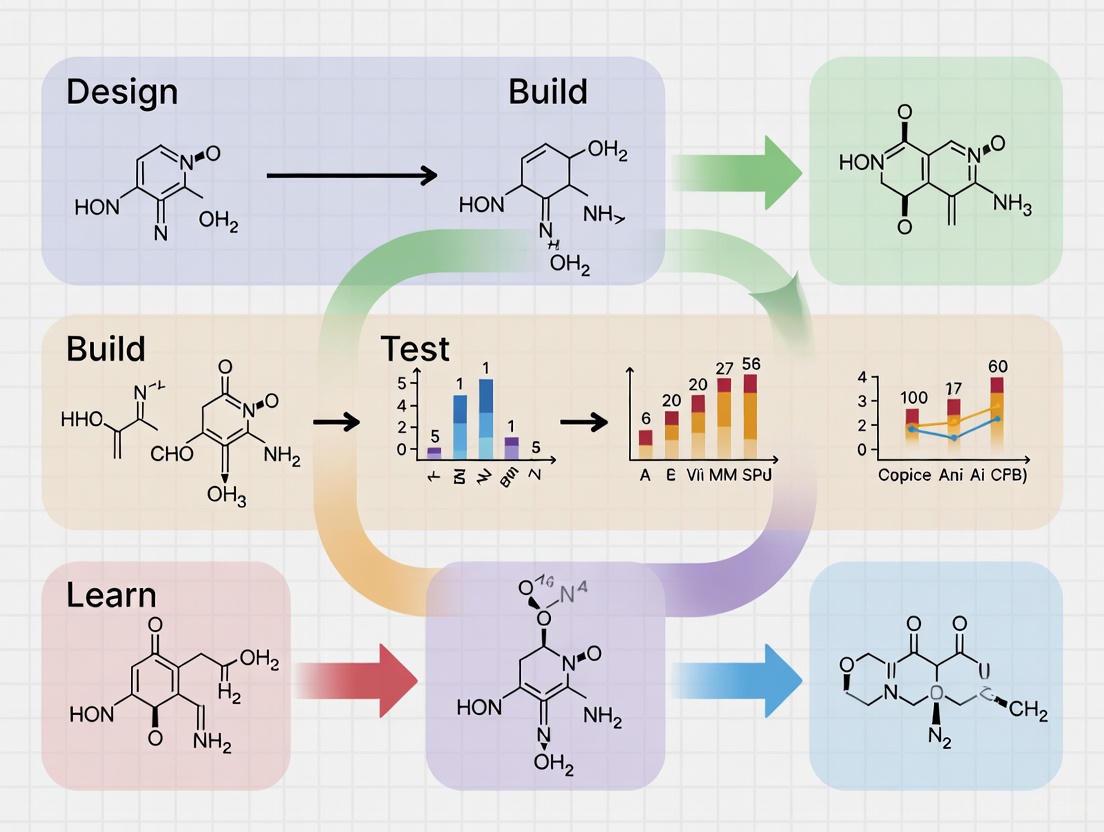
This article provides a comprehensive introduction to the Design-Build-Test-Learn (DBTL) cycle, a foundational framework in modern systems metabolic engineering.
AI-Powered DBTL Cycles: Accelerating Systems Metabolic Engineering for Next-Generation Therapeutics
Abstract
This article provides a comprehensive introduction to the Design-Build-Test-Learn (DBTL) cycle, a foundational framework in modern systems metabolic engineering. Tailored for researchers, scientists, and drug development professionals, it explores the evolution of DBTL from a traditional iterative process to an AI-informed, automated paradigm. We cover foundational principles, detailing its role in optimizing microbial cell factories for the production of valuable compounds, from platform chemicals to complex pharmaceuticals. The article delves into advanced methodologies, including the integration of machine learning for zero-shot design and the use of cell-free systems for high-throughput testing. It also addresses common challenges and optimization strategies, illustrated with real-world case studies such as the efficient production of dopamine in E. coli and C5 chemicals in Corynebacterium glutamicum. Finally, we present a comparative analysis of the DBTL framework's validation and its transformative impact on the bioeconomy and clinical research.
The DBTL Cycle Demystified: Core Principles and Evolutionary Impact on Metabolic Engineering
Defining the Design-Build-Test-Learn (DBTL) Framework in Synthetic Biology
The Design-Build-Test-Learn (DBTL) cycle is a systematic, iterative framework central to synthetic biology and metabolic engineering for developing and optimizing biological systems [1] [2]. This engineering-based approach provides a structured pipeline for reprogramming organisms to produce valuable compounds, such as pharmaceuticals or biofuels, by applying genetic modifications [2] [3]. The cycle begins with the Design of genetic constructs, proceeds to the Build phase where DNA is assembled and introduced into a host chassis, continues to the Test phase where performance is experimentally measured, and concludes with the Learn phase, where data is analyzed to inform the next design iteration [4]. The power of the DBTL framework lies in its iterative nature; each cycle incorporates knowledge from the previous one, progressively refining the biological system toward a desired objective [5] [6]. Automation and machine learning (ML) are now revolutionizing this workflow, enabling high-throughput experimentation and sophisticated data analysis that dramatically accelerate the pace of biological engineering [7] [2] [6].
The Four Phases of the DBTL Cycle
Design Phase
The Design phase involves creating a detailed blueprint for the genetic construct or system intended to achieve a specific biological function. This phase relies on domain knowledge, expertise, and computational tools to model the desired outcome [4]. Key design activities include:
- Protein Design: Selecting natural enzymes or designing novel proteins to perform specific catalytic functions [7].
- Genetic Design: Translating amino acid sequences into optimized coding sequences (CDS), designing regulatory elements like ribosome binding sites (RBS), and planning operon architecture [7].
- Assembly Design: Deconstructing plasmid designs into DNA fragments and planning their assembly, considering factors such as restriction enzyme sites, overhang sequences, and GC content [7].
Modern synthetic biology leverages software platforms to automate and enhance this process. These tools can generate detailed DNA assembly protocols, optimize the use of existing lab inventory to reduce costs, and ensure compatibility among DNA fragments, which is critical for complex combinatorial libraries [7].
Build Phase
The Build phase translates the in silico design into a physical biological entity. This involves synthesizing DNA constructs, assembling them into plasmids or other vectors, and introducing them into a characterization system, such as bacteria, yeast, or cell-free systems [4] [6]. Precision is paramount, as minor errors can lead to significant deviations in the final outcome [7]. Automation is key in this phase:
- Automated Liquid Handlers: Instruments from companies like Tecan, Beckman Coulter, and Hamilton Robotics provide high-precision pipetting for PCR setup, DNA normalization, and plasmid preparation [7].
- Integrated Software Platforms: These orchestrate the entire build process, managing protocols, tracking samples across lab equipment, and handling high-throughput, plate-based workflows [7].
- DNA Synthesis Providers: Partnerships with companies like Twist Bioscience and IDT streamline the integration of custom DNA sequences into automated lab workflows [7].
The shift towards rapid cell-free expression systems is also notable. These systems use protein biosynthesis machinery from cell lysates or purified components to express proteins directly from DNA templates, bypassing time-intensive cloning steps and enabling high-throughput testing [4].
Test Phase
In the Test phase, the engineered biological constructs are experimentally measured to determine the efficacy of the Design and Build phases [4]. This phase often represents a throughput bottleneck in the DBTL cycle, which is now being addressed through automation and high-throughput analytics [6]. Core technologies include:
- High-Throughput Screening (HTS): Automated liquid handling systems and plate readers enable precise and rapid assay setups for thousands of samples [7].
- Multi-Omics Technologies: Next-Generation Sequencing (NGS) platforms provide rapid genotypic analysis, while automated mass spectrometry and NMR enable comprehensive proteomic and metabolomic profiling [7] [6].
- Data Management: Software platforms act as a centralized hub, collecting data from various analytical equipment and transforming raw data into formats ready for in-depth analysis and machine learning [7].
The application of microfluidics has further accelerated this phase, with platforms like DropAI screening over 100,000 picoliter-scale reactions to generate vast datasets [4].
Learn Phase
The Learn phase is where data collected during testing is analyzed to extract insights and inform the next DBTL cycle. The goal is to understand the underlying mechanisms or discover statistical patterns that link genetic design to phenotypic outcome [6]. Machine learning (ML) has become a powerful tool for this phase, processing large, complex datasets to uncover patterns that are not apparent through manual analysis [2]. Applications include:
- Predictive Modeling: Using ML models to make accurate genotype-to-phenotype predictions, guiding subsequent metabolic engineering designs [5] [7].
- Feature Analysis: Advanced ML can provide reasons for its predictions, deepening the understanding of biological relationships and accelerating the derivation of design principles [2].
The integration of ML can be so impactful that a paradigm shift to "LDBT" has been proposed, where Learning based on large datasets precedes Design, potentially reducing the need for multiple iterative cycles [4].
DBTL in Action: An Experimental Case Study
A recent study demonstrating the development of a dopamine production strain in E. coli provides a clear example of a knowledge-driven DBTL cycle in metabolic engineering [8]. The following diagram outlines the core workflow of an iterative DBTL cycle, as implemented in such studies.
Diagram 1: The iterative DBTL cycle for metabolic engineering.
Detailed Experimental Protocol
The successful development of a high-yield dopamine production strain, achieving 69.03 ± 1.2 mg/L, was accomplished through the following methodology [8]:
- Host Strain Engineering: The native E. coli production host (FUS4.T2) was first engineered for high-level production of the dopamine precursor, L-tyrosine. This involved genomic modifications to deplete the transcriptional dual regulator L-tyrosine repressor (TyrR) and introduce a mutation (tyrA) to remove feedback inhibition in the L-tyrosine pathway [8].
- Pathway Design: A synthetic pathway was constructed by introducing two key genes: the native E. coli gene encoding 4-hydroxyphenylacetate 3-monooxygenase (HpaBC), which converts L-tyrosine to L-DOPA, and the L-DOPA decarboxylase gene (Ddc) from Pseudomonas putida, which catalyzes the formation of dopamine from L-DOPA [8].
- In Vitro Prototyping (Learn-first approach): Before in vivo DBTL cycling, the relative expression levels of HpaBC and Ddc were investigated in vitro using a crude cell lysate system. This knowledge-driven step helped assess enzyme compatibility and inform the initial design for the in vivo environment [8].
- In Vivo Fine-Tuning via RBS Engineering: The learning from the in vitro tests was translated into the in vivo strain through high-throughput ribosome binding site (RBS) engineering. A library of RBS sequences with modulated Shine-Dalgarno (SD) sequences was constructed to precisely control the translation initiation rate (TIR) and fine-tune the expression levels of HpaBC and Ddc without altering the secondary structure of the mRNA [8].
- Cultivation and Analysis: Engineered strains were cultivated in a defined minimal medium with controlled carbon sources. Dopamine production was analyzed using high-performance liquid chromatography (HPLC) to quantify titers [8].
Table 1: Key Research Reagent Solutions for Microbial Metabolic Engineering
| Reagent / Material | Function in Experiment |
|---|---|
| Minimal Medium (e.g., defined glucose medium) [8] | Provides precise nutrients for microbial growth and product formation, enabling accurate metabolic flux analysis. |
| Antibiotics (e.g., Ampicillin, Kanamycin) [8] | Maintains selective pressure to ensure plasmid retention in the production host throughout cultivation. |
| Inducers (e.g., IPTG) [8] | Triggers the expression of genes in inducible genetic circuits, allowing controlled timing of metabolic pathway activation. |
| DNA Assembly Kit (e.g., Gibson Assembly) [7] | Enables seamless and high-efficiency assembly of multiple DNA fragments into a functional plasmid vector. |
| RBS Library [8] | A collection of DNA sequences that allow for fine-tuning of gene expression levels without changing the coding sequence. |
| Cell-Free System (crude cell lysate) [8] [4] | Allows for rapid prototyping and testing of enzyme pathways without the constraints of a living cell. |
Advanced Topics and Future Directions
The Role of Automation and Biofoundries
The integration of automation throughout the DBTL cycle has given rise to industrialized platforms known as biofoundries [2] [6]. These facilities integrate automated equipment and software to execute high-throughput DBTL cycles with minimal manual intervention, dramatically increasing the speed and scale of biological engineering [9] [6]. Automated biofoundries address key limitations of artisanal research by improving consistency, reducing human error, and allowing researchers to focus on intellectual tasks [6].
Machine Learning and the LDBT Paradigm
Machine learning is transforming the DBTL cycle, particularly the Learn phase. ML algorithms can analyze vast experimental datasets to uncover complex genotype-phenotype relationships and predict optimal designs [5] [7] [2]. This has led to a proposal for a reordered "LDBT" cycle (Learn-Design-Build-Test), where learning from large datasets or pre-trained models precedes design [4]. For instance, zero-shot predictions from protein language models (e.g., ESM, ProteinMPNN) can generate functional protein designs without any initial experimental data for that specific protein, potentially collapsing multiple DBTL cycles into a single turn [4].
Table 2: Comparison of Traditional DBTL and Emerging LDBT Approaches
| Aspect | Traditional DBTL Cycle | LDBT & ML-Augmented Cycle |
|---|---|---|
| Learning Basis | Data from previous cycle's Build-Test phases [5]. | Pre-trained models on megascale datasets; zero-shot prediction [4]. |
| Primary Bottleneck | Build-Test phases are slow and resource-intensive [6]. | Data quality and quantity for training robust models [2] [4]. |
| Iteration Speed | Multiple cycles (often many) required [4]. | Potential for single-cycle success; much faster iteration [4]. |
| Predictive Power | Limited, often relies on trial-and-error [2]. | High, enabled by pattern recognition in high-dimensional data [5] [4]. |
Computational and Modeling Frameworks
Computational tools are vital for managing the complexity of biological design. Kinetic models, constraint-based models like Flux Balance Analysis (FBA), and whole-cell models provide a mechanistic framework to simulate pathway behavior before embarking on costly experiments [5] [10]. These models can be used to in silico test machine learning methods and DBTL strategies, providing a "ground truth" that is difficult to obtain with real-world experiments due to cost and time constraints [5]. Software platforms now offer end-to-end support for the entire DBTL cycle, from design and inventory management to data analysis and machine learning [7].
The Design-Build-Test-Learn (DBTL) cycle represents a fundamental shift in metabolic engineering, moving from traditional linear approaches to an iterative, data-driven framework for microbial strain development. This paradigm leverages advancements in automation, artificial intelligence (AI), and synthetic biology to systematically optimize complex biological systems. By continuously refining hypotheses with experimental data, the DBTL cycle enables researchers to navigate vast design spaces efficiently, accelerating the development of strains for sustainable bioproduction. This whitepaper examines the core principles of the DBTL framework, its implementation in modern biofoundries, and its impact through recent case studies in enzyme and metabolite engineering.
The DBTL Cycle: Core Components and Workflow
The DBTL cycle is an iterative methodology for engineering biological systems. Its power lies in the continuous refinement of designs based on data and learning from previous iterations.
Design
In the Design phase, researchers specify genetic modifications using computational tools and prior knowledge. This involves selecting DNA components (e.g., promoters, ribosomal binding sites (RBS), coding sequences) to create genetic designs predicted to improve strain performance [5]. Modern approaches incorporate machine learning (ML) and large language models (LLMs) to propose optimized enzyme variants or pathway configurations [11].
Build
The Build phase translates digital designs into physical biological entities. This involves DNA synthesis, assembly, and introduction into host organisms. Automation is crucial here, with robotic platforms enabling high-throughput strain construction. For example, an automated pipeline for Saccharomyces cerevisiae achieved a throughput of ~2,000 transformations per week, a 10-fold increase over manual methods [12].
Test
In the Test phase, engineered strains are cultured and evaluated for performance metrics such as titer, yield, and productivity (TYR) [5]. This phase often employs high-throughput analytical techniques like liquid chromatography-mass spectrometry (LC-MS) for rapid quantification of target molecules [12].
Learn
The Learn phase involves analyzing experimental data to extract insights. Machine learning models are trained on the collected data to identify patterns, predict the performance of untested designs, and recommend improved designs for the next cycle [5] [11]. This transforms raw data into actionable knowledge, closing the loop.
Quantitative Advancements in DBTL Cycle Performance
The implementation of automated, AI-powered DBTL cycles has led to dramatic improvements in the speed and efficiency of strain and enzyme development. The following table summarizes key performance metrics from recent studies.
Table 1: Performance Metrics of Advanced DBTL Platforms
| Engineering Target | Platform/Strategy | Timeframe | Improvement | Key Enabling Technology | Citation |
|---|---|---|---|---|---|
| Halide Methyltransferase (AtHMT) | Autonomous AI-powered platform | 4 weeks | 16-fold improvement in ethyltransferase activity | Protein LLM (ESM-2) & iBioFAB automation | [11] |
| Phytase (YmPhytase) | Autonomous AI-powered platform | 4 weeks | 26-fold improvement in activity at neutral pH | Epistasis model (EVmutation) & robotic screening | [11] |
| Yeast Strain Construction | Automated robotic pipeline | 1 week | 2,000 transformations/week (10x manual throughput) | Hamilton VANTAGE integrated system | [12] |
| Dopamine Production | Knowledge-driven DBTL cycle | N/A | 2.6 to 6.6-fold improvement over state-of-the-art | In vitro lysate studies & high-throughput RBS engineering | [13] |
Case Study: Knowledge-Driven DBTL for Dopamine Production inE. coli
A recent study demonstrated the power of a knowledge-driven DBTL cycle to optimize dopamine production in E. coli, achieving a final titer of 69.03 ± 1.2 mg/L, a 2.6 to 6.6-fold improvement over previous state-of-the-art methods [13]. The workflow integrated upstream in vitro experiments to inform the initial in vivo design, accelerating the learning process.
Experimental Protocol and Workflow
The following diagram outlines the specific experimental workflow used in the knowledge-driven DBTL cycle for dopamine production.
Key Methodological Details:
- Host Strain Engineering: The base E. coli production strain (FUS4.T2) was engineered for high L-tyrosine production by depleting the transcriptional repressor TyrR and mutating the feedback inhibition of chorismate mutase/prephenate dehydrogenase (TyrA) [13].
- Pathway Enzymes: The heterologous pathway consisted of:
- HpaBC (4-hydroxyphenylacetate 3-monooxygenase, native to E. coli): Converts L-tyrosine to L-DOPA.
- Ddc (L-DOPA decarboxylase, from Pseudomonas putida): Converts L-DOPA to dopamine [13].
- Fine-Tuning Mechanism: Instead of full pathway re-design, RBS engineering was used to precisely modulate the translation initiation rates of hpaBC and ddc. The SD sequence was altered without interfering with secondary structures to generate a library of expression strengths [13].
- Analytical Method: Dopamine titers were quantified using high-performance liquid chromatography (HPLC) or LC-MS, adapted for high-throughput screening of the strain library [13].
The Scientist's Toolkit: Essential Research Reagents and Solutions
The following table catalogs key reagents, molecular tools, and hardware essential for implementing advanced DBTL cycles in metabolic engineering.
Table 2: Essential Research Reagents and Solutions for DBTL Cycles
| Reagent / Tool / Solution | Function in DBTL Cycle | Specific Example / Note |
|---|---|---|
| Ribosome Binding Site (RBS) Libraries | Fine-tunes translation initiation rate and enzyme expression levels in a pathway. | Modulating the Shine-Dalgarno sequence; tools like UTR Designer can assist [13]. |
| Promoter Libraries | Provides a range of transcription strengths for pathway gene regulation. | Inducible (e.g., pGAL1 in yeast) or constitutive promoters of varying strengths [12]. |
| Cell-Free Protein Synthesis (CFPS) Systems | Enables rapid in vitro testing of enzyme expression and pathway function, bypassing cellular constraints. | Used for upstream, knowledge-driven design before in vivo strain construction [13]. |
| Automated Robotic Platforms | Executes high-throughput, reproducible pipetting, transformations, and assays in the Build and Test phases. | Hamilton Microlab VANTAGE; integrated with off-deck hardware (thermal cyclers, sealers) [12]. |
| Liquid Chromatography-Mass Spectrometry (LC-MS) | Precisely quantifies target metabolite titers and pathway intermediates from cultured strains. | Critical for high-throughput screening in the Test phase; methods can be optimized for speed [12]. |
| Machine Learning (ML) Models | Learns from experimental data to predict high-performing designs, guiding the Learn and Design phases. | Gradient boosting and random forest models perform well in low-data regimes [5] [11]. |
The Future: Autonomous DBTL Cycles and AI Integration
The next frontier of DBTL cycles is full autonomy, integrating AI and robotics to form a closed-loop system. A generalized platform for AI-powered autonomous enzyme engineering demonstrated this capability, using protein LLMs and epistasis models for design, a biofoundry (iBioFAB) for build and test, and ML to learn and propose subsequent variants [11]. This platform required only an input protein sequence and a fitness function, engineering enzymes with significant activity improvements in just four weeks [11]. Such systems eliminate human intervention and bias, dramatically accelerating the pace of biological discovery and optimization.
The transition from linear to iterative DBTL cycles has fundamentally revolutionized strain development. By embracing a framework of continuous learning powered by automation and artificial intelligence, metabolic engineers can now systematically tackle the complexity of biological systems. This approach drastically reduces development timelines and experimental costs while achieving performance improvements that were previously unattainable. As DBTL methodologies become more accessible and autonomous, they promise to be the cornerstone of sustainable biomanufacturing for chemicals, materials, and therapeutics.
The Design-Build-Test-Learn (DBTL) cycle has emerged as the fundamental framework for modern biological engineering, serving as the critical conduit through which metabolic engineering, systems biology, and synthetic biology converge. This iterative process provides the structural methodology for optimizing biological systems toward specific production goals, from sustainable biofuels to pharmaceutical compounds [14] [13]. Systems metabolic engineering represents the integration of systems biology's analytical approaches with metabolic engineering's production objectives, enhanced by synthetic biology's precise genetic toolset. Within this integrated framework, the DBTL cycle functions as the operational engine that drives continuous improvement and innovation.
The power of the DBTL methodology lies in its recursive nature, where each iteration refines understanding and enhances system performance. As exemplified in microbial co-culture systems, this approach enables researchers to compartmentalize complex biochemical tasks across different microbial species, achieving notable successes such as a 40% increase in bioethanol yield compared to monocultures by segregating sugar fermentation and carbon fixation pathways [15]. Similarly, the DBTL framework has facilitated the optimization of microbial production strains for diverse compounds, including dopamine, where a knowledge-driven DBTL approach resulted in a 2.6 to 6.6-fold improvement over previous production methods [13].
This technical guide examines the core principles, methodologies, and applications of the DBTL cycle within integrated systems metabolic engineering, providing researchers with both theoretical foundations and practical protocols for implementing this powerful framework.
The Core Principles of the DBTL Cycle
The DBTL cycle represents a systematic approach to biological engineering that transforms the design and optimization of biological systems into a structured, iterative process. Each phase of the cycle contributes distinct capabilities that collectively enable precise engineering of metabolic pathways and cellular functions.
Design Phase
The Design phase initiates the DBTL cycle by establishing a clear objective and developing a rational plan based on specific hypotheses or prior knowledge. This stage leverages computational tools, domain expertise, and biological insight to specify the genetic components and systems required to achieve the desired metabolic function [16]. In metabolic engineering applications, this typically involves selecting appropriate enzymes, designing expression cassettes with suitable promoters and ribosome binding sites (RBS), and planning assembly strategies. The Design phase has been revolutionized by advances in machine learning and modeling, with protein language models (e.g., ESM, ProGen) and structure-based design tools (e.g., ProteinMPNN) enabling zero-shot prediction of protein structures and functions, thereby accelerating the creation of novel biocatalysts [4].
Build Phase
The Build phase translates theoretical designs into biological reality through molecular biology techniques. This involves DNA synthesis, plasmid assembly, and transformation of engineered constructs into host organisms [16]. Recent advances have focused on automating and scaling the Build process through biofoundries and robotic integration. For example, automated strain construction pipelines for Saccharomyces cerevisiae can achieve up to 2,000 transformations per week—a 10-fold increase over manual methods [12]. These automated workflows employ standardized protocols, such as the lithium acetate/ssDNA/PEG transformation method adapted to a 96-well format, with integrated robotic arms managing liquid handling, heat shock, and plating procedures [12].
Test Phase
The Test phase focuses on quantitative characterization of the engineered system's performance through various analytical methods. This includes measuring metabolite production, assessing growth characteristics, and evaluating functional outputs. Advanced high-throughput screening methods have dramatically accelerated this phase, with approaches ranging from simple absorbance measurements for compounds like flaviolin to sophisticated LC-MS analysis for verifying verazine production in engineered yeast strains [17] [12]. Cell-free expression systems have emerged as particularly valuable tools for rapid testing, enabling protein synthesis without time-intensive cloning steps and facilitating high-throughput sequence-to-function mapping of protein variants [4].
Learn Phase
The Learn phase represents the critical knowledge extraction step where experimental data is analyzed to generate insights about system behavior. This phase determines whether the design performed as expected and identifies causes of success or failure [16]. Modern Learn phases increasingly incorporate machine learning and statistical analysis to identify patterns and relationships within complex datasets. For example, Explainable Artificial Intelligence techniques have been employed to identify key media components influencing production, revealing unexpectedly that common salt (NaCl) was the most important factor for flaviolin production in Pseudomonas putida [17]. The knowledge generated in this phase directly informs the subsequent Design phase, creating a virtuous cycle of improvement.
Table 1: Key Tools and Technologies Enhancing the DBTL Cycle
| DBTL Phase | Technology | Application | Impact |
|---|---|---|---|
| Design | Protein Language Models (ESM, ProGen) | Zero-shot prediction of protein structure and function | Accelerated enzyme design without extensive experimental screening [4] |
| Design | UTR Designer | RBS engineering for translation optimization | Precise fine-tuning of gene expression in synthetic pathways [13] |
| Build | Automated Robotic Workstations | High-throughput strain construction | 2,000 yeast transformations/week vs. 200 manually [12] |
| Build | Cell-Free Expression Systems | Rapid protein synthesis without cloning | >1 g/L protein in <4 hours; toxic product expression [4] |
| Test | Droplet Microfluidics | Ultra-high-throughput screening | >100,000 picoliter-scale reactions screened [4] |
| Test | LC-MS Methods | Metabolite quantification | Rapid detection (19 min for verazine vs. 50 min previously) [12] |
| Learn | Explainable AI | Identification of critical production factors | Revealed NaCl as key factor in flaviolin production [17] |
| Learn | Knowledge-Driven DBTL | In vitro prototyping before in vivo implementation | 2.6 to 6.6-fold improvement in dopamine production [13] |
Quantitative Applications and Outcomes
The implementation of integrated DBTL cycles has yielded substantial improvements in bioproduction across multiple domains. The following table summarizes key quantitative achievements demonstrating the efficacy of this approach.
Table 2: Notable DBTL Applications and Performance Metrics
| Application Area | Host Organism | Engineering Strategy | Outcome | Reference |
|---|---|---|---|---|
| Next-Gen Biofuels | Engineered Clostridium spp. | CRISPR-Cas genome editing; de novo pathway engineering | 3-fold increase in butanol yield; 91% biodiesel conversion efficiency | [14] |
| Dopamine Production | E. coli FUS4.T2 | Knowledge-driven DBTL; RBS engineering | 69.03 ± 1.2 mg/L (34.34 ± 0.59 mg/g biomass); 2.6-6.6-fold improvement | [13] |
| Flaviolin Production | Pseudomonas putida KT2440 | Machine learning-led media optimization | 60-70% increase in titer; 350% increase in process yield | [17] |
| Bioethanol Production | S. cerevisiae & C. autoethanogenum co-culture | Modular division of labor in co-culture system | 40% increase in yield compared to monoculture | [15] |
| Artemisinin Precursor | S. cerevisiae & P. pastoris co-culture | Pathway compartmentalization | 2.8 g/L titer (15-fold improvement over monoculture) | [15] |
| Verazine Production | Saccharomyces cerevisiae | Automated library screening of 32 genes | 2.0 to 5-fold increase with top-performing genes | [12] |
DBTL Cycle Diagram
Enhanced DBTL Frameworks: From Knowledge-Driven to LDBT
Traditional DBTL cycles typically begin with limited prior knowledge, requiring multiple iterations to achieve optimal performance. Recent advancements have introduced modified frameworks that accelerate this process through strategic incorporation of upfront knowledge and computational power.
Knowledge-Driven DBTL
The knowledge-driven DBTL cycle incorporates upstream in vitro investigation before embarking on full in vivo engineering. This approach was successfully implemented for dopamine production in E. coli, where cell lysate studies were first conducted to assess enzyme expression levels and identify potential bottlenecks [13]. The resulting data informed the subsequent in vivo RBS engineering strategy, enabling precise fine-tuning of the dopamine pathway. This knowledge-forward approach demonstrated that GC content in the Shine-Dalgarno sequence significantly impacts RBS strength, leading to the development of a high-efficiency dopamine production strain with dramatically reduced optimization cycles [13].
LDBT Paradigm
A more radical restructuring of the traditional cycle has been proposed as LDBT (Learn-Design-Build-Test), where machine learning precedes design based on large biological datasets [4]. This paradigm leverages the predictive power of pre-trained models to generate functional designs that require minimal subsequent iteration. The LDBT framework capitalizes on zero-shot predictors capable of designing proteins with desired functions without additional training, potentially transitioning synthetic biology toward a "Design-Build-Work" model more akin to established engineering disciplines [4].
Enhanced DBTL Frameworks Diagram
Experimental Protocols and Methodologies
Knowledge-Driven DBTL for Dopamine Production
The successful application of knowledge-driven DBTL for dopamine production in E. coli exemplifies the integrated experimental approach [13]:
In Vitro Investigation Phase:
- Prepare crude cell lysate systems from production host (E. coli FUS4.T2)
- Set up reaction buffer containing 0.2 mM FeCl₂, 50 μM vitamin B₆, and 1 mM L-tyrosine or 5 mM L-DOPA in 50 mM phosphate buffer (pH 7)
- Express heterologous genes hpaBC (encoding 4-hydroxyphenylacetate 3-monooxygenase) and ddc (encoding L-DOPA decarboxylase) using pJNTN plasmid system
- Quantify enzyme activities and pathway flux to identify rate-limiting steps
In Vivo Implementation:
- Engineer production host with depleted transcriptional dual regulator TyrR and mutated feedback inhibition of chorismate mutase/prephenate dehydrogenase (tyrA) to increase L-tyrosine production
- Implement RBS library for fine-tuning expression of hpaBC and ddc genes
- Use UTR Designer for modulating RBS sequences, focusing on Shine-Dalgarno sequence optimization
- Cultivate engineered strains in minimal medium containing 20 g/L glucose, 10% 2xTY medium, and appropriate supplements
- Analyze dopamine production using HPLC with detection at 280 nm
Automated Strain Construction Protocol
The automated workflow for high-throughput yeast strain construction demonstrates the integration of robotics into the Build phase [12]:
Automated Transformation Protocol:
- Program Hamilton Microlab VANTAGE with Venus software for liquid handling
- Prepare competent Saccharomyces cerevisiae cells in 96-well format
- Set up transformation mixture with optimized lithium acetate/ssDNA/PEG ratios
- Execute heat shock using integrated thermal cycler (Inheco ODTC)
- Perform washing steps with selective media
- Plate transformations using automated colony picker (QPix 460)
- Incubate plates at 30°C for 2-3 days
- Pick colonies for high-throughput culturing in 96-deep-well plates
Analytical Validation:
- Develop chemical extraction method using Zymolyase-mediated cell lysis
- Implement organic solvent extraction for metabolite recovery
- Establish rapid LC-MS method for verazine quantification (19-minute runtime)
- Normalize titers to cell density for production comparison
Machine Learning-Led Media Optimization
The integration of machine learning into media optimization represents a powerful application of the Learn phase [17]:
Semi-Automated Pipeline:
- Utilize automated liquid handler to combine stock solutions for 15 media components
- Dispense media designs in triplicate/quadruplicate in 48-well plates
- Inoculate with engineered P. putida strain
- Cultivate in automated cultivation platform (BioLector) for 48 hours
- Measure flaviolin production via absorbance at 340 nm
- Store production data and media designs in Experiment Data Depot (EDD)
- Employ Automated Recommendation Tool (ART) for media design recommendation
- Iterate through multiple DBTL cycles with algorithm-guided experiments
Explainable AI Analysis:
- Apply SHAP (SHapley Additive exPlanations) or similar methods to identify feature importance
- Validate key findings through controlled experiments
- Scale optimal conditions to bioreactor systems
Essential Research Reagent Solutions
The successful implementation of DBTL cycles in systems metabolic engineering relies on specialized reagents and materials that enable precise genetic manipulation and analysis.
Table 3: Essential Research Reagents for DBTL Implementation
| Reagent/Material | Specification | Function in DBTL Cycle | Example Application |
|---|---|---|---|
| pSEVA261 Backbone | Medium-low copy number plasmid | Stable expression vector with reduced background signal | PFOA biosensor construction in E. coli [18] |
| pET Plasmid System | T7 expression system | High-level protein expression for in vitro testing | Dopamine pathway enzyme expression [13] |
| pESC-URA Plasmid | S. cerevisiae GAL1 promoter | Inducible expression in yeast | Verazine biosynthetic pathway [12] |
| Amicon Ultra Filters | 100k MWCO | Extracellular vesicle/exosome isolation | L. rhamnosus exosome isolation [16] |
| Hamilton Microlab VANTAGE | Robotic liquid handling | Automated strain construction | High-throughput yeast transformation [12] |
| LuxCDEAB Operon | Bioluminescence reporter | Biosensor signal generation | PFOA detection system [18] |
| Cell-Free Expression System | Crude lysate or purified | Rapid protein synthesis without cloning | In vitro pathway prototyping [4] |
| Zymolyase | Lytic enzyme preparation | Yeast cell wall digestion | Metabolite extraction from S. cerevisiae [12] |
Future Perspectives and Emerging Trends
The continued convergence of metabolic engineering, systems biology, and synthetic biology through the DBTL framework is driving several transformative trends. The integration of machine learning and artificial intelligence throughout the DBTL cycle is transitioning from enhancement to central function, with pre-trained models increasingly capable of zero-shot design of biological parts and systems [4]. This shift toward data-driven predictive biology promises to reduce iteration requirements and accelerate the engineering timeline.
Automation and biofoundries are expanding access to high-throughput capabilities, with standardized workflows and shared resources enabling broader implementation of automated DBTL cycles [12]. The development of modular, user-customizable interfaces for robotic systems makes these technologies increasingly accessible to research teams without specialized engineering expertise.
Cell-free systems continue to emerge as powerful platforms for rapid prototyping, particularly when combined with microfluidics for ultra-high-throughput screening [4]. These systems bypass cellular constraints and enable direct measurement of enzyme activities and pathway fluxes, providing critical data for the Learn phase that directly informs in vivo implementation.
Microbial co-cultures represent another frontier in metabolic engineering, enabling modular division of labor that addresses fundamental challenges in metabolic burden and incompatible pathway requirements [15]. Engineering effective consortia requires application of DBTL principles at the community level, with careful attention to population dynamics and cross-species interactions.
Finally, the expansion of systems thinking beyond cellular engineering to encompass broader impacts—including environmental, social, and healthcare systems—signals a maturation of the field [19]. This holistic approach recognizes that technological solutions must be integrated within broader contexts to achieve meaningful impact, particularly in applications involving healthcare delivery and sustainable biomanufacturing.
As these disciplines continue to converge through the structured framework of the DBTL cycle, the capacity to engineer biological systems for addressing global challenges in medicine, energy, and sustainability will continue to accelerate, ushering in a new era of biological design.
Metabolic engineering, defined as the use of genetic engineering to modify the metabolism of an organism, has undergone a radical transformation since its emergence in the early 1990s [20]. This field has evolved from initial efforts focused on modifying single enzymes to comprehensive systems-level approaches that integrate computational biology, synthetic biology, and high-throughput automation. The historical progression from traditional to advanced systems metabolic engineering represents a fundamental shift in how microbial cell factories are designed and optimized for industrial production, enabling the bio-based manufacturing of chemicals, materials, and fuels from renewable resources with unprecedented efficiency [21]. This evolution has been characterized by three distinct waves of innovation, each building upon the previous to address increasingly complex challenges in strain development.
The integration of the Design-Build-Test-Learn (DBTL) cycle has been particularly instrumental in advancing systems metabolic engineering. This iterative framework provides a systematic methodology for the discovery and optimization of biosynthetic pathways, allowing researchers to continuously refine microbial strains through successive rounds of computational design, genetic construction, performance testing, and data-driven learning [22]. The adoption of DBTL cycles, enhanced by automation and machine learning, has dramatically accelerated the development of efficient bioprocesses, reducing the time and resources required to achieve commercially viable production strains [5]. This article traces the historical progression of metabolic engineering through its three major waves of development, examines the core principles and implementation of the DBTL framework, and explores the advanced toolkits that define contemporary systems metabolic engineering.
The Three Waves of Metabolic Engineering Innovation
First Wave: Rational Pathway Engineering
The first wave of metabolic engineering, beginning in the 1990s, established the foundational principle that natural pathways could be enumerated and assessed for converting specific substrates to target products [23]. Early metabolic engineering efforts relied predominantly on rational approaches to pathway analysis and flux optimization, focusing on redirecting cellular metabolism toward desired products through sequential genetic modifications. A landmark example from this period was the overproduction of lysine in Corynebacterium glutamicum. Through metabolic flux analysis, researchers identified pyruvate carboxylase and aspartokinase as potential bottlenecks in the biosynthetic pathway. By simultaneously expressing both enzymes, they achieved a 150% increase in lysine productivity while maintaining the same growth rate as the control strain [23]. This approach demonstrated the power of targeted genetic interventions but was limited by its dependence on existing knowledge of pathway regulation and enzyme kinetics.
During this initial phase, metabolic engineering strategies primarily involved:
- Sequential debottlenecking of rate-limiting steps in pathways of interest [5]
- Overexpression of key enzymes in biosynthetic pathways [23]
- Knockout of competing metabolic pathways [24]
- Heterologous gene expression to introduce new capabilities [22]
While these rational approaches achieved notable successes, they faced fundamental limitations due to incomplete knowledge of metabolic networks, particularly regarding the regulation of individual pathway elements and overall cell physiology [5]. The inherent complexity of cellular metabolism often led to unexpected outcomes, as perturbations in one part of the network could produce counterintuitive effects in distant pathways. Despite these challenges, the first wave established metabolic engineering as a distinct discipline and demonstrated its potential for industrial biotechnology.
Second Wave: Systems Biology Integration
The second wave of metabolic engineering emerged in the 2000s with the integration of systems biology technologies, particularly genome-scale metabolic models (GEMs) [23]. This holistic approach was pioneered by researchers like Bernhard Ø Palsson, who developed frameworks for bridging mechanistic genotype-phenotype relationships to explore the metabolic potential of cell factories [23]. Genome-scale models enabled researchers to simulate cellular metabolism at an unprecedented scale, identifying non-obvious targets for genetic engineering that would be difficult to discover through rational approaches alone.
The application of systems biology tools expanded metabolic engineering capabilities for producing a wider range of chemicals, including fuels, materials, and pharmaceutical ingredients [23]. Notable achievements from this period included:
- Predictive Modeling: Genome-scale Saccharomyces cerevisiae and Escherichia coli metabolic models predicted strategies for bioethanol production [23].
- Multi-target Optimization: Algorithms identified key gene knockout targets for production of compounds like cubebol, L-threonine, and L-valine [23].
- Flux Analysis: Techniques like flux scanning based on enforced objective flux identified overexpression targets for enhancing lycopene production [23].
The second wave represented a significant shift from local pathway optimization to global network analysis, acknowledging that cellular metabolism functions as an integrated system rather than a collection of independent pathways. This systemic perspective enabled more sophisticated engineering strategies that accounted for complex interactions and regulatory mechanisms across the entire metabolic network.
Third Wave: Synthetic Biology and Systems Metabolic Engineering
The third, and current, wave of metabolic engineering began in the 2010s with the pioneering work of Jay D. Keasling on artemisinin production [23]. This wave is characterized by the full integration of synthetic biology with metabolic engineering, enabling the design, construction, and optimization of complete metabolic pathways using synthetic nucleic acid elements for producing both natural and non-natural chemicals [23]. Systems metabolic engineering represents the maturation of this approach, combining and integrating in silico and experimental strategies to globally analyze and engineer microorganisms at super efficiency otherwise not accessible [21].
Key differentiators of third-wave systems metabolic engineering include:
- Combinatorial Pathway Optimization: Simultaneous optimization of multiple pathway genes rather than sequential debottlenecking [5]
- Automated DBTL Cycles: Implementation of iterative design-build-test-learn pipelines with increasing automation [22]
- Machine Learning Integration: Application of advanced algorithms to learn from experimental data and propose new designs [5]
- Multi-level Engineering: Strategies operating at multiple hierarchies, including part, pathway, network, genome, and cell levels [23]
This modern approach has dramatically expanded the array of attainable products, including advanced biofuels [25], pharmaceuticals like opioids and vinblastine [23], commodity chemicals, and complex natural products. Systems metabolic engineering has emerged as a major driver toward bio-based production from renewables and represents one of the core technologies of global green growth [21].
Table 1: Historical Progression of Metabolic Engineering Approaches
| Wave | Time Period | Key Technologies | Representative Achievements | Limitations |
|---|---|---|---|---|
| First Wave: Rational Engineering | 1990s | Pathway enumeration, Flux analysis, Targeted gene knockout/overexpression | 150% increase in lysine productivity in C. glutamicum [23] | Limited by knowledge gaps, unexpected network interactions |
| Second Wave: Systems Biology | 2000s | Genome-scale models, Flux balance analysis, In silico strain design | Genome-scale models for bioethanol production in S. cerevisiae [23] | Limited capacity for de novo pathway design |
| Third Wave: Systems Metabolic Engineering | 2010s-present | Synthetic biology, Automated DBTL cycles, Machine learning, Combinatorial optimization | Artemisinin production in yeast [23], 500-fold improvement in pinocembrin production through automated DBTL [22] | Computational complexity, data management challenges |
The DBTL Cycle: Core Framework for Systems Metabolic Engineering
Design Principles and Computational Tools
The Design phase in systems metabolic engineering has evolved from simple pathway selection to sophisticated computational workflows that integrate multiple tools for pathway prediction, enzyme selection, and DNA part design. For any given target compound, modern pipelines utilize specialized software such as RetroPath for automated pathway selection and Selenzyme for enzyme selection [22]. These tools enable the systematic identification of potential biosynthetic routes and suitable enzyme candidates based on biochemical rules and substrate specificity.
Following enzyme selection, reusable DNA parts are designed with simultaneous optimization of ribosome-binding sites and enzyme coding regions using tools like PartsGenie [22]. Genes and regulatory parts are then combined in silico into large combinatorial libraries of pathway designs. To manage the resulting combinatorial explosion, statistical methods such as Design of Experiments (DoE) are employed to reduce libraries to smaller representative sets. This approach allows efficient exploration of the design space with tractable numbers of samples for laboratory construction and screening [22]. For example, in one documented flavonoid production project, a combinatorial design of 2592 possible configurations was successfully reduced to just 16 representative constructs using DoE based on orthogonal arrays combined with a Latin square for positional arrangement of genes, achieving a compression ratio of 162:1 [22].
Build Methodologies and Automation
The Build phase has been transformed by advances in DNA synthesis and assembly technologies. Modern DBTL pipelines begin with commercial DNA synthesis, followed by automated part preparation via PCR, and robotic setup for pathway assembly using methods such as ligase cycling reaction [22]. After transformation in microbial hosts, candidate plasmid clones undergo quality control through high-throughput automated purification, restriction digest analysis by capillary electrophoresis, and sequence verification.
Automation is a critical factor in the Build phase, with robotic platforms handling increasingly complex assembly operations. While some manual interventions remain in current workflows (such as PCR clean-up and host-cell transformation), the trend is toward full automation of these processes [22]. The modular nature of these pipelines allows for flexibility in adopting new assembly methods and accommodates species-specific requirements for different microbial hosts through adjustments to regulatory elements, codon optimization, and experimental methods.
Test Platforms and Analytical Methods
The Test phase involves introducing constructs into selected production chassis and running automated multi-well growth and induction protocols. Detection of target products and key intermediates begins with automated extraction followed by quantitative screening using advanced analytical methods such as fast ultra-performance liquid chromatography coupled to tandem mass spectrometry with high mass resolution [22]. Data extraction and processing are typically handled by custom-developed scripts, often in open-source platforms like R.
A significant innovation in the Test phase is the use of mechanistic kinetic models to simulate metabolic pathway behavior and generate data for comparing machine learning methods [5]. In these models, changes in intracellular metabolite concentrations over time are described by ordinary differential equations, with each reaction flux described by a kinetic mechanism derived from mass action principles. This approach allows for in silico changes to pathway elements, such as enzyme concentrations or catalytic properties, creating simulated environments for testing optimization strategies before laboratory implementation [5].
Learn Strategies and Machine Learning Integration
The Learn phase represents the knowledge-generating component of the DBTL cycle, where data from the Test phase are analyzed to identify relationships between design factors and production outcomes. Statistical methods and machine learning algorithms play crucial roles in this process, enabling the extraction of meaningful patterns from complex datasets. In the flavonoid production case study, statistical analysis of the initial library revealed that vector copy number had the strongest significant effect on pinocembrin levels, followed by a positive effect of the chalcone isomerase promoter strength [22]. These insights directly informed the design parameters for the subsequent DBTL cycle.
Machine learning has shown particular promise in the Learn phase for recommending new strain designs for subsequent DBTL cycles. Studies comparing different algorithms have demonstrated that gradient boosting and random forest models outperform other methods in the low-data regime typical of early DBTL cycles [5]. These methods have also proven robust to training set biases and experimental noise. The integration of recommendation algorithms that balance exploration and exploitation further enhances the efficiency of the iterative optimization process [5].
Diagram 1: The iterative Design-Build-Test-Learn (DBTL) cycle in systems metabolic engineering. The cycle integrates computational design, genetic construction, performance testing, and data-driven learning for continuous strain improvement [5] [22].
Implementation Case Studies
Flavonoid Production in E. coli
The application of an automated DBTL pipeline for flavonoid production in E. coli demonstrates the power of iterative systems metabolic engineering. The project targeted (2S)-pinocembrin, a key precursor to diverse flavonoids, using a pathway comprising four enzymes: phenylalanine ammonia-lyase (PAL), chalcone synthase (CHS), chalcone isomerase (CHI), and 4-coumarate:CoA ligase (4CL) [22]. The initial DBTL cycle designed a combinatorial library covering a wide range of variants, including four expression levels through vector backbone selection, varying promoter strengths for each gene, and 24 positional permutations of the four genes. This resulted in 2592 possible configurations, which was reduced to 16 representative constructs using DoE.
Screening this initial library revealed pinocembrin titers ranging from 0.002 to 0.14 mg L⁻¹, with statistical analysis identifying vector copy number as the strongest factor influencing production, followed by CHI promoter strength [22]. Based on these insights, a second DBTL cycle was implemented with modified design constraints: (1) high copy number origin for all constructs, (2) fixed positioning of CHI at the beginning of the pathway, (3) variable positioning and promoter strengths for 4CL and CHS, and (4) fixed positioning of PAL at the pathway end. This targeted approach achieved a remarkable 500-fold improvement in production titers, reaching competitive levels of up to 88 mg L⁻¹ [22].
Organic Acid Bioproduction
Systems metabolic engineering has driven significant advances in organic acid production, as exemplified by recent achievements in strain engineering:
Table 2: Selected Organic Acid Production Achievements through Metabolic Engineering
| Organic Acid | Host Organism | Titer (g/L) | Key Metabolic Engineering Strategies | Reference |
|---|---|---|---|---|
| Lactic Acid | Corynebacterium glutamicum | 212-264 | Modular pathway engineering for both L- and D-lactic acid isoforms [23] | [23] |
| 3-Hydroxypropionic Acid | Corynebacterium glutamicum | 62.6 | Substrate engineering, genome editing engineering [23] | [23] |
| Succinic Acid | E. coli | 153.36 | Modular pathway engineering, high-throughput genome engineering, codon optimization [23] | [23] |
| Pyruvic Acid | Lactococcus lactis | 54.6 | Substrate engineering, chassis engineering [23] | [23] |
For pyruvate production, metabolic engineers have employed strategies including the disruption of the pyruvate decarboxylase gene (KmPDC1) and glycerol-3-phosphate dehydrogenase gene (KmGPD1) in Kluyveromyces marxianus, coupled with overexpression of mth1 and its variants [24]. Additional approaches have utilized acid-resistant, pyruvate-tolerant strains of Klebsiella oxytoca with integration of the NADH oxidase gene (nox) to inhibit lactic acid production and regenerate NAD⁺ [24]. These examples illustrate how systems metabolic engineering integrates multiple modification strategies to achieve high-titer production of target compounds.
Advanced Biofuel Production
The progression of metabolic engineering is particularly evident in biofuel production, which has evolved through multiple generations:
- First-generation biofuels utilized food crops like corn and sugarcane, employing conventional fermentation and distillation processes [25].
- Second-generation biofuels leveraged non-food lignocellulosic biomass through enzymatic hydrolysis and fermentation [25].
- Third-generation biofuels employed algal systems with photobioreactors and hydrothermal liquefaction [25].
- Fourth-generation biofuels utilize genetically modified algae and synthetic biology approaches, including CRISPR-based genome editing and synthetic pathways for advanced hydrocarbons [25].
Notable achievements in advanced biofuel production include 91% biodiesel conversion efficiency from lipids and a three-fold increase in butanol yield in engineered Clostridium species, alongside approximately 85% xylose-to-ethanol conversion in engineered S. cerevisiae [25]. These advances demonstrate how systems metabolic engineering enables the optimization of microorganisms for enhanced substrate processing and industrial resilience.
Essential Research Tools and Reagents
The implementation of systems metabolic engineering relies on a sophisticated toolkit of research reagents and computational resources. The table below details key resources essential for executing advanced metabolic engineering projects.
Table 3: Research Reagent Solutions for Systems Metabolic Engineering
| Research Reagent / Tool | Function | Application Example |
|---|---|---|
| RetroPath [22] | In silico pathway design | Automated selection of biosynthetic pathways for target compounds |
| Selenzyme [22] | Enzyme selection | Computational selection of suitable enzymes for pathway steps |
| PartsGenie [22] | DNA part design | Design of reusable DNA parts with optimized RBS and coding sequences |
| Ligase Cycling Reaction | DNA assembly | Automated pathway assembly for combinatorial libraries |
| Mechanistic Kinetic Models [5] | Pathway simulation | In silico testing of metabolic pathway behavior and optimization strategies |
| UPLC-MS/MS [22] | Analytical screening | Quantitative detection of target products and pathway intermediates |
| CRISPR-Cas Systems [25] | Genome editing | Precise genetic modifications in host organisms |
| Orthogonal Array Design [22] | Library reduction | Statistical reduction of combinatorial libraries to tractable sizes |
| Gradient Boosting/Random Forest [5] | Machine learning | Predicting strain performance and recommending new designs |
Future Perspectives and Concluding Remarks
The historical progression from traditional metabolic engineering to advanced systems metabolic engineering represents a fundamental transformation in how microbial cell factories are conceived, designed, and optimized. This evolution has been characterized by increasing integration of computational tools, automation, and data-driven approaches, culminating in the current paradigm of iterative DBTL cycles enhanced by machine learning. As the field continues to advance, several emerging trends are likely to shape its future trajectory:
- AI-Driven Strain Optimization: Increased application of artificial intelligence for enzyme and pathway discovery, with machine learning models becoming increasingly sophisticated at predicting metabolic behavior and optimizing strain designs [5] [25].
- Multi-Omics Integration: Deeper integration of multi-omics data (genomics, transcriptomics, proteomics, metabolomics) to create more comprehensive models of cellular metabolism [24] [23].
- Automation and Scale: Continued advancement in automation technologies enabling higher-throughput DBTL cycles with reduced manual intervention [22].
- Non-Model Organisms: Expansion of metabolic engineering capabilities beyond traditional model organisms to encompass a wider range of industrially relevant hosts [24].
- Sustainable Bioproduction: Enhanced focus on circular economy principles, including waste stream utilization and carbon-negative manufacturing processes [25].
The DBTL cycle has emerged as the central organizing framework for modern systems metabolic engineering, providing a structured methodology for continuous strain improvement. By integrating computational design, automated construction, high-throughput testing, and machine learning, this iterative approach has dramatically accelerated the development of microbial cell factories for diverse applications. As these technologies continue to mature, systems metabolic engineering is poised to play an increasingly vital role in the transition toward sustainable bio-based manufacturing across chemical, material, and fuel industries.
Diagram 2: Historical progression of metabolic engineering through three distinct waves of innovation, from rational pathway engineering to modern systems metabolic engineering [23].
Key Components and Workflow of a Single DBTL Iteration
The Design-Build-Test-Learn (DBTL) cycle represents a foundational framework in synthetic biology and systems metabolic engineering, providing an iterative, systematic approach for engineering biological systems. This cycle enables researchers to design genetic constructs, build them in microbial hosts, test their performance, and learn from the data to inform subsequent design iterations. Recent advances in machine learning, automation, and high-throughput technologies have transformed traditional DBTL approaches, significantly accelerating the engineering of microbial cell factories for producing fine chemicals and pharmaceuticals. This technical guide examines the core components and workflow of a single DBTL iteration within the context of modern metabolic engineering research.
Core Components of the DBTL Cycle
A single DBTL iteration comprises four interconnected phases, each with distinct objectives, methodologies, and outputs that collectively drive the strain engineering process forward.
Design Phase
The Design phase involves in silico specification of genetic designs based on project objectives and prior knowledge. Modern Design workflows integrate computational tools for pathway selection, enzyme choice, and DNA part design. Key tools include RetroPath for automated pathway selection from target compounds [22], Selenzyme for enzyme selection [22], and PartsGenie for designing reusable DNA parts with optimized ribosome-binding sites and codon-optimized coding regions [22].
Machine learning has revolutionized this phase, with protein language models like ESM-2 and ProtBert enabling zero-shot prediction of protein structures and functions, potentially reordering the cycle to LDBT (Learn-Design-Build-Test) in some applications [26]. These models capture evolutionary relationships from millions of protein sequences, allowing prediction of beneficial mutations without additional experimental training data [26] [27]. For combinatorial library design, statistical methods like Design of Experiments (DoE) dramatically reduce the number of constructs needed to explore large design spaces, achieving compression ratios of 162:1 or higher [22].
Build Phase
The Build phase translates digital designs into physical biological constructs. Automated platforms enable high-throughput DNA assembly using methods such as ligase cycling reaction (LCR) [22]. Commercial DNA synthesis provides gene fragments, followed by automated pathway assembly on robotic platforms [22]. Constructs are then transformed into microbial chassis, with quality control performed via automated plasmid purification, restriction digest, and sequence verification [22].
Emerging approaches leverage cell-free expression systems to accelerate the Build and Test phases. These systems use transcription-translation machinery from cell lysates or purified components to express proteins without time-consuming cloning steps, enabling protein production at rates exceeding 1 g/L in under 4 hours [26]. When combined with liquid handling robots and microfluidics, cell-free systems allow ultra-high-throughput screening of thousands of protein variants [26].
Test Phase
The Test phase involves experimental characterization of built constructs to measure performance against target metrics. For metabolic engineering, this typically includes cultivating strains in automated multi-well platforms, followed by metabolite extraction and quantitative analysis using techniques like ultra-performance liquid chromatography coupled to tandem mass spectrometry (UPLC-MS/MS) [22].
Advanced analytical methods have dramatically increased testing throughput and resolution. The RespectM method, for instance, uses mass spectrometry imaging to detect metabolites at single-cell resolution, acquiring data from 500 cells per hour [28]. This approach captures metabolic heterogeneity within cell populations, generating thousands of single-cell metabolomics data points that provide deeper insights into pathway performance and identify metabolic subpopulations [28].
Learn Phase
The Learn phase represents the knowledge extraction component, where Test data are analyzed to identify relationships between design parameters and performance outcomes. Statistical methods and machine learning algorithms process experimental data to determine key factors influencing production titers [22]. For example, in a flavonoid production case study, statistical analysis revealed that vector copy number and chalcone isomerase promoter strength had the most significant effects on pinocembrin titers [22].
Machine learning approaches have enhanced this phase considerably. Deep neural networks trained on single-cell metabolomics data can establish heterogeneity-powered learning models that predict optimal metabolic engineering strategies [28]. These models identify minimal genetic interventions needed to achieve target metabolite production, effectively reshaping the traditional DBTL cycle [28].
Quantitative Analysis of DBTL Performance
The impact of iterative DBTL cycling is demonstrated through measurable improvements in production metrics. The following table summarizes performance data from a published DBTL case study on pinocembrin production in E. coli:
Table 1: Performance Improvement Across DBTL Iterations for Pinocembrin Production in E. coli [22]
| DBTL Cycle | Number of Constructs | Max Titer (mg L⁻¹) | Fold Improvement | Key Optimized Parameters |
|---|---|---|---|---|
| Initial Library | 16 | 0.14 | Baseline | Wide exploration of design space |
| Second Iteration | Not specified | 88 | ~500x | High-copy origin, optimized CHI positioning and promoter strength |
The implementation of automated, integrated DBTL pipelines has demonstrated significant operational efficiencies:
Table 2: Impact of Workflow Automation on DBTL Efficiency [29]
| Metric | Manual Processes | Automated Workflow | Improvement |
|---|---|---|---|
| Sample processing time | Baseline | 5x faster | 500% improvement |
| Manual error rate | Baseline | 50% reduction | 50% improvement |
| Data traceability | Limited | Enhanced with full audit trails | Significant improvement |
Detailed Experimental Methodologies
Automated Pathway Assembly Protocol
The Build phase employs standardized protocols for high-throughput genetic construction. The following methodology is adapted from an automated DBTL pipeline for flavonoid production [22]:
- DNA Preparation: Commercial synthesis of gene fragments followed by PCR amplification of parts.
- Robotic Assembly Setup: Ligase cycling reaction (LCR) assembly using worklists generated by PlasmidGenie software.
- Transformation: Chemical transformation of assembled constructs into E. coli DH5α.
- Quality Control: Automated plasmid purification, restriction digest analysis via capillary electrophoresis, and sequence verification.
- Repository Registration: All constructs deposited in JBEI-ICE repository with unique identifiers for sample tracking.
Analytics and Screening Methodology
The Test phase employs comprehensive analytical workflows to assess strain performance [22]:
- Cultivation: Automated 96-deepwell plate cultivation with standardized media and induction protocols.
- Metabolite Extraction: Automated extraction of target compounds from cultures.
- Quantitative Analysis: UPLC-MS/MS with high mass resolution for precise quantification of target products and intermediates.
- Data Processing: Custom R scripts for data extraction and processing.
Machine Learning-Guided Learning Phase
Modern Learn phases incorporate sophisticated data analysis techniques [28]:
- Data Preparation: Processing of single-cell metabolomics data representing metabolic heterogeneity.
- Model Training: Deep neural network training on metabolomics data to establish predictive models.
- Pattern Identification: Analysis of trained models to identify key metabolic engineering targets.
- Design Optimization: Recommendation of minimal genetic interventions to achieve production targets.
Workflow Visualization
DBTL Cycle Workflow: This diagram illustrates the iterative four-phase DBTL cycle with key activities in each phase and their interconnected relationships.
The Scientist's Toolkit: Essential Research Reagents and Materials
Successful implementation of DBTL cycles requires specialized reagents, software tools, and analytical platforms. The following table catalogues essential solutions used in modern DBTL pipelines:
Table 3: Essential Research Reagents and Solutions for DBTL Implementation
| Category | Item/Solution | Function/Application | Example Sources/Platforms |
|---|---|---|---|
| DNA Construction | Ligase Cycling Reaction (LCR) Reagents | High-efficiency DNA assembly without traditional restriction enzymes | Custom formulations [22] |
| Commercial Gene Fragments | Source of standardized genetic parts for pathway assembly | Various synthetic biology providers [22] | |
| Analytical Standards | Quantitative Metabolite Standards | Calibration and quantification of target compounds in analytical assays | Commercial chemical suppliers [22] |
| Stable Isotope-Labeled Internal Standards | Precise quantification via mass spectrometry | Cambridge Isotope Laboratories, etc. [22] | |
| Cell Culture | Specialized Growth Media | Optimized cultivation for production strains | Custom formulations per organism [22] |
| Induction Reagents | Pathway induction (e.g., IPTG, arabinose) | Various biochemical suppliers [22] | |
| Software Tools | Pathway Design Platforms | In silico pathway design and enzyme selection | RetroPath, Selenzyme [22] |
| DNA Part Design Tools | Optimization of regulatory elements and coding sequences | PartsGenie [22] | |
| Data Analysis Platforms | Processing of analytical data and machine learning | R scripts, Python ML libraries [22] [28] | |
| Specialized Reagents | MALDI Matrix Compounds | Matrix for mass spectrometry imaging in single-cell analysis | RespectM method [28] |
| Cell-Free Expression Systems | Rapid in vitro protein synthesis and testing | PURExpress, homemade extracts [26] |
Advanced Methodologies in Modern DBTL Cycles
Integration of Machine Learning and AI
Machine learning has transformed traditional DBTL approaches in several ways. Protein language models (ESM, ProtBert) enable zero-shot prediction of protein stability, solubility, and function from sequence data alone [26] [27]. Models like ProteinMPNN and MutCompute use deep neural networks trained on protein structures to predict stabilizing mutations and design novel sequences [26]. Ensemble methods combining multiple prediction approaches, such as ESM-SECP for protein-DNA binding site prediction, integrate sequence-feature-based predictors with sequence-homology-based predictors to improve accuracy [27].
Single-Cell Analysis and Metabolic Heterogeneity
Traditional bulk measurements obscure cellular heterogeneity, limiting learning potential. Advanced single-cell methodologies like RespectM provide massive single-cell metabolomics datasets (4,321 cells in one study) that reveal metabolic subpopulations and dynamics [28]. Heterogeneity-powered learning uses deep neural networks trained on this single-cell data to identify optimal metabolic engineering strategies that account for population variation [28]. Pseudo-time analysis and trajectory mapping capture dynamic metabolic changes across cell populations, identifying key branching points in metabolic networks [28].
Automation and Biofoundries
Integrated automation platforms connect each DBTL phase through streamlined data and material transfer. Automated worklist generation enables seamless transition from digital designs to physical construction [22]. Centralized data repositories (e.g., JBEI-ICE) provide sample tracking and data management across cycles [22]. Modular platform design allows replacement of individual components as technology evolves while maintaining overall workflow integrity [22].
The DBTL cycle represents a powerful framework for systematic engineering of biological systems in metabolic engineering research. A single iteration encompasses design using computational tools and machine learning, construction via automated DNA assembly, characterization through advanced analytics, and knowledge extraction via statistical analysis and machine learning. Recent advances in machine learning, single-cell analysis, and automation have dramatically accelerated DBTL cycles, enabling 500-fold improvements in production titers through iterative optimization. The integration of these technologies continues to evolve the DBTL paradigm, with emerging approaches like LDBT (Learn-Design-Build-Test) potentially reshaping the fundamental cycle structure. As these methodologies mature, they promise to further accelerate the development of microbial cell factories for sustainable production of fine chemicals, pharmaceuticals, and biofuels.
From Code to Cell: Advanced DBTL Tools and Real-World Applications in Bioproduction
In the field of systems metabolic engineering, the Design-Build-Test-Learn (DBTL) cycle has emerged as a fundamental framework for engineering microbial cell factories. This iterative process involves designing genetic modifications, building engineered strains, testing their performance, and learning from the data to inform the next design cycle. Biofoundries represent the technological evolution of this framework—highly automated, integrated facilities that leverage robotic automation and computational analytics to streamline and accelerate synthetic biology research and applications [30]. These facilities are transforming traditional, labor-intensive bioprocess development into a rapid, high-throughput endeavor essential for establishing sustainable alternatives to the petrochemical industry [31] [32].
The core challenge in conventional metabolic engineering lies in the time-consuming and costly nature of the DBTL process. Genetic improvement projects that previously required five to 10 years can now be completed in just six to 12 months through biofoundry automation [32]. This dramatic acceleration is made possible by integrating state-of-the-art technology and advanced instrumentation into an interconnected infrastructure that supports multidisciplinary research and enables rapid design, construction, and testing of genetically reprogrammed organisms for biotechnology applications [32]. As these capabilities continue to evolve, biofoundries are playing an increasingly crucial role in advancing biomanufacturing across pharmaceuticals, sustainable chemicals, and materials production.
The Build Phase: High-Throughput Strain Construction
Automated Genetic Design and Assembly
The build phase in a biofoundry encompasses the automated, high-throughput construction of biological components predefined in the design phase. This process transforms digital genetic designs into physical DNA constructs ready for testing. Biofoundries employ sophisticated software-driven design tools such as j5 DNA assembly design software and Cello for manipulating and assembling DNA sequences and designing new genetic circuits [30]. More recently, open-source solutions like AssemblyTron have emerged as affordable automation packages that integrate j5 DNA assembly design outputs with Opentrons liquid handling systems for automated DNA assembly [30].
A key innovation in modern biofoundries is the development of standardized software libraries such as SynBiopython, created by the Software Working Group of the Global Biofoundry Alliance (GBA) to standardize development efforts in DNA design and assembly across biofoundries [30]. This standardization is critical for enabling reproducible, scalable synthetic biology research. The GBA, established in 2019 with over 30 member biofoundries worldwide, coordinates activities and promotes open-source models that allow new technologies and capabilities to be widely shared across the research community [32] [30].
Robotic Automation Platforms
Biofoundries utilize integrated robotic systems that enable unprecedented throughput in strain construction. For instance, Lesaffre, a private company with substantial biofoundry facilities, has implemented a system comprising more than 100 interconnected programmable instruments supporting eight work cells [32]. This level of automation has increased their screening capacity from approximately 10,000 yeast strains per year to an impressive 20,000 strains per day [32].
The hardware infrastructure typically includes automated platforms for high-throughput colony picking, clone screening, DNA assembly, and transformation. These systems are programmed with specially tailored software and connected to laboratory information management systems (LIMS) and electronic lab notebooks to ensure seamless data tracking and integration throughout the build process [32]. The interconnection of these systems enables a continuous workflow where genetic designs from the computational phase are automatically translated into physical DNA constructs with minimal human intervention.
Table 1: Key Technologies in Automated Strain Construction
| Technology Category | Specific Tools/Platforms | Function | Throughput Capacity |
|---|---|---|---|
| Genetic Design Software | j5, Cello, RetroPath 2.0, Cameo | DNA sequence design, metabolic pathway prediction, genetic circuit design | Varies by software and application |
| DNA Assembly Systems | AssemblyTron, Opentrons liquid handling | Automated DNA assembly protocol execution | Protocol-dependent |
| Robotic Strain Handling | High-throughput colony pickers, automated transformation systems | Physical strain construction and selection | Up to 20,000 strains/day [32] |
| Data Management | Laboratory Information Management Systems (LIMS), electronic lab notebooks | Tracking constructs and experimental data | Integrated data flow |
The Test Phase: High-Throughput Screening and Characterization
Advanced Analytical Capabilities
The test phase in biofoundries involves high-throughput screening and characterization of constructed strains to evaluate their performance against design specifications. Biofoundries employ state-of-the-art analytical technologies including DNA and RNA sequencing, flow cytometry, high-throughput colony picking, clone screening, and cell culturing systems [32]. These technologies are integrated into automated workflows that minimize manual intervention and maximize throughput.
A critical advantage of biofoundry testing is the capacity for multiparametric analysis, where multiple performance indicators are measured simultaneously. This includes tracking enzyme activity, cell growth, and metabolic production in real-time through automated monitoring systems. For example, Lesaffre's biofoundry can perform 20,000 growth-based assays per day, with automatic monitoring of key parameters multiple times throughout the day [32]. This comprehensive data collection provides rich datasets for the subsequent learning phase.
Integrated Screening Workflows
Biofoundries implement optimized screening workflows that efficiently link cultivation, sampling, and analysis. A prominent example is the knowledge-driven DBTL cycle approach, which incorporates upstream in vitro investigation to inform testing strategies. In developing an optimized dopamine production strain in Escherichia coli, researchers first conducted in vitro cell lysate studies to investigate enzyme expression levels before proceeding to in vivo testing [13]. This strategy allowed for more targeted testing and reduced the number of DBTL cycles required.
The translation from in vitro results to in vivo implementation was achieved through high-throughput ribosome binding site (RBS) engineering, enabling precise fine-tuning of the dopamine pathway [13]. The results demonstrated that modulating GC content in the Shine-Dalgarno sequence significantly impacted RBS strength and consequently dopamine production. This approach ultimately developed a dopamine production strain capable of producing 69.03 ± 1.2 mg/L, representing a 2.6 to 6.6-fold improvement over previous state-of-the-art in vivo production methods [13].
Diagram 1: Automated testing workflow with high-throughput capacity.
Quantitative Impact of Automation on DBTL Cycles
The implementation of automation in biofoundries has dramatically improved the efficiency and success rate of metabolic engineering projects. The table below summarizes key performance metrics achieved through biofoundry automation compared to traditional manual approaches.
Table 2: Quantitative Impact of Biofoundry Automation on DBTL Cycles
| Performance Metric | Traditional Manual Approach | Biofoundry Automated Approach | Improvement Factor |
|---|---|---|---|
| Strain Screening Capacity | 10,000 strains/year [32] | 20,000 strains/day [32] | 720x |
| Project Timeline | 5-10 years [32] | 6-12 months [32] | 10x faster |
| Dopamine Production Titer | 27 mg/L (previous state-of-the-art) [13] | 69.03 ± 1.2 mg/L [13] | 2.6x improvement |
| Dopamine Yield | 5.17 mg/gbiomass [13] | 34.34 ± 0.59 mg/gbiomass [13] | 6.6x improvement |
| DNA Construction Capacity | Not specified in results | 1.2 Mb DNA constructed for 10 molecules in 90 days [30] | Not comparable |
| Strain Construction Throughput | Not specified in results | 215 strains across five species in 90 days [30] | Not comparable |
The data demonstrates that biofoundries enable not only faster but also more effective metabolic engineering. The dramatic improvements in screening capacity allow researchers to explore a much broader design space, increasing the likelihood of identifying superior performers. Furthermore, the integration of advanced analytics provides deeper insights into strain performance, creating a more informative foundation for the subsequent learning phase.
Case Study: DARPA Pressure Test
A prominent demonstration of biofoundry capabilities occurred during a timed pressure test administered by the U.S. Defense Advanced Research Projects Agency (DARPA), which challenged a biofoundry to research, design, and develop strains to produce 10 small molecules in 90 days [30]. The challenge was particularly demanding as researchers had no advance knowledge of the target molecules, which ranged from simple chemicals to complex natural products with no known biological synthesis pathways.
Despite these constraints, the biofoundry successfully constructed 1.2 Mb of DNA, built 215 strains spanning five species, established two cell-free systems, and performed 690 assays developed in-house [30]. The team succeeded in producing the target molecule or a closely related one for six out of the 10 targets and made significant advances toward production of the others. This achievement highlighted the power of integrated, automated biofoundries to tackle complex biomanufacturing challenges within aggressive timeframes that would be impossible using traditional approaches.
Experimental Protocols for Automated Build-Test Cycles
High-Throughput RBS Engineering Protocol
The following detailed methodology outlines the RBS engineering approach used to optimize dopamine production in E. coli [13], representative of automated protocols used in biofoundries:
Strain and Plasmid Preparation:
- Utilize E. coli FUS4.T2 as the production host, engineered for high L-tyrosine production through deletion of the TyrR repressor and mutation of feedback inhibition in chorismate mutase/prephenate dehydrogenase (tyrA) [13].
- Employ pJNTN plasmid system for crude cell lysate studies and plasmid library construction for bi-cistronic expression of hpaBC and ddc genes [13].
In Vitro Pathway Optimization:
- Prepare crude cell lysate system in 50 mM phosphate buffer (pH 7) supplemented with 0.2 mM FeCl₂, 50 μM vitamin B₆, and 1 mM L-tyrosine or 5 mM L-DOPA [13].
- Test different relative expression levels of HpaBC and Ddc enzymes to determine optimal ratio before in vivo implementation.
Automated RBS Library Construction:
- Design RBS variants focusing on modulation of Shine-Dalgarno sequence GC content using computational tools.
- Implement high-throughput DNA assembly using automated liquid handling systems for library construction.
High-Throughput Screening:
- Cultivate strains in minimal medium containing 20 g/L glucose, 10% 2xTY medium, and appropriate supplements in 96-well or 384-well format [13].
- Induce expression with 1 mM IPTG once target growth phase is reached.
- Monitor cell density and dopamine production automatically through integrated analytical systems.
Analytical Methods:
- Quantify dopamine production using HPLC or LC-MS systems with automated sampling.
- Normalize production to biomass (mg/g) for fair comparison between strains.
Essential Research Reagents and Materials
Table 3: Key Research Reagent Solutions for Automated DBTL Cycles
| Reagent/Material | Function | Example Application |
|---|---|---|
| pJNTN Plasmid System | Vector for crude cell lysate studies and plasmid library construction | Dopamine production strain development [13] |
| Minimal Medium with Supplements | Defined growth medium for reproducible cultivation | High-throughput screening of strain libraries [13] |
| RBS Variant Libraries | Fine-tuning gene expression in metabolic pathways | Optimization of HpaBC and Ddc expression levels [13] |
| Cell-Free Protein Synthesis Systems | In vitro testing of enzyme expression and pathway function | Preliminary pathway validation before in vivo implementation [13] |
| Automated DNA Assembly Kits | High-throughput construction of genetic variants | Rapid strain library generation for DBTL cycles |
Integrated DBTL Workflow in Biofoundries
The complete integration of build and test phases within biofoundries creates a seamless workflow that dramatically accelerates metabolic engineering. The entire DBTL cycle can now be executed with minimal human intervention through fully automated platforms [30]. Artificial intelligence and machine learning technologies are increasingly being integrated at each phase to enhance prediction precision and reduce the number of DBTL cycles needed to achieve desired outcomes [30].
Diagram 2: Fully automated DBTL cycle with AI/ML integration.
This integrated approach enables what has been termed the "knowledge-driven DBTL cycle," which incorporates upstream in vitro investigation to inform the initial design phase, reducing the number of cycles needed to achieve optimal strains [13]. The automation of both build and test phases generates standardized, comparable data that significantly enhances the learning phase, creating a virtuous cycle of continuous improvement in metabolic engineering.
The Rise of AI and Machine Learning in the Design and Learn Phases
The Design-Build-Test-Learn (DBTL) cycle is a foundational framework in systems metabolic engineering, enabling the iterative development of microbial cell factories for bio-based chemical production [33]. The integration of Artificial Intelligence (AI) and Machine Learning (ML) is revolutionizing this cycle, particularly the Design and Learn phases, by introducing unprecedented capabilities for data-driven prediction and optimization. AI technologies are compressing traditional development timelines that span years into mere months, while simultaneously enhancing the predictive accuracy of biological models [34] [35]. This transformation is critical for realizing more sustainable chemical industries through efficient biorefineries.
In the context of metabolic engineering, AI refers to computational systems that can perceive environments, abstract perceptions into models, and use model inference to formulate decisions [36]. Machine Learning, a subset of AI, employs techniques to train algorithms that improve task performance based on data, with deep learning, reinforcement learning, and generative models playing particularly transformative roles [33] [34]. These technologies are now being actively integrated throughout the DBTL cycle, creating more intelligent and self-optimizing biological design systems.
AI-Driven Transformation of the Design Phase
The Design phase traditionally involves selecting target molecules, identifying enzymatic pathways, and choosing host strains—all processes requiring extensive manual analysis of complex biological data. AI and ML are fundamentally reshaping these activities through advanced predictive modeling and generative design approaches that dramatically expand the explorable biological design space.
Molecular Modeling and Host Selection
AI systems are achieving groundbreaking accuracy in predicting protein structures and molecular interactions, which are critical for enzyme selection and metabolic pathway design. Deep learning architectures like AlphaFold can predict protein structures with near-experimental accuracy, profoundly impacting drug design by elucidating how potential therapeutics interact with their targets [34]. For gene annotation and host strain selection, tools such as DeepRibo utilize neural networks that combine ribosome profiling signals with binding site patterns to achieve precise gene annotation in prokaryotes, ensuring proper selection of enzymes and host organisms capable of efficiently producing target bioproducts [33].
Metabolic Pathway Reconstruction and Validation
The reconstruction of novel metabolic pathways has been significantly accelerated through AI-powered retrosynthesis approaches. Methods like 3N-MCTS integrate three distinct neural networks with Monte Carlo tree search algorithms to identify synthetic routes from simple precursors to target chemicals [33]. Similarly, tools such as PRISM employ machine learning to expand predictions of natural product chemical structures from microbial genomes, enabling discovery of previously inaccessible biochemical pathways [33]. These approaches systematically explore the vast metabolic space linked to biosynthesis of target products, generating viable pathways that would be impractical to identify through manual methods.
Predictive Modeling for Metabolic Flux
AI enables more physiologically realistic predictions of metabolic flux distributions by incorporating constraints often overlooked in traditional stoichiometric models. The ET-OptME framework exemplifies this advancement by systematically integrating enzyme efficiency and thermodynamic feasibility constraints into genome-scale metabolic models [37]. This approach mitigates thermodynamic bottlenecks and optimizes enzyme usage through a stepwise constraint-layering approach, delivering intervention strategies with significantly enhanced physiological realism compared to traditional algorithms. Quantitative evaluations demonstrate that ET-OptME increases minimal precision by at least 70% and accuracy by at least 47% when compared with enzyme-constrained algorithms alone [37].
Table 1: AI Applications in the Design Phase of Metabolic Engineering
| Design Activity | AI Technology | Key Tools/Platforms | Performance Metrics |
|---|---|---|---|
| Gene Annotation & Host Selection | Deep Neural Networks | DeepRibo, Genome Functional Annotation | Precise identification of proper enzymes and host strains |
| Protein Structure Prediction | Deep Learning | AlphaFold | Near-experimental accuracy in protein folding predictions |
| Metabolic Pathway Reconstruction | Neural Networks + Monte Carlo Tree Search | 3N-MCTS, PRISM | Identification of novel synthetic routes to target chemicals |
| Metabolic Flux Optimization | Constraint-Based Modeling | ET-OptME | 70% increase in precision vs. traditional algorithms |
Advanced Methodologies for the Learn Phase
The Learn phase of the DBTL cycle involves extracting meaningful insights from experimental data to inform subsequent design iterations. AI technologies excel at identifying complex patterns within high-dimensional biological data, enabling continuous improvement of metabolic engineering strategies through sophisticated data analysis and model refinement.
Data Processing and Feature Extraction
Machine learning algorithms significantly enhance the processing of multi-omics data (genomics, transcriptomics, proteomics, metabolomics) generated during the Test phase. These algorithms can identify subtle patterns and relationships within large-scale datasets that may be imperceptible through manual analysis. For instance, partial least squares regression combined with genetic algorithms has been successfully employed to optimize promoter expression strengths, while deep learning models can predict microbial growth rates versus biomass yield by analyzing metabolic network structures with incorporated kinetic parameters [33]. These approaches enable more efficient extraction of biologically meaningful features from complex experimental data.
Model Training and Validation
The Learn phase relies on rigorous model training and validation protocols to ensure predictive accuracy. A typical workflow involves multiple stages of data curation, algorithm selection, and performance evaluation. Deep learning models trained on vast chemical libraries and experimental data can propose novel molecular structures satisfying precise target product profiles, including potency, selectivity, and ADME properties [35]. For enzyme optimization, ProSAR-driven evolution combines machine learning with experimental screening to guide protein engineering campaigns, efficiently balancing multiple enzyme properties simultaneously [33]. These approaches require comprehensive documentation of data acquisition, transformation processes, and explicit assessment of data representativeness to ensure model reliability.
AI-Driven Experimental Design
Beyond analyzing existing data, AI systems can actively guide future experimentation through optimal experimental design approaches. Closed-loop DBTL systems integrate AI-powered design with automated robotic assembly and testing, creating self-optimizing experimental platforms. For example, cloud infrastructure combined with robotics-mediated automation links generative-AI design environments with automated synthesis and testing laboratories, establishing continuous design-make-test-learn cycles [35]. These systems can prioritize the most informative experiments to perform in subsequent DBTL cycles, dramatically accelerating the overall engineering process.
Quantitative Performance of AI Platforms
The impact of AI and ML on metabolic engineering and drug discovery is demonstrated through concrete performance metrics from leading platforms and case studies. These quantitative assessments reveal substantial improvements in discovery speed, experimental efficiency, and predictive accuracy compared to traditional approaches.
Table 2: Performance Metrics of AI Platforms in Bio-Engineering and Drug Discovery
| Platform/Company | AI Technology | Application | Reported Performance |
|---|---|---|---|
| Insilico Medicine | Generative AI | Idiopathic pulmonary fibrosis drug candidate | Target discovery to Phase I trials in 18 months (vs. traditional 5+ years) [35] |
| Exscientia | Generative AI + Centaur Chemist | Small-molecule drug design | 70% faster design cycles; 10× fewer synthesized compounds [35] |
| ET-OptME | Enzyme & Thermodynamic Constraints | Metabolic flux optimization | 70% increase in minimal precision vs. enzyme-constrained algorithms [37] |
| Atomwise | Convolutional Neural Networks | Molecular interaction prediction | Identified two drug candidates for Ebola in less than a day [34] |
Essential Research Reagent Solutions
Implementing AI-driven DBTL cycles requires specialized research reagents and computational tools that enable high-quality data generation and model training. The following solutions represent essential components for establishing robust AI-enhanced metabolic engineering pipelines.
Table 3: Essential Research Reagent Solutions for AI-Enhanced Metabolic Engineering
| Research Reagent | Function | Application in AI-Driven Workflows |
|---|---|---|
| Multi-Omics Databases | Systematic storage and management of genomic, transcriptomic, proteomic, and metabolomic data | Provides structured training data for machine learning algorithms [33] |
| Cloud AI Platforms with Robotic Integration | Links generative AI design with automated synthesis and testing | Enables closed-loop design-make-test-learn cycles without manual intervention [35] |
| Specialized Neural Networks | Deep learning models for specific biological prediction tasks | Enables precise gene annotation, protein structure prediction, and pathway design [33] [34] |
| Retrosynthesis Software | Computer-aided design of metabolic pathways | Identifies synthetic routes to target chemicals from simpler precursors [33] |
| Enzyme-Constrained Metabolic Models | Genome-scale models incorporating enzymatic and thermodynamic constraints | Delivers physiologically realistic intervention strategies for metabolic engineering [37] |
Workflow Visualization of AI-Enhanced DBTL Cycles
The integration of AI and ML technologies creates more intelligent and iterative DBTL cycles, with enhanced feedback mechanisms between the Learn and Design phases. The following diagram illustrates this optimized workflow, highlighting the specific AI contributions that enhance each phase.
AI-Enhanced DBTL Workflow: This diagram illustrates how AI technologies augment the traditional Design-Build-Test-Learn cycle, with specific enhancements in the Design and Learn phases creating more efficient, data-driven metabolic engineering processes.
Implementation Protocols for AI-Enhanced Metabolic Engineering
Successful implementation of AI technologies in metabolic engineering requires standardized protocols that ensure data quality, model robustness, and biological relevance. The following methodologies provide frameworks for integrating AI into the Design and Learn phases of the DBTL cycle.
Protocol for AI-Driven Metabolic Pathway Design
The reconstruction of novel metabolic pathways using AI involves a systematic approach that combines multiple computational techniques:
Target Compound Specification: Define the chemical structure and properties of the target compound using standardized chemical identifiers (e.g., InChI, SMILES).
Retrosynthetic Analysis: Employ neural network-based retrosynthesis tools (e.g., 3N-MCTS) to decompose the target molecule into simpler precursors available in biological systems [33].
Enzyme Identification: Utilize tools like DeepRibo and genome functional annotation networks to identify candidate enzymes capable of catalyzing each reaction step [33].
Thermodynamic Feasibility Assessment: Apply constraint-based algorithms like ET-OptME to evaluate the thermodynamic feasibility of the proposed pathway and identify potential bottlenecks [37].
Host Compatibility Analysis: Assess pathway compatibility with selected host organisms using genome-scale metabolic models incorporating enzyme kinetic parameters.
Protocol for Machine Learning-Enhanced Data Analysis
Extracting meaningful insights from experimental data through ML requires careful attention to data quality and model validation:
Data Preprocessing: Normalize multi-omics datasets to account for technical variations and implement strategies to address class imbalances that could introduce biases [38].
Feature Selection: Identify the most informative features using dimensionality reduction techniques (e.g., principal component analysis) or feature importance ranking algorithms.
Model Selection and Training: Choose appropriate ML algorithms (e.g., random forests, neural networks) based on dataset size and complexity, then train models using cross-validation to prevent overfitting.
Model Interpretation: Apply explainable AI techniques to interpret model predictions and identify biologically meaningful patterns, particularly when using black-box models like deep neural networks [38].
Experimental Validation: Design targeted experiments to validate key model predictions and refine the model based on validation results.
Regulatory and Practical Considerations
The implementation of AI in metabolic engineering and drug development occurs within an evolving regulatory landscape that emphasizes both innovation and safety. Regulatory agencies like the FDA and EMA are developing frameworks to oversee AI implementation in biopharmaceutical development [38]. The FDA's approach employs a flexible, dialog-driven model, while the EMA has established a more structured, risk-tiered approach that explicitly addresses AI implementation across the entire drug development continuum [38]. Both frameworks mandate comprehensive documentation of data acquisition, transformation processes, and assessment of data representativeness, with particular emphasis on strategies to mitigate bias and discrimination risks in training data [38].
From a practical perspective, successful AI implementation requires attention to data quality, model interpretability, and computational infrastructure. High-quality, well-curated datasets are essential for training accurate models, while interpretability approaches help build trust in AI-generated designs. Additionally, the computational demands of advanced AI algorithms often necessitate specialized hardware and software infrastructure, particularly when implementing closed-loop DBTL systems that integrate robotic automation [35].
The transition towards a sustainable bioeconomy necessitates the development of microbial cell factories capable of producing industrial chemicals from renewable resources. Systems metabolic engineering has emerged as a powerful discipline that integrates traditional metabolic engineering with synthetic biology, systems biology, and evolutionary engineering to construct and optimize these production hosts [31]. Central to this approach is the Design-Build-Test-Learn (DBTL) cycle, an iterative framework that enables continuous strain improvement through rational design, construction, experimental validation, and data-driven learning [31] [13].
Corynebacterium glutamicum has established itself as a premier industrial microorganism, traditionally utilized for amino acid production. Its well-characterized metabolism, genetic tractability, and robustness in fermentation processes make it an ideal chassis organism for producing value-added chemicals [39] [40]. This case study examines the application of the DBTL cycle to engineer C. glutamicum for the production of C5 platform chemicals—specifically 5-aminovalerate (5-AVA), glutarate, and 1,5-pentanediol (1,5-PDO)—derived from the lysine biosynthesis pathway [31] [41] [40]. These compounds serve as crucial building blocks for bio-based polymers such as nylon-5,4 and nylon-5,5, offering a sustainable alternative to petrochemical production routes [39] [42].
The DBTL Cycle in Metabolic Engineering
The DBTL cycle provides a systematic framework for strain development, transforming metabolic engineering from an artisanal practice into a predictable engineering discipline. Each phase contributes uniquely to the iterative optimization process:
Design: This initial phase involves the strategic planning of genetic modifications. For C5 chemical production, this includes selecting optimal pathways, identifying key enzymes from donor organisms like Pseudomonas putida and Escherichia coli, and designing expression systems using synthetic biology tools [31] [40]. Modern design phases increasingly incorporate computational models and bioinformatics to predict metabolic fluxes and identify potential bottlenecks [5].
Build: The implementation phase where designed genetic constructs are physically assembled and introduced into the host chassis. Advanced DNA synthesis and assembly techniques enable precise genome editing and pathway integration [43]. For C. glutamicum, this often involves stable chromosomal integration of heterologous genes under the control of strong synthetic promoters (e.g., PH30, PH36) to ensure persistent expression without antibiotic selection [39] [42].
Test: The engineered strains are cultivated and rigorously evaluated for metabolic performance. This involves flask-scale screening, bioreactor cultivations, and detailed analysis of metabolites, transcripts, proteins, and fluxes [40]. High-throughput screening methods are particularly valuable for rapidly assessing large strain libraries [5].
Learn: Data from the test phase are analyzed to extract meaningful insights about pathway functionality, metabolic bottlenecks, and cellular regulation. This learning phase informs the next design iteration, creating a virtuous cycle of continuous improvement [13] [5]. Modern learning phases increasingly employ machine learning algorithms to identify complex patterns in large datasets and recommend optimal engineering strategies [5].
The power of the DBTL framework lies in its iterative nature, where each cycle builds upon knowledge gained from previous iterations, progressively refining strain performance toward industrial relevance [31].
DBTL Cycle Implementation for C5 Chemical Production
Pathway Design and Initial Engineering
The biosynthesis of C5 chemicals in C. glutamicum leverages the native L-lysine overproduction capability of engineered strains [40]. The conceptual pathway from glucose to the target C5 platform chemicals involves multiple enzymatic steps, which can be visualized in the following metabolic map:
The foundational engineering strategy involves introducing heterologous pathways to redirect carbon flux from L-lysine toward target C5 chemicals:
5-Aminovalerate (5-AVA) Production: The core pathway involves expressing davB (encoding lysine 2-monooxygenase) and davA (encoding 5-aminovaleramidase) from Pseudomonas putida [40]. These enzymes convert L-lysine to 5-AVA via 5-aminovaleramide [42].
Glutarate Production: The endogenous genes gabT (encoding 5-aminovalerate transaminase) and gabD (encoding glutarate semialdehyde dehydrogenase) naturally convert 5-AVA to glutarate [40]. This pathway can be enhanced or suppressed depending on the target product.
1,5-Pentanediol (1,5-PDO) Production: An extended pathway incorporates yahK from E. coli (encoding 5-hydroxyvalerate dehydrogenase) and a carboxylic acid reductase (CAR) from Mycobacterium species plus yqhD from E. coli (encoding an alcohol dehydrogenase) to convert 5-AVA to 1,5-PDO via 5-hydroxyvalerate (5-HV) [41].
Initial engineering efforts focused on establishing proof-of-concept production. The first-generation strain C. glutamicum AVA-1, created by integrating davBA genes into the L-lysine hyperproducer LYS-12, demonstrated simultaneous production of 5-AVA (5.4 mM) and glutarate (6.5 mM), with glutarate as the major product [40]. This immediately revealed key challenges: competition from the native lysine exporter (LysE) and diversion of 5-AVA toward glutarate formation [40].
Strain Optimization Through Iterative DBTL Cycles
Subsequent DBTL cycles systematically addressed identified limitations, with performance improvements quantified in the table below:
Table 1: Performance Metrics of Engineered C. glutamicum Strains for C5 Chemical Production
| Strain | Target Product | Key Genetic Modifications | Titer (g/L) | Yield (g/g) | Productivity (g/L/h) | Reference |
|---|---|---|---|---|---|---|
| AVA-1 | 5-AVA/Glutarate | Integration of davBA | 5-AVA: 0.55, Glutarate: 0.76 | Glutarate: 0.123 mol/mol | Not specified | [40] |
| AVA-2 | 5-AVA/Glutarate | ΔlysE | Increased vs. AVA-1 | Increased vs. AVA-1 | Decreased specific rate | [40] |
| AVA-5A | 5-AVA | Balanced davBA, transporter engineering | 48.3 | 0.21 | Not specified | [42] |
| AVA-7 | 5-AVA | ΔargD, optimized export | 46.5 | 0.34 | 1.52 | [42] |
| 1,5-PDO producer | 1,5-PDO | Chromosomal 5-HV module, MAP1040 CAR mutant | 43.4 | Not specified | Not specified | [41] |
Key optimization strategies implemented across multiple DBTL cycles included:
Eliminating Byproduct Formation: Deletion of lysE prevented competitive lysine secretion, redirecting carbon flux toward the desired pathways [40]. Surprisingly, later-stage optimization revealed that argD, naturally involved in arginine biosynthesis, exhibited promiscuous activity toward 5-AVA, converting it to glutarate [42]. Deletion of argD in strain AVA-7 eliminated this byproduct formation and significantly improved yield.
Pathway Balancing: Expression optimization of heterologous enzymes using strong synthetic promoters (PH30, PH36) and codon optimization significantly enhanced flux through the target pathways [39] [42]. For 1,5-PDO production, screening 13 different CAR enzymes identified Mycobacterium avium K-10 (MAP1040) as most effective, with its engineered M296E mutant further boosting production [41].
Cofactor Engineering: The supply of NADPH, a crucial cofactor for CAR activity in the 1,5-PDO pathway, was identified as a limiting factor. Integration of Gluconobacter oxydans GOX1801 helped resolve NADPH limitations, enabling the final strain to achieve high-titer 1,5-PDO production without 5-HV accumulation [41].
Transporter Engineering: As intracellular 5-AVA accumulation reached 300 mM, engineering export systems and reducing re-import became essential to alleviate toxicity and improve production [42].
The following workflow diagram illustrates the comprehensive DBTL process applied to optimize C. glutamicum for C5 chemical production:
Advanced DBTL Methodologies
Recent advances have enhanced the efficiency of DBTL cycles through automation and computational methods:
Knowledge-Driven DBTL: This approach incorporates upstream in vitro investigations using cell-free systems to test enzyme expression and pathway functionality before implementing changes in living cells [13]. This strategy reduces the number of iterative cycles needed by providing preliminary mechanistic insights.
Machine Learning Integration: Computational frameworks now use mechanistic kinetic models to simulate DBTL cycles and benchmark machine learning algorithms [5]. Gradient boosting and random forest models have demonstrated strong performance in recommending optimal strain designs, particularly in low-data regimes typical of early DBTL cycles [5].
High-Throughput Engineering: Automated biofoundries enable rapid construction and testing of genetic variants [43]. For instance, ribosome binding site (RBS) engineering allows precise fine-tuning of enzyme expression levels without altering regulatory elements [13].
Experimental Protocols
Strain Construction and Pathway Integration
The engineering of C. glutamicum for C5 chemical production follows a standardized workflow for genetic modification:
Vector Systems: Plasmid-based expression systems (e.g., pCES208) or chromosomal integration vectors are employed for pathway engineering [39]. For industrial application, stable genome-based strains without antibiotic markers are preferred [42].
Chromosomal Integration: Key heterologous genes (davB, davA, davT, davD) are integrated into specific loci (e.g., lysE) using homologous recombination [40]. This ensures genetic stability during large-scale fermentation.
Promoter Engineering: Strong synthetic promoters (PH30, PH36) replace native promoters to enhance expression of pathway enzymes [39] [42]. Codon optimization of heterologous genes further improves expression efficiency.
Gene Deletion: Targeted deletion of competing genes (lysE, gabT, argD) is achieved through markerless recombination systems, eliminating byproduct pathways and redirecting metabolic flux [40] [42].
Analytical Methods for Metabolic Characterization
Comprehensive analysis of metabolic performance employs multiple analytical techniques:
Metabolite Quantification: Extracellular concentrations of glucose, organic acids, 5-AVA, glutarate, and related metabolites are typically quantified using high-performance liquid chromatography (HPLC) with refractive index or UV detection [40].
Enzyme Activity Assays: In vitro enzyme activity measurements validate functional expression of heterologous enzymes. For the davBA pathway, assays monitor lysine consumption and 5-AVA production in crude cell extracts [40].
Fermentation Analytics: Fed-batch bioreactors equipped with online sensors for dissolved oxygen, pH, and temperature enable precise process control [41] [42]. Biomass monitoring via optical density or dry cell weight correlates metabolic activity with growth.
Process Optimization
Scale-up and process intensification follow established bioprocess engineering principles:
Fed-Batch Cultivation: To achieve high cell densities and product titers, fed-batch processes with controlled glucose feeding prevent substrate inhibition and overflow metabolism [41] [42].
Cofactor Balancing: NADPH regeneration systems or metabolic modules address cofactor limitations in reductive biosynthesis steps, as demonstrated in the 1,5-PDO production strain [41].
Essential Research Reagents and Tools
Table 2: Key Research Reagent Solutions for C. glutamicum Metabolic Engineering
| Reagent/Tool | Function/Application | Examples/Specifications |
|---|---|---|
| Synthetic Promoters | Transcriptional control of pathway genes | PH30, PH36 (strong constitutive promoters) [39] |
| Codon-Optimized Genes | Enhanced heterologous expression | davB, davA, davT, davD optimized for C. glutamicum [39] |
| Plasmid Vectors | Genetic construct assembly and expression | pCES208 series for C. glutamicum [39] |
| Enzyme Variants | Catalyzing key biochemical transformations | CAR from Mycobacterium avium (MAP1040) for 1,5-PDO production [41] |
| Analytical Standards | Metabolite identification and quantification | 5-AVA, glutarate, 1,5-PDO for HPLC calibration [40] |
| Fermentation Media | Defined minimal media for high-cell-density cultivation | CGXII minimal medium with controlled carbon sources [40] |
This case study demonstrates the power of the DBTL cycle framework in systematically engineering C. glutamicum for industrial production of C5 platform chemicals. Through iterative design, construction, testing, and learning, researchers have transformed a natural lysine producer into efficient microbial cell factories capable of producing 5-AVA, glutarate, and 1,5-PDO at impressive titers and yields [41] [42].
The evolution from initial proof-of-concept strains to industrial candidates highlights several key principles of modern metabolic engineering: the importance of eliminating competing pathways, balancing heterologous enzyme expression, engineering cofactor supply, and addressing transporter limitations [40] [42]. The unexpected discovery of argD promiscuity underscores that despite increasingly sophisticated tools, cellular metabolism remains complex and unpredictable, necessitating empirical testing [42].
Future advancements will likely focus on further integration of automation, machine learning, and multi-omics data analysis to accelerate DBTL cycles [13] [5]. The development of more sophisticated kinetic models and library design tools will enhance our ability to predict optimal pathway configurations before experimental implementation [5]. As these technologies mature, the engineering of C. glutamicum and other industrial hosts will become increasingly predictable and efficient, accelerating the transition to a sustainable bio-based economy.
The Design-Build-Test-Learn (DBTL) cycle is a cornerstone of modern metabolic engineering, providing an iterative framework for developing efficient microbial cell factories [44]. While powerful, conventional DBTL approaches can often involve iterative, trial-and-error experimentation, consuming significant time and resources [8]. This case study explores the implementation of a knowledge-driven DBTL strategy to optimize dopamine production in Escherichia coli. Dopamine is a high-value compound with applications in emergency medicine, cancer diagnosis, and wastewater treatment [8] [45]. By integrating upstream in vitro investigations to generate mechanistic insights before embarking on full in vivo DBTL cycling, researchers have demonstrated significant improvements in strain performance and a reduction in development cycles [8]. This article details the methodologies, results, and implications of this approach, framed within the context of advancing systems metabolic engineering research.
Background and Significance
Dopamine as a Target Molecule
Dopamine (3,4-dihydroxyphenethylamine) is an organic compound belonging to the catecholamine family. Beyond its critical role as a neurotransmitter, it has emerging applications in biotechnology and materials science. Its alkaline self-polymerization leads to biocompatible polydopamine, which is useful in cancer theranostics, plant protection, wastewater treatment for removing heavy metals, and as a strong ion and electron conductor in lithium anodes [8]. Traditional production methods rely on chemical synthesis or enzymatic systems, which can be environmentally harmful and resource-intensive [8]. Microbial production via engineered E. coli presents a promising sustainable alternative.
The Knowledge-Driven DBTL Paradigm
A key challenge in standard DBTL cycles is the initial lack of data to inform the first design phase, which can lead to multiple, costly iterations [8]. The knowledge-driven DBTL framework addresses this by incorporating upstream, mechanistic investigations—often using in vitro systems like crude cell lysates—to generate critical data on pathway performance and enzyme behavior before strain construction [8]. This approach shifts the initial cycle from a statistical or random selection of engineering targets to a rational, hypothesis-driven process, thereby accelerating overall strain development.
Methodology and Experimental Protocols
Pathway Design and Computational Workflow
The biosynthetic pathway for dopamine in E. coli begins with the endogenous amino acid L-tyrosine. The pathway involves two key enzymatic steps:
- Conversion of L-tyrosine to L-DOPA: Catalyzed by a 4-hydroxyphenylacetate 3-monooxygenase (HpaBC) native to E. coli [8].
- Decarboxylation of L-DOPA to dopamine: Catalyzed by a heterologous L-DOPA decarboxylase (Ddc) from Pseudomonas putida [8].
Computational tools played a crucial role in pathway enumeration and enzyme selection. A workflow integrating retrosynthesis algorithms (BNICE.ch, RetroPath2.0) and enumeration tools (FindPath) was used to generate potential biosynthetic routes [46]. The ShikiAtlas Retrotoolbox facilitated pathway analysis, favoring routes with maximum Conserved Atom Ratio (CAR) and minimal length [46]. Enzyme selection tools like Selenzyme and BridgIT were employed to attribute Enzyme Commission (EC) numbers and identify suitable gene candidates, with a preference for prokaryotic sources to ensure soluble expression and avoid post-translational complications [46].
In Vitro Investigation using Crude Cell Lysate Systems
Prior to in vivo strain engineering, the dopamine pathway was reconstituted in a cell-free protein synthesis (CFPS) system using crude cell lysates [8]. This upstream knowledge-gathering step allowed for the rapid testing of different relative enzyme expression levels and the identification of potential pathway bottlenecks without the constraints of a living cell membrane or internal regulation.
- Protocol: The reaction buffer for the crude cell lysate system was prepared with 50 mM phosphate buffer (pH 7), supplemented with 0.2 mM FeCl₂, 50 µM vitamin B6, and 1 mM L-tyrosine or 5 mM L-DOPA [8].
- Purpose: This in vitro platform enabled the researchers to assess enzyme kinetics, cofactor requirements, and pathway flux, providing mechanistic insights that directly informed the subsequent in vivo RBS library design [8].
In Vivo Strain Engineering and RBS Optimization
The knowledge gained from in vitro studies was translated to an in vivo context through high-throughput ribosome binding site (RBS) engineering [8]. RBS engineering is a powerful technique for fine-tuning the translation initiation rate (TIR) and balancing gene expression in synthetic pathways [8].
Host Strain: The production host was E. coli FUS4.T2, engineered for high L-tyrosine production. Key genomic modifications included:
- Deletion of the transcriptional dual regulator tyrosine repressor (TyrR) [47].
- Mutation of the feedback inhibition site in chorismate mutase/prephenate dehydrogenase (TyrA) [47].
- Deletion of the phosphotransferase system (PTS) and integration of the ATP-dependent galP (galactose permease) and glk (glucokinase) genes to increase phosphoenolpyruvate (PEP) availability [47].
- Knockout of glucose-6-phosphate dehydrogenase (Zwf) to direct more carbon flux into the shikimate pathway and of prephenate dehydratase (PheLA) to eliminate competition from phenylalanine biosynthesis [47].
RBS Library Construction: A simplified RBS engineering approach was employed, focusing on modulating the Shine-Dalgarno (SD) sequence itself without altering the surrounding secondary structures [8]. A library of RBS sequences with varying GC content was designed and built for the hpaBC and ddc genes to systematically optimize their expression levels.
Analytical Methods: Testing and Validation
A combination of analytical techniques was used to test strain performance and quantify metabolites.
- Quantification of Dopamine and Intermediates: Ultra Performance Liquid Chromatography (UPLC) was the primary method for quantifying L-DOPA and dopamine titers in shake-flask experiments [46]. For high-confidence identification and quantification, especially in complex matrices, Liquid Chromatography with Mass Spectrometry (LC-MS) is a standard approach in metabolic engineering [44].
- High-Throughput Screening: While not used in this specific study, the field increasingly relies on biosensors and spectroscopic methods for high-throughput screening of thousands of variants, balancing throughput with flexibility and sensitivity [44].
Table 1: Key Research Reagents and Experimental Materials
| Reagent/Material | Function/Description | Source/Reference |
|---|---|---|
| E. coli FUS4.T2 | Dopamine production host, engineered for high L-tyrosine yield. | [8] |
| HpaBC gene | Encodes 4-hydroxyphenylacetate 3-monooxygenase; converts L-tyrosine to L-DOPA. | Native to E. coli [8] |
| Ddc gene (Ps. putida) | Encodes L-DOPA decarboxylase; converts L-DOPA to dopamine. | Heterologous, from Pseudomonas putida [8] |
| pSEVA261 backbone | Medium-low copy number plasmid; helps limit basal expression in biosensors. | [18] |
| Minimal Medium | Defined cultivation medium for fermentation experiments. | Composition detailed in [8] |
| Crude Cell Lysate | In vitro system for upstream pathway testing and optimization. | Prepared from E. coli [8] |
Results and Data Analysis
Performance of the Optimized Dopamine Production Strain
The implementation of the knowledge-driven DBTL cycle, culminating in high-throughput RBS engineering, resulted in a highly efficient dopamine production strain.
- The final engineered strain achieved a dopamine titer of 69.03 ± 1.2 mg/L, which corresponds to a yield of 34.34 ± 0.59 mg/g biomass [8].
- This performance represents a 2.6-fold improvement in titer and a 6.6-fold improvement in yield compared to previous state-of-the-art in vivo dopamine production methods [8].
- The study demonstrated a clear correlation between the GC content of the Shine-Dalgarno sequence and the resulting RBS strength, providing a generalizable design rule for future engineering efforts [8].
Table 2: Quantitative Comparison of Dopamine Production in E. coli
| Engineering Strategy / Strain | Maximum Dopamine Titer (mg/L) | Maximum Yield (mg/g biomass) | Key Features | Citation |
|---|---|---|---|---|
| Knowledge-Driven DBTL | 69.03 ± 1.2 | 34.34 ± 0.59 | Upstream in vitro study; High-throughput RBS engineering. | [8] |
| Known Pathway (PHAH + Ddc) | ~290 (0.29 g/L) | N/R | Computational workflow for pathway selection; PHAH from E. coli, Ddc from Ps. putida. | [46] |
| Novel Pathway (TDC + PPO) | ~210 (0.21 g/L) | N/R | First alternative pathway in microbes; TDC from Levilactobacillus brevis, PPO from Mucuna pruriens. | [46] |
N/R: Not explicitly reported in the source.
Visualizing the Metabolic Pathway and DBTL Workflow
The dopamine biosynthetic pathway and the iterative DBTL cycle used for optimization are summarized in the following diagrams.
Diagram 1: Dopamine biosynthetic pathway from glucose in engineered E. coli. Key enzymes HpaBC and Ddc are highlighted.
Diagram 2: Knowledge-driven DBTL cycle for dopamine production. The yellow nodes highlight the upstream, pre-cycle investigation that informs the initial design phase of the standard DBTL cycle (green nodes).
Discussion and Future Perspectives
The case study demonstrates that a knowledge-driven DBTL cycle significantly enhances the efficiency of metabolic engineering for complex molecules like dopamine. The integration of in vitro cell lysate studies provided a rapid and controlled environment to gather mechanistic data, which de-risked the subsequent in vivo engineering steps [8]. The success of high-throughput RBS engineering underscores the importance of fine-tuning gene expression at the translational level, moving beyond simple gene overexpression.
Future work in this area will likely focus on increasing the autonomy of the DBTL cycle. Recent advances demonstrate the use of robotic platforms and AI-driven software frameworks to autonomously adjust test parameters and analyze results, transforming the DBTL cycle into a truly closed-loop, self-optimizing system [48]. Furthermore, the integration of multi-omics data (transcriptomics, proteomics, metabolomics) with advanced genome-scale metabolic models can provide a more systems-level view, helping to identify non-obvious bottlenecks and new engineering targets [44] [49]. The principles outlined in this case study—mechanistic upstream investigation, computational pathway design, and precise expression tuning—provide a robust template for optimizing the production of other high-value tyrosine-derived compounds and beyond.
Harnessing Cell-Free Systems for Megascale Data Generation and Rapid Prototyping
The iterative Design-Build-Test-Learn (DBTL) cycle serves as the foundational framework for modern systems metabolic engineering, enabling progressive strain optimization for bio-based chemical production. However, the conventional DBTL approach faces significant bottlenecks in the Build and Test phases, which are often time-intensive and limit throughput. This technical guide explores the paradigm-shifting integration of cell-free systems and machine learning to overcome these constraints. By leveraging the openness, speed, and scalability of cell-free protein synthesis and metabolic prototyping, researchers can generate the megascale datasets required to power predictive models. This convergence facilitates a reimagined "LDBT" cycle, where learning precedes design, ultimately accelerating the engineering of biological systems for therapeutic development and sustainable biomanufacturing.
Systems metabolic engineering relies on the iterative Design-Build-Test-Learn (DBTL) cycle to optimize microorganisms for chemical production [5]. In this framework:
- Design: Objectives are defined, and genetic interventions—such as selecting enzyme variants or regulating expression levels—are planned using domain knowledge and computational models.
- Build: DNA constructs are assembled and introduced into a microbial chassis (e.g., E. coli, yeast).
- Test: Engineered strains are cultivated, and their performance (e.g., titer, yield, productivity) is experimentally measured.
- Learn: Data from testing are analyzed to inform the next design round, creating a feedback loop for continuous improvement [4].
A primary challenge in conventional DBTL is combinatorial explosion. Optimizing multiple pathway genes simultaneously creates a vast design space that is impractical to explore exhaustively in vivo due to slow growth rates and complex cellular regulation [5]. Consequently, strain optimization often requires multiple, slow DBTL cycles, making the process costly and time-consuming.
The Cell-Free Advantage: Accelerating Build and Test Phases
Cell-free biology, which utilizes crude cell extracts or purified enzyme systems to conduct biochemical reactions in vitro, directly addresses the throughput limitations of in vivo DBTL cycles.
What are Cell-Free Systems?
Cell-free protein synthesis (CFPS) systems harness the transcriptional and translational machinery of cells without the constraints of the cell membrane. These platforms are typically created from crude cell lysates, prepared by lysing cells and removing debris and genomic DNA [50]. The resulting extract contains essential components like ribosomes, aminoacyl-tRNA synthetases, and translation factors. When supplemented with substrates (amino acids, nucleotides), energy sources, and DNA templates, these systems can synthesize proteins and run metabolic pathways [50] [51].
Quantitative Comparison: Cell-Free vs. Cell-Based Systems
The table below summarizes the core advantages of cell-free systems that enable rapid prototyping and megascale data generation.
Table 1: Comparative Analysis of Cell-Free and Cell-Based Protein Expression Systems [50]
| Parameter | Cell-Free Systems | Cell-Based Systems | Implications for DBTL Cycles |
|---|---|---|---|
| Synthesis Time | 90 min to 24 hours | 1 to 2 weeks | Drastically shortens Test phase |
| DNA Template | Direct use of linear DNA templates | Requires cloned plasmid DNA | Streamlines Build phase; bypasses cloning |
| Toxic Proteins | High tolerance; ideal for toxic products | Often difficult or impossible to express | Expands accessible design space |
| Throughput & Automation | Highly amenable to miniaturization (pL scale) and automation in multi-well plates | Difficult to automate due to aseptic requirements and larger volumes | Enables megascale, parallelized experimentation |
| System Openness | Completely open; reaction conditions easily manipulated | Closed system; difficult to manipulate | Allows direct sampling and real-time monitoring |
Key Applications in Metabolic Engineering
- Pathway Prototyping: Cell-free systems facilitate the rapid assembly and testing of biosynthetic pathways. Enzyme combinations and ratios can be screened in vitro to predict in vivo performance, identifying optimal pathway configurations before committing to strain engineering [51]. For instance, cell-free prototyping of reverse beta-oxidation pathways for acid and alcohol synthesis allowed screening of over 400 enzyme combinations, leading to improved product titers in both E. coli and Clostridium autoethanogenum [51].
- Direct Functional Analysis: The open nature of cell-free reactions allows for direct, real-time measurement of metabolic fluxes, enzyme kinetics, and pathway bottlenecks without cellular compartmentalization or complex regulatory networks [51].
The Learning Revolution: Integrating Machine Learning with Cell-Free Generated Data
The high-throughput capabilities of cell-free systems generate the large, high-quality datasets necessary to train robust machine learning (ML) models. This integration is transforming the DBTL cycle into a more predictive and intelligent engineering process.
The Shift from DBTL to LDBT
The vast datasets generated by cell-free testing, combined with powerful ML algorithms, enable a fundamental restructuring of the cycle from DBTL to LDBT (Learn-Design-Build-Test) [4]. In this new paradigm:
- Learn comes first, leveraging pre-trained protein language models or models fine-tuned on megascale cell-free data to make zero-shot predictions about protein structure, function, and stability.
- Design is informed by these computational models, which propose optimal sequences or pathway designs.
- Build and Test are then executed in cell-free systems for rapid experimental validation [4].
This approach minimizes the need for multiple, empirical DBTL cycles, moving synthetic biology closer to a "Design-Build-Work" model seen in more mature engineering disciplines [4].
Machine Learning Models for Biological Design
The following table catalogs key ML models and their applications in protein and pathway engineering.
Table 2: Machine Learning Models for Biological Design and Their Applications with Cell-Free Data [4]
| Machine Learning Model | Type | Primary Application | Example Use Case |
|---|---|---|---|
| ESM & ProGen | Protein Language Model (Sequence-based) | Predict beneficial mutations, infer protein function | Zero-shot prediction of diverse antibody sequences [4] |
| ProteinMPNN | Structure-based Deep Learning | Design sequences that fold into a given protein backbone | Designing TEV protease variants with improved catalytic activity [4] |
| MutCompute | Structure-based Deep Neural Network | Residue-level optimization based on local chemical environment | Engineering a stabilizing hydrolase for PET depolymerization [4] |
| Stability Oracle | Graph-Transformer | Predict the change in protein stability (ΔΔG) upon mutation | Identifying stabilizing mutations to improve protein thermostability [4] |
| iPROBE | Neural Network | Predict optimal biosynthetic pathway sets and expression levels | Optimizing a 3-HB pathway, leading to a 20-fold increase in a Clostridium host [4] |
Case Study: Ultra-High-Throughput Stability Mapping
A prime example of this synergy is the coupling of in vitro protein synthesis with cDNA display to map the stability (ΔG) of 776,000 protein variants [4]. This massive, consistent dataset provided an ideal benchmark for validating the predictability of various zero-shot computational models, driving improvements in algorithmic performance [4].
Experimental Protocols for Cell-Free Metabolic Prototyping
This section provides a detailed methodology for a standard cell-free metabolic prototyping experiment, from lysate preparation to data analysis.
Reagent Solutions and Essential Materials
Table 3: Research Reagent Solutions for Cell-Free Experiments [50] [51]
| Item | Function / Description | Example Source / Composition |
|---|---|---|
| Cell Extract | Provides foundational enzymatic machinery for transcription, translation, and metabolism. | E. coli lysate, wheat germ extract, CHO lysate, or non-model organism lysates. |
| Energy System | Regenerates ATP and other energy cofactors. | Phosphoenolpyruvate (PEP) with pyruvate kinase; creatine phosphate with creatine kinase. |
| Amino Acid Mixture | Building blocks for protein synthesis. | A mixture of all 20 canonical L-amino acids. |
| Nucleotides | Substrates for transcription and energy metabolism. | ATP, GTP, CTP, UTP. |
| DNA Template | Encodes the target protein or metabolic pathway. | Linear PCR product or plasmid DNA. |
| Solubilization Agents | Solubilize and stabilize membrane proteins. | Detergents (e.g., DDM), nanodiscs, or liposomes. |
| Cofactors | Assist in enzymatic catalysis. | Mg2+, K+, NAD(P)H, Coenzyme A. |
Step-by-Step Protocol: Cell-Free Pathway Assembly and Testing
Objective: To rapidly assemble and test the productivity of a target biosynthetic pathway in a cell-free system.
Procedure:
Lysate Preparation (for E. coli):
- Grow E. coli BL21 Star (DE3) cells in rich medium (e.g., 2xYTPG) to mid-log phase (OD600 ~2-3).
- Harvest cells by centrifugation (5,000 x g, 15 min, 4°C).
- Wash cell pellet with cold S30 buffer (10 mM Tris-acetate, 14 mM magnesium acetate, 60 mM potassium glutamate, pH 8.2).
- Resuspend cells in S30 buffer and lyse by a single pass through a French press at ~1,500 psi.
- Centrifuge the lysate at 12,000 x g for 30 min at 4°C to remove cell debris.
- Perform a runoff reaction (1-1.5 hours at 37°C) to degrade endogenous mRNA.
- Dialyze the supernatant against S30 buffer, aliquot, and flash-freeze in liquid nitrogen for storage at -80°C [50] [51].
Reaction Setup:
- Prepare a master mix on ice containing the following core components:
- E. coli cell extract: 30% (v/v) of the final reaction volume.
- Energy solution: 2 mM ATP, GTP, CTP, UTP; 20 mM PEP.
- Amino acid mix: 2 mM of each amino acid.
- Cofactors: 1-2 mM NADP, CoA; 10-30 mM magnesium glutamate, 50-100 mM potassium glutamate.
- DNA template(s): 10-20 nM of linear or plasmid DNA encoding the pathway enzymes.
- Aliquot the master mix into a microtiter plate. For screening, vary the type or ratio of DNA templates across wells.
- Incubate the reaction at 30-37°C for 4-24 hours with shaking.
- Prepare a master mix on ice containing the following core components:
Testing and Analytics:
- Product Quantification: Stop reactions by heat inactivation or filtration. Analyze the supernatant using HPLC, GC-MS, or enzymatic assays to quantify metabolic product formation.
- Protein Expression: Analyze expressed enzymes by SDS-PAGE or western blot.
- High-Throughput Screening: For colorimetric or fluorescent products, use plate readers. For megascale screening (>100,000 conditions), employ droplet microfluidics platforms like DropAI [4].
Visualizing the Integrated Workflow: From LDBT to Discovery
The following diagrams, generated using Graphviz, illustrate the core concepts and workflows described in this guide.
The Paradigm Shift: DBTL to LDBT
Cell-Free ML Workflow
This diagram details the integrated machine learning and cell-free experimental workflow for protein or pathway engineering.
The confluence of cell-free systems and machine learning represents a transformative advancement for systems metabolic engineering. By enabling megascale data generation and radically accelerating the Build and Test phases of the DBTL cycle, this integrated approach facilitates a more predictive, efficient, and intelligent engineering workflow. The shift towards an LDBT paradigm, where learning precedes design, empowers researchers to navigate vast biological design spaces with unprecedented speed. As cell-free platforms continue to diversify and machine learning models become increasingly sophisticated, this synergy promises to unlock new frontiers in drug discovery, sustainable biomanufacturing, and our fundamental understanding of biological systems.
Engineering Modular Enzyme Assemblies (PKS/NRPS) for Natural Product Synthesis
Modular biosynthetic enzymes, such as type I polyketide synthases (PKSs) and type A non-ribosomal peptide synthetases (NRPSs), are large, multi-domain enzymatic assembly lines that produce a vast array of structurally complex natural products with therapeutic value [52] [53]. Their inherent modular architecture—where each module is responsible for incorporating and modifying a specific building block—makes them promising but challenging platforms for combinatorial biosynthesis [54]. The engineering of these systems is now strategically framed within the Design-Build-Test-Learn (DBTL) cycle, a systematic framework in systems metabolic engineering that enables the iterative optimization of complex biosynthetic pathways [31] [13]. This guide details the core principles, strategies, and methodologies for the effective re-engineering of PKS and NRPS assembly lines within this paradigm.
Core Engineering Strategies for PKS and NRPS
The primary goal of engineering modular enzymes is to rationally alter the structure of the final natural product, leading to novel compounds with improved properties. This is achieved by modifying the sequence, specificity, or connectivity of enzymatic domains and modules.
Key Engineering Approaches
Recent advances have moved beyond simple domain swapping to more sophisticated, rule-based strategies [54]:
- Module and Domain Swapping: Traditional approaches focused on substituting entire modules or specific domains, such as adenylation (A) domains in NRPSs or acyltransferase (AT) domains in PKSs, to alter substrate specificity. A key development is the treatment of eXchange Units (XUs), typically A-T-C units in NRPSs, as swappable parts. The critical consideration is respecting the substrate specificity of the downstream condensation (C) domain to maintain functionality [54].
- Gatekeeper Engineering: While A-domains were historically viewed as the primary gatekeepers, recent work shows that downstream C-domains and terminal off-loading domains (e.g., Thioesterase, TE) exert significant proofreading control. Engineering termination modules by replacing TE domains with common C-domains has proven effective for producing novel linear and cyclic peptides [54].
- Directed Evolution of Domains: High-throughput assays, such as click-chemistry-mediated fluorescent cell surface display, enable the directed evolution of starter A-domains to accept non-canonical substrates, such as β-amino acids. This allows for the incorporation of novel building blocks into assembly line products [54].
- Synthetic Interface Strategies: To overcome issues of module incompatibility, synthetic protein interfaces serve as standardized, orthogonal connectors for post-translational enzyme assembly. These include [52] [55]:
- Cognate docking domains: Natural interacting peptides from native systems.
- Synthetic coiled-coils: Engineered helical bundles that form stable complexes.
- SpyTag/SpyCatcher: A protein-peptide pair that forms an isopeptide bond.
- Split inteins: Protein segments that mediate protein splicing and linkage.
These strategies are integrated into a structured DBTL cycle to enable continuous improvement and knowledge generation.
The Integrated DBTL Workflow
The DBTL cycle provides a consistent framework for engineering biosynthetic systems [31] [13] [5].
Diagram 1: The knowledge-driven DBTL cycle for engineering modular enzymes. The cycle integrates upstream in vitro screening to inform the initial design phase, reducing the number of required iterations [13].
Quantitative Data and Experimental Protocols
Structured Comparison of Synthetic Interface Technologies
The choice of synthetic interface is critical for ensuring proper assembly and function of chimeric enzymes. The table below summarizes key characteristics of prominent technologies.
Table 1: Comparison of Synthetic Interface Strategies for Modular Enzyme Assembly
| Interface Technology | Binding Mechanism | Orthogonality | Strength | Flexibility in Design | Key Applications |
|---|---|---|---|---|---|
| Cognate Docking Domains | Protein-protein interaction [52] | Low [52] | High [52] | Low [52] | Native PKS/NRPS module interaction [52] |
| Synthetic Coiled-Coils | Hydrophobic & electrostatic pairing [52] | Medium [52] | Tunable [52] | High [52] | Custom enzyme clustering & scaffolding [52] |
| SpyTag/SpyCatcher | Covalent isopeptide bond [52] | High [52] | Irreversible [52] | Medium [52] | Stable complex formation for pathway optimization [52] |
| Split Inteins | Protein splicing & ligation [52] | High [52] | Covalent fusion [52] | Medium [52] | Post-translational protein ligation in biosynthetic pathways [52] |
Detailed Experimental Protocol: In Vitro Pathway Validation
A knowledge-driven DBTL cycle begins with upstream in vitro investigation to de-risk the engineering process and generate mechanistic insights before moving to in vivo systems [13]. The following protocol outlines this crucial step.
Objective: To validate the activity of a heterologous dopamine pathway (as a model for a PKS/NRPS product) and screen relative enzyme expression levels in a cell-free crude lysate system.
Materials and Reagents:
Table 2: Research Reagent Solutions for Cell-Free Validation
| Reagent / Tool | Function / Description | Application in Protocol |
|---|---|---|
| E. coli Crude Cell Lysate | Provides essential cellular machinery (ribosomes, tRNA, cofactors) for transcription and translation [13]. | Reaction milieu for in vitro protein synthesis and pathway testing. |
| pJNTN Plasmid System | A modular plasmid vector for gene expression in cell-free systems [13]. | Harbors genes of interest (e.g., hpaBC, ddc) under a controllable promoter. |
| HpaBC Enzyme | 4-hydroxyphenylacetate 3-monooxygenase, converts L-tyrosine to L-DOPA [13]. | Key enzyme in the dopamine biosynthesis pathway. |
| Ddc Enzyme | L-DOPA decarboxylase from Pseudomonas putida, converts L-DOPA to dopamine [13]. | Key enzyme in the dopamine biosynthesis pathway. |
| Reaction Buffer | 50 mM phosphate buffer (pH 7.0) supplemented with 0.2 mM FeCl₂, 50 µM vitamin B6, and pathway substrates [13]. | Provides optimal pH, cofactors (Fe²⁺), and precursors (L-tyrosine or L-DOPA) for enzyme activity. |
| UTR Designer | A computational tool for designing and modulating Ribosome Binding Site (RBS) sequences [13]. | In silico design of RBS libraries to fine-tune relative enzyme expression levels. |
Procedure:
Strain and Plasmid Construction:
- Clone the target biosynthetic genes (e.g., hpaBC and ddc for dopamine) into the pJNTN plasmid system using standard molecular biology techniques (e.g., Gibson assembly, Golden Gate cloning) [13].
- Generate a library of plasmid variants with different RBS sequences upstream of each gene to modulate their relative expression levels. Tools like the UTR Designer can be used to design this library [13].
Preparation of Crude Cell Lysate:
- Cultivate E. coli cells (e.g., strain FUS4.T2) in 2xTY medium to an optimal density.
- Harvest cells by centrifugation and resuspend them in a lysis buffer.
- Lyse the cells using a high-pressure homogenizer or sonication.
- Clarify the lysate by centrifugation to remove cell debris. The supernatant, containing the necessary cellular machinery, is the crude cell lysate used for the reactions [13].
In Vitro Reaction Assembly:
- Assemble the reaction mixture on ice. A standard 50 µL reaction contains:
- 30 µL of crude cell lysate.
- 10 µL of 5x concentrated reaction buffer (containing FeCl₂, vitamin B6).
- 1-5 µg of plasmid DNA or pre-expressed enzymes.
- Substrate (e.g., 1 mM L-tyrosine or 5 mM L-DOPA).
- Nuclease-free water to volume [13].
- Incubate the reaction at 30°C for 4-16 hours with gentle shaking.
- Assemble the reaction mixture on ice. A standard 50 µL reaction contains:
Product Analysis:
- Terminate the reaction by heat inactivation or acidification.
- Analyze the formation of the target product (e.g., dopamine) using High-Performance Liquid Chromatography (HPLC) or Liquid Chromatography-Mass Spectrometry (LC-MS).
- Quantify the titer and yield by comparing against standard curves of authentic compounds [13].
Learning and Translation: The relative expression levels and enzyme activities determined in vitro are used to select the most promising RBS combinations. These designs are then built and tested in vivo in a production host (e.g., E. coli or Streptomyces), significantly accelerating the DBTL cycle by providing a data-driven starting point [13].
Computational and AI Tools in the DBTL Cycle
Computational tools are indispensable throughout the DBTL cycle, enabling predictive design and efficient learning.
Tools for Design and Learning
- ClusterCAD: A computational platform specifically designed for type I modular PKS engineering. It provides a database of PKS modules and domains and allows for in silico design of chimeric PKSs, predicting the outcome of domain swaps [53].
- antiSMASH: A genome mining tool essential for the "Design" phase. It identifies and annotates biosynthetic gene clusters (BGCs) in microbial genomes, providing the raw genetic blueprints for engineering [53].
- Machine Learning (ML) for Pathway Optimization: In the "Learn" phase, ML models like gradient boosting and random forest can analyze high-throughput "Test" data to predict optimal pathway configurations (e.g., enzyme expression levels). These models are particularly effective in low-data regimes and can recommend designs for the next DBTL cycle, automating the learning process [5].
The Role of Knowledge Graphs
The future of AI in natural product science lies in moving beyond isolated predictions to integrated reasoning. A Natural Product Science Knowledge Graph connects disparate data modalities—genomic data (BGCs), chemical structures, metabolomics (mass spectra), and bioassay data—into a structured, interconnected network [56]. This graph enables causal inference, allowing AI models to anticipate new natural product chemistry by traversing relationships between data types, much like a human expert [56].
Diagram 2: A simplified Natural Product Knowledge Graph. This heterogeneous graph connects different data modalities, allowing AI models to reason across domains—for example, predicting bioactivity from genomic data or annotating spectra from BGC information [56].
The engineering of PKS and NRPS assembly lines is being radically transformed by the synergistic application of synthetic biology, structural biology, and computational science within the DBTL framework. The adoption of synthetic interface strategies and rule-based engineering principles directly addresses the long-standing challenge of module incompatibility. By embedding these efforts into a knowledge-driven DBTL cycle—augmented by in vitro screening and powerful AI and knowledge graphs—researchers can systematically navigate the complexity of these mega-enzymes. This integrated approach dramatically accelerates the programmable assembly of biosynthetic systems, paving the way for the efficient discovery and production of novel therapeutic natural products.
Overcoming Bottlenecks: Strategies for Streamlining and Enhancing DBTL Efficiency
Addressing Critical Bottlenecks in Long DBTL Cycles
The Design-Build-Test-Learn (DBTL) cycle is a foundational framework in modern systems metabolic engineering, enabling the systematic development and optimization of microbial cell factories for sustainable bioproduction [31]. This iterative process involves designing genetic modifications, building engineered strains, testing their performance, and learning from the data to inform the next design cycle. However, the efficiency of this virtuous cycle is often hampered by critical bottlenecks that decelerate progress, particularly in the Build and Test phases. The recent computational leap in AI-driven protein design has starkly exposed a persistent physical bottleneck: the slow, expensive, and laborious process of physically producing and testing designed proteins, which creates a significant gridlock in research pipelines [57]. Similarly, in strain engineering for metabolite production, the initial absence of mechanistic knowledge can lead to inefficient, trial-and-error based DBTL cycling, prolonging development timelines [13]. This guide examines these critical bottlenecks and presents advanced strategies to alleviate them, focusing on practical solutions for researchers and scientists in metabolic engineering and drug development.
Critical Bottleneck I: The Physical Validation Gridlock
The Challenge: From Digital Speed to Physical Limitation
Generative AI models such as RFdiffusion and ProteinMPNN can design novel proteins with unprecedented speed, creating vast digital libraries of potential enzymes, therapeutics, and materials [57]. However, this computational prowess has outstripped the capacity for physical validation. While AI can generate thousands of designs in silico in hours, traditional laboratory workflows for protein production and characterization remain constrained to processing only a few dozen proteins per week, even with semi-automated systems [57]. This disparity has become the primary obstacle to realizing a truly efficient, closed-loop DBTL cycle where experimental data rapidly improves computational models.
Integrated Platform Solution: SAPP and DMX
A recent semi-automated platform addresses this bottleneck through two core innovations: the Semi-Automated Protein Production (SAPP) workflow and the DMX DNA construction method. This platform re-engineers the entire workflow from DNA to characterized protein, balancing throughput, cost, and accessibility [57].
Table 1: Key Performance Metrics of the SAPP Platform
| Metric | Traditional Approach | SAPP/DMX Platform | Improvement Factor |
|---|---|---|---|
| Turnaround Time (DNA to Protein) | Several days to weeks | ~48 hours | 3-7x faster |
| Hands-on Time | High, variable | ~6 hours | Drastically reduced |
| Cloning Accuracy | Variable, requires sequencing | ~90% (sequencing-free) | Eliminates sequencing step |
| DNA Construction Cost | High (80% of total cost) | 5- to 8-fold reduction | Major cost savings |
| Throughput (Proteins/Week) | Dozens | High-throughput, scalable | Significant increase |
The SAPP Workflow: Speed and Data Richness
The SAPP pipeline achieves a 48-hour turnaround from DNA to purified protein with minimal hands-on time through several key optimizations [57]:
- Sequencing-Free Cloning: Leverages Golden Gate Assembly with a vector containing a "suicide gene" (ccdB), achieving ~90% cloning accuracy and eliminating time-consuming colony picking and sequence verification.
- Miniaturized Parallel Processing: Conducts expression and purification in 96-well deep-well plates using auto-induction media and a two-step parallel purification (nickel-affinity and size-exclusion chromatography).
- Automated Data Analysis: Employs open-source software to automatically analyze thousands of size-exclusion chromatograms, standardizing data on protein purity, yield, oligomeric state, and dispersity.
The DMX Method: Slashing DNA Synthesis Costs
As SAPP increased throughput, DNA synthesis emerged as the new primary cost constraint. The DMX workflow constructs sequence-verified clones from inexpensive oligo pools using a novel isothermal barcoding method to tag gene variants within a cell lysate, followed by long-read nanopore sequencing to link barcodes to full-length gene sequences. This method successfully recovered 78% of 1,500 designs from a single oligo pool, reducing the per-design DNA construction cost by 5- to 8-fold [57].
Case Study: Rapid Development of a Potent RSV Neutralizer
The platform's power was demonstrated by engineering a potent neutralizer for Respiratory Syncytial Virus (RSV). Researchers started with a binding protein (cb13) and fused it to 27 different oligomeric scaffolds, creating a library of 58 multi-valent constructs. Using SAPP, they rapidly identified 19 correctly assembled multimers. Viral neutralization assays revealed that the best-performing dimer and trimer achieved IC50 values of 40 pM and 59 pM, respectively—a dramatic improvement over the monomer (5.4 nM) and surpassing a leading commercial antibody (MPE8 at 156 pM). This success highlights that optimal configurations, dictated by multimer geometry, are only discoverable through such high-throughput empirical screening [57].
Critical Bottleneck II: Knowledge Gaps in Initial Design
The Challenge: Inefficient Entry into the DBTL Cycle
A major bottleneck in the initial Design phase is the lack of prior mechanistic knowledge, often forcing researchers to select engineering targets via statistical Design of Experiment (DOE) or even randomized selection. This can lead to multiple, resource-intensive DBTL iterations before an optimal configuration is found, consuming significant time and money [13]. For example, in metabolic pathway engineering, the relative expression levels of multiple enzymes are critical for maximizing product titers, but predicting these levels a priori is challenging.
Knowledge-Driven Solution: In Vitro Pathway Prototyping
To address this, a knowledge-driven DBTL cycle incorporating upstream in vitro investigation has been developed. This approach uses cell-free protein synthesis (CFPS) systems, particularly crude cell lysates, to rapidly prototype and optimize metabolic pathways before committing to full in vivo strain engineering [13]. This method bypasses whole-cell constraints like membranes and internal regulation, allowing for direct testing of enzyme expression and pathway performance.
Case Study: Optimizing Dopamine Production inE. coli
This methodology was successfully applied to develop an optimized dopamine production strain in E. coli. Dopamine is a valuable compound with applications in medicine, bioelectronics, and wastewater treatment [13].
Detailed Experimental Protocol
- Pathway Design: The dopamine biosynthetic pathway uses l-tyrosine as a precursor. The native E. coli enzyme HpaBC (4-hydroxyphenylacetate 3-monooxygenase) converts l-tyrosine to l-DOPA, which is then converted to dopamine by a heterologous l-DOPA decarboxylase (Ddc) from Pseudomonas putida [13].
- In Vitro Prototyping (Pre-DBTL): The genes hpaBC and ddc were expressed individually in a crude cell lysate CFPS system. This allowed researchers to test different relative expression levels and enzyme ratios in a controlled environment, identifying promising combinations for high dopamine yield without the complexity of a living cell [13].
- In Vivo Translation & RBS Engineering: The insights from the in vitro tests were translated to an in vivo environment using high-throughput RBS (Ribosome Binding Site) engineering. A library of RBS sequences with varying strengths was constructed to fine-tune the expression of hpaBC and ddc in the production host E. coli FUS4.T2, which was already engineered for high l-tyrosine production [13].
- Strain Testing and Validation: The engineered strains were cultivated in a defined minimal medium, and dopamine production was quantified. The optimal strain achieved a dopamine titer of 69.03 ± 1.2 mg/L, equivalent to 34.34 ± 0.59 mg/g biomass [13].
- Learning and Insight: This approach not only created a high-performance strain but also provided mechanistic insight. It demonstrated that the GC content in the Shine-Dalgarno sequence significantly impacts RBS strength and final product titer. Compared to previous state-of-the-art in vivo dopamine production, this knowledge-driven approach improved performance by 2.6-fold in titer and 6.6-fold in yield [13].
Table 2: Dopamine Production Strain Performance
| Engineering Strategy | Maximum Dopamine Titer (mg/L) | Maximum Dopamine Yield (mg/g biomass) | Fold Improvement (Titer) | Fold Improvement (Yield) |
|---|---|---|---|---|
| State-of-the-Art (Prior Art) | 27 | 5.17 | (Baseline) | (Baseline) |
| Knowledge-Driven DBTL with RBS Engineering | 69.03 ± 1.2 | 34.34 ± 0.59 | 2.6x | 6.6x |
The Scientist's Toolkit: Essential Research Reagent Solutions
Table 3: Key Research Reagent Solutions for DBTL Bottleneck Alleviation
| Reagent / Tool | Function / Application | Key Feature / Benefit |
|---|---|---|
| Golden Gate Assembly with ccdB Vector | Molecular cloning in the SAPP workflow [57] | Enables sequencing-free cloning with ~90% accuracy, drastically reducing hands-on time. |
| Oligo Pools | Cost-effective DNA synthesis for the DMX workflow [57] | Provides a cheap source of gene variants; combined with DMX, reduces DNA cost 5-8 fold. |
| Crude Cell Lysate CFPS System | Upstream in vitro pathway prototyping [13] | Bypasses cellular constraints to rapidly test enzyme expression and pathway function. |
| RBS Library Kit | Fine-tuning gene expression in metabolic pathways [13] | Allows for high-throughput optimization of translation initiation rates without altering coding sequences. |
| pSEVA261 Backbone | Biosensor plasmid construction [18] | A medium-low copy number plasmid that helps limit basal expression and reduce background noise. |
| LuxCDEAB Operon | Reporter system for biosensors [18] | Provides a bioluminescent readout; more linear and easily detected than fluorescent reporters. |
| HaLCon Protein Analyzer | At-line protein titer measurement [58] | Provides HPLC-level titer data in <5 minutes within the production suite, eliminating QC lab delays. |
Addressing the critical bottlenecks in DBTL cycles is paramount for accelerating research in systems metabolic engineering and drug development. The two primary bottlenecks—the physical validation gridlock and initial knowledge gaps—can be effectively mitigated through integrated platforms and strategic methodologies. The adoption of semi-automated, high-throughput platforms like SAPP and DMX bridges the gap between digital design and physical experimentation, enabling rapid empirical validation of AI-generated designs. Concurrently, a knowledge-driven approach that leverages in vitro prototyping and high-throughput RBS engineering provides a rational and efficient entry point into the DBTL cycle, minimizing costly trial-and-error iterations. By implementing these advanced strategies and tools, researchers can transform their DBTL cycles from slow, linear processes into fast, iterative, and truly learning-driven engines for discovery and innovation.
The Design-Build-Test-Learn (DBTL) cycle has long been the foundational framework for synthetic biology and metabolic engineering, providing a systematic, iterative process for engineering biological systems [4]. This workflow begins with the Design of biological parts, proceeds to the Build phase of DNA construct assembly, moves to experimental Testing of performance, and concludes with Learning from the data to inform the next design round [4]. However, the increasing dominance of machine learning (ML) is transforming this landscape, prompting a fundamental rethinking of the cycle's sequence. We propose a paradigm shift to "LDBT" (Learn-Design-Build-Test), where machine learning precedes and informs the initial design phase [4]. This reordering leverages the predictive power of ML models trained on vast biological datasets to generate more effective initial designs, potentially reducing the need for multiple iterative cycles and accelerating the development of microbial cell factories for systems metabolic engineering.
The Machine Learning Toolkit for Predictive Design
Machine learning provides powerful capabilities for engineering proteins and pathways with desired functions by detecting complex patterns in high-dimensional biological spaces that are often intractable for traditional biophysical models [4]. These approaches can be categorized by their underlying methodology and application focus.
Table 1: Key Machine Learning Approaches for Biological Design
| ML Approach | Key Features | Representative Tools | Primary Applications |
|---|---|---|---|
| Protein Language Models | Trained on evolutionary relationships in protein sequences; captures long-range dependencies | ESM [4], ProGen [4] | Predicting beneficial mutations, inferring protein function, zero-shot antibody design |
| Structure-Based Models | Utilizes protein structural data for sequence design and optimization | MutCompute [4], ProteinMPNN [4] | Residue-level optimization, designing sequences for specific backbones, stability engineering |
| Hybrid & Augmented Models | Combines evolutionary, biophysical, and structural information | Physics-informed ML [4], Force-field augmented LLMs [4] | Exploring evolutionary landscapes, multi-property enzyme engineering |
| Functional Prediction Models | Predicts specific protein properties from sequence or structure | Prethermut [4], Stability Oracle [4], DeepSol [4] | Thermostability prediction (ΔΔG), solubility optimization |
The effectiveness of these ML approaches is particularly evident in zero-shot prediction capabilities, where models can generate functional designs without additional training on specific targets [4]. For instance, ProteinMPNN, when combined with structure assessment tools like AlphaFold, has demonstrated a nearly 10-fold increase in protein design success rates [4]. Similarly, language models like ESM and ProGen have proven adept at predicting beneficial mutations and designing diverse antibody sequences without target-specific fine-tuning [4].
Integrated LDBT Workflow: From Computational Design to Experimental Validation
The implementation of the LDBT paradigm follows a structured workflow that integrates computational design with high-throughput experimental validation. This pathway enables rapid iteration between in silico predictions and physical testing.
Figure 1: The LDBT workflow integrates machine learning at the outset, leveraging large datasets to generate initial designs that are rapidly built and tested using high-throughput cell-free systems.
Learn-Design Phase Integration
The critical innovation in LDBT occurs at the Learn-Design interface, where pre-trained ML models generate biological designs based on patterns learned from massive datasets. Protein language models trained on millions of sequences capture evolutionary relationships, enabling prediction of functional sequences without target-specific experimental data [4]. Structural models like ProteinMPNN take known backbone structures as input and output sequences likely to fold into those conformations [4]. This capability was successfully demonstrated in engineering TEV protease variants with improved catalytic activity [4].
Build-Test Acceleration with Cell-Free Systems
The Build and Test phases are accelerated through cell-free gene expression systems, which leverage protein biosynthesis machinery from cell lysates or purified components [4]. These systems enable rapid protein production (>1 g/L in <4 hours) without time-consuming cloning steps [4]. When combined with liquid handling robots and microfluidics, cell-free platforms can screen enormous variant libraries – for example, DropAI screened over 100,000 picoliter-scale reactions using droplet microfluidics [4]. This scalability provides the massive datasets needed to train and refine ML models, creating a virtuous cycle of improvement.
Experimental Protocols for LDBT Implementation
High-Throughput Genetic Library Construction
The construction of diverse genetic libraries is essential for testing ML-generated designs. Modern oligonucleotide-mediated libraries offer significant advantages over traditional random mutagenesis approaches.
Table 2: Genetic Library Construction Methods for LDBT Cycling
| Library Type | Basis | Key Features | Throughput | Applications |
|---|---|---|---|---|
| CRISPR-based Libraries | Cas9/sgRNA systems | High specificity, genome-wide targeting, programmable | >10^6 variants | Gene knockouts, repression (CRISPRi), activation (CRISPRa) |
| RNA Silencing Libraries | sRNA/RNAi mechanisms | Tunable gene repression, no DNA modification | >10^5 variants | Fine-tuning gene expression, metabolic pathway optimization |
| Recombineering-based Libraries | Homologous recombination | Precise edits, markerless modifications | >10^6 variants | Pathway engineering, promoter/RBS library construction |
These library generation methods enable the creation of high-quality variant libraries containing >10^6 variants within one week using advanced genome editing tools and automated library preparation methodologies [59]. For RBS engineering specifically, focused libraries can be designed by modulating the Shine-Dalgarno sequence without interfering with secondary structures, enabling precise fine-tuning of translation initiation rates [13].
Cell-Free Protein Expression and Testing Protocol
Cell-free expression systems provide a rapid testing platform for ML-generated designs. The following protocol outlines a standardized approach:
- Cell Lysate Preparation: Prepare crude cell lysates from the desired expression host (e.g., E. coli) using established methods [13].
- Reaction Buffer Assembly: Create a master mix containing essential components: 50 mM phosphate buffer (pH 7), 0.2 mM FeCl₂, 50 μM vitamin B₆, and relevant substrates (e.g., 1 mM L-tyrosine for dopamine production) [13].
- DNA Template Addition: Add synthesized DNA templates directly to cell-free reactions without intermediate cloning steps [4].
- Incubation: Conduct reactions at 30-37°C for 2-4 hours to allow protein expression [4].
- Analysis: Measure output using colorimetric, fluorescent, or other high-throughput assays [4].
This protocol enables direct testing of ML-generated designs within hours rather than days required for traditional in vivo methods.
Case Study: Knowledge-Driven Dopamine Production in E. coli
A recent application of the knowledge-driven DBTL cycle for dopamine production demonstrates the power of integrating upstream investigation with ML-guided design. Researchers developed an E. coli strain capable of producing dopamine at concentrations of 69.03 ± 1.2 mg/L (34.34 ± 0.59 mg/g biomass), representing a 2.6 to 6.6-fold improvement over previous in vivo production methods [13].
The methodology employed both in vitro and in vivo phases:
- In Vitro Pathway Analysis: Initial testing in cell-free systems identified optimal relative expression levels of the key enzymes HpaBC and Ddc [13].
- In Vivo Translation: Results were translated to the in vivo environment through high-throughput RBS engineering to fine-tune expression levels [13].
- Host Strain Engineering: The production host was engineered for high L-tyrosine production through genomic modifications, including depletion of the TyrR repressor and mutation of feedback inhibition in tyrA [13].
This approach demonstrated that GC content in the Shine-Dalgarno sequence significantly impacts RBS strength, providing actionable insights for future design iterations [13].
Essential Research Reagents and Solutions
Table 3: Key Research Reagents for LDBT Implementation
| Reagent/Solution | Composition/Purpose | Application in LDBT |
|---|---|---|
| Cell-Free Reaction Buffer | 50 mM phosphate buffer (pH 7), 0.2 mM FeCl₂, 50 μM vitamin B₆, substrates [13] | In vitro testing of enzyme variants and pathway designs |
| Minimal Medium | 20 g/L glucose, 10% 2xTY, phosphate salts, (NH₄)₂SO₄, MOPS, trace elements [13] | Cultivation of production strains for in vivo validation |
| Oligonucleotide Libraries | Designed sgRNAs, sRNAs, or donor DNAs with programmed diversity [59] | Construction of variant libraries for high-throughput testing |
| CRISPR/Cas Components | Cas proteins, guide RNA scaffolds, repair templates [59] | Genome editing and library construction in host organisms |
| Induction Solutions | IPTG (1 mM), other inducters as needed [13] | Controlled gene expression for pathway optimization |
The LDBT paradigm represents a fundamental shift in biological engineering strategy, positioning machine learning as the starting point rather than an endpoint in the design cycle. By leveraging pre-trained models capable of zero-shot predictions and combining them with accelerated build-test methodologies like cell-free expression, researchers can dramatically reduce development timelines for metabolic engineering projects. The successful application to dopamine production in E. coli demonstrates the practical utility of this approach, achieving significant improvements in product titer through knowledge-driven design. As ML models continue to improve and cell-free platforms become increasingly automated, the LDBT framework promises to transform synthetic biology from an iterative trial-and-error process to a more predictive engineering discipline.
The Design-Build-Test-Learn (DBTL) cycle is a cornerstone of modern systems metabolic engineering, providing an iterative framework for developing optimized microbial cell factories [13]. A significant challenge in the initial round of this cycle is the lack of prior knowledge, which often leads to the selection of engineering targets via statistical methods like Design of Experiment (DoE) or even randomized selection. These approaches can result in multiple, resource-intensive DBTL iterations [13]. To address this fundamental challenge, the integration of upstream in vitro investigations presents a powerful, knowledge-driven strategy. This guide details how implementing mechanistic, upstream studies before embarking on full DBTL cycling can de-risk projects, provide critical pathway insights, and accelerate the development of high-performing production strains, as exemplified by the successful application of this method to optimize dopamine production in E. coli [13]. This knowledge-driven approach stands in contrast to purely data-driven statistical methods, offering a complementary path for rational strain engineering.
Comparative Framework: Knowledge-Driven vs. Statistical Approaches
The choice between a knowledge-driven and a statistical (data-driven) approach fundamentally shapes the initial DBTL cycle. The table below summarizes the core distinctions between these two paradigms.
Table 1: Comparing Knowledge-Driven and Statistical Approaches for Initial DBTL Cycles
| Feature | Knowledge-Driven Approach | Statistical (Data-Driven) Approach |
|---|---|---|
| Core Philosophy | Mechanistic understanding of pathway function and constraints [13]. | Empirical modeling based on large-scale data collection and correlation [60]. |
| Primary Entry Point | Upstream in vitro investigation (e.g., cell-free systems) [13]. | Design of Experiment (DoE) or randomized library construction [13]. |
| Key Tools | Cell-free protein synthesis (CFPS), crude cell lysate systems, enzyme kinetics assays [13]. | Machine Learning (ML)/Deep Neural Networks, Random Forest, Bayesian models [61]. |
| Required Data | Targeted data on enzyme expression, activity, and metabolite flux in a simplified system [13]. | Large, multi-omic datasets (genomics, metabolomics) for model training [61] [60]. |
| Strengths | Provides causal insights, reduces initial search space, identifies bottlenecks early [13]. | Explores vast design space without pre-existing mechanistic hypotheses [61]. |
| Limitations | May not fully capture in vivo complexity (e.g., regulation, membranes) [13]. | Can be computationally intensive; results may lack intuitive interpretability [60]. |
| Best Suited For | Pathway and module optimization with some prior biochemical knowledge. | Identifying complex, non-intuitive interactions or when mechanistic knowledge is limited. |
The following diagram illustrates how an upstream, knowledge-driven investigation integrates into and enhances the foundational DBTL cycle.
Implementing Upstream In Vitro Investigations
Core Concepts and Rationale
Upstream in vitro investigations involve reconstituting metabolic pathways using purified or semi-purified enzymes in a controlled environment outside the living cell [62] [13]. This in vitro metabolic engineering approach allows researchers to combine enzymes from distinct sources to construct desired reaction cascades with fewer biological constraints than are present in an in vivo environment [62]. Crude cell lysate systems are particularly advantageous for this purpose, as they ensure the supply of essential components like metabolites and energy equivalents (e.g., ATP, NADPH), creating a more biologically relevant context than purified systems while still bypassing whole-cell constraints such as internal regulation and membrane permeability [13]. The primary goal is to gain a mechanistic understanding of pathway function, which includes assessing enzyme compatibility, identifying flux bottlenecks, and determining optimal relative expression levels before committing to the more time-consuming process of in vivo strain construction [13].
Detailed Experimental Protocol: A Case Study on Dopamine Production
The following workflow, derived from a successful effort to develop an E. coli dopamine production strain, provides a template for implementing an upstream investigation [13].
Diagram: Experimental Workflow for Upstream In Vitro Investigation
Step-by-Step Methodology:
Strain and Plasmid Preparation:
- Engineer a production host: Start with a host strain engineered for high precursor supply. In the dopamine case, E. coli FUS4.T2 was used, which is engineered for increased L-tyrosine production via genomic modifications like depletion of the transcriptional regulator TyrR and mutation of the feedback inhibition in the tyrA gene [13].
- Clone pathway genes: Clone the heterologous genes encoding the pathway enzymes into appropriate expression plasmids. For the dopamine pathway, this includes:
- Express enzymes: Individually express the enzymes in the production host or a suitable cloning strain like E. coli DH5α [13].
Crude Cell Lysate System Setup:
- Prepare lysate: Harvest cells and lyse them to create a crude cell extract containing the overexpressed enzymes, endogenous metabolites, and cofactors [13].
- Formulate reaction buffer: Prepare a phosphate buffer (e.g., 50 mM, pH 7.0) supplemented with critical pathway components. For dopamine, this includes FeCl₂ (0.2 mM) as a cofactor and Vitamin B6 (50 µM) as a coenzyme [13].
In Vitro Pathway Assembly and Testing:
- Combine components: In the reaction buffer, combine the crude cell lysates containing the pathway enzymes. The relative expression levels of each enzyme can be modulated by mixing lysates from different expressions in varying ratios.
- Initiate reaction: Add the substrate (e.g., L-tyrosine) to the mixture to initiate the multi-enzyme cascade.
- Incubate: Allow the reaction to proceed at a controlled temperature (e.g., 30-37°C) for a defined period [13].
Analysis and Data-Driven Learning:
- Quantify metabolites: Use analytical methods such as High-Performance Liquid Chromatography (HPLC) to measure the consumption of the substrate (L-tyrosine) and the formation of the intermediate (L-DOPA) and final product (dopamine) [13].
- Identify bottlenecks: By testing different relative expression levels of HpaBC and Ddc, the optimal ratio for maximizing dopamine flux can be determined mechanistically. This directly informs the initial design for the subsequent in vivo DBTL cycle [13].
Quantitative Outcomes of the Case Study
The effectiveness of this upstream approach is demonstrated by quantifiable results. The knowledge gained from the in vitro lysate studies was translated to the in vivo environment through high-throughput Ribosome Binding Site (RBS) engineering to fine-tune the expression of the hpaBC and ddc genes in the production strain [13].
Table 2: Quantitative Outcomes of Knowledge-Driven Dopamine Strain Development
| Metric | State-of-the-Art In Vivo Production (Prior to Study) | Knowledge-Driven DBTL Strain (This Study) | Improvement Factor |
|---|---|---|---|
| Dopamine Titer | 27 mg/L [13] | 69.03 ± 1.2 mg/L [13] | 2.6-fold |
| Dopamine Yield | 5.17 mg/gbiomass [13] | 34.34 ± 0.59 mg/gbiomass [13] | 6.6-fold |
This performance highlights a critical advantage of the knowledge-driven approach: by resolving pathway bottlenecks upstream, the first in vivo strain constructed is already highly optimized, drastically reducing the number of DBTL iterations required.
The Scientist's Toolkit: Essential Reagents and Solutions
The table below catalogs the key research reagents required to perform the upstream investigations described in this guide.
Table 3: Research Reagent Solutions for Upstream In Vitro Investigations
| Reagent / Solution | Function / Purpose | Example from Case Study |
|---|---|---|
| Engineered Production Host | Provides a chassis with enhanced precursor supply for pathway testing. | E. coli FUS4.T2 (engineered for high L-tyrosine) [13]. |
| Expression Plasmids | Vectors for the heterologous expression of pathway enzymes. | pET and pJNTN plasmid systems [13]. |
| Pathway Enzyme Genes | Genetic code for the key enzymes in the biosynthetic pathway. | hpaBC (from E. coli) and ddc (from P. putida) [13]. |
| Crude Cell Lysate | Semi-purified system containing enzymes, cofactors, and metabolites, serving as the reaction medium. | Lysate from E. coli cells expressing HpaBC or Ddc [13]. |
| Reaction Buffer | Provides the optimal pH and ionic strength for enzyme activity. | 50 mM Phosphate Buffer, pH 7.0 [13]. |
| Cofactor Supplements | Essential inorganic or organic molecules required for enzyme catalysis. | FeCl₂ (for HpaBC activity) and Vitamin B6 (for Ddc activity) [13]. |
| Analytical Standards | Pure reference compounds for quantifying substrate and product concentrations. | L-tyrosine, L-DOPA, and dopamine standards for HPLC [13]. |
Integration with Downstream DBTL Cycles and Computational Tools
Translating In Vitro Knowledge to In Vivo Engineering
The knowledge gained from upstream investigations is not an endpoint but a critical input for the Build phase of the first DBTL cycle. The most direct application is guiding the fine-tuning of gene expression in the living production host. In the dopamine case, the optimal enzyme ratios identified in vitro were translated in vivo via RBS engineering [13]. This process involves designing and constructing a library of RBS sequences with varying strengths for the genes of interest (e.g., hpaBC and ddc) to systematically control their translation initiation rates and thereby their protein expression levels [13]. This creates a targeted, knowledge-informed library for high-throughput screening, significantly increasing the odds of rapidly isolating a high-performing strain.
Synergy with Data-Driven and Modeling Approaches
A knowledge-driven approach does not preclude the use of data-driven methods; rather, they can be powerfully combined. As one review notes, "What is the right model?" depends on aligning the research question with the available data and experimental factors [49]. Knowledge-driven in vitro data can be used to parameterize and validate kinetic models of the pathway, which can then make more accurate predictions about in vivo behavior [49]. Furthermore, the targeted datasets generated from these focused experiments are ideal for training machine learning models, moving from a purely statistical black box to a more informed, hybrid modeling framework [61] [60]. This philosophy of combining knowledge- and data-driven insights is key to advancing systematic practices in metabolic engineering, helping to transform the field from "a collection of demonstrations" into a predictable engineering discipline [63] [49].
Diagram: Integrating Knowledge and Data-Driven Insights
In modern systems metabolic engineering, the Design-Build-Test-Learn (DBTL) cycle provides a foundational framework for developing efficient microbial cell factories. High-throughput tools for ribosome binding site (RBS) engineering and pathway optimization have dramatically accelerated this iterative process, enabling researchers to rapidly explore vast genetic design spaces that were previously intractable. These technologies allow for the systematic variation of key genetic components and the subsequent evaluation of thousands of variants in parallel, moving beyond traditional one-factor-at-a-time approaches [64]. Within the DBTL context, high-throughput tools primarily enhance the "Build" and "Test" phases, generating rich datasets that feed back into improved computational models for subsequent "Design" cycles, thereby creating a virtuous cycle of strain improvement [65] [66]. This technical guide examines core tools and methodologies that empower this data-driven engineering paradigm, with a focus on practical implementation for research scientists and drug development professionals.
RBS Engineering for Precise Metabolic Control
Principles and Biological Function
The ribosome binding site (RBS) is a cis-regulatory element located upstream of a coding sequence that plays a critical role in translational initiation in prokaryotic systems. By modulating the binding efficiency of the ribosome to mRNA, the RBS directly influences translation initiation rates (TIR), thereby controlling the amount of protein synthesized from a given transcript. In metabolic engineering, this functionality is harnessed to precisely balance the expression levels of multiple enzymes within a biosynthetic pathway, avoiding the accumulation of toxic intermediates while maximizing carbon flux toward the desired product [64].
High-Throughput Engineering Strategies
Combinatorial RBS Library Generation creates genetic diversity by synthesizing libraries of RBS sequences with varying strengths for each gene in a pathway. These libraries are assembled into combinatorial designs where each pathway variant contains a specific combination of RBS strengths for the constituent enzymes [64]. The theoretical sequence space grows exponentially with the number of genes, creating a significant screening challenge. For a typical 3-gene pathway with 10 RBS variants per gene, the library contains 10³ = 1,000 variants. This expands to 100,000 variants for a 5-gene pathway with the same variation, illustrating the combinatorial explosion that necessitates high-throughput screening methods [64].
Computational Prediction Tools help navigate this vast design space. Biophysical models, such as the RBS Calculator, predict translation initiation rates based on the mRNA sequence and secondary structure, allowing researchers to design RBS libraries that systematically sample a desired expression range [67]. Sequence-expression-activity mapping employs machine learning models trained on empirical data to predict optimal expression windows for pathway enzymes, enabling more targeted library design in subsequent DBTL iterations [64].
Table 1: High-Throughput RBS Engineering Techniques
| Technique | Mechanism | Throughput | Key Applications |
|---|---|---|---|
| Combinatorial RBS Libraries | Systematic variation of RBS sequences for multiple genes | 10² - 10⁵ variants | Balancing multi-enzyme pathways, eliminating metabolic bottlenecks |
| RBS Calculator-Driven Design | Biophysical modeling of translation initiation | 10 - 100 designed variants | Sampling predefined expression ranges, reducing library size |
| Sequence-Activity Mapping | Machine learning on empirical expression-activity data | 10² - 10³ training variants | Predicting optimal expression windows, informing redesign |
Experimental Protocol: Combinatorial RBS Library Construction and Screening
Step 1: Library Design
- Select target genes for pathway balancing
- For each gene, design 10-20 RBS variants spanning a range of predicted translation initiation rates using computational tools (e.g., RBS Calculator)
- Incorporate unique molecular barcodes downstream of each gene variant to enable multiplexed tracking and sequencing
Step 2: DNA Assembly
- Utilize high-throughput DNA assembly methods such as Golden Gate assembly or Gibson isothermal assembly [64]
- Assemble designed RBS variants with corresponding promoter regions and coding sequences into destination vectors
- Transform assembled libraries into competent E. coli cells and pool transformants to ensure adequate library representation (≥10× coverage)
Step 3: Screening and Selection
- For intracellular products, employ fluorescence-activated cell sorting (FACS) when possible using transcription-based biosensors
- For extracellular products or those without biosensors, conduct microtiter plate fermentation in 96- or 384-well format
- Measure product titers using high-throughput analytics (LC-MS, GC-MS)
- Isolate top-performing variants for sequence validation and characterization
Step 4: Sequence Analysis
- Extract plasmid DNA from top-performing clones
- Sequence RBS regions and associated barcodes to identify genetic combinations leading to high production
- Correlate specific RBS sequences with performance metrics to inform subsequent DBTL cycles
Pathway Optimization Techniques
Modular Pathway Engineering
Modular pathway engineering addresses the combinatorial challenge of multi-gene optimization by grouping related enzymatic steps into functional modules whose expression is coordinated. This approach reduces the dimensionality of the optimization problem while maintaining biological functionality. In practice, a pathway is divided into 2-3 modules based on metabolic function (e.g., precursor supply, cofactor regeneration, product synthesis), with the expression of all genes within a module controlled by a shared regulatory element [64]. A seminal application of this strategy achieved a 15,000-fold improvement in taxadiene production in E. coli by balancing two pathway modules: the upstream methylerythritol-phosphate (MEP) pathway and the downstream terpenoid-producing enzymes [64].
Computational Optimization of Pathway Expression
Machine Learning-Guided Workflows such as METIS (Machine-learning guided Experimental Trials for Improvement of Systems) enable efficient optimization of complex biological systems with minimal experimental iterations [66]. This active learning workflow employs the XGBoost algorithm, which demonstrates strong performance with limited datasets typical of biological experimentation. The process begins with an initial sampling of the design space, followed by iterative cycles of model training, experimental suggestion, and validation. In one application, METIS improved a 27-variable synthetic CO₂-fixation cycle (CETCH cycle) through only 1,000 experiments, achieving a ten-fold enhancement in CO₂-fixation efficiency [66].
Linear Regression Modeling provides a simpler computational approach for relating enzyme expression levels to pathway performance. This method was successfully applied to the violacein biosynthetic pathway, where a model trained on a limited set of promoter combination variants accurately predicted optimal expression configurations that balanced pathway flux to maximize target compound production [64].
Diagram Title: Active Learning Workflow for Pathway Optimization
Experimental Protocol: Machine Learning-Guided Pathway Optimization
Step 1: Define Optimization Parameters
- Identify variable factors (e.g., promoter strengths, RBS variants, enzyme mutants)
- Establish reasonable ranges for continuous variables (concentrations, ratios)
- Define categorical variables (specific enzyme variants, regulatory elements)
Step 2: Initial Design of Experiments
- Generate initial library of 20-50 variants using space-filling designs (e.g., Sobol sequences) to maximize coverage of the design space
- Distribute samples across the expected factor ranges to establish baseline correlations
Step 3: High-Throughput Characterization
- Culture variants in parallel using automated microbioreactors or deep-well plates
- Measure target metrics (titer, yield, productivity) at appropriate time points
- Collect additional multi-omics data if available (targeted proteomics, metabolomics) to enhance model training [68]
Step 4: Model Training and Prediction
- Input experimental results into active learning platform (e.g., METIS implementation)
- Train XGBoost algorithm on collected data
- Use trained model to predict the next set of promising variants for experimental testing
Step 5: Iterative Refinement
- Continue through 5-10 cycles of the active learning loop or until performance plateaus
- Analyze feature importance to identify the most influential factors
- Use SHAP analysis or similar methods to interpret non-linear relationships and interactions
The Scientist's Toolkit: Essential Research Reagents and Solutions
Table 2: Key Research Reagent Solutions for High-Throughput Metabolic Engineering
| Reagent/Resource | Function | Application Examples |
|---|---|---|
| Golden Gate Assembly System | Modular, type IIS restriction enzyme-based DNA assembly | Combinatorial pathway construction, library generation [64] |
| Gibson Assembly Master Mix | Isothermal single-step DNA assembly | Pathway modularization, plasmid construction [64] |
| RBS Calculator | Computational prediction of translation initiation rates | Rational RBS library design, expression optimization [67] |
| METIS Active Learning Platform | Machine learning-guided experimental design | Optimization of genetic and metabolic networks with minimal experiments [66] |
| Selected Reaction Monitoring (SRM) Assays | Targeted proteomics for multiplex protein quantification | Identification of pathway bottlenecks, enzyme expression verification [68] |
| Genome-Scale Metabolic Models (GEMs) | Constraint-based modeling of cellular metabolism | In silico prediction of gene knockout targets, growth-production tradeoffs [23] |
| LASER Database | Repository for standardized metabolic engineering designs | Access to curated historical designs, pattern analysis [65] |
Integrated Workflows and Future Perspectives
The most successful metabolic engineering projects strategically combine multiple high-throughput tools within the DBTL framework. An integrated approach might begin with genome-scale model predictions to identify promising pathway designs, followed by combinatorial RBS library construction to balance expression, and culminate in machine learning-guided optimization of process conditions [23] [66]. This multi-layered strategy addresses metabolic challenges at different scales, from intracellular enzyme kinetics to system-wide resource allocation.
Future developments in high-throughput metabolic engineering are focusing on increasing integration of multi-omics data (proteomics, metabolomics, fluxomics) into machine learning models, enabling more accurate predictions of pathway behavior [68] [69]. Additionally, the emergence of automated robotic systems is creating fully automated DBTL cycles where machine learning algorithms directly control experimental execution, dramatically reducing optimization timelines. As these technologies mature, they will further accelerate the development of efficient microbial cell factories for sustainable chemical and pharmaceutical production [69].
Diagram Title: Tool Integration in Metabolic Engineering
Automated DNA Synthesis and Screening Platforms to Reduce Workflow Timelines
The Design-Build-Test-Learn (DBTL) cycle is a foundational framework in modern systems metabolic engineering, enabling the iterative development of optimized microbial strains [5]. This cyclical process involves designing genetic modifications, building these designs into physical DNA constructs, testing the performance of the resulting strains, and learning from the data to inform the next design cycle [5]. The power of the DBTL paradigm lies in its structured approach to tackling biological complexity, particularly for combinatorial pathway optimization where simultaneous adjustment of multiple pathway genes often leads to explosive numbers of possible configurations [5]. Without strategic iteration, comprehensively exploring this vast design space becomes experimentally infeasible.
However, conventional DBTL implementations face significant bottlenecks, especially in the "Build" phase where researchers frequently depend on third-party gene synthesis services to generate DNA constructs [70]. This dependency introduces substantial delays, with outsourced synthesis often requiring a week or more per iteration, leading to project idle time that stalls screening and analysis [70]. Additional inefficiencies arise from redundant synthesis approaches, where service providers resynthesize entire constructs despite often only minor modifications to hypervariable regions [70]. These constraints directly impact the overall discovery timeline, particularly in antibody development where identifying and refining a lead candidate often requires up to six iterative DBTL cycles [70]. This technical guide examines how automated DNA synthesis and screening platforms are overcoming these bottlenecks to accelerate DBTL workflows in metabolic engineering research.
Bottlenecks in Conventional DNA Synthesis Workflows
Traditional DNA synthesis approaches impose multiple constraints on DBTL cycle efficiency, creating significant barriers to rapid iteration in metabolic engineering projects.
Outsourcing Dependencies and Timeline Uncertainty
A primary constraint in conventional workflows stems from heavy reliance on external gene synthesis services. According to Paul DiGregorio, Head of Commercial Strategy at Telesis Bio, "Researchers are consistently dealing with variable delivery timelines, partial order fulfillment, and variable quality" when utilizing third-party synthesis providers [70]. Each dependency on external services introduces delays of approximately one week per design iteration, during which screening and analysis operations remain idle [70]. These compounding delays directly reduce project velocity and increase development costs.
Redundant Synthesis Practices
Traditional synthesis methods often fail to leverage the structural conservation present in biological systems, particularly concerning for antibody discovery workflows. As DiGregorio notes, "In reality, researchers are often only modifying a small hypervariable CDR or complementarity-determining region," yet service providers typically resynthesize entire heavy and light chain constructs for every variant [70]. This approach to synthesizing whole chains every time wastes time and budget that could otherwise be allocated to exploring a broader design space [70].
Screening Capacity Limitations
The intrinsic constraints of screening processes further exacerbate workflow inefficiencies. Identifying and refining optimal biological constructs typically requires multiple iterative cycles, with each disruption in the build phase directly impacting overall discovery timelines [70]. The compounding effect of these delays becomes particularly pronounced in complex metabolic engineering projects where combinatorial explosions of possible pathway configurations make exhaustive experimental testing impractical [5].
Automated DNA Synthesis Platforms
On-Demand Synthesis Technology
Automated benchtop synthesis systems represent a paradigm shift for in-house DNA construction. The Gibson SOLA platform exemplifies this approach, employing an enzymatic DNA synthesis method that enables researchers to synthesize DNA directly in their laboratories using stock reagents [70]. This technology leverages the foundational Gibson assembly chemistry, utilizing a modular, block-based assembly method described as "building DNA from Lego bricks" [70]. The universal reagents work for any sequence, allowing laboratories to transition from digital design to physical DNA molecules within a single day, dramatically compressing iteration timelines compared to week-long outsourcing cycles [70].
Intelligent Synthesis Capabilities
A key innovation in modern automated platforms is their ability to recognize and reuse conserved DNA sequences across multiple constructs. The Gibson SOLA platform intelligently synthesizes shared regions only once, then assembles variable regions around these conserved backbones [70]. As David Weiss, Director at Telesis Bio, explains, "This approach dramatically reduces redundant synthesis. You're only building new DNA for the small hypervariable regions you're testing" [70]. This intelligent reuse strategy directly addresses the wasteful practices of conventional synthesis methods.
Integration with Automated Workflows
Modern synthesis platforms designed for seamless integration with standard laboratory automation systems enable the execution of high-throughput synthesis workflows [70]. The accompanying software generates automated build instructions and supports connectivity with AI-driven design pipelines, creating a streamlined transition from computational design to physical implementation [70]. This modularity enables machine-learning-guided exploration by providing researchers the capability to rapidly test AI-generated hypotheses in the wet lab environment [70].
High-Throughput Screening Methodologies
Combinatorial Pathway Optimization
Combinatorial pathway optimization represents a powerful approach for metabolic flux optimization, simultaneously targeting multiple pathway components to identify global optimum configurations that might be missed through sequential debottlenecking strategies [5]. This methodology leverages advances in synthetic biology, genome engineering, and high-throughput strain construction and screening to efficiently explore complex biological design spaces [5]. The fundamental challenge in this approach stems from combinatorial explosion, where the large set of available library components (promoters, ribosomal binding sites, coding sequences) creates a design space too extensive for exhaustive experimental testing [5].
Machine Learning-Guided Screening
Machine learning methods have emerged as powerful tools for guiding strain optimization through iterative DBTL cycles. These algorithms learn from experimental data to recommend new strain designs for subsequent cycles, enabling (semi)-automated iterative metabolic engineering [5]. Research indicates that gradient boosting and random forest models outperform other methods in low-data regimes commonly encountered in early DBTL cycles, demonstrating robustness to training set biases and experimental noise [5]. The implementation of effective recommendation algorithms requires careful consideration of exploration-exploitation tradeoffs, balancing the testing of promising designs with the exploration of uncertain regions of the design space.
Workflow Automation and Integration
Fully automated DBTL cycles, implemented in specialized biofoundries, are becoming central to synthetic biology [13]. These integrated facilities combine automated DNA assembly, molecular cloning, and strain analysis with data management systems and modeling tools to accelerate the engineering of biological systems [13]. The build and testing phases increasingly incorporate advanced genetic engineering tools and automated analytical systems, while the learning phase employs both traditional statistical evaluations and model-guided assessments to refine strain performance [13]. This comprehensive automation enables researchers to execute multiple rapid iterations while maintaining experimental consistency and data quality.
Quantitative Impact of Automated Platforms
Performance Benchmarking Data
Automated DNA synthesis and screening platforms deliver measurable improvements across multiple performance dimensions, significantly accelerating metabolic engineering workflows.
Table 1: Performance Metrics of Automated DNA Synthesis Platforms
| Performance Metric | Traditional Workflow | Automated Platform | Improvement |
|---|---|---|---|
| DNA Synthesis Turnaround | 5-7 days [70] | 1 day [70] | 80-85% reduction |
| Cost per Construct | Baseline | >50% reduction [70] | 50% decrease |
| Screening Throughput | Baseline | 50% increase [70] | 50% improvement |
| Conservation Recognition | Not available | 85-93% of sequences identified as conserved [70] | New capability |
Case Study: Dopamine Production Optimization
Recent research demonstrates the practical impact of automated DBTL cycles in strain development for biochemical production. Implementation of a knowledge-driven DBTL cycle with high-throughput RBS engineering for dopamine production in E. coli resulted in a strain capable of producing 69.03 ± 1.2 mg/L dopamine, representing a 2.6 to 6.6-fold improvement over previous state-of-the-art production systems [13]. This approach combined upstream in vitro investigation with automated in vivo implementation, highlighting how integrated platforms can simultaneously optimize strain performance while generating mechanistic insights into pathway regulation [13].
Table 2: Dopamine Production Strain Optimization via DBTL Cycles
| Engineering Parameter | Initial Performance | Optimized Performance | Fold Improvement |
|---|---|---|---|
| Dopamine Titer | 27 mg/L [13] | 69.03 ± 1.2 mg/L [13] | 2.6-fold |
| Dopamine Yield | 5.17 mg/gbiomass [13] | 34.34 ± 0.59 mg/gbiomass [13] | 6.6-fold |
| Methodological Approach | Conventional strain engineering | Knowledge-driven DBTL cycle with RBS engineering [13] | Novel strategy |
Experimental Protocols and Methodologies
Automated DNA Synthesis Workflow
The Gibson SOLA platform employs a standardized workflow for in-house DNA construction. Begin by preparing the synthesis reaction mixture using universal stock reagents, which require no custom oligonucleotide synthesis [70]. Program the automated system using the accompanying software, which generates build instructions from digital sequence designs. Execute the modular, block-based assembly process, which recognizes and reuses conserved sequence regions from previous synthesis rounds. Following assembly, purify the synthesized DNA constructs using standard molecular biology techniques. The entire process, from digital design to purified DNA, requires approximately one day of hands-on and instrument time [70].
High-Throughput RBS Library Screening Protocol
For metabolic pathway optimization via RBS engineering, implement the following protocol based on successful dopamine production strain development [13]. First, design RBS variant libraries targeting appropriate translation initiation rates, focusing on modulation of the Shine-Dalgarno sequence while maintaining constant secondary structure contexts. Assemble the RBS libraries into the expression vectors containing your pathway genes using high-throughput cloning methods. Transform the library constructs into your production host strain, ensuring adequate coverage of library diversity. Screen the resulting strain libraries in appropriate cultivation systems, such as 96-well deepwell plates containing defined minimal medium. Analyze metabolite production using high-performance liquid chromatography (HPLC) or other suitable analytical methods. Select top-performing variants for further characterization and subsequent DBTL cycles.
Machine Learning-Enabled Screening Design
When implementing machine learning-guided screening, begin by constructing an initial diverse training set spanning the design space of interest. After collecting performance data from the first screening round, train ensemble models such as gradient boosting or random forest algorithms on the input-output relationships. Apply recommendation algorithms to the trained models to select designs for the next DBTL cycle, balancing exploration of uncertain regions with exploitation of promising areas. Iterate this process, incorporating new data with each cycle to progressively refine model predictions and design selections [5]. Research indicates that when the number of strains to be built is limited, allocating more resources to the initial DBTL cycle is favorable over building the same number of strains in every cycle [5].
Research Reagent Solutions
Table 3: Essential Research Reagents for Automated DNA Synthesis and Screening
| Reagent/Material | Function | Application Notes |
|---|---|---|
| Gibson SOLA Reagent Kits | Enzymatic DNA assembly using universal reagents [70] | No custom oligonucleotides required; suitable for any sequence |
| RBS Library Variants | Fine-tuning translation initiation rates for pathway optimization [13] | Focus on SD sequence modulation while maintaining secondary structure |
| Cell-Free Protein Synthesis Systems | Rapid in vitro testing of enzyme expression levels [13] | Bypasses whole-cell constraints; enables preliminary pathway testing |
| Automated Strain Cultivation Media | High-throughput screening of strain libraries [13] | Defined minimal medium formats support reproducible phenotyping |
| DNA Synthesis Screening Controls | Quality validation for synthesized constructs [70] | Ensures fidelity of automated synthesis outputs |
Security and Governance Considerations
The integration of automation and digital technologies in DNA synthesis workflows introduces important security considerations. Generative biology platforms, which combine computational design with automated synthesis, create potential vulnerabilities including cybersecurity breaches and supply chain fragility [71]. Particularly critical is the safeguarding of distributed benchtop DNA synthesis devices to ensure that screening systems cannot be hacked or bypassed [71]. Research has demonstrated that malware could potentially be encoded into synthetic DNA and executed via sequencing software, highlighting the importance of securing the digital-bio interface [71]. Implementing managed-access frameworks, vulnerability scanning, and DNA synthesis screening protocols helps mitigate these risks while maintaining workflow efficiency [71].
Workflow Visualization
Automated vs Traditional DBTL Workflow
Automated DNA Synthesis Platform Integration
Automated DNA synthesis and screening platforms represent a transformative advancement for DBTL cycles in systems metabolic engineering. By addressing critical bottlenecks in traditional workflows, these technologies enable researchers to execute rapid design iterations, reduce redundant synthesis costs, and explore broader biological design spaces. The integration of intelligent synthesis capabilities with machine learning-guided design creates a powerful framework for accelerating strain development and optimization. As these platforms continue to evolve alongside robust security frameworks, they promise to further compress development timelines and enhance the efficiency of metabolic engineering research across diverse applications from therapeutic development to sustainable biochemical production.
Validating Success: Case Studies, Performance Metrics, and Framework Comparisons
In systems metabolic engineering, the Design-Build-Test-Learn (DBTL) cycle provides a structured framework for developing high-performance microbial strains. Within this framework, Key Performance Indicators (KPIs) serve as the crucial quantitative metrics that tether computational designs to biological reality, enabling researchers to make data-driven decisions. The iterative nature of the DBTL cycle means that the careful selection and measurement of KPIs in one cycle directly informs the design phase of the next, creating a continuous feedback loop for strain improvement [13] [5]. This guide details the essential KPIs and methodologies for their quantification, providing a standardized approach for researchers to consistently evaluate and compare strain performance across multiple DBTL cycles, thereby accelerating the development of industrially relevant microbial cell factories.
Core KPI Framework: Metrics for Tiered Analysis
A comprehensive KPI framework for strain optimization should encompass metrics that evaluate the final production outcome, the efficiency of the biocatalyst, and the dynamics of the process itself. The most critical KPIs are summarized in Table 1.
Table 1: Core Key Performance Indicators (KPIs) for Strain Optimization
| KPI Category | Specific Metric | Definition | Formula (if applicable) | Key Insight Provided |
|---|---|---|---|---|
| Production Metrics | Titer | Final concentration of the target compound in the fermentation broth. | - | Overall production capability; impacts downstream processing costs. |
| Yield | Conversion efficiency of substrate into product. | (Mass of Product / Mass of Substrate consumed) | Raw material utilization efficiency; crucial for economic viability. | |
| Productivity | Rate of product formation. | (Titer / Fermentation Time) | Speed of the bioprocess; indicates commercial throughput potential. | |
| Cell Performance Metrics | Specific Yield | Product formed per unit of cell biomass. | (Mass of Product / Mass of Biomass) [13] | Intrinsic cellular efficiency, independent of culture density. |
| Specific Productivity | Rate of product formation per unit of cell biomass. | (Mass of Product / (Mass of Biomass × Time)) | True catalytic efficiency of the engineered pathway. | |
| Biomass Yield | Biomass produced per substrate consumed. | (Mass of Biomass / Mass of Substrate) | Allocation of resources toward growth vs. production. | |
| Process Metrics | Total Product Formed | Absolute mass of product per batch or unit operation volume. | - | Direct measure of batch output. |
| Conversion Rate | Percentage of substrate converted to product. | (Moles of Product / Moles of Substrate) × 100% | Pathway efficiency and minimization of byproducts. |
The relationships between these KPIs and the DBTL cycle are multifaceted. For instance, in a recent dopamine production study, researchers reported a titer of 69.03 ± 1.2 mg/L and a specific yield of 34.34 ± 0.59 mg/g biomass, representing a 2.6 and 6.6-fold improvement over previous efforts, respectively [13]. This highlights how different KPIs can show varying degrees of improvement, underscoring the need for a multi-faceted evaluation. Yield is often the primary focus in early DBTL cycles to establish pathway feasibility, while productivity becomes paramount in later cycles during scale-up and economic optimization [5] [25].
KPI Measurement: Detailed Experimental Protocols
Accurate and consistent measurement of KPIs is foundational to the "Test" phase of the DBTL cycle. The following protocols describe standard methodologies.
Analytical Chemistry Methods for Quantification
High-Performance Liquid Chromatography (HPLC)
- Principle: Separates components in a liquid mixture based on their interaction with a stationary and mobile phase, followed by detection.
- Protocol for Organic Acid/Analyte Quantification:
- Sample Preparation: Culture broth is centrifuged (e.g., 13,000 × g, 10 min). The supernatant is filtered through a 0.22 µm syringe filter to remove particulate matter.
- HPLC Setup:
- Column: C18 reverse-phase column (e.g., 250 mm x 4.6 mm, 5 µm).
- Mobile Phase: Variable depending on analyte. For many organic acids, a dilute acidic solution (e.g., 10 mM H₂SO₄) or a buffered aqueous/organic solvent mixture is used.
- Flow Rate: 0.5 - 1.0 mL/min.
- Detector: UV-Vis Diode Array Detector (DAD) or Refractive Index Detector (RID). Detection wavelengths are analyte-specific (e.g., 210 nm for many organic acids).
- Temperature: Column oven maintained at 30-40°C.
- Calibration: A standard curve is prepared using authentic analytical standards of the target compound across a range of known concentrations.
- Analysis: Inject prepared samples and quantify the target compound by comparing the peak area to the standard curve [13] [72].
Gas Chromatography-Mass Spectrometry (GC-MS)
- Principle: Volatile compounds are separated by GC and identified/quantified by MS.
- Protocol for Volatile Metabolites or Derivatized Compounds:
- Sample Derivatization: For non-volatile compounds like organic acids, the sample supernatant is often derivatized (e.g., silylation) to increase volatility.
- GC-MS Setup:
- Column: Capillary GC column (e.g., DB-5MS, 30 m x 0.25 mm).
- Carrier Gas: Helium.
- Temperature Program: A temperature ramp is used to separate compounds (e.g., 50°C to 300°C).
- Ionization: Electron Impact (EI) at 70 eV.
- Data Analysis: Compounds are identified by comparing their retention times and mass spectra to those in reference libraries (e.g., NIST) and quantified using standard curves [73].
Biomass Quantification
Optical Density (OD)
- Protocol: A culture sample is diluted appropriately with fresh medium to bring the absorbance into the linear range of the spectrophotometer (typically OD600 between 0.1 and 0.8). The absorbance is measured at 600 nm against a medium blank. OD600 is a proxy for cell density.
Cell Dry Weight (CDW)
- Protocol:
- Pre-weigh a dry microcentrifuge tube.
- Transfer a known volume of culture (e.g., 10 mL) into the tube.
- Centrifuge to pellet cells (e.g., 5,000 × g, 10 min).
- Discard the supernatant and wash the pellet with distilled water.
- Dry the pellet in an oven at 80-105°C until a constant weight is achieved (typically 24-48 hours).
- Weigh the tube again. CDW (g/L) = (Weight of tube with dry pellet - Tare weight of tube) / Culture volume (L) [13].
The Scientist's Toolkit: Essential Research Reagents and Solutions
The "Build" and "Test" phases of the DBTL cycle rely on a suite of specialized reagents and tools. Table 2 catalogs key solutions used in modern metabolic engineering workflows.
Table 2: Key Research Reagent Solutions for Strain Optimization
| Reagent / Tool Category | Specific Example | Function / Application |
|---|---|---|
| Cloning & Expression Systems | pET Plasmid System [13] | High-copy-number expression vector for strong, inducible protein expression in E. coli. |
| pJNTN Plasmid [13] | Plasmid used for library construction and pathway expression in bi-cistronic configurations. | |
| Inducers & Selection Agents | Isopropyl β-d-1-thiogalactopyranoside (IPTG) [13] | A molecular mimic of allolactose used to induce protein expression in lac-operon based systems (e.g., pET). |
| Antibiotics (Ampicillin, Kanamycin) [13] | Selective agents added to growth media to maintain plasmid stability in the culture. | |
| Culture Media Components | Minimal Media with MOPS Buffer [13] | Defined media allowing precise control over nutrient availability; MOPS buffers the pH for stable growth. |
| Trace Element Stock Solution [13] | Supplies essential metal ions (e.g., Fe, Zn, Co, Mn, Cu) required as enzyme cofactors. | |
| Analytical Reagents | Authentic Analytical Standards [72] | Pure samples of the target metabolite (e.g., dopamine, pyruvate) used for instrument calibration and quantification. |
| LC-MS / GC-MS Grade Solvents [73] | Ultra-pure solvents with minimal contaminants to prevent interference with sensitive analytical detection. | |
| Specialized Enzymes | CRISPR-Cas9 System [25] | RNA-guided genome editing tool for precise gene knockouts, knock-ins, and regulatory element fine-tuning. |
| Database & Software Tools | KEGG / MetaCyc [74] [75] | Databases of metabolic pathways and enzymes used for pathway prospecting and reconstruction. |
| UTR Designer [13] | Computational tool for designing Ribosome Binding Site (RBS) sequences to fine-tune translation initiation rates. |
Advanced KPI Integration: From Data to Learning
The "Learn" phase transforms raw KPI data into actionable knowledge, a process increasingly powered by computational tools.
Computational Tools for KPI Analysis and Prediction
Metabolic Modeling: Tools like OptKnock leverage Genome-Scale Metabolic Models (GEMs) to predict gene knockout strategies that maximize product yield while coupling it to growth [75]. Constraint-Based Reconstruction and Analysis (COBRA) methods can simulate flux distributions to identify potential rate-limiting steps in a pathway.
Machine Learning (ML) for KPI Prediction: ML models can learn complex, non-linear relationships between genetic designs (e.g., promoter/RBS combinations) and resulting KPIs (titer, yield). As demonstrated in simulated DBTL cycles, gradient boosting and random forest models are particularly effective in the low-data regime typical of early-stage projects [5]. These models use KPI data from one cycle to recommend promising strain designs for the next.
The Digital Twin Concept
A digital twin is a dynamic computational model of the bioprocess that is continuously updated with experimental KPI data. Initially built at the 1-5 liter scale with mass balances and kinetic models, it can predict the impact of process parameters (e.g., feed rate, pH) on key output KPIs like titer and productivity. When linked to Process Analytical Technology (PAT) signals like Raman spectroscopy, it becomes a powerful tool for in-silico optimization and scale-up, helping to maintain KPI performance from bench to manufacturing scale [76].
Visualizing the Workflow: The DBTL Cycle and KPI Integration
The following diagram illustrates the central role of KPIs within the iterative DBTL cycle, showing how quantitative data bridges the gap between experimental phases and drives continuous learning and strain improvement.
The strategic selection and rigorous measurement of KPIs are what elevate the DBTL cycle from a simple iterative process to a powerful engine for rational strain optimization. By implementing a tiered KPI framework that encompasses production, cellular, and process metrics, researchers can gain a holistic understanding of strain performance. Integrating these quantitative metrics with advanced computational tools and a "digital twin" mindset closes the loop between data and design, enabling faster learning and more predictable scale-up. As the field advances, the standardized application of these KPIs across research groups will be crucial for benchmarking progress and accelerating the development of robust microbial cell factories for sustainable bioproduction.
Benchmarking Machine Learning Models in Simulated DBTL Cycles
The Design-Build-Test-Learn (DBTL) cycle represents a foundational framework in modern systems metabolic engineering, enabling the iterative development of microbial cell factories. This systematic approach allows researchers to design genetic modifications, build engineered strains, test their performance, and learn from the data to inform the next cycle of optimization [31]. Recent advances have demonstrated its successful application in optimizing the production of valuable compounds, from amino acid derivatives in Corynebacterium glutamicum to dopamine in Escherichia coli [31] [13].
The integration of machine learning (ML) with DBTL cycles has emerged as a transformative approach for navigating complex metabolic engineering design spaces. However, evaluating the effectiveness of different ML methods across multiple DBTL cycles presents significant challenges due to the lack of standardized benchmarking frameworks [77]. This technical guide addresses this gap by providing comprehensive methodologies for benchmarking ML models in simulated DBTL environments, enabling more efficient and predictive strain development for pharmaceutical and industrial applications.
Foundations of DBTL Cycle Simulation
Core Components of Simulated DBTL Environments
Simulated DBTL cycles utilize mechanistic kinetic models to create in silico environments that mimic real-world metabolic engineering challenges. These simulations serve as controlled testbeds for evaluating machine learning performance without the time and resource constraints of physical experiments [77]. A robust simulation framework incorporates several key elements:
- Pathway Representation: Mathematical modeling of metabolic pathways, enzyme kinetics, and regulatory networks
- Phenotype Prediction: Simulation of metabolite fluxes, biomass formation, and product yields using constraint-based methods like Flux Balance Analysis (FBA) [78]
- Genetic Design Space: Parameterization of genetic parts (promoters, RBS sequences, gene copies) and their impact on pathway expression and function [13]
- Environmental Conditions: Simulation of media composition, nutrient availability, and cultivation parameters
The critical advantage of simulation-based benchmarking lies in the complete knowledge of the underlying kinetic parameters and optimal solutions, enabling precise quantification of ML model performance across multiple DBTL cycles [77].
Kinetic Modeling Framework
The mechanistic kinetic model-based framework proposed by Broad Institute researchers provides a benchmark for evaluating ML methods in combinatorial pathway optimization [77]. This framework employs ordinary differential equations (ODEs) to represent metabolic reaction networks:
Where V represents reaction fluxes calculated using Michaelis-Menten or more complex kinetic equations, and μ represents the specific growth rate. The model parameters (kcat, Km, Ki) are derived from experimental literature or estimated through parameter fitting algorithms, creating a realistic representation of metabolic pathway behavior.
Machine Learning Benchmarking Methodology
Experimental Design for ML Evaluation
Benchmarking machine learning methods requires a structured experimental design that captures the iterative nature of DBTL cycles while controlling for variability. The core protocol involves:
Initial Dataset Generation: Creating a diverse set of initial strains (100-200 variants) with randomized genetic designs and simulating their performance using the kinetic model [77]
DBTL Cycle Simulation: Iterating through multiple cycles where ML models select which strains to "build" in the next cycle based on previous results
Performance Tracking: Monitoring the improvement in product titer, yield, or productivity across cycles for each ML method
Robustness Testing: Evaluating performance under realistic constraints including training set biases, experimental noise, and limited build capacity
Each simulated DBTL cycle should include a minimum of 5-10 cycles to capture long-term learning patterns, with each cycle producing 20-50 new strain designs for testing [77].
Quantitative Metrics for Model Comparison
Systematic evaluation requires multiple performance metrics captured at each cycle:
Table 1: Key Performance Metrics for ML Model Benchmarking
| Metric Category | Specific Metrics | Calculation Method |
|---|---|---|
| Optimization Efficiency | Best Performance Achieved | Maximum titer/yield/productivity at each cycle |
| Performance Improvement Rate | Slope of performance improvement across cycles | |
| Cycles to Target | Number of cycles needed to reach performance threshold | |
| Data Efficiency | Performance with Limited Data | Performance achieved with <50 training examples |
| Learning Curve Analysis | Performance as function of training set size | |
| Robustness | Noise Tolerance | Performance degradation with 5-20% experimental noise |
| Bias Resistance | Performance with systematically biased training data | |
| Computational Performance | Training Time | CPU/GPU time required for model training |
| Inference Speed | Time required for design recommendation |
Benchmarking Results for ML Algorithms
Comparative studies using the simulated DBTL framework have yielded consistent findings across different metabolic engineering problems:
Table 2: Performance Comparison of ML Algorithms in Simulated DBTL Cycles
| ML Algorithm | Low-Data Performance | High-Data Performance | Noise Robustness | Recommended Use Cases |
|---|---|---|---|---|
| Gradient Boosting | Excellent | Excellent | High | Primary choice for most DBTL applications |
| Random Forest | Excellent | Very Good | High | Ideal for initial cycles with limited data |
| Neural Networks | Poor | Excellent | Medium | Large-scale datasets (>1000 samples) |
| Bayesian Optimization | Good | Good | Medium | Very expensive testing constraints |
| Linear Regression | Fair | Poor | High | Baseline comparison only |
Studies demonstrate that gradient boosting and random forest models consistently outperform other methods in the low-data regime typical of early DBTL cycles, showing robustness to both training set biases and experimental noise [77]. These ensemble methods effectively capture complex, non-linear relationships between genetic designs and metabolic performance with as few as 20-50 training examples.
Experimental Protocols for ML-Guided DBTL Implementation
Protocol 1: Initial Strain Design and Data Generation
Objective: Create a diverse initial training dataset for ML model development.
Materials:
- Genome-scale metabolic model of target organism (e.g., E. coli, C. glutamicum)
- Genetic design space parameters (promoter strengths, RBS variants, gene copies)
- Simulation environment with mechanistic kinetic model
Procedure:
- Define the genetic design variables for the target pathway (e.g., 5-10 genes)
- Specify the range and resolution for each variable (e.g., 10-100 expression levels per gene)
- Generate 100-200 random strain designs using Latin Hypercube Sampling for uniform coverage
- Simulate each strain design using the kinetic model to determine performance metrics
- Split the data into training (70%), validation (15%), and test (15%) sets
- Validate data quality by ensuring performance metrics span a significant range
Protocol 2: Iterative DBTL Cycling with ML Guidance
Objective: Execute simulated DBTL cycles with ML-guided strain selection.
Materials:
- Initial training dataset from Protocol 1
- ML implementation (Python/R with scikit-learn, XGBoost, or custom libraries)
- Strain build capacity constraint (typically 20-50 strains/cycle)
Procedure:
- Train ML model on available strain performance data
- Use model to predict performance of all unexplored genetic designs in the design space
- Select top N designs (based on build capacity) using acquisition function (e.g., expected improvement)
- "Build" selected strains by simulating their performance with the kinetic model
- Add new strain data to training dataset
- Retrain ML model with expanded dataset
- Repeat steps 2-6 for 5-10 cycles or until performance targets are met
- Record performance metrics at each cycle for comparative analysis
Protocol 3: Robustness and Noise Tolerance Testing
Objective: Evaluate ML model performance under realistic experimental conditions.
Materials:
- Optimized ML model from Protocol 2
- Noise injection parameters (measurement error, biological variability)
Procedure:
- To simulate measurement error, add Gaussian noise (5-20% coefficient of variation) to simulated performance values
- To simulate biological variability, incorporate stochastic gene expression effects in the kinetic model
- To simulate systematic bias, intentionally undersample poor-performing regions of the design space
- Execute Protocol 2 under these noisy conditions
- Compare performance degradation across ML models
- Quantify robustness as percentage of ideal performance maintained under noise
Visualization of DBTL-ML Workflows
DBTL Cycle with ML Integration Diagram
ML Benchmarking Workflow Diagram
Table 3: Essential Research Reagents and Computational Tools for ML-DBTL Implementation
| Category | Item/Resource | Function/Purpose | Examples/Specifications |
|---|---|---|---|
| Metabolic Modeling | Genome-scale Metabolic Models | Predict organism metabolism and flux distributions | AGORA2 (gut microbes), CHO (mammalian cells) [79] [80] |
| Flux Balance Analysis Tools | Constraint-based optimization of metabolic networks | COBRA Toolbox, RAVEN Toolbox [78] [81] | |
| Automated Reconstruction Tools | Draft model generation from genomic data | ModelSEED, CarveMe, AuReMe [81] | |
| Machine Learning | ML Libraries | Implementation of benchmarking algorithms | scikit-learn, XGBoost, PyTorch, TensorFlow |
| Optimization Frameworks | Bayesian optimization and design selection | BoTorch, Ax Framework, SOBO | |
| Strain Engineering | Genetic Parts Libraries | Modular construction of pathway variants | Registry of Standard Biological Parts, RBS Library [13] |
| Genome Editing Tools | Precise genetic modifications | CRISPR-Cas9, MAGE, recombineering | |
| Analytical Methods | Metabolomics Platforms | Quantification of metabolic fluxes and products | LC-MS, GC-MS, NMR |
| High-throughput Screening | Parallel strain characterization | Microbioreactors, FACS, plate readers |
Benchmarking machine learning models in simulated DBTL cycles provides an essential foundation for advancing systems metabolic engineering. The methodologies outlined in this technical guide enable researchers to quantitatively evaluate ML approaches, leading to more efficient strain optimization for pharmaceutical production and therapeutic development. Key findings indicate that ensemble methods like gradient boosting and random forest currently offer the best performance for typical metabolic engineering applications, particularly in the low-data regimes characteristic of early DBTL cycles [77].
Future developments in this field will likely focus on integrating multi-omics data into ML models, incorporating regulatory networks with metabolic models [78], and developing transfer learning approaches to leverage knowledge across different organisms and pathways. As ML-guided DBTL cycles become more sophisticated, they will dramatically accelerate the development of microbial cell factories for drug discovery and biopharmaceutical production, potentially reducing development timelines from years to months while increasing success rates through more predictive design.
In the field of systems metabolic engineering, the Design-Build-Test-Learn (DBTL) cycle has emerged as a foundational framework for optimizing microbial cell factories to produce valuable compounds sustainably [31]. This iterative engineering paradigm integrates tools from synthetic biology, enzyme engineering, omics technology, and evolutionary engineering to revolutionize the biosynthesis of everything from pharmaceuticals to biofuels [31]. The DBTL cycle represents a systematic approach to strain development, where each iteration informs the next, progressively optimizing metabolic pathways for enhanced yield, titer, and productivity.
As metabolic engineering has evolved from simple genetic modifications to more sophisticated system-wide interventions, the need for structured engineering frameworks has become increasingly important [82]. Traditional metabolic engineering focused primarily on static manipulations—knockouts, promoter replacements, and heterologous gene expression—to alter steady-state flux distributions in cells [83] [84]. While these approaches have generated significant successes, they often fail to account for the dynamic nature of cellular metabolism and the complex trade-offs that emerge between cell growth, product formation, and pathway efficiency [83] [85]. The DBTL cycle addresses these limitations by providing a structured yet flexible framework for comprehensive metabolic optimization.
Recent advances have demonstrated the power of the DBTL cycle in action. In Corynebacterium glutamicum, a versatile microbial platform, the implementation of DBTL-based metabolic engineering strategies has significantly advanced the production of C5 platform chemicals derived from L-lysine [31]. This application highlights how the framework enables researchers to systematically explore metabolic design space, rapidly prototype genetic constructs, evaluate strain performance, and extract meaningful insights for subsequent engineering cycles.
The DBTL Framework: Principles and Components
Core Phases of the DBTL Cycle
The DBTL cycle comprises four interconnected phases that form an iterative optimization loop:
Design Phase: Computational tools and metabolic models identify genetic modifications likely to enhance production of target compounds. This phase leverages genome-scale models, flux balance analysis, and pathway prediction algorithms to prioritize engineering targets [84] [85]. For static metabolic engineering, designs typically focus on gene knockouts or constitutive overexpression, while dynamic strategies involve designing genetic circuits that respond to metabolic cues or temporal signals [83] [86].
Build Phase: Genetic constructs are assembled and introduced into the host organism using synthetic biology tools. This phase encompasses DNA synthesis, pathway assembly, CRISPR-based genome editing, and plasmid construction to actualize the designed genetic modifications [31]. Advanced DNA synthesis techniques have dramatically accelerated this phase, enabling more complex metabolic engineering projects.
Test Phase: Engineered strains are characterized through controlled fermentations and analytical techniques to measure key performance metrics including titer, yield, productivity, and growth characteristics [31] [85]. High-throughput screening methods allow rapid evaluation of multiple strain variants, while 'omics technologies (transcriptomics, proteomics, metabolomics) provide comprehensive views of cellular responses to genetic modifications.
Learn Phase: Data from the test phase are analyzed to extract insights about pathway performance, identify remaining constraints, and inform the next design cycle [31]. Metabolic flux analysis, machine learning, and other computational tools help interpret experimental results, often revealing unexpected interactions or bottlenecks that become targets for subsequent DBTL iterations.
Table 1: Key Metrics in DBTL Strain Engineering
| Performance Metric | Description | Measurement Approaches |
|---|---|---|
| Titer | Final concentration of the target compound | HPLC, GC-MS, spectrophotometric assays |
| Yield | Conversion efficiency of substrate to product | Mass balance calculations, isotopic labeling |
| Productivity | Production rate per unit time and volume | Time-course measurements, batch culture analysis |
| Growth Characteristics | Impact on host cell fitness and division | Growth curve analysis, doubling time calculations |
Computational Foundations of DBTL
Computational methods form the backbone of the DBTL framework, particularly in the Design and Learn phases. Flux Balance Analysis (FBA) serves as a cornerstone technique, using stoichiometric models of metabolic networks to predict flux distributions that maximize specific objectives such as biomass formation or product secretion [84] [85]. These models are based on the pseudo-steady-state assumption, represented mathematically as Sv ≈ 0, where S is the stoichiometric matrix and v is the flux vector [85].
For dynamic pathway optimization, Dynamic FBA (DFBA) extends these principles to account for time-varying changes in extracellular metabolite concentrations and flux constraints [85]. The system dynamics are described by:
dx(t)/dt = v(t) · x₀(t) for i ∈ [0, N𝚇]
where x(t) represents external metabolite concentrations, x₀(t) is biomass concentration, and v(t) represents metabolic fluxes [85]. This formulation enables in silico prediction of optimal metabolic behaviors throughout batch cultures, revealing how pathway fluxes should be dynamically controlled to maximize objectives like productivity.
Elementary Flux Mode (EFM) analysis provides another critical computational tool, identifying minimal, genetically independent pathways that support metabolic function [85]. By calculating the complete set of EFMs for a metabolic network, researchers can systematically identify optimal pathway configurations for target compound production.
Diagram 1: The DBTL Cycle in Systems Metabolic Engineering. This iterative framework integrates computational design, genetic construction, experimental testing, and data analysis to optimize microbial strains for chemical production.
Experimental Methodologies in DBTL Implementation
Strain Engineering and Pathway Construction
The Build phase of the DBTL cycle employs a diverse toolkit of molecular biology techniques to implement designed genetic modifications. For static metabolic engineering, common approaches include:
Promoter Engineering: Replacement of native promoters with constitutive or inducible variants to optimize expression levels of pathway enzymes [83]. Library-based approaches allow screening of promoter strengths to identify optimal expression levels for each pathway enzyme.
Gene Knockouts: Targeted disruption of competing metabolic pathways to redirect flux toward desired products [84]. Techniques include homologous recombination, CRISPR-Cas9 mediated genome editing, and transposon mutagenesis.
Heterologous Gene Expression: Introduction of foreign genes to establish novel metabolic capabilities or bypass native regulatory mechanisms [84]. Codon optimization, ribosomal binding site engineering, and protein fusion strategies enhance functional expression of heterologous enzymes.
For dynamic metabolic engineering strategies, additional specialized techniques are required:
Genetic Circuit Engineering: Implementation of synthetic genetic circuits that enable metabolic flux to be redirected in response to temporal or environmental cues [83] [86]. These circuits may take the form of toggle switches, genetic oscillators, or feedback controllers that respond to metabolite levels.
Metabolite Valves: Engineering systems that redirect metabolic flux from central carbon metabolism to production pathways in response to specific signals [86]. These systems often employ biosensors that detect metabolite levels and regulate pathway expression accordingly.
Protein Degradation Systems: Incorporation of degradation tags (e.g., SsrA tag) and corresponding adaptor proteins (e.g., SspB) to enable inducible control of enzyme levels through targeted proteolysis [83].
Table 2: Key Research Reagents and Solutions in Metabolic Engineering
| Reagent/Solution Category | Specific Examples | Function in DBTL Workflow |
|---|---|---|
| DNA Assembly Systems | Golden Gate Assembly, Gibson Assembly, Yeast Assembly | Pathway construction and plasmid engineering |
| Genome Editing Tools | CRISPR-Cas9 systems, recombinase systems | Targeted gene knockouts, promoter replacements |
| Biosensors | Transcription factor-based biosensors, riboswitches | Dynamic pathway regulation, metabolite monitoring |
| Analytical Standards | Authentic chemical standards, isotopic labels | Metabolite quantification, flux analysis |
| Inducer Compounds | IPTG, aTc, arabinose, small molecule inducers | Controlled gene expression, circuit activation |
Analytical and Testing Methodologies
The Test phase relies on sophisticated analytical techniques to comprehensively characterize engineered strains:
Carbon Flux Analysis: Using carbon-13 isotopic labeling combined with mass spectrometry (GC-MS, LC-MS) to measure intracellular metabolic fluxes [84] [85]. Cells are fed ¹³C-labeled substrates (e.g., [1-¹³C]glucose), and the labeling patterns in downstream metabolites are analyzed using computational algorithms to infer reaction fluxes.
Fermentation Performance Metrics: Batch, fed-batch, or continuous culture systems are used to measure titer, yield, and productivity under controlled conditions [85]. Key parameters include specific growth rate, substrate consumption rate, and product formation rate.
Omics Technologies: Transcriptomics, proteomics, and metabolomics provide system-wide views of cellular responses to genetic modifications, revealing unintended consequences and compensatory mechanisms [31] [82].
High-Throughput Screening: Implementation of rapid assays (colorimetric, fluorescence-based, or growth-coupled) to evaluate large libraries of strain variants [83]. Microtiter plate formats and robotic automation enable parallel testing of hundreds to thousands of constructs.
For dynamic metabolic engineering strategies, time-course measurements are essential to capture metabolic reprogramming events. Sampling at multiple time points throughout fermentation allows researchers to verify that genetic circuits activate at appropriate stages and that metabolic fluxes shift as intended.
Emerging Paradigms: From Static to Dynamic Control
The Limitations of Static Metabolic Engineering
Traditional metabolic engineering approaches have primarily focused on implementing static modifications—genetic changes that remain constant throughout the fermentation process [83]. While these strategies have generated notable successes, they face inherent limitations due to fundamental physiological trade-offs:
Growth-Production Dilemma: Many target products compete with biomass formation for precursors, energy, and reducing equivalents [83] [85]. Engineering strategies that enhance product formation often impair growth, ultimately limiting overall productivity.
Metabolic Burden: Heterologous pathway expression and enzyme overexpression consume cellular resources that would otherwise support growth and maintenance [83]. This burden becomes increasingly problematic as pathway complexity grows.
Temporal Optimization Challenges: Optimal flux distributions may change throughout a fermentation process as nutrient availability shifts and metabolites accumulate [83] [85]. Static approaches cannot adapt to these changing conditions.
Computational studies have quantified the potential benefits of dynamic control. For glycerol production in E. coli, models predicted that dynamically controlling glycerol kinase flux could improve productivity by over 30% compared to static approaches [83]. Similar benefits were predicted for ethanol and succinate production, with productivity improvements of 10% to more than 100% possible through dynamic optimization [83] [85].
Precision Metabolic Engineering
Precision metabolic engineering represents an advanced paradigm that emphasizes tight control over metabolic outputs in response to specific signals [86]. Unlike traditional metabolic engineering that focuses primarily on maximizing titer, precision metabolic engineering prioritizes:
Product Selectivity: Ensuring that only the desired product is synthesized under specific conditions, particularly important for biosensor applications and on-demand production systems [86].
Responsive Control: Creating metabolic states that are "sharply switchable" in response to defined inputs, enabling multiple products from a single engineered strain [86].
Signal Hypersensitivity: Engineering systems that respond to specific signal thresholds with switch-like behavior rather than gradual responses [86].
Applications of precision metabolic engineering include bacterial biosensors for environmental monitoring or medical diagnostics, on-demand pharmaceutical production systems, and engineered microbial therapeutics for targeted drug delivery [86]. These applications demand extreme product selectivity and tight control mechanisms that go beyond what traditional metabolic engineering can provide.
Diagram 2: Evolution from Static to Dynamic and Precision Metabolic Engineering. The field has progressed from constant genetic modifications toward increasingly sophisticated control strategies that respond to temporal and environmental signals.
The Novel LDBT Framework: Learn-Design-Build-Test
Theoretical Foundation of LDBT
While the established DBTL cycle begins with design, the emerging LDBT framework (Learn-Design-Build-Test) positions learning as the initial phase, creating a knowledge-driven approach to metabolic engineering. This reordering reflects the growing importance of data mining, machine learning, and prior knowledge in guiding engineering decisions.
The LDBT framework explicitly acknowledges that metabolic engineering does not occur in a vacuum—each new project can build upon vast amounts of existing data from literature, public databases, and previous engineering attempts. By beginning with the Learn phase, the LDBT framework emphasizes:
Knowledge Mining: Systematic extraction of insights from published studies, omics datasets, and metabolic models before initiating new designs [82].
Machine Learning Integration: Application of predictive models trained on existing strain performance data to identify promising engineering strategies [82].
Systems Biology Insights: Incorporation of regulatory network information, protein-protein interactions, and metabolic flux understanding into the initial project planning [82].
This knowledge-first approach potentially reduces redundant experimentation and focuses engineering efforts on strategies with higher probabilities of success. The learning phase generates testable hypotheses about metabolic constraints and potential bottlenecks, making the subsequent design phase more targeted and efficient.
Comparative Analysis: DBTL vs. LDBT
Table 3: Framework Comparison: DBTL vs. LDBT
| Characteristic | DBTL Framework | LDBT Framework |
|---|---|---|
| Starting Point | Computational design based on initial assumptions | Knowledge mining and prior data analysis |
| Data Utilization | Learning occurs after experimental testing | Learning leverages existing knowledge before new experiments |
| Iteration Cycle | Design → Build → Test → Learn → Redesign | Learn → Design → Build → Test → Relearn |
| Primary Strength | Structured approach for novel pathway engineering | Efficient utilization of cumulative knowledge |
| Implementation Context | Newly discovered pathways, unexplored hosts | Established pathways, well-characterized hosts |
| Computational Emphasis | Metabolic modeling, flux balance analysis | Data mining, machine learning, knowledge bases |
The critical distinction between these frameworks lies in their starting points and how they leverage existing knowledge. The traditional DBTL cycle is exceptionally powerful for exploring novel pathways or engineering less-characterized hosts, where limited prior information is available. In these situations, the design phase necessarily relies more heavily on computational modeling and first principles.
In contrast, the LDBT approach offers significant advantages when working with well-studied hosts or established pathways, where substantial published data exists. By beginning with comprehensive learning from this existing knowledge, the LDBT framework potentially accelerates the engineering process and avoids revisiting previously identified pitfalls. The framework is particularly relevant in the context of big data in biology, where the volume of available omics data and published studies exceeds any individual researcher's ability to comprehensively synthesize without structured approaches.
For Corynebacterium glutamicum engineering, which has been extensively studied for amino acid production, the LDBT approach would begin with mining the vast existing literature on metabolic engineering in this organism, transcriptomic and fluxomic datasets, and known regulatory mechanisms [31]. This knowledge would directly inform the design of new engineering strategies for C5 chemical production, potentially identifying non-obvious targets based on patterns observed across multiple previous studies.
Integrated Applications and Future Directions
Hybrid Framework Implementation
The most advanced metabolic engineering initiatives increasingly adopt hybrid approaches that incorporate strengths of both DBTL and LDBT frameworks. These integrated strategies recognize that learning occurs both from existing knowledge and from new experimental data generated throughout the engineering process.
A sophisticated implementation might feature:
Parallel Learning Tracks: Simultaneous mining of existing literature and experimental data from current engineering cycles.
Machine Learning Integration: Predictive models that continuously incorporate both historical data and newly generated results to refine design recommendations [82].
Knowledge Management Systems: Structured databases that capture institutional knowledge from previous engineering projects, ensuring that insights persist beyond individual researchers or discrete projects.
The application of these hybrid approaches is particularly valuable for complex metabolic engineering challenges such as:
Natural Product Biosynthesis: Engineering strains to produce complex plant-derived compounds or polyketides requiring extensive pathway engineering [84] [82].
Non-Native Chemical Production: Creating novel metabolic routes to compounds not naturally produced by biological systems [84].
Dynamic Pathway Optimization: Implementing genetic circuits that optimize flux distributions in response to changing fermentation conditions [83] [86].
Technological Enablers and Future Outlook
Continued advancement in both DBTL and LDBT frameworks relies on parallel developments in enabling technologies:
DNA Synthesis and Assembly: Declining costs and increasing speed of DNA synthesis expand the scope of testable designs in the Build phase [83] [31].
Automation and High-Throughput Screening: Robotic systems enable rapid construction and testing of strain variants, accelerating the Build-Test cycles [83].
Advanced Analytics: Developments in mass spectrometry, NMR, and microfluidic systems enhance our ability to characterize strain performance and metabolic fluxes [85].
Machine Learning and AI: Predictive models that can recommend engineering strategies based on patterns learned from large datasets [82].
CRISPR and Genome Editing Tools: Increasingly precise and efficient genetic modification capabilities expand the range of possible designs [31].
The future of metabolic engineering will likely see further blurring of the lines between DBTL and LDBT approaches as data science becomes more deeply integrated with biological engineering. The most successful metabolic engineering initiatives will be those that effectively leverage both historical knowledge and structured experimental iteration to efficiently navigate the vast design space of possible metabolic interventions.
The comparative analysis of DBTL and the novel LDBT framework reveals complementary approaches to systematic metabolic engineering. The established DBTL cycle provides a robust, structured methodology for iteratively engineering microbial strains, with proven success across numerous applications from biofuel production to pharmaceutical synthesis [31] [84]. Meanwhile, the emerging LDBT framework offers a knowledge-driven approach that potentially accelerates engineering by more effectively leveraging existing data and prior knowledge.
As metabolic engineering continues to evolve from static interventions toward dynamic and precision control strategies [83] [86], both frameworks will play important roles in addressing the increasing complexity of engineering challenges. The integration of these approaches—combining comprehensive learning from existing knowledge with structured experimental iteration—represents the most promising path forward for advancing microbial production of valuable chemicals, materials, and therapeutics.
The ongoing development of both DBTL and LDBT frameworks will be crucial for meeting growing demands for sustainable bioproduction processes and addressing complex challenges in drug development, chemical manufacturing, and bioenergy. By continuing to refine these systematic approaches to metabolic engineering, researchers can unlock new possibilities for microbial production of increasingly sophisticated compounds while reducing development timelines and costs.
The global health crisis of antimicrobial resistance (AMR) demands innovative approaches to antibiotic discovery and development. Pathogens encapsulated in the ESKAPE group (Enterococcus faecium, Staphylococcus aureus, Klebsiella pneumoniae, Acinetobacter baumannii, Pseudomonas aeruginosa, and Escherichia coli) demonstrate formidable resistance mechanisms, rendering conventional therapeutics increasingly ineffective [87]. Within this challenging landscape, streptomycetes and related actinomycetes represent a biologically rich reservoir of antimicrobial compounds, producing numerous clinically vital antibiotics. However, exploiting this potential requires sophisticated engineering frameworks to overcome the inherent complexities of their secondary metabolism.
The Design-Build-Test-Learn (DBTL) cycle has emerged as a powerful, iterative framework for systems metabolic engineering, enabling the rational and systematic development of high-performing microbial strains [22]. This paradigm structures the engineering process into defined phases: in silico design of genetic constructs; physical assembly of these designs into a host organism; high-throughput testing of the resulting strains; and data analysis to extract insights that inform the next design cycle [5] [13]. The integration of automation, bioinformatics, and machine learning into the DBTL cycle has dramatically accelerated its efficacy, transforming it from a conceptual model into a practical pipeline for optimizing complex biological systems [88] [22].
This technical guide examines the application of the DBTL cycle to streptomycetes for antibiotic discovery. It provides a detailed exploration of the core principles, methodologies, and tools that enable researchers to navigate the intricate regulatory and metabolic networks of these organisms, thereby enhancing the production of known antibiotics and facilitating the discovery of novel compounds.
The DBTL Cycle in Metabolic Engineering
The DBTL cycle is an iterative engineering workflow that combines computational design with experimental validation. Its power lies in the continuous refinement of biological systems, where learning from one iteration directly informs the design of the next, creating a closed-loop optimization process.
Phases of the DBTL Cycle
- Design: This initial phase involves the computational selection and design of genetic parts and pathways. Tools like RetroPath and Selenzyme facilitate the selection of candidate enzymes and biosynthetic routes for a target compound [22]. The design space is often explored using statistical methods like Design of Experiments (DoE) to reduce a vast combinatorial library (e.g., 2592 configurations) to a tractable number of representative constructs (e.g., 16) for experimental testing [22].
- Build: In this phase, the designed genetic constructs are physically assembled and introduced into the host organism. Automation is key, employing robotic platforms for DNA assembly via techniques such as ligase cycling reaction (LCR) [22]. Advanced genetic tools enable precise manipulation of biosynthetic gene clusters (BCGs), including promoter engineering, ribosome binding site (RBS) optimization, and gene cluster refactoring [87].
- Test: The built strains are cultivated and analyzed to evaluate performance (titer, yield, rate) and to gather multi-omics data (transcriptomics, proteomics, metabolomics). High-throughput screening in microplates, coupled with automated analytics like UPLC-MS/MS, allows for the rapid quantification of target compounds and key intermediates [22].
- Learn: This critical phase involves analyzing the experimental data to extract actionable insights. Statistical analysis identifies factors most significantly influencing production [22]. Machine learning models (e.g., gradient boosting, random forest) can predict optimal pathway configurations, while mechanistic models, including genome-scale metabolic models (GEMs) and kinetic models, provide a theoretical understanding of pathway dynamics and bottlenecks [5] [89].
Workflow Visualization
The following diagram illustrates the integrated, iterative nature of the DBTL cycle and the key activities at each stage.
Engineering Streptomycetes for Antibiotic Production
Streptomycetes are renowned for their capacity to produce a vast array of secondary metabolites with antimicrobial properties. Their complex biology, featuring intricate regulation and large, clustered biosynthetic genes, presents both a challenge and an opportunity for metabolic engineering.
Key Biosynthetic Machinery
The core of antibiotic production in streptomycetes lies in multi-modular enzymatic complexes that assemble basic precursors into complex molecular scaffolds.
- Non-Ribosomal Peptide Synthetases (NRPS): These large, modular enzymes function as assembly lines, activating and condensing amino acid building blocks into bioactive peptides without the direct template of mRNA. The glycopeptide antibiotic corbomycin is a notable example [87].
- Polyketide Synthases (PKS): Analogous to NRPS, PKS modules assemble polyketide chains from acyl-CoA precursors. Each module typically extends and may modify the growing chain, determining the final structure of compounds like spinosad [89].
- Hybrid Pathways: Many clinically significant antibiotics, such as the lipopeptide daptomycin, are synthesized by hybrid NRPS-PKS pathways. Engineering these complexes allows for the generation of novel antibiotic variants [87].
Quantitative Examples of Engineered Antibiotic Production
Metabolic engineering guided by the DBTL cycle has led to significant improvements in the production of various antibiotics in streptomycetes and other actinomycetes. The table below summarizes key achievements.
Table 1: Engineered Antibiotic Production in Actinomycetes
| Antibiotic | Host Organism | Engineering Strategy | Reported Titer Increase/Amount | Key Tools/Techniques |
|---|---|---|---|---|
| Corbomycin | Streptomyces coelicolor | Heterologous expression system (GPAHex) [87] | 19-fold increase in titers [87] | Glycopeptide antibiotic heterologous expression system (GPAHex) [87] |
| Daptomycin | Streptomyces roseosporus | "Top-down" synthetic biology approach [87] | Total lipopeptide production increased by ~2,300%; Daptomycin up to 40% of total [87] | Combinatorial biosynthesis, pathway refactoring [87] |
| Spinosad | Saccharopolyspora spinosa NHF132 | Model-guided systematic engineering (rhamnose precursor, gene cluster amplification, chassis optimization) [89] | 1816.8 mg L⁻¹ (553.3% increase) [89] | Genome-scale metabolic model (GEM), CRISPR, metabolic flux analysis [89] |
| Zeamines | Serratia plymuthica RVH1 | In-frame deletion of biosynthetic genes to elucidate pathway [87] | N/A (Pathway elucidation for future engineering) [87] | Gene deletion, combinatorial biosynthesis [87] |
Experimental Protocol: Model-Guided Metabolic Engineering
The following protocol, derived from the spinosad optimization study [89], outlines a systematic approach for enhancing antibiotic production in actinomycetes using a model-guided DBTL framework.
Step 1: Genome-Scale Metabolic Model (GEM) Reconstruction and Analysis
- Procedure: Reconstruct a high-quality, compartmentalized GEM for the production host (e.g., S. spinosa) by integrating genomic, biochemical, and physiological data. Use the model to:
- Identify and map the biosynthetic pathway for the target antibiotic (e.g., spinosad).
- Simulate flux distributions to pinpoint potential rate-limiting enzymatic steps.
- Analyze co-factor and energy requirements (NADPH, ATP).
- Identify competing or bypass pathways that divert flux away from the desired product.
- Key Reagents: Annotated genome sequence, biochemical databases (e.g., KEGG, MetaCyc), constraint-based modeling software (e.g., COBRApy).
- Procedure: Reconstruct a high-quality, compartmentalized GEM for the production host (e.g., S. spinosa) by integrating genomic, biochemical, and physiological data. Use the model to:
Step 2: In Silico Design of Engineering Interventions
- Procedure: Based on GEM predictions, design a set of strategic genetic modifications. These may include:
- Precursor Enhancement: Overexpress key pathway genes to increase the supply of primary metabolic precursors (e.g., TCA cycle intermediates, methylmalonyl-CoA).
- Gene Cluster Amplification: Increase the copy number of the entire BCG to elevate the dosage of biosynthetic enzymes.
- Cofactor Balancing: Engineer pathways to regenerate critical cofactors like NADPH.
- Chassis Optimization: Knock out genes encoding competing pathways or global regulators that repress secondary metabolism.
- Key Reagents: DNA synthesis/assembly software, sequence-verified gene sequences, strong constitutive or inducible promoters for the host.
- Procedure: Based on GEM predictions, design a set of strategic genetic modifications. These may include:
Step 3: High-Throughput Strain Construction (Build)
- Procedure: Use automated genetic tools to assemble the designed constructs.
- For actinomycetes, employ CRISPR-Cas9 based genome editing for precise gene knock-ins, knock-outs, and replacements.
- Assemble multi-gene expression cassettes using in vitro DNA assembly methods (e.g., Gibson Assembly, Golden Gate) compatible with the host's genetic system.
- Validate all constructs by colony PCR, restriction digest, and Sanger sequencing.
- Key Reagents: CRISPR plasmids, DNA assembly kits, electrocompetent cells, culture media.
- Procedure: Use automated genetic tools to assemble the designed constructs.
Step 4: High-Throughput Fermentation and Analytics (Test)
- Procedure: Cultivate engineered strains in parallel, ideally in automated micro-bioreactor systems.
- Inoculate strains in optimized production media and monitor growth (OD600).
- Induce pathway expression at the optimal growth phase.
- Harvest samples at multiple time points for extracellular metabolomics.
- Quantify antibiotic titer using UPLC-MS/MS. Compare against a standard curve of the pure compound.
- Analyze key pathway intermediates to identify persistent bottlenecks.
- Key Reagents: Defined fermentation media, inducters (e.g., thiostrepton), internal standards for MS, UPLC-MS/MS system.
- Procedure: Cultivate engineered strains in parallel, ideally in automated micro-bioreactor systems.
Step 5: Data Integration and Machine Learning (Learn)
- Procedure: Integrate all production data with the genetic design parameters.
- Use statistical tools (e.g., ANOVA) to identify which genetic modifications had the most significant impact on titer.
- Train machine learning models (e.g., Random Forest, Gradient Boosting) on the dataset to predict the performance of untested genetic combinations.
- Refine the GEM with experimental data to improve its predictive accuracy for subsequent cycles.
- Key Reagents: Data analysis software (e.g., Python/R), machine learning libraries (e.g., scikit-learn).
- Procedure: Integrate all production data with the genetic design parameters.
Enabling Technologies and Reagent Solutions
The successful implementation of the DBTL cycle relies on a suite of sophisticated tools and reagents. The following table details essential components for engineering streptomycetes.
Table 2: Research Reagent Solutions for Streptomyces Metabolic Engineering
| Category / Reagent | Specific Example / Tool | Function and Application |
|---|---|---|
| Bioinformatics & Design Software | RetroPath [22], Selenzyme [22] | In silico pathway design and enzyme selection. |
| UTR Designer [13] | Computational design of RBS sequences for fine-tuning translation. | |
| PartsGenie [22] | Automated design of standardized DNA parts. | |
| Genetic Parts for Expression | Strong/Weak Promoters (e.g., Ptrc, PermE) [22] | Regulating the transcription level of pathway genes. |
| RBS Library [13] | A collection of RBS sequences with varying strengths to optimize translation initiation rate (TIR). | |
| Origins of Replication (e.g., p15a, ColE1) [22] | Controlling plasmid copy number. | |
| DNA Assembly & Editing | Ligase Cycling Reaction (LCR) [22] | High-efficiency, scarless assembly of multiple DNA fragments. |
| CRISPR-Cas9 [89] | Targeted genome editing for gene knockouts, knock-ins, and multiplexed engineering. | |
| Analytical & Screening Tools | UPLC-MS/MS [22] | High-resolution, sensitive quantification of target antibiotics and pathway intermediates. |
| Cell-Free Protein Synthesis (CFPS) Systems [13] | Rapid in vitro prototyping of enzyme activity and pathway flux without cellular constraints. | |
| Modeling & Data Analysis | Genome-Scale Metabolic Model (GEM) [89] | Mechanistic modeling of metabolic network to predict engineering targets. |
| Kinetic Models (SKiMpy) [5] | Dynamic simulation of pathway flux and metabolite concentrations. | |
| Machine Learning (Gradient Boosting, Random Forest) [5] | Data-driven prediction of optimal strain designs from complex datasets. |
The integration of the DBTL cycle into the metabolic engineering of streptomycetes represents a paradigm shift in antibiotic discovery and production. By moving beyond traditional, ad-hoc methods to a systematic, iterative framework, researchers can effectively navigate the complexity of actinomycete metabolism. The synergistic combination of sophisticated in silico design tools, automated high-throughput strain construction, advanced analytics, and powerful learning models from machine learning and systems biology enables the rapid optimization of known antibiotics and provides a robust platform for the discovery and development of novel antimicrobial agents. As these technologies continue to mature, they promise to play a pivotal role in addressing the pressing global challenge of antimicrobial resistance.
The Design-Build-Test-Learn (DBTL) cycle is a systematic framework that has transformed metabolic engineering from a trial-and-error discipline into a rational, iterative engineering science [44] [5]. Its primary goal is to accelerate the development of robust microbial cell factories for producing biofuels, chemicals, and pharmaceuticals. Each phase of the cycle plays a critical role: Design involves planning genetic modifications using computational tools; Build implements these designs in a host organism via genetic engineering; Test characterizes the performance of the engineered strain; and Learn analyzes the data to inform the next design iteration [44]. The overall efficiency and cost of strain development are directly determined by the speed and effectiveness with which these cycles can be completed. This guide provides a technical assessment of how modern tools and strategies within the DBTL framework are achieving measurable reductions in both development time and cost, enabling the economically viable production of bio-based compounds.
Quantitative Impact of Advanced DBTL Strategies
The integration of systems biology, high-throughput technologies, and advanced modeling has led to tangible improvements in the efficiency of metabolic engineering projects. The table below summarizes key metrics and strategies that contribute to reductions in development time and cost.
Table 1: Strategies for Reducing Development Time and Cost in Metabolic Engineering
| Strategy | Key Method/Tool | Impact on Development | Reported Outcome/Mechanism |
|---|---|---|---|
| Combinatorial Pathway Optimization | Multivariate Modular Metabolic Engineering (MMME) [44] | Reduces experimental iterations; finds global optimum pathway configuration faster than sequential edits. | Avoids suboptimal, sequential debottlenecking; identifies high-performing strain designs with fewer cycles [5]. |
| High-Throughput (HT) Analytics & Screening | Biosensors, microfluidics, fluorescent-activated cell sorting (FACS) [44] | Drastically increases testing throughput (1,000-10,000+ samples/day), accelerating the Test phase. | Enables screening of vast combinatorial libraries, moving beyond slow, chromatography-based assays [44]. |
| Integrated Modeling for Strain & Process Design | Combining Genome-Scale Models (GEMs) with Downstream Process Modeling [90] | Lowers overall process costs by evaluating strain performance and purification demands simultaneously. | Identifies engineered strains that not only have high yield but also lower downstream purification costs [90]. |
| Machine Learning (ML) in DBTL Cycles | Gradient Boosting, Random Forest for strain recommendation [5] | Optimizes the "Learn" phase; predicts high-performing designs, minimizing strains built and tested. | Effective even with low data; robust against experimental noise; optimizes resource allocation across cycles [5]. |
| Dynamic Metabolic Engineering | Quorum-sensing circuits, metabolite sensors for dynamic regulation [83] | Improves final titer and yield by managing growth-production trade-offs, enhancing process economics. | Up to 18-fold titer improvement reported (e.g., lycopene); avoids build-up of toxic intermediates [83]. |
Detailed Experimental Protocols for Key Assessments
Protocol: High-Throughput Screening Using Biosensors
Objective: To rapidly isolate high-producing strain variants from a combinatorial library, replacing slower chromatography-based methods [44].
Workflow:
- Biosensor Design: Employ a transcription factor or RNA aptamer that binds the target metabolite, linked to the expression of a reporter gene (e.g., GFP) [44].
- Library Transformation: Introduce the combinatorial DNA library (e.g., promoter/gene variants) into the host organism equipped with the biosensor system.
- Cultivation & Sorting: Grow library variants in microtiter plates or liquid medium. Use Fluorescence-Activated Cell Sorting (FACS) to isolate the top 0.1-1% of most fluorescent cells [44].
- Validation: Cultivate the sorted clones and validate target molecule production using gold-standard methods like LC-MS/MS [44].
- Data Analysis: Correlate biosensor fluorescence with measured titer to refine biosensor performance and screening thresholds for subsequent cycles.
Protocol: In Silico Strain and Process Optimization
Objective: To computationally predict optimal gene knockouts and assess their impact on both product yield and downstream purification costs [90].
Workflow:
- Dynamic Flux Balance Analysis (dFBA):
- Use a genome-scale model (GEM) of the host organism (e.g., E. coli) [90] [91].
- Simulate gene knockout mutants and predict their metabolic fluxes over a batch fermentation time course (e.g., 50 hours).
- Output: Concentration profiles of biomass, substrate, target product (e.g., succinic acid), and key by-products (e.g., acetate, lactate) [90].
- Techno-Economic Analysis (TEA) Integration:
- Use the dFBA-predicted fermentation broth composition as input for a downstream process model.
- Model unit operations for product recovery (e.g., filtration, crystallization) and purification [90].
- Calculate key economic indicators, such as separation energy demand and operational costs, for each simulated mutant [90].
- Strain Selection: Identify mutant designs that achieve an optimal balance of high succinic acid productivity (>5 mmol/gDW/h) and manageable downstream processing costs [90].
Figure 1: Integrated in silico workflow for simultaneous strain and bioprocess optimization.
Protocol: Machine Learning-Guided DBTL Cycle
Objective: To minimize the number of experimental cycles and strains built by using machine learning to recommend optimal designs [5].
Workflow:
- Initial Library Construction (Cycle 1): Build and test an initial, diverse set of strain designs (e.g., 50-100 variants) by combinatorially varying pathway enzyme levels.
- Data Collection: Measure the performance (e.g., titer, yield, productivity) of each variant.
- Model Training & Learning: Train a machine learning model (e.g., Gradient Boosting or Random Forest) to predict strain performance based on genetic design parameters [5].
- Automated Recommendation: Use a recommendation algorithm to predict the next set of promising strain designs for the next DBTL cycle, balancing exploration of new designs with exploitation of known high-performing regions [5].
- Iteration: Return to Step 2, building and testing only the recommended strains. Repeat until a performance target is met or resources are exhausted.
The Scientist's Toolkit: Essential Research Reagent Solutions
The successful implementation of advanced DBTL cycles relies on a suite of key reagents and tools. The following table details essential items for building and testing engineered strains.
Table 2: Key Research Reagent Solutions for Systems Metabolic Engineering
| Category | Item | Technical Function in the DBTL Cycle |
|---|---|---|
| DNA Parts & Libraries | Promoter/RBS Libraries [44] | Provides a set of characterized genetic elements with varying strengths to systematically tune enzyme expression levels in the Build phase. |
| Analytical Standards | Stable Isotope Labeled Internal Standards (SILIS) [92] | Enables precise, absolute quantification of intracellular metabolites in Test phase via LC-MS, correcting for ionization efficiency and recovery losses. |
| Biosensor Components | Transcription Factor-Based Circuits [44] [83] | Allows real-time, high-throughput monitoring of target metabolite levels during the Test phase, enabling FACS screening of vast libraries. |
| Genome Editing Tools | CRISPR/Cas9 System [93] | Enables highly efficient, multiplexed genome editing (knock-outs, knock-ins) in the Build phase, crucial for rapid iteration in complex hosts like A. niger. |
| Modeling & Software | Genome-Scale Metabolic Models (GEMs) [90] [91] | Serves as a computational platform for in silico simulation of metabolic flux, supporting strain Design and prediction of engineering targets. |
Visualization of an Optimized DBTL Workflow
The integration of the strategies and tools described above creates a highly efficient, data-driven DBTL cycle. The following diagram illustrates this optimized workflow, highlighting how learning is accelerated to reduce the time and cost of strain development.
Figure 2: An optimized DBTL cycle, accelerated by modern tools at every stage.
Conclusion
The DBTL cycle stands as a cornerstone of modern systems metabolic engineering, providing a structured, iterative framework that has dramatically accelerated the development of microbial cell factories. The integration of advanced technologies—particularly machine learning and automation—is transforming this cycle, enabling a shift from empirical iteration toward more predictive engineering. Emerging paradigms like LDBT, where Learning precedes Design, and the use of cell-free systems for rapid testing, promise to further compress development timelines. The successful application of knowledge-driven DBTL cycles in producing compounds like dopamine and C5 chemicals validates its power for both mechanistic insight and performance optimization. As these frameworks mature, they hold profound implications for biomedical and clinical research, paving the way for the rapid, cost-effective discovery and sustainable production of novel therapeutics, antibiotics, and complex natural products, ultimately strengthening the future bioeconomy and addressing pressing global health challenges.
References
- 1. DBTL Approach in Synthetic Biology [https://www.moleculardevices.com/applications/synthetic-biology/dbtl-approach]
- 2. Learning the way toward high-precision biological design [https://pmc.ncbi.nlm.nih.gov/articles/PMC10231942/]
- 3. Demystifying Synthetic Biology: Building with the power of ... [https://antheia.bio/demystifying-synthetic-biology-building-with-the-power-of-biology/]
- 4. combining machine learning and rapid cell-free testing [https://www.nature.com/articles/s41467-025-65281-2]
- 5. Simulated Design–Build–Test–Learn Cycles for Consistent ... [https://pmc.ncbi.nlm.nih.gov/articles/PMC10510747/]
- 6. Engineering biological systems using automated ... [https://www.sciencedirect.com/science/article/abs/pii/S1096717617300502]
- 7. DBTL Cycle Advancement: Software Elevates Biotech R&D [https://teselagen.com/blog/revolutionizing-rd-dbtl-cycle/]
- 8. The knowledge driven DBTL cycle provides mechanistic ... [https://pmc.ncbi.nlm.nih.gov/articles/PMC12084978/]
- 9. Automating the design-build-test-learn cycle towards next- ... [https://www.sciencedirect.com/science/article/pii/S187167842300002X]
- 10. Technologies for design-build-test-learn automation and ... [https://link.springer.com/article/10.1007/s13721-024-00455-4]
- 11. A generalized platform for artificial intelligence-powered ... [https://www.nature.com/articles/s41467-025-61209-y]
- 12. Automated strain construction for biosynthetic pathway ... [https://pmc.ncbi.nlm.nih.gov/articles/PMC12611344/]
- 13. The knowledge driven DBTL cycle provides mechanistic ... [https://microbialcellfactories.biomedcentral.com/articles/10.1186/s12934-025-02729-6]
- 14. Synthetic biology and metabolic engineering paving ... [https://pubs.rsc.org/en/content/articlelanding/2025/ya/d5ya00118h]
- 15. Editorial: Microbial co-cultures: a new era of synthetic ... [https://www.frontiersin.org/journals/microbiology/articles/10.3389/fmicb.2025.1587450/full]
- 16. Engineering | ESSENTIAL KOREA - iGEM 2025 [https://2025.igem.wiki/essential-korea/engineering]
- 17. Machine learning-led semi-automated medium ... [https://www.nature.com/articles/s42003-025-08039-2]
- 18. Engineering - Iterative DBTL Cycles | LYON - iGEM 2025 [https://2025.igem.wiki/lyon/engineering]
- 19. Systems Modelling [https://2025.igem.wiki/uam/systems-modelling]
- 20. - Latest research and news | Nature Metabolic engineering [https://www.nature.com/subjects/metabolic-engineering?error=cookies_not_supported&code=296f6386-451c-4654-906d-c199dcfec53e]
- 21. Systems Metabolic Engineering [https://link.springer.com/book/10.1007/978-94-007-4534-6]
- 22. An automated Design-Build-Test-Learn pipeline for ... [https://www.nature.com/articles/s42003-018-0076-9]
- 23. Hierarchical metabolic engineering for rewiring cellular ... [https://pmc.ncbi.nlm.nih.gov/articles/PMC12514951/]
- 24. Frontiers | Advancements in metabolic : unlocking the... engineering [https://www.frontiersin.org/journals/bioengineering-and-biotechnology/articles/10.3389/fbioe.2025.1556516/full]
- 25. Synthetic biology and metabolic engineering paving the way ... [https://pubs.rsc.org/en/content/articlehtml/2025/ya/d5ya00118h]
- 26. LDBT instead of DBTL: combining machine learning and ... [https://pmc.ncbi.nlm.nih.gov/articles/PMC12589603/]
- 27. A novel prediction method for protein-DNA binding sites ... [https://bmcgenomics.biomedcentral.com/articles/10.1186/s12864-025-12196-3]
- 28. RespectM revealed metabolic heterogeneity powers deep ... [https://pmc.ncbi.nlm.nih.gov/articles/PMC10329182/]
- 29. Why Lab Workflow Automation is Essential for Biotech Labs | [https://www.scispot.com/blog/why-lab-workflow-automation-is-essential-for-biotech-labs]
- 30. Frontiers in biofoundry: opportunities and challenges [https://www.frontiersin.org/journals/synthetic-biology/articles/10.3389/fsybi.2025.1630026/full]
- 31. Recent advances in the Design-Build-Test-Learn (DBTL ... [https://pubmed.ncbi.nlm.nih.gov/40195836/]
- 32. How Biofoundries are Accelerating Life-Enhancing ... [https://www.synbiobeta.com/read/how-biofoundries-are-accelerating-life-enhancing-innovations-in-biomanufacturing]
- 33. Machine learning applications in systems metabolic ... [https://www.sciencedirect.com/science/article/abs/pii/S0958166919300643]
- 34. Transformative Role of Artificial Intelligence in Drug ... [https://pmc.ncbi.nlm.nih.gov/articles/PMC12406033/]
- 35. Leading AI-Driven Drug Discovery Platforms [https://www.sciencedirect.com/science/article/abs/pii/S0031699725075118]
- 36. Artificial Intelligence for Drug Development [https://www.fda.gov/about-fda/center-drug-evaluation-and-research-cder/artificial-intelligence-drug-development]
- 37. Improving metabolic engineering design with enzyme ... [https://pubmed.ncbi.nlm.nih.gov/40460914/]
- 38. The future of AI regulation in drug development: a comparative ... [https://pmc.ncbi.nlm.nih.gov/articles/PMC12598624/]
- 39. Metabolic engineering of Corynebacterium glutamicum for ... [https://www.sciencedirect.com/science/article/abs/pii/S109671761830137X]
- 40. Systems metabolic engineering of Corynebacterium ... [https://microbialcellfactories.biomedcentral.com/articles/10.1186/s12934-016-0553-0]
- 41. Metabolic Engineering of Corynebacterium glutamicum for ... [https://pubmed.ncbi.nlm.nih.gov/39731342/]
- 42. Systems metabolic engineering of Corynebacterium ... [https://www.sciencedirect.com/science/article/pii/S1096717622000921]
- 43. Metabolic pathway + enzyme engineering [https://telesisbio.com/applications/synthetic-dna/metabolic-pathway-enzyme-engineering/]
- 44. Analytics for Metabolic Engineering - PMC - PubMed Central [https://pmc.ncbi.nlm.nih.gov/articles/PMC4561385/]
- 45. The knowledge driven DBTL cycle provides mechanistic ... [https://pubmed.ncbi.nlm.nih.gov/40380156/]
- 46. Computer-aided design and implementation of efficient ... [https://www.frontiersin.org/journals/bioengineering-and-biotechnology/articles/10.3389/fbioe.2024.1360740/full]
- 47. Genome engineering Escherichia coli for L-DOPA ... [https://www.nature.com/articles/srep30080]
- 48. establishing an autonomous test-learn cycle to optimize ... [https://pubmed.ncbi.nlm.nih.gov/39911814]
- 49. Questions, data and models underpinning metabolic ... [https://www.frontiersin.org/journals/systems-biology/articles/10.3389/fsysb.2022.998048/full]
- 50. Cell-Free Protein Synthesis: A Promising Option for Future ... [https://pmc.ncbi.nlm.nih.gov/articles/PMC7211207/]
- 51. Cell-Free Systems to Mimic and Expand Metabolism - PMC [https://pmc.ncbi.nlm.nih.gov/articles/PMC11852204/]
- 52. Engineering modular enzyme assembly: synthetic interface ... [https://pubs.rsc.org/en/content/articlelanding/2025/np/d5np00027k]
- 53. Recent Advances in Re-engineering Modular PKS and ... [https://link.springer.com/article/10.1007/s12257-020-0265-5]
- 54. Engineering enzymatic assembly lines to produce new ... [https://pmc.ncbi.nlm.nih.gov/articles/PMC6908967/]
- 55. Engineering modular enzyme assembly: synthetic interface ... [https://www.sciencedirect.com/org/science/article/pii/S0265056825000443]
- 56. Empowering natural product science with AI - RSC Publishing [https://pubs.rsc.org/en/content/articlehtml/2025/np/d4np00008k]
- 57. Breaking the Bottleneck in AI-Driven Protein Engineering [https://www.ailurus.bio/post/breaking-the-bottleneck-in-ai-driven-protein-engineering]
- 58. Solving Bioprocessing Bottlenecks with the HaLCon ... [https://cellculturedish.com/solving-bioprocessing-bottlenecks-with-the-halcon-analyzer-for-real-time-titer-measurements/]
- 59. Recent advances in high-throughput metabolic engineering [https://www.sciencedirect.com/science/article/abs/pii/S0734975022000660]
- 60. Combining Knowledge and Data Driven Insights for Identifying ... [https://pmc.ncbi.nlm.nih.gov/articles/PMC3540578/]
- 61. Recent advances in data- and knowledge-driven ... [https://pmc.ncbi.nlm.nih.gov/articles/PMC10410306/]
- 62. Modules for in vitro metabolic engineering: Pathway ... [https://www.sciencedirect.com/science/article/pii/S2405805X17300182]
- 63. The Future of Metabolic Engineering and Synthetic Biology [https://pmc.ncbi.nlm.nih.gov/articles/PMC3615475/]
- 64. High-throughput evaluation of synthetic metabolic pathways [https://pmc.ncbi.nlm.nih.gov/articles/PMC4955671/]
- 65. The LASER database: Formalizing design rules for metabolic ... [https://pmc.ncbi.nlm.nih.gov/articles/PMC8193242/]
- 66. A versatile active learning workflow for optimization of ... [https://www.nature.com/articles/s41467-022-31245-z]
- 67. Simulation Modeling to Compare High-Throughput, Low ... [https://www.frontiersin.org/journals/microbiology/articles/10.3389/fmicb.2018.00313/full]
- 68. Applications of targeted proteomics in metabolic engineering [https://www.sciencedirect.com/science/article/pii/S0958166922000362]
- 69. Biotechnology systems engineering: preparing the next ... [https://www.frontiersin.org/journals/systems-biology/articles/10.3389/fsysb.2025.1583534/full]
- 70. Breaking Bottlenecks in Antibody Discovery [https://www.genengnews.com/sponsored/breaking-bottlenecks-in-antibody-discovery/]
- 71. Generative biology: How can safeguards play catch up? [https://www.weforum.org/stories/2025/10/generative-biology-immense-opportunity-how-security-play-catch-up/]
- 72. unlocking the potential of key organic acids for sustainable ... [https://pmc.ncbi.nlm.nih.gov/articles/PMC11933101/]
- 73. Metabolics of Microbial & Plant Systems [https://www.nrel.gov/bioenergy/metabolic-processes-informatics-microbial-plant-systems-engineering]
- 74. Computational Tools for Metabolic Engineering - PMC [https://pmc.ncbi.nlm.nih.gov/articles/PMC3361690/]
- 75. Computational tools for metabolic engineering [https://www.sciencedirect.com/science/article/abs/pii/S1096717612000250#!]
- 76. David Friedberg on AI x Biology: Where Founders Should ... [https://www.capitaly.vc/blog/david-friedberg-ai-biology-synbio-biomanufacturing-roadmap]
- 77. Simulated Design-Build-Test-Learn Cycles for Consistent ... [https://www.broadinstitute.org/publications/broad1340736]
- 78. Genome-scale modeling for metabolic engineering - PMC [https://pmc.ncbi.nlm.nih.gov/articles/PMC4455951/]
- 79. Systematic evaluation of parameters for genome-scale ... [https://www.sciencedirect.com/science/article/abs/pii/S1096717621000495]
- 80. Genome-scale metabolic model-guided systematic ... [https://www.nature.com/articles/s41540-025-00555-5]
- 81. A systematic assessment of current genome-scale metabolic ... [https://genomebiology.biomedcentral.com/articles/10.1186/s13059-019-1769-1]
- 82. Metabolic Engineering - an overview [https://www.sciencedirect.com/topics/medicine-and-dentistry/metabolic-engineering]
- 83. Dynamic metabolic engineering: New strategies for ... [https://pmc.ncbi.nlm.nih.gov/articles/PMC4629492/]
- 84. Metabolic engineering [https://en.wikipedia.org/wiki/Metabolic_engineering]
- 85. Efficient estimation of the maximum metabolic productivity of ... [https://biotechnologyforbiofuels.biomedcentral.com/articles/10.1186/s13068-017-0709-0]
- 86. Precision metabolic engineering: The design of responsive ... [https://www.sciencedirect.com/science/article/abs/pii/S1096717615000816]
- 87. Synthetic Biology Tools for Engineering Microbial Cells to ... [https://pmc.ncbi.nlm.nih.gov/articles/PMC9114757/]
- 88. RespectM revealed metabolic heterogeneity powers deep ... [https://www.sciencedirect.com/science/article/pii/S258900422301146X]
- 89. Model-Guided Systematic Metabolic Engineering for ... [https://pubmed.ncbi.nlm.nih.gov/40999912/]
- 90. Development of an integrating systems metabolic ... [https://www.sciencedirect.com/science/article/abs/pii/S1369703X21003442]
- 91. Modeling for understanding and engineering metabolism - PMC [https://pmc.ncbi.nlm.nih.gov/articles/PMC11894412/]
- 92. Quantitative metabolomics for dynamic metabolic ... [https://www.sciencedirect.com/science/article/abs/pii/S1389172321002413]
- 93. Systems metabolic engineering for citric acid production by ... [https://microbialcellfactories.biomedcentral.com/articles/10.1186/s12934-019-1064-6]