AI-Driven DBTL Cycles: Accelerating Synthetic Biology and Biomanufacturing with Machine Learning
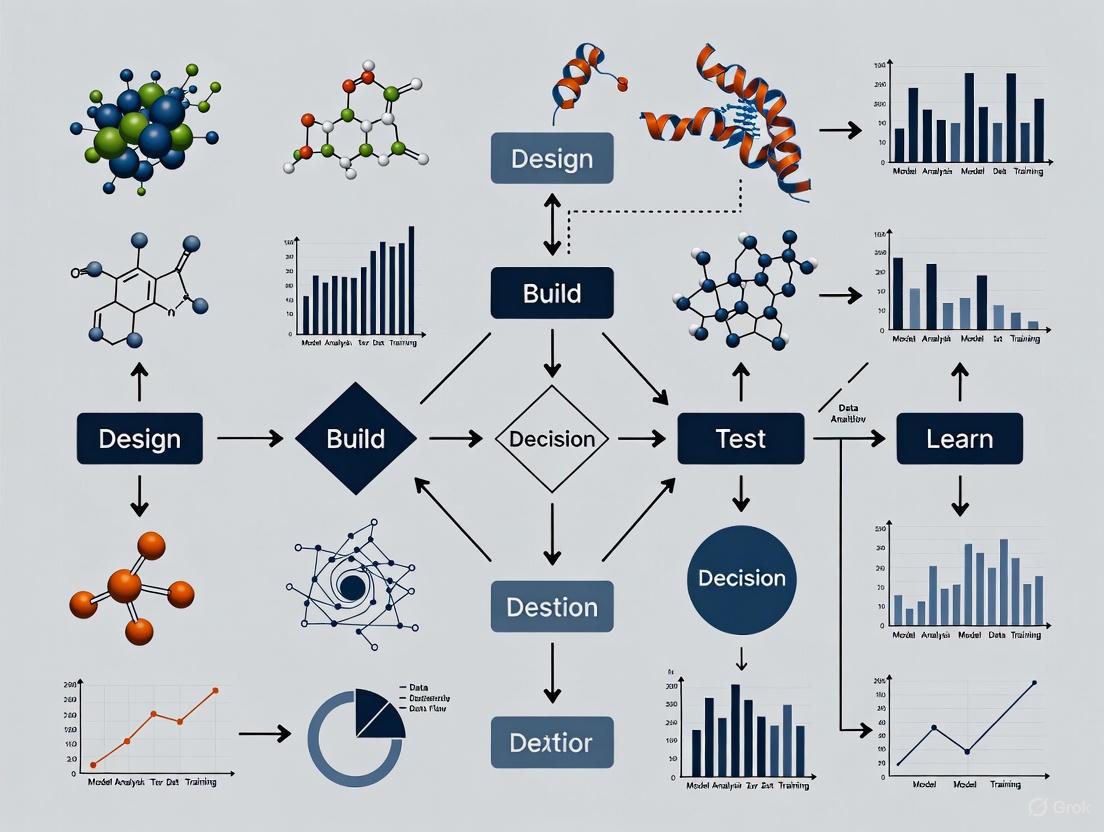
This article explores the transformative integration of machine learning (ML) into the Design-Build-Test-Learn (DBTL) cycle, a core framework in synthetic biology and metabolic engineering.
AI-Driven DBTL Cycles: Accelerating Synthetic Biology and Biomanufacturing with Machine Learning
Abstract
This article explores the transformative integration of machine learning (ML) into the Design-Build-Test-Learn (DBTL) cycle, a core framework in synthetic biology and metabolic engineering. Aimed at researchers and drug development professionals, it details how ML is reshaping this iterative process into a more predictive and automated workflow. We cover foundational concepts like the paradigm shift to a 'Learn-Design-Build-Test' (LDBT) model, methodological advances combining ML with high-throughput cell-free testing and automated biofoundries, strategies for troubleshooting data and model limitations, and finally, a validation of these approaches through compelling case studies in enzyme and metabolic pathway engineering. The synthesis of these elements points towards a future of self-driving laboratories capable of unprecedented acceleration in biological design.
From DBTL to LDBT: A Paradigm Shift in Biological Engineering
Deconstructing the Traditional Design-Build-Test-Learn (DBTL) Cycle
The Design-Build-Test-Learn (DBTL) cycle represents a cornerstone framework in synthetic biology and metabolic engineering, providing a systematic, iterative methodology for developing and optimizing biological systems. This cyclic process enables researchers to engineer microorganisms for specific functions, such as producing valuable pharmaceuticals, biofuels, or specialty chemicals. The traditional DBTL approach begins with the rational design of biological components, followed by physical assembly and construction of genetic circuits, experimental testing of the constructed systems, and finally, analysis and learning from the generated data to inform the next design iteration [1] [2].
Within the context of modern bioengineering research, particularly in machine learning-driven optimization, the traditional DBTL framework is undergoing significant transformation. The integration of artificial intelligence and automation technologies is reshaping each phase of the cycle, enabling more predictive design, accelerated construction, high-throughput testing, and data-driven learning. This deconstruction examines the fundamental components of the traditional DBTL cycle, its evolution into next-generation paradigms, and the practical methodologies implementing these frameworks for advanced strain optimization and biological system engineering.
The Traditional DBTL Framework
The traditional DBTL cycle operates as a sequential, iterative process with distinct phases, each contributing to the progressive refinement of biological systems.
Phase 1: Design
The Design phase involves specifying the genetic elements and regulatory components required to achieve a desired biological function. This stage relies heavily on domain expertise, prior knowledge, and computational tools to model system behavior. Researchers design DNA constructs by selecting appropriate promoters, ribosomal binding sites (RBS), coding sequences, and terminators, often focusing on modular components that can be interchangeably assembled [1] [2]. In traditional metabolic engineering, this phase typically involves:
- Pathway Identification: Selecting enzymatic steps to convert substrates to desired products
- Component Selection: Choosing genetic parts with known characteristics
- Rational Engineering: Applying biological knowledge to predict beneficial modifications
Phase 2: Build
The Build phase encompasses the physical construction of the designed genetic systems. This involves DNA synthesis, assembly into plasmids or other vectors, and introduction into host organisms. Traditional building methods include:
- Molecular Cloning: Restriction enzyme-based assembly or Gibson assembly
- Plasmid Construction: Assembling genetic circuits in appropriate vectors
- Host Transformation: Introducing constructed plasmids into microbial chassis such as Escherichia coli or Pseudomonas putida [3]
Manual cloning approaches, while effective, often create bottlenecks in throughput and reproducibility, limiting the scale of combinatorial testing possible within a single DBTL cycle [2].
Phase 3: Test
The Test phase involves experimental characterization of the built biological systems to evaluate their performance against predefined metrics. This typically includes:
- Cultivation Experiments: Growing engineered strains under controlled conditions
- Product Quantification: Measuring titers, yields, and productivity of target compounds
- Functional Assays: Assessing whether the genetic circuit operates as intended [1]
In traditional workflows, testing is often low- to medium-throughput, relying on flask cultivations or small-scale bioreactors with analytical techniques like HPLC or mass spectrometry for metabolite detection and quantification.
Phase 4: Learn
The Learn phase focuses on analyzing experimental data to extract insights about system behavior and identify modifications for subsequent cycles. Traditional learning approaches include:
- Statistical Analysis: Identifying correlations between genetic modifications and performance
- Hypothesis Generation: Formulating biological explanations for observed behaviors
- Design Refinement: Determining which components to modify in the next iteration [1]
This phase typically relies heavily on researcher intuition and domain expertise, with limited computational support for predicting the outcomes of proposed modifications.
Evolution Toward Next-Generation DBTL Frameworks
The integration of machine learning and automation technologies has driven significant evolution in the traditional DBTL cycle, leading to more efficient and predictive frameworks.
The Knowledge-Driven DBTL Cycle
Recent advances incorporate upstream in vitro investigations to inform the initial design phase, creating a "knowledge-driven" DBTL approach. This methodology uses cell-free transcription-translation systems to rapidly prototype pathway components before committing to full cellular engineering [1]. As demonstrated in dopamine production optimization in E. coli, this approach involves:
- In Vitro Pathway Characterization: Testing enzyme expression and function in cell lysate systems
- RBS Engineering: Using ribosomal binding site libraries to fine-tune translation efficiency
- High-Throughput Screening: Rapidly assessing numerous genetic variants [1]
This knowledge-driven strategy achieved a 2.6 to 6.6-fold improvement in dopamine production over previous state-of-the-art approaches, highlighting the power of incorporating mechanistic understanding early in the DBTL cycle [1].
The LDBT Paradigm Shift
A more radical transformation proposes reordering the cycle entirely to LDBT (Learn-Design-Build-Test), where machine learning precedes initial design. This paradigm leverages:
- Protein Language Models: Tools like ESM and ProGen trained on evolutionary relationships in protein sequences
- Structure-Based Design: Algorithms such as MutCompute and ProteinMPNN that predict sequences folding into desired structures
- Zero-Shot Prediction: Generating functional protein variants without additional experimental training data [4]
This approach is particularly powerful when combined with cell-free expression systems that enable rapid testing of computationally generated designs, potentially collapsing multiple iterative cycles into a single pass through the LDBT framework [4].
Automated and Semi-Automated DBTL Implementations
The integration of automation throughout the DBTL cycle significantly enhances throughput and reproducibility. Key advancements include:
- Biofoundries: Facilities integrating laboratory automation for high-throughput genetic engineering
- Liquid Handling Robots: Enabling parallel assembly and testing of numerous variants
- Microfluidics: Allowing ultra-high-throughput screening of enzymatic reactions [4] [5]
In medium optimization for flaviolin production in Pseudomonas putida, a semi-automated DBTL pipeline incorporating active learning identified sodium chloride as a critical, previously overlooked factor, leading to 60-70% increases in titer and a 350% improvement in process yield [6].
Quantitative Analysis of DBTL Applications
Table 1: Performance Metrics from DBTL Applications in Metabolic Engineering
| Application | Host Organism | Target Compound | Performance Improvement | Key DBTL Enhancement |
|---|---|---|---|---|
| Dopamine production [1] | Escherichia coli | Dopamine | 69.03 ± 1.2 mg/L (2.6 to 6.6-fold increase) | Knowledge-driven DBTL with RBS engineering |
| Flaviolin production [6] | Pseudomonas putida | Flaviolin | 60-70% titer increase, 350% process yield | Machine learning-led media optimization |
| Biosensor refactoring [5] | Escherichia coli | Biosensor performance | Improved performance and compatibility | Automated testing and characterization |
| 3-HB production [4] | Clostridium | 3-Hydroxybutyrate | 20-fold improvement | iPROBE pathway prototyping |
Table 2: Comparison of Traditional and Enhanced DBTL Approaches
| DBTL Phase | Traditional Approach | Enhanced Approach | Key Technologies |
|---|---|---|---|
| Design | Rational design based on literature | Predictive computational models | Machine learning, protein language models, kinetic modeling [4] [7] |
| Build | Manual molecular cloning | Automated DNA assembly | Biofoundries, liquid handling robots, high-throughput cloning [2] [5] |
| Test | Flask-scale cultivations | High-throughput screening | Cell-free systems, microfluidics, automated analytics [1] [4] |
| Learn | Statistical analysis, researcher intuition | Machine learning, data-driven modeling | Active learning, explainable AI, automated recommendation algorithms [7] [6] |
Experimental Protocols for DBTL Implementation
Protocol 1: Knowledge-Driven DBTL for Metabolic Pathway Optimization
This protocol outlines the methodology for implementing a knowledge-driven DBTL cycle with upstream in vitro investigation, as applied to dopamine production in E. coli [1].
Materials
- Bacterial Strains: Production host (e.g., E. coli FUS4.T2) and cloning strain (e.g., E. coli DH5α)
- Plasmids: pET system for gene storage, pJNTN for crude cell lysate system and library construction
- Media: 2xTY medium, SOC medium, minimal medium with appropriate supplements
- Buffers: Phosphate buffer (50 mM, pH 7), reaction buffer for crude cell lysate system
- Enzymes: 4-hydroxyphenylacetate 3-monooxygenase (HpaBC), L-DOPA decarboxylase (Ddc)
Methods
In Vitro Pathway Characterization:
- Prepare crude cell lysate from production host
- Test enzyme expression levels in cell-free system
- Measure substrate conversion rates for different enzyme ratios
- Identify optimal expression balance for maximal flux
In Vivo Translation:
- Design RBS library based on in vitro results
- Vary Shine-Dalgarno sequence while maintaining secondary structure
- Construct plasmid libraries with different RBS strengths
- Transform into production host
High-Throughput Screening:
- Cultivate variants in 96-well format
- Induce expression with IPTG
- Measure product formation via HPLC or colorimetric assays
- Select top performers for further analysis
Learning and Iteration:
- Analyze correlation between RBS strength and production
- Identify potential bottlenecks in pathway
- Design next-generation libraries targeting identified limitations
Protocol 2: Machine Learning-Led Media Optimization
This protocol details the semi-automated DBTL process for media optimization, as implemented for flaviolin production in P. putida [6].
Materials
- Bacterial Strain: Pseudomonas putida KT2440
- Media Components: Carbon sources, nitrogen sources, salts, trace elements
- Automation Equipment: Liquid handling robot, plate readers, automated bioreactors
- Analytical Instruments: HPLC, spectrophotometer
Methods
Initial Design of Experiments:
- Define media component space using fractional factorial design
- Select initial set of conditions covering design space
- Program liquid handling robot for media preparation
Automated Build Phase:
- Prepare media variants in 96-well format using automation
- Inoculate with standardized preculture
- Transfer plates to controlled incubation system
High-Throughput Testing:
- Monitor growth curves via automated plate reading
- Sample at appropriate time points for product quantification
- Analyze flaviolin concentration using spectrophotometric methods
Active Learning Cycle:
- Train machine learning models on collected data
- Use explainable AI techniques to identify key components
- Select next media conditions predicted to improve performance
- Iterate through additional DBTL cycles until performance plateaus
Workflow Visualization
DBTL Cycle Evolution: Traditional vs. Enhanced Approaches
LDBT Paradigm: Machine Learning-First Approach
Essential Research Reagent Solutions
Table 3: Key Research Reagents and Materials for DBTL Implementation
| Reagent/Material | Function | Application Example |
|---|---|---|
| Cell-Free Expression Systems | Rapid in vitro prototyping of pathways without cellular constraints | Testing enzyme expression levels before in vivo implementation [1] [4] |
| RBS Library Variants | Fine-tuning translation initiation rates for pathway balancing | Optimizing relative expression of dopamine pathway enzymes [1] |
| Automated DNA Assembly Kits | High-throughput construction of genetic variants | Building large promoter-RBS-gene combinatorial libraries [2] [5] |
| Specialized Production Media | Supporting optimal titers, rates, and yields | Machine learning-optimized media for flaviolin production [6] |
| Analytical Standards | Quantifying pathway intermediates and products | HPLC calibration for dopamine and L-DOPA quantification [1] |
The deconstruction of the traditional Design-Build-Test-Learn cycle reveals a dynamic framework in transition, moving from sequential, empirically-driven iterations toward integrated, predictive workflows enhanced by machine learning and automation. The knowledge-driven DBTL approach demonstrates how upstream in vitro investigation can accelerate strain development, while the LDBT paradigm represents a fundamental rethinking that places machine learning at the forefront of biological design.
For researchers pursuing machine learning-driven optimization of DBTL cycles, key considerations include the selection of appropriate model organisms, implementation of high-throughput building and testing methodologies, application of explainable AI techniques for extracting biological insights, and development of closed-loop experimental systems that seamlessly integrate computational design with physical experimentation. As these technologies mature, the DBTL cycle promises to evolve from a sequential, iterative process toward a more parallelized, predictive engineering discipline capable of addressing complex biological design challenges with unprecedented efficiency and success.
The Design-Build-Test-Learn (DBTL) cycle is a cornerstone methodology in synthetic biology and biological engineering, providing a systematic, iterative framework for developing and optimizing biological systems [8]. This cyclical process begins with Design, where researchers define objectives and create a plan for the genetic system based on a specific hypothesis or prior knowledge. This is followed by the Build phase, where theoretical designs are translated into physical reality through molecular cloning and transformation into host organisms. The Test phase involves quantitative characterization of the built system through various assays. Finally, in the Learn phase, data from testing is analyzed to gain insights that inform the next Design phase, creating a continuous loop of improvement [8]. While this framework has proven valuable, the traditional implementation of DBTL cycles faces significant bottlenecks that limit the pace of biological innovation, particularly in fields like drug development where speed is critical.
Quantitative Analysis of DBTL Bottlenecks
The resource-intensive nature of classic DBTL cycles becomes evident when examining the experimental requirements for optimizing even relatively simple biological systems. The table below summarizes key quantitative challenges identified from recent studies.
Table 1: Quantitative Bottlenecks in Classic DBTL Cycles
| Bottleneck Category | Traditional Approach Requirements | Example from Literature | Impact |
|---|---|---|---|
| Combinatorial Explosion in Media Optimization | Testing 10 components at 5 levels requires 510 (9,765,625) experiments for full combinatorial testing [9] | Flaviolin production in Pseudomonas putida [9] | Makes comprehensive optimization practically impossible |
| Strain Construction & Cloning Time | 2-3 weeks for DNA synthesis and delivery [10] | Cell-free biosensor development [10] | Significantly slows iteration speed |
| Pathway Optimization Complexity | Multiple plasmid combinations and concentration ratios requiring extensive screening [10] | Arsenic biosensor development with sense/reporter plasmids [10] | Exponential increase in experimental conditions |
| Limited Predictive Capability | Initial cycles often start without prior knowledge, requiring multiple iterations [1] | Dopamine production in E. coli [1] | Trial-and-error approach consumes resources |
The challenges extend beyond mere numbers to fundamental methodological limitations. Traditional approaches often rely on One-Factor-at-a-Time (OFAT) experimentation, which fails to capture interactions between components and can lead to suboptimal solutions [9]. Furthermore, the Build and Test phases are particularly slow, relying on time-consuming processes such as molecular cloning, cellular transformation, and cell culturing that can take days or weeks [11] [12]. This slow iteration speed means that complex biological engineering projects may require months or years to complete just a handful of DBTL cycles, dramatically slowing progress in research and development.
Detailed Experimental Analysis: A Case Study in Media Optimization
Protocol: Machine Learning-Led Semi-Automated Media Optimization
Recent research demonstrates a protocol for overcoming DBTL bottlenecks in media optimization for secondary metabolite production [9]. The following detailed methodology highlights both the traditional limitations and modern solutions:
Experimental System Setup: Engineered Pseudomonas putida KT2440 producing flaviolin was used as the model system. Flaviolin serves as a proxy for malonyl-CoA, a precursor to polyketides and fatty acids with applications in pharmaceutical development [9].
Media Component Selection: Fifteen media components were selected for optimization, with 12-13 variable components and 2-3 fixed components. Traditional OFAT approach for this system would require testing 510 combinations for just 10 components at 5 levels each [9].
Semi-Automated Pipeline Implementation:
- Automated Media Preparation: A liquid handler combined stock solutions to create media with desired concentrations for each design, dispensing them in triplicate/quadruplicate in 48-well plates.
- Inoculation and Cultivation: Plates were inoculated with engineered P. putida and cultivated in an automated BioLector platform for 48 hours with tight control of O₂ transfer, shake speed, and humidity.
- High-Throughput Analytics: Flaviolin in culture supernatant was measured using absorbance at 340 nm as a proxy, enabling rapid phenotype acquisition.
- Data Management: Production data and media designs were stored in the Experiment Data Depot (EDD) for machine learning access.
- Active Learning Integration: The Automated Recommendation Tool (ART) collected data and recommended improved media designs, which were automatically translated to liquid handler instructions via a Jupyter notebook [9].
Key Reagents and Equipment:
- Pseudomonas putida KT2440 engineered for flaviolin production
- 15 media components (including NaCl, carbon sources, nitrogen sources, trace elements)
- Automated liquid handler (e.g., Beckman Coulter Biomek)
- BioLector automated cultivation system
- Microplate reader for Abs₃₄₀ measurements
- Experiment Data Depot (EDD) for data management
- Automated Recommendation Tool (ART) for active learning
Table 2: Research Reagent Solutions for Media Optimization Studies
| Reagent/Equipment | Function/Application | Specific Example |
|---|---|---|
| Automated Liquid Handler | Precise dispensing of media components and reagents | Beckman Coulter Biomek series [9] |
| BioLector Microbioreactor | Automated cultivation with controlled parameters (O₂, humidity, temperature) | m2p-labs BioLector [9] |
| Experiment Data Depot (EDD) | Centralized data management for DBTL cycles | EDD database system [9] |
| Cell-Free Protein Synthesis System | Rapid testing without cellular constraints | E. coli and HeLa-based CFPS systems [12] |
| Active Learning Algorithms | Intelligent selection of next experiments to run | Automated Recommendation Tool (ART) [9] |
Results and Workflow Visualization
The implementation of this semi-automated, machine learning-led approach yielded significant improvements over traditional methods. In three different optimization campaigns for flaviolin production, the system achieved 60% and 70% increases in titer, and a 350% increase in process yield [9]. Surprisingly, explainable AI techniques identified common salt (NaCl) as the most important component influencing production, with optimal concentrations near the tolerance limits of P. putida – a counterintuitive finding that might have been missed with traditional OFAT approaches [9].
The workflow demonstrates how integrating automation and machine learning addresses classic DBTL bottlenecks:
Diagram 1: ML-accelerated DBTL workflow for media optimization. This integrated approach demonstrates how automation and machine learning address traditional bottlenecks at each stage of the cycle.
Emerging Solutions: Machine Learning and Automation
The Shift to LDBT: Learning-Design-Build-Test
A transformative paradigm emerging in the field is the LDBT cycle, which repositions "Learning" to the beginning of the process [11] [13]. This approach leverages machine learning models that have been pre-trained on vast biological datasets to make zero-shot predictions about protein structures, functions, and optimal sequences before any physical experiments are conducted [11]. Protein language models such as ESM and ProGen, trained on evolutionary relationships between millions of protein sequences, can predict beneficial mutations and infer protein functions without additional training [11]. Similarly, structure-based tools like ProteinMPNN and AlphaFold enable sophisticated protein design with significantly higher success rates [11].
Protocol: Fully Automated DBTL for Cell-Free Protein Synthesis
A recent breakthrough in automated DBTL implementation demonstrates the optimization of colicin M and E1 production in cell-free systems [12]:
Design Phase Automation: All Python scripts for experimental design were generated by ChatGPT-4 from non-specialist prompts without manual code editing, dramatically reducing the coding expertise and time traditionally required.
Build Phase Implementation: A fully automated liquid handling system prepares cell-free reactions using:
- E. coli-based CFPS system derived from BL21 Star (DE3) strains
- HeLa-based CFPS system for eukaryotic expression capability
- DNA templates for colicin M (29 kDa) and colicin E1 (58 kDa)
- Energy solutions (creatine phosphate-based energy regeneration)
- Amino acid mixtures and nucleotide triphosphates
Test Phase Configuration:
- Microplate reader with fluorescence and absorbance detection
- Real-time protein synthesis monitoring using GFP fusions
- Endpoint antimicrobial activity assays against sensitive E. coli strains
- Quantification of soluble protein yield via SDS-PAGE and densitometry
Learn Phase with Active Learning:
- Cluster Margin (CM) sampling algorithm selects experiments that are both uncertain and diverse
- Gaussian process models predict protein yield based on CFPS composition
- Automated retraining after each batch of experiments
- Integration with Galaxy platform for FAIR (Findable, Accessible, Interoperable, Reusable) data compliance [12]
This automated platform achieved a 2- to 9-fold increase in colicin yield in just four DBTL cycles, demonstrating the dramatic acceleration possible through integrated automation and machine learning [12].
Knowledge-Driven DBTL for Metabolic Engineering
An alternative approach to reducing DBTL bottlenecks is the knowledge-driven DBTL cycle, which incorporates upstream in vitro investigations to inform the initial design phase [1]. In developing an optimized dopamine production strain in E. coli, researchers first used cell-free transcription-translation systems to test different relative enzyme expression levels before moving to in vivo engineering [1]. This strategy provided mechanistic insights into pathway bottlenecks and informed rational RBS engineering, ultimately achieving 2.6 to 6.6-fold improvements over state-of-the-art dopamine production strains [1].
Diagram 2: Classic DBTL bottlenecks versus modern solutions. The traditional cycle (red) suffers from limited knowledge and manual processes, while modern approaches (green) leverage machine learning and automation to accelerate each phase.
The classic DBTL cycle, while methodologically sound, faces fundamental limitations in its traditional implementation. The combinatorial explosion of biological design space, time-consuming manual processes in building and testing phases, and limited predictive capability collectively create significant bottlenecks that slow research progress and consume substantial resources. However, emerging methodologies demonstrate that these limitations can be effectively addressed through integrated approaches combining machine learning, automation, and strategic experimental design. The implementation of active learning algorithms, automated liquid handling, high-throughput analytics, and computational predictive models can dramatically accelerate DBTL cycles, reducing optimization timelines from months to weeks while improving overall outcomes. For researchers and drug development professionals, adopting these advanced DBTL methodologies represents a critical pathway to accelerating biological innovation and overcoming traditional constraints in synthetic biology and metabolic engineering.
Introducing the Machine Learning Revolution in Synthetic Biology
The convergence of machine learning (ML) and synthetic biology is revolutionizing how we understand, design, and engineer biological systems. This integration is transforming the traditional Design-Build-Test-Learn (DBTL) cycle from a slow, iterative process into a rapid, predictive, and automated pipeline. ML algorithms are now capable of navigating the vast complexity of biological design spaces, making accurate predictions about system behavior, and optimizing genetic constructs with minimal human intervention. This paradigm shift is accelerating the development of novel therapeutics, sustainable biomaterials, and efficient bioprocesses, framing synthetic biology not just as an engineering discipline but as an information science. This article details the specific applications and experimental protocols underpinning this machine learning revolution, providing researchers with the tools to implement these advanced techniques in their own automated DBTL cycle optimization research.
ML Applications Across the Automated DBTL Cycle
The application of machine learning is enhancing every stage of the DBTL cycle, creating a more integrated and efficient workflow for bioengineering.
Design: Predictive Modeling andDe NovoGeneration
In the Design phase, ML models are used to predict the function of genetic parts and systems before physical construction, and can even generate entirely new biological sequences.
- Genomic Foundation Models: Large-scale AI models, such as Evo 2, are trained on DNA sequences from over 100,000 species. This provides a "generalist understanding of the tree of life" that can be fine-tuned for tasks like predicting the effects of genetic mutations or designing new genomes, including ones as long as simple bacterial genomes [14].
- Protein and Molecule Design: Deep learning models enable de novo protein design and the creation of new chemical entities for drug discovery. For instance, automated workflows can generate and computationally profile billions of novel molecular structures to identify promising drug candidates in a matter of days [15] [16].
- Biological Circuit Design: AI-driven tools contribute to increased efficiency and precision in designing complex biological circuits, such as those used in DNA-based neural networks [15].
Build: Optimizing Bioprocesses
In the Build phase, ML shifts from digital design to optimizing the physical construction of biological systems, particularly in biomanufacturing.
- Bioprocess Optimization: ML algorithms, including artificial neural networks (ANNs), are used to optimize critical bioprocesses like Chinese Hamster Ovary (CHO) cell cultivation. One study demonstrated that an ANN could suggest cultivation conditions that increased final monoclonal antibody titers by up to 48% [17].
- Supply Chain and Manufacturing: AI and ML enhance biomanufacturing through predictive maintenance, real-time demand forecasting, and inventory optimization, minimizing waste and ensuring timely delivery of products [18].
Test: Enhanced Analysis and Monitoring
The Test phase is augmented by ML's ability to analyze complex datasets and enable real-time monitoring.
- Clinical Trial Optimization: In biopharma, ML models analyze Electronic Health Records (EHRs) to streamline patient recruitment for clinical trials, predict patient dropouts, and identify diverse participant cohorts. This can cut trial duration by up to 10% [18].
- Real-Time Bioprocess Monitoring: Digital twins and soft-sensing technologies allow for real-time control and increased operational precision in complex bioprocess environments, such as fermentation in biorefineries [19].
Learn: Creating Molecular Memory
The Learn phase is the most advanced, where ML principles are being embedded into molecular systems themselves.
- Autonomous Molecular Learning: Groundbreaking research has demonstrated a DNA-based neural network that can autonomously perform supervised learning in vitro. The system uses DNA strand displacement to learn from molecular training examples, forming stable molecular memories that it uses to classify new patterns without external computation [20] [21].
Table 1: Quantitative Impact of Machine Learning on Key Biotechnological Applications
| Application Area | Key Metric | Impact of ML | Source |
|---|---|---|---|
| Drug Discovery | Proportion of new drugs discovered with AI | Estimated 30% by 2025 | [18] |
| CHO Cell Bioprocessing | Increase in final mAb titer | Up to 48% | [17] |
| Clinical Trials | Reduction in trial duration | Up to 10% | [18] |
| DNA Neural Networks | Pattern classification complexity | 100-bit, two-class system | [20] |
Experimental Protocols & Methodologies
Protocol: Optimizing a CHO Cell Cultivation Process with an Artificial Neural Network
This protocol details the use of an ANN to improve cell growth and recombinant protein yield in an industrial CHO cell process [17].
1. Objective: To increase monoclonal antibody (mAb) titer in a CHO cell cultivation process by using an ANN to identify optimized cultivation conditions.
2. Reagents and Equipment:
- CHO cell line expressing the target mAb
- Standard cell culture media and bioreactors
- Analytics for measuring cell density, viability, and mAb titer (e.g., HPLC, ELISA)
- Computing environment for machine learning (e.g., Python with TensorFlow/PyTorch)
3. Procedure:
- Step 1: Data Collection. Compile a comprehensive dataset from historical and newly generated CHO cell cultivation runs. Key parameters include:
- Input variables: Temperature, pH, dissolved oxygen, nutrient concentrations, feeding schedules.
- Output variables: Final cell density, viability, and mAb titer.
- Step 2: Model Selection and Training.
- Choose an ANN architecture suitable for regression analysis.
- Split the dataset into training (e.g., 80%) and validation (e.g., 20%) sets.
- Train the ANN to predict the output variables (cell growth and mAb titer) based on the input process parameters.
- Step 3: In-Silico Optimization.
- Use the trained ANN to run simulations and predict the performance outcome of thousands of untested condition combinations.
- Identify the set of input parameters that the model predicts will yield the highest mAb titer.
- Step 4: Experimental Validation.
- Perform new cultivation runs using the ML-suggested optimal conditions.
- Measure the final mAb titer and cell growth and compare them to the model's predictions and the performance of the previous standard protocol.
4. Expected Outcome: The validation experiments should confirm that the ML-optimized process leads to a statistically significant increase in final mAb titer compared to the pre-optimization process [17].
Protocol: Implementing a DNA Neural Network for AutonomousIn VitroLearning
This protocol describes the setup for a DNA-based neural network that learns to classify molecular patterns through supervised learning, without external computation [20] [21].
1. Objective: To demonstrate that a molecular system can autonomously learn from training examples and use this memory to classify subsequent test data.
2. Research Reagent Solutions:
Table 2: Key Reagents for DNA Neural Network Implementation
| Reagent / Component | Function | Key Characteristic |
|---|---|---|
| Learning Gates | Stoichiometrically produces activator signals upon receiving input and label strands. | Engineered for irreversibility via a stable hairpin structure to prevent memory loss. |
| Activatable Weight Gates | Catalytically produces a weighted input signal; represents the network's connections. | Activated only by a specific combination of input bit and memory class for high specificity. |
| Activator Molecules (Act_i,j) | The "memory" of the system; carries both input bit (i) and class (j) information. | Transfers information from learning gates to weight gates. |
| Input Strands | Represents the data pattern to be classified (e.g., 100-bit pattern). | Shares the same molecular 'language' as the training data. |
| Label Strands | Represents the correct class for a given input pattern during training. | Consumed during the learning process. |
3. Procedure:
- Step 1: Network Assembly.
- Design and synthesize the DNA strands for all learning gates and activatable weight gates required for the classification task (e.g., a 100-bit, two-class system involves over 700 distinct DNA species).
- Step 2: Training Phase.
- Sequentially introduce training examples into the system. Each example consists of a mixture of input strands (representing the pattern) and label strands (representing the correct class).
- The learning gates bind to the input and label, irreversibly producing specific activator molecules.
- These activator molecules bind to and permanently activate their corresponding weight gates, building up the network's memory matrix over multiple examples.
- Step 3: Memory Transfer.
- Connect the memory device (containing the activated weights) to the processor network. The concentrations of activator molecules now represent the learned weights.
- Step 4: Testing Phase.
- Introduce test input patterns (without labels) into the system.
- The active weight gates interact with the test inputs to compute a weighted sum for each output class.
- A winner-take-all competition is triggered, where the output with the largest sum is amplified, producing a binary classification signal.
4. Expected Outcome: The system should correctly classify a majority of the test cases based on the patterns it learned during the training phase, demonstrating stable, autonomous molecular learning [20].
The Scientist's Toolkit: Research Reagent Solutions
Table 3: Essential Research Reagents for ML-Driven Synthetic Biology
| Category | Specific Tool / Reagent | Research Function |
|---|---|---|
| AI/ML Software Platforms | Schrödinger's AutoDesigner | Enables de novo molecular design and large-scale virtual compound screening for drug discovery [16]. |
| AI/ML Software Platforms | Evo (Evo 1, Evo 2) | A foundation model for biology that predicts effects of genetic mutations and designs new genomes [14]. |
| Specialized DNA Components | Activatable Weight Gates (DNA-based) | Serves as a programmable connection in a molecular neural network, performing multiplication and signal amplification [20]. |
| Specialized DNA Components | Learning Gates (DNA-based) | The core of molecular learning; writes training examples into the network's memory by producing activator molecules [20] [21]. |
| Cell Culture & Bioprocessing | CHO Cell Lines | Industry-standard host cells for producing recombinant therapeutic proteins; optimized using ML models [17]. |
| Cell Culture & Bioprocessing | Advanced Bioreactors with Sensors | Generate real-time data on process parameters (pH, O2, nutrients) for training ML models on bioprocess optimization [19]. |
The classical Design-Build-Test-Learn (DBTL) cycle has long served as the foundational paradigm for synthetic biology and biological engineering. However, this iterative process often encounters significant bottlenecks in its Build and Test phases, particularly when reliant on in vivo systems and traditional cloning methods. These limitations become particularly constraining in the context of modern drug development and bio-manufacturing, where rapid iteration is essential.
We propose a paradigm shift to the LDBT cycle (Learn-Design-Build-Test), where machine learning (ML) precedes biological design [4] [22]. This reordering leverages the predictive power of pre-trained models on vast biological datasets to generate high-probability-of-success designs from the outset. When integrated with rapid cell-free testing platforms, this approach creates a more linear, efficient pathway from concept to functional biological system, potentially achieving in a single cycle what previously required multiple DBTL iterations [4].
This Application Note details the experimental frameworks and protocols for implementing the LDBT model, with a specific focus on its application in automated drug development research.
Core LDBT Framework and Workflow
The LDBT model fundamentally restructures the bioengineering workflow by initiating with a computational Learning phase. This foundational step utilizes machine learning models trained on evolutionary, structural, and functional biological data to inform the subsequent design of biological parts and systems [4].
The Conceptual Workflow
The following diagram illustrates the core logical flow of the LDBT cycle, highlighting its iterative, learning-driven nature.
Key Advantages Over DBTL
- Predictive Power: Machine learning models, including protein language models (e.g., ESM, ProGen) and structure-based tools (e.g., ProteinMPNN, MutCompute), can perform zero-shot prediction of protein function, stability, and expression, de-risking the initial design [4].
- Speed and Scale: Cell-free expression systems (CFPS) bypass cell culture, enabling protein expression and testing in hours rather than days, and are easily integrated with automation for megascale data generation [4] [22].
- Data Efficiency: Active learning processes, where the ML algorithm selects the most informative experiments to run, dramatically reduce the number of experiments needed to find optimal solutions [9].
Experimental Protocols for LDBT Implementation
This section provides detailed methodologies for establishing an integrated LDBT pipeline for protein or pathway engineering.
Protocol 1: Machine Learning-Guided Protein Design
This protocol utilizes pre-trained models for zero-shot design or fine-tunes them on specific protein families.
3.1.1 Objectives To generate functional protein variant sequences with optimized properties (e.g., stability, activity, solubility) using machine learning before any physical DNA synthesis.
3.1.2 Materials and Reagents
- Hardware: Computer workstation with GPU acceleration (recommended).
- Software & Models:
- Input Data: Wild-type protein sequence (FASTA) and/or 3D structure (PDB file).
3.1.3 Procedure
- Problem Formulation: Define the target property (e.g., "improved thermostability at 60°C," "increased kcat for substrate X").
- Model Selection:
- For zero-shot design based on evolutionary information, use a protein language model (e.g., ESM).
- For structure-based sequence design, use ProteinMPNN, providing a backbone structure.
- For mutation effect prediction, use tools like MutCompute or Stability Oracle.
- In Silico Screening:
- Generate a library of candidate sequences (10^3 - 10^6 variants).
- Score and rank all candidates using the predictive model(s).
- Filter the top candidates (e.g., 100-500 variants) using orthogonal computational filters (e.g., aggregation propensity, solubility predictors).
- Output: A finalized list of DNA sequences for synthesis, representing the highest-confidence designs.
Protocol 2: High-Throughput Build & Test via Cell-Free Protein Synthesis
This protocol outlines a semi-automated pipeline for rapid expression and testing of ML-designed variants, adapted from published workflows [22] [9].
3.2.1 Objectives To rapidly express and characterize hundreds to thousands of protein variants or pathway enzymes without in vivo cloning and culture.
3.2.2 Materials and Reagents
- Research Reagent Solutions:
3.2.3 Procedure
- DNA Template Preparation:
- Synthesize gene variants as linear DNA fragments via PCR or as array-synthesized oligonucleotides pooled and cloned. For cell-free systems, linear templates are often sufficient [22].
- Reaction Assembly:
- Use an automated liquid handler to mix cell-free master mix with individual DNA templates in a 48-, 96-, or 384-well plate.
- Include positive and negative controls (e.g., template for a known fluorescent protein, no-template control).
- Expression and Incubation:
- Incubate plates in a controlled environment (e.g., 30°C for 4-24 hours) in an automated shaker/incubator like a BioLector, which can monitor biomass or fluorescence in real-time [9].
- Testing and Assay:
- For expression yield: Use SDS-PAGE, Western Blot, or fluorescent fusion tags.
- For enzymatic activity: Add substrate linked to a colorimetric or fluorescent readout directly to the reaction.
- For pathway output: Use HPLC or GC-MS on reaction supernatants for authoritative validation of yields [9].
- Data Collection and Curation:
- Automate data extraction from plate readers and instruments.
- Store all data (designs, sequences, and results) in a structured database like the Experiment Data Depot (EDD) for traceability and model retraining [9].
Integrated LDBT Technical Pipeline
The practical implementation of the LDBT cycle involves a tight integration of computational and physical workflows, as shown in the following technical pipeline.
Case Study & Performance Data
Media Optimization for Flaviolin Production inP. putida
A 2025 study demonstrated the power of the LDBT approach for optimizing culture media, a critical but often slow step in bioprocess development [9]. The goal was to maximize flaviolin production.
4.1.1 LDBT Implementation
- Learn: The Automated Recommendation Tool (ART), an active learning ML algorithm, was used to select the most informative media compositions to test next based on previous results.
- Design: ART recommended media designs with varying concentrations of 12-13 components.
- Build & Test: A semi-automated pipeline was used, where a liquid handler prepared media, an automated bioreactor (BioLector) cultivated cells, and a microplate reader quantified flaviolin yield via absorbance [9].
4.1.2 Key Findings and Performance The application of this LDBT pipeline yielded significant performance enhancements across multiple optimization campaigns.
Quantitative Performance Improvements:
Optimization Campaign Metric Improvement Citation Campaign 1 Flaviolin Titer +60% [9] Campaign 2 Flaviolin Titer +70% [9] Campaign 3 Process Yield +350% [9] - Key Insight: Explainable AI techniques identified sodium chloride (NaCl) as the most critical media component, with an optimal concentration near the tolerance limit of P. putida—a non-intuitive finding that traditional methods would likely have missed [9].
Regulatory Considerations for Drug Development
Integrating LDBT into regulatory submissions for drug development requires careful planning. The FDA's Drug Development Tool (DDT) qualification program provides a pathway for regulatory acceptance [23].
- Context of Use (CoU): Clearly define the specific manner and purpose of the LDTB-generated data in the drug development process (e.g., for patient stratification, as a biomarker, or for safety assessment) [23] [24].
- Early Engagement: Proactively consult with health authorities (e.g., FDA) during the development of an LDBT-derived endpoint to ensure alignment on validation requirements [24].
- Validation and Fit-for-Purpose: The level of validation for the ML model and the associated biological assay must be sufficient to support its CoU. This includes demonstrating analytical validation (reliability, accuracy) and clinical validation (association with clinical endpoints) [24].
- Real-World Example: The qualification of the "stride velocity 95th centile" as a primary endpoint for Duchenne Muscular Dystrophy studies by the EMA demonstrates the regulatory utility of digitally-derived endpoints, paving the way for similar acceptance of LDBT-generated evidence [24].
The Scientist's Toolkit: Essential Research Reagents & Platforms
Successful implementation of the LDBT model relies on a suite of computational and experimental tools.
| Tool Category | Example | Specific Function in LDBT |
|---|---|---|
| ML Protein Design | ESM-3, ProGen | Protein language models for zero-shot prediction and sequence generation [4]. |
| ML Protein Design | ProteinMPNN | Structure-based sequence design for fixed protein backbones [4]. |
| ML Protein Design | Stability Oracle, DeepSol | Predicts mutation effects on protein stability (ΔΔG) and solubility [4]. |
| Active Learning | Automated Recommendation Tool (ART) | Selects optimal experiments to run to maximize information gain and efficiency [9]. |
| Cell-Free System | E. coli Extract, PURExpress | Rapid, modular platform for protein expression without living cells [4] [22]. |
| Automation Hardware | Liquid Handling Robot | Enables high-throughput assembly of DNA constructs or cell-free reactions [22] [9]. |
| Automation Hardware | BioLector | Provides parallel, monitored microbioreactor cultivation with online fluorescence/OD measurements [9]. |
| Data Management | Experiment Data Depot (EDD) | Centralized database for storing and linking designs, builds, and test results [9]. |
The integration of Machine Learning (ML) into biological research has transformed our ability to decipher complex biological systems, accelerating discovery and innovation. ML is a branch of artificial intelligence focused on building computational systems that learn from data, enhancing their performance without explicit programming. A central goal of ML is to build models that effectively generalize from training data to new, unseen data, balancing prediction accuracy with model complexity to avoid overfitting or underfitting [25]. In the context of a broader thesis on optimizing the Design-Build-Test-Learn (DBTL) cycle, ML serves as a powerful engine for the "Learn" phase. It extracts meaningful patterns from high-throughput experimental data, informing subsequent cycles of design and building to streamline the development of biological products, such as novel enzymes or microbial production strains [1].
ML techniques are broadly categorized into supervised learning, which uses labeled data for tasks like classification and regression; unsupervised learning, which identifies underlying structures in unlabeled data; and reinforcement learning, where models learn through trial-and-error interactions with an environment [25]. This review focuses on the application of core ML concepts, specifically Protein Language Models (PLMs) and fitness predictors, which are increasingly critical for advancing rational bio-design and optimizing DBTL cycles in synthetic biology and drug development.
Core Machine Learning Concepts and Algorithms
Biologists can leverage several key ML algorithms to analyze complex datasets. The selection of an algorithm often depends on the specific biological question, the nature of the data, and the trade-off between model interpretability and predictive power.
Table 1: Key Machine Learning Algorithms for Biological Research
| Algorithm | Type | Key Principle | Typical Biological Applications |
|---|---|---|---|
| Ordinary Least Squares (OLS) | Supervised / Linear | Minimizes the sum of squared differences between observed and predicted values to find a best-fit line [25]. | Quantifying trait-fitness relationships, baseline statistical modeling. |
| Random Forest | Supervised / Ensemble | Constructs a multitude of decision trees at training time and outputs the mode of their classes or mean prediction [25]. | Genomic prediction, classifying phenotypes from gene expression data. |
| Gradient Boosting Machines | Supervised / Ensemble | Builds models sequentially, where each new model corrects errors made by the previous ones [25]. | Predicting fitness from gene expression, disease prognosis. |
| Support Vector Machines (SVM) | Supervised / Kernel-based | Finds a hyperplane in a high-dimensional space that best separates classes of data points [25]. | Protein subcellular localization, classifying tissue samples. |
Among these, ensemble methods like Random Forest and Gradient Boosting are particularly valued for their high predictive accuracy with complex biological data. For example, one study used ML models, including regularized regression, to predict fitness components (e.g., seed set) from gene expression data in Ivyleaf morning glory, identifying that genes related to photosynthesis, stress, and light responses were key predictors of fitness [26].
Protein Language Models (PLMs): Concepts and Applications
Foundations of Protein Language Models
Protein Language Models (PLMs) are a transformative application of deep learning at the intersection of natural language processing (NLP) and biology. The conceptual similarity between protein sequences and human language is the foundation of PLMs: just as sentences are linear chains of words, proteins are linear chains of 20 common amino acids [27]. This analogy allows powerful NLP models, particularly the Transformer architecture, to be applied to protein sequences. These models are trained on millions of protein sequences through self-supervised learning, learning to generate distributed embedded representations that encode semantic and structural information about proteins [27]. A landmark model, ESM-2 (Evolutionary Scale Modeling), demonstrates how scaling up model parameters and training data leads to emergent capabilities in predicting protein structure and function [27] [28].
PLMs can be categorized based on their underlying architecture:
- Encoder-only models (e.g., ESM, ProtBert): These models, akin to BERT in NLP, are designed to encode a protein sequence into a rich, contextual representation. They are excellent for tasks like function prediction, variant effect analysis, and structure prediction [27].
- Decoder-only models (e.g., ProtGPT2): These models, following the GPT paradigm, generate new protein sequences in an autoregressive manner. They are primarily used for de novo protein design [27] [29].
Applying PLMs in the DBTL Cycle
PLMs directly accelerate the "Design" and "Learn" phases of the DBTL cycle. In the Design phase, generative PLMs can create novel protein sequences tailored for a specific function. For instance, ProGen is a language model trained on 280 million protein sequences across thousands of families. When fine-tuned on lysozyme families, it generated artificial lysozymes that were functionally active, despite having sequences as low as 31.4% identical to natural proteins [29]. This showcases the potential for rapid in silico design of novel biocatalysts.
In the Learn phase, PLMs analyze experimental results to glean deeper insights. A key challenge, however, has been the "black box" nature of these models. A novel approach from MIT researchers uses sparse autoencoders to interpret what features a PLM uses for its predictions. This technique expands the model's internal representation, forcing it to use more "neurons," which ultimately makes individual nodes more interpretable. These nodes can then be linked to specific biological features, such as protein family or molecular function, providing novel biological insights and increasing trust in the model's predictions [28].
Figure 1: A simplified workflow of Protein Language Models (PLMs), showing how they are built and applied to different tasks that feed into the DBTL cycle. Encoder models are typically used for analysis ("Learn"), while decoder models are used for creation ("Design").
Fitness Predictors: Concepts and Applications
Defining Fitness in Machine Learning Contexts
In biological ML, "fitness" can refer to an organism's evolutionary success or a protein's functional performance. ML models act as fitness predictors by establishing a mapping from a biological input (e.g., gene expression profile, protein sequence) to a quantitative measure of this fitness. A prominent example is the use of ML to predict organismal fitness, such as seed set in plants, based on gene expression data. This approach treats gene expression levels as a high-dimensional phenotypic intermediate between the genome and traditional fitness traits, allowing researchers to identify which genes and biological processes are most critical for survival and reproduction [26].
Fitness Prediction in the DBTL Cycle
Fitness predictors are crucial for the "Test" and "Learn" phases. High-throughput experimental data from the "Test" phase is used to train models that predict the fitness (e.g., growth, production yield) of designed variants. The learned insights then guide the next "Design" phase.
A study on optimizing dopamine production in E. coli exemplifies this. Researchers used a knowledge-driven DBTL cycle. Before the first full in vivo cycle, they used in vitro cell-free systems to test different relative expression levels of pathway enzymes (HpaBC and Ddc). This preliminary "Test" provided data to build an initial model, informing the in vivo Design. They then employed high-throughput RBS (Ribosome Binding Site) engineering to fine-tune the expression of these enzymes in living cells, effectively using the RBS variants as a means to scan a fitness landscape for dopamine production. This ML-guided optimization resulted in a strain producing 69.03 mg/L dopamine, a 2.6 to 6.6-fold improvement over previous state-of-the-art in vivo production methods [1].
Integrated Experimental Protocols
Protocol 1: Fine-Tuning a PLM for Functional Protein Design
This protocol outlines the steps for using a model like ProGen to design novel functional proteins, a process that forms a complete in silico DBTL cycle [29].
Design: Model Selection and Conditioning
- Select a pre-trained generative PLM (e.g., ProGen).
- Define the target protein family and desired properties. These properties are converted into control tags (e.g.,
[PFAM:Lysozyme],[TAXON:Chicken]). - Assemble a fine-tuning dataset of sequences and their corresponding tags from relevant databases (e.g., UniProt, Pfam).
Build: Fine-Tuning the Model
- Continue training (fine-tune) the base ProGen model on your curated dataset. This teaches the model the specific "language" of your protein family and how to associate control tags with sequence features.
- Use standard deep learning frameworks (e.g., PyTorch, TensorFlow) and high-performance computing resources.
Test: In Silico Generation and Screening
- Generate a large library of novel protein sequences by sampling from the fine-tuned model, providing it with your desired control tags.
- Use independent computational tools (e.g., AlphaFold2 for structure prediction, docking software for binding affinity) to screen and rank the generated sequences based on stability and predicted function.
Learn: Analysis and Model Refinement
- Analyze the generated sequences to identify patterns and common features.
- The model's success is validated experimentally (see Protocol 2), and the experimental results can be used to further refine the fine-tuning dataset for subsequent cycles.
Protocol 2: ML-Guided Optimization of a Metabolic Pathway
This protocol details the knowledge-driven DBTL cycle for optimizing a metabolic pathway, as demonstrated for dopamine production [1].
Design: In Vitro Knowledge Gathering
- Goal: Determine the optimal relative expression levels of pathway enzymes before in vivo engineering.
- Method: Clone pathway genes (e.g., hpaBC, ddc) into individual plasmids under an inducible promoter. Express these proteins in a cell-free transcription-translation (CFPS) system or crude cell lysate.
- Testing: Combine the lysates in different ratios and measure the production of the final product (e.g., dopamine from L-tyrosine) to identify the most efficient enzyme ratio.
Build: In Vivo Library Construction
- Translate the optimal ratio into an in vivo context using RBS engineering.
- Design a library of constructs where the genes of the metabolic pathway are assembled in a polycistronic operon, with the RBS of each gene randomized (e.g., using degenerate primers) to create a vast spectrum of expression strengths.
- Use automated cloning techniques (e.g., Golden Gate assembly) to build the plasmid library and transform it into the production host (e.g., a high L-tyrosine producing E. coli strain).
Test: High-Throughput Screening
- Culture the library variants in microtiter plates under production conditions.
- Use high-throughput analytics (e.g., HPLC, LC-MS) or colorimetric/fluorometric assays to quantify the titer of the desired product (dopamine) for each variant.
Learn: Model Building and Prediction
- Data Collection: For each variant, collect the data: RBS sequence -> product titer (fitness).
- Model Training: Train an ML model (e.g., Random Forest or Gradient Boosting) to predict the production titer from the RBS sequence features (e.g., GC content, Shine-Dalgarno sequence).
- Analysis: The model identifies which RBS features are most predictive of high yield. This model can then be used to predict superior RBS combinations for the next DBTL cycle, further optimizing production.
Figure 2: The knowledge-driven DBTL cycle for metabolic pathway optimization. Insights from initial in vitro tests guide the construction of a smart library, and ML learns from high-throughput screening data to close the loop.
The Scientist's Toolkit: Research Reagent Solutions
Table 2: Essential Research Reagents and Tools for ML-Driven Biology
| Reagent / Tool | Function | Example Use Case |
|---|---|---|
| Pre-trained PLMs (e.g., ESM-2, ProGen) | Provides a foundational understanding of protein sequence space for prediction or generation. | Predicting the effect of a mutation (ESM-2) or generating a novel enzyme sequence (ProGen) [29] [28]. |
| Cell-Free Protein Synthesis (CFPS) System | An in vitro platform for rapid testing of protein expression and pathway function without cellular constraints. | Determining optimal enzyme expression ratios for a pathway before in vivo strain engineering [1]. |
| Ribosome Binding Site (RBS) Library | A collection of genetic variants with randomized RBS sequences to tune translation initiation rates and gene expression levels. | Creating a diverse population of production strains to map sequence-to-function relationships for ML [1]. |
| Sparse Autoencoders | An AI tool for interpreting the internal representations of complex deep learning models like PLMs. | Identifying which protein features (e.g., function, family) a PLM uses for its predictions, increasing trust and providing biological insights [28]. |
| pET / pJNTN Plasmid Systems | High-copy-number expression vectors for controlled, high-level protein expression in E. coli. | Cloning and expressing target genes for in vitro testing or in vivo production [1]. |
Building the Self-Driving Lab: ML Methods and Real-World Applications
The traditional Design-Build-Test-Learn (DBTL) cycle has been the cornerstone of systematic engineering in synthetic biology and protein engineering. However, its effectiveness is often hampered by long development times and the limited predictive power of purely physical models. The integration of advanced machine learning (ML) technologies is now revolutionizing this cycle, enabling a more predictive and efficient approach to bioengineering. This shift is so profound that some propose reordering the cycle to "LDBT" (Learn-Design-Build-Test), where machine learning models that have internalized evolutionary and biophysical principles guide the initial design, potentially reducing the need for multiple iterative cycles [4]. This document provides application notes and detailed protocols for three key classes of ML technologies—Protein Language Models, Structure-Based Design Tools, and Fitness Predictors—that are critical for optimizing the DBTL cycle in modern protein research and drug development.
Protein Language Models (ESM and ProGen)
Protein Language Models (LMs) treat amino acid sequences as a language, learning evolutionary patterns from vast datasets of natural protein sequences. By predicting the next amino acid in a sequence, these models develop a deep understanding of protein grammar and semantics without explicit biophysical modeling. Two leading examples are ESM (Evolutionary Scale Modeling) and ProGen [30] [4].
ESM from Meta FAIR is a state-of-the-art Transformer-based protein language model. ESM-2, one of its most advanced versions, is a single-sequence model that outperforms other tested single-sequence models across structure prediction tasks. ESMFold harnesses ESM-2 to generate accurate end-to-end structure predictions directly from sequence. The ESM Metagenomic Atlas provides hundreds of millions of predicted metagenomic protein structures, showcasing its scale [31].
ProGen is a 1.2 billion-parameter neural network trained on 280 million protein sequences from over 19,000 protein families. Its key innovation is conditional generation, where sequence generation is controlled by property tags (e.g., protein family, biological process) provided as input. This allows researchers to significantly constrain the sequence space for generation and improve quality [30].
Table 1: Key Specifications of ESM and ProGen Models
| Feature | ESM-2 | ProGen |
|---|---|---|
| Architecture | Transformer | Decoder Transformer |
| Parameters | Up to 15B (esm2t4815B_UR50D) | 1.2 Billion |
| Training Data | UR50/D (UniRef50) | 280 million sequences from UniParc, UniProtKB, Pfam |
| Key Capability | Structure/Function Prediction from Sequence | Conditional Generation via Control Tags |
| Unique Feature | ESMFold for end-to-end structure prediction | Fine-tuning to specific protein families |
Application Notes
Protein LMs excel in zero-shot prediction tasks, meaning they can make accurate predictions without additional training on specific targets. Applications include:
- De novo protein design: Generating novel protein sequences from scratch for desired functions [31] [30].
- Variant effect prediction: Predicting the functional consequences of sequence variations (ESM-1v) [31].
- Inverse folding: Designing sequences that fold into a given structure (ESM-IF1) [31].
- Function prediction: Inferring protein function and predicting properties like solubility and stability [4].
In experimental validation, ProGen-generated artificial lysozyme sequences showed similar activities and catalytic efficiencies to natural lysozymes (including hen egg white lysozyme), despite having as low as 31.4% sequence identity to any known natural protein. X-ray crystallography confirmed that an artificial protein recapitulated the conserved fold and active site residue positioning found in natural proteins [30].
Protocol: Generating Novel Protein Sequences with Fine-Tuned ProGen
Purpose: To generate novel, functional protein sequences for a target protein family using ProGen's fine-tuning and conditional generation capabilities.
Materials:
- Pre-trained ProGen model (1.2B parameter version)
- Curated dataset of sequences from the target protein family (e.g., ≥10,000 sequences for effective fine-tuning)
- Computational resources: Access to 256 Google Cloud TPU v3 cores or equivalent (Fine-tuning requires ~2 weeks on this setup, though generation itself is rapid)
Procedure:
- Data Curation: Collect and clean a dataset of protein sequences belonging to your target family. Annotate sequences with relevant control tags (e.g., Pfam ID, biological process).
- Model Fine-Tuning: Perform computationally inexpensive gradient updates to the pre-trained ProGen model using the curated dataset. This adapts the model to the specific distribution of your target family [30].
- Sequence Generation:
- Provide the Pfam ID or other relevant control tags as input to constrain generation.
- Optionally, provide a few amino acids at the beginning of the sequence as a primer.
- The model will autoregressively generate the sequence left-to-right, token-by-token, until an "end of sequence" token is produced.
- Sequence Filtering and Ranking: Rank the generated sequences using a combination of:
- Adversarial Discriminator: A model trained to distinguish real from generated sequences, used to score "naturalness" [30].
- Model Log-Likelihood: The model's own probability assessment of the generated sequence [30].
- Select top-ranked sequences that span a range of sequence identities (e.g., 40-90% "max ID") to natural proteins to explore diverse functional candidates.
- Experimental Validation: Proceed to in vitro or in vivo testing of selected artificial sequences.
Structure-Based Design Tools (ProteinMPNN)
ProteinMPNN is a deep learning-based protein sequence design method that solves the inverse folding problem: given a protein backbone structure, it predicts amino acid sequences that will fold into that structure. It outperforms physically-based approaches like Rosetta in both computational speed and native sequence recovery [32].
ProteinMPNN is a message passing neural network (MPNN) that uses protein backbone features—distances between atoms (N, Cα, C, Cβ, O), relative frame orientations, and rotations—as input. Its key architectural features include:
- Order-agnostic autoregressive decoding: The decoding order is randomly sampled, enabling design of fixed regions and multi-chain complexes.
- Symmetry awareness: For homo-oligomers, logits can be averaged between symmetric positions to enforce identical sequences.
- Noise training: Models trained with Gaussian noise (std=0.02Å) added to backbone coordinates show improved performance on AlphaFold-generated models [32].
Table 2: ProteinMPNN Performance Comparison with Rosetta
| Metric | ProteinMPNN | Rosetta |
|---|---|---|
| Native Sequence Recovery (PDB Test) | 52.4% | 32.9% |
| Computational Time (100 residues) | ~1.2 seconds | ~4.3 minutes |
| Core Residue Recovery | ~90-95% | Lower (exact % not specified) |
| Surface Residue Recovery | ~35% | Lower (exact % not specified) |
Application Notes
ProteinMPNN's flexibility makes it applicable to a wide range of design challenges:
- De novo protein design: Generating sequences for novel backbone scaffolds.
- Multi-chain protein complexes: Designing interfaces for heteromers and homomers with controlled symmetry.
- Rescue of failed designs: Successfully redesigning sequences for previously failed designs of monomers, cyclic homo-oligomers, tetrahedral nanoparticles, and target-binding proteins [32].
- Robust design on predicted structures: Effective performance on AlphaFold2-predicted backbone models when trained with backbone noise.
In one application, ProteinMPNN was combined with deep learning-based structure assessment (AlphaFold, RoseTTAFold), leading to a nearly 10-fold increase in protein design success rates [4].
Protocol: Fixed-Backbone Sequence Design with ProteinMPNN
Purpose: To design a novel amino acid sequence that folds into a given protein backbone structure, which can be experimentally determined (e.g., from PDB) or computationally predicted (e.g., from AlphaFold).
Materials:
- Input protein structure in PDB format
- ProteinMPNN implementation (available via NVIDIA NIM API or local installation)
- Specifications for any design constraints (e.g., fixed positions, omitted AAs, symmetry requirements)
Procedure:
- Input Preparation: Provide the input protein backbone structure via
input_pdbparameter (file or pre-uploaded asset). The structure should include at least Cα atoms, though full atomic detail is beneficial. - Parameter Configuration:
- Chain Selection: Specify
input_pdb_chainsto design for specific chains; defaults to all chains. - Number of Sequences: Set
num_seq_per_target(default: 1) to generate multiple sequence candidates. - Diversity Control: Adjust
sampling_temp(range 0.1-0.3); lower values produce more conservative designs. - Model Type: Choose between soluble (
use_soluble_model=true) and non-soluble models based on the target protein's intended environment [33].
- Chain Selection: Specify
- Apply Design Constraints (Optional):
- Fixed Positions: Use
fixed_positions_jsonlto specify residues that must remain unchanged (e.g., catalytic triad residues, binding site motifs). - Omitted Amino Acids: Use
omit_AAsoromit_AA_jsonlto exclude specific amino acids (e.g., cysteine to prevent disulfide formation). - Symmetry Handling: For symmetric complexes, use
tied_positions_jsonlto enforce identical residues at corresponding positions. - Evolutionary Guidance: Use PSSM (
pssm_jsonl) and associated parameters to bias designs toward natural conservation patterns [33].
- Fixed Positions: Use
- Run Sequence Design: Execute the model. The order-agnostic decoder will autoregressively generate sequences based on the input backbone features and constraints.
- Output Analysis: Review the generated sequences in multi-FASTA format (
mfasta). Use the providedscores(log-probabilities) andprobs(positional probabilities) to assess sequence quality and variability [33].
Fitness Predictors and the Automated Recommendation Tool (ART)
Fitness predictors estimate the functional quality of protein sequences or strains, bridging the Learn and Design phases of the DBTL cycle. The Automated Recommendation Tool (ART) is a machine learning tool specifically tailored for synthetic biology that uses Bayesian ensemble approaches to predict strain production levels and recommend improved designs [34].
ART is designed for the data-sparse environments typical of biological research. Its key features include:
- Uncertainty Quantification: Provides full probability distributions for predictions, not just point estimates, enabling risk assessment.
- Adaptation to DBTL cycles: Recursively incorporates data from previous engineering cycles.
- Multiple objective support: Maximization, minimization, and target value optimization for metabolic engineering goals.
- Integration with data repositories: Can import data directly from Experimental Data Depo (EDD) or EDD-style .csv files [34].
Application Notes
ART and similar fitness predictors guide engineering campaigns when a direct sequence-to-function mapping is needed. Applications include:
- Metabolic engineering: Mapping proteomics data or promoter combinations to production titers of valuable molecules [34].
- Pathway optimization: Predicting optimal enzyme combinations and expression levels in biosynthetic pathways.
- Informed library design: Recommending which strains to build in the next DBTL cycle to maximize information gain and production.
In experimental validation, ART was used to improve tryptophan productivity in yeast by 106% from the base strain. It has also been successfully applied to projects involving renewable biofuels, fatty acids, and hoppy flavored beer without hops [34].
Protocol: Guiding Protein Engineering with ART
Purpose: To use the Automated Recommendation Tool (ART) to recommend and predict the performance of new protein or strain variants in an iterative DBTL cycle.
Materials:
- Dataset of characterized variants (inputs and corresponding response variables, e.g., production levels)
- ART software (leveraging scikit-learn and Bayesian ensemble methods)
- Specification of engineering objective (e.g., maximize production)
Procedure:
- Data Integration: Import your experimental dataset into ART. This can be done directly from Experimental Data Depo (EDD) or via EDD-style .csv files. The dataset should include both input variables (e.g., proteomics data, promoter combinations, sequence features) and the response variable (e.g., enzyme activity, product titer) [34].
- Model Training: Train ART's ensemble model on the available data. The model will learn the statistical relationships between your inputs and the response variable. ART is particularly tailored for small datasets (<100 instances) typical in early DBTL cycles [34].
- Define Objective: Specify the desired engineering objective (e.g., "Maximize limonene production").
- Generate Recommendations:
- ART uses sampling-based optimization to provide a set of recommended inputs (e.g., proteomic profiles) predicted to achieve your goal.
- Each recommendation comes with a probabilistic prediction of the outcome, allowing you to balance the potential reward against the prediction uncertainty [34].
- Build and Test Recommended Variants: Synthesize and experimentally characterize the top recommended variants.
- Iterate the DBTL Cycle: Incorporate the new experimental results back into ART's dataset and retrain the model to inform the next round of design, creating a closed-loop optimization system.
The Scientist's Toolkit: Research Reagent Solutions
Table 3: Essential Resources for ML-Driven Protein Design
| Resource / Tool | Type | Primary Function | Access / Source |
|---|---|---|---|
| ESM Models | Pre-trained Protein Language Model | Protein structure/function prediction, variant effect, inverse folding | GitHub: facebookresearch/esm, HuggingFace, TorchHub [31] |
| ProGen | Pre-trained Protein Language Model | Conditional generation of novel protein sequences | Request from authors [30] |
| ProteinMPNN | Structure-Based Sequence Design Tool | Fixed-backbone sequence design for monomers & complexes | NVIDIA NIM API, GitHub [32] [33] |
| Automated Recommendation Tool (ART) | Fitness Prediction & Recommendation | Recommending high-performing strains/variants based on experimental data | Software library [34] |
| Cell-Free Expression System | Experimental Testing Platform | Rapid, high-throughput protein synthesis and testing without live cells | Commercially available kits (e.g., from Arbor Biosciences, NEB) [4] |
| Experimental Data Depo (EDD) | Data Management Platform | Standardized storage and management of experimental data and metadata | Online tool [34] |
Integrated Workflow: From Learning to Functional Proteins
The true power of these ML technologies is realized when they are integrated into a cohesive workflow. The proposed LDBT paradigm begins with the extensive prior knowledge encoded in pre-trained models, fundamentally accelerating the engineering process [4].
Integrated Protocol: ML-Driven DBTL Cycle for Enzyme Engineering
- LEARN: Select a pre-trained protein language model (e.g., ESM, ProGen) relevant to your protein family of interest. Use it to generate an initial set of sequence predictions or to score natural variants [31] [30] [4].
- DESIGN:
- For de novo design, use ProGen (conditioned on your target family) to generate novel sequence candidates.
- If you have a target backbone structure (natural or de novo), use ProteinMPNN to design sequences that stabilize that fold.
- Use fitness predictors like ART if you have prior experimental data to recommend mutations that improve specific properties (e.g., stability, expression) [34] [32] [4].
- BUILD: Utilize rapid, high-throughput cell-free expression systems to synthesize the designed protein variants. This bypasses time-consuming cellular cloning and transformation, allowing for megascale building of variants [4].
- TEST: Assay the expressed variants for the desired function (e.g., enzymatic activity, binding affinity) in the cell-free system or after purification. Leverage automation and microfluidics to test thousands of conditions in parallel [4].
- ITERATE or CONCLUDE: Feed the experimental results back into the fitness predictors (ART) for the next learning cycle. However, with robust zero-shot models, a single LDBT cycle may often be sufficient to obtain functional proteins, moving synthetic biology closer to a "Design-Build-Work" paradigm [4].
The integration of machine learning (ML) with synthetic biology is catalyzing a fundamental shift in the traditional Design-Build-Test-Learn (DBTL) cycle. Emerging frameworks propose a new paradigm: the Learn-Design-Build-Test (LDBT) cycle [4] [13]. This approach leverages machine learning at the outset to analyze existing biological data and predict optimal design parameters, thereby informing the construction of biological parts before physical assembly begins [13]. Within this reengineered workflow, cell-free transcription-translation (TX-TL) systems have become indispensable for executing the "Build" and "Test" phases with unprecedented speed [4] [13]. These systems utilize crude cellular extracts or purified components to activate protein synthesis in vitro, bypassing the need for living cells and the associated time-consuming cloning and culturing steps [4]. This article details the application of cell-free TX-TL systems in accelerating the Build and Test phases, providing specific protocols and data frameworks for their implementation within ML-driven biofoundries.
Key Applications in Synthetic Biology
Ultra-High-Throughput Protein and Pathway Optimization
Cell-free systems, when combined with microfluidics and automation, enable the testing of thousands of experimental conditions. The DropAI platform exemplifies this, using microfluidics to generate picoliter-scale droplets that function as individual bioreactors [35]. This approach can create and screen massive combinatorial libraries, constructing up to 1,000,000 combinations per hour [35]. In one application, this technology screened combinations of 12 additives for a cell-free gene expression (CFE) system, leading to a simplified, cost-effective formulation that achieved a 2.1-fold decrease in unit cost and a 1.9-fold increase in yield for superfolder green fluorescent protein (sfGFP) [35].
Rapid Discovery and Validation of Bioactive Molecules
Cell-free biosynthesis is particularly transformative for producing toxic compounds, such as antimicrobial peptides (AMPs), which are challenging to express in living cells. One established pipeline uses linear DNA templates in a cell-free system to produce AMPs directly in a 384-well format [36]. The entire process—from DNA template to functional antimicrobial activity data—is completed within 24 hours, costing less than $10 per individual AMP production assay (excluding DNA synthesis) [36]. This pipeline validated 30 functional de novo-designed AMPs, six of which showed broad-spectrum activity against multidrug-resistant pathogens [36].
Accelerated CRISPR and Multi-Component System Assembly
Cell-free systems streamline the testing of complex multi-component biological systems. For instance, co-expression of a Cascade operon and a guide RNA in a TXTL reaction was successfully demonstrated, accelerating the design-build-test-learn cycle for a CRISPR-Cas activity assay to just eight days. This approach bypassed the traditional cloning and purification steps required by conventional in vivo workflows [37].
Table 1: Quantitative Performance of Cell-Free TX-TL Systems in Key Applications
| Application Area | Throughput / Scale | Key Performance Outcome | Time Saved / Accelerated |
|---|---|---|---|
| Protein & Pathway Optimization [35] | Screening of >500 combinations via microfluidics | 4-fold reduction in unit cost; 1.9-fold yield increase [35] | Optimization achieved in minimal DBTL cycles |
| Antimicrobial Peptide Production [36] | 500 candidates screened in 384-well format | 30 functional AMPs identified; 6 with broad-spectrum activity [36] | Design-to-functional data cycle in < 24 hours [36] |
| CRISPR-Cas Activity Assay [37] | Co-expression of multi-gene operon + gRNA | Functional assay development | DBTL cycle completed in 8 days [37] |
Table 2: Research Reagent Solutions for Cell-Free TX-TL Experiments
| Reagent / Material | Function / Description | Example Use-Case & Notes |
|---|---|---|
| ENFINIA Cell-Free DNA [37] | Linear DNA templates (up to 7kb); bypasses cloning | Direct expression in myTXTL system; comparable to plasmid DNA performance [37] |
| myTXTL Pro System [37] | Commercial E. coli-based cell-free protein expression system | Compatible with linear DNA; used for rapid prototyping and screening [37] |
| E. coli Lysate [12] [35] | Crude cell extract providing transcriptional/translational machinery | Common source for prokaryotic-focused CFPS; basis for optimized systems [12] [35] |
| HeLa Cell Lysate [12] [38] | Eukaryotic translation-competent lysate | For producing humanized proteins or studying eukaryotic translational regulation [38] |
| PEG-PFPE Surfactant + Poloxamer 188 [35] | Stabilizes emulsions for droplet-based microfluidics | Essential for maintaining integrity of picoliter reactors in high-throughput screens [35] |
Detailed Experimental Protocols
Protocol 1: Standardized Protein Expression Screening in a 384-Well Format
This protocol is designed for the rapid expression and functional screening of protein variants, such as antimicrobial peptides, using a cell-free system in a 384-well plate [36].
- DNA Template Preparation: Use linear DNA templates containing a T7 promoter, a ribosome binding site (RBS), the gene of interest, and a T7 terminator. Templates can be synthesized commercially (e.g., ENFINIA) or via PCR. Dilute templates to a working concentration of 10 nM in nuclease-free water [36].
- Cell-Free Reaction Assembly: In a 384-well plate, combine the following components per 10 µL total reaction volume [36]:
- 10 µL of commercial cell-free system (e.g., myTXTL Pro) OR a pre-mixed homemade CFPS formulation.
- 1 µL of the 10 nM DNA template.
- 0.1 µL of a fluorescent dye if real-time monitoring is required.
- Incubation for Expression: Seal the plate to prevent evaporation. Incubate at 30°C or the optimal temperature for the specific cell-free system for 4 hours to allow for protein synthesis [36].
- Functional Testing (e.g., Antimicrobial Activity):
- Transfer 4 µL of the completed cell-free reaction into a well containing 16 µL of a mid-log phase culture of the target bacteria (e.g., E. coli) in nutrient broth [36].
- Monitor bacterial growth by measuring OD600 every hour for 20 hours using a plate reader. A suppression of growth relative to a negative control indicates antimicrobial activity of the synthesized peptide [36].
Protocol 2: AI-Driven, High-Throughput Optimization via Microfluidics
This protocol outlines the use of the DropAI platform for optimizing cell-free system composition itself, using microfluidics and machine learning [35].
- Combinatorial Library Design: Define the experimental space by selecting the CFE components (e.g., energy sources, nucleotides, co-factors) and their concentration ranges to be tested [35].
- Droplet Generation and Encoding:
- Use a microfluidic device to generate a library of carrier droplets containing the basic CFE mixture and fluorescently coded "satellite" droplets containing different sets of additives [35].
- The fluorescence color and intensity of the satellite droplets serve as a barcode (FluoreCode) that identifies the specific combination of components in each merged droplet [35].
- In-Droplet Expression and Screening:
- Merge one carrier droplet with several satellite droplets to form a complete screening unit (~250 pL volume) [35].
- Incubate the emulsion to allow for in-droplet protein expression (e.g., of sfGFP).
- Image the droplets using a multi-channel fluorescence microscope to simultaneously read the FluoreCode (composition) and the output fluorescence (protein yield) for each droplet [35].
- Machine Learning and Prediction:
- Use the dataset of compositions and yields to train a machine learning model (e.g., a regression model) to predict the contribution of each component to the overall yield [35].
- The model then explores the vast combinatorial space in silico to predict the highest-yielding formulation, which is then validated in a standard lab CFPS reaction [35].
Integrating Build and Test with Machine Learning
The true power of cell-free systems is unlocked within an automated Design-Build-Test-Learn (DBTL) framework. A fully automated pipeline can be implemented on platforms like Galaxy, following FAIR principles (Findable, Accessible, Interoperable, Reusable) [12]. A key advancement is the use of Active Learning (AL) strategies, such as the Cluster Margin approach, which selects experimental conditions that are both informative for the ML model and diverse from previously tested conditions [12]. This maximizes learning while minimizing the number of required experiments. For instance, this method has been used to optimize the yield of colicins in E. coli and HeLa-based CFPS systems, achieving a 2- to 9-fold increase in yield in just four cycles [12]. Furthermore, transfer learning allows a model trained on one chassis (e.g., E. coli CFPS) to be fine-tuned with minimal data for another (e.g., Bacillus subtilis CFPS), drastically reducing the optimization effort for new systems [35].
A biofoundry is an integrated, high-throughput facility that uses robotic automation and computational analytics to streamline and accelerate synthetic biology research and applications through the Design-Build-Test-Learn (DBTL) engineering cycle [39]. These facilities address the inherent complexity and slow pace of traditional artisanal bioengineering by replacing it with a standardized, automated, and iterative process. The core of a biofoundry's operation is the continuous flow of data and biological material through these four phases, creating a closed-loop system that systematically optimizes biological designs [39]. The integration of artificial intelligence (AI) and machine learning (ML) at each phase of the DBTL cycle enhances the precision of predictions and significantly reduces the number of cycles needed to achieve a desired biological outcome, such as an optimized microbial strain for chemical production [39] [40]. This convergence of automation, high-throughput biology, and data science is fundamental to accelerating research in drug discovery, sustainable biomanufacturing, and agricultural biotechnology.
Table 1: Core Phases of the Biofoundry DBTL Cycle
| Phase | Core Objective | Key Technologies & Activities |
|---|---|---|
| Design | To create a digital blueprint of the genetic sequence or biological circuit intended to produce the desired construct. | Computer-aided biological design software (e.g., Cello, j5), AI and ML for predictive modeling, specification of genetic parts. |
| Build | To physically construct the designed genetic components and introduce them into a host chassis. | Automated DNA synthesis and assembly (e.g., using Opentrons, acoustic liquid handlers), high-throughput molecular biology techniques, robotic cloning. |
| Test | To characterize the constructed biological system and measure its performance against desired metrics. | High-throughput screening assays, multi-omics analysis (genomics, proteomics), NGS-based genotyping, phenotypic characterization. |
| Learn | To analyze the experimental data, extract insights, and inform the next Design phase for further optimization. | Computational modeling, bioinformatic tools, statistical analysis, ML model training to identify successful design rules. |
Integrated Workflow for High-Throughput Data Generation
The power of a biofoundry lies in the seamless integration of its automated workflows. The following diagram illustrates the core DBTL cycle, highlighting the data and material flow that enables high-throughput data generation.
Diagram 1: The automated DBTL cycle in a biofoundry.
Application Note: Accelerating Strain Engineering for Biomanufacturing
Challenge: The efficiency of the Design-Build-Test-Learn (DBTL) cycle in host strain engineering is heavily reliant on accurate and rapid genotypic screening. Traditional methods, such as Sanger sequencing, are cost and throughput bottlenecks when dealing with libraries of thousands to millions of genetic variants [41].
Solution: Development of an automated, high-throughput Next-Generation Sequencing (NGS) workflow for genotyping synthetic construct libraries. This collaborative solution between seqWell and the Agile BioFoundry (ABF) leverages seqWell's TnX next-generation transposase library prep solutions on the Beckman Coulter Echo Acoustic Liquid Handling system. This automation enables the miniaturization and parallel processing of over 1000 samples per batch [41].
Outcome: The optimized workflow aims to reduce the per-sample sequencing cost by 30% while maintaining data quality, thereby removing a critical bottleneck and allowing for the screening of vastly larger libraries. This directly accelerates the DBTL cycle by providing rapid and cost-effective genotypic data to inform the next design iteration [41].
Detailed Experimental Protocols
Protocol 1: High-Throughput NGS Genotyping for Synthetic Construct Libraries
This protocol details an automated workflow for preparing NGS libraries from thousands of microbial strain variants for genotypic validation [41].
I. Research Reagent Solutions & Essential Materials
Table 2: Key Reagents and Equipment for High-Throughput NGS Genotyping
| Item | Function / Explanation |
|---|---|
| seqWell TnX Transposase Library Prep Kit | Enzymatically fragments DNA and attaches sequencing adapters in a single, streamlined reaction, ideal for automation. |
| Beckman Coulter Echo Acoustic Liquid Handler | Enables non-contact, miniaturized liquid transfer for high-density plate setups, reducing reagent volumes and costs. |
| Purified Genomic DNA Samples | Genetic material extracted from the engineered microbial strain libraries to be sequenced. |
| NGS Sequencing Reagents & Flow Cell | Standard consumables for the specific NGS platform being used (e.g., Illumina). |
| Biofoundry Data Management System | A centralized informatics platform for tracking samples, associating sequencing data with strain designs, and analysis. |
II. Step-by-Step Methodology
- Sample Normalization (Automated): Using the acoustic liquid handler, normalize the concentration of all purified genomic DNA samples in a 96- or 384-well plate format.
- Tagmentation Reaction Setup (Automated): Dispense the normalized DNA samples and the TnX enzyme mix into a new reaction plate. The acoustic liquid handler allows for highly precise, nanoliter-volume transfers to set up thousands of reactions in parallel.
- Library Amplification: Perform a limited-cycle PCR on the tagmented DNA products to amplify the libraries and add full adapter sequences, including sample-specific barcodes (indexes) for multiplexing.
- Library Pooling & Clean-up (Automated): Pool the individually barcoded libraries into a single tube using the liquid handler. Purify the final library pool using solid-phase reversible immobilization (SPRI) beads to remove primers, enzymes, and other impurities.
- Quality Control & Sequencing: Assess the library pool's concentration and fragment size distribution using methods like fluorometry and capillary electrophoresis. Load the quantified pool onto the NGS sequencer for high-throughput sequencing.
- Data Analysis & Learning: Use bioinformatic pipelines for demultiplexing, sequence alignment, and variant calling. The resulting genotypic data is fed back into the biofoundry's database to confirm construct integrity and guide the next design cycle.
Protocol 2: Automated Cell-Free Protein Synthesis (CFPS) for Pathway Prototyping
CFPS decouples gene expression from living cells, enabling rapid in vitro testing of genetic designs. Its open and tunable environment is perfectly suited for automation and high-throughput screening [42].
I. Research Reagent Solutions & Essential Materials
Table 3: Key Reagents for Automated CFPS Screening
| Item | Function / Explanation |
|---|---|
| Cell Extract (Lysate) | Provides the core transcription and translation machinery (ribosomes, enzymes, tRNAs). Common sources are E. coli, wheat germ, or yeast. |
| DNA Template | The genetic code for the protein or pathway to be expressed; can be plasmid or linear PCR product. |
| Energy Regeneration System | A mix of components (e.g., phosphoenolpyruvate, creatine phosphate) to sustain ATP levels for prolonged protein synthesis. |
| Amino Acid Mixture | The building blocks for protein synthesis. |
| Nucleoside Triphosphates (NTPs) | The building blocks for RNA synthesis during transcription. |
| Liquid-Handling Robotics | Automated pipetting system to accurately dispense small volumes of CFPS reagents into 96- or 384-well plates. |
II. Step-by-Step Methodology
- CFPS Master Mix Preparation: Thaw all reaction components on ice. Prepare a master mix containing the cell extract, energy source, amino acids, NTPs, and cofactors according to the optimized recipe for the specific lysate used.
- Plate Setup (Automated): Using a liquid-handling robot, aliquot the DNA templates (or libraries of DNA variants) into the wells of a microtiter plate.
- Reaction Initiation (Automated): Dispense the CFPS master mix into each well containing DNA, initiating the protein synthesis reaction simultaneously across hundreds of conditions.
- Incubation: Seal the plate to prevent evaporation and incubate at the optimal temperature (e.g., 30-37°C for E. coli systems) for several hours to allow for protein expression.
- High-Throughput Testing: After incubation, the plate can be directly analyzed using various assays:
- Enzyme Activity: Add a fluorogenic or chromogenic substrate to measure the activity of the expressed enzyme.
- Biosensor Response: For circuits designed to detect a molecule, add the analyte and measure the output (e.g., fluorescence).
- Protein Quantification: Use immunoassays or fluorescence-based total protein stains.
- Data Integration: Collect assay readouts and link them back to the original DNA design. This data is used to train ML models that predict which DNA sequences will yield improved performance in the next DBTL iteration.
Machine Learning for DBTL Cycle Optimization
The massive datasets generated by high-throughput biofoundry workflows are a critical resource for machine learning. ML models are increasingly integrated at every stage of the DBTL cycle to enhance predictive power and reduce the number of experimental iterations required [39] [40].
Design: AI-driven generative models can propose novel genetic constructs or small molecule structures with tailored properties. For instance, a Variational Autoencoder (VAE) can be trained on known molecular structures and then used to generate new, previously unseen molecules predicted to have high affinity for a specific protein target [43] [40]. These models can be conditioned on desired properties, such as solubility or synthetic accessibility.
Test & Learn: ML algorithms are essential for analyzing complex 'Test' data, from predicting protein-ligand binding affinity using graph neural networks to interpreting high-content imaging data [40]. The 'Learn' phase heavily relies on ML to identify non-intuitive patterns and derive design rules. For example, active learning protocols can iteratively select the most informative experiments to perform next, maximizing the information gain from a limited number of cycles [43] [40]. This creates a powerful, self-improving loop where each cycle's data enhances the model's predictive accuracy for the next.
The diagram below illustrates how machine learning is embedded within and enhances the classic DBTL framework.
Diagram 2: Machine learning integration in the DBTL cycle.
The Design-Build-Test-Learn (DBTL) cycle is a cornerstone of modern synthetic biology, providing a systematic framework for developing microbial cell factories. The integration of machine learning (ML) into these cycles is transforming the field, enabling a more data-driven and predictive approach to strain engineering. This application note details a case study where ML was successfully deployed to optimize the production of p-coumaric acid (pCA) in Saccharomyces cerevisiae. pCA is a high-value phenylpropanoid with applications in flavors, fragrances, and pharmaceuticals, serving as a precursor for more complex compounds. The work demonstrates how ML can accelerate pathway optimization, leading to a 68% increase in production within just two DBTL cycles [44]. This approach showcases a flexible and robust methodology for bridging the design and learning phases, moving beyond traditional trial-and-error methods.
The primary objective of this study was to enhance p-coumaric acid production in yeast by implementing a closed-loop ML-guided DBTL cycle. The core strategy involved generating a diverse library of genetic constructs, screening them for production, and using the resulting data to train ML models. These models then informed the design of subsequent, improved libraries.
Key Performance Outcomes
The following table summarizes the quantitative improvements achieved through the ML-driven optimization process.
Table 1: Summary of p-Coumaric Acid Production Performance Metrics
| Metric | Before ML Optimization | After Two ML-DBTL Cycles | Improvement |
|---|---|---|---|
| Titer | Not Specified | 0.52 g/L | N/A |
| Yield on Glucose | Not Specified | 0.03 g/g | N/A |
| Relative Increase in Production | Baseline | +68% [44] |
Key Scientific Insights
- Model Robustness: The trained ML models demonstrated high flexibility and robustness, effectively enabling pathway optimization despite the complexity of the biological system [44].
- Explainable AI for Design Expansion: The use of feature importance and SHAP (Shapley Additive exPlanations) values was critical. These techniques helped interpret the ML model's predictions and identified the most influential genetic factors on pCA production, providing a rational guide for expanding the design space in subsequent DBTL cycles [44].
- Efficient Library Construction: The methodology leveraged one-pot library generation and random screening, creating a streamlined link between the "Build" and "Test" phases of the DBTL cycle [44].
Detailed Experimental Protocols
Protocol 1: One-Pot Library Generation and Strain Construction
This protocol describes the creation of a diversified library of yeast strains for the p-coumaric acid pathway.
I. Materials
- Saccharomyces cerevisiae chassis strain.
- Plasmid vector(s) for heterologous gene expression.
- DNA parts: Promoters, Ribosome Binding Sites (RBS), and genes of the pCA biosynthetic pathway (e.g., tyrosine ammonia-lyase).
- PCR reagents and equipment.
- DNA assembly master mix (e.g., Gibson Assembly).
- Competent E. coli cells for plasmid propagation.
- Yeast transformation reagents.
II. Procedure
- Design: Design a library of genetic constructs where key regulatory elements (e.g., promoters, RBSs) of the pCA pathway genes are varied. A one-pot library design can be used, where multiple DNA parts are mixed and assembled in a single reaction [44].
- Build: a. Amplify the variable DNA parts and the linearized vector backbone via PCR. b. Purify the PCR products. c. Set up a one-pot DNA assembly reaction containing the mixed inserts and the vector backbone. d. Transform the assembly reaction into competent E. coli for cloning. Pool all colonies to create a plasmid library. e. Isolate the pooled plasmid library from E. coli. f. Transform the plasmid library into the S. cerevisiae production strain to generate the final strain library.
- Test: a. Pick individual yeast colonies into 96-deep well plates containing an appropriate selection medium. b. Cultivate the strains with shaking for a specified period (e.g., 48-72 hours). c. Quantify p-coumaric acid production in the culture supernatants using High-Performance Liquid Chromatography (HPLC) with a UV-Vis detector. A standard curve of pure pCA must be used for quantification.
Protocol 2: Machine Learning-Guided DBTL Cycle
This protocol outlines the iterative process of using production data to train ML models and generate improved designs.
I. Materials
- Production dataset from Protocol 1 (strain sequences and corresponding pCA titers).
- Computing environment with Python/R and necessary ML libraries (e.g., scikit-learn, XGBoost, SHAP).
II. Procedure
- Data Preprocessing: a. Compile a dataset where each row represents a tested strain, and features include the sequence or identity of the genetic parts (e.g., promoter strength, RBS sequence features). b. The target variable is the measured pCA titer. c. Encode categorical variables and normalize numerical features as needed.
- Model Training & Learning: a. Train a regression ML model (e.g., Random Forest or Gradient Boosting) to predict pCA titer from the genetic features. b. Validate the model's performance using hold-out test sets or cross-validation. c. Employ Explainable AI (XAI) techniques: i. Calculate feature importance to rank which genetic parts most strongly influence production. ii. Compute SHAP values to understand the direction and magnitude of each feature's effect on the model's output [44].
- Design (Informed by ML): a. Use the insights from the XAI analysis to define a new, refined design space. For example, focus on combinations of the most important genetic parts. b. The ML model itself can be used to perform in silico screening of thousands of virtual strain designs, predicting their performance and selecting the most promising candidates for experimental testing.
- Build & Test: a. Construct the top-ranking strains identified in the previous step using molecular biology techniques (as in Protocol 1). b. Experimentally test these new strains for pCA production following the cultivation and analytics methods in Protocol 1.
- Iterate: Use the new experimental data to retrain and refine the ML model, initiating the next DBTL cycle to further enhance production.
Workflow Visualization
ML-Guided DBTL Cycle for pCA Optimization
The Scientist's Toolkit: Research Reagent Solutions
Table 2: Key Reagents and Materials for ML-Guided Metabolic Engineering
| Reagent/Material | Function/Description | Application in Protocol |
|---|---|---|
| One-Pot DNA Assembly Kit | Enables simultaneous and seamless assembly of multiple DNA fragments in a single reaction. | Library generation for creating diverse genetic variants of the pCA pathway [44]. |
| S. cerevisiae Chassis Strain | A robust, well-characterized microbial host for heterologous production of chemicals. | Production host for the p-coumaric acid biosynthetic pathway [44]. |
| HPLC with UV/Vis Detector | Analytical instrument for accurate separation, identification, and quantification of p-coumaric acid from culture broth. | Quantifying pCA titer during the "Test" phase of the DBTL cycle [44]. |
| ML Libraries (e.g., scikit-learn, XGBoost) | Software libraries providing algorithms for building, training, and validating predictive machine learning models. | Creating models that predict production from genetic features in the "Learn" phase [44]. |
| SHAP Library | A game theory-based method to explain the output of any machine learning model, providing feature importance. | Interpreting the ML model to guide the "Design" of improved strain libraries [44]. |
The Design-Build-Test-Learn (DBTL) cycle is a fundamental framework in synthetic biology for the iterative engineering of microbial strains. This case study examines the application of a knowledge-driven DBTL approach, enhanced by automated biofoundries, to develop a recombinant Escherichia coli strain for high-yield dopamine production. Traditional DBTL cycles often begin with limited prior knowledge, requiring multiple, resource-intensive iterations. The knowledge-driven strategy incorporates upstream in vitro investigations to inform the initial design, creating a more efficient and mechanistic strain optimization process [1]. This methodology aligns with broader research into machine learning and automation for DBTL cycle optimization, demonstrating how pre-experimental data can guide rational engineering.
Dopamine is a valuable organic compound with significant applications in emergency medicine for regulating blood pressure and renal function, as well as in the diagnosis and treatment of cancer. It also serves as a precursor for biocompatible polydopamine, used in wastewater treatment and the production of lithium anodes [1]. Current industrial-scale production relies on chemical synthesis or enzymatic systems, which are often environmentally harmful and resource-intensive [1]. Microbial production of dopamine in E. coli presents a more sustainable alternative, starting from the precursor L-tyrosine. The biosynthetic pathway involves its conversion to L-DOPA by the native E. coli enzyme 4-hydroxyphenylacetate 3-monooxygenase (HpaBC), followed by decarboxylation to dopamine by a heterologous L-DOPA decarboxylase (Ddc) from Pseudomonas putida [1].
Methodology
Knowledge-Driven DBTL Framework
The knowledge-driven DBTL cycle employed in this study integrates an initial in vitro phase to generate mechanistic insights before embarking on full in vivo cycling [1].
Host Strain Engineering for L-Tyrosine Overproduction
A crucial prerequisite for efficient dopamine synthesis is engineering the host E. coli strain to increase the intracellular pool of L-tyrosine, the pathway precursor. The following genomic modifications were implemented to achieve this [1]:
- Deletion of the tyrR gene: The transcriptional dual regulator TyrR acts as a repressor for L-tyrosine biosynthesis. Its depletion de-represses the pathway, increasing carbon flux towards L-tyrosine.
- Mutation of feedback inhibition in tyrA: The gene tyrA encodes chorismate mutase/prephenate dehydrogenase, a key enzyme in L-tyrosine synthesis. This enzyme is naturally subject to feedback inhibition by L-tyrosine. A point mutation was introduced to abolish this inhibition, allowing for continuous production.
The production host used was E. coli FUS4.T2, a derivative strain with these modifications optimized for L-tyrosine accumulation [1].
In Vitro Pathway Optimization Using Crude Cell Lysates
Before in vivo implementation, the dopamine biosynthetic pathway was reconstituted and tested in vitro using a crude cell lysate system. This approach bypasses cellular membranes and internal regulations, allowing for direct assessment of enzyme expression and activity [1].
- Lysate Preparation: Cell lysates were prepared from E. coli production strains.
- Reaction Buffer: The buffer consisted of 50 mM phosphate buffer (pH 7), supplemented with 0.2 mM FeCl₂, 50 µM vitamin B₆, and 1 mM L-tyrosine or 5 mM L-DOPA [1].
- Pathway Analysis: Different relative expression levels of HpaBC and Ddc were tested to identify optimal ratios for maximizing dopamine yield from the precursor.
In Vivo Fine-Tuning via High-Throughput RBS Engineering
The insights gained from the in vitro studies were translated to the in vivo environment using high-throughput ribosome binding site (RBS) engineering. This technique allows for precise fine-tuning of the translation initiation rate (TIR) for each gene in the operon without altering the amino acid sequence of the enzymes [1].
- Library Design: A library of RBS sequences was designed for the hpaBC and ddc genes. The design specifically modulated the GC content within the Shine-Dalgarno (SD) sequence, a key determinant of RBS strength, while minimizing changes to the surrounding secondary structure [1].
- Automated Workflow: The construction and screening of the RBS library were performed in a high-throughput, automated manner, characteristic of a biofoundry operation. This involved automated DNA assembly, transformation, and cultivation processes [1] [45].
Results and Data Analysis
Quantitative Performance of Optimized Dopamine Production Strain
The implementation of the knowledge-driven DBTL cycle resulted in the development of a high-efficiency dopamine production strain. The table below summarizes the key performance metrics of the final optimized strain and compares it to previous state-of-the-art in vivo production systems [1].
Table 1: Dopamine Production Performance Metrics
| Performance Metric | State-of-the-Art (Prior to Study) | Knowledge-Driven DBTL Strain | Fold Improvement |
|---|---|---|---|
| Volumetric Titer (mg/L) | 27 mg/L | 69.03 ± 1.2 mg/L | 2.6-fold |
| Specific Yield (mg/gbiomass) | 5.17 mg/gbiomass | 34.34 ± 0.59 mg/gbiomass | 6.6-fold |
Key Findings from RBS Engineering
The high-throughput RBS screening provided critical mechanistic insights that contributed to the success of the strain optimization.
- Impact of GC Content: The study demonstrated a clear correlation between the GC content within the Shine-Dalgarno sequence and the resulting strength of the RBS, which directly influences the translation initiation rate and thus protein expression levels [1].
- Optimal Pathway Balance: The data confirmed that fine-tuning the relative expression of hpaBC and ddc is essential for minimizing the accumulation of the intermediate L-DOPA and maximizing carbon flux through the entire pathway to dopamine.
Experimental Protocols
Protocol: Automated Preparation of Chemically Competent E. coli
This protocol is adapted for execution on an automated biofoundry platform like AutoBioTech [45].
I. Materials
- E. coli production strain (e.g., FUS4.T2)
- 2xTY medium
- TSS buffer (LB broth with 10% PEG-8000, 5% DMSO, 50 mM Mg²⁺, pH 6.5)
- 96-deep well plates (ANSI-SLAS format)
II. Procedure
- Inoculation and Growth: Using a liquid handler, inoculate 1.5 mL of 2xTY medium in a 96-deep well plate with single colonies. Incubate at 37°C with shaking (900 rpm) until mid-exponential phase (OD600 ≈ 0.5).
- Cooling and Centrifugation: Transfer the plate to a cooling device (4°C) for 20 minutes. Centrifuge the plate at 3,200 × g for 10 minutes at 4°C to pellet cells.
- Resuspension: Aspirate the supernatant completely. Gently resuspend the cell pellets in 150 µL of ice-cold TSS buffer using the liquid handler.
- Aliquoting and Storage: Aliquot the competent cells into a new 96-well PCR plate. Immediately seal the plate and flash-freeze in liquid nitrogen. Store at -80°C until needed for transformation. The entire process is coordinated by scheduling software to minimize hands-on time and ensure reproducibility [45].
Protocol: High-Throughput Transformation and Screening
I. Materials
- Chemically competent E. coli (from Protocol 4.1)
- Plasmid library (RBS variants assembled via MoClo)
- SOC medium
- Minimal medium agar plates with appropriate antibiotics and inducers (e.g., 1 mM IPTG)
- 96-well microtiter plates (MTPs) containing minimal medium
II. Procedure
- Transformation: Thaw competent cells on a cooling station (4°C). Add 1 µL of plasmid library (approximately 50 ng DNA) to each well. Incubate on ice for 30 minutes.
- Heat Shock: Transfer the plate to a thermal cycler pre-heated to 42°C for exactly 45 seconds. Immediately return the plate to the cooling station for 2 minutes.
- Outgrowth and Plating: Add 50 µL of SOC medium to each well. Incubate the plate at 37°C for 1 hour with shaking. Using a liquid handler, spot the transformation mixtures onto solid agar plates.
- Incubation and Picking: Incubate the agar plates at 37°C for 16-24 hours. An automated colony picker then selects isolated colonies and transfers them into 96-well MTPs containing liquid minimal medium.
- Production Screening: Grow the cultures in the MTPs at 37°C with shaking. After 24-48 hours, measure the OD600 for growth and analyze the supernatant for dopamine production using HPLC or other analytical methods integrated with the plate reader [1] [45].
Visualizations and Workflows
Dopamine Biosynthetic Pathway in Engineered E. coli
The following diagram illustrates the metabolic pathway engineered into E. coli for the production of dopamine from glucose.
The Scientist's Toolkit: Research Reagent Solutions
Table 2: Essential Research Reagents and Materials
| Reagent/Material | Function/Description | Example/Specification |
|---|---|---|
| E. coli FUS4.T2 | Engineered production host with high L-tyrosine yield. | Genomic modifications: ΔtyrR, tyrA (feedback inhibition mutation) [1]. |
| pJNTN Plasmid | Expression vector used for in vitro (cell lysate) studies and in vivo plasmid library construction [1]. | Compatible with modular cloning systems. |
| HpaBC Enzyme | 4-hydroxyphenylacetate 3-monooxygenase from native E. coli metabolism. | Converts L-tyrosine to L-DOPA [1]. |
| Ddc Enzyme | L-DOPA decarboxylase from Pseudomonas putida. | Heterologous enzyme that converts L-DOPA to dopamine [1]. |
| CIDAR MoClo Kit | A standardized modular cloning toolkit for E. coli. | Enables high-throughput, automated assembly of transcription units using Type IIS restriction enzymes [45]. |
| TSS Buffer | Transformation and Storage Solution. | A single chemical solution for making and storing competent E. coli cells, ideal for automation [45]. |
| Minimal Medium | Defined medium for cultivation and production phase. | Contains 20 g/L glucose, 10% 2xTY, MOPS buffer, salts, trace elements, and appropriate antibiotics [1]. |
| Automated Biofoundry | Integrated robotic platform for full workflow automation. | E.g., AutoBioTech platform; includes liquid handler, incubators, colony picker, and plate readers [45]. |
Recent breakthroughs in synthetic biology have successfully integrated artificial intelligence (AI), large language models (LLMs), and robotic automation to create fully autonomous platforms for enzyme engineering. These systems close the Design-Build-Test-Learn (DBTL) cycle, enabling self-driving laboratories that operate with minimal human intervention. This application note details the core architectures, experimental protocols, and key performance data of these platforms, providing researchers and drug development professionals with a framework for implementing autonomous enzyme engineering. We focus on practical methodologies that have demonstrated significant improvements in enzyme activity, specificity, and stability within dramatically reduced timeframes.
The engineering of enzymes with enhanced properties for industrial, therapeutic, and research applications has traditionally been constrained by the slow, labor-intensive, and expert-dependent nature of conventional protein engineering methods. The vast combinatorial space of possible protein sequences makes exhaustive experimental screening impossible, creating a critical bottleneck [46]. Autonomous enzyme engineering platforms represent a paradigm shift by integrating three core technologies: AI/ML models for predictive design, large language models for understanding protein sequence-function relationships, and robotic biofoundries for automated experimental execution [47] [48]. These systems function as "AI scientists" that iteratively propose hypotheses, design and conduct experiments, and refine models autonomously [48].
The foundational engineering framework for these platforms is the Design-Build-Test-Learn (DBTL) cycle. However, a transformative reordering of this cycle to LDBT (Learn-Design-Build-Test) has recently been proposed, where machine learning models trained on existing biological data precede and inform the initial design phase [4] [13]. This learning-first approach leverages pre-trained models capable of zero-shot predictions, potentially reducing the number of experimental cycles required. The core achievement of these integrated platforms is their ability to navigate the immense sequence space of proteins with exceptional efficiency, requiring construction and characterization of fewer than 500 variants to achieve substantial enzyme improvements [47].
Platform Architecture & Workflow
The autonomous platform architecture seamlessly connects computational prediction with automated physical experimentation through a modular, closed-loop system. The overall workflow can be visualized as an enhanced DBTL cycle, driven by AI and automation.
System Architecture Diagram
The following diagram illustrates the integrated workflow of a fully autonomous enzyme engineering platform, highlighting the key stages and their interactions.
Core Workflow Stages
Intelligent Library Design: The process initiates with computational design using unsupervised models. A protein language model (ESM-2) and an epistasis model (EVmutation) generate the initial variant library [47]. ESM-2, a transformer model trained on global protein sequences, predicts amino acid likelihoods at specific positions based on sequence context [47] [4]. This zero-shot approach requires no prior experimental data for the target enzyme.
Automated Build-and-Test: Designed variants are physically constructed and tested on a robotic biofoundry (e.g., the Illinois Biological Foundry, iBioFAB) [47]. A high-fidelity mutagenesis method achieves ~95% accuracy, eliminating intermediate sequencing verification and enabling continuous operation [47] [48]. The workflow is divided into automated modules for DNA assembly, transformation, protein expression, and functional assays.
Iterative Machine Learning: Experimental fitness data trains a supervised "low-N" machine learning model [47]. This model, now informed by specific experimental results, predicts subsequent generations of higher-order mutants. This creates the autonomous learning cycle, where each round of data improves the model's predictive power for the next design phase.
Key Experimental Protocols
Protocol 1: Automated Construction and Screening of Enzyme Variants
This protocol details the automated workflow for building and testing enzyme variant libraries on a biofoundry, as implemented for engineering Arabidopsis thaliana halide methyltransferase (AtHMT) and Yersinia mollaretii phytase (YmPhytase) [47].
- Primary Materials: iBioFAB or equivalent automated biofoundry; Plate readers and liquid handling robots; E. coli expression strains; Cell lysis reagents; Substrates and cofactors for target enzyme activity assays.
- Procedure:
- Automated DNA Assembly: Perform high-fidelity, HiFi-assembly-based mutagenesis PCR in 96-well format. Utilize a central robotic arm to schedule and integrate instruments. Digest parent plasmid with DpnI to eliminate template [47].
- Transformation and Growth: Conduct microbial transformations in a 96-well format. Plate on 8-well OmniTray LB plates using the robotic system. Incubate plates for colony growth [47].
- Protein Expression: Pick individual colonies and inoculate expression cultures automatically. Induce protein expression under standardized conditions [47].
- Cell Lysis and Assay: Automatically transfer and process crude cell lysates from 96-well plates. Perform functional enzyme assays in a high-throughput manner, with integrated instrumentation capturing quantitative fitness data (e.g., absorbance, fluorescence) [47].
- Critical Notes: The workflow is divided into seven distinct, automated modules to ensure robustness and simplify troubleshooting. This modularity allows recovery from failures without restarting the entire process [47]. Random sequencing of mutants should confirm ~95% mutagenesis accuracy.
Protocol 2: Machine-Learning-Guided Engineering Using Cell-Free Expression
This protocol employs cell-free gene expression (CFE) systems to accelerate the Build and Test phases, ideal for generating large sequence-function datasets for ML model training [49].
- Primary Materials: Cell-free transcription-translation (TX-TL) system (e.g., E. coli lysate or purified components); Liquid handling robot or microfluidics system; DNA primers for mutagenesis; DpnI restriction enzyme; Gibson assembly reagents; Substrates for enzymatic activity measurement.
- Procedure:
- Cell-Free DNA Assembly: For each desired mutation, set up a PCR reaction with primers containing the nucleotide mismatch. Digest the parent plasmid with DpnI. Perform an intramolecular Gibson assembly to form the mutated plasmid [49].
- Linear Expression Template Preparation: Amplify linear DNA expression templates (LETs) from the mutated plasmid via a second PCR. This step avoids laborious cloning and transformation [49].
- Cell-Free Protein Synthesis: Express the mutated protein directly by adding LETs to the CFE system. Incubate to allow protein synthesis (can achieve >1 g/L protein in <4 hours) [49].
- High-Throughput Assay: Directly assay the enzymatic activity of the cell-free expressed variants. Use colorimetric or fluorescent-based assays compatible with microtiter plates or droplet microfluidics (e.g., DropAI platform for >100,000 reactions) [4] [49].
- Critical Notes: CFE allows for the rapid synthesis and testing of thousands of sequence-defined protein mutants within a day. The direct use of LETs bypasses transformation and cloning, drastically speeding up iterations [49]. This method is particularly powerful for initial mapping of fitness landscapes.
Performance Data & Benchmarking
Autonomous platforms have demonstrated remarkable efficiency and performance in engineering diverse enzymes. The quantitative improvements achieved for specific enzymes are summarized below.
Table 1: Performance Benchmarking of Autonomous Enzyme Engineering Campaigns
| Enzyme Target | Engineering Goal | Platform Workflow | Rounds / Duration | Variants Screened | Key Improvement |
|---|---|---|---|---|---|
| AtHMT (Halide Methyltransferase) | Improve ethyltransferase activity & substrate preference [47] | AI (LLM + Epistasis) + iBioFAB Automation [47] | 4 rounds / 4 weeks [47] | < 500 [47] | ~16-fold ↑ ethyltransferase activity; ~90-fold shift in substrate preference [47] |
| YmPhytase (Phytase) | Increase activity at neutral pH [47] | AI (LLM + Epistasis) + iBioFAB Automation [47] | 4 rounds / 4 weeks [47] | < 500 [47] | ~26-fold ↑ specific activity at neutral pH [47] |
| McbA (Amide Synthetase) | Improve activity for 9 pharmaceutical compounds [49] | ML (Ridge Regression) + Cell-Free Expression [49] | Iterative DBTL | 10,953 reactions (1217 variants) [49] | 1.6- to 42-fold ↑ activity for different compounds [49] |
The table demonstrates that autonomous platforms consistently achieve substantial enzyme improvements within a few weeks and by screening a minimal number of variants. The reordered LDBT (Learn-Design-Build-Test) paradigm further accelerates this process by leveraging machine learning for initial design, potentially reducing the number of experimental cycles needed [4].
Table 2: Comparison of AI/ML Models Used in Autonomous Enzyme Engineering
| Model Name | Type | Key Function | Application Example |
|---|---|---|---|
| ESM-2 [47] [4] | Protein Language Model (LLM) | Zero-shot prediction of beneficial mutations from evolutionary sequence data [47] | Initial library design for AtHMT and YmPhytase [47] |
| EVmutation [47] | Epistasis Model | Identifies co-evolving residues and epistatic interactions [47] | Combined with ESM-2 for initial library design [47] |
| Low-N Regression Model [47] | Supervised Machine Learning | Predicts variant fitness from limited experimental data for iterative cycles [47] | Predicting higher-order mutants after initial screening round [47] |
| CataPro [50] | Deep Learning (Supervised) | Predicts enzyme kinetic parameters (kcat, Km) using protein & substrate features [50] | Identified and engineered SsCSO enzyme with 19.53x increased activity [50] |
| ProteinMPNN [4] | Structure-based Deep Learning | Designs sequences that fold into a given protein backbone [4] | Designed TEV protease variants with improved activity [4] |
The Scientist's Toolkit: Essential Research Reagents & Materials
Successful implementation of autonomous enzyme engineering requires specific computational tools, biological reagents, and automated hardware.
Table 3: Essential Research Reagents and Solutions for Autonomous Enzyme Engineering
| Category | Item | Function & Application Notes |
|---|---|---|
| Computational Models | Protein LLM (e.g., ESM-2) [47] | Provides zero-shot predictions for initial variant library design based on evolutionary principles. |
| Epistasis Model (e.g., EVmutation) [47] | Identifies potential epistatic interactions to enhance library quality. | |
| Supervised ML Model (e.g., Low-N regression) [47] | Learns from experimental data to predict fitness of unseen variants in subsequent cycles. | |
| Automation Hardware | Robotic Biofoundry (e.g., iBioFAB) [47] [48] | Integrated system for automated DNA assembly, transformation, protein expression, and assay. |
| Liquid Handling Robots | Enables high-throughput pipetting for PCR setup, colony picking, and assay reagent dispensing. | |
| Microfluidics System (e.g., DropAI) [4] | Allows ultra-high-throughput screening of >100,000 picoliter-scale cell-free reactions. | |
| Biological Reagents | Cell-Free Expression System [4] [49] | Lysate or purified system for rapid protein synthesis without cloning; accelerates Build/Test. |
| High-Fidelity Assembly Mix [47] | Enables accurate DNA assembly and mutagenesis with ~95% accuracy, crucial for continuous workflow. | |
| Assay Reagents | Validated substrates, cofactors, and detection reagents for quantifiable, high-throughput fitness measurements. |
The LDBT Paradigm: A Conceptual Shift
A significant conceptual advancement is the reordering of the classic DBTL cycle to LDBT (Learn-Design-Build-Test), where machine learning precedes and directly informs the initial design [4] [13]. This paradigm leverages the predictive power of models trained on large biological datasets to make zero-shot predictions, effectively starting the cycle with prior knowledge.
In the LDBT flow, the "Learn" phase utilizes foundational models (e.g., protein language models, stability predictors) to generate initial designs, which are then built and tested rapidly, often using cell-free systems [4]. This approach can potentially lead to functional solutions in a single cycle, moving synthetic biology closer to a "Design-Build-Work" model seen in more established engineering disciplines [4].
The integration of AI, large language models, and robotic automation into fully autonomous platforms marks a transformative advancement in enzyme engineering. These systems close the DBTL loop, enabling rapid, efficient, and data-driven protein optimization with minimal human intervention. The presented protocols, performance data, and toolkit provide a practical foundation for research teams aiming to implement these technologies. As these platforms become more accessible and their underlying models continue to improve, they hold the potential to democratize advanced enzyme engineering and dramatically accelerate progress in biotechnology, therapeutic development, and sustainable manufacturing.
Navigating the Challenges: Data, Models, and Workflow Optimization
In machine learning-assisted biological design, particularly within automated Design-Build-Test-Learn (DBTL) cycles, the scarcity of high-quality experimental data often presents a fundamental bottleneck. Traditional data-intensive machine learning approaches struggle in domains like drug design and protein engineering, where generating large labeled datasets through wet-lab experiments is time-consuming and resource-prohibitive. The combinatorial nature of potential DNA sequence variations generates a vast landscape of possibilities, making exhaustive exploration impractical [13]. This application note details proven strategies and methodologies to overcome data limitation barriers, enabling effective machine learning even when training examples are scarce, with direct application to optimizing DBTL cycles in synthetic biology and drug development.
Framework Shift: From DBTL to LDBT
A paradigm shift from the traditional Design-Build-Test-Learn (DBTL) cycle to a Learn-Design-Build-Test (LDBT) framework addresses the data scarcity problem by repositioning machine learning at the forefront of the biological design process [4] [13].
The LDBT Workflow
The following diagram illustrates the core LDBT workflow, highlighting how learning precedes and informs biological design:
LDBT versus Traditional DBTL Workflow
This learning-first approach enables researchers to refine design hypotheses before constructing biological parts, circumventing costly trial-and-error [13]. By harnessing computational power to uncover patterns in existing biological data, LDBT establishes a feedback-efficient system that maximizes information gain from minimal experimental iterations.
Machine Learning Techniques for Low-Data Regimes
Advanced Knowledge Transfer Methods
Transfer learning and meta-learning represent powerful approaches for low-data scenarios by leveraging knowledge from related domains or tasks. However, these techniques can suffer from negative transfer, where inappropriate source domains adversely affect target task performance [51]. A combined meta-transfer learning framework effectively addresses this challenge:
Protocol 3.1.1: Implementing Meta-Transfer Learning for Drug Design
- Objective: To create a robust predictive model for molecular properties using limited target domain data.
- Materials: Source domain datasets (e.g., ChEMBL, PubChem), target domain sparse data, deep learning framework (e.g., PyTorch, TensorFlow).
- Procedure:
- Source Model Pre-training: Train a base model on large-scale source domain data (e.g., general molecular properties) using standard supervised learning.
- Meta-Learning Phase: Apply the meta-learning algorithm to identify optimal training instances and determine weight initializations for deriving base models [51].
- Task Similarity Assessment: Quantify similarity between source and target tasks using domain adaptation metrics to select the most relevant source models [51].
- Model Fine-Tuning: Transfer the pre-trained model to the target task using limited available data with carefully tuned learning rates to prevent catastrophic forgetting.
- Validation: Perform k-fold cross-validation on the target task data, comparing against models trained from scratch and with standard transfer learning.
Sample-Efficient Architectures
Sample efficiency—the ability to learn quickly from little data—is both a technical and operational requirement [52]. The following architectures specifically address data scarcity:
Symmetry-Aware Models: Novel algorithms that incorporate inherent data symmetries (e.g., rotational invariance in molecular structures) can be provably efficient in terms of both computation and data needed [53]. For molecular data, graph neural networks (GNNs) inherently handle symmetry due to their design, though newer specialized architectures may offer enhanced efficiency [53].
Small Language Models (SLMs): For biological sequence analysis, SLMs with 1 million to 10 billion parameters offer compelling advantages in low-data scenarios, including lower infrastructure requirements, easier fine-tuning, and privacy preservation through local deployment [54].
Quantitative Comparison of Low-Data ML Techniques
Table 1: Comparison of Machine Learning Strategies for Low-Data Regimes
| Technique | Data Requirements | Computational Cost | Best-Suited Applications | Key Limitations |
|---|---|---|---|---|
| Meta-Transfer Learning [51] | Low target data | High initial training | Drug design, Protein engineering | Complex implementation |
| Symmetry-Aware Models [53] | Low to moderate | Moderate | Molecular property prediction | Domain-specific symmetries needed |
| Small Language Models [54] | Moderate for fine-tuning | Low inference cost | Sequence-function mapping | Limited contextual understanding |
| Data Augmentation [53] | Low base data | Low | Image-based screening | May not capture true variance |
| Active Learning [13] | Iterative labeling | Moderate | High-throughput experimentation | Requires experimental integration |
Experimental Protocols for Data-Efficient Biological Design
Cell-Free System for Rapid Testing
Cell-free transcription-translation (TX-TL) systems provide an ideal experimental platform for generating training data in low-regime settings due to their rapid turnaround and high throughput capabilities [4] [13].
Protocol 4.1.1: High-Throughput Characterization in Cell-Free Systems
- Objective: To rapidly generate functional data for genetic constructs to train machine learning models.
- Materials: Cell-free TX-TL system (commercial or homemade), DNA templates, fluorescent reporters or affinity tags, microplates, liquid handler or microfluidic system.
- Procedure:
- DNA Template Preparation: Use synthesized DNA sequences (designed by ML models) without cloning; PCR-amplify with necessary regulatory elements.
- Reaction Assembly: Combine DNA templates with cell-free master mix in microplate or droplet format. Scale can range from picoliters to milliliters depending on throughput needs [4].
- Expression Incubation: Incubate reactions at 30-37°C for 4-8 hours to allow protein synthesis.
- Function Measurement: Quantify output using fluorescence, absorbance, or luminescence assays specific to the target function (e.g., enzyme activity, binding affinity).
- Data Processing: Normalize signals to controls and compile sequence-function datasets for model training.
- Throughput Enhancement: Employ droplet microfluidics to screen >100,000 reactions in picoliter-scale volumes [4].
Active Learning for Intelligent Experimentation
Active learning creates a closed-loop system where machine learning models strategically select the most informative experiments to perform next, maximizing knowledge gain from minimal experimental iterations [13].
The following diagram illustrates this iterative experimentation loop:
Active Learning for Guided Experimentation
Protocol 4.2.1: Implementing Active Learning for DBTL Cycles
- Objective: To minimize experimental costs while maximizing model performance through intelligent data point selection.
- Materials: Initial seed dataset, machine learning model with uncertainty quantification, experimental execution capability (e.g., biofoundry).
- Procedure:
- Initial Model: Train a model on available seed data (may be small).
- Acquisition Function: Calculate uncertainty scores or expected information gain for candidate designs in the search space.
- Batch Selection: Choose the top-k candidates with highest acquisition scores for experimental testing.
- Experimental Validation: Build and test selected designs using rapid cell-free or in vivo systems.
- Model Update: Incorporate new data points and retrain the model.
- Iteration: Repeat steps 2-5 until performance targets are met or resources exhausted.
- Acquisition Strategies: Use Bayesian optimization for continuous parameters, or uncertainty sampling (e.g., entropy-based) for classification tasks.
Research Reagent Solutions
Table 2: Essential Research Reagents for Low-Data Regime Experimentation
| Reagent / Material | Function | Application Notes |
|---|---|---|
| Cell-Free TX-TL System [4] | Rapid protein expression without living cells | Enables high-throughput testing of genetic designs in hours rather than days |
| DNA Template Library | Variant generation for testing | Can be synthesized directly from ML-designed sequences without cloning |
| Fluorescent Reporters | Quantitative measurement of gene expression | Provides high-signal output compatible with automated screening |
| Droplet Microfluidics [4] | Ultra-high-throughput screening | Enables >100,000 picoliter-scale reactions per experiment |
| Automated Liquid Handlers | Experimental workflow automation | Critical for maintaining reproducibility in high-throughput settings |
Implementation Framework
Technical Integration Architecture
Successful implementation requires tight coupling between machine learning and experimental components. The machine learning system must process biological features encompassing promoter strengths, ribosome binding site sequences, codon usage biases, and secondary structure propensities [13], while the experimental system must generate reproducible, quantitative data for model refinement.
Performance Metrics and Validation
In low-data regimes, standard performance metrics can be misleading. Implement additional validation strategies:
- Leave-one-out cross-validation for very small datasets (<50 samples)
- Uncertainty quantification in model predictions
- Benchmarking against random selection to demonstrate active learning efficacy
- Experimental validation of top predictions to confirm real-world performance
The strategies outlined herein enable researchers to extract maximum insight from limited experimental data, accelerating DBTL cycles through intelligent machine learning integration. By combining the LDBT framework with specialized low-data algorithms and high-throughput experimental validation, biological design can progress efficiently even under significant data constraints. The provided protocols offer implementable pathways for deploying these strategies in real-world drug development and synthetic biology applications.
In the realm of machine learning (ML) for scientific discovery, particularly within iterative design–build–test–learn (DBTL) cycles, selecting the optimal algorithm is paramount for efficiency and success. Early cycles are often characterized by limited data, placing a premium on models that can learn effectively from small datasets. This application note provides a detailed comparative benchmark of two powerful ensemble methods—Gradient Boosting and Random Forest—focusing on their performance in the initial phases of DBTL cycles. Framed within broader research on automated DBTL cycle optimization, this document offers researchers, scientists, and drug development professionals with structured data, protocols, and guidelines for model selection in data-scarce environments commonly encountered in fields like metabolic engineering and drug development.
Theoretical Foundation: Algorithm Comparison
Gradient Boosting and Random Forest, while both tree-based ensembles, operate on fundamentally different principles, leading to distinct performance characteristics, especially in the low-data regime of early DBTL cycles.
Random Forest employs a "bagging" approach, building multiple decision trees in parallel on random subsets of the data and features. The final prediction is determined by averaging (regression) or majority voting (classification) the outputs of all trees. This architecture is highly effective at reducing model variance and overfitting [55] [56].
Gradient Boosting builds models sequentially, where each new tree is trained to correct the residual errors of the combined ensemble of all previous trees. This approach focuses on progressively reducing model bias, often leading to higher accuracy but with a greater risk of overfitting, particularly if not properly regularized [55] [57].
Table 1: Fundamental Differences Between Random Forest and Gradient Boosting
| Feature | Random Forest | Gradient Boosting |
|---|---|---|
| Training Style | Parallel | Sequential |
| Bias–Variance Focus | Reduces variance | Reduces bias |
| Speed | Faster training | Slower training |
| Tuning Complexity | Low | High |
| Overfitting Risk | Lower | Higher |
| Best Suited For | Quick, reliable baseline models | Maximum accuracy with careful tuning [56] |
Quantitative Benchmarking in Early DBTL Cycles
A critical study investigating ML for combinatorial pathway optimization simulated multiple DBTL cycles to benchmark algorithm performance. In these simulations, which mimic the data-scarce environment of early experimental cycles, the performance of various models was evaluated [7].
Table 2: Simulated Model Performance in Low-Data Regime of Early DBTL Cycles
| Model Performance Characteristic | Random Forest | Gradient Boosting |
|---|---|---|
| Performance in Low-Data Regime | Strong | Strong |
| Robustness to Training Set Bias | Robust | Robust |
| Robustness to Experimental Noise | Robust | Robust |
| Overall Ranking in Early Cycles | Outperforms other tested methods | Outperforms other tested methods [7] |
The key finding was that both Gradient Boosting and Random Forest models were shown to outperform other tested methods in the low-data regime typical of initial DBTL cycles. Furthermore, both algorithms demonstrated robustness against potential training set biases and experimental noise, which are common challenges in high-throughput experimental data [7].
This aligns with broader benchmarking studies on tabular data, which suggest that tree-based ensemble models like Gradient Boosting and Random Forest often outperform deep learning models unless a very large number of data points is available [58].
Experimental Protocols for Benchmarking
This section provides a detailed, actionable protocol for conducting your own benchmark between Gradient Boosting and Random Forest within an iterative DBTL framework.
Protocol: Algorithm Benchmarking for Early-Stage DBTL Cycles
Objective: To systematically evaluate and compare the predictive performance of Random Forest and Gradient Boosting machine learning models using data from the initial cycles of a DBTL campaign.
Materials and Reagents:
- Software Environment: Python (v3.8+)
- Core ML Libraries: scikit-learn (for Random Forest and Gradient Boosting implementations), XGBoost or LightGBM (for advanced Gradient Boosting)
- Data Handling: pandas, NumPy
- Visualization: Matplotlib, Seaborn
Procedure:
- Data Preparation:
- Input Data: Compile the dataset from the first one or two DBTL cycles. The feature set (X) should include all relevant genetic and process parameters (e.g., promoter strengths, enzyme concentrations, cultivation conditions). The target variable (y) is the performance metric (e.g., product titer, yield, growth rate).
- Preprocessing: Perform standard preprocessing including handling of missing values, normalization, or standardization of numerical features, and encoding of categorical features.
- Data Splitting: Split the dataset into a training set (e.g., 80%) and a hold-out test set (e.g., 20%) using a stratified split to maintain the distribution of the target variable.
Model Training with Default Hyperparameters (Initial Benchmark):
- Initialize
RandomForestRegressor()andGradientBoostingRegressor()from scikit-learn using their default parameters. - Train each model on the training set.
- Predict on the test set and evaluate performance using metrics such as Mean Squared Error (MSE) and R² Score.
- Initialize
Hyperparameter Tuning (Optimization Phase):
- For Random Forest, tune hyperparameters like
n_estimators(number of trees),max_depth(maximum tree depth), andmax_features(number of features considered for splitting). - For Gradient Boosting, critically tune
n_estimators,learning_rate(shrinkage),max_depth, andsubsample(stochastic boosting) [57]. - Employ a search strategy such as GridSearchCV or RandomizedSearchCV with k-fold cross-validation (e.g., k=5) on the training set to find the optimal hyperparameters.
- For Random Forest, tune hyperparameters like
Final Model Evaluation:
- Train both models on the full training set using their respective optimized hyperparameters.
- Make final predictions on the untouched hold-out test set.
- Compare the performance of the tuned Random Forest and Gradient Boosting models based on the predefined metrics.
Diagram: Experimental Workflow for Benchmarking ML Models
The Scientist's Toolkit: Essential Research Reagents & Computational Solutions
Table 3: Key Reagent and Computational Solutions for ML-Driven DBTL Cycles
| Item Name | Function / Application | Specifications / Examples |
|---|---|---|
| scikit-learn | A core open-source ML library for Python. Provides robust, easy-to-use implementations of both Random Forest and Gradient Boosting. | RandomForestRegressor/Classifier, GradientBoostingRegressor/Classifier |
| XGBoost / LightGBM | Optimized Gradient Boosting libraries designed for computational efficiency and model performance, often outperforming standard scikit-learn. | XGBRegressor, LGBMClassifier |
| Cell-Free Expression Systems | A rapid, high-throughput "Build" and "Test" platform for generating large-scale functional data on proteins or pathways without using live cells [4]. | Used for megascale data generation to train ML models. |
| Hyperparameter Tuning Tools | Automated search methods to optimize model performance by finding the best combination of algorithm parameters. | GridSearchCV, RandomizedSearchCV (scikit-learn) |
| Protein Language Models (e.g., ESM, ProGen) | Pre-trained models for zero-shot prediction of protein function and stability. Can be used to inform the initial "Design" phase [4]. | Informs initial design, potentially reducing DBTL cycles. |
Based on the benchmark results and practical considerations, the following guidance is provided for selecting models in early DBTL cycles:
Choose Random Forest when the priority is to establish a quick, robust, and interpretable baseline model with minimal hyperparameter tuning. Its inherent resistance to overfitting and ability to handle noisy features make it exceptionally reliable when data is limited [56] [7].
Choose Gradient Boosting when the primary objective is to maximize predictive accuracy and resources (time, computational) are available for careful hyperparameter tuning and regularization to mitigate overfitting [55] [56].
For the initial cycles of a DBTL campaign, where data is scarce and a primary goal is reliable learning to guide subsequent experiments, Random Forest often presents the most practical and effective choice. Its performance is consistently strong with lower complexity and risk. As the project progresses and the dataset grows through iterative cycles, transitioning to a meticulously tuned Gradient Boosting model may yield incremental performance benefits for squeezing out maximal accuracy.
In machine learning-driven Design-Build-Test-Learn (DBTL) cycles, the quality of the experimental library directly determines the efficiency and success of research and development. A poorly designed library can introduce systematic biases that mislead machine learning models, wasting computational and experimental resources. For researchers in drug development and synthetic biology, constructing bias-aware libraries is not merely a best practice but a fundamental requirement for achieving maximum information gain from each costly cycle. This Application Note provides detailed protocols for designing experimental libraries that proactively identify and mitigate common sources of bias, thereby accelerating the discovery and optimization of therapeutic compounds and biological systems.
Understanding Experimental Bias in DBTL Cycles
Experimental bias refers to any systematic error that prevents the unprejudiced consideration of a research question [59]. In the context of library design for DBTL cycles, bias can manifest during multiple phases: planning, data collection, analysis, and publication. Left unchecked, these biases compromise the validity of results and reduce the efficiency of the machine learning models that depend on this data.
Key Types of Bias and Their Impact
| Bias Type | Phase of Introduction | Potential Impact on DBTL Cycles |
|---|---|---|
| Selection Bias [60] [59] | Planning / Library Design | Models trained on non-representative data fail to generalize to real-world scenarios or unexplored chemical spaces. |
| Historical Bias [60] | Planning / Training Data | Perpetuates past inequities or suboptimal choices; e.g., libraries biased toward known scaffolds miss novel chemotypes. |
| Reporting Bias [60] | Data Collection | Extreme outcomes (very high/low activity) are over-represented, creating skewed models that misunderstand subtle structure-activity relationships. |
| Automation Bias [60] | Analysis & Learning | Over-reliance on automated system outputs, even when error rates are high, can cause researchers to overlook model failures or anomalous data. |
| Confirmation Bias [60] | Learning | Model builders unconsciously process data or retrain models until results affirm pre-existing beliefs, hindering genuine discovery. |
| Performance Bias [59] | Build / Test | Variability in experimental execution (e.g., synthesis yield, assay conditions) introduces noise that is misattributed to the design itself. |
A real-world example of bias's danger comes from the COMPAS system, a machine-learning tool used for criminal sentencing. Because it was trained on incomplete data that included race as an input parameter, it developed an inherent racial bias that made it imperfect at predicting reoffenders [61]. In drug discovery, a library designed with coverage bias might over-represent certain molecular structures while completely missing others that could have higher activity [60].
Protocols for Bias-Aware Library Design
The following protocols provide a structured approach to designing experimental libraries that minimize bias and maximize the information returned from each DBTL cycle.
Protocol 1: Pre-Experimental Bias Risk Assessment
Objective: To identify and mitigate potential sources of bias before committing resources to library construction and testing.
Interrogate Training Data: Critically examine the historical data used to inform the initial library design.
- Action: Actively hunt for preconceptions and inequities in past data. For external datasets, bring in outside experts to challenge existing practices [61].
- Bias Mitigated: Historical Bias, Reporting Bias.
Define Risk and Outcome Rigorously: Clearly and objectively define what constitutes a successful outcome (e.g., binding affinity, titer, yield) before designing the library.
- Action: Use objective, validated measures where possible. Standardize protocols for data collection and train all personnel to minimize inter-observer variability [59].
- Bias Mitigated: Outcome Misclassification, Interviewer Bias.
Plan for Disjointedness: Ensure that the data splits used for training, validation, and testing are separate.
- Action: Design libraries so that training and test sets are disjoint in both time (test data occurs after training data) and entity-space (different molecules, strains, or patients) [62].
- Bias Mitigated: Selection Bias, Overfitting.
Protocol 2: Active Learning-Driven Library Construction
Objective: To iteratively design a library that efficiently explores a vast chemical or biological space while focusing resources on the most informative regions.
This protocol is based on successful implementations in drug discovery [43] and media optimization [9], which use active learning to minimize experimental burden.
Initial Broad Sampling: Start with a diverse, non-optimized set of candidates (e.g., molecules, genetic parts, media components) to establish a baseline. This initial set should be as representative of the entire design space as possible to avoid initial coverage bias.
Iterative Cycling (DBTL with a Bias-Aware Learner):
- DESIGN: The machine learning model (e.g., a Variational Autoencoder) proposes a new set of candidates predicted to have high performance or high uncertainty [43].
- BUILD & TEST: Construct and test the proposed library (e.g., synthesize compounds, engineer strains, run assays).
- LEARN: The model incorporates the new results. Crucially, the learning step must use versioned data sources to prevent "cheating" by using information that would not have been available at the time of the experiment [62].
Apply Chemical and Biological Filters: Integrate cheminformatic or bioinformatic oracles within the active learning loop to filter for drug-likeness, synthetic accessibility, and dissimilarity from already-tested compounds. This promotes novelty and practicality [43].
Protocol 3: Ensuring Parity and Preventing Cheating in Offline Evaluation
Objective: To guarantee that results from offline DBTL cycles accurately predict performance in a live, real-world setting.
Version All Data Sources: Any external data (e.g., IP-geo mappings, open proxy lists, biochemical databases) must be used in the version that was available at the time of the simulated experiment to prevent data leakage from the future [62].
Reuse Code Paths: To maintain parity between offline simulation and live deployment, reuse the same scoring and evaluation code paths online and offline. This minimizes the surface area for bugs and biases [62].
Evaluate at the Point of Use: Measure model accuracy based on the score or data that would be available at the point of decision-making for the customer or end-user. For example, evaluate a fraud model based on the score at checkout, not subsequent user behavior [62].
Visualizing Bias-Aware DBTL Workflows
Optimized DBTL Cycle with Bias Checks
Active Learning in Library Design
The Scientist's Toolkit: Research Reagent Solutions
| Research Reagent / Tool | Function in Bias-Aware Library Design |
|---|---|
| Automated Liquid Handlers [63] [9] | Enables highly repeatable, high-throughput pipetting and media preparation, minimizing performance bias and human error during the "Build" and "Test" phases. |
| Hamilton VENUS Software [63] | Provides a programmable interface for robotic workstations (e.g., Microlab VANTAGE), allowing for customized, modular protocols that standardize complex workflows like yeast transformation. |
| Variational Autoencoder (VAE) [43] | A generative model that creates a structured latent space for molecules; its continuous space enables smooth interpolation and controlled generation of novel, bias-corrected compound libraries. |
| Automated Recommendation Tool (ART) [9] | An active learning algorithm that selects the most informative experiments to perform next, dramatically increasing data efficiency and guiding library design toward maximum information gain. |
| Experiment Data Depot (EDD) [9] | A centralized database for storing experimental designs and results, ensuring data integrity, versioning, and traceability to prevent data leakage and misclassification biases. |
| BioLector / Automated Cultivation [9] | Provides tight control over culture conditions (O2, humidity, temperature), reducing environmental noise and performance bias in microbial cultivation assays. |
Integrating these bias-aware strategies into library design is paramount for the success of modern, data-driven research. By proactively addressing selection, historical, and automation biases through rigorous pre-assessment and by employing active learning within the DBTL cycle, researchers can construct libraries that yield significantly more information per experiment. The implementation of automated, standardized protocols and robust data management practices further ensures that the data generated is reliable and actionable. Adopting these protocols will lead to more efficient discovery pipelines, more predictive machine learning models, and ultimately, a faster path to breakthrough therapeutics and bioproducts.
The pursuit of new therapeutic compounds represents a monumental challenge characterized by vast combinatorial design spaces. The drug discovery process spans an average of 14 years and requires approximately $800 million from target identification to FDA approval [64]. This immense complexity stems from the near-infinite number of possible molecular structures and their interactions with biological systems. Combinatorial optimization problems in this domain are frequently NP-hard, making them computationally challenging as they lack known polynomial-time solutions [65] [66]. The conventional "one drug–one target" paradigm is increasingly being questioned, giving way to polypharmacological approaches where drugs interact with multiple targets involved in complex disease mechanisms [64]. This shift further expands the design space, necessitating advanced computational strategies to navigate the complexity efficiently.
Artificial Intelligence (AI) and Machine Learning (ML) have emerged as transformative technologies in this landscape, reinventing primary stages of early drug discovery through advanced pattern recognition and predictive modeling [64]. These technologies offer a pathway to manage the combinatorial explosion by leveraging deep learning architectures that can comprehend and predict the chemical and physical properties of drugs, thereby streamlining the identification and optimization of promising therapeutic candidates [64]. The integration of these computational techniques into the Design-Build-Test-Learn (DBTL) cycle enables a more efficient exploration of the chemical space, accelerating the development of effective treatments while managing computational costs.
Computational Framework for Complex Design Spaces
Complexity Analysis and Algorithm Selection
Navigating combinatorial spaces requires careful consideration of computational complexity. Problems in drug discovery often fall into specific complexity classes that determine the appropriate algorithmic approach. NP-hard problems are at least as hard as the hardest problems in NP, and many optimization challenges in drug discovery, such as molecular design and protein folding, belong to this class [65]. For these problems, no known polynomial-time algorithms exist, and exact solutions become computationally impractical as input size grows. In contrast, tractable problems solvable in polynomial time (P class) are generally considered efficiently solvable and practical for large-scale applications [65].
Table 1: Complexity Classes in Combinatorial Optimization
| Complexity Class | Solution Time | Example Problems in Drug Discovery | Practical Approach |
|---|---|---|---|
| P (Polynomial) | O(n^k) | Minimum Spanning Tree, Shortest Path, Maximum Flow | Exact algorithms |
| NP-complete | Exponential (unless P=NP) | Traveling Salesman Problem, Graph Coloring, Knapsack | Approximation algorithms, Heuristics |
| NP-hard | Exponential | Maximum Cut Problem, Quadratic Assignment Problem | Approximation algorithms, Metaheuristics |
The computational framework for managing combinatorial spaces employs several strategic approaches to cope with intractability. Approximation algorithms provide practical solutions for NP-hard problems with provable performance guarantees, offering a balance between solution quality and computational efficiency [65]. These are complemented by heuristics and metaheuristics that find good, though not necessarily optimal, solutions through guided search strategies. For the most challenging problems, parameterized complexity techniques help identify tractable special cases by focusing on specific structural properties of problem instances [64]. Recent advances in latent space modeling, such as LGS-Net (Latent Guided Sampling), condition on problem instances and employ efficient inference methods based on Markov Chain Monte Carlo and Stochastic Approximation, forming time-inhomogeneous Markov Chains with rigorous theoretical convergence guarantees [66].
AI and Machine Learning Architectures
AI and ML technologies provide powerful frameworks for navigating combinatorial design spaces through pattern recognition and predictive modeling. Machine learning encompasses several learning paradigms: supervised learning uses labeled training data for regression and classification tasks; unsupervised learning examines unlabelled datasets using clustering and feature extraction; and reinforcement learning concentrates on strengthening performance through decision-making in varied environments [64]. Deep learning (DL), as a subset of ML, leverages versatile neural network topologies including Convolutional Neural Networks (CNNs), Recurrent Neural Networks (RNNs), Multilayer Perceptron (MLP) networks, and fully connected feed-forward networks [64].
These architectures enable specific capabilities for drug discovery applications. Generative models like GENTRL (Generative Tensorial Reinforcement Learning) combine reinforcement learning with generative modeling to design novel drug-like molecules with optimized pharmacological properties, significantly shortening the lead optimization phase from months to weeks [64]. Hybrid approaches integrate multiple AI paradigms to create more robust solutions, such as combining supervised learning for property prediction with reinforcement learning for molecular generation [66] [64]. The emerging field of geometric deep learning extends neural networks to non-Euclidean data structures like graphs and manifolds, naturally representing molecular structures and their relationships for more accurate property prediction and optimization [64].
Quantitative Analysis of Methodologies
Performance Metrics for Combinatorial Optimization
Evaluating the effectiveness of different approaches for navigating combinatorial spaces requires robust quantitative metrics. These metrics help researchers compare algorithmic performance, assess scalability, and determine practical utility for drug discovery applications. Time complexity measures the number of operations an algorithm performs as input size increases, while space complexity quantifies the memory resources required [65]. For approximation algorithms, the approximation ratio measures the worst-case performance relative to the optimal solution, expressed as a factor α where the algorithm guarantees a solution within α times the optimal [65].
Table 2: Performance Metrics for Combinatorial Optimization Methods
| Method Category | Time Complexity | Space Complexity | Approximation Ratio | Key Applications |
|---|---|---|---|---|
| Exact Algorithms | O(2^n) to O(n!) | O(n) to O(n^2) | 1.0 (Optimal) | Small molecule optimization, Protein folding |
| Approximation Algorithms | O(n^2) to O(n^3) | O(n) to O(n^2) | 1.1 to 2.0 | Virtual screening, Lead optimization |
| Metaheuristics | O(n^2) to O(n^4) | O(n) to O(n^2) | No guarantee | De novo drug design, Molecular generation |
| Deep Learning | O(n) to O(n^2) (Inference) | O(n^2) to O(n^3) (Training) | Varies | Target identification, Toxicity prediction |
In practical applications, these theoretical metrics translate to measurable outcomes. Success rates in reproducing known active compounds or predicting novel scaffolds with desired properties provide validation of method effectiveness. Computational efficiency directly impacts the scale of design spaces that can be explored, with polynomial-time algorithms enabling navigation of significantly larger spaces than exponential-time approaches [65]. For generative models, diversity and novelty of generated structures measure the ability to explore uncharted regions of chemical space while maintaining synthetic accessibility and drug-likeness [64].
AI-Driven Method Performance in Drug Discovery
The application of AI and ML methods to combinatorial optimization in drug discovery has yielded substantial improvements in efficiency and success rates. Generative models have demonstrated remarkable capabilities in de novo drug design, with frameworks like GENTRL generating novel DDR1 kinase inhibitors and demonstrating IC50 values of 880 nM for the top candidate in vitro, achieving this optimization in just 21 days compared to traditional timelines of many months [64]. Virtual screening methods leverage AI to rapidly identify potential lead compounds from vast molecular libraries, reducing the computational cost and time required compared to experimental high-throughput screening while maintaining comparable hit rates [64].
Table 3: AI/ML Applications in Drug Discovery Pipeline
| Application Area | Methods | Performance Metrics | Impact |
|---|---|---|---|
| Target Identification | CNNs, RNNs, Clustering | 85-92% accuracy in disease target identification | Reduces initial discovery phase by 40-60% |
| Virtual Screening | Deep Learning, Similarity Search | Enrichment factors of 10-50 over random screening | Reduces screening costs by 90% |
| Lead Optimization | QSAR, GENTRL, ANN | 2-5x faster optimization cycles | Identifies candidates with improved binding affinity |
| De Novo Drug Design | Generative Models, RL | 1000+ novel molecules generated per day | Expands accessible chemical space exponentially |
| Drug Repurposing | Network Analysis, DL | 30% reduction in development time | Identifies new therapeutic uses for existing drugs |
The quantitative benefits extend beyond speed improvements to encompass broader exploration of chemical space. AI-driven approaches can evaluate billions of potential compounds in silico before synthesizing a much smaller subset for experimental validation [64]. This comprehensive exploration increases the probability of identifying novel scaffolds with optimal properties. Furthermore, multi-parameter optimization enables simultaneous consideration of efficacy, selectivity, pharmacokinetics, and toxicity profiles, leading to more balanced drug candidates with reduced likelihood of failure in later development stages [64].
Experimental Protocols
Protocol for Latent Guided Sampling in Combinatorial Optimization
Latent Guided Sampling (LGS) represents a novel approach for solving combinatorial optimization problems by combining latent space models with efficient inference mechanisms [66]. This protocol provides a detailed methodology for implementing LGS-Net for routing tasks or molecular optimization.
Materials and Reagents
- High-performance computing cluster with GPU acceleration
- Python 3.8+ with PyTorch or TensorFlow framework
- Domain-specific datasets (e.g., molecular structures, routing networks)
- Validation benchmarks for performance assessment
Procedure
- Problem Instance Encoding: Transform combinatorial problem instances into a format suitable for neural network processing. For molecular design, this involves representing compounds as graphs or SMILES strings with feature extraction for atoms, bonds, and structural properties.
- Latent Space Model Training: Train a conditional latent space model that learns to map problem instances to a lower-dimensional representation:
- Initialize model parameters with He/Xavier initialization
- Use stochastic gradient descent with learning rate scheduling
- Implement early stopping based on reconstruction loss
- Validate model convergence through latent space visualization
- Markov Chain Monte Carlo Sampling: Perform efficient sampling in the latent space using MCMC methods:
- Initialize chain states with encoded problem instances
- Define proposal distributions for state transitions
- Calculate acceptance probabilities based on objective function
- Implement thinning to reduce sample autocorrelation
- Stochastic Approximation: Refine samples through iterative approximation:
- Update parameters using stochastic gradient steps
- Adjust learning rates according to annealing schedules
- Monitor convergence through objective function stability
- Solution Decoding and Validation: Transform latent samples back to solution space and validate:
- Decode latent representations to candidate solutions
- Evaluate solutions against objective functions
- Compare with benchmark solutions for performance assessment
- Perform statistical analysis of solution quality
Troubleshooting Notes
- For unstable training, reduce learning rate or increase batch size
- If sampling diversity is low, adjust proposal distribution variance
- When convergence is slow, modify annealing schedule or initialization
- For overfitting, implement regularization or increase training data
Protocol for AI-Driven De Novo Drug Design
This protocol outlines a comprehensive methodology for generating novel therapeutic compounds using deep generative models, based on the successful application of GENTRL for DDR1 kinase inhibitors [64].
Materials and Reagents
- Chemical database for training (e.g., ChEMBL, ZINC)
- High-performance computing resources with GPU acceleration
- Molecular docking software (e.g., AutoDock, Glide)
- ADMET prediction tools
- Synthetic chemistry validation capability
Procedure
- Data Curation and Preprocessing:
- Collect known active compounds for target of interest
- Standardize molecular representations (SMILES, graphs)
- Calculate molecular descriptors and fingerprints
- Split data into training, validation, and test sets
- Generative Model Training:
- Implement generative architecture (GAN, VAE, or RL-based)
- Train model to learn chemical space distribution
- Incorporate target-specific constraints and objectives
- Validate generation quality through novelty and diversity metrics
- Molecular Generation and Filtering:
- Sample novel compounds from trained generative model
- Apply drug-likeness filters (Lipinski's Rule of Five, etc.)
- Remove unstable or reactive structures
- Prioritize compounds with favorable synthetic accessibility
- In Silico Validation:
- Perform molecular docking against target structure
- Predict binding affinity using scoring functions
- Calculate ADMET properties for lead candidates
- Assess selectivity through off-target screening
- Experimental Validation:
- Synthesize top-ranking generated compounds
- Determine IC50 values through in vitro assays
- Evaluate selectivity profile against related targets
- Assess cytotoxicity and preliminary pharmacokinetics
Troubleshooting Notes
- If generated compounds lack diversity, adjust sampling temperature
- For poor synthetic accessibility, incorporate synthetic complexity penalties
- When binding affinity predictions disagree with experimental results, recalibrate scoring functions
- If ADMET predictions are inaccurate, expand training data for property predictors
Research Reagent Solutions
The effective implementation of combinatorial optimization strategies in drug discovery relies on a suite of specialized computational tools and resources. These "research reagents" form the essential infrastructure for navigating complex design spaces.
Table 4: Essential Research Reagent Solutions for Combinatorial Optimization
| Tool Category | Specific Tools | Function | Application in Workflow |
|---|---|---|---|
| Deep Learning Frameworks | PyTorch, TensorFlow, Keras | Neural network implementation and training | Model development for target identification, molecular generation |
| Generative Modeling | GENTRL, REINVENT, MolGAN | Novel molecular structure generation | De novo drug design, lead optimization |
| Cheminformatics | RDKit, OpenBabel, ChemAxon | Molecular representation and manipulation | Compound screening, property calculation, filter application |
| Molecular Docking | AutoDock Vina, Glide, GOLD | Protein-ligand binding prediction | Virtual screening, binding affinity estimation |
| Data Resources | ChEMBL, ZINC, PubChem | Chemical and bioactivity data | Model training, validation, benchmarking |
| High-Performance Computing | GPU Clusters, Cloud Computing | Computational resource provision | Training large models, screening massive libraries |
Specialized computational tools have been developed to address specific challenges in combinatorial optimization for drug discovery. Latent space models like LGS-Net condition on problem instances and enable efficient sampling from complex distributions, providing rigorous theoretical convergence guarantees for optimization tasks [66]. Multi-objective optimization platforms facilitate balancing competing objectives such as potency, selectivity, and pharmacokinetic properties during molecular design [64]. Transfer learning frameworks leverage knowledge from related domains to accelerate model training when data for specific targets is limited, particularly valuable for novel target classes with sparse experimental data [64].
The management of vast combinatorial design spaces represents both a formidable challenge and tremendous opportunity in drug discovery. Advanced computational techniques, particularly AI and ML frameworks, have demonstrated remarkable capabilities in navigating these complex spaces efficiently. The integration of latent guided sampling, generative modeling, and efficient inference mechanisms has enabled researchers to explore chemical spaces of previously unimaginable scale and complexity [66] [64]. These approaches have dramatically accelerated key stages of the drug discovery pipeline, from target identification to lead optimization, while reducing the reliance on serendipity in finding novel therapeutic compounds.
Future advancements in managing combinatorial complexity will likely emerge from several promising directions. Hybrid AI-expert systems that combine machine learning with domain knowledge and human intuition will enable more guided exploration of chemical space [64]. Federated learning approaches will facilitate collaboration across institutions while preserving data privacy, expanding the training data available for model development [64]. Quantum computing may eventually provide exponential speedups for specific combinatorial optimization problems intrinsic to molecular design and protein folding [65]. As these technologies mature, they will further transform the DBTL cycle, creating a more integrated, automated, and efficient paradigm for navigating the vast combinatorial design spaces that define the challenge of drug discovery.
The integration of machine learning (ML) into the Design-Build-Test-Learn (DBTL) cycle presents a significant challenge: complex models often function as "black boxes," making it difficult to extract meaningful, actionable insights for the subsequent iteration of the cycle. Interpretability is no longer a secondary concern but a fundamental requirement for debugging models, fostering trust, and communicating scientific findings. Within the context of DBTL cycle optimization research, understanding why a model predicts a specific outcome is as crucial as the prediction itself. This understanding enables researchers to validate model behavior against domain knowledge, identify potential data leakage, and generate new, testable biological hypotheses.
SHAP (SHapley Additive exPlanations) emerges as a powerful, game-theoretic approach to explain the output of any machine learning model. It connects optimal credit allocation with local explanations using the classic Shapley values from game theory. SHAP values provide a unified measure of feature importance that is consistent and locally accurate, making them particularly valuable for explaining complex biological models in a DBTL framework. By deconstructing a prediction into the sum of contributions from each input feature, SHAP transforms the black box into a transparent, interpretable system [67] [68] [69].
Theoretical Foundations of SHAP and Feature Importance
Shapley Values and Their Adaptation to Machine Learning
SHAP is grounded in Shapley values, a concept from cooperative game theory developed by Lloyd Shapley in 1953. In the context of machine learning, the "game" is the prediction task for a single instance, the "players" are the feature values of that instance, and the "payout" is the difference between the model's prediction for that instance and the average prediction for the dataset. The Shapley value fairly distributes this payout among the features based on their contribution to the prediction [70].
A SHAP explanation model is represented as a linear function of binary variables:
[g(\mathbf{z}')=\phi0+\sum{j=1}^M\phij zj']
Here, (g) is the explanation model, (\mathbf{z}' \in {0,1}^M) is the coalition vector (where 1 indicates a feature is "present" and 0 indicates it is "absent"), (M) is the maximum coalition size, and (\phi_j \in \mathbb{R}) is the feature attribution for a feature (j), which is the Shapley value [70].
Key Properties of SHAP
SHAP values possess several desirable properties that make them ideal for interpreting ML models in scientific research:
- Local Accuracy: The sum of the SHAP values for a given instance equals the model's output for that instance, ensuring the explanation is faithful to the model's prediction [70].
- Missingness: A feature that is missing in an instance (i.e., set to a "missing" value) receives a SHAP value of zero [70].
- Consistency: If a model changes so that the marginal contribution of a feature increases or stays the same, the SHAP value for that feature also increases or stays the same. This ensures that feature importance rankings are reliable [70].
Comparison of Feature Importance Methodologies
Table 1: Comparison of Feature Importance Methods
| Method | Scope | Model Agnostic? | Key Advantage | Key Limitation |
|---|---|---|---|---|
| SHAP Values | Global & Local | Yes [71] | Unified framework with solid theoretical foundations; provides both global and local interpretability [68] [70]. | Computationally expensive for some estimators [70]. |
| Permutation Importance | Global | Yes [71] | Intuitive concept; easy to implement. | Can be misled by correlated features [71]. |
| Model-Specific (e.g., Gini importance) | Global | No [71] | Fast to compute for tree-based models. | No local explanations; scale-dependent and can be biased [71] [72]. |
| Coefficient Magnitude (Linear Models) | Global | No [71] | Simple to interpret for linear models. | Sensitive to feature scale; only applicable to linear models [72]. |
Experimental Protocols for SHAP Analysis
Protocol 1: Model Interpretation with SHAP for Tabular Data
This protocol details the steps for applying SHAP to explain a tree-based model trained on tabular data, such as biological assay results or compound properties.
Workflow Overview
Diagram 1: SHAP analysis workflow for tabular data.
Materials and Reagents
Table 2: Research Reagent Solutions for SHAP Analysis
| Item | Function | Example/Description |
|---|---|---|
| Trained ML Model | The model to be interpreted. | A scikit-learn RandomForestRegressor or XGBoost model. |
| Background Dataset | Representative sample for estimating baseline. | A subset (100-1000 samples) of the training data [72]. |
| shap Python Library | Core computational engine for SHAP. | Install via pip install shap [69]. |
| Evaluation Dataset | Instances to be explained. | The test set or specific predictions of interest. |
Procedure
Model Training: Train a machine learning model using your standard workflow. For this example, we use an XGBoost regressor.
Explainer Initialization: Create a SHAP
Explainerobject. For tree-based models, SHAP will automatically use the highly efficientTreeExplaineralgorithm [69]. Pass the model and a background dataset.Global Interpretation - Feature Importance: Generate a summary plot (beeswarm plot) to identify the most impactful features across the entire dataset.
This plot displays features ordered by their mean absolute SHAP value (global importance). Each point represents a SHAP value for a specific instance, and the color indicates the feature value (red for high, blue for low). This reveals, for example, whether high values of a feature consistently increase or decrease the prediction [68] [69].
Local Interpretation - Individual Predictions: Explain individual predictions using a waterfall or force plot to understand the contribution of each feature for a single instance.
This plot shows how the model's base value (average prediction) is pushed to the final output by each feature [68].
Protocol 2: Explaining Deep Learning Models for Image-Based Profiling
This protocol applies SHAP to deep learning models used in image analysis, such as high-content screening in cell biology.
Workflow Overview
Diagram 2: SHAP analysis workflow for image data.
Procedure
Model and Data Preparation: Load a pre-trained model (e.g., a convolutional neural network for image classification) and a set of background images.
Explainer Initialization: Use the
GradientExplainer, which is suited for deep learning models. It combines ideas from Integrated Gradients and SHAP.Visualization: Plot the SHAP values for the input images. Red pixels indicate regions that increase the probability of the predicted class, while blue pixels indicate regions that decrease it [69].
Integration of SHAP into the DBTL Cycle for Research Optimization
The true power of SHAP is realized when it is embedded as a critical component within the iterative DBTL cycle, transforming the "Learn" phase from a passive observation of model performance into an active generator of mechanistic hypotheses.
Workflow of SHAP-Integrated DBTL Cycle
Diagram 3: SHAP integration in the DBTL cycle.
- Design: In this phase, researchers define the feature space (e.g., molecular descriptors, morphological profiles, genomic features) and select the model architecture.
- Build: An ML model is trained on the collected experimental data to predict the outcome of interest (e.g., compound potency, protein expression).
- Test: The trained model is used to predict outcomes for new, unseen instances (e.g., a novel compound library).
- Learn (SHAP Integration): This is the critical phase enhanced by SHAP. Instead of just accepting the predictions, the model is explained.
- Global Analysis: Identify which features are most important overall for the model's predictive performance. This can validate if the model is using biologically relevant features.
- Local Analysis: For specific, high-performing predictions (e.g., a highly potent predicted compound), analyze the SHAP explanation to understand why it was predicted to be potent. This can reveal non-obvious feature interactions.
- Hypothesis Generation: The insights from SHAP analysis feed directly back into the "Design" phase. For example, if a specific molecular substructure is identified as a strong positive contributor to potency, the next design cycle can focus on synthesizing and testing variants that contain or optimize this substructure [68].
Table 3: SHAP Outputs and Their Role in the DBTL "Learn" Phase
| SHAP Output | Description | DBTL Application |
|---|---|---|
| Beeswarm Plot | Global feature importance and impact direction [68] [69]. | Prioritize features for further experimental investigation; validate model against domain knowledge. |
| Waterfall/Force Plot | Detailed breakdown of an individual prediction [68] [69]. | Understand the rationale behind a specific successful (or failed) prediction to guide targeted design. |
| Dependence Plot | Shows the effect of a single feature across its value range [69]. | Identify potential non-linear relationships and thresholds, informing dosage or design parameters. |
Technical Specifications and Algorithms
SHAP Estimation Algorithms
The shap library provides several algorithms to estimate SHAP values, each optimized for different model types.
Table 4: SHAP Estimation Algorithms and Their Applications
| Algorithm | Best For | Key Characteristic | Theoretical Notes |
|---|---|---|---|
| TreeSHAP | Tree-based models (XGBoost, LightGBM, CatBoost, scikit-learn) [69]. | Fast, exact algorithm. | Complexity is (O(TLD^2)), where (T) is the number of trees, (L) is the maximum number of leaves, and (D) is the maximum depth [70]. |
| KernelSHAP | Model-agnostic; any black-box model [70]. | Slower but highly flexible. | Uses a specially weighted linear regression to estimate Shapley values. Based on the LIME methodology but with SHAP kernel weights [70]. |
| DeepSHAP | Deep learning models (TensorFlow, Keras, PyTorch) [69]. | High-speed approximation. | Builds on a connection with DeepLIFT, using a distribution of background samples [69]. |
| LinearSHAP | Linear models. | Fast and exact. | Assumes feature independence for efficiency. |
The integration of SHAP and feature importance analysis into the machine learning workflow is a transformative step for DBTL cycle optimization research. It directly addresses the critical challenge of the black box model by providing a rigorous, mathematically grounded framework for model interpretation. By quantifying and visualizing the contribution of each input feature, SHAP empowers researchers and scientists to move beyond mere prediction. It enables the validation of model trustworthiness, the detection of data artifacts, and, most importantly, the generation of novel, testable scientific hypotheses. This creates a virtuous cycle where machine learning does not just predict outcomes but actively accelerates the pace of scientific discovery and optimization in fields like drug development.
In machine learning (ML)-driven synthetic biology, the Design-Build-Test-Learn (DBTL) cycle is a foundational paradigm for optimizing biological systems. A critical strategic consideration is whether to invest resources in a few large, comprehensive initial cycles or to employ a greater number of smaller, more rapid iterations. Current research explores a paradigm shift from the classic DBTL to an LDBT cycle, where "Learning" based on existing data precedes "Design," potentially streamlining the entire process [4]. This application note examines these workflow strategies within the context of ML-automated DBTL cycle optimization, providing a structured comparison and detailed protocols for implementation by researchers and drug development professionals.
Quantitative Comparison of Workflow Strategies
The table below summarizes the core characteristics, advantages, and challenges of the two primary workflow strategies.
Table 1: Strategic Comparison of Large Initial Cycles vs. Multiple Smaller Iterations
| Aspect | Large Initial Cycles (Incremental Approach) | Multiple Smaller Iterations (Iterative Approach) |
|---|---|---|
| Core Principle | Building a product in distinct stages, where each stage adds a new set of features or functionality [73] [74]. | Improving a working product through repeated refinement cycles [73] [74]. |
| Primary Focus | Early delivery of functional parts [73]. | Continuous refinement and adaptation [73]. |
| Flexibility | Offers flexibility, but less than an iterative model [73]. | Highly flexible and adaptive to changes [73]. |
| Risk Management | Risks are managed as increments are delivered [73]. | Risks are identified and addressed early in each cycle [73]. |
| Client/Stakeholder Feedback | Feedback is typically obtained after each complete increment is delivered [73]. | Feedback is collected and incorporated regularly throughout the cycles [73]. |
| Best-Suited Projects | Projects with well-defined requirements or where early delivery of partial functionality is crucial [73] [74]. | Projects with evolving, complex, or unclear requirements [73] [74]. |
| Reported Experimental Outcome | A fully automated DBTL pipeline achieved a 2- to 9-fold increase in protein yield in just four cycles [12]. | A Bayesian optimization policy converged on a performance optimum after investigating only 22% of the data points required by a traditional grid search [75]. |
Experimental Protocols for ML-Driven DBTL Cycles
Protocol: Implementing a Fully Automated DBTL Pipeline with Active Learning
This protocol is adapted from a study that optimized colicin M and E1 production in cell-free systems [12].
3.1.1 Research Reagent Solutions
Table 2: Essential Materials for Automated DBTL Workflow
| Item | Function/Description |
|---|---|
| Cell-Free Protein Synthesis (CFPS) System | A versatile platform for rapid protein synthesis without the constraints of living cells, enabling high-throughput testing. Examples include E. coli and HeLa-based systems [12]. |
| DNA Template | Encodes the target protein(s) for expression. In the cited study, templates for colicin M and E1 were used [12]. |
| Liquid Handling Robot & Microplates | Enables automated reagent dispensing and reaction setup in a high-throughput microplate format [12]. |
| Plate Reader | For quantifying protein yield, often via colorimetric or fluorescent assays coupled to the expressed protein [12]. |
| Active Learning (AL) Algorithm | A machine learning strategy that selects the most informative experiments to perform next, minimizing the number of required cycles. The cited study used a Cluster Margin (CM) approach [12]. |
3.1.2 Methodology
- Design (Automated): Use a large language model (LLM) such as ChatGPT-4 or algorithmic scripts to generate the initial experimental design. This includes defining the DNA template variations and CFPS component combinations to be tested [12].
- Build (Automated): Program a liquid handling robot to prepare the CFPS reactions in a microplate according to the Design phase output. This includes dispensing buffers, cell extract, energy sources, and DNA templates [12].
- Test (Automated):
- Incubate the microplate under defined conditions (e.g., time, temperature) to allow for protein synthesis.
- Use a plate reader to measure the output signal (e.g., fluorescence, absorbance) corresponding to protein yield [12].
- Learn (Automated): Feed the experimental results into the Active Learning model. The model, using a strategy like Cluster Margin, identifies the most promising and informative conditions for the subsequent cycle by balancing the exploration of new parameter space with the exploitation of known high-yield regions [12].
- Iterate: Repeat steps 1-4 for a predetermined number of cycles or until a performance threshold is met. The entire process is integrated into a modular platform like Galaxy to ensure reproducibility and FAIR (Findable, Accessible, Interoperable, Reusable) compliance [12].
Protocol: Implementing Bayesian Optimization for Metabolic Pathway Tuning
This protocol is based on the BioKernel framework developed for optimizing complex biological systems like the astaxanthin production pathway [75].
3.2.1 Research Reagent Solutions
Table 3: Essential Materials for Bayesian Optimization Workflow
| Item | Function/Description |
|---|---|
| Marionette-Wild E. coli Strain | A chassis organism with a genomically integrated array of orthogonal, inducible transcription factors, enabling precise, multi-dimensional control over pathway gene expression [75]. |
| Chemical Inducers | Small molecules (e.g., naringenin) used to activate specific promoters in the Marionette array, controlling the expression level of pathway genes [75]. |
| Spectrophotometer / HPLC | For quantifying the final product of the engineered pathway (e.g., astaxanthin or limonene concentration) [75]. |
| Bayesian Optimization Software (e.g., BioKernel) | A no-code framework that uses Gaussian Processes and acquisition functions to model the system and recommend the next best experiments [75]. |
3.2.2 Methodology
- Define the Optimization Landscape: Identify the key input parameters (e.g., concentrations of 4-12 different inducers) and the single output objective (e.g., product titer, growth rate) [75].
- Establish a Baseline: Run a small set of initial experiments (e.g., 5-10), which can be chosen randomly or via a space-filling design, to gather preliminary data.
- Model the System: The Bayesian Optimization software uses a Gaussian Process (GP) to build a probabilistic surrogate model of the biological system. The GP uses the collected data to predict the output for any point in the input space and estimates the uncertainty of its prediction [75].
- Select Next Experiments: An acquisition function (e.g., Expected Improvement) uses the GP's predictions to balance exploration (sampling uncertain regions) and exploitation (sampling regions predicted to be high-performing). It selects the parameter set(s) for the next round of experiments that are most likely to improve upon the current best result [75].
- Run and Evaluate Experiments: Cultivate strains under the recommended conditions and measure the output.
- Update and Iterate: Add the new data to the training set and update the GP model. Repeat steps 4-6 until the system performance converges to an optimum or resources are exhausted [75].
Workflow Visualization
The following diagram illustrates the logical flow and key decision points when choosing between the two optimization strategies.
Decision Flow for Optimization Strategy Selection
The choice between large initial cycles and multiple smaller iterations is not a matter of one being universally superior. The incremental approach (large cycles) is highly effective for projects with well-defined goals, offering tangible progress and early deliverables. In contrast, the iterative approach (smaller cycles) provides superior adaptability and efficiency in navigating the high-dimensional, complex design spaces typical of synthetic biology and drug development. The integration of machine learning techniques, such as Active Learning and Bayesian Optimization, is a key enforcer of the iterative paradigm, dramatically reducing the experimental burden required to reach an optimal solution.
Proof of Concept: Validating ML-Driven DBTL Through Case Studies and Performance Metrics
Within the framework of machine learning (ML)-automated Design-Build-Test-Learn (DBTL) cycles, quantifying success is paramount for advancing bioprocess optimization and synthetic biology research. For researchers and drug development professionals, demonstrating clear and measurable improvements in Critical Process Indicators (CPIs) such as titer, yield, and enzyme activity is essential for validating the efficacy of ML-driven approaches. This application note provides a structured methodology for benchmarking these improvements, supported by curated experimental protocols and data visualization tools. By standardizing the quantification process, we aim to enhance the reproducibility and impact of optimization campaigns in biofoundries and research laboratories, thereby accelerating the development of robust microbial strains and efficient bioprocesses for therapeutic and industrial applications.
Quantifiable Improvements from ML-Driven DBTL Cycles
Recent applications of ML within automated DBTL cycles have demonstrated significant, quantifiable enhancements in bioproduction. The following table summarizes key performance metrics reported in recent studies, highlighting the effectiveness of ML-led optimization.
Table 1: Quantitative Improvements from ML-Led Bioproduction Optimization Campaigns
| Target Product | Host Organism | ML/Optimization Method | Key Improvement | Magnitude of Improvement | Citation |
|---|---|---|---|---|---|
| Flaviolin | Pseudomonas putida KT2440 | Active Learning (Automated Recommendation Tool) | Titer Increase | 60% and 70% in different campaigns | [9] [6] |
| Flaviolin | Pseudomonas putida KT2440 | Active Learning (Automated Recommendation Tool) | Process Yield | 350% increase | [9] [6] |
| Isoprenol | Pseudomonas putida | Machine Learning & CRISPRi | Titer | 5-fold increase over 6 DBTL cycles | [76] |
| Dopamine | Escherichia coli | Knowledge-Driven DBTL & RBS Engineering | Production Concentration | 69.03 ± 1.2 mg/L (2.6 to 6.6-fold improvement vs. state-of-the-art) | [77] |
These case studies illustrate the power of ML-driven DBTL cycles to rapidly navigate complex experimental spaces. For instance, the optimization of flaviolin production not only achieved a substantial increase in titer but also identified a non-intuitive critical parameter—high sodium chloride concentration—demonstrating how ML can uncover novel biological insights and process optimizations [9] [6]. Similarly, the application of a knowledge-driven DBTL cycle for dopamine production showcases how integrating upstream in vitro investigations can rationally guide strain engineering for more efficient outcomes [77].
Experimental Protocols for Benchmarking
To ensure consistent and reproducible benchmarking of ML-driven optimizations, the following standardized protocols are recommended for quantifying titer, yield, and enzyme activity.
Protocol for Cultivation and Titer Analysis in Microplates
This protocol is adapted from high-throughput, semi-automated pipelines used for media and strain optimization [9] [76].
- Media Preparation and Inoculation:
- Prepare culture media using an automated liquid handler according to the experimental design generated by the ML algorithm.
- Dispense the media into the wells of a 48-well or 96-well microplate.
- Inoculate the plates with the engineered production strain using the liquid handler to ensure reproducibility.
- Automated Cultivation:
- Cultivate the cultures in an automated cultivation platform (e.g., a BioLector or similar system) for a defined period (e.g., 48 hours).
- Maintain tight control over culture conditions, including O2 transfer rate, shake speed, temperature, and humidity, to ensure high-quality, reproducible data suitable for ML [9].
- Product Quantification (Titer):
- Following cultivation, centrifuge the microplate to separate cells from the culture supernatant.
- For products with distinct optical properties (e.g., flaviolin), use a microplate reader to measure the absorbance of the supernatant at the appropriate wavelength (e.g., 340 nm for flaviolin) as a high-throughput proxy for titer [9].
- Validate the high-throughput assay results using an authoritative method such as HPLC or GC-MS for absolute quantification [9].
Protocol for Determining Product Yield
Yield calculations require accurate measurement of both product formed and substrate consumed.
- Measure Product Titer: Determine the final product concentration (g/L or mg/L) using the methods described in Section 3.1.
- Measure Substrate Consumption:
- Analyze the culture supernatant using HPLC or enzymatic assays to determine the initial and residual concentration of the primary carbon source (e.g., glucose).
- Calculate the amount of substrate consumed (g).
- Calculate Yield:
- Volumetric Yield (Y_P/S): Calculate as the mass of product formed per volume of culture (g/L).
- Process Yield: Calculate as the mass of product formed per mass of substrate consumed (g product / g substrate). The 350% increase in process yield for flaviolin is an example of this metric [9].
- Specific Yield: Calculate as the mass of product formed per unit of cell biomass (e.g., mg/g biomass), as demonstrated in the dopamine production study [77].
Protocol for High-Throughput Enzyme Activity Screening
Cell-free expression systems coupled with automated liquid handling enable rapid testing of enzyme variants, which is crucial for the "Test" phase of DBTL cycles [4].
- Cell-Free Protein Synthesis:
- Use a liquid handling robot to assemble cell-free reactions in microplates. The reactions contain the necessary transcription/translation machinery, energy sources, and DNA templates for the enzyme variants to be tested [4].
- Reaction Incubation: Incubate the microplate to allow for protein expression and enzymatic activity, typically for a few hours.
- Activity Assay:
- Add the appropriate substrate to the reactions, either directly or after a purification step (e.g., centrifugation).
- Couple the enzymatic reaction to a colorimetric or fluorescent readout for high-throughput measurement in a microplate reader.
- Normalize the activity signal to the concentration of expressed enzyme, which can be determined via SDS-PAGE, Western blot, or other methods.
Workflow Visualization of ML-Enhanced DBTL Cycles
The integration of machine learning and automation has led to new, more efficient paradigms for the synthetic biology engineering cycle. The classic DBTL cycle is being reordered and accelerated through strategies like active learning and the LDBT paradigm.
Figure 1: A comparison of the classic Design-Build-Test-Learn (DBTL) cycle and the machine learning-accelerated LDBT paradigm. The ML-driven cycle starts with a pre-trained model that directly informs the design, leveraging automation for rapid building and high-throughput testing to create a fast, data-efficient optimization loop [9] [4] [76].
The Scientist's Toolkit: Key Research Reagent Solutions
Successful implementation of ML-driven DBTL cycles relies on a suite of specialized reagents, software, and hardware. The following table details essential components for setting up an automated optimization pipeline.
Table 2: Essential Research Reagent Solutions for ML-Driven DBTL Cycles
| Category | Item | Function in the Workflow | Example Use Case |
|---|---|---|---|
| Biological Host Systems | Pseudomonas putida KT2440 | Versatile microbial chassis with high solvent tolerance for bioproduction. | Production of flaviolin and isoprenol [9] [76]. |
| Escherichia coli | Well-characterized model organism for genetic engineering and metabolite production. | Dopamine production [77]. | |
| Molecular Biology Tools | CRISPR Interference (CRISPRi) | Targeted downregulation of genes for metabolic engineering. | Tuning central metabolism to increase isoprenol titer [76]. |
| Ribosome Binding Site (RBS) Libraries | Fine-tuning gene expression levels in synthetic pathways. | Optimizing relative expression of enzymes in dopamine pathway [77]. | |
| Analytical & Automation Tools | Automated Liquid Handlers | Precise, high-throughput preparation of culture media and assay reagents. | Setting up 48-well plate cultivations for media optimization [9]. |
| Automated Cultivation Systems (e.g., BioLector) | Provides tightly controlled, parallel cultivation with online monitoring of growth and fluorescence. | Generating highly reproducible cultivation data for ML models [9]. | |
| Microplate Readers | High-throughput quantification of products via absorbance or fluorescence. | Measuring flaviolin titer at 340 nm [9]. | |
| Software & Algorithms | Active Learning Platforms (e.g., Automated Recommendation Tool) | ML algorithms that select the most informative experiments to perform next, maximizing learning efficiency. | Optimizing media components for flaviolin production with fewer experiments [9]. |
| Data Management Systems (e.g., Experiment Data Depot - EDD) | Centralized repositories for storing and managing experimental data and metadata. | Ensuring data is structured and accessible for ML analysis [9]. | |
| Cell-Free Protein Synthesis Systems | Rapid in vitro expression and testing of enzyme variants without cellular constraints. | High-throughput screening of enzyme activity for pathway prototyping [4]. |
The transition to a biobased economy creates a pressing need for efficient microbial production of valuable compounds like p-Coumaric Acid (pCA), a key precursor for pharmaceuticals, flavors, and fragrances [78]. Traditional metabolic engineering approaches are often slow and hindered by an inability to predict the complex interactions within engineered pathways. This case study details how a Machine Learning (ML)-guided Design-Build-Test-Learn (DBTL) cycle was implemented to systematically optimize pCA production in Saccharomyces cerevisiae, achieving a 68% increase in production within just two cycles, culminating in a final titer of 0.52 g/L and a yield of 0.03 g/g glucose [78]. This work serves as a paradigm for the integration of computational intelligence and synthetic biology to accelerate the development of microbial cell factories.
Background and Significance
p-Coumaric Acid and Its Production Pathways
pCA is an aromatic amino-acid-derived molecule that can be synthesized in yeast via two primary routes from the shikimate pathway [78] as shown in Figure 1:
- The TAL Route: Direct conversion of the endogenous amino acid tyrosine (Tyr) to pCA by a heterologous tyrosine ammonia-lyase (TAL).
- The PAL Route: A longer, three-step pathway starting from phenylalanine (Phe), involving phenylalanine ammonia-lyase (PAL), cinnamate 4-hydroxylase (C4H), and a cytochrome P450 reductase (CPR).
A significant challenge in optimizing these pathways is the tight regulatory control of the native prephenate pathway in yeast, where tyrosine exerts feedback inhibition on the enzymes ARO3 and ARO7, and phenylalanine inhibits ARO4 [78].
The Evolving DBTL Framework
The classical DBTL cycle is the cornerstone of systematic synthetic biology [4]. However, recent advancements propose a paradigm shift. With the rise of sophisticated ML models trained on vast biological datasets, it is now possible to make informative, zero-shot predictions that can precede experimental work. This has led to the proposal of an LDBT cycle (Learn-Design-Build-Test), where machine learning provides the initial knowledge, potentially reducing the number of iterative cycles needed [4]. The study on pCA optimization sits at this frontier, demonstrating a hybrid approach that leverages ML to efficiently navigate the design space.
Experimental Design and Workflow
The core strategy involved creating combinatorial libraries and using machine learning to identify optimal pathway configurations, bypassing the need to test every possible combination exhaustively.
DBTL Cycle 1: Exploring the Design Space
Design: Library Construction
Two independent combinatorial libraries were designed, one for each pCA biosynthetic route (TAL and PAL). Each library was based on a 7-gene cluster (6 pathway factors and a selection marker) integrated into the yeast genome. The libraries were designed by varying two key elements for each gene [78]:
- Coding Sequences (ORFs): Key native and heterologous enzymes.
- Regulatory Elements (Promoters): Different promoters to tune expression levels.
The design spaces for the two libraries are summarized in Table 1.
Table 1: Summary of Combinatorial Library Design for DBTL Cycle 1 [78]
| Factor | Focus / Enzyme | Levels (Promoter + ORF) |
|---|---|---|
| 1 | Precursor Supply (PEP/E4P) | TDH3-ENO2, TDH3-RKI1, TDH3-TKL1, TDH3-ARO2, TDH3-ARO4, RPL8A-ARO4, MYO4-ARO4 |
| 2 | Shikimate Pathway (ARO1/AROL) | TEF1-ARO1, TEF1-AROL, RPL28-AROL, UREA3-ARO4 |
| 3 | Branch Point (ARO7/PHEA/TYRA) | PRE3-PHA, PRE3-CHS, PRE3-ARO7, ACT1-ARO7, PFY1-ARO7 |
| 4 | PAL Library: PALTAL Library: TAL | PAL: ENO2-PAL, RPS9A-PAL, VMA6-PALTAL: ENO2-TAL, RPS9A-TAL, VMA6-TAL |
| 5 | PAL Library: C4HTAL Library: ARO9 | PAL: KI_OLE1-C4H, CHO1-C4H, PXR1-C4HTAL: KI_OLE1-ARO9, CHO1-ARO9, PXR1-ARO9 |
| 6 | PAL Library: CPRTAL Library: TYR | PAL: PGK1-CPR, RPS3-CPR, CCW12-CPRTAL: PGK1-TYR, RPS3-TYR, CCW12-TYR |
Build & Test
A subset of the theoretical library was constructed using a one-pot library generation method. The resulting strains were cultured, and their pCA production was measured [78].
Learn
Production data and the corresponding genotypic information (the specific promoter-ORF combination for each factor) were used to train machine learning models. These models learned the complex, non-linear relationships between the chosen pathway components and the resulting pCA titer.
DBTL Cycle 2: Model-Guided Optimization
Design
The trained ML models were used to predict the performance of untested pathway combinations within the original design space. The most promising predicted designs were selected for the next build phase [78].
Build & Test
The ML-suggested strains were constructed and tested for pCA production as in the first cycle.
Learn
The results from the second cycle validated the ML predictions and confirmed the superior performance of the Phe-derived (PAL) pathway over the Tyr-derived (TAL) pathway for this specific system. The overall workflow is summarized in Figure 2.
Figure 2: Workflow of the two ML-guided DBTL cycles for pCA optimization.
Key Results and Data Analysis
The ML-guided approach yielded significant gains in both efficiency and production. The quantitative outcomes are summarized in Table 2.
Table 2: Key Quantitative Results from the ML-Guided DBTL Campaign [78]
| Metric | DBTL Cycle 1 (Initial Library) | DBTL Cycle 2 (ML-Optimized) | Overall Improvement |
|---|---|---|---|
| pCA Titer | Not explicitly stated (Baseline) | 0.52 g/L | +68% |
| pCA Yield on Glucose | Not explicitly stated (Baseline) | 0.03 g/g | Not specified |
| Optimal Pathway | PAL route identified as superior | PAL route confirmed and optimized | Pathway choice validated |
| Engineering Strategy | Combinatorial library screening | Machine learning prediction | Avoided exhaustive testing |
The machine learning models were not only predictive but also provided insights into the biological system. Analysis of feature importance and SHAP (Shapley Additive exPlanations) values helped identify which genetic factors (e.g., specific promoter-ORF combinations) had the greatest influence on pCA production. This analysis served as a guide to understand pathway bottlenecks and rationally expand the design space for future engineering efforts [78].
Detailed Protocols
Protocol 1: One-Pot Library Construction and Screening
This protocol enables the high-throughput generation and testing of strain libraries [78].
- Library Design: Define the genetic factors (genes and promoters) and their variants (levels) to be combined, as exemplified in Table 1.
- DNA Assembly: Use a one-pot DNA assembly method (e.g., Golden Gate or Gibson Assembly) to combine the defined genetic parts into the destination vector or genomic integration site in S. cerevisiae.
- Transformation & Selection: Transform the assembled library into a suitable S. cerevisiae host strain and plate on appropriate selective media.
- Colony Picking & Cultivation:
- Pick individual colonies using an automated colony picker (e.g., QPix 460) into 96- or 384-deep well plates containing selective media [63].
- Incubate the plates with shaking for a predetermined growth period (e.g., 48-72 hours) to allow for biomass and product accumulation.
- Metabolite Extraction:
- Centrifuge the culture plates to pellet cells.
- Perform a chemical extraction on the cell pellet. For pCA and similar molecules, this can involve cell lysis (e.g., using Zymolyase) followed by extraction with an organic solvent like ethyl acetate or methanol [63] [78].
- Evaporate the solvent and reconstitute the extract in a solvent compatible with downstream analysis (e.g., LC-MS grade water/methanol).
- Analytical Quantification:
- Analyze the extracts using a rapid Liquid Chromatography-Mass Spectrometry (LC-MS) method.
- Quantify pCA titers by comparing peak areas to a standard curve of authentic pCA.
Protocol 2: Machine Learning-Guided Analysis and Prediction
This protocol outlines the computational workflow for learning from screening data and informing the next design cycle [78].
- Data Preprocessing:
- Compile the genotype (the specific combination for each factor) and phenotype (pCA titer) data for all tested strains.
- Encode categorical genotype data (e.g., promoter-ORF combinations) into numerical features suitable for ML models (e.g., one-hot encoding).
- Normalize the production titers if necessary.
- Model Training:
- Split the data into training and validation sets (e.g., 80/20 split).
- Train one or more ML regression models (e.g., Random Forest, Gradient Boosting, or Neural Networks) on the training set to predict pCA titer from the genotypic features.
- Model Interpretation:
- Evaluate model performance on the validation set using metrics like R² and Mean Absolute Error.
- Use interpretation tools (e.g., SHAP analysis) to calculate the importance of each genetic factor and understand how specific variants influence production.
- In Silico Prediction and Design:
- Use the trained model to predict the pCA titer for all possible (including unbuilt) genetic combinations within the original design space.
- Rank the in silico designs by their predicted performance and select the top candidates for construction in the next DBTL cycle.
The Scientist's Toolkit: Research Reagent Solutions
Table 3: Key Reagents and Tools for ML-Guided Metabolic Engineering
| Reagent / Tool | Function / Description | Example Use in pCA Study |
|---|---|---|
| Combinatorial Library | Allows simultaneous testing of multiple genetic variables to map a design space. | Defined libraries of promoters and ORFs for the pCA pathways [78]. |
| One-Pot DNA Assembly | High-efficiency method for assembling multiple DNA fragments in a single reaction. | Used to construct the complex multi-gene pathways for the library strains [78]. |
| Automated Colony Picker | Robotics system for high-throughput picking and gridding of microbial colonies. | QPix 460 system used to inoculate libraries into deep-well plates [63]. |
| LC-MS / HPLC | Analytical platform for sensitive identification and quantification of small molecules. | Used to rapidly measure pCA titers from microbial culture extracts [63] [78]. |
| Machine Learning Models (RF, GB, etc.) | Algorithms that learn patterns from data to make predictions on new designs. | Trained on library data to predict high-performing pCA pathway variants [78]. |
| SHAP (SHapley Additive exPlanations) | A game-theoretic method to explain the output of any ML model. | Used to interpret the ML model and identify the most impactful genetic factors [78]. |
Visualizing the Metabolic Pathway
The engineered pathway for pCA production in yeast, highlighting key regulatory points and the two alternative routes (TAL and PAL), is shown in Figure 1.
Figure 1: Engineered pCA Biosynthetic Pathways in S. cerevisiae. The native shikimate pathway (tan) provides precursors Tyr and Phe. The heterologous TAL route (green) converts Tyr directly to pCA. The heterologous PAL route (blue) is a three-step pathway from Phe via Cinnamate. Key feedback inhibition points are noted [78].
This case study demonstrates the transformative power of integrating machine learning with automated synthetic biology workflows. By employing ML to guide the DBTL cycle, the researchers efficiently navigated a complex combinatorial space and achieved a substantial 68% increase in p-coumaric acid production in just two cycles. This approach moves beyond traditional, often intuitive, strain engineering and provides a scalable, data-driven framework for optimizing microbial cell factories. The methodologies and protocols outlined herein provide a valuable template for researchers aiming to leverage ML-guided DBTL cycles for the production of a wide range of valuable biochemicals.
This application note details a successful implementation of a knowledge-driven Design-Build-Test-Learn (DBTL) cycle to achieve a substantial improvement in microbial dopamine production. By integrating upstream in vitro prototyping with automated high-throughput in vivo engineering, the study developed an Escherichia coli strain capable of producing 69.03 ± 1.2 mg/L of dopamine, equating to a yield of 34.34 ± 0.59 mg/g biomass [77]. This represents a 2.6 to 6.6-fold enhancement over previous state-of-the-art production methods [77]. The protocol underscores the transformative potential of coupling mechanistic understanding with automated biofoundry platforms to accelerate metabolic engineering outcomes.
Dopamine is a valuable organic compound with critical applications in emergency medicine, cancer diagnosis and treatment, and energy storage [77]. Traditional chemical synthesis methods are often environmentally harmful and resource-intensive, creating a demand for sustainable microbial production [77]. However, engineering efficient microbial cell factories typically requires multiple, time-consuming iterations of the DBTL cycle.
This case study demonstrates how a knowledge-driven DBTL framework, which employs upstream in vitro investigation to inform the initial design, can dramatically accelerate the optimization process [77]. This approach moves beyond traditional statistical design of experiments, using mechanistic insights from cell-free systems to guide rational strain engineering, thereby reducing the number of required cycles and resource consumption [77].
Results & Data Analysis
Key Production Metrics
The optimized dopamine production strain demonstrated a significant performance improvement over existing benchmarks. The table below summarizes the key quantitative outcomes.
Table 1: Dopamine Production Performance Metrics
| Metric | This Study (Optimized Strain) | Previous State-of-the-Art | Fold Improvement |
|---|---|---|---|
| Titer | 69.03 ± 1.2 mg/L | 27 mg/L | 2.6-fold |
| Yield | 34.34 ± 0.59 mg/g biomass | 5.17 mg/g biomass | 6.6-fold |
The Knowledge-Driven DBTL Workflow
The experimental strategy replaced the conventional, often blind, initial DBTL cycle with a mechanism-focused approach. The following diagram outlines the integrated workflow.
RBS Engineering Strategy
A critical learning from the in vitro phase was the need to balance the expression of the two pathway enzymes: 4-hydroxyphenylacetate 3-monooxygenase (HpaBC) and l-DOPA decarboxylase (Ddc). This was achieved through ribosome binding site (RBS) engineering. The strategy focused on modulating the Shine-Dalgarno (SD) sequence to control translation initiation rates without disrupting secondary structures in the surrounding untranslated region [77]. The high-throughput RBS library allowed for the systematic fine-tuning of this bicistronic pathway to maximize carbon flux toward dopamine.
Experimental Protocols
Protocol 1: Strain and Vector Construction
Objective: To engineer a base E. coli production host with enhanced l-tyrosine flux and clone the dopamine biosynthetic pathway.
Materials:
- Bacterial Strains: E. coli DH5α (for cloning), E. coli FUS4.T2 (as production host) [77].
- Plasmids: Standard expression vectors (e.g., pET or pBAD derivatives).
- Genes: Codon-optimized sequences for hpaBC (from E. coli) and ddc (from Pseudomonas putida) [77].
- Enzymes: Restriction enzymes, DNA ligase, or Gibson Assembly master mix.
- Media: 2xTY, SOC, and minimal medium for selection and cultivation [77].
Procedure:
- Host Engineering: Genomically engineer the E. coli FUS4.T2 production host to deregulate l-tyrosine biosynthesis. This involves:
- Pathway Assembly: Clone the hpaBC and ddc genes into a suitable expression vector to create a bicistronic operon. Assembly can be performed using restriction digestion/ligation or isothermal assembly methods.
- Transformation: Transform the constructed plasmid into the engineered E. coli FUS4.T2 production strain.
- Verification: Verify plasmid sequence and genotype of the final strain using colony PCR and DNA sequencing.
Protocol 2: In Vitro Prototyping with Crude Cell Lysates
Objective: To rapidly test and balance the expression and functionality of the HpaBC and Ddc enzymes in a cell-free system before moving to in vivo engineering.
Materials:
- Reaction Buffer: 50 mM phosphate buffer (pH 7.0), 0.2 mM FeCl₂, 50 µM vitamin B6, 1 mM l-tyrosine or 5 mM l-DOPA [77].
- Crude Cell Lysate: Prepared from the base production strain harboring the dopamine pathway plasmid.
- Analytical Equipment: HPLC system with electrochemical (EC) or UV/Vis detector.
Procedure:
- Lysate Preparation: Cultivate the base production strain and prepare crude cell lysate using sonication or French press, followed by centrifugation to remove cell debris.
- Reaction Setup: In a microcentrifuge tube, combine the reaction buffer with the crude cell lysate.
- Incubation: Incubate the reaction mixture at 30°C with shaking for 2-4 hours.
- Termination and Analysis: Stop the reaction by heat inactivation or acidification. Remove precipitated protein by centrifugation and analyze the supernatant via HPLC to quantify l-DOPA and dopamine production using standard curves.
- Data Analysis: Compare the relative conversion rates from l-tyrosine to l-DOPA and from l-DOPA to dopamine to identify any kinetic imbalances between HpaBC and Ddc.
Protocol 3: High-Throughput In Vivo RBS Library Screening
Objective: To build and screen a library of strain variants with different RBS strengths to optimize the flux through the dopamine pathway.
Materials:
- RBS Library Oligos: DNA oligonucleotides designed to generate sequence diversity in the Shine-Dalgarno region of the hpaBC-ddc operon.
- Automation Equipment: Liquid handling robot, microplate readers, and automated colony picker.
- Cultivation Media: Minimal medium with 20 g/L glucose and appropriate antibiotics, dispensed in 96-well deep-well plates [77].
- Inducer: Isopropyl β-d-1-thiogalactopyranoside (IPTG) [77].
Procedure:
- Library Construction: Use site-directed mutagenesis or synthetic DNA assembly to generate the RBS library and transform it into the production host at high efficiency to ensure good library coverage.
- High-Throughput Cultivation: Inoculate individual library variants into deep-well plates containing minimal medium using an automated colony picker. Grow cultures to mid-log phase and induce with IPTG.
- Sample Processing: After a defined production period (e.g., 24-48 hours), use a liquid handling robot to separate biomass from supernatant.
- Product Quantification: Analyze dopamine in the supernatant using a high-throughput method, such as:
- Colorimetric/Absorbance Assay: Exploit dopamine's ability to polymerize into melanin-like compounds under alkaline conditions, which can be correlated to concentration.
- Hit Identification: Identify top-producing strains based on the screening assay. Validate the best hits from the primary screen by re-culturing in shake flasks and quantifying titer and yield with the more precise HPLC-EC method [77].
The Scientist's Toolkit
Table 2: Essential Research Reagents and Solutions
| Item | Function / Description | Example / Source |
|---|---|---|
| E. coli FUS4.T2 | Engineered production host with high l-tyrosine yield. Derived from genomic modifications (ΔtyrR, mutant tyrA). | [77] |
| hpaBC Gene | Encodes 4-hydroxyphenylacetate 3-monooxygenase; converts l-tyrosine to l-DOPA. | Native E. coli gene [77] |
| ddc Gene | Encodes l-DOPA decarboxylase; converts l-DOPA to dopamine. | Pseudomonas putida [77] |
| RBS Library | A collection of DNA sequences with variations in the Shine-Dalgarno region to fine-tune translation initiation rates. | Designed with UTR Designer or similar tools [77] |
| Crude Cell Lysate | Cell-free system derived from lysed E. coli, containing metabolic and protein synthesis machinery for in vitro pathway prototyping. | Prepared from production strain [77] |
| Minimal Medium | Defined cultivation medium for fermentative production, containing glucose, MOPS, salts, and trace elements. | As described in [77] |
| Dopamine Standard | High-purity dopamine for creating calibration curves for accurate HPLC quantification. | Commercial supplier (e.g., Sigma-Aldrich) |
The engineering of enzymes with enhanced catalytic properties is a central goal in synthetic biology, with far-reaching implications for medicine, biotechnology, and sustainable chemistry. Traditional enzyme engineering approaches, particularly directed evolution, have proven successful but remain limited by their reliance on extensive laboratory labor, high costs, and relatively slow iteration cycles [79]. The integration of machine learning (ML) with fully automated laboratory systems has recently emerged as a transformative solution to these limitations. This Application Note examines breakthrough research demonstrating the autonomous engineering of enzymes with remarkable 26- to 90-fold activity enhancements, achieved through the implementation of self-driving laboratories that operate via continuous Design-Build-Test-Learn (DBTL) cycles [79] [80]. These systems leverage Bayesian optimization, automated robotic platforms, and intelligent experimental design to navigate protein fitness landscapes with unprecedented efficiency, dramatically accelerating the enzyme optimization process while requiring minimal human intervention.
Key Performance Data
Recent studies have demonstrated the exceptional capabilities of autonomous enzyme engineering platforms across multiple enzyme classes and desired functions. The table below summarizes quantitative results from breakthrough experiments:
Table 1: Quantitative Results from Autonomous Enzyme Engineering Platforms
| Enzyme Target | Engineering Goal | Performance Improvement | Experimental Efficiency | Citation |
|---|---|---|---|---|
| Arabidopsis thaliana Halide Methyltransferase (AtHMT) | Enhanced substrate preference | 90-fold improvement | 4 weeks, <500 variants tested [79] | |
| Arabidopsis thaliana Halide Methyltransferase (AtHMT) | Improved ethyltransferase activity | 16-fold improvement | 4 weeks, <500 variants tested [79] | |
| Yersinia mollaretii Phytase (YmPhytase) | Enhanced activity at neutral pH | 26-fold improvement | 4 weeks, <500 variants tested [79] | |
| Glycoside Hydrolase Family 1 (GH1) Enzymes | Enhanced thermal tolerance | ≥12°C increase in thermostability (T50) | 20 rounds, <2% of landscape searched [80] | |
| Nuclease (Biofilm Degradation) | Improved catalytic activity | 11-fold improved specific activity | Higher hit rate vs. directed evolution [81] |
These results highlight the broad applicability of autonomous engineering platforms across diverse enzyme classes and optimization objectives. The consistent theme across studies is the ability to achieve substantial functional improvements while evaluating only a minute fraction of the possible sequence space, demonstrating exceptional experimental efficiency [79] [80] [81].
Autonomous DBTL Cycle Workflow
The remarkable efficiency demonstrated in these enzyme engineering breakthroughs is enabled by a fully automated DBTL cycle that integrates computational design with robotic experimentation. The following diagram illustrates this iterative, self-optimizing workflow:
This self-driving laboratory workflow operates continuously without human intervention, with each phase feeding into the next in an iterative refinement process. The critical innovation lies in the seamless integration of machine learning-driven decision-making with fully automated experimental execution, creating a closed-loop system that efficiently navigates the protein fitness landscape [79] [80].
Detailed Experimental Protocols
Platform Initialization and Setup
Objective: Establish baseline parameters and prepare the automated system for autonomous enzyme engineering.
Procedure:
- Input Specification: Provide the platform with (a) the wild-type protein sequence and (b) a quantifiable fitness function (e.g., enzymatic activity, thermostability, substrate specificity) [79].
- Combinatorial Space Definition: Design a DNA assembly graph specifying compatible sequence elements that can be combined to generate variant libraries. Include natural sequences, computational designs (e.g., from Rosetta), and evolutionarily-informed variants [80].
- Initial Seed Selection: Populate the first experimental batch with 6-10 diverse starting sequences, typically including natural homologs and/or rationally designed variants [80].
- Bayesian Optimization Configuration: Initialize the Gaussian Process model with appropriate kernel functions and hyperparameters tailored to biological sequence data [80] [82].
Build Phase: Automated Gene Assembly
Objective: Rapid, automated construction of protein variant libraries specified by the design algorithm.
Procedure:
- DNA Fragment Preparation: Utilize pre-synthesized DNA fragments representing sequence elements defined in the combinatorial space [80].
- Golden Gate Assembly: Perform automated Golden Gate cloning using robotic liquid handling systems to assemble intact genes from modular fragments [80].
- Expression Cassette Amplification: Amplify assembled constructs via polymerase chain reaction (PCR) with real-time verification using double-stranded DNA binding dyes (e.g., EvaGreen) [80].
- Quality Control: Implement automated capillary electrophoresis and sequence verification to confirm assembly success before proceeding to testing [83].
Test Phase: High-Throughput Characterization
Objective: Rapid, quantitative evaluation of enzyme variant performance under specified conditions.
Procedure:
- Cell-Free Protein Expression: Express target proteins directly from amplified DNA using T7-based cell-free transcription-translation systems, bypassing the need for cellular transformation [80].
- Activity Assays: Perform automated colorimetric or fluorescent enzymatic assays in multi-well plates to measure specific activities [79] [80].
- Thermostability Measurements: For thermal tolerance engineering, determine T50 values (temperature at which 50% of activity is lost) by measuring residual activity after incubation at gradient temperatures [80].
- Data Quality Control: Implement automated exception handling with multiple checkpoints: (a) verify gene assembly success via DNA quantification, (b) confirm expected enzyme reaction kinetics, and (c) ensure activity above background levels [80].
Learn Phase: Machine Learning-Driven Optimization
Objective: Update the sequence-function model to inform the next design iteration.
Procedure:
- Data Integration: Compile experimental measurements from the test phase into a growing dataset of sequence-function pairs [79] [80].
- Multi-Output Gaussian Process Modeling: Train models that simultaneously predict (a) the probability of a sequence being functional (classification) and (b) the continuous fitness metric for functional variants (regression) [80].
- Bayesian Optimization: Apply Expected Upper Confidence Bound or similar acquisition functions to select the next variants for testing, balancing exploration of uncertain regions with exploitation of promising sequences [80] [82].
- Batch Design: Select 3-5 variants per iteration to maximize information gain while maintaining practical throughput [80].
Table 2: Key Parameters for Autonomous Enzyme Engineering
| Parameter | Setting | Rationale |
|---|---|---|
| Batch Size | 3-5 variants per round | Optimal exploration-exploitation balance [80] |
| Total Cycles | 15-20 rounds | Sufficient for convergence without oversampling [80] |
| Expression System | Cell-free protein synthesis | Bypasses cellular constraints, enables direct measurement [80] |
| Optimization Algorithm | Bayesian Optimization with Gaussian Processes | Sample-efficient for expensive experimental functions [80] [82] |
| DNA Assembly | Golden Gate cloning with modular fragments | Enables combinatorial diversity from limited parts [80] |
Research Reagent Solutions
The successful implementation of autonomous enzyme engineering platforms relies on specialized reagents and tools optimized for automation and high-throughput workflows:
Table 3: Essential Research Reagents for Autonomous Enzyme Engineering
| Reagent/Tool | Function | Application Notes |
|---|---|---|
| Golden Gate Assembly System | Modular DNA assembly from fragments | Enables combinatorial library construction; compatible with automated liquid handling [80] |
| Cell-Free Protein Expression Kit | In vitro transcription and translation | Bypasses cellular transformation; allows direct measurement from DNA designs [80] |
| EvaGreen DNA Binding Dye | Real-time PCR quantification | Verifies successful gene assembly before expression [80] |
| Multi-Output Gaussian Process Models | Sequence-function relationship modeling | Simultaneously predicts functionality and continuous fitness metrics [80] |
| Cloud Laboratory Integration (e.g., Strateos) | Remote experiment execution | Enables scalable, accessible automated experimentation [80] |
| UTR Designer Tool | Ribosome Binding Site optimization | Fine-tunes translation initiation rates for pathway balancing [1] |
Technical Considerations
Critical Implementation Factors
Successful deployment of autonomous enzyme engineering platforms requires careful attention to several technical aspects:
- Experimental Noise Management: Biological measurements inherently contain variability; Bayesian optimization must account for this through appropriate noise estimation in the Gaussian Process models [80] [82].
- Combinatorial Space Design: The DNA assembly graph must be carefully designed to maximize functional sequence diversity while maintaining structural integrity [80].
- Automation Reliability: Robust exception handling is crucial for maintaining continuous operation; failed experiments must be automatically detected and rerouted [80].
- Data Quality Over Quantity: The value of autonomous platforms lies in strategic experimental selection, not merely high-throughput testing; acquisition functions must prioritize informative experiments [79] [80].
Advantages Over Traditional Methods
Autonomous DBTL platforms demonstrate clear advantages versus conventional enzyme engineering approaches:
- Dramatically Reduced Experimental Requirements: Evaluation of <2% of sequence space while achieving significant improvements [80]
- Accelerated Timeline: 4-week optimization cycles versus months for traditional approaches [79]
- Elimination of Human Bias: Objective, data-driven sequence selection [79] [80]
- Generalizability: Platform-agnostic application to diverse enzymes and fitness objectives [79] [83]
The integration of machine learning with fully automated experimental systems has created a new paradigm for enzyme engineering, enabling remarkable 26- to 90-fold activity enhancements within dramatically reduced timeframes and resource requirements. These autonomous DBTL platforms represent a fundamental shift from human-directed to algorithm-driven biological design, with the potential to transform enzyme engineering for therapeutic development, industrial biocatalysis, and sustainable biomanufacturing. As these technologies continue to mature and become more accessible, they promise to significantly accelerate the pace of biological innovation across diverse applications.
The Design-Build-Test-Learn (DBTL) cycle is a fundamental framework in synthetic biology and biotechnology research and development, providing a systematic, iterative process for engineering biological systems [11]. This framework streamlines efforts to build biological systems by offering a structured approach to innovation. Traditionally, this cycle begins with the Design phase, where researchers define objectives and design biological parts using domain knowledge and computational modeling. This is followed by the Build phase, where DNA constructs are assembled and introduced into characterization systems. The Test phase then experimentally measures the performance of these constructs, and the Learn phase analyzes the resulting data to inform the next design iteration [11].
A significant paradigm shift is occurring with the integration of machine learning (ML), suggesting a reordering to "LDBT" (Learn-Design-Build-Test), where learning precedes design [11]. This approach leverages the predictive power of machine learning models trained on vast biological datasets, potentially enabling zero-shot predictions that generate functional designs without requiring multiple iterative cycles [11]. This transformation is moving synthetic biology toward a more predictive engineering discipline, closer to the Design-Build-Work model seen in established fields like civil engineering [11].
Quantitative Efficiency Comparison: Traditional DBTL vs. ML-Driven LDBT
The following tables summarize key quantitative comparisons between traditional and ML-enhanced approaches across different domains, highlighting gains in speed, resource use, and output.
Table 1: Overall Workflow Efficiency in Biotechnology and Drug Discovery
| Metric | Traditional DBTL/Methods | ML-Driven LDBT/Approaches | Efficiency Gain | Source Context |
|---|---|---|---|---|
| Early R&D Timeline | ~5 years | 18-24 months | Reduction of ~50-70% | [84] |
| Design Cycle Speed | Baseline | ~70% faster | Acceleration of ~70% | [84] |
| Compounds Synthesized | Thousands required | ~10x fewer required | 90% reduction | [84] |
| Lead Potency Improvement | Multiple, slower cycles | 4,500-fold potency gain in a single campaign | Drastic acceleration | [85] |
| Data Enrichment in Screening | Baseline hit rates | >50-fold enrichment vs. traditional methods | Significant efficiency gain | [85] |
Table 2: Performance in Specific Protein and Pathway Engineering Tasks
| Metric / Task | Traditional Method | ML-Driven Method | Performance Outcome | Source Context |
|---|---|---|---|---|
| General Design Success Rate | Baseline | Nearly 10-fold increase | Success rate increased dramatically | [11] |
| PET Hydrolase Engineering | Wild-type stability & activity | Increased stability and activity | Improved protein properties | [11] |
| Dopamine Production Strain | 27 mg/L, 5.17 mg/g biomass | 69 mg/L, 34.34 mg/g biomass | 2.6 to 6.6-fold improvement | [77] |
| Antimicrobial Peptide (AMP) Screening | Low-throughput experimental validation | 500 variants selected from 500,000 surveyed; 6 promising designs | Ultra-high-throughput in silico design | [11] |
| Metabolic Pathway Optimization (iPROBE) | Conventional pathway balancing | 20-fold product (3-HB) increase in Clostridium | Dramatic output enhancement | [11] |
Experimental Protocols
Protocol 1: Traditional DBTL Cycle for Metabolic Engineering
This protocol details the traditional, iterative DBTL cycle for strain engineering, as exemplified by the development of a dopamine production strain in E. coli [77].
1. Design (Genetic Construct Design)
- Objective: Engineer a microbial strain to produce a target compound (e.g., dopamine from tyrosine) [77].
- Methodology:
- Pathway Identification: Select heterologous genes for the biosynthetic pathway (e.g., hpaBC for tyrosine-to-L-DOPA and ddc for L-DOPA-to-dopamine conversion) [77].
- Vector Design: Design plasmids and select regulatory elements (promoters, RBS) based on literature and prior knowledge.
- Rational Strategy: Use hypothesis-driven design or design of experiment (DoE) to select initial engineering targets without high-throughput pre-screening [77].
2. Build (Strain Construction)
- DNA Assembly: Use molecular cloning techniques (e.g., restriction digestion, Gibson assembly) to create the genetic constructs.
- Strain Transformation: Introduce the assembled plasmids into a suitable production host (e.g., E. coli FUS4.T2) [77].
- Culture: Plate transformed cells on selective media and incubate to obtain colonies.
3. Test (Characterization of Strain Performance)
- Cultivation: Inoculate production strains in a defined minimal medium and culture under controlled conditions [77].
- Analytical Sampling: Collect samples at defined time points.
- Product Quantification: Analyze sample supernatants using techniques like High-Performance Liquid Chromatography (HPLC) to measure product (dopamine) concentration and biomass [77].
4. Learn (Data Analysis and Iteration)
- Data Analysis: Calculate production titers (e.g., mg/L) and yield (e.g., mg/g biomass). Compare results against the project objectives and control strains.
- Iteration: Based on the results, formulate a new hypothesis for the next DBTL cycle. This often involves RBS or promoter engineering to re-balance the expression of pathway genes, a process that can require multiple time-intensive cycles [77].
Protocol 2: ML-Driven LDBT Cycle for Protein Engineering
This protocol describes the ML-first LDBT cycle, leveraging cell-free systems and zero-shot ML predictions for ultra-high-throughput protein engineering [11].
1. Learn (Model Selection and In Silico Design)
- Objective: Generate functional protein variants without initial experimental data for the specific target.
- Methodology:
- Model Selection: Choose a pre-trained protein language model (e.g., ESM, ProGen for sequences; ProteinMPNN, MutCompute for structures) based on the engineering goal [11].
- Zero-Shot Prediction: Input the wild-type sequence or structure and let the model generate a large library of candidate variant sequences predicted to have improved properties (e.g., stability, activity). No additional model training on experimental data is required [11].
- In Silico Filtering (Optional): Use additional predictive tools (e.g., Prethermut for stability, DeepSol for solubility) to filter the generated library [11].
2. Design (Library Design for Testing)
- Objective: Translate in silico predictions into a testable physical library.
- DNA Library Design: Convert the selected amino acid sequences into nucleotide sequences, optimizing codons for the expression system.
- Oligonucleotide Pool Design: Design oligonucleotides for library synthesis. The library size can be very large (e.g., hundreds of thousands of variants) [11].
3. Build (High-Throughput DNA Assembly and Protein Expression)
- DNA Synthesis: Use high-throughput DNA synthesis providers (e.g., Twist Bioscience) to generate the oligonucleotide pool [11] [86].
- Cell-Free Expression: Clone the DNA library and express proteins using a cell-free transcription-translation system [11].
- Advantages: Bypasses cell cloning and transformation; rapid expression (<4 hours); scalable from microliters to liters; suitable for toxic proteins [11].
4. Test (Ultra-High-Throughput Functional Screening)
- Assay Configuration: Use liquid handling robots and microfluidics to set up hundreds of thousands of picoliter-scale reactions [11].
- Functional Screening: Couple cell-free expression with a relevant functional assay (e.g., fluorescence-based activity assay, cDNA display for stability mapping) [11].
- Data Collection: Use automated plate readers or imaging systems to collect performance data for each variant [11].
5. Learn (Model Validation and Refinement)
- Data Analysis: Correlate variant sequences with performance data to validate the ML model's zero-shot predictions.
- Cycle Closure: The resulting dataset can be used to fine-tune the model for a subsequent, more focused design cycle, but a functional variant may already be identified from the first LDBT turn [11].
Workflow Visualization: Traditional DBTL vs. ML-Driven LDBT
The following diagram illustrates the sequential, iterative nature of the traditional DBTL cycle compared to the integrated, predictive nature of the ML-driven LDBT cycle.
The Scientist's Toolkit: Key Research Reagents and Platforms
Table 3: Essential Tools and Reagents for Implementing ML-Driven LDBT
| Category | Item / Platform | Specific Example / Vendor | Function in the Workflow |
|---|---|---|---|
| ML Design Tools | Protein Language Models | ESM, ProGen [11] | Zero-shot prediction of functional protein sequences from evolutionary data. |
| Structure-Based Design Tools | ProteinMPNN, MutCompute [11] | Design or optimize protein sequences based on 3D structural information. | |
| Functional Prediction Tools | Prethermut, Stability Oracle, DeepSol [11] | Predict biophysical properties like thermodynamic stability and solubility. | |
| Automation & Synthesis | Automated Liquid Handlers | Tecan, Beckman Coulter, Hamilton [86] | Enable high-throughput, precise pipetting for build and test phases. |
| DNA Synthesis Providers | Twist Bioscience, IDT, GenScript [11] [86] | Provide high-quality, custom DNA fragments for library construction. | |
| Build & Test Platforms | Cell-Free Expression Systems | Crude lysates or purified systems [11] | Rapidly express proteins without cloning into living cells; enable high-throughput testing. |
| High-Throughput Assays | cDNA display, coupled fluorescent assays [11] | Map function to sequence for thousands of variants in parallel. | |
| Sequencing & Analytics | Illumina NGS, Thermo Fisher Orbitrap MS [86] | Provide genotypic (NGS) and deep phenotypic (proteomics) data for learning. | |
| Software & Data Mgmt | DBTL Platform Software | TeselaGen [86] | Orchestrates the entire DBTL workflow, managing design, inventory, protocols, and data. |
| Cloud & Compute Infrastructure | AWS, Google Cloud [84] | Provides scalable computational power for running complex ML models and data analysis. |
Within machine learning (ML) driven Design-Build-Test-Learn (DBTL) cycles for research and drug development, the robustness of models against real-world experimental noise and data bias is not merely a beneficial attribute but a fundamental requirement for successful deployment. The paradigm is shifting towards "LDBT" cycles, where Learning precedes and informs Design, making the reliability of these initial ML predictions critical [4]. Model performance can be significantly affected by various noise sources inherent in experimental systems, from quantum device imperfections in computational layers to biological variability in high-throughput screening [87] [4]. This application note provides a structured framework and detailed protocols for researchers to quantitatively assess and validate the robustness of their ML models, ensuring that predictions remain reliable under non-ideal, real-world conditions.
Core Concepts and Definitions
Noise and Bias in Experimental ML
In the context of ML for scientific applications, noise and bias represent distinct challenges:
- Experimental Noise: Refers to random, uncontrolled variations introduced during data acquisition or generation. This includes sensor noise, measurement inaccuracies, and environmental fluctuations that compromise data quality [88]. In hybrid quantum-classical models, this extends to quantum gate errors and decoherence [87].
- Data Bias: Represents systematic errors that lead to a skew in the data collection or sampling process. This can result from incomplete experimental designs, preferential selection of data points, or instrumentation drift, ultimately leading to model predictions that do not generalize accurately [88].
The Robustness Validation Framework
Robustness validation is the systematic process of challenging an ML model with perturbed, noisy, or biased data to evaluate the stability of its performance. The primary goal is to determine whether a model's outputs are consistent and reliable when faced with the imperfections expected in operational environments, thereby building trust in its predictions for guiding experimental cycles [87] [88].
Quantitative Robustness Evaluation Protocol
This protocol outlines a method to assess model resilience against injected synthetic noise, providing a quantifiable measure of robustness.
Experimental Workflow
The diagram below illustrates the key stages of the robustness evaluation protocol, from dataset preparation to final analysis.
Detailed Noise Injection Methodology
This methodology provides specific implementations for introducing controlled noise and bias into datasets.
Objective: To simulate realistic experimental imperfections and evaluate model performance degradation.
Materials:
- Clean, curated dataset (e.g., image data for classification, quantitative readouts from cell-free assays [4]).
- Computing environment (e.g., Python with NumPy, SciPy, scikit-learn).
- Model training and evaluation framework.
Procedure:
- Baseline Establishment: Train and evaluate your model on the clean, unperturbed dataset to establish baseline performance metrics (e.g., accuracy, mean squared error).
- Noise Selection: Choose one or more noise types relevant to your experimental domain from Table 1.
- Noise Level Calibration: Define a range of intensities (e.g., probabilities for discrete noise, standard deviations for continuous noise) for the selected noise types.
- Data Perturbation: For each noise type and intensity level, create a corrupted version of the test dataset.
- Model Evaluation: Evaluate the pre-trained model on each corrupted test set.
- Performance Tracking: Record the performance metrics for each noise-intensity combination.
Table 1: Common Experimental Noise Types and Injection Methods
| Noise Category | Specific Type | Injection Method | Common Application Context |
|---|---|---|---|
| Sensor/Measurement | Additive White Noise | Add random values from a Gaussian distribution N(0, σ) to continuous data. |
Sensor readings, spectroscopic data [88]. |
| Sensor/Measurement | Dropout/Missing Data | Randomly set a fraction of data points to zero or NaN. |
Intermittent sensor failures, incomplete measurements. |
| Data Handling | Bit Flip | Randomly flip bits in a binary representation of the data. | Data transmission errors, memory corruption. |
| Data Handling | Phase Flip | Invert the sign of numerical values with a given probability. | Quantum computing environments [87]. |
| Environmental | Calibration Drift | Introduce a slow, linear or polynomial drift to a subset of features over time (or sample index). | Instrument aging, environmental changes [88]. |
| Biological | Background Signal | Add a constant offset or low-frequency signal to simulate background interference. | Fluorescence assays, cell-free expression background [4]. |
Data Analysis and Robustness Metrics
After executing the protocol, analyze the results using the following metrics:
- Performance Degradation Profile: Plot performance metrics (y-axis) against noise intensity (x-axis) for each noise type. A robust model will show a slower decline in performance.
- Robustness Score: Calculate the area under the performance degradation curve for a defined range of noise intensities. A larger area indicates greater robustness.
- Relative Performance Drop: Compute
(Baseline_Performance - Noisy_Performance) / Baseline_Performancefor a standard, high-intensity noise level to facilitate model comparison.
Case Study: Noise Robustness in Quantum Neural Networks
A recent comparative analysis of Hybrid Quantum Neural Networks (HQNNs) provides a concrete example of a systematic robustness evaluation [87].
The study evaluated three HQNN architectures—Quantum Convolutional Neural Network (QCNN), Quanvolutional Neural Network (QuanNN), and Quantum Transfer Learning (QTL)—for image classification. The primary objective was to assess their resilience against various quantum noise channels inherent in Noisy Intermediate-Scale Quantum (NISQ) devices [87].
Key Findings on Model Robustness
The study's quantitative results are summarized in the table below, highlighting the varying resilience of different architectures.
Table 2: Performance and Robustness of HQNN Models Under Quantum Noise [87]
| HQNN Model | Noise-Free Accuracy (%) | Robustness to Phase Damping | Robustness to Bit/Phase Flip | Robustness to Depolarization Channel | Overall Robustness Ranking |
|---|---|---|---|---|---|
| Quanvolutional Neural Network (QuanNN) | Highest (Specific value not provided) | High | High | High | 1 (Most Robust) |
| Quantum Convolutional Neural Network (QCNN) | ~30% lower than QuanNN | Medium | Low | Medium | 3 |
| Quantum Transfer Learning (QTL) | Intermediate | Medium | Medium | Medium | 2 |
Interpretation: The QuanNN model demonstrated superior robustness across multiple noise channels, consistently outperforming other models. This highlights that model architecture selection is critical for deployment in noisy environments, and a one-size-fits-all approach is insufficient. Tailoring the model to the specific noise characteristics of the target platform is essential for optimal performance [87].
The Scientist's Toolkit: Research Reagent Solutions
The following table details key resources and their functions in robustness testing and ML-driven experimentation.
Table 3: Essential Research Reagents and Resources for Robustness Testing
| Item | Function / Description | Application Note |
|---|---|---|
| Cell-Free Expression System | Protein biosynthesis machinery from cell lysates or purified components for rapid, high-throughput protein synthesis without cloning [4]. | Ideal for "Build" and "Test" phases in DBTL cycles; enables megascale data generation for training and testing ML models under controlled conditions [4]. |
| Pre-Trained Protein Language Models (e.g., ESM, ProGen) | Machine learning models trained on millions of protein sequences to predict structure-function relationships and enable zero-shot design of protein variants [4]. | Used in the "Learn" and "Design" phases for in silico protein engineering, reducing reliance on initial empirical cycles [4]. |
| State-Dependent Parameter (SDP) Models | Dynamic models where parameters vary as nonlinear functions of system states, allowing for adaptive, noise-resilient process estimation [88]. | Integrated into dynamic data reconciliation (DDR) frameworks to improve measurement quality and filter noisy data in real-time for industrial processes [88]. |
| Chromatic Vision Simulator (e.g., NoCoffee) | Browser plug-in or online tool that simulates various types of color vision deficiency (CVD) [89]. | Critical for visualization robustness: Validates that charts and diagrams remain interpretable for all users, ensuring scientific communication is effective and accessible [89]. |
| Colorblind-Friendly Palette (e.g., Tableau Palette) | A predefined set of colors designed to be distinguishable by individuals with common forms of colorblindness [89]. | Should be used as the default color scheme for all data visualizations to guarantee clarity and avoid miscommunication of results [90] [89]. |
Advanced Protocol: Adaptive Noise-Resilient Estimation
For complex, dynamic systems, more sophisticated methods are required.
SDP-Based Dynamic Data Reconciliation (SDP-DDR)
This protocol outlines the integration of State-Dependent Parameter models for online, adaptive filtering.
Objective: To continuously refine model parameters using reconciled data, enhancing estimation accuracy under dynamic and noisy conditions [88].
Materials: Time-series data from a dynamic process, software capable of recursive estimation (e.g., Python, MATLAB).
Procedure:
- Model Formulation: Develop a state-space model where key parameters are defined as nonlinear functions (SDPs) of scheduling variables (e.g., process states or inputs).
- Initial Reconciliation: Perform dynamic data reconciliation using an initial, fixed-parameter model to get a first-pass estimate of the true process states.
- Parameter Update: Use the reconciled state values from the previous time step(s) to update the SDPs via recursive smoothing or regression.
- Feedback Loop: Employ the updated SDP model for the next round of data reconciliation, creating a closed-loop system that continuously adapts to changing process dynamics [88].
Diagram: Adaptive SDP-DDR Feedback Loop
Advantages: This framework provides a lightweight, noise-aware mechanism for real-time model refinement, offering improved robustness to process changes and measurement noise compared to fixed-parameter models like RIV-based Kalman filters [88].
Conclusion
The integration of machine learning into DBTL cycles is fundamentally reshaping the discipline of biological engineering. The evidence from foundational shifts to LDBT, methodological advances with cell-free systems and automation, and validated case studies consistently demonstrates that ML-driven approaches dramatically accelerate the development of microbial cell factories and enzymes. These strategies successfully overcome traditional bottlenecks, enabling more efficient navigation of complex biological design spaces with fewer, more intelligent iterations. The future points towards the widespread adoption of fully autonomous, self-driving laboratories. Key directions will include the deeper integration of multi-omics data, the development of more robust and explainable AI models, and the expansion of these platforms to tackle even more complex challenges in therapeutic development and clinical research, ultimately leading to a more predictive and precise bioeconomy.
References
- 1. The knowledge driven DBTL cycle provides mechanistic ... [https://microbialcellfactories.biomedcentral.com/articles/10.1186/s12934-025-02729-6]
- 2. DBTL Approach in Synthetic Biology [https://www.moleculardevices.com/applications/synthetic-biology/dbtl-approach]
- 3. Experiments | WIST - iGEM 2025 [https://2025.igem.wiki/wist/experiments]
- 4. combining machine learning and rapid cell-free testing [https://www.nature.com/articles/s41467-025-65281-2]
- 5. DBTL bioengineering cycle for part characterization and ... [https://www.sciencedirect.com/science/article/pii/S2405896324017488]
- 6. Machine learning-led semi-automated medium ... [https://pubmed.ncbi.nlm.nih.gov/40251395/]
- 7. Simulated Design–Build–Test–Learn Cycles for Consistent ... [https://pmc.ncbi.nlm.nih.gov/articles/PMC10510747/]
- 8. Engineering | ESSENTIAL KOREA - iGEM 2025 [https://2025.igem.wiki/essential-korea/engineering]
- 9. Machine learning-led semi-automated medium ... [https://www.nature.com/articles/s42003-025-08039-2]
- 10. DBTL Cycles | WIST - iGEM 2025 [https://2025.igem.wiki/wist/dbtlcycles]
- 11. LDBT instead of DBTL: combining machine learning and ... [https://pmc.ncbi.nlm.nih.gov/articles/PMC12589603/]
- 12. An AI-driven workflow for the accelerated optimization of ... [https://pmc.ncbi.nlm.nih.gov/articles/PMC12529354/]
- 13. LDBT: Machine Learning Meets Rapid Cell-Free Testing [https://bioengineer.org/ldbt-machine-learning-meets-rapid-cell-free-testing/]
- 14. New AI breakthrough can model and design genetic code ... [https://engineering.berkeley.edu/news/2025/02/new-ai-breakthrough-can-model-and-design-genetic-code-across-all-domains-of-life/]
- 15. Review on Advancement of AI in Synthetic Biology [https://pubmed.ncbi.nlm.nih.gov/40553349/]
- 16. Advancing drug discovery programs with machine learning ... [https://www.schrodinger.com/life-science/resources/webinar/advancing-drug-discovery-programs-with-machine-learning-enhanced-de-novo-design/]
- 17. Machine Learning-Powered Optimization of a CHO Cell ... [https://pubmed.ncbi.nlm.nih.gov/39887676/]
- 18. AI in Pharma and Biotech: Market Trends 2025 and Beyond [https://www.coherentsolutions.com/insights/artificial-intelligence-in-pharmaceuticals-and-biotechnology-current-trends-and-innovations]
- 19. A Review of Artificial Intelligence Applications for ... [https://www.mdpi.com/2227-9717/13/8/2544]
- 20. Supervised learning in DNA neural networks [https://www.nature.com/articles/s41586-025-09479-w]
- 21. From Code to Cognition: DNA Neural Networks Learn ... [https://www.ailurus.bio/post/from-code-to-cognition-dna-neural-networks-learn-autonomously]
- 22. LDBT: Machine Learning Meets Rapid Cell-Free Testing [https://scienmag.com/ldbt-machine-learning-meets-rapid-cell-free-testing/]
- 23. Drug Development Tool (DDT) Qualification Programs [https://www.fda.gov/drugs/development-approval-process-drugs/drug-development-tool-ddt-qualification-programs]
- 24. Regulatory considerations for successful implementation of ... [https://pmc.ncbi.nlm.nih.gov/articles/PMC11882986/]
- 25. Machine learning in biological research: key algorithms ... [https://bmcbiol.biomedcentral.com/articles/10.1186/s12915-025-02424-3]
- 26. -Related Traits Using Gene Expression and... Predicting Fitness [https://pmc.ncbi.nlm.nih.gov/articles/PMC11844753/]
- 27. A Comprehensive Review of Protein Language Models [https://arxiv.org/html/2502.06881v1]
- 28. Researchers glimpse the inner workings of protein ... [https://news.mit.edu/2025/researchers-glimpse-inner-workings-protein-language-models-0818]
- 29. Large language models generate functional protein ... [https://www.nature.com/articles/s41587-022-01618-2]
- 30. Large language models generate functional protein ... [https://pmc.ncbi.nlm.nih.gov/articles/PMC10400306/]
- 31. GitHub - facebookresearch/ esm : Evolutionary Scale Modeling ... [https://github.com/facebookresearch/esm]
- 32. Robust deep learning based protein sequence design using ... [https://pmc.ncbi.nlm.nih.gov/articles/PMC9997061/]
- 33. ProteinMPNN NIM endpoints [https://docs.nvidia.com/nim/bionemo/proteinmpnn/latest/endpoints.html]
- 34. A machine learning Automated Recommendation Tool for ... [https://pmc.ncbi.nlm.nih.gov/articles/PMC7519645/]
- 35. AI-driven high-throughput droplet screening of cell-free ... [https://www.nature.com/articles/s41467-025-58139-0]
- 36. Cell-free biosynthesis combined with deep learning ... [https://www.nature.com/articles/s41467-023-42434-9]
- 37. Using ENFINIA™ cell-free synthesised DNA for rapid ... [https://www.ddw-online.com/using-enfinia-cell-free-synthesised-dna-for-rapid-protein-expression-and-screening-in-the-mytxtl-cell-free-system-33704-202502/]
- 38. Efficient cell-free translation from diverse human cell types [https://www.sciencedirect.com/science/article/pii/S002192582502157X]
- 39. Frontiers in biofoundry: opportunities and challenges [https://www.frontiersin.org/journals/synthetic-biology/articles/10.3389/fsybi.2025.1630026/full]
- 40. Advanced machine learning for innovative drug discovery [https://jcheminf.biomedcentral.com/articles/10.1186/s13321-025-01061-w]
- 41. seqwell & Agile BioFoundry Sign CRADA [https://seqwell.com/seqwell-agile-biofoundry-sign-crada/]
- 42. Automated and Programmable Cell-Free Systems for Scalable ... [https://pmc.ncbi.nlm.nih.gov/articles/PMC12463565/]
- 43. Optimizing drug design by merging generative AI with a ... [https://www.nature.com/articles/s42004-025-01635-7]
- 44. Machine Learning-Guided Optimization of p-Coumaric Acid ... [https://research.wur.nl/en/publications/machine-learning-guided-optimization-of-p-coumaric-acid-productio]
- 45. AutoBioTech—A Versatile Biofoundry for Automated Strain ... [https://pmc.ncbi.nlm.nih.gov/articles/PMC11264319/]
- 46. AI-Powered Autonomous Labs Revolutionize Enzyme ... [https://bioengineer.org/ai-powered-autonomous-labs-revolutionize-enzyme-engineering/]
- 47. A generalized platform for artificial intelligence-powered ... [https://www.nature.com/articles/s41467-025-61209-y]
- 48. The Autonomous Lab: AI Platforms Redefining Enzyme ... [https://www.ailurus.bio/post/the-autonomous-lab-ai-platforms-redefining-enzyme-engineering]
- 49. Accelerated enzyme engineering by machine-learning ... [https://www.nature.com/articles/s41467-024-55399-0]
- 50. Robust enzyme discovery and engineering with deep ... [https://pmc.ncbi.nlm.nih.gov/articles/PMC11923063/]
- 51. A meta-learning framework to mitigate negative transfer in ... [https://pubmed.ncbi.nlm.nih.gov/41068285/]
- 52. Learning Fast From Limited Data [https://www.forbes.com/councils/forbestechcouncil/2025/11/19/learning-fast-from-limited-data-the-hidden-measure-of-enterprise-intelligence/]
- 53. New algorithms enable efficient machine learning with ... [https://news.mit.edu/2025/new-algorithms-enable-efficient-machine-learning-with-symmetric-data-0730]
- 54. Machine Learning Trends 2025: What Every ML Engineer ... [https://devbysatyam.medium.com/machine-learning-trends-2025-what-every-ml-engineer-should-know-70159c5a3b29?source=rss------artificial_intelligence-5]
- 55. Gradient Boosting vs. Random Forest: Which Ensemble ... [https://medium.com/@hassaanidrees7/gradient-boosting-vs-random-forest-which-ensemble-method-should-you-use-9f2ee294d9c6]
- 56. How to Decide Between Random Forests and Gradient ... [https://machinelearningmastery.com/how-to-decide-between-random-forests-and-gradient-boosting/]
- 57. What is Gradient Boosting? [https://www.ibm.com/think/topics/gradient-boosting]
- 58. A Comprehensive Benchmark of Machine and Deep ... [https://arxiv.org/html/2408.14817v1]
- 59. Identifying and Avoiding Bias in Research - PMC [https://pmc.ncbi.nlm.nih.gov/articles/PMC2917255/]
- 60. Fairness: Types of bias | Machine Learning [https://developers.google.com/machine-learning/crash-course/fairness/types-of-bias]
- 61. The Risk Of Machine-Learning Bias (And How To Prevent It) [https://www.oliverwyman.com/our-expertise/insights/2018/mar/the-risk-of-machine-learning-bias--and-how-to-prevent-it.html]
- 62. ML Experiments at Sift Science, Part 1: Minimizing Bias [https://engineering.sift.com/ml-experiments-part-1-minimizing-bias/]
- 63. Automated strain construction for biosynthetic pathway ... [https://pmc.ncbi.nlm.nih.gov/articles/PMC12611344/]
- 64. Advanced AI and ML frameworks for transforming drug ... [https://www.sciencedirect.com/science/article/abs/pii/S0223523424010468]
- 65. 1.3 Computational complexity basics [https://fiveable.me/combinatorial-optimization/unit-1/computational-complexity-basics/study-guide/3xATmGFelPwpvIG9]
- 66. Latent Guided Sampling for Combinatorial Optimization [https://arxiv.org/abs/2506.03672]
- 67. An Introduction to SHAP Values and Machine Learning ... [https://www.datacamp.com/tutorial/introduction-to-shap-values-machine-learning-interpretability]
- 68. A Non-Technical Guide to Interpreting SHAP Analyses [https://www.aidancooper.co.uk/a-non-technical-guide-to-interpreting-shap-analyses/]
- 69. shap [https://pypi.org/project/shap/]
- 70. 18 SHAP – Interpretable Machine Learning [https://christophm.github.io/interpretable-ml-book/shap.html]
- 71. Feature Importance: 7 Methods and a Quick Tutorial [https://coralogix.com/ai-blog/feature-importance-7-methods-and-a-quick-tutorial/]
- 72. An introduction to explainable AI with Shapley values [https://shap.readthedocs.io/en/latest/example_notebooks/overviews/An%20introduction%20to%20explainable%20AI%20with%20Shapley%20values.html]
- 73. Iterative vs Incremental model in Software Development [https://www.geeksforgeeks.org/software-engineering/iterative-vs-incremental-model-in-software-development/]
- 74. Iterative vs. Incremental Development Explained [https://builtin.com/software-engineering-perspectives/iterative-vs-incremental]
- 75. Model: Bayesian Optimisation for Biology | Imperial - iGEM 2025 [https://2025.igem.wiki/imperial/Model]
- 76. Automation and machine learning drive rapid optimization of ... [https://sciety.org/articles/activity/10.21203/rs.3.rs-6846062/v1]
- 77. The knowledge driven DBTL cycle provides mechanistic ... [https://pmc.ncbi.nlm.nih.gov/articles/PMC12084978/]
- 78. Machine Learning-Guided Optimization of p-Coumaric Acid ... [https://pmc.ncbi.nlm.nih.gov/articles/PMC11036487/]
- 79. A generalized platform for artificial intelligence-powered ... [https://www.osti.gov/pages/biblio/2574786]
- 80. Self-driving laboratories to autonomously navigate the ... [https://www.nature.com/articles/s44286-023-00002-4]
- 81. Engineering highly active nuclease enzymes with machine ... [https://www.sciencedirect.com/science/article/pii/S2405471225000699]
- 82. Towards a fully automated algorithm driven platform for ... [https://pmc.ncbi.nlm.nih.gov/articles/PMC6853954/]
- 83. An automated Design-Build-Test-Learn pipeline for ... [https://www.nature.com/articles/s42003-018-0076-9]
- 84. Leading AI-Driven Drug Discovery Platforms [https://www.sciencedirect.com/science/article/abs/pii/S0031699725075118]
- 85. Top 5 Drug Discovery Trends 2025 Driving Breakthroughs [https://www.pelagobio.com/cetsa-drug-discovery-resources/blog/drug-discovery-trends-2025/]
- 86. DBTL Cycle Advancement: Software Elevates Biotech R&D [https://teselagen.com/blog/revolutionizing-rd-dbtl-cycle/]
- 87. A comparative analysis and noise robustness evaluation in ... [https://www.nature.com/articles/s41598-025-17769-6]
- 88. Machine learning-based online parameter estimation for ... [https://www.sciencedirect.com/science/article/abs/pii/S0263224125025813]
- 89. 5 Tips on Designing Colorblind-Friendly Visualizations [https://www.tableau.com/blog/examining-data-viz-rules-dont-use-red-green-together]
- 90. 16 Guidelines for Effective Data Visualizations in ... - Luís Cruz [https://luiscruz.github.io/2021/03/01/effective-visualizations.html]