Advanced Strategies for High-Throughput Screening of Microbial Mutant Libraries: From AI-Driven Phenotyping to Functional Validation
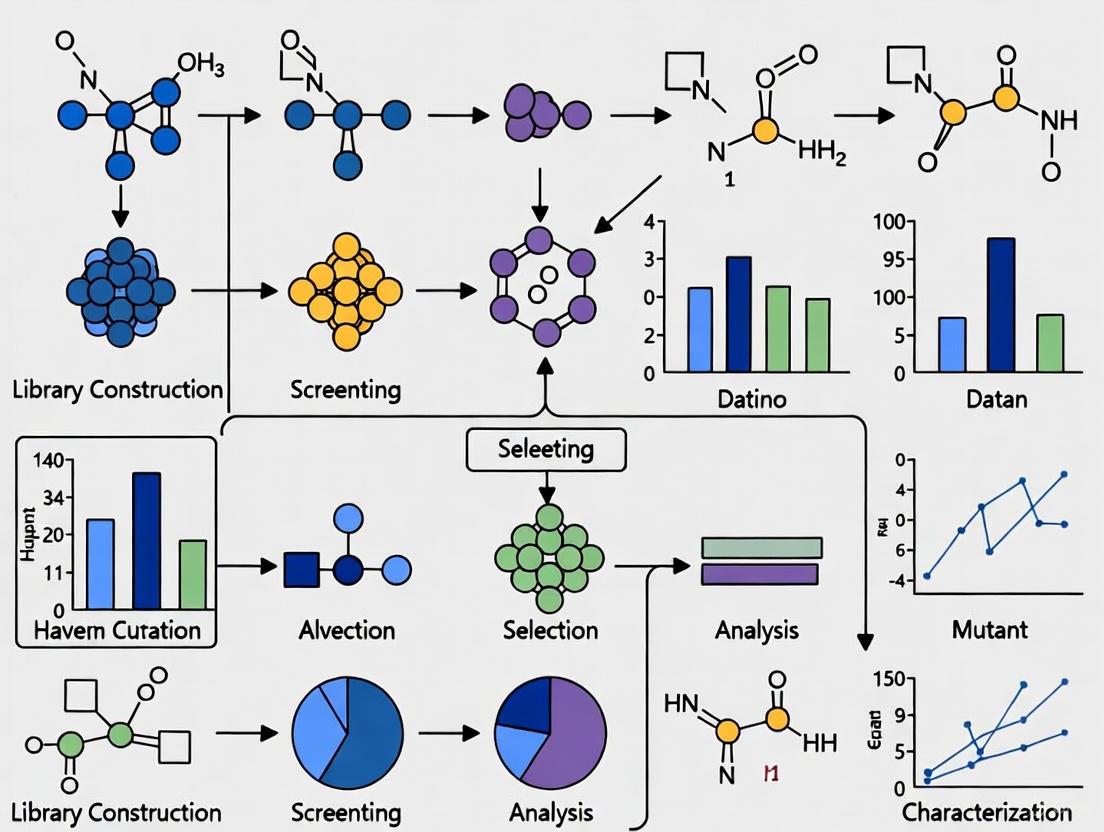
This article provides a comprehensive overview of modern high-throughput screening (HTS) methodologies for microbial mutant libraries, a critical process in strain engineering and drug discovery.
Advanced Strategies for High-Throughput Screening of Microbial Mutant Libraries: From AI-Driven Phenotyping to Functional Validation
Abstract
This article provides a comprehensive overview of modern high-throughput screening (HTS) methodologies for microbial mutant libraries, a critical process in strain engineering and drug discovery. We explore foundational principles, from overcoming bottlenecks in traditional colony-based assays to leveraging AI and microfluidics for single-cell resolution phenotyping. The content details cutting-edge platforms like the AI-powered Digital Colony Picker, group selection strategies for Bacillus thuringiensis toxins, and robust assay validation protocols. Aimed at researchers and drug development professionals, this guide synthesizes troubleshooting insights, comparative analyses of technologies, and data validation practices to accelerate the identification of superior microbial strains and novel bioactive compounds.
The Evolution of Microbial Screening: From Agar Plates to Digital Phenotyping
Defining High-Throughput Screening in Microbial Genetics and Drug Discovery
High-Throughput Screening (HTS) is a method for scientific discovery that allows researchers to quickly conduct millions of chemical, genetic, or pharmacological tests to recognize active compounds, antibodies, or genes that modulate a particular biomolecular pathway. [1] In microbial genetics and drug discovery, HTS has become an essential element for identifying novel natural compounds (NCs) from microbes and engineering microbial cell factories for sustainable biomanufacturing. [2] [3] [4] This is particularly crucial given the rise of antibiotic-resistant infections and the 20-year innovation gap in discovering novel classes of antibiotics. [4]
Table 1: Core HTS Platforms for Microbial Strain Screening
| Platform | Throughput Capacity | Key Advantage | Primary Application in Microbial Genetics |
|---|---|---|---|
| Microtiter Plates (MTP) [3] | ~10^3-10^4 strains | Compatibility with diverse colorimetric and fluorescent assays. [5] | Screening for enzyme activity, product yield, and general growth phenotypes. |
| Fluorescence-Activated Cell Sorting (FACS) [3] | Up to 10^8 events per hour | Ultra-high-speed analysis and sorting based on fluorescent signals. [3] | Isolation of cells based on intracellular or membrane-bound fluorescence. |
| Droplet-based Microfluidics (DMF) [3] | Up to kHz frequencies (thousands per second) [3] | Picoliter to nanoliter volumes, reducing reagent consumption and cost; single-cell resolution. [3] | High-throughput screening of massive mutant libraries for extracellular metabolites. |
| Digital Colony Picker (DCP) [6] | 16,000+ addressable microchambers | AI-powered, multi-modal phenotyping at single-cell resolution with contact-free export. [6] | Dynamic monitoring of single-cell morphology, proliferation, and metabolic activities. |
Foundational Concepts and Workflow
The conventional drug discovery pipeline from microbes involves identifying microbial strains with potential biosynthetic gene clusters (BGCs), expressing these clusters, and then screening the resulting compounds for bioactivity. [2] Advanced HTS integrates robotics, data processing software, liquid handling devices, and sensitive detectors to automate and accelerate this process. [1]
A key insight from genomics is that microbial genomes contain a huge untapped reservoir of silent or cryptic biosynthetic gene clusters (BGCs) that are not expressed under normal laboratory conditions. [2] For example, bacterial species like Streptomyces sp. and Ktedonobacteria sp. can contain dozens of these BGCs. [2] The modern HTS workflow is designed to access this "gold mine" for novel drug discovery. [2]
Key Experimental Protocols
Protocol A: Genome Mining for Cryptic Biosynthetic Gene Clusters
Objective: To identify microbial strains with a high potential for producing novel compounds by locating silent biosynthetic gene clusters (BGCs) in their genome. [2]
Materials:
- Bioinformatics Tool: antiSMASH 5.0 (a free, accurate, and highly reliable tool for BGC identification). [2]
- Input Data: Microbial genome sequence data (publicly available or newly sequenced). [2]
Methodology:
- Sequence Acquisition: Obtain the whole genome sequence of the target microbial strain via next-generation sequencing (NGS). [2]
- Data Upload: Input the genome sequence data into the antiSMASH 5.0 platform.
- BGC Identification: Run the analysis to scan the genome for known and cryptic BGCs, such as those for non-ribosomal peptides, polyketides, and terpenes. [2]
- Strain Prioritization: Select strains for further experimental work based on the number, novelty, and type of identified BGCs. [2]
Protocol B: HiTES for Eliciting Compound Production
Objective: To activate the expression of silent BGCs by simulating diverse environmental conditions. [2]
Materials:
- Microbial Strains: Selected strains from Protocol A.
- Culture Vessels: 96-well, 384-well, or 1536-well microtiter plates. [1]
- Elicitors: A library of 500–1,000 different chemical or biological elicitors.
- Automation: Robotic liquid handling systems for high-throughput pipetting. [1]
Methodology:
- Plate Setup: Dispense a standardized inoculum of the target microbe into each well of the microtiter plates.
- Elicitor Addition: Use robotics to add a unique combination of nutrients, stressors, or signaling molecules from the elicitor library to individual wells. [2]
- Incubation: Incubate the plates under controlled conditions (temperature, humidity) to allow for microbial growth and metabolite production.
- Harvesting: After a predetermined incubation period, the plates are ready for downstream chemical analysis to detect expressed compounds.
Protocol C: HTS of Enzyme Activity Using Colorimetric Assay
Objective: To screen large mutant libraries of an enzyme (e.g., L-rhamnose isomerase) for variants with enhanced activity. [5]
Materials:
- Mutant Library: Engineered microbial strains (e.g., E. coli) expressing variant enzymes.
- Assay Plates: 96-well microtiter plates.
- Substrate: D-allulose (for L-rhamnose isomerase).
- Reagent: Seliwanoff's reagent for ketose detection. [5]
Methodology:
- Culture and Expression: Grow mutant strains in deep-well plates for protein expression. Harvest cells and remove supernatant to minimize interference.
- Reaction Setup: In a 96-well plate, initiate the enzymatic reaction by adding the substrate (D-allulose) to the cells or cell lysates.
- Incubation & Detection: Allow the isomerization reaction to proceed. Subsequently, add Seliwanoff's reagent to react with the remaining D-allulose, producing a colorimetric change. [5]
- Measurement: Measure the absorbance in each well. A decrease in signal indicates higher enzyme activity (more substrate consumed). [5]
- Quality Control: Validate the assay quality using statistical metrics. A protocol with a Z'-factor of 0.449, a signal window of 5.288, and an assay variability ratio of 0.551 meets the acceptance criteria for a high-quality HTS assay. [5]
Protocol D: Metabolite Screening via MALDI-MS from Microbial Colonies
Objective: To rapidly screen thousands of microbial colonies for the production of specific metabolites without the need for liquid culture. [7]
Materials:
- Microbial Colonies: Grown on Petri dishes (e.g., an enzyme mutant library).
- MALDI Plates: Target plates for mass spectrometry.
- MALDI Matrix: Appropriate chemical matrix for co-crystallization.
- Instrument: MALDI mass spectrometer. [7]
Methodology:
- Colony Transfer: Transfer colonies from the Petri dish to the MALDI target plate using a simple imprinting method. [7]
- Imaging and Mapping: Scan the target plate to create a map of colony locations using custom software.
- Matrix Application: Coat the target plate with the MALDI matrix to assist in the desorption and ionization of analytes.
- MS Analysis: Analyze each colony location with the MALDI mass spectrometer, which takes approximately 5 seconds per sample. [7]
- Data Analysis: Process the mass spectra to identify colonies with the desired mass signals, indicating the presence of the target compound. [7]
The Scientist's Toolkit: Research Reagent Solutions
Table 2: Essential Reagents and Materials for HTS in Microbial Genetics
| Item | Function/Description | Application Example |
|---|---|---|
| antiSMASH 5.0 [2] | A bioinformatics tool for identifying Biosynthetic Gene Clusters (BGCs) in microbial genomes. | Genome mining for silent gene clusters with potential for novel compound production. [2] |
| Microtiter Plates [1] | Disposable plastic plates with a grid of wells (96, 384, 1536); the key labware for HTS. | Culturing microbes under different conditions (HiTES) or running colorimetric enzyme assays. [2] [5] |
| Seliwanoff's Reagent [5] | A chemical reagent that reacts with ketose sugars to produce a colorimetric signal. | High-throughput screening of isomerase activity by detecting substrate depletion. [5] |
| MALDI Matrix [7] | A chemical compound that absorbs laser energy and facilitates the ionization of analytes. | Enabling mass spectrometry analysis of metabolites directly from microbial colonies. [7] |
| Microfluidic Chips (DMF) [3] | Devices with microscopic channels to generate and manipulate picoliter droplets. | Encapsulating single cells for high-throughput screening based on extracellular secretions. [3] |
| Photoresponsive ITO Film [6] | A metal film layer in microchips that generates microbubbles under laser excitation. | Contact-free export of selected microbial clones in AI-powered digital colony pickers. [6] |
Advanced HTS Technologies and Data Analysis
Emerging technologies are pushing the boundaries of HTS by integrating single-cell resolution, dynamic monitoring, and artificial intelligence.
Droplet-based Microfluidics (DMF) generates discrete droplets at kHz frequencies, each acting as an independent micro-reactor. [3] This allows for the screening of up to 10^8 events based on fluorescence, absorbance, or even mass spectrometry, greatly reducing reagent consumption. [3] More recently, the AI-powered Digital Colony Picker (DCP) platform uses a microfluidic chip with 16,000 addressable picoliter-scale microchambers. [6] AI-driven image analysis dynamically monitors single-cell growth and metabolism, and a laser-induced bubble technique selectively exports target clones without physical contact. [6]
A critical aspect of HTS is data analysis and quality control. In Quantitative HTS (qHTS), where full concentration-response curves are generated for thousands of compounds, the Hill equation (HEQN) is often used to derive parameters like AC50 (potency) and Emax (efficacy). [8] However, parameter estimates can be highly variable if the experimental design is suboptimal. [8] For reliable hit selection, statistical metrics are essential. The Z'-factor is a widely used quality assessment measure, with a value above 0.4 indicating an excellent assay, as demonstrated in the isomerase screening protocol. [5] Other robust methods like the z*-score and Strictly Standardized Mean Difference (SSMD) are also employed to distinguish true hits from random variation. [1]
The integration of HTS in microbial genetics and drug discovery provides a powerful strategy to accelerate the development of novel therapeutics and robust microbial cell factories, ultimately helping to bridge the critical innovation gap in antibiotics and sustainable biomanufacturing.
Limitations of Traditional Colony-Based Screening and Assays
In the iterative design-build-test-learn (DBTL) cycle of microbial strain development, the "test" phase—encompassing phenotype-based strain screening—is frequently a rate-limiting and tedious step [9]. Traditional colony-based screening methods, which are foundational to microbiology, are increasingly revealing significant limitations in the context of modern high-throughput screening (HTS) of microbial mutant libraries. These libraries are pivotal for applications such as directed evolution, functional genomics, and the creation of engineered microbial strains for biomanufacturing and therapeutic development [7]. This application note details the intrinsic constraints of conventional assays, provides quantitative comparisons, and outlines contemporary protocols and solutions designed to overcome these challenges, thereby accelerating research and drug development.
Core Limitations of Traditional Methodologies
Traditional methods, primarily based on macroscopic observations of colonies on agar plates, struggle to meet the demands of large-scale mutant library screening due to several fundamental drawbacks.
- Low Throughput and Manual Labor: Colony picking is a cornerstone task but is slow and prone to user fatigue and variability when performed manually, making it ill-suited for high-throughput studies that may require processing thousands to millions of samples [10] [11]. This creates significant bottlenecks that can delay research timelines.
- Population-Level Averaging and Neglect of Cellular Heterogeneity: Conventional methods rely on macroscopic measurements of colony size or metabolic indicators [9]. This approach provides population-level averages that fail to capture dynamic single-cell behaviors and the phenotypic heterogeneity within a population. Consequently, rare clones with subtle but advantageous traits often go undetected [9] [12].
- The "Neighbor Effect" and Measurement Inaccuracy: In high-density arrayed colonies, growth inhibition between adjacent colonies—due to competition for nutrients or cell-cell communication—interferes with accurate growth quantification [13]. The magnitude of this effect varies by position on the plate, compromising the reproducibility and precision of measurements [13].
- Static Endpoint Analysis and Lack of Kinetic Information: The conventional method often measures colony area at a single, fixed time point, completely overlooking the rich information contained in growth kinetics [13] [12]. This prevents the classification of mutants based on distinct growth characteristics such as lag time, maximum growth rate, and saturation point [13].
- Limited Environmental Control and Compatibility: Most commercially available automated systems are designed for ambient laboratory conditions and are unsuitable for studying oxygen-sensitive microbes that require hypoxic or anaerobic chambers [10].
- Narrow Phenotypic Screening Scope: Agar diffusion-based assays (e.g., disk diffusion, well diffusion) are cost-effective but are primarily suited for assessing antimicrobial activity based on growth inhibition zones [14]. They offer limited capacity for screening complex metabolic phenotypes or enzyme activities directly from colonies.
Table 1: Quantitative Comparison of Screening Method Limitations and Capabilities
| Screening Method | Typical Throughput | Key Limitations | Resolution | Key Advantages |
|---|---|---|---|---|
| Manual Colony Picking | Hours to days for small samples [11] | User fatigue, low consistency, high contamination risk [10] | Macroscopic, population-level | Low initial cost, simple setup |
| Automated Colony Picker | ~2,500 colonies/hour [11] | Limited to ambient O₂, population-level analysis [10] | Macroscopic, population-level | High speed, consistency for basic tasks [11] |
| Microtiter Plates (MTP) | 96-1536 wells/plate [3] | Sophisticated automation required, reagent consumption [3] | Population-level | Standardized, amenable to various detectors |
| Flow Cytometry/FACS | Up to 10⁸ events/hour [3] | Primarily detects fluorescent intracellular/surface markers [3] | Single-cell | Extremely high throughput for sorting |
| Droplet Microfluidics (DMF) | kHz droplet generation [3] | Complex workflow, risk of droplet fusion, evaporation [9] [3] | Single-cell | Ultra-high-throughput, picoliter reagent volumes [3] |
| Digital Colony Picker (DCP) | 16,000 clones/chip [9] | Specialized microfluidic chip required | Single-cell | Multi-modal phenotyping, dynamic monitoring, contactless export [9] |
Advanced Experimental Protocols
To address the limitations above, the following protocols employ advanced instrumentation and computational analysis.
Protocol: Growth Kinetics Analysis Using Colony-live
The Colony-live system quantifies microbial colony growth kinetics with high temporal resolution, mitigating the neighbor effect to identify subtle phenotypic variations [13].
I. Materials and Reagents
- Strains: Microbial mutant library (e.g., Keio collection of E. coli single-gene knockout mutants) [13].
- Growth Medium: Appropriate solid agar medium.
- Equipment: High-resolution scanner with transmitted light capability, incubator, robotic pinning tool for high-density colony arrays (e.g., 1536 colonies/plate).
- Software: Colony-live analysis software and MySQL database for data management [13].
II. Procedure
- Plate Inoculation: Using a robotic pinner, array mutant strains onto rectangular agar plates at high density (e.g., 1536 colonies per plate) [13].
- Time-Lapse Imaging: Place plates in a scanner housed within an incubator set to the optimal growth temperature. Initiate periodic scanning (e.g., every 30 minutes) over the entire incubation period (e.g., 20 hours) using transmitted light [13].
- Data Acquisition and Normalization:
- The software captures time-lapse images and quantifies colony growth.
- To minimize the neighbor effect, the software analyzes the "mass*" of each colony—the biomass within a fixed-diameter central region (e.g., 17 pixels)—rather than the entire colony area. This metric dramatically reduces growth bias between crowded and uncrowded colonies [13].
- Growth Curve Fitting and Parameter Extraction:
- Time-series mass* data for each colony is fitted to a population growth model (e.g., Gompertz) [13].
- Extract three key growth parameters (Figure 1A):
- Lag Time of Growth (LTG): The time before exponential growth begins.
- Maximum Growth Rate (MGR): The maximum rate of growth during the exponential phase.
- Saturation Point of Growth (SPG): The maximum biomass achieved.
III. Data Analysis
- Compare LTG, MGR, and SPG values across the mutant library to identify strains with significant growth defects or alterations.
- The system's high reproducibility and reduced neighbor effect enable the detection of mild growth defects (e.g., ~1.2-fold longer doubling time) that are undetectable by conventional endpoint measurement [13].
Figure 1A: Workflow for high-throughput growth kinetics analysis using the Colony-live system, which quantifies key parameters from time-lapse imaging to classify mutant phenotypes [13].
Protocol: AI-Powered Single-Cell Phenotyping with Digital Colony Picker (DCP)
The DCP platform enables automated, high-throughput screening and export of microbial clones based on growth and metabolic phenotypes at single-cell resolution, without agar or physical contact [9].
I. Materials and Reagents
- Microfluidic Chip: A chip comprising 16,000 addressable picoliter-scale microchambers, featuring a PDMS mold layer, an indium tin oxide (ITO) metal film layer, and a glass layer [9].
- Strains: Pre-engineered microbial clone library (e.g., Zymomonas mobilis mutants) in single-cell suspension.
- Culture Media: Appropriate liquid growth medium.
- Oil Phase: Biocompatible oil with surfactant for droplet stabilization.
- Equipment: DCP platform with optical microscopy, laser system, precision motion platform, and capillary tube for collection.
- Software: AI-driven image analysis software for dynamic monitoring.
II. Procedure
- Single-Cell Loading and Cultivation:
- Introduce a diluted single-cell suspension into the pre-vacuumed microfluidic chip. The gas-phase isolation between microchambers prevents droplet fusion and facilitates complete filling [9].
- Incubate the chip in a temperature-controlled incubator, allowing individual cells to grow into microscopic monoclones within their respective microchambers [9].
- AI-Powered Phenotypic Identification:
- Contactless Clone Export:
- For microchambers identified as containing target phenotypes, the motion platform positions a laser focus at the base of the chamber.
- Using the Laser-Induced Bubble (LIB) technique, generate microbubbles at the ITO interface to propel the single-clone droplet out of the microchamber and toward the outlet [9].
- Collect the ejected monoclonal droplets via a capillary tip and transfer them to a multi-well collection plate for downstream analysis [9].
III. Data Analysis
- The AI software provides spatiotemporal data on growth and metabolism for each analyzed clone.
- In an application screening Z. mobilis mutants, DCP identified a mutant with a 19.7% increase in lactate production and 77.0% enhanced growth under lactate stress, demonstrating its ability to discover rare, superior strains [9].
Figure 2A: Digital Colony Picker workflow, from single-cell loading and AI-driven phenotypic analysis to contactless export of selected clones [9].
The Scientist's Toolkit: Research Reagent Solutions
Table 2: Essential Materials and Reagents for Advanced Microbial Screening
| Item | Function/Application | Example/Specification |
|---|---|---|
| Digital Colony Picker (DCP) Chip | Houses 16,000 picoliter-scale microchambers for single-cell cultivation and phenotyping [9]. | Three-layer chip: PDMS mold, ITO film (transparency >86%), glass layer [9]. |
| MALDI Matrix | Co-crystallizes with analytes for ionization in Matrix-Assisted Laser Desorption/Ionization Mass Spectrometry (MALDI-MS) [7]. | Enables direct measurement of metabolites from microbial colonies; screen takes ~5 seconds/sample [7]. |
| Droplet Generation Oil & Surfactant | Forms the continuous phase in droplet microfluidics, stabilizing water-in-oil droplets to prevent coalescence [3]. | Ensures stable incubation of single strains in droplets (fL-nL volume) for high-throughput screening [3]. |
| ATP Assay Kits | Quantifies cellular ATP as a proxy for viable biomass and metabolic activity, useful for complex environmental samples [15]. | Provides rapid, culture-independent growth/activity measurement. |
| 16S rRNA qPCR Primers | Quantifies total bacterial abundance or specific taxa by targeting the 16S rRNA gene [15]. | Enables growth tracking in complex samples where classical OD or CFU counts are not feasible [15]. |
| Laser System (for LIB) | Generates microbubbles within the DCP chip for the contactless export of target monoclonal droplets [9]. | Integrated into the DCP optical module for precise, laser-induced bubble formation [9]. |
The limitations of traditional colony-based screening—including low throughput, population-level averaging, and poor kinetic resolution—pose significant barriers to the efficient development of microbial cell factories and therapeutic agents. The adoption of advanced platforms like the Colony-live system for high-resolution growth kinetics and the AI-powered Digital Colony Picker for single-cell, multi-modal phenotyping represents a paradigm shift. These technologies, supported by robust protocols and reagents, enable researchers to overcome traditional bottlenecks, uncover subtle but critical phenotypes, and dramatically accelerate the DBTL cycle in microbial strain engineering and functional genomics.
In the iterative Design-Build-Test-Learn (DBTL) cycle for developing microbial cell factories, the "Test" phase—specifically, phenotype-based screening—represents a critical rate-limiting step [9]. This bottleneck persists because traditional colony-based assays rely on macroscopic measurements that lack capacity for true phenotypic screening at single-cell resolution, ultimately limiting throughput, delaying feedback, and failing to address cellular heterogeneity [9]. Consequently, rare strains with subtle phenotypic advantages often go undetected, constraining the potential of synthetic biology and metabolic engineering.
Recent technological innovations are transforming this landscape. This Application Note examines three advanced approaches—AI-powered microfluidics, mutational scanning sequencing, and high-content phenotypic profiling—that enable researchers to overcome these limitations. We provide detailed protocols and analytical frameworks to facilitate implementation of these high-throughput screening strategies for microbial strain development.
Advanced High-Throughput Screening Platforms
Quantitative Comparison of Screening Platforms
Table 1: Performance comparison of high-throughput screening platforms
| Platform | Throughput | Resolution | Key Metrics | Applications |
|---|---|---|---|---|
| Digital Colony Picker (DCP) | 16,000 microchambers/chip | Single-cell | 19.7% increased lactate production; 77.0% enhanced growth [9] | Microbial cell factories, stress tolerance |
| Droplet Microfluidics (DMF) | kHz frequencies (thousands/sec) | Single-cell | ~10 pL for bacteria; ~300 pL for yeast; ~10 nL for fungi [3] | Enzyme activity, extracellular metabolites |
| Quantitative Mutational Scan (QMS-seq) | 812 mutations identified across 251 genes [16] | Single-nucleotide | Identifies 37% intergenic mutations; 13% in persistence genes [16] | Antibiotic resistance mapping |
| Microtiter Plates (MTP) | 96-384 wells/plate | Population-level | Limited by automated instrumentation [3] | Standard growth assays |
| Flow Cytometry (FACS) | Up to 10⁸ events/hour [3] | Single-cell | Limited to fluorescent properties [3] | Fluorescence-based sorting |
Platform-Specific Workflows and Mechanisms
AI-Powered Digital Colony Picking
The Digital Colony Picker (DCP) platform represents a significant advancement over traditional screening methods by combining microfluidics with AI-driven image analysis. The system employs a microfluidic chip containing 16,000 addressable picoliter-scale microchambers that compartmentalize individual cells [9]. Key innovations include:
- Gas-phase isolation between microchambers prevents droplet fusion and enables stable incubation
- AI-driven image analysis dynamically monitors single-cell morphology, proliferation, and metabolic activities
- Laser-induced bubble (LIB) technique enables contact-free export of selected clones [9]
When applied to Zymomonas mobilis, DCP identified a mutant with 19.7% increased lactate production and 77.0% enhanced growth under lactate stress (30 g/L), linking this phenotype to overexpression of ZMOp39x027, a canonical outer membrane autotransporter [9].
Large-Scale Microfluidic Droplet Screening
Droplet-based microfluidics (DMF) has emerged as a powerful complementary technology that generates discrete droplets using immiscible multiphase fluids at kHz frequencies [3]. Each droplet serves as an individual micro-reactor, enabling:
- Compartmentalization of single strains without cross-contamination
- Uniform, tunable droplet sizes from femtoliter to nanoliter volumes
- Diversified operations including reagent injection, coalescence, lysis, splitting, and sorting [3]
DMF has been successfully applied to diverse microbes including bacteria, yeast, and filamentous fungi, facilitating detection of metabolites such as polypeptides, enzymes, and lipids [3].
Quantitative Mutational Scanning Sequencing
QMS-seq represents a fundamentally different approach that enables quantitative comparison of genes under antibiotic selection and captures how genetic background influences resistance evolution [16]. This method:
- Identifies 812 resistance mutations across 251 genes and 49 regulatory regions
- Reveals that multi-drug resistance (MDR) and antibiotic-specific resistance (ASR) arise through categorically different mutations
- Demonstrates that MDR mutations cluster in small gene regions (<15%) and are predominantly moderate-impact
- Shows ASR mutations distribute across entire genes and are typically high-impact loss-of-function variants [16]
Research Reagent Solutions
Table 2: Essential research reagents and materials for high-throughput phenotypic screening
| Reagent/Material | Function | Application Examples |
|---|---|---|
| PDMS Microfluidic Chip | Houses microchambers for cell isolation | DCP platform with 16,000 microchambers [9] |
| Indium Tin Oxide (ITO) Film | Photoresponsive layer for laser manipulation | Generates microbubbles under laser excitation in DCP [9] |
| Water-in-Oil Surfactants | Stabilizes emulsion droplets | Prevents coalescence in DMF platforms [3] |
| Cell Painting Markers | Multiplexed morphological profiling | 6 markers in 5 channels for high-content imaging [17] |
| L1000 Assay Reagents | Gene expression profiling | Transcriptional profiling for compound annotation [17] |
| Fluorescent Biosensors | Product detection and quantification | Converts biological activity to detectable signals in DMF [3] |
| Broad-Spectrum Staining Panel | Multi-compartment cellular labeling | 10 cellular compartments across multiple assay panels [18] |
Detailed Experimental Protocols
Protocol 1: AI-Powered Digital Colony Picking for Microbial Screening
Principle: The DCP platform enables automated, high-throughput screening and export of microbial clones based on growth and metabolic phenotypes at single-cell resolution without agar or physical contact [9].
Materials:
- Digital Colony Picker system (microfluidic chip, optical module, droplet location module, export/collection module)
- PDMS microfluidic chip with 16,000 microchambers
- ITO-coated glass layer
- Microbial strain library (Zymomonas mobilis or other target microbes)
- Appropriate growth media
- Oil phase for droplet collection
- 96-well collection plates
Procedure:
Chip Preparation and Single-Cell Loading:
- Pre-vacuum the microfluidic chip to remove air from microchambers
- Introduce single-cell suspension at optimal concentration (~1×10⁶ cells/mL for 300 pL chambers)
- Allow residual air absorption by PDMS layer for complete chamber filling
- Place chip in water-filled centrifuge tube and incubate in temperature-controlled incubator
- Monitor until individual cells grow into microscopic monoclones
AI-Powered Identification:
- Inject oil phase into chip to facilitate droplet collection
- Automatically identify chip zero point (upper-right corner by default)
- Employ AI-driven image recognition to detect microchambers containing monoclonal colonies
- Analyze single-cell morphology, proliferation, and metabolic activities
Target Clone Export:
- Position laser focus at base of identified microchambers
- Generate microbubbles using Laser-Induced Bubble (LIB) technique
- Propel single-clone droplets toward outlet
- Collect droplets at capillary tip and transfer to 96-well collection plates
- Adjust collection times based on droplet flow rates for precise single-clone collection
Optional Medium Replacement:
- Utilize gas gaps for dynamic replacement of liquid medium
- Replenish culture media or change conditions through chip inlet as needed
Troubleshooting Tips:
- Optimize cell concentration using Poisson distribution calculations (λ=0.3) to minimize multi-cell occupancy
- Maintain sterile conditions within biosafety cabinet to prevent contamination
- Control evaporation by housing chips in humidified environments (50 mL centrifuge tubes with water)
Protocol 2: Quantitative Mutational Scan Sequencing (QMS-seq)
Principle: QMS-seq enables comprehensive characterization of mutational landscapes for antibiotic resistance by adapting metagenomic sequencing to quickly identify mutations under selection [16].
Materials:
- Genetically homogeneous microbial population (E. coli or target species)
- Antibiotics of interest (ciprofloxacin, cycloserine, nitrofurantoin, etc.)
- Selective agar plates
- DNA extraction and sequencing reagents
- Bioinformatic analysis pipeline (lofreq, breseq)
Procedure:
Mutant Library Generation:
- Allow genetically homogeneous population to accumulate random mutants over 24 hours under minimal selection (rich media without antibiotics)
- Generate heterogeneous population where most variants contain single mutations
Antibiotic Selection:
- Spread population across ten selective agar plates containing MIC of target antibiotic
- Incubate until resistant colonies grow
- Mix resistant colonies collectively for sequencing
Sequencing and Analysis:
- Sequence pooled resistant colonies with sufficient depth to detect low-frequency mutations
- Utilize lofreq for calling single-nucleotide variants and small indels
- Employ breseq to identify larger mobilization events for known insertion sequences
- Apply conservative filtering criteria to verify strong positive selection
- Compare mutational landscapes across different genetic backgrounds and environments
Applications:
- Differentiate between multi-drug resistance (MDR) and antibiotic-specific resistance (ASR) mutations
- Identify mutational hotspots within genes
- Reveal how minor genotypic differences influence evolutionary routes to resistance
Visualization of Screening Workflows and Analytical Processes
Workflow Diagram: AI-Powered Digital Colony Picking
Workflow Diagram: High-Throughput Mutational Scanning
Workflow Diagram: Integrated Phenotypic Profiling
Data Analysis and Interpretation
Advanced Statistical Analysis for Phenotypic Profiling
High-content screening generates complex datasets requiring specialized statistical approaches:
- Positional Effect Adjustment: Implement two-way ANOVA to detect and correct for row/column effects across multi-well plates [18]
- Distribution-Based Analysis: Employ Wasserstein distance metric to detect differences between cell feature distributions, superior to traditional measures [18]
- Phenotypic Fingerprinting: Generate per-dose phenotypic fingerprints for compounds and visualize phenotypic trajectories in low-dimensional space [18]
- Multi-Modal Data Integration: Combine chemical structures, morphological profiles (Cell Painting), and gene expression profiles (L1000) to predict bioactivity, increasing well-predicted assays from 16 (CS alone) to 31 (CS+MO) [17]
Quality Control and Validation Metrics
- Single-Cell Distribution Analysis: Examine full feature distributions rather than well-averaged data to detect subpopulations with different responses [18]
- Control Well Distribution: Place controls across all rows and columns to identify spatial patterns and technical artifacts [18]
- Replicate Concordance: Assess technical and biological replicates to distinguish biological signals from experimental noise
- Cross-Platform Validation: Verify hits using orthogonal assays to confirm phenotypic predictions
The integration of AI-driven microfluidics, high-throughput sequencing, and multi-modal phenotypic profiling is rapidly alleviating the critical bottleneck of phenotype-based screening in the DBTL cycle. The platforms and protocols detailed herein enable researchers to achieve unprecedented resolution and throughput in microbial strain development.
Future developments will likely focus on increasing integration between these platforms, enhancing AI predictive capabilities, and further miniaturization to increase screening capacity. As these technologies become more accessible and standardized, they will dramatically accelerate the development of microbial cell factories for sustainable bioproduction, drug discovery, and fundamental biological research.
High-throughput screening (HTS) of microbial mutant libraries is a pivotal link in green biomanufacturing and pharmaceutical discovery, enabling the rapid identification of strains with enhanced metabolite production, environmental tolerance, and novel bioactive compounds [19]. Conventional screening methods, including microtiter plate (MTP) assays and fluorescence-activated cell sorting (FACS), are often limited by throughput, reagent consumption, and inability to capture single-cell dynamics [19]. This document details integrated experimental platforms combining advanced microfluidics, AI-driven phenotyping, and metabolomics that overcome these limitations. The protocols herein provide actionable methodologies for researchers aiming to accelerate strain development for industrial and pharmaceutical applications.
Platform Comparison and Quantitative Data
The selection of an appropriate HTS platform is critical for project success. The following table summarizes the performance characteristics of three major screening methodologies, highlighting the complementary strengths of emerging technologies.
Table 1: Comparison of High-Throughput Screening Platforms
| Method | Detection Signals | Sensitivity | Throughput | Key Applications |
|---|---|---|---|---|
| Microtiter Plate (MTP) | Fluorescence, Absorbance [19] | Normal [19] | ~10^6 variants per day [19] | Standard library screening, growth assays |
| Fluorescence-Activated Cell Sorting (FACS) | Fluorescence (surface/intracellular) [19] | High [19] | ~10^8 events per hour [19] | Sorting based on intrinsic or engineered fluorescence |
| Droplet Microfluidics (DMF) | Fluorescence, Absorbance, Raman, Mass Spectrometry [19] | High [19] | ~10^8 variants per day [19] | Single-cell analysis, metabolic co-cultures, enzyme screening |
| Digital Colony Picker (DCP) | AI-driven imaging (morphology, growth, metabolism) [6] | Single-cell resolution [6] | 16,000 clones per chip (static) [6] | Contact-free sorting based on multi-modal phenotypes |
Detailed Experimental Protocols
Protocol 1: Fluorescence-Based Bacterial Antagonism Screening
This protocol provides a semi-quantitative, semi-high-throughput method to detect antibacterial interactions during bacterial co-cultures using fluorescence as a proxy for viability, circumventing issues with selective agents [20].
Key Reagents and Strains:
- Reporter Strain: Fluorescently tagged bacterium (e.g., Staphylococcus aureus JE2 or Escherichia coli DH5α expressing Red Fluorescent Protein, RFP) [20].
- Antagonist Strain: Non-fluorescent bacterium to be tested for inhibitory activity (e.g., Pseudomonas aeruginosa, Stenotrophomonas maltophilia) [20].
- Growth Medium: Appropriate liquid broth for co-culture.
Procedure:
- Culture Preparation: Grow the fluorescent reporter strain and the non-fluorescent antagonist strain separately to the desired growth phase (e.g., mid-log phase) [20].
- Co-culture Setup: Combine the reporter and antagonist strains in a defined ratio within a multi-well plate. Include control wells containing only the reporter strain with fresh medium [20].
- Incubation and Monitoring: Incubate the plate under suitable conditions. Monitor the fluorescence intensity (Relative Fluorescent Units, RFU) and optical density (OD) of the cultures over time using a plate reader [20].
- Data Analysis: Compare the RFU and growth curves from co-culture wells to the reporter-only controls. A reduction in RFU in co-culture, relative to the control, indicates antagonistic activity from the test strain against the fluorescent reporter [20].
Protocol 2: Droplet Microfluidics for Strain Screening
This protocol leverages droplet-based microfluidics (DMF) for ultra-high-throughput, single-cell compartmentalization and screening [19].
Key Reagents and Equipment:
- Microfluidic Chip: Designed for water-in-oil (W/O) droplet generation (e.g., flow-focusing geometry) [19].
- Aqueous Phase: Microbial cell suspension in culture medium, potentially containing fluorescent substrates or biosensors [19].
- Oil Phase: Immiscible, biocompatible oil (e.g., fluorinated oil) supplemented with a surfactant to stabilize droplets and prevent coalescence [19].
- Syringe Pumps: For precise control of aqueous and oil phase flow rates.
Procedure:
- Mutant Library Generation: Create a diverse mutant library using random mutagenesis techniques (e.g., UV irradiation, Atmospheric and Room Temperature Plasma - ARTP) or targeted genetic engineering [19].
- Droplet Generation and Encapsulation:
- Infuse the aqueous cell suspension and the continuous oil phase into the microfluidic chip.
- Adjust flow rates and chip geometry to generate monodisperse, picoliter-to-nanoliter volume W/O droplets at kHz frequencies.
- Under optimal dilution, droplets will encapsulate single microbial cells based on Poisson distribution statistics [19].
- Incubation and Signal Generation: Transfer the collected emulsion to a controlled environment for off-chip incubation, allowing encapsulated cells to grow and produce metabolites.
- For detection, employ one of several strategies:
- Direct Detection: Measure autofluorescence of products like carotenoids [19].
- Reagent-based Detection: Co-encapsulate fluorescent enzyme substrates that react with the target metabolite [19].
- Biosensor Detection: Co-encapsulate a sensing strain that produces a fluorescent signal in response to the product from the production strain [19].
- For detection, employ one of several strategies:
- Droplet Sorting:
- Re-inject the emulsion into a sorting chip.
- Detect fluorescent signals from individual droplets in a flow stream.
- Actively sort droplets containing high-producing strains using external energy (e.g., dielectrophoresis), diverting them into a collection channel for downstream recovery and analysis [19].
Protocol 3: Integrated Spatial Mapping and Metabolomics for Bioactive Compound Discovery
This multidisciplinary protocol identifies key bioactive secondary metabolites from plants thriving in specific environmental niches, such as saline land, supporting drug discovery efforts [21].
Key Reagents and Equipment:
- Plant Material: Leaf samples from target species (e.g., Buchanania siamensis) collected from distinct environmental sites (e.g., saline vs. non-saline) [21].
- LC-QTOF System: Liquid Chromatography-Quadrupole Time-of-Flight mass spectrometer for metabolomic profiling [21].
- Antioxidant Assay Reagents: DPPH (2,2-Diphenyl-1-picrylhydrazyl), FRAP (Ferric Reducing Antioxidant Power) reagents, Folin-Ciocalteu reagent for Total Phenolic Content (TPC) [21].
- Species Distribution Modeling (SDM) Software: e.g., Maximum Entropy (MaxEnt) model [21].
Procedure:
- Spatial Mapping and Sample Collection:
- Use an ensemble Species Distribution Model (SDM), incorporating environmental and soil parameters (e.g., salinity, pH, climate data), to map the probable habitat of the target species and identify key factors influencing its distribution [21].
- Collect leaf samples from multiple individuals across identified habitats (e.g., saline and non-saline sites) [21].
- Metabolomic Analysis:
- Extract metabolites from the plant samples.
- Analyze extracts using LC-QTOF to annotate metabolites. Perform statistical analysis (e.g., Orthogonal Partial Least Squares-Discriminant Analysis, OPLS-DA) to identify metabolites that are significantly differentially abundant between sample groups [21].
- Bioactivity Screening:
- Perform antioxidant assays (DPPH, FRAP, TPC) on the plant extracts to quantify their bioactive potential [21].
- Data Integration and Metabolite Identification:
- Construct an O-PLSR (Orthogonal Partial Least Squares Regression) model to correlate metabolomic profiles with antioxidant activity data.
- Identify key metabolites (Variable Importance in Projection, VIP > 1) most responsible for the observed bioactivity. Confirm the identity of lead metabolites (e.g., afzelin) using analytical standards and further statistical testing (e.g., p < 0.05) [21].
- Spatial Mapping and Sample Collection:
Visualizing Workflows and Signaling Pathways
High-Throughput Screening Workflow
Bioactive Compound Discovery Pipeline
The Scientist's Toolkit: Research Reagent Solutions
Table 2: Essential Materials and Reagents for High-Throughput Screening
| Item | Function/Application | Examples / Key Characteristics |
|---|---|---|
| Microfluidic Chips | Compartmentalizes single cells for analysis. | PDMS-based chips; DMF for droplets [19]; DCP with 16,000 microchambers [6]. |
| Encapsulation Oil & Surfactant | Creates stable, monodisperse aqueous droplets in oil. | Biocompatible fluorinated oils with water-in-oil surfactants to prevent coalescence [19]. |
| Fluorescent Reporters & Biosensors | Converts biological activity into detectable signals. | RFP-labeled strains [20]; enzyme substrates; engineered sensing strains [19]. |
| LC-QTOF Mass Spectrometer | High-resolution annotation of metabolites in complex extracts. | Used for untargeted metabolomics to identify differentially abundant compounds [21]. |
| Bioactivity Assay Kits | Quantifies functional properties of strains or extracts. | DPPH, FRAP (antioxidant capacity); Total Phenolic Content (TPC) [21]. |
| AI-Powered Image Analysis Software | Automates identification and sorting based on multi-modal phenotypes. | DCP platform uses AI to dynamically monitor single-cell morphology, proliferation, and metabolism [6]. |
The iterative Design-Build-Test-Learn (DBTL) cycle is fundamental to microbial strain development for biofuels, biomaterials, and biochemicals. Within this cycle, the "test" phase—phenotype-based strain screening—has persistently been a major rate-limiting step [6]. Traditional screening methods, primarily colony-based plate assays, rely on macroscopic measurements such as colony size or metabolic indicators. While simple, these methods lack the capacity for sophisticated phenotypic screening and are severely limited by low throughput, delayed feedback, and an inability to address fundamental cellular heterogeneity [6]. As a result, rare or superior microbial strains with subtle phenotypic advantages often go undetected, constraining the potential of synthetic biology.
A paradigm shift is underway, moving the field away from population-level, endpoint analyses and towards integrated platforms that offer single-cell resolution and dynamic phenotypic monitoring. This shift is powered by advances in microfluidics, artificial intelligence (AI), and high-resolution imaging. These technologies enable researchers to move beyond static snapshots and instead observe the dynamic behaviors of individual cells over time, capturing a more nuanced and informative picture of microbial performance and function [6] [22]. This article details this transformation, providing application notes and protocols framed within the context of high-throughput screening of microbial mutant libraries.
Core Principles of the New Paradigm
From Population Averages to Single-Cell Resolution
Even in isogenic microbial populations, single-molecule processes are stochastic and give rise to significant cell-to-cell variability in gene expression and metabolic activity [23]. Population-level measurements mask this heterogeneity, averaging over subpopulations that may exhibit critically different behaviors, such as rare, high-producing mutants or transient stress-tolerant phenotypes. Single-cell resolution is crucial to identify and understand these subpopulations. Techniques like single-molecule RNA Fluorescence In Situ Hybridization (smFISH) allow for the precise counting of mRNA molecules in individual, fixed cells, directly quantifying gene expression heterogeneity [23].
From Static Endpoints to Dynamic Phenotyping
Dynamic phenotyping involves the continuous monitoring of cellular phenotypes over time, rather than relying on a single endpoint measurement. This approach captures the temporal dynamics of critical processes, such as growth, metabolite production, and gene expression responses to stress [22]. For instance, monitoring the dynamic phenotype of thousands of single cells over time can reveal spatio-temporal patterns in signaling molecules, cell motility, morphology, and responsiveness to perturbations that are invisible in endpoint assays [22]. This requires a workflow that integrates optimized image acquisition, sophisticated phenotype tracking, and data filtering to remove erroneous tracks—for example, using a Tracking Aberration Measure (TrAM) to ensure data quality [22].
The Integration of AI and Machine Learning
The massive, multi-modal datasets generated by single-cell dynamic monitoring necessitate advanced computational tools. AI-driven image analysis is now used to automatically identify and screen microbial clones based on single-cell-resolved morphological, proliferative, and metabolic activities [6]. Furthermore, machine learning, particularly deep learning and network analysis, is being employed to integrate data from diverse sources and capture the complex, non-linear relationships between different biological variables over time [24] [23]. These models can help identify the key drivers of a phenotypic network, moving from correlative observations to predictive models of cellular behavior.
Application Notes: Technology in Action
Case Study: AI-Powered Digital Colony Picking
The AI-powered Digital Colony Picker (DCP) platform exemplifies the integrated application of these core principles. This platform was successfully used to screen Zymomonas mobilis mutants for improved lactate tolerance and production [6].
- System Overview: The DCP uses a microfluidic chip with 16,000 addressable picoliter-scale microchambers. This design allows for the compartmentalization and cultivation of individual cells into independent microscopic monoclones, with gas-phase isolation preventing droplet fusion and enabling multiple media exchanges.
- Dynamic Monitoring: Individual cells within each microchamber are dynamically monitored via AI-driven image analysis.
- Contact-Free Export: Clones exhibiting target phenomes are selectively exported using a contact-free Laser-Induced Bubble (LIB) technique, which generates microbubbles to propel single-clone droplets toward a collection outlet [6].
- Outcome: Applied to a pre-engineered library, the DCP platform identified a mutant with a 19.7% increase in lactate production and a 77.0% enhancement in growth under 30 g/L lactate stress. Subsequent investigation linked this superior phenotype to the overexpression of a specific outer membrane autotransporter, ZMOp39x027 [6].
Table 1: Performance Comparison of Screening Methods
| Screening Method | Throughput | Resolution | Dynamic Monitoring | Key Advantage |
|---|---|---|---|---|
| Traditional Plate Assays | Low | Population-level | No | Low cost and technical simplicity |
| Automated Colony Picking | Medium | Population-level | No | Increased consistency and reduced labor |
| Droplet Microfluidics | High | Single-cell | Limited | High-precision single-cell screening |
| Digital Colony Picker (DCP) | High (16,000 strains) | Single-cell | Yes | Multi-modal phenotyping with spatiotemporal precision & contactless export |
Experimental Design for Single-Cell Analysis
Designing a successful single-cell experiment requires careful consideration of several factors to ensure meaningful and interpretable results.
- Sample Size and Replication: Sequencing or analyzing enough cells is critical to answer the biological question. Tools like the Single Cell Experimental Planner can help determine the required cell numbers. Furthermore, an adequate number of biological replicates (e.g., cells from different cultures or treatments) is essential to capture inherent biological variability and verify reproducibility, whereas technical replicates (sub-samples of the same culture) help measure procedural noise [25].
- Temporal Resolution: For dynamic phenotyping, the imaging time increments must be chosen to adequately resolve the process of interest (e.g., a minute-scale for cell motility vs. hours for cell proliferation) while minimizing phototoxicity [22].
- Model-Driven Design: Computational models can be used to optimize single-cell experiments. For example, the Finite State Projection based Fisher Information Matrix (FSP-FIM) has been used to optimize the number of cells to quantify and the best times to take measurements to learn as much as possible about the model parameters of a stochastic system [23].
Detailed Experimental Protocols
Protocol: Dynamic Single-Cell Phenotyping of Microbial Cultures
This protocol outlines the key steps for implementing a dynamic single-cell screening campaign using a microfluidic platform like the DCP.
I. Sample Preparation and Loading
- Prepare Single-Cell Suspension: Harvest and wash the microbial cells from the mutant library. Resuspend in an appropriate culture medium at a concentration of ~1 × 10⁶ cells/mL. Optimize concentration based on Poisson distribution calculations (e.g., λ = 0.3) to maximize single-cell occupancy in microchambers [6].
- Mitigate Evaporation: Place the microfluidic chip within a humidified chamber (e.g., a 50 mL centrifuge tube 10% filled with water) to maintain a saturated vapor environment and prevent microchamber evaporation during incubation [6].
- Vacuum-Assisted Loading: Pre-vacuum the microfluidic chip to remove air from the microchambers. Introduce the cell suspension into the main channel; residual air will be absorbed by the chip material (e.g., PDMS), facilitating rapid and complete filling of the chambers with single cells in less than one minute [6].
II. On-Chip Cultivation and Monitoring
- Incubate Chip: Transfer the loaded chip to a high-precision temperature-controlled incubator for a defined period. Individual cells will grow into independent microscopic monoclones within their respective microchambers.
- Time-Lapse Imaging: Use an integrated optical microscopy module to acquire images of the microchambers at regular intervals (e.g., every 10-30 minutes). The intervals should be optimized to resolve growth and phenotypic changes without causing significant phototoxicity [6] [22].
- Optional Medium Exchange: Utilize the gas gaps between microchambers to dynamically replace the liquid medium through the chip inlet. This allows for the introduction of stressors (e.g., high lactate) or inducers at any time during the experiment [6].
III. AI-Driven Analysis and Hit Picking
- Inject Oil Phase: Following incubation, inject an oil phase into the chip to transform the gas intervals between microchambers into oil intervals, facilitating droplet collection.
- Automated Image Analysis: Employ AI-powered image recognition software to automatically scan the chip. The software should identify microchambers containing monoclonal colonies and analyze pre-defined phenotypic signatures (e.g., growth rate, morphology, fluorescence if a reporter is used) [6].
- Export Target Clones: For each identified hit, position a laser focus at the base of its microchamber. Activate the laser to generate a microbubble via the LIB technique, which propels the single-clone droplet out of the chamber and toward the collection capillary [6].
- Collect and Validate: Transfer the exported droplets into a 96-well collection plate containing growth medium. Culture the selected hits and validate the desired phenotype (e.g., increased product titers, stress tolerance) through downstream shake-flask or bioreactor experiments [6].
Protocol: Quality Control for Single-Cell Tracking Data
When analyzing dynamic single-cell data, rigorous quality control is essential.
- Image Acquisition Optimization: Balance temporal resolution with photobleaching and phototoxicity. Conduct preliminary experiments to determine the maximum speed of the phenotypic process (e.g., cell migration or division) to set adequate imaging increments [22].
- Phenotype Tracking: Fine-tune cell segmentation and tracking protocols using training data sets. Set parameters (e.g., nuclear diameter for eukaryotic cells, splitting coefficients) according to the specific cell line and time scale [22].
- Data Filtering with TrAM (Tracking Aberration Measure):
- Remove Incomplete Tracks: First, filter out any cell tracks that are not present at every time point, as these often represent debris or cells moving in/out of the field of view.
- Calculate TrAM: Compute the TrAM value (τ) for each cell based on sudden, simultaneous, and unusually large changes in tracked features (e.g., cell area and roundness). TrAM quantifies a cell's deviation from the usual dynamics of the population.
- Apply Filter Threshold: Set a threshold τ value (e.g., τ = 4.69 was optimal in one cancer cell study) to discard aberrant tracks. This filtering significantly increases the precision of the dynamic phenotype measurements [22].
Table 2: The Scientist's Toolkit: Key Reagents and Materials
| Item | Function/Application | Key Considerations |
|---|---|---|
| Picoliter-Scale Microfluidic Chip | High-throughput compartmentalization and cultivation of single microbial cells. | Look for chips with thousands of addressable microchambers and gas-phase isolation to prevent cross-contamination. |
| AI-Powered Image Analysis Software | Automated identification and phenotypic screening of monoclones based on dynamic imaging data. | Software should be trainable to recognize specific morphological or growth-based phenotypes relevant to the screen. |
| Laser-Induced Bubble (LIB) Module | Contact-free export of selected clones from microchambers for downstream collection. | Ensures sterile and precise picking of target phenotypes without physical contact. |
| smFISH Probes | Precise quantification of mRNA abundance in individual, fixed cells. | Essential for validating gene expression heterogeneity at single-cell resolution. |
| Viability-Enhancing Buffer (e.g., HEPES) | Maintenance of cell viability during single-cell suspension preparation. | Using media without calcium or magnesium can reduce cell clumping and aggregation [25]. |
The Scientist's Toolkit: Research Reagent Solutions
A successful transition to high-resolution, dynamic screening requires a suite of specialized tools and reagents. The table below details essential materials for setting up these advanced experiments.
Data Analysis and Visualization
The complex, multi-dimensional data generated by these techniques requires robust analytic methods.
- Hit Selection in HTS: For primary screens without replicates, robust statistical methods like the z-score or SSMD are recommended, as they are less sensitive to outliers than standard z-scores. For confirmatory screens with replicates, the Strictly Standardized Mean Difference (SSMD) is a powerful measure for assessing the size of compound effects and is comparable across experiments [1].
- Network Analysis: To understand the dynamic relationships between different phenotypic variables (e.g., gene expression, metabolite production, growth rate), network analysis can be employed. This approach helps determine which domains or factors are most important in driving the overall phenotypic network, informing personalized intervention or optimization strategies [24].
- Tensor Decomposition: For integrating single-cell gene expression data across multiple experimental conditions or time points, advanced computational methods like PARAFAC2-RISE can be used to extract coherent, high-resolution patterns of gene expression dynamics [26].
Future Perspectives
The paradigm shift towards single-cell resolution and dynamic monitoring is still evolving. Future developments will likely focus on increasing the multi-modality of data collection, simultaneously measuring transcriptional, proteomic, and metabolic activities in the same cell over time. Furthermore, the integration of more sophisticated AI and deep learning models will be crucial for extracting causal relationships from these complex datasets, moving from observation to prediction and control of microbial cell function [24] [23]. As these technologies become more accessible and standardized, they will undoubtedly become the cornerstone of high-throughput microbial screening, accelerating the development of robust microbial cell factories for a sustainable bioeconomy.
Cutting-Edge HTS Platforms and Techniques for Microbial Mutants
The Digital Colony Picker (DCP) represents a transformative approach in high-throughput screening by integrating microfluidic technology with artificial intelligence to overcome critical bottlenecks in microbial strain development [6]. This platform enables automated, contact-free screening and export of microbial clones based on multi-modal phenotypic analysis at single-cell resolution.
Traditional methods, such as colony-based plate assays, are limited by low throughput, delayed feedback, and an inability to address cellular heterogeneity [6]. Droplet-based microfluidics improved precision but introduced workflow complexity and contamination risks [6]. The DCP platform addresses these limitations through an innovative static droplet system that allows for dynamic monitoring of single-cell phenotypes.
Experimental Protocols
Digital Colony Picker Workflow
Step 1: Vacuum-Assisted Single-Cell Loading and Cultivation
- Prepare a single-cell suspension of the pre-engineered microbial library at a concentration of approximately 1×10⁶ cells/mL [6].
- Pre-vacuum the microfluidic chip to remove air from the 16,000 picoliter-scale microchambers [6].
- Introduce the cell suspension into the microchannels; residual air is absorbed by the PDMS layer, facilitating complete chamber filling without bubble entrapment [6].
- Place the chip in a water-filled centrifuge tube to maintain saturated humidity and incubate in a high-precision temperature-controlled incubator [6].
- Incubate until individual cells grow into independent microscopic monoclones (typically 4-48 hours depending on microbial species) [6].
Step 2: AI-Powered Identification and Sorting
- Inject oil phase into the chip to transform gas intervals between microchambers into oil intervals [6].
- Automatically identify the chip's zero point (upper-right corner by default) [6].
- Perform AI-driven image analysis to detect microchambers containing monoclonal colonies with target phenotypes [6].
- Position laser focus at the base of identified microchambers and generate microbubbles using the Laser-Induced Bubble (LIB) technique to propel single-clone droplets toward the outlet [6].
- Collect droplets at the capillary tip and transfer to a 96-well collection plate using cross-surface microfluidic printing [6].
Step 3: (Optional) Liquid Replacement
- For extended culturing or condition changes, dynamically replace liquid medium through the chip inlet [6].
- Utilize gas gaps to replenish culture media or modify culture conditions at any time during experimentation [6].
Protocol for MALDI-MS Based Screening (Complementary Method)
For researchers requiring direct chemical analysis of microbial products, this protocol provides an alternative screening approach [7]:
Sample Preparation:
- Grow microbial colonies on standard Petri dishes until appropriate size (typically 1-2 mm diameter) [7].
- Transfer colonies onto MALDI target plates using imprinting method: press the target plate gently onto the agar surface [7].
- Image the target plate with colonies using a flatbed scanner and locate colonies via custom software [7].
Mass Spectrometry Analysis:
- Coat the target plate with appropriate MALDI matrix [7].
- Analyze colony locations using MALDI-MS (approximately 5 seconds per sample) [7].
- Process data through dedicated informatics pipeline to identify colonies with desired biochemical properties [7].
Throughput: Up to 3,000 colonies prepared in under 3 hours; thousands screened per day without additional automation [7].
Performance Data and Technical Specifications
The quantitative performance of the DCP platform and related technologies is summarized in the following tables:
Table 1: Performance Comparison of High-Throughput Screening Platforms
| Screening Platform | Throughput Capacity | Screening Resolution | Key Advantages | Limitations |
|---|---|---|---|---|
| Digital Colony Picker (DCP) | 16,000 microchambers per chip [6] | Single-cell resolution with multi-modal phenotyping [6] | Dynamic monitoring, contactless export, media exchange capability [6] | Specialized equipment required |
| Droplet Microfluidics (DMF) | kHz generation frequency [3] | Single-cell in picoliter droplets [3] | Ultra-high throughput, reduced reagent consumption [3] | Complex workflow, potential droplet fusion [6] |
| Microtiter Plates (MTP) | 96-1536 wells per plate [3] | Population-level analysis [3] | Standardized, compatible with existing infrastructure [3] | Low throughput, high reagent cost [3] |
| MALDI-MS Screening | ~5 seconds per sample [7] | Colony-level chemical analysis [7] | Direct metabolite detection, wide chemical coverage [7] | Requires metabolite-specific optimization |
Table 2: Quantitative Performance Metrics for DCP Platform
| Parameter | Specification | Experimental Result |
|---|---|---|
| Microchamber Capacity | 16,000 addressable chambers per chip [6] | Full chip processing in <1 hour [6] |
| Microchamber Volume | Picoliter-scale (≈300 pL) [6] | Optimal for single-cell growth [6] |
| Single-Cell Loading Efficiency | Poisson distribution (λ=0.3) [6] | ~30% microchambers with single cell, ~5% with multiple cells [6] |
| Evaporation Control | Water-saturated environment [6] | Minimal liquid loss with proper humidification [6] |
| Zymomonas mobilis Screening Improvement | Lactate tolerance & production [6] | 19.7% increased lactate production, 77.0% enhanced growth under 30 g/L lactate stress [6] |
| Identified Gene Target | ZMOp39x027 overexpression [6] | Canonical outer membrane autotransporter promoting lactate transport [6] |
Research Reagent Solutions
Table 3: Essential Materials and Reagents for DCP Implementation
| Item | Function/Application | Specifications |
|---|---|---|
| PDMS Microfluidic Chip | Foundation for single-cell compartmentalization [6] | Three-layer structure: PDMS mold, ITO metal film, glass layer [6] |
| Indium Tin Oxide (ITO) Coating | Photoresponsive layer for laser-induced bubble generation [6] | >86% transparency, deposited via magnetron sputtering [6] |
| Microfluidic Oil Phase | Prevents droplet fusion during sorting [6] | Biocompatible, water-immiscible with appropriate surfactants [6] |
| Culture Media | Supports microbial growth in microchambers [6] | Standard formulations compatible with picoliter-scale cultivation [6] |
| MALDI Matrix | Enables mass spectrometry analysis of colonies [7] | Compound-specific formulations for optimal ionization [7] |
Workflow and System Architecture
The following diagrams illustrate the core workflows and system architecture of the DCP platform:
DCP System Workflow
DCP System Architecture
Computer Vision Integration
Implementation in Microbial Strain Engineering
The DCP platform significantly accelerates the Design-Build-Test-Learn (DBTL) cycle in microbial strain engineering, particularly in the "Test" phase which has traditionally been a major bottleneck [6]. By enabling high-resolution screening based on growth and metabolic phenotypes at single-cell resolution, researchers can identify rare mutants with beneficial traits that would be missed by traditional population-level assays.
The platform's ability to maintain gas-phase isolation between microchambers prevents droplet fusion and enables stable incubation with the option for multiple media exchanges [6]. This flexibility supports complex experimental designs where environmental conditions can be manipulated during the screening process, mimicking industrial production conditions more accurately than static screening methods.
When applied to Zymomonas mobilis as a model biorefinery chassis, the DCP platform successfully identified mutants with significantly improved lactate tolerance and production, directly addressing challenges in developing robust microbial cell factories for sustainable chemical production [6]. The platform represents a generalizable strategy for accelerated strain engineering and functional gene discovery across diverse microbial systems.
Zymomonas mobilis is a promising microbial chassis for industrial biotechnology, renowned for its high glycolytic flux and natural ethanol productivity. Recent metabolic engineering efforts have focused on redirecting its metabolism toward high-value compounds like D-lactate, a key monomer for producing the biodegradable plastic polylactide (PLA) [27] [28]. A significant hurdle in this process is the inherent trade-off between achieving high lactate yields and ensuring robust bacterial growth under associated stresses, such as lactate toxicity. This case study, situated within a broader thesis on high-throughput screening (HTS) of microbial mutant libraries, details a comprehensive strategy for developing superior Z. mobilis producers. We outline the integration of systematic strain engineering with advanced phenotypic screening platforms to efficiently identify mutants with enhanced lactate production and tolerance.
Engineering Strategies and Mutant Library Construction
A critical first step involves creating genetic diversity and engineering the central metabolism of Z. mobilis to favor lactate production over its native ethanol pathway.
Metabolic Engineering for Lactate Production
The key to shunting carbon toward lactate is modulating the activity of the native pyruvate decarboxylase (PDC), which catalyzes the conversion of pyruvate to acetaldehyde (the precursor to ethanol). A complete knockout of the pdc gene is typically lethal, necessitating more nuanced approaches [29] [27].
Table 1: Metabolic Engineering Strategies for Lactate Production in Z. mobilis
| Engineering Target | Strategy | Genetic Manipulation | Resulting Phenotype | Citation |
|---|---|---|---|---|
| Pyruvate Decarboxylase (PDC) | Promoter Replacement | Replacement of native pdc promoter with an IPTG-inducible PT7A1 promoter (strain sGB027). | Controllable PDC activity, enabling redirection of pyruvate flux to lactate. | [29] |
| Pyruvate Decarboxylase (PDC) | Gene Deletion & Complementation | Deletion of native chromosomal pdc coupled with a plasmid-borne IPTG-inducible pdc copy. | Significant reduction of PDC activity (15-fold without IPTG). | [29] |
| Lactate Dehydrogenase (LDH) | Heterologous Expression | Introduction of ldhA from E. coli or LmldhA from Leuconostoc mesenteroides into the chromosome. | Enabled efficient conversion of pyruvate to D-lactate. | [27] |
| Combined Approach | Pathway Engineering | Strengthened ldh expression while reducing native pdc expression in strain ZML-pdc-ldh. | Effective diversion of carbon from ethanol to D-lactate. | [27] |
Mutant Library Generation
Two primary philosophies guide the construction of mutant libraries for trait improvement: introducing mutations before or after the introduction of the product pathway.
- Adaptation-then-Engineering: This strategy involves generating mutants with enhanced tolerance (e.g., to lactate) before introducing the lactate production pathway. Random mutagenesis is performed on a wild-type or platform strain, followed by selection for growth under lactate stress. The resulting tolerant mutants are then engineered to express a heterologous lactate dehydrogenase (ldh). This approach has proven highly effective, with studies showing that engineering ldh into lactate-tolerant mutants doubled lactate production compared to other strategies [30] [31].
- Engineering-then-Adaptation: In this approach, a base lactate producer is first constructed (e.g., ZML-pdc-ldh) and then subjected to adaptive laboratory evolution (ALE) or mutagenesis to improve its growth and robustness. However, this can sometimes lead to reduced production if the adaptive mutations downregulate the heterologous pathway to relieve metabolic burden [30].
For creating targeted genetic diversity, high-throughput oligonucleotide synthesis enables the construction of precise mutagenesis libraries. Using chip-based synthesis, researchers can design and synthesize pools of oligonucleotides encoding specific mutations (e.g., amber codon scanning libraries), which are then assembled into full-length genes via PCR and Gibson assembly. This method can achieve high mutation coverage, reported at 93.75% for a model gene, and offers controlled, comprehensive coverage [32].
High-Throughput Screening Platforms and Protocols
Identifying superior performers from vast mutant libraries requires sophisticated screening methods that go beyond traditional, low-throughput assays.
AI-Powered Digital Colony Picking
The AI-powered Digital Colony Picker (DCP) is a contact-free platform that screens microbial clones based on multi-modal phenotypes at single-cell resolution [6].
Workflow Protocol:
- Single-Cell Loading: A diluted cell suspension is loaded into a microfluidic chip containing 16,000 addressable picoliter-scale microchambers. The cell concentration is optimized (~1 × 10⁶ cells/mL) via Poisson distribution to maximize single-cell occupancy.
- Incubation and Monitoring: The chip is incubated, allowing individual cells to grow into microscopic monoclonal colonies. An AI-driven imaging system dynamically monitors single-cell morphology, proliferation, and metabolic activities in real-time.
- Target Identification and Export: AI algorithms identify microchambers containing clones with desired phenotypic signatures (e.g., high growth under lactate stress). A laser-induced bubble (LIB) technique generates microbubbles to precisely eject the selected monoclonal droplets, which are then collected into a 96-well plate for downstream analysis.
Application Note: When applied to a library of Z. mobilis mutants, the DCP platform successfully identified a mutant exhibiting a 19.7% increase in lactate production and a 77.0% enhancement in growth under 30 g/L lactate stress. The phenotype was linked to the overexpression of a specific outer membrane autotransporter [6].
Biosensor-Assisted CRISPRi Screening
This method couples a genetically encoded biosensor with a genome-wide CRISPR interference (CRISPRi) library for functional genomics screening [33].
Workflow Protocol:
- Biosensor Implementation: A heterologous LldR-based D-lactate biosensor is constructed and introduced into Z. mobilis. This biosensor translates intracellular D-lactate concentration into a measurable GFP signal.
- CRISPRi Library Transformation: A genome-scale CRISPRi library, comprising thousands of guide RNAs (gRNAs) targeting genes across the entire genome, is introduced into the biosensor-equipped strain.
- Fluorescence-Activated Cell Sorting (FACS): The mutant pool is subjected to FACS to isolate clones with the strongest GFP fluorescence, indicating higher lactate accumulation. Multiple rounds of sorting (e.g., two rounds yielding ~10⁴-10⁵ mutants) enrich for hits.
- Target Validation: Genomic DNA from sorted populations is sequenced to identify the gRNAs and their corresponding genetic targets. Promising targets are validated via knockout studies.
Application Note: This approach identified genetic targets ZMO1323 and ZMO1530, whose knockdown via CRISPRi was associated with increased D-lactate production. Subsequent knockout of these genes confirmed the findings, resulting in a 15% and 21% increase in D-lactate production, respectively [33].
Table 2: Comparison of High-Throughput Screening Platforms for Z. mobilis
| Screening Platform | Throughput | Key Readout | Advantages | Key Finding |
|---|---|---|---|---|
| AI-Powered Digital Colony Picker (DCP) | 16,000 microchambers per chip | Single-cell growth & metabolism | Multi-modal phenotyping, dynamic monitoring, contact-free export | Mutant with 19.7% ↑ lactate production & 77.0% ↑ growth under stress [6] |
| Biosensor-assisted CRISPRi + FACS | Genome-wide (10⁴-10⁵ mutants) | Biosensor GFP signal (proxy for lactate) | Links phenotype to genotype directly, genome-wide coverage | Knockout of ZMO1323/ZMO1530 increased production by 15%/21% [33] |
| Random Barcode Transposon Sequencing (RB-TnSeq) | Applicable for hundreds of fitness experiments | Mutant fitness via barcode abundance | Once-sequenced library used for many conditions; quantifies fitness | Enables hundreds of fitness assays in diverse conditions (concept from related bacterial studies) [34] |
Analysis of Lactate Production and Tolerance Mechanisms
Omics studies on evolved and engineered mutants provide insights into the molecular mechanisms underlying improved lactate production and tolerance.
- Physiological and Omics Insights: Comparative genomics, transcriptomics, and proteomics of lactate-tolerant mutants (e.g., those derived from ZMNP) suggest that improved robustness is associated with:
- Key Genetic Targets: Beyond the aforementioned ZMO1323 and ZMO1530, the outer membrane autotransporter ZMOp39x027 was identified via DCP screening. Its overexpression promotes lactate transport and cell proliferation under lactate stress, directly linking this gene to the tolerant phenotype [6].
The Scientist's Toolkit: Research Reagent Solutions
Table 3: Essential Research Reagents and Materials for Screening Z. mobilis Mutants
| Reagent/Material | Function/Description | Example Use Case |
|---|---|---|
| IPTG-inducible PT7A1 Promoter System | Allows precise, tunable control of essential gene expression (e.g., pdc). | Creating platform strain sGB027 for redirecting carbon flux [29]. |
| Heterologous LdhA Gene | Encodes D-lactate dehydrogenase, introducing/enhancing the lactate production pathway. | Engineering lactate production in platform strains like sGB027 and ZML-pdc-ldh [29] [27]. |
| LldR-based D-lactate Biosensor | Genetically encoded sensor that converts intracellular D-lactate concentration into GFP fluorescence. | Enabling FACS-based enrichment of high-producing mutants [33]. |
| Genome-wide CRISPRi gRNA Library | A pooled library for targeted knockdown of genes across the entire genome. | Identifying genetic targets associated with enhanced lactate production [33]. |
| Microfluidic DCP Chip | A device with 16,000 microchambers for compartmentalizing and monitoring single cells. | AI-powered, high-throughput screening based on growth and metabolic phenotypes [6]. |
| High-Fidelity DNA Polymerase (e.g., KAPA HiFi, Platinum SuperFi II) | Enzymes for accurate DNA amplification with low error rates and low chimera formation. | Constructing high-quality mutagenesis libraries from synthesized oligonucleotides [32]. |
This application note demonstrates a successful pipeline for developing robust Z. mobilis strains for industrial lactate production. The synergistic combination of rational metabolic engineering—primarily through the "adaptation-then-engineering" strategy and controlled PDC manipulation—and cutting-edge high-throughput screening technologies like the AI-powered DCP and biosensor-assisted CRISPRi, dramatically accelerates the DBTL cycle. These approaches have enabled the identification of key mechanistic insights and novel genetic targets for strain improvement. The continued adoption and development of these sophisticated screening methodologies are poised to further solidify Z. mobilis as a versatile and efficient chassis for the biomanufacturing of sustainable chemicals.
The insecticidal Cry toxins produced by Bacillus thuringiensis (Bt) represent a classic example of public goods in microbial systems—these proteins provide collective benefits for population fitness but confer no competitive advantage to individual producer cells within a host. This unique characteristic creates a significant challenge for conventional directed evolution approaches, which typically rely on individual-level selection. In standard high-throughput screening of mutagenized libraries, thousands of individual mutants must be sequenced and assayed individually, resulting in a costly and time-consuming process that is particularly inefficient for identifying improved Cry toxins [35].
This Application Note details a novel group selection-based screening methodology that effectively filters Cry toxin libraries by selecting for infectivity between subpopulations of Bt clones within metapopulations of infected insects. This approach leverages evolutionary principles to efficiently screen out loss-of-function mutations without the need for characterizing each mutant individually, providing a powerful tool for researchers investigating microbial public goods and seeking novel insecticidal proteins for agricultural and pharmaceutical applications [35] [36].
Theoretical Framework: Public Goods and Group Selection
Cry toxins act as public goods because their production benefits the entire bacterial population during infection but is metabolically costly to individual cells. Within a host insect, non-producing "cheater" cells can exploit toxin producers without paying the metabolic cost, potentially outcompeting producers in mixed infections. This creates a fundamental challenge for selecting improved toxins through conventional competition-based evolution [35].
The group selection solution operates on the principle that selection for virulence factors like Cry toxins occurs not through competition within hosts, but through competition between hosts. Subpopulations with more effective toxins are more likely to achieve successful infections and transmit to new hosts. The conceptual framework of this approach is illustrated below:
Conceptual Framework of Group Selection for Public Goods. This diagram illustrates the theoretical foundation for using group selection to screen Cry toxin libraries, addressing the fundamental challenge that toxin production provides no competitive advantage to individual cells within a host.
Experimental Protocols
Library Construction and Mutagenesis
Objective: Generate a diverse library of Cry toxin variants for group selection screening.
Materials:
- Wild-type Bacillus thuringiensis strain containing cry1Ac gene
- Ethyl methanesulfonate (EMS) or other chemical mutagens
- Luria-Bertani (LB) agar plates and broth
- Crystal production verification medium (CYS medium) [37]
Procedure:
- Mutagenesis: Treat the wild-type Bt strain with EMS according to standardized protocols. Optimize mutagen concentration and exposure time to achieve 1-5 amino acid changes per variant while maintaining crystal production capability [35].
- Variant Selection: Plate mutagenized cells on LB agar and select individual colonies producing bipyramidal crystals typical of Cry1Ac. This ensures retention of basic toxin structure while allowing for functional variation [35].
- Library Characterization: Sequence a representative subset of variants (e.g., 14-16 clones) to estimate mutation frequency and diversity. In proof-of-concept studies, variants typically contained 0-5 amino acid mutations in their deduced protein sequences [35].
- Control Inclusion: Include known avirulent controls (e.g., N135Q Cry1Ac mutant) that maintain crystal production but lack toxicity to validate screening efficiency [35].
Group Selection via Insect Passage
Objective: Implement metapopulation selection to identify functional Cry toxin variants.
Materials:
- Susceptible insect hosts (e.g., diamondback moth, Plutella xylostella)
- Artificial diet for insect maintenance
- Bt library suspension in appropriate buffer
- Ethyl methanesulfonate (optional, for additional mutagenesis during passage)
Procedure:
- Infection Initiation: Create multiple insect cohorts (metapopulation) and infect each with the complete Bt mutant library. Ensure sufficient population size to maintain library diversity [35] [36].
- Passage Regime: Conduct three rounds of passage between insect hosts:
- Harvest Bt from successfully infected insects after mortality
- Pool and subdivide populations for subsequent infections
- Maintain parallel lines with and without additional EMS mutagenesis
- Selection Pressure: Base passage on infectivity, transferring only from the most successful infections to subsequent insect cohorts. This imposes group-level selection where subpopulations with more effective toxins dominate [35].
- Variant Recovery: After three passage rounds, isolate Bt from final insect cadavers and plate for individual colony isolation.
The complete experimental workflow for the group selection approach is detailed below:
Experimental Workflow for Group Selection Screening. This diagram outlines the key steps in implementing group selection for Cry toxin libraries, from library construction through insect passage to final variant identification.
Post-Selection Analysis and Validation
Objective: Identify and characterize selected Cry toxin variants after group selection.
Materials:
- DNA extraction kit
- PCR reagents and cry gene-specific primers
- Sanger sequencing or next-generation sequencing platform
- Bioassay materials for virulence assessment
Procedure:
- Pooled Sequencing: Extract genomic DNA from the post-selection population and sequence the cry gene using pooled amplification approaches to identify enriched variants [35].
- Variant Isolation: Select individual colonies based on sequencing results and purify for functional characterization.
- Bioassay Validation: Conduct standard insect bioassays to quantify virulence of selected variants:
- Prepare spore-crystal mixtures from individual variants
- Expose susceptible insects to serial dilutions
- Calculate LC₅₀ values using probit analysis [35]
- Comparative Analysis: Compare virulence of selected variants to wild-type and library controls to identify improvements.
Key Research Findings and Data Analysis
Group Selection Efficiency
The group selection approach effectively screens out Cry toxin variants with reduced toxicity. In proof-of-concept studies, sequencing of mutant pools after selection showed significant enrichment for functional variants and depletion of loss-of-function mutations [35].
Table 1: Characterization of Cry Toxin Variants Before and After Group Selection
| Variant | Amino Acid Changes | Pre-Selection LC₅₀ (log₁₀ CFU/μL) | Post-Selection Status | Functional Category |
|---|---|---|---|---|
| EP3 | H432P, K478N, R511T | 1.01 (±0.096) | Enriched | High virulence |
| N135Q | N135Q | Avirulent | Depleted | Control (no toxicity) |
| EP8 | Multiple | Avirulent | Depleted | Loss-of-function |
| EP14 | Multiple | Avirulent | Depleted | Loss-of-function |
| EP15 | Multiple | Avirulent | Depleted | Loss-of-function |
| EP23 | Multiple | Avirulent | Depleted | Loss-of-function |
| EP26 | Multiple | Avirulent | Depleted | Loss-of-function |
| EP27 | Multiple | 1.49 (±0.08) | Maintained | Moderate virulence |
Impact of Additional Mutagenesis
Contrary to expectations, the addition of ethyl methanesulfonate mutagenesis during passage decreased the efficiency of selection for infectivity and did not produce additional novel toxin diversity [35]. This suggests that standing variation in the initial library is sufficient for effective selection.
Virulence Distribution in Mutant Libraries
In unselected libraries, loss-of-function mutations typically dominate. Proof-of-concept studies with small libraries (16 variants) revealed that approximately 31% of variants were completely avirulent, while functional variants showed relatively modest differences in virulence (up to 3-fold variation in LC₅₀) [35].
Table 2: Efficacy Metrics of Group Selection Screening
| Parameter | Value | Implication |
|---|---|---|
| Loss-of-function screening efficiency | High | Effective depletion of non-functional variants |
| Virulence range in functional variants | 3-fold (LC₅₀) | Modest variation in small libraries |
| Optimal passage rounds | 3 | Sufficient for selection without excessive drift |
| Additional mutagenesis benefit | None | Standing variation sufficient |
| Library size in proof-of-concept | 16 variants | Scalable to larger libraries |
The Scientist's Toolkit: Essential Research Reagents
Table 3: Key Reagents for Group Selection Screening of Cry Toxin Libraries
| Reagent/Category | Function | Specific Examples/Notes |
|---|---|---|
| Mutagenesis Agents | Generate library diversity | Ethyl methanesulfonate (EMS); optimize concentration for 1-5 amino acid changes per variant [35] |
| Crystal Verification Medium | Ensure toxin production | CYS medium; supports crystal formation during sporulation [37] |
| Insect Hosts | Selection environment | Diamondback moth (Plutella xylostella); susceptible to Cry1Ac [35] |
| Bioassay Materials | Virulence quantification | Artificial diet, spore-crystal mixtures, controlled environmental chambers [35] |
| Sequencing Platforms | Variant identification | Sanger sequencing for small libraries; NGS for larger libraries [35] |
| Bt Growth Media | Library maintenance and production | LB agar for initial growth; 96-deep-well plates with CYS medium for high-throughput protein production [37] |
Applications and Implementation Guidelines
Integration with High-Throughput Screening
The group selection approach complements traditional high-throughput screening methods for Bt toxins, which typically involve:
- High-throughput protein production using 96-deep-well plates with stainless steel balls for aeration [37]
- Crystal solubilization with alkaline buffer (pH 10) containing 2-mercaptoethanol [37]
- Protein purification via Sephadex G25 column chromatography in 96-deep-well filter plates [37]
- Activity screening against target insects using normalized protein concentrations [37]
Group selection serves as a valuable pre-screening step to reduce library size by eliminating non-functional variants before resource-intensive individual characterization.
Scaling Considerations
For implementation with larger libraries:
- Ensure sufficient insect population size to maintain library diversity
- Increase replication of metapopulation lines to capture rare beneficial mutations
- Implement barcode sequencing to track variant frequencies throughout selection
- Combine with computational design and structural biology for targeted mutagenesis [38]
Troubleshooting Common Issues
- Loss of Library Diversity: Maintain large population sizes during passage and minimize bottlenecks
- Inefficient Selection: Verify insect susceptibility and infection doses; ensure proper passage timing
- Crystal Production Loss: Include crystal verification steps and use appropriate growth media [37]
- Contamination: Implement sterile technique during insect handling and bacterial transfer
Group selection provides an efficient framework for screening mutagenized libraries of public goods like Bt Cry toxins. By leveraging competition between subpopulations in a metapopulation structure, this approach effectively filters out loss-of-function mutations without the need for individual characterization of every variant. The method represents a significant efficiency improvement over traditional screening methods and is particularly valuable for initial enrichment of functional variants before detailed biochemical characterization. As demand for novel insecticidal proteins continues to grow, implementing this group selection strategy will accelerate the discovery of improved toxins for agricultural and pharmaceutical applications.
High-throughput screening (HTS) of microbial mutant libraries is a pivotal strategy in biotechnology and drug discovery for identifying strains with enhanced production of valuable biomolecules [39]. The effectiveness of these campaigns hinges on the availability of robust, sensitive, and rapid detection technologies to interrogate vast libraries of microbial variants. Among these, fluorescence-based assays, and Time-Resolved Förster Resonance Energy Transfer (TR-FRET) in particular, have emerged as powerful tools for studying molecular interactions directly in complex biological mixtures [40] [41]. This application note details the principle and protocols of TR-FRET, contextualizes it within the spectrum of available HTS modalities, and provides a practical framework for its application in screening microbial mutant libraries, complete with optimized protocols and reagent specifications.
Principles of TR-FRET
TR-FRET combines the low-background advantage of time-resolved fluorescence (TRF) with the proximity-dependent sensitivity of FRET [40] [41]. In standard FRET, a donor fluorophore in an excited state non-radiatively transfers energy to an acceptor fluorophore when they are in close proximity (typically 1-10 nm) [42]. This energy transfer results in a reduction of the donor's emission and an increase in the acceptor's emission. TR-FRET enhances this technology by using lanthanide complexes (europium or terbium cryptates/chelates) as donors. These donors possess uniquely long fluorescence lifetimes (milliseconds versus nanoseconds for conventional fluorophores) [40]. This allows for a time-delayed measurement, where a short-lived background fluorescence from the sample, medium, or reagents decays before the lanthanide signal is detected, resulting in a vastly improved signal-to-noise ratio [40] [41].
The homogeneous, "add-and-read" format of TR-FRET eliminates the need for wash steps, making it exceptionally suited for automated HTS [40]. The output is typically a ratiometric measurement of the acceptor emission over the donor emission, which normalizes for well-to-well variability, medium interference, and quenching effects [40].
Comparative Analysis of HTS Detection Methods
While TR-FRET is highly versatile, the selection of an HTS method depends on the specific application, required sensitivity, and available instrumentation. The table below summarizes key HTS technologies used in microbial strain and enzyme screening.
Table 1: Comparison of High-Throughput Screening Modalities
| Method | Principle | Throughput | Key Advantages | Key Limitations | Primary Applications |
|---|---|---|---|---|---|
| TR-FRET [40] [41] | Time-delayed FRET using lanthanide donors | Very High | Homogeneous format; low background; ratiometric readout | Potential signal quenching by compounds | Molecular interactions, kinase assays, immunoassays |
| ALPHAScreen [43] | Luminescent oxygen channeling | Very High | Exceptional sensitivity and dynamic range | Photosensitive beads; signal crosstalk | Nuclear receptor ligands, protein-protein interactions |
| Droplet Microfluidics (DMF) [3] | Compartmentalization in picoliter droplets | Extremely High (kHz) | Minimal reagent use; single-cell analysis | Complex chip setup and operation | Screening microbial libraries, enzyme evolution |
| Fluorescence-Activated Cell Sorting (FACS) [3] [44] | Electrostatic sorting based on fluorescence | High (>100,000 cells/s) | Multi-parameter analysis; direct physical sorting | Limited to fluorescent or stained cells | Screening cells based on intracellular or surface markers |
| MALDI-MS [7] | Mass spectrometric analysis of colonies | Medium (5 s/sample) | Direct chemical measurement; wide coverage | Requires specialized instrumentation; lower throughput | Direct screening of microbial colonies for metabolites |
In a comparative study of nuclear receptor assays, ALPHAScreen demonstrated the best sensitivity and dynamic range, whereas TR-FRET exhibited the lowest interwell variation due to its ratiometric nature [43]. For screening microbial mutant libraries, droplet microfluidics offers unparalleled throughput by encapsulating single cells in micro-reactors, enabling the screening of >10^6 variants at kHz frequencies [3].
Application in Microbial Mutant Library Screening: A Protocol for Binding Assays
The following protocol exemplifies how TR-FRET can be deployed to screen a microbial mutant library for clones expressing proteins with enhanced binding affinity to a target ligand. The example is based on a generic TR-FRET competitive binding assay format.
Research Reagent Solutions
Table 2: Essential Reagents for a TR-FRET Competitive Binding Assay
| Item | Function/Description | Example |
|---|---|---|
| Donor [40] [41] | Lanthanide complex providing long-lived emission signal. | Anti-6xHis-Tb Antibody (for His-tagged protein capture), Europium Cryptate |
| Acceptor [40] [41] | Fluorophore that receives energy from the donor upon proximity. | Tracer ligand conjugated to BODIPY-FL, d2, or XL665 |
| Tracer Ligand [45] [42] | A high-affinity, fluorescently labeled ligand for the target protein. | T2-BODIPY-FL (for RIPK1 studies) |
| Assay Buffer | Provides optimal pH and ionic strength; may include additives to reduce nonspecific binding. | HEPES or Tris buffer, often with BSA (0.1%) and protease inhibitors |
| Reference Compound | Unlabeled compound for validation (e.g., to generate a competition curve). | Known high-affinity inhibitor for the target |
| Low-Volume Microplates [40] | Platform for miniaturized, high-density assays. | 384-well or 1536-well microplates |
Experimental Workflow and Protocol
The workflow below outlines the key steps for screening a library of microbial lysates for target engagement using TR-FRET.
Detailed Procedure:
Lysate Preparation:
- Inoculate individual microbial mutants in deep-well plates and culture under inducing conditions.
- Harvest cells by centrifugation and lyse using a suitable method (e.g., chemical lysis, sonication) in a TR-FRET-compatible buffer (e.g., 50 mM HEPES, 100 mM NaCl, 0.1% BSA, pH 7.4).
- Clarify lysates by centrifugation to remove cell debris.
Assay Setup (in 384-well low-volume plate):
- Dispense 5 µL of each clarified lysate into the assay plate. Include control wells: positive control (wild-type lysate), negative control (lysate from non-expressing strain), and blank (buffer only).
- Add 2.5 µL of the donor mix (e.g., Anti-6xHis-Tb antibody at optimized concentration in assay buffer).
- Add 2.5 µL of the acceptor/tracer mix (e.g., BODIPY-FL-labeled tracer ligand at its K_d concentration in assay buffer).
- Centrifuge the plate briefly to ensure all liquid is at the bottom of the wells.
Incubation:
- Seal the plate and incubate at room temperature in the dark for 60 minutes to allow the system to reach binding equilibrium.
TR-FRET Reading:
- Use a TRF-capable microplate reader with the following typical settings [40]:
- Excitation: 320-340 nm
- Emission 1 (Donor): 620 nm (for Europium) / 490 nm (for Terbium)
- Emission 2 (Acceptor): 520 nm (for green acceptor) / 665 nm (for red acceptor)
- Delay Time: 50-150 µs
- Measurement Window: 100-500 µs
- Read the plate and record the fluorescence intensities at both emission wavelengths.
- Use a TRF-capable microplate reader with the following typical settings [40]:
Data Analysis:
- For each well, calculate the TR-FRET ratio: (Acceptor Emission Intensity / Donor Emission Intensity) * 10^4 (a scaling factor for convenience).
- Normalize the data:
% Activity = (Sample Ratio - Negative Control Ratio) / (Positive Control Ratio - Negative Control Ratio) * 100. - Identify "hits" – mutants that show a significant change in normalized TR-FRET ratio compared to the wild-type control. A decrease indicates potential displacement of the tracer by a compound in the lysate, suggesting high-affinity binding.
Critical Factors for Optimization
- Tracer and Donor Concentration: Perform a checkerboard titration to determine the optimal concentrations of the labeled tracer and the donor antibody that give a robust signal-to-background ratio (often a Z' factor > 0.5) [45].
- Buffer Composition: Additives like NaCl, potassium fluoride, or CHAPS can be tested to minimize nonspecific binding and aggregation.
- Incubation Time: Confirm that the signal is stable by reading the plate at multiple time points after initial mixing.
TR-FRET is most powerful when integrated into a comprehensive HTS pipeline. An initial ultra-high-throughput primary screen using a method like droplet microfluidics (DMF) can rapidly narrow a library of millions of microbial variants down to a few thousand hits [3]. These hits can then be characterized in secondary screens using quantitative, information-rich assays like TR-FRET to confirm target engagement and quantify binding affinity or functional activity [45]. For example, a DMF screen could use a co-encapsulated biosensor strain to report on product formation, followed by a TR-FRET assay on lysates from selected hits to directly measure the binding affinity of an engineered enzyme to its substrate [3].
In conclusion, TR-FRET stands as a cornerstone technology in the HTS arsenal for microbial biotechnology. Its homogeneous format, high sensitivity, and ratiometric precision make it an indispensable tool for validating and characterizing hits from large-scale mutant libraries. By understanding its principles and optimally deploying it alongside other screening modalities, researchers can significantly accelerate the development of superior microbial cell factories for green biomanufacturing and therapeutic discovery.
The expansion from 384-well to 3456-well formats represents a pivotal advancement in the high-throughput screening (HTS) of microbial mutant libraries. This miniaturization, coupled with sophisticated automation and robotics, directly addresses critical bottlenecks in strain development for green biomanufacturing and therapeutic discovery [3]. By drastically reducing reagent volumes and operational costs while exponentially increasing throughput, these workflows enable researchers to interrogate genetic diversity with unprecedented scale and resolution, accelerating the design-build-test-learn (DBTL) cycle for microbial cell factories [6] [46].
The following table summarizes the key characteristics of these miniaturized formats, illustrating the progression in scale and efficiency.
Table 1: Comparison of Miniaturized Microplate Formats for High-Throughput Screening
| Format | Typical Well Volume | Recommended Assay Volume | Throughput Scale | Primary Application in Microbial Screening |
|---|---|---|---|---|
| 384-Well | Up to 100 µL | 30-100 µL [47] | Baseline | Growth-based assays, small-scale genetic screens [48] |
| 384-Well (Low Volume) | 5-25 µL [47] | 5-25 µL [47] | ~4x vs. standard 384-well | Fluorescence/luminescence-based phenotyping |
| 1536-Well | Up to 15 µL | 5-25 µL [47] | ~4x vs. 384-well | Genome-scale genetic screens, chemical screens [48] |
| 3456-Well | 1-5 µL [47] | 1-5 µL [47] | ~9x vs. 1536-well | Ultra-high-throughput chemical and specialized biological screens [48] |
Technological Foundations for Miniaturized Workflows
The successful implementation of workflows in 3456-well formats hinges on integrating specialized equipment, reagents, and protocols designed for micro-scale operations.
The Scientist's Toolkit: Essential Research Reagent Solutions
Table 2: Key Reagents and Materials for Miniaturized Microbial Screening
| Item | Function | Application Notes |
|---|---|---|
| Low-Volume Microplates | Sample housing with SBS footprint for automation. | 3456-well plates require clear bottoms (UV-transparent COC) for absorbance and high-content imaging; black plates for fluorescence to minimize crosstalk [47] [49]. |
| Bio-Compatible Surfactants | Stabilize droplets in microfluidic systems, prevent fusion and evaporation. | Essential for droplet-based microfluidics (DMF) to maintain droplet integrity for single-cell microbial culture [3]. |
| Advanced Biosensors | Genetically encoded components that produce optical signals in response to microbial metabolites. | Enable detection of non-fluorescent products in ultra-high-throughput screens; can be incorporated into living sensing strains [3]. |
| Concentrated Assay Kits | Reagent kits specifically formulated for low-volume reactions. | Provide robust signal-to-noise ratios in 5 µL volumes; critical for cell viability (e.g., CellTiter-Glo) and reporter gene assays [49]. |
| High-Precision Liquid Handlers | Automated dispensers for nanoliter-volume reagents. | Non-contact, positive displacement dispensers (e.g., Dragonfly Discovery) enable reagent addition with tip reuse, reducing consumable use and cost [46]. |
Automation and Robotics Systems
Automation is the backbone of miniaturized workflows. Specialized liquid handling robots, such as the Mosquito HV and Dragonfly Discovery, use positive displacement technology to accurately dispense nanoliter volumes, enabling miniaturization of reactions like qPCR by 1.5x without compromising data quality or reproducibility [46] [50]. These systems are integral to automated gene expression workflows, transforming cDNA synthesis and PCR setup.
For physical manipulation, highly precise robotic arms like the Meca500—one of the world's smallest six-axis industrial arms—are deployed for micro-assembly, testing, and automated sample handling in laboratory settings [51]. The overarching trend in industrial automation is toward further miniaturization of control systems, with the development of compact motion controllers (e.g., PAC uRP-2) that can be embedded directly into equipment, saving space and reducing wiring complexity [52].
Advanced Workflows and Protocols
The following diagram illustrates the core decision-making pathway and workflow for a miniaturized high-throughput screening campaign.
Protocol 1: High-Throughput Phenotypic Screening in 1536-Well Plates
This protocol is adapted for screening microbial mutant libraries for growth or stress tolerance phenotypes.
Materials:
- Microbial mutant library suspension
- 1536-well microplates (clear with flat-bottom, e.g., Aurora Microplates Inc.)
- Automated liquid handler (e.g., Mosquito HV)
- Sterile, concentrated growth medium
- Stressor compound (e.g., lactate, ethanol, antibiotic) in solution
- Plate reader with kinetic absorbance capability (e.g., BMG Labtech PHERAstar)
Method:
- Plate Dispensing: Using the automated liquid handler, dispense 5 µL of sterile growth medium into each well of the 1536-well plate [47].
- Inoculation: Pin-transfer or nano-dispense 50 nL of the microbial mutant library culture (OD600 normalized) into each well.
- Stressor Addition: Add 50 nL of the stressor compound or a vehicle control to the appropriate wells using the liquid handler.
- Incubation and Kinetic Reading: Place the plate in the plate reader, maintained at the optimal growth temperature. Measure the optical density (OD600) every 15 minutes for 24-48 hours [49].
- Data Analysis: Calculate the growth rate (µ) and maximum OD for each well. Normalize to the vehicle control and identify mutants with enhanced tolerance or growth.
Protocol 2: Droplet Microfluidics for Enzyme Activity Screening
This protocol leverages droplet microfluidics (DMF) for ultra-high-throughput screening of extracellular enzyme activity or metabolite production from microbial mutants [3].
Materials:
- Microbial mutant library suspension
- Droplet generation oil (e.g., fluorinated oil with 2% bio-compatible surfactant)
- Aqueous phase: growth medium with a fluorogenic enzyme substrate
- Microfluidic droplet generator chip (e.g., flow-focusing design)
- Syringe pumps and tubing
- Fluorescence-activated droplet sorter (FADS)
Method:
- Droplet Generation: Co-inject the aqueous phase (containing medium, substrate, and cells) and the continuous oil phase into the microfluidic chip at controlled flow rates (typical aqueous:oil flow rate ratio of 1:3) to generate monodisperse water-in-oil droplets of 10-20 µm diameter [3].
- Off-Chip Incubation: Collect the emulsion in a sterile syringe. Incubate at the appropriate temperature for 12-48 hours to allow for microbial growth and enzyme secretion.
- Droplet Sorting: Re-inject the incubated emulsion into the FADS. As droplets pass the laser detection point, measure the fluorescence intensity. Apply a dielectrophoretic force to selectively deflect droplets exceeding a fluorescence threshold into a collection tube [3].
- Strain Recovery: Break the collected emulsion (e.g., using perfluorooctanol) to release the encapsulated microbial cells. Plate the cells on solid medium for recovery and downstream validation.
Platform Selection Guide: Cell Arrays vs. Multi-Well Plates
For specific screening applications, cell arrays present a powerful alternative to physical well separation. The choice depends on the assay requirements.
Table 3: Comparison of Screening Platforms: Cell Arrays vs. Multi-Well Plates
| Feature | Cell Arrays | Multi-Well Plates |
|---|---|---|
| Throughput | Very High (1000s of spots/array) [48] | High (96 to 3456 wells) |
| Reagent Consumption | Minimal (nL volumes per spot) [48] | Low (µL to nL volumes per well) |
| Assay Complexity | Compatible with complex multi-step assays due to easy reagent removal [48] | Limited by inefficient reagent removal and washing in high-density formats [48] |
| Cellular Assay Type | Ideal for uniform, population-wide phenotypes (e.g., EGF internalization) [48] | Superior for assays with heterogeneous subpopulations (e.g., cell cycle progression) [48] |
| Liquid Handling | Does not require robotics for assay performance [48] | Often requires automated pipetting robots [48] |
| Edge Effects | Nearly eliminated [48] | Can be significant, requiring data normalization |
| Risk of Cross-Contamination | Potential risk, requires surface coatings to minimize [48] | Low, due to physical isolation of wells |
Data Analysis and Integration with AI
The massive datasets generated from 1536- and 3456-well screens demand robust bioinformatics pipelines. Furthermore, artificial intelligence (AI) is transforming data analysis and system operation. AI-driven image analysis can dynamically monitor single-cell morphology, proliferation, and metabolic activities with spatiotemporal resolution in microfluidic chips [6]. The integration of AI and large language models (LLMs) is also emerging in automation control, with intelligent assistants being developed to translate natural language into executable robotic code, simplifying complex programming tasks for non-experts [52].
Cell-Based Assays and Cellular Microarrays for Functional Analysis and Toxicity Screening
In the field of high-throughput screening (HTS) of microbial mutant libraries, the ability to rapidly and accurately assess functional activity and cellular toxicity is paramount. Cell-based assays and cellular microarrays have emerged as indispensable tools for this purpose, enabling researchers to study biological processes and compound effects in physiologically relevant environments [53] [54]. Unlike traditional biochemical assays, these methods utilize living cells as biosensors, preserving critical biological context such as membrane localization, protein folding, post-translational modifications, and interactions with endogenous ligands [54].
The shift toward these technologies is particularly valuable for screening microbial mutants, where the goal is often to identify strains with enhanced capabilities or to understand the functional impact of genetic modifications. These assays provide functional, real-time insights into cellular responses, making them invaluable in drug screening, toxicity testing, and mechanism-of-action studies [55]. This document outlines detailed application notes and protocols for integrating these powerful tools into research focused on microbial mutant libraries.
Key Research Reagent Solutions
Selecting appropriate reagents is critical for successful assay development. The table below summarizes essential materials and their functions for cell-based assays and microarrays.
Table 1: Essential Research Reagents for Cell-Based Assays and Microarrays
| Reagent Category | Specific Examples | Function in Assay |
|---|---|---|
| Cell Lines | Genetically engineered microbial strains, Patient-derived cells, Immortalized lines [53] [55] | Serve as the biological system for evaluating genetic modifications, compound effects, or toxicological responses. |
| Viability/Cytotoxicity Assay Kits | MTT/XTT/WST, Resazurin, ATP detection kits, LDH release assays [56] [54] | Quantify metabolic activity or membrane integrity as indicators of cell health and compound toxicity. |
| Hydrogels for 3D Culture | Matrigel, GrowDex, PeptiMatrix [53] | Provide a semi-solid, physiologically relevant extracellular matrix for cultivating 3D cell models like spheroids. |
| Microarray Surfaces | Functionalized glass slides (e.g., for protein or antibody spotting) [57] [58] | Solid support for immobilizing thousands of probes (proteins, antibodies) for high-throughput multiplexed analysis. |
| Detection Reagents | Fluorescent dyes (Propidium Iodide, CFSE), Luminescent substrates (Luciferin), NHS-Alexa Fluor dyes [56] | Enable visualization and quantification of assay endpoints such as cell death, proliferation, or specific enzymatic activities. |
| Liquid Handling Systems | Positive displacement instruments (e.g., dragonfly, firefly, mosquito) [53] | Automate the precise dispensing of cells, viscous reagents, and compounds, ensuring reproducibility and scalability. |
Application in Microbial Mutant Library Screening
Functional Analysis of Secreted Enzymes
Cell-based assays are highly effective for screening microbial mutant libraries for alterations in secreted enzyme activity. For instance, to identify mutants producing novel or enhanced carbapenemases, a protein microarray platform can be employed [57] [59]. This approach involves spotting monoclonal antibodies against key enzymes and probing them with lysates from mutant strains. The platform allows for the simultaneous mapping of cross-reactivity and identification of high-affinity antibody pairs, significantly accelerating diagnostic development [57]. This method is not limited to carbapenemases and can be adapted for any secreted enzyme where a specific antibody or capture agent is available.
Multiplexed Toxicity Screening
A major advantage of cellular microarrays is their capacity for multiplexing. When screening microbial mutants, especially those engineered for bioproduction, it is crucial to assess not only their productivity but also the potential toxicity of their metabolites or secreted products. Protein microarrays allow for the miniaturization of sandwich immunoassays on a micrometer scale, enabling thousands of antibody combinations to be tested on a single slide while using minimal sample volume [57] [59]. This setup is ideal for profiling the cytotoxicity of conditioned media from mutant libraries on mammalian cell lines, measuring multiple death markers (e.g., caspases for apoptosis, LDH for necrosis) in parallel [56]. This provides a high-throughput, multi-parametric toxicity profile for each mutant.
Detailed Experimental Protocols
Protocol 1: Cell Viability and Cytotoxicity Screening
This protocol utilizes a metabolic activity assay to screen the toxicological impact of metabolites from a microbial mutant library on a mammalian cell line.
Key Materials:
- Mammalian cells (e.g., HepG2 for hepatotoxicity)
- 96-well or 384-well microplates
- Conditioned media from microbial mutant cultures
- Resazurin (Alamar Blue) or MTT reagent
- Multi-well plate reader
Procedure:
- Cell Plating: Seed mammalian cells in a 96-well microplate at a density of 10,000 cells per well in complete media. Incubate for 24 hours to allow cell attachment [53].
- Treatment: Replace the culture media with filtered, conditioned media from the microbial mutant cultures. Include controls (untreated cells and a media-only blank).
- Incubation: Incubate the plate for 24-48 hours at 37°C and 5% CO₂.
- Viability Readout:
- For Resazurin: Add resazurin reagent to each well (10% of total media volume). Incubate for 1-4 hours and measure fluorescence (Ex: 560 nm, Em: 590 nm) [56].
- For MTT: Add MTT solution (0.5 mg/mL final concentration). Incubate for 2-4 hours. Carefully remove media, dissolve formed formazan crystals in DMSO, and measure absorbance at 570 nm [56].
- Data Analysis: Normalize fluorescence/absorbance values to untreated controls (100% viability) and blank wells (0% viability). Calculate IC₅₀ values if a dose-response is established.
Protocol 2: High-Throughput Antibody Screening via Protein Microarray
This protocol describes using a protein microarray to rapidly identify high-affinity monoclonal antibodies (mAbs) against microbial enzymes, which can be used to develop detection assays for mutant screening.
Key Materials:
- Protein microarray slides with spotted mAbs
- Bacterial lysates from reference and mutant strains expressing target enzymes
- Blocking buffer (e.g., PBS with 1% BSA)
- Fluorescently labeled detection antibodies
- Microarray scanner
Procedure:
- Array Blocking: Incubate the protein microarray slides in blocking buffer for 1 hour at room temperature to minimize non-specific binding [57].
- Antigen Exposure: Apply the bacterial lysates to the array and incubate for 2 hours. The lysates contain the target carbapenemase enzymes (e.g., KPC, NDM, VIM).
- Washing: Wash the array three times with PBS-Tween to remove unbound antigens.
- Detection: Incubate with a cocktail of fluorescently labeled detection antibodies for 1 hour. These antibodies target different epitopes on the same enzymes [57] [59].
- Signal Acquisition and Analysis: Scan the slide using a microarray scanner. Quantify signal intensities for each spot. A cut-off value (e.g., >0.2 signal-to-noise ratio) can be established to identify antibody pairs that yield strong, reproducible reactivity with high specificity (≥99%) [59].
The workflow for this multiplexed screening approach is outlined below.
Data Presentation and Analysis
Quantitative Analysis of Assay Performance
Robust data analysis is key to interpreting high-throughput screening results. The following table summarizes potential outcomes from a protein microarray screen for antibody pairs against carbapenemases from a mutant library.
Table 2: Exemplary Data from a Protein Microarray Screen for Carbapenemase Detection
| Target Enzyme | Mutant Strain ID | Signal Intensity (Mean) | Specificity | Result Interpretation |
|---|---|---|---|---|
| KPC | CAK95354 | 1.85 | >99% | Strong positive hit; mAb pair suitable for diagnostic development. |
| NDM | CAK97939 | 0.95 | >99% | Positive detection; confirms NDM expression in mutant. |
| VIM | CAK98019 | 1.72 | >99% | Strong positive hit; mAb pair suitable for diagnostic development. |
| IMP | CAK97945 | 1.50 | >99% | Positive detection; confirms IMP expression in mutant. |
| OXA-48 | CAK227121 | 0.15 | >99% | Signal below cut-off (0.2); mutant may not express OXA-48. |
| MCR-1 | CAK97139 | 1.91 | >99% | Strong positive hit; validates colistin resistance in mutant. |
Workflow Integration for Mutant Library Screening
Integrating cell-based assays and microarrays into a cohesive screening pipeline dramatically enhances the efficiency of characterizing microbial mutant libraries. The diagram below illustrates this integrated high-throughput workflow.
Cell-based assays and cellular microarrays provide a powerful, physiologically relevant toolkit for the functional analysis and toxicity screening of microbial mutant libraries. The protocols and applications detailed herein offer a roadmap for researchers to implement these high-throughput strategies effectively. As the field advances, the integration of 3D culture models, label-free detection technologies, and AI-driven data analysis will further enhance the predictive power and throughput of these platforms, solidifying their role in accelerating microbial research and biotherapeutic development [56] [55].
Overcoming HTS Challenges: Data, Technology, and Workflow Optimization
In the field of high-throughput screening (HTS) for microbial mutant libraries, researchers are confronted with an unprecedented deluge of data. HTS itself is a method for scientific discovery that leverages robotics, sensitive detectors, and sophisticated data processing to conduct millions of chemical, genetic, or pharmacological tests rapidly [1]. The screening of thousands of microbial colonies or enzyme mutant libraries generates complex datasets that require substantial computational power to process and interpret [7]. In this context, High-Performance Computing (HPC) and Graphics Processing Unit (GPU) acceleration have transitioned from luxury resources to essential components of the modern bioinformatics pipeline. These technologies provide the necessary computational muscle to transform massive raw data into biologically significant insights, thereby accelerating the entire research and development timeline from screening to discovery.
The HTS Data Deluge in Microbial Screening
High-throughput screening of microbial mutant libraries is a cornerstone of applications like directed evolution, functional genomics, and the creation of engineered microbial strains [7]. A single screening project can involve the preparation and analysis of thousands of colonies. For instance, one recent protocol describes preparing up to 3,000 Escherichia coli colonies in under three hours for analysis via matrix-assisted laser desorption/ionization mass spectrometry (MALDI-MS), a process that screens thousands of colonies per day [7]. Each of these analyses generates rich spectral data, contributing to a vast and complex dataset.
Public repositories like PubChem, which host HTS data from various institutes, exemplify the scale of this data landscape. As of several years ago, PubChem already contained over 60 million unique chemical structures and data from 1 million biological assays [60]. This data pool is continuously updated, presenting both an opportunity and a challenge for researchers aiming to leverage this information for their screening projects. Managing and analyzing these volumes of data demands a robust computational infrastructure that surpasses the capabilities of traditional central processing units (CPUs) alone.
HPC and GPU Architectures: A Primer for Biologists
At the heart of modern computational acceleration are GPU (Graphics Processing Unit) and HPC (High-Performance Computing) architectures. Understanding their basic function is key to appreciating their application in HTS.
- Central Processing Unit (CPU): Often called the "brain" of a computer, a CPU is composed of a few cores optimized for serial processing—handling one complex task after another with high efficiency [61]. It is responsible for running software and responding to user input.
- Graphics Processing Unit (GPU): A GPU is a specialized electronic circuit with hundreds or thousands of smaller cores designed for parallel processing [61]. This architecture allows it to break down large, complex problems into thousands of smaller, independent tasks and process them simultaneously. This makes GPUs exceptionally well-suited for the repetitive, data-intensive calculations common in bioinformatics.
- High-Performance Computing (HPC): HPC refers to the aggregation of computing power, often involving clusters of computers with multiple CPUs and GPUs, to solve problems that are too large or complex for a single desktop computer. HPC clusters are essential for tasks that require an exceptional amount of processing power, such as training large foundation models or analyzing massive genomic datasets [61].
GPUs are generally classified by their use case, ranging from low-power models (e.g., NVIDIA Tesla T4) for accelerating specific bioinformatics analyses to high-performance models (e.g., NVIDIA A100 and H100) that are designed for training large artificial intelligence models and running large-scale deep learning applications [61].
Key Computational Bottlenecks in Microbial HTS Data Analysis
The journey from raw data to biological insight in microbial HTS is fraught with computational bottlenecks. The following table summarizes these key challenges and the data types involved.
Table 1: Common Computational Bottlenecks in Microbial HTS Data Analysis
| Bottleneck Area | Specific Task | Data Type & Volume | Computational Challenge |
|---|---|---|---|
| Genomic Data Analysis | Basecalling (converting raw signal to nucleotides) [61] | Raw electrical signals from nanopore sequencers; Gigabytes to terabytes per run | Processing massive signal data with complex recurrent neural network (RNN) algorithms |
| Variant Calling (identifying genetic variants) [61] | Aligned sequence data; Large reference genomes | Accurately comparing millions of sequence reads to a reference; deep learning model inference | |
| Mass Spectrometry Data | MALDI-MS Spectral Analysis [7] | Spectral peaks from thousands of microbial colonies | Rapid processing and comparison of mass spectra to identify desired biochemical properties |
| Image Analysis | Colony Segmentation & Analysis [61] | High-resolution images of plates or slides; Large file sizes | Distinguishing individual colonies and extracting meaningful features from large image sets |
| Data Integration & Modeling | Predictive Model Training [62] | Multi-omics data, structural data, assay results | Training complex models (e.g., for molecular docking/dynamics) on heterogeneous, large-scale data |
Furthermore, the integration of computational methods like molecular docking and molecular dynamics (MD) simulations into the drug discovery pipeline for targets such as serine/threonine kinases introduces another layer of computational intensity. MD simulations, which move beyond static models to explore the time-resolved flexibility of proteins, are particularly resource-heavy [62]. These simulations are crucial for understanding mechanisms like resistance-associated mutations and for characterizing allosteric binding sites [62].
Accelerated Workflows: Protocols and Applications
GPU acceleration is transforming specific analytical workflows critical to HTS data analysis. The following application notes detail how these tools are implemented.
Application Note 1: GPU-Accelerated Genomic Sequence Analysis
Objective: To rapidly process raw DNA sequence data from mutant libraries for variant identification. Background: In directed evolution, identifying successful mutants requires sequencing the modified genomes. Basecalling and variant calling are two of the most computationally intensive steps in this process. Materials:
- Computing System: Server with NVIDIA GPU (≥8 GB VRAM, e.g., A100, H100) [61].
- Software: Dorado basecaller (Oxford Nanopore) [61], DeepVariant [61].
Protocol Steps:
- Basecalling with Dorado:
- Transfer raw electrical signal data (FAST5 format) from the sequencer to the HPC storage.
- Use the GPU-optimized Dorado basecaller to convert the signals into nucleotide sequences (FASTQ format). The command is typically:
dorado basecaller. - Dorado leverages RNN-based algorithms, and its execution on a GPU accelerates this process by up to 60 times compared to CPUs alone [61].
- Variant Calling with DeepVariant:
- Align the basecalled reads (FASTQ) to a reference genome using an aligner like
minimap2to produce a BAM file. - Execute DeepVariant, a deep learning-based tool, using NVIDIA's Parabricks software on the GPU. This identifies genetic variants (SNPs, indels) and generates a VCF file.
- The GPU acceleration here is critical for achieving high-throughput analysis of large mutant libraries.
- Align the basecalled reads (FASTQ) to a reference genome using an aligner like
Application Note 2: Accelerated Image Analysis for Colony Picking
Objective: To automatically identify and analyze thousands of microbial colonies from high-resolution plate images. Background: Replacing manual microscopy, automated image analysis accelerates the initial screening of microbial colonies for size, morphology, or fluorescence. Materials:
- Computing System: Workstation with a dedicated NVIDIA GPU.
- Software: Cellpose [61] or similar segmentation tool.
Protocol Steps:
- Image Acquisition: Capture high-resolution images of the assay plates containing microbial colonies.
- GPU-Accelerated Segmentation:
- Load the images into the Cellpose software environment.
- Execute the Cellpose model, which uses a deep learning algorithm trained on variable cell images to distinguish individual colonies from the background and from each other.
- The model's execution on a GPU is necessary for processing large datasets in a feasible timeframe, often reducing analysis time from hours to minutes [61].
- Feature Extraction & Hit Identification:
- The software outputs quantitative data for each colony (e.g., size, fluorescence intensity).
- Apply pre-set thresholds to identify "hits"—colonies with the desired phenotypic properties for further investigation.
The logical flow of data and computational processes in an HTS pipeline can be visualized as follows:
HTS Data Analysis Pipeline
Application Note 3: Integrating Molecular Dynamics Simulations
Objective: To use MD simulations for refining hit compounds from HTS and understanding their interactions with microbial targets. Background: After initial hits are identified from screening, molecular docking provides static binding poses. MD simulations are used to understand the dynamic interactions and stability of these complexes over time, which is crucial for rational drug design [62]. Materials:
- Computing System: HPC cluster with multiple high-performance GPUs (e.g., NVIDIA A100) [63] [62].
- Software: MD simulation packages (e.g., GROMACS, AMBER) optimized for GPU execution.
Protocol Steps:
- System Setup:
- Obtain the 3D structure of the target (e.g., a bacterial serine/threonine kinase) and the hit compound.
- Use molecular docking to generate an initial protein-ligand complex.
- Simulation Execution:
- Set up the MD simulation parameters (force field, solvation, ionization) on the HPC cluster.
- Launch the production MD simulation, which will run on the GPUs. The parallel architecture of GPUs allows for the simulation of the complex molecular system over biologically relevant timescales (nanoseconds to microseconds) in a feasible wall-clock time.
- Analysis:
- Use the simulation trajectories to analyze the stability of the binding pose, calculate binding free energies (e.g., via MM-PBSA), and identify key interaction residues [62].
- This provides a deeper level of validation and insight than docking alone, informing the selection of leads for further experimental validation.
Essential Research Reagent Solutions
The wet-lab and computational components of HTS are supported by a suite of essential reagents and tools. The following table catalogues key solutions for a typical screening project.
Table 2: Essential Research Reagent and Solution Toolkit for HTS of Microbial Mutant Libraries
| Item | Function/Application | Example/Note |
|---|---|---|
| Microtiter Plates | The key labware for HTS assays; available in 96, 384, 1536-well formats [1]. | Disposable plastic plates with a grid of wells for holding assays. |
| MALDI Matrix | A chemical medium required for MALDI-MS analysis to facilitate desorption and ionization of analytes [7]. | Coats the target plate with colonies for mass spectrometry analysis. |
| iQue HTS Kits | Pre-optimized mix-and-read reagent kits for high-throughput cytometry [64]. | Include reagents validated for specific applications on platforms like the iQue HTS cytometer. |
| Validated Chemical Libraries | Collections of compounds for screening against biological targets [60]. | Can be sourced from public repositories (e.g., PubChem) or commercial suppliers. |
| GPU-Accelerated Software | Specialized tools for computationally intensive data analysis tasks. | Dorado (basecalling) [61], DeepVariant (variant calling) [61], Cellpose (image segmentation) [61]. |
| HPC Cluster Access | Provides the physical hardware (CPUs, GPUs) to run accelerated analyses. | Can be accessed locally or through cloud-based service providers. |
Implementation Guide
Integrating GPU acceleration into an existing HTS research workflow requires strategic planning. The following steps provide a roadmap for implementation:
- Identify Computational Bottlenecks: Begin by profiling your current data analysis pipeline. Determine which steps are the most time-consuming—whether it's basecalling, image segmentation, or molecular dynamics simulations [61].
- Select Appropriate Tools and GPUs: Based on the identified bottlenecks, choose the software tools designed to address them (e.g., Dorado for basecalling, Cellpose for imaging). Consult the software documentation for its specific GPU requirements (e.g., architecture, VRAM). High-performance GPUs like the NVIDIA A100 are often needed for the most demanding tasks like training foundation models [61].
- Choose an Access Model: Decide whether to purchase and maintain local GPU hardware or to utilize third-party cloud-based HPC services. Cloud services offer flexibility and avoid large upfront capital expenditure, allowing researchers to access high-performance GPUs on demand [61].
- Integrate and Optimize: Incorporate the GPU-accelerated tools into your automated workflows. This may involve scripting and utilizing platform-specific APIs. Tools like the RAPIDS single-cell pipeline offer GPU-based workflows that are near drop-in replacements for popular CPU-based tools like Scanpy, easing the transition [61].
The relationships between research goals, computational methods, and enabling technologies are synthesized below:
Computational Strategy Map
Integrating AI and Machine Learning for Pattern Recognition and Hit Prioritization
In the development of microbial cell factories for sustainable biofuels and biomaterials, high-throughput screening (HTS) of mutant libraries represents a major bottleneck in the design-build-test-learn (DBTL) cycle [6]. Traditional colony-based screening methods lack the capacity for detailed phenotypic screening and are limited by low throughput, delayed feedback, and an inability to address cellular heterogeneity [6]. The integration of Artificial Intelligence (AI) and Machine Learning (ML) for pattern recognition and hit prioritization is transforming this landscape by enabling automated, high-resolution analysis of complex phenotypic data. These advanced computational approaches dramatically accelerate the identification of superior microbial strains, thereby optimizing the development of robust microbial cell factories [6] [65].
This document provides detailed application notes and protocols for implementing AI-driven pattern recognition and hit prioritization frameworks within microbial strain development research. It is structured to guide researchers and drug development professionals through the essential reagents, computational tools, experimental workflows, and validation procedures required to deploy these advanced technologies effectively.
Research Reagent Solutions and Computational Tools
Successful implementation of AI-driven screening requires a combination of specialized physical reagents, computational tools, and data platforms. The table below catalogues the essential components for establishing this integrated workflow.
Table 1: Key Research Reagent Solutions and Computational Tools for AI-Enhanced Screening
| Item Name | Type | Function/Application | Relevant AI Integration |
|---|---|---|---|
| Microfluidic Chip (e.g., DCP Platform) | Hardware | Compartmentalizes individual microbial cells into picoliter-scale microchambers for dynamic, single-cell-resolved phenotypic monitoring [6]. | Serves as the data generation engine for AI-driven image analysis and phenotype-based sorting [6]. |
| AI-Powered Digital Colony Picker (DCP) | Integrated System | Automatically identifies and exports microbial clones based on multi-modal growth and metabolic phenotypes analyzed via AI [6]. | Employs AI-driven image recognition to screen microchambers and Laser-Induced Bubble (LIB) technique for contact-free export of selected clones [6]. |
| A-HIOT (Automated Hit Identification and Optimization Tool) | Software Framework | An advanced virtual screening framework that integrates chemical space (ligand-based) and protein space (structure-based) features for hit prioritization [65]. | Uses a stacked ensemble model for hit identification and deep learning architectures for hit optimization, bridging LBVS and SBVS [65]. |
| MVS-A (Minimal Variance Sampling Analysis) | Software Algorithm | Prioritizes true positive hits and reduces false positives in HTS data by calculating an influence score for each compound based on a Gradient Boosting Machine classifier [66]. | Compounds with low MVS-A scores are likely true hits, while high scores indicate likely false positives, improving precision and early hit detection [66]. |
| ThoughtSpot / Powerdrill | Data Analytics Platform | AI-powered platforms that facilitate data exploration, visualization, and automated insight discovery from complex datasets [67] [68]. | Uses Natural Language Processing (NLP) for queries and AI to surface trends, anomalies, and correlations, aiding in the interpretation of HTS results [67] [69]. |
Quantitative Performance Metrics of AI Tools
The adoption of AI and ML methods is justified by their demonstrated superiority over traditional techniques. The following table summarizes key quantitative performance gains from recently developed tools.
Table 2: Performance Metrics of Selected AI/ML Tools for Hit Prioritization
| Tool / Method | Reported Performance Metric | Comparison Baseline | Key Advantage |
|---|---|---|---|
| A-HIOT Framework [65] | 94.8% accuracy (hit ID) and 81.9% accuracy (hit optimization) in 10-fold CV for CXCR4; 96.2% (hit ID) and 89.9% (hit optimization) on an independent benchmark [65]. | Outperformed other ML/DL algorithms on independent test datasets for CXCR4 and Androgen Receptor [65]. | Integrates both chemical and protein space on a single platform for simultaneous hit identification and optimization [65]. |
| MVS-A Tool [66] | Up to 50% improvement in precision and a 14% increase in early hit detection (BEDROC) [66]. | Outperformed existing methods (CatBoost, Isolated Forest, VAE, Hit Dexter 3, SCAM) in 12 out of 17 datasets [66]. | Does not rely on predefined assumptions about interference mechanisms, making it adaptable across HTS technologies [66]. |
| Digital Colony Picker (DCP) [6] | Identified a Zymomonas mobilis mutant with 19.7% increased lactate production and 77.0% enhanced growth under lactate stress [6]. | Overcomes limitations of traditional colony-based assays and droplet-based microfluidics by enabling dynamic, single-cell phenotypic screening [6]. | Provides multi-modal phenotyping with spatiotemporal precision and scalable throughput without agar or physical contact [6]. |
Experimental Protocol: AI-Driven Hit Prioritization for a Microbial HTS Campaign
This protocol details the steps for applying an AI-driven hit prioritization framework, such as A-HIOT or MVS-A, to a high-throughput screen of a microbial mutant library. The example is framed within the context of screening for improved lactate production in Zymomonas mobilis, as demonstrated by the DCP platform [6].
Prerequisites and Data Preparation
- Mutant Library Generation: Create a diverse microbial mutant library (e.g., via random mutagenesis or targeted engineering) of the chassis organism, such as Zymomonas mobilis.
- High-Throughput Phenotyping: Perform screening using an appropriate platform (e.g., the DCP platform [6], microplate readers) to collect high-dimensional phenotypic data. Key data types include:
- Growth Dynamics: Time-resolved cell density or colony size measurements.
- Metabolic Phenotypes: Product synthesis rates (e.g., lactate, ethanol) measured via fluorescence, absorbance, or other biosensors.
- Morphological Data: Single-cell morphological features extracted from microscopy images.
- Data Labeling and Curation: Assemble a reference set of known active and inactive strains (if available) for supervised learning. For unsupervised methods, ensure data is clean, normalized, and formatted for ML analysis.
Step-by-Step Procedure
Step 1: Primary Data Analysis and Feature Extraction
- Process raw data (e.g., growth curves, fluorescence time series, images) to extract quantitative features.
- Features may include: Maximum growth rate, lag phase duration, product yield, tolerance to stress (e.g., under 30 g/L lactate [6]), and morphological descriptors.
- Compile features into a structured data matrix (samples x features).
Step 2: Application of a Hit Prioritization Framework (e.g., MVS-A)
- Training: Input the feature matrix into the ML framework. For MVS-A, a Gradient Boosting Machine (GBM) classifier is trained to distinguish patterns associated with high-performing strains [66].
- Score Assignment: The framework calculates an influence score for each mutant in the library.
- Hit List Generation: Rank all mutants based on their scores and select the top candidates with the lowest scores for further validation.
Step 3: Data Visualization and Interpretation
- Use AI-powered data visualization tools (e.g., ThoughtSpot, Powerdrill) to explore the results [67] [68].
- Generate interactive plots to visualize the distribution of hits within the feature space.
- Employ the tool's AI to automatically detect clusters, correlations, and anomalies within the prioritized hit list [67] [69].
Step 4: Validation and Downstream Analysis
- Experimental Validation: Culture the prioritized hit strains in a controlled bioreactor or shake-flask system to confirm the improved phenotype (e.g., validate the 19.7% increase in lactate production [6]).
- Functional Analysis: For confirmed hits, employ omics technologies (genomics, transcriptomics) to identify the underlying genetic mutations or mechanistic drivers (e.g., the role of ZMOp39x027 in lactate stress tolerance [6]).
The following workflow diagram illustrates the integrated, iterative nature of this AI-driven protocol.
Validation and Troubleshooting
Validation of AI Predictions
- Benchmarking: Always compare the performance of the AI framework (e.g., A-HIOT) against traditional sorting methods (e.g., primary readout sorting) and other ML algorithms to establish its superior accuracy and enrichment [66] [65].
- Independent Test Sets: Validate the final model on a completely independent dataset not used during training or initial testing to assess its generalizability and robustness, as demonstrated by A-HIOT's performance on androgen receptor data [65].
- Experimental Confirmation: The ultimate validation is empirical confirmation of the AI-prioritized hits. For instance, the Z. mobilis mutant identified by the DCP showed a 19.7% increase in lactate production in validation assays [6].
Common Issues and Troubleshooting
- High False Positive Rate: This is a common challenge in HTS. If the AI-prioritized hit list contains many false positives, consider integrating MVS-A to filter them out [66]. Additionally, ensure the training data for the model is of high quality and representative of true activity.
- Model Poor Generalizability: If the model performs well on training data but poorly on new data, it may be overfit. Utilize techniques like cross-validation during model training (as done in A-HIOT [65]) and ensure the feature set is biologically relevant and not overly complex.
- Data Quality Issues: The principle of "garbage in, garbage out" applies. Use data cleaning tools (e.g., within Powerdrill [68]) to handle missing values, outliers, and inconsistencies before analysis to prevent skewed results.
In high-throughput screening (HTS) of microbial mutant libraries, two technical challenges persistently constrain experimental reliability and data quality: controlling evaporation in microchamber environments and ensuring efficient single-cell isolation. These factors critically impact screening outcomes by introducing physiological stress that compromises microbial viability and by causing cross-contamination that confounds phenotypic analysis. Evaporation is particularly problematic in microfluidic systems due to their high surface-area-to-volume ratio, while single-cell isolation remains challenging due to statistical limitations in cell distribution and loading efficiency [9] [70]. This Application Note details optimized protocols to address these hurdles, enabling robust screening for microbial cell factory development.
Technical Challenge 1: Evaporation in Microchambers
Underlying Mechanisms and Impact
In microfluidic HTS platforms, evaporation induces osmotic stress, concentrates metabolites and toxins, and depletes nutrients, ultimately altering microbial physiology and generating false positives/negatives in phenotypic screens. The high surface-area-to-volume ratio that enables rapid nutrient exchange also accelerates liquid loss, especially in gas-permeable materials like polydimethylsiloxane (PDMS) [70]. Evaporation rates increase significantly with temperature and extended incubation times required for phenotype development, making it a fundamental constraint in long-term microbial cultivation.
Quantitative Comparison of Evaporation Control Methods
The table below summarizes the performance characteristics of different evaporation control strategies:
Table 1: Performance comparison of evaporation control methods for microchamber-based screening
| Method | Evaporation Reduction | Throughput Compatibility | Implementation Complexity | Limitations |
|---|---|---|---|---|
| Double-Decker Hydration [71] | >80% over 30 days | Moderate (plate-based) | Low | Limited to macroscopic systems |
| Perimeter Hydration Channel [9] | ~70% over 7 days | High (microfluidic) | Medium | Requires specialized chip design |
| Humidified Chamber [71] | ~60% over 7 days | High | Low-Medium | Does not prevent internal dehydration |
| Oil Overlay [9] | >90% during sorting | High | Medium | Compatible mainly with droplet operations |
| Material Selection (e.g., thick PDMS) [70] | ~40% improvement | High | Low | Limited effectiveness alone |
Optimized Protocol: Integrated Evaporation Control
Principle: Combine multiple complementary approaches to establish a hierarchical defense against evaporation.
Materials:
- Microfluidic chips with 16,000 picoliter-scale microchambers (PDMS mold layer, ITO film, glass layer) [9]
- Sterile purified water
- Water-in-oil emulsion (e.g., fluorinated oil with 2% surfactant)
- Humidity-controlled incubator or custom chamber (e.g., MOCHA design) [71]
- Automated liquid handling system
Procedure:
- Chip Preparation: For static microchamber systems, design chips with perimeter hydration channels. Fill these channels with sterile water prior to cell loading to create localized humidity buffers [9].
- Environmental Control: Place the loaded chip within a humidity-controlled environment (>90% RH). For macroscopic systems, implement a double-decker design where a water reservoir in a lower petri dish hydrates the upper agar plate via a paper wick [71].
- Oil Phase Application: Following microbial incubation but prior to sorting, introduce an oil phase into microfluidic channels. This transforms gas intervals between microchambers into oil intervals, effectively eliminating evaporation during the critical sorting process [9].
- Quality Assessment: Monitor chamber volumes microscopically at 0, 24, 48, and 72-hour timepoints. Discard experiments where volume reduction exceeds 15% in control chambers without cells.
Technical Challenge 2: Ensuring Single-Cell Isolation
Statistical Foundations and Efficiency Optimization
Single-cell isolation efficiency follows Poisson distribution statistics, where the probability of encapsulating exactly k cells in a microchamber is given by: P(k) = (λ^k × e^{-λ})/k!, with λ representing the average number of cells per chamber. Optimal loading occurs at λ = 0.3, where approximately 26% of chambers contain exactly one cell, while minimizing multiple-cell occupancy (~5%) [9] [3].
Performance Metrics for Single-Cell Isolation Methods
Table 2: Key performance parameters for single-cell isolation technologies
| Technology | Throughput | Single-Cell Efficiency | Viability Preservation | Equipment Requirements |
|---|---|---|---|---|
| Microfluidic Chambers [9] | 16,000 units/chip | 25-30% (at λ=0.3) | High (>90%) | Specialized chips & imaging |
| Droplet Microfluidics [3] | ~1 kHz generation | ~30% (at optimal dilution) | Medium-High | Flow control & detection systems |
| FACS [72] [3] | 10,000-100,000 cells/sec | >90% (after enrichment) | Medium (60-80%) | Complex instrumentation |
| Manual Cell Picking [72] | 10-100 cells/hour | >95% | High | Basic micromanipulation |
| MACS [72] | 10^9 cells/30 min | N/A (population-level) | Medium | Magnetic separation equipment |
Optimized Protocol: Poisson-Loaded Microchamber Isolation
Principle: Utilize vacuum-assisted loading with statistically-optimized cell concentrations to maximize single-cell occupancy while minimizing empty and multi-occupied chambers.
Materials:
- Microbial culture in mid-log phase growth
- Appropriate growth medium
- Microfluidic chip with 16,000 addressable picoliter-scale microchambers (300 pL volume) [9]
- Vacuum system with pressure control
- Hemocytometer or automated cell counter
- Fluorescence microscope for validation
Procedure:
- Cell Preparation: Harvest microbial cells during mid-log phase growth. Wash and resuspend in fresh medium to a concentration of approximately 1×10^6 cells/mL, corresponding to λ=0.3 for 300 pL chambers [9].
- Chip Priming: Pre-vacuum the microfluidic chip to remove air from microchambers. Introduce cell suspension under controlled flow conditions.
- Loading Optimization: Allow residual air in microchambers to be absorbed by the PDMS layer, facilitating complete filling without bubble entrapment. Gas-phase isolation between chambers prevents cross-contamination during loading [9].
- Validation and Calculation: Incubate chips for 2-4 hours, then image a representative subset of chambers (≥1000). Calculate occupancy statistics using fluorescent labeling. For E. coli with GFP, typical distribution shows ~30% single-cell occupancy, ~65% empty, and ~5% multiple cells [9].
- Quality Control: Accept preparations where single-cell occupancy exceeds 25% and multiple occupancy remains below 10%. Adjust cell concentration iteratively based on results.
Integrated Workflow for High-Throughput Screening
The diagram below illustrates the complete integrated workflow addressing both evaporation control and single-cell isolation:
The Scientist's Toolkit: Essential Research Reagents and Materials
Table 3: Key research reagent solutions for evaporation control and single-cell isolation
| Item | Function | Application Notes |
|---|---|---|
| PDMS Microfluidic Chips | Microchamber array substrate | 16,000 chambers of 300 pL; gas-permeable for oxygenation but prone to evaporation [9] |
| Fluorinated Oil + 2% Surfactant | Oil phase for evaporation barrier | Prevents droplet coalescence and evaporation during sorting; biocompatible [9] |
| Triton X-100 | Detergent for lysis buffer | Used at 0.0125% concentration in lysis buffers for nuclei isolation [73] |
| RNase Inhibitor | RNA degradation prevention | Critical for maintaining RNA integrity during single-nuclei isolation (0.2 U/μL) [73] |
| Trypan Blue Solution | Viability staining | Differentiates live/dead cells for viability assessment; may overestimate viability [74] |
| DAPI Stain | Nuclei visualization | Quality control for nuclei isolation; compatible with automated cell counters [73] |
| BSA (Molecular Grade) | Surface passivation | Reduces nonspecific binding in microchannels; improves nuclei recovery [73] |
| Automated Cell Counter | Cell quantification | Provides consistent viability and concentration measurements; reduces user error [74] |
Troubleshooting Guide
Evaporation-Related Issues
Problem: Rapid medium concentration in microchambers.
- Solution: Implement combined humidity control (90% RH) and oil overlay. Increase PDMS thickness or use alternative materials with lower gas permeability [70].
Problem: Microbial growth inhibition in edge chambers.
- Solution: Incorporate perimeter hydration channels that act as water reservoirs to maintain local humidity [9].
Single-Cell Isolation Issues
Problem: Low single-cell occupancy (<20%).
Problem: Reduced cell viability after isolation.
- Solution: Minimize mechanical stress during loading. Use biocompatible surfactants in oil phases and ensure proper nutrient availability in microchambers [74].
Effective management of evaporation and single-cell isolation is fundamental to success in high-throughput screening of microbial mutant libraries. The integrated approaches presented here—combining statistical optimization of cell loading with multi-layered evaporation control—provide a robust framework for reliable phenotypic screening. Implementation of these protocols will enhance screening accuracy and accelerate the development of microbial cell factories for sustainable biomanufacturing applications.
Optimizing Reagent Stability, DMSO Compatibility, and Assay Time-Courses
In high-throughput screening (HTS) campaigns for microbial mutant libraries, success hinges on robust and reproducible assay performance. Three factors are particularly critical: the stability of critical reagents over the shelf life of the screening project, compatibility with the dimethyl sulfoxide (DMSO) solvent used for compound libraries, and the management of assay time-courses to capture relevant biological activity. Failures in any of these areas can lead to high false-positive or false-negative rates, wasted resources, and missed hits. This Application Note provides detailed protocols and data-driven recommendations to optimize these parameters, specifically within the context of microbial strain and enzyme variant screening for drug discovery and green biomanufacturing.
Reagent Stability Studies
The Importance of Stability Testing
Chemical degradation of reagents over time can alter the concentration of critical components, leading to decreased assay sensitivity and performance drift. For custom Good Manufacturing Practice (GMP) formulations, stringent stability studies are required to define an accurate shelf life and ensure that effective reagents are used throughout the manufacturing process [75]. Establishing stability is equally vital for research-grade reagents to maintain data integrity during extended screening campaigns.
Designing a Stability Study
Stability studies are designed to simulate the conditions a reagent will experience during its lifetime. The two primary approaches are real-time and accelerated stability testing [75].
- Real-time testing assesses changes over an extended period under the recommended storage conditions (e.g., 4°C). A typical protocol involves testing at 3, 6, 9, and 12 months in the first year, and less frequently thereafter.
- Accelerated testing subjects reagents to increased stress from factors like elevated temperature (e.g., 25°C) to exacerbate the aging process. This provides predictive data more quickly but should be interpreted with caution and confirmed with real-time data [75].
The testing plan should be integrated into the manufacturing process, as the volume of reagent produced must account for the samples needed for the entire study duration [75].
Table 1: Example Stability Study Design for a Custom Buffer Containing MgCl₂ [75]
| Study Type | Storage Condition | Testing Timepoints | Key Metrics Assessed |
|---|---|---|---|
| Real-time | 4°C | 3, 6, 9, 12, 18, 24, 36 months | MgCl₂ concentration, pH, conductivity, sterility |
| Accelerated | 25°C | 1, 3, 6 months | MgCl₂ concentration, pH, conductivity, sterility |
Protocol: Key Tests for Reagent Stability
The selection of tests depends on the reagent's composition and intended use. Key specifications from the Certificate of Analysis (COA) should guide the choice of assays [75].
- Sample Preparation: Allocate samples from at least three independent lots of the reagent into the final packaging format. This ensures batch-to-batch consistency is evaluated.
- Storage: Place samples under the defined real-time and accelerated storage conditions.
- Testing at Timepoints:
- General Metrics: Measure pH, conductivity, osmolality, and appearance at each interval [75].
- Concentration of Critical Components: For example, monitor MgCl₂ concentration using analytical titration or atomic absorption spectroscopy [75].
- Performance/Activity: Use a standardized, relevant functional assay. For an enzyme, this would be an activity assay; for a growth medium, this would be a microbial growth curve.
- Specialized Tests: Perform sterility testing (based on USP <71>), and tests for endotoxin, RNase, or DNase as required by the application [75].
- Data Analysis: Plot the data for each metric against time for each storage condition. The shelf life is determined as the point where a key metric falls outside pre-defined acceptance criteria.
The workflow for a comprehensive stability study is outlined below.
DMSO Compatibility and QC
The Challenge of DMSO in HTS
DMSO is the universal solvent for small-molecule libraries. However, it presents unique challenges:
- Enzymatic Substrate: DMSO can act as a substrate for certain enzymes, such as methionine sulfoxide reductase A (MsrA), potentially interfering with the assay readout [76].
- QC of Dispensing: Acoustic liquid dispensing of nanoliter volumes of 100% DMSO requires rigorous quality control to ensure accuracy and precision [77].
Protocol: High-Throughput QC for DMSO Dispensing
A high-throughput photometric dual-dye method can be used to QC acoustic dispensing of DMSO [77].
- Principle: Two dyes are dissolved in 100% DMSO. The absorbance of one dye is used to measure the path length (volume) of the dispensed droplet, while the absorbance of the second dye measures its concentration. The ratio of the two absorbances is independent of volume and reports on the accuracy of the dispense.
- Procedure:
- Prepare a solution of the two dyes in 100% DMSO.
- Acoustic dispensing is used to transfer the dye solution from a source plate to a destination microplate.
- Measure the absorbance of both dyes in each well of the destination plate using a microplate reader.
- Software analysis (e.g., LabGauge) is used to calculate the dispensed volume and concentration, identifying any wells with out-of-specification performance [77].
Protocol: Designing a DMSO-Tolerant MsrA Activity Assay
This protocol turns the problem of DMSO being a substrate into an assay advantage [76].
- Reaction Principle: The assay is a coupled system where MsrA reduces DMSO to dimethyl sulfide (DMS). This reaction uses reducing equivalents from thioredoxin (Trx), which is regenerated by thioredoxin reductase (TrxB) using NADPH. The oxidation of NADPH is measured spectrophotometrically at 340 nm or fluorometrically (Ex/Em = 365/450 nm) [76].
- Reaction Mixture (80 µL final volume):
- 50 mM Tris-Cl, pH 7.4
- 25 mM DMSO (from the compound library solvent)
- 4 µg bovine MsrA
- 4 µg Trx
- 0.5 µg TrxB
- 40 nmol NADPH
- 20 µM selenocystamine (or 30 µM N-ethylmaleimide for inhibitor studies)
- Procedure:
- For activator screens, pre-incubate all reaction components (except MsrA) with selenocystamine for 5 minutes.
- Initiate the reaction by adding MsrA.
- Incubate at room temperature in a 384-well clear-bottom plate.
- Monitor the oxidation of NADPH by measuring the decrease in absorbance at 340 nm or the decrease in fluorescence over 30 minutes [76].
- Correct for the background oxidation of NADPH in the absence of MsrA.
Assay Time-Courses and Workflow Optimization
The Critical Role of Timing in Microbial Screening
The timing of reagent addition and signal detection is crucial, especially when measuring dynamic processes like extracellular secretion or enzyme activity in microfluidic droplets. Optimal time-courses ensure the signal is within the detection range of the instrument and accurately reflects the biological activity of interest.
Protocol: High-Throughput Screening of Isomerase Variants
This protocol uses a colorimetric assay to screen for enzyme activity in a 96-well plate format, with timing being critical for accurate signal development [5].
- Assay Principle: L-rhamnose isomerase (L-RI) catalyzes the isomerization of D-allulose to D-allose. The remaining D-allulose is quantified using Seliwanoff's reagent, which reacts with ketoses (like D-allulose) to produce a red chromophore that can be measured at 520 nm [5]. Lower absorbance indicates higher enzyme activity (more substrate consumed).
- Procedure:
- Cell Preparation: Culture variant libraries in a deep-well plate. Harvest cells and remove supernatant to eliminate culture medium interference.
- Reaction: Resuspend cell pellets in a reaction buffer containing a defined concentration of D-allulose. Incubate at the optimal temperature for the enzyme (e.g., 60°C for L-RI from Geobacillus sp.) for a predetermined, optimized time (e.g., 10-30 minutes).
- Signal Development: Stop the reaction and add Seliwanoff's reagent (0.5% resorcinol in 50% acetic acid). Incubate at 80°C for a fixed period (e.g., 20 minutes) to develop the color.
- Detection: Measure absorbance at 520 nm in a plate reader.
- Time-Course Optimization: The incubation time with the substrate must be optimized to ensure the reaction is in a linear range and that the signal difference between high- and low-activity variants is maximized. A validated protocol for L-RI screening achieved a Z'-factor of 0.449, indicating a high-quality assay [5].
Protocol: Microfluidic Droplet Screening for Microbial Secretion
Droplet-based microfluidics (DMF) enables ultra-high-throughput screening of microbial strains, but requires precise control over the assay timeline from encapsulation to sorting [3].
- Workflow Overview:
- Mutant Generation: Create a large-scale mutant library using methods like atmospheric and room temperature plasma (ARTP) [3].
- Droplet Encapsulation: Use a microfluidic device with a flow-focusing junction to co-encapsulate single microbial cells (bacteria, yeast) with culture medium and any necessary sensors (e.g., fluorescent substrates, biosensors) in picoliter to nanoliter water-in-oil droplets [3]. The aqueous phase contains the cell medium, and the continuous oil phase contains a biocompatible surfactant.
- Off-line Incubation: Transfer droplets to syringes or tubes for off-chip incubation to allow for cell growth and metabolite secretion. This time-course must be optimized for the specific microbe and product.
- Signal Detection & Sorting: Re-inject droplets into a sorting chip. Detect signals (fluorescence, absorbance) from intracellular or extracellular products. Actively sort droplets with desired properties (e.g., high fluorescence) using dielectrophoresis at rates up to 300 droplets per second [3].
The integrated workflow for microfluidic screening is depicted in the following diagram.
The Scientist's Toolkit: Research Reagent Solutions
Table 2: Essential Materials and Reagents for HTS of Microbial Libraries
| Item | Function/Application | Example/Notes |
|---|---|---|
| Custom GMP Buffers | Provide a consistent, defined environment for microbial growth or enzymatic reactions. | Require formal stability studies to define shelf life and critical parameters like MgCl₂ concentration [75]. |
| DMSO (100%) | Universal solvent for small-molecule compound libraries. | Requires QC for acoustic dispensing accuracy [77]. Can be used as an enzyme substrate in specific assays (e.g., MsrA) [76]. |
| Seliwanoff's Reagent | Colorimetric detection of ketose sugars in isomerase activity screens [5]. | Contains 0.5% resorcinol in 50% acetic acid. |
| Microfluidic Surfactants | Stabilize water-in-oil droplets, preventing coalescence during incubation and sorting [3]. | Must be biocompatible to allow for microbial growth (e.g., PEG-based fluorosurfactants). |
| Fluorescent Biosensors | Generate a detectable signal (fluorescence) in response to target metabolites or enzyme activity. | Can be encapsulated in droplets with producer strains to report on extracellular secretion [3]. |
| Homogeneous Time-Resolved Fluorescence (HTRF) Reagents | Detect protein-protein interactions in solution without separation steps. | Used with labeled proteins (e.g., GST-Skp2/Skp1 and His-Cks1) for inhibitor screening [78]. |
| NADPH | A common cofactor for coupled enzyme assays. | Its oxidation is measured spectrophotometrically or fluorometrically to monitor enzyme activity (e.g., MsrA) [76]. |
Robust high-throughput screening of microbial mutant libraries is an engineering challenge that extends beyond biological discovery. By implementing systematic stability studies for critical reagents, developing DMSO-compatible assay chemistries, and rigorously optimizing assay time-courses, researchers can significantly improve the quality, reproducibility, and hit confirmation rates of their screens. The protocols and data presented here provide a framework for achieving this level of robustness, paving the way for more successful outcomes in drug discovery and metabolic engineering.
Mitigating False Positives and False Negatives through Robust Statistical Methods and Replicate Measurements
In high-throughput screening (HTS) of microbial mutant libraries, the integrity of research conclusions depends critically on minimizing two types of errors: false positives (incorrectly identifying an effect) and false negatives (failing to detect a real effect) [79]. These errors are particularly problematic in microbial genomics, where they can lead to mischaracterization of gene function, incorrect assignment of antibiotic resistance mutations, and ultimately, costly dead-ends in drug development pipelines [16]. The complex nature of arrayed library screens—involving thousands of mutants across multiple conditions—amplifies these risks through multiple comparison problems and technical variability [80]. This application note provides integrated statistical and experimental protocols to mitigate these errors, with specific application to microbial mutant library screening. We frame these methods within a comprehensive strategy that combines a priori experimental design with post hoc analytical corrections to safeguard research validity.
Statistical Foundations of Error Control
Understanding Error Types and Their Consequences
In hypothesis testing, decisions about accepting or rejecting hypotheses create four possible outcomes based on the relationship between the statistical decision and biological reality [79]. The table below defines these outcomes in the context of microbial screening:
Table 1: Error Classification in Hypothesis Testing
| Decision | Reality: Hypothesis True | Reality: Hypothesis False |
|---|---|---|
| Hypothesis Accepted | True Positive (Correct) | False Positive (Type I Error) |
| Hypothesis Rejected | False Negative (Type II Error) | True Negative (Correct) |
In practice, these errors manifest concretely. A false positive might occur when a mutant is incorrectly classified as resistant to an antibiotic due to contamination, while a false negative might involve missing a genuine resistance mutation because of insufficient statistical power [81] [16]. The consequences determine which error type requires more stringent control; for antibiotic resistance screening, false negatives (missing dangerous resistance mutations) may pose greater public health risks than false positives [79].
Power Analysis for Experimental Design
Statistical power—the probability that a test will correctly reject a false null hypothesis—provides the foundation for minimizing false negatives [81]. Power analysis conducted before initiating experiments determines adequate sample sizes to detect biologically meaningful effects.
Table 2: Factors Affecting Statistical Power in Microbial Screens
| Factor | Impact on Power | Practical Consideration for Microbial Libraries |
|---|---|---|
| Sample Size | Increases with larger samples | Balance between adequate clones per mutant and screening capacity |
| Effect Size | Larger effects more detectable | Define minimum meaningful fitness difference (e.g., 10% growth change) |
| Variance | Decreases with reduced variability | Control experimental conditions; use standardized growth media |
| Significance Level (α) | Higher α increases power | Balance between Type I and Type II error based on research goals |
Underpowered studies increase susceptibility to both Type I and Type II errors [81]. For arrayed mutant libraries, power analysis should determine both the number of biological replicates per mutant and the number of technical replicates needed to detect meaningful phenotypic differences. Tools like G*Power, R package 'pwr', and platforms like Statsig facilitate these calculations specifically for experimental biology contexts [81].
Controlling False Discovery Rates in Multiple Comparisons
High-throughput screens inherently involve multiple statistical comparisons—when testing 6,800 mutants for resistance under three conditions, researchers effectively perform 20,400 simultaneous hypothesis tests [82] [80]. With a standard significance threshold (α=0.05), this would yield approximately 1,020 significant results by chance alone, even if no real effects exist.
Table 3: False Positive Rates with Multiple Comparisons
| Number of Tests | Significance Level (α) | Family-Wise Error Rate |
|---|---|---|
| 1 | 0.05 | 0.05 |
| 3 | 0.05 | 0.14 |
| 6 | 0.05 | 0.26 |
| 10 | 0.05 | 0.40 |
| 15 | 0.05 | 0.54 |
The Benjamini-Hochberg (BH) procedure controls the false discovery rate (FDR)—the proportion of false positives among all significant results [80]. The method involves:
- Setting a desired FDR threshold (Q) before analysis
- Ordering all p-values from smallest to largest (p₁ to pₘ)
- Finding the largest p-value where pᵢ ≤ (i/m) × Q
- Considering all tests with p-values ≤ this threshold as significant
For microbial screens, the BH method provides a superior balance between discovery and error control compared to Bonferroni correction, which is overly conservative and dramatically increases false negatives [80].
Experimental Protocols for Error Reduction
Arrayed Library Replication with Quality Control
The following protocol for manual replication of arrayed bacterial transposon mutant libraries incorporates multiple checkpoints to prevent both false positives (through contamination control) and false negatives (by ensuring viable replicates) [82] [83].
Protocol: Manual Replication of Arrayed Microbial Libraries
Supplies Required (for 15 library copies) [82] [83]:
- 1,200 sterile 96-well plates (10% extra for backups)
- 12 L 50% (v/v) glycerol solution
- 14 L Brain Heart Infusion (BHI) growth medium
- Sterile metal replicating pins
- >4 L ethanol for sterilization
- Electronic pipettes (P1000 and P200) with tips
- Cryogenic labels and foil seals
Procedure:
- Preparation (Day 1):
- Label 1,200 96-well plates with cryogenic labels (~30 person-hours)
- Aliquot 50% glycerol into 96-well plates (~35 person-hours)
- Distribute BHI into deep-well plates and incubate overnight to confirm sterility (~35 person-hours)
Inoculation (Days 2-4):
- Thaw original library plates (~10 minutes per 4 plates)
- Using sterilized replicating pins, inoculate deep-well plates from library stocks
- Change ethanol baths every 4 plates to maintain sterility
- Incubate inoculated plates overnight at 37°C
Quality Control Checkpoint 1:
- Manually inspect each plate for contamination and growth absence (~1 hour per 16 plates)
- Discard entire plates showing contamination or no growth
- Reinoculate replacement plates from original stocks as needed
Replication (Days 3-8):
- Transfer cultures from deep-well plates to glycerol plates
- Seal plates with cryogenic foil seals
- Store completed plates at -80°C
Quality Control Checkpoint 2:
- Perform sequencing verification on pooled mutants
- Compare with original library sequencing data
- Document any discrepancies for future reference
Timeline and Personnel Requirements [83]:
Table 4: Library Replication Timeline
| Day | Plates Inoculated | Plates Transferred | Cumulative Completion |
|---|---|---|---|
| 1 | 10 | 0 | 0 |
| 2 | 16 | 8 | 8 |
| 3 | 16 | 8 | 16 |
| 4 | 22 | 10 | 26 |
| 5 | 0 | 15 | 41 |
| 6 | 16 | 0 | 41 |
| 7 | 17 | 16 | 57 |
| 8 | 0 | 14 | 70 |
| 9 | 3 | 0 | 70 |
| 10 | 0 | 3 | 73 |
Quantitative Mutational Scanning for Comprehensive Resistance Profiling
The QMS-seq (Quantitative Mutational Scan sequencing) protocol enables systematic characterization of resistance mutations while controlling for false discoveries through stringent bioinformatic filtering [16].
Protocol: QMS-seq for Resistance Mutation Identification
Step 1: Mutation Accumulation
- Grow genetically homogeneous bacterial population for 24 hours in rich media without antibiotics
- This generates heterogeneous population where most variants contain single mutations
Step 2: Selection and Sequencing
- Spread population across 10 selective agar plates containing antibiotic at MIC (minimum inhibitory concentration)
- Grow resistant colonies and pool for sequencing
- Sequence with sufficient depth to detect low-frequency mutations
Step 3: Bioinformatic Analysis
- Use LoFreq for single-nucleotide variant and small indel calling
- Use Breseq for larger mobilization events
- Apply conservative filtering criteria (removes ~60% of initially called mutations)
- Verify strong positive selection signature for retained mutations
This approach identified 812 verified resistance mutations across 251 genes and 49 regulatory features in E. coli, with categorical differences between multi-drug resistance and antibiotic-specific resistance mutations [16].
Integrated Error Mitigation Framework
Research Reagent Solutions
Table 5: Essential Research Reagents for Error-Controlled Screening
| Reagent/Equipment | Function | Error Control Application |
|---|---|---|
| Electronic Pipettes | Precise liquid handling | Reduces technical variability that causes both false positives and negatives |
| Cryogenic Labels | Sample identification | Prevents sample misidentification (false attribution) |
| Metal Replicating Pins | Arrayed library replication | Ensures consistent inoculation volume across replicates |
| Deep-Well Plates | Microbial growth | Provides uniform aeration for consistent growth conditions |
| BHI Growth Medium | Microbial culture | Standardizes growth conditions across experiments |
| Cryogenic Foil Seals | Plate sealing | Prevents contamination and evaporation during storage |
Systematic Error Reduction Strategies
Drawing from healthcare safety frameworks, research error mitigation follows a hierarchy of effectiveness [84]:
1. Error Prevention:
- Create standardized processes with checklists for critical procedures
- Use direct data entry with range checks to prevent transcription errors
- Establish data management plans specifying handling of missing values
2. Error Detection:
- Implement independent double-checking of critical results
- Perform range and consistency checks for all data
- Conduct negative and positive controls in each screening batch
3. Error Mitigation:
- Report corrections for all published work affected by errors
- Maintain culture that encourages error disclosure without penalty
- Create repositories for shared learning from errors
In one case study, implementing these strategies uncovered a programming error that had reversed study group coding, leading to incorrect conclusions about a COPD support program [84]. The subsequent ground-up reanalysis revealed three additional errors, highlighting how systematic approaches can uncover multiple layers of potential misinterpretation.
Robust microbial screening requires integrating statistical rigor with experimental quality control. Power analysis and false discovery rate control provide the statistical foundation for minimizing errors, while standardized replication protocols with multiple checkpoints ensure experimental reliability. The QMS-seq method exemplifies how contemporary approaches can systematically characterize genetic determinants of phenotype while controlling for false discoveries. By implementing these complementary strategies, researchers can significantly enhance the validity of conclusions drawn from high-throughput microbial mutant screens, accelerating drug development while reducing costly false leads.
Ensuring Success: HTS Assay Validation and Comparative Technology Analysis
High-Throughput Screening (HTS) is an indispensable component of modern drug discovery and microbial strain engineering. The reliability of any HTS campaign hinges on rigorous assay validation, ensuring that the data generated is robust, reproducible, and biologically relevant. Within the specific context of screening microbial mutant libraries—a process critical to directed evolution and functional genomics—two cornerstone principles of assay validation emerge: the Plate Uniformity Study and the Replicate-Experiment Study [85] [86]. These studies are designed to statistically verify that an assay performs consistently across the entirety of a screening platform (e.g., 384-well plates) and over time, providing researchers with the confidence to identify genuine hits from rare, beneficial mutations [85] [3]. This application note details the protocols and quantitative criteria for implementing these validation studies, framed within the workflow of microbial mutant screening.
Core Validation Principles and Experimental Design
A typical assay validation process is conducted over multiple days (typically 2-3) to capture inter-day variability [85] [86]. The experimental design centers on measuring three critical control signals that define the assay's dynamic range:
- "Max" Signal: Represents the maximum assay response. In microbial screens, this could be the signal from a wild-type strain with high enzyme activity or a known agonist [85].
- "Min" Signal: Represents the background or minimum assay response. This could be the signal from a non-functional mutant strain or an untreated control [85].
- "Mid" Signal: Crucial for assessing the assay's ability to identify intermediate "hits," this is typically generated using a control compound or strain at a concentration that yields an EC~50~ or IC~50~ response [85] [86].
The table below summarizes the quantitative metrics and their acceptance criteria used to judge assay quality.
Table 1: Key Statistical Metrics for HTS Assay Validation
| Metric | Formula | Interpretation | Acceptance Criterion | ||
|---|---|---|---|---|---|
| Z'-factor [86] | ( Z' = 1 - \frac{3(\sigma{H} + \sigma{L})}{ | \mu{H} - \mu{L} | } ) | A dimensionless measure of the assay's signal dynamic range and variability. | Z' > 0.4 is considered excellent for screening [5] [86]. |
| Signal Window (SW) [86] | ( SW = \frac{ | \mu{H} - \mu{L} | }{(\sigma{H} + \sigma{L})} ) | Measures the separation between high and low controls. | SW > 2 is acceptable [86]. |
| Coefficient of Variation (CV) [86] | ( CV = \frac{\sigma}{\mu} \times 100\% ) | Measures the well-to-well variability of a signal as a percentage of its mean. | CV < 20% for High, Mid, and Low signals [86]. | ||
| Assay Variability Ratio (AVR) [5] | (Ratio of variances) | Evaluates the consistency of signal variability. | Meets acceptance criteria as established per assay [5]. |
Detailed Experimental Protocols
Protocol 1: Plate Uniformity and Signal Variability Assessment
The Plate Uniformity Study is fundamental for identifying systematic errors within a microplate, such as edge effects or signal drift, which are critical when screening large microbial mutant libraries [87] [86].
Procedure
Plate Layout: Utilize an interleaved-signal format across three plates per day for three separate days [85] [86]. This design systematically rotates the positions of the High (H), Mid (M), and Low (L) controls to neutralize positional bias.
- Day 1, Plate 1: Pattern by column: H, M, L, H, M, L...
- Day 1, Plate 2: Pattern by column: L, H, M, L, H, M...
- Day 1, Plate 3: Pattern by column: M, L, H, M, L, H...
- Repeat this layout with freshly prepared reagents on subsequent days [85].
Signal Generation: For a microbial enzyme activity screen:
- High Signal: Use a control strain with confirmed high enzyme activity (e.g., wild-type) [85].
- Low Signal: Use a strain with knocked-out or inhibited enzyme activity, or a no-substrate control [85].
- Mid Signal: Use a control strain with intermediate activity or a reference inhibitor at its IC~50~ concentration [86].
Data Collection: Run the assay protocol on the automated HTS platform and collect the raw data from the plate reader.
Data Analysis:
- Calculate the mean (μ) and standard deviation (σ) for each control signal (H, M, L) on every plate.
- Calculate the Z'-factor and Signal Window for each plate using the High and Low controls [86].
- Calculate the CV for each control signal on every plate.
- Generate scatter plots of the raw data in plate-order to visually inspect for edge effects (systematically higher or lower signals on the outer wells) or signal drift (a gradual increase or decrease in signal across the plate) [86].
Validation Criteria
- The Z'-factor must be > 0.4 and the Signal Window must be > 2 across all plates [86].
- The CV for all control signals must be < 20% [86].
- No significant edge effects or drift should be present. Effects affecting < 20% of the plate are generally considered acceptable, but should be minimized [87].
Protocol 2: Replicate-Experiment Study
This study validates the reproducibility and robustness of the assay over time and across different experimental batches, which is essential for screens that may run for weeks [85].
Procedure
- Experimental Replication: Perform a minimum of two independent experiments on separate days [87]. Each experiment should include multiple plates (as in the Plate Uniformity Study) with the full set of controls.
- Biological Relevance: Use independently prepared microbial cultures and reagent aliquots for each day's run to ensure the results reflect true biological and procedural variance [85].
- Data Analysis:
- Compare the mean signals and Z'-factors for the control wells across the different days.
- Assess the inter-day coefficient of variation for the control signals.
Validation Criteria
- The assay should demonstrate consistent performance (Z' > 0.4, CV < 20%) across all replicate experiments [85] [87].
- There should be no statistically significant difference between the control means from different days, confirming the assay's stability.
The Scientist's Toolkit: Essential Research Reagent Solutions
The following table outlines key materials and reagents required for establishing a robust HTS validation protocol for microbial screens.
Table 2: Essential Reagents and Materials for HTS Assay Validation
| Item | Function/Application | Example from Literature |
|---|---|---|
| Microtiter Plates | The physical platform for HTS; available in 96-, 384-, and 1536-well formats. | 384-well format for 3D organoid cultures [88]. |
| Control Strains/Compounds | Provide the High, Mid, and Low signals for assay validation and quality control during production screens. | Use of a control isomerase (L-RI) and its substrate (D-allulose) for signal optimization [5]. |
| Detection Reagents | Enable the quantification of the biological activity (e.g., enzyme activity, cell viability). | Seliwanoff's reagent for colorimetric detection of ketose reduction in an isomerase screen [5]. |
| Liquid Handling Systems | Automated dispensers and pipettors for accurate and precise reagent delivery across hundreds of wells. | PerkinElmer Janus Liquid Handling Workstation for protocol validation [87]. |
| Plate Reader | A specialized device for fast, automated spectroscopic signal acquisition (absorbance, fluorescence, luminescence). | Essential instrumentation for HTS data acquisition [86]. |
Visualizing the Validation Workflow
The following diagram illustrates the logical workflow and decision process for a comprehensive HTS assay validation, incorporating both plate uniformity and replicate-experiment studies.
The rigorous application of Plate Uniformity and Replicate-Experiment studies is non-negotiable for the successful implementation of a high-throughput screen, particularly when the goal is to identify rare microbial mutants with enhanced traits. By adhering to the detailed protocols and stringent quantitative criteria outlined in this document—including Z'-factor > 0.4, CV < 20%, and the use of an interleaved plate design—researchers can confidently validate their assays. This foundational work ensures that subsequent screening of large mutant libraries is efficient, reliable, and capable of distinguishing true positive hits from the vast background of variants, thereby accelerating the pace of discovery in drug development and green biomanufacturing.
In high-throughput screening (HTS) of microbial mutant libraries, the reliability of results hinges on implementing robust assay performance metrics. The ability to efficiently identify rare, beneficial mutations from extensive variant libraries requires screening protocols that consistently differentiate between positive and negative controls with minimal variability [89] [3]. Without standardized quality assessment, researchers risk both false-positive results that waste valuable validation resources and false-negative results that overlook promising microbial variants.
Three statistical parameters form the cornerstone of HTS quality control: the Z'-factor, which evaluates assay robustness; the Signal-to-Background ratio (S/B), which measures assay window size; and the Coefficient of Variation percentage (CV%), which quantifies data precision. Together, these metrics provide a comprehensive framework for validating screening assays before committing extensive resources to full-scale library screening [90] [91]. This protocol details the calculation, interpretation, and application of these critical metrics specifically for microbial strain development, enabling researchers to establish statistically sound screening systems for identifying improved microbial variants.
Defining the Core Performance Metrics
Z'-factor: The Gold Standard for Assay Robustness
The Z'-factor is a statistical metric that quantifies the separation between positive and negative controls, effectively measuring the assay's suitability for HTS applications. It incorporates both the dynamic range between controls and the data variation associated with both signals [90] [92].
Calculation Formula:
Where:
- σp = standard deviation of positive control
- σn = standard deviation of negative control
- μp = mean of positive control
- μn = mean of negative control [90]
Interpretation Guidelines: The Z'-factor ranges from less than 0 to 1, with higher values indicating superior assay quality. The generally accepted interpretation standards are:
Table 1: Z'-factor Interpretation Guidelines
| Z'-value | Assay Quality Assessment | Recommended Action |
|---|---|---|
| 0.5 ≤ Z' ≤ 1.0 | Excellent to ideal assay | Proceed with full-scale screening |
| 0.4 ≤ Z' < 0.5 | Acceptable assay | Consider optimization if possible |
| 0 < Z' < 0.4 | Marginal to weak assay | Requires further optimization |
| Z' ≤ 0 | Unacceptable assay | Not suitable for HTS [90] [91] |
In practice, researchers should aim for Z' ≥ 0.6 in 384-well plates and ≥ 0.7 whenever possible to ensure sufficient robustness for microbial library screening [91]. For context, a study establishing an HTS protocol for L-rhamnose isomerase variants reported a Z'-factor of 0.449, which met the acceptance criteria for a quality assay [89].
Signal-to-Background Ratio (S/B)
The Signal-to-Background ratio provides a straightforward measure of the assay window by comparing the response of positive controls to negative controls.
Calculation Formula:
Where:
- μp = mean of positive control
- μn = mean of negative control [91]
Interpretation Guidelines: A larger S/B ratio indicates better separation between positive and negative controls. While optimal values depend on the specific assay technology, generally, a minimum S/B ratio > 3 is recommended for robust screening [93]. This metric is particularly valuable for assessing whether an assay has sufficient dynamic range to detect the desired activity amid background noise.
Coefficient of Variation Percentage (CV%)
The Coefficient of Variation percentage represents the ratio of the standard deviation to the mean, expressed as a percentage. It standardizes data variability relative to the signal magnitude, enabling comparison between different assays and conditions [94].
Calculation Formula:
Where:
- σ = standard deviation
- μ = mean [94]
Interpretation Guidelines: CV% values indicate the precision and reproducibility of measurements:
Table 2: CV% Interpretation Guidelines for HTS
| CV% Range | Precision Assessment | Typical Application |
|---|---|---|
| < 10% | Excellent precision | Ideal for intra-assay replicates |
| 10% - 15% | Acceptable precision | Suitable for most screening applications |
| > 15% | Questionable precision | Requires investigation and optimization [91] [95] |
For intra-assay replicates (measurements within the same plate), CV% should generally be less than 10%, while for inter-assay comparisons (across different plates), CV% less than 15% is typically acceptable [95]. These thresholds help maintain data quality throughout screening campaigns.
Experimental Protocol: Measurement and Calculation
Sample Data Collection Procedure
Materials and Reagents:
- Positive control (e.g., wild-type enzyme preparation)
- Negative control (e.g., buffer-only or denatured enzyme)
- Assay reagents and substrates
- 96-well or 384-well microplates
- Microplate reader compatible with detection method
Step-by-Step Protocol:
Plate Setup:
- Distribute positive controls to a minimum of 16 wells, dispersed throughout the plate to account for spatial effects
- Distribute negative controls to a minimum of 16 wells, similarly dispersed
- Include any necessary blanks for background subtraction
Assay Execution:
- Perform the assay according to established protocols
- Maintain consistent incubation times and temperatures
- For microbial screening, ensure uniform cell density and growth conditions
Signal Detection:
- Read plates using appropriate detection method (absorbance, fluorescence, luminescence)
- Perform multiple reads if necessary to establish signal stability
Data Export:
Calculation of Metrics
Example Dataset: The table below presents sample data from a model enzyme activity assay:
Table 3: Sample Dataset for Metric Calculations
| Control Type | Replicate | Raw Signal | Mean (μ) | Standard Deviation (σ) |
|---|---|---|---|---|
| Positive Control | 1 | 12560 | 12845 | 545.2 |
| 2 | 12985 | |||
| 3 | 13250 | |||
| 4 | 12585 | |||
| Negative Control | 1 | 2150 | 2433 | 285.7 |
| 2 | 2650 | |||
| 3 | 2285 | |||
| 4 | 2645 |
Calculation Steps:
Calculate S/B Ratio:
Calculate Z'-factor:
Calculate CV% for Positive Control:
Calculate CV% for Negative Control:
Interpretation: This example demonstrates excellent assay performance with Z' = 0.761, which exceeds the 0.5 threshold for robust assays. The S/B ratio of 5.28 shows sufficient signal window, and the CV% values indicate good precision, particularly for the positive control [89] [90] [91].
Workflow Integration and Quality Control
Implementation in HTS Pipeline
Integrating quality metrics into the HTS workflow requires a systematic approach. The following diagram illustrates the decision-making process for assay validation and screening:
Practical Considerations for Microbial Screening
When applying these metrics to microbial mutant library screening, several practical considerations emerge:
Library-Specific Optimization:
- For droplet-based microfluidic screening of microbial variants, account for the unique statistical considerations of compartmentalized assays [3]
- When screening extracellular metabolites, ensure proper positive and negative control selection that reflects the biological context
- Consider temporal effects in microbial growth and metabolite production that may affect signal stability
Troubleshooting Guidance:
- Low Z'-factor: Optimize enzyme/substrate concentrations, reduce background interference, improve detection method
- High CV%: Verify pipetting precision, ensure reagent homogeneity, control environmental factors
- Inadequate S/B: Increase assay incubation time, optimize reagent concentrations, consider alternative detection chemistry [91]
Continuous Monitoring:
- Track quality metrics throughout the screening campaign to identify performance drift
- Establish threshold values for hit identification based on control performance
- Implement plate uniformity tests to identify spatial bias [91]
The Scientist's Toolkit: Essential Research Reagents and Materials
Successful implementation of HTS quality metrics requires specific reagents and materials tailored to microbial screening applications:
Table 4: Essential Research Reagents for HTS Quality Control
| Reagent/Material | Function in Quality Control | Application Notes |
|---|---|---|
| Positive Control | Provides reference for maximum signal response | Use wild-type enzyme or high-producing strain; confirms assay functionality |
| Negative Control | Establishes baseline signal and background noise | Use buffer-only, denatured enzyme, or non-producing strain |
| Microplates | Platform for assay execution | Use low-autofluorescence plates for fluorescence detection; ensure plate uniformity |
| Detection Reagents | Enable signal generation and measurement | Select based on detection method (colorimetric, fluorescent, luminescent) |
| Cell Lysis Reagents | Release intracellular content for screening | Use Bugbuster Master Mix or equivalent for microbial systems [89] |
| Reference Standards | Validate assay performance across plates | Use stable control samples with known performance characteristics |
| Quality Control Software | Calculate metrics and monitor performance | Implement automated calculation of Z'-factor, S/B, and CV% |
The rigorous implementation of Z'-factor, Signal-to-Background ratio, and CV% provides an essential foundation for successful high-throughput screening of microbial mutant libraries. By establishing quantitative thresholds for assay quality, researchers can maximize the probability of identifying genuine hits while minimizing false positives and resource waste. The protocols outlined herein offer a standardized approach to assay validation that accommodates the unique challenges of microbial screening platforms, from microtiter plates to emerging droplet microfluidic technologies. As microbial engineering continues to advance as a cornerstone of green biomanufacturing and therapeutic development [3] [39], these quality metrics will remain indispensable tools for translating genetic diversity into improved microbial phenotypes.
This application note provides a comparative analysis of digital microfluidics (DMF), droplet-based microfluidics, and traditional well plates for high-throughput screening (HTS) of microbial mutant libraries. Within the context of microbial mutant library research, the selection of an appropriate screening platform directly impacts screening throughput, reagent consumption, and the probability of identifying rare, high-performing variants. The following sections present a structured comparison of these technologies, detailed experimental protocols, and a practical toolkit to guide researchers and drug development professionals in optimizing their screening strategies.
Table 1 summarizes the key characteristics of the three platforms, providing a quantitative basis for comparison.
Table 1: Quantitative Comparison of HTS Platforms for Microbial Screening
| Feature | Traditional Well Plates | Droplet-Based Microfluidics | Digital Microfluidics (DMF) |
|---|---|---|---|
| Throughput (Samples/Day) | ~10³ (96/384-well) [96] | >10⁵ ("Ultrahigh-throughput") [96] [97] | ~240 assays per run (e.g., 48 samples × 5 assays) [98] |
| Typical Reaction Volume | Microliters (μL) [96] | Nanoliters (nL) to Picoliters (pL) [96] [97] | Hundreds of Nanoliters (nL) [98] |
| Sample Manipulation | Robotic liquid handling (~5 Hz) [96] | Microfluidic networks (>500 Hz) [96] [97] | Electrowetting-based programmatic control [98] |
| Key Strengths | Well-established, standardized, regulatory acceptance [99] | Ultrahigh-throughput, minimal reagent use, single-cell encapsulation [96] [100] | Dynamic process control, minimal cross-contamination, rapid mixing/heating [98] |
| Key Limitations | Low throughput, high reagent consumption, labor-intensive [99] | Complex multi-device integration, potential droplet leakage [96] | Limited commercial HTS adoption, platform-specific reagent development [101] |
Experimental Protocols for Microbial Mutant Screening
Protocol: Screening for Improved Enzyme Activity Using Droplet-Based Microfluidics
This protocol is designed to screen a microbial mutant library for enhanced extracellular enzyme activity using fluorescence-activated droplet sorting (FADS) [96] [101] [100].
Workflow Overview:
Materials:
- Research Reagent Solutions:
- Fluorogenic Substrate: A non-fluorescent substrate that releases a fluorescent product upon enzymatic cleavage (e.g., FDA for esterase activity [102] or a custom-synthesized substrate for a target enzyme).
- Cell Suspension: Washed microbial cells (e.g., E. coli or yeast) from a mutant library, re-suspended in a suitable buffer.
- Carrier Oil: Fluorinated oil with appropriate biocompatible surfactants (e.g., 2-5% PEG-PFPE block copolymer) to stabilize droplets [96].
- Lysis Buffer (Optional): For intracellular enzyme assays, incorporate a permeable agent in the droplet phase.
Procedure:
- Droplet Generation: Co-flow the cell suspension (containing, on average, <1 cell per droplet) and the fluorogenic substrate solution with the carrier oil in a flow-focusing microfluidic device. This generates monodisperse water-in-oil droplets at kilohertz frequencies [97] [100].
- Incubation: Collect the droplets in a capillary delay line or off-chip in a syringe. Incubate at the desired temperature (e.g., 30-37°C) for a defined period (minutes to hours) to allow for enzyme-catalyzed conversion of the substrate [96].
- Detection & Sorting: Re-inject the droplets into a FADS chip. As each droplet passes a laser-induced fluorescence (LIF) detector, its fluorescence intensity is measured. A dielectrophoretic (DEP) sorter is triggered to deflect droplets exceeding a predefined fluorescence threshold (indicating high enzyme activity) into a collection outlet [96] [101].
- Collection and Validation: Break the collected emulsion to recover the viable cells. Plate the cells on solid media for expansion and validate improved enzyme activity using secondary assays (e.g., HPLC or plate-based assays) [100].
Protocol: Multi-Step Enzymatic Assay on a Digital Microfluidics (DMF) Platform
This protocol outlines the steps for performing a multi-step enzymatic assay, such as screening for lysosomal storage disorders, which is analogous to complex enzyme assays required for microbial enzyme characterization [98].
Workflow Overview:
Materials:
- Research Reagent Solutions:
- Enzyme Substrate: A fluorogenic or chromogenic substrate specific to the target enzyme.
- Assay Buffer: Optimized for pH and ionic strength to maximize enzyme activity.
- Quench/Stop Solution: To terminate the enzymatic reaction at a specific time point (e.g., a solution containing an inhibitor or adjusting pH).
- Sample: Microbial lysate or culture supernatant.
Procedure:
- Loading: Load the sample, substrate, assay buffer, and quench solution into designated reservoirs on the disposable DMF cartridge [98].
- Dispensing and Merging: The instrument controller activates a series of electrodes to dispense a nanoliter droplet of the sample and a droplet of the substrate/buffer mixture. These droplets are transported along the electrode path and merged into a single reaction droplet [98].
- Incubation: The merged droplet is shuttled back and forth across a designated set of electrodes to ensure rapid mixing [98]. It is then moved to a section of the cartridge maintained at a specific temperature for a programmed incubation period. The small thermal mass allows for rapid heating [98].
- Quenching and Detection: After incubation, the reaction droplet is transported and merged with a pre-dispensed droplet of quench solution. The final droplet is moved to a detection zone, where an integrated optical system (e.g., LED and photomultiplier tube) measures the fluorescence intensity [98].
- Data Analysis: The instrument software reports the fluorescence value, which is proportional to the enzyme activity in the sample.
Protocol: Viability and Metabolic Screening in Traditional Well Plates
This is a standard protocol for assessing microbial viability and metabolic activity in a 96-well microtiter plate, often used for secondary validation or lower-throughput primary screens [102].
Materials:
- Research Reagent Solutions:
- XTT or Resazurin Solution: Viability dyes reduced by metabolically active cells to colored or fluorescent products [102].
- Growth Media: Appropriate liquid medium for the microbial strain.
- Positive/Negative Controls: Wild-type strain and a non-viable cell control.
Procedure:
- Inoculation: Dispense aliquots of the microbial mutant cultures into the wells of a 96-well plate using a robotic liquid handler or multi-channel pipette.
- Incubation: Incubate the plate at the optimal growth temperature with shaking to promote growth and biofilm formation if desired.
- Staining: Add the XTT or resazurin solution to each well and incubate for a predetermined time (e.g., 1-4 hours).
- Detection: Measure the absorbance (for XTT formazan) or fluorescence (for resorufin) using a plate reader.
- Analysis: Correlate the signal intensity to the number of viable cells in the sample using a standard curve [102].
The Scientist's Toolkit: Essential Research Reagents and Materials
Table 2: Key Research Reagent Solutions for HTS in Microbial Screening
| Reagent/Material | Function | Application Examples |
|---|---|---|
| Fluorogenic Substrates | Enzyme activity reporting; produces fluorescent signal upon cleavage. | Detection of lipase, protease, or other hydrolase activities in droplets or DMF [98] [100]. |
| Viability Dyes (XTT, Resazurin, FDA) | Indicator of metabolic activity/cell viability; used for surrogate quantification of live cells. | Well-plate based screening for growth or metabolic activity [102]. |
| Biocompatible Surfactants | Stabilizes emulsions; prevents droplet coalescence and bio-molecule adsorption. | Essential for maintaining droplet integrity in droplet-based microfluidics [96]. |
| Fluorinated Oils | Carrier fluid; forms immiscible phase for aqueous droplet generation. | Standard continuous phase in droplet microfluidics [96] [101]. |
| Dielectric Coatings | Hydrophobic and insulating layers; enables electrowetting manipulation of droplets. | Critical for the function of DMF cartridges [98]. |
The choice of HTS platform is a critical determinant in the success of microbial mutant library screening projects. Traditional well plates remain a robust, standardized choice for lower-throughput validation. Droplet-based microfluidics offers an unparalleled advantage in throughput and cost-per-assay for primary screening of vast libraries at the single-cell level. Digital microfluidics provides a unique platform for complex, multi-step assay protocols where dynamic control and reconfigurability are paramount.
Future development in microfluidic HTS is likely to focus on overcoming current challenges, such as the complexity of device integration and the development of label-free sorting techniques [96] [101]. The integration of these advanced microfluidic platforms into automated workflows will further accelerate the pace of discovery in enzyme engineering and drug development.
In the field of antibacterial drug discovery, high-throughput screening (HTS) of microbial mutant libraries provides a powerful method for identifying novel therapeutic agents against resistant pathogens [103]. The initial identification of "hits"—compounds showing desired bioactivity in a primary screen—is merely the first step in a protracted process. The subsequent stages of secondary screening and potency determination are critical in distinguishing non-specific or weakly active compounds from promising, validated leads. This transition is vital for addressing the public health threat posed by multidrug-resistant bacteria, particularly ESKAPE pathogens, and for overcoming the stagnation in the antibiotic pipeline, which has seen no new class of antibiotics discovered in the last 30 years [103] [104]. The rigorous confirmation and characterization of hits ensure that only the most promising candidates advance through the costly stages of lead optimization and development.
The Path from Primary Hits to Confirmed Leads
The Purpose and Design of Secondary Assays
Primary HTS campaigns are designed for speed and efficiency, often sacrificing mechanistic depth for the ability to process thousands of compounds. The role of secondary screening is to triage these initial hits through a series of more rigorous, information-rich assays. Key objectives include:
- Confirming Activity: Re-testing hits in dose-response formats to eliminate false positives resulting from assay artifacts or edge effects [103].
- Assessing Specificity: Differentiating between compounds that act through a specific mechanism of interest and those that cause general cytotoxicity or exhibit pan-assay interference (PAINS) [103] [104].
- Evaluating Cellular Engagement: For molecular target-based HTS (MT-HTS), confirming that compounds can engage their intended target within a cellular environment, overcoming permeability barriers and efflux mechanisms [104].
Secondary assays often transition from single-point determinations to full concentration-response analyses, providing preliminary potency data (e.g., IC50) that informs the selection of leads for further profiling.
Integrating Mechanism-Informed Phenotypic Screening
Contemporary approaches frequently employ mechanism-informed phenotypic screening in secondary assays. These strategies combine the physiological relevance of whole-cell systems with mechanistic insights typically associated with target-based approaches [103] [104]. Common methodologies include:
- Reporter Gene Assays: Utilizing bacterial strains engineered with reporter constructs (e.g., luminescent or fluorescent) linked to pathways of interest, such as virulence factor expression or essential gene transcription [103] [104].
- Imaging-Based Morphological Profiling: Employing high-content screening to capture detailed phenotypic changes in bacterial cells following treatment, which can suggest a compound's mechanism of action [103].
- Virulence and Quorum-Sensing Targeting: Specifically screening for inhibitors of bacterial pathogenicity rather than essential growth pathways, representing an innovative approach to disarming pathogens without applying direct lethal pressure that drives resistance [103] [104].
IC50 Determination: From Quantitative Potency to Mechanistic Insight
Fundamentals of IC50 in Lead Confirmation
The half-maximal inhibitory concentration (IC50) is the most widely used and informative measure of a drug's efficacy, indicating how much compound is needed to inhibit a biological process by half [105]. In the context of lead confirmation, IC50 values provide a quantitative basis for:
- Comparing Compound Potency: Establishing a rank order of confirmed hits based on their biological activity.
- Structure-Activity Relationship (SAR) Studies: Guiding medicinal chemistry efforts to optimize lead compounds.
- Prioritizing Lead Series: Informing decisions on which chemical series warrant further investment based on their potency and potential therapeutic index.
Methodological Approaches for IC50 Determination
Whole-Cell versus Target-Based IC50 Determination
IC50 values can be determined using either cellular target-based HTS (CT-HTS) or molecular target-based HTS (MT-HTS) approaches, each with distinct advantages and limitations [103] [104]:
Cellular Target-Based HTS (CT-HTS)
- Description: Measures compound activity against whole bacterial cells.
- Advantages: Identifies compounds with intrinsic antibacterial activity and desirable cellular penetration; avoids efflux pump issues early in discovery.
- Disadvantages: Target identification can be challenging; requires secondary screening to eliminate non-specific cytotoxic compounds [103] [104].
Molecular Target-Based HTS (MT-HTS)
- Description: Measures compound activity against a purified protein, enzyme, or molecular target.
- Advantages: Provides clear mechanism of action; enables screening against targets that might be toxic in whole-cell systems.
- Disadvantages: Identified inhibitors may lack cellular activity due to permeability issues or efflux; may show non-specific bioactivity due to binding to multiple targets [103] [104].
Table 1: Comparison of Cellular and Molecular Target-Based Approaches for IC50 Determination
| Parameter | Cellular Target-Based (CT-HTS) | Molecular Target-Based (MT-HTS) |
|---|---|---|
| Biological System | Whole bacterial cells | Purified protein/enzyme target |
| Primary Readout | Bacterial growth inhibition, cell death | Target binding, enzymatic inhibition |
| Key Advantage | Identifies compounds with cellular activity | Clear mechanism of action |
| Major Limitation | Target deconvolution required | May not translate to cellular activity |
| Hit Validation Needs | Counter-screens for cytotoxicity, specificity | Assessment of cellular penetration, efflux susceptibility |
Surface Plasmon Resonance for Interaction-Specific IC50
Surface plasmon resonance (SPR) offers a label-free method for determining IC50 values for specific molecular interactions, providing advantages over cell-based systems in certain contexts. As demonstrated in studies of TGF-β family signaling, SPR can accurately determine IC50 values for individual ligand-receptor pairings, helping distinguish inhibitors that specifically target individual complexes from those that inhibit multiple functional interactions [105]. This approach provides molecular resolution that can:
- Map inhibitor binding sites
- Guide the design of novel agents that selectively block formation of specific biological complexes
- Generate precise interaction data unaffected by cellular context [105]
For antibacterial discovery, SPR could be particularly valuable for characterizing inhibitors of protein-protein interactions essential for bacterial viability or virulence, such as those involved in quorum-sensing or toxin secretion systems.
Experimental Protocols for Key Secondary Assays
Protocol 1: Determination of IC50 Using a Bacterial Growth Inhibition Assay
This protocol describes a standardized method for determining the IC50 of confirmed hits against relevant bacterial pathogens in a 96-well format.
Materials:
- Bacterial strains (e.g., ESKAPE pathogens or appropriate mutants)
- Cation-adjusted Mueller Hinton Broth (CAMHB)
- 96-well clear, flat-bottom polystyrene plates
- DMSO (cell culture grade)
- Test compounds (as 10 mM stocks in DMSO)
- Positive control antibiotic (e.g., ciprofloxacin)
- Plate reader capable of measuring optical density at 600 nm
Procedure:
- Prepare a bacterial inoculum from fresh overnight culture to a density of 1 × 10^6 CFU/mL in CAMHB.
- Prepare serial dilutions of test compounds in CAMHB across a concentration range (typically 64 μg/mL to 0.03 μg/mL, or customized based on primary screening data).
- Add 100 μL of bacterial inoculum to each well containing 100 μL of compound dilution (final volume 200 μL/well, final bacterial density 5 × 10^5 CFU/mL).
- Include appropriate controls: growth control (bacteria + media), sterility control (media only), and solvent control (bacteria + 1% DMSO).
- Seal plates and incubate at 35±2°C for 16-20 hours without shaking.
- Measure optical density at 600 nm using a plate reader.
- Calculate percent inhibition relative to growth and solvent controls: % Inhibition = [(OD600 growth control - OD600 test sample) / (OD600 growth control - OD600 media control)] × 100.
- Plot % inhibition versus log10 compound concentration and fit a four-parameter logistic curve to determine IC50.
Protocol 2: Mechanism-Informed Reporter Assay for Virulence Inhibition
This protocol utilizes bacterial reporter strains to identify compounds that inhibit virulence pathways without necessarily affecting growth, potentially reducing selective pressure for resistance.
Materials:
- Reporter bacterial strain (e.g., P. aeruginosa with lasB-gfp fusion)
- Appropriate growth medium
- Black, clear-bottom 96-well plates
- Test compounds at appropriate concentrations
- Positive control (known virulence inhibitor, if available)
- Plate reader capable of measuring fluorescence and optical density
Procedure:
- Prepare bacterial inoculum as described in Protocol 1.
- Dispense 180 μL of bacterial suspension into each well of a 96-well plate.
- Add 20 μL of compound dilution to appropriate wells (final DMSO concentration ≤1%).
- Incubate plates at 37°C with shaking for predetermined optimal duration (e.g., 6-8 hours for early virulence gene expression).
- Measure fluorescence (excitation/emission appropriate for reporter) and optical density (600 nm).
- Normalize fluorescence readings to cell density for each well: Normalized Fluorescence = Fluorescence / OD600.
- Calculate percent inhibition of reporter expression relative to solvent control.
- Generate dose-response curves and determine IC50 for virulence inhibition.
Table 2: Research Reagent Solutions for Secondary Screening
| Reagent/Category | Specific Examples | Function in Screening |
|---|---|---|
| Bacterial Strains | ESKAPE pathogens, Isogenic mutants, Reporter strains | Provide relevant biological context for assessing compound activity and specificity |
| Detection Reagents | Resazurin, Fluorescent dyes, Luminescent substrates | Enable quantification of bacterial viability, reporter gene expression, or enzymatic activity |
| Enzymatic Targets | Purified mutant enzymes (e.g., IDH1 R132H) [106] | Facilitate molecular target-based screening and mechanism of action studies |
| Specialized Media | Cation-adjusted Mueller Hinton Broth, Defined minimal media | Standardize growth conditions and support specific bacterial physiological states |
| Reference Compounds | Known antibiotics, Pathway-specific inhibitors | Serve as positive controls for assay validation and benchmarking |
Workflow Integration and Data Analysis
The following workflow diagram illustrates the integrated process from primary screening through lead confirmation, highlighting decision points and key assays:
Diagram 1: Secondary Screening and IC50 Determination Workflow
Data analysis for dose-response curves typically employs four-parameter logistic regression to determine IC50 values. For SPR-based IC50 determination, the reduction in SPR response with increasing inhibitor concentration is fitted to appropriate binding models to calculate potency [105]. Quality control measures should include:
- Z-factor calculation for each assay plate
- Consistency of control compound IC50 values across experiments
- Assessment of curve fitting quality (R² values)
- Minimum efficacy thresholds for compound progression
The journey from primary screening hits to confirmed leads represents a critical juncture in antibacterial drug discovery. Through rigorous secondary screening and precise IC50 determination, researchers can differentiate true lead compounds from assay artifacts and prioritize chemical matter with the greatest potential for success in subsequent development stages. The integration of cellular and target-based approaches, complemented by mechanistic studies and advanced biophysical techniques like SPR, provides a comprehensive framework for lead confirmation. As the field continues to confront the challenge of antimicrobial resistance, robust and informative secondary screening paradigms will remain essential for translating initial screening successes into clinically relevant therapeutic candidates.
Modern phenotypic drug discovery (PDD) has re-emerged as a powerful approach for identifying first-in-class medicines, based on observing therapeutic effects in realistic disease models without a pre-specified molecular target hypothesis [107]. This approach has successfully expanded the "druggable target space" to include unexpected cellular processes and novel mechanisms of action [107]. However, a significant challenge in PDD remains target deconvolution—identifying the precise molecular mechanisms responsible for observed phenotypic effects [108].
This challenge is particularly relevant in antimicrobial development, where disarming pathogens by targeting virulence factors presents a promising alternative to traditional biocidal antibiotics [109]. The autotransporter (AT) pathway, a type V secretion system used by Gram-negative bacteria to secrete virulence factors, represents an attractive target for anti-virulence strategies [109]. This application note outlines an integrated framework for bridging phenotypic discovery of AT secretion inhibitors with functional gene identification, contextualized within high-throughput screening of microbial mutant libraries.
Background
Phenotypic Screening for Anti-Virulence Compounds
Phenotypic approaches are particularly valuable when no attractive molecular target is known or when seeking first-in-class drugs with differentiated mechanisms of action [107]. The AT pathway is the most widespread mechanism in Gram-negative bacteria for secreting virulence factors by pathogens causing human diseases like meningitis, peritonitis, and whooping cough [109]. The conserved mechanism and structure across many pathogens make the T5SS an attractive target for broad-spectrum anti-virulence compounds [109].
Autotransporter Biogenesis Pathway
AT secretion occurs through a relatively autonomous process where the secreted passenger domain is flanked by: (1) an N-terminal signal peptide mediating translocation across the inner membrane via the Sec-translocon, and (2) a C-terminal β-domain that forms a β-barrel in the outer membrane [109]. The β-domain mediates passenger translocation across the outer membrane in a mechanism involving the Bam complex, which is essential for β-barrel protein insertion into the outer membrane [109]. This pathway presents multiple potential inhibition points, from generic components (Sec machinery, Bam complex) to AT-specific elements (passenger folding, β-domain/Bam complex interplay) [109].
Table 1: Key Components of the Autotransporter Biogenesis Pathway
| Component | Function | Potential as Target |
|---|---|---|
| Sec Translocon | Inner membrane translocation | Low (essential, generic) |
| Bam Complex | β-barrel insertion & folding | Medium (essential but AT-specific interface possible) |
| β-domain | Forms outer membrane pore & facilitates passenger translocation | High (AT-specific) |
| Passenger Domain | Folds at cell surface providing translocation drive | High (AT-specific) |
Integrated Workflow for Phenotypic Screening and Target Identification
The following workflow outlines a comprehensive approach for identifying AT secretion inhibitors and determining their mechanisms of action through functional gene identification.
Phenotypic Screening Protocol for AT Secretion Inhibitors
High-Throughput σE Stress Response Reporter Assay
This protocol adapts the approach described by [109] for identifying compounds that impair late-stage AT secretion by monitoring cell envelope stress.
Materials and Reagents
Table 2: Key Research Reagent Solutions
| Reagent/Component | Function/Description | Application in Protocol |
|---|---|---|
| E. coli MC4100 with σE reporter | Contains σE-responsive promoter fused to fluorescent protein | Primary HTS readout for envelope stress |
| Hbp110C/348C mutant | Stalled AT secretion intermediate inducing σE response | Positive control for assay validation |
| Fragment library (1600 compounds) | Small organic molecules for initial screening | Primary screening collection |
| Custom 105 mm × 75 mm MALDI target plates | Large format plates for high-throughput screening | Colony analysis via MALDI-MS |
| MacroMS software package | Custom software for image analysis and MS coordination | Colony location and data analysis |
| α-Cyano-4-hydroxycinnamic acid (HCCA) | MALDI matrix for compound ionization | MS sample preparation |
Procedure
Strain Preparation: Inoculate E. coli MC4100 bearing the σE-dependent fluorescent reporter and express the model AT hemoglobin protease (Hbp) or the stalled mutant Hbp110C/348C as a positive control.
Library Screening: Dispense bacterial culture into 384-well plates containing library compounds. Incubate for 4-6 hours at 37°C to allow compound exposure and reporter response.
Fluorescence Measurement: Quantify fluorescence intensity using a plate reader with appropriate excitation/emission filters for the reporter protein.
Hit Selection: Identify compounds inducing significant σE response (≥3 standard deviations above negative control) without affecting bacterial growth.
Secondary Validation: Confirm hits using immunoblotting to assess accumulation of AT precursors in the periplasm.
MALDI-MS Based Functional Screening Protocol
This protocol adapts the high-throughput screening methodology from [110] for analyzing microbial colonies in mutant library screens.
Materials Preparation
- Prepare prespotted AnchorChip adapter with internal standards
- Create custom large-format target plates (105 mm × 75 mm) for high-throughput analysis
- Grow mutant libraries on 150 mm bacteriological Petri dishes
- Prepare MALDI matrix solution: 10 mg/mL α-cyano-4-hydroxycinnamic acid in 50:50 acetonitrile:water with 0.1% trifluoroacetic acid
Colony Transfer and Analysis
Imprinting: Transfer microbial colonies from agar plates to MALDI target plates using sterile filter paper imprinting technique.
Imaging: Acquire optical images of the target plate using a flatbed scanner. Use macroMS software to identify and record coordinates of individual colonies.
Matrix Application: Apply MALDI matrix using a custom-built spraying device capable of processing four large target plates simultaneously. Ensure even coating without disrupting colony integrity.
MALDI-MS Analysis: Perform mass spectrometry analysis using a Bruker ultraflextreme MALDI-TOF instrument or equivalent. Target specific colony coordinates identified by macroMS software.
Data Processing: Use macroMS data analysis tools to identify colonies with altered AT secretion profiles based on spectral patterns. The analysis should focus on the mass range under m/z 1,000 for optimal performance.
Target Deconvolution and Validation Strategies
Functional Genomics Approaches for Target Identification
Once phenotypic hits are confirmed, the following approaches can identify essential genes and molecular targets:
CRISPR-Cas9 Functional Screening
Library Generation: Create a genome-wide CRISPR knockout library in the target pathogen with the σE reporter system.
Resistance Screening: Screen the knockout library with inhibitory compounds to identify genetic knockouts that confer resistance, indicating potential direct targets or bypass pathways.
Sensitivity Profiling: Conversely, identify knockouts that increase compound sensitivity, potentially revealing synthetic lethal interactions or compensatory pathways.
Transposon Mutagenesis (Tn-seq)
Adapt the approach used for identifying essential genes in Pseudomonas aeruginosa [111]:
- Generate saturated transposon mutant libraries in the target pathogen.
- Perform deep sequencing to identify transposon insertion sites.
- Apply statistical models (e.g., TRANSIT or Tn-seqDiff) to identify essential genes under screening conditions.
- Compare essentiality profiles between standard conditions and compound treatment to identify pathway-specific essential genes.
Table 3: Functional Genomics Methods for Target Identification
| Method | Application | Advantages | Limitations |
|---|---|---|---|
| CRISPR-Cas9 Screening | Genome-wide functional knockout screening | High specificity, programmable | Requires specialized delivery systems |
| Transposon Mutagenesis (Tn-seq) | Essential gene identification | Comprehensive, works in diverse organisms | Analysis complexity, saturation requirements |
| RNA Interference (RNAi) | Gene knockdown studies | Applicable to diverse organisms | Incomplete knockdown, off-target effects |
| Machine Learning Prediction | Essential gene prediction from genomic features | Computational, high-throughput | Requires training data, prediction validation |
Mechanism of Action Studies
Outer Membrane Protein Biogenesis Assessment
Based on findings with VUF15259 [109], assess compound effects on β-barrel outer membrane protein (OMP) assembly:
- Pulse-Chase Analysis: Monitor processing and assembly of OMPs in compound-treated cells.
- Bam Complex Interaction: Use co-immunoprecipitation to assess compound effects on Bam complex interactions with AT substrates.
- Vesicle Formation: Evaluate compound-induced outer membrane vesiculation through electron microscopy and quantitative vesicle isolation.
Pathway Mapping and Validation
Integrate functional genomics data with pathway analysis:
Concluding Remarks
This integrated framework demonstrates how phenotypic screening for AT secretion inhibitors can be systematically bridged with functional gene identification, addressing a key challenge in phenotypic drug discovery. The approach combines:
- Physiologically Relevant Screening: Using σE stress response as a sensitive reporter for AT secretion impairment.
- High-Throughput Capability: Implementing MALDI-MS based colony screening for efficient mutant library analysis.
- Comprehensive Target Deconvolution: Applying functional genomics and mechanistic studies to identify molecular targets.
This methodology provides a roadmap for validating the biological relevance of phenotypic discoveries in antimicrobial development, particularly for anti-virulence approaches targeting bacterial secretion systems. The principles can be adapted to other phenotypic screening campaigns where bridging phenotypic effects to functional gene identification remains challenging.
Conclusion
The high-throughput screening of microbial mutant libraries is being transformed by interdisciplinary technological convergence. The integration of AI-driven analytics, advanced microfluidics, and robust automation has shifted the paradigm from simple, population-level observations to dynamic, single-cell resolution phenotyping, as exemplified by platforms that link multi-modal phenotypes to specific genetic functions. Future directions will see a deeper merger of in silico predictions with experimental HTS, increased use of AI for real-time experimental adaptation, and the further miniaturization of platforms to nanofluidic scales. These advancements promise to significantly accelerate the development of robust microbial cell factories for sustainable bioproduction and the discovery of novel therapeutic agents, ultimately compressing the timeline from initial screening to clinical and industrial application.
References
- 1. High-throughput screening [https://en.wikipedia.org/wiki/High-throughput_screening]
- 2. High-Throughput Mining of Novel Compounds from Known ... [https://pmc.ncbi.nlm.nih.gov/articles/PMC11243205/]
- 3. High-throughput screening of microbial strains in large- ... [https://www.frontiersin.org/journals/bioengineering-and-biotechnology/articles/10.3389/fbioe.2023.1105277/full]
- 4. Recent advances in high-throughput screening methods ... [https://www.sciencedirect.com/science/article/abs/pii/S1367593125000031]
- 5. Establishment of High-Throughput Screening Protocol ... [https://pubmed.ncbi.nlm.nih.gov/40877025/]
- 6. AI-powered high-throughput digital colony picker platform ... [https://www.nature.com/articles/s41467-025-63929-7]
- 7. Workflow for High-throughput Screening of Enzyme Mutant ... [https://pubmed.ncbi.nlm.nih.gov/37969752/]
- 8. Quantitative high-throughput screening data analysis [https://pmc.ncbi.nlm.nih.gov/articles/PMC4375054/]
- 9. AI-powered high-throughput digital colony picker platform ... [https://pmc.ncbi.nlm.nih.gov/articles/PMC12514280/]
- 10. Navigating the Challenges of Microbial Research [https://www.labx.com/resources/navigating-the-challenges-of-microbial-research/5418]
- 11. How Colony Picking Robots Enhance High-throughput ... [https://hudsonlabautomation.com/how-colony-picking-robots-enhance-efficiency-in-high-throughput-research/]
- 12. Efficient microbial colony growth dynamics quantification ... [https://www.nature.com/articles/s41598-020-72979-4]
- 13. Colony-live — a high-throughput method for measuring ... [https://bmcmicrobiol.biomedcentral.com/articles/10.1186/1471-2180-14-171]
- 14. Methods for screening and evaluation of antimicrobial activity [https://pmc.ncbi.nlm.nih.gov/articles/PMC11097785/]
- 15. Assessing Microbial Monitoring Methods for Challenging ... [https://www.mdpi.com/2036-7481/13/2/20]
- 16. High-throughput method characterizes hundreds of ... [https://www.nature.com/articles/s41467-025-56050-2]
- 17. Predicting compound activity from phenotypic profiles and ... [https://www.nature.com/articles/s41467-023-37570-1]
- 18. A statistical framework for high-content phenotypic profiling ... [https://www.nature.com/articles/s42003-022-04343-3]
- 19. High-throughput screening of microbial strains in large- ... [https://pmc.ncbi.nlm.nih.gov/articles/PMC10037112/]
- 20. A fluorescence-based protocol to monitor bacterial antagonism [https://pubmed.ncbi.nlm.nih.gov/40503833/]
- 21. A novel platform for bioactive compound discovery and ... [https://pubmed.ncbi.nlm.nih.gov/40421159/]
- 22. Single cell dynamic phenotyping | Scientific Reports [https://www.nature.com/articles/srep34785]
- 23. Optimal Design of Single-Cell Experiments within ... [https://pmc.ncbi.nlm.nih.gov/articles/PMC7515449/]
- 24. Digital Phenotyping and Dynamic Monitoring of Adolescents ... [https://pmc.ncbi.nlm.nih.gov/articles/PMC8273734/]
- 25. Getting Started with scRNA-seq: Experimental Design and ... [https://www.parsebiosciences.com/blog/getting-started-with-scrna-seq-experimental-design-and-sample-preparation/]
- 26. Integrative, high-resolution analysis of single-cell gene ... [https://www.sciencedirect.com/science/article/pii/S2405471225001279]
- 27. Metabolic engineering of Zymomonas mobilis for co- ... [https://www.frontiersin.org/journals/bioengineering-and-biotechnology/articles/10.3389/fbioe.2023.1135484/full]
- 28. Zymomonas mobilis: bringing an ancient human tool into ... [https://www.sciencedirect.com/science/article/pii/S0958166925000011?dgcid=rss_sd_all]
- 29. A new Zymomonas mobilis platform strain for the efficient ... [https://microbialcellfactories.biomedcentral.com/articles/10.1186/s12934-024-02419-9]
- 30. Engineering strategies and tolerance mechanisms for ... [https://pubmed.ncbi.nlm.nih.gov/41115663/]
- 31. Engineering strategies and tolerance mechanisms for ... [https://read.qxmd.com/read/41115663/engineering-strategies-and-tolerance-mechanisms-for-robust-d-lactate-producer-development-of-zymomonas-mobilis]
- 32. A Rapid, High-Throughput Method for the Construction of ... [https://www.mdpi.com/2218-273X/15/11/1511]
- 33. Biosensor-assisted CRISPRi high-throughput screening to ... [https://www.sciencedirect.com/science/article/pii/S2405805X24000176]
- 34. mSphere of Influence: High-throughput screens to rapidly ... [https://pmc.ncbi.nlm.nih.gov/articles/PMC11853046/]
- 35. Group Selection as a Basis for Screening Mutagenized ... [https://pmc.ncbi.nlm.nih.gov/articles/PMC10370297/]
- 36. Group selection as a basis for screening mutagenized ... [https://ore.exeter.ac.uk/articles/dataset/Group_selection_as_a_basis_for_screening_mutagenized_libraries_of_public_goods_Bacillus_thuringiensis_Cry_toxins_dataset_/29796350]
- 37. High-throughput screening for novel Bacillus thuringiensis ... [https://pmc.ncbi.nlm.nih.gov/articles/PMC11464270/]
- 38. Bt_2025v16n2 [https://sophiapublisher.com/microbescipublisher/Bt/Vol.16/No.2/17/]
- 39. High-throughput screening for efficient microbial ... [https://www.sciencedirect.com/science/article/abs/pii/S0958166920300367]
- 40. TR-FRET Measurements [https://www.bmglabtech.com/en/tr-fret/]
- 41. Time-Resolved Fluorescence TRF / TR-FRET (HTRF) [https://www.moleculardevices.com/technology/time-resolved-fluorescence-trf-tr-fret-htrf]
- 42. Förster Resonance Energy Transfer (FRET): Fluorescent ... [https://www.celtarys.com/science-highlights/forster-resonance-energy-transfer.html]
- 43. A comparison of ALPHAScreen, TR-FRET, and TRF as ... [https://pubmed.ncbi.nlm.nih.gov/11897050/]
- 44. A High-Throughput Screening Strategy for Bacillus subtilis ... [https://www.mdpi.com/2076-2607/13/3/536]
- 45. Unlocking Versatility of Fluorescent Probes in TR-FRET ... [https://pmc.ncbi.nlm.nih.gov/articles/PMC12315041/]
- 46. Automation and Miniaturization Solution to Testing ... [https://www.sptlabtech.com/blog/automation-miniaturization-solution-testing-research-bottlenecks]
- 47. The microplate: utility in practice [https://www.bmglabtech.com/en/the-microplate-utility-in-practice/]
- 48. Comparison of Cell Arrays and Multi-Well Plates in ... [https://pmc.ncbi.nlm.nih.gov/articles/PMC6023461/]
- 49. Microplate Reader - Plate Reader [https://www.bmglabtech.com/en/microplate-reader/]
- 50. Automation and miniaturization of high-throughput qPCR ... [https://www.sciencedirect.com/science/article/pii/S2472630324001237]
- 51. How miniaturization is making robots smarter and more ... [https://www.therobotreport.com/how-miniaturization-making-robots-smarter-more-autonomous/]
- 52. Artificial intelligence and miniaturization in industrial ... [https://www.robox.it/en/artificial-intelligence-and-miniaturization-in-industrial-automation-robox-featured-on-automation-news/]
- 53. The Complete Guide to Cell-Based Assays [https://www.sptlabtech.com/the-complete-guide-to-cell-based-assays]
- 54. Unlocking the Potential of Cell-Based Assays in Modern ... [https://www.vipergen.com/unlocking-the-potential-of-cell-based-assays-in-modern-scientific-research/]
- 55. Cell-based Assays Market Size & Outlook, 2025-2033 [https://straitsresearch.com/report/cell-based-assays-market]
- 56. From dye exclusion to high-throughput screening: A review ... [https://www.sciencedirect.com/science/article/pii/S0734975025002502]
- 57. High-throughput screening of monoclonal antibodies ... [https://www.frontiersin.org/journals/microbiology/articles/10.3389/fmicb.2025.1650094/full]
- 58. Microarrays Market Size, Share | Growth Report [2025-2032] [https://www.fortunebusinessinsights.com/microarrays-market-114209]
- 59. High-throughput screening of monoclonal antibodies ... [https://pmc.ncbi.nlm.nih.gov/articles/PMC12418781/]
- 60. Accessing the High Throughput Screening Data Landscape [https://pmc.ncbi.nlm.nih.gov/articles/PMC5613246/]
- 61. Accelerating Biology with GPUs [https://watershed.bio/resources/accelerating-biology-with-gpus]
- 62. Molecular docking and dynamics in protein serine/threonine ... [https://pmc.ncbi.nlm.nih.gov/articles/PMC12598042/]
- 63. From GPUs to AI and quantum: three waves of acceleration ... [https://www.sciencedirect.com/science/article/pii/S1359644624001156]
- 64. High Throughput Screening by Cytometry [https://www.sartorius.com/en/products/high-throughput-cytometry]
- 65. Machine intelligence-driven framework for optimized hit ... [https://jcheminf.biomedcentral.com/articles/10.1186/s13321-022-00630-7]
- 66. Hit Prioritization for High Throughput Screening with MVS-A [https://medium.com/@kapeluha.ann00/hit-prioritization-for-high-throughput-screening-with-mvs-a-d6750540b89f]
- 67. Top 5 AI Tools for Data Visualization to Consider in 2025 [https://www.thoughtspot.com/data-trends/ai/ai-tools-for-data-visualization]
- 68. AI-driven Quantitative Data Analysis for ... [https://powerdrill.ai/blog/ai-driven-quantitative-data-analysis-for-research]
- 69. 8 Best AI Tools for Data Visualization [https://www.domo.com/learn/article/ai-data-visualization-tools]
- 70. Microfluidic cell chips for high-throughput drug screening - PMC [https://pmc.ncbi.nlm.nih.gov/articles/PMC4870726/]
- 71. Visualizing Bacterial Colony Morphologies Using Time- ... [https://pmc.ncbi.nlm.nih.gov/articles/PMC5738739/]
- 72. Single Cell Isolation and Analysis - PMC - PubMed Central [https://pmc.ncbi.nlm.nih.gov/articles/PMC5078503/]
- 73. An optimized protocol for single nuclei isolation from ... [https://www.nature.com/articles/s41598-022-14099-9]
- 74. Overcoming Common Challenges in Sample Viability for ... [https://www.labcompare.com/10-Featured-Articles/602803-Overcoming-Common-Challenges-in-Sample-Viability-for-Single-Cell-Research/]
- 75. Stability Studies [https://www.teknova.com/en/services/custom-educational-page/stability-testing.html?srsltid=AfmBOoosTGduuqGMUpglGtFksEIs1EDQEpxbk_G_9KYwCgriogrOkw7a]
- 76. A High-Throughput Screening Compatible Assay for ... [https://pmc.ncbi.nlm.nih.gov/articles/PMC2978062/]
- 77. High-Throughput Quality Control of DMSO Acoustic ... [https://www.sciencedirect.com/science/article/pii/S2472630322016302]
- 78. Establishment of high-throughput screening HTRF assay ... [https://www.nature.com/articles/s41598-021-00646-3]
- 79. Practices of Science: False Positives and False Negatives [https://manoa.hawaii.edu/exploringourfluidearth/chemical/matter/properties-matter/practices-science-false-positives-and-false-negatives]
- 80. Controlling false positive rates in research and its clinical ... [https://pmc.ncbi.nlm.nih.gov/articles/PMC4296621/]
- 81. Avoiding false positives and false negatives with power ... [https://www.statsig.com/perspectives/avoiding-false-positives-negatives]
- 82. Optimized replication of arrayed bacterial mutant libraries ... [https://pmc.ncbi.nlm.nih.gov/articles/PMC10168237/]
- 83. Optimized Replication of Arrayed Bacterial Mutant Libraries ... [https://pmc.ncbi.nlm.nih.gov/articles/PMC10434011/]
- 84. Perspective on reducing errors in research - PMC [https://pmc.ncbi.nlm.nih.gov/articles/PMC8390521/]
- 85. HTS Assay Validation - NCBI [https://www.ncbi.nlm.nih.gov/books/NBK83783/]
- 86. Assay Validation in High Throughput Screening [https://www.intechopen.com/chapters/48130]
- 87. Small Compound Screening Overview [https://www.tdi.ox.ac.uk/research/research/cellular-high-throughput-screening-hts/cellular-hts/small-compound-screening-overview]
- 88. Assay Establishment and Validation of a High-Throughput ... [https://www.sciencedirect.com/science/article/pii/S2472555222071490]
- 89. Establishment of High-Throughput Screening Protocol ... [https://pmc.ncbi.nlm.nih.gov/articles/PMC12409428/]
- 90. The Z prime value (Z´) [https://www.bmglabtech.com/en/blog/the-z-prime-value/]
- 91. Optimizing Assay Performance for High-Throughput Screens [https://bellbrooklabs.com/optimizing-assay-performance-for-hts/?srsltid=AfmBOopWsk9ICRkSKOPa1YtOQ9vjL1-pJJRhzhEQbXiSrAquzWFphQ61]
- 92. Assay performance and the Z'-factor in HTS [https://www.drugtargetreview.com/article/108865/assay-performance-and-the-z-factor-in-hts/]
- 93. High-Throughput Screening Assays to Identify Small ... [https://pmc.ncbi.nlm.nih.gov/articles/PMC5548001/]
- 94. Coefficient of variation [https://en.wikipedia.org/wiki/Coefficient_of_variation]
- 95. Calculating Inter- and Intra-Assay Coefficients of Variability [https://salimetrics.com/calculating-inter-and-intra-assay-coefficients-of-variability/]
- 96. High-throughput screening by droplet microfluidics [https://pmc.ncbi.nlm.nih.gov/articles/PMC12183681/]
- 97. Microfluidics for High Throughput Screening of Biological ... [https://link.springer.com/article/10.1007/s44174-024-00169-1]
- 98. Digital microfluidics comes of age: high-throughput screening ... [https://pmc.ncbi.nlm.nih.gov/articles/PMC6481615/]
- 99. Comparing Traditional vs. Rapid Microbial Testing [https://puroxi.com/traditional-vs-rapid-microbial-testing/]
- 100. Recent advances in high-throughput droplet-based ... [https://www.sciencedirect.com/science/article/abs/pii/S2212429224020017]
- 101. Droplet microfluidic technologies for next-generation high- ... [https://www.frontiersin.org/journals/lab-on-a-chip-technologies/articles/10.3389/frlct.2023.1230791/full]
- 102. Comparison of multiple methods for quantification ... [https://www.sciencedirect.com/science/article/abs/pii/S0167701207003909]
- 103. High-Throughput Screening of Natural Product and ... [https://www.mdpi.com/2218-1989/13/5/625]
- 104. High-Throughput Screening of Natural Product and Synthetic ... [https://pmc.ncbi.nlm.nih.gov/articles/PMC10220967/]
- 105. Determination of half-maximal inhibitory concentration ... [https://pmc.ncbi.nlm.nih.gov/articles/PMC4955526/]
- 106. A high-throughput screening assay for mutant isocitrate ... [https://www.sciencedirect.com/science/article/pii/S2472555222136610]
- 107. Phenotypic Drug Discovery: Recent successes, lessons ... [https://pmc.ncbi.nlm.nih.gov/articles/PMC9708951/]
- 108. Opportunities and challenges in phenotypic drug discovery [https://www.nature.com/articles/nrd.2017.111]
- 109. Inhibition of autotransporter biogenesis by small molecules [https://pmc.ncbi.nlm.nih.gov/articles/PMC6850105/]
- 110. Workflow for High-throughput Screening of Enzyme Mutant ... [https://en.bio-protocol.org/en/bpdetail?id=4862&type=0]
- 111. The identification of essential cellular genes is critical for ... [https://www.sciencedirect.com/science/article/abs/pii/S1359644624003404]