A Comprehensive Framework for Benchmarking Synthetic Biology Simulation Tools
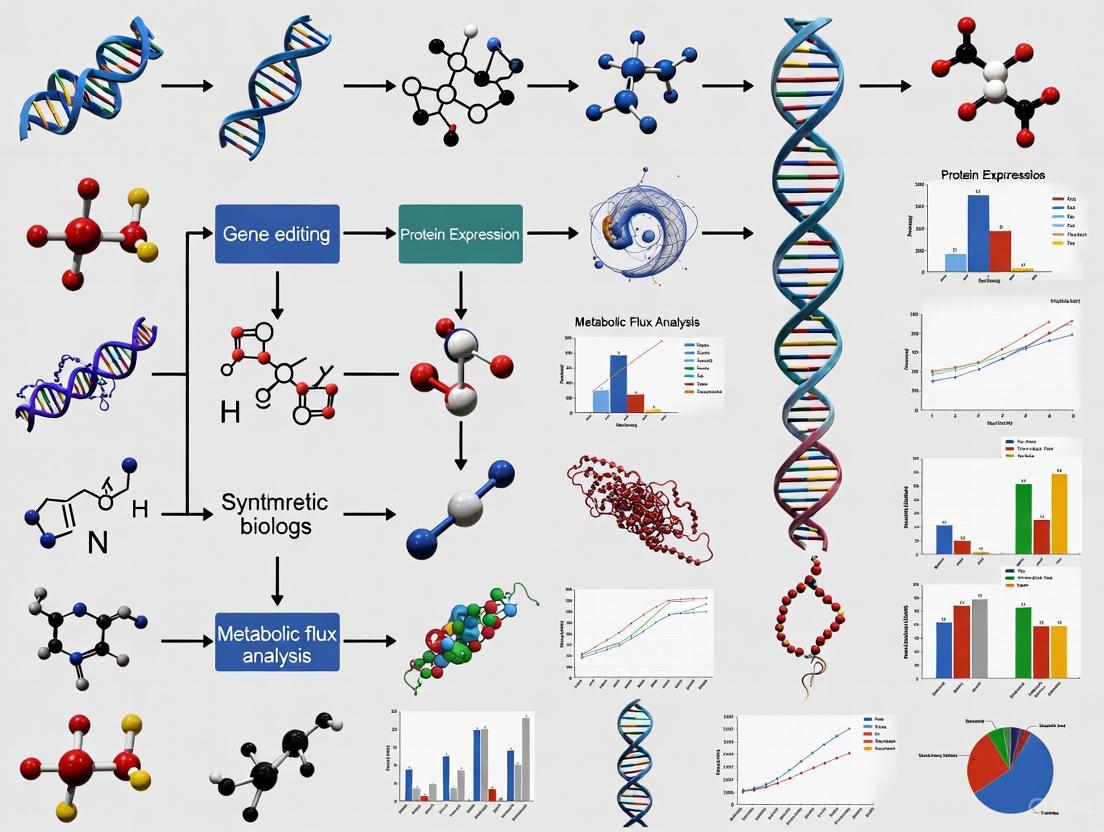
This article provides researchers, scientists, and drug development professionals with a structured framework for the rigorous benchmarking of synthetic biology simulation tools.
A Comprehensive Framework for Benchmarking Synthetic Biology Simulation Tools
Abstract
This article provides researchers, scientists, and drug development professionals with a structured framework for the rigorous benchmarking of synthetic biology simulation tools. It covers foundational principles for defining study scope and selecting methods, details the application of combinatorial optimization and high-throughput screening, addresses common troubleshooting and performance bottlenecks, and establishes robust validation and comparative analysis strategies using challenge-based assessments. The goal is to empower the community to perform unbiased, reproducible evaluations that accelerate the reliable design of biological systems.
Laying the Groundwork: Core Principles for Defining Your Benchmarking Study
Synthetic biology is rapidly transitioning from an artisanal practice to a disciplined engineering field, a shift powered by the adoption of robust benchmarking frameworks. These frameworks are not monolithic; they serve distinct strategic purposes. Neutral benchmarks act as independent arbiters for fair tool comparison on common ground, while method development benchmarks are tailored proving grounds designed to showcase a new method's specific advanced capabilities. Understanding this critical distinction enables researchers to select the right evaluation strategy, properly interpret performance claims, and accelerate the development of reliable biological simulation tools.
Neutral Benchmarks: The Independent Arbiters
Neutral benchmarks provide a standardized, community-vetted foundation for the objective comparison of different computational methods. Their primary purpose is to create a level playing field, free from the biases of any single development team, to assess how tools perform on realistic, representative tasks.
Benchmarking Machine Learning for Synthetic Lethality Prediction
A landmark 2024 study exemplifies the neutral benchmark approach, conducting a comprehensive evaluation of 12 machine learning methods for predicting synthetic lethal (SL) gene pairs in cancer [1]. The goal was to provide unbiased guidance to biologists on model selection.
- Experimental Protocol: The study established a rigorous pipeline assessing methods on both classification (identifying SL pairs) and ranking (prioritizing potential SL partners for a gene) tasks [1]. To test generalizability, researchers used three data-splitting methods (DSMs) of increasing difficulty:
- CV1: Random pairs held out (easiest).
- CV2: For each pair, one gene is unseen (semi-cold start).
- CV3: Both genes in a pair are unseen (full cold start, most realistic) [1].
- Performance Metrics: Models were evaluated using F1 scores for classification and NDCG@10 for ranking quality [1].
Table 1: Top-Performing Models in Synthetic Lethality Benchmarking (Classification Task, F1 Score)
| Model | Architecture | Key Data Inputs | Classification Score (F1) |
|---|---|---|---|
| SLMGAE | Graph Autoencoder | PPI, Gene Ontology, Pathways | 0.842 |
| GCATSL | Graph Neural Network | PPI, Knowledge Graph | 0.839 |
| PiLSL | Graph Neural Network | PPI, Gene Expression | 0.817 |
(Source: Adapted from results in Nature Communications 15, 9058 (2024) [1])
A key finding was that data quality significantly impacted performance more than model architecture. All methods performed better when trained on high-confidence negative samples and when computationally derived SL labels were excluded [1]. The benchmark concluded that SLMGAE demonstrated the best overall performance, offering a data-driven answer for researchers seeking the most effective tool [1].
The DUBS Framework for Virtual Screening
In drug discovery, the Directory of Useful Benchmarking Sets (DUBS) framework addresses the critical lack of standardization in virtual screening benchmarks. DUBS provides a simple, flexible tool to rapidly create standardized benchmarking sets from the Protein Data Bank, ensuring different docking methods can be compared fairly [2].
- Experimental Protocol: DUBS uses a simple text-based input format alongside the Lemon data mining framework to access and organize protein and ligand data. It outputs cleaned and standardized files in common formats (PDB, SDF) for virtual screening software, a process that takes less than two minutes [2].
- Core Function: It solves the problem of incompatible file formats and preprocessing steps in existing benchmarks (like DUD-E and PINC), which can lead to irreproducible results and unfair comparisons [2].
Diagram: The DUBS Neutral Benchmarking Workflow. This process standardizes inputs to ensure fair comparisons between computational methods [2].
Method Development Benchmarks: Showcasing Innovation
In contrast, method development benchmarks are intrinsically linked to demonstrating the superiority of a new tool or technique. They are often designed around the unique capabilities of the new method, highlighting its performance on tasks where existing approaches fall short.
The T-Pro Wetware-Software Suite for Genetic Circuits
Research on "compressed" genetic circuits for higher-state decision-making presents a prime example of a method development benchmark. The team created a new wetware (biological parts) and software (design tools) suite to overcome the limited modularity and high metabolic burden of complex circuits [3].
- Experimental Protocol: The benchmark involved designing 3-input Boolean logic circuits (256 distinct truth tables) using novel synthetic transcription factors and promoters. The key was comparing new "compressed" circuits against traditional, larger canonical circuits [3].
- Performance Metrics: The primary metrics were genetic footprint (number of parts, a measure of compression) and quantitative performance prediction error (fold-error between predicted and measured expression) [3].
Table 2: Performance of T-Pro Method Development Benchmarking
| Benchmarking Aspect | Traditional Approach | New T-Pro "Compressed" Approach | Performance Gain |
|---|---|---|---|
| Circuit Size | Large canonical circuits | ~4x smaller footprint | 4x compression |
| Prediction Error | High (qualitative) | Average error < 1.4-fold | High quantitative accuracy |
| Design Scope | Intuitive, by eye | Algorithmic enumeration of >100 trillion designs | Guaranteed minimal circuit |
(Source: Adapted from Nature Communications 16, 9414 (2025) [3])
This benchmark successfully demonstrated that the new T-Pro method could design complex circuits that were significantly more efficient and predictable than what was previously possible, a claim validated by direct, side-by-side comparison with the old standard [3].
CZI's Community-Driven Benchmarking for AI Biology
The Chan Zuckerberg Initiative (CZI) released a benchmarking suite for AI-driven virtual cell models, designed to accelerate the entire field. This initiative has characteristics of both a neutral community resource and a method development enabler. It addresses the bottleneck of poorly standardized evaluation, which forces researchers to spend weeks building custom pipelines instead of focusing on discovery [4].
- Experimental Protocol: The suite includes six community-defined tasks for single-cell analysis, such as cell clustering and perturbation prediction. Each task is evaluated with multiple metrics for a thorough performance view [4].
- Strategic Purpose: It functions as a "living" resource where researchers can contribute data and models. This design prevents overfitting to static benchmarks and ensures that models are optimized for biological relevance, not just benchmark scores [4].
Comparative Analysis: Objectives and Outcomes
The fundamental differences between these benchmarking approaches shape their design, implementation, and interpretation.
Table 3: Strategic Comparison of Benchmarking Paradigms in Synthetic Biology
| Aspect | Neutral Benchmarks | Method Development Benchmarks |
|---|---|---|
| Primary Goal | Fair, objective tool comparison; community standard | Showcase a new method's superiority & capabilities |
| Typical Custodian | Academic consortia, non-profits (e.g., CZI) [4] | Individual research teams or companies [3] |
| Design Focus | Standardization, reproducibility, real-world relevance [2] [1] | Highlighting specific advantages (e.g., speed, accuracy, novel function) [3] |
| Outcome | Guides user choice; sets field-wide standards [1] | Validates a specific new tool; defines a new state-of-the-art [3] |
| Inherent Risk | Can become outdated, leading to overfitting [4] | Potential for cherry-picked tasks that favor the new method |
Diagram: Strategic Choice Between Benchmarking Paradigms. The researcher's primary goal dictates the most appropriate benchmarking path.
The Scientist's Toolkit: Essential Research Reagent Solutions
The advancement of benchmarking relies on a suite of critical reagents and software tools.
Table 4: Key Reagents and Tools for Synthetic Biology Benchmarking
| Item | Function | Relevance to Benchmarking |
|---|---|---|
| Synthetic Transcription Factors (T-Pro) | Engineered repressors/anti-repressors for genetic circuits [3] | Core wetware for building and testing genetic circuit performance. |
| DUBS Framework | Standardized dataset generation for virtual screening [2] | Provides the neutral, standardized inputs for fair method comparison. |
| CZI cz-benchmarks | Python package & web interface for model evaluation [4] | Enables reproducible, community-driven benchmarking of AI biology models. |
| Enzymatic DNA Synthesis | Low-cost, rapid production of long DNA constructs [5] | Accelerates the "build" phase of DBTL cycles, enabling larger-scale testing. |
| AI-Guided Protein Design | De novo creation of proteins with atom-level precision [6] | Provides novel, previously non-existent components for testing design tools. |
| Machine Learning Models (e.g., SLMGAE) | Predict synthetic lethal gene pairs in cancer [1] | The tools being evaluated in neutral benchmarks to guide end-users. |
The choice between neutral and method development benchmarks is fundamental, shaping a project's trajectory from its inception. Neutral benchmarks like the SL prediction study and DUBS framework provide the trusted, common ground necessary for validating existing tools and establishing field-wide standards. Conversely, method development benchmarks, such as the one for T-Pro genetic circuits, are the engines of innovation, providing the controlled environment to demonstrate a new paradigm's value. For the field of synthetic biology to continue its rapid ascent, researchers must not only leverage both types of benchmarks but also contribute to their evolution, ensuring that the tools of tomorrow are built on a foundation of rigorous, reproducible, and relevant evaluation.
The establishment of a robust benchmarking framework for synthetic biology simulation tools is a cornerstone for advancing reproducible and reliable research. The selection of which methods or tools to include in a comparative study is a critical methodological step that directly determines a benchmark's comprehensiveness, utility, and freedom from bias. A poorly selected set of alternatives can lead to skewed conclusions, invalidate the benchmarking effort, and misdirect future research and resource allocation. This guide provides a structured, objective approach for researchers aiming to compile a representative and unbiased collection of methods for comparison, ensuring that the resulting analysis truly reflects the state-of-the-art in the field. Drawing on established practices from rigorous benchmark studies and principles of objective data presentation, we outline a protocol for method selection that mitigates common pitfalls and reinforces the integrity of scientific evaluation.
A Framework for Comprehensive Method Selection
A comprehensive benchmark requires a systematic search and selection strategy to ensure all relevant tools are considered. This involves leveraging multiple information channels to create an initial long-list of candidates.
Systematic Search and Discovery of Tools
The first step is to cast a wide net to identify as many relevant tools and methods as possible. Relying on a single source introduces a significant risk of omission bias. A multi-pronged approach is essential, utilizing bibliographic databases, specialized repositories, and community knowledge.
Table 1: Channels for Method Discovery
| Discovery Channel | Description | Utility in Building a Long-List |
|---|---|---|
| Bibliographic Databases (Scopus, Web of Science, PubMed) [7] [8] | Search for articles describing tool development using keywords related to synthetic biology simulation (e.g., "synthetic biology simulation", "genetic circuit modeling"). | Identifies peer-reviewed, published tools. Allows analysis of publication venues to find other relevant tools. |
| Reference Management Software (Zotero, Mendeley) [9] | Filter your saved literature database by keywords and journal titles to quickly identify frequently occurring tools. | Provides a quick, personalized overview of the tools prominent in your own literature review. |
| Specialized Repositories (GitHub, GitLab, BioTools) | Search for software tools that may not yet have an associated formal publication but are used in the community. | Captures cutting-edge and development-stage tools that are part of the current research landscape. |
| Preprint Servers (bioRxiv, arXiv) | Scan for recent manuscripts that describe new methods before they appear in traditional journals. | Ensures the benchmark includes the very latest methodological advances. |
Defining Inclusion and Exclusion Criteria
Once a long-list is assembled, objective, pre-defined criteria must be applied to determine final inclusion. These criteria should be established before the performance evaluation begins and be based on the benchmark's specific goals.
Key Criteria for Consideration:
- Technical Scope: Does the tool perform the specific type of simulation relevant to the benchmark (e.g., stochastic, deterministic, whole-cell)?
- Availability: Is the tool's source code or executable publicly accessible? Is there a working web service?
- Maintenance Status: Is the tool actively maintained? (This can be assessed via repository activity or recent citations).
- Documentation: Is there sufficient documentation to install, run, and interpret the tool's output?
- Computational Requirements: Can the tool be feasibly run within the computational environment of the benchmark study?
The application of these criteria should be documented meticulously, as demonstrated in rigorous benchmark studies. For example, a benchmark of methods for identifying perturbed subnetworks in cancer clearly defined its selection process to ensure a comprehensive and fair comparison [8].
Mitigating Bias in the Comparison Process
Bias can be introduced not only in which methods are selected but also in how they are configured, applied, and evaluated. A robust benchmarking framework requires proactive steps to minimize these biases.
Types of Bias and Counteractive Strategies
Table 2: Common Biases in Method Comparison and Mitigation Strategies
| Type of Bias | Description | Mitigation Strategy |
|---|---|---|
| Selection Bias | The set of compared methods is non-representative, favoring a particular type of approach or well-known tools. | Use the systematic discovery and objective criteria outlined in Section 2. Justify the final selection set transparently. |
| Configuration Bias | Methods are not run with their optimal parameters or settings, unfairly disadvantaging some tools. | Contact original tool authors for recommended configurations. Perform a hyperparameter sensitivity analysis for key tools to ensure fair tuning. |
| Dataset Bias | The benchmark uses datasets that are structurally biased toward the strengths of a subset of methods. | Use a wide range of dataset types, including simulated "ground-truth" data and real-world experimental data with varying levels of noise and complexity [8]. |
| Interpretation Bias | Results are presented in a way that visually or numerically highlights a pre-determined conclusion. | Use unbiased data visualization principles, such as avoiding misleading axes and employing color schemes accessible to all readers [10] [11]. |
The Role of Data Visualization in Objective Reporting
The presentation of results is a final, critical stage where bias can be introduced, even unintentionally. Adhering to principles of clear and accessible data visualization is paramount.
- Use Active Titles: Chart titles should state the finding (e.g., "Tool B achieved 15% faster simulation speed than the next best alternative") rather than merely describing the content (e.g., "Simulation speed comparison") [10].
- Employ Strategic Contrast: Use color and callouts to direct the viewer's attention to key findings, but avoid using these techniques to mislead or obscure inconvenient data [10]. All findings must be reported with transparency.
- Ensure Color Accessibility: Approximately 8% of men and 0.5% of women have some form of color vision deficiency [11]. Using a color-blind-friendly palette ensures your results are interpretable by the entire audience. Avoid problematic combinations like red/green and instead use palettes with varying lightness and saturation.
Table 3: Color-Blind-Friendly Palette (adapted from [12])
| Color Name | Hex Code | Recommended Use |
|---|---|---|
| Vermillion | #D55E00 |
Highlighting a key outlier or top performer. |
| Sky Blue | #0072B2 |
Representing a baseline or control method. |
| Bluish Green | #009E73 |
General use, good for data series. |
| Yellow | #F0E442 |
General use, provides good contrast. |
| Dark Pink | #CC79A7 |
General use, good for categorical data. |
Experimental Protocol for a Benchmarking Study
The following workflow diagram and detailed protocol outline the key steps for executing a fair and comprehensive method comparison, from initial planning to final dissemination.
Figure 1: A generalized workflow for executing a benchmarking study, highlighting the sequential phases of planning, execution, analysis, and dissemination.
Detailed Methodological Steps
- Define Scope and Objectives: Clearly articulate the biological question and the specific capabilities the benchmark will assess (e.g., prediction accuracy of gene expression levels, computational speed, scalability with model complexity).
- Method Discovery & Selection: Execute the systematic search and filtering process described in Section 2 to finalize the list of methods for inclusion.
- Dataset Curation: Assemble a diverse set of benchmark datasets. This should include both:
- Synthetic Data: Simulated data where the "ground truth" is known, allowing for precise quantification of accuracy [8].
- Experimental Data: Real-world data from synthetic biology experiments (e.g., from repositories related to the cited de novo protein design study [6]) to assess practical performance.
- Method Configuration and Execution:
- For each tool, document the version and all parameters used.
- Where possible, run tools in a containerized environment (e.g., Docker, Singularity) to ensure consistency and reproducibility.
- Execute multiple runs for stochastic methods to account for random variation.
- Performance Metric Calculation: Calculate a predefined set of quantitative metrics for each tool and dataset. Examples include:
- Accuracy Metrics: Root Mean Square Error (RMSE), Pearson Correlation, Area Under the Precision-Recall Curve (AUPRC).
- Efficiency Metrics: Wall-clock time, CPU time, memory usage.
- Robustness Metrics: Performance consistency across different datasets or under varying noise levels.
- Data Synthesis and Reporting: Aggregate results into structured tables. Visualize comparisons using the principles of contrast and color accessibility outlined in Section 3.2. Discuss results in the context of each method's algorithmic approach.
The Scientist's Toolkit: Essential Research Reagents and Materials
The following table details key resources and tools essential for conducting a rigorous benchmarking study in computational synthetic biology.
Table 4: Key Research Reagent Solutions for Benchmarking Studies
| Item / Resource | Function in Benchmarking | Example Tools / Sources |
|---|---|---|
| High-Performance Computing (HPC) Cluster | Provides the computational power to run multiple simulation tools and large parameter sweeps in parallel. | Local institutional HPC, cloud computing services (AWS, Google Cloud). |
| Containerization Platform | Ensures software dependencies are met and the computational environment is identical for every run, guaranteeing reproducibility. | Docker, Singularity. |
| Bibliographic Database | Used for the systematic discovery of published tools and for retrieving citation metrics for journal quality assessment [7] [9]. | Scopus, Web of Science, PubMed. |
| Reference Management Software | Aids in organizing the literature found during the discovery phase and can help identify key journals and tools [9]. | Zotero, Mendeley, Endnote. |
| Data Visualization Library | Enables the generation of clear, accessible, and publication-quality figures and charts for presenting benchmark results. | Matplotlib (Python), ggplot2 (R). |
| Code and Data Repository | A platform for sharing the scripts, results, and datasets of the benchmark, fulfilling the mandate for open science and reproducibility. | Zenodo, GitHub, GitLab. |
Selecting methods for comparison in synthetic biology benchmarking is a non-trivial exercise that demands a structured, transparent, and bias-aware approach. By implementing a systematic framework for method discovery, applying objective inclusion criteria, and adhering to principles of rigorous experimental design and accessible data presentation, researchers can produce benchmark studies that are both comprehensive and fair. Such high-quality comparisons are indispensable for guiding the development of more powerful and reliable synthetic biology simulation tools, ultimately accelerating progress in biomedicine and biotechnology.
The establishment of robust benchmarking frameworks is a critical pillar of methodological progress in synthetic biology. The core of any such framework is the reference dataset used to evaluate and compare the performance of computational tools and analytical pipelines. A fundamental choice researchers must make is whether to use real experimental data, with all its inherent complexity and noise, or simulated data, where the ground truth is known and parameters are controlled. This guide objectively compares the performance of methods using these different dataset types, detailing the trade-offs to inform researchers, scientists, and drug development professionals. Within the broader thesis on benchmarking for synthetic biology simulation tools, this discussion underscores that the choice between real and simulated data is not a matter of selecting a superior option, but of strategically aligning dataset strengths with specific benchmarking goals.
The Core Trade-offs: A Comparative Analysis
The decision between simulated and real experimental data involves balancing control against authenticity. The table below summarizes the fundamental characteristics and trade-offs of each dataset type.
Table 1: Fundamental Trade-offs Between Simulated and Real Experimental Data
| Aspect | Simulated Data | Real Experimental Data |
|---|---|---|
| Ground Truth | Known and perfectly defined [13] [14] | Unknown or partially inferred; requires validation via "gold-standard" datasets [13] |
| Control & Flexibility | High; allows for controlled scenarios with parameters of arbitrary complexity [13] | Low; constrained by the realities of experimental conditions and cost |
| Bias Assessment | Excellent for identifying algorithmic biases under controlled conditions [13] | Limited for pinpointing specific algorithmic biases, but reveals real-world performance issues |
| Data Fidelity | Risk of failing to capture all properties of experimental data, affecting evaluation validity [14] | High; inherently reflects true biological and technical variation |
| Primary Application | Method development, debugging, and performance evaluation; power analysis [15] [13] [14] | Final validation and confirmation of method utility in real-world scenarios [13] |
| Cost & Scalability | Low cost to generate vast amounts of data; highly scalable [13] | High cost and effort to generate; scalability is limited |
The Critical Role of Data Fidelity in Simulations
A key challenge with simulated data is its ability to faithfully reflect the characteristics of experimental data. A benchmark of single-cell RNA-seq simulation methods found that their performance varies significantly, and deviations from experimental data properties can compromise the validity of downstream evaluations [14]. The reliability of a benchmarking exercise using simulated data is therefore directly contingent on the simulator's ability to capture relevant data properties, such as mean-variance relationships and gene-gene correlations [14]. Consequently, the selection of a simulation tool itself requires careful consideration against real data to ensure it is fit for purpose.
Domain-Specific Applications and Experimental Protocols
The trade-offs between dataset types manifest concretely across different biological domains. The following examples illustrate how benchmarking studies are conducted in practice and what they reveal about tool performance.
Benchmarking Genomic Short-Read Simulators
Evaluating tools for processing Next-Generation Sequencing (NGS) data is a classic application of simulations. A systematic review of 23 genomic NGS simulators highlights their use in comparing analytical pipelines [15]. The typical experimental protocol involves:
- Input Selection: A reference genome sequence is used as the foundation [15] [13].
- Parameterization: Simulators require parameters defining the sequencing experiment (e.g., read length, error distribution) [15]. These can be "basic" (pre-defined within the tool) or "advanced" (custom-estimated from an empirical dataset to mimic its characteristics more closely) [13].
- Data Generation: The tool generates synthetic sequencing reads in standard formats like FASTQ or BAM [15].
- Pipeline Evaluation: The simulated reads, with their known ground truth, are processed by the computational methods under test (e.g., variant callers). The outputs are compared against the known truth to evaluate accuracy, sensitivity, and specificity [13].
A performance evaluation of six popular short-read simulators (ART, DWGSIM, InSilicoSeq, Mason, NEAT, and wgsim) demonstrated that the choice of simulator significantly impacts the characteristics of the output data, such as genomic coverage and GC-coverage bias [13]. This finding underscores the importance of selecting a simulator that accurately models the features most relevant to the benchmarking task.
Benchmarking Single-Cell Data Integration Methods
In single-cell biology, benchmarking often relies on real experimental data where ground truth is inferred from cell annotations. A benchmark of 16 deep learning-based integration methods used datasets from immune cells, pancreas cells, and the Bone Marrow Mononuclear Cells (BMMC) dataset from the NeurIPS 2021 competition [16]. The protocol was:
- Data Curation: Collect well-annotated scRNA-seq datasets with known batch and cell-type labels [16].
- Method Training: Apply integration methods (e.g., scVI, scANVI) using batch labels to remove technical variation and cell-type labels to preserve biological information [16].
- Performance Quantification: Use benchmarking metrics like the single-cell integration benchmarking (scIB) score to quantitatively evaluate two competing objectives: batch correction (how well batch effects are removed) and biological conservation (how well real biological variation is preserved) [16].
This benchmark revealed that methods optimized for batch correction can sometimes inadvertently remove biologically meaningful signal, a trade-off that is best quantified using real data with trusted annotations [16].
The Emergence of Living Synthetic Benchmarks
A proposed solution to the fragmentation and potential bias in method evaluation is the concept of "living synthetic benchmarks." This framework seeks to disentangle method development from simulation study design by creating a neutral, cumulative, and continuously updated benchmark [17]. The blueprint involves:
- Initialization: Collecting existing methods, Data-Generating Mechanisms (DGMs), and Performance Measures (PMs) into an initial benchmark [17].
- Separation: Allowing new methods, DGMs, and PMs to be developed and introduced independently [17].
- Continuous Integration: Systematically adding every new element (method, DGM, PM) to the benchmark, enabling comprehensive and neutral comparisons over time [17].
This approach, inspired by benchmarks in machine learning (e.g., ImageNet) and computational biology (e.g., CASP), aims to make method evaluation more objective, reproducible, and cumulative [17].
A Strategic Framework for Dataset Selection
The choice between dataset types is not mutually exclusive. The most robust benchmarking strategies intelligently combine both. The following workflow provides a logical pathway for researchers to make this choice.
Diagram 1: A strategic decision workflow for choosing between simulated and real experimental data for benchmarking, based on the primary research goal.
The Scientist's Toolkit: Key Reagent Solutions
The table below catalogs essential resources and tools mentioned in this guide that are instrumental for constructing and executing benchmarking studies in synthetic biology.
Table 2: Key Research Reagent Solutions for Benchmarking Studies
| Tool or Resource Name | Type | Primary Function in Benchmarking |
|---|---|---|
| SynBioTools [18] | Tool Registry | A one-stop facility for searching and selecting synthetic biology databases, computational tools, and experimental methods. |
| Genome In A Bottle (GIAB) [13] | Gold-Standard Empirical Dataset | Provides a high-quality reference dataset for human genomics, serving as a benchmark for validating variant calls and other genomic analyses. |
| Single-Cell Integration Benchmarking (scIB) [16] | Benchmarking Metric | A framework providing quantitative scores to evaluate how well single-cell data integration methods correct for batch effects and conserve biological information. |
| Living Synthetic Benchmark [17] | Benchmarking Framework | A proposed neutral and cumulative framework for simulation studies, disentangling method development from evaluation to ensure impartial comparisons. |
| Short-Read Simulators (e.g., ART, NEAT) [15] [13] | Simulation Tool | Generate synthetic NGS data for controlled benchmarking of computational pipelines for read mapping, variant calling, and assembly. |
| Single-Cell Simulators (e.g., Splat, SymSim) [14] | Simulation Tool | Generate synthetic scRNA-seq data with known ground truth for evaluating computational methods for clustering, trajectory inference, and differential expression. |
| SimBench [14] | Evaluation Framework | A comprehensive framework for benchmarking scRNA-seq simulation methods themselves, assessing their ability to capture properties of experimental data. |
The choice between simulated and real experimental data for benchmarking synthetic biology tools is foundational. Simulated data offers unparalleled control and knowledge of ground truth, making it ideal for method development, power analysis, and stress-testing algorithms under specific, controlled scenarios. Its primary weakness is the potential failure to capture the full complexity of real biological systems, which can lead to optimistic but misleading performance estimates. Real experimental data provides the ultimate test of a method's practical utility, ensuring performance under real-world conditions of noise and biological variation, though it is often costly and its "ground truth" is rarely perfect. The most rigorous benchmarking strategy is a hybrid one: leveraging simulated data for extensive initial testing and refinement, followed by final validation on multiple real-world datasets. Furthermore, the adoption of community-driven, living synthetic benchmarks promises to reduce bias and foster more cumulative, comparable, and neutral evaluation of methodological progress in the field.
The rapid expansion of synthetic biology has led to a proliferation of computational tools for designing and analyzing biological systems. For researchers, developers, and drug discovery professionals, selecting the appropriate tool is crucial yet challenging. Benchmarking studies provide a rigorous framework for this selection process by objectively comparing tool performance using reference datasets with known "ground truth" [19]. Establishing this ground truth is the foundational challenge in benchmarking, as the true biological processes underlying real experimental data are often unknown or incompletely characterized [20]. Without a known ground truth, it becomes difficult to quantitatively assess whether a computational method is performing accurately.
Two primary approaches have emerged to address this challenge: using synthetic data from computer simulations where all parameters are predefined, and employing experimentally-derived gold standards that incorporate physical controls like spiked-in molecules [19]. Simulation-based benchmarking allows for generating unlimited data with completely known properties, while experimental gold standards provide authentic biological contexts but often with only partially known truths. This guide examines both approaches, focusing on their implementation, relative strengths, and practical applications in benchmarking synthetic biology tools, with particular emphasis on sequencing-based analyses.
Establishing Ground Truth with Spiked-in Controls
Spiked-in controls are synthetic molecules of known sequence and quantity added to biological samples during experimental processing. They serve as internal standards that travel the entire experimental pathway alongside native biological molecules, enabling researchers to track technical performance and detect artifacts that may arise during sample processing.
Synthetic DNA Spike-Ins (SDSIs) for Amplicon Sequencing
Amplicon-based sequencing methods, widely used in SARS-CoV-2 genomic surveillance, are highly sensitive to contamination due to extensive PCR amplification. Synthetic DNA spike-ins (SDSIs) have been developed to track samples and detect inter-sample contamination throughout the sequencing workflow [21].
The SDSI + AmpSeq protocol utilizes 96 distinct synthetic DNA sequences derived from uncommon Archaea genomes, minimizing homology with common human pathogens and reducing false positives. Each SDSI consists of a unique core sequence flanked by constant priming regions, allowing co-amplification with target sequences using a single primer pair added to existing multiplexed PCR reactions [21].
Table 1: Synthetic DNA Spike-in (SDSI) System Characteristics
| Feature | Specification | Function/Benefit |
|---|---|---|
| Core Sequence Source | Uncommon Archaea genomes | Minimizes false positives from homology with common pathogens |
| Number of Variants | 96 distinct sequences | Enables multiplexed sample tracking |
| Priming Regions | Constant flanking sequences | Enables co-amplification with a single primer pair |
| GC Content Range | 33-65% | Similar to viral genomes (e.g., SARS-CoV-2: 37±5%) |
| Optimal Concentration | 600 copies/μL | Reliable detection without impacting target amplification |
| Compatibility | ARTIC Network primers | Works with widely used amplicon sequencing designs |
Experimental Protocol: Implementing SDSIs in Sequencing Workflows
The following protocol outlines the steps for incorporating SDSIs into amplicon sequencing workflows:
SDSI Selection and Preparation: Select a unique SDSI from the 99-plex library for each sample. Prepare SDSI stocks at 600 copies/μL in nuclease-free water [21].
Sample Processing: Add selected SDSI to sample cDNA prior to the multiplexed PCR amplification step. The constant priming regions enable simultaneous amplification with target-specific primers [21].
Library Preparation and Sequencing: Continue with standard library preparation protocols. The SDSIs will be co-amplified and sequenced alongside biological targets.
Data Analysis and Contamination Detection: After sequencing, map reads to both the target reference genome and the SDSI reference sequences. The presence of the expected SDSI confirms sample identity, while detection of unexpected SDSIs indicates inter-sample contamination [21].
Validation and Performance Metrics
Extensive validation of the SDSI + AmpSeq approach demonstrated several key performance characteristics:
No Impact on Target Sequencing: At optimal concentration (600 copies/μL), SDSIs yielded >96% of reads mapping to SARS-CoV-2 with no significant difference in coverage uniformity across the genome compared to standard protocols [21].
High Specificity: Each of the 96 SDSIs produced robust, specific signals without cross-mapping or misidentification in clinical samples spanning a range of viral loads (CT values 25-33) [21].
Genome Concordance: Comparison with unbiased metagenomic sequencing showed 100% genome concordance in processed samples, demonstrating that SDSI addition does not compromise variant calling accuracy [21].
Figure 1: SDSI Workflow for Contamination Detection. Synthetic DNA spike-ins (SDSIs) are added to samples before amplification and sequencing. Bioinformatics analysis detects expected and unexpected SDSIs to confirm sample identity or identify contamination.
Gold Standard Databases and Reference Materials
While spiked-in controls provide internal standards for individual experiments, gold standard databases offer community-wide reference points for method validation. These resources include experimentally validated datasets and carefully curated reference materials that serve as benchmarks for comparing computational tool performance.
Experimentally-Derived Gold Standards
Several approaches have been developed to create experimental datasets with known characteristics:
Fluorescence-Activated Cell Sorting (FACS): Cells are sorted into known subpopulations prior to single-cell RNA-sequencing, creating defined cell type mixtures with known composition [19].
Spiked-in RNA Molecules: Synthetic RNA molecules at known relative concentrations are added to samples before RNA-sequencing, enabling precise assessment of differential expression detection accuracy [19].
Cell Line Mixtures: Different cell lines are mixed to create 'pseudo-cells' with known genomic characteristics, providing controlled systems for method validation [19].
Sex Chromosome Genes: Genes located on sex chromosomes serve as proxies for validating epigenetic silencing patterns in DNA methylation studies [19].
Several organizations maintain gold standard references for benchmarking:
Genome in a Bottle (GIAB): Maintained by the National Institute of Standards and Technology (NIST), GIAB provides reference materials and high-confidence variant calls for human genomes, serving as benchmarks for variant calling pipelines [13].
MAQC/SEQC Consortia: These community-wide initiatives establish standards for microarray and sequencing quality control, generating extensively validated datasets for assessing reproducibility across platforms and laboratories [19].
Single Cell Portal: Provides curated single-cell RNA-seq datasets with experimental validation, enabling benchmarking of computational methods for single-cell analysis [22].
Simulation-Based Ground Truth for Method Validation
Computer simulation provides a powerful alternative for establishing ground truth by generating synthetic datasets with completely known properties. Simulations allow researchers to create controlled scenarios with predefined parameters, enabling precise assessment of computational method performance.
Numerous specialized tools have been developed to simulate next-generation sequencing (NGS) data, each with distinct capabilities and applications:
Table 2: Comparison of Popular Short-Read Sequencing Simulators
| Simulator | Supported Technologies | Variant Simulation | Error Models | Primary Applications |
|---|---|---|---|---|
| ART | Illumina, 454, SOLiD | No | Built-in platform-specific | Method validation, experimental design |
| DWGSIM | Illumina, SOLiD, IonTorrent | Yes (SNPs, indels) | User-defined or empirical | Variant detection benchmarking |
| InSilicoSeq | Illumina | No | Built-in or custom from data | Metagenomic simulations, method comparison |
| Mason | Illumina, 454 | Yes (SNPs, indels) | Built-in platform-specific | Large-scale genomic studies |
| NEAT | Illumina | Yes (SNPs, indels) | Built-in or empirical | Variant detection, error model evaluation |
| wgsim | Illumina | Yes (SNPs, indels) | Simple uniform model | Rapid prototyping, basic simulations |
Benchmarking Single-Cell RNA-seq Simulation Methods
Single-cell RNA sequencing presents unique computational challenges due to its high sparsity, technical noise, and complex data structures. A comprehensive benchmark study (SimBench) evaluated 12 scRNA-seq simulation methods across 35 experimental datasets, assessing their ability to reproduce key data properties and biological signals [20].
The evaluation framework examined four critical aspects of simulator performance:
Data Property Estimation: Accuracy in capturing 13 distinct data characteristics including mean-variance relationships, dropout rates, and gene-gene correlations.
Biological Signal Preservation: Ability to maintain biologically meaningful patterns such as differentially expressed genes and cell-type markers.
Computational Scalability: Efficiency in terms of runtime and memory consumption as dataset size increases.
Method Applicability: Flexibility in simulating complex experimental designs including multiple cell groups and differential expression patterns.
The benchmark revealed significant performance differences among methods, with no single simulator outperforming others across all criteria. ZINB-WaVE, SPARSim, and SymSim excelled at capturing data properties, while scDesign and zingeR performed better at preserving biological signals despite lower overall accuracy in data property estimation [20]. This highlights the importance of selecting simulators based on specific benchmarking needs rather than assuming universal superiority.
Experimental Protocol: Using Simulated Data for Method Benchmarking
A robust protocol for using simulated data in benchmarking computational methods includes these key steps:
Simulator Selection: Choose simulators based on the specific benchmarking goals, considering the trade-offs between biological accuracy, computational efficiency, and implementation complexity [20].
Parameter Estimation: Use real experimental datasets to estimate parameters for the simulation, ensuring that simulated data reflects relevant properties of biological systems [20].
Ground Truth Implementation: Introduce known signals (e.g., differentially expressed genes, specific mutations, or cell subpopulations) with controlled effect sizes and prevalences.
Method Evaluation: Apply computational methods to the simulated data and compare outputs to the known ground truth using appropriate performance metrics.
Sensitivity Analysis: Assess method performance across a range of conditions (e.g., varying sequencing depths, effect sizes, or noise levels) to identify operating boundaries and failure modes.
Comparative Analysis of Ground Truth Approaches
Both experimental controls and computational simulations offer distinct advantages and limitations for establishing ground truth in benchmarking studies. The choice between approaches depends on the specific research questions, available resources, and desired applications.
Table 3: Comparison of Ground Truth Establishment Methods
| Characteristic | Spiked-in Controls | Gold Standard Databases | Synthetic Simulations |
|---|---|---|---|
| Ground Truth Certainty | High for spiked molecules | Variable (depends on validation) | Complete (by definition) |
| Biological Relevance | High (in biological context) | High (real biological samples) | Limited (model-dependent) |
| Implementation Cost | Moderate (reagent costs) | Low (existing resources) | Low (computational only) |
| Scalability | Limited by experimental scale | Fixed (limited datasets) | Unlimited (arbitrary data size) |
| Technical Artifacts | Captures real experimental noise | Includes real technical variation | Modeled (may miss complexities) |
| Primary Applications | Contamination detection, normalization | Method validation, reproducibility | Method development, power analysis |
Figure 2: Ground Truth Approaches for Benchmarking. Experimental and computational approaches provide complementary methods for establishing ground truth. Combining multiple approaches enables comprehensive benchmarking.
Table 4: Research Reagent Solutions for Ground Truth Establishment
| Resource Type | Specific Examples | Function in Benchmarking |
|---|---|---|
| Synthetic Spike-ins | SDSIs [21], ERCC RNA Spike-in Mix | Sample tracking, contamination detection, normalization control |
| Reference Materials | Genome in a Bottle (GIAB) [13], MAQC samples | Method validation, inter-laboratory reproducibility |
| Cell Line References | Mixed cell lines, FACS-sorted populations [19] | Controlled cellular inputs with known composition |
| Sequence Simulators | ART, DWGSIM, InSilicoSeq [13], scRNA-seq simulators [20] | Generating data with completely known ground truth |
| Curated Databases | Single Cell Portal [22], GEO, dbGAP | Access to experimentally validated datasets |
| Analysis Workflows | Artic Network pipeline, nf-core/sarek | Standardized processing for comparative studies |
Establishing reliable ground truth through spiked-in controls, gold standard databases, and synthetic simulations is fundamental to rigorous benchmarking of synthetic biology tools. Each approach offers complementary strengths: experimental controls provide biological context and capture real technical variation, while computational simulations offer complete knowledge of underlying truths and unlimited scalability.
The most comprehensive benchmarking strategies integrate multiple approaches, using experimental gold standards to validate findings from synthetic data and vice versa. As the field advances, developing more sophisticated spike-in systems that better mimic native biomolecules and improving simulation methods to capture biological complexity more accurately will further enhance our ability to critically evaluate computational tools. For researchers and drug development professionals, understanding these ground truth establishment methods enables more informed tool selection and more robust computational analyses, ultimately accelerating scientific discovery and therapeutic development.
From Theory to Practice: Implementing Combinatorial Optimization and High-Throughput Workflows
Leveraging Combinatorial Optimization for Multivariate Pathway Tuning
A fundamental question in most metabolic engineering projects is determining the optimal expression levels of multiple enzymes to maximize the output of a desired pathway [23]. However, engineering microorganisms for industrial-scale production remains challenging due to the enormous complexity of living cells, where the nonlinearity of biological systems and low-throughput characterization methods create significant bottlenecks [23]. Traditional sequential optimization methods, which test only one part or a small number of parts at a time, prove time-consuming and expensive for complex multivariate systems [23]. Combinatorial optimization has emerged as a powerful alternative approach that allows rapid generation of diverse genetic constructs without requiring prior knowledge of optimal expression levels for each individual gene in a multi-enzyme pathway [23].
This review compares contemporary combinatorial optimization strategies for multivariate pathway tuning, evaluating their performance characteristics, implementation requirements, and applicability across different synthetic biology contexts. As the field advances toward more complex genetic circuits and biosystems, establishing robust benchmarking frameworks for these optimization approaches becomes increasingly critical for the synthetic biology community [24]. By objectively comparing the capabilities of different optimization methodologies, researchers can select appropriate strategies for their specific pathway engineering challenges, accelerating the design-build-test-learn cycle in synthetic biology.
Comparative Analysis of Combinatorial Optimization Approaches
Table 1: Comparison of Combinatorial Optimization Approaches for Pathway Engineering
| Optimization Approach | Key Methodology | Experimental Requirements | Scalability | Best-Suited Applications |
|---|---|---|---|---|
| Combinatorial Library Screening [23] | Generation of diverse genetic constructs via standardized part assembly | High-throughput screening; Biosensors; Flow cytometry | Moderate (library size limitations) | Metabolic pathway optimization; Enzyme expression tuning |
| Model-Based Optimization (DIOPTRA) [25] | Mathematical optimization using mixed-integer linear programming (MILP) | RNA-Seq data; Pathway annotation; Phenotype labels | High (computationally intensive) | Disease subtype classification; Biomarker identification |
| Quantum-Inspired Algorithms [26] | Quantum annealing and coherent Ising machines | Specialized hardware; Problem mapping to Ising model | Emerging technology | Maximum cut problems; Spin glass systems |
| Transcriptional Programming (T-Pro) [3] | Algorithmic enumeration of genetic circuits with compression | Synthetic transcription factors; Promoter engineering | High (wetware-software integration) | Genetic circuit design; Biocomputing applications |
Performance Metrics and Experimental Data
Table 2: Performance Comparison of Optimization Methods
| Method | Optimization Efficiency | Experimental Validation | Key Performance Metrics | Limitations |
|---|---|---|---|---|
| Combinatorial Library Screening [23] | Moderate to High | Strain libraries with metabolite production | Metabolite titers; Production yields; Screening throughput | Library size constraints; Screening bottlenecks |
| Model-Based Optimization (DIOPTRA) [25] | High (subtype classification accuracy) | Cancer transcriptome datasets | Prediction accuracy: ~70-90% for cancer subtypes; Robustness to noise | Requires large training datasets; Computational complexity |
| Quantum-Inspired Algorithms [26] | Variable (problem-dependent) | MaxCut problem instances | Time-to-solution (TTS); Scaling efficiency | Early-stage development; Specialized implementation |
| Transcriptional Programming (T-Pro) [3] | High (circuit compression) | Genetic circuit implementations in microbial hosts | Prediction error: <1.4-fold for >50 test cases; 4x size reduction vs. canonical circuits | Limited to transcriptional networks; Requires specialized wetware |
Experimental Protocols and Methodologies
Combinatorial Library Generation and Screening
The workflow for combinatorial optimization begins with in vitro construction and in vivo amplification of combinatorially assembled DNA fragments to generate gene modules [23]. In each module, gene expression is controlled by a library of regulators, with terminal homology between adjacent assembly fragments and plasmids enabling diverse construct generation in single cloning reactions. CRISPR/Cas-based editing strategies facilitate multi-locus integration of multiple module groups into genomic loci, with each group integrated into a single locus of different microbial cells [23]. Sequential cloning rounds enable entire pathway construction in plasmids, which can be transformed into hosts or used for single/multi-locus genomic integration to generate combinatorial libraries.
For high-throughput screening, biosensors combined with laser-based flow cytometry technologies transduce chemical production into detectable fluorescence signals [23]. This approach enables rapid identification of microbial strains producing the highest levels of target metabolites. Advanced screening techniques utilize genetically encoded whole-cell biosensors to overcome limitations of traditional, time-consuming metabolite screening methods [23].
Mathematical Optimization Framework (DIOPTRA Methodology)
The DIOPTRA (Disease OPTimisation for biomaRker Analysis) model employs mathematical optimization principles to infer pathway activity as a weighted linear combination of pathway constituent gene expressions [25]. The methodology follows these key steps:
Data Preparation: RNA-Seq count data are normalized using upper quartile FPKM (FPKM-UQ). Genes with high missingness (>30% zero expression values across samples) are removed.
Pathway Activity Definition: For each pathway p and sample s, pathway activity is calculated as:
(pas = \sum{m} G{sm} \cdot (rpm - rn_m))
where (G{sm}) represents gene expression value for sample s and gene m, while (rpm) and (rn_m) are positive continuous variables modeling positive and negative gene weights determined by the optimization model [25].
Optimization Constraints: Binary variables (Lm) ensure that for each gene m, at most one of (rpm) or (rn_m) takes positive values:
(rpm \leq Lm) (rnm \leq (1 - Lm))
Objective Function: The model minimizes distances between samples and their corresponding class intervals, deriving pathway activity features that cluster samples with the same label together while separating them from samples of different classes [25].
Transcriptional Programming (T-Pro) Workflow
The T-Pro workflow for genetic circuit compression involves both wetware and software components [3]:
Wetware Expansion: Engineering synthetic repressor/anti-repressor transcription factor sets responsive to orthogonal signals (IPTG, D-ribose, cellobiose).
Algorithmic Enumeration: Modeling circuits as directed acyclic graphs and systematically enumerating circuits in sequential order of increasing complexity to identify the most compressed circuit for a given truth table.
Predictive Design Workflow: Accounting for genetic context to quantitatively predict expression levels, enabling prescriptive performance design.
Experimental Validation: Implementing designed circuits in microbial hosts and measuring performance against predictions using fluorescence-based assays and sorting via FACS [3].
Visualization of Optimization Workflows
Combinatorial Optimization Screening Pipeline
Mathematical Optimization Framework
The Scientist's Toolkit: Essential Research Reagents and Solutions
Table 3: Key Research Reagents for Combinatorial Optimization Experiments
| Reagent/Resource | Function | Application Examples | Key Characteristics |
|---|---|---|---|
| Synthetic Transcription Factors [3] | Regulation of gene expression in genetic circuits | T-Pro circuit design; Orthogonal regulation | Ligand responsiveness; DNA binding specificity; Modular design |
| Biosensors [23] | Detection of metabolite production | High-throughput screening; Metabolic engineering | Fluorescence output; Sensitivity; Dynamic range |
| CRISPR/Cas Systems [23] | Genome editing; Multiplex integration | Library generation; Pathway integration | Editing efficiency; Multiplexing capability; Orthogonality |
| Orthogonal Inducers [3] | Control of synthetic genetic circuits | IPTG; D-ribose; Cellobiose in T-Pro | Orthogonality; Cell permeability; Non-toxicity |
| Fluorescent Reporters [23] [3] | Quantification of gene expression | Circuit characterization; Screening | Brightness; Stability; Spectral properties |
| Pathway Databases [25] | Source of biological pathway information | KEGG; Model construction | Coverage; Annotation quality; Currency |
Combinatorial optimization approaches for multivariate pathway tuning represent a powerful paradigm shift from traditional sequential optimization methods in synthetic biology [23]. The comparative analysis presented here demonstrates that method selection depends critically on the specific application context, available resources, and desired outcomes. For metabolic pathway optimization, combinatorial library screening approaches offer established, practical solutions, while emerging mathematical optimization frameworks like DIOPTRA show promise for analysis of complex biological systems [25]. Meanwhile, novel approaches like Transcriptional Programming (T-Pro) demonstrate how integrated wetware-software solutions can achieve predictive design with minimal genetic footprint [3].
As synthetic biology continues to advance toward more complex systems, establishing comprehensive benchmarking frameworks for these optimization methodologies becomes increasingly important [24]. Future developments will likely focus on improving computational efficiency, expanding the scope of biological systems that can be effectively optimized, and enhancing the integration between computational design and experimental implementation. The convergence of artificial intelligence with synthetic biology promises to further accelerate these developments, potentially enabling fully automated design-build-test-learn cycles for multivariate pathway optimization [27].
Integrating Biosensors and Flow Cytometry for High-Throughput Screening
The convergence of biosensor technology and advanced flow cytometry is revolutionizing high-throughput screening (HTS) in synthetic biology and drug development. This integration creates a powerful framework for analyzing cellular function with unprecedented depth and speed. Biosensors function as intracellular sentinels, converting specific biological events into detectable signals, while modern flow cytometry platforms, particularly spectral and imaging flow cytometers, provide the multi-parameter, high-throughput detection capability to read these signals across thousands of cells per second [28] [29] [30]. Within synthetic biology, this synergy is particularly valuable for benchmarking genetic circuits and metabolic pathways, enabling researchers to move beyond static endpoint measurements to dynamic, real-time monitoring of cellular processes in live cells [31] [28].
The core value of this integration lies in its ability to close the "design-build-test" cycle central to synthetic biology. By employing biosensors as reporting tools within a flow cytometric readout, researchers can rapidly prototype and iteratively improve synthetic biological systems [31]. This approach provides quantitative, single-cell resolution data that is essential for characterizing the performance and variability of synthetic biology tools, from engineered promoters and riboswitches to complex genetic circuits [28].
Biosensor Classes for Cytometric Detection
Biosensors suitable for integration with flow cytometry can be broadly categorized into two classes based on their molecular architecture: protein-based and nucleic acid-based sensors. Each class offers distinct advantages for monitoring different types of intracellular events.
Table 1: Key Biosensor Classes for Flow Cytometric Integration
| Category | Biosensor Type | Sensing Principle | Key Advantages | Common Cytometric Applications |
|---|---|---|---|---|
| Protein-Based | Transcription Factors (TFs) | Ligand binding induces conformational change, regulating gene expression [28]. | Suitable for high-throughput screening; broad analyte range [28]. | Metabolite sensing, stress response profiling [28]. |
| Protein-Based | Two-Component Systems (TCSs) | Sensor kinase autophosphorylates and transfers phosphate to a response regulator [28]. | High adaptability; environmental signal detection [28]. | Sensing extracellular ions, pH, small molecules [28]. |
| Protein-Based | G-Protein Coupled Receptors (GPCRs) | Ligand binding activates intracellular G-proteins and downstream pathways [28]. | High sensitivity; complex signal amplification [28]. | Ligand screening, signal transduction studies [28]. |
| RNA-Based | Riboswitches | Ligand-induced RNA conformational change affects translation or transcription [28]. | Compact genetic footprint; reversible response [28]. | Real-time regulation of metabolic fluxes [28]. |
| RNA-Based | Toehold Switches | Base-pairing with a trigger RNA activates translation of a downstream reporter gene [28]. | High specificity; programmable logic gates [28]. | RNA-level diagnostics, logic-gated pathway control [28]. |
The performance of these biosensors is quantified by several critical metrics. The dynamic range refers to the span between the minimal and maximal detectable signals, while the operating range defines the concentration window of the analyte where the biosensor performs optimally [28]. For high-throughput screening, the response time—the speed at which the biosensor reacts to changes—is crucial for capturing rapid cellular dynamics. Finally, the signal-to-noise ratio determines the clarity and reliability of the output, directly impacting the sensitivity and statistical power of the screen [28].
Technological Platforms and Performance Benchmarking
Advanced Flow Cytometry Modalities
The choice of flow cytometry platform significantly impacts the quality and quantity of data that can be acquired from integrated biosensors.
- Spectral Flow Cytometry: This technology represents a significant advancement over conventional cytometry. Instead of using optical filters to direct narrow wavelength bands to specific detectors, spectral cytometers capture the full emission spectrum of every fluorophore across a wide range of wavelengths using a prism or diffraction grating and an array of highly sensitive detectors [29]. This allows for improved signal resolution and the ability to multiplex more fluorophores, even with significant spectral overlap. It is particularly beneficial for complex screens involving multiple biosensors reporting on different pathway activities simultaneously [29].
- Imaging Flow Cytometry (IFC): IFC merges the high-throughput capabilities of conventional flow cytometry with high-resolution morphological imaging. Instruments like the Annis ImageStreamx or the Thermo Fisher Attune CytPix capture images of each cell as it flows through the detection system [30]. This provides not only quantitative fluorescence data from biosensors but also enables spatial analysis of signal localization within the cell—critical for biosensors that report on subcellular events such as transcription factor nuclear translocation or organelle-specific metabolite pools [30].
Table 2: Comparative Analysis of Flow Cytometry Platforms for Biosensor Screening
| Platform Characteristic | Conventional Flow Cytometry | Spectral Flow Cytometry | Imaging Flow Cytometry (IFC) |
|---|---|---|---|
| Key Principle | One detector-one fluorophore via optical filters [29]. | Full-spectrum capture with spectral unmixing [29]. | High-speed cellular imaging during flow [30]. |
| Multiplexing Capacity | Moderate (typically 10-20 parameters) [29]. | High (40+ parameters demonstrated) [29]. | Moderate, limited by camera sensitivity and speed [30]. |
| Primary Advantage with Biosensors | High-throughput, well-established protocols. | Superior resolution for complex fluorescent panels [29]. | Spatial context of biosensor activity [30]. |
| Typical Throughput | Very High (>10,000 cells/sec) [30]. | High (~10,000 cells/sec) [29]. | Moderate (up to 5,000 cells/sec) [30]. |
| Best Suited For | Rapid screening of well-separated fluorophores. | Complex screens with spectral overlap [29]. | Subcellular localization and morphological analysis [30]. |
Benchmarking Framework and Performance Metrics
Rigorous benchmarking is essential for evaluating the performance of integrated biosensor-flow cytometry platforms. The foundational guidelines for such benchmarking involve clearly defining the purpose, selecting appropriate methods and reference datasets, and using standardized evaluation criteria [19].
Performance is typically assessed using a combination of the following metrics:
- Sensitivity and Limit of Detection (LOD): The lowest analyte concentration that produces a statistically significant signal change. For example, a novel electrochemical biosensor for CD4+ T-cells demonstrated a LOD of 1.41×10^5 cells/mL, adequate for clinical HIV monitoring [32].
- Dynamic Range: The concentration range over which the biosensor responds linearly to the analyte. The aforementioned CD4+ sensor showed a linear range from 1.25×10^5 to 2×10^6 cells/mL, covering both healthy and diseased states [32].
- Specificity and Signal-to-Noise Ratio: The ability to distinguish the target signal from background or off-target interference. This is often validated by testing against non-target cell types (e.g., monocytes, neutrophils) [32].
- Temporal Resolution: For dynamic studies, the response time of the biosensor and the sampling rate of the cytometer determine the ability to track fast biological processes.
Experimental Protocols for Integrated Workflows
Workflow for Metabolic Flux Analysis Using TF-Based Biosensors
This protocol details the use of transcription factor-based biosensors in yeast to screen a library of metabolic engineering variants for enhanced metabolite production [28].
1. Biosensor and Strain Preparation:
- Clone a biosensor construct where the output of a metabolite-responsive transcription factor (e.g., LysR-type for organic acids) drives the expression of a fluorescent protein (e.g., GFP) [28].
- Transform this biosensor plasmid into a host microbial chassis (e.g., S. cerevisiae) harboring a diverse library of engineered metabolic pathways.
2. Cultivation and Induction:
- Grow transformed cells in a 96-well or 384-well deep-well plate with appropriate selective medium.
- Induce pathway expression during mid-log phase if using inducible promoters.
3. Flow Cytometric Analysis:
- Dilute cultures to an optimal density for cytometer acquisition (e.g., ~10^6 cells/mL).
- Acquire data on a spectral or conventional flow cytometer. For a TF-based sensor, a 488-nm laser and standard FITC filter set (530/30 nm) are typical for GFP detection.
- Record fluorescence intensity and side scatter for a minimum of 10,000 events per sample to ensure statistical significance.
4. Data Analysis and Hit Identification:
- Gate cells based on forward and side scatter to exclude debris and aggregates.
- Analyze the fluorescence distribution of the biosensor output.
- Isolate the top-performing "hit" strains (e.g., the top 1-5% of the population with the highest fluorescence) for further validation and pathway characterization.
Diagram 1: Biosensor-based metabolic screening workflow.
Workflow for RNA Logic Gate Validation Using Toehold Switches
This protocol uses RNA-based toehold switch biosensors to validate the operation of synthetic RNA circuits inside cells, read out via flow cytometry.
1. Circuit and Sensor Co-Design:
- Design a toehold switch biosensor where the trigger RNA sequence is the output of an upstream synthetic RNA circuit [28].
- The toehold switch, upon binding the trigger RNA, undergoes a conformational change that allows translation of a downstream reporter protein (e.g., mCherry).
2. Cell Transfection and Culture:
- Co-transfect mammalian cells (e.g., HEK293T) with plasmids encoding the RNA circuit and the toehold switch reporter.
- Include appropriate controls: a circuit with a non-functional mutation and a sensor without a trigger.
3. Flow Cytometry and Data Analysis:
- After 24-48 hours, harvest cells and resuspend in a suitable buffer for flow analysis.
- Use a cytometer equipped with a yellow-green (561 nm) laser and a 610/20 nm bandpass filter for mCherry detection.
- The fraction of mCherry-positive cells and the mean fluorescence intensity (MFI) directly report on the activity and output strength of the RNA logic gate.
The Scientist's Toolkit: Key Reagents and Materials
Successful integration of biosensors with flow cytometry requires a carefully selected suite of reagents and instruments.
Table 3: Essential Research Reagent Solutions for Integrated Workflows
| Item Name | Function/Benefit | Example Application |
|---|---|---|
| Fluorescent Proteins (e.g., eFluor dyes, Spark PLUS) | Bright, photostable labels for biosensor outputs. Multiplexing with minimal spillover [29]. | Multi-analyte detection in spectral cytometry [29]. |
| Characterized DNA Parts (from BIOFAB) | Well-characterized promoters/RBSs for predictable biosensor construction [31]. | Standardized biosensor assembly and tuning [31]. |
| Anti-CD4 Antibody (Functionalized) | Immobilization on electrode surface for specific cell capture [32]. | Functionalizing electrochemical microfluidic sensors [32]. |
| Cell Separation Chips (DFF Chip) | Label-free separation of cell populations (e.g., monocytes from PBMC) [32]. | Sample preprocessing to reduce interference in complex samples [32]. |
| Spectral Unmixing Software (e.g., SpectroFlo) | Algorithmic separation of overlapping fluorescence signals [29]. | Analyzing data from highly multiplexed biosensor panels [29]. |
| Microfluidic Electrochemical Chip | Integrated, portable platform for cell detection and enumeration [32]. | Point-of-care diagnostic development and in-field screening [32]. |
Implementation and Benchmarking Considerations
Implementing a robust biosensor-flow cytometry screening platform requires careful planning. A major consideration is biosensor characterization prior to large-scale screening. Key parameters that must be empirically determined include the dose-response curve, dynamic range, response time, and specificity in the intended host chassis [28]. Furthermore, chassis effects can significantly influence biosensor performance; the same genetic construct may behave differently in E. coli, yeast, or mammalian cells due to variations in transcription/translation machinery, metabolic background, and growth conditions [31].
From a benchmarking perspective, the selection of appropriate reference datasets and ground truths is critical for validating the integrated platform [19]. For metabolic biosensors, this could involve correlating fluorescence output with intracellular metabolite concentrations measured via LC-MS. For cell-based biosensors, comparison with established techniques like ELISA or manual microscopy provides a performance baseline [19]. The integration of AI and machine learning for data analysis is becoming increasingly important, helping to deconvolve complex multiparameter data, identify subtle patterns, and improve the accuracy of high-throughput screening outcomes [33] [30].
Diagram 2: Biosensor signal transduction and detection.
Utilizing Barcoding Strategies to Track Library Diversity in Silico
In the field of synthetic biology, the ability to track the diversity of vast genetic libraries is paramount for endeavors ranging from metabolic engineering to the development of novel therapeutic agents. Barcoding strategies, which involve the incorporation of unique DNA sequences into library members, have emerged as a powerful experimental solution. The computational analysis of these barcodes, performed in silico, is a critical pillar that transforms raw sequencing data into reliable, biologically meaningful insights. As the scale and complexity of barcoding experiments grow, the selection of appropriate computational tools and benchmarking frameworks becomes increasingly important. This guide provides an objective comparison of the performance and capabilities of contemporary software tools designed for the extraction, filtering, and analysis of cellular barcodes, providing researchers with the data needed to inform their analytical workflows.
Benchmarking Computational Tools for Barcode Analysis
The core challenge in barcode analysis is distinguishing true, biological barcodes from erroneous sequences introduced by PCR amplification and sequencing. Several computational strategies have been developed to address this, each with distinct strengths and limitations. The following table summarizes the key features and performance metrics of available tools.
Table 1: Comparison of Cellular Barcoding Analysis Tools
| Tool Name | Supported Barcode Types | Key Filtering Strategies | Performance Highlights | Applicable Data |
|---|---|---|---|---|
| CellBarcode [34] | Fixed-length, variable-length (with flanking sequence) | Reference, Threshold, Cluster, UMI-based | Barcode extraction & cluster filtering are 20x and 70x faster than genBaRcode, respectively [34] | Bulk DNA-seq, scRNA-seq |
| CellBarcodeSim [34] | Simulated libraries (e.g., lentiviral, VDJ) | Simulation-based ground truth for strategy validation | High Pearson correlation with experimental data structure [34] | Simulated bulk DNA-seq |
| BARtab / bartools [35] | Diverse cellular barcodes (lineage tracing) | End-to-end analysis pipeline | Designed for flexibility and scalability in single-cell & spatial transcriptomics [35] | Single-cell RNA-seq, Spatial transcriptomics |
| genBaRcode [34] | Restricted diversity of barcode types | Not Specified | Serves as a performance benchmark for CellBarcode [34] | Bulk sequencing |
| Bartender [34] | Not Specified | Not Specified | Less versatile in analysis strategies [34] | Bulk sequencing |
| CellTagR [34] | Restricted diversity of barcode types | Not Specified | Less versatile in analysis strategies [34] | scRNA-seq |
Performance benchmarking, using simulated data from CellBarcodeSim, reveals that the effectiveness of filtering strategies is highly dependent on experimental parameters. For instance, threshold filtering involves a fundamental trade-off between recall (finding true barcodes) and precision (avoiding false positives) [34]. Surprisingly, biological factors like the variation in clone size can have a greater impact on filtering performance than technical factors, with lower clone size variation leading to significantly better precision-recall outcomes [34].
Experimental Protocols for Barcode Analysis
Adopting a standardized and rigorous protocol is essential for reproducible barcode analysis. The following section details the methodologies employed by key studies and tools.
Protocol 1: High-Throughput Barcode Extraction and Filtering with CellBarcode
The CellBarcode package provides a comprehensive workflow for processing barcode sequencing data [34]:
- Quality Control and Read Filtering: Assess sequencing quality using the package's functions and remove low-quality sequences.
- Barcode Extraction: Define a regular expression that matches the barcode's structure and its flanking sequences. CellBarcode can extract both fixed-length and variable-length barcodes from FASTQ or BAM files, allowing for mismatches in flanking regions for bulk analysis.
- Filtering Spurious Barcodes: Apply one or more filtering strategies:
- Reference Filtering: Eliminate barcodes not found in a predefined reference list.
- Threshold Filtering: Retain barcodes with read counts above a specific threshold, which can be set manually or determined automatically.
- Cluster Filtering: Remove barcodes that are within a small edit distance of a more abundant barcode.
- UMI Filtering: If Unique Molecular Identifiers are present, apply additional filters based on UMI counts.
- Visualization and Export: Use package functions to visualize barcode read count distributions and export the final count matrix.
Protocol 2: In Silico Benchmarking with CellBarcodeSim
The CellBarcodeSim kit allows for the simulation of barcoding experiments to optimize filtering strategies [34]:
- Library Production: Generate an in silico library of barcode sequences.
- Cell Labeling and Clonal Expansion: Model the process of cells being labeled with barcodes and subsequent clonal expansion, introducing biological variation in clone sizes.
- Read Construction: Simulate the construction of sequencing reads, including the incorporation of flanking sequences and UMIs if desired.
- PCR and Sequencing: Model the technical noise of PCR amplification and sequencing, including the introduction of errors.
- Strategy Evaluation: Compare the known ground-truth barcodes from the simulation with the output of CellBarcode after applying different filtering strategies. This allows for the quantitative evaluation of precision and recall for each strategy under controlled conditions.
Protocol 3: Microscopy-Readable Barcoding (MiCode) for Phenotypic Screening
This experimental method, which requires subsequent computational analysis, uses fluorescent proteins to create a visual barcode [36]:
- Barcode Construction: Assemble a MiCode construct using a Golden Gate assembly strategy. The construct uses distinct promoters and terminators to drive the expression of different fluorescent proteins (e.g., RFP, YFP, CFP, BFP) targeted to discernible organelles (e.g., nucleus, vacuole membrane, plasma membrane, F-actin patches).
- Genomic Integration: Integrate the MiCode construct into specific chromosomal loci (e.g., URA3, LEU2 in yeast) to ensure stable inheritance.
- Phenotypic Linking: Genetically link a unique MiCode to each member of a library (e.g., a library of coiled-coil proteins).
- Imaging and Analysis: Take micrographs of mixed cell populations. The MiCode phenotype is read via microscopy to identify the genotype of each cell in parallel with the measurement of a desired phenotypic output, such as protein-protein interactions.
Diagram 1: MiCode experimental and analysis workflow.
Table 2: Key Research Reagents and Computational Tools
| Item Name | Function / Application | Relevant Context |
|---|---|---|
| Fluorescent Proteins (e.g., mRuby2, Venus) [36] | Visual tag for organelles in microscopy-readable barcodes. | Creating distinct, visually discernible MiCodes. |
| Organelle Targeting Tags [36] | Directs fluorescent proteins to specific cellular locations (e.g., nucleus, membrane). | Defining the spatial component of a MiCode barcode. |
| CellBarcode R Package [34] | Versatile toolkit for barcode extraction, filtering, and visualization from sequencing data. | Primary tool for computational analysis of barcode sequencing data. |
| CellBarcodeSim [34] | Simulation kit to model barcoding experiments and test filtering strategies. | Informing experimental design and benchmarking analysis pipelines. |
| Golden Gate Assembly System [36] | Modular DNA assembly method for constructing complex genetic circuits. | Synthesizing MiCode barcodes and linked genetic libraries. |
| BARtab / bartools [35] | Software for analyzing cellular barcodes in single-cell and spatial transcriptomics. | Lineage tracing analysis integrated with transcriptomic data. |
The choice of barcoding analysis strategy is highly context-dependent. For standard, high-throughput sequencing of DNA barcodes, CellBarcode offers a versatile and efficient solution, particularly when paired with CellBarcodeSim for strategy optimization and benchmarking. When the research goal involves linking lineage to cell state, as in single-cell RNA-seq experiments, BARtab and bartools provide a specialized, scalable framework. For screening applications where phenotypes like localization or morphology are key, MiCode strategies offer a powerful, if more specialized, alternative. A careful consideration of the biological question, the barcode type, and the desired throughput will guide researchers to the optimal combination of experimental and computational barcoding tools.
Synthetic biology represents a fundamental shift in biological engineering, applying rigorous engineering principles to the design and construction of biological systems. The field is characterized by the Design-Build-Test-Learn (DBTL) cycle, a systematic framework for developing and optimizing biological systems to perform specific functions, from producing biofuels and pharmaceuticals to creating novel genetic devices [37]. This iterative engineering paradigm enables researchers to transform biological components into predictable, programmable systems through repeated cycles of modeling, construction, and experimental validation.
The DBTL framework has become the cornerstone of modern bioengineering, driving advances in metabolic engineering, genetic circuit design, and therapeutic development. This guide examines the computational tools and experimental methodologies that support each phase of the DBTL cycle, with a specific focus on benchmarking approaches for evaluating synthetic biology simulation platforms. By comparing the capabilities, performance, and applications of key software tools, we provide researchers with a structured framework for selecting appropriate technologies to advance their synthetic biology projects.
The DBTL Framework: Components and Workflow
The DBTL cycle operationalizes the engineering approach to biology through four interconnected phases [37] [38]:
- Design: Computational specification of biological systems using mathematical models
- Build: Physical assembly of DNA constructs and their introduction into cellular hosts
- Test: Experimental characterization of system behavior through functional assays
- Learn: Analysis of experimental data to refine models and inform subsequent design iterations
This framework enables researchers to navigate the complexity of biological systems by combining modeling with empirical validation. The following workflow diagram illustrates the iterative nature of this process and the key activities at each stage:
Computational Tools for the Design Phase
The design phase relies heavily on computational tools to model biological systems before physical construction. These tools help researchers create predictive models, simulate system behavior, and optimize genetic designs. Based on comprehensive surveys of available software, synthetic biology tools can be categorized into several functional modules [18] [39]:
Table 1: Synthetic Biology Software Tools by Functional Category
| Module/Category | Primary Function | Representative Tools |
|---|---|---|
| Biocomponents | Standard biological part management | Registry of Standard Biological Parts, SynBioSS |
| Pathway | Metabolic pathway design and analysis | COPASI, iBioSim, OptFlux |
| Protein | Protein design and engineering | AutoDock, Biskit, Gene Designer |
| Gene Editing | Genome editing design | CRISPR-X, TALEN design tools |
| Metabolic Modeling | Constraint-based metabolic modeling | COBRApy, massPy, PySCeS |
| Omics | Multi-omics data analysis | KEGG, GO, STRING, Reactome |
| Strains | Host strain development and optimization | Genome-scale metabolic models |
Specialized modeling software forms the computational backbone of the design phase. The systems biology community has developed numerous supported open-source applications that facilitate different modeling approaches [39]:
Table 2: Systems Biology Modeling Software Comparison
| Software | Modeling Paradigms Supported | SBML Support | Primary Interface | Key Features |
|---|---|---|---|---|
| COPASI | ODE, Stochastic | Yes | GUI | Parameter estimation, metabolic control analysis, sensitivity analysis |
| iBioSim | ODE, Stochastic, Limited Agent-based | Yes | GUI | Genetic circuit modeling and analysis, supports reaction rules |
| libRoadRunner | ODE, Stochastic | Yes | Python scripting | High-performance simulation, steady-state and time-dependent sensitivities |
| Tellurium | ODE, Stochastic | Yes | Python | Packages multiple libraries into unified platform |
| PhysiCell | Agent-based, ODE (via libRoadRunner) | Partial (reactions only) | C++/Python | Multicellular systems biology, spatial modeling |
| PySCeS | ODE, Stochastic | Yes | Python | Metabolic control analysis, stoichiometric modeling |
| VCell | ODE, Spatial, Stochastic | Yes | GUI | Comprehensive modeling platform, reaction networks and rules |
Benchmarking Synthetic Biology Simulation Tools: Experimental Protocols
Evaluating synthetic biology software requires standardized benchmarking methodologies that assess performance across multiple dimensions. Based on computational design principles and tool integration frameworks [40], we propose the following experimental protocols for comparative analysis:
Protocol 1: Performance Benchmarking for Dynamic Simulation
Objective: Quantify computational efficiency and numerical accuracy for dynamic simulations of genetic circuits.
Methodology:
- Test Model Selection: Implement three standardized models: (1) Repressilator (oscillatory network), (2) Toggle Switch (bistable system), and (3) Linear Cascade (sequential activation)
- Simulation Conditions: Execute time-course simulations for each model using identical parameter sets and initial conditions across all software platforms
- Performance Metrics: Record (a) simulation time, (b) memory usage, (c) numerical stability, and (d) agreement with analytical solutions where available
- Statistical Analysis: Perform triplicate measurements and calculate coefficient of variation for stochastic solvers
Data Collection: Quantitative performance data should be recorded in standardized formats (CSV) for cross-platform comparison. Visualization of simulation trajectories should be generated to assess qualitative agreement with expected behaviors.
Protocol 2: Feature Compatibility Assessment
Objective: Systematically evaluate support for standard synthetic biology features and modeling approaches.
Methodology:
- SBML Import/Export Testing: Validate support for Systems Biology Markup Language (SBML) through standardized test suites
- Modeling Paradigm Assessment: Document support for ODE, stochastic, constraint-based, logical, agent-based, and spatial modeling approaches
- Advanced Feature Inventory: Catalog availability of features including parameter estimation, sensitivity analysis, bifurcation analysis, and conserved moiety analysis
- Visualization Capabilities: Assess network visualization, editing, and results presentation features
Evaluation Framework: Binary scoring (supported/not supported) combined with qualitative assessment of implementation maturity.
Comparative Analysis of Simulation Software Features
Based on the systematic evaluation of systems biology modeling tools [39], we have compiled comprehensive feature comparisons to guide researchers in selecting appropriate simulation platforms:
Table 3: Modeling Paradigm Support Across Simulation Platforms
| Software | ODE | Stochastic | Constraint Based | Logical | Agent Based | Spatial (Particle) | Spatial (Continuous) |
|---|---|---|---|---|---|---|---|
| COPASI | Yes | Yes | No | No | No | No | No |
| iBioSim | Yes | Yes | No | No | Limited | No | No |
| libRoadRunner | Yes | Yes | No | No | No | No | No |
| PhysiCell | Yes (via libRoadRunner) | No | No | No | Yes | No | Yes |
| PySCeS | Yes | Limited | No | No | No | No | No |
| VCell | Yes | Limited | No | No | No | No | Single Cell |
| CompuCell3D | Yes | No | No | No | Yes | No | Yes |
| Smoldyn | No | Yes | No | No | No | Yes | No |
Different simulation tools offer specialized capabilities for specific analysis types. The differential equation solving capabilities vary significantly across platforms [39]:
Table 4: Differential Equation Solving Capabilities
| Software | Non-stiff Solver | Stiff Solver | Steady-state Solver | Steady-state Sensitivities | Time-dependent Sensitivities | Bifurcation Analysis |
|---|---|---|---|---|---|---|
| COPASI | Yes | Yes | Yes | Yes | Limited | Limited |
| libRoadRunner | Yes | Yes | Yes | Yes | Yes | via AUTO2000 plugin |
| PySCeS | Yes | Yes | Yes | Yes | Limited | Limited+ |
| VCell | Yes | Yes | No | No | No | No |
| iBioSim | Yes | Yes | No | No | No | No |
Successful implementation of the DBTL cycle requires both computational tools and physical research materials. The following table details key resources essential for synthetic biology research [37] [38] [41]:
Table 5: Essential Research Reagents and Resources for Synthetic Biology
| Resource Category | Specific Examples | Function/Application |
|---|---|---|
| Standard Biological Parts | BioBricks, Promoters, RBS, Reporters | Modular genetic components for circuit design |
| DNA Assembly Systems | Restriction enzymes, Gibson Assembly, Golden Gate | Physical construction of genetic circuits |
| Cellular Chassis | E. coli, S. cerevisiae, Mammalian cells | Host organisms for circuit implementation |
| Characterization Tools | Fluorescent proteins, Biosensors, qPCR | Quantitative measurement of circuit performance |
| Registry Resources | Registry of Standard Biological Parts, SynBioTools | Cataloged biological parts and data repositories |
| Gene Editing Tools | CRISPR/Cas9, TALENs, Zinc Finger Nucleases | Genome modification and circuit integration |
Integration of DBTL Cycles with Benchmarking Frameworks
The iterative nature of the DBTL cycle generates continuous improvement in both biological designs and computational models. The learning phase systematically incorporates experimental results to refine subsequent design iterations, creating a knowledge feedback loop that enhances predictive modeling [37] [40]. This process can be visualized through the integrated DBTL-benchmarking workflow:
Effective benchmarking in synthetic biology follows established principles from performance evaluation [42], including:
- Performance Benchmarking: Quantitative comparison of computational efficiency, accuracy, and scalability
- Practice Benchmarking: Qualitative assessment of workflow integration, usability, and feature implementation
- Internal Benchmarking: Comparison of different tools or versions within the same research group or organization
- External Benchmarking: Comparison with community standards, published results, or competing platforms
However, benchmarking in scientific research requires careful consideration of contextual factors [43]. Disparities in data availability, differences in implementation standards, and variations in hardware environments can complicate direct comparisons. Successful benchmarking frameworks must account for these factors while providing meaningful performance insights.
The Synthetic Biology Design Cycle represents a powerful framework for engineering biological systems through iterative design, construction, testing, and learning. Computational tools play an essential role in this process, enabling predictive modeling and virtual prototyping before resource-intensive experimental implementation. The benchmarking methodologies and comparative analyses presented in this guide provide researchers with structured approaches for evaluating and selecting simulation tools based on their specific project requirements.
As synthetic biology continues to mature, integration of standardized benchmarking within the DBTL cycle will accelerate tool development, improve model predictability, and enhance experimental success rates. By adopting systematic evaluation frameworks and leveraging the growing ecosystem of specialized software, researchers can navigate the complexity of biological design more effectively, advancing both fundamental understanding and practical applications in synthetic biology.
Navigating Pitfalls and Enhancing Performance: A Troubleshooting Guide
Addressing Scalability and the State-Space Explosion Problem
The scalability of simulation tools is a foundational challenge in computational synthetic biology. As researchers model increasingly complex, genome-scale networks, they encounter the state-space explosion problem, where the number of possible system states grows exponentially with network size, making comprehensive analysis computationally intractable [44] [45]. This limitation severely restricts the practical application of computational models for drug development and biological discovery. This guide objectively compares how leading simulation approaches address this fundamental challenge, evaluating their performance through a consistent benchmarking framework based on formal verification principles and computational efficiency metrics.
Comparative Framework & Experimental Methodology
Benchmarking Design and Evaluation Metrics
To ensure a fair comparison, we established a unified experimental protocol focusing on each tool's ability to manage state-space growth while maintaining analytical precision. The evaluation centered on three core metrics:
- Computational Tractability: Measurement of time and memory resources required to analyze networks of increasing size and complexity.
- Behavioral Completeness: Assessment of the ability to capture all biologically plausible system dynamics, including rare or transient states.
- Predictive Accuracy: Evaluation of how well tool predictions correspond with experimentally observed biological behaviors.
The benchmarking suite utilized both canonical network motifs (e.g., feed-forward loops) and established genome-scale models to test scalability limits [45].
Tool Selection and Experimental Setup
Our study focused on three distinct approaches representing the current spectrum of scalability solutions:
- Most Permissive Boolean Networks (MPBNs) as a novel execution semantics for qualitative modeling [45]
- Traditional Boolean Networks (Synchronous/Asynchronous) as baseline comparators [45]
- Formal Verification Frameworks combining model checking and theorem proving for rigorous software verification [44]
All experiments were conducted on a standardized computational platform with consistent resource allocation to ensure comparable results across methodologies.
Performance Comparison and Experimental Data
Quantitative Benchmarking Results
Table 1: Comparative Performance Analysis of Scalability Approaches
| Performance Metric | MPBNs | Traditional Boolean Networks | Formal Verification Framework |
|---|---|---|---|
| State-Space Coverage | Comprehensive (guarantees no missing behaviors) [45] | Limited (may miss observable behaviors) [45] | Exhaustive within bounds [44] |
| Analysis Complexity | Polynomial time for reachability and attractor identification [45] | Exponential state-space growth [45] | Bounded model checking with SAT solvers [44] |
| Genome-Scale Applicability | Demonstrated capability [45] | Limited to small networks | Applied to bioinformatics software (BiopLib, BWA) [44] |
| Behavioral Predictions | Captures transient dynamics and stable states [45] | Misses key behaviors (e.g., transient activation) [45] | Identifies software flaws via property violation [44] |
| Computational Tractability | High (avoids state-space explosion) [45] | Low (severely impacted by state-space explosion) [45] | Moderate (theorem proving scales better than explicit model checking) [44] |
Qualitative Capability Assessment
Table 2: Functional Characteristics Across Modeling Approaches
| Characteristic | MPBNs | Traditional Boolean Networks | Formal Verification Framework |
|---|---|---|---|
| Theoretical Foundation | Most permissive execution semantics [45] | Synchronous/asynchronous updating [45] | Model checking + theorem proving [44] |
| Key Innovation | No additional parameters needed [45] | Established baseline methodology | Combination of verification methods [44] |
| Validation Strength | Can definitively reject incompatible models [45] | May wrongly reject valid models [45] | Provides mathematical proof of properties [44] |
| Implementation Examples | Python libraries for biological networks | Standard tools for logical modeling | Applied to SDSL, BWA, Jellyfish [44] |
| Ideal Use Cases | Large network analysis, model validation | Small network dynamics | Software verification, algorithm validation [44] |
Experimental Protocols and Methodologies
Protocol 1: Most Permissive Boolean Network Analysis
MPBNs introduce a novel execution paradigm that captures all possible behaviors of a Boolean network that could occur in any quantitative refinement, without requiring additional parameters [45].
Workflow Description: The MPBN methodology allows components to transition through intermediate "waiting" states during activation or deactivation, effectively enabling them to be neither fully 0 nor 1 during state transitions. This approach eliminates the artificial constraints of synchronous and asynchronous updating that can preclude biologically plausible behaviors. The technical implementation involves analyzing the state transition graph under these more permissive rules, which surprisingly reduces computational complexity despite increasing potential behaviors.
Protocol 2: Formal Verification Framework for Software Validation
This methodology applies formal verification techniques from computer science to bioinformatics software, combining model checking and theorem proving to ensure algorithmic correctness [44].
Workflow Description: The process begins by specifying expected behaviors of bioinformatics software as formal properties using temporal logic. Model checking then systematically verifies whether the software implementation satisfies these properties across all possible states, providing counterexamples when violations occur. For larger systems where model checking faces state-space explosion, theorem proving offers a complementary approach that uses mathematical reasoning to verify properties without exhaustive state enumeration.
The Scientist's Toolkit: Essential Research Reagents
Table 3: Computational Tools and Standards for Scalable Synthetic Biology
| Tool/Standard | Type | Primary Function | Scalability Relevance |
|---|---|---|---|
| SBML (Systems Biology Markup Language) [46] [47] | Data Standard | Machine-readable format for representing biological models | Enables interoperability and reproducibility of large-scale models |
| SBOL (Synthetic Biology Open Language) [48] [49] | Visual Standard | Standardized visual representation of genetic designs | Facilitates clear communication of complex genetic designs |
| libSBML [46] [47] | Programming Library | API for reading, writing, and manipulating SBML | Supports development of scalable analysis tools |
| MPBN Software Libraries [45] | Analysis Tool | Implementation of Most Permissive Boolean Networks | Provides polynomial-time analysis of network dynamics |
| Model Checkers (e.g., NuSMV, SPIN) [44] | Verification Software | Formal verification of software properties | Detects flaws in bioinformatics software implementations |
| SAT Solvers [44] | Computational Engine | Boolean satisfiability problem solving | Enables bounded model checking for formal verification |
The state-space explosion problem remains a significant challenge in synthetic biology simulation, but the approaches compared in this guide demonstrate promising pathways toward scalable analysis. MPBNs offer a mathematically grounded solution for qualitative modeling that maintains behavioral completeness while achieving polynomial-time complexity for fundamental analyses like reachability and attractor identification [45]. Formal verification frameworks provide rigorous methodologies for ensuring software correctness in bioinformatics tools through complementary model checking and theorem proving approaches [44]. While no single solution completely eliminates the fundamental constraints of computational complexity, these methodologies collectively advance the field toward practical analysis of genome-scale networks, enabling more reliable predictions and accelerating therapeutic development.
Mitigating Overfitting to Training Data in Predictive Models
In the specialized field of synthetic biology, where computational models guide groundbreaking experimental studies, overfitting poses a significant threat to research validity and reproducibility. Overfitting occurs when a model learns the training data too well, capturing noise and irrelevant details instead of generalizable patterns, leading to poor performance on new, unseen data [50]. This challenge is particularly acute in biological simulation tools, where the lack of trustworthy, reproducible benchmarks can force researchers to spend valuable time building custom evaluation pipelines instead of advancing discoveries [4]. This article examines strategies to mitigate overfitting, objectively comparing their effectiveness and integration within modern benchmarking frameworks essential for robust virtual cell model development.
Understanding Overfitting in Biological Contexts
An overfit model typically exhibits high accuracy on training data but significantly lower accuracy on validation or test datasets [50] [51]. For instance, a credit risk model might show 99% training accuracy but only 70% test accuracy, revealing its failure to generalize [50]. In biology, this can manifest as a model that performs excellently on benchmark datasets but fails when applied to new experimental data or different biological contexts, creating an illusion of progress while stalling real-world impact [4].
The core issue stems from models becoming excessively complex relative to the available data, often due to too many parameters, small or noisy datasets, insufficient regularization, or training for too long [50] [52]. This is systematized in biological AI fields where bespoke benchmarks for individual publications can lead to cherry-picked results that are difficult to reproduce across laboratories [4].
Comparative Analysis of Overfitting Mitigation Techniques
The table below summarizes primary techniques for mitigating overfitting, their core mechanisms, and comparative advantages.
| Technique | Core Mechanism | Implementation Examples | Relative Advantages |
|---|---|---|---|
| Regularization | Applies penalty terms to discourage model complexity [50] | L1 (Lasso), L2 (Ridge), ElasticNet, Dropout [50] [53] | Effectively reduces variance without significant bias increase; Dropout specifically prevents co-adaptation in neural networks [50] [54] |
| Cross-Validation | Assesses model stability across multiple data subsets [50] | k-fold cross-validation [53] [52] | Provides robust performance estimate; Uses all data for training and validation; Identifies overfitting through performance variance across folds [53] |
| Data Augmentation | Artificially expands dataset size and diversity [53] | Image transformations (rotation, flipping); Text synonym replacement [53] [54] | Cost-effective; Simulates data variability; Particularly effective for image and text data in biological applications [53] |
| Ensemble Methods | Combines multiple models to average out errors [52] | Bagging (Random Forests), Boosting [55] [52] | Reduces variance without increasing bias; Improves robustness and predictive accuracy [55] |
| Architecture Simplification | Reduces model capacity to learn noise [50] | Removing layers/nodes; Feature selection; Pruning [50] [53] | Creates more interpretable models; Directly addresses complexity root cause; Computational efficiency [50] |
| Early Stopping | Halts training before overfitting begins [50] | Monitoring validation loss; Triggering stop when performance degrades [50] [53] | Prevents overfitting without altering model architecture; Simple to implement; Computational time savings [50] |
Experimental Protocols for Mitigation Strategy Evaluation
Protocol 1: k-Fold Cross-Validation for Model Assessment
Objective: To evaluate model generalization capability and detect overfitting [53] [52].
Methodology:
- Data Partitioning: Split the entire dataset into k equally sized subsets (folds), typically k=5 or k=10 [53].
- Iterative Training: For each iteration:
- Retain one fold as the validation set
- Use remaining k-1 folds as training data
- Train model and evaluate on validation set [52]
- Performance Scoring: Retain performance score (e.g., accuracy, F1-score) for each iteration [52].
- Analysis: Calculate average performance across all iterations. High variance between folds indicates potential overfitting [53].
Protocol 2: Regularization Efficacy Testing
Objective: To quantify the impact of regularization techniques on preventing overfitting.
Methodology:
- Baseline Establishment: Train a model without regularization, recording training and validation performance [50].
- Regularization Application:
- Hyperparameter Tuning: Systematically vary regularization strength (λ) using validation set performance [51].
- Evaluation: Compare training/validation performance gaps between regularized and baseline models [50].
Benchmarking Framework for Synthetic Biology
https://www.media.mit.edu/publications/llms-outperform-experts-on-challenging-biology-benchmarks/
Diagram Title: Living Benchmarking Process
The development of community-driven benchmarks, as pioneered by initiatives like the Chan Zuckerberg Initiative's virtual cells platform, provides essential infrastructure for evaluating overfitting in biological models [4]. These "living synthetic benchmarks" continuously evolve with community contributions, preventing overfitting to static benchmarks by incorporating new tasks, datasets, and evaluation metrics [4] [17]. This approach disentangles method development from evaluation design, creating neutral ground for comparative assessments [17].
Research Reagent Solutions for Robust Model Development
| Resource Type | Specific Tool/Platform | Function in Overfitting Mitigation |
|---|---|---|
| Benchmarking Platforms | CZI Virtual Cells Platform [4] | Provides standardized, community-developed benchmarks for biological models to prevent overfitting to custom evaluations |
| Regularization Libraries | TensorFlow/PyTorch [54] | Implements L1/L2 regularization, dropout, and early stopping directly within model architectures |
| Automated ML Systems | Amazon SageMaker [52], Azure Automated ML [51] | Automatically detects overfitting and applies regularization, cross-validation, and early stopping |
| Data Augmentation Tools | Image/Text transformation libraries [53] | Artificially expands training datasets through label-preserving transformations to improve generalization |
| Ensemble Method Frameworks | Scikit-learn [55], XGBoost [52] | Implements bagging, boosting, and stacking techniques to combine multiple models and reduce variance |
| Cross-Validation Utilities | cz-benchmarks Python package [4] | Enables k-fold and stratified cross-validation to assess model stability and generalization |
The mitigation of overfitting in predictive models for synthetic biology requires a multifaceted approach combining technical strategies with robust benchmarking frameworks. Techniques like regularization, cross-validation, and data augmentation provide direct methodological solutions, while community-driven benchmarking platforms address systemic challenges in model evaluation. As biological models grow in complexity and impact, the integration of these mitigation strategies within living benchmarking ecosystems will be essential for developing trustworthy, generalizable tools that accelerate discoveries in human health and disease. The future of reliable synthetic biology research depends on this disciplined approach to model validation, ensuring that computational tools deliver meaningful insights rather than optimized but meaningless patterns.
Selecting the Right Verification Tool Automatically with Machine Learning
In the field of synthetic biology, the ability to verify the function and predict the behavior of genetic circuits is paramount. As circuits grow in complexity, moving from intuitive design to quantitative, predictable performance is a central challenge, often referred to as the "synthetic biology problem" [3]. This guide provides a framework for benchmarking verification and simulation tools, which are essential for achieving this predictability. We objectively compare leading standards-based software solutions, providing experimental data and methodologies to help researchers select the right tool for their projects.
The Critical Role of Verification & Simulation
Verification in synthetic biology ensures that a designed genetic circuit will operate as intended in silico before costly and time-consuming wet-lab experiments begin. This process relies on computational tools to model, simulate, and visualize circuit behavior.
The core challenge is a lack of modularity and the significant metabolic burden that complex circuits place on host cells [3]. Effective verification tools help engineers circumvent these issues by optimizing designs computationally. For instance, tools that support standard formats like the Systems Biology Markup Language (SBML) are crucial for interoperability and reproducibility, allowing models and their visualizations to be shared and validated across different software platforms [47] [56].
Comparative Framework: Benchmarked Tools & Capabilities
We evaluated several key software libraries based on their support for community standards, visualization capabilities, and accessibility to researchers. The following table summarizes the core quantitative and functional attributes of these tools.
| Tool Name | Primary Function | Key Standards Supported | Language Bindings | Critical Features for Verification |
|---|---|---|---|---|
| SBMLNetwork [47] | Standards-based network visualization | SBML Layout & Render, SBGN | C++, C API (bindings for other languages) | Biochemistry-aware auto-layout, seamless integration of model & visualization data, multi-level API. |
| LibSBGN [56] | SBGN map reading/writing/manipulation | SBGN-ML (PD, ER, AF languages) | Java, C++ | Validates map compliance with SBGN specs, facilitates map exchange between tools. |
| LibSBML [47] | Reading, writing, and manipulating SBML | Core SBML, Layout & Render packages | C++, C, Python, Java, etc. | Serves as the foundational I/O layer for SBML-based tools; enables validation of SBML models. |
Analysis of Key Differentiators:
- SBMLNetwork excels in its specialized, knowledge-based layout algorithms. Unlike generic graph layout tools, it understands biochemical semantics—representing reactions as hyper-edges and creating alias elements to reduce visual clutter. This results in more accurate and interpretable initial visualizations of networks [47].
- LibSBGN focuses specifically on the Systems Biology Graphical Notation (SBGN), ensuring that pathway maps are not only visually consistent but also semantically unambiguous. Its validation function is critical for verifying that a map adheres strictly to the SBGN specifications [56].
- The Interoperability Ecosystem: These tools are not always mutually exclusive. For example, SBMLNetwork leverages LibSBML for its standard input/output operations, demonstrating how a robust benchmarking framework can involve a toolchain rather than a single application [47].
Experimental Protocols for Tool Benchmarking
To objectively assess the performance of verification and simulation tools, researchers can employ the following experimental methodologies.
Protocol 1: Benchmarking Layout Accuracy & Computational Efficiency
This protocol evaluates how effectively a tool translates a model's structure into a clear, accurate, and biologically meaningful diagram.
- Model Selection: Curate a diverse set of SBML models ranging from simple canonical pathways (e.g., a toggle switch) to complex, large-scale networks (e.g., a metabolic pathway with over 100 species).
- Tool Execution: Process each model through the visualization tool's (e.g., SBMLNetwork) auto-layout function to generate a network diagram.
- Metric Collection:
- Layout Accuracy: Have domain experts score the output diagrams on a scale (e.g., 1-5) for biological clarity and semantic faithfulness, checking for correct representation of hyper-edges and reaction roles.
- Computational Time: Record the time taken to generate the layout for each model.
- Readability: Quantify metrics like node overlap, edge crossing count, and uniformity of edge length.
- Validation: Compare the tool's output against a manually curated "gold-standard" layout for the same model.
Protocol 2: Validating Standards Compliance & Interoperability
This test verifies a tool's ability to correctly implement community standards, which is fundamental for verification and reproducibility.
- Test File Creation: Create a set of SBML files that incorporate the Layout and Render packages, and SBGN-ML files that encode maps using Process Description (PD), Entity Relationship (ER), and Activity Flow (AF) languages.
- Round-Trip Testing:
- Use the tool (e.g., LibSBGN) to read a test file.
- Modify the map using the tool's API.
- Write the modified map back to a file.
- Output Analysis:
- Validation: Use the library's built-in validator (if any) to check for specification compliance.
- Data Integrity: Use a diff tool to ensure that all original semantic data and layout information that was not explicitly modified has been preserved correctly.
- Cross-Tool Rendering: Open the output file in a different SBGN-compliant tool to check for consistent visual rendering and functional interpretation [56].
Workflow Visualization: Tool Selection & Verification Pathway
The following diagram illustrates a structured workflow for selecting and applying a verification tool, from initial model creation to final validation. This process highlights the decision points involved in a machine learning-driven selection system.
The Scientist's Toolkit: Essential Research Reagents & Software
Beyond software, the rigorous verification of genetic circuits relies on a suite of conceptual and material "reagents." The table below details key components used in advanced genetic circuit design and verification as featured in recent studies [3].
| Research Reagent / Material | Function in Verification & Design |
|---|---|
| Synthetic Transcription Factors (TFs) | Engineered proteins that repress or activate synthetic promoters; the core wetware for implementing logical operations in a cell [3]. |
| T-Pro Synthetic Promoters | Engineered DNA sequences that are regulated by synthetic TFs; they facilitate circuit compression by reducing the number of parts needed [3]. |
| Orthogonal Inducers (e.g., IPTG, Cellobiose) | Small molecule signals that trigger specific synthetic TFs; their orthogonality is crucial for building multi-input circuits without crosstalk [3]. |
| Algorithmic Enumeration Software | A computational method that guarantees the smallest possible circuit design (compression) for a given Boolean logic truth table [3]. |
| Standards-Compliant Model File (SBML) | A machine-readable file encoding the model; essential for sharing, simulating, and visualizing designs across different software tools [47]. |
Discussion & Future Outlook
The integration of machine learning with the standards-compliant tools benchmarked here presents a transformative opportunity. An ML system could be trained on a corpus of validated models to predict the most effective verification tool or layout algorithm based on specific model features—such as size, network motif complexity, or biological domain [3].
Looking ahead, the field is moving toward more predictive design. Future frameworks will likely combine the standardization offered by tools like SBMLNetwork and LibSBGN with the power of AI-driven de novo protein design [6]. This will enable not just the verification of circuits based on existing parts, but the co-design of entirely new biological components and the systems that use them, closing the loop between design, verification, and implementation.
Balancing Computational Efficiency with Model Complexity and Realism
In the design-build-test-learn (DBTL) cycle of synthetic biology, computational modeling serves as a critical bridge between conceptual design and physical experimentation [57] [58]. Simulation tools allow researchers to predict system behavior, optimize genetic constructs, and reduce costly experimental iterations. However, a fundamental tension exists between computational efficiency and the complexity required for biological realism. Oversimplified models may fail to capture essential system dynamics, while highly detailed models can become computationally prohibitive [57] [40]. This comparison guide provides an objective benchmarking framework for synthetic biology simulation tools, evaluating their performance across this critical trade-off spectrum for applications in therapeutic development and biomanufacturing.
Computational Modeling Approaches in Synthetic Biology
Foundational Modeling Paradigms
Synthetic biology employs several computational approaches, each offering distinct trade-offs between efficiency and realism. The most common framework uses ordinary differential equations (ODEs) to model biochemical reactions when molecular species are present in sufficient quantities and can be assumed to be well-mixed [57]. This approach provides a deterministic representation of concentration changes over time but becomes computationally intensive for large, complex networks. For systems where molecular counts are low and stochasticity significantly influences behavior, stochastic models are essential, though they require substantially greater computational resources [57]. More recently, automated model generation tools like BioCRNpyler have emerged to compile models from standardized parts descriptions, streamlining the transition from genetic design to simulatable systems [58].
The Complexity-Efficiency Trade-Off Spectrum
The choice of modeling approach inherently balances competing priorities. ODE-based models typically offer the best computational efficiency for medium-scale systems but may lack the resolution to capture important noise-driven phenomena [57]. Stochastic models provide greater biological realism for certain applications but at a significantly higher computational cost that can limit their use in large-scale parameter searches or lengthy simulations. Model reduction techniques, such as time-scale separation for fast and slow reactions, can improve efficiency while maintaining acceptable accuracy [57]. The emergence of standardized biological parts and abstraction hierarchies has facilitated more efficient model composition, though challenges remain in predicting behaviors arising from part interactions in novel contexts [40].
Comparative Analysis of Simulation Tools
Tool Classification and Benchmarking Methodology
To objectively evaluate simulation tools, we established a benchmarking framework testing performance across three key dimensions: (1) computational efficiency measured as simulation time for standard test circuits; (2) model complexity supported in terms of reaction types and regulatory logic; and (3) biological realism assessed through accuracy in predicting experimental results from published studies. We implemented four standard test circuits (genetic toggle switch, repressilator, feed-forward loop, and multi-gene expression system) across each tool using identical initial conditions and parameter sets derived from experimental characterizations where possible [57] [58]. All simulations were performed on a standardized computing platform with consistent reporting of CPU time and memory usage.
Table 1: Synthetic Biology Simulation Tool Classification
| Tool Category | Representative Tools | Primary Modeling Approach | Best-Suited Applications |
|---|---|---|---|
| General ODE Solvers | MATLAB, Mathematica | Numerical ODE integration | Prototyping medium-complexity circuits, educational use |
| Biochemical Network Specialized | iBioSim, BioCRNpyler, bioscrape | ODE/Stochastic simulation algorithm (SSA) | Metabolic pathway engineering, genetic circuit design |
| Automated Model Builders | BioCRNpyler, TX-TLsim | Automated CRN generation from parts | Rapid design space exploration, standardized part assembly |
| Stochastic Simulators | bioscrape, iBioSim | Gillespie algorithm variants | Low-copy number systems, noise analysis in gene expression |
Performance Benchmarking Results
Our benchmarking revealed significant variation in tool performance across different circuit types and simulation scenarios. The table below summarizes quantitative results for key metrics across the tested tools.
Table 2: Simulation Tool Performance Benchmarking Results
| Tool Name | Toggle Switch Simulation Time (s) | Repressilator Simulation Time (s) | Model Assembly Time | Stochastic Simulation Support | Experimental Data Import |
|---|---|---|---|---|---|
| iBioSim | 0.45 | 2.31 | Manual | Limited | Yes (SBML) |
| BioCRNpyler | 0.82 | 4.15 | Automatic (<5 s) | No | Limited |
| bioscrape | 0.51 | 2.87 | Manual | Full SSA implementation | Yes (pandas) |
| TX-TLsim | 0.38 | 1.92 | Semi-automatic | Python-based SSA | No |
| Standard MATLAB | 0.29 | 1.45 | Manual | Toolbox dependent | Yes (multiple formats) |
Tools exhibited distinct performance profiles across the tested circuits. For simpler systems like the toggle switch, general-purpose numerical solvers in MATLAB provided the fastest simulation times, while specialized tools like iBioSim and bioscrape demonstrated advantages for more complex oscillatory systems like the repressilator [58]. Automated model builders such as BioCRNpyler introduced overhead in model assembly but significantly reduced total design-to-simulation time for novel circuits [58]. The benchmarking also highlighted limitations in parameter identifiability, with several tools struggling to accurately predict absolute expression levels without extensive experimental calibration [57] [58].
Figure 1: Benchmarking methodology workflow for comparing simulation tools
Experimental Protocols for Tool Validation
Standardized Test Circuit Implementation
To ensure consistent benchmarking across tools, we implemented standardized genetic circuits using well-characterized biological parts. Each circuit was modeled using the corresponding tool's native format with conversion through SBML where supported. The genetic toggle switch circuit implemented mutual repression between two promoters, while the repressilator consisted of a three-gene negative feedback loop [57] [58]. Parameters for promoter strengths, ribosome binding site efficiencies, and degradation rates were drawn from the BioNumbers database and standardized across all implementations. For stochastic simulations, we ran 1,000 iterations per test case to obtain statistically significant results.
Model Calibration and Validation Protocol
Tool accuracy was assessed through comparison with experimental data from published studies implementing the standard test circuits. We followed a systematic calibration protocol: (1) Parameter estimation using maximum likelihood methods with experimental training datasets; (2) Model simulation under identical conditions to validation experiments; (3) Goodness-of-fit evaluation using normalized root mean square error (NRMSE) between predicted and measured values; (4) Sensitivity analysis to identify critical parameters influencing system behavior [57] [58]. This protocol highlighted the challenge of context-dependent part behavior, with even well-characterized components exhibiting unpredictable interactions in novel circuit contexts.
Figure 2: Model calibration and validation workflow for synthetic biology circuits
Successful implementation of synthetic biology models requires both computational tools and experimental resources for validation. The following table catalogues essential research reagents and their functions in the model development pipeline.
Table 3: Essential Research Reagents and Resources for Synthetic Biology Simulation
| Resource Category | Specific Examples | Primary Function | Considerations for Tool Integration |
|---|---|---|---|
| DNA Assembly Tools | Golden Gate Assembly, Gibson Assembly | Physical construction of genetic circuits | Assembly efficiency impacts model assumptions of perfect construction |
| Standard Biological Parts | Registry of Standard Biological Parts | Modular genetic elements for circuit design | Standard characterization data enables parameter estimation |
| Modeling Standards | SBML (Systems Biology Markup Language) | Model exchange between tools | Support varies across tools; affects workflow integration |
| Parameter Databases | BioNumbers, SABIO-RK | Source of kinetic parameters for modeling | Data completeness limits model accuracy; uncertainty quantification needed |
| Characterized Promoters | Anderson promoter collection | Well-defined input/output functions | Context-dependent behavior challenges modular modeling |
| Fluorescent Reporters | GFP, RFP, YFP variants | Quantitative measurement of gene expression | Maturation times and cellular burden affect dynamics |
| Cell-Free Systems | PURExpress, reconstituted TX-TL | Reduced complexity validation environment | Simplified context improves model accuracy but reduces physiological relevance |
The benchmarking results demonstrate that no single tool dominates across all performance metrics, underscoring the importance of strategic tool selection based on research priorities. For high-throughput design exploration, automated tools like BioCRNpyler offer significant advantages in rapid model assembly, though with potential sacrifices in simulation speed [58]. For detailed dynamic analysis of smaller circuits, specialized tools like iBioSim and bioscrape provide robust simulation capabilities with support for both deterministic and stochastic analysis [58]. General-purpose computing environments like MATLAB remain valuable for method development and prototyping due to their flexibility and extensive visualization capabilities. As synthetic biology applications expand toward therapeutic development, considerations of model credibility and experimental validation become increasingly critical in the tool selection process. The emerging integration of AI-guided design and machine learning approaches shows promise for bridging the efficiency-realism gap, potentially enabling more accurate predictions while managing computational complexity [5] [6].
Ensuring Rigor and Reproducibility: Validation and Comparative Analysis Strategies
Designing Robust Validation with Challenge-Based Assessments (e.g., DREAM Challenges)
In the rapidly advancing field of computational biology, researchers face an overwhelming choice of methods for analyzing complex biological data. Challenge-based assessments have emerged as a powerful solution to this problem, providing rigorous, community-vetted frameworks for evaluating computational methods. The Dialogue on Reverse Engineering Assessment and Methods (DREAM) project exemplifies this approach, creating neutral ground for "taking the pulse" of the current state of the art in systems biology modeling through annual reverse-engineering challenges [59]. These initiatives address a fundamental need in computational science: the requirement for impartial, standardized comparisons that prevent researchers from being "lulled into a false sense of security based on their own internal benchmarks" [59].
The adoption of robust benchmarking frameworks is particularly crucial in synthetic biology, where computational models increasingly guide experimental design and therapeutic development. Well-designed challenges provide three key benefits: they offer method developers unbiased feedback on algorithmic performance, provide users with clear guidance on method selection, and highlight persistent methodological gaps that require community attention [19]. This article explores the design principles, implementation strategies, and practical outcomes of challenge-based assessments, with a specific focus on their application to synthetic biology simulation tools.
The DREAM Framework: Principles and Implementation
Core Design Principles of Challenge-Based Assessment
The DREAM project organizes challenges around a standardized framework with several distinguishing features. Participants download datasets from recent unpublished research and attempt to recapitulate withheld details through blind prediction challenges where assessments are conducted without knowledge of the methods or identities of participants [59]. This approach was inspired by the successful Critical Assessment of protein Structure Prediction (CASP) competition and has been adapted for network inference and related systems biology topics [59].
Effective benchmarking studies, whether organized as community challenges or independent evaluations, should adhere to several essential guidelines [19]:
- Clearly define purpose and scope at the study outset
- Select methods comprehensively and without bias
- Choose datasets that accurately represent real-world conditions
- Use appropriate performance metrics that reflect relevant aspects of method performance
- Ensure reproducibility through complete documentation and code sharing
Community challenges like those organized by DREAM represent the gold standard for neutral benchmarking, as they minimize potential conflicts of interest by separating method evaluation from method development [19].
Evolution of Challenge Designs
The DREAM challenges have evolved significantly since their inception, reflecting lessons learned from early iterations. While initial challenges focused heavily on network inference, the project expanded to include diverse challenge types after recognizing that assessments should not be limited to network inference alone [59]. This evolution reflects an important philosophical shift toward predicting "that which can be measured" rather than inferred models where ground truth may be uncertain.
Later DREAM challenges encompassed multiple aspects of systems biology modeling, including signaling cascade identification (identifying signaling proteins from flow cytometry data), signaling response prediction (forecasting cellular responses to perturbations), gene expression prediction, and in silico network inference [59]. This diversity enables comprehensive evaluation of computational methods across different data types and biological questions.
Table: Evolution of DREAM Challenge Types
| Challenge Focus | Data Type | Biological Question | Assessment Metric |
|---|---|---|---|
| Network Inference | Gene expression | Connectivity of molecular networks | Accuracy of recovered connections |
| Signaling Cascade Identification | Flow cytometry | Protein identity from signaling data | Correct protein identification |
| Signaling Response Prediction | Phosphoprotein/cytokine measurements | Cellular response to perturbations | Accuracy of withheld measurements |
| Gene Expression Prediction | Transcriptomic data | Future gene expression states | Prediction accuracy |
Performance Insights from Major Benchmarking Studies
Wisdom of Crowds in Network Inference
The DREAM5 transcriptional network inference challenge provided groundbreaking insights into method performance through a comprehensive blind assessment of over thirty network inference approaches [60]. This landmark study evaluated methods on Escherichia coli, Staphylococcus aureus, Saccharomyces cerevisiae, and in silico microarray data, characterizing "performance, data requirements, and inherent biases of different inference approaches" [60].
A key finding was that no single inference method performed optimally across all datasets, with different methods excelling in different contexts [60]. This result highlights the danger of relying on any single method and the importance of context in method selection. More significantly, the study discovered that integration of predictions from multiple inference methods demonstrated robust and high performance across diverse datasets, outperforming individual approaches [60]. This "wisdom of crowds" effect enabled the construction of high-confidence networks for E. coli and S. aureus, each comprising approximately 1,700 transcriptional interactions at an estimated precision of 50% [60].
Table: Performance of Network Inference Method Categories in DREAM5
| Method Category | Key Characteristics | Representative Algorithms | Relative Performance |
|---|---|---|---|
| Regression | Uses sparse linear regression with data resampling | TIGRESS, Lasso variants | Variable across datasets |
| Mutual Information | Ranks edges based on mutual information variants | CLR, ARACNE | Medium performance |
| Correlation | Based on correlation coefficients | Pearson, Spearman | Lower performance |
| Bayesian Networks | Optimizes posterior probabilities with heuristic searches | catnet, MMPC | Variable performance |
| Other Approaches | Heterogeneous novel methods | Genie3, non-linear correlation | Top performers in some cases |
| Meta Predictors | Combines multiple approaches | Various ensembles | Most robust performance |
Recent Advancements in Causal Network Inference
Recent methodological innovations continue to be validated through the DREAM challenge framework. A 2025 study introduced the Cross-Validation Predictability (CVP) algorithm for causal network inference, which addresses a significant limitation of previous methods: their dependence on time-series data or specific network structures [61]. Unlike Granger causality, transfer entropy, or Bayesian networks—which require time-dependent data or acyclic structures—CVP quantifies "causal effects among observed variables in a system" using cross-validation predictability on any observed data [61].
The CVP method was extensively validated using DREAM3 and DREAM4 benchmarks, demonstrating "high accuracy and strong robustness in comparison with the mainstream algorithms" [61]. This work illustrates how challenge-based benchmarks enable rigorous validation of novel methods against established approaches, accelerating methodological progress in computational biology.
Experimental Design and Protocols for Robust Validation
Benchmarking Framework Specifications
Well-designed benchmarking frameworks for simulation-based optimization must address several critical design considerations. Unlike mathematical test functions commonly used in optimization literature, simulation-based optimization presents unique challenges because replicating the formulation "involves a complex numerical simulation model" [62]. The environmental modeling community has developed guidelines for creating effective benchmarks, emphasizing that benchmark problems should be [62]:
- Readily available to other researchers
- Standardized in terms of specific numerical simulation models
- Reproducible across computational environments
- Suitable for ongoing comparisons of alternative optimizers
A key insight from this work is that high-quality benchmarks require a "database or catalog of all published optimization results" to facilitate systematic comparison of alternative algorithms and identification of best-in-class approaches [62].
Experimental Data Strategies
Benchmarking studies employ two primary data strategies, each with distinct advantages and limitations [19]:
Simulated data incorporates known ground truth, enabling quantitative performance metrics. However, researchers must demonstrate that simulations "accurately reflect relevant properties of real data" by comparing empirical summaries of both simulated and real datasets [19]. Oversimplified simulations should be avoided as they provide limited useful information on real-world performance.
Experimental data more accurately captures biological complexity but often lacks definitive ground truth. In these cases, methods may be evaluated against each other or against "current widely accepted method or 'gold standard'" [19]. Creative experimental designs can introduce ground truth through strategies like spiking synthetic RNA molecules at known concentrations, fluorescence-activated cell sorting to create known subpopulations, or mixing cell lines to create pseudo-cells [19].
Diagram: Workflow for Designing Robust Benchmarking Studies. This workflow outlines key decision points in creating challenge-based assessments, particularly the choice between simulated and experimental data strategies.
Implementation Toolkit for Challenge-Based Assessment
Implementing robust challenge-based assessments requires both computational infrastructure and methodological components. The following table details key "research reagent solutions" essential for state-of-the-art benchmarking studies in computational biology:
Table: Essential Research Reagents for Benchmarking Studies
| Resource Category | Specific Examples | Function in Benchmarking | Implementation Considerations |
|---|---|---|---|
| Reference Datasets | DREAM challenges, IRMA network, RegulonDB | Provide standardized benchmark data | Ensure appropriate licensing and accessibility |
| Gold Standards | Experimentally validated interactions, ChIP-chip data, conserved binding motifs | Enable performance evaluation | Should represent community consensus |
| Performance Metrics | AUPRC, AUROC, F1 score, goodness-of-prediction | Quantify method performance | Must align with biological objectives |
| Simulation Frameworks | SymSim, SPARSim, ZINB-WaVE | Generate data with known ground truth | Balance between realism and computational efficiency |
| Containerization Tools | Docker, Singularity | Ensure computational reproducibility | Manage software dependencies and versions |
| Benchmarking Platforms | GenePattern GP-DREAM, OpenML | Enable community participation and comparison | Support scalable computation and data management |
Addressing Methodological Pitfalls and Biases
Challenge-based assessments must overcome several methodological pitfalls to maintain scientific validity. Researchers developing new methods face "pressure to demonstrate the new method in the best light," which can compromise neutrality [17]. This pressure manifests in various "researchers' degrees of freedom" including [17]:
- Selective DGM selection: Choosing data-generating mechanisms that favor novel methods
- Suboptimal competitor implementation: Implementing competing methods with less familiarity or effort
- Selective reporting: Emphasizing favorable outcomes while downplaying limitations
The concept of "living synthetic benchmarks" has been proposed to address these issues by disentangling method development from evaluation design [17]. This approach enables continuous, cumulative evaluation of methods as new DGMs, algorithms, and performance measures become available, creating a more neutral foundation for methodological comparisons.
Future Directions and Implementation Recommendations
Emerging Best Practices
Based on insights from successful challenge-based assessments, we recommend several best practices for designing robust validation frameworks:
First, embrace the "wisdom of crowds" approach through ensemble methods or meta-predictors that combine multiple algorithmic strategies. The consistent outperformance of these approaches across diverse datasets suggests they offer more robust solutions than any single method [60].
Second, implement living benchmarks that evolve with the field. Static benchmarks quickly become outdated, while living benchmarks "disentangle method and simulation study development and continuously update the benchmark whenever a new DGM, method, or performance measure becomes available" [17].
Third, prioritize realistic simulation design. Benchmark studies of simulation methods for single-cell RNA sequencing data have revealed that "no method clearly outperformed other methods across all criteria," highlighting the importance of selecting simulation tools that accurately capture the specific data properties most relevant to the biological question [20].
Application to Synthetic Biology
For synthetic biology applications specifically, challenge-based assessments should:
- Incorporate multi-scale modeling approaches that connect molecular mechanisms to cellular behaviors
- Address dynamic system properties beyond static network inference
- Evaluate predictive performance for novel genetic designs not present in training data
- Integrate multiple data modalities including genomic, transcriptomic, proteomic, and metabolic measurements
The DREAM framework provides a proven foundation for these assessments, enabling rigorous, community-wide validation that drives methodological progress while providing users with reliable guidance for method selection.
Diagram: Challenge-Based Assessment Workflow. This diagram illustrates the core process of challenge-based assessments like DREAM challenges, showing how methods are evaluated against gold standards and ranked based on performance metrics.
Developing a Suite of Quantitative Metrics for Performance Evaluation
The expansion of computational tools in synthetic biology necessitates robust and standardized methods for their evaluation. A benchmarking framework provides a conceptual structure to objectively evaluate the performance of computational methods for a given task, requiring a well-defined task and a concept of ground-truth correctness [63]. For synthetic biology simulation tools, which are critical for in silico design and analysis of biological systems, such a framework enables researchers to select the most appropriate tools, guides developers in improving their software, and provides funding agencies and journals with evidence of rigorous validation [63]. The overarching goal is to move beyond anecdotal evidence and towards neutral comparisons that are findable, accessible, interoperable, and reusable (FAIR), thereby accelerating the entire field of synthetic biology [63].
The development of quantitative metrics is particularly crucial as synthetic biology applications grow in complexity, spanning healthcare, agriculture, and industrial biotechnology [64]. With the integration of artificial intelligence (AI) and automated self-driving labs (SDLs), the performance of underlying simulation tools directly impacts the efficiency and success of real-world biological engineering [65] [64]. This guide establishes a suite of quantitative metrics and a standardized benchmarking protocol for the objective comparison of synthetic biology simulation tools, providing researchers with a clear methodology for performance evaluation.
Core Quantitative Metrics for Performance Evaluation
A comprehensive benchmarking suite must incorporate metrics that assess a tool's computational efficiency, predictive accuracy, and usability. The table below summarizes the core quantitative metrics essential for evaluating synthetic biology simulation tools.
Table 1: Core Quantitative Metrics for Simulation Tool Performance
| Metric Category | Specific Metric | Description and Measurement Method |
|---|---|---|
| Computational Performance | Simulation Execution Time | Wall-clock time to complete a standardized simulation (e.g., a 100,000-second simulation of a genetic toggle switch). Measured in seconds. |
| Memory Usage | Peak RAM consumption during the same standardized simulation. Measured in megabytes (MB) or gigabytes (GB). | |
| Scalability | The change in execution time with increasing model complexity (e.g., number of reactions or species). Reported as a scaling factor. | |
| Predictive Accuracy | Pathway Prediction Success Rate | The percentage of validated pathways a tool can retrieve among its top recommendations. A benchmark study found an 83% success rate for one platform [66]. |
| Quantitative Value Error | The difference between simulated and experimental quantitative data (e.g., metabolite concentrations, fluorescence levels). Calculated using Normalized Root Mean Square Error (NRMSE). | |
| Phenotype Prediction Accuracy | The ability to correctly predict qualitative outcomes (e.g., growth/no growth, oscillation/stable). Reported as a percentage of correct predictions. | |
| Usability & Interoperability | Standards Compliance | Support for community standards like SBML (Systems Biology Markup Language) and SBOL (Synthetic Biology Open Language) [66]. |
| Workflow Integration | Ease of integration into larger automated workflows, such as those within platforms like Galaxy-SynBioCAD [66]. |
These metrics collectively provide a multi-faceted view of a tool's performance. For instance, a tool might be computationally fast but inaccurate, or highly accurate but difficult to integrate into an automated biofoundry pipeline. The relative importance of each metric may vary depending on the researcher's specific application, such as high-throughput screening versus detailed mechanistic studies.
Comparative Analysis of Representative Tools
To illustrate the application of the quantitative metrics, we compare a selection of tools and frameworks mentioned in the literature. It is important to note that this is not an exhaustive list but a demonstration of how the benchmarking framework can be applied.
Table 2: Performance Comparison of Representative Tools and Frameworks
| Tool / Platform | Primary Function | Reported Performance Data | Key Strengths | Noted Limitations |
|---|---|---|---|---|
| Galaxy-SynBioCAD Portal [66] | End-to-end pathway design & engineering workflow | 83% success rate in retrieving expert-validated pathways among top 10 results [66]. | High-level workflow integration; use of SBML/SBOL standards; user-friendly web interface. | Performance is specific to pathway design, not general simulation. |
| BioSCRAPE [67] | Simulation & parameter estimation for CRN models | Simulation run-times comparable to compiled C code; suitable for Bayesian inference and cell lineage simulations [67]. | Fast stochastic & deterministic simulation; supports delays and cell growth; programmable Python API. | Requires programming knowledge for advanced use. |
| Self-Driving Labs (SDLs) [65] | Autonomous experimentation | Performance is highly dependent on the optimization algorithm and experimental precision. High precision is critical for effective optimization [65]. | High data generation rates; capable of navigating complex parameter spaces. | High initial setup cost; complexity of maintaining closed-loop operation. |
The comparison reveals that performance is highly contextual. The Galaxy-SynBioCAD platform excels in the specific task of metabolic pathway design, achieving an industry-leading success rate [66]. In contrast, BioSCRAPE is designed for fast, flexible simulation at the chemical reaction network level, with performance optimized for computationally intensive tasks like parameter inference [67]. The performance of SDL systems is not solely dependent on the simulation tool but is a function of the entire integrated system, where experimental precision has been shown to be a major factor in the effectiveness of optimization algorithms like Bayesian optimization [65].
Experimental Protocols for Benchmarking
To ensure that benchmarks are reproducible and comparable across studies, it is essential to define standardized experimental protocols. The following section outlines key methodologies for conducting performance evaluations.
Protocol for Computational Performance Profiling
Objective: To quantitatively measure the speed, resource consumption, and scalability of simulation tools.
- Standardized Model Selection: Curate a set of public models spanning a range of complexities. The set should include:
- A simple model (e.g., a constitutive expression system with fewer than 10 reactions).
- A medium-complexity model (e.g., a genetic toggle switch or repressilator with 10-50 reactions).
- A large-scale model (e.g., a metabolic network or whole-cell model with hundreds to thousands of reactions).
- Simulation Execution: For each model, run multiple replicates (e.g., n=5) of a standardized simulation. Parameters must be fixed across tools (e.g., simulation time, number of stochastic trajectories). Tools should be run on identical hardware.
- Data Collection: Automatically record the execution time and peak memory usage for each run. Calculate average and standard deviation values across replicates.
- Scalability Analysis: Plot the execution time against model size (number of reactions/species) to visualize scaling behavior. The slope of a trend line provides a quantitative scalability factor.
Protocol for Predictive Accuracy Validation
Objective: To assess a tool's ability to correctly predict biological outcomes, both qualitatively and quantitatively.
- Ground-Truth Dataset Curation: Collect well-characterized experimental datasets from the literature that include quantitative measurements (e.g., time-course metabolite concentrations, protein expression levels). For qualitative tasks, establish a set of known pathway outcomes.
- Model Calibration (Optional): For quantitative comparisons, if parameters are not already known, define a standard protocol for parameter estimation to fit the models to a subset of the data.
- Prediction and Comparison: Use the simulation tool to predict the outcomes for the ground-truth datasets.
- For quantitative data, calculate the Normalized Root Mean Square Error (NRMSE) between the simulated and experimental data points.
- For pathway prediction, measure the success rate as the percentage of known pathways correctly identified in the top N predictions, as demonstrated in prior benchmark studies [66].
- For phenotype prediction, report the simple accuracy (fraction of correct predictions).
Workflow for a Full Benchmarking Study
The overall process of a benchmarking study can be formally defined as a workflow that integrates these protocols. The following diagram illustrates the key stages from definition to analysis.
Diagram 1: High-level workflow of a benchmarking study, from initial definition to final reporting, illustrating the sequence of tasks needed for a formal evaluation [63].
The Scientist's Toolkit: Essential Research Reagents
Benchmarking computational tools requires both digital and physical "reagents." The table below lists key resources essential for conducting the performance evaluations described in this guide.
Table 3: Key Research Reagents for Simulation Benchmarking
| Category | Item | Function in Benchmarking |
|---|---|---|
| Software & Libraries | BioSCRAPE [67] | A Python package for fast stochastic and deterministic simulation of chemical reaction networks; serves as a tool for benchmarking and a benchmark for speed. |
| SBML [66] [40] | A standard format for representing computational models of biological processes; ensures model interoperability between different simulation tools. | |
| CWL (Common Workflow Language) [63] | A workflow standard that allows for the formal definition and reproducible execution of benchmark analyses across different computing environments. | |
| Data Resources | Standardized Benchmark Models | A curated set of public models (e.g., from the BioModels database) of varying complexity used to test computational performance and scalability. |
| Ground-Truth Experimental Datasets | Published datasets with quantitative measurements used to validate the predictive accuracy of simulation tools. | |
| Platforms & Frameworks | Galaxy-SynBioCAD [66] | A toolshed and portal providing integrated workflows for synthetic biology; provides a platform for benchmarking end-to-end pathway design. |
| Abstraction Hierarchy for Biofoundries [68] | A framework defining levels (Project, Service, Workflow, Unit Operation) that helps standardize how automated experiments, including simulations, are described and executed. |
The adoption of a standardized suite of quantitative metrics and experimental protocols is fundamental for the maturation of synthetic biology as a rigorous engineering discipline. This guide provides a foundational framework for the objective evaluation of simulation tools, encompassing computational performance, predictive accuracy, and interoperability. By applying the metrics and methodologies outlined here, researchers can make informed decisions about tool selection, developers can identify areas for improvement, and the community can advance towards more reproducible and comparable computational research. The integration of these benchmarking practices with emerging technologies like AI and self-driving labs will be critical in unleashing the full power of automated biological design [65]. Future efforts should focus on the continuous curation of public benchmark datasets and the development of community-wide benchmarking platforms to ensure that evaluations remain current, fair, and comprehensive [63].
The development of computational tools for analyzing single-cell RNA sequencing (scRNA-seq) data has grown exponentially, creating a recurring need to evaluate their performance against credible ground truth. As experimentally attained ground truth is often unattainable, in silico simulation methods have become an indispensable strategy for method evaluation [20] [69]. The reliability of such evaluations hinges on the ability of simulation methods to faithfully capture the properties of experimental data [20]. This case study employs a comprehensive benchmarking framework to objectively compare the performance of current scRNA-seq simulation methods, assessing their data property estimation, biological signal retention, scalability, and applicability. The findings aim to guide researchers in selecting appropriate methods for specific scenarios and inform future simulator development.
Methodologies for Benchmarking Simulation Methods
The Benchmarking Framework
A robust benchmarking framework is essential for a neutral and comprehensive evaluation. Our approach, adapted from SimBench, uses the following core components [20]:
- Diverse Experimental Datasets: The benchmark is performed on a curated collection of 35 public scRNA-seq datasets. These datasets encompass major experimental protocols, tissue types, and organisms to ensure robustness and generalizability by accounting for real-world variability [20].
- Input-Test Data Split: For a given experimental dataset, the data is split into input data and test data (denoted as the "real" data). The simulation method estimates parameters from the input data to generate synthetic data, which is then compared against the held-out real data [20].
- Kernel Density Estimation (KDE) Statistic: To quantitatively assess the similarity between simulated and real data, a kernel density-based global two-sample comparison test statistic is employed. This measure allows for the large-scale quantification of similarities across both univariate and multivariate distributions, moving beyond visual-based criteria [20].
Key Evaluation Criteria
Simulation methods are systematically compared across four key sets of criteria [20]:
- Data Property Estimation: Assesses how realistically the simulated data recapitulates experimental data. This involves comparing 13 distinct criteria that capture gene-wise distributions (e.g., mean, variance, zero inflation), cell-wise distributions (e.g., library size, detection frequency), and higher-order interactions (e.g., mean-variance relationship, gene-gene correlation) [20].
- Biological Signal Maintenance: Evaluates the method's ability to retain biologically meaningful signals present in the original data. This is measured by comparing the proportion of various gene signals—including differentially expressed (DE), differentially variable (DV), and bimodally distributed (BD) genes—between the simulated and real data [20].
- Computational Scalability: Measures the efficiency of the method in terms of computational runtime and memory consumption, typically tested on datasets with a varying number of cells (e.g., 50 to 8000 cells) [20].
- Applicability: Examines the practical utility of each method, including its ability to estimate parameters from and simulate multiple cell groups (e.g., clusters or batches), and to allow user-defined customization of differential expression patterns [20] [14].
The following diagram illustrates the logical workflow and relationships within this benchmarking framework.
Performance Comparison of scRNA-seq Simulators
Benchmarking results from 12 simulation methods reveal significant performance differences, with no single method outperforming all others across every criterion [20]. The table below summarizes the relative strengths and weaknesses of the top-performing methods identified in the benchmark.
Table 1: Performance Overview of Leading scRNA-seq Simulation Methods
| Method | Underlying Model | Data Property Estimation | Biological Signal Retention | Computational Scalability | Can Simulate Multiple Groups? | Primary Purpose |
|---|---|---|---|---|---|---|
| ZINB-WaVE [20] [14] | Zero-inflated negative binomial | Restricted to input groups | Dimension reduction | |||
| SPARSim [20] [14] | Gamma & multivariate hypergeometric | Yes | General simulation | |||
| SymSim [20] [14] | Kinetic model (Markov chain) | Yes | General simulation | |||
| scDesign [20] [14] | Gamma-normal mixture | Restricted to two groups | Power analysis | |||
| zingeR [20] [14] | Negative binomial with logistic regression | Yes | DE method evaluation | |||
| SPsimSeq [20] [14] | Gaussian-copulas for correlation | Restricted to input groups | General simulation |
Detailed Analysis by Evaluation Criteria
Data Property Estimation
The benchmark evaluated 13 data properties. Methods like ZINB-WaVE, SPARSim, and SymSim demonstrated superior performance across nearly all properties, including gene mean, variance, and zero inflation [20]. Other methods showed greater discrepancies, performing well on some properties (e.g., library size distribution) but poorly on others (e.g., gene-gene correlation), highlighting that methods often have specialized strengths [20].
Biological Signal Retention
Some methods not ranked highest in overall data property estimation excelled at preserving biological signals. scDesign and zingeR, designed for power calculation and differential expression (DE) evaluation respectively, accurately simulated differential expression patterns, which is critical for their intended applications [20].
Scalability and Applicability
A trade-off exists between the complexity of the modeling framework and computational efficiency [20].
- SPARSim is a standout method that ranks highly in both data property estimation and scalability, making it suitable for generating large-scale datasets [20].
- SPsimSeq, which estimates complex correlation structures, scores well on data realism but suffers from poor scalability, taking nearly six hours to simulate 5,000 cells [20].
- Applicability varies significantly. General-purpose simulators like Splat, SPARSim, and SymSim can simulate multiple cell groups with user-defined DE, while others like powsimR are restricted to two-group comparisons for power analysis [20] [14].
Experimental Protocols for Key Benchmarks
Protocol for Evaluating Data Property Estimation
Objective: To quantitatively assess the realism of simulated data across 13 key data properties [20].
- Data Preparation: Obtain a real scRNA-seq dataset and split it into input and test sets.
- Parameter Estimation & Simulation: Provide the input set to the simulation method to estimate parameters. Generate a simulated dataset using these parameters.
- Summary Statistic Calculation: For both the simulated dataset and the held-out test set, calculate the 13 data property summaries. These include:
- Gene-wise: mean expression, variance, zero proportion, mean-variance relationship.
- Cell-wise: library size, number of detected genes.
- Higher-order: cell-cell correlation, gene-gene correlation.
- Similarity Quantification: For each of the 13 properties, compute the KDE test statistic to measure the distributional similarity between the simulated and test data. A lower KDE statistic indicates a closer match.
- Ranking: Rank the simulation methods based on their average KDE statistic across all properties and datasets [20].
Protocol for Evaluating Biological Signal Maintenance
Objective: To verify that the simulation method preserves biologically relevant patterns, such as differential expression [20].
- Define Cell Groups: Using the real test dataset, identify two or more predefined cell groups (e.g., cell types or conditions).
- Detect Signals in Real Data: Apply differential expression (DE) analysis tools (e.g., those designed for single-cell data) to the test set to identify a set of DE genes between the groups. Record the proportion of DE genes.
- Detect Signals in Simulated Data: Using the same cell group labels and DE analysis tool, identify DE genes from the simulated dataset.
- Compare Signals: Calculate the correlation or difference between the proportion of DE genes found in the real data and the proportion found in the simulated data. A higher correlation indicates better preservation of biological signals [20].
Critical Limitations and Future Directions
Despite advances, critical limitations in current scRNA-seq simulation methods persist.
- Inadequate Mimicry of Complex Data: Most simulators struggle to accommodate complex experimental designs—such as multiple batches, conditions, and clusters—without introducing arbitrary artificial effects [69]. A 2023 study concluded that "the most truthful model for real data is real data," underlining the importance of also using experimental data for benchmarking [70].
- Potential for Over-Optimistic Benchmarking: The use of simulators that do not fully replicate real-data complexity can yield over-optimistic performance evaluations for other computational methods (e.g., clustering or batch correction tools), potentially leading to unreliable method rankings [69].
- Trade-off between Flexibility and Realism: De novo simulators offer high flexibility in designing specific ground truths but may generate less realistic data. Reference-based methods are more realistic but are limited by the complexity of their input data [69].
- Extension to Spatial Transcriptomics: The field is evolving to simulate spatially resolved transcriptomics (SRT) data. Tools like SpatialSimBench and simAdaptor have been developed to benchmark and extend single-cell simulators for spatial data, though this remains an active area of development [71].
The Scientist's Toolkit
Table 2: Essential Reagents and Resources for scRNA-seq Simulation Benchmarking
| Item | Function in Benchmarking | Examples / Notes |
|---|---|---|
| Benchmarking Framework | Provides the structure and metrics for standardized evaluation. | SimBench [20], SpatialSimBench [71] |
| Reference Datasets | Serve as the ground for parameter estimation and the gold standard for comparison. | Curated datasets from studies like Tabula Muris [20]. Should include multiple protocols, species, and tissue types. |
| KDE Test Statistic | A core metric for quantitatively comparing distributions of data properties between real and simulated data [20]. | Kernel density-based global two-sample comparison test. |
| Differential Expression Tools | Used to assess the preservation of biological signals in the simulated data. | Methods designed for bulk or single-cell RNA-seq data (e.g., from Seurat, SCANPY). |
| Computational Infrastructure | Necessary for running simulations and scalability tests, especially for large datasets. | Systems with sufficient RAM and multi-core processors to handle methods with high memory usage or long runtimes [20]. |
| simAdaptor Tool | Enables the extension of existing single-cell simulators to generate spatial transcriptomics data by incorporating spatial variables [71]. | Useful for benchmarking in the emerging field of spatial transcriptomics. |
This comparative case study demonstrates that the landscape of scRNA-seq simulation methods is diverse, with tools exhibiting distinct performance profiles across data realism, biological fidelity, scalability, and applicability. Researchers should select simulation methods based on their specific benchmarking needs: ZINB-WaVE, SPARSim, and SymSim are top contenders for generating realistic data properties, while scDesign and zingeR are excellent for studies focused on differential expression. Users must be aware of the trade-offs, particularly the scalability limitations of some high-fidelity methods and the general inability of current simulators to fully capture the heterogeneity of complex experimental data. Future development should focus on creating more flexible and powerful models that can better recapitulate the full complexity of scRNA-seq data, especially for multi-sample and spatial experimental designs.
Implementing Containerization and Standardization for Reproducible Results
Reproducibility is a cornerstone of the scientific method, yet it remains a significant challenge in computational biology and synthetic biology. In scientific research, reproducibility is defined as the ability to confirm a result through a completely independent test using different investigators, methods, and experimental machinery. In contrast, repeatability refers to the ability to regenerate a result given the same experimental machinery and conditions [72]. This distinction is crucial: while repeatability ensures that experiments can be replicated using the same computational tools and data, reproducibility requires that models and results can be recreated from our collective scientific knowledge, including manuscripts, databases, and code repositories [72].
The systems biology community has developed several standard formats to exchange models and repeat simulations, including CellML, COMBINE archive, Systems Biology Markup Language (SBML), and Simulation Experiment Description Markup Language (SED-ML) [72]. However, these standards provide limited support for regenerating models because they often fail to record all design choices, data sources, and assumptions used in model building [72]. This limitation becomes particularly problematic with complex multi-algorithmic models, such as whole-cell models, which cannot be fully represented by existing standards [72].
Containerization technologies, particularly Docker, have emerged as a powerful solution to these challenges by packaging computational tools and their dependencies into isolated, self-contained units that can be efficiently distributed and executed across diverse computing environments [73]. When implemented alongside community standards, containerization offers a path toward truly reproducible computational research in synthetic biology.
Theoretical Framework: Requirements for Reproducible Modeling
Achieving fully reproducible systems biology modeling requires addressing three fundamental requirements [72]:
Provenance Tracking: Researchers must be able to regenerate models entirely from scientific literature, which requires recording the provenance of every data source and assumption used in model building, along with saving copies of each data source to guarantee future access.
Simulation Repeatability: Researchers must be able to regenerate statistically identical simulation results by recording every parameter value, algorithm, and simulation software option used to simulate models.
Tool Interoperability: Multiple simulation software tools should generate statistically identical results when given the same model, requiring standard model description formats that support all systems biology models.
The relationship between these components and the role of containerization and standardization in addressing the reproducibility challenge can be visualized as follows:
Containerization Solutions: Docker for Biosimulation
Docker Container Architecture and Performance
Docker containers provide isolated environments that package computational tools with all their dependencies, addressing the critical issue of software deployment and environment consistency in computational biology [73]. Unlike traditional virtual machines that require complete copies of operating systems, Docker containers run as isolated processes in userspace on the host operating system, sharing the kernel with other containers [73]. This architecture enables near-native performance while maintaining environmental isolation.
Recent benchmarking studies have quantified the performance impact of Docker containers on genomic pipelines. The following table summarizes key performance metrics across different pipeline types:
Table 1: Performance Comparison of Genomic Pipelines: Native Execution vs. Docker Containers
| Pipeline Type | Number of Tasks | Mean Task Time (min) | Mean Execution Time (min) | Performance Slowdown |
|---|---|---|---|---|
| RNA-Seq Analysis | 9 | 128.5 (native) vs. 128.7 (Docker) | 1,156.9 (native) vs. 1,158.2 (Docker) | 0.1% [73] |
| Variant Calling | 48 | 26.1 (native) vs. 26.7 (Docker) | 1,254.0 (native) vs. 1,283.8 (Docker) | 2.4% [73] |
| Short-task Pipeline | 98 | 0.6 (native) vs. 1.0 (Docker) | 58.5 (native) vs. 96.5 (Docker) | 65.0% [73] |
The performance data reveals a crucial pattern: Docker containers introduce negligible overhead (0.1-2.4%) for computational pipelines consisting of long-running tasks, making them highly suitable for most synthetic biology simulations [73]. However, pipelines with many short tasks may experience more significant overhead due to container instantiation time [73]. This suggests that for complex biological simulations, the reproducibility benefits of containerization far outweigh the minimal performance costs.
BioSimulators Standard for Docker Images
The BioSimulators project has established a comprehensive standard for Docker images of biosimulation tools to ensure consistency and interoperability [74]. This standard specifies:
- Entry Point Requirements: Images must provide an entry point that maps to a command-line interface implementing the BioSimulators standard, with default arguments set to an empty list [74].
- Metadata Labels: Images must use Docker labels to capture critical metadata, including software version, description, documentation URLs, and licensing information [74].
- Execution Environment: Tools must be installed from internet sources rather than local file systems to ensure reproducible image construction, with specific guidelines for installation locations and environment variables [74].
The following diagram illustrates the architecture of a standardized Docker image for biosimulation tools:
Standardization Frameworks for Synthetic Biology
Data and Model Standards
Beyond containerization, the synthetic biology community has developed several data standards to enhance reproducibility and reusability:
- Synthetic Biology Open Language (SBOL): Provides a standardized framework for describing genetic designs, parts, devices, and systems [75] [76]. SBOL enables more complete functional characterization than traditional formats like GenBank [75].
- Systems Biology Markup Language (SBML): A widely adopted standard for representing computational models in systems biology, though limitations remain in representing multi-algorithmic whole-cell models [72].
- COMBINE/OMEX Archives: Container formats that bundle multiple standards (SBML, SED-ML, etc.) into a single package for exchanging complete model simulations [74].
The implementation of these standards faces practical challenges. As noted in research on data reusability, standards often struggle to capture the contextual information crucial for reusing biological parts and data [75]. Experimentalists frequently need to recontextualize biological parts by validating, recharacterizing, or rebuilding them from scratch to make them usable in their specific laboratory context [75].
For automated synthetic biology facilities (biofoundries), a four-level abstraction hierarchy has been proposed to standardize operations and improve reproducibility [76]:
Table 2: Biofoundry Abstraction Hierarchy for Standardized Operations
| Level | Name | Description | Examples |
|---|---|---|---|
| Level 0 | Project | Overall goals and requirements from external users | Engineering a microbial strain for chemical production [76] |
| Level 1 | Service/Capability | Functions that the biofoundry provides | Modular long-DNA assembly, AI-driven protein engineering [76] |
| Level 2 | Workflow | DBTL-based sequence of tasks | DNA Oligomer Assembly, Liquid Media Cell Culture [76] |
| Level 3 | Unit Operations | Individual experimental or computational tasks | Liquid Transfer, Thermocycling, Plasmid Design [76] |
This hierarchical framework enables researchers to work at high abstraction levels without needing to understand the lowest-level implementation details, while maintaining reproducibility through standardized operational definitions [76].
Comparative Analysis: Containerization Platforms and Standards
Performance Benchmarking Across Computational Platforms
When evaluating containerization solutions for synthetic biology applications, performance characteristics must be considered alongside reproducibility benefits. The following table compares execution approaches based on empirical data:
Table 3: Performance Characteristics of Computational Execution Platforms
| Platform | Environment Isolation | Performance Overhead | Portability | Best Use Cases |
|---|---|---|---|---|
| Native Execution | None | None (baseline) | Limited | Single-environment workflows [73] |
| Docker Containers | High | Minimal (0.1-2.4% for long jobs) | High | Complex multi-tool pipelines, reproducible research [73] |
| Traditional VMs | Complete | Significant (varies) | Moderate | Legacy software, complete OS isolation |
The performance data indicates that Docker containers introduce minimal overhead for typical bioinformatics workflows while providing substantial benefits in reproducibility and environment consistency [73]. The observed overhead is primarily attributed to container instantiation, which becomes negligible for long-running computational tasks common in synthetic biology simulations [73].
Implementation Guidelines for Synthetic Biology Workflows
Based on the performance characteristics and standardization requirements, the following implementation approach is recommended for synthetic biology research:
- Containerize Individual Tools: Package each simulation tool in its own Docker container following BioSimulators standards [74].
- Use Standardized Descriptions: Implement models and simulations using SBML and SED-ML within COMBINE/OMEX archives [72] [74].
- Orchestrate with Workflow Managers: Use tools like Nextflow to execute multi-step pipelines, where each task runs in its own container while sharing data through mounted volumes [73].
- Record Provenance: Implement comprehensive metadata capture using Docker labels and standard annotations to document data sources and modeling assumptions [72] [74].
The complete workflow for implementing reproducible simulations in synthetic biology integrates these elements systematically:
The Scientist's Toolkit: Essential Technologies for Reproducible Research
Table 4: Essential Research Reagent Solutions for Reproducible Synthetic Biology
| Tool/Category | Specific Examples | Function and Application |
|---|---|---|
| Containerization Platforms | Docker, Singularity | Environment standardization, dependency management, reproducible execution [74] [73] |
| Modeling Standards | SBML, CellML, SED-ML | Represent mathematical models and simulation experiments in portable formats [72] |
| Genetic Design Standards | SBOL, GenBank | Describe genetic designs, parts, devices, and systems [75] [76] |
| Workflow Management Systems | Nextflow, Snakemake, Galaxy | Orchestrate multi-step computational pipelines across different platforms [73] [75] |
| Protocol Management Systems | Aquarium, protocols.io | Standardize and share experimental protocols with precise instructions [77] |
| Biofoundry Automation | Opentrons OT-2, Tecan, Hamilton | Automated liquid handling for high-throughput, reproducible experiments [77] |
| Data Provenance Tools | LabOP, Research Object Crates | Capture and maintain experimental context and data lineage [72] [76] |
The integration of containerization technologies with community-developed standards represents the most promising path toward addressing the reproducibility crisis in synthetic biology. Docker containers provide the technical foundation for environment consistency with minimal performance overhead, while standards like SBML, SED-ML, and SBOL ensure that models and experiments are described in portable, unambiguous formats [72] [74] [73].
The empirical data demonstrates that well-implemented containerization introduces negligible performance penalties (0.1-2.4% for typical workflows) while providing substantial benefits in reproducibility and tool interoperability [73]. When combined with abstraction frameworks for biofoundry operations and comprehensive provenance tracking, these approaches enable researchers to build upon each other's work with greater confidence and reliability [72] [76].
As synthetic biology continues to increase in complexity, embracing these technologies and standards will be essential for accelerating innovation and ensuring that computational results translate reliably to biological applications. The future of reproducible synthetic biology depends on both technological solutions and cultural shifts toward open, standardized, and well-documented research practices.
Conclusion
A robust benchmarking framework is indispensable for advancing synthetic biology from artisanal design to predictable engineering. By systematically defining the study's purpose, applying combinatorial and high-throughput methodologies, proactively addressing performance bottlenecks, and employing rigorous, community-accepted validation strategies, researchers can generate reliable, actionable insights. The future of the field hinges on the widespread adoption of these standardized practices, which will not only improve the quality of individual simulation tools but also build a foundation of trust that accelerates the translation of synthetic biology innovations into transformative biomedical and clinical applications, from novel therapeutic production to personalized medicine.
References
- 1. Benchmarking machine learning methods for synthetic ... [https://www.nature.com/articles/s41467-024-52900-7]
- 2. DUBS: A Framework for Developing Directory of Useful ... [https://pmc.ncbi.nlm.nih.gov/articles/PMC12034430/]
- 3. Engineering wetware and software for the predictive ... [https://www.nature.com/articles/s41467-025-64457-0]
- 4. Accelerating AI in Biology With Community-Driven ... [https://chanzuckerberg.com/blog/ai-biology-community-benchmarks/]
- 5. Synthetic Biology Market Size, Growth Trends & Industry ... [https://www.mordorintelligence.com/industry-reports/synthetic-biology-market]
- 6. Beyond evolution: De novo designed protein toolkit ... [https://www.sciencedirect.com/science/article/pii/S2590053625001314]
- 7. Strategic publishing: Comparing Journals - Library guides [https://libguides.victoria.ac.nz/strategic-publishing/comparing-journals]
- 8. A comprehensive benchmark study of methods for ... [https://pubmed.ncbi.nlm.nih.gov/39737568/]
- 9. Choosing a journal for publication - Library Research Support ... [https://plymouth.libguides.com/research/whichjournal]
- 10. Contrast: One of the 3Cs for Better Charts [https://www.nngroup.com/articles/contrast-charts/]
- 11. Colour Blindness & Colour Choices - CamBioc Teaching [https://cambiocteach.com/accessibility/colourchoice/]
- 12. color-blind-friendly Color Palette [https://www.color-hex.com/color-palette/49436]
- 13. Performance evaluation of six popular short-read simulators [https://www.nature.com/articles/s41437-022-00577-3]
- 14. A benchmark study of simulation methods for single-cell ... [https://pmc.ncbi.nlm.nih.gov/articles/PMC8617278/]
- 15. A comparison of tools for the simulation of genomic next- ... [https://pmc.ncbi.nlm.nih.gov/articles/PMC5224698/]
- 16. Benchmarking deep learning methods for ... - Genome Biology [https://genomebiology.biomedcentral.com/articles/10.1186/s13059-025-03869-z]
- 17. A Neutral and Cumulative Framework for Simulation Studies [https://arxiv.org/html/2510.19489v1]
- 18. SynBioTools: a one-stop facility for searching and selecting ... [https://bmcbioinformatics.biomedcentral.com/articles/10.1186/s12859-023-05281-5]
- 19. Essential guidelines for computational method benchmarking [https://genomebiology.biomedcentral.com/articles/10.1186/s13059-019-1738-8]
- 20. A benchmark study of simulation methods for single-cell ... [https://www.nature.com/articles/s41467-021-27130-w]
- 21. Synthetic DNA spike-ins (SDSIs) enable sample tracking ... [https://www.nature.com/articles/s41564-021-01019-2]
- 22. A Framework for Comparison and Assessment of Synthetic ... [https://pmc.ncbi.nlm.nih.gov/articles/PMC9778097/]
- 23. Application of combinatorial optimization strategies in ... [https://pmc.ncbi.nlm.nih.gov/articles/PMC7229011/]
- 24. Guidelines for benchmarking of optimization-based ... [https://genomebiology.biomedcentral.com/articles/10.1186/s13059-019-1887-9]
- 25. Optimisation Models for Pathway Activity Inference in Cancer [https://pmc.ncbi.nlm.nih.gov/articles/PMC10046797/]
- 26. A benchmarking study of quantum algorithms for ... [https://www.nature.com/articles/s41534-024-00856-3]
- 27. The convergence of AI and synthetic biology: the looming ... [https://www.nature.com/articles/s44385-025-00021-1]
- 28. Challenges and Opportunities in Smart Biosensing for ... [https://pmc.ncbi.nlm.nih.gov/articles/PMC12455640/]
- 29. Spectral Flow Cytometry: The Current State and Future of ... [https://pmc.ncbi.nlm.nih.gov/articles/PMC12193525/]
- 30. Imaging flow cytometry: from high - resolution ... [https://www.frontiersin.org/journals/bioengineering-and-biotechnology/articles/10.3389/fbioe.2025.1580749/full]
- 31. Developments in the Tools and Methodologies of Synthetic ... [https://pmc.ncbi.nlm.nih.gov/articles/PMC4244866/]
- 32. Electrochemical microfluidic biosensor for the detection of ... [https://www.nature.com/articles/s41378-025-00893-8]
- 33. Flow Cytometry Market Trends 2025 | Forecast to 2034 [https://www.polarismarketresearch.com/industry-analysis/flow-cytometry-market]
- 34. Extracting, filtering and simulating cellular barcodes using ... [https://www.nature.com/articles/s43588-024-00595-7]
- 35. Analysis of synthetic cellular barcodes in the genome and ... [https://www.sciencedirect.com/science/article/pii/S2667237524000948]
- 36. A Barcoding Strategy Enabling Higher-Throughput Library ... [https://pmc.ncbi.nlm.nih.gov/articles/PMC4654675/]
- 37. DBTL Approach in Synthetic Biology [https://www.moleculardevices.com/applications/synthetic-biology/dbtl-approach]
- 38. Inquiry & Engineering Through Synthetic Biology [https://www.neb.com/en-us/tools-and-resources/feature-articles/programming-life-inquiry-and-engineering-through-synthetic-biology?srsltid=AfmBOoocxw8yiFFvNALWTu-777Rf1Pf3szkuIyIYhlTauZqIxbDgUjxv]
- 39. List of systems biology modeling software [https://en.wikipedia.org/wiki/List_of_systems_biology_modeling_software]
- 40. Computational design tools for synthetic biology [https://www.sciencedirect.com/science/article/abs/pii/S0958166909001001]
- 41. Understanding biological design from synthetic circuits - PMC [https://pmc.ncbi.nlm.nih.gov/articles/PMC3138802/]
- 42. What are the Four Types of Benchmarking? [https://www.apqc.org/resources/blog/what-are-four-types-benchmarking]
- 43. Benchmarking in research evaluations: we can do without it [https://www.leidenmadtrics.nl/articles/benchmarking-in-research-evaluations-we-can-do-without-it]
- 44. Formal verification of bioinformatics software using model ... [https://pmc.ncbi.nlm.nih.gov/articles/PMC12318479/]
- 45. Reconciling qualitative, abstract, and scalable modeling of ... [https://www.nature.com/articles/s41467-020-18112-5]
- 46. SBMLNetwork: A framework for standards-based visualization ... [https://journals.plos.org/ploscompbiol/article?id=10.1371/journal.pcbi.1013128]
- 47. SBMLNetwork: A framework for standards-based ... [https://pmc.ncbi.nlm.nih.gov/articles/PMC12463325/]
- 48. [2507.04601] A decade of SBOL Visual: growing adoption ... [https://arxiv.org/abs/2507.04601]
- 49. The Synthetic Biology Open Language [https://sbolstandard.org/]
- 50. Understanding Overfitting: Strategies and Solutions [http://www.lyzr.ai/glossaries/overfitting/]
- 51. Prevent overfitting and imbalanced data with Automated ML [https://learn.microsoft.com/en-us/azure/machine-learning/concept-manage-ml-pitfalls?view=azureml-api-2]
- 52. Overfitting in Machine Learning Explained [https://aws.amazon.com/what-is/overfitting/]
- 53. 8 Simple Techniques to Prevent Overfitting [https://towardsdatascience.com/8-simple-techniques-to-prevent-overfitting-4d443da2ef7d/]
- 54. Mitigate overfitting in deep learning | by G Wang [https://medium.com/@gremwang/mitigate-overfitting-in-deep-learning-0dc14905465c]
- 55. Mastering Model Complexity: Avoiding Underfitting and ... [https://www.pecan.ai/blog/machine-learning-model-underfitting-and-overfitting/]
- 56. Software support for SBGN maps: SBGN-ML and LibSBGN [https://pmc.ncbi.nlm.nih.gov/articles/PMC3400951/]
- 57. Using Computational Modeling and Experimental Synthetic ... [https://pmc.ncbi.nlm.nih.gov/articles/PMC6311997/]
- 58. Modeling tools for design and analysis of synthetic biological ... [https://murray.cds.caltech.edu/SURF_2021:_Modeling_tools_for_design_and_analysis_of_synthetic_biological_circuits]
- 59. Towards a Rigorous Assessment of Systems Biology Models [https://journals.plos.org/plosone/article?id=10.1371/journal.pone.0009202]
- 60. Wisdom of crowds for robust gene network inference - PMC [https://pmc.ncbi.nlm.nih.gov/articles/PMC3512113/]
- 61. Causal network inference based on cross-validation ... [https://www.nature.com/articles/s42005-025-02091-4]
- 62. A benchmarking framework for simulation-based ... [https://www.sciencedirect.com/science/article/abs/pii/S1364815212000503]
- 63. Building a continuous benchmarking ecosystem in ... [https://journals.plos.org/ploscompbiol/article?id=10.1371/journal.pcbi.1013658]
- 64. Synthetic Biology Market Size and YoY Growth Rate, 2025 ... [https://www.coherentmarketinsights.com/market-insight/synthetic-biology-market-112]
- 65. Performance metrics to unleash the power of self-driving ... [https://www.nature.com/articles/s41467-024-45569-5]
- 66. The automated Galaxy-SynBioCAD pipeline for synthetic ... [https://pmc.ncbi.nlm.nih.gov/articles/PMC9424320/]
- 67. Fast and flexible simulation and parameter estimation for ... [https://murray.cds.caltech.edu/Fast_and_flexible_simulation_and_parameter_estimation_for_synthetic_biology_using_bioscrape]
- 68. Abstraction hierarchy to define biofoundry workflows and ... [https://pmc.ncbi.nlm.nih.gov/articles/PMC12214803/]
- 69. The shaky foundations of simulating single-cell RNA ... [https://genomebiology.biomedcentral.com/articles/10.1186/s13059-023-02904-1]
- 70. Simulating scRNA-seq for benchmarks | Nature Genetics [https://www.nature.com/articles/s41588-023-01431-w]
- 71. Multi-task benchmarking of spatially resolved gene expression ... [https://genomebiology.biomedcentral.com/articles/10.1186/s13059-025-03505-w]
- 72. Guidelines for reproducibly building and simulating systems ... [https://pmc.ncbi.nlm.nih.gov/articles/PMC5131863/]
- 73. The impact of Docker containers on the performance ... [https://pmc.ncbi.nlm.nih.gov/articles/PMC4586803/]
- 74. Guidelines for Docker images for biosimulation tools [https://docs.biosimulations.org/concepts/conventions/simulator-images/]
- 75. An economy of details: standards and data reusability - PMC [https://pmc.ncbi.nlm.nih.gov/articles/PMC9817096/]
- 76. Abstraction hierarchy to define biofoundry workflows and ... [https://www.nature.com/articles/s41467-025-61263-6]
- 77. Improving Reproducibility in Synthetic Biology [https://www.frontiersin.org/journals/bioengineering-and-biotechnology/articles/10.3389/fbioe.2019.00018/full]