Minimizing Indel Mutations in Genome Editing: Strategies for Enhanced Fidelity in Therapeutic Development
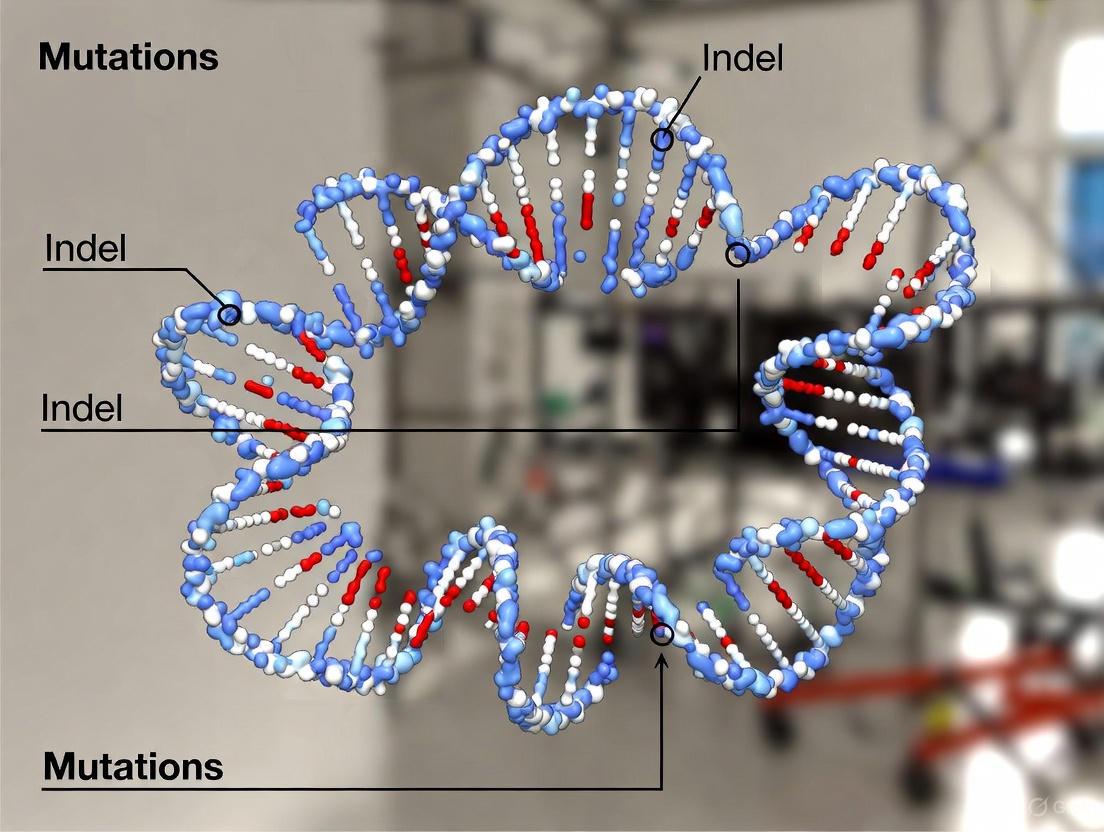
This article provides a comprehensive analysis of insertion/deletion (indel) mutations, a significant byproduct of CRISPR-based genome editing that poses challenges for research and therapeutic applications.
Minimizing Indel Mutations in Genome Editing: Strategies for Enhanced Fidelity in Therapeutic Development
Abstract
This article provides a comprehensive analysis of insertion/deletion (indel) mutations, a significant byproduct of CRISPR-based genome editing that poses challenges for research and therapeutic applications. We explore the fundamental mechanisms driving indel formation, from error-prone DNA repair pathways to recently discovered large-scale structural variations. The content details the latest engineered editors, including prime editors and high-fidelity Cas variants, that dramatically reduce indel frequencies. Methodological sections cover advanced detection technologies and optimization strategies for suppressing indels across various editing platforms. Finally, we examine rigorous validation frameworks and comparative performance of emerging editing systems, offering researchers and drug development professionals a practical guide for achieving precise genomic modifications with minimal unintended mutations.
Understanding Indel Mutations: Origins, Mechanisms, and Genomic Risks
In CRISPR/Cas9-based genome editing, the genetic modifications you aim to create are not actually performed by the Cas9 nuclease itself. Cas9 acts merely as a pair of "molecular scissors" that creates a precise double-strand break (DSB) in the DNA. The actual editing outcome is determined by the cell's endogenous DNA damage repair (DDR) pathways that are harnessed to join the two cut ends back together. The competition between these pathways—primarily the error-prone Non-Homologous End Joining (NHEJ) and the precise Homology-Directed Repair (HDR)—directly dictates whether your experiment successfully creates a precise edit or results in unintended insertions and deletions (indels). Understanding this interplay is fundamental to designing, executing, and troubleshooting gene editing experiments. This guide provides a focused FAQ and troubleshooting resource for researchers navigating indel formation within the broader context of addressing mutations in editing research.
Core Mechanisms: NHEJ and HDR
What are the fundamental differences between NHEJ and HDR?
Answer: NHEJ and HDR are distinct cellular mechanisms for repairing double-strand breaks, characterized by different fidelity, template requirements, and efficiency.
- Non-Homologous End Joining (NHEJ): This is a fast, efficient, but error-prone pathway. It operates throughout the cell cycle by directly ligating the two broken DNA ends together without the need for a homologous template. This process often results in small insertions or deletions (indels) at the repair site. These indels can disrupt gene function, making NHEJ the preferred pathway for generating gene knockouts [1] [2].
- Homology-Directed Repair (HDR): This is a precise, high-fidelity mechanism that uses a homologous DNA sequence as a template for repair, such as a sister chromatid or an exogenously supplied donor template. HDR is ideal for introducing specific sequence changes, such as point mutations, gene corrections, or knockins (e.g., inserting a fluorescent protein tag). However, HDR is less efficient than NHEJ and is restricted to the S and G2 phases of the cell cycle, where a homologous template is naturally available [1] [3].
The table below summarizes the key characteristics of each pathway.
Table 1: Comparison of NHEJ and HDR Key Characteristics
| Feature | Non-Homologous End Joining (NHEJ) | Homology-Directed Repair (HDR) |
|---|---|---|
| Template Required | No | Yes (e.g., sister chromatid, donor DNA) |
| Fidelity | Error-prone (often generates indels) | High-fidelity (precise) |
| Efficiency | High | Low |
| Cell Cycle Phase | Active throughout all phases | Primarily restricted to S and G2 phases |
| Primary Application in Gene Editing | Gene knockouts | Precise knockins, point mutations, gene corrections |
How do NHEJ and HDR pathways operate at the molecular level?
Answer: The following diagrams illustrate the core molecular workflows for NHEJ and HDR pathways following a CRISPR/Cas9-induced double-strand break.
Diagram 1: NHEJ Pathway for Indel Formation. This error-prone repair leads to gene knockouts.
Diagram 2: HDR Pathway for Precise Editing. This high-fidelity repair requires a donor template.
Troubleshooting Common Experimental Challenges
Why is my HDR efficiency low, and how can I improve it?
Answer: Low HDR efficiency is a common challenge due to the innate competition from the more dominant NHEJ pathway. Several strategies can be employed to tilt this balance in favor of HDR.
Table 2: Strategies to Improve HDR Efficiency
| Strategy | Method | Brief Rationale |
|---|---|---|
| Inhibit NHEJ | Use chemical inhibitors (e.g., Alt-R HDR Enhancer V2) or siRNA against key NHEJ proteins [4]. | Reduces competition from the error-prone NHEJ pathway, allowing more DSBs to be repaired via HDR [1]. |
| Synchronize Cell Cycle | Synchronize cells to S/G2 phase using chemical blockers [1] [5]. | HDR is active only in S and G2 phases; enriching for cells in these phases increases the likelihood of HDR. |
| Optimize Donor Template | Use single-stranded oligodeoxynucleotides (ssODNs) for small edits; ensure long homology arms (350-700 nt) for larger insertions [5]. | ssDNA templates reduce toxicity and random integration. Longer homology arms exponentially improve knock-in efficiency [1] [5]. |
| Modify Target Site | Incorporate silent mutations in the PAM or seed sequence of the donor template [5]. | Prevents re-cleavage of the successfully edited locus by Cas9, allowing HDR-edited cells to persist. |
I am observing complex or imprecise editing outcomes even with HDR. Why?
Answer: Even when using an HDR donor template, you may observe imprecise integration. This can be due to the activity of alternative repair pathways beyond classical NHEJ and HDR.
- Alternative Repair Pathways: Microhomology-Mediated End Joining (MMEJ) and Single-Strand Annealing (SSA) are two other DSB repair pathways that can interfere with perfect HDR. MMEJ relies on short microhomologous sequences (2-20 nt) and often results in deletions, while SSA uses longer homologous sequences and can lead to significant deletions and imprecise donor integration [4].
- Mixed-Type Repair (MTR): Recent studies have documented cases where a single DSB is repaired simultaneously by NHEJ on one side and HDR on the other, leading to chimeric outcomes [6].
- Solution: To suppress these alternative pathways, consider inhibiting key effector proteins. For example, suppressing POLQ (for MMEJ) or Rad52 (for SSA) has been shown to reduce nucleotide deletions around the cut site and improve the accuracy of knock-in [4].
How can I verify INDELs formed by NHEJ?
Answer: Accurately verifying and quantifying indels is critical for analyzing gene knockout experiments.
- Sanger Sequencing & Next-Generation Sequencing (NGS): The most direct method is to amplify the target region by PCR and subject the product to sequencing. Sanger sequencing is suitable for initial validation, while NGS (e.g., Illumina MiSeq) provides a comprehensive, quantitative profile of all indel variants in a mixed population.
- Troubleshooting Sequencing Data: When analyzing Sanger sequencing chromatograms from cloned PCR products, a "double sequence" (overlapping peaks) starting from the DSB site often indicates a mixed population of alleles with different indels. This requires sub-cloning and sequencing individual colonies to resolve the specific sequences of each allele [7].
- Importance of Model: Note that traditional alignment algorithms assuming a geometric model of indel lengths can introduce artifacts. Using power-law models (e.g., zeta distribution) provides a more accurate estimation of indel rates and patterns from sequencing data [8].
The Scientist's Toolkit: Essential Reagents
Table 3: Key Research Reagent Solutions for DNA Repair Studies
| Reagent / Tool | Function in Experiment |
|---|---|
| Cas9 Nuclease | Generates a site-specific double-strand break (DSB) in the genome, initiating the DNA repair process [1]. |
| Single-Guide RNA (sgRNA) | Directs the Cas9 nuclease to the specific genomic target sequence [1]. |
| NHEJ Inhibitors (e.g., Alt-R HDR Enhancer V2) | Chemical compounds used to suppress the NHEJ pathway, thereby increasing the relative frequency of HDR [4]. |
| HDR Donor Template (ssODN or dsDNA) | Provides the homologous DNA sequence containing the desired edit (flanked by homology arms) for the HDR pathway to use as a repair template [5]. |
| MMEJ/SSA Inhibitors (e.g., ART558 (POLQi), D-I03 (Rad52i)) | Chemical inhibitors targeting key enzymes of alternative repair pathways (MMEJ and SSA) to reduce imprecise repair and improve HDR accuracy [4]. |
| Cell Cycle Synchronization Agents (e.g., Aphidicolin, Nocodazole) | Chemicals used to arrest cells at specific phases (e.g., S/G2) to enhance HDR efficiency [1]. |
While small insertions and deletions (indels) have long been a focus of genetic research, large structural variations (SVs) represent a category of genomic alterations with potentially greater impact on human health and disease. Structural variants are generally defined as genomic rearrangements involving 50 base pairs to several million base pairs of DNA, encompassing deletions, duplications, insertions, inversions, translocations, and copy number variants (CNVs) [9] [10] [11]. These substantial alterations account for more human genetic variation by base count than single nucleotide polymorphisms (SNPs), with approximately 13% of the human genome identified as structurally variant in the normal population [10]. This technical support article explores the detection, interpretation, and analytical challenges of SVs within the broader context of indel mutation research.
FAQs: Understanding Structural Variations
1. What exactly qualifies as a structural variation, and how does it differ from small indels?
Structural variations are genomic alterations typically involving at least 50 base pairs, though many span kilobases to megabases of DNA [9] [10]. This distinguishes them from small indels, which are usually under 50bp. SVs encompass a diverse range of events including:
- Copy Number Variants (CNVs): Deletions and duplications that create genomic imbalances
- Balanced rearrangements: Inversions and translocations that don't alter copy number
- Insertions: Novel sequence additions, including mobile element insertions
- Complex variations: Combinations of the above in a single event [12] [10]
2. Why are structural variations more challenging to detect than small indels?
SV detection presents multiple technical challenges:
- Size limitations: SVs often exceed typical sequencing read lengths
- Complex patterns: Different SV types can produce similar mapping patterns
- Repetitive regions: Breakpoints frequently occur in segmental duplications and repetitive elements
- Overlapping events: Multiple SVs can be nested or overlap, creating complex patterns [13] Short-read sequencing technologies typically achieve only 30-70% sensitivity for SV detection with false discovery rates as high as 85% [14].
3. What methodologies provide the most accurate SV detection?
No single method optimally detects all SV types, but integrated approaches yield the best results:
- Long-read sequencing (PacBio, Oxford Nanopore): Enables detection of SVs >1kb with much higher sensitivity
- Multi-method computational approaches: Combining read-pair, split-read, read-depth, and assembly-based methods
- Orthogonal validation: Using array CGH, FISH, or PCR to confirm computational predictions [13] [14] [15] Recent benchmarking shows that assembly-based methods like SVIM-asm provide superior accuracy and resource consumption for comprehensive SV detection [15].
4. How do structural variations contribute to disease compared to small indels?
SVs can disrupt genetic function through multiple mechanisms:
- Gene dosage effects: Changing copy number of dosage-sensitive genes
- Gene disruption: Directly breaking gene coding sequences
- Gene fusions: Creating novel chimeric genes
- Regulatory alterations: Disrupting topologically associating domains (TADs) and repositioning regulatory elements [9] SVs account for a significant proportion of genomic disorders, including Smith-Magenis syndrome (17p11.2 deletion), Potocki-Lupski syndrome (17p11.2 duplication), and numerous cancer-associated rearrangements [12] [9].
5. What resources are available for interpreting the clinical significance of SVs?
Multiple databases and tools support SV interpretation:
- Population databases: Database of Genomic Variants (DGV), gnomAD-SV
- Clinical databases: ClinVar, DECIPHER, dbVar
- Prioritization tools: AnnotSV, ClassifyCNV, CADD-SV [16] Professional guidelines from ACMG/ClinGen provide standardized frameworks for clinical interpretation, distinguishing pathogenic SVs from benign polymorphisms [9] [16].
Troubleshooting Guides
Common SV Detection Issues and Solutions
Problem: High false positive rates in SV calling
- Potential causes: Mapping errors in repetitive regions; PCR artifacts; low sequencing quality
- Solutions:
Problem: Inability to resolve exact breakpoints
- Potential causes: Breakpoints in repetitive elements; complex rearrangements; low coverage
- Solutions:
Problem: Difficulty detecting balanced rearrangements
- Potential causes: Standard approaches focus on copy-number changes; breakpoints in inaccessible regions
- Solutions:
SV Validation Workflow
Structural Variation Detection Methods
Comparative Performance of SV Detection Technologies
Table 1: Performance characteristics of major SV detection approaches
| Method Category | Key Tools | Optimal SV Types Detected | Limitations | Accuracy Considerations |
|---|---|---|---|---|
| Short-read WGS | DELLY, LUMPY, Manta | Deletions, small insertions, CNVs | Misses large/complex SVs, repetitive regions | Sensitivity: 30-70%, FDR up to 85% [14] |
| Long-read WGS | Sniffles, SVIM, cuteSV | All SV types, complex rearrangements | Higher cost, computational demands | Greatly improved sensitivity for >1kb SVs [13] [15] |
| Read Depth | CNVnator, XHMM | Large CNVs | Misses balanced rearrangements | Strong for large CNVs, weak for precise breakpoints [17] |
| Split Read | Pindel, SVseq2 | Precise breakpoints for indels | Limited to read-length SVs | Excellent for small-medium SVs with precise breakpoints [17] |
| Assembly-based | SVIM-asm, Canu | Novel insertions, complex SVs | Computationally intensive, requires high coverage | Superior accuracy, resolves full SV complexity [13] [15] |
SV Prioritization Tools for Functional Interpretation
Table 2: Computational tools for prioritizing clinically relevant SVs
| Tool Name | Classification Approach | Key Features | Input Requirements |
|---|---|---|---|
| AnnotSV | Knowledge-driven (ACMG) | Implements ACMG guidelines, comprehensive annotation | VCF file, gene annotations [16] |
| ClassifyCNV | Knowledge-driven (ACMG) | ACMG guidelines for CNVs, user-friendly | VCF file, gene annotations [16] |
| CADD-SV | Data-driven (machine learning) | Evolutionary constraint scores, random forest model | VCF file, pre-computed scores [16] |
| StrVCTVRE | Data-driven (machine learning) | Focus on exonic impacts, random forest | VCF file, exon annotations [16] |
| TADA | Data-driven (machine learning) | Incorporates 3D genomic interactions | VCF file, Hi-C data (optional) [16] |
Experimental Protocols
Comprehensive SV Detection Using Hybrid Sequencing
Objective: Identify and validate structural variations using complementary sequencing technologies.
Materials:
- High-molecular-weight DNA (>50kb)
- Short-read sequencer (Illumina NovaSeq, etc.)
- Long-read sequencer (PacBio Sequel II/Revio, Oxford Nanopore)
- Computational resources (high-memory server, >32 cores, >100GB RAM)
Procedure:
- Library Preparation and Sequencing
- Prepare both short-read (350bp insert) and long-read (15kb+ insert) libraries
- Sequence to minimum coverage: 30x short-read, 15x long-read
- Ensure high DNA quality (QV>30 for short reads, >Q20 for long reads)
Multi-method Computational Analysis
- Process short-read data with 2-3 complementary callers (DELLY, Manta, LUMPY)
- Process long-read data with specialized tools (Sniffles, SVIM)
- Perform de novo assembly for complex regions (Canu, Flye)
- Generate consensus callset requiring support from multiple methods
Variant Filtering and Prioritization
- Remove SVs with population frequency >1% in control databases (gnomAD-SV, DGV)
- Annotate with gene overlaps, regulatory elements, and constraint scores
- Prioritize rare, genic SVs with high quality scores
Experimental Validation
- Design PCR assays across breakpoints for 10-20% of predicted SVs
- Perform orthogonal validation using array CGH or FISH for large events
- Confirm functional impact using RNA-seq for gene fusions and expression outliers
Troubleshooting Notes:
- For low validation rates, increase stringency of quality filters
- For missing known SVs, adjust mapping parameters and try alternative aligners
- For complex regions, target with ultra-long reads (>50kb) or optical mapping [13] [14] [15]
Research Reagent Solutions
Table 3: Essential reagents and resources for structural variation research
| Reagent/Resource | Supplier/Platform | Application in SV Research | Key Considerations |
|---|---|---|---|
| PacBio HiFi Reads | Pacific Biosciences | High-accuracy long-read SV discovery | 15-20kb reads, Q30+ accuracy, ideal for complex regions [18] |
| Oxford Nanopore Ultra-long Reads | Oxford Nanopore Technologies | Spanning massive SVs, complex regions | Reads up to 1Mb+, lower per-base accuracy [14] |
| 10x Genomics Linked Reads | 10x Genomics | Phasing, structural variant haplotyping | Maintains long-range information with short reads [13] |
| Bionano Optical Maps | Bionano Genomics | De novo mapping, large SV validation | Complementary to sequencing-based approaches [14] |
| Cytogenetic Arrays | Affymetrix, Illumina | Genome-wide CNV detection, clinical screening | Established clinical utility, limited resolution [14] |
| FISH Probes | Multiple suppliers | Validation, visualization of SVs | Low-throughput but provides direct visual evidence [14] |
| SV Analysis Tools | Public repositories | Computational SV detection | Use complementary approaches to maximize sensitivity [16] [17] |
Advanced Detection Workflow
Structural variations represent a formidable challenge in genomic medicine, surpassing small indels in both scale and complexity. Successful SV analysis requires integrated approaches combining complementary technologies, rigorous computational filtering, and orthogonal validation. As detection methods continue advancing—particularly with long-read sequencing technologies—our ability to uncover the full spectrum of structural variations will dramatically improve, enabling more comprehensive assessment of their clinical implications in genetic disorders, cancer, and drug development.
Frequently Asked Questions (FAQs)
FAQ 1: What is the fundamental difference between an on-target and an off-target indel?
An on-target indel is an insertion or deletion of nucleotides that occurs at the precise genomic location where the engineered nuclease (such as CRISPR-Cas9) was designed to create a double-strand break (DSB). These are the intended, desired outcomes of a genome editing experiment, often used to knock out a gene's function [19].
An off-target indel is an unintended insertion or deletion that occurs at a different, often genetically similar, genomic site due to non-specific cleavage by the nuclease. These events pose a significant risk as they can disrupt the function of non-targeted genes, potentially leading to confounding experimental results or genotoxic effects in therapeutic contexts [20].
FAQ 2: What are the primary cellular mechanisms that lead to the formation of indels?
Indels are primarily formed when a cell repairs a DSB through error-prone DNA repair pathways [19]:
- Non-Homologous End Joining (NHEJ): This is the dominant pathway and directly ligates the broken DNA ends. Because it is error-prone, it often results in small insertions or deletions (indels) at the break site [21].
- Microhomology-Mediated End Joining (MMEJ): This pathway uses short homologous sequences (microhomologies) flanking the break to repair the DNA. The repair process deletes one copy of the microhomology and the intervening sequence, leading to typically larger, more predictable deletions [22] [21].
FAQ 3: Beyond small indels, what larger unintended edits should I be concerned about?
While small indels are common, CRISPR-Cas9 editing can also induce larger, more complex structural variants (SVs), which are defined as insertions or deletions ≥50 bp. These can occur at both on-target and off-target sites and may include large deletions, inversions, and complex rearrangements [23]. One study found that SVs represented 6% of editing outcomes in zebrafish models, and these mutations were passed on to subsequent generations, highlighting their potential stability and impact [23]. Standard short-read sequencing methods often fail to detect these events, requiring long-read sequencing technologies for comprehensive identification [23].
FAQ 4: What are the best methods to detect and quantify on-target editing efficiency?
The choice of method depends on the required sensitivity and the level of detail needed about the mutation spectrum. Table: Common Methods for Detecting and Quantifying Indels
| Method | Principle | Sensitivity | Key Advantages | Key Limitations |
|---|---|---|---|---|
| T7 Endonuclease I (T7E1) / CEL-I Assay [19] | Detects heteroduplex DNA formed by wild-type and indel-containing strands. | ~1-2% | Rapid, economical, gel-based. | Does not reveal the sequence of the indel. |
| Restriction Fragment Length Polymorphism (RFLP) [19] | Loss or gain of a restriction site due to editing. | ~1-2% | Quantitative for specific changes. | Requires introduction of a specific sequence change. |
| Sanger Sequencing [19] | Direct sequencing of PCR amplicons. | ~10-15% | Provides exact sequence changes. | Lower sensitivity; requires decomposition software for complex mixtures. |
| Next-Generation Sequencing (NGS) [19] [21] | High-throughput sequencing of PCR amplicons or the whole genome. | ~0.01% | Highly sensitive, provides full mutation spectrum, detects complex variants. | More expensive and complex data analysis. |
FAQ 5: How can I comprehensively identify off-target sites in my experiment?
A combination of in silico prediction and experimental validation is recommended for a thorough analysis. Table: Methods for Off-Target Site Identification
| Method Type | Method Name | Description | Key Considerations |
|---|---|---|---|
| In Silico Prediction [24] | Cas-OFFinder, CasOT | Computational tools that scan a reference genome for sequences with high similarity to the gRNA sequence, allowing for mismatches and bulges. | Fast and inexpensive, but can miss sites; results require experimental validation. |
| Cell-Free Experimental [24] | CIRCLE-seq, Digenome-seq | Uses purified genomic DNA (or cell-free chromatin) digested with Cas9/sgRNA ribonucleoproteins (RNPs), followed by sequencing to identify cleavage sites. | Highly sensitive and unbiased by cellular context. |
| Cell-Based Experimental [24] | GUIDE-seq, S-EPTS/LM-PCR | Uses tag molecules (e.g., double-stranded oligodeoxynucleotides) that are integrated into DSBs in living cells, allowing for amplification and sequencing of off-target sites. | Captures off-target effects in a more biologically relevant cellular environment. |
FAQ 6: What strategies can I employ to minimize off-target indels?
Several well-established strategies can enhance the specificity of CRISPR-Cas9 editing:
- Use High-Fidelity Cas9 Variants: Engineered Cas9 nucleases (e.g., eSpCas9, SpCas9-HF1) have mutations that reduce tolerance for gRNA-DNA mismatches [24].
- Utilize Cas9 Nickases: Delivering two gRNAs with a "nickase" mutant of Cas9 (which cuts only one DNA strand) requires two closely spaced, opposite-strand nicks to create a DSB, dramatically increasing specificity [20].
- Employ Dimeric Nucleases: Systems like FokI-dCas9 fuse the FokI nuclease domain to a catalytically dead Cas9 (dCas9). FokI requires dimerization to cut, meaning two independent gRNAs must bind in close proximity and correct orientation for cleavage to occur, reducing off-target effects by up to 10,000-fold [20].
- Optimize gRNA Design: Truncating the gRNA to 17-18 nucleotides can increase specificity. Also, select gRNAs with minimal potential for off-target binding using prediction software [24] [20].
- Control Delivery and Dosage: Using RNP complexes instead of plasmid DNA can reduce the duration of Cas9 activity, and using the minimum effective concentration of the nuclease can help limit off-target effects [24] [23].
Experimental Protocols for Key Experiments
Protocol 1: Assessing On-Target Editing Efficiency using T7E1 Assay
This protocol provides a rapid, gel-based method to estimate nuclease activity [19].
- Extract Genomic DNA: Isolate genomic DNA from edited cells and a control (un-edited) population.
- PCR Amplification: Design primers to amplify a 300-500 bp region surrounding the target site. Perform PCR on both test and control DNA.
- Heteroduplex Formation: Denature and reanneal the PCR products by heating to 95°C and then slowly cooling to room temperature. This allows strands from edited and un-edited alleles to hybridize, forming heteroduplexes at mismatched indel sites.
- Digestion with T7E1: Treat the reannealed PCR product with T7 Endonuclease I, which cleaves at heteroduplex DNA sites.
- Analysis by Gel Electrophoresis: Run the digested products on an agarose gel. Cleaved fragments indicate the presence of indels. The editing efficiency can be estimated by comparing the band intensities of cleaved and uncleaved products.
Protocol 2: Comprehensive Off-Target Analysis using GUIDE-seq
This protocol outlines a sensitive, cell-based method for genome-wide identification of off-target sites [24].
- Transfection: Co-transfect your cells with the Cas9/sgRNA expression constructs (or RNP complexes) and the GUIDE-seq double-stranded oligodeoxynucleotide (dsODN) tag.
- Genomic DNA Extraction: Harvest cells 2-3 days post-transfection and extract genomic DNA.
- Library Preparation and Sequencing: Shear the genomic DNA and prepare a sequencing library. The dsODN tag is used as a primer binding site to selectively amplify and sequence genomic regions that have incorporated the tag—these represent DSB locations.
- Bioinformatic Analysis: Map the sequenced reads to the reference genome. Clusters of reads with the tag sequence inserted identify potential off-target cleavage sites. These sites should be validated by targeted amplicon sequencing.
The Scientist's Toolkit: Research Reagent Solutions
Table: Essential Reagents for Indel Analysis in Genome Editing
| Reagent / Tool | Function | Example Use Case |
|---|---|---|
| High-Fidelity Cas9 [24] | Engineered nuclease with reduced off-target activity. | Essential for all therapeutic applications and sensitive experiments where specificity is critical. |
| Cas9 Nickase [20] | A Cas9 variant that cuts only one DNA strand. | Used in pairs with two guide RNAs to create a DSB, significantly increasing targeting specificity. |
| T7 Endonuclease I (T7E1) [19] | Enzyme that cleaves mismatched DNA in heteroduplexes. | Quick and cost-effective initial screening for nuclease activity and on-target efficiency. |
| GUIDE-seq dsODN Tag [24] | A short, double-stranded DNA oligo that integrates into DSBs. | A critical reagent for the GUIDE-seq protocol to experimentally identify genome-wide off-target sites. |
| Long-Range PCR Kit | For amplifying large genomic regions (several kb). | Required to generate amplicons for detecting large structural variants via long-read sequencing [23]. |
| In Silico Prediction Tools (e.g., Cas-OFFinder) [24] | Software to computationally nominate potential off-target sites. | The first step in off-target assessment; used to prioritize sites for experimental validation. |
Workflow and Pathway Visualizations
Diagram 1: Cellular Pathways for Indel Formation after a DSB. This diagram illustrates the two main competing DNA repair pathways that lead to different types of indel mutations after a nuclease-induced double-strand break (DSB). The classical Non-Homologous End Joining (c-NHEJ) pathway typically results in small insertions or deletions, while the Microhomology-Mediated End Joining (MMEJ) pathway results in larger deletions that utilize flanking microhomology regions [21].
Diagram 2: Workflow for Comprehensive Off-Target Assessment. This workflow outlines a multi-step strategy for a thorough analysis of unintended editing events, moving from computational prediction to experimental validation and finally to the detection of complex structural variants [22] [24] [23].
Prime editing is a precise genome editing technology that enables targeted insertions, deletions, and all possible base-to-base conversions without requiring double-strand DNA breaks (DSBs) or donor DNA templates [25] [26]. Despite its precision, a significant challenge remains: the formation of insertion and deletion (indel) byproducts. These unintended mutations often originate from the inefficient displacement of the competing 5' DNA strand by the newly edited 3' strand, creating a barrier to installing clean edits [27]. This technical guide examines the mechanistic basis of this challenge and provides evidence-based troubleshooting strategies to minimize indel formation in prime editing experiments.
FAQs: Understanding the Competing Strand Challenge
Indel byproducts in prime editing arise from several mechanisms [27]:
- Inefficient strand displacement: The edited 3' new strand is often disfavored in displacing the original 5' strand due to being mismatched to the complementary strand.
- Extended reverse transcription: The prime editor may extend the edited 3' new strand past the pegRNA template into the scaffold region.
- Errant double-strand breaks: These can be generated when cellular mismatch repair (MMR) converts nicks into DSBs, leading to indel formation through error-prone repair pathways.
- End joining at unintended positions: The edited 3' new strand can join at incorrect locations, producing large deletions or tandem duplication-like insertions.
How does the competing strand displacement problem limit prime editing efficiency?
The competing strand displacement problem creates a fundamental limitation in prime editing efficiency through several interconnected mechanisms [27]:
- The natural bias of cellular systems toward retaining the original 5' strands hinders the installation of edits written into the 3' new strands.
- This bias not only reduces editing efficiency but actively promotes error formation by creating intermediates that cellular repair pathways may process incorrectly.
- The heteroduplex DNA structure formed (with one edited and one unedited strand) can be recognized and processed by MMR systems in ways that often favor the original sequence or introduce indels.
What recent breakthroughs have addressed the competing strand challenge?
Recent research has identified that relaxing nick positioning through specific Cas9-nickase mutations can promote degradation of the competing 5' strand, thereby enhancing editing efficiency and reducing indel errors [27]. Engineered prime editors with mutations such as K848A and H982A demonstrated dramatically reduced indel errors - up to 118-fold lower than early prime editors - by destabilizing the non-target strand nicked 5' end. The resulting "precise prime editor" (pPE) and next-generation editor (vPE) achieve edit:indel ratios as high as 543:1, representing a substantial improvement over previous systems.
Troubleshooting Guide: Minimizing Indel Formation
Problem: High Indel Rates with Standard Prime Editors
Issue: Unacceptable levels of insertion/deletion byproducts are observed when using PE2 or PE3 systems.
Solution: Implement engineered prime editor architectures with reduced strand displacement bias [27].
Protocol:
- Utilize nick-relaxing Cas9 variants: Replace standard Cas9 nickase with variants containing mutations that promote 5' strand degradation (R780A, K810A, K848A, K855A, R976A, or H982A).
- Employ optimized editor architectures: Use pPE (K848A-H982A) or vPE systems that combine error-suppressing strategies with efficiency-boosting architectures.
- Validate with appropriate controls: Test editors across multiple genomic loci to confirm consistent performance.
Expected Outcomes: pPE reduces indels 7.6-fold for pegRNA-only editing and 26-fold for pegRNA+ngRNA editing compared to PEmax, with similar editing efficiency [27].
Problem: MMR-Mediated Reversion of Edits
Issue: Cellular mismatch repair systems reverse prime edits, reducing efficiency.
Solution: Transiently inhibit MMR during prime editing [25] [28].
Protocol:
- Employ PE4/PE5 systems: Co-express a dominant-negative version of MLH1 (MLH1dn) to temporarily suppress MMR.
- Consider newer approaches: Implement AI-generated MLH1 small binders (MLH1-SB) that can be integrated directly into PE architectures via 2A systems [28].
- Limit inhibition duration: Use transient expression systems to avoid long-term MMR suppression.
Expected Outcomes: PE4 improves editing efficiency by 7.7-fold versus PE2, while PE7-SB2 achieves an 18.8-fold increase over PEmax in HeLa cells [25] [28].
Problem: PegRNA Degradation and Instability
Issue: Extended pegRNAs are prone to degradation, reducing editing efficiency.
Solution: Implement engineered pegRNAs (epegRNAs) with stabilized architectures [25] [29].
Protocol:
- Incorporate RNA stability motifs: Append structured RNA elements (evopreQ1, mpknot, or Zika virus exoribonuclease-resistant RNA motif) to the 3' end of pegRNAs.
- Explore alternative stabilization: Consider the PE7 system, which fuses the La protein to stabilize pegRNA 3' tails [30].
- Validate pegRNA integrity: Use quality control measures to ensure full-length pegRNA synthesis.
Expected Outcomes: epegRNAs improve prime editing efficiency 3-4-fold across multiple human cell lines and primary human fibroblasts [29].
Quantitative Comparison of Prime Editing Systems
The table below summarizes the performance characteristics of different prime editing systems for minimizing indel byproducts:
| Editing System | Key Features | Edit:Indel Ratio | Indel Reduction vs. PEmax | Best Application Context |
|---|---|---|---|---|
| PE3 [25] | Additional nicking sgRNA | Variable (often <30:1) | - | When maximum efficiency is needed and some indels are acceptable |
| PE4/PE5 [25] | MLH1dn expression to inhibit MMR | Improved over PE3 | Moderate | When indels must be minimized and nicking sgRNAs cannot be used |
| pPE [27] | K848A-H982A mutations to relax nick positioning | Up to 361:1 | 7.6-26× reduction | General purpose editing with minimal indels |
| vPE [27] | Combines error-suppression with efficiency boosting | Up to 543:1 | Up to 60× reduction | Applications requiring highest fidelity and efficiency |
| PE7-SB2 [28] | AI-generated MLH1 small binder integrated via 2A | Not specified | Not specified (18.8× efficiency gain over PEmax) | Challenging edits where efficiency is limiting |
Experimental Protocol: Evaluating Nick-Relaxing Prime Editors
This protocol outlines how to test and validate prime editors with reduced strand displacement bias, based on methodologies from recent literature [27].
Materials Needed
- Prime Editor Plasmids: PE (control), pPE (K848A-H982A), and other variants with nick-relaxing mutations
- Cell Line: HEK293T or other relevant cell types
- Targeting Components: pegRNAs and nicking gRNAs for loci of interest (e.g., TGFB1, KRAS, CXCR4, EMX1)
- Analysis Method: Next-generation sequencing for quantitative assessment of editing outcomes
Procedure
Design pegRNAs with appropriate architecture:
- Include RTT (10-30 nt) encoding desired edit
- Incorporate PBS (10-15 nt) complementary to target site
- Consider epegRNA designs with 3' stability motifs
Cell transfection and editing:
- Co-deliver prime editor plasmids and pegRNAs/ngRNAs
- Include controls with PEmax for comparison
- Use appropriate delivery method (lipofection, electroporation) for cell type
Harvest and analyze outcomes:
- Extract genomic DNA 72-96 hours post-transfection
- Amplify target regions by PCR
- Perform deep sequencing (≥10,000x coverage)
- Quantify: desired edit efficiency, indels with and without edits, edit:indel ratios
Data Interpretation
Calculate key metrics for each editor variant:
- Editing efficiency: (% reads with desired edit)
- Indel frequency: (% reads with indels)
- Edit:indel ratio: (Editing efficiency ÷ Indel frequency)
- Flap degradation: (Ratio of activity marker edit to flap homology deletion)
Research Reagent Solutions
The table below outlines essential reagents for addressing the competing strand challenge in prime editing:
| Reagent Category | Specific Examples | Function | Considerations |
|---|---|---|---|
| Engineered Editors | pPE, vPE [27] | Reduce strand displacement bias through nick relaxation | Test multiple variants as performance varies by locus |
| MMR Inhibitors | MLH1dn, MLH1-SB [25] [28] | Temporarily suppress mismatch repair to prevent edit reversion | Transient expression recommended to avoid genomic instability |
| Stabilized Guides | epegRNAs [29] | Protect 3' extensions from degradation | Different motifs (evopreQ1, mpknot) may perform variably |
| Delivery Systems | LNPs, AAV vectors [26] [29] | Enable efficient editor delivery | Size constraints critical for AAV; consider split systems |
Mechanism and Workflow Visualization
The following diagrams illustrate the core challenge and solution strategy for competing strand displacement in prime editing.
The competing strand displacement challenge represents a fundamental limitation in prime editing technology, directly contributing to unwanted indel byproducts. Through strategic engineering of the Cas9 nickase to relax nick positioning and promote degradation of the non-target 5' strand, researchers can dramatically reduce indel frequencies while maintaining high editing efficiency. Implementation of optimized editor architectures like pPE and vPE, combined with MMR suppression and pegRNA stabilization, provides a comprehensive toolkit for achieving clean, precise genomic modifications with minimal unintended mutations. As prime editing continues evolving toward therapeutic applications, addressing this core mechanistic challenge remains essential for realizing the full potential of precise genome editing.
In the context of therapeutic genome editing, Insertions and Deletions (Indels) are small, unintended genetic modifications that typically occur at the site of a CRISPR-Cas-induced double-strand break (DSB) when the cell repairs the damage via the non-homologous end joining (NHEJ) pathway [31]. While intentionally leveraged for gene disruption, their unplanned generation poses a significant challenge, influencing both the safety and efficacy of treatments. This technical support center provides troubleshooting guides and foundational knowledge for researchers and drug development professionals navigating these complexities.
► FAQ: Indels in Editing Research
What are the primary safety concerns associated with indel formation in therapeutic contexts? The primary safety concerns extend beyond simple gene knockout. While small indels at the on-target site can disrupt the intended gene function, a more pressing risk involves larger, unforeseen genomic alterations. Recent studies reveal that CRISPR/Cas editing can induce large structural variations (SVs), including kilobase- to megabase-scale deletions and chromosomal translocations, particularly when DNA-PKcs inhibitors are used to enhance Homology-Directed Repair (HDR) [32]. These alterations can delete critical cis-regulatory elements or affect tumor suppressor genes and proto-oncogenes, raising substantial oncogenic concerns [32].
How can I accurately detect and quantify indel frequencies in my experiments? Accurate detection is method-dependent. Traditional short-read amplicon sequencing can miss large deletions that span primer-binding sites, leading to an overestimation of precise editing rates [32]. For a comprehensive analysis, a combination of methods is recommended:
- Enzymatic Mismatch Cleavage Assays: Using enzymes like T7 Endonuclease I or Authenticase provides a simple and sensitive method to estimate editing efficiency by cleaving heteroduplex DNA formed by re-annealing edited and unedited PCR products [33].
- Next-Generation Sequencing (NGS): Targeted amplicon sequencing (e.g., using NEBNext Ultra II DNA Library Prep Kits) allows for accurate genotyping and quantification of indel frequencies. For genome-wide analyses, PCR-free NGS library preparation (e.g., NEBNext Ultra II DNA PCR-free Library Prep) is recommended to avoid PCR bias and provide a higher quality assessment of editing outcomes, including larger structural variations [33] [32].
Why might my gene augmentation therapy be ineffective for a specific inherited retinal disease? The efficacy of gene augmentation therapy is highly dependent on the nature of the underlying genetic mutation. This approach, which involves delivering a functional copy of a gene using viral vectors like AAV, is highly suitable for recessive disorders caused by loss-of-function (LOF) mutations, as demonstrated by Luxturna for RPE65-associated retinal dystrophy [34]. However, it is largely ineffective for dominant-negative or gain-of-function mutations. In these cases, the newly introduced functional gene cannot overcome the toxic effects of the mutant protein already being produced. For dominant conditions, alternative strategies such as allele-specific silencing or gene editing to inactivate the mutant allele are required [34].
What delivery challenges are specific to CRISPR therapies that aim to minimize indels? The main challenge is the limited packaging capacity of the most common delivery vector, adeno-associated virus (rAAV). While base editors and prime editors offer a route to precise editing without DSBs (and thus without indel formation), their larger size makes packaging into a single rAAV vector difficult [31]. Strategies to overcome this include:
- Using hypercompact Cas orthologs (e.g., CasMINI, IscB, TnpB) or engineered effectors like SaCas9.
- Employing dual-rAAV vector systems to deliver the editing machinery in separate parts [31].
- Exploring non-viral delivery systems, such as Lipid Nanoparticles (LNPs), which offer higher cargo capacity and the potential for re-dosing, unlike rAAVs [34] [35] [36].
► Troubleshooting Guide: Managing Indel-Related Issues
Problem 1: Inaccurate Quantification of HDR and Indel Rates
Symptoms: Reported HDR efficiency is high, but functional recovery of the protein is low. Sanger or short-read amplicon sequencing data shows a high proportion of "noisy" or uninterpretable sequences.
Root Cause: The use of HDR-enhancing small molecules, such as DNA-PKcs inhibitors, can aggravate genomic aberrations, leading to large-scale deletions that remove the primer-binding sites used in PCR [32]. Since these large deletions are not amplified, they remain undetected, artificially inflating the apparent HDR rate and underestimating the true frequency of indels and other deleterious outcomes [32].
Solution:
- Employ Long-Range PCR: Design primers that bind several kilobases upstream and downstream of the target site to amplify larger fragments.
- Utilize Structural Variation Detection Methods: Apply techniques like CAST-Seq or LAM-HTGTS, which are specifically designed to detect large deletions, translocations, and other SVs [32].
- Validate with PCR-Free NGS: For a comprehensive view, use PCR-free whole-genome sequencing to avoid amplification bias and reveal the full spectrum of on- and off-target edits [33] [32].
Problem 2: High Off-Target Indel Activity
Symptoms: Editing is observed at genomic loci with sequence similarity to the intended target guide RNA, even after careful in silico design.
Root Cause: The CRISPR/Cas9 complex can tolerate some mismatches between the guide RNA and the DNA, leading to cleavage at off-target sites and resulting in unwanted indels [32].
Solution:
- Use High-Fidelity Cas Variants: Switch to engineered Cas9 variants (e.g., HiFi Cas9) with enhanced specificity [32].
- Optimize gRNA Design: Select guides with minimal off-target potential using advanced design tools that account for genomic context.
- Consider Alternative Editors: For point mutations, use base editors or prime editors, which have a lower propensity for generating indels at off-target sites compared to nucleases that create DSBs [31].
- Thoroughly Profile Off-Targets: Perform genome-wide off-target analyses (e.g., using CIRCLE-seq or GUIDE-seq) in relevant cell types to empirically determine the risk profile [32].
Problem 3: Low Efficiency of Precisely Edited Clones
Symptoms: After editing with an HDR-based strategy, the proportion of cells with the desired precise edit is low, and the majority of modified cells contain indels.
Root Cause: The NHEJ pathway is more active and efficient in most mammalian cells than the HDR pathway, which is restricted to certain cell cycle phases.
Solution:
- Cell Cycle Synchronization: Synchronize cells in the S/G2 phases where HDR is more active [32].
- Evaluate HDR Enhancers Cautiously: While inhibitors of NHEJ factors like 53BP1 can enhance HDR, avoid DNA-PKcs inhibitors which have been shown to cause severe genomic aberrations [32].
- Consider Enrichment Strategies: For ex vivo editing, implement post-editing selection methods (e.g., FACS or antibiotic selection) to enrich for successfully HDR-edited cells [32].
- Re-evaluate Therapeutic Need: For some diseases, a knockout of the mutant gene via NHEJ may be therapeutic. In dominant disorders, inducing indels that disrupt the mutant allele can be a valid strategy [34].
► Experimental Protocols for Indel Validation
Protocol 1: Enzymatic Detection of Indel Frequencies
This protocol uses the EnGen Mutation Detection Kit or Authenticase for a quick, cost-effective estimation of editing efficiency [33].
Workflow:
Procedure:
- Genomic DNA Isolation: Extract high-quality genomic DNA from edited and control cell populations.
- PCR Amplification: Amplify the target genomic region from both samples using high-fidelity DNA polymerase. Ensure amplicon size is appropriate for gel resolution (200-1000 bp).
- Heteroduplex Formation: Denature the PCR products at 95°C for 10 minutes, then slowly re-anneal by ramping down to 25°C over 45 minutes. This allows strands with and without indels to hybridize, forming heteroduplexes with bulges at the mismatch sites.
- Enzymatic Digestion: Treat the re-annealed DNA with a mismatch-sensitive nuclease (e.g., T7 Endonuclease I or Authenticase) according to the manufacturer's protocol.
- Analysis: Separate the digestion products by agarose gel electrophoresis. Cleaved bands indicate the presence of indels. The editing efficiency can be estimated using the formula: Indel frequency (%) = 100 × (1 - √(1 - (b + c)/(a + b + c))), where
ais the integrated intensity of the undigested PCR product, andbandcare the intensities of the cleavage products [33].
Protocol 2: NGS-Based Indel Validation and Analysis
This protocol provides a quantitative and detailed profile of specific indel sequences using the NEBNext Ultra II DNA Library Prep Kit for Illumina [33] [37].
Workflow:
Procedure:
- Sample Preparation and Amplification: Isolate genomic DNA and perform a first-round PCR to amplify the target region(s) from around 100-200ng of DNA.
- Library Preparation: Use the NEBNext Ultra II DNA Library Prep Kit to fragment the amplicons (if necessary), perform end-repair, dA-tailing, and ligate Illumina sequencing adapters. A second, limited-cycle PCR is used to index the libraries.
- Sequencing: Pool the indexed libraries at equimolar concentrations and sequence on an Illumina platform (e.g., MiSeq) to achieve high coverage (>1000x is ideal for detecting low-frequency events).
- Bioinformatic Analysis:
- Read Alignment: Demultiplex the raw sequencing data and align reads to the reference genome using tools like BWA or Bowtie2.
- Variant Calling: Use specialized algorithms (e.g., CRISPResso2, VarDict) to identify and quantify insertions and deletions around the target site [37].
- Interpretation: Generate a summary report detailing the percentage of reads with indels, the spectrum of specific indel sequences, and their potential functional consequences (e.g., frameshift mutations).
► Research Reagent Solutions
The following table details key reagents for effective indel analysis in your experiments.
| Research Reagent | Primary Function in Indel Analysis | Key Considerations |
|---|---|---|
| Authenticase (NEB #M0689) | A mixture of structure-specific nucleases for enzymatic mismatch cleavage; detects a broad range of CRISPR-induced mutations [33]. | More sensitive than traditional T7 Endonuclease I for detecting heteroduplex mismatches [33]. |
| EnGen Mutation Detection Kit (NEB #E3321) | Provides optimized reagents for a conventional T7 Endonuclease I-based mutation detection assay [33]. | A standardized kit for a simple and rapid estimation of genome editing efficiency. |
| NEBNext Ultra II FS DNA PCR-free Library Prep Kit (NEB #E7430) | Enables preparation of whole-genome sequencing libraries from unsheared DNA without PCR amplification bias [33]. | Critical for unbiased detection of large structural variations and accurate genotyping, as it avoids the under-representation of large deletions [33] [32]. |
| NEBNext Ultra II DNA Library Prep Kit for Illumina (NEB #E7645) | Used for preparing high-quality, high-yield sequencing libraries from amplicons for targeted sequencing [33]. | Ideal for deep sequencing of specific on-target loci to characterize the spectrum and frequency of indels. |
| Cas9 Nuclease (S. pyogenes) | Can be used in an in vitro digestion assay to estimate editing efficiency by digesting unedited, perfectly matched sequences, but not most edited sequences [33]. | Most effective for assessing locus modification when the editing efficiency is above 50%. |
Advanced Editing Platforms and Workflows for Indel Suppression
Technical Support Center
Frequently Asked Questions (FAQs)
Q1: What are the main sources of indel errors in prime editing, and how do next-generation editors address them? The main sources of indel errors in traditional prime editing include errant double-strand breaks (DSBs) and the improper integration of the edited 3' DNA strand. A key issue is the natural bias for the original, unedited 5' DNA strand to outcompete and displace the newly written, edited 3' strand. This competition can lead to large deletions, tandem duplications, or other unwanted insertions and deletions (indels) [27]. Next-generation editors like pPE and vPE address this by incorporating specific mutations (e.g., K848A and H982A) into the Cas9 nickase. These mutations relax the positioning of the DNA nick and promote the degradation of the competing 5' strand, making it easier for the edited 3' strand to be successfully incorporated into the genome, thereby drastically reducing indel formation [27] [38].
Q2: My prime editing experiment shows low efficiency. What strategies can I use to improve it? Low editing efficiency can be addressed through several strategies:
- Optimize Component Design: Ensure your pegRNA is well-designed and stable. Consider using engineered architectures that protect the unstable 3' ends of the pegRNA from degradation, a feature integral to the vPE system [27] [38].
- Leverage Advanced Editors: Utilize the latest editor variants. The vPE system was specifically designed to overcome the slight reduction in efficiency seen in earlier precise editors (like pPE and xPE) by boosting editing efficiency 3.2-fold compared to its predecessor [38].
- Inhibit Mismatch Repair (MMR): Co-delivering the prime editor with inhibitors of the cellular mismatch repair pathway can enhance the installation of the desired edit [27].
- Use a Nicking gRNA (ngRNA): Employing a pegRNA alongside a separate nicking gRNA can significantly increase editing efficiency, though this was also a major source of indels in older systems. The pPE and vPE editors show dramatic error suppression specifically in this "pegRNA + ngRNA" editing mode [27].
Q3: How can I accurately detect and quantify indel byproducts in my edited samples? Robust genotyping is essential. While sequencing is the gold standard, alternative methods are more scalable [39].
- High-Resolution Melt Analysis (HRMA): This is a post-PCR method that uses fluorescent dyes and precise temperature control to detect sequence variations, such as indels, based on their unique melt curves. It is sensitive, can be performed on 96-well plates, and allows for non-lethal genotyping using minimal tissue [40].
- Inference of CRISPR Edits (ICE): Tools like ICE can use standard Sanger sequencing data to provide quantitative analysis of editing outcomes, including the calculation of indel percentage and the identification of specific edit types. This offers a cost-effective alternative to next-generation sequencing [41].
- T7 Endonuclease I (T7E1) or Surveyor Nuclease Assay: These are enzyme-based methods that cleave mismatched DNA heteroduplexes (formed by annealing wild-type and mutant alleles) and can detect indels via gel electrophoresis [39] [40].
Q4: What are the primary limitations of prime editing technology? The primary limitation has been low efficiency due to its multi-step process, where each step must occur correctly for successful editing [42]. Delivery of the large editor construct into cells can also be challenging. While next-generation editors like vPE have made monumental progress in reducing indel errors, the technology is still relatively new and requires further optimization and validation across different cell types and organisms before widespread clinical application [27] [42].
Troubleshooting Guides
Problem: High Indel Error Rates in Prime Editing Experiments
Potential Causes and Solutions:
- Cause: Use of a suboptimal prime editor system.
- Solution: Transition to next-generation prime editors. Replace first-generation systems (like PEmax) with the engineered pPE or vPE systems. These are specifically designed to suppress indel formation by destabilizing the competing 5' DNA strand [27].
- Cause: Inefficient installation of the edit allows for error-prone repair.
- Solution: Implement a multi-faceted strategy to boost efficiency. Use the vPE system, which combines error-suppressing mutations with a La protein to stabilize the pegRNA. Additionally, consider transiently inhibiting the cellular mismatch repair (MMR) pathway during editing to favor the desired outcome [27] [38].
- Cause: pegRNA degradation or suboptimal design.
- Solution: Redesign the pegRNA using specialized online tools. Ensure the template is encoded correctly and consider using modified architectures or chemical modifications to enhance the pegRNA's stability within the cellular environment [27].
Problem: Difficulty in Genotyping and Detecting Precise Edits
Potential Causes and Solutions:
- Cause: The genotyping method lacks the sensitivity to detect a mix of edited and unedited sequences.
- Cause: Primers are designed too close to the edit site or in polymorphic regions.
- Solution: Redesign genotyping primers. Ensure they are positioned at least 20-50 bp away from the CRISPR target site. Use software like Primer3 for design, and perform a BLAST search to ensure specificity. Always sequence your wild-type amplicons to check for single-nucleotide polymorphisms (SNPs) that could interfere with analysis [40].
Quantitative Data on Editor Performance
The following tables summarize key performance metrics for next-generation prime editors compared to a previous standard, PEmax. The data is derived from testing in HEK293T cells across multiple genomic loci [27].
Table 1: Performance Comparison in pegRNA-only Editing Mode
| Editor | Average Indel Reduction (vs. PEmax) | Average Edit:Indel Ratio | Key Feature |
|---|---|---|---|
| PEmax | (Baseline) | ~57:1 | Standard efficiency-optimized editor |
| pPE | 7.6-fold | ~361:1 | Combines K848A and H982A mutations for precision |
| vPE | Comparable to PEmax | ~543:1 | Integrates error-suppression with pegRNA stabilization |
Table 2: Performance Comparison in pegRNA + Nicking gRNA (ngRNA) Mode
| Editor | Average Indel Reduction (vs. PEmax) | Average Edit:Indel Ratio | Key Feature |
|---|---|---|---|
| PEmax | (Baseline) | ~18:1 | High efficiency but with significant indels |
| pPE | 26-fold | ~361:1 | Dramatically reduces errors in dual-nick mode |
| vPE | Up to 60-fold | ~465:1 | Highest precision in the most efficient editing mode |
Experimental Protocols
Protocol 1: Detecting Indels via High-Resolution Melt Analysis (HRMA) [40]
This protocol allows for rapid, non-lethal genotyping of mutant lines.
- gDNA Extraction:
- Anesthetize the organism (e.g., a mosquito) and remove a small tissue sample (e.g., a leg) using forceps.
- Place the tissue in a tube containing a DNA release additive and dilution buffer.
- Incubate at room temperature for 2-5 minutes, then at 98°C for 2 minutes.
- HRMA Primer Design:
- Target Selection: Choose an exon close to the start codon or a key functional domain. Avoid exon boundaries and regions with known SNPs.
- Design: Use software like Primer3. Set the amplicon size to 90-150 base pairs for optimal sensitivity. The primer binding sites should be ≥20-50 bp away from the CRISPR target site.
- Validation: Perform a BLAST search to ensure primer specificity. Validate primers with a gradient PCR and a thermal melt profile to confirm a single, clean product.
- PCR and HRMA:
- Prepare a PCR master mix with a fluorescent dsDNA-binding dye.
- Run the PCR with the extracted gDNA.
- Perform the high-resolution melt analysis immediately after PCR. The instrument should generate a melt curve by slowly increasing the temperature from 75°C to 95°C in small increments (e.g., 0.2°C).
- Analysis:
- Analyze the melt curves. Samples with different DNA sequences (e.g., wild-type vs. heterozygous or homozygous mutants) will produce distinct, normalized melt curves that can be used to determine the genotype.
Protocol 2: Analyzing CRISPR Edits using the ICE Tool [41]
This protocol uses Sanger sequencing and computational analysis to quantify edits.
- Sample Preparation:
- Extract genomic DNA from edited and control (wild-type) cells.
- Design PCR primers to amplify a region spanning the edit site.
- Purify the PCR product and send it for Sanger sequencing.
- ICE Analysis:
- Go to the ICE webtool.
- Upload the Sanger sequencing file (.ab1) for your edited sample and the control sample.
- Input the gRNA target sequence (excluding the PAM) and the donor sequence if performing a knock-in.
- Select the nuclease used (e.g., SpCas9) from the dropdown menu.
- Run the analysis.
- Interpretation:
- The tool will provide an Indel Percentage (the proportion of sequences with insertions or deletions).
- The Model Fit (R²) Score indicates the confidence in the results (closer to 1.0 is better).
- For knockouts, the Knockout Score estimates the percentage of sequences causing a frameshift.
- For knock-ins, the Knock-in Score shows the percentage with the precise insertion.
The Scientist's Toolkit: Research Reagent Solutions
Table 3: Essential Reagents and Tools for Prime Editing Research
| Reagent / Tool | Function | Example / Note |
|---|---|---|
| Precision Prime Editors (pPE, xPE, vPE) | Engineered Cas9 nickase-reverse transcriptase fusions designed to minimize indel errors during editing. | The vPE system offers an optimal balance of high efficiency and very low indel errors [27] [38]. |
| Stable pegRNA Scaffolds | Modified guide RNA structures that resist cellular degradation, improving editing efficiency. | Can be combined with La protein or other RNA-stabilizing strategies, as seen in the vPE system [27]. |
| Mismatch Repair (MMR) Inhibitors | Chemical or protein-based inhibitors that temporarily suppress the MMR pathway to enhance prime editing outcomes. | Co-delivery can increase editing efficiency and reduce a specific class of errors [27]. |
| HDR Templates / Donor DNA | Single-stranded or double-stranded DNA molecules containing the desired edit, used as a template for the cellular repair machinery. | Required for knock-in experiments; should have homology arms complementary to the target site [43]. |
| Genotyping Tools (HRMA, ICE) | Kits and software for detecting and quantifying successful edits and byproducts like indels. | ICE tool provides NGS-quality data from cheaper Sanger sequencing [40] [41]. |
Experimental Workflow and Editor Mechanism
The diagram below illustrates the key steps and critical innovation of the next-generation prime editing system.
Frequently Asked Questions (FAQs)
Q1: What is the fundamental mechanism by which high-fidelity Cas9 variants reduce off-target effects?
High-fidelity Cas9 variants are engineered to minimize non-specific interactions with the DNA backbone. Wild-type SpCas9 possesses excess energy that allows it to cleave DNA even when the guide RNA does not perfectly match the target sequence. Variants like SpCas9-HF1 and eSpCas9(1.1) address this by introducing mutations that reduce these non-essential contacts, making the system more dependent on perfect guide RNA:DNA complementarity for efficient cleavage [44]. Essentially, they raise the energy threshold required for DNA cleavage, thereby preserving on-target activity while rejecting imperfectly matched off-target sites.
Q2: I am concerned about low on-target editing efficiency after switching to a high-fidelity variant. What could be the cause?
A reduction in on-target efficiency is a common trade-off with high-fidelity variants [45] [46]. This occurs because the mutations that decrease non-target DNA contacts can also slightly weaken the desired on-target binding. The degree of efficiency loss is highly guide-dependent [45]. The sequence context of your sgRNA, particularly in the seed region and positions 15–18 that interact with the Cas9's REC3 domain, significantly influences activity. If your sgRNA has suboptimal sequence features, the high-fidelity variant's mutations in the REC3 domain can lead to a more pronounced drop in efficiency [45].
Q3: Can I use high-fidelity Cas9 variants in base editing systems?
Yes, high-fidelity variants can be integrated into base editors to mitigate Cas9-dependent off-target editing. For example, replacing the wild-type SpCas9 in an adenosine base editor (ABE) with eSpCas9(1.1) to create e-ABE7.10 has been shown to dramatically reduce off-target editing while maintaining on-target activity at many sites [47]. However, the performance is site-dependent, and some high-fidelity variants may cause a substantial reduction in on-target base editing efficiency, so empirical testing is recommended [47].
Q4: Are there any newly developed Cas9 variants that overcome the efficiency-fidelity trade-off?
Recent research is focused on merging hyperactive mutations with high-fidelity mutations. One such engineered enzyme is HyperDriveCas9, which combines beneficial mutations from both high-fidelity and hyperactive Cas9 variants [46]. Initial reports indicate that HyperDriveCas9 can maintain the low off-target profile of high-fidelity parents while achieving higher on-target editing efficiency, offering a promising solution to this classic problem [46].
Troubleshooting Guides
Problem: Low On-Target Editing Efficiency
Potential Causes and Solutions:
Inefficient sgRNA Sequence:
- Cause: The sgRNA sequence may have features that are particularly detrimental to the specific high-fidelity variant being used.
- Solution: Redesign the sgRNA. Utilize computational tools like GuideVar, which incorporates variant-specific sequence rules to predict and prioritize sgRNAs with higher expected on-target activity for variants like HiFi and LZ3 Cas9 [45]. Avoid sequences with high GC content or specific motifs in the PAM-distal region that are known to interact unfavorably with the mutated REC3 domain.
Inherent Trade-off of the Variant:
- Cause: The selected high-fidelity variant may have a significant inherent reduction in activity for your specific target site.
- Solution: Consider using a different high-fidelity variant. As shown in the table below, the performance of variants can vary. Alternatively, use the HyperDriveCas9 variant if maintaining high efficiency is critical [46]. You can also optimize delivery by ensuring high concentrations of the ribonucleoprotein (RNP) complex.
Problem: Persistent Off-Target Effects
Potential Causes and Solutions:
Suboptimal Variant Selection for the Target:
- Cause: While high-fidelity variants reduce off-targets, their efficacy can be sgRNA-dependent [45].
- Solution: Employ more sensitive off-target detection methods (e.g., GUIDE-seq [44]) to validate your results. For base editing applications, ensure you are using a high-fidelity variant like eSpCas9(1.1) or Sniper-Cas9 that has been validated to reduce Cas9-dependent off-target editing [47].
High sgRNA Dosage:
- Cause: Using very high levels of sgRNA can saturate the system and overwhelm the fidelity mechanisms of the Cas9 variant.
- Solution: Titrate the sgRNA concentration to the minimum required for efficient on-target editing. Using RNP complexes for delivery can help control stoichiometry and has been associated with reduced off-target effects.
Table 1: Comparison of High-Fidelity Cas9 Variant Performance
| Variant | Development Approach | Key Mutations | Reported On-Target Efficiency (vs. WT) | Key Strengths |
|---|---|---|---|---|
| SpCas9-HF1 | Rational Design | N497A, R661A, Q695A, Q926A [44] | >85% for most sgRNAs [44] | Renders nearly all off-target events undetectable in GUIDE-seq for standard sites [44] |
| eSpCas9(1.1) | Rational Design | K848A, K1003A, R1060A [45] | Varies; can be similar to WT [47] | Effective in base editors (e-ABE7.10), showing high specificity ratios [47] |
| HypaCas9 | Rational Design | N692A, M694A, H698A [46] | Can be significantly reduced [47] | Improved specificity by stabilizing the Cas9 active state [46] |
| HiFi Cas9 | Engineered | Not specified in sources | Varies; guide-dependent significant loss for ~20% of sgRNAs [45] | Balanced fidelity and efficiency for many targets [45] |
| HyperDriveCas9 | Hybrid (Hyperactive + High-Fidelity) | Combines mutations from HypaCas9/HiFi and TurboCas9 [46] | High, rescues activity of parent high-fidelity enzymes [46] | Maintains low off-target cleavage while achieving high on-target editing [46] |
Table 2: Performance of High-Fidelity Cas9 in Adenine Base Editors (ABE) Data from HEK293T cells at the HEK4 site [47]
| Base Editor | Underlying Cas9 | On-Target Editing Efficiency | Relative Specificity Ratio (vs. ABE7.10) |
|---|---|---|---|
| ABE7.10 | Wild-Type SpCas9 | 9.40% ± 1.75% | 1.0 (Baseline) |
| e-ABE7.10 | eSpCas9(1.1) | 10.61% ± 2.42% | 15.8 - 54.5 |
| HF-ABE7.10 | SpCas9-HF1 | 4.25% ± 0.62% | 2.5 - 13.5 |
| Hypa-ABE7.10 | HypaCas9 | 4.25% ± 0.55% | 2.5 - 13.5 |
| evo-ABE7.10 | evoCas9 | 1.71% ± 0.21% | 3.8 - 10.5 |
Experimental Protocols
Protocol 1: Evaluating HDR Efficiency and Off-Target Effects Using Cell Cycle-Dependent Genome Editing
This protocol is adapted from a study that integrated SpCas9-HF1 with cell cycle regulation to enhance editing precision [48].
- Plasmid Construction: Co-express your chosen high-fidelity Cas9 variant (e.g., SpCas9-HF1) with an anti-CRISPR protein (AcrIIA4) fused to Cdt1, a protein degraded after the G1 phase of the cell cycle. This fusion protein inhibits Cas9 during the G1 phase but allows activation in S/G2 phases when HDR is favored [48].
- Cell Transfection: Transfect your target cells (e.g., HEK293T) with the following:
- Plasmid expressing the high-fidelity Cas9 and AcrIIA4-Cdt1 fusion.
- Plasmid expressing the sgRNA targeting your gene of interest.
- A single-stranded oligodeoxynucleotide (ssODN) donor template for HDR.
- Flow Cytometry & Sorting: After 48 hours, use fluorescence-activated cell sorting (FACS) to isolate cells that successfully expressed the Cas9/sgRNA construct.
- Genomic DNA Extraction and Analysis: Extract genomic DNA from sorted cells.
- On-Target Analysis: Amplify the target region by PCR and sequence using next-generation sequencing (NGS) to quantify HDR and indel frequencies.
- Off-Target Analysis: Use a method like GUIDE-seq [44] [24] to identify potential off-target sites genome-wide. Perform targeted amplicon sequencing on these nominated sites to confirm the absence of indels.
Protocol 2: Assessing Guide-Dependent Efficiency Loss with High-Throughput Viability Screens
This systematic approach helps identify sgRNAs that are incompatible with specific high-fidelity variants [45].
- Stable Cell Line Generation: Generate stable cell lines (e.g., DLD-1 or H2171) constitutively expressing wild-type SpCas9, HiFi Cas9, or LZ3 Cas9. Use western blotting to confirm comparable Cas9 expression levels across lines [45].
- Library Transduction: Transduce each cell line with a genome-wide lentiviral sgRNA library (e.g., at a low MOI to ensure single integration). Include a non-targeting sgRNA control pool.
- Selection and Cell Culture: Select transduced cells with puromycin. Passage the cells for about 14 days to allow for gene knockout and subsequent depletion of essential genes.
- Genomic DNA Extraction and NGS: Harvest cells and extract genomic DNA at the endpoint. Amplify the integrated sgRNA sequences from the genomic DNA and subject them to NGS.
- Data Analysis: Map the NGS reads to the sgRNA library. For each sgRNA, calculate the depletion fold-change between the initial and final time points. Compare the fold-change profiles across WT SpCas9 and the high-fidelity variants. sgRNAs with a significant loss of depletion signal in the high-fidelity lines indicate a variant-specific efficiency loss [45].
Mechanism Visualization
The Scientist's Toolkit: Research Reagent Solutions
Table 3: Essential Reagents for High-Fidelity Genome Editing
| Reagent / Tool | Function / Description | Example Use Case |
|---|---|---|
| High-Fidelity Cas9 Plasmids | Mammalian expression vectors for variants like SpCas9-HF1, eSpCas9(1.1), HiFi, and HypaCas9. | Constitutive or transient expression of the nuclease in target cells. |
| GuideVar Software | A transfer learning-based computational framework for predicting on-target efficiency and off-target effects with high-fidelity variants [45]. | Prioritizing sgRNAs with high expected activity for HiFi or LZ3 Cas9. |
| GUIDE-seq Kit | A comprehensive method for the genome-wide unbiased identification of DSBs enabled by sequencing [44] [24]. | Empirically determining the off-target profile of your sgRNA and Cas9 variant combination. |
| Anti-CRISPR AcrIIA4-Cdt1 Fusion Plasmid | A tool for cell cycle-dependent Cas9 activation. Inhibits Cas9 in G1 phase, increasing HDR efficiency and reducing off-targets [48]. | Enhancing the precision of high-fidelity variants like SpCas9-HF1 for precise gene correction. |
| HyperDriveCas9 Plasmid | A hybrid Cas9 variant combining hyperactive and high-fidelity mutations to rescue on-target activity while maintaining low off-target cleavage [46]. | Overcoming the efficiency-fidelity trade-off in challenging-to-edit cell types. |
| Cas-OFFinder / CCTop | In silico tools for the nomination of potential CRISPR off-target sites in a reference genome [24]. | Initial computational prediction of potential off-target sites for a given sgRNA sequence. |
FAQs: Addressing Common Researcher Questions on Cas9 Nickase
Q1: What is a Cas9 nickase and how does it fundamentally differ from wild-type Cas9?
A Cas9 nickase (Cas9n) is a engineered variant of the wild-type Streptococcus pyogenes Cas9 (SpCas9) nuclease where one of its two nuclease domains is inactivated by a point mutation [49] [50]. Wild-type Cas9 creates double-strand breaks (DSBs) using its RuvC and HNH nuclease domains, which can lead to error-prone repair and off-target mutations [24]. In contrast, a nickase creates only a single-strand break, or "nick," in the DNA [50]. The two primary SpCas9 nickase variants are:
- Cas9 D10A: Carries a mutation in the RuvC domain and nicks the target strand (the strand complementary to the guide RNA) [49] [51].
- Cas9 H840A: Carries a mutation in the HNH domain and nicks the non-target strand [49] [51].
Q2: Why does using a nickase reduce off-target effects compared to wild-type Cas9?
Off-target effects occur when the Cas9-sgRNA complex binds and cleaves genomic sites with high similarity to the intended target sequence [24]. A single nick created by a nickase is typically repaired with high fidelity using the intact complementary DNA strand as a template, resulting in minimal unintended mutations [49] [52]. To create a mutagenic DSB with a nickase system, two proximal nicks on opposite strands are required—a strategy known as "double nicking" or "paired nicking" [53] [50]. The probability of a single off-target site having two functional, closely spaced off-target sequences for a pair of guide RNAs is exponentially lower than the probability of a single off-target site for one guide RNA, thereby dramatically increasing specificity [54] [52].
Q3: What are the key design rules for a double nickase experiment?
For efficient and specific editing using a double nickase system, follow these design parameters [49]:
- Nickase Variant: The Cas9 D10A nickase is generally more potent at mediating homology-directed repair (HDR) than the H840A variant [49].
- gRNA Pair Orientation: Design two gRNAs to target opposite DNA strands with a PAM-out orientation (where the PAM sequences for both gRNAs face away from each other) [49] [53].
- Spacing Between Nicks: The optimal distance between the two nicking sites is:
- 40–70 bp for Cas9 D10A
- 50–70 bp for Cas9 H840A [49]
- Complex Formation: For highest activity, form ribonucleoprotein (RNP) complexes for each gRNA separately before co-delivery into cells, rather than mixing all components in a single reaction [49].
Q4: Are there any limitations or undesired on-target effects associated with nickases?
Yes. While paired nickases greatly reduce off-target chromosomal rearrangements [54], they can still cause substantial on-target chromosomal aberrations, including large deletions and inversions [54]. However, the profile of these aberrations may be qualitatively different from those caused by nucleases, often including a higher proportion of insertions [54]. Furthermore, a 2023 study revealed that the commonly used nCas9 (H840A) can sometimes create DSBs instead of single nicks, due to residual activity in its HNH domain [51]. An improved variant, nCas9 (H840A + N863A), was shown to behave as a genuine nickase and significantly reduce unwanted indel formation [51].
Q5: How do nickases integrate into advanced editing systems like Prime Editing?
Prime Editors (PEs) are fusions of a Cas9 nickase (typically nCas9 H840A) to a reverse transcriptase enzyme [55] [27] [51]. They use a specialized guide RNA (pegRNA) to directly write new genetic information into a target site without requiring DSBs [27]. A key challenge with early PEs was the generation of unwanted indel byproducts [27] [51]. Recent advances (2023-2025) have engineered next-generation prime editors by incorporating additional mutations (e.g., K848A, H982A, N854A, N863A) into the Cas9 nickase domain. These "relaxed" or "genuine" nickases minimize the formation of DSBs, leading to a dramatic reduction in indel errors and significantly purer editing outcomes [27] [51].
Troubleshooting Common Nickase Experimental Challenges
Problem: Low Editing Efficiency with Paired Nickases
- Cause 1: Suboptimal gRNA pair design or spacing.
- Solution: Verify that gRNAs are in a PAM-out orientation and that the distance between nicks falls within the recommended range (40-70 bp for D10A). Use online HDR design tools to assist [49].
- Cause 2: Inefficient gRNAs.
- Solution: Always test the activity of each crRNA in a pair independently with wild-type Cas9 before using them in nickase experiments. Select the most active gRNA pair for your final experiment [49].
- Cause 3: Low HDR efficiency.
- Solution: Use a single-stranded oligodeoxynucleotide (ssODN) donor template with homology arm lengths of 30-60 bases for small insertions. For larger knock-ins (>120 bp), use double-stranded DNA (dsDNA) donors with homology arms of 200-300 bp. Consider using HDR enhancer molecules to boost efficiency [49].
Problem: High Indel Rates Despite Using a Nickase
- Cause: The nCas9 (H840A) variant may be generating unintended DSBs.
Table 1: Comparison of Cas9 Nuclease and Nickase Systems
| Feature | Wild-Type Cas9 Nuclease | Paired Cas9 Nickase (Double Nicking) | Source |
|---|---|---|---|
| DNA Lesion | Double-Strand Break (DSB) | Paired Single-Strand Breaks (SSBs) creating a staggered DSB | [49] [50] |
| Primary Repair Pathway | NHEJ (error-prone) / HDR | HDR (high-fidelity) | [49] |
| Off-Target Effect Level | High (potential for DSBs at off-target sites) | Greatly Reduced (requires two off-target nicks in proximity) | [53] [54] |
| Key Advantage | High on-target knockout efficiency | Enhanced specificity; reduced off-target mutations | [55] [54] |
| Key Limitation | High risk of unwanted genomic rearrangements | Can still cause on-target large deletions/inversions | [24] [54] |
Table 2: Performance of Next-Generation Engineered Nickases and Prime Editors
| System | Key Mutation(s) | Reported Improvement | Source |
|---|---|---|---|
| Genuine Nickase | nCas9 (H840A + N863A) | Eliminates DSB formation from nCas9 (H840A); reduces unwanted indels. | [51] |
| Precise Prime Editor (pPE) | nCas9 (K848A + H982A) | Up to 60-fold lower indel errors; edit:indel ratios as high as 543:1. | [27] |
| Improved Prime Editor | nCas9 (H840A + N854A) with epegRNA | Dramatically increases correct edit frequency without increasing unwanted indels. | [51] |
Experimental Protocol: A Standard Workflow for Double Nickase-Mediated HDR
This protocol outlines the key steps for introducing a specific edit using the Cas9 D10A nickase and a pair of gRNAs.
- Target Selection and gRNA Design: Identify two target sites on opposite strands flanking your desired edit site, with PAM sequences in the PAM-out orientation. Ensure the nicking sites are spaced 40-70 bp apart [49].
- gRNA Validation: Clone each gRNA sequence individually into a plasmid expressing wild-type Cas9 (e.g., pX330). Transfect cells and measure indel formation efficiency (e.g., via T7E1 assay or sequencing) to confirm high activity for each guide [49] [53].
- Donor Template Design:
- For small edits (<120 bp), design a single-stranded DNA (ssODN) donor with 30-60 base homology arms on each side. Place the desired mutation in the center [49] [53].
- For large insertions (>120 bp), design a double-stranded DNA (dsDNA) donor plasmid with ~800 bp homology arms [53].
- Critical: Introduce silent mutations in the PAM sequence or the protospacer within the donor template to prevent re-cleavage by the nickase after editing [53].
- RNP Complex Formation and Delivery:
- Analysis of Edited Clones:
- After delivery, isolate single-cell clones.
- Screen clones by PCR and sequence the target locus to identify those with the correct HDR-mediated edit.
- As a best practice, perform off-target analysis on candidate clones, focusing on in silico predicted off-target sites for each gRNA [52].
Visualizing the Double Nickase Mechanism and Workflow
Diagram 1: Double Nickase HDR Workflow.
Diagram 2: Nickase vs Nuclease Mechanism.
The Scientist's Toolkit: Essential Reagents for Nickase Experiments
Table 3: Key Research Reagents and Their Applications
| Reagent / Tool | Function / Description | Example Use Case |
|---|---|---|
| Cas9 D10A Nickase | Engineered Cas9 with inactivated RuvC domain; nicks the target DNA strand. | The primary enzyme for double-nicking strategies to reduce off-target effects. |
| Alt-R HDR Donor Oligos | Single-stranded DNA oligonucleotides with optimized homology arms. | 用作模板,用于通过双切口法引入小片段插入或点突变 (<120 bp)。 |
| Alt-R HDR Donor Blocks | Double-stranded DNA fragments with long homology arms. | Serves as a repair template for large insertions (>120 bp) via HDR. |
| HDR Enhancer V2 | A small molecule compound that inhibits the NHEJ pathway. | Used to increase the efficiency of HDR when co-delivered with the nickase RNP and donor template. |
| HDR Design Tool | Online software (e.g., from IDT) that automates gRNA pair selection and donor design. | Simplifies the process of designing optimal gRNA pairs in PAM-out orientation with correct spacing. |
MINT and PASTA Systems FAQ
Q1: What are the primary advantages of using MINT/PASTA over traditional CRISPR-Cas systems for correcting indel mutations? MINT (Mobile Element-Assisted Integrase) and PASTA (Precise Addition to Specific Targets) systems are novel enzyme classes derived from serine recombinases that enable precise DNA integration without creating double-strand breaks. Unlike CRISPR-Cas systems, which rely on cellular repair mechanisms that often introduce unintended indel mutations, MINT/PASTA systems perform precise, directional insertions without requiring donor DNA templates. This makes them particularly valuable for therapeutic applications where minimizing off-target indels is critical.
Q2: My integration efficiency is lower than expected. What are the key parameters to optimize? Low integration efficiency can result from several factors. First, verify the activity of your recombinase enzyme batch using a positive control plasmid. Second, optimize the delivery method for your payload; viral vectors often provide higher efficiency than plasmid transfection. Third, ensure your target site is chromatin-accessible, as highly condensed regions hinder integration. Finally, titrate the co-factors; excessive Mg²⁺ can inhibit some serine recombinases.
Q3: How can I validate successful integration and detect off-target indels? Employ a multi-modal validation approach:
- PCR screening with primers flanking the integration site
- Sanger sequencing to confirm junction sequences
- ddPCR or qPCR for copy number quantification
- NGS with specialized analysis to detect large deletions or rearrangements at potential off-target sites
Q4: What cellular factors most commonly inhibit MINT/PASTA system functionality? The primary cellular barriers are:
- Innate immune sensors that detect foreign DNA
- Chromatin compaction at target loci
- Mismatch repair proteins that may recognize recombineered sequences
- Proteasomal degradation of bacterial-derived recombinase enzymes
Troubleshooting Guide
Problem: Low Integration Efficiency
Possible Causes and Solutions:
- Cause: Suboptimal recombinase expression
- Solution: Titrate recombinase vector concentration; use stronger/weaker promoters
- Cause: Inaccessible chromatin at target site
- Solution: Incorporate chromatin-opening peptides or target adjacent accessible regions
- Cause: Insufficient homology arm length
- Solution: Extend homology arms to 100-200 bp for MINT systems
Problem: High Off-Target Integration
Possible Causes and Solutions:
- Cause: Non-specific recombinase activity
- Solution: Implement split-intein systems that activate only at target sites
- Cause: Excessive recombinase concentration
- Solution: Reduce recombinase amount and extend delivery time
- Cause: Cryptic pseudo-sites in genome
- Solution: Perform computational prediction of off-target sites and avoid sequences with high similarity
Problem: Cell Toxicity After Treatment
Possible Causes and Solutions:
- Cause: Innate immune activation
- Solution: Include interferon inhibitors during transduction
- Cause: Off-target integration at essential genes
- Solution: Validate integration site specificity in cell lines before primary cells
- Cause: Viral vector overload
- Solution: Reduce MOI and implement staggered delivery protocols
Experimental Protocols
Protocol 1: Validating Integration Efficiency with ddPCR
Purpose: Quantify integration events per cell with high precision.
Materials:
- ddPCR Supermix for Probes (Bio-Rad)
- Target-specific FAM-labeled probe
- Reference gene HEX-labeled probe
- Droplet generator and reader
Methodology:
- Extract genomic DNA 72 hours post-transduction
- Digest with restriction enzyme that cuts outside integration site
- Prepare ddPCR reaction: 20ng DNA, 1x Supermix, 900nM primers, 250nM probes
- Generate droplets (8,000-10,000 per sample)
- Run thermocycling: 95°C × 10min, [94°C × 30sec + 60°C × 1min] × 40 cycles
- Read droplets and calculate copies/μl using Poisson distribution
Analysis: Compare target to reference gene concentration to determine integration events per genome.
Protocol 2: Comprehensive Off-Target Analysis
Purpose: Identify unintended integration events genome-wide.
Materials:
- Nextera DNA Flex Library Prep Kit
- Illumina sequencing platform
- High-fidelity DNA polymerase
- Bioinformatic pipeline (BLAT, BWA, or custom algorithms)
Methodology:
- Extract high-molecular-weight genomic DNA
- Prepare sequencing libraries with 350bp insert size
- Sequence to minimum 30x coverage on Illumina platform
- Align reads to reference genome
- Use junction-based calling to identify integration events
- Filter for high-confidence off-target sites (>5 supporting reads, both orientations)
- Validate top candidates with PCR and Sanger sequencing
Table 1: MINT System Performance Metrics Across Cell Types
| Cell Type | Integration Efficiency (%) | Off-Target Rate (events/cell) | Viability Post-Treatment (%) | Optimal Vector Concentration (MOI) |
|---|---|---|---|---|
| HEK293T | 45.2 ± 3.1 | 0.11 ± 0.03 | 92.5 ± 2.1 | 10-15 |
| HUVEC | 28.7 ± 2.8 | 0.08 ± 0.02 | 88.3 ± 3.2 | 15-20 |
| iPSC | 18.9 ± 1.9 | 0.05 ± 0.01 | 84.7 ± 2.8 | 5-10 |
| Primary T-cells | 32.4 ± 2.5 | 0.15 ± 0.04 | 79.2 ± 4.1 | 20-25 |
Table 2: Comparison of DNA Integration Systems for Indel Mutation Correction
| Parameter | MINT/PASTA Systems | CRISPR-Cas9 HDR | Base Editors | Prime Editing |
|---|---|---|---|---|
| Indel Formation | None detected | 2-15% at on-target sites | 1-5% at editing sites | <1% at editing sites |
| Theoretical Efficiency | 25-45% | 5-30% | 10-50% | 10-30% |
| Payload Size Limit | >5kb | Limited by HDR | Single base changes only | <100bp |
| Delivery Method | Viral vectors preferred | RNP or plasmid | RNP or plasmid | RNP or plasmid |
| Key Applications | Large insertion, indel correction | Gene knockout | Point mutation correction | All single base changes |
The Scientist's Toolkit
Table 3: Essential Research Reagents for MINT/PASTA Systems
| Reagent | Function | Example Product/Source |
|---|---|---|
| Serine Recombinase | Catalyzes precise DNA integration at target sites | Custom expression vectors |
| Homology Donor Template | Provides sequence for insertion, flanked by specific attachment sites | gBlock Gene Fragments |
| Viral Packaging System | Enables efficient delivery of integration machinery | AAV9 or Lentiviral particles |
| Chromatin Modifiers | Increases accessibility at target sites for improved integration efficiency | HDAC inhibitors (Trichostatin A) |
| Cell Viability Assay | Monitors potential toxicity from integration components | CellTiter-Glo Luminescent assay |
| ddPCR Reagents | Precisely quantifies integration events and copy number | Bio-Rad ddPCR Supermix |
Workflow and System Diagrams
MINT/PASTA Experimental Workflow
Troubleshooting Decision Tree
FAQ: Addressing Common gRNA Design Challenges
What are the main challenges in gRNA design that deep learning can address? Deep learning models significantly improve gRNA design by simultaneously predicting on-target efficacy and off-target effects, two major challenges in CRISPR experiments. These models analyze complex sequence patterns and contextual genomic features that simpler, rule-based models often miss. By training on large-scale experimental datasets, they can identify gRNAs that maximize editing efficiency at the intended target while minimizing activity at unintended, off-target sites, thereby enhancing the overall specificity and safety of your experiments [56] [57] [58].
How can I predict and avoid unintended 'bystander' edits in base editing? Bystander edits occur when base editors modify unintended nucleotides within the active editing window. To address this, use specialized deep learning tools like CRISPRon-ABE and CRISPRon-CBE [59]. These models are trained on multiple datasets and can predict the full spectrum of editing outcomes for a given gRNA, including the probability of specific bystander edits. When designing your gRNA, select sequences where the editing window contains only your target base, or where potential bystander edits are phenotypically neutral.
My gRNAs show high predicted efficiency but low actual editing. What could be wrong? A common reason for this discrepancy is neglecting cellular context. gRNA activity is influenced by local genomic features such as chromatin accessibility and DNA methylation. If your deep learning model offers the option, ensure you are using one that incorporates epigenetic data. Furthermore, always validate gRNA predictions in your specific cell type, as efficiency can vary significantly across different cellular environments [58].
How do I choose the right deep learning tool for my specific CRISPR application? Select a tool that is tailored for your specific CRISPR system. The field has moved beyond general predictors to specialized models for different editors:
- For CRISPR nucleases (e.g., Cas9): Tools like DeepSpCas9 and CRISPRon predict knockout efficiency and indel profiles [57] [58].
- For Base Editors (CBE & ABE): Use CRISPRon-CBE and CRISPRon-ABE, which are explicitly trained on base editing data to predict conversion efficiency and outcomes [59].
- For novel or engineered Cas variants: Newer models are being developed for predicting the activity of engineered Cas proteins like xCas9 and SpCas9-NG [58]. Always check the model's training data and supported enzymes before use.
Why are my editing outcomes different from predictions in my patient-derived cell line? This can occur due to genetic variations, such as single-nucleotide polymorphisms (SNPs), in your target cell line. These variations can alter the gRNA binding site and affect editing efficiency and outcome. For more accurate predictions, consider using advanced models like Croton, which can account for the presence of nearby genetic variants when forecasting the spectrum of insertions and deletions (indels) [58].
Troubleshooting Guide: Resolving gRNA Specificity Issues
Problem: High Off-Target Activity
Possible Causes & Solutions:
Cause 1: Low gRNA Specificity Score
- Solution: Use advanced gRNA design software like GuideScan2 to analyze off-target potential. This tool performs a memory-efficient, genome-wide scan to enumerate potential off-target sites and assigns a specificity score. Filter out any gRNAs with a high number of predicted off-targets, especially those in coding regions [60].
Cause 2: Inadequate Model for Your Experiment
- Solution: Ensure the deep learning model was trained on relevant data. For therapeutic applications, use models that incorporate "dataset-aware" training. This approach, used in tools like CRISPRon-ABE/CBE, labels the dataset of origin for each training point, allowing the model to learn systematic differences between experimental conditions (e.g., different base editor variants or cell types) and provide more accurate, context-specific predictions [59].
Cause 3: Overlooked Genomic Context
- Solution: Opt for deep learning models that are multi-modal, meaning they integrate the gRNA sequence with additional genomic data. For example, CRISPRon integrates gRNA sequence features with epigenomic information like local chromatin accessibility, which is a critical factor for Cas9 binding and activity [58].
Problem: Low On-Target Efficiency
Possible Causes & Solutions:
Cause 1: Suboptimal gRNA Sequence Features
- Solution: Leverage models that have learned key sequence determinants of efficiency. Features such as the GC content of the gRNA, specific nucleotides at key positions (e.g., near the PAM), and low gRNA secondary structure are known to influence activity. Tools like Rule Set 3 (which uses LightGBM) and DeepSpCas9 (a CNN model) have identified such features and use them for more accurate efficiency prediction [57].
Cause 2: Inefficient DNA Repair Outcome
- Solution: If your goal is a specific knockout, predict the likely editing outcome. Use tools like Croton, a deep learning pipeline that predicts the spectrum of insertions and deletions (indels) resulting from a Cas9-induced double-strand break. This allows you to select gRNAs that are most likely to produce frameshift mutations and effective gene knockouts [58].
Cause 3: Using the Wrong Tool for the Editor
- Solution: A gRNA designed for Cas9 nuclease may not perform optimally for a base editor. Base editors have a specific, narrow "editing window" within the protospacer. Use dedicated base editor design tools that are trained to position the target base precisely within this window for optimal efficiency [61] [59].
Deep Learning Models for gRNA Design
Table 1: Comparison of Selected Deep Learning Tools for gRNA Design
| Model Name | CRISPR System | Key Features | Primary Output |
|---|---|---|---|
| DeepSpCas9 [57] | Cas9 Nuclease | Convolutional Neural Network (CNN); better generalization across datasets. | On-target knockout efficiency |
| CRISPRon [58] | Cas9 Nuclease | Integrates gRNA sequence with epigenetic features (e.g., chromatin accessibility). | On-target efficiency |
| CRISPRon-ABE / CBE [59] | Base Editors (ABE/CBE) | "Dataset-aware" training on multiple experimental datasets; predicts bystander edits. | Editing efficiency and outcome distribution |
| Croton [58] | Cas9 Nuclease | Predicts the spectrum of indel mutations; can account for genetic variants. | Distribution of insertion/deletion outcomes |
| Multitask Models [58] | Cas9 Nuclease | Jointly learns from on-target and off-target data to balance efficiency and specificity. | Simultaneous on-target and off-target scores |
Experimental Protocol: Validating gRNA Specificity and Indel Profiles
This protocol outlines steps to experimentally validate the predictions of deep learning models for your selected gRNAs, specifically focusing on detecting intended and unintended edits.
1. Design and Selection:
- For your gene of interest, generate candidate gRNAs using a deep learning tool from Table 1.
- Select the top 3-5 gRNAs based on high predicted on-target efficiency and high specificity (low off-target risk).
2. Delivery and Transfection:
- Deliver the CRISPR machinery (e.g., Cas9/gRNA RNP, base editor plasmid) into your target cells using an appropriate method (e.g., electroporation, lipofection) [62].
- Include a non-targeting gRNA control.
3. Analysis of On-Target Editing:
- Harvest genomic DNA from transfected cells 48-72 hours post-transfection.
- Amplify the target genomic region by PCR. Using a polymerase like Terra PCR Direct allows amplification directly from crude cell lysates without DNA purification [63].
- Sequence the PCR products using next-generation sequencing (NGS) to quantify editing efficiency and characterize the spectrum of indel mutations. Compare the results to the predictions from models like Croton.
4. Analysis of Off-Target Editing:
- Identify potential off-target sites using a tool like GuideScan2, which provides a comprehensive list of genomic loci with sequence similarity to your gRNA [60].
- Amplify the top predicted off-target sites (e.g., those with the highest sequence similarity or located in coding regions) by PCR and analyze them via NGS.
- For a unbiased approach, consider using methods like SURRO-seq or other sequencing-based assays that experimentally map off-target effects genome-wide [59].
5. Interpretation:
- Correlate the experimentally measured on-target efficiency and indel profiles with the deep learning model's predictions.
- Confirm the absence of significant editing at predicted off-target sites. A valid gRNA should show high on-target activity with minimal off-target effects.
Research Reagent Solutions
Table 2: Essential Materials for gRNA Validation Experiments
| Reagent / Kit | Function | Example Use Case |
|---|---|---|
| Pre-assembled RNP Complexes [62] | Direct delivery of Cas9 protein and synthetic gRNA; reduces off-target effects and improves editing efficiency. | High-specificity editing in hard-to-transfect cells. |
| Guide-it Indel Identification Kit [63] | Streamlined workflow to amplify, clone, and sequence the target locus from a mixed cell population for indel characterization. | Identifying the spectrum of mutations introduced by NHEJ repair. |
| Terra PCR Direct Polymerase [63] | Allows PCR amplification directly from crude cell lysates, bypassing the need for genomic DNA purification. | Rapid preparation of amplicons for sequencing validation. |
| SURRO-seq Technology [59] | A high-throughput sequencing method that pairs gRNAs with their target sequences to measure editing efficiency and outcomes. | Generating large-scale training data for base editor models or validating gRNAs. |
| Alt-R S.p. Cas9 Nuclease [62] | A high-fidelity, commercially available Cas9 enzyme for robust and specific genome editing. | Standardized knockout experiments. |
Troubleshooting Guides and FAQs
Frequently Asked Questions (FAQs)
Q1: What are the primary considerations when choosing a delivery modality for in vivo editing? The choice depends on cargo type (DNA, mRNA, RNP), target cell or tissue, required duration of editing, and potential immune responses [64]. Viral vectors like AAVs offer long-term expression but have cargo size limitations, while non-viral methods like LNPs are excellent for transient delivery with lower immunogenicity concerns [64] [65].
Q2: Why might my CRISPR experiment show persistent protein expression despite a successful knockout edit at the DNA level? This is a common issue often traced to incomplete knockout of all protein isoforms [66]. If your guide RNA targets an exon not present in all prominent isoforms of the transcript, one or more truncated or alternative forms of the protein may still be expressed. Re-design your gRNA to target an early exon that is common to all major isoforms [66].
Q3: My editing efficiency is low with electroporation. What could be the cause? Low efficiency can stem from suboptimal delivery conditions or cell health. Ensure your electroporation parameters (voltage, pulse length) are optimized for your specific cell type. Using Ribonucleoprotein (RNP) complexes instead of plasmid DNA can also significantly boost efficiency, as RNPs are immediately active and reduce the risk of DNA integration [64] [66].
Q4: How can I confirm that the observed phenotypic change is due to the intended on-target edit and not an off-target effect? Always confirm your edits at the genomic level using sequencing [66]. Tools like Synthego's Inference of CRISPR Edits (ICE) or high-resolution melt analysis (HRMA) can help analyze the resulting indels [66] [40]. Using high-fidelity Cas9 variants (e.g., eSpCas9, SpCas9-HF1) and carefully designed gRNAs with minimal predicted off-target sites can further reduce this risk [50].
Q5: What methods are available for genotyping edited cell populations without sacrificing the organisms? Non-lethal genotyping methods are crucial for maintaining animal lines. A standard protocol involves using a small body part, such as a mosquito leg, as a source of genomic DNA for subsequent PCR amplification and analysis via methods like HRMA or sequencing [40]. This allows the organism to be used in genetic crosses or phenotyping assays after genotyping.
Troubleshooting Common Delivery Issues
Issue: Low Transfection or Editing Efficiency
- Potential Cause: The delivery method is not optimal for the cell type.
- Solution: Immortalized cell lines (e.g., HEK293, HeLa) are typically easy to transfect. Primary cells and immune cells often require specialized methods like nucleofection [66]. Test different delivery vehicles.
- Potential Cause: The CRISPR cargo is degraded before reaching the nucleus.
- Solution: For non-viral methods, ensure your formulation protects the cargo. LNPs and lipoplexes must successfully escape endosomes to avoid degradation [64]. Using RNP complexes can reduce the window of vulnerability compared to mRNA or DNA.
Issue: High Cytotoxicity or Cell Death
- Potential Cause: Overly harsh physical delivery parameters (e.g., high voltage in electroporation).
- Potential Cause: The delivery vehicle itself is toxic or triggers a strong immune response.
- Solution: For viral vectors, AAVs generally elicit milder immune responses than adenoviral vectors (AdVs) [64]. For LNPs, optimizing lipid composition can help reduce toxicity.
Issue: Inconsistent Editing Outcomes in a Cell Population
- Potential Cause: The cell population is a mixed pool of unedited, heterozygous, and homozygous edited cells.
- Solution: This is a standard outcome of transfection. To create a uniform population, perform a clonal isolation by limiting dilution to isolate and expand single cells, then genotype the resulting clones to establish a pure line [66].
Quantitative Data and Modality Comparison
Table 1: Comparison of Key CRISPR Delivery Modalities
| Feature | Viral Vectors (AAV) | Viral Vectors (AdV & LV) | Lipid Nanoparticles (LNPs) | Electroporation |
|---|---|---|---|---|
| Max Cargo Size | ~4.7 kb [64] | AdV: ~36 kb; LV: Unlimited [64] | Flexible (DNA, mRNA, RNP) [64] | Flexible (DNA, mRNA, RNP) [66] |
| Immune Response | Mild [64] | Moderate to Strong [64] | Low to Moderate [64] | N/A (Ex vivo) |
| Integration into Genome | No [64] | Lentivirus (LV): Yes; Adenovirus (AdV): No [64] | No [64] | Low risk with RNP or mRNA [64] |
| Editing Duration | Long-term [64] | Long-term [64] | Transient [64] | Transient [64] |
| Primary Use Case | In vivo gene therapy [64] | Ex vivo and in vivo delivery [64] | In vivo and therapeutic delivery (e.g., vaccines) [64] | Ex vivo delivery (e.g., T-cells, stem cells) [66] [65] |
| Key Advantage | Proven clinical safety profile [64] | Large cargo capacity (AdV); Infects dividing/non-dividing cells [64] | Rapid manufacturing, low immunogenicity [64] [65] | High efficiency for hard-to-transfect cells [66] |
| Key Limitation | Very limited cargo capacity [64] | Safety concerns (immunogenicity, integration for LV) [64] | Endosomal escape challenge [64] | High cytotoxicity if not optimized [66] |
Experimental Protocols for Validation and Genotyping
Protocol 1: Validating Protein Knockout via Western Blot
Purpose: To confirm the loss of target protein expression following CRISPR-Cas9 editing at the DNA level [66].
- Cell Lysis: Lyse your edited cell population (and wild-type control) using RIPA buffer supplemented with protease inhibitors.
- Protein Quantification: Determine protein concentration of each lysate using a Bradford or BCA assay.
- Gel Electrophoresis: Load equal amounts of protein onto an SDS-PAGE gel and run to separate proteins by size.
- Membrane Transfer: Transfer the separated proteins from the gel to a nitrocellulose or PVDF membrane.
- Antibody Incubation:
- Blocking: Incubate the membrane in a blocking buffer (e.g., 5% non-fat milk) to prevent non-specific antibody binding.
- Primary Antibody: Incubate with a primary antibody specific for your target protein. Also incubate with an antibody for a loading control (e.g., GAPDH).
- Secondary Antibody: Incubate with a horseradish peroxidase (HRP)-conjugated secondary antibody.
- Detection: Develop the membrane using enhanced chemiluminescence (ECL) substrate and image.
- Troubleshooting: If protein is still detected, it may indicate incomplete knockout due to alternative isoforms or exon skipping. Re-check your gRNA design to ensure it targets an exon common to all prominent isoforms [66].
Protocol 2: Genotyping and Indel Identification via High-Resolution Melt Analysis (HRMA)
Purpose: To rapidly identify and screen for CRISPR-induced indel mutations in a cell or organism population without sequencing [40].
- DNA Extraction:
- For non-lethal genotyping, use a small tissue sample (e.g., a leg from a mosquito). For cells, use a small aliquot [40].
- Prepare a quick lysis buffer (e.g., containing DNARelease Additive and dilution buffer) and incubate the tissue/cells at room temperature for 2-5 minutes, followed by 98°C for 2 minutes [40].
- PCR Amplification:
- Design primers to amplify a 90-150 bp fragment surrounding the CRISPR target site. Avoid regions with known SNPs [40].
- Set up a PCR reaction using a master mix compatible with HRMA (containing a saturating DNA dye) and use 1 μL of the crude lysate as template.
- Cycling Parameters: Initial denaturation (98°C for 5 min); 40 cycles of: denaturation (98°C for 5-10 s), annealing (optimized temp, ~60°C for 30 s), extension (72°C for 20 s/kb) [40].
- High-Resolution Melt:
- After PCR, run a melt curve on a real-time PCR instrument capable of HRMA.
- Parameters: Denature at 95°C for 1 min, anneal at 60°C for 1 min, then slowly ramp the temperature from 75°C to 95°C in small increments (e.g., 0.2°C) with a hold at each temperature [40].
- Analysis: Analyze the melt curves. Differences in the shape or temperature of the melt curve compared to wild-type controls indicate the presence of sequence variations (indels) in the amplified PCR product [40].
Workflow and Pathway Diagrams
The Scientist's Toolkit: Key Research Reagent Solutions
Table 2: Essential Reagents for CRISPR-Cas9 Experiments
| Reagent | Function | Key Considerations |
|---|---|---|
| Cas9 Nuclease | The enzyme that cuts the target DNA. Can be delivered as DNA, mRNA, or protein [64]. | High-fidelity variants (e.g., SpCas9-HF1, eSpCas9) reduce off-target effects [50]. |
| Guide RNA (gRNA) | A synthetic RNA that directs Cas9 to the specific genomic target [50]. | Design is critical. Use bioinformatic tools to maximize on-target efficiency and minimize off-target sites [66] [50]. |
| Delivery Vehicle | The method to introduce CRISPR components into cells. | Choice depends on application (in vivo/ex vivo), cell type, and cargo (see Table 1) [64]. |
| Donor DNA Template | A DNA template for precise editing via HDR. | Required for gene correction or insertion. Can be single-stranded or double-stranded [64]. |
| Genotyping Kits | Kits for extracting DNA and analyzing edits. | Kits like the Guide-it Indel Identification Kit streamline the process of amplifying, cloning, and sequencing target sites [67]. |
| Cell Culture Reagents | Media, transfection reagents, and selection antibiotics. | For ex vivo editing, use reagents optimized for your specific cell type (e.g., primary cells, iPSCs) [66]. |
| Validation Antibodies | Antibodies for confirming protein knockout via Western Blot [66]. | Always use a loading control (e.g., GAPDH) for normalization. |
Strategies for Indel Reduction and Editing Efficiency Enhancement
Troubleshooting Guides
Why is my Homology-Directed Repair (HDR) efficiency low?
Low HDR efficiency is one of the most common challenges in CRISPR editing because the competing Non-Homologous End Joining (NHEJ) pathway predominates in most mammalian cells [68]. The table below summarizes common causes and evidence-based solutions.
| Problem Cause | Evidence-Based Solution | Key Experimental Support |
|---|---|---|
| Dominant NHEJ Pathway: Error-prone NHEJ repair occurs more frequently than HDR in the cell cycle [68]. | Inhibit NHEJ Chemically: Use small molecule inhibitors like M3814 to suppress NHEJ [69].Use "HDRobust" Strategy: Combine NHEJ inhibition with other HDR-enhancing methods [69]. | Combined use with modular ssDNA donors achieved HDR efficiencies of 66.62% to 90.03% in endogenous sites [69]. |
| Suboptimal Donor Template Design: The donor DNA is not efficiently used by the HDR machinery [70]. | Use Modular ssDNA Donors: Incorporate RAD51-preferred sequences (e.g., SSO9, SSO14) into the 5' end of single-stranded DNA (ssDNA) donors [69].Optimize Cut-to-Mutation Distance: Place the DSB <10 bp from the desired edit [70] [71]. | RAD51-binding modules significantly augmented HDR efficiency across various genomic loci and cell types when used with Cas9, nCas9, and Cas12a [69]. |
| Degradation of Donor Template: Cellular nucleases, like TREX1, degrade linear donor DNA before HDR occurs [72]. | Knock Out TREX1: Genetically remove the TREX1 exonuclease [72].Use Chemically Protected ssDNA: Employ ssDNA templates designed to resist nuclease activity [72]. | TREX1 knockout or use of protected templates led to up to an eight-fold improvement in HDR efficiency [72]. |
| Inefficient Delivery: CRISPR components do not effectively enter cells [73]. | Employ a Fluorescence Reporter: Use GFP mRNA as a transfection control to visually confirm delivery success [73].Optimize Transfection Parameters: Adjust conditions like cell density, reagent concentration, and electroporation parameters [73]. | A low fluorescence signal from the reporter indicates that delivery requires optimization, which is a prerequisite for efficient editing [73]. |
How can I prevent unwanted mutations (e.g., indels) during editing?
Unwanted insertions and deletions (indels) are primary results of the NHEJ pathway. The strategies below focus on directing repair toward HDR and away from error-prone mechanisms.
| Problem Cause | Evidence-Based Solution | Key Experimental Support |
|---|---|---|
| Persistent Cas9 Activity: After a successful HDR edit, Cas9 may continue to cut the target site if the gRNA binding site or PAM remains intact, leading to repeated rounds of repair and increased indel risk [70]. | Disrupt the PAM/gRNA Site: Design your repair template to mutate the Protospacer Adjacent Motif (PAM) sequence or the gRNA target site to prevent re-cutting [70]. | This is a standard design principle in HDR experiments to ensure stable edits and prevent ongoing cleavage and NHEJ at the target locus [70]. |
| Inherent NHEJ Activity: Even with optimal conditions, NHEJ is a highly active competing pathway [68]. | Use High-Fidelity Cas9 Variants: Engineered Cas9 proteins (e.g., HiFi Cas9) reduce off-target cleavage, minimizing indels at unintended sites [68].Employ Cas9 Nickase (nCas9): nCas9 creates single-strand breaks instead of DSBs, which can be leveraged for HDR with lower indel rates [68]. | Site-directed mutagenesis to create high-fidelity variants like R691A Cas9 has been shown to lower off-target effects while retaining on-target efficiency [68]. |
Frequently Asked Questions (FAQs)
What are the essential controls for a rigorous CRISPR-HDR experiment?
Proper controls are critical for interpreting your results and verifying that your observed phenotypes are due to the intended edit. The table below outlines the necessary controls.
| Control Type | Purpose | Composition | Interpretation of Results |
|---|---|---|---|
| Positive Editing Control | To confirm your system and delivery method are capable of achieving efficient editing [73]. | A validated gRNA known to yield high editing efficiency (e.g., targeting human TRAC, RELA, or mouse ROSA26 genes) with Cas9 nuclease [73]. | High editing in this control confirms workflow is optimized. Low editing indicates a problem with delivery or component functionality [73]. |
| Negative Editing Control | To establish a baseline for cellular phenotype and confirm that effects are due to the specific genetic edit and not other experimental factors [73]. | Option 1: "Scramble" gRNA (with no genomic target) + Cas9.Option 2: Your specific gRNA + No Cas9.Option 3: Cas9 protein + No gRNA [73]. | The phenotype of your edited cells should be compared to these controls. Similarity to wild-type cells suggests your edit is responsible for any phenotypic changes [73]. |
| Mock Transfection Control | To assess the impact of the transfection process itself on cell health and phenotype [73]. | Cells subjected to the exact same transfection protocol (e.g., lipofection, electroporation) but without any CRISPR components [73]. | Helps distinguish the biological impact of the DNA edit from the stress induced by the delivery method [73]. |
What are the latest advanced strategies to enhance HDR?
Beyond standard optimization, recent research has focused on sophisticated methods to tip the balance in favor of HDR.
- HDR-Boosting Modules: Engineering ssDNA donors to include specific sequences (e.g., SSO9 or SSO14) that have a high affinity for the RAD51 protein. RAD51 is a key player in the HDR pathway, and tethering it to the donor DNA presumably enhances its recruitment to the break site, improving HDR efficiency. This is a chemical modification-free strategy [69].
- TREX1 Biomarker and Knockout: The exonuclease TREX1 has been identified as a key suppressor of HDR when using ssDNA or linear dsDNA templates. High TREX1 expression in a cell type predicts poor HDR outcomes. Knocking out TREX1 or using nuclease-protected templates can rescue HDR efficiency, offering a new biomarker-driven approach to editing [72].
- Asymmetric Donor DNA: Using an asymmetric design for the donor DNA, where the strand that is complementary to the gRNA is provided, has been shown to enhance HDR efficiency compared to symmetric dsDNA donors [70].
The Scientist's Toolkit: Key Research Reagent Solutions
| Item or Reagent | Function in HDR Enhancement | Brief Explanation |
|---|---|---|
| Modular ssDNA Donors | Increases the local concentration of the repair template at the DSB site. | ssDNA donors engineered with RAD51-preferred sequences (e.g., from SSO9/SSO14) recruit the cellular HDR machinery more effectively, acting as a "magnet" for precise repair [69]. |
| Small Molecule M3814 | Shifts the DNA repair balance from NHEJ toward HDR. | M3814 is a pharmacological inhibitor of the NHEJ pathway. By temporarily inhibiting the dominant error-prone pathway, it gives the HDR machinery a better chance to act [69]. |
| High-Fidelity Cas9 Variants | Reduces off-target editing and genotoxic risk. | These engineered Cas9 proteins (e.g., HiFi Cas9, Cas9-HF1) contain point mutations that reduce off-target cleavage while maintaining on-target activity, preserving genomic integrity [68]. |
| TREX1-Protected ssDNA | Prevents degradation of the repair template. | Chemically modified ssDNA templates are resistant to digestion by the TREX1 exonuclease, increasing their stability and availability for HDR, particularly in cell types with high TREX1 expression [72]. |
| Lipid Nanoparticles (LNPs) | Enables efficient, potentially re-dosable in vivo delivery. | LNPs can encapsulate and deliver CRISPR components systemically. Unlike viral vectors, they do not trigger a strong immune memory response, allowing for safe re-dosing to increase editing rates, as demonstrated in clinical trials for hATTR [35]. |
Experimental Pathways and Workflows
HDR versus NHEJ Pathway Balance
This diagram illustrates the critical competition between the precise HDR and error-prone NHEJ pathways after a CRISPR-Cas9 induced double-strand break (DSB), and key points of intervention.
Mechanism of HDR-Boosting Modular ssDNA Donors
This flowchart details the mechanism by which engineered ssDNA donors containing RAD51-preferred sequences enhance precise gene editing.
Frequently Asked Questions (FAQs)
What is the core problem that mutations relaxing nick positioning aim to solve? Prime editing, while avoiding double-strand breaks, can still generate undesired insertion and deletion mutations (indels). These errors often occur because the native Cas9 nickase (Cas9n) tightly binds the 5' end of the nicked DNA, creating a stable structure that competes with the integration of the newly edited 3' strand. This competition can lead to the displacement of the edited strand and its erroneous integration elsewhere in the genome, causing large deletions and other unwanted mutations [38].
How do these engineered mutations improve editing precision? Researchers introduced specific mutations into the Cas9 nickase to alter its behavior. These "relaxed nick positioning" mutations destabilize the ends of the nicked DNA, facilitating their degradation. This process allows the new, edited DNA strand to be integrated into the genome more reliably, thereby significantly reducing the formation of indels. Combined systems like the very-precise Prime Editor (vPE) have demonstrated an edit-to-indel ratio as high as 465:1, representing a major improvement in precision [38].
What are the key performance metrics for these engineered systems? The table below summarizes the quantitative improvements of engineered prime editors over the base PEmax system.
| Editing System | Edit:Indel Ratio | Relative Indel Error Rate (vs. PEmax) | Key Feature |
|---|---|---|---|
| PEmax (Baseline) | Reference | 1x | Common prime editing system |
| Precision Prime Editor (pPE) | 276:1 | 118-fold lower | Combined mutations for low errors |
| Extra-Precise Prime Editor (xPE) | 354:1 | Not specified | Boosted activity with high precision |
| Very-Precise Prime Editor (vPE) | 465:1 | Not specified | 3.2-fold efficiency boost over xPE |
Source: Data adapted from Roberts, 2024 [38].
Can I use these systems with my existing prime editing protocols? Yes. According to the developers, these precision prime editors (pPE, xPE, vPE) are designed for easy integration into existing genome editing workflows. They do not complicate the delivery system or add extra experimental steps, making them a straightforward upgrade for applications requiring higher fidelity, such as the development of cell and gene therapies [38].
Troubleshooting Guide
Problem: High Rates of Unwanted Indel Mutations in Prime Editing Experiments
Potential Cause #1: Stable 5' Flap Competition The native Cas9 nickase binds tightly to the 5' end of the nicked DNA. This stable "5' flap" can outcompete and displace the edited 3' strand before it is permanently integrated into the genome, leading to reversion or incorrect insertion that results in indels [38].
- Solution: Utilize engineered Cas9 nickase variants with mutations that relax nick positioning. These mutants promote degradation of the nicked DNA ends, destabilizing the competing 5' flap and giving the edited 3' strand a better chance to be incorporated correctly.
- Experimental Protocol:
- Obtain Plasmids: Acquire plasmids encoding the precision prime editor systems (e.g., pPE, xPE, or vPE). These are available from the MIT team or addgene.org.
- Design pegRNA: Design your prime editing guide RNA (pegRNA) to include the desired template for the new genetic sequence.
- Transfert Cells: Co-transfect the prime editor plasmid and the pegRNA plasmid into your target cells (e.g., HEK293T cells).
- Harvest and Analyze: After 48-72 hours, harvest the cells and extract genomic DNA. Amplify the target region by PCR and perform next-generation sequencing (NGS) to quantify editing efficiency and indel rates. Compare the results to those obtained with a standard system like PEmax.
Potential Cause #2: Low Editing Efficiency Compounding Specificity Issues When the desired editing event is inefficient, the relative frequency of byproducts like indels becomes more prominent, making the editing process appear "dirty."
- Solution: For the very-precise prime editor (vPE), the system includes a La poly-U RNA-binding protein. This protein protects the unstable 3' ends of the pegRNA from degradation, which increases the efficiency of the desired edit and thereby improves the overall edit-to-indel ratio [38].
- Solution: If using an earlier-generation precision editor, consider testing 3-4 different pegRNAs targeting the same locus. The efficiency of modification can vary with different DNA target sequences [74].
Problem: Low On-Target Nicking Efficiency
Potential Cause: Suboptimal Expression or Design of Editing Components Inefficient nicking at the target site can undermine the entire prime editing process.
- Solutions:
- Verify Component Quality: Confirm the quality and concentration of your plasmid DNA or mRNA. Degradation can severely impact expression and activity [39].
- Check Promoter Suitability: Ensure that the promoter driving the expression of the Cas9 nickase and pegRNA is active in your specific cell type [39].
- Optimize tracrRNA Length: Some studies have shown a consistent increase in modification efficiency with increasing length of the tracrRNA component [74].
The Scientist's Toolkit: Research Reagent Solutions
| Reagent / Tool | Function in the Experiment |
|---|---|
| Precision Prime Editor (pPE/xPE/vPE) Plasmids | Engineered Cas9 nickase-reverse transcriptase fusions with mutations that reduce indel formation and improve editing precision. |
| Prime Editing Guide RNA (pegRNA) | A specially designed guide RNA that both specifies the DNA target and contains the RNA template for the new DNA sequence to be written. |
| La poly-U RNA-binding protein | Used in the vPE system to protect the pegRNA from degradation, thereby increasing editing efficiency. |
| HEK293T Cell Line | A commonly used human cell line for initial testing and validation of genome editing tools due to high transfection efficiency. |
| Next-Generation Sequencing (NGS) | A critical method for the comprehensive quantification of editing outcomes, including precise nucleotide changes and indel frequencies. |
Experimental Workflow and System Mechanism
The following diagram illustrates the key steps and improved mechanism of the precision prime editing system.
Diagram: Precision Prime Editor Workflow. This diagram outlines the sequence of events in a precision prime editing experiment, highlighting the crucial step where the engineered Cas9 nickase destabilizes the competing 5' DNA end to favor accurate integration of the edit.
Troubleshooting Guides & FAQs
Frequently Asked Questions
Q1: My cell cycle synchronization using a Cdk4/6 inhibitor seems inefficient. What could be the problem? The most common issue is using a suboptimal concentration of the inhibitor. For precise G1 phase arrest in human RPE1 cells, a concentration of 0.1 to 1 μM palbociclib for 24 hours is effective [75]. Concentrations below 0.1 μM can lead to incomplete arrest, with over 25% of cells potentially entering S phase [75]. Always validate synchronization efficiency using DNA content analysis (e.g., flow cytometry with propidium iodide staining) [76].
Q2: How can I distinguish between G2 and M phase cells in my flow cytometry analysis? Standard DNA content analysis with propidium iodide cannot distinguish between G2 and M phases, as both have identical DNA content [76] [77]. To separate these populations, use a mitotic-specific marker. Antibodies against phospho-Histone H3 (Ser10) are ideal, as this histone becomes phosphorylated specifically from prophase to telophase [77]. Alternatively, Cyclin A is expressed in G2 but absent in M phase [77].
Q3: Why is the detection of indel mutations challenging in my genome editing experiments? Indel detection is challenging due to several factors. Bioinformatic alignment of NGS data significantly impacts accuracy, with one study showing only 26.8% concordance between three different indel-calling pipelines [21]. The sequencing techniques and bioinformatics tools used both influence sensitivity and specificity [78]. Indel size, sequence context, and complex mutation patterns also complicate detection and annotation [78].
Q4: What is a key consideration when performing flow cytometry for cell cycle analysis? For protocols using DNA-binding dyes like propidium iodide (PI) that are not DNA-specific, RNase treatment is essential to eliminate background signal from RNA binding [76]. Without this step, the fluorescence measurements will not accurately reflect DNA content, leading to misinterpretation of cell cycle phases.
Troubleshooting Common Experimental Issues
Issue: Poor Cell Viability After Synchronization
- Potential Cause: Inhibitor concentration is too high or treatment duration is too long.
- Solution: Titrate the inhibitor to find the minimum effective concentration. For palbociclib, test a range from 0.1 μM to 1 μM [75]. Ensure the treatment duration is optimized for your specific cell line; 24 hours is a common starting point [75].
Issue: High Background in Flow Cytometry
- Potential Cause: Inadequate RNase treatment or cell clumping.
- Solution: Confirm RNase is active and included in the staining solution [76]. To prevent clumping, fix cells by adding cold 70% ethanol drop-wise to the cell pellet while gently vortexing [76].
Issue: Low Concordance of Indel Calls Between Different Analysis Methods
- Potential Cause: Different bioinformatics algorithms have varying strengths and weaknesses.
- Solution: This is a known challenge in the field [21]. If possible, use multiple indel-calling algorithms (e.g., Dindel, FreeBayes, GATK) and compare the results. Be consistent with your pipeline once validated [21] [78].
Table 1: Cell Cycle Synchronization Reagent Optimization
| Synchronization Method | Target Phase | Recommended Concentration | Treatment Duration | Efficiency | Key Advantage | Key Disadvantage |
|---|---|---|---|---|---|---|
| Palbociclib [75] | G1 | 0.1 - 1 μM | 24 hours | ~100% arrest | High efficiency and specificity | High concentrations can cause irreversibility |
| Double Thymidine Block [75] | G1 | 2 mM | Two 16-hour rounds | ~70% arrest | Well-established protocol | Time-intensive (requires washout) |
Table 2: DNA-Binding Dyes for Cell Cycle Analysis
| Dye | Excitation (nm) | Emission (nm) | Cell Permeant? | DNA Specific? | Primary Use [77] |
|---|---|---|---|---|---|
| Propidium Iodide (PI) | 535 | 617 | No | No | Standard DNA content analysis (fixed cells) |
| 7-AAD | 546 | 647 | No | Yes | DNA content analysis, can be used in multicolor panels |
| Hoechst 33342 | 361 | 497 | Yes | Yes | Live-cell DNA content analysis |
| DAPI | 358 | 461 | No | Yes | DNA content analysis (fixed cells), requires UV laser |
Detailed Experimental Protocols
Protocol 1: Effective G1 Phase Synchronization with Palbociclib
This protocol is optimized for human RPE1 cells and may require adjustment for other cell lines [75].
- Cell Seeding: Seed cells in a culture vessel so they will be at approximately 50-70% confluency at the time of treatment.
- Inhibitor Treatment: Prepare a working dilution of palbociclib in complete culture medium to achieve a final concentration of 0.1 - 1 μM. Replace the cell culture medium with the medium containing the inhibitor.
- Incubation: Incubate cells for 24 hours under normal growth conditions.
- Validation: To validate synchronization efficiency, harvest cells and perform cell cycle analysis using flow cytometry with propidium iodide staining (see Protocol 2).
- Release (Optional): For reversible synchronization, wash cells thoroughly with PBS to remove the inhibitor and add fresh pre-warmed culture medium.
Protocol 2: Cell Cycle Analysis by Flow Cytometry with Propidium Iodide
This protocol is for single-timepoint analysis of fixed cells [76].
- Cell Harvesting: Harvest cells by trypsinization (for adherent cells) or centrifugation (for suspension cells). Wash the cell pellet with PBS.
- Fixation: Gently resuspend the cell pellet in cold 70% ethanol (made with distilled water, not PBS) by adding the ethanol drop-wise while vortexing. Fix for at least 30 minutes at 4°C. Fixed cells can be stored at 4°C for several weeks.
- Staining Preparation: Centrifuge the fixed cells at 850 x g and carefully discard the ethanol supernatant. Wash the cell pellet with PBS twice.
- RNase Treatment and Staining: Resuspend the cell pellet in a solution containing PBS, RNase I (final concentration ~50 µg/mL), and propidium iodide (final concentration ~50 µg/mL).
- Incubation and Analysis: Incubate the cells in the dark for 30 minutes at room temperature. Analyze the samples on a flow cytometer equipped with a 488 nm laser, collecting fluorescence using a 605 nm bandpass filter.
- Data Analysis: Use pulse processing (pulse area vs. pulse width/height) to exclude doublets and cell aggregates from the analysis. Gate on the single-cell population and analyze the DNA content histogram to determine the percentage of cells in G0/G1, S, and G2/M phases [76].
Experimental Workflows & Pathways
Diagram 1: Cell Sync & Indel Analysis Workflow
Diagram 2: DNA Repair Pathways for Indels
The Scientist's Toolkit: Research Reagent Solutions
Table 3: Essential Reagents for Cell Cycle and Indel Studies
| Item | Function/Application | Key Considerations |
|---|---|---|
| Palbociclib | Selective Cdk4/6 inhibitor for G1 phase synchronization [75]. | Test dose range (0.1-1 µM); high concentrations may cause irreversible arrest. |
| Propidium Iodide (PI) | DNA-binding dye for cell cycle analysis via flow cytometry [76]. | Not cell-permeant (requires fixation); binds RNA (requires RNase treatment). |
| RNase I | Enzyme used to digest RNA during PI staining to prevent false signal [76]. | Essential for clean cell cycle profiles when using PI or other non-specific dyes. |
| Phospho-Histone H3 (Ser10) Antibody | Specific marker for M-phase cells to distinguish them from G2 phase [77]. | Enables precise quantification of mitotic index within the G2/M population. |
| NHEJ/MMEJ Inhibitors | Chemical tools to dissect DNA repair pathways responsible for indel formation [21]. | Useful for probing the mechanistic basis of observed indel patterns. |
| Next-Generation Sequencing (NGS) Library Prep Kits | For preparing sequencing libraries to detect and quantify induced indels [21] [78]. | Choice of kit can influence indel detection sensitivity and specificity. |
The Protospacer Adjacent Motif (PAM) is a short DNA sequence that must immediately follow the target DNA sequence for a CRISPR-Cas enzyme to recognize and cleave it. This requirement represents a significant limitation for genome editing applications, as it restricts the genomic positions that can be targeted. The widely used Streptococcus pyogenes Cas9 (SpCas9), for instance, requires a 5'-NGG-3' PAM, which occurs approximately every 8-12 base pairs in the human genome. While this provides numerous potential target sites, it may prevent researchers from targeting specific, therapeutically relevant sequences where an NGG PAM is not present.
To overcome this limitation, researchers have engineered novel Cas variants with altered PAM specificities. These engineered enzymes, such as xCas9, SpRY, and SpRYc, recognize a broader range of PAM sequences, thereby dramatically expanding the targetable genomic space. This expanded targeting capability is crucial for therapeutic applications that require precise editing at specific genomic locations, such as correcting point mutations that cause genetic diseases. The development of these PAM-flexible variants is a central focus in advancing CRISPR technology toward broader clinical application.
FAQ: Understanding PAM-Flexible Cas Variants
Q1: What does "PAM flexibility" actually mean for my experiments? PAM flexibility refers to the ability of an engineered Cas enzyme to recognize and cleave DNA targets adjacent to a wider variety of PAM sequences, beyond the canonical requirements of wild-type Cas proteins. For example, while SpCas9 requires an NGG PAM, the engineered SpRY variant can target sites with NRN (where R is A or G) and, to a weaker extent, NYN (where Y is C or T) PAMs. The chimeric SpRYc variant demonstrates even broader capabilities, enabling robust editing across diverse PAMs, including many NYN sequences [79]. This means you are no longer restricted to a single PAM sequence and can choose optimal target sites based on genomic context rather than PAM availability.
Q2: How do these engineered variants achieve PAM flexibility? The PAM specificity of Cas enzymes is primarily determined by their PAM-Interacting Domain (PID). Researchers engineer PAM flexibility through strategic mutations in this domain or by creating chimeric proteins. For instance:
- xCas9, developed through directed evolution, contains seven mutations that increase flexibility in the arginine dyad (particularly R1335) within the PID. This flexibility allows it to recognize alternative PAMs like AAG and GAT, in addition to NGG [80].
- SpRY incorporates ten specific substitutions in the PID of SpCas9, relaxing its specificity to NRN and NYN [79].
- SpRYc is a chimeric enzyme that combines the N-terminus of Sc++ (which has a flexible loop enabling NNG PAM recognition) with the PID of SpRY. This fusion leverages properties from both enzymes to achieve highly flexible PAM preference [79].
Q3: Is there a trade-off between PAM flexibility and editing efficiency? Yes, this is a key consideration. While PAM-flexible variants greatly expand targetable space, their cleavage efficiency can vary significantly across different PAM sequences. Data for SpRYc shows that while it can edit a vast range of PAMs, its cleavage rates can be slower than other variants for certain sequences [79]. Therefore, when targeting a non-canonical PAM, it is essential to empirically verify the editing efficiency in your experimental system.
Q4: Do PAM-flexible variants have higher or lower off-target effects? The evidence is mixed and may depend on the specific variant. Some PAM-flexible variants, like xCas9, were engineered to improve specificity and reduce off-target effects compared to SpCas9 [80]. The chimeric SpRYc has been shown to have a lower off-target propensity than SpRY in GUIDE-Seq assays, with nearly four-fold lower off-target activity at one tested locus [79]. This improved fidelity is attributed to attenuated nuclease efficiency and properties inherited from the high-fidelity Sc++ backbone. However, the broader targeting range inherently increases the potential for off-target sites to exist in the genome, making careful gRNA design and specificity validation critically important.
Troubleshooting Guides for PAM-Flexible Editing
Problem: Low Editing Efficiency with a Non-Canonical PAM
Potential Causes and Solutions:
Cause 1: Intrinsically Low Efficiency for the Specific PAM.
Solution: Consult published data on the variant's performance across different PAMs. If available for your specific PAM, consider designing multiple gRNAs targeting the same locus and testing them in a pilot experiment to identify the most effective one [81]. The table below summarizes quantitative data for SpRYc's base editing efficiency across various PAMs, illustrating the performance variation you might expect [79].
Solution: Switch to a nickase or "dead" version of the Cas variant fused to a base editor (e.g., ABE8e). Research has shown that SpRYc, when fused to ABE8e, can achieve efficient base editing at PAMs where its nuclease activity is low. For example, at a site with an NTT PAM, SpRYc-ABE8e produced a 21.9% A-to-G conversion, vastly outperforming SpRY-ABE8e which only achieved 0.05% [79].
Cause 2: Ineffective gRNA or Delivery.
- Solution: Verify gRNA concentration and integrity. Use chemically synthesized, modified gRNAs to improve stability and editing efficiency [81]. Ensure your delivery method (e.g., RNP transfection, viral delivery) is optimized for your cell type.
Cause 3: Chromatin Inaccessibility at the Target Locus.
- Solution: This is a common challenge. Consult epigenomic maps for your cell type (e.g., ATAC-seq data) to confirm the region is accessible. If possible, target a different site within the same gene that is in a more open chromatin region.
Problem: Unexpected Mutations or Indel Profiles
Potential Causes and Solutions:
Cause 1: Cell-Type Specific DNA Repair Pathways.
- Solution: Be aware that CRISPR repair outcomes are heavily influenced by the cell's innate DNA repair machinery, which can differ dramatically between cell types. A recent study found that postmitotic neurons, for example, repair Cas9-induced double-strand breaks differently than dividing cells. Neurons predominantly use non-homologous end joining (NHEJ) pathways, resulting in a narrower distribution of small indels, and indels can accumulate over a much longer period (up to two weeks) compared to dividing cells [82]. When working with non-dividing cells, plan for longer time courses to fully assess editing outcomes.
Cause 2: Off-Target Effects.
- Solution: Always use bioinformatics tools to predict potential off-target sites for your gRNA. Employ high-fidelity Cas variants where possible. Validate editing outcomes using genome-wide methods like GUIDE-Seq or targeted deep sequencing of potential off-target loci. Remember that unexpected mutations can sometimes occur genome-wide and not just at predicted off-target sites, as one study in Drosophila found numerous single nucleotide variants (SNVs) and indels distributed across all chromosomes following CRISPR editing [83].
Problem: Difficulty in Enriching Edited Cells
Potential Causes and Solutions:
- Cause: Toxicity or Low Survival from Editing.
- Solution: High concentrations of CRISPR components can be toxic. To mitigate this, optimize the concentration of your RNP complex, starting with lower doses and titrating upwards [39]. Using ribonucleoprotein (RNP) delivery instead of plasmid-based delivery can reduce toxicity and off-target effects while improving editing efficiency [81]. For hard-to-transfect cells like neurons, consider using advanced delivery systems such as virus-like particles (VLPs), which have been shown to achieve up to 97% transduction efficiency in human iPSC-derived neurons [82].
The following table consolidates key performance metrics for several PAM-flexible Cas variants, as reported in the provided literature. This data can help you select the appropriate enzyme for your experimental needs.
Table 1: Performance Comparison of PAM-Flexible Cas9 Variants
| Cas Variant | PAM Preference | Key Features | Reported Editing Efficiency | Off-Target Profile |
|---|---|---|---|---|
| SpCas9 (WT) | 5'-NGG-3' | Wild-type enzyme, common baseline | High at NGG sites | Standard, well-characterized off-target risk [79] |
| xCas9 | NGG, GAT, AAG, and others | Improved specificity, reduced off-targets | High for canonical TGG; efficient for expanded PAMs like AAG and GAT [80] | Lower off-target effects compared to SpCas9 [80] |
| SpRY | NRN > NYN | Near-PAMless targeting | Broad editing, but efficiency varies by PAM [79] | Higher off-target activity than SpRYc in GUIDE-Seq [79] |
| SpRYc | NRN and NYN (highly flexible) | Chimeric enzyme, combines Sc++ and SpRY properties | Robust editing across diverse PAMs; as a base editor (SpRYc-ABE8e), achieved 21.9% A-to-G conversion at an NTT PAM [79] | Nearly 4x lower off-targets than SpRY at one locus; improved mismatch tolerance [79] |
| Sc++ | 5'-NNG-3' | Flexible loop in N-terminus | Broad, efficient, and accurate editing at NNG PAMs [79] | Intrinsically high-fidelity enzyme [79] |
Experimental Protocol: Testing PAM Flexibility and Editing Efficiency
This protocol outlines a method to characterize the PAM specificity and editing efficiency of a novel Cas variant in human cells, based on methodologies used in the cited research [79].
Goal: To assess the indel formation and base editing capabilities of a PAM-flexible Cas variant (e.g., SpRYc) at multiple endogenous genomic loci representing different PAM combinations.
Materials (Research Reagent Solutions):
- Cas Expression Plasmid: Plasmid encoding your PAM-flexible Cas variant (e.g., SpRYc nuclease or SpRYc-ABE8e base editor).
- sgRNA Expression Plasmids: A set of 16 sgRNAs designed to target various genomic loci, with each target site representing one of the 16 possible two-base PAM combinations (5'-NNN-3') [79].
- Cell Line: HEK293T cells (or your cell line of interest).
- Transfection Reagent: A reagent suitable for your cell line (e.g., lipofection).
- Lysis Buffer: For genomic DNA extraction.
- PCR Reagents: Primers designed to amplify ~500-700 bp regions surrounding each target site.
- Sequencing Kit: For Sanger or next-generation sequencing (NGS) of PCR amplicons.
- Analysis Software: Tools for indel quantification (e.g., TIDE, T7EI, or NGS analysis pipelines).
Procedure:
- Cell Seeding and Transfection: Seed HEK293T cells in a 24-well plate. The next day, co-transfect each well with the Cas expression plasmid and one of the 16 sgRNA plasmids. Include controls (e.g., non-targeting sgRNA).
- Incubation: Allow the cells to grow for 5-7 days to ensure sufficient time for editing and turnover of the Cas/gRNA complex.
- Genomic DNA Extraction: Harvest the cells and extract genomic DNA using your preferred method.
- PCR Amplification: Using the extracted DNA as a template, perform PCR to amplify the genomic regions containing each of the 16 target sites.
- Sequencing and Analysis:
- For nuclease activity (indel formation), sequence the PCR amplicons (via Sanger or NGS) and use software to quantify the percentage of indel formation at each locus. This will reveal the variant's efficiency across different PAMs.
- For base editing activity, sequence the amplicons and analyze the chromatograms or NGS data to quantify the percentage of base conversion (e.g., A-to-G for ABE8e) in the editing window for each target site.
- Data Compilation: Compile the efficiency data for all 16 PAMs into a table or graph to visualize the PAM preference and efficiency profile of your Cas variant.
Visualizing the Engineering and Mechanism of a PAM-Flexible Cas9
The following diagram illustrates the chimeric engineering strategy for SpRYc and the mechanistic insight into how xCas9 achieves PAM flexibility, providing a logical framework for understanding these variants.
Engineering and Mechanism of PAM-Flexible Cas9
The Scientist's Toolkit: Essential Reagents for PAM-Flexible Editing
Table 2: Key Research Reagents for Working with PAM-Flexible Cas Variants
| Reagent / Tool | Function / Description | Example & Notes |
|---|---|---|
| PAM-Flexible Cas Variants | Engineered nucleases or editors with broad PAM recognition. | SpRYc, xCas9, SpRY. Choose based on desired PAM range and fidelity [79] [80]. |
| Chemically Modified sgRNAs | Synthetic guide RNAs with enhanced stability and reduced immune response. | Alt-R CRISPR-Cas9 guide RNAs (IDT). Modifications like 2'-O-methyl at terminal residues increase editing efficiency [81]. |
| Ribonucleoprotein (RNP) Complexes | Pre-complexed Cas protein and sgRNA. | Delivering RNP complexes leads to high editing efficiency, reduces off-target effects, and minimizes cellular toxicity compared to plasmid delivery [81] [39]. |
| Specialized Delivery Systems | Methods for introducing CRISPR components into cells, especially hard-to-transfect types. | Virus-Like Particles (VLPs): Effective for primary and postmitotic cells (e.g., neurons) [82]. Electroporation: For immune cells. |
| PAM-SCANR / HT-PAMDA | Assays for systematically characterizing PAM specificity. | PAM-SCANR is a bacterial positive-selection screen. HT-PAMDA measures cleavage rates in vitro. Used for comprehensive PAM profiling [79]. |
| Deep Sequencing Platforms | For accurate quantification of editing outcomes (indels, base conversions) and off-target assessment. | Essential for evaluating performance across multiple target sites and for running genome-wide assays like GUIDE-Seq [79] [83]. |
Troubleshooting Guide: Addressing Unintended Structural Variations
Problem: Suspected large-scale genomic alterations after using a DNA-PKcs inhibitor to enhance HDR.
DNA-PKcs inhibitors like AZD7648 are used to shift DNA repair from error-prone non-homologous end joining (NHEJ) toward homology-directed repair (HDR). However, inhibiting this critical repair pathway can lead to unforeseen genomic instability, including large deletions and chromosomal rearrangements that standard short-read sequencing often misses [32] [84].
| Symptom | Possible Cause | Recommended Solution |
|---|---|---|
| Discrepancy between high HDR rates indicated by short-read sequencing and low functional protein expression or phenotypic correction. | Kilo- or megabase-scale deletions removing primer binding sites and downstream exons or regulatory elements, leading to allelic dropout in PCR and overestimation of HDR [84]. | Employ long-range PCR (3-6 kb amplicons) followed by long-read sequencing (e.g., Oxford Nanopore) to detect large deletions [84]. |
| Loss of heterozygosity or unexpected cellular phenotypes (e.g., reduced viability, senescence) in edited cell populations. | Chromosomal arm loss or translocations disrupting multiple genes, potentially affecting tumor suppressor genes or oncogenes [32] [84]. | Use ddPCR for copy number variation (CNV) analysis and single-cell RNA-seq to detect large-scale coherent gene expression loss [84]. |
| Increased genomic instability in primary cells or clinically relevant models post-editing. | Aggravated off-target profile with a dramatic rise in chromosomal translocations between on-target and off-target sites, especially when NHEJ is compromised [32]. | Utilize unbiased genome-wide translocation assays like CAST-Seq or LAM-HTGTS to assess translocations [32]. |
Experimental Protocol: Validating Structural Integrity After Editing with DNA-PKcs Inhibitors
Step 1: Long-Range PCR and Long-Read Sequencing
- Design Primers: Design primers that flank the target site, aiming for a 3.5 kb to 6 kb amplicon [84].
- PCR Amplification: Perform long-range PCR on genomic DNA from edited and control cells using a high-fidelity polymerase.
- Library Preparation & Sequencing: Prepare libraries for long-read sequencing platforms (e.g., Oxford Nanopore Technologies).
- Data Analysis: Align long reads to the reference genome and manually inspect the aligned reads around the cut site for large deletions, insertions, or complex rearrangements. Quantify the frequency of kilobase-scale deletions.
Step 2: Droplet Digital PCR (ddPCR) for Copy Number Assessment
- Assay Design: Design a TaqMan assay for a gene of interest located several megabases away from the cut site, particularly toward the telomere, to assess arm-level loss [84].
- Reference Assay: Include a reference assay for a stable, non-edited genomic region.
- Partitioning and Amplification: Partition the sample into thousands of droplets and perform PCR amplification.
- Copy Number Calculation: Analyze the data to determine the copy number variation of the target gene relative to the reference.
Step 3: Unbiased Translocation Detection (CAST-Seq)
- Probe Design: Design biotinylated RNA baits targeting the on-target genomic locus and known recurrent off-target sites.
- Circularization: Digest genomic DNA and perform circularization to favor the ligation of distant genomic breaks.
- Capture and Amplification: Use the biotinylated baits to capture and enrich the circularized DNA fragments containing translocations.
- Sequencing and Analysis: Perform NGS and bioinformatic analysis to identify and quantify translocation breakpoints [32].
Frequently Asked Questions (FAQs)
Q1: The primary goal is to boost HDR efficiency. Why should I be concerned about structural variations?
While boosting HDR is a valid goal, the deleterious consequences of large structural variations (SVs) pose significant safety risks, especially in therapeutic contexts. Unlike small indels, kilobase- to megabase-scale deletions can eliminate multiple genes or critical cis-regulatory elements, while chromosomal translocations can activate oncogenes or inactivate tumor suppressors [32]. These events could lead to loss of cell fitness, cellular senescence, or even malignant transformation. Furthermore, because these large alterations are often invisible to standard amplicon sequencing, they cause researchers to overestimate their true HDR success, leading to inaccurate data interpretation [84].
Q2: Are these risks unique to DNA-PKcs inhibitors, or do they apply to other HDR-enhancing strategies?
The risks are particularly pronounced for strategies that directly inhibit core components of the canonical NHEJ pathway, like DNA-PKcs. However, the principle is broader: any method that disrupts the natural balance of DNA repair pathways can have unintended consequences.
- DNA-PKcs inhibition has been strongly linked to increased frequencies of kilobase/megabase deletions and translocations [32] [84].
- Transient 53BP1 inhibition has been reported in some studies to enhance HDR without increasing translocation frequency, suggesting that the specific target matters [32].
- Other DSB-inducing platforms like ZFNs and TALENs can also induce SVs, indicating this is a general risk of nuclease-based editing, which can be exacerbated by repair pathway manipulation [32].
Q3: Our therapeutic strategy relies on HDR. What are the safer alternatives to DNA-PKcs inhibition?
Several alternative strategies can be explored to achieve precise editing while mitigating the risks associated with NHEJ inhibition:
- Use HDR without NHEJ Inhibitors: Depending on the disease and target cell, even low HDR efficiency might be sufficient if corrected cells have a selective advantage. Post-editing selection methods can also be used to enrich for HDR-edited cells [32].
- Shift to "Hit-and-Run" Editing Systems: Consider using base editors or prime editors. These systems do not create double-strand breaks and therefore largely avoid activating the error-prone NHEJ pathway, significantly reducing the risk of introducing structural variations [31] [85].
- Explore Alternative Small Molecules: Investigate other pathways for enhancing HDR. For example, co-inhibition of DNA-PKcs and polymerase theta (POLQ) has shown a protective effect against kilobase-scale deletions (but not megabase-scale) in some studies, though this approach requires further validation [32].
Q4: How does p53 status influence the risk of structural variations when using these inhibitors?
The tumor suppressor p53 plays a critical role in maintaining genomic integrity. Its status significantly impacts the outcome of genome editing:
- p53 Proficiency: In p53-proficient cells, the DNA damage from CRISPR editing can activate the p53 pathway, leading to apoptosis or cell cycle arrest of cells with severe damage. This acts as a natural filter against genomically unstable clones but may reduce overall editing efficiency [32] [84].
- p53 Deficiency: In p53-deficient or knocked-out cells, this protective checkpoint is lost. Cells with large, potentially harmful chromosomal alterations are more likely to survive and proliferate, increasing the observed frequency of these events and raising oncogenic concerns [32] [84]. Some studies use transient p53 suppression to improve cell survival post-editing, but this must be approached with caution due to the associated risks.
Quantitative Data on DNA-PKcs Inhibitor Effects
Table 1: Frequency of Large Deletions Induced by DNA-PKcs Inhibitor AZD7648 Data derived from long-read sequencing of various human cell lines edited with CRISPR-Cas9 and treated with AZD7648 [84].
| Cell Type | Target Locus | Frequency of Kilo-base Deletions (Control) | Frequency of Kilo-base Deletions (+AZD7648) | Fold Increase |
|---|---|---|---|---|
| RPE-1 (p53-/-) | GAPDH | ~12% | 43.3% | 3.6x |
| RPE-1 (p53-/-) | HPRT1 | ~2% | 17.5% | 8.8x |
| RPE-1 (p53-/-) | AAVS1 | ~1% | 35.7% | 35.7x |
| K-562 | HPRT1 | ~2% | 11.8% | 5.9x |
| Human CD34+ HSPCs (Donor 1) | AAVS1 | ~5% | ~21% | 4.2x |
Table 2: Frequency of Megabase-Scale and Chromosomal Alterations Data showing very large-scale damage detected by ddPCR and scRNA-seq after editing with AZD7648 [84].
| Cell Type | Assay | Alteration Type | Frequency (Control) | Frequency (+AZD7648) |
|---|---|---|---|---|
| K-562 | ddPCR | Loss of a 1.3 Mb segment (centromeric to cut site) | Not significant | 33% of cells (by flow cytometry) |
| K-562 | ddPCR | Loss of a 52 Mb segment | Not significant | Copy number fractional loss of -0.074 |
| Upper Airway Organoids | scRNA-seq | Loss of a 6.5 Mb telomeric segment (24 genes) | 0.8% of cells | 47.8% of cells |
| Human CD34+ HSPCs | scRNA-seq | Loss of a 6.5 Mb telomeric segment (24 genes) | 1.7% of cells | 22.5% of cells |
Visualizing the Mechanism and Workflow
DNA-PKcs Inhibition Alters DNA Repair Outcomes
Experimental Workflow for SV Detection
The Scientist's Toolkit: Key Reagents & Methods
Table 3: Essential Tools for Assessing Structural Variations in Genome Editing
| Tool / Reagent | Function | Key Consideration |
|---|---|---|
| DNA-PKcs Inhibitors (e.g., AZD7648) | Enhances HDR efficiency by suppressing the canonical NHEJ repair pathway. | Primary risk factor in this context. Use necessitates comprehensive genomic safety checks [84]. |
| Long-Range PCR Kits | Amplifies large genomic regions (3-6 kb) surrounding the target site for subsequent sequencing. | Crucial for detecting deletions that span short-read sequencing amplicons and lead to allelic dropout [84]. |
| Long-Read Sequencers (e.g., Oxford Nanopore, PacBio) | Sequences long DNA fragments to identify large, complex indels and structural variations. | The preferred method for directly visualizing on-target structural variations that short-read NGS misses [84]. |
| Droplet Digital PCR (ddPCR) | Absolutely quantifies DNA copy number without a standard curve, detecting megabase-scale losses. | Ideal for validating suspected chromosomal arm loss in a pooled cell population [84]. |
| Single-cell RNA Sequencing (scRNA-seq) | Profiles gene expression across thousands of individual cells. | "Loss of heterozygosity" patterns in expression can infer large deletions across many cells simultaneously [84]. |
| CAST-Seq / LAM-HTGTS | Genome-wide, unbiased methods for detecting chromosomal translocations between on-target and off-target sites. | Required by regulatory agencies like EMA and FDA for comprehensive safety profiling of therapeutic editing [32]. |
| Prime Editors / Base Editors | Alternative editing systems that do not rely on double-strand breaks. | Risk mitigation strategy. Can achieve precise edits without inducing the structural variations associated with DSBs and NHEJ inhibition [85]. |
Multiplex CRISPR editing has emerged as a transformative platform for plant and mammalian genome engineering, enabling the simultaneous targeting of multiple genes, regulatory elements, or chromosomal regions. This approach is particularly valuable for addressing the polygenic nature of many agronomic and disease traits, allowing researchers to dissect gene family functions, overcome genetic redundancy, engineer complex polygenic traits, and accelerate trait stacking and de novo domestication [86]. The technology's core advantage lies in its ability to manipulate several genes simultaneously within the same genome, developing beneficial traits more effectively and efficiently than single-gene editing approaches [87].
The applications of multiplex editing now extend beyond standard gene knockouts to include epigenetic and transcriptional regulation, chromosomal engineering, and transgene-free editing. These capabilities are advancing crop improvement not only in annual species but also in more complex systems such as polyploids, undomesticated wild relatives, and species with long generation times [86]. In therapeutic contexts, multiplexed CRISPR systems enable the identification of synthetic lethal gene combinations and the characterization of non-coding elements through paired deletions [88].
However, alongside these opportunities come significant technical challenges and risks. As the number of simultaneous edits increases, so does the potential for unintended chromosomal effects, including structural rearrangements, large deletions, translocations, and alterations in epigenetic regulation that could unintentionally affect gene expression [87]. These changes may lead to undesirable consequences in growth and development or alter toxin levels and nutritional composition in food crops [87]. Within the context of addressing indel mutations in editing research, multiplex editing presents both a powerful tool for creating comprehensive disease models and a potential source of complex mutational outcomes that require careful characterization.
Technical FAQs: Core Concepts and Experimental Design
Q: What is the fundamental advantage of multiplex editing over sequential single-gene editing?
A: Multiplex editing enables simultaneous modification of multiple genetic targets in a single experimental workflow, dramatically accelerating research timelines. This is particularly crucial for studying polygenic traits controlled by multiple genes rather than a single locus [87]. For example, achieving durable powdery mildew resistance in dicot plants requires multigene knockouts—triple mutants (Atmlo2 Atmlo6 Atmlo12) in Arabidopsis thaliana and triple knockouts (Csmlo1 Csmlo8 Csmlo11) in cucumber [86]. With multiplex editing, researchers can generate both single- and multigene knockouts in various combinations through a single transformation event, greatly accelerating functional genomics research [86].
Q: What are the primary types of unintended consequences associated with multiplex editing?
A: The primary concerns include chromosomal rearrangements, large deletions, translocations, and alterations in epigenetic regulation that could unintentionally affect gene expression [87]. These changes may lead to undesirable consequences in plant growth and development or alter the toxin levels and nutritional composition of food crops [87]. A landmark study by Professor Yiping Qi at the University of Maryland demonstrated that multiplex gene editing can induce unintended chromosomal alterations, particularly when targeting numerous genomic sites simultaneously [87]. The risk of these unintended effects appears to increase with the number of edits performed simultaneously.
Q: How many genetic targets can be effectively edited simultaneously with current technologies?
A: Current research suggests practical limits exist for simultaneous editing. While studies have successfully demonstrated editing with up to 10 targets [86], the threshold for unintended consequences remains an active area of investigation. Research by Yi Li indicates that manipulating approximately ten genes may be achievable with minimal unintended effects on chromosomal structure and epigenetic regulation, while editing more than twenty genes simultaneously may substantially increase the risk of unintended genomic alterations and downstream biological consequences [87]. The optimal number likely depends on the specific experimental system and delivery method.
Q: What strategies can minimize off-target effects in multiplex editing experiments?
A: Using Cas9 nickases rather than nucleases represents one effective strategy. Research by Ran et al. demonstrated that programming two Cas9 nickases to target opposite DNA strands can mediate double-strand breaks while reducing off-target activities [88]. Additionally, multiple nicking achieves higher efficiency in enhancing gene correction through homologous recombination while rarely generating short indels at both on-target and off-target sites, indicating this strategy represents a safer editing approach [88]. Careful gRNA design to minimize off-target potential and the use of high-fidelity Cas variants also contribute to reduced off-target effects.
Troubleshooting Common Experimental Challenges
Problem: Low Editing Efficiency Across Multiple Targets
Symptoms: Inconsistent mutation rates across target sites, with some loci showing minimal editing while others edit efficiently.
Root Causes:
- Guide RNA secondary structure interference
- Variable chromatin accessibility across target loci
- Insufficient Cas9 expression or activity
- Suboptimal delivery system for multiple gRNAs
Solutions:
- Implement careful gRNA design with tools that predict secondary structure and off-target potential
- Utilize optimized promoter systems (e.g., U6, U3) with minimal sequence homology between expression cassettes to prevent recombination [86]
- Consider Cas9 variants with enhanced activity or different PAM requirements
- Validate gRNA expression and functionality individually before multiplexing
Problem: Unintended Structural Variants and Chromosomal Rearrangements
Symptoms: Large deletions, inversions, translocations, or complex rearrangements detected between target sites.
Root Causes:
- Simultaneous double-strand breaks at multiple loci
- Physical proximity of target sites in the 3D genome architecture
- Error-prone repair via non-homologous end joining (NHEJ)
- Excessive nuclease activity overwhelming cellular repair mechanisms
Solutions:
- Implement staggered editing approaches with temporal control of nuclease activity
- Use computational tools to assess potential off-target interactions and spatial genome organization
- Consider nickase-based systems for reduced structural variant formation [88]
- Limit the number of simultaneous edits based on established safety thresholds [87]
- Employ comprehensive genotyping methods capable of detecting structural variants
Problem: Cellular Toxicity and Reduced Viability
Symptoms: Poor cell survival following editing, reduced transformation efficiency, or developmental abnormalities in edited organisms.
Root Causes:
- Accumulation of multiple DNA damages overwhelming cellular repair systems [88]
- Simultaneous knockout of essential genes or gene families
- Activation of DNA damage response pathways and cell cycle arrest
- Off-target effects disrupting critical cellular functions
Solutions:
- Optimize delivery methods to minimize Cas9/gRNA exposure duration
- Implement inducible or tissue-specific systems for spatiotemporal control of editing [86]
- Conduct preliminary viability screens for target gene combinations
- Titrate editing reagent concentrations to balance efficiency and toxicity
- Utilize hypomorphic alleles or partial function disruption rather than complete knockouts where appropriate
Problem: Incomplete Genotyping and Characterization Challenges
Symptoms: Difficulty detecting all editing outcomes, missing complex mutations, or incomplete understanding of the full spectrum of induced mutations.
Root Causes:
- Limitations of standard genotyping methods (e.g., Sanger sequencing) for complex edits
- Inability of short-read sequencing to resolve structural variations between distant targets
- Somatic chimerism in early generations of edited plants or animals
- Epigenetic changes not detected by DNA-level analysis
Solutions:
- Implement multiple complementary detection methods (Sanger, amp-seq, WGS) [86]
- Utilize long-read sequencing technologies to resolve complex editing outcomes [86]
- Perform deep sequencing with sufficient coverage to detect heterogeneous editing outcomes
- Include epigenetic analysis (DNA methylation, chromatin accessibility) in characterization pipelines [87]
- Advance generations to segregate and stabilize edits before comprehensive analysis
Table 1: Multiplex Editing Efficiency Across Experimental Systems
| Species | Target # | Cas Protein | gRNA Architecture | Efficiency Range | Detection Method | Reference |
|---|---|---|---|---|---|---|
| Arabidopsis thaliana | 12 genes | Cas9 | Individual Pol III | 0–94% | Sanger | [86] |
| Arabidopsis thaliana | 3 genes | Cas12a | cRNA array (Pol II) | 0–25% | Sanger, WGS | [86] |
| Cucumis sativus | 3 genes | Cas9 | tRNA (Pol III) | Not provided | Sanger | [86] |
| HEK293T | 10 genes | Cas9 | Modular assembly | Similar to individual targeting | Sequencing | [88] |
Table 2: Analysis Methods for Detecting Multiplex Editing Outcomes
| Analysis Type | Methods | Information Obtained | Limitations |
|---|---|---|---|
| DNA-level mutations | Sanger, Amp-seq, WGS | Indels, point mutations | May miss structural variants |
| Structural variants | Long-read sequencing, WGS | Large deletions, inversions, translocations | Computational complexity |
| Transcriptional changes | RNA-seq | Differential gene expression | Does not distinguish direct/indirect effects |
| Epigenetic modifications | Bisulfite, ChIP | DNA methylation, histone modifications | Specialized expertise required |
| Computational prediction | AI, machine learning | gRNA efficiency, off-target risk | Model training data limitations |
Essential Research Reagent Solutions
Table 3: Key Reagents for Multiplex Editing Workflows
| Reagent Category | Specific Examples | Function | Considerations |
|---|---|---|---|
| Cas Nucleases | Cas9, Cas12a, Nickases | DNA cleavage or binding | PAM requirements, specificity, size |
| gRNA Expression Systems | U6, U3 promoters, tRNA arrays | Express multiple gRNAs | Prevent recombination, optimize expression |
| Delivery Vectors | Golden Gate vectors, Lentiviral | Deliver editing components | Capacity, tropism, biosafety |
| Detection Reagents | PCR primers, NGS libraries | Validate editing outcomes | Coverage, multiplexing capability |
| Control Materials | Wild-type DNA, synthetic standards | Experimental validation | Reference quality, quantification |
Experimental Workflows and Methodologies
Comprehensive Workflow for Multiplex Gene Knockout
The following diagram illustrates the key steps in a typical multiplex gene knockout experiment, from design through validation:
Molecular Mechanisms of Multiplex Editing Outcomes
The following diagram illustrates the molecular mechanisms and potential outcomes of multiplex CRISPR editing:
Advanced Methodologies: Protocol for Multiplex Editing with Comprehensive Analysis
Step-by-Step Experimental Protocol
Phase 1: Design and Vector Construction
- Target Selection: Identify 3-10 target genes based on literature and preliminary data. Consider gene family relationships, functional redundancy, and potential synthetic lethal interactions.
- gRNA Design: Using computational tools (e.g., CRISPRscan, CHOPCHOP), design 2-3 gRNAs per target with high on-target and minimal off-target scores.
- Vector Assembly: Utilize Golden Gate assembly or similar modular cloning to construct a polycistronic gRNA expression cassette. Employ diverse promoters (human U6, mouse U6) to prevent homologous recombination [86]. Include a visually selectable marker (e.g., GFP) for efficient screening.
Phase 2: Delivery and Primary Screening
- Transformation/Transfection: Deliver constructs using optimized methods for your system (Agrobacterium for plants, lentivirus or electroporation for mammalian cells).
- Primary Selection: Apply appropriate selection pressure (antibiotics, fluorescence sorting) 48-72 hours post-delivery.
- Initial Genotyping: Extract genomic DNA from pooled populations and perform PCR amplification of target regions. Use T7E1 or SURVEYOR assays for initial mutation detection.
Phase 3: Comprehensive Analysis and Validation
- Clonal Isolation: Isolate single-cell clones or individual transgenic events through limiting dilution or seed propagation.
- Deep Genotyping: Sequence all target loci in individual clones using Sanger or amplicon sequencing. For complex edits, implement long-read sequencing to detect structural variations.
- Functional Validation: Assess phenotypic consequences through relevant assays (qRT-PCR for gene expression, Western blot for protein, physiological tests for function).
- Off-Target Assessment: Perform whole-genome sequencing or targeted sequencing of predicted off-target sites to identify unintended mutations.
Phase 4: Advanced Characterization
- Transcriptomic Analysis: Conduct RNA-seq to identify differentially expressed genes beyond direct targets, revealing potential network effects.
- Epigenetic Profiling: For stable lines, analyze DNA methylation patterns and histone modifications at target sites and genome-wide [87].
- Phenotypic Stabilization: Advance generations through selfing or crosses to segregate mutations and obtain transgene-free edited lines [86].
This protocol emphasizes comprehensive characterization to fully understand both intended and unintended consequences of multiplex editing, particularly relevant for addressing indel mutations in editing research. The multi-phase approach ensures systematic evaluation from molecular to phenotypic levels, providing researchers with a robust framework for conducting multiplex editing experiments while minimizing risks and maximizing interpretability of results.
Detection Technologies and Performance Benchmarking of Editing Systems
The clinical advancement of CRISPR-based therapies has made the accurate genome-wide identification of off-target effects a critical safety requirement in gene editing research [89]. Unintended off-target mutations can confound experimental results and pose significant safety risks in therapeutic contexts, particularly if they occur in functional genomic regions like oncogenes [90] [91]. To address these challenges, several genome-wide methods have been developed, falling into two primary categories: cell-based methods that capture biological context including chromatin structure and DNA repair mechanisms, and biochemical methods that operate on purified genomic DNA for ultra-sensitive detection [90] [89].
This technical support center focuses on three foundational methodologies—GUIDE-seq, BLESS, and Digenome-seq—that represent different approaches to comprehensive off-target profiling. GUIDE-seq is a highly sensitive cell-based method that tracks double-stranded oligodeoxynucleotide (dsODN) integration at nuclease-induced double-strand breaks (DSBs) in living cells [90]. BLESS (Direct In Situ Breaks Labeling, Streptavidin Enrichment and Next-Generation Sequencing) directly labels and captures DSBs in fixed cells, providing a snapshot of nuclease activity at a specific time point [89] [92]. Digenome-seq is an in vitro approach that identifies cleavage sites by sequencing Cas9-digested genomic DNA, offering high sensitivity without cellular constraints [92] [93].
Table 1: Core Characteristics of Featured Off-Target Detection Methods
| Method | Approach Category | Detection Principle | Key Input Material | Primary Advantage |
|---|---|---|---|---|
| GUIDE-seq | Cell-based | dsODN tag integration into DSBs in living cells | Living cells (edited) | High validation rate; reflects true cellular activity [90] [89] |
| BLESS | In situ | Direct labeling of DSB ends in fixed cells | Fixed/permeabilized cells or nuclei | Preserves genome architecture; captures breaks in situ [89] [92] |
| Digenome-seq | Biochemical | In vitro digestion of purified genomic DNA with Cas9/sgRNA | Purified genomic DNA | Ultra-sensitive; comprehensive; standardized [89] [92] |
Method-Specific Technical Guides
GUIDE-seq (Genome-wide, Unbiased Identification of DSBs Enabled by Sequencing)
Experimental Protocol
The complete GUIDE-seq protocol requires approximately 9 days, with library preparation, sequencing, and analysis completed within 3 days once tag-integrated genomic DNA is isolated [90]:
- Cell Transfection and dsODN Integration: Co-deliver Cas9 (as plasmid or ribonucleoprotein complex) and guide RNA along with the end-protected double-stranded oligodeoxynucleotide (dsODN) tag into cultured cells. Use a dsODN with terminal phosphorothioate linkages, particularly emphasizing 3'-end protection, to resist exonuclease degradation and ensure efficient integration [90].
- Cell Culture and Harvest: Culture transfected cells for 72 hours to allow for DSB repair and tag integration, then harvest cells for genomic DNA extraction [90].
- Genomic DNA Processing: Isolate genomic DNA and fragment it randomly, followed by end-repair, A-tailing, and ligation of a single-tailed sequencing adapter containing an 8-bp unique molecular index (UMI) to correct for PCR amplification bias [90].
- Library Amplification: Perform two rounds of PCR using primers complementary to the ligated adapter and the integrated dsODN tag to specifically enrich tag-containing fragments [90].
- Sequencing and Bioinformatics: Sequence amplified libraries on high-throughput platforms (e.g., Illumina MiSeq or MiniSeq), then consolidate reads based on UMI, map to a reference genome, and identify on- and off-target sites through bidirectional mapping read signatures [90].
Troubleshooting GUIDE-seq Experiments
FAQ: What is the most critical factor for successful GUIDE-seq experiments?
The single most critical factor is achieving sufficient dsODN tag integration frequency. Failed GUIDE-seq experiments are most often associated with low tag integration rates. Successful experiments typically show dsODN integrations representing approximately one-third of all nuclease-induced mutations, with absolute integration rates greater than 5% [90].
FAQ: How can I quickly validate and optimize dsODN integration before proceeding with full GUIDE-seq?
The GUIDE-seq dsODN tag contains an NdeI restriction enzyme site. You can perform PCR to generate a 300-500 bp amplicon (designed without additional NdeI sites and with an asymmetrically located Cas9 cut site) and then use NdeI restriction digestion to detect successful tag integration. This provides a rapid validation method before committing to full library preparation and sequencing [90].
FAQ: Our cell type is sensitive to transfection with dsODN tags. What alternatives exist?
Some sensitive cell types (e.g., hematopoietic stem cells, iPS cells) may undergo apoptosis in response to high levels of free DNA ends. If GUIDE-seq cannot be optimized for your cell type, consider sensitive biochemical methods like CHANGE-seq or CIRCLE-seq that operate on purified genomic DNA without requiring dsODN transfection [90].
BLESS (Direct In Situ Breaks Labeling, Streptavidin Enrichment and Next-Generation Sequencing)
Experimental Protocol
BLESS captures DSBs directly in fixed cells, preserving genomic architecture [89] [92]:
- Cell Fixation and Permeabilization: Fix cells to preserve nuclear architecture and permeabilize membranes to allow reagent access.
- In Situ Breaks Labeling: Label DSB ends in situ using biotinylated linkers that ligate to broken DNA ends within the preserved nuclear environment.
- Genome Extraction and Streptavidin Enrichment: Extract genomic DNA and capture biotinylated fragments using streptavidin-coated magnetic beads.
- Library Preparation and Sequencing: Process enriched DNA fragments for next-generation sequencing to map DSB locations genome-wide.
Troubleshooting BLESS Experiments
FAQ: What are the key limitations of BLESS for detecting CRISPR off-target effects?
BLESS has moderate sensitivity limited by labeling efficiency and detects transient DSBs only at the specific time point of sample collection. It does not directly detect the resulting indel mutations that persist after DSB repair, making it less suitable for quantifying long-term editing outcomes [89].
FAQ: How does BLESS compare to methods like GUIDE-seq for comprehensive off-target profiling?
While BLESS provides spatial information about DSBs within native chromatin, it generally has lower detection sensitivity compared to GUIDE-seq. GUIDE-seq can detect off-target sites with mutation frequencies of 0.1% and below, whereas BLESS may miss rare off-target sites due to its reliance on capturing transient breaks at a single time point [90] [89].
Digenome-seq (Digested Genome Sequencing)
Experimental Protocol
Digenome-seq identifies Cas9 cleavage sites through in vitro digestion of purified genomic DNA [92] [93]:
- Genomic DNA Isolation: Extract high-quality, high-molecular-weight genomic DNA from target cells.
- In Vitro Digestion: Incubate purified genomic DNA with preassembled Cas9 ribonucleoprotein (RNP) complexes containing your sgRNA of interest under optimized reaction conditions.
- Whole-Genome Sequencing: Sequence the digested DNA using next-generation sequencing platforms without additional enrichment steps.
- Cleavage Site Identification: Map sequencing reads to a reference genome and identify Cas9 cleavage sites by detecting sites with abrupt read termini, which manifest as "vertical alignments" of sequence reads in genome browsers [94].
Troubleshooting Digenome-seq Experiments
FAQ: What is the main advantage of Digenome-seq over cell-based methods?
Digenome-seq offers ultra-high sensitivity as it is not constrained by cellular delivery efficiency, chromatin barriers, or DNA repair processes. It can comprehensively identify potential off-target sites without false negatives due to these biological factors [89] [94].
FAQ: What is the primary limitation of Digenome-seq findings?
The main limitation is a potentially high false positive rate, as the method identifies cleavage sites in purified DNA that may not be accessible or targeted in actual cellular contexts due to chromatin structure or other biological barriers. Digenome-seq typically requires extensive validation of predicted off-target sites in cells to confirm biological relevance [89] [94].
Comparative Method Performance and Selection Guide
Table 2: Performance Comparison of Off-Target Detection Methods
| Performance Metric | GUIDE-seq | BLESS | Digenome-seq |
|---|---|---|---|
| Sensitivity | High (detects ~0.1% mutation frequencies) [90] | Moderate (limited by labeling efficiency) [89] | Very High (comprehensive in vitro detection) [89] |
| Validation Rate | High (direct cell-based measurement) [90] | Moderate to High (depends on target site) | Lower (may include biologically irrelevant sites) [89] |
| Genome-Wide Coverage | Yes (unbiased) [90] | Yes (unbiased) [92] | Yes (unbiased) [92] |
| Detection of Chromatin Effects | Yes (captures chromatin accessibility) [90] | Yes (preserves nuclear architecture) [89] | No (uses purified DNA) [94] |
| Workflow Complexity | Moderate (requires cell culture and transfection) [90] | High (technically complex in situ steps) [89] | Low to Moderate (primarily in vitro steps) [92] |
Method Selection Guide
Advanced Applications and Recent Methodological Developments
Extended Applications of GUIDE-seq
While initially developed for CRISPR-Cas9, GUIDE-seq has been successfully adapted for profiling various genome editing nucleases including meganucleases, ZFNs, TALENs, and CRISPR-Cas nucleases that generate overhangs like Cas12a [90]. Interestingly, the blunt end-protected dsODN tags used in GUIDE-seq integrate relatively efficiently into both blunt DSBs and those with 5'-overhangs. For enzymes producing 3' overhangs (e.g., some meganucleases), researchers have found that using end-protected dsODNs with randomized 3' overhangs improves detection [90].
Recent GUIDE-seq variations have incorporated Tn5 tagmentation for streamlined library preparation or employed longer dsODN tags to enhance detection [90]. GUIDE-seq has also been adapted to validate candidate off-target sites initially detected through in silico prediction or sensitive in vitro assays like CHANGE-seq in clinically relevant primary human T-cells [90].
Evolution of Detection Methodologies
The field of off-target detection continues to evolve with newer methods addressing limitations of earlier approaches:
- DISCOVER-Seq+: This enhanced version of DISCOVER-Seq uses DNA-PKcs inhibitors to increase residence time of the MRE11 DNA repair protein at Cas9 cut sites, improving detection sensitivity up to fivefold compared to original DISCOVER-Seq in immortalized cell lines, primary human cells, and mouse models [95].
- Extru-seq: A hybrid approach combining benefits of both cell-based and in vitro methods. Extru-seq physically introduces Cas9 RNP complexes into live cells with preserved chromatin structure but inhibits DNA repair processes, resulting in high validation rates while minimizing missed off-target sites [93].
Research Reagent Solutions
Table 3: Essential Reagents for Off-Target Detection Methods
| Reagent/Material | Function/Purpose | Method Application |
|---|---|---|
| End-Protected dsODN Tag | Integration into DSBs; contains phosphorothioate linkages for exonuclease resistance | GUIDE-seq [90] |
| Biotinylated Linkers | Direct labeling of DSB ends for capture and enrichment | BLESS [89] [92] |
| Purified Genomic DNA | Substrate for in vitro Cas9 digestion to map cleavage patterns | Digenome-seq [92] |
| Cas9 Ribonucleoprotein (RNP) Complex | Preassembled nuclease for controlled, transient editing activity | All methods (delivery format varies) |
| Unique Molecular Index (UMI) Adapters | Enables correction of PCR amplification bias for accurate quantification | GUIDE-seq [90] |
| Streptavidin Magnetic Beads | Enrichment of biotin-labeled DNA fragments containing DSBs | BLESS [89] [92] |
| DNA-PKcs Inhibitors (e.g., Ku-60648) | Increases MRE11 residence at DSBs to enhance detection sensitivity | DISCOVER-Seq+ [95] |
Regulatory Considerations and Best Practices
With the first FDA approval of a CRISPR-based therapy (exa-cel/Casgevy for sickle cell disease) in 2023, regulatory expectations for comprehensive off-target assessment have crystallized [89]. The FDA now recommends using multiple methods to measure off-target editing events, including genome-wide analysis [89]. During exa-cel review, regulators highlighted concerns about whether standard in silico prediction databases adequately represent genetic diversity across patient populations, particularly for therapies targeting specific ethnic groups [89].
For preclinical therapeutic development, best practices include:
- Utilizing Complementary Methods: Combine cell-based methods (like GUIDE-seq) that reflect biological relevance with sensitive biochemical methods (like Digenome-seq) to minimize false negatives [89] [93].
- Using Physiologically Relevant Cells: Conduct off-target studies in cells similar to the intended therapeutic target to account for cell-type specific effects like chromatin accessibility and DNA repair capacity [89].
- Addressing Genetic Diversity: Consider how genetic variations (SNPs, indels) in target populations might create or eliminate off-target sites, and incorporate this into analysis plans [89].
- Validation of Findings: Confirm identified off-target sites using targeted amplicon sequencing to quantify actual indel frequencies in edited cells [90] [95].
Ongoing efforts by organizations like NIST (National Institute of Standards and Technology) aim to develop reference materials, standardized assays, and best practices that will enable more consistent evaluation of gene editing safety across the research community [89].
Core Concept: Edit:Indel Ratio as a Measure of Precision
What is the Edit:Indel Ratio and why is it a critical metric in genome editing?
The edit:indel ratio is a quantitative measure that compares the frequency of desired, precise genome edits to the frequency of unintended insertion or deletion mutations (indels) at the same target site. This ratio serves as a direct indicator of editing fidelity, with higher ratios signifying cleaner editing outcomes and lower genotoxic risk [27].
Indels are a major concern in therapeutic genome editing because they can disrupt gene function through frameshift mutations or other deleterious mechanisms. In protein-coding regions, indels that are not multiples of three base pairs shift the reading frame, often leading to premature stop codons and truncated, non-functional proteins [21] [96]. Even in non-coding regions, indels can have unpredictable consequences on gene regulation. Consequently, monitoring and maximizing the edit:indel ratio is essential for developing safe and effective gene therapies, as it directly reflects the precision of the editing tool and the purity of the resulting edited cell population [27] [97].
Quantitative Data: Benchmarking Editor Performance
The table below summarizes reported edit:indel ratios for different genome editing systems, illustrating how technological advancements are improving this key metric.
Table 1: Edit:Indel Ratios of Genome Editing Technologies
| Editing Technology | Reported Edit:Indel Ratio | Experimental Context | Key Finding |
|---|---|---|---|
| Prime Editor (PE) | Baseline (Reference) | Human cell lines (HEK293T) | Standard prime editors serve as a baseline for comparison with next-generation variants [27]. |
| Precise Prime Editor (pPE) | Up to 361:1 (pegRNA+ngRNA mode) | Human cell lines (HEK293T) | A 26-fold average reduction in indels compared to PEmax, demonstrating dramatic error suppression [27]. |
| Next-Gen Prime Editor (vPE) | Up to 543:1 | Engineered system | Combines error-suppressing strategies with efficiency-boosting architecture for the highest reported fidelity [27]. |
Experimental Protocols: Measuring Edit:Indel Ratios
Accurate quantification is foundational to determining the edit:indel ratio. The following methodologies are standard in the field.
TIDE (Tracking of Indels by Decomposition)
Purpose: To rapidly estimate the spectrum and frequency of small indels from Sanger sequencing data [98].
Detailed Protocol:
- Sample Preparation: Perform standard capillary sequencing (Sanger) on PCR-amplified target loci from both a control (unedited) sample and the edited test sample.
- Data Input:
- Upload the sequencing chromatogram files (.ab1 or .scf) for both control and test samples.
- Provide the 20nt sgRNA sequence (without the PAM) used for editing. TIDE assumes the double-strand break occurs between nucleotides 17 and 18.
- Parameter Settings (Default settings often suffice):
- Alignment Window: The sequence segment used to align control and test traces (default: start at base 100, end at break site -10bp).
- Decomposition Window: The segment downstream of the break site used for indel analysis (default: maximum possible window).
- Indel Size Range: The maximum size of indels modeled (default: 10 bp).
- P-value Threshold: Significance cutoff for decomposition (default: p < 0.001).
- Analysis and Output:
- TIDE decomposes the complex sequencing trace from the edited sample into a profile of the most prevalent indels.
- The software outputs an R² value (goodness of fit), the statistical significance of each detected indel, and the overall indel frequency [98].
Quality Control: For reliable results, the average aberrant sequence signal in the control sample before the break site should be <10%, and the decomposition R² should be >0.9 [98].
Next-Generation Sequencing (NGS)-Based Quantification
Purpose: To achieve comprehensive, high-resolution profiling of all editing outcomes, including indels and precise edits, at a target locus.
Detailed Protocol:
- Library Preparation & Sequencing:
- Amplify the target region from genomic DNA of the edited cell pool using PCR primers with Illumina adapters.
- Perform high-depth sequencing (e.g., Illumina MiSeq) to generate thousands of reads covering the target site.
- Bioinformatic Analysis:
- Quantification:
- Calculate the percentage of reads containing the desired precise edit.
- Calculate the percentage of reads containing any indel at the target site.
- Derive the edit:indel ratio from these frequencies.
Considerations: While NGS is the gold standard for sensitivity and comprehensiveness, it requires more sophisticated instrumentation, cost, and bioinformatic expertise than TIDE [21].
The following diagram illustrates the core workflow for quantifying editing outcomes to calculate the edit:indel ratio.
The Scientist's Toolkit: Essential Research Reagents & Materials
Table 2: Key Reagents for Editing Fidelity Research
| Reagent / Material | Function in Experiment | Example & Context |
|---|---|---|
| High-Fidelity Editors | Engineered enzymes designed to minimize off-target effects and reduce indel byproducts. | eSpCas9(1.1), SpCas9-HF1 [99]; Precise Prime Editor (pPE) [27]. |
| Optimized Guide RNAs | Direct the editing machinery to the target site; sequence and structure critically influence efficiency and fidelity. | pegRNAs for prime editing [27]; Tandem gRNAs for synergistic knockout with low allelic heterogeneity [101]. |
| Nuclease Delivery Format | Method for introducing editing components into cells; affects duration of nuclease activity and error rates. | Recombinant Ribonucleoprotein (RNP) complexes; short-lived, reduce off-targets [101]. |
| DNA Repair Modulators | Chemical or genetic tools to manipulate cellular DNA repair pathways to favor desired outcomes. | MMR inhibition can improve prime editing efficiency and reduce certain indel errors [27]. |
| Validation & Sequencing Tools | Technologies to accurately detect and quantify the spectrum of editing outcomes. | TIDE [98], NGS platforms [21] [97], Mutation Surveyor software [102]. |
Troubleshooting Guide: Addressing Poor Edit:Indel Ratios
FAQ 1: My edit:indel ratio is unacceptably low. What are the primary strategies to improve it?
- Solution A: Utilize Advanced Editor Variants. Immediately switch to the latest engineered editors with demonstrated high fidelity. For example, replacing a standard prime editor with the pPE (K848A–H982A) variant can reduce indel errors by up to 36-fold [27].
- Solution B: Optimize gRNA Design. For CRISPR-Cas9 knockouts, use a tandem guide RNA strategy where two gRNAs target sites within 40-300 bp of each other. This approach produces a predictable, synergistic deletion with low allelic heterogeneity and minimal residual protein expression [101]. Always use validated web tools (e.g., DeepHF [99]) for gRNA design and selection.
- Solution C: Modulate DNA Repair. The cellular repair environment heavily influences outcomes. For prime editing, inhibition of the mismatch repair (MMR) pathway has been shown to enhance editing efficiency and suppress a class of indel errors resulting from MMR activity [27].
- Solution D: Verify Quantification Method. Ensure your indel detection method is robust. If using TIDE, check that the quality control metrics (R² > 0.9, low background signal in control) are met. Consider confirming critical results with NGS, which provides a more complete picture of the editing landscape [21] [98].
FAQ 2: What are the common mechanisms that cause indel errors in state-of-the-art prime editors?
Research has identified several mechanisms:
- Errant Double-Strand Breaks (DSBs): These can be generated when nicks from the Cas9 nickase are converted into DSBs, potentially via the MMR pathway, and are then repaired by error-prone NHEJ/MMEJ pathways, leading to indels [21] [27].
- 5' Flap Bias & End Joining: A key challenge in prime editing is the competition between the edited 3' flap and the original 5' flap for reintegration. A bias towards retaining the original 5' strand hinders editing efficiency and can lead to large deletions or tandem duplications when the edited 3' new strand joins at unintended positions [27].
The diagram below summarizes the cellular mechanisms that lead to indel formation during genome editing, providing a logical framework for troubleshooting.
FAQ 3: Are there specific experimental strategies to minimize indel formation in CRISPR-Cas9 knockout experiments?
Yes, employing a tandem guide RNA strategy is highly effective. By using two gRNAs that target the same genomic locus in close proximity (40-300 bp), you can achieve a predictable and easy-to-detect deletion. This method not only increases the overall editing efficiency in a cell pool but also reduces the allelic heterogeneity typically seen when using a single gRNA, resulting in more uniform knockout cells and lower or undetectable residual target protein expression [101].
FAQs on vPE Performance and Experimental Design
Q1: What is the definitive performance improvement of vPE over previous prime editors? The "very-precise prime editor" (vPE) represents a breakthrough in precision, significantly reducing unwanted insertions and deletions (indels) while maintaining high editing efficiency. The key quantitative improvements are summarized in the table below [103] [38].
| Performance Metric | Standard PE7 Editor | New vPE System | Improvement Factor |
|---|---|---|---|
| Edit:Indel Ratio (pegRNA-only) | Not specified | 543:1 | Not specified |
| Edit:Indel Ratio (pegRNA + ngRNA) | Not specified | 102:1 | Not specified |
| Reduction in Indel Errors | Baseline | Up to 60-fold reduction | 60x |
| Average Editing Efficiency | ~34% | ~32% | Comparable |
Q2: What is the molecular mechanism that allows vPE to achieve such high precision? The high precision stems from an engineered Cas9 nickase that addresses the fundamental competition between the newly edited DNA strand and the original DNA strand. In previous systems, the persistent original 5' DNA strand could outcompete the edited 3' strand, leading to errors. The vPE system uses specific mutations in the Cas9 nickase to "relax" its cutting precision. This relaxed nicking destabilizes the competing 5' strand, flagging it for degradation by the cell's natural repair machinery. This allows the correctly edited strand to be integrated cleanly, drastically reducing indel formation [103] [104].
Q3: Has vPE been validated in biologically relevant cell models? Yes, the vPE system has been tested across multiple human cell lines, including HEK293T, A549, and HeLa cells. A critical test in murine embryonic stem cells demonstrated a significant leap in precision: vPE achieved 15% editing efficiency with almost no detectable errors, whereas the previous PE7 system achieved 9.3% editing with 2.8% errors [103].
Q4: Does vPE also reduce off-target editing? Yes, assays have shown that the vPE system can reduce non-specific, off-target edits by up to 14-fold compared to the PE7 editor. The mutations in the Cas9 component that confer higher on-target precision are also likely responsible for suppressing off-target activity [103].
Troubleshooting Guide for vPE Experimental Analysis
Problem 1: Persistent indel errors in my editing outcomes.
- Potential Cause: The original prime editor (PE) or PEmax system is being used, which has an inherent strand competition issue.
- Solution: Adopt the vPE system. Its engineered Cas9 nickase (with mutations like K848A and H982A) is designed specifically to degrade the competing 5' DNA strand, which is the primary source of these errors [103] [104].
Problem 2: Low editing efficiency after switching to the vPE system.
- Potential Cause: Instability of the prime editing guide RNA (pegRNA), which is crucial for the vPE mechanism.
- Solution: Ensure the vPE architecture includes the La RNA-binding protein. This protein stabilizes the 3' ends of pegRNAs, which is especially important in vPE due to reduced overlap between the pegRNA and the nicked DNA ends. This stabilization was key to restoring high editing efficiency in the final vPE design [103] [38].
Problem 3: How to accurately quantify indel rates in my edited cell population.
- Recommended Method: Use Sanger sequencing of PCR-amplified target sites followed by computational decomposition of the sequencing chromatograms. Alternatively, for a more quantitative and high-throughput measurement, use amplicon sequencing (next-generation sequencing) of the target region. This allows for the direct counting and identification of indel sequences in thousands of alleles [24].
Experimental Protocols for Validating vPE Performance
The following workflow outlines the key steps for benchmarking vPE performance against other editors, as described in the foundational Nature study [103].
Protocol 1: On-target Editing and Indel Analysis in HEK293T Cells This is a core protocol for quantifying the key performance metrics of a prime editor.
- Cell Seeding: Seed HEK293T cells in a 24-well plate.
- Transfection: Once cells reach 70-80% confluency, co-transfect them with the following plasmids [103]:
- The prime editor construct (vPE, xPE, pPE, or PEmax for comparison).
- A plasmid expressing the required pegRNA and ngRNA.
- (Optional) A plasmid containing the target sequence for easier initial validation.
- Harvesting: Incubate for 72 hours, then harvest the cells and extract genomic DNA.
- PCR Amplification: Design primers to amplify the genomic region spanning the target edit. Purify the PCR product.
- Sequencing and Analysis: Submit the purified PCR product for Sanger sequencing. Use sequence trace decomposition software (e.g., EditR or BEAT) to calculate the percentage of successful edits and the percentage of sequences with indels.
Protocol 2: Assessing Off-target Effects A comprehensive off-target assessment is crucial for therapeutic applications. The following diagram illustrates a multi-method strategy.
- In Silico Prediction: Use tools like Cas-OFFinder or CCTop to nominate potential off-target sites across the genome based on sequence similarity to your sgRNA [24].
- Unbiased Experimental Detection: Employ methods like GUIDE-seq or Digenome-seq to identify off-target sites in a hypothesis-free manner. GUIDE-seq uses integration of a double-stranded oligo to mark double-strand breaks for sequencing, while Digenome-seq involves sequencing genomic DNA digested in vitro by Cas9 [24].
- Validation: Amplify and deeply sequence the potential off-target sites identified by the above methods in your edited cell samples to confirm and quantify off-target editing activity.
The Scientist's Toolkit: Research Reagent Solutions
The following table details key materials used in the development and application of the vPE system [103].
| Research Reagent | Function in the Experiment |
|---|---|
| Engineered Cas9 Nickase (xPE variant) | Core nuclease component with R221K, N1317R, and other mutations for relaxed nicking and high fidelity. |
| La RNA-binding Protein | Fusion partner that stabilizes the 3' end of the pegRNA, preventing degradation and boosting editing efficiency. |
| Prime Editing Guide RNA (pegRNA) | Specifies the target locus and provides the template for the new DNA sequence to be written. |
| ngRNA (nicking guide RNA) | A separate sgRNA that directs a second nick in the non-edited strand to favor correction of the desired strand. |
| PE7 (Reference Editor) | A high-efficiency prime editor architecture used as a benchmark for comparing vPE performance. |
FAQs: Liquid Biopsy and Low-Frequency Variants
FAQ 1: What are the primary technological platforms for detecting low-frequency variants in liquid biopsy, and how do they compare?
Next-Generation Sequencing (NGS) and digital droplet PCR (ddPCR) are the primary platforms. The choice depends on the study's goals, as detailed in the table below.
Table 1: Comparison of Key Detection Technologies
| Feature | qPCR/ddPCR | Targeted NGS |
|---|---|---|
| Discovery Power | Limited to known, predefined variants [105] | High; can detect novel and known variants [105] |
| Throughput | Low; cumbersome for multiple targets [105] | High; can profile hundreds to thousands of targets in a single run [105] [106] |
| Variant Detection | Specific mutations at known locations [105] | Single-nucleotide variants (SNVs), insertions/deletions (indels), copy number variations (CNVs), and fusions [107] [108] |
| Sensitivity (Limit of Detection) | High for targeted assays [107] | High; can detect variants down to 0.25% variant allele frequency (VAF) with sufficient depth [107] [108] |
| Ideal Use Case | Validating specific, known mutations (e.g., resistance monitoring) [108] | Comprehensive genomic profiling, discovery of novel variants, and analyzing complex genetic alterations [105] [106] |
FAQ 2: What are common sources of false-positive results in liquid biopsy, and how can they be mitigated?
A major source of false positives is Clonal Hematopoiesis of Indeterminate Potential (CHIP) [109] [107]. CHIP involves age-related mutations in blood cells that are unrelated to the solid tumor but are detected in cell-free DNA (cfDNA). These mutations often occur in genes like TP53, DNMT3A, and ASXL1 [107].
- Mitigation Strategy: The most effective method is sequencing a matched normal sample, typically from the white blood cells (buffy coat) from the same blood draw [108]. By subtracting variants found in the buffy coat from those in the plasma cfDNA, CHIP-derived mutations can be filtered out, significantly reducing false positives [108].
FAQ 3: Why is detecting copy number variations (CNVs) and gene fusions more challenging than single nucleotide variants in liquid biopsy?
The primary challenge is biological. In liquid biopsy, the circulating tumor DNA (ctDNA) is a small fraction of the total cell-free DNA, which is predominantly derived from normal white blood cells [109]. This creates a high "background" of normal DNA.
- Technical Reason: CNV and fusion detection rely on quantifying the relative abundance of DNA sequences. The high background noise from normal DNA makes it difficult to distinguish a small, tumor-derived signal of amplification or rearrangement. In contrast, a single nucleotide variant (SNV) is a precise change that can be pinpointed even at low frequencies with deep sequencing [109]. Studies show that while SNV sensitivity can exceed 90% at a 0.5% VAF, CNV sensitivity can be significantly lower, for instance, around 57.89% in some validated assays [108].
Troubleshooting Guides
Issue 1: Low Analytical Sensitivity (Inability to Detect Low-Frequency Variants)
| Potential Cause | Solution |
|---|---|
| Insufficient cfDNA Input | Increase blood collection volume (e.g., two 10ml Streck tubes). Use cfDNA extraction methods optimized for low concentrations. Ensure input meets the minimum requirement for your library prep kit (e.g., 10-30ng) [108]. |
| Low Tumor Fraction | If the tumor fraction is very low (<0.1%), variants may fall below the assay's limit of detection. Consider increasing sequencing depth (e.g., >20,000x) to improve the signal-to-noise ratio [107]. |
| Suboptimal Wet-Lab Protocols | Use unique molecular identifiers (UMIs) during library preparation to correct for PCR amplification errors and duplicates. For targeted panels, ensure high hybridization capture efficiency [108]. |
Issue 2: Inconsistent Results Between Technical Replicates
| Potential Cause | Solution |
|---|---|
| Pre-analytical Variability | Standardize all pre-analytical steps: blood draw tube type, time from draw to plasma processing, centrifugation speed and time, and cfDNA extraction method [110]. |
| Insufficient Sequencing Depth | Ensure median unique sequencing depth is uniform and adequate across all replicates. Low depth leads to stochastic sampling error [108]. |
| Bioinformatic Pipeline Instability | Use a validated, standardized bioinformatics pipeline for all samples. Ensure consistent parameters for alignment, variant calling, and filtering [110]. |
Experimental Workflow & Protocols
The following diagram illustrates the end-to-end workflow for a robust liquid biopsy NGS assay, from sample collection to data analysis.
Liquid Biopsy NGS Workflow
Detailed Protocol: Validated NGS Assay for ctDNA Analysis
This protocol is based on the validation of the Tempus xF assay [108] and general best practices.
Step 1: Sample Collection and Processing
- Collect whole blood into cell-stabilizing tubes (e.g., Streck Cell-Free DNA BCT).
- Process within the recommended time frame (e.g., within 72 hours).
- Centrifuge to separate plasma: first, a low-speed spin (e.g., 1,600-2,000 x g for 10 min) to obtain plasma, followed by a high-speed spin (e.g., 16,000 x g for 10 min) to remove residual cells.
- Isolate cfDNA from plasma using a silica membrane or magnetic bead-based kit.
Step 2: Library Preparation and Target Enrichment
- Quantify cfDNA using a fluorescence-based method. Use 10-30 ng of cfDNA as input [108].
- Perform library construction, incorporating Unique Molecular Identifiers (UMIs) to tag individual DNA molecules.
- Enrich for target regions (e.g., a 105-gene panel) using a hybridization-based capture method.
- Amplify the captured libraries and validate quality using a bioanalyzer.
Step 3: Sequencing and Data Analysis
- Sequence on an NGS platform (e.g., Illumina) to a high unique median depth (e.g., ~4,600x as used in validation [108]).
- Bioinformatic Pipeline:
- Demultiplexing: Assign reads to samples.
- UMI Processing: Group reads by UMI families to correct for sequencing errors and PCR duplicates.
- Alignment: Map reads to the reference genome (e.g., hg19/GRCh37).
- Variant Calling: Use callers optimized for ctDNA to identify SNVs, indels, CNVs, and fusions.
- Filtering: Apply a dynamic Bayesian filter or similar to remove technical artifacts [108].
- CHIP Mitigation: Compare plasma cfDNA variants with a matched buffy coat (normal) sample to subtract CHIP-related mutations [108].
The Scientist's Toolkit: Research Reagent Solutions
Table 2: Essential Reagents and Materials for Liquid Biopsy Research
| Item | Function | Example/Note |
|---|---|---|
| Cell-Free DNA Blood Collection Tubes | Stabilizes nucleated cells in blood to prevent genomic DNA contamination and preserve cfDNA. | Streck Cell-Free DNA BCT tubes are commonly used. |
| cfDNA Extraction Kits | Isolate high-purity, short-fragment cfDNA from plasma. | Silica membrane or magnetic bead-based kits (e.g., from QIAGEN or Roche). |
| UID Adapters | Uniquely tags each original DNA molecule to enable bioinformatic error correction. | Also known as UMIs. Critical for achieving high sensitivity and specificity [108]. |
| Hybridization Capture Probes | Enriches sequencing libraries for a predefined set of cancer-related genes. | Panels can range from 50 to over 500 genes (e.g., 105-gene panel [108] or 441-gene panel [107]). |
| Matched Normal Sample | Provides a patient-specific germline and hematopoietic DNA reference. | Buffy coat from the same blood draw is essential for filtering CHIP and germline variants [108]. |
| Positive Control Reference Standards | Validates assay performance, sensitivity, and limit of detection. | Commercially available cfDNA reference standards with known variant allele frequencies. |
In the field of genome engineering, a central challenge is achieving high-precision edits without introducing unintended, potentially deleterious mutations. A primary concern is the formation of insertion and deletion (indel) mutations, which are unpredictable byproducts that can compromise experimental results and pose significant safety risks in therapeutic contexts. This technical resource provides a comparative analysis of three prominent CRISPR-based platforms—CRISPR-Cas9 nucleases, base editors, and prime editors—focusing on their inherent specificities and the practical steps researchers can take to minimize indel formation.
The following table summarizes the core mechanisms and key specificity characteristics of each editing platform.
| Editing Platform | Core Editing Mechanism | Primary Cause of Indel Mutations | Key Specificity Advantages |
|---|---|---|---|
| CRISPR-Cas9 Nuclease | Creates Double-Strand Breaks (DSBs) repaired by NHEJ or HDR [111] [112] | Error-prone Non-Homologous End Joining (NHEJ) repair of DSBs, leading to unpredictable insertions/deletions [111] [112] | High on-target activity when using optimized gRNAs, but generally has the highest propensity for indels. |
| Base Editor (BE) | Chemical deamination of single bases (C→T or A→G) without DSBs [85] [111] [112] | Can induce DSBs at nicked DNA or through uracil excision, though at lower rates than Cas9; "bystander editing" of non-target bases within the activity window is a major concern [85] [111] | Avoids DSBs, leading to significantly fewer indel byproducts compared to nucleases [112]. |
| Prime Editor (PE) | "Search-and-replace" using a reverse transcriptase and pegRNA to write new sequences without DSBs [85] [27] [111] | Can occur during the resolution of the edited DNA flap; however, next-gen PEs are engineered to suppress these errors dramatically [27] | Does not require DSBs or donor DNA templates, offering superior versatility and high product purity with minimal indel byproducts [85] [111]. Next-generation systems like vPE achieve edit:indel ratios as high as 543:1 [27]. |
Mechanisms of Action and Specificity
Understanding the molecular mechanisms of each editor is key to appreciating their specificity profiles. The diagrams below illustrate the core workflows and critical points where indel errors can occur.
CRISPR-Cas9 Nuclease Workflow
Prime Editor Workflow and Error Suppression
Frequently Asked Questions (FAQs) and Troubleshooting
Q: My CRISPR-Cas9 experiments are yielding high levels of unwanted indels at the on-target site. What can I do?
- Problem: The error-prone NHEJ pathway is dominating the repair of Cas9-induced double-strand breaks.
- Solution: Consider switching to a base editor or prime editor for point mutations or small edits, as they avoid DSBs. If you must use Cas9, optimize delivery to use lower concentrations of Cas9 and gRNA, and use high-fidelity Cas9 variants to reduce off-target cleavage [39].
Q: My base editor is creating "bystander edits" near my target base. How can I improve precision?
- Problem: The deaminase enzyme is acting on multiple cytosines or adenines within its 4-5 nucleotide activity window.
- Solution: Carefully analyze the sequence context of your target. If possible, reposition your guide RNA so that the target base is the only C (for CBEs) or A (for ABEs) within the editing window. Using engineered base editors with narrower activity windows can also mitigate this issue [85] [112].
Q: The efficiency of my prime editing is low and varies between cell types. What optimization strategies are available?
- Problem: Prime editing efficiency is influenced by pegRNA stability, cellular DNA repair machinery, and delivery.
- Solution:
- Optimize pegRNA design: Use engineered pegRNAs (epegRNAs) with structured RNA motifs at the 3' end to prevent degradation and improve stability [85] [112].
- Use advanced PE systems: Employ the latest PE systems like PE5, PE6, or PE7, which include optimizations such as engineered reverse transcriptases and inhibition of the mismatch repair (MMR) pathway with dominant-negative MLH1 (MLH1dn) to boost efficiency [85].
- Leverage new reverse transcriptases: Novel systems like pvPE, which uses a reverse transcriptase from porcine endogenous retrovirus, have demonstrated higher editing efficiency in some mammalian cell lines [113].
Q: How can I rigorously detect and quantify off-target effects across these platforms?
- Problem: Unbiased identification of off-target sites is critical for assessing specificity.
- Solution: Move beyond computational prediction alone and employ genome-wide detection methods. Techniques such as GUIDE-seq (genome-wide, unbiased identification of DSBs enabled by sequencing) and Digenome-seq (in vitro nuclease-digested whole genome sequencing) provide comprehensive off-target profiling [114]. For prime editors, specific assays have been developed to measure nicked end degradation and indel error suppression [27].
Essential Research Reagent Solutions
The following table lists key reagents and their functions for implementing high-specificity genome editing.
| Reagent / Tool | Function in Experimentation |
|---|---|
| High-Fidelity Cas9 Variants | Engineered Cas9 proteins (e.g., eSpCas9, SpCas9-HF1) with reduced off-target cleavage while maintaining on-target activity [114]. |
| Optimized pegRNAs / epegRNAs | Prime editing guide RNAs designed with specific secondary structures to enhance stability and resistance to exonucleases, thereby improving editing efficiency [85] [112]. |
| Engineered Prime Editors (PE5, PE6, vPE) | Next-generation prime editors incorporating multiple enhancements such as MMR inhibition (PE5), compact RT variants (PE6), and novel RT enzymes (pvPE) for higher efficiency and lower indels [85] [27] [113]. |
| Mismatch Repair (MMR) Inhibitors | Co-delivery of dominant-negative MMR proteins (e.g., MLH1dn) to suppress corrective cellular pathways and significantly increase prime editing efficiency [85]. |
| Genome-Wide Off-Target Detection Kits | Commercial kits or established protocols for methods like GUIDE-seq, which use tagged oligonucleotides to mark double-strand breaks for unbiased, genome-wide off-target identification [114]. |
| Dual-Target Synthetic System | A research tool for high-throughput assessment of Cas9 specificity, allowing direct measurement of the relative cleavage rate between off-target and on-target sequences [115]. |
This technical support center provides guidelines and troubleshooting for researchers addressing indel mutations in genome editing experiments. The following frameworks and protocols are designed to standardize reporting, enhance reproducibility, and support the development of therapeutic applications.
STANDARDIZED REPORTING FRAMEWORK: CONSORT 2025
The CONSORT 2025 Statement provides an updated, evidence-based guideline for reporting randomised trials, ensuring complete and transparent information on methods and findings [116]. For editing outcome studies, this framework is vital for accurately communicating results, particularly concerning indel error rates.
Key Updates for Editing Research Reporting
The CONSORT 2025 statement introduces substantial changes from previous versions, adding seven new checklist items, revising three items, deleting one item, and integrating items from key extensions [116]. The updated checklist includes 30 essential items and a participant flow diagram [116] [117].
Table: CONSORT 2025 Checklist Items Critical for Editing Outcome Studies
| Checklist Section | Specific Item Requirements | Relevance to Editing Outcomes |
|---|---|---|
| Title & Abstract | Identification as randomised trial; structured abstract [116] | Clarifies experimental design for therapeutic editing |
| Introduction | Scientific background with specific objectives/hypotheses [116] | Justifies editing approach and predicted outcomes |
| Methods | Description of trial design, participants, interventions, outcomes [116] | Details editing platform, cell lines, and indel measurement |
| Results | Participant flow, recruitment, baseline data, outcomes/estimates [116] | Reports editing efficiency and indel error frequencies |
| Discussion | Interpretation consistent with results, balancing benefits/harms [116] | Contextualizes therapeutic potential versus indel risks |
| Other Information | Protocol, funding, open science practices [116] | Ensures transparency and reproducibility |
Implementation Guidelines
- Use Complete Checklists: Employ the full 30-item CONSORT 2025 checklist when drafting manuscripts for publication [116].
- Incorporate Relevant Extensions: Utilize specialized CONSORT extensions (Harms, Non-pharmacological Treatments, Outcomes) where applicable to your specific editing research context [117].
- Adopt Open Science Practices: The restructured checklist includes a new section on open science; preregister protocols and share negative results to improve overall evidence quality [116].
FREQUENTLY ASKED QUESTIONS: TROUBLESHOOTING EDITING OUTCOMES
What are the primary drivers of indel formation in prime editing?
Research identifies several mechanisms: extension of the edited 3' new strand past the pegRNA template into the scaffold, errant double-strand breaks (sometimes from mismatch repair activity), and end joining of the edited 3' new strand at unintended positions [27].
How can I significantly reduce indel errors in prime editing experiments?
A study published in Nature (2025) engineered a "precise Prime Editor" (pPE) by combining Cas9-nickase mutations K848A and H982A. These mutations relax nick positioning and promote degradation of the competing 5' strand, which is a key source of indels. This pPE variant demonstrated up to 60-fold lower indel errors compared to previous editors, achieving edit:indel ratios as high as 543:1 [27].
My CRISPR experiment has low editing efficiency. What should I check first?
- Verify Guide RNA Concentration: Confirm the concentration of your guide RNAs and ensure you're delivering an appropriate dose [81].
- Test Multiple Guides: Design and test 2-3 different guide RNAs for your target; their efficiency can vary significantly [81].
- Consider Delivery Method: Using preassembled ribonucleoproteins (RNPs) can lead to higher editing efficiency and reduce off-target effects compared to plasmid-based delivery [81].
- Choose the Right System: Select the CRISPR system (e.g., Cas9 for GC-rich genomes, Cas12a for AT-rich genomes) that best suits your target sequence [81].
How can I minimize off-target effects in CRISPR editing?
- Careful gRNA Design: Use bioinformatic tools to design crRNA target oligos that avoid homology with other genomic regions [118].
- Use Modified Guides: Chemically synthesized guide RNAs with specific modifications (e.g., 2'-O-methyl at terminal residues) can improve stability and reduce immune stimulation [81].
- Employ RNP Delivery: Transfecting with preassembled RNPs instead of plasmids has been shown to decrease off-target mutations [81].
What is the recommended method for detecting and quantifying editing outcomes?
While enzymatic mismatch cleavage assays (like T7EI) can estimate efficiency, the gold standard is to amplify the target region from genomic DNA and sequence it using Sanger sequencing or Next-Generation Sequencing (NGS). NGS provides the most comprehensive data, revealing the exact sequence composition and the spectrum of indels [81].
EXPERIMENTAL PROTOCOLS
Protocol 1: Assessing Prime Editing Efficiency and Indel Formation
This protocol is adapted from methods used to characterize novel prime editors [27].
Materials Required
- Prime editor components (Cas9-nickase, reverse transcriptase, pegRNA)
- Cell line of interest (e.g., HEK293T used in reference study)
- Transfection reagent
- Lysis buffer for genomic DNA extraction
- PCR reagents and primers flanking the target site
- Next-Generation Sequencing platform
Methodology
- Transfection: Deliver the prime editing system (e.g., pPE or PEmax) into your cells using an optimized transfection protocol.
- Harvest Genomic DNA: Extract genomic DNA from transfected cells 72 hours post-transfection.
- Amplify Target Locus: Design PCR primers to amplify a region of 300-500 bp encompassing the target site.
- Sequencing and Analysis: Prepare an NGS library from the PCR amplicons and sequence. Analyze the sequencing data using a tool like CRISPResso2 to quantify:
- Intended Edit Efficiency: Percentage of reads containing the precise, desired edit.
- Indel Frequency: Percentage of reads containing insertion or deletion errors.
- Edit:Indel Ratio: A key metric for editor precision (e.g., 543:1 as achieved with vPE) [27].
Protocol 2: Troubleshooting Low CRISPR-Cas9 Editing Efficiency
Materials Required
- Alt-R CRISPR-Cas9 crRNA and tracrRNA (or sgRNA)
- S. pyogenes Cas9 Nuclease
- Cells and appropriate culture media
- Electrophoresis equipment and T7 Endonuclease I (T7EI) for initial efficiency check
Methodology
- Pilot Experiment: Transfert cells with your chosen guide RNAs (test 2-3) complexed with Cas9 as an RNP [81].
- Assess Efficiency: 72 hours post-transfection, extract genomic DNA.
- Option 1 (T7EI Assay): Amplify the target region. Digest the purified PCR product with T7EI and analyze by gel electrophoresis. The fraction of cleaved product estimates editing efficiency. This does not reveal sequence details [81].
- Option 2 (Sequencing): Amplify the target region and submit for Sanger or NGS analysis. This is necessary to confirm the nature of the edits (knock-out, specific mutation, etc.) [81].
- Optimize: If efficiency is low, optimize the RNP concentration, transfection conditions, or try a different guide RNA.
RESEARCH REAGENT SOLUTIONS
Table: Essential Materials for Genome Editing and Outcome Analysis
| Reagent / Tool | Function / Application | Example & Notes |
|---|---|---|
| CRISPR Nucleases | Creates DSB or nick in target DNA. | S. pyogenes Cas9 (SpCas9): Common for GC-rich genomes. Cas12a (Cpf1): Useful for AT-rich targets [81]. |
| Prime Editors | Precise genome editing without DSBs. | pPE (precise Prime Editor): K848A-H982A double mutant for minimal indels [27]. vPE: Next-gen editor with high edit:indel ratios [27]. |
| Guide RNAs | Targets nuclease to genomic locus. | Chemically synthesized crRNAs/tracrRNAs: Often include proprietary modifications (2'-O-methyl) to enhance stability and editing efficiency while reducing immune response [81]. |
| Delivery System | Introduces editing components into cells. | Ribonucleoprotein (RNP) Complexes: Precomplexed Cas9 and gRNA; increases efficiency, reduces off-targets, "DNA-free" [81]. |
| Cleavage Detection Kit | Validates nuclease activity and editing. | GeneArt Genomic Cleavage Detection Kit: PCR-based method to verify cleavage on the endogenous genomic locus [118]. |
| Reporting Guideline | Ensures complete and transparent reporting. | CONSORT 2025 Statement: 30-item checklist for reporting randomised trials; critical for therapeutic editing studies [116] [117]. |
EXPERIMENTAL WORKFLOW & CONCEPTUAL DIAGRAMS
Experimental workflow for editing outcome studies
Prime editing mechanism with indel suppression
Conclusion
The field of genome editing has made remarkable progress in addressing the challenge of indel mutations, transitioning from simply understanding their origins to actively engineering solutions that dramatically reduce their frequency. The development of next-generation editors like vPE and pPE, which achieve up to 60-fold lower indel errors, represents a paradigm shift toward precision editing. Combined with advanced detection methods and optimized cellular delivery, these systems now enable researchers to approach therapeutic development with unprecedented confidence in genomic integrity. However, the discovery that certain optimization strategies can inadvertently promote large-scale structural variations underscores the need for comprehensive genotoxic assessment. Future directions must focus on further refining editor specificity, developing more predictive safety models, and establishing standardized validation frameworks that encompass the full spectrum of potential genomic alterations. As CRISPR-based therapies continue advancing through clinical trials, maintaining this vigilant approach to indel minimization will be crucial for realizing the full potential of gene editing therapeutics across diverse genetic diseases.
References
- 1. HDR vs NHEJ: DNA Repair Pathway Comparison [https://invivobiosystems.com/crispr/hdr-vs-nhej/]
- 2. HDR vs. NHEJ: CRISPR Gene Editing Techniques [https://www.zeclinics.com/blog/hdr-vs-nhej-in-crispr-gene]
- 3. Homology directed repair [https://en.wikipedia.org/wiki/Homology_directed_repair]
- 4. Comparative analysis of multiple DNA double-strand break ... [https://pmc.ncbi.nlm.nih.gov/articles/PMC12075812/]
- 5. Homology-directed repair FAQs [https://www.takarabio.com/learning-centers/gene-function/gene-editing/crisprcas9-knockins/homology-directed-repair-faqs?srsltid=AfmBOorpBVIQdcB2zs2Ivu5eGJZ0UMvNqgbKNxUWtLzzWWksS13labRq]
- 6. NHEJ and HDR can occur simultaneously during gene ... [https://pmc.ncbi.nlm.nih.gov/articles/PMC11301975/]
- 7. Sanger DNA Sequencing: Troubleshooting [https://dnacore.mgh.harvard.edu/new-cgi-bin/site/pages/sequencing_pages/seq_troubleshooting.jsp]
- 8. Problems and Solutions for Estimating Indel Rates and ... [https://pmc.ncbi.nlm.nih.gov/articles/PMC2734402/]
- 9. Structural Variants: Mechanisms, Mapping, and Interpretation ... [https://pmc.ncbi.nlm.nih.gov/articles/PMC12385565/]
- 10. Structural variation [https://en.wikipedia.org/wiki/Structural_variation]
- 11. Structural Variation [https://www.genome.gov/genetics-glossary/Structural-Variation]
- 12. Overview of dbVar - NCBI - NIH [https://www.ncbi.nlm.nih.gov/dbvar/content/overview]
- 13. Structural variant calling: the long and the short of it [https://genomebiology.biomedcentral.com/articles/10.1186/s13059-019-1828-7]
- 14. Challenges in identifying large germline structural variants ... [https://pmc.ncbi.nlm.nih.gov/articles/PMC7026727/]
- 15. Systematic benchmarking of tools for structural variation ... [https://www.sciencedirect.com/science/article/pii/S2589004225002433]
- 16. Systematic assessment of structural variant annotation ... [https://pmc.ncbi.nlm.nih.gov/articles/PMC11632063/]
- 17. Open source tools and papers for structural variant analysis. [https://github.com/atmaivancevic/structuralVariantResources]
- 18. Sequencing 101: Structural variation [https://www.pacb.com/blog/structural-variation/]
- 19. Quantifying On and Off-Target Genome Editing - PMC [https://pmc.ncbi.nlm.nih.gov/articles/PMC4308725/]
- 20. Off-target genome editing [https://en.wikipedia.org/wiki/Off-target_genome_editing]
- 21. INDEL detection, the 'Achilles heel' of precise genome editing [https://pmc.ncbi.nlm.nih.gov/articles/PMC7708060/]
- 22. Comprehensive analysis of off-target and on-target effects ... [https://pmc.ncbi.nlm.nih.gov/articles/PMC11626537/]
- 23. CRISPR-Cas9 induces large structural variants at on-target ... [https://www.nature.com/articles/s41467-022-28244-5]
- 24. Off-target effects in CRISPR/Cas9 gene editing - PMC [https://pmc.ncbi.nlm.nih.gov/articles/PMC10034092/]
- 25. Designing and executing prime editing experiments in ... [https://pmc.ncbi.nlm.nih.gov/articles/PMC9799714/]
- 26. Prime Editing: A Revolutionary Technology for Precise ... [https://pmc.ncbi.nlm.nih.gov/articles/PMC11969253/]
- 27. Engineered prime editors with minimal genomic errors [https://www.nature.com/articles/s41586-025-09537-3]
- 28. AI-generated MLH1 small binder improves prime editing ... [https://www.sciencedirect.com/science/article/pii/S0092867425007998]
- 29. Emerging trends in prime editing for precision genome ... [https://www.nature.com/articles/s12276-025-01463-8]
- 30. Prime Editing: Adding Precision and Flexibility to CRISPR ... [https://blog.addgene.org/prime-editing-crisp-cas-reverse-transcriptase]
- 31. innovations and challenges in rAAV vector-based CRISPR ... [https://www.nature.com/articles/s41434-025-00573-2]
- 32. The hidden risks of CRISPR/Cas: structural variations and ... [https://www.nature.com/articles/s41467-025-62606-z]
- 33. Validation of CRISPR-based Gene Editing [https://www.neb.com/en-us/products/crispr-cas-gene-editing/crispr-validation?srsltid=AfmBOooRopZM1f-524i4VyNHts7tTxAaQCfciTddTaWtg3tD6V_JHrO1]
- 34. Innovative therapies for inherited retinal dystrophies - PMC - NIH [https://pmc.ncbi.nlm.nih.gov/articles/PMC12142558/]
- 35. CRISPR Clinical Trials: A 2025 Update [https://innovativegenomics.org/news/crispr-clinical-trials-2025/]
- 36. CMN Weekly (5 September 2025) [https://crisprmedicinenews.com/news/cmn-weekly-5-september-2025-your-weekly-crispr-medicine-news/]
- 37. Validation of high quality de novo indels [https://bio-protocol.org/exchange/minidetail?id=6615821&type=30]
- 38. Engineered Prime Editors with Improved Precision Could ... [https://www.the-scientist.com/engineered-prime-editors-with-improved-precision-could-provide-safer-cell-and-gene-therapies-73486]
- 39. Troubleshooting Guide for Common CRISPR-Cas9 Editing ... [https://synapse.patsnap.com/article/troubleshooting-guide-for-common-crispr-cas9-editing-problems]
- 40. A protocol for indel detection following CRISPR/Cas9 ... [https://pmc.ncbi.nlm.nih.gov/articles/PMC9272899/]
- 41. Step-by-Step Guide for Analyzing CRISPR Editing Results ... [https://www.editco.bio/step-by-step-ice-guide]
- 42. What are the limitations of prime editing? [https://www.aatbio.com/resources/faq-frequently-asked-questions/what-are-the-limitations-of-prime-editing]
- 43. How To Design Guide RNA for CRISPR [https://www.synthego.com/guide/how-to-use-crispr/design-grna-crispr/]
- 44. High-fidelity CRISPR-Cas9 variants with undetectable ... [https://pmc.ncbi.nlm.nih.gov/articles/PMC4851738/]
- 45. Guide-specific loss of efficiency and off-target reduction ... [https://pmc.ncbi.nlm.nih.gov/articles/PMC10570041/]
- 46. Mutational rescue of the activity of high-fidelity Cas9 enzymes [https://www.sciencedirect.com/science/article/pii/S2667237524000870?dgcid=rss_sd_all]
- 47. Development of a high-fidelity Cas9-dependent adenine ... [https://pmc.ncbi.nlm.nih.gov/articles/PMC10308163/]
- 48. SpCas9-HF1 enhances accuracy of cell cycle-dependent ... [https://www.sciencedirect.com/science/article/pii/S2162253124000118]
- 49. HDR and Cas9 nickase design: What you should know [https://sg.idtdna.com/page/support-and-education/decoded-plus/hdr-and-cas9-nickase-design-what-you-should-know/]
- 50. CRISPR Guide [https://www.addgene.org/guides/crispr/]
- 51. Prime editing with genuine Cas9 nickases minimizes ... [https://www.nature.com/articles/s41467-023-37507-8]
- 52. CRISPR 101: Off-Target Effects [https://blog.addgene.org/crispr-101-off-target-effects]
- 53. CRISPR/Cas9 FAQs Answered! [https://blog.addgene.org/crispr-cas9-faqs-answered]
- 54. On- and off-target effects of paired CRISPR-Cas nickase in ... [https://www.sciencedirect.com/science/article/pii/S1525001624001473]
- 55. Recent Advancements in Reducing the Off-Target Effect of ... [https://pmc.ncbi.nlm.nih.gov/articles/PMC10802171/]
- 56. Review Advancing CRISPR with deep learning [https://www.sciencedirect.com/science/article/pii/S2162253125002458]
- 57. Revolutionizing CRISPR technology with artificial intelligence [https://www.nature.com/articles/s12276-025-01462-9]
- 58. Artificial Intelligence for CRISPR Guide RNA Design [https://arxiv.org/html/2508.20130v1]
- 59. Breaking: Deep learning multi-dataset training improves ... [https://crisprmedicinenews.com/news/breaking-deep-learning-multi-dataset-training-improves-crispr-base-editing-predictions/]
- 60. Genome-wide CRISPR guide RNA design and specificity ... [https://genomebiology.biomedcentral.com/articles/10.1186/s13059-025-03488-8]
- 61. CRISPR Base Editing Explained | ABE & CBE in Gene ... [https://www.synthego.com/crispr-base-editing-guide/]
- 62. A quick-to-implement and optimized CRISPR-Cas9 ... [https://pmc.ncbi.nlm.nih.gov/articles/PMC12240085/]
- 63. Characterization of CRISPR/Cas9-introduced mutations ... [https://www.takarabio.com/learning-centers/gene-function/gene-editing/crisprcas9-knockouts/indel-identification-kit-for-mutation-characterization?srsltid=AfmBOorNWiH5KDupd1h_KfE61z_A2iGP9i00vg0zbFtKIHxstlpn3Q4B]
- 64. CRISPR Delivery Methods: Cargo, Vehicles, and Challenges [https://www.synthego.com/blog/delivery-crispr-cas9/]
- 65. Overcoming the Delivery Challenges in CRISPR/Cas9 Gene ... [https://pmc.ncbi.nlm.nih.gov/articles/PMC12434829/]
- 66. Irregular Protein Expression After CRISPR Edits [https://www.synthego.com/blog/crispr-irregular-protein-expression/]
- 67. Characterization of CRISPR/Cas9-introduced mutations ... [https://www.takarabio.com/learning-centers/gene-function/gene-editing/crisprcas9-knockouts/indel-identification-kit-for-mutation-characterization?srsltid=AfmBOoqNhF1hunkko2KAmX7qznO6r2W0TLwGcD8U31Zh9t7LDJOGb6CH]
- 68. Current Strategies for Increasing Knock-In Efficiency in ... [https://www.mdpi.com/1422-0067/25/5/2456]
- 69. Enhancing homology-directed repair efficiency with HDR ... [https://www.nature.com/articles/s41467-024-50788-x]
- 70. CRISPR 101: Homology Directed Repair [https://blog.addgene.org/crispr-101-homology-directed-repair]
- 71. Plan Your CRISPR Experiment [https://www.addgene.org/guides/crispr/plan-your-experiment/]
- 72. Researchers Report New Strategy to Enhance CRISPR ... [https://crisprmedicinenews.com/news/researchers-report-new-strategy-to-enhance-crispr-cas9-mediated-homologous-recombination/]
- 73. Ensure Proper Controls in Your CRISPR Experiments [https://www.synthego.com/blog/controls-crispr-experiments/]
- 74. CRISPR-Cas9 Troubleshooting | Blog [https://go.zageno.com/blog/crispr-cas9-troubleshooting]
- 75. Reversible and effective cell cycle synchronization method ... [https://pmc.ncbi.nlm.nih.gov/articles/PMC11880160/]
- 76. Cell cycle analysis with flow cytometry and propidium iodide [https://www.abcam.com/en-us/technical-resources/protocols/flow-cytometry-with-propidium-iodide-staining]
- 77. Newsletter: A guide to Flow Cytometry Cell Cycle Analysis [https://fluorofinder.com/newsletter-a-guide-to-flow-cytometry-cell-cycle-analysis/]
- 78. Indel Mutation - an overview [https://www.sciencedirect.com/topics/medicine-and-dentistry/indel-mutation]
- 79. PAM-flexible genome editing with an engineered chimeric ... [https://www.nature.com/articles/s41467-023-41829-y]
- 80. Flexibility in PAM recognition expands DNA targeting ... [https://elifesciences.org/articles/102538]
- 81. 5 tips when starting a CRISPR-Cas9 experiment | IDT [https://www.idtdna.com/page/support-and-education/decoded-plus/quick-tips-when-starting-a-crispr-experiment/]
- 82. Characterizing and controlling CRISPR repair outcomes in ... [https://www.nature.com/articles/s41467-025-66058-3]
- 83. Unexpected mutations occurred in CRISPR/Cas9 edited ... [https://pmc.ncbi.nlm.nih.gov/articles/PMC11002691/]
- 84. Genome editing with the HDR-enhancing DNA-PKcs ... [https://www.nature.com/articles/s41587-024-02488-6]
- 85. Emerging trends in prime editing for precision genome ... [https://pmc.ncbi.nlm.nih.gov/articles/PMC12322275/]
- 86. harnessing multiplex editing for polygenic trait engineering ... [https://pmc.ncbi.nlm.nih.gov/articles/PMC12527382/]
- 87. USDA Grant Funds Study of Multiplex Genome Editing in ... [https://today.uconn.edu/2025/11/usda-grant-funds-study-of-multiplex-genome-editing-in-tomatoes/]
- 88. Applications of multiplexed CRISPR–Cas for genome ... [https://www.nature.com/articles/s12276-025-01500-6]
- 89. BLOG: Selecting the Right Gene Editing Off-Target Assay [https://seqwell.com/guide-to-selecting-right-gene-editing-off-target-assay/]
- 90. Defining genome-wide CRISPR-Cas genome editing ... [https://pmc.ncbi.nlm.nih.gov/articles/PMC9331158/]
- 91. CRISPR Off-Target Editing: Prediction, Analysis, and More [https://www.synthego.com/blog/crispr-off-target-editing/]
- 92. Methods for detecting off-target effects of CRISPR/Cas9 [https://www.sciencedirect.com/science/article/abs/pii/S0734975025002368]
- 93. Extru-seq: a method for predicting genome-wide Cas9 off ... [https://genomebiology.biomedcentral.com/articles/10.1186/s13059-022-02842-4]
- 94. DIG-seq: a genome-wide CRISPR off-target profiling ... [https://pmc.ncbi.nlm.nih.gov/articles/PMC6280750/]
- 95. Improving the sensitivity of in vivo CRISPR off-target ... [https://www.nature.com/articles/s41592-023-01840-z]
- 96. Indel [https://en.wikipedia.org/wiki/Indel]
- 97. Precise measurement of CRISPR genome editing ... [https://www.sciencedirect.com/science/article/pii/S2329050125000440]
- 98. TIDE: Tracking of Indels by DEcomposition [https://apps.datacurators.nl/tide/]
- 99. Optimized CRISPR guide RNA design for two high-fidelity ... [https://www.nature.com/articles/s41467-019-12281-8]
- 100. The origin, evolution, and functional impact of short insertion ... [https://pmc.ncbi.nlm.nih.gov/articles/PMC3638132/]
- 101. A Tandem Guide RNA-Based Strategy for Efficient CRISPR ... [https://pmc.ncbi.nlm.nih.gov/articles/PMC7194318/]
- 102. Indel Detection [https://www.softgenetics.com/products/mutation-surveyor/indel-detection/]
- 103. Prime Editing vPE: MIT Revolution Eliminates Genomic Errors [https://crisprd.com/en/prime-editing-vpe-mit-genomic-errors-revolution/]
- 104. Refining the Genome's Scalpel: A Leap in Prime Editing Precision [https://www.ailurus.bio/post/refining-the-genomes-scalpel-a-leap-in-prime-editing-precision]
- 105. NGS vs qPCR [https://www.illumina.com/science/technology/next-generation-sequencing/beginners/advantages/ngs-vs-qpcr.html]
- 106. Next-Generation Sequencing: A Review of Its Transformative ... [https://pmc.ncbi.nlm.nih.gov/articles/PMC12523276/]
- 107. Liquid Biopsy, for minimally invasive detection and ... [https://oncodna.com/article/liquid-biopsy-for-minimally-invasive-detection-and-monitoring-of-genomic-variants-in-solid-tumor-patients/]
- 108. Validation of a liquid biopsy assay with molecular and ... [https://www.nature.com/articles/s41698-021-00202-2]
- 109. Clinical applications of cell-free DNA-based liquid biopsy ... [https://www.sciencedirect.com/science/article/pii/S1936523325002505]
- 110. Sequence-Based Platforms for Discovering Biomarkers in ... [https://pmc.ncbi.nlm.nih.gov/articles/PMC10136462/]
- 111. Prime editing for precise and highly versatile genome ... [https://pmc.ncbi.nlm.nih.gov/articles/PMC10989687/]
- 112. cutting-edge applications of base editing and prime editing in ... [https://translational-medicine.biomedcentral.com/articles/10.1186/s12967-024-05957-3]
- 113. Highly efficient prime editors for mammalian genome ... [https://www.sciencedirect.com/science/article/pii/S0167779925003142]
- 114. Methods for Optimizing CRISPR-Cas9 Genome Editing ... [https://pmc.ncbi.nlm.nih.gov/articles/PMC4976696/]
- 115. Systematic decomposition of sequence determinants ... [https://www.nature.com/articles/s41467-022-28028-x]
- 116. CONSORT 2025 statement: Updated guideline for reporting ... [https://pmc.ncbi.nlm.nih.gov/articles/PMC11996237/]
- 117. CONSORT 2025 Statement - Reporting guideline [https://www.equator-network.org/reporting-guidelines/consort/]
- 118. CRISPR-Based Genome Editing Support—Troubleshooting [https://www.thermofisher.com/et/en/home/technical-resources/technical-reference-library/genome-editing-support-center/crispr-based-genome-editing-support/crispr-based-genome-editing-support-troubleshooting.html]